SB 767: Energy: transportation fuels: supply: reportable pipelines.
- Session Year: 2025-2026
- House: Senate
- Latest Version Date: 2025-10-11
Current Status:
Passed
(2025-10-11: Chaptered by Secretary of State. Chapter 657, Statutes of 2025.)
Introduced
In Committee
Awaiting First Chamber Vote
Passed First Chamber
In Committee
Awaiting Second Chamber Vote
Passed Second Chamber
Enacted
Existing law establishes the State Energy Resources Conservation and Development Commission. Existing law requires major oil producers, refiners, marketers, oil transporters, oil storers, pipeline operators, and ports to annually submit certain information to the commission, as provided.
This bill would require the commission to work with stakeholders to identify, on or before December 31, 2026, those pipelines that qualify as reportable pipelines, as defined. The bill would require, commencing March 30, 2027, and each month thereafter, the operators of reportable pipelines to submit specified information to the commission related to minimum and maximum operating volumes in a 24-hour period necessary to ensure safe operations, volume of crude oil delivered and number of hours in operation each day, and maximum nameplate capacity and available capacity, as provided.
Existing law subjects major oil producers, refiners, marketers, oil transporters, oil storers, pipeline operators, and ports, among others, to civil penalties for failing to provide specified information to the commission and other entities, as provided. Existing law authorizes the commission to petition a court for an order compelling a person to provide specified information, as provided. Existing law authorizes pipeline operators, among others, required to present to the commission certain information to request that certain submitted information be held in confidence. Existing law requires the commission to take certain actions if the commission receives a request to publicly disclose that information and to make a written determination as to whether the requested information should be publicly disclosed.
This bill would extend the above-described civil penalty provisions to a person who fails to provide information about reportable pipelines, as provided, and would authorize the commission to petition a court for an order compelling a person who has failed to notify the commission about a reportable pipeline to provide that information. The bill would also extend to a person required to submit information about reportable pipelines the above-described authorization to request that certain submitted information be held in confidence. The bill would also extend, as applied to requests that certain submitted information about reportable pipelines be held in confidence, the above-described requirement for the commission to take certain actions and make a written determination as to whether the requested information should be publicly disclosed.
Existing constitutional provisions require that a statute that limits the right of access to the meetings of public bodies or the writings of public officials and agencies be adopted with findings demonstrating the interest protected by the limitation and the need for protecting that interest.
This bill would make legislative findings to that effect.
Existing law establishes the State Energy Resources Conservation and Development Commission. Existing law requires major oil producers, refiners, marketers, oil transporters, oil storers, pipeline operators, and ports to annually submit certain information to the commission, as provided.
This bill would require the commission to work with stakeholders to identify, on or before December 31, 2026, those pipelines that qualify as reportable pipelines, as defined. The bill would require, commencing March 30, 2027, and each month thereafter, the operators of reportable pipelines to report pipeline flows and their established rated minimum throughput levels submit specified information to the commission. If reportable pipeline flows fall to, or below, their rated minimum throughput levels, the bill would require the operators to notify the commission within 24 hours of the potential pipeline shutdown. The bill would also require the commission to notify the Governor, specified legislative committees, and, as appropriate, safety and emergency response agencies of the potential reportable pipeline shutdown, and to determine if the potential reportable pipeline shutdown could result in gasoline supply disruptions. The bill would require the commission to establish a form for reporting pipeline flows that may be submitted via email by reportable pipeline operators and that includes a method to report when pipeline flows reach minimum throughput levels. The bill would prohibit the use of the data collected by the commission pursuant to the bill except to assess the potential for and impact of reportable pipeline shutdowns. commission related to minimum and maximum operating volumes in a 24-hour period necessary to ensure safe operations, volume of crude oil delivered and number of hours in operation each day, and maximum nameplate capacity and available capacity, as provided.
Existing law subjects major oil producers, refiners, marketers, oil transporters, oil storers, pipeline operators, and ports, among others, to civil penalties for failing to provide specified information to the commission and other entities, as provided. Existing law authorizes the commission to petition a court for an order compelling a person to provide specified information, as provided. Existing law authorizes pipeline operators, among others, required to present to the commission certain information to request that certain submitted information be held in confidence. Existing law requires the commission to take certain actions if the commission receives a request to publicly disclose that information and to make a written determination as to whether the requested information should be publicly disclosed.
This bill would extend the above-described civil penalty provisions to a person who fails to provide information about reportable pipelines, as provided, and would authorize the commission to petition a court for an order compelling a person who has failed to notify the commission about a reportable pipeline to provide that information. The bill would also extend to a person required to submit information about reportable pipelines the above-described authorization to request that certain submitted information be held in confidence. The bill would also extend, as applied to requests that certain submitted information about reportable pipelines be held in confidence, the above-described requirement for the commission to take certain actions and make a written determination as to whether the requested information should be publicly disclosed.
Existing constitutional provisions require that a statute that limits the right of access to the meetings of public bodies or the writings of public officials and agencies be adopted with findings demonstrating the interest protected by the limitation and the need for protecting that interest.
This bill would make legislative findings to that effect.
Existing law establishes the State Energy Resources Conservation and Development Commission. Existing law requires major oil producers, refiners, marketers, oil transporters, oil storers, pipeline operators, and ports to annually submit certain information to the commission, and subjects those entities, among others, to civil penalties for failing to provide that information to the commission after being notified by the commission of that failure. Existing law additionally authorizes the commission to petition a court for an order compelling a person to provide that information, as provided. as provided.
This bill would require the commission to work with stakeholders to identify, on or before December 31, 2026, those pipelines that qualify as reportable pipelines, as defined. The bill would require, commencing March 30, 2027, and each month thereafter, the operators of reportable pipelines to report pipeline flows and their established rated minimum throughput levels to the commission. If reportable pipeline flows fall to, or below, their rated minimum throughput levels, the bill would require the operators to notify the commission within 24 hours of the potential pipeline shutdown. The bill would extend the above-described civil penalty provisions to a person who fails to timely provide this information about reportable pipelines, and would authorize the commission to petition a court for an order compelling a person who has failed to notify the commission about a reportable pipeline to provide that information. The bill would also require the commission to notify the Governor, specified legislative committees, and, as appropriate, safety and emergency response agencies of the potential reportable pipeline shutdown, and to determine if the potential reportable pipeline shutdown could result in gasoline supply disruptions. The bill would require the commission to establish a form for reporting pipeline flows that may be submitted via email by reportable pipeline operators and that includes a method to report when pipeline flows reach minimum throughput levels. The bill would prohibit the use of the data collected by the commission pursuant to the bill except to assess the potential for and impact of reportable pipeline shutdowns.
Existing law subjects major oil producers, refiners, marketers, oil transporters, oil storers, pipeline operators, and ports, among others, to civil penalties for failing to provide specified information to the commission and other entities, as provided. Existing law authorizes the commission to petition a court for an order compelling a person to provide specified information, as provided. Existing law authorizes pipeline operators, among others, required to present to the commission certain information to request that certain submitted information be held in confidence. Existing law requires the commission to take certain actions if the commission receives a request to publicly disclose that information and to make a written determination as to whether the requested information should be publicly disclosed.
This bill would extend the above-described civil penalty provisions to a person who fails to provide information about reportable pipelines, as provided, and would authorize the commission to petition a court for an order compelling a person who has failed to notify the commission about a reportable pipeline to provide that information. The bill would also extend to a person required to submit information about reportable pipelines the above-described authorization to request that certain submitted information be held in confidence. The bill would also extend, as applied to requests that certain submitted information about reportable pipelines be held in confidence, the above-described requirement for the commission to take certain actions and make a written determination as to whether the requested information should be publicly disclosed.
Existing constitutional provisions require that a statute that limits the right of access to the meetings of public bodies or the writings of public officials and agencies be adopted with findings demonstrating the interest protected by the limitation and the need for protecting that interest.
This bill would make legislative findings to that effect.
Existing law establishes the State Energy Resources Conservation and Development Commission. Existing law requires major oil producers, refiners, marketers, oil transporters, oil storers, pipeline operators, and ports to annually submit certain information to the commission. commission, and subjects those entities, among others, to civil penalties for failing to provide that information to the commission after being notified by the commission of that failure. Existing law additionally authorizes the commission to petition a court for an order compelling a person to provide that information, as provided.
This bill would require the commission to work with stakeholders to identify, on or before December 31, 2026, those pipelines that qualify as reportable pipelines, as defined. The bill would require, commencing March 30, 2027, and each month thereafter, the operators of reportable pipelines to report pipeline flows to the commission. If reportable pipeline flows fall to, or below, their rated minimum throughput levels, the bill would require the operators to notify the commission within 24 hours of the potential pipeline shutdown. The bill would extend the above-described civil penalty provisions to a person who fails to timely provide this information about reportable pipelines, and would authorize the commission to petition a court for an order compelling a person who has failed to notify the commission about a reportable pipeline to provide that information. The bill would also require the commission to notify the Governor, specified legislative committees, and, as appropriate, safety and emergency response agencies of the potential reportable pipeline shutdown, and to determine if the potential reportable pipeline shutdown could result in gasoline supply disruptions. The bill would require the commission to establish a form for reporting pipeline flows that may be submitted via email by reportable pipeline operators and that includes a method to report when pipeline flows reach minimum throughput levels. The bill would prohibit the use of the data collected by the commission pursuant to the bill except to assess the potential for and impact of reportable pipeline shutdowns.
Existing law authorizes pipeline operators, among others, required to present to the commission certain information to request that certain submitted information be held in confidence. Existing law requires the commission to take certain actions if the commission receives a request to publicly disclose that information and to make a written determination as to whether the requested information should be publicly disclosed.
This bill would extend to a person required to submit information about reportable pipelines the above-described authorization to request that certain submitted information be held in confidence. The bill would also extend, as applied to requests that certain submitted information about reportable pipelines be held in confidence, the above-described requirement for the commission to take certain actions and make a written determination as to whether the requested information should be publicly disclosed.
Existing constitutional provisions require that a statute that limits the right of access to the meetings of public bodies or the writings of public officials and agencies be adopted with findings demonstrating the interest protected by the limitation and the need for protecting that interest.
This bill would make legislative findings to that effect.
Existing law establishes the State Energy Resources Conservation and Development Commission. Existing law requires major oil producers, refiners, marketers, oil transporters, oil storers, pipeline operators, and ports to annually submit certain information to the commission. Existing law establishes the Geologic Energy Management Division in the Department of Conservation, under the direction of the State Oil and Gas Supervisor, who is required to supervise the drilling, operation, maintenance, and abandonment of oil and gas wells in the state and the operation, maintenance, and removal or abandonment of tanks and facilities related to oil and gas production within an oil and gas field, so as to prevent damage to life, health, property, and natural resources.
This bill would require the Geologic Energy Management Division commission to work with stakeholders to identify, on or before December 31, 2026, those pipelines that qualify as reportable pipelines, as defined. The bill would require, commencing March 30, 2027, and each month thereafter, the operators of reportable pipelines to report pipeline flows to the division. commission. If reportable pipeline flows fall to, or below, their rated minimum throughput levels, the bill would require the operators to notify the division commission within 24 hours of the potential pipeline shutdown. The bill would also require the division commission to notify the State Energy Resources Conservation and Development Commission, the Governor, and specified legislative committees committees, and, as appropriate, safety and emergency response agencies of the potential reportable pipeline shutdown, and to confer with the commission to determine if the potential reportable pipeline shutdown could result in gasoline supply disruptions. The bill would require the division commission to establish a form for reporting pipeline flows that may be submitted via email by reportable pipeline operators. The form shall include operators and that includes a method to report when pipeline flows reach minimum throughput levels. The bill would prohibit the use of the data collected by the commission pursuant to the bill except to assess the potential for and impact of reportable pipeline shutdowns.
Existing law establishes the State Energy Resources Conservation and Development Commission. Existing law requires major oil producers, refiners, marketers, oil transporters, oil storers, pipeline operators, and ports to annually submit certain information to the commission. Existing law establishes the Geologic Energy Management Division in the Department of Conservation, under the direction of the State Oil and Gas Supervisor, who is required to supervise the drilling, operation, maintenance, and abandonment of oil and gas wells in the state and the operation, maintenance, and removal or abandonment of tanks and facilities related to oil and gas production within an oil and gas field, so as to prevent damage to life, health, property, and natural resources.
This bill would state the intent of the Legislature to enact subsequent legislation that would require the commission, based on data collected on crude deliveries, to determine if crude pipeline deliveries to refineries are reaching minimum throughput levels that would cause a shutdown of those pipelines, and, if the commission determines that there is a sufficient danger to the operation of a pipeline that could cause it to shut down, to provide notice to the Governor and the Legislature of potential gasoline supply disruptions.This bill would require the Geologic Energy Management Division to identify, on or before December 31, 2026, those pipelines that qualify as reportable pipelines, as defined. The bill would require, commencing March 30, 2027, and each month thereafter, the operators of reportable pipelines to report pipeline flows to the division. If reportable pipeline flows fall to, or below, their rated minimum throughput levels, the bill would require the operators to notify the division within 24 hours of the potential pipeline shutdown. The bill would also require the division to notify the State Energy Resources Conservation and Development Commission, the Governor, and specified legislative committees of the potential reportable pipeline shutdown, and to confer with the commission to determine if the potential reportable pipeline shutdown could result in gasoline supply disruptions. The bill would require the division to establish a form for reporting pipeline flows that may be submitted via email by reportable pipeline operators. The form shall include a method to report when pipeline flows reach minimum throughput levels.
Existing law establishes the State Energy Resources Conservation and Development Commission. Existing law requires major oil producers, refiners, marketers, oil transporters, oil storers, pipeline operators, and ports to annually submit certain information to the commission.
This bill would state the intent of the Legislature to enact subsequent legislation that would require the commission, based on data collected on crude deliveries, to determine if crude pipeline deliveries to refineries are reaching minimum throughput levels that would cause a shutdown of those pipelines, and, if the commission determines that there is a sufficient danger to the operation of a pipeline that could cause it to shut down, to provide notice to the Governor and the Legislature of potential gasoline supply disruptions.
(a)Each refiner and major marketer shall submit information each month to the commission in such form and extent as the commission prescribes pursuant to this section. For purposes of this section, the term refiner and refinery shall include refiners and refineries as defined in Sections 25127 and 25128, and also those persons and facilities that process renewable feedstocks instead of crude oil feedstocks and otherwise meet the definitions in Sections 25127 and 25128. The information shall be submitted within 30 days after the end of each monthly reporting period and shall include the following:
(1)Refiners shall report, by volume, price, and type, for each of their refineries, feedstock inputs, origin of petroleum receipts, imports of finished petroleum products and blendstocks and ethanol, including the source of those imports, exports of finished petroleum products and blendstocks and ethanol, including the destination of those exports and the entity receiving those exports, refinery outputs, refinery stocks, finished product supply and distribution, including all gasoline sold unbranded by the refiner, blender, or importer, and all current inventories of refined and unrefined petroleum products.
(2)Major marketers shall report, by volume, price, and type, on petroleum product receipts and the sources of these receipts, inventories of finished petroleum products and blendstocks and ethanol, distributions through branded and unbranded distribution networks, and exports of finished petroleum products and blendstocks and ethanol from the state.
(b)Each major oil producer, refiner, marketer, oil transporter, oil storer, pipeline operator, or port through which refined gasoline is imported or exported, shall annually submit information to the commission in such form and extent as the commission prescribes pursuant to this section. The information shall be submitted within 30 days after the end of each reporting period, and shall include the following:
(1)Major oil transporters shall report on petroleum by reporting the capacities of each major transportation system, the amount transported by each system, and inventories thereof. The commission may prescribe rules and regulations that exclude pipeline and transportation modes operated entirely on property owned by major oil transporters from the reporting requirements of this section if the data or information is not needed to fulfill the purposes of this chapter. The provision of the information shall not be construed to increase or decrease any authority the Public Utilities Commission may otherwise have.
(2)Major oil storers shall report on storage capacity, inventories, receipts and distributions, and methods of transportation of receipts and distributions.
(3)Major oil producers shall, with respect to thermally enhanced oil recovery operations, report annually by designated oil field, the monthly use, as fuel, of crude oil and natural gas.
(4)Refiners shall report on facility capacity, and utilization and method of transportation of refinery receipts and distributions.
(5)Major oil marketers shall report on facility capacity and methods of transportation of receipts and distributions.
(6)Pipeline operators and port operators shall report their capacities for all pipelines and ports used to transport refined gasoline.
(7)All major oil producers, refiners, marketers, oil transporters, oil storers, pipeline operators, or port operators submitting information under this subdivision shall include in the report for each reporting period the full names of all persons or entities that directly or indirectly own 10 percent or more of the major oil producer, refiner, marketer, oil transporter, oil storer, pipeline operator, or port operator submitting the information.
(c)Each person required to report pursuant to subdivision (a) shall submit a projection each month of the information to be submitted pursuant to subdivision (a) for the quarter following the month in which the information is submitted to the commission.
(d)In addition to the data required under subdivision (a), each integrated oil refiner that produces, refines, transports, and markets in interstate commerce and that supplies more than 500 branded retail outlets in California shall submit to the commission an annual industry forecast for Petroleum Administration for Defense, District V, covering Alaska, Arizona, California, Hawaii, Nevada, Oregon, and Washington. The forecast shall include the information to be submitted under subdivision (a), and shall be submitted by March 15 of each year. The commission may require California-specific forecasts only if the commission finds them necessary to carry out its responsibilities.
(e)The commission may by order or regulation modify the reporting period as to any individual item of information setting forth in the order or regulation its reason for so doing.
(f)(1)Destination facilities shall submit to the commission, by deadlines set by the commission, the following information regarding crude oil transported to or within California via rail car or marine vessel:
(A)The route of transport within California.
(B)The marketable crude oil name.
(C)The loading facility, including the loading facility name, and the latitude, longitude, and state where the facility is located.
(D)The name of the destination facility, the type of facility, and the latitude and longitude where the facility is located.
(E)Whether the crude oil is nonfloating oil, as defined in Section 8670.3 of the Government Code.
(2)The commission shall quarterly prepare and make available to the public a report based on the data collected pursuant to paragraph (1) that shall include, at a minimum, the routes of transport of crude oil within California, the types of crude oil transported over each of those routes, and the frequency with which nonfloating oil has been transported over each of those routes during the reporting period. The commission shall aggregate information used in a report prepared under this paragraph to the extent necessary to assure confidentiality if public disclosure of the specific information or data would result in unfair competitive disadvantage to the person supplying the information or would adversely affect market competition.
(3)The commission may require additional information to be submitted as necessary to perform its responsibilities under this chapter.
(g)Any person required to submit information or data under this chapter, in lieu thereof, may submit a report made to any other governmental agency, if:
(1)The alternate report or reports contain all of the information or data required by this chapter.
(2)The person clearly identifies the specific provision of this chapter to which the alternate report is responsive.
(h)Each refiner shall submit to the commission, within 30 days after the end of each monthly reporting period, all of the following information in such form and extent as the commission prescribes:
(1)Monthly California weighted average prices and sales volumes of finished leaded regular, unleaded regular, and premium motor gasoline sold through company-operated retail outlets, to other end-users, and to wholesale customers.
(2)Monthly California weighted average prices and sales volumes for residential sales, commercial and institutional sales, industrial sales, sales through company-operated retail outlets, sales to other end-users, and wholesale sales of No. 2 diesel fuel, No. 2 fuel oil, and any renewable fuels.
(3)Monthly California weighted average prices and sales volumes for retail sales and wholesale sales of No. 1 distillate, kerosene, finished aviation gasoline, kerosene-type jet fuel, No. 4 fuel oil, residual fuel oil with 1 percent or less sulfur, residual fuel oil with greater than 1 percent sulfur, and consumer grade propane.
(i)(1)Beginning the first week after January 1, 2004, and each week thereafter, an oil refiner, oil producer, petroleum product transporter, petroleum product marketer, petroleum product pipeline operator, and terminal operator, as designated by the commission, shall submit a report in the form and extent as the commission prescribes pursuant to this section. The commission may determine the form and extent necessary by order or by regulation.
(2)A report may include any of the following information:
(A)Receipts and inventory levels of crude oil and petroleum products at each refinery and terminal location.
(B)Amount of gasoline, diesel, jet fuel, blending components, and other petroleum products imported and exported.
(C)Amount of gasoline, diesel, jet fuel, blending components, and other petroleum products transported intrastate by marine vessel.
(D)Amount of crude oil imported, including information identifying the source of the crude oil.
(E)The regional average of invoiced retailer buying price. This subparagraph does not either preclude or augment the current authority of the commission to collect additional data under paragraph (3) of subdivision (f).
(F)Copies of all contracts or agreements entered into, or amendments to contracts or agreements, with other oil refiners, oil producers, petroleum product transporters, petroleum product marketers, petroleum product pipeline operators, terminal operators, or any other entity that trades in petroleum products whether or not those entities take possession of petroleum products, as designated by the commission, during the monthly reporting period, along with records of every transaction made under those contracts or agreements and the prices charged for those transactions.
(3)This subdivision is intended to clarify the commissions existing authority under subdivision (f) to collect specific information. This subdivision neither precludes nor augments the existing authority of the commission to collect information.
(j)All importers of refined products and renewable fuels via marine vessel shall report to the commission, at least 96 hours before the arrival of a marine vessel delivery to California, all of the following information:
(1)The name of the product tanker or name of the barge, including associated tug name.
(2)The loading location or locations for cargo.
(3)The volume by each type of transportation fuel, such as gasoline, gasoline blending components, diesel fuel, renewable diesel fuel, jet fuel, sustainable aviation fuel, biodiesel, and ethanol.
(4)The cargo landed cost, including the cost incurred to purchase, load, transport, and all other costs and fees to deliver, each type of transportation fuel, such as gasoline, gasoline blending components, diesel fuel, renewable diesel fuel, jet fuel, sustainable aviation fuel, biodiesel, and ethanol.
(5)The status of any transportation fuel as sold before discharge, the identity of the buyer for any presold product, and the sale price of any presold product.
(6)The planned discharge location, such as the marine berth designation, or locations.
(7)The foreign, domestic, and intrastate marine movements of the vessel from the port of origin to the port of delivery of the cargo.
(k)Nonrefiners, such as proprietary storage companies, that commercially trade in gasoline, gasoline blending components, diesel fuel, or renewable diesel fuel inventory not subject to contractual supply obligations, shall submit weekly reports to the commission, starting 30 days after the effective date of the act adding this subdivision, that include the weekly inventory volume, by type, such as gasoline, gasoline blending components, diesel fuel, or renewable fuels, for each position holder by name of company, and copies of all contracts or agreements entered into with any refiners, oil producers, petroleum product transporters, petroleum product marketers, petroleum product pipeline operators, terminal operators, or any other entity that trades in petroleum products whether or not those entities take possession of those products, as designated by the commission.
(l)Refiners and nonrefiners that consummate spot market transactions shall submit a daily report to the commission, starting 30 days after the effective date of the act adding this subdivision, that includes all of the following information for each transaction occurring during the preceding day:
(1)The identity of the spot market where the transaction occurred.
(2)Whether the transaction was reported to the Oil Price Information Service (OPIS), or any other price reporting service, and the time of the reporting.
(3)The date of the transaction.
(4)The time of the transaction.
(5)The contract identification number for the transaction.
(6)The position sequence number for the transaction.
(7)The contract position identification number for the transaction.
(8)The name, or nonanonymized identification of the executing trader for the transaction.
(9)The counterparty for the transaction, including company name and name or nonanonymized identification of the executing trader.
(10)Whether the reporting entity is the seller or buyer.
(11)The broker, including company name and name or nonanonymized identification of the executing broker.
(12)The type of refined transportation fuel, such as gasoline, diesel, or jet fuel.
(13)The product name for each type of refined transportation fuel.
(14)The volume of each transaction in thousands of barrels, or specified unit of measurement if unable to be indicated in thousands of barrels.
(15)The invoiced volume of each transaction in thousands of barrels, or specified unit of measurement if unable to be indicated in thousands of barrels.
(16)The time and date the material that is the subject of the transaction is scheduled to be delivered or was delivered.
(17)The delivery location specified in the contract for the transaction and the actual delivery location.
(18)The method of transportation for the delivery, such as pipeline, marine vessel, or truck, and the name of the transport.
(19)The actual title transfer date.
(20)The contract subcycle, including descriptors such as Any, L3, FH, BH, C1, C2, C3, or C4.
(21)The type of pricing method, including exchange of futures for physical (EFP), fixed price, fixed date range, floating date range, reference formula, OPIS close, event-related date range, such as three days on and around delivery or discharge, or any other utilized method of pricing.
(22)The contract price formula, including the differential from any contract formula and the unit of measurement for any price differential.
(23)The pricing start and end dates for each contract.
(24)The price value of the contract.
(25)For EFP contracts, the name of the futures product, the contract month of the futures product expressed as the two-digit month and the two-digit year (MM-YY), and the price value of the futures product.
(m)It is the intent of the Legislature that all refiners shall, while protecting the health and safety of the public and employees, schedule planned maintenance and turnaround in a manner that ensures minimum levels of transportation fuels in production or reserves necessary to prevent supply shortages or price spikes. To advance that purpose, refiners shall report maintenance activities for each refinery to the commission as follows:
(1)Notwithstanding any other law, a refiner shall notify the executive director of the commission of all plans to undertake turnaround and planned maintenance. A refiners notification shall include, at a minimum, all of the following information:
(A)A brief description of planned work.
(B)The scheduled start date.
(C)The scheduled return-to-service date.
(D)The individual process units involved.
(E)The name and operational capacity of each process unit.
(F)The estimated daily decrease in output of material or substance produced by the unit, such as gasoline, diesel, or jet fuel components.
(G)The projected quantity of contractual supply obligations for finished gasoline due during the planned maintenance event or turnaround.
(H)The drawdown of inventory levels of gasoline and gasoline blending components and other material or substance produced by the unit that are controlled by the refiner at the refinery and at other storage locations in California during the planned maintenance event or turnaround, the current levels of such inventories at the time notice is provided, and the anticipant levels of such inventories immediately before the commencement of the planned maintenance event or turnaround.
(I)Imports of gasoline and gasoline blend components and other material or substance produced by the unit in preparation for or during the planned maintenance event.
(J)Planned purchases of gasoline and gasoline blending components and other material or substance produced by the unit from other market participants in California related to the planned maintenance event.
(K)Planned reductions of noncontracted sales of gasoline or other material or substance produced by the unit related to the planned maintenance event.
(2)The refiners notification shall be submitted to the executive director of the commission at least 120 days before the planned maintenance or turnaround.
(3)Before submitting its turnaround schedule notification to the Division of Occupational Safety and Health pursuant to Section 7872 of the Labor Code, each refiner shall submit its turnaround schedule to the executive director of the commission. When submitting its schedule to the division, each refiner shall indicate that, for each scheduled turnaround, the notification to the commission was submitted.
(4)For unplanned maintenance resulting in a shutdown of a refinery process of greater than 24 hours, submit initial and final reports as follows:
(A)The initial report, due within 48 hours of the initial outage, shall include all of the following information:
(i)The name and operational capacity of each process unit involved in the unplanned outage.
(ii)The initial estimated daily decrease in output of gasoline, diesel, and jet fuel components from each process unit affected by the unplanned outage.
(iii)The current inventory levels of the material or substance produced by the unit affected by the unplanned outage that are controlled by the refiner at the refinery and at other storage locations in California during the unplanned maintenance event.
(iv)A description of the reason for the unplanned maintenance or outage.
(v)The projected duration of production reduction.
(B)The final report, due within 48 hours of the completion of repairs, shall include all of the following information:
(i)The return-to-service date.
(ii)The total decreased output of gasoline, diesel, and jet fuel components from each of the affected process units.
(iii)The total increased output from other process units by type of refined product to partially compensate for the reduced output from the process units affected by the unplanned outage.
(iv)The amount of material obtained from other sources that compensated for the decrease described in clause (ii) and enabled the refiner to cover for the loss of that production.
(v)The drawdown of inventory levels of any material or substance produced by the unit that are controlled by the refiner at the refinery and at other storage locations in California during the unplanned maintenance event.
(5)Upon receipt of a notification under this subdivision, the executive director of the commission shall review the notification and may request any additional information from the refiner that is necessary for the commission to assess the potential effect of the planned maintenance event on the supply and prices of transportation fuels in the state.
(n)(1)Notwithstanding any other law, information in the notification provided to the commission by a refiner providing a notice or report of its planned maintenance, unplanned maintenance, or turnaround schedule, including notifications under subdivision (m) shall be considered confidential information not subject to public disclosure under the California Public Records Act (Division 10 (commencing with Section 7920.000) of Title 1 of the Government Code). The commission may share the information with other state agencies, including the Attorney General, only if the other state agency agrees to maintain the confidentiality of the information.
(2)The commission may adopt guidelines to prescribe the manner in which the executive director of the commission shall implement subdivision (m) at a commission business meeting. The Administrative Procedure Act (Chapter 3.5 (commencing with Section 11340) of Part 1 of Division 3 of Title 2 of the Government Code) does not apply to any regulations, guidelines, or other standards adopted by the commission pursuant to this paragraph.
(o)Refiners shall report annually to the commission their planned production levels and schedule for turnarounds and planned maintenance for the following 12 months, by month and by finished product.
(p)(1)The operator of any refinery in this state shall report to the commission at least 12 months in advance if that refinery operator intends to permanently shut down, shut down to reconfigure, or sell a refinery in a transaction that may result in a refinery shutting down or reconfiguring.
(2)Upon receipt of a notice pursuant to paragraph (1), the commission shall notify the Legislature in a manner that does not disclose confidential information, if applicable.
(3)After the completion of the report by the commission required by Section 25371 and its submission to the Legislature, the commission may modify the notice required under this subdivision. The commission shall not reduce the notice period to less than 12 months.
(q)(1)(A)For purposes of this subdivision,
reportable pipeline means a pipeline that delivers crude oil to one or more crude oil refineries in California for processing into transportation fuels, except as specified in subparagraph (B).
(B)Reportable pipeline does not include a pipeline whose closure would not cause a significant reduction, as defined pursuant to paragraph (4), in the quantity of crude oil that one or more crude oil refineries in California receive for processing.
(2)Commencing March 30, 2027, and each month thereafter, the operator of a reportable pipeline shall submit the following information about the pipeline to the commission within 30 days after the end of each monthly reporting period:
(A)Minimum operating volume of the pipeline in a 24-hour period necessary to ensure safe operations for crude oil transport and a description of relevant operational constraints.
(B)Maximum operating volume of the pipeline in a 24-hour period possible while ensuring safe operations for crude oil transport.
(C)Volume of crude oil delivered each day.
(D)Number of hours in operation each day.
(E)Maximum nameplate capacity.
(F)Maximum available capacity.
(3)The commission shall work with stakeholders, including, but not limited to, refiners and pipeline operators, to identify, on or before December 31, 2026, those pipelines that meet the definition of a reportable pipeline.
(4)The commission shall, for purposes of this subdivision, define what constitutes a significant reduction in the quantity of the crude oil that one or more refineries receive for processing.
SEC. 2.The Legislature finds and declares that Section 1 of this act, which amends Section 25354 of the Public Resources Code, imposes a limitation on the publics right of access to the meetings of public bodies or the writings of public officials and agencies within the meaning of Section 3 of Article I of the California Constitution. Pursuant to that constitutional provision, the Legislature makes the following findings to demonstrate the interest protected by this limitation and the need for protecting that interest:
The restrictions on information prescribed in Section 25354 of the Public Resources Code are necessary to protect sensitive business information and trade secrets from public disclosure.
(a)Each refiner and major marketer shall submit information each month to the commission in such form and extent as the commission prescribes pursuant to this section. For purposes of this section, the term refiner and refinery shall include refiners and refineries as defined in Sections 25127 and 25128, and also those persons and facilities that process renewable feedstocks instead of crude oil feedstocks and otherwise meet the definitions in Sections 25127 and 25128. The information shall be submitted within 30 days after the end of each monthly reporting period and shall include the following:
(1)Refiners shall report, by volume, price, and type, for each of their refineries, feedstock inputs, origin of petroleum receipts, imports of finished petroleum products and blendstocks and ethanol, including the source of those imports, exports of finished petroleum products and blendstocks and ethanol, including the destination of those exports and the entity receiving those exports, refinery outputs, refinery stocks, finished product supply and distribution, including all gasoline sold unbranded by the refiner, blender, or importer, and all current inventories of refined and unrefined petroleum products.
(2)Major marketers shall report, by volume, price, and type, on petroleum product receipts and the sources of these receipts, inventories of finished petroleum products and blendstocks and ethanol, distributions through branded and unbranded distribution networks, and exports of finished petroleum products and blendstocks and ethanol from the state.
(b)Each major oil producer, refiner, marketer, oil transporter, oil storer, pipeline operator, or port through which refined gasoline is imported or exported, shall annually submit information to the commission in such form and extent as the commission prescribes pursuant to this section. The information shall be submitted within 30 days after the end of each reporting period, and shall include the following:
(1)Major oil transporters shall report on petroleum by reporting the capacities of each major transportation system, the amount transported by each system, and inventories thereof. The commission may prescribe rules and regulations that exclude pipeline and transportation modes operated entirely on property owned by major oil transporters from the reporting requirements of this section if the data or information is not needed to fulfill the purposes of this chapter. The provision of the information shall not be construed to increase or decrease any authority the Public Utilities Commission may otherwise have.
(2)Major oil storers shall report on storage capacity, inventories, receipts and distributions, and methods of transportation of receipts and distributions.
(3)Major oil producers shall, with respect to thermally enhanced oil recovery operations, report annually by designated oil field, the monthly use, as fuel, of crude oil and natural gas.
(4)Refiners shall report on facility capacity, and utilization and method of transportation of refinery receipts and distributions.
(5)Major oil marketers shall report on facility capacity and methods of transportation of receipts and distributions.
(6)Pipeline operators and port operators shall report their capacities for all pipelines and ports used to transport refined gasoline.
(7)All major oil producers, refiners, marketers, oil transporters, oil storers, pipeline operators, or port operators submitting information under this subdivision shall include in the report for each reporting period the full names of all persons or entities that directly or indirectly own 10 percent or more of the major oil producer, refiner, marketer, oil transporter, oil storer, pipeline operator, or port operator submitting the information.
(c)Each person required to report pursuant to subdivision (a) shall submit a projection each month of the information to be submitted pursuant to subdivision (a) for the quarter following the month in which the information is submitted to the commission.
(d)In addition to the data required under subdivision (a), each integrated oil refiner that produces, refines, transports, and markets in interstate commerce and that supplies more than 500 branded retail outlets in California shall submit to the commission an annual industry forecast for Petroleum Administration for Defense, District V, covering Alaska, Arizona, California, Hawaii, Nevada, Washington, Oregon, California, Alaska, and Hawaii. Oregon, and Washington. The forecast shall include the information to be submitted under subdivision (a), and shall be submitted by March 15 of each year. The commission may require California-specific forecasts only if the commission finds them necessary to carry out its responsibilities.
(e)The commission may by order or regulation modify the reporting period as to any individual item of information setting forth in the order or regulation its reason for so doing.
(f)(1)Destination facilities shall submit to the commission, by deadlines set by the commission, the following information regarding crude oil transported to or within California via rail car or marine vessel:
(A)The route of transport within California.
(B)The marketable crude oil name.
(C)The loading facility, including the loading facility name, and the latitude, longitude, and state where the facility is located.
(D)The name of the destination facility, the type of facility, and the latitude and longitude where the facility is located.
(E)Whether the crude oil is nonfloating oil, as defined in Section 8670.3 of the Government Code.
(2)The commission shall quarterly prepare and make available to the public a report based on the data collected pursuant to paragraph (1) that shall include, at a minimum, the routes of transport of crude oil within California, the types of crude oil transported over each of those routes, and the frequency with which nonfloating oil has been transported over each of those routes during the reporting period. The commission shall aggregate information used in a report prepared under this paragraph to the extent necessary to assure confidentiality if public disclosure of the specific information or data would result in unfair competitive disadvantage to the person supplying the information or would adversely affect market competition.
(3)The commission may require additional information to be submitted as necessary to perform its responsibilities under this chapter.
(g)Any person required to submit information or data under this chapter, in lieu thereof, may submit a report made to any other governmental agency, if:
(1)The alternate report or reports contain all of the information or data required by this chapter.
(2)The person clearly identifies the specific provision of this chapter to which the alternate report is responsive.
(h)Each refiner shall submit to the commission, within 30 days after the end of each monthly reporting period, all of the following information in such form and extent as the commission prescribes:
(1)Monthly California weighted average prices and sales volumes of finished leaded regular, unleaded regular, and premium motor gasoline sold through company-operated retail outlets, to other end-users, and to wholesale customers.
(2)Monthly California weighted average prices and sales volumes for residential sales, commercial and institutional sales, industrial sales, sales through company-operated retail outlets, sales to other end-users, and wholesale sales of No. 2 diesel fuel, No. 2 fuel oil, and any renewable fuels.
(3)Monthly California weighted average prices and sales volumes for retail sales and wholesale sales of No. 1 distillate, kerosene, finished aviation gasoline, kerosene-type jet fuel, No. 4 fuel oil, residual fuel oil with 1 percent or less sulfur, residual fuel oil with greater than 1 percent sulfur, and consumer grade propane.
(i)(1)Beginning the first week after January 1, 2004, and each week thereafter, an oil refiner, oil producer, petroleum product transporter, petroleum product marketer, petroleum product pipeline operator, and terminal operator, as designated by the commission, shall submit a report in the form and extent as the commission prescribes pursuant to this section. The commission may determine the form and extent necessary by order or by regulation.
(2)A report may include any of the following information:
(A)Receipts and inventory levels of crude oil and petroleum products at each refinery and terminal location.
(B)Amount of gasoline, diesel, jet fuel, blending components, and other petroleum products imported and exported.
(C)Amount of gasoline, diesel, jet fuel, blending components, and other petroleum products transported intrastate by marine vessel.
(D)Amount of crude oil imported, including information identifying the source of the crude oil.
(E)The regional average of invoiced retailer buying price. This subparagraph does not either preclude or augment the current authority of the commission to collect additional data under paragraph (3) of subdivision (f).
(F)Copies of all contracts or agreements entered into, or amendments to contracts or agreements, with other oil refiners, oil producers, petroleum product transporters, petroleum product marketers, petroleum product pipeline operators, terminal operators, or any other entity that trades in petroleum products whether or not those entities take possession of petroleum products, as designated by the commission, during the monthly reporting period, along with records of every transaction made under those contracts or agreements and the prices charged for those transactions.
(3)This subdivision is intended to clarify the commissions existing authority under subdivision (f) to collect specific information. This subdivision neither precludes nor augments the existing authority of the commission to collect information.
(j)All importers of refined products and renewable fuels via marine vessel shall report to the commission, at least 96 hours before the arrival of a marine vessel delivery to California, all of the following information:
(1)The name of the product tanker or name of the barge, including associated tug name.
(2)The loading location or locations for cargo.
(3)The volume by each type of transportation fuel, such as gasoline, gasoline blending components, diesel fuel, renewable diesel fuel, jet fuel, sustainable aviation fuel, biodiesel, and ethanol.
(4)The cargo landed cost, including the cost incurred to purchase, load, transport, and all other costs and fees to deliver, each type of transportation fuel, such as gasoline, gasoline blending components, diesel fuel, renewable diesel fuel, jet fuel, sustainable aviation fuel, biodiesel, and ethanol.
(5)The status of any transportation fuel as sold before discharge, the identity of the buyer for any presold product, and the sale price of any presold product.
(6)The planned discharge location, such as the marine berth designation, or locations.
(7)The foreign, domestic, and intrastate marine movements of the vessel from the port of origin to the port of delivery of the cargo.
(k)Nonrefiners, such as proprietary storage companies, that commercially trade in gasoline, gasoline blending components, diesel fuel, or renewable diesel fuel inventory not subject to contractual supply obligations, shall submit weekly reports to the commission, starting 30 days after the effective date of the act adding this subdivision, that include the weekly inventory volume, by type, such as gasoline, gasoline blending components, diesel fuel, or renewable fuels, for each position holder by name of company, and copies of all contracts or agreements entered into with any refiners, oil producers, petroleum product transporters, petroleum product marketers, petroleum product pipeline operators, terminal operators, or any other entity that trades in petroleum products whether or not those entities take possession of those products, as designated by the commission.
(l)Refiners and nonrefiners that consummate spot market transactions shall submit a daily report to the commission, starting 30 days after the effective date of the act adding this subdivision, that includes all of the following information for each transaction occurring during the preceding day:
(1)The identity of the spot market where the transaction occurred.
(2)Whether the transaction was reported to the Oil Price Information Service (OPIS), or any other price reporting service, and the time of the reporting.
(3)The date of the transaction.
(4)The time of the transaction.
(5)The contract identification number for the transaction.
(6)The position sequence number for the transaction.
(7)The contract position identification number for the transaction.
(8)The name, or nonanonymized identification of the executing trader for the transaction.
(9)The counterparty for the transaction, including company name and name or nonanonymized identification of the executing trader.
(10)Whether the reporting entity is the seller or buyer.
(11)The broker, including company name and name or nonanonymized identification of the executing broker.
(12)The type of refined transportation fuel, such as gasoline, diesel, or jet fuel.
(13)The product name for each type of refined transportation fuel.
(14)The volume of each transaction in thousands of barrels, or specified unit of measurement if unable to be indicated in thousands of barrels.
(15)The invoiced volume of each transaction in thousands of barrels, or specified unit of measurement if unable to be indicated in thousands of barrels.
(16)The time and date the material that is the subject of the transaction is scheduled to be delivered or was delivered.
(17)The delivery location specified in the contract for the transaction and the actual delivery location.
(18)The method of transportation for the delivery, such as pipeline, marine vessel, or truck, and the name of the transport.
(19)The actual title transfer date.
(20)The contract subcycle, including descriptors such as Any, L3, FH, BH, C1, C2, C3, or C4.
(21)The type of pricing method, including exchange of futures for physical (EFP), fixed price, fixed date range, floating date range, reference formula, OPIS close, event-related date range, such as three days on and around delivery or discharge, or any other utilized method of pricing.
(22)The contract price formula, including the differential from any contract formula and the unit of measurement for any price differential.
(23)The pricing start and end dates for each contract.
(24)The price value of the contract.
(25)For EFP contracts, the name of the futures product, the contract month of the futures product expressed as the two-digit month and the two-digit year (MM-YY), and the price value of the futures product.
(m)It is the intent of the Legislature that all refiners shall, while protecting the health and safety of the public and employees, schedule planned maintenance and turnaround in a manner that ensures minimum levels of transportation fuels in production or reserves necessary to prevent supply shortages or price spikes. To advance that purpose, refiners shall report maintenance activities for each refinery to the commission as follows:
(1)Notwithstanding any other law, a refiner shall notify the executive director of the commission of all plans to undertake turnaround and planned maintenance. A refiners notification shall include, at a minimum, all of the following information:
(A)A brief description of planned work.
(B)The scheduled start date.
(C)The scheduled return-to-service date.
(D)The individual process units involved.
(E)The name and operational capacity of each process unit.
(F)The estimated daily decrease in output of material or substance produced by the unit, such as gasoline, diesel, or jet fuel components.
(G)The projected quantity of contractual supply obligations for finished gasoline due during the planned maintenance event or turnaround.
(H)The drawdown of inventory levels of gasoline and gasoline blending components and other material or substance produced by the unit that are controlled by the refiner at the refinery and at other storage locations in California during the planned maintenance event or turnaround, the current levels of such inventories at the time notice is provided, and the anticipant levels of such inventories immediately before the commencement of the planned maintenance event or turnaround.
(I)Imports of gasoline and gasoline blend components and other material or substance produced by the unit in preparation for or during the planned maintenance event.
(J)Planned purchases of gasoline and gasoline blending components and other material or substance produced by the unit from other market participants in California related to the planned maintenance event.
(K)Planned reductions of noncontracted sales of gasoline or other material or substance produced by the unit related to the planned maintenance event.
(2)The refiners notification shall be submitted to the executive director of the commission at least 120 days before the planned maintenance or turnaround.
(3)Before submitting its turnaround schedule notification to the Division of Occupational Safety and Health pursuant to Section 7872 of the Labor Code, each refiner shall submit its turnaround schedule to the executive director of the commission. When submitting its schedule to the division, each refiner shall indicate that, for each scheduled turnaround, the notification to the commission was submitted.
(4)For unplanned maintenance resulting in a shutdown of a refinery process of greater than 24 hours, submit initial and final reports as follows:
(A)The initial report, due within 48 hours of the initial outage, shall include all of the following information:
(i)The name and operational capacity of each process unit involved in the unplanned outage.
(ii)The initial estimated daily decrease in output of gasoline, diesel, and jet fuel components from each process unit affected by the unplanned outage.
(iii)The current inventory levels of the material or substance produced by the unit affected by the unplanned outage that are controlled by the refiner at the refinery and at other storage locations in California during the unplanned maintenance event.
(iv)A description of the reason for the unplanned maintenance or outage.
(v)The projected duration of production reduction.
(B)The final report, due within 48 hours of the completion of repairs, shall include all of the following information:
(i)The return-to-service date.
(ii)The total decreased output of gasoline, diesel, and jet fuel components from each of the affected process units.
(iii)The total increased output from other process units by type of refined product to partially compensate for the reduced output from the process units affected by the unplanned outage.
(iv)The amount of material obtained from other sources that compensated for the decrease described in clause (ii) and enabled the refiner to cover for the loss of that production.
(v)The drawdown of inventory levels of any material or substance produced by the unit that are controlled by the refiner at the refinery and at other storage locations in California during the unplanned maintenance event.
(5)Upon receipt of a notification under this subdivision, the executive director of the commission shall review the notification and may request any additional information from the refiner that is necessary for the commission to assess the potential effect of the planned maintenance event on the supply and prices of transportation fuels in the state.
(n)(1)Notwithstanding any other law, information in the notification provided to the commission by a refiner providing a notice or report of its planned maintenance, unplanned maintenance, or turnaround schedule, including notifications under subdivision (m) shall be considered confidential information not subject to public disclosure under the California Public Records Act (Division 10 (commencing with Section 7920.000) of Title 1 of the Government Code). The commission may share the information with other state agencies, including the Attorney General, only if the other state agency agrees to maintain the confidentiality of the information.
(2)The commission may adopt guidelines to prescribe the manner in which the executive director of the commission shall implement subdivision (m) at a commission business meeting. The Administrative Procedure Act (Chapter 3.5 (commencing with Section 11340) of Part 1 of Division 3 of Title 2 of the Government Code) does not apply to any regulations, guidelines, or other standards adopted by the commission pursuant to this paragraph.
(o)Refiners shall report annually to the commission their planned production levels and schedule for turnarounds and planned maintenance for the following 12 months, by month and by finished product.
(p)(1)The operator of any refinery in this state shall report to the Commission commission at least 12 months in advance if that refinery operator intends to permanently shut down, shut down to reconfigure, or sell a refinery in a transaction that may result in a refinery shutting down or reconfiguring.
(2)Upon receipt of a notice pursuant to paragraph (1), the commission shall notify the Legislature in a manner that does not disclose confidential information, if applicable.
(3)After the completion of the report by the commission required by Section 25371 and its submission to the Legislature, the commission may modify the notice required under this subdivision. The commission shall not reduce the notice period to less than 12 months.
(q)(1)(A)For purposes of this subdivision, the following definitions apply:
(A)Rated minimum throughput levels means the minimum flow of crude oil feedstock, as determined by the operator, to ensure efficient use of the pipeline for crude oil feedstock transport.(B)(i)Reportable pipeline reportable pipeline means a pipeline that delivers domestic crude oil feedstock from oil production facilities to one or more crude oil refineries in California for processing into transportation fuels, except as specified in clause (ii). subparagraph (B).
(ii)(B)Reportable pipeline does not include a pipeline whose closure would not cause a significant reduction, as defined pursuant to paragraph (7), (4), in the quantity of the crude oil feedstock that the refinery receives one or more crude oil refineries in California receive for processing.
(2)Commencing March 30, 2027, and each month thereafter, the operator of a reportable pipeline shall report pipeline flow information and their established rated minimum throughput levels to the commission. submit the following information about the pipeline to the commission within 30 days after the end of each monthly reporting period:
(A)Minimum operating volume of the pipeline in a 24-hour period necessary to ensure safe operations for crude oil transport and a description of relevant operational constraints.
(B)Maximum operating volume of the pipeline in a 24-hour period possible while ensuring safe operations for crude oil transport.
(C)Volume of crude oil delivered each day.
(D)Number of hours in operation each day.
(E)Maximum nameplate capacity.
(F)Maximum available capacity.
(3)The commission shall work with stakeholders, including, but not limited to, refineries refiners and pipeline operators, to identify, on or before December 31, 2026, those pipelines that meet the definition of a reportable pipeline.
(4)(A)If reportable pipeline flows fall to, or below, their rated minimum throughput levels at any time, the reportable pipeline operator shall notify the commission within 24 hours of the potential pipeline shutdown.(B)The commission shall notify the Governor, the Chair of the Assembly Utilities and Energy Committee, the Chair of the Senate Energy, Utilities, and Communications Committee, and, as appropriate, safety and emergency response agencies of the potential pipeline shutdown described in subparagraph (A).(C)The commission shall determine if the potential reportable pipeline shutdown described in subparagraph (A) could result in gasoline supply disruptions.(5)The commission shall establish a form for reporting pipeline flows that may be submitted via email by reportable pipeline operators. The form shall include a method to report when pipeline flows reach minimum throughput levels. The commission may use or modify existing reporting documents established pursuant to this section to meet the requirements of this paragraph.(6)Data collected by the commission for the purposes of this subdivision shall be used solely to assess the potential for and impact of reportable pipeline shutdowns, and the data shall not be used to set maximum gasoline refining margins as described in Section 25355.5 or establish requirements for refinery maintenance turnarounds as described in Section 25354.2.(7)(4)The commission shall, for purposes of clause (ii) of subparagraph (B) of paragraph (1), this subdivision, define what constitutes a significant reduction in the quantity of the crude oil feedstock that the refinery receives one or more refineries receive for processing.
SEC. 2.The Legislature finds and declares that Section 1 of this act, which amends Section 25354 of the Public Resources Code, imposes a limitation on the publics right of access to the meetings of public bodies or the writings of public officials and agencies within the meaning of Section 3 of Article I of the California Constitution. Pursuant to that constitutional provision, the Legislature makes the following findings to demonstrate the interest protected by this limitation and the need for protecting that interest:
The restrictions on information prescribed in Section 25354 of the Public Resources Code are necessary to protect sensitive business information and trade secrets from public disclosure.
(a)Each refiner and major marketer shall submit information each month to the commission in such form and extent as the commission prescribes pursuant to this section. For purposes of this section, the term refiner and refinery shall include refiners and refineries as defined in Sections 25127 and 25128, and also those persons and facilities that process renewable feedstocks instead of crude oil feedstocks and otherwise meet the definitions in Sections 25127 and 25128. The information shall be submitted within 30 days after the end of each monthly reporting period and shall include the following:
(1)Refiners shall report, by volume, price, and type, for each of their refineries, feedstock inputs, origin of petroleum receipts, imports of finished petroleum products and blendstocks and ethanol, including the source of those imports, exports of finished petroleum products and blendstocks and ethanol, including the destination of those exports and the entity receiving those exports, refinery outputs, refinery stocks, finished product supply and distribution, including all gasoline sold unbranded by the refiner, blender, or importer, and all current inventories of refined and unrefined petroleum products.
(2)Major marketers shall report, by volume, price, and type, on petroleum product receipts and the sources of these receipts, inventories of finished petroleum products and blendstocks and ethanol, distributions through branded and unbranded distribution networks, and exports of finished petroleum products and blendstocks and ethanol from the state.
(b)Each major oil producer, refiner, marketer, oil transporter, oil storer, pipeline operator, or port through which refined gasoline is imported or exported, shall annually submit information to the commission in such form and extent as the commission prescribes pursuant to this section. The information shall be submitted within 30 days after the end of each reporting period, and shall include the following:
(1)Major oil transporters shall report on petroleum by reporting the capacities of each major transportation system, the amount transported by each system, and inventories thereof. The commission may prescribe rules and regulations that exclude pipeline and transportation modes operated entirely on property owned by major oil transporters from the reporting requirements of this section if the data or information is not needed to fulfill the purposes of this chapter. The provision of the information shall not be construed to increase or decrease any authority the Public Utilities Commission may otherwise have.
(2)Major oil storers shall report on storage capacity, inventories, receipts and distributions, and methods of transportation of receipts and distributions.
(3)Major oil producers shall, with respect to thermally enhanced oil recovery operations, report annually by designated oil field, the monthly use, as fuel, of crude oil and natural gas.
(4)Refiners shall report on facility capacity, and utilization and method of transportation of refinery receipts and distributions.
(5)Major oil marketers shall report on facility capacity and methods of transportation of receipts and distributions.
(6)Pipeline operators and port operators shall report their capacities for all pipelines and ports used to transport refined gasoline.
(7)All major oil producers, refiners, marketers, oil transporters, oil storers, pipeline operators, or port operators submitting information under this subdivision shall include in the report for each reporting period the full names of all persons or entities that directly or indirectly own 10 percent or more of the major oil producer, refiner, marketer, oil transporter, oil storer, pipeline operator, or port operator submitting the information.
(c)Each person required to report pursuant to subdivision (a) shall submit a projection each month of the information to be submitted pursuant to subdivision (a) for the quarter following the month in which the information is submitted to the commission.
(d)In addition to the data required under subdivision (a), each integrated oil refiner that produces, refines, transports, and markets in interstate commerce and that supplies more than 500 branded retail outlets in California shall submit to the commission an annual industry forecast for Petroleum Administration for Defense, District V, covering Arizona, Nevada, Washington, Oregon, California, Alaska, and Hawaii. The forecast shall include the information to be submitted under subdivision (a), and shall be submitted by March 15 of each year. The commission may require California-specific forecasts only if the commission finds them necessary to carry out its responsibilities.
(e)The commission may by order or regulation modify the reporting period as to any individual item of information setting forth in the order or regulation its reason for so doing.
(f)(1)Destination facilities shall submit to the commission, by deadlines set by the commission, the following information regarding crude oil transported to or within California via rail car or marine vessel:
(A)The route of transport within California.
(B)The marketable crude oil name.
(C)The loading facility, including the loading facility name, and the latitude, longitude, and state where the facility is located.
(D)The name of the destination facility, the type of facility, and the latitude and longitude where the facility is located.
(E)Whether the crude oil is nonfloating oil, as defined in Section 8670.3 of the Government Code.
(2)The commission shall quarterly prepare and make available to the public a report based on the data collected pursuant to paragraph (1) that shall include, at a minimum, the routes of transport of crude oil within California, the types of crude oil transported over each of those routes, and the frequency with which nonfloating oil has been transported over each of those routes during the reporting period. The commission shall aggregate information used in a report prepared under this paragraph to the extent necessary to assure confidentiality if public disclosure of the specific information or data would result in unfair competitive disadvantage to the person supplying the information or would adversely affect market competition.
(3)The commission may require additional information to be submitted as necessary to perform its responsibilities under this chapter.
(g)Any person required to submit information or data under this chapter, in lieu thereof, may submit a report made to any other governmental agency, if:
(1)The alternate report or reports contain all of the information or data required by this chapter.
(2)The person clearly identifies the specific provision of this chapter to which the alternate report is responsive.
(h)Each refiner shall submit to the commission, within 30 days after the end of each monthly reporting period, all of the following information in such form and extent as the commission prescribes:
(1)Monthly California weighted average prices and sales volumes of finished leaded regular, unleaded regular, and premium motor gasoline sold through company-operated retail outlets, to other end-users, and to wholesale customers.
(2)Monthly California weighted average prices and sales volumes for residential sales, commercial and institutional sales, industrial sales, sales through company-operated retail outlets, sales to other end-users, and wholesale sales of No. 2 diesel fuel, No. 2 fuel oil, and any renewable fuels.
(3)Monthly California weighted average prices and sales volumes for retail sales and wholesale sales of No. 1 distillate, kerosene, finished aviation gasoline, kerosene-type jet fuel, No. 4 fuel oil, residual fuel oil with 1 percent or less sulfur, residual fuel oil with greater than 1 percent sulfur, and consumer grade propane.
(i)(1)Beginning the first week after January 1, 2004, and each week thereafter, an oil refiner, oil producer, petroleum product transporter, petroleum product marketer, petroleum product pipeline operator, and terminal operator, as designated by the commission, shall submit a report in the form and extent as the commission prescribes pursuant to this section. The commission may determine the form and extent necessary by order or by regulation.
(2)A report may include any of the following information:
(A)Receipts and inventory levels of crude oil and petroleum products at each refinery and terminal location.
(B)Amount of gasoline, diesel, jet fuel, blending components, and other petroleum products imported and exported.
(C)Amount of gasoline, diesel, jet fuel, blending components, and other petroleum products transported intrastate by marine vessel.
(D)Amount of crude oil imported, including information identifying the source of the crude oil.
(E)The regional average of invoiced retailer buying price. This subparagraph does not either preclude or augment the current authority of the commission to collect additional data under paragraph (3) of subdivision (f).
(F)Copies of all contracts or agreements entered into, or amendments to contracts or agreements, with other oil refiners, oil producers, petroleum product transporters, petroleum product marketers, petroleum product pipeline operators, terminal operators, or any other entity that trades in petroleum products whether or not those entities take possession of petroleum products, as designated by the commission, during the monthly reporting period, along with records of every transaction made under those contracts or agreements and the prices charged for those transactions.
(3)This subdivision is intended to clarify the commissions existing authority under subdivision (f) to collect specific information. This subdivision neither precludes nor augments the existing authority of the commission to collect information.
(j)All importers of refined products and renewable fuels via marine vessel shall report to the commission, at least 96 hours before the arrival of a marine vessel delivery to California, all of the following information:
(1)The name of the product tanker or name of the barge, including associated tug name.
(2)The loading location or locations for cargo.
(3)The volume by each type of transportation fuel, such as gasoline, gasoline blending components, diesel fuel, renewable diesel fuel, jet fuel, sustainable aviation fuel, biodiesel, and ethanol.
(4)The cargo landed cost, including the cost incurred to purchase, load, transport, and all other costs and fees to deliver, each type of transportation fuel, such as gasoline, gasoline blending components, diesel fuel, renewable diesel fuel, jet fuel, sustainable aviation fuel, biodiesel, and ethanol.
(5)The status of any transportation fuel as sold before discharge, the identity of the buyer for any presold product, and the sale price of any presold product.
(6)The planned discharge location, such as the marine berth designation, or locations.
(7)The foreign, domestic, and intrastate marine movements of the vessel from the port of origin to the port of delivery of the cargo.
(k)Nonrefiners, such as proprietary storage companies, that commercially trade in gasoline, gasoline blending components, diesel fuel, or renewable diesel fuel inventory not subject to contractual supply obligations, shall submit weekly reports to the commission, starting 30 days after the effective date of the act adding this subdivision, that include the weekly inventory volume, by type, such as gasoline, gasoline blending components, diesel fuel, or renewable fuels, for each position holder by name of company, and copies of all contracts or agreements entered into with any refiners, oil producers, petroleum product transporters, petroleum product marketers, petroleum product pipeline operators, terminal operators, or any other entity that trades in petroleum products whether or not those entities take possession of those products, as designated by the commission.
(l)Refiners and nonrefiners that consummate spot market transactions shall submit a daily report to the commission, starting 30 days after the effective date of the act adding this subdivision, that includes all of the following information for each transaction occurring during the preceding day:
(1)The identity of the spot market where the transaction occurred.
(2)Whether the transaction was reported to the Oil Price Information Service (OPIS), or any other price reporting service, and the time of the reporting.
(3)The date of the transaction.
(4)The time of the transaction.
(5)The contract identification number for the transaction.
(6)The position sequence number for the transaction.
(7)The contract position identification number for the transaction.
(8)The name, or nonanonymized identification of the executing trader for the transaction.
(9)The counterparty for the transaction, including company name and name or nonanonymized identification of the executing trader.
(10)Whether the reporting entity is the seller or buyer.
(11)The broker, including company name and name or nonanonymized identification of the executing broker.
(12)The type of refined transportation fuel, such as gasoline, diesel, or jet fuel.
(13)The product name for each type of refined transportation fuel.
(14)The volume of each transaction in thousands of barrels, or specified unit of measurement if unable to be indicated in thousands of barrels.
(15)The invoiced volume of each transaction in thousands of barrels, or specified unit of measurement if unable to be indicated in thousands of barrels.
(16)The time and date the material that is the subject of the transaction is scheduled to be delivered or was delivered.
(17)The delivery location specified in the contract for the transaction and the actual delivery location.
(18)The method of transportation for the delivery, such as pipeline, marine vessel, or truck, and the name of the transport.
(19)The actual title transfer date.
(20)The contract subcycle, including descriptors such as Any, L3, FH, BH, C1, C2, C3, or C4.
(21)The type of pricing method, including exchange of futures for physical (EFP), fixed price, fixed date range, floating date range, reference formula, OPIS close, event-related date range, such as three days on and around delivery or discharge, or any other utilized method of pricing.
(22)The contract price formula, including the differential from any contract formula and the unit of measurement for any price differential.
(23)The pricing start and end dates for each contract.
(24)The price value of the contract.
(25)For EFP contracts, the name of the futures product, the contract month of the futures product expressed as the two-digit month and the two-digit year (MM-YY), and the price value of the futures product.
(m)It is the intent of the Legislature that all refiners shall, while protecting the health and safety of the public and employees, schedule planned maintenance and turnaround in a manner that ensures minimum levels of transportation fuels in production or reserves necessary to prevent supply shortages or price spikes. To advance that purpose, refiners shall report maintenance activities for each refinery to the commission as follows:
(1)Notwithstanding any other law, a refiner shall notify the executive director of the commission of all plans to undertake turnaround and planned maintenance. A refiners notification shall include, at a minimum, all of the following information:
(A)A brief description of planned work.
(B)The scheduled start date.
(C)The scheduled return-to-service date.
(D)The individual process units involved.
(E)The name and operational capacity of each process unit.
(F)The estimated daily decrease in output of material or substance produced by the unit, such as gasoline, diesel, or jet fuel components.
(G)The projected quantity of contractual supply obligations for finished gasoline due during the planned maintenance event or turnaround.
(H)The drawdown of inventory levels of gasoline and gasoline blending components and other material or substance produced by the unit that are controlled by the refiner at the refinery and at other storage locations in California during the planned maintenance event or turnaround, the current levels of such inventories at the time notice is provided, and the anticipant levels of such inventories immediately before the commencement of the planned maintenance event or turnaround.
(I)Imports of gasoline and gasoline blend components and other material or substance produced by the unit in preparation for or during the planned maintenance event.
(J)Planned purchases of gasoline and gasoline blending components and other material or substance produced by the unit from other market participants in California related to the planned maintenance event.
(K)Planned reductions of noncontracted sales of gasoline or other material or substance produced by the unit related to the planned maintenance event.
(2)The refiners notification shall be submitted to the executive director of the commission at least 120 days before the planned maintenance or turnaround.
(3)Before submitting its turnaround schedule notification to the Division of Occupational Safety and Health pursuant to Section 7872 of the Labor Code, each refiner shall submit its turnaround schedule to the executive director of the commission. When submitting its schedule to the division, each refiner shall indicate that, for each scheduled turnaround, the notification to the commission was submitted.
(4)For unplanned maintenance resulting in a shutdown of a refinery process of greater than 24 hours, submit initial and final reports as follows:
(A)The initial report, due within 48 hours of the initial outage, shall include all of the following information:
(i)The name and operational capacity of each process unit involved in the unplanned outage.
(ii)The initial estimated daily decrease in output of gasoline, diesel, and jet fuel components from each process unit affected by the unplanned outage.
(iii)The current inventory levels of the material or substance produced by the unit affected by the unplanned outage that are controlled by the refiner at the refinery and at other storage locations in California during the unplanned maintenance event.
(iv)A description of the reason for the unplanned maintenance or outage.
(v)The projected duration of production reduction.
(B)The final report, due within 48 hours of the completion of repairs, shall include all of the following information:
(i)The return-to-service date.
(ii)The total decreased output of gasoline, diesel, and jet fuel components from each of the affected process units.
(iii)The total increased output from other process units by type of refined product to partially compensate for the reduced output from the process units affected by the unplanned outage.
(iv)The amount of material obtained from other sources that compensated for the decrease described in clause (ii) and enabled the refiner to cover for the loss of that production.
(v)The drawdown of inventory levels of any material or substance produced by the unit that are controlled by the refiner at the refinery and at other storage locations in California during the unplanned maintenance event.
(5)Upon receipt of a notification under this subdivision, the executive director of the commission shall review the notification and may request any additional information from the refiner that is necessary for the commission to assess the potential effect of the planned maintenance event on the supply and prices of transportation fuels in the state.
(n)(1)Notwithstanding any other law, information in the notification provided to the commission by a refiner providing a notice or report of its planned maintenance, unplanned maintenance, or turnaround schedule, including notifications under subdivision (m) shall be considered confidential information not subject to public disclosure under the California Public Records Act (Division 10 (commencing with Section 7920.000) of Title 1 of the Government Code). The commission may share the information with other state agencies, including the Attorney General, only if the other state agency agrees to maintain the confidentiality of the information.
(2)The commission may adopt guidelines to prescribe the manner in which the executive director of the commission shall implement subdivision (m) at a commission business meeting. The Administrative Procedure Act (Chapter 3.5 (commencing with Section 11340) of Part 1 of Division 3 of Title 2 of the Government Code) does not apply to any regulations, guidelines, or other standards adopted by the commission pursuant to this paragraph.
(o)Refiners shall report annually to the commission their planned production levels and schedule for turnarounds and planned maintenance for the following 12 months, by month and by finished product.
(p)(1)The operator of any refinery in this state shall report to the Commission at least 12 months in advance if that refinery operator intends to permanently shut down, shut down to reconfigure, or sell a refinery in a transaction that may result in a refinery shutting down or reconfiguring.
(2)Upon receipt of a notice pursuant to paragraph (1), the commission shall notify the Legislature in a manner that does not disclose confidential information, if applicable.
(3)After the completion of the report by the commission required by Section 25371 and its submission to the Legislature, the commission may modify the notice required under this subdivision. The commission shall not reduce the notice period to less than 12 months.
(q)(1)For purposes of this subdivision, the following definitions apply:
(A)Rated minimum throughput levels means the minimum flow of crude oil feedstock, as determined by the operator, to ensure efficient use of the pipeline for crude oil feedstock transport.
(B)(i)Reportable pipeline means a pipeline that delivers domestic crude oil feedstock from oil production facilities to oil refineries for processing into transportation fuels, except as specified in clause (ii).
(ii)Reportable pipeline does not include a pipeline whose closure would not cause a significant reduction, as defined pursuant to paragraph (7), in the quantity of the crude oil feedstock that the refinery receives for processing.
(2)Commencing March 30, 2027, and each month thereafter, the operator of a reportable pipeline shall report pipeline flow information and their established rated minimum throughput levels to the commission.
(3)The commission shall work with stakeholders, including, but not limited to, refineries and pipeline operators, to identify, on or before December 31, 2026, those pipelines that meet the definition of a reportable pipeline.
(4)(A)If reportable pipeline flows fall to, or below, their rated minimum throughput levels at any time, the reportable pipeline operator shall notify the commission within 24 hours of the potential pipeline shutdown.
(B)The commission shall notify the Governor, the Chair of the Assembly Utilities and Energy Committee, the Chair of the Senate Energy, Utilities, and Communications Committee, and, as appropriate, safety and emergency response agencies of the potential pipeline shutdown described in subparagraph (A).
(C)The commission shall determine if the potential reportable pipeline shutdown described in subparagraph (A) could result in gasoline supply disruptions.
(5)The commission shall establish a form for reporting pipeline flows that may be submitted via email by reportable pipeline operators. The form shall include a method to report when pipeline flows reach minimum throughput levels. The commission may use or modify existing reporting documents established pursuant to this section to meet the requirements of this paragraph.
(6)Data collected by the commission for the purposes of this subdivision shall be used solely to assess the potential for and impact of reportable pipeline shutdowns, and the data shall not be used to set maximum gasoline refining margins as described in Section 25355.5 or establish requirements for refinery maintenance turnarounds as described in Section 25354.2.
(7)The commission shall, for purposes of clause (ii) of subparagraph (B) of paragraph (1), define what constitutes a significant reduction in the quantity of the crude oil feedstock that the refinery receives for processing.
SEC. 4.SEC. 2.The Legislature finds and declares that Section 3 1 of this act, which amends Section 25364 25354 of the Public Resources Code, imposes a limitation on the publics right of access to the meetings of public bodies or the writings of public officials and agencies within the meaning of Section 3 of Article I of the California Constitution. Pursuant to that constitutional provision, the Legislature makes the following findings to demonstrate the interest protected by this limitation and the need for protecting that interest:
The restrictions on information prescribed in Section 25364 25354 of the Public Resources Code are necessary to protect sensitive business information and trade secrets from public disclosure.
(a)(1)For purposes of this section, reportable pipeline means a pipeline that delivers domestic crude feedstock from oil production facilities to oil refineries for processing into transportation fuels, except as specified in paragraph (2).
(2)Reportable pipeline does not include a pipeline whose closure would not cause a significant reduction of in the processing capacity of the refinery that receives the quantity of the crude feedstock. feedstock that the refinery receives for processing.
(b)The commission shall work with stakeholders, including, but not limited to, refineries and pipeline operators, to identify, on or before December 31, 2026, those pipelines that meet the definition of a reportable pipeline.
(c)Commencing March 30, 2027, and each month thereafter, the operator of a reportable pipeline shall report pipeline flows to the commission.
(d)(1)If reportable pipeline flows fall to, or below, their rated minimum throughput levels at any time, the reportable pipeline operator shall notify the commission within 24 hours of the potential pipeline shutdown.
(2)The commission shall notify the Governor, the Chair of the Assembly Utilities and Energy Committee, the Chair of the Senate Energy, Utilities, and Communications Committee, and, as appropriate, safety and emergency response agencies of the potential pipeline shutdown described in paragraph (1).
(3)The commission shall determine if the potential reportable pipeline shutdown described in paragraph (1) could result in gasoline supply disruptions.
(e)The commission shall establish a form for reporting pipeline flows that may be submitted via email by reportable pipeline operators. The form shall include a method to report when pipeline flows reach minimum throughput levels. The commission may use or modify existing reporting documents established pursuant to Section 25354 to meet the requirements of this subdivision.
(f)Data collected by the commission for the purposes of this section shall be used solely to assess the potential for and impact of reportable pipeline shutdowns, and the data shall not be used to set maximum gasoline refining margins as described in Section 25355.5 or establish requirements for refinery maintenance turnarounds as described in Section 25354.2.
SEC. 2.Section 25362 of the Public Resources Code is amended to read:25362.(a)The commission shall notify those persons who have failed to timely provide the information specified in Section 25354 25354, 25354.7, or 25355. If, within five days after being notified of the failure to provide the specified information, the person fails to supply the specified information, the person shall be subject to a civil penalty of not less than five thousand dollars ($5,000) nor more than twenty thousand dollars ($20,000) per day for each day the submission of information is refused or delayed, up to a maximum penalty of five hundred thousand dollars ($500,000) per submission.
(b)A person who willfully makes any false statement, representation, or certification in any record, report, plan, or other document filed with the commission shall be subject to a civil penalty not to exceed forty thousand dollars ($40,000).
(c)The administration of civil penalties under this section shall be subject to the procedures provided in Section 25534.1, and to the procedures for judicial review under Section 25534.2.
(d)In addition to any civil penalty provided for by this section, if a person fails to timely provide the information specified in Section 25354 25354, 25354.7, or 25355, the commission may petition a court for an order compelling the person to provide that information.
(e)For purposes of this section, the term person shall mean, in addition to the definition contained in Section 25116, any responsible corporate officer.
SEC. 3.Section 25364 of the Public Resources Code is amended to read:25364.(a)A person required to present information to the commission pursuant to Section 25354 25354, 25354.7, or 25355 or a person making a request for exemption pursuant to Section 25355.5 may request that specific information be held in confidence. Information requested to be held in confidence shall be presumed to be confidential.
(b)Information presented to the commission pursuant to Section 25354, 25354.7, 25355, or 25355.5 shall be held in confidence by the commission or aggregated to the extent necessary to ensure confidentiality if public disclosure of the specific information or data would result in unfair competitive disadvantage to the person supplying the information or would adversely affect market competition.
(c)(1)Whenever the commission receives a request to publicly disclose unaggregated information, or otherwise proposes to publicly disclose information submitted pursuant to Section 25354, 25354.7, 25355, or 25355.5, notice of the request or proposal shall be provided to the person submitting the information. The notice shall indicate the form in which the information is to be released. Upon receipt of notice, the person submitting the information shall have 10 working days in which to respond to the notice to justify the claim of confidentiality on each specific item of information covered by the notice on the basis that public disclosure of the specific information would result in unfair competitive disadvantage to the person supplying the information or would adversely affect market competition.
(2)The commission shall consider the respondents submittal in determining whether to publicly disclose the information submitted to it to which a claim of confidentiality is made. The commission shall issue a written decision that sets forth its reasons for making the determination whether each item of information for which a claim of confidentiality is made shall remain confidential or shall be publicly disclosed.
(d)The commission shall not make public disclosure of information submitted to it pursuant to Section 25354, 25354.7, 25355, or 25355.5 within 10 working days after the commission has issued its written decision required in this section.
(e)Information submitted to the commission pursuant to Section 25354, 25354.7, 25355, or 25355.5 shall not be deemed confidential if the person submitting the information or data has made it public.
(f)With respect to petroleum products and blendstocks reported by type pursuant to paragraph (1) or (2) of subdivision (a) of Section 25354, information provided pursuant to subdivision (h) or (i) of Section 25354, and information provided under Section 25355, the commission, the State Air Resources Board, or the Attorney General, or any employee or contractor of those entities, shall not do any of the following:
(1)Use the information furnished under paragraph (1) or (2) of subdivision (a) of Section 25354, under subdivision (h) or (i) of Section 25354, or under Section 25355 for any purpose other than law enforcement or the statistical purposes for which it is supplied.
(2)Make any publication whereby the information furnished by any particular establishment or individual under paragraph (1) or (2) of subdivision (a) of Section 25354, under subdivision (h) or (i) of Section 25354, or under Section 25355 can be identified.
(3)Permit anyone other than commission members, the State Air Resources Board, the Attorney General, and employees or contractors of those entities to examine the individual reports provided under paragraph (1) or (2) of subdivision (a) of Section 25354, under subdivision (h) or (i) of Section 25354, or under Section 25355.
(g)Notwithstanding any other law, the commission may disclose confidential information received pursuant to subdivision (a) of Section 25304, or Section 25354 25354, 25354.7, or 25355 to the State Air Resources Board or the Attorney General if the state board or the Attorney General agrees to keep the information confidential. With respect to the information it receives, the state board and the Attorney General shall be subject to all pertinent provisions of this section.
(h)(1)Notwithstanding any other law, the commission shall, upon request, timely disclose confidential information received pursuant to subdivision (a) of Section 25304 or Section 25354 25354, 25354.7, or 25355, or data provided under a contract entered into pursuant to Section 25367 or 25373, to the Speaker of the Assembly, the Senate Committee on Rules, the appropriate policy committees in the Assembly or the Senate, or staff members of each, provided that the information shall be provided only in aggregated or otherwise anonymized form, and each individual person receiving or having access to the information shall first agree, in writing, to keep the information confidential. Any person or committee receiving information under this subdivision shall be subject to all pertinent provisions of this section.
(2)Aggregated or otherwise anonymized information disclosed under paragraph (1) shall be made available by the commission to the public no more than quarterly, upon request of the Speaker of the Assembly, the Senate Committee on Rules, or the appropriate policy committees in the Assembly or the Senate, under conditions as the commission may determine are necessary to ensure that public disclosure of the specific information would not result in unfair competitive disadvantage to the person supplying the information or adversely affect market competition.
(i)Notwithstanding any other law, the commission may disclose confidential information received pursuant to paragraph (1) of subdivision (f) of Section 25354 to the administrator for oil spill response, appointed pursuant to Section 8670.4 of the Government Code, upon request for oil spill planning and preparedness purposes, and to first responders in the event of an accident or spill. Information disclosed to the administrator or first responders pursuant to this subdivision that has been identified as confidential under subdivision (a) shall not be disclosed to any other entity except pursuant to a request in accordance with the California Public Records Act (Division 10 (commencing with Section 7920.000) of Title 1 of the Government Code). Upon receipt of a records request seeking information disclosed pursuant to this subdivision, the administrator or first responder receiving the request shall provide the destination facility who provided the confidential information to the commission with an opportunity to submit, within a reasonable time, a response and information in support of exemption from disclosure before making the determination whether the requested records are exempt from disclosure. A requirement or deadline contained in the California Public Records Act (Division 10 (commencing with Section 7920.000) of Title 1 of the Government Code) shall not be extended or waived as a result of this subdivision.
(j)This section does not apply to aggregate data that are required to be posted on the commissions internet website pursuant to subdivision (c) of Section 25355.
SEC. 4.The Legislature finds and declares that Section 3 of this act, which amends Section 25364 of the Public Resources Code, imposes a limitation on the publics right of access to the meetings of public bodies or the writings of public officials and agencies within the meaning of Section 3 of Article I of the California Constitution. Pursuant to that constitutional provision, the Legislature makes the following findings to demonstrate the interest protected by this limitation and the need for protecting that interest:
The restrictions on information prescribed in Section 25364 of the Public Resources Code are necessary to protect sensitive business information and trade secrets from public disclosure.
(a)(1)For purposes of this section, the following definitions apply:
(1)Division means the Geologic Energy Management Division.(2)(A)Reportable reportable pipeline means a pipeline that delivers domestic crude feedstock from oil production facilities to oil refineries for processing into transportation fuels, except as specified in subparagraph (B). paragraph (2).
(B)(2)Reportable pipeline does not include a pipeline whose closure would not cause a significant reduction of the processing capacity of the refinery that receives the crude feedstock.
(b)The division commission shall confer with the commission to determine those pipelines that meet the definition of a reportable pipeline, and, on or before December 31, 2026, identify those pipelines that meet the definition of a reportable pipeline. work with stakeholders, including, but not limited to, refineries and pipeline operators, to identify, on or before December 31, 2026, those pipelines that meet the definition of a reportable pipeline.
(c)Commencing March 30, 2027, and each month thereafter, the operator of a reportable pipeline shall report pipeline flows to the division. commission.
(d)(1)If reportable pipeline flows fall to, or below, their rated minimum throughput levels at any time, the reportable pipeline operator shall notify the division commission within 24 hours of the potential pipeline shutdown.
(2)The division commission shall notify the commission, the Governor, the Chair of the Assembly Utilities and Energy Committee, and the Chair of the Senate Energy, Utilities, and Communications Committee Committee, and, as appropriate, safety and emergency response agencies of the potential pipeline shutdown described in paragraph (1).
(3)The division commission shall confer with the commission to determine if the potential reportable pipeline shutdown described in paragraph (1) could result in gasoline supply disruptions.
(e)The division commission shall establish a form for reporting pipeline flows that may be submitted via email by reportable pipeline operators. The form shall include a method to report when pipeline flows reach minimum throughput levels.
(f)Data collected by the commission for the purposes of this section shall be used solely to assess the potential for and impact of reportable pipeline shutdowns, and the data shall not be used to set maximum gasoline refining margins as described in Section 25355.5 or establish requirements for refinery maintenance turnarounds as described in Section 25354.2.
(a)For purposes of this section, the following definitions apply:
(1)Division means the Geologic Energy Management Division.
(2)(A)Reportable pipeline means a pipeline that delivers domestic crude feedstock from oil production facilities to oil refineries for processing into transportation fuels, except as specified in subparagraph (B).
(B)Reportable pipeline does not include a pipeline whose closure would not cause a significant reduction of the processing capacity of the refinery that receives the crude feedstock.
(b)The division shall confer with the commission to determine those pipelines that meet the definition of a reportable pipeline, and, on or before December 31, 2026, identify those pipelines that meet the definition of a reportable pipeline.
(c)Commencing March 30, 2027, and each month thereafter, the operator of a reportable pipeline shall report pipeline flows to the division.
(d)(1)If reportable pipeline flows fall to, or below, their rated minimum throughput levels at any time, the reportable pipeline operator shall notify the division within 24 hours of the potential pipeline shutdown.
(2)The division shall notify the commission, the Governor, the Chair of the Assembly Utilities and Energy Committee, and the Chair of the Senate Energy, Utilities, and Communications Committee of the potential pipeline shutdown described in paragraph (1).
(3)The division shall confer with the commission to determine if the potential reportable pipeline shutdown described in paragraph (1) could result in gasoline supply disruptions.
(e)The division shall establish a form for reporting pipeline flows that may be submitted via email by reportable pipeline operators. The form shall include a method to report when pipeline flows reach minimum throughput levels.
SECTION 1.It is the intent of the Legislature to enact subsequent legislation that would require the State Energy Resources Conservation and Development Commission, based on data on crude deliveries collected pursuant to Section 25354 of the Public Resources Code, to do both of the following:(a)Determine if California domestic crude pipeline deliveries to refineries are reaching minimum throughput levels that would cause a shutdown of those pipelines.(b)If the commission determines that there is a sufficient danger to the operation of a pipeline that could cause it to shut down, provide notice to the Governor and the Legislature of potential gasoline supply disruptions.It is the intent of the Legislature to enact subsequent legislation that would require the State Energy Resources Conservation and Development Commission, based on data on crude deliveries collected pursuant to Section 25354 of the Public Resources Code, to do both of the following:
(a)Determine if California domestic crude pipeline deliveries to refineries are reaching minimum throughput levels that would cause a shutdown of those pipelines.
(b)If the commission determines that there is a sufficient danger to the operation of a pipeline that could cause it to shut down, provide notice to the Governor and the Legislature of potential gasoline supply disruptions.
|
Date
|
Status
|
|---|---|
| Oct 11, 2025 | Chaptered by Secretary of State. Chapter 657, Statutes of 2025. |
| Oct 11, 2025 | Approved by the Governor. |
| Sep 23, 2025 | Enrolled and presented to the Governor at 2 p.m. |
| Sep 13, 2025 | Assembly amendments concurred in. (Ayes 36. Noes 0. Page 3027.) Ordered to engrossing and enrolling. |
| Sep 12, 2025 | In Senate. Concurrence in Assembly amendments pending. |
| Sep 12, 2025 | Read third time. Passed. (Ayes 80. Noes 0. Page 3407.) Ordered to the Senate. |
| Sep 4, 2025 | Read second time. Ordered to third reading. |
| Sep 3, 2025 | Read second time and amended. Ordered to second reading. |
| Sep 2, 2025 | From committee: Do pass as amended. (Ayes 11. Noes 0.) (August 29). |
| Aug 20, 2025 | August 20 set for first hearing. Placed on APPR. suspense file. |
| Jul 16, 2025 | Read second time and amended. Re-referred to Com. on APPR. |
| Jul 15, 2025 | From committee: Do pass as amended and re-refer to Com. on APPR. with recommendation: To consent calendar. (Ayes 13. Noes 0.) (July 14). |
| Jul 10, 2025 | From committee with author's amendments. Read second time and amended. Re-referred to Com. on NAT. RES. |
| Jul 10, 2025 | From committee: Do pass and re-refer to Com. on NAT. RES. with recommendation: To consent calendar. (Ayes 18. Noes 0.) (July 9). Re-referred to Com. on NAT. RES. |
| Jun 9, 2025 | Referred to Coms. on U. & E. and NAT. RES. |
| Jun 3, 2025 | In Assembly. Read first time. Held at Desk. |
| Jun 2, 2025 | Read third time. Passed. (Ayes 37. Noes 0. Page 1397.) Ordered to the Assembly. |
| May 23, 2025 | From committee: Do pass. (Ayes 6. Noes 0. Page 1212.) (May 23). |
| May 23, 2025 | Read second time. Ordered to third reading. |
| May 16, 2025 | Set for hearing May 23. |
| May 12, 2025 | May 12 hearing: Placed on APPR. suspense file. |
| May 2, 2025 | Set for hearing May 12. |
| Apr 28, 2025 | Re-referred to Com. on APPR. |
| Apr 28, 2025 | Withdrawn from committee. |
| Apr 24, 2025 | From committee with author's amendments. Read second time and amended. Re-referred to Com. on N.R. & W. |
| Apr 22, 2025 | From committee: Do pass and re-refer to Com. on N.R. & W. (Ayes 15. Noes 0. Page 811.) (April 21). Re-referred to Com. on N.R. & W. |
| Apr 10, 2025 | Set for hearing April 21. |
| Apr 2, 2025 | Re-referred to Coms. on E., U & C. and N.R. & W. |
| Mar 24, 2025 | From committee with author's amendments. Read second time and amended. Re-referred to Com. on RLS. |
| Mar 12, 2025 | Referred to Com. on RLS. |
| Feb 24, 2025 | Read first time. |
| Feb 24, 2025 | From printer. May be acted upon on or after March 24. |
| Feb 21, 2025 | Introduced. To Com. on RLS. for assignment. To print. |
|
Date
|
Description
|
Location
|
Votes
|
|
|---|---|---|---|---|
| Sep 13, 2025 | Unfinished Business SB767 Richardson et al. Concurrence | Senate Floor |
Passed |
|
| Sep 12, 2025 | Unfinished Business SB767 Richardson et al. Concurrence | Senate Floor |
Passed |
|
| Sep 12, 2025 | SB 767 Richardson Senate Third Reading By Petrie-Norris | Assembly Floor |
Passed |
|
| Aug 29, 2025 | Do pass as amended. | Assembly Standing Committee on Appropriations |
Passed |
|
| Jul 14, 2025 | Do pass as amended, and be re-referred to the Committee on [Appropriations] with recommendation: To Consent Calendar | Assembly Standing Committee on Natural Resources |
Passed |
|
| Jul 9, 2025 | Do pass and be re-referred to the Committee on [Natural Resources] with recommendation: To Consent Calendar | Assembly Standing Committee on Utilities and Energy |
Passed |
|
| Jun 2, 2025 | Senate 3rd Reading SB767 Richardson et al. | Senate Floor |
Passed |
|
| May 23, 2025 | Do pass | Senate Standing Committee on Appropriations |
Passed |
|
| May 12, 2025 | Placed on suspense file | Senate Standing Committee on Appropriations |
Passed |
|
| Apr 21, 2025 | Do pass, but first be re-referred to the Committee on [Natural Resources and Water] | Senate Standing Committee on Energy, Utilities and Communications |
Passed |
This list shows positions taken on this bill by organizations on the date displayed, which is linked to the original source.
Positions by individuals are not included.
|
Organization
|
Position
|
Date
|
|---|---|---|
| California Independent Petroleum Association | ** Support | |
| California State Pipe Trades Council | ** Support |
SENATE RULES COMMITTEE Office of Senate Floor Analyses (916) 651-1520 Fax: (916) 327-4478 | SB 767 |
UNFINISHED BUSINESS
Bill No: SB 767
Author: Richardson (D), et al.
Amended: 9/3/25
Vote: 21
SENATE ENERGY, U. & C. COMMITTEE: 15-0, 4/21/25
AYES: Becker, Allen, Archuleta, Arreguín, Ashby, Caballero, Dahle, Gonzalez, Grayson, Grove, McNerney, Rubio, Stern, Strickland, Wahab
NO VOTE RECORDED: Ochoa Bogh, Limón
SENATE APPROPRIATIONS COMMITTEE: 6-0, 5/23/25
AYES: Caballero, Seyarto, Cabaldon, Grayson, Richardson, Wahab
NO VOTE RECORDED: Dahle
SENATE FLOOR: 37-0, 6/2/25
AYES: Allen, Alvarado-Gil, Archuleta, Arreguín, Ashby, Becker, Blakespear, Cabaldon, Caballero, Cervantes, Choi, Cortese, Dahle, Durazo, Gonzalez, Grayson, Grove, Jones, Laird, McGuire, McNerney, Menjivar, Niello, Ochoa Bogh, Padilla, Pérez, Richardson, Rubio, Seyarto, Smallwood-Cuevas, Stern, Strickland, Umberg, Valladares, Wahab, Weber Pierson, Wiener
NO VOTE RECORDED: Hurtado, Limón, Reyes
ASSEMBLY FLOOR: 80-0, 9/12/25 - See last page for vote
SUBJECT: Energy: transportation fuels: supply: reportable pipelines
SOURCE: California State Pipe Trades Council
DIGEST:
This bill requires oil pipeline operators to report specified information about pipeline flows to the California Energy Commission (CEC), starting on March 30, 2027.
Assembly Amendments
removes legislative reporting requirements, expand the types of data pipeline operators must submit to the CEC, expand the definition of a pipeline subject to this bill’s requirements, and expand the CEC’s authority to use data submitted under this bill as part of any determinations regarding refiner profit margins and refinery maintenance turnarounds.
ANALYSIS:
Existing law:
- Establishes the CEC as a five-member commission within the Natural Resources Agency and tasks the CEC with monitoring, analyzing, and making recommendations on statewide trends in the energy sector, including fuel supply and demand. (Public Resources Code §25200 et. seq.)
- Establishes the Petroleum Industry Information Reporting Act of 1980 (PIIRA), which establishes requirements for oil refiners and marketers to submit specified data to the CEC and requires the CEC to analyze this data to identify trends in demand and supply for petroleum, including factors influencing gasoline price changes. Existing law requires retail transportation fueling stations to report specified information about their sales of gasoline, diesel, and other fuels to the CEC. (Public Resources Code §25350 et. seq.)
- Authorizes the CEC to adopt guidelines regarding refinery maintenance and turnaround schedules to ensure minimum levels of transportation fuels or reserves necessary to prevent shortages or price spikes. (Public Resources Code §25354)
- Authorizes the CEC to adopt regulations setting a maximum gross gasoline refining margin. Existing law authorizes the CEC to use data submitted under PIIRA and any other public information to set this margin. (Public Resources Code §25355.5)
- Establishes various confidentiality protections within PIIRA, including specifying that the CEC may disclose certain confidential information received under PIIRA to California Air Resources Board (CARB) or the Attorney General if CARB or the Attorney General agree to keep the information confidential. (Public Resources Code §25350 et. seq.)
- Requires the California Public Utilities Commission (CPUC) to adopt rules regarding the process by which oil pipeline corporations implement rates for transporting oil. Under existing law, pipeline corporations must give the CPUC 30 day notice of rate changes and may not raise rates more than 10% per 12-month period, subject to subsequent CPUC approval. (Public Utilities Code §455.3)
This bill:
- Defines a reportable pipeline as a pipeline that delivers crude oil to one or more crude oil refineries in California for processing into transportation fuels. This bill specifies that this definition does not include a pipeline whose closure would not result in a significant reduction in in the quantity of crude oil received by one or more refineries in California.
- Requires the operator of a reportable pipeline to report the following information for each reportable pipeline to the CEC on a monthly basis, starting on March 30, 2027:
- Minimum operating volume of the pipeline in a 24-hour period necessary to ensure safe operations for crude oil transport and a description of relevant operational constraints.
- Maximum operating volume of the pipeline in a 24-hour period possible while ensuring safe operations for crude oil transport.
- Volume of crude oil delivered each day.
- Number of hours in operation each day.
- Maximum nameplate capacity.
- Maximum available capacity.
- Requires CEC to do the following:
- Work with stakeholders to identify those pipelines that meet the definition of a reportable pipeline under this bill by December 31, 2026.
- Define what constitutes a significant reduction in the quantity of the crude oil received by one or more refineries for processing.
Background
Declining domestic oil production may impact in-state oil pipelines. California’s reliance on crude oil has steadily declined since the 1980s; however, oil consumption recently increased from pandemic lows in 2020. Despite this rebound, California’s in-state production of petroleum remains low and California largely relies on imports for its petroleum supplies. In 2021, Governor Newsom followed this Executive Order by directing the Geologic Energy Management Division (CalGEM) to cease issuing permits for fracking in 2024 and ordering CARB to explore pathways to end in-state oil extraction by 2045. The end of in-state oil extraction would require remaining refineries to rely entirely on imported oil. Recent legislation expanded the CEC’s authority to manage refinery turnarounds and petroleum price spikes as the state seeks to transition to cleaner fuels. Several refineries maintain existing petroleum supplies by using pipelines to in-state oil fields. However, as supply from those fields decreases, the viability of those pipelines sharply declines. When the flow of petroleum through a pipeline drops below a certain threshold, the pipeline’s capacity to transport oil declines, which can result in pipeline shutdowns and reduced refining capacity. While refineries may be able to import additional barrels to maintain refinery operations, the impacts and costs associated with procuring large new oil imports through shipping is unclear.
Recent news indicates that California’s largest inland crude oil pipeline, the San Pablo Bay Pipeline, is operating at a substantially reduced capacity that may lead to a shutdown in forthcoming months. In January 2025, the owners of the San Pablo Bay Pipeline filed an application (A. 25-01-009) at the CPUC to increase rates for transporting oil in the pipeline to address revenue needs associated with rising costs and lower throughput rates in the pipeline. The application proposes an initial 10% increase allowed under existing law with a 30-day notice, and it further requests that the CPUC approve a 44.45% rate increase over the long-term for intrastate pipeline crude transportation. The CPUC is in the process of considering the proposed rate increases, which have been protested by other parties in the proceeding. The San Pablo Bay Pipeline supplies Bay Area refineries in Benicia and Martinez with crude supplied from oil production facilities in the Bakersfield area. Pipeline operators have cited decreased crude output from these production facilities as the primary driver of lower pipeline throughput. In September 2025, news reports indicated that the owners of the San Pablo Bay Pipeline sent a letter to the Governor’s Office indicating that absent the rate increases, the pipeline was losing $2 million each month. To the extent that throughput levels continue to decline, rate increases may only address economic considerations of pipeline operations. Continued throughput decline may eventually reach a point where the pipeline is unable to transport oil, increasing refineries’ reliance on imported oil. Even in circumstances where pipeline operations continue, substantially increased rates for crude transported by pipelines may complicate refiners’ economic considerations. This bill is aimed at increasing the CEC’s access to information about the throughput levels of pipelines supplying crude to California’s refineries.
When it comes to oil pipelines, who’s on first? Pipelines transporting hazardous materials, including oil pipelines, have differing oversight at the federal and state level. At the federal level, the United States Department of Transportation Pipeline and Hazardous Materials Safety Administration (PHMSA) establishes requirements for interstate pipeline. Certain minimum safety requirements adopted by PHMSA apply to both interstate and intrastate pipelines, and states can establish their own pipeline safety programs if they receive certification from PHMSA to operate that program. In California, PHMSA has granted the Office of the State Fire Marshal (OSFM) exclusive safety regulatory and enforcement authority over hazardous liquid pipelines in the state. Several other state agencies play roles in regulating intrastate pipelines with the OSFM. CalGEM regulates oil and gas production pipelines and wells within or near an oil field, the State Lands Commission manages offshore oil production, and the California Public Utilities Commission regulates the rates and terms of service for pipeline operators that transport petroleum for other companies. The CEC maintains broad authority to assess the reliability of the state’s transportation fuel demand and supply and provides certain oversight regarding petroleum pricing; however, the CEC does not have regulatory authority over petroleum pipeline operations. While the CEC may be able to assess the economic and reliability impacts associated with a pipeline shutdown, the wells supplying oil for those pipelines largely fall under CalGEM’s authority and pipeline safety requirements may fall under the OSFM and PHMSA.
Bill would provide the CEC with more information to support determinations regarding refiner profit margins, reserves, and maintenance schedules. Existing law requires various segments of the oil industry to submit daily, weekly, monthly, annual, and event-based reports to the CEC, as directed by the CEC. Major petroleum transporters are required to submit reports to the CEC under existing law, and these transporters include pipeline transporters. These reports are intended to provide the CEC with sufficient information to monitor the supply and demand of transportation fuels in the state, identify potential market manipulation, and help anticipate and avoid unnecessary price spikes for consumers. In recent years, the state has substantially expended the CEC’s authority to collect data from petroleum refiners and use that data to set maximum refining margins for gasoline and set standards for managing refinery turnarounds. By requiring pipeline operators to submit additional information about pipeline oil supplies for refineries, this bill expands the data that the CEC may use to make determinations regarding refiners’ maximum refining margins, oil reserves, and maintenance schedules.
Scope of pipelines covered by the bill is unclear and relies on further rulemaking. This bill defines a reportable pipeline subject to its requirements; however, the bill’s definition of a reportable pipeline is broad and potentially encompasses all pipelines that transport crude oil to refineries in California. This bill specifies that this bill does not cover pipelines whose closure would not result in a significant reduction in crude oil received by California refineries; however, this bill requires the CEC to determine what constitutes a “significant reduction” in these oil supplies that would trigger reporting requirements under this bill. Until the CEC determines which pipelines meet the definition of a “reportable pipeline,” duties of pipeline operators under this bill will remain unclear.
Related/Prior Legislation
SB 237 (Grayson) of 2025, makes various changes to policies regarding oil spill prevention and response, oil infrastructure standards, and oil well permitting. In addition to these changes, the bill requires the CEC to submit an assessment to the Legislature by March 31, 2026, containing recommendations about specified strategies to ensure that the state has a reliable, equitable and safe transition from petroleum fuels. The bill is pending in the Assembly.
SB 13 (Grove) of 2025, requires CARB to report specified information regarding air quality and oil refinery impacts associated with imported crude oil. The bill was held in the Senate Appropriations Committee.
ABX2 1 (Hart, Chapter 1, Statutes of 2024) authorized, among other requirements, the CEC to develop requirements on petroleum refiners to maintain resupply plans to cover production loss during maintenance events and to maintain minimum levels of supply inventories.
SBX1 2 (Skinner, Chapter 1, Statutes of 2023 First Extraordinary Session) modified PIIRA to require refineries to submit specified data regarding their economic performance to the CEC. The bill also required the CEC to assess the reliability of transportation fuels and retail outlets for those fuels.
SB 1322 (Allen, Chapter 374, Statutes of 2022) modified PIIRA to require refiners with multiple refineries operating in the state to submit certain data about their economic performance to the CEC. The bill also increased public access to data about refiners.
FISCAL EFFECT: Appropriation: No Fiscal Com.: Yes Local: No
According to the Assembly Appropriations Committee:
This bill requires the CEC to undertake significant new administrative and analytical work, with associated costs in the mid to high hundreds of thousands of dollars. Workload will be higher in first few years of implementation, as CEC develops forms and processes for pipeline operators to report data and a system to manage such data.
The CEC estimates it will need the equivalent of 1.5 research data specialists, permanently, and one information technology specialist to implement an oversight and compliance framework, develop and communicate requirements, establish a secure data submission system, and develop regular reports. CEC anticipates associated costs of $462,306 in both fiscal years 2026-27 and 2027-28, and annual costs thereafter of $282,700.
CEC warns its primary funding source—ERPA—faces an ongoing structural deficit and, therefore, may not be an appropriate fund source to support implementation of this bill.
SUPPORT: (Verified 9/10/25)
California State Pipe Trades Council (Source)
California Independent Petroleum Association
OPPOSITION: (Verified 9/10/25)
None received
ARGUMENTS IN SUPPORT: According to the author:
According to recent studies, the state’s crude oil production has declined by over 50% since 2000, with the rate of decline accelerating, particularly in the aftermath of the COVID-19 pandemic. The latest findings indicate that several crude oil pipelines across the state are approaching critical minimum throughput levels. If these pipelines were to shut down, California refineries would face severe operational challenges, increasing reliance on costly and logistically constrained marine imports to sustain fuel supplies. Ensuring a stable and predictable fuel supply is essential for our transportation sector, emergency response services, and broader economic stability. This legislation is not about reversing the state’s long-term energy transition but about managing
it responsibly. A sudden loss of refining capacity due to unmonitored pipeline failures would not only impact gasoline availability but also threaten jobs, increase fuel costs, and disrupt the state’s energy security.
ASSEMBLY FLOOR: 9/12/25 80-0
AYES: Addis, Aguiar-Curry, Ahrens, Alanis, Alvarez, Arambula, Ávila Farías, Bains, Bauer-Kahan, Bennett, Berman, Boerner, Bonta, Bryan, Calderon, Caloza, Carrillo, Castillo, Chen, Connolly, Davies, DeMaio, Dixon, Elhawary, Ellis, Flora, Fong, Gabriel, Gallagher, Garcia, Gipson, Jeff Gonzalez, Mark González, Hadwick, Haney, Harabedian, Hart, Hoover, Irwin, Jackson, Johnson, Kalra, Krell, Lackey, Lee, Lowenthal, Macedo, McKinnor, Muratsuchi, Nguyen, Ortega, Pacheco, Papan, Patel, Patterson, Pellerin, Petrie-Norris, Quirk-Silva, Ramos, Ransom, Celeste Rodriguez, Michelle Rodriguez, Rogers, Blanca Rubio, Sanchez, Schiavo, Schultz, Sharp-Collins, Solache, Soria, Stefani, Ta, Tangipa, Valencia, Wallis, Ward, Wicks, Wilson, Zbur, Rivas
Prepared by: Sarah Smith / E.,U. & C. / (916) 651-4107
7/21/26 14:58:00
**** END ****
SENATE RULES COMMITTEE Office of Senate Floor Analyses (916) 651-1520 Fax: (916) 327-4478 | SB 767 |
UNFINISHED BUSINESS
Bill No: SB 767
Author: Richardson (D), et al.
Amended: 9/3/25
Vote: 21
SENATE ENERGY, U. & C. COMMITTEE: 15-0, 4/21/25
AYES: Becker, Allen, Archuleta, Arreguín, Ashby, Caballero, Dahle, Gonzalez, Grayson, Grove, McNerney, Rubio, Stern, Strickland, Wahab
NO VOTE RECORDED: Ochoa Bogh, Limón
SENATE APPROPRIATIONS COMMITTEE: 6-0, 5/23/25
AYES: Caballero, Seyarto, Cabaldon, Grayson, Richardson, Wahab
NO VOTE RECORDED: Dahle
SENATE FLOOR: 37-0, 6/2/25
AYES: Allen, Alvarado-Gil, Archuleta, Arreguín, Ashby, Becker, Blakespear, Cabaldon, Caballero, Cervantes, Choi, Cortese, Dahle, Durazo, Gonzalez, Grayson, Grove, Jones, Laird, McGuire, McNerney, Menjivar, Niello, Ochoa Bogh, Padilla, Pérez, Richardson, Rubio, Seyarto, Smallwood-Cuevas, Stern, Strickland, Umberg, Valladares, Wahab, Weber Pierson, Wiener
NO VOTE RECORDED: Hurtado, Limón, Reyes
ASSEMBLY FLOOR: 69-0, 9/12/25 – Roll call vote not available
SUBJECT: Energy: transportation fuels: supply: reportable pipelines
SOURCE: California State Pipe Trades Council
DIGEST:
This bill requires oil pipeline operators to report specified information about pipeline flows to the California Energy Commission (CEC), starting on March 30, 2027.
Assembly Amendments
removes legislative reporting requirements, expand the types of data pipeline operators must submit to the CEC, expand the definition of a pipeline subject to this bill’s requirements, and expand the CEC’s authority to use data submitted under this bill as part of any determinations regarding refiner profit margins and refinery maintenance turnarounds.
ANALYSIS:
Existing law:
- Establishes the CEC as a five-member commission within the Natural Resources Agency and tasks the CEC with monitoring, analyzing, and making recommendations on statewide trends in the energy sector, including fuel supply and demand. (Public Resources Code §25200 et. seq.)
- Establishes the Petroleum Industry Information Reporting Act of 1980 (PIIRA), which establishes requirements for oil refiners and marketers to submit specified data to the CEC and requires the CEC to analyze this data to identify trends in demand and supply for petroleum, including factors influencing gasoline price changes. Existing law requires retail transportation fueling stations to report specified information about their sales of gasoline, diesel, and other fuels to the CEC. (Public Resources Code §25350 et. seq.)
- Authorizes the CEC to adopt guidelines regarding refinery maintenance and turnaround schedules to ensure minimum levels of transportation fuels or reserves necessary to prevent shortages or price spikes. (Public Resources Code §25354)
- Authorizes the CEC to adopt regulations setting a maximum gross gasoline refining margin. Existing law authorizes the CEC to use data submitted under PIIRA and any other public information to set this margin. (Public Resources Code §25355.5)
- Establishes various confidentiality protections within PIIRA, including specifying that the CEC may disclose certain confidential information received under PIIRA to California Air Resources Board (CARB) or the Attorney General if CARB or the Attorney General agree to keep the information confidential. (Public Resources Code §25350 et. seq.)
- Requires the California Public Utilities Commission (CPUC) to adopt rules regarding the process by which oil pipeline corporations implement rates for transporting oil. Under existing law, pipeline corporations must give the CPUC 30 day notice of rate changes and may not raise rates more than 10% per 12-month period, subject to subsequent CPUC approval. (Public Utilities Code §455.3)
This bill:
- Defines a reportable pipeline as a pipeline that delivers crude oil to one or more crude oil refineries in California for processing into transportation fuels. This bill specifies that this definition does not include a pipeline whose closure would not result in a significant reduction in in the quantity of crude oil received by one or more refineries in California.
- Requires the operator of a reportable pipeline to report the following information for each reportable pipeline to the CEC on a monthly basis, starting on March 30, 2027:
- Minimum operating volume of the pipeline in a 24-hour period necessary to ensure safe operations for crude oil transport and a description of relevant operational constraints.
- Maximum operating volume of the pipeline in a 24-hour period possible while ensuring safe operations for crude oil transport.
- Volume of crude oil delivered each day.
- Number of hours in operation each day.
- Maximum nameplate capacity.
- Maximum available capacity.
- Requires CEC to do the following:
- Work with stakeholders to identify those pipelines that meet the definition of a reportable pipeline under this bill by December 31, 2026.
- Define what constitutes a significant reduction in the quantity of the crude oil received by one or more refineries for processing.
Background
Declining domestic oil production may impact in-state oil pipelines. California’s reliance on crude oil has steadily declined since the 1980s; however, oil consumption recently increased from pandemic lows in 2020. Despite this rebound, California’s in-state production of petroleum remains low and California largely relies on imports for its petroleum supplies. In 2021, Governor Newsom followed this Executive Order by directing the Geologic Energy Management Division (CalGEM) to cease issuing permits for fracking in 2024 and ordering CARB to explore pathways to end in-state oil extraction by 2045. The end of in-state oil extraction would require remaining refineries to rely entirely on imported oil. Recent legislation expanded the CEC’s authority to manage refinery turnarounds and petroleum price spikes as the state seeks to transition to cleaner fuels. Several refineries maintain existing petroleum supplies by using pipelines to in-state oil fields. However, as supply from those fields decreases, the viability of those pipelines sharply declines. When the flow of petroleum through a pipeline drops below a certain threshold, the pipeline’s capacity to transport oil declines, which can result in pipeline shutdowns and reduced refining capacity. While refineries may be able to import additional barrels to maintain refinery operations, the impacts and costs associated with procuring large new oil imports through shipping is unclear.
Recent news indicates that California’s largest inland crude oil pipeline, the San Pablo Bay Pipeline, is operating at a substantially reduced capacity that may lead to a shutdown in forthcoming months. In January 2025, the owners of the San Pablo Bay Pipeline filed an application (A. 25-01-009) at the CPUC to increase rates for transporting oil in the pipeline to address revenue needs associated with rising costs and lower throughput rates in the pipeline. The application proposes an initial 10% increase allowed under existing law with a 30-day notice, and it further requests that the CPUC approve a 44.45% rate increase over the long-term for intrastate pipeline crude transportation. The CPUC is in the process of considering the proposed rate increases, which have been protested by other parties in the proceeding. The San Pablo Bay Pipeline supplies Bay Area refineries in Benicia and Martinez with crude supplied from oil production facilities in the Bakersfield area. Pipeline operators have cited decreased crude output from these production facilities as the primary driver of lower pipeline throughput. In September 2025, news reports indicated that the owners of the San Pablo Bay Pipeline sent a letter to the Governor’s Office indicating that absent the rate increases, the pipeline was losing $2 million each month. To the extent that throughput levels continue to decline, rate increases may only address economic considerations of pipeline operations. Continued throughput decline may eventually reach a point where the pipeline is unable to transport oil, increasing refineries’ reliance on imported oil. Even in circumstances where pipeline operations continue, substantially increased rates for crude transported by pipelines may complicate refiners’ economic considerations. This bill is aimed at increasing the CEC’s access to information about the throughput levels of pipelines supplying crude to California’s refineries.
When it comes to oil pipelines, who’s on first? Pipelines transporting hazardous materials, including oil pipelines, have differing oversight at the federal and state level. At the federal level, the United States Department of Transportation Pipeline and Hazardous Materials Safety Administration (PHMSA) establishes requirements for interstate pipeline. Certain minimum safety requirements adopted by PHMSA apply to both interstate and intrastate pipelines, and states can establish their own pipeline safety programs if they receive certification from PHMSA to operate that program. In California, PHMSA has granted the Office of the State Fire Marshal (OSFM) exclusive safety regulatory and enforcement authority over hazardous liquid pipelines in the state. Several other state agencies play roles in regulating intrastate pipelines with the OSFM. CalGEM regulates oil and gas production pipelines and wells within or near an oil field, the State Lands Commission manages offshore oil production, and the California Public Utilities Commission regulates the rates and terms of service for pipeline operators that transport petroleum for other companies. The CEC maintains broad authority to assess the reliability of the state’s transportation fuel demand and supply and provides certain oversight regarding petroleum pricing; however, the CEC does not have regulatory authority over petroleum pipeline operations. While the CEC may be able to assess the economic and reliability impacts associated with a pipeline shutdown, the wells supplying oil for those pipelines largely fall under CalGEM’s authority and pipeline safety requirements may fall under the OSFM and PHMSA.
Bill would provide the CEC with more information to support determinations regarding refiner profit margins, reserves, and maintenance schedules. Existing law requires various segments of the oil industry to submit daily, weekly, monthly, annual, and event-based reports to the CEC, as directed by the CEC. Major petroleum transporters are required to submit reports to the CEC under existing law, and these transporters include pipeline transporters. These reports are intended to provide the CEC with sufficient information to monitor the supply and demand of transportation fuels in the state, identify potential market manipulation, and help anticipate and avoid unnecessary price spikes for consumers. In recent years, the state has substantially expended the CEC’s authority to collect data from petroleum refiners and use that data to set maximum refining margins for gasoline and set standards for managing refinery turnarounds. By requiring pipeline operators to submit additional information about pipeline oil supplies for refineries, this bill expands the data that the CEC may use to make determinations regarding refiners’ maximum refining margins, oil reserves, and maintenance schedules.
Scope of pipelines covered by the bill is unclear and relies on further rulemaking. This bill defines a reportable pipeline subject to its requirements; however, the bill’s definition of a reportable pipeline is broad and potentially encompasses all pipelines that transport crude oil to refineries in California. This bill specifies that this bill does not cover pipelines whose closure would not result in a significant reduction in crude oil received by California refineries; however, this bill requires the CEC to determine what constitutes a “significant reduction” in these oil supplies that would trigger reporting requirements under this bill. Until the CEC determines which pipelines meet the definition of a “reportable pipeline,” duties of pipeline operators under this bill will remain unclear.
Related/Prior Legislation
SB 237 (Grayson) of 2025, makes various changes to policies regarding oil spill prevention and response, oil infrastructure standards, and oil well permitting. In addition to these changes, the bill requires the CEC to submit an assessment to the Legislature by March 31, 2026, containing recommendations about specified strategies to ensure that the state has a reliable, equitable and safe transition from petroleum fuels. The bill is pending in the Assembly.
SB 13 (Grove) of 2025, requires CARB to report specified information regarding air quality and oil refinery impacts associated with imported crude oil. The bill was held in the Senate Appropriations Committee.
ABX2 1 (Hart, Chapter 1, Statutes of 2024) authorized, among other requirements, the CEC to develop requirements on petroleum refiners to maintain resupply plans to cover production loss during maintenance events and to maintain minimum levels of supply inventories.
SBX1 2 (Skinner, Chapter 1, Statutes of 2023 First Extraordinary Session) modified PIIRA to require refineries to submit specified data regarding their economic performance to the CEC. The bill also required the CEC to assess the reliability of transportation fuels and retail outlets for those fuels.
SB 1322 (Allen, Chapter 374, Statutes of 2022) modified PIIRA to require refiners with multiple refineries operating in the state to submit certain data about their economic performance to the CEC. The bill also increased public access to data about refiners.
FISCAL EFFECT: Appropriation: No Fiscal Com.: Yes Local: No
According to the Assembly Appropriations Committee:
This bill requires the CEC to undertake significant new administrative and analytical work, with associated costs in the mid to high hundreds of thousands of dollars. Workload will be higher in first few years of implementation, as CEC develops forms and processes for pipeline operators to report data and a system to manage such data.
The CEC estimates it will need the equivalent of 1.5 research data specialists, permanently, and one information technology specialist to implement an oversight and compliance framework, develop and communicate requirements, establish a secure data submission system, and develop regular reports. CEC anticipates associated costs of $462,306 in both fiscal years 2026-27 and 2027-28, and annual costs thereafter of $282,700.
CEC warns its primary funding source—ERPA—faces an ongoing structural deficit and, therefore, may not be an appropriate fund source to support implementation of this bill.
SUPPORT: (Verified 9/10/25)
California State Pipe Trades Council (Source)
California Independent Petroleum Association
OPPOSITION: (Verified 9/10/25)
None received
ARGUMENTS IN SUPPORT: According to the author:
According to recent studies, the state’s crude oil production has declined by over 50% since 2000, with the rate of decline accelerating, particularly in the aftermath of the COVID-19 pandemic. The latest findings indicate that several crude oil pipelines across the state are approaching critical minimum throughput levels. If these pipelines were to shut down, California refineries would face severe operational challenges, increasing reliance on costly and logistically constrained marine imports to sustain fuel supplies. Ensuring a stable and predictable fuel supply is essential for our transportation sector, emergency response services, and broader economic stability. This legislation is not about reversing the state’s long-term energy transition but about managing
it responsibly. A sudden loss of refining capacity due to unmonitored pipeline failures would not only impact gasoline availability but also threaten jobs, increase fuel costs, and disrupt the state’s energy security.
Prepared by: Sarah Smith / E., U. & C. / (916) 651-4107
9/12/25 20:26:24
**** END ****
SENATE THIRD READING
STR Bill Id:SB 767
Author:(Richardson)
As Amended Ver:September 03, 2025
Majority vote
SUMMARY
Requires the operator of a crude oil pipeline to report to the California Energy Commission (CEC) monthly pipeline flow of crude oil to California refineries for processing into transportation fuels.
Major Provisions
- Defines "reportable pipeline" as a pipeline that delivers crude oil to one or more crude oil refineries in California for processing into transportation fuels; and provides that "reportable pipeline" does not include a pipeline whose closure would not cause a significant reduction in the quantity of crude oil that one or more crude oil refineries in California receive for processing.
- Beginning on March 30, 2027, and each month thereafter, requires the operator of a reportable pipeline to report the following information about the pipeline to CEC within 30 days after each monthly reporting period:
- Minimum operating volume of the pipeline in a 24-hour period necessary to ensure safe operations for crude oil transport and a description of relevant operational constraints.
- Maximum operating volume of the pipeline in a 24-hour period possible while ensuring safe operations for crude oil transport.
- Volume of crude oil delivered each day.
- Number of hours in operation each day.
- Maximum nameplate capacity.
- Maximum available capacity.
- Requires CEC to work with stakeholders, including refineries and pipeline operators, to identify, on or before December 31, 2026, those pipelines that meet the definition of a reportable pipeline.
- Requires CEC to define what constitutes a significant reduction in the quantity of the crude oil that one or more refineries receive for processing.
- Applies to these new reporting requirements current law provisions for confidentiality of submitted information and penalties for failing to report as required.
COMMENTS
Existing law charges the CEC with collecting and analyzing data regarding the operations of the petroleum industry in the state and regarding retail gasoline prices and operations. To this end, state law requires petroleum industry companies to submit daily, weekly, monthly and annual data to CEC, as well as certain event-based data. In addition, state law requires every refiner of gasoline products in the state to provide monthly reports about price and volume to CEC, and directs CEC to publish information gleaned from the monthly refinery, as follows:
- A volume weighted gross gasoline refining margin for the state.
- The gross gasoline refining margin for each refinery with two or more refining facilities in the state.
- Volume and price of domestic and imported crude oil.
- The breakdown of five types of sales required to be reported by refiners and associated volumes, prices per gallon, and actual or estimated costs associated with the Low Carbon Fuel Standard (LCFS) and Cap and Trade programs.
More recently, in response to extreme spikes in the retail price of gasoline, the Legislature tasked CEC with setting a maximum gross gasoline refining margin and a penalty for refiners that exceed it, monitoring petroleum markets and identifying potential market manipulation, and assessing transportation fuel demand and discussing methods to ensure an adequate, affordable and reliable fuel supply as the state transitions away from petroleum fuels.
Despite CEC's extensive involvement in collecting and analyzing data related to petroleum production and refining and retail gasoline sales, CEC has no role in permitting refineries, pipelines or gasoline retailers.
California policy is to transition away from the use of petroleum as a transportation fuel. However, millions of Californians will nonetheless continue to drive cars and trucks that rely on gasoline or diesel fuel for decades to come.
The state's production of crude oil has declined dramatically over the past quarter century, and it is likely production from the state's oil fields will continue. Many refiners maintain pipelines that transport petroleum from the site of petroleum production to the oil refineries. As described in committee analyses of this bill, when the flow of petroleum through a pipeline drops below a certain threshold, the pipeline's capacity to transport oil declines, which can result in pipeline shutdowns and reduced refining capacity. The author intends this bill to ensure the state is aware of potential or impending pipeline failures and to take action accordingly.
According to the Author
According to the author: "[S]everal crude oil pipelines across the state are approaching critical minimum throughput levels. If these pipelines were to shut down, California refineries would face severe operational challenges, increasing reliance on costly and logistically constrained marine imports to sustain fuel supplies. Ensuring a stable and predictable fuel supply is essential for our transportation sector, emergency response services, and broader economic stability. This legislation is not about reversing the state's long-term energy transition but about managing it responsibly. A sudden loss of refining capacity due to unmonitored pipeline failures would not only impact gasoline availability but also threaten jobs, increase fuel costs, and disrupt the state's energy security. By requiring the CEC to track and report pipeline throughput levels as outlined in SB 767, we can implement timely interventions that prevent unnecessary refinery shutdowns, maintain market stability, and protect California's consumers from avoidable fuel price volatility."
Arguments in Support
According to the California State Pipe Trades Council, sponsor of the bill: "SB 767 takes a measured and proactive approach to safeguarding California's energy infrastructure by establishing clear requirements for monitoring pipeline flow and ensuring timely communication of potential shutdowns…This policy is vital for several reasons. First, it enhances transparency and communication between pipeline operators and state agencies. Second, it enables timely state-level awareness of potential pipeline shutdowns which could significantly impact fuel supply, public safety, and the economic well-being of Californians."
Arguments in Opposition
No opposition on file.
FISCAL COMMENTS
According to the Assembly Appropriations Committee: "This bill requires the CEC to undertake significant new administrative and analytical work, with associated costs in the low hundreds of thousands of dollars annually. CEC warns its primary funding source—ERPA—faces an ongoing structural deficit and, therefore, may not be an appropriate fund source to support implementation of this bill."
VOTES
SENATE FLOOR: 37-0-3
YES: Allen, Alvarado-Gil, Archuleta, Arreguín, Ashby, Becker, Blakespear, Cabaldon, Caballero, Cervantes, Choi, Cortese, Dahle, Durazo, Gonzalez, Grayson, Grove, Jones, Laird, McGuire, McNerney, Menjivar, Niello, Ochoa Bogh, Padilla, Pérez, Richardson, Rubio, Seyarto, Smallwood-Cuevas, Stern, Strickland, Umberg, Valladares, Wahab, Weber Pierson, Wiener
ABS, ABST OR NV: Hurtado, Limón, Reyes
ASM UTILITIES AND ENERGY: 18-0-0
YES: Petrie-Norris, Patterson, Boerner, Calderon, Chen, Davies, Mark González, Harabedian, Hart, Irwin, Kalra, Papan, Rogers, Schiavo, Schultz, Ta, Wallis, Zbur
ASM NATURAL RESOURCES: 13-0-1
YES: Bryan, Alanis, Connolly, Ellis, Flora, Garcia, Haney, Hoover, Kalra, Muratsuchi, Pellerin, Schultz, Zbur
ABS, ABST OR NV: Wicks
ASM APPROPRIATIONS: 11-0-4
YES: Wicks, Arambula, Calderon, Caloza, Elhawary, Fong, Mark González, Ahrens, Pacheco, Pellerin, Solache
ABS, ABST OR NV: Sanchez, Dixon, Ta, Tangipa
UPDATED
VERSION: September 03, 2025
CONSULTANT: Jackie Kinney / U. & E. / (916) 319-2083 FN: 0001487
SENATE THIRD READING
STR Bill Id:SB 767
Author:(Richardson)
As Amended Ver:September 02, 2025
Majority vote
SUMMARY
Requires the operator of a crude oil pipeline to report to the California Energy Commission (CEC) monthly pipeline flow of crude oil to California refineries for processing into transportation fuels.
Major Provisions
- Defines "reportable pipeline" as a pipeline that delivers crude oil to one or more crude oil refineries in California for processing into transportation fuels; and provides that "reportable pipeline" does not include a pipeline whose closure would not cause a significant reduction in the quantity of crude oil that one or more crude oil refineries in California receive for processing.
- Beginning on March 30, 2027, and each month thereafter, requires the operator of a reportable pipeline to report the following information about the pipeline to CEC within 30 days after each monthly reporting period:
- Minimum operating volume of the pipeline in a 24-hour period necessary to ensure safe operations for crude oil transport and a description of relevant operational constraints.
- Maximum operating volume of the pipeline in a 24-hour period possible while ensuring safe operations for crude oil transport.
- Volume of crude oil delivered each day.
- Number of hours in operation each day.
- Maximum nameplate capacity.
- Maximum available capacity.
- Requires CEC to work with stakeholders, including refineries and pipeline operators, to identify, on or before December 31, 2026, those pipelines that meet the definition of a reportable pipeline.
- Requires CEC to define what constitutes a significant reduction in the quantity of the crude oil that one or more refineries receive for processing.
- Applies to these new reporting requirements current law provisions for confidentiality of submitted information and penalties for failing to report as required.
COMMENTS
Existing law charges the CEC with collecting and analyzing data regarding the operations of the petroleum industry in the state and regarding retail gasoline prices and operations. To this end, state law requires petroleum industry companies to submit daily, weekly, monthly and annual data to CEC, as well as certain event-based data. In addition, state law requires every refiner of gasoline products in the state to provide monthly reports about price and volume to CEC, and directs CEC to publish information gleaned from the monthly refinery, as follows:
- A volume weighted gross gasoline refining margin for the state.
- The gross gasoline refining margin for each refinery with two or more refining facilities in the state.
- Volume and price of domestic and imported crude oil.
- The breakdown of five types of sales required to be reported by refiners and associated volumes, prices per gallon, and actual or estimated costs associated with the Low Carbon Fuel Standard (LCFS) and Cap and Trade programs.
More recently, in response to extreme spikes in the retail price of gasoline, the Legislature tasked CEC with setting a maximum gross gasoline refining margin and a penalty for refiners that exceed it, monitoring petroleum markets and identifying potential market manipulation, and assessing transportation fuel demand and discussing methods to ensure an adequate, affordable and reliable fuel supply as the state transitions away from petroleum fuels.
Despite CEC's extensive involvement in collecting and analyzing data related to petroleum production and refining and retail gasoline sales, CEC has no role in permitting refineries, pipelines or gasoline retailers.
California policy is to transition away from the use of petroleum as a transportation fuel. However, millions of Californians will nonetheless continue to drive cars and trucks that rely on gasoline or diesel fuel for decades to come.
The state's production of crude oil has declined dramatically over the past quarter century, and it is likely production from the state's oil fields will continue. Many refiners maintain pipelines that transport petroleum from the site of petroleum production to the oil refineries. As described in committee analyses of this bill, when the flow of petroleum through a pipeline drops below a certain threshold, the pipeline's capacity to transport oil declines, which can result in pipeline shutdowns and reduced refining capacity. The author intends this bill to ensure the state is aware of potential or impending pipeline failures and to take action accordingly.
According to the Author
According to the author: "[S]everal crude oil pipelines across the state are approaching critical minimum throughput levels. If these pipelines were to shut down, California refineries would face severe operational challenges, increasing reliance on costly and logistically constrained marine imports to sustain fuel supplies. Ensuring a stable and predictable fuel supply is essential for our transportation sector, emergency response services, and broader economic stability. This legislation is not about reversing the state's long-term energy transition but about managing it responsibly. A sudden loss of refining capacity due to unmonitored pipeline failures would not only impact gasoline availability but also threaten jobs, increase fuel costs, and disrupt the state's energy security. By requiring the CEC to track and report pipeline throughput levels as outlined in SB 767, we can implement timely interventions that prevent unnecessary refinery shutdowns, maintain market stability, and protect California's consumers from avoidable fuel price volatility."
Arguments in Support
According to the California State Pipe Trades Council, sponsor of the bill: "SB 767 takes a measured and proactive approach to safeguarding California's energy infrastructure by establishing clear requirements for monitoring pipeline flow and ensuring timely communication of potential shutdowns…This policy is vital for several reasons. First, it enhances transparency and communication between pipeline operators and state agencies. Second, it enables timely state-level awareness of potential pipeline shutdowns which could significantly impact fuel supply, public safety, and the economic well-being of Californians."
Arguments in Opposition
No opposition on file.
FISCAL COMMENTS
According to the Assembly Appropriations Committee: "This bill requires the CEC to undertake significant new administrative and analytical work, with associated costs in the low hundreds of thousands of dollars annually. CEC warns its primary funding source—ERPA—faces an ongoing structural deficit and, therefore, may not be an appropriate fund source to support implementation of this bill."
VOTES
SENATE FLOOR: 37-0-3
YES: Allen, Alvarado-Gil, Archuleta, Arreguín, Ashby, Becker, Blakespear, Cabaldon, Caballero, Cervantes, Choi, Cortese, Dahle, Durazo, Gonzalez, Grayson, Grove, Jones, Laird, McGuire, McNerney, Menjivar, Niello, Ochoa Bogh, Padilla, Pérez, Richardson, Rubio, Seyarto, Smallwood-Cuevas, Stern, Strickland, Umberg, Valladares, Wahab, Weber Pierson, Wiener
ABS, ABST OR NV: Hurtado, Limón, Reyes
ASM UTILITIES AND ENERGY: 18-0-0
YES: Petrie-Norris, Patterson, Boerner, Calderon, Chen, Davies, Mark González, Harabedian, Hart, Irwin, Kalra, Papan, Rogers, Schiavo, Schultz, Ta, Wallis, Zbur
ASM NATURAL RESOURCES: 13-0-1
YES: Bryan, Alanis, Connolly, Ellis, Flora, Garcia, Haney, Hoover, Kalra, Muratsuchi, Pellerin, Schultz, Zbur
ABS, ABST OR NV: Wicks
ASM APPROPRIATIONS: 11-0-4
YES: Wicks, Arambula, Calderon, Caloza, Elhawary, Fong, Mark González, Ahrens, Pacheco, Pellerin, Solache
ABS, ABST OR NV: Sanchez, Dixon, Ta, Tangipa
UPDATED
VERSION: September 02, 2025
CONSULTANT: Jackie Kinney / U. & E. / (916) 319-2083 FN: 0001487
Date of Hearing: August 20, 2025
ASSEMBLY COMMITTEE ON APPROPRIATIONS
Buffy Wicks, Chair
SBPCA Bill Id:SB 767
Author:(Richardson) – As Amended Ver:July 16, 2025
Policy Committee: | Utilities and Energy | Vote: | 18 - 0 |
Natural Resources | 13 - 0 | ||
|
|
Urgency: No State Mandated Local Program: No Reimbursable: No
SUMMARY:
This bill requires the operator of a crude oil pipeline to report pipeline flow and shutdown information to the California Energy Commission (CEC).
Specifically, this bill:
- Beginning on March 30, 2027, and each month thereafter, requires the operator of a “reportable pipeline”—that is, generally, a pipeline that delivers domestic crude oil feedstock from oil production facilities to oil refineries for processing into transportation fuels—to report pipeline flow information and their established rated minimum throughput levels to CEC.
- If reportable pipeline flows fall to, or below, their rated minimum throughput levels at any time, requires the reportable pipeline operator to notify CEC within 24 hours of the potential pipeline shutdown.
- In the event of such a potential pipeline shutdown, requires CEC to notify the Governor, the Chair of the Assembly Utilities and Energy Committee, the Chair of the Senate Energy, Utilities, and Communications Committee and, as appropriate, safety and emergency response agencies, and to determine if the potential reportable pipeline shutdown could result in gasoline supply disruptions.
- Directs CEC to establish a form for reporting pipeline flows and to work with stakeholders, including refineries and pipeline operators, to identify, on or before December 31, 2026, those pipelines that meet the definition of a reportable pipeline.
FISCAL EFFECT:
This bill requires the CEC to undertake significant new administrative and analytical work, with associated costs in the mid to high hundreds of thousands of dollars. Workload will be higher in first few years of implementation, as CEC develops forms and processes for pipeline operators to report data and a system to manage such data.
The CEC estimates it will need the equivalent of 1.5 research data specialists, permanently, and one information technology specialist to implement an oversight and compliance framework, develop and communicate requirements, establish a secure data submission system, and develop regular reports. CEC anticipates associated costs of $462,306 in both fiscal years 2026-27 and 2027-28, and annual costs thereafter of $282,700.
CEC warns its primary funding source—ERPA—faces an ongoing structural deficit and, therefore, may not be an appropriate fund source to support implementation of this bill.
COMMENTS:
- Purpose. The author asserts this bill will enable California to implement timely interventions that prevent unnecessary refinery shutdowns, maintain market stability, and protect California’s consumers from avoidable fuel price volatility.
- Background. Existing law charges the CEC with collecting and analyzing data regarding the operations of the petroleum industry in the state and regarding retail gasoline prices and operations. To this end, state law requires petroleum industry companies to submit daily, weekly, monthly and annual data to CEC, as well as certain event-based data. In addition, state law requires every refiner of gasoline products in the state to provide monthly reports about price and volume to CEC, and directs CEC to publish information gleaned from the monthly refinery, as follows:
- A volume weighted gross gasoline refining margin for the state.
- The gross gasoline refining margin for each refinery with two or more refining facilities in the state.
- Volume and price of domestic and imported crude oil.
- The breakdown of five types of sales required to be reported by refiners and associated volumes, prices per gallon, and actual or estimated costs associated with the Low Carbon Fuel Standard (LCFS) and Cap and Trade programs.
More recently, in response to extreme spikes in the retail price of gasoline, the Legislature tasked CEC with setting a maximum gross gasoline refining margin and a penalty for refiners that exceed it, monitoring petroleum markets and identifying potential market manipulation, and assessing transportation fuel demand and discussing methods to ensure an adequate, affordable and reliable fuel supply as the state transitions away from petroleum fuels.
Despite CEC’s extensive involvement in collecting and analyzing data related to petroleum production and refining and retail gasoline sales, CEC has no role in permitting refineries, pipelines or gasoline retailers.
California policy is to transition away from the use of petroleum as a transportation fuel. However, millions of Californians will nonetheless continue to drive cars and trucks that rely on gasoline or diesel fuel for decades to come.
The state’s production of crude oil has declined dramatically over the past quarter century, and it is likely production from the state’s oil fields will continue. Many refiners maintain pipelines that transport petroleum from the site of petroleum production to the oil refineries. As described in other legislative committee analyses of this bill, when the flow of petroleum through a pipeline drops below a certain threshold, the pipeline’s capacity to transport oil declines, which can result in pipeline shutdowns and reduced refining capacity. The author intends this bill to ensure the state is aware of potential or impending pipeline failures and to take action accordingly. As the author puts it:
several crude oil pipelines across the state are approaching critical minimum throughput levels. If these pipelines were to shut down, California refineries would face severe operational challenges, increasing reliance on costly and logistically constrained marine imports to sustain fuel supplies. Ensuring a stable and predictable fuel supply is essential for our transportation sector, emergency response services, and broader economic stability. This legislation is not about reversing the state’s long-term energy transition but about managing it responsibly. A sudden loss of refining capacity due to unmonitored pipeline failures would not only impact gasoline availability but also threaten jobs, increase fuel costs, and disrupt the state’s energy security. By requiring the CEC to track and report pipeline throughput levels as outlined in SB 767, we can implement timely interventions that prevent unnecessary refinery shutdowns, maintain market stability, and protect California’s consumers from avoidable fuel price volatility.
Analysis Prepared by: Jay Dickenson / APPR. / (916) 319-2081
Date of Hearing: July 14, 2025
ASSEMBLY COMMITTEE ON NATURAL RESOURCES
Isaac G. Bryan, Chair
SBPCA Bill Id:SB 767
Author:(Richardson) – As Amended Ver:July 10, 2025
SENATE VOTE: 37-0
SUBJECT: Energy: transportation fuels: supply: reportable pipelines
SUMMARY: Requires the California Energy Commission (CEC) to work with stakeholders to identify, on or before December 31, 2026, pipelines that qualify as reportable pipelines, and requires, commencing March 30, 2027, the operators of reportable pipelines to report pipeline flows to thee CEC. Establishes timeframe for pipeline shutdown notification.
EXISTING LAW:
- Establishes the CEC to, among other things, collect from electric utilities, gas utilities, and fuel producers and wholesalers and other sources forecasts of future supplies and consumption of all forms of energy, including electricity, and of future energy or fuel production and transporting facilities to be constructed; independently analyze such forecasts in relation to statewide estimates of population, economic, and other growth factors and in terms of the availability of energy resources, costs to consumers, and other factors; and, formally specify statewide and service area electrical energy demands to be utilized as a basis for planning the siting and design of electric power generating and related facilities. (Public Resources Code (PRC) 25200, 25216)
- Requires, pursuant to the Petroleum Industry Information Reporting Act of 1980 (PIIRA), refiners to report monthly to the CEC specified information for each of their refineries, including the origin of petroleum receipts and the source of imports of finished petroleum products. (PRC 25353-25354)
- Requires that information presented to the CEC is held in confidence by the CEC or aggregated to the extent necessary to ensure confidentiality if public disclosure of the specific data would result in unfair competitive disadvantage to the person supplying the information. (PRC 25364)
- States the intent of the Legislature that the State Fire Marshal (SFM) exercise exclusive safety regulatory and enforcement authority over intrastate hazardous liquid pipelines and, to the extent authorized by agreement between the SFM and the United States Secretary of Transportation, may act as agent for the United States Secretary of Transportation to implement the federal Hazardous Liquid Pipeline Safety Act of 1979 and federal pipeline safety regulations as to those portions of interstate pipelines located within this state, as necessary to obtain annual federal certification. (Government Code (GC) 51010)
- Defines “pipeline” to include every intrastate pipeline used for the transportation of hazardous liquid substances or highly volatile liquid substances, including a common carrier pipeline, and all piping containing those substances located within a refined products bulk loading facility that is owned by a common carrier and is served by a pipeline of that common carrier, and the common carrier owns and serves by pipeline at least five of these facilities in the state. (GC 51010.5)
- Requires every newly constructed pipeline, existing pipeline, or part of a pipeline system that has been relocated or replaced, and every pipeline that transports a hazardous liquid substance or highly volatile liquid substance, to be tested in accordance with Subpart E of Part 195 of Title 49 of the Code of Federal Regulations. (GC 51013.5)
- Requires every operator of a pipeline, as defined in GC 51010.5, to annually certify to the SFM the total miles of pipelines owned, operated or leased by the operator within California for which the pipeline operator is responsible. (GC 51015.1, Title 19 California Code of Regulations 2021 (b))
THIS BILL:
- Defines “reportable pipeline” as a pipeline that delivers domestic crude feedstock from oil production facilities to oil refineries for processing into transportation fuels. Excludes a pipeline whose closure would not cause a significant reduction in the quantity of the crude feedstock that the refinery receives for processing.
- Requires the CEC to work with stakeholders, including, but not limited to, refineries and pipeline operators, to identify, on or before December 31, 2026, those pipelines that meet the definition of a reportable pipeline.
- Requires, commencing March 30, 2027, and each month thereafter, the operator of a reportable pipeline to report pipeline flows to the CEC.
- Requires, if reportable pipeline flows fall to, or below, their rated minimum throughput levels at any time, the reportable pipeline operator to notify the CEC within 24 hours of the potential pipeline shutdown.
- Requires the CEC to notify the governor, the chair of the Assembly Utilities and Energy Committee, the chair of the Senate Energy, Utilities, and Communications Committee, and, as appropriate, safety and emergency response agencies of the potential pipeline shutdown.
- Requires the CEC to determine if the potential reportable pipeline shutdown could result in gasoline supply disruptions.
- Requires the CEC to establish a form for reporting pipeline flows that can be submitted via email by reportable pipeline operators. Requires the form to include a method to report when pipeline flows reach minimum throughput levels. Authorizes the CEC to use or modify existing reporting documents to meet the requirements of this bill.
- Requires data collected by the CEC for the purposes of this section to be used solely to assess the potential for and impact of reportable pipeline shutdowns, and the data shall not be used to set maximum gasoline refining margins or establish requirements for refinery maintenance turnarounds.
FISCAL EFFECT: According to the Senate Appropriations Committee, the CEC estimates one-time costs of $179,000 (Energy Resources Program Account or other fund) and ongoing costs of $282,700 for 1-3 positions to implement a structured oversight and compliance framework, develop and communicate clear requirements, establish a secure data submission system, and develop regular reports.
COMMENTS:
- Author’s statement:
According to recent studies, the state’s crude oil production has declined by over 50% since 2000, with the rate of decline accelerating, particularly in the aftermath of the COVID-19 pandemic. The latest findings indicate that several crude oil pipelines across the state are approaching critical minimum throughput levels. If these pipelines were to shut down, California refineries would face severe operational challenges, increasing reliance on costly and logistically constrained marine imports to sustain fuel supplies. Ensuring a stable and predictable fuel supply is essential for our transportation sector, emergency response services, and broader economic stability. This legislation is not about reversing the state’s long-term energy transition but about managing it responsibly. A sudden loss of refining capacity due to unmonitored pipeline failures would not only impact gasoline availability but also threaten jobs, increase fuel costs, and disrupt the state’s energy security. By requiring the CEC to track and report pipeline throughput levels as outlined in SB 767, we can implement timely interventions that prevent unnecessary refinery shutdowns, maintain market stability, and protect California’s consumers from avoidable fuel price volatility.
- California’s oil demand. Commercial oil production in California started in the middle of the 19th century. In 1929, at the peak of oil development in the Los Angeles Basin, California accounted for more than 22% of total world oil production. California’s oil production reached an all-time high of almost 400 million barrels in 1985 and has generally declined at an average rate of six million barrels per year since then. Recent production declines are approaching an annualized rate of ~15%, which is about 50% faster than gasoline demand declines in the CEC’s most aggressive Transportation Fuels Assessment case. According to a TESCII Study Report (June, 2024), SB 1137 (Gonzales), Chapter 365, Statutes of 2022, which prohibits permits for most new oil and gas wells being drilled within 3,200 feet of a sensitive receptor, could shutter up to 20% of current production. Further, in 2020, California Governor Gavin Newsom issued executive order M-79-20 to phase out the sale of new gasoline-powered cars and trucks by 2035 and directs the state to take further actions to reduce oil extraction and support workers and job creation during the transition away from fossil fuels.
This steadily decreasing production of crude in California is expected to continue as the state’s oil fields deplete. A University of California, Santa Barbara, report estimated that under business-as-usual conditions, California oil field production would decrease to 97 million barrels in 2045. The business-as-usual model assumed no additional regulations limiting oil extraction in California.
- Pipelines. There are approximately 5,500 miles of transportation pipelines in California. Those lines carry different products ranging from crude to refined products such as gasoline, diesel, and jet fuel. Pipelines transporting hazardous materials, including oil pipelines, have differing oversight at the federal and state level. At the federal level, the United States Department of Transportation Pipeline and Hazardous Materials Safety Administration (PHMSA) establishes requirements for interstate pipelines. Certain minimum safety requirements adopted by PHMSA apply to both interstate and intrastate pipelines, and states can establish their own pipeline safety programs if they receive certification from PHMSA to operate that program. In California, PHMSA has granted the SFM exclusive safety regulatory and enforcement authority over hazardous liquid pipelines in the state. Pipeline operators are required to certify to the SFM the total miles of pipelines owned, operated, or leased by the operator within California for which the pipeline operator is responsible using Form PSD-101 provided by the SFM.
California has 13 refineries[1] producing more than 1.6 million barrels of oil per day. (Two refineries have imminent closures – Valero in Benicia notified CEC its plans to cease operations by the end of April 2026, and Phillips 66 in Wilmington plans to close by the end of 2025.) In 2024, California supplied 118,733,000 barrels of oil to in-state refineries, representing about 23% of all oil sent to California refineries. The other 77% came from Alaska and foreign sources. According to PHMSA, California has more than 3,100 miles of crude oil pipeline. However, according to the Western States Petroleum Association (WSPA), California is effectively an “oil island,” with no pipelines linking the state to other crude oil production and refining regions.
- Petroleum Industry Information Reporting Act. PIIRA, enacted in 1980, requires qualifying petroleum industry companies to submit weekly, monthly, and annual data to the CEC. Businesses that ship, receive, store, process and sell crude oil and petroleum products, including major crude oil transporters (moving at least 20,000 barrels of crude oil) and all refiners, in California file PIIRA reports.
PIIRA has confidentiality protections for refinery data collected by CEC, but they are very restrictive and limit the extent to which information covered by this bill can be publicly reported. The only way to get public reporting for info under PIIRA is to mandate public reporting or exempt it from PIIRA’s confidentiality requirements.
SB 1322 (Allen), Chapter 374, Statutes of 2022, requires all refiners of gasoline products in the state to publish monthly data about various price and volume information from the refinery operators’ monthly reports. SB X1-2 (Skinner), Chapter 1, Statutes of 2023, expands the monthly reports to require refinery operators to provide net gasoline refining information. SB X1-2 also requires the CEC to publish a volume weighted net gasoline refining margin for the state and the net gasoline refining margin for each refinery with two or more refining facilities in the state.
- Flow rates. According to WSPA, California crude oil pipelines are approaching critical minimum throughput levels, requiring at least 30% capacity for safe flow.
The state does not set or regulate rated minimum throughput levels for pipelines; this is industry-driven. Throughput does not always amount to the volume delivered. Many pipelines can have a large throughput, but operate at lower delivery volumes.
Several refineries still rely on California crude transported via pipeline from Kern County to maintain efficient operations. Recently, pipeline volumes from production fields to these refineries have declined. The California State Pipe Trades Council, co-sponsor of the bill, notes that if this trend continues, pipelines could shut down due to insufficient volume and pressure needed for operation because they run most efficiently on 100% California crude.
When pipeline throughput runs low due to lack of domestic production, it threatens the pipelines which have a minimum throughput level. If a pipeline shuts down, it can threaten refinery operations as well as strand oil production.

This bill will require an operator of a reportable pipeline to report monthly pipeline flows to the CEC. If a reportable pipeline flows fall to, or below, the rated minimum throughput levels at any time, the reportable pipeline operator would be required notify the CEC within 24 hours of the potential pipeline shutdown.
- Gas prices. The cost of a gallon of gasoline is tethered to a number of different variables, including the cost of crude, federal and state taxes, state programmatic fees (e.g., underground tank program), imbedded costs of compliance with state environmental laws, cost of doing business (employees, insurance, and overhead), and industry profit margins.
According to AAA, as of June 9, the average cost per gallon of gas nationwide is $3.12 and the average cost per gallon in California is $4.70. Conscientious of the impact of gas prices on Californians, this bill requires the CEC to determine if the potential reportable pipeline shutdown could result in gasoline supply disruptions.
- This bill. SB 767 requires the CEC to work with stakeholders, including, but not limited to, refineries and pipeline operators, to identify, on or before December 31, 2026, those pipelines that meet the definition of a reportable pipeline, and operators of those pipelines, commencing March 30, 2027, would be required to report monthly on their pipeline flows to the CEC. If a reportable pipeline flows fall to, or below, their rated minimum throughput levels at any time, the reportable pipeline operator would notify the CEC within 24 hours of the potential pipeline shutdown, and the CEC would then be required to notify the Governor, specified legislative committees, and the appropriate safety and emergency response agencies of the potential pipeline shutdown.
- Double referral. This bill was heard in the Assembly Utilities and Energy Committee on July 9 and approved 18-0.
- Committee amendments. The Committee may wish to consider amending the bill to define rated minimum throughput and require operators of reportable pipelines to report the rated minimum throughput.
REGISTERED SUPPORT / OPPOSITION:
Support
California Independent Petroleum Association
California State Pipe Trades Council
Opposition
None on file
Analysis Prepared by: Paige Brokaw / NAT. RES. /
Date of Hearing: July 9, 2025
ASSEMBLY COMMITTEE ON UTILITIES AND ENERGY
Cottie Petrie-Norris, Chair
SBPCA Bill Id:SB 767
Author:(Richardson) – As Amended Ver:April 24, 2025
SENATE VOTE: 37-0
SUBJECT: Energy: transportation fuels: supply: reportable pipelines
SUMMARY: This bill, starting in 2027, requires oil pipeline operators to report information about pipeline flows to the California Energy Commission (CEC) and requires CEC to notify government officials about any potential pipeline shutdown resulting from low oil flows. Specifically, this bill:
- Defines a reportable pipeline as a pipeline that delivers domestic crude feedstock from oil production facilities to oil refineries for processing into transportation fuels; this does not include a pipeline whose closure would not cause a significant reduction of processing capacity of the refinery that receives the crude feedstock.
- Requires the operator of a reportable pipeline to report pipeline flows to the CEC on a monthly basis, starting on March 30, 2027.
- Requires, if a reportable pipeline’s flow falls below its minimum rated throughput levels, the pipeline operator to notify the CEC within 24 hours of a potential pipeline shutdown, and requires CEC to notify the Chairs of the legislative energy committees, the Governor, and appropriate safety and emergency response agencies about the potential shutdown.
- Requires CEC to do the following:
- Work with stakeholders to identify those pipelines that meet the definition of a reportable pipeline under this bill by December 31, 2026.
- Determine if a potential reportable pipeline shutdown could result in gasoline supply disruptions.
- Establish a form for pipeline operators to report pipeline flows that enables operators to submit data via email and that includes a method to report when pipeline flows reach minimum throughput levels.
- Prohibits the CEC from using data reported pursuant to this bill for the purposes of setting maximum gasoline refining margins or establishing requirements for refinery maintenance turnarounds.
EXISTING LAW:
- Establishes the CEC as a five-member commission within the Natural Resources Agency and tasks the CEC with monitoring, analyzing, and making recommendations on statewide trends in the energy sector, including fuel supply and demand. (Public Resources Code § 25200 et. seq.)
- Establishes the Petroleum Industry Information Reporting Act of 1980 (PIIRA), which requires oil refiners and marketers to submit specified data to the CEC and requires the CEC to analyze this data to identify trends in demand and supply for petroleum, including factors influencing gasoline price changes; and also requires retail transportation fueling stations to report specified information about their sales of gasoline, diesel, and other fuels to the CEC. (Public Resources Code § 25350 et. seq.)
- Establishes various confidentiality protections within PIIRA, including specifying that the CEC may disclose certain confidential information received under PIIRA to California Air Resources Board (CARB) or the Attorney General if CARB or the Attorney General agree to keep the information confidential. (Public Resources Code § 25350 et. seq.)
- Establishes California Geologic Energy Management Division (CalGEM) for the purposes of overseeing the drilling, operation, maintenance, and removal of oil and gas wells and with duties that include authorization of oil and gas exploration within California. (Public Resources Code § 3000 et. seq.)
BACKGROUND:
Declining domestic oil production may impact in-state oil pipelines -- A recent informational hearing of this committee described challenges California faces related to declining domestic oil production.[1] Strategies to ensure adequate transportation fuels supply during the state’s clean energy transition are further described in the June 27, 2025, letter from the CEC to Governor Newsom.[2] California’s reliance on crude oil has steadily declined since the 1980s. In-state production of petroleum remains low and California largely relies on imports for its petroleum supplies. In 2021, Governor Newsom directed CalGEM to cease issuing permits for fracking in 2024 and ordered CARB to explore pathways to end in-state oil extraction by 2045. The end of in-state oil extraction would require remaining refineries to rely entirely on imported oil. Recent legislation expanded the CEC’s authority to manage refinery turnarounds and petroleum price spikes as the state seeks to transition to cleaner fuels. Several refineries maintain existing petroleum supplies by using pipelines to in-state oil fields. However, as supply from those fields decreases, the viability of those pipelines sharply declines. When the flow of petroleum through a pipeline drops below a certain threshold, the pipeline’s capacity to transport oil declines, which can result in pipeline shutdowns and reduced refining capacity. While refineries may be able to import additional barrels to maintain refinery operations, the impacts and costs associated with procuring large new oil imports through shipping is unclear.
Shared Authority over Oil Pipelines -- Pipelines transporting hazardous materials, including oil pipelines, have differing oversight at the federal and state level. At the federal level, the United States Department of Transportation Pipeline and Hazardous Materials Safety Administration (PHMSA) establishes requirements for interstate pipeline. Certain minimum safety requirements adopted by PHMSA apply to both interstate and intrastate pipelines, and states can establish their own pipeline safety programs if they receive certification from PHMSA to operate that program. In California, PHMSA has granted the Office of the State Fire Marshal (OSFM) exclusive safety regulatory and enforcement authority over hazardous liquid pipelines in the state. Several other state agencies play roles in regulating intrastate pipelines with the OSFM. CalGEM regulates oil and gas production pipelines and wells within or near an oil field, the State Lands Commission manages offshore oil production, and the California Public Utilities Commission regulates the rates and terms of service for pipeline operators that transport petroleum for other companies. The CEC maintains broad authority to assess the reliability of the state’s transportation fuel demand and supply and provides certain oversight regarding petroleum pricing; however, the CEC does not have regulatory authority over petroleum pipeline operations. While the CEC may be able to assess the economic and reliability impacts associated with a pipeline shutdown, the wells supplying oil for those pipelines largely fall under CalGEM’s authority and pipeline safety requirements may fall under the OSFM and PHMSA.
FISCAL EFFECT: According to the Senate Appropriations Committee, the CEC estimates one-time costs of $179,000 (Energy Resources Program Account or other fund) and ongoing costs of $282,700 for 1-3 positions to implement a structured oversight and compliance framework, develop and communicate clear requirements, establish a secure data submission system, and develop regular reports.
CONSUMER COST IMPACTS: Unknown.
COMMENTS:
- Author’s statement. According to the author: “According to recent studies, the state’s crude oil production has declined by over 50% since 2000, with the rate of decline accelerating, particularly in the aftermath of the COVID-19 pandemic. The latest findings indicate that several crude oil pipelines across the state are approaching critical minimum throughput levels. If these pipelines were to shut down, California refineries would face severe operational challenges, increasing reliance on costly and logistically constrained marine imports to sustain fuel supplies. Ensuring a stable and predictable fuel supply is essential for our transportation sector, emergency response services, and broader economic stability. This legislation is not about reversing the state’s long-term energy transition but about managing it responsibly. A sudden loss of refining capacity due to unmonitored pipeline failures would not only impact gasoline availability but also threaten jobs, increase fuel costs, and disrupt the state’s energy security. By requiring the CEC to track and report pipeline throughput levels as outlined in SB 767, we can implement timely interventions that prevent unnecessary refinery shutdowns, maintain market stability, and protect California’s consumers from avoidable fuel price volatility.”
- Bill expands data collection by CEC. Existing law requires various segments of the oil industry to submit daily, weekly, monthly, annual, and event-based reports to the CEC. Major petroleum transporters, including pipelines, are required to submit reports so the CEC can monitor the supply and demand of transportation fuels in the state, identify potential market manipulation, and help anticipate and avoid unnecessary price spikes for consumers. In recent years, the state has expanded the CEC’s authority to collect data from petroleum refiners in order to use that data to set maximum refining margins for gasoline and set standards for managing refinery turnarounds. This bill expands data reporting to the CEC regarding petroleum flows in pipelines and establishes a notification system to provide the Governor, Legislature and relevant agencies with information about impending pipeline shutdowns resulting from low petroleum flows. It also prohibits the CEC from using this newly reported data for the purposes of setting maximum gasoline refining margins or establishing requirements for refinery maintenance turnarounds.
- Integrate Reporting into PIIRA. This bill creates a new reporting requirement for a new purpose by the same entities that already are subject to PIIRA reporting related to transportation fuels. The PIIRA framework includes confidentiality protections and enforcement provisions. To make these provisions also apply to the new reporting envisioned by this bill, it is necessary to incorporate its provisions into the existing PIIRA framework. Thus, the committee recommends amending this bill to ensure the confidentiality and enforcement provisions of PIIRA apply.
- Defining “Reportable Pipeline.” This bill defines a “reportable pipeline” that is subject to the new reporting requirement and specifies that this does not include a pipeline “whose closure would not cause a significant reduction of the processing capacity of the refinery that receives the crude feedstock.” The bill also requires CEC to work with stakeholders to identify which pipelines are covered. The intent is to not require reporting for smaller pipelines that, even if closed, do not affect overall supply to the refinery. The committee recommends amending the bill to clarify that a “reportable pipeline” does not include a pipeline whose closure would not cause a significant reduction in the quantity of crude feedstock that the refinery receives for processing.
- Related Legislation.
SB 237 (Grayson) of the current legislative session, imposes various requirements seeking to stabilize the state’s transportation fuels supply and avoid retail price spikes. Status: pending in this committee.
SB 13 (Grove) of the current legislative session, requires CARB to report specified information regarding air quality and oil refinery impacts associated with imported crude oil. Status: held in the Senate Appropriations Committee.
- Prior Legislation.
ABX2 1 (Hart) among other provisions, authorized the CEC to develop requirements on petroleum refiners to maintain resupply plans to cover production loss during maintenance events and to maintain minimum levels of supply inventories. Status: Chapter 1, Statutes of 2024.
SBX1 2 (Skinner) modified PIIRA to require refineries to submit specified data regarding their economic performance to the CEC and require CEC to assess the reliability of transportation fuels and retail outlets for those fuels. Status: Chapter 1, Statutes of 2023 First Extraordinary Session.
SB 1322 (Allen) modified PIIRA to require refiners with multiple refineries operating in the state to submit certain data about their economic performance to the CEC and increased public access to data about refiners. Status: Chapter 374, Statutes of 2022.
- Double Referral. This bill is double referred. Upon passage in this committee, it will be referred to the Assembly Committee on Natural Resources for its review.
REGISTERED SUPPORT / OPPOSITION:
Support
California State Pipe Trades Council
Opposition
None on file.
Analysis Prepared by: Jackie Kinney / U. & E. / (916) 319-2083
SENATE RULES COMMITTEE Office of Senate Floor Analyses (916) 651-1520 Fax: (916) 327-4478 | SB 767 |
THIRD READING
Bill No: SB 767
Author: Richardson (D), et al.
Amended: 4/24/25
Vote: 21
SENATE ENERGY, U. & C. COMMITTEE: 15-0, 4/21/25
AYES: Becker, Allen, Archuleta, Arreguín, Ashby, Caballero, Dahle, Gonzalez, Grayson, Grove, McNerney, Rubio, Stern, Strickland, Wahab
NO VOTE RECORDED: Ochoa Bogh, Limón
SENATE APPROPRIATIONS COMMITTEE: 6-0, 5/23/25
AYES: Caballero, Seyarto, Cabaldon, Grayson, Richardson, Wahab
NO VOTE RECORDED: Dahle
SUBJECT: Energy: transportation fuels: supply: reportable pipelines
SOURCE: California State Pipe Trades Council
DIGEST:
This bill (1) requires oil pipeline operators to report specified information about pipeline flows to the California Energy Commission (CEC), starting on March 30, 2027. (2) This bill also requires the CEC to notify the Governor, the chairs of the appropriate policy committees, and safety and appropriate emergency response agencies about potential pipeline shutdown resulting from low oil flows.
ANALYSIS:
Existing law:
- Establishes the CEC as a five-member commission within the Natural Resources Agency and tasks the CEC with monitoring, analyzing, and making recommendations on statewide trends in the energy sector, including fuel supply and demand. (Public Resources Code §25200 et. seq.)
- Establishes the Petroleum Industry Information Reporting Act of 1980 (PIIRA), which establishes requirements for oil refiners and marketers to submit specified data to the CEC and requires the CEC to analyze this data to identify trends in demand and supply for petroleum, including factors influencing gasoline price changes. Existing law requires retail transportation fueling stations to report specified information about their sales of gasoline, diesel, and other fuels to the CEC. (Public Resources Code §25350 et. seq.)
- Establishes various confidentiality protections within PIIRA, including specifying that the CEC may disclose certain confidential information received under PIIRA to California Air Resources Board (CARB) or the Attorney General if CARB or the Attorney General agree to keep the information confidential. (Public Resources Code §25350 et. seq.)
- Establishes California Geologic Energy Management Division (CalGEM) for the purposes of overseeing the drilling, operation, maintenance, and removal of oil and gas wells. Existing law specifies the duties of CalGEM regarding authorization of oil and gas exploration within California. (Public Resources Code §3000 et. seq.)
- Requires the Office of the State Fire Marshal (OSFM) to adopt hazardous liquid pipeline safety regulations that comply with federal law regarding hazardous liquid pipeline safety. Establishes certain recordkeeping and reporting requirements for hazardous liquid pipeline operators. (Government Code §51010 et. seq.)
This bill:
- Defines a reportable pipeline as a pipeline that delivers domestic crude feedstock from oil production facilities to oil refineries for processing into transportation fuels. This bill specifies that this definition does not include a pipeline whose closure would not result in a significant reduction in processing capacity at a refinery that receives crude feedstock.
- Requires the operator of a reportable pipeline to report pipeline flows to the CEC on a monthly basis, starting on March 30, 2027. This bill specifies that if a reportable pipeline’s flow falls below its minimum rated throughput levels, the pipeline operator must notify the CEC within 24 hours of a potential pipeline shutdown and the must notify the Chairs of the legislative energy committees, the Governor, and appropriate safety and emergency response agencies about the potential shutdown.
- Requires CEC to do the following:
- Work with stakeholders to identify those pipelines that meet the definition of a reportable pipeline under this bill by December 31, 2026.
- Determine if a potential reportable pipeline shutdown could result in gasoline supply disruptions.
- Establish a form for pipeline operators to report pipeline flows. This bill specifies that this form must enable operators to submit data via email and it must include a method to report when pipeline flows reach minimum throughput levels.
- Prohibits the CEC from using data reported pursuant to this bill for the purposes of setting maximum gasoline refining margins or establishing requirements for refinery maintenance turnarounds.
Background
Declining domestic oil production may impact in-state oil pipelines. California’s reliance on crude oil has steadily declined since the 1980s; however, oil consumption recently increased from pandemic lows in 2020. Despite this rebound, California’s in-state production of petroleum remains low and California largely relies on imports for its petroleum supplies. In 2021, Governor Newsom followed this Executive Order by directing CalGEM to cease issuing permits for fracking in 2024 and ordering CARB to explore pathways to end in-state oil extraction by 2045. The end of in-state oil extraction would require remaining refineries to rely entirely on imported oil. Recent legislation expanded the CEC’s authority to manage refinery turnarounds and petroleum price spikes as the state seeks to transition to cleaner fuels. Several refineries maintain existing petroleum supplies by using pipelines to in-state oil fields. However, as supply from those fields decreases, the viability of those pipelines sharply declines. When the flow of petroleum through a pipeline drops below a certain threshold, the pipeline’s capacity to transport oil declines, which can result in pipeline shutdowns and reduced refining capacity. While refineries may be able to import additional barrels to maintain refinery operations, the impacts and costs associated with procuring large new oil imports through shipping is unclear. This bill is intended to establish a notification system to provide the Governor, Legislature and relevant agencies with information about impending pipeline shutdowns resulting from low petroleum flows.
When it comes to oil pipelines, who’s on first? Pipelines transporting hazardous materials, including oil pipelines, have differing oversight at the federal and state level. At the federal level, the United States Department of Transportation Pipeline and Hazardous Materials Safety Administration (PHMSA) establishes requirements for interstate pipeline. Certain minimum safety requirements adopted by PHMSA apply to both interstate and intrastate pipelines, and states can establish their own pipeline safety programs if they receive certification from PHMSA to operate that program. In California, PHMSA has granted the OSFM exclusive safety regulatory and enforcement authority over hazardous liquid pipelines in the state. Several other state agencies play roles in regulating intrastate pipelines with the OSFM. CalGEM regulates oil and gas production pipelines and wells within or near an oil field, the State Lands Commission manages offshore oil production, and the California Public Utilities Commission regulates the rates and terms of service for pipeline operators that transport petroleum for other companies. The CEC maintains broad authority to assess the reliability of the state’s transportation fuel demand and supply and provides certain oversight regarding petroleum pricing; however, the CEC does not have regulatory authority over petroleum pipeline operations. While the CEC may be able to assess the economic and reliability impacts associated with a pipeline shutdown, the wells supplying oil for those pipelines largely fall under CalGEM’s authority and pipeline safety requirements may fall under the OSFM and PHMSA. This bill requires the CEC to ensure that appropriate safety authorities are notified about pipeline shutdowns resulting from low petroleum flows.
Bill expands data collection under PIIRA, but limits the CEC’s ability to this new data for certain purposes. Existing law requires various segments of the oil industry to submit daily, weekly, monthly, annual, and event-based reports to the CEC, as directed by the CEC. Major petroleum transporters are required to submit reports to the CEC under existing law, and these transporters include pipeline transporters. These reports are intended to provide the CEC with sufficient information to monitor the supply and demand of transportation fuels in the state, identify potential market manipulation, and help anticipate and avoid unnecessary price spikes for consumers. In recent years, the state has substantially expended the CEC’s authority to collect data from petroleum refiners and use that data to set maximum refining margins for gasoline and set standards for managing refinery turnarounds. This bill expands data reporting to the CEC regarding petroleum flows in pipelines; however, this bill also prohibits the CEC from using this newly reported data for the purposes of setting maximum gasoline refining margins or establishing requirements for refinery maintenance turnarounds.
FISCAL EFFECT: Appropriation: No Fiscal Com.: Yes Local: No
According to the Senate Appropriations Committee, the CEC estimates one-time costs of $179,000 (Energy Resources Program Account [ERPA] or other fund) and ongoing costs of $282,7000 for 1-3 positions to implement a structured oversight and compliance framework, develop and communicate clear requirements, establish a secure data submission system, and develop regular reports.
SUPPORT: (Verified 5/22/25)
California State Pipe Trades Council (Source)
California Independent Petroleum Association
OPPOSITION: (Verified 5/22/25)
None received
ARGUMENTS IN SUPPORT: According to the author:
According to recent studies, the state’s crude oil production has declined by over 50% since 2000, with the rate of decline accelerating, particularly in the aftermath of the COVID-19 pandemic. The latest findings indicate that several crude oil pipelines across the state are approaching critical minimum throughput levels. If these pipelines were to shut down, California refineries would face severe operational challenges, increasing reliance on costly and logistically constrained marine imports to sustain fuel supplies. Ensuring a stable and predictable fuel supply is essential for our transportation sector, emergency response services, and broader economic stability. This legislation is not about reversing the state’s long-term energy transition but about managing it responsibly. A sudden loss of refining capacity due to unmonitored pipeline failures would not only impact gasoline availability but also threaten jobs, increase fuel costs, and disrupt the state’s energy security.
Prepared by: Sarah Smith / E., U. & C. / (916) 651-4107
5/26/25 13:45:51
SENATE COMMITTEE ON
Senator Anna Caballero, Chair
2025 - 2026 Regular Session
SB 767 (Richardson) - Energy: transportation fuels: supply: reportable pipelines
Version: | Policy Vote: |
Urgency: | Mandate: |
Hearing Date: | Consultant: |
Bill Summary:
This bill would require the California Energy Commission (CEC) to identify reportable pipelines, report pipeline flows, and notify the Governor, Legislature, and emergency response agencies about potential pipeline shutdowns.
Fiscal Impact:
- The CEC estimates one-time costs of $179,000 (Energy Resources Program Account [ERPA] or other fund) and ongoing costs of $282,7000 for 1-3 positions to implement a structured oversight and compliance framework, develop and communicate clear requirements, establish a secure data submission system, and develop regular reports.
Background:
California’s reliance on crude oil has steadily declined since the 1980s; however, oil consumption recently increased from pandemic lows in 2020. Despite this rebound, California’s in-state production of petroleum remains low and California largely relies on imports for its petroleum supplies. In 2021, Governor Newsom followed this Executive Order by directing CalGEM to cease issuing permits for fracking in 2024 and ordering CARB to explore pathways to end in-state oil extraction by 2045. The end of in-state oil extraction would require remaining refineries to rely entirely on imported oil. Recent legislation expanded the CEC’s authority to manage refinery turnarounds and petroleum price spikes as the state seeks to transition to cleaner fuels. Several refineries maintain existing petroleum supplies by using pipelines to in-state oil fields. However, as supply from those fields decreases, the viability of those pipelines sharply declines. When the flow of petroleum through a pipeline drops below a certain threshold, the pipeline’s capacity to transport oil declines, which can result in pipeline shutdowns and reduced refining capacity. While refineries may be able to import additional barrels to maintain refinery operations, the impacts and costs associated with procuring large new oil imports through shipping is unclear. This bill is intended to establish a notification system to provide the Governor, Legislature and relevant agencies with information about impending pipeline shutdowns resulting from low petroleum flows.
Pipelines transporting hazardous materials, including oil pipelines, have differing oversight at the federal and state level. At the federal level, the United States Department of Transportation Pipeline and Hazardous Materials Safety Administration (PHMSA) establishes requirements for interstate pipeline. Certain minimum safety requirements adopted by PHMSA apply to both interstate and intrastate pipelines, and states can establish their own pipeline safety programs if they receive certification from PHMSA to operate that program. In California, PHMSA has granted the Office of the State Fire Marshall (OSFM) exclusive safety regulatory and enforcement authority over hazardous liquid pipelines in the state. Several other state agencies play roles in regulating intrastate pipelines with the OSFM. CalGEM regulates oil and gas production pipelines and wells within or near an oil field, the State Lands Commission manages offshore oil production, and the California Public Utilities Commission (CPUC) regulates the rates and terms of service for pipeline operators that transport petroleum for other companies. The CPUC does not regulate the operational safety or capacity of oil pipelines.
Proposed Law:
This bill would:
- Define a reportable pipeline as a pipeline that delivers domestic crude feedstock from oil production facilities to oil refineries for processing into transportation fuels. Specify that this definition does not include a pipeline whose closure would not result in a significant reduction in processing capacity at a refinery that receives crude feedstock.
- Require the operator of a reportable pipeline to report pipeline flows to the CEC on a monthly basis, starting on March 30, 2027. Specify that if a reportable pipeline’s flow falls below its minimum rated throughput levels, the pipeline operator must notify the CEC within 24 hours of a potential pipeline shutdown and the CEC must notify the Chairs of the legislative energy committees, the Governor, and, as appropriate, safety and emergency response agencies about the potential shutdown.
- Require the CEC to do the following:
- Work with stakeholders to identify those pipelines that meet the definition of a reportable pipeline under this bill by December 31, 2026.
- Determine if a potential reportable pipeline shutdown could result in gasoline supply disruptions.
- Establish a form for pipeline operators to report pipeline flows. This bills specifies that this form must enable operators to submit data via email and it must include a method to report when pipeline flows reach minimum throughput levels.
- Provide that data collected by the CEC for the purposes of this section shall be used solely to assess the potential for and impact of reportable pipeline shutdowns, and the data shall not be used to set maximum gasoline refining margins as described in Section 25355.5 or establish requirements for refinery maintenance turnarounds as described in Section 25354.2.
Related Legislation:
SB 13 (Grove) of the current legislative session, requires CARB to report specified information regarding air quality and oil refinery impacts associated with imported crude oil.
ABX2 1 (Hart, Chapter 1, Statutes of 2024) among other requirements, authorized the CEC to develop requirements on petroleum refiners to maintain resupply plans to cover production loss during maintenance events and to maintain minimum levels of supply inventories.
SBX1 2 (Skinner, Chapter 1, Statutes of 2023 First Extraordinary Session) modified PIIRA to require refineries to submit specified data regarding their economic performance to the CEC. The bill also required the CEC to assess the reliability of transportation fuels and retail outlets for those fuels.
SB 1322 (Allen, Chapter 374, Statutes of 2022) modified PIIRA to require refiners with multiple refineries operating in the state to submit certain data about their economic performance to the CEC. The bill also increased public access to data about refiners.
Staff Comments:
This bill does not identify a funding source. The main funding source supporting CEC is ERPA, which was established to provide funds for ongoing energy programs and energy as established to provide funds for ongoing energy programs and energy projects, including the operations of the CEC. ERPA is supported by a statutory surcharge on electricity consumption. According to the CEC, as building and appliance energy efficiency and the increase of behind-the-meter solar produce customer savings and flatten statewide electricity consumption, ERPA revenues have decreased, and the costs have been borne by fewer and fewer customers. Even as revenues drop, ERPA is repeatedly tapped to support new programs and must cover increases in employee compensation and benefit contributions.
As part of the 2022-23 budget, the Legislature passed trailer bill language that raised the statutory cap on the ERPA surcharge, tied the statutory cap to the Consumer Price Index, and extended the surcharge to behind-the-meter electricity consumption. Using ERPA to fund implementation of this bill would increase ERPA expenditures thereby exacerbating the structural deficit. A better funding source may need to be identified.
-- END --
SENATE COMMITTEE ON ENERGY, UTILITIES AND COMMUNICATIONS
Senator Josh Becker, Chair
2025 - 2026 Regular
Bill No: SB 767 Hearing Date: 4/21/2025
Author: | Richardson | ||
Version: | 3/24/2025 Amended | ||
Urgency: | No | Fiscal: | Yes |
Consultant: | Sarah Smith | ||
SUBJECT: Energy: transportation fuels: supply: reportable pipelines
DIGEST: This bill requires oil pipeline operators to report specified information about pipeline flows to the Geologic Energy Management Division (CalGEM), starting on March 30, 2027. This bill also requires CalGEM to notify the Governor, the chairs of the appropriate policy committees, and the California Energy Commission (CEC) about potential pipeline shutdown resulting from low oil flows.
ANALYSIS:
Existing law:
- Establishes the CEC as a five-member commission within the Natural Resources Agency and tasks the CEC with monitoring, analyzing, and making recommendations on statewide trends in the energy sector, including fuel supply and demand. (Public Resources Code §25200 et. seq.)
- Establishes the Petroleum Industry Information Reporting Act of 1980 (PIIRA), which establishes requirements for oil refiners and marketers to submit specified data to the CEC and requires the CEC to analyze this data to identify trends in demand and supply for petroleum, including factors influencing gasoline price changes. Existing law requires retail transportation fueling stations to report specified information about their sales of gasoline, diesel, and other fuels to the CEC. (Public Resources Code §25350 et. seq.)
- Establishes various confidentiality protections within PIIRA, including specifying that the CEC may disclose certain confidential information received under PIIRA to California Air Resources Board (CARB) or the Attorney General if CARB or the Attorney General agree to keep the information confidential. (Public Resources Code §25350 et. seq.)
- Establishes CalGEM for the purposes of overseeing the drilling, operation, maintenance, and removal of oil and gas wells. Existing law specifies the duties of CalGEM regarding authorization of oil and gas exploration within California. (Public Resources Code §3000 et. seq.)
This bill:
- Defines a reportable pipeline as a pipeline that delivers domestic crude feedstock from oil production facilities to oil refineries for processing into transportation fuels. This bill specifies that this definition does not include a pipeline whose closure would not result in a significant reduction in processing capacity at a refinery that receives crude feedstock.
- Requires the operator of a reportable pipeline to report pipeline flows to CalGEM on a monthly basis, starting on March 30, 2027. This bill specifies that if a reportable pipeline’s flow falls below its minimum rated throughput levels, the pipeline operator must notify CalGEM within 24 hours of a potential pipeline shutdown and CalGEM must notify the Chairs of the legislative energy committees, the Governor, and the CEC about the potential shutdown.
- Requires CalGEM to do the following:
- Work with the CEC to identify those pipelines that meet the definition of a reportable pipeline under this bill by December 31, 2026.
- Determine if a potential reportable pipeline shutdown could result in gasoline supply disruptions.
- Establish a form for pipeline operators to report pipeline flows. This bills specifies that this form must enable operators to submit data via email and it must include a method to report when pipeline flows reach minimum throughput levels.
Background
Declining domestic oil production may impact in-state oil pipelines. California’s reliance on crude oil has steadily declined since the 1980s; however, oil consumption recently increased from pandemic lows in 2020. Despite this rebound, California’s in-state production of petroleum remains low and California largely relies on imports for its petroleum supplies. In 2021, Governor Newsom followed this Executive Order by directing CalGEM to cease issuing permits for fracking in 2024 and ordering CARB to explore pathways to end in-state oil extraction by 2045. The end of in-state oil extraction would require remaining refineries to rely entirely on imported oil. Recent legislation expanded the CEC’s authority to manage refinery turnarounds and petroleum price spikes as the state seeks to transition to cleaner fuels. Several refineries maintain existing petroleum supplies by using pipelines to in-state oil fields. However, as supply from those fields decreases, the viability of those pipelines sharply declines. When the flow of petroleum through a pipeline drops below a certain threshold, the pipeline’s capacity to transport oil declines, which can result in pipeline shutdowns and reduced refining capacity. While refineries may be able to import additional barrels to maintain refinery operations, the impacts and costs associated with procuring large new oil imports through shipping is unclear. This bill is intended to establish a notification system to provide the Governor, Legislature and relevant agencies with information about impending pipeline shutdowns resulting from low petroleum flows.
When it comes to oil pipelines, who’s on first? This bill requires CalGEM to collect certain data about oil pipeline flows and report to the Legislature, Governor and CEC when a potential critical pipeline shutdown is imminent. However, CalGEM does not currently have jurisdiction over intrastate pipelines that are not in or near an oil production facility. Pipelines transporting hazardous materials, including oil pipelines, have differing oversight at the federal and state level. At the federal level, the United States Department of Transportation Pipeline and Hazardous Materials Safety Administration (PHMSA) establishes requirements for interstate pipeline. Certain minimum safety requirements adopted by PHMSA apply to both interstate and intrastate pipelines, and states can establish their own pipeline safety programs if they receive certification from PHMSA to operate that program. In California, PHMSA has granted the Office of the State Fire Marshall (OSFM) exclusive safety regulatory and enforcement authority over hazardous liquid pipelines in the state. Several other state agencies play roles in regulating intrastate pipelines with the OSFM. CalGEM regulates oil and gas production pipelines and wells within or near an oil field, the State Lands Commission manages offshore oil production, and the California Public Utilities Commission (CPUC) regulates the rates and terms of service for pipeline operators that transport petroleum for other companies. The CPUC does not regulate the operational safety or capacity of oil pipelines.
Bill expands data collection under the PIIRA, which is administered by the CEC. Existing law requires various segments of the oil industry to submit daily, weekly, monthly, annual, and event-based reports to the CEC, as directed by the CEC. Major petroleum transporters are required to submit reports to the CEC under existing law, and these transporters include pipeline transporters. These reports are intended to provide the CEC with sufficient information to monitor the supply and demand of transportation fuels in the state, identify potential market manipulation, and help anticipate and avoid unnecessary price spikes for consumers. In recent years, the state has substantially expended the CEC’s authority to collect data from petroleum refiners and use that data to set maximum refining margins for gasoline and set standards for managing refinery turnarounds. Under existing law, much of the data submitted to the CEC under PIIRA is subject to specific confidentiality protections. However, all data submitted under PIIRA may be used by the CEC for certain assessments regarding fuel demand and supply and the CEC has broad authority to request additional information to ensure that it has the information required to fulfill its duties under PIIRA. This bill adds additional provisions to PIIRA; however, it requires pipeline operators to report data to CalGEM. It is not clear that it is necessary to submit data to CalGEM separately or that CalGEM has the same authority as the CEC to collect data under PIIRA. Under existing law, some pipeline operators may already report data to the CEC as major oil transporters.
Need for amendments. As currently written, this bill adds sections to PIIRA establishing reporting requirements to CalGEM regarding oil pipeline flows to refineries. However, CalGEM does not have jurisdiction over oil pipelines transporting oil into refineries. Additionally, the CEC has broad jurisdiction over data collected under PIIRA, and the CEC is primarily responsible for assessing the reliability of fuel demand and supply in the state. To the extent that the author and committee wish to conform this bill’s data collection to the longstanding petroleum demand and supply data collection process under PIIRA, the author and committee may wish to amend this bill to do the following:
- Replace references to CalGEM with the CEC.
- Require the CEC to notify relevant agencies upon identifying a reportable pipeline in danger of shutting down.
- Require the CEC to work with stakeholders, including refineries and pipeline operators to identify those pipelines that meet the definition of a reportable pipeline.
- Clarify that the data collected for the purposes of this bill shall be solely used to assess the potential for and impact of pipeline shutdowns and the data shall not be used to set maximum gasoline refining margins or manage refinery turnarounds as described in existing law.
Dual Referral. Should this bill be approved by this committee, it will be re-referred to the Senate Natural Resources and Water Committee.
Prior/Related Legislation
SB 13 (Grove) of the current legislative session, requires CARB to report specified information regarding air quality and oil refinery impacts associated with imported crude oil. The bill is pending in the Senate Appropriations Committee.
ABX2 1 (Hart, Chapter 1, Statutes of 2024) among other requirements, authorized the CEC to develop requirements on petroleum refiners to maintain resupply plans to cover production loss during maintenance events and to maintain minimum levels of supply inventories.
SBX1 2 (Skinner, Chapter 1, Statutes of 2023 First Extraordinary Session) modified PIIRA to require refineries to submit specified data regarding their economic performance to the CEC. The bill also required the CEC to assess the reliability of transportation fuels and retail outlets for those fuels.
SB 1322 (Allen, Chapter 374, Statutes of 2022) modified PIIRA to require refiners with multiple refineries operating in the state to submit certain data about their economic performance to the CEC. The bill also increased public access to data about refiners.
FISCAL EFFECT: Appropriation: No Fiscal Com.: Yes Local: No
SUPPORT:
California State Pipe Trades Council (Sponsor)
OPPOSITION:
None received
ARGUMENTS IN SUPPORT: According to the author:
According to recent studies, the state’s crude oil production has declined by over 50% since 2000, with the rate of decline accelerating, particularly in the aftermath of the COVID-19 pandemic. The latest findings indicate that several crude oil pipelines across the state are approaching critical minimum throughput levels. If these pipelines were to shut down, California refineries would face severe operational challenges, increasing reliance on costly and logistically constrained marine imports to sustain fuel supplies. Ensuring a stable and predictable fuel supply is essential for our transportation sector, emergency response services, and broader economic stability. This legislation is not about reversing the state’s long-term energy transition but about managing it responsibly. A sudden loss of refining capacity due to unmonitored pipeline failures would not only impact gasoline availability but also threaten jobs, increase fuel costs, and disrupt the state’s energy security. By requiring CalGEM to track and report pipeline throughput levels as outlined in SB 767, we can implement timely interventions that prevent unnecessary refinery shutdowns, maintain market stability, and protect California’s consumers from avoidable fuel price volatility.
-- END --
Discussed in Hearing
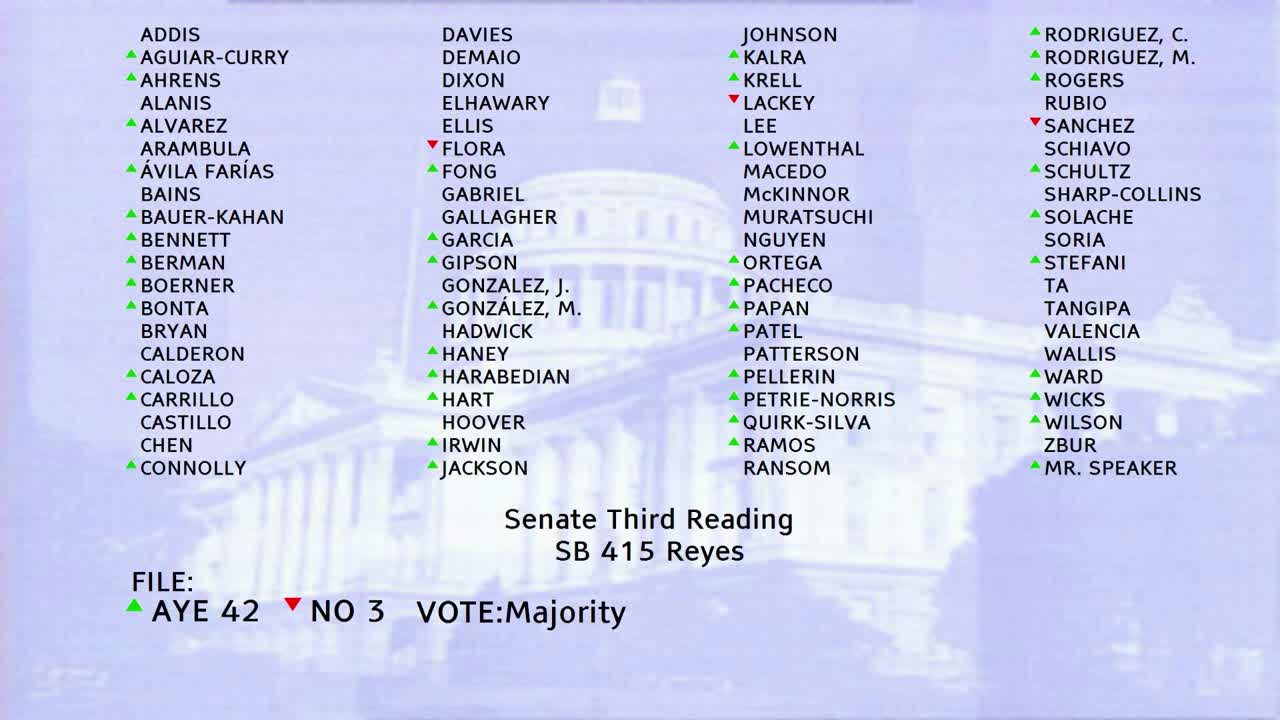 1MIN
Assembly Floor
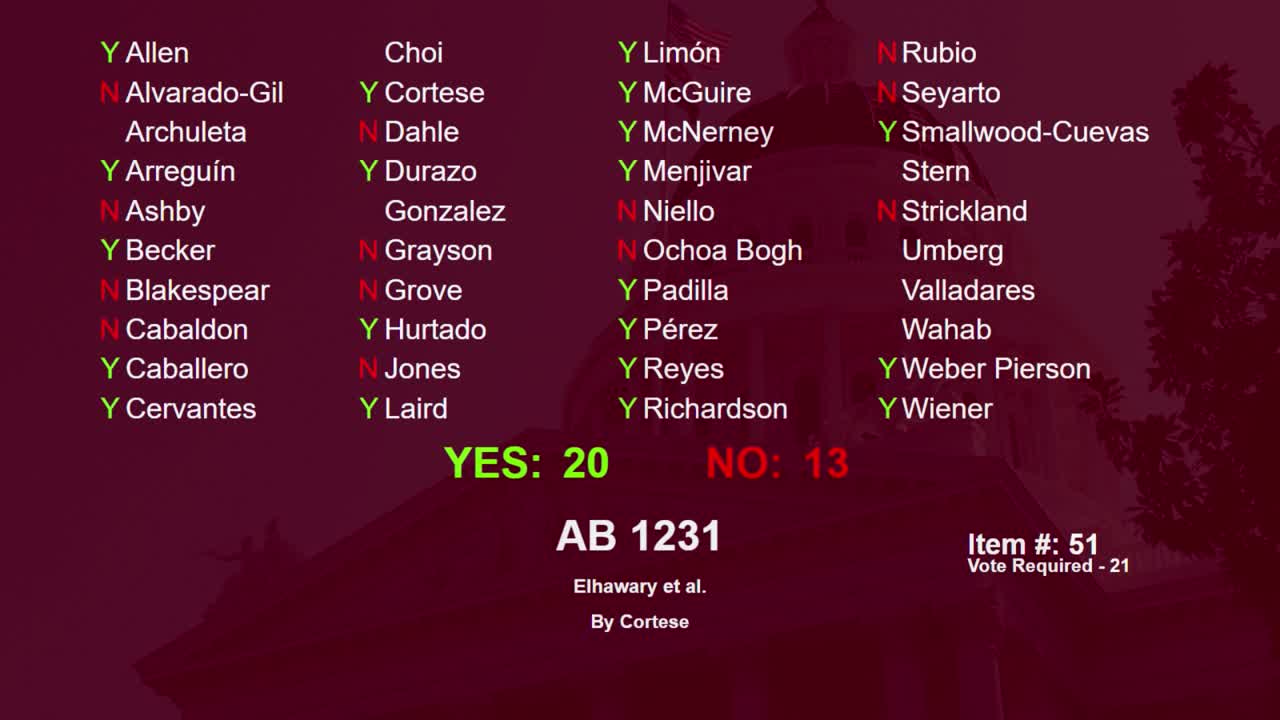 2MIN
Senate Floor
 3MIN
Senate Floor
 15MIN
Senate Standing Committee on Energy, Utilities and Communications
Bill Author