SB 77: State vehicle fleet: light-duty vehicles: raw materials: child labor.
- Session Year: 2025-2026
- House: Senate
- Latest Version Date: 2025-03-12
Current Status:
Failed
(2026-02-02: Returned to Secretary of Senate pursuant to Joint Rule 56.)
Introduced
In Committee
Awaiting First Chamber Vote
Passed First Chamber
In Committee
Awaiting Second Chamber Vote
Passed Second Chamber
Enacted
Existing law requires the Department of General Services, beginning no later than the 202425 fiscal year, to ensure that at least 50% of the light-duty vehicles purchased for the state vehicle fleet each fiscal year are zero-emission vehicles, except as provided. If the department determines that it cannot meet the needs of the state while fulfilling that requirement, existing law requires the department to cease implementing that requirement, as specified.
This bill would require the department to require a supplier of zero-emission light-duty vehicles purchased for the state vehicle fleet to certify that the raw materials used in the manufacturing of the zero-emission light-duty vehicles, including, but not limited to, aluminum, cobalt and lithium, come from mining operations that are free of child labor. labor, except as specified. The bill would require a the supplier of zero-emission light-duty vehicles purchased for the state vehicle fleet to provide to the department the locations where the raw materials used in the production of the zero-emission light-duty vehicles were mined and the average hourly wage of the workers that mined the raw materials, and would require the department to post on its internet website that information provided by the supplier and a list of the zero-emission light-duty vehicles purchased for the state vehicle fleet that are certified to be made with raw materials that come from mining operations that are free of child labor.
Existing law requires the Department of General Services, beginning no later than the 202425 fiscal year, to ensure that at least 50% of the light-duty vehicles purchased for the state vehicle fleet each fiscal year are zero-emission vehicles, except as provided.
This bill would require the department to require a supplier of zero-emission vehicles purchased for the state vehicle fleet to certify that the raw materials used in the manufacturing of the zero-emission vehicles, including, but not limited to, cobalt and lithium, come from mining operations that are free of child labor. The bill would require a supplier of zero-emission vehicles purchased for the state vehicle fleet to provide to the department the locations where the raw materials used in the production of the zero-emission vehicles were mined and the average hourly wage of the workers that mined the raw materials, and would require the department to post on its internet website that information provided by the supplier and a list of the zero-emission vehicles purchased for the state vehicle fleet that are certified to be made with raw materials that come from mining operations that are free of child labor.
(a)(1)Beginning no later than the 202425 fiscal year, the Department of General Services shall ensure that at least 50 percent of the light-duty vehicles purchased for the state vehicle fleet each fiscal year are zero-emission vehicles.
(2)The Department of General Services shall require a supplier of zero-emission light-duty vehicles purchased for the state vehicle fleet to certify that the raw materials used in the manufacturing of the zero-emission light-duty vehicles, including, but not limited to, aluminum, cobalt and lithium, come from mining operations that are free of child labor.
(3)A supplier of zero-emission light-duty vehicles purchased for the state vehicle fleet shall provide to the Department of General Services the locations where the raw materials used in the production of the zero-emission light-duty vehicles were mined and the average hourly wage of the workers that mined the raw materials.
(b)This section does not apply to vehicles that have special performance requirements necessary for the protection of public safety, as defined by the Department of General Services.
(c)(1)If the Department of General Services determines that it cannot meet the needs of the state while fulfilling the requirements of this section, the department shall hold a public hearing to make that finding, notify the Secretary of State of the finding, and cease to implement this section.
(2)The Department of General Services may base the finding required pursuant to paragraph (1) on a determination that fulfilling the requirements of this section would result in costs that are not substantially absorbable by the department when purchasing those light-duty vehicles.
(d)The Department of General Services shall post on its internet website the information required pursuant to paragraph (3) of subdivision (a) and a list of the zero-emission light-duty vehicles purchased for the state vehicle fleet that are certified to be made with raw materials that come from mining operations that are free of child labor.
(a)(1)Beginning no later than the 202425 fiscal year, the Department of General Services shall ensure that at least 50 percent of the light-duty vehicles purchased for the state vehicle fleet each fiscal year are zero-emission vehicles.
(2)The Department of General Services shall require a supplier of zero-emission vehicles purchased for the state vehicle fleet to certify that the raw materials used in the manufacturing of the zero-emission vehicles, including, but not limited to, cobalt and lithium, come from mining operations that are free of child labor.
(3)A supplier of zero-emission vehicles purchased for the state vehicle fleet shall provide to the Department of General Services the locations where the raw materials used in the production of the zero-emission vehicles were mined and the average hourly wage of the workers that mined the raw materials.
(b)This section shall does not apply to vehicles that have special performance requirements necessary for the protection of public safety, as defined by the Department of General Services.
(c)(1)If the Department of General Services determines that it cannot meet the needs of the state while fulfilling the requirements of this section, the department shall hold a public hearing to make that finding, notify the Secretary of State of the finding, and cease to implement this section.
(2)The Department of General Services may base the finding required pursuant to paragraph (1) on a determination that fulfilling the requirements of this section would result in costs that are not substantially absorbable by the department when purchasing those light-duty vehicles.
(d)The Department of General Services shall post on its internet website the information required pursuant to paragraph (3) of subdivision (a) and a list of the zero-emission vehicles purchased for the state vehicle fleet that are certified to be made with raw materials that come from mining operations that are free of child labor.
|
Date
|
Status
|
|---|---|
| Feb 2, 2026 | Returned to Secretary of Senate pursuant to Joint Rule 56. |
| May 23, 2025 | May 23 hearing: Held in committee and under submission. |
| May 16, 2025 | Set for hearing May 23. |
| Apr 7, 2025 | April 7 hearing: Placed on APPR. suspense file. |
| Mar 28, 2025 | Set for hearing April 7. |
| Mar 12, 2025 | Read second time and amended. Re-referred to Com. on APPR. |
| Mar 11, 2025 | From committee: Do pass as amended and re-refer to Com. on APPR. (Ayes 13. Noes 0. Page 352.) (March 11). |
| Feb 27, 2025 | Set for hearing March 11. |
| Jan 29, 2025 | Referred to Com. on G.O. |
| Jan 16, 2025 | From printer. May be acted upon on or after February 15. |
| Jan 15, 2025 | Introduced. Read first time. To Com. on RLS. for assignment. To print. |
|
Date
|
Description
|
Location
|
Votes
|
|
|---|---|---|---|---|
| Apr 7, 2025 | Placed on suspense file | Senate Standing Committee on Appropriations |
Passed |
|
| Mar 11, 2025 | Do pass as amended, but first amend, and re-refer to the Committee on [Appropriations] | Senate Standing Committee on Governmental Organization |
Passed |
This list shows positions taken on this bill by organizations on the date displayed, which is linked to the original source.
Positions by individuals are not included.
|
Organization
|
Position
|
Date
|
|---|---|---|
| B3K | ** Support | |
| City of Ridgecrest | ** Support | |
| Downtown Business Association & Downtown Bakersfield Development Corporation | ** Support | |
| GREATER BAKERSFIELD CHAMBER | ** Support | |
| Kern County Economic Development Corporation | ** Support | |
| kern county hispanic chamber of commerce | ** Support | |
| Kern County Supervisor Chris Parlier | ** Support | |
| Kern County Supervisor Jeff Flores | ** Support | |
| Mission Oil Company | ** Support | |
| Ridgecrest Chamber of Commerce | ** Support | |
| RIVAL WELL SERVICES INC | ** Support | |
| WKCCD/Taft College | ** Support |
SENATE COMMITTEE ON
Senator Anna Caballero, Chair
2025 - 2026 Regular Session
SB 77 (Grove) - State vehicle fleet: light-duty vehicles: raw materials: child labor
Version: | Policy Vote: |
Urgency: | Mandate: |
Hearing Date: | Consultant: |
Bill Summary:
SB 77 requires the Department of General Services (DGS) to require suppliers of light-duty vehicles purchased for the state vehicle fleet to certify the raw materials used in manufacturing those vehicles come from mining operations that are free of child labor, as specified. SB 77 also requires DGS to collect and post specified information from suppliers and on light-duty vehicles purchased for the state fleet on its internet website.
Fiscal Impact:
DGS notes:
- Ongoing annual costs of approximately $706,000 for additional permanent staff to address increased workload associated with the solicitation process with car dealerships, reviewing disclosure and certification information from suppliers, and updating training and other vehicle procurement guidance. DGS’s workload estimate assumes a significant increase in the number of rebids. (See staff comments)
- Unknown, significant increase in vehicle purchasing costs ranging into the millions of dollars, to the extent that vehicle manufacturers are unable or unwilling to meet specified certification requirements and therefore become ineligible to contract with the state. (General Fund and various special funds)
Background:
Existing law imposes a series of requirements on contractors awarded state contracts for the procurement of equipment, material, supplies, and garments. It requires that all state contractors comply with, among other things, a Sweat Free Code of Conduct (Public Contract Code § 6108). Generally, the Sweat Free Code of Conduct requires all contractors and subcontractors to certify, under penalty of perjury, that products supplied to the state are not produced with sweatshop labor or other abusive labor practices.
The law is intended to ensure that contractors engaging in public contracts with the state adhere to labor standards that respect human rights and dignity. The certification must affirm that none of the products supplied were made in conditions that violate those principles. Further, existing law requires contractors cooperate with state agencies by granting access to their records and premises for compliance checks and outlines penalties for contractors found to be in violation, including voiding contracts, imposing fines or sanctions, and banning from future contracts. Contractors are granted the ability to appeal sanctions, including hearings before an administrative law judge.
The State Contracting Manual provides direction for the use of required language for solicitations and contracts, including the Sweat Free Code of Conduct. Specifically, the standard certification in DGS’s General Provisions for Non-Information Technology Goods contracts states:
a. Contractor declares under penalty of perjury that no apparel, garments or corresponding accessories, equipment, materials, or supplies furnished to the State pursuant to the Contract have been produced in whole or in part by sweatshop labor, forced labor, convict labor, indentured labor under penal sanction, abusive forms of child labor or exploitation of children in sweatshop labor, or with the benefit of sweatshop labor, forced labor, convict labor, indentured labor under penal sanction, abusive forms of child labor or exploitation of children in sweatshop labor. Contractor further declares under penalty of perjury that they adhere to the Sweatfree Code of Conduct as set forth on the California Department of Industrial Relations website located at http://www.dir.ca.gov/, and Public Contract Code Section 6108.
b. Contractor agrees to cooperate fully in providing reasonable access to its records, documents, agents or employees, or premises if reasonably required by authorized officials of the State, the Department of Industrial Relations, or the Department of Justice to determine Contractor's compliance with the requirements under paragraph (a).
This bill expands state contracting rules to the raw materials used in manufacturing light-duty vehicles purchased for the state fleet. The Federal Highway Administration defines a light-duty vehicle as a type of motor vehicle with a gross vehicle weight rating (GVWR), the maximum weight of the vehicle as specified by the manufacturer, of 10,000 pounds or less. For purposes of U.S. Environmental Protection Agency classification, vehicles with a GVWR of 8,500 or less are considered light-duty vehicles. DGS considers any vehicle with a GVWR of up to 8,000 pounds as a light-duty vehicle.
Proposed Law:
- Requires DGS to require a supplier of light-duty vehicles purchased for the state vehicle fleet to certify that the raw materials used in the manufacturing of those vehicles come from mining operations that are free of child labor. Raw materials include, but are not limited to, aluminum, cobalt, and lithium.
- Requires a supplier of light-duty vehicles purchased for the state vehicle fleet to provide DGS the locations where the raw materials used in the production of those vehicles were mined and the average hourly wage of the workers that mined the raw materials.
- Requires DGS to post the specified information from suppliers on its internet website and a list of the light-duty vehicles purchased for the state vehicle fleet that are certified to be made with raw materials that come from mining operations that are free of child labor.
Related Legislation:
SB 1239 (Grove, 2024) was similar to this bill, and would have required DGS to require a zero-emission vehicle (ZEV) supplier to certify that any raw materials used in the manufacturing of a ZEV purchased for the state vehicle fleet comes from mining operations that are free of child labor. SB 1239 died on the Suspense File in this committee.
Staff Comments:
The state’s fleet of light-duty vehicles is supplied primarily through car dealerships in California. However, the number of dealerships bidding on DGS vehicle contracts has declined over the last few years. To the extent that extensive reporting and certification requirements as proposed by this bill exacerbate this decline, DGS anticipates that many line items will need to be rebid due to a lack of responsive bidders. An increase in rebids will result in significant ongoing workload to DGS’s Procurement Division.
Additionally, DGS notes that the volume of information on mine locations and wage data will likely be extensive, as the scope of the bill includes all raw materials used in the manufacturing of a vehicle and not just aluminum, cobalt, and lithium. DGS notes there are many different grades and types of steel used in different parts of a vehicle in addition to iron and carbon. These steels include various other metals and minerals, with manganese, nickel, chromium, and vanadium being among the most common. Galvanized steel is coated with zinc to prevent corrosion, while conductors in automotive wires are typically stranded copper. Platinum, palladium, and rhodium are commonly found in catalytic converters. This bill would require the state’s suppliers to report mining locations and wage data for all of these raw materials.
-- END --
SENATE COMMITTEE ON GOVERNMENTAL ORGANIZATION
Senator Steve Padilla
Chair
2025 - 2026 Regular
Bill No: 77 Hearing Date: 3/11/2025
Author: | |||
Version: | 1/15/2025 Introduced | ||
Urgency: | No | Fiscal: | Yes |
Consultant: | Brian Duke | ||
SUBJECT: State vehicle fleet: zero-emission vehicles: raw materials: child labor
DIGEST: This bill requires suppliers of zero-emission vehicles (ZEVs) for the State vehicle fleet to certify to the Department of General Services (DGS) that the raw materials in the vehicles come from mining operations that are free of child labor, as specified. Additionally, this bill requires DGS to collect information from suppliers, including the location of the mines and the average hourly wage of the workers that mined the materials, and requires DGS to post that information and a list of ZEVs purchased by the State on its internet website, as specified.
ANALYSIS:
Existing law:
- Requires DGS, beginning no later than the 2024-25 fiscal year (FY), to ensure that at least 50% of the light-duty vehicles purchased for the State vehicle fleet are ZEVs.
- Specifies that the above requirement does not apply to vehicles that have special performance requirements necessary for the protection of public safety.
- Provides that if DGS determines that it cannot meet the needs of the State while fulfilling the requirements of this section, the department shall hold a public hearing to make that finding, notify the Secretary of State of the finding, and cease to implement the above requirement, as specified.
- Defines “light-duty” to mean having a manufacturer’s maximum gross vehicle weight rating of under 6,001 pounds.
- Requires a contract entered into by any state agency for the procurement of laundering of apparel, garments, or corresponding accessories, or the procurement of equipment, materials, or supplies, other than procurement related to a public works contract, to require that a contractor certify that nothing furnished to the State pursuant to the contract has been laundered or produced by or with the benefit of certain types of labor, including, among other things, abusive forms of child labor.
This bill:
- Requires DGS to require a supplier of ZEVs purchased for the State vehicle fleet to certify that the raw materials used in the manufacturing of the ZEVs, including, but not limited to, cobalt and lithium, come from mining operations that are free of child labor.
- Requires a supplier of ZEVs purchased for the State vehicle fleet to provide to DGS the locations where the raw materials used in the production of the ZEVs were mined and the average hourly wage of the workers that mined the raw materials.
- Requires DGS to post on its internet website the information required above and a list of the ZEVs purchased for the State vehicle fleet that are certified to be made with raw materials that come from mining operations that are free of child labor.
Background
Author Statement. According to the author’s office, “the State’s push for electric vehicles is causing profound environmental damage and human misery in places like the Congo which feed the raw material needed for these car batteries. SB 77 shines a light on this issue by requiring the suppliers of electric vehicles to the state of California to certify that the raw material, including cobalt and lithium, in zero-emission vehicles purchased by the state come from child-labor free mining enterprises.”
California’s Vehicle Fleet and Drive for Fuel Efficient Vehicles. Executive Order (EO) B-16-12 issued by Governor Brown in 2012 was intended to further reduce petroleum usage and greenhouse gas (GHG) emissions, mandating at least 10% of light-duty State fleet vehicle purchases are ZEVs by 2015, increasing to 25% by 2020. Building on EO B-16-12, the 2016 ZEV Action Plan was published by the Governor’s Interagency Working Group on Zero-Emission Vehicles as an updated roadmap towards 1.5 million ZEVs on California roadways by 2025. Also in 2016, DGS issued a statewide policy mandating 5% annual increases to the ZEV Purchasing threshold starting in FY 2017-18. Vehicles having special performance requirements necessary for the protection of public safety and welfare are exempted from this mandate. SB 498 (Skinner, Chapter 628, Statutes of 2017) codified the requirement that by the 2024-25 FY, at least 50% of the light-duty vehicles purchased for the State vehicle fleet be ZEVs.
Since the EO took effect, California has consistently met or exceeded its annual light-duty ZEV purchase mandate. However, in FY 2019-20 and FY 2020-21, the light-duty ZEV purchase mandate was not enforced. To mitigate the anticipated negative impact of COVID-19, the Department of Finance issued a Budget Letter (BL) 20-11 prohibiting state agencies to purchase any new goods except to meet time-sensitive critical needs. To support state agencies in acquiring sufficient fleet assets to meet their business needs under such purchasing restrictions, the State did not impose the required light-duty ZEV purchase thresholds. The mandate was put in force again in FY 2022-23. The State’s current ZEV fleet is comprised of 1,529 battery electric vehicles, 1,074 plug-in hybrid electric vehicles, and 58 hydrogen fuel cell electric vehicles supplied from a variety of recognizable manufacturers including, in order of most vehicles supplied, Chevrolet, Tesla, Honda, Volkswagen, and Toyota, among others.
Cobalt and Lithium-ion Batteries. Cobalt plays a critical role in lithium-ion batteries by increasing energy density and stability, allowing electric vehicles to travel further. Lithium is essential too, but while its extraction can also have adverse effects on local communities and environments, the most high-profile concerns tend to center on cobalt mining. Many batteries used in consumer electronics and electric vehicles are produced using cobalt sourced from the Democratic Republic of Congo (DRC), which is responsible for more than 70% of the world’s supply.
The global ZEV battery market is expected to grow from $17 billion to more than $95 billion between 2019 and 2028. Despite efforts from the United States to increase domestic production of batteries, the market is still dominated by overseas suppliers. Currently, Chinese companies make up approximately 56% of the electric vehicle battery market, followed by Korean companies (26%) and Japanese manufacturers (10%). One third of the world’s ZEV batteries come from the Chinese company CATL, which provides lithium-ion based batteries to Tesla, Peugeot, Hyundai, BMW, Toyota, Volkswagen, and Volvo. The North American market for lithium-ion batteries is driven by major players like Tesla and Panasonic, contributing significant demand for cobalt and lithium. Besides ZEVs, lithium battery technology is essential for the clean energy transition, providing storage capacity for intermittent solar and wind generation.
Child Labor in the Mining of Critical Minerals. Unregulated artisanal mining in the DRC fuels rampant human rights abuses and child labor in cobalt extraction. Attempts have been made to regulate the DRC’s artisanal mining sector and efforts to date include the creation of a new state company, Enterprise Générale du Cobalt, to buy and market all artisanal cobalt mined in the DRC; it was set up in 2019 and struggled to make progress. However, in February 2024, it signed an agreement with state miner Gecamines for exclusive mining rights to five mining areas.
Aside from that, the Responsible Minerals Initiative, in cooperation with the Global Battery Alliance, has drafted a framework for a regulated artisanal mining sector. The DRC’s Mines Minister formally approved the ASM Cobalt Standard in 2022, and plans for assessing its effectiveness at pilot sites are being developed.
The U.S. Department of Labor’s Combatting Child Labor in the DRC’s Cobalt Industry (COTECCO) project works to address child labor in the DRC’s cobalt supply chain, with a focus on artisanal and small-scale mining. It supports key stakeholders to develop and implement strategies to reduce child labor and improve working conditions in artisanal and small-scale mines, as well as in the broader cobalt supply chain.
In addition to cobalt, ethical concerns also extend to the mining of aluminum, a critical material used in both zero-emission vehicles and internal combustion engine (ICE) vehicles. Reports have highlighted that in certain regions—particularly in parts of China—aluminum mining operations have been associated with forced and child labor, operating under exploitative conditions with inadequate oversight. The prevalence of such practices underscores the need to apply rigorous ethical sourcing standards across all raw materials used in vehicle manufacturing.
According to a February 2024 report by the Human Rights Campaign titled Asleep at the Wheel: Car Companies’ Complicity in Forced Labor in China, “[a]lmost a tenth of the world’s aluminum, a key material for car manufacturing, is produced in the Xinjian Uyghur Autonomous Region (Xinjiang or XUAR), a region in northwestern China, where the Chinese government is conducting a long-running campaign of repression against Uyghurs and other Turkic Muslim communities. Since 2017, Chinese authorities have perpetrated crimes against humanity in Xinjian, including arbitrary detentions of an estimated one million people at the height of the crackdown, torture, enforced disappearances, mass surveillance, cultural and religious persecution, separation of families, sexual violence, and violations of reproductive rights, as well as subjecting Uyghurs and other Turkic Muslim communities to forced labor inside and outside Xinjiang.”
Aluminum is indispensable to the automotive industry – regardless of propulsion technology – contributing significantly to vehicle components such as engine blocks, body panels, and lightweight structures that enhance fuel efficiency and performance. Carmakers accounted for approximately 18% of all aluminum consumed worldwide in 2021, according to the International Aluminum Institute (IAI), an aluminum industry group.
US Agency for International Development (USAID). Prior to 2025, USAID was the world’s largest international development agency and a catalytic actor driving development results focused on, among other things, improving mining labor conditions around the globe. According to USAID’s internet website, “USAID’s work advances U.S. national security and economic prosperity, demonstrates American generosity, and promotes a path to self-reliance and resilience for partner countries.”
Among USAID’s myriad programs worldwide are the USAID Africa Trade and Investment Program – Critical Minerals Activity (ATI-CM) which works with Prosper Africa to increase diverse and responsible investments, particularly in cobalt and other critical minerals, provides a significant opportunity to catalyze sustainable development in the DRC and build upon USAID/DRC’s expertise in conflict minerals. For over a decade, USAID has supported the development of the artisanal and small-scale mining sector. Additionally, Powering a Just Energy Transition Green Minerals Challenge (JET Minerals Challenge) worked at the forefront of new approaches to strengthen transparency, accountability, and integrity in the global rush to meet unprecedented demand for green minerals. However, the internet website for that program was recently taken down. The future of these and similar programs are currently in doubt.
California’s Sweatfree Code of Conduct. Existing Public Contract Code § 6108, known as the California Sweatfree Code of Conduct, establishes strict labor and human-rights standards that contractors and suppliers must certify they uphold when supplying goods and services to the State. Although originally created for apparel and related products, the Sweatfree Code of Conduct applies to state procurement of all equipment, materials, and supplies, including vehicles and electronics. This means that state contractors supplying ZEVs to the State fleet are already required to certify compliance with child labor prohibitions.
Specifically, every contractor and supplier must sign, under penalty of perjury, a certification stating that none of the products (whether apparel, accessories, equipment, materials, or supplies) have been produced or laundered using sweatshop labor, forced labor, convict or indentured labor, abusive child labor, or exploitation of children in sweatshop labor. Additionally, contractors and suppliers must comply with all applicable local, state, and federal labor laws regarding wages, workplace safety, nondiscrimination, and workers’ rights. The Sweatfree Code of Conduct defines “goods” (commodities) to mean all types of tangible personal property, including but not limited to materials, supplies, and equipment (ZEVs).
The standard certification in DGS’s General Provisions for non-IT goods contracts (which procurement of ZEVs for the State’s vehicle fleet fall under) states:
a. Contractor declares under penalty of perjury that no apparel, garments or corresponding accessories, equipment, materials, or supplies furnished to the State pursuant to the Contract have been produced in whole or in part by sweatshop labor, forced labor, convict labor, indentured labor under penal sanction, abusive forms of child labor or exploitation of children in sweatshop labor, or with the benefit of sweatshop labor, forced labor, convict labor, indentured labor under penal sanction, abusive forms of child labor or exploitation of children in sweatshop labor. Contractor further declares under penalty of perjury that they adhere to the Sweatfree Code of Conduct as set forth on the California Department of Industrial Relations website located at http://www.dir.ca.gov/, and Public Contract Code Section 6108.
b. Contractor agrees to cooperate fully in providing reasonable access to its records, documents, agents or employees, or premises if reasonably required by authorized officials of the State, the Department of Industrial Relations, or the Department of Justice to determine Contractor's compliance with the requirements under paragraph (a).
If a contractor or supplier is found to have knowingly supplied products produced under abusive conditions, the state agency may void the contract, impose monetary penalties, and remove the contractor or supplier from the bidding list. Contractors and suppliers are afforded the right to an administrative law hearing before any sanctions are finalized.
Déjà vu All Over Again. This bill is substantially similar to SB 1239 (Grove, 2014) which would have required suppliers to certify to DGS that any raw materials used in the manufacture of a ZEV purchased for the State vehicle fleet comes from mining operations that are free of child labor. This committee amended SB 1239 (Grove) to remove the requirements for DGS to collect mining location data, report miners’ hourly wages, and post that information online. That bill was held in the Senate Appropriations Committee Suspense File.
Policy Considerations. As currently drafted, this bill only applies to ZEVs purchased for the State vehicle fleet, excluding traditional ICE vehicles from the enhanced ethical certification requirements. Moreover, the bill's language applies to raw materials used in the manufacture of vehicles “including, but not limited to, cobalt and lithium.” However, given aluminum’s pervasive use in both ZEVs and ICE vehicles—and its equally problematic mining practices in regions where labor abuses, including child and forced labor, have been documented—the Committee may wish to amend the bill to extend its scope. Expanding the bill to cover all light‑duty vehicles ensures that ethical sourcing standards are uniformly applied, regardless of the propulsion technology, thereby closing a critical loophole where suppliers could otherwise shift unethical practices to the production of conventional vehicles.
An expanded uniform policy requiring ethical certification for all critical minerals involved in the manufacture of light-duty vehicles, and explicitly including aluminum, can promote greater transparency throughout the automotive supply chain. Aluminum is essential not only for lightweight and fuel efficiency in internal combustion engine vehicles but also for the structural components in ZEVs. By specifically identifying aluminum as a mineral of concern, the bill would ensure that suppliers are held to the same rigorous standards across the board, compelling them to verify that raw materials are sourced from operations free of child and forced labor.
The author has agreed to the following amendments:
Amendment #1: (2) The Department of General Services shall require a supplier of zero-emission light-duty vehicles purchased for the state vehicle fleet to certify that the raw materials used in the manufacturing of the zero-emission light-duty vehicles, including, but not limited to, aluminum, cobalt, and lithium, come from mining operations that are free of child labor.
Amendment #2: (3) A supplier of zero-emission light-duty vehicles purchased for the state vehicle fleet shall provide to the Department of General Services the locations where the raw materials used in the production of the zero-emission light-duty vehicles were mined and the average hourly wage of the workers that mined the raw materials.
Amendment #3: (d) The Department of General Services shall post on its internet website the information required pursuant to paragraph (3) of subdivision (a) and a list of the zero-emission light-duty vehicles purchased for the state vehicle fleet that are certified to be made with raw materials that come from mining operations that are free of child labor.
Prior/Related Legislation
AB 381 (Stefani, 2025) expands state contracting rules to require that contractors and subcontractors certify their compliance with new human trafficking and forced labor prohibitions when supplying apparel, equipment, or supplies to state agencies and mandates that these parties implement compliance plans, notify employees about prohibited activities, and take corrective actions if violations occur, with additional sanctions for noncompliance, as specified. (Pending referral in the Assembly)
SB 1157 (Hurtado, 2024) would have revised state contracting requirements for the procurement or laundering of garments, corresponding accessories, equipment, materials, and supplies to comply with specified human trafficking prohibitions and a detailed series of labor standards, as specified. (Held in the Senate Appropriations Committee Suspense File)
SB 1239 (Grove, 2024) would have required DGS to require a ZEV supplier certify that any raw materials used in the manufacturing of a ZEV purchased for the state vehicle fleet comes from mining operations that are free of child labor. (Held in the Senate Appropriations Committee Suspense File)
SCR 24 (Bradford, Res. Chapter 149, Statutes of 2023) declares that the Legislature should pass laws that halt the importation of cobalt or any product using cobalt mined in Africa using child slave labor and encourages domestic importation of cobalt from within the United States and the mining of cobalt directly in California.
AB 416 (Kalra, 2021) would have required a contractor to certify that commodities were not grown, derived, harvested, reared, or produced on land where tropical deforestation occurred, as specified. (Vetoed by Governor Newsom)
AB 782 (Cooper, 2021) the Congo Child Labor Act of 2021, among other things, would have prohibited a retail seller or manufacturer doing business in this state with gross receipts of $10 million or more per year, from selling or making a product containing 300 or more grams of cobalt unless it has certified, under penalty of perjury, that the cobalt was not mined or refined using child labor, as specified. (Never heard in the Assembly Accountability and Administrative Review Committee)
SB 498 (Skinner, Chapter 628, Statutes of 2017) requires the State Air Resources Board to review all state programs related to the adoption of ZEVs and make recommendations to the Legislature and requires DGS to meet a 50% ZEV target for the state vehicle fleet by 2024-25.
FISCAL EFFECT: Appropriation: Fiscal Com.: Local:
SUPPORT:
B3K
City of Ridgecrest
Downtown Business Association & Downtown Bakersfield Development Corporation
Greater Bakersfield Chamber
Kern County Economic Development Corporation
Kern County Hispanic Chamber of Commerce
Kern County Supervisor Chris Parlier
Kern County Supervisor Jeff Flores
Mission Oil Company
Ridgecrest Chamber of Commerce
Rival Well Services Inc.
WKCCD/Taft College
1 individual
OPPOSITION:
None received
ARGUMENTS IN SUPPORT: In support of the bill, Rival Well Services writes that, “[t]o keep up with the increasing need for cobalt, artisanal and small-scale mines have an estimated 200,000 peopling mining in the Congo in horrendous working conditions: including children as young as seven. With no professional, large-scale equipment or safety gear, these makeshift mines are dangerous, often caving in and burying children alive. In October of 2022, the US Department of Labor added lithium-ion batteries to a list of goods produced by child labor, specifically because of children involved in the mining of cobalt in the county.”
Discussed in Hearing
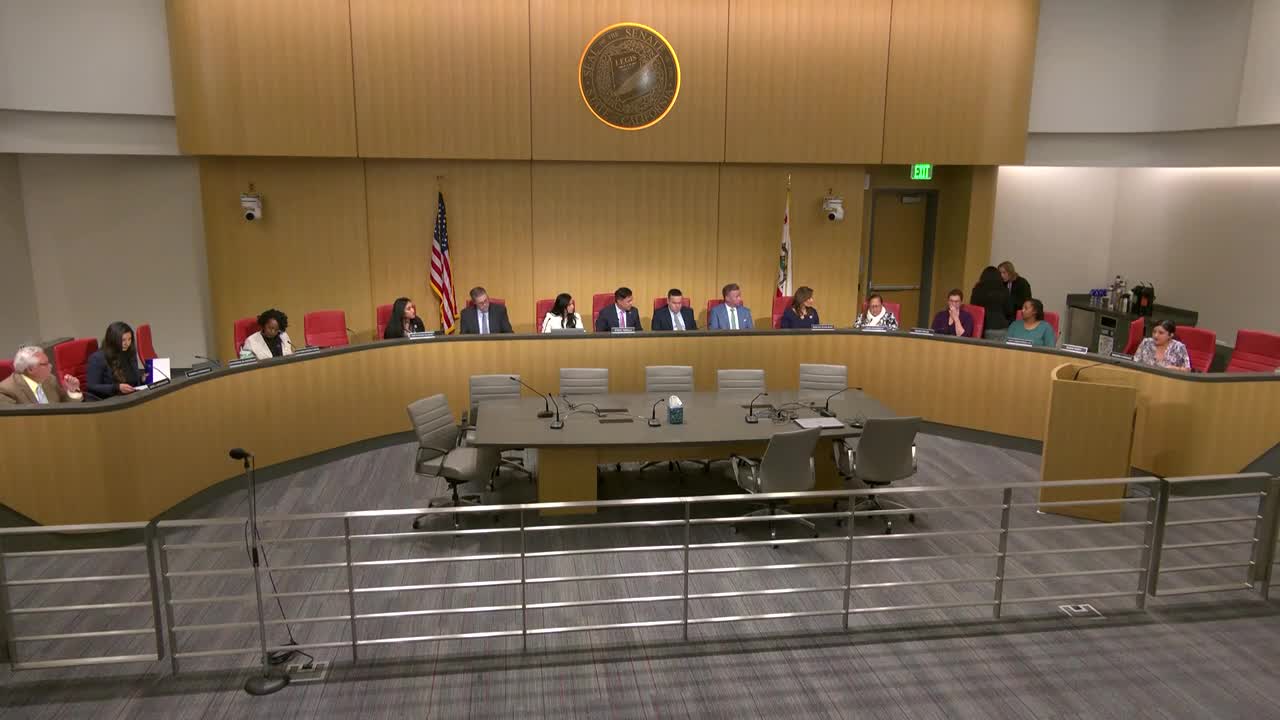 11MIN
Senate Standing Committee on Governmental Organization
Bill Author

Bill Co-Author(s):