SB 777: Abandoned cemeteries: report.
- Session Year: 2025-2026
- House: Senate
- Latest Version Date: 2025-10-11
Current Status:
Passed
(2025-10-11: Chaptered by Secretary of State. Chapter 658, Statutes of 2025.)
Introduced
In Committee
Awaiting First Chamber Vote
Passed First Chamber
In Committee
Awaiting Second Chamber Vote
Passed Second Chamber
Enacted
Existing law, the Cemetery and Funeral Act, establishes the Cemetery and Funeral Bureau within the Department of Consumer Affairs and sets forth its powers and duties relating to the licensure and regulation of cemeteries, crematories, funeral establishments, and their personnel. Existing law requires the bureau, on or before July 1, 2027, to convene a workgroup composed of representatives from the cemetery, county government, and other interested stakeholders to discuss options for ensuring continued care, maintenance, and embellishment of abandoned cemeteries, including the possibility of requiring counties to assume responsibility for abandoned cemeteries. Existing law requires the bureau to submit a report to the Legislature summarizing the workgroups discussions and its recommendations by January 1, 2028. Existing law repeals those provisions on January 1, 2029.
This bill would instead require the bureau to convene the workgroup on or before March 1, 2026, would revise the list of representatives required to be included in the workgroup, and would instead require the workgroup to discuss the possibility of requiring counties to assume responsibility for maintenance, irrigation, public works, and burial services for abandoned cemeteries. The bill would require the board to submit the report on June 1, 2026, and would repeal those provisions on January 1, 2027.
(1)Existing
Existing law, the Cemetery and Funeral Act, establishes the Cemetery and Funeral Bureau within the Department of Consumer Affairs and sets forth its powers and duties relating to the licensure and regulation of, among others, cemeteries and cemetery authorities, which includes cemetery associations, corporations, limited liability companies, and other persons owning or controlling cemetery lands or property. A violation of the act is a crime. of cemeteries, crematories, funeral establishments, and their personnel. Existing law requires the bureau, on or before July 1, 2027, to convene a workgroup composed of representatives from the cemetery, county government, and other interested stakeholders to discuss options for ensuring continued care, maintenance, and embellishment of abandoned cemeteries, including the possibility of requiring counties to assume responsibility for abandoned cemeteries. Existing law requires the bureau to submit a report to the Legislature summarizing the workgroups discussions and its recommendations by January 1, 2028. Existing law repeals those provisions on January 1, 2029.
This bill would instead require the bureau to convene the workgroup on or before March 1, 2026, would revise the list of representatives required to be included in the workgroup, and would instead require the workgroup to discuss the possibility of requiring counties to assume responsibility for maintenance, irrigation, public works, and burial services for abandoned cemeteries. The bill would require the board to submit the report on June 1, 2026, and would repeal those provisions on January 1, 2027.
Existing law requires a cemetery authority to file with the bureau an annual written report that includes, among other things, the amount collected and deposited in endowment care funds segregated as to the amounts for crypts, niches, and grave space, as specified. Existing law requires that information to be accompanied by an annual audit report, prepared in accordance with generally accepted accounting principles, of the endowment care fund and special care fund signed by a certified public accountant or public accountant. Existing law requires the scope of the audit to include the inspection, review, and audit of the general purpose financial statements of the endowment care fund and special care fund, including the balance sheet, statement of revenues, expenditures, and changes in fund balance.This bill would require the annual audit report to include a cemeterys 4th quarter bank statement. The bill would require the cemetery authoritys financial institution to provide the bank statement electronically, and directly, to the bureau. The bill would require the above-described annual written report to include a map of the deceased and their location by parcel. The bill would require the bureau to submit the map to the applicable county recorder.By expanding the crime of violating the Cemetery and Funeral Act, and to the extent the bill would impose a higher level of service on counties, the bill would impose a state-mandated local program.(2)Existing law authorizes a cemetery authority that maintains a cemetery to place its cemetery under endowment care and to establish, maintain, and operate an endowment care fund. Ninety days following the cancellation, surrender, or revocation of a certificate of authority, existing law gives the bureau title to any endowment care funds of a cemetery authority and possession of all necessary books, records, property, real and personal, and assets, and requires the bureau to act as conservator over the management of the endowment care funds.Existing law, the Cortese-Knox-Hertzberg Local Government Reorganization Act of 2000, provides for the formation and change of organization of cities and special districts and establishes a local agency formation commission (LAFCO) in each county. Existing law, the Public Cemetery District Law, provides for the formation of public cemetery districts, and authorizes those districts to own, operate, improve, and maintain cemeteries and provide interment services within their boundaries.This bill would require the bureau to notify the applicable city, county, or city and county with jurisdiction over Lincoln Memorial Park Cemetery, Dambacher Mountain Memorial Cemetery, Verdugo Hills Cemetery, Chapel of the Light, Evergreen Cemetery, and Mount Tamalpais Cemetery, or cemeteries that become abandoned endowment care cemeteries, as defined, after January 1, 2026. Upon receipt of notice, the bill would require the city, county, or city and county, within 120 days, to adopt and submit a resolution of application to the LAFCO in the applicable county for a change of organization to form a new public cemetery district or reorganize an existing public cemetery district for the purpose of maintaining the abandoned endowment care cemetery. The bill would require the bureau to cover the costs for creating a new public cemetery district or reorganizing an existing public cemetery district pursuant to these provisions, and would require the bureau to provide the necessary resources to the city, county, or city and county to facilitate the LAFCO process, as specified. The bill would require the LAFCO to determine whether to form a new public cemetery district or reorganize an existing public cemetery district within one year of receiving an application for a change of organization pursuant to these provisions. Upon that determination being made, the bill would require the bureau to work with the vacated owner or the county assessor to secure the title of the abandoned cemetery to ensure that fee title of the abandoned endowment care cemetery ultimately vests in the public cemetery district.By imposing new duties on cities and counties, the bill would impose a state-mandated local program.Existing law imposes various fees under the Cemetery and Funeral Act, including, among others, the application and renewal fees for a funeral directors, embalmers, or cemetery managers license, regulatory charges for cemetery authorities, timely filing fees for specified annual reports, and fees to obtain or renew a hydrolysis facility license. Existing law creates the Cemetery and Funeral Fund, a continuously appropriated fund, in the State Treasury for the deposit of those fees. Existing law requires moneys in the fund to be expended on actual and necessary expenses incurred in implementing the act.This bill would increase those fees by 150%. The bill would require the bureau to establish and administer the Abandonment Grant Funding Program (program) to provide long-term viability to ensure services are maintained for abandoned endowment care cemeteries. The bill would require the program to be funded by 50% of moneys assessed from the increased fees, and would expand the purposes of the Cemetery and Funeral Fund to include the program. Because additional moneys would be deposited into a continuously appropriated fund, and by expanding the purposes of a continuously appropriated fund, the bill would make an appropriation.This bill would authorize a private entity, as specified, to acquire title to an abandoned endowment care cemetery. The bill would require a public cemetery district or a private entity that takes over an abandoned endowment care cemetery to have access to the endowment fund, including principal and interest, of the applicable abandoned endowment care cemetery, and program funding to manage cemetery maintenance, burial services, and security items, and to address issues, including, but not limited to, prior repairs, deferred maintenance, or vandalism of property or gravesites, as necessary.By imposing new duties on public cemetery districts, this bill would impose a state-mandated local program.(3)The California Constitution requires the state to reimburse local agencies and school districts for certain costs mandated by the state. Statutory provisions establish procedures for making that reimbursement.This bill would provide that with regard to certain mandates no reimbursement is required by this act for a specified reason.With regard to any other mandates, this bill would provide that, if the Commission on State Mandates determines that the bill contains costs so mandated by the state, reimbursement for those costs shall be made pursuant to the statutory provisions noted above.This bill would make legislative findings and declarations as to the necessity of a special statute for Lincoln Memorial Park Cemetery, Dambacher Mountain Memorial Cemetery, Verdugo Hills Cemetery, Chapel of the Light, Evergreen Cemetery, and Mount Tamalpais Cemetery.(1)Existing law, the Cemetery and Funeral Act, establishes the Cemetery and Funeral Bureau within the Department of Consumer Affairs and sets forth its powers and duties relating to the licensure and regulation of, among others, cemeteries and cemetery authorities, which includes cemetery associations, corporations sole, corporations, limited liability companies, and other persons owning or controlling cemetery lands or property. Existing A violation of the act is a crime.
Existing law requires a cemetery authority to file with the bureau an annual written report that includes, among other things, the amount collected and deposited in endowment care funds segregated as to the amounts for crypts, niches, and grave space, as specified. Existing law requires that information to be accompanied by an annual audit report, prepared in accordance with generally accepted accounting principles, of the endowment care fund and special care fund signed by a certified public accountant or public accountant. Existing law requires the scope of the audit to include the inspection, review, and audit of the general purpose financial statements of the endowment care fund and special care fund, including the balance sheet, statement of revenues, expenditures, and changes in fund balance.
This bill would require the annual audit report to include a cemeterys 4th quarter bank statement. The bill would require the cemetery authoritys financial institution to provide the bank statement electronically, and directly, to the bureau. The bill would require the above-described annual written report to include a map of the deceased and their location by parcel. The bill would require the bureau to submit the map to the applicable county recorder.
By expanding the crime of violating the Cemetery and Funeral Act, and to the extent the bill would impose a higher level of service on counties, the bill would impose a state-mandated local program.
(2)Existing law authorizes a cemetery authority that maintains a cemetery to place its cemetery under endowment care and to establish, maintain, and operate an endowment care fund. Ninety days following the cancellation, surrender, or revocation of a certificate of authority, existing law gives the bureau title to any endowment care funds of a cemetery authority and possession of all necessary books, records, property, real and personal, and assets, and requires the bureau to act as conservator over the management of the endowment care funds.
This bill would require a local agency formation commission for the county in which an abandoned endowment care cemetery is located to identify a local agency to be responsible for the care, maintenance, and embellishment of the cemetery, as specified. The bill would vest fee title of the cemetery in the local agency and would restrict the local agencys use of the property to uses consistent with cemetery purposes. The bill would give the local agency title to any endowment care funds of the prior cemetery authority held by the bureau, and would require the local agency to take possession of all necessary books, records, real property, personal property, and assets of the fund. The bill would require the assets to be liquidated, and the proceeds placed in a special fund to be expended on care, maintenance, or embellishment of the abandoned endowment care cemetery. The bill would define an abandoned endowment care cemetery and would make conforming changes. By imposing additional duties on local agencies, this bill would impose a state-mandated local program. The California Constitution requires the state to reimburse local agencies and school districts for certain costs mandated by the state. Statutory provisions establish procedures for making that reimbursement.This bill would provide that, if the Commission on State Mandates determines that the bill contains costs mandated by the state, reimbursement for those costs shall be made pursuant to the statutory provisions noted above.Existing law, the Cortese-Knox-Hertzberg Local Government Reorganization Act of 2000, provides for the formation and change of organization of cities and special districts and establishes a local agency formation commission (LAFCO) in each county. Existing law, the Public Cemetery District Law, provides for the formation of public cemetery districts, and authorizes those districts to own, operate, improve, and maintain cemeteries and provide interment services within their boundaries.
This bill would require the bureau to notify the applicable city, county, or city and county with jurisdiction over Lincoln Memorial Park Cemetery, Dambacher Mountain Memorial Cemetery, Verdugo Hills Cemetery, Chapel of the Light, Evergreen Cemetery, and Mount Tamalpais Cemetery, or cemeteries that become abandoned endowment care cemeteries, as defined, after January 1, 2026. Upon receipt of notice, the bill would require the city, county, or city and county, within 120 days, to adopt and submit a resolution of application to the LAFCO in the applicable county for a change of organization to form a new public cemetery district or reorganize an existing public cemetery district for the purpose of maintaining the abandoned endowment care cemetery. The bill would require the bureau to cover the costs for creating a new public cemetery district or reorganizing an existing public cemetery district pursuant to these provisions, and would require the bureau to provide the necessary resources to the city, county, or city and county to facilitate the LAFCO process, as specified. The bill would require the LAFCO to determine whether to form a new public cemetery district or reorganize an existing public cemetery district within one year of receiving an application for a change of organization pursuant to these provisions. Upon that determination being made, the bill would require the bureau to work with the vacated owner or the county assessor to secure the title of the abandoned cemetery to ensure that fee title of the abandoned endowment care cemetery ultimately vests in the public cemetery district.
By imposing new duties on cities and counties, the bill would impose a state-mandated local program.
Existing law imposes various fees under the Cemetery and Funeral Act, including, among others, the application and renewal fees for a funeral directors, embalmers, or cemetery managers license, regulatory charges for cemetery authorities, timely filing fees for specified annual reports, and fees to obtain or renew a hydrolysis facility license. Existing law creates the Cemetery and Funeral Fund, a continuously appropriated fund, in the State Treasury for the deposit of those fees. Existing law requires moneys in the fund to be expended on actual and necessary expenses incurred in implementing the act.
This bill would increase those fees by 150%. The bill would require the bureau to establish and administer the Abandonment Grant Funding Program (program) to provide long-term viability to ensure services are maintained for abandoned endowment care cemeteries. The bill would require the program to be funded by 50% of moneys assessed from the increased fees, and would expand the purposes of the Cemetery and Funeral Fund to include the program. Because additional moneys would be deposited into a continuously appropriated fund, and by expanding the purposes of a continuously appropriated fund, the bill would make an appropriation.
This bill would authorize a private entity, as specified, to acquire title to an abandoned endowment care cemetery. The bill would require a public cemetery district or a private entity that takes over an abandoned endowment care cemetery to have access to the endowment fund, including principal and interest, of the applicable abandoned endowment care cemetery, and program funding to manage cemetery maintenance, burial services, and security items, and to address issues, including, but not limited to, prior repairs, deferred maintenance, or vandalism of property or gravesites, as necessary.
By imposing new duties on public cemetery districts, this bill would impose a state-mandated local program.
(3)The California Constitution requires the state to reimburse local agencies and school districts for certain costs mandated by the state. Statutory provisions establish procedures for making that reimbursement.
This bill would provide that with regard to certain mandates no reimbursement is required by this act for a specified reason.
With regard to any other mandates, this bill would provide that, if the Commission on State Mandates determines that the bill contains costs so mandated by the state, reimbursement for those costs shall be made pursuant to the statutory provisions noted above.
This bill would make legislative findings and declarations as to the necessity of a special statute for Lincoln Memorial Park Cemetery, Dambacher Mountain Memorial Cemetery, Verdugo Hills Cemetery, Chapel of the Light, Evergreen Cemetery, and Mount Tamalpais Cemetery.
Existing law, the Cemetery and Funeral Act, establishes the Cemetery and Funeral Bureau within the Department of Consumer Affairs and sets forth its powers and duties relating to the licensure and regulation of, among others, cemeteries and cemetery authorities, which includes cemetery associations, corporations sole, limited liability companies, and other persons owning or controlling cemetery lands or property. Existing law authorizes a cemetery authority that maintains a cemetery to place its cemetery under endowment care and to establish, maintain, and operate an endowment care fund. Ninety days following the cancellation, surrender, or revocation of a certificate of authority, existing law gives the bureau title to any endowment care funds of a cemetery authority and possession of all necessary books, records, property, real and personal, and assets, and requires the bureau to act as conservator over the management of the endowment care funds.
This bill would make the require a local agency formation commission for the county in which an abandoned endowment care cemetery is located to identify a local agency to be responsible for the care, maintenance, and embellishment of the cemetery. cemetery, as specified. The bill would vest fee title of the cemetery in the county, local agency and would restrict the countys local agencys use of the property to uses consistent with cemetery purposes, and would exempt the county from various provisions related to the care of active cemeteries. purposes. The bill would give the county local agency title to any endowment care funds of the prior cemetery authority held by the bureau, and would require the county local agency to take possession of all necessary books, records, real property, personal property, and assets of the fund. The bill would require the assets to be liquidated, and the proceeds placed in a special fund within the county treasury to be expended on care, maintenance, or embellishment of the abandoned endowment care cemetery. The bill would define an abandoned endowment care cemetery and would make conforming changes. By imposing additional duties on local agencies, this bill would impose a state-mandated local program.
The California Constitution requires the state to reimburse local agencies and school districts for certain costs mandated by the state. Statutory provisions establish procedures for making that reimbursement.
This bill would provide that, if the Commission on State Mandates determines that the bill contains costs mandated by the state, reimbursement for those costs shall be made pursuant to the statutory provisions noted above.
Existing law, the Cemetery and Funeral Act, establishes the Cemetery and Funeral Bureau within the Department of Consumer Affairs and sets forth its powers and duties relating to the licensure and regulation of, among others, cemeteries and cemetery authorities, which includes cemetery associations, corporations sole, limited liability companies, and other persons owning or controlling cemetery lands or property. Existing law authorizes a cemetery authority that maintains a cemetery to place its cemetery under endowment care and to establish, maintain, and operate an endowment care fund. Ninety days following the cancellation, surrender, or revocation of a certificate of authority, existing law gives the bureau title to any endowment care funds of a cemetery authority and possession of all necessary books, records, property, real and personal, and assets, and requires the bureau to act as conservator over the management of the endowment care funds.
This bill would make the county in which an abandoned endowment care cemetery is located responsible for the care, maintenance, and embellishment of the cemetery. The bill would vest fee title of the cemetery in the county, would restrict the countys use of the property to cemetery purposes, and would exempt the county from various provisions related to the care of active cemeteries. The bill would give the county title to any endowment care funds of the prior cemetery authority held by the bureau, and would require the county to take possession of all necessary books, records, real property, personal property, and assets of the fund. The bill would require the assets to be liquidated, and the proceeds placed in a special fund within the county treasury to be expended on care, maintenance, or embellishment of the abandoned endowment care cemetery. The bill would define an abandoned endowment care cemetery and would make conforming changes.
The California Constitution requires the state to reimburse local agencies and school districts for certain costs mandated by the state. Statutory provisions establish procedures for making that reimbursement.
This bill would provide that, if the Commission on State Mandates determines that the bill contains costs mandated by the state, reimbursement for those costs shall be made pursuant to the statutory provisions noted above.
(a)On or before March 1, 2026, the bureau shall convene a workgroup composed of interested stakeholders including, but not limited to, representatives from the cemetery industry, the California Association of Local Agency Formation Commissions, the League of California Cities, the California State Association of Counties, the Urban Counties of California, the Rural County Representatives of California, public cemeteries, and legislative staff for the appropriate committees of the Legislature, to discuss options for ensuring continued care, maintenance, and embellishment of abandoned cemeteries, including the possibility of requiring counties to assume responsibility for maintenance, irrigation, public works, and burial services for cemeteries located within their boundaries that become abandoned.
(b)In accordance with Section 9795 of the Government Code, the bureau shall submit a report to the Legislature summarizing the discussions of the workgroup and its recommendations no later than June 1, 2026.
(c)This section shall remain in effect only until January 1, 2027, and as of that date is repealed.
(a)On or before July 1, 2027, March 1, 2026, the bureau shall convene a workgroup comprised of representatives from the cemetery industry, county government, and other composed of interested stakeholders including, but not limited to, representatives from the cemetery industry, the California Association of Local Agency Formation Commissions, the League of California Cities, the California State Association of Counties, the Urban Counties of California, the Rural County Representatives of California, public cemeteries, and legislative staff for the appropriate committees of the Legislature, to discuss options for ensuring continued care, maintenance, and embellishment of abandoned cemeteries, including the possibility of requiring counties to assume responsibility for maintenance, irrigation, public works, and burial services for cemeteries located within their boundaries that become abandoned.
(b)In accordance with Section 9795 of the Government Code, the bureau shall submit a report to the Legislature summarizing the discussions of the workgroup, along with any recommendations, workgroup and its recommendations no later than January 1, 2028. June 1, 2026.
(c)This section shall remain in effect only until January 1, 2029, 2027, and as of that date is repealed.
SECTION 1.Section 7612.6 of the Business and Professions Code is amended to read:7612.6.(a)Each cemetery authority shall file with the bureau annually, on or before June 1, or within five months after close of their fiscal year provided approval has been granted by the bureau as provided for in Section 7612.7, a written report in a form prescribed by the bureau setting forth the following:(1)The number of square feet of grave space and the number of crypts and niches sold or disposed of under endowment care by specific periods as set forth in the form prescribed.(2)The amount collected and deposited in both the general and special endowment care funds segregated as to the amounts for crypts, niches, and grave space by specific periods as set forth either on the accrual or cash basis at the option of the cemetery authority.(3)A statement showing separately the total amount of the general and special endowment care funds invested in each of the investments authorized by law and the amount of cash on hand not invested, which statement shall actually show the financial condition of the funds.(4)A statement showing separately the location, description, and character of the investments in which the special endowment care funds are invested. The statement shall show the valuations of any securities held in the endowment care fund as valued pursuant to Section 7614.7.(5)A statement showing the transactions entered into between the corporation or any officer, employee, or stockholder thereof and the trustees of the endowment care funds with respect to those endowment care funds. The statement shall show the dates, amounts of the transactions, and shall contain a statement of the reasons for those transactions.(6)(A)A map of the deceased and their location by parcel.(B)The bureau shall submit the map described in subparagraph (A) to the applicable county recorder. (b)(1)The report shall be verified by the president or vice president and one other officer of the cemetery corporation. The information submitted pursuant to paragraphs (2), (3), (4), (5), and (6) of subdivision (a) shall be accompanied by an annual audit report, prepared in accordance with generally accepted accounting principles, of the endowment care fund and special care fund signed by a certified public accountant or public accountant. The scope of the audit shall include the inspection, review, and audit of the general purpose financial statements of the endowment care fund and special care fund, which shall include the balance sheet, the statement of revenues, expenditures, and changes in fund balance.(2)The annual audit report described in paragraph (1) shall include a cemeterys fourth quarter bank statement. The cemetery authoritys financial institution shall provide the bank statement electronically, and directly, to the bureau.(c)If a cemetery authority files a written request prior to the date the report is due, the bureau may, in its discretion, grant an extension for no more than an additional nine months within which to file the report.SEC. 2.Section 7653 of the Business and Professions Code is amended to read:7653.(a)The bureau shall adopt, and may from time to time amend, rules and regulations prescribing standards of knowledge and experience and financial responsibility for applicants for certificates of authority. In reviewing an application for a certificate of authority, the bureau may consider acts of incorporators, officers, directors, and stockholders of the applicant, which shall constitute grounds for the denial of a certificate of authority under Division 1.5 (commencing with Section 475).(b)Upon receipt of an application for a certificate of authority, the bureau may cause an investigation to be made of the physical status, plans, specifications, and financing of the proposed cemetery, and any other qualifications required of the applicant under this act, and for this purpose may subpoena witnesses, administer oaths, and take testimony.(c)At the time of the filing of the application required by this section, the applicant shall pay to the Cemetery and Funeral Fund the sum of one thousand eight hundred seventy-five dollars ($1,875) to defray the expenses of investigation. In the event the sum shall be insufficient to defray all of the expenses, the applicant shall, within five days after request, deposit an additional sum sufficient to defray those expenses, provided that the total sum shall not exceed two thousand two hundred fifty dollars ($2,250).SEC. 3.Section 7712.5 of the Business and Professions Code is amended to read:7712.5.(a)The bureau shall adopt, and may from time to time amend, rules and regulations prescribing standards of knowledge and experience and financial responsibility for applicants for a crematory license. In reviewing an application for a crematory license, the bureau may consider acts of the applicant, including acts of incorporators, officers, directors, and stockholders of the applicant, which shall constitute grounds for the denial of a crematory license under Division 1.5 (commencing with Section 475).(b)Upon receipt of an application for a crematory license, the bureau may cause an investigation to be made of the physical status, plans, specifications, and financing of the proposed crematory, the character of the applicant, including, if applicable, its officers, directors, shareholders, or members, and any other qualifications required of the applicant under this article, and for this purpose may subpoena witnesses, administer oaths, and take testimony.(c)At the time of the filing of the application required by this article, the applicant shall pay to the Cemetery and Funeral Fund the sum of one thousand eight hundred seventy-five dollars ($1,875) to defray the expenses of investigation. In the event the sum shall be insufficient to defray all of the expenses, the applicant shall, within five days after request therefor, deposit an additional sum sufficient to defray such expenses, provided that the total sum shall not exceed two thousand two hundred fifty dollars ($2,250).SEC. 4.Section 7729 of the Business and Professions Code is amended to read:7729.The amount of the fees prescribed by this chapter shall be fixed according to the following schedule:(a)The application fee for a funeral directors license shall be nine hundred fifty dollars ($950).(b)The application fee for change of location of a funeral establishments license shall be one thousand one hundred seventy-five dollars ($1,175).(c)The application fee for permission to assign a funeral establishments license shall be one thousand four hundred dollars ($1,400).(d)The license renewal fee payable by a licensed funeral director shall be nine hundred fifty dollars ($950). The fee for a delinquent renewal of a funeral directors license shall be 150 percent of the timely renewal fee.(e)The application fee for an embalmers license and the examination on the states laws required under paragraph (2) of subdivision (a) of Section 7646 for the license shall be seven hundred dollars ($700).(f)The renewal fee payable by a licensed embalmer shall be four hundred seventy-five dollars ($475). The fee for a delinquent renewal of an embalmers license shall be 150 percent of the timely renewal fee.(g)The application fee for a certificate of registration as an apprentice embalmer shall be three hundred dollars ($300).(h)The fee for an application by a funeral establishment for approval to train apprentice embalmers and for renewal of that approval shall be four hundred seventy-five dollars ($475).(i)The application fee for a funeral directors examination shall be four hundred seventy-five dollars ($475).(j)The fee for a timely filing of an individual report or a combined report on preneed trust funds shall be one thousand two hundred fifty dollars ($1,250). The fee for a late filing of any report on preneed trust funds shall be 150 percent of the applicable timely fee.(k)The application fee for permission to change the name appearing on a funeral establishments license shall be seven hundred fifty dollars ($750), and for permission to change the name on any other license or certificate, shall be sixty-two dollars and fifty cents ($62.50).(l)The application fee for a duplicate funeral directors license, a duplicate funeral establishments license, a duplicate embalmers license, or a duplicate certificate of registration as an apprentice embalmer, shall be one hundred twenty-five dollars ($125).(m)The fee for filing a report of a change of corporate officers, managers, or preneed trust fund trustees shall be one hundred twenty-five dollars ($125).(n)The application fee for a funeral establishment license shall be one thousand eight hundred seventy-five dollars ($1875).(o)The license renewal fee for a licensed funeral establishment shall be one thousand eight hundred seventy-five dollars ($1,875). The fee for a delinquent renewal of a funeral establishment license shall be 150 percent of the timely renewal fee.SEC. 5.Section 7729.11 of the Business and Professions Code is amended to read:7729.11.The fee for a timely filing of an annual report on the endowment care fund and special care fund by a certificate of authority shall be one thousand two hundred fifty dollars ($1,250). The fee for a late filing of an annual report on the endowment care fund and special care fund shall be 150 percent of the applicable timely fee.SEC. 6.Section 7730.3 of the Business and Professions Code is amended to read:7730.3.For change of name or of address of licensee on the records of the bureau, the fee shall be sixty-two dollars and fifty cents ($62.50).SEC. 7.Section 7730.8 of the Business and Professions Code is amended to read:7730.8.(a)The fee for a cemetery manager examination shall be two thousand dollars ($2,000).(b)The license fee to obtain a cemetery manager license shall be three hundred twenty-five dollars ($325).(c)The renewal fee for a cemetery manager license shall be three hundred seventy-five dollars ($375).SEC. 8.Section 7730.10 of the Business and Professions Code is amended to read:7730.10.Every cemetery authority operating a cemetery shall pay an annual regulatory charge for each cemetery of one thousand eight hundred seventy-five dollars ($1,875). In addition to an annual regulatory charge for each cemetery, an additional quarterly charge of twenty-eight dollars and seventy-five cents ($28.75) for each burial, entombment, or inurnment made during the preceding quarter shall be paid to the bureau and these charges shall be deposited in the Cemetery and Funeral Fund. If the cemetery authority performs a burial, entombment, or inurnment, and the cremation was performed at a crematory located on the grounds of the cemetery and under common ownership with the cemetery authority, the total of all additional charges shall be not more than twenty-eight dollars and seventy-five cents ($28.75).SEC. 9.Section 7730.11 of the Business and Professions Code is amended to read:7730.11.(a)The bureau shall establish the fee to obtain or renew a hydrolysis facility license, which shall not exceed the reasonable cost of license administration.(b)Every licensee operating a hydrolysis facility pursuant to a license issued pursuant to this article shall pay an additional charge of twenty-eight dollars and seventy-five cents ($28.75) per hydrolysis made during the preceding quarter, which charges shall be deposited into the Cemetery and Funeral Fund.SEC. 10.Section 7731.4 of the Business and Professions Code is amended to read:7731.4.(a)All moneys paid into the State Treasury and credited to the Cemetery and Funeral Fund shall be expended in accordance with law for both of the following:(1)The payment of all actual and necessary expenses incurred in carrying out the provisions of this act.(2)The Abandonment Grant Funding Program, as described in Section 8803 of the Health and Safety Code.(b)This section shall become operative on July 1, 2016.SEC. 11.Chapter 6 (commencing with Section 8800) is added to Part 3 of Division 8 of the Health and Safety Code, to read:6.Abandonment of Endowment Care Cemeteries8800.For purposes of this chapter, the following definitions apply:(a)Abandoned endowment care cemetery means a cemetery for which an endowment care fund was maintained, that was formerly licensed by the bureau, and for which the certificate of authority has been canceled, surrendered, or revoked and ownership has not been transferred pursuant to Section 8585 within one year of the cancellation, surrender, or revocation.(b)Private entity means a non-public entity that acquires title to an abandoned endowment care cemetery pursuant to this chapter. Private entity includes, but is not limited to, a corporation, LLC , or individual.(c)Public cemetery district means a public cemetery district, as described in Part 4 (commencing with Section 9000), that is formed or reorganized and acquires title to an abandoned endowment care cemetery pursuant to this chapter.8801.(a)Upon the expiration of the one-year period described in Section 8800, the bureau shall notify the applicable city, county, or city and county with jurisdiction over each of the following abandoned endowment care cemeteries:(1)Lincoln Memorial Park Cemetery.(2)Dambacher Mountain Memorial Cemetery.(3)Verdugo Hills Cemetery.(4)Chapel of the Light.(5)Evergreen Cemetery.(6)Mount Tamalpais Cemetery.(b)Upon the expiration of the one-year period described in Section 8800, the bureau shall review, and shall subsequently notify the applicable city, county, or city and county of, other cemeteries that are not listed in subdivision (a) and that become an abandoned endowment care cemetery after January 1, 2026.(c)(1)Upon receipt of notice pursuant to subdivision (a) or (b), a city, county, or city and county shall, within 120 days, adopt and submit a resolution of application to the local agency formation commission (LAFCO) in the applicable county for a change of organization to form a new public cemetery district or reorganize an existing public cemetery district pursuant to Part 3 (commencing with Section 56650) of Division 3 of Title 5 of the Government Code and Chapter 2 (commencing with Section 9010) of Part 4 of this division for the purpose of maintaining the abandoned endowment care cemetery. (2)(A)For an application for a change of organization required by this subdivision, the bureau shall provide the information required by Section 56652 of the Government Code. (B)The bureau shall ensure that a resolution of application prepared pursuant to this section establishes long-term viability for the public cemetery district.8802.(a)(1)When a LAFCO receives an application for a change of organization pursuant to Section 8801, the bureau shall provide the necessary resources to the city, county, or city and county to facilitate the LAFCO process, including resources for preparing documents required by the California Environmental Quality Act (CEQA).(2)The bureau shall cover the costs for creating a new public cemetery district or reorganizing an existing public cemetery district pursuant to this chapter, including costs associated with all of the following:(A)The LAFCO process.(B)The Department of Fish and Wildlife.(C)The county clerk and recorder.(D)The State Board of Equalization.(b)Within one year of receiving an application for a change of organization pursuant to Section 8810, the LAFCO shall determine whether to form a new public cemetery district or reorganize an existing public cemetery district to maintain the abandoned endowment care cemetery. (c)After a determination is made pursuant to subdivision (b), the bureau shall work with the vacated owner or the county assessor to secure the title of the abandoned cemetery to ensure that fee title of the abandoned endowment care cemetery ultimately vests in the public cemetery district.8803.(a)The bureau shall establish and administer the Abandonment Grant Funding Program to provide long-term viability to ensure services are maintained for abandoned endowment care cemeteries.(b)Commencing January 1, 2026, the program shall be funded by 50 percent of moneys from the assessed fees described in Sections 7653, 7712.5, 7729, 7729.11, 7730.3, 7730.8, 7730.10, and 7730.11 of the Business and Professions Code.(c)The bureau shall have discretion over the disbursement of program funds and shall disburse those funds in accordance with the purpose described in subdivision (a).(d)The bureau may use program funds to cover the reasonable costs of administering the program.8804.(a)The public cemetery district formed or reorganized pursuant to Section 8802 shall have access to the endowment fund, including principal and interest, of the applicable abandoned endowment care cemetery, and Abandonment Grant Funding Program funding to manage cemetery maintenance, burial services, and security items, and to address issues, including, but not limited to, prior repairs, deferred maintenance, or vandalism of property or gravesites, as necessary.(b)The public cemetery district shall determine the hours of operation, maintenance schedules, embellishment, and modicum of security, including gate locks, cameras, or alarms.8805.(a)A private entity that is licensed and regulated pursuant to the Cemetery and Funeral Act may acquire title to an abandoned endowment care cemetery.(b)If eligible, a private entity that acquires title to an abandoned endowment care cemetery shall manage the cemeterys endowment care trust fund, including principal and interest, in accordance with Chapter 5 (commencing with Section 8700).(c)The bureau may provide funds from the Abandonment Grant Funding Program to a private entity that acquires title to an abandoned endowment care cemetery. Use of program funds shall be limited to the purposes described in Section 8804.8806.(a)A public cemetery district or private entity that acquires title to an abandoned endowment care cemetery shall keep a record of, and honor, all remaining contracts for burial executed by the prior cemetery authority.(b)(1)A public cemetery district or a private entity that acquires title to an abandoned endowment care cemetery shall not be responsible for any actions of the vacated owner, including, but not limited to, mismanagement of the endowment fund or cemetery.(2)This subdivision shall not be applied to impair the obligation of any contract that is in effect as of January 1, 2026, in a manner that would violate either Section 9 of Article I of the California Constitution or Section 10 of Article I of the United States Constitution.SEC. 12.The heading of Chapter 7 (commencing with Section 8825) of Part 3 of Division 8 of the Health and Safety Code is amended to read:7.Abandoned Nonendowment Care CemeteriesSEC. 13.The Legislature finds and declares that a special statute is necessary and that a general statute cannot be made applicable within the meaning of Section 16 of Article IV of the California Constitution because, due to unique circumstances, Lincoln Memorial Park Cemetery, Dambacher Mountain Memorial Cemetery, Verdugo Hills Cemetery, Chapel of the Light, Evergreen Cemetery, and Mount Tamalpais Cemetery are abandoned and not being maintained. SEC. 14.No reimbursement is required by this act pursuant to Section 6 of Article XIIIB of the California Constitution for certain costs that may be incurred by a local agency or school district because, in that regard, this act creates a new crime or infraction, eliminates a crime or infraction, or changes the penalty for a crime or infraction, within the meaning of Section 17556 of the Government Code, or changes the definition of a crime within the meaning of Section 6 of Article XIIIB of the California Constitution.However, if the Commission on State Mandates determines that this act contains other costs mandated by the state, reimbursement to local agencies and school districts for those costs shall be made pursuant to Part 7 (commencing with Section 17500) of Division 4 of Title 2 of the Government Code.(a)Each cemetery authority shall file with the bureau annually, on or before June 1, or within five months after close of their fiscal year provided approval has been granted by the bureau as provided for in Section 7612.7, a written report in a form prescribed by the bureau setting forth the following:
(1)The number of square feet of grave space and the number of crypts and niches sold or disposed of under endowment care by specific periods as set forth in the form prescribed.
(2)The amount collected and deposited in both the general and special endowment care funds segregated as to the amounts for crypts, niches, and grave space by specific periods as set forth either on the accrual or cash basis at the option of the cemetery authority.
(3)A statement showing separately the total amount of the general and special endowment care funds invested in each of the investments authorized by law and the amount of cash on hand not invested, which statement shall actually show the financial condition of the funds.
(4)A statement showing separately the location, description, and character of the investments in which the special endowment care funds are invested. The statement shall show the valuations of any securities held in the endowment care fund as valued pursuant to Section 7614.7.
(5)A statement showing the transactions entered into between the corporation or any officer, employee, or stockholder thereof and the trustees of the endowment care funds with respect to those endowment care funds. The statement shall show the dates, amounts of the transactions, and shall contain a statement of the reasons for those transactions.
(6)(A)A map of the deceased and their location by parcel.
(B)The bureau shall submit the map described in subparagraph (A) to the applicable county recorder.
(b)(1)The report shall be verified by the president or vice president and one other officer of the cemetery corporation. The information submitted pursuant to paragraphs (2), (3), (4), and (5) (5), and (6) of subdivision (a) shall be accompanied by an annual audit report, prepared in accordance with generally accepted accounting principles, of the endowment care fund and special care fund signed by a certified public accountant or public accountant. The scope of the audit shall include the inspection, review, and audit of the general purpose financial statements of the endowment care fund and special care fund, which shall include the balance sheet, the statement of revenues, expenditures, and changes in fund balance.
(2)The annual audit report described in paragraph (1) shall include a cemeterys fourth quarter bank statement. The cemetery authoritys financial institution shall provide the bank statement electronically, and directly, to the bureau.
(c)If a cemetery authority files a written request prior to the date the report is due, the bureau may, in its discretion, grant an extension for no more than an additional nine months within which to file the report.
SEC. 2.Section 7653 of the Business and Professions Code is amended to read:7653.(a)The bureau shall adopt, and may from time to time amend, rules and regulations prescribing standards of knowledge and experience and financial responsibility for applicants for certificates of authority. In reviewing an application for a certificate of authority, the bureau may consider acts of incorporators, officers, directors, and stockholders of the applicant, which shall constitute grounds for the denial of a certificate of authority under Division 1.5 (commencing with Section 475).
(b)Upon receipt of an application for a certificate of authority, the bureau may cause an investigation to be made of the physical status, plans, specifications, and financing of the proposed cemetery, and any other qualifications required of the applicant under this act, and for this purpose may subpoena witnesses, administer oaths, and take testimony.
(c)At the time of the filing of the application required by this section, the applicant shall pay to the Cemetery and Funeral Fund the sum of seven hundred fifty dollars ($750) one thousand eight hundred seventy-five dollars ($1,875) to defray the expenses of investigation. In the event the sum shall be insufficient to defray all of the expenses, the applicant shall, within five days after request, deposit an additional sum sufficient to defray those expenses, provided that the total sum shall not exceed nine hundred dollars ($900). two thousand two hundred fifty dollars ($2,250).
SEC. 3.Section 7712.5 of the Business and Professions Code is amended to read:7712.5.(a)The bureau shall adopt, and may from time to time amend, rules and regulations prescribing standards of knowledge and experience and financial responsibility for applicants for a crematory license. In reviewing an application for a crematory license, the bureau may consider acts of the applicant, including acts of incorporators, officers, directors, and stockholders of the applicant, which shall constitute grounds for the denial of a crematory license under Division 1.5 (commencing with Section 475).
(b)Upon receipt of an application for a crematory license, the bureau may cause an investigation to be made of the physical status, plans, specifications, and financing of the proposed crematory, the character of the applicant, including, if applicable, its officers, directors, shareholders, or members, and any other qualifications required of the applicant under this article, and for this purpose may subpoena witnesses, administer oaths, and take testimony.
(c)At the time of the filing of the application required by this article, the applicant shall pay to the Cemetery and Funeral Fund the sum of seven hundred fifty dollars ($750) one thousand eight hundred seventy-five dollars ($1,875) to defray the expenses of investigation. In the event the sum shall be insufficient to defray all of the expenses, the applicant shall, within five days after request therefor, deposit an additional sum sufficient to defray such expenses, provided that the total sum shall not exceed nine hundred dollars ($900). two thousand two hundred fifty dollars ($2,250).
SEC. 4.Section 7729 of the Business and Professions Code is amended to read:7729.The amount of the fees prescribed by this chapter shall be fixed according to the following schedule:
(a)The application fee for a funeral directors license shall be three hundred eighty dollars ($380). nine hundred fifty dollars ($950).
(b)The application fee for change of location of a funeral establishments license shall be four hundred seventy dollars ($470). one thousand one hundred seventy-five dollars ($1,175).
(c)The application fee for permission to assign a funeral establishments license shall be five hundred sixty dollars ($560). one thousand four hundred dollars ($1,400).
(d)The license renewal fee payable by a licensed funeral director shall be three hundred eighty dollars ($380). nine hundred fifty dollars ($950). The fee for a delinquent renewal of a funeral directors license shall be 150 percent of the timely renewal fee.
(e)The application fee for an embalmers license and the examination on the states laws required under paragraph (2) of subdivision (a) of Section 7646 for the license shall be two hundred eighty dollars ($280). seven hundred dollars ($700).
(f)The renewal fee payable by a licensed embalmer shall be one hundred ninety dollars ($190). four hundred seventy-five dollars ($475). The fee for a delinquent renewal of an embalmers license shall be 150 percent of the timely renewal fee.
(g)The application fee for a certificate of registration as an apprentice embalmer shall be one hundred twenty dollars ($120). three hundred dollars ($300).
(h)The fee for an application by a funeral establishment for approval to train apprentice embalmers and for renewal of that approval shall be one hundred ninety dollars ($190). four hundred seventy-five dollars ($475).
(i)The application fee for a funeral directors examination shall be one hundred ninety dollars ($190). four hundred seventy-five dollars ($475).
(j)The fee for a timely filing of an individual report or a combined report on preneed trust funds shall be five hundred dollars ($500). one thousand two hundred fifty dollars ($1,250). The fee for a late filing of any report on preneed trust funds shall be 150 percent of the applicable timely fee.
(k)The application fee for permission to change the name appearing on a funeral establishments license shall be three hundred dollars ($300), seven hundred fifty dollars ($750), and for permission to change the name on any other license or certificate, shall be twenty-five dollars ($25). sixty-two dollars and fifty cents ($62.50).
(l)The application fee for a duplicate funeral directors license, a duplicate funeral establishments license, a duplicate embalmers license, or a duplicate certificate of registration as an apprentice embalmer, shall be fifty dollars ($50). one hundred twenty-five dollars ($125).
(m)The fee for filing a report of a change of corporate officers, managers, or preneed trust fund trustees shall be fifty dollars ($50). one hundred twenty-five dollars ($125).
(n)The application fee for a funeral establishment license shall be seven hundred fifty dollars ($750). one thousand eight hundred seventy-five dollars ($1875).
(o)The license renewal fee for a licensed funeral establishment shall be seven hundred fifty dollars ($750). one thousand eight hundred seventy-five dollars ($1,875). The fee for a delinquent renewal of a funeral establishment license shall be 150 percent of the timely renewal fee.
SEC. 5.Section 7729.11 of the Business and Professions Code is amended to read:7729.11.The fee for a timely filing of an annual report on the endowment care fund and special care fund by a certificate of authority shall be five hundred dollars ($500). one thousand two hundred fifty dollars ($1,250). The fee for a late filing of an annual report on the endowment care fund and special care fund shall be 150 percent of the applicable timely fee.
SEC. 6.Section 7730.3 of the Business and Professions Code is amended to read:7730.3.For change of name or of address of licensee on the records of the bureau, the fee shall be twenty-five dollars ($25). sixty-two dollars and fifty cents ($62.50).
SEC. 7.Section 7730.8 of the Business and Professions Code is amended to read:7730.8.(a)The fee for a cemetery manager examination shall be eight hundred dollars ($800). two thousand dollars ($2,000).
(b)The license fee to obtain a cemetery manager license shall be one hundred thirty dollars ($130). three hundred twenty-five dollars ($325).
(c)The renewal fee for a cemetery manager license shall be one hundred fifty dollars ($150). three hundred seventy-five dollars ($375).
SEC. 8.Section 7730.10 of the Business and Professions Code is amended to read:7730.10.Every cemetery authority operating a cemetery shall pay an annual regulatory charge for each cemetery of seven hundred fifty dollars ($750). one thousand eight hundred seventy-five dollars ($1,875). In addition to an annual regulatory charge for each cemetery, an additional quarterly charge eleven dollars and fifty cents ($11.50) of twenty-eight dollars and seventy-five cents ($28.75) for each burial, entombment, or inurnment made during the preceding quarter shall be paid to the bureau and these charges shall be deposited in the Cemetery and Funeral Fund. If the cemetery authority performs a burial, entombment, or inurnment, and the cremation was performed at a crematory located on the grounds of the cemetery and under common ownership with the cemetery authority, the total of all additional charges shall be not more than eleven dollars and fifty cents ($11.50). twenty-eight dollars and seventy-five cents ($28.75).
SEC. 9.Section 7730.11 of the Business and Professions Code is amended to read:7730.11.(a)The bureau shall establish the fee to obtain or renew a hydrolysis facility license, which shall not exceed the reasonable cost of license administration.
(b)Every licensee operating a hydrolysis facility pursuant to a license issued pursuant to this article shall pay an additional charge eleven dollars and fifty cents ($11.50) of twenty-eight dollars and seventy-five cents ($28.75) per hydrolysis made during the preceding quarter, which charges shall be deposited into the Cemetery and Funeral Fund.
SEC. 10.Section 7731.4 of the Business and Professions Code is amended to read:7731.4.(a)All moneys paid into the State Treasury and credited to the Cemetery and Funeral Fund shall be expended in accordance with law for the both of the following:
(1)The payment of all actual and necessary expenses incurred in carrying out the provisions of this act.
(2)The Abandonment Grant Funding Program, as described in Section 8803 of the Health and Safety Code.
(b)This section shall become operative on July 1, 2016.
SECTION 1.SEC. 11.Chapter 6 (commencing with Section 8800) is added to Part 3 of Division 8 of the Health and Safety Code, to read:6.Abandonment of Endowment Care Cemeteries8800.For purposes of this chapter, abandoned the following definitions apply:
(a)Abandoned endowment care cemetery means a cemetery for which an endowment care fund was maintained, that was formerly licensed by the bureau, and for which the certificate of authority has been canceled, surrendered, or revoked and ownership has not been transferred pursuant to Section 8585 within one year of the cancellation, surrender, or revocation.
(b)Private entity means a non-public entity that acquires title to an abandoned endowment care cemetery pursuant to this chapter. Private entity includes, but is not limited to, a corporation, LLC , or individual.
(c)Public cemetery district means a public cemetery district, as described in Part 4 (commencing with Section 9000), that is formed or reorganized and acquires title to an abandoned endowment care cemetery pursuant to this chapter.
8801.(a)Upon the expiration of the one-year period described in Section 8800, the bureau shall notify the local agency formation commission for the county in which the abandoned endowment care cemetery is located that there is an abandoned endowment care cemetery in that county. (b)No later than 30 days following the notification from the bureau described in subdivision (a), the local agency formation commission shall commence proceedings to identify a local agency take over the care, maintenance, and embellishment of the abandoned endowment care cemetery. The local agency formation commission shall complete its proceedings and identify the receiving local agency within six months of receiving the notification from the bureau. (c)Upon completion of the proceeding described in subdivision (b), fee title of an abandoned endowment care cemetery shall vest in, and be recorded with, the local agency identified by the local agency formation commission. (d)Any local agency acquiring fee title to a cemetery pursuant to this section shall be responsible for the care, maintenance, and embellishment of the abandoned endowment care cemetery, and shall only use the property for uses consistent with cemetery purposes.8802.(a)Upon the transfer of title described in Section 8801, the local agency shall also take title of any endowment care funds of the prior cemetery authority held by the bureau pursuant to Section 7613.11 of the Business and Professions Code, and shall take possession of all necessary books, records, real property, personal property, and assets of the fund.(b)The assets of the fund described in subdivision (a) shall be liquidated, and the proceeds shall be placed in a special fund. The moneys within the special fund shall only be expended on care, maintenance, or embellishment of the abandoned endowment care cemetery acquired by the local agency pursuant to this chapter and for which the endowment care funds were maintained.8803.A local agency that acquires title to an abandoned endowment care cemetery shall keep a record of, and honor, all remaining contracts for burial executed by the prior cemetery authority.8801.(a)Upon the expiration of the one-year period described in Section 8800, the bureau shall notify the applicable city, county, or city and county with jurisdiction over each of the following abandoned endowment care cemeteries:
(1)Lincoln Memorial Park Cemetery.
(2)Dambacher Mountain Memorial Cemetery.
(3)Verdugo Hills Cemetery.
(4)Chapel of the Light.
(5)Evergreen Cemetery.
(6)Mount Tamalpais Cemetery.
(b)Upon the expiration of the one-year period described in Section 8800, the bureau shall review, and shall subsequently notify the applicable city, county, or city and county of, other cemeteries that are not listed in subdivision (a) and that become an abandoned endowment care cemetery after January 1, 2026.
(c)(1)Upon receipt of notice pursuant to subdivision (a) or (b), a city, county, or city and county shall, within 120 days, adopt and submit a resolution of application to the local agency formation commission (LAFCO) in the applicable county for a change of organization to form a new public cemetery district or reorganize an existing public cemetery district pursuant to Part 3 (commencing with Section 56650) of Division 3 of Title 5 of the Government Code and Chapter 2 (commencing with Section 9010) of Part 4 of this division for the purpose of maintaining the abandoned endowment care cemetery.
(2)(A)For an application for a change of organization required by this subdivision, the bureau shall provide the information required by Section 56652 of the Government Code.
(B)The bureau shall ensure that a resolution of application prepared pursuant to this section establishes long-term viability for the public cemetery district.
8802.(a)(1)When a LAFCO receives an application for a change of organization pursuant to Section 8801, the bureau shall provide the necessary resources to the city, county, or city and county to facilitate the LAFCO process, including resources for preparing documents required by the California Environmental Quality Act (CEQA).
(2)The bureau shall cover the costs for creating a new public cemetery district or reorganizing an existing public cemetery district pursuant to this chapter, including costs associated with all of the following:
(A)The LAFCO process.
(B)The Department of Fish and Wildlife.
(C)The county clerk and recorder.
(D)The State Board of Equalization.
(b)Within one year of receiving an application for a change of organization pursuant to Section 8810, the LAFCO shall determine whether to form a new public cemetery district or reorganize an existing public cemetery district to maintain the abandoned endowment care cemetery.
(c)After a determination is made pursuant to subdivision (b), the bureau shall work with the vacated owner or the county assessor to secure the title of the abandoned cemetery to ensure that fee title of the abandoned endowment care cemetery ultimately vests in the public cemetery district.
8803.(a)The bureau shall establish and administer the Abandonment Grant Funding Program to provide long-term viability to ensure services are maintained for abandoned endowment care cemeteries.
(b)Commencing January 1, 2026, the program shall be funded by 50 percent of moneys from the assessed fees described in Sections 7653, 7712.5, 7729, 7729.11, 7730.3, 7730.8, 7730.10, and 7730.11 of the Business and Professions Code.
(c)The bureau shall have discretion over the disbursement of program funds and shall disburse those funds in accordance with the purpose described in subdivision (a).
(d)The bureau may use program funds to cover the reasonable costs of administering the program.
8804.(a)The public cemetery district formed or reorganized pursuant to Section 8802 shall have access to the endowment fund, including principal and interest, of the applicable abandoned endowment care cemetery, and Abandonment Grant Funding Program funding to manage cemetery maintenance, burial services, and security items, and to address issues, including, but not limited to, prior repairs, deferred maintenance, or vandalism of property or gravesites, as necessary.
(b)The public cemetery district shall determine the hours of operation, maintenance schedules, embellishment, and modicum of security, including gate locks, cameras, or alarms.
8805.(a)A private entity that is licensed and regulated pursuant to the Cemetery and Funeral Act may acquire title to an abandoned endowment care cemetery.
(b)If eligible, a private entity that acquires title to an abandoned endowment care cemetery shall manage the cemeterys endowment care trust fund, including principal and interest, in accordance with Chapter 5 (commencing with Section 8700).
(c)The bureau may provide funds from the Abandonment Grant Funding Program to a private entity that acquires title to an abandoned endowment care cemetery. Use of program funds shall be limited to the purposes described in Section 8804.
8806.(a)A public cemetery district or private entity that acquires title to an abandoned endowment care cemetery shall keep a record of, and honor, all remaining contracts for burial executed by the prior cemetery authority.
(b)(1)A public cemetery district or a private entity that acquires title to an abandoned endowment care cemetery shall not be responsible for any actions of the vacated owner, including, but not limited to, mismanagement of the endowment fund or cemetery.
(2)This subdivision shall not be applied to impair the obligation of any contract that is in effect as of January 1, 2026, in a manner that would violate either Section 9 of Article I of the California Constitution or Section 10 of Article I of the United States Constitution.
SEC. 2.SEC. 12.The heading of Chapter 7 (commencing with Section 8825) of Part 3 of Division 8 of the Health and Safety Code is amended to read:7.Abandoned Nonendowment Care CemeteriesSEC. 3.If the Commission on State Mandates determines that this act contains costs mandated by the state, reimbursement to local agencies and school districts for those costs shall be made pursuant to Part 7 (commencing with Section 17500) of Division 4 of Title 2 of the Government Code.SEC. 13.The Legislature finds and declares that a special statute is necessary and that a general statute cannot be made applicable within the meaning of Section 16 of Article IV of the California Constitution because, due to unique circumstances, Lincoln Memorial Park Cemetery, Dambacher Mountain Memorial Cemetery, Verdugo Hills Cemetery, Chapel of the Light, Evergreen Cemetery, and Mount Tamalpais Cemetery are abandoned and not being maintained.
SEC. 14.No reimbursement is required by this act pursuant to Section 6 of Article XIIIB of the California Constitution for certain costs that may be incurred by a local agency or school district because, in that regard, this act creates a new crime or infraction, eliminates a crime or infraction, or changes the penalty for a crime or infraction, within the meaning of Section 17556 of the Government Code, or changes the definition of a crime within the meaning of Section 6 of Article XIIIB of the California Constitution.
However, if the Commission on State Mandates determines that this act contains other costs mandated by the state, reimbursement to local agencies and school districts for those costs shall be made pursuant to Part 7 (commencing with Section 17500) of Division 4 of Title 2 of the Government Code.
For purposes of this chapter, abandoned endowment care cemetery means a cemetery for which an endowment care fund was maintained, that was formerly licensed by the bureau, and for which the certificate of authority has been canceled, surrendered, or revoked and ownership has not been transferred pursuant to Section 8585 within one year of the cancellation, surrender, or revocation.
8801.(a)Upon the expiration of the one-year period described in Section 8800, fee title of an abandoned care cemetery shall vest in the county in which the cemetery is located and shall be recorded with the county. the bureau shall notify the local agency formation commission for the county in which the abandoned endowment care cemetery is located that there is an abandoned endowment care cemetery in that county.
(b)No later than 30 days following the notification from the bureau described in subdivision (a), the local agency formation commission shall commence proceedings to identify a local agency take over the care, maintenance, and embellishment of the abandoned endowment care cemetery. The local agency formation commission shall complete its proceedings and identify the receiving local agency within six months of receiving the notification from the bureau.
(c)Upon completion of the proceeding described in subdivision (b), fee title of an abandoned endowment care cemetery shall vest in, and be recorded with, the local agency identified by the local agency formation commission.
(b)(d)Any county local agency acquiring fee title to a cemetery pursuant to this section shall be responsible for the care, maintenance, and embellishment of the abandoned endowment care cemetery, and shall only use the property for uses consistent with cemetery purposes.
8802.(a)Upon the transfer of title described in Section 8801, the county local agency shall also take title of any endowment care funds of the prior cemetery authority held by the bureau pursuant to Section 7613.11 of the Business and Professions Code, and shall take possession of all necessary books, records, real property, personal property, and assets of the fund.
(b)The assets of the fund described in subdivision (a) shall be liquidated, and the proceeds shall be placed in a special fund within the county treasury. fund. The moneys within the special fund shall only be expended on care, maintenance, or embellishment of the abandoned endowment care cemetery. cemetery acquired by the local agency pursuant to this chapter and for which the endowment care funds were maintained.
8803.A county local agency that acquires title to an abandoned endowment care cemetery shall keep a record of, and honor, all remaining contracts for burial executed by the prior cemetery authority.
SEC. 3.SEC. 2.The heading of Chapter 7 (commencing with Section 8825) of Part 3 of Division 8 of the Health and Safety Code is amended to read:7.Abandoned Nonendowment Care CemeteriesSEC. 4.SEC. 3.If the Commission on State Mandates determines that this act contains costs mandated by the state, reimbursement to local agencies and school districts for those costs shall be made pursuant to Part 7 (commencing with Section 17500) of Division 4 of Title 2 of the Government Code.
This article shall not apply to a county that takes title to an abandoned endowment care cemetery pursuant to Chapter 6 (commencing with Section 8800).
SEC. 2.Chapter 6 (commencing with Section 8800) is added to Part 3 of Division 8 of the Health and Safety Code, to read:6.Abandonment of Endowment Care Cemeteries8800.For purposes of this chapter, abandoned endowment care cemetery means a cemetery for which an endowment care fund was maintained, that was formerly licensed by the bureau, and for which the certificate of authority has been canceled, surrendered, or revoked and ownership has not been transferred pursuant to Section 8585 within one year of the cancellation, surrender, or revocation.
8801.(a)Upon the expiration of the one-year period described in Section 8800, fee title of an abandoned care cemetery shall vest in the county in which the cemetery is located and shall be recorded with the county.
(b)Any county acquiring fee title to a cemetery pursuant to this section shall be responsible for the care, maintenance, and embellishment of the abandoned endowment care cemetery, and shall only use the property for cemetery purposes.
8802.(a)Upon the transfer of title described in Section 8801, the county shall also take title of any endowment care funds of the prior cemetery authority held by the bureau pursuant to Section 7613.11 of the Business and Professions Code, and shall take possession of all necessary books, records, real property, personal property, and assets of the fund.
(b)The assets of the fund described in subdivision (a) shall be liquidated, and the proceeds shall be placed in a special fund within the county treasury. The moneys within the special fund shall only be expended on care, maintenance, or embellishment of the abandoned endowment care cemetery.
8803.A county that acquires title to an abandoned endowment care cemetery shall keep a record of, and honor, all remaining contracts for burial executed by the prior cemetery authority.
SEC. 3.The heading of Chapter 7 (commencing with Section 8825) of Part 3 of Division 8 of the Health and Safety Code is amended to read:7.Abandonment Abandoned Nonendowment Care CemeteriesSEC. 4.If the Commission on State Mandates determines that this act contains costs mandated by the state, reimbursement to local agencies and school districts for those costs shall be made pursuant to Part 7 (commencing with Section 17500) of Division 4 of Title 2 of the Government Code.
|
Date
|
Status
|
|---|---|
| Oct 11, 2025 | Chaptered by Secretary of State. Chapter 658, Statutes of 2025. |
| Oct 11, 2025 | Approved by the Governor. |
| Sep 23, 2025 | Enrolled and presented to the Governor at 2 p.m. |
| Sep 12, 2025 | Assembly amendments concurred in. (Ayes 37. Noes 0. Page 3006.) Ordered to engrossing and enrolling. |
| Sep 12, 2025 | From committee: That the Assembly amendments be concurred in. (Ayes 8. Noes 0. Page 3064.) |
| Sep 11, 2025 | From committee: Be re-referred to Com. on B. P. & E.D. pursuant to Senate Rule 29.10(d). (Ayes 5. Noes 0. Page 2851.) Re-referred to Com. on B. P. & E.D. |
| Sep 11, 2025 | Re-referred to Com. on RLS. pursuant to Senate Rule 29.10(d). |
| Sep 10, 2025 | In Senate. Concurrence in Assembly amendments pending. |
| Sep 10, 2025 | Read third time. Passed. (Ayes 77. Noes 0. Page 3171.) Ordered to the Senate. |
| Aug 21, 2025 | Read second time. Ordered to third reading. |
| Aug 20, 2025 | From committee: Do pass. (Ayes 15. Noes 0.) (August 20). |
| Jul 10, 2025 | Re-referred to Com. on APPR. pursuant to Assembly Rule 96. |
| Jul 9, 2025 | Read second time and amended. Re-referred to Com. on L. GOV. |
| Jul 8, 2025 | From committee: Do pass as amended and re-refer to Com. on L. GOV. (Ayes 17. Noes 0.) (July 8). |
| Jun 16, 2025 | From committee with author's amendments. Read second time and amended. Re-referred to Com. on B. & P. |
| Jun 16, 2025 | Referred to Coms. on B. & P. and L. GOV. |
| Jun 5, 2025 | In Assembly. Read first time. Held at Desk. |
| Jun 4, 2025 | Read third time. Passed. (Ayes 38. Noes 0. Page 1496.) Ordered to the Assembly. |
| May 23, 2025 | Read second time. Ordered to third reading. |
| May 23, 2025 | From committee: Do pass. (Ayes 4. Noes 2. Page 1213.) (May 23). |
| May 23, 2025 | May 23 set for first hearing. Reconsideration of favorable vote granted. |
| May 16, 2025 | Set for hearing May 23. |
| Apr 28, 2025 | April 28 hearing: Placed on APPR. suspense file. |
| Apr 17, 2025 | Set for hearing April 28. |
| Apr 16, 2025 | April 21 hearing postponed by committee. |
| Apr 4, 2025 | Set for hearing April 21. |
| Apr 3, 2025 | From committee: Do pass and re-refer to Com. on APPR. (Ayes 6. Noes 1. Page 638.) (April 2). Re-referred to Com. on APPR. |
| Mar 26, 2025 | Set for hearing April 2. |
| Mar 26, 2025 | From committee with author's amendments. Read second time and amended. Re-referred to Com. on L. GOV. |
| Mar 12, 2025 | Referred to Com. on L. GOV. |
| Feb 24, 2025 | Read first time. |
| Feb 24, 2025 | From printer. May be acted upon on or after March 24. |
| Feb 21, 2025 | Introduced. To Com. on RLS. for assignment. To print. |
|
Date
|
Description
|
Location
|
Votes
|
|
|---|---|---|---|---|
| Sep 12, 2025 | Unfinished Business SB777 Richardson Concurrence | Senate Floor |
Passed |
|
| Sep 12, 2025 | That the Assembly amendments be concurred in | Senate Standing Committee on Business, Professions and Economic Development |
Passed |
|
| Sep 10, 2025 | SB 777 Richardson Senate Third Reading By Berman | Assembly Floor |
Passed |
|
| Aug 20, 2025 | Do pass. | Assembly Standing Committee on Appropriations |
Passed |
|
| Jul 8, 2025 | Do pass as amended and be re-referred to the Committee on [Local Government] | Assembly Standing Committee on Business and Professions |
Passed |
|
| Jun 4, 2025 | Senate 3rd Reading SB777 Richardson | Senate Floor |
Passed |
|
| May 23, 2025 | Do pass | Senate Standing Committee on Appropriations |
Passed |
|
| May 23, 2025 | [05-23-2025] set for [First] hearing: Reconsideration of favorable vote granted | Senate Standing Committee on Appropriations |
Passed |
|
| May 23, 2025 | Do pass | Senate Standing Committee on Appropriations |
Passed |
|
| Apr 28, 2025 | Placed on suspense file | Senate Standing Committee on Appropriations |
Passed |
|
| Apr 2, 2025 | Do pass, but first be re-referred to the Committee on [Appropriations] | Senate Standing Committee on Local Government |
Passed |
This list shows positions taken on this bill by organizations on the date displayed, which is linked to the original source.
Positions by individuals are not included.
|
Organization
|
Position
|
Date
|
|---|---|---|
| California Association of Local Agency Formation Commissions | ** Against | |
| California Special Districts Association | ** Against | |
| California State Association Of Counties | ** Against | |
| Coachella Valley Public Cemetery District | ** Against | |
| Imperial Lafco | ** Against | |
| League Of California Cities | ** Against | |
| Local Agency Formation Commission for the County of Los Angeles | ** Against | |
| Marin Lafco | ** Against | |
| Mendocino Lafco | ** Against | |
| Nevada County LAFCO | ** Against | |
| Orland Cemetery District | ** Against | |
| Riverside LAFCO | ** Against | |
| Rural County Representatives of California | ** Against | |
| Russian River Cemetery District | ** Against | |
| Sacramento Lafco | ** Against | |
| San Bernardino County | ** Against | |
| San Bernardino LAFCO | ** Against | |
| Sonoma LAFCO | ** Against | |
| Urban Counties of California | ** Against | |
| Vacaville-Elmira Cemetery District | ** Against |
SENATE RULES COMMITTEE Office of Senate Floor Analyses (916) 651-1520 Fax: (916) 327-4478 | SB 777 |
UNFINISHED BUSINESS
Bill No: SB 777
Author: Richardson (D)
Amended: 7/9/25 in Assembly
Vote: 21
SENATE BUS., PROF. & ECON. DEV. COMMITTEE: 8-0, 9/12/25
AYES: Ashby, Choi, Archuleta, Arreguín, Grayson, Niello, Strickland, Umberg
NO VOTE RECORDED: Menjivar, Smallwood-Cuevas, Weber Pierson
ASSEMBLY FLOOR: 77-0, 9/10/25 - See last page for vote
SUBJECT: Abandoned cemeteries: report
SOURCE: Author
DIGEST:
This bill revises the timeframe and stakeholder participants for the Cemetery and Funeral Bureau (Bureau) to convene a workgroup from July 1, 2027 to March 1, 2026, and provide a report to the Legislature no later than June 1, 2026, instead of January 1, 2028, summarizing the discussions of the workgroup.
Assembly Amendments
create a new bill to revise the timeframe and stakeholder participants for the Bureau to convene a workgroup and provide a report to the Legislature.
ANALYSIS:
Existing law:
- Establishes the Bureau within the Department of Consumer Affairs (DCA) to administer and enforce the Cemetery and Funeral Act (Act), subject to review by the Legislature as though it were scheduled to be repealed on January 1, 2029. (Business and Professions Code (BPC) § 7602)
- Requires the Bureau, in order to protect consumers, to adopt regulations that establish minimum standards of maintenance for endowment care cemeteries under the jurisdiction of the Bureau. The regulations must consider differences in cemetery size, location, topography, and type of interments, along with the extent to which funds are available from the cemetery’s endowment care funds to perform maintenance. (BPC § 7612.4(a))
- Requires the Bureau to conduct a study to obtain information to determine if the endowment care fund levels of each licensee’s cemetery are sufficient to cover the cost of future maintenance and submit its findings to the Legislature by January 1, 2029. (BPC § 7612.11)
- Requires the Bureau on or before July 1, 2027, to convene a workgroup comprised of representatives from the cemetery industry, county government, and other interested stakeholders to discuss options for ensuring continued care, maintenance, and embellishment of abandoned cemeteries, including the possibility of requiring counties to assume responsibility for cemeteries located within their boundaries that become abandoned. (BPC § 7612.12(a))
- Requires the Bureau to submit a report to the Legislature summarizing its discussions and potential recommendations resulting from the workgroup on abandoned cemeteries on or before January 1, 2028. (BPC 7612.12(b))
This bill:
- Revises the composition of the workgroup required for the Bureau to convene to include, but not limited to, representatives from the cemetery industry, the California Association of Local Agency Formation Commissions, the League of California Cities, the California State Association of Counties, the Urban Counties of California, the Rural County Representatives of California, public cemeteries, and legislative staff for the appropriate policy committees of the Legislature, and revises the workgroup to meet on or before March 1, 2026, instead of July 1, 2027.
- Requires the workgroup to discuss options for ensuring continued care, maintenance, and embellishment of abandoned cemeteries, including the possibility of requiring counties to assume responsibility for maintenance, irrigation, public works, and burial services for cemeteries located within their boundaries that become abandoned.
- Requires the Bureau to submit a report to the Legislature no later than June 1, 2026, instead of January 1, 2028, summarizing the discussions of the workgroup and its recommendations.
Background.
Cemetery and Funeral Bureau. The Bureau licenses, regulates, and investigates complaints against California funeral establishments, funeral directors, embalmers, apprentice embalmers, cemetery brokers, cemetery salespersons, cremated remains disposers, crematories, crematory managers, cemetery managers, cemetery brokers and privately-owned cemeteries in the state. The Bureau does not have authority over cemeteries operated by religious organizations, cities, counties, or cemetery districts, and the military or Native American tribal governments.
Cemetery Oversight. When it comes to operating a cemetery, there are typically two licenses involved: 1) the cemetery manager who is the person engaged in the maintenance, operations, and improvements of a licensed cemetery and 2) the cemetery authority, which includes cemetery association, corporation sole, limited liability company, or other person owning or controlling the cemetery lands or property. As of FY 2023-24, the Bureau oversees 184 cemetery authority licensees. When the Bureau revokes a cemetery authority license, its regulatory jurisdiction over that business or individual ends. However, cemeteries are unique in that the Bureau can revoke the license, but the “business” does not end. There is still a piece of land or the real estate wherein deceased people are buried that must be maintained. The Bureau’s jurisdiction over a revoked or lapsed cemetery license remains only with regard to approving interments as specified in BPC § 7653.1 and pursuant to Title 16 of the California Code of Regulations (16 CCR) § 2332. The Bureau’s authorization is limited to allowing interments for decedents who have a right of interment through a preneed contract.
A Bureau-licensed cemetery is any private, non-religious cemetery established after 1939. Any cemetery established after September 7, 1955, is required to be an endowment care cemetery (HSC § 8739.1). An endowment care cemetery is one in which a portion of the purchase price is contributed to an endowment care fund. Income generated from the fund provides for the regular care of the cemetery, including routine maintenance such as cutting grass, grave upkeep, caring for trees, maintenance of water supply systems, roads, drainage, etc. The minimum amount to be contributed to each endowment care fund is provided in Health and Safety Code (HSC) § 8738. The endowment care funds are collected no later than completion of the initial sale. The intent of endowment care is to ensure that the maintenance and care of cemetery grounds are continuous to help prevent cemeteries from falling into disrepair. The Bureau has the authority to inspect and audit endowment care funds and cemeteries are required to report annually the status and conditions of such funds (BPC § 7612.6).
Pursuant to current regulations, (16 CCR § 2333) every cemetery with an endowment care fund must develop cemetery maintenance standards. These standards are to help ensure the property can maintain a condition that helps to prevent the offensive deterioration of a cemetery. Examples of the maintenance standards include trimming or mowing grass, removing shrubs and trees, removing or suppressing weeds, providing a sufficient amount of water to keep grass and plants green as seasonably possible in accordance with natural terrain, availability of water, and local or county ordinances regarding water use. The regulations allow cemetery maintenance and care to vary depending on its size, location, topography, and types on internments. Although endowment care cemeteries are not required to maintain green grass, there may be expectations of individuals who bury loved ones in a cemetery to preserve desirable maintenance standards. Those cemeteries that do not have endowment care are required to notify individuals that they are not endowment care cemeteries.
The monies reserved for endowment care are based on the sale from each interment space sold and those deposits are to be added to the principal of the trust. Current law prohibits the expenditure of the principal of the endowment care trust fund and instead, the principal is invested with the intent to earn income for the general care and maintenance of the cemetery long term. Part of the issue for many cemeteries, especially those older cemeteries, is they have limited new interment space to offer, and therefore are no longer able to collect funds for purposes of endowment care. As the cost of maintenance and care for cemeteries and properties in general has increased, invested dollars from many years ago may not be sufficient to keep up with today’s maintenance or repair costs. As noted by the Bureau in its 2024 Sunset Review Report, “it is the older cemeteries that are struggling with maintenance. Once a cemetery has sold most or all of its cemetery spaces, business operating finances decline, and the cemetery authority must rely more on the income from the endowment care fund to maintain the cemetery grounds.” As reported in the Bureau’s 2017 Endowment Care Sufficiency Study, “many licensed cemeteries in California have an underfunded endowment care. As these cemeteries are private businesses, this leads to either the abandonment of the cemetery by cancelling the license, or the Bureau pursuing disciplinary measures that can include revocation.”
Separate but related to endowment care fund concerns, is the issue of abandoned private cemeteries, which remains a problem. The Bureau’s 2024 sunset background paper noted growing concerns regarding abandoned cemeteries and posed a question as to what steps could be taken to ensure that older cemeteries are appropriately and respectfully maintained by another entity when a licensee abandons it or the license is revoked. In an effort to find a practicable resolution to the vexing challenge of abandoned privately-owned cemeteries, AB 3254 (Berman, Chapter 589, Stats. of 2024) required the Bureau to convene a workgroup by July 1, 2027 comprised of representatives from the cemetery industry, county government, and other interested stakeholders to discuss options for ensuring continued care, maintenance, and embellishment of abandoned cemeteries, including the possibility of requiring counties to assume responsibility for cemeteries located within their boundaries that become abandoned. That bill also required the Bureau to report on the workgroup’s discussions and recommendations no later than January 1, 2028, in advance of its next sunset review.
To expedite the work of the workgroup, this bill makes modest changes to that provision, by specifying who, at a minimum, should be included as stakeholders in the workgroup, including the California Association of Local Agency Formation Commissions, the League of California Cities, the California State Association of Counties, the Urban Counties of California, the Rural County Representatives of California, public cemeteries, and legislative staff for the appropriate committees of the Legislature. This list is not exhaustive and the Bureau could appoint additional participants if necessary. In addition, this bill moves the required meeting date of the workgroup from July 1, 2027, to March 1, 2026. The Bureau will be required to submit a report to the Legislature by June 1, 2026, instead of January 1, 2028.
FISCAL EFFECT: Appropriation: No Fiscal Com.: Yes Local: No
The Bureau does not anticipates additional costs as a result of this bill since the creation of a workgroup is required by existing law and would not necessitate additional resources.
SUPPORT: (Verified 9/11/25)
None received
OPPOSITION: (Verified 9/11/25)
None received
ASSEMBLY FLOOR: 77-0, 9/10/25
AYES: Addis, Aguiar-Curry, Ahrens, Alanis, Alvarez, Arambula, Ávila Farías, Bains, Bauer-Kahan, Bennett, Berman, Boerner, Bonta, Bryan, Calderon, Caloza, Carrillo, Castillo, Chen, Connolly, Davies, DeMaio, Dixon, Elhawary, Ellis, Flora, Fong, Gabriel, Garcia, Gipson, Jeff Gonzalez, Hadwick, Haney, Harabedian, Hart, Hoover, Irwin, Jackson, Johnson, Kalra, Krell, Lackey, Lee, Lowenthal, Macedo, McKinnor, Muratsuchi, Nguyen, Ortega, Pacheco, Papan, Patel, Patterson, Pellerin, Petrie-Norris, Quirk-Silva, Ramos, Ransom, Celeste Rodriguez, Michelle Rodriguez, Rogers, Blanca Rubio, Sanchez, Schiavo, Schultz, Sharp-Collins, Solache, Soria, Stefani, Ta, Valencia, Wallis, Ward, Wicks, Wilson, Zbur, Rivas
NO VOTE RECORDED: Gallagher, Mark González, Tangipa
Prepared by: Elissa Silva / B., P. & E.D. / 916-651-4104
9/12/25 11:19:46
**** END ****
SENATE COMMITTEE ON
BUSINESS, PROFESSIONS AND ECONOMIC DEVELOPMENT
Senator Angelique Ashby, Chair
2025 - 2026 Regular
Bill No: SB 777 Hearing Date: September 12, 2025
Author: | Richardson | ||
Version: |
| ||
Urgency: | Fiscal: | ||
Consultant: | |||
Subject: Abandoned cemeteries: report.
SUMMARY:
Revises the timeframe and stakeholder participants for the Cemetery and Funeral Bureau (Bureau) to convene a workgroup from July 1, 2027 to March 1, 2026, and provide a report to the Legislature no later than June 1, 2026, instead of January 1, 2028, summarizing the discussions of the workgroup.
Existing law:
- Establishes the Bureau within the Department of Consumer Affairs (DCA) to administer and enforce the Cemetery and Funeral Act (Act), subject to review by the Legislature as though it were scheduled to be repealed on January 1, 2029. (Business and Professions Code (BPC) § 7602)
- Establishes the Act, which provides for the licensing and oversight of 14 professional categories within the death care industry. (BPC §§ 7600 et seq.)
- Permits the Bureau to inspect the premises in which the business of a funeral establishment, reduction facility, cemetery, or crematory is conducted, where embalming is practiced, or where human remains are stored. (BPC § 7607)
- Defines a “cemetery manager” as a person who engages in or conducts those activities involved in, or incidental to, the maintaining, operating, or improving a cemetery licensed under the Act, the interring of human remains, and the care, preservation, and embellishment of cemetery property. (BPC § 7611.4(a))
- Exempts the following from the provisions of the Act:
- A religious corporation, church, religious society or denomination, a corporation sole administering temporalities of any church or religious society or denomination, or any cemetery organized, controlled, and operated by any of them.
- A public cemetery.
- Any private or fraternal burial park not exceeding 10 acres in area, established prior to September 19, 1939; however, those cemeteries are subject to the cemetery brokerage provisions of the Act, and any cemetery is subject to all of the provisions of the Act, if it collects a care, maintenance, or embellishment deposit or sets up a trust for burial purposes, as specified, including funeral services such as mortuary, cremation, or other commodities or services furnished at the time of and in connection with that funeral or cremation. (BPC § 7612.2)
- Requires the Bureau, in order to protect consumers, to adopt regulations that establish minimum standards of maintenance for endowment care cemeteries under the jurisdiction of the Bureau. The regulations must consider differences in cemetery size, location, topography, and type of interments, along with the extent to which funds are available from the cemetery’s endowment care funds to perform maintenance. (BPC § 7612.4(a))
- Clarifies that maintenance standards adopted by the Bureau cannot supersede any standards of a higher level of care established by a local ordinance, as specified. (BPC § 7612(b))
- Requires the Bureau to conduct a study to obtain information to determine if the endowment care fund levels of each licensee’s cemetery are sufficient to cover the cost of future maintenance and submit its findings to the Legislature by January 1, 2029. (BPC § 7612.11)
- Requires for purposes of conducting the endowment care study, each licensed cemetery authority to provide the following information to the Bureau by January 1, 2028:
- The year the cemetery was established;
- The total size of the developed and undeveloped acres of the cemetery;
- The total acreage of the developed cemetery property that has been sold for interment, including preneed sales;
- The total acreage of land sold for interment that contains spaces for which endowment care fees have been collected;
- The total acreage of developed cemetery property remaining to be sold;
- The total acreage of undeveloped cemetery property remaining to be sold;
- The year the cemetery started collecting endowment care fees;
- The total number of spaces the cemetery has sold for interment, including preneed sales;
- The total number of spaces that have contributed to the endowment care funds of the cemetery;
- The number of interment spaces remaining to be sold in all developed acreage; and
- The number of interment spaces remaining to be sold in undeveloped acreage, to the extent known. (BPC § 7612.11(b))
- Requires the Bureau on or before July 1, 2027, to convene a workgroup comprised of representatives from the cemetery industry, county government, and other interested stakeholders to discuss options for ensuring continued care, maintenance, and embellishment of abandoned cemeteries, including the possibility of requiring counties to assume responsibility for cemeteries located within their boundaries that become abandoned. (BPC § 7612.12(a))
- Requires the Bureau to submit a report to the Legislature summarizing its discussions and potential recommendations resulting from the workgroup on abandoned cemeteries on or before January 1, 2028. (BPC 7612.12(b))
- Requires the Bureau to examine the endowment care funds of a cemetery authority whenever it deems necessary and at least once every five years, whenever the cemetery authority in charge of endowment care funds fails to file the required report, whenever the accountant or auditor qualifies their certification of the report that is prepared and signed by a certified public accountant, and whenever the Bureau receives a valid complaint, alleging the authority has engaged in financial misconduct or neglect of duties, as specified. (BPC § 7613.1)
- Requires a city or county, which has a non-endowment care cemetery within its boundaries that threaten or endangers the health, safety, comfort or welfare of the public may, by resolution of its governing board, if not more than 10 human dead bodies have been interred therein for a period of five years, immediately preceding the date of the resolution, to declare the abandonment of the cemetery as a place of future interment, but shall permit interment therein of any person who is an owner of a plot in the cemetery on the date of adoption of the resolution or who otherwise has a right of interment in the cemetery which is vested on such date. The resolution may provide for the removal of such copings, improvements, and embellishments that the governing board finds to be a threat or danger to the health, safety, comfort, or welfare of the public. (Health and Safety Code (HSC) § 8825)
- Requires the principal of all funds for endowment care to be invested and the income only may be used for the care, maintenance, and embellishment of the cemetery in accordance with the provisions of law and the resolutions, bylaws, rules, and regulations or other actions or instruments of the cemetery authority and for no other purpose. Endowment and special care funds must be maintained separate and distinct from all other funds and the trustees shall keep separate records thereof. (HSC § 8726(a))
- Authorizes a cemetery authority from time to time to adopt plans for the general care, maintenance, and embellishment of its cemetery, and charge and collect from all subsequent purchasers of plots such reasonable sum as, in the judgment of the cemetery authority, will aggregate a fund, the reasonable income from which will provide care, maintenance and embellishment. (HSC § 8728)
- Requires the endowment care fund to be kept separate and apart from all other cemetery funds, including separate records and books, as specified, and prohibits when selling cemetery property, a commission being paid to a broker or salesman on the amount deposited by the purchaser in the fund. (HSC § 8738.2)
This bill:
- Revises the composition of the workgroup required for the Bureau to convene to include, but not limited to, representatives from the cemetery industry, the California Association of Local Agency Formation Commissions, the League of California Cities, the California State Association of Counties, the Urban Counties of California, the Rural County Representatives of California, public cemeteries, and legislative staff for the appropriate policy committees of the Legislature, and revises the workgroup to meet on or before March 1, 2026, instead of July 1, 2027.
- Requires the workgroup to discuss options for ensuring continued care, maintenance, and embellishment of abandoned cemeteries, including the possibility of requiring counties to assume responsibility for maintenance, irrigation, public works, and burial services for cemeteries located within their boundaries that become abandoned.
- Requires the Bureau to submit a report to the Legislature no later than June 1, 2026, instead of January 1, 2028, summarizing the discussions of the workgroup and its recommendations.
FISCAL EFFECT:
According to the Assembly Committee on Appropriations analysis, “The Bureau anticipates no additional costs as a result of this bill. The Bureau notes the creation of a workgroup is required by existing law and would not necessitate additional resources.”
COMMENTS:
- Purpose. The Author is the sponsor of this bill. According to the Author, Lincoln Memorial Park Cemetery in Carson City, established in 1934, has been abandoned since 2023 due to the declining health of its owner. Since then, the site has suffered repeated vandalism, theft, and desecration. Sadly, this is not an isolated incident. Across California, 187 private cemeteries are at risk of abandonment, and when owners are no longer able—or willing—to fulfill their obligations, families and communities are left without recourse.
Currently, the Private Cemeteries Act governs ownership and oversight of private cemeteries. However, the state’s role is limited: it oversees endowment funds and pre-need burial contracts, but does not ensure ongoing maintenance of the property itself. This regulatory gap leaves grieving families and community volunteers to shoulder the burden of cemetery upkeep, often without sufficient resources.
Abandoned cemeteries quickly become public nuisances—they are distressing to families, pose public safety risks, and negatively affect nearby property values. We must act proactively and collaboratively to address this growing issue and ensure these sacred spaces are preserved with the dignity and respect they deserve.”
- Background.
Cemetery and Funeral Bureau. The Bureau licenses, regulates, and investigates complaints against California funeral establishments, funeral directors, embalmers, apprentice embalmers, cemetery brokers, cemetery salespersons, cremated remains disposers, crematories, crematory managers, cemetery managers, cemetery brokers and privately-owned cemeteries in the state. The Bureau does not have authority over cemeteries operated by religious organizations, cities, counties, or cemetery districts, and the military or Native American tribal governments.
The Bureau has oversight responsibility for both the fiduciary and operational activities of its licensing population. The Bureau has statutory authority to enforce the licensing and practice acts in the BPC along with jurisdiction over specified provisions of the HSC dealing specifically with human remains, cemetery and crematory provisions. With respect to the financial aspect of the industry, the Bureau is responsible for the oversight and regulation of preneed funeral trust funds, cemetery endowment care trust funds, and cemetery special care trust funds. The Department of Insurance regulates the sales of insurance policies used to fund preneed funeral arrangements, while the Bureau ensures compliance with required price disclosures and contract requirements under the Bureau’s jurisdiction.
Cemetery Oversight. When it comes to operating a cemetery, there are typically two licenses involved: 1) the cemetery manager who is the person engaged in the maintenance, operations, and improvements of a licensed cemetery and 2) the cemetery authority, which includes cemetery association, corporation sole, limited liability company, or other person owning or controlling the cemetery lands or property. As of FY 2023-24, the Bureau oversees 184 cemetery authority licensees. When the Bureau revokes a cemetery authority license, its regulatory jurisdiction over that business or individual ends. However, cemeteries are unique in that the Bureau can revoke the license, but the “business” does not end. There is still a piece of land or the real estate wherein deceased people are buried that must be maintained. The Bureau’s jurisdiction over a revoked or lapsed cemetery license remains only with regard to approving interments as specified in BPC § 7653.1 and pursuant to Title 16 of the California Code of Regulations (16 CCR) § 2332, which permits the Bureau to approve interments in cemeteries where the license has lapsed or been revoked. However, the Bureau’s authorization is limited to allowing interments for decedents who have a right of interment through a preneed contract. The endowment care funds associated with that cemetery must remain as trust funds and can only be used for the purpose for which they were intended.
A Bureau-licensed cemetery is any private, non-religious cemetery established after 1939. Any cemetery established after September 7, 1955, is required to be an endowment care cemetery (HSC § 8739.1). An endowment care cemetery is one in which a portion of the purchase price is contributed to an endowment care fund. Income generated from the fund provides for the regular care of the cemetery, including routine maintenance such as cutting grass, grave upkeep, caring for trees, maintenance of water supply systems, roads, drainage, etc. The minimum amount to be contributed to the endowment care fund is provided in HSC § 8738. The endowment care funds are collected no later than at completion of the initial sale. The intent of endowment care is to ensure that the maintenance and care of cemetery grounds are continuous to help prevent cemeteries from falling into disrepair. The Bureau has the authority to inspect and audit endowment care funds and cemeteries are required to report annually the status and conditions of such funds (BPC § 7612.6).
Pursuant to current regulations, (16 CCR § 2333) every cemetery with an endowment care fund must develop cemetery maintenance standards. These standards are to help ensure the property can maintain a condition that helps to prevent the offensive deterioration of a cemetery. Examples of the maintenance standards include trimming or mowing grass, removing shrubs and trees, removing or suppressing weeds, providing a sufficient amount of water to keep grass and plants green as seasonably possible in accordance with natural terrain, availability of water, and local or county ordinances regarding water use. The regulations allow cemetery maintenance and care to vary depending on its size, location, topography, and types on internments. Although endowment care cemeteries are not required to maintain green grass, there may be expectations of individuals who bury loved ones in a cemetery to preserve desirable maintenance standards. Those cemeteries that do not have endowment care are required to notify individuals that they are not endowment care cemeteries.
The monies reserved for endowment care are based on the sale from each interment space sold and those deposits are to be added to the principal of the trust. Current law prohibits the expenditure of the principal of the endowment care trust fund and instead, the principal is invested with the intent to earn income for the general care and maintenance of the cemetery long term. Part of the issue for many cemeteries, especially those older cemeteries, is they have limited new interment space to offer, and therefore are no longer able to collect funds for purposes of endowment care. As the cost of maintenance and care for cemeteries and properties in general has increased, invested dollars from many years ago may not be sufficient to keep up with today’s maintenance or repair costs.
As noted by the Bureau in its 2024 Sunset Review Report, “it is the older cemeteries that are struggling with maintenance. Once a cemetery has sold most or all of its cemetery spaces, business operating finances decline, and the cemetery authority must rely more on the income from the endowment care fund to maintain the cemetery grounds.” As reported in the Bureau’s 2017 Endowment Care Sufficiency Study, “many licensed cemeteries in California have an underfunded endowment care. As these cemeteries are private businesses, this leads to either the abandonment of the cemetery by cancelling the license, or the Bureau pursuing disciplinary measures that can include revocation.”
The issue of endowment care fund sufficiency and ongoing issues with cemetery maintenance, especially for older and historical cemeteries has long been discussed and raised by this Committee as part of the joint sunset review oversight process. During the Bureau’s sunset review in 2014, this issue was raised. Subsequently, AB 180 (Bonilla, Chapter 395, Statutes of 2015), required the Bureau to conduct a study of endowment care funds and report to the Legislature by November 1, 2018. The purpose of the study was to obtain information to determine if the endowment care fund levels of each licensee’s cemetery are sufficient to cover the cost of future maintenance. The report found that many of today’s bureau-regulated cemeteries were licensed before a time when endowment care funds were required. As noted in the Bureau’s 2017 endowment care study, of the 195 privately-owned cemeteries the Bureau licenses, 142 (73 percent) were established before the law requiring endowment care was enacted. Based on the language in the statute, these 142 cemeteries did not need to create endowment care trusts. Specifically, with a few exceptions, the law required any cemetery established on or after September 7, 1955, to be an endowment care cemetery, but did not grandfather-in cemeteries established before that date. Although the Bureau found the majority of cemeteries established endowment care trusts, funds were likely not sufficient to maintain cemeteries in perpetuity.
Ultimately, the required endowment fund deposits increased through AB 651 (Gipson, Chapter 442, Statutes of 2021). AB 651 provided an incremental increase of required the monies to be deposited into endowment care funds related to the number of plots sold. That bill phased-in the increase with the last phase effective on January 1, 2024.
Separate but related to endowment care fund concerns, is the issue of abandoned private cemeteries, which remains a problem. The Bureau’s 2024 sunset background paper noted growing concerns regarding abandoned cemeteries and posed the question as to what steps could be taken to ensure that older cemeteries are appropriately and respectfully maintained by another entity after they have been abandoned by a licensee. Currently, when a private cemetery that has not interred more than 10 human bodies in the preceding five years threatens or endangers the health, safety, comfort, or welfare of the public, statute allows (but does not require) a city or county to declare that cemetery abandoned.
Pursuant to BPC § 7613.11, 90 days following the cancellation, revocation, or suspension of a cemetery license, the Bureau is required to take title of the endowment care funds, and take possession of all the books, records, property, or assets, and act as the conservator over the management of the cemetery. The goal is to ensure the cemetery can be maintained for the time being while there is no licensee. The Bureau is to appoint a trustee to manage the funds. However, if the ownership is transferred to another licensee, then the Bureau does not need to intervene.
In its 2024 Sunset Review Report, the Bureau suggested that the Legislature consider amending current law to vest the responsibility of perpetual care with the jurisdiction that authorized the underlying use upon abandonment of a cemetery, Such a mandate, however, may create challenges for local governments who argue that a lack of resources may not allow them to successfully assume responsibility for all private cemeteries within their boundaries.
In an effort to find a practicable resolution to the vexing challenge of abandoned privately-owned cemeteries, AB 3254 (Berman, Chapter 589, Stats. of 2024) required the Bureau to convene a workgroup by July 1, 2027. The workgroup is to be comprised of representatives from the cemetery industry, county government, and other interested stakeholders to discuss options for ensuring continued care, maintenance, and embellishment of abandoned cemeteries, including the possibility of requiring counties to assume responsibility for cemeteries located within their boundaries that become abandoned. That bill also required the Bureau to report on the workgroup’s discussions and recommendations no later than January 1, 2028, in advance of its next sunset review.
To expedite the work of the workgroup, this bill makes modest changes to that provision, by specifying who, at a minimum, should be included as stakeholders in the workgroup, including the California Association of Local Agency Formation Commissions, the League of California Cities, the California State Association of Counties, the Urban Counties of California, the Rural County Representatives of California, public cemeteries, and legislative staff for the appropriate committees of the Legislature. This list is not exhaustive and the Bureau could appoint additional participants if necessary. In addition, this bill moves the required meeting date of the workgroup from July 1, 2027, to March 1, 2026. The Bureau will be required to submit a report to the Legislature by June 1, 2026, instead of January 1, 2028.
- Related Legislation. SB 344 (Weber-Pierson of 2025) would clarify that, in addition to bridges and docks, cremated or hydrolyzed human remains cannot be scattered from a “dock attached to a shore.” (Status: This bill is pending on the Assembly Inactive File.)
AB 3254 (Berman, Chapter 589, Statutes of 2024) extended the sunset date for the Bureau and required the Bureau to convene a workgroup of interested stakeholders to make recommendations relating to abandoned cemeteries.
AB 651 (Gipson, Chapter 442, Statutes of 2021) authorizes a county to assume the responsibility of a cemetery, under specified conditions, and authorizes the county to maintain public access to that cemetery; increases the required contribution amounts for an endowment care fund, as specified; requires the Bureau to examine an endowment care fund when it receives a valid complaint of misconduct; and requires the Bureau to conduct a study of endowment care funds by January 1, 2029.
AB 926 (Irwin, Chapter 750, Statutes of 2017) authorizes a cemetery authority to convert its endowment care fund distribution method to a unitrust distribution method, upon application and approval from the Bureau, subject to specific requirements, beginning January 1, 2020.
AB 180 (Bonilla, Chapter 395, 2015) required the bureau to conduct a study to obtain information to determine if the endowment care fund levels of its licensees’ cemeteries are sufficient to cover the cost of future maintenance, as specified, and to report its findings and recommendations to those policy committees by January 1, 2018.
SUPPORT AND OPPOSITION:
Support:
None received
Opposition:
None received
-- END --
SENATE THIRD READING
STR Bill Id:SB 777
Author:(Richardson)
As Amended Ver:July 9, 2025
Majority vote
SUMMARY
Expedites the existing requirement under law that the Cemetery and Funeral Bureau (CFB) convene a workgroup, and provide a report, to discuss options for ensuring continued care of abandoned endowment care cemeteries.
Major Provisions
- Requires the CFB to convene a workgroup of affected stakeholders by March 1, 2026, rather than July 1, 2027, to discuss options for ensuring continued care, maintenance, and embellishment of abandoned cemeteries, including the possibility of requiring counties to assume responsibility for cemeteries located within their boundaries that become abandoned.
- Specifies county responsibilities considered by the workgroup must include maintenance, irrigation, public works, and burial services.
- Specifies that the workgroup shall include, but not be limited to, representatives from the California Association of Local Agency Formation Commissions, the League of California Cities, the California State Association of Counties, the Urban Counties of California, the Rural County Representatives of California, public cemeteries, and legislative staff for the appropriate committees of the Legislature.
- Requires the CFB to submit a report to the Legislature summarizing the workgroup's discussions and recommendations by June 1, 2026, rather than by January 1, 2028.
COMMENTS
Endowment Care Funds. A licensed cemetery's endowment care fund is comprised of consumer deposits for each space sold within the cemetery, and the accumulated income generated on those deposits from investments. Investment decisions must be conservative and are limited under the Cemetery and Funeral Act. Only the accumulated income portion of the fund may be spent on the care, maintenance, and embellishment of the cemetery.
Each year, a cemetery authority must submit a written report with the CFB that includes a detailed accounting of its endowment care activities and fund management. It must include the number of grave spaces, crypts, and niches sold under endowment care, the amounts collected and deposited into general and special endowment care funds, detailed statements of fund investments and financial condition, and disclosures of any transactions involving fund trustees and affiliated parties. The report must be verified by corporate officers and accompanied by an independent audit of the endowment and special care funds signed by a public accountant.
The Cemetery and Funeral Act authorizes Bureau oversight of an endowment care fund, including requirements regarding the number of days deposits must be made into the fund, proper and allowable investments, mandated annual independent audits of funds, and annual reporting to the CFB. The Act also allows the CFB to take possession of the fund and act as the conservator under certain conditions, including if there is probable cause to believe that irreparable loss and injury to the endowment care funds of a cemetery authority has occurred, or may occur, unless the Bureau takes immediate action. As part of reforms enacted in the CFB's 2024 sunset bill AB 3254 (Berman), Chapter 589, Stats. of 2024, the Bureau was further granted authority to conserve an endowment care fund when a previously licensed cemetery becomes unlicensed due to abandonment, cancellation, surrender, or revocation of the license, and also authorized the CFB to conserve the endowment care fund when a cemetery authority voluntarily surrenders the fund to the Bureau. According to the CFB, some cemeteries have voluntarily surrendered their endowment care funds to the Bureau to avoid the annual audit costs as they transition to fewer employees and limited public access hours.
Abandoned Cemeteries in California. The issue of abandoned private cemeteries, and what can be done to ensure that older cemeteries are appropriately and respectfully maintained by another entity after they have been abandoned, has been a long-debated issue in the Legislature throughout the last decade. AB 180 (Bonilla), Chapter 395, Statutes of 2015 directed the CFB to conduct a study to obtain information to determine if the endowment care levels of each cemetery the CFB licenses are sufficient to cover the cost of future maintenance. The issue of abandoned cemeteries was further discussed in the 2019 and 2024 Joint Sunset Reviews of the CFB conducted by this Committee and the Senate Committee on Business, Professions and Economic Development, with further studies and reforms resulting from the sunset processes.
The 2017 Endowment Care Sufficiency Study found that at least 43 licensed cemeteries have an underfunded endowment care fund with limited spaces to sell. The report concluded that, although endowment care cemeteries deposit at least the minimum amounts required by law, there is still a substantial statewide shortfall. In fact, some deposited more than the minimum amount required by law, but it was still found that statewide the costs of maintaining California's privately-owned cemeteries exceeds the income generated from the cemeteries' endowment care trusts. The study pointed out that for at least 21 of the licensed cemeteries, endowment care income appears to be sufficient to cover the long-run costs of maintaining the endowment care spaces they have already sold, but for the large majority of licensed cemeteries, the endowment care income is not sufficient to cover the endowment care spaces they have already sold, and long-run sufficiency will require more significant trust growth.
There are two distinct drivers of the problem: older cemeteries have limited spaces remaining to sell and endowment funds are inadequate to perpetually maintain cemeteries that have since sold all available plots. Because these cemeteries are private businesses, properties that no longer generate revenue become abandoned if they cannot be sold, or they are abandoned following disciplinary measures by the CFB, including revocation of a license. The result is an unlicensed, abandoned cemetery where the resting places of the dead are not treated with dignity.
Control of Abandoned Cemeteries. Currently, when a private cemetery that has not interred more than 10 human bodies in the preceding five years threatens or endangers the health, safety, comfort, or welfare of the public, statute allows (but does not require) a city or county to declare that cemetery abandoned. The abandoned cemetery is then declared a pioneer memorial park and is maintained by the city or county. This statute, however, only applied to those abandoned cemeteries that never collected endowment care funds—in other words, cemeteries established prior to 1939.
The Act only provides for two options for maintenance by a private cemetery by an entity other than the licensee. One statute authorizes a court to appoint a temporary licensed cemetery manager to manage the property and serve prepaid internments, or the county if there is no appointed temporary manager. The Bureau states that typically when a cemetery is within city limits, a county will not utilize this section and defer to the city (as occurred with Lincoln Memorial Park Cemetery). Statute additionally allows a city or county to perform maintenance within a cemetery when its license has been revoked, suspended, or not renewed. This law only applies to maintenance necessary to protect the health and safety of the public. In other words, while dry weeds creating a fire hazard would be addressed, the law does not provide for cosmetic upkeep to grounds and embellishments, which while not a matter of safety are important for communities whose families are interred in the cemetery.
In all of the above cases, local governments are not required to take action following the abandonment of a cemetery, but are merely permitted to under certain circumstances. The Bureau has previously pointed out that when a cemetery is proposed to be created, the local government in which it will be situated has to authorize and zone a parcel of land as cemetery property with approval to intern decedents. Local authorities are responsible for determining whether a piece of property within their communities will be dedicated as cemetery property, and local governments know that there is no guarantee a private cemetery business will remain active forever.
In its 2024 Sunset Review Report, the CFB suggested that the Legislature consider amending current statute to vest the responsibility of perpetual care with the jurisdiction that authorized the underlying use upon abandonment of a cemetery, contending that local governments—who initially permitted and zoned the private cemetery with full knowledge that they may eventually cease private operations—should ultimately be responsible for the cemetery's perpetual care. Such a mandate, however, may create challenges with local governments who argue that a lack of resources would not allow them to successfully assume responsibility for all private cemeteries within their boundaries.
Recognizing that the importance of this issue necessitates a thorough discussion of all potential options, AB 3254 (Berman), Chapter 589, Stats. of 2024 required the CFB, by July 1, 2027, to convene a workgroup comprised of representatives from the cemetery industry, county government, and other interested stakeholders to discuss options for ensuring continued care, maintenance, and embellishment of abandoned cemeteries, including the possibility of requiring counties to assume responsibility for cemeteries located within their boundaries that become abandoned. The Bureau shall report on the workgroup's discussions and recommendations no later than January 1, 2028 in advance of its next sunset review.
This bill, as amended in the Assembly Business and Professions Committee, moves up the convening date of the work group to no later than March 1, 2026, and requires the report be submitted to the Legislature no later than June 1, 2026. Further, the bill specifies that representatives from specific local government organizations participate in the work group.
According to the Author
This bill is very personal to my constituents and families in my district. Lincoln Memorial Park Cemetery in Carson City that was founded in 1934 has become abandoned by the owner and manager since 2023, due to health care issues. Since then the cemetery has been subject to vandalism, theft and desecration of burial plots. There are 187 private cemeteries in the State of California that are subject to abandonment. However, when cemeteries lose owners, they are without protection. The Private Cemeteries Act regulates the ownership, control, and maintenance of private cemeteries in the state. Currently, the bureau manages the endowment fund accounts of an abandoned cemeteries, and maintains the contracts for burials, but it is not responsible for the care and maintenance of the property itself. As a result, activities necessary for the care of the cemetery grounds often fall to loved ones of those interred or other volunteers, which often have limited capacity and resources to maintain the grounds. Abandoned endowment care cemeteries can become public nuisances and challenging or dismaying for family members that want to visit their loved ones. It also becomes an eye soar for the communities and will also depreciate the value of other properties in the City or County.
Arguments in Support
None on file.
Arguments in Opposition
None on file.
FISCAL COMMENTS
According to the Assembly Appropriations Committee, the CFB anticipates no additional costs as a result of this bill. The CFB notes the creation of a workgroup is required by existing law and would not necessitate additional resources.
VOTES
SENATE FLOOR: 38-0-2
YES: Allen, Alvarado-Gil, Archuleta, Arreguín, Ashby, Becker, Blakespear, Cabaldon, Caballero, Cervantes, Choi, Cortese, Dahle, Durazo, Gonzalez, Grayson, Grove, Hurtado, Jones, Laird, Limón, McGuire, McNerney, Menjivar, Niello, Ochoa Bogh, Padilla, Pérez, Richardson, Rubio, Seyarto, Smallwood-Cuevas, Stern, Strickland, Umberg, Valladares, Weber Pierson, Wiener
ABS, ABST OR NV: Reyes, Wahab
ASM BUSINESS AND PROFESSIONS: 17-0-1
YES: Berman, Flora, Ahrens, Alanis, Bains, Caloza, Chen, Elhawary, Hadwick, Haney, Irwin, Jackson, Krell, Lowenthal, Macedo, Nguyen, Pellerin
ABS, ABST OR NV: Bauer-Kahan
ASM APPROPRIATIONS: 15-0-0
YES: Wicks, Arambula, Calderon, Caloza, Dixon, Elhawary, Fong, Mark González, Hart, Pacheco, Pellerin, Jeff Gonzalez, Solache, Ta, Tangipa
UPDATED
VERSION: July 9, 2025
CONSULTANT: Edward Franco / B. & P. / (916) 319-3301 FN: 0001196
Date of Hearing: August 20, 2025
ASSEMBLY COMMITTEE ON APPROPRIATIONS
Buffy Wicks, Chair
SBPCA Bill Id:SB 777
Author:(Richardson) – As Amended Ver:July 9, 2025
Policy Committee: | Business and Professions | Vote: | 17 - 0 |
|
| ||
|
|
Urgency: No State Mandated Local Program: No Reimbursable: No
SUMMARY:
This bill expedites the existing-law requirement that the Cemetery and Funeral Bureau (Bureau) convene a workgroup to discuss options for ensuring continued care of abandoned cemeteries.
Specifically, this bill:
- Requires the Cemetery and Funeral Bureau to convene a workgroup by March 1, 2026, rather than by July 1, 2027, to discuss options for ensuring continued care, maintenance, and embellishment of abandoned cemeteries, including the possibility of requiring counties to assume responsibility for cemeteries located within their boundaries that become abandoned.
- Specifies county responsibilities considered by the workgroup must include maintenance, irrigation, public works, and burial services.
- Revises the list of workgroup participants by deleting “county government and other interested stakeholders” and instead including, but not limited to, the California Association of Local Agency Formation Commissions, the League of California Cities, the California State Association of Counties, the Urban Counties of California, the Rural County Representatives of California, public cemeteries, and legislative staff for the appropriate committees of the Legislature.
- Requires the bureau to submit a report to the Legislature summarizing the workgroup’s discussions and recommendations by June 1, 2026, rather than by January 1, 2028.
FISCAL EFFECT:
The Bureau anticipates no additional costs as a result of this bill. The Bureau notes the creation of a workgroup is required by existing law and would not necessitate additional resources.
COMMENTS:
- Purpose. According to the author:
This bill is very personal to my constituents and families in my district. Lincoln Memorial Park Cemetery in Carson City that was founded in 1934 has become abandoned by the owner and manager since 2023, due to health care issues. Since then the cemetery has been subject to vandalism, theft and desecration of burial plots. There are 187 private cemeteries in the State of California that are subject to abandonment. However, when cemeteries lose owners, they are without protection. The bureau manages the endowment fund accounts of abandoned cemeteries, and maintains the contracts for burials, but it is not responsible for the care and maintenance of the property itself. As a result, activities necessary for the care of the cemetery grounds often fall to loved ones of those interred or other volunteers, which often have limited capacity and resources to maintain the grounds.
- Background. The Bureau, under DCA, administers and enforces the Cemetery and Funeral Act through the licensure and regulation of cemeteries, crematories, funeral establishments, and their personnel. An advisory committee comprised of representatives of both the industry and the public assists the Bureau in engaging consumers and licensees in its regulatory activities.
The Bureau regulates privately owned cemeteries. Public cemeteries, those owned by religious corporations, and cemeteries established prior to 1939 under 10 acres that do not collect endowment care funds are exempt from Bureau oversight. The Bureau also has fiduciary responsibility for more than $3 billion in funds held and invested by funeral establishments and cemeteries, including endowment care funds and preneed trust funds.
Existing law (AB 3254 (Berman), Chapter 589, Statutes of 2024), requires the Bureau, by July 1, 2027, to convene a workgroup comprised of representatives from the cemetery industry, county government, and other interested stakeholders to discuss options for ensuring continued care, maintenance, and embellishment of abandoned cemeteries, including the possibility of requiring counties to assume responsibility for abandoned cemeteries. Existing law requires the Bureau to submit a report to the Legislature summarizing the workgroup’s discussions and its recommendations by January 1, 2028.
As introduced, this bill established a new local process to address the issue of abandoned cemeteries. Recent amendments deleted the bill’s contents and instead require the existing workgroup to expedite reporting its recommendations to the Legislature.
Analysis Prepared by: Jennifer Swenson / APPR. / (916) 319-2081
SENATE RULES COMMITTEE Office of Senate Floor Analyses (916) 651-1520 Fax: (916) 327-4478 | SB 777 |
THIRD READING
Bill No: SB 777
Author: Richardson (D)
Amended: 3/26/25
Vote: 21
SENATE LOCAL GOVERNMENT COMMITTEE: 6-1, 4/2/25
AYES: Durazo, Choi, Arreguín, Cabaldon, Laird, Wiener
NOES: Seyarto
SENATE APPROPRIATIONS COMMITTEE: 4-2, 5/23/25
AYES: Caballero, Cabaldon, Grayson, Richardson
NOES: Seyarto, Wahab
NO VOTE RECORDED: Dahle
SUBJECT: Abandoned endowment care cemeteries: local agency possession and responsibility
SOURCE: Author
DIGEST:
This bill requires a local agency formation commission to identify a local agency to take over operations and maintenance of an abandoned endowment care cemetery.
ANALYSIS:
Existing law:
- Establishes a local agency formation commission (LAFCO) in each county to control the boundaries of cities, county service areas, and most special districts.
- Regulates the ownership, control, and maintenance of private cemeteries in the state under the Private Cemeteries Act.
- Establishes the Cemetery and Funeral Bureau (bureau) within the Department of Consumer Affairs. The bureau licenses and regulates private entities with a role in the cemetery and funeral industries including funeral establishments, funeral directors, cemetery authorities (which are individuals or companies that operate cemeteries), and cemetery managers, among several others.
- Requires any cemetery established after September 7, 1955, to be an endowment care cemetery. An endowment care cemetery is one in which a portion of the purchase price of a burial plot contributes to an endowment care fund managed by the cemetery manager to fund operations of the cemetery in perpetuity.
- Establishes a process that allows a court to appoint a temporary manager for an abandoned cemetery until a new manager has been hired (AB 651, Gipson, Chapter 442, Statutes of 2021). If no manager has been appointed within six months of the cemetery becoming abandoned, the county can opt to manage the cemetery on a temporary basis until the court appoints a manager.
- Allows a city or county to address public health, safety, or welfare issues, and perform maintenance in connection with a cemetery within its jurisdiction whose license has been revoked, suspended, or not renewed.
This bill:
- Requires a local agency designated by the applicable LAFCO to take over care, maintenance, and embellishment of an abandoned endowment care cemetery.
- Defines “abandoned endowment care cemetery” to mean a cemetery that:
- Had an endowment care fund;
- Was formerly licensed by the bureau but had its certificate of authority canceled, surrendered, or revoked; and
- A new cemetery authority doesn’t take ownership of the cemetery within one year of the lapse of its certificate of authority.
- Provides that if the one-year period above passes, the bureau must notify the applicable LAFCO that there is an abandoned endowment care cemetery in the county. The LAFCO must start proceedings within 30 days to identify a local agency within the county to take over the care, maintenance, and embellishment of the abandoned endowment care cemetery. The LAFCO must complete its proceeding and identify the receiving local agency within six months of receiving the notification from the bureau.
- Transfers, upon completion of the proceeding, fee title ownership of the cemetery to the local agency identified by LAFCO. Once that happens, the local agency becomes responsible for the care, maintenance, and embellishment of the abandoned endowment care cemetery.
- Transfers ownership of any endowment care funds and the assets and records of the funds to the local agency. The assets must be liquidated and proceeds placed in a special fund for use only on the care, maintenance, and embellishment of the property.
- Limits the local agency to using the property for uses consistent with cemetery purposes, and the local agency must keep a record of, and honor, all remaining contracts for burial executed by the prior cemetery authority.
- Makes technical changes and includes findings and declarations to support its purposes.
Background
Abandoned cemeteries. When a cemetery no longer has a license to operate because the licenses have been revoked, suspended, or surrendered, and is not transferred to a new manager, it becomes unlicensed and abandoned. The bureau manages the endowment of an abandoned cemetery, and it must honor contracts for burials, but it is not responsible for the care and maintenance of the property itself. The bureau typically attempts to find a new cemetery manager to take over care, maintenance, and embellishment of the cemetery. However, because these cemeteries are often older with no new spaces to sell, and because of concerns over liability resulting from deferred maintenance, abandoned cemeteries struggle to land new management. As a result, activities necessary for the care of the cemetery grounds often falls to loved ones of those interred or other volunteers, which often have limited capacity and resources to run the cemeteries. The bureau can use income from the endowment funds (but not the principal) to pay for care, maintenance, and embellishment of the cemetery, but these funds are insufficient for full upkeep of the property.
The bureau currently manages endowment funds for three abandoned endowment care cemeteries:
- Lincoln Memorial Park Cemetery in the City of Carson;
- Dambacher Mountain Memorial in the City of Sonora; and
- Verdugo Hills Cemetery in the City of Tujunga.
Additionally, a court recently appointed the bureau to oversee the endowment funds for four additional cemeteries, who also no longer have licensees that operate them but have the potential to be acquired by another manager:
- Chapel of the Light in the City of Fresno;
- Evergreen Cemetery in the City of Oakland;
- Mount Tamalpais Cemetery in the City of San Rafael; and
- Skyview Memorial Lawn in the City of Vallejo.
Lincoln Memorial Park Cemetery. One abandoned cemetery that has recently received attention is Lincoln Memorial Park Cemetery in the City of Carson. Founded in 1934 by Irene Morris, a Compton businesswoman, Lincoln Cemetery provided a place for Black and brown Californians to be buried for decades. After reports that the cemetery was inaccessible, in disrepair, and the subject of theft and vandalism, in August 2023, the bureau investigated and confirmed that the manager and authority for Lincoln Cemetery surrendered their licenses and ceased operations. The bureau was unable to identify a permanent manager, and neither the City of Carson nor the County of Los Angeles assumed responsibility. A group of volunteers currently cares for the cemetery.
The author wants local governments to take over managing abandoned endowment care cemeteries.
Comments
- Purpose of the bill. According to the author, “SB 777 would require a Local Agency Formation Commission (LAFCo) with the county to acquire the fee title to the abandoned cemetery. The endowment care fund would be available for the care, maintenance, and embellishment of the cemetery. This bill is critical to cemeteries throughout the state, including Lincoln Memorial Cemetery in my district where my constituents have laid their loved ones to rest. Those that have gone before us deserve the same dignity and respect posthumously as they did alive.”
- Somebody else’s problem. Abandoned endowment care cemeteries can become public nuisances and challenging or dismaying for family members that want to visit their loved ones. Under current law, a court can appoint a temporary manager or a county can choose to take over maintenance, but because it’s optional, no county has done so, leaving the bureau to manage the funds and volunteers to try to keep the cemetery going. This issue is likely to get worse. The bureau’s 2024 sunset review report noted that 43 of the 192 licensed cemeteries in the state have an underfunded endowment care fund with limited spaces to sell. So, although SB 777 likely applies to seven cemeteries currently, the bill has the potential to transfer many additional properties to local agencies as these cemeteries with endowment issues fail. But local agencies will face the same fiscal challenges that discourage private cemetery managers from taking over abandoned cemeteries: insufficient funds for care, maintenance, and embellishment of the cemetery, and concerns that properties in disrepair may result in injuries, with the owner of the cemetery liable. SB 777 proposes a small fix, in that it allows the local agency to expend the principal from the endowment fund in addition to the income, but this is a temporary solution. Once the endowment funds are exhausted, the financial burden of maintenance and the costs associated with potential liability shift to taxpayers of the local agency that receives the cemetery. By doing so, it imposes costs on individuals that have no connection to the cemetery and no possibility of receiving services from it. This responsibility persists in perpetuity because SB 777 requires the property to be used for purposes consistent with cemetery uses. In other words, the local agency that now owns it can’t use the property for other activities. The Legislature may wish to consider whether it is equitable to require taxpayers to fund the perpetual maintenance of an abandoned cemetery simply because they live in the same jurisdiction.
FISCAL EFFECT: Appropriation: No Fiscal Com.: Yes Local: Yes
According to the Senate Appropriations Committee:
- The Cemetery and Funeral Bureau (bureau) would incur minor and absorbable costs of less than $10,000 to develop procedures for the transfer of the title of cemetery endowment care funds to local agencies and create a new status code within its IT systems. (Cemetery and Funeral Fund)
- Unknown, potentially significant state-reimbursable local costs for cities, counties, or special districts that are designated by LAFCOs to take title of abandoned cemeteries and provide for the ongoing operations and maintenance of those cemeteries. Staff notes that the bill authorizes those local agencies to use funds from liquidated assets of the abandoned cemetery for the care, maintenance, and embellishment of the cemetery. To the extent the proceeds from those assets are insufficient to cover ongoing operations and maintenance, local agency costs would likely be state-reimbursable, subject to a determination by the Commission on State Mandates. See staff comments. (General Fund)
SUPPORT: (Verified 5/23/25)
None received
OPPOSITION: (Verified 5/23/25)
California Association of Local Agency Formation Commissions
California Special Districts Association
California State Association of Counties
Coachella Valley Public Cemetery District
Imperial LAFCO
League of California Cities
Local Agency Formation Commission for the County of Los Angeles
Marin LAFCO
Mendocino LAFCO
Nevada County LAFCO
Orland Cemetery District
Riverside LAFCO
Rural County Representatives of California
Russian River Cemetery District
Sacramento LAFCO
San Bernardino County
San Bernardino LAFCO
Sonoma LAFCO
Urban Counties of California
Vacaville-Elmira Cemetery District
Prepared by: Anton Favorini-Csorba / L. GOV. / (916) 651-4119
5/26/25 13:45:53
**** END ****
SENATE COMMITTEE ON
Senator Anna Caballero, Chair
2025 - 2026 Regular Session
SB 777 (Richardson) - Abandoned endowment care cemeteries: local agency possession and responsibility
Version: | Policy Vote: |
Urgency: | Mandate: |
Hearing Date: | Consultant: |
Bill Summary:
SB 777 would require the local agency formation commission (LAFCO) for a county in which an “abandoned endowment care cemetery” is located to identify a local agency to take over operations and maintenance of that cemetery, as specified.
Fiscal Impact:
- The Cemetery and Funeral Bureau (Bureau) would incur minor and absorbable costs of less than $10,000 to develop procedures for the transfer of the title of cemetery endowment care funds to local agencies and create a new status code within its IT systems. (Cemetery and Funeral Fund)
- Unknown, potentially significant state-reimbursable local costs for cities, counties, or special districts that are designated by LAFCOs to take title of abandoned cemeteries and provide for the ongoing operations and maintenance of those cemeteries. Staff notes that the bill authorizes those local agencies to use funds from liquidated assets of the abandoned cemetery for the care, maintenance, and embellishment of the cemetery. To the extent the proceeds from those assets are insufficient to cover ongoing operations and maintenance, local agency costs would likely be state-reimbursable, subject to a determination by the Commission on State Mandates. See staff comments. (General Fund)
Background:
Existing law, the Cortese-Knox-Hertzberg Local Government Reorganization Act (the Act) delegates the Legislature’s power to control the boundaries of cities, county service areas, and special districts to LAFCOs. The Act emphasizes the state’s policy to encourage orderly growth and development, as well as efficient and effective delivery of governmental services by local agencies that can best provide them.
The Cemetery and Funeral Bureau, an entity under the Department of Consumer Affairs, licenses and regulates over 11,000 entities within the cemetery and funeral industries across various categories, including cemetery authorities and cemetery managers, among others. Private cemeteries are required to be “endowment care cemeteries,” using a funding mechanism in which a portion of the purchase price of a grave or other internment option is deposited into an endowment care trust fund. State law prohibits spending the principal of the trust fund and requires cemeteries instead use investment income to cover the costs of general care and maintenance of the cemetery. The Bureau has the authority to inspect and audit endowment care funds, and cemeteries must report annually on the status and condition of such funds.
A cemetery is considered abandoned when a license to operate has been revoked, suspended, or surrendered, and is not transferred to a new manager. The Bureau manages the endowment of an abandoned cemetery, and it must honor contracts for burials, but it is not responsible for the care and maintenance of the property itself. The Bureau typically attempts to find a new cemetery manager to take over care, maintenance, and embellishment of the cemetery. However, because these cemeteries are often older with no new spaces to sell, and because of concerns over liability resulting from deferred maintenance, abandoned cemeteries struggle to land new management. As a result, activities necessary for the care of the cemetery grounds often falls to loved ones of those interred or other volunteers, which often have limited capacity and resources to run the cemeteries. The Bureau can use income from the endowment funds, but not the principal, to pay for care, maintenance, and embellishment of the cemetery, but these funds are typically insufficient for full upkeep of the property.
Current law establishes a process for a court to identify and appoint a manager for an abandoned cemetery until a new manager can be hired. If a manager has not been appointed within six months of becoming abandoned, the county in which it is located can opt to manage the cemetery on a temporary basis and use available income in the endowment care fund for specified operations and maintenance costs until a court appoints a manager. Alternatively, a city or county may address public health, safety, or welfare issues, and perform maintenance in connection with a cemetery within its jurisdiction whose license has been revoked, suspended, or not renewed. Costs for these activities are also eligible for reimbursement from the income generated by the endowment care fund.
Proposed Law:
SB 777 would establish a process for a county LAFCO to identify a local agency to take over the permanent operation and maintenance of an abandoned endowment care cemetery. Specifically, this bill would:
- Define an “abandoned endowment care cemetery” as a cemetery for which an endowment care fund was maintained, that was formerly licensed by the Bureau, and ownership of the cemetery has not been transferred within one year of the certificate of authority (license) being cancelled, surrendered, or revoked, as specified.
- Require the Bureau, at the conclusion of that one year period, to notify the applicable LAFCO that there is an abandoned endowment care cemetery in that county.
- Require the LAFCO to start proceedings to identify a local agency to take over the care, maintenance, and embellishment of that cemetery within 30 days of receiving notification from the Bureau. The LAFCO must complete its proceedings and identify the receiving local agency within six months of receiving Bureau notification.
- Require the transfer of fee title of the cemetery to the local agency identified by the LAFCO upon completion of the proceedings.
- Require the local agency to be responsible for the care, maintenance, and embellishment of the cemetery upon transfer of fee title, and limit the use of the property to uses consistent with cemetery purposes. The local agency must also take title of any endowment care funds of the prior cemetery authority held by the Bureau, as well as possession of all necessary books, records, real property, personal property, and assets of the fund.
- Require the local agency to liquidate the assets of the fund and place the proceeds in a special fund, which can only be expended on care, maintenance, or embellishment of the abandoned endowment care cemetery.
- Require the local agency to keep a record of, and honor, all remaining contracts for burial executed by the prior cemetery authority.
Related Legislation:
AB 651 (Gipson), Chap. 442/2021, expanded the instances for when the Bureau is required to examine the endowment care funds of a cemetery authority; required a study to obtain information on endowment care fund levels of each licensee’s cemetery; and increased the amounts of monies required to be deposited into an endowment care fund. The bill also authorized a county to assume the responsibility for the maintenance of an abandoned cemetery until a court appoints a temporary manager for the cemetery, if the court has not appointed a temporary manager within six months of the cemetery’s license surrender, cancellation, or revocation, as specified.
Staff Comments:
The Bureau currently manages endowment funds for three abandoned endowment care cemeteries: Lincoln Memorial Park Cemetery in the City of Carson; Dambacher Mountain Memorial in the City of Sonora; and Verdugo Hills Cemetery in the City of Tujunga. Additionally, a court recently appointed the Bureau to oversee the endowment funds for four additional cemeteries, who also no longer have licensees that operate but have the potential to be acquired by another manager: Chapel of the Light in the City of Fresno; Evergreen Cemetery in the City of Oakland; Mount Tamalpais Cemetery in the City of San Rafael; and Skyview Memorial Lawn in the City of Vallejo. This bill would provide a mechanism to transfer title and responsibility for the ongoing operations and maintenance of these seven cemeteries to local agencies. Staff notes, however, that the bill could also result in the eventual transfer of numerous other endowment care cemeteries among the 43 licensees that have been identified by the Bureau as having underfunded endowment care funds and limited capacity to sell additional burial plots.
While the bill allows local agencies to liquidate assets of an abandoned cemetery and use those proceeds for the care, maintenance, and embellishment of the cemetery, the local agency would bear the ongoing costs of operating and maintaining the cemetery once those funds are exhausted. Local agency costs would likely be reimbursable from the state General Fund, subject to a determination by the Commission on State Mandates. The magnitude of General Fund impacts is unknown, and would ultimately depend upon what specific state-mandated local duties and costs are deemed to be reimbursable, if a local agency files a claim for reimbursement.
-- END --
SENATE COMMITTEE ON LOCAL GOVERNMENT
Senator María Elena Durazo, Chair
2025 - 2026 Regular
Bill No: | SB 777 | Hearing Date: | 4/2/25 |
Author: | Richardson | Fiscal: | Yes |
Version: | 3/26/25 Amended | Consultant: | Favorini-Csorba |
Abandoned endowment care cemeteries: local agency possession and responsibility
Requires a local agency formation commission to identify a local agency to take over operations and maintenance of an abandoned endowment care cemetery.
Background
Local agency formation commissions. The Legislature has the authority to create, dissolve, or otherwise modify the boundaries and services of local governments. Beginning in 1963, the Legislature delegated the ongoing responsibility to control the boundaries of cities, county service areas, and most special districts to local agency formation commissions (LAFCOs) in each county. Subsequent legislation has modified the responsibilities and authority of LAFCOs, including a major revision of the LAFCO statutes in the Cortese-Knox-Hertzberg Local Government Reorganization Act of 2000 (AB 2838, Hertzberg). The Cortese-Knox-Hertzberg Act emphasizes the state’s policy to encourage orderly growth and development, as well as efficient and effective delivery of governmental services by the local agencies that can best provide them.
The courts often refer to LAFCOs as the Legislature’s watchdog over boundary changes. Cities and special districts—which includes county service areas (CSAs) that are formed to provide a higher level of service to particular areas within a county—can only exercise their powers and provide services where LAFCO allows them to.
Private cemeteries. The Private Cemeteries Act regulates the ownership, control, and maintenance of private cemeteries in the state. The Cemetery and Funeral Bureau (bureau) within the Department of Consumer Affairs licenses and regulates private entities with a role in the cemetery and funeral industries including funeral establishments, funeral directors, cemetery authorities (which are individuals or companies that operate cemeteries), and cemetery managers, among several others. In total, the bureau licenses and regulates more than 11,000 licensees in 14 different licensing categories. The bureau monitors licensees for compliance with its regulations and can suspend or revoke licenses in response to a violation. Licensees can also surrender their licenses. When it comes to operating a cemetery, there are typically two licenses involved:
- The cemetery manager, who is the person engaged in maintaining, operating, or improving a licensed cemetery, the interring of human remains, and the care, preservation, and embellishment of cemetery property; and
- The cemetery authority, which is the entity owning or controlling cemetery lands or property.
Endowment care cemeteries. State law requires any cemetery established after September 7, 1955 to be an endowment care cemetery. An endowment care cemetery is one in which a portion of the purchase price of a burial plot contributes to an endowment care fund managed by the cemetery manager to fund operations of the cemetery in perpetuity. Under the existing regulatory structure for endowment care fund distribution, all of the principal of the endowment care fund is required to be invested, and only the income generated from the trust can be used to support the cemetery’s care and maintenance, such as cutting grass, grave upkeep, planting and caring for trees, and maintenance of water supply systems, roads, and drainage. The intent of endowment care is to ensure that the maintenance and care of cemetery grounds is continuously met and to help prevent cemeteries from falling into disrepair. The bureau has the authority to inspect and audit endowment care funds, and cemeteries must report annually the status and conditions of such funds.
Abandoned cemeteries. When a cemetery no longer has a license to operate because the licenses have been revoked, suspended, or surrendered, and is not transferred to a new manager, it becomes unlicensed and abandoned. The bureau manages the endowment of an abandoned cemetery, and it must honor contracts for burials, but it is not responsible for the care and maintenance of the property itself. The bureau typically attempts to find a new cemetery manager to take over care, maintenance, and embellishment of the cemetery. However, because these cemeteries are often older with no new spaces to sell, and because of concerns over liability resulting from deferred maintenance, abandoned cemeteries struggle to land new management. As a result, activities necessary for the care of the cemetery grounds often falls to loved ones of those interred or other volunteers, which often have limited capacity and resources to run the cemeteries. The bureau can use income from the endowment funds (but not the principal) to pay for care, maintenance, and embellishment of the cemetery, but these funds are insufficient for full upkeep of the property.
The bureau currently manages endowment funds for three abandoned endowment care cemeteries:
- Lincoln Memorial Park Cemetery in the City of Carson;
- Dambacher Mountain Memorial in the City of Sonora; and
- Verdugo Hills Cemetery in the City of Tujunga.
Additionally, a court recently appointed the bureau to oversee the endowment funds for four additional cemeteries, who also no longer have licensees that operate them but have the potential to be acquired by another manager:
- Chapel of the Light in the City of Fresno;
- Evergreen Cemetery in the City of Oakland;
- Mount Tamalpais Cemetery in the City of San Rafael; and
- Skyview Memorial Lawn in the City of Vallejo.
To address the issue of abandoned cemeteries, the Legislature established a process that allows a court to appoint a temporary manager for an abandoned cemetery until a new manager has been hired (AB 651, Gipson, 2021). If no manager has been appointed within six months of the cemetery becoming abandoned, the county can opt to manage the cemetery on a temporary basis until the court appoints a manager. If a county does so, it must:
- Keep cemetery grounds open for public access;
- Trim or mow grass and prune shrubs and trees on cemetery grounds;
- Keep public areas of the cemetery grounds and water features clear of trash and debris; and
- Provide a supply of water to keep cemetery grass and plants as green as possible with consideration of water availability.
The county must be reimbursed for the cost of these activities from the available income in the endowment care fund.
Alternatively, a city or county may address public health, safety, or welfare issues, and perform maintenance in connection with a cemetery within its jurisdiction whose license has been revoked, suspended, or not renewed. Costs for these activities are also eligible for reimbursement from the income generated by the endowment care fund.
Lincoln Memorial Park Cemetery. One abandoned cemetery that has recently received attention is Lincoln Memorial Park Cemetery in the City of Carson. Founded in 1934 by Irene Morris, a Compton businesswoman, Lincoln Cemetery provided a place for Black and brown Californians to be buried for decades. After reports that the cemetery was inaccessible, in disrepair, and the subject of theft and vandalism, in August 2023, the bureau investigated and confirmed that the manager and authority for Lincoln Cemetery surrendered their licenses and ceased operations. The bureau was unable to identify a permanent manager, and neither the City of Carson nor the County of Los Angeles assumed responsibility. A group of volunteers currently cares for the cemetery.
The author wants local governments to take over managing abandoned endowment care cemeteries.
Proposed Law
Senate Bill 777 requires a local agency designated by the applicable LAFCO to take over care, maintenance, and embellishment of an abandoned endowment care cemetery. The bill defines “abandoned endowment care cemetery” to mean a cemetery that:
- Had an endowment care fund;
- Was formerly licensed by the bureau but had its certificate of authority canceled, surrendered, or revoked; and
- A new cemetery authority doesn’t take ownership of the cemetery within one year of the lapse of its certificate of authority.
SB 777 provides that if the one-year period above passes, the bureau must notify the applicable LAFCO that there is an abandoned endowment care cemetery in the county. The LAFCO must start proceedings within 30 days to identify a local agency within the county to take over the care, maintenance, and embellishment of the abandoned endowment care cemetery. The LAFCO must complete its proceeding and identify the receiving local agency within six months of receiving the notification from the bureau.
Upon completion of the proceeding, the bill transfers fee title ownership of the cemetery to the local agency identified by LAFCO. Once that happens, the local agency becomes responsible for the care, maintenance, and embellishment of the abandoned endowment care cemetery.
At the same time, the local agency also takes ownership of any endowment care funds and the assets and records of the funds. The assets must be liquidated and proceeds placed in a special fund for use only on the care, maintenance, and embellishment of the property. SB 777 limits the local agency to using the property for uses consistent with cemetery purposes, and the local agency must keep a record of, and honor, all remaining contracts for burial executed by the prior cemetery authority.
SB 777 makes technical changes and includes findings and declarations to support its purposes.
Comments
1. Purpose of the bill. According to the author, “SB 777 would require a Local Agency Formation Commission (LAFCo) with the county to acquire the fee title to the abandoned cemetery. The endowment care fund would be available for the care, maintenance, and embellishment of the cemetery. This bill is critical to cemeteries throughout the state, including Lincoln Memorial Cemetery in my district where my constituents have laid their loved ones to rest. Those that have gone before us deserve the same dignity and respect posthumously as they did alive.”
2. Somebody else’s problem. Abandoned endowment care cemeteries can become public nuisances and challenging or dismaying for family members that want to visit their loved ones. Under current law, a court can appoint a temporary manager or a county can choose to take over maintenance, but because it’s optional, no county has done so, leaving the bureau to manage the funds and volunteers to try to keep the cemetery going. This issue is likely to get worse. The bureau’s 2024 sunset review report noted that 43 of the 192 licensed cemeteries in the state have an underfunded endowment care fund with limited spaces to sell. So, although SB 777 likely applies to seven cemeteries currently, the bill has the potential to transfer many additional properties to local agencies as these cemeteries with endowment issues fail. But local agencies will face the same fiscal challenges that discourage private cemetery managers from taking over abandoned cemeteries: insufficient funds for care, maintenance, and embellishment of the cemetery, and concerns that properties in disrepair may result in injuries, with the owner of the cemetery liable. SB 777 proposes a small fix, in that it allows the local agency to expend the principal from the endowment fund in addition to the income, but this is a temporary solution. Once the endowment funds are exhausted, the financial burden of maintenance and the costs associated with potential liability shift to taxpayers of the local agency that receives the cemetery. By doing so, it imposes costs on individuals that have no connection to the cemetery and no possibility of receiving services from it. This responsibility persists in perpetuity because SB 777 requires the property to be used for purposes consistent with cemetery uses. In other words, the local agency that now owns it can’t use the property for other activities. The Committee may wish to consider whether it is equitable to require taxpayers to fund the perpetual maintenance of an abandoned cemetery simply because they live in the same jurisdiction.
3. Anyone, anyone? SB 777 gives LAFCO the role of identifying a suitable local agency to take over management of an abandoned cemetery. One of the entities that LAFCO might choose could be a cemetery district, which is a type of public agency that operates cemeteries, if there are any in the vicinity. Cemetery districts by their nature are familiar with the cemetery industry. But if there’s no cemetery district that can take over, a city or county will be responsible. Most cities and counties have no knowledge of the cemetery business, beyond the basic activities of maintaining grounds. They do not have familiarity with the intricacies of burials and as a result may not be effective managers of cemetery grounds. In contrast, the bureau is familiar with the cemetery industry: it regulates cemeteries and permits burials at abandoned cemeteries currently. Accordingly, the bureau may be better suited to manage these properties. Finally, SB 777 may establish a perverse incentive: if the bureau knows that a cemetery will be transferred to a local agency after a year, they may not be as diligent in attempting to find a permanent licensed manager, setting up local agencies to take even more of these on. It is unclear whether assigning responsibility to local agencies is the most effective way to secure permanent management for abandoned cemeteries.
4. Taking. The federal Constitution and the California Constitution provide that government can only take private land through eminent domain for “public use” and as long as “just compensation” is provided to the property owner for the land acquired. They also require due process, which generally means that the owner must be given notice and the opportunity to be heard. SB 777 transfers ownership of privately-owned cemetery land to a local government entity identified by LAFCO. However, the bill does not include any provisions regarding notice to the cemetery owner or just compensation for the property. Just compensation is typically defined by the fair market value of the property, and by their very nature, these properties may have limited value since no other entities have stepped up to purchase them. Nonetheless, this may not be universally true. For example, these properties are in urban areas, and while rare, there is a process for disinterment and relocation of remains. In fact, in 1912, San Francisco ordered the removal of 150,000 bodies from the city to make room for new development and because (as with abandoned cemeteries today) the cemeteries had fallen into disrepair and had no new plots to finance maintenance. If abandoned cemetery property becomes more valuable in the future, it is unclear what entity would be responsible for providing just compensation should a court find that there was a taking. Because local agencies have no choice in whether to acquire the property, the state may be on the hook.
5. Mandate. The California Constitution requires the state to reimburse local governments for the costs of new or expanded state mandated local programs. Because SB 777 imposes new duties on local governments with respect to maintaining cemeteries, Legislative Counsel says it imposes a new state mandate. The measure states that if the Commission on State Mandates determines that the bill imposes a reimbursable mandate, then reimbursement must be made pursuant to existing statutory provisions.
Support and Opposition
(3/28/2025)
Support: None Submitted
Opposition: California Special Districts Association
California State Association of Counties (CSAC)
League of California Cities
Rural County Representatives of California (RCRC)
Urban Counties of California (UCC)
-- END --
Discussed in Hearing
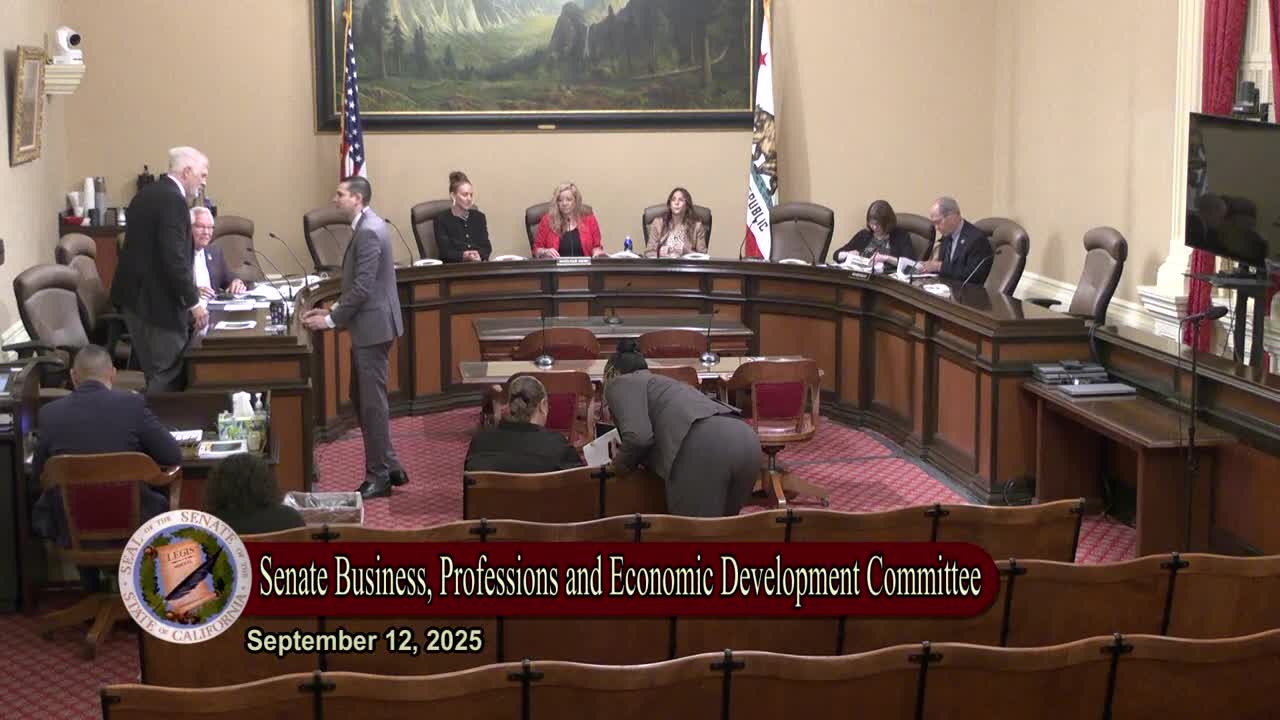 26MIN
Senate Standing Committee on Business, Professions and Economic Development
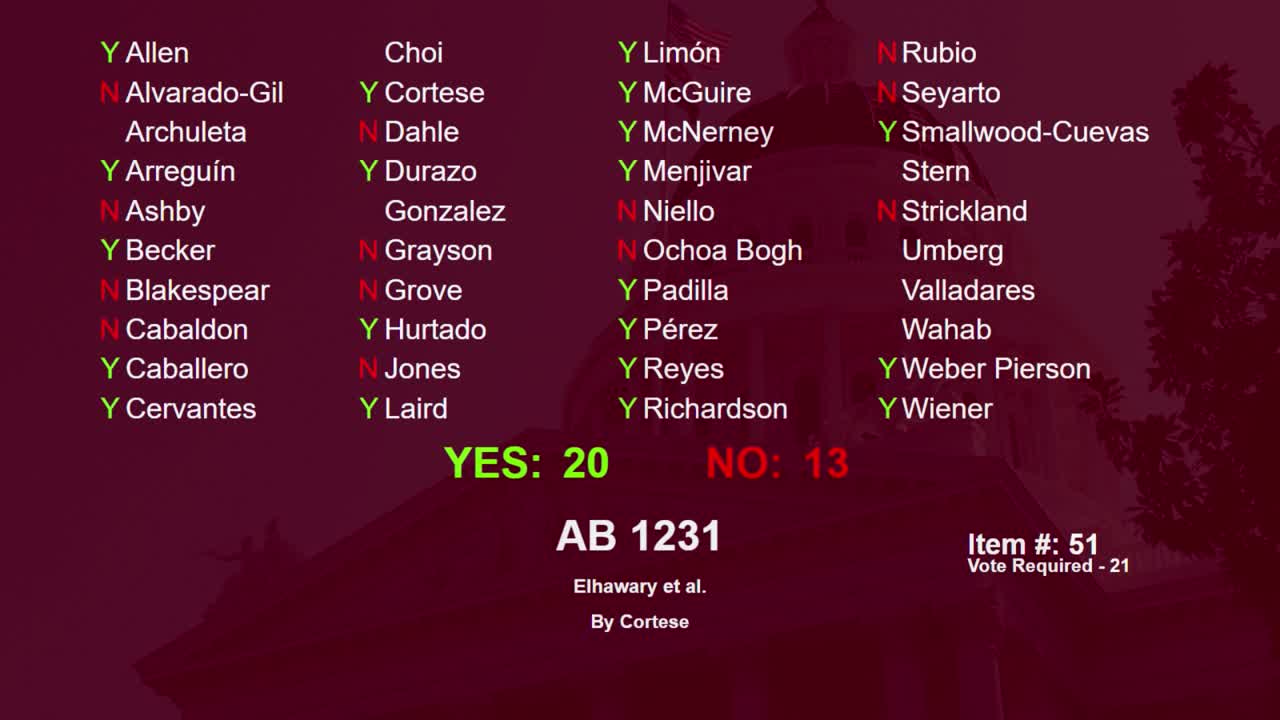 1MIN
Senate Floor
 1MIN
Assembly Floor
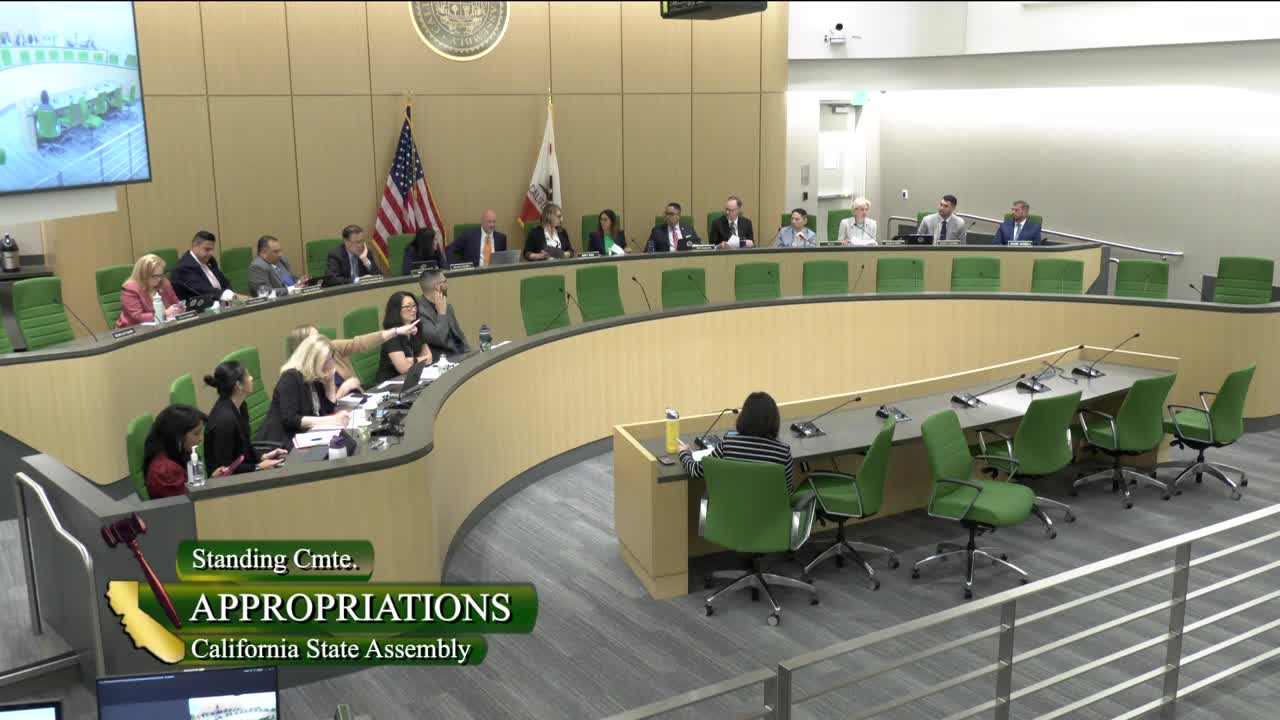 5MIN
Assembly Standing Committee on Appropriations
 17MIN
Assembly Standing Committee on Business and Professions
 8MIN
Senate Standing Committee on Energy, Utilities and Communications
 6MIN
Senate Floor
 33MIN
Senate Standing Committee on Local Government
Bill Author

Bill Co-Author(s):