SB 778: Migrant childcare and development programs.
- Session Year: 2025-2026
- House: Senate
- Latest Version Date: 2025-10-07
Current Status:
Passed
(2025-10-07: Chaptered by Secretary of State. Chapter 459, Statutes of 2025.)
Introduced
In Committee
Awaiting First Chamber Vote
Passed First Chamber
In Committee
Awaiting Second Chamber Vote
Passed Second Chamber
Enacted
Existing law, the Child Care and Development Services Act, requires the State Department of Social Services to administer childcare and development programs, including, among others, migrant childcare and development programs. Existing law, for purposes of migrant childcare and development programs, defines a migrant agricultural worker family as a family that has earned at least 50% of its total gross income from employment in fishing, agriculture, or agriculturally related work during the 12-month period immediately preceding the date of application for childcare and development services. Existing law requires the children of these families to be enrolled in child development programs on the basis of specified priorities, including priority to children whose families move from place to place.
This bill would instead define a migrant agricultural worker family as a family with at least one individual who has earned at least 40% of their total gross income from employment in fishing, agriculture, or agriculturally related work during the 12-month period immediately preceding the date of application for childcare and development services. For the purpose of enrollment in migrant child care and development programs, the bill would require the department to ensure that the self certification of income be consistent with other child care and development programs under the act.
Existing law, the Child Care and Development Services Act, requires the State Department of Social Services to administer childcare and development programs, including, among others, migrant childcare and development programs. Existing law, for purposes of migrant childcare and development programs, defines a migrant agricultural worker family as a family that has earned at least 50% of its total gross income from employment in fishing, agriculture, or agriculturally related work during the 12-month period immediately preceding the date of application for childcare and development services. Existing law requires the children of these families to be enrolled in child development programs on the basis of specified priorities, including priority to children whose families move from place to place.
This bill would instead define a migrant agricultural worker family as a family with at least one individual who has earned at least 40% of their total gross income from employment in fishing, agriculture, or agriculturally related work during the 12-month period immediately preceding the date of application for childcare and development services. The bill would authorize the individual to obtain and provide specified documentation necessary to establish their current income eligibility. For the purpose of enrollment in migrant child care and development programs, the bill would require the department to ensure that the self certification of income be consistent with other child care and development programs under the act.
Existing law, the Child Care and Development Services Act, requires the State Department of Social Services to administer childcare and development programs, including, among others, migrant childcare and development programs. Existing law, for purposes of migrant childcare and development programs, defines a migrant agricultural worker family as a family that has earned at least 50% of its total gross income from employment in fishing, agriculture, or agriculturally related work during the 12-month period immediately preceding the date of application for childcare and development services. Existing law requires the children of these families to be enrolled in child development programs on the basis of specified priorities, including priority to children whose families move from place to place.
This bill would instead define a migrant agricultural worker family as a family with at least one individual who has earned at least 40% of their total gross income from employment in fishing, agriculture, or agriculturally related work during the 12-month period immediately preceding the date of application for childcare and development services. The bill would authorize the individual to obtain and provide specified documentation necessary to establish their current income eligibility.
(a)For the purpose of this chapter, a migrant agricultural worker family means a family with at least one individual who has earned at least 40 percent of their total gross income from employment in fishing, agriculture, or agriculturally related work during the 12-month period immediately preceding the date of application for childcare and development services.
(b)Children of migrant agricultural worker families shall be enrolled in childcare and development programs on the basis of the following priorities:
(1)The family moves from place to place.
(2)The family has qualified under paragraph (1) within the past five years and is currently dependent for its income on agricultural employment, but is currently settled near agricultural areas.
(3)The family resides in a rural agricultural area and is dependent upon seasonal agricultural work.
(4)Eligibility and priority for services for the federally funded Migrant Child Development Program shall be in accordance with the applicable federal regulations.
SEC. 2.Section 10236.5 is added to the Welfare and Institutions Code, to read:10236.5.For the purpose of enrollment in migrant child care and development programs, the department shall ensure that the self certification of income shall be consistent with other child care and development programs under this part.
(a)(1)For the purpose of this chapter, a migrant agricultural worker family means a family with at least one individual who has earned at least 40 percent of their total gross income from employment in fishing, agriculture, or agriculturally related work during the 12-month period immediately preceding the date of application for childcare and development services.
(2)The individual may obtain and provide documentation necessary to establish their current income eligibility from either month of the two-month window immediately preceding the initial certification or the recertification of eligibility for services. The documentation shall consist of a self-certification of income, as defined in Section 18078 of Title 5 of the California Code of Regulations, and, if reasonably necessary to determine income, a copy of the most recently signed and completed tax return with a statement of current estimated income for tax purposes.(b)Children of migrant agricultural worker families shall be enrolled in childcare and development programs on the basis of the following priorities:
(1)The family moves from place to place.
(2)The family has qualified under paragraph (1) within the past five years and is currently dependent for its income on agricultural employment, but is currently settled near agricultural areas.
(3)The family resides in a rural agricultural area and is dependent upon seasonal agricultural work.
(4)Eligibility and priority for services for the federally funded Migrant Child Development Program shall be in accordance with the applicable federal regulations.
SEC. 2.Section 10236.5 is added to the Welfare and Institutions Code, to read:10236.5.For the purpose of enrollment in migrant child care and development programs, the department shall ensure that the self certification of income shall be consistent with other child care and development programs under this part.
(a)(1)For the purpose of this chapter, a migrant agricultural worker family means a family that with at least one individual who has earned at least 50 40 percent of its their total gross income from employment in fishing, agriculture, or agriculturally related work during the 12-month period immediately preceding the date of application for child care childcare and development services.
(2)The individual may obtain and provide documentation necessary to establish their current income eligibility from either month of the two-month window immediately preceding the initial certification or the recertification of eligibility for services. The documentation shall consist of a self-certification of income, as defined in Section 18078 of Title 5 of the California Code of Regulations, and, if reasonably necessary to determine income, a copy of the most recently signed and completed tax return with a statement of current estimated income for tax purposes.
(b)Children of migrant agricultural worker families shall be enrolled in child childcare and development programs on the basis of the following priorities:
(1)The family moves from place to place.
(2)The family has qualified under paragraph (1) within the past five years and is currently dependent for its income on agricultural employment, but is currently settled near agricultural areas.
(3)The family resides in a rural agricultural area and is dependent upon seasonal agricultural work.
(4)Eligibility and priority for services for the federally funded Migrant Child Development Program shall be in accordance with the applicable federal regulations.
|
Date
|
Status
|
|---|---|
| Oct 7, 2025 | Chaptered by Secretary of State. Chapter 459, Statutes of 2025. |
| Oct 7, 2025 | Approved by the Governor. |
| Sep 17, 2025 | Enrolled and presented to the Governor at 2 p.m. |
| Sep 9, 2025 | Assembly amendments concurred in. (Ayes 34. Noes 3. Page 2718.) Ordered to engrossing and enrolling. |
| Sep 8, 2025 | In Senate. Concurrence in Assembly amendments pending. |
| Sep 8, 2025 | Read third time. Passed. (Ayes 78. Noes 0. Page 3009.) Ordered to the Senate. |
| Sep 3, 2025 | Read second time. Ordered to third reading. |
| Sep 2, 2025 | Read second time and amended. Ordered to second reading. |
| Aug 29, 2025 | From committee: Do pass as amended. (Ayes 13. Noes 0.) (August 29). |
| Jul 16, 2025 | July 16 set for first hearing. Placed on APPR. suspense file. |
| Jul 2, 2025 | From committee: Do pass and re-refer to Com. on APPR. (Ayes 7. Noes 0.) (July 1). Re-referred to Com. on APPR. |
| Jun 9, 2025 | Referred to Com. on HUM. S. |
| Jun 4, 2025 | In Assembly. Read first time. Held at Desk. |
| Jun 3, 2025 | Read third time. Passed. (Ayes 34. Noes 1. Page 1445.) Ordered to the Assembly. |
| May 23, 2025 | Read second time. Ordered to third reading. |
| May 23, 2025 | From committee: Do pass. (Ayes 5. Noes 0. Page 1213.) (May 23). |
| May 16, 2025 | Set for hearing May 23. |
| Apr 21, 2025 | April 21 hearing: Placed on APPR. suspense file. |
| Apr 9, 2025 | Set for hearing April 21. |
| Apr 8, 2025 | From committee: Do pass and re-refer to Com. on APPR. (Ayes 5. Noes 0. Page 683.) (April 7). Re-referred to Com. on APPR. |
| Mar 13, 2025 | Set for hearing April 7. |
| Mar 12, 2025 | Referred to Com. on HUMAN S. |
| Feb 24, 2025 | Read first time. |
| Feb 24, 2025 | From printer. May be acted upon on or after March 24. |
| Feb 21, 2025 | Introduced. To Com. on RLS. for assignment. To print. |
|
Date
|
Description
|
Location
|
Votes
|
|
|---|---|---|---|---|
| Sep 9, 2025 | Unfinished Business SB778 Limón Concurrence | Senate Floor |
Passed |
|
| Sep 8, 2025 | SB 778 Limón Senate Third Reading By Bains | Assembly Floor |
Passed |
|
| Aug 29, 2025 | Do pass as amended. | Assembly Standing Committee on Appropriations |
Passed |
|
| Jul 1, 2025 | Do pass and be re-referred to the Committee on [Appropriations] | Assembly Standing Committee on Human Services |
Passed |
|
| Jun 3, 2025 | Senate 3rd Reading SB778 Limón | Senate Floor |
Passed |
|
| May 23, 2025 | Do pass | Senate Standing Committee on Appropriations |
Passed |
|
| Apr 21, 2025 | Placed on suspense file | Senate Standing Committee on Appropriations |
Passed |
|
| Apr 7, 2025 | Do pass, but first be re-referred to the Committee on [Appropriations] | Senate Standing Committee on Human Services |
Passed |
This list shows positions taken on this bill by organizations on the date displayed, which is linked to the original source.
Positions by individuals are not included.
|
Organization
|
Position
|
Date
|
|---|---|---|
| California Citrus Mutual | ** Support | |
| California Cotton Ginners and Growers Association | ** Support | |
| California Department of Insurance | ** Support | |
| California Strawberry Commission | ** Support | |
| California Walnut Commission | ** Support | |
| EveryChild California | ** Support | |
| First 5 California | ** Support | |
| Insurance Commissioner Ricardo Lara | ** Support | |
| Mexican American Opportunity Foundation | ** Support | |
| Nisei Farmers League | ** Support | |
| Unidosus | ** Support | |
| Western Tree Nut Association | ** Support |
SENATE RULES COMMITTEE Office of Senate Floor Analyses (916) 651-1520 Fax: (916) 327-4478 | SB 778 |
UNFINISHED BUSINESS
Bill No: SB 778
Author: Limón (D)
Amended: 9/2/25 in Assembly
Vote: 21
SENATE HUMAN SERVICES COMMITTEE: 5-0, 4/7/25
AYES: Arreguín, Ochoa Bogh, Becker, Limón, Pérez
SENATE APPROPRIATIONS COMMITTEE: 5-0, 5/23/25
AYES: Caballero, Cabaldon, Grayson, Richardson, Wahab
NO VOTE RECORDED: Seyarto, Dahle
SENATE FLOOR: 34-1, 6/3/25
AYES: Allen, Alvarado-Gil, Archuleta, Arreguín, Ashby, Becker, Blakespear, Cabaldon, Caballero, Cervantes, Cortese, Dahle, Durazo, Gonzalez, Grayson, Grove, Laird, Limón, McGuire, McNerney, Menjivar, Ochoa Bogh, Padilla, Pérez, Richardson, Rubio, Smallwood-Cuevas, Stern, Strickland, Umberg, Valladares, Wahab, Weber Pierson, Wiener
NOES: Choi
NO VOTE RECORDED: Hurtado, Jones, Niello, Reyes, Seyarto
ASSEMBLY FLOOR: 78-0, 9/8/25 - See last page for vote
SUBJECT: Migrant childcare and development programs
SOURCE: Mexican American Opportunity Foundation
DIGEST:
This bill expands eligibility for the migrant childcare and development programs to include a family with one individual who has earned at least 40 percent of their total gross income from employment in fishing, agriculture or agriculturally related work.
Assembly Amendments
Clarify that for the purpose of enrollment in migrant child care and development programs, the CDSS shall ensure that the self certification of income shall be consistent with other child care and development programs.
ANALYSIS:
Existing law:
- The Department of Social Services (DSS) shall administer all migrant child care and development programs. In addition, DSS shall support and encourage the state-level coordination of all agencies that offer services to migrant children and their families and state-level coordination of existing health funds for migrants. (Welfare and Institutions Code (WIC) 10235)
- Defines “migrant agricultural worker family” as a family that has earned at least 50 percent of its total gross income from employment in fishing, agriculture, or agriculturally related work during the 12-month period immediately preceding the date of application for childcare and development services. (WIC 10236)
- Provides that children of migrant agricultural worker families shall be enrolled in child development programs on the basis of the following priorities:
- The family moves from place to place.
- The family has qualified within the past five years and is currently dependent for its income on agricultural employment, but is currently settled near agricultural areas.
- The family resides in a rural agricultural area and is dependent upon seasonal agricultural work.
- Eligibility and priority for services for the federally funded Migrant Child Development Program shall be in accordance with the applicable federal regulations. (WIC 10236)
- DSS shall develop appropriate migrant child care and development programs, quality indicators, and the following:
- Social services.
- Bilingual liaison between migrant parents and the center or family child care home, or both.
- Liaison between the agency and the relevant community agencies and organizations, including health and social services.
- Identification and documentation of family needs and followup referrals as appropriate.
- Staffing.
- Bilingual health personnel shall be available to each program site of a migrant child care and development agency.
- Professional and nonprofessional staff shall reflect the linguistic and cultural background of the children being served.
- Whenever possible, migrants will be recruited, trained, and hired in child care and development programs. Documentation of training and career ladder opportunities and of recruitment and hiring efforts shall be provided to the department. Staff training shall include principles and practices of child care and development for the age groups of children being served.
- Health services in migrant child care and development programs shall include health and dental screening and followup treatment. Health records for all migrant children shall follow the child. (WIC 10237)
- Social services.
- Provides that cost for migrant programs may exceed the standard reimbursement rate established by the department. In no case shall the reimbursement exceed the cost of the program. State-funded programs may be eligible for Chapter I federal funds to supplement state funding. These funds shall not be contingent upon the provision of additional child days or enrollment. (WIC 10238)
- Provides that DSS shall annually reimburse seasonal migrant child care and development agencies for approvable startup and closedown costs. Reimbursement for both startup and closedown costs shall not exceed 15 percent of each agency’s total contract amount. (WIC 10238)
- Provides that seasonal migrant child care and development agencies shall submit reimbursement claims for startup costs with their first monthly reports, and reimbursement claims for closedown costs with their final reports. (WIC 10238)
- Defines "Self-Certification of Income" as a declaration signed by the parent under penalty of perjury identifying:
- To the extent known, the employer’s name, address, start date of work, the rate and frequency of pay, the total amount of income received for the preceding month(s), the type of work performed, and the hours and days worked; or
- That the parent does not have income from employment and any source of income used to support the family including non-wage income. (5 CCR 18078)
This bill:
- Changes the definition of “migrant agricultural worker family” to mean a family with at least one individual who has earned at least 40 percent of their total gross income from employment in fishing, agriculture, or agriculturally related work during the 12-month period immediately preceding the date of application for childcare and development services.
- Provides that for the purpose of enrollment in migrant child care and development programs, the CDSS shall ensure that the self certification of income shall be consistent with other child care and development programs.
According to the author. “With over one-third of farmworkers in our country residing in California, ensuring access to essential resources and supportive services for agricultural working families is crucial for the state's well-being. In addition, childcare challenges continue to grow in the state, becoming a key factor for lost wages of working agricultural parents. SB 778 seeks to address childcare needs by expanding access to the Migrant Childcare and Development Programs (CMIG), providing greater support for families in the agricultural sector.”
Migrant Child Care Programs. California’s subsidized childcare system is designed to provide assistance for income eligible parents and guardians who are working, in training, seeking employment, incapacitated, or in need of respite through a number of programs, including direct contract programs and voucher-based programs. Direct contract programs operate at child care centers and family child care home education networks. Child care centers are usually located in a commercial building and provide nonmedical care and supervision for children. Family child care home education networks are administered by a contractor, such as a local educational agency, which provides professional development for groups of family child care home providers. Voucher-based programs provide vouchers for families to use at child care centers, family child care homes, or license-exempt child care. Families have a choice in the type of care their children receive.
Migrant child care and development programs (CMIG) operate at child care centers and family child care home education networks to provide child development services for children from birth through 12 years of age, and for youth with exceptional needs under 21 years of age. These programs provide an educational component that is culturally, linguistically, and developmentally appropriate for the children served. These programs also provide meals and snacks to children and referrals to health and social service for agricultural families.
Migrant alternative payment programs (CMAP) issue vouchers to eligible migrant families that can be used to purchase child care services with providers throughout California’s central valley. The voucher follows families as they move from place to place for agricultural work.
Related/Prior Legislation
SB 1047 (Limon, Chapter 923, Statutes of 2022) expands, from 12 months to 24 months, the period of a family’s eligibility after establishing initial eligibility for state preschool and subsidized child care and development programs, and expands priority for eligibility, enrollment, and services to include families who receive specified human services benefits.
AB 131 (Committee on Budget, Chapter 116, Statutes of 2021) required, a budget trailer bill, among other changes, childcare providers to be reimbursed based upon the maximum certified hours of need, as documented on the certificate or voucher, until June 30, 2022. The bill also raised reimbursement rates to the 85th percentile of the 2018 Regional Market Rate survey and established the Joint Labor Management Committee and Rate and Quality Stakeholder Workgroup.
SB 393 (Hurtado, Chapter 499, Statutes of 2021) aligned the funding structure for the migrant childcare alternative payment program (voucher) with other voucher programs by shifting the reimbursement rate for migrant childcare alternative payment programs from the Standard Reimbursement Rate to the Regional Market Rate. The bill also expanded reimbursement allowances to include additional costs.
FISCAL EFFECT: Appropriation: No Fiscal Com.: Yes Local: No
According to the Assembly Appropriations Committee analysis:
The California Department of Social Services (CDSS) indicates that decreasing the qualifying income threshold to 40% pursuant to this bill will make additional families eligible for the California Migrant Childcare and Development Program (CMIG) and the California Migrant Alternative Payment Program (CMAP), but the department lacks sufficient data to gauge the exact fiscal impact of this change. However, based on current program characteristics, CDSS estimates the following ongoing General Fund costs:
- For every 100 newly eligible children enrolled in CMIG, costs will be approximately $2.1 million annually, at an estimated cost of $20,124 for each new enrollment.
- For every 100 newly eligible children enrolled in CMAP, costs will be approximately $1.4 million annually, at an estimated cost of $13,254 for each new enrollment.
SUPPORT: (Verified 9/8/25)
Mexican American Opportunity Foundation (Source)
California Citrus Mutual
California Cotton Ginners and Growers Association
California Strawberry Commission
California Walnut Commission
Everychild California
First 5 California
Insurance Commissioner Ricardo Lara / California Department of Insurance
Western Tree Nut Association
OPPOSITION: (Verified 9/8/25)
None received
Assembly Floor, 78-0, 9/8/25
Ayes: Addis, Aguiar-Curry, Ahrens, Alanis, Alvarez, Arambula, Ávila Farías, Bains, Bauer-Kahan, Bennett, Berman, Boerner, Bonta, Bryan, Calderon, Caloza, Carrillo, Castillo, Chen, Connolly, Davies, DeMaio, Dixon, Elhawary, Ellis, Flora, Fong, Gabriel, Gallagher, Garcia, Gipson, Jeff Gonzalez, Mark González, Hadwick, Haney, Harabedian, Hart, Hoover, Irwin, Jackson, Johnson, Kalra, Krell, Lackey, Lee, Lowenthal, Macedo, McKinnor, Muratsuchi, Ortega, Pacheco, Papan, Patel, Patterson, Pellerin, Petrie-Norris, Quirk-Silva, Ramos, Ransom, Celeste Rodriguez, Michelle Rodriguez, Rogers, Blanca Rubio, Schiavo, Schultz, Sharp-Collins, Solache, Soria, Stefani, Ta, Tangipa, Valencia, Wallis, Ward, Wicks, Wilson, Zbur, Rivas
No Vote Recorded: Nguyen, Sanchez
Prepared by: Heather Hopkins / HUMAN S. / (916) 651-1524
9/8/25 19:53:01
**** END ****
SENATE THIRD READING
STR Bill Id:SB 778
Author:(Limón)
As Amended Ver:September 2, 2025
Majority vote
SUMMARY
Requires the California Department of Social Services (CDSS), for the purpose of enrollment in migrant childcare and development programs, to ensure that the self certification of income shall be consistent with other childcare and development programs under this part.
Major Provisions
COMMENTS
Background: Subsidized Childcare. California′s subsidized childcare system is designed to provide assistance to parents and guardians who are working, in training, seeking employment, incapacitated, or in need of respite. California′s subsidized childcare is made up of a system of programs serving children from birth through 13 years of age, funded through a mix of federal and state dollars, and administered through a mixed delivery system by local educational agencies, community-based providers, and family childcare providers.
Parents participating in California Work Opportunity and Responsibility to Kids (CalWORKs), as well as families transitioning from and no longer receiving CalWORKs aid, can be eligible for childcare, which is offered in three ″stages.″ The largest programs are: General Child Care, which includes contracted centers and family childcare homes; the California State Preschool Program, which provides developmentally, culturally, and linguistically appropriate curriculum to eligible children who are three- and four-years of age; and, alternative payment programs, which provide vouchers that can be used to obtain childcare in a center, family childcare home, or from a license-exempt provider.
Certain eligibility and prioritization rules apply to subsidized childcare in California. Families qualify for non-CalWORKs subsidized childcare if they satisfy at least one requirement in each of two areas: eligibility and need. First, they must meet one of the eligibility criteria, which includes currently receiving assistance, income eligibility, experiencing homelessness, having children receiving protective services or identified as being at risk of abuse, neglect, or exploitation, or having a household member certified to receive benefits from specified means-tested government programs. Secondly, the family must meet one of the prerequisites for need. This could involve the child being identified by a legal, medical, or social services agency, or residing in an emergency shelter. Alternatively, the parents must either be employed or actively seeking employment, participating in vocational training or educational programs tailored for English language learners or aimed at achieving a high school diploma or general educational development certificate. They may also be in pursuit of permanent housing for family stability, or be incapacitated. Families eligible for subsidized care must demonstrate an income below 85% of the state median income (SMI). Effective July 1, 2024, 85% of the SMI is $6,593 per month for a family of three, totaling $79,116 annually.
Once a family is determined eligible for childcare services, either at initial enrollment or during recertification, they are considered to meet all eligibility and need requirements for at least 24 months. During this 24-month period, the family is entitled to receive services without having to recertify their eligibility or need, and they are not required to report any changes to income or other circumstances, unless their circumstances result in income exceeding 85% of SMI eligibility threshold, which families are then disenrolled.
Migrant Childcare and Development Programs (CMIG). CMIG offers childcare and development services for children from birth through 12 years of age, including older children with exceptional needs. These services are provided through centers and family childcare home networks operated by public or private agencies, as well as local educational agencies. The programs are designed to be culturally, linguistically, and developmentally appropriate for the children served. In addition to childcare, they offer meals, parent education, referrals to health and social services for families, and staff development opportunities for employees. Migrant Alternative Payment (CMAP) Programs provide vouchers to eligible migrant families, which can be used to purchase childcare and development services from providers throughout California′s Central Valley. CMIG is funded through a combination of federal and state resources and are administered by local agencies, community-based organizations, and childcare providers.
According to CDSS′ January 2024 Child Care Transition Quarterly Report, for fiscal year 2022-23, CMIG enrolled 1,143 children and CMAP enrolled 1,826 children, which represents 1.2% of childcare enrollment for all childcare and development programs. CMIG is a capped program which means that it can only serve as many families as funding allows. The Legislative Analyst′s Office issued a March 28, 2025, brief analyzing the Governor′s 2025-26 childcare and state preschool budget proposals, which includes $80 million for CMIG in 2025-26, which is an increase of $1 million relative to the revised 2024-25 levels. According to the California Budget & Policy Center, only one in nine of California′s children eligible for childcare actually received childcare services in 2022, including CMIG, with the number of new slots not keeping pace with the growing demand.
CMIG is intended to support families who are primarily employed in seasonal, agricultural work. These programs aim to provide affordable childcare services that allow parents or guardians to maintain stable employment. Migrant families who work in agriculture often face unique challenges that hinder their access to reliable childcare, such as fluctuating income, irregular work schedules, and limited availability of local services. As a result, eligibility criteria and program services have been specifically tailored to meet the needs of these families. To be eligible for CMIG, families are additionally required to meet eligibility and need criteria specified earlier within the general childcare and development programs.
CMIG′s Documentation of Eligibility: Income. CMIG promulgated requirements regarding family eligibility and enrollment for the program. According to CDSS′ CMIG′s Program Requirements for Fiscal Year 2024-25, the documentation of eligibility requires parents to provide proof of the family′s total countable income, which includes income from employment, self-employment, and any other non-wage sources, for all individuals counted in the family size. For employed parents, this documentation can include payroll stubs, an employer letter, or other records from the past two months. To determine family size, parents are required to provide documentation confirming the number of children and parents in the family, as listed on the application for services. Any adult who lives with and is responsible for the child′s care, including family members or other caregivers, is also required to meet specified need criteria for income eligibility and family fee determination.
If the employer refuses or the request for documentation would harm the parent′s job, alternative forms of income verification such as tax returns, quarterly estimated tax statements, client payment records, or other records of income to support the reported income can be used, along with a self-certification of income. Families with fluctuating income, like those in agricultural or seasonal work, may choose to provide up to 12 months of income history if the additional time of income provided contributes to an affirmative eligibility determination. Childcare contractors are then responsible for verifying the reported income, including checking employment details like the parents′ salary/wages; rate of pay; hours and days of work; inconsistent and/or unstable hours and days of work; pay periods or frequency of pay; and, the start date of the employee.
Furthermore, CMIG requires a migrant agricultural worker family to have earned at least 50% of its total gross income from employment in fishing, agriculture, or agriculturally related work during the 12-month period immediately preceding the application for childcare and development services, as defined in state law. Children of migrant agricultural worker families are enrolled in CMIG based on different priorities. First, priority is given to families that move from place to place; second priority is given to families that have qualified under the first priority within the past five years and are currently dependent on agricultural employment, but are now settled near agricultural areas are also given priority; third priority is given to families residing in rural agricultural areas and dependent on seasonal agricultural work; and lastly, eligibility and priority for services for the federally funded Migrant Child Development Program is determined in accordance with applicable federal regulations.
The current definition of ″migrant agricultural worker family″ presents challenges, such as the income thresholds that can make it difficult for migrant families to qualify for services, particularly in cases where income is inconsistent or fluctuates from season to season and for multi-generational families with mixed incomes. According to the United States (U.S.) Department of Agriculture Economic Research Service, in 2019, 96% of agricultural working families in the U.S. earned income from off-farm sources comprising 77% of their total income, highlighting the need for income diversification in these households. In these cases, many families who rely on fishing or agriculture-related occupations, but do not meet the exact requirements are excluded from receiving childcare assistance, despite their clear need.
This bill expands the definition of a ″migrant agricultural worker family″ by lowering the income threshold from requiring at least 50% of the family′s total gross income to be earned from agriculturally-related employment, to allowing families with at least one individual who has earned 40% of their total gross income from such employment. This bill also broadens eligibility by including families where the income from agriculturally-related work is earned by just one individual, rather than requiring that all household members meet the previous threshold.
Equity Implications: Historically marginalized groups, including migrant workers and communities of color, are often overrepresented in agricultural industries and face systemic barriers in accessing public services. This bill aims to improve childcare access for migrant agricultural families who experience unique challenges related to fluctuating and non-traditional income sources. By expanding the definition of ″migrant agricultural worker family″ and allowing for more flexible documentation of income, this bill seeks to address the economic realities of families who may rely on a combination of agricultural, off-farm, and seasonal income.
According to the Author
″With over one-third of farmworkers in our country residing in California, ensuring access to essential resources and supportive services for agricultural working families is crucial for the state′s well-being. In addition, childcare challenges continue to grow in the state, becoming a key factor for lost wages of working agricultural parents. [This bill] seeks to address childcare needs by expanding access to the Migrant Childcare and Development Programs (CMIG), providing greater support for families in the agricultural sector.″
Arguments in Support
First 5 California writes in support that, ″Lowering the income eligibility threshold will expand eligibility to a larger number of families that will be able to access care and services that they would otherwise go without. Access to child care allows migrant parents to work consistently which contributes to their family′s financial stability; provides children with an opportunity to develop essential skills; supports social integration of migrant families which in turn helps children and parents build connections with others within their communities; and provides a safe and nurturing environment that promotes the physical and emotional well-being of the children.″
Arguments in Opposition
No opposition on file.
FISCAL COMMENTS
According to the Assembly Appropriations Committee on August 29, 2025: The California Department of Social Services (CDSS) indicates that decreasing the qualifying income threshold to 40% pursuant to this bill will make additional families eligible for the California Migrant Childcare and Development Program (CMIG) and the California Migrant Alternative Payment Program (CMAP), but the department lacks sufficient data to gauge the exact fiscal impact of this change. However, based on current program characteristics, CDSS estimates the following ongoing General Fund costs:
- For every 100 newly eligible children enrolled in CMIG, costs will be approximately $2.1 million annually, at an estimated cost of $20,124 for each new enrollment.
- For every 100 newly eligible children enrolled in CMAP, costs will be approximately $1.4 million annually, at an estimated cost of $13,254 for each new enrollment.
VOTES
SENATE FLOOR: 34-1-5
YES: Allen, Alvarado-Gil, Archuleta, Arreguín, Ashby, Becker, Blakespear, Cabaldon, Caballero, Cervantes, Cortese, Dahle, Durazo, Gonzalez, Grayson, Grove, Laird, Limón, McGuire, McNerney, Menjivar, Ochoa Bogh, Padilla, Pérez, Richardson, Rubio, Smallwood-Cuevas, Stern, Strickland, Umberg, Valladares, Wahab, Weber Pierson, Wiener
NO: Choi
ABS, ABST OR NV: Hurtado, Jones, Niello, Reyes, Seyarto
ASM HUMAN SERVICES: 7-0-0
YES: Lee, Castillo, Calderon, Elhawary, Jackson, Celeste Rodriguez, Tangipa
ASM APPROPRIATIONS: 13-0-2
YES: Wicks, Arambula, Calderon, Caloza, Elhawary, Fong, Mark González, Ahrens, Pacheco, Pellerin, Solache, Ta, Tangipa
ABS, ABST OR NV: Sanchez, Dixon
UPDATED
VERSION: September 2, 2025
CONSULTANT: Bri-Ann Hernández-Mengual / HUM. S. / (916) 319-2089 FN: 0001490
Date of Hearing: July 16, 2025
ASSEMBLY COMMITTEE ON APPROPRIATIONS
Buffy Wicks, Chair
SBPCA Bill Id:SB 778
Author:(Limón) – As Introduced Ver:February 21, 2025
Policy Committee: | Human Services | Vote: | 7 - 0 |
|
| ||
|
|
Urgency: No State Mandated Local Program: No Reimbursable: No
SUMMARY:
This bill revises income eligibility requirements for migrant childcare services and specifies the documentation necessary to establish current income eligibility, including self-certification of income.
Specifically, this bill:
- Revises the definition of a “migrant agricultural worker family” to mean a family with at least one individual who has earned at least 40% of their total gross income from employment in fishing, agriculture, or agricultural-related work during the 12-month period immediately preceding the date of application for childcare and development services.
- Specifies the individual may obtain and provide documentation necessary to establish their current income eligibility from either month of the two-month window immediately preceding the initial certification or the recertification of eligibility for services.
- Requires documentation to consist of a self-certification of income, as defined, and, if reasonably necessary to determine income, a copy of the most recently signed and completed tax return with a statement of current estimated income for tax purposes.
FISCAL EFFECT:
The California Department of Social Services (CDSS) indicates that decreasing the qualifying income threshold to 40% pursuant to this bill will make additional families eligible for the California Migrant Childcare and Development Program (CMIG) and the California Migrant Alternative Payment Program (CMAP), but the department lacks sufficient data to gauge the exact fiscal impact of this change. However, based on current program characteristics, CDSS estimates the following ongoing General Fund costs:
- For every 100 newly eligible children enrolled in CMIG, costs will be approximately $2.1 million annually, at an estimated cost of $20,124 for each new enrollment.
- For every 100 newly eligible children enrolled in CMAP, costs will be approximately $1.4 million annually, at an estimated cost of $13,254 for each new enrollment.
COMMENTS:
- Purpose. According to the author:
With over one-third of farmworkers in our country residing in California, ensuring access to essential resources and supportive services for agricultural working families is crucial for the state's well-being. In addition, childcare challenges continue to grow in the state, becoming a key factor for lost wages of working agricultural parents. [This bill] seeks to address childcare needs by expanding access to the CMIG, providing greater support for families in the agricultural sector.
This bill is sponsored by the Mexican American Opportunity Foundation.
- Background. The Child Care and Development Services Act requires CDSS to administer childcare and development programs. California’s subsidized childcare system provides assistance for income-eligible parents and guardians who are working, in training, seeking employment, incapacitated, or in need of respite through a number of programs.
CMIG offers childcare and development services to eligible agricultural working families. CMIG serves children from birth through 12 years of age, including older children with exceptional needs, through childcare centers and family childcare home networks operated or administered by public or private agencies and local educational agencies. CMIG is funded through a combination of federal and state resources and provides culturally, linguistically, and developmentally appropriate care for the children served. This program also provides meals and snacks to children, and referrals to health and social services for agricultural families.
CMAP provides vouchers to eligible agricultural working families to purchase childcare and development services from providers throughout California’s Central Valley. Funding for services follows families as they move from place to place for agricultural work.
Under existing law, to qualify for these programs a family must be a “migrant agricultural worker family,” defined as a family that has earned at least 50% of its total gross income from employment in fishing, agriculture, or agriculturally related work during the 12-month period immediately preceding the date of application for child care and development services. This bill revises this definition to instead require a family to have at least one individual who has earned 40% of their total gross income from such employment.
Existing regulations require specific income documentation for determining eligibility for these programs, with self-certification allowed only when income cannot be verified through other means. This bill instead allows self-certification of income, with tax returns and estimated income statements used as additional verification if reasonably necessary, and allows a family to establish income eligibility by using documentation from either month of a two-month window, rather than from 12 months, as specified.
The author and sponsor assert the eligibility and income verification changes in this bill will expand access to childcare services and, thus, better support working agricultural families.
Analysis Prepared by: Jennifer Swenson / APPR. / (916) 319-2081
Date of Hearing: July 1, 2025
ASSEMBLY COMMITTEE ON HUMAN SERVICES
Alex Lee, Chair
SBPCA Bill Id:SB 778
Author:(Limón) – As Introduced Ver:February 21, 2025
SENATE VOTE: 34-1
SUBJECT: Migrant childcare and development programs
SUMMARY: Revises eligibility for the migrant childcare and development programs to include a family with one individual who has earned at least 40% of their total gross income from employment in fishing, agriculture, or agriculturally related work and creates a statutory framework for how income is certified for such programs. Specifically, this bill:
- Reduces the percentage of the total gross income required to meet the definition of a “migrant agricultural worker family” to mean a family with at least one individual who has earned at least 40%, instead of a family who has earned at least 50% of their total gross income from employment in fishing, agriculture, or agriculturally related work during the 12-month period immediately preceding the date of application for childcare and development services.
- Specifies that the individual may obtain and provide documentation necessary to establish their current income eligibility from either month of the two-month window immediately preceding the initial certification or the recertification of eligibility for services.
- Requires the documentation in 2) above, to consist of a self-certification of income, as defined in 6) below, and, if reasonably necessary to determine income, a copy of the most recently signed and completed tax return with a statement of current estimated income for tax purposes.
EXISTING LAW:
- Establishes the Child Care and Development Services Act to provide childcare and development services as part of a coordinated, comprehensive, and cost-effective system serving children from birth to 13 years of age and their parents, including a full range of supervision, health, and support services through full- and part-time programs. (Welfare & Institutions Code [WIC] § 10207 et seq.)
- Requires the California Department of Social Services (CDSS) to administer the migrant childcare and development programs (CMIG). Further requires CDSS to support and encourage the state-level coordination of all agencies that offer services to migrant children and their families and state-level coordination of existing health funds of migrants. (WIC § 10235)
- Defines “migrant agricultural worker family” to mean a family that has earned at least 50% of its total gross income from employment in fishing, agriculture, or agriculturally related work during the 12-month period immediately preceding the date of application for childcare and development services. (WIC § 10236(a))
- Requires children of migrant agricultural worker families to be enrolled in child development programs on the basis of the following priorities:
- The family moves from place to place;
- The family has qualified under a) above, within the past five years and is currently dependent for its income on agricultural employment, but is currently settled near agricultural areas;
- The family resides in rural agricultural area and is dependent upon seasonal agricultural work; and,
- Eligibility and priority for services for the federally funded Migrant Child Development Program shall be in accordance with the applicable federal regulations. (WIC § 10236(b))
- Requires CDSS to develop appropriate migrant childcare and development programs specified quality indicators and the following:
- Social services.
- Bilingual liaison between migrant parents and the center or family childcare home, or both;
- Liaison between the agency and the relevant community agencies and organizations, including health and social services; and,
- Identification and documentation of family needs and follow-up referrals as appropriate.
- Bilingual liaison between migrant parents and the center or family childcare home, or both;
- Staffing.
- Bilingual health personnel shall be available to each program site of a migrant childcare and development agency;
- Professional and nonprofessional staff shall reflect the linguistic and cultural background of the children being served; and,
- Whenever possible, migrants will be recruited, trained, and hired in childcare and development programs. Documentation of training and career ladder opportunities, and of recruitment and hiring efforts shall be provided to the department. Requires staff training to include principles and practices of childcare and development for the age groups of children being served.
- Health services in migrant childcare and development programs shall include health and dental screening and followup treatment. Requires health records for all migrant children to follow the child. (WIC § 10237)
- Social services.
- Defines “self-certification of income” as a declaration signed by a parent under penalty or perjury identifying:
- To the extent known, the employer’s name, address, start date of work, the rate and frequency of pay, the total amount of income received for the preceding month(s), the type of work performed, and the hours and days worked; or,
- That the parent does not have income from employment and any source of income used to support the family including non-wage income. (5 California Code of Regulations § 18078)
FISCAL EFFECT: According to the Senate Appropriations Committee on April 21, 2025: The California Department of Social Services (CDSS) estimates the following:
- No fiscal impact to state operations.
- Unknown General Fund costs for newly eligible children. Data is not available to determine how many more children would become eligible and enroll.
- For every 100 newly eligible children enrolled in the Migrant Alternative Payment Programs (CMAP), costs would be approximately $1.4 million annually.
- For every 100 newly eligible children enrolled in the Migrant Child Care and Development Programs (CMIG), costs would be approximately $2.1 million annually.
COMMENTS:
Background: Subsidized Childcare. California’s subsidized childcare system is designed to provide assistance to parents and guardians who are working, in training, seeking employment, incapacitated, or in need of respite. California’s subsidized childcare is made up of a system of programs serving children from birth through 13 years of age, funded through a mix of federal and state dollars, and administered through a mixed delivery system by local educational agencies, community-based providers, and family childcare providers. Parents participating in California Work Opportunity and Responsibility to Kids (CalWORKs), as well as families transitioning from and no longer receiving CalWORKs aid, can be eligible for childcare, which is offered in three “stages.” The largest programs are: General Child Care, which includes contracted centers and family childcare homes; the California State Preschool Program, which provides developmentally, culturally, and linguistically appropriate curriculum to eligible children who are three- and four-years of age; and, alternative payment programs, which provide vouchers that can be used to obtain childcare in a center, family childcare home, or from a license-exempt provider.
Certain eligibility and prioritization rules apply to subsidized childcare in California. Families qualify for non-CalWORKs subsidized childcare if they satisfy at least one requirement in each of two areas: eligibility and need. First, they must meet one of the eligibility criteria, which includes currently receiving assistance, income eligibility, experiencing homelessness, having children receiving protective services or identified as being at risk of abuse, neglect, or exploitation, or having a household member certified to receive benefits from specified means-tested government programs. Secondly, the family must meet one of the prerequisites for need. This could involve the child being identified by a legal, medical, or social services agency, or residing in an emergency shelter. Alternatively, the parents must either be employed or actively seeking employment, participating in vocational training or educational programs tailored for English language learners or aimed at achieving a high school diploma or general educational development certificate. They may also be in pursuit of permanent housing for family stability, or be incapacitated. Families eligible for subsidized care must demonstrate an income below 85% of the state median income (SMI). Effective July 1, 2024, 85% of the SMI is $6,593 per month for a family of three, totaling $79,116 annually.
Once a family is determined eligible for childcare services, either at initial enrollment or during recertification, they are considered to meet all eligibility and need requirements for at least 24 months. During this 24-month period, the family is entitled to receive services without having to recertify their eligibility or need, and they are not required to report any changes to income or other circumstances, unless their circumstances result in income exceeding 85% of SMI eligibility threshold, which families are then disenrolled.
Migrant Childcare and Development Programs (CMIG). CMIG offers childcare and development services for children from birth through 12 years of age, including older children with exceptional needs. These services are provided through centers and family childcare home networks operated by public or private agencies, as well as local educational agencies. The programs are designed to be culturally, linguistically, and developmentally appropriate for the children served. In addition to childcare, they offer meals, parent education, referrals to health and social services for families, and staff development opportunities for employees. Migrant Alternative Payment (CMAP) Programs provide vouchers to eligible migrant families, which can be used to purchase childcare and development services from providers throughout California’s Central Valley. CMIG is funded through a combination of federal and state resources and are administered by local agencies, community-based organizations, and childcare providers.
According to CDSS’ January 2024 Child Care Transition Quarterly Report, for fiscal year 2022-23, CMIG enrolled 1,143 children and CMAP enrolled 1,826 children, which represents 1.2% of childcare enrollment for all childcare and development programs. CMIG is a capped program which means that it can only serve as many families as funding allows. The Legislative Analyst's Office issued a March 28, 2025, brief analyzing the Governor’s 2025-26 childcare and state preschool budget proposals, which includes $80 million for CMIG in 2025-26, which is an increase of $1 million relative to the revised 2024-25 levels. According to the California Budget & Policy Center, only one in nine of California’s children eligible for childcare actually received childcare services in 2022, including CMIG, with the number of new slots not keeping pace with the growing demand.
CMIG is intended to support families who are primarily employed in seasonal, agricultural work. These programs aim to provide affordable childcare services that allow parents or guardians to maintain stable employment. Migrant families who work in agriculture often face unique challenges that hinder their access to reliable childcare, such as fluctuating income, irregular work schedules, and limited availability of local services. As a result, eligibility criteria and program services have been specifically tailored to meet the needs of these families. To be eligible for CMIG, families are additionally required to meet eligibility and need criteria specified earlier within the general childcare and development programs.
CMIG’s Documentation of Eligibility: Income. CMIG promulgated requirements regarding family eligibility and enrollment for the program. According to CDSS’ CMIG’s Program Requirements for Fiscal Year 2024-25, the documentation of eligibility requires parents to provide proof of the family’s total countable income, which includes income from employment, self-employment, and any other non-wage sources, for all individuals counted in the family size. For employed parents, this documentation can include payroll stubs, an employer letter, or other records from the past two months. To determine family size, parents are required to provide documentation confirming the number of children and parents in the family, as listed on the application for services. Any adult who lives with and is responsible for the child’s care, including family members or other caregivers, is also required to meet specified need criteria for income eligibility and family fee determination.
If the employer refuses or the request for documentation would harm the parent’s job, alternative forms of income verification such as tax returns, quarterly estimated tax statements, client payment records, or other records of income to support the reported income can be used, along with a self-certification of income. Families with fluctuating income, like those in agricultural or seasonal work, may choose to provide up to 12 months of income history if the additional time of income provided contributes to an affirmative eligibility determination. Childcare contractors are then responsible for verifying the reported income, including checking employment details like the parents’ salary/wages; rate of pay; hours and days of work; inconsistent and/or unstable hours and days of work; pay periods or frequency of pay; and, the start date of the employee.
This bill aims to simplify the process of documenting income for eligibility purposes by allowing self-certification of income, with tax returns or estimated income statements used as additional verification when necessary, as opposed to current rules that requires specific income documentation for all family members, with self-certification only allowed when income cannot be verified through other means. Additionally, this bill allows flexibility for families with fluctuating income, especially those with seasonal or inconsistent earnings, to use documentation from a two-month window to provide more relevant and timely documentation. In contrast, the current regulations require comprehensive verification for all family members, including the possibility of providing up to 12 months of income records of families with fluctuating income.
Furthermore, CMIG requires a migrant agricultural work family to have earned at least 50% of its total gross income from employment in fishing, agriculture, or agriculturally related work during the 12-month period immediately preceding the application for childcare and development services, as defined in state law. Children of migrant agricultural worker families are enrolled in CMIG based on different priorities. First, priority is given to families that move from place to place; second priority is given to families that have qualified under the first priority within the past five years and are currently dependent on agricultural employment, but are now settled near agricultural areas are also given priority; third priority is given to families residing in rural agricultural areas and dependent on seasonal agricultural work; and lastly, eligibility and priority for services for the federally funded Migrant Child Development Program is determined in accordance with applicable federal regulations.
The current definition of “migrant agricultural worker family” presents challenges, such as the income thresholds that can make it difficult for migrant families to qualify for services, particularly in cases where income is inconsistent or fluctuates from season to season and for multi-generational families with mixed incomes. According to the United States (U.S.) Department of Agriculture Economic Research Service, in 2019, 96% of agricultural working families in the U.S. earned income from off-farm sources comprising 77% of their total income, highlighting the need for income diversification in these households. In these cases, many families who rely on fishing or agriculture-related occupations, but do not meet the exact requirements are excluded from receiving childcare assistance, despite their clear need.
This bill expands the definition of a “migrant agricultural worker family” by lowering the income threshold from requiring at least 50% of the family’s total gross income to be earned from agriculturally-related employment, to allowing families with at least one individual who has earned 40% of their total gross income from such employment. This bill also broadens eligibility by including families where the income from agriculturally-related work is earned by just one individual, rather than requiring that all household members meet the previous threshold.
Author’s Statement: According to the Author, “With over one-third of farmworkers in our country residing in California, ensuring access to essential resources and supportive services for agricultural working families is crucial for the state's well-being. In addition, childcare challenges continue to grow in the state, becoming a key factor for lost wages of working agricultural parents. [This bill] seeks to address childcare needs by expanding access to the Migrant Childcare and Development Programs (CMIG), providing greater support for families in the agricultural sector.”
Equity Implications: Historically marginalized groups, including migrant workers and communities of color, are often overrepresented in agricultural industries and face systemic barriers in accessing public services. This bill aims to improve childcare access for migrant agricultural families who experience unique challenges related to fluctuating and non-traditional income sources. By expanding the definition of “migrant agricultural worker family” and allowing for more flexible documentation of income, this bill seeks to address the economic realities of families who may rely on a combination of agricultural, off-farm, and seasonal income. These families, often lower-income, could benefit from less rigid and burdensome requirements for proving eligibility, which may reduce barriers to accessing childcare services. Additionally, allowing self-certification of income and the use of more recent documentation acknowledges the difficulties many agricultural families face in maintaining traditional records, particularly due to their irregular work schedules.
RELATED AND PRIOR LEGISLATION:
SB 1047 (Limón), Chapter 923, Statutes of 2022, expanded, from 12 months to 24 months, the period of a family’s eligibility after establishing initial eligibility for state preschool and subsidized child care and development programs, and expanded priority for eligibility, enrollment, and services to include families who receive specified human services benefits.
AB 131 (Committee on Budget), Chapter 116, Statutes of 2021, a budget trailer bill, among other changes, required childcare providers to be reimbursed based upon the maximum certified hours of need, as documented on the certificate or voucher, until June 30, 2022. Raised reimbursement rates to the 85th percentile of the 2018 Regional Market Rate survey and established the Joint Labor Management Committee and Rate and Quality Stakeholder Workgroup.
SB 393 (Hurtado), Chapter 499, Statutes of 2021, aligned the funding structure for the migrant childcare alternative payment program (voucher) with other voucher programs by shifting the reimbursement rate for migrant childcare alternative payment programs from the Standard Reimbursement Rate to the Regional Market Rate. Expanded reimbursement allowances to include additional costs.
REGISTERED SUPPORT / OPPOSITION:
Support
Mexican American Opportunity Foundation (Sponsor)
California Citrus Mutual
California Cotton Ginners and Growers Association
California Strawberry Commission
California Walnut Commission
First 5 California
Nisei Farmers League
UnidosUS
Western Tree Nut Association
Opposition
None on file.
Analysis Prepared by: Bri-Ann Hernández-Mengual / HUM. S. / (916) 319-2089
SENATE RULES COMMITTEE Office of Senate Floor Analyses (916) 651-1520 Fax: (916) 327-4478 | SB 778 |
THIRD READING
Bill No: SB 778
Author: Limón (D)
Introduced: 2/21/25
Vote: 21
SENATE HUMAN SERVICES COMMITTEE: 5-0, 4/7/25
AYES: Arreguín, Ochoa Bogh, Becker, Limón, Pérez
SENATE APPROPRIATIONS COMMITTEE: 5-0, 5/23/25
AYES: Caballero, Cabaldon, Grayson, Richardson, Wahab
NO VOTE RECORDED: Seyarto, Dahle
SUBJECT: Migrant childcare and development programs
SOURCE: Mexican American Opportunity Foundation
DIGEST:
This bill expands eligibility for the migrant childcare and development programs to include a family with one individual who has earned at least 40% of their total gross income from employment in fishing, agriculture or agriculturally related work and creates a statutory framework for how income is certified for such programs.
ANALYSIS:
Existing Law:
- States, the Department of Social Services (DSS) shall administer all migrant child care and development programs. In addition, DSS shall support and encourage the state-level coordination of all agencies that offer services to migrant children and their families and state-level coordination of existing health funds for migrants. (Welfare and Institutions Code (WIC) 10235)
- Defines “migrant agricultural worker family” as a family that has earned at least 50% of its total gross income from employment in fishing, agriculture, or agriculturally related work during the 12-month period immediately preceding the date of application for childcare and development services. (WIC 10236)
- Provides that children of migrant agricultural worker families shall be enrolled in child development programs on the basis of the following priorities:
- The family moves from place to place.
- The family has qualified within the past five years and is currently dependent for its income on agricultural employment, but is currently settled near agricultural areas.
- The family resides in a rural agricultural area and is dependent upon seasonal agricultural work.
- Eligibility and priority for services for the federally funded Migrant Child Development Program shall be in accordance with the applicable federal regulations. (WIC 10236)
- States, DSS shall develop appropriate migrant child care and development programs, quality indicators, and the following:
- Social services:
- Bilingual liaison between migrant parents and the center or family child care home, or both.
- Liaison between the agency and the relevant community agencies and organizations, including health and social services.
- Identification and documentation of family needs and followup referrals as appropriate.
- Staffing:
- Bilingual health personnel shall be available to each program site of a migrant child care and development agency.
- Professional and nonprofessional staff shall reflect the linguistic and cultural background of the children being served.
- Whenever possible, migrants will be recruited, trained, and hired in child care and development programs. Documentation of training and career ladder opportunities and of recruitment and hiring efforts shall be provided to the department. Staff training shall include principles and practices of child care and development for the age groups of children being served.
- Health services in migrant child care and development programs shall include health and dental screening and follow up treatment. Health records for all migrant children shall follow the child. (WIC 10237)
- Social services:
- Provides that cost for migrant programs may exceed the standard reimbursement rate established by the department. In no case shall the reimbursement exceed the cost of the program. State-funded programs may be eligible for Chapter I federal funds to supplement state funding. These funds shall not be contingent upon the provision of additional child days or enrollment. (WIC 10238)
- Provides that DSS shall annually reimburse seasonal migrant child care and development agencies for approvable startup and closedown costs. Reimbursement for both startup and closedown costs shall not exceed 15% of each agency’s total contract amount. (WIC 10238)
- Provides that seasonal migrant child care and development agencies shall submit reimbursement claims for startup costs with their first monthly reports, and reimbursement claims for closedown costs with their final reports. (WIC 10238)
- Defines "Self-Certification of Income" as a declaration signed by the parent under penalty of perjury identifying:
- To the extent known, the employer’s name, address, start date of work, the rate and frequency of pay, the total amount of income received for the preceding month(s), the type of work performed, and the hours and days worked; or
- That the parent does not have income from employment and any source of income used to support the family including non-wage income. (5 CCR 18078)
This Bill:
- Changes the definition of “migrant agricultural worker family” to mean a family with at least one individual who has earned at least 40% of their total gross income from employment in fishing, agriculture, or agriculturally related work during the 12-month period immediately preceding the date of application for childcare and development services.
- Provides that the individual may obtain and provide documentation necessary to establish their current income eligibility from either month of the two-month window immediately preceding the initial certification or the recertification of eligibility for services. The documentation shall consist of a self-certification of income, as defined in Section 18078 of Title 5 of the California Code of Regulations, and, if reasonably necessary to determine income, a copy of the most recently signed and completed tax return with a statement of current estimated income for tax purposes.
Comments
According to the author. “With over one-third of farmworkers in our country residing in California, ensuring access to essential resources and supportive services for agricultural working families is crucial for the state's well-being. In addition, childcare challenges continue to grow in the state, becoming a key factor for lost wages of working agricultural parents. SB 778 seeks to address childcare needs by expanding access to the Migrant Childcare and Development Programs (CMIG), providing greater support for families in the agricultural sector.”
Migrant Child Care Programs. California’s subsidized childcare system is designed to provide assistance for income eligible parents and guardians who are working, in training, seeking employment, incapacitated, or in need of respite through a number of programs, including direct contract programs and voucher-based programs. Direct contract programs operate at child care centers and family child care home education networks. Child care centers are usually located in a commercial building and provide nonmedical care and supervision for children. Family child care home education networks are administered by a contractor, such as a local educational agency, which provides professional development for groups of family child care home providers. Voucher-based programs provide vouchers for families to use at child care centers, family child care homes, or license-exempt child care. Families have a choice in the type of care their children receive.
CMIG operate at child care centers and family child care home education networks to provide child development services for children from birth through 12 years of age, and for youth with exceptional needs under 21 years of age. These programs provide an educational component that is culturally, linguistically, and developmentally appropriate for the children served. These programs also provide meals and snacks to children and referrals to health and social service for agricultural families.
Migrant alternative payment programs issue vouchers to eligible migrant families that can be used to purchase child care services with providers throughout California’s central valley. The voucher follows families as they move from place to place for agricultural work.
Related/Prior Legislation:
SB 1047 (Limon, Chapter 923, Statutes of 2022) expands, from 12 months to 24 months, the period of a family’s eligibility after establishing initial eligibility for state preschool and subsidized child care and development programs, and expands priority for eligibility, enrollment, and services to include families who receive specified human services benefits.
AB 131 (Committee on Budget, Chapter 116, Statutes of 2021), a budget trailer bill, among other changes, required childcare providers to be reimbursed based upon the maximum certified hours of need, as documented on the certificate or voucher, until June 30, 2022. AB 131 also raised reimbursement rates to the 85th percentile of the 2018 Regional Market Rate survey and established the Joint Labor Management Committee and Rate and Quality Stakeholder Workgroup.
SB 393 (Hurtado, Chapter 499, Statutes of 2021) aligned the funding structure for the migrant childcare alternative payment program (voucher) with other voucher programs by shifting the reimbursement rate for migrant childcare alternative payment programs from the Standard Reimbursement Rate to the Regional Market Rate. This bill also expanded reimbursement allowances to include additional costs.
FISCAL EFFECT: Appropriation: No Fiscal Com.: Yes Local: No
According to the Senate Appropriations Committee analysis:
DSS estimates the following:
- No fiscal impact to state operations.
- Unknown General Fund costs for newly eligible children. Data is not available to determine how many more children would become eligible and enroll.
- For every 100 newly eligible children enrolled in the Migrant Alternative Payment Programs (CMAP), costs would be approximately $1.4 million annually.
- For every 100 newly eligible children enrolled in the Migrant Child Care and Development Programs (CMIG), costs would be approximately $2.1 million annually.
SUPPORT: (5/26/25)
Mexican American Opportunity Foundation (Source)
California Citrus Mutual
California Cotton Ginners and Growers Association
California Strawberry Commission
California Walnut Commission
Everychild California
First 5 California
Western Tree Nut Association
OPPOSITION: (5/26/25)
None Received
Prepared by: Heather Hopkins / HUMAN S. / (916) 651-1524
5/26/25 17:15:05
**** END ****
SENATE COMMITTEE ON APPROPRIATIONS
Senator Anna Caballero, Chair
2025 - 2026 Regular Session
SB 778 (Limón) - Migrant childcare and development programs
Version: February 21, 2025 | Policy Vote: HUMAN S. 5 - 0 |
Urgency: No | Mandate: No |
Hearing Date: April 21, 2025 | Consultant: Agnes Lee |
Bill Summary:
SB 778 would revise eligibility for migrant child care services, as specified.
Fiscal Impact:
The California Department of Social Services (CDSS) estimates the following:
- No fiscal impact to state operations.
- Unknown General Fund costs for newly eligible children. Data is not available to determine how many more children would become eligible and enroll.
- For every 100 newly eligible children enrolled in the Migrant Alternative Payment Programs (CMAP), costs would be approximately $1.4 million annually.
- For every 100 newly eligible children enrolled in the Migrant Child Care and Development Programs (CMIG), costs would be approximately $2.1 million annually.
Background:
The CMIG programs use centers and family child care home networks operated or administered by either public or private agencies and local educational agencies. These programs provide child care and development services for children from birth through 12 years of age and older children with exceptional needs. These programs provide care that is culturally, linguistically, and developmentally appropriate for the children served. The programs also provide meals and snacks to children, parent education, referrals to health and social services for agricultural families, and staff development opportunities to employees.
To qualify for these programs, current law defines a “migrant agricultural worker family” as a family that has earned at least 50 percent of its total gross income from employment in fishing, agriculture, or agriculturally related work during the 12-month period immediately preceding the date of application for child care and development services. Current law requires that children of migrant agricultural worker families must be enrolled in child development programs on the basis of the following priorities:
- The family moves from place to place.
- The family has qualified, as specified, within the past five years and is currently dependent for its income on agricultural employment, but is currently settled near agricultural areas.
- The family resides in a rural agricultural area and is dependent upon seasonal agricultural work.
- Eligibility and priority for services for the federally funded Migrant Child Development Program must be in accordance with the applicable federal regulations.
The CMAP programs issue vouchers to eligible, migrant families that can be used to purchase child care and development services with child care providers throughout California's central valley. This program provides services for children birth through 12 years of age, and for older children with exceptional needs. Funding for services follows families as they move from place to place for agricultural work.
Proposed Law:
Specific provisions of the bill would:
- Revise the definition of a “migrant agricultural worker family” to mean a family with at least one individual who has earned at least 40 percent of their total gross income from employment in fishing, agriculture, or agriculturally related work during the 12-month period immediately preceding the date of application for childcare and development services.
- Provide that the individual may obtain and provide documentation necessary to establish their current income eligibility from either month of the two-month window immediately preceding the initial certification or the recertification of eligibility for services; and require the documentation to consist of a self-certification of income, as defined, and, if reasonably necessary to determine income, a copy of the most recently signed and completed tax return with a statement of current estimated income for tax purposes.
-- END --
SENATE COMMITTEE ON HUMAN SERVICES
Senator Arreguín, Chair
2025 - 2026 Regular
Bill No: | SB 778 | ||
Author: | Limón | ||
Version: | February 21, 2025 | Hearing Date: | April 7, 2025 |
Urgency: | No | Fiscal: | Yes |
Consultant: | Heather Hopkins | ||
Subject: Migrant childcare and development programs
SUMMARY
This bill expands eligibility for the migrant childcare and development programs to include a family with one individual who has earned at least 40 percent of their total gross income from employment in fishing, agriculture or agriculturally related work and creates a statutory framework for how income is certified for such programs.
ABSTRACT
Existing Law:
- The Department of Social Services (DSS) shall administer all migrant child care and development programs. In addition, DSS shall support and encourage the state-level coordination of all agencies that offer services to migrant children and their families and state-level coordination of existing health funds for migrants. (WIC 10235)
- Defines “migrant agricultural worker family” as a family that has earned at least 50 percent of its total gross income from employment in fishing, agriculture, or agriculturally related work during the 12-month period immediately preceding the date of application for childcare and development services. (WIC 10236)
- Provides that children of migrant agricultural worker families shall be enrolled in child development programs on the basis of the following priorities:
- The family moves from place to place.
- The family has qualified within the past five years and is currently dependent for its income on agricultural employment, but is currently settled near agricultural areas.
- The family resides in a rural agricultural area and is dependent upon seasonal agricultural work.
- Eligibility and priority for services for the federally funded Migrant Child Development Program shall be in accordance with the applicable federal regulations. (WIC 10236)
- DSS shall develop appropriate migrant child care and development programs, quality indicators, and the following:
- Social services.
- Bilingual liaison between migrant parents and the center or family child care home, or both.
- Liaison between the agency and the relevant community agencies and organizations, including health and social services.
- Identification and documentation of family needs and followup referrals as appropriate.
- Staffing.
- Bilingual health personnel shall be available to each program site of a migrant child care and development agency.
- Professional and nonprofessional staff shall reflect the linguistic and cultural background of the children being served.
- Whenever possible, migrants will be recruited, trained, and hired in child care and development programs. Documentation of training and career ladder opportunities and of recruitment and hiring efforts shall be provided to the department. Staff training shall include principles and practices of child care and development for the age groups of children being served.
- Health services in migrant child care and development programs shall include health and dental screening and followup treatment. Health records for all migrant children shall follow the child. (WIC 10237)
- Social services.
- Provides that cost for migrant programs may exceed the standard reimbursement rate established by the department. In no case shall the reimbursement exceed the cost of the program. State-funded programs may be eligible for Chapter I federal funds to supplement state funding. These funds shall not be contingent upon the provision of additional child days or enrollment. (WIC 10238)
- Provides that DSS shall annually reimburse seasonal migrant child care and development agencies for approvable startup and closedown costs. Reimbursement for both startup and closedown costs shall not exceed 15 percent of each agency’s total contract amount. (WIC 10238)
- Provides that seasonal migrant child care and development agencies shall submit reimbursement claims for startup costs with their first monthly reports, and reimbursement claims for closedown costs with their final reports. (WIC 10238)
- Defines "Self-Certification of Income" as a declaration signed by the parent under penalty of perjury identifying:
- To the extent known, the employer’s name, address, start date of work, the rate and frequency of pay, the total amount of income received for the preceding month(s), the type of work performed, and the hours and days worked; or
- That the parent does not have income from employment and any source of income used to support the family including non-wage income. (5 CCR 18078)
This Bill:
- Changes the definition of “migrant agricultural worker family” to mean a family with at least one individual who has earned at least 40 percent of their total gross income from employment in fishing, agriculture, or agriculturally related work during the 12-month period immediately preceding the date of application for childcare and development services.
- Provides that the individual may obtain and provide documentation necessary to establish their current income eligibility from either month of the two-month window immediately preceding the initial certification or the recertification of eligibility for services. The documentation shall consist of a self-certification of income, as defined in Section 18078 of Title 5 of the California Code of Regulations, and, if reasonably necessary to determine income, a copy of the most recently signed and completed tax return with a statement of current estimated income for tax purposes.
FISCAL IMPACT
This bill has not yet been analyzed by a fiscal committee.
BACKGROUND AND DISCUSSION
Purpose of the Bill:
According to the author, “With over one-third of farmworkers in our country residing in California, ensuring access to essential resources and supportive services for agricultural working families is crucial for the state's well-being. In addition, childcare challenges continue to grow in the state, becoming a key factor for lost wages of working agricultural parents. SB 778 seeks to address childcare needs by expanding access to the Migrant Childcare and Development Programs (CMIG), providing greater support for families in the agricultural sector.”
Migrant Child Care Programs
California’s subsidized childcare system is designed to provide assistance for income eligible parents and guardians who are working, in training, seeking employment, incapacitated, or in need of respite through a number of programs, including direct contract programs and voucher-based programs. Direct contract programs operate at child care centers and family child care home education networks. Child care centers are usually located in a commercial building and provide nonmedical care and supervision for children. Family child care home education networks are administered by a contractor, such as a local educational agency, which provides professional development for groups of family child care home providers. Voucher-based programs provide vouchers for families to use at child care centers, family child care homes, or license-exempt child care. Families have a choice in the type of care their children receive.
Migrant child care and development programs (CMIG) operate at child care centers and family child care home education networks to provide child development services for children from birth through 12 years of age, and for youth with exceptional needs under 21 years of age. These programs provide an educational component that is culturally, linguistically, and developmentally appropriate for the children served. These programs also provide meals and snacks to children and referrals to health and social service for agricultural families.
Migrant alternative payment programs (CMAP) issue vouchers to eligible migrant families that can be used to purchase child care services with providers throughout California’s central valley. The voucher follows families as they move from place to place for agricultural work.
Related/Prior Legislation:
SB 1047 (Limon, Chapter 923, Statutes of 2022) expands, from 12 months to 24 months, the period of a family’s eligibility after establishing initial eligibility for state preschool and subsidized child care and development programs, and expands priority for eligibility, enrollment, and services to include families who receive specified human services benefits.
AB 131 (Committee on Budget, Chapter 116, Statutes of 2021), a budget trailer bill, among other changes, required childcare providers to be reimbursed based upon the maximum certified hours of need, as documented on the certificate or voucher, until June 30, 2022. AB 131 also raised reimbursement rates to the 85th percentile of the 2018 Regional Market Rate survey and established the Joint Labor Management Committee and Rate and Quality Stakeholder Workgroup.
SB 393 (Hurtado, Chapter 499, Statutes of 2021) aligned the funding structure for the migrant childcare alternative payment program (voucher) with other voucher programs by shifting the reimbursement rate for migrant childcare alternative payment programs from the Standard Reimbursement Rate to the Regional Market Rate. This bill also expanded reimbursement allowances to include additional costs.
COMMENTS
The migrant child care and development program was established because of a need of migrant worker families to access quality childcare and developmental services. The current income requirements have benefited families, but left out mixed-income multigenerational families. This bill seeks to bridge that gap by creating a new eligibility income calculation. Rather than the current law of requiring a family earn 50% of its income from agriculture, this bill instead requires a family have just one individual earning 40% of their income from agriculture to qualify. This will open the program to more families working in agriculture and multigenerational households. According to the Governor’s Budget for 2025-26, these programs serve just over 5,000 children. The California Employment Development Department estimates there were 17,579 migrant and seasonal farmworkers in Imperial County alone. These numbers indicate there are far more children who are eligible or could be made eligible by the changes in this bill. A study in Washington[1] of the needs of parents working in agriculture found that children were occasionally brought to the worksite because of lack of child care, more than half of all farm working parents needed child care and youth services, and that when more child care services are offered more women are available to work and employees are able to work more hours.
This bill requires an individual to obtain documentation establishing their income either month of the two months preceding certification or recertification. It further provides the documentation can consist of self-attestation, and, if reasonably necessary to determine income, a copy of the most recently signed and completed tax return with a statement of current estimated income for tax purposes. This is more cumbersome than the income certification process for other child care programs. For direct contract and voucher based programs, if the parent is employed, they must provide a release authorizing contact with their employer and payroll check stubs from either month of the two-month window preceding the certification of eligibility for services. To further support this population the author may wish to continue to work with DSS to see if the bill can be amended to simply allow self-certification of income rather than the process outlined in print.
POSITIONS
Support:
Mexican American Opportunity Foundation (Sponsor)
California Citrus Mutual
California Cotton Ginners and Growers Association
California Strawberry Commission
California Walnut Commission
Everychild California
Western Tree Nut Association
Oppose:
None
-- END --
https://www.marshfieldresearch.org/Media/Default/NFMC/We%27re_All_In_FINAL.pdf ↑
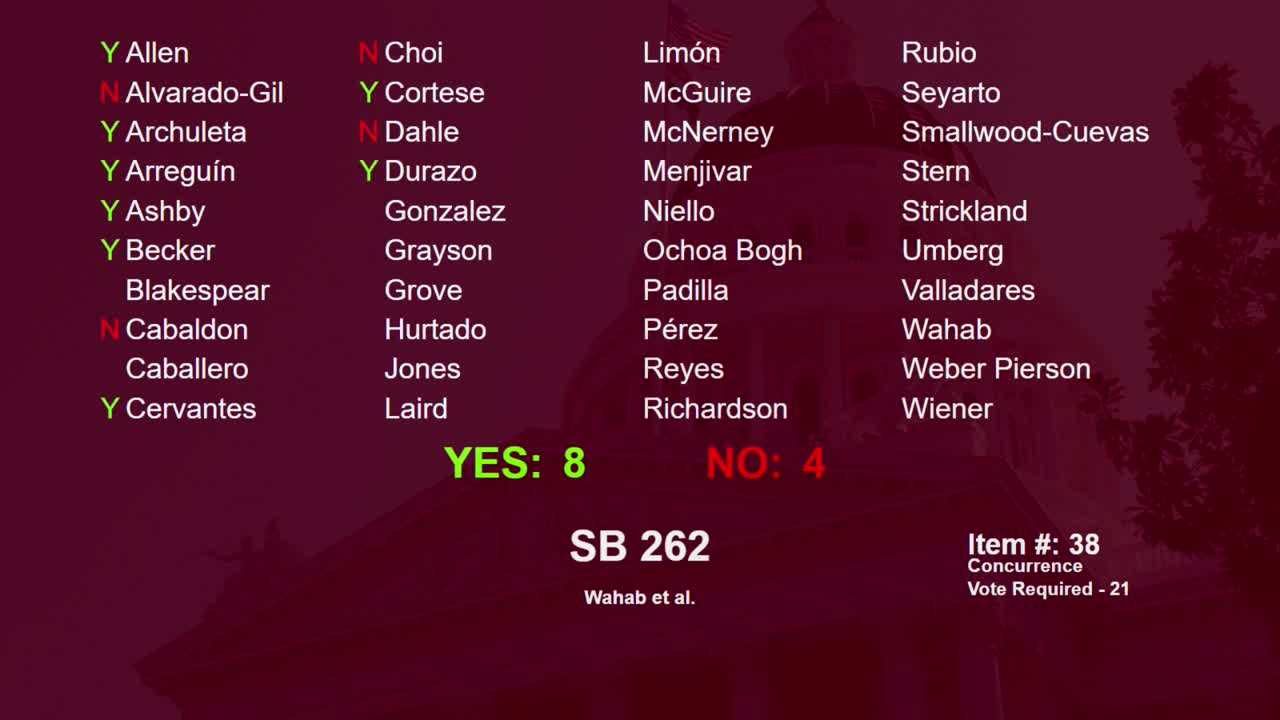

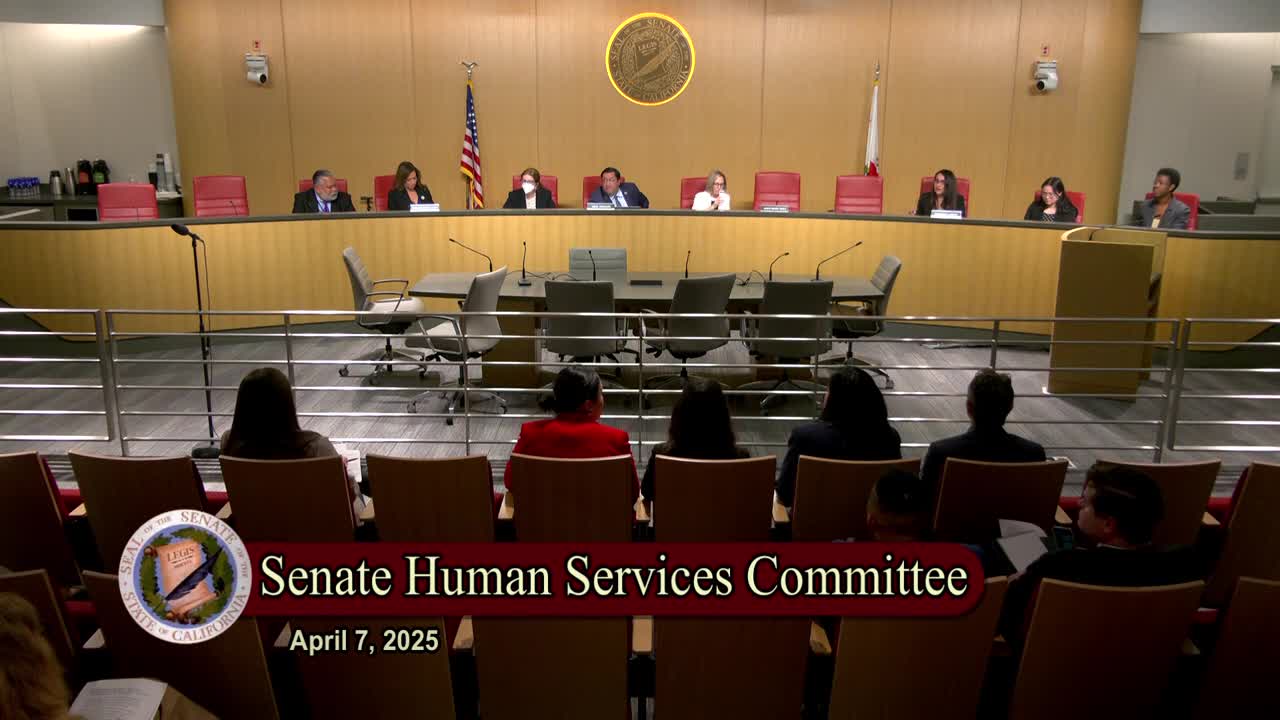
Bill Author

Bill Co-Author(s):