SB 779: Contractors: civil penalties.
- Session Year: 2025-2026
- House: Senate
- Latest Version Date: 2025-10-01
Current Status:
Passed
(2025-10-01: Chaptered by Secretary of State. Chapter 233, Statutes of 2025.)
Introduced
In Committee
Awaiting First Chamber Vote
Passed First Chamber
In Committee
Awaiting Second Chamber Vote
Passed Second Chamber
Enacted
Existing law, the Contractors State License Law, provides for the licensure and regulation of contractors by the Contractors State License Board in the Department of Consumer Affairs. Under existing law, willful or deliberate disregard by a licensed contractor of various state building, labor, and safety laws constitutes a cause for disciplinary action by the board. Existing law provides for related disciplinary proceedings and requires the board to promulgate regulations covering the assessment of civil penalties under those disciplinary provisions, as prescribed. Existing law authorizes a civil penalty not less than $200 and not to exceed $15,000 for certain violations relating to unlicensed persons, as specified. Existing law authorizes a civil penalty not to exceed $8,000 or $30,000 for other violations of the Contractors State License Law, as provided.
This bill, commencing July 1, 2026, would increase the minimum civil penalties for violations related to unlicensed persons to at least $1,500 and would impose minimum civil penalties of at least $500 or $1,500 for other specified violations, as provided. The bill would also authorize the Contractors State License Board to adjust the amounts of these minimum civil penalties for inflation every 5 years, as provided.
Existing law authorizes the board to set specified fees according to a prescribed schedule. Existing law, notwithstanding this fee schedule, authorizes the board to set fees to maintain the amount of the reserve fund at a level not to exceed approximately 6 months of annual authorized board expenditures.
This bill would increase the above-described limit on the reserve fund to a level not to exceed approximately 12 months of annual authorized board expenditures.
This bill would incorporate additional changes to Section 7099.2 of the Business and Professions Code proposed by SB 291 to be operative only if this bill and SB 291 are enacted and this bill is enacted last.
Existing law, the Contractors State License Law, provides for the licensure and regulation of contractors by the Contractors State License Board in the Department of Consumer Affairs. Under existing law, willful or deliberate disregard by a licensed contractor of various state building, labor, and safety laws constitutes a cause for disciplinary action by the board. Existing law provides for related disciplinary proceedings and requires the board to promulgate regulations covering the assessment of civil penalties under those disciplinary provisions, as prescribed. Existing law authorizes a civil penalty not less than $200 dollars and not to exceed $15,000 for certain violations relating to unlicensed persons, as specified. Existing law authorizes a civil penalty not to exceed $8,000 or $30,000 for other violations of the Contractors State License Law, as provided.
This bill, commencing July 1, 2026, would increase the minimum civil penalties for violations related to unlicensed persons to at least $1,500 and would impose minimum civil penalties of at least $500 or $1,500 for other specified violations, as provided. The bill would also authorize the Contractors State License Board to adjust the amounts of these minimum civil penalties for inflation every 5 years, as provided.
Existing law authorizes the board to set specified fees according to a prescribed schedule. Existing law, notwithstanding this fee schedule, authorizes the board to set fees to maintain the amount of the reserve fund at a level not to exceed approximately 6 months of annual authorized board expenditures.
This bill would increase the above-described limit on the reserve fund to a level not to exceed approximately 12 months of annual authorized board expenditures.
This bill would incorporate additional changes to Section 7099.2 of the Business and Professions Code proposed by SB 291 to be operative only if this bill and SB 291 are enacted and this bill is enacted last.
Existing law, the Contractors State License Law, provides for the licensure and regulation of contractors by the Contractors State License Board in the Department of Consumer Affairs. Under existing law, willful or deliberate disregard by a licensed contractor of various state building, labor, and safety laws constitutes a cause for disciplinary action by the board. Existing law provides for related disciplinary proceedings and requires the board to promulgate regulations covering the assessment of civil penalties under those disciplinary provisions, as prescribed. Existing law authorizes a civil penalty not less than $200 dollars and not to exceed $15,000 for certain violations relating to unlicensed persons, as specified. Existing law authorizes a civil penalty not to exceed $8,000 or $30,000 for other violations of the Contractors State License Law, as provided. Existing law authorizes a civil penalty not to exceed $30,000 for other specified violations, including willful or deliberate disregard of state building laws and violations related to workers compensation insurance, as provided.
This bill would, until July 1, 2026, remove the authorization for a civil penalty for violations related to workers compensation insurance. This
This bill, commencing July 1, 2026, would additionally increase the minimum civil penalties for violations related to unlicensed persons to at least $1,500 and would impose minimum civil penalties of at least $500 or $1,500 for other specified violations, as provided. The bill would also authorize the Contractors State License Board to adjust the amounts of these minimum civil penalties for inflation every 5 years, as provided.
Existing law authorizes the board to set specified fees according to a prescribed schedule. Existing law, notwithstanding this fee schedule, authorizes the board to set fees to maintain the amount of the reserve fund at a level not to exceed approximately 6 months of annual authorized board expenditures.
This bill would increase the above-described limit on the reserve fund to a level not to exceed approximately 12 months of annual authorized board expenditures.
Existing law, the Contractors State License Law, provides for the licensure and regulation of contractors by the Contractors State License Board in the Department of Consumer Affairs. Under existing law, willful or deliberate disregard by a licensed contractor of various state building, labor, and safety laws constitutes a cause for disciplinary action by the board. Existing law provides for related disciplinary proceedings and requires the board to promulgate regulations covering the assessment of civil penalties under those disciplinary provisions, as prescribed. Existing law authorizes a civil penalty not less than $200 dollars and not to exceed $15,000 for certain violations relating to unlicensed persons, as specified. Existing law authorizes a civil penalty for other specified violations not to exceed $8,000 or $30,000, not to exceed $8,000 for other violations of the Contractors State License Law, as provided. Existing law authorizes a civil penalty not to exceed $30,000 for other specified violations, including willful or deliberate disregard of state building laws and violations related to workers compensation insurance, as provided.
This bill would, until July 1, 2026, remove the authorization for a civil penalty for violations related to workers compensation insurance. This bill, commencing July 1, 2026, would additionally increase the minimum civil penalties for violations related to unlicensed persons to at least $1,500 and would impose minimum civil penalties of at least $500 or $1,500 for other specified violations, as provided. The bill would also authorize the Contractors State License Board to adjust the amounts of these minimum civil penalties for inflation every 5 years, as provided.
Existing law authorizes the board to set specified fees according to a prescribed schedule. Existing law, notwithstanding this fee schedule, authorizes the board to set fees to maintain the amount of the reserve fund at a level not to exceed approximately 6 months of annual authorized board expenditures.
This bill would increase the above-described limit on the reserve fund to a level not to exceed approximately 12 months of annual authorized board expenditures.
Existing law, the Contractors State License Law, provides for the licensure and regulation of contractors by the Contractors State License Board in the Department of Consumer Affairs. Under existing law, willful or deliberate disregard by a licensed contractor of various state building, labor, and safety laws constitutes a cause for disciplinary action by the board. Existing law provides for related disciplinary proceedings and requires the board to promulgate regulations covering the assessment of civil penalties under those disciplinary provisions, as prescribed. Existing law authorizes a civil penalty not less than $200 dollars and not to exceed $15,000 for certain violations relating to unlicensed persons, as specified. Existing law authorizes a civil penalty for other specified violations not to exceed $8,000 or $30,000, as provided.
This bill, commencing July 1, 2026, would increase the minimum civil penalties for violations related to unlicensed persons to at least $1,500 and would impose minimum civil penalties of at least $500 or $3,000 $1,500 for other specified violations, as provided. The bill would also require authorize the Contractors State License Board to adjust the amounts of these minimum civil penalties for inflation every 5 years, as provided.
Existing law, the Contractors State License Law, provides for the licensure and regulation of contractors by the Contractors State License Board in the Department of Consumer Affairs. Under existing law, willful or deliberate disregard by a licensed contractor of various state building, labor, and safety laws constitutes a cause for disciplinary action by the board. Existing law provides for related disciplinary proceedings and requires the board to promulgate regulations covering the assessment of civil penalties under those disciplinary provisions, as prescribed. Existing law authorizes a civil penalty not less than $200 dollars and not to exceed $15,000 for certain violations relating to unlicensed persons, as specified. Existing law authorizes a civil penalty for other specified violations not to exceed $8,000 or $30,000, as provided.
This bill, commencing July 1, 2026, would increase the minimum civil penalties for violations related to unlicensed persons to at least $1,500 and would impose minimum civil penalties of at least $500 or $3,000 for other specified violations, as provided. The bill would also require the Contractors State License Board to adjust the amounts of these minimum civil penalties for inflation every 5 years, as provided.
(a)If upon inspection or investigation, either upon complaint or otherwise, the registrar has probable cause to believe that a person is acting in the capacity of or engaging in the business of a contractor or salesperson within this state without having a license or registration in good standing to so act or engage, and the person is not otherwise exempted from this chapter, the registrar shall issue a citation to that person.
(b)Within 72 hours of receiving notice that a public entity is intending to award, or has awarded, a contract to an unlicensed contractor, the registrar shall give written notice to the public entity that a citation may be issued if a contract is awarded to an unlicensed contractor. If after receiving the written notice from the registrar that the public entity has awarded or awards the contract to an unlicensed contractor, the registrar may issue a citation to the responsible officer or employee of the public entity as specified in Section 7028.15.
(c)Each citation shall be in writing and shall describe with particularity the basis of the citation. Notwithstanding Sections 125.9 and 148, each citation shall contain an order of abatement and an assessment of a civil penalty in an amount not less than two hundred dollars ($200) nor more than fifteen thousand dollars ($15,000).
(d)With the approval of the Contractors State License Board, the registrar shall prescribe procedures for the issuance of a citation under this section. The board shall adopt regulations covering the assessment of a civil penalty that shall give due consideration to the gravity of the violation, and any history of previous violations.
(e)The sanctions authorized under this section shall be separate from, and in addition to, all other remedies either civil or criminal.
(f)This section shall remain in effect only until July 1, 2026, and as of that date is repealed.
SEC. 2.Section 7028.7 is added to the Business and Professions Code, to read:7028.7.(a)If upon inspection or investigation, either upon complaint or otherwise, the registrar has probable cause to believe that a person is acting in the capacity of or engaging in the business of a contractor or salesperson within this state without having a license or registration in good standing to so act or engage, and the person is not otherwise exempted from this chapter, the registrar shall issue a citation to that person.
(b)Within 72 hours of receiving notice that a public entity is intending to award, or has awarded, a contract to an unlicensed contractor, the registrar shall give written notice to the public entity that a citation may be issued if a contract is awarded to an unlicensed contractor. If after receiving the written notice from the registrar that the public entity has awarded or awards the contract to an unlicensed contractor, the registrar may issue a citation to the responsible officer or employee of the public entity as specified in Section 7028.15.
(c)Each citation shall be in writing and shall describe with particularity the basis of the citation. Notwithstanding Sections 125.9 and 148, each citation shall contain an order of abatement and an assessment of a civil penalty in an amount not less than fifteen hundred dollars ($1,500) nor more than fifteen thousand dollars ($15,000).
(d)With the approval of the Contractors State License Board, the registrar shall prescribe procedures for the issuance of a citation under this section. The board shall adopt regulations covering the assessment of a civil penalty that shall give due consideration to the gravity of the violation, and any history of previous violations.
(e)The sanctions authorized under this section shall be separate from, and in addition to, all other remedies either civil or criminal.
(f)The board may adjust the minimum civil penalties imposed by this section for inflation every five years. The adjustment shall be equivalent to the percentage, if any, that the Consumer Price Index, as determined pursuant to Section 2212 of the Revenue and Taxation Code, exceeds the Consumer Price Index at the time this subdivision goes into effect. Any increase determined under this paragraph shall be rounded in multiples of one hundred dollars ($100) for penalties greater than one hundred dollars ($100).
(g)This section shall become operative on July 1, 2026.
SEC. 3.Section 7099.2 of the Business and Professions Code is amended to read:7099.2.(a)The board shall promulgate regulations covering the assessment of civil penalties under this article that give due consideration to the appropriateness of the penalty with respect to the following factors:
(1)The gravity of the violation.
(2)The good faith of the licensee or applicant for licensure being charged.
(3)The history of previous violations.
(b)Notwithstanding Section 125.9, and except as otherwise provided by this chapter, a civil penalty shall not be assessed in an amount greater than eight thousand dollars ($8,000). Notwithstanding Section 125.9, a civil penalty not to exceed thirty thousand dollars ($30,000) may be assessed for a violation of Section 7110, 7114, 7118, or 7125.4.
(c)This section shall remain in effect only until July 1, 2026, and as of that date is repealed.
SEC. 3.5.Section 7099.2 of the Business and Professions Code is amended to read:7099.2.(a)The board shall promulgate regulations covering the assessment of civil penalties under this article that give due consideration to the appropriateness of the penalty with respect to the following factors:
(1)The gravity of the violation.
(2)The good faith of the licensee or applicant for licensure being charged.
(3)The history of previous violations.
(b)Notwithstanding Section 125.9, and except as otherwise provided by this chapter, a civil penalty shall not be assessed in an amount greater than eight thousand dollars ($8,000). Notwithstanding Section 125.9, a civil penalty not to exceed thirty thousand dollars ($30,000) may be assessed for a violation of Section 7110, 7114, or 7118.
(c)This section shall remain in effect only until July 1, 2026, and as of that date is repealed.
SEC. 4.Section 7099.2 is added to the Business and Professions Code, to read:7099.2.(a)The board shall promulgate regulations covering the assessment of civil penalties under this article that give due consideration to the appropriateness of the penalty with respect to the following factors:
(1)The gravity of the violation.
(2)The good faith of the licensee or applicant for licensure being charged.
(3)The history of previous violations.
(b)(1)Notwithstanding Section 125.9, and except as otherwise provided by this chapter, a civil penalty shall be assessed in an amount not less than five hundred dollars ($500) nor greater than eight thousand dollars ($8,000). Notwithstanding Section 125.9, a civil penalty shall be assessed in an amount not less than one thousand five hundred dollars ($1,500) nor greater than thirty thousand dollars ($30,000) for a violation of Section 7110, 7114, 7118, or 7125.4.
(2)The board may adjust all minimum civil penalties imposed by this section for inflation every five years. The adjustment shall be equivalent to the percentage, if any, that the Consumer Price Index, as determined pursuant to Section 2212 of the Revenue and Taxation Code, exceeds the Consumer Price Index at the time this subdivision goes into effect. Any increase determined under this paragraph shall be rounded as follows:
(A)In multiples of one hundred dollars ($100) for penalties greater than one hundred dollars ($100) but less than or equal to one thousand dollars ($1,000).
(B)In multiples of one thousand dollars ($1,000) for penalties greater than one thousand dollars ($1,000).
(c)This section shall become operative on July 1, 2026.
SEC. 4.5.Section 7099.2 is added to the Business and Professions Code, to read:7099.2.(a)The board shall promulgate regulations covering the assessment of civil penalties under this article that give due consideration to the appropriateness of the penalty with respect to the following factors:
(1)The gravity of the violation.
(2)The good faith of the licensee or applicant for licensure being charged.
(3)The history of previous violations.
(b)(1)Notwithstanding Section 125.9, and except as otherwise provided by this chapter, a civil penalty shall be assessed in an amount not less than five hundred dollars ($500) nor greater than eight thousand dollars ($8,000). Notwithstanding Section 125.9, a civil penalty shall be assessed in an amount not less than one thousand five hundred dollars ($1,500) nor greater than thirty thousand dollars ($30,000) for a violation of Section 7110, 7114, or 7118.
(2)The board may adjust all minimum civil penalties imposed by this section for inflation every five years. The adjustment shall be equivalent to the percentage, if any, that the Consumer Price Index, as determined pursuant to Section 2212 of the Revenue and Taxation Code, exceeds the Consumer Price Index at the time this subdivision goes into effect. Any increase determined under this paragraph shall be rounded as follows:
(A)In multiples of one hundred dollars ($100) for penalties greater than one hundred dollars ($100) but less than or equal to one thousand dollars ($1,000).
(B)In multiples of one thousand dollars ($1,000) for penalties greater than one thousand dollars ($1,000).
(c)This section shall become operative on July 1, 2026.
SEC. 5.Section 7138.1 of the Business and Professions Code is amended to read:7138.1.Notwithstanding Section 7137, the board shall fix fees to be collected pursuant to that section in order to generate revenues sufficient to maintain the boards reserve fund at a level not to exceed approximately 12 months of annual authorized board expenditures.
SEC. 6.Sections 3.5 and 4.5 of this bill incorporate amendments to Section 7099.2 of the Business and Professions Code proposed by both this bill and Senate Bill 291. Those sections of this bill shall only become operative if (1) both bills are enacted and become effective on or before January 1, 2026, (2) this bill amends, adds, and repeals Section 7099.2 of the Business and Professions Code and Senate Bill 291 amends Section 7099.2 of the Business and Professions Code, and (3) this bill is enacted after Senate Bill 291, in which case Sections 3 and 4 of this bill shall not become operative.
(a)If upon inspection or investigation, either upon complaint or otherwise, the registrar has probable cause to believe that a person is acting in the capacity of or engaging in the business of a contractor or salesperson within this state without having a license or registration in good standing to so act or engage, and the person is not otherwise exempted from this chapter, the registrar shall issue a citation to that person.
(b)Within 72 hours of receiving notice that a public entity is intending to award, or has awarded, a contract to an unlicensed contractor, the registrar shall give written notice to the public entity that a citation may be issued if a contract is awarded to an unlicensed contractor. If after receiving the written notice from the registrar that the public entity has awarded or awards the contract to an unlicensed contractor, the registrar may issue a citation to the responsible officer or employee of the public entity as specified in Section 7028.15.
(c)Each citation shall be in writing and shall describe with particularity the basis of the citation. Notwithstanding Sections 125.9 and 148, each citation shall contain an order of abatement and an assessment of a civil penalty in an amount not less than two hundred dollars ($200) nor more than fifteen thousand dollars ($15,000).
(d)With the approval of the Contractors State License Board, the registrar shall prescribe procedures for the issuance of a citation under this section. The board shall adopt regulations covering the assessment of a civil penalty that shall give due consideration to the gravity of the violation, and any history of previous violations.
(e)The sanctions authorized under this section shall be separate from, and in addition to, all other remedies either civil or criminal.
(f)This section shall remain in effect only until July 1, 2026, and as of that date is repealed.
SEC. 2.Section 7028.7 is added to the Business and Professions Code, to read:7028.7.(a)If upon inspection or investigation, either upon complaint or otherwise, the registrar has probable cause to believe that a person is acting in the capacity of or engaging in the business of a contractor or salesperson within this state without having a license or registration in good standing to so act or engage, and the person is not otherwise exempted from this chapter, the registrar shall issue a citation to that person.
(b)Within 72 hours of receiving notice that a public entity is intending to award, or has awarded, a contract to an unlicensed contractor, the registrar shall give written notice to the public entity that a citation may be issued if a contract is awarded to an unlicensed contractor. If after receiving the written notice from the registrar that the public entity has awarded or awards the contract to an unlicensed contractor, the registrar may issue a citation to the responsible officer or employee of the public entity as specified in Section 7028.15.
(c)Each citation shall be in writing and shall describe with particularity the basis of the citation. Notwithstanding Sections 125.9 and 148, each citation shall contain an order of abatement and an assessment of a civil penalty in an amount not less than fifteen hundred dollars ($1,500) nor more than fifteen thousand dollars ($15,000).
(d)With the approval of the Contractors State License Board, the registrar shall prescribe procedures for the issuance of a citation under this section. The board shall adopt regulations covering the assessment of a civil penalty that shall give due consideration to the gravity of the violation, and any history of previous violations.
(e)The sanctions authorized under this section shall be separate from, and in addition to, all other remedies either civil or criminal.
(f)The board may adjust the minimum civil penalties imposed by this section for inflation every five years. The adjustment shall be equivalent to the percentage, if any, that the Consumer Price Index, as determined pursuant to Section 2212 of the Revenue and Taxation Code, exceeds the Consumer Price Index at the time this subdivision goes into effect. Any increase determined under this paragraph shall be rounded in multiples of one hundred dollars ($100) for penalties greater than one hundred dollars ($100).
(g)This section shall become operative on July 1, 2026.
SEC. 3.Section 7099.2 of the Business and Professions Code is amended to read:7099.2.(a)The board shall promulgate regulations covering the assessment of civil penalties under this article that give due consideration to the appropriateness of the penalty with respect to the following factors:
(1)The gravity of the violation.
(2)The good faith of the licensee or applicant for licensure being charged.
(3)The history of previous violations.
(b)Notwithstanding Section 125.9, and except as otherwise provided by this chapter, a civil penalty shall not be assessed in an amount greater than eight thousand dollars ($8,000). Notwithstanding Section 125.9, a civil penalty not to exceed thirty thousand dollars ($30,000) may be assessed for a violation of Section 7110, 7114, 7118, or 7125.4.
(c)This section shall remain in effect only until July 1, 2026, and as of that date is repealed.
SEC. 3.5.Section 7099.2 of the Business and Professions Code is amended to read:7099.2.(a)The board shall promulgate regulations covering the assessment of civil penalties under this article that give due consideration to the appropriateness of the penalty with respect to the following factors:
(1)The gravity of the violation.
(2)The good faith of the licensee or applicant for licensure being charged.
(3)The history of previous violations.
(b)Notwithstanding Section 125.9, and except as otherwise provided by this chapter, a civil penalty shall not be assessed in an amount greater than eight thousand dollars ($8,000). Notwithstanding Section 125.9, a civil penalty not to exceed thirty thousand dollars ($30,000) may be assessed for a violation of Section 7110, 7114, 7118, or 7125.4 or 7118.
(c)This section shall remain in effect only until July 1, 2026, and as of that date is repealed.
SEC. 4.Section 7099.2 is added to the Business and Professions Code, to read:7099.2.(a)The board shall promulgate regulations covering the assessment of civil penalties under this article that give due consideration to the appropriateness of the penalty with respect to the following factors:
(1)The gravity of the violation.
(2)The good faith of the licensee or applicant for licensure being charged.
(3)The history of previous violations.
(b)(1)Notwithstanding Section 125.9, and except as otherwise provided by this chapter, a civil penalty shall be assessed in an amount not less than five hundred dollars ($500) nor greater than eight thousand dollars ($8,000). Notwithstanding Section 125.9, a civil penalty shall be assessed in an amount not less than one thousand five hundred dollars ($1,500) nor greater than thirty thousand dollars ($30,000) for a violation of Section 7110, 7114, 7118, or 7125.4.
(2)The board may adjust all minimum civil penalties imposed by this section for inflation every five years. The adjustment shall be equivalent to the percentage, if any, that the Consumer Price Index, as determined pursuant to Section 2212 of the Revenue and Taxation Code, exceeds the Consumer Price Index at the time this subdivision goes into effect. Any increase determined under this paragraph shall be rounded as follows:
(A)In multiples of one hundred dollars ($100) for penalties greater than one hundred dollars ($100) but less than or equal to one thousand dollars ($1,000).
(B)In multiples of one thousand dollars ($1,000) for penalties greater than one thousand dollars ($1,000).
(c)This section shall become operative on July 1, 2026.
SEC. 4.5.Section 7099.2 is added to the Business and Professions Code, to read:7099.2.(a)The board shall promulgate regulations covering the assessment of civil penalties under this article that give due consideration to the appropriateness of the penalty with respect to the following factors:
(1)The gravity of the violation.
(2)The good faith of the licensee or applicant for licensure being charged.
(3)The history of previous violations.
(b)(1)Notwithstanding Section 125.9, and except as otherwise provided by this chapter, a civil penalty shall be assessed in an amount not less than five hundred dollars ($500) nor greater than eight thousand dollars ($8,000). Notwithstanding Section 125.9, a civil penalty shall be assessed in an amount not less than one thousand five hundred dollars ($1,500) nor greater than thirty thousand dollars ($30,000) for a violation of Section 7110, 7114, or 7118.
(2)The board may adjust all minimum civil penalties imposed by this section for inflation every five years. The adjustment shall be equivalent to the percentage, if any, that the Consumer Price Index, as determined pursuant to Section 2212 of the Revenue and Taxation Code, exceeds the Consumer Price Index at the time this subdivision goes into effect. Any increase determined under this paragraph shall be rounded as follows:
(A)In multiples of one hundred dollars ($100) for penalties greater than one hundred dollars ($100) but less than or equal to one thousand dollars ($1,000).
(B)In multiples of one thousand dollars ($1,000) for penalties greater than one thousand dollars ($1,000).
(c)This section shall become operative on July 1, 2026.
SEC. 5.Section 7138.1 of the Business and Professions Code is amended to read:7138.1.Notwithstanding Section 7137, the board shall fix fees to be collected pursuant to that section in order to generate revenues sufficient to maintain the boards reserve fund at a level not to exceed approximately 12 months of annual authorized board expenditures.
SEC. 6.Sections 3.5 and 4.5 of this bill incorporate amendments to Section 7099.2 of the Business and Professions Code proposed by both this bill and Senate Bill 291. Those sections of this bill shall only become operative if (1) both bills are enacted and become effective on or before January 1, 2026, (2) this bill amends, adds, and repeals Section 7099.2 of the Business and Professions Code and Senate Bill 291 amends Section 7099.2 of the Business and Professions Code, and (3) this bill is enacted after Senate Bill 291, in which case Sections 3 and 4 of this bill shall not become operative.
(a)If upon inspection or investigation, either upon complaint or otherwise, the registrar has probable cause to believe that a person is acting in the capacity of or engaging in the business of a contractor or salesperson within this state without having a license or registration in good standing to so act or engage, and the person is not otherwise exempted from this chapter, the registrar shall issue a citation to that person.
(b)Within 72 hours of receiving notice that a public entity is intending to award, or has awarded, a contract to an unlicensed contractor, the registrar shall give written notice to the public entity that a citation may be issued if a contract is awarded to an unlicensed contractor. If after receiving the written notice from the registrar that the public entity has awarded or awards the contract to an unlicensed contractor, the registrar may issue a citation to the responsible officer or employee of the public entity as specified in Section 7028.15.
(c)Each citation shall be in writing and shall describe with particularity the basis of the citation. Notwithstanding Sections 125.9 and 148, each citation shall contain an order of abatement and an assessment of a civil penalty in an amount not less than two hundred dollars ($200) nor more than fifteen thousand dollars ($15,000).
(d)With the approval of the Contractors State License Board, the registrar shall prescribe procedures for the issuance of a citation under this section. The board shall adopt regulations covering the assessment of a civil penalty that shall give due consideration to the gravity of the violation, and any history of previous violations.
(e)The sanctions authorized under this section shall be separate from, and in addition to, all other remedies either civil or criminal.
(f)This section shall remain in effect only until July 1, 2026, and as of that date is repealed.
SEC. 2.Section 7028.7 is added to the Business and Professions Code, to read:7028.7.(a)If upon inspection or investigation, either upon complaint or otherwise, the registrar has probable cause to believe that a person is acting in the capacity of or engaging in the business of a contractor or salesperson within this state without having a license or registration in good standing to so act or engage, and the person is not otherwise exempted from this chapter, the registrar shall issue a citation to that person.
(b)Within 72 hours of receiving notice that a public entity is intending to award, or has awarded, a contract to an unlicensed contractor, the registrar shall give written notice to the public entity that a citation may be issued if a contract is awarded to an unlicensed contractor. If after receiving the written notice from the registrar that the public entity has awarded or awards the contract to an unlicensed contractor, the registrar may issue a citation to the responsible officer or employee of the public entity as specified in Section 7028.15.
(c)Each citation shall be in writing and shall describe with particularity the basis of the citation. Notwithstanding Sections 125.9 and 148, each citation shall contain an order of abatement and an assessment of a civil penalty in an amount not less than fifteen hundred dollars ($1,500) nor more than fifteen thousand dollars ($15,000).
(d)With the approval of the Contractors State License Board, the registrar shall prescribe procedures for the issuance of a citation under this section. The board shall adopt regulations covering the assessment of a civil penalty that shall give due consideration to the gravity of the violation, and any history of previous violations.
(e)The sanctions authorized under this section shall be separate from, and in addition to, all other remedies either civil or criminal.
(f)The board may adjust the minimum civil penalties imposed by this section for inflation every five years. The adjustment shall be equivalent to the percentage, if any, that the Consumer Price Index, as determined pursuant to Section 2212 of the Revenue and Taxation Code, exceeds the Consumer Price Index at the time this subdivision goes into effect. Any increase determined under this paragraph shall be rounded in multiples of one hundred dollars ($100) for penalties greater than one hundred dollars ($100).
(g)This section shall become operative on July 1, 2026.
SEC. 3.Section 7099.2 of the Business and Professions Code is amended to read:7099.2.(a)The board shall promulgate regulations covering the assessment of civil penalties under this article that give due consideration to the appropriateness of the penalty with respect to the following factors:
(1)The gravity of the violation.
(2)The good faith of the licensee or applicant for licensure being charged.
(3)The history of previous violations.
(b)Notwithstanding Section 125.9, and except as otherwise provided by this chapter, a civil penalty shall not be assessed in an amount greater than eight thousand dollars ($8,000). Notwithstanding Section 125.9, a civil penalty not to exceed thirty thousand dollars ($30,000) may be assessed for a violation of Section 7110, 7114, or 7118. 7118, or 7125.4.
(c)This section shall remain in effect only until July 1, 2026, and as of that date is repealed.
SEC. 4.Section 7099.2 is added to the Business and Professions Code, to read:7099.2.(a)The board shall promulgate regulations covering the assessment of civil penalties under this article that give due consideration to the appropriateness of the penalty with respect to the following factors:
(1)The gravity of the violation.
(2)The good faith of the licensee or applicant for licensure being charged.
(3)The history of previous violations.
(b)(1)Notwithstanding Section 125.9, and except as otherwise provided by this chapter, a civil penalty shall be assessed in an amount not less than five hundred dollars ($500) nor greater than eight thousand dollars ($8,000). Notwithstanding Section 125.9, a civil penalty shall be assessed in an amount not less than one thousand five hundred dollars ($1,500) nor greater than thirty thousand dollars ($30,000) for a violation of Section 7110, 7114, or 7118. 7118, or 7125.4.
(2)The board may adjust all minimum civil penalties imposed by this section for inflation every five years. The adjustment shall be equivalent to the percentage, if any, that the Consumer Price Index, as determined pursuant to Section 2212 of the Revenue and Taxation Code, exceeds the Consumer Price Index at the time this subdivision goes into effect. Any increase determined under this paragraph shall be rounded as follows:
(A)In multiples of one hundred dollars ($100) for penalties greater than one hundred dollars ($100) but less than or equal to one thousand dollars ($1,000).
(B)In multiples of one thousand dollars ($1,000) for penalties greater than one thousand dollars ($1,000).
(c)This section shall become operative on July 1, 2026.
SEC. 5.Section 7138.1 of the Business and Professions Code is amended to read:7138.1.Notwithstanding Section 7137, the board shall fix fees to be collected pursuant to that section in order to generate revenues sufficient to maintain the boards reserve fund at a level not to exceed approximately 12 months of annual authorized board expenditures.
(a)If upon inspection or investigation, either upon complaint or otherwise, the registrar has probable cause to believe that a person is acting in the capacity of or engaging in the business of a contractor or salesperson within this state without having a license or registration in good standing to so act or engage, and the person is not otherwise exempted from this chapter, the registrar shall issue a citation to that person.
(b)Within 72 hours of receiving notice that a public entity is intending to award, or has awarded, a contract to an unlicensed contractor, the registrar shall give written notice to the public entity that a citation may be issued if a contract is awarded to an unlicensed contractor. If after receiving the written notice from the registrar that the public entity has awarded or awards the contract to an unlicensed contractor, the registrar may issue a citation to the responsible officer or employee of the public entity as specified in Section 7028.15.
(c)Each citation shall be in writing and shall describe with particularity the basis of the citation. Notwithstanding Sections 125.9 and 148, each citation shall contain an order of abatement and an assessment of a civil penalty in an amount not less than two hundred dollars ($200) nor more than fifteen thousand dollars ($15,000).
(d)With the approval of the Contractors State License Board, the registrar shall prescribe procedures for the issuance of a citation under this section. The board shall adopt regulations covering the assessment of a civil penalty that shall give due consideration to the gravity of the violation, and any history of previous violations.
(e)The sanctions authorized under this section shall be separate from, and in addition to, all other remedies either civil or criminal.
(f)This section shall remain in effect only until July 1, 2026, and as of that date is repealed.
SEC. 2.Section 7028.7 is added to the Business and Professions Code, to read:7028.7.(a)If upon inspection or investigation, either upon complaint or otherwise, the registrar has probable cause to believe that a person is acting in the capacity of or engaging in the business of a contractor or salesperson within this state without having a license or registration in good standing to so act or engage, and the person is not otherwise exempted from this chapter, the registrar shall issue a citation to that person.
(b)Within 72 hours of receiving notice that a public entity is intending to award, or has awarded, a contract to an unlicensed contractor, the registrar shall give written notice to the public entity that a citation may be issued if a contract is awarded to an unlicensed contractor. If after receiving the written notice from the registrar that the public entity has awarded or awards the contract to an unlicensed contractor, the registrar may issue a citation to the responsible officer or employee of the public entity as specified in Section 7028.15.
(c)Each citation shall be in writing and shall describe with particularity the basis of the citation. Notwithstanding Sections 125.9 and 148, each citation shall contain an order of abatement and an assessment of a civil penalty in an amount not less than fifteen hundred dollars ($1,500) nor more than fifteen thousand dollars ($15,000).
(d)With the approval of the Contractors State License Board, the registrar shall prescribe procedures for the issuance of a citation under this section. The board shall adopt regulations covering the assessment of a civil penalty that shall give due consideration to the gravity of the violation, and any history of previous violations.
(e)The sanctions authorized under this section shall be separate from, and in addition to, all other remedies either civil or criminal.
(f)The board may adjust the minimum civil penalties imposed by this section for inflation every five years. The adjustment shall be equivalent to the percentage, if any, that the Consumer Price Index, as determined pursuant to Section 2212 of the Revenue and Taxation Code, exceeds the Consumer Price Index at the time this subdivision goes into effect. Any increase determined under this paragraph shall be rounded in multiples of one hundred dollars ($100) for penalties greater than one hundred dollars ($100).
(g)This section shall become operative on July 1, 2026.
SEC. 3.Section 7099.2 of the Business and Professions Code is amended to read:7099.2.(a)The board shall promulgate regulations covering the assessment of civil penalties under this article that give due consideration to the appropriateness of the penalty with respect to the following factors:
(1)The gravity of the violation.
(2)The good faith of the licensee or applicant for licensure being charged.
(3)The history of previous violations.
(b)Notwithstanding Section 125.9, and except as otherwise provided by this chapter, a civil penalty shall not be assessed in an amount greater than eight thousand dollars ($8,000). Notwithstanding Section 125.9, a civil penalty not to exceed thirty thousand dollars ($30,000) may be assessed for a violation of Section 7110, 7114, 7118, or 7125.4 or 7118.
(c)This section shall remain in effect only until July 1, 2026, and as of that date is repealed.
SEC. 4.Section 7099.2 is added to the Business and Professions Code, to read:7099.2.(a)The board shall promulgate regulations covering the assessment of civil penalties under this article that give due consideration to the appropriateness of the penalty with respect to the following factors:
(1)The gravity of the violation.
(2)The good faith of the licensee or applicant for licensure being charged.
(3)The history of previous violations.
(b)(1)Notwithstanding Section 125.9, and except as otherwise provided by this chapter, a civil penalty shall be assessed in an amount not less than five hundred dollars ($500) nor greater than eight thousand dollars ($8,000). Notwithstanding Section 125.9, a civil penalty shall be assessed in an amount not less than one thousand five hundred dollars ($1,500) nor greater than thirty thousand dollars ($30,000) for a violation of Section 7110, 7114, 7118, or 7125.4 or 7118.
(2)The board may adjust all minimum civil penalties imposed by this section for inflation every five years. The adjustment shall be equivalent to the percentage, if any, that the Consumer Price Index, as determined pursuant to Section 2212 of the Revenue and Taxation Code, exceeds the Consumer Price Index at the time this subdivision goes into effect. Any increase determined under this paragraph shall be rounded as follows:
(A)In multiples of one hundred dollars ($100) for penalties greater than one hundred dollars ($100) but less than or equal to one thousand dollars ($1,000).
(B)In multiples of one thousand dollars ($1,000) for penalties greater than one thousand dollars ($1,000).
(c)This section shall become operative on July 1, 2026.
SEC. 5.Section 7138.1 of the Business and Professions Code is amended to read:7138.1.Notwithstanding Section 7137, the board shall fix fees to be collected pursuant to that section in order to generate revenues sufficient to maintain the boards reserve fund at a level not to exceed approximately six 12 months of annual authorized board expenditures.
(a)If upon inspection or investigation, either upon complaint or otherwise, the registrar has probable cause to believe that a person is acting in the capacity of or engaging in the business of a contractor or salesperson within this state without having a license or registration in good standing to so act or engage, and the person is not otherwise exempted from this chapter, the registrar shall issue a citation to that person.
(b)Within 72 hours of receiving notice that a public entity is intending to award, or has awarded, a contract to an unlicensed contractor, the registrar shall give written notice to the public entity that a citation may be issued if a contract is awarded to an unlicensed contractor. If after receiving the written notice from the registrar that the public entity has awarded or awards the contract to an unlicensed contractor, the registrar may issue a citation to the responsible officer or employee of the public entity as specified in Section 7028.15.
(c)Each citation shall be in writing and shall describe with particularity the basis of the citation. Notwithstanding Sections 125.9 and 148, each citation shall contain an order of abatement and an assessment of a civil penalty in an amount not less than two hundred dollars ($200) nor more than fifteen thousand dollars ($15,000).
(d)With the approval of the Contractors State License Board, the registrar shall prescribe procedures for the issuance of a citation under this section. The board shall adopt regulations covering the assessment of a civil penalty that shall give due consideration to the gravity of the violation, and any history of previous violations.
(e)The sanctions authorized under this section shall be separate from, and in addition to, all other remedies either civil or criminal.
(f)This section shall remain in effect only until July 1, 2026, and as of that date is repealed.
SEC. 2.Section 7028.7 is added to the Business and Professions Code, to read:7028.7.(a)If upon inspection or investigation, either upon complaint or otherwise, the registrar has probable cause to believe that a person is acting in the capacity of or engaging in the business of a contractor or salesperson within this state without having a license or registration in good standing to so act or engage, and the person is not otherwise exempted from this chapter, the registrar shall issue a citation to that person.
(b)Within 72 hours of receiving notice that a public entity is intending to award, or has awarded, a contract to an unlicensed contractor, the registrar shall give written notice to the public entity that a citation may be issued if a contract is awarded to an unlicensed contractor. If after receiving the written notice from the registrar that the public entity has awarded or awards the contract to an unlicensed contractor, the registrar may issue a citation to the responsible officer or employee of the public entity as specified in Section 7028.15.
(c)Each citation shall be in writing and shall describe with particularity the basis of the citation. Notwithstanding Sections 125.9 and 148, each citation shall contain an order of abatement and an assessment of a civil penalty in an amount not less than fifteen hundred dollars ($1,500) nor more than fifteen thousand dollars ($15,000).
(d)With the approval of the Contractors State License Board, the registrar shall prescribe procedures for the issuance of a citation under this section. The board shall adopt regulations covering the assessment of a civil penalty that shall give due consideration to the gravity of the violation, and any history of previous violations.
(e)The sanctions authorized under this section shall be separate from, and in addition to, all other remedies either civil or criminal.
(f)The board shall may adjust the minimum civil penalties imposed by this section for inflation every five years. The adjustment shall be equivalent to the percentage, if any, that the Consumer Price Index, as determined pursuant to Section 2212 of the Revenue and Taxation Code, exceeds the Consumer Price Index at the time this subdivision goes into effect. Any increase determined under this paragraph shall be rounded in multiples of one hundred dollars ($100) for penalties greater than one hundred dollars ($100) but less than or equal to one thousand dollars ($1,000). ($100).
(g)This section shall become operative on July 1, 2026.
SEC. 3.Section 7099.2 of the Business and Professions Code is amended to read:7099.2.(a)The board shall promulgate regulations covering the assessment of civil penalties under this article that give due consideration to the appropriateness of the penalty with respect to the following factors:
(1)The gravity of the violation.
(2)The good faith of the licensee or applicant for licensure being charged.
(3)The history of previous violations.
(b)Notwithstanding Section 125.9, and except as otherwise provided by this chapter, a civil penalty shall not be assessed in an amount greater than eight thousand dollars ($8,000). Notwithstanding Section 125.9, a civil penalty not to exceed thirty thousand dollars ($30,000) may be assessed for a violation of Section 7110, 7114, 7118, or 7125.4
(c)This section shall remain in effect only until July 1, 2026, and as of that date is repealed.
SEC. 4.Section 7099.2 is added to the Business and Professions Code, to read:7099.2.(a)The board shall promulgate regulations covering the assessment of civil penalties under this article that give due consideration to the appropriateness of the penalty with respect to the following factors:
(1)The gravity of the violation.
(2)The good faith of the licensee or applicant for licensure being charged.
(3)The history of previous violations.
(b)(1)Notwithstanding Section 125.9, and except as otherwise provided by this chapter, a civil penalty shall be assessed in an amount not less than five hundred dollars ($500) nor greater than eight thousand dollars ($8,000). Notwithstanding Section 125.9, a civil penalty shall be assessed in an amount not less than three one thousand five hundred dollars ($3,000) ($1,500) nor greater than thirty thousand dollars ($30,000) for a violation of Section 7110, 7114, 7118, or 7125.4.
(2)The board shall may adjust all minimum civil penalties imposed by this section for inflation every five years. The adjustment shall be equivalent to the percentage, if any, that the Consumer Price Index, as determined pursuant to Section 2212 of the Revenue and Taxation Code, exceeds the Consumer Price Index at the time this subdivision goes into effect. Any increase determined under this paragraph shall be rounded as follows:
(A)In multiples of one hundred dollars ($100) for penalties greater than one hundred dollars ($100) but less than or equal to one thousand dollars ($1,000).
(B)In multiples of one thousand dollars ($1,000) for penalties greater than one thousand dollars ($1,000).
(c)This section shall become operative on July 1, 2026.
(a)If upon inspection or investigation, either upon complaint or otherwise, the registrar has probable cause to believe that a person is acting in the capacity of or engaging in the business of a contractor or salesperson within this state without having a license or registration in good standing to so act or engage, and the person is not otherwise exempted from this chapter, the registrar shall issue a citation to that person.
(b)Within 72 hours of receiving notice that a public entity is intending to award, or has awarded, a contract to an unlicensed contractor, the registrar shall give written notice to the public entity that a citation may be issued if a contract is awarded to an unlicensed contractor. If after receiving the written notice from the registrar that the public entity has awarded or awards the contract to an unlicensed contractor, the registrar may issue a citation to the responsible officer or employee of the public entity as specified in Section 7028.15.
(c)Each citation shall be in writing and shall describe with particularity the basis of the citation. Notwithstanding Sections 125.9 and 148, each citation shall contain an order of abatement and an assessment of a civil penalty in an amount not less than two hundred dollars ($200) nor more than fifteen thousand dollars ($15,000).
(d)With the approval of the Contractors State License Board, the registrar shall prescribe procedures for the issuance of a citation under this section. The board shall adopt regulations covering the assessment of a civil penalty that shall give due consideration to the gravity of the violation, and any history of previous violations.
(e)The sanctions authorized under this section shall be separate from, and in addition to, all other remedies either civil or criminal.
(f)This section shall remain in effect only until July 1, 2026, and as of that date is repealed.
SEC. 2.Section 7028.7 is added to the Business and Professions Code, to read:7028.7.(a)If upon inspection or investigation, either upon complaint or otherwise, the registrar has probable cause to believe that a person is acting in the capacity of or engaging in the business of a contractor or salesperson within this state without having a license or registration in good standing to so act or engage, and the person is not otherwise exempted from this chapter, the registrar shall issue a citation to that person.
(b)Within 72 hours of receiving notice that a public entity is intending to award, or has awarded, a contract to an unlicensed contractor, the registrar shall give written notice to the public entity that a citation may be issued if a contract is awarded to an unlicensed contractor. If after receiving the written notice from the registrar that the public entity has awarded or awards the contract to an unlicensed contractor, the registrar may issue a citation to the responsible officer or employee of the public entity as specified in Section 7028.15.
(c)Each citation shall be in writing and shall describe with particularity the basis of the citation. Notwithstanding Sections 125.9 and 148, each citation shall contain an order of abatement and an assessment of a civil penalty in an amount not less than fifteen hundred dollars ($1,500) nor more than fifteen thousand dollars ($15,000).
(d)With the approval of the Contractors State License Board, the registrar shall prescribe procedures for the issuance of a citation under this section. The board shall adopt regulations covering the assessment of a civil penalty that shall give due consideration to the gravity of the violation, and any history of previous violations.
(e)The sanctions authorized under this section shall be separate from, and in addition to, all other remedies either civil or criminal.
(f)The board shall adjust the minimum civil penalties imposed by this section for inflation every five years. The adjustment shall be equivalent to the percentage, if any, that the Consumer Price Index, as determined pursuant to Section 2212 of the Revenue and Taxation Code, exceeds the Consumer Price Index at the time this subdivision goes into effect. Any increase determined under this paragraph shall be rounded in multiples of one hundred dollars ($100) for penalties greater than one hundred dollars ($100) but less than or equal to one thousand dollars ($1,000).
(g)This section shall become operative on July 1, 2026.
SEC. 3.Section 7099.2 of the Business and Professions Code is amended to read:7099.2.(a)The board shall promulgate regulations covering the assessment of civil penalties under this article that give due consideration to the appropriateness of the penalty with respect to the following factors:
(1)The gravity of the violation.
(2)The good faith of the licensee or applicant for licensure being charged.
(3)The history of previous violations.
(b)Notwithstanding Section 125.9, and except as otherwise provided by this chapter, a civil penalty shall not be assessed in an amount greater than eight thousand dollars ($8,000). Notwithstanding Section 125.9, a civil penalty not to exceed thirty thousand dollars ($30,000) may be assessed for a violation of Section 7110, 7114, 7118, or 7125.4
(c)This section shall remain in effect only until July 1, 2026, and as of that date is repealed.
SEC. 4.Section 7099.2 is added to the Business and Professions Code, to read:7099.2.(a)The board shall promulgate regulations covering the assessment of civil penalties under this article that give due consideration to the appropriateness of the penalty with respect to the following factors:
(1)The gravity of the violation.
(2)The good faith of the licensee or applicant for licensure being charged.
(3)The history of previous violations.
(b)(1)Notwithstanding Section 125.9, and except as otherwise provided by this chapter, a civil penalty shall be assessed in an amount not less than five hundred dollars ($500) nor greater than eight thousand dollars ($8,000). Notwithstanding Section 125.9, a civil penalty shall be assessed in an amount not less than three thousand dollars ($3,000) nor greater than thirty thousand dollars ($30,000) for a violation of Section 7110, 7114, 7118, or 7125.4.
(2)The board shall adjust all minimum civil penalties imposed by this section for inflation every five years. The adjustment shall be equivalent to the percentage, if any, that the Consumer Price Index, as determined pursuant to Section 2212 of the Revenue and Taxation Code, exceeds the Consumer Price Index at the time this subdivision goes into effect. Any increase determined under this paragraph shall be rounded as follows:
(A)In multiples of one hundred dollars ($100) for penalties greater than one hundred dollars ($100) but less than or equal to one thousand dollars ($1,000).
(B)In multiples of one thousand dollars ($1,000) for penalties greater than one thousand dollars ($1,000).
(c)This section shall become operative on July 1, 2026.
|
Date
|
Status
|
|---|---|
| Oct 1, 2025 | Chaptered by Secretary of State. Chapter 233, Statutes of 2025. |
| Oct 1, 2025 | Approved by the Governor. |
| Sep 22, 2025 | Enrolled and presented to the Governor at 11 a.m. |
| Sep 11, 2025 | Assembly amendments concurred in. (Ayes 40. Noes 0. Page 2876.) Ordered to engrossing and enrolling. |
| Sep 9, 2025 | In Senate. Concurrence in Assembly amendments pending. |
| Sep 9, 2025 | Read third time. Passed. (Ayes 80. Noes 0. Page 3079.) Ordered to the Senate. |
| Sep 4, 2025 | Ordered to third reading. |
| Sep 4, 2025 | Read third time and amended. |
| Sep 2, 2025 | Read second time. Ordered to third reading. |
| Aug 29, 2025 | From committee: Do pass. (Ayes 15. Noes 0.) (August 29). |
| Jul 16, 2025 | July 16 set for first hearing. Placed on APPR. suspense file. |
| Jul 2, 2025 | Read second time and amended. Re-referred to Com. on APPR. |
| Jul 1, 2025 | From committee: Do pass as amended and re-refer to Com. on APPR. (Ayes 17. Noes 0.) (July 1). |
| Jun 17, 2025 | From committee with author's amendments. Read second time and amended. Re-referred to Com. on B. & P. |
| Jun 9, 2025 | Referred to Com. on B. & P. |
| Jun 4, 2025 | In Assembly. Read first time. Held at Desk. |
| Jun 3, 2025 | Read third time. Passed. (Ayes 39. Noes 0. Page 1471.) Ordered to the Assembly. |
| May 6, 2025 | Read second time. Ordered to third reading. |
| May 5, 2025 | From committee: Be ordered to second reading pursuant to Senate Rule 28.8. |
| Apr 25, 2025 | Set for hearing May 5. |
| Apr 23, 2025 | From committee: Do pass and re-refer to Com. on APPR. (Ayes 13. Noes 0. Page 837.) (April 22). Re-referred to Com. on APPR. |
| Apr 7, 2025 | From committee: Do pass and re-refer to Com. on JUD. (Ayes 10. Noes 0. Page 680.) (April 7). Re-referred to Com. on JUD. |
| Apr 4, 2025 | Set for hearing April 22 in JUD. pending receipt. |
| Apr 1, 2025 | From committee with author's amendments. Read second time and amended. Re-referred to Com. on B. P. & E.D. |
| Mar 18, 2025 | Set for hearing April 7. |
| Mar 12, 2025 | Referred to Coms. on B. P. & E.D. and JUD. |
| Feb 24, 2025 | Read first time. |
| Feb 24, 2025 | From printer. May be acted upon on or after March 24. |
| Feb 21, 2025 | Introduced. To Com. on RLS. for assignment. To print. |
|
Date
|
Description
|
Location
|
Votes
|
|
|---|---|---|---|---|
| Sep 11, 2025 | Unfinished Business SB779 Archuleta Concurrence | Senate Floor |
Passed |
|
| Sep 9, 2025 | SB 779 Archuleta Senate Third Reading By Berman | Assembly Floor |
Passed |
|
| Aug 29, 2025 | Do pass. | Assembly Standing Committee on Appropriations |
Passed |
|
| Jul 1, 2025 | Do pass as amended and be re-referred to the Committee on [Appropriations] | Assembly Standing Committee on Business and Professions |
Passed |
|
| Jun 3, 2025 | Senate 3rd Reading SB779 Archuleta | Senate Floor |
Passed |
|
| Apr 22, 2025 | Do pass, but first be re-referred to the Committee on [Appropriations] | Senate Standing Committee on Judiciary |
Passed |
|
| Apr 7, 2025 | Do pass, but first be re-referred to the Committee on [Judiciary] | Senate Standing Committee on Business, Professions and Economic Development |
Passed |
This list shows positions taken on this bill by organizations on the date displayed, which is linked to the original source.
Positions by individuals are not included.
|
Organization
|
Position
|
Date
|
|---|---|---|
| California Landscape Contractors Association | ** Support | |
| Contractors State License Board | ** Support |
SENATE RULES COMMITTEE Office of Senate Floor Analyses (916) 651-1520 Fax: (916) 327-4478 | SB 779 |
UNFINISHED BUSINESS
Bill No: SB 779
Author: Archuleta (D)
Amended: 9/4/25
Vote: 21
SENATE BUS., PROF. & ECON. DEV. COMMITTEE: 10-0, 4/7/25
AYES: Ashby, Choi, Archuleta, Arreguín, Grayson, Menjivar, Niello, Smallwood-Cuevas, Umberg, Weber Pierson
NO VOTE RECORDED: Strickland
SENATE JUDICIARY COMMITTEE: 13-0, 4/22/25
AYES: Umberg, Niello, Allen, Arreguín, Ashby, Caballero, Durazo, Laird, Stern, Valladares, Wahab, Weber Pierson, Wiener
SENATE APPROPRIATIONS COMMITTEE: Senate Rule 28.8
SENATE FLOOR: 39-0, 6/3/25
AYES: Allen, Alvarado-Gil, Archuleta, Arreguín, Ashby, Becker, Blakespear, Cabaldon, Caballero, Cervantes, Choi, Cortese, Dahle, Durazo, Gonzalez, Grayson, Grove, Hurtado, Jones, Laird, Limón, McGuire, McNerney, Menjivar, Niello, Ochoa Bogh, Padilla, Pérez, Richardson, Rubio, Seyarto, Smallwood-Cuevas, Stern, Strickland, Umberg, Valladares, Wahab, Weber Pierson, Wiener
NO VOTE RECORDED: Reyes
ASSEMBLY FLOOR: 80-0, 9/9/25 - See last page for vote
SUBJECT: Contractors: civil penalties
SOURCE: Contractors State License Board
DIGEST:
This bill increases current minimum civil penalty (enforcement fine) amounts issued by the Contractors State License Board (CSLB) and establishes minimum civil penalty amounts where they do not currently exist, beginning July 1, 2026. This bill authorizes the CSLB to adjust fine minimums every five years to correspond to changes in the Consumer Price Index (CPI).
Assembly Amendments of 9/4/25 incorporate amendments to Business and Professions Code § 7099.2 proposed by SB 291 to be operative only if this bill and SB 291 are enacted and this bill is enacted last.
ANALYSIS:
Existing law:
- Establishes the CSLB within the Department of Consumer Affairs (DCA) to license and regulate contractors and home improvement salespersons. (Business and Professions Code (BPC) § 7000 et seq.)
- Authorizes CSLB to issue citations to a licensee who is in violation of the Contractors State License Law (License Law), which may contain a fine. (BPC § 125.9)
- Authorizes CSLB to issue citations to an unlicensed person who is in violation of the License Law, which may contain a fine. (BPC § 148)
- Sets the minimum fine for unlicensed activity at $200 and the maximum fine at $1,500. (BPC § 7028.7)
- Requires CSLB to promulgate regulations covering the assessment of civil penalties while giving due consideration to the gravity of the violation, the good faith of the licensee or applicant for licensure being charged, and the history of previous violations (BPC § 7099.2)
- Establishes a maximum fine of $8,000, except when a violation of BPC §§ 7110, 7114, 7118, or 7125.4 is found, in which case, the maximum fine shall be $30,000. (BPC § 7099.2)
- Prohibits the willful or deliberate disregard and violation of the building laws of the state; engaging is business or practice of structural pest control without a license; laws applicable to a home solicitation contract or offer; safety, labor, Workers’ Compensation and Unemployment insurance laws; the Subletting and Subcontracting Fair Practices Act; any provision of the Health and Safety Code or Water Code, relating to the digging, boring, or drilling of water wells; laws relevant to digging, drilling, excavation; illegal dumping prohibitions; and
any state or local building permit law. (BPC § 7110) - Prohibits aiding or abetting an unlicensed person, combining or conspiring with an unlicensed person, or allowing one’s license to be used by an unlicensed person, or acting as agent or partner or associate, or otherwise, of an unlicensed person with the intent to violate the License Law. (BPC § 7114)
- Prohibits entering into a contract with a contractor while such contractor is not licensed. (BPC § 7118)
- Prohibits filing a false Workers’ Compensation Insurance exemption certificate, employing a person without filing a certificate of insurance with CSLB for that person, or employing a person without maintaining coverage for that person. (BPC § 7125.4)
- Defines, “Percentage change in the cost of living” as the percentage change from April 1 of the prior year to April 1 of the current year in the California Consumer Price Index for all items, as determined by the California Department of Industrial Relations. (Revenue and Taxation Code (RTC) § 2212)
This bill:
- Increases the minimum fine for a contractor found to be acting in the capacity of a contractor without a license or home improvement salesperson without a registration from $200 to $1,500.
- Authorizes CSLB to adjust the minimum civil penalty for unlicensed activity for inflation every five years in accordance with RTC § 2212 and in multiples of $100.
- Establishes a minimum fine of $1,500 for violations of BPC §§ 7110, 7114, 7118 or 7125.4 and establishes a minimum fine of $500 for all other violations unless otherwise stated by the License Law.
- Authorizes CSLB to adjust minimum civil penalties (other than those for unlicensed activity) every five years to correspond to increases in CPI in multiples of $100 for fines less than $1,000 and in multiples of $1,000 for fines greater than $1,000.
Background
CSLB may issue citations containing fines for violations of the License Law. Each violation includes a fine range that can be issued in response to the violation. CSLB’s fine maximums are set by statute, but do not generally include minimum fines, which are set in regulation and have not been increased since 2007 (Title 16 of the California Code of Regulations (16 CCR) § 884).
When CSLB issues a citation, it takes specific criteria into account to determine the appropriate fine amount, including the gravity of the violation, the good faith of the licensee or applicant for licensure being charged, and the history of previous violations (BPC § 7099.2). Regulations additionally require CSLB to consider whether the citation includes multiple violations; the violation is serious or harmful; the citation involves a violation or violations perpetuated against a senior citizen or disabled person; and/or the citation involves a violation or violations involving a construction project in connection with repairs for damages caused by a natural disaster as described in BPC § 7158. (16 CCR § 884 (b))
If a person appeals a citation, the citation may be affirmed by the administrative law judge (ALJ), but could include a reduced fine. Because the minimum fines in regulations are exceptionally low ($100 for most violations), there is room for a significant fine reduction, a practice that creates a great disparity between the original fine amount and the final fine and does not promote compliance.
CSLB stated in its 2024 Sunset Report that in FY 2019/20 through FY 2022/23, CSLB issued $18,091,356 in fines on 5,597 citations with an average pre-appeal fine of $3,232. ALJs reduced 2,014 fines on appeal to an average of $1,840, with many being reduced to the minimum of $100. The result was a total $3,706,540 reduction between pre- and post-appeal fines, or nearly a million dollars annually.
For general violations of the License Law, this bill would codify a minimum fine of $500, thereby increasing the minimum from $100 or $200 (whichever applies). This minimum fine is meant to be high enough to encourage compliance and prevent future violations, but low enough to reflect the less egregious nature of the violations. Separately, this bill would increase the minimum fine for the most egregious violations to $1,500. These violations are contained in BPC § 7099.2 and include violations related to aiding and abetting an unlicensed person to violate the law, entering into a contract with an unlicensed person, filing a false workers’ compensation exemption, and failing to comply with building codes, among others.
This bill would also permit CSLB to increase minimum fines based on increases in the CPI. Consumer harm, which contributes to the egregiousness of the violation, can be measured by financial losses incurred by the consumer for CSLB, unlike other programs within DCA. Those losses are a direct result the cost of goods and labor, so it is reasonable that penalties are increased by the same metric.
Recent laws implemented fine ranges for violations of the Home Furnishings and Thermal Insulation Act. The sections – BPC §§ 19094 (d)(3) and 19103 (e) – additionally grant the DCA program (for which the consumer harm is also determined by the cost of goods and services) authority to increase fines based on CPI. This bill would be consistent with the authority for the other DCA program.
FISCAL EFFECT: Appropriation: No Fiscal Com.: Yes Local: No
CSLB anticipates staff costs will be minimal and absorbable within existing resources, and estimates possible increased penalty revenue of $200,000 annually (special funds). CSLB notes it cannot accurately predict if this legislation will result in higher civil penalties collected. However, using data over the last two years, CSLB estimates that 391 citations issued to non-licensees were settled for amounts under $1,500, and 52 citations for serious violations paid by licensees were settled for less than $3,000. With these figures, CSLB anticipates the increase in minimum penalties could generate an estimated additional $200,000 annually in revenue, supporting its continued enforcement efforts.
SUPPORT: (Verified 9/9/25)
Contractors State License Board (source)
California Landscape Contractors Association
OPPOSITION: (Verified 9/9/25)
None received
ARGUMENTS IN SUPPORT: The California Landscape Contractors Association write, “It is not uncommon for administrative law judges to significantly reduce enforcement fines during citation appeals. These reductions can result in penalties that are not proportionate to the violations and therefore fail to serve as a meaningful deterrent to bad behavior.”
The Contractors State License Board writes, “…minimum civil penalties are non-existent or exceedingly low. This results in administrative law judges (ALJs) frequently and significantly reducing enforcement fines during citation appeals…These reductions result in fines that are not commensurate with the violation, do not adequately support Enforcement Division workload, do not provide an incentive to comply with Contractors Law, and provide minimal ability for CSLB to recuperate the cost of litigating an administrative citation.”
ASSEMBLY FLOOR: 9/9/25 80-0
AYES: Addis, Aguiar-Curry, Ahrens, Alanis, Alvarez, Arambula, Ávila Farías, Bains, Bauer-Kahan, Bennett, Berman, Boerner, Bonta, Bryan, Calderon, Caloza, Carrillo, Castillo, Chen, Connolly, Davies, DeMaio, Dixon, Elhawary, Ellis, Flora, Fong, Gabriel, Gallagher, Garcia, Gipson, Jeff Gonzalez, Mark González, Hadwick, Haney, Harabedian, Hart, Hoover, Irwin, Jackson, Johnson, Kalra, Krell, Lackey, Lee, Lowenthal, Macedo, McKinnor, Muratsuchi, Nguyen, Ortega, Pacheco, Papan, Patel, Patterson, Pellerin, Petrie-Norris, Quirk-Silva, Ramos, Ransom, Celeste Rodriguez, Michelle Rodriguez, Rogers, Blanca Rubio, Sanchez, Schiavo, Schultz, Sharp-Collins, Solache, Soria, Stefani, Ta, Tangipa, Valencia, Wallis, Ward, Wicks, Wilson, Zbur, Rivas
Prepared by: Yeaphana LaMarr / B., P. & E.D. / (916) 651-4104 / Elissa Silva / B., P. & E.D. / (916) 651-4104
7/22/26 11:14:28
SENATE RULES COMMITTEE Office of Senate Floor Analyses (916) 651-1520 Fax: (916) 327-4478 | SB 779 |
UNFINISHED BUSINESS
Bill No: SB 779
Author: Archuleta (D)
Amended: 9/4/25
Vote: 21
SENATE BUS., PROF. & ECON. DEV. COMMITTEE: 10-0, 4/7/25
AYES: Ashby, Choi, Archuleta, Arreguín, Grayson, Menjivar, Niello, Smallwood-Cuevas, Umberg, Weber Pierson
NO VOTE RECORDED: Strickland
SENATE JUDICIARY COMMITTEE: 13-0, 4/22/25
AYES: Umberg, Niello, Allen, Arreguín, Ashby, Caballero, Durazo, Laird, Stern, Valladares, Wahab, Weber Pierson, Wiener
SENATE APPROPRIATIONS COMMITTEE: Senate Rule 28.8
SENATE FLOOR: 39-0, 6/3/25
AYES: Allen, Alvarado-Gil, Archuleta, Arreguín, Ashby, Becker, Blakespear, Cabaldon, Caballero, Cervantes, Choi, Cortese, Dahle, Durazo, Gonzalez, Grayson, Grove, Hurtado, Jones, Laird, Limón, McGuire, McNerney, Menjivar, Niello, Ochoa Bogh, Padilla, Pérez, Richardson, Rubio, Seyarto, Smallwood-Cuevas, Stern, Strickland, Umberg, Valladares, Wahab, Weber Pierson, Wiener
NO VOTE RECORDED: Reyes
ASSEMBLY FLOOR: 56-0, 9/9/25 – Roll call not available.
SUBJECT: Contractors: civil penalties
SOURCE: Contractors State License Board
DIGEST:
This bill increases current minimum civil penalty (enforcement fine) amounts issued by the Contractors State License Board (CSLB) and establishes minimum civil penalty amounts where they do not currently exist, beginning July 1, 2026. This bill authorizes the CSLB to adjust fine minimums every five years to correspond to changes in the Consumer Price Index (CPI).
Assembly Amendments of 9/4/25 incorporate amendments to Business and Professions Code § 7099.2 proposed by SB 291 to be operative only if this bill and SB 291 are enacted and this bill is enacted last.
ANALYSIS:
Existing law:
- Establishes the CSLB within the Department of Consumer Affairs (DCA) to license and regulate contractors and home improvement salespersons. (Business and Professions Code (BPC) § 7000 et seq.)
- Authorizes CSLB to issue citations to a licensee who is in violation of the Contractors State License Law (License Law), which may contain a fine. (BPC § 125.9)
- Authorizes CSLB to issue citations to an unlicensed person who is in violation of the License Law, which may contain a fine. (BPC § 148)
- Sets the minimum fine for unlicensed activity at $200 and the maximum fine at $1,500. (BPC § 7028.7)
- Requires CSLB to promulgate regulations covering the assessment of civil penalties while giving due consideration to the gravity of the violation, the good faith of the licensee or applicant for licensure being charged, and the history of previous violations (BPC § 7099.2)
- Establishes a maximum fine of $8,000, except when a violation of BPC §§ 7110, 7114, 7118, or 7125.4 is found, in which case, the maximum fine shall be $30,000. (BPC § 7099.2)
- Prohibits the willful or deliberate disregard and violation of the building laws of the state; engaging is business or practice of structural pest control without a license; laws applicable to a home solicitation contract or offer; safety, labor, Workers’ Compensation and Unemployment insurance laws; the Subletting and Subcontracting Fair Practices Act; any provision of the Health and Safety Code or Water Code, relating to the digging, boring, or drilling of water wells; laws relevant to digging, drilling, excavation; illegal dumping prohibitions; and
any state or local building permit law. (BPC § 7110) - Prohibits aiding or abetting an unlicensed person, combining or conspiring with an unlicensed person, or allowing one’s license to be used by an unlicensed person, or acting as agent or partner or associate, or otherwise, of an unlicensed person with the intent to violate the License Law. (BPC § 7114)
- Prohibits entering into a contract with a contractor while such contractor is not licensed. (BPC § 7118)
- Prohibits filing a false Workers’ Compensation Insurance exemption certificate, employing a person without filing a certificate of insurance with CSLB for that person, or employing a person without maintaining coverage for that person. (BPC § 7125.4)
- Defines, “Percentage change in the cost of living” as the percentage change from April 1 of the prior year to April 1 of the current year in the California Consumer Price Index for all items, as determined by the California Department of Industrial Relations. (Revenue and Taxation Code (RTC) § 2212)
This bill:
- Increases the minimum fine for a contractor found to be acting in the capacity of a contractor without a license or home improvement salesperson without a registration from $200 to $1,500.
- Authorizes CSLB to adjust the minimum civil penalty for unlicensed activity for inflation every five years in accordance with RTC § 2212 and in multiples of $100.
- Establishes a minimum fine of $1,500 for violations of BPC §§ 7110, 7114, 7118 or 7125.4 and establishes a minimum fine of $500 for all other violations unless otherwise stated by the License Law.
- Authorizes CSLB to adjust minimum civil penalties (other than those for unlicensed activity) every five years to correspond to increases in CPI in multiples of $100 for fines less than $1,000 and in multiples of $1,000 for fines greater than $1,000.
Background
CSLB may issue citations containing fines for violations of the License Law. Each violation includes a fine range that can be issued in response to the violation. CSLB’s fine maximums are set by statute, but do not generally include minimum fines, which are set in regulation and have not been increased since 2007 (Title 16 of the California Code of Regulations (16 CCR) § 884).
When CSLB issues a citation, it takes specific criteria into account to determine the appropriate fine amount, including the gravity of the violation, the good faith of the licensee or applicant for licensure being charged, and the history of previous violations (BPC § 7099.2). Regulations additionally require CSLB to consider whether the citation includes multiple violations; the violation is serious or harmful; the citation involves a violation or violations perpetuated against a senior citizen or disabled person; and/or the citation involves a violation or violations involving a construction project in connection with repairs for damages caused by a natural disaster as described in BPC § 7158. (16 CCR § 884 (b))
If a person appeals a citation, the citation may be affirmed by the administrative law judge (ALJ), but could include a reduced fine. Because the minimum fines in regulations are exceptionally low ($100 for most violations), there is room for a significant fine reduction, a practice that creates a great disparity between the original fine amount and the final fine and does not promote compliance.
CSLB stated in its 2024 Sunset Report that in FY 2019/20 through FY 2022/23, CSLB issued $18,091,356 in fines on 5,597 citations with an average pre-appeal fine of $3,232. ALJs reduced 2,014 fines on appeal to an average of $1,840, with many being reduced to the minimum of $100. The result was a total $3,706,540 reduction between pre- and post-appeal fines, or nearly a million dollars annually.
For general violations of the License Law, this bill would codify a minimum fine of $500, thereby increasing the minimum from $100 or $200 (whichever applies). This minimum fine is meant to be high enough to encourage compliance and prevent future violations, but low enough to reflect the less egregious nature of the violations. Separately, this bill would increase the minimum fine for the most egregious violations to $1,500. These violations are contained in BPC § 7099.2 and include violations related to aiding and abetting an unlicensed person to violate the law, entering into a contract with an unlicensed person, filing a false workers’ compensation exemption, and failing to comply with building codes, among others.
This bill would also permit CSLB to increase minimum fines based on increases in the CPI. Consumer harm, which contributes to the egregiousness of the violation, can be measured by financial losses incurred by the consumer for CSLB, unlike other programs within DCA. Those losses are a direct result the cost of goods and labor, so it is reasonable that penalties are increased by the same metric.
Recent laws implemented fine ranges for violations of the Home Furnishings and Thermal Insulation Act. The sections – BPC §§ 19094 (d)(3) and 19103 (e) – additionally grant the DCA program (for which the consumer harm is also determined by the cost of goods and services) authority to increase fines based on CPI. This bill would be consistent with the authority for the other DCA program.
FISCAL EFFECT: Appropriation: No Fiscal Com.: Yes Local: No
CSLB anticipates staff costs will be minimal and absorbable within existing resources, and estimates possible increased penalty revenue of $200,000 annually (special funds). CSLB notes it cannot accurately predict if this legislation will result in higher civil penalties collected. However, using data over the last two years, CSLB estimates that 391 citations issued to non-licensees were settled for amounts under $1,500, and 52 citations for serious violations paid by licensees were settled for less than $3,000. With these figures, CSLB anticipates the increase in minimum penalties could generate an estimated additional $200,000 annually in revenue, supporting its continued enforcement efforts.
SUPPORT: (Verified 9/9/25)
Contractors State License Board (source)
California Landscape Contractors Association
OPPOSITION: (Verified 9/9/25)
None received
ARGUMENTS IN SUPPORT: The California Landscape Contractors Association write, “It is not uncommon for administrative law judges to significantly reduce enforcement fines during citation appeals. These reductions can result in penalties that are not proportionate to the violations and therefore fail to serve as a meaningful deterrent to bad behavior.”
The Contractors State License Board writes, “…minimum civil penalties are non-existent or exceedingly low. This results in administrative law judges (ALJs) frequently and significantly reducing enforcement fines during citation appeals…These reductions result in fines that are not commensurate with the violation, do not adequately support Enforcement Division workload, do not provide an incentive to comply with Contractors Law, and provide minimal ability for CSLB to recuperate the cost of litigating an administrative citation.”
Prepared by: Yeaphana La Marr / B., P. & E.D. / , Elissa Silva / B., P. & E.D. /
9/9/25 14:50:27
SENATE THIRD READING
STR Bill Id:SB 779
Author:(Archuleta)
As Amended Ver:September 4, 2025
Majority vote
SUMMARY
Establishes new and increases existing minimum civil penalties to be assessed by the Contractors State License Board (CSLB) for a violation of the Contractors State License Law (License Law), authorizes CSLB to increase the minimum civil penalties every five years to account for inflation, and increases the CSLB's revenue fund cap from six months of authorized expenditures to 12 months.
Major Provisions
- Beginning July 1, 2026, increases from $200 to $1,500 the minimum civil penalty for a person believed to be acting in the capacity of or engaging in the business of a contractor or salesperson without a valid license or registration.
- Authorizes the CSLB, beginning July 1, 2026, to adjust the minimum civil penalty for unlicensed activity every five years to account for inflation. The adjustment must be equivalent to the percentage, if any, that the Consumer Price Index at that time exceeds the Consumer Price Index when this bill takes effect. Increases greater than $100 must be in multiples of $100.
- Establishes a $1,500 minimum civil penalty for violations of BPC Sections 7110, 7114, and 7118, and a $500 minimum civil penalty for all other violations, unless otherwise stated in the License Law, to take effect on July 1, 2026.
- Authorizes the CSLB, beginning July 1, 2026, to adjust all minimum civil penalties (other than for unlicensed activity) every five years to account for inflation. The adjustment must be equivalent to the percentage, if any, that the Consumer Price Index exceeds the Consumer Price Index when this bill takes effect. Increases greater than $100 but less than $1,000 must be in multiples of $100, and increases greater than $1,000 must be in multiples of $1,000.
- Increases the maximum level of the CSLB's reserve fund for purposes of calculating fee amounts from six to 12 months of reserve.
COMMENTS
CSLB Citations and Fines. The CSLB is authorized to take disciplinary action against licensed and unlicensed contractors who have violated the License Law and is empowered to use an escalating scale of penalties, ranging from citations and fines (referred to as civil penalties) to license suspension and revocation. The majority of the current civil penalty amounts are established by regulation. 16 CCR Section 884 establishes ranges for 63 violations of the License Law. The minimum civil penalty for all but five violations is $500 or less, with the majority being $100 or $200. The CSLB last updated the minimum civil penalties in 2007.
Under current law, citations for unlicensed activity must be accompanied by a civil penalty ranging from $200 to $15,000. This bill would increase the minimum to $1,500, and authorize the CSLB to adjust that amount every five years for inflation, as specified. BPC Section 7099.2 prohibits the CSLB from assessing a civil penalty in excess of $8,000 for most other violations. The CSLB may assess a civil penalty up to $30,000 for aiding and abetting an unlicensed person, entering into a contract with an unlicensed person, filing false workers' compensation materials, and willful or deliberate disregard of state building, labor, and safety laws. This bill would establish a $500 minimum for violations subject to the $8,000 cap and a $1,500 minimum for violations subject to the $30,000 cap. It would also allow the CSLB to adjust the amount every five years, consistent with increases in the Consumer Price Index.
When issuing a citation, the CSLB is required by law to consider various factors. However, because the civil penalty minimums are so low, the CSLB has found that administrative law judges (ALJ) often significantly reduce the amount of the civil penalty on appeal. The purpose of the minimums is to deter violations by making the penalty more expensive than compliance. For example, the minimum civil penalty for unlicensed activity is currently $200. However, the application for a license costs $450, plus additional miscellaneous fees. By raising the minimum to $1,500, unlicensed contractors may be more enticed to obtain a license. Although the CSLB could raise civil penalty minimums at any time, according to CSLB staff, codifying civil penalty minimums is more expedient than the CSLB's regulatory process. An additional benefit sought under this bill is to establish a process and timeline for raising the minimums in the future.
CSLB Reserve Fund and Licensing Fees. As a special fund agency, the CSLB receives no General Fund support and relies solely on fees assessed from licensees and applicants to fund the CSLB's operations. During the CSLB's 2024 Sunset Review, the CSLB anticipated having five months' worth of operating expenses in reserve in FY 2024/25, a steady increase compared to 0.1 months in FY 2019/20. BPC Section 7138.1 prohibits the CSLB from maintaining a reserve fund of more than six months. This bill would increase the fund cap to 12 months.
According to the Author
"The Legislature has recently increased "maximum" fines in statute (for example from $5,000 to $8,000 and from $15,000 to $30,000 for specified violations) in the last few years. But each time this was done, existing "minimum" amounts remained unchanged. As a result, an administrative law judge must consider a wide range of potential fines between an out-of-date minimum (for example, $200) and an updated statutory maximum (for example, $8,000 or $30,000 for some violations), which often results in greatly reduced fine compared to the originally assessed amount. This is contrary to CSLB's consumer protection mandate and confounds legislative intent that reflects the seriousness of the violations. [This bill] increases minimum civil penalty (aka enforcement fine) amounts, and establishes minimum civil penalty amounts where they do not currently exist. This will prevent the fines being reduced to nominal amounts and preserve the deterrent effect and corrective intent of the civil penalty."
Arguments in Support
As the sponsor of this bill, the CSLB writes in support:
[This bill] establishes minimum enforcement fine amounts commensurate with recent statutory maximum increases and requires future increases to minimum enforcement fine amounts to be based on increases to the Consumer Price Index every five years, as provided. Increases to the minimum enforcement fine amount ensure that the fines are commensurate with the seriousness of the violation and provide an incentive to comply with [the] Contractors Law. [This bill] also increases CSLB's fund reserve cap from six to 12 months. Increasing CSLB's fund reserve cap to 12 months will help CSLB responsibly manage its resources, proactively respond to emergencies, and fulfill CSLB's consumer protection mandate should license renewals decrease due to a recession or economic downturn.
Arguments in Opposition
There is no opposition on file.
FISCAL COMMENTS
According to the Assembly Appropriations Committee:
CSLB anticipates staff costs will be minimal and absorbable within existing resources, and estimates possible increased penalty revenue of $200,000 annually (special funds).
CSLB notes it cannot accurately predict if this legislation will result in higher civil penalties collected. However, using data over the last two years, CSLB estimates that 391 citations issued to non-licensees were settled for amounts under $1,500, and 52 citations for serious violations paid by licensees were settled for less than $3,000. With these figures, CSLB anticipates the increase in minimum penalties could generate an estimated additional $200,000 annually in revenue, supporting its continued enforcement efforts.
VOTES
SENATE FLOOR: 39-0-1
YES: Allen, Alvarado-Gil, Archuleta, Arreguín, Ashby, Becker, Blakespear, Cabaldon, Caballero, Cervantes, Choi, Cortese, Dahle, Durazo, Gonzalez, Grayson, Grove, Hurtado, Jones, Laird, Limón, McGuire, McNerney, Menjivar, Niello, Ochoa Bogh, Padilla, Pérez, Richardson, Rubio, Seyarto, Smallwood-Cuevas, Stern, Strickland, Umberg, Valladares, Wahab, Weber Pierson, Wiener
ABS, ABST OR NV: Reyes
ASM BUSINESS AND PROFESSIONS: 17-0-1
YES: Berman, Flora, Alanis, Bains, Bauer-Kahan, Caloza, Chen, Elhawary, Hadwick, Haney, Irwin, Jackson, Krell, Lowenthal, Macedo, Nguyen, Pellerin
ABS, ABST OR NV: Ahrens
ASM APPROPRIATIONS: 15-0-0
YES: Wicks, Sanchez, Arambula, Calderon, Caloza, Dixon, Elhawary, Fong, Mark González, Ahrens, Pacheco, Pellerin, Solache, Ta, Tangipa
UPDATED
VERSION: September 4, 2025
CONSULTANT: Kaitlin Curry / B. & P. / (916) 319-3301 FN: 0001735
SENATE THIRD READING
STR Bill Id:SB 779
Author:(Archuleta)
As Amended Ver:July 2, 2025
Majority vote
SUMMARY
Establishes new and increases existing minimum civil penalties to be assessed by the Contractors State License Board (CSLB) for a violation of the Contractors State License Law (License Law), authorizes CSLB to increase the minimum civil penalties every five years to account for inflation, and increases the CSLB′s revenue fund cap from six months of authorized expenditures to 12 months.
Major Provisions
- Beginning July 1, 2026, increases from $200 to $1,500 the minimum civil penalty for a person believed to be acting in the capacity of or engaging in the business of a contractor or salesperson without a valid license or registration.
- Authorizes the CSLB, beginning July 1, 2026, to adjust the minimum civil penalty for unlicensed activity every five years to account for inflation. The adjustment must be equivalent to the percentage, if any, that the Consumer Price Index at that time exceeds the Consumer Price Index when this bill takes effect. Increases greater than $100 must be in multiples of $100.
- Establishes a $1,500 minimum civil penalty for violations of BPC Sections 7110, 7114, and 7118, and a $500 minimum civil penalty for all other violations, unless otherwise stated in the License Law, to take effect on July 1, 2026.
- Authorizes the CSLB, beginning July 1, 2026, to adjust all minimum civil penalties (other than for unlicensed activity) every five years to account for inflation. The adjustment must be equivalent to the percentage, if any, that the Consumer Price Index exceeds the Consumer Price Index when this bill takes effect. Increases greater than $100 but less than $1,000 must be in multiples of $100, and increases greater than $1,000 must be in multiples of $1,000.
- Increases the maximum level of the CSLB′s reserve fund for purposes of calculating fee amounts from six to 12 months of reserve.
COMMENTS
CSLB Citations and Fines. The CSLB is authorized to take disciplinary action against licensed and unlicensed contractors who have violated the License Law and is empowered to use an escalating scale of penalties, ranging from citations and fines (referred to as civil penalties) to license suspension and revocation. The majority of the current civil penalty amounts are established by regulation. 16 CCR Section 884 establishes ranges for 63 violations of the License Law. The minimum civil penalty for all but five violations is $500 or less, with the majority being $100 or $200. The CSLB last updated the minimum civil penalties in 2007.
Under current law, citations for unlicensed activity must be accompanied by a civil penalty ranging from $200 to $15,000. This bill would increase the minimum to $1,500, and authorize the CSLB to adjust that amount every five years for inflation, as specified. BPC Section 7099.2 prohibits the CSLB from assessing a civil penalty in excess of $8,000 for most other violations. The CSLB may assess a civil penalty up to $30,000 for aiding and abetting an unlicensed person, entering into a contract with an unlicensed person, filing false workers′ compensation materials, and willful or deliberate disregard of state building, labor, and safety laws. This bill would establish a $500 minimum for violations subject to the $8,000 cap and a $1,500 minimum for violations subject to the $30,000 cap. It would also allow the CSLB to adjust the amount every five years, consistent with increases in the Consumer Price Index.
When issuing a citation, the CSLB is required by law to consider various factors. However, because the civil penalty minimums are so low, the CSLB has found that administrative law judges (ALJ) often significantly reduce the amount of the civil penalty on appeal. The purpose of the minimums is to deter violations by making the penalty more expensive than compliance. For example, the minimum civil penalty for unlicensed activity is currently $200. However, the application for a license costs $450, plus additional miscellaneous fees. By raising the minimum to $1,500, unlicensed contractors may be more enticed to obtain a license. Although the CSLB could raise civil penalty minimums at any time, according to CSLB staff, codifying civil penalty minimums is more expedient than the CSLB′s regulatory process. An additional benefit sought under this bill is to establish a process and timeline for raising the minimums in the future.
CSLB Reserve Fund and Licensing Fees. As a special fund agency, the CSLB receives no General Fund support and relies solely on fees assessed from licensees and applicants to fund the CSLB′s operations. During the CSLB′s 2024 Sunset Review, the CSLB anticipated having five months′ worth of operating expenses in reserve in FY 2024/25, a steady increase compared to 0.1 months in FY 2019/20. BPC Section 7138.1 prohibits the CSLB from maintaining a reserve fund of more than six months. This bill would increase the fund cap to 12 months.
According to the Author
″The Legislature has recently increased ″maximum″ fines in statute (for example from $5,000 to $8,000 and from $15,000 to $30,000 for specified violations) in the last few years. But each time this was done, existing ″minimum″ amounts remained unchanged. As a result, an administrative law judge must consider a wide range of potential fines between an out-of-date minimum (for example, $200) and an updated statutory maximum (for example, $8,000 or $30,000 for some violations), which often results in greatly reduced fine compared to the originally assessed amount. This is contrary to CSLB′s consumer protection mandate and confounds legislative intent that reflects the seriousness of the violations. [This bill] increases minimum civil penalty (aka enforcement fine) amounts, and establishes minimum civil penalty amounts where they do not currently exist. This will prevent the fines being reduced to nominal amounts and preserve the deterrent effect and corrective intent of the civil penalty.″
Arguments in Support
As the sponsor of this bill, the CSLB writes in support:
[This bill] establishes minimum enforcement fine amounts commensurate with recent statutory maximum increases and requires future increases to minimum enforcement fine amounts to be based on increases to the Consumer Price Index every five years, as provided. Increases to the minimum enforcement fine amount ensure that the fines are commensurate with the seriousness of the violation and provide an incentive to comply with [the] Contractors Law. [This bill] also increases CSLB′s fund reserve cap from six to 12 months. Increasing CSLB′s fund reserve cap to 12 months will help CSLB responsibly manage its resources, proactively respond to emergencies, and fulfill CSLB′s consumer protection mandate should license renewals decrease due to a recession or economic downturn.
Arguments in Opposition
There is no opposition on file.
FISCAL COMMENTS
According to the Assembly Appropriations Committee:
CSLB anticipates staff costs will be minimal and absorbable within existing resources, and estimates possible increased penalty revenue of $200,000 annually (special funds).
CSLB notes it cannot accurately predict if this legislation will result in higher civil penalties collected. However, using data over the last two years, CSLB estimates that 391 citations issued to non-licensees were settled for amounts under $1,500, and 52 citations for serious violations paid by licensees were settled for less than $3,000. With these figures, CSLB anticipates the increase in minimum penalties could generate an estimated additional $200,000 annually in revenue, supporting its continued enforcement efforts.
VOTES
SENATE FLOOR: 39-0-1
YES: Allen, Alvarado-Gil, Archuleta, Arreguín, Ashby, Becker, Blakespear, Cabaldon, Caballero, Cervantes, Choi, Cortese, Dahle, Durazo, Gonzalez, Grayson, Grove, Hurtado, Jones, Laird, Limón, McGuire, McNerney, Menjivar, Niello, Ochoa Bogh, Padilla, Pérez, Richardson, Rubio, Seyarto, Smallwood-Cuevas, Stern, Strickland, Umberg, Valladares, Wahab, Weber Pierson, Wiener
ABS, ABST OR NV: Reyes
ASM BUSINESS AND PROFESSIONS: 17-0-1
YES: Berman, Flora, Alanis, Bains, Bauer-Kahan, Caloza, Chen, Elhawary, Hadwick, Haney, Irwin, Jackson, Krell, Lowenthal, Macedo, Nguyen, Pellerin
ABS, ABST OR NV: Ahrens
ASM APPROPRIATIONS: 15-0-0
YES: Wicks, Sanchez, Arambula, Calderon, Caloza, Dixon, Elhawary, Fong, Mark González, Ahrens, Pacheco, Pellerin, Solache, Ta, Tangipa
UPDATED
VERSION: July 2, 2025
CONSULTANT: Kaitlin Curry / B. & P. / (916) 319-3301 FN: 0001311
Date of Hearing: July 16, 2025
ASSEMBLY COMMITTEE ON APPROPRIATIONS
Buffy Wicks, Chair
SBPCA Bill Id:SB 779
Author:(Archuleta) – As Amended Ver:July 2, 2025
Policy Committee: | Business and Professions | Vote: | 17 - 0 |
|
| ||
|
|
Urgency: No State Mandated Local Program: No Reimbursable: No
SUMMARY:
This bill increases minimum civil penalties the Contractors State License Board (CSLB) may assess for a violation of the Contractors State License Law (License Law), and authorizes CSLB to increase those penalties every five years pursuant to the Consumer Price Index (CPI). The bill also increases CSLB’s revenue fund cap from six months to 12 months of annual authorized expenditures.
Specifically, this bill:
- Beginning July 1, 2026, increases from $200 to $1,500 the minimum civil penalty for a person believed to be acting in the capacity of, or engaging in the business of, a contractor or salesperson without a valid license or registration.
- Authorizes CSLB, beginning July 1, 2026, to adjust every five years pursuant to the CPI, the minimum civil penalty for unlicensed activity, as specified.
- Beginning July 1, 2026, establishes a $1,500 minimum civil penalty for (a) the willful or deliberate disregard of state building, labor and safety laws, (b) aiding or abetting an unlicensed person to evade the provisions of the License Law, (c) entering into a contract with an unlicensed person, and (d) filing false workers’ compensation materials. Establishes a $500 minimum civil penalty for all other violations, unless otherwise stated in the License Law.
- Authorizes CSLB, beginning July 1, 2026, to adjust every five years pursuant to the CPI, all minimum civil penalties (other than for unlicensed activity), as specified.
- Increases the maximum level of CSLB’s reserve fund for purposes of calculating fee amounts from six to 12 months of annual authorized board expenditures.
FISCAL EFFECT:
CSLB anticipates staff costs will be minimal and absorbable within existing resources, and estimates possible increased penalty revenue of $200,000 annually (special funds).
CSLB notes it cannot accurately predict if this legislation will result in higher civil penalties collected. However, using data over the last two years, CSLB estimates that 391 citations issued to non-licensees were settled for amounts under $1,500, and 52 citations for serious violations paid by licensees were settled for less than $3,000. With these figures, CSLB anticipates the increase in minimum penalties could generate an estimated additional $200,000 annually in revenue, supporting its continued enforcement efforts.
COMMENTS:
- Purpose. This bill is sponsored by CSLB. According to the author:
The Legislature has recently increased “maximum” fines in statute (for example from $5,000 to $8,000 and from $15,000 to $30,000 for specified violations) in the last few years. But each time this was done, existing “minimum” amounts remained unchanged. As a result, an administrative law judge must consider a wide range of potential fines between an out-of-date minimum (for example, $200) and an updated statutory maximum (for example, $8,000 or $30,000 for some violations), which often results in a greatly reduced fine compared to the originally assessed amount. This is contrary to CSLB’s consumer protection mandate and confounds legislative intent that reflects the seriousness of the violations. [This bill] increases minimum civil penalty amounts, and establishes minimum civil penalty amounts where they do not currently exist. This will prevent the fines being reduced to nominal amounts and preserve the deterrent effect and corrective intent of the civil penalty.
- Background. Minimum Civil Penalties. CSLB, within DCA, is responsible for implementing and enforcing the License Law, which governs the licensure, practice, and discipline of contractors in California. A license is required for construction projects valued at $1,000 or more, including labor and materials. Each license requires a qualifying individual who satisfies the experience and examination requirements for licensure and directly supervises and controls construction work performed under the license.
Existing law authorizes CSLB to issue various civil penalties under the Contractors State License Law for both unlicensed persons and licensees. The minimum civil penalty for all but five violations is $500 or less, with the majority being $100 or $200. The CSLB last updated the minimum civil penalties in 2007.
If a person appeals a citation issued by the Board, an administrative law judge (ALJ) hears the case and has the authority to reduce fines assessed by CSLB. According to CSLB:
While CSLB’s “maximum” civil penalty amounts are clearly established in statute, “minimum” civil penalties are non-existent or exceedingly low. This results in ALJs frequently and significantly reducing enforcement fines during citation appeals creating substantial disparities in the final fine amount issued compared to the “maximum” enforcement fines provided by law. These reductions result in fines that are not commensurate with the violation, do not adequately support Enforcement Division workload, do not provide an incentive to comply with Contractors Law, and provide minimal ability for CSLB to recuperate the cost of litigating an administrative citation.
This bill establishes civil penalty minimum amounts commensurate with recent statutory maximum increases and requires future increases to minimum fine amounts based on increases to the CPI every five years.
Reserve Fund Cap. Existing law authorizes CSLB to set fees to maintain the amount of its reserve fund at a level not to exceed approximately six months of annual authorized board expenditures. According to the author, there has been a recent effort by DCA and the Legislature to eliminate individual program reserve caps or increase them to 24 months.
According to CSLB, “Increasing CSLB’s fund reserve cap to 12 months will help CSLB responsibly manage its resources, proactively respond to emergencies, and fulfill CSLB’s consumer protection mandate should license renewals decrease due to a recession or economic downturn.”
- Related Legislation. SB 291 (Grayson), of this legislative session, as it relates to this bill, establishes minimum civil penalties for workers’ compensation insurance violations. SB 291 is pending in the Assembly Insurance Committee.
Analysis Prepared by: Jennifer Swenson / APPR. / (916) 319-2081
Date of Hearing: July 1, 2025
ASSEMBLY COMMITTEE ON BUSINESS AND PROFESSIONS
Marc Berman, Chair
SBPCA Bill Id:SB 779
Author:(Archuleta) – As Amended Ver:June 17, 2025
SENATE VOTE: 39-0
SUBJECT: Contractors: civil penalties
SUMMARY: Establishes new, and increases existing, minimum civil penalties to be assessed by the Contractors State License Board (CSLB) for a violation of the Contractors State License Law (License Law), authorizes CSLB to increase the minimum civil penalties every five years to account for inflation, and increases the CSLB’s revenue fund cap from 6 months of authorized expenditures to 12 months.
EXISTING LAW:
- Establishes, until January 1, 2025, the CSLB under the Department of Consumer Affairs to implement and enforce the License Law, which includes the licensing and regulation of contractors and home improvement salespersons. (Business and Professions Code (BPC) §§ 7000 et seq.)
- Requires, until January 1, 2025, the CSLB to appoint a registrar of contractors, to be the executive officer and secretary of the CSLB, and to carry out all of the administrative duties of the CSLB. (BPC § 7011)
- Establishes an enforcement division within the CSLB to rigorously enforce the License Law, prohibiting all forms of unlicensed activity and enforcing the obligation to secure the payment of valid and current workers’ compensation insurance, as specified. (BPC § 7011.4(a))
- Specifies that, if upon inspection or investigation, either upon complaint or otherwise, the registrar has probable cause to believe that a person is acting in the capacity of or engaging in the business of a contractor or salesperson within this state without having a license or registration in good standing to so act or engage, and the person is not otherwise exempted from the License Law, the registrar shall issue a citation to that person. Each citation must be in writing and describe with particularity the basis of the citation. Each citation must contain an order of abatement and an assessment of a civil penalty in an amount not less than $200 nor more than $15,000. (BPC § 7028.7)
- Exempts from the License Law a work or operation on one undertaking or project by one or more contracts if the aggregate price for labor, materials, and all other items is less than $1,000 that work or operation being considered of casual, minor, or inconsequential nature, and the work or operation does not require a building permit. (BPC § 7048)
- Authorizes the CSLB to issue licenses to individual owners, partnerships, corporations, and limited liability companies. (BPC § 7065(b))
- Requires the CSLB to promulgate regulations covering the assessment of civil penalties that consider the gravity of the violation, the good faith of the licensee or applicant for licensure being charged, and the history of previous violations. Except as otherwise provided, prohibits the CSLB from assessing a civil penalty that exceeds $8,000. Specifies that the CSLB may assess a civil penalty up to $30,000 for specified violations (e.g., willful or deliberate disregard and violation of state and local building laws; aiding or abetting an unlicensed person to violate the License Law; entering into a contract with an unlicensed person; and committing workers’ compensation insurance fraud). (BPC § 7099.2)
- Requires the CSLB to fix licensing fees to generate revenues sufficient to maintain the CSLB’s reserve fund at a level not to exceed approximately six months of annual authorized expenditures. (BPC § 7138.1)
THIS BILL:
- Beginning July 1, 2026, increases from $200 to $1,500 the minimum civil penalty for a person believed to be acting in the capacity of or engaging in the business of a contractor or salesperson without a valid license or registration.
- Authorizes the CSLB, beginning July 1, 2026, to adjust the minimum civil penalty for unlicensed activity every five years to account for inflation. The adjustment must be equivalent to the percentage, if any, that the Consumer Price Index at that time exceeds the Consumer Price Index when this bill takes effect. Increases greater than $100 must be in multiples of $100.
- Strikes a cross-reference to BPC § 7125.4 in BPC 7099.2(b), which currently caps the amount that the CSLB may assess for workers’ compensation violations at $30,000.
- Establishes a $1,500 minimum civil penalty for violations of BPC § 7110, 7114, and 7118, and a $500 minimum civil penalty for all other violations, unless otherwise stated in the License Law, to take effect on July 1, 2026.
- Authorizes the CSLB, beginning July 1, 2026, to adjust all minimum civil penalties (other than for unlicensed activity) every five years to account for inflation. The adjustment must be equivalent to the percentage, if any, that the Consumer Price Index exceeds the Consumer Price Index when this bill takes effect. Increases greater than $100 but less than $1,000 must be in multiples of $100, and increases greater than $1,000 must be in multiples of $1,000.
- Increases the maximum level of the CSLB’s reserve fund for purposes of calculating fee amounts from 6 to 12 months of reserve.
- FISCAL EFFECT: According to the Senate Appropriations Committee, pursuant to Senate Rule 28.8, no significant state costs anticipated.
COMMENTS:
Purpose. This bill is sponsored by the Contractors State License Board. According to the author:
The Legislature has recently increased “maximum” fines in statute (for example from $5,000 to $8,000 and from $15,000 to $30,000 for specified violations) in the last few years. But each time this was done, existing “minimum” amounts remained unchanged. As a result, an administrative law judge must consider a wide range of potential fines between an out-of-date minimum (for example, $200) and an updated statutory maximum (for example, $8,000 or $30,000 for some violations), which often results in greatly reduced fine compared to the originally assessed amount. This is contrary to CSLB’s consumer protection mandate and confounds legislative intent that reflects the seriousness of the violations. [This bill] increases minimum civil penalty (aka enforcement fine) amounts, and establishes minimum civil penalty amounts where they do not currently exist. This will prevent the fines being reduced to nominal amounts and preserve the deterrent effect and corrective intent of the civil penalty.
Background. The CSLB is responsible for implementing and enforcing the License Law, which governs the licensure, practice, and discipline of contractors in California. A license is required for construction projects valued at $1,000 or more, including labor and materials. The CSLB issues licenses to business entities and sole proprietors. Each license requires a qualifying individual (a “qualifier”) who satisfies the experience and examination requirements for licensure and directly supervises and controls construction work performed under the license. The CSLB issues four types of licenses: “A” General Engineering Contractor; “B” General Building Contractor; “B-2” Residential Remodeling Contractor; and “C” Specialty Contractor, of which there are 42 classifications. Each licensing classification (i.e., electrical, drywall, painting, plumbing, roofing, and fencing) authorizes a specific type of construction work. At the time of this writing, there are more than 241,000 contractors with an active license in California.
CSLB Citations and Fines. The CSLB is authorized to take disciplinary action against licensed and unlicensed contractors who have violated the License Law and is empowered to use an escalating scale of penalties, ranging from citations and fines (referred to as civil penalties) to license suspension and revocation.
Under current law, citations for unlicensed activity must be accompanied by a civil penalty between $200 and $15,000. This bill would increase the minimum to $1,500, and authorize the CSLB to adjust that amount every five years for inflation, as specified. BPC § 7099.2 prohibits the CSLB from assessing a civil penalty in excess of $8,000 for most other violations. The CSLB may assess a civil penalty up to $30,000 for aiding and abetting an unlicensed person, entering into a contract with an unlicensed person, filing false workers’ compensation materials, and willful or deliberate disregard of state building, labor, and safety laws. This bill would establish a $500 minimum for violations subject to the $8,000 cap and a $1,500 minimum for violations subject to the $30,000 cap. It would also allow the CSLB to adjust the amount every five years, consistent with increases in the Consumer Price Index.
The majority of the current civil penalty amounts are established by regulation. 16 CCR § 884 establishes ranges for 63 violations of the License Law. The minimum civil penalty for all but five violations is $500 or less, with the majority being $100 or $200. The CSLB last updated the minimum civil penalties in 2007.
When issuing a citation, the CSLB is required by law to consider the gravity of the violation, the good faith of the licensee or applicant for licensure being charged, and the history of previous violations. Regulations additionally require CSLB to consider whether the citation includes multiple violations; whether the person has a history of the same or similar violations; whether, in the judgment of the registrar, a person has exhibited bad faith or the violation is serious or harmful; if the citation involves a violation or violations perpetuated against a senior citizen or disabled person; and/or whether the citation involves a violation or violations involving a construction project in connection with repairs for damages caused by a natural disaster.
However, a cited individual may appeal the citation. Because the civil penalty minimums are so low, the CSLB has found that administrative law judges (ALJ) often significantly reduce the amount of the civil penalty. According to the CSLB:
Between [Fiscal Year (FY)] 2019/20 and FY 2022/23, CSLB issued 5,597 citations totaling $18,091,356 in fines. During this time, the average pre-appeal fine per citation was $3,232. ALJs lowered fine amounts for 2,014 of these citations on appeal to $1,840, a difference of $3,706.540. CSLB issued 1,364 citations in FY 2023/24 averaging $4,817 per citation for a total of $6,570,450. While some FY 2023/24 citations are still under appeal, CSLB’s most recent data indicates that ALJs have lowered fine amounts by 50% on average. These reductions result in fines that are not commensurate with the violation, do not adequately support [CSLB’s] workload, do not provide an inventive to comply with the Contractors State License Law and provide minimal ability for the Board to recuperate the cost of litigating an administrative citation.[1]
The purpose of the minimums is to deter violations by making the penalty more expensive than compliance. For example, the minimum civil penalty for unlicensed activity is currently $200. However, the application for a license is $450, plus miscellaneous other fees. By raising the minimum to $1,500, unlicensed contractors may be more enticed to obtain a license.
Although the CSLB could raise civil penalty minimums at any time, according to CSLB staff, codifying civil penalty minimums is more expedient than the CSLB’s regulatory process. An additional benefit sought under this bill is to establish a definitive process and timeline for raising the minimums in the future. The CSLB proposed establishing/increasing civil penalty minimums in statute during their 2024 Sunset Review, but the proposed changes were not included due to timing.
CSLB Reserve Fund and Licensing Fees. As a special fund agency, the CSLB receives no General Fund support and relies solely on fees assessed from licensees and applicants to fund the CSLB’s operations. Since 2020 the CSLB has spent approximately 57% on enforcement; 5% on examinations; 15% on licensing; and 12% on administrative expenses, on average. There are 22 fees assessed by the CSLB, most of which are subject to a fee range codified in BPC § 7137. Fee amounts are determined via the regulatory process. Per 16 CCR § 811, all fees subject to a range are currently set at the statutory minimum.
During the CSLB’s Sunset Review in 2019, the CSLB was experiencing declining reserves, which led the CSLB to conduct a fee study and subsequently propose fee increases. In 2019, the CSLB amended its regulations through an emergency rulemaking to increase its license and registration renewal fee to their then-statutory maximums. In 2022, SB 607 (Min), Chapter 367, Statutes of 2021, statutorily increased several other fees, implemented a new renewal fee structure based on license entity type, and set new fee ranges. During the CSLB’s 2024 Sunset Review, the CSLB anticipated having five months’ worth of operating expenses in reserve in FY 2024/25, a steady increase compared to 0.1 months in FY 2019/20. BPC § 7138.1 prohibits the CSLB from maintaining a reserve fund of more than six months. This bill would increase the fund cap to 12 months. According to background materials provided by the author’s office:
CSLB anticipates exceeding its current reserve cap next fiscal year. CSLB is projected to have 6.7 months or $50 million in reserve July 1, 2025, which is above the six-month threshold. This is not unique to CSLB. There has been a recent effort by the Department of Consumer Affairs (DCA) and the Legislature to eliminate individual program reserve caps or increase them to 24 months. Two DCA programs undergoing sunset review this year are either having their caps increased to 24 months or eliminated altogether. It is staff’s understanding that once these two programs increase or eliminate their reserve caps, CSLB will be one of only two DCA programs that have a low six-month reserve cap. Given the size of CSLB’s reserve fund when compared to other, smaller DCA programs, CSLB staff felt 12 months would be a sufficient increase instead of the 24 months granted to those other DCA programs.
Current Related Legislation. SB 291 (Grayson), as it relates to this bill, would establish minimum civil penalties for workers’ compensation insurance violations. SB 291 is pending in the Assembly Insurance Committee.
Prior Related Legislation. SB 1079 (Mello), Chapter 774, Statutes of 1990, required the CSLB to issue a citation for unlicensed activity that is between $200 and $4,500, and required the CSLB to adopt regulations covering the assessment of a civil penalty which gives due consideration to the gravity of the violation, and any history of previous violations.
AB 3240 (Eastin), Chapter 606, Statutes of 1992, increased the maximum civil penalty for unlicensed activity to $15,000, and authorized the CSLB to assess a $15,000 civil penalty for aiding and abetting an unlicensed person and entering into a contract with an unlicensed person.
AB 2494 (Margett), Chapter 282, Statutes of 1996, as it relates to this bill, capped the amount that the CSLB may assess for a civil penalty at $2,000 and capped the amount that the CSLB may assess as a civil penalty for aiding and abetting an unlicensed person and entering into a contract with an unlicensed person at $15,000.
AB 1382 (Correa), Chapter 363, Statutes of 2003, in part, increased from $2,000 to $5,000 the maximum civil penalty that the CSLB may assess for general violations of the License Law.
AB 569 (Grayson), Chapter 94, Statues of 2021, increased the maximum civil penalty for general violations of License Law from $5,000 to $8,000 and increased the maximum civil penalty from $15,000 to $30,000 for violations related to aiding and abetting an unlicensed person, entering into a contract with an unlicensed person, or filing false workers’ compensation materials.
AB 1747 (Quirk), Chapter 757, Statutes of 2022, authorized the CSLB to assess a civil penalty up to $30,000 for the willful or deliberate disregard of state building, labor, and safety laws.
ARGUMENTS IN SUPPORT:
As the sponsor of this bill, the CSLB writes in support:
[This bill] establishes minimum enforcement fine amounts commensurate with recent statutory maximum increases and requires future increases to minimum enforcement fine amounts to be based on increases to the Consumer Price Index every five years, as provided. Increases to the minimum enforcement fine amount ensure that the fines are commensurate with the seriousness of the violation and provide an incentive to comply with [the] Contractors Law.
[This bill] also increases CSLB’s fund reserve cap from six to 12 months. Increasing CSLB’s fund reserve cap to 12 months will help CSLB responsibly manage its resources, proactively respond to emergencies, and fulfill CSLB’s consumer protection mandate should license renewals decrease due to a recession or economic downturn.
ARGUMENTS IN OPPOSITION:
There is no opposition on file.
IMPLEMENTATION ISSUES:
Civil Penalties for Workers’ Compensation Violations. SB 291 (Grayson) would, in part, codify minimum civil penalty amounts for workers’ compensation insurance violations in BPC § 7125.4. Additionally, that bill would repeal the cross-reference to BPC § 7125.4 in BPC 7099.2(b), which currently caps the amount that the CSLB may assess for workers’ compensation violations at $30,000. This bill prematurely deletes the cross-reference to BPC § 7125.4 in BPC § 7099.2(b) in anticipation of SB 219 becoming law. If this bill is signed into law as currently drafted, and SB 219 is not, the civil penalty for workers’ compensation violations could be capped at $8,000 instead of $30,000.
AMENDMENTS:
To address the implementation issue above, amend the bill as follows:
- On page 4, in line 32, strike out “or 7118.” and insert: 7118, or 7125.4.
- On page 5, strike out line 12 and insert: 7118, or 7125.4.
REGISTERED SUPPORT:
Contractors State License Board (sponsor)
California Landscape Contractors Association
REGISTERED OPPOSITION:
There is no opposition on file.
Analysis Prepared by: Kaitlin Curry / B. & P. / (916) 319-3301
Contractors State License Board, December 12, 2024 Board Meeting Packet, at 92. ↑
SENATE RULES COMMITTEE Office of Senate Floor Analyses (916) 651-1520 Fax: (916) 327-4478 | SB 779 |
THIRD READING
Bill No: SB 779
Author: Archuleta (D)
Amended: 4/1/25
Vote: 21
SENATE BUS., PROF. & ECON. DEV. COMMITTEE: 10-0, 4/7/25
AYES: Ashby, Choi, Archuleta, Arreguín, Grayson, Menjivar, Niello, Smallwood-Cuevas, Umberg, Weber Pierson
NO VOTE RECORDED: Strickland
SENATE JUDICIARY COMMITTEE: 13-0, 4/22/25
AYES: Umberg, Niello, Allen, Arreguín, Ashby, Caballero, Durazo, Laird, Stern, Valladares, Wahab, Weber Pierson, Wiener
SENATE APPROPRIATIONS COMMITTEE: Senate Rule 28.8
SUBJECT: Contractors: civil penalties
SOURCE: Contractors State License Board
DIGEST:
This bill, beginning July 1, 2026, increases current minimum civil penalty (enforcement fine) amounts issued by the Contractors State License Board (CSLB) and establishes minimum civil penalty amounts where they do not currently exist. Authorizes the CSLB to adjust fine minimums every five years to correspond to changes in the Consumer Price Index (CPI).
ANALYSIS:
Existing law:
- Establishes the CSLB within the Department of Consumer Affairs (DCA) to license and regulate contractors and home improvement salespersons. (Business and Professions Code (BPC) § 7000 et seq.)
- Authorizes CSLB to issue citations to a licensee who is in violation of the Contractors State License Law (License Law), which may contain a fine. (BPC § 125.9)
- Authorizes CSLB to issue citations to an unlicensed person who is in violation of the License Law, which may contain a fine. (BPC § 148)
- Sets the minimum fine for unlicensed activity at $200 and the maximum fine at $1,500. (BPC § 7028.7)
- Requires CSLB to promulgate regulations covering the assessment of civil penalties while giving due consideration to the gravity of the violation, the good faith of the licensee or applicant for licensure being charged, and the history of previous violations (BPC § 7099.2)
- Establishes a maximum fine of $8,000, except when a violation of BPC §§ 7110, 7114, 7118, or 7125.4 is found, in which case, the maximum fine shall be $30,000. (BPC § 7099.2)
- Prohibits the willful or deliberate disregard and violation of the building laws of the state; engaging is business or practice of structural pest control without a license; laws applicable to a home solicitation contract or offer; safety, labor, Workers’ Compensation and Unemployment insurance laws; the Subletting and Subcontracting Fair Practices Act; any provision of the Health and Safety Code or Water Code, relating to the digging, boring, or drilling of water wells; laws relevant to digging, drilling, excavation; illegal dumping prohibitions; and
any state or local building permit law. (BPC § 7110) - Prohibits aiding or abetting an unlicensed person, combining or conspiring with an unlicensed person, or allowing one’s license to be used by an unlicensed person, or acting as agent or partner or associate, or otherwise, of an unlicensed person with the intent to violate the License Law. (BPC § 7114)
- Prohibits entering into a contract with a contractor while such contractor is not licensed. (BPC § 7118)
- Prohibits filing a false Workers’ Compensation Insurance exemption certificate, employing a person without filing a certificate of insurance with CSLB for that person, or employing a person without maintaining coverage for that person. (BPC § 7125.4)
- Defines, “Percentage change in the cost of living” as the percentage change from April 1 of the prior year to April 1 of the current year in the California Consumer Price Index for all items, as determined by the California Department of Industrial Relations. (Revenue and Taxation Code (RTC) § 2212)
This bill:
- Increases the minimum fine for a contractor found to be acting in the capacity of a contractor without a license or home improvement salesperson without a registration from $200 to $1,500.
- Authorizes CSLB to adjust the minimum civil penalty for unlicensed activity for inflation every five years in accordance with RTC § 2212 and in multiples of $100.
- Establishes a minimum fine of $1,500 for violations of BPC §§ 7110, 7114, 7118 or 7125.4 and establishes a minimum fine of $500 for all other violations unless otherwise stated by the License Law.
- Authorizes CSLB to adjust minimum civil penalties (other than those for unlicensed activity) every five years to correspond to increases in CPI in multiples of $100 for fines less than $1,000 and in multiples of $1,000 for fines greater than $1,000.
Background
CSLB may issue citations containing fines for violations of the License Law. Each violation includes a fine range that can be issued in response to the violation. CSLB’s fine maximums are set by statute, but do not generally include minimum fines, which are set in regulation and have not been increased since 2007 (Title 16 of the California Code of Regulations (16 CCR) § 884).
When CSLB issues a citation, it must take specific criteria into account to determine which amount within the fine range is appropriate, including the gravity of the violation, the good faith of the licensee or applicant for licensure being charged, and the history of previous violations (BPC § 7099.2). Regulations additionally require CSLB to consider whether the citation includes multiple violations; the violation is serious or harmful; the citation involves a violation or violations perpetuated against a senior citizen or disabled person; and/or the citation involves a violation or violations involving a construction project in connection with repairs for damages caused by a natural disaster as described in BPC § 7158. (16 CCR § 884 (b))
When a cited person appeals a citation, the citation may be affirmed by the administrative law judge (ALJ), but could include a reduced fine. Because the minimum fines in regulations are exceptionally low ($100 for most violations), there is room for a significant fine reduction, a practice that creates a great disparity between the original fine amount and the final fine and does not promote compliance.
Fine reductions during appeal are often based on the individual ALJ’s judgement of other actors presented by the appellant. CSLB stated in its 2024 Sunset Report that in fiscal year (FY) 2019/20 through FY 2022/23, CSLB issued $18,091,356 in fines on 5,597 citations with an average pre-appeal fine of $3,232. ALJs reduced 2,014 fines on appeal to an average of $1,840, with many being reduced to the minimum of $100. The result was a total $3,706,540 reduction between pre- and post-appeal fines, or nearly a million dollars annually.
These reductions do not provide an incentive to comply with the License Law and consequently, reduce CSLB’s ability to protect consumers from continued violations. To address this issue, CSLB proposed to codify and increase its minimum fines in its Sunset Report. The issue was discussed in the Committee’s sunset background paper; however, proposed changes were not received in time to be included in its sunset bill, SB 1455 (Ashby, Chapter 485, Statutes of 2023).
This bill would also increase the minimum fine for the most egregious violations to $1,500. These violations are contained in BPC § 7099.2 and include violations related to aiding and abetting an unlicensed person to violate the law, entering into a contract with an unlicensed person, filing a false workers’ compensation exemption, and failing to comply with building codes, among others.
For general violations of the License Law, of which there are more than 50, and are the majority of sections for which a fine can be issued, this bill would codify a minimum fine of $500, thereby increasing the minimum from $100 or $200 (whichever is in regulations). This increase happens to correspond to the increase in the CPI, which if used as the methodology, would have increased the minimum fines to $480. This minimum fine is meant to be high enough to encourage compliance and prevent future violations, but low enough to reflect the less egregious nature of the violations.
This bill would also permit CSLB to increase minimum fines based on increases in the CPI. Unlike most programs within DCA, potential consumer harm, which contributes to the egregiousness of the violation, is measured by financial losses incurred by the consumer. Those losses are a direct result the cost of goods and labor, so it is reasonable that penalties are increased by the same metric.
However, this proposal does not change the current process; since most minimum fines are currently in regulation, CSLB could, at any time, increase its minimum fines through the regulatory process. In an effort to increase transparency, this bill would codify the minimum fines, as well as the methodology to increase fines, giving the Legislature insight into any future increases that would not be present without this bill. Additionally, by making increases permissive, CSLB would only increase fines when necessary, but no sooner than five years, which places a limitation on increases that is not currently in statute.
Basing further increases on changes in the CPI would be consistent with recent laws that implemented ranges for violations of the Home Furnishings and Thermal Insulation Act, another instance where the consumer harm is determined by the cost of goods and services. These statutes allow periodic increases based on CPI for another program within the DCA (see BPC §§ 19094 (d) (3) and 19103 (e)).
FISCAL EFFECT: Appropriation: No Fiscal Com.: Yes Local: No
SUPPORT: (Verified 5/5/25)
Contractors State License Board (source)
OPPOSITION: (Verified 5/5/25)
None received
ARGUMENTS IN SUPPORT: The Contractors State License Board writes, “While CSLB’s “maximum” civil penalty amounts (AKA enforcement fines) are clearly established in statute, “minimum” civil penalties are non-existent or exceedingly low. This results in administrative law judges (ALJs) frequently and significantly reducing enforcement fines during citation appeals creating substantial disparities in the final fine amount issued compared to the “maximum” enforcement fines provided by law. These reductions result in fines that are not commensurate with the violation, do not adequately support Enforcement Division
workload, do not provide an incentive to comply with Contractors Law, and provide minimal ability for CSLB to recuperate the cost of litigating an administrative citation.”
Prepared by: Yeaphana La Marr / B., P. & E.D. / , Elissa Silva / B., P. & E.D. /
5/7/25 16:11:53
**** END ****
SENATE RULES COMMITTEE Office of Senate Floor Analyses (916) 651-1520 Fax: (916) 327-4478 | SB 779 |
THIRD READING
Bill No: SB 779
Author: Archuleta (D)
Amended: 4/1/25
Vote: 21
SENATE BUS., PROF. & ECON. DEV. COMMITTEE: 10-0, 4/7/25
AYES: Ashby, Choi, Archuleta, Arreguín, Grayson, Menjivar, Niello, Smallwood-Cuevas, Umberg, Weber Pierson
NO VOTE RECORDED: Strickland
SENATE JUDICIARY COMMITTEE: 13-0, 4/22/25
AYES: Umberg, Niello, Allen, Arreguín, Ashby, Caballero, Durazo, Laird, Stern, Valladares, Wahab, Weber Pierson, Wiener
SENATE APPROPRIATIONS COMMITTEE: Senate Rule 28.8
SUBJECT: Contractors: civil penalties
SOURCE: Contractors State License Board
DIGEST:
This bill, beginning July 1, 2026, increases current minimum civil penalty (enforcement fine) amounts issued by the Contractors State License Board (CSLB) and establishes minimum civil penalty amounts where they do not currently exist. Authorizes the CSLB to adjust fine minimums every five years to correspond to changes in the Consumer Price Index (CPI).
ANALYSIS:
Existing law:
- Establishes the CSLB within the Department of Consumer Affairs (DCA) to license and regulate contractors and home improvement salespersons. (Business and Professions Code (BPC) § 7000 et seq.)
- Authorizes CSLB to issue citations to a licensee who is in violation of the Contractors State License Law (License Law), which may contain a fine. (BPC § 125.9)
- Authorizes CSLB to issue citations to an unlicensed person who is in violation of the License Law, which may contain a fine. (BPC § 148)
- Sets the minimum fine for unlicensed activity at $200 and the maximum fine at $1,500. (BPC § 7028.7)
- Requires CSLB to promulgate regulations covering the assessment of civil penalties while giving due consideration to the gravity of the violation, the good faith of the licensee or applicant for licensure being charged, and the history of previous violations (BPC § 7099.2)
- Establishes a maximum fine of $8,000, except when a violation of BPC §§ 7110, 7114, 7118, or 7125.4 is found, in which case, the maximum fine shall be $30,000. (BPC § 7099.2)
- Prohibits the willful or deliberate disregard and violation of the building laws of the state; engaging is business or practice of structural pest control without a license; laws applicable to a home solicitation contract or offer; safety, labor, Workers’ Compensation and Unemployment insurance laws; the Subletting and Subcontracting Fair Practices Act; any provision of the Health and Safety Code or Water Code, relating to the digging, boring, or drilling of water wells; laws relevant to digging, drilling, excavation; illegal dumping prohibitions; and
any state or local building permit law. (BPC § 7110) - Prohibits aiding or abetting an unlicensed person, combining or conspiring with an unlicensed person, or allowing one’s license to be used by an unlicensed person, or acting as agent or partner or associate, or otherwise, of an unlicensed person with the intent to violate the License Law. (BPC § 7114)
- Prohibits entering into a contract with a contractor while such contractor is not licensed. (BPC § 7118)
- Prohibits filing a false Workers’ Compensation Insurance exemption certificate, employing a person without filing a certificate of insurance with CSLB for that person, or employing a person without maintaining coverage for that person. (BPC § 7125.4)
- Defines, “Percentage change in the cost of living” as the percentage change from April 1 of the prior year to April 1 of the current year in the California Consumer Price Index for all items, as determined by the California Department of Industrial Relations. (Revenue and Taxation Code (RTC) § 2212)
This bill:
- Increases the minimum fine for a contractor found to be acting in the capacity of a contractor without a license or home improvement salesperson without a registration from $200 to $1,500.
- Authorizes CSLB to adjust the minimum civil penalty for unlicensed activity for inflation every five years in accordance with RTC § 2212 and in multiples of $100.
- Establishes a minimum fine of $1,500 for violations of BPC §§ 7110, 7114, 7118 or 7125.4 and establishes a minimum fine of $500 for all other violations unless otherwise stated by the License Law.
- Authorizes CSLB to adjust minimum civil penalties (other than those for unlicensed activity) every five years to correspond to increases in CPI in multiples of $100 for fines less than $1,000 and in multiples of $1,000 for fines greater than $1,000.
Background
CSLB may issue citations containing fines for violations of the License Law. Each violation includes a fine range that can be issued in response to the violation. CSLB’s fine maximums are set by statute, but do not generally include minimum fines, which are set in regulation and have not been increased since 2007 (Title 16 of the California Code of Regulations (16 CCR) § 884).
When CSLB issues a citation, it must take specific criteria into account to determine which amount within the fine range is appropriate, including the gravity of the violation, the good faith of the licensee or applicant for licensure being charged, and the history of previous violations (BPC § 7099.2). Regulations additionally require CSLB to consider whether the citation includes multiple violations; the violation is serious or harmful; the citation involves a violation or violations perpetuated against a senior citizen or disabled person; and/or the citation involves a violation or violations involving a construction project in connection with repairs for damages caused by a natural disaster as described in BPC § 7158. (16 CCR § 884 (b))
When a cited person appeals a citation, the citation may be affirmed by the administrative law judge (ALJ), but could include a reduced fine. Because the minimum fines in regulations are exceptionally low ($100 for most violations), there is room for a significant fine reduction, a practice that creates a great disparity between the original fine amount and the final fine and does not promote compliance.
Fine reductions during appeal are often based on the individual ALJ’s judgement of other actors presented by the appellant. CSLB stated in its 2024 Sunset Report that in fiscal year (FY) 2019/20 through FY 2022/23, CSLB issued $18,091,356 in fines on 5,597 citations with an average pre-appeal fine of $3,232. ALJs reduced 2,014 fines on appeal to an average of $1,840, with many being reduced to the minimum of $100. The result was a total $3,706,540 reduction between pre- and post-appeal fines, or nearly a million dollars annually.
These reductions do not provide an incentive to comply with the License Law and consequently, reduce CSLB’s ability to protect consumers from continued violations. To address this issue, CSLB proposed to codify and increase its minimum fines in its Sunset Report. The issue was discussed in the Committee’s sunset background paper; however, proposed changes were not received in time to be included in its sunset bill, SB 1455 (Ashby, Chapter 485, Statutes of 2023).
This bill would also increase the minimum fine for the most egregious violations to $1,500. These violations are contained in BPC § 7099.2 and include violations related to aiding and abetting an unlicensed person to violate the law, entering into a contract with an unlicensed person, filing a false workers’ compensation exemption, and failing to comply with building codes, among others.
For general violations of the License Law, of which there are more than 50, and are the majority of sections for which a fine can be issued, this bill would codify a minimum fine of $500, thereby increasing the minimum from $100 or $200 (whichever is in regulations). This increase happens to correspond to the increase in the CPI, which if used as the methodology, would have increased the minimum fines to $480. This minimum fine is meant to be high enough to encourage compliance and prevent future violations, but low enough to reflect the less egregious nature of the violations.
This bill would also permit CSLB to increase minimum fines based on increases in the CPI. Unlike most programs within DCA, potential consumer harm, which contributes to the egregiousness of the violation, is measured by financial losses incurred by the consumer. Those losses are a direct result the cost of goods and labor, so it is reasonable that penalties are increased by the same metric.
However, this proposal does not change the current process; since most minimum fines are currently in regulation, CSLB could, at any time, increase its minimum fines through the regulatory process. In an effort to increase transparency, this bill would codify the minimum fines, as well as the methodology to increase fines, giving the Legislature insight into any future increases that would not be present without this bill. Additionally, by making increases permissive, CSLB would only increase fines when necessary, but no sooner than five years, which places a limitation on increases that is not currently in statute.
Basing further increases on changes in the CPI would be consistent with recent laws that implemented ranges for violations of the Home Furnishings and Thermal Insulation Act, another instance where the consumer harm is determined by the cost of goods and services. These statutes allow periodic increases based on CPI for another program within the DCA (see BPC §§ 19094 (d) (3) and 19103 (e)).
FISCAL EFFECT: Appropriation: No Fiscal Com.: Yes Local: No
SUPPORT: (Verified 5/5/25)
Contractors State License Board (source)
OPPOSITION: (Verified 5/5/25)
None received
ARGUMENTS IN SUPPORT: The Contractors State License Board writes, “While CSLB’s “maximum” civil penalty amounts (AKA enforcement fines) are clearly established in statute, “minimum” civil penalties are non-existent or exceedingly low. This results in administrative law judges (ALJs) frequently and significantly reducing enforcement fines during citation appeals creating substantial disparities in the final fine amount issued compared to the “maximum” enforcement fines provided by law. These reductions result in fines that are not commensurate with the violation, do not adequately support Enforcement Division
workload, do not provide an incentive to comply with Contractors Law, and provide minimal ability for CSLB to recuperate the cost of litigating an administrative citation.”
Prepared by: Yeaphana La Marr / B., P. & E.D. / , Elissa Silva / B., P. & E.D. /
5/7/25 16:16:51
**** END ****
Senator Thomas Umberg, Chair
2025-2026 Regular Session
Bill No: SB 779 (Author:Archuleta)
Version: April 1, 2025
Hearing Date: April 22, 2025
Fiscal: Yes
Urgency: No
Consultant: AM
SUBJECT
Contractors: civil penalties
DIGEST
This bill increases the amount of certain minimum civil fines, effective July 1, 2026, that the Contractors State License Board may assess under the Contractors State License Law, and authorizes those fines to be increased every five years, as specified.
EXECUTIVE SUMMARY
The Contractors State License Board (Board) licenses and regulates contractors and home improvement salespersons in this state and is authorized to impose civil fines for violation of that law against both licensees and unlicensed persons. This bill seeks to increase the minimum amount for specified civil fines the Board is authorized to assess with the goal of providing increased deterrence to violations, and authorizes those fines to be increased every five years pursuant to the Consumer Price Index. This bill is sponsored by the Board. No timely opposition was received by the Committee. The bill passed the Senate Business, Professions and Economic Development Committee on a vote of 10 to 0.
PROPOSED CHANGES TO THE LAW
Existing law:
- Establishes the Contractors State License Board (Board) within the Department of Consumer Affairs to license and regulate contractors and home improvement salespersons pursuant to the Contractors State License Law. (Bus. & Prof. Code § 7000 et seq.)
- Authorizes the Board to appoint a Registrar of Contractors to be the executive officer and secretary of the Board. (Bus. & Prof. Code § 7011.)
- Authorizes the Board to establish, by regulation, a system for the issuance of a citation to a licensee that may contain an order of abatement or an order to pay an administrative fine, as provided. (Bus. & Prof. Code § 125.9.)
- Authorizes the Registrar, upon inspection, investigation, complaint, or otherwise, to issue citations if the Registrar has probable cause to believe that a person is acting in the capacity of, or engaging in the business of, a contractor or salesperson within this state without having a license or registration in good standing, and the person is not otherwise exempt from the Contractors State License Law. (Bus. & Prof. Code § 7028.7(a).)
- Within 72 hours of receiving notice that a public entity is intending to award, or has awarded, a contract to an unlicensed contractor, the registrar must give written notice to the public entity that a citation may be issued if a contract is awarded to an unlicensed contractor. If after receiving the written notice from the registrar that the public entity has awarded or awards the contract to an unlicensed contractor, the registrar may issue a citation to the responsible officer or employee of the public entity, as specified. (Id. at (b).)
- Each citation must be in writing and describe with particularity the basis of the citation. (Id. at (c).)
- Each citation is required to contain an order of abatement and an assessment of a civil penalty in an amount not less than $200 or more than $15,000. (Ibid.)
- Requires the Registrar to assess a civil penalty against a licensed contractor who has been assessed a specified civil penalty by the Labor Commissioner under laws related to the employment of workers by unlicensed contractors and the utilization of unlicensed contractors and other persons who are not valid independent contractors by licensed contractors. (Bus. & Prof. Code § 7011.3; Lab. Code § 1020; 1022.)
- Requires the Board to promulgate regulations covering the assessment of civil penalties under the Contractors State License Law, giving due consideration to the gravity of the violation, the good faith of the licensee or applicant for licensure being charged, and the history of previous violations. (Bus. & Prof. Code § 7099.2.)
- Prohibits a civil penalty from being assessed in an amount greater than $8,000, except where otherwise provided.
- Specifies that a civil penalty for the following violations is not to exceed $30,000:
- the willful or deliberate disregard and violation of the building laws of the state, or of any political subdivision thereof, or certain specified provisions of law; (Bus. & Prof. Code § 7110.)
- aiding or abetting an unlicensed person to evade the provisions of the Contractors State License Law or combining or conspiring with an unlicensed person, or allowing one’s license to be used by an unlicensed person, or acting as agent or partner or associate, or otherwise, of an unlicensed person with the intent to evade the Contractors State License Law; (Bus. & Prof. Code § 7114.)
- entering into a contract with a contractor while such contractor is not licensed under the Contractors State License Law; and (Bus. & Prof. Code § 7118.)
- filing a false exemption certificate, the employment of a person subject to coverage under the workers’ compensation laws after the filing of an exemption certificate without first filing a Certificate of Workers’ Compensation Insurance or Certification of Self-Insurance, or employment of a person subject to coverage under the workers’ compensation laws without maintaining coverage for that person. (Bus. & Prof. Code § 7125.4.)
This bill:
- Raises the minimum amount of a citation for unlicensed persons in 3)c), above, to a minimum of $1,500.
- Sets a minimum civil penalty amount of $500 for violations described in 6), above.
- Sets a minimum civil penalty amount of $1,500 for violations described in 7), above.
- Authorizes the Board to adjust any minimum civil penalty amount for inflation every five years, as specified, and requires that any increase is to be rounded in multiples of $100 for penalties greater than $100 or equal to $1,000, and in multiples of $1,000 for penalties greater than $1,000.
- Makes these changes effective on and after July 1, 2026.
COMMENTS
- Stated need for the bill
The author writes:
While the Contractors State License Board’s (CSLB) “maximum” enforcement fine amounts are clearly established in statute, “minimum” enforcement fines are not in statute or (in the case of citing for unlicensed practice) exceedingly low when compared to the “maximum” amount ($200 versus $15,000). This results in administrative law judges (ALJ) frequently significantly reducing enforcement fines during citation appeals creating substantial disparities in the final fine amount issued compared to the “maximum” enforcement fines provided by law. These reductions result in fines that are not commensurate with the violation, do not adequately support Enforcement Division workload, do not provide an incentive to comply with the Contractors [State License] Law, and provide minimal ability for the Board to recuperate the cost of litigating an administrative citation.
The Legislature has recently increased maximum fines in statute (for example from $5,000 to $8,000 and from $15,000 to $30,000 for specified violations) in the last few years. But each time this was done, no minimum amount was set in statute and the minimum fines set forth in regulation remained unchanged. As a result, an ALJ must consider a wide range of potential fines between an out-of-date minimum in regulation (for example, $200) and an updated statutory maximum (for example, $8,000 or $30,000 for some violations), which often results in a greatly reduced fine compared to the originally assessed amount. This is contrary to CSLB’s consumer protection mandate and confounds legislative intent that reflects the seriousness of the violations.
- Bill seeks to increase minimum penalties under the Contractors State License Law
The Board is authorized to issue various civil penalties under the Contractors State License Law for both unlicensed persons and licensees. If a person appeals a citation issued by the Board, the case is heard by an administrative law judge (ALJ) who has the authority to reduce fines assessed by the Board. According to the Senate Business, Professions and Economic Development Committee’s analysis of this bill, the Board “stated in its 2024 Sunset Report that in FY 2019/20 through FY 2022/23, CSLB issued $18,091,356 in fines on 5,597 citations with an average pre-appeal fine of $3,232. ALJs reduced 2,014 fines on appeal to an average of $1,840, with many being reduced to the minimum of $100. The result was a total $3,706,540 reduction between pre- and post-appeal fines, or nearly a million dollars annually.”[1] The author and sponsor of the bill argue that reduced fines and low minimum fines do not provide an incentive to comply with the Contractors State License Law and believe that increasing the minimum fines will lead to more deterrence. The bill also allows the minimum fines to be increased every five years pursuant to the Consumer Price Index. The bill would make these provisions effective on and after July 1, 2026.
- Statements in support
The Contractors State License Board, the sponsor of the bill, writes in support, stating:
While [the Contractors State License Board] CSLB’s “maximum” civil penalty amounts (AKA enforcement fines) are clearly established in statute, “minimum” civil penalties are non-existent or exceedingly low. This results in administrative law judges (ALJs) frequently and significantly reducing enforcement fines during citation appeals creating substantial disparities in the final fine amount issued compared to the “maximum” enforcement fines provided by law. These reductions result in fines that are not commensurate with the violation, do not adequately support Enforcement Division workload, do not provide an incentive to comply with Contractors Law, and provide minimal ability for CSLB to recuperate the cost of litigating an administrative citation.
This bill would establish minimum enforcement fine amounts commensurate with recent statutory maximum increases and require future increases to minimum enforcement fine amounts based on increases to the Consumer Price Index (CPI) every five years, as provided.
SUPPORT
Contractors State License Board (sponsor)
OPPOSITION
None received
RELATED LEGISLATION
Pending Legislation: None known.
Prior Legislation:
SB 601 (McGuire, Ch. 403, Stats. 2023) required the maximum fine of $5,000 to be imposed when violations of home improvement contract requirements are committed in declared disaster areas.
AB 1747 (Quirk, Ch. 757, Stats. 2022) authorized the Board to assess a civil penalty up to $30,000 for the willful or deliberate disregard of the various state building, labor, and safety laws.
AB 569 (Grayson, Ch. 94, Stats. 2021) increased the maximum fine for general violations of the Contractors State License Law from $5,000 to $8,000, and increased the maximum fine from $15,000 to $30,000 for specified violations.
PRIOR VOTES:
Senate Business, Professions and Economic Development Committee (Ayes 10, Noes 0)
**************
Sen. Bus., Prof. and Econ. Development Comm. analysis of SB 779 (reg. sess. 2025-26) as amended April 1, 2025 at p. 4. ↑
SENATE COMMITTEE ON
BUSINESS, PROFESSIONS AND ECONOMIC DEVELOPMENT
Senator Angelique Ashby, Chair
2025 - 2026 Regular
Bill No: SB 779 Hearing Date: April 7, 2025
Author: | Archuleta | ||
Version: |
| ||
Urgency: | Fiscal: | ||
Consultant: | |||
Subject: Contractors: civil penalties
SUMMARY:
Beginning July 1, 2026, Increases current minimum civil penalty (enforcement fine) amounts issued by the Contractors State License Board (CSLB) and establishes minimum civil penalty amounts where they do not currently exist. Authorizes the CSLB to adjust fine minimums every five years to correspond to changes in the Consumer Price Index (CPI).
NOTE: This measure is double-referred to the Senate Committee on Judiciary, second.
Existing law:
- Establishes the CSLB within the Department of Consumer Affairs (DCA) to license and regulate contractors and home improvement salespersons. (Business and Professions Code (BPC) § 7000 et seq.)
- Authorizes CSLB to issue citations to a licensee who is in violation of the Contractors State License Law, which may contain a fine. (BPC § 125.9)
- Authorizes CSLB to issue citations to an unlicensed person who is in violation of the Contractors State License Law, which may contain a fine. (BPC § 148)
- Sets the minimum fine for unlicensed activity at $200 and the maximum fine at $1,500. (BPC § 7028.7)
- Requires CSLB to promulgate regulations covering the assessment of civil penalties while giving due consideration to the gravity of the violation, the good faith of the licensee or applicant for licensure being charged, and the history of previous violations (BPC § 7099.2)
- Establishes a maximum fine of $8,000, except when a violation of BPC §§ 7110, 7114, 7118, or 7125.4 is found, in which case, the maximum fine shall be $30,000. (BPC § 7099.2)
- Prohibits the willful or deliberate disregard and violation of the following:
Building laws of the state;
Engaging is business or practice of structural pest control without a license (BPC §§ 8550 and 8556);
Laws applicable to a “home solicitation contract or offer (California Civil Code §§ 1689.5-1659.15);
Safety, labor, Workers’ Compensation and Unemployment insurance laws;
The Subletting and Subcontracting Fair Practices Act (Public Contract Code § 4100, et seq.);
Any provision of the Health and Safety Code or Water Code, relating to the digging, boring, or drilling of water wells;
Laws relevant to digging, drilling, excavation (Government Code § 4216, et seq.);
Illegal dumping prohibitions (Penal Code § 374.3);
Any state or local building permit law.
(BPC § 7110)
- Prohibits aiding or abetting an unlicensed person, combining or conspiring with an unlicensed person, or allowing one’s license to be used by an unlicensed person, or acting as agent or partner or associate, or otherwise, of an unlicensed person with the intent to violate the Contractors State License Law. (BPC § 7114)
- Prohibits entering into a contract with a contractor while such contractor is not licensed. (BPC § 7118)
- Prohibits filing a false Workers’ Compensation Insurance exemption certificate, employing a person without filing a certificate of insurance with CSLB for that person, or employing a person without maintaining coverage for that person. (BPC § 7125.4)
- Defines, “Percentage change in the cost of living” as the percentage change from April 1 of the prior year to April 1 of the current year in the California Consumer Price Index for all items, as determined by the California Department of Industrial Relations. (Revenue and Taxation Code (RTC) § 2212)
This bill:
- Increases the minimum fine for a contractor found to be acting in the capacity of a contractor without a license or home improvement salesperson without a registration from $200 to $1,500.
- Authorizes CSLB to adjust the minimum civil penalty for unlicensed activity for inflation every five years in accordance with RTC § 2212 and in multiples of $100.
- Establishes a minimum fine of $1,500 for violations of BPC §§ 7110, 7114, 7118 or 7125.4 and establishes a minimum fine of $500 for all other violations unless otherwise stated by the Contractors State License Law.
- Authorizes CSLB to adjust minimum civil penalties (other than those for unlicensed activity) every five years to correspond to increases in CPI in multiples of $100 for fines less than $1,000 and in multiples of $1,000 for fines greater than $1,000.
FISCAL EFFECT:
Unknown. This bill is keyed fiscal by Legislative Counsel.
COMMENTS:
- Purpose. This bill is sponsored by the CSLB. The Author states, “While CSLB’s “maximum” civil penalty amounts are clearly established in statute, “minimum” civil penalties are non-existent or (in the case of citing for unlicensed practice) exceedingly low when compared to the “maximum” amount ($200 versus $15,000). This results in administrative law judges (ALJs) frequently and significantly reducing enforcement fines during citation appeals creating substantial disparities in the final fine amount issued compared to the “maximum” enforcement fines provided by law. These reductions result in fines that are not commensurate with the violation, do not adequately support Enforcement Division workload, do not provide an incentive to comply with Contractors Law, and provide minimal ability for CSLB to recuperate the cost of litigating an administrative citation. SB 779 would increase minimum civil penalty amounts, or establish minimum civil penalty amounts where they do not already exist, so that enforcement fines reflect the seriousness of the violation and support CSLB’s consumer protection mandate.
- Background. CSLB may issue citations containing fines for violations of the Contractors State License Law. Each violation includes a fine range – a minimum fine and maximum fine – that can be issued in response to the violation. CSLB’s fine maximums are set by statute, but do not generally include minimum fines, which are set in regulation and have not been increased since 2007 (16 CCR § 884), at which point, minimums were raised from $50 to $100.
When CSLB issues a citation, they must take specific criteria into account to determine which amount within the fine range is appropriate, including the gravity of the violation, the good faith of the licensee or applicant for licensure being charged, and the history of previous violations (BPC § 7099.2). Regulations additionally require CSLB to consider whether:
- The citation includes multiple violations;
- In the judgment of the Registrar, the violation is serious or harmful;
- The citation involves a violation or violations perpetuated against a senior citizen or disabled person; and/or
- The citation involves a violation or violations involving a construction project in connection with repairs for damages caused by a natural disaster as described in BPC § 7158. (16 CCR § 884 (b))
When a cited person appeals a citation, the citation may be affirmed by the administrative law judge (ALJ), but could include a reduced fine. Because the minimum fines in regulations are exceptionally low ($100 for most violations), there is room for a significant fine reduction, a practice that creates a great disparity between the original fine amount and the final fine and does not promote compliance.
Additionally, fine reductions during appeal are not required to be based on the same criteria and are often based on the individual ALJ’s judgement of other actors presented by the appellant. CSLB stated in its 2024 Sunset Report that in FY 2019/20 through FY 2022/23, CSLB issued $18,091,356 in fines on 5,597 citations with an average pre-appeal fine of $3,232. ALJs reduced 2,014 fines on appeal to an average of $1,840, with many being reduced to the minimum of $100. The result was a total $3,706,540 reduction between pre- and post-appeal fines, or nearly a million dollars annually.
These reductions do not provide an incentive to comply with the Contractors State License Law and consequently, reduce CSLB’s ability to protect consumers from continued violations. To address this issue, CSLB proposed to codify and increase its minimum fines in its Sunset Report. The issue was discussed in the Committee’s sunset background paper; however, proposed changes were not received in time to be included in its sunset bill, SB 1455 (Ashby, Chapter 485, Statutes of 2023).
According to CSLB, multiple methods of determining minimum fines were considered before deciding to seek minimum fines at levels commensurate with the violation. For unlicensed activity, this bill would increase the minimum fine to $1,500. Currently, fees to obtain a license include an application fee of $450 (which includes the exam fee), an initial license fee of $350 or $200 depending on the business structure, and other fees depending on the number of classifications, as well as costs associated with obtaining a contractor’s bond and workers’ compensation insurance. Thus, a fine of $200 for acting as a contractor without a license does not provide an incentive to comply with license requirements and instead, is treated as the cost of doing business. This bill would increase the fine to be equal to, or slightly higher than, the price of a license, which will provide an incentive to comply with license requirements rather than risk a citation.
This bill would also increase the minimum fine for the most egregious violations to $1,500. These violations are contained in BPC § 7099.2 and include violations related to aiding and abetting an unlicensed person to violate the law, entering into a contract with an unlicensed person, filing a false workers’ compensation exemption, and failing to comply with building codes, among others.
For general violations of the Contractors State License Law, of which there are more than 50, and are the majority of sections for which a fine can be issued, this bill would codify a minimum fine of $500, thereby increasing the minimum from $100 or $200 (whichever is in regulations). This increase happens to correspond to the increase in the CPI, which if used as the methodology, would have increased the minimum fines to $480. This minimum fine is meant to be high enough to encourage compliance and prevent future violations, but low enough to reflect the less egregious nature of the violations.
This bill would also permit CSLB to increase minimum fines based on increases in the CPI. Unlike most programs within DCA, potential consumer harm, which contributes to the egregiousness of the violation, is measured by financial losses incurred by the consumer. Those losses are a direct result the cost of goods and labor, so it is reasonable that penalties are increased by the same metric.
However, this proposal does not change the current process; since most minimum fines are currently in regulation, CSLB could, at any time, increase its minimum fines through the regulatory process. In an effort to increase transparency, this bill would codify the minimum fines, as well as the methodology to increase fines, giving the Legislature insight into any future increases that would not be present without this bill. Additionally, by making increases permissive, CSLB would only increase fines when necessary, but no sooner than five years, which places a limitation on increases that is not currently in statute.
Additionally, basing further increases on changes in the CPI would be consistent with recent laws that implemented ranges for violations of the Home Furnishings and Thermal Insulation Act, another instance where the consumer harm is determined by the cost of goods and services. These statutes allow periodic increases for another program within the DCA based on changes in CPI (see BPC §§ 19094 (d)(3) and 19103 (e)).
- Related Legislation. SB 601 (McGuire, Chapter 403, Statutes of 2023) requires the maximum fine of $5,000 to be imposed when violations of home improvement contract requirements are committed in declared disaster areas.
AB 1747 (Quirk, Chapter 757, Statutes of 2022) authorizes the CSLB to assess a civil penalty up to $30,000 for the willful or deliberate disregard of the various state building, labor and safety laws.
AB 569 (Grayson, Chapter 94, Statutes of 2021) increased the maximum fine for general violations of the Contractors State License Law from $5,000 to $8,000 and increased the maximum fine from $15,000 to $30,000 for violations of BPC §§ 7114, 7118, and 7125.4.
AB 2998 (Bloom, Chapter 924, Statutes of 2018) prohibits selling or distributing specified products that contain covered flame retardant chemicals above specified levels and requires BHGS to adjust minimum and maximum fines for violations according to changes in the CPI every five years.
SB 1019 (Leno, Chapter 862, Statutes of 2014) requires furniture manufacturers to comply with flame-retardant chemical content labeling requirements and authorizes BHGS to adjust minimum and maximum fines for violations according to changes in the CPI every five years.
SB 1079 (Chapter 774, Statutes of 1990) established a $200 minimum civil penalty for unlicensed activity.
- Arguments in Support. The Contractors State License Board writes in support, “While CSLB’s “maximum” civil penalty amounts (AKA enforcement fines) are clearly established in statute, “minimum” civil penalties are non-existent or exceedingly low. This results in administrative law judges (ALJs) frequently and significantly reducing enforcement fines during citation appeals creating substantial disparities in the final fine amount issued compared to the “maximum” enforcement fines provided by law. These reductions result in fines that are not commensurate with the violation, do not adequately support Enforcement Division workload, do not provide an incentive to comply with Contractors Law, and provide minimal ability for CSLB to recuperate the cost of litigating an administrative citation.”
SUPPORT AND OPPOSITION:
Support:
Contractors State License Board (Sponsor)
Opposition:
None received.
-- END --
Discussed in Hearing
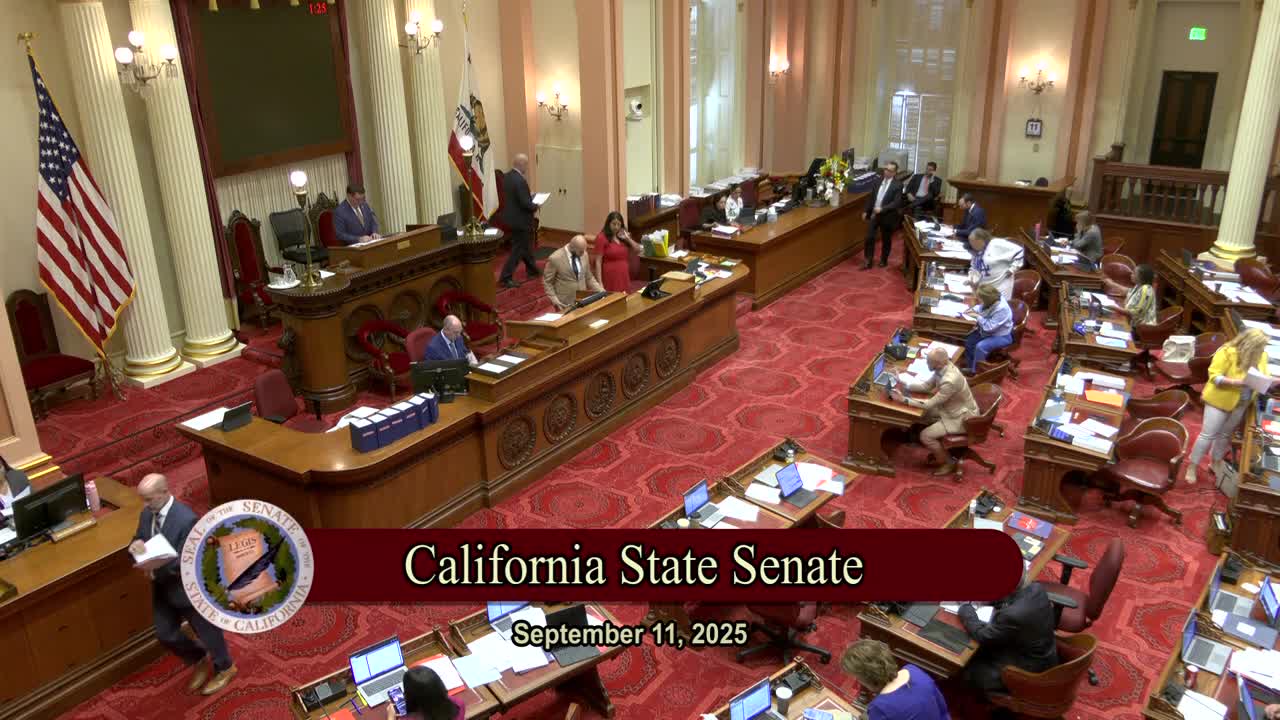 39SEC
Senate Floor
 2MIN
Assembly Floor
 6MIN
Assembly Standing Committee on Business and Professions
 3MIN
Senate Floor
 4MIN
Senate Standing Committee on Judiciary
 19MIN
Senate Standing Committee on Business, Professions and Economic Development
Bill Author

Bill Co-Author(s):