SB 791: Vehicle dealers: document processing charge.
- Session Year: 2025-2026
- House: Senate
- Latest Version Date: 2025-09-13
Current Status:
Failed
(2026-03-02: Veto sustained.)
Introduced
In Committee
Awaiting First Chamber Vote
Passed First Chamber
In Committee
Awaiting Second Chamber Vote
Passed Second Chamber
Enacted
Existing law authorizes a dealer to charge the purchaser or lessee of a vehicle a document processing charge for the preparation and processing of documents, disclosures, and titling, registration, and information security obligations imposed by state and federal law. Existing law authorizes a dealer that has a contractual agreement with the Department of Motor Vehicles to be a private industry partner to set the document processing charge at up to $85 and authorizes all other dealers to set the document processing charge at up to $70.
This bill would, until January 1, 2031, subject to specified requirements, authorize a dealer to charge a document processing charge that exceeds those amounts if the charge does not exceed 1% of the total price of the vehicle and does not exceed $260. The bill would exempt the sale of vehicles to the State of California and any local governmental entity from these provisions. The bill would make a conforming change.
Existing law authorizes a dealer to charge the purchaser or lessee of a vehicle a document processing charge for the preparation and processing of documents, disclosures, and titling, registration, and information security obligations imposed by state and federal law. Existing law authorizes a dealer that has a contractual agreement with the Department of Motor Vehicles (DMV) to be a private industry partner to set the document processing charge at up to $85, $85 and authorizes all other dealers to set the document processing charge at up to $70.
This bill would, until January 1, 2031, subject to specified requirements, authorize a dealer to charge a document processing charge that exceeds those amounts if the charge does not exceed 1% of the total price of the vehicle and does not exceed $350. $260. The bill would exempt the sale of vehicles to the State of California and any local governmental entity from these provisions. The bill would make a conforming change.
Existing law authorizes a dealer to charge the purchaser or lessee of a vehicle a document processing charge for the preparation and processing of documents, disclosures, and titling, registration, and information security obligations imposed by state and federal law. Existing law authorizes a dealer that has a contractual agreement with the Department of Motor Vehicles (DMV) to be a private industry partner to set the document processing charge at up to $85, and authorizes all other dealers to set the document processing charge at up to $70.
This bill would would, subject to specified requirements, authorize a dealer to charge a document processing charge that exceeds those amounts if the charge does not exceed 1% of the total price of the vehicle and does not exceed $500. $350. The bill would exempt the sale of vehicles to the State of California and any local governmental entity from these provisions. The bill would make a conforming change.
Existing law authorizes a dealer to charge the purchaser or lessee of a vehicle a document processing charge for the preparation and processing of documents, disclosures, and titling, registration, and information security obligations imposed by state and federal law. Existing law authorizes a dealer that has a contractual agreement with the Department of Motor Vehicles (DMV) to be a private industry partner to set the document processing charge at up to $85, and authorizes all other dealers to set the document processing charge at up to $70.
This bill would authorize a dealer to charge a document processing charge that exceeds those amounts if the charge does not exceed 1% of the total price of the vehicle and does not exceed $500. The bill would exempt the sale of vehicles to the State of California from these provisions.
Existing law authorizes a dealer to charge the purchaser or lessee of a vehicle a document processing charge for the preparation and processing of documents, disclosures, and titling, registration, and information security obligations imposed by state and federal law. Existing law authorizes a dealer that has a contractual agreement with the Department of Motor Vehicles (DMV) to be a private industry partner to set the document processing charge at up to $85, and authorizes all other dealers to set the document processing charge at up to $70.
This bill would authorize a dealer to charge a document processing charge that exceeds those amounts if the charge does not exceed 1% of the total price of the vehicle and does not exceed $500.
Existing law regulates the document processing charge, as specified, and the electronic filing charge for reporting vehicle sales and producing temporary license plates, as specified, that a dealer may impose on the purchaser or lessee of a vehicle.This bill would make technical, nonsubstantive changes to those provisions.Existing law regulates the document processing charge, as specified, and the electronic filing charge for reporting vehicle sales and producing temporary license plates, as specified, that a dealer may impose on the purchaser or lessee of a vehicle.
This bill would make technical, nonsubstantive changes to those provisions.
(a)A dealer may charge the purchaser or lessee of a vehicle the following charges:
(1)A document processing charge for the preparation and processing of documents, disclosures, and titling, registration, and information security obligations imposed by state and federal law. The dealer document processing charge shall not be represented as a governmental fee.
(A)If a dealer has a contractual agreement with the department to be a private industry partner pursuant to Section 1685, the document processing charge shall not exceed eighty-five dollars ($85).
(B)If a dealer does not have a contractual agreement with the department to be a private industry partner pursuant to Section 1685, the document processing charge shall not exceed seventy dollars ($70).
(C)(i)Subject to the requirements described in subdivision (b), a dealer may charge a document processing charge that exceeds the amounts specified in subparagraphs (A) and (B) if both of the following conditions are satisfied:
(I)The document processing charge does not exceed 1 percent of the total price of the vehicle.
(II)The document processing charge does not exceed two hundred sixty dollars ($260).
(ii)For purposes of this subparagraph, total price of the vehicle means the price of the vehicle before the addition of government charges and any additional accessories and services ordered by the purchaser or lessee.
(iii)This subparagraph shall not apply to the sale of vehicles to the State of California or any local governmental entity, including cities, counties, cities and counties, and special districts.
(2)An electronic filing charge, not to exceed the actual amount the dealer is charged by a first-line service provider for providing license plate processing, postage, and the fees and services authorized pursuant to subdivisions (a) and (d) of Section 1685, including services related to reporting vehicle sales and producing temporary license plates pursuant to Sections 4456 and 4456.2. The electronic filing charge shall not be used to pay for additional fees, goods, or services not directly related to the electronic registration of a motor vehicle, including, but not limited to, the receipt by the dealer of free or discounted goods, services, or financial incentives. The director may establish, through the adoption of regulations, the maximum amount that a first-line service provider may charge a dealer. The electronic filing charge shall not be represented as a governmental fee.
(b)A dealer that charges a document processing charge pursuant to subparagraph (C) of paragraph (1) of subdivision (a) shall comply with all of the following:
(1)The dealer shall conspicuously display a notice, not less than 8 inches high and 10 inches wide, in each sales office and sales cubicle of a dealers established place of business where written terms of specific sale or lease transactions are discussed with prospective purchasers or lessees, and in each room of a dealers established place of business where sale and lease contracts are regularly executed, that states the following:
The dealer is authorized to collect a document processing charge that varies based on the price of the vehicle, but shall in no event exceed $260. This charge is not a government fee.
(2)The dealer shall provide to the customer, prior to the execution of the sales or lease agreement, a disclosure that includes the specific amount of the document processing charge and the following statement in bold 12-point font:
The dealer is authorized to collect a document processing charge in the final contract. This charge is not a government fee.
(3)A dealer shall not collect any other charge for the preparation and processing of documents, disclosures, and titling, registration, and information security obligations imposed by state and federal law, unless the charge is expressly authorized by state or federal law.
(c)As used in this section, the term first-line service provider shall have the same meaning as defined in subdivision (b) of Section 1685.
(d)This section does not prohibit a first-line service provider from entering into contracts with a dealer for products and services unrelated to electronic vehicle registration services.
(e)This section shall remain in effect only until January 1, 2031, and as of that date is repealed.
SEC. 2.Section 4456.5 is added to the Vehicle Code, to read:4456.5.(a)A dealer may charge the purchaser or lessee of a vehicle the following charges:
(1)A document processing charge for the preparation and processing of documents, disclosures, and titling, registration, and information security obligations imposed by state and federal law. The dealer document processing charge shall not be represented as a governmental fee.
(A)If a dealer has a contractual agreement with the department to be a private industry partner pursuant to Section 1685, the document processing charge shall not exceed eighty-five dollars ($85).
(B)If a dealer does not have a contractual agreement with the department to be a private industry partner pursuant to Section 1685, the document processing charge shall not exceed seventy dollars ($70).
(2)An electronic filing charge, not to exceed the actual amount the dealer is charged by a first-line service provider for providing license plate processing, postage, and the fees and services authorized pursuant to subdivisions (a) and (d) of Section 1685, including services related to reporting vehicle sales and producing temporary license plates pursuant to Sections 4456 and 4456.2. The electronic filing charge shall not be used to pay for additional fees, goods, or services not directly related to the electronic registration of a motor vehicle, including, but not limited to, the receipt by the dealer of free or discounted goods, services, or financial incentives. The director may establish, through the adoption of regulations, the maximum amount that a first-line service provider may charge a dealer. The electronic filing charge shall not be represented as a governmental fee.
(b)As used in this section, the term first-line service provider shall have the same meaning as defined in subdivision (b) of Section 1685.
(c)This section does not prohibit a first-line service provider from entering into contracts with a dealer for products and services unrelated to electronic vehicle registration services.
(d)This section shall become operative on January 1, 2031.
SEC. 3.Section 11713.1 of the Vehicle Code is amended to read:11713.1.It is a violation of this code for the holder of a dealers license issued under this article to do any of the following:
(a)Advertise a specific vehicle for sale without identifying the vehicle by its model, model-year, and either its license number or that portion of the vehicle identification number that distinguishes the vehicle from all other vehicles of the same make, model, and model-year. Model-year is not required to be advertised for current model-year vehicles. Year models are no longer current when ensuing year models are available for purchase at retail in California. An advertisement that offers for sale a class of new vehicles in a dealers inventory, consisting of five or more vehicles, that are all of the same make, model, and model-year is not required to include in the advertisement the vehicle identification numbers or license numbers of those vehicles.
(b)Advertise the total price of a vehicle without including all costs to the purchaser at time of sale, except taxes, vehicle registration fees, the California tire fee, as defined in Section 42885 of the Public Resources Code, emission testing charges not exceeding fifty dollars ($50), actual fees charged for certificates pursuant to Section 44060 of the Health and Safety Code, finance charges, and any dealer document processing charge or charge to electronically register or transfer the vehicle.
(c)(1)Exclude from an advertisement of a vehicle for sale that there will be added to the advertised total price at the time of sale, charges for sales tax, vehicle registration fees, the California tire fee, the fee charged by the state for the issuance of a certificate of compliance or noncompliance pursuant to a statute, finance charges, a charge to electronically register or transfer the vehicle, and a dealer document processing charge.
(2)The obligations imposed by paragraph (1) are satisfied by adding to the advertisement a statement containing no abbreviations and that is worded in substantially the following form: Plus government fees and taxes, any finance charges, any dealer document processing charge not to exceed two hundred sixty dollars ($260), any electronic filing charge, and any emission testing charge.
(3)For purposes of paragraph (1), advertisement means an advertisement in a newspaper, magazine, or direct mail publication that is two or more columns in width or one column in width and more than seven inches in length, or on a webpage of a dealers internet website that displays the price of a vehicle offered for sale on the Internet, as that term is defined in paragraph (6) of subdivision (f) of Section 17538 of the Business and Professions Code.
(d)Represent the dealer document processing charge, electronic registration or transfer charge, or emission testing charge, as a governmental fee.
(e)Fail to sell a vehicle to a person at the advertised total price, exclusive of taxes, vehicle registration fees, the California tire fee, the fee charged by the state for the issuance of a certificate of compliance or noncompliance pursuant to a statute, finance charges, mobilehome escrow fees, the amount of a city, county, or city and county imposed fee or tax for a mobilehome, a dealer document processing charge, an electronic registration or transfer charge, and a charge for emission testing not to exceed fifty dollars ($50) plus the actual fees charged for certificates pursuant to Section 44060 of the Health and Safety Code, while the vehicle remains unsold, unless the advertisement states the advertised total price is good only for a specified time and the time has elapsed. Advertised vehicles shall be sold at or below the advertised total price, with statutorily permitted exclusions, regardless of whether the purchaser has knowledge of the advertised total price.
(f)(1)Advertise for sale, sell, or purchase for resale a new vehicle of a line-make for which the dealer does not hold a franchise.
(2)This subdivision does not apply to a transaction involving the following:
(A)A mobilehome.
(B)A commercial coach, as defined in Section 18001.8 of the Health and Safety Code.
(C)An off-highway motor vehicle subject to identification as defined in Section 38012.
(D)A manufactured home.
(E)A new vehicle that will be substantially altered or modified by a converter prior to resale.
(F)A commercial vehicle with a gross vehicle weight rating of more than 10,000 pounds.
(G)A vehicle purchased for export and exported outside the territorial limits of the United States without being registered with the department.
(H)A vehicle acquired in the ordinary course of business as a new vehicle by a dealer franchised to sell that vehicle, if all of the following apply:
(i)The manufacturer or distributor of the vehicle files a bankruptcy petition.
(ii)The franchise agreement of the dealer is terminated, canceled, or rejected by the manufacturer or distributor as part of the bankruptcy proceedings and the termination, cancellation, or rejection is not a result of the revocation by the department of the dealers license or the dealers conviction of a crime.
(iii)The vehicle is held in the inventory of the dealer on the date the bankruptcy petition is filed.
(iv)The vehicle is sold by the dealer within six months of the date the bankruptcy petition is filed.
(3)Subparagraph (H) of paragraph (2) does not entitle a dealer whose franchise agreement has been terminated, canceled, or rejected to continue to perform warranty service repairs or continue to be eligible to offer or receive consumer or dealer incentives offered by the manufacturer or distributor.
(g)Sell a park trailer, as specified in Section 18009.3 of the Health and Safety Code, without disclosing in writing to the purchaser that a park trailer is required to be moved by a transporter or a licensed manufacturer or dealer under a permit issued by the Department of Transportation or a local authority with respect to highways under their respective jurisdictions.
(h)Advertise free merchandise, gifts, or services provided by a dealer contingent on the purchase of a vehicle. Free includes merchandise or services offered for sale at a price less than the sellers cost of the merchandise or services.
(i)(1)Advertise vehicles, and related goods or services, at a specified dealer price, with the intent not to supply reasonably expectable demand, unless the advertisement discloses the number of vehicles in stock at the advertised price. In addition, whether or not there are sufficient vehicles in stock to supply a reasonably expectable demand, when phrases such as starting at, from, beginning as low as, or words of similar import are used in reference to an advertised price, the advertisement shall disclose the number of vehicles available at that advertised price.
(2)For purposes of this subdivision, in a newspaper advertisement for a vehicle that is two model-years old or newer, the actual phrase that states the number of vehicles in stock at the advertised price shall be printed in a type size that is at least equal to one-quarter of the type size, and in the same style and color of type, used for the advertised price. However, in no case shall the phrase be printed in less than 8-point type size, and the phrase shall be disclosed immediately above, below, or beside the advertised price without intervening words, pictures, marks, or symbols.
(3)The disclosure required by this subdivision is in addition to any other disclosure required by this code or any regulation regarding identifying vehicles advertised for sale.
(j)Use rebate or similar words, including, but not limited to, cash back, in advertising the sale of a vehicle unless the rebate is expressed in a specific dollar amount and is in fact a rebate offered by the vehicle manufacturer or distributor, a finance company affiliated with a vehicle manufacturer or distributor, a regulated utility, or a governmental entity directly to the retail purchaser of the vehicle or to the assignee of the retail purchaser.
(k)Require a person to pay a higher price for a vehicle and related goods or services for receiving advertised credit terms than the cash price the same person would have to pay to purchase the same vehicle and related goods or services. For the purpose of this subdivision, cash price has the same meaning as defined in subdivision (e) of Section 2981 of the Civil Code.
(l)Advertise a guaranteed trade-in allowance.
(m)Misrepresent the authority of a salesperson, representative, or agent to negotiate the final terms of a transaction.
(n)(1)Use invoice, dealers invoice, wholesale price, or similar terms that refer to a dealers cost for a vehicle in an advertisement for the sale of a vehicle or advertise that the selling price of a vehicle is above, below, or at either of the following:
(A)The manufacturers or distributors invoice price to a dealer.
(B)A dealers cost.
(2)This subdivision does not apply to either of the following:
(A)A communication occurring during face-to-face negotiations for the purchase of a specific vehicle if the prospective purchaser initiates a discussion of the vehicles invoice price or the dealers cost for that vehicle.
(B)A communication between a dealer and a prospective commercial purchaser that is not disseminated to the general public. For purposes of this subparagraph, a commercial purchaser means a dealer, lessor, lessor-retailer, manufacturer, remanufacturer, distributor, financial institution, governmental entity, or person who purchases 10 or more vehicles during a year.
(o)Violate a law prohibiting bait and switch advertising, including, but not limited to, the guides against bait advertising set forth in Part 238 (commencing with Section 238) of Title 16 of the Code of Federal Regulations, as those regulations read on January 1, 1988.
(p)Make an untrue or misleading statement indicating that a vehicle is equipped with all the factory-installed optional equipment the manufacturer offers, including, but not limited to, a false statement that a vehicle is fully factory equipped.
(q)Except as provided in Section 24014, affix on a new vehicle a supplemental price sticker containing a price that represents the dealers asking price that exceeds the manufacturers suggested retail price unless all of the following occur:
(1)The supplemental sticker clearly and conspicuously discloses in the largest print appearing on the sticker, other than the print size used for the dealers name, that the supplemental sticker price is the dealers asking price, or words of similar import, and that it is not the manufacturers suggested retail price.
(2)The supplemental sticker clearly and conspicuously discloses the manufacturers suggested retail price.
(3)The supplemental sticker lists each item that is not included in the manufacturers suggested retail price, and discloses the additional price of each item. If the supplemental sticker price is greater than the sum of the manufacturers suggested retail price and the price of the items added by the dealer, the supplemental sticker price shall set forth that difference and describe it as added mark-up.
(r)Advertise an underselling claim, including, but not limited to, we have the lowest prices or we will beat any dealers price, unless the dealer has conducted a recent survey showing that the dealer sells its vehicles at lower prices than another licensee in its trade area and maintains records to adequately substantiate the claims. The substantiating records shall be made available to the department upon request.
(s)(1)Advertise an incentive offered by the manufacturer or distributor if the dealer is required to contribute to the cost of the incentive as a condition of participating in the incentive program, unless the dealer discloses in a clear and conspicuous manner that dealer participation may affect consumer cost.
(2)For purposes of this subdivision, incentive means anything of value offered to induce people to purchase a vehicle, including, but not limited to, discounts, savings claims, rebates, below-market finance rates, and free merchandise or services.
(t)Display or offer for sale a used vehicle unless there is affixed to the vehicle the Federal Trade Commissions Buyers Guide as required by Part 455 of Title 16 of the Code of Federal Regulations.
(u)Fail to disclose in writing to the franchisor of a new motor vehicle dealer the name of the purchaser, date of sale, and the vehicle identification number of each new motor vehicle sold of the line-make of that franchisor, or intentionally submit to that franchisor a false name for the purchaser or false date for the date of sale.
(v)Enter into a contract for the retail sale of a motor vehicle unless the contract clearly and conspicuously discloses whether the vehicle is being sold as a new vehicle or a used vehicle, as defined in this code.
(w)Use a simulated check, as defined in subdivision (a) of Section 22433 of the Business and Professions Code, in an advertisement for the sale or lease of a vehicle.
(x)Fail to disclose, in a clear and conspicuous manner in at least 10-point boldface type on the face of a contract for the retail sale of a new motor vehicle that this transaction is, or is not, subject to a fee received by an autobroker from the selling new motor vehicle dealer, and the name of the autobroker, if applicable.
(y)Sell or lease a new motor vehicle after October 1, 2012, unless the dealer has a contractual agreement with the department to be a private industry partner pursuant to Section 1685. This subdivision does not apply to the sale or lease of a motorcycle or off-highway motor vehicle subject to identification under Section 38010 or a recreational vehicle as defined in Section 18010 of the Health and Safety Code.
(z)As used in this section, make and model have the same meaning as is provided in Section 565.12 of Title 49 of the Code of Federal Regulations.
(aa)This section shall remain in effect only until January 1, 2031, and as of that date is repealed.
SEC. 4.Section 11713.1 is added to the Vehicle Code, to read:11713.1.It is a violation of this code for the holder of a dealers license issued under this article to do any of the following:
(a)Advertise a specific vehicle for sale without identifying the vehicle by its model, model-year, and either its license number or that portion of the vehicle identification number that distinguishes the vehicle from all other vehicles of the same make, model, and model-year. Model-year is not required to be advertised for current model-year vehicles. Year models are no longer current when ensuing year models are available for purchase at retail in California. An advertisement that offers for sale a class of new vehicles in a dealers inventory, consisting of five or more vehicles, that are all of the same make, model, and model-year is not required to include in the advertisement the vehicle identification numbers or license numbers of those vehicles.
(b)Advertise the total price of a vehicle without including all costs to the purchaser at time of sale, except taxes, vehicle registration fees, the California tire fee, as defined in Section 42885 of the Public Resources Code, emission testing charges not exceeding fifty dollars ($50), actual fees charged for certificates pursuant to Section 44060 of the Health and Safety Code, finance charges, and any dealer document processing charge or charge to electronically register or transfer the vehicle.
(c)(1)Exclude from an advertisement of a vehicle for sale that there will be added to the advertised total price at the time of sale, charges for sales tax, vehicle registration fees, the California tire fee, the fee charged by the state for the issuance of a certificate of compliance or noncompliance pursuant to a statute, finance charges, a charge to electronically register or transfer the vehicle, and a dealer document processing charge.
(2)The obligations imposed by paragraph (1) are satisfied by adding to the advertisement a statement containing no abbreviations and that is worded in substantially the following form: Plus government fees and taxes, any finance charges, any dealer document processing charge, any electronic filing charge, and any emission testing charge.
(3)For purposes of paragraph (1), advertisement means an advertisement in a newspaper, magazine, or direct mail publication that is two or more columns in width or one column in width and more than seven inches in length, or on a webpage of a dealers internet website that displays the price of a vehicle offered for sale on the Internet, as that term is defined in paragraph (6) of subdivision (f) of Section 17538 of the Business and Professions Code.
(d)Represent the dealer document processing charge, electronic registration or transfer charge, or emission testing charge as a governmental fee.
(e)Fail to sell a vehicle to a person at the advertised total price, exclusive of taxes, vehicle registration fees, the California tire fee, the fee charged by the state for the issuance of a certificate of compliance or noncompliance pursuant to a statute, finance charges, mobilehome escrow fees, the amount of a city, county, or city and county imposed fee or tax for a mobilehome, a dealer document processing charge, an electronic registration or transfer charge, and a charge for emission testing not to exceed fifty dollars ($50) plus the actual fees charged for certificates pursuant to Section 44060 of the Health and Safety Code, while the vehicle remains unsold, unless the advertisement states the advertised total price is good only for a specified time and the time has elapsed. Advertised vehicles shall be sold at or below the advertised total price, with statutorily permitted exclusions, regardless of whether the purchaser has knowledge of the advertised total price.
(f)(1)Advertise for sale, sell, or purchase for resale a new vehicle of a line-make for which the dealer does not hold a franchise.
(2)This subdivision does not apply to a transaction involving the following:
(A)A mobilehome.
(B)A commercial coach as defined in Section 18001.8 of the Health and Safety Code.
(C)An off-highway motor vehicle subject to identification as defined in Section 38012.
(D)A manufactured home.
(E)A new vehicle that will be substantially altered or modified by a converter prior to resale.
(F)A commercial vehicle with a gross vehicle weight rating of more than 10,000 pounds.
(G)A vehicle purchased for export and exported outside the territorial limits of the United States without being registered with the department.
(H)A vehicle acquired in the ordinary course of business as a new vehicle by a dealer franchised to sell that vehicle, if all of the following apply:
(i)The manufacturer or distributor of the vehicle files a bankruptcy petition.
(ii)The franchise agreement of the dealer is terminated, canceled, or rejected by the manufacturer or distributor as part of the bankruptcy proceedings and the termination, cancellation, or rejection is not a result of the revocation by the department of the dealers license or the dealers conviction of a crime.
(iii)The vehicle is held in the inventory of the dealer on the date the bankruptcy petition is filed.
(iv)The vehicle is sold by the dealer within six months of the date the bankruptcy petition is filed.
(3)Subparagraph (H) of paragraph (2) does not entitle a dealer whose franchise agreement has been terminated, canceled, or rejected to continue to perform warranty service repairs or continue to be eligible to offer or receive consumer or dealer incentives offered by the manufacturer or distributor.
(g)Sell a park trailer, as specified in Section 18009.3 of the Health and Safety Code, without disclosing in writing to the purchaser that a park trailer is required to be moved by a transporter or a licensed manufacturer or dealer under a permit issued by the Department of Transportation or a local authority with respect to highways under their respective jurisdictions.
(h)Advertise free merchandise, gifts, or services provided by a dealer contingent on the purchase of a vehicle. Free includes merchandise or services offered for sale at a price less than the sellers cost of the merchandise or services.
(i)(1)Advertise vehicles, and related goods or services, at a specified dealer price, with the intent not to supply reasonably expectable demand, unless the advertisement discloses the number of vehicles in stock at the advertised price. In addition, whether or not there are sufficient vehicles in stock to supply a reasonably expectable demand, if phrases such as starting at, from, beginning as low as, or words of similar import are used in reference to an advertised price, the advertisement shall disclose the number of vehicles available at that advertised price.
(2)For purposes of this subdivision, in a newspaper advertisement for a vehicle that is two model-years old or newer, the actual phrase that states the number of vehicles in stock at the advertised price shall be printed in a type size that is at least equal to one-quarter of the type size, and in the same style and color of type, used for the advertised price. However, in no case shall the phrase be printed in less than 8-point type size, and the phrase shall be disclosed immediately above, below, or beside the advertised price without intervening words, pictures, marks, or symbols.
(3)The disclosure required by this subdivision is in addition to any other disclosure required by this code or any regulation regarding identifying vehicles advertised for sale.
(j)Use rebate or similar words, including, but not limited to, cash back, in advertising the sale of a vehicle unless the rebate is expressed in a specific dollar amount and is in fact a rebate offered by the vehicle manufacturer or distributor, a finance company affiliated with a vehicle manufacturer or distributor, a regulated utility, or a governmental entity directly to the retail purchaser of the vehicle or to the assignee of the retail purchaser.
(k)(1)Require a person to pay a higher price for a vehicle and related goods or services for receiving advertised credit terms than the cash price the same person would have to pay to purchase the same vehicle and related goods or services.
(2)For the purpose of this subdivision, cash price has the same meaning as defined in subdivision (e) of Section 2981 of the Civil Code.
(l)Advertise a guaranteed trade-in allowance.
(m)Misrepresent the authority of a salesperson, representative, or agent to negotiate the final terms of a transaction.
(n)(1)Use invoice, dealers invoice, wholesale price, or similar terms that refer to a dealers cost for a vehicle in an advertisement for the sale of a vehicle or advertise that the selling price of a vehicle is above, below, or at either of the following:
(A)The manufacturers or distributors invoice price to a dealer.
(B)A dealers cost.
(2)This subdivision does not apply to either of the following:
(A)A communication occurring during face-to-face negotiations for the purchase of a specific vehicle if the prospective purchaser initiates a discussion of the vehicles invoice price or the dealers cost for that vehicle.
(B)(i)A communication between a dealer and a prospective commercial purchaser that is not disseminated to the general public.
(ii)For purposes of this subparagraph, a commercial purchaser means a dealer, lessor, lessor-retailer, manufacturer, remanufacturer, distributor, financial institution, governmental entity, or person who purchases 10 or more vehicles during a year.
(o)Violate a law prohibiting bait and switch advertising, including, but not limited to, the guides against bait advertising set forth in Part 238 (commencing with Section 238) of Title 16 of the Code of Federal Regulations, as those regulations read on January 1, 1988.
(p)Make an untrue or misleading statement indicating that a vehicle is equipped with all the factory-installed optional equipment the manufacturer offers, including, but not limited to, a false statement that a vehicle is fully factory equipped.
(q)Except as provided in Section 24014, affix on a new vehicle a supplemental price sticker containing a price that represents the dealers asking price that exceeds the manufacturers suggested retail price unless all of the following occur:
(1)The supplemental sticker clearly and conspicuously discloses in the largest print appearing on the sticker, other than the print size used for the dealers name, that the supplemental sticker price is the dealers asking price, or words of similar import, and that it is not the manufacturers suggested retail price.
(2)The supplemental sticker clearly and conspicuously discloses the manufacturers suggested retail price.
(3)The supplemental sticker lists each item that is not included in the manufacturers suggested retail price, and discloses the additional price of each item. If the supplemental sticker price is greater than the sum of the manufacturers suggested retail price and the price of the items added by the dealer, the supplemental sticker price shall set forth that difference and describe it as added mark-up.
(r)Advertise an underselling claim, including, but not limited to, we have the lowest prices or we will beat any dealers price, unless the dealer has conducted a recent survey showing that the dealer sells its vehicles at lower prices than another licensee in its trade area and maintains records to adequately substantiate the claims. The substantiating records shall be made available to the department upon request.
(s)(1)Advertise an incentive offered by the manufacturer or distributor if the dealer is required to contribute to the cost of the incentive as a condition of participating in the incentive program, unless the dealer discloses in a clear and conspicuous manner that dealer participation may affect consumer cost.
(2)For purposes of this subdivision, incentive means anything of value offered to induce people to purchase a vehicle, including, but not limited to, discounts, savings claims, rebates, below-market finance rates, and free merchandise or services.
(t)Display or offer for sale a used vehicle unless there is affixed to the vehicle the Federal Trade Commissions Buyers Guide as required by Part 455 of Title 16 of the Code of Federal Regulations.
(u)Fail to disclose in writing to the franchisor of a new motor vehicle dealer the name of the purchaser, date of sale, and the vehicle identification number of each new motor vehicle sold of the line-make of that franchisor, or intentionally submit to that franchisor a false name for the purchaser or false date for the date of sale.
(v)Enter into a contract for the retail sale of a motor vehicle unless the contract clearly and conspicuously discloses whether the vehicle is being sold as a new vehicle or a used vehicle, as defined in this code.
(w)Use a simulated check, as defined in subdivision (a) of Section 22433 of the Business and Professions Code, in an advertisement for the sale or lease of a vehicle.
(x)Fail to disclose, in a clear and conspicuous manner in at least 10-point boldface type on the face of a contract for the retail sale of a new motor vehicle, that this transaction is, or is not, subject to a fee received by an autobroker from the selling new motor vehicle dealer and the name of the autobroker, if applicable.
(y)Sell or lease a new motor vehicle after October 1, 2012, unless the dealer has a contractual agreement with the department to be a private industry partner pursuant to Section 1685. This subdivision does not apply to the sale or lease of a motorcycle or off-highway motor vehicle subject to identification under Section 38010 or a recreational vehicle as defined in Section 18010 of the Health and Safety Code.
(z)As used in this section, make and model have the same meaning as is provided in Section 565.12 of Title 49 of the Code of Federal Regulations.
(aa)This section shall become operative on January 1, 2031.
(a)A dealer may charge the purchaser or lessee of a vehicle the following charges:
(1)A document processing charge for the preparation and processing of documents, disclosures, and titling, registration, and information security obligations imposed by state and federal law. The dealer document processing charge shall not be represented as a governmental fee.
(A)If a dealer has a contractual agreement with the department to be a private industry partner pursuant to Section 1685, the document processing charge shall not exceed eighty-five dollars ($85).
(B)If a dealer does not have a contractual agreement with the department to be a private industry partner pursuant to Section 1685, the document processing charge shall not exceed seventy dollars ($70).
(C)(i)Subject to the requirements described in subdivision (b), a dealer may charge a document processing charge that exceeds the amounts specified in subparagraphs (A) and (B) if both of the following conditions are satisfied:
(I)The document processing charge does not exceed 1 percent of the total price of the vehicle.
(II)The document processing charge does not exceed three hundred fifty dollars ($350). two hundred sixty dollars ($260).
(ii)For purposes of this subparagraph, total price of the vehicle means the price of the vehicle before the addition of government charges and any additional accessories and services ordered by the purchaser or lessee.
(iii)This subparagraph shall not apply to the sale of vehicles to the State of California or any local governmental entity, including cities, counties, cities and counties, and special districts.
(2)An electronic filing charge, not to exceed the actual amount the dealer is charged by a first-line service provider for providing license plate processing, postage, and the fees and services authorized pursuant to subdivisions (a) and (d) of Section 1685, including services related to reporting vehicle sales and producing temporary license plates pursuant to Sections 4456 and 4456.2. The electronic filing charge shall not be used to pay for additional fees, goods, or services not directly related to the electronic registration of a motor vehicle, including, but not limited to, the receipt by the dealer of free or discounted goods, services, or financial incentives. The director may establish, through the adoption of regulations, the maximum amount that a first-line service provider may charge a dealer. The electronic filing charge shall not be represented as a governmental fee.
(b)A dealer that charges a document processing charge pursuant to subparagraph (C) of paragraph (1) of subdivision (a) shall comply with all of the following:
(1)The dealer shall conspicuously display a notice, not less than 8 inches high and 10 inches wide, in each sales office and sales cubicle of a dealers established place of business where written terms of specific sale or lease transactions are discussed with prospective purchasers or lessees, and in each room of a dealers established place of business where sale and lease contracts are regularly executed, that states the following:
The dealer is authorized to collect a document processing charge that varies based on the price of the vehicle, but shall in no event exceed $350. $260. This charge is not a government fee.
(2)The dealer shall provide to the customer, prior to the execution of the sales or lease agreement, a disclosure that includes the specific amount of the document processing charge and the following statement in bold 12-point font:
The dealer is authorized to collect a document processing charge in the final contract. This charge is not a government fee.
(3)A dealer shall not collect any other charge for the preparation and processing of documents, disclosures, and titling, registration, and information security obligations imposed by state and federal law, unless the charge is expressly authorized by state or federal law.
(c)As used in this section, the term first-line service provider shall have the same meaning as defined in subdivision (b) of Section 1685.
(d)This section does not prohibit a first-line service provider from entering into contracts with a dealer for products and services unrelated to electronic vehicle registration services.
(e)This section shall remain in effect only until January 1, 2031, and as of that date is repealed.
SEC. 2.Section 4456.5 is added to the Vehicle Code, to read:4456.5.(a)A dealer may charge the purchaser or lessee of a vehicle the following charges:
(1)A document processing charge for the preparation and processing of documents, disclosures, and titling, registration, and information security obligations imposed by state and federal law. The dealer document processing charge shall not be represented as a governmental fee.
(A)If a dealer has a contractual agreement with the department to be a private industry partner pursuant to Section 1685, the document processing charge shall not exceed eighty-five dollars ($85).
(B)If a dealer does not have a contractual agreement with the department to be a private industry partner pursuant to Section 1685, the document processing charge shall not exceed seventy dollars ($70).
(2)An electronic filing charge, not to exceed the actual amount the dealer is charged by a first-line service provider for providing license plate processing, postage, and the fees and services authorized pursuant to subdivisions (a) and (d) of Section 1685, including services related to reporting vehicle sales and producing temporary license plates pursuant to Sections 4456 and 4456.2. The electronic filing charge shall not be used to pay for additional fees, goods, or services not directly related to the electronic registration of a motor vehicle, including, but not limited to, the receipt by the dealer of free or discounted goods, services, or financial incentives. The director may establish, through the adoption of regulations, the maximum amount that a first-line service provider may charge a dealer. The electronic filing charge shall not be represented as a governmental fee.
(b)As used in this section, the term first-line service provider shall have the same meaning as defined in subdivision (b) of Section 1685.
(c)This section does not prohibit a first-line service provider from entering into contracts with a dealer for products and services unrelated to electronic vehicle registration services.
(d)This section shall become operative on January 1, 2031.
SEC. 2.SEC. 3.Section 11713.1 of the Vehicle Code is amended to read:11713.1.It is a violation of this code for the holder of a dealers license issued under this article to do any of the following:
(a)Advertise a specific vehicle for sale without identifying the vehicle by its model, model-year, and either its license number or that portion of the vehicle identification number that distinguishes the vehicle from all other vehicles of the same make, model, and model-year. Model-year is not required to be advertised for current model-year vehicles. Year models are no longer current when ensuing year models are available for purchase at retail in California. An advertisement that offers for sale a class of new vehicles in a dealers inventory, consisting of five or more vehicles, that are all of the same make, model, and model-year is not required to include in the advertisement the vehicle identification numbers or license numbers of those vehicles.
(b)Advertise the total price of a vehicle without including all costs to the purchaser at time of sale, except taxes, vehicle registration fees, the California tire fee, as defined in Section 42885 of the Public Resources Code, emission testing charges not exceeding fifty dollars ($50), actual fees charged for certificates pursuant to Section 44060 of the Health and Safety Code, finance charges, and any dealer document processing charge or charge to electronically register or transfer the vehicle.
(c)(1)Exclude from an advertisement of a vehicle for sale that there will be added to the advertised total price at the time of sale, charges for sales tax, vehicle registration fees, the California tire fee, the fee charged by the state for the issuance of a certificate of compliance or noncompliance pursuant to a statute, finance charges, a charge to electronically register or transfer the vehicle, and a dealer document processing charge.
(2)The obligations imposed by paragraph (1) are satisfied by adding to the advertisement a statement containing no abbreviations and that is worded in substantially the following form: Plus government fees and taxes, any finance charges, any dealer document processing charge not to exceed three hundred fifty dollars ($350), two hundred sixty dollars ($260), any electronic filing charge, and any emission testing charge.
(3)For purposes of paragraph (1), advertisement means an advertisement in a newspaper, magazine, or direct mail publication that is two or more columns in width or one column in width and more than seven inches in length, or on a webpage of a dealers internet website that displays the price of a vehicle offered for sale on the Internet, as that term is defined in paragraph (6) of subdivision (f) of Section 17538 of the Business and Professions Code.
(d)Represent the dealer document processing charge, electronic registration or transfer charge, or emission testing charge, as a governmental fee.
(e)Fail to sell a vehicle to a person at the advertised total price, exclusive of taxes, vehicle registration fees, the California tire fee, the fee charged by the state for the issuance of a certificate of compliance or noncompliance pursuant to a statute, finance charges, mobilehome escrow fees, the amount of a city, county, or city and county imposed fee or tax for a mobilehome, a dealer document processing charge, an electronic registration or transfer charge, and a charge for emission testing not to exceed fifty dollars ($50) plus the actual fees charged for certificates pursuant to Section 44060 of the Health and Safety Code, while the vehicle remains unsold, unless the advertisement states the advertised total price is good only for a specified time and the time has elapsed. Advertised vehicles shall be sold at or below the advertised total price, with statutorily permitted exclusions, regardless of whether the purchaser has knowledge of the advertised total price.
(f)(1)Advertise for sale, sell, or purchase for resale a new vehicle of a line-make for which the dealer does not hold a franchise.
(2)This subdivision does not apply to a transaction involving the following:
(A)A mobilehome.
(B)A commercial coach, as defined in Section 18001.8 of the Health and Safety Code.
(C)An off-highway motor vehicle subject to identification as defined in Section 38012.
(D)A manufactured home.
(E)A new vehicle that will be substantially altered or modified by a converter prior to resale.
(F)A commercial vehicle with a gross vehicle weight rating of more than 10,000 pounds.
(G)A vehicle purchased for export and exported outside the territorial limits of the United States without being registered with the department.
(H)A vehicle acquired in the ordinary course of business as a new vehicle by a dealer franchised to sell that vehicle, if all of the following apply:
(i)The manufacturer or distributor of the vehicle files a bankruptcy petition.
(ii)The franchise agreement of the dealer is terminated, canceled, or rejected by the manufacturer or distributor as part of the bankruptcy proceedings and the termination, cancellation, or rejection is not a result of the revocation by the department of the dealers license or the dealers conviction of a crime.
(iii)The vehicle is held in the inventory of the dealer on the date the bankruptcy petition is filed.
(iv)The vehicle is sold by the dealer within six months of the date the bankruptcy petition is filed.
(3)Subparagraph (H) of paragraph (2) does not entitle a dealer whose franchise agreement has been terminated, canceled, or rejected to continue to perform warranty service repairs or continue to be eligible to offer or receive consumer or dealer incentives offered by the manufacturer or distributor.
(g)Sell a park trailer, as specified in Section 18009.3 of the Health and Safety Code, without disclosing in writing to the purchaser that a park trailer is required to be moved by a transporter or a licensed manufacturer or dealer under a permit issued by the Department of Transportation or a local authority with respect to highways under their respective jurisdictions.
(h)Advertise free merchandise, gifts, or services provided by a dealer contingent on the purchase of a vehicle. Free includes merchandise or services offered for sale at a price less than the sellers cost of the merchandise or services.
(i)(1)Advertise vehicles, and related goods or services, at a specified dealer price, with the intent not to supply reasonably expectable demand, unless the advertisement discloses the number of vehicles in stock at the advertised price. In addition, whether or not there are sufficient vehicles in stock to supply a reasonably expectable demand, when phrases such as starting at, from, beginning as low as, or words of similar import are used in reference to an advertised price, the advertisement shall disclose the number of vehicles available at that advertised price.
(2)For purposes of this subdivision, in a newspaper advertisement for a vehicle that is two model-years old or newer, the actual phrase that states the number of vehicles in stock at the advertised price shall be printed in a type size that is at least equal to one-quarter of the type size, and in the same style and color of type, used for the advertised price. However, in no case shall the phrase be printed in less than 8-point type size, and the phrase shall be disclosed immediately above, below, or beside the advertised price without intervening words, pictures, marks, or symbols.
(3)The disclosure required by this subdivision is in addition to any other disclosure required by this code or any regulation regarding identifying vehicles advertised for sale.
(j)Use rebate or similar words, including, but not limited to, cash back, in advertising the sale of a vehicle unless the rebate is expressed in a specific dollar amount and is in fact a rebate offered by the vehicle manufacturer or distributor, a finance company affiliated with a vehicle manufacturer or distributor, a regulated utility, or a governmental entity directly to the retail purchaser of the vehicle or to the assignee of the retail purchaser.
(k)Require a person to pay a higher price for a vehicle and related goods or services for receiving advertised credit terms than the cash price the same person would have to pay to purchase the same vehicle and related goods or services. For the purpose of this subdivision, cash price has the same meaning as defined in subdivision (e) of Section 2981 of the Civil Code.
(l)Advertise a guaranteed trade-in allowance.
(m)Misrepresent the authority of a salesperson, representative, or agent to negotiate the final terms of a transaction.
(n)(1)Use invoice, dealers invoice, wholesale price, or similar terms that refer to a dealers cost for a vehicle in an advertisement for the sale of a vehicle or advertise that the selling price of a vehicle is above, below, or at either of the following:
(A)The manufacturers or distributors invoice price to a dealer.
(B)A dealers cost.
(2)This subdivision does not apply to either of the following:
(A)A communication occurring during face-to-face negotiations for the purchase of a specific vehicle if the prospective purchaser initiates a discussion of the vehicles invoice price or the dealers cost for that vehicle.
(B)A communication between a dealer and a prospective commercial purchaser that is not disseminated to the general public. For purposes of this subparagraph, a commercial purchaser means a dealer, lessor, lessor-retailer, manufacturer, remanufacturer, distributor, financial institution, governmental entity, or person who purchases 10 or more vehicles during a year.
(o)Violate a law prohibiting bait and switch advertising, including, but not limited to, the guides against bait advertising set forth in Part 238 (commencing with Section 238) of Title 16 of the Code of Federal Regulations, as those regulations read on January 1, 1988.
(p)Make an untrue or misleading statement indicating that a vehicle is equipped with all the factory-installed optional equipment the manufacturer offers, including, but not limited to, a false statement that a vehicle is fully factory equipped.
(q)Except as provided in Section 24014, affix on a new vehicle a supplemental price sticker containing a price that represents the dealers asking price that exceeds the manufacturers suggested retail price unless all of the following occur:
(1)The supplemental sticker clearly and conspicuously discloses in the largest print appearing on the sticker, other than the print size used for the dealers name, that the supplemental sticker price is the dealers asking price, or words of similar import, and that it is not the manufacturers suggested retail price.
(2)The supplemental sticker clearly and conspicuously discloses the manufacturers suggested retail price.
(3)The supplemental sticker lists each item that is not included in the manufacturers suggested retail price, and discloses the additional price of each item. If the supplemental sticker price is greater than the sum of the manufacturers suggested retail price and the price of the items added by the dealer, the supplemental sticker price shall set forth that difference and describe it as added mark-up.
(r)Advertise an underselling claim, including, but not limited to, we have the lowest prices or we will beat any dealers price, unless the dealer has conducted a recent survey showing that the dealer sells its vehicles at lower prices than another licensee in its trade area and maintains records to adequately substantiate the claims. The substantiating records shall be made available to the department upon request.
(s)(1)Advertise an incentive offered by the manufacturer or distributor if the dealer is required to contribute to the cost of the incentive as a condition of participating in the incentive program, unless the dealer discloses in a clear and conspicuous manner that dealer participation may affect consumer cost.
(2)For purposes of this subdivision, incentive means anything of value offered to induce people to purchase a vehicle, including, but not limited to, discounts, savings claims, rebates, below-market finance rates, and free merchandise or services.
(t)Display or offer for sale a used vehicle unless there is affixed to the vehicle the Federal Trade Commissions Buyers Guide as required by Part 455 of Title 16 of the Code of Federal Regulations.
(u)Fail to disclose in writing to the franchisor of a new motor vehicle dealer the name of the purchaser, date of sale, and the vehicle identification number of each new motor vehicle sold of the line-make of that franchisor, or intentionally submit to that franchisor a false name for the purchaser or false date for the date of sale.
(v)Enter into a contract for the retail sale of a motor vehicle unless the contract clearly and conspicuously discloses whether the vehicle is being sold as a new vehicle or a used vehicle, as defined in this code.
(w)Use a simulated check, as defined in subdivision (a) of Section 22433 of the Business and Professions Code, in an advertisement for the sale or lease of a vehicle.
(x)Fail to disclose, in a clear and conspicuous manner in at least 10-point boldface type on the face of a contract for the retail sale of a new motor vehicle that this transaction is, or is not, subject to a fee received by an autobroker from the selling new motor vehicle dealer, and the name of the autobroker, if applicable.
(y)Sell or lease a new motor vehicle after October 1, 2012, unless the dealer has a contractual agreement with the department to be a private industry partner pursuant to Section 1685. This subdivision does not apply to the sale or lease of a motorcycle or off-highway motor vehicle subject to identification under Section 38010 or a recreational vehicle as defined in Section 18010 of the Health and Safety Code.
(z)As used in this section, make and model have the same meaning as is provided in Section 565.12 of Title 49 of the Code of Federal Regulations.
(aa)This section shall remain in effect only until January 1, 2031, and as of that date is repealed.
SEC. 4.Section 11713.1 is added to the Vehicle Code, to read:11713.1.It is a violation of this code for the holder of a dealers license issued under this article to do any of the following:
(a)Advertise a specific vehicle for sale without identifying the vehicle by its model, model-year, and either its license number or that portion of the vehicle identification number that distinguishes the vehicle from all other vehicles of the same make, model, and model-year. Model-year is not required to be advertised for current model-year vehicles. Year models are no longer current when ensuing year models are available for purchase at retail in California. An advertisement that offers for sale a class of new vehicles in a dealers inventory, consisting of five or more vehicles, that are all of the same make, model, and model-year is not required to include in the advertisement the vehicle identification numbers or license numbers of those vehicles.
(b)Advertise the total price of a vehicle without including all costs to the purchaser at time of sale, except taxes, vehicle registration fees, the California tire fee, as defined in Section 42885 of the Public Resources Code, emission testing charges not exceeding fifty dollars ($50), actual fees charged for certificates pursuant to Section 44060 of the Health and Safety Code, finance charges, and any dealer document processing charge or charge to electronically register or transfer the vehicle.
(c)(1)Exclude from an advertisement of a vehicle for sale that there will be added to the advertised total price at the time of sale, charges for sales tax, vehicle registration fees, the California tire fee, the fee charged by the state for the issuance of a certificate of compliance or noncompliance pursuant to a statute, finance charges, a charge to electronically register or transfer the vehicle, and a dealer document processing charge.
(2)The obligations imposed by paragraph (1) are satisfied by adding to the advertisement a statement containing no abbreviations and that is worded in substantially the following form: Plus government fees and taxes, any finance charges, any dealer document processing charge, any electronic filing charge, and any emission testing charge.
(3)For purposes of paragraph (1), advertisement means an advertisement in a newspaper, magazine, or direct mail publication that is two or more columns in width or one column in width and more than seven inches in length, or on a webpage of a dealers internet website that displays the price of a vehicle offered for sale on the Internet, as that term is defined in paragraph (6) of subdivision (f) of Section 17538 of the Business and Professions Code.
(d)Represent the dealer document processing charge, electronic registration or transfer charge, or emission testing charge as a governmental fee.
(e)Fail to sell a vehicle to a person at the advertised total price, exclusive of taxes, vehicle registration fees, the California tire fee, the fee charged by the state for the issuance of a certificate of compliance or noncompliance pursuant to a statute, finance charges, mobilehome escrow fees, the amount of a city, county, or city and county imposed fee or tax for a mobilehome, a dealer document processing charge, an electronic registration or transfer charge, and a charge for emission testing not to exceed fifty dollars ($50) plus the actual fees charged for certificates pursuant to Section 44060 of the Health and Safety Code, while the vehicle remains unsold, unless the advertisement states the advertised total price is good only for a specified time and the time has elapsed. Advertised vehicles shall be sold at or below the advertised total price, with statutorily permitted exclusions, regardless of whether the purchaser has knowledge of the advertised total price.
(f)(1)Advertise for sale, sell, or purchase for resale a new vehicle of a line-make for which the dealer does not hold a franchise.
(2)This subdivision does not apply to a transaction involving the following:
(A)A mobilehome.
(B)A commercial coach as defined in Section 18001.8 of the Health and Safety Code.
(C)An off-highway motor vehicle subject to identification as defined in Section 38012.
(D)A manufactured home.
(E)A new vehicle that will be substantially altered or modified by a converter prior to resale.
(F)A commercial vehicle with a gross vehicle weight rating of more than 10,000 pounds.
(G)A vehicle purchased for export and exported outside the territorial limits of the United States without being registered with the department.
(H)A vehicle acquired in the ordinary course of business as a new vehicle by a dealer franchised to sell that vehicle, if all of the following apply:
(i)The manufacturer or distributor of the vehicle files a bankruptcy petition.
(ii)The franchise agreement of the dealer is terminated, canceled, or rejected by the manufacturer or distributor as part of the bankruptcy proceedings and the termination, cancellation, or rejection is not a result of the revocation by the department of the dealers license or the dealers conviction of a crime.
(iii)The vehicle is held in the inventory of the dealer on the date the bankruptcy petition is filed.
(iv)The vehicle is sold by the dealer within six months of the date the bankruptcy petition is filed.
(3)Subparagraph (H) of paragraph (2) does not entitle a dealer whose franchise agreement has been terminated, canceled, or rejected to continue to perform warranty service repairs or continue to be eligible to offer or receive consumer or dealer incentives offered by the manufacturer or distributor.
(g)Sell a park trailer, as specified in Section 18009.3 of the Health and Safety Code, without disclosing in writing to the purchaser that a park trailer is required to be moved by a transporter or a licensed manufacturer or dealer under a permit issued by the Department of Transportation or a local authority with respect to highways under their respective jurisdictions.
(h)Advertise free merchandise, gifts, or services provided by a dealer contingent on the purchase of a vehicle. Free includes merchandise or services offered for sale at a price less than the sellers cost of the merchandise or services.
(i)(1)Advertise vehicles, and related goods or services, at a specified dealer price, with the intent not to supply reasonably expectable demand, unless the advertisement discloses the number of vehicles in stock at the advertised price. In addition, whether or not there are sufficient vehicles in stock to supply a reasonably expectable demand, if phrases such as starting at, from, beginning as low as, or words of similar import are used in reference to an advertised price, the advertisement shall disclose the number of vehicles available at that advertised price.
(2)For purposes of this subdivision, in a newspaper advertisement for a vehicle that is two model-years old or newer, the actual phrase that states the number of vehicles in stock at the advertised price shall be printed in a type size that is at least equal to one-quarter of the type size, and in the same style and color of type, used for the advertised price. However, in no case shall the phrase be printed in less than 8-point type size, and the phrase shall be disclosed immediately above, below, or beside the advertised price without intervening words, pictures, marks, or symbols.
(3)The disclosure required by this subdivision is in addition to any other disclosure required by this code or any regulation regarding identifying vehicles advertised for sale.
(j)Use rebate or similar words, including, but not limited to, cash back, in advertising the sale of a vehicle unless the rebate is expressed in a specific dollar amount and is in fact a rebate offered by the vehicle manufacturer or distributor, a finance company affiliated with a vehicle manufacturer or distributor, a regulated utility, or a governmental entity directly to the retail purchaser of the vehicle or to the assignee of the retail purchaser.
(k)(1)Require a person to pay a higher price for a vehicle and related goods or services for receiving advertised credit terms than the cash price the same person would have to pay to purchase the same vehicle and related goods or services.
(2)For the purpose of this subdivision, cash price has the same meaning as defined in subdivision (e) of Section 2981 of the Civil Code.
(l)Advertise a guaranteed trade-in allowance.
(m)Misrepresent the authority of a salesperson, representative, or agent to negotiate the final terms of a transaction.
(n)(1)Use invoice, dealers invoice, wholesale price, or similar terms that refer to a dealers cost for a vehicle in an advertisement for the sale of a vehicle or advertise that the selling price of a vehicle is above, below, or at either of the following:
(A)The manufacturers or distributors invoice price to a dealer.
(B)A dealers cost.
(2)This subdivision does not apply to either of the following:
(A)A communication occurring during face-to-face negotiations for the purchase of a specific vehicle if the prospective purchaser initiates a discussion of the vehicles invoice price or the dealers cost for that vehicle.
(B)(i)A communication between a dealer and a prospective commercial purchaser that is not disseminated to the general public.
(ii)For purposes of this subparagraph, a commercial purchaser means a dealer, lessor, lessor-retailer, manufacturer, remanufacturer, distributor, financial institution, governmental entity, or person who purchases 10 or more vehicles during a year.
(o)Violate a law prohibiting bait and switch advertising, including, but not limited to, the guides against bait advertising set forth in Part 238 (commencing with Section 238) of Title 16 of the Code of Federal Regulations, as those regulations read on January 1, 1988.
(p)Make an untrue or misleading statement indicating that a vehicle is equipped with all the factory-installed optional equipment the manufacturer offers, including, but not limited to, a false statement that a vehicle is fully factory equipped.
(q)Except as provided in Section 24014, affix on a new vehicle a supplemental price sticker containing a price that represents the dealers asking price that exceeds the manufacturers suggested retail price unless all of the following occur:
(1)The supplemental sticker clearly and conspicuously discloses in the largest print appearing on the sticker, other than the print size used for the dealers name, that the supplemental sticker price is the dealers asking price, or words of similar import, and that it is not the manufacturers suggested retail price.
(2)The supplemental sticker clearly and conspicuously discloses the manufacturers suggested retail price.
(3)The supplemental sticker lists each item that is not included in the manufacturers suggested retail price, and discloses the additional price of each item. If the supplemental sticker price is greater than the sum of the manufacturers suggested retail price and the price of the items added by the dealer, the supplemental sticker price shall set forth that difference and describe it as added mark-up.
(r)Advertise an underselling claim, including, but not limited to, we have the lowest prices or we will beat any dealers price, unless the dealer has conducted a recent survey showing that the dealer sells its vehicles at lower prices than another licensee in its trade area and maintains records to adequately substantiate the claims. The substantiating records shall be made available to the department upon request.
(s)(1)Advertise an incentive offered by the manufacturer or distributor if the dealer is required to contribute to the cost of the incentive as a condition of participating in the incentive program, unless the dealer discloses in a clear and conspicuous manner that dealer participation may affect consumer cost.
(2)For purposes of this subdivision, incentive means anything of value offered to induce people to purchase a vehicle, including, but not limited to, discounts, savings claims, rebates, below-market finance rates, and free merchandise or services.
(t)Display or offer for sale a used vehicle unless there is affixed to the vehicle the Federal Trade Commissions Buyers Guide as required by Part 455 of Title 16 of the Code of Federal Regulations.
(u)Fail to disclose in writing to the franchisor of a new motor vehicle dealer the name of the purchaser, date of sale, and the vehicle identification number of each new motor vehicle sold of the line-make of that franchisor, or intentionally submit to that franchisor a false name for the purchaser or false date for the date of sale.
(v)Enter into a contract for the retail sale of a motor vehicle unless the contract clearly and conspicuously discloses whether the vehicle is being sold as a new vehicle or a used vehicle, as defined in this code.
(w)Use a simulated check, as defined in subdivision (a) of Section 22433 of the Business and Professions Code, in an advertisement for the sale or lease of a vehicle.
(x)Fail to disclose, in a clear and conspicuous manner in at least 10-point boldface type on the face of a contract for the retail sale of a new motor vehicle, that this transaction is, or is not, subject to a fee received by an autobroker from the selling new motor vehicle dealer and the name of the autobroker, if applicable.
(y)Sell or lease a new motor vehicle after October 1, 2012, unless the dealer has a contractual agreement with the department to be a private industry partner pursuant to Section 1685. This subdivision does not apply to the sale or lease of a motorcycle or off-highway motor vehicle subject to identification under Section 38010 or a recreational vehicle as defined in Section 18010 of the Health and Safety Code.
(z)As used in this section, make and model have the same meaning as is provided in Section 565.12 of Title 49 of the Code of Federal Regulations.
(aa)This section shall become operative on January 1, 2031.
(a)A dealer may charge the purchaser or lessee of a vehicle the following charges:
(1)A document processing charge for the preparation and processing of documents, disclosures, and titling, registration, and information security obligations imposed by state and federal law. The dealer document processing charge shall not be represented as a governmental fee.
(A)If a dealer has a contractual agreement with the department to be a private industry partner pursuant to Section 1685, the document processing charge shall not exceed eighty-five dollars ($85).
(B)If a dealer does not have a contractual agreement with the department to be a private industry partner pursuant to Section 1685, the document processing charge shall not exceed seventy dollars ($70).
(C)(i)A Subject to the requirements described in subdivision (b), a dealer may charge a document processing charge that exceeds the amounts specified in subparagraphs (A) and (B) if both of the following conditions are satisfied:
(I)The document processing charge does not exceed 1 percent of the total price of the vehicle.
(II)The document processing charge does not exceed five hundred dollars ($500). three hundred fifty dollars ($350).
(ii)For purposes of this subparagraph, total price of the vehicle means the price of the vehicle before the addition of government charges and any additional accessories and services ordered by the purchaser or lessee.
(iii)This subparagraph shall not apply to the sale of vehicles to the State of California. California or any local governmental entity, including cities, counties, cities and counties, and special districts.
(2)An electronic filing charge, not to exceed the actual amount the dealer is charged by a first-line service provider for providing license plate processing, postage, and the fees and services authorized pursuant to subdivisions (a) and (d) of Section 1685, including services related to reporting vehicle sales and producing temporary license plates pursuant to Sections 4456 and 4456.2. The electronic filing charge shall not be used to pay for additional fees, goods, or services not directly related to the electronic registration of a motor vehicle, including, but not limited to, the receipt by the dealer of free or discounted goods, services, or financial incentives. The director may establish, through the adoption of regulations, the maximum amount that a first-line service provider may charge a dealer. The electronic filing charge shall not be represented as a governmental fee.
(b)A dealer that charges a document processing charge pursuant to subparagraph (C) of paragraph (1) of subdivision (a) shall comply with all of the following:
(1)The dealer shall conspicuously display a notice, not less than 8 inches high and 10 inches wide, in each sales office and sales cubicle of a dealers established place of business where written terms of specific sale or lease transactions are discussed with prospective purchasers or lessees, and in each room of a dealers established place of business where sale and lease contracts are regularly executed, that states the following:
The dealer is authorized to collect a document processing charge that varies based on the price of the vehicle, but shall in no event exceed $350. This charge is not a government fee.
(2)The dealer shall provide to the customer, prior to the execution of the sales or lease agreement, a disclosure that includes the specific amount of the document processing charge and the following statement in bold 12-point font:
The dealer is authorized to collect a document processing charge in the final contract. This charge is not a government fee.
(3)A dealer shall not collect any other charge for the preparation and processing of documents, disclosures, and titling, registration, and information security obligations imposed by state and federal law, unless the charge is expressly authorized by state or federal law.
(b)(c)As used in this section, the term first-line service provider shall have the same meaning as defined in subdivision (b) of Section 1685.
(c)(d)This section does not prohibit a first-line service provider from entering into contracts with a dealer for products and services unrelated to electronic vehicle registration services.
SEC. 2.Section 11713.1 of the Vehicle Code is amended to read:11713.1.It is a violation of this code for the holder of a dealers license issued under this article to do any of the following:
(a)Advertise a specific vehicle for sale without identifying the vehicle by its model, model-year, and either its license number or that portion of the vehicle identification number that distinguishes the vehicle from all other vehicles of the same make, model, and model-year. Model-year is not required to be advertised for current model-year vehicles. Year models are no longer current when ensuing year models are available for purchase at retail in California. An advertisement that offers for sale a class of new vehicles in a dealers inventory, consisting of five or more vehicles, that are all of the same make, model, and model-year is not required to include in the advertisement the vehicle identification numbers or license numbers of those vehicles.
(b)Advertise the total price of a vehicle without including all costs to the purchaser at time of sale, except taxes, vehicle registration fees, the California tire fee, as defined in Section 42885 of the Public Resources Code, emission testing charges not exceeding fifty dollars ($50), actual fees charged for certificates pursuant to Section 44060 of the Health and Safety Code, finance charges, and any dealer document processing charge or charge to electronically register or transfer the vehicle.
(c)(1)Exclude from an advertisement of a vehicle for sale that there will be added to the advertised total price at the time of sale, charges for sales tax, vehicle registration fees, the California tire fee, the fee charged by the state for the issuance of a certificate of compliance or noncompliance pursuant to a statute, finance charges, a charge to electronically register or transfer the vehicle, and a dealer document processing charge.
(2)The obligations imposed by paragraph (1) are satisfied by adding to the advertisement a statement containing no abbreviations and that is worded in substantially the following form: Plus government fees and taxes, any finance charges, any dealer document processing charge, charge not to exceed three hundred fifty dollars ($350), any electronic filing charge, and any emission testing charge.
(3)For purposes of paragraph (1), advertisement means an advertisement in a newspaper, magazine, or direct mail publication that is two or more columns in width or one column in width and more than seven inches in length, or on a Web page webpage of a dealers Internet Web site internet website that displays the price of a vehicle offered for sale on the Internet, as that term is defined in paragraph (6) of subdivision (f) of Section 17538 of the Business and Professions Code.
(d)Represent the dealer document processing charge, electronic registration or transfer charge, or emission testing charge, as a governmental fee.
(e)Fail to sell a vehicle to a person at the advertised total price, exclusive of taxes, vehicle registration fees, the California tire fee, the fee charged by the state for the issuance of a certificate of compliance or noncompliance pursuant to a statute, finance charges, mobilehome escrow fees, the amount of a city, county, or city and county imposed fee or tax for a mobilehome, a dealer document processing charge, an electronic registration or transfer charge, and a charge for emission testing not to exceed fifty dollars ($50) plus the actual fees charged for certificates pursuant to Section 44060 of the Health and Safety Code, while the vehicle remains unsold, unless the advertisement states the advertised total price is good only for a specified time and the time has elapsed. Advertised vehicles shall be sold at or below the advertised total price, with statutorily permitted exclusions, regardless of whether the purchaser has knowledge of the advertised total price.
(f)(1)Advertise for sale, sell, or purchase for resale a new vehicle of a line-make for which the dealer does not hold a franchise.
(2)This subdivision does not apply to a transaction involving the following:
(A)A mobilehome.
(B)A commercial coach, as defined in Section 18001.8 of the Health and Safety Code.
(C)An off-highway motor vehicle subject to identification as defined in Section 38012.
(D)A manufactured home.
(E)A new vehicle that will be substantially altered or modified by a converter prior to resale.
(F)A commercial vehicle with a gross vehicle weight rating of more than 10,000 pounds.
(G)A vehicle purchased for export and exported outside the territorial limits of the United States without being registered with the department.
(H)A vehicle acquired in the ordinary course of business as a new vehicle by a dealer franchised to sell that vehicle, if all of the following apply:
(i)The manufacturer or distributor of the vehicle files a bankruptcy petition.
(ii)The franchise agreement of the dealer is terminated, canceled, or rejected by the manufacturer or distributor as part of the bankruptcy proceedings and the termination, cancellation, or rejection is not a result of the revocation by the department of the dealers license or the dealers conviction of a crime.
(iii)The vehicle is held in the inventory of the dealer on the date the bankruptcy petition is filed.
(iv)The vehicle is sold by the dealer within six months of the date the bankruptcy petition is filed.
(3)Subparagraph (H) of paragraph (2) does not entitle a dealer whose franchise agreement has been terminated, canceled, or rejected to continue to perform warranty service repairs or continue to be eligible to offer or receive consumer or dealer incentives offered by the manufacturer or distributor.
(g)Sell a park trailer, as specified in Section 18009.3 of the Health and Safety Code, without disclosing in writing to the purchaser that a park trailer is required to be moved by a transporter or a licensed manufacturer or dealer under a permit issued by the Department of Transportation or a local authority with respect to highways under their respective jurisdictions.
(h)Advertise free merchandise, gifts, or services provided by a dealer contingent on the purchase of a vehicle. Free includes merchandise or services offered for sale at a price less than the sellers cost of the merchandise or services.
(i)(1)Advertise vehicles, and related goods or services, at a specified dealer price, with the intent not to supply reasonably expectable demand, unless the advertisement discloses the number of vehicles in stock at the advertised price. In addition, whether or not there are sufficient vehicles in stock to supply a reasonably expectable demand, when phrases such as starting at, from, beginning as low as, or words of similar import are used in reference to an advertised price, the advertisement shall disclose the number of vehicles available at that advertised price.
(2)For purposes of this subdivision, in a newspaper advertisement for a vehicle that is two model-years old or newer, the actual phrase that states the number of vehicles in stock at the advertised price shall be printed in a type size that is at least equal to one-quarter of the type size, and in the same style and color of type, used for the advertised price. However, in no case shall the phrase be printed in less than 8-point type size, and the phrase shall be disclosed immediately above, below, or beside the advertised price without intervening words, pictures, marks, or symbols.
(3)The disclosure required by this subdivision is in addition to any other disclosure required by this code or any regulation regarding identifying vehicles advertised for sale.
(j)Use rebate or similar words, including, but not limited to, cash back, in advertising the sale of a vehicle unless the rebate is expressed in a specific dollar amount and is in fact a rebate offered by the vehicle manufacturer or distributor, a finance company affiliated with a vehicle manufacturer or distributor, a regulated utility, or a governmental entity directly to the retail purchaser of the vehicle or to the assignee of the retail purchaser.
(k)Require a person to pay a higher price for a vehicle and related goods or services for receiving advertised credit terms than the cash price the same person would have to pay to purchase the same vehicle and related goods or services. For the purpose of this subdivision, cash price has the same meaning as defined in subdivision (e) of Section 2981 of the Civil Code.
(l)Advertise a guaranteed trade-in allowance.
(m)Misrepresent the authority of a salesperson, representative, or agent to negotiate the final terms of a transaction.
(n)(1)Use invoice, dealers invoice, wholesale price, or similar terms that refer to a dealers cost for a vehicle in an advertisement for the sale of a vehicle or advertise that the selling price of a vehicle is above, below, or at either of the following:
(A)The manufacturers or distributors invoice price to a dealer.
(B)A dealers cost.
(2)This subdivision does not apply to either of the following:
(A)A communication occurring during face-to-face negotiations for the purchase of a specific vehicle if the prospective purchaser initiates a discussion of the vehicles invoice price or the dealers cost for that vehicle.
(B)A communication between a dealer and a prospective commercial purchaser that is not disseminated to the general public. For purposes of this subparagraph, a commercial purchaser means a dealer, lessor, lessor-retailer, manufacturer, remanufacturer, distributor, financial institution, governmental entity, or person who purchases 10 or more vehicles during a year.
(o)Violate a law prohibiting bait and switch advertising, including, but not limited to, the guides against bait advertising set forth in Part 238 (commencing with Section 238) of Title 16 of the Code of Federal Regulations, as those regulations read on January 1, 1988.
(p)Make an untrue or misleading statement indicating that a vehicle is equipped with all the factory-installed optional equipment the manufacturer offers, including, but not limited to, a false statement that a vehicle is fully factory equipped.
(q)Except as provided in Section 24014, affix on a new vehicle a supplemental price sticker containing a price that represents the dealers asking price that exceeds the manufacturers suggested retail price unless all of the following occur:
(1)The supplemental sticker clearly and conspicuously discloses in the largest print appearing on the sticker, other than the print size used for the dealers name, that the supplemental sticker price is the dealers asking price, or words of similar import, and that it is not the manufacturers suggested retail price.
(2)The supplemental sticker clearly and conspicuously discloses the manufacturers suggested retail price.
(3)The supplemental sticker lists each item that is not included in the manufacturers suggested retail price, and discloses the additional price of each item. If the supplemental sticker price is greater than the sum of the manufacturers suggested retail price and the price of the items added by the dealer, the supplemental sticker price shall set forth that difference and describe it as added mark-up.
(r)Advertise an underselling claim, including, but not limited to, we have the lowest prices or we will beat any dealers price, unless the dealer has conducted a recent survey showing that the dealer sells its vehicles at lower prices than another licensee in its trade area and maintains records to adequately substantiate the claims. The substantiating records shall be made available to the department upon request.
(s)(1)Advertise an incentive offered by the manufacturer or distributor if the dealer is required to contribute to the cost of the incentive as a condition of participating in the incentive program, unless the dealer discloses in a clear and conspicuous manner that dealer participation may affect consumer cost.
(2)For purposes of this subdivision, incentive means anything of value offered to induce people to purchase a vehicle, including, but not limited to, discounts, savings claims, rebates, below-market finance rates, and free merchandise or services.
(t)Display or offer for sale a used vehicle unless there is affixed to the vehicle the Federal Trade Commissions Buyers Guide as required by Part 455 of Title 16 of the Code of Federal Regulations.
(u)Fail to disclose in writing to the franchisor of a new motor vehicle dealer the name of the purchaser, date of sale, and the vehicle identification number of each new motor vehicle sold of the line-make of that franchisor, or intentionally submit to that franchisor a false name for the purchaser or false date for the date of sale.
(v)Enter into a contract for the retail sale of a motor vehicle unless the contract clearly and conspicuously discloses whether the vehicle is being sold as a new vehicle or a used vehicle, as defined in this code.
(w)Use a simulated check, as defined in subdivision (a) of Section 22433 of the Business and Professions Code, in an advertisement for the sale or lease of a vehicle.
(x)Fail to disclose, in a clear and conspicuous manner in at least 10-point boldface type on the face of a contract for the retail sale of a new motor vehicle that this transaction is, or is not, subject to a fee received by an autobroker from the selling new motor vehicle dealer, and the name of the autobroker, if applicable.
(y)Sell or lease a new motor vehicle after October 1, 2012, unless the dealer has a contractual agreement with the department to be a private industry partner pursuant to Section 1685. This subdivision does not apply to the sale or lease of a motorcycle or off-highway motor vehicle subject to identification under Section 38010 or a recreational vehicle as defined in Section 18010 of the Health and Safety Code.
(z)As used in this section, make and model have the same meaning as is provided in Section 565.12 of Title 49 of the Code of Federal Regulations.
(a)A dealer may charge the purchaser or lessee of a vehicle the following charges:
(1)A document processing charge for the preparation and processing of documents, disclosures, and titling, registration, and information security obligations imposed by state and federal law. The dealer document processing charge shall not be represented as a governmental fee.
(A)If a dealer has a contractual agreement with the department to be a private industry partner pursuant to Section 1685, the document processing charge shall not exceed eighty-five dollars ($85).
(B)If a dealer does not have a contractual agreement with the department to be a private industry partner pursuant to Section 1685, the document processing charge shall not exceed seventy dollars ($70).
(C)(i)A dealer may charge a document processing charge that exceeds the amounts specified in subparagraphs (A) and (B) if both of the following conditions are satisfied:
(I)The document processing charge does not exceed 1 percent of the total price of the vehicle.
(II)The document processing charge does not exceed five hundred dollars ($500).
(ii)For purposes of this subparagraph, total price of the vehicle means the price of the vehicle before the addition of government charges and any additional accessories and services ordered by the purchaser or lessee.
(iii)This subparagraph shall not apply to the sale of vehicles to the State of California.
(2)An electronic filing charge, not to exceed the actual amount the dealer is charged by a first-line service provider for providing license plate processing, postage, and the fees and services authorized pursuant to subdivisions (a) and (d) of Section 1685, including services related to reporting vehicle sales and producing temporary license plates pursuant to Sections 4456 and 4456.2. The electronic filing charge shall not be used to pay for additional fees, goods, or services not directly related to the electronic registration of a motor vehicle, including, but not limited to, the receipt by the dealer of free or discounted goods, services, or financial incentives. The director may establish, through the adoption of regulations, the maximum amount that a first-line service provider may charge a dealer. The electronic filing charge shall not be represented as a governmental fee.
(b)As used in this section, the term first-line service provider shall have the same meaning as defined in subdivision (b) of Section 1685.
(c)This section does not prohibit a first-line service provider from entering into contracts with a dealer for products and services unrelated to electronic vehicle registration services.
(a)A dealer may charge the purchaser or lessee of a vehicle the following charges:
(1)A document processing charge for the preparation and processing of documents, disclosures, and titling, registration, and information security obligations imposed by state and federal law. The dealer document processing charge shall not be represented as a governmental fee.
(A)If a dealer has a contractual agreement with the department to be a private industry partner pursuant to Section 1685, the document processing charge shall not exceed eighty-five dollars ($85).
(B)If a dealer does not have a contractual agreement with the department to be a private industry partner pursuant to Section 1685, the document processing charge shall not exceed seventy dollars ($70).
(C)(i)A dealer may charge a document processing charge that exceeds the amounts specified in subparagraphs (A) and (B) if both of the following conditions are satisfied:
(I)The document processing charge does not exceed 1 percent of the total price of the vehicle.
(II)The document processing charge does not exceed five hundred dollars ($500).
(ii)For purposes of this subparagraph, total price of the vehicle means the price of the vehicle before the addition of government charges and any additional accessories and services ordered by the purchaser or lessee.
(2)An electronic filing charge, not to exceed the actual amount the dealer is charged by a first-line service provider for providing license plate processing, postage, and the fees and services authorized pursuant to subdivisions (a) and (d) of Section 1685, including services related to reporting vehicle sales and producing temporary license plates pursuant to Sections 4456 and 4456.2. The electronic filing charge shall not be used to pay for additional fees, goods, or services not directly related to the electronic registration of a motor vehicle, including, but not limited to, the receipt by the dealer of free or discounted goods, services, or financial incentives. The director may establish, through the adoption of regulations, the maximum amount that a first-line service provider may charge a dealer. The electronic filing charge shall not be represented as a governmental fee.
(b)As used in this section, the term first-line service provider shall have the same meaning as defined in subdivision (b) of Section 1685.
(c)This section does not prohibit a first-line service provider from entering into contracts with a dealer for products and services unrelated to electronic vehicle registration services.
(a)A dealer may charge the purchaser or lessee of a vehicle the following charges:
(1)A document processing charge for the preparation and processing of documents, disclosures, and titling, registration, and information security obligations imposed by state and federal law. The dealer document processing charge shall not be represented as a governmental fee.
(A)If a dealer has a contractual agreement with the department to be a private industry partner pursuant to Section 1685, the document processing charge shall not exceed eighty-five dollars ($85).
(B)If a dealer does not have a contractual agreement with the department to be a private industry partner pursuant to Section 1685, the document processing charge shall not exceed seventy dollars ($70).
(2)An electronic filing charge, not to exceed the actual amount the dealer is charged by a first-line service provider for providing license plate processing, postage, and the fees and services authorized pursuant to subdivisions (a) and (d) of Section 1685, including services related to reporting vehicle sales and producing temporary license plates pursuant to Sections 4456 and 4456.2. The electronic filing charge shall not be used to pay for additional fees, goods, or services not directly related to the electronic registration of a motor vehicle, including, but not limited to, the receipt by the dealer of free or discounted goods, services, or financial incentives. The director may establish, through the adoption of regulations, the maximum amount that a first-line service provider may charge a dealer. The electronic filing charge shall not be represented as a governmental fee.
(b)As used in this section, the term first-line service provider shall have the same meaning as defined in subdivision (b) of Section 1685.
(c)This section does not prohibit a first-line service provider from entering into contracts with dealers a dealer for products and services unrelated to electronic vehicle registration services.
(d)This section shall become operative on January 1, 2019.|
Date
|
Status
|
|---|---|
| Mar 2, 2026 | Veto sustained. |
| Mar 2, 2026 | Stricken from file. |
| Oct 13, 2025 | In Senate. Consideration of Governor's veto pending. |
| Oct 13, 2025 | Vetoed by the Governor. |
| Sep 22, 2025 | Enrolled and presented to the Governor at 11 a.m. |
| Sep 10, 2025 | Assembly amendments concurred in. (Ayes 37. Noes 0. Page 2830.) Ordered to engrossing and enrolling. |
| Sep 8, 2025 | In Senate. Concurrence in Assembly amendments pending. |
| Sep 8, 2025 | Read third time. Passed. (Ayes 60. Noes 3. Page 3010.) Ordered to the Senate. |
| Sep 3, 2025 | Read second time. Ordered to third reading. |
| Sep 2, 2025 | Read second time and amended. Ordered to second reading. |
| Aug 29, 2025 | From committee: Do pass as amended. (Ayes 12. Noes 0.) (August 29). |
| Aug 20, 2025 | August 20 set for first hearing. Placed on APPR. suspense file. |
| Jul 15, 2025 | From committee: Do pass and re-refer to Com. on APPR. (Ayes 11. Noes 0.) (July 14). Re-referred to Com. on APPR. |
| Jul 3, 2025 | From committee with author's amendments. Read second time and amended. Re-referred to Com. on TRANS. |
| Jun 9, 2025 | Referred to Com. on TRANS. |
| Jun 4, 2025 | In Assembly. Read first time. Held at Desk. |
| Jun 3, 2025 | Read third time. Passed. (Ayes 29. Noes 1. Page 1457.) Ordered to the Assembly. |
| May 8, 2025 | Read second time. Ordered to third reading. |
| May 7, 2025 | Ordered to second reading. |
| May 7, 2025 | Withdrawn from committee. |
| May 6, 2025 | From committee with author's amendments. Read second time and amended. Re-referred to Com. on APPR. |
| Apr 30, 2025 | Re-referred to Com. on APPR. |
| Apr 23, 2025 | From committee: Do pass and re-refer to Com. on RLS. (Ayes 12. Noes 1. Page 843.) (April 22). Re-referred to Com. on RLS. |
| Apr 8, 2025 | Set for hearing April 22. |
| Apr 2, 2025 | Re-referred to Com. on TRANS. |
| Mar 24, 2025 | From committee with author's amendments. Read second time and amended. Re-referred to Com. on RLS. |
| Mar 12, 2025 | Referred to Com. on RLS. |
| Feb 24, 2025 | Read first time. |
| Feb 24, 2025 | From printer. May be acted upon on or after March 24. |
| Feb 21, 2025 | Introduced. To Com. on RLS. for assignment. To print. |
|
Date
|
Description
|
Location
|
Votes
|
|
|---|---|---|---|---|
| Sep 10, 2025 | Unfinished Business SB791 Cortese et al. Concurrence | Senate Floor |
Passed |
|
| Sep 8, 2025 | SB 791 Cortese Senate Third Reading By Wilson | Assembly Floor |
Passed |
|
| Aug 29, 2025 | Do pass as amended. | Assembly Standing Committee on Appropriations |
Passed |
|
| Jul 14, 2025 | Do pass and be re-referred to the Committee on [Appropriations] | Assembly Standing Committee on Transportation |
Passed |
|
| Jun 3, 2025 | Senate 3rd Reading SB791 Cortese et al. | Senate Floor |
Passed |
|
| Apr 22, 2025 | Do pass, but first be re-referred to the Committee on [Rules] | Senate Standing Committee on Transportation |
Passed |
This list shows positions taken on this bill by organizations on the date displayed, which is linked to the original source.
Positions by individuals are not included.
|
Organization
|
Position
|
Date
|
|---|---|---|
| California Alliance For Retired Americans | ** Against | |
| California Low-Income Consumer Coalition | ** Against | |
| California New Car Dealers Association | ** Support | |
| Cameo - California Association for Micro Enterprise Opportunity | ** Against | |
| CarMax | ** Support | |
| CMDA-California Motorcycle Dealers Association | ** Support | |
| Community Legal Services in East Palo Alto | ** Against | |
| Consumer Action | ** Against | |
| Consumer Attorneys Of California | ** Against | |
| Consumer Federation of America | ** Against | |
| Consumer Reports | ** Against | |
| Consumers For Auto Reliability & Safety | ** Against | |
| Courage California | ** Against | |
| Dolores Huerta Foundation | ** Against | |
| Enterprise Mobility | ** Support | |
| GREATER LOS ANGELES NEW CAR DEALERS ASSOCIATION | ** Support | |
| Housing & Economic Right Advocates | ** Against | |
| Independent Automobile Dealers Association Of California | ** Support | |
| National Consumer Law Center | ** Against | |
| National Consumers League | ** Against | |
| New Car Dealer Association San Diego County | ** Support | |
| Orange County Automobile Dealers Association | ** Support | |
| Parkwest Bicycle Casino | ** Against | |
| Public Counsel | ** Against | |
| Public Law Center | ** Against | |
| Small Business Majority | ** Against | |
| Starting Over Inc. | ** Against | |
| Starting Over Strong | ** Against |
SENATE RULES COMMITTEE Office of Senate Floor Analyses (916) 651-1520 Fax: (916) 327-4478 | SB 791 |
VETO
Bill No: SB 791
Author: Cortese (D), et al.
Enrolled: 9/13/25
Vote: 27
SENATE TRANSPORTATION COMMITTEE: 12-1, 4/22/25
AYES: Cortese, Strickland, Archuleta, Arreguín, Cervantes, Dahle, Gonzalez, Grayson, Limón, Richardson, Umberg, Valladares
NOES: Blakespear
NO VOTE RECORDED: Menjivar, Seyarto
SENATE FLOOR: 29-1, 6/3/25
AYES: Alvarado-Gil, Archuleta, Arreguín, Ashby, Becker, Caballero, Cervantes, Choi, Cortese, Dahle, Durazo, Gonzalez, Grayson, Grove, Jones, Laird, Limón, McGuire, McNerney, Padilla, Pérez, Richardson, Rubio, Seyarto, Smallwood-Cuevas, Strickland, Umberg, Wahab, Weber Pierson
NOES: Stern
NO VOTE RECORDED: Allen, Blakespear, Cabaldon, Hurtado, Menjivar, Niello, Ochoa Bogh, Reyes, Valladares, Wiener
SENATE FLOOR: 37-0, 9/10/25
AYES: Allen, Alvarado-Gil, Archuleta, Arreguín, Ashby, Becker, Cabaldon, Caballero, Cervantes, Choi, Cortese, Dahle, Durazo, Gonzalez, Grayson, Grove, Hurtado, Jones, Laird, Limón, McGuire, McNerney, Ochoa Bogh, Padilla, Pérez, Reyes, Richardson, Rubio, Seyarto, Smallwood-Cuevas, Stern, Strickland, Umberg, Valladares, Wahab, Weber Pierson, Wiener
NO VOTE RECORDED: Blakespear, Menjivar, Niello
ASSEMBLY FLOOR: 60-3, 9/8/25 - See last page for vote
SUBJECT: Vehicle dealers: document processing charge
SOURCE: Author
DIGEST:
This bill increases the document processing fee a car dealer is allowed to charge a customer to 1% of the cost of the vehicle up to $260, and sunsets the provisions of this bill on January 1, 2031.
Assembly Amendments
lower the cap on document processing charge from $500 to $260, repeal all of the provisions of the bill on January 1, 2031, exempt local governmental entities from the increased charge, add consumer notification requirements related to the charge, and clarify that dealers may not collect any other charge for the preparation and processing of documents.
ANALYSIS:
Existing law:
- Authorizes a dealer that has a contractual agreement with the DMV to be a private industry partner to set the document processing charge at up to $85, and authorizes all other dealers to set the document processing charge at up to $70. (Vehicle Code Section (VEH) 4456.5)
- Makes it a misdemeanor with the possibility of occupational license suspension for a dealer to advertise a specific vehicle for sale without disclosing the total price of the vehicle including all costs to the purchaser at the time of sale, except taxes, vehicle registration fees, the California tire fee, emissions testing and the dealer document processing charge. (VEH 11713.1)
- Requires the advertisement of the vehicle to include that there will be additional costs to the advertised price of the time of the sale. (VEH 40000.11)
This bill:
- Increases the document processing fee a car dealer is allowed to charge a customer to 1% of the cost of the vehicle up to $260, and sunsets the provisions of this bill on January 1, 2031.
- Exempts the State of California or any local governmental entity including cities, counties, cities and counties, and special districts from having to pay the document fee.
- Requires a dealer to conspicuously display a notice in each sales office and sales cubicle of a dealer's established place of business that states that "the dealer is authorized to collect a document processing charge that varies based on the price of the vehicle, but shall in no event exceed $260. This charge is not a government fee."
- Requires the car dealer to provide to the customer, prior to the execution of the sales or lease agreement, a disclosure that includes the specific amount of the document processing charge and the statement "The dealer is authorized to collect a document processing charge in the final contract. This charge is not a government fee."
- Prohibits the a car dealer from collecting any other charge for the preparation and processing of documents, disclosures, and titling, registration, and information security obligations unless expressly authorized by state or federal law.
- Makes it a misdemeanor if a dealer, in its advertisement with the vehicle, fails to disclose that there is a document processing charge not to exceed $260. Authorizes the Department of Motor Vehicles (DMV) to suspend or revoke a dealer license for failing to make this disclosure.
- Repeals all of the provisions of this bill on January 1, 2031 and reverts back to existing law.
Comments
- Purpose of this bill. According to the author, “SB 791 modernizes the non-governmental charge that auto dealerships may collect when selling or leasing a vehicle to ensure that dealerships and their employees can recover their costs and continue providing important services for consumers at the time of vehicle purchase.
“At the time of vehicle purchase, California auto dealerships provide a one-stop-shop of consumer services, including DMV transactions, loan processing, privacy and fraud protection, contract translation, vehicle trade-in services, warranty services, and more. Under existing law, auto dealerships are statutorily authorized to collect a "document processing charge" (DPC) to cover these services. The DPC is not a fee or a tax, but a voluntary, non-governmental charge that helps pay for the substantial staff time and technology required to complete the many sale and document processing services associated with the transaction.
“To cover the substantial staff time and costs of technology and equipment associated with these obligations, California currently allows auto dealerships to collect a maximum DPC of $85 per transaction. The DPC—like other consumer charges—must be itemized and explicitly disclosed to consumers on both the contract and pre-contract disclosure.
“California's statutory maximum of $85 is by far the lowest DPC in the country and amounts to ¼ of the national average, which is approximately $375.”
- What is a document processing fee? When a buyer/lessee purchases a car, dealerships are required to prepare, file, transmit, and store a variety of required forms. DMV’s electronic vehicle registration (EVR) program has outsourced some of the vehicle licensing and titling functions to willing motor vehicle dealers. Dealerships are allowed to charge car buyers a documentation processing fee to cover the cost of preparing and filing those documents. Willing dealers can participate in the Business Partner Automation (BPA) program, meaning that the dealer has a contractual agreement with DMV to be a private industry partner and these dealers communicate electronically with DMV to register the vehicles and then mail the license plates, registration cards, and tags to the buyer. Those dealers participating in the BPA program may charge buyers up to $85 per transaction.
This fee is not a governmental fee and is not required or collected by DMV. Typically this fee is listed as a “Document Processing Charge (not a governmental fee)” on an itemized list of charges included in final price of the vehicle. However, the fee is often not advertised or discussed when the dealer and the potential buyer are negotiating the price of the vehicle, but rather comes at the end of the process.
- Cost recovery. The current $85 fee, which is set in statute, is the lowest in the country. The California New Car Dealers Association, the sponsor of this bill, contends that the $85 fee is insufficient to adequately cover the administrative and technological costs needed to complete the processing. Under this bill, the fee dealers can charge customers would be raised to 1% of the cost of the vehicle up to $260. This bill exempts state and local governmental entities from being charged the increased fee.
- Customer disclosure. In an effort to make the document fee more transparent, this bill requires dealers to disclose that the advertised price does not include a document fee, which may be as high as $260. Failure to do so is a misdemeanor, with the ability for DMV to take actions against the dealer's license. This bill requires the contract to include a statement that the document fee is not a government fee and dealer offices are also required to include disclosures regarding the document fee. Failing to do so authorizes DMV to take action against the dealer's license to operate.
FISCAL EFFECT: Appropriation: No Fiscal Com.: No Local: No
According to Assembly Appropriations Committee:
- This bill is likely to result in additional consumer complaints to DMV. Actual costs are difficult to estimate and will depend on the number of complaints DMV receives, but it is reasonable to assume costs may be significant.
DMV describes the workload this bill is likely to create as resulting from handling increased consumer complaints, enforcing proper fee application and updating public materials and dealer guidance. DMV contends a reasonable estimate of resulting costs to be $180,000 annually (Motor Vehicle Account (MVA)).
MVA is the primary funding account for DMV and the California Highway Patrol (CHP). DMV notes the MVA is facing insolvency and references a report by the Legislative Analyst's Office (LAO) that recommended, "Until a plan is put in place to address MVA's structural deficit, we recommend the Legislature set a high bar for considering approval of any proposals that create additional MVA cost pressures and accelerate the risk of insolvency."
DMV further notes that the summary of the May revise to the 2025-26 Governor's Budget observed:
Given the ongoing fiscal constraints in the MVA, the Administration will continue to prioritize fiscal discipline. This means limiting new workload or initiatives including those with delayed implementation dates that would create additional cost pressures over time. By focusing on core operational priorities, the DMV can serve Californians while staying within available MVA resources.
- A violation of this bill's provisions is a misdemeanor and, therefore, it may create cost pressures (General Fund (GF) or Trial Court Trust Fund (TCTF)) of an unknown, but potentially significant amount, to the courts in additional resulting from an increased number criminal actions. It is unclear how many additional actions may be filed statewide, but the cost of one hour of court time is approximately $1,000. Although courts are not funded on the basis of workload, increased pressure on staff and the TCTF may create a demand for increased court funding from the GF to perform existing duties. The Budget Act of 2025 provides $82 million ongoing GF to the TCTF for court operations.
SUPPORT: (Verified 10/14/25)
California New Car Dealers Association (Source)
Carmax
Cmda-california Motorcycle Dealers Association
Enterprise Mobility
Greater Los Angeles New Car Dealers Association
Independent Automobile Dealers Association of California
New Car Dealer Association San Diego County
Orange County Automobile Dealers Association
OPPOSITION: (Verified 10/14/25)
California Alliance for Retired Americans
California Low-income Consumer Coalition
Cameo - California Association for Micro Enterprise Opportunity
Community Legal Services in East Palo Alto
Consumer Action
Consumer Attorneys of California
Consumer Federation of America
Consumer Reports
Consumers for Auto Reliability & Safety
Courage California
Dolores Huerta Foundation
Housing & Economic Right Advocates
National Consumer Law Center
National Consumers League
Parkwest Bicycle Casino
Public Counsel
Public Law Center
Small Business Majority
Starting Over INC.
ARGUMENTS IN SUPPORT: Writing in support, the California New Car Dealers Association and a coalition of vehicle dealers state, “[w]hen examined in a historical context, California’s DPC of $85 has not kept even close to pace with inflation or the increasing costs that dealers face in complying with ever-increasing state law and regulations. California’s DPC is the lowest in the nation—less than 1/5 of the national average ($433)—despite the fact that California’s car dealerships are subject to the most stringent document processing and compliance requirements in the country with up to 113 state-mandated obligations they must perform during the car buying process on behalf of the state and consumer. California’s new car dealerships provide a wide range of document processing services that benefit consumers – saving significant time, money, and hassle, while ensuring consumers are protected.”
ARGUMENTS IN OPPOSITION: Writing in opposition, the California Alliance for Retired Americans and a coalition of consumer advocacy organizations states, “[c]ar dealer document fees are the epitome of a “junk fee” that fails to reflect what the service actually costs dealers to provide, is not required to be disclosed up front, and is presented at the end of the transaction along with governmental fees, creating the false impression that it is an “official” fee and is non-negotiable. Historically, increases in the document fee have been incremental, and were the subject of negotiations so that they related to improvements in protections for car buyers. However, SB 791 does nothing to improve services or protections for consumers, and is totally one-sided in favor of car dealers at the expense of consumers.”
GOVERNOR'S VETO MESSAGE:
This bill authorizes car dealers to increase the document processing fee they can charge a customer from $85 to 1 percent of the total price of the vehicle, up to $260, until January 1, 2031.
At a time when Californians are already struggling with the high cost of living, this bill would raise the document processing fee to three times the current $85 cap - far beyond what an inflation adjustment would justify. With no new state requirements and increasingly streamlined DMV processes, consumers could be charged hundreds more for only minutes of data entry.
For these reasons, I cannot sign this bill.
ASSEMBLY FLOOR: 60-3, 9/8/25
AYES: Addis, Aguiar-Curry, Ahrens, Alanis, Alvarez, Ávila Farías, Bennett, Berman, Bonta, Bryan, Calderon, Caloza, Carrillo, Castillo, Chen, Davies, Dixon, Elhawary, Ellis, Flora, Fong, Gabriel, Gallagher, Gipson, Jeff Gonzalez, Mark González, Hadwick, Hart, Hoover, Jackson, Johnson, Kalra, Krell, Lowenthal, Macedo, Pacheco, Papan, Patterson, Pellerin, Petrie-Norris, Quirk-Silva, Ramos, Ransom, Michelle Rodriguez, Blanca Rubio, Sanchez, Schultz, Sharp-Collins, Solache, Soria, Stefani, Ta, Tangipa, Valencia, Wallis, Ward, Wicks, Wilson, Zbur, Rivas
NOES: Boerner, Irwin, Lee
NO VOTE RECORDED: Arambula, Bains, Bauer-Kahan, Connolly, DeMaio, Garcia, Haney, Harabedian, Lackey, McKinnor, Muratsuchi, Nguyen, Ortega, Patel, Celeste Rodriguez, Rogers, Schiavo
Prepared by: Isabelle LaSalle / TRANS. / (916) 651-4121
10/15/25 13:50:43
**** END ****
SENATE RULES COMMITTEE Office of Senate Floor Analyses (916) 651-1520 Fax: (916) 327-4478 | SB 791 |
UNFINISHED BUSINESS
Bill No: SB 791
Author: Cortese (D), et al.
Amended: 9/2/25
Vote: 21
SENATE TRANSPORTATION COMMITTEE: 12-1, 4/22/25
AYES: Cortese, Strickland, Archuleta, Arreguín, Cervantes, Dahle, Gonzalez, Grayson, Limón, Richardson, Umberg, Valladares
NOES: Blakespear
NO VOTE RECORDED: Menjivar, Seyarto
SENATE FLOOR: 29-1, 6/3/25
AYES: Alvarado-Gil, Archuleta, Arreguín, Ashby, Becker, Caballero, Cervantes, Choi, Cortese, Dahle, Durazo, Gonzalez, Grayson, Grove, Jones, Laird, Limón, McGuire, McNerney, Padilla, Pérez, Richardson, Rubio, Seyarto, Smallwood-Cuevas, Strickland, Umberg, Wahab, Weber Pierson
NOES: Stern
NO VOTE RECORDED: Allen, Blakespear, Cabaldon, Hurtado, Menjivar, Niello, Ochoa Bogh, Reyes, Valladares, Wiener
ASSEMBLY FLOOR: 60-3, 9/8/25 - See last page for vote
SUBJECT: Vehicle dealers: document processing charge
SOURCE: California New Car Dealers Association
DIGEST:
This bill increases the document processing fee a car dealer is allowed to charge a customer to 1% of the cost of the vehicle up to $260, and sunsets the provisions of this bill on January 1, 2031.
Assembly Amendments
lower the cap on document processing charge from $500 to $260, repeal all of the provisions of the bill on January 1, 2031, exempt local governmental entities from the increased charge, add consumer notification requirements related to the charge, and clarify that dealers may not collect any other charge for the preparation and processing of documents.
ANALYSIS:
Existing law:
- Authorizes a dealer that has a contractual agreement with the DMV to be a private industry partner to set the document processing charge at up to $85, and authorizes all other dealers to set the document processing charge at up to $70. (Vehicle Code Section (VEH) 4456.5).
- Makes it a misdemeanor with the possibility of occupational license suspension for a dealer to advertise a specific vehicle for sale without disclosing the total price of the vehicle including all costs to the purchaser at the time of sale, except taxes, vehicle registration fees, the California tire fee, emissions testing and the dealer document processing charge. (VEH 11713.1)
- Requires the advertisement of the vehicle to include that there will be additional costs to the advertised price of the time of the sale. (VEH 40000.11)
This bill:
- Increases the document processing fee a car dealer is allowed to charge a customer to 1% of the cost of the vehicle up to $260, and sunsets the provisions of this bill on January 1, 2031.
- Exempts the State of California or any local governmental entity including cities, counties, cities and counties, and special districts from having to pay the document fee.
- Requires a dealer to conspicuously display a notice in each sales office and sales cubicle of a dealer's established place of business that states that "the dealer is authorized to collect a document processing charge that varies based on the price of the vehicle, but shall in no event exceed $260. This charge is not a government fee."
- Requires the car dealer to provide to the customer, prior to the execution of the sales or lease agreement, a disclosure that includes the specific amount of the document processing charge and the statement "The dealer is authorized to collect a document processing charge in the final contract. This charge is not a government fee."
- Prohibits the a car dealer from collecting any other charge for the preparation and processing of documents, disclosures, and titling, registration, and information security obligations unless expressly authorized by state or federal law.
- Makes it a misdemeanor if a dealer, in its advertisement with the vehicle, fails to disclose that there is a document processing charge not to exceed $260. Authorizes the Department of Motor Vehicles (DMV) to suspend or revoke a dealer license for failing to make this disclosure.
- Repeals all of the provisions of this bill on January 1, 2031 and reverts back to existing law.
Comments
- Purpose of the bill. According to the author, “SB 791 modernizes the non-governmental charge that auto dealerships may collect when selling or leasing a vehicle to ensure that dealerships and their employees can recover their costs and continue providing important services for consumers at the time of vehicle purchase.
“At the time of vehicle purchase, California auto dealerships provide a one-stop-shop of consumer services, including DMV transactions, loan processing, privacy and fraud protection, contract translation, vehicle trade-in services, warranty services, and more. Under existing law, auto dealerships are statutorily authorized to collect a "document processing charge" (DPC) to cover these services. The DPC is not a fee or a tax, but a voluntary, non-governmental charge that helps pay for the substantial staff time and technology required to complete the many sale and document processing services associated with the transaction.
“To cover the substantial staff time and costs of technology and equipment associated with these obligations, California currently allows auto dealerships to collect a maximum DPC of $85 per transaction. The DPC—like other consumer charges—must be itemized and explicitly disclosed to consumers on both the contract and pre-contract disclosure.
“California's statutory maximum of $85 is by far the lowest DPC in the country and amounts to ¼ of the national average, which is approximately $375.”
- What is a document processing fee? When a buyer/lessee purchases a car, dealerships are required to prepare, file, transmit, and store a variety of required forms. DMV’s electronic vehicle registration (EVR) program has outsourced some of the vehicle licensing and titling functions to willing motor vehicle dealers. Dealerships are allowed to charge car buyers a documentation processing fee to cover the cost of preparing and filing those documents. Willing dealers can participate in the Business Partner Automation (BPA) program, meaning that the dealer has a contractual agreement with DMV to be a private industry partner and these dealers communicate electronically with DMV to register the vehicles and then mail the license plates, registration cards, and tags to the buyer. Those dealers participating in the BPA program may charge buyers up to $85 per transaction.
This fee is not a governmental fee and is not required or collected by DMV. Typically this fee is listed as a “Document Processing Charge (not a governmental fee)” on an itemized list of charges included in final price of the vehicle. However, the fee is often not advertised or discussed when the dealer and the potential buyer are negotiating the price of the vehicle, but rather comes at the end of the process.
- Cost recovery. The current $85 fee, which is set in statute, is the lowest in the country. The California New Car Dealers Association, the sponsor of this bill, contends that the $85 fee is insufficient to adequately cover the administrative and technological costs needed to complete the processing. Under this bill, the fee dealers can charge customers would be raised to 1% of the cost of the vehicle up to $260. This bill exempts state and local governmental entities from being charged the increased fee.
- Customer disclosure. In an effort to make the document fee more transparent, this bill requires dealers to disclose that the advertised price does not include a document fee, which may be as high as $260. Failure to do so is a misdemeanor, with the ability for the DMV to take actions against the dealer's license. This bill requires the contract to include a statement that the document fee is not a government fee and dealer offices are also required to include disclosures regarding the document fee. Failing to do so authorizes DMV to take action against the dealer's license to operate.
FISCAL EFFECT: Appropriation: No Fiscal Com.: No Local: No
According to Assembly Appropriations Committee:
- This bill is likely to result in additional consumer complaints to DMV. Actual costs are difficult to estimate and will depend on the number of complaints DMV receives, but it is reasonable to assume costs may be significant.
DMV describes the workload this bill is likely to create as resulting from handling increased consumer complaints, enforcing proper fee application and updating public materials and dealer guidance. DMV contends a reasonable estimate of resulting costs to be $180,000 annually (Motor Vehicle Account (MVA)).
MVA is the primary funding account for DMV and the California Highway Patrol (CHP). DMV notes the MVA is facing insolvency and references a report by the Legislative Analyst's Office (LAO) that recommended, "Until a plan is put in place to address MVA's structural deficit, we recommend the Legislature set a high bar for considering approval of any proposals that create additional MVA cost pressures and accelerate the risk of insolvency."
DMV further notes that the summary of the May revise to the 2025-26 Governor's Budget observed:
Given the ongoing fiscal constraints in the MVA, the Administration will continue to prioritize fiscal discipline. This means limiting new workload or initiatives including those with delayed implementation dates that would create additional cost pressures over time. By focusing on core operational priorities, the DMV can serve Californians while staying within available MVA resources.
- A violation of this bill's provisions is a misdemeanor and, therefore, it may create cost pressures (General Fund (GF) or Trial Court Trust Fund (TCTF)) of an unknown, but potentially significant amount, to the courts in additional resulting from an increased number criminal actions. It is unclear how many additional actions may be filed statewide, but the cost of one hour of court time is approximately $1,000. Although courts are not funded on the basis of workload, increased pressure on staff and the TCTF may create a demand for increased court funding from the GF to perform existing duties. The Budget Act of 2025 provides $82 million ongoing GF to the TCTF for court operations.
SUPPORT: (Verified 9/8/25)
California New Car Dealers Association (Source)
Carmax
Cmda-california Motorcycle Dealers Association
Enterprise Mobility
Greater Los Angeles New Car Dealers Association
Independent Automobile Dealers Association of California
New Car Dealer Association San Diego County
Orange County Automobile Dealers Association
OPPOSITION: (Verified 9/8/25)
California Alliance for Retired Americans
California Low-income Consumer Coalition
Community Legal Services of East Palo Alto
Consumer Attorneys of California
Consumer Federation of America
Consumer Federation of California
Consumer Reports
Consumers for Auto Reliability & Safety
Courage Campaign
Dolores Huerta Foundation
Housing & Economic Right Advocates
National Consumer Law Center
National Consumers League
Parkwest Bicycle Casino
Public Counsel
Public Law Center
Starting Over Strong
ARGUMENTS IN SUPPORT: Writing in support, the California New Car Dealers Association and a coalition of vehicle dealers state, “[w]hen examined in a historical context, California’s DPC of $85 has not kept even close to pace with inflation or the increasing costs that dealers face in complying with ever-increasing state law and regulations. California’s DPC is the lowest in the nation—less than 1/5 of the national average ($433)—despite the fact that California’s car dealerships are subject to the most stringent document processing and compliance requirements in the country with up to 113 state-mandated obligations they must perform during the car buying process on behalf of the state and consumer. California’s new car dealerships provide a wide range of document processing services that benefit consumers – saving significant time, money, and hassle, while ensuring consumers are protected.”
ARGUMENTS IN OPPOSITION: Writing in opposition, the California Alliance for Retired Americans and a coalition of consumer advocacy organizations states, “[c]ar dealer document fees are the epitome of a “junk fee” that fails to reflect what the service actually costs dealers to provide, is not required to be disclosed up front, and is presented at the end of the transaction along with governmental fees, creating the false impression that it is an “official” fee and is non-negotiable. Historically, increases in the document fee have been incremental, and were the subject of negotiations so that they related to improvements in protections for car buyers. However, SB 791 does nothing to improve services or protections for consumers, and is totally one-sided in favor of car dealers at the expense of consumers.”
ASSEMBLY FLOOR: 60-3, 9/8/25
AYES: Addis, Aguiar-Curry, Ahrens, Alanis, Alvarez, Ávila Farías, Bennett, Berman, Bonta, Bryan, Calderon, Caloza, Carrillo, Castillo, Chen, Davies, Dixon, Elhawary, Ellis, Flora, Fong, Gabriel, Gallagher, Gipson, Jeff Gonzalez, Mark González, Hadwick, Hart, Hoover, Jackson, Johnson, Kalra, Krell, Lowenthal, Macedo, Pacheco, Papan, Patterson, Pellerin, Petrie-Norris, Quirk-Silva, Ramos, Ransom, Michelle Rodriguez, Blanca Rubio, Sanchez, Schultz, Sharp-Collins, Solache, Soria, Stefani, Ta, Tangipa, Valencia, Wallis, Ward, Wicks, Wilson, Zbur, Rivas
NOES: Boerner, Irwin, Lee
NO VOTE RECORDED: Arambula, Bains, Bauer-Kahan, Connolly, DeMaio, Garcia, Haney, Harabedian, Lackey, McKinnor, Muratsuchi, Nguyen, Ortega, Patel, Celeste Rodriguez, Rogers, Schiavo
Prepared by: Isabelle LaSalle / TRANS. / (916) 651-4121
9/8/25 19:53:02
**** END ****
SENATE THIRD READING
STR Bill Id:SB 791
Author:(Cortese)
As Amended Ver:September 2, 2025
Majority vote
SUMMARY
Increases the document fee a car dealer is allowed to charge a customer to 1% of the cost of the vehicle up to $260, and sunsets the provisions of this bill on January 1, 2031.
Major Provisions
- Exempts the State of California or any local governmental entity including cities, counties, cities and counties, and special districts from having to pay the document fee.
- Requires a dealer to conspicuously display a notice in each sales office and sales cubicle of a dealer's established place of business that states that "the dealer is authorized to collect a document processing charge that varies based on the price of the vehicle, but shall in no event exceed $260. This charge is not a government fee."
- Requires the car dealer to provide to the customer, prior to the execution of the sales or lease agreement, a disclosure that includes the specific amount of the document processing charge and the statement "The dealer is authorized to collect a document processing charge in the final contract. This charge is not a government fee."
- Prohibits the a car dealer from collecting any other charge for the preparation and processing of documents, disclosures, and titling, registration, and information security obligations unless expressly authorized by state or federal law.
- Makes it a misdemeanor if a dealer, in its advertisement with the vehicle, fails to disclose that there is a document processing charge not to exceed $260. Authorizes the Department of Motor Vehicles (DMV) to suspend or revoke a dealer license for failing to make this disclosure.
- Repeals all of the provisions of this bill on January 1, 2031 and reverts back to existing law.
COMMENTS
The price of cars has risen steadily over the last several years. According to Cox Automotive, the average price of a new car was less than $40,000 in 2019. As of this year it has risen to nearly $50,000. According to Kelley Blue Book, the average price of a used car had grown from $20,618 in 2019 to $25,565 in 2025.
Dealers are permitted to charge a document processing fee of $85 in California. This fee is not included in the advertised price of a vehicle and is substantially lower than what dealers charge in other states. The majority of states do not provide a cap on their document fee. The states that do have caps on their document fees tend to have a cap of less than $250. Texas, for example, requires dealers to prove in administrative court the cost associated with processing their documents in order to increase the document fee. This past year Texas increased their document fee to $225. New York recently changed their document fee cap to $175. At $260, California would have one of the higher statutorily capped document fees (Maryland has the highest at $800).
Document fees are negotiable. JD Power and Associates recommends to consumers that they should not pay more than $150 for the document fee.
According to the California New Car Dealers Association (CNCDA) year end 2024 auto outlook report, 1.8 million new cars were registered in California. With a $175 increase to the document fee, dealers could bring in $315 million in additional revenue if car sales remain steady in 2026.
The first significant document processing fee increase occurred in 1996 when the cap for the fee was increased from $35 to $45. SB 44 (Torlakson), Chapter 623, Statutes of 2006 increased the fee from $45 to $55. AB 1215 (Blumenfield), Chapter 329, Statures of 2011 increased the fee from $55 to $80. At the time, CNCDA argued that dealer costs to comply with government requirements range from $75 to $180 per transaction, depending on the complexity of the transaction.
Most recently, AB 416 (Mullin), Chapter 90, Statutes of 2016 increased the document fee by $5 to reflect increased costs the Legislature placed on the car dealers to process paper license plates.
CNCDA asserts that $85 is not sufficient to cover their costs and that the costs of providing document process-related services is $477. CNCDA has provided the committee with a 2019 J.D. Power study that measured the time per transaction fee. That study looked at the cost of processing document fees at six California dealerships and included the time spent per transaction. The $447 fee would include all third party service providers' expenses, direct forms and supplies, and payroll expenses attributed to documentation. Next, the study showed that the fee is $363 per transaction if the fee were to exclude any sales management payroll expenses. Lastly, the fee was determined to be $234 per transaction if the fee excluded vehicle sales and vehicle sales management payroll expenses.
Consumer protections. In an effort to make the document fee more transparent, this bill requires dealers to disclose that the advertised price does not include a document fee, which may be as high as $260. Failure to do so is a misdemeanor, with the ability for the DMV to take actions against the dealer's license. This bill requires the contract to include a statement that the document fee is not a government fee and dealer offices are also required to include disclosures regarding the document fee. Failing to do so authorizes DMV to take action against the dealer's license to operate.
In order to reduce potential costs to government, this bill prohibits a dealership from charging a document fee to the State of California or any local government entity.
According to the Author
"SB 791 modernizes the non-governmental charge that auto dealerships may collect when selling or leasing a vehicle to ensure that dealerships and their employees can recover their costs and continue providing important services for consumers at the time of vehicle purchase.
"At the time of vehicle purchase, California auto dealerships provide a one-stop-shop of consumer services, including DMV transactions, loan processing, privacy and fraud protection, contract translation, vehicle trade-in services, warranty services, and more. Under existing law, auto dealerships are statutorily authorized to collect a "document processing charge" (DPC) to cover these services. The DPC is not a fee or a tax, but a voluntary, non-governmental charge that helps pay for the substantial staff time and technology required to complete the many sale and document processing services associated with the transaction.
"To cover the substantial staff time and costs of technology and equipment associated with these obligations, California currently allows auto dealerships to collect a maximum DPC of $85 per transaction. The DPC—like other consumer charges—must be itemized and explicitly disclosed to consumers on both the contract and pre-contract disclosure.
"California's statutory maximum of $85 is by far the lowest DPC in the country and amounts to ¼ of the national average, which is approximately $375."
Arguments in Support
The California New Car Dealers, the sponsors of this bill, argue "the time and resources that dealerships and their employees put into each transaction was documented by a 2019 study conducted by J.D. Power, which concluded that the average transaction cost to each California dealership of providing document process services is $447, over five times the current DPC cap.
"To address this significant shortfall, SB 791 proposes to eliminate the current DPC ($85) and replace it with a 1 percent charge on the price of the vehicle. This way, those purchasing a more expensive vehicle will pay more while those purchasing a less expensive vehicle will pay less. SB 791 will preclude the DPC from exceeding $500, meaning the DPC will be capped at $350 for those purchasing a vehicle at a price point of $35,000 or higher.
"SB 791 is a fair, transparent, and protective measure. It is fair because it ensures that dealerships and their employees can recover costs for the important and convenient consumer services they provide. It is transparent because it reflects the true cost of the documentary services dealers provide their customers, rather than an arbitrarily low capped amount that doesn't reflect the dealers' actual time, money, and effort. Finally, it is protective because it ensures consumers will be able to continue receiving these services, many of which dealership employees perform on behalf of the DMV, thereby saving the consumer significant time and hassle."
Arguments in Opposition
Consumers for Auto Reliability and Safety, Consumer Reports, Public Counsel, the California Low Income Consumer Coalition and others, write in opposition to this bill, arguing:
"Car dealer document fees are the epitome of a "junk fee" that fails to reflect what the service actually costs dealers to provide, is not required to be disclosed up front, and is presented at the end of the transaction along with governmental fees, creating the false impression that it is an "official" fee and is non-negotiable.
"Historically, increases in the document fee have been incremental, and were the subject of negotiations so that they related to improvements in protections for car buyers. However, SB 791 does nothing to improve services or protections for consumers, and is totally one-sided in favor of car dealers at the expense of consumers.
"The sponsors of SB 791 claim that one supposed justification for the increase is the cost of preparing loan documents. However, they fail to disclose that car dealers typically receive hefty kickbacks from lenders in exchange for assigning loans, and in fact that function is one of the biggest sources of profits for car dealers.
"Current law does not require car dealers to include document fees in the advertised price. If car buyers were fully informed up front about the costs, they might choose alternatives, such as purchasing vehicles from private parties and / or joining their local auto club (AAA), which typically provides car title transfer, licensing, and registration services to members for a relatively small fee, or no fee at all.
"The timing could not be worse, with the price of cars predicted to skyrocket due to tariffs. Instead of adding to the price of buying a car in California in order to benefit car dealers, the Legislature and Governor should work together to reduce the costs imposed on car buyers and make buying a car less risky and more affordable."
FISCAL COMMENTS
According to Assembly Appropriations Committee:
- This bill is likely to result in additional consumer complaints to DMV. Actual costs are difficult to estimate and will depend on the number of complaints DMV receives, but it is reasonable to assume costs may be significant.
DMV describes the workload this bill is likely to create as resulting from handling increased consumer complaints, enforcing proper fee application and updating public materials and dealer guidance. DMV contends a reasonable estimate of resulting costs to be $180,000 annually (Motor Vehicle Account (MVA)).
MVA is the primary funding account for DMV and the California Highway Patrol (CHP). DMV notes the MVA is facing insolvency and references a report by the Legislative Analyst's Office (LAO) that recommended, "Until a plan is put in place to address MVA's structural deficit, we recommend the Legislature set a high bar for considering approval of any proposals that create additional MVA cost pressures and accelerate the risk of insolvency."
DMV further notes that the summary of the May revise to the 2025-26 Governor's Budget observed:
Given the ongoing fiscal constraints in the MVA, the Administration will continue to prioritize fiscal discipline. This means limiting new workload or initiatives including those with delayed implementation dates that would create additional cost pressures over time. By focusing on core operational priorities, the DMV can serve Californians while staying within available MVA resources.
- A violation of this bill's provisions is a misdemeanor and, therefore, it may create cost pressures (General Fund (GF) or Trial Court Trust Fund (TCTF)) of an unknown, but potentially significant amount, to the courts in additional resulting from an increased number criminal actions. It is unclear how many additional actions may be filed statewide, but the cost of one hour of court time is approximately $1,000. Although courts are not funded on the basis of workload, increased pressure on staff and the TCTF may create a demand for increased court funding from the GF to perform existing duties. The Budget Act of 2025 provides $82 million ongoing GF to the TCTF for court operations.
VOTES
SENATE FLOOR: 29-1-10
YES: Alvarado-Gil, Archuleta, Arreguín, Ashby, Becker, Caballero, Cervantes, Choi, Cortese, Dahle, Durazo, Gonzalez, Grayson, Grove, Jones, Laird, Limón, McGuire, McNerney, Padilla, Pérez, Richardson, Rubio, Seyarto, Smallwood-Cuevas, Strickland, Umberg, Wahab, Weber Pierson
NO: Stern
ABS, ABST OR NV: Allen, Blakespear, Cabaldon, Hurtado, Menjivar, Niello, Ochoa Bogh, Reyes, Valladares, Wiener
ASM TRANSPORTATION: 11-0-5
YES: Wilson, Davies, Aguiar-Curry, Carrillo, Hart, Hoover, Jackson, Macedo, Papan, Ransom, Ward
ABS, ABST OR NV: Ahrens, Harabedian, Lackey, Lowenthal, Rogers
ASM APPROPRIATIONS: 12-0-3
YES: Wicks, Arambula, Calderon, Caloza, Elhawary, Fong, Mark González, Ahrens, Pacheco, Pellerin, Solache, Tangipa
ABS, ABST OR NV: Sanchez, Dixon, Ta
UPDATED
VERSION: September 2, 2025
CONSULTANT: David Sforza / TRANS. / (916) 319-2093 FN: 0001423
Date of Hearing: August 20, 2025
ASSEMBLY COMMITTEE ON APPROPRIATIONS
Buffy Wicks, Chair
SBPCA Bill Id:SB 791
Author:(Cortese) – As Amended Ver:July 3, 2025
Policy Committee: | Transportation | Vote: | 11 - 0 |
|
| ||
|
|
Urgency: No State Mandated Local Program: No Reimbursable: No
SUMMARY:
This bill increases the document processing fee a car dealer may charge a customer. Current law caps the document processing fee at $70 (or, under some circumstances, $85), whereas this bill caps the fee at 1% of the price of the vehicle being sold, up to $350.
The bill also makes several document processing fee disclosure requirements of a dealer, makes it a misdemeanor if a dealer, in its vehicle advertising, fails to disclose that there is a document processing charge not to exceed $350 and authorizes the Department of Motor Vehicles (DMV) to suspend or revoke a dealer’s license for failing to make this disclosure. The bill also exempts from the document processing fee the sale of vehicles to the State of California and to a local government entity.
FISCAL EFFECT:
- This bill is likely to result in additional consumer complaints to DMV. Actual costs are difficult to estimate and will depend on the number of complaints DMV receives, but it is reasonable to assume costs may be significant.
DMV describes the workload this bill is likely to create as resulting from handling increased consumer complaints, enforcing proper fee application and updating public materials and dealer guidance. DMV contends a reasonable estimate of resulting costs to be $180,000 annually (Motor Vehicle Account (MVA)).
MVA is the primary funding account for DMV and the California Highway Patrol (CHP). DMV notes the MVA is facing insolvency and references a report by the Legislative Analyst’s Office (LAO) that recommended, “Until a plan is put in place to address MVA’s structural deficit, we recommend the Legislature set a high bar for considering approval of any proposals that create additional MVA cost pressures and accelerate the risk of insolvency.”
DMV further notes that the summary of the May revise to the 2025-26 Governor’s Budget observed:
Given the ongoing fiscal constraints in the MVA, the Administration will continue to prioritize fiscal discipline. This means limiting new workload or initiatives including those with delayed implementation dates that would create additional cost pressures over time. By focusing on core operational priorities, the DMV can serve Californians while staying within available MVA resources.
- A violation of this bill’s provisions is a misdemeanor and, therefore, it may create cost pressures (General Fund (GF) or Trial Court Trust Fund (TCTF)) of an unknown, but potentially significant amount, to the courts in additional resulting from an increased number criminal actions. It is unclear how many additional actions may be filed statewide, but the cost of one hour of court time is approximately $1,000. Although courts are not funded on the basis of workload, increased pressure on staff and the TCTF may create a demand for increased court funding from the GF to perform existing duties. The Budget Act of 2025 provides $82 million ongoing GF to the TCTF for court operations.
COMMENTS:
- Purpose. The author describes this bill as “a fair, transparent, and protective measure.” Fair, because, according to the author:
it ensures that dealerships and their employees can recover costs for the important and convenient consumer services they provide…transparent because it reflects the true cost of the documentary services dealers provide their customers, rather than an arbitrarily low capped amount that doesn’t reflect the dealers’ actual time, money, and effort…protective because it ensures consumers will be able to continue receiving these services, many of which dealership employees perform on behalf of the DMV, thereby saving the consumer significant time and hassle.
- Background. A car dealer will often charge its customers to cover the dealer’s cost to process vehicle registration with DMV and other transactions necessary to complete the sale of an automobile. J.D. Power, in an article published on May 21, 2023, called a fee charged by an auto dealer for document processing costs “a legitimate charge.” The article also described “a fair documentary price” as one that is up to $150, but advised consumers to “keep in mind that the dealer may choose to charge more or less if your state has a maximum doc fee number.” (See “What Is a Dealer Document Fee?” by Dustin Hawley.)
California law caps the amount an auto dealer may charge a buyer for the preparation and processing of documents, disclosures, and titling, registration and information security obligations imposed by state and federal law. Generally, this charge is known as a document processing charge or fee. According the state law, an auto dealer that has a contractual agreement with DMV to be a private industry partner may charge a buyer a document processing fee of at up to $85. Any other auto dealer may charge a buyer a document processing fee of up to $70. A car buyer is not obligated to pay the document processing fee, which is subject to negotiation between the buyer and seller.
The Legislature last approved an increase in the document processing charge cap in 2016, when it approved AB 516 (Mullin), Chapter 90, Statutes of 2016, which authorized car dealers to raise their document processing fees by $5. The Legislature rejected a subsequent effort—SB 1249 (Archuleta), of the 2021-22 Legislative Session—that would have increased the document processing fee from $85 to $175, starting in 2024.
- Support and Opposition. Consumer advocates, such as those representing Consumers for Auto Reliability and Safety (CARS) describe the existing fee authorization as a consumer protection, because, CARS reports, auto dealers in states without statutory documentation fee caps charge substantial higher amounts for documentation processing than do dealers in California. However, CARS and other consumer advocates strongly object to the documentation fee cap increase proposed by this bill. A coalition that includes the Consumer Attorneys of California and Consumer Reports, among many others, describe the document processing fee as “the epitome of a ‘junk fee’” and note the bill proposes to quadruple the current fee cap. Some of the objections the coalition makes to the bill, among many others, are:
- The fee “fails to reflect what the service actually costs dealers to provide” and creates “the false impression that it is an ‘official’ fee and is non-negotiable.”
- The bill “does nothing to improve services or protections for consumers, and is totally one-sided in favor of car dealers at the expense of consumers.”
Bill proponents—the California New Car Dealers Association and sellers of cars, such as Carmax and Enterprise Mobility, among others—see things differently. According to the bill proponents, the document processing fee is “not a fee or a tax, but a voluntary, non-governmental discretionary charge that helps pay for the substantial staff time and technology required to complete the many sale and document processing services associated with the transaction.” The proponents describe the cap proposed by this bill as “a fair, transparent, and protective measure.” As justification of the fee cap increase, proponents assert “California’s car dealerships are subject to the most stringent document processing and compliance requirements in the country” and point to a study conducted by J.D. Power in 2019, which, according to the proponents, “concluded that the average transaction cost to each California dealership of providing document processing-related services is $447.”
Analysis Prepared by: Jay Dickenson / APPR. / (916) 319-2081
Date of Hearing: July 14, 2025
ASSEMBLY COMMITTEE ON TRANSPORTATION
Lori D. Wilson, Chair
SBPCA Bill Id:SB 791
Author:(Cortese) – As Amended Ver:May 6, 2025
SENATE VOTE: 29-1
SUBJECT: Vehicle dealers: document processing charge
SUMMARY: Increases the document fee a car dealer is allowed to charge a customer to 1% of the cost of the vehicle, up to $350. Specifically, this bill:
- Exempts the State of California or any local governmental entity including cities, counties, cities and counties, and special districts from having to pay the document fee.
- Requires a dealer to conspicuously display a notice in each sales office and sales cubicle of a dealer’s established place of business that states that “the dealer is authorized to collect a document processing charge that varies based on the price of the vehicle, but shall in no event exceed $350. This charge is not a government fee.”
- Requires the car dealer to provide to the customer, prior to the execution of the sales or lease agreement, a disclosure that includes the specific amount of the document processing charge and the statement “The dealer is authorized to collect a document processing charge in the final contract. This charge is not a government fee.”
- Prohibits the a car dealer from collecting any other charge for the preparation and processing of documents, disclosures, and titling, registration, and information security obligations unless expressly authorized by state or federal law.
- Makes it a misdemeanor if a dealer, in its advertisement with the vehicle, fails to disclose that there is a document processing charge not to exceed $350. Authorizes the Department of Motor Vehicles (DMV) to suspend or revoke a dealer license for failing to make this disclosure.
EXISTING LAW:
- Authorizes a dealer that has a contractual agreement with the DMV to be a private industry partner to set the document processing charge at up to $85, and authorizes all other dealers to set the document processing charge at up to $70. (Vehicle Code Section (VEH) 4456.5).
- Makes it a misdemeanor with the possibility of occupational license suspension for a dealer to advertise a specific vehicle for sale without disclosing the total price of the vehicle without including all costs to the purchaser at the time of sale, except taxes, vehicle registration fees, the California tire fee, emissions testing and the dealer document processing charge. (VEH 11713.1)
- Requires the advertisement of the vehicle to include that there will be additional costs to the advertised price of the time of the sale.
- Makes it a misdemeanor to violate a section related to occupational licensing and business regulations (VEH 40000.11)
- Authorizes the DMV to suspend or revoke the license issued to a dealer for any violation provision of division 3 of the vehicle code or has caused any person to suffer any loss or damage by reason of any fraud or deceit (VEH 11705).
FISCAL EFFECT: Unknown
COMMENTS: The price of cars has risen steadily over the last several years. According to Cox Automotive, the average price of a new car was less than $40,000 in 2019. As of this year it has risen to nearly $50,000. According to Kelley Blue Book, the average price of a used car had grown from $20,618 in 2019 to $25,565 in 2025.
Dealers are permitted to charge a document processing fee of $85 in California. This fee is not included in the advertised price of a vehicle and is substantially lower than what dealers charge in other states. The majority of states do not provide a cap on their document fee. The states that do have caps on their document fees tend to have a cap of less than $250. Texas, for example, requires dealers to prove in administrative court the cost associated with processing their documents in order to increase the document fee. This past year Texas increased their document fee to $225. New York recently changed their document fee cap to $175. At $350, California would have one of the higher statutorily capped document fees (Maryland has the highest at $800).
Document fees are negotiable. JD Power and Associates recommends to consumers that they should not pay more than $150 for the document fee.
According to the California New Car Dealers Association (CNCDA) year end 2024 auto outlook report, 1.8 million new cars were registered in California. With a $265 increase to the document fee, dealers could bring in over $400 million in additional revenue if car sales remain steady in 2026.
The first significant document processing fee increase occurred in 1996 when the cap for the fee was increased from $35 to $45. SB 44 (Torlakson), Chapter 623, Statutes of 2006 increased the fee from $45 to $55. AB 1215 (Blumenfield), Chapter 329, Statures of 2011 increased the fee from $55 to $80. At the time, CNCDA argued that dealer costs to comply with government requirements range from $75 to $180 per transaction, depending on the complexity of the transaction.
Most recently, AB 416 (Mullin), Chapter 90, Statutes of 2016 increased the document fee by $5 to reflect increased costs the Legislature placed on the car dealers to process paper license plates.
CNCDA asserts that $85 is not sufficient to cover their costs and that the costs of providing document process-related services is $477. CNCDA has provided the committee with a 2019 J.D. Power study that measured the time per transaction fee. That study looked at the cost of processing document fees at six California dealerships and included the time spent per transaction. The $447 fee would include all third party service providers’ expenses, direct forms and supplies, and payroll expenses attributed to documentation. Next, the study showed that the fee is $363 per transaction if the fee were to exclude any sales management payroll expenses. Lastly, the fee was determined to be $234 per transaction if the fee excluded vehicle sales and vehicle sales management payroll expenses.
Consumer protections. In an effort to make the document fee more transparent, this bill requires dealers to disclose that the advertised price does not include a document fee, which may be as high as $350. Failure to do so is a misdemeanor, with the ability for the DMV to take actions against the dealer’s license. This bill requires the contract to include a statement that the document fee is not a government fee and dealer offices are also required to include disclosures regarding the document fee. Failing to do so authorizes DMV to take action against the dealer’s license to operate.
In order to reduce potential costs to government, this bill prohibits a dealership from charging a document fee to the State of California or any local government entity.
According to the author. “SB 791 modernizes the non-governmental charge that auto dealerships may collect when selling or leasing a vehicle to ensure that dealerships and their employees can recover their costs and continue providing important services for consumers at the time of vehicle purchase.
“At the time of vehicle purchase, California auto dealerships provide a one-stop-shop of consumer services, including DMV transactions, loan processing, privacy and fraud protection, contract translation, vehicle trade-in services, warranty services, and more. Under existing law, auto dealerships are statutorily authorized to collect a “document processing charge” (DPC) to cover these services. The DPC is not a fee or a tax, but a voluntary, non-governmental charge that helps pay for the substantial staff time and technology required to complete the many sale and document processing services associated with the transaction.
“To cover the substantial staff time and costs of technology and equipment associated with these obligations, California currently allows auto dealerships to collect a maximum DPC of $85 per transaction. The DPC—like other consumer charges—must be itemized and explicitly disclosed to consumers on both the contract and pre-contract disclosure.
“California’s statutory maximum of $85 is by far the lowest DPC in the country and amounts to ¼ of the national average, which is approximately $375.”
The California New Car Dealers, the sponsors of this bill, argue “the time and resources that dealerships and their employees put into each transaction was documented by a 2019 study conducted by J.D. Power, which concluded that the average transaction cost to each California dealership of providing document process services is $447, over five times the current DPC cap.
“To address this significant shortfall, SB 791 proposes to eliminate the current DPC ($85) and replace it with a 1 percent charge on the price of the vehicle. This way, those purchasing a more expensive vehicle will pay more while those purchasing a less expensive vehicle will pay less. SB 791 will preclude the DPC from exceeding $500, meaning the DPC will be capped at $350 for those purchasing a vehicle at a price point of $35,000 or higher.
“SB 791 is a fair, transparent, and protective measure. It is fair because it ensures that dealerships and their employees can recover costs for the important and convenient consumer services they provide. It is transparent because it reflects the true cost of the documentary services dealers provide their customers, rather than an arbitrarily low capped amount that doesn’t reflect the dealers’ actual time, money, and effort. Finally, it is protective because it ensures consumers will be able to continue receiving these services, many of which dealership employees perform on behalf of the DMV, thereby saving the consumer significant time and hassle.”
Consumers for Auto Reliability and Safety, Consumer Reports, Public Counsel, the California Low Income Consumer Coalition and others, write in opposition to this bill, arguing:
“Car dealer document fees are the epitome of a “junk fee” that fails to reflect what the service actually costs dealers to provide, is not required to be disclosed up front, and is presented at the end of the transaction along with governmental fees, creating the false impression that it is an “official” fee and is non-negotiable.
“Historically, increases in the document fee have been incremental, and were the subject of negotiations so that they related to improvements in protections for car buyers. However, SB 791 does nothing to improve services or protections for consumers, and is totally one-sided in favor of car dealers at the expense of consumers.
“For decades, California has consistently had the lowest cap for doc fees, among all 50 states. However, this bill would allow car dealers to increase the fee to $500, an amount far exceeding a number of other states, including: Arkansas ($129), Iowa ($180), Michigan ($260) or 5% of sale price, whichever is less, New York ($175), Oregon ($115, or $150 if filed electronically) Texas ($225), Washington ($200), West Virginia ($250).
“The sponsors of SB 791 claim that one supposed justification for the increase is the cost of preparing loan documents. However, they fail to disclose that car dealers typically receive hefty kickbacks from lenders in exchange for assigning loans, and in fact that function is one of the biggest sources of profits for car dealers.
“Current law does not require car dealers to include document fees in the advertised price. If car buyers were fully informed up front about the costs, they might choose alternatives, such as purchasing vehicles from private parties and / or joining their local auto club (AAA), which typically provides car title transfer, licensing, and registration services to members for a relatively small fee, or no fee at all.
“The timing could not be worse, with the price of cars predicted to skyrocket due to tariffs. Instead of adding to the price of buying a car in California in order to benefit car dealers, the Legislature and Governor should work together to reduce the costs imposed on car buyers and make buying a car less risky and more affordable.”
Related and previous legislation: SB 766 (Allen) of 2025 establishes the California Combating Auto Retail Scams (CARS) Act to improve transparency, prohibit deceptive practices, and enhance consumer protections in the sale and lease of motor vehicles. This bill prohibits a dealer from making misrepresentations regarding any material key aspect of a vehicle transaction, including the full cost of the vehicle. It also requires dealers to make clear and conspicuous written disclosures of the total price of a vehicle. The document fee is excluded from being considered part of the “total price” of the vehicle. That bill passed out of Assembly Judiciary Committee and is currently in Assembly Privacy and Consumer Protection Committee.
SB 1249 (Archuleta of 2022) would have increased the document processing fee a dealer can charge when a buyer/lessee purchases a car from $85 to $175 starting on January 1, 2024. This bill died in this committee.
AB 516 (Mullin), Chapter 90, Statutes of 2016, authorized dealers, beginning January 1, 2019, to raise their document processing fees by $5, from $80 to $85 for new cars and from $65 to $70 for used cars.
AB 605 (Gatto), Chapter 695, Statutes of 2015 limited the charges that can be included in the electronic filing fee paid by automobile purchasers.
AB 1215 (Blumenfield), Chapter 329, Statutes of 2011 increased the cap on the document processing charge for both purchases and leases to $80 for those dealers that participate in electronic registration.
REGISTERED SUPPORT / OPPOSITION:
Support
California New Car Dealers Association (sponsor)
California Motorcycle Dealers Association
Enterprise Mobility
Greater Los Angeles New Car Dealers Association
New Car Dealer Association San Diego County
Orange County Automobile Dealers Association
Opposition
California Alliance for Retired Americans
California Low-Income Consumer Coalition
Consumer Attorneys of California
Consumer Federation of California
Consumer Reports
Consumers for Auto Reliability & Safety
Housing & Economic Right Advocates
Public Counsel
Starting Over
One Individual
Analysis Prepared by: David Sforza / TRANS. / (916) 319-2093
SENATE RULES COMMITTEE Office of Senate Floor Analyses (916) 651-1520 Fax: (916) 327-4478 | SB 791 |
THIRD READING
Bill No: SB 791
Author: Cortese (D), et al.
Amended: 5/6/25
Vote: 21
SENATE TRANSPORTATION COMMITTEE: 12-1, 4/22/25
AYES: Cortese, Strickland, Archuleta, Arreguín, Cervantes, Dahle, Gonzalez, Grayson, Limón, Richardson, Umberg, Valladares
NOES: Blakespear
NO VOTE RECORDED: Menjivar, Seyarto
SUBJECT: Vehicle dealers: document processing charge
SOURCE: California New Car Dealers Association
DIGEST:
This bill increases the document processing fee a dealer can charge when a buyer/lessee purchases a car.
ANALYSIS:
Existing law authorizes a dealer that has a contractual agreement with the Department of Motor Vehicles (DMV) to be a private industry partner to set the document processing charge at up to $85, and authorizes all other dealers to set the document processing charge at up to $70.
This bill:
- Authorizes a vehicle dealer to charge customers an increased document processing fee as long as it does not exceed 1% of the total price of the vehicle and caps the fee at $500.
- Exempts the sale of vehicles to the State of California from the increased charge authorization.
Comments
- Purpose of the bill. According to the author, “Senate Bill 791 would, beginning in 2026, modernize the non-governmental charge that auto dealerships may collect when selling or leasing a vehicle to ensure that dealerships and their employees can recover their costs and continue providing important services for consumers at the time of vehicle purchase. Without dealer-based document processing services, customers would have to go through several significant steps on their own to process a complete vehicle purchase or lease transaction, including making trips to DMV to complete multiple steps, going to at least one bank to shop around for rates, selling their trade-in vehicle on their own via third-party sites with no consumer protections available. SB 791 helps cover the real cost of services like DMV processing, fraud protection, and loan paperwork—while ensuring transparency and consumer protections remain in place.”
- What is a document processing fee? When a buyer/lessee purchases a car, dealerships are required to prepare, file, transmit, and store a variety of required forms. DMV’s electronic vehicle registration program has outsourced some of the vehicle licensing and titling functions to willing motor vehicle dealers. Dealerships are allowed to charge car buyers a documentation processing fee to cover the cost of preparing and filing those documents. Willing dealers can participate in the Business Partner Automation (BPA) program, meaning that the dealer has a contractual agreement with DMV to be a private industry partner and these dealers communicate electronically with DMV to register the vehicles and then mail the license plates, registration cards, and tags to the buyer. Those dealers participating in the BPA program may charge buyers up to $85 per transaction. Non-participating dealers may only charge a $70 document processing fee per transaction. Most dealers in the state participate in the BPA program. This fee is not a governmental fee and is not required or collected by DMV.
The document processing charge does not need to be included in the advertised price of the vehicle. It is one of the fees that can be added to total price after a price is agreed to between the dealer and customer, including charges for sales tax, vehicle registration fees, the California tire fee, finance charges, and an electronic filing charge, among others. Across the country, the fee ranges from state to state, from $85 to $844. Depending on the state, there may be no limit on the fee, the fee may be capped, the dealer may negotiate the fee with the buyer, or the dealer may remove the fee.
- What change would consumers see? SB 791 proposes to increase the document processing charge from $85 currently to 1% of the total price of the vehicle, capped at $500. According to Kelley Blue Book, the average used car was listed for $25,565 in December 2024. 1% of that price would be a $255.65 document processing fee. Kelley Blue Book also reported that the average price of a new car is $49,740—which would equate to a $497.40 document processing fee under this bill. This means that the average new car buyer would either hit or nearly hit the $500 cap in this bill.
Typically this fee is listed as a “Document Processing Charge (not a governmental fee)” on an itemized list of charges included in final price of the vehicle. However, the fee is often not advertised or discussed when the dealer and the potential buyer are negotiating the price of the vehicle, but rather comes at the end of the process. Thus, a $500 fee could be an unwelcome surprise for the buyer.
- Cost recovery? A 2019 JDPower study concluded that the average cost incurred by the dealerships in processing the documents is $447 per transaction. This is a $362 difference from the $85 dollar fee dealers currently charge buyers. The $447 fee would include all third party service providers’ expenses, direct forms and supplies, and payroll expenses attributed to documentation. Next, the study showed that the fee is $363 per transaction if the fee were to exclude any sales management payroll expenses. Lastly, the fee was $234 per transaction if the fee excluded vehicle sales and vehicle sales management payroll expenses.
The current $85 fee, which is set in statute, is the lowest in the country. The California New Car Dealers Association, the sponsor of SB 791, contends that the $85 fee is insufficient to adequately cover the administrative and technological costs needed to complete the processing. However, nothing prevents these costs from being recovered from customers in other ways. California car dealer sales averaged over $112 million per dealership in 2024, according to the National Automobile Dealers Association.[1] Nationwide, total revenue per dealer store averaged $83.9 million.[2] If dealers aren’t recouping their document processing costs in the $85 fee, that shortfall may be able to be made up elsewhere.
- A reasonable fee. The cap on document preparation fees has been raised a number of times over the last 35 years. In 1987, it was raised from $20 to $25. Four years later, it was increased to $35. In 1996, a limit of $45 was established. In 2006, the fee for new car sales was increased to $55, although for vehicle leases, it remained at $45. In 2011, the cap was raised to $75. Most recently, AB 516 (Mullin, Chapter 90, Statutes of 2016) raised the fee to $85 commencing January 1, 2019.
An important question is whether or not it is reasonable to charge the consumer with all of the fees stipulated by the JDPower study. Is it reasonable to charge the buyer a fee for supplies and forms, payroll, or third party services? An alternative method would be for DMV to determine the actual costs incurred by the dealers to process the documents. Another option is to eliminate the fee statute, but authorize dealerships to assess a charge for document processing and require it to be disclosed to the consumer earlier in the process, before the price of the vehicle is negotiated. Lastly, California could align with other states that make the document processing charge negotiable.
Prior/Related Legislation
SB 1249 (Archuleta, 2022) – Would have increased the document processing fee a dealer can charge when a buyer/lessee purchases a car from $85 to $175 starting on January 1, 2024. The bill died in the Assembly Transportation Committee.
AB 516 (Mullin, Chapter 90, Statutes of 2016) – Authorized dealers, beginning January 1, 2019, to raise their document processing fees by $5, from $80 to $85 for new cars and from $65 to $70 for used cars.
AB 605 (Gatto, Chapter 695, Statutes of 2015) – Limited the charges that can be included in the electronic filing fee paid by automobile purchasers.
FISCAL EFFECT: Appropriation: No Fiscal Com.: No Local: No
SUPPORT: (Verified 6/2/25)
California New Car Dealers Association (source)
Cmda-california Motorcycle Dealers Association
Enterprise Mobility
Greater Los Angeles New Car Dealers Association
New Car Dealer Association San Diego County
Orange County Automobile Dealers Association
OPPOSITION: (Verified 6/2/25)
California Low-income Consumer Coalition
Consumer Attorneys of California
Consumer Federation of California
Consumer Reports
Consumers for Auto Reliability & Safety
Housing & Economic Right Advocates
Public Counsel
ARGUMENTS IN SUPPORT:
Writing in support, the California New Car Dealers Association states, “The DPC was originally capped in statute in the 1980s, and current law allows California dealers to recover a statutory maximum of $85 for all of the services and document processing they provide for each transaction. When examined in a historical context, California’s DPC of $85 has not kept even close to pace with inflation or the increasing costs that dealers face in complying with ever-increasing state law and regulations. California’s DPC is the lowest in the nation—less than 1/5 of the national average ($433)—despite the fact that California’s car dealerships are subject to the most stringent document processing and compliance requirements in the country with up to 113 state-mandated obligations they must perform during the car-buying process on behalf of the state and consumer.”
ARGUMENTS IN OPPOSITION:
Writing in opposition, Consumers for Auto Reliability and Safety (CARS) states, “Document fees are the epitome of a “junk fee” that fails to reflect what the service actually costs dealers to provide, is not required to be disclosed up front, and is presented at the end of the transaction along with governmental fees, creating the false impression that it is an ‘official’ fee and is non-negotiable. Historically, increases in the document fee have been incremental, and were the subject of negotiations so that they related to improvements in protections for car buyers. Current law does not require car dealers to include document fees in the advertised price. If car buyers were fully informed up front about the costs, they might choose alternatives, such as purchasing vehicles from private parties and / or joining their local auto club (AAA), which typically provides car title transfer, licensing, and registration services to members for a relatively small fee, or no fee.”
Prepared by: Isabelle LaSalle / TRANS. / (916) 651-4121
6/2/25 12:35:06
SENATE RULES COMMITTEE Office of Senate Floor Analyses (916) 651-1520 Fax: (916) 327-4478 | SB 791 |
THIRD READING
Bill No: SB 791
Author: Cortese (D), et al.
Amended: 5/6/25
Vote: 21
SENATE TRANSPORTATION COMMITTEE: 12-1, 4/22/25
AYES: Cortese, Strickland, Archuleta, Arreguín, Cervantes, Dahle, Gonzalez, Grayson, Limón, Richardson, Umberg, Valladares
NOES: Blakespear
NO VOTE RECORDED: Menjivar, Seyarto
SUBJECT: Vehicle dealers: document processing charge
SOURCE: California New Car Dealers Association
DIGEST:
This bill increases the document processing fee a dealer can charge when a buyer/lessee purchases a car.
ANALYSIS:
Existing law authorizes a dealer that has a contractual agreement with the Department of Motor Vehicles (DMV) to be a private industry partner to set the document processing charge at up to $85, and authorizes all other dealers to set the document processing charge at up to $70.
This bill:
- Authorizes a vehicle dealer to charge customers an increased document processing fee as long as it does not exceed 1% of the total price of the vehicle and caps the fee at $500.
- Exempts the sale of vehicles to the State of California from the increased charge authorization.
Comments
- Purpose of the bill. According to the author, “Senate Bill 791 would, beginning in 2026, modernize the non-governmental charge that auto dealerships may collect when selling or leasing a vehicle to ensure that dealerships and their employees can recover their costs and continue providing important services for consumers at the time of vehicle purchase. Without dealer-based document processing services, customers would have to go through several significant steps on their own to process a complete vehicle purchase or lease transaction, including making trips to DMV to complete multiple steps, going to at least one bank to shop around for rates, selling their trade-in vehicle on their own via third-party sites with no consumer protections available. SB 791 helps cover the real cost of services like DMV processing, fraud protection, and loan paperwork—while ensuring transparency and consumer protections remain in place.”
- What is a document processing fee? When a buyer/lessee purchases a car, dealerships are required to prepare, file, transmit, and store a variety of required forms. DMV’s electronic vehicle registration program has outsourced some of the vehicle licensing and titling functions to willing motor vehicle dealers. Dealerships are allowed to charge car buyers a documentation processing fee to cover the cost of preparing and filing those documents. Willing dealers can participate in the Business Partner Automation (BPA) program, meaning that the dealer has a contractual agreement with DMV to be a private industry partner and these dealers communicate electronically with DMV to register the vehicles and then mail the license plates, registration cards, and tags to the buyer. Those dealers participating in the BPA program may charge buyers up to $85 per transaction. Non-participating dealers may only charge a $70 document processing fee per transaction. Most dealers in the state participate in the BPA program. This fee is not a governmental fee and is not required or collected by DMV.
The document processing charge does not need to be included in the advertised price of the vehicle. It is one of the fees that can be added to total price after a price is agreed to between the dealer and customer, including charges for sales tax, vehicle registration fees, the California tire fee, finance charges, and an electronic filing charge, among others. Across the country, the fee ranges from state to state, from $85 to $844. Depending on the state, there may be no limit on the fee, the fee may be capped, the dealer may negotiate the fee with the buyer, or the dealer may remove the fee.
- What change would consumers see? SB 791 proposes to increase the document processing charge from $85 currently to 1% of the total price of the vehicle, capped at $500. According to Kelley Blue Book, the average used car was listed for $25,565 in December 2024. 1% of that price would be a $255.65 document processing fee. Kelley Blue Book also reported that the average price of a new car is $49,740—which would equate to a $497.40 document processing fee under this bill. This means that the average new car buyer would either hit or nearly hit the $500 cap in this bill.
Typically this fee is listed as a “Document Processing Charge (not a governmental fee)” on an itemized list of charges included in final price of the vehicle. However, the fee is often not advertised or discussed when the dealer and the potential buyer are negotiating the price of the vehicle, but rather comes at the end of the process. Thus, a $500 fee could be an unwelcome surprise for the buyer.
- Cost recovery? A 2019 JDPower study concluded that the average cost incurred by the dealerships in processing the documents is $447 per transaction. This is a $362 difference from the $85 dollar fee dealers currently charge buyers. The $447 fee would include all third party service providers’ expenses, direct forms and supplies, and payroll expenses attributed to documentation. Next, the study showed that the fee is $363 per transaction if the fee were to exclude any sales management payroll expenses. Lastly, the fee was $234 per transaction if the fee excluded vehicle sales and vehicle sales management payroll expenses.
The current $85 fee, which is set in statute, is the lowest in the country. The California New Car Dealers Association, the sponsor of SB 791, contends that the $85 fee is insufficient to adequately cover the administrative and technological costs needed to complete the processing. However, nothing prevents these costs from being recovered from customers in other ways. California car dealer sales averaged over $112 million per dealership in 2024, according to the National Automobile Dealers Association.[1] Nationwide, total revenue per dealer store averaged $83.9 million.[2] If dealers aren’t recouping their document processing costs in the $85 fee, that shortfall may be able to be made up elsewhere.
- A reasonable fee. The cap on document preparation fees has been raised a number of times over the last 35 years. In 1987, it was raised from $20 to $25. Four years later, it was increased to $35. In 1996, a limit of $45 was established. In 2006, the fee for new car sales was increased to $55, although for vehicle leases, it remained at $45. In 2011, the cap was raised to $75. Most recently, AB 516 (Mullin, Chapter 90, Statutes of 2016) raised the fee to $85 commencing January 1, 2019.
An important question is whether or not it is reasonable to charge the consumer with all of the fees stipulated by the JDPower study. Is it reasonable to charge the buyer a fee for supplies and forms, payroll, or third party services? An alternative method would be for DMV to determine the actual costs incurred by the dealers to process the documents. Another option is to eliminate the fee statute, but authorize dealerships to assess a charge for document processing and require it to be disclosed to the consumer earlier in the process, before the price of the vehicle is negotiated. Lastly, California could align with other states that make the document processing charge negotiable.
Prior/Related Legislation
SB 1249 (Archuleta, 2022) – Would have increased the document processing fee a dealer can charge when a buyer/lessee purchases a car from $85 to $175 starting on January 1, 2024. The bill died in the Assembly Transportation Committee.
AB 516 (Mullin, Chapter 90, Statutes of 2016) – Authorized dealers, beginning January 1, 2019, to raise their document processing fees by $5, from $80 to $85 for new cars and from $65 to $70 for used cars.
AB 605 (Gatto, Chapter 695, Statutes of 2015) – Limited the charges that can be included in the electronic filing fee paid by automobile purchasers.
FISCAL EFFECT: Appropriation: No Fiscal Com.: No Local: No
SUPPORT: (Verified 5/7/25)
California New Car Dealers Association (source)
Cmda-california Motorcycle Dealers Association
Enterprise Mobility
Greater Los Angeles New Car Dealers Association
New Car Dealer Association San Diego County
Orange County Automobile Dealers Association
OPPOSITION: (Verified 5/7/25)
Consumers for Auto Reliability & Safety
ARGUMENTS IN SUPPORT:
Writing in support, the California New Car Dealers Association states, “The DPC was originally capped in statute in the 1980s, and current law allows California dealers to recover a statutory maximum of $85 for all of the services and document processing they provide for each transaction. When examined in a historical context, California’s DPC of $85 has not kept even close to pace with inflation or the increasing costs that dealers face in complying with ever-increasing state law and regulations. California’s DPC is the lowest in the nation—less than 1/5 of the national average ($433)—despite the fact that California’s car dealerships are subject to the most stringent document processing and compliance requirements in the country with up to 113 state-mandated obligations they must perform during the car-buying process on behalf of the state and consumer.”
ARGUMENTS IN OPPOSITION:
Writing in opposition, Consumers for Auto Reliability and Safety (CARS) states, “Document fees are the epitome of a “junk fee” that fails to reflect what the service actually costs dealers to provide, is not required to be disclosed up front, and is presented at the end of the transaction along with governmental fees, creating the false impression that it is an ‘official’ fee and is non-negotiable. Historically, increases in the document fee have been incremental, and were the subject of negotiations so that they related to improvements in protections for car buyers. Current law does not require car dealers to include document fees in the advertised price. If car buyers were fully informed up front about the costs, they might choose alternatives, such as purchasing vehicles from private parties and / or joining their local auto club (AAA), which typically provides car title transfer, licensing, and registration services to members for a relatively small fee, or no fee.”
Prepared by: Isabelle LaSalle / TRANS. / (916) 651-4121
5/7/25 16:11:54
**** END ****
SENATE RULES COMMITTEE Office of Senate Floor Analyses (916) 651-1520 Fax: (916) 327-4478 | SB 791 |
THIRD READING
Bill No: SB 791
Author: Cortese (D), et al.
Amended: 5/6/25
Vote: 21
SENATE TRANSPORTATION COMMITTEE: 12-1, 4/22/25
AYES: Cortese, Strickland, Archuleta, Arreguín, Cervantes, Dahle, Gonzalez, Grayson, Limón, Richardson, Umberg, Valladares
NOES: Blakespear
NO VOTE RECORDED: Menjivar, Seyarto
SUBJECT: Vehicle dealers: document processing charge
SOURCE: California New Car Dealers Association
DIGEST:
This bill increases the document processing fee a dealer can charge when a buyer/lessee purchases a car.
ANALYSIS:
Existing law authorizes a dealer that has a contractual agreement with the Department of Motor Vehicles (DMV) to be a private industry partner to set the document processing charge at up to $85, and authorizes all other dealers to set the document processing charge at up to $70.
This bill:
- Authorizes a vehicle dealer to charge customers an increased document processing fee as long as it does not exceed 1% of the total price of the vehicle and caps the fee at $500.
- Exempts the sale of vehicles to the State of California from the increased charge authorization.
Comments
- Purpose of the bill. According to the author, “Senate Bill 791 would, beginning in 2026, modernize the non-governmental charge that auto dealerships may collect when selling or leasing a vehicle to ensure that dealerships and their employees can recover their costs and continue providing important services for consumers at the time of vehicle purchase. Without dealer-based document processing services, customers would have to go through several significant steps on their own to process a complete vehicle purchase or lease transaction, including making trips to DMV to complete multiple steps, going to at least one bank to shop around for rates, selling their trade-in vehicle on their own via third-party sites with no consumer protections available. SB 791 helps cover the real cost of services like DMV processing, fraud protection, and loan paperwork—while ensuring transparency and consumer protections remain in place.”
- What is a document processing fee? When a buyer/lessee purchases a car, dealerships are required to prepare, file, transmit, and store a variety of required forms. DMV’s electronic vehicle registration program has outsourced some of the vehicle licensing and titling functions to willing motor vehicle dealers. Dealerships are allowed to charge car buyers a documentation processing fee to cover the cost of preparing and filing those documents. Willing dealers can participate in the Business Partner Automation (BPA) program, meaning that the dealer has a contractual agreement with DMV to be a private industry partner and these dealers communicate electronically with DMV to register the vehicles and then mail the license plates, registration cards, and tags to the buyer. Those dealers participating in the BPA program may charge buyers up to $85 per transaction. Non-participating dealers may only charge a $70 document processing fee per transaction. Most dealers in the state participate in the BPA program. This fee is not a governmental fee and is not required or collected by DMV.
The document processing charge does not need to be included in the advertised price of the vehicle. It is one of the fees that can be added to total price after a price is agreed to between the dealer and customer, including charges for sales tax, vehicle registration fees, the California tire fee, finance charges, and an electronic filing charge, among others. Across the country, the fee ranges from state to state, from $85 to $844. Depending on the state, there may be no limit on the fee, the fee may be capped, the dealer may negotiate the fee with the buyer, or the dealer may remove the fee.
- What change would consumers see? SB 791 proposes to increase the document processing charge from $85 currently to 1% of the total price of the vehicle, capped at $500. According to Kelley Blue Book, the average used car was listed for $25,565 in December 2024. 1% of that price would be a $255.65 document processing fee. Kelley Blue Book also reported that the average price of a new car is $49,740—which would equate to a $497.40 document processing fee under this bill. This means that the average new car buyer would either hit or nearly hit the $500 cap in this bill.
Typically this fee is listed as a “Document Processing Charge (not a governmental fee)” on an itemized list of charges included in final price of the vehicle. However, the fee is often not advertised or discussed when the dealer and the potential buyer are negotiating the price of the vehicle, but rather comes at the end of the process. Thus, a $500 fee could be an unwelcome surprise for the buyer.
- Cost recovery? A 2019 JDPower study concluded that the average cost incurred by the dealerships in processing the documents is $447 per transaction. This is a $362 difference from the $85 dollar fee dealers currently charge buyers. The $447 fee would include all third party service providers’ expenses, direct forms and supplies, and payroll expenses attributed to documentation. Next, the study showed that the fee is $363 per transaction if the fee were to exclude any sales management payroll expenses. Lastly, the fee was $234 per transaction if the fee excluded vehicle sales and vehicle sales management payroll expenses.
The current $85 fee, which is set in statute, is the lowest in the country. The California New Car Dealers Association, the sponsor of SB 791, contends that the $85 fee is insufficient to adequately cover the administrative and technological costs needed to complete the processing. However, nothing prevents these costs from being recovered from customers in other ways. California car dealer sales averaged over $112 million per dealership in 2024, according to the National Automobile Dealers Association.[1] Nationwide, total revenue per dealer store averaged $83.9 million.[2] If dealers aren’t recouping their document processing costs in the $85 fee, that shortfall may be able to be made up elsewhere.
- A reasonable fee. The cap on document preparation fees has been raised a number of times over the last 35 years. In 1987, it was raised from $20 to $25. Four years later, it was increased to $35. In 1996, a limit of $45 was established. In 2006, the fee for new car sales was increased to $55, although for vehicle leases, it remained at $45. In 2011, the cap was raised to $75. Most recently, AB 516 (Mullin, Chapter 90, Statutes of 2016) raised the fee to $85 commencing January 1, 2019.
An important question is whether or not it is reasonable to charge the consumer with all of the fees stipulated by the JDPower study. Is it reasonable to charge the buyer a fee for supplies and forms, payroll, or third party services? An alternative method would be for DMV to determine the actual costs incurred by the dealers to process the documents. Another option is to eliminate the fee statute, but authorize dealerships to assess a charge for document processing and require it to be disclosed to the consumer earlier in the process, before the price of the vehicle is negotiated. Lastly, California could align with other states that make the document processing charge negotiable.
Prior/Related Legislation
SB 1249 (Archuleta, 2022) – Would have increased the document processing fee a dealer can charge when a buyer/lessee purchases a car from $85 to $175 starting on January 1, 2024. The bill died in the Assembly Transportation Committee.
AB 516 (Mullin, Chapter 90, Statutes of 2016) – Authorized dealers, beginning January 1, 2019, to raise their document processing fees by $5, from $80 to $85 for new cars and from $65 to $70 for used cars.
AB 605 (Gatto, Chapter 695, Statutes of 2015) – Limited the charges that can be included in the electronic filing fee paid by automobile purchasers.
FISCAL EFFECT: Appropriation: No Fiscal Com.: No Local: No
SUPPORT: (Verified 5/7/25)
California New Car Dealers Association (source)
Cmda-california Motorcycle Dealers Association
Enterprise Mobility
Greater Los Angeles New Car Dealers Association
New Car Dealer Association San Diego County
Orange County Automobile Dealers Association
OPPOSITION: (Verified 5/7/25)
Consumers for Auto Reliability & Safety
ARGUMENTS IN SUPPORT:
Writing in support, the California New Car Dealers Association states, “The DPC was originally capped in statute in the 1980s, and current law allows California dealers to recover a statutory maximum of $85 for all of the services and document processing they provide for each transaction. When examined in a historical context, California’s DPC of $85 has not kept even close to pace with inflation or the increasing costs that dealers face in complying with ever-increasing state law and regulations. California’s DPC is the lowest in the nation—less than 1/5 of the national average ($433)—despite the fact that California’s car dealerships are subject to the most stringent document processing and compliance requirements in the country with up to 113 state-mandated obligations they must perform during the car-buying process on behalf of the state and consumer.”
ARGUMENTS IN OPPOSITION:
Writing in opposition, Consumers for Auto Reliability and Safety (CARS) states, “Document fees are the epitome of a “junk fee” that fails to reflect what the service actually costs dealers to provide, is not required to be disclosed up front, and is presented at the end of the transaction along with governmental fees, creating the false impression that it is an ‘official’ fee and is non-negotiable. Historically, increases in the document fee have been incremental, and were the subject of negotiations so that they related to improvements in protections for car buyers. Current law does not require car dealers to include document fees in the advertised price. If car buyers were fully informed up front about the costs, they might choose alternatives, such as purchasing vehicles from private parties and / or joining their local auto club (AAA), which typically provides car title transfer, licensing, and registration services to members for a relatively small fee, or no fee.”
Prepared by: Isabelle LaSalle / TRANS. / (916) 651-4121
5/7/25 16:16:52
**** END ****
SENATE COMMITTEE ON TRANSPORTATION
Senator Dave Cortese, Chair
2025 - 2026 Regular
Bill No: SB 791 Hearing Date: 4/22/2025
Author: | Cortese | ||
Version: | 3/24/2025 Amended | ||
Urgency: | No | Fiscal: | No |
Consultant: | Isabelle LaSalle | ||
SUBJECT: Vehicle dealers: document processing charge
DIGEST: This bill increases the document processing fee a dealer can charge when a buyer/lessee purchases a car.
ANALYSIS:
Existing law:
- Authorizes a dealer that has a contractual agreement with the Department of Motor Vehicles (DMV) to be a private industry partner to set the document processing charge at up to $85, and authorizes all other dealers to set the document processing charge at up to $70.
This bill:
- Authorizes a vehicle dealer to charge customers an increased document processing fee as long as it does not exceed 1% of the total price of the vehicle and caps the fee at $500.
COMMENTS:
- Purpose of the bill. According to the author, “Senate Bill 791 would, beginning in 2026, modernize the non-governmental charge that auto dealerships may collect when selling or leasing a vehicle to ensure that dealerships and their employees can recover their costs and continue providing important services for consumers at the time of vehicle purchase.
Without dealer-based document processing services, customers would have to go through several significant steps on their own to process a complete vehicle purchase or lease transaction, including making trips to DMV to complete multiple steps, going to at least one bank to shop around for rates, selling their trade-in vehicle on their own via third-party sites with no consumer protections available. SB 791 helps cover the real cost of services like DMV processing, fraud protection, and loan paperwork—while ensuring transparency and consumer protections remain in place.”
- What is a document processing fee? When a buyer/lessee purchases a car, dealerships are required to prepare, file, transmit, and store a variety of required forms. DMV’s electronic vehicle registration (EVR) program has outsourced some of the vehicle licensing and titling functions to willing motor vehicle dealers. Dealerships are allowed to charge car buyers a documentation processing fee to cover the cost of preparing and filing those documents. Willing dealers can participate in the Business Partner Automation (BPA) program, meaning that the dealer has a contractual agreement with DMV to be a private industry partner and these dealers communicate electronically with DMV to register the vehicles and then mail the license plates, registration cards, and tags to the buyer. Those dealers participating in the BPA program may charge buyers up to $85 per transaction. Non-participating dealers may only charge a $70 document processing fee per transaction. Most dealers in the state participate in the BPA program. This fee is not a governmental fee and is not required or collected by DMV.
The document processing charge does not need to be included in the advertised price of the vehicle. It is part of a list of fees that can be added to total price after a price is agreed to between the dealer and customer, including charges for sales tax, vehicle registration fees, the California tire fee, finance charges, and an electronic filing charge, among others. Across the country, the fee ranges from state to state, from $85 to $844. Depending on the state, there may be no limit on the fee, the fee may be capped, the dealer may negotiate the fee with the buyer, or the dealer may remove the fee.
- What change would consumers see? SB 791 proposes to increase the document processing charge from $85 currently to 1% of the total price of the vehicle, capped at $500. According to Kelley Blue Book, the average used car was listed for $25,565 in December 2024. 1% of that price would be a $255.65 document processing fee. Kelley Blue Book also reported that the average price of a new car is $49,740—which would equate to a $497.40 document processing fee under this bill. This means that the average new car buyer would either hit or nearly hit the $500 cap in this bill.
Typically this fee is listed as a “Document Processing Charge (not a governmental fee)” on an itemized list of charges included in final price of the vehicle. However, the fee is often not advertised or discussed when the dealer and the potential buyer are negotiating the price of the vehicle, but rather comes at the end of the process. Thus, a $500 fee could be an unwelcome surprise for the buyer.
- Cost recovery? A 2019 JDPower study concluded that the average cost incurred by the dealerships in processing the documents is $447 per transaction. This is a $362 difference from the $85 dollar fee dealers currently charge buyers. The $447 fee would include all third party service providers’ expenses, direct forms and supplies, and payroll expenses attributed to documentation. Next, the study showed that the fee is $363 per transaction if the fee were to exclude any sales management payroll expenses. This is a $278 difference. Lastly, the fee was $234 per transaction if the fee excluded vehicle sales and vehicle sales management payroll expenses. This is a $149 difference.
The current $85 fee, which is set in statute, is the lowest in the country. The California New Car Dealers, the sponsor of SB 791, contend that the $85 fee is insufficient to adequately cover the administrative and technological costs needed to complete the processing. However, nothing prevents these costs from being recovered from customers in other ways.
- Why now? New and used car prices are approaching the pandemic-era record highs. Additionally, President Trump signed a proclamation on March 26th, 2025 imposing a 25% tariff on imports of automobiles and certain automobile parts.[1] The automobile tariffs were not rescinded when the President subsequently pulled back other country-based levies. These tariffs are expected to increase costs for both U.S. and non-U.S. manufacturers—costs which are then expected to be passed along to U.S. consumers.
Furthermore, reports indicate that the majority of vehicle dealers have strong profits. According to “The Presidio Year-End 2024 Dealer Direction Survey,” 65% of car dealers expect profitability to stay the same or improve in 2025. New light-vehicle sales in March 2025 recorded the highest monthly seasonally adjusted annualized sales in nearly four years. California car dealer sales averaged over $112 million per dealership in 2024, according to the National Automobile Dealers Association.[2] Nationwide, total revenue per dealer store averaged $83.9 million.[3] If dealers aren’t recouping their document processing costs in the $85 fee, that shortfall is being made up elsewhere.
- A reasonable fee. The cap on document preparation fees has been raised a number of times over the last 35 years. In 1987, it was raised from $20 to $25. Four years later, it was increased to $35. In 1996, a limit of $45 was established. In 2006, the fee for new car sales was increased to $55, although for vehicle leases, it remained at $45. In 2011, the cap was raised to $75. Most recently, AB 516 (Mullin, Chapter 90, Statutes of 2016) raised the fee to $85 commencing January 1, 2019.
An important question is whether or not it is reasonable to charge the consumer with all of the fees stipulated by the JDPower study. Is it reasonable to charge the buyer a fee for supplies and forms, payroll, or third party services? The most accurate method would be for DMV to determine the actual costs incurred by the dealers to process the documents. Alternatively, the state could eliminate the fee statute, but authorize dealerships to assess a charge for document processing and require it to be disclosed to the consumer earlier in the process, before the price of the vehicle is negotiated. Lastly, California could align with other states that make the document processing charge negotiable.
Related/previous Legislation:
SB 1249 (Archuleta, 2022) – Would have increased the document processing fee a dealer can charge when a buyer/lessee purchases a car from $85 to $175 starting on January 1, 2024. This bill died in the Assembly Transportation Committee.
AB 516 (Mullin, Chapter 90, Statutes of 2016) — Authorized dealers, beginning January 1, 2019, to raise their document processing fees by $5, from $80 to $85 for new cars and from $65 to $70 for used cars.
AB 605 (Gatto, Chapter 695, Statutes of 2015) — Limited the charges that can be included in the electronic filing fee paid by automobile purchasers.
AB 2324 (Gatto, 2012) — Would have limited to $22 the amount a business providing electronic vehicle registration services can charge a dealer for those services. This bill died in the Senate Transportation and Housing Committee.
AB 1215 (Blumenfield, Chapter 329, Statutes of 2011) — Increased the cap on the document processing charge for both purchases and leases to $80 for those dealers that participate in electronic registration.
FISCAL EFFECT: Appropriation: Fiscal Com.: Local:
POSITIONS: (Communicated to the committee before noon on Wednesday, April 16, 2025.)
SUPPORT:
California New Car Dealers Association
Cmda-California Motorcycle Dealers Association
Orange County Auto Dealers Association (OCADA)
Greater Los Angeles New Car Dealers Association
New Car Dealer Association San Diego County
Enterprise Mobility
OPPOSITION:
Consumers for Auto Reliability & Safety
-- END --
https://www.whitehouse.gov/fact-sheets/2025/03/fact-sheet-president-donald-j-trump-adjusts-imports-of-automobiles-and-automobile-parts-into-the-united-states/ ↑
https://www.nada.org/media/4695/download?inline ↑
https://thepresidiogroup.com/wp-content/uploads/2025/01/Presidio-NCM-Average-Dealership-Performance-Benchmark-Q4-2024-2.pdf ↑
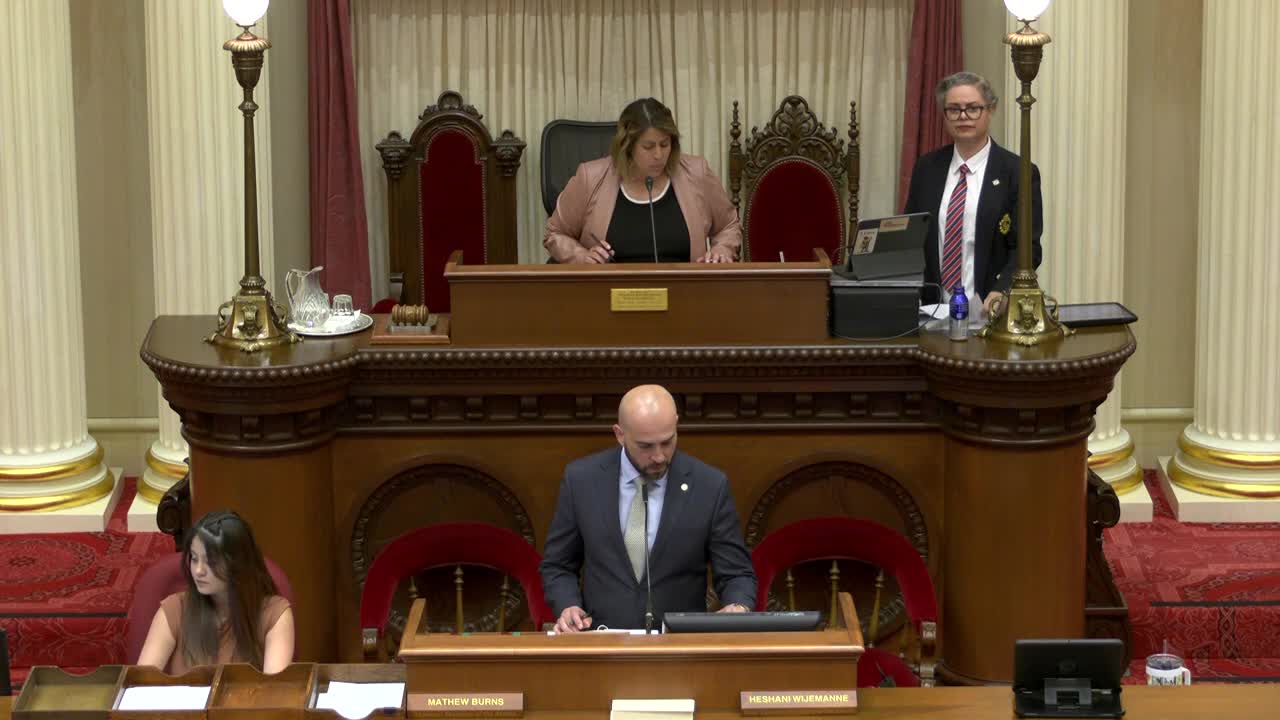
Bill Author
Bill Co-Author(s):