SB 795: Air pollution: gasoline vapor control systems: ethanol blends.
- Session Year: 2025-2026
- House: Senate
- Latest Version Date: 2026-09-19
Current Status:
Passed
(2026-09-19: Chaptered by Secretary of State. Chapter 345, Statutes of 2026.)
Introduced
In Committee
Awaiting First Chamber Vote
Passed First Chamber
In Committee
Awaiting Second Chamber Vote
Passed Second Chamber
Enacted
(1)Existing law requires the State Air Resources Board to adopt and implement motor vehicle fuel specifications for the control of air contaminants and sources of air pollution. Existing law authorizes blends of gasoline containing 10.5% to 15% ethanol by volume to be sold in the state for use as a transportation fuel until specified actions are taken by the California Environmental Policy Council and the state board.
Existing law requires the state board to adopt performance standards for gasoline vapor control systems during gasoline marketing operations and to certify any gasoline vapor control system that meets those performance standards and other specified requirements. Existing law also requires the State Fire Marshal, the Division of Occupational Safety and Health, and the Division of Measurement Standards to adopt rules and regulations on various aspects of gasoline vapor control systems and components and to certify compliance of those systems and components with their respective rules and regulations.
This bill would authorize, until January 1, 2029, vapor control systems and their components at gasoline dispensing facilities that are certified or approved by the state agencies listed above for use with gasoline and ethanol blends containing 10% ethanol to also be used with gasoline and ethanol blends containing more than 10% and up to 15% ethanol if the manufacturer of the equipment submits a statement of compatibility, signed under penalty of perjury, to each of those state agencies. The bill would require the service station dispensing an ethanol blend containing more than 10% and up to 15% ethanol to comply with certain labeling required by the State Fire Marshal. By expanding the crime of perjury, the bill would impose a state-mandated local program.
This bill would require, on or before December 31, 2026, the State Fire Marshal to adopt regulations governing the labeling and safe use of gasoline and ethanol blends containing more than 10% and up to 15% ethanol with vapor control systems and their components that have been authorized for use pursuant to the above-described provisions.
(2)Existing law generally regulates the storage of hazardous substances in underground storage tanks and requires underground storage tanks that are used to store hazardous substances to meet certain requirements. Existing law requires the State Water Resources Control Board and the State Air Resources Board to certify that the equipment that meets certain requirements for enhanced vapor recovery systems at gasoline dispensing facilities also meets the underground storage tank laws, as specified.
This bill would require, until January 1, 2029, that any enhanced vapor control system at gasoline dispensing facilities suitable for gasoline and ethanol blends containing 10% ethanol be deemed certified or approved for the use of gasoline and ethanol blends containing more than 10% ethanol and up to 15% ethanol if the manufacturer of the equipment submits the aforementioned statement of compatibility.
(3)Existing law establishes in the Department of Industrial Relations, the Occupational Safety and Health Standards Board and authorizes the board to adopt, amend, or repeal occupational safety and health standards and orders. Existing law imposes various requirements on occupational safety and health standards, including that those standards be at least as effective as federal standards, as specified.
This bill would require, until January 1, 2029, that any device used for dispensing flammable liquids with an ethanol content of up to 10% be deemed approved for purposes of occupational safety and health standards and orders for the use of gasoline and ethanol blends containing more than 10% ethanol and up to 15% ethanol if the manufacturer of the equipment submits the aforementioned statement of compatibility.
(4)The California Constitution requires the state to reimburse local agencies and school districts for certain costs mandated by the state. Statutory provisions establish procedures for making that reimbursement.
This bill would provide that no reimbursement is required by this act for a specified reason.
(1)Existing law requires the State Air Resources Board to adopt and implement motor vehicle fuel specifications for the control of air contaminants and sources of air pollution. Existing law authorizes blends of gasoline containing 10.5% to 15% ethanol by volume to be sold in the state for use as a transportation fuel until specified actions are taken by the California Environmental Policy Council and the state board.
Existing law requires the state board to adopt performance standards for gasoline vapor control systems during gasoline marketing operations and to certify any gasoline vapor control system that meets those performance standards and other specified requirements. Existing law also requires the State Fire Marshal, the Division of Occupational Safety and Health, and the Division of Measurement Standards to adopt rules and regulations on various aspects of gasoline vapor control systems and components and to certify compliance of those systems and components with their respective rules and regulations.
This bill would authorize, until January 1, 2029, vapor control systems and their components that are certified or approved by the state agencies listed above for use with gasoline and ethanol blends containing 10% ethanol to also be used with gasoline and ethanol blends containing more than 10% and up to 15% ethanol if the manufacturer of the equipment submits a statement of compatibility, signed under penalty of perjury, to each of those state agencies. The bill would require the service station dispensing an ethanol blend containing more than 10% and up to 15% ethanol to comply with certain labeling required by the State Fire Marshal. By expanding the crime of perjury, the bill would impose a state-mandated local program.
This bill would require, on or before December 31, 2026, the State Fire Marshal to adopt regulations governing the labeling and safe use of gasoline and ethanol blends containing more than 10% and up to 15% ethanol with vapor control systems and their components that have been authorized for use pursuant to the above-described provisions.
(2)Existing law generally regulates the storage of hazardous substances in underground storage tanks and requires underground storage tanks that are used to store hazardous substances to meet certain requirements. Existing law requires the State Water Resources Control Board and the State Air Resources Board to certify that the equipment that meets certain requirements for enhanced vapor recovery systems at gasoline dispensing facilities also meets the underground storage tank laws, as specified.
This bill would require, until January 1, 2029, that any enhanced vapor control system at gasoline dispensing facilities suitable for gasoline and ethanol blends containing 10% ethanol be deemed certified or approved for the use of gasoline and ethanol blends containing more than 10% ethanol and up to 15% ethanol if the manufacturer of the equipment submits the aforementioned statement of compatibility.
(3)Existing law establishes in the Department of Industrial Relations the Occupational Safety and Health Standards Board and authorizes the board to adopt, amend, or repeal occupational safety and health standards and orders. Existing law imposes various requirements on occupational safety and health standards, including that those standards be at least as effective as federal standards, as specified.
This bill would require, until January 1, 2029, that any device used for dispensing flammable liquids with an ethanol content of up to 10% be deemed approved for purposes of occupational safety and health standards and orders for the use of gasoline and ethanol blends containing more than 10% ethanol and up to 15% ethanol if the manufacturer of the equipment submits the aforementioned statement of compatibility.
(4)The California Constitution requires the state to reimburse local agencies and school districts for certain costs mandated by the state. Statutory provisions establish procedures for making that reimbursement.
This bill would provide that no reimbursement is required by this act for a specified reason.
Existing law establishes a workers compensation system, administered by the Administrative Director of the Division of Workers Compensation, to compensate an employee, as defined, for injuries sustained in the course of employment. Existing law provides that an injury may be either specific, occurring as the result of one incident or exposure that causes disability or need for medical treatment, or cumulative, occurring as repetitive mentally or physically traumatic activities extending over a period of time, the combined effect of which causes any disability or need for medical treatment.Existing law exempts an employee hired outside of this state and their employer from the occupational disease and cumulative injury provisions of this states workers compensation laws if (1) the employee is a professional athlete, defined for purposes of these provisions to include an athlete who is employed at the minor or major league level in the sport of baseball, basketball, football, ice hockey, or soccer, (2) that professional athlete is temporarily within this state doing work for their employer, and (3) the employer has furnished workers compensation insurance under the laws of the state other than California that covers the professional athletes employment while in this state, except as specified. Existing law deems a professional athlete to be temporarily within the state doing work for their employer if, during the 365 consecutive days immediately preceding the professional athletes last day of work for the employer within the state, the professional athlete performs less than 20% of their duty days, as defined, in the state.This bill would revise and recast the above provisions to state that the professional athlete and their employer are exempt from the workers compensation system for any claim that involves occupational disease or cumulative injury made by the athlete, if the athlete did not perform any work in California or the athlete was temporarily within the state working for their employer. The bill would state that a professional athlete is temporarily within this state if the professional athlete performs less than 20% of their duty days in California, during the last 365 consecutive days of their career. The bill would define a professional athlete as anyone who is paid to play baseball, flag or tackle football, basketball, hockey, soccer, lacrosse, softball, volleyball, rugby, or cricket.Existing law also exempts a professional athlete and their employer from the occupational disease or cumulative injury provisions of this states workers compensation laws when all of the professional athletes employers in their last year of work as a professional athlete are exempt from these provisions unless the professional athlete has, over the course of their professional athletic career, (1) worked for 2 or more seasons for a California-based team or teams, as defined, or worked 20% or more of their duty days in California or for a California-based team, and, (2) worked for fewer than 7 seasons for any team other than a California-based team. Existing law defines a California-based team to mean a team that plays a majority of its home games in California.This bill would revise these provisions to state that the workers compensation system does not apply to the claim of a professional athlete involving occupational disease or cumulative trauma if that athlete was exempt, as specified, and, during the last 365 days of their career as a professional athlete, was not hired as a professional athlete in California, unless over the course of their entire career as a professional athlete, (1) the athlete worked for 2 or more seasons for a California-based team or teams, as defined, or worked 20% or more of their duty days in California or for a California-based team, and (2) worked for fewer than 7 seasons for any team other than a California-based team during their professional athletic career. The bill would state that the teams principal place of business is not relevant to whether a team is based in California.The bill would provide that these changes apply to claims for benefits filed on or after September 30, 2026.Existing law establishes a workers compensation system, administered by the Administrative Director of the Division of Workers Compensation, to compensate an employee, as defined, for injuries sustained in the course of employment. Existing law provides that an injury may be either specific, occurring as the result of one incident or exposure that causes disability or need for medical treatment, or cumulative, occurring as repetitive mentally or physically traumatic activities extending over a period of time, the combined effect of which causes any disability or need for medical treatment.
Existing law exempts an employee hired outside of this state and their employer from the occupational disease and cumulative injury provisions of this states workers compensation laws if (1) the employee is a professional athlete, defined for purposes of these provisions to include an athlete who is employed at the minor or major league level in the sport of baseball, basketball, football, ice hockey, or soccer, (2) that professional athlete is temporarily within this state doing work for their employer, and (3) the employer has furnished workers compensation insurance under the laws of the state other than California that covers the professional athletes employment while in this state, except as specified. Existing law deems a professional athlete to be temporarily within the state doing work for their employer if, during the 365 consecutive days immediately preceding the professional athletes last day of work for the employer within the state, the professional athlete performs less than 20% of their duty days, as defined, in the state.
This bill would revise and recast the above provisions to state that the professional athlete and their employer are exempt from the workers compensation system for any claim that involves occupational disease or cumulative injury made by the athlete, if the athlete did not perform any work in California or the athlete was temporarily within the state working for their employer. The bill would state that a professional athlete is temporarily within this state if the professional athlete performs less than 20% of their duty days in California, during the last 365 consecutive days of their career. The bill would define a professional athlete as anyone who is paid to play baseball, flag or tackle football, basketball, hockey, soccer, lacrosse, softball, volleyball, rugby, or cricket.
Existing law also exempts a professional athlete and their employer from the occupational disease or cumulative injury provisions of this states workers compensation laws when all of the professional athletes employers in their last year of work as a professional athlete are exempt from these provisions unless the professional athlete has, over the course of their professional athletic career, (1) worked for 2 or more seasons for a California-based team or teams, as defined, or worked 20% or more of their duty days in California or for a California-based team, and, (2) worked for fewer than 7 seasons for any team other than a California-based team. Existing law provides that when these conditions are met, liability is determined against those employers who employed the employee during the year immediately preceding the date of injury or the last date on which the employee was employed in an occupation exposing the employee to the hazards of the occupational disease or cumulative injury, whichever occurs first. Existing law defines a California-based team to mean a team that plays a majority of its home games in California.
This bill would revise these provisions to state that the workers compensation system does not apply to the claim of a professional athlete involving occupational disease or cumulative trauma if that athlete was exempt, as specified, and, during the last 365 days of their career as a professional athlete, was not hired as a professional athlete in California, unless over the course of their entire career as a professional athlete, (1) the athlete worked for 2 or more seasons for a California-based team or teams, as defined, or worked 20% or more of their duty days in California, California or for a California-based team, and (2) worked for fewer than 7 seasons for any team other than a California-based team over the their entire career as a professional athlete. The bill would provide that liability is required to be determined against the last team for whom the professional athlete was regularly working in California or that hired the professional athlete in California. during their professional athletic career. The bill would state that the teams principal place of business is not relevant to whether a team is based in California.
The bill would provide that these changes apply to claims for benefits not subject to a final award, or a final order regarding application of this section, issued prior to May 11, 2026. filed on or after September 30, 2026.
Existing law establishes a workers compensation system, administered by the Administrative Director of the Division of Workers Compensation, to compensate an employee, as defined, for injuries sustained in the course of employment. Existing law provides that an injury may be either specific, occurring as the result of one incident or exposure that causes disability or need for medical treatment, or cumulative, occurring as repetitive mentally or physically traumatic activities extending over a period of time, the combined effect of which causes any disability or need for medical treatment.
Existing law exempts an employee hired outside of this state and their employer from the occupational disease and cumulative injury provisions of this states workers compensation laws if (1) the employee is a professional athlete, defined for purposes of these provisions to include an athlete who is employed at the minor or major league level in the sport of baseball, basketball, football, ice hockey, or soccer, (2) that professional athlete is temporarily within this state doing work for their employer, and (3) the employer has furnished workers compensation insurance under the laws of the state other than California that covers the professional athletes employment while in this state, except as specified. Existing law deems a professional athlete to be temporarily within the state doing work for their employer if, during the 365 consecutive days immediately preceding the professional athletes last day of work for the employer within the state, the professional athlete performs less than 20% of their duty days, as defined, in the state.
This bill would revise and recast the above provisions to state that the professional athlete and their employer are exempt from the workers compensation system for any claim that involves occupational disease or cumulative injury made by the athlete, if the athlete did not perform any work in California or the athlete was temporarily within the state working for their employer. The bill would state that a professional athlete is temporarily within this state if the professional athlete performs less than 20% of their duty days in California, during the last 365 consecutive days of their career. The bill would define a professional athlete as anyone who is paid to play baseball, flag or tackle football, basketball, hockey, soccer, lacrosse, softball, volleyball, rugby, or cricket.
Existing law also exempts a professional athlete and their employer from the occupational disease or cumulative injury provisions of this states workers compensation laws when all of the professional athletes employers in their last year of work as a professional athlete are exempt from these provisions unless the professional athlete has, over the course of their professional athletic career, (1) worked for 2 or more seasons for a California-based team or teams, as defined, or worked 20% or more of their duty days in California or for a California-based team, and, (2) worked for fewer than 7 seasons for any team other than a California-based team. Existing law provides that when these conditions are met, liability is determined against those employers who employed the employee during the year immediately preceding the date of injury or the last date on which the employee was employed in an occupation exposing the employee to the hazards of the occupational disease or cumulative injury, whichever occurs first. Existing law defines a California-based team to mean a team that plays a majority of its home games in California.
This bill would revise these provisions to state that the workers compensation system does not apply to the claim of a professional athlete involving occupational disease or cumulative trauma if that athlete was exempt, as specified, and, during the last 365 days of their career as a professional athlete, was not hired as a professional athlete in California, unless over the course of their entire career as a professional athlete, (1) the athlete worked for 2 or more seasons for a California-based team or teams, as defined, or worked 20% or more of their duty days in California, and (2) worked for fewer than 7 seasons for any team other than a California-based team over the their entire career as a professional athlete. The bill would provide that liability is required to be determined against the last team for whom the professional athlete was regularly working in California or that hired the professional athlete in California. The bill would state that the teams principal place of business is not relevant to whether a team is based in California.
The bill would provide that these changes apply to claims for benefits not subject to a final award, or a final order regarding application of this section, issued prior to May 11, 2026.
The Horse Racing Law authorizes a thoroughbred racing association or fair to distribute the audiovisual signal and accept wagers on the results of out-of-state thoroughbred races conducted in the United States during the calendar period the association or fair is conducting a race meeting, including days on which there is no live racing being conducted by the association or fair, without the consent of the organization that represents horsemen and horsewomen participating in the race meeting and without regard to the amount of purses. Under that law, the total number of thoroughbred races imported by associations or fairs on a statewide basis under these provisions is prohibited from exceeding 75 races per day on days when live thoroughbred or fair racing is being conducted in the state, with the exception of prescribed races.This bill would exempt from the 75 imported race per day limitation races that are part of the race card of the Delaware Handicap.The Horse Racing Law authorizes a thoroughbred racing association or fair to distribute the audiovisual signal and accept wagers on the results of out-of-state thoroughbred races conducted in the United States during the calendar period the association or fair is conducting a race meeting, including days on which there is no live racing being conducted by the association or fair, without the consent of the organization that represents horsemen and horsewomen participating in the race meeting and without regard to the amount of purses. Under that law, the total number of thoroughbred races imported by associations or fairs on a statewide basis under these provisions is prohibited from exceeding 75 races per day on days when live thoroughbred or fair racing is being conducted in the state, with the exception of prescribed races.
This bill would exempt from the 75 imported race per day limitation races that are part of the race card of the Delaware Handicap.
By Executive Order No. N-82-20, Governor Gavin Newsom directed the Natural Resources Agency to combat the biodiversity and climate crises by, among other things, establishing the California Biodiversity Collaborative and conserving at least 30% of the states lands and coastal waters by 2030. Existing law requires the Secretary of the Natural Resources Agency to prepare and submit, on or before March 31, 2024, and annually thereafter, a report to the Legislature on the progress made in the prior calendar year toward achieving the goal to conserve 30% of Californias lands and coastal waters by 2030. Existing law provides that it is the goal of the state to conserve at least 30% of Californias lands and coastal waters by 2030, known as the 30x30 goal.This bill would require all state agencies, including their departments, boards, offices, commissions, and conservancies, to consider the 30x30 goal when adopting, revising, or establishing plans, policies, or regulations, and shall ensure, to the extent feasible, that the plan, policy, or regulation is not inconsistent with the 30x30 goal.By Executive Order No. N-82-20, Governor Gavin Newsom directed the Natural Resources Agency to combat the biodiversity and climate crises by, among other things, establishing the California Biodiversity Collaborative and conserving at least 30% of the states lands and coastal waters by 2030. Existing law requires the Secretary of the Natural Resources Agency to prepare and submit, on or before March 31, 2024, and annually thereafter, a report to the Legislature on the progress made in the prior calendar year toward achieving the goal to conserve 30% of Californias lands and coastal waters by 2030. Existing law provides that it is the goal of the state to conserve at least 30% of Californias lands and coastal waters by 2030, known as the 30x30 goal.
This bill would require all state agencies, including their departments, boards, offices, commissions, and conservancies, to consider the 30x30 goal when adopting, revising, or establishing plans, policies, or regulations, and shall ensure, to the extent feasible, that the plan, policy, or regulation is not inconsistent with the 30x30 goal.
(a)Notwithstanding any requirement of this chapter, any enhanced vapor control system at gasoline dispensing facilities suitable for gasoline blends and ethanol blends containing 10 percent ethanol, for which the manufacturer of the system has submitted a statement of compatibility pursuant to subdivision (a) of Section 41954.1, shall be deemed certified for the use of gasoline and ethanol blends containing more than 10 percent and up to 15 percent ethanol without the need for certification pursuant to this section by the board or the State Air Resources Board.
(b)This section shall remain in effect only until January 1, 2029, and as of that date is repealed.
SEC. 2.Section 41954.1 is added to the Health and Safety Code, to read:41954.1.(a)Notwithstanding any other law, all vapor control systems and their components at gasoline dispensing facilities that have been certified and approved pursuant to this article by the state board, the Division of Occupational Safety and Health, the Division of Measurement Standards, or the State Fire Marshal for use with gasoline and ethanol blends containing 10 percent ethanol shall be deemed certified or approved, as applicable, for use with gasoline and ethanol blends containing more than 10 percent and up to 15 percent ethanol, provided that the manufacturer of the equipment has submitted to each of those state agencies a statement of compatibility, signed under penalty of perjury, attesting that the manufacturer has determined that the equipment is safe to use with those blends. The state board shall compile and publish on its internet website a list of manufacturers who have submitted a statement of compatibility for their systems, equipment, or components.
(b)(1)A service station dispensing a gasoline and ethanol blend containing more than 10 percent and up to 15 percent ethanol shall comply with the labeling requirements prescribed by the State Fire Marshal pursuant to Section 41954.2.
(2)Paragraph (1) does not apply to systems, or components of those systems, certified by the State Fire Marshal pursuant to Section 41956.
(c)A gasoline dispensing facility that meets the requirements of subdivisions (a) and (b) shall not be required to obtain a new or amended certification, listing, permit, or approval from any state agency solely on the basis of dispensing gasoline and ethanol blends containing more than 10 percent and up to 15 percent ethanol.
(d)This section does not preclude a manufacturer from seeking certification or approval for equipment for use with gasoline and ethanol blends containing more than 10 percent ethanol through another process established by law.
(e)This section shall remain in effect only until January 1, 2029, and as of that date is repealed.
SEC. 3.Section 41954.2 is added to the Health and Safety Code, to read:41954.2.(a)(1)On or before December 31, 2026, the State Fire Marshal shall adopt regulations governing the labeling and safe use of gasoline and ethanol blends containing more than 10 percent and up to 15 percent ethanol with vapor control systems and their components that have been deemed certified or approved pursuant to subdivision (a) of Section 41954.1.
(2)Regulations adopted pursuant to this section shall be consistent with federal labeling standards in effect at the time of adoption.
(b)(1)Regulations adopted pursuant to this section shall be adopted by the Office of the State Fire Marshal in accordance with Chapter 3.5 (commencing with Section 11340) of Part 1 of Division 3 of Title 2 of the Government Code.
(2)The initial adoption of regulations pursuant to this section shall be deemed to be an emergency and considered by the Office of Administrative Law as necessary for the immediate preservation of the public peace, health, safety, and general welfare. Notwithstanding any other law, the emergency regulations adopted pursuant to this section shall remain in effect until amended by the State Fire Marshal.
(3)Regulations adopted pursuant to this section, or any amendments to those regulations, shall not be considered major regulations as defined in Section 11342.548 of the Government Code.
(4)Regulations adopted pursuant to this section, or any amendments to those regulations, are exempt from the requirements of Section 11346.3 of the Government Code.
(c)(1)The State Fire Marshal shall review the California Fire Code (Part 9 of Title 24 of the California Code of Regulations) to ensure consistency with this section and shall propose any necessary conforming changes to the California Building Standards Commission, which shall adopt those conforming changes as emergency regulations.
(2)Regulations adopted by the California Building Standards Commission pursuant to paragraph (1) are exempt from the requirements of Sections 18929.1, 18930, and 18942.
SEC. 4.Section 41958.5 is added to the Health and Safety Code, to read:41958.5.(a)Section 41958 does not apply to systems or their components for which a manufacturer has submitted a statement of compatibility pursuant to subdivision (a) of Section 41954.1, unless the manufacturer has voluntarily certified the system or component with the State Fire Marshal.
(b)This section shall remain in effect only until January 1, 2029, and as of that date is repealed.
SEC. 5.Section 147.7 is added to the Labor Code, immediately following Section 147.6, to read:147.7.(a)Notwithstanding any requirement of this chapter, any device used for dispensing flammable liquids with an ethanol content of up to 10 percent, for which a manufacturer of the equipment has submitted a statement of compatibility pursuant to subdivision (a) of Section 41954.1 of the Health and Safety Code, shall be deemed approved for purposes of this chapter for use with gasoline and ethanol blends containing more than 10 percent and up to 15 percent ethanol.
(b)This section shall remain in effect only until January 1, 2029, and as of that date is repealed.
SEC. 6.No reimbursement is required by this act pursuant to Section 6 of Article XIIIB of the California Constitution because the only costs that may be incurred by a local agency or school district will be incurred because this act creates a new crime or infraction, eliminates a crime or infraction, or changes the penalty for a crime or infraction, within the meaning of Section 17556 of the Government Code, or changes the definition of a crime within the meaning of Section 6 of Article XIIIB of the California Constitution.
SECTION 1.Section 3600.5 of the Labor Code is amended to read:3600.5.(a)If an employee who has been hired or is regularly working in the state receives personal injury by accident arising out of and in the course of employment outside of this state, the employee or their dependents, in the case of the employees death, shall be entitled to compensation according to the law of this state.(b)(1)An employee who has been hired outside of this state and their employer shall be exempted from the provisions of this division while the employee is temporarily within this state doing work for their employer if the employer has furnished workers compensation insurance coverage under the workers compensation insurance or similar laws of a state other than California, so as to cover the employees work while in this state if both of the following apply:(A)The extraterritorial provisions of this division are recognized in the other state.(B)The employers and employees who are covered in this state are likewise exempted from the application of the workers compensation insurance or similar laws of the other state.(2)In any case in which paragraph (1) is satisfied, the benefits under the workers compensation insurance or similar laws of the other state, and other remedies under those laws, shall be the exclusive remedy against the employer for any injury, whether resulting in death or not, received by the employee while working for the employer in this state.(c)(1)Notwithstanding subdivision (a) or (b), or any other law, and except as provided in subdivision (d), the professional athlete and their employer are exempt from this division for any claim that involves occupational disease or cumulative injury made by a professional athlete if the professional athlete did not perform any work in California or was temporarily within this state doing work for their employer.(2)For purposes of this subdivision, a professional athlete is temporarily within this state if the professional athlete performs less than 20 percent of their duty days in California during the 365 consecutive days immediately preceding the professional athletes last day of work for the employer within the state.(d)(1)Notwithstanding subdivision (a) or (b), or any other law, the professional athlete and their employer are exempt from this division for any claim that involves occupational disease or cumulative injury made by a professional athlete if the professional athlete was exempt pursuant to subdivision (c) or any other law and was not hired in California during the last 365 days of their career as a professional athlete, unless both of the following conditions are satisfied:(A)The professional athlete has, over the course of their professional athletic career, worked for two or more seasons for a California-based team or teams, or the professional athlete has, over the course of their professional athletic career, worked 20 percent or more of their duty days either in California or for a California-based team. The percentage of a professional athletic career worked either within California or for a California-based team shall be determined solely by taking the number of duty days the professional athlete worked for a California-based team or teams, plus the number of duty days the professional athlete worked as a professional athlete in California for any team other than a California-based team, and dividing that number by the total number of duty days the professional athlete was employed anywhere as a professional athlete.(B)The professional athlete has, over the course of their professional athletic career, worked for fewer than seven seasons for any team or teams other than a California-based team. (2)When subparagraphs (A) and (B) of paragraph (1) are both satisfied, liability for the professional athletes occupational disease or cumulative injury shall be determined in accordance with Section 5500.5.(e)An employer of professional athletes, other than a California-based team, shall be exempt from Article 4 (commencing with Section 3550) of Chapter 2, and subdivisions (a) to (c), inclusive, of Section 5401.(f)For purposes of this section, the following definitions apply to claims of a professional athlete:(1)California-based team means a team that plays a majority of its home games at a designated venue in California. An employers principal place of business is not relevant to whether a team is based in California.(2)Duty day means a day in which any services are performed by a professional athlete under the direction and control of their employer pursuant to a player contract.(3)Hired means the date that the professional athlete executes their player contract and is employed by the team.(4)Professional athlete means anyone paid to participate in or play the sport of baseball, flag or tackle football, basketball, hockey, soccer, lacrosse, softball, volleyball, rugby, or cricket.(5)The term season means the period from the date of the first preseason team activity for that contract year, through the date of the last game the professional athletes team played during the same contract year.(g)The amendments made to this section by the act adding this subdivision apply to all claims for benefits pursuant to this division filed on or after September 15, 2013. The amendments made to this section by the act adding this subdivision shall not constitute good cause to reopen any final decision, order, or award.(h)If any provision of this section or the application thereof to any person or circumstances is held invalid, that invalidity shall not affect other provisions or applications of this section that can be given effect without the invalid provision or application, and to this end the provisions of this section are severable.(i)This section applies to any claim for benefits pursuant to this division filed on or after September 30, 2026. The amendments made to this section by the act adding this subdivision shall not constitute good cause to reopen any final decision, order, or award.(a)If an employee who has been hired or is regularly working in the state receives personal injury by accident arising out of and in the course of employment outside of this state, the employee or their dependents, in the case of the employees death, shall be entitled to compensation according to the law of this state.
(b)(1)An employee who has been hired outside of this state and their employer shall be exempted from the provisions of this division while the employee is temporarily within this state doing work for their employer if the employer has furnished workers compensation insurance coverage under the workers compensation insurance or similar laws of a state other than California, so as to cover the employees work while in this state if both of the following apply:
(A)The extraterritorial provisions of this division are recognized in the other state.
(B)The employers and employees who are covered in this state are likewise exempted from the application of the workers compensation insurance or similar laws of the other state.
(2)In any case in which paragraph (1) is satisfied, the benefits under the workers compensation insurance or similar laws of the other state, and other remedies under those laws, shall be the exclusive remedy against the employer for any injury, whether resulting in death or not, received by the employee while working for the employer in this state.
(c)(1)Notwithstanding subdivision (a) or (b), or any other law, and except as provided in subdivision (d), the professional athlete and their employer are exempt from this division for any claim that involves occupational disease or cumulative injury made by a professional athlete if the professional athlete did not perform any work in California or was temporarily within this state doing work for their employer.
(2)For purposes of this subdivision, a professional athlete is temporarily within this state if the professional athlete performs less than 20 percent of their duty days in California during the last 365 consecutive days immediately preceding the professional athletes last day of work for the employer within the state.
(d)(1)Notwithstanding subdivision (a) or (b), or any other law, this division does not apply to a claim that involves occupational disease or cumulative injury of a professional athlete the professional athlete and their employer are exempt from this division for any claim that involves occupational disease or cumulative injury made by a professional athlete if the professional athlete was exempt pursuant to subdivision (c) or any other law and was not hired in California during the last 365 days of their career as a professional athlete, unless both of the following conditions are satisfied:
(A)The professional athlete has, over the course of their entire career as a professional athlete, professional athletic career, worked for two or more seasons for a California-based team or teams, or the professional athlete has, over the course of their professional athletic career, worked 20 percent or more of their duty days, over their entire career as a professional athlete, in California. days either in California or for a California-based team. The percentage of a professional athletic career worked either within California or for a California-based team shall be determined solely by taking the number of duty days the professional athlete worked for a California-based team or teams, plus the number of duty days the professional athlete worked as a professional athlete in California for any team other than a California-based team, and dividing that number by the total number of duty days the professional athlete was employed anywhere as a professional athlete.
(B)The professional athlete has, over the course of their entire career as a professional athlete, professional athletic career, worked for fewer than seven seasons for any team or teams other than a California-based team.
(2)When subparagraphs (A) and (B) of paragraph (1) are both satisfied, liability shall be determined against the last team for whom the professional athlete was regularly working in California or that hired the professional athlete in California. for the professional athletes occupational disease or cumulative injury shall be determined in accordance with Section 5500.5.
(e)An employer of professional athletes, other than a California-based team, shall be exempt from Article 4 (commencing with Section 3550) of Chapter 2, and subdivisions (a) to (c), inclusive, of Section 5401.
(f)For purposes of this section, the following definitions apply to claims of a professional athlete:
(1)California-based team means a team that plays a majority of its home games at a designated venue in California. An employers principal place of business is not relevant to whether a team is based in California.
(2)Duty day means a day in which any services are performed by a professional athlete under the direction and control of their employer pursuant to a player contract.
(3)Hired means the date that the professional athlete executes their player contract and is employed by the team.
(4)Professional athlete means anyone paid to participate in or play the sport of baseball, flag or tackle football, basketball, hockey, soccer, lacrosse, softball, volleyball, rugby, or cricket.
(5)The term season means the period from the date of the first preseason team activity for that contract year, through the date of the last game the professional athletes team played during the same contract year.
(g)The amendments made to this section by the act adding this subdivision apply to all claims for benefits pursuant to this division filed on or after September 15, 2013. The amendments made to this section by the act adding this subdivision shall not constitute good cause to reopen any final decision, order, or award.
(h)If any provision of this section or the application thereof to any person or circumstances is held invalid, that invalidity shall not affect other provisions or applications of this section that can be given effect without the invalid provision or application, and to this end the provisions of this section are severable.
(i)This section applies to any claim for benefits not subject to a final award, or a final order regarding application of this section, issued on or before May 11, 2026. pursuant to this division filed on or after September 30, 2026. The amendments made to this section by the act adding this subdivision shall not constitute good cause to reopen any final decision, order, or award.
(a)If an employee who has been hired or is regularly working in the state receives personal injury by accident arising out of and in the course of employment outside of this state, he or she, or his or her the employee or their dependents, in the case of his or her the employees death, shall be entitled to compensation according to the law of this state.
(b)(1)An employee who has been hired outside of this state and his or her their employer shall be exempted from the provisions of this division while the employee is temporarily within this state doing work for his or her their employer if the employer has furnished workers compensation insurance coverage under the workers compensation insurance or similar laws of a state other than California, so as to cover the employees work while in this state if both of the following apply:
(A)The extraterritorial provisions of this division are recognized in the other state.
(B)The employers and employees who are covered in this state are likewise exempted from the application of the workers compensation insurance or similar laws of the other state.
(2)In any case in which paragraph (1) is satisfied, the benefits under the workers compensation insurance or similar laws of the other state, and other remedies under those laws, shall be the exclusive remedy against the employer for any injury, whether resulting in death or not, received by the employee while working for the employer in this state.
(c)(1)With respect to an occupational disease or cumulative injury, a professional athlete who has been hired outside of this state and his or her employer shall be exempted from the provisions of this division while the professional athlete is temporarily within this state doing work for his or her employer if both of the following are satisfied:(A)The employer has furnished workers compensation insurance coverage or its equivalent under the laws of a state other than California.(B)The employers workers compensation insurance or its equivalent covers the professional athletes work while in this state.(2)In any case in which paragraph (1) is satisfied, the benefits under the workers compensation insurance or similar laws of the other state, and other remedies under those laws, shall be the exclusive remedy against the employer for any occupational disease or cumulative injury, whether resulting in death or not, received by the employee while working for the employer in this state.(3)A professional athlete shall be deemed, for purposes of this subdivision, to be temporarily within this state doing work for his or her employer if, during the 365 consecutive days immediately preceding the professional athletes last day of work for the employer within the state, the professional athlete performs less than 20 percent of his or her duty days in California during that 365-day period in California.(d)(1)With respect to an occupational disease or cumulative injury, a professional athlete and his or her employer shall be exempt from this division when all of the professional athletes employers in his or her last year of work as a professional athlete are exempt from this division pursuant to subdivision (c) or any other law, unless both of the following conditions are satisfied:(c)(1)Notwithstanding subdivision (a) or (b), or any other law, and except as provided in subdivision (d), the professional athlete and their employer are exempt from this division for any claim that involves occupational disease or cumulative injury made by a professional athlete if the professional athlete did not perform any work in California or was temporarily within this state doing work for their employer.
(2)For purposes of this subdivision, a professional athlete is temporarily within this state if the professional athlete performs less than 20 percent of their duty days in California during the last 365 consecutive days immediately preceding the professional athletes last day of work for the employer within the state.
(d)(1)Notwithstanding subdivision (a) or (b), or any other law, this division does not apply to a claim that involves occupational disease or cumulative injury of a professional athlete if the professional athlete was exempt pursuant to subdivision (c) or any other law and was not hired in California during the last 365 days of their career as a professional athlete, unless both of the following conditions are satisfied:
(A)The professional athlete has, over the course of his or her professional athletic career, their entire career as a professional athlete, worked for two or more seasons for a California-based team or teams, or the professional athlete has, over the course of his or her professional athletic career, worked 20 percent or more of his or her duty days either in California or for a California-based team. The percentage of a professional athletic career worked either within California or for a California-based team shall be determined solely by taking the number of duty days the professional athlete worked for a California-based team or teams, plus the number of duty days the professional athlete worked as a professional athlete in California for any team other than a California-based team, and dividing that number by the total number of duty days the professional athlete was employed anywhere as a professional athlete. worked 20 percent or more of their duty days, over their entire career as a professional athlete, in California.
(B)The professional athlete has, over the course of his or her professional athletic career, their entire career as a professional athlete, worked for fewer than seven seasons for any team or teams other than a California-based team or teams as defined in this section. team.
(2)When subparagraphs (A) and (B) of paragraph (1) are both satisfied, liability for the professional athletes occupational disease or cumulative injury shall be determined in accordance with Section 5500.5. shall be determined against the last team for whom the professional athlete was regularly working in California or that hired the professional athlete in California.
(e)An employer of professional athletes, other than a California-based team, shall be exempt from Article 4 (commencing with Section 3550) of Chapter 2, and subdivisions (a) to (c), inclusive, of Section 5401.
(f)For purposes of this section, a certificate from the duly authorized officer of the appeals board or similar department of another state certifying that the employer of the other state is insured in that state and has provided extraterritorial coverage insuring his or her employees while working within this state shall be prima facie evidence that the employer carries workers compensation insurance.(g)(f)For purposes of this section, the following definitions apply: apply to claims of a professional athlete:
(1)The term professional athlete means an athlete who is employed at either a minor or major league level in the sport of baseball, basketball, football, ice hockey, or soccer.(2)The term California-based(1)California-based team means a team that plays a majority of its home games in California. at a designated venue in California. An employers principal place of business is not relevant to whether a team is based in California.
(3)The term duty day(2)Duty day means a day in which any services are performed by a professional athlete under the direction and control of his or her their employer pursuant to a player contract.
(3)Hired means the date that the professional athlete executes their player contract and is employed by the team.
(4)Professional athlete means anyone paid to participate in or play the sport of baseball, flag or tackle football, basketball, hockey, soccer, lacrosse, softball, volleyball, rugby, or cricket.
(4)(5)The term season means the period from the date of the first preseason team activity for that contract year, through the date of the last game the professional athletes team played game during the same contract year.
(h)(g)The amendments made to this section by the act adding this subdivision apply to all claims for benefits pursuant to this division filed on or after September 15, 2013. The amendments made to this section by the act adding this subdivision shall not constitute good cause to reopen any final decision, order, or award.
(i)(h)If any provision of this section or the application thereof to any person or circumstances is held invalid, that invalidity shall not affect other provisions or applications of this section that can be given effect without the invalid provision or application, and to this end the provisions of this section are severable.
(i)This section applies to any claim for benefits not subject to a final award, or a final order regarding application of this section, issued on or before May 11, 2026.
SECTION 1.Section 19596.2 of the Business and Professions Code is amended to read:19596.2.(a)Notwithstanding any other law and except as provided in Section 19596.4, a thoroughbred racing association or fair may distribute the audiovisual signal and accept wagers on the results of out-of-state thoroughbred races conducted in the United States during the calendar period the association or fair is conducting a race meeting, including days on which there is no live racing being conducted by the association or fair, without the consent of the organization that represents horsemen and horsewomen participating in the race meeting and without regard to the amount of purses. Further, the total number of thoroughbred races imported by associations or fairs on a statewide basis under this section shall not exceed 75 per day on days when live thoroughbred or fair racing is being conducted in the state. The limitation of 75 imported races per day does not apply to any of the following:(1)Races imported for wagering purposes pursuant to subdivision (c).(2)Races imported that are part of the race card of the Kentucky Derby, the Kentucky Oaks, the Preakness Stakes, the Belmont Stakes, the Jockey Club Gold Cup, the Travers Stakes, the Pegasus World Cup, the Arlington Million, the Breeders Cup World Championship, the Dubai World Cup, the Arkansas Derby, the Delaware Handicap, the Apple Blossom Handicap, the Blue Grass Stakes, the Whitney Stakes, or the Haskell Invitational.(3)Races imported into the northern zone when there is no live thoroughbred or fair racing being conducted in the northern zone.(4)Races imported into the combined central and southern zones when there is no live thoroughbred or fair racing being conducted in the combined central and southern zones.(b)Any thoroughbred association or fair accepting wagers pursuant to subdivision (a) shall conduct the wagering in accordance with the applicable provisions of Sections 19601, 19616, 19616.1, and 19616.2.(c)Except as provided in subdivision (d), a thoroughbred association or fair shall not accept wagers pursuant to this section on out-of-state races commencing after 7 p.m., Pacific standard time, without the consent of the harness or quarter horse racing association that is then conducting a live racing meeting in the County of Orange or the County of Sacramento.(d)When the total number of thoroughbred races imported by associations or fairs on a statewide basis under this section is between 51 and 75 on a day when live thoroughbred or fair racing is being conducted in the state, a thoroughbred association or fair shall not accept wagers pursuant to this section on out-of-state races commencing after 5 p.m., Pacific standard time, without the consent of the harness and quarter horse racing association that is then conducting a live racing meeting in the County of Orange or the County of Sacramento.(a)Notwithstanding any other law and except as provided in Section 19596.4, a thoroughbred racing association or fair may distribute the audiovisual signal and accept wagers on the results of out-of-state thoroughbred races conducted in the United States during the calendar period the association or fair is conducting a race meeting, including days on which there is no live racing being conducted by the association or fair, without the consent of the organization that represents horsemen and horsewomen participating in the race meeting and without regard to the amount of purses. Further, the total number of thoroughbred races imported by associations or fairs on a statewide basis under this section shall not exceed 75 per day on days when live thoroughbred or fair racing is being conducted in the state. The limitation of 75 imported races per day does not apply to any of the following:
(1)Races imported for wagering purposes pursuant to subdivision (c).
(2)Races imported that are part of the race card of the Kentucky Derby, the Kentucky Oaks, the Preakness Stakes, the Belmont Stakes, the Jockey Club Gold Cup, the Travers Stakes, the Pegasus World Cup, the Arlington Million, the Breeders Cup World Championship, the Dubai World Cup, the Arkansas Derby, the Delaware Handicap, the Apple Blossom Handicap, the Blue Grass Stakes, the Whitney Stakes, or the Haskell Invitational.
(3)Races imported into the northern zone when there is no live thoroughbred or fair racing being conducted in the northern zone.
(4)Races imported into the combined central and southern zones when there is no live thoroughbred or fair racing being conducted in the combined central and southern zones.
(b)Any thoroughbred association or fair accepting wagers pursuant to subdivision (a) shall conduct the wagering in accordance with the applicable provisions of Sections 19601, 19616, 19616.1, and 19616.2.
(c)Except as provided in subdivision (d), a thoroughbred association or fair shall not accept wagers pursuant to this section on out-of-state races commencing after 7 p.m., Pacific standard time, without the consent of the harness or quarter horse racing association that is then conducting a live racing meeting in the County of Orange or the County of Sacramento.
(d)When the total number of thoroughbred races imported by associations or fairs on a statewide basis under this section is between 51 and 75 on a day when live thoroughbred or fair racing is being conducted in the state, a thoroughbred association or fair shall not accept wagers pursuant to this section on out-of-state races commencing after 5 p.m., Pacific standard time, without the consent of the harness and quarter horse racing association that is then conducting a live racing meeting in the County of Orange or the County of Sacramento.
SECTION 1.Section 71450 of the Public Resources Code is amended to read:71450.(a)For the purposes of this part, the following definitions apply:(1)30x30 goal means the goal to conserve 30 percent of Californias lands and coastal waters by 2030 established in subdivision (b) and by Executive Order No. N-82-20.(2)Pathways to 30x30 Report means the report entitled Pathways to 30x30 California: Accelerating Conservation of Californias Nature that was issued by the Natural Resources Agency on April 22, 2022.(b)It is the goal of the state to conserve at least 30 percent of Californias lands and coastal waters by 2030.(c)All state agencies, including their departments, boards, offices, commissions, and conservancies, shall consider the 30x30 goal when adopting, revising, or establishing plans, policies, or regulations, and shall ensure, to the extent feasible, that the plan, policy, or regulation is not inconsistent with the 30x30 goal.(a)For the purposes of this part, the following definitions apply:
(1)30x30 goal means the goal to conserve 30 percent of Californias lands and coastal waters by 2030 established in subdivision (b) and by Executive Order No. N-82-20.
(2)Pathways to 30x30 Report means the report entitled Pathways to 30x30 California: Accelerating Conservation of Californias Nature that was issued by the Natural Resources Agency on April 22, 2022.
(b)It is the goal of the state to conserve at least 30 percent of Californias lands and coastal waters by 2030.
(c)All state agencies, including their departments, boards, offices, commissions, and conservancies, shall consider the 30x30 goal when adopting, revising, or establishing plans, policies, or regulations, and shall ensure, to the extent feasible, that the plan, policy, or regulation is not inconsistent with the 30x30 goal.
|
Date
|
Status
|
|---|---|
| Sep 19, 2026 | Chaptered by Secretary of State. Chapter 345, Statutes of 2026. |
| Sep 19, 2026 | Approved by the Governor. |
| Sep 9, 2026 | Enrolled and presented to the Governor at 2 p.m. |
| Aug 31, 2026 | Assembly amendments concurred in. (Ayes 34. Noes 0.) Ordered to engrossing and enrolling. |
| Aug 31, 2026 | Unanimous consent granted to take up without reference to file. |
| Aug 31, 2026 | In Senate. Concurrence in Assembly amendments pending. |
| Aug 31, 2026 | Read third time. Passed. (Ayes 74. Noes 0. Page 7049.) Ordered to the Senate. |
| Aug 31, 2026 | Read third time. Passed. Ordered to the Senate. |
| Aug 31, 2026 | Assembly Rule 63 suspended. |
| Aug 31, 2026 | Read second time. Ordered to third reading. |
| Aug 31, 2026 | From committee: Do pass. (Ayes 7. Noes 0.) (August 31). |
| Aug 30, 2026 | Joint Rule 61(b) suspended. (Ayes 73. Noes 0. Page 6871.) |
| Aug 30, 2026 | Joint Rule 62(a) suspended. |
| Aug 30, 2026 | Re-referred to Com. on E.M. pursuant to Assembly Rule 96. |
| Aug 30, 2026 | Joint Rule 61 suspended. |
| Aug 28, 2026 | From committee with author's amendments. Read second time and amended. Re-referred to Com. on INS. |
| Jun 24, 2026 | June 24 set for first hearing canceled at the request of author. |
| Jun 18, 2026 | From committee with author's amendments. Read second time and amended. Re-referred to Com. on INS. |
| Jun 10, 2026 | June 17 hearing postponed by committee. |
| May 18, 2026 | From committee with author's amendments. Read second time and amended. Re-referred to Com. on INS. |
| May 18, 2026 | Referred to Com. on INS. |
| Jan 27, 2026 | In Assembly. Read first time. Held at Desk. |
| Jan 27, 2026 | Read third time. Passed. (Ayes 40. Noes 0. Page 3295.) Ordered to the Assembly. |
| Jan 15, 2026 | Read second time. Ordered to third reading. |
| Jan 14, 2026 | Ordered to second reading. |
| Jan 14, 2026 | Withdrawn from committee. |
| Jan 13, 2026 | From committee: Do pass and re-refer to Com. on N.R. & W. with recommendation: To consent calendar. (Ayes 14. Noes 0. Page 3213.) (January 13). Re-referred to Com. on N.R. & W. |
| Jan 6, 2026 | Set for hearing January 13. |
| Jan 5, 2026 | From committee with author's amendments. Read second time and amended. Re-referred to Com. on G.O. |
| Mar 12, 2025 | Referred to Coms. on G.O. and N.R. & W. |
| Feb 24, 2025 | Read first time. |
| Feb 24, 2025 | From printer. May be acted upon on or after March 24. |
| Feb 21, 2025 | Introduced. To Com. on RLS. for assignment. To print. |
|
Date
|
Description
|
Location
|
Votes
|
|
|---|---|---|---|---|
| Aug 31, 2026 | W/O REF. TO FILE SB795 Archuleta | Senate Floor |
Passed |
|
| Aug 31, 2026 | SB 795 Archuleta Senate Third Reading By ALVAREZ | Assembly Floor |
Passed |
|
| Aug 31, 2026 | Do pass. | Assembly Standing Committee on Emergency Management |
Passed |
|
| Jan 27, 2026 | Senate 3rd Reading SB795 Richardson | Senate Floor |
Passed |
|
| Jan 13, 2026 | Do pass, but first be re-referred to the Committee on [Natural Resources and Water] with the recommendation: To Consent Calendar | Senate Standing Committee on Governmental Organization |
Passed |
This list shows positions taken on this bill by organizations on the date displayed, which is linked to the original source.
Positions by individuals are not included.
|
Organization
|
Position
|
Date
|
|---|---|---|
| Aemetis | ** Support | |
| Aemitis, Inc | ** Support | |
| Alto Ingredients | ** Support | |
| CA Association of County Veterans Service Officers | ** Support | |
| Calgren | ** Support | |
| California Ambulance Association | ** Support | |
| California Chamber Of Commerce | ** Support | |
| California Delivery Association | ** Support | |
| California Farm Bureau Federation | ** Support | |
| California Fuels + Convenience Alliance | ** Support | |
| California Hispanic Chamber Of Commerce | ** Support | |
| California Multicultural Business Alliance | ** Support | |
| CFTA | ** Support | |
| CMTA | ** Support | |
| Growth Energy | ** Support | |
| League Of California Cities | ** Support | |
| Los Amigos de la Comunidad | ** Support | |
| Los Amigos La Comunidad, Inc | ** Support | |
| Love’s | ** Support | |
| Love’s Travel Stops | ** Support | |
| Marine Corps League, Department of California | ** Support | |
| Musket Corp | ** Support | |
| National Federation of Independent Businesses | ** Support | |
| National Federation of Independent Businesses (NFIB) | ** Support | |
| Pearson Fuels | ** Support | |
| Pelican Renewables | ** Support | |
| Poet | ** Support | |
| Pratt Energy | ** Support | |
| Renewable Fuels Association | ** Support | |
| San Diego Chamber of Commerce | ** Support | |
| Vietnam Veterans Of America, California State Council | ** Support |
SENATE RULES COMMITTEE Office of Senate Floor Analyses (916) 651-4171 | SB 795 |
UNFINISHED BUSINESS
Bill No: SB 795
Author: Archuleta (D), et al.
Amended: 8/28/26
Vote: 21
SENATE GOVERNMENTAL ORG. COMMITTEE: 14-0, 1/13/26
AYES: Padilla, Valladares, Archuleta, Ashby, Blakespear, Cervantes, Dahle, Jones, Ochoa Bogh, Richardson, Rubio, Smallwood-Cuevas, Wahab, Weber Pierson
NO VOTE RECORDED: Hurtado
SENATE FLOOR: 40-0, 1/27/26
AYES: Allen, Alvarado-Gil, Archuleta, Arreguín, Ashby, Becker, Blakespear, Cabaldon, Caballero, Cervantes, Choi, Cortese, Dahle, Durazo, Gonzalez, Grayson, Grove, Hurtado, Jones, Laird, Limón, McGuire, McNerney, Menjivar, Niello, Ochoa Bogh, Padilla, Pérez, Reyes, Richardson, Rubio, Seyarto, Smallwood-Cuevas, Stern, Strickland, Umberg, Valladares, Wahab, Weber Pierson, Wiener
ASSEMBLY FLOOR: 74-0, 8/31/26 - See last page for vote
SUBJECT: Air pollution: gasoline vapor control systems: ethanol blends
SOURCE: Author
DIGEST:
This bill makes changes to gasoline dispensing equipments certification process to dispense gasoline with up to 15% ethanol, as well as other technical and conforming changes. The bill also requires the State Fire Marshal to adopt emergency regulations to allow its sale.
Assembly Amendments
gut and amended the bill into its current form.
ANALYSIS:
Existing law:
- Establishes the California Air Resources Board (CARB) as the air pollution control agency in California and requires CARB, among other things, to control emissions from a wide array of mobile sources and implement the Federal Clean Air Act (FCAA). (Health and Safety Code (HSC) § 39500 et seq.)
- Requires CARB to adopt and implement technologically feasible emission standards for new motor vehicles to, among other things, ensure compliance with state air quality laws and the FCAA, and prohibit vehicles that do not comply with those emissions standards from being certified for use in the state. (HSC § 43100 et seq.)
- Requires CARB to adopt motor vehicle fuel specification requirements for the control of air contaminants and air pollution where it is necessary, cost effective, and technologically feasible to do so. (HSC § 43013).
- Creates the California Environmental Policy Council (CEPC), consisting of the leaders of seven specified state entities: the Environmental Protection Agency, the Department of Pesticide Regulation, the Department of Toxic Substances Control, CARB, the State Water Resources Control Board, the Office of Environmental Health Hazard Assessment, and the Integrated Waste Management Board. (Public Resources Code § 71017).
- Prevents CARB from adopting any regulations setting specifications for motor vehicle fuels unless that regulation, and a multimedia evaluation of any significant adverse impacts on public health or the environment, have been reviewed by the CEPC, as specified. (HSC § 43830.8).
This bill:
- Allows, until January 1, 2029, gas stations with equipment certified to use E10 gasoline to use E15, provided the manufacturer of that equipment attests the equipment is compatible, as specified. Further waives certain requirements for labeling and certification.
- Directs the State Fire Marshal to adopt emergency regulations, as specified, on or before December 31, 2026 governing the labeling and safe use of 10-15% ethanol-blended gasoline. Said regulations would be considered to not be major regulations, and would be exempt from the Administrative Procedures Act.
- Makes conforming changes to California Occupational Safety and Health Standards Board regulations regarding safe dispensing of E10-E15 fuel.
Background
Ethanol in gasoline. Gasoline is a fuel made from crude oil and other petroleum liquids. Gasoline is mainly used in vehicle engines. Petroleum refineries and blending facilities produce finished motor gasoline for retail sale at gasoline fueling stations.
Petroleum refineries mostly produce gasoline blending components called gasoline blendstocks, which require blending with other liquids to make finished motor gasoline. In California, the blendstock used is called California Reformulated Gasoline Blendstock for Oxygenate Blending (CARBOB). Until CARBOB has oxygenates (including but not limited to ethanol) and other components added, it is not finished gasoline which can be used in a vehicle.
Most of the finished motor gasoline now sold in the United States contains about 10% fuel ethanol by volume (E10). Ethanol is added to gasoline mainly to meet the requirements of the Renewable Fuel Standard, which is intended to reduce greenhouse gas emissions and the amount of oil that the United States imports from other countries.
Ethanol has a lower energy density than gasoline, so adding it to CARBOB results in a finished gasoline that can provide slightly less energy to a vehicle (i.e. that vehicle will likely not be able to drive as many miles on a full tank of E15 versus E10). However, ethanol is also less expensive than CARBOB, so adding it can lower the cost of that tank. There are other considerations (such as the impact on other air pollutants from evaporation or combustion, or more system-wide impacts on CARBOB and ethanol supply and demand) that must be made to determine the overall pros and cons of using E15 in California.
Allowing E15 in California. Existing law requires CARB to undertake specific actions prior to adopting motor fuel specifications. For example, ARB must conduct certain analyses, including an evaluation of the environmental impacts of the proposed policy change known as a “multimedia evaluation.” In October 2024, Governor Newsom sent a letter directing CARB to expedite its actions related to E15. In that letter, the Governor also indicated that the administration “welcomes a partnership” with the Legislature in 2025 to consider necessary statutory changes and funding that would further expedite CARB’s consideration of authorizing the use of E15 in California.
In response, the Legislature pass (and the Governor signed) AB 30 last year to immediate permit the sale of E15 in California, while CARB completes the requisite work on the multimedia evaluation.
Considering E15 in California. As part of a suite of solutions considered to address fuel prices and supply in the state as California shifts away from fossil fuels, the California Energy Commission (CEC) evaluated switching from E10 to E15 as part of the Transportation Fuels Assessment. The Assessment stated that switching to E15 had the upsides of likely lowering the price of California fuel; having fewer environmental harms than E10 with a 1% loss of fuel economy; the fact that E15 is already sold in 31 states; and that the U.S. currently exports more ethanol than California would be able to use in switching to E15. The report’s cons were that refineries might rebalance production and cause E15 to be less cost-saving over time, the potential for an increase in ethanol prices concomitant with increased demand, and notably that additional analysis is necessary to understand the pollution impacts of E15 and that adopting E15 fuel specifications through proper regulatory processes could take years.
Comments
Who’s picking up the tab? Changing California’s finished gasoline blend from E10 to E15 has minor impacts in some regards (e.g. a reduction of 1-3% fuel economy, per the Transportation Fuels Assessment, for a slightly cheaper fuel in greater supply), uncertain impacts in others (e.g. long-term market and air pollution impacts), and significant in some (e.g. a marked increase in demand for ethanol in California).
Increasing demand for ethanol in California would have uncertain but notable impacts across agriculture and beyond. According to 2023 U.S. Department of Agriculture data, roughly 40% of all the corn grown in the United States is used to produce ethanol or fuel.[1] Increasing the demand for ethanol in the largest state from 10% to 15% would be expected to increase that number further. It is unclear what second-order impacts to land use, agricultural operations, or competing products would result from moving to E15 in California.
AB 30 cleanup. Although last year’s AB 30 immediately permitted the sale of E15 gasoline in California, said gasoline is not currently available for sale. This is not unprecedented; of the now-50 states where E15’s sale is permitted, only 31 actually have the fuel available for purchase.[2] This may in part be due to the fact that E15 gasoline is incompatible with vehicles model year 2000 and earlier, as well as other non-road small engines and vehicles. E15 also has higher evaporative emissions, so especially during summer months some states may have further barriers to its sale.
One additional reason (and the apparent impetus for this bill) may have been that the physical equipment which stores and delivers gasoline is currently only rated to be used with an up-to 10% blend of ethanol. This is despite the fact that E10 equipment that is certified to Underwriters Laboratories’ (UL’s) UL 87 standard has been shown to be reasonably safe when used with E15. In a 2009 press release, UL wrote:
UL researchers found that using equipment certified to UL 87 to dispense ethanol blends with a maximum ethanol content of 15 percent should not result in critical safety concerns. However, the company stressed that dispensers pumping this higher percentage of ethanol should be subject to regular inspection and preventative maintenance as specified by the dispenser manufacturer for the blend of fuel being dispensed because the potential for degradation of the metals and materials (e.g., plastics, elastomers and composites) used in a dispensing system increases as the percentage of ethanol increases.
"UL determined that there is no significant incremental risk of damage between E10 and fuels with a maximum of 15 percent ethanol. This conclusion was reached after careful examination of the effects of varying levels of ethanol on components," said John Drengenberg, Consumer Affairs Manager for UL. "We will continue to evaluate test and field findings, as well as the scientific literature, as it becomes available and make this information available to [Authorities Having Jurisdiction]."
It should be noted that this bill includes no requirements for additional inspections or preventative maintenance on E10-rated equipment using E15. Rather, the bill entrusts equipment manufacturers to self-certify that the equipment will be safe to use with those blends. Potentially, the State Fire Marshal could elect to establish further requirements as part of the regulations required by this bill. However, it should be noted that those regulations will need to be completed by December 31, 2026 (the day before SB 795 would take effect), and they would also not be subject to the Administrative Procedures Act, nor require a Standardized Regulatory Impact Assessment. Thus, there will be limited time, transparency, and opportunity to hold the regulations to a higher protective standard.
It is possible that declaring E10-compatible gasoline to be compatible with E15 by legislative fiat—as SB 795 does—will be the final hurdle to clear before making E15 available for sale in California. If so, and E15 becomes available for sale in California at last, it will at last provide a slightly-cheaper, slightly-less energy dense, slightly-less carbon-intense fuel for California drivers (provided they drive a non-motorcycle vehicle model year 2001 or newer). Doing so would be expected to significantly increase the demand for ethanol in California. However, if implementing AB 30 to accomplish these goals remains a priority, this legislation would accelerate the process via manufacturer self-certification of safety and extremely rapid emergency regulations. Further in-depth analysis could not be completed at this time, due to this bill’s introduction late on Friday, August 28th.
FISCAL EFFECT: Appropriation: No Fiscal Com.: Yes Local: Yes
This version of the bill has not been analyzed by a fiscal committee.
SUPPORT: (Verified 8/30/26)
Aemetis
Alto Ingredients
CA Association of County Veterans Service Officers
Calgren
California Ambulance Association
California Chamber of Commerce
California Delivery Association
California Farm Bureau Federation
California Hispanic Chamber of Commerce
California Multicultural Business Alliance
CFTA
CMTA
Growth Energy
League of California Cities
Los Amigos de La Comunidad
Love’s
Marine Corps League, Department of California
Musket Corp
National Federation of Independent Businesses
Pearson Fuels
Pelican Renewables
Poet
Pratt Energy
Renewable Fuels Association
Vietnam Veterans of America, California State Council
OPPOSITION: (Verified 8/30/26)
None received
ASSEMBLY FLOOR: 74-0, 8/31/26
AYES: Aguiar-Curry, Ahrens, Alanis, Alvarez, Arambula, Ávila Farías, Bains, Bauer-Kahan, Bennett, Berman, Boerner, Bonta, Bryan, Calderon, Caloza, Carrillo, Castillo, Chen, Connolly, Davies, DeMaio, Dixon, Elhawary, Ellis, Flora, Fong, Gabriel, Gipson, Jeff Gonzalez, Mark González, Hadwick, Harabedian, Hart, Hoover, Irwin, Jackson, Johnson, Kalra, Krell, Lackey, Lowenthal, Macedo, McKinnor, Nguyen, Ortega, Pacheco, Papan, Patel, Patterson, Pellerin, Petrie-Norris, Quirk-Silva, Ramos, Ransom, Celeste Rodriguez, Michelle Rodriguez, Rogers, Blanca Rubio, Sanchez, Schiavo, Schultz, Sharp-Collins, Solache, Soria, Stefani, Ta, Tangipa, Valencia, Wallis, Ward, Wicks, Wilson, Zbur, Rivas
NO VOTE RECORDED: Addis, Garcia, Haney, Lee, Muratsuchi
Prepared by: Heather Walters / E.Q. / (916) 651-4108
9/21/26 16:16:33
**** END ****
Global Demand for Fuel Ethanol Through 2030 https://www.ers.usda.gov/publications/pub-details?pubid=105761 ↑
https://afdc.energy.gov/fuels/ethanol-e15 E15 U.S. Department of Energy Alternative Fuels Data Center ↑
SENATE THIRD READING
STR Bill Id:SB 795
Author:(Archuleta)
As Amended Ver:August 28, 2026
Majority vote
SUMMARY
This bill authorizes the State Fire Marshal (SFM) to adopt regulations governing the labeling and safe use of E15 fuel blends with vapor control systems and their components, on or before December 31, 2026, as specified. This bill also authorizes vapor control systems and components dispensing E10 fuel to also dispense E15 fuel if the manufacturer submits a statement of compatibility, until January 1, 2029. This bill requires gas stations dispensing E15 fuel to comply with labeling required by the SFM.
Major Provisions
- Authorizes, until January 1, 2029, any enhanced vapor control system at gasoline dispensing facilities suitable for gasoline blends and ethanol blends containing 10% ethanol, as specified, to be approved for the use of gasoline and ethanol blends containing more than 10% and up to 15% ethanol without the need for certification, as specified.
- Requires, by December 31, 2026, the SFM to adopt regulations governing the labeling and safe use of gasoline and ethanol blends containing more than 10% and up to 15% ethanol with vapor control systems and their components that have been authorized for use, as specified.
- Requires the SFM to review the California Fire Code to ensure consistency with the above provisions related to regulations and propose conforming changes to the California Building Standards Commission (CBSC); requires the CBSC to adopt the regulations as emergency regulations, as specified.
- Requires the initial adoption of the above regulations to be deemed an emergency, as specified, and requires these emergency regulations to stay in effect until amended by the SFM.
- Authorizes, until January 1, 2029, vapor control systems and their components that are certified or approved, as specified, for use with gasoline and ethanol blends containing 10% ethanol to also be used with gasoline and ethanol blends containing more than 10% and up to 15% ethanol if the manufacturer of the equipment submits a statement of compatibility, signed under penalty of perjury, as specified. Requires the State Air Resources Board to publish a list of manufacturers who have submitted a statement of compatibility, as specified, on its internet website.
- Requires, until January 1, 2029, a service station, dispensing an ethanol blend containing more than 10% and up to 15% ethanol to comply with SFM labeling requirements, as specified, and provides an exemption to systems or components already certified by the SFM, as specified.
- Prohibits, until January 1, 2029, a gasoline dispensing facility that meets the above requirements from being required to obtain new or amended certification, listing, permit, or approval solely for dispensing gasoline and ethanol blends containing more than 10% and up to 15% ethanol
- Requires, until January 1, 2029, that any enhanced vapor control system at gasoline dispensing facilities suitable for gasoline and ethanol blends containing 10% ethanol be deemed certified or approved for the use of gasoline and ethanol blends containing more than 10% ethanol and up to 15% ethanol if the manufacturer of the equipment submits a statement of compatibility, as specified.
- Requires, until January 1, 2029, that any device used for dispensing flammable liquids with an ethanol content of up to 10% be approved for purposes of occupational safety and health standards and orders for the use of gasoline and ethanol blends containing more than 10% ethanol and up to 15% ethanol if the manufacturer of the equipment submits a statement of compatibility, as specified.
COMMENTS
E15 Approval in California: Governor Newsom signed AB 30 (Alvarez) Chapter 247, Statutes of 2025, authorizing access to E15 into law. However, AB 30 did not revise regulations that would authorize gas stations to dispense E15. This bill (SB 795) proposes implementation measures to rectify this issue. This proposal changes how compatibility is demonstrated—not whether equipment must be safe. A manufacturer must affirmatively determine that its equipment is safe for E15 and submit that determination under penalty of perjury. The SFM retains authority over safe-use requirements and labeling. Following AB 30 (Alvarez, 2025), which authorized the sale of gasoline containing 10.5-15% ethanol, the California Air Resources Board (ARB) issued implementation guidance and established a process for certifying E15-comptability vapor-recovery equipment, while continuing its multimedia evaluation needed for permanent E15 fuel specifications.[1] Based on the E15 multimedia evaluation by the ARB and the information provided in the Final Tier I, Tier II and Tier III reports, the use of E15 does not pose a significant adverse impact on public health or the environment compared to E10. [2] SB 795 provides the statutory language to make AB 30 work in the state of California.
Gasoline Regulations: Under California regulations, manufacturers of gasoline vapor control systems must submit components of the system for certification. The State Fire Marshal (SFM) is the agency responsible for determining whether the components or systems create a fire hazard. The SFM is principally concerned with whether the equipment (system and components) used to store, transfer, and dispense the fuel is compatible with the higher ethanol blend. The ARB regulates the fuel-quality and emissions requirements for E15 California"s Reformulated Gasoline (CaRFG) regulations and certifies vapor-recovery systems and components used to dispense. Along with Cal/OSHA and DMS, the SFM may certify any system or component which complies with their adopted rules and regulations.
According to this bill, the SFM would adopt regulations governing E15 labeling and safe use, with labeling mirroring federal standards, and review the California Fire Code for necessary conforming changes. As current bill language stands, this bill authorizes any station that dispenses E10 fuel is permitted to dispense E15 fuel and voids the need for gas stations to obtain a new or updated certification from any agency solely based on dispensing E15 fuel. The SFM would be required to update regulations governing the labeling and safe use of E15.
E10 vs E15 Fuel Blends: CaRFG regulations permit the sale of gasoline with up to 10% ethanol by volume (E10). An existing fuel specification permits the sale of ethanol fuel blends with up to 85% ethanol (E85). [3] There are no changes to the requirements for these fuels. E10 blends are low-level gasoline-ethanol blends composed of 10% ethanol and 90% gasoline. E10 is approved for use in any conventional, gasoline-powered vehicle across the U.S. and in California (using the CARBOB blendstock).[4] E15 blends are defined as gasoline blended with 10.5% to 15% ethanol.
Currently, vehicles approved for E15 use include flexible fuel vehicles and conventional vehicles model year 2001 and newer, which make up approximately 97% of vehicles on the road in California.[5],[6],[7] Vehicles older than model year 2001, motorcycles, lawnmowers and other types of off-road equipment, delivery trucks, or other types of heavy-duty vehicles are prohibited from using E15. E15 is available today at more than 4,800 retail stations in 36 states.5 Although E15 burns cleaner than gasoline, it also increases the volatility of the fuel (ethanol is an alcohol that evaporates more quickly than most gasoline components), often leading to more ground-level air pollution.
According to the Author
"California has taken important steps to expand fuel supply and provide consumers with more affordable options at the pump, including authorizing the sale of gasoline blends containing more than 10% and up to 15% ethanol. However, existing equipment approval requirements could unnecessarily delay the availability of these fuels at California gas stations. SB 795 removes this unnecessary barrier by allowing equipment already certified or approved for E10 gasoline to be used for E15 when manufacturers attest, under penalty of perjury, that the equipment is compatible and safe for use with E15. The measure also maintains appropriate labeling and safety requirements and temporarily eliminates the need for duplicative state approvals solely because a station begins dispensing E15. By streamlining these requirements, SB 795 will help make E15 available to California consumers more quickly, increasing fuel options and supporting efforts to reduce gasoline prices."
Arguments in Support
A coalition of organizations, including the Renewable Fuels Association, Cal Chamber, and the League of California Cities, write in support expressing SB 795 builds on the action from AB 30, by "providing regulatory clarity for fuel retailers and equipment manufacturers so Californians can realize the benefits of a lower-cost, lower-emission fuel option", also noting that SB 795 "does not waive safety requirements and provides regulatory certainty to implement the E15 policy the Legislature unanimously supported while maintaining strong safety protections."
Arguments in Opposition
None on file.
FISCAL COMMENTS
A fiscal committee has not yet heard this bill.
VOTES
SENATE FLOOR: 40-0-0
YES: Allen, Alvarado-Gil, Archuleta, Arreguín, Ashby, Becker, Blakespear, Cabaldon, Caballero, Cervantes, Choi, Cortese, Dahle, Durazo, Gonzalez, Grayson, Grove, Hurtado, Jones, Laird, Limón, McGuire, McNerney, Menjivar, Niello, Ochoa Bogh, Padilla, Pérez, Reyes, Richardson, Rubio, Seyarto, Smallwood-Cuevas, Stern, Strickland, Umberg, Valladares, Wahab, Weber Pierson, Wiener
ASM EMERGENCY MANAGEMENT: 7-0-0
YES: Ransom, Hadwick, Arambula, Bains, Bennett, Calderon, DeMaio
UPDATED
VERSION: August 28, 2026
CONSULTANT: Ryan Fleming and Ugbad Farah / E.M. / (916) 319-3802 FN: 0004547
AB30 Legislation Passage and Steps To Obtain E15 Certification Of Vapor Recovery Components And Eco Nozzle/Low-Perm Hoses, https://ww2.arb.ca.gov/sites/default/files/2026-02/E15CertProcess.pdf? ↑
California Multimedia Evaluation of Gasoline Containing up to 15 percent Ethanol - Staff Written Summary, https://ww2.arb.ca.gov/sites/default/files/2025-12/E15_MMWG_Staff_Written_Summary_Final_12-11-2025.pdf ↑
The California Reformulated Gasoline Regulation, Title 13, California Code of Regulations, Sections 2250-2273.5, https://ww2.arb.ca.gov/sites/default/files/2020-05/California_Reformulated_Gasoline_Regulations_2-16-14.pdf ↑
AB 30 Frequently Asked Questions, https://ww2.arb.ca.gov/resources/fact-sheets/ab-30-frequently-asked-questions ↑
Alternative Fuels Data Center, E15 https://afdc.energy.gov/fuels/ethanol-e15 ↑
Ethanol in Your Engine, E15, https://ethanolrfa.org/ethanol-in-your-engine/e15 ↑
E15 Fuel Registration, https://www.epa.gov/fuels-registration-reporting-and-compliance-help/e15-fuel-registration ↑
SENATE RULES COMMITTEE Office of Senate Floor Analyses (916) 651-4171 | SB 795 |
UNFINISHED BUSINESS
Bill No: SB 795
Author: Archuleta (D), et al.
Amended: 8/28/26
Vote: 21
SENATE GOVERNMENTAL ORG. COMMITTEE: 14-0, 1/13/26
AYES: Padilla, Valladares, Archuleta, Ashby, Blakespear, Cervantes, Dahle, Jones, Ochoa Bogh, Richardson, Rubio, Smallwood-Cuevas, Wahab, Weber Pierson
NO VOTE RECORDED: Hurtado
SENATE FLOOR: 40-0, 1/27/26
AYES: Allen, Alvarado-Gil, Archuleta, Arreguín, Ashby, Becker, Blakespear, Cabaldon, Caballero, Cervantes, Choi, Cortese, Dahle, Durazo, Gonzalez, Grayson, Grove, Hurtado, Jones, Laird, Limón, McGuire, McNerney, Menjivar, Niello, Ochoa Bogh, Padilla, Pérez, Reyes, Richardson, Rubio, Seyarto, Smallwood-Cuevas, Stern, Strickland, Umberg, Valladares, Wahab, Weber Pierson, Wiener
ASSEMBLY FLOOR: Passed, 8/31/26
SUBJECT: Air pollution: gasoline vapor control systems: ethanol blends
SOURCE: Author
DIGEST:
This bill makes changes to gasoline dispensing equipments certification process to dispense gasoline with up to 15% ethanol, as well as other technical and conforming changes. The bill also requires the State Fire Marshal to adopt emergency regulations to allow its sale.
Assembly Amendments
gut and amended the bill into its current form.
ANALYSIS:
Existing law:
- Establishes the California Air Resources Board (CARB) as the air pollution control agency in California and requires CARB, among other things, to control emissions from a wide array of mobile sources and implement the Federal Clean Air Act (FCAA). (Health and Safety Code (HSC) § 39500 et seq.)
- Requires CARB to adopt and implement technologically feasible emission standards for new motor vehicles to, among other things, ensure compliance with state air quality laws and the FCAA, and prohibit vehicles that do not comply with those emissions standards from being certified for use in the state. (HSC § 43100 et seq.)
- Requires CARB to adopt motor vehicle fuel specification requirements for the control of air contaminants and air pollution where it is necessary, cost effective, and technologically feasible to do so. (HSC § 43013).
- Creates the California Environmental Policy Council (CEPC), consisting of the leaders of seven specified state entities: the Environmental Protection Agency, the Department of Pesticide Regulation, the Department of Toxic Substances Control, CARB, the State Water Resources Control Board, the Office of Environmental Health Hazard Assessment, and the Integrated Waste Management Board. (Public Resources Code § 71017).
- Prevents CARB from adopting any regulations setting specifications for motor vehicle fuels unless that regulation, and a multimedia evaluation of any significant adverse impacts on public health or the environment, have been reviewed by the CEPC, as specified. (HSC § 43830.8).
This bill:
- Allows, until January 1, 2029, gas stations with equipment certified to use E10 gasoline to use E15, provided the manufacturer of that equipment attests the equipment is compatible, as specified. Further waives certain requirements for labeling and certification.
- Directs the State Fire Marshal to adopt emergency regulations, as specified, on or before December 31, 2026 governing the labeling and safe use of 10-15% ethanol-blended gasoline. Said regulations would be considered to not be major regulations, and would be exempt from the Administrative Procedures Act.
- Makes conforming changes to California Occupational Safety and Health Standards Board regulations regarding safe dispensing of E10-E15 fuel.
Background
Ethanol in gasoline. Gasoline is a fuel made from crude oil and other petroleum liquids. Gasoline is mainly used in vehicle engines. Petroleum refineries and blending facilities produce finished motor gasoline for retail sale at gasoline fueling stations.
Petroleum refineries mostly produce gasoline blending components called gasoline blendstocks, which require blending with other liquids to make finished motor gasoline. In California, the blendstock used is called California Reformulated Gasoline Blendstock for Oxygenate Blending (CARBOB). Until CARBOB has oxygenates (including but not limited to ethanol) and other components added, it is not finished gasoline which can be used in a vehicle.
Most of the finished motor gasoline now sold in the United States contains about 10% fuel ethanol by volume (E10). Ethanol is added to gasoline mainly to meet the requirements of the Renewable Fuel Standard, which is intended to reduce greenhouse gas emissions and the amount of oil that the United States imports from other countries.
Ethanol has a lower energy density than gasoline, so adding it to CARBOB results in a finished gasoline that can provide slightly less energy to a vehicle (i.e. that vehicle will likely not be able to drive as many miles on a full tank of E15 versus E10). However, ethanol is also less expensive than CARBOB, so adding it can lower the cost of that tank. There are other considerations (such as the impact on other air pollutants from evaporation or combustion, or more system-wide impacts on CARBOB and ethanol supply and demand) that must be made to determine the overall pros and cons of using E15 in California.
Allowing E15 in California. Existing law requires CARB to undertake specific actions prior to adopting motor fuel specifications. For example, ARB must conduct certain analyses, including an evaluation of the environmental impacts of the proposed policy change known as a “multimedia evaluation.” In October 2024, Governor Newsom sent a letter directing CARB to expedite its actions related to E15. In that letter, the Governor also indicated that the administration “welcomes a partnership” with the Legislature in 2025 to consider necessary statutory changes and funding that would further expedite CARB’s consideration of authorizing the use of E15 in California.
In response, the Legislature pass (and the Governor signed) AB 30 last year to immediate permit the sale of E15 in California, while CARB completes the requisite work on the multimedia evaluation.
Considering E15 in California. As part of a suite of solutions considered to address fuel prices and supply in the state as California shifts away from fossil fuels, the California Energy Commission (CEC) evaluated switching from E10 to E15 as part of the Transportation Fuels Assessment. The Assessment stated that switching to E15 had the upsides of likely lowering the price of California fuel; having fewer environmental harms than E10 with a 1% loss of fuel economy; the fact that E15 is already sold in 31 states; and that the U.S. currently exports more ethanol than California would be able to use in switching to E15. The report’s cons were that refineries might rebalance production and cause E15 to be less cost-saving over time, the potential for an increase in ethanol prices concomitant with increased demand, and notably that additional analysis is necessary to understand the pollution impacts of E15 and that adopting E15 fuel specifications through proper regulatory processes could take years.
Comments
Who’s picking up the tab? Changing California’s finished gasoline blend from E10 to E15 has minor impacts in some regards (e.g. a reduction of 1-3% fuel economy, per the Transportation Fuels Assessment, for a slightly cheaper fuel in greater supply), uncertain impacts in others (e.g. long-term market and air pollution impacts), and significant in some (e.g. a marked increase in demand for ethanol in California).
Increasing demand for ethanol in California would have uncertain but notable impacts across agriculture and beyond. According to 2023 U.S. Department of Agriculture data, roughly 40% of all the corn grown in the United States is used to produce ethanol or fuel.[1] Increasing the demand for ethanol in the largest state from 10% to 15% would be expected to increase that number further. It is unclear what second-order impacts to land use, agricultural operations, or competing products would result from moving to E15 in California.
AB 30 cleanup. Although last year’s AB 30 immediately permitted the sale of E15 gasoline in California, said gasoline is not currently available for sale. This is not unprecedented; of the now-50 states where E15’s sale is permitted, only 31 actually have the fuel available for purchase.[2] This may in part be due to the fact that E15 gasoline is incompatible with vehicles model year 2000 and earlier, as well as other non-road small engines and vehicles. E15 also has higher evaporative emissions, so especially during summer months some states may have further barriers to its sale.
One additional reason (and the apparent impetus for this bill) may have been that the physical equipment which stores and delivers gasoline is currently only rated to be used with an up-to 10% blend of ethanol. This is despite the fact that E10 equipment that is certified to Underwriters Laboratories’ (UL’s) UL 87 standard has been shown to be reasonably safe when used with E15. In a 2009 press release, UL wrote:
UL researchers found that using equipment certified to UL 87 to dispense ethanol blends with a maximum ethanol content of 15 percent should not result in critical safety concerns. However, the company stressed that dispensers pumping this higher percentage of ethanol should be subject to regular inspection and preventative maintenance as specified by the dispenser manufacturer for the blend of fuel being dispensed because the potential for degradation of the metals and materials (e.g., plastics, elastomers and composites) used in a dispensing system increases as the percentage of ethanol increases.
"UL determined that there is no significant incremental risk of damage between E10 and fuels with a maximum of 15 percent ethanol. This conclusion was reached after careful examination of the effects of varying levels of ethanol on components," said John Drengenberg, Consumer Affairs Manager for UL. "We will continue to evaluate test and field findings, as well as the scientific literature, as it becomes available and make this information available to [Authorities Having Jurisdiction]."
It should be noted that this bill includes no requirements for additional inspections or preventative maintenance on E10-rated equipment using E15. Rather, the bill entrusts equipment manufacturers to self-certify that the equipment will be safe to use with those blends. Potentially, the State Fire Marshal could elect to establish further requirements as part of the regulations required by this bill. However, it should be noted that those regulations will need to be completed by December 31, 2026 (the day before SB 795 would take effect), and they would also not be subject to the Administrative Procedures Act, nor require a Standardized Regulatory Impact Assessment. Thus, there will be limited time, transparency, and opportunity to hold the regulations to a higher protective standard.
It is possible that declaring E10-compatible gasoline to be compatible with E15 by legislative fiat—as SB 795 does—will be the final hurdle to clear before making E15 available for sale in California. If so, and E15 becomes available for sale in California at last, it will at last provide a slightly-cheaper, slightly-less energy dense, slightly-less carbon-intense fuel for California drivers (provided they drive a non-motorcycle vehicle model year 2001 or newer). Doing so would be expected to significantly increase the demand for ethanol in California. However, if implementing AB 30 to accomplish these goals remains a priority, this legislation would accelerate the process via manufacturer self-certification of safety and extremely rapid emergency regulations. Further in-depth analysis could not be completed at this time, due to this bill’s introduction late on Friday, August 28th.
FISCAL EFFECT: Appropriation: No Fiscal Com.: Yes Local: Yes
This version of the bill has not been analyzed by a fiscal committee.
SUPPORT: (Verified 8/30/26)
Aemetis
Alto Ingredients
CA Association of County Veterans Service Officers
Calgren
California Ambulance Association
California Chamber of Commerce
California Delivery Association
California Farm Bureau Federation
California Hispanic Chamber of Commerce
California Multicultural Business Alliance
CFTA
CMTA
Growth Energy
League of California Cities
Los Amigos de La Comunidad
Love’s
Marine Corps League, Department of California
Musket Corp
National Federation of Independent Businesses
Pearson Fuels
Pelican Renewables
Poet
Pratt Energy
Renewable Fuels Association
Vietnam Veterans of America, California State Council
OPPOSITION: (Verified 8/30/26)
None received
8/31/26 21:53:13
**** END ****
Global Demand for Fuel Ethanol Through 2030 https://www.ers.usda.gov/publications/pub-details?pubid=105761 ↑
https://afdc.energy.gov/fuels/ethanol-e15 E15 U.S. Department of Energy Alternative Fuels Data Center ↑
Date of Hearing: August 31, 2026
ASSEMBLY COMMITTEE ON EMERGENCY MANAGEMENT
Rhodesia Ransom, Chair
SBPCA Bill Id:SB 795
Author:(Archuleta) – As Amended Ver:August 28, 2026
SENATE VOTE: 40-0
SUBJECT: Air pollution: gasoline vapor control systems: ethanol blends
SUMMARY: This bill authorizes the State Fire Marshal (SFM) to adopt regulations governing the labeling and safe use of E15 fuel blends with vapor control systems and their components, on or before December 31, 2026, as specified. This bill also authorizes vapor control systems and components dispensing E10 fuel to also dispense E15 fuel if the manufacturer submits a statement of compatibility, until January 1, 2029. This bill requires gas stations dispensing E15 fuel to comply with labeling required by the SFM. Specifically, this bill:
- Authorizes, until January 1, 2029, any enhanced vapor control system at gasoline dispensing facilities suitable for gasoline blends and ethanol blends containing 10% ethanol, as specified, to be approved for the use of gasoline and ethanol blends containing more than 10% and up to 15% percent ethanol without the need for certification, as specified.
- Authorizes, until January 1, 2029, vapor control systems and their components that are certified or approved, as specified, for use with gasoline and ethanol blends containing 10% ethanol to also be used with gasoline and ethanol blends containing more than 10% and up to 15% ethanol if the manufacturer of the equipment submits a statement of compatibility, signed under penalty of perjury, as specified. Requires the State Air Resources Board to publish a list of manufacturers who have submitted a statement of compatibility, as specified, on its internet website.
- Requires, until January 1, 2029, a service station, dispensing an ethanol blend containing more than 10% and up to 15% ethanol to comply with SFM labeling requirements, as specified, and provides an exemption to systems or components already certified by the SFM, as specified.
- Prohibits, until January 1, 2029, a gasoline dispensing facility that meets the above requirements from being required to obtain new or amended certification, listing, permit, or approval solely for dispensing gasoline and ethanol blends containing more than 10% and up to 15% ethanol; Specifies manufacturers, until January 1, 2029, may seek certification or approval for equipment for this purpose through other legal processes.
- Requires, by December 31, 2026, the SFM to adopt regulations governing the labeling and safe use of gasoline and ethanol blends containing more than 10% and up to 15% ethanol with vapor control systems and their components that have been authorized for use, as specified.
- Requires the above regulations to be consistent with federal labeling standards, as specified; and adopted in accordance with existing Administrative Regulations and Rulemaking statute, as specified.
- Requires the initial adoption of the above regulations to be deemed an emergency, as specified, and requires these emergency regulations to stay in effect until amended by the SFM.
- Specifies the above regulations, or any amendments, are not to be considered major regulations, as specified, and are exempt from certain procedures related to economic impacts, as specified.
- Requires the SFM to review the California Fire Code to ensure consistency with the above provisions related to regulations, and propose conforming changes to the California Building Standards Commission (CBSC).
- Requires the CBSC to adopt the above regulations as emergency regulations and provides exemptions, as specified.
- Requires, until January 1, 2029, that any enhanced vapor control system at gasoline dispensing facilities suitable for gasoline and ethanol blends containing 10% ethanol be deemed certified or approved for the use of gasoline and ethanol blends containing more than 10% ethanol and up to 15% ethanol if the manufacturer of the equipment submits a statement of compatibility, as specified.
- Requires, until January 1, 2029, that any device used for dispensing flammable liquids with an ethanol content of up to 10% be approved for purposes of occupational safety and health standards and orders for the use of gasoline and ethanol blends containing more than 10% ethanol and up to 15% ethanol if the manufacturer of the equipment submits a statement of compatibility, as specified.
EXISTING LAW:
- Establishes the Air Resources Board (ARB) as the air pollution control agency in California and requires ARB, among other things, to control emissions from a wide array of mobile sources and implement the Federal Clean Air Act (FCAA). (Health and Safety Code (HSC) Section 39500 et seq.)
- Requires the manufacturer of a gasoline vapor control system to submit the system or components of the system as requested by the Division of Measurement Standards of the Department of Food and Agriculture and the State Fire Marshal for their certification prior to certification by the ARB. (HSC § 41955).
- Authorizes the State Fire Marshal (SFM) as the only agency responsible for determining whether any component or system creates a fire hazard. (HSC § 41956 (b)).
- Requires the SFM, the Division of Occupational Safety and Health (Cal/OSHA), and the Division of Measurement Standards (DMS) to certify any system or component which complies with their adopted rules and regulations and that certification testing may be conducted simultaneously. (HSC § 41958-41959).
- Authorizes the SFM, DMS, and if necessary, Cal/OSHA to permit installation of gasoline vapor recovery systems once safety and measurement accuracy is certified, if the system is also certified by ARB. (HSC § 41960).
- Requires all vapor control systems for the control of gasoline vapors resulting from motor vehicle fueling operations to be operated in accordance with the applicable standards established by the SFM or DMS pursuant to HSC § 41956 -41958, inclusive. (HSC § 419560.1)
- Prohibits any retailer (as defined in Business and Professions Code (BPC) Section 20999) from allowing the operation of any gas pump that dispenses leaded gasoline, which is labeled as providing leaded gasoline, unless the pump is equipped with a nozzle spout meeting the specific requirements for leaded gasoline nozzle spouts as described in Title 40, Code of Federal Regulations, Section 80.22(f)(1). (HSC § 41960.5)
- Requires the ARB to adopt motor vehicle fuel specification requirements for the control of air contaminants and air pollution where it is necessary, cost effective, and technologically feasible to do so. (HSC § 43013).
- Requires there to be at least one sign or label stating the ratio of gasoline to motor oil or gasoline-oxygenate blend to motor oil conspicuously displayed on the dispensing device. (BPC §13480 (b)).
FISCAL EFFECT: Unknown. A fiscal committee has not analyzed this bill.
COMMENTS:
Author’s Statement: “California has taken important steps to expand fuel supply and provide consumers with more affordable options at the pump, including authorizing the sale of gasoline blends containing more than 10 percent and up to 15 percent ethanol. However, existing equipment approval requirements could unnecessarily delay the availability of these fuels at California gas stations. SB 795 removes this unnecessary barrier by allowing equipment already certified or approved for E10 gasoline to be used for E15 when manufacturers attest, under penalty of perjury, that the equipment is compatible and safe for use with E15. The measure also maintains appropriate labeling and safety requirements and temporarily eliminates the need for duplicative state approvals solely because a station begins dispensing E15. By streamlining these requirements, SB 795 will help make E15 available to California consumers more quickly, increasing fuel options and supporting efforts to reduce gasoline prices.”
E15 Approval in California: Governor Newsom signed AB 30 (Alvarez, 2025), authorizing access to E15 into law. However, AB 30 did not revise regulations that would authorize gas stations to dispense E15. This bill (SB 795) proposes implementation measures to rectify this issue. This proposal changes how compatibility is demonstrated—not whether equipment must be safe. A manufacturer must affirmatively determine that its equipment is safe for E15 and submit that determination under penalty of perjury. The SFM retains authority over safe-use requirements and labeling. Following AB 30 (Alvarez, 2025), which authorized the sale of gasoline containing 10.5-15% ethanol, ARB issued implementation guidance and established a process for certifying E15-comptability vapor-recovery equipment, while continuing its multimedia evaluation needed for permanent E15 fuel specifications.[1] Based on the E15 multimedia evaluation and the information provided in the Final Tier I, Tier II and Tier III reports, the multimedia working group determined that the use of E15, as evaluated in this multimedia evaluation, does not pose a significant adverse impact on public health or the environment compared to E10. [2] SB 795 provides the statutory language to make AB 30 work in the state of California.
Gasoline Regulations: Under California regulations, manufacturers of gasoline vapor control systems must submit components of the system for certification. The State Fire Marshal (SFM) is the only agency responsible for determining whether the components or systems create a fire hazard. The SFM is principally concerned with whether the equipment (system and components) used to store, transfer, and dispense the fuel is compatible with the higher ethanol blend. The ARB regulates the fuel-quality and emissions requirements for E15 California’s Reformulated Gasoline (CaRFG) regulations and certifies vapor-recovery systems and components used to dispense. Along with Cal/OSHA and DMS, the SFM may certify any system or component which complies with their adopted rules and regulations. Any one of the state agencies may certify a system or component on the basis of results of tests performed by any entity retained by the manufacturer of the system or component or by the state agency.
According to this bill, the SFM would adopt regulations governing E15 labeling and safe use, with labeling mirroring federal standards, and review the California Fire Code for necessary conforming changes. As current bill language stands, this bill authorizes any station that dispenses E10 fuel is permitted to dispense E15 fuel and voids the need for gas stations to obtain a new or updated certification from any agency solely based on dispensing E15 fuel. The SFM would be required to update regulations governing the labeling and safe use of E15.
E10 vs E15 Fuel Blends: CaRFG regulations permit the sale of gasoline with up to 10% ethanol by volume (E10). An existing fuel specification permits the sale of ethanol fuel blends with up to 85% ethanol (E85). [3] There are no changes to the requirements for these fuels. E10 blends are low-level gasoline-ethanol blends composed of 10% ethanol and 90% gasoline. E10 is approved for use in any conventional, gasoline-powered vehicle across the U.S. and in California (using the CARBOB blendstock).[4] E15 blends are defined as gasoline blended with 10.5% to 15% ethanol.
Currently, vehicles approved for E15 use include flexible fuel vehicles and conventional vehicles model year 2001 and newer, which make up approximately 97% of vehicles on the road in California.[5],[6],[7] Vehicles older than model year 2001, motorcycles, lawnmowers and other types of off-road equipment, delivery trucks, or other types of heavy-duty vehicles are prohibited from using E15. E15 is available today at more than 4,800 retail stations in 36 states.5
While E15 does not qualify as an alternative fuel under EPAct, it does help meet the federal Renewable Fuel Standard.[8] To reduce the risk of misfuelling, there are federal requirements gas stations must adhere to such as E15 labels affixed to the dispenser and participate in the fuel quality survey, among other regulations beyond federal requirements that stations must comply with.[9] Ethanol generally has a lower lifecycle carbon intensity (a measure of total GHG emissions produced per unit of energy) than petroleum gasoline, however, the magnitude of the reduction depends on how the ethanol is produced. Life-cycle assessments may account for emissions associated with fertilizer use, transportation, land-use changes, and estimates vary substantially due to differences in farming practices, production energy sources, land-use assumptions, and other factors.[10]
The consideration of E15 usage in California is not a new conversation. In 2024, amid concerns over gasoline price spikes and supply volatility, the Legislature convened a special session and created the Assembly Committee on Petroleum & Gasoline Supply (P&G.S.) to examine the state’s fuel market, including policies to address concerns and to provide Californians with more affordable fuel options. [11] As noted in an analysis on ABX2 (Petrie-Norris, 2024) by the P&G.S Committee, the Energy Commission’s (CEC) Transportation Fuels Assessment evaluated potential tradeoffs of blending E15 into CARBOB gasoline and noted that doing so has several impacts: lowering the price of fuel sold in California; presents fewer environmental harms than E10, with approximately 1% loss of fuel economy for the consumer; and is already permitted under federal rules. However, the assessment also noted fueling equipment and vehicles may lack capability of operating with E15 and require upgrades. Although E15 burns cleaner than gasoline, it also increases the volatility of the fuel (ethanol is an alcohol that evaporates more quickly than most gasoline components), often leading to more ground-level air pollution.
Safe-Use Requirements and Testing Standards: Gasoline vapor recovery systems capture fuel fumes that would otherwise escape into the air when pumping gas. These systems help with reducing the emissions of gasoline vapors and other volatile organic compounds that contribute to air pollution and can pose health and safety risks. The systems also rely on properly certified and fuel-compatible components, including hoses, nozzles, piping, and other dispensing equipment. Underwriters Laboratories (UL), a primary leader in product safety testing services, evaluates the systems dispensing various ethanol blends for consumer use. The testing standards determine whether components are compatible with different gasoline-ethanol blends such as E10 and E15 and whether dispensing both blends can operate safely under applicable standards. UL 87 testing covers dispensing devices intended for gasoline-ethanol blends containing up to 10% ethanol. Equipment intended for blends above the 10% threshold are evaluated under UL 87A – a different testing standard that covers higher-ethanol fuels. This bill states that manufacturers must submit a statement signed under penalty of perjury that equipment dispensing fuel blends containing 10.5 to 15% ethanol (E15) are safe.
Arguments in Support: A coalition of organizations, including the Renewable Fuels Association, Cal Chamber, and the League of California Cities, write in support expressing SB 795 builds on the action from AB 30, by “providing regulatory clarity for fuel retailers and equipment manufacturers so Californians can realize the benefits of a lower-cost, lower-emission fuel option”, also noting that SB 795 “does not waive safety requirements and provides regulatory certainty to implement the E15 policy the Legislature unanimously supported while maintaining strong safety protections”.
REGISTERED SUPPORT / OPPOSITION:
Support
Aemitis, Inc
California Association of County Veterans Service Officers
Calgren
California Ambulance Association
California Chamber of Commerce
California Delivery Association
California Farm Bureau Federation
California Fuels + Convenience Alliance
California Hispanic Chamber of Commerce
California Manufacturers & Technology Association
California Multicultural Business Alliance
Growth Energy
League of California Cities
Los Amigos La Comunidad, Inc
Love’s Travel Stops
Marine Corps League, Department of California
Musket Corp
National Federation of Independent Businesses (NFIB)
Pearson Fuels
Pelican Renewables
Poet
Pratt Energy
Renewable Fuels Association
San Diego Chamber of Commerce
Vietnam Veterans of America, California State Council
Opposition
None on file.
Analysis Prepared by: Ugbad Farah / E.M. / (916) 319-3802
AB30 Legislation Passage and Steps To Obtain E15 Certification Of Vapor Recovery Components And Eco Nozzle/Low-Perm Hoses, https://ww2.arb.ca.gov/sites/default/files/2026-02/E15CertProcess.pdf? ↑
California Multimedia Evaluation of Gasoline Containing up to 15 percent Ethanol - Staff Written Summary, https://ww2.arb.ca.gov/sites/default/files/2025-12/E15_MMWG_Staff_Written_Summary_Final_12-11-2025.pdf ↑
The California Reformulated Gasoline Regulation, Title 13, California Code of Regulations, Sections 2250-2273.5, https://ww2.arb.ca.gov/sites/default/files/2020-05/California_Reformulated_Gasoline_Regulations_2-16-14.pdf ↑
AB 30 Frequently Asked Questions, https://ww2.arb.ca.gov/resources/fact-sheets/ab-30-frequently-asked-questions ↑
Alternative Fuels Data Center, E15 https://afdc.energy.gov/fuels/ethanol-e15 ↑
Ethanol in Your Engine, E15, https://ethanolrfa.org/ethanol-in-your-engine/e15 ↑
E15 Fuel Registration, https://www.epa.gov/fuels-registration-reporting-and-compliance-help/e15-fuel-registration ↑
Renewable Fuel Standard (RFS), https://afdc.energy.gov/laws/RFS ↑
Ethanol Codes, Standards, and Safety, https://afdc.energy.gov/fuels/ethanol-codes ↑
Ethanol Vehicle Emissions, https://afdc.energy.gov/vehicles/flexible-fuel-emissions ↑
Speaker Rivas Announces Committee to Address Gasoline Price Spikes During Special Legislative Session, https://speaker.asmdc.org/press-releases/20240904-speaker-rivas-announces-committee-address-gasoline-price-spikes-during ↑
SENATE RULES COMMITTEE Office of Senate Floor Analyses (916) 651-1520 Fax: (916) 327-4478 | SB 795 |
THIRD READING
Bill No: SB 795
Author: Richardson (D)
Amended: 1/5/26
Vote: 21
SENATE GOVERNMENTAL ORG. COMMITTEE: 14-0, 1/13/26
AYES: Padilla, Valladares, Archuleta, Ashby, Blakespear, Cervantes, Dahle, Jones, Ochoa Bogh, Richardson, Rubio, Smallwood-Cuevas, Wahab, Weber Pierson
NO VOTE RECORDED: Hurtado
SUBJECT: Horse racing: out-of-state thoroughbred races: Delaware Handicap
SOURCE: Author
DIGEST:
This bill adds the Delaware Handicap to the group of race meetings that are exempt from the 75 race-per-day limit on imported races into California for the purposes of wagering.
ANALYSIS:
Existing law:
- Authorizes, pursuant to Article IV, Section 19(b) of the Constitution of the State of California, the Legislature to provide for the regulation of horse races and grants the California Horse Racing Board the authority to regulate the various forms of horse racing authorized in this state.
- Authorizes thoroughbred racing associations or fairs to distribute the audiovisual signal and accept wagers on the results of out-of-state and international thoroughbred races during the calendar period the association or fair is conducting live racing, including days on which there is no live racing being conducted by the association or fair.
- Limits the number of races that may be imported by associations and fairs to no more than 75 races-per-day on days when live thoroughbred or fair racing is being conducted in this state, with specified exceptions.
- Exempts from that 75 races-per-day limit any imported races that are part of the race card of the Kentucky Derby, the Kentucky Oaks, the Preakness Stakes, the Belmont Stakes, the Jockey Club Gold Cup, the Travers Stakes, the Pegasus World Cup, the Arlington Million, the Breeders’ Cup World Championship, the Dubai World Cup, the Arkansas Derby, the Apple Blossom Handicap, the Blue Grass Stakes, the Whitney Stakes, or the Haskell Invitational.
This bill adds the Delaware Handicap to the group of race meetings that are exempt from the 75 race-per-day limit on imported races into California for the purposes of wagering.
Background
Author Statement. According to the author’s office, “the decline in horse racing has impacted live track and off-track racing venues. In my district, Hollywood Park used to be the home of the largest horse racing venue. While it has been replaced, Hollywood Park Casino still hosts satellite racing venues. Many venues such as Hollywood Park Casino have struggled since the COVID pandemic. SB 795 would provide them an opportunity to be competitive and thrive.”
Satellite Wagering. Satellite wagering via an off-track facility has been legal in California since the 1980s when California racetracks began experiencing declining attendance and handle figures. The industry believed that making the product easier to access not only would expose and market horse racing to potential customers but also make it more convenient for the existing patrons to wager more frequently. However, while off-track-betting and simulcasting can open new revenue pathways, they may cannibalize traditional on-track income, putting tracks at further financial risk and potentially contributing to closures.
Simulcasting. Simulcasting is the process of transmitting the audio and video signal of a live racing performance from one facility to a satellite for re-transmission to other locations or venues where pari-mutuel wagering is permitted. Simulcasting provides racetracks with the opportunity to increase revenues by exporting their live racing content to as many wagering locations as possible, such as other racetracks, fair satellite facilities, and Indian casinos. Revenues increase because simulcasting provides racetracks that export their live content with additional customers in multiple locations who would not have otherwise been able to place wagers on the live racing event.
Distribution of Audiovisual Signals and Wagering. Thoroughbred racing associations and fairs in California can distribute the audiovisual signal and accept wagers on the results of out-of-state thoroughbred races during their own race meetings. This is allowed even on days when no live races are being held at their venues. There is a limit on the number of out-of-state races that can be imported into California for betting purposes. On days when there is live thoroughbred or fair racing happening in California, the total number of races imported from out-of-state must not exceed 75 races-per-day.
However, there are exceptions to this limit. Races that are part of specific major events like the Kentucky Derby, Breeder’s Cup, and other specified races can be imported without falling under the 75 race-per-day limit. Additional exceptions are made for importing races into certain geographical zones of California when no local live racing is occurring. Any wagering on these out-of-state races must comply with specific provisions of California’s Horse Racing Law that govern how betting should be conducted. Wagers on out-of-state races are not allowed after 7 p.m. Pacific Standard Time unless there is consent from the local harness or quarter horse racing association conducting live racing in either Sacramento or Orange County.
Racetrack Attendance. Prior to the COVID-19 Pandemic, and closure of non-essential businesses in California, the horse racing industry had already been experiencing a general decline in the number of people attending and wagering at live tracks in California. This has been ongoing for more than three decades due to myriad factors including increased competition from other forms of gaming, unwillingness of customers to travel a significant distance to racetracks, and the easy access to off-track wagering.
Despite poor weather conditions and a sloppy racing surface, Churchill Downs reported that 147,406 people attended the 2025 Kentucky Derby. The all-sources betting handle on the Derby and the entire racing card reported records of $234.4 million and $349 million, respectively. NBC Sports reported an average of 17.7 million viewers across NBC and Peacock for their 25th Kentucky Derby broadcast, the largest television audience for the race since 1989. The declining attendance at live horse racing events in California has prompted racetracks to rely on revenues from in-state and out-of-state satellite wagering and account wagering.
Status of the Horse Racing Industry in California. The California horse racing industry's long-term health is threatened by a combination of factors including competition from racing in other states and over-seas, other forms of gaming within California, declining attendance, and the potential for higher value return by redeveloping the track property rather than continuing to operate in the face of declining revenues. As resources shrink, the industry is experiencing deficits in virtually every one of its revenue sources. Traditional take out, allocation, and distribution formulas are no longer able to sustain ongoing operations.
As the value of racing operations decline, track ownership is struggling to maximize the necessary return on the investment and tempted by alternative uses of the property potentially yielding higher returns. Consequently, the racing industry is suffering unprecedented instability and capital flight. Tens of thousands of industry jobs are in jeopardy, along with breeding farms and open space in urban centers throughout California. Also at risk is a substantial amount of local and state revenue generated both directly and indirectly by the industry.
Further exacerbating the horse racing industry’s woes, the USA Today published an article in June of last year titled, “ICE raid on track workers sends shockwaves around racing, ‘puts horses at risk.’” The article notes that federal Immigration and Customs Enforcement (ICE) agents raided the Delta Downs racetrack in Vinton, Louisiana on June 17, 2025. More than 80 backstretch workers were reportedly detained, which the article notes “should be a wake-up call for an industry that would simply not be able to function without a workforce of grooms and hotwalkers and stall cleaners who are, by some credible estimates, 75% immigrants. They come from places like Venezuela, Panama, Colombia and Mexico, working low-wage jobs but filling indispensable roles, caring round-the-clock for animals worth hundreds of thousands, even millions of dollars.”
The Delaware Handicap. The Delaware Handicap is a Grade 2 race open to fillies and mares three years-old and up. Sometimes referred to as the “Del Cap,” it is run at a distance of one and three-sixteenth of a mile in mid-July. The race is held at Delaware Park in Stanton, Delaware, which is located about ten miles from Wilmington, the largest city in the state. The race was first run in 1937 – the inaugural year of the track – as the New Castle Handicap. In 1953, it became the first-ever $100,000 race for fillies and mares, making it the richest race in the world for female racers. The 2026 Delaware Handicap is scheduled to take place on July 18th.
Prior/Related Legislation
SB 397 (Strickland, 2025) authorizes thoroughbred and Appaloosa horses to enter into quarter horse races at any distance, as specified; and amends the conditions that a licensed quarter horse racing association can conduct thoroughbred racing as part of its racing program, as specified. (Pending in the Senate Governmental Organization Committee)
SB 844 (Rubio, 2025) increases the limit on the importation of out-of-state thoroughbred races by a California thoroughbred racing association or fair for pari-mutuel wagering from 75 to 80 races-per-day, as specified. (Pending in the Assembly Governmental Organization Committee)
AB 1389 (Rubio, 2025) adds the New York Stakes to the group of identified race meetings which are exempt from the 75-race per day limit on imported races into California for the purposes of wagering. (Pending on the Senate Inactive File)
AB 1526 (Committee on Governmental Organization, 2025) makes various technical and non-substantive changes to provisions of law related to horse racing. (Pending on the Senate Inactive File)
AB 1946 (Alanis, Chapter 366, Statutes of 2024) added the Whitney Stakes to the group of races which are exempt from the imported race-per-day limitation.
AB 3261 (M. Fong, Chapter 439, Statutes of 2024) raised the previous limit on the importation of out-of-state thoroughbred races, for the purposes of accepting wagers on those races, from 50 to 75 out-of-state races-per-day; as specified.
FISCAL EFFECT: Appropriation: No Fiscal Com.: No Local: No
Senate Rule 28.8.
SUPPORT: (Verified 1/14/26)
None received
OPPOSITION: (Verified 1/14/26)
None received
Prepared by: Brian Duke / G.O./ (916) 651-1530
1/15/26 15:57:40
**** END ****
SENATE COMMITTEE ON GOVERNMENTAL ORGANIZATION
Senator Stephen Padilla
Chair
2025 - 2026 Regular
Bill No: Hearing Date: 1/13/2026
Author: | |||
Version: | 1/5/2026 Amended | ||
Urgency: | Fiscal: | ||
Consultant: | |||
SUBJECT:
DIGEST: This bill adds the Delaware Handicap to the existing group of race meetings that are exempt from the 75 race-per-day limit on imported races into California for the purposes of wagering.
ANALYSIS:
Existing law:
- Article IV, Section 19(b) of the Constitution of the State of California authorizes the Legislature to provide for the regulation of horse races and grants the California Horse Racing Board the authority to regulate the various forms of horse racing authorized in this state.
- Authorizes thoroughbred racing associations or fairs to distribute the audiovisual signal and accept wagers on the results of out-of-state and international thoroughbred races during the calendar period the association or fair is conducting live racing, including days on which there is no live racing being conducted by the association or fair.
- Limits the number of races that may be imported by associations and fairs to no more than 75 races-per-day on days when live thoroughbred or fair racing is being conducted in this state, with specified exceptions.
- Exempts from that 75 races-per-day limit any imported races that are part of the race card of the Kentucky Derby, the Kentucky Oaks, the Preakness Stakes, the Belmont Stakes, the Jockey Club Gold Cup, the Travers Stakes, the Pegasus World Cup, the Arlington Million, the Breeders’ Cup World Championship, the Dubai World Cup, the Arkansas Derby, the Apple Blossom Handicap, the Blue Grass Stakes, the Whitney Stakes, or the Haskell Invitational.
This bill adds the Delaware Handicap to the existing group of race meetings that are exempt from the 75 race-per-day limit on imported races into California for the purposes of wagering.
Background
Author Statement. According to the author’s office, “the decline in horse racing has impacted live track and off-track racing venues. In my district, Hollywood Park used to be the home of the largest horse racing venue. While it has been replaced, Hollywood Park Casino still hosts satellite racing venues. Many venues such as Hollywood Park Casino have struggled since the COVID pandemic. SB 795 would provide them an opportunity to be competitive and thrive.”
Satellite Wagering. Satellite wagering via an off-track facility has been legal in California since the 1980s when California racetracks began experiencing declining attendance and handle figures. The industry believed that making the product easier to access not only would expose and market horse racing to potential customers but also make it more convenient for the existing patrons to wager more frequently. However, while off-track-betting and simulcasting can open new revenue pathways, they may cannibalize traditional on-track income, putting tracks at further financial risk and potentially contributing to closures.
Simulcasting. Simulcasting is the process of transmitting the audio and video signal of a live racing performance from one facility to a satellite for re-transmission to other locations or venues where pari-mutuel wagering is permitted. Simulcasting provides racetracks with the opportunity to increase revenues by exporting their live racing content to as many wagering locations as possible, such as other racetracks, fair satellite facilities, and Indian casinos. Revenues increase because simulcasting provides racetracks that export their live content with additional customers in multiple locations who would not have otherwise been able to place wagers on the live racing event.
Distribution of Audiovisual Signals and Wagering. Thoroughbred racing associations and fairs in California can distribute the audiovisual signal and accept wagers on the results of out-of-state thoroughbred races during their own race meetings. This is allowed even on days when no live races are being held at their venues. There is a limit on the number of out-of-state races that can be imported into California for betting purposes. On days when there is live thoroughbred or fair racing happening in California, the total number of races imported from out-of-state must not exceed 75 races-per-day.
However, there are exceptions to this limit. Races that are part of specific major events like the Kentucky Derby, Breeder’s Cup, and other specified races can be imported without falling under the 75 race-per-day limit. Additional exceptions are made for importing races into certain geographical zones of California when no local live racing is occurring. Any wagering on these out-of-state races must comply with specific provisions of California’s Horse Racing Law that govern how betting should be conducted. Wagers on out-of-state races are not allowed after 7 p.m. Pacific Standard Time unless there is consent from the local harness or quarter horse racing associations conducting live racing in either Sacramento or Orange County.
Racetrack Attendance. Prior to the COVID-19 Pandemic, and closure of non-essential businesses in California, the horse racing industry had already been experiencing a general decline in the number of people attending and wagering at live tracks in California. This has been ongoing for more than three decades due to myriad factors including increased competition from other forms of gaming, unwillingness of customers to travel a significant distance to racetracks, and the easy access to off-track wagering.
Despite poor weather conditions and a sloppy racing surface, Churchill Downs reported that 147,406 people attended the 2025 Kentucky Derby. The all-sources betting handle on the Derby and the entire racing card reported records of $234.4 million and $349 million, respectively. NBC Sports reported an average of 17.7 million viewers across NBC and Peacock for their 25th Kentucky Derby broadcast, the largest television audience for the race since 1989. The declining attendance at live horse racing events in California has prompted racetracks to rely on revenues from in-state and out-of-state satellite wagering and account wagering.
Status of the Horse Racing Industry in California. The California horse racing industry's long-term health is threatened by a combination of factors including competition from racing in other states and over-seas, other forms of gaming within California, declining attendance, and the potential for higher value return by redeveloping the track property rather than continuing to operate in the face of declining revenues. As resources shrink, the industry is experiencing deficits in virtually every one of its revenue sources. Traditional take out, allocation, and distribution formulas are no longer able to sustain ongoing operations.
As the value of racing operations decline, track ownership is struggling to maximize the necessary return on the investment and tempted by alternative uses of the property that yield higher returns. Consequently, the racing industry is suffering unprecedented instability and capital flight. Tens of thousands of industry jobs are in immediate jeopardy, along with breeding farms as well as open space in urban centers throughout California. Also at risk is a substantial amount of local and state revenue generated both directly and indirectly by the industry.
Further exacerbating the horse racing industries woes, the USA Today published an article in June of last year titled, “ICE raid on track workers sends shockwaves around racing, ‘puts horses at risk.’” The article notes that federal Immigration and Customs Enforcement (ICE) agents raided the Delta Downs racetrack in Vinton, Louisiana on June 17, 2025. More than 80 backstretch workers were reportedly detained, which the article notes “should be a wake-up call for an industry that would simply not be able to function without a workforce of grooms and hotwalkers and stall cleaners who are, by some credible estimates, 75% immigrants. They come from places like Venezuela, Panama, Colombia and Mexico, working low-wage jobs but filling indispensable roles, caring round-the-clock for animals worth hundreds of thousands, even millions of dollars.”
Prominent trainer Dale Romans told reporters during a Kentucky Derby-week news conference set up to address the threat posed by a potential U.S. Immigration and Customs Enforcement raid at a racetrack, “if we couldn’t have an immigrant workforce on the backside, I don’t know how horse racing exists.”
The Delaware Handicap. The Delaware Handicap is a Grade 2 race open to fillies and mares three years-old and up. Sometimes referred to as the “Del Cap,” it is run at a distance of one and three-sixteenth of a mile in mid-July. The race is held at Delaware Park in Stanton, Delaware, which is located about ten miles from Wilmington, the largest city in the state. The race was run for the first time in 1937 – the inaugural year of the track – as the New Castle Handicap. It has run under its current name since 1955. In 1953, it became the first-ever $100,000 race for fillies and mares, making it the richest race in the world for female racers. The 2026 Delaware Handicap is scheduled to take place on July 18th.
Prior/Related Legislation
SB 347 (Strickland, 2025) authorizes thoroughbred and Appaloosa horses to enter into quarter horse races at any distance, as specified; and amends the conditions that a licensed quarter horse racing association can conduct thoroughbred racing as part of its racing program, as specified. (Pending in the Senate Governmental Organization Committee)
SB 844 (Rubio, 2025) increases the limit on the importation of out-of-state thoroughbred races by a California thoroughbred racing association or fair for pari-mutuel wagering from 75 to 80 races-per-day, as specified. (Pending in the Assembly Governmental Organization Committee)
AB 1389 (Rubio, 2025) adds the New York Stakes to the group of identified race meetings which are exempt from the current 75-race per day limit on imported races into California for the purposes of wagering. (Pending on the Senate Inactive File)
AB 1526 (Committee on Governmental Organization, 2025) makes various technical and non-substantive changes to provisions of law related to horse racing. (Pending on the Senate Inactive File)
SB 536 (Rubio, 2024) would have added the Delaware Handicap to the group of out-of-state horseraces that are exempt from the races-per-day limitation in California. (Gutted and amended into an unrelated issue)
AB 1946 (Alanis, Chapter 366, Statutes of 2024) added the Whitney Stakes to the group of races which are exempt from the existing imported race-per-day limitation.
AB 3261 (M. Fong, Chapter 439, Statutes of 2024) raised the previous limit on the importation of out-of-state thoroughbred races, for the purposes of accepting wagers on those races, from 50 to 75 out-of-state races-per-day; and prohibited, when the total number of those races imported is between 51 and 75 races-per-day, a thoroughbred association or fair from accepting wagers on those races commencing after 5:00 p.m., as specified.
FISCAL EFFECT: Appropriation: Fiscal Com.: Local:
SUPPORT:
None received
OPPOSITION:
None received
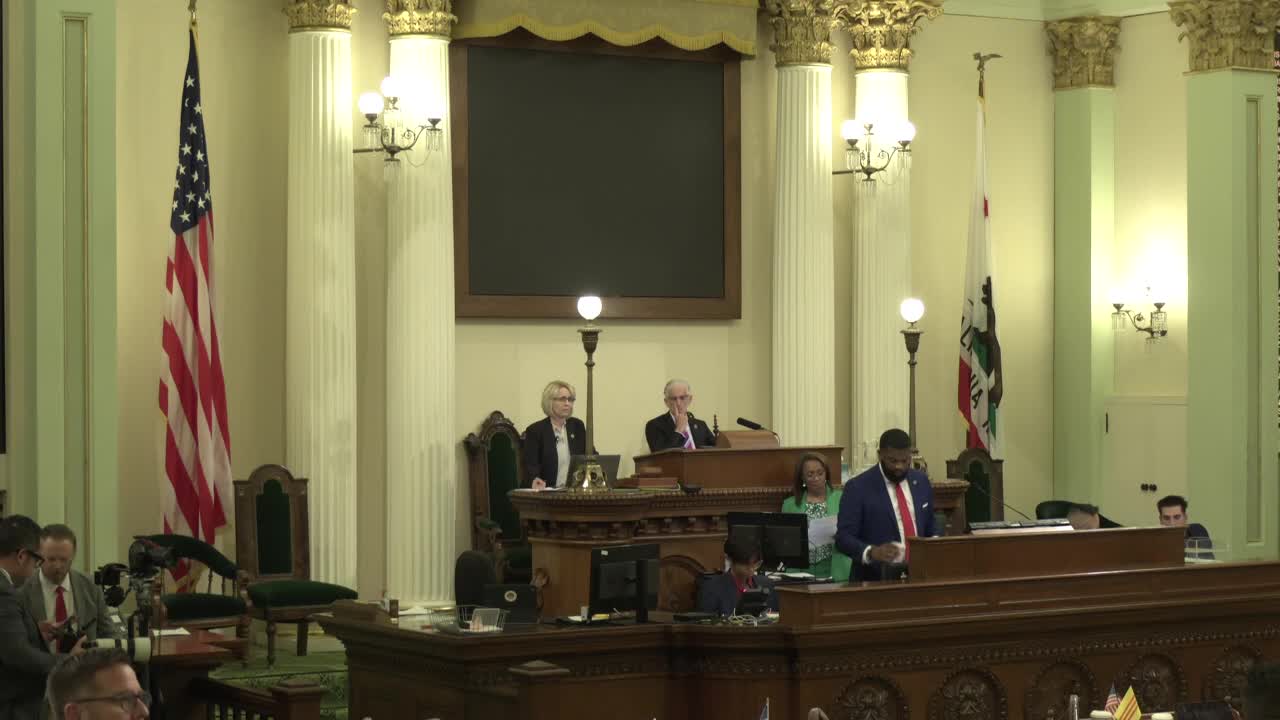
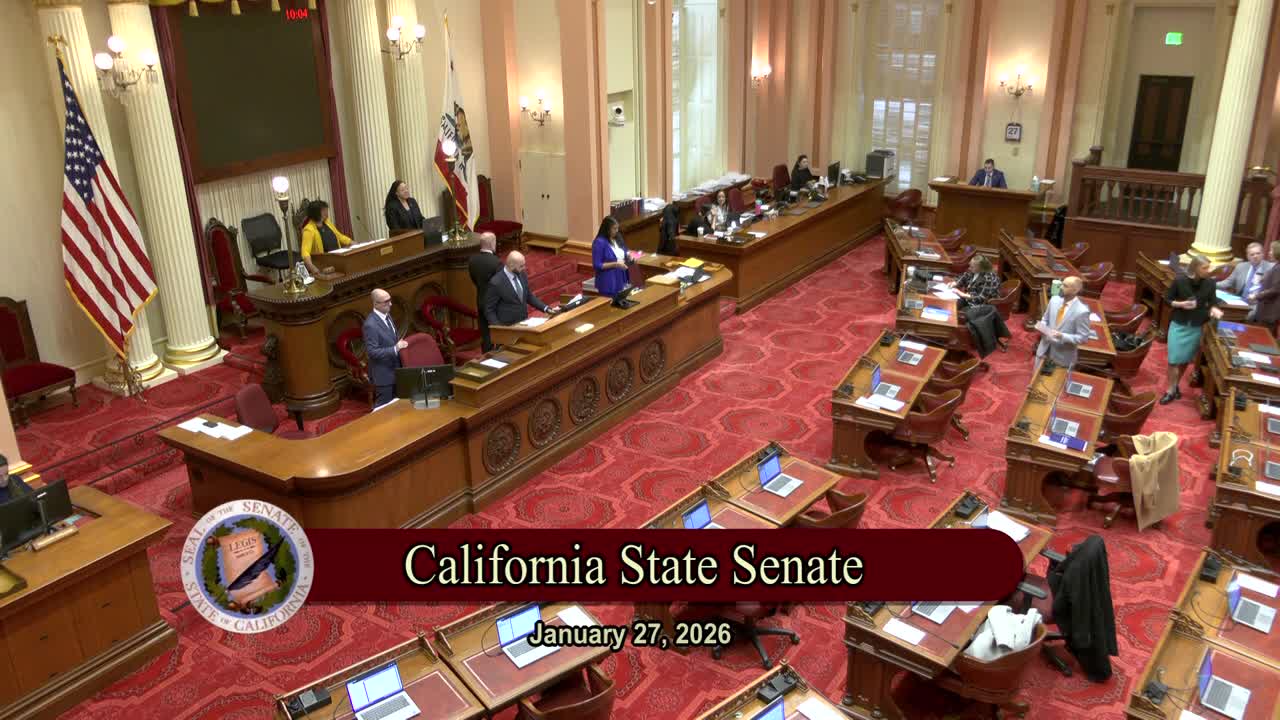


Bill Co-Author(s):