SB 1055: Payphone Service Providers Committee.
- Session Year: 2015-2016
- House: Senate
- Latest Version Date: 2016-08-26
Under existing law, the Public Utilities Commission has regulatory authority over public utilities, including telephone corporations. Existing law establishes the Payphone Service Providers Committee to advise the commission regarding the development, implementation, and administration of programs to educate payphone service providers, ensure compliance with the commissions requirements for payphone operations, and educate consumers on matters related to payphones, as provided for in a specified decision of the commission. Existing law establishes the Payphone Service Providers Committee Fund and requires that all revenues collected by telephone corporations in rates authorized by the commission to fund programs to educate payphone service providers, ensure compliance with the commissions requirements for payphone operations, and educate consumers on matters related to payphones be deposited into the fund.
This bill would eliminate these statutory authorizations for the committee and the fund.
Under existing law, the Public Utilities Commission has regulatory authority over public utilities, including telephone corporations. Existing law establishes the Payphone Service Providers Committee to advise the commission regarding the development, implementation, and administration of programs to educate payphone service providers, ensure compliance with the commissions requirements for payphone operations, and educate consumers on matters related to payphones, as provided for in a specified decision of the commission. Existing law establishes the Payphone Service Providers Committee Fund and requires that all revenues collected by telephone corporations in rates authorized by the commission to fund programs to educate payphone service providers, ensure compliance with the commissions requirements for payphone operations, and educate consumers on matters related to payphones be deposited into the fund.
This bill would repeal those provisions establishing the committee and the fund.
(a)The following funds are hereby created in the State Treasury:
(1)The California High-Cost Fund-A Administrative Committee Fund.
(2)The California High-Cost Fund-B Administrative Committee Fund.
(3)The Universal Lifeline Telephone Service Trust Administrative Committee Fund.
(4)The Deaf and Disabled Telecommunications Program Administrative Committee Fund.
(5)The California Teleconnect Fund Administrative Committee Fund.
(6)The California Advanced Services Fund.
(b)Moneys in the funds are held in trust and may only be expended pursuant to this chapter and upon appropriation in the annual Budget Act or upon supplemental appropriation.
(c)The commission, in administering the universal service program funds listed in subdivision (a), and in administering state participation in federal universal service programs, is encouraged, consistent with the states universal service policies and goals, to maximize the amount of federal funding to California participants in the federal programs.
(d)Moneys in each fund shall not be appropriated, or in any other manner transferred or otherwise diverted, to any other fund or entity, except as provided in Sections 19325 and 19325.1 of the Education Code.
SEC. 2.Section 279 of the Public Utilities Code is repealed.(a)The following funds are hereby created in the State Treasury:
(1)The California High-Cost Fund-A Administrative Committee Fund.
(2)The California High-Cost Fund-B Administrative Committee Fund.
(3)The Universal Lifeline Telephone Service Trust Administrative Committee Fund.
(4)The Deaf and Disabled Telecommunications Program Administrative Committee Fund.
(5)The Payphone Service Providers Committee Fund.
(6)
(5)The California Teleconnect Fund Administrative Committee Fund.
(7)
(6)The California Advanced Services Fund.
(b)Moneys in the funds are held in trust and may only be expended pursuant to this chapter and upon appropriation in the annual Budget Act or upon supplemental appropriation.
(c)The commission, in administering the universal service program funds listed in subdivision (a), and in administering state participation in federal universal service programs, is encouraged, consistent with the states universal service policies and goals, to maximize the amount of federal funding to California participants in the federal programs.
(d)Moneys in each fund shall not be appropriated, or in any other manner transferred or otherwise diverted, to any other fund or entity, except as provided in Sections 19325 and 19325.1 of the Education Code.
SEC. 2.Section 279 of the Public Utilities Code is repealed.279.(a)There is hereby created the Payphone Service Providers Committee, which is an advisory board to advise the commission regarding the development, implementation, and administration of programs to educate pay phone service providers, ensure compliance with the commissions requirements for pay phone operations, and educate consumers on matters related to pay phones, as provided for in commission Decision 90-06-018.
(b)All revenues collected by telephone corporations in rates authorized by the commission to fund the programs specified in subdivision (a) shall be submitted to the commission pursuant to a schedule established by the commission. Commencing on October 1, 2001, and continuing thereafter, the commission shall transfer the moneys received, and all unexpended revenues collected prior to October 1, 2001, to the Controller for deposit in the Payphone Service Providers Committee Fund. All interest earned by moneys in the fund shall be deposited in the fund.
(c)Moneys appropriated from the Payphone Service Providers Committee Fund to the commission shall be utilized exclusively by the commission for the program specified in subdivision (a), including all costs of the board and the commission associated with the administration and oversight of the program and the fund.
|
Date
|
Status
|
|---|---|
| Aug 26, 2016 | Chaptered by Secretary of State. Chapter 213, Statutes of 2016. |
| Aug 26, 2016 | Approved by the Governor. |
| Aug 16, 2016 | Enrolled and presented to the Governor at 11:30 a.m. |
| Aug 11, 2016 | Read third time. Passed. (Ayes 78. Noes 0. Page 5779.) Ordered to the Senate. |
| Aug 11, 2016 | In Senate. Ordered to engrossing and enrolling. |
| Aug 11, 2016 | Read third time. Passed. Ordered to the Senate. |
| Aug 4, 2016 | Read second time. Ordered to consent calendar. |
| Aug 3, 2016 | From committee: Do pass. Ordered to consent calendar. (Ayes 20. Noes 0.) (August 3). |
| Jun 30, 2016 | From committee: Do pass and re-refer to Com. on APPR. with recommendation: To consent calendar. (Ayes 15. Noes 0.) (June 29). Re-referred to Com. on APPR. |
| Jun 6, 2016 | Referred to Com. on U. & C. |
| May 26, 2016 | Read third time. Passed. (Ayes 39. Noes 0. Page 3954.) Ordered to the Assembly. |
| May 26, 2016 | In Assembly. Read first time. Held at Desk. |
| May 26, 2016 | Read third time. Passed. (Ayes 39. Noes 0.) Ordered to the Assembly. |
| May 17, 2016 | Read second time. Ordered to third reading. |
| May 16, 2016 | From committee: Be ordered to second reading pursuant to Senate Rule 28.8. |
| May 6, 2016 | Set for hearing May 16. |
| Apr 19, 2016 | From committee: Do pass and re-refer to Com. on APPR. (Ayes 11. Noes 0. Page 3593.) (April 19). Re-referred to Com. on APPR. |
| Apr 19, 2016 | From committee: Do pass and re-refer to Com. on APPR. (Ayes 11. Noes 0.) (April 19). Re-referred to Com. on APPR. |
| Apr 1, 2016 | Set for hearing April 19. |
| Mar 31, 2016 | April 5 hearing postponed by committee. |
| Mar 17, 2016 | Set for hearing April 5. |
| Mar 16, 2016 | March 29 hearing postponed by committee. |
| Mar 9, 2016 | Set for hearing March 29. |
| Feb 25, 2016 | Referred to Com. on E., U., & C. |
| Feb 17, 2016 | From printer. May be acted upon on or after March 18. |
| Feb 16, 2016 | Introduced. Read first time. To Com. on RLS. for assignment. To print. |
|
Date
|
Description
|
Location
|
Votes
|
|
|---|---|---|---|---|
| Aug 11, 2016 | SB 1055 Hueso Consent Calendar Second Day Regular Session | Assembly Floor |
Passed |
|
| Aug 3, 2016 | Do pass. To Consent Calendar. | Assembly Standing Committee on Appropriations |
Passed |
|
| Jun 29, 2016 | Do pass and be re-referred to the Committee on [Appropriations] with recommendation: To Consent Calendar | Assembly Standing Committee on Utilities and Commerce |
Passed |
|
| May 26, 2016 | Senate 3rd Reading SB1055 Hueso | Senate Floor |
Passed |
|
| Apr 19, 2016 | Do pass, but first be re-referred to the Committee on [Appropriations] | Senate Standing Committee on Energy, Utilities and Communications |
Passed |
This list shows positions taken on this bill by organizations on the date displayed, which is linked to the original source.
Positions by individuals are not included.
Date of Hearing: August 3, 2016
ASSEMBLY COMMITTEE ON APPROPRIATIONS
Lorena Gonzalez, Chair
SBPCA Bill Id:SB 1055
Author:(Hueso) – As Introduced Ver:February 16, 2016
Policy Committee: | Utilities and Commerce | Vote: | 15 - 0 |
|
|
Urgency: No State Mandated Local Program: No Reimbursable: No
SUMMARY:
This bill eliminates the Payphone Service Providers Committee (PSPC), and its corresponding fund, from the Public Utilities Code.
FISCAL EFFECT:
According to the California Public Utilities Commission (PUC), the remaining PSPC fund balance of $5,000 would be transferred to the General Fund. Elimination of the fund would not affect the PUC's continued enforcement activities, which in 2015 included the inspection of 5,000 payphones.
COMMENTS:
- Purpose. According to the author, the purpose of this bill is to help modernize the Public Utilities Code and ensure it is accurately reflecting the work of the PUC.
- Background. The PSPC and its corresponding fund were established in 1999 through SB 669 (Polanco), Chapter 677, Statutes of 1999. The PSPC was created to advise the PUC on the development, implementation, and administration of programs to educate pay phone service providers, ensure compliance with operations requirements, and educate consumers.
In 2008, the PUC issued Decision 08-06-020 to eliminate the PSPC while still acknowledging the important role of pay phones, especially in emergency situations. After the PSPC ceased operation, its corresponding fund became unused and no longer functional. The PUC's Safety Enforcement Division inherited pay phone enforcement responsibilities after the PSPC ceased operations. According to the PUC, the remaining funds in the PSPC Fund (approximately $5,000) are no longer in the PUC's budget and are in the process of being administratively eliminated and transferred back to the General Fund by the Department of Finance.
This bill eliminates the PSPC, and its corresponding fund, from the Public Utilities Code.
Analysis Prepared by: Jennifer Galehouse / APPR. / (916) 319-2081
Date of Hearing: June 29, 2016
ASSEMBLY COMMITTEE ON UTILITIES AND COMMERCE
Mike Gatto, Chair
SBPCA Bill Id:SB 1055
Author:(Hueso) – As Introduced Ver:February 16, 2016
SENATE VOTE: 39-0
SUBJECT: Payphone Service Providers Committee
SUMMARY: Eliminates the Payphone Service Providers Committee (PSPC), and its corresponding fund, from the Public Utilities Code.
EXISTING LAW:
- Requires the California Public Utilities Commission (CPUC), by rule or order, adopt and enforce specified operating requirements for telephones available for public use that accept any form of payment and that are owned or operated by corporations or persons other than telephone corporations. (Public Utilities Code Section 742)
- Requires every owner or operator of telephones available for public use, other than a telephone corporation, that accept any form of payment which, as part of the service furnished, provides operator-assisted services by other than a telephone corporation having tariff schedules on file with the CPUC providing for the furnishing of operator-assisted services, to cause to be posted on or near the telephone equipment so as to be easily seen by telephone customers specified information. (Public Utilities Code Section 741)
- Establishes the PSPC, which is an advisory board to advise the CPUC regarding the development, implementation, and administration of programs to educate pay phone service providers, ensure compliance with the CPUC's requirements for pay phone operations, and educate consumers on matters related to pay phones. (Public Utilities Code Section 279)
- Establishes several telecommunications related funds, including the PSPC Fund, in the State Treasury. (Public Utilities Code Section 270)
FISCAL EFFECT: Unknown.
COMMENTS:
- Author's Statement: "This bill is an effort to help modernize the Public Utilities Code and ensure it is accurately reflecting the work of the CPUC."
- Background: The number of pay phones in operation has declined dramatically over the years. According to the CPUC, in 2007 there were approximately 93,869 pay phones in California, by 2015 there were only approximately 27,000 pay phones remaining. Pay phones are largely concentrated in the Los Angeles Basin and San Francisco Bay Area. In addition, there are approximately 1,156 pay phone owners. Pay phone owners purchase and maintain the hardware to operate a pay phone, including selecting a location, installing and removing the pay phone, purchasing a dial tone service, and maintaining the required signage and disclosure of the pay phone. The CPUC does not regulate the rates for pay phones, nor does it have authority over the placement, construction, or removal of pay phones.
Currently, the CPUC's Safety and Enforcement Division (SED) enforces pay phone operating requirements. CPUC inspectors inspect pay phones to ensure that 9-1-1 calls can be made, toll free numbers are indeed toll free, adequate signage and disclosures are posted, and check for physical safety. Inspectors prioritize pay phones in critical areas such as, airports, schools, hospitals, remote areas, and areas affected by natural disasters or consumer complaints. SED receives about 50 complaints a year regarding pay phones. In 2015, inspectors conducted 4,969 pay phone inspects. If a deficiency is found, inspectors send a corrective action report to the pay phone owner. Pay phone owners are typically responsive to correcting deficiencies because it helps them meet the state's operating requirements to continue operating the pay phone.
- Payphone Service Providers Committee and Fund: The PSPC and its corresponding fund were established in 1999 through SB 669 (Polanco), Chapter 677, Statutes of 1999. The PSPC is an advisory board created to advise the CPUC on the development, implementation, and administration of programs to educate pay phone service providers, ensure compliance with the CPUC's requirements for pay phone operations, and educate consumers on matters related to pay phones. As the number of pay phones declined, in 2008, the CPUC issued Decision 08-06-020 which ordered the elimination of the PSPC, while still acknowledge the important role pay phones play in meeting the state's universal service goals, especially in emergency situations. After the PSPC ceased operation, its corresponding fund became unused and no longer functional. The CPUC's SED inherited pay phone enforcement responsibilities including targeted inspections to check for compliance with operating requirements after the PSPC ceased operations.
According to the CPUC, the remaining funds in the PSPC Fund (approximately $5,000) are no longer in the CPUC's budget and is in the process of being administratively eliminated and transferred back to the General Fund by the Department of Finance.
This bill eliminates the PSPC, and its corresponding fund, from the Public Utilities Code.
- Arguments in Support: According to the CPUC, the sponsor of the bill, "SB 1055 would remove the [PSPC] fund from statute and also eliminate its companion advisory committee. The remaining $5,000 fund balance would be transferred to the General Fund. Elimination of the fund would not affect the CPUC's continued enforcement activities, which in 2015 included inspection of 5,000 payphones to ensure proper operation and compliance with state law."
REGISTERED SUPPORT / OPPOSITION:
Support
California Public Utilities Commission (Sponsor)
Opposition
None on File.
Analysis Prepared by: Edmond Cheung / U. & C. / (916) 319-2083
Office of Senate Floor Analyses (916) 651-1520 Fax: (916) 327-4478 | SB |
THIRD READING
Bill No: SB 1055
:
SENATE ENERGY, U. & C. COMMITTEE: 11-0, 4/19/16
AYES: Hueso, Morrell, Cannella, Gaines, Hertzberg, Hill, Lara, Leyva, McGuire, Pavley, Wolk
SENATE APPROPRIATIONS COMMITTEE: Senate Rule 28.8
SOURCE: California Public Utilities Commission
DIGEST: This bill eliminates the Payphone Service Providers Committee (PSPC), the corresponding fund, which was intended to advise the California Public Utilities Commission (CPUC) regarding payphones.
Existing law:
- Requires the CPUC to adopt and enforce operating requirements for telephones available for public use that accept any form of payment and that are owned and operated by corporations or person other than telephone corporations. (Public Utilities Code §742)
- Establishes the PSPC as an advisory board to advise the CPUC regarding development, implementation, and administration of programs to educate pay phone service providers, ensure compliance with the CPUC’s requirements for pay phone operations, and educate consumers on matters related to pay phones. (Public Utilities Code §279)
- Establishes several telecommunications-related funds in the State Treasury, including the PSPC Fund. (Public Utilities Code §270 (a) (5))
- Provides that Federal Communications Commission (FCC) shall take all actions necessary to prescribe regulations that establish a per call compensation plan to ensure that all payphone service providers are fairly compensated for each and every completed intrastate and interstate call using their payphone, except emergency calls and relay service call for hearing disabled individuals, and other requirements. Establishes that to the extent that any state requirements are inconsistent with the FCC’s regulations, federal regulations on such matters shall preempt such state requirements. (47 United States Code §276)
This bill:
- Eliminates the PSPC which was intended to advise the CPUC regarding the development, implementation, and administration of programs to educate payphone service providers, ensure compliance with the CPUC’s requirements for payphone operations, and educate consumers on matters related to payphones.
- Eliminates the corresponding PSPC Fund.
Background
When the PSPC was established, in 1999, there were nearly 100,000 payphones in use across California. However, the number of payphones has since dramatically declined with the widespread growth of wireless phones. Within less than 10 years of establishing the PSPC, the CPUC, in D. 06-08-020, called for its elimination stating it was “no longer functional.” After the PSPC ceased operations and asked the CPUC for its dissolution, the associated fund also became unused and no longer necessary.
Today, there are roughly 27,000 payphones in operation in California. These phones are owned and maintained by individual owners who purchase dial tone service from telephone service providers. Currently, there are an estimated 1,150 payphone owners. The owners of the payphones maintain all the hardware for the phone, select the locations, install and remove payphones, and are responsible for maintaining the required signage and disclosures on the payphones.
While the CPUC ordered the elimination of the PSPC, it also concluded that “payphones have an important role in meeting our universal service goals, and Californians continue to use public payphones, especially in emergency situations.” Therefore, the CPUC requires pay phone service providers to report on a monthly basis pay phone locations and owner information. CPUC uses this information to manage the payphone enforcement program, staffed by three CPUC inspectors. These inspectors verify that calls can be placed to 9-1-1 and to operator service providers and that collect calls can be made. CPUC inspectors prioritize inspections of payphones often vandalized, located in critical areas such as airports, schools and hospitals, remote areas, and areas recently affected by natural disasters. In 2015, CPUC inspectors conducted nearly 5,000 payphone inspections. Elimination of the PSPC and the PSPC Fund will not affect the CPUC’s continued enforcement activities.
Prior/Related Legislation
SB 669 (Polanco, Chapter 667, Statutes of 1999) established, among other provisions, several advisory boards and corresponding funds related to telecommunications, including the PSPC and the PSPC Fund.
FISCAL EFFECT: Appropriation: Fiscal Com.: Local:
California Public Utilities Commission (source)
OPPOSITION: (Verified 5/17/16)
None received
ARGUMENTS IN SUPPORT: According to the CPUC, this bill will eliminate an advisory committee and fund that are no longer necessary (or in use). While other advisory committees established by SB 669 (Polanco, 1999) are still in use, such as the High-Cost Fund – A & B, Deaf and Disabled Telecommunications Program Administrative Committee Fund, and others, the PSPC was found early on to not have much utility or necessity. However, the fund has continued to exist in the Public Utilities Code.
5/19/16 14:37:28
SENATE COMMITTEE ON ENERGY, UTILITIES AND COMMUNICATIONS
Senator Ben Hueso, Chair
2015 - 2016 Regular
Bill No: SB 1055 Hearing Date: 4/19/2016
Author: | Hueso | ||
Version: | 2/16/2016 As Introduced | ||
Urgency: | No | Fiscal: | Yes |
Consultant: | Nidia Bautista | ||
SUBJECT: Payphone Service Providers Committee
DIGEST: This bill would eliminate the Payphone Service Providers Committee (PSPC), the corresponding fund, which was intended to advise the California Public Utilities Commission (CPUC) regarding payphones.
ANALYSIS:
Existing law:
- Requires the CPUC to adopt and enforce operating requirements for telephones available for public use that accept any form of payment and that are owned and operated by corporations or person other than telephone corporations. (Public Utilities Code §742)
- Establishes the PSPC as an advisory board to advise the CPUC regarding development, implementation, and administration of programs to educate pay phone service providers, ensure compliance with the CPUC’s requirements for pay phone operations, and educate consumers on matters related to pay phones. (Public Utilities Code §279)
- Establishes several telecommunications-related funds in the State Treasury, including the PSPC Fund. (Public Utilities Code §270 (a) (5))
- Provides that Federal Communications Commission (FCC) shall take all actions necessary to prescribe regulations that establish a per call compensation plan to ensure that all payphone service providers are fairly compensated for each and every completed intrastate and interstate call using their payphone, except emergency calls and relay service call for hearing disabled individuals, and other requirements. Establishes that to the extent that any state requirements are inconsistent with the FCC’s regulations, federal regulations on such matters shall preempt such state requirements. (47 United States Code §276)
This bill:
- Eliminates the PSPC which was intended to advise the CPUC regarding the development, implementation, and administration of programs to educate payphone service providers, ensure compliance with the CPUC’s requirements for payphone operations, and educate consumers on matters related to payphones.
- Eliminates the corresponding PSPC Fund.
Background
When the PSPC was established, in 1999, there were nearly 100,000 payphones in use across California. However, the number of payphones has since dramatically declined with the widespread growth of wireless phones. Within less than 10 years of establishing the PSPC, the CPUC, in D. 06-08-020, called for its elimination stating it was “no longer functional.” After the PSPC ceased operations and asked the CPUC for its dissolution, the associated fund also became unused and no longer necessary.
Today, there are roughly 27,000 payphones in operation in California. These phones are owned and maintained by individual owners who purchase dial tone service from telephone service providers. Currently, there are an estimated 1,150 payphone owners. The owners of the payphones maintain all the hardware for the phone, select the locations, install and remove payphones, and are responsible for maintaining the required signage and disclosures on the payphones.
While the CPUC ordered the elimination of the PSPC, it also concluded that “payphones have an important role in meeting our universal service goals, and Californians continue to use public payphones, especially in emergency situations.” Therefore, the CPUC requires pay phone service providers to report on a monthly basis pay phone locations and owner information. CPUC uses this information to manage the payphone enforcement program, staffed by three CPUC inspectors. These inspectors verify that calls can be placed to 9-1-1 and to operator service providers and that collect calls can be made. CPUC inspectors prioritize inspections of payphones often vandalized, located in critical areas such as airports, schools and hospitals, remote areas, and areas recently affected by natural disasters. In 2015, CPUC inspectors conducted nearly 5,000 payphone inspections. Elimination of the PSPC and the PSPC Fund will not affect the CPUC’s continued enforcement activities.
Prior/Related Legislation
SB 669 (Polanco, Chapter 667, Statutes of 1999) established, among other provisions, several advisory boards and corresponding funds related to telecommunications, including the PSPC and the PSPC Fund.
FISCAL EFFECT: Appropriation: No Fiscal Com.: Yes Local: No
SUPPORT:
California Public Utilities Commission (Source)
OPPOSITION:
None received
ARGUMENTS IN SUPPORT: This bill will eliminate an advisory committee and fund that are no longer necessary (or in use). While other advisory committees established by SB 669 (Polanco, 1999) are still in use, such as the High-Cost Fund – A & B, Deaf and Disabled Telecommunications Program Administrative Committee Fund, and others, the PSPC was found early on to not have much utility or necessity. However, the fund has continued to exist in the Public Utilities Code.
-- END --
Discussed in Hearing
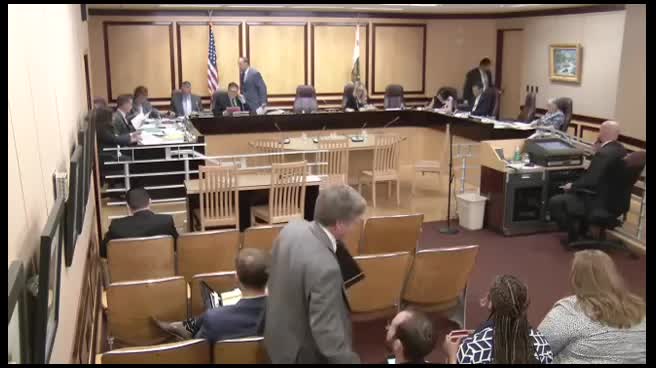 2MIN
Senate Standing Committee on Energy, Utilities and Communications
Bill Author

Bill Co-Author(s):