SB 803: California Conservation Corps: Green Collar Certification Program.
- Session Year: 2025-2026
- House: Senate
- Latest Version Date: 2025-04-09
Current Status:
Failed
(2026-02-02: Returned to Secretary of Senate pursuant to Joint Rule 56.)
Introduced
In Committee
Awaiting First Chamber Vote
Passed First Chamber
In Committee
Awaiting Second Chamber Vote
Passed Second Chamber
Enacted
Existing law establishes the California Conservation Corps and requires young adults participating in the corps program to be generally engaged in projects that do specified things, including, among other things, projects that directly contribute to the conservation of energy.
This bill would instead require young adults participating in the corps program to be generally engaged in projects that, among other things, promote or contribute to the conservation of energy and the development or enhancement of clean energy, climate resilience, or sustainable nature-based solutions.
Existing law provides that it is the intent of the Legislature that the corps blend academic and job skills training with personal growth opportunities in order to develop productive youths who can make substantial contributions as California workers and citizens.
This bill would require the Director of the California Conservation Corps to establish a Green Collar Certification Program that provides corpsmembers participating in the corps with skills and education including, but not limited to, reducing carbon emissions in residential and nonresidential buildings, preparing communities for environmental disasters, and developing conservation infrastructure projects that stabilize shorelines and restore ecological habitats, as provided. The bill would require the director to issue a Green Collar Certificate to a corpsmember who successfully completes the program. The bill would require the director, in administering the program, to collaborate with specified entities to identify emerging workforce needs, as specified. The bill would authorize the director to authorize certified community conservation corps to implement the program pursuant to guidelines established by the corps, as specified.
This bill would also authorize the director to apply for and accept grants or donations of funds from any public or private source that are provided for specified purposes relating to the program. The bill would establish the Green Collar Certification Program Fund and would require the grants or donations described above to be deposited into the fund. The bill would continuously appropriate the moneys in the fund to the director for specified purposes relating to the program. By providing for the continuous appropriation of fund moneys to the director, this bill would create an appropriation.
Existing law establishes the California Conservation Corps and requires young adults participating in the corps program to be generally engaged in projects that do specified things, including, among other things, projects that directly contribute to the conservation of energy.
This bill would instead require young adults participating in the corps program to be generally engaged in projects that, among other things, promote or contribute to the conservation of energy and the development or enhancement of clean energy, climate resilience, or sustainable climate infrastructure. The bill would also additionally include projects that provide culinary training or experience that supports corpsmembers engaged in any of the specified activities nature-based solutions.
Existing law provides that it is the intent of the Legislature that the corps blend academic and job skills training with personal growth opportunities in order to develop productive youths who can make substantial contributions as California workers and citizens.
This bill would require the Director of the California Conservation Corps to establish a Green Collar Certification Program that provides young persons corpsmembers participating in the corps with skills and education relating to including, but not limited to, reducing carbon emissions in residential and nonresidential buildings, preparing communities for environmental disasters, and developing conservation infrastructure projects that stabilize shorelines and restore ecological habitats, as provided. The bill would require the director to issue a Green Collar Certificate to a corpsmember who successfully completes the program. The bill would require the director, in administering the program, to collaborate with specified entities and to create an advisory board to identify emerging workforce needs, as specified. The bill would authorize the director to authorize certified community conservation corps to implement the program pursuant to guidelines established by the corps. corps, as specified.
This bill would also authorize the director to apply for and accept grants or donations of funds from any public or private source that are provided for specified purposes relating to the program. The bill would establish the Green Collar Certification Program Fund and would require the grants or donations described above to be deposited into the fund. The bill would continuously appropriate the moneys in the fund to the director for specified purposes relating to the program. By providing for the continuous appropriation of fund moneys to the director, this bill would create an appropriation.
Existing law establishes the California Conservation Corps and requires young adults participating in the corps program to be generally engaged in projects that do specified things, including, among other things, projects that directly contribute to the conservation of energy.
This bill would instead require young adults participating in the corps program to be generally engaged in projects that, among other things, promote or contribute to the conservation of energy and the development or enhancement of clean energy, climate resilience, or sustainable climate infrastructure. The bill would also additionally include projects that provide culinary training or experience that supports corpsmembers engaged in any of the specified activities.
Existing law provides that it is the intent of the Legislature that the corps blend academic and job skills training with personal growth opportunities in order to develop productive youths who can make substantial contributions as California workers and citizens.
This bill would require the Director of the California Conservation Corps to establish a Green Collar Certification Program that provides young persons participating in the corps with skills and education relating to reducing carbon emissions in residential and nonresidential buildings, preparing communities for environmental disasters, and developing conservation infrastructure projects that stabilize shorelines and restore ecological habitats, as provided. The bill would require the director to issue a Green Collar Certificate to a corpsmember who successfully completes the program. The bill would require the director, in administering the program, to collaborate with specified entities and to create an advisory board to identify emerging workforce needs, as specified. The bill would authorize the director to authorize certified community conservation corps to implement the program pursuant to guidelines established by the corps.
This bill would also authorize the director to apply for and accept grants or donations of funds from any public or private source that are provided for specified purposes relating to the program. The bill would establish the Green Collar Certification Program Fund and would require the grants or donations described above to be deposited into the fund. The bill would continuously appropriate the moneys in the fund to the director for specified purposes relating to the program. By providing for the continuous appropriation of fund moneys to the director, this bill would create an appropriation.
Young adults participating in the corps program shall generally be engaged in projects that do any of the following:
(a)Preserve, maintain, and enhance environmentally important lands and waters.
(b)Accomplish useful and needed public works projects in both urban and rural areas.
(c)Conserve, maintain, improve, and develop natural resources in both urban and rural areas.
(d)Provide opportunities for public use of, or education in, the areas, projects, and resources described in subdivisions (a), (b), and (c).
(e)Assist in emergency operations, such as natural disaster relief and the rescue of lost and injured persons.
(f)Assist in fire prevention and suppression.
(g)Promote or contribute to the conservation of energy and the development or enhancement of clean energy, climate resilience, or sustainable nature-based solutions.
(h)Contribute toward making public facilities accessible to persons with disabilities.
(i)Assist departments within the Natural Resources Agency in developing, rehabilitating, and restoring parklands, recreational facilities, and historical resources; restoring salmon and steelhead spawning, nursery, and rearing habitat; restoring and preserving wildlife habitat; and enhancing reforestation in both urban and rural areas.
SEC. 2.Section 14307.5 is added to the Public Resources Code, to read:14307.5.(a)The director shall establish a Green Collar Certification Program that provides corpsmembers participating in the corps with skills and education including, but not limited to, reducing carbon emissions in residential and nonresidential buildings, preparing communities for environmental disasters, and developing conservation infrastructure projects that stabilize shorelines and restore ecological habitats.
(b)The director shall issue a Green Collar Certificate to a corpsmember who successfully completes the Green Collar Certification Program.
(c)The Green Collar Certification Program shall prepare corpsmembers to enter the workforce, apply for an apprentice program, or pursue higher education.
(d)In developing and administering the Green Collar Certification Program, to identify emerging workforce needs, particularly in renewable energy, environmental restoration, and disaster preparedness sectors the director shall collaborate with all of the following:
(1)Local builders and contractors, including small businesses and minority-owned enterprises.
(2)The Interagency Advisory Committee on Apprenticeship to establish pathways into registered apprenticeship programs.
(3)Environmental organizations and conservation groups to provide field-based training.
(4)Community colleges and vocational training centers to offer coursework and certification in relevant fields.
(5)Labor unions and trade associations to facilitate entry into high-demand sectors.
(e)(1)The director may authorize certified community conservation corps, as defined in Section 14507.5, to implement the Green Collar Certification Program, pursuant to guidelines established by the corps. The director shall collaborate with the community conservation corps in the development of the guidelines.
(2)The development and adoption of program guidelines necessary to effectuate or implement the program pursuant to this section shall not be subject to Chapter 3.5 (commencing with Section 11340) of Part 1 of Division 3 of Title 2 of the Government Code.
(f)(1)The director may apply for and accept grants or donations of funds from any public or private source that are provided for the specific purpose of purchasing, renting, or otherwise acquiring or obtaining necessary property, supplies, instruments, tools, equipment, and conveniences for the Green Collar Certification Program.
(2)Any moneys received pursuant to paragraph (1) shall be deposited into the Green Collar Certification Program Fund, which is hereby created in the State Treasury. Notwithstanding Section 13340 of the Government Code or any other law, all moneys deposited into the fund shall be continuously appropriated, without regard to fiscal years, to the director for purposes of paragraph (1). Only those grants or donations described in paragraph (1) may be deposited into the fund and General Fund moneys shall not be deposited into the fund.
Young adults participating in the corps program shall generally be engaged in projects that do any of the following:
(a)Preserve, maintain, and enhance environmentally important lands and waters.
(b)Accomplish useful and needed public works projects in both urban and rural areas.
(c)Conserve, maintain, improve, and develop natural resources in both urban and rural areas.
(d)Provide opportunities for public use of, or education in, the areas, projects, and resources described in subdivisions (a), (b), and (c).
(e)Assist in emergency operations, such as natural disaster relief and the rescue of lost and injured persons.
(f)Assist in fire prevention and suppression.
(g)Promote or contribute to the conservation of energy and the development or enhancement of clean energy, climate resilience, or sustainable climate infrastructure. nature-based solutions.
(h)Contribute toward making public facilities accessible to persons with disabilities.
(i)Assist departments within the Natural Resources Agency in developing, rehabilitating, and restoring parklands, recreational facilities, and historical resources; restoring salmon and steelhead spawning, nursery, and rearing habitat; restoring and preserving wildlife habitat; and enhancing reforestation in both urban and rural areas.
(j)Provide culinary training or experience that supports corpsmembers engaged in any of the activities covered in subdivisions (a) through (i), inclusive.SEC. 2.Section 14307.5 is added to the Public Resources Code, to read:14307.5.(a)The director shall establish a Green Collar Certification Program that provides young persons corpsmembers participating in the corps with skills and education relating to including, but not limited to, reducing carbon emissions in residential and nonresidential buildings, preparing communities for environmental disasters, and developing conservation infrastructure projects that stabilize shorelines and restore ecological habitats.
(b)The director shall issue a Green Collar Certificate to a corpsmember who successfully completes the Green Collar Certification Program.
(c)The Green Collar Certification Program shall prepare corpsmembers to enter the workforce, apply for an apprentice program, or pursue higher education.
(d)In developing and administering the Green Collar Certification Program, to identify emerging workforce needs, particularly in renewable energy, environmental restoration, and disaster preparedness sectors the director shall collaborate with all of the following:
(1)Local builders and contractors, including small businesses and minority-owned enterprises.
(2)The Interagency Advisory Committee on Apprenticeship to establish pathways into registered apprenticeship programs.
(3)Environmental organizations and conservation groups to provide field-based training.
(4)Community colleges and vocational training centers to offer coursework and certification in relevant fields.
(5)Labor unions and trade associations to facilitate entry into high-demand sectors.
(e)The director shall create an advisory board to identify emerging workforce needs, particularly in renewable energy, environmental restoration, and disaster preparedness sectors.(f)(e)(1)The director may authorize certified community conservation corps, as defined in Section 14507.5, to implement the Green Collar Certification Program, pursuant to guidelines established by the corps.
(2)The development and adoption of program guidelines necessary to effectuate or implement the program pursuant to this section shall not be subject to Chapter 3.5 (commencing with Section 11340) of Part 1 of Division 3 of Title 2 of the Government Code.
(g)(f)(1)The director may apply for and accept grants or donations of funds from any public or private source that are provided for the specific purpose of purchasing, renting, or otherwise acquiring or obtaining necessary property, supplies, instruments, tools, equipment, and conveniences for the Green Collar Certification Program.
(2)Any moneys received pursuant to paragraph (1) shall be deposited into the Green Collar Certification Program Fund, which is hereby created in the State Treasury. Notwithstanding Section 13340 of the Government Code or any other law, all moneys deposited into the fund shall be continuously appropriated, without regard to fiscal years, to the director for purposes of paragraph (1). Only those grants or donations described in paragraph (1) may be deposited into the fund and General Fund moneys shall not be deposited into the fund.
Young adults participating in the corps program shall generally be engaged in projects that do any of the following:
(a)Preserve, maintain, and enhance environmentally important lands and waters.
(b)Accomplish useful and needed public works projects in both urban and rural areas.
(c)Conserve, maintain, improve, and develop natural resources in both urban and rural areas.
(d)Provide opportunities for public use of, or education in, the areas, projects, and resources described in subdivisions (a), (b), and (c).
(e)Assist in emergency operations, such as natural disaster relief and the rescue of lost and injured persons.
(f)Assist in fire prevention and suppression.
(g)Directly Promote or contribute to the conservation of energy. energy and the development or enhancement of clean energy, climate resilience, or sustainable climate infrastructure.
(h)Contribute toward making public facilities accessible to persons with disabilities.
(i)Assist departments within the Natural Resources Agency in developing, rehabilitating, and restoring parklands, recreational facilities, and historical resources; restoring salmon and steelhead spawning, nursery, and rearing habitat; restoring and preserving wildlife habitat; and enhancing reforestation in both urban and rural areas.
(j)Provide culinary training or experience that supports corpsmembers engaged in any of the activities covered in subdivisions (a) through (i), inclusive.
SEC. 2.Section 14307.5 is added to the Public Resources Code, to read:14307.5.(a)The director shall establish a Green Collar Certification Program that provides young persons participating in the corps with skills and education relating to reducing carbon emissions in residential and nonresidential buildings, preparing communities for environmental disasters, and developing conservation infrastructure projects that stabilize shorelines and restore ecological habitats.
(b)The director shall issue a Green Collar Certificate to a corpsmember who successfully completes the Green Collar Certification Program.
(c)The Green Collar Certification Program shall prepare corpsmembers to enter the workforce, apply for an apprentice program, or pursue higher education.
(d)In developing and administering the Green Collar Certification Program, the director shall collaborate with all of the following:
(1)Local builders and contractors, including small businesses and minority-owned enterprises.
(2)The Interagency Advisory Committee on Apprenticeship to establish pathways into registered apprenticeship programs.
(3)Environmental organizations and conservation groups to provide field-based training.
(4)Community colleges and vocational training centers to offer coursework and certification in relevant fields.
(5)Labor unions and trade associations to facilitate entry into high-demand sectors.
(e)The director shall create an advisory board to identify emerging workforce needs, particularly in renewable energy, environmental restoration, and disaster preparedness sectors.
(f)The director may authorize certified community conservation corps, as defined in Section 14507.5, to implement the Green Collar Certification Program, pursuant to guidelines established by the corps.
(g)(1)The director may apply for and accept grants or donations of funds from any public or private source that are provided for the specific purpose of purchasing, renting, or otherwise acquiring or obtaining necessary property, supplies, instruments, tools, equipment, and conveniences for the Green Collar Certification Program.
(2)Any moneys received pursuant to paragraph (1) shall be deposited into the Green Collar Certification Program Fund, which is hereby created in the State Treasury. Notwithstanding Section 13340 of the Government Code or any other law, all moneys deposited into the fund shall be continuously appropriated, without regard to fiscal years, to the director for purposes of paragraph (1). Only those grants or donations described in paragraph (1) may be deposited into the fund and General Fund moneys shall not be deposited into the fund.
|
Date
|
Status
|
|---|---|
| Feb 2, 2026 | Returned to Secretary of Senate pursuant to Joint Rule 56. |
| May 23, 2025 | May 23 hearing: Held in committee and under submission. |
| May 16, 2025 | Set for hearing May 23. |
| Apr 28, 2025 | April 28 hearing: Placed on APPR. suspense file. |
| Apr 17, 2025 | Set for hearing April 28. |
| Apr 9, 2025 | Read second time and amended. Re-referred to Com. on APPR. |
| Apr 8, 2025 | From committee: Do pass as amended and re-refer to Com. on APPR. (Ayes 6. Noes 0. Page 708.) (April 8). |
| Mar 28, 2025 | From committee with author's amendments. Read second time and amended. Re-referred to Com. on N.R. & W. |
| Mar 24, 2025 | Set for hearing April 8. |
| Mar 12, 2025 | Referred to Com. on N.R. & W. |
| Feb 24, 2025 | Read first time. |
| Feb 24, 2025 | From printer. May be acted upon on or after March 24. |
| Feb 21, 2025 | Introduced. To Com. on RLS. for assignment. To print. |
|
Date
|
Description
|
Location
|
Votes
|
|
|---|---|---|---|---|
| Apr 28, 2025 | Placed on suspense file | Senate Standing Committee on Appropriations |
Passed |
|
| Apr 8, 2025 | Do pass as amended, but first amend, and re-refer to the Committee on [Appropriations] | Senate Standing Committee on Natural Resources and Water |
Passed |
This list shows positions taken on this bill by organizations on the date displayed, which is linked to the original source.
Positions by individuals are not included.
|
Organization
|
Position
|
Date
|
|---|---|---|
| California Association Of Local Conservation Corps | ** Support | |
| California Local Conservation Corps Foundation | ** Support | |
| Carlsbad Property Inspections | ** Support | |
| Cesar Chavez Environmental Corps | ** Support | |
| Civicorps | ** Support | |
| Conservation Corps North Bay | ** Support | |
| Conservation Corps of Long Beach | ** Support | |
| Greater Valley Conservation Corps | ** Support | |
| Law Offices of Gino V. Mazzanti | ** Support | |
| Los Angeles Conservation Corps | ** Support | |
| Orange County Conservation Corps | ** Support | |
| Port Of Oakland | ** Support | |
| REDF | ** Support | |
| Sacramento Regional Conservation Corps | ** Support | |
| San Gabriel Conservation Corps | ** Support | |
| San Joaquin County Office Of Education | ** Support | |
| San Jose Conservation Corps | ** Support | |
| Sequoia Community Corps | ** Support | |
| The Urban Collaborative Project | ** Support | |
| Urban Corps of San Diego County | ** Support |
SENATE COMMITTEE ON
Senator Anna Caballero, Chair
2025 - 2026 Regular Session
SB 803 (Durazo) - California Conservation Corps: Green Collar Certification Program
Version: | Policy Vote: |
Urgency: | Mandate: |
Hearing Date: | Consultant: |
Bill Summary:
This bill would require young adults participating in the California Conservation Corps (CCC) program to be generally engaged in projects that, among other things, promote or contribute to the conservation of energy and the development or enhancement of clean energy, climate resilience, or sustainable nature-based solutions. It would also require establishment of a Green Collar Certification Program and authorize certified community conservation corps to implement the program, as specified. In addition, this bill would authorize the CCC Director to apply for and accept grants or donations of funds from any public or private source that are provided for specified purposes relating to the program.
Fiscal Impact:
- The CCC estimates an unknown but significant ongoing fiscal impact as a result of this bill (various funds). CCC notes it would need additional personnel to provide the programmatic support and expertise needed for implementation of this bill, along with additional funding for materials, external contracts, and data software, among other items.
Background:
The CCC, established in 1976, is the oldest and largest state conservation corps program in the country. It's modeled after the 1930s Civilian Conservation Corps. The CCC’s motto is “Hard work, low pay, miserable conditions ... and more!” The CCC has provided more than 74 million hours of natural resource work, such as trail restoration, tree planting, habitat restoration, and more than 11.3 million hours of work on emergency response for nearly every major California natural disaster including floods, fires, and earthquakes.
Although the CCC was originally conceived as a labor source for trail maintenance and restoration, it has evolved to a workforce development program. Corpsmembers learn skills such as forestry management, energy auditing and installation, emergency services management, and firefighting. Many corpsmembers also receive their high school diplomas and industry certifications at the conclusion of their service. The CCC provides health care (including mental health) to all of its members. More than 120,000 young adults have participated in the CCC. Approximately 3,000 corpsmembers apply each round for the 1,529 available corpsmember slots. Across California, the CCC operates 24 centers; nine are residential where corpsmembers live on-site. CCC’s residential centers house more than 600 corpsmembers in total. Corps members must be California residents between the ages of 18 and 25.
Green Collar Certification Program. The Green Collar Jobs Act of 2008 states, “As the green economy grows, it will be accompanied by an increased demand for a highly skilled and well-trained ‘green collar’ workforce,” and its findings encouraged California state government to “act promptly to build the partnerships, expand the programs, and secure the resources necessary to meet our green workforce needs. This effort must involve both our K–12 and higher education systems, labor unions, the environmental community, workforce development programs, nongovernmental organizations, philanthropy, and private sector industries.”
Proposed Law:
This bill would:
This bill would:
- Specify that young adults in the California Conservation Corps program shall generally be engaged in projects that promote or contribute to the conservation of energy and the development or enhancement of clean energy, climate resilience, or sustainable nature-based solutions.
- Require the CCC Director to establish a Green Collar Certification Program that prepares corpsmembers to enter the workforce, apply for an apprentice program, or pursue higher education. Require the director to collaborate with the community conservation corps in the development of the guidelines.
- Specify certain trades, organizations, and educational centers for the Director to collaborate with in developing the Green Collar Certification Program.
- Authorize the Director to authorize certified community corps to implement the Green Collar Certification Program according to guidelines established by the CCC. Those guidelines are exempted from the rulemaking requirements under the Administrative Procedures Act.
- Create the Green Collar Certification Program Fund, and authorize the Director to apply for and accept funds for the Green Collar Certification Program, and would continuously appropriate moneys deposited into the fund.
Related Legislation:
AB 1922 (McCarty, 2022) would have stated the intent of the Legislature to provide flexibility and opportunities for state agencies to hire current and former members of the CCC, and required a corpsmember to receive hiring priority at a state agency if the corpsmember met specified criteria. This bill was held in the Assembly Appropriations Committee.
SB 1036 (Newman, 2021) would have required the Director to establish and administer the California Ocean Corps Program to provide competitive grants to certified local conservation corps located in coastal counties in order to provide opportunities for young people to complete workforce preparation, training, and education programs, and, ultimately, to obtain employment, or continue education, in ocean and coastal conservation or related fields. This bill was vetoed by the Governor.
SB 936 (Glazer, 2021) would have required, upon an appropriation, the Director to establish a forestry training center in northern California in partnership with CAL FIRE and the California Department of Corrections and Rehabilitation to provide enhanced training, education, work experience, and job readiness for entry-level forestry and vegetation management jobs. This bill was vetoed by the Governor.
AB 2725 (Acosta, 2018) would have directed the CCC to create a Housing Corps program within the CCC. This bill failed in the Assembly Natural Resources Committee.
AB 2126 (Eggman), Chapter 362, Statutes of 2018, requires the CCC to establish a forestry corps program to accomplish certain objectives including developing and implementing forest health projects, as provided, and establishing forestry corps crews.
AB 2792 (Blakeslee, 2007) would have required the Director to establish a Green Collar Apprenticeship Program. This bill was held in the Assembly Appropriations Committee.
-- END --
SENATE COMMITTEE ON NATURAL RESOURCES AND WATER
Senator Monique Limón, Chair
2025 - 2026 Regular
Bill No: SB Hearing Date: April 8, 2025
Author: | Durazo | ||
Version: | March 28, 2025 Amended | ||
Urgency: | No | Fiscal: | Yes |
Consultant: | Edith Hannigan | ||
Subject: California Conservation Corps: Green Collar Certification Program
SUMMARY
This bill would require young adults participating in the California Conservation Corps program to be generally engaged in projects that, among other things, promote or contribute to the conservation of energy and the development or enhancement of clean energy, climate resilience, or sustainable nature-based solutions. This bill would require the Director of the California Conservation Corps to establish a Green Collar Certification Program and would authorize the director to authorize certified community conservation corps to implement the program pursuant to guidelines established by the California Conservation Corps. This bill would also authorize the director to apply for and accept grants or donations of funds from any public or private source that are provided for specified purposes relating to the program.
BACKGROUND AND EXISTING LAW
The California Conservation Corps (CCC) is established in the Natural Resources Agency (CNRA). The mission of the CCC, pursuant to Public Resources Code (PRC) § 14000, includes “increasing awareness of and improving our natural resources…instilling basic skills and a healthy work ethic in California youth, building their character, self-esteem, and self-discipline, and establishing within them a strong sense of civic responsibility and understanding of the value of a day’s work for a day’s wages.”
Existing law:
- Authorizes CCC programs, including the management of environmentally important lands and water, public works projects, facilitating public use of resources, assistance in emergency operations, assistance in fire prevention and suppression, energy conservation, and environmental restoration. (PRC §14300)
- States the intent to evaluate how effectively the CCC transitions corpsmembers into educational and employment opportunities upon completion of their service and requires the CCC to annually provide a report regarding specified corpsmember accomplishments and outcomes. (PRC §14424)
- Establishes the California Green Collar Jobs Act of 2008 and requires the California Workforce Investment Board to establish a special committee known as the Green Collar Jobs Council to, among other things, assist in identifying and linking green collar job opportunities with workforce development training opportunities in local workforce investment areas. (Unemployment Insurance Code §§15000 -15003)
- Defines a “Community Conservation Corps” as a nonprofit public benefit corporation certified by the California Conservation Corps as meeting certain criteria. (PRC §14507.5)
PROPOSED LAW
This bill would:
- Specify that young adults in the California Conservation Corps program shall generally be engaged in projects that promote or contribute to the conservation of energy and the development or enhancement of clean energy, climate resilience, or sustainable nature-based solutions.
- Require the Director of the CCC (Director) to establish a Green Collar Certification Program that prepares corpsmembers to enter the workforce, apply for an apprentice program, or pursue higher education.
- Specify certain trades, organizations, and educational centers for the Director to collaborate with in developing the Green Collar Certification Program.
- Authorize the Director to authorize certified community corps to implement the Green Collar Certification Program according to guidelines established by the CCC. Those guidelines are exempted from the rulemaking requirements under the Administrative Procedures Act.
- Create the Green Collar Certification Program Fund, and authorize the Director to apply for and accept funds for the Green Collar Certification Program, and would continuously appropriate moneys deposited into the fund.
ARGUMENTS IN SUPPORT
According to the author’s office:
“Climate change impacts will continue to exacerbate economic insecurity and environmental harms, especially in working class communities. California’s Fourth Climate Change Assessment has projected that costs associated with direct climate impacts by 2050 are in the order of tens of billions of dollars. To address the economic impacts of climate change, the state needs to invest in high quality, good paying jobs in the climate resilience sector.”
“We must align our climate resilience goals and workforce development goals. Economic empowerment is fundamental to climate resilience. This bill ensures that this generation of climate workers can receive the necessary education, training, and certification to pursue a natural resources career.”
ARGUMENTS IN OPPOSITION
None received.
COMMENTS
California Conservation Corps. The CCC, established in 1976, is the oldest and largest state conservation corps program in the country. It's modeled after the 1930s Civilian Conservation Corps. The CCC’s motto is “Hard work, low pay, miserable conditions ... and more!” The CCC has provided more than 74 million hours of natural resource work, such as trail restoration, tree planting, habitat restoration, and more than 11.3 million hours of work on emergency response for nearly every major California natural disaster including floods, fires, and earthquakes.
Although the CCC was originally conceived as a labor source for trail maintenance and restoration, it has evolved to a workforce development program. Corpsmembers learn skills such as forestry management, energy auditing and installation, emergency services management, and firefighting. Many corpsmembers also receive their high school diplomas and industry certifications at the conclusion of their service. The CCC provides health care (including mental health) to all of its members. More than 120,000 young adults have participated in the CCC. Approximately 3,000 corpsmembers apply each round for the 1,529 available corpsmember slots. Across California, the CCC operates 24 centers; nine are residential where corpsmembers live on-site. CCC’s residential centers house more than 600 corpsmembers in total. Corps members must be California residents between the ages of 18 and 25.
Green Collar Certification Program. The Green Collar Jobs Act of 2008 states, “As the green economy grows, it will be accompanied by an increased demand for a highly skilled and well-trained ‘green collar’ workforce,” and its findings encouraged California state government to “act promptly to build the partnerships, expand the programs, and secure the resources necessary to meet our green workforce needs. This effort must involve both our K–12 and higher education systems, labor unions, the environmental community, workforce development programs, nongovernmental organizations, philanthropy, and private sector industries.”
Transforming opportunities at the CCC will prepare young people to enter an ever-changing workforce. The CCC currently offers Energy Corps, which provides trained labor for public agency and non-profit energy-efficiency and renewable energy projects. Corpsmembers receive energy industry level training while working on lighting retrofits, energy surveys, and solar panel installations.
Investments in the CCC make a difference. According to the CCC’s 2022 report to the Legislature on corpsmember outcome indicators, the Employment Development Department (EDD) reported that 56% of corpsmembers were employed in both the 2nd and 4th quarters after leaving the program. More than 50% of the residential corpsmembers who stayed in the CCC for one year or more launched careers directly related to the training and skills learned in the CCC.
This bill requires the Director of the CCC to establish a Green Collar Certification Program that would provide corpsmembers with skills and education relating to reducing carbon emissions in residential and nonresidential buildings, preparing communities for environmental disasters, and developing conservation infrastructure projects that stabilize shorelines and restore ecological habitats.
The certification proposed by this bill presents opportunity to train more workers for high road jobs, which are considered quality jobs that provide family-sustaining wages, health benefits, a pension, worker advancement opportunities, and collective worker input and are stable, predictable, safe and free of discrimination, per the California Labor and Workforce Development Agency.
Opportunities for Local Conservation Corps. This bill would allow the Director to authorize community conservation corps to implement the Green Collar Certification Program, pursuant to guidelines established by the corps. These guidelines would be exempt from the rulemaking requirements of the Administrative Procedures Act. The Committee may wish to consider a requirement that the Director collaborate with local conservation corps in the development of the guidelines. This will ensure the guidelines are appropriate for local corps use and take into account any unique circumstances for local corps [Amendment #1].
Related legislation:
AB 1922 (McCarty, 2022) would have stated the intent of the Legislature to provide flexibility and opportunities for state agencies to hire current and former members of the CCC, and required a corpsmember to receive hiring priority at a state agency if the corpsmember met specified criteria. This bill was held in the Assembly Appropriations Committee.
SB 1036 (Newman, 2021) would have required the Director to establish and administer the California Ocean Corps Program to provide competitive grants to certified local conservation corps located in coastal counties in order to provide opportunities for young people to complete workforce preparation, training, and education programs, and, ultimately, to obtain employment, or continue education, in ocean and coastal conservation or related fields. This bill was vetoed by the Governor.
SB 936 (Glazer, 2021) would have required, upon an appropriation, the Director to establish a forestry training center in northern California in partnership with CAL FIRE and the California Department of Corrections and Rehabilitation to provide enhanced training, education, work experience, and job readiness for entry-level forestry and vegetation management jobs. This bill was vetoed by the Governor.
AB 2725 (Acosta, 2018) would have directed the CCC to create a Housing Corps program within the CCC. This bill failed in the Assembly Natural Resources Committee.
AB 2126 (Eggman), Chapter 362, Statutes of 2018, requires the CCC to establish a forestry corps program to accomplish certain objectives including developing and implementing forest health projects, as provided, and establishing forestry corps crews.
AB 2792 (Blakeslee, 2007) would have required the Director to establish a Green Collar Apprenticeship Program. This bill was held in the Assembly Appropriations Committee.
SUGGESTED AMENDMENTS
AMENDMENT 1
SEC. 2.
Section 14307.5 is added to the Public Resources Code, to read:
[…]
(e) (1) The director may authorize certified community conservation corps, as defined in Section 14507.5, to implement the Green Collar Certification Program, pursuant to guidelines established by the corps. The director shall collaborate with local conservation corps in the development of the guidelines.
(2) The development and adoption of program guidelines necessary to effectuate or implement the program pursuant to this section shall not be subject to Chapter 3.5 (commencing with Section 11340) of Part 1 of Division 3 of Title 2 of the Government Code.
Support
California Association of Local Conservation Corps (sponsor)
California Local Conservation Corps Foundation
Carlsbad Property Inspections
Cesar Chavez Environmental Corps
Civicorps
Conservation Corps North Bay
Conservation Corps of Long Beach
Greater Valley Conservation Corps
Law Offices of Gino V. Mazzanti
Los Angeles Conservation Corps
Orange County Conservation Corps
Port of Oakland
Redf
Sacramento Regional Conservation Corps
San Gabriel Conservation Corps
San Joaquin County Office of Education
San Jose Conservation Corps
Sequoia Community Corps
The Urban Collaborative Project
Urban Corps of San Diego County
OPPOSITION
None Received
-- END --
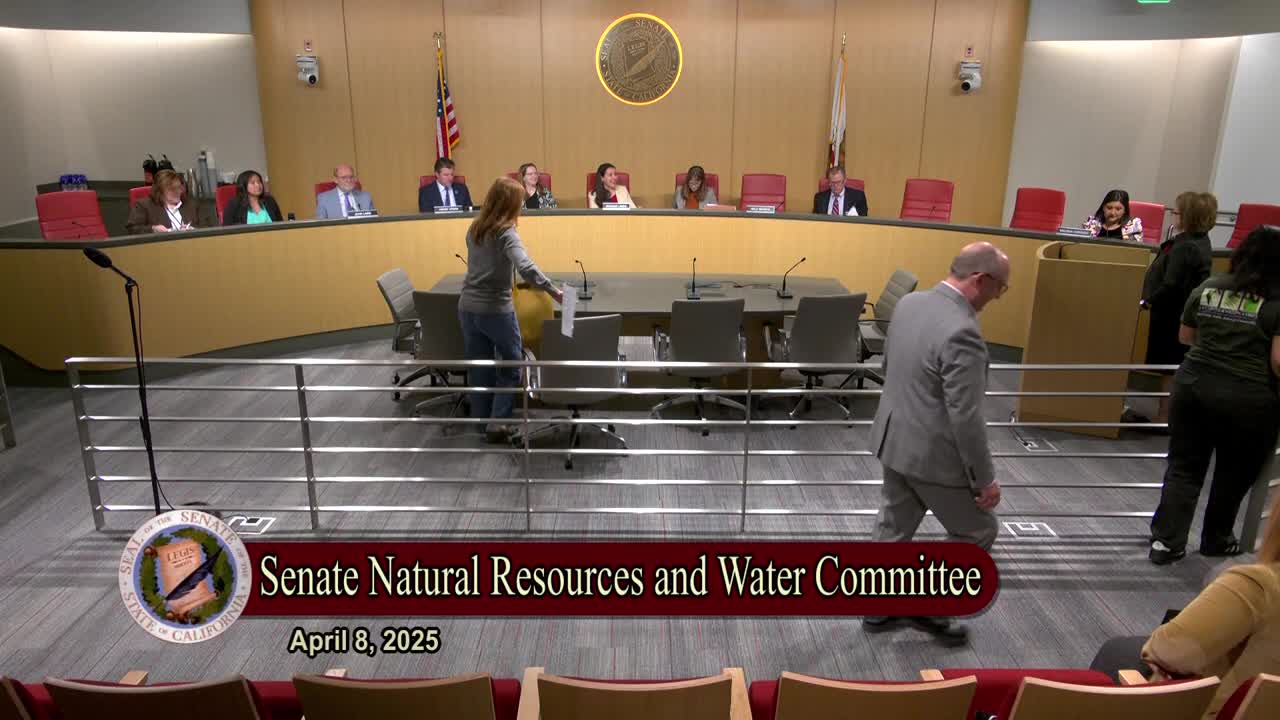
Discussed in Hearing
 9MIN
Senate Standing Committee on Natural Resources and Water
Bill Author

Bill Co-Author(s):