SB 808: Civil Actions: writs: housing development projects.
- Session Year: 2025-2026
- House: Senate
- Latest Version Date: 2025-10-10
Current Status:
Passed
(2025-10-10: Chaptered by Secretary of State. Chapter 527, Statutes of 2025.)
Introduced
In Committee
Awaiting First Chamber Vote
Passed First Chamber
In Committee
Awaiting Second Chamber Vote
Passed Second Chamber
Enacted
Existing law sets forth an expedited procedure for judicial review of decisions by a local public agency regarding the issuance, revocation, suspension, or denial of a permit involving expressive conduct protected by the First Amendment to the United States Constitution, as specified.
This bill would provide similar expedited judicial review for denials of permits or other entitlements for housing development projects or residential units at the trial and appellate level, as specified. The bill would authorize a petitioner, the Attorney General, or the Department of Housing and Community Development to file a petition for writ of mandate under these provisions. The bill would require a local agency, upon the request of an applicant or notice from the department or the Attorney General, to compile a record of its proceedings as they occur and to certify the record within 15 days of the service of a writ. The bill would require that a hearing be set no later than 45 days after the filing of the writ and that the court issue a decision no later than 30 days after the matter is submitted or 75 days after the writ was filed, whichever is earlier. The bill would authorize the temporary assignment of judicial officers to ensure the timelines are met.
Existing law sets forth an expedited procedure for judicial review of decisions by a local public agency regarding the issuance, revocation, suspension, or denial of a permit involving expressive conduct protected by the First Amendment to the United States Constitution, as specified.
This bill would provide similar expedited judicial review for denials of permits or other entitlements for housing development projects or residential units at the trial and appellate level, as specified. The bill would authorize a petitioner, the Attorney General, or the Department of Housing and Community Development to file a petition for writ of mandate under these provisions. The bill would require a local agencies, agency, upon the request of an applicant for a permit, or notice from the department or the Attorney General, to compile a record of its proceedings as they occur and to certify the record within 15 days of the service of a writ. The bill would require that a hearing be set no later than 45 days after the filing of the writ and that the court issue a decision no later than 30 days after the matter is submitted or 75 days after the writ was filed, whichever is earlier. The bill would require authorize the temporary assignment of judicial officers to ensure the timelines are met.
Existing law sets forth an expedited procedure for judicial review of decisions by a local public agency regarding the issuance, revocation, suspension, or denial of a permit involving expressive conduct protected by the First Amendment to the United States Constitution, as specified.
This bill would provide similar expedited judicial review for denials of permits or other entitlements for housing development projects or residential units at the trial and appellate level, as specified. The bill would require local agencies, upon the request of an applicant for a permit, to compile a record of its proceedings as they occur and to certify the record within 15 days of the service of a writ. The bill would require that a hearing be set no later than 45 days after the filing of the writ and that the court issue a decision no later than 30 days after the matter is submitted or 75 days after the writ was filed, whichever is earlier. The bill would require the temporary assignment of judicial officers to ensure the timelines are met.
Appeals in actions brought under Section 1094.9 shall be given preference in scheduling for hearing in the courts of appeal, and in the Supreme Court.
SEC. 2.Section 1094.9 is added to the Code of Civil Procedure, to read:1094.9.(a)Notwithstanding any other provision of this chapter, an action or proceeding to review the denial of a permit or other entitlement for a housing development project or residential dwelling unit shall be conducted pursuant to subdivision (d), if the petitioner timely provides the notice described in paragraph (4) of subdivision (d).
(b)For purposes of this section, the following definitions shall apply:
(1)Applicant means a party that has submitted an application or requested a permit for a housing development project.
(2)Department means the Department of Housing and Community Development.
(3)Disapproves the housing development project has the same meaning as described in paragraph (6) of subdivision (h) of Section 65589.5 of the Government Code.
(4)Housing development project has the meaning set forth in paragraph (2) of subdivision (h) of Section 65589.5 of the Government Code. It includes housing development projects consisting of one residential unit.
(5)Local agency means a city, county, city and county, district, or other local authority.
(c)Actions brought pursuant to this section, including when on appeal from the decision of a lower court, shall be given preference over all other civil actions before the court when setting the matter for hearing or trial and holding the hearing or trial.
(d)The procedure set forth in this subdivision, supersedes anything to the contrary set forth in this chapter.
(1)An applicant, the Attorney General, or the department may bring any action under this section. The action shall be in the form of a petition for writ of mandate pursuant to Section 1085 or 1094.5, or both, as appropriate.
(2)Upon request of the applicant, or notice from the department or the Attorney General, the local agency shall prepare the record of its proceedings concurrently with the local agencys proceedings.
(A) This record of proceedings shall include, at a minimum, the local agencys decision, filings, notices, orders, transcripts of the local agencys administrative proceedings pertaining to the housing development project, staff reports, and documents relied upon by the local agency in denying a permit or entitlement of the housing development project or residential dwelling unit.
(B)The parties shall meet and confer to certify the record of proceedings no later than 15 days after a petition for writ of mandate is served. Any disputed items shall be subject to a separate motion to be specially noticed on or before the date of the hearing on the writ petition, and in accordance with any local court rules.
(C)The cost of preparation of the administrative record shall be borne by the local agency, unless the petitioner elects to prepare the record.
(3)The record of the proceedings before the local agency shall be lodged with the court as expeditiously as possible. All or part of the record may be filed:
(A)By the petitioner with the petition or petitioners points and authorities.
(B) By the respondent with respondents points and authorities.
(C)After payment of costs by the petitioner, or:
(D)As otherwise directed by the court.
If the expense of preparing the record has been borne by the petitioner and the petitioner is the prevailing party, the expense shall be taxable as costs.
(4)A petitioner who elects to bring an action pursuant to this section shall file and serve the petition on the respondent no later than 90 days from the later of (1) the effective date of a decision of the local agency imposing conditions on, disapproving, or any other final action on a housing development project, (2) the effective date of the denial of a permit for a housing development project, or (3) any other action by which respondent disapproves the housing development project. The title page of the petition shall contain the following language in 18-point type:
ATTENTION: THIS MATTER IS ENTITLED TO PRIORITY AND SUBJECT TO THE EXPEDITED HEARING AND REVIEW PROCEDURES CONTAINED IN SECTION 1094.9 OF THE CODE OF CIVIL PROCEDURE.
(5)The clerk of the court shall set a hearing for review of the petition for writ of mandate no later than 45 calendar days from the date the petition is filed. Moving, opposition, and reply papers shall be filed as provided in the California Rules of Court. If not otherwise filed, the petitioner shall lodge the record of proceedings with the court no later than 15 calendar days before of the hearing date.
(6)Following the conclusion of the hearing, the court shall render its decision in an expeditious manner. In no event shall the decision be rendered later than 30 calendar days after the matter is submitted or 75 calendar days after the date the petition is filed pursuant to paragraph (4), whichever is earlier.
(e)If the presiding judge of the court in which the action is filed determines that, as a result of either the press of other court business or other factors, the court will be unable to meet any of the deadlines provided within this section, the presiding judge may request the temporary assignment of a judicial officer to hear the petition and render a decision within the time limits contained herein, pursuant to California Rules of Court Rule 2.812 and Section 68543.8 of the Government Code. Given the short time period involved, the request shall be entitled to priority.
Appeals in actions brought under Section 1094.9 shall be given preference in scheduling for hearing in the courts of appeal, and in the Supreme Court.
SEC. 2.Section 1094.9 is added to the Code of Civil Procedure, to read:1094.9.(a)Notwithstanding any other provision of this chapter, an action or proceeding to review the denial of a permit or other entitlement for a housing development project or residential dwelling unit shall be conducted pursuant to subdivision (d), if the petitioner timely provides the notice described in paragraph (4) of subdivision (d).
(b)For purposes of this section, the following definitions shall apply:
(1)Applicant means a party that has submitted an application or requested a permit for a housing development project.
(2)Department means the Department of Housing and Community Development.
(3)Disapproves the housing development project has the same meaning as described in paragraph (6) of subdivision (h) of Section 65589.5 of the Government Code.
(1)(4)Housing development project has the meaning set forth in paragraph (2) of subdivision (h) of Section 65589.5 of the Government Code. It includes housing development projects consisting of one residential unit.
(2)Applicant means a party that has submitted an application or requested a permit for a housing development project. (3)(5)Public Local agency means a city, county, city and county, district, or other local authority.
(4)Disapproves the housing development project means to disapprove the housing development project as defined in paragraph (6) of subdivision (h) of Section 65589.5 of the Government Code.(c)Actions brought pursuant to this section, including when on appeal from the decision of a lower court, shall be given preference over all other civil actions before the court when setting the matter for hearing or trial and holding the hearing or trial.
(d)The procedure set forth in this subdivision, supersedes anything to the contrary set forth in this chapter.
(1)An action brought by an applicant under this section An applicant, the Attorney General, or the department may bring any action under this section. The action shall be in the form of a petition for writ of mandate pursuant to Section 1085 or 1094.5, or both, as appropriate.
(2)Upon request of the applicant, or notice from the department or the Attorney General, the local agency shall prepare the record of its proceedings concurrently with the local agencys proceedings.
(A) This record of proceedings shall include, at a minimum, the local agencys decision, filings, notices, orders, transcripts of the local agencys administrative proceedings pertaining to the housing development project, staff reports, and documents relied upon by the local agency in denying a permit or entitlement of the housing development project or residential dwelling unit.
(B)The local agency parties shall meet and confer to certify the record of proceedings no later than 15 days after a petition for writ of mandate is served. Any disputed items shall be subject to a separate motion to be specially noticed on or before the date of the hearing on the writ petition, and in accordance with any local court rules.
(C)The cost of preparation of the administrative record shall be borne by the local agency, unless the petitioner elects to prepare the record.
(3)The record of the proceedings before the local agency shall be lodged with the court as expeditiously as possible. All or part of the record may be filed:
(A)By the petitioner with the petition or petitioners points and authorities.
(B) By the respondent with respondents points and authorities.
(C)After payment of costs by the petitioner, or:
(D)As otherwise directed by the court.
If the expense of preparing the record has been borne by the petitioner and the petitioner is the prevailing party, the expense shall be taxable as costs.
(4)An applicant bringing A petitioner who elects to bring an action pursuant to this section shall file and serve the petition on the respondent no later than 90 days from the later of (1) the effective date of a decision of the local agency imposing conditions on, disapproving, or any other final action on a housing development project, (2) the effective date of the denial of a permit for a housing development project, or (3) any other action by which respondent disapproves the housing development project. The title page of the petition shall contain the following language in 18-point type:
ATTENTION: THIS MATTER IS ENTITLED TO PRIORITY AND SUBJECT TO THE EXPEDITED HEARING AND REVIEW PROCEDURES CONTAINED IN SECTION 1094.9 OF THE CODE OF CIVIL PROCEDURE.
(5)The clerk of the court shall set a hearing for review of the petition for writ of mandate no later than 45 calendar days from the date the petition is filed. Moving, opposition, and reply papers shall be filed as provided in the California Rules of Court. If not otherwise filed, the petitioner shall lodge the record of proceedings with the court no later than 15 calendar days before of the hearing date.
(6)Following the conclusion of the hearing, the court shall render its decision in an expeditious manner. In no event shall the decision be rendered later than 30 calendar days after the matter is submitted or 75 calendar days after the date the petition is filed pursuant to paragraph (4), whichever is earlier.
(e)If the presiding judge of the court in which the action is filed determines that, as a result of either the press of other court business or other factors, the court will be unable to meet any of the deadlines provided within this section, the presiding judge shall may request the temporary assignment of a judicial officer to hear the petition and render a decision within the time limits contained herein, pursuant to California Rules of Court Rule 2.812 and Section 68543.8 of the Government Code. Given the short time period involved, the request shall be entitled to priority.
Appeals in actions brought under Section 1094.9 shall be given preference in scheduling for hearing in the courts of appeal, and in the Supreme Court.
SEC. 2.Section 1094.9 is added to the Code of Civil Procedure, to read:1094.9.(a)Notwithstanding any other provision of this chapter, an action or proceeding to review the denial of a permit or other entitlement for a housing development project or residential dwelling unit shall be conducted pursuant to subdivision (d), if the petitioner timely provides the notice described in paragraph (4) of subdivision (d).
(b)For purposes of this section, the following definitions shall apply:
(1)Housing development project has the meaning set forth in paragraph (2) of subdivision (h) of Section 65589.5 of the Government Code. It includes housing development projects consisting of one residential unit.
(2)Applicant means a party that has submitted an application or requested a permit for a housing development project.
(3)Public agency means a city, county, city and county, district, or other local authority.
(4)Disapproves the housing development project means to disapprove the housing development project as defined in paragraph (6) of subdivision (h) of Section 65589.5 of the Government Code.
(c)Actions brought pursuant to this section, including when on appeal from the decision of a lower court, shall be given preference over all other civil actions before the court when setting the matter for hearing or trial and holding the hearing or trial.
(d)The procedure set forth in this subdivision, supersedes anything to the contrary set forth in this chapter.
(1)An action brought by an applicant under this section shall be in the form of a petition for writ of mandate pursuant to Section 1085 or 1094.5, or both, as appropriate.
(2)Upon request of the applicant, the local agency shall prepare the record of its proceedings concurrently with the local agencys proceedings.
(A) This record of proceedings shall include, at a minimum, the local agencys decision, filings, notices, orders, transcripts of the local agencys administrative proceedings pertaining to the housing development project, staff reports, and documents relied upon by the local agency in denying a permit or entitlement of the housing development project or residential dwelling unit.
(B)The local agency shall certify the record of proceedings no later than 15 days after a petition for writ of mandate is served.
(C)The cost of preparation of the administrative record shall be borne by the local agency, unless the petitioner elects to prepare the record.
(3)The record of the proceedings before the local agency shall be lodged with the court as expeditiously as possible. All or part of the record may be filed:
(A)By the petitioner with the petition or petitioners points and authorities.
(B) By the respondent with respondents points and authorities.
(C)After payment of costs by the petitioner, or:
(D)As otherwise directed by the court.
If the expense of preparing the record has been borne by the petitioner and the petitioner is the prevailing party, the expense shall be taxable as costs.
(4)An applicant bringing an action pursuant to this section shall file and serve the petition on the respondent no later than 90 days from the later of (1) the effective date of a decision of the local agency imposing conditions on, disapproving, or any other final action on a housing development project, (2) the effective date of the denial of a permit for a housing development project, or (3) any other action by which respondent disapproves the housing development project. The title page of the petition shall contain the following language in 18-point type:
ATTENTION: THIS MATTER IS ENTITLED TO PRIORITY AND SUBJECT TO THE EXPEDITED HEARING AND REVIEW PROCEDURES CONTAINED IN SECTION 1094.9 OF THE CODE OF CIVIL PROCEDURE.
(5)The clerk of the court shall set a hearing for review of the petition for writ of mandate no later than 45 calendar days from the date the petition is filed. Moving, opposition, and reply papers shall be filed as provided in the California Rules of Court. If not otherwise filed, the petitioner shall lodge the record of proceedings with the court no later than 15 calendar days before of the hearing date.
(6)Following the conclusion of the hearing, the court shall render its decision in an expeditious manner. In no event shall the decision be rendered later than 30 calendar days after the matter is submitted or 75 calendar days after the date the petition is filed pursuant to paragraph (4), whichever is earlier.
(e)If the presiding judge of the court in which the action is filed determines that, as a result of either the press of other court business or other factors, the court will be unable to meet any of the deadlines provided within this section, the presiding judge shall request the temporary assignment of a judicial officer to hear the petition and render a decision within the time limits contained herein, pursuant to Section 68543.8 of the Government Code. Given the short time period involved, the request shall be entitled to priority.
|
Date
|
Status
|
|---|---|
| Oct 10, 2025 | Chaptered by Secretary of State. Chapter 527, Statutes of 2025. |
| Oct 10, 2025 | Approved by the Governor. |
| Sep 9, 2025 | Enrolled and presented to the Governor at 2 p.m. |
| Sep 4, 2025 | In Senate. Ordered to engrossing and enrolling. |
| Sep 3, 2025 | Read third time. Passed. (Ayes 77. Noes 0. Page 2875.) Ordered to the Senate. |
| Sep 2, 2025 | Read second time. Ordered to third reading. |
| Aug 29, 2025 | From committee: Do pass. (Ayes 14. Noes 0.) (August 29). |
| Jul 16, 2025 | July 16 set for first hearing. Placed on APPR. suspense file. |
| Jun 17, 2025 | From committee: Do pass and re-refer to Com. on APPR. (Ayes 10. Noes 0.) (June 17). Re-referred to Com. on APPR. |
| Jun 5, 2025 | Referred to Com. on JUD. |
| May 28, 2025 | In Assembly. Read first time. Held at Desk. |
| May 28, 2025 | Read third time. Passed. (Ayes 38. Noes 0. Page 1292.) Ordered to the Assembly. |
| May 27, 2025 | Read second time. Ordered to third reading. |
| May 23, 2025 | From committee: Do pass as amended. (Ayes 6. Noes 0. Page 1214.) (May 23). |
| May 23, 2025 | Read second time and amended. Ordered to second reading. |
| May 16, 2025 | Set for hearing May 23. |
| Apr 21, 2025 | April 21 hearing: Placed on APPR. suspense file. |
| Apr 10, 2025 | Set for hearing April 21. |
| Apr 9, 2025 | From committee: Do pass and re-refer to Com. on APPR. with recommendation: To consent calendar. (Ayes 13. Noes 0. Page 707.) (April 8). Re-referred to Com. on APPR. |
| Mar 27, 2025 | Set for hearing April 8. |
| Mar 12, 2025 | Referred to Com. on JUD. |
| Feb 24, 2025 | Read first time. |
| Feb 24, 2025 | From printer. May be acted upon on or after March 24. |
| Feb 21, 2025 | Introduced. To Com. on RLS. for assignment. To print. |
|
Date
|
Description
|
Location
|
Votes
|
|
|---|---|---|---|---|
| Sep 3, 2025 | SB 808 Caballero Senate Third Reading By Wicks | Assembly Floor |
Passed |
|
| Aug 29, 2025 | Do pass. | Assembly Standing Committee on Appropriations |
Passed |
|
| Jun 17, 2025 | Do pass and be re-referred to the Committee on [Appropriations] | Assembly Standing Committee on Judiciary |
Passed |
|
| May 28, 2025 | Senate 3rd Reading SB808 Caballero | Senate Floor |
Passed |
|
| May 23, 2025 | Do pass as amended | Senate Standing Committee on Appropriations |
Passed |
|
| Apr 21, 2025 | Placed on suspense file | Senate Standing Committee on Appropriations |
Passed |
|
| Apr 8, 2025 | Do pass, but first be re-referred to the Committee on [Appropriations] with the recommendation: To Consent Calendar | Senate Standing Committee on Judiciary |
Passed |
This list shows positions taken on this bill by organizations on the date displayed, which is linked to the original source.
Positions by individuals are not included.
|
Organization
|
Position
|
Date
|
|---|---|---|
| Abundant Housing LA | ** Support | |
| Affordable Housing Advocates | ** Support | |
| Attorney General Rob Bonta | ** Support | |
| a wide coalition of developers | ** Support | |
| California Apartment Association | ** Support | |
| California Building Industry Association | ** Support | |
| California community builders | ** Support | |
| California YIMBY | ** Support | |
| Circulate San Diego | ** Support | |
| Culver City Democratic Club | ** Support | |
| East Bay YIMBY | ** Support | |
| Grow the Richmond | ** Support | |
| Habitat For Humanity California | ** Support | |
| Inner City Law Center | ** Support | |
| Judicial Council of California | ** Against | |
| Mountain View YIMBY | ** Support | |
| Napa-Solano for Everyone | ** Support | |
| Northern Neighbors | ** Support | |
| Peninsula for Everyone | ** Support | |
| Santa Cruz Yimby | ** Support | |
| Santa Rosa Yimby | ** Support | |
| Sf Yimby | ** Support | |
| South Bay Yimby | ** Support | |
| South Pasadena Residents for Responsible Growth | ** Support | |
| SPUR | ** Support | |
| The Two Hundred | ** Support | |
| Ventura County YIMBY | ** Support | |
| Yimby Action | ** Support | |
| YIMBY LA | ** Support | |
| Yimby SLO | ** Support |
SENATE THIRD READING
STR Bill Id:SB 808
Author:(Caballero)
As Amended Ver:May 23, 2025
Majority vote
SUMMARY
Provides for the expedited judicial review of writs of mandate filed as a result of the denial of a permit or other entitlement for housing development projects or residential units at the trial and appellate level.
Major Provisions
- Authorizes a project applicant, the Attorney General, or the Department of Housing and Community Development to bring an action, seeking a writ of mandate, following the denial of a permit or other entitlement for a housing development project or residential dwelling.
- Requires a local agency prepare the record of its proceedings concurrently with the local agency′s proceedings upon the request of the applicant, the Attorney General or Department of Housing and Community Development.
- Requires the parties to a suit brought pursuant to 1) to meet and confer to certify the record of proceedings no later than 15 days after a petition for writ of mandate is served, and that any disputed items be subject to a separate motion to be specially noticed on or before the date of the hearing on the writ petition, and in accordance with any local court rules.
- Requires the cost of preparation of the administrative record to be borne by the local agency, unless the petitioner elects to prepare the record.
- Requires the record of the proceedings before the local agency to be lodged with the court as expeditiously as possible, as specified.
- Requires a petitioner who elects to bring an action pursuant to this bill to file and serve the petition on the respondent no later than 90 days from the later of the following:
- The effective date of a decision of the local agency imposing conditions on, disapproving, or any other final action on a housing development project;
- The effective date of the denial of a permit for a housing development project; or
- Any other action by which respondent disapproves the housing development project.
- Requires the title page of the petition for an action brought pursuant to this bill to contain the following language in 18-point type:
″ATTENTION: THIS MATTER IS ENTITLED TO PRIORITY AND SUBJECT TO THE EXPEDITED HEARING AND REVIEW PROCEDURES CONTAINED IN SECTION 1094.9 OF THE CODE OF CIVIL PROCEDURE.″
- Requires, upon a filing of a petition brought pursuant to this bill, the clerk of the court to set a hearing for review of the petition for writ of mandate no later than 45 calendar days from the date the petition is filed.
- Requires all moving, opposition, and reply papers associated with an action brought pursuant to this bill to be filed as provided in the California Rules of Court and that the petitioner must lodge the record of proceedings with the court no later than 15 calendar days before the hearing date.
- Requires a court to render a decision in a case brought pursuant to this bill no later than 30 calendar days after the matter is submitted or 75 calendar days after the date the petition is filed.
- Authorizes the presiding judge of the court in which the action is filed, if the presiding judge determines the court will be unable to meet any of the deadlines provided in 10), to request the temporary assignment of a judicial officer to hear the petition and render a decision within the time limits contained in the bill and as specified in the California Rules of Court.
- Requires an appeal of a trial court decision rendered in an action authorized by this bill to be given scheduling preference in the courts of appeal and California Supreme Court.
- Defines the following terms:
- ″Applicant″ means a party that has submitted an application or requested a permit for a housing development project;
- ″Department″ means the Department of Housing and Community Development;
- ″Disapproves the housing development project″ has the same meaning as provided in the Housing Accountability Act and specified in 8) of Existing Law below;
- ″Housing development project″ has the same meaning as provided in the Housing Accountability Act and specified in 9) of Existing Law below; and
- ″Local agency″ means a city, county, city and county, district, or other local authority.
COMMENTS
Seeking to address California′s ongoing housing shortage, in recent years the Legislature has enacted a flurry of new laws aimed at compelling local agencies to follow through on their commitments to construct new housing as identified in the local agency′s general plan. Some of the new statutes, most notably the ″builders remedy″ found in the Housing Accountability Act (AB 1893 (Wicks) Chap. 268, Stats. 2024), contains strong private enforcement provisions while other statutes largely defer enforcement to the Attorney General and Department of Housing and Community Development. Regardless of how new housing laws are to be enforced, the litigation process can be protracted and further delay the deployment of needed housing. Seeking to streamline some housing litigation, this bill would compel California courts to fast-track judicial review of writs of mandate filed as a result of the denial of a permit or other entitlement for housing development projects or residential units.
One means of enforcing state housing laws is to challenge a local agency′s decision through a writ of mandate. A writ of mandate is designed to compel a government agency to take action in compliance with the law. This bill would require the California courts to significantly expedite the litigation process for evaluating the merits of these cases. This bill would require the clerk of the court, upon the filing of a writ of mandate in accordance with this bill to set a hearing for review of the petition no later than 45 days from the date the petition is filed. The bill provides for expedited timelines for filing the moving and opposing papers, as well as submitting the record of the proceedings underlying the local agency′s decision with the court. The bill would then require the judicial officer assigned to the matter to issue a decision within 30 calendar days after the matter were submitted, or 75 days after the petition were filed, whichever is earlier. The bill similarly mandates that all appeals to the court of appeal or the California Supreme Court must be granted scheduling preferences, although the language does not mandate compliance deadlines on the appellate courts. Seeking to relieve some of the burden of these expedited timelines on the judicial branch, the bill authorizes the presiding judge of a specific county superior court to authorize the temporary assignment of a judicial officer to hear a petition and render a decision on the petition within the time limits contained in the bill.
Unlike most civil litigation, the writ of mandate process is designed to move in a relatively expeditious manner. Because the writ is focused on the validity of a government agency′s decision, most writ matters (typically know as traditional mandamus) do not involve the introduction of any evidence outside of the agency′s formal record. Given the lack of discovery in these matters, the cases can proceed to the merits relatively quickly.
When evaluating a writ, the court looks to determine if the agency acted in a manner that abused its discretion, or acted in a manner contrary to the evidence in the administrative record. (See Monterey Coastkeeper v. Central Coast Regional Water Board (2022) 76 Cal.App.5th 1, 18.) Indeed, a court may only overturn the agency′s decision if the court determines that the agency, ″has not proceeded in the manner required by law, the order or decision is not supported by the findings, or the findings are not supported by the evidence.″ (Citizens of Open Government v. City of Lodi (2012) 205 Cal.App.4th 296, 310.) Similar to the limited discovery needed in these matters, the limited scope of review enables a court to rule relatively quickly on the merits of the case. Despite the relatively expeditious process for reviewing writ of mandates, the proponents of this bill rightly note that the process can still take months or even years to complete, especially if the trial court′s decision is appealed by a local agency.
California′s Constitution recognizes an explicit separation of powers between the three branches of government. Article III, section 3, of the California Constitution provides, ″The powers of State government are legislative, executive, and judicial. Persons charged with the exercise of one power may not exercise either of the others except as permitted by this Constitution.″ While California courts have declined to adopt strict demarcations between the three branches of government, and as it relates to the interplay between the courts and the Legislature, the Supreme Court has generally upheld Legislative mandates to the court so long as those mandates do not ″defeat″ or ″materially impair″ the core constitutional functions of the courts. (People v. Bunn (2002) 27 Cal.4th 1, 16.)
Because this bill adopts very strict deadlines for the court to rule on the merits of a case, this bill potentially represents a significant legislative overstep into the core judicial functions: specifically, the ability to control judicial calendars. Although courts have held that statutes that provide the aspirational timelines for deciding cases are constitutional (see, Saltonstall v. City of Sacramento (2014) 231 Cal.App.4th 837, 855-856), the lack of clear case law regarding legislation imposing mandatory deadlines on courts means that such bills are on much shakier constitutional ground. This is why, for example, bills seeking to streamline judicial review of cases under the California Environmental Quality Act (CEQA) consistently add the phrase, ″to the extent feasible″ to all court timelines. The feasibility language and timing flexibility offered in the CEQA streamlining bills began appearing after the courts struck down the Legislature′s first attempt at CEQA streamlining. (Planning and Conservation League v. State of California (2012) RG12626904 (Alameda Sup. Ct.).) Although the Planning and Conservation League decision largely rested on the Legislature′s impermissible bypassing of the trial courts for CEQA matters, the strict deadlines imposed by the original bill, AB 900 (Buchanan) Chap. 354, Stats. 2011, loomed over the case, leading to the inclusion of feasibility language in future CEQA streamlining measures.
According to the Author
California faces a daunting housing affordability crisis and the state′s shortage of housing plays a central role. Over the past decade, the Legislature has taken action to encourage housing production through various means, including permit streamlining, increased densities, by right processes, and significant financial investments. As a body, the Legislature has passed over a dozen ministerial approval bills that require local governments to use quick, clear, and objective processes to evaluate housing proposals in accordance with their own local plans and state law.
Unfortunately, some local agencies still knowingly deny housing permits in violation of state law. When a local agency rejects a project on an impermissible basis it creates delays that don′t just harm developers and housing projects, but exacerbates our state′s affordability crisis and prevents desperate California families from finding a home.
SB 808 brings swift resolution to enforcement actions, allow projects to move forward quickly, and incentivize local governments to process applications in accordance with state law without altering the authority of local governments by creating an expedited judicial review process. Expediting judicial review in these instances, as we have in other ministerial processes, ensures a timely restoration and is an important step to avoid unnecessary delay and to tackle California′s housing shortage.
Arguments in Support
This bill is sponsored by Attorney General Rob Bonta and is supported by a wide coalition of developers and affordable housing advocates. In support of this bill, the Attorney General states:
California is facing a housing shortage and affordability crisis of epic proportions. According to the California Department of Housing and Community Development (HCD), California will need an estimated 2.5 million new homes by 2030 in order to meet housing demand. At least one million of those homes must meet the needs of lower-income households. Yet, California is permitting, on average, only 110,000 new homes per year. Millions of Californians struggle to afford housing and one in three households in the state doesn′t earn enough money to meet their basic needs. The only way to solve this crisis is for every city and county to do their part to address it.
The Legislature has passed strong housing laws in recent years to help build new homes and make them more affordable and accessible to all Californians. These laws are designed to ensure that local governments are planning to meet their fair share of the regional and statewide housing needs, and use quick and clear processes to make decisions about housing proposals in accordance with those plans and state law.
Unfortunately, sometimes legal disputes arise, which can take years to resolve. In the meantime, homes that California families need go unbuilt, and lengthy delays can stop a project from moving forward altogether. Delay and uncertainty are especially harmful for small homebuilders, who cannot afford to absorb significant litigation costs or the expenses of lengthy project delays, and are thus effectively blocked from using the laws that the Legislature has passed to encourage home building.
When housing project applications are improperly denied under current law, the Attorney General, or the project applicant, can bring an enforcement action to compel the local government to comply with state law. SB 808 would expedite judicial review of these actions to enforce state housing laws, including the Housing Accountability Act (HAA), ministerial approval laws, and accessory-dwelling unit (ADU) laws. The expedited writ procedure in SB 808 preserves existing substantive law and would not alter the authority of local governments, but would bring swifter resolution to these disputes, which would resolve disputes more efficiently and allow more housing projects to move forward more quickly.
Arguments in Opposition
The Judicial Council of California opposes this measure due to the potentially significant impacts the bill poses to court resources. In opposition, the Council states:
The Judicial Council opposes Senate Bill 808, which establishes an expedited judicial review process for a local agency′s decision to deny a permit for a new housing development or residential unit, because it (1) establishes an unreasonable expedited judicial review process for a local agency′s decision to deny a permit for a new housing development or residential unit, (2) requires the court to hear the matter and issue a decision within unrealistic timeframes, and (3) requires the temporary assignment of judicial officers, which the courts have no ability to adequately accommodate.
Our courts already have heavily impacted calendars which have only been compounded by a bevy of legislatively mandated accelerated calendaring requirements with no new funding for additional judges to handle more cases.
The bill will have significant calendaring impacts and create unnecessary workload pressure to ensure these specific actions might be scheduled within the set timeframe. In order to attempt to meet the timelines, the courts would need to rely on the Temporary Assigned Judges Program. This program has a set budget and a limited number of judges available in any given year. If this bill creates a high demand for temporary assigned judges, the program may not have the funding and judges available to be responsive to court need.
FISCAL COMMENTS
According to the Assembly Appropriations Committee:
- Cost pressures (Trial Court Trust Fund, General Fund) of an unknown but potentially significant amount to the courts to adjudicate affected petitions on an expedited basis. Judicial Council, which opposes this bill, anticipates ″unknown, likely significant calendaring and workload impacts on the courts″ to meet the bill′s timelines. Judicial Council notes that the cases affected by the bill are often complex and lengthy; mandating expedited review of these cases will draw significant court time and resources away from other cases pending before the courts. Although courts are not funded on the basis of workload, increased pressure on the Trial Court Trust Fund may create a demand for increased funding for courts from the General Fund. The fiscal year 2025-26 state budget provides $82 million ongoing General Fund to the Trial Court Trust Fund for court operations.
- Likely minor and absorbable costs, if any, to the Department of Justice (DOJ) and HCD to meet the bill′s expedited procedural timelines. DOJ reports the department is already authorized to file the petitions affected by the bill and it will not incur additional workload costs to meet the bill′s timelines. HCD anticipates no fiscal impact.
- Non-reimbursable costs to local agencies to prepare administrative records and engage in litigation on the expedited timelines established by the bill.
VOTES
SENATE FLOOR: 38-0-2
YES: Allen, Alvarado-Gil, Archuleta, Arreguín, Ashby, Becker, Blakespear, Cabaldon, Caballero, Cervantes, Choi, Cortese, Dahle, Durazo, Gonzalez, Grayson, Grove, Hurtado, Jones, Laird, McGuire, McNerney, Menjivar, Niello, Ochoa Bogh, Padilla, Pérez, Richardson, Rubio, Seyarto, Smallwood-Cuevas, Stern, Strickland, Umberg, Valladares, Wahab, Weber Pierson, Wiener
ABS, ABST OR NV: Limón, Reyes
ASM JUDICIARY: 10-0-2
YES: Kalra, Bauer-Kahan, Bryan, Connolly, Harabedian, Pacheco, Papan, Sanchez, Stefani, Zbur
ABS, ABST OR NV: Dixon, Macedo
ASM APPROPRIATIONS: 14-0-1
YES: Wicks, Sanchez, Arambula, Calderon, Caloza, Elhawary, Fong, Mark González, Ahrens, Pacheco, Pellerin, Solache, Ta, Tangipa
ABS, ABST OR NV: Dixon
UPDATED
VERSION: May 23, 2025
CONSULTANT: Nicholas Liedtke / JUD. / (916) 319-2334 FN: 0001295
Date of Hearing: July 16, 2025
ASSEMBLY COMMITTEE ON APPROPRIATIONS
Buffy Wicks, Chair
SBPCA Bill Id:SB 808
Author:(Caballero) – As Amended Ver:May 23, 2025
Policy Committee: | Judiciary | Vote: | 10 - 0 |
|
| ||
|
|
Urgency: No State Mandated Local Program: No Reimbursable: No
SUMMARY:
This bill requires the courts to expedite specified writs of mandate related to the denial of housing projects by local agencies.
Specifically, among other provisions, this bill:
- Authorizes a project applicant, the Attorney General, or the Department of Housing and Community Development (HCD) to bring an action seeking writ of mandate, following the denial of a permit or other entitlement for a housing development project or residential dwelling.
- Establishes expedited timelines by which parties must meet and confer, file and serve petitions and other related papers, and lodge with the court records of proceedings before the local agency, as specified.
- Requires the cost of preparing the administrative record be borne by the local agency, unless the petitioner elects to prepare the record.
- Requires the clerk of the court to set a hearing for review no later than 45 calendar days from the date an affected petition is filed.
- Requires a court to render a decision no later than 30 calendar days after an affected matter is submitted or 75 calendar days after the date an affected petition is filed.
- Authorizes, if a presiding judge determines the court is unable to meet the deadlines provided in item 5), above, the presiding judge to request the temporary assignment of a judicial officer to hear a petition and render a decision within the bill’s time limits and as specified in the California Rules of Court.
- Requires appeals of actions affected by the bill be given scheduling preference in the courts of appeal and California Supreme Court.
FISCAL EFFECT:
- Cost pressures (Trial Court Trust Fund, General Fund) of an unknown but potentially significant amount to the courts to adjudicate affected petitions on an expedited basis. Judicial Council, which opposes this bill, anticipates “unknown, likely significant calendaring and workload impacts on the courts” to meet the bill’s timelines. Judicial Council notes that the cases affected by the bill are often complex and lengthy; mandating expedited review of these cases will draw significant court time and resources away from other cases pending before the courts. Although courts are not funded on the basis of workload, increased pressure on the Trial Court Trust Fund may create a demand for increased funding for courts from the General Fund. The fiscal year 2025-26 state budget provides $82 million ongoing General Fund to the Trial Court Trust Fund for court operations.
- Likely minor and absorbable costs, if any, to the Department of Justice (DOJ) and HCD to meet the bill’s expedited procedural timelines. DOJ reports the department is already authorized to file the petitions affected by the bill and it will not incur additional workload costs to meet the bill’s timelines. HCD anticipates no fiscal impact.
- Non-reimbursable costs to local agencies to prepare administrative records and engage in litigation on the expedited timelines established by the bill.
COMMENTS:
- Background. When a local agency improperly denies certain housing project applications, existing law allows the Attorney General, HCD, or a project applicant (“petitioner”) to file a petition in court seeking a writ of mandate to require the local agency to follow the applicable state law. If the petitioner prevails, this forces the local agency to approve the contested housing project application and allows the project to move forward. According to the Attorney General, the sponsor of this bill, these legal disputes can take years to resolve, sometimes stopping housing projects completely because of the time and expense needed to litigate to obtain approval. This bill seeks to speed up this litigation by imposing expedited timelines for filing and adjudication of petitions contesting certain local agency housing decisions. According to the Attorney General, these expedited procedures would apply to Housing Accountability Act, ministerial approval, and accessory-dwelling unit law cases.
While existing law allows for streamlined adjudication of some other development-related proceedings, there are key differences between those existing procedures and the procedures established by this bill. For example, California Environmental Quality Act (CEQA) streamlining measures require parties to pay significantly higher than average filing fees to help offset the staffing and operational costs needed to process cases more quickly. Some CEQA filing fees range from $120,000 to $180,000 per case. This bill does not authorize higher filing fees, so the costs associated with quickly adjudicating the cases must be borne by the courts instead of the parties to the litigation. Additionally, this bill imposes rigid timelines by which the courts must rule on affected petitions. In contrast, CEQA streamlining measures generally require the courts to adhere to expedited timelines “to the extent feasible,” providing the courts some discretion over the timing of each case. This bill’s more rigid approach creates implementation challenges for the courts and, as discussed in more detail in the analysis of this bill by the Assembly Committee on Judiciary, poses “significant constitutional questions,” potentially overstepping the Legislature’s authority to dictate court operations.
- Support and Opposition. In support of this bill, the California Home Building Alliance, a coalition of pro-housing organizations, writes:
Legally impermissible denials of housing project permits, made by local agencies in violation of state law, are a significant contributing factor to the statewide housing shortage California faces…When a local agency denies a project on an impermissible basis it creates delays that don’t just harm developers and housing projects, but exacerbate our state’s affordability crisis and prevent desperate California families from finding a home. Expediting judicial review in these instances, as we have in other ministerial situations, is an important step to tackle California’s housing shortage.
Judicial Council writes in opposition, saying the bill:
(1) establishes an unreasonable expedited judicial review process for a local agency’s decision to deny a permit for a new housing development or residential unit, (2) requires the court to hear the matter and issue a decision within unrealistic timeframes, and (3) requires the temporary assignment of judicial officers, which the courts have no ability to adequately accommodate. Our courts already have heavily impacted calendars which have only been compounded by a bevy of legislatively mandated accelerated calendaring requirements with no new funding for additional judges to handle more cases. There are simply not sufficient numbers of available judicial officers to comply with the requirements in this bill.
Analysis Prepared by: Annika Carlson / APPR. / (916) 319-2081
Date of Hearing: June 17, 2025
ASSEMBLY COMMITTEE ON JUDICIARY
Ash Kalra, Chair
SBPCA Bill Id:SB 808
Author:(Caballero) – As Amended Ver:May 23, 2025
SENATE VOTE: 38-0
SUBJECT: Civil Actions: writs: housing development projects
KEY ISSUE: should writs of mandate that are filed to contest the denial of permits or other entitlements related to housing projects be entitled to scheduling preference within California’s court system?
SYNOPSIS
As California’s chronic shortage of available and affordable housing worsened over the past decade, the Legislature has aggressively moved to bolster enforcement of the state’s housing laws. Although the Housing Accountability Act provides broad standing to enforce some housing laws, most of the new enforcement authority has been vested in the Department of Housing and Community Development and the California Attorney General. While the Department and Attorney General have aggressively utilized their new authority, even when successful, the lengthy civil litigation process delays the development of new housing units across California.
Seeking to expedite the resolution of cases involving writs of mandate related to a local agency’s denial of specified housing projects, this bill requires California’s judicial branch to fast-track this type of litigation. This bill imposes ambitious litigation timelines on these cases, requiring the trial court to render a decision on the merits of a case within 30 calendar days after the matter is submitted or 75 days after the petition was filed, whichever is earlier. In order to meet these timelines, the bill requires litigants to file various litigation documents in an expedited manner. Finally, the bill requires the appellate courts to expedite these cases but does not impose specific timelines on the courts of appeal or California Supreme Court.
This bill is sponsored by Attorney General Rob Bonta and is supported by a broad coalition of developers and housing advocates. The proponents of the bill highlight the urgent need to expedite housing law related litigation in order to ensure that local governments cannot use the courts to continue to skirt their responsibility to develop needed housing. This bill is opposed by the Judicial Council of California, which contends that the strict litigation deadlines imposed by the bill will be nearly impossible for the courts to implement without diverting resources away from other important civil legal matters. Given the incredible need to develop more housing in this state, and in order to ensure that the bill is successful and that litigation cannot be used as a tool to delay housing development, the proponents of this bill are strongly encouraged to seek compromise with the Judicial Council.
SUMMARY: Provides for the expedited judicial review of writs of mandate filed as a result of the denial of a permit or other entitlement for housing development projects or residential units at the trial and appellate level. Specifically, this bill:
- Authorizes a project applicant, the Attorney General, or the Department of Housing and Community Development to bring an action, seeking a writ of mandate, following the denial of a permit or other entitlement for a housing development project or residential dwelling.
- Requires a local agency prepare the record of its proceedings concurrently with the local agency’s proceedings upon the request of the applicant, the Attorney General or Department of Housing and Community Development.
- Requires the parties to a suit brought pursuant to 1) to meet and confer to certify the record of proceedings no later than 15 days after a petition for writ of mandate is served, and that any disputed items be subject to a separate motion to be specially noticed on or before the date of the hearing on the writ petition, and in accordance with any local court rules.
- Requires the cost of preparation of the administrative record to be borne by the local agency, unless the petitioner elects to prepare the record.
- Requires the record of the proceedings before the local agency to be lodged with the court as expeditiously as possible, as specified.
- Requires a petitioner who elects to bring an action pursuant to this bill to file and serve the petition on the respondent no later than 90 days from the later of the following:
- The effective date of a decision of the local agency imposing conditions on, disapproving, or any other final action on a housing development project;
- The effective date of the denial of a permit for a housing development project; or
- Any other action by which respondent disapproves the housing development project.
- Requires the title page of the petition for an action brought pursuant to this bill to contain the following language in 18-point type:
“ATTENTION: THIS MATTER IS ENTITLED TO PRIORITY AND SUBJECT TO THE EXPEDITED HEARING AND REVIEW PROCEDURES CONTAINED IN SECTION 1094.9 OF THE CODE OF CIVIL PROCEDURE.”
- Requires, upon a filing of a petition brought pursuant to this bill, the clerk of the court to set a hearing for review of the petition for writ of mandate no later than 45 calendar days from the date the petition is filed.
- Requires all moving, opposition, and reply papers associated with an action brought pursuant to this bill to be filed as provided in the California Rules of Court and that the petitioner must lodge the record of proceedings with the court no later than 15 calendar days before the hearing date.
- Requires a court to render a decision in a case brought pursuant to this bill no later than 30 calendar days after the matter is submitted or 75 calendar days after the date the petition is filed.
- Authorizes the presiding judge of the court in which the action is filed, if the presiding judge determines the court will be unable to meet any of the deadlines provided in 10), to request the temporary assignment of a judicial officer to hear the petition and render a decision within the time limits contained in the bill and as specified in the California Rules of Court.
- Requires an appeal of a trial court decision rendered in an action authorized by this bill to be given scheduling preference in the courts of appeal and California Supreme Court.
- Defines the following terms:
- “Applicant” means a party that has submitted an application or requested a permit for a housing development project;
- “Department” means the Department of Housing and Community Development;
- “Disapproves the housing development project” has the same meaning as provided in the Housing Accountability Act and specified in 8) of Existing Law below;
- “Housing development project” has the same meaning as provided in the Housing Accountability Act and specified in 9) of Existing Law below; and
- “Local agency” means a city, county, city and county, district, or other local authority.
EXISTING LAW:
- Provides that a writ of mandate may be issued by any court to any inferior tribunal, corporation, board, or person, to compel the performance of an act which the law specially enjoins, as a duty resulting from an office, trust, or station, or to compel the admission of a party to the use and enjoyment of a right or office to which the party is entitled, and from which the party is unlawfully precluded by that inferior tribunal, corporation, board, or person. (Code of Civil Procedure Section 1085 (a).)
- Provides that where a petition for writ of mandate is filed in the trial court and where a record of the proceedings to be reviewed has been filed with the petition or where no record of a proceeding is required, the respondent must answer or otherwise respond within 30 days after service of the petition. (Code of Civil Procedure Section 1089.5.)
- Provides that where a petition for a writ of mandate is filed in the trial court, a record of the proceedings is required but is not filed with the petition, the party upon whom the petition has been served, including any real party in interest, must answer or otherwise respond within 30 days following receipt of a copy of the record. (Ibid.)
- Provides that where the writ is issued for the purpose of inquiring into the validity of any final administrative order or decision made as the result of a proceeding in which by law a hearing is required to be given, evidence is required to be taken, and discretion in the determination of facts is vested in the inferior tribunal, corporation, board, or officer, the case shall be heard by the court sitting without a jury. (Code of Civil Procedure Section 1094.5 (a).)
- Requires, as a part of the General Plan Law, local agencies to develop a housing element within their general plan that consists of an identification and analysis of existing and projected housing needs and a statement of goals, policies, quantified objectives, financial resources, and scheduled programs for the preservation, improvement, and development of housing, including identifying sites for adequate housing. (Government Code Section 65583.)
- Prohibits, in accordance with the Housing Accountability Act, local agencies from disapproving a housing development project for very low, low-, or moderate-income households, or an emergency shelter, or conditioning approval in a manner that renders the project or shelter infeasible unless the local agency makes written findings based upon a preponderance of the evidence in the record as to one of several specified justifications for the denial. (Government Code Section 65589.5 (d).)
- Authorizes a project applicant, a person eligible to live in a housing development or emergency shelter, or a housing organization to bring an action to enforce the Housing Accountability Act. (Government Code Section 65589 (k).)
- Provides, for the purpose of the Housing Accountability Act, “disapprove the housing development project” includes any instance in which a local agency does any of the following:
- Votes or takes final administrative action on a proposed housing development project application and the application is disapproved, including any required land use approvals or entitlements necessary for the issuance of a building permit;
- Fails to approve or disapprove a project within the timelines specified in the Planning and Zoning Law for development projects;
- Fails to approve or disapprove a project within the timelines specified in the Planning and Zoning Law for housing projects;
- Fails to cease a course of conduct undertaken for an improper purpose, such as to harass or to cause unnecessary delay or needless increases in the cost of the proposed housing development project, that effectively disapproves the proposed housing development without taking final administrative action, as specified;
- Determines that an application is incomplete on the basis of the omission of an item not on the agency’s checklist;
- Imposes prohibited requirements relating to the application; or
- Fails to comply with provisions of the California Environmental Quality Act, as specified. (Government Code Section 65589.5 (h)(6).)
- Defines, for the purpose of the Housing Accountability Act, “housing development project” to mean a project that consists of any of the following:
- Residential units only;
- Mixed use development meeting specified thresholds for the inclusion of residential units;
- Transitional housing or supportive housing; or
- Farm worker housing, as specified. (Government Code Section 65589.5 (h)(2).)
FISCAL EFFECT: As currently in print this bill is keyed fiscal.
COMMENTS: Seeking to address California’s ongoing housing shortage, in recent years the Legislature has enacted a flurry of new laws aimed at compelling local agencies to follow through on their commitments to construct new housing as identified in the local agency’s general plan. Some of the new statutes, most notably the “builders remedy” found in the Housing Accountability Act (AB 1893 (Wicks) Chap. 268, Stats. 2024), contain strong private enforcement provisions while other statutes largely defer enforcement to the Attorney General and Department of Housing and Community Development. Regardless of how new housing laws are to be enforced, the litigation process can be protracted and further delay the deployment of needed housing. Seeking to streamline some housing litigation, this bill would compel California courts to fast-track judicial review of writs of mandate filed as a result of the denial of a permit or other entitlement for housing development projects or residential units. In support of this bill, the author states:
California faces a daunting housing affordability crisis and the state’s shortage of housing plays a central role. Over the past decade, the Legislature has taken action to encourage housing production through various means, including permit streamlining, increased densities, by right processes, and significant financial investments. As a body, the Legislature has passed over a dozen ministerial approval bills that require local governments to use quick, clear, and objective processes to evaluate housing proposals in accordance with their own local plans and state law.
Unfortunately, some local agencies still knowingly deny housing permits in violation of state law. When a local agency rejects a project on an impermissible basis it creates delays that don’t just harm developers and housing projects, but exacerbates our state’s affordability crisis and prevents desperate California families from finding a home.
SB 808 brings swift resolution to enforcement actions, allow projects to move forward quickly, and incentivize local governments to process applications in accordance with state law without altering the authority of local governments by creating an expedited judicial review process. Expediting judicial review in these instances, as we have in other ministerial processes, ensures a timely restoration and is an important step to avoid unnecessary delay and to tackle California’s housing shortage.
In recent years, the Legislature has focused on expanding enforcement of other state housing laws. In 2017, the Legislature authorized the Department of Housing and Community Development to unilaterally enforce most state housing laws without requiring the intervention of the Attorney General. (AB 72 (Santiago) Chap. 370, Stats. 2017.) Similarly, in 2023, the Legislature provided the Department of Housing and Community Development and the Attorney General with an unconditional right to intervene in private litigation to enforce state housing laws whenever the state’s interests were at issue in the case. (AB 1485 (Haney) Chap. 762, Stats. 2023.) In addition to expanding the state’s role in policing local agency decision making regarding housing development, the Legislature dramatically strengthened two critical housing laws last year. First, the Legislature Act enacted AB 1893 (Wicks) Chap. 268, Stats. 2024, which dramatically strengthened the “builders remedy” within the Housing Accountability Act. Second, the Legislature moved to significantly strengthen the fine and fee recovery provisions of the housing element law whenever actions are brought by the Department of Housing and Community Development, or the Attorney General. (SB 1037 (Wiener) Chap. 293, Stats. 2024.) While these efforts have significantly strengthened the state’s ability to enforce housing laws, the lengthy court processes required to force local governments to comply with their obligations under the law can significantly impede the construction of new housing.
This bill provides for expedited judicial review of writs of mandate arising from a local agency’s decision to impede housing development. One means of enforcing state housing laws is to challenge a local agency’s decision through a writ of mandate. A writ of mandate is designed to compel a government agency to take action in compliance with the law. This bill would require the California courts to significantly expedite the litigation process for evaluating the merits of these cases.
This bill would require the clerk of the court, upon the filing of a writ of mandate in accordance with this bill to set a hearing for review of the petition no later than 45 days from the date the petition is filed. The bill provides for expedited timelines for filing the moving and opposing papers, as well as submitting the record of the proceedings underlying the local agency’s decision with the court. The bill would then require the judicial officer assigned to the matter to issue a decision within 30 calendar days after the matter were submitted, or 75 days after the petition were filed, whichever is earlier. The bill similarly mandates that all appeals to the court of appeal or the California Supreme Court must be granted scheduling preferences, although the language does not mandate compliance deadlines on the appellate courts. Seeking to relieve some of the burden of these expedited timelines on the judicial branch, the bill authorizes the presiding judge of a specific county superior court to authorize the temporary assignment of a judicial officer to hear a petition and render a decision on the petition within the time limits contained in the bill.
The writ of mandate process. Unlike most civil litigation, the writ of mandate process is designed to move in a relatively expeditious manner. Because the writ is focused on the validity of a government agency’s decision, most writ matters (typically know as traditional mandamus) do not involve the introduction of any evidence outside of the agency’s formal record. Given the lack of discovery in these matters, the cases can proceed to the merits relatively quickly.
When evaluating a writ, the court looks to determine if the agency acted in a manner that abused its discretion, or acted in a manner contrary to the evidence in the administrative record. (See Monterey Coastkeeper v. Central Coast Regional Water Board (2022) 76 Cal.App.5th 1, 18.) Indeed, a court may only overturn the agency’s decision if the court determines that the agency, “has not proceeded in the manner required by law, the order or decision is not supported by the findings, or the findings are not supported by the evidence.” (Citizens of Open Government v. City of Lodi (2012) 205 Cal.App.4th 296, 310.) Similar to the limited discovery needed in these matters, the limited scope of review enables a court to rule relatively quickly on the merits of the case. Despite the relatively expeditious process for reviewing writ of mandates, the proponents of this bill rightly note that the process can still take months or even years to complete, especially if the trial court’s decision is appealed by a local agency.
While the stringent timelines in this bill are understandable in light of California’s housing crisis they pose significant constitutional questions. California’s Constitution recognizes an explicit separation of powers between the three branches of government. Article III, section 3, of the California Constitution provides, "The powers of State government are legislative, executive, and judicial. Persons charged with the exercise of one power may not exercise either of the others except as permitted by this Constitution." While California courts have declined to adopt strict demarcations between the three branches of government, and as it relates to the interplay between the courts and the Legislature, the Supreme Court has generally upheld Legislative mandates to the court so long as those mandates do not "defeat" or "materially impair" the core constitutional functions of the courts. (People v. Bunn (2002) 27 Cal.4th 1, 16.)
Because this bill adopts very strict deadlines for the court to rule on the merits of a case, this bill potentially represents a significant legislative overstep into the core judicial functions: specifically, the ability to control judicial calendars. Although courts have held that statutes that provide the aspirational timelines for deciding cases are constitutional (see, Saltonstall v. City of Sacramento (2014) 231 Cal.App.4th 837, 855-856), the lack of clear case law regarding legislation imposing mandatory deadlines on courts means that such bills are on much shakier constitutional ground. This is why, for example, bills seeking to streamline judicial review of cases under the California Environmental Quality Act (CEQA) consistently add the phrase, “to the extent feasible” to all court timelines. The feasibility language and timing flexibility offered in the CEQA streamlining bills began appearing after the courts struck down the Legislature’s first attempt at CEQA streamlining. (Planning and Conservation League v. State of California (2012) RG12626904 (Alameda Sup. Ct.).) Although the Planning and Conservation League decision largely rested on the Legislature’s impermissible bypassing of the trial courts for CEQA matters, the strict deadlines imposed by the original bill, AB 900 (Buchanan) Chap. 354, Stats. 2011, loomed over the case, leading to the inclusion of feasibility language in future CEQA streamlining measures.
Indeed, in response to the rigid deadlines proposed by this bill, the Judicial Council of California opposes this measure based on fears that the bill will require a significant diversion of judicial resources to adhere to the requirements of this measure. The Council contends, “There are simply not sufficient numbers of available judicial officers to comply with the requirements in this bill.”
To address the Judicial Council’s concerns and to ensure that this bill adheres to California’s constitutional structure of separation of powers, the author may wish to consider adopting the “extent feasible” language utilized in the CEQA streamlining measures in this bill. Although the proponents of the measure indicated to this Committee they believe such language is unnecessary, in light of the extremely valid concerns regarding court resources raised by the Judicial Council in opposition to this measure, the author and sponsors of this measure are strongly encouraged to work with the Judicial Council to ensure that this bill can be implemented in a manner that is both workable for the courts and that resolves legal disputes surrounding questionable local agency housing decisions in the most expeditious manner possible.
ARGUMENTS IN SUPPORT: This bill is sponsored by Attorney General Rob Bonta and is supported by a wide coalition of developers and affordable housing advocates. In support of this bill, the Attorney General states:
California is facing a housing shortage and affordability crisis of epic proportions. According to the California Department of Housing and Community Development (HCD), California will need an estimated 2.5 million new homes by 2030 in order to meet housing demand. At least one million of those homes must meet the needs of lower-income households. Yet, California is permitting, on average, only 110,000 new homes per year. Millions of Californians struggle to afford housing and one in three households in the state doesn’t earn enough money to meet their basic needs. The only way to solve this crisis is for every city and county to do their part to address it.
The Legislature has passed strong housing laws in recent years to help build new homes and make them more affordable and accessible to all Californians. These laws are designed to ensure that local governments are planning to meet their fair share of the regional and statewide housing needs, and use quick and clear processes to make decisions about housing proposals in accordance with those plans and state law.
Unfortunately, sometimes legal disputes arise, which can take years to resolve. In the meantime, homes that California families need go unbuilt, and lengthy delays can stop a project from moving forward altogether. Delay and uncertainty are especially harmful for small homebuilders, who cannot afford to absorb significant litigation costs or the expenses of lengthy project delays, and are thus effectively blocked from using the laws that the Legislature has passed to encourage home building.
When housing project applications are improperly denied under current law, the Attorney General, or the project applicant, can bring an enforcement action to compel the local government to comply with state law. SB 808 would expedite judicial review of these actions to enforce state housing laws, including the Housing Accountability Act (HAA), ministerial approval laws, and accessory-dwelling unit (ADU) laws. The expedited writ procedure in SB 808 preserves existing substantive law and would not alter the authority of local governments, but would bring swifter resolution to these disputes, which would resolve disputes more efficiently and allow more housing projects to move forward more quickly.
ARGUMENTS IN OPPOSITION: As noted, the Judicial Council of California opposes this measure due to the potentially significant impacts the bill poses to court resources. In opposition, the Council states:
The Judicial Council opposes Senate Bill 808, which establishes an expedited judicial review process for a local agency’s decision to deny a permit for a new housing development or residential unit, because it (1) establishes an unreasonable expedited judicial review process for a local agency’s decision to deny a permit for a new housing development or residential unit, (2) requires the court to hear the matter and issue a decision within unrealistic timeframes, and (3) requires the temporary assignment of judicial officers, which the courts have no ability to adequately accommodate.
Our courts already have heavily impacted calendars which have only been compounded by a bevy of legislatively mandated accelerated calendaring requirements with no new funding for additional judges to handle more cases.
The bill will have significant calendaring impacts and create unnecessary workload pressure to ensure these specific actions might be scheduled within the set timeframe. In order to attempt to meet the timelines, the courts would need to rely on the Temporary Assigned Judges Program. This program has a set budget and a limited number of judges available in any given year. If this bill creates a high demand for temporary assigned judges, the program may not have the funding and judges available to be responsive to court need.
REGISTERED SUPPORT / OPPOSITION:
Support
Abundant Housing LA
California Apartment Association
California Building Industry Association
California Community Builders
California YIMBY
Circulate San Diego
Culver City Democratic Club
East Bay YIMBY
Grow the Richmond
Habitat for Humanity California
Inner City Law Center
Mountain View YIMBY
Napa-Solano for Everyone
Northern Neighbors
Peninsula for Everyone
Santa Cruz YIMBY
Santa Rosa YIMBY
Sf YIMBY
South Bay YIMBY
South Pasadena Residents for Responsible Growth
SPUR
State of California Attorney General
The Two Hundred
Ventura County YIMBY
YIMBY Action
YIMBY LA
YIMBY SLO
Opposition
Judicial Council of California
Analysis Prepared by: Nicholas Liedtke / JUD. / (916) 319-2334
SENATE RULES COMMITTEE Office of Senate Floor Analyses (916) 651-1520 Fax: (916) 327-4478 | SB 808 |
THIRD READING
Bill No: SB 808
Author: Caballero (D)
Amended: 5/23/25
Vote: 21
SENATE JUDICIARY COMMITTEE: 13-0, 4/8/25
AYES: Umberg, Niello, Allen, Arreguín, Ashby, Caballero, Durazo, Laird, Stern, Valladares, Wahab, Weber Pierson, Wiener
SENATE APPROPRIATIONS COMMITTEE: 6-0, 5/23/25
AYES: Caballero, Seyarto, Cabaldon, Grayson, Richardson, Wahab
NO VOTE RECORDED: Dahle
SUBJECT: Civil Actions: writs: housing development projects
SOURCE: Attorney General Rob Bonta
DIGEST:
This bill establishes an expedited writ procedure through which a person who has submitted an application or requested a permit for a housing development project, the Attorney General, or the Department of Housing and Community Development (DHCD) can seek judicial review of a local entity’s disapproval of a proposed housing project.
ANALYSIS:
Existing law:
- Establishes the procedure by which a petitioner may seek, and a court may issue, a writ of mandate compelling the specific performance of an inferior tribunal, corporation, board, or person. (Code of Civil Procedure (CCP) §§ 1085-1094.)
- Establishes particular requirements when a writ of mandate is issued to inquire into the validity of a final administrative order or decision made as the result of a proceeding in which the administrative body conducted a hearing, took evidence, and exercised discretion in determining facts; the inquiry in such a case shall extend to the questions of (1) whether the respondent has proceeded without, or in excess of, jurisdiction; (2) whether there was a fair trial; (3) and whether there was any prejudicial abuse of discretion. An abuse of discretion occurs when the respondent did not proceed in a manner required by law, the order or decision is not supported by the findings, or the findings are not supported by the evidence. (CCP § 1094.5.)
- Requires a petition for administrative mandamus filed to seek review of a decision of a local agency for which a hearing was required to be filed within 90 days after the date the agency’s decision became final; however, if the petitioner files a request for the record from the local agency within 10 days after the decision becomes final, the petition deadline is extended to not later than 30 days after the date the record is delivered to the petitioner. (CCP § 1094.6.)
- Establishes an expedited review process for actions or proceedings to review the issuance, revocation, suspension, or denial of a permit or other entitlement for expressive conduct protected by the United States Constitution, which supersedes any requirements to the contrary in 2) and 3), and which requires the court to render its decision in an expeditious manner consistent with constitutional requirements in view of the particular facts and circumstances; in no event shall the decision be rendered later than 20 calendar days after the matter is submitted or 50 calendar days after the date the petition is filed, whichever is earlier. (CCP § 1094.8.)
- Prohibits a local agency from disapproving of a housing development project for very low, low-, or moderate-income households, or an emergency shelter, unless specified conditions are met.
- “Housing development project” means a use consisting of any of: (1) residential units only; (2) mixed-use residential and nonresidential units that meet specified requirements; or (3) transitional or supportive housing.
- “Disapprove of the housing development project” means an instance in which a local agency: (1) takes a vote to disapprove an application for a housing development project; (2) fails to meet specified time limits with respect to an application; (3) fails to cease a course of action that effectively disapproves of the project without taking final administrative action, as specified; (4) determines that an application is incomplete on the basis of the omission of an item not on the agency’s checklist; (5) imposes prohibited requirements relating to the application; or (6) fails to comply with specified requirements under the California Environmental Quality Act. (Government Code (GOV) § 65589.1.)
- Permits the applicant, a person who would be eligible to apply for residency in the housing development or emergency shelter, or a housing organization to bring an action to enforce 5) in the form of a petition for writ of mandate under 2). The court shall issue an order compelling compliance with 5) if specified conditions are met, and shall award reasonable attorney’s fees and costs to the plaintiff or petitioner unless the court finds that the award would not be consistent with the purpose of the statute. (GOV § 65589.1(k)-(n).)
- Establishes a streamlined, ministerial approval process for a housing development project that satisfies certain objective planning standards, when the project is to be built in a locality that has issued fewer permits than its share of the regional housing needs for the area or that has failed to adopt a housing element in substantial compliance with specified law. (GOV § 65913.4.)
This bill:
- Defines the following terms:
- “Applicant” means a party that has submitted an application or requested a permit for a housing development project.
- “Department” means the DHCD.
- “Disapproves the housing development project” means to disapprove the housing development project as defined in Government Code section 65589.5(h)(6).
- “Housing development project” has the same meaning set forth in Government Code section 65589.5(h)(2), and includes housing development projects consisting of one residential unit.
- “Local agency” means a city, county, city and county, district, or other local authority.
- Provides that, notwithstanding any other provision governing writs of mandate, an action or proceeding to review a local agency’s denial of a permit or other entitlement for a housing development project or residential dwelling unit shall be conducted pursuant to the expedited procedure set forth in 3), provided that the petitioner provides timely notice.
- Establishes a procedure for judicial review of the denial of a permit or other entitlement for a housing development project or residential dwelling unit, when brought by an applicant, the Attorney General, or the DHCD, as follows:
- An action brought by an applicant, the Attorney General, or the DHCD shall be in the form of a petition for writ of mandate made pursuant to Code of Civil Procedure section 1085 or section 1094.5, or both, as appropriate.
- Upon request of the applicant, or notice from the Attorney General or the DHCD, the local agency shall prepare the record of its proceedings concurrently with the local agency’s proceedings.
- The record of proceedings shall include, at a minimum, specified required documents; the parties shall meet and confer to certify the record of proceedings no later than 15 days after a petition for writ of mandate is served. Any disputed items shall be subject to a separate motion to be specially noticed, as specified. The cost of preparing the record shall be borne by the local agency unless the petitioner elects to prepare the record.
- The record of the proceedings before the local agency shall be lodged with the court as expeditiously as possible, and all or part of the record may be filed (1) by the petitioner with the petition or petitioner’s points and authorities; (2) by the respondent with respondent’s points and authorities; (3) after payment of costs by the petitioner; or (4) as otherwise directed by the court.
- If the petitioner bears the expense of preparing the record and prevails in the matter, the expense shall be taxable as costs.
- An applicant, the Attorney General, or the DHCD, shall file and serve the petition on the respondent no later than 90 days from the later of (1) the effective date of a decision of the local agency imposing conditions on, disapproving, or any other final action on a housing development project; (2) the effective date of the denial of a permit for a housing development project; or (3) any other action by which the respondent disapproves the housing development project.
- The title page of the petition shall contain the following language in 18-point type: “ATTENTION: THIS MATTER IS ENTITLED TO PRIORITY AND SUBJECT TO THE EXPEDITED HEARING AND REVIEW PROCEDURES CONTAINED IN SECTION 1094.9 OF THE CODE OF CIVIL PROCEDURE.”
- The clerk of the court shall set a hearing for review of the petition for writ of mandate no later than 45 calendar days from the date the petition is filed. Moving, opposition, and reply papers shall be filed as provided in the California Rules of Court. If not otherwise filed, the petitioner shall lodge the record of proceedings with the court no later than 15 calendar days before the hearing date.
- Following the conclusion of the hearing, the court shall render its decision expeditiously, and in no event later than 30 calendar days after the matter is submitted or 75 days after the date the petition was filed, whichever is earlier.
- If the presiding judge of the court in which the action is filed determines that, as a result of either the press of other court business or other factors, the court will be unable to meet any of the deadlines required, the presiding judge may request the temporary assignment of a judicial officer to hear the petition, pursuant to California Rules of Court Rule 2.812 and Government Code section 68543.8, and render a decision within the time limits required; the request shall be entitled to priority.
- Provides that actions brought pursuant to the procedure in 3), including when on appeal from the decision of a lower court, shall be given preference over all other civil actions before the court when setting the matter for hearing or trial and holding the hearing or trial.
Comments
This bill establishes an expedited judicial review process for a local agency’s decision to deny a permit for a new housing development or residential unit, including developments for very low, low-, or moderate-income Californians and denials under the streamlined approval process. The applicant whose approval was denied, the Attorney General, and the DHCD are entitled to seek expedited review under this new procedure. This process is intended to prevent drawn-out litigation from stymieing the construction of badly needed new housing. The bill’s expedited writ process is modeled after the existing expedited procedure for judicial review of local agency decisions relating to the approval or denial of permits relating to expressive conduct, i.e., permits that have First Amendment implications.[1] The timelines for the procedure in this bill are somewhat longer than those in the expressive conduct review procedure, giving the local agency and the courts a little more time to prepare and deliberate.
FISCAL EFFECT: Appropriation: No Fiscal Com.: Yes Local: No
According to the Senate Appropriations Committee, the bill’s fiscal impact is as follows:
- Court Costs: Cost pressures to the state funded trial court system and the courts of appeal (Trial Court Trust Fund, Appellate Trust Fund, General Fund) due to the expedited writ procedure created by this bill.
- Local Costs: Unknown potential costs pressures to local agencies (local funds) as a result of increased workload litigating the writs created by this bill.
- Department of Justice (DOJ) and the Department of Housing and Community Development: Unknown workload cost pressures (General Fund) to file petitions of mandates and engage in litigation as specified in this bill.
SUPPORT: (Verified 5/24/25)
Attorney General Rob Bonta (source)
California Apartment Association
California Community Builders
East Bay YIMBY
Grow the Richmond
Inner City Law Center
Mountain View YIMBY
Napa-Solano for Everyone
Northern Neighbors
Peninsula for Everyone
San Francisco YIMBY
Santa Cruz YIMBY
Santa Rosa YIMBY
SLOCo YIMBY
South Bay YIMBY
South Pasadena Residents for Responsible Growth
Ventura County YIMBY
YIMBY Action
YIMBY Los Angeles
OPPOSITION: (Verified 5/24/25)
Judicial Council of California
ARGUMENTS IN SUPPORT: According to Attorney General Rob Bonta:
The Legislature has passed strong housing laws in recent years to help build new homes and make them more affordable and accessible to all Californians. These laws are designed to ensure that local governments are planning to meet their fair share of the regional and statewide housing needs, and use quick and clear processes to make decisions about housing proposals in accordance with those plans and state law.
Unfortunately, sometimes legal disputes arise, which can take years to resolve. In the meantime, homes that California families need go unbuilt, and lengthy delays can stop a project from moving forward altogether. Delay and uncertainty are especially harmful for small homebuilders, who cannot afford to absorb significant litigation costs or the expenses of lengthy project delays, and are thus effectively blocked from using the laws that the Legislature has passed to encourage home building.
When housing project applications are improperly denied under current law, the Attorney General, or the project applicant, can bring an enforcement action to compel the local government to comply with state law. SB 808 would expedite judicial review of these actions to enforce state housing laws, including the Housing Accountability Act (HAA), ministerial approval laws, and accessory-dwelling unit (ADU) laws. The expedited writ procedure in SB 808 preserves existing substantive law and would not alter the authority of local governments, but would bring swifter resolution to these disputes, which would resolve disputes more efficiently and allow more housing projects to move forward more quickly.
ARGUMENTS IN OPPOSITION: According to the Judicial Council of California:
Our courts already have heavily impacted calendars which have only been compounded by a bevy of legislatively mandated accelerated calendaring requirements with no new funding for additional judges to handle more cases. There are simply not sufficient numbers of available judicial officers to comply with the requirements in this bill.
The bill will have significant calendaring impacts and create unnecessary workload pressure to ensure these specific actions might be scheduled within the set timeframe. In order to attempt to meet the timelines, the courts would need to rely on the Temporary Assigned Judges Program. This program has a set budget and a limited number of judges available in any given year. If this bill creates a high demand for temporary assigned judges, the program may not have the funding and judges available to be responsive to court need.
Prepared by: Allison Whitt Meredith / JUD. / (916) 651-4113
5/27/25 14:43:08
**** END ****
See Code Civ. Proc., § 1094.8. ↑
SENATE COMMITTEE ON
Senator Anna Caballero, Chair
2025 - 2026 Regular Session
SB 808 (Caballero) - Civil Actions: writs: housing development projects
Version: | Policy Vote: |
Urgency: | Mandate: |
Hearing Date: | Consultant: |
Bill Summary:
SB 808 creates an expedited writ of mandate procedure for judicial review of local agency decisions denying approval of a housing development project, as specified.
*********** ANALYSIS ADDENDUM – SUSPENSE FILE ***********
The following information is revised to reflect amendments
adopted by the committee on May 23, 2025
Fiscal Impact:
- Court Costs: Cost pressures to the state funded trial court system and the courts of appeal (Trial Court Trust Fund, Appellate Trust Fund, General Fund) due to the expedited writ procedure created by this bill.
- Local Costs: Unknown potential costs pressures to local agencies (local funds) as a result of increased workload litigating the writs created by this bill.
- Department of Justice (DOJ) and the Department of Housing and Community Development: Unknown workload cost pressures (General Fund) to file petitions of mandates and engage in litigation as specified in this bill.
Author Amendments:
- Authorize the Attorney General and the Department of Housing and Community Development (HCD) to file a petition for writ of mandate, as specified.
- Additionally require local agencies, upon notice from HCD or the AG, to compile a record of its proceedings and certify the record, as specified.
- Authorizes, instead of requires, the temporary assignment of judicial officers to ensure timelines are met.
- Provide that, after meeting and conferring, any disputed items shall be subject to a separate motion to be specially noticed on or before the date of the hearing on the writ petition, and in accordance with any local court rules.
-- END --
SENATE COMMITTEE ON
Senator Anna Caballero, Chair
2025 - 2026 Regular Session
SB 808 (Caballero) - Civil Actions: writs: housing development projects.
Version: | Policy Vote: |
Urgency: | Mandate: |
Hearing Date: | Consultant: |
Bill Summary:
SB 808 creates an expedited writ of mandate procedure for judicial review of local agency decisions denying approval of a housing development project, as specified.
Fiscal Impact:
- Court Costs: Cost pressures to the state funded trial court system and the courts of appeal (Trial Court Trust Fund, Appellate Trust Fund, General Fund) due to the expedited writ procedure created by this bill. It is unclear how many proceedings will be commenced that otherwise would not have as a result of this bill. This bill could result in moderate staff workload impacts associated with ensuring the bill’s calendaring requirements are met in court, likely at the expense of other civil cases that have already been calendared. There are currently other calendar preferences given to civil matters such as CEQA, protective orders, and motions to strike, as well as cases where certain personal conditions are met. Continuing to add to the expedited cases list requires clerks to make a determination on which cases take preference over others and then move hearings around, as deemed necessary. Creating preferences for certain civil case types creates an access to justice issue for all court users whose hearings will be postponed in order to meet the bill’s requirements. Accordingly, this bill would provide courts less flexibility by prioritizing expedited hearings for housing development permit denials. The fiscal impact of this bill to the courts will depend on many unknown factors, including the number or proceedings and the factors unique to each case. An eight-hour court day costs approximately $10,500 in staff in workload. The Governor’s 2025-26 budget proposes a $40 million ongoing increase in discretionary funding from the General Fund to help pay for increased trial court operation costs beginning in 2025-26. Although courts are not funded on the basis of workload, increased pressure on the Trial Court Trust Fund may create a need for increased funding for courts from the General Fund to fund additional staff and resources and to increase the amount appropriated to backfill for trial court operations. If funding is not provided for the new workload created by this bill, it may result in delays and prioritization of court cases.
- Local Costs: Unknown potential costs pressures to local agencies (local funds). This bill could result in increased workload costs pressures by requiring local agencies to prepare the record of its proceedings that includes specified required documents, to certify the record of proceedings, and to lodge the record of proceedings with the court-- the cost of which is borne on the local agency. However, if this bill results in local agencies denying less housing permits, and as a result, fewer court filings, counties and cities may have decreased litigation costs.
Background:
California is experiencing an acute housing crisis—the state has far fewer homes than it needs to house its residents. The shortage is one factor of many contributing to California’s homelessness high cost of living.
In recent years, the Legislature has passed a number of measures to encourage the construction of new homes. According to the author of this bill, “Over the past decade, the Legislature has taken action to encourage housing production through various means, including permit streamlining, increased densities, by right processes, and significant financial investments. As a body, the Legislature has passed over a dozen ministerial approval bills that require local governments to use quick, clear, and objective processes to evaluate housing proposals in accordance with their own local plans and state law.”
Unfortunately, many local governments remain opposed to building new housing within their boundaries and continue to deny building permits, even when such denials are prohibited under state law. The current process for judicial review of these denials is timely. It can take months or years it for the courts to review and overturn an improper permit denial.
The intent of this bill is to bring swift resolution to judicial enforcement actions, which will allow projects to move forward quickly, and incentivize local governments to process applications in accordance with state law without altering the authority of local governments.
Proposed Law:
This bill:
- Provides that, notwithstanding any other provision governing writs of mandate, an action or proceeding to review the denial of a permit or other entitlement for a housing development project or residential dwelling unit shall be conducted pursuant to the expedited procedure, provided that the petitioner provides timely notice.
- Provides that actions brought pursuant to the expedited procedure, including when on appeal from the decision of a lower court, shall be given preference over all other civil actions before the court when setting the matter for hearing or trial and holding the hearing or trial.
- Establishes an expedited procedure for judicial review of the denial of a permit or other entitlement for a housing development project or residential dwelling unit, as follows:
- An action brought by an applicant shall be in the form of a petition for writ of mandate, as specified;
- Upon request of the applicant, the local agency shall prepare the record of its proceedings concurrently with the local agency’s proceedings;
- The record of proceedings shall include, at a minimum, specified required documents; the local agency shall certify the record of proceedings no later than 15 days after a petition for writ of mandate is served;
- Cost of preparing the record borne by the local agency unless the petitioner elects to prepare the record;
- The record of the proceedings before the local agency shall be lodged with the court as expeditiously as possible, and all or part of the record may be filed (1) by the petitioner with the petition or petitioner’s points and authorities; (2) by the respondent with respondent’s points and authorities; (3) after payment of costs by the petitioner; or (4) as otherwise directed by the court;
- If the petitioner bears the expense of preparing the record and prevails in the matter, the expense shall be taxable as costs;
- An applicant bringing an action under this procedure shall file and serve the petition on the respondent no later than 90 days from the later of (1) the effective date of a decision of the local agency imposing conditions on, disapproving, or any other final action on a housing development project; (2) the effective date of the denial of a permit for a housing development project; or (3) any other action by which the respondent disapproves the housing development project;
- The title page of the petition shall contain the following language in 18-point type:
“ATTENTION: THIS MATTER IS ENTITLED TO PRIORITY AND SUBJECT TO THE EXPEDITED HEARING AND REVIEW PROCEDURES CONTAINED IN SECTION 1094.9 OF THE CODE OF CIVIL PROCEDURE.”
- The clerk of the court shall set a hearing for review of the petition for writ of mandate no later than 45 calendar days from the date the petition is filed;
- Moving, opposition, and reply papers shall be filed as provided in the California Rules of Court;
- If not otherwise filed, the petitioner shall lodge the record of proceedings with the court no later than 15 calendar days before the hearing date;
- Following the conclusion of the hearing, the court shall render its decision expeditiously, and in no event later than 30 calendar days after the matter is submitted or 75 days after the date the petition was filed, whichever is earlier; and,
- If the presiding judge of the court in which the action is filed determines that, as a result of either the press of other court business or other factors, the court will be unable to meet any of the deadlines required, the presiding judge shall request the temporary assignment of a judicial officer to hear the petition and render a decision within the time limits required; the request shall be entitled to priority.
- Defines the following terms:
- “Housing development project” has the same meaning set forth in Government Code section 65589.5(h)(2), and includes housing development projects consisting of one residential unit.
- “Applicant” as a party that has submitted an application or requested a permit for a housing development project.
- “Public agency” as a city, county, city and county, district, or other local authority.
- “Disapproves the housing development project” means to disapprove the housing development project as defined in Government Code section 65589.5(h)(6).
-- END --
Senator Thomas Umberg, Chair
2025-2026 Regular Session
Bill No: SB 808 (Author:Caballero)
Version: February 21, 2025
Hearing Date: April 8, 2025
Fiscal: Yes
Urgency: No
Consultant: AWM
SUBJECT
Civil Actions: writs: housing development projects
DIGEST
This bill establishes an expedited writ of mandate procedure for judicial review of a local agency decision denying approval of a housing development project, as defined.
EXECUTIVE SUMMARY
California is experiencing an acute housing crisis. Due to a range of factors, including local government hostility to development, the state has millions’ fewer homes than it needs to house its residents. This extreme shortage is responsible for California’s high rate of homelessness and California’s sky-high cost of living. For many low- and middle-income Californians, the cost of even modest housing is prohibitive or leaves them financially insecure.
In recent years, the Legislature has passed a number of measures to encourage the construction of new homes. Unfortunately, many local governments remain opposed to building new housing within their boundaries and continue to deny building permits, even when such denials are prohibited under state law. According to Attorney General Rob Bonta, the sponsor of the bill, the current process for judicial review of these denials—generally a writ of mandate—is too slow. In the months or years it can take for the courts to review and overturn an improper permit denial, the planned development can collapse, due to too-prolonged delays, skyrocketing costs, or even the expiration of the permit while the appeal is pending.
This bill establishes an expedited judicial review process for a local agency’s decision to deny a permit for a new housing development or residential unit. The bill’s procedure allows a party to seek judicial review of a housing permit denial through a writ of mandate, and requires the court to hear the matter and issue a decision within set timeframes. This expedited process is intended to prevent drawn-out litigation from stymieing the construction of badly needed new housing, thereby speeding up housing construction in the state.
This bill is sponsored by Attorney General Rob Bonta and is supported by California Community Builders. The Committee has not received timely opposition to this bill.
PROPOSED CHANGES TO THE LAW
Existing law:
- Establishes the procedure by which a petitioner may seek, and a court may issue, a writ of mandate compelling the specific performance of an inferior tribunal, corporation, board, or person. (Code Civ. Proc., §§ 1085-1094.)
- Establishes particular requirements when a writ of mandate is issued to inquire into the validity of a final administrative order or decision made as the result of a proceeding in which the administrative body conducted a hearing, took evidence, and exercised discretion in determining facts, including:
- All or part of the record of the proceedings before the administrative body may be filed with the petition, may be filed with the respondent’s points and authorities, or may be ordered to be filed by the court.
- Except as otherwise prescribed by statute, the cost of preparing the record shall be borne by the petitioner; if the prevailing party paid all or part of the costs of preparing the record, the expense shall be taxable as costs.
- The inquiry in such a case shall extend to the questions of (1) whether the respondent has proceeded without, or in excess of, jurisdiction; (2) whether there was a fair trial; (3) and whether there was any prejudicial abuse of discretion. An abuse of discretion occurs when the respondent did not proceed in a manner required by law, the order or decision is not supported by the findings, or the findings are not supported by the evidence.
- Where it is claimed that the findings are not supported by the evidence, in cases in which the court is authorized by law to exercise its independent judgment on the evidence, abuse of discretion is established if the court determines that the findings are not supported by the weight of the evidence; in all other cases, abuse of discretion is established if the court determines that the findings are not supported by substantial evidence in the light of the whole record.
- The court shall enter judgment either commanding the respondent to set aside the order or decision, or denying the writ. When the judgment commands the order or decision to be set aside, the court may order the reconsideration of the case and may order the respondent to take legally required actions, but may not limit or control the respondent’s legally vested discretion. (Code Civ. Proc., § 1094.5.)
- Requires a petition for administrative mandamus filed to seek review of a decision of a local agency for which a hearing was required to be filed within 90 days after the date the agency’s decision became final; however, if the petitioner files a request for the record from the local agency within 10 days after the decision becomes final, the petition deadline is extended to not later than 30 days after the date the record is delivered to the petitioner.
- The local agency must prepare the complete record of the proceedings and deliver the record to the petitioner no later than 190 days after the petitioner’s request.
- The local agency may recover from the petitioner its actual costs for transcribing or otherwise preparing the record. (Code Civ. Proc., § 1094.6.)
- Establishes an expedited review process for actions or proceedings to review the issuance, revocation, suspension, or denial of a permit or other entitlement for expressive conduct protected by the United States Constitution, which supersedes any requirements to the contrary in 2) and 3), as follows:
- Within five court days after receipt of written notification from a permit applicant that the permit applicant will seek judicial review of a public agency’s action on the permit, the public agency shall prepare, certify, and make available the administrative record to the permit applicant.
- The action shall be in the form of a petition for writ of mandate.
- The party bringing the action shall file and serve the petition on the respondent no later than 21 calendar days following the public agency’s final decision on the permit; the title page of the petition shall contain the phrase “ATTENTION: THIS MATTER IS ENTITLED TO PRIORITY AND SUBJECT TO THE EXPEDITED HEARING AND REVIEW PROCEDURES CONTAINED IN SECTION 1094.8 OF THE CODE OF CIVIL PROCEDURE.” in 18-point type.
- The clerk of the court shall set a hearing for review of the petition no later than 25 calendar days from the date the petition is filed, with moving, opposition, and reply papers to be filed as provided in the California Rules of Court, and the petitioner lodging the administrative record with the court no later than 10 calendar days in advance of the hearing date.
- Following the conclusion of the hearing, the court shall render its decision in an expeditious manner consistent with constitutional requirements in view of the particular facts and circumstances; in no event shall the decision be rendered later than 20 calendar days after the matter is submitted or 50 calendar days after the date the petition is filed, whichever is earlier.
- If the presiding judge of the court determines that the court will be unable to meet one or more of the deadlines, the presiding judge shall request the temporary assignment of a judicial officer to hear the petition and render a decision within the time limits.
- The parties to the action may jointly waive the time limits for the action. (Code Civ. Proc., § 1094.8.)
- Prohibits a local agency from disapproving of a housing development project for very low, low-, or moderate-income households, or an emergency shelter, unless specified conditions are met.
- “Housing development project” means a use consisting of any of: (1) residential units only; (2) mixed-use residential and nonresidential units that meet specified requirements; or (3) transitional or supportive housing.
- “Disapprove of the housing development project” means an instance in which a local agency: (1) takes a vote to disapprove an application for a housing development project; (2) fails to meet specified time limits with respect to an application; (3) fails to cease a course of action that effectively disapproves of the project without taking final administrative action, as specified; (4) determines that an application is incomplete on the basis of the omission of an item not on the agency’s checklist; (5) imposes prohibited requirements relating to the application; or (6) fails to comply with specified requirements under the California Environmental Quality Act. (Gov. Code, § 65589.1.)
- Permits the applicant, a person who would be eligible to apply for residency in the housing development or emergency shelter, or a housing organization to bring an action to enforce 5) in the form of a petition for writ of mandate under 2). The court shall issue an order compelling compliance with 5) if specified conditions are met, and shall award reasonable attorney’s fees and costs to the plaintiff or petitioner unless the court finds that the award would not be consistent with the purpose of the statute. (Gov. Code, § 65589.1(k)-(n).)
- Establishes a streamlined, ministerial approval process for a housing development project that satisfies certain objective planning standards, when the project is to be built in a locality that has issued fewer permits than its share of the regional housing needs for the area or that has failed to adopt a housing element in substantial compliance with specified law. (Gov. Code, § 65913.4.)
This bill:
- Defines the following terms:
- “Housing development project” has the same meaning set forth in Government Code section 65589.5(h)(2), and includes housing development projects consisting of one residential unit.
- “Applicant” means a party that has submitted an application or requested a permit for a housing development project.
- “Public agency” means a city, county, city and county, district, or other local authority.
- “Disapproves the housing development project” means to disapprove the housing development project as defined in Government Code section 65589.5(h)(6).
- Provides that, notwithstanding any other provision governing writs of mandate, an action or proceeding to review the denial of a permit or other entitlement for a housing development project or residential dwelling unit shall be conducted pursuant to the expedited procedure set forth in 3), provided that the petitioner provides timely notice.
- Establishes a procedure for judicial review of the denial of a permit or other entitlement for a housing development project or residential dwelling unit, as follows:
- An action brought by an applicant shall be in the form of a petition for writ of mandate made pursuant to Code of Civil Procedure section 1085 or section 1094.5, or both, as appropriate.
- Upon request of the applicant, the local agency shall prepare the record of its proceedings concurrently with the local agency’s proceedings.
- The record of proceedings shall include, at a minimum, specified required documents; the local agency shall certify the record of proceedings no later than 15 days after a petition for writ of mandate is served, with the cost of preparing the record borne by the local agency unless the petitioner elects to prepare the record.
- The record of the proceedings before the local agency shall be lodged with the court as expeditiously as possible, and all or part of the record may be filed (1) by the petitioner with the petition or petitioner’s points and authorities; (2) by the respondent with respondent’s points and authorities; (3) after payment of costs by the petitioner; or (4) as otherwise directed by the court.
- If the petitioner bears the expense of preparing the record and prevails in the matter, the expense shall be taxable as costs.
- An applicant bringing an action under this procedure shall file and serve the petition on the respondent no later than 90 days from the later of (1) the effective date of a decision of the local agency imposing conditions on, disapproving, or any other final action on a housing development project; (2) the effective date of the denial of a permit for a housing development project; or (3) any other action by which the respondent disapproves the housing development project.
- The title page of the petition shall contain the following language in 18-point type: “ATTENTION: THIS MATTER IS ENTITLED TO PRIORITY AND SUBJECT TO THE EXPEDITED HEARING AND REVIEW PROCEDURES CONTAINED IN SECTION 1094.9 OF THE CODE OF CIVIL PROCEDURE.”
- The clerk of the court shall set a hearing for review of the petition for writ of mandate no later than 45 calendar days from the date the petition is filed. Moving, opposition, and reply papers shall be filed as provided in the California Rules of Court. If not otherwise filed, the petitioner shall lodge the record of proceedings with the court no later than 15 calendar days before the hearing date.
- Following the conclusion of the hearing, the court shall render its decision expeditiously, and in no event later than 30 calendar days after the matter is submitted or 75 days after the date the petition was filed, whichever is earlier.
- If the presiding judge of the court in which the action is filed determines that, as a result of either the press of other court business or other factors, the court will be unable to meet any of the deadlines required, the presiding judge shall request the temporary assignment of a judicial officer to hear the petition and render a decision within the time limits required; the request shall be entitled to priority.
- Provides that actions brought pursuant to the procedure in 3), including when on appeal from the decision of a lower court, shall be given preference over all other civil actions before the court when setting the matter for hearing or trial and holding the hearing or trial.
COMMENTS
- Author’s comment
According to the author:
California faces a daunting housing affordability crisis and the state’s shortage of housing plays a central role. Over the past decade, the Legislature has taken action to encourage housing production through various means, including permit streamlining, increased densities, by right processes, and significant financial investments. As a body, the Legislature has passed over a dozen ministerial approval bills that require local governments to use quick, clear, and objective processes to evaluate housing proposals in accordance with their own local plans and state law.
Unfortunately, some local agencies still knowingly deny housing permits in violation of state law. When a local agency rejects a project on an impermissible basis it creates delays that don’t just harm developers and housing projects, but exacerbates our state’s affordability crisis and prevents desperate California families from finding a home.
SB 808 brings swift resolution to enforcement actions, allow projects to move forward quickly, and incentivize local governments to process applications in accordance with state law without altering the authority of local governments by creating an expedited judicial review process. Expediting judicial review in these instances, as we have in other ministerial processes, ensures a timely restoration and is an important step to avoid unnecessary delay and to tackle California’s housing shortage.
2. Background on the writ of mandate
When a party believes that a state or local agency has erred, the party can ask a court to review that decision through a writ of mandate.[1] There are two forms of the writ of mandate: “traditional mandamus,” where the agency decision did not require an evidentiary hearing;[2] and “administrative mandamus,” where the agency decision resulted from a legally required evidentiary hearing and no other method of review is prescribed by statute.[3] Writs of mandate are appropriate where there “is not a plain, speedy, and adequate remedy, in the ordinary course of law”—in other words, where there is either no right of appeal granted, or the appellate process is too slow to prevent irreversible harm.[4]
Writs of mandate are not an opportunity for a litigant to get a completely new hearing or decision on a matter before a new—and potentially friendlier—tribunal. Instead, the reviewing court conducts a limited review to determine whether the agency’s decision was so out of line as to violate statutory duties or constitute an abuse of discretion. Traditional mandamus matters include compelling an agency to perform an act it is legally required to perform (ministerial duties)[5] or reversing an agency decision that was an abuse of discretion or that was performed in a discriminatory manner.[6] Administrative mandamus authorizes the reviewing court to conduct a limited review of an agency’s decision following a legally mandated evidentiary hearing to determine whether (1) the agency acted without, or in excess of, its jurisdiction; (2) whether there was a fair trial or hearing on the matter; and (3) whether the agency prejudicially abused its discretion in reaching the decision.[7] An abuse of discretion arises only when the agency “has not proceeded in the manner required by law, the order or decision is not supported by the findings, or the findings are not supported by the evidence”;[8] but if the petitioner cannot prove that the abuse of discretion was prejudicial to them, the agency’s error will be deemed harmless and the court will not issue the writ.[9]
Although writ proceedings generally move more quickly than other actions, the author and sponsor report that writ proceedings to review housing permitting decisions still take months, and sometimes well over a year. As discussed further below, this timeline for judicial review can seriously hinder, and sometimes halt, the construction of new housing in the state.
3. California’s housing crisis cannot be solved without more housing
As explained by the California Department of Housing and Community Development’s most recent Statewide Housing Plan (SHP):
California’s housing crisis is half a century in the making. After decades of underproduction, supply is far behind need and housing and rental costs are soaring. As a result, millions of Californians must make hard decisions about paying for housing at the expense of food, health care, child care, and transportation, directly impacting quality of life in the state. One in three households in the state doesn’t earn enough money to meet their basic needs.[10]
The SHP reports that, to afford the rent for a two-bedroom apartment without being cost-burdened, a household would have to earn $81,191 per year, which translates to an hourly wage of $39.03.[11] The statewide minimum hourly wage is currently $16.50,[12] except that fast-food workers must be paid at least $20 per hour,[13] and some localities have higher minimum wages ranging from $16.89 to $19.65.[14] “The top five most common occupations in California pay less than the wage needed to afford a home.”[15]
The cause of the housing crisis is simple: there are not enough homes. The SHP estimates that California needs 2.5 million new housing units;[16] other sources put the number as high as 3.5 million.[17] There are many reasons for this shortage, key among them local hostility to new housing.[18] According to the author and Attorney General Rob Bonta, the sponsor of the bill, local governments sometimes improperly deny housing permits and the litigation to compel the local government to comply with state law can take years. The extended litigation timeline delays, and can even derail, housing developments.
4. This bill creates an expedited process for judicial review of a local agency decision to deny a housing development project
This bill establishes an expedited judicial review process for a local agency’s decision to deny a permit for a new housing development or residential unit, including developments for very low, low-, or moderate-income Californians and denials under the streamlined approval process. The expedited process is intended to prevent drawn-out litigation from stymieing the construction of badly needed new housing.
Under the process established by the bill, an individual whose application for a permit or other permission to construct a housing development was denied will be able to seek judicial review of the denial through an expedited writ of mandamus procedure, provided that they file and serve the petition within 90 days of the effective date of the agency action. When the petition is timely filed and served, the clerk of the court must set a hearing for review of the petition no later than 45 days from the date the petition was filed; the parties must file moving, opposition, and reply papers as provided in the California Rules of Court. After hearing the matter, the court must issue its decision within 30 calendar days after the matter is submitted or 75 days after the petition was filed, whichever is earlier. The bill also sets forth requirements and timelines for the preparation of the administrative record necessary for the court’s review of the petition. Finally, the bill requires the courts to give these petitions calendaring preference, both at the initial petition stage and on appeal.
This expedited writ process is modeled after the existing expedited procedure for judicial review of local agency decisions relating to the approval or denial of permits relating to expressive conduct, i.e., permits that have First Amendment implications.[19] The timelines for the procedure in this bill are somewhat longer than those in the expressive conduct review procedure, giving the local agency and the courts a little more time to prepare and deliberate.
5. Separation of powers issues
Unlike the United States Constitution, in which separation of powers is an implied doctrine, the California Constitution contains a provision that expressly provides for the separation of governmental functions. The California Constitution provides that “[t]he powers of state government are legislative, executive, and judicial. Persons charged with the exercise of one power may not exercise either of the others except as permitted by this Constitution.”[20] Although this provision suggests a sharp demarcation between the branches of governments, courts have long recognized the interrelatedness of the branches’ functions:
Indeed, upon brief reflection, the substantial interrelatedness of the three branches’ actions is apparent and commonplace: the judiciary passes upon the constitutional validity of legislative and executive actions, the Legislature enacts statutes that govern the procedures and evidentiary rules applicable in judicial and executive proceedings, and the Governor appoints judges and participates in the legislative process through the veto power. Such interrelationship, of course, lies at the heart of the constitutional theory of ‘checks and balances’ that the separation of powers doctrine is intended to serve.[21]
Consequently, courts have held that the doctrine of separation of powers “prohibits the legislative branch from arrogating to itself core functions of the executive or judicial branch.”[22] Legislation that would “defeat or materially impair” the court's inherent power to decide cases would be an unconstitutional invasion of judicial power.[23]
Statutes with a target, but not mandatory, timeline do not materially impair the judiciary’s core function.[24] For example, the CEQA 270-day expedited review provision—which requires the review to be conducted within 270 days “to the extent feasible” and does not impose any penalty for the failure to conduct the review within the 270 days—has been upheld as a reasonable regulation that does not cross the line into the courts’ exercise of power.[25]
Here, the timeline is mandatory: the court must hold a hearing within 45 days of the filing date of the petition, and issue a decision within 75 days of the petition filing date or 30 days from the date of the hearing, whichever is earlier. While existing law establishes a similar procedure for writ petitions arising out of agency decisions relating to expressive activities—with even tighter timelines—that statute was enacted to ensure that First Amendment-protected activities were not chilled as a result of overly long judicial review proceedings.[26] That constitutional imperative is not present here, so it is unclear whether the timelines in this bill will be considered an improper arrogation of the judicial branch’s core functions.
The bill also grants a scheduling preference to cases bringing a permit-denial writ petition, which applies in the superior courts, the courts of appeal, and the Supreme Court. Current law already grants scheduling preferences in a number of types of matters.[27] The addition of another category of cases entitled to preference might be inconvenient for the courts, but it does not appear that these provisions overstep the Legislature’s constitutional role in governing the procedures applicable in judicial proceedings.
6. Arguments in support:
According to the bill’s sponsor, Attorney General Rob Bonta:
The Legislature has passed strong housing laws in recent years to help build new homes and make them more affordable and accessible to all Californians. These laws are designed to ensure that local governments are planning to meet their fair share of the regional and statewide housing needs, and use quick and clear processes to make decisions about housing proposals in accordance with those plans and state law.
Unfortunately, sometimes legal disputes arise, which can take years to resolve. In the meantime, homes that California families need go unbuilt, and lengthy delays can stop a project from moving forward altogether. Delay and uncertainty are especially harmful for small homebuilders, who cannot afford to absorb significant litigation costs or the expenses of lengthy project delays, and are thus effectively blocked from using the laws that the Legislature has passed to encourage home building.
When housing project applications are improperly denied under current law, the Attorney General, or the project applicant, can bring an enforcement action to compel the local government to comply with state law. SB 808 would expedite judicial review of these actions to enforce state housing laws, including the Housing Accountability Act (HAA), ministerial approval laws, and accessory-dwelling unit (ADU) laws. The expedited writ procedure in SB 808 preserves existing substantive law and would not alter the authority of local governments, but would bring swifter resolution to these disputes, which would resolve disputes more efficiently and allow more housing projects to move forward more quickly.
SUPPORT
Attorney General Rob Bonta (sponsor)
California Community Builders
OPPOSITION
None received
RELATED LEGISLATION
Pending legislation: None known.
Prior legislation:
SB 621 (Glazer, 2019) would have provided, until 2025, for expedited judicial review of CEQA challenges to affordable housing projects, as defined. SB 621 died in the Assembly Natural Resources Committee.
SB 25 (Caballero, 2019) would have provided for expedited judicial review of CEQA challenges to projects that are at least partially funded by qualified opportunity zone funds or specified public funds until 2025. SB 25 died in the Assembly Natural Resources Committee.
SB 1340 (Glazer, 2018) would have required the Judicial Council to adopt a rule of court to establish procedures requiring courts to fully adjudicate CEQA actions and proceedings in connection with any housing projects within 270 days of certifying the record of proceedings, to the extent feasible. This bill would also have prohibited courts from staying or enjoining challenged projects with two narrow exceptions. This bill failed passage in this Committee.
**************
Code Civ. Proc., §§ 1085, 1094.5. ↑
Id., § 1085. ↑
Id., § 1094.5(a). ↑
Id., § 1086. ↑
E.g., Monterey Coastkeeper v. Central Coast Regional Water Quality Control Board (2022) 76 Cal.App.5th 1, 18-19. ↑
E.g., Saleeby v. State Bar (1985) 39 Cal.3d 547, 566-567. ↑
Code Civ. Proc., § 1094.5(b). ↑
Ibid. ↑
E.g., Citizens of Open Government v. City of Lodi (2012) 205 Cal.App.4th 296, 310-311; see also Cal. Const., art. VI, § 13. ↑
California Department of Housing and Community Development, A Home for Every Californian: 2022 Statewide Housing Plan (2022) p. 4, available at https://statewide-housing-plan-cahcd.hub.arcgis.com/. All links in this analysis are current as of April 4, 2025. ↑
Id. at p. 5. ↑
California Department of Industrial Relations, Labor Commissioner’s Office, Minimum Wage, https://www.dir.ca.gov/dlse/minimum_wage.htm. ↑
Ibid. ↑
UC Berkeley Labor Center, Inventory of US City and County Minimum Wage Ordinances: California City and County Minimum Wages, January 1, 2025, https://laborcenter.berkeley.edu/inventory-of-us-city-and-county-minimum-wage-ordinances/#s-2. ↑
A Home for Every Californian: 2022 Statewide Housing Plan, supra, at pp. 5-6. California’s housing crisis is not unique: “[i]n 2021, there was no state in the U.S. where a worker earning minimum wage could afford to rent a modest two-bedroom by working a 40-hour week.” (Id. at p. 7.) ↑
Id. at p. 23. ↑
California YIMBY Education Fund, Housing Underproduction in California (2023), p. 3, available at https://cayimby.org/news-events/report-housing-underproduction-in-california-2023/. ↑
Id. at pp. 14-18. ↑
See Code Civ. Proc., § 1094.8. ↑
Cal. Const., art. III, § 3. ↑
Superior Court v. County of Mendocino (1996) 13 Cal.4th 45, 52–53. ↑
Carmel Valley Fire Protection Dist. v. State of California (2001) 25 Cal.4th 287, 298 ↑
Ibid. ↑
See Saltonstall v. City of Sacramento (2014) 231 Cal.App.4th 837, 855-856. ↑
Id. at p. 856. ↑
See 9 Witkin, Cal. Proc. 6th Admin Proc (2025) § 160. ↑
See, e.g., Code Civ. Proc., §§ 35(a), 36(a)-(d), 44, 45; Pub. Res. Code, §§ 21167.1, 21185. ↑
Discussed in Hearing
 17SEC
Assembly Floor
 17MIN
Assembly Standing Committee on Judiciary
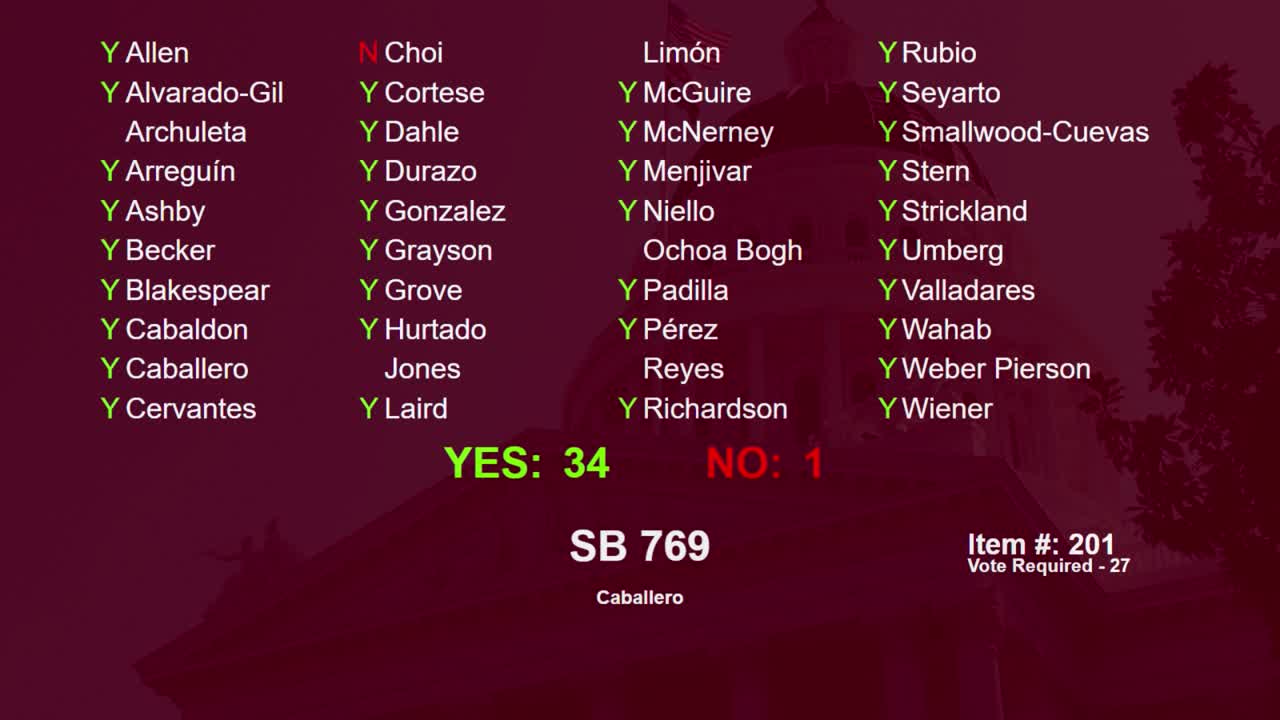 1MIN
Senate Floor
Bill Author

Bill Co-Author(s):