SB 814: Homelessness.
- Session Year: 2025-2026
- House: Senate
- Latest Version Date: 2025-02-21
Current Status:
Failed
(2026-02-02: Returned to Secretary of Senate pursuant to Joint Rule 56.)
Introduced
In Committee
Awaiting First Chamber Vote
Passed First Chamber
In Committee
Awaiting Second Chamber Vote
Passed Second Chamber
Enacted
Existing law requires the Governor to create a California Interagency Council on Homelessness for specified purposes, including to create partnerships among various entities, like participants in the United States Department of Housing and Urban Developments Continuum of Care Program, and to identify mainstream resources, benefits, and services that can be accessed to prevent and end homelessness in California.
Existing law requires the council to set and measure progress toward goals to prevent and end homelessness among domestic violence survivors and their children and among unaccompanied women in California, as specified. The bill would require initial goals to be established by January 1, 2025, and those goals to be evaluated at least every 2 years to determine whether updated goals are needed.
This bill would instead require the council to evaluate the above-described goals at least every year.
(a)The California Interagency Council on Homelessness shall set and measure progress toward goals to prevent and end homelessness among domestic violence survivors and their children and among unaccompanied women in California by doing all of the following:
(1)Setting specific, measurable goals aimed at preventing and ending homelessness among domestic violence survivors and their children and among unaccompanied women in the state. These goals shall include, but not be limited to, the following:
(A)Measurably decreasing the number of domestic violence survivors and their children and of unaccompanied women experiencing homelessness in the state.
(B)Decreasing the duration and frequency of experiences of homelessness among domestic violence survivors and their children and among unaccompanied women.
(C)Decreasing barriers to services through promoting cross-systems partnerships to expedite access to services, including social services, domestic violence services, regional center services, housing services, and mental health services.
(2)Defining outcome measures and gathering data related to the goals.
(3)(A)When funding is available, providing technical assistance to cities, counties, and continuums of care to support the development of local programs and plans that address the needs of domestic violence survivors and their children and of unaccompanied women.
(B)In addition to subparagraph (A), working with the United States Department of Housing and Urban Development to provide technical assistance to cities, counties, and continuums of care in furtherance of this section.
(b)The California Interagency Council on Homelessness shall establish initial goals, as described in subdivision (a), by January 1, 2025, and evaluate these goals at least every two years year to determine whether updated goals are needed.
|
Date
|
Status
|
|---|---|
| Feb 2, 2026 | Returned to Secretary of Senate pursuant to Joint Rule 56. |
| May 23, 2025 | May 23 hearing: Held in committee and under submission. |
| May 16, 2025 | Set for hearing May 23. |
| May 12, 2025 | May 12 hearing: Placed on APPR. suspense file. |
| May 2, 2025 | Set for hearing May 12. |
| Apr 30, 2025 | From committee: Do pass and re-refer to Com. on APPR. with recommendation: To consent calendar. (Ayes 11. Noes 0. Page 937.) (April 29). Re-referred to Com. on APPR. |
| Apr 24, 2025 | Set for hearing April 29. |
| Apr 8, 2025 | From committee: Do pass and re-refer to Com. on HOUSING with recommendation: To consent calendar. (Ayes 5. Noes 0. Page 683.) (April 7). Re-referred to Com. on HOUSING. |
| Mar 13, 2025 | Set for hearing April 7. |
| Mar 12, 2025 | Referred to Coms. on HUMAN S. and HOUSING. |
| Feb 24, 2025 | Read first time. |
| Feb 24, 2025 | From printer. May be acted upon on or after March 24. |
| Feb 21, 2025 | Introduced. To Com. on RLS. for assignment. To print. |
|
Date
|
Description
|
Location
|
Votes
|
|
|---|---|---|---|---|
| May 12, 2025 | Placed on suspense file | Senate Standing Committee on Appropriations |
Passed |
|
| Apr 29, 2025 | Do pass, but first be re-referred to the Committee on [Appropriations] with the recommendation: To Consent Calendar | Senate Standing Committee on Housing |
Passed |
|
| Apr 7, 2025 | Do pass, but first be re-referred to the Committee on [Housing] with the recommendation: To Consent Calendar | Senate Standing Committee on Human Services |
Passed |
This list shows positions taken on this bill by organizations on the date displayed, which is linked to the original source.
Positions by individuals are not included.
|
Organization
|
Position
|
Date
|
|---|---|---|
| California Partnership To End Domestic Violence | ** Support | |
| Downtown Womens Center | ** Support |
SENATE COMMITTEE ON
Senator Anna Caballero, Chair
2025 - 2026 Regular Session
SB 814 (Rubio) - Homelessness
Version: | Policy Vote: |
Urgency: | Mandate: |
Hearing Date: | Consultant: |
Bill Summary:
SB 814 would require the California Interagency Council on Homelessness (Cal ICH) to review its goals to prevent and end homelessness among domestic violence survivors and their children and among unaccompanied women at least every year, rather than at least every two years.
Fiscal Impact:
Cal ICH estimates General Fund costs of approximately $175,000 in the first year and $163,000 annually thereafter for state administration.
Background:
The mission of Cal ICH is to develop policies and identify resources, benefits, and services to prevent and work toward ending homelessness in California. Current law requires Cal ICH, among its duties, to set and measure progress toward goals to prevent and end homelessness among domestic violence survivors and their children and among unaccompanied women in California by doing all of the following:
- Setting specific, measurable goals aimed at preventing and ending homelessness among domestic violence survivors and their children and among unaccompanied women in the state. These goals must include, but not be limited to, the following:
- Measurably decreasing the number of domestic violence survivors and their children and of unaccompanied women experiencing homelessness in the state.
- Decreasing the duration and frequency of experiences of homelessness among domestic violence survivors and their children and among unaccompanied women.
- Decreasing barriers to services through promoting cross-systems partnerships to expedite access to services, including social services, domestic violence services, regional center services, housing services, and mental health services.
- Defining outcome measures and gathering data related to the goals.
- When funding is available, providing technical assistance to cities, counties, and continuums of care to support the development of local programs and plans that address the needs of domestic violence survivors and their children and of unaccompanied women; and working with the United States Department of Housing and Urban Development to provide technical assistance to cities, counties, and continuums of care.
Current law requires Cal ICH to establish these initial goals related to preventing and ending homelessness among domestic violence survivors and their children and among unaccompanied women by January 1, 2025. Current law requires Cal ICH to evaluate these goals at least every two years to determine whether updated goals are needed.
Proposed Law:
SB 814 would require Cal ICH to review its goals to prevent and end homelessness among domestic violence survivors and their children and among unaccompanied women at least every year, rather than at least every two years.
-- END --
SENATE COMMITTEE ON HOUSING
Senator Aisha Wahab, Chair
2025 - 2026 Regular
Bill No: SB 814 Hearing Date: 4/29/25
Author: | Rubio | ||
Version: | 2/21/2025 Introduced | ||
Urgency: | No | Fiscal: | Yes |
Consultant: | Alison Hughes | ||
SUBJECT: Homelessness
DIGEST: This bill requires the California Interagency Council on Homelessness (Cal-ICH) to annually evaluate its goals relating to domestic violence survivors, their children, and unaccompanied women.
ANALYSIS:
Existing law:
- Defines “Housing First” as the evidence-based model that uses housing as a tool, rather than a reward, for recovery and that centers on providing or connecting homeless people to permanent housing as quickly as possible. Housing First providers offer services as needed and requested on a voluntary basis and that do not make housing contingent on participation in services.
- Establishes Cal-ICH to coordinate the State’s response to homelessness using Housing First practices with a number of goals including, but not limited to:
- Creating partnerships among state agencies and departments;
- Promoting systems integration to increase efficiency and effectiveness;
- Coordinating existing funding and application for competitive funding.
- Requires Cal-ICH to, among other things, set specific, measurable goals aimed at preventing and ending homelessness among domestic violence survivors and their children, and among unaccompanied women in the state, as follows:
- Requires these goals to include but not be limited to decreasing the rate, duration, and frequency of homelessness among domestic violence survivors and their children and unaccompanied women, as well as decreasing barriers to services through cross-systems partnerships to expedite access to specified services.
- Requires Cal-ICH to define outcome measures and gather data related to the goals.
- Requires Cal-ICH, when funding is available, to provide technical assistance to cities, counties, and continuums of care to support the development of local programs and plans to address the needs of domestic violence survivors and their children and unaccompanied women. Also requires Cal-ICH to work with the US Department of Housing and Urban Development (HUD) to provide this assistance.
- Requires Cal-ICH to establish initial goals by January 1, 2025, and evaluate these goals at least every two years to determine whether updated goals are needed.
This bill requires Cal-ICH to evaluate its goals to prevent and end homelessness among domestic violence survivors and their children, as well as among unaccompanied women, every year instead of every two years.
Background
Cal-ICH. Cal-ICF Formerly known as the Homeless Coordinating and Financing Council (HCFC) was created to oversee the implementation of “Housing First” policies, guidelines, and regulations to reduce the prevalence and duration of homelessness in California. Housing First is an evidence-based model that focuses on the idea that homeless individuals should be provided shelter and stability before underlying issues can be successfully addressed. Housing First utilizes a tenant screening process that promotes accepting applicants regardless of their sobriety, use of substances or participation in services. As the state’s homelessness crisis has worsened, the role of Cal-ICH has significantly increased, as it has been charged with administering two significant programs dedicated to addressing homelessness, the Homeless Emergency Aid Program (HEAP) and the Homeless Housing Assistance and Prevention Program (HHAPP).
Comments
- Author statement. “Domestic violence is one of the leading drivers of homelessness for women, and unaccompanied women experiencing homelessness wait on average more than 10 years to access stable housing, a rate twice that of men. Despite making up a significant portion of the homeless population, our state’s homelessness response does not appropriately consider the needs of these two intersecting groups. As noted in a 2021 report from the Little Hoover Commission, there is “difficulty in getting leaders at all levels of government to understand the intersection of domestic violence and homelessness and how widespread of a problem it is. I authored SB 914 in 2022 to address this issue and keep California at the forefront of innovative responses to homelessness and domestic violence by ensuring that data about these populations and the work of relevant service providers is incorporated into local homelessness planning. SB 914 also required the California Interagency Council on Homelessness to set and measure goals to prevent and end homelessness for domestic violence survivors and their children, and to evaluate those goals at least every two years. But as the state continues to confront challenges effectively serving domestic violence survivors experiencing homelessness, it is critical that the Council evaluate those goals at least annually.”
- Homelessness in California. Based on the 2023 point in time count, California has the largest homeless population in the nation with 181,399 people experiencing homelessness on any given night, of which 113,660 are unsheltered, meaning they are living outdoors and not in temporary shelters. Nearly half of all unsheltered people in the country were in California during the 2023 count. The homelessness crisis is driven in large part by the lack of affordable rental housing for lower income people. In the current market, 2.2 million extremely low-income and very low-income renter households are competing for 664,000 affordable rental units. Of the six million renter households in the state, 1.7 million are paying more than 50% of their income toward rent. The National Low Income Housing Coalition estimates that the state needs an additional 1.5 million housing units affordable to very-low income Californians.
- Homelessness, Domestic Violence, and Unaccompanied Women. In its 2025 action plan, Cal-ICH notes that 22% of individuals accessing homeless services in 2023 reported having experienced domestic violence.[1] Nationally, on just one day in 2020, 5,591 survivors received services, and there were 984 unmet requests for services; 65% of these unmet requests were for housing or emergency shelter.[2] The need for safe housing and the economic resources to maintain safe housing are two of the most pressing concerns among abused women who are planning to or have recently left the person causing that harm.[3]
- The HELP Act. To help address concerns about unhoused victims of domestic violence, legislation was passed two years ago (SB 914, Rubio, Chapter 665, 2022) to establish the Homeless Equity for Left Behind Populations (HELP) Act. The HELP Act, among other things, required Cal-ICH, by January 1, 2025, to establish initial goals to prevent and end homelessness among domestic violence survivors and their children, and unaccompanied women, as specified, and to evaluate these goals at least every two years to determine whether updates or needed. It is unclear whether these initial goals have been established. This bill would increase the evaluation of the goals to every year.
- Double referral. This bill was heard by the Committee on Human Services on April 7th, which passed it 5-0.
Related/Prior Legislation
SB 914 (Rubio, 665, Statutes of 2022) – enacts the Homeless Equity for Left Behind Populations (HELP) Act, which requires cities, counties, and CoCs receiving state funding, on or after January 1, 2024, to take specific actions to address the needs of domestic violence survivors and unaccompanied women, as specified. Also requires Cal-ICH, by January 1, 2025, to establish initial goals to prevent and end homelessness among domestic violence survivors, their children, and unaccompanied women, as specified, and to evaluate these goals at least every two years to determine whether updates are needed.
SB 914 (Rubio, 2021) – would have established “unaccompanied women” as a sub-population of the state’s homelessness population and required the Homeless Coordinating and Financing Council to set goals to prevent and end homelessness among unaccompanied women in the state. This bill was held in the Assembly Appropriations Committee.
FISCAL EFFECT: Appropriation: Fiscal Com.: Local:
POSITIONS: (Communicated to the committee before noon on Wednesday,
April 23, 2025.)
SUPPORT:
California Partnership to End Domestic Violence
Downtown Women’s Center
OPPOSITION:
None received
-- END --
Cal-ICH, Action Plan for Preventing and Ending Homelessness in California, December 2024, Cal ICH Action Plan for Preventing and Ending Homelessness. ↑
National Network to End Domestic Violence (2021). 15th Annual Domestic Violence Counts Report. Washington, DC. Retrieved from: https://nnedv.org/wp-content/uploads/2021/05/15th-Annual-DV-Counts-Report-California-Summary.pdf ↑
Clough, A., Draughon, J. E., Njie-Carr, V., Rollins, C., & Glass, N. (2014). “Having housing made everything else possible”: Affordable, safe and stable housing for women survivors of violence. Qualitative Social Work, 13(5), 671-688. ↑
SENATE COMMITTEE ON HUMAN SERVICES
Senator Arreguín, Chair
2025 - 2026 Regular
Bill No: | SB 814 | ||
Author: | Rubio | ||
Version: | February 21, 2025 | Hearing Date: | April 7, 2025 |
Urgency: | No | Fiscal: | Yes |
Consultant: | Naima Ford Antal | ||
Subject: Homelessness
SUMMARY
This bill requires the California Interagency Council on Homelessness (Cal-ICH) to review its goals to prevent and end homelessness among domestic violence survivors, their children, and unaccompanied women once a year.
ABSTRACT
Existing Law:
- Creates the Cal-ICH and requires it to set and measure progress toward goals to prevent and end homelessness in California. (WIC 8255)
- Finds and declares that “unaccompanied women” are individuals who identify as women, 18 years of age and older, who are experiencing homelessness while not in the company of children or other dependents. (WIC 8255)
- Requires Cal-ICH to set and measure progress toward goals to prevent and end homelessness among domestic violence survivors, their children, and unaccompanied women. Requires those goals to include measurably decreasing the number of homeless domestic violence survivors and their children, decreasing the duration of homelessness experienced by domestic abuse survivors and their children, decreasing barriers to services by increasing cross sector partnerships to expedite access to services including social services, domestic violence services, regional center services, housing services, and mental health services. (WIC 8266(a))
- Requires Cal-ICH to evaluate the goals set to address domestic violence survivors, their children and unaccompanied women experiencing homelessness at least every two years to determine whether updated goals are needed. (WIC 8266(a))
- Defines “Homelessness Data Integration System (HDIS)” as the statewide data system or warehouse that collects local data through Homeless Management Information System (HMIS), with the ultimate goal of matching data on homelessness to programs impacting homeless recipients of state programs, as provided and in compliance with federal law. (WIC 8257(b)(13))
- Requires cities, counties, and continuums of care receiving state funding to address homelessness to develop analysis and goals with victim service providers to address the specific needs of families, people fleeing or attempting to flee domestic violence, and unaccompanied women within the vulnerable populations with data not included in HDIS.
This Bill:
- Requires the Cal-ICH to review its goals to prevent and end homelessness among domestic violence survivors and their children and among unaccompanied women, to determine whether updated goals are needed at least every year, instead of every two years.
FISCAL IMPACT
This bill has not yet been analyzed by a fiscal committee.
BACKGROUND AND DISCUSSION
Purpose of the Bill:
According to the author, “Domestic violence is one of the leading drivers of homelessness for women, and unaccompanied women experiencing homelessness wait on average more than 10 years to access stable housing, a rate twice that of men. Despite making up a significant portion of the homeless population, our state’s homelessness response does not appropriately consider the needs of these two intersecting groups. As noted in a 2021 report from the Little Hoover Commission, there is ‘difficulty in getting leaders at all levels of government to understand the intersection of domestic violence and homelessness and how widespread of a problem it is.’
“I authored SB 914 in 2022 to address this issue and keep California at the forefront of innovative responses to homelessness and domestic violence by ensuring that data about these populations and the work of relevant service providers is incorporated into local homelessness planning. SB 914 also required the California Interagency Council on Homelessness to set and measure goals to prevent and end homelessness for domestic violence survivors and their children, and to evaluate those goals at least every two years. But as the state continues to confront challenges effectively serving domestic violence survivors experiencing homelessness, it is critical that the Council evaluate those goals at least annually.”
Domestic Violence
Domestic violence is “abuse or threats of abuse when the person being abused and the abuser are or have been in an intimate relationship (married or domestic partners, are dating or used to date, live or lived together, or have a child together). It is also when the abused person and the abusive person are closely related by blood or by marriage”. It is experienced by all segments of society; however, certain communities are disproportionately affected. During the beginning of the COVID-19 pandemic, incidents of domestic violence and subsequent calls to helplines increased as people had to stay home due to the public health orders.
According to the 2015 National Intimate Partner and Sexual Violence Survey, about one in four women reported experiencing sexual violence, physical violence, and/or stalking by an intimate partner and reported an interpersonal violence related impact during their lifetime. Additional data on domestic or intimate partner violence includes the following:
- Approximately four in every 10 non-Hispanic Black women, four in every 10 American Indian or Alaska Native women, and one in two multiracial non-Hispanic women reported being the victim of rape, physical violence, and/or stalking by an intimate partner in their lifetime. These rates are 30 to 50 percent higher than those experienced by Hispanic, White non-Hispanic and Asian or Pacific Islander non-Hispanic women.
- Women with disabilities have a 40 percent greater risk of intimate partner violence than women without disabilities.
Domestic violence is also the leading cause of homelessness among unaccompanied women and women with children. Nationally, 57 percent of women experiencing homelessness reported domestic violence was the immediate cause. Unaccompanied women experiencing homelessness wait on average more than 10 years to access stable housing — twice the wait time for men. Women living unsheltered also have a higher chance of experiencing sexual violence, trauma, and inadequate hygiene access. The National Network to End Domestic Violence’s 15th Annual Domestic Violence Counts Census, found that in one 24-hour period in 2020, almost 6,296 nationwide requests for shelter and housing went unmet.
The federal Violence Against Women Act and the Family Violence Prevention and Services Act contain strong confidentiality provisions that limit the sharing of victims' personally identifying information, including entering information into public records and databases, such as the federal (HMIS or the HDIS. Violence Against Women Act, Family Violence Prevention and Services Act, and the Victims of Crime Act regulations prohibit sharing personally identifying information about victims without informed, written, reasonably time-limited consent. Violence Against Women Act and Victims of Crime Act also exclude disclosure of individual information without written consent. These confidentiality grant conditions also prohibit programs from making the signing of a release a condition of service. Additionally, no victim service programs can share personally identifying information to comply with federal, tribal, or state reporting, evaluation, or data collection requirements. As a result, data about the number of survivors served, their needs, and program outcomes are not considered when measuring local responses to homelessness.
California Interagency Council on Homelessness (Cal-ICH)
The Cal-ICH was created in 2021 by AB 1220 (Rivas, Chapter 398) as a successor to the Homeless Coordinating and Financing Council (HCFC) to address the coordination and oversight of homelessness programs. The bill also made changes to the membership of the Cal-ICH and provided the Cal-ICH with additional authority to access information from other departments. To ensure the Cal-ICH has access to information about homelessness programs throughout state agencies, the Cal-ICH is allowed to require state departments that have homelessness programs to participate in Cal-ICH workgroups or other collaborative work. They can also require those departments or agencies to provide the Cal-ICH data on those programs. Unlike the HCFC, the Cal-ICH also requires department directors, agency secretaries, and executive directors to participate on the council rather than their representatives.
In addition to improving coordination between agencies, the Cal-ICH is also charged with coordinating existing and competitive funding for homelessness initiatives, find new funding initiatives, make policy recommendations, broker agreements between state agencies, increase accountability, create reports for the Governor and Legislature, and create a statewide database for local homelessness data.
Cal-ICH published a three- year Action Plan for Preventing and Ending Homeless in California in December 2024 to fulfill its mandate to meet statutorily defined goals. The Action Plan outlines five action plan goals that will guide Cal-ICH’s funding and strategic efforts. Those goals are:
- Help more people leave unsheltered homelessness
- Help more people move into housing
- Ensure people do not experience homelessness again
- Prevent more people from experiencing homelessness
- Create more housing
Each goal comes with more specific goals that targets like increasing access to publicly-funded health and social safety net services for people at-risk of homelessness and permitting 1.5 million new homes. The Action Plan also highlights that HDIS has gaps in its data gathering, specifically that it does not gather enough information from programs that primarily service people who have experienced domestic violence due to the confidentiality challenges discussed above. AB 914 (Rubio, Chapter 665, Statutes of 2022) required Cal-ICH to also create goals specifically to prevent homelessness specifically among domestic violence survivors, their children and unaccompanied women. It is unclear whether those goals have been set.
This bill requires Cal-ICH to review its goals specifically for people who have experienced domestic violence and their children every year instead of every two years to evaluate whether they need to be updated based on the data.
Related/Prior Legislation:
SB 914 (Rubio, Chapter 665, Statutes of 2022) created Homeless Equity for Left Behind Populations or HELP Act, which required cities, counties, and continuums of care (CoCs) receiving state funding to include within the vulnerable populations that receive homeless services and housing delivery: families, people fleeing or attempting to flee domestic violence, and unaccompanied women. It also required Cal-ICH to establish initial goals to prevent and end homelessness among domestic violence survivors, their children and unaccompanied women, by January 1, 2025, and update these goals as needed every two years thereafter.
SB 678 (Rubio, 2021) would have added “unaccompanied women” to state statute. This bill was held in the Assembly Appropriations Committee.
AB 140 (Committee on Budget, Chapter 111, Statutes of 2021) requires the Cal ICH to issue a standard agreement for cities, counties and CoCs applying for state homelessness funds to submit an application that includes a local homelessness action plan and specific outcome goals to prevent and reduce homelessness.
AB 1220 (Rivas, L., Chapter 398, Statutes of 2021) renames the Housing Coordinating and Financing Council (HCFC), the Cal ICH, and makes changes to the membership of the Council, as provided.
AB 83 (Committee on Budget, Chapter 15, Statutes of 2020), among other things, provided 300 million in grant funding for a Round Two of HHAP program funding.
AB 1845 (Luz Rivas, 2020) would have created the Governor’s Office to End Homelessness under the Direction of the Secretary of Homelessness and would have moved the HCFC from the Business Consumer Services and Housing Agency into the Governor’s Office to End Homelessness. This bill was vetoed by the Governor.
AB SB 1380 (Mitchell, Chapter 847, Statutes of 2016) created HCFC to coordinate the state’s homeless response in order to implement Housing First policies throughout the state, as provided.
COMMENTS
This bill will require Cal-ICH to review its goals to help people who have experienced domestic violence and are experiencing homelessness every year. The group identified by the bill is especially vulnerable because of the lack of data and the lack of resources that cause them to be homeless. Cal-ICH recognizes that the lack of data is an important hurdle to overcome if California is to be successful in decreasing the number of people in this population that are homeless and decrease the amount of time they are experiencing homelessness. Cal-ICH has not yet shared their current goals for this population as required by SB 914. The author may want to work with the agency to expedite the establishment of those goals as well as ensure they are regularly updated.
POSITIONS
Support:
California Partnership to End Domestic Violence
Oppose:
None on file
-- END --
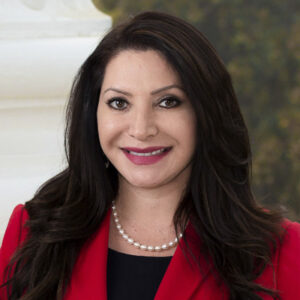
Bill Author
Bill Co-Author(s):