SB 822: Unclaimed property: digital financial assets.
- Session Year: 2025-2026
- House: Senate
- Latest Version Date: 2025-10-11
Current Status:
Passed
(2025-10-11: Chaptered by Secretary of State. Chapter 660, Statutes of 2025.)
Introduced
In Committee
Awaiting First Chamber Vote
Passed First Chamber
In Committee
Awaiting Second Chamber Vote
Passed Second Chamber
Enacted
The Unclaimed Property Law (UPL) prescribes the circumstances under which intangible property escheats to the state, including how and when apparent owners must be notified that their property is at risk of escheating and the manner in which escheated property must be delivered to the State Controller. Intangible property is only subject to the UPL if the apparent owners last known address is within the state or, if that address is unknown, if there is another link to the state, as specified. Existing law provides how and when securities that escheat to the state pursuant to the UPL may be sold and how the securities or funds from their sale may be returned to their owner.
This bill would clarify that digital financial assets are a form of intangible property subject to the UPL. With regard to digital financial assets, the bill would specify that an apparent owners last known address need not be a complete mailing address if the address is sufficient to identify that it is within the state. The bill would prescribe requirements for holders of digital financial assets to notify apparent owners prior to the assets escheating, which would include a form created by the Controller that may be returned to the holder by the apparent owner to restart the escheatment period, as specified. The bill would specify how escheated digital financial assets must be transferred from the holder to the Controller. The bill would authorize the Controller to select one or more custodians for the management and safekeeping of digital financial assets that have escheated to the state, as specified. The bill would authorize the Controller to convert digital financial assets to fiat currency, as specified. The bill would entitle a person who makes a valid claim for a digital financial asset delivered to the Controller to receive that digital financial asset or, if the asset has been converted, to receive the net proceeds received by the Controller from the sale.
The Unclaimed Property Law (UPL) prescribes the circumstances under which intangible property escheats to the state, including how and when apparent owners must be notified that their property is at risk of escheating and the manner in which escheated property must be delivered to the State Controller. Intangible property is only subject to the UPL if the apparent owners last known address is within the state or, if that address is unknown, if there is another link to the state, as specified. Existing law provides how and when securities that escheat to the state pursuant to the UPL may be sold and how the securities or funds from their sale may be returned to their owner.
The bill would clarify that digital financial assets are a form of intangible property subject to the UPL. With regard to digital financial assets, this bill would specify that an apparent owners last known address need not be a complete mailing address if the address is sufficient to identify that it is within the state. The bill would prescribe requirements for holders of digital financial assets to notify apparent owners prior to the assets escheating, which would include a form created by the Controller that may be returned to the holder by the apparent owner to restart the escheatment period, as specified. The bill would specify how escheated digital financial assets must be transferred from the holder to the Controller. The bill also would permit the Controller, in their discretion, to determine that it is not in the states interest to take custody of digital financial assets, as specified. The bill would authorize the Controller to select one or more custodians for the management and safekeeping of digital financial assets that have escheated to the state, as specified. The bill would authorize the Controller to convert digital financial assets to fiat currency, as specified. The bill would entitle a person who makes a valid claim for a digital financial asset delivered to the Controller to receive that digital financial asset or, if the asset has been converted, to receive the net proceeds received by the Controller from the sale.
The Unclaimed Property Law (UPL) prescribes the circumstances under which intangible property escheats to the state, including how and when apparent owners must be notified that their property is at risk of escheating and the manner in which escheated property must be delivered to the State Controller. Intangible property is only subject to the UPL if the apparent owners last known address is within the state or, if that address is unknown, if there is another link to the state, as specified. Existing law provides how and when securities that escheat to the state pursuant to the UPL may be sold and how the securities or funds from their sale may be returned to their owner.
With regard to all types of property, this bill would specify that an apparent owners last known address need not be a complete mailing address if the address is sufficient to identify that it is within the state. The bill would clarify that digital financial assets are a form of intangible property subject to the UPL. With regard to digital financial assets, this bill would specify that an apparent owners last known address need not be a complete mailing address if the address is sufficient to identify that it is within the state. The bill would prescribe requirements for holders of digital financial assets to notify apparent owners prior to the assets escheating, which would include a form created by the Controller that may be returned to the holder by the apparent owner to restart the escheatment period, as specified. The bill would specify how escheated digital financial assets must be transferred from the holder to the Controller. The bill also would permit the Controller, in their discretion, to determine that it is not in the states interest to take custody of digital financial assets, as specified. The bill would authorize the Controller to select one or more custodians for the management and safekeeping of digital financial assets that have escheated to the state, as specified. The bill would authorize the Controller to convert digital financial assets to fiat currency, as specified. The bill would entitle a person who makes a valid claim for a digital financial asset delivered to the Controller to receive that digital financial asset or, if the asset has been converted, to receive the net proceeds received by the Controller from the sale.
The Unclaimed Property Law (UPL) prescribes the circumstances under which intangible property escheats to the state, including how and when apparent owners must be notified that their property is at risk of escheating and the manner in which escheated property must be delivered to the State Controller. Intangible property is only subject to the UPL if the apparent owners last known address is within the state or, if that address is unknown, if there is another link to the state, as specified. Existing law provides how and when securities that escheat to the state pursuant to the UPL may be sold and how the securities or funds from their sale may be returned to their owner.
With regard to all types of property, this bill would specify that an apparent owners last known address need not be a complete mailing address if the address is sufficient to identify that it is within the state. The bill would clarify that digital financial assets are a form of intangible property subject to the UPL. The bill would prescribe requirements for holders of digital financial assets to notify apparent owners prior to the assets escheating, which would include a form created by the Controller that may be returned to the holder by the apparent owner to restart the escheatment period, as specified. The bill would specify how escheated digital financial assets must be transferred from the holder to the Controller. The bill also would permit the Controller, in their discretion, to determine that it is not in the states interest to take custody of digital financial assets, as specified. The bill would make the provisions regarding the sale of securities and their return to their owner applicable to digital financial assets, as specified. authorize the Controller to select one or more custodians for the management and safekeeping of digital financial assets that have escheated to the state, as specified. The bill would authorize the Controller to convert digital financial assets to fiat currency, as specified. The bill would entitle a person who makes a valid claim for a digital financial asset delivered to the Controller to receive that digital financial asset or, if the asset has been converted, to receive the net proceeds received by the Controller from the sale.
The Unclaimed Property Law (UPL) prescribes the circumstances under which intangible property escheats to the state, including how and when apparent owners must be notified that their property is at risk of escheating and the manner in which escheated property must be delivered to the State Controller. Intangible property is only subject to the UPL if the apparent owners last known address is within the state or, if that address is unknown, if there is another link to the state, as specified. Existing law provides how and when securities that escheat to the state pursuant to the UPL may be sold and how the securities or funds from their sale may be returned to their owner.
With regard to all types of property, this bill would specify that an apparent owners last known address need not be a complete mailing address if the address is sufficient to identify that it is within the state. The bill would clarify that digital financial assets are a form of intangible property subject to the UPL. The bill would prescribe requirements for holders of digital financial assets to notify apparent owners prior to the assets escheating, which would include a form created by the Controller that may be returned to the holder by the apparent owner to restart the escheatment period, as specified. The bill would specify how escheated digital financial assets must be transferred from the holder to the Controller. The bill also would permit the Controller, in their discretion, to determine that it is not in the states interest to take custody of digital financial assets, as specified. The bill would make the provisions regarding the sale of securities and their return to their owner applicable to digital financial assets, as specified.
The Unclaimed Property Law (UPL) prescribes the circumstances under which intangible property escheats to the state, including how and when apparent owners must be notified that their property is at risk of escheating and the manner in which escheated property must be delivered to the State Controller. Intangible property is only subject to the UPL if the apparent owners last known address is within the state or, if that address is unknown, if there is another link to the state, as specified. Existing law provides how and when securities that escheat to the state pursuant to the UPL may be sold and how the securites securities or funds from their sale may be returned to their owner.
With regard to all types of property, this bill would specify that an apparent owners last known address need not be a complete mailing address if the address is sufficient to identify that it is within the state. The bill would clarify that virtual currency is digital financial assets are a form of intangible property subject to the UPL. The bill would prescribe requirements for holders of virtual currency digital financial assets to notify apparent owners prior to the currency assets escheating, which would include a form created by the Controller that may be returned to the holder by the apparent owner to restart the escheatment period, as specified. The bill would specify how escheated virtual currency digital financial assets must be transferred from the holder to the Controller. The bill also would permit the Controller, in their discretion, to determine that it is not in the states interest to take custody of virtual currency, digital financial assets, as specified. The bill would make the provisions regarding the sale of securities and their return to their owner applicable to virtual currency, digital financial assets, as specified.
The Unclaimed Property Law (UPL) prescribes the circumstances under which intangible property escheats to the state, including how and when apparent owners must be notified that their property is at risk of escheating and the manner in which escheated property must be delivered to the State Controller. Intangible property is only subject to the UPL if the apparent owners last known address is within the state or, if that address is unknown, if there is another link to the state, as specified. Existing law provides how and when securities that escheat to the state pursuant to the UPL may be sold and how the securites or funds from their sale may be returned to their owner.
With regard to all types of property, this bill would specify that an apparent owners last known address need not be a complete mailing address if the address is sufficient to identify that it is within the state. The bill would clarify that virtual currency is a form of intangible property subject to the UPL. The bill would prescribe requirements for holders of virtual currency to notify apparent owners prior to the currency escheating, which would include a form created by the Controller that may be returned to the holder by the apparent owner to restart the escheatment period, as specified. The bill would specify how escheated virtual currency must be transferred from the holder to the Controller. The bill also would permit the Controller, in their discretion, to determine that it is not in the states interest to take custody of virtual currency, as specified. The bill would make the provisions regarding the sale of securities and their return to their owner applicable to virtual currency, as specified.
Existing law regulates civil procedure, as specified.This bill would express the intent of the Legislature to enact legislation relating to cryptocurrency and the unclaimed property program.Existing law regulates civil procedure, as specified.
This bill would express the intent of the Legislature to enact legislation relating to cryptocurrency and the unclaimed property program.
It is the intent of the legislature to clarify that digital financial assets are intangible property that are subject to the unclaimed property law.
SEC. 2.Section 1501 of the Code of Civil Procedure is amended to read:1501.As used in this chapter, unless the context otherwise requires:
(a)Apparent owner means the person who appears from the records of the holder to be entitled to property held by the holder.
(b)Banking organization means any national or state bank, trust company, banking company, land bank, savings bank, safe-deposit company, private banker, or any similar organization.
(c)Business association means any private corporation, joint stock company, business trust, partnership, or any association for business purposes of two or more individuals, whether or not for profit, including, but not by way of limitation, a banking organization, financial organization, life insurance corporation, and utility.
(d)Digital financial asset has the same meaning as in subdivision (g) of Section 3102 of the Financial Code.
(e)Employee benefit plan distribution means any money, life insurance, endowment or annuity policy or proceeds thereof, securities or other intangible property, or any tangible property, distributable to a participant, former participant, or the beneficiary or estate or heirs of a participant or former participant or beneficiary, from a trust or custodial fund established under a plan to provide health and welfare, pension, vacation, severance, retirement benefit, death benefit, stock purchase, profit sharing, employee savings, supplemental unemployment insurance benefits or similar benefits, or which is established under a plan by a business association functioning as or in conjunction with a labor union that receives for distribution residuals on behalf of employees working under collective-bargaining agreements.
(f)Financial organization means any federal or state savings and loan association, building and loan association, credit union, investment company, or any similar organization.
(g) Holder means any person in possession of property subject to this chapter belonging to another, or who is trustee in case of a trust, or is indebted to another on an obligation subject to this chapter.
(h)Life insurance corporation means any association or corporation transacting the business of insurance on the lives of persons or insurance appertaining thereto, including, but not by way of limitation, endowments, and annuities.
(i)Owner means a depositor in case of a deposit, a beneficiary in case of a trust, or creditor, claimant, or payee in case of other choses in action, or any person having a legal or equitable interest in property subject to this chapter, or their legal representative.
(j)Person means any individual, business association, government or governmental subdivision or agency, two or more persons having a joint or common interest, or any other legal or commercial entity, whether that person is acting in their own right or in a representative or fiduciary capacity.
(k)Private key means a unique element of cryptographic data used for signing transactions on a blockchain that is known to the owner of the element.
(l)Residuals means payments pursuant to a collective bargaining agreement of additional compensation for domestic and foreign uses of recorded materials.
SEC. 3.Section 1516.5 is added to the Code of Civil Procedure, to read:1516.5.(a)Pursuant to Section 1510, any digital financial asset held or owing by a business association escheats to the state if unclaimed by the owner for more than three years from either of the following:
(1)The date a written or electronic communication to the owner is returned undelivered by the United States Postal Service or by electronic mail or other electronic messaging method, as applicable.
(2)The date of the last exercise of an act of ownership interest by the owner in the digital asset account if the owner does not receive written or electronic communications from the holder or the holder does not have the means of systematically tracking or monitoring the nondelivery of those communications.
(b)The running of the three-year period under paragraph (1) of subdivision (a) shall cease immediately upon the exercise of an act of ownership interest in the digital asset account or written, oral, or electronic communication with the holder as evidenced by a memorandum or other record on file with the holder or its agents.
(c)For purposes of this section, an exercise of an act of ownership interest includes any of the following actions by the owner regarding the digital asset account:
(1)Conducting a transaction regarding the digital asset account, including buying or selling digital assets, depositing into or withdrawing from the account fiat currency or other property whether by a one-time transaction or a recurring transaction previously authorized by the owner.
(2)Electronically accessing the digital asset account.
(3)Conducting any activity with respect to another digital asset account or any other property owned by the owner with the same holder.
(4)Taking any other action that reasonably demonstrates to the holder that the owner knows that the property exists.
(d)(1)The last known address of an apparent owner, for the purpose of determining the jurisdiction over property subject to escheat pursuant to this section, is either of the following:
(A)The address used for purposes of delivering first-class United States mail.
(B)Any description, code, or other indication of the location of the apparent owner that identifies the state of last known address, even if the description, code, or indication of the location is not sufficient to direct the delivery of first-class United States Postal Service mail to the apparent owner.
(2)If there is a conflict between the address identified in subparagraph (A) of paragraph (1) and any description, code, or other indication identified in subparagraph (B) of paragraph (1), the address identified in subparagraph (A) shall be deemed as the last known address of the apparent owner.
(e)If the business association has a mailing address for the apparent owner of a digital financial asset in its records, which is not known to be inaccurate, the business association shall send a notice to the owner via certified mail, return receipt requested.
(f)If the business association does not have a mailing address for the apparent owner of a digital financial asset in its records, and the apparent owner has consented to electronic service, the notice may be sent electronically.
(g)Notice pursuant to this subdivision shall be sent not less than 6 nor more than 12 months before the time the digital financial asset becomes reportable to the Controller under this chapter.
(1)The notice shall state at the top of the communication: THE STATE OF CALIFORNIA REQUIRES US TO NOTIFY YOU THAT YOUR UNCLAIMED PROPERTY MAY BE TRANSFERRED TO THE STATE IF YOU DO NOT CONTACT US, or substantially similar language.
(2)The notice shall specify the time when the digital financial asset will escheat and the effects of escheat, including the need to file a claim for the return of the digital financial asset.
(3)The notice shall do all of the following, in boldface type or in a font a minimum of two points larger than the rest of the notice, exclusive of the heading:
(A)Specify that since the date of last interest, or for the last two years, there has been no indication of owner interest in the digital financial asset.
(B)Identify the digital financial asset by number or identifier, which need not exceed four digits.
(C)Indicate that the digital financial asset is in danger of escheating to the state.
(D)Specify that the Unclaimed Property Law requires business associations to transfer a digital financial asset if it has been unclaimed for three years.
(4)The notice shall include a form, prescribed by the Controller, by which the owner may confirm the owners current address. If that form is completed, signed by the owner, and returned to the holder of the digital financial asset, or other device in which the owners property is being held, it is no longer considered inactive and the escheat period restarts. In lieu of returning the form, the holder may provide a telephone number or electronic means to enable the owner to contact the holder. If a holder is contacted by a presumed owner by telephone or electronic means, the holder shall document that contact in a memorandum which the holder is required to keep on file. That contact serves to indicate owner interest in the digital financial asset and restarts the escheat period.
(h)In addition to the notice required pursuant to subdivision (b) or (c), the holder may give additional notice at any time between the date of last owner interest and the date the holder transfers the digital financial asset to the Controller.
(i)The holder of any partial key to any digital financial asset that is subject to Section 1516.5 shall attempt to obtain the minimum number of keys required to transfer the digital financial assets within 60 days of determination that the digital financial assets are eligible for escheatment.
SEC. 4.Section 1520 of the Code of Civil Procedure is amended to read:1520.(a)All tangible personal property located in this state and, subject to Section 1510, all intangible personal property, except property of the classes mentioned in Sections 1511, 1513, 1514, 1515, 1515.5, 1516, 1516.5, 1517, 1518, 1518.5, 1519, and 1521, including any income or increment thereon and deducting any lawful charges, that is held or owing in the ordinary course of the holders business and has remained unclaimed by the owner for more than three years after it became payable or distributable escheats to this state.
(b)Except as provided in subdivision (a) of Section 1513.5, subdivision (b) of Section 1514, subdivision (d) of Section 1516, and subdivisions (b) and (c) of Section 1516.5, if the holder has in its records an address for the apparent owner of property valued at fifty dollars ($50) or more, which the holders records do not disclose to be inaccurate, the holder shall make reasonable efforts to notify the owner by mail or, if the owner has consented to electronic notice, electronically, that the owners property will escheat to the state pursuant to this chapter. The notice shall be mailed not less than 6 nor more than 12 months before the time when the owners property held by the business becomes reportable to the Controller in accordance with this chapter. The face of the notice shall contain a heading at the top that reads as follows: THE STATE OF CALIFORNIA REQUIRES US TO NOTIFY YOU THAT YOUR UNCLAIMED PROPERTY MAY BE TRANSFERRED TO THE STATE IF YOU DO NOT CONTACT US, or substantially similar language. The notice required by this subdivision shall specify the time when the property will escheat and the effects of escheat, including the need to file a claim in order for the owners property to be returned to the owner. The notice required by this section shall, in boldface type or in a font a minimum of two points larger than the rest of the notice, exclusive of the heading, (1) specify that since the date of last activity, or for the last two years, there has been no owner activity on the deposit, account, shares, or other interest; (2) identify the deposit, account, shares, or other interest by number or identifier, which need not exceed four digits; (3) indicate that the deposit, account, shares, or other interest is in danger of escheating to the state; and (4) specify that the Unclaimed Property Law requires holders to transfer funds of a deposit, account, shares, or other interest if it has been inactive for three years. It shall also include a form, as prescribed by the Controller, by which the owner may confirm the owners current address. If that form is filled out, signed by the owner, and returned to the holder, it shall be deemed that the account, or other device in which the owners property is being held, remains currently active and recommences the escheat period. In lieu of returning the form, the holder may provide a telephone number or other electronic means to enable the owner to contact the holder. With that contact, as evidenced by a memorandum or other record on file with the holder, the account or other device in which the owners property is being held shall be deemed to remain currently active and shall recommence the escheat period. The holder may impose a service charge on the deposit, account, shares, or other interest for this notice in an amount not to exceed the administrative cost of mailing or electronically sending the notice and form, and in no case to exceed two dollars ($2).
(c)In addition to the notice required pursuant to subdivision (b), the holder may give additional notice as described in subdivision (b) at any time between the date of last activity by, or communication with, the owner and the date the holder transfers the property to the Controller.
(d)For purposes of this section, lawful charges means charges that are specifically authorized by statute, other than the Unclaimed Property Law, or by a valid, enforceable contract.
SEC. 5.Section 1532 of the Code of Civil Procedure is amended to read:1532.(a)Every person filing a report as provided by Section 1530 shall, no sooner than seven months and no later than seven months and 15 days after the final date for filing the report, pay or deliver to the Controller all escheated property specified in the report. Any payment of unclaimed cash in an amount of at least two thousand dollars ($2,000) shall be made by electronic funds transfer pursuant to regulations adopted by the Controller. The Controller may postpone the date for payment or delivery of the property, and the date for any report required by subdivision (b), upon the Controllers own motion or upon written request by any person required to pay or deliver the property or file a report as required by this section.
(b)If a person establishes their right to receive any property specified in the report to the satisfaction of the holder before that property has been delivered to the Controller, or it appears that, for any other reason, the property may not be subject to escheat under this chapter, the holder shall not pay or deliver the property to the Controller but shall instead file a report with the Controller, on a form and in a format prescribed or approved by the Controller, containing information pertaining to the property subject to escheat.
(c)Any property not paid or delivered pursuant to subdivision (b) that is later determined by the holder to be subject to escheat under this chapter shall not be subject to the interest provision of Section 1577.
(d)The holder of any interest under subdivision (b) of Section 1516 shall deliver a duplicate certificate to the Controller or shall register the securities in uncertificated form in the name of the Controller. Upon delivering a duplicate certificate or providing evidence of registration of the securities in uncertificated form to the Controller, the holder, any transfer agent, registrar, or other person acting for or on behalf of the holder in executing or delivering the duplicate certificate or registering the uncertificated securities, shall be relieved from all liability of every kind to any person including, but not limited to, any person acquiring the original certificate or the duplicate of the certificate issued to the Controller for any losses or damages resulting to that person by the issuance and delivery to the Controller of the duplicate certificate or the registration of the uncertificated securities to the Controller.
(e)(1)The holder of any digital financial asset that is subject to Section 1516.5 shall, no more than 30 days after the final date for filing the report required by this section, transfer the exact digital financial asset type, private keys, and amount, unliquidated, to the Controllers cryptocurrency custodian or as the Controller by regulation may designate.
(2)If the holder possess only a partial private key to the digital financial asset or is otherwise unable to move the digital financial asset to the Controller, the holder shall maintain the digital financial asset until the additional keys required to transfer the digital financial asset become available to the holder or the holder is otherwise able to transfer the digital financial asset to the Controller.
(f)Payment of any intangible property to the Controller shall be made at the office of the Controller in Sacramento or at another location as the Controller by regulation may designate. Except as otherwise agreed by the Controller and the holder, tangible personal property shall be delivered to the Controller at the place where it is held.
(g)Payment is deemed complete on the date the electronic funds transfer is initiated if the settlement to the states demand account occurs on or before the banking day following the date the transfer is initiated. If the settlement to the states demand account does not occur on or before the banking day following the date the transfer is initiated, payment is deemed to occur on the date settlement occurs.
(h)Any person required to pay cash by electronic funds transfer who makes the payment by means other than an authorized electronic funds transfer shall be liable for a civil penalty of 2 percent of the amount of the payment that is due pursuant to this section, in addition to any other penalty provided by law. Penalties are due at the time of payment. If the Controller finds that a holders failure to make payment by an appropriate electronic funds transfer in accordance with the Controllers procedures is due to reasonable cause and circumstances beyond the holders control, and occurred notwithstanding the exercise of ordinary care and in the absence of willful neglect, that holder shall be relieved of the penalties.
(i)An electronic funds transfer shall be accomplished by an automated clearinghouse debit, an automated clearinghouse credit, a Federal Reserve Wire Transfer (Fedwire), or by an international funds transfer. Banking costs incurred for the automated clearinghouse debit transaction by the holder shall be paid by the state. Banking costs incurred by the state for the automated clearinghouse credit transaction may be paid by the holder originating the credit. Banking costs incurred for the Fedwire transaction charged to the holder and the state shall be paid by the person originating the transaction. Banking costs charged to the holder and to the state for an international funds transfer may be charged to the holder.
(j)For purposes of this section:
(1)Electronic funds transfer means any transfer of funds, other than a transaction originated by check, draft, or similar paper instrument, that is initiated through an electronic terminal, telephonic instrument, modem, computer, or magnetic tape, so as to order, instruct, or authorize a financial institution to credit or debit an account.
(2)Automated clearinghouse means any federal reserve bank, or an organization established by agreement with the National Automated Clearing House Association or any similar organization, that operates as a clearinghouse for transmitting or receiving entries between banks or bank accounts and that authorizes an electronic transfer of funds between those banks or bank accounts.
(3)Automated clearinghouse debit means a transaction in which the state, through its designated depository bank, originates an automated clearinghouse transaction debiting the holders bank account and crediting the states bank account for the amount of payment.
(4)Automated clearinghouse credit means an automated clearinghouse transaction in which the holder, through its own bank, originates an entry crediting the states bank account and debiting the holders bank account.
(5)Fedwire means any transaction originated by the holder and utilizing the national electronic payment system to transfer funds through federal reserve banks, pursuant to which the holder debits its own bank account and credits the states bank account.
(6)International funds transfer means any transaction originated by the holder and utilizing the international electronic payment system to transfer funds, pursuant to which the holder debits its own bank account, and credits the funds to a United States bank that credits the Unclaimed Property Fund.
SEC. 6.Section 1533 of the Code of Civil Procedure is amended to read:1533.Tangible personal property may be excluded from the notices required by Section 1531, shall not be delivered to the Controller, and shall not escheat to the state, if the Controller, in their discretion, determines that it is not in the interest of the state to take custody of the property and notifies the holder in writing, within 120 days from receipt of the report required by Section 1530, of their determination not to take custody of the property.
SEC. 7.Section 1563 of the Code of Civil Procedure is amended to read:1563.(a)Except as provided in subdivisions (b) and (c), all escheated property delivered to the Controller under this chapter shall be sold by the Controller to the highest bidder at public sale in whatever city in the state affords in the Controllers judgment the most favorable market for the property involved, or the Controller may conduct the sale by electronic media, including, but not limited to, the internet, if in the Controllers judgment it is cost effective to conduct the sale of the property involved in that manner. However, no sale shall be made pursuant to this subdivision until 18 months after the final date for filing the report required by Section 1530. The Controller may decline the highest bid and reoffer the property for sale if the Controller considers the price bid insufficient. The Controller need not offer any property for sale if, in the Controllers opinion, the probable cost of sale exceeds the value of the property. Any sale of escheated property held under this section shall be preceded by a single publication of notice thereof, at least one week in advance of sale, in an English language newspaper of general circulation in the county where the property is to be sold.
(b)Securities listed on an established stock exchange shall be sold at the prevailing prices on that exchange. Other securities may be sold over the counter at prevailing prices or by any other method that the Controller may determine to be advisable. These securities shall be sold by the Controller no sooner than 18 months, but no later than 20 months, after the actual date of filing of the report required by Section 1530. If securities delivered to the Controller remain in the custody of the Controller, a person making a valid claim for those securities under this chapter shall be entitled to receive the securities from the Controller. If the securities or digital financial assets have been sold, the person shall be entitled to receive the net proceeds received by the Controller from its sale. United States government savings bonds and United States war bonds shall be presented to the United States for payment. Subdivision (a) does not apply to the property described in this subdivision.
(c)Digital financial assets held by the Controller may be converted to fiat currency at prevailing prices by any method that the Controller may determine to be advisable. The Controller shall convert such digital financial assets no sooner than 18 months, but no later than 20 months, after the actual date of filing of the report required by Section 1530. If digital financial assets delivered to the Controller remain in the custody of the Controller, a person making a valid claim for those assets under this chapter shall be entitled to receive the digital financial assets from the Controller. If the digital financial assets have been converted, the person shall be entitled to receive the net proceeds received by the Controller from its sale.
(d)(1)All escheated property consisting of military awards, decorations, equipment, artifacts, memorabilia, documents, photographs, films, literature, and any other item relating to the military history of California and Californians that is delivered to the Controller is exempt from subdivision (a) and may, at the discretion of the Controller, be held in trust for the Controller at the California State Military Museum and Resource Center, or successor entity. All escheated property held in trust pursuant to this subdivision is subject to the applicable regulations of the United States Army governing Army museum activities as described in Section 179 of the Military and Veterans Code. A person claiming an interest in the escheated property may file a claim to the property pursuant to Article 4 (commencing with Section 1540).
(2)The California State Military Museum and Resource Center, or successor entity, shall be responsible for the costs of storage and maintenance of escheated property delivered by the Controller under this subdivision.
(e)The purchaser at any sale conducted by the Controller pursuant to this chapter shall receive title to the property purchased, free from all claims of the owner or prior holder thereof and of all persons claiming through or under them. The Controller shall execute all documents necessary to complete the transfer of title.
SEC. 8.Section 1568 is added to the Code of Civil Procedure, to read:1568.(a)The Controller may select one or more custodians for the management and safekeeping of digital financial assets that have escheated to the state. Any entity selected as a custodian shall hold a valid license issued by the Department of Financial Protection and Innovation pursuant to Chapter 2 (commencing with Section 3201) of Division 1.25 of the Financial Code.
(b)If the Controller selects a custodian pursuant to subdivision (a), the Controller shall consider the following criteria in making the selection:
(1)Storage security to ensure the safekeeping of digital financial assets, including robust cybersecurity measures to prevent unauthorized access.
(2)Capability to manage private keys associated with digital financial assets and ensure the ability to transfer or transact with the assets when required.
(3)Proven experience in handling digital financial assets.
(4)Compliance with all applicable federal and state regulations related to digital financial asset custody.
(5)Regular reporting mechanisms to the Controller regarding the status and value of the digital financial assets in their custody.
(6)Processes to reunite owners with their digital financial assets, including maintaining updated contact records and issuing timely notifications.
(7)Qualifying as a financial institution under Chapter X of Title 31 of the Code of Federal Regulations, which subjects the qualified custodian to the anti-money laundering obligations of the federal Bank Secrecy Act (31 U.S.C. Sec. 5311 et seq.), in addition to any state-imposed anti-money laundering obligations.
(8)Any other factor that the Controller deems relevant.
It is the intent of the legislature to clarify that digital financial assets are intangible property that are subject to the unclaimed property law.
SEC. 2.Section 1501 of the Code of Civil Procedure is amended to read:1501.As used in this chapter, unless the context otherwise requires:
(a)Apparent owner means the person who appears from the records of the holder to be entitled to property held by the holder.
(b)Banking organization means any national or state bank, trust company, banking company, land bank, savings bank, safe-deposit company, private banker, or any similar organization.
(c)Business association means any private corporation, joint stock company, business trust, partnership, or any association for business purposes of two or more individuals, whether or not for profit, including, but not by way of limitation, a banking organization, financial organization, life insurance corporation, and utility.
(d)Digital financial asset has the same meaning as in subdivision (g) of Section 3102 of the Financial Code.
(e)Employee benefit plan distribution means any money, life insurance, endowment or annuity policy or proceeds thereof, securities or other intangible property, or any tangible property, distributable to a participant, former participant, or the beneficiary or estate or heirs of a participant or former participant or beneficiary, from a trust or custodial fund established under a plan to provide health and welfare, pension, vacation, severance, retirement benefit, death benefit, stock purchase, profit sharing, employee savings, supplemental unemployment insurance benefits or similar benefits, or which is established under a plan by a business association functioning as or in conjunction with a labor union that receives for distribution residuals on behalf of employees working under collective-bargaining agreements.
(f)Financial organization means any federal or state savings and loan association, building and loan association, credit union, investment company, or any similar organization.
(g) Holder means any person in possession of property subject to this chapter belonging to another, or who is trustee in case of a trust, or is indebted to another on an obligation subject to this chapter.
(h)Life insurance corporation means any association or corporation transacting the business of insurance on the lives of persons or insurance appertaining thereto, including, but not by way of limitation, endowments, and annuities.
(i)Owner means a depositor in case of a deposit, a beneficiary in case of a trust, or creditor, claimant, or payee in case of other choses in action, or any person having a legal or equitable interest in property subject to this chapter, or their legal representative.
(j)Person means any individual, business association, government or governmental subdivision or agency, two or more persons having a joint or common interest, or any other legal or commercial entity, whether that person is acting in their own right or in a representative or fiduciary capacity.
(k)Private key means a unique element of cryptographic data used for signing transactions on a blockchain that is known to the owner of the element.
(l)Residuals means payments pursuant to a collective bargaining agreement of additional compensation for domestic and foreign uses of recorded materials.
SEC. 3.Section 1516.5 is added to the Code of Civil Procedure, to read:1516.5.(a)Pursuant to Section 1510, any digital financial asset held or owing by a business association escheats to the state if unclaimed by the owner for more than three years from either of the following:
(1)The date a written or electronic communication to the owner is returned undelivered by the United States Postal Service or by electronic mail or other electronic messaging method, as applicable.
(2)The date of the last exercise of an act of ownership interest by the owner in the digital asset account if the owner does not receive written or electronic communications from the holder or the holder does not have the means of systematically tracking or monitoring the nondelivery of those communications.
(b)The running of the three-year period under paragraph (1) of subdivision (a) shall cease immediately upon the exercise of an act of ownership interest in the digital asset account or written, oral, or electronic communication with the holder as evidenced by a memorandum or other record on file with the holder or its agents.
(c)For purposes of this section, an exercise of an act of ownership interest includes any of the following actions by the owner regarding the digital asset account:
(1)Conducting a transaction regarding the digital asset account, including buying or selling digital assets, depositing into or withdrawing from the account fiat currency or other property whether by a one-time transaction or a recurring transaction previously authorized by the owner.
(2)Electronically accessing the digital asset account.
(3)Conducting any activity with respect to another digital asset account or any other property owned by the owner with the same holder.
(4)Taking any other action that reasonably demonstrates to the holder that the owner knows that the property exists.
(d)(1)The last known address of an apparent owner, for the purpose of determining the jurisdiction over property subject to escheat pursuant to this section, is either of the following: any
(A)The address used for purposes of delivering first-class United States mail.
(B)Any description, code, or other indication of the location of the apparent owner that identifies the state of last known address, even if the description, code, or indication of the location is not sufficient to direct the delivery of first-class United States Postal Service mail to the apparent owner.
(2)If there is a conflict between the address identified in subparagraph (A) of paragraph (1) and any description, code, or other indication identified in subparagraph (B) of paragraph (1), the address identified in subparagraph (A) shall be deemed as the last known address of the apparent owner.
(e)If the business association has a mailing address for the apparent owner of a digital financial asset in its records, which is not known to be inaccurate, the business association shall send a notice to the owner via certified mail, return receipt requested.
(f)If the business association does not have a mailing address for the apparent owner of a digital financial asset in its records, and the apparent owner has consented to electronic service, the notice may be sent electronically.
(g)Notice pursuant to this subdivision shall be sent not less than 6 nor more than 12 months before the time the digital financial asset becomes reportable to the Controller under this chapter.
(1)The notice shall state at the top of the communication: THE STATE OF CALIFORNIA REQUIRES US TO NOTIFY YOU THAT YOUR UNCLAIMED PROPERTY MAY BE TRANSFERRED TO THE STATE IF YOU DO NOT CONTACT US, or substantially similar language.
(2)The notice shall specify the time when the digital financial asset will escheat and the effects of escheat, including the need to file a claim for the return of the digital financial asset.
(3)The notice shall do all of the following, in boldface type or in a font a minimum of two points larger than the rest of the notice, exclusive of the heading:
(A)Specify that since the date of last interest, or for the last two years, there has been no indication of owner interest in the digital financial asset.
(B)Identify the digital financial asset by number or identifier, which need not exceed four digits.
(C)Indicate that the digital financial asset is in danger of escheating to the state.
(D)Specify that the Unclaimed Property Law requires business associations to transfer a digital financial asset if it has been unclaimed for three years.
(4)The notice shall include a form, prescribed by the Controller, by which the owner may confirm the owners current address. If that form is completed, signed by the owner, and returned to the holder of the digital financial asset, or other device in which the owners property is being held, it is no longer considered inactive and the escheat period restarts. In lieu of returning the form, the holder may provide a telephone number or electronic means to enable the owner to contact the holder. If a holder is contacted by a presumed owner by telephone or electronic means, the holder shall document that contact in a memorandum which the holder is required to keep on file. That contact serves to indicate owner interest in the digital financial asset and restarts the escheat period.
(h)In addition to the notice required pursuant to subdivision (b) or (c), the holder may give additional notice at any time between the date of last owner interest and the date the holder transfers the digital financial asset to the Controller.
(i)The holder of any partial key to any digital financial asset that is subject to Section 1516.5 shall attempt to obtain the minimum number of keys required to transfer the digital financial assets within 60 days of determination that the digital financial assets are eligible for escheatment.
SEC. 4.Section 1520 of the Code of Civil Procedure is amended to read:1520.(a)All tangible personal property located in this state and, subject to Section 1510, all intangible personal property, except property of the classes mentioned in Sections 1511, 1513, 1514, 1515, 1515.5, 1516, 1516.5, 1517, 1518, 1518.5, 1519, and 1521, including any income or increment thereon and deducting any lawful charges, that is held or owing in the ordinary course of the holders business and has remained unclaimed by the owner for more than three years after it became payable or distributable escheats to this state.
(b)Except as provided in subdivision (a) of Section 1513.5, subdivision (b) of Section 1514, subdivision (d) of Section 1516, and subdivisions (b) and (c) of Section 1516.5, if the holder has in its records an address for the apparent owner of property valued at fifty dollars ($50) or more, which the holders records do not disclose to be inaccurate, the holder shall make reasonable efforts to notify the owner by mail or, if the owner has consented to electronic notice, electronically, that the owners property will escheat to the state pursuant to this chapter. The notice shall be mailed not less than 6 nor more than 12 months before the time when the owners property held by the business becomes reportable to the Controller in accordance with this chapter. The face of the notice shall contain a heading at the top that reads as follows: THE STATE OF CALIFORNIA REQUIRES US TO NOTIFY YOU THAT YOUR UNCLAIMED PROPERTY MAY BE TRANSFERRED TO THE STATE IF YOU DO NOT CONTACT US, or substantially similar language. The notice required by this subdivision shall specify the time when the property will escheat and the effects of escheat, including the need to file a claim in order for the owners property to be returned to the owner. The notice required by this section shall, in boldface type or in a font a minimum of two points larger than the rest of the notice, exclusive of the heading, (1) specify that since the date of last activity, or for the last two years, there has been no owner activity on the deposit, account, shares, or other interest; (2) identify the deposit, account, shares, or other interest by number or identifier, which need not exceed four digits; (3) indicate that the deposit, account, shares, or other interest is in danger of escheating to the state; and (4) specify that the Unclaimed Property Law requires holders to transfer funds of a deposit, account, shares, or other interest if it has been inactive for three years. It shall also include a form, as prescribed by the Controller, by which the owner may confirm the owners current address. If that form is filled out, signed by the owner, and returned to the holder, it shall be deemed that the account, or other device in which the owners property is being held, remains currently active and recommences the escheat period. In lieu of returning the form, the holder may provide a telephone number or other electronic means to enable the owner to contact the holder. With that contact, as evidenced by a memorandum or other record on file with the holder, the account or other device in which the owners property is being held shall be deemed to remain currently active and shall recommence the escheat period. The holder may impose a service charge on the deposit, account, shares, or other interest for this notice in an amount not to exceed the administrative cost of mailing or electronically sending the notice and form, and in no case to exceed two dollars ($2).
(c)In addition to the notice required pursuant to subdivision (b), the holder may give additional notice as described in subdivision (b) at any time between the date of last activity by, or communication with, the owner and the date the holder transfers the property to the Controller.
(d)For purposes of this section, lawful charges means charges that are specifically authorized by statute, other than the Unclaimed Property Law, or by a valid, enforceable contract.
SEC. 5.Section 1532 of the Code of Civil Procedure is amended to read:1532.(a)Every person filing a report as provided by Section 1530 shall, no sooner than seven months and no later than seven months and 15 days after the final date for filing the report, pay or deliver to the Controller all escheated property specified in the report. Any payment of unclaimed cash in an amount of at least two thousand dollars ($2,000) shall be made by electronic funds transfer pursuant to regulations adopted by the Controller. The Controller may postpone the date for payment or delivery of the property, and the date for any report required by subdivision (b), upon the Controllers own motion or upon written request by any person required to pay or deliver the property or file a report as required by this section.
(b)If a person establishes their right to receive any property specified in the report to the satisfaction of the holder before that property has been delivered to the Controller, or it appears that, for any other reason, the property may not be subject to escheat under this chapter, the holder shall not pay or deliver the property to the Controller but shall instead file a report with the Controller, on a form and in a format prescribed or approved by the Controller, containing information pertaining to the property subject to escheat.
(c)Any property not paid or delivered pursuant to subdivision (b) that is later determined by the holder to be subject to escheat under this chapter shall not be subject to the interest provision of Section 1577.
(d)The holder of any interest under subdivision (b) of Section 1516 shall deliver a duplicate certificate to the Controller or shall register the securities in uncertificated form in the name of the Controller. Upon delivering a duplicate certificate or providing evidence of registration of the securities in uncertificated form to the Controller, the holder, any transfer agent, registrar, or other person acting for or on behalf of the holder in executing or delivering the duplicate certificate or registering the uncertificated securities, shall be relieved from all liability of every kind to any person including, but not limited to, any person acquiring the original certificate or the duplicate of the certificate issued to the Controller for any losses or damages resulting to that person by the issuance and delivery to the Controller of the duplicate certificate or the registration of the uncertificated securities to the Controller.
(e)(1)The holder of any digital financial asset that is subject to Section 1516.5 shall, no more than 30 days after the final date for filing the report required by this section, transfer the exact digital financial asset type, private keys, and amount, unliquidated, to the Controllers cryptocurrency custodian or as the Controller by regulation may designate.
(2)If the holder possess only a partial private key to the digital financial asset or is otherwise unable to move the digital financial asset to the Controller, the holder shall maintain the digital financial asset until the additional keys required to transfer the digital financial asset become available to the holder or the holder is otherwise able to transfer the digital financial asset to the Controller.
(f)Payment of any intangible property to the Controller shall be made at the office of the Controller in Sacramento or at another location as the Controller by regulation may designate. Except as otherwise agreed by the Controller and the holder, tangible personal property shall be delivered to the Controller at the place where it is held.
(g)Payment is deemed complete on the date the electronic funds transfer is initiated if the settlement to the states demand account occurs on or before the banking day following the date the transfer is initiated. If the settlement to the states demand account does not occur on or before the banking day following the date the transfer is initiated, payment is deemed to occur on the date settlement occurs.
(h)Any person required to pay cash by electronic funds transfer who makes the payment by means other than an authorized electronic funds transfer shall be liable for a civil penalty of 2 percent of the amount of the payment that is due pursuant to this section, in addition to any other penalty provided by law. Penalties are due at the time of payment. If the Controller finds that a holders failure to make payment by an appropriate electronic funds transfer in accordance with the Controllers procedures is due to reasonable cause and circumstances beyond the holders control, and occurred notwithstanding the exercise of ordinary care and in the absence of willful neglect, that holder shall be relieved of the penalties.
(i)An electronic funds transfer shall be accomplished by an automated clearinghouse debit, an automated clearinghouse credit, a Federal Reserve Wire Transfer (Fedwire), or by an international funds transfer. Banking costs incurred for the automated clearinghouse debit transaction by the holder shall be paid by the state. Banking costs incurred by the state for the automated clearinghouse credit transaction may be paid by the holder originating the credit. Banking costs incurred for the Fedwire transaction charged to the holder and the state shall be paid by the person originating the transaction. Banking costs charged to the holder and to the state for an international funds transfer may be charged to the holder.
(j)For purposes of this section:
(1)Electronic funds transfer means any transfer of funds, other than a transaction originated by check, draft, or similar paper instrument, that is initiated through an electronic terminal, telephonic instrument, modem, computer, or magnetic tape, so as to order, instruct, or authorize a financial institution to credit or debit an account.
(2)Automated clearinghouse means any federal reserve bank, or an organization established by agreement with the National Automated Clearing House Association or any similar organization, that operates as a clearinghouse for transmitting or receiving entries between banks or bank accounts and that authorizes an electronic transfer of funds between those banks or bank accounts.
(3)Automated clearinghouse debit means a transaction in which the state, through its designated depository bank, originates an automated clearinghouse transaction debiting the holders bank account and crediting the states bank account for the amount of payment.
(4)Automated clearinghouse credit means an automated clearinghouse transaction in which the holder, through its own bank, originates an entry crediting the states bank account and debiting the holders bank account.
(5)Fedwire means any transaction originated by the holder and utilizing the national electronic payment system to transfer funds through federal reserve banks, pursuant to which the holder debits its own bank account and credits the states bank account.
(6)International funds transfer means any transaction originated by the holder and utilizing the international electronic payment system to transfer funds, pursuant to which the holder debits its own bank account, and credits the funds to a United States bank that credits the Unclaimed Property Fund.
SEC. 6.Section 1533 of the Code of Civil Procedure is amended to read:1533.Tangible personal property may be excluded from the notices required by Section 1531, shall not be delivered to the Controller, and shall not escheat to the state, if the Controller, in their discretion, determines that it is not in the interest of the state to take custody of the property and notifies the holder in writing, within 120 days from receipt of the report required by Section 1530, of their determination not to take custody of the property.
SEC. 7.Section 1563 of the Code of Civil Procedure is amended to read:1563.(a)Except as provided in subdivisions (b) and (c), all escheated property delivered to the Controller under this chapter shall be sold by the Controller to the highest bidder at public sale in whatever city in the state affords in the Controllers judgment the most favorable market for the property involved, or the Controller may conduct the sale by electronic media, including, but not limited to, the internet, if in the Controllers judgment it is cost effective to conduct the sale of the property involved in that manner. However, no sale shall be made pursuant to this subdivision until 18 months after the final date for filing the report required by Section 1530. The Controller may decline the highest bid and reoffer the property for sale if the Controller considers the price bid insufficient. The Controller need not offer any property for sale if, in the Controllers opinion, the probable cost of sale exceeds the value of the property. Any sale of escheated property held under this section shall be preceded by a single publication of notice thereof, at least one week in advance of sale, in an English language newspaper of general circulation in the county where the property is to be sold.
(b)Securities listed on an established stock exchange shall be sold at the prevailing prices on that exchange. Other securities may be sold over the counter at prevailing prices or by any other method that the Controller may determine to be advisable. These securities shall be sold by the Controller no sooner than 18 months, but no later than 20 months, after the actual date of filing of the report required by Section 1530. If securities delivered to the Controller remain in the custody of the Controller, a person making a valid claim for those securities under this chapter shall be entitled to receive the securities from the Controller. If the securities or digital financial assets have been sold, the person shall be entitled to receive the net proceeds received by the Controller from its sale. United States government savings bonds and United States war bonds shall be presented to the United States for payment. Subdivision (a) does not apply to the property described in this subdivision.
(c)Digital financial assets held by the Controller may be converted to fiat currency at prevailing prices by any method that the Controller may determine to be advisable. The Controller shall convert such digital financial assets no sooner than 18 months, but no later than 20 months, after the actual date of filing of the report required by Section 1530. If digital financial assets delivered to the Controller remain in the custody of the Controller, a person making a valid claim for those assets under this chapter shall be entitled to receive the digital financial assets from the Controller. If the digital financial assets have been converted, the person shall be entitled to receive the net proceeds received by the Controller from its sale.
(d)(1)All escheated property consisting of military awards, decorations, equipment, artifacts, memorabilia, documents, photographs, films, literature, and any other item relating to the military history of California and Californians that is delivered to the Controller is exempt from subdivision (a) and may, at the discretion of the Controller, be held in trust for the Controller at the California State Military Museum and Resource Center, or successor entity. All escheated property held in trust pursuant to this subdivision is subject to the applicable regulations of the United States Army governing Army museum activities as described in Section 179 of the Military and Veterans Code. A person claiming an interest in the escheated property may file a claim to the property pursuant to Article 4 (commencing with Section 1540).
(2)The California State Military Museum and Resource Center, or successor entity, shall be responsible for the costs of storage and maintenance of escheated property delivered by the Controller under this subdivision.
(e)The purchaser at any sale conducted by the Controller pursuant to this chapter shall receive title to the property purchased, free from all claims of the owner or prior holder thereof and of all persons claiming through or under them. The Controller shall execute all documents necessary to complete the transfer of title.
SEC. 8.Section 1568 is added to the Code of Civil Procedure, to read:1568.(a)The Controller may select one or more custodians for the management and safekeeping of digital financial assets that have escheated to the state. Any entity selected as a custodian shall hold a valid license issued by the Department of Financial Protection and Innovation pursuant to Chapter 2 (commencing with Section 3201) of Division 1.25 of the Financial Code.
(b)If the Controller selects a custodian pursuant to subdivision (a), the Controller shall consider the following criteria in making the selection:
(1)Storage security to ensure the safekeeping of digital financial assets, including robust cybersecurity measures to prevent unauthorized access.
(2)Capability to manage private keys associated with digital financial assets and ensure the ability to transfer or transact with the assets when required.
(3)Proven experience in handling digital financial assets.
(4)Compliance with all applicable federal and state regulations related to digital financial asset custody.
(5)Regular reporting mechanisms to the Controller regarding the status and value of the digital financial assets in their custody.
(6)Processes to reunite owners with their digital financial assets, including maintaining updated contact records and issuing timely notifications.
(7)Qualifying as a financial institution under Chapter X of Title 31 of the Code of Federal Regulations, which subjects the qualified custodian to the anti-money laundering obligations of the federal Bank Secrecy Act (31 U.S.C. Sec. 5311 et seq.), in addition to any state-imposed anti-money laundering obligations.
(8)Any other factor that the Controller deems relevant.
It is the intent of the legislature to clarify that digital financial assets are intangible property that are subject to the unclaimed property law.
SEC. 2.Section 1501 of the Code of Civil Procedure is amended to read:1501.As used in this chapter, unless the context otherwise requires:
(a)Apparent owner means the person who appears from the records of the holder to be entitled to property held by the holder.
(b)Banking organization means any national or state bank, trust company, banking company, land bank, savings bank, safe-deposit company, private banker, or any similar organization.
(c)Business association means any private corporation, joint stock company, business trust, partnership, or any association for business purposes of two or more individuals, whether or not for profit, including, but not by way of limitation, a banking organization, financial organization, life insurance corporation, and utility.
(d)Digital financial asset has the same meaning as in subdivision (g) of Section 3102 of the Financial Code.
(e)Employee benefit plan distribution means any money, life insurance, endowment or annuity policy or proceeds thereof, securities or other intangible property, or any tangible property, distributable to a participant, former participant, or the beneficiary or estate or heirs of a participant or former participant or beneficiary, from a trust or custodial fund established under a plan to provide health and welfare, pension, vacation, severance, retirement benefit, death benefit, stock purchase, profit sharing, employee savings, supplemental unemployment insurance benefits or similar benefits, or which is established under a plan by a business association functioning as or in conjunction with a labor union that receives for distribution residuals on behalf of employees working under collective-bargaining agreements.
(f)Financial organization means any federal or state savings and loan association, building and loan association, credit union, investment company, or any similar organization.
(g) Holder means any person in possession of property subject to this chapter belonging to another, or who is trustee in case of a trust, or is indebted to another on an obligation subject to this chapter.
(h)Life insurance corporation means any association or corporation transacting the business of insurance on the lives of persons or insurance appertaining thereto, including, but not by way of limitation, endowments, and annuities.
(i)Owner means a depositor in case of a deposit, a beneficiary in case of a trust, or creditor, claimant, or payee in case of other choses in action, or any person having a legal or equitable interest in property subject to this chapter, or their legal representative.
(j)Person means any individual, business association, government or governmental subdivision or agency, two or more persons having a joint or common interest, or any other legal or commercial entity, whether that person is acting in their own right or in a representative or fiduciary capacity.
(k)Private key means a unique element of cryptographic data used for signing transactions on a blockchain that is known to the owner of the element.
(l)Residuals means payments pursuant to a collective bargaining agreement of additional compensation for domestic and foreign uses of recorded materials.
SEC. 3.Section 1516.5 is added to the Code of Civil Procedure, to read:1516.5.(a)Pursuant to Section 1510, any digital financial asset held or owing by a business association escheats to the state if unclaimed by the owner for more than three years from either of the following:
(1)The date a written or electronic communication to the owner is returned undelivered by the United States Postal Service or by electronic mail or other electronic messaging method, as applicable.
(2)The date of the last exercise of an act of ownership interest by the owner in the digital asset account if the owner does not receive written or electronic communications from the holder or the holder does not have the means of systematically tracking or monitoring the nondelivery of those communications.
(b)The running of the three-year period under paragraph (1) of subdivision (a) shall cease immediately upon the exercise of an act of ownership interest in the digital asset account or written, oral, or electronic communication with the holder as evidenced by a memorandum or other record on file with the holder or its agents.
(c)For purposes of this section, an exercise of an act of ownership interest includes any of the following actions by the owner regarding the digital asset account:
(1)Conducting a transaction regarding the digital asset account, including buying or selling digital assets, depositing into or withdrawing from the account fiat currency or other property whether by a one-time transaction or a recurring transaction previously authorized by the owner.
(2)Electronically accessing the digital asset account.
(3)Conducting any activity with respect to another digital asset account or any other property owned by the owner with the same holder.
(4)Taking any other action that reasonably demonstrates to the holder that the owner knows that the property exists.
(d)The last known address of an apparent owner, for the purpose of determining the jurisdiction over property subject to escheat pursuant to this section, is any description, code, or other indication of the location of the apparent owner that identifies the state of last known address, even if the description, code, or indication of the location is not sufficient to direct the delivery of first-class United States Postal Service mail to the apparent owner.
(e)If the business association has a mailing address for the apparent owner of a digital financial asset in its records, which is not known to be inaccurate, the business association shall send a notice to the owner via certified mail, return receipt requested.
(f)If the business association does not have a mailing address for the apparent owner of a digital financial asset in its records, and the apparent owner has consented to electronic service, the notice may be sent electronically.
(g)Notice pursuant to this subdivision shall be sent not less than 6 nor more than 12 months before the time the digital financial asset becomes reportable to the Controller under this chapter.
(1)The notice shall state at the top of the communication: THE STATE OF CALIFORNIA REQUIRES US TO NOTIFY YOU THAT YOUR UNCLAIMED PROPERTY MAY BE TRANSFERRED TO THE STATE IF YOU DO NOT CONTACT US, or substantially similar language.
(2)The notice shall specify the time when the digital financial asset will escheat and the effects of escheat, including the need to file a claim for the return of the digital financial asset.
(3)The notice shall do all of the following, in boldface type or in a font a minimum of two points larger than the rest of the notice, exclusive of the heading:
(A)Specify that since the date of last interest, or for the last two years, there has been no indication of owner interest in the digital financial asset.
(B)Identify the digital financial asset by number or identifier, which need not exceed four digits.
(C)Indicate that the digital financial asset is in danger of escheating to the state.
(D)Specify that the Unclaimed Property Law requires business associations to transfer a digital financial asset if it has been unclaimed for three years.
(4)The notice shall include a form, prescribed by the Controller, by which the owner may confirm the owners current address. If that form is completed, signed by the owner, and returned to the holder of the digital financial asset, or other device in which the owners property is being held, it is no longer considered inactive and the escheat period restarts. In lieu of returning the form, the holder may provide a telephone number or electronic means to enable the owner to contact the holder. If a holder is contacted by a presumed owner by telephone or electronic means, the holder shall document that contact in a memorandum which the holder is required to keep on file. That contact serves to indicate owner interest in the digital financial asset and restarts the escheat period.
(h)In addition to the notice required pursuant to subdivision (b) or (c), the holder may give additional notice at any time between the date of last owner interest and the date the holder transfers the digital financial asset to the Controller.
(i)The holder of any partial key to any digital financial asset that is subject to Section 1516.5 shall attempt to obtain the minimum number of keys required to transfer the digital financial assets within 60 days of determination that the digital financial assets are eligible for escheatment.
SEC. 4.Section 1520 of the Code of Civil Procedure is amended to read:1520.(a)All tangible personal property located in this state and, subject to Section 1510, all intangible personal property, except property of the classes mentioned in Sections 1511, 1513, 1514, 1515, 1515.5, 1516, 1516.5, 1517, 1518, 1518.5, 1519, and 1521, including any income or increment thereon and deducting any lawful charges, that is held or owing in the ordinary course of the holders business and has remained unclaimed by the owner for more than three years after it became payable or distributable escheats to this state.
(b)Except as provided in subdivision (a) of Section 1513.5, subdivision (b) of Section 1514, subdivision (d) of Section 1516, and subdivisions (b) and (c) of Section 1516.5, if the holder has in its records an address for the apparent owner of property valued at fifty dollars ($50) or more, which the holders records do not disclose to be inaccurate, the holder shall make reasonable efforts to notify the owner by mail or, if the owner has consented to electronic notice, electronically, that the owners property will escheat to the state pursuant to this chapter. The notice shall be mailed not less than 6 nor more than 12 months before the time when the owners property held by the business becomes reportable to the Controller in accordance with this chapter. The face of the notice shall contain a heading at the top that reads as follows: THE STATE OF CALIFORNIA REQUIRES US TO NOTIFY YOU THAT YOUR UNCLAIMED PROPERTY MAY BE TRANSFERRED TO THE STATE IF YOU DO NOT CONTACT US, or substantially similar language. The notice required by this subdivision shall specify the time when the property will escheat and the effects of escheat, including the need to file a claim in order for the owners property to be returned to the owner. The notice required by this section shall, in boldface type or in a font a minimum of two points larger than the rest of the notice, exclusive of the heading, (1) specify that since the date of last activity, or for the last two years, there has been no owner activity on the deposit, account, shares, or other interest; (2) identify the deposit, account, shares, or other interest by number or identifier, which need not exceed four digits; (3) indicate that the deposit, account, shares, or other interest is in danger of escheating to the state; and (4) specify that the Unclaimed Property Law requires holders to transfer funds of a deposit, account, shares, or other interest if it has been inactive for three years. It shall also include a form, as prescribed by the Controller, by which the owner may confirm the owners current address. If that form is filled out, signed by the owner, and returned to the holder, it shall be deemed that the account, or other device in which the owners property is being held, remains currently active and recommences the escheat period. In lieu of returning the form, the holder may provide a telephone number or other electronic means to enable the owner to contact the holder. With that contact, as evidenced by a memorandum or other record on file with the holder, the account or other device in which the owners property is being held shall be deemed to remain currently active and shall recommence the escheat period. The holder may impose a service charge on the deposit, account, shares, or other interest for this notice in an amount not to exceed the administrative cost of mailing or electronically sending the notice and form, and in no case to exceed two dollars ($2).
(c)In addition to the notice required pursuant to subdivision (b), the holder may give additional notice as described in subdivision (b) at any time between the date of last activity by, or communication with, the owner and the date the holder transfers the property to the Controller.
(d)For purposes of this section, lawful charges means charges that are specifically authorized by statute, other than the Unclaimed Property Law, or by a valid, enforceable contract.
SEC. 5.Section 1532 of the Code of Civil Procedure is amended to read:1532.(a)Every person filing a report as provided by Section 1530 shall, no sooner than seven months and no later than seven months and 15 days after the final date for filing the report, pay or deliver to the Controller all escheated property specified in the report. Any payment of unclaimed cash in an amount of at least two thousand dollars ($2,000) shall be made by electronic funds transfer pursuant to regulations adopted by the Controller. The Controller may postpone the date for payment or delivery of the property, and the date for any report required by subdivision (b), upon the Controllers own motion or upon written request by any person required to pay or deliver the property or file a report as required by this section.
(b)If a person establishes their right to receive any property specified in the report to the satisfaction of the holder before that property has been delivered to the Controller, or it appears that, for any other reason, the property may not be subject to escheat under this chapter, the holder shall not pay or deliver the property to the Controller but shall instead file a report with the Controller, on a form and in a format prescribed or approved by the Controller, containing information pertaining to the property subject to escheat.
(c)Any property not paid or delivered pursuant to subdivision (b) that is later determined by the holder to be subject to escheat under this chapter shall not be subject to the interest provision of Section 1577.
(d)The holder of any interest under subdivision (b) of Section 1516 shall deliver a duplicate certificate to the Controller or shall register the securities in uncertificated form in the name of the Controller. Upon delivering a duplicate certificate or providing evidence of registration of the securities in uncertificated form to the Controller, the holder, any transfer agent, registrar, or other person acting for or on behalf of the holder in executing or delivering the duplicate certificate or registering the uncertificated securities, shall be relieved from all liability of every kind to any person including, but not limited to, any person acquiring the original certificate or the duplicate of the certificate issued to the Controller for any losses or damages resulting to that person by the issuance and delivery to the Controller of the duplicate certificate or the registration of the uncertificated securities to the Controller.
(e)(1)The holder of any digital financial asset that is subject to Section 1516.5 shall, no more than 30 days after the final date for filing the report required by this section, transfer the exact digital financial asset type, private keys, and amount, unliquidated, to the Controllers cryptocurrency custodian or as the Controller by regulation may designate.
(2)If the holder possess only a partial private key to the digital financial asset or is otherwise unable to move the digital financial asset to the Controller, the holder shall maintain the digital financial asset until the additional keys required to transfer the digital financial asset become available to the holder or the holder is otherwise able to transfer the digital financial asset to the Controller.
(f)Payment of any intangible property to the Controller shall be made at the office of the Controller in Sacramento or at another location as the Controller by regulation may designate. Except as otherwise agreed by the Controller and the holder, tangible personal property shall be delivered to the Controller at the place where it is held.
(g)Payment is deemed complete on the date the electronic funds transfer is initiated if the settlement to the states demand account occurs on or before the banking day following the date the transfer is initiated. If the settlement to the states demand account does not occur on or before the banking day following the date the transfer is initiated, payment is deemed to occur on the date settlement occurs.
(h)Any person required to pay cash by electronic funds transfer who makes the payment by means other than an authorized electronic funds transfer shall be liable for a civil penalty of 2 percent of the amount of the payment that is due pursuant to this section, in addition to any other penalty provided by law. Penalties are due at the time of payment. If the Controller finds that a holders failure to make payment by an appropriate electronic funds transfer in accordance with the Controllers procedures is due to reasonable cause and circumstances beyond the holders control, and occurred notwithstanding the exercise of ordinary care and in the absence of willful neglect, that holder shall be relieved of the penalties.
(i)An electronic funds transfer shall be accomplished by an automated clearinghouse debit, an automated clearinghouse credit, a Federal Reserve Wire Transfer (Fedwire), or by an international funds transfer. Banking costs incurred for the automated clearinghouse debit transaction by the holder shall be paid by the state. Banking costs incurred by the state for the automated clearinghouse credit transaction may be paid by the holder originating the credit. Banking costs incurred for the Fedwire transaction charged to the holder and the state shall be paid by the person originating the transaction. Banking costs charged to the holder and to the state for an international funds transfer may be charged to the holder.
(j)For purposes of this section:
(1)Electronic funds transfer means any transfer of funds, other than a transaction originated by check, draft, or similar paper instrument, that is initiated through an electronic terminal, telephonic instrument, modem, computer, or magnetic tape, so as to order, instruct, or authorize a financial institution to credit or debit an account.
(2)Automated clearinghouse means any federal reserve bank, or an organization established by agreement with the National Automated Clearing House Association or any similar organization, that operates as a clearinghouse for transmitting or receiving entries between banks or bank accounts and that authorizes an electronic transfer of funds between those banks or bank accounts.
(3)Automated clearinghouse debit means a transaction in which the state, through its designated depository bank, originates an automated clearinghouse transaction debiting the holders bank account and crediting the states bank account for the amount of payment.
(4)Automated clearinghouse credit means an automated clearinghouse transaction in which the holder, through its own bank, originates an entry crediting the states bank account and debiting the holders bank account.
(5)Fedwire means any transaction originated by the holder and utilizing the national electronic payment system to transfer funds through federal reserve banks, pursuant to which the holder debits its own bank account and credits the states bank account.
(6)International funds transfer means any transaction originated by the holder and utilizing the international electronic payment system to transfer funds, pursuant to which the holder debits its own bank account, and credits the funds to a United States bank that credits the Unclaimed Property Fund.
SEC. 6.Section 1533 of the Code of Civil Procedure is amended to read:1533.Tangible personal property may be excluded from the notices required by Section 1531, shall not be delivered to the Controller, and shall not escheat to the state, if the Controller, in their discretion, determines that it is not in the interest of the state to take custody of the property and notifies the holder in writing, within 120 days from receipt of the report required by Section 1530, of their determination not to take custody of the property.
SEC. 7.Section 1563 of the Code of Civil Procedure is amended to read:1563.(a)Except as provided in subdivisions (b) and (c), all escheated property delivered to the Controller under this chapter shall be sold by the Controller to the highest bidder at public sale in whatever city in the state affords in the Controllers judgment the most favorable market for the property involved, or the Controller may conduct the sale by electronic media, including, but not limited to, the internet, if in the Controllers judgment it is cost effective to conduct the sale of the property involved in that manner. However, no sale shall be made pursuant to this subdivision until 18 months after the final date for filing the report required by Section 1530. The Controller may decline the highest bid and reoffer the property for sale if the Controller considers the price bid insufficient. The Controller need not offer any property for sale if, in the Controllers opinion, the probable cost of sale exceeds the value of the property. Any sale of escheated property held under this section shall be preceded by a single publication of notice thereof, at least one week in advance of sale, in an English language newspaper of general circulation in the county where the property is to be sold.
(b)Securities listed on an established stock exchange shall be sold at the prevailing prices on that exchange. Other securities may be sold over the counter at prevailing prices or by any other method that the Controller may determine to be advisable. These securities shall be sold by the Controller no sooner than 18 months, but no later than 20 months, after the actual date of filing of the report required by Section 1530. If securities delivered to the Controller remain in the custody of the Controller, a person making a valid claim for those securities under this chapter shall be entitled to receive the securities from the Controller. If the securities or digital financial assets have been sold, the person shall be entitled to receive the net proceeds received by the Controller from its sale. United States government savings bonds and United States war bonds shall be presented to the United States for payment. Subdivision (a) does not apply to the property described in this subdivision.
(c)Digital financial assets held by the Controller may be converted to fiat currency at prevailing prices by any method that the Controller may determine to be advisable. The Controller shall convert such digital financial assets no sooner than 18 months, but no later than 20 months, after the actual date of filing of the report required by Section 1530. If digital financial assets delivered to the Controller remain in the custody of the Controller, a person making a valid claim for those assets under this chapter shall be entitled to receive the digital financial assets from the Controller. If the digital financial assets have been converted, the person shall be entitled to receive the net proceeds received by the Controller from its sale.
(d)(1)All escheated property consisting of military awards, decorations, equipment, artifacts, memorabilia, documents, photographs, films, literature, and any other item relating to the military history of California and Californians that is delivered to the Controller is exempt from subdivision (a) and may, at the discretion of the Controller, be held in trust for the Controller at the California State Military Museum and Resource Center, or successor entity. All escheated property held in trust pursuant to this subdivision is subject to the applicable regulations of the United States Army governing Army museum activities as described in Section 179 of the Military and Veterans Code. A person claiming an interest in the escheated property may file a claim to the property pursuant to Article 4 (commencing with Section 1540).
(2)The California State Military Museum and Resource Center, or successor entity, shall be responsible for the costs of storage and maintenance of escheated property delivered by the Controller under this subdivision.
(e)The purchaser at any sale conducted by the Controller pursuant to this chapter shall receive title to the property purchased, free from all claims of the owner or prior holder thereof and of all persons claiming through or under them. The Controller shall execute all documents necessary to complete the transfer of title.
SEC. 8.Section 1568 is added to the Code of Civil Procedure, to read:1568.(a)The Controller may select one or more custodians for the management and safekeeping of digital financial assets that have escheated to the state. Any entity selected as a custodian shall hold a valid license issued by the Department of Financial Protection and Innovation pursuant to Chapter 2 (commencing with Section 3201) of Division 1.25 of the Financial Code.
(b)If the Controller selects a custodian pursuant to subdivision (a), the Controller shall consider the following criteria in making the selection:
(1)Storage security to ensure the safekeeping of digital financial assets, including robust cybersecurity measures to prevent unauthorized access.
(2)Capability to manage private keys associated with digital financial assets and ensure the ability to transfer or transact with the assets when required.
(3)Proven experience in handling digital financial assets.
(4)Compliance with all applicable federal and state regulations related to digital financial asset custody.
(5)Regular reporting mechanisms to the Controller regarding the status and value of the digital financial assets in their custody.
(6)Processes to reunite owners with their digital financial assets, including maintaining updated contact records and issuing timely notifications.
(7)Qualifying as a financial institution under Chapter X of Title 31 of the Code of Federal Regulations, which subjects the qualified custodian to the anti-money laundering obligations of the federal Bank Secrecy Act (31 U.S.C. Sec. 5311 et seq.), in addition to any state-imposed anti-money laundering obligations.
(8)Any other factor that the Controller deems relevant.
It is the intent of the legislature to clarify that digital financial assets are intangible property that are subject to the unclaimed property law.
SEC. 2.Section 1501 of the Code of Civil Procedure is amended to read:1501.As used in this chapter, unless the context otherwise requires:
(a)Apparent owner means the person who appears from the records of the holder to be entitled to property held by the holder.
(b)Banking organization means any national or state bank, trust company, banking company, land bank, savings bank, safe-deposit company, private banker, or any similar organization.
(c)Business association means any private corporation, joint stock company, business trust, partnership, or any association for business purposes of two or more individuals, whether or not for profit, including, but not by way of limitation, a banking organization, financial organization, life insurance corporation, and utility.
(d)Digital financial asset has the same meaning as in subdivision (g) of Section 3102 of the Financial Code.
(e)Employee benefit plan distribution means any money, life insurance, endowment or annuity policy or proceeds thereof, securities or other intangible property, or any tangible property, distributable to a participant, former participant, or the beneficiary or estate or heirs of a participant or former participant or beneficiary, from a trust or custodial fund established under a plan to provide health and welfare, pension, vacation, severance, retirement benefit, death benefit, stock purchase, profit sharing, employee savings, supplemental unemployment insurance benefits or similar benefits, or which is established under a plan by a business association functioning as or in conjunction with a labor union that receives for distribution residuals on behalf of employees working under collective-bargaining agreements.
(f)Financial organization means any federal or state savings and loan association, building and loan association, credit union, investment company, or any similar organization.
(g) Holder means any person in possession of property subject to this chapter belonging to another, or who is trustee in case of a trust, or is indebted to another on an obligation subject to this chapter.
(h)Last known address of an apparent owner, for the purpose of determining the jurisdiction over property subject to escheat pursuant to this chapter, is any description, code, or other indication of the location of the apparent owner that identifies the state of last known address, even if the description, code, or indication of the location is not sufficient to direct the delivery of first-class United States Postal Service mail to the apparent owner.(i)(h)Life insurance corporation means any association or corporation transacting the business of insurance on the lives of persons or insurance appertaining thereto, including, but not by way of limitation, endowments, and annuities.
(j)(i)Owner means a depositor in case of a deposit, a beneficiary in case of a trust, or creditor, claimant, or payee in case of other choses in action, or any person having a legal or equitable interest in property subject to this chapter, or their legal representative.
(k)(j)Person means any individual, business association, government or governmental subdivision or agency, two or more persons having a joint or common interest, or any other legal or commercial entity, whether that person is acting in their own right or in a representative or fiduciary capacity.
(l)(k)Private key means a unique element of cryptographic data used for signing transactions on a blockchain that is known to the owner of the element.
(m)(l)Residuals means payments pursuant to a collective bargaining agreement of additional compensation for domestic and foreign uses of recorded materials.
SEC. 3.Section 1516.5 is added to the Code of Civil Procedure, to read:1516.5.(a)Pursuant to Section 1510, any digital financial asset held or owing by a business association escheats to the state if unclaimed by the owner for more than three years from either of the following:
(1)The date a written or electronic communication to the owner is returned undelivered by the United States Postal Service or by electronic mail or other electronic messaging method, as applicable.
(2)The date of the last exercise of an act of ownership interest by the owner in the digital asset account if the owner does not receive written or electronic communications from the holder or the holder does not have the means of systematically tracking or monitoring the nondelivery of those communications.
(b)The running of the three-year period under paragraph (1) of subdivision (a) shall cease immediately upon the exercise of an act of ownership interest in the digital asset account or written, oral, or electronic communication with the holder as evidenced by a memorandum or other record on file with the holder or its agents.
(c)For purposes of this section, an exercise of an act of ownership interest includes any of the following actions by the owner regarding the digital asset account:
(1)Conducting a transaction regarding the digital asset account, including buying or selling digital assets, depositing into or withdrawing from the account fiat currency or other property whether by a one-time transaction or a recurring transaction previously authorized by the owner.
(2)Electronically accessing the digital asset account.
(3)Conducting any activity with respect to another digital asset account or any other property owned by the owner with the same holder.
(4)Taking any other action that reasonably demonstrates to the holder that the owner knows that the property exists.
(d)The last known address of an apparent owner, for the purpose of determining the jurisdiction over property subject to escheat pursuant to this section, is any description, code, or other indication of the location of the apparent owner that identifies the state of last known address, even if the description, code, or indication of the location is not sufficient to direct the delivery of first-class United States Postal Service mail to the apparent owner.
(d)(e)If the business association has a mailing address for the apparent owner of a digital financial asset in its records, which is not known to be inaccurate, the business association shall send a notice to the owner via certified mail, return receipt requested.
(e)(f)If the business association does not have a mailing address for the apparent owner of a digital financial asset in its records, and the apparent owner has consented to electronic service, the notice may be sent electronically.
(f)(g)Notice pursuant to this subdivision shall be sent not less than 6 nor more than 12 months before the time the digital financial asset becomes reportable to the Controller under this chapter.
(1)The notice shall state at the top of the communication: THE STATE OF CALIFORNIA REQUIRES US TO NOTIFY YOU THAT YOUR UNCLAIMED PROPERTY MAY BE TRANSFERRED TO THE STATE IF YOU DO NOT CONTACT US, or substantially similar language.
(2)The notice shall specify the time when the digital financial asset will escheat and the effects of escheat, including the need to file a claim for the return of the digital financial asset.
(3)The notice shall do all of the following, in boldface type or in a font a minimum of two points larger than the rest of the notice, exclusive of the heading:
(A)Specify that since the date of last interest, or for the last two years, there has been no indication of owner interest in the digital financial asset.
(B)Identify the digital financial asset by number or identifier, which need not exceed four digits.
(C)Indicate that the digital financial asset is in danger of escheating to the state.
(D)Specify that the Unclaimed Property Law requires business associations to transfer a digital financial asset if it has been unclaimed for three years.
(4)The notice shall include a form, prescribed by the Controller, by which the owner may confirm the owners current address. If that form is completed, signed by the owner, and returned to the holder of the digital financial asset, or other device in which the owners property is being held, it is no longer considered inactive and the escheat period restarts. In lieu of returning the form, the holder may provide a telephone number or electronic means to enable the owner to contact the holder. If a holder is contacted by a presumed owner by telephone or electronic means, the holder shall document that contact in a memorandum which the holder is required to keep on file. That contact serves to indicate owner interest in the digital financial asset and restarts the escheat period.
(g)(h)In addition to the notice required pursuant to subdivision (b) or (c), the holder may give additional notice at any time between the date of last owner interest and the date the holder transfers the digital financial asset to the Controller.
(h)(i)The holder of any partial key to any digital financial asset that is subject to Section 1516.5 shall attempt to obtain the minimum number of keys required to transfer the digital financial assets within 60 days of determination that the digital financial assets are eligible for escheatment.
SEC. 4.Section 1520 of the Code of Civil Procedure is amended to read:1520.(a)All tangible personal property located in this state and, subject to Section 1510, all intangible personal property, except property of the classes mentioned in Sections 1511, 1513, 1514, 1515, 1515.5, 1516, 1516.5, 1517, 1518, 1518.5, 1519, and 1521, including any income or increment thereon and deducting any lawful charges, that is held or owing in the ordinary course of the holders business and has remained unclaimed by the owner for more than three years after it became payable or distributable escheats to this state.
(b)Except as provided in subdivision (a) of Section 1513.5, subdivision (b) of Section 1514, subdivision (d) of Section 1516, and subdivisions (b) and (c) of Section 1516.5, if the holder has in its records an address for the apparent owner of property valued at fifty dollars ($50) or more, which the holders records do not disclose to be inaccurate, the holder shall make reasonable efforts to notify the owner by mail or, if the owner has consented to electronic notice, electronically, that the owners property will escheat to the state pursuant to this chapter. The notice shall be mailed not less than 6 nor more than 12 months before the time when the owners property held by the business becomes reportable to the Controller in accordance with this chapter. The face of the notice shall contain a heading at the top that reads as follows: THE STATE OF CALIFORNIA REQUIRES US TO NOTIFY YOU THAT YOUR UNCLAIMED PROPERTY MAY BE TRANSFERRED TO THE STATE IF YOU DO NOT CONTACT US, or substantially similar language. The notice required by this subdivision shall specify the time when the property will escheat and the effects of escheat, including the need to file a claim in order for the owners property to be returned to the owner. The notice required by this section shall, in boldface type or in a font a minimum of two points larger than the rest of the notice, exclusive of the heading, (1) specify that since the date of last activity, or for the last two years, there has been no owner activity on the deposit, account, shares, or other interest; (2) identify the deposit, account, shares, or other interest by number or identifier, which need not exceed four digits; (3) indicate that the deposit, account, shares, or other interest is in danger of escheating to the state; and (4) specify that the Unclaimed Property Law requires holders to transfer funds of a deposit, account, shares, or other interest if it has been inactive for three years. It shall also include a form, as prescribed by the Controller, by which the owner may confirm the owners current address. If that form is filled out, signed by the owner, and returned to the holder, it shall be deemed that the account, or other device in which the owners property is being held, remains currently active and recommences the escheat period. In lieu of returning the form, the holder may provide a telephone number or other electronic means to enable the owner to contact the holder. With that contact, as evidenced by a memorandum or other record on file with the holder, the account or other device in which the owners property is being held shall be deemed to remain currently active and shall recommence the escheat period. The holder may impose a service charge on the deposit, account, shares, or other interest for this notice in an amount not to exceed the administrative cost of mailing or electronically sending the notice and form, and in no case to exceed two dollars ($2).
(c)In addition to the notice required pursuant to subdivision (b), the holder may give additional notice as described in subdivision (b) at any time between the date of last activity by, or communication with, the owner and the date the holder transfers the property to the Controller.
(d)For purposes of this section, lawful charges means charges that are specifically authorized by statute, other than the Unclaimed Property Law, or by a valid, enforceable contract.
SEC. 5.Section 1532 of the Code of Civil Procedure is amended to read:1532.(a)Every person filing a report as provided by Section 1530 shall, no sooner than seven months and no later than seven months and 15 days after the final date for filing the report, pay or deliver to the Controller all escheated property specified in the report. Any payment of unclaimed cash in an amount of at least two thousand dollars ($2,000) shall be made by electronic funds transfer pursuant to regulations adopted by the Controller. The Controller may postpone the date for payment or delivery of the property, and the date for any report required by subdivision (b), upon the Controllers own motion or upon written request by any person required to pay or deliver the property or file a report as required by this section.
(b)If a person establishes their right to receive any property specified in the report to the satisfaction of the holder before that property has been delivered to the Controller, or it appears that, for any other reason, the property may not be subject to escheat under this chapter, the holder shall not pay or deliver the property to the Controller but shall instead file a report with the Controller, on a form and in a format prescribed or approved by the Controller, containing information pertaining to the property subject to escheat.
(c)Any property not paid or delivered pursuant to subdivision (b) that is later determined by the holder to be subject to escheat under this chapter shall not be subject to the interest provision of Section 1577.
(d)The holder of any interest under subdivision (b) of Section 1516 shall deliver a duplicate certificate to the Controller or shall register the securities in uncertificated form in the name of the Controller. Upon delivering a duplicate certificate or providing evidence of registration of the securities in uncertificated form to the Controller, the holder, any transfer agent, registrar, or other person acting for or on behalf of the holder in executing or delivering the duplicate certificate or registering the uncertificated securities, shall be relieved from all liability of every kind to any person including, but not limited to, any person acquiring the original certificate or the duplicate of the certificate issued to the Controller for any losses or damages resulting to that person by the issuance and delivery to the Controller of the duplicate certificate or the registration of the uncertificated securities to the Controller.
(e)(1)The holder of any digital financial asset that is subject to Section 1516.5 shall, no more than 30 days after the final date for filing the report required by this section, transfer the exact digital financial asset type, private keys, and amount, unliquidated, to the Controllers cryptocurrency custodian or as the Controller by regulation may designate.
(2)If the holder possess only a partial private key to the digital financial asset or is otherwise unable to move the digital financial asset to the Controller, the holder shall maintain the digital financial asset until the additional keys required to transfer the digital financial asset become available to the holder or the holder is otherwise able to transfer the digital financial asset to the Controller.
(f)Payment of any intangible property to the Controller shall be made at the office of the Controller in Sacramento or at another location as the Controller by regulation may designate. Except as otherwise agreed by the Controller and the holder, tangible personal property shall be delivered to the Controller at the place where it is held.
(g)Payment is deemed complete on the date the electronic funds transfer is initiated if the settlement to the states demand account occurs on or before the banking day following the date the transfer is initiated. If the settlement to the states demand account does not occur on or before the banking day following the date the transfer is initiated, payment is deemed to occur on the date settlement occurs.
(h)Any person required to pay cash by electronic funds transfer who makes the payment by means other than an authorized electronic funds transfer shall be liable for a civil penalty of 2 percent of the amount of the payment that is due pursuant to this section, in addition to any other penalty provided by law. Penalties are due at the time of payment. If the Controller finds that a holders failure to make payment by an appropriate electronic funds transfer in accordance with the Controllers procedures is due to reasonable cause and circumstances beyond the holders control, and occurred notwithstanding the exercise of ordinary care and in the absence of willful neglect, that holder shall be relieved of the penalties.
(i)An electronic funds transfer shall be accomplished by an automated clearinghouse debit, an automated clearinghouse credit, a Federal Reserve Wire Transfer (Fedwire), or by an international funds transfer. Banking costs incurred for the automated clearinghouse debit transaction by the holder shall be paid by the state. Banking costs incurred by the state for the automated clearinghouse credit transaction may be paid by the holder originating the credit. Banking costs incurred for the Fedwire transaction charged to the holder and the state shall be paid by the person originating the transaction. Banking costs charged to the holder and to the state for an international funds transfer may be charged to the holder.
(j)For purposes of this section:
(1)Electronic funds transfer means any transfer of funds, other than a transaction originated by check, draft, or similar paper instrument, that is initiated through an electronic terminal, telephonic instrument, modem, computer, or magnetic tape, so as to order, instruct, or authorize a financial institution to credit or debit an account.
(2)Automated clearinghouse means any federal reserve bank, or an organization established by agreement with the National Automated Clearing House Association or any similar organization, that operates as a clearinghouse for transmitting or receiving entries between banks or bank accounts and that authorizes an electronic transfer of funds between those banks or bank accounts.
(3)Automated clearinghouse debit means a transaction in which the state, through its designated depository bank, originates an automated clearinghouse transaction debiting the holders bank account and crediting the states bank account for the amount of payment.
(4)Automated clearinghouse credit means an automated clearinghouse transaction in which the holder, through its own bank, originates an entry crediting the states bank account and debiting the holders bank account.
(5)Fedwire means any transaction originated by the holder and utilizing the national electronic payment system to transfer funds through federal reserve banks, pursuant to which the holder debits its own bank account and credits the states bank account.
(6)International funds transfer means any transaction originated by the holder and utilizing the international electronic payment system to transfer funds, pursuant to which the holder debits its own bank account, and credits the funds to a United States bank that credits the Unclaimed Property Fund.
SEC. 6.Section 1533 of the Code of Civil Procedure is amended to read:1533.Tangible personal property may be excluded from the notices required by Section 1531, shall not be delivered to the Controller, and shall not escheat to the state, if the Controller, in their discretion, determines that it is not in the interest of the state to take custody of the property and notifies the holder in writing, within 120 days from receipt of the report required by Section 1530, of their determination not to take custody of the property.
SEC. 7.Section 1563 of the Code of Civil Procedure is amended to read:1563.(a)Except as provided in subdivisions (b) and (c), all escheated property delivered to the Controller under this chapter shall be sold by the Controller to the highest bidder at public sale in whatever city in the state affords in the Controllers judgment the most favorable market for the property involved, or the Controller may conduct the sale by electronic media, including, but not limited to, the internet, if in the Controllers judgment it is cost effective to conduct the sale of the property involved in that manner. However, no sale shall be made pursuant to this subdivision until 18 months after the final date for filing the report required by Section 1530. The Controller may decline the highest bid and reoffer the property for sale if the Controller considers the price bid insufficient. The Controller need not offer any property for sale if, in the Controllers opinion, the probable cost of sale exceeds the value of the property. Any sale of escheated property held under this section shall be preceded by a single publication of notice thereof, at least one week in advance of sale, in an English language newspaper of general circulation in the county where the property is to be sold.
(b)Securities listed on an established stock exchange shall be sold at the prevailing prices on that exchange. Other securities may be sold over the counter at prevailing prices or by any other method that the Controller may determine to be advisable. These securities shall be sold by the Controller no sooner than 18 months, but no later than 20 months, after the actual date of filing of the report required by Section 1530. If securities delivered to the Controller remain in the custody of the Controller, a person making a valid claim for those securities under this chapter shall be entitled to receive the securities from the Controller. If the securities or digital financial assets have been sold, the person shall be entitled to receive the net proceeds received by the Controller from its sale. United States government savings bonds and United States war bonds shall be presented to the United States for payment. Subdivision (a) does not apply to the property described in this subdivision.
(c)Digital financial assets held by the Controller may be converted to fiat currency at prevailing prices by any method that the Controller may determine to be advisable. The Controller shall convert such digital financial assets no sooner than 18 months, but no later than 20 months, after the actual date of filing of the report required by Section 1530. If digital financial assets delivered to the Controller remain in the custody of the Controller, a person making a valid claim for those assets under this chapter shall be entitled to receive the digital financial assets from the Controller. If the digital financial assets have been converted, the person shall be entitled to receive the net proceeds received by the Controller from its sale.
(d)(1)All escheated property consisting of military awards, decorations, equipment, artifacts, memorabilia, documents, photographs, films, literature, and any other item relating to the military history of California and Californians that is delivered to the Controller is exempt from subdivision (a) and may, at the discretion of the Controller, be held in trust for the Controller at the California State Military Museum and Resource Center, or successor entity. All escheated property held in trust pursuant to this subdivision is subject to the applicable regulations of the United States Army governing Army museum activities as described in Section 179 of the Military and Veterans Code. A person claiming an interest in the escheated property may file a claim to the property pursuant to Article 4 (commencing with Section 1540).
(2)The California State Military Museum and Resource Center, or successor entity, shall be responsible for the costs of storage and maintenance of escheated property delivered by the Controller under this subdivision.
(e)The purchaser at any sale conducted by the Controller pursuant to this chapter shall receive title to the property purchased, free from all claims of the owner or prior holder thereof and of all persons claiming through or under them. The Controller shall execute all documents necessary to complete the transfer of title.
SEC. 8.Section 1568 is added to the Code of Civil Procedure, to read:1568.(a)The Controller may select one or more custodians for the management and safekeeping of digital financial assets that have escheated to the state. Any entity selected as a custodian shall hold a valid license issued by the Department of Financial Protection and Innovation pursuant to Chapter 2 (commencing with Section 3201) of Division 1.25 of the Financial Code.
(b)If the Controller selects a custodian pursuant to subdivision (a), the Controller shall consider the following criteria in making the selection:
(1)Storage security to ensure the safekeeping of digital financial assets, including robust cybersecurity measures to prevent unauthorized access.
(2)Capability to manage private keys associated with digital financial assets and ensure the ability to transfer or transact with the assets when required.
(3)Proven experience in handling digital financial assets.
(4)Compliance with all applicable federal and state regulations related to digital financial asset custody.
(5)Regular reporting mechanisms to the Controller regarding the status and value of the digital financial assets in their custody.
(6)Processes to reunite owners with their digital financial assets, including maintaining updated contact records and issuing timely notifications.
(7)Qualifying as a financial institution under Chapter X of Title 31 of the Code of Federal Regulations, which subjects the qualified custodian to the anti-money laundering obligations of the federal Bank Secrecy Act (31 U.S.C. Sec. 5311 et seq.), in addition to any state-imposed anti-money laundering obligations.
(8)Any other factor that the Controller deems relevant.
It is the intent of the legislature to clarify that digital financial assets are intangible property that are subject to the unclaimed property law.
SEC. 2.Section 1501 of the Code of Civil Procedure is amended to read:1501.As used in this chapter, unless the context otherwise requires:
(a)Apparent owner means the person who appears from the records of the holder to be entitled to property held by the holder.
(b)Banking organization means any national or state bank, trust company, banking company, land bank, savings bank, safe-deposit company, private banker, or any similar organization.
(c)Business association means any private corporation, joint stock company, business trust, partnership, or any association for business purposes of two or more individuals, whether or not for profit, including, but not by way of limitation, a banking organization, financial organization, life insurance corporation, and utility.
(d)Digital financial asset has the same meaning as in subdivision (g) of Section 3102 of the Financial Code.
(e)Employee benefit plan distribution means any money, life insurance, endowment or annuity policy or proceeds thereof, securities or other intangible property, or any tangible property, distributable to a participant, former participant, or the beneficiary or estate or heirs of a participant or former participant or beneficiary, from a trust or custodial fund established under a plan to provide health and welfare, pension, vacation, severance, retirement benefit, death benefit, stock purchase, profit sharing, employee savings, supplemental unemployment insurance benefits or similar benefits, or which is established under a plan by a business association functioning as or in conjunction with a labor union that receives for distribution residuals on behalf of employees working under collective-bargaining agreements.
(d)(f)Financial organization means any federal or state savings and loan association, building and loan association, credit union, investment company, or any similar organization.
(e)(g) Holder means any person in possession of property subject to this chapter belonging to another, or who is trustee in case of a trust, or is indebted to another on an obligation subject to this chapter.
(h)Last known address of an apparent owner, for the purpose of determining the jurisdiction over property subject to escheat pursuant to this chapter, is any description, code, or other indication of the location of the apparent owner that identifies the state of last known address, even if the description, code, or indication of the location is not sufficient to direct the delivery of first-class United States Postal Service mail to the apparent owner.
(f)(i)Life insurance corporation means any association or corporation transacting the business of insurance on the lives of persons or insurance appertaining thereto, including, but not by way of limitation, endowments, and annuities.
(g)(j)Owner means a depositor in case of a deposit, a beneficiary in case of a trust, or creditor, claimant, or payee in case of other choses in action, or any person having a legal or equitable interest in property subject to this chapter, or their legal representative.
(h)(k)Person means any individual, business association, government or governmental subdivision or agency, two or more persons having a joint or common interest, or any other legal or commercial entity, whether that person is acting in their own right or in a representative or fiduciary capacity.
(l)Private key means a unique element of cryptographic data used for signing transactions on a blockchain that is known to the owner of the element.
(i)Employee benefit plan distribution means any money, life insurance, endowment or annuity policy or proceeds thereof, securities or other intangible property, or any tangible property, distributable to a participant, former participant, or the beneficiary or estate or heirs of a participant or former participant or beneficiary, from a trust or custodial fund established under a plan to provide health and welfare, pension, vacation, severance, retirement benefit, death benefit, stock purchase, profit sharing, employee savings, supplemental unemployment insurance benefits or similar benefits, or which is established under a plan by a business association functioning as or in conjunction with a labor union which receives for distribution residuals on behalf of employees working under collective-bargaining agreements. (j)(m)Residuals means payments pursuant to a collective bargaining agreement of additional compensation for domestic and foreign uses of recorded materials.
(k)Last known address of an apparent owner, for the purpose of determining the jurisdiction over property subject to escheat pursuant to this chapter, is any description, code, or other indication of the location of the apparent owner which identifies the state of last known address, even if the description, code, or indication of the location is not sufficient to direct the delivery of first-class United States mail to the apparent owner.(l)Digital financial asset has the same meaning as in subdivision (g) of Section 3102 of the Financial Code.SEC. 3.Section 1516.5 is added to the Code of Civil Procedure, to read:1516.5.(a)Pursuant to Section 1510, any digital financial asset held or owing by a business association escheats to the state if unclaimed by the owner for more than three years from the last indication of interest in the property by the owner. either of the following:
(1)The date a written or electronic communication to the owner is returned undelivered by the United States Postal Service or by electronic mail or other electronic messaging method, as applicable.
(2)The date of the last exercise of ownership interest by the owner in the digital asset account if the owner does not receive written or electronic communications from the holder or the holder does not have the means of systematically tracking or monitoring the nondelivery of those communications.
(b)The running of the three-year period under paragraph (1) of subdivision (a) shall cease immediately upon the exercise of an act of ownership interest in the digital asset account or written, oral, or electronic communication with the holder as evidenced by a memorandum or other record on file with the holder or its agents.
(c)For purposes of this section, an exercise of an act of ownership interest includes any of the following actions by the owner regarding the digital asset account:
(1)Conducting a transaction regarding the digital asset account, including buying or selling digital assets, depositing into or withdrawing from the account fiat currency or other property whether by a one-time transaction or a recurring transaction previously authorized by the owner.
(2)Electronically accessing the digital asset account.
(3)Conducting any activity with respect to another digital asset account or any other property owned by the owner with the same holder.
(4)Taking any other action that reasonably demonstrates to the holder that the owner knows that the property exists.
(b)(d)If the business association has a mailing address for the apparent owner of a digital financial asset in its records, which is not known to be inaccurate, the business association shall send a notice to the owner via certified mail, return receipt requested.
(c)(e)If the business association does not have a mailing address for the apparent owner of a digital financial asset in its records, and the apparent owner has consented to electronic service, the notice may be sent electronically.
(d)(f)Notice pursuant to this subdivision (b) or (c) shall be sent not less than 6 nor more than 12 months before the time the digital financial asset becomes reportable to the Controller under this chapter.
(1)The notice shall state at the top of the communication: THE STATE OF CALIFORNIA REQUIRES US TO NOTIFY YOU THAT YOUR UNCLAIMED PROPERTY MAY BE TRANSFERRED TO THE STATE IF YOU DO NOT CONTACT US, or substantially similar language.
(2)The notice shall specify the time when the digital financial asset will escheat and the effects of escheat, including the need to file a claim for the return of the digital financial asset.
(3)The notice shall do all of the following, in boldface type or in a font a minimum of two points larger than the rest of the notice, exclusive of the heading:
(A)Specify that since the date of last interest, or for the last two years, there has been no indication of owner interest in the digital financial asset.
(B)Identify the digital financial asset by number or identifier, which need not exceed four digits.
(C)Indicate that the digital financial asset is in danger of escheating to the state.
(D)Specify that the Unclaimed Property Law requires business associations to transfer a digital financial asset if it has been unclaimed for three years.
(4)The notice shall include a form, prescribed by the Controller, by which the owner may confirm the owners current address. If that form is completed, signed by the owner, and returned to the holder of the digital financial asset, or other device in which the owners property is being held, it is no longer considered inactive and the escheat period restarts. In lieu of returning the form, the holder may provide a telephone number or electronic means to enable the owner to contact the holder. If a holder is contacted by a presumed owner by telephone or electronic means, the holder shall document that contact in a memorandum which the holder is required to keep on file. That contact serves to indicate owner interest in the digital financial asset and restarts the escheat period.
(e)(g)In addition to the notice required pursuant to subdivision (b) or (c), the holder may give additional notice at any time between the date of last owner interest and the date the holder transfers the digital financial asset to the Controller.
(h)The holder of any partial key to any digital financial asset that is subject to Section 1516.5 shall attempt to obtain the minimum number of keys required to transfer the digital financial assets within 60 days of determination that the digital financial assets are eligible for escheatment.
SEC. 4.Section 1520 of the Code of Civil Procedure is amended to read:1520.(a)All tangible personal property located in this state and, subject to Section 1510, all intangible personal property, except property of the classes mentioned in Sections 1511, 1513, 1514, 1515, 1515.5, 1516, 1516.5, 1517, 1518, 1518.5, 1519, and 1521, including any income or increment thereon and deducting any lawful charges, that is held or owing in the ordinary course of the holders business and has remained unclaimed by the owner for more than three years after it became payable or distributable escheats to this state.
(b)Except as provided in subdivision (a) of Section 1513.5, subdivision (b) of Section 1514, subdivision (d) of Section 1516, and subdivisions (b) and (c) of Section 1516.5, if the holder has in its records an address for the apparent owner of property valued at fifty dollars ($50) or more, which the holders records do not disclose to be inaccurate, the holder shall make reasonable efforts to notify the owner by mail or, if the owner has consented to electronic notice, electronically, that the owners property will escheat to the state pursuant to this chapter. The notice shall be mailed not less than 6 nor more than 12 months before the time when the owners property held by the business becomes reportable to the Controller in accordance with this chapter. The face of the notice shall contain a heading at the top that reads as follows: THE STATE OF CALIFORNIA REQUIRES US TO NOTIFY YOU THAT YOUR UNCLAIMED PROPERTY MAY BE TRANSFERRED TO THE STATE IF YOU DO NOT CONTACT US, or substantially similar language. The notice required by this subdivision shall specify the time when the property will escheat and the effects of escheat, including the need to file a claim in order for the owners property to be returned to the owner. The notice required by this section shall, in boldface type or in a font a minimum of two points larger than the rest of the notice, exclusive of the heading, (1) specify that since the date of last activity, or for the last two years, there has been no owner activity on the deposit, account, shares, or other interest; (2) identify the deposit, account, shares, or other interest by number or identifier, which need not exceed four digits; (3) indicate that the deposit, account, shares, or other interest is in danger of escheating to the state; and (4) specify that the Unclaimed Property Law requires holders to transfer funds of a deposit, account, shares, or other interest if it has been inactive for three years. It shall also include a form, as prescribed by the Controller, by which the owner may confirm the owners current address. If that form is filled out, signed by the owner, and returned to the holder, it shall be deemed that the account, or other device in which the owners property is being held, remains currently active and recommences the escheat period. In lieu of returning the form, the holder may provide a telephone number or other electronic means to enable the owner to contact the holder. With that contact, as evidenced by a memorandum or other record on file with the holder, the account or other device in which the owners property is being held shall be deemed to remain currently active and shall recommence the escheat period. The holder may impose a service charge on the deposit, account, shares, or other interest for this notice in an amount not to exceed the administrative cost of mailing or electronically sending the notice and form, and in no case to exceed two dollars ($2).
(c)In addition to the notice required pursuant to subdivision (b), the holder may give additional notice as described in subdivision (b) at any time between the date of last activity by, or communication with, the owner and the date the holder transfers the property to the Controller.
(d)For purposes of this section, lawful charges means charges that are specifically authorized by statute, other than the Unclaimed Property Law, or by a valid, enforceable contract.
SEC. 5.Section 1532 of the Code of Civil Procedure is amended to read:1532.(a)Every person filing a report as provided by Section 1530 shall, no sooner than seven months and no later than seven months and 15 days after the final date for filing the report, pay or deliver to the Controller all escheated property specified in the report. Any payment of unclaimed cash in an amount of at least two thousand dollars ($2,000) shall be made by electronic funds transfer pursuant to regulations adopted by the Controller. The Controller may postpone the date for payment or delivery of the property, and the date for any report required by subdivision (b), upon the Controllers own motion or upon written request by any person required to pay or deliver the property or file a report as required by this section.
(b)If a person establishes their right to receive any property specified in the report to the satisfaction of the holder before that property has been delivered to the Controller, or it appears that, for any other reason, the property may not be subject to escheat under this chapter, the holder shall not pay or deliver the property to the Controller but shall instead file a report with the Controller, on a form and in a format prescribed or approved by the Controller, containing information pertaining to the property subject to escheat.
(c)Any property not paid or delivered pursuant to subdivision (b) that is later determined by the holder to be subject to escheat under this chapter shall not be subject to the interest provision of Section 1577.
(d)The holder of any interest under subdivision (b) of Section 1516 shall deliver a duplicate certificate to the Controller or shall register the securities in uncertificated form in the name of the Controller. Upon delivering a duplicate certificate or providing evidence of registration of the securities in uncertificated form to the Controller, the holder, any transfer agent, registrar, or other person acting for or on behalf of the holder in executing or delivering the duplicate certificate or registering the uncertificated securities, shall be relieved from all liability of every kind to any person including, but not limited to, any person acquiring the original certificate or the duplicate of the certificate issued to the Controller for any losses or damages resulting to that person by the issuance and delivery to the Controller of the duplicate certificate or the registration of the uncertificated securities to the Controller.
(e)(1)The holder of any digital financial asset that is subject to Section 1516.5 shall, no more than 30 days after the final date for filing the report required by this section, transfer the exact digital financial asset type type, private keys, and amount, unliquidated, to the Controllers crypto currency cryptocurrency custodian or as the Controller by regulation may designate.
(2)If the holder possess only a partial private key to the digital financial asset or is otherwise unable to move the digital financial asset to the Controller, the holder shall maintain the digital financial asset until the additional keys required to transfer the digital financial asset become available to the holder or the holder is otherwise able to transfer the digital financial asset to the Controller.
(f)Payment of any intangible property to the Controller shall be made at the office of the Controller in Sacramento or at another location as the Controller by regulation may designate. Except as otherwise agreed by the Controller and the holder, tangible personal property shall be delivered to the Controller at the place where it is held.
(g)Payment is deemed complete on the date the electronic funds transfer is initiated if the settlement to the states demand account occurs on or before the banking day following the date the transfer is initiated. If the settlement to the states demand account does not occur on or before the banking day following the date the transfer is initiated, payment is deemed to occur on the date settlement occurs.
(h)Any person required to pay cash by electronic funds transfer who makes the payment by means other than an authorized electronic funds transfer shall be liable for a civil penalty of 2 percent of the amount of the payment that is due pursuant to this section, in addition to any other penalty provided by law. Penalties are due at the time of payment. If the Controller finds that a holders failure to make payment by an appropriate electronic funds transfer in accordance with the Controllers procedures is due to reasonable cause and circumstances beyond the holders control, and occurred notwithstanding the exercise of ordinary care and in the absence of willful neglect, that holder shall be relieved of the penalties.
(i)An electronic funds transfer shall be accomplished by an automated clearinghouse debit, an automated clearinghouse credit, a Federal Reserve Wire Transfer (Fedwire), or by an international funds transfer. Banking costs incurred for the automated clearinghouse debit transaction by the holder shall be paid by the state. Banking costs incurred by the state for the automated clearinghouse credit transaction may be paid by the holder originating the credit. Banking costs incurred for the Fedwire transaction charged to the holder and the state shall be paid by the person originating the transaction. Banking costs charged to the holder and to the state for an international funds transfer may be charged to the holder.
(j)For purposes of this section:
(1)Electronic funds transfer means any transfer of funds, other than a transaction originated by check, draft, or similar paper instrument, that is initiated through an electronic terminal, telephonic instrument, modem, computer, or magnetic tape, so as to order, instruct, or authorize a financial institution to credit or debit an account.
(2)Automated clearinghouse means any federal reserve bank, or an organization established by agreement with the National Automated Clearing House Association or any similar organization, that operates as a clearinghouse for transmitting or receiving entries between banks or bank accounts and that authorizes an electronic transfer of funds between those banks or bank accounts.
(3)Automated clearinghouse debit means a transaction in which the state, through its designated depository bank, originates an automated clearinghouse transaction debiting the holders bank account and crediting the states bank account for the amount of payment.
(4)Automated clearinghouse credit means an automated clearinghouse transaction in which the holder, through its own bank, originates an entry crediting the states bank account and debiting the holders bank account.
(5)Fedwire means any transaction originated by the holder and utilizing the national electronic payment system to transfer funds through federal reserve banks, pursuant to which the holder debits its own bank account and credits the states bank account.
(6)International funds transfer means any transaction originated by the holder and utilizing the international electronic payment system to transfer funds, pursuant to which the holder debits its own bank account, and credits the funds to a United States bank that credits the Unclaimed Property Fund.
SEC. 6.Section 1533 of the Code of Civil Procedure is amended to read:1533.(a)Tangible personal property may be excluded from the notices required by Section 1531, shall not be delivered to the Controller, and shall not escheat to the state, if the Controller, in their discretion, determines that it is not in the interest of the state to take custody of the property and notifies the holder in writing, within 120 days from receipt of the report required by Section 1530, of their determination not to take custody of the property.
(b)Subdivision (a) also applies to a digital financial asset that is subject to Section 1516.5.SEC. 7.Section 1563 of the Code of Civil Procedure is amended to read:1563.(a)Except as provided in subdivisions (b) and (c), all escheated property delivered to the Controller under this chapter shall be sold by the Controller to the highest bidder at public sale in whatever city in the state affords in the Controllers judgment the most favorable market for the property involved, or the Controller may conduct the sale by electronic media, including, but not limited to, the internet, if in the Controllers judgment it is cost effective to conduct the sale of the property involved in that manner. However, no sale shall be made pursuant to this subdivision until 18 months after the final date for filing the report required by Section 1530. The Controller may decline the highest bid and reoffer the property for sale if the Controller considers the price bid insufficient. The Controller need not offer any property for sale if, in the Controllers opinion, the probable cost of sale exceeds the value of the property. Any sale of escheated property held under this section shall be preceded by a single publication of notice thereof, at least one week in advance of sale, in an English language newspaper of general circulation in the county where the property is to be sold.
(b)Securities listed on an established stock exchange and digital financial assets on an established digital financial asset exchange shall be sold at the prevailing prices on that exchange. Other securities or digital financial assets may be sold over the counter at prevailing prices or by any other method that the Controller may determine to be advisable. These securities and digital financial assets shall be sold by the Controller no sooner than 18 months, but no later than 20 months, after the actual date of filing of the report required by Section 1530. If securities or digital financial assets delivered to the Controller remain in the custody of the Controller, a person making a valid claim for those securities or digital financial assets under this chapter shall be entitled to receive the securities or digital financial assets from the Controller. If the securities or digital financial assets have been sold, the person shall be entitled to receive the net proceeds received by the Controller from its sale. United States government savings bonds and United States war bonds shall be presented to the United States for payment. Subdivision (a) does not apply to the property described in this subdivision.
(c)Digital financial assets held by the Controller may be converted to fiat currency at prevailing prices by any method that the Controller may determine to be advisable. The Controller shall convert such digital financial assets no sooner than 18 months, but no later than 20 months, after the actual date of filing of the report required by Section 1530. If digital financial assets delivered to the Controller remain in the custody of the Controller, a person making a valid claim for those assets under this chapter shall be entitled to receive the digital financial assets from the Controller. If the digital financial assets have been converted, the person shall be entitled to receive the net proceeds received by the Controller from its sale.
(c)(d)(1)All escheated property consisting of military awards, decorations, equipment, artifacts, memorabilia, documents, photographs, films, literature, and any other item relating to the military history of California and Californians that is delivered to the Controller is exempt from subdivision (a) and may, at the discretion of the Controller, be held in trust for the Controller at the California State Military Museum and Resource Center, or successor entity. All escheated property held in trust pursuant to this subdivision is subject to the applicable regulations of the United States Army governing Army museum activities as described in Section 179 of the Military and Veterans Code. A person claiming an interest in the escheated property may file a claim to the property pursuant to Article 4 (commencing with Section 1540).
(2)The California State Military Museum and Resource Center, or successor entity, shall be responsible for the costs of storage and maintenance of escheated property delivered by the Controller under this subdivision.
(d)(e)The purchaser at any sale conducted by the Controller pursuant to this chapter shall receive title to the property purchased, free from all claims of the owner or prior holder thereof and of all persons claiming through or under them. The Controller shall execute all documents necessary to complete the transfer of title.
SEC. 8.Section 1568 is added to the Code of Civil Procedure, to read:1568.(a)The Controller may select one or more custodians for the management and safekeeping of digital financial assets that have escheated to the state. Any entity selected as a custodian shall hold a valid license issued by the Department of Financial Protection and Innovation pursuant to Chapter 2 (commencing with Section 3201) of Division 1.25 of the Financial Code.
(b)If the Controller selects a custodian pursuant to subdivision (a), the Controller shall consider the following criteria in making the selection:
(1)Storage security to ensure the safekeeping of digital financial assets, including robust cybersecurity measures to prevent unauthorized access.
(2)Capability to manage private keys associated with digital financial assets and ensure the ability to transfer or transact with the assets when required.
(3)Proven experience in handling digital financial assets.
(4)Compliance with all applicable federal and state regulations related to digital financial asset custody.
(5)Regular reporting mechanisms to the Controller regarding the status and value of the digital financial assets in their custody.
(6)Processes to reunite owners with their digital financial assets, including maintaining updated contact records and issuing timely notifications.
(7)Qualifying as a financial institution under Chapter X of Title 31 of the Code of Federal Regulations, which subjects the qualified custodian to the anti-money laundering obligations of the federal Bank Secrecy Act (31 U.S.C. Sec. 5311 et seq.), in addition to any state-imposed anti-money laundering obligations.
(8)Any other factor that the Controller deems relevant.
It is the intent of the legislature to clarify that digital financial assets are intangible property that are subject to the unclaimed property law.
SEC. 2.Section 1501 of the Code of Civil Procedure is amended to read:1501.As used in this chapter, unless the context otherwise requires:
(a)Apparent owner means the person who appears from the records of the holder to be entitled to property held by the holder.
(b)Banking organization means any national or state bank, trust company, banking company, land bank, savings bank, safe-deposit company, private banker, or any similar organization.
(c)Business association means any private corporation, joint stock company, business trust, partnership, or any association for business purposes of two or more individuals, whether or not for profit, including, but not by way of limitation, a banking organization, financial organization, life insurance corporation, and utility.
(d)Financial organization means any federal or state savings and loan association, building and loan association, credit union, investment company, or any similar organization.
(e) Holder means any person in possession of property subject to this chapter belonging to another, or who is trustee in case of a trust, or is indebted to another on an obligation subject to this chapter.
(f)Life insurance corporation means any association or corporation transacting the business of insurance on the lives of persons or insurance appertaining thereto, including, but not by way of limitation, endowments, and annuities.
(g)Owner means a depositor in case of a deposit, a beneficiary in case of a trust, or creditor, claimant, or payee in case of other choses in action, or any person having a legal or equitable interest in property subject to this chapter, or their legal representative.
(h)Person means any individual, business association, government or governmental subdivision or agency, two or more persons having a joint or common interest, or any other legal or commercial entity, whether that person is acting in their own right or in a representative or fiduciary capacity.
(i)Employee benefit plan distribution means any money, life insurance, endowment or annuity policy or proceeds thereof, securities or other intangible property, or any tangible property, distributable to a participant, former participant, or the beneficiary or estate or heirs of a participant or former participant or beneficiary, from a trust or custodial fund established under a plan to provide health and welfare, pension, vacation, severance, retirement benefit, death benefit, stock purchase, profit sharing, employee savings, supplemental unemployment insurance benefits or similar benefits, or which is established under a plan by a business association functioning as or in conjunction with a labor union which receives for distribution residuals on behalf of employees working under collective-bargaining agreements.
(j)Residuals means payments pursuant to a collective bargaining agreement of additional compensation for domestic and foreign uses of recorded materials.
(k)Last known address of an apparent owner owner, for the purpose of determining the jurisdiction over property subject to escheat pursuant to this chapter, is any description, code, or other indication of the location of the apparent owner which identifies the state of last known address, even if the description, code, or indication of the location is not sufficient to direct the delivery of first-class United States mail to the apparent owner.
(l)Digital financial asset has the same meaning as in subdivision (g) of Section 3102 of the Financial Code.
SEC. 3.Section 1516.5 is added to the Code of Civil Procedure, to read:1516.5.(a)Pursuant to Section 1510, any digital financial asset held or owing by a business association escheats to the state if unclaimed by the owner for more than three years from the last indication of interest in the property by the owner.
(b)If the business association has a mailing address for the apparent owner of a digital financial asset in its records, which is not known to be inaccurate, the business association shall send a notice to the owner via certified mail, return receipt requested.
(c)If the business association does not have a mailing address for the apparent owner of a digital financial asset in its records, and the apparent owner has consented to electronic service, the notice may be sent electronically.
(d)Notice pursuant to subdivision (b) or (c) shall be sent not less than 6 nor more than 12 months before the time the digital financial asset becomes reportable to the Controller under this chapter.
(1)The notice shall state at the top of the communication: THE STATE OF CALIFORNIA REQUIRES US TO NOTIFY YOU THAT YOUR UNCLAIMED PROPERTY MAY BE TRANSFERRED TO THE STATE IF YOU DO NOT CONTACT US, or substantially similar language.
(2)The notice shall specify the time when the digital financial asset will escheat and the effects of escheat, including the need to file a claim for the return of the digital financial asset.
(3)The notice shall do all of the following, in boldface type or in a font a minimum of two points larger than the rest of the notice, exclusive of the heading:
(A)Specify that since the date of last interest, or for the last two years, there has been no indication of owner interest in the digital financial asset.
(B)Identify the digital financial asset by number or identifier, which need not exceed four digits.
(C)Indicate that the digital financial asset is in danger of escheating to the state.
(D)Specify that the Unclaimed Property Law requires business associations to transfer a digital financial asset if it has been unclaimed for three years.
(4)The notice shall include a form, prescribed by the Controller, by which the owner may confirm the owners current address. If that form is completed, signed by the owner, and returned to the holder of the digital financial asset, or other device in which the owners property is being held, it is no longer considered inactive and the escheat period restarts. In lieu of returning the form, the holder may provide a telephone number or electronic means to enable the owner to contact the holder. If a holder is contacted by a presumed owner by telephone or electronic means, the holder shall document that contact in a memorandum which the holder is required to keep on file. That contact serves to indicate owner interest in the digital financial asset and restarts the escheat period.
(e)In addition to the notice required pursuant to subdivision (b) or (c), the holder may give additional notice at any time between the date of last owner interest and the date the holder transfers the digital financial asset to the Controller.
SEC. 4.Section 1520 of the Code of Civil Procedure is amended to read:1520.(a)All tangible personal property located in this state and, subject to Section 1510, all intangible personal property, except property of the classes mentioned in Sections 1511, 1513, 1514, 1515, 1515.5, 1516, 1516.5, 1517, 1518, 1518.5, 1519, and 1521, including any income or increment thereon and deducting any lawful charges, that is held or owing in the ordinary course of the holders business and has remained unclaimed by the owner for more than three years after it became payable or distributable escheats to this state.
(b)Except as provided in subdivision (a) of Section 1513.5, subdivision (b) of Section 1514, subdivision (d) of Section 1516, and subdivisions (b) and (c) of Section 1516.5, if the holder has in its records an address for the apparent owner of property valued at fifty dollars ($50) or more, which the holders records do not disclose to be inaccurate, the holder shall make reasonable efforts to notify the owner by mail or, if the owner has consented to electronic notice, electronically, that the owners property will escheat to the state pursuant to this chapter. The notice shall be mailed not less than 6 nor more than 12 months before the time when the owners property held by the business becomes reportable to the Controller in accordance with this chapter. The face of the notice shall contain a heading at the top that reads as follows: THE STATE OF CALIFORNIA REQUIRES US TO NOTIFY YOU THAT YOUR UNCLAIMED PROPERTY MAY BE TRANSFERRED TO THE STATE IF YOU DO NOT CONTACT US, or substantially similar language. The notice required by this subdivision shall specify the time when the property will escheat and the effects of escheat, including the need to file a claim in order for the owners property to be returned to the owner. The notice required by this section shall, in boldface type or in a font a minimum of two points larger than the rest of the notice, exclusive of the heading, (1) specify that since the date of last activity, or for the last two years, there has been no owner activity on the deposit, account, shares, or other interest; (2) identify the deposit, account, shares, or other interest by number or identifier, which need not exceed four digits; (3) indicate that the deposit, account, shares, or other interest is in danger of escheating to the state; and (4) specify that the Unclaimed Property Law requires holders to transfer funds of a deposit, account, shares, or other interest if it has been inactive for three years. It shall also include a form, as prescribed by the Controller, by which the owner may confirm the owners current address. If that form is filled out, signed by the owner, and returned to the holder, it shall be deemed that the account, or other device in which the owners property is being held, remains currently active and recommences the escheat period. In lieu of returning the form, the holder may provide a telephone number or other electronic means to enable the owner to contact the holder. With that contact, as evidenced by a memorandum or other record on file with the holder, the account or other device in which the owners property is being held shall be deemed to remain currently active and shall recommence the escheat period. The holder may impose a service charge on the deposit, account, shares, or other interest for this notice in an amount not to exceed the administrative cost of mailing or electronically sending the notice and form, and in no case to exceed two dollars ($2).
(c)In addition to the notice required pursuant to subdivision (b), the holder may give additional notice as described in subdivision (b) at any time between the date of last activity by, or communication with, the owner and the date the holder transfers the property to the Controller.
(d)For purposes of this section, lawful charges means charges that are specifically authorized by statute, other than the Unclaimed Property Law, or by a valid, enforceable contract.
SEC. 5.Section 1532 of the Code of Civil Procedure is amended to read:1532.(a)Every person filing a report as provided by Section 1530 shall, no sooner than seven months and no later than seven months and 15 days after the final date for filing the report, pay or deliver to the Controller all escheated property specified in the report. Any payment of unclaimed cash in an amount of at least two thousand dollars ($2,000) shall be made by electronic funds transfer pursuant to regulations adopted by the Controller. The Controller may postpone the date for payment or delivery of the property, and the date for any report required by subdivision (b), upon the Controllers own motion or upon written request by any person required to pay or deliver the property or file a report as required by this section.
(b)If a person establishes their right to receive any property specified in the report to the satisfaction of the holder before that property has been delivered to the Controller, or it appears that, for any other reason, the property may not be subject to escheat under this chapter, the holder shall not pay or deliver the property to the Controller but shall instead file a report with the Controller, on a form and in a format prescribed or approved by the Controller, containing information pertaining to the property subject to escheat.
(c)Any property not paid or delivered pursuant to subdivision (b) that is later determined by the holder to be subject to escheat under this chapter shall not be subject to the interest provision of Section 1577.
(d)The holder of any interest under subdivision (b) of Section 1516 shall deliver a duplicate certificate to the Controller or shall register the securities in uncertificated form in the name of the Controller. Upon delivering a duplicate certificate or providing evidence of registration of the securities in uncertificated form to the Controller, the holder, any transfer agent, registrar, or other person acting for or on behalf of the holder in executing or delivering the duplicate certificate or registering the uncertificated securities, shall be relieved from all liability of every kind to any person including, but not limited to, any person acquiring the original certificate or the duplicate of the certificate issued to the Controller for any losses or damages resulting to that person by the issuance and delivery to the Controller of the duplicate certificate or the registration of the uncertificated securities to the Controller.
(e)The holder of any digital financial asset that is subject to Section 1516.5 shall, no more than 30 days after the final date for filing the report required by this section, transfer the exact digital financial asset type and amount, unliquidated, to the Controllers crypto currency custodian or as the Controller by regulation may designate.
(f)Payment of any intangible property to the Controller shall be made at the office of the Controller in Sacramento or at another location as the Controller by regulation may designate. Except as otherwise agreed by the Controller and the holder, tangible personal property shall be delivered to the Controller at the place where it is held.
(g)Payment is deemed complete on the date the electronic funds transfer is initiated if the settlement to the states demand account occurs on or before the banking day following the date the transfer is initiated. If the settlement to the states demand account does not occur on or before the banking day following the date the transfer is initiated, payment is deemed to occur on the date settlement occurs.
(h)Any person required to pay cash by electronic funds transfer who makes the payment by means other than an authorized electronic funds transfer shall be liable for a civil penalty of 2 percent of the amount of the payment that is due pursuant to this section, in addition to any other penalty provided by law. Penalties are due at the time of payment. If the Controller finds that a holders failure to make payment by an appropriate electronic funds transfer in accordance with the Controllers procedures is due to reasonable cause and circumstances beyond the holders control, and occurred notwithstanding the exercise of ordinary care and in the absence of willful neglect, that holder shall be relieved of the penalties.
(i)An electronic funds transfer shall be accomplished by an automated clearinghouse debit, an automated clearinghouse credit, a Federal Reserve Wire Transfer (Fedwire), or by an international funds transfer. Banking costs incurred for the automated clearinghouse debit transaction by the holder shall be paid by the state. Banking costs incurred by the state for the automated clearinghouse credit transaction may be paid by the holder originating the credit. Banking costs incurred for the Fedwire transaction charged to the holder and the state shall be paid by the person originating the transaction. Banking costs charged to the holder and to the state for an international funds transfer may be charged to the holder.
(j)For purposes of this section:
(1)Electronic funds transfer means any transfer of funds, other than a transaction originated by check, draft, or similar paper instrument, that is initiated through an electronic terminal, telephonic instrument, modem, computer, or magnetic tape, so as to order, instruct, or authorize a financial institution to credit or debit an account.
(2)Automated clearinghouse means any federal reserve bank, or an organization established by agreement with the National Automated Clearing House Association or any similar organization, that operates as a clearinghouse for transmitting or receiving entries between banks or bank accounts and that authorizes an electronic transfer of funds between those banks or bank accounts.
(3)Automated clearinghouse debit means a transaction in which the state, through its designated depository bank, originates an automated clearinghouse transaction debiting the holders bank account and crediting the states bank account for the amount of payment.
(4)Automated clearinghouse credit means an automated clearinghouse transaction in which the holder, through its own bank, originates an entry crediting the states bank account and debiting the holders bank account.
(5)Fedwire means any transaction originated by the holder and utilizing the national electronic payment system to transfer funds through federal reserve banks, pursuant to which the holder debits its own bank account and credits the states bank account.
(6)International funds transfer means any transaction originated by the holder and utilizing the international electronic payment system to transfer funds, pursuant to which the holder debits its own bank account, and credits the funds to a United States bank that credits the Unclaimed Property Fund.
SEC. 6.Section 1533 of the Code of Civil Procedure is amended to read:1533.(a)Tangible personal property may be excluded from the notices required by Section 1531, shall not be delivered to the Controller, and shall not escheat to the state, if the Controller, in their discretion, determines that it is not in the interest of the state to take custody of the property and notifies the holder in writing, within 120 days from receipt of the report required by Section 1530, of their determination not to take custody of the property.
(b)Subdivision (a) also applies to a digital financial asset that is subject to Section 1516.5.
SEC. 7.Section 1563 of the Code of Civil Procedure is amended to read:1563.(a)Except as provided in subdivisions (b) and (c), all escheated property delivered to the Controller under this chapter shall be sold by the Controller to the highest bidder at public sale in whatever city in the state affords in the Controllers judgment the most favorable market for the property involved, or the Controller may conduct the sale by electronic media, including, but not limited to, the internet, if in the Controllers judgment it is cost effective to conduct the sale of the property involved in that manner. However, no sale shall be made pursuant to this subdivision until 18 months after the final date for filing the report required by Section 1530. The Controller may decline the highest bid and reoffer the property for sale if the Controller considers the price bid insufficient. The Controller need not offer any property for sale if, in the Controllers opinion, the probable cost of sale exceeds the value of the property. Any sale of escheated property held under this section shall be preceded by a single publication of notice thereof, at least one week in advance of sale, in an English language newspaper of general circulation in the county where the property is to be sold.
(b)Securities listed on an established stock exchange and digital financial assets on an established digital financial asset exchange shall be sold at the prevailing prices on that exchange. Other securities or digital financial assets may be sold over the counter at prevailing prices or by any other method that the Controller may determine to be advisable. These securities and digital financial assets shall be sold by the Controller no sooner than 18 months, but no later than 20 months, after the actual date of filing of the report required by Section 1530. If securities or digital financial assets delivered to the Controller remain in the custody of the Controller, a person making a valid claim for those securities or digital financial assets under this chapter shall be entitled to receive the securities or digital financial assets from the Controller. If the securities or digital financial assets have been sold, the person shall be entitled to receive the net proceeds received by the Controller from its sale. United States government savings bonds and United States war bonds shall be presented to the United States for payment. Subdivision (a) does not apply to the property described in this subdivision.
(c)(1)All escheated property consisting of military awards, decorations, equipment, artifacts, memorabilia, documents, photographs, films, literature, and any other item relating to the military history of California and Californians that is delivered to the Controller is exempt from subdivision (a) and may, at the discretion of the Controller, be held in trust for the Controller at the California State Military Museum and Resource Center, or successor entity. All escheated property held in trust pursuant to this subdivision is subject to the applicable regulations of the United States Army governing Army museum activities as described in Section 179 of the Military and Veterans Code. A person claiming an interest in the escheated property may file a claim to the property pursuant to Article 4 (commencing with Section 1540).
(2)The California State Military Museum and Resource Center, or successor entity, shall be responsible for the costs of storage and maintenance of escheated property delivered by the Controller under this subdivision.
(d)The purchaser at any sale conducted by the Controller pursuant to this chapter shall receive title to the property purchased, free from all claims of the owner or prior holder thereof and of all persons claiming through or under them. The Controller shall execute all documents necessary to complete the transfer of title.
It is the intent of the legislature to clarify that virtual currency is digital financial assets are intangible property that is are subject to the unclaimed property law.
SEC. 2.Section 1501 of the Code of Civil Procedure is amended to read:1501.As used in this chapter, unless the context otherwise requires:
(a)Apparent owner means the person who appears from the records of the holder to be entitled to property held by the holder.
(b)Banking organization means any national or state bank, trust company, banking company, land bank, savings bank, safe-deposit company, private banker, or any similar organization.
(c)Business association means any private corporation, joint stock company, business trust, partnership, or any association for business purposes of two or more individuals, whether or not for profit, including, but not by way of limitation, a banking organization, financial organization, life insurance corporation, and utility.
(d)Financial organization means any federal or state savings and loan association, building and loan association, credit union, investment company, or any similar organization.
(e) Holder means any person in possession of property subject to this chapter belonging to another, or who is trustee in case of a trust, or is indebted to another on an obligation subject to this chapter.
(f)Life insurance corporation means any association or corporation transacting the business of insurance on the lives of persons or insurance appertaining thereto, including, but not by way of limitation, endowments, and annuities.
(g)Owner means a depositor in case of a deposit, a beneficiary in case of a trust, or creditor, claimant, or payee in case of other choses in action, or any person having a legal or equitable interest in property subject to this chapter, or their legal representative.
(h)Person means any individual, business association, government or governmental subdivision or agency, two or more persons having a joint or common interest, or any other legal or commercial entity, whether that person is acting in their own right or in a representative or fiduciary capacity.
(i)Employee benefit plan distribution means any money, life insurance, endowment or annuity policy or proceeds thereof, securities or other intangible property, or any tangible property, distributable to a participant, former participant, or the beneficiary or estate or heirs of a participant or former participant or beneficiary, from a trust or custodial fund established under a plan to provide health and welfare, pension, vacation, severance, retirement benefit, death benefit, stock purchase, profit sharing, employee savings, supplemental unemployment insurance benefits or similar benefits, or which is established under a plan by a business association functioning as or in conjunction with a labor union which receives for distribution residuals on behalf of employees working under collective-bargaining agreements.
(j)Residuals means payments pursuant to a collective bargaining agreement of additional compensation for domestic and foreign uses of recorded materials.
(k)Last known address of an apparent owner is any description, code, or other indication of the location of the apparent owner which identifies the state of last known address, even if the description, code, or indication of the location is not sufficient to direct the delivery of first-class United States mail to the apparent owner.
(l)Virtual currency means a digital representation of value used as a medium of exchange, unit of account, or store of value, which does not have legal tender status recognized by the United States. The term does not include: (A) the software or protocols governing the transfer of the digital representation of value; (B) game-related digital content; or (C) a loyalty card or gift card. Digital financial asset has the same meaning as in subdivision (g) of Section 3102 of the Financial Code.
SEC. 3.Section 1516.5 is added to the Code of Civil Procedure, to read:1516.5.(a)Pursuant to Section 1510, any virtual currency digital financial asset held or owing by a business association escheats to the state if unclaimed by the owner for more than three years from the last indication of interest in the property by the owner.
(b)If the business association has a mailing address for the apparent owner of virtual currency a digital financial asset in its records, which is not known to be inaccurate, the business association shall send a notice to the owner via certified mail, return receipt requested.
(c)If the business association does not have a mailing address for the apparent owner of virtual currency a digital financial asset in its records, and the apparent owner has consented to electronic service, the notice may be sent electronically.
(d)Notice pursuant to subdivision (b) or (c) shall be sent not less than 6 nor more than 12 months before the time the virtual currency digital financial asset becomes reportable to the Controller under this chapter.
(1)The notice shall state at the top of the communication: THE STATE OF CALIFORNIA REQUIRES US TO NOTIFY YOU THAT YOUR UNCLAIMED PROPERTY MAY BE TRANSFERRED TO THE STATE IF YOU DO NOT CONTACT US, or substantially similar language.
(2)The notice shall specify the time when the virtual currency digital financial asset will escheat and the effects of escheat, including the need to file a claim for the return of the virtual currency. digital financial asset.
(3)The notice shall do all of the following, in boldface type or in a font a minimum of two points larger than the rest of the notice, exclusive of the heading:
(A)Specify that since the date of last interest, or for the last two years, there has been no indication of owner interest in the virtual currency. digital financial asset.
(B)Identify the virtual currency digital financial asset by number or identifier, which need not exceed four digits.
(C)Indicate that the virtual currency digital financial asset is in danger of escheating to the state.
(D)Specify that the Unclaimed Property Law requires business associations to transfer virtual currency a digital financial asset if it has been unclaimed for three years.
(4)The notice shall include a form, prescribed by the Controller, by which the owner may confirm the owners current address. If that form is completed, signed by the owner, and returned to the holder of the virtual currency, digital financial asset, or other device in which the owners property is being held, it is no longer considered inactive and the escheat period restarts. In lieu of returning the form, the holder may provide a telephone number or electronic means to enable the owner to contact the holder. If a holder is contacted by a presumed owner by telephone or electronic means, the holder shall document that contact in a memorandum which the holder is required to keep on file. That contact serves to indicate owner interest in the virtual currency digital financial asset and restarts the escheat period.
(e)In addition to the notice required pursuant to subdivision (b) or (c), the holder may give additional notice at any time between the date of last owner interest and the date the holder transfers the virtual currency digital financial asset to the Controller.
SEC. 4.Section 1520 of the Code of Civil Procedure is amended to read:1520.(a)All tangible personal property located in this state and, subject to Section 1510, all intangible personal property, except property of the classes mentioned in Sections 1511, 1513, 1514, 1515, 1515.5, 1516, 1516.5, 1517, 1518, 1518.5, 1519, and 1521, including any income or increment thereon and deducting any lawful charges, that is held or owing in the ordinary course of the holders business and has remained unclaimed by the owner for more than three years after it became payable or distributable escheats to this state.
(b)Except as provided in subdivision (a) of Section 1513.5, subdivision (b) of Section 1514, subdivision (d) of Section 1516, and subdivisions (b) and (c) of Section 1516.5, if the holder has in its records an address for the apparent owner of property valued at fifty dollars ($50) or more, which the holders records do not disclose to be inaccurate, the holder shall make reasonable efforts to notify the owner by mail or, if the owner has consented to electronic notice, electronically, that the owners property will escheat to the state pursuant to this chapter. The notice shall be mailed not less than 6 nor more than 12 months before the time when the owners property held by the business becomes reportable to the Controller in accordance with this chapter. The face of the notice shall contain a heading at the top that reads as follows: THE STATE OF CALIFORNIA REQUIRES US TO NOTIFY YOU THAT YOUR UNCLAIMED PROPERTY MAY BE TRANSFERRED TO THE STATE IF YOU DO NOT CONTACT US, or substantially similar language. The notice required by this subdivision shall specify the time when the property will escheat and the effects of escheat, including the need to file a claim in order for the owners property to be returned to the owner. The notice required by this section shall, in boldface type or in a font a minimum of two points larger than the rest of the notice, exclusive of the heading, (1) specify that since the date of last activity, or for the last two years, there has been no owner activity on the deposit, account, shares, or other interest; (2) identify the deposit, account, shares, or other interest by number or identifier, which need not exceed four digits; (3) indicate that the deposit, account, shares, or other interest is in danger of escheating to the state; and (4) specify that the Unclaimed Property Law requires holders to transfer funds of a deposit, account, shares, or other interest if it has been inactive for three years. It shall also include a form, as prescribed by the Controller, by which the owner may confirm the owners current address. If that form is filled out, signed by the owner, and returned to the holder, it shall be deemed that the account, or other device in which the owners property is being held, remains currently active and recommences the escheat period. In lieu of returning the form, the holder may provide a telephone number or other electronic means to enable the owner to contact the holder. With that contact, as evidenced by a memorandum or other record on file with the holder, the account or other device in which the owners property is being held shall be deemed to remain currently active and shall recommence the escheat period. The holder may impose a service charge on the deposit, account, shares, or other interest for this notice in an amount not to exceed the administrative cost of mailing or electronically sending the notice and form, and in no case to exceed two dollars ($2).
(c)In addition to the notice required pursuant to subdivision (b), the holder may give additional notice as described in subdivision (b) at any time between the date of last activity by, or communication with, the owner and the date the holder transfers the property to the Controller.
(d)For purposes of this section, lawful charges means charges that are specifically authorized by statute, other than the Unclaimed Property Law, or by a valid, enforceable contract.
SEC. 5.Section 1532 of the Code of Civil Procedure is amended to read:1532.(a)Every person filing a report as provided by Section 1530 shall, no sooner than seven months and no later than seven months and 15 days after the final date for filing the report, pay or deliver to the Controller all escheated property specified in the report. Any payment of unclaimed cash in an amount of at least two thousand dollars ($2,000) shall be made by electronic funds transfer pursuant to regulations adopted by the Controller. The Controller may postpone the date for payment or delivery of the property, and the date for any report required by subdivision (b), upon the Controllers own motion or upon written request by any person required to pay or deliver the property or file a report as required by this section.
(b)If a person establishes their right to receive any property specified in the report to the satisfaction of the holder before that property has been delivered to the Controller, or it appears that, for any other reason, the property may not be subject to escheat under this chapter, the holder shall not pay or deliver the property to the Controller but shall instead file a report with the Controller, on a form and in a format prescribed or approved by the Controller, containing information pertaining to the property subject to escheat.
(c)Any property not paid or delivered pursuant to subdivision (b) that is later determined by the holder to be subject to escheat under this chapter shall not be subject to the interest provision of Section 1577.
(d)The holder of any interest under subdivision (b) of Section 1516 shall deliver a duplicate certificate to the Controller or shall register the securities in uncertificated form in the name of the Controller. Upon delivering a duplicate certificate or providing evidence of registration of the securities in uncertificated form to the Controller, the holder, any transfer agent, registrar, or other person acting for or on behalf of the holder in executing or delivering the duplicate certificate or registering the uncertificated securities, shall be relieved from all liability of every kind to any person including, but not limited to, any person acquiring the original certificate or the duplicate of the certificate issued to the Controller for any losses or damages resulting to that person by the issuance and delivery to the Controller of the duplicate certificate or the registration of the uncertificated securities to the Controller.
(e)The holder of any virtual currency digital financial asset that is subject to Section 1516.5 shall, no more than 30 days after the final date for filing the report required by this section, transfer the exact virtual currency digital financial asset type and amount, unliquidated, to the Controllers crypto currency custodian or as the Controller by regulation may designate.
(f)Payment of any intangible property to the Controller shall be made at the office of the Controller in Sacramento or at another location as the Controller by regulation may designate. Except as otherwise agreed by the Controller and the holder, tangible personal property shall be delivered to the Controller at the place where it is held.
(g)Payment is deemed complete on the date the electronic funds transfer is initiated if the settlement to the states demand account occurs on or before the banking day following the date the transfer is initiated. If the settlement to the states demand account does not occur on or before the banking day following the date the transfer is initiated, payment is deemed to occur on the date settlement occurs.
(h)Any person required to pay cash by electronic funds transfer who makes the payment by means other than an authorized electronic funds transfer shall be liable for a civil penalty of 2 percent of the amount of the payment that is due pursuant to this section, in addition to any other penalty provided by law. Penalties are due at the time of payment. If the Controller finds that a holders failure to make payment by an appropriate electronic funds transfer in accordance with the Controllers procedures is due to reasonable cause and circumstances beyond the holders control, and occurred notwithstanding the exercise of ordinary care and in the absence of willful neglect, that holder shall be relieved of the penalties.
(i)An electronic funds transfer shall be accomplished by an automated clearinghouse debit, an automated clearinghouse credit, a Federal Reserve Wire Transfer (Fedwire), or by an international funds transfer. Banking costs incurred for the automated clearinghouse debit transaction by the holder shall be paid by the state. Banking costs incurred by the state for the automated clearinghouse credit transaction may be paid by the holder originating the credit. Banking costs incurred for the Fedwire transaction charged to the holder and the state shall be paid by the person originating the transaction. Banking costs charged to the holder and to the state for an international funds transfer may be charged to the holder.
(j)For purposes of this section:
(1)Electronic funds transfer means any transfer of funds, other than a transaction originated by check, draft, or similar paper instrument, that is initiated through an electronic terminal, telephonic instrument, modem, computer, or magnetic tape, so as to order, instruct, or authorize a financial institution to credit or debit an account.
(2)Automated clearinghouse means any federal reserve bank, or an organization established by agreement with the National Automated Clearing House Association or any similar organization, that operates as a clearinghouse for transmitting or receiving entries between banks or bank accounts and that authorizes an electronic transfer of funds between those banks or bank accounts.
(3)Automated clearinghouse debit means a transaction in which the state, through its designated depository bank, originates an automated clearinghouse transaction debiting the holders bank account and crediting the states bank account for the amount of payment.
(4)Automated clearinghouse credit means an automated clearinghouse transaction in which the holder, through its own bank, originates an entry crediting the states bank account and debiting the holders bank account.
(5)Fedwire means any transaction originated by the holder and utilizing the national electronic payment system to transfer funds through federal reserve banks, pursuant to which the holder debits its own bank account and credits the states bank account.
(6)International funds transfer means any transaction originated by the holder and utilizing the international electronic payment system to transfer funds, pursuant to which the holder debits its own bank account, and credits the funds to a United States bank that credits the Unclaimed Property Fund.
SEC. 6.Section 1533 of the Code of Civil Procedure is amended to read:1533.(a)Tangible personal property may be excluded from the notices required by Section 1531, shall not be delivered to the Controller, and shall not escheat to the state, if the Controller, in their discretion, determines that it is not in the interest of the state to take custody of the property and notifies the holder in writing, within 120 days from receipt of the report required by Section 1530, of their determination not to take custody of the property.
(b)Subdivision (a) also applies to virtual currency a digital financial asset that is subject to Section 1516.5.
SEC. 7.Section 1563 of the Code of Civil Procedure is amended to read:1563.(a)Except as provided in subdivisions (b) and (c), all escheated property delivered to the Controller under this chapter shall be sold by the Controller to the highest bidder at public sale in whatever city in the state affords in the Controllers judgment the most favorable market for the property involved, or the Controller may conduct the sale by electronic media, including, but not limited to, the internet, if in the Controllers judgment it is cost effective to conduct the sale of the property involved in that manner. However, no sale shall be made pursuant to this subdivision until 18 months after the final date for filing the report required by Section 1530. The Controller may decline the highest bid and reoffer the property for sale if the Controller considers the price bid insufficient. The Controller need not offer any property for sale if, in the Controllers opinion, the probable cost of sale exceeds the value of the property. Any sale of escheated property held under this section shall be preceded by a single publication of notice thereof, at least one week in advance of sale, in an English language newspaper of general circulation in the county where the property is to be sold.
(b)Securities listed on an established stock exchange and virtual currency digital financial assets on an established crypto currency digital financial asset exchange shall be sold at the prevailing prices on that exchange. Other securities or virtual currency digital financial assets may be sold over the counter at prevailing prices or by any other method that the Controller may determine to be advisable. These securities and virtual currency digital financial assets shall be sold by the Controller no sooner than 18 months, but no later than 20 months, after the actual date of filing of the report required by Section 1530. If securities or virtual currency digital financial assets delivered to the Controller remain in the custody of the Controller, a person making a valid claim for those securities or virtual currency digital financial assets under this chapter shall be entitled to receive the securities or virtual currency digital financial assets from the Controller. If the securities or virtual currency digital financial assets have been sold, the person shall be entitled to receive the net proceeds received by the Controller from its sale. United States government savings bonds and United States war bonds shall be presented to the United States for payment. Subdivision (a) does not apply to the property described in this subdivision.
(c)(1)All escheated property consisting of military awards, decorations, equipment, artifacts, memorabilia, documents, photographs, films, literature, and any other item relating to the military history of California and Californians that is delivered to the Controller is exempt from subdivision (a) and may, at the discretion of the Controller, be held in trust for the Controller at the California State Military Museum and Resource Center, or successor entity. All escheated property held in trust pursuant to this subdivision is subject to the applicable regulations of the United States Army governing Army museum activities as described in Section 179 of the Military and Veterans Code. A person claiming an interest in the escheated property may file a claim to the property pursuant to Article 4 (commencing with Section 1540).
(2)The California State Military Museum and Resource Center, or successor entity, shall be responsible for the costs of storage and maintenance of escheated property delivered by the Controller under this subdivision.
(d)The purchaser at any sale conducted by the Controller pursuant to this chapter shall receive title to the property purchased, free from all claims of the owner or prior holder thereof and of all persons claiming through or under them. The Controller shall execute all documents necessary to complete the transfer of title.
It is the intent of the legislature to clarify that virtual currency is intangible property that is subject to the unclaimed property law.
SEC. 2.Section 1501 of the Code of Civil Procedure is amended to read:1501.As used in this chapter, unless the context otherwise requires:
(a)Apparent owner means the person who appears from the records of the holder to be entitled to property held by the holder.
(b)Banking organization means any national or state bank, trust company, banking company, land bank, savings bank, safe-deposit company, private banker, or any similar organization.
(c)Business association means any private corporation, joint stock company, business trust, partnership, or any association for business purposes of two or more individuals, whether or not for profit, including, but not by way of limitation, a banking organization, financial organization, life insurance corporation, and utility.
(d)Financial organization means any federal or state savings and loan association, building and loan association, credit union, investment company, or any similar organization.
(e) Holder means any person in possession of property subject to this chapter belonging to another, or who is trustee in case of a trust, or is indebted to another on an obligation subject to this chapter.
(f)Life insurance corporation means any association or corporation transacting the business of insurance on the lives of persons or insurance appertaining thereto, including, but not by way of limitation, endowments, and annuities.
(g)Owner means a depositor in case of a deposit, a beneficiary in case of a trust, or creditor, claimant, or payee in case of other choses in action, or any person having a legal or equitable interest in property subject to this chapter, or his or her their legal representative.
(h)Person means any individual, business association, government or governmental subdivision or agency, two or more persons having a joint or common interest, or any other legal or commercial entity, whether that person is acting in his or her their own right or in a representative or fiduciary capacity.
(i)Employee benefit plan distribution means any money, life insurance, endowment or annuity policy or proceeds thereof, securities or other intangible property, or any tangible property, distributable to a participant, former participant, or the beneficiary or estate or heirs of a participant or former participant or beneficiary, from a trust or custodial fund established under a plan to provide health and welfare, pension, vacation, severance, retirement benefit, death benefit, stock purchase, profit sharing, employee savings, supplemental unemployment insurance benefits or similar benefits, or which is established under a plan by a business association functioning as or in conjunction with a labor union which receives for distribution residuals on behalf of employees working under collective-bargaining agreements.
(j)Residuals means payments pursuant to a collective bargaining agreement of additional compensation for domestic and foreign uses of recorded materials.
(k)Last known address of an apparent owner is any description, code, or other indication of the location of the apparent owner which identifies the state of last known address, even if the description, code, or indication of the location is not sufficient to direct the delivery of first-class United States mail to the apparent owner.
(l)Virtual currency means a digital representation of value used as a medium of exchange, unit of account, or store of value, which does not have legal tender status recognized by the United States. The term does not include: (A) the software or protocols governing the transfer of the digital representation of value; (B) game-related digital content; or (C) a loyalty card or gift card.
SEC. 3.Section 1516.5 is added to the Code of Civil Procedure, to read:1516.5.(a)Pursuant to Section 1510, any virtual currency held or owing by a business association escheats to the state if unclaimed by the owner for more than three years from the last indication of interest in the property by the owner.
(b)If the business association has a mailing address for the apparent owner of virtual currency in its records, which is not known to be inaccurate, the business association shall send a notice to the owner via certified mail, return receipt requested.
(c)If the business association does not have a mailing address for the apparent owner of virtual currency in its records, and the apparent owner has consented to electronic service, the notice may be sent electronically.
(d)Notice pursuant to subdivision (b) or (c) shall be sent not less than 6 nor more than 12 months before the time the virtual currency becomes reportable to the Controller under this chapter.
(1)The notice shall state at the top of the communication: THE STATE OF CALIFORNIA REQUIRES US TO NOTIFY YOU THAT YOUR UNCLAIMED PROPERTY MAY BE TRANSFERRED TO THE STATE IF YOU DO NOT CONTACT US, or substantially similar language.
(2)The notice shall specify the time when the virtual currency will escheat and the effects of escheat, including the need to file a claim for the return of the virtual currency.
(3)The notice shall do all of the following, in boldface type or in a font a minimum of two points larger than the rest of the notice, exclusive of the heading:
(A)Specify that since the date of last interest, or for the last two years, there has been no indication of owner interest in the virtual currency.
(B)Identify the virtual currency by number or identifier, which need not exceed four digits.
(C)Indicate that the virtual currency is in danger of escheating to the state.
(D)Specify that the Unclaimed Property Law requires business associations to transfer virtual currency if it has been unclaimed for three years.
(4)The notice shall include a form, prescribed by the Controller, by which the owner may confirm the owners current address. If that form is completed, signed by the owner, and returned to the holder of the virtual currency, or other device in which the owners property is being held, it is no longer considered inactive and the escheat period restarts. In lieu of returning the form, the holder may provide a telephone number or electronic means to enable the owner to contact the holder. If a holder is contacted by a presumed owner by telephone or electronic means, the holder shall document that contact in a memorandum which the holder is required to keep on file. That contact serves to indicate owner interest in the virtual currency and restarts the escheat period.
(e)In addition to the notice required pursuant to subdivision (b) or (c), the holder may give additional notice at any time between the date of last owner interest and the date the holder transfers the virtual currency to the Controller.
SEC. 4.Section 1520 of the Code of Civil Procedure is amended to read:1520.(a)All tangible personal property located in this state and, subject to Section 1510, all intangible personal property, except property of the classes mentioned in Sections 1511, 1513, 1514, 1515, 1515.5, 1516, 1516.5, 1517, 1518, 1518.5, 1519, and 1521, including any income or increment thereon and deducting any lawful charges, that is held or owing in the ordinary course of the holders business and has remained unclaimed by the owner for more than three years after it became payable or distributable escheats to this state.
(b)Except as provided in subdivision (a) of Section 1513.5, subdivision (b) of Section 1514, and subdivision (d) of Section 1516, and subdivisions (b) and (c) of Section 1516.5, if the holder has in its records an address for the apparent owner of property valued at fifty dollars ($50) or more, which the holders records do not disclose to be inaccurate, the holder shall make reasonable efforts to notify the owner by mail or, if the owner has consented to electronic notice, electronically, that the owners property will escheat to the state pursuant to this chapter. The notice shall be mailed not less than 6 nor more than 12 months before the time when the owners property held by the business becomes reportable to the Controller in accordance with this chapter. The face of the notice shall contain a heading at the top that reads as follows: THE STATE OF CALIFORNIA REQUIRES US TO NOTIFY YOU THAT YOUR UNCLAIMED PROPERTY MAY BE TRANSFERRED TO THE STATE IF YOU DO NOT CONTACT US, or substantially similar language. The notice required by this subdivision shall specify the time when the property will escheat and the effects of escheat, including the need to file a claim in order for the owners property to be returned to the owner. The notice required by this section shall, in boldface type or in a font a minimum of two points larger than the rest of the notice, exclusive of the heading, (1) specify that since the date of last activity, or for the last two years, there has been no owner activity on the deposit, account, shares, or other interest; (2) identify the deposit, account, shares, or other interest by number or identifier, which need not exceed four digits; (3) indicate that the deposit, account, shares, or other interest is in danger of escheating to the state; and (4) specify that the Unclaimed Property Law requires holders to transfer funds of a deposit, account, shares, or other interest if it has been inactive for three years. It shall also include a form, as prescribed by the Controller, by which the owner may confirm the owners current address. If that form is filled out, signed by the owner, and returned to the holder, it shall be deemed that the account, or other device in which the owners property is being held, remains currently active and recommences the escheat period. In lieu of returning the form, the holder may provide a telephone number or other electronic means to enable the owner to contact the holder. With that contact, as evidenced by a memorandum or other record on file with the holder, the account or other device in which the owners property is being held shall be deemed to remain currently active and shall recommence the escheat period. The holder may impose a service charge on the deposit, account, shares, or other interest for this notice in an amount not to exceed the administrative cost of mailing or electronically sending the notice and form, and in no case to exceed two dollars ($2).
(c)In addition to the notice required pursuant to subdivision (b), the holder may give additional notice as described in subdivision (b) at any time between the date of last activity by, or communication with, the owner and the date the holder transfers the property to the Controller.
(d)For purposes of this section, lawful charges means charges that are specifically authorized by statute, other than the Unclaimed Property Law, or by a valid, enforceable contract.
(e)This section shall become operative on January 1, 2023.SEC. 5.Section 1532 of the Code of Civil Procedure is amended to read:1532.(a)Every person filing a report as provided by Section 1530 shall, no sooner than seven months and no later than seven months and 15 days after the final date for filing the report, pay or deliver to the Controller all escheated property specified in the report. Any payment of unclaimed cash in an amount of at least two thousand dollars ($2,000) shall be made by electronic funds transfer pursuant to regulations adopted by the Controller. The Controller may postpone the date for payment or delivery of the property, and the date for any report required by subdivision (b), upon the Controllers own motion or upon written request by any person required to pay or deliver the property or file a report as required by this section.
(b)If a person establishes their right to receive any property specified in the report to the satisfaction of the holder before that property has been delivered to the Controller, or it appears that, for any other reason, the property may not be subject to escheat under this chapter, the holder shall not pay or deliver the property to the Controller but shall instead file a report with the Controller, on a form and in a format prescribed or approved by the Controller, containing information pertaining to the property subject to escheat.
(c)Any property not paid or delivered pursuant to subdivision (b) that is later determined by the holder to be subject to escheat under this chapter shall not be subject to the interest provision of Section 1577.
(d)The holder of any interest under subdivision (b) of Section 1516 shall deliver a duplicate certificate to the Controller or shall register the securities in uncertificated form in the name of the Controller. Upon delivering a duplicate certificate or providing evidence of registration of the securities in uncertificated form to the Controller, the holder, any transfer agent, registrar, or other person acting for or on behalf of the holder in executing or delivering the duplicate certificate or registering the uncertificated securities, shall be relieved from all liability of every kind to any person including, but not limited to, any person acquiring the original certificate or the duplicate of the certificate issued to the Controller for any losses or damages resulting to that person by the issuance and delivery to the Controller of the duplicate certificate or the registration of the uncertificated securities to the Controller.
(e)The holder of any virtual currency that is subject to Section 1516.5 shall, no more than 30 days after the final date for filing the report required by this section, transfer the exact virtual currency type and amount, unliquidated, to the Controllers crypto currency custodian or as the Controller by regulation may designate.
(e)(f)Payment of any intangible property to the Controller shall be made at the office of the Controller in Sacramento or at another location as the Controller by regulation may designate. Except as otherwise agreed by the Controller and the holder, tangible personal property shall be delivered to the Controller at the place where it is held.
(f)(g)Payment is deemed complete on the date the electronic funds transfer is initiated if the settlement to the states demand account occurs on or before the banking day following the date the transfer is initiated. If the settlement to the states demand account does not occur on or before the banking day following the date the transfer is initiated, payment is deemed to occur on the date settlement occurs.
(g)(h)Any person required to pay cash by electronic funds transfer who makes the payment by means other than an authorized electronic funds transfer shall be liable for a civil penalty of 2 percent of the amount of the payment that is due pursuant to this section, in addition to any other penalty provided by law. Penalties are due at the time of payment. If the Controller finds that a holders failure to make payment by an appropriate electronic funds transfer in accordance with the Controllers procedures is due to reasonable cause and circumstances beyond the holders control, and occurred notwithstanding the exercise of ordinary care and in the absence of willful neglect, that holder shall be relieved of the penalties.
(h)(i)An electronic funds transfer shall be accomplished by an automated clearinghouse debit, an automated clearinghouse credit, a Federal Reserve Wire Transfer (Fedwire), or by an international funds transfer. Banking costs incurred for the automated clearinghouse debit transaction by the holder shall be paid by the state. Banking costs incurred by the state for the automated clearinghouse credit transaction may be paid by the holder originating the credit. Banking costs incurred for the Fedwire transaction charged to the holder and the state shall be paid by the person originating the transaction. Banking costs charged to the holder and to the state for an international funds transfer may be charged to the holder.
(i)(j)For purposes of this section:
(1)Electronic funds transfer means any transfer of funds, other than a transaction originated by check, draft, or similar paper instrument, that is initiated through an electronic terminal, telephonic instrument, modem, computer, or magnetic tape, so as to order, instruct, or authorize a financial institution to credit or debit an account.
(2)Automated clearinghouse means any federal reserve bank, or an organization established by agreement with the National Automated Clearing House Association or any similar organization, that operates as a clearinghouse for transmitting or receiving entries between banks or bank accounts and that authorizes an electronic transfer of funds between those banks or bank accounts.
(3)Automated clearinghouse debit means a transaction in which the state, through its designated depository bank, originates an automated clearinghouse transaction debiting the holders bank account and crediting the states bank account for the amount of payment.
(4)Automated clearinghouse credit means an automated clearinghouse transaction in which the holder, through its own bank, originates an entry crediting the states bank account and debiting the holders bank account.
(5)Fedwire means any transaction originated by the holder and utilizing the national electronic payment system to transfer funds through federal reserve banks, pursuant to which the holder debits its own bank account and credits the states bank account.
(6)International funds transfer means any transaction originated by the holder and utilizing the international electronic payment system to transfer funds, pursuant to which the holder debits its own bank account, and credits the funds to a United States bank that credits the Unclaimed Property Fund.
SEC. 6.Section 1533 of the Code of Civil Procedure is amended to read:1533.(a)Tangible personal property may be excluded from the notices required by Section 1531, shall not be delivered to the State Controller, and shall not escheat to the state, if the State Controller, in his their discretion, determines that it is not in the interest of the state to take custody of the property and notifies the holder in writing, within 120 days from receipt of the report required by Section 1530, of his their determination not to take custody of the property.
(b)Subdivision (a) also applies to virtual currency that is subject to Section 1516.5.
SEC. 7.Section 1563 of the Code of Civil Procedure is amended to read:1563.(a)Except as provided in subdivisions (b) and (c), all escheated property delivered to the Controller under this chapter shall be sold by the Controller to the highest bidder at public sale in whatever city in the state affords in the Controllers judgment the most favorable market for the property involved, or the Controller may conduct the sale by electronic media, including, but not limited to, the internet, if in the Controllers judgment it is cost effective to conduct the sale of the property involved in that manner. However, no sale shall be made pursuant to this subdivision until 18 months after the final date for filing the report required by Section 1530. The Controller may decline the highest bid and reoffer the property for sale if the Controller considers the price bid insufficient. The Controller need not offer any property for sale if, in the Controllers opinion, the probable cost of sale exceeds the value of the property. Any sale of escheated property held under this section shall be preceded by a single publication of notice thereof, at least one week in advance of sale, in an English language newspaper of general circulation in the county where the property is to be sold.
(b)Securities listed on an established stock exchange and virtual currency on an established crypto currency exchange shall be sold at the prevailing prices on that exchange. Other securities or virtual currency may be sold over the counter at prevailing prices or by any other method that the Controller may determine to be advisable. These securities and virtual currency shall be sold by the Controller no sooner than 18 months, but no later than 20 months, after the actual date of filing of the report required by Section 1530. If securities or virtual currency delivered to the Controller by a holder of the securities remain in the custody of the Controller, a person making a valid claim for those securities securities or virtual currency under this chapter shall be entitled to receive the securities or virtual currency from the Controller. If the securities or virtual currency have been sold, the person shall be entitled to receive the net proceeds received by the Controller from the sale of the securities. its sale. United States government savings bonds and United States war bonds shall be presented to the United States for payment. Subdivision (a) does not apply to the property described in this subdivision.
(c)(1)All escheated property consisting of military awards, decorations, equipment, artifacts, memorabilia, documents, photographs, films, literature, and any other item relating to the military history of California and Californians that is delivered to the Controller is exempt from subdivision (a) and may, at the discretion of the Controller, be held in trust for the Controller at the California State Military Museum and Resource Center, or successor entity. All escheated property held in trust pursuant to this subdivision is subject to the applicable regulations of the United States Army governing Army museum activities as described in Section 179 of the Military and Veterans Code. A person claiming an interest in the escheated property may file a claim to the property pursuant to Article 4 (commencing with Section 1540).
(2)The California State Military Museum and Resource Center, or successor entity, shall be responsible for the costs of storage and maintenance of escheated property delivered by the Controller under this subdivision.
(d)The purchaser at any sale conducted by the Controller pursuant to this chapter shall receive title to the property purchased, free from all claims of the owner or prior holder thereof and of all persons claiming through or under them. The Controller shall execute all documents necessary to complete the transfer of title.
SECTION 1.It is the intent of the Legislature to enact legislation in the Code of Civil Procedure relating to cryptocurrency and the unclaimed property program.It is the intent of the Legislature to enact legislation in the Code of Civil Procedure relating to cryptocurrency and the unclaimed property program.
|
Date
|
Status
|
|---|---|
| Oct 11, 2025 | Chaptered by Secretary of State. Chapter 660, Statutes of 2025. |
| Oct 11, 2025 | Approved by the Governor. |
| Sep 23, 2025 | Enrolled and presented to the Governor at 2 p.m. |
| Sep 13, 2025 | Assembly amendments concurred in. (Ayes 37. Noes 0. Page 3029.) Ordered to engrossing and enrolling. |
| Sep 12, 2025 | In Senate. Concurrence in Assembly amendments pending. |
| Sep 12, 2025 | Read third time. Passed. (Ayes 80. Noes 0. Page 3406.) Ordered to the Senate. |
| Sep 5, 2025 | Ordered to third reading. |
| Sep 5, 2025 | Read third time and amended. |
| Sep 5, 2025 | Assembly Rule 69(b)(1) suspended. |
| Sep 3, 2025 | Ordered to third reading. |
| Sep 3, 2025 | Read third time and amended. |
| Sep 3, 2025 | Read second time. Ordered to third reading. |
| Sep 2, 2025 | Read second time and amended. Ordered to second reading. |
| Aug 29, 2025 | From committee: Do pass as amended. (Ayes 11. Noes 0.) (August 29). |
| Aug 20, 2025 | August 20 set for first hearing. Placed on APPR. suspense file. |
| Jul 16, 2025 | Read second time and amended. Re-referred to Com. on APPR. |
| Jul 15, 2025 | From committee: Do pass as amended and re-refer to Com. on APPR. (Ayes 9. Noes 0.) (July 14). |
| Jul 7, 2025 | July 7 set for first hearing canceled at the request of author. |
| Jul 2, 2025 | From committee: Do pass and re-refer to Com. on B. & F. with recommendation: To consent calendar. (Ayes 12. Noes 0.) (July 1). Re-referred to Com. on B. & F. |
| Jun 23, 2025 | From committee with author's amendments. Read second time and amended. Re-referred to Com. on JUD. |
| Jun 13, 2025 | June 24 set for second hearing canceled at the request of author. |
| Jun 11, 2025 | June 17 set for first hearing canceled at the request of author. |
| Jun 5, 2025 | Referred to Com. on JUD. |
| May 29, 2025 | In Assembly. Read first time. Held at Desk. |
| May 29, 2025 | Read third time. Passed. (Ayes 38. Noes 0. Page 1330.) Ordered to the Assembly. |
| May 27, 2025 | Ordered to special consent calendar. |
| May 23, 2025 | Read second time. Ordered to third reading. |
| May 23, 2025 | From committee: Do pass. (Ayes 6. Noes 0. Page 1214.) (May 23). |
| May 16, 2025 | Set for hearing May 23. |
| May 5, 2025 | May 5 hearing: Placed on APPR. suspense file. |
| Apr 25, 2025 | Set for hearing May 5. |
| Apr 23, 2025 | From committee: Do pass and re-refer to Com. on APPR. with recommendation: To consent calendar. (Ayes 13. Noes 0. Page 838.) (April 22). Re-referred to Com. on APPR. |
| Apr 11, 2025 | Set for hearing April 22. |
| Apr 10, 2025 | From committee with author's amendments. Read second time and amended. Re-referred to Com. on JUD. |
| Apr 2, 2025 | Re-referred to Com. on JUD. |
| Mar 25, 2025 | From committee with author's amendments. Read second time and amended. Re-referred to Com. on RLS. |
| Mar 12, 2025 | Referred to Com. on RLS. |
| Feb 24, 2025 | Read first time. |
| Feb 24, 2025 | From printer. May be acted upon on or after March 24. |
| Feb 21, 2025 | Introduced. To Com. on RLS. for assignment. To print. |
|
Date
|
Description
|
Location
|
Votes
|
|
|---|---|---|---|---|
| Sep 13, 2025 | Unfinished Business SB822 Becker et al. Concurrence | Senate Floor |
Passed |
|
| Sep 12, 2025 | Unfinished Business SB822 Becker et al. Concurrence | Senate Floor |
Passed |
|
| Sep 12, 2025 | SB 822 Becker Senate Third Reading By Valencia | Assembly Floor |
Passed |
|
| Aug 29, 2025 | Do pass as amended. | Assembly Standing Committee on Appropriations |
Passed |
|
| Jul 14, 2025 | Do pass as amended and be re-referred to the Committee on [Appropriations] | Assembly Standing Committee on Banking and Finance |
Passed |
|
| Jul 1, 2025 | Do pass and be re-referred to the Committee on [Banking and Finance] with recommendation: To Consent Calendar | Assembly Standing Committee on Judiciary |
Passed |
|
| May 29, 2025 | Special Consent SB822 Becker | Senate Floor |
Passed |
|
| May 23, 2025 | Do pass | Senate Standing Committee on Appropriations |
Passed |
|
| May 5, 2025 | Placed on suspense file | Senate Standing Committee on Appropriations |
Passed |
|
| Apr 22, 2025 | Do pass, but first be re-referred to the Committee on [Appropriations] with the recommendation: To Consent Calendar | Senate Standing Committee on Judiciary |
Passed |
This list shows positions taken on this bill by organizations on the date displayed, which is linked to the original source.
Positions by individuals are not included.
|
Organization
|
Position
|
Date
|
|---|---|---|
| California Blockchain Advocacy Coalition | ** Support | |
| State Controller Malia M. Cohen | ** Support |
SENATE RULES COMMITTEE Office of Senate Floor Analyses (916) 651-1520 Fax: (916) 327-4478 | SB 822 |
UNFINISHED BUSINESS
Bill No: SB 822
Author: Becker (D), et al.
Amended: 9/5/25
Vote: 21
SENATE JUDICIARY COMMITTEE: 13-0, 4/22/25
AYES: Umberg, Niello, Allen, Arreguín, Ashby, Caballero, Durazo, Laird, Stern, Valladares, Wahab, Weber Pierson, Wiener
SENATE APPROPRIATIONS COMMITTEE: 6-0, 5/23/25
AYES: Caballero, Seyarto, Cabaldon, Grayson, Richardson, Wahab
NO VOTE RECORDED: Dahle
SENATE FLOOR: 38-0, 5/29/25
AYES: Allen, Alvarado-Gil, Archuleta, Arreguín, Ashby, Becker, Blakespear, Cabaldon, Caballero, Cervantes, Choi, Cortese, Dahle, Durazo, Gonzalez, Grayson, Grove, Hurtado, Jones, Laird, McGuire, McNerney, Menjivar, Niello, Ochoa Bogh, Padilla, Pérez, Richardson, Rubio, Seyarto, Smallwood-Cuevas, Stern, Strickland, Umberg, Valladares, Wahab, Weber Pierson, Wiener
NO VOTE RECORDED: Limón, Reyes
ASSEMBLY FLOOR: 80-0, 9/12/25 - See last page for vote
SUBJECT: Unclaimed property: digital financial assets
SOURCE: State Controller Malia M. Cohen
DIGEST:
This bill amends the Unclaimed Property Law (UPL) to provide when and how digital financial assets, as defined, escheat to the state.
Assembly Amendments
of 9/5/25 provide for circumstances in which the holder of digital financial assets do not have the necessary private keys to transfer possession of digital financial assets to the holder; modify the circumstances under which an owner is deemed to exercise an act of ownership interest, thereby restarting the escheatment timeline; and clarify when the Controller may sell escheated digital financial assets.
ANALYSIS:
Existing law:
- Establishes the UPL, which establishes when and how intangible property escheats to the state for the state to take custody of, but not own, unclaimed property. (Code of Civil Procedure (Civ. Proc.), pt. 3, tit. 10, ch. 7, §§ 1500 et seq.)
- Provides that property received by the state pursuant to the UPL shall not permanently escheat to the state, and that it is the intent of the Legislature that property owners be reunited with their property. (Code Civ. Proc., § 1501.5.)
- Defines the following relevant terms:
- “Unclaimed property,” unless specifically qualified, means all property (1) which is unclaimed, abandoned, escheated, permanently escheated, or distributed to the state, or (2) which, under any provision of law, will become unclaimed, abandoned, escheated, permanently escheated, or distributed to the state, or (3) to the possession of which the state or will become entitled, if not claimed by the person or persons entitled thereto within the time allowed by law, whether or not there has been a judicial determination that such property is unclaimed, abandoned, escheated, permanently escheated, or distributed to the state. (Code Civ. Proc., § 1300(b).)
- “Escheat,” unless specifically qualified, means the vesting in the state of title to property the whereabouts of whose owner is unknown or whose owner is unknown or which a known owner has refused to accept, whether by judicial determination or by operation of law, subject to the right of claimants to appear and claim the escheated property or any portion thereof. (Code Civ. Proc., § 1300(c).)
- “Apparent owner” means the person who appears from the records of the holder to be entitled to property held by the holder. (Code Civ. Proc., § 1501(a).)
- “Business organization” means any private corporation, joint stock company, business trust, partnership, or any association for business purposes of two or more individuals, whether or not for profit, including, but not by way of limitation, a banking organization, financial organization, life insurance corporation, and utility. (Code Civ. Proc., § 1501(c).)
- “Holder” means any person in possession of property subject to the UPL belonging to another, or who is a trustee in case of a trust, or is indebted to another on an obligation subject to the UPL. (Code Civ. Proc., § 1501(e).)
- “Owner” means a depositor in case of a deposit, a beneficiary in case of a trust, or creditor, claimant, or payee in case of any other choses in action, or any person having a legal or equitable interest in property subject to the UPL, or their legal representative. (Code Civ. Proc., § 1501(g).)
- “Person” means any individual, business association, government or governmental subdivision or agency, two or more persons having a joint or common interest, or any other legal or commercial entity, whether that person is acting in their own right or in a representative fiduciary capacity. (Code Civ. Proc., § 1501(h).)
- Provides that all tangible personal property and, subject to 4)-5), all intangible personal property, except as otherwise specified, that is held or owing in the ordinary course of the holder’s business and has remained unclaimed by the owner for more than three years after it became payable or distributable escheats to the state, as specified. (Code Civ. Proc., § 1520.)
- Provides that, unless otherwise provided, intangible personal property escheats to this state when specified conditions are met. (Code Civ. Proc., § 1510.)
- Requires a holder of funds or other personal property to report to the Controller, on a form prescribed by the Controller, specified information relating to the property and the holder. (Code Civ. Proc., § 1530.)
- Requires the holder, no sooner than 7 months and no later than 7 months and 15 days after filing the report in 6), to pay or deliver to the Controller all escheated property specified in the report. (Code Civ. Proc., § 1532.)
- Provides that any person, excluding another state, who claims to have been the owner of property paid or delivered to the Controller under the UPL may file a claim to the property or to the net proceeds from its sale. There is no time limit in which an owner may make a claim. The Controller shall consider each claim within 180 days after it is filed to determine if the claimant is the owner. (Code Civ. Proc., §§ 1540, 1541.)
- Defines “digital financial asset” as a digital representation of value that is used as a medium of exchange, unit of account, or store of value, and that is not legal tender, whether or not denominated in legal tender; but “digital financial asset” does not include any of the following:
- A transaction in which a merchant grants, as part of an affinity or rewards program, value that cannot be taken from or exchanged with the merchant for legal tender, bank or credit union credit, or a digital financial asset.
- A digital representation of value issued on or behalf of a publisher and used solely within an online game, game platform, or family of games sold by the same publisher or offered on the same game platform.
- A security registered with or exempt from registration with the United States Securities and Exchange Commission or a security qualified with or exempt from qualifications with the DFPI. (Fin. Code, § 3102(g).)
This bill:
- Adds the following definitions to the UPL:
- “Private key” means a unique element of cryptographic data used for signing transactions on a blockchain that is known to the owner of the element.
- “Digital financial asset” has the same meaning as in Section 3102(g) of the Financial Code.
- Provides that any digital financial asset held or owing by a business association escheats to the state if unclaimed by the owner for more than three years from either of the following:
- The date a written or electronic communication to the owner is returned undelivered by the United States Postal Service or by electronic mail or other electronic messaging method, as applicable.
- The date of the last exercise of an act of ownership interest by the owner in the digital asset account if the owner does not receive written or electronic communications from the holder or the holder does not have the means of systematically tracking or monitoring the nondelivery of those communications.
- Provides that the running of the three-year period under 2)(a) shall cease immediately upon the exercise of an act of ownership interest in the digital asset account or written, oral, or electronic communication with the holder as evidenced by a memorandum or other record on file with the holder or its agents.
- Provides that an “exercise of ownership interest” includes any of the following actions by the owner regarding the digital asset account
- Conducting a transaction regarding the digital asset account, including buying or selling digital assets, depositing into or withdrawing from the account fiat currency or other property whether by a one-time transaction or a recurring transaction previously authorized by the owner.
- Electronically accessing the digital asset account.
- Conducting any activity with respect to another digital asset account or any other property owned by the owner with the same holder.
- Taking any other action that reasonably demonstrates to the holder that the owner knows that the property exists.
- Provides that the last known address of an apparent owner, for the purpose of determining jurisdiction over the digital financial assets subject to escheat, is either of the following:
- The address used for purposes of delivering first-class United States mail.
- Any description, code, or other indication of the location of the apparent owner that identifies the state of last known address, even if the description, code, or indication of the location is not sufficient to direct the delivery of first-class United States Postal Service mail to the apparent owner.
- Provides that, if there is a conflict between the address and indication of location in 5), the address identified in 5)(a) shall be deemed as the last known address of the apparent owner.
- Requires the business association to attempt to contact the apparent owner of a digital financial asset as follows:
- If the business association has a mailing address for the apparent owner of a digital financial asset in its records, which is not known to be inaccurate, the business association shall send a notice to the owner via certified mail, return receipt requested.
- If the business association does not have a mailing address for the apparent owner of a digital financial asset in its records, and the apparent owner has consented to electronic service, notice may be sent electronically.
- The notice shall be sent not fewer than 6 nor more than 12 months before the time the digital financial asset become reportable to the Controller.
- Requires the notice sent pursuant to 4) to:
- State, at the top of the communication, “THE STATE OF CALIFORNIA REQUIRES US TO NOTIFY YOU THAT YOUR UNCLAIMED PROPERTY MAY BE TRANSFERRED TO THE STATE IF YOU DO NOT CONTACT US,” or substantially similar language.
- Specify the time when the digital financial asset will escheat and the effects of the escheat, including the need to file a claim for the return of the digital financial asset.
- Specify the date of the last interest, or state that for the last two years there has been no indication of owner interest in the property.
- Identify the digital financial asset by number or identifier, which need to exceed four digits.
- Indicate that the digital financial asset is in danger of escheating to the state.
- Specify that the UPL requires business associations to transfer the digital financial asset if it has been unclaimed for three years.
- Include a form, prescribed by the Controller, by which the owner may confirm the owner’s current address, and which the owner may return to the holder to avoid escheat.
- Provides that, in addition to the notice required in 3), the holder may give additional notice at any time between the date of last owner interest and the date the holder transfers the digital financial asset to the Controller.
- Provides that the holder of any partial key to any digital financial asset that is subject to escheat shall attempt to obtain the minimum number of keys required to transfer the digital financial assets within 60 days of determining that the digital financial assets are eligible for escheatment.
- Provides that the holder of a digital financial asset subject to escheat shall, no more than 30 days after the final date for filing a report with the Controller regarding escheated property, transfer the exact digital financial asset type and amount, unliquidated, to the Controllers cryptocurrency custodian or as the Controller designates by regulation.
- Provides that, if a holder possesses only a partial private key to a digital financial asset or is otherwise unable to move the digital financial asset to the Controller under 11), the holder shall maintain the digital financial asset until the additional keys required to transfer the digital financial asset become available to the holder or the holder is otherwise able to transfer the digital financial asset to the Controller.
- Permits the Controller to decline to take property of unclaimed digital financial assets if, in their discretion, they determine that it is not in the best interest of the state to take custody and notify the holder in writing of that determination within 120 days of the receipt of the holder’s report.
- Provides that escheated digital financial assets delivered to the Controller shall be sold, and the assets or the value thereof shall be recovered by a person making a valid claim, in the same manner as provided for escheated securities.
- Provides that digital financial assets held by the Controller may be converted to fiat currency at prevailing prices by any method that the Controller may determine to be advisable.
- The Controller shall convert such digital financial assets no sooner than 18 months, but no later than 20 months, after the date the holder files its report.
- If digital financial assets delivered to the Controller remain in the custody of the Controller, a person making a valid claim for those assets shall be entitled to receive the digital financial assets from the Controller; if the assets have been converted, the person shall be entitled to receive the net proceeds received by the Controller from the sale.
- Makes technical and conforming changes to reflect the addition of digital financial assets set forth above.
Comment
Author’s Comment. If a financial asset is left untouched for a certain period, it’s considered Unclaimed Property under California law. This law already covers a wide range of assets, like bank accounts, stocks, insurance policies, and trusts. That coverage is understood to include virtual currencies as well. SB 822 updates California’s Unclaimed Property Law to make that inclusion explicit. While much of the bill aligns with how other types of property are already handled, it helps clear up any confusion and ensures virtual currencies are treated consistently.
FISCAL EFFECT: Appropriation: No Fiscal Com.: Yes Local: No
According to the Assembly Appropriations Committee, the fiscal effect is:
- Ongoing costs in the low millions of dollars to the SCO to administer the return of DFAs through the UPL (Unclaimed Property Fund). The SCO anticipates needing $717,000 in fiscal year (FY) 2026-27 for five positions, $1.1 million in FY 2027-28 for eight positions, $1.5 million in FY 2028-29 for 11 positions, and $1.8 million in FY 2029-30 and annually thereafter for 13 positions to accommodate increased workload, including DFA management, reconciliation, analysis, and payment processes. The SCO notes that the current volume of unclaimed DFAs is unknown, so costs may be higher to the extent this bill results in a substantial increase in the amount of escheated property received and a corresponding increase in owner claims. The SCO may also need additional resources for information technology updates after the scope of the project is determined.
- Negligible costs to DFPI, as DFPI will already be licensing entities under the Digital Financial Assets Law (DFAL) that would likely be selected as a custodian.
SUPPORT: (Verified 9/8/25)
State Controller Malia M. Cohen (source)
California Blockchain Advocacy Coalition
OPPOSITION: (Verified 9/8/25)
None received
ARGUMENTS IN SUPPORT: According to State Controller Malia M. Cohen:
Senate Bill 822 brings clarity and consistency to this area of the law by treating the property in the same manner in which securities are treated. Specifically, the bill achieves the following:
- Clarifies the inclusion of virtual currency in unclaimed property law.
- Aligns notification procedures with existing law.
- Requires in-kind transfer of property to the state.
- Allows the Controller to decline custody if it is not in the state’s best interest.
- Mandates the sale of escheated virtual currency following a standard holding period, after which the proceeds remain available for the rightful owner in perpetuity.
This bill also ensures that California implements best practices for managing abandoned digital assets. It will provide necessary consumer protections as well as practical administration, and a clear legal path forward for holders of unclaimed virtual currency.
ASSEMBLY FLOOR: 80-0, 9/12/25
AYES: Addis, Aguiar-Curry, Ahrens, Alanis, Alvarez, Arambula, Ávila Farías, Bains, Bauer-Kahan, Bennett, Berman, Boerner, Bonta, Bryan, Calderon, Caloza, Carrillo, Castillo, Chen, Connolly, Davies, DeMaio, Dixon, Elhawary, Ellis, Flora, Fong, Gabriel, Gallagher, Garcia, Gipson, Jeff Gonzalez, Mark González, Hadwick, Haney, Harabedian, Hart, Hoover, Irwin, Jackson, Johnson, Kalra, Krell, Lackey, Lee, Lowenthal, Macedo, McKinnor, Muratsuchi, Nguyen, Ortega, Pacheco, Papan, Patel, Patterson, Pellerin, Petrie-Norris, Quirk-Silva, Ramos, Ransom, Celeste Rodriguez, Michelle Rodriguez, Rogers, Blanca Rubio, Sanchez, Schiavo, Schultz, Sharp-Collins, Solache, Soria, Stefani, Ta, Tangipa, Valencia, Wallis, Ward, Wicks, Wilson, Zbur, Rivas
Prepared by: Allison Whitt Meredith / JUD. / (916) 651-4113
7/24/26 14:56:27
**** END ****
SENATE RULES COMMITTEE Office of Senate Floor Analyses (916) 651-1520 Fax: (916) 327-4478 | SB 822 |
UNFINISHED BUSINESS
Bill No: SB 822
Author: Becker (D), et al.
Amended: 9/5/25 in Assembly
Vote: 21
SENATE JUDICIARY COMMITTEE: 13-0, 4/22/25
AYES: Umberg, Niello, Allen, Arreguín, Ashby, Caballero, Durazo, Laird, Stern, Valladares, Wahab, Weber Pierson, Wiener
SENATE APPROPRIATIONS COMMITTEE: 6-0, 5/23/25
AYES: Caballero, Seyarto, Cabaldon, Grayson, Richardson, Wahab
NO VOTE RECORDED: Dahle
SENATE FLOOR: 38-0, 5/29/25
AYES: Allen, Alvarado-Gil, Archuleta, Arreguín, Ashby, Becker, Blakespear, Cabaldon, Caballero, Cervantes, Choi, Cortese, Dahle, Durazo, Gonzalez, Grayson, Grove, Hurtado, Jones, Laird, McGuire, McNerney, Menjivar, Niello, Ochoa Bogh, Padilla, Pérez, Richardson, Rubio, Seyarto, Smallwood-Cuevas, Stern, Strickland, Umberg, Valladares, Wahab, Weber Pierson, Wiener
NO VOTE RECORDED: Limón, Reyes
ASSEMBLY FLOOR: 67-0, 9/12/25 – Roll call not available
SUBJECT: Unclaimed property: digital financial assets
SOURCE: State Controller Malia M. Cohen
DIGEST:
This bill amends the Unclaimed Property Law (UPL) to provide when and how digital financial assets, as defined, escheat to the state.
Assembly Amendments
of 9/5/25 provide for circumstances in which the holder of digital financial assets do not have the necessary private keys to transfer possession of digital financial assets to the holder; modify the circumstances under which an owner is deemed to exercise an act of ownership interest, thereby restarting the escheatment timeline; and clarify when the Controller may sell escheated digital financial assets.
ANALYSIS:
Existing law:
- Establishes the UPL, which establishes when and how intangible property escheats to the state for the state to take custody of, but not own, unclaimed property. (Code of Civil Procedure (Civ. Proc.), pt. 3, tit. 10, ch. 7, §§ 1500 et seq.)
- Provides that property received by the state pursuant to the UPL shall not permanently escheat to the state, and that it is the intent of the Legislature that property owners be reunited with their property. (Code Civ. Proc., § 1501.5.)
- Defines the following relevant terms:
- “Unclaimed property,” unless specifically qualified, means all property (1) which is unclaimed, abandoned, escheated, permanently escheated, or distributed to the state, or (2) which, under any provision of law, will become unclaimed, abandoned, escheated, permanently escheated, or distributed to the state, or (3) to the possession of which the state or will become entitled, if not claimed by the person or persons entitled thereto within the time allowed by law, whether or not there has been a judicial determination that such property is unclaimed, abandoned, escheated, permanently escheated, or distributed to the state. (Code Civ. Proc., § 1300(b).)
- “Escheat,” unless specifically qualified, means the vesting in the state of title to property the whereabouts of whose owner is unknown or whose owner is unknown or which a known owner has refused to accept, whether by judicial determination or by operation of law, subject to the right of claimants to appear and claim the escheated property or any portion thereof. (Code Civ. Proc., § 1300(c).)
- “Apparent owner” means the person who appears from the records of the holder to be entitled to property held by the holder. (Code Civ. Proc., § 1501(a).)
- “Business organization” means any private corporation, joint stock company, business trust, partnership, or any association for business purposes of two or more individuals, whether or not for profit, including, but not by way of limitation, a banking organization, financial organization, life insurance corporation, and utility. (Code Civ. Proc., § 1501(c).)
- “Holder” means any person in possession of property subject to the UPL belonging to another, or who is a trustee in case of a trust, or is indebted to another on an obligation subject to the UPL. (Code Civ. Proc., § 1501(e).)
- “Owner” means a depositor in case of a deposit, a beneficiary in case of a trust, or creditor, claimant, or payee in case of any other choses in action, or any person having a legal or equitable interest in property subject to the UPL, or their legal representative. (Code Civ. Proc., § 1501(g).)
- “Person” means any individual, business association, government or governmental subdivision or agency, two or more persons having a joint or common interest, or any other legal or commercial entity, whether that person is acting in their own right or in a representative fiduciary capacity. (Code Civ. Proc., § 1501(h).)
- Provides that all tangible personal property and, subject to 4)-5), all intangible personal property, except as otherwise specified, that is held or owing in the ordinary course of the holder’s business and has remained unclaimed by the owner for more than three years after it became payable or distributable escheats to the state, as specified. (Code Civ. Proc., § 1520.)
- Provides that, unless otherwise provided, intangible personal property escheats to this state when specified conditions are met. (Code Civ. Proc., § 1510.)
- Requires a holder of funds or other personal property to report to the Controller, on a form prescribed by the Controller, specified information relating to the property and the holder. (Code Civ. Proc., § 1530.)
- Requires the holder, no sooner than 7 months and no later than 7 months and 15 days after filing the report in 6), to pay or deliver to the Controller all escheated property specified in the report. (Code Civ. Proc., § 1532.)
- Provides that any person, excluding another state, who claims to have been the owner of property paid or delivered to the Controller under the UPL may file a claim to the property or to the net proceeds from its sale. There is no time limit in which an owner may make a claim. The Controller shall consider each claim within 180 days after it is filed to determine if the claimant is the owner. (Code Civ. Proc., §§ 1540, 1541.)
- Defines “digital financial asset” as a digital representation of value that is used as a medium of exchange, unit of account, or store of value, and that is not legal tender, whether or not denominated in legal tender; but “digital financial asset” does not include any of the following:
- A transaction in which a merchant grants, as part of an affinity or rewards program, value that cannot be taken from or exchanged with the merchant for legal tender, bank or credit union credit, or a digital financial asset.
- A digital representation of value issued on or behalf of a publisher and used solely within an online game, game platform, or family of games sold by the same publisher or offered on the same game platform.
- A security registered with or exempt from registration with the United States Securities and Exchange Commission or a security qualified with or exempt from qualifications with the DFPI. (Fin. Code, § 3102(g).)
This bill:
- Adds the following definitions to the UPL:
- “Private key” means a unique element of cryptographic data used for signing transactions on a blockchain that is known to the owner of the element.
- “Digital financial asset” has the same meaning as in Section 3102(g) of the Financial Code.
- Provides that any digital financial asset held or owing by a business association escheats to the state if unclaimed by the owner for more than three years from either of the following:
- The date a written or electronic communication to the owner is returned undelivered by the United States Postal Service or by electronic mail or other electronic messaging method, as applicable.
- The date of the last exercise of an act of ownership interest by the owner in the digital asset account if the owner does not receive written or electronic communications from the holder or the holder does not have the means of systematically tracking or monitoring the nondelivery of those communications.
- Provides that the running of the three-year period under 2)(a) shall cease immediately upon the exercise of an act of ownership interest in the digital asset account or written, oral, or electronic communication with the holder as evidenced by a memorandum or other record on file with the holder or its agents.
- Provides that an “exercise of ownership interest” includes any of the following actions by the owner regarding the digital asset account
- Conducting a transaction regarding the digital asset account, including buying or selling digital assets, depositing into or withdrawing from the account fiat currency or other property whether by a one-time transaction or a recurring transaction previously authorized by the owner.
- Electronically accessing the digital asset account.
- Conducting any activity with respect to another digital asset account or any other property owned by the owner with the same holder.
- Taking any other action that reasonably demonstrates to the holder that the owner knows that the property exists.
- Provides that the last known address of an apparent owner, for the purpose of determining jurisdiction over the digital financial assets subject to escheat, is either of the following:
- The address used for purposes of delivering first-class United States mail.
- Any description, code, or other indication of the location of the apparent owner that identifies the state of last known address, even if the description, code, or indication of the location is not sufficient to direct the delivery of first-class United States Postal Service mail to the apparent owner.
- Provides that, if there is a conflict between the address and indication of location in 5), the address identified in 5)(a) shall be deemed as the last known address of the apparent owner.
- Requires the business association to attempt to contact the apparent owner of a digital financial asset as follows:
- If the business association has a mailing address for the apparent owner of a digital financial asset in its records, which is not known to be inaccurate, the business association shall send a notice to the owner via certified mail, return receipt requested.
- If the business association does not have a mailing address for the apparent owner of a digital financial asset in its records, and the apparent owner has consented to electronic service, notice may be sent electronically.
- The notice shall be sent not fewer than 6 nor more than 12 months before the time the digital financial asset become reportable to the Controller.
- Requires the notice sent pursuant to 4) to:
- State, at the top of the communication, “THE STATE OF CALIFORNIA REQUIRES US TO NOTIFY YOU THAT YOUR UNCLAIMED PROPERTY MAY BE TRANSFERRED TO THE STATE IF YOU DO NOT CONTACT US,” or substantially similar language.
- Specify the time when the digital financial asset will escheat and the effects of the escheat, including the need to file a claim for the return of the digital financial asset.
- Specify the date of the last interest, or state that for the last two years there has been no indication of owner interest in the property.
- Identify the digital financial asset by number or identifier, which need to exceed four digits.
- Indicate that the digital financial asset is in danger of escheating to the state.
- Specify that the UPL requires business associations to transfer the digital financial asset if it has been unclaimed for three years.
- Include a form, prescribed by the Controller, by which the owner may confirm the owner’s current address, and which the owner may return to the holder to avoid escheat.
- Provides that, in addition to the notice required in 3), the holder may give additional notice at any time between the date of last owner interest and the date the holder transfers the digital financial asset to the Controller.
- Provides that the holder of any partial key to any digital financial asset that is subject to escheat shall attempt to obtain the minimum number of keys required to transfer the digital financial assets within 60 days of determining that the digital financial assets are eligible for escheatment.
- Provides that the holder of a digital financial asset subject to escheat shall, no more than 30 days after the final date for filing a report with the Controller regarding escheated property, transfer the exact digital financial asset type and amount, unliquidated, to the Controllers cryptocurrency custodian or as the Controller designates by regulation.
- Provides that, if a holder possesses only a partial private key to a digital financial asset or is otherwise unable to move the digital financial asset to the Controller under 11), the holder shall maintain the digital financial asset until the additional keys required to transfer the digital financial asset become available to the holder or the holder is otherwise able to transfer the digital financial asset to the Controller.
- Permits the Controller to decline to take property of unclaimed digital financial assets if, in their discretion, they determine that it is not in the best interest of the state to take custody and notify the holder in writing of that determination within 120 days of the receipt of the holder’s report.
- Provides that escheated digital financial assets delivered to the Controller shall be sold, and the assets or the value thereof shall be recovered by a person making a valid claim, in the same manner as provided for escheated securities.
- Provides that digital financial assets held by the Controller may be converted to fiat currency at prevailing prices by any method that the Controller may determine to be advisable.
- The Controller shall convert such digital financial assets no sooner than 18 months, but no later than 20 months, after the date the holder files its report.
- If digital financial assets delivered to the Controller remain in the custody of the Controller, a person making a valid claim for those assets shall be entitled to receive the digital financial assets from the Controller; if the assets have been converted, the person shall be entitled to receive the net proceeds received by the Controller from the sale.
- Makes technical and conforming changes to reflect the addition of digital financial assets set forth above.
Comment
Author’s Comment. If a financial asset is left untouched for a certain period, it’s considered Unclaimed Property under California law. This law already covers a wide range of assets, like bank accounts, stocks, insurance policies, and trusts. That coverage is understood to include virtual currencies as well. SB 822 updates California’s Unclaimed Property Law to make that inclusion explicit. While much of the bill aligns with how other types of property are already handled, it helps clear up any confusion and ensures virtual currencies are treated consistently.
FISCAL EFFECT: Appropriation: No Fiscal Com.: Yes Local: No
According to the Assembly Appropriations Committee, the fiscal effect is:
- Ongoing costs in the low millions of dollars to the SCO to administer the return of DFAs through the UPL (Unclaimed Property Fund). The SCO anticipates needing $717,000 in fiscal year (FY) 2026-27 for five positions, $1.1 million in FY 2027-28 for eight positions, $1.5 million in FY 2028-29 for 11 positions, and $1.8 million in FY 2029-30 and annually thereafter for 13 positions to accommodate increased workload, including DFA management, reconciliation, analysis, and payment processes. The SCO notes that the current volume of unclaimed DFAs is unknown, so costs may be higher to the extent this bill results in a substantial increase in the amount of escheated property received and a corresponding increase in owner claims. The SCO may also need additional resources for information technology updates after the scope of the project is determined.
- Negligible costs to DFPI, as DFPI will already be licensing entities under the Digital Financial Assets Law (DFAL) that would likely be selected as a custodian.
SUPPORT: (Verified 9/8/25)
State Controller Malia M. Cohen (source)
California Blockchain Advocacy Coalition
OPPOSITION: (Verified 9/8/25)
None received
ARGUMENTS IN SUPPORT: According to State Controller Malia M. Cohen:
Senate Bill 822 brings clarity and consistency to this area of the law by treating the property in the same manner in which securities are treated. Specifically, the bill achieves the following:
- Clarifies the inclusion of virtual currency in unclaimed property law.
- Aligns notification procedures with existing law.
- Requires in-kind transfer of property to the state.
- Allows the Controller to decline custody if it is not in the state’s best interest.
- Mandates the sale of escheated virtual currency following a standard holding period, after which the proceeds remain available for the rightful owner in perpetuity.
This bill also ensures that California implements best practices for managing abandoned digital assets. It will provide necessary consumer protections as well as practical administration, and a clear legal path forward for holders of unclaimed virtual currency.
Prepared by: Allison Whitt Meredith / JUD. / (916) 651-4113
9/12/25 20:20:24
**** END ****
SENATE THIRD READING
STR Bill Id:SB 822
Author:(Becker)
As Amended Ver:September 5, 2025
Majority vote
SUMMARY
Clarifies California's Unclaimed Property Law to expressly include unclaimed digital assets such as cryptocurrency.
Major Provisions
- Adds definitions within the Unclaimed Property Law (UPL), including:
- "Digital financial asset" has the same meaning as in Section 3102(g) of the Financial Code.
- "Private key" means a unique element of cryptographic data used for signing transactions on a blockchain that is known to the owner of the element.
- Provides that any digital financial asset held or owing by a business association escheats to the state if unclaimed by the owner for more than three years from either of the following:
- The date a written or electronic communication to the owner is returned undelivered by the United States Postal Service or by electronic mail or other electronic messaging method, as applicable.
- The date of the last exercise of ownership interest by the owner in the digital asset account if the owner does not receive written or electronic communications from the holder or the holder does not have the means of systematically tracking or monitoring the nondelivery of those communications.
- Establishes that the running of the three-year period under 2) ceases immediately upon the exercise of an act of ownership interest in the digital asset account or written, oral, or electronic communication with the holder as evidenced by a memorandum or other record on file with the holder or its agents.
- Provides that an "exercise of an act of ownership interest" includes any of the following actions by the owner regarding the digital asset account:
- Conducting a transaction regarding the digital asset account, including buying or selling digital assets, depositing into or withdrawing from the account fiat currency or other property whether by a one-time transaction or a recurring transaction previously authorized by the owner.
- Electronically accessing the digital asset account.
- Conducting any activity with respect to another digital asset account or any other property owned by the owner with the same holder.
- Taking any other action that reasonably demonstrates to the holder that the owner knows that the property exists.
- Establishes that the last known address of an apparent owner, for the purpose of determining the jurisdiction over property subject to escheat pursuant to this section, is any description, code, or other indication of the location of the apparent owner that identifies the state of last known address, even if the description, code, or indication of the location is not sufficient to direct the delivery of first-class United States Postal Service mail to the apparent owner.
- Clarifies that in the event of any conflict between any description, code, or other indication contained in the holder's records and the address used for purposes of delivering first-class United States mail, the address used for purposes of delivering first class mail is deemed as the last known address of the apparent owner.
- Requires the business association to attempt to contact the apparent owner of a digital financial asset as follows:
- If the business association has a mailing address for the apparent owner of a digital financial asset in its records, which is not known to be inaccurate, the business association shall send a notice to the owner via certified mail, return receipt requested.
- If the business association does not have a mailing address for the apparent owner of a digital financial asset in its records, and the apparent owner has consented to electronic service, notice may be sent electronically.
- The notice shall be sent not fewer than 6 nor more than 12 months before the time the digital financial asset become reportable to the Controller.
- Requires the notice sent pursuant to 7) to:
- State, at the top of the communication, "THE STATE OF CALIFORNIA REQUIRES US TO NOTIFY YOU THAT YOUR UNCLAIMED PROPERTY MAY BE TRANSFERRED TO THE STATE IF YOU DO NOT CONTACT US," or substantially similar language.
- Specify the time when the digital financial asset will escheat and the effects of the escheat, including the need to file a claim for the return of the digital financial asset.
- Specify the date of the last interest, or state that for the last two years there has been no indication of owner interest in the property.
- Identify the digital financial asset by number or identifier, which needs to exceed four digits.
- Indicate that the digital financial asset is in danger of escheating to the state.
- Specify that the UPL requires business associations to transfer the digital financial asset if it has been unclaimed for three years.
- Include a form, prescribed by the Controller, by which the owner may confirm the owner's current address, and which the owner may return to the holder to avoid escheat.
- Provides that, in addition to the notice required in 7), the holder may give additional notice at any time between the date of last owner interest and the date the holder transfers the digital financial asset to the Controller.
- Establishes that the holder of any partial key to any digital financial asset must attempt to obtain the minimum number of keys required to transfer the digital financial assets within 60 days of determination that the digital financial assets are eligible for escheatment.
- Provides that the holder of a digital financial asset subject to escheat shall, no more than 30 days after the final date for filing a report with the Controller regarding escheated property, transfer the exact digital financial asset type and amount, unliquidated, to the Controllers cryptocurrency custodian or as the Controller designates by regulation.
- Establishes that if the digital financial assets have been sold, the person is entitled to receive the net proceeds received by the Controller from its sale.
- Provides that digital financial assets held by the Controller may be converted to fiat currency at prevailing prices by any method that the Controller may determine to be advisable; establishes that a person is entitled to receive the net proceeds received by the Controller from its sale.
- Provides that the Controller may select one or more custodians for the management and safekeeping of digital financial assets that have escheated to the state. Provides that such custodian must hold a valid licensed issued by the Department of Financial Protection and Innovation.
- Requires the Controller to consider certain criteria, including proven experience in handling financial assets, storage security, capability to manage private keys, and other relevant factors, in selecting a custodian.
- Makes technical and conforming changes to reflect the addition of digital financial assets set forth above.
COMMENTS
This bill modernizes California's Unclaimed Property Law (UPL) to expressly include digital financial assets—such as cryptocurrency—within the scope of property that may escheat to the state when unclaimed. While existing law already covers intangible property, it does not specifically address virtual currencies or clarify how such assets should be reported, valued, or transferred. This omission has led to uncertainty for custodians and gaps in consumer protection.
The Unclaimed Property Law (UPL). California's Unclaimed Property Law (UPL), first enacted in 1959 and now codified primarily at Code of Civil Procedure (CCP) Sections 1500-1582, governs the process by which unclaimed personal property escheats to the state. The policy rationale behind the law is twofold: to reunite owners with their property and, pending such reunion, to allow the state to utilize the property for the public benefit. The UPL is not a traditional escheat statute in the classical sense, where title to abandoned property permanently vests in the sovereign. Instead, it creates a custodial escheat framework: title to the property does not pass to the state. Rather, the state assumes possession and holds the property in perpetuity as a trustee for the rightful owner. (Harris v. Westly (2004) 116 Cal.App.4th 214, 219 (internal quotations omitted), Bank of America v. Cory (1985) 164 Cal.App.3d 66, 75.) This custodial model was designed to preserve individual property rights while permitting the state to benefit from the use of dormant funds. (Azure Limited v. I-Flow Corp. (2009) 46 Cal.4th 1323, 1328 (internal quotations omitted).)
The UPL involves three distinct actors: the owner, or the person/entity with the rightful claim to the property, the holder, who is typically the business or financial institution who is in possession of the property that becomes abandoned, and the state controller who assumes custody of the unclaimed property from the holder and then administers claims, and manages the unclaimed property fund. The holder acts as a fiduciary and must report and remit property to the state when it is presumed abandoned. (CCP Sections 1530-32.) Once in the controller's custody, the property is either retained (in the case of tangible property) or liquidated and deposited in the Unclaimed Property Fund.
The UPL applies to a wide range of intangible personal property, including bank accounts, uncashed checks, wages, stocks, and insurance proceeds. Property is presumed abandoned if it remains unclaimed by its owner for a statutory dormancy period—usually three years, but shorter for wages (usually one year) and longer for traveler's checks (15 years). (CCP Sections 1513, 1517, 1520.) Once the controller takes custody of the property it may earn income or interest from the property, which is deposited into the General Fund, while the principal remains subject to claim by the owner indefinitely. (CCP Sections 1540, 1570.) An owner can reclaim the property indefinitely, as there is no statute of limitations.
This bill clarifies and updates California's UPL to expressly include digital financial assets, such as cryptocurrency, within its scope. Specifically, the bill provides that digital financial assets held or maintained by a business association or other entity in the ordinary course of business are subject to escheat to the state under the same conditions and dormancy periods that apply to other forms of intangible personal property. In doing so, the bill ensures that holders of digital assets—such as cryptocurrency exchanges or wallet providers—have clear obligations to report and transfer unclaimed digital assets to the State Controller after the passage of a defined dormancy period.
The bill also defines "digital financial asset" as a digital representation of value that is used as a medium of exchange, unit of account, or store of value, and that is not legal tender. This definition excludes affinity or rewards programs (such as airline miles), in-game currencies, and assets regulated by the U.S. Securities and Exchange Commission. The bill further authorizes the Controller to adopt regulations necessary to implement these provisions, including rules governing how holders must report, value, and transfer such assets. SB 822 permits the Controller to convert the digital assets to fiat currency within a limited time period, and enables the owner to receive the net proceeds. The bill also permits the Controller to select one or more custodians for the management and safekeeping of digital assets that have escheated to the state in consideration of certain criteria.
According to the Author
If a financial asset is left untouched for a certain period, it's considered Unclaimed Property under California law. This law already covers a wide range of assets, like bank accounts, stocks, insurance policies, and trusts. That coverage is understood to include virtual currencies as well. SB 822 updates California's Unclaimed Property Law to make that inclusion explicit. While much of the bill aligns with how other types of property are already handled, it helps clear up any confusion and ensures virtual currencies are treated consistently.
Arguments in Support
Malia M. Cohen, California State Controller, the bill's sponsor explains the need for this modernization measure:
As California's Chief Fiscal Officer, I administer the state's Unclaimed Property Program. Current unclaimed property law covers intangible assets, which includes all manner of financial assets such as bank accounts, stocks, insurance policies, trusts, and, by inference, virtual currencies. However, the unclaimed property law was largely constructed prior to the advent of virtual currencies and remains silent on the timelines and processes by which these assets should escheat to the state and subsequently managed within the program. The absence of explicit provisions has prevented holders from reporting unclaimed virtual currency accounts, limiting the State Controller's Office's (SCO) ability to conduct owner reunification efforts and undermining the program's intent.
Senate Bill 822 brings clarity and consistency to this area of the law by treating the property in the same manner in which securities are treated. Specifically, the bill achieves the following:
- Clarifies the inclusion of virtual currency in unclaimed property law.
- Aligns notification procedures with existing law.
- Requires in-kind transfer of property to the state.
- Allows the Controller to decline custody if it is not in the state's best interest.
- Mandates the sale of escheated virtual currency following a standard holding period, after which the proceeds remain available for the rightful owner in perpetuity.
This bill also ensures that California implements best practices for managing abandoned digital assets. It will provide necessary consumer protections as well as practical administration, and a clear legal path forward for holders of unclaimed virtual currency.
Arguments in Opposition
None on file
FISCAL COMMENTS
According to the Assembly Appropriations Committee:
- Ongoing costs in the low millions of dollars to the SCO to administer the return of DFAs through the UPL (Unclaimed Property Fund). The SCO anticipates needing $717,000 in fiscal year (FY) 2026-27 for five positions, $1.1 million in FY 2027-28 for eight positions, $1.5 million in FY 2028-29 for 11 positions, and $1.8 million in FY 2029-30 and annually thereafter for 13 positions to accommodate increased workload, including DFA management, reconciliation, analysis, and payment processes. The SCO notes that the current volume of unclaimed DFAs is unknown, so costs may be higher to the extent this bill results in a substantial increase in the amount of escheated property received and a corresponding increase in owner claims. The SCO may also need additional resources for information technology updates after the scope of the project is determined.
- Negligible costs to DFPI, as DFPI will already be licensing entities under the Digital Financial Assets Law (DFAL) that would likely be selected as a custodian.
VOTES
SENATE FLOOR: 38-0-2
YES: Allen, Alvarado-Gil, Archuleta, Arreguín, Ashby, Becker, Blakespear, Cabaldon, Caballero, Cervantes, Choi, Cortese, Dahle, Durazo, Gonzalez, Grayson, Grove, Hurtado, Jones, Laird, McGuire, McNerney, Menjivar, Niello, Ochoa Bogh, Padilla, Pérez, Richardson, Rubio, Seyarto, Smallwood-Cuevas, Stern, Strickland, Umberg, Valladares, Wahab, Weber Pierson, Wiener
ABS, ABST OR NV: Limón, Reyes
ASM JUDICIARY: 12-0-0
YES: Kalra, Dixon, Bauer-Kahan, Bryan, Connolly, Harabedian, Macedo, Pacheco, Papan, Sanchez, Stefani, Zbur
ASM BANKING AND FINANCE: 9-0-0
YES: Valencia, Chen, Dixon, Fong, Krell, Michelle Rodriguez, Blanca Rubio, Schiavo, Soria
ASM APPROPRIATIONS: 11-0-4
YES: Wicks, Arambula, Calderon, Caloza, Elhawary, Fong, Mark González, Ahrens, Pacheco, Pellerin, Solache
ABS, ABST OR NV: Sanchez, Dixon, Ta, Tangipa
UPDATED
VERSION: September 5, 2025
CONSULTANT: Shiran Zohar / JUD. / (916) 319-2334 FN: 0001777
SENATE THIRD READING
STR Bill Id:SB 822
Author:(Becker)
As Amended Ver:July 16, 2025
Majority vote
SUMMARY
Clarifies California's Unclaimed Property Law to expressly include unclaimed digital assets such as cryptocurrency.
Major Provisions
- Adds definitions within the Unclaimed Property Law (UPL), including:
- "Digital financial asset" has the same meaning as in Section 3102(g) of the Financial Code.
- "Private key" means a unique element of cryptographic data used for signing transactions on a blockchain that is known to the owner of the element.
- Provides that any digital financial asset held or owing by a business association escheats to the state if unclaimed by the owner for more than three years from either of the following:
- The date a written or electronic communication to the owner is returned undelivered by the United States Postal Service or by electronic mail or other electronic messaging method, as applicable.
- The date of the last exercise of ownership interest by the owner in the digital asset account if the owner does not receive written or electronic communications from the holder or the holder does not have the means of systematically tracking or monitoring the nondelivery of those communications.
- Establishes that the running of the three-year period under 2) ceases immediately upon the exercise of an act of ownership interest in the digital asset account or written, oral, or electronic communication with the holder as evidenced by a memorandum or other record on file with the holder or its agents.
- Provides that an "exercise of an act of ownership interest" includes any of the following actions by the owner regarding the digital asset account:
- Conducting a transaction regarding the digital asset account, including buying or selling digital assets, depositing into or withdrawing from the account fiat currency or other property whether by a one-time transaction or a recurring transaction previously authorized by the owner.
- Electronically accessing the digital asset account.
- Conducting any activity with respect to another digital asset account or any other property owned by the owner with the same holder.
- Taking any other action that reasonably demonstrates to the holder that the owner knows that the property exists.
- Establishes that the last known address of an apparent owner, for the purpose of determining the jurisdiction over property subject to escheat pursuant to this section, is any description, code, or other indication of the location of the apparent owner that identifies the state of last known address, even if the description, code, or indication of the location is not sufficient to direct the delivery of first-class United States Postal Service mail to the apparent owner.
- Requires the business association to attempt to contact the apparent owner of a digital financial asset as follows:
- If the business association has a mailing address for the apparent owner of a digital financial asset in its records, which is not known to be inaccurate, the business association shall send a notice to the owner via certified mail, return receipt requested.
- If the business association does not have a mailing address for the apparent owner of a digital financial asset in its records, and the apparent owner has consented to electronic service, notice may be sent electronically.
- The notice shall be sent not fewer than 6 nor more than 12 months before the time the digital financial asset become reportable to the Controller.
- Requires the notice sent pursuant to 6) to:
- State, at the top of the communication, "THE STATE OF CALIFORNIA REQUIRES US TO NOTIFY YOU THAT YOUR UNCLAIMED PROPERTY MAY BE TRANSFERRED TO THE STATE IF YOU DO NOT CONTACT US," or substantially similar language.
- Specify the time when the digital financial asset will escheat and the effects of the escheat, including the need to file a claim for the return of the digital financial asset.
- Specify the date of the last interest, or state that for the last two years there has been no indication of owner interest in the property.
- Identify the digital financial asset by number or identifier, which needs to exceed four digits.
- Indicate that the digital financial asset is in danger of escheating to the state.
- Specify that the UPL requires business associations to transfer the digital financial asset if it has been unclaimed for three years.
- Include a form, prescribed by the Controller, by which the owner may confirm the owner's current address, and which the owner may return to the holder to avoid escheat.
- Provides that, in addition to the notice required in 6), the holder may give additional notice at any time between the date of last owner interest and the date the holder transfers the digital financial asset to the Controller.
- Establishes that the holder of any partial key to any digital financial asset must attempt to obtain the minimum number of keys required to transfer the digital financial assets within 60 days of determination that the digital financial assets are eligible for escheatment.
- Provides that the holder of a digital financial asset subject to escheat shall, no more than 30 days after the final date for filing a report with the Controller regarding escheated property, transfer the exact digital financial asset type and amount, unliquidated, to the Controllers cryptocurrency custodian or as the Controller designates by regulation.
- Establishes that if the digital financial assets have been sold, the person is entitled to receive the net proceeds received by the Controller from its sale.
- Provides that digital financial assets held by the Controller may be converted to fiat currency at prevailing prices by any method that the Controller may determine to be advisable; establishes that a person is entitled to receive the net proceeds received by the Controller from its sale.
- Provides that the Controller may select one or more custodians for the management and safekeeping of digital financial assets that have escheated to the state. Provides that such custodian must hold a valid licensed issued by the Department of Financial Protection and Innovation.
- Requires the Controller to consider certain criteria, including proven experience in handling financial assets, storage security, capability to manage private keys, and other relevant factors, in selecting a custodian.
- Makes technical and conforming changes to reflect the addition of digital financial assets set forth above.
COMMENTS
This bill modernizes California's Unclaimed Property Law (UPL) to expressly include digital financial assets—such as cryptocurrency—within the scope of property that may escheat to the state when unclaimed. While existing law already covers intangible property, it does not specifically address virtual currencies or clarify how such assets should be reported, valued, or transferred. This omission has led to uncertainty for custodians and gaps in consumer protection.
The Unclaimed Property Law (UPL). California's Unclaimed Property Law (UPL), first enacted in 1959 and now codified primarily at Code of Civil Procedure (CCP) Sections 1500-1582, governs the process by which unclaimed personal property escheats to the state. The policy rationale behind the law is twofold: to reunite owners with their property and, pending such reunion, to allow the state to utilize the property for the public benefit. The UPL is not a traditional escheat statute in the classical sense, where title to abandoned property permanently vests in the sovereign. Instead, it creates a custodial escheat framework: title to the property does not pass to the state. Rather, the state assumes possession and holds the property in perpetuity as a trustee for the rightful owner. (Harris v. Westly (2004) 116 Cal.App.4th 214, 219 (internal quotations omitted), Bank of America v. Cory (1985) 164 Cal.App.3d 66, 75.) This custodial model was designed to preserve individual property rights while permitting the state to benefit from the use of dormant funds. (Azure Limited v. I-Flow Corp. (2009) 46 Cal.4th 1323, 1328 (internal quotations omitted).)
The UPL involves three distinct actors: the owner, or the person/entity with the rightful claim to the property, the holder, who is typically the business or financial institution who is in possession of the property that becomes abandoned, and the state controller who assumes custody of the unclaimed property from the holder and then administers claims, and manages the unclaimed property fund. The holder acts as a fiduciary and must report and remit property to the state when it is presumed abandoned. (CCP Sections 1530-32.) Once in the controller's custody, the property is either retained (in the case of tangible property) or liquidated and deposited in the Unclaimed Property Fund.
The UPL applies to a wide range of intangible personal property, including bank accounts, uncashed checks, wages, stocks, and insurance proceeds. Property is presumed abandoned if it remains unclaimed by its owner for a statutory dormancy period—usually three years, but shorter for wages (usually one year) and longer for traveler's checks (15 years). (CCP Sections 1513, 1517, 1520.) Once the controller takes custody of the property it may earn income or interest from the property, which is deposited into the General Fund, while the principal remains subject to claim by the owner indefinitely. (CCP Sections 1540, 1570.) An owner can reclaim the property indefinitely, as there is no statute of limitations.
This bill clarifies and updates California's UPL to expressly include digital financial assets, such as cryptocurrency, within its scope. Specifically, the bill provides that digital financial assets held or maintained by a business association or other entity in the ordinary course of business are subject to escheat to the state under the same conditions and dormancy periods that apply to other forms of intangible personal property. In doing so, the bill ensures that holders of digital assets—such as cryptocurrency exchanges or wallet providers—have clear obligations to report and transfer unclaimed digital assets to the State Controller after the passage of a defined dormancy period.
The bill also defines "digital financial asset" as a digital representation of value that is used as a medium of exchange, unit of account, or store of value, and that is not legal tender. This definition excludes affinity or rewards programs (such as airline miles), in-game currencies, and assets regulated by the U.S. Securities and Exchange Commission. The bill further authorizes the Controller to adopt regulations necessary to implement these provisions, including rules governing how holders must report, value, and transfer such assets. SB 822 permits the Controller to convert the digital assets to fiat currency within a limited time period, and enables the owner to receive the net proceeds. The bill also permits the Controller to select one or more custodians for the management and safekeeping of digital assets that have escheated to the state in consideration of certain criteria.
According to the Author
If a financial asset is left untouched for a certain period, it's considered Unclaimed Property under California law. This law already covers a wide range of assets, like bank accounts, stocks, insurance policies, and trusts. That coverage is understood to include virtual currencies as well. SB 822 updates California's Unclaimed Property Law to make that inclusion explicit. While much of the bill aligns with how other types of property are already handled, it helps clear up any confusion and ensures virtual currencies are treated consistently.
Arguments in Support
Malia M. Cohen, California State Controller, the bill's sponsor explains the need for this modernization measure:
As California's Chief Fiscal Officer, I administer the state's Unclaimed Property Program. Current unclaimed property law covers intangible assets, which includes all manner of financial assets such as bank accounts, stocks, insurance policies, trusts, and, by inference, virtual currencies. However, the unclaimed property law was largely constructed prior to the advent of virtual currencies and remains silent on the timelines and processes by which these assets should escheat to the state and subsequently managed within the program. The absence of explicit provisions has prevented holders from reporting unclaimed virtual currency accounts, limiting the State Controller's Office's (SCO) ability to conduct owner reunification efforts and undermining the program's intent.
Senate Bill 822 brings clarity and consistency to this area of the law by treating the property in the same manner in which securities are treated. Specifically, the bill achieves the following:
- Clarifies the inclusion of virtual currency in unclaimed property law.
- Aligns notification procedures with existing law.
- Requires in-kind transfer of property to the state.
- Allows the Controller to decline custody if it is not in the state's best interest.
- Mandates the sale of escheated virtual currency following a standard holding period, after which the proceeds remain available for the rightful owner in perpetuity.
This bill also ensures that California implements best practices for managing abandoned digital assets. It will provide necessary consumer protections as well as practical administration, and a clear legal path forward for holders of unclaimed virtual currency.
Arguments in Opposition
None on file
FISCAL COMMENTS
According to the Assembly Appropriations Committee:
- Ongoing costs in the low millions of dollars to the SCO to administer the return of DFAs through the UPL (Unclaimed Property Fund). The SCO anticipates needing $717,000 in fiscal year (FY) 2026-27 for five positions, $1.1 million in FY 2027-28 for eight positions, $1.5 million in FY 2028-29 for 11 positions, and $1.8 million in FY 2029-30 and annually thereafter for 13 positions to accommodate increased workload, including DFA management, reconciliation, analysis, and payment processes. The SCO notes that the current volume of unclaimed DFAs is unknown, so costs may be higher to the extent this bill results in a substantial increase in the amount of escheated property received and a corresponding increase in owner claims. The SCO may also need additional resources for information technology updates after the scope of the project is determined.
- Negligible costs to DFPI, as DFPI will already be licensing entities under the Digital Financial Assets Law (DFAL) that would likely be selected as a custodian.
VOTES
SENATE FLOOR: 38-0-2
YES: Allen, Alvarado-Gil, Archuleta, Arreguín, Ashby, Becker, Blakespear, Cabaldon, Caballero, Cervantes, Choi, Cortese, Dahle, Durazo, Gonzalez, Grayson, Grove, Hurtado, Jones, Laird, McGuire, McNerney, Menjivar, Niello, Ochoa Bogh, Padilla, Pérez, Richardson, Rubio, Seyarto, Smallwood-Cuevas, Stern, Strickland, Umberg, Valladares, Wahab, Weber Pierson, Wiener
ABS, ABST OR NV: Limón, Reyes
ASM JUDICIARY: 12-0-0
YES: Kalra, Dixon, Bauer-Kahan, Bryan, Connolly, Harabedian, Macedo, Pacheco, Papan, Sanchez, Stefani, Zbur
ASM BANKING AND FINANCE: 9-0-0
YES: Valencia, Chen, Dixon, Fong, Krell, Michelle Rodriguez, Blanca Rubio, Schiavo, Soria
ASM APPROPRIATIONS: 11-0-4
YES: Wicks, Arambula, Calderon, Caloza, Elhawary, Fong, Mark González, Ahrens, Pacheco, Pellerin, Solache
ABS, ABST OR NV: Sanchez, Dixon, Ta, Tangipa
UPDATED
VERSION: July 16, 2025
CONSULTANT: Shiran Zohar / JUD. / (916) 319-2334 FN: 0001350
SENATE THIRD READING
STR Bill Id:SB 822
Author:(Becker)
As Amended Ver:September 3, 2025
Majority vote
SUMMARY
Clarifies California's Unclaimed Property Law to expressly include unclaimed digital assets such as cryptocurrency.
Major Provisions
- Adds definitions within the Unclaimed Property Law (UPL), including:
- "Digital financial asset" has the same meaning as in Section 3102(g) of the Financial Code.
- "Private key" means a unique element of cryptographic data used for signing transactions on a blockchain that is known to the owner of the element.
- Provides that any digital financial asset held or owing by a business association escheats to the state if unclaimed by the owner for more than three years from either of the following:
- The date a written or electronic communication to the owner is returned undelivered by the United States Postal Service or by electronic mail or other electronic messaging method, as applicable.
- The date of the last exercise of ownership interest by the owner in the digital asset account if the owner does not receive written or electronic communications from the holder or the holder does not have the means of systematically tracking or monitoring the nondelivery of those communications.
- Establishes that the running of the three-year period under 2) ceases immediately upon the exercise of an act of ownership interest in the digital asset account or written, oral, or electronic communication with the holder as evidenced by a memorandum or other record on file with the holder or its agents.
- Provides that an "exercise of an act of ownership interest" includes any of the following actions by the owner regarding the digital asset account:
- Conducting a transaction regarding the digital asset account, including buying or selling digital assets, depositing into or withdrawing from the account fiat currency or other property whether by a one-time transaction or a recurring transaction previously authorized by the owner.
- Electronically accessing the digital asset account.
- Conducting any activity with respect to another digital asset account or any other property owned by the owner with the same holder.
- Taking any other action that reasonably demonstrates to the holder that the owner knows that the property exists.
- Establishes that the last known address of an apparent owner, for the purpose of determining the jurisdiction over property subject to escheat pursuant to this section, is any description, code, or other indication of the location of the apparent owner that identifies the state of last known address, even if the description, code, or indication of the location is not sufficient to direct the delivery of first-class United States Postal Service mail to the apparent owner.
- Requires the business association to attempt to contact the apparent owner of a digital financial asset as follows:
- If the business association has a mailing address for the apparent owner of a digital financial asset in its records, which is not known to be inaccurate, the business association shall send a notice to the owner via certified mail, return receipt requested.
- If the business association does not have a mailing address for the apparent owner of a digital financial asset in its records, and the apparent owner has consented to electronic service, notice may be sent electronically.
- The notice shall be sent not fewer than 6 nor more than 12 months before the time the digital financial asset become reportable to the Controller.
- Requires the notice sent pursuant to 6) to:
- State, at the top of the communication, "THE STATE OF CALIFORNIA REQUIRES US TO NOTIFY YOU THAT YOUR UNCLAIMED PROPERTY MAY BE TRANSFERRED TO THE STATE IF YOU DO NOT CONTACT US," or substantially similar language.
- Specify the time when the digital financial asset will escheat and the effects of the escheat, including the need to file a claim for the return of the digital financial asset.
- Specify the date of the last interest, or state that for the last two years there has been no indication of owner interest in the property.
- Identify the digital financial asset by number or identifier, which needs to exceed four digits.
- Indicate that the digital financial asset is in danger of escheating to the state.
- Specify that the UPL requires business associations to transfer the digital financial asset if it has been unclaimed for three years.
- Include a form, prescribed by the Controller, by which the owner may confirm the owner's current address, and which the owner may return to the holder to avoid escheat.
- Provides that, in addition to the notice required in 6), the holder may give additional notice at any time between the date of last owner interest and the date the holder transfers the digital financial asset to the Controller.
- Establishes that the holder of any partial key to any digital financial asset must attempt to obtain the minimum number of keys required to transfer the digital financial assets within 60 days of determination that the digital financial assets are eligible for escheatment.
- Provides that the holder of a digital financial asset subject to escheat shall, no more than 30 days after the final date for filing a report with the Controller regarding escheated property, transfer the exact digital financial asset type and amount, unliquidated, to the Controllers cryptocurrency custodian or as the Controller designates by regulation.
- Establishes that if the digital financial assets have been sold, the person is entitled to receive the net proceeds received by the Controller from its sale.
- Provides that digital financial assets held by the Controller may be converted to fiat currency at prevailing prices by any method that the Controller may determine to be advisable; establishes that a person is entitled to receive the net proceeds received by the Controller from its sale.
- Provides that the Controller may select one or more custodians for the management and safekeeping of digital financial assets that have escheated to the state. Provides that such custodian must hold a valid licensed issued by the Department of Financial Protection and Innovation.
- Requires the Controller to consider certain criteria, including proven experience in handling financial assets, storage security, capability to manage private keys, and other relevant factors, in selecting a custodian.
- Makes technical and conforming changes to reflect the addition of digital financial assets set forth above.
COMMENTS
This bill modernizes California's Unclaimed Property Law (UPL) to expressly include digital financial assets—such as cryptocurrency—within the scope of property that may escheat to the state when unclaimed. While existing law already covers intangible property, it does not specifically address virtual currencies or clarify how such assets should be reported, valued, or transferred. This omission has led to uncertainty for custodians and gaps in consumer protection.
The Unclaimed Property Law (UPL). California's Unclaimed Property Law (UPL), first enacted in 1959 and now codified primarily at Code of Civil Procedure (CCP) Sections 1500-1582, governs the process by which unclaimed personal property escheats to the state. The policy rationale behind the law is twofold: to reunite owners with their property and, pending such reunion, to allow the state to utilize the property for the public benefit. The UPL is not a traditional escheat statute in the classical sense, where title to abandoned property permanently vests in the sovereign. Instead, it creates a custodial escheat framework: title to the property does not pass to the state. Rather, the state assumes possession and holds the property in perpetuity as a trustee for the rightful owner. (Harris v. Westly (2004) 116 Cal.App.4th 214, 219 (internal quotations omitted), Bank of America v. Cory (1985) 164 Cal.App.3d 66, 75.) This custodial model was designed to preserve individual property rights while permitting the state to benefit from the use of dormant funds. (Azure Limited v. I-Flow Corp. (2009) 46 Cal.4th 1323, 1328 (internal quotations omitted).)
The UPL involves three distinct actors: the owner, or the person/entity with the rightful claim to the property, the holder, who is typically the business or financial institution who is in possession of the property that becomes abandoned, and the state controller who assumes custody of the unclaimed property from the holder and then administers claims, and manages the unclaimed property fund. The holder acts as a fiduciary and must report and remit property to the state when it is presumed abandoned. (CCP Sections 1530-32.) Once in the controller's custody, the property is either retained (in the case of tangible property) or liquidated and deposited in the Unclaimed Property Fund.
The UPL applies to a wide range of intangible personal property, including bank accounts, uncashed checks, wages, stocks, and insurance proceeds. Property is presumed abandoned if it remains unclaimed by its owner for a statutory dormancy period—usually three years, but shorter for wages (usually one year) and longer for traveler's checks (15 years). (CCP Sections 1513, 1517, 1520.) Once the controller takes custody of the property it may earn income or interest from the property, which is deposited into the General Fund, while the principal remains subject to claim by the owner indefinitely. (CCP Sections 1540, 1570.) An owner can reclaim the property indefinitely, as there is no statute of limitations.
This bill clarifies and updates California's UPL to expressly include digital financial assets, such as cryptocurrency, within its scope. Specifically, the bill provides that digital financial assets held or maintained by a business association or other entity in the ordinary course of business are subject to escheat to the state under the same conditions and dormancy periods that apply to other forms of intangible personal property. In doing so, the bill ensures that holders of digital assets—such as cryptocurrency exchanges or wallet providers—have clear obligations to report and transfer unclaimed digital assets to the State Controller after the passage of a defined dormancy period.
The bill also defines "digital financial asset" as a digital representation of value that is used as a medium of exchange, unit of account, or store of value, and that is not legal tender. This definition excludes affinity or rewards programs (such as airline miles), in-game currencies, and assets regulated by the U.S. Securities and Exchange Commission. The bill further authorizes the Controller to adopt regulations necessary to implement these provisions, including rules governing how holders must report, value, and transfer such assets. SB 822 permits the Controller to convert the digital assets to fiat currency within a limited time period, and enables the owner to receive the net proceeds. The bill also permits the Controller to select one or more custodians for the management and safekeeping of digital assets that have escheated to the state in consideration of certain criteria.
According to the Author
If a financial asset is left untouched for a certain period, it's considered Unclaimed Property under California law. This law already covers a wide range of assets, like bank accounts, stocks, insurance policies, and trusts. That coverage is understood to include virtual currencies as well. SB 822 updates California's Unclaimed Property Law to make that inclusion explicit. While much of the bill aligns with how other types of property are already handled, it helps clear up any confusion and ensures virtual currencies are treated consistently.
Arguments in Support
Malia M. Cohen, California State Controller, the bill's sponsor explains the need for this modernization measure:
As California's Chief Fiscal Officer, I administer the state's Unclaimed Property Program. Current unclaimed property law covers intangible assets, which includes all manner of financial assets such as bank accounts, stocks, insurance policies, trusts, and, by inference, virtual currencies. However, the unclaimed property law was largely constructed prior to the advent of virtual currencies and remains silent on the timelines and processes by which these assets should escheat to the state and subsequently managed within the program. The absence of explicit provisions has prevented holders from reporting unclaimed virtual currency accounts, limiting the State Controller's Office's (SCO) ability to conduct owner reunification efforts and undermining the program's intent.
Senate Bill 822 brings clarity and consistency to this area of the law by treating the property in the same manner in which securities are treated. Specifically, the bill achieves the following:
- Clarifies the inclusion of virtual currency in unclaimed property law.
- Aligns notification procedures with existing law.
- Requires in-kind transfer of property to the state.
- Allows the Controller to decline custody if it is not in the state's best interest.
- Mandates the sale of escheated virtual currency following a standard holding period, after which the proceeds remain available for the rightful owner in perpetuity.
This bill also ensures that California implements best practices for managing abandoned digital assets. It will provide necessary consumer protections as well as practical administration, and a clear legal path forward for holders of unclaimed virtual currency.
Arguments in Opposition
None on file
FISCAL COMMENTS
According to the Assembly Appropriations Committee:
- Ongoing costs in the low millions of dollars to the SCO to administer the return of DFAs through the UPL (Unclaimed Property Fund). The SCO anticipates needing $717,000 in fiscal year (FY) 2026-27 for five positions, $1.1 million in FY 2027-28 for eight positions, $1.5 million in FY 2028-29 for 11 positions, and $1.8 million in FY 2029-30 and annually thereafter for 13 positions to accommodate increased workload, including DFA management, reconciliation, analysis, and payment processes. The SCO notes that the current volume of unclaimed DFAs is unknown, so costs may be higher to the extent this bill results in a substantial increase in the amount of escheated property received and a corresponding increase in owner claims. The SCO may also need additional resources for information technology updates after the scope of the project is determined.
- Negligible costs to DFPI, as DFPI will already be licensing entities under the Digital Financial Assets Law (DFAL) that would likely be selected as a custodian.
VOTES
SENATE FLOOR: 38-0-2
YES: Allen, Alvarado-Gil, Archuleta, Arreguín, Ashby, Becker, Blakespear, Cabaldon, Caballero, Cervantes, Choi, Cortese, Dahle, Durazo, Gonzalez, Grayson, Grove, Hurtado, Jones, Laird, McGuire, McNerney, Menjivar, Niello, Ochoa Bogh, Padilla, Pérez, Richardson, Rubio, Seyarto, Smallwood-Cuevas, Stern, Strickland, Umberg, Valladares, Wahab, Weber Pierson, Wiener
ABS, ABST OR NV: Limón, Reyes
ASM JUDICIARY: 12-0-0
YES: Kalra, Dixon, Bauer-Kahan, Bryan, Connolly, Harabedian, Macedo, Pacheco, Papan, Sanchez, Stefani, Zbur
ASM BANKING AND FINANCE: 9-0-0
YES: Valencia, Chen, Dixon, Fong, Krell, Michelle Rodriguez, Blanca Rubio, Schiavo, Soria
ASM APPROPRIATIONS: 11-0-4
YES: Wicks, Arambula, Calderon, Caloza, Elhawary, Fong, Mark González, Ahrens, Pacheco, Pellerin, Solache
ABS, ABST OR NV: Sanchez, Dixon, Ta, Tangipa
UPDATED
VERSION: September 3, 2025
CONSULTANT: Shiran Zohar / JUD. / (916) 319-2334 FN: 0001617
Date of Hearing: August 20, 2025
ASSEMBLY COMMITTEE ON APPROPRIATIONS
Buffy Wicks, Chair
SBPCA Bill Id:SB 822
Author:(Becker) – As Amended Ver:July 16, 2025
Policy Committee: | Judiciary | Vote: | 12 - 0 |
Banking and Finance | 9 - 0 | ||
|
|
Urgency: No State Mandated Local Program: No Reimbursable: No
SUMMARY:
This bill includes digital financial assets (DFAs) under the Unclaimed Property Law (UPL) and prescribes the process for returning a DFA to its owner.
Specifically, this bill:
- Declares the intent of the Legislature to clarify that DFAs are intangible property subject to the UPL.
- Prescribes requirements for a DFA holder to notify the apparent owner prior to the assets escheating to the state, and specifies how escheated DFAs, including private keys, must be transferred from the holder to the State Controller’s Office (SCO).
- Authorizes the SCO to select one or more custodians, licensed by the Department of Financial Protection and Innovation (DFPI), for the management and safekeeping of DFAs that have escheated to the state. The SCO must consider certain criteria in making the selection.
- Authorizes the SCO to convert DFAs to fiat currency at prevailing prices by the method the SCO determines to be advisable.
- Entitles a person who makes a valid claim for a DFA to receive the DFA or converted net proceeds received by the SCO from the DFA sale.
FISCAL EFFECT:
- Ongoing costs in the low millions of dollars to the SCO to administer the return of DFAs through the UPL (Unclaimed Property Fund). The SCO anticipates needing $717,000 in fiscal year (FY) 2026-27 for five positions, $1.1 million in FY 2027-28 for eight positions, $1.5 million in FY 2028-29 for 11 positions, and $1.8 million in FY 2029-30 and annually thereafter for 13 positions to accommodate increased workload, including DFA management, reconciliation, analysis, and payment processes. The SCO notes that the current volume of unclaimed DFAs is unknown, so costs may be higher to the extent this bill results in a substantial increase in the amount of escheated property received and a corresponding increase in owner claims. The SCO may also need additional resources for information technology updates after the scope of the project is determined.
- Negligible costs to DFPI, as DFPI will already be licensing entities under the Digital Financial Assets Law (DFAL) that would likely be selected as a custodian.
COMMENTS:
- Purpose. According to the author:
[The UPL] already covers a wide range of assets, like bank accounts, stocks, insurance policies, and trusts. That coverage is understood to include virtual currencies as well. SB 822 updates California’s [UPL] to make that inclusion explicit. While much of the bill aligns with how other types of property are already handled, it helps clear up any confusion and ensures virtual currencies are treated consistently.
This bill is sponsored by State Controller Malia M. Cohen.
- Background. UPL. Under the UPL, the SCO is responsible for safeguarding lost and forgotten property turned over to the state (such as bank accounts, uncashed checks, insurance benefits, wages, stocks, bonds, and safe deposit box contents) until claimed by the rightful owner. A possible owner may search an online database of properties and, if the person believes they own the listed property, submit a claim for review. The SCO reviews filed claims and supporting documentation of ownership to determine if someone is the actual property owner.
DFAs. A DFA, also referred to as “cryptocurrency” or “crypto,” is a digital representation of value that is not issued or backed by a government or central bank. Unlike the dollar, a DFA is not considered legal tender, but private parties may agree to use a DFA to facilitate an economic exchange. AB 39 (Grayson), Chapter 792, Statutes of 2023, established the DFAL, a licensing program for DFA companies serving California customers. Under the DFAL, companies must apply for licensure by July 1, 2026, and adhere to new regulations governing operating procedures, customer service standards, and financial stability.
This bill provides that DFAs are subject to escheat under the UPL when held by a business association. However, as noted in the Assembly Judiciary Committee’s analysis of this bill, “the bill’s real-world application depends on two key factors: (1) whether there is a ‘holder’ as defined by the UPL, and (2) whether that holder has access to the asset such that it can comply with escheat obligations.” The analysis further explains:
In traditional escheat scenarios – e.g., bank accounts or stocks – the holder has custodial control and can remit property to the [SCO] as required. This custodial relationship has a ready parallel in the digital asset space: centralized cryptocurrency exchanges and custodial wallet providers (e.g., Coinbase, Binance.US, Kraken) retain control of user assets and private keys. These entities can typically report, notify, and transfer unclaimed [DFAs] to the [SCO] in kind, consistent with the procedures outlined in SB 822…
Additional complexity arises with semi-custodial platforms and decentralized finance (DeFi) protocols, where access to user assets may be partial, distributed, or governed by smart contracts. In some cases, a platform may retain technical access but lack contractual authority to act; in others, no identifiable legal “holder” exists. SB 822 does not attempt to resolve these technical and legal ambiguities but leaves regulatory flexibility to the [SCO], who is empowered to issue rules specifying how such assets should be reported, valued, and transferred, if at all.
- Related Legislation. AB 1052 (Valencia) is similar to this bill, but establishes a slightly different process by which intangible property held in a DFA account escheats to the state in three years. AB 1052 is pending in the Senate Appropriations Committee.
Analysis Prepared by: Irene Ho / APPR. / (916) 319-2081
Date of Hearing: July 14, 2025
ASSEMBLY COMMITTEE ON BANKING AND FINANCE
Avelino Valencia, Chair
SBPCA Bill Id:SB 822
Author:(Becker) – As Amended Ver:June 23, 2025
SENATE VOTE: 38-0
SUBJECT: Unclaimed property: digital financial assets
SUMMARY: Clarifies California’s Unclaimed Property Law to expressly include unclaimed digital financial assets.
EXISTING LAW:
- Establishes the UPL, which establishes when and how intangible property escheats to the state for the state to take custody of, but not own, unclaimed property. (Code of Civil Procedure Section 1500 et seq. All further statutory references are to the Code of Civil Procedure, unless otherwise specified.)
- Provides that property received by the state pursuant to the UPL shall not permanently escheat to the state, and that it is the intent of the Legislature that property owners be reunited with their property. (Section 1501.5.)
- Defines the following relevant terms:
- “Unclaimed property,” unless specifically qualified, means all property (1) which is unclaimed, abandoned, escheated, permanently escheated, or distributed to the state, or (2) which, under any provision of law, will become unclaimed, abandoned, escheated, permanently escheated, or distributed to the state, or (3) to the possession of which the state will become entitled, if not claimed by the person or persons entitled thereto within the time allowed by law, whether or not there has been a judicial determination that such property is unclaimed, abandoned, escheated, permanently escheated, or distributed to the state. (Section 1300 (b).)
- “Escheat,” unless specifically qualified, means the vesting in the state of title to property the whereabouts of whose owner is unknown or whose owner is unknown or which a known owner has refused to accept, whether by judicial determination or by operation of law, subject to the right of claimants to appear and claim the escheated property or any portion thereof. (Section 1300 (c).)
- “Apparent owner” means the person who appears from the records of the holder to be entitled to property held by the holder. (Section 1501 (a).)
- “Business organization” means any private corporation, joint stock company, business trust, partnership, or any association for business purposes of two or more individuals, whether or not for profit, including, but not by way of limitation, a banking organization, financial organization, life insurance corporation, and utility. (Section 1501 (c).)
- “Holder” means any person in possession of property subject to the UPL belonging to another, or who is a trustee in case of a trust, or is indebted to another on an obligation subject to the UPL. (Section 1501 (e).)
- “Owner” means a depositor in case of a deposit, a beneficiary in case of a trust, or creditor, claimant, or payee in case of any other choses in action, or any person having a legal or equitable interest in property subject to the UPL, or their legal representative. (Section 1501 (g).)
- “Person” means any individual, business association, government or governmental subdivision or agency, two or more persons having a joint or common interest, or any other legal or commercial entity, whether that person is acting in their own right or in a representative fiduciary capacity. (Section 1501 (h).)
- Provides that all tangible personal property and all intangible personal property, except as otherwise specified, that is held or owing in the ordinary course of the holder’s business and has remained unclaimed by the owner for more than three years after it became payable or distributable escheats to the state.
- Except where a statute establishes a different notice requirement for specific types of property, notice must be given as provided when the property is valued at $50 or more. The holder shall make reasonable efforts to notify the owner by mail or, if the owner has consented to electronic delivery, electronically; the notice shall be mailed not fewer than 6 and not more than 12 months before the time when the property becomes reportable to the Controller as unclaimed.
- The notice must be accompanied by a form which the owner can return to the holder to indicate that they are active; if the owner signs and returns the form, the escheat period recommences.
- A holder can provide a telephone number or electronic means for the owner to contact them in lieu of the form. (Section 1520.)
- Provides that, unless otherwise provided, intangible personal property escheats to this state, as provided, when the following conditions are met:
- The last known address, as shown on the records of the holder, of the apparent owner is in this state.
- The last known address, as shown on the records of the holder, of the apparent owner is in this state.
- No address of the apparent owner appears on the records of the holder and (1) the last known address of the apparent owner is in the state; (2) the holder is domiciled in this state and has not previously paid the property to the state of the last known address of the apparent owner; or (3) the holder is a government or governmental subdivision of the state and has not previously paid the property to the state of the last known address of the apparent owner.
- The last known address, as shown on the records of the holder, of the apparent owner is in a state that does not provide by law for the escheat of such property and the holder is (1) domiciled in this state or (2) a government or governmental subdivision or agency of this state.
- The last known address, as shown on the records of the holder, of the apparent owner is in a foreign nation and the holder is (1) domiciled in this state or (2) a government or governmental subdivision or agency of this state. (Section 1510.)
- Establishes the specific conditions under which intangible or personal property held by a business association escheats to the state; intangible property held by a business association generally escheats after three years of specified inactivity by the owner, except as specified. (Sections 1513-1521.)
- Requires a holder of funds or other personal property to report to the Controller, on a form prescribed by the Controller, specified information relating to the property and the holder. (Sections 1530.)
- Requires the holder, no sooner than 7 months and no later than 7 months and 15 days after filing the report in #7, to pay or deliver to the Controller all escheated property specified in the report.
- Any payment of unclaimed cash in an amount of at least $2,000 shall be made by electronic funds transfer.
- If a person establishes their right to receive the property specified in the report before it is delivered to the Controller, the holder shall instead file a report with the Controller containing information regarding the returned property. (Section 1532.)
- Permits the Controller, if they determine, in their discretion, that it is not in the interest of the state to take custody of tangible personal property, to notify the holder within 120 days of the report that the state will not be taking custody of the property. (Section 1533.)
- Provides that any person, excluding another state, who claims to have been the owner of property paid or delivered to the Controller under the UPL may file a claim to the property or to the net proceeds from its sale. There is no time limit in which an owner may make a claim.
- “Owner” means the person who had a legal right to the property before its escheat, their heirs or personal representative, their guardian or conservator, or a public administrator acting pursuant to the Probate Code; and also includes specified dissolved organizations.
- The Controller shall consider each claim within 180 days after it is filed to determine if the claimant is the owner.
- If the Controller denies the claim, notice must be given in writing.
- If the Controller fails to make a decision on the claim within 180 days of filing, or denies the claim in whole or in part, the claimant may file an action for review in the superior court. (Sections 1540, 1541.)
- Provides that, when the Controller takes custody of unclaimed securities listed on an established stock exchange, the Controller shall sell the securities at the prevailing prices on that exchange; other securities may be sold over the counter at prevailing prices or by any other method that the Controller may determine to be advisable. A person making a valid claim for the securities shall be entitled to receive the securities as long as they remain in the custody of the Controller; if they have been sold, the person shall be entitled to receive the net proceeds received by the Controller in the sale. (Section 1563.)
- Defines “digital financial asset” as a digital representation of value that is used as a medium of exchange, unit of account, or store of value, and that is not legal tender, whether or not denominated in legal tender; but “digital financial asset” does not include any of the following:
- A transaction in which a merchant grants, as part of an affinity or rewards program, value that cannot be taken from or exchanged with the merchant for legal tender, bank or credit union credit, or a digital financial asset.
- A digital representation of value issued on or behalf of a publisher and used solely within an online game, game platform, or family of games sold by the same publisher or offered on the same game platform.
- A security registered with or exempt from registration with the United States Securities and Exchange Commission or a security qualified with or exempt from qualifications with the DFPI. (Financial Code Section 3102 (g).)
THIS BILL
- Adds definitions within the Unclaimed Property Law (UPL):
“Last known address” of an apparent owner, for the purpose of determining the jurisdiction over property subject to escheat pursuant to this chapter, is any description, code, or other indication of the location of the apparent owner which identifies the state of last known address, even if the description, code, or indication of the owner is not sufficient to direct the delivery of first-class United States mail to the apparent owner.
“Digital financial asset” has the same meaning as in Section 3102(g) of the Financial Code.
- Provides that any digital financial asset held or owing by a business association escheats to the state if unclaimed by the owner for more than three years from the last indication of interest in the property by the owner.
- Provides that the procedure by which digital financial assets escheat to the state is the general procedure set forth in the UPL, except as specified below.
- Requires the business association to attempt to contact the apparent owner of a digital financial asset as follows:
- If the business association has a mailing address for the apparent owner of a digital financial asset in its records, which is not known to be inaccurate, the business association shall send a notice to the owner via certified mail, return receipt requested.
- If the business association does not have a mailing address for the apparent owner of a digital financial asset in its records, and the apparent owner has consented to electronic service, notice may be sent electronically. c) The notice shall be sent not fewer than 6 nor more than 12 months before the time the digital financial asset become reportable to the Controller.
- Requires the notice sent pursuant to #4 to:
- State, at the top of the communication, “THE STATE OF CALIFORNIA REQUIRES US TO NOTIFY YOU THAT YOUR UNCLAIMED PROPERTY MAY BE TRANSFERRED TO THE STATE IF YOU DO NOT CONTACT US,” or substantially similar language.
- Specify the time when the digital financial asset will escheat and the effects of the escheat, including the need to file a claim for the return of the digital financial asset.
- Specify the date of the last interest, or state that for the last two years there has been no indication of owner interest in the property.
- Identify the digital financial asset by number or identifier, which needs to exceed four digits.
- Indicate that the digital financial asset is in danger of escheating to the state.
- Specify that the UPL requires business associations to transfer the digital financial asset if it has been unclaimed for three years.
- Include a form, prescribed by the Controller, by which the owner may confirm the owner’s current address, and which the owner may return to the holder to avoid escheat.
- Provides that, in addition to the notice required in #5, the holder may give additional notice at any time between the date of last owner interest and the date the holder transfers the digital financial asset to the Controller.
- Provides that the holder of a digital financial asset subject to escheat shall, no more than 30 days after the final date for filing a report with the Controller regarding escheated property, transfer the exact digital financial asset type and amount, unliquidated, to the Controllers cryptocurrency custodian or as the Controller designates by regulation.
- Permits the Controller to decline to take property of unclaimed digital financial assets if, in their discretion, they determine that it is not in the best interest of the state to take custody and notify the holder in writing of that determination within 120 days of the receipt of the holder’s report.
- Provides that escheated digital financial assets delivered to the Controller shall be sold, and the assets or the value thereof shall be recovered by a person making a valid claim, in the same manner as provided for escheated securities.
FISCAL EFFECT: Fiscal: Yes Appropriations: No Local: No
Prior to this committee in Senate appropriations: The State Controller’s Office (SCO) indicates costs associated with implementing this program, potentially in the millions of dollars annually depending on the volume of claims (Unclaimed Property Fund, General Fund). Specifically, SCO estimates the following costs:
- 2025-26: Up to $0 for 0 permanent positions, depending on the initial volume of claims;
- 2026-27: Up to $717,000 for 5.0 permanent positions, depending on the initial volume of claims;
- 2027-28: Up to $1,126,000 for 8.0 permanent positions, depending on the initial volume of claims;
- 2028-29: Up to $1,544,000 for 11.0 permanent positions, depending on the initial volume of claims;
- 2029-30 and ongoing: Up to $1,813,000 for 13.0 permanent positions, depending on the ongoing volume of claims.[1]
One notable potential costs not provided is the cost of a custodial wallet or wallets, likewise, projected estimated interest is not accounted for, most likely due to the uncertainty of volume.
COMMENTS: As the use of digital financial assets becomes more mainstream, the legislature must be responsive to adapt our laws and existing framework to the new technology; forcing new technology, products, services, and other innovations into the existing framework may not be sound policy, efficient, or even possible.
Unclaimed Property Law
California’s unclaimed property law (UPL) governs the process by which unclaimed personal property escheats to the state. The UPL framework is one based on custodial possession instead of ownership. The state assumes possession and holds the property in perpetuity as a trustee for the rightful owner. (Harris v. Westly (2004) 116 Cal.App.4th 214, 219 (internal quotations omitted), Bank of America v. Cory (1985) 164 Cal.App.3d 66, 75.) This custodial model was designed to preserve individual property rights while permitting the state to benefit from the use of dormant funds. (Azure Limited v. I-Flow Corp. (2009) 46 Cal.4th 1323, 1328 (internal quotations omitted).)
UPL involves three distinct parties: the owner, or the person/entity with the rightful claim to the property, the holder, who is typically the business or financial institution that is in possession of the property that becomes abandoned, and the state controller who assumes custody of the unclaimed property from the holder and then administers claims, and manages the unclaimed property fund. The holder acts as a fiduciary and must report and remit property to the state when it is presumed abandoned. (C.C.P. Section 1530-32.) The controller can retain custody of tangible and intangible property. Once in the controller’s custody, the property is either retained (in the case of tangible property) or liquidated (in the case of securities) and deposited in the Unclaimed Property Fund.
Digital Financial Assets
Digital financial assets (DFA) is a term used to describe a broad array of financial assets that are issued or transferred using distributed ledger technology, better known as blockchain technology. The most common forms of DFA are native crypto assets, tokens, stablecoins, tokenized securities, and crypto asset offerings.
Native crypto assets are those that are native to a particular blockchain protocol itself, such as ether to the Ethereum network, sol to the Solana network, ada to the Cardano network, and bitcoin to the Bitcoin network.
Non-native crypto assets known broadly as tokens (sometimes referred to as “altcoins”) are created using smart contracts on an existing blockchain. Smart contracts self-executing digital agreement stored and executed on the blockchain, that automatically executes, controls, or documents agreed-upon actions and events when predefined conditions are met. Once completed, the transactions are trackable and irreversible.
Meme coins are tokens typically named after trends, or humorous or social topics. They are usually created to engage a community and can be used in peer-to-peer payments, speculative investing, or trading. Dogecoin, Shiba Inu, and Trump coins are examples of popular meme coins.
Stablecoins are a type of token and digital assets that aim to manage volatility by tracking the values of more stable assets, such as fiat currencies like the U.S. dollar, commodities (e.g., gold), or a pool of digital assets. The applicable traditional or digital assets are then typically held in reserve to back the value of the stablecoin. However, despite the name, there is no guarantee that the value of the coin will remain pegged to its backing.
Tokenized securities are traditional financial assets (like stocks, bonds, or real estate) that have been converted into digital tokens on a blockchain. They represent ownership rights to an underlying asset, just like conventional securities, but with the technological advantages of blockchain.
A crypto asset offering (also known as initial coin offering or ICO) is a fundraising mechanism in the cryptocurrency industry, similar to an initial public offering (IPO) in the traditional financial sector. Companies aiming to gather resources for the creation of a new coin, application, or service can launch an ICO where interested investors participate in investments in exchange for new cryptocurrency or tokens of value or service.
Are Native Crypto Assets and Tokens Securities?[2]
Howey Test
The U.S. Supreme Court Case, in SEC v. Howey[3], provided the test for determination of whether an asset, digital or otherwise, is an “investment contract”, which is a type of security subject to U.S. securities law. The Howey test is a four pronged factor test that applies to any contract, scheme, or transaction, regardless of whether it has any of the characteristics of typical securities. The focus of the Howey test is not only on the form and terms of the instrument itself (in this case, the digital asset) but also on the circumstances surrounding the digital asset and the manner in which it is offered, sold, or resold (which includes secondary market sales). These factors are 1) an investment of money, 2) in a common enterprise, 3) with the expectation of profit, 4) based on the efforts of a third party.
SEC Determinations
In 2019, the U.S. The Securities and Exchange Commission (SEC) issued a definitive statement[4] declaring that bitcoin is not a security citing:
“both the reasoning of SEC v. Howey and the framework that the staff applies in analyzing digital assets.[5] Among other things, we do not believe that current purchasers of bitcoin are relying on the essential managerial and entrepreneurial efforts of others to produce a profit.” (emphasis added)
The determination garnered from the Howey test hinges on the fourth prong; whether or not the blockchain project associated with a cryptoasset is, at any point in time, “sufficiently decentralized.” (i.e. not dependent on the actions or statements of an active participant). Furthermore, on February 27, 2025, the SEC determined that meme coins are also not securities. In a statement, the SEC writes:
“A “meme coin” is a type of crypto asset inspired by internet memes, characters, current events, or trends for which the promoter seeks to attract an enthusiastic online community to purchase the meme coin and engage in its trading. Although individual meme coins may have unique features, meme coins typically share certain characteristics. Meme coins typically are purchased for entertainment, social interaction, and cultural purposes, and their value is driven primarily by market demand and speculation. In this regard, meme coins are akin to collectibles. Meme coins also typically have limited or no use or functionality. Given the speculative nature of meme coins, they tend to experience significant market price volatility, and often are accompanied by statements regarding their risks and lack of utility, other than for entertainment or other non-functional purposes.
It is the Division’s view that transactions in the types of meme coins described in this statement, do not involve the offer and sale of securities under the federal securities laws.”[6]
Pending Federal Legislation
As of the date of this publishing, a federal bill, Guiding and Establishing National Innovation of U.S. Stablecoin of 2025 (GENIUS Act of 2025) has cleared the second house of Congress and is under active floor debate. Among other things, this bill defines “payment stablecoin” as
(A) a digital asset—
(i) that is or is designed to be used as a means of payment or settlement; and
(ii) the issuer of which—
(I) is obligated to convert, redeem, or repurchase for a fixed amount of monetary value; and
(II) represents it will maintain or creates the reasonable expectation that it will maintain a stable value relative to the value of a fixed amount of monetary value; and
(B) that is not—
(i) a national currency; or
(ii) a security issued by an investment company registered under section 8(a) of the Investment Company Act of 1940 (15 U.S.C. 80a–8(a)).
The bill also specifies that payment stablecoins are not securities or commodities.[7]
Conversely, an untold number of cryptocurrency do meet the factors of the Howey test–it is rare for a DFA to maintain or gain value without the promotion of an active participant. Countless cases of fraud, scams, and “pump and dump” schemes have been reported. Most notable about these cases are the amount of money lost by victims, often not just their lifesavings, but that of other trusted loved ones in their communities. One primary function of the U.S. Securities Act is to remove the imbalance of information between potential investors and promoters. Whether or not a DFA is considered a security, regulations and oversight are absolutely necessary for public safety.
Blockchain Technology
All DFA are digitally held; an electronic framework and interface are required to own, maintain, use and transfer the asset. The asset itself is not tangible, rather, it is a digital record on a blockchain.
A blockchain is a decentralized, immutable digital record. It records transactions across a network of individual computers known as nodes–this is what makes it decentralized–and once a transaction is recorded, it can not be altered or deleted without consensus among all the nodes–this is what makes it immutable. Digital financial assets are representations of value on this digital ledger, not actual coins or separable digital assets. And because of the entirely digital existence of cryptocurrencies, a digital wallet, simply known as a “wallet”, is required to store these assets. A wallet is a digital or software-based way for users to access their cryptocurrencies. Unlike a regular wallet, a crypto wallet does not actually hold the assets, because, as discussed herein, the assets are representations of value on the blockchain. Instead, it stores credentials called private keys that give the owner access to their assets on the blockchain.
Wallets
Crypto wallets consist of three parts: a public key, a private key, and a public receiving address.
When a user wants to send assets from their wallet, they must use their private key to “sign,” or confirm, the transaction. This digital signature is like a fingerprint, unique to each individual and their private key, proving that the transaction is coming from the legitimate owner of the wallet and has not been tampered with. This private key is used to generate a public key through an encryption process. The encryption makes it possible to share a public key without risk of compromising the private key to thieves.
Since anyone can remove funds from an address with that address’ matching private key, protecting private key information is critical to prevent theft. A crypto wallet provides a secure way to store cryptocurrency, send, and receive it. Two main types of crypto wallets are custodial and non-custodial.
A custodial wallet, also known as a trading account, means entrusting one's private key with a third-party (the “custodian”) such as an exchange. This option bears some familiar characteristics of a traditional bank, like ease of use/interface, know-your-customer (KYC) and anti-money laundering (AML) processes, and fees for service. Hacks and exchange failures are serious risk considerations for custodial wallets since a third party manages the private keys of its users; a consumer’s financial safety is only as good as the company’s security measures and business practices. While native coins are often required to pay for transaction fees on a blockchain, custodial wallets run by exchange platforms may approve transactions without available native coins for a fee.
Non-custodial wallets are self-managed by the holder. The owner is the only person with access to their private keys. While the trade-off of risk from security breaches and mismanagement are eliminated (assuming the user is adept at maintaining cybersecurity protocols), the risk of a holder losing their private key, and thus, access to all the assets within the wallet is a serious consideration.
Partial Keys
A partial key is an incomplete portion of a private key. Partial keys are used for various reasons, including security measures, escrow or cooperation agreements, and smart contracts. Partial keys are insufficient on their own to decrypt data, but a combination of a certain number or a quorum of them can reconstruct the complete key. The owner of the digital financial asset may hold a partial key for any number of reasons, but usually as a security measure. When the owner stores their digital financial asset with a partial key in a custodial wallet, that third party custodial provider retains information for that private partial key just as it would for a complete private key.
Application to this Bill
- Wallets
This bill proposes that the holder of unclaimed property transfer the assets in its native form to the controller, which, in effect, requires the Controller to maintain a wallet. The Chair of this committee intends only to provide the Controller with the tools necessary to safely and functionally execute its goals within its purview, not prescribe a specific type of wallet. In the initial offering, the Chair provided the Controller with the discretion to select between a custodial or non-custodial wallet, each with factors or requirements for implementation based on this Committee’s policy expertise. However, upon recommendation of Senate Banking staff out of concern for security risks, the Controller agreed to remove the option to maintain a non-custodial wallet. Assembly Banking Staff and Committee are in agreement with the policy rationale for this recommendation, but they do not believe it is in the Committee’s jurisdiction to make recommendations on the scope or discretionary authority of the Controller. Only at the request of the Controller has the language for the option to select a non-custodial wallet been removed as a proposed amendment.
Because the security of state entrusted unclaimed property would be held by a non-custodial wallet, several public safety considerations should be considered when selecting one or more providers. Any provider should be licensed with the DFPI, but in addition, the Controller should consider the provider’s quality and procedures for cybersecurity, the ability of the provider to perform accurately and timely, the provider’s ability to comply with federal and state laws, the provider’s process for reuniting owners with their DFA, including recording keeping, and timeliness of issuing notices, and any other factors the Controller deems relevant.
- Notice
This bill would allow DFA to automatically escheat to the state if unclaimed by the owner for more than three years from the last indication of interest in the property by the owner. This is the standard currently applied to securities. C.C.P. Section 1516. However, in recent months, advocates, consumers, and DFA influencers have shared misinformation (over a million views) on large social media platforms around California’s unclaimed property law in relation to DFA. The fear being that the state is “taking” the consumer’s DFA.
While this misinformation is wrong on several levels, one area that can be improved to allay some of the fears is to provide early notice to the owner that the property will escheat to the state. Requiring active abandonment, instead of passive abandonment is in the interest of all three participants considering the steps that follow initial escheatment. If the process of reclaiming property can be avoided by the holder sending a letter to the last known address of the owner, it should be done. This will save the state’s resources and the consumer from navigating reclamation based on avoidable escheatment.
- Partial Keys
It is generally accepted that not all abandoned DFA will escheat to the state. For example, DFA held in a non-custodial wallet is purely in the control of the owner. If it is lost or abandoned, no third party would be able to monitor, report, or return those assets. But it is in the interest of the owner and the state to utilize the unclaimed property law when needed–it allows for return to the owner if so found, and income to the state in interest gained. As such, terms for the handling of partial keys must be contemplated. The current bill language states:
“(e) The holder of any digital financial asset that is subject to Section 1516.5 shall, no more than 30 days after the final date for filing the report required by this section, transfer the exact digital financial asset type and amount, unliquidated, to the Controller’s crypto currency custodian or as the Controller by regulation may designate.” Civ. Code. Proc. Section 1532 (e)
To access the “digital financial access type and amount” the private key is required. As discussed above, DFA are representations of value stored on a digital ledger held across a network of individual computers that can not be separated–private keys are used to authenticate ownership of the assets and wallets actually hold the private key(s). Wallets also hold partial keys. While ownership of the DFA belongs to an individual, more than one person holds part of the key to access and, in turn, transfer the DFA. Thus, to be silent on procedures or duties for partial keys, leaves a potentially large sum of assets unconsidered. Much like section B., early participation by the holder in the escheatment process would save the state resources, additionally, the holder, being one removed from the owner, is likely to be in a better position to locate other partial key holders or comply by making it a term of use internally.
- Public Sale
It is the current practice of the state to liquidate securities at 18-20 months after the actual date of a holder’s required filing to the Controller under Section 1530. See Civ. Code. Proc. Section 1563 (b). The Controller argues that treating digital securities differently than traditional securities would be unfair and open the Controller to litigation. The Committee agrees. However, DFA have not been determined to be securities. Quite the opposite, federal rulings have determined that certain DFA are definitively not securities based on longheld standards. At this immediate point in time, mimicking the current practice for another intangible asset is an apt solution to a practical problem. However, this issue bears thoughtful consideration for the nuances of DFA technology in the long term.
More work is needed to determine how to better balance the dual responsibilities of the Controller with regards to escheated DFA. The state has a legitimate need to invest assets to earn interest while holding unclaimed property, failure to do so would be an economic waste and likely a breach of fiduciary duty. Simultaneously, section 1501.5(c) of the Civil Code of Procedure states:
“It is the intent of the Legislature that property owners be reunited with their property. In making changes to the unclaimed property program, the Legislature intends to adopt a more expansive notification program…” (excluded subdivision list expanded actionable measures to fulfill this intent.)
Volatility in the market for DFA may make it impossible for some owners to recover their DFA once it’s been converted. While it is absolutely true that the pendulum swings in the other direction, it’s the owners who cannot be made whole that seek recourse in litigation.
The solution is not a simple one. The most immediate potential setbacks of holding DFA in its native form longer or indefinitely is the lack of state financial infrastructure (legally and practically) for investing and holding DFA. However, beneficial considerations are that it maintains assets in the form that would make the owner whole which would reduce the risk of litigation exposure to the state. There is likely a path forward to thread the needle with the dual interests, but the solution must be one based on DFA nuances and technology, not ill-fitting traditional analogs.
Recommendations
To address the issues discussed above, the Committee recommends the following amendments, subject recommendations from Legislative Counsel. Underlined and italicized language are additions, strike through language indicates repeal.
- Add a definition for “Private key”
SEC. 2. Section 1501 of the Code of Civil Procedure is amended to read:
Sec 1501 (m) “Private Key” means a unique element of cryptographic data, used for signing transactions on a blockchain, and is known to the owner of the element.
- Provide the Controller considerations for selection of a custodial wallet.
SEC. 7. Section 1568 of the Code of Civil Procedure is added to read:
1568 (a) The Controller may, in its discretion, select one or more custodians for the management and safekeeping of digital financial assets that have escheated to the state. Any entity selected as a custodian shall hold a valid license issued by the Department of Financial Protection and Innovation pursuant to Chapter 2 (commencing with Section 3201) of Division 1.25 of the Financial Code
(b) If the Controller selects a custodian pursuant to subdivision (a), the Controller shall consider the following criteria in making the selection:
i. Secure storage to ensure the safekeeping of digital financial assets, including robust cybersecurity measures to prevent unauthorized access.
ii. Capability to manage private keys associated with digital financial assets and ensure the ability to transfer or transact with the assets when required.
iii. Proven experience in handling digital financial assets.
iv.. Compliance with all applicable federal and state regulations related to digital financial asset custody.
v. Regular reporting mechanisms to the Controller regarding the status and value of the digital financial assets in their custody.
vi. Processes to reunite owners with their digital financial assets, including maintaining updated contact records and issuing timely notifications.
vii. Qualifying as a “financial institution” under Chapter X of Title 31 of the Code of Federal Regulations, which subjects the qualified custodian to the anti-money laundering obligations of the federal Bank Secrecy Act (31 U.S.C. Sec. 5311 et seq.), in addition to any state-imposed anti-money laundering obligations.
viii. Other factors the Controller deems relevant.
- Update the triggering requirement for dormancy on unclaimed property.
SEC. 3. Section 1516.5 is added to the Code of Civil Procedure, amended to read:
1516.5 (a) Pursuant to Section 1510, any digital financial asset held or owing by a business association escheats to the state if unclaimed by the owner for more than three years from the last indication of interest in the property by the owner.
(a) Pursuant to Section 1510, any digital financial asset held or owing by a business association escheats to the state if unclaimed by the owner for more than three years from either of the following:
(1) The date a written or electronic communication to the owner is returned undelivered by the United States Postal Service or by electronic mail or other electronic messaging method, as applicable.
(2) The date of the last exercise of ownership interest by the owner in the digital asset account if the owner does not receive written or electronic communications from the holder or the holder does not have the means of systematically tracking or monitoring the nondelivery of those communications.
(b) The running of the three-year period under paragraph (1) of
subdivision (a) ceases immediately upon the exercise of an act of
ownership interest in the digital asset account or written, oral, or
electronic communication with the holder as evidenced by a
memorandum or other record on file with the holder or its agents.
(c) For purposes of this section, an “exercise of an act of
ownership interest” includes any of the following actions by the
owner regarding the digital asset account:
(1) Conducting a transaction regarding the digital asset account, including buying or selling digital assets, depositing into or withdrawing from the account fiat currency or other property whether by a one-time transaction or a recurring transaction previously authorized by the owner.
(2) Electronically accessing the digital asset account.
(3) Conducting any activity with respect to another digital asset account or any other property owned by the owner with the same holder.
(4) Taking any other action that reasonably demonstrates to the holder that the owner knows that the property exists.
- Add terms for management of partial keys.
SEC. 3. Section 1516.5 is added to the Code of Civil Procedure, added to read:
ADD (h) The holder of any partial key to any digital financial asset that is subject to Section 1516.5 shall attempt to obtain the minimum number of keys required to transfer the digital financial assets within 60 days of determination that the digital financial assets are eligible for escheatment.
SEC. 5. Section 1532 of the Code of Civil Procedure is amended to read:
(e) The holder of any digital financial asset that is subject to Section 1516.5 shall, no more than 30 days after the final date for filing the report required by this section, transfer the exact digital financial asset type, private keys, and amount, unliquidated, to the Controller’s crypto currency custodian or as the Controller by regulation may designate. In the event that the holder possess only a partial private key to the digital financial asset or is otherwise unable to move the digital financial asset to the Controller, the holder shall maintain the digital financial asset until the additional keys required to transfer the digital financial asset becomes available to the holder or the holder is otherwise able to transfer the digital financial asset to the Controller.
- Add terms for the conversion of digital financial assets separate and apart from securities.
SEC. 7. Section 1563 of the Code of Civil Procedure is added to read:
(c) Digital financial assets held by the Controller may be converted to fiat currency at prevailing prices by any method that the Controller may determine to be advisable. Digital financial assets shall be converted by the Controller no sooner than 18 months, but no later than 20 months, after the actual date of filing of the report required by Section 1530. If digital financial assets delivered to the Controller remain in the custody of the Controller, a person making a valid claim for those securities under this chapter shall be entitled to receive the digital financial assets from the Controller. If the digital financial assets have been converted, the person shall be entitled to receive the net proceeds received by the Controller from its sale.
REGISTERED SUPPORT / OPPOSITION:
Support (Last checked 7/11/2025)
None on file
Opposition (Last checked 7/11/2025)
None on file
Analysis Prepared by: Desiree Nguyen Orth / B. & F. / (916) 319-3081
Analysis available here: https://leginfo.legislature.ca.gov/faces/billAnalysisClient.xhtml?bill_id=202520260SB822# (Last visited 7/11/2025) ↑
This section does not consider the status of the digital financial asset types 1) tokenized assets and 2) crypto assets offerings because these assets are excluded from California definition of digital financial asset. See California Financial Code Section 3102(g)(2)(A)-(C). ↑
SEC v. W.J. Howey Co., 328 U.S. 293 (1946) ↑
https://www.sec.gov/Archives/edgar/data/1776589/999999999719007180/filename1.pdf (Last visited 7/10/2025) ↑
SEC Framework for “Investment Contract” Analysis of Digital Asset https://www.sec.gov/about/divisions-offices/division-corporation-finance/framework-investment-contract-analysis-digital-assets (Last visited 7/10/2025) ↑
https://www.sec.gov/newsroom/speeches-statements/staff-statement-meme-coins (Last visited 7/10/2025) ↑
S.394 — 119th Congress (2025-2026) Section 14 ↑
Date of Hearing: July 1, 2025
ASSEMBLY COMMITTEE ON JUDICIARY
Ash Kalra, Chair
SBPCA Bill Id:SB 822
Author:(Becker) – As Amended Ver:June 23, 2025
PROPOSED CONSENT
SENATE VOTE: 38-0
SUBJECT: Unclaimed property: digital financial assets
KEY ISSUE: SHOULD CALIFORNIA’S UNCLAIMED PROPERTY LAW BE CLARIFIED TO EXPRESSLY INCLUDE UNCLAIMED DIGITAL ASSETS, SUCH AS CRYPTOCURRENCY?
SYNOPSIS
SB 822 (Becker) modernizes California’s Unclaimed Property Law (UPL) to expressly include digital financial assets—such as cryptocurrency—within the scope of property that may escheat to the state when unclaimed. While existing law already covers intangible property, it does not specifically address virtual currencies or clarify how such assets should be reported, valued, or transferred. This omission has led to uncertainty for custodians and gaps in consumer protection.
The bill defines “digital financial asset” consistent with the Financial Code, excluding rewards programs, video game currencies, and SEC-regulated securities. It establishes a general three-year dormancy period and requires holders—such as cryptocurrency exchanges or custodial platforms—to follow specified notice procedures, including certified mail or electronic notification where appropriate. If the owner fails to respond, the asset must be transferred in-kind (rather than liquidated) to the Controller’s designated custodian. The Controller is authorized to sell the asset after a holding period (with net proceeds available to the owner), consistent with rules for escheated securities, and retains discretion to decline custody when not in the state’s interest.
In doing so, SB 822 closes a statutory gap that has left potentially billions of dollars in digital property outside the reach of the UPL process. By applying the existing escheat framework to digital financial assets, the bill promotes consumer protection and administrative clarity in an increasingly digital financial environment. This bill is sponsored by the California State Controller, Malia M. Cohen, and has no known opposition.
SUMMARY: Clarifies California’s Unclaimed Property Law to expressly include unclaimed digital assets such as cryptocurrency. Specifically, this bill:
- Adds definitions within the Unclaimed Property Law (UPL):
- “Last known address” of an apparent owner, for the purpose of determining the jurisdiction over property subject to escheat pursuant to this chapter, is any description, code, or other indication of the location of the apparent owner which identifies the state of last known address, even if the description, code, or indication of the owner is not sufficient to direct the delivery of first-class United States mail to the apparent owner.
- “Digital financial asset” has the same meaning as in Section 3102(g) of the Financial Code.
- Provides that any digital financial asset held or owing by a business association escheats to the state if unclaimed by the owner for more than three years from the last indication of interest in the property by the owner.
- Provides that the procedure by which digital financial assets escheat to the state is the general procedure set forth in the UPL, except as specified below.
- Requires the business association to attempt to contact the apparent owner of a digital financial asset as follows:
- If the business association has a mailing address for the apparent owner of a digital financial asset in its records, which is not known to be inaccurate, the business association shall send a notice to the owner via certified mail, return receipt requested.
- If the business association does not have a mailing address for the apparent owner of a digital financial asset in its records, and the apparent owner has consented to electronic service, notice may be sent electronically.
- The notice shall be sent not fewer than 6 nor more than 12 months before the time the digital financial asset become reportable to the Controller.
- Requires the notice sent pursuant to 4) to:
- State, at the top of the communication, “THE STATE OF CALIFORNIA REQUIRES US TO NOTIFY YOU THAT YOUR UNCLAIMED PROPERTY MAY BE TRANSFERRED TO THE STATE IF YOU DO NOT CONTACT US,” or substantially similar language.
- Specify the time when the digital financial asset will escheat and the effects of the escheat, including the need to file a claim for the return of the digital financial asset.
- Specify the date of the last interest, or state that for the last two years there has been no indication of owner interest in the property.
- Identify the digital financial asset by number or identifier, which needs to exceed four digits.
- Indicate that the digital financial asset is in danger of escheating to the state.
- Specify that the UPL requires business associations to transfer the digital financial asset if it has been unclaimed for three years.
- Include a form, prescribed by the Controller, by which the owner may confirm the owner’s current address, and which the owner may return to the holder to avoid escheat.
- Provides that, in addition to the notice required in 5), the holder may give additional notice at any time between the date of last owner interest and the date the holder transfers the digital financial asset to the Controller.
- Provides that the holder of a digital financial asset subject to escheat shall, no more than 30 days after the final date for filing a report with the Controller regarding escheated property, transfer the exact digital financial asset type and amount, unliquidated, to the Controllers cryptocurrency custodian or as the Controller designates by regulation.
- Permits the Controller to decline to take property of unclaimed digital financial assets if, in their discretion, they determine that it is not in the best interest of the state to take custody and notify the holder in writing of that determination within 120 days of the receipt of the holder’s report.
- Provides that escheated digital financial assets delivered to the Controller shall be sold, and the assets or the value thereof shall be recovered by a person making a valid claim, in the same manner as provided for escheated securities.
- Makes technical and conforming changes to reflect the addition of digital financial assets set forth above.
EXISTING LAW:
- Establishes the UPL, which establishes when and how intangible property escheats to the state for the state to take custody of, but not own, unclaimed property. (Code of Civil Procedure Section 1500 et seq. All further statutory references are to the Code of Civil Procedure, unless otherwise specified.)
- Provides that property received by the state pursuant to the UPL shall not permanently escheat to the state, and that it is the intent of the Legislature that property owners be reunited with their property. (Section 1501.5.)
- Defines the following relevant terms:
- “Unclaimed property,” unless specifically qualified, means all property (1) which is unclaimed, abandoned, escheated, permanently escheated, or distributed to the state, or (2) which, under any provision of law, will become unclaimed, abandoned, escheated, permanently escheated, or distributed to the state, or (3) to the possession of which the state will become entitled, if not claimed by the person or persons entitled thereto within the time allowed by law, whether or not there has been a judicial determination that such property is unclaimed, abandoned, escheated, permanently escheated, or distributed to the state. (Section 1300 (b).)
- “Escheat,” unless specifically qualified, means the vesting in the state of title to property the whereabouts of whose owner is unknown or whose owner is unknown or which a known owner has refused to accept, whether by judicial determination or by operation of law, subject to the right of claimants to appear and claim the escheated property or any portion thereof. (Section 1300 (c).)
- “Apparent owner” means the person who appears from the records of the holder to be entitled to property held by the holder. (Section 1501 (a).)
- “Business organization” means any private corporation, joint stock company, business trust, partnership, or any association for business purposes of two or more individuals, whether or not for profit, including, but not by way of limitation, a banking organization, financial organization, life insurance corporation, and utility. (Section 1501 (c).)
- “Holder” means any person in possession of property subject to the UPL belonging to another, or who is a trustee in case of a trust, or is indebted to another on an obligation subject to the UPL. (Section 1501 (e).)
- “Owner” means a depositor in case of a deposit, a beneficiary in case of a trust, or creditor, claimant, or payee in case of any other choses in action, or any person having a legal or equitable interest in property subject to the UPL, or their legal representative. (Section 1501 (g).)
- “Person” means any individual, business association, government or governmental subdivision or agency, two or more persons having a joint or common interest, or any other legal or commercial entity, whether that person is acting in their own right or in a representative fiduciary capacity. (Section 1501 (h).)
- Provides that all tangible personal property and all intangible personal property, except as otherwise specified, that is held or owing in the ordinary course of the holder’s business and has remained unclaimed by the owner for more than three years after it became payable or distributable escheats to the state.
- Except where a statute establishes a different notice requirement for specific types of property, notice must be given as provided when the property is valued at $50 or more. The holder shall make reasonable efforts to notify the owner by mail or, if the owner has consented to electronic delivery, electronically; the notice shall be mailed not fewer than 6 and not more than 12 months before the time when the property becomes reportable to the Controller as unclaimed.
- The notice must be accompanied by a form which the owner can return to the holder to indicate that they are active; if the owner signs and returns the form, the escheat period recommences.
- A holder can provide a telephone number or electronic means for the owner to contact them in lieu of the form. (Section 1520.)
- Provides that, unless otherwise provided, intangible personal property escheats to this state, as provided, when the following conditions are met:
- The last known address, as shown on the records of the holder, of the apparent owner is in this state.
- No address of the apparent owner appears on the records of the holder and (1) the last known address of the apparent owner is in the state; (2) the holder is domiciled in this state and has not previously paid the property to the state of the last known address of the apparent owner; or (3) the holder is a government or governmental subdivision of the state and has not previously paid the property to the state of the last known address of the apparent owner.
- The last known address, as shown on the records of the holder, of the apparent owner is in a state that does not provide by law for the escheat of such property and the holder is (1) domiciled in this state or (2) a government or governmental subdivision or agency of this state.
- The last known address, as shown on the records of the holder, of the apparent owner is in a foreign nation and the holder is (1) domiciled in this state or (2) a government or governmental subdivision or agency of this state. (Section 1510.)
- Establishes the specific conditions under which intangible or personal property held by a business association escheats to the state; intangible property held by a business association generally escheats after three years of specified inactivity by the owner, except as specified. (Sections 1513-1521.)
- Requires a holder of funds or other personal property to report to the Controller, on a form prescribed by the Controller, specified information relating to the property and the holder. (Sections 1530.)
- Requires the holder, no sooner than 7 months and no later than 7 months and 15 days after filing the report in 7), to pay or deliver to the Controller all escheated property specified in the report.
- Any payment of unclaimed cash in an amount of at least $2,000 shall be made by electronic funds transfer.
- If a person establishes their right to receive the property specified in the report before it is delivered to the Controller, the holder shall instead file a report with the Controller containing information regarding the returned property. (Section 1532.)
- Permits the Controller, if they determine, in their discretion, that it is not in the interest of the state to take custody of tangible personal property, to notify the holder within 120 days of the report that the state will not be taking custody of the property. (Section 1533.)
- Provides that any person, excluding another state, who claims to have been the owner of property paid or delivered to the Controller under the UPL may file a claim to the property or to the net proceeds from its sale. There is no time limit in which an owner may make a claim.
- “Owner” means the person who had a legal right to the property before its escheat, their heirs or personal representative, their guardian or conservator, or a public administrator acting pursuant to the Probate Code; and also includes specified dissolved organizations.
- The Controller shall consider each claim within 180 days after it is filed to determine if the claimant is the owner.
- If the Controller denies the claim, notice must be given in writing.
- If the Controller fails to make a decision on the claim within 180 days of filing, or denies the claim in whole or in part, the claimant may file an action for review in the superior court. (Sections 1540, 1541.)
- Provides that, when the Controller takes custody of unclaimed securities listed on an established stock exchange, the Controller shall sell the securities at the prevailing prices on that exchange; other securities may be sold over the counter at prevailing prices or by any other method that the Controller may determine to be advisable. A person making a valid claim for the securities shall be entitled to receive the securities as long as they remain in the custody of the Controller; if they have been sold, the person shall be entitled to receive the net proceeds received by the Controller in the sale. (Section 1563.)
- Defines “digital financial asset” as a digital representation of value that is used as a medium of exchange, unit of account, or store of value, and that is not legal tender, whether or not denominated in legal tender; but “digital financial asset” does not include any of the following:
- A transaction in which a merchant grants, as part of an affinity or rewards program, value that cannot be taken from or exchanged with the merchant for legal tender, bank or credit union credit, or a digital financial asset.
- A digital representation of value issued on or behalf of a publisher and used solely within an online game, game platform, or family of games sold by the same publisher or offered on the same game platform.
- A security registered with or exempt from registration with the United States Securities and Exchange Commission or a security qualified with or exempt from qualifications with the DFPI. (Financial Code Section 3102 (g).)
FISCAL EFFECT: As currently in print this bill is keyed fiscal.
COMMENTS: SB 822 (Becker) modernizes California’s Unclaimed Property Law (UPL) to expressly include digital financial assets—such as cryptocurrency—within the scope of property that may escheat to the state when unclaimed. While existing law already covers intangible property, it does not specifically address virtual currencies or clarify how such assets should be reported, valued, or transferred. This omission has led to uncertainty for custodians and gaps in consumer protection. As explained by the author:
If a financial asset is left untouched for a certain period, it’s considered Unclaimed Property under California law. This law already covers a wide range of assets, like bank accounts, stocks, insurance policies, and trusts. That coverage is understood to include virtual currencies as well. SB 822 updates California’s Unclaimed Property Law to make that inclusion explicit. While much of the bill aligns with how other types of property are already handled, it helps clear up any confusion and ensures virtual currencies are treated consistently.
The Unclaimed Property Law (UPL). California’s Unclaimed Property Law (UPL), first enacted in 1959 and now codified primarily at Code of Civil Procedure Sections 1500-1582, governs the process by which unclaimed personal property escheats to the state. The policy rationale behind the law is twofold: to reunite owners with their property and, pending such reunion, to allow the state to utilize the property for the public benefit. The UPL is not a traditional escheat statute in the classical sense, where title to abandoned property permanently vests in the sovereign. Instead, it creates a custodial escheat framework: title to the property does not pass to the state. Rather, the state assumes possession and holds the property in perpetuity as a trustee for the rightful owner. (Harris v. Westly (2004) 116 Cal.App.4th 214, 219 (internal quotations omitted), Bank of America v. Cory (1985) 164 Cal.App.3d 66, 75.) This custodial model was designed to preserve individual property rights while permitting the state to benefit from the use of dormant funds. (Azure Limited v. I-Flow Corp. (2009) 46 Cal.4th 1323, 1328 (internal quotations omitted).)
The UPL involves three distinct actors: the owner, or the person/entity with the rightful claim to the property, the holder, who is typically the business or financial institution who is in possession of the property that becomes abandoned, and the state controller who assumes custody of the unclaimed property from the holder and then administers claims, and manages the unclaimed property fund. The holder acts as a fiduciary and must report and remit property to the state when it is presumed abandoned. (Sections 1530-32.) Once in the controller’s custody, the property is either retained (in the case of tangible property) or liquidated and deposited in the Unclaimed Property Fund.
The UPL applies to a wide range of intangible personal property, including bank accounts, uncashed checks, wages, stocks, and insurance proceeds. Property is presumed abandoned if it remains unclaimed by its owner for a statutory dormancy period—usually three years, but shorter for wages (usually one year) and longer for traveler’s checks (15 years). (Sections 1513, 1517, 1520.) Once the controller takes custody of the property it may earn income or interest from the property, which is deposited into the General Fund, while the principal remains subject to claim by the owner indefinitely. (Sections 1540, 1570.) An owner can reclaim the property indefinitely, as there is no statute of limitations.
Assembly Judiciary Committee staff, in the name of rigorous legislative research (and definitely not procrastination), collectively unearthed over $600 in unclaimed property on the state’s website—proving once and for all that fiscal oversight begins at home. (https://ucpi.sco.ca.gov/en/Property/SearchIndex.)
Digital financial assets. SB 822 defines a digital financial asset as a “digital representation of value that is used as a medium of exchange, unit of account, or store of value, and that is not legal tender.” This definition excludes nonmonetary digital instruments such as affinity and rewards programs (e.g., airline miles or credit card points), in-game currencies (e.g., V-Bucks in Fortnite), and digital assets already regulated by the U.S. Securities and Exchange Commission. (Financial Code Section 3102 (g).) The most familiar class of digital financial assets is cryptocurrency, including Bitcoin, Ethereum, and stablecoins like Tether. These assets have no tangible form—they exist only as records on decentralized digital ledgers known as blockchains. Unlike U.S. dollars, which can be held physically or in bank accounts, cryptocurrencies are inherently digital and require an electronic interface for ownership, storage, and transfer.
Cryptocurrencies can be stored in two primary ways:
- Directly on the blockchain, using a private key—a long cryptographic code known only to the user. This method offers complete control but no safety net: if the key is lost, the asset is effectively irretrievable.
- Through third-party exchanges, such as Coinbase or Binance, which may offer custody services, simplified trading interfaces, and recovery mechanisms for lost access credentials.
While exchanges offer more consumer-friendly interfaces and convertibility into fiat currency, many holders still manage their assets privately. In both contexts, lost access is a common problem. Unlike banks or custodians, the Bitcoin network has no customer service hotline. If a user loses their private key and lacks a backup, their cryptocurrency may become permanently inaccessible. Knowing exactly how many Bitcoin have been lost isn’t straightforward, as lost coins don’t explicitly mark themselves on the blockchain. Instead, analysts estimate losses by studying patterns of inactivity and other indirect signs. As of early 2025, analysts estimate that between 2.3 million and 3.7 million Bitcoins are permanently lost, representing approximately 11–18% of Bitcoin’s fixed maximum supply of 21 million coins, with some reports suggesting losses as high as 4 million Bitcoin. (Ledger Academy, How Many Bitcoin Are Lost (May 7, 2025), available at https://www.ledger.com/academy/topics/economics-and-regulation/how-many-bitcoin-are-lost-ledger#:~:text=Estimating%20the%20Number%20of%20Lost,understand%20how%20Bitcoin%20really%20works (last accessed June 23, 2025).) These Bitcoin are believed to be permanently inaccessible due to lost private keys or discarded hardware wallets, illustrating the substantial risk of asset loss inherent in self-custodied digital financial assets.
Even within centralized exchanges, dormant accounts holding cryptocurrency balances may remain untouched indefinitely, often due to lost passwords, forgotten credentials, or death without an accessible estate plan. This creates a unique policy problem: digital financial assets with real value may go unclaimed indefinitely, outside the reach of existing unclaimed property frameworks.
This bill. SB 822 clarifies and updates California’s Unclaimed Property Law (UPL) to expressly include digital financial assets, such as cryptocurrency, within its scope. Specifically, the bill provides that digital financial assets held or maintained by a business association or other entity in the ordinary course of business are subject to escheat to the state under the same conditions and dormancy periods that apply to other forms of intangible personal property. In doing so, the bill ensures that holders of digital assets—such as cryptocurrency exchanges or wallet providers—have clear obligations to report and transfer unclaimed digital assets to the State Controller after the passage of a defined dormancy period.
The bill also defines “digital financial asset” as a digital representation of value that is used as a medium of exchange, unit of account, or store of value, and that is not legal tender. This definition excludes affinity or rewards programs (such as airline miles), in-game currencies, and assets regulated by the U.S. Securities and Exchange Commission. The bill further authorizes the Controller to adopt regulations necessary to implement these provisions, including rules governing how holders must report, value, and transfer such assets.
Applicability and feasibility. SB 822 clarifies that digital financial assets, such as cryptocurrency, are subject to escheat under UPL when they are held or owed by a business association. However, the bill’s real-world application depends on two key factors: (1) whether there is a “holder” as defined by the UPL, and (2) whether that holder has access to the asset such that it can comply with escheat obligations.
In traditional escheat scenarios—e.g., bank accounts or stocks—the holder has custodial control and can remit property to the State Controller as required. This custodial relationship has a ready parallel in the digital asset space: centralized cryptocurrency exchanges and custodial wallet providers (e.g., Coinbase, Binance.US, Kraken) retain control of user assets and private keys. These entities can typically report, notify, and transfer unclaimed digital financial assets to the Controller in kind, consistent with the procedures outlined in SB 822.
Indeed, many cryptocurrency users do not manage their assets independently. Industry data shows that a significant share of digital assets are held through custodial platforms. Coinbase, the largest U.S.-based cryptocurrency exchange and the largest Bitcoin custodian globally, had 7 million monthly transacting users in 2023 and had a trading volume of $468 billion. (Coinbase Global, Inc., U.S. Securities and Exchange Commission. (2024), Annual Report on Form 10-K for the fiscal year ended December 31, 2023, at p.91, available at https://www.sec.gov/Archives/edgar/data/1679788/000167978824000022/coin-20231231.htm.) Assuming that California accounts for a sizeable portion of Coinbase’s U.S. user base—consistent with population and adoption trends—this suggests that hundreds of thousands of California-based custodial accounts may be eligible for escheatment over time.
However, not all digital assets are held in custodial form. Non-custodial wallets—including hardware wallets like Ledger or Trezor, or software-based self-custody wallets like MetaMask—are managed solely by the owner. In these cases, there is no holder with access to the private key, and thus no one capable of reporting or transferring the property to the Controller. These wallets fall outside the reach of the UPL, and SB 822 does not attempt to bring them within its scope. The bill appropriately limits its application to assets “held or owing by a business association,” implicitly excluding self-managed assets where escheat is structurally impossible.
Additional complexity arises with semi-custodial platforms and decentralized finance (DeFi) protocols, where access to user assets may be partial, distributed, or governed by smart contracts. In some cases, a platform may retain technical access but lack contractual authority to act; in others, no identifiable legal “holder” exists. SB 822 does not attempt to resolve these technical and legal ambiguities but leaves regulatory flexibility to the Controller, who is empowered to issue rules specifying how such assets should be reported, valued, and transferred, if at all.
In sum, SB 822 is designed to capture the substantial universe of digital financial assets that are functionally custodial, held by regulated business entities, and otherwise mirror the dormant financial property already governed by the UPL. Tens of millions—if not billions—of dollars in digital assets may fall within this scope, and the bill provides both the legal clarity and administrative tools necessary to bring these assets into California’s consumer protection framework.
ARGUMENTS IN SUPPORT: Malia M. Cohen, California State Controller, the bill’s sponsor explains the need for this modernization measure:
As California’s Chief Fiscal Officer, I administer the state’s Unclaimed Property Program. Current unclaimed property law covers intangible assets, which includes all manner of financial assets such as bank accounts, stocks, insurance policies, trusts, and, by inference, virtual currencies. However, the unclaimed property law was largely constructed prior to the advent of virtual currencies and remains silent on the timelines and processes by which these assets should escheat to the state and subsequently managed within the program. The absence of explicit provisions has prevented holders from reporting unclaimed virtual currency accounts, limiting the State Controller’s Office’s (SCO) ability to conduct owner reunification efforts and undermining the program’s intent.
Senate Bill 822 brings clarity and consistency to this area of the law by treating the property in the same manner in which securities are treated. Specifically, the bill achieves the following:
- Clarifies the inclusion of virtual currency in unclaimed property law.
- Aligns notification procedures with existing law.
- Requires in-kind transfer of property to the state.
- Allows the Controller to decline custody if it is not in the state’s best interest.
- Mandates the sale of escheated virtual currency following a standard holding period, after which the proceeds remain available for the rightful owner in perpetuity.
This bill also ensures that California implements best practices for managing abandoned digital assets. It will provide necessary consumer protections as well as practical administration, and a clear legal path forward for holders of unclaimed virtual currency.
REGISTERED SUPPORT / OPPOSITION:
Support
Malia M. Cohen, California State Controller (sponsor)
Opposition
None on file
Analysis Prepared by: Shiran Zohar / JUD. / (916) 319-2334
SENATE RULES COMMITTEE Office of Senate Floor Analyses (916) 651-1520 Fax: (916) 327-4478 | SB 822 |
THIRD READING
Bill No: SB 822
Author: Becker (D)
Amended: 4/10/25
Vote: 21
SENATE JUDICIARY COMMITTEE: 13-0, 4/22/25
AYES: Umberg, Niello, Allen, Arreguín, Ashby, Caballero, Durazo, Laird, Stern, Valladares, Wahab, Weber Pierson, Wiener
SENATE APPROPRIATIONS COMMITTEE: 6-0, 5/23/25
AYES: Caballero, Seyarto, Cabaldon, Grayson, Richardson, Wahab
NO VOTE RECORDED: Dahle
SUBJECT: Unclaimed property: digital financial assets
SOURCE: State Controller Malia M. Cohen
DIGEST:
This bill amends the Unclaimed Property Law (UPL) to provide when and how digital financial assets, as defined, escheat to the state.
ANALYSIS:
Existing law:
- Establishes the UPL, which establishes when and how intangible property escheats to the state for the state to take custody of, but not own, unclaimed property. (Code Civil (Civ.) Procedure (Proc.), pt. 3, tit. 10, ch. 7, §§ 1500 et seq.)
- Provides that property received by the state pursuant to the UPL shall not permanently escheat to the state, and that it is the intent of the Legislature that property owners be reunited with their property. (Code Civ. Proc., § 1501.5.)
- Defines the following relevant terms:
- “Unclaimed property,” unless specifically qualified, means all property (1) which is unclaimed, abandoned, escheated, permanently escheated, or distributed to the state, or (2) which, under any provision of law, will become unclaimed, abandoned, escheated, permanently escheated, or distributed to the state, or (3) to the possession of which the state or will become entitled, if not claimed by the person or persons entitled thereto within the time allowed by law, whether or not there has been a judicial determination that such property is unclaimed, abandoned, escheated, permanently escheated, or distributed to the state. (Code Civ. Proc., § 1300(b).)
- “Escheat,” unless specifically qualified, means the vesting in the state of title to property the whereabouts of whose owner is unknown or whose owner is unknown or which a known owner has refused to accept, whether by judicial determination or by operation of law, subject to the right of claimants to appear and claim the escheated property or any portion thereof. (Code Civ. Proc., § 1300(c).)
- “Apparent owner” means the person who appears from the records of the holder to be entitled to property held by the holder. (Code Civ. Proc., § 1501(a).)
- “Business organization” means any private corporation, joint stock company, business trust, partnership, or any association for business purposes of two or more individuals, whether or not for profit, including, but not by way of limitation, a banking organization, financial organization, life insurance corporation, and utility. (Code Civ. Proc., § 1501(c).)
- “Holder” means any person in possession of property subject to the UPL belonging to another, or who is a trustee in case of a trust, or is indebted to another on an obligation subject to the UPL. (Code Civ. Proc., § 1501(e).)
- “Owner” means a depositor in case of a deposit, a beneficiary in case of a trust, or creditor, claimant, or payee in case of any other choses in action, or any person having a legal or equitable interest in property subject to the UPL, or their legal representative. (Code Civ. Proc., § 1501(g).)
- “Person” means any individual, business association, government or governmental subdivision or agency, two or more persons having a joint or common interest, or any other legal or commercial entity, whether that person is acting in their own right or in a representative fiduciary capacity. (Code Civ. Proc., § 1501(h).)
- Provides that all tangible personal property and, subject to 4)-5), all intangible personal property, except as otherwise specified, that is held or owing in the ordinary course of the holder’s business and has remained unclaimed by the owner for more than three years after it became payable or distributable escheats to the state, as specified. (Code Civ. Proc., § 1520.)
- Provides that, unless otherwise provided, intangible personal property escheats to this state when the following conditions are met:
- The last known address, as shown on the records of the holder, of the apparent owner is in this state.
- No address of the apparent owner appears on the records of the holder and (1) the last known address of the apparent owner is in the state; (2) the holder is domiciled in this state and has not previously paid the property to the state of the last known address of the apparent owner; or (3) the holder is a government or governmental subdivision of the state and has not previously paid the property to the state of the last known address of the apparent owner.
- The last known address, as shown on the records of the holder, of the apparent owner is in a state that does not provide by law for the escheat of such property and the holder is (1) domiciled in this state or (2) a government or governmental subdivision or agency of this state.
- The last known address, as shown on the records of the holder, of the apparent owner is in a foreign nation and the holder is (1) domiciled in this state or (2) a government or governmental subdivision or agency of this state. (Code Civ. Proc., § 1510.)
- Establishes the specific conditions under which intangible or personal property held by a business association escheats to the state; intangible property held by a business association generally escheats after three years of specified inactivity by the owner, except as specified. (Code Civ. Proc., §§ 1513-1521.)
- Requires a holder of funds or other personal property to report to the Controller, on a form prescribed by the Controller, specified information relating to the property and the holder. (Code Civ. Proc., § 1530.)
- Requires the holder, no sooner than seven months and no later than seven months and 15 days after filing the report in 6), to pay or deliver to the Controller all escheated property specified in the report. (Code Civ. Proc., § 1532.)
- Permits the Controller, if they determine, in their discretion, that it is not in the interest of the state to take custody of tangible personal property, to notify the holder within 120 days of the report that the state will not be taking custody of the property. (Code Civ. Proc., § 1533.)
- Provides that any person, excluding another state, who claims to have been the owner of property paid or delivered to the Controller under the UPL may file a claim to the property or to the net proceeds from its sale. There is no time limit in which an owner may make a claim. The Controller shall consider each claim within 180 days after it is filed to determine if the claimant is the owner. (Code Civ. Proc., §§ 1540, 1541.)
- Defines “digital financial asset” as a digital representation of value that is used as a medium of exchange, unit of account, or store of value, and that is not legal tender, whether or not denominated in legal tender; but “digital financial asset” does not include any of the following:
- A transaction in which a merchant grants, as part of an affinity or rewards program, value that cannot be taken from or exchanged with the merchant for legal tender, bank or credit union credit, or a digital financial asset.
- A digital representation of value issued on or behalf of a publisher and used solely within an online game, game platform, or family of games sold by the same publisher or offered on the same game platform.
- A security registered with or exempt from registration with the United States Securities and Exchange Commission or a security qualified with or exempt from qualifications with the DFPI. (Fin. Code, § 3102(g).)
This bill:
- Adds the following definitions to the UPL:
- “Last known address” of an apparent owner is any description, code, or other indication of the location of the apparent owner which identifies the state of last known address, even if the description, code, or indication of the owner is not sufficient to direct the delivery of first-class United States mail to the apparent owner.
- “Digital financial asset” has the same meaning as in Section 3102(g) of the Financial Code.
- Provides that any digital financial asset held or owing by a business association escheats to the state if unclaimed by the owner for more than three years from the last indication of interest in the property by the owner.
- Provides that the procedure by which digital financial assets escheat to the state is the general procedure set forth in the UPL, except as specified below.
- Requires the business association to attempt to contact the apparent owner of a digital financial asset as follows:
- If the business association has a mailing address for the apparent owner of a digital financial asset in its records, which is not known to be inaccurate, the business association shall send a notice to the owner via certified mail, return receipt requested.
- If the business association does not have a mailing address for the apparent owner of a digital financial asset in its records, and the apparent owner has consented to electronic service, notice may be sent electronically.
- The notice shall be sent not fewer than 6 nor more than 12 months before the time the digital financial asset become reportable to the Controller.
- Requires the notice sent pursuant to 4) to:
- State, at the top of the communication, “THE STATE OF CALIFORNIA REQUIRES US TO NOTIFY YOU THAT YOUR UNCLAIMED PROPERTY MAY BE TRANSFERRED TO THE STATE IF YOU DO NOT CONTACT US,” or substantially similar language.
- Specify the time when the digital financial asset will escheat and the effects of the escheat, including the need to file a claim for the return of the digital financial asset.
- Specify the date of the last interest, or state that for the last two years there has been no indication of owner interest in the property.
- Identify the digital financial asset by number or identifier, which need to exceed four digits.
- Indicate that the digital financial asset is in danger of escheating to the state.
- Specify that the UPL requires business associations to transfer the digital financial asset if it has been unclaimed for three years.
- Include a form, prescribed by the Controller, by which the owner may confirm the owner’s current address, and which the owner may return to the holder to avoid escheat.
- Provides that, in addition to the notice required in 3), the holder may give additional notice at any time between the date of last owner interest and the date the holder transfers the digital financial asset to the Controller.
- Provides that the holder of a digital financial asset subject to escheat shall, no more than 30 days after the final date for filing a report with the Controller regarding escheated property, transfer the exact digital financial asset type and amount, unliquidated, to the Controllers cryptocurrency custodian or as the Controller designates by regulation.
- Permits the Controller to decline to take property of unclaimed digital financial assets if, in their discretion, they determine that it is not in the best interest of the state to take custody and notify the holder in writing of that determination within 120 days of the receipt of the holder’s report.
- Provides that escheated digital financial assets delivered to the Controller shall be sold, and the assets or the value thereof shall be recovered by a person making a valid claim, in the same manner as provided for escheated securities.
- Makes technical and conforming changes to reflect the addition of digital financial assets set forth above.
Comment
If a financial asset is left untouched for a certain period, it’s considered Unclaimed Property under California law. This law already covers a wide range of assets, like bank accounts, stocks, insurance policies, and trusts. That coverage is understood to include virtual currencies as well. SB 822 updates California’s Unclaimed Property Law to make that inclusion explicit. While much of this bill aligns with how other types of property are already handled, it helps clear up any confusion and ensures virtual currencies are treated consistently.
FISCAL EFFECT: Appropriation: No Fiscal Com.: Yes Local: No
According to the Senate Appropriations Committee, the fiscal impact of the bill is as follows:
The State Controller’s Office (SCO) indicates costs associated with implementing this program, potentially in the millions of dollars annually depending on the volume of claims (Unclaimed Property Fund, General Fund). Specifically, SCO estimates the following costs:
- 2025-26: Up to $0 for 0 permanent positions, depending on the initial volume of claims;
- 2026-27: Up to $717,000 for 5.0 permanent positions, depending on the initial volume of claims;
- 2027-28: Up to $1,126,000 for 8.0 permanent positions, depending on the initial volume of claims;
- 2028-29: Up to $1,544,000 for 11.0 permanent positions, depending on the initial volume of claims;
- 2029-30 and ongoing: Up to $1,813,000 for 13.0 permanent positions, depending on the ongoing volume of claims.
SUPPORT: (Verified 5/23/25)
State Controller Malia M. Cohen (source)
OPPOSITION: (Verified 5/23/25)
None received
ARGUMENTS IN SUPPORT: According to State Controller Malia M. Cohen:
Senate Bill 822 brings clarity and consistency to this area of the law by treating the property in the same manner in which securities are treated. Specifically, the bill achieves the following:
- Clarifies the inclusion of virtual currency in unclaimed property law.
- Aligns notification procedures with existing law.
- Requires in-kind transfer of property to the state.
- Allows the Controller to decline custody if it is not in the state’s best interest.
- Mandates the sale of escheated virtual currency following a standard holding period, after which the proceeds remain available for the rightful owner in perpetuity.
This bill also ensures that California implements best practices for managing abandoned digital assets. It will provide necessary consumer protections as well as practical administration, and a clear legal path forward for holders of unclaimed virtual currency.
Prepared by: Allison Whitt Meredith / JUD. / (916) 651-4113
5/26/25 13:55:06
SENATE COMMITTEE ON
Senator Anna Caballero, Chair
2025 - 2026 Regular Session
SB 822 (Becker) - Unclaimed property: digital financial assets
Version: | Policy Vote: |
Urgency: | Mandate: |
Hearing Date: | Consultant: |
Bill Summary:
SB 822 provides that digital financial assets are intangible property that are subject to the unclaimed property law (UPL).
Fiscal Impact:
The State Controller’s Office (SCO) indicates costs associated with implementing this program, potentially in the millions of dollars annually depending on the volume of claims (Unclaimed Property Fund, General Fund). Specifically, SCO estimates the following costs:
- 2025-26: Up to $0 for 0 permanent positions, depending on the initial volume of claims;
- 2026-27: Up to $717,000 for 5.0 permanent positions, depending on the initial volume of claims;
- 2027-28: Up to $1,126,000 for 8.0 permanent positions, depending on the initial volume of claims;
- 2028-29: Up to $1,544,000 for 11.0 permanent positions, depending on the initial volume of claims;
- 2029-30 and ongoing: Up to $1,813,000 for 13.0 permanent positions, depending on the ongoing volume of claims. (See Staff Comments).
Background:
The UPL provides for the “escheat” of unclaimed personal property to the state, which is the reversion of property to the state due to the failure of the owner of the property to inherit or claim the property. When property escheats to the state, the state assumes custody of the property in perpetuity, unless and until the owner claims the property. The state’s custody has two purposes: by assuming custody of unclaimed property, the state can protect the owner’s interests and custody of unclaimed property allows the state to benefit from the use of the unclaimed property until the rightful owner comes along.
The UPL establishes procedures to be followed when property goes unclaimed, generally for a period of three years, and custody reverts to the state. The holder must file an annual report on unclaimed property and turn the property over to the Controller at the time the report is filed. Assuming the Controller does not decline to take custody of the property, the holder then must transfer the property to the Controller within a specified time. The Controller then holds the property or sells it and holds the proceeds in perpetuity, unless and until the rightful owner makes a claim for its return. The Controller retains the interest or other income on property or moneys that accrue after the state takes custody of the property.
A digital financial asset is “a digital representation of value that is used as a medium of exchange, unit of account, or store of value, and that is not legal tender,” with exceptions for affinity and rewards programs, representations of value in video games, and assets regulated by the United States Securities and Exchange Commission. The most common type of digital financial asset is cryptocurrency—Bitcoin, Ethereum, Tether. Cryptocurrency and other digital financial assets have no tangible form, so unlike U.S. dollars—which can be held electronically or physically—they are necessarily bought, sold, held, and traded electronically.
While the UPL establishes procedures for the escheat of a number of forms of intangible property, it does not clearly address digital financial assets.
Proposed Law:
- States that “Digital financial asset” has the same meaning as in subdivision (g) of Section 3102 of the Financial Code.
- Provides that the procedure by which digital financial assets escheat to the state is the general procedure set forth in the UPL, except as specified.
- Requires the business association to attempt to contact the apparent owner of a digital financial asset as specified.
- Provides that the holder may give additional notice at any time between the date of last owner interest and the date the holder transfers the digital financial asset to the Controller.
- Provides that the holder of a digital financial asset subject to escheat shall, no more than 30 days after the final date for filing a report with the Controller regarding escheated property, transfer the exact digital financial asset type and amount, unliquidated, to the Controllers cryptocurrency custodian or as the Controller designates by regulation.
- Permits the Controller to decline to take property of unclaimed digital financial assets if, in their discretion, they determine that it is not in the best interest of the state to take custody and notify the holder in writing of that determination within 120 days of the receipt of the holder’s report.
- Provides that escheated digital financial assets delivered to the Controller shall be sold, and the assets or the value thereof shall be recovered by a person making a valid claim, in the same manner as provided for escheated securities.
- Makes technical and conforming changes.
Related Legislation:
- SB 849 (Weber Pierson, 2025) provides that property distributable in the course of a court-ordered or court-approved settlement is deemed abandoned in specified circumstances, and provides for the escheat to the state of that property.
- AB 1502 (Valencia, 2025) among other things, provides that intangible property held in a digital asset account escheats to the state three years after written or electronic communication to the owner is returned undelivered, and requires the holder of the key for the digital asset account that has escheated to the state to transfer the digital asset to a custodian designated by the Controller.
- AB 1447 (Gipson, 2025) provides that the Controller need provide physical mail notice to a potential owner under the UPL only if the mail address provided for the person is a valid deliverable address.
Staff Comments: The SCO, the sponsor of this bill, notes that their fiscal estimate assumes potential funding at the end of 2026. At that point, there would be a need for reconciliation and potential processing of claims. More positions are added over the years assuming more property is held. Additional consulting resources may be needed once the scope of the project has been determined. All unclaimed property received will be held for approximately 18 months before being converted to cash and the proceeds deposited into the unclaimed property fund. All costs associated with implementing this program are generally paid out of the Unclaimed Property Fund. On a monthly basis, all amounts in excess of $50,000 are transferred from the Unclaimed Property Fund to the General Fund
-- END --
Senator Thomas Umberg, Chair
2025-2026 Regular Session
Bill No: SB 822 (Author:Becker)
Version: April 10, 2025
Hearing Date: April 22, 2025
Fiscal: Yes
Urgency: No
Consultant: AWM
SUBJECT
Unclaimed property: digital financial assets
DIGEST
This bill amends the Unclaimed Property Law (UPL) to provide when and how digital financial assets, as defined, escheat to the state.
EXECUTIVE SUMMARY
The UPL provides for the “escheat” of unclaimed personal property to the state, which is the reversion of property to the state due to the failure of the owner of the property to inherit or claim the property. When property escheats to the state, the state assumes custody of the property in perpetuity, unless and until the owner claims the property. The UPL provides procedures by which the holder of unclaimed property—including specified categories of intangible property—must transfer unclaimed property to the state, and for a rightful owner to apply to receive their property (or the monetary value thereof) after it has been transferred to the state.
This bill establishes the procedures and requirements by which digital financial assets will escheat to the state. The bill provides for escheat along the same lines as other intangible personal assets, except that, once a holder has reported to the Controller that it is holding covered digital financial assets, it must transfer the assets within 30 days to the Controller’s cryptocurrency custodian. The Controller retains the discretion to decline to take custody of the assets if it determines that doing so is not in the best interest of the state. The Controller is tasked with selling off the assets in the same manner as securities, and the rightful owner can claim their assets, or the value of their assets once sold, through the existing claim procedure
This bill is sponsored by State Controller Malia M. Cohen. The Committee has not received timely opposition to this bill.
PROPOSED CHANGES TO THE LAW
Existing law:
- Establishes the UPL, which establishes when and how intangible property escheats to the state for the state to take custody of, but not own, unclaimed property. (Code Civ. Proc., pt. 3, tit. 10, ch. 7, §§ 1500 et seq.)
- Provides that property received by the state pursuant to the UPL shall not permanently escheat to the state, and that it is the intent of the Legislature that property owners be reunited with their property. (Code Civ. Proc., § 1501.5.)
- Defines the following relevant terms:
- “Unclaimed property,” unless specifically qualified, means all property (1) which is unclaimed, abandoned, escheated, permanently escheated, or distributed to the state, or (2) which, under any provision of law, will become unclaimed, abandoned, escheated, permanently escheated, or distributed to the state, or (3) to the possession of which the state or will become entitled, if not claimed by the person or persons entitled thereto within the time allowed by law, whether or not there has been a judicial determination that such property is unclaimed, abandoned, escheated, permanently escheated, or distributed to the state. (Code Civ. Proc., § 1300(b).)
- “Escheat,” unless specifically qualified, means the vesting in the state of title to property the whereabouts of whose owner is unknown or whose owner is unknown or which a known owner has refused to accept, whether by judicial determination or by operation of law, subject to the right of claimants to appear and claim the escheated property or any portion thereof. (Code Civ. Proc., § 1300(c).)
- “Apparent owner” means the person who appears from the records of the holder to be entitled to property held by the holder. (Code Civ. Proc., § 1501(a).)
- “Business organization” means any private corporation, joint stock company, business trust, partnership, or any association for business purposes of two or more individuals, whether or not for profit, including, but not by way of limitation, a banking organization, financial organization, life insurance corporation, and utility. (Code Civ. Proc., § 1501(c).)
- “Holder” means any person in possession of property subject to the UPL belonging to another, or who is a trustee in case of a trust, or is indebted to another on an obligation subject to the UPL. (Code Civ. Proc., § 1501(e).)
- “Owner” means a depositor in case of a deposit, a beneficiary in case of a trust, or creditor, claimant, or payee in case of any other choses in action, or any person having a legal or equitable interest in property subject to the UPL, or their legal representative. (Code Civ. Proc., § 1501(g).)
- “Person” means any individual, business association, government or governmental subdivision or agency, two or more persons having a joint or common interest, or any other legal or commercial entity, whether that person is acting in their own right or in a representative fiduciary capacity. (Code Civ. Proc., § 1501(h).)
- Provides that all tangible personal property and, subject to 4)-5), all intangible personal property, except as otherwise specified, that is held or owing in the ordinary course of the holder’s business and has remained unclaimed by the owner for more than three years after it became payable or distributable escheats to the state.
- Except where a statute establishes a different notice requirement for specific types of property, notice must be given as provided when the property is valued at $50 or more. The holder shall make reasonable efforts to notify the owner by mail or, if the owner has consented to electronic delivery, electronically; the notice shall be mailed not fewer than 6 and not more than 12 months before the time when the property becomes reportable to the Controller as unclaimed.
- The notice must be accompanied by a form which the owner can return to the holder to indicate that they are active; if the owner signs and returns the phone, the escheat period recommences.
- A holder can provide a telephone number or electronic means for the owner to contact them in lieu of the form. (Code Civ. Proc., § 1520.)
- Provides that, unless otherwise provided, intangible personal property escheats to this state under 3) and 5) when the following conditions are met:
- The last known address, as shown on the records of the holder, of the apparent owner is in this state.
- No address of the apparent owner appears on the records of the holder and (1) the last known address of the apparent owner is in the state; (2) the holder is domiciled in this state and has not previously paid the property to the state of the last known address of the apparent owner; or (3) the holder is a government or governmental subdivision of the state and has not previously paid the property to the state of the last known address of the apparent owner.
- The last known address, as shown on the records of the holder, of the apparent owner is in a state that does not provide by law for the escheat of such property and the holder is (1) domiciled in this state or (2) a government or governmental subdivision or agency of this state.
- The last known address, as shown on the records of the holder, of the apparent owner is in a foreign nation and the holder is (1) domiciled in this state or (2) a government or governmental subdivision or agency of this state. (Code Civ. Proc., § 1510.)
- Establishes the specific conditions under which intangible or personal property held by a business association escheats to the state; intangible property held by a business association generally escheats after three years of specified inactivity by the owner, except as specified. (Code Civ. Proc., §§ 1513-1521.)
- Requires a holder of funds or other personal property to report to the Controller, on a form prescribed by the Controller, specified information relating to the property and the holder. (Code Civ. Proc., § 1530.)
- Requires the holder, no sooner than 7 months and no later than 7 months and 15 days after filing the report in 6), to pay or deliver to the Controller all escheated property specified in the report.
- Any payment of unclaimed cash in an amount of at least $2,000 shall be made by electronic funds transfer.
- If a person establishes their right to receive the property specified in the report before it is delivered to the Controller, the holder shall instead file a report with the Controller containing information regarding the returned property. (Code Civ. Proc., § 1532.)
- Permits the Controller, if they determine, in their discretion, that it is not in the interest of the state to take custody of tangible personal property, to notify the holder within 120 days of the report that the state will not be taking custody of the property. (Code Civ. Proc., § 1533.)
- Provides that any person, excluding another state, who claims to have been the owner of property paid or delivered to the Controller under the UPL may file a claim to the property or to the net proceeds from its sale. There is no time limit in which an owner may make a claim.
- “Owner,” for purposes of 9), means the person who had a legal right to the property before its escheat, their heirs or personal representative, their guardian or conservator, or a public administrator acting pursuant to the Probate Code; and also includes specified dissolved organizations.
- The Controller shall consider each claim within 180 days after it is filed to determine if the claimant is the owner.
- If the Controller denies the claim, notice must be given in writing.
- If the Controller fails to make a decision on the claim within 180 days of filing, or denies the claim in whole or in part, the claimant may file an action for review in the superior court. (Code Civ. Proc., §§ 1540, 1541.)
- Provides that, when the Controller takes custody of unclaimed securities listed on an established stock exchange, the Controller shall sell the securities at the prevailing prices on that exchange; other securities may be sold over the counter at prevailing prices or by any other method that the Controller may determine to be advisable. A person making a valid claim for the securities shall be entitled to receive the securities as long as they remain in the custody of the Controller; if they have been sold, the person shall be entitled to receive the net proceeds received by the Controller in the sale. (Code Civ. Proc., § 1563.)
- Defines “digital financial asset” as a digital representation of value that is used as a medium of exchange, unit of account, or store of value, and that is not legal tender, whether or not denominated in legal tender; but “digital financial asset” does not include any of the following:
- A transaction in which a merchant grants, as part of an affinity or rewards program, value that cannot be taken from or exchanged with the merchant for legal tender, bank or credit union credit, or a digital financial asset.
- A digital representation of value issued on or behalf of a publisher and used solely within an online game, game platform, or family of games sold by the same publisher or offered on the same game platform.
- A security registered with or exempt from registration with the United States Securities and Exchange Commission or a security qualified with or exempt from qualifications with the DFPI. (Fin. Code, § 3102(g).)
This bill:
- Adds definitions within the UPL:
- “Last known address” of an apparent owner is any description, code, or other indication of the location of the apparent owner which identifies the state of last known address, even if the description, code, or indication of the owner is not sufficient to direct the delivery of first-class United States mail to the apparent owner.
- “Digital financial asset” has the same meaning as in Section 3102(g) of the Financial Code.
- Provides that any digital financial asset held or owing by a business association escheats to the state if unclaimed by the owner for more than three years from the last indication of interest in the property by the owner.
- Provides that the procedure by which digital financial assets escheat to the state is the general procedure set forth in the UPL, except as specified below.
- Requires the business association to attempt to contact the apparent owner of a digital financial asset as follows:
- If the business association has a mailing address for the apparent owner of a digital financial asset in its records, which is not known to be inaccurate, the business association shall send a notice to the owner via certified mail, return receipt requested.
- If the business association does not have a mailing address for the apparent owner of a digital financial asset in its records, and the apparent owner has consented to electronic service, notice may be sent electronically.
- The notice shall be sent not fewer than 6 nor more than 12 months before the time the digital financial asset become reportable to the Controller.
- Requires the notice sent pursuant to 4) to:
- State, at the top of the communication, “THE STATE OF CALIFORNIA REQUIRES US TO NOTIFY YOU THAT YOUR UNCLAIMED PROPERTY MAY BE TRANSFERRED TO THE STATE IF YOU DO NOT CONTACT US,” or substantially similar language.
- Specify the time when the digital financial asset will escheat and the effects of the escheat, including the need to file a claim for the return of the digital financial asset.
- Specify the date of the last interest, or state that for the last two years there has been no indication of owner interest in the property.
- Identify the digital financial asset by number or identifier, which need to exceed four digits.
- Indicate that the digital financial asset is in danger of escheating to the state.
- Specify that the UPL requires business associations to transfer the digital financial asset if it has been unclaimed for three years.
- Include a form, prescribed by the Controller, by which the owner may confirm the owner’s current address, and which the owner may return to the holder to avoid escheat.
- Provides that, in addition to the notice required in 3), the holder may give additional notice at any time between the date of last owner interest and the date the holder transfers the digital financial asset to the Controller.
- Provides that the holder of a digital financial asset subject to escheat shall, no more than 30 days after the final date for filing a report with the Controller regarding escheated property, transfer the exact digital financial asset type and amount, unliquidated, to the Controllers cryptocurrency custodian or as the Controller designates by regulation.
- Permits the Controller to decline to take property of unclaimed digital financial assets if, in their discretion, they determine that it is not in the best interest of the state to take custody and notify the holder in writing of that determination within 120 days of the receipt of the holder’s report.
- Provides that escheated digital financial assets delivered to the Controller shall be sold, and the assets or the value thereof shall be recovered by a person making a valid claim, in the same manner as provided for escheated securities.
- Makes technical and conforming changes to reflect the addition of digital financial assets set forth above..
COMMENTS
- Author’s comment
According to the author:
If a financial asset is left untouched for a certain period, it’s considered Unclaimed Property under California law. This law already covers a wide range of assets, like bank accounts, stocks, insurance policies, and trusts. That coverage is understood to include virtual currencies as well. SB 822 updates California’s Unclaimed Property Law to make that inclusion explicit. While much of the bill aligns with how other types of property are already handled, it helps clear up any confusion and ensures virtual currencies are treated consistently.
2. Background on the UPL
The UPL provides for the “escheat” of unclaimed personal property to the state, which is the reversion of property to the state due to the failure of the owner of the property to inherit or claim the property.[1] When property escheats to the state, the state assumes custody of the property in perpetuity, unless and until the owner claims the property.[2] “The UPL is not a permanent or ‘true’ escheat statute” because it does not transfer legal ownership of the property to the state.[3]
There are three significant players under the UPL: the owner, the holder, and the state. The “owner” is the person to whom the property actually belongs.[4] The “holder” is the person who has possession of the property, such as a bank holding funds or a brokerage account holding securities.[5] Holders of unclaimed property have no interest in the unclaimed property; they are simply trustees of the property while the property is in their possession.[6] The third party is the state, which assumes custody of unclaimed property from the holder. The state’s custody has two purposes: by assuming custody of unclaimed property, the state can protect the owner’s interests; and, less altruistically, custody of unclaimed property allows the state to benefit from the use of the unclaimed property until the rightful owner comes along.[7]
The UPL establishes procedures to be followed when property goes unclaimed, generally for a period of three years, and custody reverts to the state.[8] The holder must file an annual report on unclaimed property and turn the property over to the Controller at the time the report is filed.[9] Assuming the Controller does not decline to take custody of the property,[10] the holder then must transfer the property to the Controller within a specified time.[11] The Controller then holds the property or sells it and holds the proceeds in perpetuity, unless and until the rightful owner makes a claim for its return.[12] The Controller retains the interest or other income on property or moneys that accrue after the state takes custody of the property.[13]
3. Digital financial assets: don’t lose your keys
A digital financial asset is “a digital representation of value that is used as a medium of exchange, unit of account, or store of value, and that is not legal tender,” with exceptions for affinity and rewards programs, representations of value in video games, and assets regulated by the United States Securities and Exchange Commission.[14] The most common type of digital financial asset is cryptocurrency—Bitcoin, Ethereum, Tether, and so on.
Cryptocurrency and other digital financial assets have no tangible form, so unlike U.S. dollars—which can be held electronically or physically—they are necessarily bought, sold, held, and traded electronically. A person can manage their cryptocurrency in two ways: directly through the blockchain that maintains the records of the particular cryptocurrency, using their private keys; or through an exchange, which facilitates trades and may offer passkey storage services.[15] Exchanges are generally easier to navigate, and provide an easy method for converting cryptocurrency into fiat currency.[16]
The decentralized nature of cryptocurrency, particularly Bitcoin, means that there’s often no easy way to recover lost account information—Bitcoin doesn’t have a help desk with someone asking for your mother’s maiden name. As a result, it’s common for people to purchase cryptocurrencies and then lose their passkeys, locking them out of their accounts with no easy way to get back in.[17] By one estimate, 3.8 million bitcoins are in inaccessible accounts, an amount currently worth over $100 billion.[18] Cryptocurrency exchanges can be more helpful; Coinbase, for example, has a passkey recovery process. Yet even then, it seems that a significant amount of cryptocurrency is sitting in functionally abandoned accounts.[19]
4. This bill requires unclaimed digital financial assets to be transferred to the state pursuant to the UCL
While the UPL establishes procedures for the escheat of a number of forms of intangible property,[20] it does not clearly address digital financial assets. This bill, therefore, establishes the procedures and requirements by which digital financial assets will escheat to the state. The bill provides for escheat along the same lines as other intangible personal assets, except that, once a holder has reported to the Controller that it is holding covered digital financial assets, it must transfer the assets within 30 days to the Controller’s cryptocurrency custodian. The Controller retains the discretion to decline to take custody of the assets if it determines that doing so is not in the best interest of the state. The Controller is tasked with selling off the assets in the same manner as securities, and the rightful owner can claim their assets, or the value of their assets once sold, through the existing claim procedure.
As noted above, the decentralized nature of some digital financial assets may mean there is no “holder” capable of transmitting the assets to the Controller. To the extent there is such a holder, however, this bill should permit the Controller to take possession of digital financial assets and keep them for the benefit of their rightful owners, unless and until the owner applies for the return of the property.
SUPPORT
State Controller Malia M. Cohen (sponsor)
OPPOSITION
None received
RELATED LEGISLATION
Pending legislation:
SB 849 (Weber Pierson, 2025) provides that property distributable in the course of a court-ordered or court-approved settlement is deemed abandoned in specified circumstances, and provides for the escheat to the state of that property. SB 849 is pending before this Committee.
AB 1502 (Valencia, 2025) among other things, provides that intangible property held in a digital asset account escheats to the state three years after written or electronic communication to the owner is returned undelivered, and requires the holder of the key for the digital asset account that has escheated to the state to transfer the digital asset to a custodian designated by the Controller. AB 1502 is pending before the Assembly Banking and Finance Committee.
AB 1447 (Gipson, 2025) provides that the Controller need provide physical mail notice to a potential owner under the UPL only if the mail address provided for the person is a valid deliverable address. AB 1447 is pending before the Assembly Appropriations Committee.
Prior legislation:
AB 2280 (Reyes, Ch. 282, Stats. 2022) authorized the Controller to establish the California Voluntary Compliance Program, for the voluntary compliance of holders for the purpose of resolving unclaimed property that is due and owing to the state under the UPL.
SB 301 (Min, Ch. 103, Stats. 2021) lowered the amount under the UPL at which point a transfer of unclaimed cash must be paid to the Controller via electronic transfer, from $20,000 to $2,000.
**************
Code Civ. Proc., pt. 3, tit. 10, ch. 7, §§ 1500 et seq. ↑
Id., § 1540. ↑
Azure Limited v. I-Flow Corp. (2009) 46 Cal.4th 1323, 1328 (some internal quotation marks removed); Civ. Code, § 1501.5. ↑
Id., § 1501(g). ↑
Id., § 1501(e). ↑
Bank of America v. Cory (1985) 164 Cal.App.3d 66, 74 ↑
Azure Limited, supra, at p. 1328. ↑
Code Civ. Proc., § 1520. ↑
Id., § 1530. ↑
Id.. § 1533. ↑
. Id., § 1532. ↑
Id., §§ 1540, 1563. ↑
Id., § 1562. ↑
Fin. Code, § 3601. ↑
See Levitin, Not Your Keys, Not Your Coins: Unpriced Credit Risk in Cryptocurrency (Mar. 2023) 101 Tex. L. Rev. 877, 882. ↑
Ibid. ↑
E.g., Popper, Lost Passwords Lock Millionaires Out of Their Bitcoin Fortunes (Jun. 25, 2023) N.Y. Times, available at https://www.nytimes.com/2021/01/12/technology/bitcoin-passwords-wallets-fortunes.html. All links in this analysis are current as of April 16, 2025. ↑
Royal, Are your lost bitcoins gone forever? Here’s how you might be able to recover them (Oct. 10, 2024) Yahoo! Finance, https://finance.yahoo.com/news/lost-bitcoins-gone-forever-might-201517564.html. Not all of these bitcoins are necessarily lost forever; there’s now a cottage industry of firms promising they can recover lost cryptocurrency keys, some of whom use hacking techniques to circumvent security protections. E.g., Greenberg, They Cracked the Code to a Locked USB Drive Worth $235 Million in Bitcoin. Then It Got Weird (Oct. 24, 2023) WIRED, available at https://www.wired.com/story/unciphered-ironkey-password-cracking-bitcoin/. ↑
Popper, supra. ↑
Civ. Code, §§ 1510-1528. ↑
Discussed in Hearing
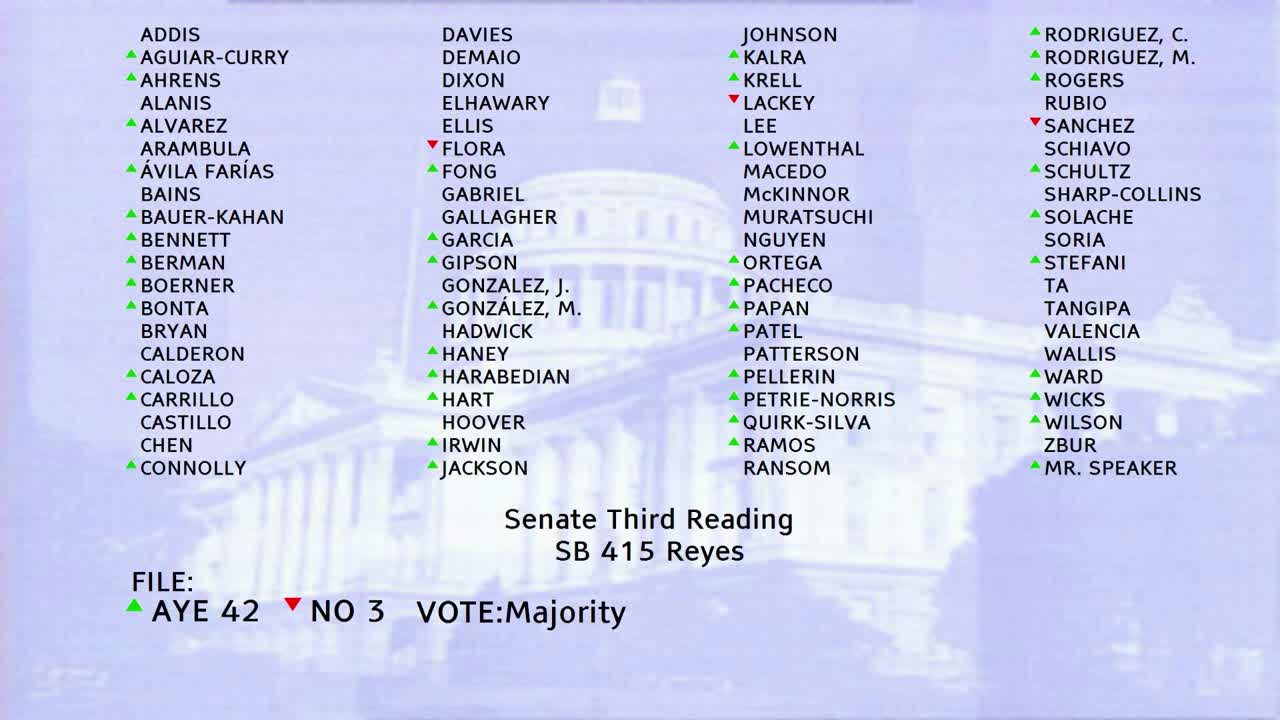 1MIN
Assembly Floor
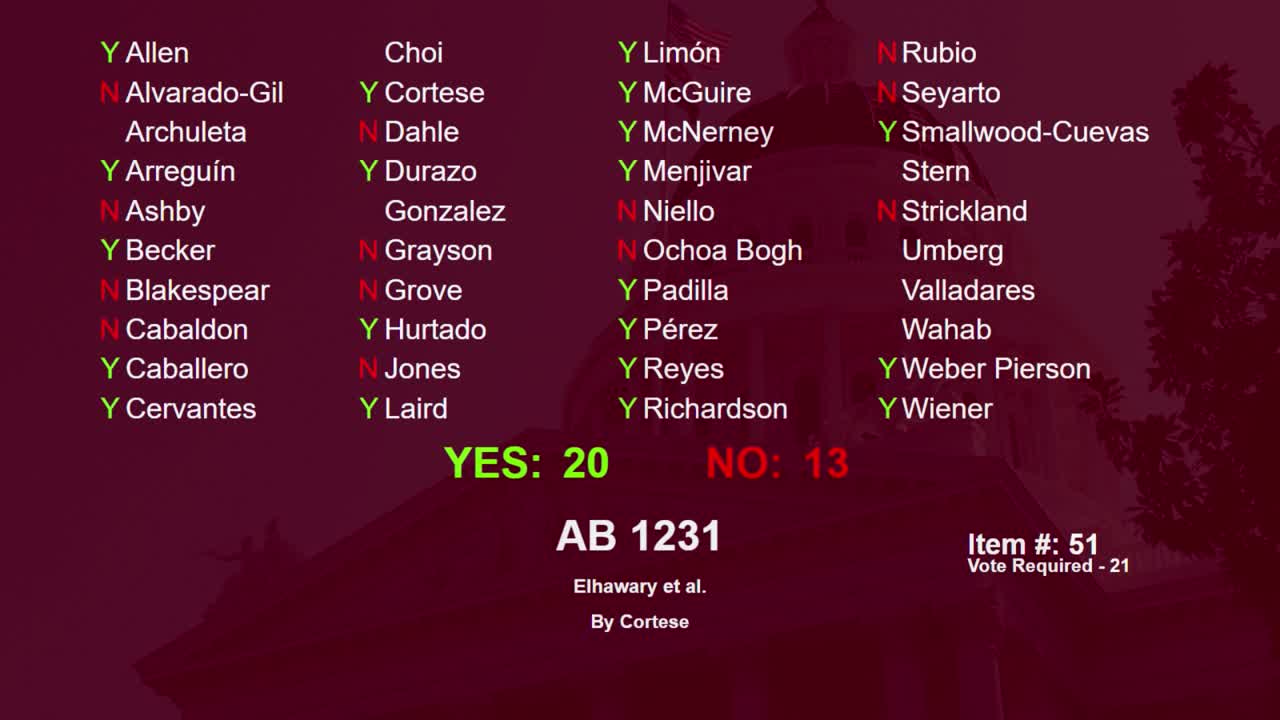 1MIN
Senate Floor
 2MIN
Senate Floor
 22MIN
Assembly Standing Committee on Banking and Finance
Bill Author

Bill Co-Author(s):