SB 823: Mental health: the CARE Act.
- Session Year: 2025-2026
- House: Senate
- Latest Version Date: 2025-02-21
Current Status:
Failed
(2026-02-02: Returned to Secretary of Senate pursuant to Joint Rule 56.)
Introduced
In Committee
Awaiting First Chamber Vote
Passed First Chamber
In Committee
Awaiting Second Chamber Vote
Passed Second Chamber
Enacted
Existing law, the Community Assistance, Recovery, and Empowerment (CARE) Act, authorizes specified adult persons to petition a civil court to create a voluntary CARE agreement or a court-ordered CARE plan and implement services, to be provided by county behavioral health agencies, to provide behavioral health care, including stabilization medication, housing, and other enumerated services, to adults who are currently experiencing a severe mental illness and have a diagnosis identified in the disorder class schizophrenia and other psychotic disorders, and who meet other specified criteria.
This bill would include bipolar I disorder in the criteria for a person to receive services under the CARE Act. By increasing the duties on the county behavioral health agencies, this bill would impose a state-mandated local program.
The California Constitution requires the state to reimburse local agencies and school districts for certain costs mandated by the state. Statutory provisions establish procedures for making that reimbursement.
This bill would provide that, if the Commission on State Mandates determines that the bill contains costs mandated by the state, reimbursement for those costs shall be made pursuant to the statutory provisions noted above.
An individual shall qualify for the CARE process only if all of the following criteria are met:
(a)The person is 18 years of age or older.
(b)(1)The person is currently experiencing a serious mental disorder, as defined in paragraph (2) of subdivision (b) of Section 5600.3 5600.3, and has a diagnosis of bipolar I disorder or a diagnosis identified in the disorder class: schizophrenia spectrum and other psychotic disorders, as defined in the most current version of the Diagnostic and Statistical Manual of Mental Disorders. This
(2)This section does not establish respondent eligibility based upon a psychotic disorder that is due to a medical condition or is not primarily psychiatric in nature, including, but not limited to, physical health conditions such as traumatic brain injury, autism, dementia, or neurologic conditions. A
(3)A person who has a current diagnosis of substance use disorder as defined in paragraph (2) of subdivision (a) of Section 1374.72 of the Health and Safety Code but who does not also meet the required criteria in this section shall does not qualify for the CARE process.
(c)The person is not clinically stabilized in on-going voluntary treatment.
(d)At least one of the following is true:
(1)The person is unlikely to survive safely in the community without supervision and the persons condition is substantially deteriorating.
(2)The person is in need of services and supports in order to prevent a relapse or deterioration that would be likely to result in grave disability or serious harm to the person or others, as used in Section 5150.
(e)Participation in a CARE plan or CARE agreement would be the least restrictive alternative necessary to ensure the persons recovery and stability.
(f)It is likely that the person will benefit from participation in a CARE plan or CARE agreement.
SEC. 2.If the Commission on State Mandates determines that this act contains costs mandated by the state, reimbursement to local agencies and school districts for those costs shall be made pursuant to Part 7 (commencing with Section 17500) of Division 4 of Title 2 of the Government Code.
|
Date
|
Status
|
|---|---|
| Feb 2, 2026 | Returned to Secretary of Senate pursuant to Joint Rule 56. |
| May 23, 2025 | May 23 hearing: Held in committee and under submission. |
| May 16, 2025 | Set for hearing May 23. |
| Apr 28, 2025 | April 28 hearing: Placed on APPR. suspense file. |
| Apr 17, 2025 | Set for hearing April 28. |
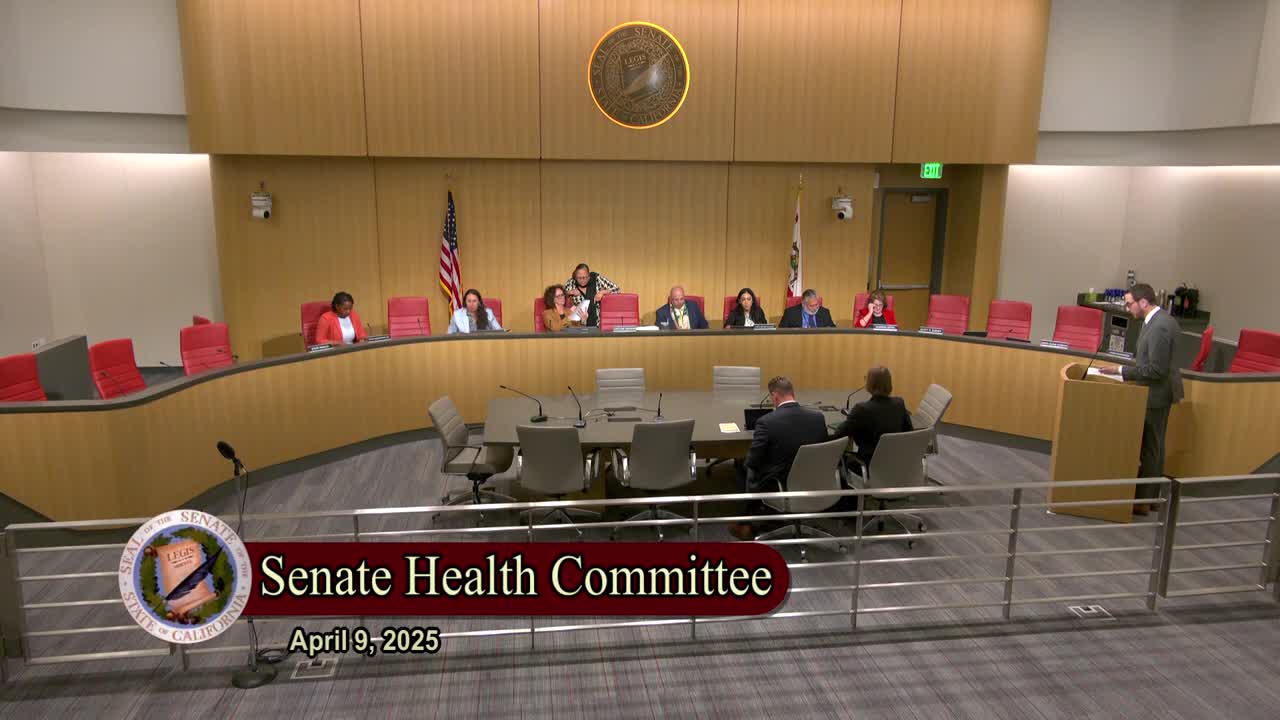
| Apr 10, 2025 | From committee: Do pass and re-refer to Com. on APPR. (Ayes 11. Noes 0. Page 738.) (April 9). Re-referred to Com. on APPR. |
| Apr 2, 2025 | Set for hearing April 9. |
| Mar 12, 2025 | Referred to Com. on HEALTH. |
| Feb 24, 2025 | Read first time. |
| Feb 24, 2025 | From printer. May be acted upon on or after March 24. |
| Feb 21, 2025 | Introduced. To Com. on RLS. for assignment. To print. |
|
Date
|
Description
|
Location
|
Votes
|
|
|---|---|---|---|---|
| Apr 28, 2025 | Placed on suspense file | Senate Standing Committee on Appropriations |
Passed |
|
| Apr 9, 2025 | Do pass, but first be re-referred to the Committee on [Appropriations] | Senate Standing Committee on Health |
Passed |
This list shows positions taken on this bill by organizations on the date displayed, which is linked to the original source.
Positions by individuals are not included.
|
Organization
|
Position
|
Date
|
|---|---|---|
| American Civil Liberties Union California Action | ** Against | |
| California Association of Mental Health Peer Run Organizations | ** Against | |
| California State Association of Psychiatrists | ** Support | |
| California Youth Empowerment Network | ** Against | |
| Cal Voices | ** Against | |
| Disability Rights California | ** Against | |
| Housing California | ** Against | |
| Mental Health America of California | ** Against | |
| National Alliance on Mental Illness California | ** Support | |
| Treatment Advocacy Center | ** Support | |
| western center on law and poverty | ** Against |
SENATE COMMITTEE ON
Senator Anna Caballero, Chair
2025 - 2026 Regular Session
SB 823 (Stern) - Mental health: the CARE Act
Version: | Policy Vote: |
Urgency: | Mandate: |
Hearing Date: | Consultant: |
Bill Summary:
SB 823 would expand eligibility criteria for an individual to qualify for the Community Assistance, Recovery, and Empowerment (CARE) Act process to include a diagnosis of bipolar I disorder.
Fiscal Impact:
Costs related to expanding eligibility for the CARE process include:
- Unknown, potentially significant ongoing costs to conduct additional CARE court hearings (Trial Court Trust Fund, General Fund). Although courts are not funded on the basis of workload, increased pressure on staff time and resources may create a need for increased funding for courts from the General Fund to perform existing duties.
- Unknown, potential ongoing General Fund costs to fund counties for public defender services due to increased workload.
- Unknown, potentially significant ongoing General Fund costs to county behavioral health departments to provide more evaluations and behavioral health treatment services. Cost to counties would be potentially reimbursable by the state, subject to a determination by the Commission on State Mandates.
- Unknown, potential ongoing cost pressures for state programs to the extent the bill increases utilization of housing, social services, and other medical services as part of the CARE plan (General Fund and federal funds).
Background:
Current law establishes the CARE Act, which provides community-based behavioral health services and supports to Californians living with schizophrenia spectrum or other psychotic disorders who meet health and safety criteria. It is a new civil court process where certain people, such as family members, first responders, and providers, may file a petition to the court to create a voluntary CARE agreement or a court-ordered CARE plan. A CARE agreement or CARE plan may include treatment, housing resources, and other services. The CARE Act is intended to serve as an upstream intervention for individuals experiencing severe impairment to prevent avoidable psychiatric hospitalizations, incarcerations, and Lanterman-Petris-Short (LPS) conservatorships.
Current law requires an individual, to qualify for the CARE process, to meet the following criteria:
- Be 18 years of age or older;
- Be currently experiencing a serious mental disorder, as defined, and have a diagnosis of schizophrenia spectrum or other psychotic disorder, as defined. Prohibits an individual who has a current diagnosis of substance use disorder, but who does not also meet the required criteria, from qualifying for the CARE process;
- Not be clinically stabilized in ongoing voluntary treatment;
- Be unlikely to survive safely in the community without supervision and their condition is substantially deteriorating; or, be in need of services and supports in order to prevent a relapse or deterioration that would be likely to result in grave disability or serious harm to self or others, resulting in involuntary detention;
- Participation in a CARE plan or CARE agreement would be the least restrictive alternative necessary to ensure the individual’s recovery and stability; and,
- Be likely to benefit from participation in a CARE plan or CARE agreement.
Proposed Law:
SB 823 would expand eligibility criteria for an individual to qualify for the CARE Act process to include a diagnosis of bipolar I disorder.
Related Legislation:
SB 331 (Menjivar) would, among other provisions, permit an original petitioner to remain as the petitioner through the CARE process, as specified. The bill is scheduled to be heard in the Senate Judiciary Committee on April 29, 2025.
SB 367 (Allen) would, among other provisions, provide that under a court order, information filed with the court related to a CARE Act respondent’s health may be used outside of CARE Act proceedings, such as an LPS conservatorship petition. The bill is scheduled to be heard in the Senate Judiciary Committee on April 29, 2025.
-- END --
SENATE COMMITTEE ON HEALTH
Senator Caroline Menjivar, Chair
BILL NO: SB 823
AUTHOR: | Stern | ||
VERSION: | February 21, 2025 | ||
HEARING DATE: | April 9, 2025 | ||
CONSULTANT: | Reyes Diaz | ||
SUBJECT: Mental health: the CARE Act
SUMMARY:
Expands eligibility criteria for an individual to qualify for the Community Assistance, Recovery, and Empowerment Act process to include a diagnosis of bipolar I disorder, other than the current requirement of a diagnosis of schizophrenia spectrum or other psychotic disorder.
Existing law:
- Establishes the Community Assistance, Recovery, and Empowerment (CARE) Act to help connect an individual (known as a “respondent”) with a court-ordered CARE agreement or CARE plan for up to 12 months, with the possibility to extend for an additional 12 months, that provides individualized, appropriate community-based services and supports, which include clinically appropriate behavioral health care and stabilization medications, housing, and other supportive services. [WIC §5970, et seq.]
- Requires an individual, to qualify as a respondent in the CARE process, to meet the following criteria:
- Be 18 years of age or older;
- Be currently experiencing a serious mental disorder and have a diagnosis of schizophrenia spectrum or other psychotic disorder. Prohibits an individual who has a current diagnosis of substance use disorder, but who does not also meet the required criteria, from qualifying for the CARE process;
- Not be clinically stabilized in ongoing voluntary treatment;
- Be unlikely to survive safely in the community without supervision and their condition is substantially deteriorating; or, be in need of services and supports in order to prevent a relapse or deterioration that would be likely to result in grave disability or serious harm to self or others, resulting in involuntary detention;
- Participation in a CARE plan or CARE agreement would be the least restrictive alternative necessary to ensure the individual’s recovery and stability; and,
- Be likely to benefit from participation in a CARE plan or CARE agreement.
[WIC §5972]
- Permits the following adult persons to file a petition to commence the CARE process:
- A person with whom the respondent resides;
- A spouse, parent, sibling, child, or grandparent or an individual who stands in loco parentis to the respondent;
- The director of a hospital or the director’s designee, in which the respondent is hospitalized, including hospitalized pursuant to the Lanterman-Petris-Short (LPS) Act involuntary detention law;
- The director of a public or charitable organization, agency, or home, or their designee, who has, within the previous 30 days, provided or who is currently providing behavioral health services to the respondent or in whose institution the respondent resides;
- A licensed behavioral health professional, or their designee, who is, or has been within the previous 30 days, either supervising the treatment of, or treating the respondent for a mental illness;
- A first responder, including a peace officer, firefighter, paramedic, emergency medical technician, mobile crisis response worker, or homeless outreach worker, who has had repeated interactions with the respondent in the form of multiple arrests, multiple detentions and transportation pursuant to the LPS, multiple attempts to engage the respondent in voluntary treatment, or other repeated efforts to aid the respondent in obtaining professional assistance;
- The public guardian or public conservator, or their designee, of the county in which the respondent resides or is found;
- The director of a county behavioral health agency, or their designee, of the county in which the respondent resides or is found;
- The director of county adult protective services, or their designee, of the county in which the respondent resides or is found;
- The director of a California Indian health services program, California tribal behavioral health department, who has, within the previous 30 days, provided or who is currently providing behavioral health services to the respondent, or the director’s designee;
- The judge of a tribal court located in California before which the respondent has appeared within the previous 30 days, or the judge’s designee; or,
- The respondent. [WIC §5974]
- Requires the court to review a petition promptly, and after a series of investigations, reports, and hearings that determine if an individual meets CARE criteria, to take the following steps:
- Dismiss the matter if the court determines voluntary engagement with the respondent is effective, and they have enrolled or are likely to enroll in voluntary behavioral health treatment;
- Order the county behavioral health agency to work with the respondent, the respondent’s counsel, and the supporter (“the parties”) to engage the respondent in behavioral health treatment and attempt to enter into a CARE agreement, approve the agreement, and set a progress hearing for 60 days, if voluntary engagement is not effective;
- Order the county behavioral health agency, through a licensed behavioral health professional, to conduct a clinical evaluation of the respondent to determine if they meet CARE criteria, if the parties are not likely to enter into a CARE agreement; and,
- Order the county behavioral health agency and the parties to jointly develop a CARE plan within 14 days, if the respondent does meet CARE criteria. [WIC §5977(a)(5)(A), §5977 (c)(2), §5977.1(a)(2)(A), §5977.1(b), and §5977.1(c)(3)(A)]
This bill:
- Expands eligibility criteria for an individual to qualify as a respondent for the CARE process to include a diagnosis of bipolar I disorder, in addition to the current requirement of a diagnosis of schizophrenia spectrum or other psychotic disorder.
- Makes nonsubstantive drafting changes to existing law.
FISCAL EFFECT:
This bill has not been analyzed by a fiscal committee.
COMMENTS:
- Author’s statement. According to the author, amidst a growing mental health crisis, California is taking significant steps towards connecting vulnerable individuals struggling with serious, untreated mental illness with much-needed treatment. However, certain individuals who should qualify for CARE are left without help due to overly narrow and highly specific eligibility criteria. This bill will add bipolar I disorder to the eligibility criteria for the CARE process, allowing more individuals experiencing non-schizophrenia-induced psychosis or those with dual diagnoses to qualify for the program. This change will better align CARE with its original intent, ensuring that those most in need have access to crucial treatment to achieve stability and rebuild their lives.
- Bipolar disorder. According to the World Health Organization (WHO) website, bipolar disorder is a mental health condition that affects a person’s mood, energy, activity and thought and is characterized by manic (or hypomanic) and depressive episodes. The condition is primarily observed among working-age people, but also in youth. WHO cites two main types of bipolar disorder, depending on patterns of manic or hypomanic and depressive episodes. People with bipolar type I experience one or more manic episodes interspaced with episodes of depression, which usually become more common over time (compared with manic episodes). People with bipolar type II have had one or more hypomanic episodes and at least one depressive episode, but no history of manic episodes. WHO states that while the prevalence of bipolar disorder among men and women is approximately equal, data indicates that women are more often diagnosed—although both men and women are often misdiagnosed. Stigma and discrimination are widespread, both in communities and health services, which can undermine access to health care. Those with bipolar disorder may experience strained relationships, problems at school or work, and difficulties in carrying out daily activities, increasing the risk of suicide and of developing anxiety and substance use disorders. People with bipolar disorder are more likely to smoke, use alcohol, and have a physical health condition (e.g., cardiovascular or respiratory disease), resulting in death more than 10 years earlier than the general population.
- CARE. SB 1338 (Umberg and Eggman, Chapter 319, Statutes of 2022) established CARE to help connect an individual in crisis with a court-ordered CARE plan for up to 12 months, with the possibility to extend for an additional 12 months. The framework provides these individuals (referred to as “respondents” in the CARE process) with a clinically appropriate, community-based set of services and supports that are culturally and linguistically competent, which includes short-term stabilization medications, wellness and recovery supports, connection to social services, and a housing plan.
According to the California Health and Human Services Agency’s (CalHHS) website, housing is an important component, and finding stability and staying connected to treatment, even with the proper supports, is next to impossible while living outdoors, in a tent, or in a vehicle. CalHHS states that CARE is an upstream diversion to prevent more restrictive conservatorships or incarceration, based on evidence that demonstrates many people can stabilize, begin healing, and exit homelessness in less restrictive, community-based care settings. With advances in treatment models, new longer-acting antipsychotic treatments, and the right clinical team and housing plan, individuals who have historically suffered tremendously on the streets or during avoidable incarceration can be successfully stabilized and supported in the community. The first cohort of counties implemented CARE by October 1, 2023, and included Glenn, Orange, Riverside, San Diego, Stanislaus, and Tuolumne, and the City and County of San Francisco. Los Angeles County implemented early and began accepting CARE petitions on December 1, 2023. The second cohort of counties, representing the remaining population of the state, began accepting CARE petitions as of December 1, 2024.
- CARE early implementation report. While the Annual CARE Act Report is required to be released by July 1, 2025 (and annually thereafter), AB 102 (Ting, Chapter 102, Statutes of 2023), as part of the Budget Act of 2023, required the Department of Health Care Services (DHCS) to issue an early implementation report. The report, released in November 2024, states that initial results from the first nine months of the first cohort implementing CARE, demonstrated it is making a significant impact by addressing some of the most severe cases of mental health crises on California’s streets. In the counties where CARE was initially implemented, the program provided hundreds of people with schizophrenia and other psychotic disorders with crucial treatment and housing plans, reflecting a meaningful shift in helping the state’s most vulnerable populations towards long-term recovery and housing stability, while reducing the need for crisis services and creating a path to lasting wellness. CARE has enabled families and local leaders, rather than just county agencies, to petition the court for much-needed care and housing for those suffering from untreated mental illnesses.
In the first nine months of implementation, 788 total petitions were filed, and 217 of those were dismissed at the discretion of a judge. The report further indicates that these dismissals will require further research, since the reasons for their dismissal are not available for the preliminary report, and could include people who are receiving care; those whose cases were dismissed for successful voluntarily engagement; people not being eligible for CARE who receive needed treatment another way; or, people who are still not receiving care. The report also states that the CARE process can take time, like all mental health and substance use disorder care, to build the trust and develop the self-directed plans needed for long-term recovery and stability.
- Related legislation. SB 27 (Umberg) permits the court to conduct the initial appearance on the CARE petition at the same time as the prima facie determination, if certain requirements are met. SB 27 is set for hearing on April 8, 2025, in the Senate Judiciary Committee.
SB 331 (Menjivar), among other things, permits an original petitioner to remain involved throughout the respondent’s CARE program, as long as the respondent, the court, the supporter, or the county behavioral health director do not object. SB 331 also makes clarifications to the LPS Act to include a definition for the term “mental health disorder,” and to permit any person to petition the county to have an individual investigated to determine whether they are a danger to self or others, or gravely disabled, due to chronic alcoholism.
SB 331 is set for hearing on April 9, 2025, in this Committee.
SB 367 (Allen), among other things, expands various provisions in the LPS Act to allow more entities to petition the county to have an individual investigated for LPS conservatorship (like a physician, psychiatrist, or judicial officer); requires a treatment plan for a person placed in a conservatorship; and requires an assessment that determine if an individual qualifies for LPS conservatorship to consider such things as the course of person’s medical, educational, social, and financial conditions. SB 367 expands the CARE Act to allow reports, evaluations, and other information to be shared with a county behavioral health service provider, or as approved by the respondent. SB 367 is set for hearing on April 9, 2025, in this Committee.
- Prior legislation. SB 42 (Umberg, Chapter 640, Statutes of 2024), among other things, clarified what evidence may establish a respondent’s eligibility for CARE proceedings; reduced a CARE court’s obligation to inform the respondent of their rights; and, gave the original petitioner the right to notice of ongoing CARE proceedings unless the court specifically finds it would be detrimental to the respondent.
SB 1323 (Menjivar and Stern, Chapter 646, Statutes of 2024), among other things, requires the court, when the defendant is found to be incompetent to stand trial and not eligible for diversion, or diversion is terminated early, to do various things, including referring the defendant to assisted outpatient treatment, to the county conservatorship investigator for possible conservatorship proceedings, or to CARE.
SB 1400 (Stern, Chapter 647, Statutes of 2024), among other things, required, rather than permitted, the court to hold a hearing to determine whether the defendant would be referred to outpatient treatment, conservatorship, or CARE, or if the defendant’s treatment plan would be modified. SB 1400 also expanded the data to be compiled and reported to the Judicial Council, and expanded the information compiled from county behavioral health departments to include information on all active and former participants for a period of time after the conclusion of CARE services.
AB 102 (Ting, Chapter 102, Statutes of 2023) required DHCS, in consultation with the Judicial Council of California, to provide an early implementation report by December 1, 2024, to the Joint Legislative Budget Committee and the Budget Committees of each house of the Legislature, on key data for each trial court implementing CARE.
SB 35 (Umberg, Chapter 283, Statutes of 2023) made various revisions and clarifications to the CARE process, including to the obligations and responsibilities of CARE petitioners and county behavioral health agencies; provisions relating to a respondent’s privacy and the circumstances their health information may be shared with the county; and, the level of participation in CARE proceedings a petitioner who is an eligible family member or a person who lives with the respondent may maintain if the court grants privileges.
SB 1338 (Umberg and Eggman, Chapter 319, Statutes of 2022) established CARE.
- Support. The California State Association of Psychiatrists (CSAP), the sponsor, states that this bill ensures vulnerable individuals facing mental health crises receive the treatment, support, and resources necessary to improve their well-being and regain stability in their lives. CSAP argues that the state took an important step in connecting individuals struggling with serious, untreated mental illness by implementing CARE, which has been successful in getting some individuals into the program but at significantly lower rates than anticipated, due in part to the overly narrow criterion for eligibility. CSAP argues that in practice “other psychotic disorder” ambiguously leaves determination to judicial discretion, often leading to the exclusion of disorders not specifically related to schizophrenia. There are several potential disorders that could lead to an individual experiencing psychosis or hallucinations, including schizophrenia, bipolar, and substance-induced psychosis. When an individual experiences multiple episodes leading to interaction with a health care provider, they may be given several diagnoses. CSAP states that, however, if a primary diagnosis is anything other than schizophrenia, the court can reject a petition. By explicitly including bipolar I in the qualifying diagnoses in statute, more individuals experiencing non-schizophrenia-induced psychosis or those with dual diagnoses may be eligible for the CARE process, consistent with the original intent. The National Alliance on Mental Illness – California (NAMI-CA) echoes CSAP’s concern that CARE eligibility is narrowly defined, effectively excluding individuals with bipolar I disorder despite the fact that many experience psychotic symptoms, repeated hospitalizations, and high levels of functional impairment similar to those with schizophrenia. NAMI-CA argues expanding eligibility will not only improve access to life-saving services for more people but also enhance the overall effectiveness of CARE, helping counties engage more individuals in early, community-based interventions that reduce hospitalization, incarceration, and chronic homelessness. NAMI-CA says this is especially important as California continues to invest in expanding behavioral health infrastructure statewide. The Treatment Advocacy Center also expresses concerns about the current eligibility criteria excluding those with bipolar I who may have similar symptoms to those with schizophrenia and other psychotic disorders, and agrees this bill will provide access to critical treatment and support for those with bipolar I.
- Opposition. The opponents of this bill collectively argue it subjects many additional Californians to unproven treatment approaches and violations of civil rights and would increase eligibility for CARE by tenfold. The opponents further state CARE is an expensive program already expected to cost the state $300 million annually, and rather than supporting new services, it funds a complex and lengthy court process without data showing positive outcomes. The opponents say this approach is not based on evidence-based practices nor was it shaped with input from people with lived experience. In this budget climate, the state must prioritize mental health investments that expand services and housing, rather than diverting funds to process individuals through the courts. Mental Health America of California (MHAC) argues primary barriers to accessing mental health services include a shortage of providers, stigma, and lack of voluntary services and supports. The state’s failure to meet expectations for CARE participation shows an inherent flaw in the system that won’t be solved by expanding the criteria of who can be forced into treatment via a court order. MHAC says low enrollment is due to respondents receiving care voluntarily or through means other than CARE, which supports the idea that when voluntary supports and services are available, people will accept them. ACLU further argues disclosing to an original petitioner (i.e. roommate, family member, or friend) the disposition of a petition and the reason confirms or disconfirms private medical matters of great reputational importance. Housing California and the Western Center on Law and Poverty further argue while CARE does not provide any funding for housing, data obtained through a public records request for one pilot county shows that unhoused individuals with a diagnosis of schizophrenia or psychosis were targeted for CARE: they were 5.6 times more likely to be represented in CARE compared to their presence in the general population during the first nine months of the program. None of the unhoused individuals were offered housing as a part of their CARE plan.
SUPPORT AND OPPOSITION:
Support: California State Association of Psychiatrists (sponsor)
National Alliance on Mental Illness – California
Treatment Advocacy Center
Oppose: American Civil Liberties Union California Action
Cal Voices
California Association of Mental Health Peer Run Organizations
California Youth Empowerment Network
Disability Rights California
Housing California
Mental Health America of California
Western Center on Law and Poverty
-- END --
Discussed in Hearing
 5SEC
Senate Standing Committee on Appropriations
 39MIN
Senate Standing Committee on Health
Bill Author
Bill Co-Author(s):