SB 827: Local agency officials: training.
- Session Year: 2025-2026
- House: Senate
- Latest Version Date: 2025-10-11
Current Status:
Passed
(2025-10-11: Chaptered by Secretary of State. Chapter 661, Statutes of 2025.)
Introduced
In Committee
Awaiting First Chamber Vote
Passed First Chamber
In Committee
Awaiting Second Chamber Vote
Passed Second Chamber
Enacted
Existing law imposes ethics training on specified local agency officials. Existing law requires each training to be 2 hours and requires the officials to receive each training every 2 years, and as described otherwise, with the first training within one year of commencing service. Existing law requires the local agency to maintain records of the trainings, as prescribed.
This bill would expand which local agency officials are required to complete the above-described ethics training to include department heads, or other similar administrative officers, as specified, and would instead require officials who commence service on or after January 1, 2026, to receive their initial training within 6 months of commencing service. The bill would require the local agency to post clear instructions and contact information for requesting the training records on its internet website, as specified.
This bill would additionally require all local agency officials, as defined, to receive at least 2 hours of fiscal and financial training, as described. The bill would require the training to be received at least once every 2 years, as provided. The bill would exempt from these requirements specified local agency officials if they are in compliance with existing education requirements specific to their positions.
This bill would authorize a local agency or an association of local agencies to contract with or otherwise collaborate with a provider of a training course to offer one or more training courses, or sets of self-study materials with tests, to its local agency officials to meet the training requirement, as described. The bill would require the training courses and materials to be developed in consultation with experts in local government finance, as specified. The bill would require providers of training courses to provide participants with proof of participation for purposes of complying with specified recordkeeping requirements. The bill would require a local agency to provide information on training available at least once annually. By imposing additional duties on local officials, the bill would create a state-mandated local program.
The bill would include findings that changes proposed by this bill address a matter of statewide concern rather than a municipal affair and, therefore, apply to all cities, including charter cities.
The California Constitution requires the state to reimburse local agencies and school districts for certain costs mandated by the state. Statutory provisions establish procedures for making that reimbursement.
This bill would provide that, if the Commission on State Mandates determines that the bill contains costs mandated by the state, reimbursement for those costs shall be made pursuant to the statutory provisions noted above.
Existing law imposes ethics training on specified local agency officials. Existing law requires each training to be 2 hours and requires the officials to receive each training every 2 years, and as described otherwise, with the first training within one year of commencing service. Existing law requires the local agency to maintain records of the trainings, as prescribed.
This bill would expand which local agency officials are required to complete the above-described ethics training to include department heads, or other similar administrative officers, as specified, and would instead require officials who commence service on or after January 1, 2026, to receive their initial training within 6 months of commencing service. The bill would require the local agency to publish post clear instructions and contact information for requesting the training records on its internet website, as specified.
This bill would additionally require all local agency officials, as defined, to receive at least 2 hours of fiscal and financial training, as described. The bill would require the training to be received at least once every 2 years, as provided. The bill would exempt from these requirements specified local agency officials if they are in compliance with existing education requirements specific to their positions.
This bill would authorize a local agency or an association of local agencies to contract with or otherwise collaborate with a provider of a training course to offer one or more training courses, or sets of self-study materials with tests, to its local agency officials to meet the training requirement, as described. The bill would require the training courses and materials to be developed in consultation with experts in local government finance. finance, as specified. The bill would require providers of training courses to provide participants with proof of participation for purposes of complying with specified recordkeeping requirements. The bill would require a local agency to provide information on training available at least once annually. By imposing additional duties on local officials, the bill would create a state-mandated local program.
The bill would include findings that changes proposed by this bill address a matter of statewide concern rather than a municipal affair and, therefore, apply to all cities, including charter cities.
The California Constitution requires the state to reimburse local agencies and school districts for certain costs mandated by the state. Statutory provisions establish procedures for making that reimbursement.
This bill would provide that, if the Commission on State Mandates determines that the bill contains costs mandated by the state, reimbursement for those costs shall be made pursuant to the statutory provisions noted above.
Existing law imposes ethics training on specified local agency officials. Existing law requires each training to be 2 hours and requires the officials to receive each training every 2 years, and as described otherwise, with the first training within one year of commencing service. Existing law requires the local agency to maintain records of the trainings, as prescribed.
This bill would expand which local agency officials are required to complete the above-described ethics training to include department heads, or other similar administrative officers, and would instead require officials who commence service on or after January 1, 2026, to receive their initial training within 6 months of commencing service. The bill would require the local agency to publish the training records on its internet website, as specified.
This bill would additionally require all local agency officials, as defined, to receive at least 2 hours of fiscal and financial training, as described. The bill would require the training to be received at least once every 2 years, as provided. The bill would exempt from these requirements specified local agency officials if they are in compliance with existing education requirements specific to their positions.
This bill would authorize a local agency or an association of local agencies to contract with or otherwise collaborate with a provider of a training course to offer one or more training courses, or sets of self-study materials with tests, to its local agency officials to meet the training requirement, as described. The bill would require the training courses and materials to be developed in consultation with experts in local government finance. The bill would require providers of training courses to provide participants with proof of participation for purposes of complying with specified recordkeeping requirements. The bill would require a local agency to provide information on training available at least once annually. By imposing additional duties on local officials, the bill would create a state-mandated local program.
The bill would include findings that changes proposed by this bill address a matter of statewide concern rather than a municipal affair and, therefore, apply to all cities, including charter cities.
The California Constitution requires the state to reimburse local agencies and school districts for certain costs mandated by the state. Statutory provisions establish procedures for making that reimbursement.
This bill would provide that, if the Commission on State Mandates determines that the bill contains costs mandated by the state, reimbursement for those costs shall be made pursuant to the statutory provisions noted above.
Existing law imposes ethics training on specified local agency officials. Existing law requires each training to be 2 hours and requires the officials to receive each training every 2 years, and as described otherwise, with the first training within one year of commencing service. Existing law requires the local agency to maintain records of the trainings, as prescribed.
This bill would expand which local agency officials are required to complete the above-described ethics training to include any managerial-level employee with responsibility over the agencys finances department heads, or other similar administrative officers, and would instead require officials who commence service on or after January 1, 2026, to receive their initial training within 6 months of commencing service. The bill would require the local agency to publish the training records on its internet website, as specified.
This bill would additionally require, if a local agency provides any type of compensation, salary, or stipend to a member of a legislative body, or provides reimbursement for actual and necessary expenses incurred by a member of a legislative body in the performance of official duties, require all local agency officials, as defined, to receive at least 2 hours of ethical, fiscal, fiscal and financial training, as described. The bill would require the training to be received at least once every 2 years, as provided. The bill would exempt from these requirements specified local agency officials if they are in compliance with existing education requirements specific to their positions.
This bill would authorize a local agency or an association of local agencies to contract with or otherwise collaborate with a provider of a training course to offer one or more training courses, or sets of self-study materials with tests, to its local agency officials to meet the training requirement, as described. The bill would require the training courses and materials to be developed in consultation with experts in local government finance. The bill would require providers of training courses to provide participants with proof of participation for purposes of complying with specified recordkeeping requirements. The bill would require a local agency to provide information on training available at least once annually. By imposing additional duties on local officials, the bill would create a state-mandated local program.
The bill would include findings that changes proposed by this bill address a matter of statewide concern rather than a municipal affair and, therefore, apply to all cities, including charter cities.
The California Constitution requires the state to reimburse local agencies and school districts for certain costs mandated by the state. Statutory provisions establish procedures for making that reimbursement.
This bill would provide that, if the Commission on State Mandates determines that the bill contains costs mandated by the state, reimbursement for those costs shall be made pursuant to the statutory provisions noted above.
Existing law imposes ethics training on specified local agency officials. Existing law requires each training to be 2 hours and requires the officials to receive each training every 2 years, and as described otherwise, with the first training within one year of commencing service. Existing law requires the local agency to maintain records of the trainings, as prescribed.
This bill would expand which local agency officials are required to complete the above-described ethics training to include any managerial-level employee with responsibility over the agencys finances and would instead require officials who commence service on or after January 1, 2026, to receive their initial training within 6 months of commencing service. The bill would require the local agency to publish the training records on its internet website, as specified.
This bill would additionally require, if a local agency provides any type of compensation, salary, or stipend to a member of a legislative body, or provides reimbursement for actual and necessary expenses incurred by a member of a legislative body in the performance of official duties, all local agency officials, as defined, to receive at least 2 hours of ethical, fiscal, and financial training, as described. The bill would require the training to be received at least once every 2 years, as provided. The bill would exempt from these requirements specified local agency officials if they are in compliance with existing education requirements specific to their positions.
This bill would authorize a local agency or an association of local agencies to contract with or otherwise collaborate with a provider of a training course to offer one or more training courses, or sets of self-study materials with tests, to its local agency officials to meet the training requirement, as described. The bill would require the training courses and materials to be developed in consultation with experts in local government finance. The bill would require providers of training courses to provide participants with proof of participation for purposes of complying with specified recordkeeping requirements. The bill would require a local agency to provide information on training available at least once annually. By imposing additional duties on local officials, the bill would create a state-mandated local program.
The bill would include findings that changes proposed by this bill address a matter of statewide concern rather than a municipal affair and, therefore, apply to all cities, including charter cities.
The California Constitution requires the state to reimburse local agencies and school districts for certain costs mandated by the state. Statutory provisions establish procedures for making that reimbursement.
This bill would provide that, if the Commission on State Mandates determines that the bill contains costs mandated by the state, reimbursement for those costs shall be made pursuant to the statutory provisions noted above.
Existing law establishes the Office of Land Use and Climate Innovation within the Governors office to provide long-range planning and research and to serve as the comprehensive state planning agency. Existing law requires the Governor to prepare and maintain a comprehensive State Environmental Goals and Policy Report, consistent with specified state planning priorities.This bill would make nonsubstantive changes to those provisions.Existing law establishes the Office of Land Use and Climate Innovation within the Governors office to provide long-range planning and research and to serve as the comprehensive state planning agency. Existing law requires the Governor to prepare and maintain a comprehensive State Environmental Goals and Policy Report, consistent with specified state planning priorities.
This bill would make nonsubstantive changes to those provisions.
For purposes of this article, the following definitions apply:
(a)Legislative body has the same meaning as specified in Section 54952.
(b)Local agency means a city, county, city and county, charter city, charter county, charter city and county, school district, county office of education, charter school, or special district.
(c)Local agency official means any of the following:
(1)A member of a local agency legislative body or an elected officer of a local agency who receives any type of compensation, salary, or stipend or reimbursement for actual and necessary expenses incurred in the performance of official duties.
(2)A department head or other similar administrative officer of a local agency.
(A)For a local educational agency, a department head or other similar administrative officer means the superintendent of a school district, the county superintendent of schools, or the chief administrator of a charter school.
(B)For purposes of subparagraph (A), a local educational agency means a school district, county office of education, or charter school.
(3)An employee designated by a local agency governing body to receive the training specified under this article.
(4)A member of the governing board of a school district, a county board of education, or the governing body of a charter school, whether or not that member receives any type of compensation, salary, or stipend or reimbursement for actual and necessary expenses incurred in the performance of official duties.
(d)Ethics laws include, but are not limited to, the following:
(1)Laws relating to personal financial gain by public servants, including, but not limited to, laws prohibiting bribery and conflict-of-interest laws.
(2)Laws relating to claiming perquisites of office, including, but not limited to, gift and travel restrictions, prohibitions against the use of public resources for personal or political purposes, prohibitions against gifts of public funds, mass mailing restrictions, and prohibitions against acceptance of free or discounted transportation by transportation companies.
(3)Government transparency laws, including, but not limited to, financial interest disclosure requirements and open government laws.
(4)Laws relating to fair processes, including, but not limited to, common law bias prohibitions, due process requirements, incompatible offices, competitive bidding requirements for public contracts, and disqualification from participating in decisions affecting family members.
SEC. 2.Section 53235.1 of the Government Code is amended to read:53235.1.(a)Each local agency official in local agency service as of January 1, 2006, except for officials whose term of office ends before January 9, 2007, shall receive the training required by subdivision (a) of Section 53235 before January 1, 2007. Thereafter, each local agency official shall receive the training required by subdivision (a) of Section 53235 at least once every two years.
(b)(1)Except as provided in paragraph (2), each local agency official who commences service with a local agency on or after January 1, 2006, shall receive the training required by subdivision (a) of Section 53235 no later than one year from the first day of service with the local agency and each local agency official who commences service with a local agency on or after January 1, 2026, shall receive the training required by subdivision (a) of Section 53235 no later than six months from the first day of service with the local agency. Thereafter, each local agency official shall receive the training required by subdivision (a) of Section 53235 at least once every two years.
(2)Each local agency official who, as of January 1, 2025, is a member of the governing board of a school district, a county board of education, or the governing body of a charter school, except for officials whose term of office ends before January 1, 2026, shall receive the training required by paragraph (2) of subdivision (a) of Section 53235 before January 1, 2026. Thereafter, each local agency official who is a member of the governing board of a school district, a county board of education, or the governing body of a charter school shall receive the training required by paragraph (2) of subdivision (a) of Section 53235 at least once every two years.
(c)A local agency official who serves more than one local agency shall satisfy the requirements of this article once every two years without regard to the number of local agencies with which the official serves.
SEC. 3.Section 53235.2 of the Government Code is amended to read:53235.2.(a)A local agency that provides the ethical training prescribed by this article shall maintain records indicating both of the following:
(1)The dates that local officials satisfied the requirements of this article.
(2)The entity that provided the training.
(b)Notwithstanding any other provision of law, a local agency shall maintain these records for at least five years after local officials receive the training. These records are public records subject to disclosure under the California Public Records Act (Division 10 (commencing with Section 7920.000) of Title 1).
(c)Commencing July 1, 2026, a local agency that maintains an internet website shall post on that website clear instructions and contact information for the purpose of requesting records required by this section.
SEC. 4.Article 2.4.6 (commencing with Section 53238) is added to Chapter 2 of Part 1 of Division 2 of Title 5 of the Government Code, to read:2.4.6.Fiscal and Financial Training53238.For purposes of this article:
(a)Fiscal and financial training includes, but is not limited to, training in all of the following:
(1)Laws and principles relating to financial administration and short- and long-term fiscal management, including, but not limited to, the role and responsibilities of financial administration, financial policies, municipal budgets and budget processes, and financial reporting and auditing.
(2)Laws and principles relating to, but not limited to, capital financing and debt management, mechanisms for local agency revenues, pensions and other postemployment benefits, cash management and investments, the prudent investor standard, and the ethics of safeguarding public resources.
(3)General fiscal and financial planning principles and any pertinent laws relevant to the local agency officials public service and role in overseeing the local agencys operations and relevant to the local agencys procurement and contracting practices and responsibilities.
(b)Legislative body has the same meaning as in Section 54952.
(c)Local agency means a city, county, city and county, charter city, charter county, charter city and county, or special district.
(d)Local agency official means any of the following:
(1)Any member of a local agency legislative body or any elected officer of a local agency.
(2)Any official who is appointed by the governing body who, as part of their official duties, makes decisions or recommendations regarding financial administration, budgeting, or the use of public resources.
(3)A local agency executive, as defined in subdivision (d) of Section 3511.1, or other similar administrative officer of a local agency.
(4)An employee designated by a local agency governing body to receive the training specified under this article.
53238.1.(a)All local agency officials shall receive at least two hours of fiscal and financial training pursuant to this article.
(b)A local agency or an association of local agencies may contract with or otherwise collaborate with a provider of a training course to offer one or more training courses, or sets of self-study materials with tests, to its local agency officials to meet the requirements of this article.
(c)Training courses, or the sets of self-study materials with tests, may be taken in person or online. These courses and materials shall be developed in consultation with widely recognized experts in local government finance, including local government associations.
(d)All providers of training courses under this article shall provide participants with proof of participation to meet the requirements of Section 53238.3.
(e)A local agency shall provide information on training available to meet the requirements of this article to its local agency officials at least once annually.
53238.2.(a)Every local agency official who is in a local agencys service as of January 1, 2026, and commenced that service prior to January 1, 2026, shall receive the fiscal and financial training required by this article before January 1, 2028, unless that officials term of office ends before January 9, 2028. Thereafter, the local agency official shall receive the training at least once every two years.
(b)Every local agency official who commences service with a local agency on or after January 1, 2026, shall receive the fiscal and financial training required by this article no later than six months from the first day of service with the local agency. Thereafter, the local agency official shall receive the training at least once every two years.
(c)A local agency official who serves more than one local agency is only required to comply with the training requirements of this article once every two years, regardless of the number of local agencies the local agency official serves. However, the local agency official shall provide a copy of proof of participation to all local agencies that they serve.
53238.3.(a)A local agency that provides the fiscal and financial training required by this article shall maintain records indicating both of the following:
(1)The dates that local agency officials satisfied the requirements of this article.
(2)The entity that provided the training.
(b)Notwithstanding any other provision of law, a local agency shall maintain these records for at least five years after local agency officials receive the training. These records are public records subject to disclosure under the California Public Records Act (Division 10 (commencing with Section 7920.000) of Title 1).
(c)Commencing July 1, 2026, a local agency that maintains an internet website shall post on that website clear instructions and contact information for the purpose of requesting records required by this section.
53238.4.A local agency official who is in compliance with Section 26945, 26945.1, 27000.7, 27000.8, or 27000.9 is exempt from the provisions of this article.
SEC. 5.The Legislature finds and declares that the fiscal management of local governments is a matter of statewide concern and is not a municipal affair as that term is used in Section 5 of Article XI of the California Constitution. Therefore, Sections 1 to 4, inclusive, of this act amending Sections 53234, 53235.1, and 53235.2 of, and adding Article 2.4.6 (commencing with Section 53238) to Chapter 2 of Part 1 of Division 2 of Title 5 of, the Government Code apply to all cities, including charter cities.
SEC. 6.If the Commission on State Mandates determines that this act contains costs mandated by the state, reimbursement to local agencies and school districts for those costs shall be made pursuant to Part 7 (commencing with Section 17500) of Division 4 of Title 2 of the Government Code.
For purposes of this article, the following definitions apply:
(a)Legislative body has the same meaning as specified in Section 54952.
(b)Local agency means a city, county, city and county, charter city, charter county, charter city and county, school district, county office of education, charter school, or special district.
(c)Local agency official means any of the following:
(1)A member of a local agency legislative body or an elected officer of a local agency who receives any type of compensation, salary, or stipend or reimbursement for actual and necessary expenses incurred in the performance of official duties.
(2)A department head or other similar administrative officer of a local agency.
(A)For a local educational agency, a department head or other similar administrative officer means the superintendent of a school district, the county superintendent of schools, or the chief administrator of a charter school.
(B)For purposes of subparagraph (A), a local educational agency means a school district, county office of education, or charter school.
(3)An employee designated by a local agency governing body to receive the training specified under this article.
(4)A member of the governing board of a school district, a county board of education, or the governing body of a charter school, whether or not that member receives any type of compensation, salary, or stipend or reimbursement for actual and necessary expenses incurred in the performance of official duties.
(d)Ethics laws include, but are not limited to, the following:
(1)Laws relating to personal financial gain by public servants, including, but not limited to, laws prohibiting bribery and conflict-of-interest laws.
(2)Laws relating to claiming perquisites of office, including, but not limited to, gift and travel restrictions, prohibitions against the use of public resources for personal or political purposes, prohibitions against gifts of public funds, mass mailing restrictions, and prohibitions against acceptance of free or discounted transportation by transportation companies.
(3)Government transparency laws, including, but not limited to, financial interest disclosure requirements and open government laws.
(4)Laws relating to fair processes, including, but not limited to, common law bias prohibitions, due process requirements, incompatible offices, competitive bidding requirements for public contracts, and disqualification from participating in decisions affecting family members.
SEC. 2.Section 53235.1 of the Government Code is amended to read:53235.1.(a)Each local agency official in local agency service as of January 1, 2006, except for officials whose term of office ends before January 9, 2007, shall receive the training required by subdivision (a) of Section 53235 before January 1, 2007. Thereafter, each local agency official shall receive the training required by subdivision (a) of Section 53235 at least once every two years.
(b)(1)Except as provided in paragraph (2), each local agency official who commences service with a local agency on or after January 1, 2006, shall receive the training required by subdivision (a) of Section 53235 no later than one year from the first day of service with the local agency and each local agency official who commences service with a local agency on or after January 1, 2026, shall receive the training required by subdivision (a) of Section 53235 no later than six months from the first day of service with the local agency. Thereafter, each local agency official shall receive the training required by subdivision (a) of Section 53235 at least once every two years.
(2)Each local agency official who, as of January 1, 2025, is a member of the governing board of a school district, a county board of education, or the governing body of a charter school, except for officials whose term of office ends before January 1, 2026, shall receive the training required by paragraph (2) of subdivision (a) of Section 53235 before January 1, 2026. Thereafter, each local agency official who is a member of the governing board of a school district, a county board of education, or the governing body of a charter school shall receive the training required by paragraph (2) of subdivision (a) of Section 53235 at least once every two years.
(c)A local agency official who serves more than one local agency shall satisfy the requirements of this article once every two years without regard to the number of local agencies with which the official serves.
SEC. 3.Section 53235.2 of the Government Code is amended to read:53235.2.(a)A local agency that provides the ethical training prescribed by this article shall maintain records indicating both of the following:
(1)The dates that local officials satisfied the requirements of this article.
(2)The entity that provided the training.
(b)Notwithstanding any other provision of law, a local agency shall maintain these records for at least five years after local officials receive the training. These records are public records subject to disclosure under the California Public Records Act (Division 10 (commencing with Section 7920.000) of Title 1).
(c)Commencing July 1, 2026, and every two years thereafter, if a local agency has an internet website, the local agency shall publish the most recent records required by this section on its internet website. a local agency that maintains an internet website shall post on that website clear instructions and contact information for the purpose of requesting records required by this section.
SEC. 4.Article 2.4.6 (commencing with Section 53238) is added to Chapter 2 of Part 1 of Division 2 of Title 5 of the Government Code, to read:2.4.6.Fiscal and Financial Training53238.For purposes of this article:
(a)Fiscal and financial training includes, but is not limited to, training in all of the following:
(1)Laws and principles relating to financial administration and short- and long-term fiscal management, including, but not limited to, the role and responsibilities of financial administration, financial policies, municipal budgets and budget processes, and financial reporting and auditing.
(2)Laws and principles relating to, but not limited to, capital financing and debt management, mechanisms for local agency revenues, pensions and other postemployment benefits, cash management and investments, the prudent investor standard, and the ethics of safeguarding public resources.
(3)General fiscal and financial planning principles and any pertinent laws relevant to the local agency officials public service and role in overseeing the local agencys operations and relevant to the local agencys procurement and contracting practices and responsibilities.
(b)Legislative body has the same meaning as in Section 54952.
(c)Local agency means a city, county, city and county, charter city, charter county, charter city and county, or special district.
(d)Local agency official means any of the following:
(1)Any member of a local agency legislative body, body or any elected officer of a local agency, or any officer of a local agency appointed by the governing body, who receives any type of compensation, salary, or stipend or reimbursement for actual and necessary expenses incurred in the performance of official duties. agency.
(2)Any official who is appointed by the governing body who, as part of their official duties, makes decisions or recommendations regarding financial administration, budgeting, or the use of public resources.
(2)(3)A department head local agency executive, as defined in subdivision (d) of Section 3511.1, or other similar administrative officer of a local agency.
(3)(4)An employee designated by a local agency governing body to receive the training specified under this article.
53238.1.(a)All local agency officials shall receive at least two hours of fiscal and financial training pursuant to this article.
(b)A local agency or an association of local agencies may contract with or otherwise collaborate with a provider of a training course to offer one or more training courses, or sets of self-study materials with tests, to its local agency officials to meet the requirements of this article.
(c)Training courses, or the sets of self-study materials with tests, may be taken in person or online. These courses and materials shall be developed in consultation with widely recognized experts in local government finance. finance, including local government associations.
(d)All providers of training courses under this article shall provide participants with proof of participation to meet the requirements of Section 53238.3.
(e)A local agency shall provide information on training available to meet the requirements of this article to its local agency officials at least once annually.
53238.2.(a)Every local agency official who is in a local agencys service as of January 1, 2026, and commenced that service prior to January 1, 2026, shall receive the fiscal and financial training required by this article before January 1, 2028, unless that officials term of office ends before January 9, 2028. Thereafter, the local agency official shall receive the training at least once every two years.
(b)Every local agency official who commences service with a local agency on or after January 1, 2026, shall receive the fiscal and financial training required by this article no later than six months from the first day of service with the local agency. Thereafter, the local agency official shall receive the training at least once every two years.
(c)A local agency official who serves more than one local agency is only required to comply with the training requirements of this article once every two years, regardless of the number of local agencies the local agency official serves. However, the local agency official shall provide a copy of proof of participation to all local agencies that they serve.
53238.3.(a)A local agency that provides the fiscal and financial training required by this article shall maintain records indicating both of the following:
(1)The dates that local agency officials satisfied the requirements of this article.
(2)The entity that provided the training.
(b)Notwithstanding any other provision of law, a local agency shall maintain these records for at least five years after local agency officials receive the training. These records are public records subject to disclosure under the California Public Records Act (Division 10 (commencing with Section 7920.000) of Title 1).
(c)Commencing July 1, 2026, and every two years thereafter, if a local agency has an internet website, the local agency shall publish the most recent records required by this section on its internet website. a local agency that maintains an internet website shall post on that website clear instructions and contact information for the purpose of requesting records required by this section.
53238.4.A local agency official who is in compliance with Section 26945, 26945.1, 27000.7, 27000.8, or 27000.9 is exempt from the provisions of this article.
SEC. 5.The Legislature finds and declares that the fiscal management of local governments is a matter of statewide concern and is not a municipal affair as that term is used in Section 5 of Article XI of the California Constitution. Therefore, Sections 1 to 4, inclusive, of this act amending Sections 53234, 53235.1, and 53235.2 of, and adding Article 2.4.6 (commencing with Section 53238) to Chapter 2 of Part 1 of Division 2 of Title 5 of, the Government Code apply to all cities, including charter cities.
SEC. 6.If the Commission on State Mandates determines that this act contains costs mandated by the state, reimbursement to local agencies and school districts for those costs shall be made pursuant to Part 7 (commencing with Section 17500) of Division 4 of Title 2 of the Government Code.
For purposes of this article, the following definitions apply:
(a)Legislative body has the same meaning as specified in Section 54952.
(b)Local agency means a city, county, city and county, charter city, charter county, charter city and county, school district, county office of education, charter school, or special district.
(c)Local agency official means any of the following:
(1)A member of a local agency legislative body or an elected officer of a local agency who receives any type of compensation, salary, or stipend or reimbursement for actual and necessary expenses incurred in the performance of official duties.
(2)A department head or other similar administrative officer of a local agency.
(3)An employee designated by a local agency governing body to receive the training specified under this article.
(4)A member of the governing board of a school district, a county board of education, or the governing body of a charter school, whether or not that member receives any type of compensation, salary, or stipend or reimbursement for actual and necessary expenses incurred in the performance of official duties.
(d)Ethics laws include, but are not limited to, the following:
(1)Laws relating to personal financial gain by public servants, including, but not limited to, laws prohibiting bribery and conflict-of-interest laws.
(2)Laws relating to claiming perquisites of office, including, but not limited to, gift and travel restrictions, prohibitions against the use of public resources for personal or political purposes, prohibitions against gifts of public funds, mass mailing restrictions, and prohibitions against acceptance of free or discounted transportation by transportation companies.
(3)Government transparency laws, including, but not limited to, financial interest disclosure requirements and open government laws.
(4)Laws relating to fair processes, including, but not limited to, common law bias prohibitions, due process requirements, incompatible offices, competitive bidding requirements for public contracts, and disqualification from participating in decisions affecting family members.
SEC. 2.Section 53235.1 of the Government Code is amended to read:53235.1.(a)Each local agency official in local agency service as of January 1, 2006, except for officials whose term of office ends before January 9, 2007, shall receive the training required by subdivision (a) of Section 53235 before January 1, 2007. Thereafter, each local agency official shall receive the training required by subdivision (a) of Section 53235 at least once every two years.
(b)(1)Except as provided in paragraph (2), each local agency official who commences service with a local agency on or after January 1, 2006, shall receive the training required by subdivision (a) of Section 53235 no later than one year from the first day of service with the local agency and each local agency official who commences service with a local agency on or after January 1, 2026, shall receive the training required by subdivision (a) of Section 53235 no later than six months from the first day of service with the local agency. Thereafter, each local agency official shall receive the training required by subdivision (a) of Section 53235 at least once every two years.
(2)Each local agency official who, as of January 1, 2025, is a member of the governing board of a school district, a county board of education, or the governing body of a charter school, except for officials whose term of office ends before January 1, 2026, shall receive the training required by paragraph (2) of subdivision (a) of Section 53235 before January 1, 2026. Thereafter, each local agency official who is a member of the governing board of a school district, a county board of education, or the governing body of a charter school shall receive the training required by paragraph (2) of subdivision (a) of Section 53235 at least once every two years.
(c)A local agency official who serves more than one local agency shall satisfy the requirements of this article once every two years without regard to the number of local agencies with which the official serves.
SEC. 3.Section 53235.2 of the Government Code is amended to read:53235.2.(a)A local agency that provides the ethical training prescribed by this article shall maintain records indicating both of the following:
(1)The dates that local officials satisfied the requirements of this article.
(2)The entity that provided the training.
(b)Notwithstanding any other provision of law, a local agency shall maintain these records for at least five years after local officials receive the training. These records are public records subject to disclosure under the California Public Records Act (Division 10 (commencing with Section 7920.000) of Title 1).
(c)Commencing July 1, 2026, and every two years thereafter, if a local agency has an internet website, the local agency shall publish the most recent records required by this section on its internet website.
SEC. 4.Article 2.4.6 (commencing with Section 53238) is added to Chapter 2 of Part 1 of Division 2 of Title 5 of the Government Code, to read:2.4.6.Fiscal and Financial Training53238.For purposes of this article:
(a)Fiscal and financial training includes, but is not limited to, training in all of the following:
(1)Laws and principles relating to financial administration and short- and long-term fiscal management, including, but not limited to, the role and responsibilities of financial administration, financial policies, municipal budgets and budget processes, and financial reporting and auditing.
(2)Laws and principles relating to, but not limited to, capital financing and debt management, mechanisms for local agency revenues, pensions and other postemployment benefits, cash management and investments, the prudent investor standard, and the ethics of safeguarding public resources.
(3)General fiscal and financial planning principles and any pertinent laws relevant to the local agency officials public service and role in overseeing the local agencys operations and relevant to the local agencys procurement and contracting practices and responsibilities.
(b)Legislative body has the same meaning as in Section 54952.
(c)Local agency means a city, county, city and county, charter city, charter county, charter city and county, or special district.
(d)Local agency official means any of the following:
(1)Any member of a local agency legislative body, any elected officer of a local agency, or any officer of a local agency appointed by the governing body, who receives any type of compensation, salary, or stipend or reimbursement for actual and necessary expenses incurred in the performance of official duties.
(2)A department head or other similar administrative officer of a local agency.
(3)An employee designated by a local agency governing body to receive the training specified under this article.
(4)A member of the governing board of a school district, a county board of education, or the governing body of a charter school, whether or not that member receives any type of compensation, salary, or stipend or reimbursement for actual and necessary expenses incurred in the performance of official duties.53238.1.(a)All local agency officials shall receive at least two hours of fiscal and financial training pursuant to this article.
(b)A local agency or an association of local agencies may contract with or otherwise collaborate with a provider of a training course to offer one or more training courses, or sets of self-study materials with tests, to its local agency officials to meet the requirements of this article.
(c)Training courses, or the sets of self-study materials with tests, may be taken in person or online. These courses and materials shall be developed in consultation with widely recognized experts in local government finance.
(d)All providers of training courses under this article shall provide participants with proof of participation to meet the requirements of Section 53238.3.
(e)A local agency shall provide information on training available to meet the requirements of this article to its local agency officials at least once annually.
53238.2.(a)Every local agency official who is in a local agencys service as of January 1, 2026, and commenced that service prior to January 1, 2026, shall receive the fiscal and financial training required by this article before January 1, 2028, unless that officials term of office ends before January 9, 2028. Thereafter, the local agency official shall receive the training at least once every two years.
(b)Every local agency official who commences service with a local agency on or after January 1, 2026, shall receive the fiscal and financial training required by this article no later than six months from the first day of service with the local agency. Thereafter, the local agency official shall receive the training at least once every two years.
(c)A local agency official who serves more than one local agency is only required to comply with the training requirements of this article once every two years, regardless of the number of local agencies the local agency official serves. However, the local agency official shall provide a copy of proof of participation to all local agencies that they serve.
53238.3.(a)A local agency that provides the fiscal and financial training required by this article shall maintain records indicating both of the following:
(1)The dates that local agency officials satisfied the requirements of this article.
(2)The entity that provided the training.
(b)Notwithstanding any other provision of law, a local agency shall maintain these records for at least five years after local agency officials receive the training. These records are public records subject to disclosure under the California Public Records Act (Division 10 (commencing with Section 7920.000) of Title 1).
(c)Commencing July 1, 2026, and every two years thereafter, if a local agency has an internet website, the local agency shall publish the most recent records required by this section on its internet website.
53238.4.A local agency official who is in compliance with Section 26945, 26945.1, 27000.7, 27000.8, or 27000.9 is exempt from the provisions of this article.
SEC. 5.The Legislature finds and declares that the fiscal management of local governments is a matter of statewide concern and is not a municipal affair as that term is used in Section 5 of Article XI of the California Constitution. Therefore, Sections 1 to 4, inclusive, of this act amending Sections 53234, 53235.1, and 53235.2 of, and adding Article 2.4.6 (commencing with Section 53238) to Chapter 2 of Part 1 of Division 2 of Title 5 of, the Government Code apply to all cities, including charter cities.
SEC. 6.If the Commission on State Mandates determines that this act contains costs mandated by the state, reimbursement to local agencies and school districts for those costs shall be made pursuant to Part 7 (commencing with Section 17500) of Division 4 of Title 2 of the Government Code.
REVISIONS: HeadingLine 3.For purposes of this article, the following definitions apply:
(a)Legislative body has the same meaning as specified in Section 54952.
(b)Local agency means a city, county, city and county, charter city, charter county, charter city and county, school district, county office of education, charter school, or special district.
(c)Local agency official means any of the following:
(1)A member of a local agency legislative body or an elected officer of a local agency who receives any type of compensation, salary, or stipend or reimbursement for actual and necessary expenses incurred in the performance of official duties.
(2)Any managerial-level employee of the local agency with responsibility over the local agencys finances.(2)A department head or other similar administrative officer of a local agency.
(3)An employee designated by a local agency governing body to receive the training specified under this article.
(4)A member of the governing board of a school district, a county board of education, or the governing body of a charter school, whether or not that member receives any type of compensation, salary, or stipend or reimbursement for actual and necessary expenses incurred in the performance of official duties.
(d)Ethics laws include, but are not limited to, the following:
(1)Laws relating to personal financial gain by public servants, including, but not limited to, laws prohibiting bribery and conflict-of-interest laws.
(2)Laws relating to claiming perquisites of office, including, but not limited to, gift and travel restrictions, prohibitions against the use of public resources for personal or political purposes, prohibitions against gifts of public funds, mass mailing restrictions, and prohibitions against acceptance of free or discounted transportation by transportation companies.
(3)Government transparency laws, including, but not limited to, financial interest disclosure requirements and open government laws.
(4)Laws relating to fair processes, including, but not limited to, common law bias prohibitions, due process requirements, incompatible offices, competitive bidding requirements for public contracts, and disqualification from participating in decisions affecting family members.
SEC. 2.Section 53235.1 of the Government Code is amended to read:53235.1.(a)Each local agency official in local agency service as of January 1, 2006, except for officials whose term of office ends before January 9, 2007, shall receive the training required by subdivision (a) of Section 53235 before January 1, 2007. Thereafter, each local agency official shall receive the training required by subdivision (a) of Section 53235 at least once every two years.
(b)(1)Except as provided in paragraph (2), each local agency official who commences service with a local agency on or after January 1, 2006, shall receive the training required by subdivision (a) of Section 53235 no later than one year from the first day of service with the local agency and each local agency official who commences service with a local agency on or after January 1, 2026, shall receive the training required by subdivision (a) of Section 53235 no later than six months from the first day of service with the local agency. Thereafter, each local agency official shall receive the training required by subdivision (a) of Section 53235 at least once every two years.
(2)Each local agency official who, as of January 1, 2025, is a member of the governing board of a school district, a county board of education, or the governing body of a charter school, except for officials whose term of office ends before January 1, 2026, shall receive the training required by paragraph (2) of subdivision (a) of Section 53235 before January 1, 2026. Thereafter, each local agency official who is a member of the governing board of a school district, a county board of education, or the governing body of a charter school shall receive the training required by paragraph (2) of subdivision (a) of Section 53235 at least once every two years.
(c)A local agency official who serves more than one local agency shall satisfy the requirements of this article once every two years without regard to the number of local agencies with which the official serves.
SEC. 3.Section 53235.2 of the Government Code is amended to read:53235.2.(a)A local agency that provides the ethical training prescribed by this article shall maintain records indicating both of the following:
(1)The dates that local officials satisfied the requirements of this article.
(2)The entity that provided the training.
(b)Notwithstanding any other provision of law, a local agency shall maintain these records for at least five years after local officials receive the training. These records are public records subject to disclosure under the California Public Records Act (Division 10 (commencing with Section 7920.000) of Title 1).
(c)Commencing July 1, 2026, and every two years thereafter, if a local agency has an internet website, the local agency shall publish the most recent records required by this section on its internet website.
SEC. 4.Article 2.4.6 (commencing with Section 53238) is added to Chapter 2 of Part 1 of Division 2 of Title 5 of the Government Code, to read:2.4.6.Ethical, Fiscal, Fiscal and Financial Training53238.For purposes of this article:
(a)Ethical, fiscal, Fiscal and financial training includes, but is not limited to, training in all of the following:
(1)Laws and principles relating to financial administration and short- and long-term fiscal management, including, but not limited to, the role and responsibilities of financial administration, financial policies, municipal budgets and budget processes, and financial reporting and auditing.
(2)Laws and principles relating to, but not limited to, capital financing and debt management, mechanisms for local agency revenues, pensions and other postemployment benefits, and cash management and investments. investments, the prudent investor standard, and the ethics of safeguarding public resources.
(3)General fiscal and financial planning principles and any pertinent laws relevant to the local agency officials public service and role in overseeing the local agencys operations and relevant to the local agencys procurement and contracting practices and responsibilities.
(b)Legislative body has the same meaning as in Section 54952.
(c)Local agency means a city, county, city and county, charter city, charter county, charter city and county, or special district.
(d)Local agency official means any of the following:
(1)Any member of a local agencys legislative body or agency legislative body, any elected officer of a local agency agency, or any officer of a local agency appointed by the governing body, who receives any type of compensation, salary, or stipend or reimbursement for actual and necessary expenses incurred in the performance of official duties.
(2)Any managerial-level employee of the local agency with responsibility over the local agencys finances.(2)A department head or other similar administrative officer of a local agency.
(3)Any An employee designated by a local agencys legislative agency governing body to receive the training specified under this article.
(4)A member of the governing board of a school district, a county board of education, or the governing body of a charter school, whether or not that member receives any type of compensation, salary, or stipend or reimbursement for actual and necessary expenses incurred in the performance of official duties.
53238.1.(a)If a local agency provides any type of compensation, salary, or stipend to a member of a legislative body, or provides reimbursement for actual and necessary expenses incurred by a member of a legislative body in the performance of official duties, then all All local agency officials shall receive at least two hours of ethical, fiscal, fiscal and financial training pursuant to this article.
(b)A local agency or an association of local agencies may contract with or otherwise collaborate with a provider of a training course to offer one or more training courses, or sets of self-study materials with tests, to its local agency officials to meet the requirements of this article.
(c)Training courses, or the sets of self-study materials with tests, may be taken in person or online. These courses and materials shall be developed in consultation with widely recognized experts in local government finance.
(d)All providers of training courses under this article shall provide participants with proof of participation to meet the requirements of Section 53238.3.
(e)A local agency shall provide information on training available to meet the requirements of this article to its local agency officials at least once annually.
53238.2.(a)Every local agency official who is in a local agencys service as of January 1, 2026, and commenced that service prior to January 1, 2026, shall receive the ethical, fiscal, fiscal and financial training required by this article before January 1, 2028, unless that officials term of office ends before January 9, 2028. Thereafter, the local agency official shall receive the training at least once every two years.
(b)Every local agency official who commences service with a local agency on or after January 1, 2026, shall receive the ethical, fiscal, fiscal and financial training required by this article no later than six months from the first day of service with the local agency. Thereafter, the local agency official shall receive the training at least once every two years.
(c)A local agency official who serves more than one local agency is only required to comply with the training requirements of this article once every two years, regardless of the number of local agencies the local agency official serves. However, the local agency official shall provide a copy of proof of participation to all local agencies that they serve.
53238.3.(a)A local agency that provides the ethical, fiscal, fiscal and financial training required by this article shall maintain records indicating both of the following:
(1)The dates that local agency officials satisfied the requirements of this article.
(2)The entity that provided the training.
(b)Notwithstanding any other provision of law, a local agency shall maintain these records for at least five years after local agency officials receive the training. These records are public records subject to disclosure under the California Public Records Act (Division 10 (commencing with Section 7920.000) of Title 1).
(c)Commencing July 1, 2026, and every two years thereafter, if a local agency has an internet website, the local agency shall publish the most recent records required by this section on its internet website.
53238.4.A local agency official who is in compliance with Section 26945, 26945.1, 27000.7, 27000.8, or 27000.9 is exempt from the provisions of this article.
SEC. 5.The Legislature finds and declares that the fiscal management of local governments is a matter of statewide concern and is not a municipal affair as that term is used in Section 5 of Article XI of the California Constitution. Therefore, Sections 1 to 4, inclusive, of this act amending Sections 53234, 53235.1, and 53235.2 of, and adding Article 2.4.6 (commencing with Section 53238) to Chapter 2 of Part 1 of Division 2 of Title 5 of, the Government Code apply to all cities, including charter cities.
SEC. 6.If the Commission on State Mandates determines that this act contains costs mandated by the state, reimbursement to local agencies and school districts for those costs shall be made pursuant to Part 7 (commencing with Section 17500) of Division 4 of Title 2 of the Government Code.
For purposes of this article, the following definitions apply:
(a)Legislative body has the same meaning as specified in Section 54952.
(b)Local agency means a city, county, city and county, charter city, charter county, charter city and county, school district, county office of education, charter school, or special district.
(c)Local agency official means any of the following:
(1)A member of a local agency legislative body or an elected local agency official officer of a local agency who receives any type of compensation, salary, or stipend or reimbursement for actual and necessary expenses incurred in the performance of official duties.
(2)Any managerial-level employee of the local agency with responsibility over the local agencys finances.
(2)(3)An employee designated by a local agency governing body to receive the training specified under this article.
(3)(4)A member of the governing board of a school district, a county board of education, or the governing body of a charter school, whether or not that member receives any type of compensation, salary, or stipend or reimbursement for actual and necessary expenses incurred in the performance of official duties.
(d)Ethics laws include, but are not limited to, the following:
(1)Laws relating to personal financial gain by public servants, including, but not limited to, laws prohibiting bribery and conflict-of-interest laws.
(2)Laws relating to claiming perquisites of office, including, but not limited to, gift and travel restrictions, prohibitions against the use of public resources for personal or political purposes, prohibitions against gifts of public funds, mass mailing restrictions, and prohibitions against acceptance of free or discounted transportation by transportation companies.
(3)Government transparency laws, including, but not limited to, financial interest disclosure requirements and open government laws.
(4)Laws relating to fair processes, including, but not limited to, common law bias prohibitions, due process requirements, incompatible offices, competitive bidding requirements for public contracts, and disqualification from participating in decisions affecting family members.
SEC. 2.Section 53235.1 of the Government Code is amended to read:53235.1.(a)Each local agency official in local agency service as of January 1, 2006, except for officials whose term of office ends before January 9, 2007, shall receive the training required by subdivision (a) of Section 53235 before January 1, 2007. Thereafter, each local agency official shall receive the training required by subdivision (a) of Section 53235 at least once every two years.
(b)(1)Except as provided in paragraph (2), each local agency official who commences service with a local agency on or after January 1, 2006, shall receive the training required by subdivision (a) of Section 53235 no later than one year from the first day of service with the local agency. agency and each local agency official who commences service with a local agency on or after January 1, 2026, shall receive the training required by subdivision (a) of Section 53235 no later than six months from the first day of service with the local agency. Thereafter, each local agency official shall receive the training required by subdivision (a) of Section 53235 at least once every two years.
(2)Each local agency official who, as of January 1, 2025, is a member of the governing board of a school district, a county board of education, or the governing body of a charter school, except for officials whose term of office ends before January 1, 2026, shall receive the training required by paragraph (2) of subdivision (a) of Section 53235 before January 1, 2026. Thereafter, each local agency official who is a member of the governing board of a school district, a county board of education, or the governing body of a charter school shall receive the training required by paragraph (2) of subdivision (a) of Section 53235 at least once every two years.
(c)A local agency official who serves more than one local agency shall satisfy the requirements of this article once every two years without regard to the number of local agencies with which the official serves.
SEC. 3.Section 53235.2 of the Government Code is amended to read:53235.2.(a)A local agency that requires its local agency officials to complete provides the ethical training prescribed by this article shall maintain records indicating both of the following:
(1)The dates that local officials satisfied the requirements of this article.
(2)The entity that provided the training.
(b)Notwithstanding any other provision of law, a local agency shall maintain these records for at least five years after local officials receive the training. These records are public records subject to disclosure under the California Public Records Act (Division 10 (commencing with Section 7920.000) of Title 1).
(c)Commencing July 1, 2026, and every two years thereafter, if a local agency has an internet website, the local agency shall publish the most recent records required by this section on its internet website.
SEC. 4.Article 2.4.6 (commencing with Section 53238) is added to Chapter 2 of Part 1 of Division 2 of Title 5 of the Government Code, to read:2.4.6.Ethical, Fiscal, and Financial Training53238.For purposes of this article:
(a)Ethical, fiscal, and financial training includes, but is not limited to, training in all of the following:
(1)Laws and principles relating to financial administration and short- and long-term fiscal management, including, but not limited to, the role and responsibilities of financial administration, financial policies, municipal budgets and budget processes, and financial reporting and auditing.
(2)Laws and principles relating to, but not limited to, capital financing and debt management, mechanisms for local agency revenues, pensions and other postemployment benefits, and cash management and investments.
(3)General fiscal and financial planning principles and any pertinent laws relevant to the local agency officials public service and role in overseeing the local agencys operations and relevant to the local agencys procurement and contracting practices and responsibilities.
(b)Legislative body has the same meaning as in Section 54952.
(c)Local agency means a city, county, city and county, charter city, charter county, charter city and county, or special district.
(d)Local agency official means any of the following:
(1)Any member of a local agencys legislative body or any elected officer of a local agency who receives any type of compensation, salary, or stipend or reimbursement for actual and necessary expenses incurred in the performance of official duties.
(2)Any managerial-level employee of the local agency with responsibility over the local agencys finances.
(3)Any employee designated by a local agencys legislative body to receive the training specified under this article.
(4)A member of the governing board of a school district, a county board of education, or the governing body of a charter school, whether or not that member receives any type of compensation, salary, or stipend or reimbursement for actual and necessary expenses incurred in the performance of official duties.
53238.1.(a)If a local agency provides any type of compensation, salary, or stipend to a member of a legislative body, or provides reimbursement for actual and necessary expenses incurred by a member of a legislative body in the performance of official duties, then all local agency officials shall receive at least two hours of ethical, fiscal, and financial training pursuant to this article.
(b)A local agency or an association of local agencies may contract with or otherwise collaborate with a provider of a training course to offer one or more training courses, or sets of self-study materials with tests, to its local agency officials to meet the requirements of this article.
(c)Training courses, or the sets of self-study materials with tests, may be taken in person or online. These courses and materials shall be developed in consultation with widely recognized experts in local government finance.
(d)All providers of training courses under this article shall provide participants with proof of participation to meet the requirements of Section 53238.3.
(e)A local agency shall provide information on training available to meet the requirements of this article to its local agency officials at least once annually.
53238.2.(a)Every local agency official who is in a local agencys service as of January 1, 2026, and commenced that service prior to January 1, 2026, shall receive the ethical, fiscal, and financial training required by this article before January 1, 2028, unless that officials term of office ends before January 9, 2028. Thereafter, the local agency official shall receive the training at least once every two years.
(b)Every local agency official who commences service with a local agency on or after January 1, 2026, shall receive the ethical, fiscal, and financial training required by this article no later than six months from the first day of service with the local agency. Thereafter, the local agency official shall receive the training at least once every two years.
(c)A local agency official who serves more than one local agency is only required to comply with the training requirements of this article once every two years, regardless of the number of local agencies the local agency official serves. However, the local agency official shall provide a copy of proof of participation to all local agencies that they serve.
53238.3.(a)A local agency that provides the ethical, fiscal, and financial training required by this article shall maintain records indicating both of the following:
(1)The dates that local agency officials satisfied the requirements of this article.
(2)The entity that provided the training.
(b)Notwithstanding any other provision of law, a local agency shall maintain these records for at least five years after local agency officials receive the training. These records are public records subject to disclosure under the California Public Records Act (Division 10 (commencing with Section 7920.000) of Title 1).
(c)Commencing July 1, 2026, and every two years thereafter, if a local agency has an internet website, the local agency shall publish the most recent records required by this section on its internet website.
53238.4.A local agency official who is in compliance with Section 26945, 26945.1, 27000.7, 27000.8, or 27000.9 is exempt from the provisions of this article.
SEC. 5.The Legislature finds and declares that the fiscal management of local governments is a matter of statewide concern and is not a municipal affair as that term is used in Section 5 of Article XI of the California Constitution. Therefore, Sections 1 to 4, inclusive, of this act amending Sections 53234, 53235.1, and 53235.2 of, and adding Article 2.4.6 (commencing with Section 53238) to Chapter 2 of Part 1 of Division 2 of Title 5 of, the Government Code apply to all cities, including charter cities.
SEC. 6.If the Commission on State Mandates determines that this act contains costs mandated by the state, reimbursement to local agencies and school districts for those costs shall be made pursuant to Part 7 (commencing with Section 17500) of Division 4 of Title 2 of the Government Code.
SECTION 1.Section 65041 of the Government Code is amended to read:65041.The Governor shall prepare and thereafter shall cause to be maintained, regularly reviewed, and revised a comprehensive State Environmental Goals and Policy Report. In the preparation of the report, priority shall be given to the development of statewide land use policy, including the recommendations resulting from the land use planning and implementation program set forth in Section 65040.6, and including the recommendations of the Planning Advisory and Assistance Council established pursuant to subdivision (a) of Section 65040.6. The report shall contain, but not be limited to, the following:(a)An overview, looking 20 to 30 years ahead, of state growth and development and a statement of approved state environmental goals and objectives, including those directed to land use, population growth and distribution, development, the conservation of natural resources, and air and water quality.(b)Description of new and revised state policies, programs and other actions of the executive and legislative branches required to implement statewide environmental goals, including intermediate-range plans and actions directed to natural resources, human resources, and transportation.(c)On and after January 1, 2004, any revision to the report shall provide that the goals are consistent with the state planning priorities specified pursuant to Section 65041.1.The Governor shall prepare and thereafter shall cause to be maintained, regularly reviewed, and revised a comprehensive State Environmental Goals and Policy Report. In the preparation of the report, priority shall be given to the development of statewide land use policy, including the recommendations resulting from the land use planning and implementation program set forth in Section 65040.6, and including the recommendations of the Planning Advisory and Assistance Council established pursuant to subdivision (a) of Section 65040.6. The report shall contain, but not be limited to, the following:
(a)An overview, looking 20 to 30 years ahead, of state growth and development and a statement of approved state environmental goals and objectives, including those directed to land use, population growth and distribution, development, the conservation of natural resources, and air and water quality.
(b)Description of new and revised state policies, programs and other actions of the executive and legislative branches required to implement statewide environmental goals, including intermediate-range plans and actions directed to natural resources, human resources resources, and transportation.
(c)On and after January 1, 2004, any revision to the report shall provide that the goals are consistent with the state planning priorities specified pursuant to Section 65041.1.
|
Date
|
Status
|
|---|---|
| Oct 11, 2025 | Chaptered by Secretary of State. Chapter 661, Statutes of 2025. |
| Oct 11, 2025 | Approved by the Governor. |
| Sep 17, 2025 | Enrolled and presented to the Governor at 2 p.m. |
| Sep 9, 2025 | Assembly amendments concurred in. (Ayes 30. Noes 10. Page 2697.) Ordered to engrossing and enrolling. |
| Sep 8, 2025 | In Senate. Concurrence in Assembly amendments pending. |
| Sep 8, 2025 | Read third time. Passed. (Ayes 64. Noes 7. Page 3011.) Ordered to the Senate. |
| Sep 3, 2025 | Read second time. Ordered to third reading. |
| Sep 2, 2025 | Read second time and amended. Ordered to second reading. |
| Aug 29, 2025 | From committee: Do pass as amended. (Ayes 10. Noes 2.) (August 29). |
| Aug 20, 2025 | August 20 set for first hearing. Placed on APPR. suspense file. |
| Jul 17, 2025 | From committee: Do pass and re-refer to Com. on APPR. (Ayes 7. Noes 0.) (July 16). Re-referred to Com. on APPR. |
| Jul 17, 2025 | Coauthors revised. |
| Jun 18, 2025 | June 18 set for first hearing canceled at the request of author. |
| Jun 5, 2025 | Referred to Com. on L. GOV. |
| May 28, 2025 | In Assembly. Read first time. Held at Desk. |
| May 28, 2025 | Read third time. Passed. (Ayes 28. Noes 10. Page 1290.) Ordered to the Assembly. |
| May 23, 2025 | Read second time. Ordered to third reading. |
| May 23, 2025 | From committee: Do pass. (Ayes 5. Noes 1. Page 1214.) (May 23). |
| May 20, 2025 | Set for hearing May 23. |
| May 19, 2025 | May 19 hearing: Placed on APPR. suspense file. |
| May 12, 2025 | From committee with author's amendments. Read second time and amended. Re-referred to Com. on APPR. |
| May 9, 2025 | Set for hearing May 19. |
| May 1, 2025 | Read second time and amended. Re-referred to Com. on APPR. |
| Apr 30, 2025 | From committee: Do pass as amended and re-refer to Com. on APPR. (Ayes 5. Noes 2. Page 969.) (April 30). |
| Apr 4, 2025 | Set for hearing April 30. |
| Apr 2, 2025 | Re-referred to Com. on L. GOV. |
| Mar 26, 2025 | From committee with author's amendments. Read second time and amended. Re-referred to Com. on RLS. |
| Mar 12, 2025 | Referred to Com. on RLS. |
| Feb 24, 2025 | Read first time. |
| Feb 24, 2025 | From printer. May be acted upon on or after March 24. |
| Feb 21, 2025 | Introduced. To Com. on RLS. for assignment. To print. |
|
Date
|
Description
|
Location
|
Votes
|
|
|---|---|---|---|---|
| Sep 9, 2025 | Unfinished Business SB827 Gonzalez et al. Concurrence | Senate Floor |
Passed |
|
| Sep 8, 2025 | SB 827 Gonzalez Senate Third Reading By Wicks | Assembly Floor |
Passed |
|
| Aug 29, 2025 | Do pass as amended. | Assembly Standing Committee on Appropriations |
Passed |
|
| Jul 16, 2025 | Do pass and be re-referred to the Committee on [Appropriations] | Assembly Standing Committee on Local Government |
Passed |
|
| May 28, 2025 | Senate 3rd Reading SB827 Gonzalez et al. | Senate Floor |
Passed |
|
| May 23, 2025 | Do pass | Senate Standing Committee on Appropriations |
Passed |
|
| May 19, 2025 | Placed on suspense file | Senate Standing Committee on Appropriations |
Passed |
|
| Apr 30, 2025 | Do pass as amended, but first amend, and re-refer to the Committee on [Appropriations] | Senate Standing Committee on Local Government |
Passed |
This list shows positions taken on this bill by organizations on the date displayed, which is linked to the original source.
Positions by individuals are not included.
|
Organization
|
Position
|
Date
|
|---|---|---|
| American Federation Of State, County And Municipal Employees, Afl-Cio | ** Support | |
| Association Of California School Administrators | ** Against | |
| California Association of County Treasurers and Tax Collectors | ** Support | |
| California Common Cause | ** Support | |
| League Of California Cities | ** Against | |
| Los Angeles County District Attorney'S Office | ** Support |
SENATE RULES COMMITTEE Office of Senate Floor Analyses (916) 651-1520 Fax: (916) 327-4478 | SB 827 |
UNFINISHED BUSINESS
Bill No: SB 827
Author: Gonzalez (D), et al.
Amended: 9/2/25 in Assembly
Vote: 21
SENATE LOCAL GOVERNMENT COMMITTEE: 5-2, 4/30/25
AYES: Durazo, Arreguín, Cabaldon, Laird, Wiener
NOES: Choi, Seyarto
SENATE APPROPRIATIONS COMMITTEE: 5-1, 5/23/25
AYES: Caballero, Cabaldon, Grayson, Richardson, Wahab
NOES: Seyarto
NO VOTE RECORDED: Dahle
SENATE FLOOR: 28-10, 5/28/25
AYES: Allen, Archuleta, Arreguín, Ashby, Becker, Blakespear, Cabaldon, Caballero, Cervantes, Cortese, Durazo, Gonzalez, Grayson, Hurtado, Laird, McGuire, McNerney, Menjivar, Padilla, Pérez, Richardson, Rubio, Smallwood-Cuevas, Stern, Umberg, Wahab, Weber Pierson, Wiener
NOES: Alvarado-Gil, Choi, Dahle, Grove, Jones, Niello, Ochoa Bogh, Seyarto, Strickland, Valladares
NO VOTE RECORDED: Limón, Reyes
ASSEMBLY FLOOR: 64-7, 9/8/25 - See last page for vote
SUBJECT: Local agency officials: training
SOURCE: Author
DIGEST:
This bill modifies existing ethics training requirements and adds a new ethical, fiscal, and financial training requirement for local officials.
Assembly Amendments
further defines department head for a local educational agency and clarifies what information local agencies are to post to their internet website, if they have one.
ANALYSIS:
Existing law:
- Establishes standards for the operations of the legislative bodies of local agencies. The Ralph M. Brown Act requires that legislative bodies of local agencies meet, deliberate, and vote in open session, with specified exceptions. The Political Reform Act prohibits local officials from participating in decisions which affect their material interests and establishes disclosure requirements.
- Requires members of local agencies’ legislative bodies to participate in ethics training, if those agencies offer compensation or expense reimbursement to their board members.
- Grants the State Auditor the authority to establish a high-risk local agency audit program to identify, audit, and issue reports, on local agencies the Auditor identifies as being high-risk for the potential of waste, fraud, abuse, mismanagement, or that the Auditor has identified as having major challenges with its economy, efficiency, or effectiveness. The Auditor is responsible for state costs associated with the program, must only conduct the program as funds permit, and these audits cannot interfere with mandated audits and audits the Joint Legislative Audit Committee requests. For high-risk local agencies, the Auditor must issue audit reports once every three years with recommendations for improvement.
This bill:
- Makes the following changes to the existing ethics training requirements:
- Adds any department head or other similar administrative officer to the list of local officials that must complete the ethics training;
- For a local educational agency, as defined, a "department head or other similar administrative officer" means the superintendent of a school district, the county superintendent of schools, or the chief administrator of a charter school
- Requires all local agency officials who must receive the training that commence their service on or after January 1, 2026, to receive the training no later than six months from their first day of service; and
- Specifies that commencing July 1, 2026, a local agency that maintains a website shall post on that website clear instructions and contact information for the purpose of requesting records required under existing ethics training laws.
- Adds any department head or other similar administrative officer to the list of local officials that must complete the ethics training;
- Requires local agency officials to participate in at least two hours of fiscal and financial training every two years if that local agency provides any compensation, salary, stipend, or reimbursement for actual and necessary expenses to the members of its legislative body.
- Provides that local agency officials that must complete the fiscal and financing training include:
- Any member of a local agency legislative body, any elected officer of a local agency, or any official of a local agency appointed by the governing body, who, as part of their official duties, makes decisions or recommendations regarding financial administration, budgeting, or the use of public resources.
- A local agency executive or other similar administrative officer of a local agency; and
- An employee designated by a local agency’s governing body to receive the training.
- Requires fiscal and financial training to cover:
- Laws and principles of fiscal administration and short- and long-term fiscal management, including rights and responsibilities of financial administration, financial policies, municipal budgets and processes, and financial reporting and auditing;
- Laws and principles of capital financing and debt management, mechanisms for city revenues, pensions and other postemployment benefits, and cash management and investments, the prudent investor standard, and the ethics of safeguarding public resources; and
- General fiscal and financial planning principles and any pertinent laws relevant to the local agency officials’ public service, role in overseeing the local agency’s operations, and relevant to the local agency’s procurement practices and responsibilities.
- Allows local agencies, or an association of local agencies, to contract or collaborate with a training provider to offer one or more courses, or sets of self-study materials with tests, to its local agency officials to meet the training requirement, which may be taken at home, in-person, or online.
- Requires local agencies to consult with widely-recognized experts in local government finance, including local government associations, on these courses and curricula.
- Requires training providers to provide participants with proof of participation.
- Requires local agencies to offer the training at least once each year, and maintain records indicating the dates that local officials completed the training, as well as the entity that provided it. These agencies must maintain these records for at least five years after local agency officials receive the training, and post to their website clear instructions and contact information for the purpose of requesting records, if they have one.
- Requires local agency officials to provide a copy of participation to each local agency that they serve.
- Provides that, if the official is in a local agency’s service as of January 1, 2026, and began that service prior to January 1, 2026, they must complete the training requirement before January 1, 2028, unless their term of office ends before January 9, 2028. If the official commences service on or after January 1, 2026, the must complete the training no later than six months from their first day of service with the local agency.
- Provides that local officials that comply with existing fiscal and financial training requirements of their specific office are exempt from this training requirement.
Background
In response to criminal convictions stemming from the misappropriation of public funds in the City of Bell in Los Angeles County, AB 187 (Lara, Chapter 451, Statutes of 2011) granted the State Auditor the authority to establish a high-risk local agency audit program to identify, audit, and issue reports, on local agencies the Auditor identifies as being high-risk for the potential of waste, fraud, abuse, mismanagement, or that the Auditor has identified as having major challenges with its economy, efficiency, or effectiveness. The Auditor is responsible for state costs associated with the program and must only conduct the program as funds permit. These audits also cannot interfere with mandated audits and audits the Joint Legislative Audit Committee requests. For high-risk local agencies, the Auditor must issue audit reports once every three years with recommendations for improvement. The Auditor has focused exclusively on cities in this program so far, and maintained a high-risk city dashboard, but recently removed it due to workload constraints. However, the Auditor does continue to release audits, the most recent being in March 2025 for the City of Anaheim.
Comments
- Purpose of this bill. According to the author, “While local officials hold expansive fiscal, budgetary, and financial responsibilities, there is no existing requirement that they receive any training on these critical duties and obligations. SB 827 will address this lack of preparation and education, by implementing recommendations by the California State Auditor (CSA), that will require local agency officials, such as city councilmembers and other members of local agency legislative bodies, to complete fiscal and financial training on their duties and responsibilities in budgeting, contracting, procurement, and other critical fiscal obligations. The CSA’s high-risk local program has found repeated instances of local officials financially mismanaging local agencies, and recommended additional training as a remedy. SB 827 will encourage responsible governing and prevent fiscal mismanagement by applying training requirements for local officials who receive any type of compensation, salary, or stipend, on the fiscal and financial responsibilities of their position. This bill will also update the AB 1234 (Salinas, Chapter 700, Statutes of 2005) ethics training to additionally require senior staff to take this training.”
- Good actors and bad apples. Locally elected boards govern California’s local agencies, which are accountable to their electors. Training in financial management practices is readily available through statewide associations representing local agencies, public and private colleges and universities, industry trade groups, and other sources. Local agencies in California range from small special districts with less than $100,000 in annual revenues to Los Angeles County, which currently invests more than $57 billion annually. Unfortunately, local officials who are already subject to ethics training requirements have not sufficiently absorbed the information they received in that training. For example, in February 2025, members of the City Council of Huntington Park was subject to search warrants from the Los Angeles County District Attorney on allegations of misusing $24 million for an aquatic center that remains unbuilt. That city has also removed a member from the council on allegations that she did not reside in the city. Similarly, former Orange County Supervisor Andrew Do entered a plea deal with a federal court, and could face up to five years in federal prison, for a scheme to steal money earmarked for resident services. While undoubtedly there are exceptions, most local agencies are well managed. It is unclear that an across-the-board training requirement will improve financial management practices in agencies needing improvement.
Prior legislation
SB 769 (Gonzalez, 2023) included many similar provisions to the provisions in SB 827 regarding fiscal and financial training. The measure was held on the Assembly Appropriations suspense file.
AB 1235 (Gordon, 2013), which Governor Brown vetoed, would have required specified local agency officials to receive training in financial management, if the local agency provides any type of compensation or reimbursement to a member of its legislative body, as specified. The Governor’s veto message stated the following:
This bill imposes financial management training requirements on elected city, county and special district officials at potentially significant costs to the state. I believe local governments can impose appropriate financial management training without the aid of the State General Fund.
FISCAL EFFECT: Appropriation: No Fiscal Com.: Yes Local: Yes
According to the Assembly Appropriations Committee, costs to affected local agencies of an unknown amount, but potentially in the hundreds of thousands of dollars annually statewide, related to certain administrative requirements specified in the bill for the expanded ethics training and new fiscal and financial training mandates. These costs are likely reimbursable by the state General Fund (GF), subject to a determination by the Commission on State Mandates.
SUPPORT: (Verified 9/8/25)
American Federation of State, County and Municipal Employees, Afl-cio
California Association of County Treasurers and Tax Collectors
California Common CAUSE
Los Angeles County District Attorney's Office
OPPOSITION: (Verified 9/8/25)
League of California Cities
ASSEMBLY FLOOR: 64-7, 9/8/25
AYES: Addis, Aguiar-Curry, Ahrens, Alanis, Alvarez, Arambula, Ávila Farías, Bains, Bauer-Kahan, Bennett, Berman, Boerner, Bonta, Bryan, Calderon, Caloza, Carrillo, Connolly, Davies, DeMaio, Elhawary, Fong, Gabriel, Garcia, Gipson, Mark González, Haney, Harabedian, Hart, Hoover, Irwin, Jackson, Johnson, Kalra, Krell, Lee, Lowenthal, McKinnor, Muratsuchi, Ortega, Papan, Patel, Patterson, Pellerin, Petrie-Norris, Quirk-Silva, Ramos, Ransom, Celeste Rodriguez, Michelle Rodriguez, Rogers, Schiavo, Schultz, Sharp-Collins, Solache, Soria, Stefani, Ta, Valencia, Wallis, Ward, Wicks, Zbur, Rivas
NOES: Castillo, Dixon, Ellis, Gallagher, Hadwick, Macedo, Tangipa
NO VOTE RECORDED: Chen, Flora, Jeff Gonzalez, Lackey, Nguyen, Pacheco, Blanca Rubio, Sanchez, Wilson
Prepared by: Itzel Vargas / L. GOV. / (916) 651-4119
9/8/25 19:53:05
**** END ****
SENATE THIRD READING
STR Bill Id:SB 827
Author:(Gonzalez)
As Amended Ver:September 02, 2025
Majority vote
SUMMARY
Makes changes to existing ethics training requirements, and requires certain local agency officials to receive at least two hours of fiscal and financial training at least once every two years.
Major Provisions
- Adds any department head or other similar administrative officer to the list of local officials that must complete the ethics training. For a local educational agency, as defined, a "department head or other similar administrative officer" means the superintendent of a school district, the county superintendent of schools, or the chief administrator of a charter school.
- Requires all local agency officials who commence service with a local agency on or after January 1, 2026, to receive the required ethics training no later than six months from the first day of service with the local agency.
- Specifies that commencing July 1, 2026, a local agency that maintains a website shall post on that website clear instructions and contact information for the purpose of requesting records required under existing ethics training laws.
- Defines the following terms for the purpose of this bill's fiscal and financial training requirements:
- "Fiscal and financial training" includes, but is not limited to, training in all of the following:
- Laws and principles relating to financial administration and short- and long-term fiscal management, including, but not limited to, the role and responsibilities of financial administration, financial policies, municipal budgets and budget processes and financial reporting and auditing.
- Laws and principles relating to, but not limited to, capital financing and debt management, mechanisms for local agency revenues, pension and other postemployment benefits, cash management and investments, the prudent investor standard, and the ethics of safeguarding public resources.
- General fiscal and financial planning principles and any pertinent laws relevant to the local agency official's public service and role in overseeing the local agency's operation and relevant to the local agency's procurement and contracting practices and responsibilities.
- "Legislative body" as defined in the Ralph M. Brown Act, which governs local agency open meeting requirements.
- "Local agency" to mean a city, county, city and county, charter city, charter county, charter city and county, or special district.
- "Local agency official" to mean any of the following:
- Any member of a local agency legislative body or any elected officer of a local agency.
- Any official who is appointed by the governing body who, as part of their official duties, makes decisions or recommendations regarding financial administration, budgeting, or the use of public resources.
- A local agency executive, as defined, or other similar administrative officer of a local agency.
- An employee designated by a local agency governing body to receive the fiscal and financial training.
- "Fiscal and financial training" includes, but is not limited to, training in all of the following:
- Requires all local agency officials to receive at least two hours of fiscal and financial training pursuant to this bill.
- Authorizes a local agency or an association of local agencies to contract with or otherwise collaborate with a provider of a training course to offer one or more training courses, or sets of self-study materials with tests, to its local agency officials to meet the requirements of this bill for fiscal and financial training.
- Specifies that fiscal and financial training courses, or sets of self-study materials with tests, may be taken in person or online. These courses and materials shall be developed in consultation with widely recognized experts in local government finance, including local government associations.
- Requires all providers of fiscal and financial training courses under this bill to provide participants with proof of participation, as specified.
- Specifies that a local agency shall provide information on fiscal and financial training available to meet the requirements of this bill to its local agency officials at least once annually.
- Requires every local agency official who is in a local agency's service as of January 1, 2026, and commenced that service prior to January 1, 2026, shall receive the fiscal and financial training required by this bill before January 1, 2028, unless that official's term of office ends before January 9, 2028. Thereafter, the local agency official shall receive the training at least once every two years.
- Provides that every local agency official who commences service with a local agency on or after January 1, 2026, shall receive the fiscal and financial training required by this bill no later than six months from the first day of service with the local agency. Thereafter, the local agency official shall receive the training at least once every two years.
- A local agency official who serves more than one local agency is only required to comply with the fiscal and financial training requirements of this bill once every two years, regardless of the number of local agencies the local agency official serves. However, the local agency official shall provide a copy of proof of participation to all local agencies that they serve.
- Requires a local agency that provides the fiscal and financial training required by this bill to maintain records indicating both of the following:
- The dates that the local agency officials satisfied the requirements in this bill.
- The entity that provided the training.
- Provides that a local agency shall maintain the fiscal and financial training records for at least five years after local agency officials receive the training. These records are public records subject to disclosure under the California Public Records Act.
- Specifies that commencing July 1, 2026, a local agency that maintains a website shall post on that website clear instructions and contact information for the purpose of requesting required fiscal and financial training records.
COMMENTS
- Local Government Finances. Local elected and appointed officials are charged with a fiduciary duty to the public. They are responsible for guiding multi-million dollar county and municipal agencies that depend on numerous sources of revenues and have multiple layers of policy and management responsibilities. Understanding their financial fiduciary responsibilities is one of their most important duties.
Many factors dictate how a local agency manages its funds, including: the amount of revenue the agency receives annually; the source of the revenue, whether it be property taxes, sales taxes, fee-based revenue, utility taxes, grants, loans, bond funding, etc.; restrictions on how these funds can be used; and, many other dynamics in which each local agency is accountable. No two local agencies manage their finances in the same way. In order to balance the individual agency needs, the state, both constitutionally and statutorily, has provided local agencies with decision-making flexibility in how finances can be managed.
- Current Training Requirements. The California Constitution, and state law, including the Ralph M. Brown Act and the Political Reform Act, establish standards for the operations of the legislative bodies of local agencies. The Ralph M. Brown Act requires that legislative bodies of local agencies meet, deliberate, and vote in open session, with specified exceptions. The Political Reform Act prohibits local officials from participating in decisions which affect their material interests and establishes disclosure requirements.
In 2005, the Legislature enacted AB 1234 (Salinas), Chapter 700, Statutes of 2005, to require members of local agencies' legislative bodies to participate in ethics training, if those agencies offer compensation or expense reimbursement to their board members. AB 1234 required local agency officials to receive at least two hours of training in general ethics principles and ethics laws relevant to the official's public service every two years. They must complete the training within one year of their start date. Local agencies must maintain records on the dates local officials satisfied the training requirement and the entity that provided the training for at least five years. Such training is required to include, but is not limited to, the following information:
- Laws relating to personal financial gain by public servants, including, but not limited to, laws prohibiting bribery and conflict-of-interest laws.
- Laws relating to claiming prerequisites of office, including, but not limited to, gift and travel restrictions, prohibitions against the use of public resources for personal or political purposes, prohibitions against gifts of public funds, mass mailing restrictions, and prohibitions against acceptance of free or discounted transportation by transportation companies.
- Government transparency laws, including, but not limited to, financial interest disclosure requirements and open government laws.
- Laws relating to fair processes, including, but not limited to, common law bias prohibitions, due process requirements, incompatible offices, competitive bidding requirements for public contracts, and disqualification from participating in decisions affecting family members.
AB 1661 (McCarty & Gonzalez), Chapter 816, Statutes of 2016, additionally required local agency officials to receive two hours of sexual harassment prevention training and education within the first six months of taking office or commencing employment, and every two years thereafter. The requirements of the bill apply only if a local agency provides any type of compensation, salary, or stipend to its local agency officials. AB 1661's requirements apply to any member of a legislative body and any elected official of cities and counties (including charter cities and charter counties), and special districts.
According to the Author
"While local officials hold expansive fiscal, budgetary, and financial responsibilities, there is no existing requirement that they receive any training on these critical duties and obligations. SB 827 will address this lack of preparation and education, by implementing recommendations by the California State Auditor (CSA), that will require local agency officials, such as city councilmembers and other members of local agency legislative bodies, to complete fiscal and financial training on their duties and responsibilities in budgeting, contracting, procurement, and other critical fiscal obligations. The CSA's high-risk local program has found repeated instances of local officials financially mismanaging local agencies, and recommended additional training as a remedy. SB 827 will encourage responsible governing and prevent fiscal mismanagement by applying training requirements for local officials who receive any type of compensation, salary, or stipend, on the fiscal and financial responsibilities of their position. This bill will also update the AB 1234 (Salinas, Chapter 700, Statutes of 2005) ethics training to additionally require senior staff to take this training."
Arguments in Support
According to the American Federation of State, County and Municipal Employees (AFSCME), "We believe that these proposed changes are vital for improving the delivery of public services and ensuring the responsible stewardship of public dollars. Expanding training requirements to include heads of departments and other administrative officers, as specified, is a positive step towards strengthening governance. Providing these employees with comprehensive and regular training in fiscal management and financial planning can contribute to greater accountability and better-informed decision-making. This may lead to improved efficiency and effectiveness in the administration of public services, while facilitating the use of taxpayer funds in a more judicious manner and ensuring strategic investments in essential community programs. Well-trained officers of local agencies can be better equipped to navigate financial challenges, identify risks, and make informed decisions about resource allocation, which could support more sustainable public services over time.
"This measure aims to ensure that public service prioritizes the public interest and minimizes conflicts of interest. Equipping relevant officials with necessary knowledge and skills can promote greater consistency and reliability in the delivery of public services and help build trust between local agencies and the communities they serve. This emphasis on ethical and financial responsibility has the potential to reduce the risk of mismanagement of funds and promote decision-making that aligns with the public good."
Arguments in Opposition
According to the League of California Cities in a position of oppose unless amended, "Cal Cities believes in conducting the business of government with transparency, openness, respect, and civility. The spirit of honest public service is what builds communities. While we are not necessarily opposed to the new training requirements in SB 827, Cal Cities believes state officials and agencies should conform to the same level of transparency and ethical behavior as is imposed on local officials and agencies.
FISCAL COMMENTS
According to the Assembly Appropriations Committee:
Costs to affected local agencies of an unknown amount, but potentially in the hundreds of thousands of dollars annually statewide, related to certain administrative requirements specified in the bill for the expanded ethics training and new fiscal and financial training mandates. These costs are likely reimbursable by the state General Fund (GF), subject to a determination by the Commission on State Mandates.
Based on prior commission findings, the mandate does not likely apply to training provision, but likely applies to other eligible administrative expenses incurred by local entities. Reimbursement would be available to only general law counties and certain special districts subject to specified provisions of the California Constitution and required by state law to reimburse the expenses of members of their legislative bodies. Most other local agencies, including cities, are not required by law to provide compensation or reimbursement or do not receive property tax, and therefore, are not eligible for state reimbursement under this bill.
If a successful mandate claim is filed, hundreds of eligible local entities (general law counties and special districts) could be eligible for reimbursement for costs incurred as a result of this bill, even if for only the administrative expenses. If one-third of the potentially affected local agencies filed a claim exceeding $1,000, GF costs would be over $200,000.
VOTES
SENATE FLOOR: 28-10-2
YES: Allen, Archuleta, Arreguín, Ashby, Becker, Blakespear, Cabaldon, Caballero, Cervantes, Cortese, Durazo, Gonzalez, Grayson, Hurtado, Laird, McGuire, McNerney, Menjivar, Padilla, Pérez, Richardson, Rubio, Smallwood-Cuevas, Stern, Umberg, Wahab, Weber Pierson, Wiener
NO: Alvarado-Gil, Choi, Dahle, Grove, Jones, Niello, Ochoa Bogh, Seyarto, Strickland, Valladares
ABS, ABST OR NV: Limón, Reyes
ASM LOCAL GOVERNMENT: 7-0-3
YES: Carrillo, Ta, Hoover, Ramos, Ransom, Stefani, Ward
ABS, ABST OR NV: Pacheco, Blanca Rubio, Wilson
ASM APPROPRIATIONS: 10-2-3
YES: Wicks, Arambula, Calderon, Caloza, Elhawary, Fong, Mark González, Ahrens, Pellerin, Solache
NO: Dixon, Tangipa
ABS, ABST OR NV: Sanchez, Pacheco, Ta
UPDATED
VERSION: September 02, 2025
CONSULTANT: Jimmy MacDonald / L. GOV. / (916) 319-3958 FN: 0001463
SENATE THIRD READING
STR Bill Id:SB 827
Author:(Gonzalez)
As Amended Ver: August 29, 2025
Majority vote
SUMMARY
Makes changes to existing ethics training requirements, and requires certain local agency officials to receive at least two hours of fiscal and financial training at least once every two years.
Major Provisions
- Adds any department head or other similar administrative officer to the list of local officials that must complete the ethics training. For a local educational agency, as defined, a "department head or other similar administrative officer" means the superintendent of a school district, the county superintendent of schools, or the chief administrator of a charter school.
- Requires all local agency officials who commence service with a local agency on or after January 1, 2026, to receive the required ethics training no later than six months from the first day of service with the local agency.
- Specifies that commencing July 1, 2026, a local agency that maintains a website shall post on that website clear instructions and contact information for the purpose of requesting records required under existing ethics training laws.
- Defines the following terms for the purpose of this bill's fiscal and financial training requirements:
- "Fiscal and financial training" includes, but is not limited to, training in all of the following:
- Laws and principles relating to financial administration and short- and long-term fiscal management, including, but not limited to, the role and responsibilities of financial administration, financial policies, municipal budgets and budget processes and financial reporting and auditing.
- Laws and principles relating to, but not limited to, capital financing and debt management, mechanisms for local agency revenues, pension and other postemployment benefits, cash management and investments, the prudent investor standard, and the ethics of safeguarding public resources.
- General fiscal and financial planning principles and any pertinent laws relevant to the local agency official's public service and role in overseeing the local agency's operation and relevant to the local agency's procurement and contracting practices and responsibilities.
- "Legislative body" as defined in the Ralph M. Brown Act, which governs local agency open meeting requirements.
- "Local agency" to mean a city, county, city and county, charter city, charter county, charter city and county, or special district.
- "Local agency official" to mean any of the following:
- Any member of a local agency legislative body or any elected officer of a local agency.
- Any official who is appointed by the governing body who, as part of their official duties, makes decisions or recommendations regarding financial administration, budgeting, or the use of public resources.
- A local agency executive, as defined, or other similar administrative officer of a local agency.
- An employee designated by a local agency governing body to receive the fiscal and financial training.
- "Fiscal and financial training" includes, but is not limited to, training in all of the following:
- Requires all local agency officials to receive at least two hours of fiscal and financial training pursuant to this bill.
- Authorizes a local agency or an association of local agencies to contract with or otherwise collaborate with a provider of a training course to offer one or more training courses, or sets of self-study materials with tests, to its local agency officials to meet the requirements of this bill for fiscal and financial training.
- Specifies that fiscal and financial training courses, or sets of self-study materials with tests, may be taken in person or online. These courses and materials shall be developed in consultation with widely recognized experts in local government finance, including local government associations.
- Requires all providers of fiscal and financial training courses under this bill to provide participants with proof of participation, as specified.
- Specifies that a local agency shall provide information on fiscal and financial training available to meet the requirements of this bill to its local agency officials at least once annually.
- Requires every local agency official who is in a local agency's service as of January 1, 2026, and commenced that service prior to January 1, 2026, shall receive the fiscal and financial training required by this bill before January 1, 2028, unless that official's term of office ends before January 9, 2028. Thereafter, the local agency official shall receive the training at least once every two years.
- Provides that every local agency official who commences service with a local agency on or after January 1, 2026, shall receive the fiscal and financial training required by this bill no later than six months from the first day of service with the local agency. Thereafter, the local agency official shall receive the training at least once every two years.
- A local agency official who serves more than one local agency is only required to comply with the fiscal and financial training requirements of this bill once every two years, regardless of the number of local agencies the local agency official serves. However, the local agency official shall provide a copy of proof of participation to all local agencies that they serve.
- Requires a local agency that provides the fiscal and financial training required by this bill to maintain records indicating both of the following:
- The dates that the local agency officials satisfied the requirements in this bill.
- The entity that provided the training.
- Provides that a local agency shall maintain the fiscal and financial training records for at least five years after local agency officials receive the training. These records are public records subject to disclosure under the California Public Records Act.
- Specifies that commencing July 1, 2026, a local agency that maintains a website shall post on that website clear instructions and contact information for the purpose of requesting required fiscal and financial training records.
COMMENTS
- Local Government Finances. Local elected and appointed officials are charged with a fiduciary duty to the public. They are responsible for guiding multi-million dollar county and municipal agencies that depend on numerous sources of revenues and have multiple layers of policy and management responsibilities. Understanding their financial fiduciary responsibilities is one of their most important duties.
Many factors dictate how a local agency manages its funds, including: the amount of revenue the agency receives annually; the source of the revenue, whether it be property taxes, sales taxes, fee-based revenue, utility taxes, grants, loans, bond funding, etc.; restrictions on how these funds can be used; and, many other dynamics in which each local agency is accountable. No two local agencies manage their finances in the same way. In order to balance the individual agency needs, the state, both constitutionally and statutorily, has provided local agencies with decision-making flexibility in how finances can be managed.
- Current Training Requirements. The California Constitution, and state law, including the Ralph M. Brown Act and the Political Reform Act, establish standards for the operations of the legislative bodies of local agencies. The Ralph M. Brown Act requires that legislative bodies of local agencies meet, deliberate, and vote in open session, with specified exceptions. The Political Reform Act prohibits local officials from participating in decisions which affect their material interests and establishes disclosure requirements.
In 2005, the Legislature enacted AB 1234 (Salinas), Chapter 700, Statutes of 2005, to require members of local agencies' legislative bodies to participate in ethics training, if those agencies offer compensation or expense reimbursement to their board members. AB 1234 required local agency officials to receive at least two hours of training in general ethics principles and ethics laws relevant to the official's public service every two years. They must complete the training within one year of their start date. Local agencies must maintain records on the dates local officials satisfied the training requirement and the entity that provided the training for at least five years. Such training is required to include, but is not limited to, the following information:
- Laws relating to personal financial gain by public servants, including, but not limited to, laws prohibiting bribery and conflict-of-interest laws.
- Laws relating to claiming prerequisites of office, including, but not limited to, gift and travel restrictions, prohibitions against the use of public resources for personal or political purposes, prohibitions against gifts of public funds, mass mailing restrictions, and prohibitions against acceptance of free or discounted transportation by transportation companies.
- Government transparency laws, including, but not limited to, financial interest disclosure requirements and open government laws.
- Laws relating to fair processes, including, but not limited to, common law bias prohibitions, due process requirements, incompatible offices, competitive bidding requirements for public contracts, and disqualification from participating in decisions affecting family members.
AB 1661 (McCarty & Gonzalez), Chapter 816, Statutes of 2016, additionally required local agency officials to receive two hours of sexual harassment prevention training and education within the first six months of taking office or commencing employment, and every two years thereafter. The requirements of the bill apply only if a local agency provides any type of compensation, salary, or stipend to its local agency officials. AB 1661's requirements apply to any member of a legislative body and any elected official of cities and counties (including charter cities and charter counties), and special districts.
According to the Author
"While local officials hold expansive fiscal, budgetary, and financial responsibilities, there is no existing requirement that they receive any training on these critical duties and obligations. SB 827 will address this lack of preparation and education, by implementing recommendations by the California State Auditor (CSA), that will require local agency officials, such as city councilmembers and other members of local agency legislative bodies, to complete fiscal and financial training on their duties and responsibilities in budgeting, contracting, procurement, and other critical fiscal obligations. The CSA's high-risk local program has found repeated instances of local officials financially mismanaging local agencies, and recommended additional training as a remedy. SB 827 will encourage responsible governing and prevent fiscal mismanagement by applying training requirements for local officials who receive any type of compensation, salary, or stipend, on the fiscal and financial responsibilities of their position. This bill will also update the AB 1234 (Salinas, Chapter 700, Statutes of 2005) ethics training to additionally require senior staff to take this training."
Arguments in Support
According to the American Federation of State, County and Municipal Employees (AFSCME), "We believe that these proposed changes are vital for improving the delivery of public services and ensuring the responsible stewardship of public dollars. Expanding training requirements to include heads of departments and other administrative officers, as specified, is a positive step towards strengthening governance. Providing these employees with comprehensive and regular training in fiscal management and financial planning can contribute to greater accountability and better-informed decision-making. This may lead to improved efficiency and effectiveness in the administration of public services, while facilitating the use of taxpayer funds in a more judicious manner and ensuring strategic investments in essential community programs. Well-trained officers of local agencies can be better equipped to navigate financial challenges, identify risks, and make informed decisions about resource allocation, which could support more sustainable public services over time.
"This measure aims to ensure that public service prioritizes the public interest and minimizes conflicts of interest. Equipping relevant officials with necessary knowledge and skills can promote greater consistency and reliability in the delivery of public services and help build trust between local agencies and the communities they serve. This emphasis on ethical and financial responsibility has the potential to reduce the risk of mismanagement of funds and promote decision-making that aligns with the public good."
Arguments in Opposition
According to the League of California Cities in a position of oppose unless amended, "Cal Cities believes in conducting the business of government with transparency, openness, respect, and civility. The spirit of honest public service is what builds communities. While we are not necessarily opposed to the new training requirements in SB 827, Cal Cities believes state officials and agencies should conform to the same level of transparency and ethical behavior as is imposed on local officials and agencies.
FISCAL COMMENTS
According to the Assembly Appropriations Committee:
Costs to affected local agencies of an unknown amount, but potentially in the hundreds of thousands of dollars annually statewide, related to certain administrative requirements specified in the bill for the expanded ethics training and new fiscal and financial training mandates. These costs are likely reimbursable by the state General Fund (GF), subject to a determination by the Commission on State Mandates.
Based on prior commission findings, the mandate does not likely apply to training provision, but likely applies to other eligible administrative expenses incurred by local entities. Reimbursement would be available to only general law counties and certain special districts subject to specified provisions of the California Constitution and required by state law to reimburse the expenses of members of their legislative bodies. Most other local agencies, including cities, are not required by law to provide compensation or reimbursement or do not receive property tax, and therefore, are not eligible for state reimbursement under this bill.
If a successful mandate claim is filed, hundreds of eligible local entities (general law counties and special districts) could be eligible for reimbursement for costs incurred as a result of this bill, even if for only the administrative expenses. If one-third of the potentially affected local agencies filed a claim exceeding $1,000, GF costs would be over $200,000.
VOTES
SENATE FLOOR: 28-10-2
YES: Allen, Archuleta, Arreguín, Ashby, Becker, Blakespear, Cabaldon, Caballero, Cervantes, Cortese, Durazo, Gonzalez, Grayson, Hurtado, Laird, McGuire, McNerney, Menjivar, Padilla, Pérez, Richardson, Rubio, Smallwood-Cuevas, Stern, Umberg, Wahab, Weber Pierson, Wiener
NO: Alvarado-Gil, Choi, Dahle, Grove, Jones, Niello, Ochoa Bogh, Seyarto, Strickland, Valladares
ABS, ABST OR NV: Limón, Reyes
ASM LOCAL GOVERNMENT: 7-0-3
YES: Carrillo, Ta, Hoover, Ramos, Ransom, Stefani, Ward
ABS, ABST OR NV: Pacheco, Blanca Rubio, Wilson
ASM APPROPRIATIONS: 10-2-3
YES: Wicks, Arambula, Calderon, Caloza, Elhawary, Fong, Mark González, Ahrens, Pellerin, Solache
NO: Dixon, Tangipa
ABS, ABST OR NV: Sanchez, Pacheco, Ta
UPDATED
VERSION: August 29, 2025
CONSULTANT: Jimmy MacDonald / L. GOV. / (916) 319-3958 FN: 0001463
Date of Hearing: August 20, 2025
ASSEMBLY COMMITTEE ON APPROPRIATIONS
Buffy Wicks, Chair
SBPCA Bill Id:SB 827
Author:(Gonzalez) – As Amended Ver:May 12, 2025
Policy Committee: | Local Government | Vote: | 7 - 0 |
|
| ||
|
|
Urgency: No State Mandated Local Program: Yes Reimbursable: Yes
SUMMARY:
This bill modifies existing ethics training requirements and adds a new fiscal and financial training requirement for local officials.
Specifically, this bill:
- Regarding local agency ethics training requirements:
- Includes department heads and other similar administrative officers of a local agency within the definition of “local agency official” for purposes of existing local agency ethics training requirements.
- Requires every local agency official who begins service on or after January 1, 2026, to receive ethics training within six months of the first day of service with the agency, rather than within one year.
- Beginning January 1, 2026, and every two years thereafter, requires each local agency with an internet website to publish the most recent records of its local officials’ ethics training completion.
- Regarding local agency fiscal and financial training:
- Defines “local agency,” for purposes of these provisions, as a city, county, city or county, including charter cities and counties, or a special district.
- Requires every local agency official, as defined, to receive at least two hours of fiscal and financial training at least once every two years.
- Authorizes a local agency or association of local agencies to contract or collaborate with training providers to meet the training requirements, requires the training courses and materials be developed in consultation with experts in local government finance, and authorizes the training courses to be taken in-person or online.
- Requires training providers to provide participants with proof of participation, and requires local agencies to provide information on training available to their local agency officials at least once annually.
- Requires every local agency official in a local agency’s service as of January 1, 2026, to receive training by January 1, 2028, except as specified, and at least once every two years thereafter.
- Requires a local agency official who begins service on or after January 1, 2026, to receive training within six months of the first day of service, and at least once every two years thereafter.
- Requires a local agency whose officials must receive training to maintain records for at least five years showing dates of completion for each official and the entity providing the training.
- Beginning January 1, 2026, and every two years thereafter, requires each local agency with an internet website to publish the most recent records of its local officials’ fiscal and financial training completion.
- Exempts certain local fiscal officers in compliance with existing statutory training requirements from the provisions of the bill.
FISCAL EFFECT:
Costs to affected local agencies of an unknown amount, but potentially in the hundreds of thousands of dollars annually statewide, related to certain administrative requirements specified in the bill for the expanded ethics training and new fiscal and financial training mandates. These costs are likely reimbursable by the state General Fund (GF), subject to a determination by the Commission on State Mandates.
Based on prior commission findings, the mandate does not likely apply to training provision, but likely applies to other eligible administrative expenses incurred by local entities. Reimbursement would be available to only general law counties and certain special districts subject to specified provisions of the California Constitution and required by state law to reimburse the expenses of members of their legislative bodies. Most other local agencies, including cities, are not required by law to provide compensation or reimbursement or do not receive property tax, and therefore, are not eligible for state reimbursement under this bill.
If a successful mandate claim is filed, hundreds of eligible local entities (general law counties and special districts) could be eligible for reimbursement for costs incurred as a result of this bill, even if for only the administrative expenses. If one-third of the potentially affected local agencies filed a claim exceeding $1,000, GF costs would be over $200,000.
COMMENTS:
- Purpose. According to the author:
While local officials hold expansive fiscal, budgetary, and financial responsibilities, there is no existing requirement that they receive any training on these critical duties and obligations. [This bill] will address this lack of preparation and education, by implementing recommendations by the California State Auditor (CSA), that will require local agency officials, such as city councilmembers and other members of local agency legislative bodies, to complete fiscal and financial training on their duties and responsibilities in budgeting, contracting, procurement, and other critical fiscal obligations. This bill will also update [existing] ethics training to additionally require senior staff to take this training.
- Background. Existing law, AB 1234 (Salinas), Chapter 700, Statutes of 2005, requires specified local officials to receive two hours of ethics training every two years, if a local agency provides any type of compensation or reimbursement to members of its legislative body. Existing law specifies a local agency that requires its officials to complete ethics training must maintain records for five years indicating the dates of course completion for each official and the entity providing the training. This bill expands the ethics training requirement to include department heads and other similar administrative officers, and creates a new fiscal and financial training requirement structured similarly to the ethics training requirement established in AB 1234.
The Commission on State Mandates adopted a statement of decision on May 25, 2012, related to the requirements of AB 1234, finding the statute imposes a partially reimbursable state-mandated program on general law counties (44 entities) and special districts subject to the tax and spend provisions of articles XIIIA and XIIIB of the California Constitution (610 entities) and required by their enabling statutes to provide compensation or reimbursement of expenses necessary to perform the reimbursable activities to its members. Notably, the Commission found the ethics training itself was not a reimbursable activity, but authorized reimbursement to eligible claimants for the administrative aspects of the requirement, such as adopting written policies in a public meeting regarding reimbursable expenses, providing expense report forms, providing information on training courses, and maintaining training records.
Due to the similarity of this bill to AB 1234, it is likely the Commission on State Mandates would find only the administrative requirements of this bill, including the additional provision to publish training records on local agency websites, to be eligible for state-reimbursement.
- Oppose Unless Amended. The Association of California School Administrators is asking for an amendment to clarify the ethics training expansion that includes “a department head or other similar administrative officer of a local agency” apply, in a school setting, to only those positions with relevant job duties or authorities in their appointed or elected positions. The association asserts this bill captures “school site leaders – principals – despite the fact they do not have relevant duties or authority for control of, or decision-making authority for use of, public funds like an elected board member or county superintendent of schools.”
- Prior Legislation. SB 769 (Gonzalez), of the 2023-24 Legislative Session, was substantially similar to the fiscal and financial training requirements in this bill. SB 769 was held on this committee’s suspense file.
Analysis Prepared by: Jennifer Swenson / APPR. / (916) 319-2081
Date of Hearing: July 16, 2025
ASSEMBLY COMMITTEE ON LOCAL GOVERNMENT
Juan Carrillo, Chair
SBPCA Bill Id:SB 827
Author:(Gonzalez) – As Amended Ver:May 12, 2025
SENATE VOTE: 28-10
SUBJECT: Local agency officials: training.
SUMMARY: Makes changes to existing ethics training requirements, and requires certain local agency officials to receive at least two hours of fiscal and financial training at least once every two years. Specifically, this bill:
- Adds any department head or other similar administrative officer to the list of local officials that must complete the ethics training.
- Requires all local agency officials who commence service with a local agency on or after January 1, 2026, to receive the required ethics training no later than six months from the first day of service with the local agency.
- Specifies that commencing July 1, 2026, and every two years after that, if a local agency has a website, it must publish records on the dates local officials completed the ethics training and who provided it on its website.
- Defines the following terms for the purpose of this bill’s fiscal and financial training requirements:
- “Fiscal and financial training” includes, but is not limited to, training in all of the following:
- Laws and principles relating to financial administration and short- and long-term fiscal management, including, but not limited to, the role and responsibilities of financial administration, financial policies, municipal budgets and budget processes and financial reporting and auditing.
- Laws and principles relating to, but not limited to, capital financing and debt management, mechanisms for local agency revenues, pension and other postemployment benefits, cash management and investments, the prudent investor standard, and the ethics of safeguarding public resources.
- General fiscal and financial planning principles and any pertinent laws relevant to the local agency official’s public service and role in overseeing the local agency’s operation and relevant to the local agency’s procurement and contracting practices and responsibilities.
- “Legislative body” as defined in the Ralph M. Brown Act, which governs local agency open meeting requirements.
- “Local agency” to mean a city, county, city and county, charter city, charter county, charter city and county, or special district.
- “Local agency official” to mean any of the following:
- Any member of a local agency legislative body, any elected officer of a local agency, or any officer of a local agency appointed by the governing body, who receive any type of compensation, salary, or stipend, or stipend or reimbursement for actual and necessary expenses incurred in the performance of official duties.
- A department head or other similar administrative officer of a local agency.
- An employee designated by a local agency governing body to receive the fiscal and financial training.
- “Fiscal and financial training” includes, but is not limited to, training in all of the following:
- Requires all local agency officials to receive at least two hours of fiscal and financial training pursuant to this bill.
- Authorizes a local agency or an association of local agencies to contract with or otherwise collaborate with a provider of a training course to offer one or more training courses, or sets of self-study materials with tests, to its local agency officials to meet the requirements of this bill for fiscal and financial training.
- Specifies that training courses, or sets of self-study material with tests, may be taken in person or online. These courses and materials shall be developed in consultation with widely recognized experts in local government finance.
- Requires all providers of training courses under this bill to provide participants with proof of participation, as specified.
- Specifies that a local agency shall provide information on training available to meet the requirements of this bill to its local agency officials at least once annually.
- Requires every local agency official who is in a local agency’s service as of January 1, 2026, and commenced that service prior to January 1, 2026, shall receive the fiscal and financial training required by this bill before January 1, 2028, unless that official’s term of office ends before January 9, 2028. Thereafter, the local agency official shall receive the training at least once every two years.
- Provides that every local agency official who commences service with a local agency on or after January 1, 2026, shall receive the fiscal and financial training required by this bill no later than six months from the first day of service with the local agency. Thereafter, the local agency official shall receive the training at least once every two years.
- A local agency official who serves more than one local agency is only required to comply with the training requirements of this bill once every two years, regardless of the number of local agencies the local agency official serves. However, the local agency official shall provide a copy of proof of participation to all local agencies that they serve.
- Requires a local agency that provides the fiscal and financial training required by this bill to maintain records indicating both of the following:
- The dates that the local agency officials satisfied the requirements in this bill.
- The entity that provided the training.
- Provides that a local agency shall maintain the records described in 8), above, for at least five years after local agency officials receive the training. These records are public records subject to disclosure under the California Public Records Act.
- Specifies that commencing July 1, 2026, and every two years thereafter, if a local agency has a website, the local agency shall publish the most recent records required by this bill on its website.
- Exempts specific local officials that comply with existing fiscal and financial training requirements from the new fiscal and financial training requirement in this bill, including the County Auditor and County Treasurer.
- Finds and declares that the fiscal management of local governments is a matter of statewide concern and is not a municipal affair as that term is used in Section 5 of Article XI of the California Constitution. Therefore, this bill applies to all cities, including charter cities.
- Provides that if the Commission on State Mandates determines that this act contains costs mandated by the state, reimbursement to local agencies and school districts for those costs shall be made.
FISCAL EFFECT: According to the Senate Appropriations Committee:
Unknown reimbursable state-mandated costs, potentially exceeding $50,000 annually, related to certain administrative requirements specified in the bill for the expanded ethics training and new fiscal and financial training mandates (General Fund). The mandate is not expected to apply to the provision of the training, but certain other eligible expenses incurred by local entities are likely to be subject to state-reimbursement. Reimbursement would be available for affected general law counties and certain special districts that are subject to the tax and spend provisions of the California Constitution and are required by state law to provide reimbursement of expenses to members of their legislative bodies.
COMMENTS:
- Local Government Finances. Local elected and appointed officials are charged with a fiduciary duty to the public. They are responsible for guiding multi-million dollar county and municipal agencies that depend on numerous sources of revenues and have multiple layers of policy and management responsibilities. Understanding their financial fiduciary responsibilities is one of their most important duties.
Many factors dictate how a local agency manages its funds, including: the amount of revenue the agency receives annually; the source of the revenue, whether it be property taxes, sales taxes, fee-based revenue, utility taxes, grants, loans, bond funding, etc.; restrictions on how these funds can be used; and, many other dynamics in which each local agency is accountable. No two local agencies manage their finances in the same way. In order to balance the individual agency needs, the state, both constitutionally and statutorily, has provided local agencies with decision-making flexibility in how finances can be managed. - Current Training Requirements. The California Constitution, and state law, including the Ralph M. Brown Act and the Political Reform Act, establish standards for the operations of the legislative bodies of local agencies. The Ralph M. Brown Act requires that legislative bodies of local agencies meet, deliberate, and vote in open session, with specified exceptions. The Political Reform Act prohibits local officials from participating in decisions which affect their material interests and establishes disclosure requirements.
In 2005, the Legislature enacted AB 1234 (Salinas), Chapter 700, Statutes of 2005, to require members of local agencies’ legislative bodies to participate in ethics training, if those agencies offer compensation or expense reimbursement to their board members. AB 1234 required local agency officials to receive at least two hours of training in general ethics principles and ethics laws relevant to the official’s public service every two years. They must complete the training within one year of their start date. Local agencies must maintain records on the dates local officials satisfied the training requirement and the entity that provided the training for at least five years. Such training is required to include, but is not limited to, the following information:
- Laws relating to personal financial gain by public servants, including, but not limited to, laws prohibiting bribery and conflict-of-interest laws.
- Laws relating to claiming prerequisites of office, including, but not limited to, gift and travel restrictions, prohibitions against the use of public resources for personal or political purposes, prohibitions against gifts of public funds, mass mailing restrictions, and prohibitions against acceptance of free or discounted transportation by transportation companies.
- Government transparency laws, including, but not limited to, financial interest disclosure requirements and open government laws.
- Laws relating to fair processes, including, but not limited to, common law bias prohibitions, due process requirements, incompatible offices, competitive bidding requirements for public contracts, and disqualification from participating in decisions affecting family members.
- Laws relating to personal financial gain by public servants, including, but not limited to, laws prohibiting bribery and conflict-of-interest laws.
AB 1661 (McCarty & Gonzalez), Chapter 816, Statutes of 2016, additionally required local agency officials to receive two hours of sexual harassment prevention training and education within the first six months of taking office or commencing employment, and every two years thereafter. The requirements of the bill apply only if a local agency provides any type of compensation, salary, or stipend to its local agency officials. AB 1661’s requirements apply to any member of a legislative body and any elected official of cities and counties (including charter cities and charter counties), and special districts.
- High-Risk Local Government Agency Audit Program. In response to local government malfeasance, AB 187 (Lara), Chapter 451, Statutes of 2011, authorized the State Auditor to establish a high-risk local government agency audit program to identify, audit, and issue reports on any local government agency or any publicly-created entity that the State Auditor identifies as being at high-risk for the potential of waste, fraud, abuse, or mismanagement or that has major challenges associated with its economy, efficiency, or effectiveness.
Current law requires the State Auditor to notify the Joint Legislative Audit Committee (JLAC) whenever a local government is identified as at high-risk, requires the Auditor to provide annual updates of all audits in progress, and remove the agency from the high-risk local government agency audit program if the agency has taken significant corrective measures for identified deficiencies. If the State Auditor determines that a local government agency is at high-risk, the audit reports must be issued at least once every three years with recommendations for improvement in the local government so identified.
- Bill Summary. This bill makes changes to existing ethics training requirements for local officials including, adding any department head or similar administrative office to the list of local officials that must complete ethics training, requiring all local agency officials that commence their service on or after January 1, 2026, to receive training no later than six months from their first day of service, and requiring local agencies to publish certain records on their websites.
This bill also requires specified local agency officials to receive at least two hours of fiscal and financial training if that local agency provides any compensation, salary, stipend, or reimbursement for actual and necessary expenses to the members of its legislative body, a department head or similar administrative officer of a local agency, and an employee designated by a local agency’s governing body to receive the training. Additionally, this bill also dictates when the specified local agency officials must receive the training, the information that must be provided in the training, and record maintenance requirements.
This bill is sponsored by the author.
- Author’s Statement. According to the author, “While local officials hold expansive fiscal, budgetary, and financial responsibilities, there is no existing requirement that they receive any training on these critical duties and obligations. SB 827 will address this lack of preparation and education, by implementing recommendations by the California State Auditor (CSA), that will require local agency officials, such as city councilmembers and other members of local agency legislative bodies, to complete fiscal and financial training on their duties and responsibilities in budgeting, contracting, procurement, and other critical fiscal obligations. The CSA’s high-risk local program has found repeated instances of local officials financially mismanaging local agencies, and recommended additional training as a remedy. SB 827 will encourage responsible governing and prevent fiscal mismanagement by applying training requirements for local officials who receive any type of compensation, salary, or stipend, on the fiscal and financial responsibilities of their position. This bill will also update the AB 1234 (Salinas, Chapter 700, Statutes of 2005) ethics training to additionally require senior staff to take this training.”
- Previous Legislation. AB 1235 (Gordon) of 2013 was similar to this bill and would have required specified local agency officials to receive training in financial management, if the local agency provides any type of compensation or reimbursement to a member of its legislative body, as specified. The Governor vetoed AB 1235 saying, “This bill imposes financial management training requirements on elected city, county and special district officials at potentially significant costs to the state. I believe local governments can impose appropriate financial management training without the aid of the State General Fund.”
SB 769 (Gonzalez) of 2023 would have required specified local officials to receive two hours of fiscal and financial training at least once every two years. SB 769 was held in the Assembly Appropriations Committee.
- Arguments in Support. According to the American Federation of State, County and Municipal Employees (AFSCME), “We believe that these proposed changes are vital for improving the delivery of public services and ensuring the responsible stewardship of public dollars. Expanding training requirements to include heads of departments and other administrative officers, as specified, is a positive step towards strengthening governance. Providing these employees with comprehensive and regular training in fiscal management and financial planning can contribute to greater accountability and better-informed decision-making. This may lead to improved efficiency and effectiveness in the administration of public services, while facilitating the use of taxpayer funds in a more judicious manner and ensuring strategic investments in essential community programs. Well-trained officers of local agencies can be better equipped to navigate financial challenges, identify risks, and make informed decisions about resource allocation, which could support more sustainable public services over time.
“This measure aims to ensure that public service prioritizes the public interest and minimizes conflicts of interest. Equipping relevant officials with necessary knowledge and skills can promote greater consistency and reliability in the delivery of public services and help build trust between local agencies and the communities they serve. This emphasis on ethical and financial responsibility has the potential to reduce the risk of mismanagement of funds and promote decision-making that aligns with the public good.”
- Arguments in Opposition. According to the League of California Cities in a position of oppose unless amended, “Cal Cities believes in conducting the business of government with transparency, openness, respect, and civility. The spirit of honest public service is what builds communities. While we are not necessarily opposed to the new training requirements in SB 827, Cal Cities believes state officials and agencies should conform to the same level of transparency and ethical behavior as is imposed on local officials and agencies.
According to the Association of California School Administrators in a position of oppose unless amended, “We recognize the intent of the measure and have supported previous legislative proposals to ensure school board members receive sufficient, meaningful trainings given that they may come from a wide-array of backgrounds and experiences that may not include any direct school management experience. SB 827, regrettably, appears to apply terminology more suitable for municipal agencies than local educational agencies (LEAs), which include school districts and county offices of education. SB 827 would capture school site leaders – principals – despite the fact they do not have relevant duties or authority for control of, or decision-making authority for use of, public funds like an elected board member or county superintendent of schools.
“In light of this, we respectfully request a narrowing of the bill to clearly apply the training to only those positions that have relevant job duties or authorities in their appointed or elected positions. This will maximize the limited school resources that LEA leadership is entrusted with managing and allocating.”
REGISTERED SUPPORT / OPPOSITION:
Support
American Federation of State, County and Municipal Employees
California Association of County Treasurers and Tax Collectors
California Common Cause
Opposition
Association of California School Administrators (unless amended)
League of California Cities (unless amended)
Analysis Prepared by: Jimmy MacDonald / L. GOV. / (916) 319-3958
Date of Hearing: June 18, 2025
ASSEMBLY COMMITTEE ON LOCAL GOVERNMENT
Juan Carrillo, Chair
SBPCA Bill Id:SB 827
Author:(Gonzalez) – As Amended Ver:May 12, 2025
SENATE VOTE: 28-10
SUBJECT: Local agency officials: training.
SUMMARY: Makes changes to existing ethics training requirements, and requires certain local agency officials to receive at least two hours of fiscal and financial training at least once every two years. Specifically, this bill:
- Adds any department head or other similar administrative officer to the list of local officials that must complete the ethics training.
- Requires all local agency officials who commence service with a local agency on or after January 1, 2026, to receive the required ethics training no later than six months from the first day of service with the local agency.
- Specifies that commencing July 1, 2026, and every two years after that, if a local agency has a website, it must publish records on the dates local officials completed the ethics training and who provided it on its website.
- Defines the following terms for the purpose of this bill’s fiscal and financial training requirements:
- “Fiscal and financial training” includes, but is not limited to, training in all of the following:
- Laws and principles relating to financial administration and short- and long-term fiscal management, including, but not limited to, the role and responsibilities of financial administration, financial policies, municipal budgets and budget processes and financial reporting and auditing.
- Laws and principles relating to, but not limited to, capital financing and debt management, mechanisms for local agency revenues, pension and other postemployment benefits, cash management and investments, the prudent investor standard, and the ethics of safeguarding public resources.
- General fiscal and financial planning principles and any pertinent laws relevant to the local agency official’s public service and role in overseeing the local agency’s operation and relevant to the local agency’s procurement and contracting practices and responsibilities.
- “Legislative body” as defined in the Ralph M. Brown Act, which governs local agency open meeting requirements.
- “Local agency” to mean a city, county, city and county, charter city, charter county, charter city and county, or special district.
- “Local agency official” to mean any of the following:
- Any member of a local agency legislative body, any elected officer of a local agency, or any officer of a local agency appointed by the governing body, who receive any type of compensation, salary, or stipend, or stipend or reimbursement for actual and necessary expenses incurred in the performance of official duties.
- A department head or other similar administrative officer of a local agency.
- An employee designated by a local agency governing body to receive the fiscal and financial training.
- “Fiscal and financial training” includes, but is not limited to, training in all of the following:
- Requires all local agency officials to receive at least two hours of fiscal and financial training pursuant to this bill.
- Authorizes a local agency or an association of local agencies to contract with or otherwise collaborate with a provider of a training course to offer one or more training courses, or sets of self-study materials with tests, to its local agency officials to meet the requirements of this bill for fiscal and financial training.
- Specifies that training courses, or sets of self-study material with tests, may be taken in person or online. These courses and materials shall be developed in consultation with widely recognized experts in local government finance.
- Requires all providers of training courses under this bill to provide participants with proof of participation, as specified.
- Specifies that a local agency shall provide information on training available to meet the requirements of this bill to its local agency officials at least once annually.
- Requires every local agency official who is in a local agency’s service as of January 1, 2026, and commenced that service prior to January 1, 2026, shall receive the fiscal and financial training required by this bill before January 1, 2028, unless that official’s term of office ends before January 9, 2028. Thereafter, the local agency official shall receive the training at least once every two years.
- Provides that every local agency official who commences service with a local agency on or after January 1, 2026, shall receive the fiscal and financial training required by this bill no later than six months from the first day of service with the local agency. Thereafter, the local agency official shall receive the training at least once every two years.
- A local agency official who serves more than one local agency is only required to comply with the training requirements of this bill once every two years, regardless of the number of local agencies the local agency official serves. However, the local agency official shall provide a copy of proof of participation to all local agencies that they serve.
- Requires a local agency that provides the fiscal and financial training required by this bill to maintain records indicating both of the following:
- The dates that the local agency officials satisfied the requirements in this bill.
- The entity that provided the training.
- Provides that a local agency shall maintain the records described in 8), above, for at least five years after local agency officials receive the training. These records are public records subject to disclosure under the California Public Records Act.
- Specifies that commencing July 1, 2026, and every two years thereafter, if a local agency has a website, the local agency shall publish the most recent records required by this bill on its website.
- Exempts specific local officials that comply with existing fiscal and financial training requirements from the new fiscal and financial training requirement in this bill, including the County Auditor and County Treasurer.
- Finds and declares that the fiscal management of local governments is a matter of statewide concern and is not a municipal affair as that term is used in Section 5 of Article XI of the California Constitution. Therefore, this bill applies to all cities, including charter cities.
- Provides that if the Commission on State Mandates determines that this act contains costs mandated by the state, reimbursement to local agencies and school districts for those costs shall be made.
FISCAL EFFECT: According to the Senate Appropriations Committee:
Unknown reimbursable state-mandated costs, potentially exceeding $50,000 annually, related to certain administrative requirements specified in the bill for the expanded ethics training and new fiscal and financial training mandates (General Fund). The mandate is not expected to apply to the provision of the training, but certain other eligible expenses incurred by local entities are likely to be subject to state-reimbursement. Reimbursement would be available for affected general law counties and certain special districts that are subject to the tax and spend provisions of the California Constitution and are required by state law to provide reimbursement of expenses to members of their legislative bodies.
COMMENTS:
- Local Government Finances. Local elected and appointed officials are charged with a fiduciary duty to the public. They are responsible for guiding multi-million dollar county and municipal agencies that depend on numerous sources of revenues and have multiple layers of policy and management responsibilities. Understanding their financial fiduciary responsibilities is one of their most important duties.
Many factors dictate how a local agency manages its funds, including: the amount of revenue the agency receives annually; the source of the revenue, whether it be property taxes, sales taxes, fee-based revenue, utility taxes, grants, loans, bond funding, etc.; restrictions on how these funds can be used; and, many other dynamics in which each local agency is accountable. No two local agencies manage their finances in the same way. In order to balance the individual agency needs, the state, both constitutionally and statutorily, has provided local agencies with decision-making flexibility in how finances can be managed. - Current Training Requirements. The California Constitution, and state law, including the Ralph M. Brown Act and the Political Reform Act, establish standards for the operations of the legislative bodies of local agencies. The Ralph M. Brown Act requires that legislative bodies of local agencies meet, deliberate, and vote in open session, with specified exceptions. The Political Reform Act prohibits local officials from participating in decisions which affect their material interests and establishes disclosure requirements.
In 2005, the Legislature enacted AB 1234 (Salinas), Chapter 700, Statutes of 2005, to require members of local agencies’ legislative bodies to participate in ethics training, if those agencies offer compensation or expense reimbursement to their board members. AB 1234 required local agency officials to receive at least two hours of training in general ethics principles and ethics laws relevant to the official’s public service every two years. They must complete the training within one year of their start date. Local agencies must maintain records on the dates local officials satisfied the training requirement and the entity that provided the training for at least five years. Such training is required to include, but is not limited to, the following information:
- Laws relating to personal financial gain by public servants, including, but not limited to, laws prohibiting bribery and conflict-of-interest laws.
- Laws relating to claiming prerequisites of office, including, but not limited to, gift and travel restrictions, prohibitions against the use of public resources for personal or political purposes, prohibitions against gifts of public funds, mass mailing restrictions, and prohibitions against acceptance of free or discounted transportation by transportation companies.
- Government transparency laws, including, but not limited to, financial interest disclosure requirements and open government laws.
- Laws relating to fair processes, including, but not limited to, common law bias prohibitions, due process requirements, incompatible offices, competitive bidding requirements for public contracts, and disqualification from participating in decisions affecting family members.
- Laws relating to personal financial gain by public servants, including, but not limited to, laws prohibiting bribery and conflict-of-interest laws.
AB 1661 (McCarty & Gonzalez), Chapter 816, Statutes of 2016, additionally required local agency officials to receive two hours of sexual harassment prevention training and education within the first six months of taking office or commencing employment, and every two years thereafter. The requirements of the bill apply only if a local agency provides any type of compensation, salary, or stipend to its local agency officials. AB 1661’s requirements apply to any member of a legislative body and any elected official of cities and counties (including charter cities and charter counties), and special districts.
- High-Risk Local Government Agency Audit Program. In response to local government malfeasance, AB 187 (Lara), Chapter 451, Statutes of 2011, authorized the State Auditor to establish a high-risk local government agency audit program to identify, audit, and issue reports on any local government agency or any publicly-created entity that the State Auditor identifies as being at high-risk for the potential of waste, fraud, abuse, or mismanagement or that has major challenges associated with its economy, efficiency, or effectiveness.
Current law requires the State Auditor to notify the Joint Legislative Audit Committee (JLAC) whenever a local government is identified as at high-risk, requires the Auditor to provide annual updates of all audits in progress, and remove the agency from the high-risk local government agency audit program if the agency has taken significant corrective measures for identified deficiencies. If the State Auditor determines that a local government agency is at high-risk, the audit reports must be issued at least once every three years with recommendations for improvement in the local government so identified.
- Bill Summary. This bill makes changes to existing ethics training requirements for local officials including, adding any department head or similar administrative office to the list of local officials that must complete ethics training, requiring all local agency officials that commence their service on or after January 1, 2026, to receive training no later than six months from their first day of service, and requiring local agencies to publish certain records on their websites.
This bill also requires specified local agency officials to receive at least two hours of fiscal and financial training if that local agency provides any compensation, salary, stipend, or reimbursement for actual and necessary expenses to the members of its legislative body, a department head or similar administrative officer of a local agency, and an employee designated by a local agency’s governing body to receive the training. Additionally, this bill also dictates when the specified local agency officials must receive the training, the information that must be provided in the training, and record maintenance requirements.
This bill is sponsored by the author.
- Author’s Statement. According to the author, “While local officials hold expansive fiscal, budgetary, and financial responsibilities, there is no existing requirement that they receive any training on these critical duties and obligations. SB 827 will address this lack of preparation and education, by implementing recommendations by the California State Auditor (CSA), that will require local agency officials, such as city councilmembers and other members of local agency legislative bodies, to complete fiscal and financial training on their duties and responsibilities in budgeting, contracting, procurement, and other critical fiscal obligations. The CSA’s high-risk local program has found repeated instances of local officials financially mismanaging local agencies, and recommended additional training as a remedy. SB 827 will encourage responsible governing and prevent fiscal mismanagement by applying training requirements for local officials who receive any type of compensation, salary, or stipend, on the fiscal and financial responsibilities of their position. This bill will also update the AB 1234 (Salinas, Chapter 700, Statutes of 2005) ethics training to additionally require senior staff to take this training.”
- Previous Legislation. AB 1235 (Gordon) of 2013 was similar to this bill and would have required specified local agency officials to receive training in financial management, if the local agency provides any type of compensation or reimbursement to a member of its legislative body, as specified. The Governor vetoed AB 1235 saying, “This bill imposes financial management training requirements on elected city, county and special district officials at potentially significant costs to the state. I believe local governments can impose appropriate financial management training without the aid of the State General Fund.”
SB 769 (Gonzalez) of 2023 would have required specified local officials to receive two hours of fiscal and financial training at least once every two years. SB 769 was held in the Assembly Appropriations Committee.
- Arguments in Support. According to the American Federation of State, County and Municipal Employees (AFSCME), “We believe that these proposed changes are vital for improving the delivery of public services and ensuring the responsible stewardship of public dollars. Expanding training requirements to include heads of departments and other administrative officers, as specified, is a positive step towards strengthening governance. Providing these employees with comprehensive and regular training in fiscal management and financial planning can contribute to greater accountability and better-informed decision-making. This may lead to improved efficiency and effectiveness in the administration of public services, while facilitating the use of taxpayer funds in a more judicious manner and ensuring strategic investments in essential community programs. Well-trained officers of local agencies can be better equipped to navigate financial challenges, identify risks, and make informed decisions about resource allocation, which could support more sustainable public services over time.
“This measure aims to ensure that public service prioritizes the public interest and minimizes conflicts of interest. Equipping relevant officials with necessary knowledge and skills can promote greater consistency and reliability in the delivery of public services and help build trust between local agencies and the communities they serve. This emphasis on ethical and financial responsibility has the potential to reduce the risk of mismanagement of funds and promote decision-making that aligns with the public good.”
- Arguments in Opposition. According to the League of California Cities, “Cal Cities believes in conducting the business of government with transparency, openness, respect, and civility. The spirit of honest public service is what builds communities. While we are not necessarily opposed to the new training requirements in SB 827, Cal Cities believes state officials and agencies should conform to the same level of transparency and ethical behavior as is imposed on local officials and agencies.
“Cal Cities opposes legislation that applies solely to California cities and local officials, unless such law or regulation also applies equally to the state of California and state officials. Cal Cities acknowledges that local government and state government have their own unique needs and understands that training for local officials and state officials would include different standards. If the Legislature wishes to expand local ethics and fiscal training, it should also apply similar requirements on themselves.”
REGISTERED SUPPORT / OPPOSITION:
Support
American Federation of State, County and Municipal Employees
California Association of County Treasurers and Tax Collectors
California Common Cause
Opposition
League of California Cities (unless amended)
Analysis Prepared by: Jimmy MacDonald / L. GOV. / (916) 319-3958
SENATE RULES COMMITTEE Office of Senate Floor Analyses (916) 651-1520 Fax: (916) 327-4478 | SB 827 |
THIRD READING
Bill No: SB 827
Author: Gonzalez (D), et al.
Amended: 5/12/25
Vote: 21
SENATE LOCAL GOVERNMENT COMMITTEE: 5-2, 4/30/25
AYES: Durazo, Arreguín, Cabaldon, Laird, Wiener
NOES: Choi, Seyarto
SENATE APPROPRIATIONS COMMITTEE: 5-1, 5/23/25
AYES: Caballero, Cabaldon, Grayson, Richardson, Wahab
NOES: Seyarto
NO VOTE RECORDED: Dahle
SUBJECT: Local agency officials: training
SOURCE: Author
DIGEST:
This bill modifies existing ethics training requirements and adds a new ethical, fiscal, and financial training requirement for local officials.
ANALYSIS:
Existing law:
- Establishes standards for the operations of the legislative bodies of local agencies. The Ralph M. Brown Act requires that legislative bodies of local agencies meet, deliberate, and vote in open session, with specified exceptions. The Political Reform Act prohibits local officials from participating in decisions which affect their material interests and establishes disclosure requirements.
- Requires members of local agencies’ legislative bodies to participate in ethics training, if those agencies offer compensation or expense reimbursement to their board members.
- Grants the State Auditor the authority to establish a high-risk local agency audit program to identify, audit, and issue reports, on local agencies the Auditor identifies as being high-risk for the potential of waste, fraud, abuse, mismanagement, or that the Auditor has identified as having major challenges with its economy, efficiency, or effectiveness. The Auditor is responsible for state costs associated with the program, must only conduct the program as funds permit, and these audits cannot interfere with mandated audits and audits the Joint Legislative Audit Committee requests. For high-risk local agencies, the Auditor must issue audit reports once every three years with recommendations for improvement.
This bill:
- Makes the following changes to the existing ethics training requirements:
- Adds any department head or other similar administrative officer to the list of local officials that must complete the ethics training;
- Requires all local agency officials who must receive the training that commence their service on or after January 1, 2026, to receive the training no later than six months from their first day of service; and
- Starting July 1, 2026, and every two years after that, if a local agency has a website, it must publish records on the dates local officials completed the training and who provided it.
- Requires local agency officials to participate in at least two hours of fiscal and financial training every two years if that local agency provides any compensation, salary, stipend, or reimbursement for actual and necessary expenses to the members of its legislative body.
- Provides that local agency officials that must complete the fiscal and financing training include:
- Any member of a local agency legislative body, any elected officer of a local agency, or any officer of a local agency appointed by the governing body, who receives any type of compensation, salary, or stipend or reimbursement for actual and necessary expenses incurred in the performance of official duties;
- A department head or other similar administrative officer of a local agency; and
- An employee designated by a local agency’s governing body to receive the training.
- Requires fiscal and financial training to cover:
- Laws and principles of fiscal administration and short- and long-term fiscal management, including rights and responsibilities of financial administration, financial policies, municipal budgets and processes, and financial reporting and auditing;
- Laws and principles of capital financing and debt management, mechanisms for city revenues, pensions and other postemployment benefits, and cash management and investments, the prudent investor standard, and the ethics of safeguarding public resources; and
- General fiscal and financial planning principles and any pertinent laws relevant to the local agency officials’ public service, role in overseeing the local agency’s operations, and relevant to the local agency’s procurement practices and responsibilities.
- Allows local agencies, or an association of local agencies, to contract or collaborate with a training provider to offer one or more courses, or sets of self-study materials with tests, to its local agency officials to meet the training requirement, which may be taken at home, in-person, or online.
- Requires local agencies to consult with widely-recognized experts in local government finance on these courses and curricula.
- Requires training providers to provide participants with proof of participation.
- Requires local agencies to offer the training at least once each year, and maintain records indicating the dates that local officials completed the training, as well as the entity that provided it. These agencies must maintain these records for at least five years after local agency officials receive the training, and post the information to their website, if they have one.
- Requires local agency officials to provide a copy of participation to each local agency that they serve.
- Provides that, if the official is in a local agency’s service as of January 1, 2026, and began that service prior to January 1, 2026, they must complete the training requirement before January 1, 2028, unless their term of office ends before January 9, 2028. If the official commences service on or after January 1, 2026, the must complete the training no later than six months from their first day of service with the local agency.
- Provides that local officials that comply with existing fiscal and financial training requirements of their specific office are exempt from this training requirement.
Background
In response to criminal convictions stemming from the misappropriation of public funds in the City of Bell in Los Angeles County, AB 187 (Lara, Chapter 451, Statutes of 2011) granted the State Auditor the authority to establish a high-risk local agency audit program to identify, audit, and issue reports, on local agencies the Auditor identifies as being high-risk for the potential of waste, fraud, abuse, mismanagement, or that the Auditor has identified as having major challenges with its economy, efficiency, or effectiveness. The Auditor is responsible for state costs associated with the program and must only conduct the program as funds permit. These audits also cannot interfere with mandated audits and audits the Joint Legislative Audit Committee requests. For high-risk local agencies, the Auditor must issue audit reports once every three years with recommendations for improvement. The Auditor has focused exclusively on cities in this program so far, and maintained a high-risk city dashboard, but recently removed it due to workload constraints. However, the Auditor does continue to release audits, the most recent being in March 2025 for the City of Anaheim.
Comments
- Purpose of this bill. According to the author, “While local officials hold expansive fiscal, budgetary, and financial responsibilities, there is no existing requirement that they receive any training on these critical duties and obligations. SB 827 will address this lack of preparation and education, by implementing recommendations by the California State Auditor (CSA), that will require local agency officials, such as city councilmembers and other members of local agency legislative bodies, to complete fiscal and financial training on their duties and responsibilities in budgeting, contracting, procurement, and other critical fiscal obligations. The CSA’s high-risk local program has found repeated instances of local officials financially mismanaging local agencies, and recommended additional training as a remedy. SB 827 will encourage responsible governing and prevent fiscal mismanagement by applying training requirements for local officials who receive any type of compensation, salary, or stipend, on the fiscal and financial responsibilities of their position. This bill will also update the AB 1234 (Salinas, Chapter 700, Statutes of 2005) ethics training to additionally require senior staff to take this training.”
- Good actors and bad apples. Locally elected boards govern California’s local agencies, which are accountable to their electors. Training in financial management practices is readily available through statewide associations representing local agencies, public and private colleges and universities, industry trade groups, and other sources. Local agencies in California range from small special districts with less than $100,000 in annual revenues to Los Angeles County, which currently invests more than $57 billion annually. Unfortunately, local officials who are already subject to ethics training requirements have not sufficiently absorbed the information they received in that training. For example, in February 2025, members of the City Council of Huntington Park was subject to search warrants from the Los Angeles County District Attorney on allegations of misusing $24 million for an aquatic center that remains unbuilt. That city has also removed a member from the council on allegations that she did not reside in the city. Similarly, former Orange County Supervisor Andrew Do entered a plea deal with a federal court, and could face up to five years in federal prison, for a scheme to steal money earmarked for resident services. While undoubtedly there are exceptions, most local agencies are well managed. It is unclear that an across-the-board training requirement will improve financial management practices in agencies needing improvement.
Prior legislation
SB 769 (Gonzalez, 2023) included many similar provisions to the provisions in SB 827 regarding fiscal and financial training. The measure was held on the Assembly Appropriations suspense file.
AB 1235 (Gordon, 2013), which Governor Brown vetoed, would have required specified local agency officials to receive training in financial management, if the local agency provides any type of compensation or reimbursement to a member of its legislative body, as specified. The Governor’s veto message stated the following:
This bill imposes financial management training requirements on elected city, county and special district officials at potentially significant costs to the state. I believe local governments can impose appropriate financial management training without the aid of the State General Fund.
FISCAL EFFECT: Appropriation: No Fiscal Com.: Yes Local: Yes
SUPPORT: (Verified 5/23/25)
American Federation of State, County and Municipal Employees, Afl-cio
California Association of County Treasurers and Tax Collectors
OPPOSITION: (Verified 5/23/25)
League of California Cities
Prepared by: Jonathan Peterson / L. GOV. / (916) 651-4119
5/26/25 13:55:07
**** END ****
SENATE COMMITTEE ON APPROPRIATIONS
Senator Anna Caballero, Chair
2025 - 2026 Regular Session
SB 827 (Gonzalez) - Local agency officials: training
Version: May 12, 2025 | Policy Vote: L. GOV. 5 - 2 |
Urgency: No | Mandate: Yes |
Hearing Date: May 19, 2025 | Consultant: Mark McKenzie |
Bill Summary:
SB 827 would expand existing ethics training requirements to include management-level employees of a local agency, and require certain local agency officials to receive at least two hours of fiscal and financial training at least once every two years, if a local agency meets specified criteria.
Fiscal Impact:
- Unknown reimbursable state-mandated costs, potentially exceeding $50,000 annually, related to certain administrative requirements specified in the bill for the expanded ethics training and new fiscal and financial training mandates (General Fund). The mandate is not expected to apply to the provision of the training, but certain other eligible expenses incurred by local entities are likely to be subject to state-reimbursement. Reimbursement would be available for affected general law counties and certain special districts that are subject to the tax and spend provisions of the California Constitution and are required by state law to provide reimbursement of expenses to members of their legislative bodies. See staff comments below.
Background:
Existing law, AB 1234 (Salinas), Chap 700/2005, requires specified local officials to receive two hours of ethics training within one year of commencing service, and every two years thereafter, if a local agency provides any type of compensation or reimbursement to members of its legislative body, as specified. If a local agency develops its own ethics training curricula, it must be reviewed for sufficiency and accuracy by the Fair Political Practices Commission and the Attorney General. Existing law specifies that a local agency that requires its officials to complete ethics training shall maintain records for five years that indicates the dates of course completion and the entity providing the training for each official.
Proposed Law:
SB 827 would expand the applicability of current ethics training requirements to department heads, and require certain local officials to receive at least two hours of fiscal and financial training at least once every two years, if a local agency meets specified criteria. Specifically, this bill would:
Relative to local agency ethics training requirements:
- Include department heads and other similar administrative officers of a local agency within the definition of “local agency official” for purposes of existing local agency ethics training requirements.
- Require local agency officials who commence service on or after January 1, 2026 to receive ethics training within six months of the first day of service with the agency, rather than within one year.
- Require local agencies with an internet website to publish the most recent records of local officials’ ethics training completion, commencing January 1, 2026 and every two years thereafter.
Relative to local agency fiscal and financial training:
- Define “local agency official,” for purposes of the bill, as any of the following:
- An employee designated by the agency’s legislative body to receive the training.
- Any member of a local agency legislative body, any elected local agency officer, or any local agency officer appointed by the governing body, who receives any type of compensation, salary, or stipend or reimbursement for actual and necessary expenses incurred in the performance of official duties.
- A department head or other similar administrative officer of a local agency.
- Define “local agency,” for purposes of the bill, as a city, county, city or county, including charter cities and counties, or a special district.
- Require local agency officials to receive at least two hours of fiscal and financial training at least once every two years.
- Require current local agency officials to receive the training by January 1, 2028, except as specified, and require officials who commence service on or after January 1, 2026 to receive the training within six months of the first day of service.
- Authorize a local agency or association of local agencies to contract or collaborate with training providers to meet the requirements of the bill, require the training courses and materials to be developed in consultation with experts in local government finance, and authorize the training courses to be taken in-person or online.
- Require training providers to provide participants with proof of participation, and require local agencies to provide information on training available to meet the bill’s requirements to its local agency officials at least once annually.
- Require a local agency that requires its officials to receive training to maintain records for at least five years that indicate the dates of completion and the entity providing the training for each official.
- Require local agencies with an internet website to publish the most recent records of local officials’ ethics training completion, commencing January 1, 2026 and every two years thereafter.
- Exempt certain local fiscal officers that have specified statutory training requirements from the provisions of the bill.
Related Legislation:
SB 769 (Gonzalez), which was held on the Assembly Appropriations Committee’s Suspense File in 2023, was substantively similar to this bill and would have required certain local officials to receive at least two hours of fiscal and financial training at least once every two years, if a local agency meets specified criteria.
AB 1235 (Gordon), which was vetoed by Governor Brown in 2013, would have required specified local agency officials to receive training in financial management, if the local agency provides any type of compensation or reimbursement to a member of its legislative body, as specified. The Governor’s veto message stated the following: “This bill imposes financial management training requirements on elected city, county and special district officials at potentially significant costs to the state. I believe local governments can impose appropriate financial management training without the aid of the State General Fund.”
Staff Comments:
This bill is structured very similarly to the requirements in existing law for the provision of ethics training by local agencies. The Commission on State Mandates (COSM) adopted a statement of decision on May 25, 2012 related to the requirements of AB 1234 (Salinas, 2005), finding that the statute imposes a partially reimbursable state-mandated program on general law counties (44 entities) and those special districts subject to the tax and spend provisions of articles XIIIA and XIIIB of the California Constitution (610 entities), that are required by their enabling statutes to provide compensation or reimbursement of expenses necessary to perform the reimbursable activities to its members. Notably, the COSM found that the ethics training itself was not a reimbursable activity. The parameters and guidelines only authorized reimbursement to eligible claimants for the following:
- Adopting a written policy in a public meeting specifying the types of occurrences that qualify a member of a legislative body for reimbursement of expenses.
- Providing expense report forms to members of the legislative body.
- Providing information on training courses that meet the ethics training requirements to local officials at least once annually.
- Maintenance of training records for five years.
On July 26, 2013, the COSM released a statewide cost estimate of $0 for costs incurred in complying with the Local Agency Ethics (AB 1234) program. This estimate was based upon the fact that no eligible claims for reimbursement had been filed to date, but the COSM indicated that the estimate may not be accurate in predicting future costs, due to the dearth of data available from claimants. This may be due to eligible claimants not having supporting documentation to file a claim, or because eligible claimants may not reach the minimum $1,000 threshold for submitting a claim since the COSM only approved reimbursement for minor administrative activities related to the program. An amended statewide cost estimate of up to $38,194 was adopted in 2014, which also noted that it may not be accurate in predicting future costs for similar reasons.
Staff notes that the requirements of SB 827 relating to new fiscal and financial training requirements are similar to those imposed by AB 1234 (Salinas). As such, staff assumes that the COSM would only find the administrative requirements of this bill, including the additional provision to publish training records on local agency websites, to be eligible for state-reimbursement, and would determine that the training requirement itself would not be a reimbursable activity. This bill would expand the applicability of the current ethics training mandate by adding department heads and other such staff to the requirements, as well as add a new mandate for the provision of training on fiscal and financial training. If a successful mandate claim is filed, hundreds of local entities could be eligible for reimbursement (general law counties and certain special districts) for costs incurred for the specified expansion of the ethics training mandated requirements, as well as the addition of the new fiscal and financial training mandated requirements.
-- END --
SENATE COMMITTEE ON LOCAL GOVERNMENT
Senator María Elena Durazo, Chair
2025 - 2026 Regular
Bill No: | SB 827 | Hearing Date: | 4/30/25 |
Author: | Gonzalez | Fiscal: | Yes |
Version: | 3/26/25 | Consultant: | Peterson |
Local agency officials: training
Modifies existing ethics training requirements and adds a new ethical, fiscal, and financial training requirement for local officials.
Background
The California Constitution, and state law, including the Ralph M. Brown Act and the Political Reform Act, establish standards for the public and transparent operations of the legislative bodies of local agencies. The Ralph M. Brown Act requires that legislative bodies of local agencies meet, deliberate, and vote in open session, with specified exceptions. The Political Reform Act prohibits local officials from participating in decisions which affect their material interests and establishes disclosure requirements.
In 2005, the Legislature enacted AB 1234 (Salinas) to require members of local agencies’ legislative bodies to participate in ethics training, if those agencies offer compensation or expense reimbursement to their board members. The local officials who must complete the training include:
- A member of a legislative body or an elected official of the local agency who receives any compensation, salary, stipend, or reimbursement for actual and necessary expenses;
- An employee the local agency’s governing body designates to receive the training; and
- A member of the governing body of a school district, county board of education, or charter school, regardless of whether they receive compensation.
The training must cover laws related to:
- Personal financial gain, bribery, and conflict of interests;
- Claiming perks of office, such as gifts and use of public resources for personal purposes;
- Government transparency; and
- Ensuring fair processes, such as due process and incompatible offices.
They must complete the training within one year of their start date, and repeat the training every two years. Local agencies must maintain records on the dates local officials satisfied the training requirement and the entity that provided the training for at least five years.
State Auditor high-risk local government audit program. In response to criminal convictions stemming from the misappropriation of public funds in the City of Bell in Los Angeles County, AB 187 (Lara, 2011) granted the State Auditor the authority to establish a high-risk local agency audit program to identify, audit, and issue reports, on local agencies the Auditor identifies as being high-risk for the potential of waste, fraud, abuse, mismanagement, or that the Auditor has identified as having major challenges with its economy, efficiency, or effectiveness. The Auditor is responsible for state costs associated with the program and must only conduct the program as funds permit. These audits also cannot interfere with mandated audits and audits the Joint Legislative Audit Committee requests. For high-risk local agencies, the Auditor must issue audit reports once every three years with recommendations for improvement. The Auditor has focused exclusively on cities in this program so far, and maintained a high-risk city dashboard, but recently removed it due to workload constraints. However, the Auditor does continue to release audits, the most recent being in March 2025 for the City of Anaheim.
Building off the requirement for local official to complete ethics training, the author wants to require training in financial management practices to ensure that local officials are more informed, and make improved fiscal and financial decisions.
Proposed Law
Senate Bill 827 modifies existing ethics training requirements and adds a new ethical, fiscal, and financial training requirement.
Modifies ethics training requirements. SB 827 makes the following changes to the existing ethics training requirements:
- Adds any managerial-level employee of the local agency with responsibility over the local agency’s finances to the list of local officials that must complete the ethics training;
- Requires all local agency officials who must receive the training that commence their service on or after January 1, 2026, to receive the training no later than six months from their first day of service; and
- Starting July 1, 2026, and every two years after that, if a local agency has a website, it must publish records on the dates local officials completed the training and who provided it.
Adds ethical, fiscal, and financial training requirement. SB 827 requires all local agency officials to participate in at least two hours of fiscal and financial training every two years if that local agency provides any compensation, salary, stipend, or reimbursement for actual and necessary expenses to the members of its legislative body. Under the measure, “local agency officials” include the same officials that must satisfy the ethics training requirement, including any managerial-level employee with responsibility over finances.
This training must cover at least the following:
- Laws and principles of fiscal administration and short- and long-term fiscal management, including rights and responsibilities of financial administration, financial policies, municipal budgets and processes, and financial reporting and auditing;
- Laws and principles of capital financing and debt management, mechanisms for city revenues, pensions and other postemployment benefits, and cash management and investments; and
- General fiscal and financial planning principles and any pertinent laws relevant to the local agency officials’ public service, role in overseeing the local agency’s operations, and relevant to the local agency’s procurement practices and responsibilities.
Local agencies, or an association of local agencies, may contract or collaborate with a training provider to offer one or more courses, or sets of self-study materials with tests, to its local agency officials to meet the training requirement, which may be taken at home, in-person, or online. The bill requires consultation with widely-recognized experts in local government finance on these courses and curricula. Training providers must provide participants with proof of participation. Local agencies must offer the training at least once each year, and maintain records indicating the dates that local officials completed the training, as well as the entity that provided it. These agencies must maintain these records for at least five years after local agency officials receive the training, and post the information to their website, if they have one.
Local agency officials must provide a copy of participation to each local agency that they serve. If the official is in a local agency’s service as of January 1, 2026, and began that service prior to January 1, 2026, they must complete the training requirement before January 1, 2028, unless their term of office ends before January 9, 2028. If the official commences service on or after January 1, 2026, the must complete the training no later than six months from their first day of service with the local agency.
Local officials that comply with existing fiscal and financial training requirements of their specific office are exempt from this training requirement.
Comments
1. Purpose of the bill. According to the author, “While local officials hold expansive fiscal, budgetary, and financial responsibilities, there is no existing requirement that they receive any training on these critical duties and obligations. SB 827 will address this lack of preparation and education, by implementing recommendations by the California State Auditor (CSA), that will require local agency officials, such as city councilmembers and other members of local agency legislative bodies, to complete fiscal and financial training on their duties and responsibilities in budgeting, contracting, procurement, and other critical fiscal obligations. The CSA’s high-risk local program has found repeated instances of local officials financially mismanaging local agencies, and recommended additional training as a remedy. SB 827 will encourage responsible governing and prevent fiscal mismanagement by applying training requirements for local officials who receive any type of compensation, salary, or stipend, on the fiscal and financial responsibilities of their position. This bill will also update the AB 1234 (Salinas, Chapter 700, Statutes of 2005) ethics training to additionally require senior staff to take this training.”
2. Good actors and bad apples. Locally elected boards govern California’s local agencies, which are accountable to their electors. Training in financial management practices is readily available through statewide associations representing local agencies, public and private colleges and universities, industry trade groups, and other sources. Local agencies in California range from small special districts with less than $100,000 in annual revenues to Los Angeles County, which currently invests more than $57 billion annually. Unfortunately, local officials who are already subject to ethics training requirements have not sufficiently absorbed the information they received in that training. For example, in February 2025, members of the City Council of Huntington Park was subject to search warrants from the Los Angeles County District Attorney on allegations of misusing $24 million for an aquatic center that remains unbuilt. That city has also removed a member from the council on allegations that she did not reside in the city. Similarly, former Orange County Supervisor Andrew Do entered a plea deal with a federal court, and could face up to five years in federal prison, for a scheme to steal money earmarked for resident services. While undoubtedly there are exceptions, most local agencies are well managed. It is unclear that an across-the-board training requirement will improve financial management practices in agencies needing improvement.
3. Standards versus incentives. Improved financial management practices can help assure that local agencies use limited public resources most effectively and bolster public confidence in the operations of local agencies. Yet those local agencies working to improve their practices are unlikely to find value in a new directive, while those resistant to change are equally unlikely to benefit. As an alternative, the state could establish an incentive-based strategy that rewards excellence, recognizes and evaluates innovation, and encourages continued improvement in financial management. That strategy might include establishing best practices for financial management, budget and expenditure transparency, long-range planning, debt utilization, and related financial responsibilities, including training. Consistent with best practices, the State could promote a certification or related model, creating incentives for local agencies that meet and exceed standards. Incentives might include market-based recognition, through bond markets, civil service and exempt hiring policies, as well as public recognition. The Committee may wish to consider whether an incentive-based model would more effectively improve local agency financial practices.
4. Let’s be clear. The Committee may wish to consider the following clarifying amendments to SB 827 to ensure that the author’s intent is accurately carried out:
- SB 827 creates a new ethical, financial, and fiscal training requirement. However, there is already an ethics training. The Committee may wish to consider amending the bill to clarify difference between ethics training and fiscal and financial training.
- SB 827 includes all managerial-level employees with responsibility over the local agency’s finances in its training requirements. However, this could include any individual that supervises another and signs a paycheck. To clarify whom these trainings apply to, the Committee may wish to consider replacing managerial level employees with department heads and officers appointed by the governing body of the local agency.
- SB 827’s language for the new training is very similar to the existing requirements for ethics training. However, the differences between the two could create confusion for local governments implementing the new requirement. The Committee may wish to consider amending the bill to conform fiscal and financial training procedures with ethics training.
5. Previous legislation. SB 769 (Gonzalez, 2023) included many similar provisions to the provisions in SB 827 regarding fiscal and financial training. The measure was held on the Assembly Appropriations suspense file.
6. Related legislation. There are other measures concerning local government fiscal management making their way through the Legislature:
- SB 482 (Weber Pierson), which the Committee approved on a 7-0 vote at its April 23rd meeting, requires city and county officials to electronically submit an updated list of local officials to the Secretary of State no later than 90 days after each general election. The measure is currently pending in the Senate Committee on Elections and Constitutional Amendments.
- SB 595 (Choi), which the Committee will also hear at its April 30th meeting, changes local government annual financial reporting deadlines and extends the authority for certain types of local government investments.
7. Charter city. The California Constitution allows cities that adopt charters to control their own “municipal affairs.” In all other matters, charter cities must follow the general, statewide laws. Because the Constitution does not define municipal affairs, the courts determine whether a topic is a municipal affair or whether it is an issue of statewide concern. SB 827 says that its statutory provisions apply to charter cities because the fiscal management of local governments is a matter of statewide concern.
8. Mandate. The California Constitution requires the state to reimburse local governments for the costs of new or expanded state mandated local programs. Because SB 827 imposes new duties on local governments, Legislative Counsel says it imposes a new state mandate. The measure states that if the Commission on State Mandates determines that the bill imposes a reimbursable mandate, then reimbursement must be made pursuant to existing statutory provisions.
Support and Opposition
(4/25/2025)
Support: None Submitted
Opposition: None Submitted
-- END --
Discussed in Hearing
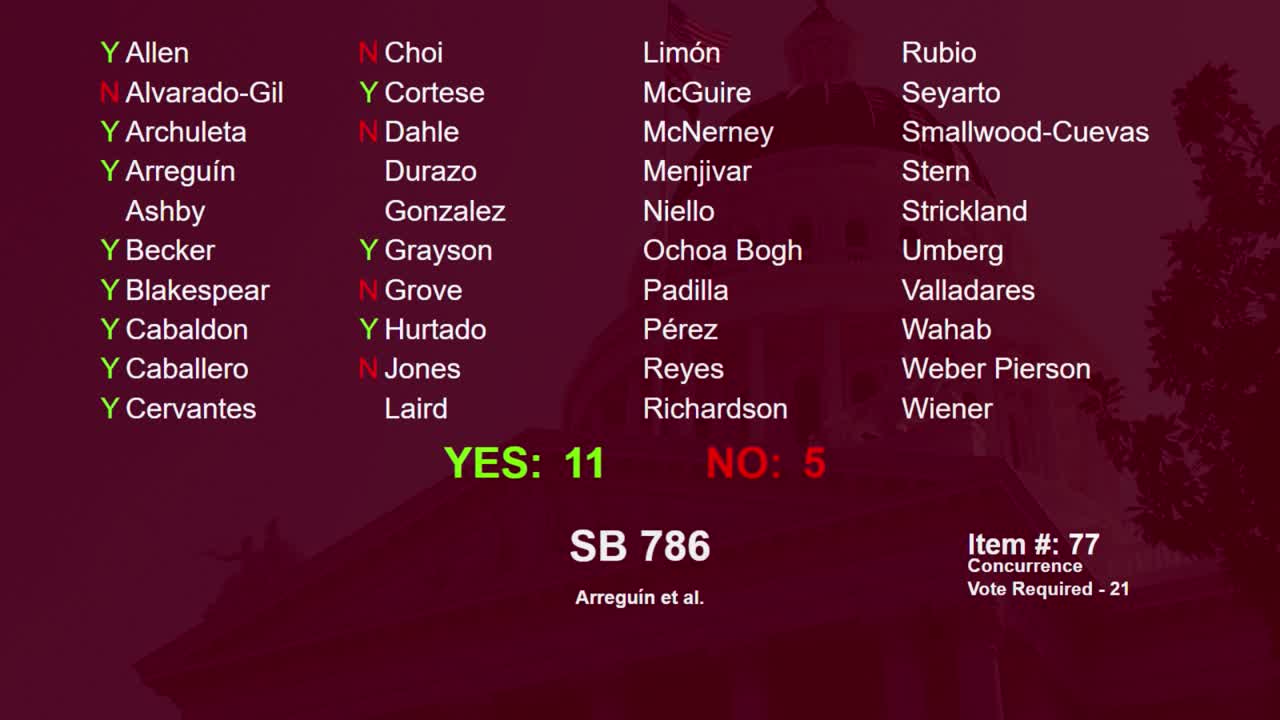 3MIN
Senate Floor
 1MIN
Assembly Floor
 39MIN
Assembly Standing Committee on Local Government
 2MIN
Senate Floor
 35SEC
Senate Standing Committee on Appropriations
 10MIN
Senate Standing Committee on Local Government
Bill Author