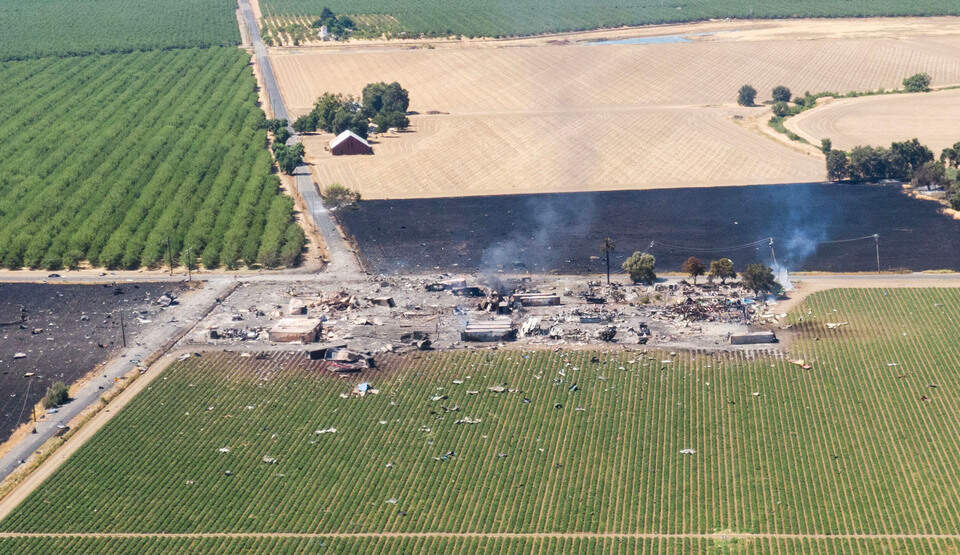
SB 828: Fireworks licenses and permits: disqualifying conditions: local jurisdictions.
- Session Year: 2025-2026
- House: Senate
- Latest Version Date: 2026-09-27
Current Status:
Passed
(2026-09-27: Chaptered by Secretary of State. Chapter 652, Statutes of 2026.)
Introduced
In Committee
Awaiting First Chamber Vote
Passed First Chamber
In Committee
Awaiting Second Chamber Vote
Passed Second Chamber
Enacted
(1)The State Fireworks Law requires the State Fire Marshal to adopt regulations relating to fireworks as may be necessary for the protection of life and property. Existing law requires these regulations to include, among other things, provisions for the granting of licenses and permits for the manufacture, wholesale, import, export, and sale of all classes of fireworks. A violation of the State Fireworks Law or the regulations issued pursuant thereto is a misdemeanor.
This bill would require the State Fire Marshal to adopt regulations that include provisions for determining license requirements specific to importing fireworks that will not be sold within California, as provided.
(2) Existing law makes the possession of dangerous fireworks, except when the person possessing the dangerous fireworks holds and is operating within the scope of a valid license or permit, subject to various penalties depending on the amount of gross weight in possession. Existing law defines dangerous fireworks for these purposes to include, among other things, fireworks kits and fireworks examined and tested by the State Fire Marshal and determined by the State Fire Marshal to be unsafe for use by any person not specially qualified or trained in the use of fireworks. The State Fireworks Law does not apply to specified objects, including, among other things, paper caps that contain less than 0.25 grain of pyrotechnic composition per unit load.
This bill would revise and recast the definition of a fireworks kit, as provided, and expand the definition of dangerous fireworks to include any types of fireworks not examined and tested by the State Fire Marshal, excluding fireworks with a pending application for approval. This bill would repeal the above-described exemption for paper caps. By expanding the scope of a crime, the bill would impose a state-mandated local program.
(3)Existing law requires fireworks licensees seeking authorization for specified activities related to fireworks to submit a written application for a permit to the chief of the fire department or the chief fire prevention officer of the city or county, or to another issuing authority that may be designated by the governing body of the city or county, or, in the event there is no officer or person appointed within the area, to the State Fire Marshal or the State Fire Marshals deputy, as provided.
This bill would require applicants for a wholesalers, manufacturers, importers, or exporters license to disclose the complete street addresses of all storage facilities on their initial application, and to advise the State Fire Marshal of new, relocated, or nonoperational facilities. The bill would also require holders of those licenses to notify the Office of the State Fire Marshal and specified local entities of the complete street addresses of intended storage facilities for any fireworks. By expanding the scope of a crime, the bill would impose a state-mandated local program. The bill would subject licensees who violate that notification requirement to a fine of no less than $10,000, and would authorize the State Fire Marshal to revoke their license. The bill would require the Office of the State Fire Marshal, upon approval of an application for any of these licenses, to notify specified local entities of any storage site reported on the application.
This bill would require the above-described fireworks licensees to provide to the State Fire Marshal documentation affirming the possession of applicable local permits or other entitlements, information about the storage sites for the fireworks, and a Federal Explosives License, as provided. By expanding the scope of a crime, the bill would impose a state-mandated local program. The bill would authorize the State Fire Marshal to revoke the fireworks license of a licensee who fails to provide this documentation or information and to deny a license to a license applicant who fails to provide this documentation or information, as provided. The bill would also require the State Fire Marshal to both allow the applicable public agency an opportunity to validate the permit or entitlement assertions of the licensee and to furnish a copy of any applicable license to the public agency, as provided.
This bill would authorize a public agency to adopt by ordinance or resolution a schedule of fees to recover the reasonable costs incurred in administering, processing, inspecting, and enforcing the conditions of permits for fireworks activities or storage within its jurisdiction, as provided.
(4)Existing law provides that if dangerous fireworks are seized pursuant to a local ordinance that provides for administrative fines or penalties and these fines or penalties are collected, the local governmental entity collecting the fines or penalties shall forward 65% of the collected moneys to the Controller for deposit in the State Fire Marshal Fireworks Enforcement and Disposal Fund.
This bill would repeal the requirement that the local governmental entity collecting the fines or penalties forward 65% of the collected moneys to the Controller for deposit in the State Fire Marshal Fireworks Enforcement and Disposal Fund.
(5)Existing law authorizes the legislative body of a city or a county to make, by ordinance, any violation of an ordinance subject to an administrative fine or penalty and limits the maximum fine or penalty amounts for infractions, to $100 for the first violation, $200 for a 2nd violation of the same ordinance within one year of the first violation, and $500 for each additional violation of the same ordinance within one year of the first violation.
This bill would, notwithstanding those provisions, raise the maximum fines for violation of an ordinance relating to fireworks that is an infraction to $1,000 for a first violation, $2,000 for a 2nd violation of the same ordinance within 5 years, and $5,000 for each additional violation of the same ordinance within 5 years of the first violation.
(6)Existing law requires a fireworks licensee or permittee to permit the chief of the issuing authority, or the chiefs authorized representatives, to enter and inspect any building or other premises subject to the control of or used by the licensee or permittee for any purpose related to fireworks at any time for the purpose of enforcing the State Fireworks Law.
This bill would authorize the chief of the fire department, fire marshal, or chief fire prevention officer of the public agency having jurisdiction, or their authorized representative, to enter and inspect, at reasonable times, any premises, facility, or storage site used for the manufacture, storage, sale, or display of fireworks to determine compliance with specified portions of the State Fireworks Law, the regulations of the State Fire Marshal, and applicable local fire codes. The bill would require the public agency to inspect each fireworks facility or storage site within its jurisdiction at least once every 12 months, as provided. By imposing new duties on local jurisdictions, the bill would impose a state-mandated local program. The bill would authorize a local public agency to require correction of any unsafe or noncompliant condition identified during inspection and suspend or revoke the local permit until compliance is achieved. The bill would require a public agency that suspends or revokes the local permit to notify the State Fire Marshal.
(7)Existing law requires an import or export fireworks licensee to file a notice containing specified information with the State Fire Marshal before the arrival of any class of fireworks subject to the license held by the licensee.
This bill would additionally require that notice to include the street address and county of the facilities in which the fireworks will be stored. The bill would also require an import or export fireworks licensee to additionally provide this notice to the local jurisdiction listed as the destination for the fireworks. By expanding the scope of a crime, the bill would impose a state-mandated local program.
(8)Existing law authorizes the State Fire Marshal, their salaried deputies, or any chief of a fire department, or their authorized representatives, any fire protection agency, or any other public agency authorized by statute to enforce the State Fire Marshals regulations, to seize any fireworks and to charge any person, firm, or corporation whose fireworks are seized pursuant to this authority an amount that is sufficient to cover the cost of transporting, storing, and handling the seized fireworks.
This bill would additionally authorize local law enforcement agencies to seize any fireworks and to charge any person, firm, or corporation whose fireworks are seized pursuant to this authority an amount that is sufficient to cover the cost of transporting, storing, and handling the seized fireworks.
(9) Existing law authorizes the State Fire Marshal to deny or revoke a fireworks license for specified reasons. Existing law authorizes the State Fire Marshal to deny, without hearing, an application for a license or renewal of a license, if within one year before the date of application, the State Fire Marshal has denied or revoked a license after a proceeding conducted in accordance with the Administrative Procedure Act for the same applicant on the ground of violation of the State Fireworks Law.
This bill would instead authorize the State Fire Marshal to deny, without hearing, an application for a license or renewal of a license, if within 5 years before the date of application, the State Fire Marshal has denied or revoked a license as provided.
(10)Existing law authorizes the State Fire Marshal to suspend, upon 3 days notice, any license for a period not exceeding 30 days pending investigation of any violation of the provisions of the State Fireworks Law. Under existing law, an applicant who has been denied a license or a renewal of a license, or any licensee who has had a license suspended, is entitled to a hearing conducted in accordance with the Administrative Procedure Act.
This bill would extend to not more than 90 days the period the State Fire Marshal may suspend any license pending investigation of any violation of the provisions of the State Fireworks Law and would establish that the above-described entitlement to a hearing conducted in accordance with the Administrative Procedure Act does not apply during the suspensions.
(11)Existing law authorizes the State Fire Marshal to deny the application for a license or the application for renewal of a license filed by a person who has been convicted of a felony involving explosives or dangerous fireworks or who has been convicted as a principal or accessory in a crime against property involving arson or any other fire-related offenses, as provided.
This bill would instead authorize the State Fire Marshal to deny the application for a license or the application for renewal of a license to a person who has been convicted of a felony. The bill would also authorize the State Fire Marshal to deny the application for a license or the application for renewal of a license to a person under indictment or information for a crime punishable by imprisonment for a term exceeding one year, a person prohibited from handling explosives under federal law, a person ineligible for a Federal Explosives License issued by the United States Bureau of Alcohol, Tobacco, Firearms and Explosives, or a person subject to a previous federal or state seizure action related to fireworks or a previous denial or revocation of a federal or state fireworks license. The bill would retain the authorization for the State Fire Marshal to deny the application for a license or the application for renewal of a license if the person has been convicted as a principal or accessory in a crime against property involving arson or any other fire-related offenses, as provided.
(12)This bill would incorporate additional changes to Sections 25132 and 36900 of the Government Code proposed by SB 716 to be operative only if this bill and SB 716 are enacted and this bill is enacted last.
(13)The California Constitution requires the state to reimburse local agencies and school districts for certain costs mandated by the state. Statutory provisions establish procedures for making that reimbursement.
This bill would provide that with regard to certain mandates no reimbursement is required by this act for a specified reason.
With regard to any other mandates, this bill would provide that, if the Commission on State Mandates determines that the bill contains costs so mandated by the state, reimbursement for those costs shall be made pursuant to the statutory provisions noted above.
(1)The State Fireworks Law requires the State Fire Marshal to adopt regulations relating to fireworks as may be necessary for the protection of life and property. Existing law requires these regulations to include, among other things, provisions for the granting of licenses and permits for the manufacture, wholesale, import, export, and sale of all classes of fireworks. A violation of the State Fireworks Law or the regulations issued pursuant thereto is a misdemeanor.
This bill would require the State Fire Marshal to adopt regulations that include provisions for determining license requirements specific to importing fireworks that will not be sold within California, as provided.
(2) Existing law makes the possession of dangerous fireworks, except when the person possessing the dangerous fireworks holds and is operating within the scope of a valid license or permit, subject to various penalties depending on the amount of gross weight in possession. Existing law defines dangerous fireworks for these purposes to include, among other things, fireworks kits and fireworks examined and tested by the State Fire Marshal and determined by the State Fire Marshal to be unsafe for use by any person not specially qualified or trained in the use of fireworks. The State Fireworks Law does not apply to specified objects, including, among other things, paper caps that contain less than 0.25 grain of pyrotechnic composition per unit load.
This bill would revise and recast the definition of a fireworks kit, as provided, and expand the definition of dangerous fireworks to include any types of fireworks not examined and tested by the State Fire Marshal, excluding fireworks with a pending application for approval. This bill would repeal the above-described exemption for paper caps. By expanding the scope of a crime, the bill would impose a state-mandated local program.
(3)Existing law requires fireworks licensees seeking authorization for specified activities related to fireworks to submit a written application for a permit to the chief of the fire department or the chief fire prevention officer of the city or county, or to another issuing authority that may be designated by the governing body of the city or county, or, in the event there is no officer or person appointed within the area, to the State Fire Marshal or the State Fire Marshals deputy, as provided.
This bill would require applicants for a wholesalers, manufacturers, importers, or exporters license to disclose the complete street addresses of all storage facilities on their initial application, and to advise the State Fire Marshal of new, relocated, or nonoperational facilities. The bill would also require holders of those licenses to notify the Office of the State Fire Marshal and specified local entities of the complete street addresses of intended storage facilities for any fireworks. By expanding the scope of a crime, the bill would impose a state-mandated local program. The bill would subject licensees who violate that notification requirement to a fine of no less than $10,000, and would authorize the State Fire Marshal to revoke their license. The bill would require the Office of the State Fire Marshal, upon approval of an application for any of these licenses, to notify specified local entities of any storage site reported on the application.
This bill would require the above-described fireworks licensees to provide to the State Fire Marshal documentation affirming the possession of applicable local permits or other entitlements, information about the storage sites for the fireworks, and a Federal Explosives License, as provided. By expanding the scope of a crime, the bill would impose a state-mandated local program. The bill would authorize the State Fire Marshal to revoke the fireworks license of a licensee who fails to provide this documentation or information and to deny a license to a license applicant who fails to provide this documentation or information, as provided. The bill would also require the State Fire Marshal to both allow the applicable public agency an opportunity to validate the permit or entitlement assertions of the licensee and to furnish a copy of any applicable license to the public agency, as provided.
This bill would authorize a public agency to adopt by ordinance or resolution a schedule of fees to recover the reasonable costs incurred in administering, processing, inspecting, and enforcing the conditions of permits for fireworks activities or storage within its jurisdiction, as provided.
(4)Existing law provides that if dangerous fireworks are seized pursuant to a local ordinance that provides for administrative fines or penalties and these fines or penalties are collected, the local governmental entity collecting the fines or penalties shall forward 65% of the collected moneys to the Controller for deposit in the State Fire Marshal Fireworks Enforcement and Disposal Fund.
This bill would repeal the requirement that the local governmental entity collecting the fines or penalties forward 65% of the collected moneys to the Controller for deposit in the State Fire Marshal Fireworks Enforcement and Disposal Fund.
(5)Existing law authorizes the legislative body of a city or a county to make, by ordinance, any violation of an ordinance subject to an administrative fine or penalty and limits the maximum fine or penalty amounts for infractions, to $100 for the first violation, $200 for a 2nd violation of the same ordinance within one year of the first violation, and $500 for each additional violation of the same ordinance within one year of the first violation.
This bill would, notwithstanding those provisions, raise the maximum fines for violation of an ordinance relating to fireworks that is an infraction to $1,000 for a first violation, $2,000 for a 2nd violation of the same ordinance within 5 years, and $5,000 for each additional violation of the same ordinance within 5 years of the first violation.
(6)Existing law requires a fireworks licensee or permittee to permit the chief of the issuing authority, or the chiefs authorized representatives, to enter and inspect any building or other premises subject to the control of or used by the licensee or permittee for any purpose related to fireworks at any time for the purpose of enforcing the State Fireworks Law.
This bill would authorize the chief of the fire department, fire marshal, or chief fire prevention officer of the public agency having jurisdiction, or their authorized representative, to enter and inspect, at reasonable times, any premises, facility, or storage site used for the manufacture, storage, sale, or display of fireworks to determine compliance with specified portions of the State Fireworks Law, the regulations of the State Fire Marshal, and applicable local fire codes. The bill would require the public agency to inspect each fireworks facility or storage site within its jurisdiction at least once every 12 months, as provided. By imposing new duties on local jurisdictions, the bill would impose a state-mandated local program. The bill would authorize a local public agency to require correction of any unsafe or noncompliant condition identified during inspection and suspend or revoke the local permit until compliance is achieved. The bill would require a public agency that suspends or revokes the local permit to notify the State Fire Marshal.
(7)Existing law requires an import or export fireworks licensee to file a notice containing specified information with the State Fire Marshal before the arrival of any class of fireworks subject to the license held by the licensee.
This bill would additionally require that notice to include the street address and county of the facilities in which the fireworks will be stored. The bill would also require an import or export fireworks licensee to additionally provide this notice to the local jurisdiction listed as the destination for the fireworks. By expanding the scope of a crime, the bill would impose a state-mandated local program.
(8)Existing law authorizes the State Fire Marshal, their salaried deputies, or any chief of a fire department, or their authorized representatives, any fire protection agency, or any other public agency authorized by statute to enforce the State Fire Marshals regulations, to seize any fireworks and to charge any person, firm, or corporation whose fireworks are seized pursuant to this authority an amount that is sufficient to cover the cost of transporting, storing, and handling the seized fireworks.
This bill would additionally authorize local law enforcement agencies to seize any fireworks and to charge any person, firm, or corporation whose fireworks are seized pursuant to this authority an amount that is sufficient to cover the cost of transporting, storing, and handling the seized fireworks.
(9) Existing law authorizes the State Fire Marshal to deny or revoke a fireworks license for specified reasons. Existing law authorizes the State Fire Marshal to deny, without hearing, an application for a license or renewal of a license, if within one year before the date of application, the State Fire Marshal has denied or revoked a license after a proceeding conducted in accordance with the Administrative Procedure Act for the same applicant on the ground of violation of the State Fireworks Law.
This bill would instead authorize the State Fire Marshal to deny, without hearing, an application for a license or renewal of a license, if within 5 years before the date of application, the State Fire Marshal has denied or revoked a license as provided.
(10)Existing law authorizes the State Fire Marshal to suspend, upon 3 days notice, any license for a period not exceeding 30 days pending investigation of any violation of the provisions of the State Fireworks Law. Under existing law, an applicant who has been denied a license or a renewal of a license, or any licensee who has had a license suspended, is entitled to a hearing conducted in accordance with the Administrative Procedure Act.
This bill would extend to not more than 90 days the period the State Fire Marshal may suspend any license pending investigation of any violation of the provisions of the State Fireworks Law and would establish that the above-described entitlement to a hearing conducted in accordance with the Administrative Procedure Act does not apply during the suspensions.
(11)Existing law authorizes the State Fire Marshal to deny the application for a license or the application for renewal of a license filed by a person who has been convicted of a felony involving explosives or dangerous fireworks or who has been convicted as a principal or accessory in a crime against property involving arson or any other fire-related offenses, as provided.
This bill would instead authorize the State Fire Marshal to deny the application for a license or the application for renewal of a license to a person who has been convicted of a felony. The bill would also authorize the State Fire Marshal to deny the application for a license or the application for renewal of a license to a person under indictment or information for a crime punishable by imprisonment for a term exceeding one year, a person prohibited from handling explosives under federal law, a person ineligible for a Federal Explosives License issued by the United States Bureau of Alcohol, Tobacco, Firearms and Explosives, or a person subject to a previous federal or state seizure action related to fireworks or a previous denial or revocation of a federal or state fireworks license. The bill would retain the authorization for the State Fire Marshal to deny the application for a license or the application for renewal of a license if the person has been convicted as a principal or accessory in a crime against property involving arson or any other fire-related offenses, as provided.
(12)This bill would incorporate additional changes to Sections 25132 and 36900 of the Government Code proposed by SB 716 to be operative only if this bill and SB 716 are enacted and this bill is enacted last.
(12)(13)The California Constitution requires the state to reimburse local agencies and school districts for certain costs mandated by the state. Statutory provisions establish procedures for making that reimbursement.
This bill would provide that with regard to certain mandates no reimbursement is required by this act for a specified reason.
With regard to any other mandates, this bill would provide that, if the Commission on State Mandates determines that the bill contains costs so mandated by the state, reimbursement for those costs shall be made pursuant to the statutory provisions noted above.
(1)The State Fireworks Law requires the State Fire Marshal to adopt regulations relating to fireworks as may be necessary for the protection of life and property. Existing law requires these regulations to include, among other things, provisions for the granting of licenses and permits for the manufacture, wholesale, import, export, and sale of all classes of fireworks. A violation of the State Fireworks Law or the regulations issued pursuant thereto is a misdemeanor.
This bill would require the State Fire Marshal to adopt regulations that include provisions for determining when a license is required for fireworks shipped to a California port that will not be sold in California. license requirements specific to importing fireworks that will not be sold within California, as provided.
(2) Existing law makes the possession of dangerous fireworks, except when the person possessing the dangerous fireworks holds and is operating within the scope of a valid license or permit, subject to various penalties depending on the amount of gross weight in possession. Existing law defines dangerous fireworks for these purposes to include, among other things, fireworks kits and fireworks examined and tested by the State Fire Marshal and determined by the State Fire Marshal with the advice of the State Board of Fire Services to possess characteristics of design or construction that make those fireworks to be unsafe for use by any person not specially qualified or trained in the use of fireworks. The State Fireworks Law does not apply to specified objects, including, among other things, paper caps that contain less than 0.25 grain of pyrotechnic composition per unit load.
This bill would revise and recast the definition of a fireworks kit, as provided, and expand the definition of dangerous fireworks to include any types of fireworks not examined and tested by the State Fire Marshal, excluding fireworks with a pending application for approval. This bill would repeal the above-described exemption for paper caps. By expanding the scope of a crime, the bill would impose a state-mandated local program.
(3)Existing law requires fireworks licensees seeking authorization for specified activities related to fireworks to submit a written application for a permit to the chief of the fire department or the chief fire prevention officer of the city or county, or to another issuing authority that may be designated by the governing body of the city or county, or, in the event there is no officer or person appointed within the area, to the State Fire Marshal or the State Fire Marshals deputy, as provided.
This bill would require applicants for a wholesalers license, a manufacturers license, an importers license, or an exporters wholesalers, manufacturers, importers, or exporters license to disclose the complete street addresses of any intended all storage facilities on their initial application. application, and to advise the State Fire Marshal of new, relocated, or nonoperational facilities. The bill would also require holders of those licenses to notify the Office of the State Fire Marshal and specified local entities of the complete street addresses of intended storage facilities for any fireworks or materials to build fireworks. fireworks. By expanding the scope of a crime, the bill would impose a state-mandated local program. The bill would subject licensees who violate that notification requirement to a fine of no less than $10,000, and would authorize the State Fire Marshal to revoke their license. The bill would require the Office of the State Fire Marshal, upon approval of an application for a wholesalers license, a manufacturers license, an importers license, or an exporters license, any of these licenses, to notify specified local entities of any storage site reported on the application.
This bill would require a the above-described fireworks licensee licensees to provide to the State Fire Marshal documentation affirming the possession of a permit applicable to fireworks activity and necessary local land use permits or other entitlements, as required by the public agency having local jurisdiction, information about the storage sites for the fireworks, and a Federal Explosives License, as provided. By expanding the scope of a crime, the bill would impose a state-mandated local program. The bill would authorize the State Fire Marshal to revoke the fireworks license of a licensee who fails to provide this documentation or information and to deny a license to a license applicant who fails to provide this documentation or information, as provided. The bill would also require the State Fire Marshal to both allow the applicable public agency an opportunity to validate the permit or entitlement assertions of the licensee and to furnish a copy of any applicable license to the public agency, as provided.
This bill would authorize a public agency to adopt by ordinance or resolution a schedule of fees to recover the reasonable costs incurred in administering, processing, inspecting, and enforcing the conditions of permits for fireworks activities or storage within its jurisdiction, as provided.
(4)Existing law provides that if dangerous fireworks are seized pursuant to a local ordinance that provides for administrative fines or penalties and these fines or penalties are collected, the local governmental entity collecting the fines or penalties shall forward 65% of the collected moneys to the Controller for deposit in the State Fire Marshal Fireworks Enforcement and Disposal Fund.
This bill would repeal the requirement that the local governmental entity collecting the fines or penalties forward 65% of the collected moneys to the Controller for deposit in the State Fire Marshal Fireworks Enforcement and Disposal Fund.
(5)Existing law authorizes the legislative body of a city or a county to make, by ordinance, any violation of an ordinance subject to an administrative fine or penalty and limits the maximum fine or penalty amounts for infractions, to $100 for the first violation, $200 for a 2nd violation of the same ordinance within one year of the first violation, and $500 for each additional violation of the same ordinance within one year of the first violation.
This bill would, notwithstanding those provisions, raise the maximum fines for violation of an ordinance relating to fireworks that is an infraction to $1,000 for a first violation, $2,000 for a 2nd violation of the same ordinance within 5 years, and $5,000 for each additional violation of the same ordinance within 5 years of the first violation.
(6)Existing law requires a fireworks licensee or permittee to permit the chief of the issuing authority, or the chiefs authorized representatives, to enter and inspect any building or other premises subject to the control of or used by the licensee or permittee for any purpose related to fireworks at any time for the purpose of enforcing the State Fireworks Law.
This bill would authorize the chief of the fire department, fire marshal, or chief fire prevention officer of the city, county, city and county, fire protection district, or other public agency having jurisdiction, or their authorized representative, to enter and inspect, at reasonable times, any premise, premises, facility, or storage site used for the manufacture, storage, sale, or display of fireworks to determine compliance with specified portions of the State Fireworks Law, the regulations of the State Fire Marshal, and applicable local fire codes. The bill would require the public agency to inspect each fireworks facility or storage site within its jurisdiction at least once every 12 months, as provided. By imposing new duties on local jurisdictions, the bill would impose a state-mandated local program. The bill would authorize a local public agency to require correction of any unsafe or noncompliant condition identified during inspection and suspend or revoke the local permit until compliance is achieved. The bill would require a public agency that suspends or revokes the local permit to notify the State Fire Marshal.
(7)Existing law requires an import or export fireworks licensee to file a notice containing specified information with the State Fire Marshal before the arrival of any class of fireworks subject to the license held by the licensee.
This bill would additionally require that notice to include the street address and county of the facilities in which the fireworks will be stored. The bill would also require an import or export fireworks licensee to additionally provide this notice to the local jurisdiction listed as the destination for the fireworks. By expanding the scope of a crime, the bill would impose a state-mandated local program.
(8)Existing law authorizes the State Fire Marshal, their salaried deputies, or any chief of a fire department, or their authorized representatives, any fire protection agency, or any other public agency authorized by statute to enforce the State Fire Marshals regulations, to seize any fireworks and to charge any person, firm, or corporation whose fireworks are seized pursuant to this authority an amount that is sufficient to cover the cost of transporting, storing, and handling the seized fireworks.
This bill would additionally authorize local law enforcement agencies to seize any fireworks and to charge any person, firm, or corporation whose fireworks are seized pursuant to this authority an amount that is sufficient to cover the cost of transporting, storing, and handling the seized fireworks.
(9) Existing law authorizes the State Fire Marshal to deny or revoke a fireworks license for specified reasons. Existing law authorizes the State Fire Marshal to deny, without hearing, an application for a license or renewal of a license, if within one year before the date of application, the State Fire Marshal has denied or revoked a license after a proceeding conducted in accordance with the Administrative Procedure Act for the same applicant on the ground of violation of the State Fireworks Law.
This bill would instead authorize the State Fire Marshal to deny, without hearing, an application for a license or renewal of a license, if within 5 years before the date of application, the State Fire Marshal has denied or revoked a license as provided.
(10)Existing law authorizes the State Fire Marshal to suspend, upon 3 days notice, any license for a period not exceeding 30 days pending investigation of any violation of the provisions of the State Fireworks Law. Under existing law, an applicant who has been denied a license or a renewal of a license, or any licensee who has had a license suspended, is entitled to a hearing conducted in accordance with the Administrative Procedure Act.
This bill would extend to not more than 90 days the period the State Fire Marshal may suspend any license pending investigation of any violation of the provisions of the State Fireworks Law and would establish that the above-described entitlement to a hearing conducted in accordance with the Administrative Procedure Act does not apply during the suspensions.
(11)Existing law authorizes the State Fire Marshal to deny the application for a license or the application for renewal of a license filed by a person who has been convicted of a felony involving explosives or dangerous fireworks or who has been convicted as a principal or accessory in a crime against property involving arson or any other fire-related offenses, as provided.
This bill would instead authorize the State Fire Marshal to deny the application for a license or the application for renewal of a license to a person who has been convicted of a felony. The bill would also authorize the State Fire Marshal to deny the application for a license or the application for renewal of a license to a person under indictment or information for a crime punishable by imprisonment for a term exceeding one year, a person prohibited from handling explosives under federal law, a person ineligible for a Federal Explosives License issued by the United States Bureau of Alcohol, Tobacco, Firearms and Explosives, or a person subject to a previous federal or state seizure action related to fireworks or a previous denial or revocation of a federal or state fireworks license. The bill would retain the authorization for the State Fire Marshal to deny the application for a license or the application for renewal of a license if the person has been convicted as a principal or accessory in a crime against property involving arson or any other fire-related offenses, as provided.
(12)The California Constitution requires the state to reimburse local agencies and school districts for certain costs mandated by the state. Statutory provisions establish procedures for making that reimbursement.
This bill would provide that with regard to certain mandates no reimbursement is required by this act for a specified reason.
With regard to any other mandates, this bill would provide that, if the Commission on State Mandates determines that the bill contains costs so mandated by the state, reimbursement for those costs shall be made pursuant to the statutory provisions noted above.
(1)The State Fireworks Law requires the State Fire Marshal to adopt regulations relating to fireworks as may be necessary for the protection of life and property. Existing law requires these regulations to include, among other things, provisions for the granting of licenses and permits for the manufacture, wholesale, import, export, and sale of all classes of fireworks. Existing law authorizes the State Fire Marshal to deny or revoke a fireworks license for specified reasons. A violation of the State Fireworks Law or the regulations issued pursuant thereto is a misdemeanor.
This bill would require the State Fire Marshal to adopt regulations that include provisions for determining when a license is required for fireworks shipped to a California port that will not be sold in California.
(2) Existing law makes the possession of dangerous fireworks, except when the person possessing the dangerous fireworks holds and is operating within the scope of a valid license or permit, subject to various penalties depending on the amount of gross weight in possession. Existing law defines dangerous fireworks for these purposes to include, among other things, fireworks kits and fireworks examined and tested by the State Fire Marshal and determined by the State Fire Marshal with the advice of the State Board of Fire Services to possess characteristics of design or construction that make those fireworks unsafe for use by any person not specially qualified or trained in the use of fireworks. The State Fireworks Law does not apply to specified objects, including, among other things, paper caps that contain less than 0.25 grain of pyrotechnic composition per unit load.
This bill would revise and recast the definition of a fireworks kit, as provided, and expand the definition of dangerous fireworks to include any types of fireworks not examined and tested by the State Fire Marshal, excluding fireworks with a pending application for approval. This bill would repeal the above-described exemption for paper caps. By expanding the scope of a crime, the bill would impose a state-mandated local program.
Existing(3)Existing law requires fireworks licensees seeking authorization for specified activities related to fireworks to submit a written application for a permit to the chief of the fire department or the chief fire prevention officer of the city or county, or to another issuing authority that may be designated by the governing body of the city or county, or, in the event there is no officer or person appointed within the area, to the State Fire Marshal or the State Fire Marshals deputy, as provided.
This bill would require applicants for a wholesalers license, a manufacturers license, an importers license, or an exporters license to disclose the complete street addresses of any intended storage facilities on their initial application. The bill would also require holders of those licenses to notify the Office of the State Fire Marshal and specified local entities of the complete street addresses of intended storage facilities for any fireworks or materials to build fireworks. By expanding the scope of a crime, the bill would impose a state-mandated local program. The bill would subject licensees who violate that notification requirement to a fine of no less than $10,000, and would authorize the State Fire Marshal to revoke their license. The bill would require the Office of the State Fire Marshal, upon approval of an application for a wholesalers license, a manufacturers license, an importers license, or an exporters license, to notify specified local entities of any storage site reported on the application.
This bill would require a fireworks licensee to provide to the State Fire Marshal documentation affirming the possession of a permit applicable to fireworks activity and necessary local land use permits or other entitlements, as required by the public agency having local jurisdiction, and information about the storage sites for the fireworks. fireworks, and a Federal Explosives License, as provided. By expanding the scope of a crime, the bill would impose a state-mandated local program. The bill would authorize the State Fire Marshal to revoke the fireworks license of a licensee who fails to provide this documentation or information and to deny a license to a license applicant who fails to provide this documentation or information, as provided. The bill would also require the State Fire Marshal to both allow the applicable public agency an opportunity to validate the permit or entitlement assertions of the licensee and to furnish a copy of any applicable license to the public agency, as provided.
This bill would authorize a public agency to adopt by ordinance or resolution a schedule of fees to recover the reasonable costs incurred in administering, processing, inspecting, and enforcing the conditions of permits for fireworks activities or storage within its jurisdiction, as provided.
Existing
(4)Existing law provides that if dangerous fireworks are seized pursuant to a local ordinance that provides for administrative fines or penalties and these fines or penalties are collected, the local government governmental entity collecting the fines or penalties shall forward 65% of the collected moneys to the Controller for deposit in the State Fire Marshal Fireworks Enforcement and Disposal Fund.
This bill would repeal the requirement that the local government governmental entity collecting the fines or penalties forward 65% of the collected moneys to the Controller for deposit in the State Fire Marshal Fireworks Enforcement and Disposal Fund.
(5)Existing law authorizes the legislative body of a city or a county to make, by ordinance, any violation of an ordinance subject to an administrative fine or penalty and limits the maximum fine or penalty amounts for infractions, to $100 for the first violation, $200 for a 2nd violation of the same ordinance within one year of the first violation, and $500 for each additional violation of the same ordinance within one year of the first violation.
This bill would, notwithstanding those provisions, raise the maximum fines for violation of an ordinance relating to fireworks that is an infraction to $1,000 for a first violation, $2,000 for a 2nd violation of the same ordinance within 5 years, and $5,000 for each additional violation of the same ordinance within 5 years of the first violation.
Existing(6)Existing law requires a fireworks licensee or permittee to permit the chief of the issuing authority, or the chiefs authorized representatives, to enter and inspect any building or other premises subject to the control of or used by the licensee or permittee for any purpose related to fireworks at any time for the purpose of enforcing the State Fireworks Law.
This bill would authorize the chief of the fire department, fire marshal, or chief fire prevention officer of the city, county, city and county, fire protection district, or other public agency having jurisdiction, or their authorized representative, to enter and inspect, at reasonable times, any premise, facility, or storage site used for the manufacture, storage, sale, or display of fireworks to determine compliance with specified portions of the State Fireworks Law, the regulations of the State Fire Marshal, and applicable local fire codes. The bill would require the public agency to inspect each fireworks facility or storage site within its jurisdiction at least once every 12 months, as provided. By imposing new duties on local jurisdictions, the bill would impose a state-mandated local program. The bill would authorize a local public agency to require correction of any unsafe or noncompliant condition identified during inspection and suspend or revoke the local permit until compliance is achieved. The bill would require a public agency that suspends or revokes the local permit to notify the State Fire Marshal.
Existing(7)Existing law requires an import or export fireworks licensee to file a notice containing specified information with the State Fire Marshal before the arrival of any class of fireworks subject to the license held by the licensee.
This bill would additionally require that notice to include the street address and county of the facilities in which the fireworks will be stored and copies of applications related to applicable zoning and land use approvals. stored. The bill would also require an import or export fireworks licensee to additionally provide this notice to the local jurisdiction listed as the destination for the fireworks. By expanding the scope of a crime, the bill would impose a state-mandated local program.
(8)Existing law authorizes the State Fire Marshal, their salaried deputies, or any chief of a fire department, or their authorized representatives, any fire protection agency, or any other public agency authorized by statute to enforce the State Fire Marshals regulations, to seize any fireworks and to charge any person, firm, or corporation whose fireworks are seized pursuant to this authority an amount that is sufficient to cover the cost of transporting, storing, and handling the seized fireworks.
This bill would additionally authorize local law enforcement agencies to seize any fireworks and to charge any person, firm, or corporation whose fireworks are seized pursuant to this authority an amount that is sufficient to cover the cost of transporting, storing, and handling the seized fireworks.
(9) Existing law authorizes the State Fire Marshal to deny or revoke a fireworks license for specified reasons. Existing law authorizes the State Fire Marshal to deny, without hearing, an application for a license or renewal of a license, if within one year before the date of application, the State Fire Marshal has denied or revoked a license after a proceeding conducted in accordance with the Administrative Procedure Act for the same applicant on the ground of violation of the State Fireworks Law.
This bill would instead authorize the State Fire Marshal to deny, without hearing, an application for a license or renewal of a license, if within 5 years before the date of application, the State Fire Marshal has denied or revoked a license as provided.
(10)Existing law authorizes the State Fire Marshal to suspend, upon 3 days notice, any license for a period not exceeding 30 days pending investigation of any violation of the provisions of the State Fireworks Law. Under existing law, an applicant who has been denied a license or a renewal of a license, or any licensee who has had a license suspended, is entitled to a hearing conducted in accordance with the Administrative Procedure Act.
This bill would extend to not more than 90 days the period the State Marshal may suspend any license pending investigation of any violation of the provisions of the State Fireworks Law and would establish that the above-described entitlement to a hearing conducted in accordance with the Administrative Procedure Act does not apply during the suspensions.
Existing(11)Existing law authorizes the State Fire Marshal to deny the application for a license or the application for renewal of a license filed by a person who has been convicted of a felony involving explosives or dangerous fireworks or who has been convicted as a principal or accessory in a crime against property involving arson or any other fire-related offenses, as provided.
This bill would additionally instead authorize the State Fire Marshal to deny the application for a license or the application for renewal of a license to a person under indictment for, or who has been convicted in any court of, a crime that is both (A) punishable by imprisonment for a term exceeding one year, and (B) a violent crime or an offense the commission of which creates a threat to public safety. of a felony. The bill would also authorize the State Fire Marshal to deny the application for a license or the application for renewal of a license to a person under indictment or information for a crime punishable by imprisonment for a term exceeding one year, a person prohibited from handling explosives under federal law, a person ineligible for a Federal Explosives License issued by the United States Bureau of Alcohol, Tobacco, Firearms and Explosives, or a person subject to a previous federal or state seizure action related to fireworks or a previous denial or revocation of a federal or state fireworks license. The bill would retain the authorization for the State Fire Marshal to deny the application for a license or the application for renewal of a license if the person has been convicted as a principal or accessory in a crime against property involving arson or any other fire-related offenses, as provided.
The California Constitution requires the state to reimburse local agencies and school districts for certain costs mandated by the state. Statutory provisions establish procedures for making that reimbursement.This bill would provide that no reimbursement is required by this act for specified reasons.(12)The California Constitution requires the state to reimburse local agencies and school districts for certain costs mandated by the state. Statutory provisions establish procedures for making that reimbursement.
This bill would provide that with regard to certain mandates no reimbursement is required by this act for a specified reason.
With regard to any other mandates, this bill would provide that, if the Commission on State Mandates determines that the bill contains costs so mandated by the state, reimbursement for those costs shall be made pursuant to the statutory provisions noted above.
The State Fireworks Law requires the State Fire Marshal to adopt regulations relating to fireworks as may be necessary for the protection of life and property. Existing law requires these regulations to include, among other things, provisions for the granting of licenses and permits for the manufacture, wholesale, import, export, and sale of all classes of fireworks. Existing law authorizes the State Fire Marshal to deny or revoke a fireworks license for specified reasons. A violation of the State Fireworks Law or the regulations issued pursuant thereto is a misdemeanor.
Existing law requires fireworks licensees seeking authorization for specified activities related to fireworks to submit a written application for a permit to the chief of the fire department or the chief fire prevention officer of the city or county, or to another issuing authority that may be designated by the governing body of the city or county, or, in the event there is no officer or person appointed within the area, to the State Fire Marshal or the State Fire Marshals deputy, as provided.
This bill would require applicants for a wholesalers license, a manufacturers license, an importers license, or an exporters license to disclose the complete street addresses of any intended storage facilities on their initial application. The bill would also require holders of those licenses to notify the Office of the State Fire Marshal and specified local entities of the complete street addresses of intended storage facilities for any fireworks or materials to build fireworks. By expanding the scope of a crime, the bill would impose a state-mandated local program. The bill would subject licensees who violate that notification requirement to a fine of no less than $10,000, and would authorize the State Fire Marshal to revoke their license. The bill would require the Office of the State Fire Marshal, upon approval of an application for a wholesalers license, a manufacturers license, an importers license, or an exporters license, to notify specified local entities of any storage site reported on the application.
This bill would require a fireworks licensee to provide to the State Fire Marshal documentation affirming the possession of a permit applicable to fireworks activity and necessary local land use permits or other entitlements, as required by the public agency having local jurisdiction, and information about the storage sites for the fireworks. By expanding the scope of a crime, the bill would impose a state-mandated local program. The bill would authorize the State Fire Marshal to revoke the fireworks license of a licensee who fails to provide this documentation or information and to deny a license to a license applicant who fails to provide this documentation or information, as provided. The bill would also require the State Fire Marshal to both allow the applicable public agency an opportunity to validate the permit or entitlement assertions of the licensee and to furnish a copy of any applicable license to the public agency, as provided.
This bill would authorize a public agency to adopt by ordinance or resolution a schedule of fees to recover the reasonable costs incurred in administering, processing, inspecting, and enforcing the conditions of permits for fireworks activities or storage within its jurisdiction, as provided.
Existing law provides that if dangerous fireworks are seized pursuant to a local ordinance that provides for administrative fines or penalties and these fines or penalties are collected, the local government entity collecting the fines or penalties shall forward 65% of the collected moneys to the Controller for deposit in the State Fire Marshal Fireworks Enforcement and Disposal Fund.
This bill would repeal the requirement that the local government entity collecting the fines or penalties forward 65% of the collected moneys to the Controller for deposit in the State Fire Marshal Fireworks Enforcement and Disposal Fund.
Existing law requires a fireworks licensee or permittee to permit the chief of the issuing authority, or the chiefs authorized representatives, to enter and inspect any building or other premises subject to the control of or used by the licensee or permittee for any purpose related to fireworks at any time for the purpose of enforcing the State Fireworks Law.
This bill would authorize the chief of the fire department, fire marshal, or chief fire prevention officer of the city, county, city and county, fire protection district, or other public agency having jurisdiction, or their authorized representative, to enter and inspect, at reasonable times, any premise, facility, or storage site used for the manufacture, storage, sale, or display of fireworks to determine compliance with specified portions of the State Fireworks Law, the regulations of the State Fire Marshal, and applicable local fire codes. The bill would require the public agency to inspect each fireworks facility or storage site within its jurisdiction at least once every 12 months, as provided. By imposing new duties on local jurisdictions, the bill would impose a state-mandated local program. The bill would authorize a local public agency to require correction of any unsafe or noncompliant condition identified during inspection and suspend or revoke the local permit until compliance is achieved.
Existing law requires an import or export fireworks licensee to file a notice containing specified information with the State Fire Marshal before the arrival of any class of fireworks subject to the license held by the licensee.
This bill would additionally require that notice to include the street address and county of the facilities in which the fireworks will be stored and copies of applications related to applicable zoning and land use approvals. The bill would also require an import or export fireworks licensee to additionally provide this notice to the local jurisdiction listed as the destination for the fireworks. By expanding the scope of a crime, the bill would impose a state-mandated local program.
Existing law authorizes the State Fire Marshal to deny the application for a license or the application for renewal of a license filed by a person who has been convicted of a felony involving explosives or dangerous fireworks or who has been convicted as a principal or accessory in a crime against property involving arson or any other fire-related offenses, as provided.
This bill would additionally authorize the State Fire Marshal to deny the application for a license or the application for renewal of a license to a person under indictment for, or who has been convicted in any court of, a crime that is both (A) punishable by imprisonment for a term exceeding one year, and (B) a violent crime or an offense the commission of which creates a threat to public safety. The bill would also authorize the State Fire Marshal to deny the application for a license or the application for renewal of a license to a person prohibited from handling explosives under federal law or a person subject to a previous federal seizure action related to fireworks or a previous denial or revocation of a federal fireworks license.
Existing law requires an import or export fireworks licensee to file a notice with the State Fire Marshal before the arrival of any class of fireworks subject to the license held by the licensee.This bill would require an import or export fireworks licensee to additionally provide the above-described notice to the local jurisdiction listed as the destination for the fireworks. By expanding the scope of a crime, the bill would impose a state-mandated local program.The California Constitution requires the state to reimburse local agencies and school districts for certain costs mandated by the state. Statutory provisions establish procedures for making that reimbursement.This bill would provide that no reimbursement is required by this act for a specified reason.The California Constitution requires the state to reimburse local agencies and school districts for certain costs mandated by the state. Statutory provisions establish procedures for making that reimbursement.
This bill would provide that no reimbursement is required by this act for specified reasons.
The State Fireworks Law requires the State Fire Marshal to adopt regulations relating to fireworks as may be necessary for the protection of life and property. Existing law requires these regulations to include, among other things, provisions for the granting of licenses and permits for the manufacture, wholesale, import, export, and sale of all classes of fireworks. Existing law authorizes the State Fire Marshal to deny or revoke a fireworks license for specified reasons. A violation of the State Fireworks Law or the regulations issued pursuant thereto is a misdemeanor.
Existing law requires fireworks licensees seeking authorization for specified activities related to fireworks to submit a written application for a permit to the chief of the fire department or the chief fire prevention officer of the city or county, or to another issuing authority that may be designated by the governing body of the city or county, or, in the event there is no officer or person appointed within the area, to the State Fire Marshal or the State Fire Marshals deputy, as provided.
This bill would require a fireworks licensee to provide to the State Fire Marshal documentation affirming the possession of a permit applicable to fireworks activity and necessary local land use permits or other entitlements, as required by the public agency having local jurisdiction, and information about the storage sites for the fireworks. By expanding the scope of a crime, the bill would impose a state-mandated local program. The bill would authorize the State Fire Marshal to revoke the fireworks license of a licensee who fails to provide this documentation or information and to deny a license to a license applicant who fails to provide this documentation or information, as provided. The bill would also require the State Fire Marshal to both allow the applicable public agency an opportunity to validate the permit or entitlement assertions of the licensee and to furnish a copy of any applicable license to the public agency, as provided.
Existing law authorizes the State Fire Marshal to deny the application for a license or the application for renewal of a license filed by a person who has been convicted of a felony involving explosives or dangerous fireworks or who has been convicted as a principal or accessory in a crime against property involving arson or any other fire-related offenses, as provided.
This bill would additionally authorize the State Fire Marshal to deny the application for a license or the application for renewal of a license to a person under indictment for, or who has been convicted in any court of, a crime that is both (A) punishable by imprisonment for a term exceeding one year, and (B) a violent crime or an offense the commission of which creates a threat to public safety.
Existing law requires an import or export fireworks licensee to file a notice with the State Fire Marshal before the arrival of any class of fireworks subject to the license held by the licensee.
This bill would require an import or export fireworks licensee to additionally provide the above-described notice to the local jurisdiction listed as the destination for the fireworks. By expanding the scope of a crime, the bill would impose a state-mandated local program.
The California Constitution requires the state to reimburse local agencies and school districts for certain costs mandated by the state. Statutory provisions establish procedures for making that reimbursement.
This bill would provide that no reimbursement is required by this act for a specified reason.
Existing law authorizes a city, county, or city and county, with the approval of its legislative body by resolution after a public hearing, to acquire, sell, or lease property in furtherance of the creation of an economic opportunity, as defined. Existing law provides that this authorization is an alternative to any other authority granted by law to cities to dispose of city-owned property.This bill would revise those provisions to authorize a city, county, or city and county to, in addition to a sale or lease of property, otherwise transfer property under the above-described provisions to create an economic opportunity and would make related, conforming changes to these procedures. The bill would require the city, county, or city and county, to submit a report containing specified information to the Controller within 90 days after adopting the resolution approving the acquisition, sale, lease, or transfer of the property. The bill would also specify that these provisions are an alternative to any other authority or procedures for a city, county, or city and county to acquire, sell, lease, or otherwise transfer real property owned by a city, county, or city and county.On and after January 1, 2014, existing law generally requires a local agency, before approving an economic development subsidy within its jurisdiction, to provide specified information in written form to the public and through its internet website, and to hold public hearings and report on those subsidies at specified intervals. Existing law requires that the creation of an economic opportunity, as described above, comply with these public notice, hearing, and reporting requirements.This bill would provide that the creation of an economic opportunity under these provisions is subject only to the above-described requirements regarding approval of an economic development subsidy.Existing law prescribes requirements for the disposal of surplus land by a local agency, including requiring that the local agency send a written notice of availability of the property to specified entities before disposing of that property or participating in negotiations to dispose of that property with a prospective transferee and, upon receipt of a notice of interest from an entity desiring to purchase or lease the surplus land, enter into good faith negotiations with that entity to determine a mutually satisfactory sales price and terms or lease terms, as provided. Existing law exempts from these procedures various types of surplus land, referred to as exempt surplus land.This bill would additionally exempt from these requirements the disposal of surplus land by a local agency properties that a local agency proposes to sell, lease, or otherwise transfer under the above-described provisions authorizing the transfer of land in furtherance of the creation of an economic opportunity.Existing law authorizes a city, county, or city and county, with the approval of its legislative body by resolution after a public hearing, to acquire, sell, or lease property in furtherance of the creation of an economic opportunity, as defined. Existing law provides that this authorization is an alternative to any other authority granted by law to cities to dispose of city-owned property.
This bill would revise those provisions to authorize a city, county, or city and county to, in addition to a sale or lease of property, otherwise transfer property under the above-described provisions to create an economic opportunity and would make related, conforming changes to these procedures. The bill would require the city, county, or city and county, to submit a report containing specified information to the Controller within 90 days after adopting the resolution approving the acquisition, sale, lease, or transfer of the property. The bill would also specify that these provisions are an alternative to any other authority or procedures for a city, county, or city and county to acquire, sell, lease, or otherwise transfer real property owned by a city, county, or city and county.
On and after January 1, 2014, existing law generally requires a local agency, before approving an economic development subsidy within its jurisdiction, to provide specified information in written form to the public and through its internet website, and to hold public hearings and report on those subsidies at specified intervals. Existing law requires that the creation of an economic opportunity, as described above, comply with these public notice, hearing, and reporting requirements.
This bill would provide that the creation of an economic opportunity under these provisions is subject only to the above-described requirements regarding approval of an economic development subsidy.
Existing law prescribes requirements for the disposal of surplus land by a local agency, including requiring that the local agency send a written notice of availability of the property to specified entities before disposing of that property or participating in negotiations to dispose of that property with a prospective transferee and, upon receipt of a notice of interest from an entity desiring to purchase or lease the surplus land, enter into good faith negotiations with that entity to determine a mutually satisfactory sales price and terms or lease terms, as provided. Existing law exempts from these procedures various types of surplus land, referred to as exempt surplus land.
This bill would additionally exempt from these requirements the disposal of surplus land by a local agency properties that a local agency proposes to sell, lease, or otherwise transfer under the above-described provisions authorizing the transfer of land in furtherance of the creation of an economic opportunity.
The Planning and Zoning Law requires each county and city to adopt a comprehensive, long-term general plan for its physical development, and the development of certain lands outside its boundaries, that includes, among other mandatory elements, a land use element that designates the proposed general distribution and general location and extent of the uses of the land for housing, business, industry, and other categories of public and private uses of land, as prescribed.This bill would make nonsubstantive changes to the provision describing the required land use element.The Planning and Zoning Law requires each county and city to adopt a comprehensive, long-term general plan for its physical development, and the development of certain lands outside its boundaries, that includes, among other mandatory elements, a land use element that designates the proposed general distribution and general location and extent of the uses of the land for housing, business, industry, and other categories of public and private uses of land, as prescribed.
This bill would make nonsubstantive changes to the provision describing the required land use element.
(a)Violation of a county ordinance is a misdemeanor unless by ordinance it is made an infraction. The violation of a county ordinance may be prosecuted by county authorities in the name of the people of the State of California, or redressed by civil action.
(b)Every violation that is an infraction is punishable by the following:
(1)A fine not exceeding one hundred dollars ($100) for a first violation.
(2)A fine not exceeding two hundred dollars ($200) for a second violation of the same ordinance within one year of the first violation.
(3)A fine not exceeding five hundred dollars ($500) for each additional violation of the same ordinance within one year of the first violation.
(c)Notwithstanding any other law, a violation of local building and safety codes that is an infraction is punishable by the following:
(1)A fine not exceeding one hundred thirty dollars ($130) for a first violation.
(2)A fine not exceeding seven hundred dollars ($700) for a second violation of the same ordinance within one year of the first violation.
(3)(A)A fine not exceeding one thousand three hundred dollars ($1,300) for each additional violation of the same ordinance within one year of the first violation.
(B)A fine not exceeding two thousand five hundred dollars ($2,500) for each additional violation of the same ordinance within two years of the first violation if the property is a commercial property that has an existing building at the time of the violation and the violation is due to failure by the owner to remove visible refuse or failure to prohibit unauthorized use of the property.
(d)(1)Notwithstanding any other law, including subdivisions (b), (c), and (e), a violation of an event permit requirement that is an infraction is punishable by the following:
(A)A fine not exceeding one hundred fifty dollars ($150) for the first violation of an event permit requirement.
(B)A fine not exceeding seven hundred dollars ($700) for a second occurrence of the same violation of an event permit requirement by the same owner or operator within three years of the first violation.
(C)A fine not exceeding two thousand five hundred dollars ($2,500) for each additional occurrence of the same violation of an event permit requirement by the same owner or operator within three years of the first violation.
(2)(A)For purposes of this subdivision, violation of an event permit requirement means failure to obtain a permit required for a professionally organized special event on private property that is commercial in nature, or from which the owner or operator derives a commercial benefit.
(B)For purposes of this paragraph, the following definitions apply:
(i)Commercial in nature means that a primary purpose of the special event is to derive an economic benefit resulting from the holding of the event through admission charges or sales of merchandise that occur as part of the event.
(ii)Commercial benefit means any remuneration received in exchange for allowing the property upon which the event occurs to be used for the event, including any remuneration that results from the rental of the property for a term of less than 31 consecutive days.
(e)(1)Notwithstanding any other law, including subdivisions (b), (c), and (d), the violation of a short-term rental ordinance that is an infraction is punishable by the following:
(A)A fine not exceeding one thousand five hundred dollars ($1,500) for a first violation.
(B)A fine not exceeding three thousand dollars ($3,000) for a second violation of the same ordinance within one year.
(C)A fine not exceeding five thousand dollars ($5,000) for each additional violation of the same ordinance within one year of the first violation.
(2)For purposes of this section, short-term rental means a residential dwelling, or any portion of a residential dwelling, that is rented to a person or persons for 30 consecutive days or less.
(3)For purposes of this section, residential dwelling means a private structure designed and available, pursuant to applicable law, for use and occupancy as a residence by one or more individuals. Residential dwelling does not include a commercially operated hotel, motel, bed and breakfast inn, or time-share property as defined by subdivision (aa) of Section 11212 of the Business and Professions Code.
(4)The fine limits set by this subdivision apply only to infractions that pose a threat to public health or safety. The fines described in this subdivision shall not apply to a first-time offense of failure to register or pay a business license fee. Nothing in this subdivision limits the authority of a county, or city and county, to establish lower fines for specific violations by ordinance.
(f)A county levying a fine pursuant to paragraphs (2) and (3) of subdivisions (b) and (c), and paragraph (1) of subdivision (e), shall establish a process for granting a hardship waiver to reduce the amount of the fine upon a showing by a responsible party that the responsible party has made a bona fide effort to comply after the first violation, and that payment of the full amount of the fine would impose an undue financial burden on the responsible party.
(g)Notwithstanding any other law, a violation relating to fireworks, as defined in Section 12511 of the Health and Safety Code, that is an infraction is punishable by the following:
(1)A fine not exceeding one thousand dollars ($1,000) for a first violation.
(2)A fine not exceeding two thousand dollars ($2,000) for a second violation of the same ordinance within five years of the first violation.
(3)A fine not exceeding five thousand dollars ($5,000) for each additional violation of the same ordinance within five years of the first violation.
SEC. 1.5.Section 25132 of the Government Code is amended to read:25132.(a)Violation of a county ordinance is a misdemeanor unless by ordinance it is made an infraction. The violation of a county ordinance may be prosecuted by county authorities in the name of the people of the State of California, or redressed by civil action.
(b)Every violation that is an infraction is punishable by the following:
(1)A fine not exceeding one hundred dollars ($100) for a first violation.
(2)A fine not exceeding two hundred dollars ($200) for a second violation of the same ordinance within one year of the first violation.
(3)A fine not exceeding five hundred dollars ($500) for each additional violation of the same ordinance within one year of the first violation.
(c)Notwithstanding any other law, a violation of local building and safety codes that is an infraction is punishable by the following:
(1)A fine not exceeding one hundred thirty dollars ($130) for a first violation.
(2)A fine not exceeding seven hundred dollars ($700) for a second violation of the same ordinance within one year of the first violation.
(3)(A)A fine not exceeding one thousand three hundred dollars ($1,300) for each additional violation of the same ordinance within one year of the first violation.
(B)A fine not exceeding two thousand five hundred dollars ($2,500) for each additional violation of the same ordinance within two years of the first violation if the property is a commercial property that has an existing building at the time of the violation and the violation is due to failure by the owner to remove visible refuse or failure to prohibit unauthorized use of the property.
(d)(1)Notwithstanding any other law, including subdivisions (b), (c), and (e), a violation of an event permit requirement that is an infraction is punishable by the following:
(A)A fine not exceeding one hundred fifty dollars ($150) for the first violation of an event permit requirement.
(B)A fine not exceeding seven hundred dollars ($700) for a second occurrence of the same violation of an event permit requirement by the same owner or operator within three years of the first violation.
(C)A fine not exceeding two thousand five hundred dollars ($2,500) for each additional occurrence of the same violation of an event permit requirement by the same owner or operator within three years of the first violation.
(2)(A)For purposes of this subdivision, violation of an event permit requirement means failure to obtain a permit required for a professionally organized special event on private property that is commercial in nature, or from which the owner or operator derives a commercial benefit.
(B)For purposes of this paragraph, the following definitions apply:
(i)Commercial in nature means that a primary purpose of the special event is to derive an economic benefit resulting from the holding of the event through admission charges or sales of merchandise that occur as part of the event.
(ii)Commercial benefit means any remuneration received in exchange for allowing the property upon which the event occurs to be used for the event, including any remuneration that results from the rental of the property for a term of less than 31 consecutive days.
(e)(1)Notwithstanding any other law, including subdivisions (b), (c), and (d), the violation of a short-term rental ordinance that is an infraction is punishable by the following:
(A)A fine not exceeding one thousand five hundred dollars ($1,500) for a first violation.
(B)A fine not exceeding three thousand dollars ($3,000) for a second violation of the same ordinance within one year.
(C)A fine not exceeding five thousand dollars ($5,000) for each additional violation of the same ordinance within one year of the first violation.
(2)For purposes of this section, short-term rental means a residential dwelling, or any portion of a residential dwelling, that is rented to a person or persons for 30 consecutive days or less.
(3)For purposes of this section, residential dwelling means a private structure designed and available, pursuant to applicable law, for use and occupancy as a residence by one or more individuals. Residential dwelling does not include a commercially operated hotel, motel, bed and breakfast inn, or time-share property as defined by subdivision (aa) of Section 11212 of the Business and Professions Code.
(4)The fine limits set by this subdivision apply only to infractions that pose a threat to public health or safety. The fines described in this subdivision shall not apply to a first-time offense of failure to register or pay a business license fee. Nothing in this subdivision limits the authority of a county, or city and county, to establish lower fines for specific violations by ordinance.
(f)A county levying a fine pursuant to paragraphs (2) and (3) of subdivisions (b) and (c), and paragraph (1) of subdivision (e), shall establish a process for granting a hardship waiver to reduce the amount of the fine upon a showing by a responsible party that the responsible party has made a bona fide effort to comply after the first violation, and that payment of the full amount of the fine would impose an undue financial burden on the responsible party.
(g)(1)Notwithstanding subdivisions (b), (c), (d), and (e), a violation of an ordinance where the violation pertains to a nonresidential structure with a floor area of 20,000 or more square feet that is an infraction is punishable by the following:
(A)A fine not exceeding one thousand dollars ($1,000) for a first violation.
(B)A fine not exceeding two thousand dollars ($2,000) for a second violation of the same ordinance within five years of the first violation.
(C)A fine not exceeding five thousand dollars ($5,000) for each additional violation of the same ordinance within five years of the first violation.
(2)The amounts in paragraph (1) may be increased by a factor of 10, up to a maximum of fifty thousand dollars ($50,000) per violation, if the violation results in a declaration of a state of emergency by the Governor or a federal disaster declaration.
(3)Nothing in this subdivision shall limit the authority of a county to establish fines or penalties under any other provision of law.
(h)Notwithstanding any other law, a violation relating to fireworks, as defined in Section 12511 of the Health and Safety Code, that is an infraction is punishable by the following:
(1)A fine not exceeding one thousand dollars ($1,000) for a first violation.
(2)A fine not exceeding two thousand dollars ($2,000) for a second violation of the same ordinance within five years of the first violation.
(3)A fine not exceeding five thousand dollars ($5,000) for each additional violation of the same ordinance within five years of the first violation.
SEC. 2.Section 36900 of the Government Code is amended to read:36900.(a)Violation of a city ordinance is a misdemeanor unless by ordinance it is made an infraction. The violation of a city ordinance may be prosecuted by city authorities in the name of the people of the State of California, or redressed by civil action.
(b)Every violation determined to be an infraction is punishable by the following:
(1)A fine not exceeding one hundred dollars ($100) for a first violation.
(2)A fine not exceeding two hundred dollars ($200) for a second violation of the same ordinance within one year.
(3)A fine not exceeding five hundred dollars ($500) for each additional violation of the same ordinance within one year.
(c)Notwithstanding any other law, a violation of local building and safety codes determined to be an infraction is punishable by the following:
(1)A fine not exceeding one hundred thirty dollars ($130) for a first violation.
(2)A fine not exceeding seven hundred dollars ($700) for a second violation of the same ordinance within one year.
(3)(A)A fine not exceeding one thousand three hundred dollars ($1,300) for each additional violation of the same ordinance within one year of the first violation.
(B)A fine not exceeding two thousand five hundred dollars ($2,500) for each additional violation of the same ordinance within two years of the first violation if the property is a commercial property that has an existing building at the time of the violation and the violation is due to failure by the owner to remove visible refuse or failure to prohibit unauthorized use of the property.
(d)(1)Notwithstanding any other law, including subdivisions (b) and (c), the violation of a short-term rental ordinance that is an infraction is punishable by the following:
(A)A fine not exceeding one thousand five hundred dollars ($1,500) for a first violation.
(B)A fine not exceeding three thousand dollars ($3,000) for a second violation of the same ordinance within one year.
(C)A fine not exceeding five thousand dollars ($5,000) for each additional violation of the same ordinance within one year of the first violation.
(2)For purposes of this section, short-term rental means a residential dwelling, or any portion of a residential dwelling, that is rented to a person or persons for 30 consecutive days or less.
(3)For purposes of this section, residential dwelling means a private structure that is designed and available, pursuant to applicable law, for use and occupancy by one or more individuals. Residential dwelling does not include a commercially operated hotel, motel, bed and breakfast inn, or a time-share property as defined by subdivision (aa) of Section 11212 of the Business and Professions Code.
(4)The fine limits set by this subdivision apply only to infractions that pose a threat to public health or safety. The fines described in this subdivision shall not apply to a first-time offense of failure to register or pay a business license fee. Nothing in this subdivision limits the authority of a city, or city and county, to establish lower fines for specific violations by ordinance.
(e)A city levying a fine pursuant to paragraphs (2) and (3) of subdivisions (b) and (c), and paragraph (1) of subdivision (d), shall establish a process for granting a hardship waiver to reduce the amount of the fine upon a showing by the responsible party that the responsible party has made a bona fide effort to comply after the first violation and that payment of the full amount of the fine would impose an undue financial burden on the responsible party.
(f)Notwithstanding any other law, a violation relating to fireworks, as defined in Section 12511 of the Health and Safety Code, that is an infraction is punishable by the following:
(1)A fine not exceeding one thousand dollars ($1,000) for a first violation.
(2)A fine not exceeding two thousand dollars ($2,000) for a second violation of the same ordinance within five years of the first violation.
(3)A fine not exceeding five thousand dollars ($5,000) for each additional violation of the same ordinance within five years of the first violation.
SEC. 2.5.Section 36900 of the Government Code is amended to read:36900.(a)Violation of a city ordinance is a misdemeanor unless by ordinance it is made an infraction. The violation of a city ordinance may be prosecuted by city authorities in the name of the people of the State of California, or redressed by civil action.
(b)Every violation determined to be an infraction is punishable by the following:
(1)A fine not exceeding one hundred dollars ($100) for a first violation.
(2)A fine not exceeding two hundred dollars ($200) for a second violation of the same ordinance within one year.
(3)A fine not exceeding five hundred dollars ($500) for each additional violation of the same ordinance within one year.
(c)Notwithstanding any other law, a violation of local building and safety codes determined to be an infraction is punishable by the following:
(1)A fine not exceeding one hundred thirty dollars ($130) for a first violation.
(2)A fine not exceeding seven hundred dollars ($700) for a second violation of the same ordinance within one year.
(3)(A)A fine not exceeding one thousand three hundred dollars ($1,300) for each additional violation of the same ordinance within one year of the first violation.
(B)A fine not exceeding two thousand five hundred dollars ($2,500) for each additional violation of the same ordinance within two years of the first violation if the property is a commercial property that has an existing building at the time of the violation and the violation is due to failure by the owner to remove visible refuse or failure to prohibit unauthorized use of the property.
(d)(1)Notwithstanding any other law, including subdivisions (b) and (c), the violation of a short-term rental ordinance that is an infraction is punishable by the following:
(A)A fine not exceeding one thousand five hundred dollars ($1,500) for a first violation.
(B)A fine not exceeding three thousand dollars ($3,000) for a second violation of the same ordinance within one year.
(C)A fine not exceeding five thousand dollars ($5,000) for each additional violation of the same ordinance within one year of the first violation.
(2)For purposes of this section, short-term rental means a residential dwelling, or any portion of a residential dwelling, that is rented to a person or persons for 30 consecutive days or less.
(3)For purposes of this section, residential dwelling means a private structure that is designed and available, pursuant to applicable law, for use and occupancy by one or more individuals. Residential dwelling does not include a commercially operated hotel, motel, bed and breakfast inn, or a time-share property as defined by subdivision (aa) of Section 11212 of the Business and Professions Code.
(4)The fine limits set by this subdivision apply only to infractions that pose a threat to public health or safety. The fines described in this subdivision shall not apply to a first-time offense of failure to register or pay a business license fee. Nothing in this subdivision limits the authority of a city, or city and county, to establish lower fines for specific violations by ordinance.
(e)A city levying a fine pursuant to paragraphs (2) and (3) of subdivisions (b) and (c), and paragraph (1) of subdivision (d), shall establish a process for granting a hardship waiver to reduce the amount of the fine upon a showing by the responsible party that the responsible party has made a bona fide effort to comply after the first violation and that payment of the full amount of the fine would impose an undue financial burden on the responsible party.
(f)(1)Notwithstanding subdivisions (b), (c), and (d), a violation of an ordinance where the violation pertains to a nonresidential structure with a floor area of 20,000 or more square feet that is an infraction is punishable by the following:
(A)A fine not exceeding one thousand dollars ($1,000) for a first violation.
(B)A fine not exceeding two thousand dollars ($2,000) for a second violation of the same ordinance within five years of the first violation.
(C)A fine not exceeding five thousand dollars ($5,000) for each additional violation of the same ordinance within five years of the first violation.
(2)The amounts in paragraph (1) may be increased by a factor of 10, up to a maximum of fifty thousand dollars ($50,000) per violation, if the violation results in a declaration of a state of emergency by the Governor or a federal disaster declaration.
(3)Nothing in this subdivision shall limit the authority of a city to establish fines or penalties under any other provision of law.
(g)Notwithstanding any other law, a violation relating to fireworks, as defined in Section 12511 of the Health and Safety Code, that is an infraction is punishable by the following:
(1)A fine not exceeding one thousand dollars ($1,000) for a first violation.
(2)A fine not exceeding two thousand dollars ($2,000) for a second violation of the same ordinance within five years of the first violation.
(3)A fine not exceeding five thousand dollars ($5,000) for each additional violation of the same ordinance within five years of the first violation.
SEC. 3.Section 12505 of the Health and Safety Code is amended to read:12505.Dangerous fireworks includes all of the following:
(a) Any fireworks that contain any of the following:
(1) Arsenic sulfide, arsenates, or arsenites.
(2) Boron.
(3) Chlorates, except:
(A) In colored smoke mixture in which an equal or greater amount of sodium bicarbonate is included.
(B) In caps and party poppers.
(C) In those small items (such as ground spinners) wherein the total powder content does not exceed 4 grams of which not greater than 15 percent (or 600 milligrams) is potassium, sodium, or barium chlorate.
(4) Gallates or Gallic acid.
(5) Magnesium (magnesium-aluminum alloys, called magnalium, are permitted).
(6) Mercury salts.
(7) Phosphorous (red or white except that red phosphorus is permissible in caps and party poppers).
(8) Picrates or picric acid.
(9) Thiocyanates.
(10) Titanium, except in particle size greater than 100-mesh.
(11) Zirconium.
(b) Firecrackers.
(c) Skyrockets and rockets, including all devices that may employ any combustible or explosive material and that rise in the air during discharge.
(d) Roman candles, including all devices that discharge balls of fire into the air.
(e) Chasers, including all devices that dart or travel about the surface of the ground during discharge.
(f) Sparklers more than 10 inches in length or one-fourth of one inch in diameter.
(g) All fireworks designed and intended by the manufacturer to create the element of surprise upon the user. These items include, but are not limited to, auto-foolers, cigarette loads, exploding golf balls, and trick matches.
(h) Fireworks known as devil-on-the-walk, or any other firework that explodes through means of friction, unless otherwise classified by the State Fire Marshal pursuant to this part.
(i) Torpedoes of all kinds that explode on impact.
(j) Fireworks kits.
(k) Other fireworks examined and tested by the State Fire Marshal and determined by the State Fire Marshal, with the advice of the State Board of Fire Services, to possess characteristics of design or construction that make those fireworks unsafe for use by any person not specially qualified or trained in the use of fireworks.
(l)Any types of fireworks not examined and tested by the State Fire Marshal, excluding fireworks with a pending application for approval.
SEC. 4.Section 12512 of the Health and Safety Code is amended to read:12512.Fireworks kit means any assembly of materials or components, chemical substances, or mechanical parts that are packaged, marketed, or distributed with the intent that the purchaser will combine, mix, assemble, or otherwise prepare them into a device that, when completed, would meet the definition of fireworks under Section 12511. A fireworks kit may include, but is not limited to, any combination of oxidizing agents, fuels, or reducing agents, metal powders, binders, stabilizers, color-producing agents, ignition components, or containment materials, whether or not individually hazardous. Materials, components, chemical substances, or mechanical parts shipped together or separately from the same supplier for these purposes shall qualify under this definition as a fireworks kit.
SEC. 5.Section 12540 of the Health and Safety Code is amended to read:12540.The provisions of this part shall not apply to any of the following:
(a)Explosives regulated under Part 1 (commencing with Section 12000).
(b)Arms and handguns defined as firearms by the Federal Gun Control Act of 1968, as well as those devices and weapons classified under Section 16460 of the Penal Code or any provision listed in Section 16590 of the Penal Code, including blank cartridge pistols of the type used at sporting events or theatrical productions.
(c)Research or experiments with rockets or missiles or the production or transportation of rockets or missiles by the United States Department of Defense, or by any agency or organization acting pursuant to a contract with the United States Department of Defense for the development and production of rockets or missiles.
SEC. 6.Section 12552 of the Health and Safety Code is amended to read:12552.The State Fire Marshal shall adopt regulations relating to fireworks as may be necessary for the protection of life and property not inconsistent with the provisions of this part. These regulations shall include, but are not limited to, provisions for the following:
(a) Granting of licenses and permits for the manufacture, wholesale, import, export, and sale of all classes of fireworks.
(b)License requirements specific to importing fireworks that will not be sold within California, including in cases of either immediate transport from a California port to another state or short-term storage before the transportation of fireworks outside of California.
(c) Classification of fireworks and pyrotechnic devices.
(d) Registration of employees of licensees.
(e) Licenses and permits required for presentation of public displays.
(f) Granting of licenses and permits for research or experimentation with experimental or model rockets and missiles.
(g) Investigation, examination, and licensing of pyrotechnic operators of all classes.
(h) Registration of emergency signaling devices and the classification and use of exempt fireworks.
(i) Transportation of all classifications of fireworks, model rockets, emergency signaling devices, and exempt fireworks.
SEC. 7.Section 12588 of the Health and Safety Code is amended to read:12588.The State Fire Marshal may deny, without hearing, an application for a license or renewal of a license, if within five years before the date of application, the State Fire Marshal has denied or revoked a license after proceedings conducted in accordance with the provisions of Chapter 5 (commencing with Section 11500) of Part 1 of Division 3 of Title 2 of the Government Code for the same applicant on the ground of violation of this part.
SEC. 8.Section 12590 of the Health and Safety Code is amended to read:12590.The State Fire Marshal may deny or revoke any license issued pursuant to this part if the State Fire Marshal finds any of the following conditions has occurred:
(a) The licensee has failed to pay the annual renewal license fee provided in this chapter.
(b) The licensee or license applicant has violated any provisions of this part or any regulations adopted by the State Fire Marshal pursuant to this part.
(c) The licensee or license applicant has created or caused a fire nuisance.
(d) The licensee has failed to keep full, complete, and accurate records or failed to file any required reports.
(e) Any fact or condition exists which, if it had existed at the time of the original application for the license reasonably would have warranted the State Fire Marshal in refusing originally to issue the license.
(f) The permit issued under Section 12640 has been rescinded or revoked by the issuing authority.
(g) Any licensee or license applicant has refused to make available to the State Fire Marshal full, complete, and accurate records.
(h)(1)The licensee has failed to provide to the State Fire Marshal the documentation or information required pursuant to Section 12640.1.
(2)The license applicant has failed to provide to the State Fire Marshal the documentation or information described in Section 12640.1, excluding documentation related to permits that may only be acquired by those who already possess a license.
SEC. 9.Section 12590.5 is added to the Health and Safety Code, to read:12590.5.(a)Applicants for a wholesalers license, a manufacturers license, an importers license, or an exporters license shall disclose the complete street addresses of all storage facilities in California for any fireworks on their initial application and shall advise the State Fire Marshal of any new, relocated, or nonoperational facility.
(b)(1)A wholesaler licensee, manufacturer licensee, importer licensee, or exporter licensee shall notify the Office of the State Fire Marshal, county administrator, sheriff, police chief, and applicable city manager, or if there is no city manager, chief administrative officer, of the complete street addresses within the respective jurisdictions of the notified entity of any intended storage facilities for any fireworks.
(2)In addition to any penalties imposed pursuant to Chapter 8 (commencing with Section 12700), a person who violates paragraph (1) shall be fined no less than ten thousand dollars ($10,000) and the State Fire Marshal may revoke their license.
(c)The State Fire Marshal shall, by regulation, establish when the wholesaler licensee, manufacturer licensee, importer licensee, or exporter licensee shall provide the documentation required pursuant to this section as necessary to carry out the purposes of this part.
SEC. 10.Section 12590.6 is added to the Health and Safety Code, to read:12590.6.The Office of the State Fire Marshal shall, upon approval of an application for a wholesalers license, a manufacturers license, an importers license, or an exporters license, notify the following parties of any storage site reported on the application:
(a)The applicable county administrator and city manager or, if there is no city manager, chief administrative officer.
(b)The applicable local fire chief.
(c)The applicable local unified program agency, as defined in Section 25404.
(d)The applicable sheriff and police chief.
SEC. 11.Section 12591 of the Health and Safety Code is amended to read:12591.The State Fire Marshal may, upon three days notice, suspend any license for a period not exceeding 90 days pending investigation of any violation of the provisions of this part. This suspension is not subject to the hearing requirements of Sections 12592 and 12593.
SEC. 12.Section 12607 of the Health and Safety Code is amended to read:12607.The State Fire Marshal may deny the application for a license or the application for renewal of a license filed by a person who meets any of the following conditions:
(a)The person has been convicted of a felony.
(b)The person has been convicted as a principal or accessory in a crime against property involving arson or any other fire-related offense contained in Chapter 1 (commencing with Section 450) of Title 13 of Part 1 of the Penal Code.
(c)The person is under indictment or information for a crime punishable by imprisonment for a term exceeding one year.
(d)The person is prohibited from handling explosives under federal law.
(e)The person is ineligible for a Federal Explosives License issued by the United States Bureau of Alcohol, Tobacco, Firearms and Explosives.
(f)The person was subject to either a previous federal or state seizure action related to fireworks or a previous denial or revocation of a federal or state fireworks license.
SEC. 13.Section 12619 of the Health and Safety Code is amended to read:12619.All import and export licensees shall file a notice with the State Fire Marshal before the arrival of any class of fireworks subject to the license the import and export licensee holds. The notice shall state all of the following:
(a) Estimated date of arrival.
(b) Type, kind, and quantity of fireworks.
(c) Name of carrier.
(d) Point of origin and bill of lading number.
(e) Name and address of consignee.
(f) Load number or other identification carton marks.
(g)Street address and county of the facilities in which the fireworks will be stored.
SEC. 14.Section 12619.1 is added to the Health and Safety Code, to read:12619.1.An import or export licensee shall provide the notice described in Section 12619 to the local jurisdiction listed as the destination for the fireworks.
SEC. 15.Section 12635 of the Health and Safety Code is amended to read:12635.Except as otherwise provided, all of the moneys collected pursuant to this part shall be deposited in the State Fire Marshal Licensing and Certification Fund established pursuant to Section 13137 and shall be available, when appropriated by the Legislature, to the State Fire Marshal to carry out this part.
SEC. 16.Section 12640.1 is added to the Health and Safety Code, to read:12640.1.(a)The holder of a wholesalers license, a manufacturers license, an importers license, or an exporters license shall provide to the State Fire Marshal the following, if applicable:
(1)Documentation affirming the possession of a permit applicable to fireworks activity required by the public agency having local jurisdiction pursuant to this chapter.
(2)Documentation affirming the possession of a Federal Explosives License issued by the United States Bureau of Alcohol, Tobacco, Firearms and Explosives.
(3)Documentation affirming possession of necessary local land use permits or other entitlements required by the public agency having local jurisdiction pursuant to this chapter.
(4)Information about the storage sites for the fireworks.
(b)The State Fire Marshal shall allow the applicable public agency an opportunity to validate the permit or entitlement assertions of the licensee as described in paragraphs (1), (3), and (4) of subdivision (a), and shall furnish to the public agency a copy of any license issued to the licensee pursuant to Chapter 5 (commencing with Section 12570).
(c)The State Fire Marshal shall, by regulation, establish when the licensee shall provide the documentation required pursuant to this section as necessary to carry out the purposes of this part.
(d)Upon validation pursuant to subdivision (b), the applicable public agency, including a city, county, city and county, or fire protection district, may impose reasonable fees and conduct inspections consistent with Sections 12640.2 and 12640.3.
SEC. 17.Section 12640.2 is added to the Health and Safety Code, to read:12640.2.(a)A public agency having local jurisdiction pursuant to this chapter, including a city, county, city and county, or fire protection district, may adopt by ordinance or resolution a schedule of fees to recover the reasonable costs incurred in administering, processing, inspecting, and enforcing the conditions of permits required pursuant to this chapter for fireworks activities or storage within its jurisdiction.
(b)The fees authorized by this section may include, but are not limited to, costs associated with any of the following:
(1)Reviewing applications and documentation submitted under Section 12640.1.
(2)Conducting initial and annual inspections of facilities or storage sites where fireworks are manufactured, stored, sold, or otherwise handled.
(3)Verifying compliance with local land use, zoning, and fire safety regulations.
(4)Responding to complaints or violations related to fireworks operations.
(c)All fees collected under this section shall be deposited into a special fund of the public agency having local jurisdiction pursuant to this chapter and used exclusively for the activities described in this section.
SEC. 18.Section 12640.3 is added to the Health and Safety Code, to read:12640.3.(a)The chief of the fire department, fire marshal, or chief fire prevention officer of the city, county, city and county, or fire protection district or other public agency having jurisdiction pursuant to this chapter, or their authorized representative, is authorized to enter and inspect, at reasonable times, any premise, facility, or storage site used for the manufacture, storage, sale, or display of fireworks to determine compliance with this chapter, the regulations of the State Fire Marshal, and applicable local fire codes.
(b)A public agency having local jurisdiction pursuant to this chapter, including a city, county, city and county, or fire protection district shall, at least once every 12 months, inspect each fireworks facility or storage site within its jurisdiction. The inspection shall include verification of the following:
(1)Permit validity and required documentation under Section 12640.1.
(2)Compliance with the fireworks storage, separation, and safety requirements of Title 19 (commencing with Section 1.00) and Title 24 of the California Code of Regulations.
(3)Maintenance of required fire protection systems and safety signage.
(c)A public agency having local jurisdiction pursuant to this chapter, including a city, county, city and county, or fire protection district may require correction of any unsafe or noncompliant condition identified during inspection and may suspend or revoke the local permit until compliance is achieved. If a public agency suspends or revokes the local permit, the public agency shall notify the State Fire Marshal.
(d)Nothing in this section diminishes or otherwise affects the authority of the Division of Occupational Safety and Health to inspect places of employment or enforce occupational safety and health standards established pursuant to Chapter 6 (commencing with Section 140) of Division 1 of the Labor Code at places of employment where fireworks are manufactured, stored, sold, displayed, maintained, or otherwise handled.
SEC. 19.Section 12721 of the Health and Safety Code is amended to read:12721.The State Fire Marshal, their salaried deputies, or any chief of a fire department, or their authorized representatives, any fire protection agency, any other public agency authorized by statute to enforce the State Fire Marshals regulations, or local law enforcement agencies, may seize any fireworks described in this part. The State Fire Marshal, any chief of a fire department, any fire protection agency, any other public agency authorized to enforce the State Fire Marshals regulations, or any local law enforcement agency may charge any person, firm, or corporation, whose fireworks are seized pursuant to this section, an amount that is sufficient to cover the cost of transporting, storing, and handling the seized fireworks. When the State Fire Marshal, other enforcing officer or agency described in this section, or a court determines that a persons, firms, or corporations fireworks are illegally or erroneously seized, or if legal proceedings do not result in a conviction for violation of any provision of this part, any funds collected pursuant to this section shall be refunded, or if charged but unpaid, canceled.
SEC. 20.Section 12726 of the Health and Safety Code is amended to read:12726.(a)The dangerous fireworks seized pursuant to this part shall be managed by the State Fire Marshal in the manner prescribed by the State Fire Marshal and in accordance with subdivision (b) at any time after the final determination of proceedings under Section 12724, or upon final termination of proceedings under Section 12593, whichever is later. If no proceedings are commenced pursuant to Section 12724, the State Fire Marshal shall manage the dangerous fireworks in a manner prescribed by the State Fire Marshal and in accordance with subdivision (b).
(b)(1)The State Fire Marshal shall ensure that any dangerous fireworks seized pursuant to this part that are identified by the State Fire Marshal as hazardous waste are managed in accordance with California and federal hazardous waste laws and regulations. The State Fire Marshal shall ensure that this hazardous waste is shipped only by registered hazardous waste transporters and treated, stored, or disposed of only by authorized hazardous waste facilities.
(2)When managing fireworks seized pursuant to this part, the State Fire Marshal shall not repurpose, transfer, or sell the seized fireworks for purposes of retail sale.
(3)Management of fireworks seized pursuant to this part shall only involve the following actions:
(A)Use by fire and law enforcement agencies for safety, education, training, testing, and enforcement purposes.
(B)Use by the Office of the State Fire Marshal and the United States Consumer Product Safety Commission for regulatory compliance testing and comparison.
(C)Held for testing, comparison, or disposal in the interest of public safety, if identified and seized pursuant to a recall issued by the United States Consumer Product Safety Commission.
(D)Reclassification by the Office of the State Fire Marshal from a consumer product to a hazardous waste, and disposed of in accordance with applicable laws governing hazardous waste.
(E)Deconstruction or alteration by the arson and bomb unit of the Office of the State Fire Marshal, local public safety bomb squads, the federal Bureau of Alcohol, Tobacco, Firearms and Explosives, or the Federal Bureau of Investigations, for purposes of testing, as it relates to the investigation of criminal, terrorist, or civil disobedience acts.
(F)Held for investigation, as it relates to counterfeit or illicit seals of the State Fire Marshal, product packaging, labeling, coding, inspection labeling, manufacturer labeling, or importer or exporter labeling.
(G)Held by the Office of the State Fire Marshal as evidence for local, state, or federal criminal prosecution.
(H)Use by the arson and bomb unit of the Office of the State Fire Marshal for fireworks education, testing, disposal, enforcement, and investigations not addressed in subparagraphs (A) to (G), inclusive.
SEC. 21.(a)Section 1.5 of this bill incorporates amendments to Section 25132 of the Government Code proposed by this bill and Senate Bill 716. That section of this bill shall only become operative if (1) both bills are enacted and become effective on or before January 1, 2027, (2) each bill amends Section 25132 of the Government Code, and (3) this bill is enacted after Senate Bill 716, in which case Section 25132 of the Government Code, as amended by Senate Bill 716, shall remain operative only until the operative date of this bill, at which time Section 1.5 of this bill shall become operative, and Section 1 of this bill shall not become operative.
(b)Section 2.5 of this bill incorporates amendments to Section 36900 of the Government Code proposed by this bill and Senate Bill 716. That section of this bill shall only become operative if (1) both bills are enacted and become effective on or before January 1, 2027, (2) each bill amends Section 36900 of the Government Code, and (3) this bill is enacted after Senate Bill 716, in which case Section 36900 of the Government Code, as amended by Senate Bill 716, shall remain operative only until the operative date of this bill, at which time Section 2.5 of this bill shall become operative, and Section 2 of this bill shall not become operative.
SEC. 22.No reimbursement is required by this act pursuant to Section 6 of Article XIIIB of the California Constitution for certain costs that may be incurred by a local agency or school district because, in that regard, this act creates a new crime or infraction, eliminates a crime or infraction, or changes the penalty for a crime or infraction, within the meaning of Section 17556 of the Government Code, or changes the definition of a crime within the meaning of Section 6 of Article XIIIB of the California Constitution.
However, if the Commission on State Mandates determines that this act contains other costs mandated by the state, reimbursement to local agencies and school districts for those costs shall be made pursuant to Part 7 (commencing with Section 17500) of Division 4 of Title 2 of the Government Code.
(a)Violation of a county ordinance is a misdemeanor unless by ordinance it is made an infraction. The violation of a county ordinance may be prosecuted by county authorities in the name of the people of the State of California, or redressed by civil action.
(b)Every violation that is an infraction is punishable by the following:
(1)A fine not exceeding one hundred dollars ($100) for a first violation.
(2)A fine not exceeding two hundred dollars ($200) for a second violation of the same ordinance within one year of the first violation.
(3)A fine not exceeding five hundred dollars ($500) for each additional violation of the same ordinance within one year of the first violation.
(c)Notwithstanding any other law, a violation of local building and safety codes that is an infraction is punishable by the following:
(1)A fine not exceeding one hundred thirty dollars ($130) for a first violation.
(2)A fine not exceeding seven hundred dollars ($700) for a second violation of the same ordinance within one year of the first violation.
(3)(A)A fine not exceeding one thousand three hundred dollars ($1,300) for each additional violation of the same ordinance within one year of the first violation.
(B)A fine not exceeding two thousand five hundred dollars ($2,500) for each additional violation of the same ordinance within two years of the first violation if the property is a commercial property that has an existing building at the time of the violation and the violation is due to failure by the owner to remove visible refuse or failure to prohibit unauthorized use of the property.
(d)(1)Notwithstanding any other law, including subdivisions (b), (c), and (e), a violation of an event permit requirement that is an infraction is punishable by the following:
(A)A fine not exceeding one hundred fifty dollars ($150) for the first violation of an event permit requirement.
(B)A fine not exceeding seven hundred dollars ($700) for a second occurrence of the same violation of an event permit requirement by the same owner or operator within three years of the first violation.
(C)A fine not exceeding two thousand five hundred dollars ($2,500) for each additional occurrence of the same violation of an event permit requirement by the same owner or operator within three years of the first violation.
(2)(A)For purposes of this subdivision, violation of an event permit requirement means failure to obtain a permit required for a professionally organized special event on private property that is commercial in nature, or from which the owner or operator derives a commercial benefit.
(B)For purposes of this paragraph, the following definitions apply:
(i)Commercial in nature means that a primary purpose of the special event is to derive an economic benefit resulting from the holding of the event through admission charges or sales of merchandise that occur as part of the event.
(ii)Commercial benefit means any remuneration received in exchange for allowing the property upon which the event occurs to be used for the event, including any remuneration that results from the rental of the property for a term of less than 31 consecutive days.
(e)(1)Notwithstanding any other law, including subdivisions (b), (c), and (d), the violation of a short-term rental ordinance that is an infraction is punishable by the following:
(A)A fine not exceeding one thousand five hundred dollars ($1,500) for a first violation.
(B)A fine not exceeding three thousand dollars ($3,000) for a second violation of the same ordinance within one year.
(C)A fine not exceeding five thousand dollars ($5,000) for each additional violation of the same ordinance within one year of the first violation.
(2)For purposes of this section, short-term rental means a residential dwelling, or any portion of a residential dwelling, that is rented to a person or persons for 30 consecutive days or less.
(3)For purposes of this section, residential dwelling means a private structure designed and available, pursuant to applicable law, for use and occupancy as a residence by one or more individuals. Residential dwelling does not include a commercially operated hotel, motel, bed and breakfast inn, or time-share property as defined by subdivision (aa) of Section 11212 of the Business and Professions Code.
(4)The fine limits set by this subdivision apply only to infractions that pose a threat to public health or safety. The fines described in this subdivision shall not apply to a first-time offense of failure to register or pay a business license fee. Nothing in this subdivision limits the authority of a county, or city and county, to establish lower fines for specific violations by ordinance.
(f)A county levying a fine pursuant to paragraphs (2) and (3) of subdivisions (b) and (c), and paragraph (1) of subdivision (e), shall establish a process for granting a hardship waiver to reduce the amount of the fine upon a showing by a responsible party that the responsible party has made a bona fide effort to comply after the first violation, and that payment of the full amount of the fine would impose an undue financial burden on the responsible party.
(g)Notwithstanding any other law, a violation relating to fireworks, as defined in Section 12511 of the Health and Safety Code, that is an infraction is punishable by the following:
(1)A fine not exceeding one thousand dollars ($1,000) for a first violation.
(2)A fine not exceeding two thousand dollars ($2,000) for a second violation of the same ordinance within five years of the first violation.
(3)A fine not exceeding five thousand dollars ($5,000) for each additional violation of the same ordinance within five years of the first violation.
SEC. 1.5.Section 25132 of the Government Code is amended to read:25132.(a)Violation of a county ordinance is a misdemeanor unless by ordinance it is made an infraction. The violation of a county ordinance may be prosecuted by county authorities in the name of the people of the State of California, or redressed by civil action.
(b)Every violation that is an infraction is punishable by the following:
(1)A fine not exceeding one hundred dollars ($100) for a first violation.
(2)A fine not exceeding two hundred dollars ($200) for a second violation of the same ordinance within one year of the first violation.
(3)A fine not exceeding five hundred dollars ($500) for each additional violation of the same ordinance within one year of the first violation.
(c)Notwithstanding any other law, a violation of local building and safety codes that is an infraction is punishable by the following:
(1)A fine not exceeding one hundred thirty dollars ($130) for a first violation.
(2)A fine not exceeding seven hundred dollars ($700) for a second violation of the same ordinance within one year of the first violation.
(3)(A)A fine not exceeding one thousand three hundred dollars ($1,300) for each additional violation of the same ordinance within one year of the first violation.
(B)A fine not exceeding two thousand five hundred dollars ($2,500) for each additional violation of the same ordinance within two years of the first violation if the property is a commercial property that has an existing building at the time of the violation and the violation is due to failure by the owner to remove visible refuse or failure to prohibit unauthorized use of the property.
(d)(1)Notwithstanding any other law, including subdivisions (b), (c), and (e), a violation of an event permit requirement that is an infraction is punishable by the following:
(A)A fine not exceeding one hundred fifty dollars ($150) for the first violation of an event permit requirement.
(B)A fine not exceeding seven hundred dollars ($700) for a second occurrence of the same violation of an event permit requirement by the same owner or operator within three years of the first violation.
(C)A fine not exceeding two thousand five hundred dollars ($2,500) for each additional occurrence of the same violation of an event permit requirement by the same owner or operator within three years of the first violation.
(2)(A)For purposes of this subdivision, violation of an event permit requirement means failure to obtain a permit required for a professionally organized special event on private property that is commercial in nature, or from which the owner or operator derives a commercial benefit.
(B)For purposes of this paragraph, the following definitions apply:
(i)Commercial in nature means that a primary purpose of the special event is to derive an economic benefit resulting from the holding of the event through admission charges or sales of merchandise that occur as part of the event.
(ii)Commercial benefit means any remuneration received in exchange for allowing the property upon which the event occurs to be used for the event, including any remuneration that results from the rental of the property for a term of less than 31 consecutive days.
(e)(1)Notwithstanding any other law, including subdivisions (b), (c), and (d), the violation of a short-term rental ordinance that is an infraction is punishable by the following:
(A)A fine not exceeding one thousand five hundred dollars ($1,500) for a first violation.
(B)A fine not exceeding three thousand dollars ($3,000) for a second violation of the same ordinance within one year.
(C)A fine not exceeding five thousand dollars ($5,000) for each additional violation of the same ordinance within one year of the first violation.
(2)For purposes of this section, short-term rental means a residential dwelling, or any portion of a residential dwelling, that is rented to a person or persons for 30 consecutive days or less.
(3)For purposes of this section, residential dwelling means a private structure designed and available, pursuant to applicable law, for use and occupancy as a residence by one or more individuals. Residential dwelling does not include a commercially operated hotel, motel, bed and breakfast inn, or time-share property as defined by subdivision (aa) of Section 11212 of the Business and Professions Code.
(4)The fine limits set by this subdivision apply only to infractions that pose a threat to public health or safety. The fines described in this subdivision shall not apply to a first time first-time offense of failure to register or pay a business license fee. Nothing in this subdivision limits the authority of a county, or city and county, to establish lower fines for specific violations by ordinance.
(f)A county levying a fine pursuant to paragraphs (2) and (3) of subdivisions (b) and (c), and paragraph (1) of subdivision (e), shall establish a process for granting a hardship waiver to reduce the amount of the fine upon a showing by a responsible party that the responsible party has made a bona fide effort to comply after the first violation, and that payment of the full amount of the fine would impose an undue financial burden on the responsible party.
(g)(1)Notwithstanding subdivisions (b), (c), (d), and (e), a violation of an ordinance where the violation pertains to a nonresidential structure with a floor area of 20,000 or more square feet that is an infraction is punishable by the following:
(A)A fine not exceeding one thousand dollars ($1,000) for a first violation.
(B)A fine not exceeding two thousand dollars ($2,000) for a second violation of the same ordinance within five years of the first violation.
(C)A fine not exceeding five thousand dollars ($5,000) for each additional violation of the same ordinance within five years of the first violation.
(2)The amounts in paragraph (1) may be increased by a factor of 10, up to a maximum of fifty thousand dollars ($50,000) per violation, if the violation results in a declaration of a state of emergency by the Governor or a federal disaster declaration.
(3)Nothing in this subdivision shall limit the authority of a county to establish fines or penalties under any other provision of law.
(h)Notwithstanding any other law, a violation relating to fireworks, as defined in Section 12511 of the Health and Safety Code, that is an infraction is punishable by the following:
(1)A fine not exceeding one thousand dollars ($1,000) for a first violation.
(2)A fine not exceeding two thousand dollars ($2,000) for a second violation of the same ordinance within five years of the first violation.
(3)A fine not exceeding five thousand dollars ($5,000) for each additional violation of the same ordinance within five years of the first violation.
SEC. 2.Section 36900 of the Government Code is amended to read:36900.(a)Violation of a city ordinance is a misdemeanor unless by ordinance it is made an infraction. The violation of a city ordinance may be prosecuted by city authorities in the name of the people of the State of California, or redressed by civil action.
(b)Every violation determined to be an infraction is punishable by the following:
(1)A fine not exceeding one hundred dollars ($100) for a first violation.
(2)A fine not exceeding two hundred dollars ($200) for a second violation of the same ordinance within one year.
(3)A fine not exceeding five hundred dollars ($500) for each additional violation of the same ordinance within one year.
(c)Notwithstanding any other law, a violation of local building and safety codes determined to be an infraction is punishable by the following:
(1)A fine not exceeding one hundred thirty dollars ($130) for a first violation.
(2)A fine not exceeding seven hundred dollars ($700) for a second violation of the same ordinance within one year.
(3)(A)A fine not exceeding one thousand three hundred dollars ($1,300) for each additional violation of the same ordinance within one year of the first violation.
(B)A fine not exceeding two thousand five hundred dollars ($2,500) for each additional violation of the same ordinance within two years of the first violation if the property is a commercial property that has an existing building at the time of the violation and the violation is due to failure by the owner to remove visible refuse or failure to prohibit unauthorized use of the property.
(d)(1)Notwithstanding any other law, including subdivisions (b) and (c), the violation of a short-term rental ordinance that is an infraction is punishable by the following:
(A)A fine not exceeding one thousand five hundred dollars ($1,500) for a first violation.
(B)A fine not exceeding three thousand dollars ($3,000) for a second violation of the same ordinance within one year.
(C)A fine not exceeding five thousand dollars ($5,000) for each additional violation of the same ordinance within one year of the first violation.
(2)For purposes of this section, short-term rental means a residential dwelling, or any portion of a residential dwelling, that is rented to a person or persons for 30 consecutive days or less.
(3)For purposes of this section, residential dwelling means a private structure that is designed and available, pursuant to applicable law, for use and occupancy by one or more individuals. Residential dwelling does not include a commercially operated hotel, motel, bed and breakfast inn, or a time-share property as defined by subdivision (aa) of Section 11212 of the Business and Professions Code.
(4)The fine limits set by this subdivision apply only to infractions that pose a threat to public health or safety. The fines described in this subdivision shall not apply to a first-time offense of failure to register or pay a business license fee. Nothing in this subdivision limits the authority of a city, or city and county, to establish lower fines for specific violations by ordinance.
(e)A city levying a fine pursuant to paragraphs (2) and (3) of subdivisions (b) and (c), and paragraph (1) of subdivision (d), shall establish a process for granting a hardship waiver to reduce the amount of the fine upon a showing by the responsible party that the responsible party has made a bona fide effort to comply after the first violation and that payment of the full amount of the fine would impose an undue financial burden on the responsible party.
(f)Notwithstanding any other law, a violation relating to fireworks, as defined in Section 12511 of the Health and Safety Code, that is an infraction is punishable by the following:
(1)A fine not exceeding one thousand dollars ($1,000) for a first violation.
(2)A fine not exceeding two thousand dollars ($2,000) for a second violation of the same ordinance within five years of the first violation.
(3)A fine not exceeding five thousand dollars ($5,000) for each additional violation of the same ordinance within five years of the first violation.
SEC. 2.5.Section 36900 of the Government Code is amended to read:36900.(a)Violation of a city ordinance is a misdemeanor unless by ordinance it is made an infraction. The violation of a city ordinance may be prosecuted by city authorities in the name of the people of the State of California, or redressed by civil action.
(b)Every violation determined to be an infraction is punishable by the following:
(1)A fine not exceeding one hundred dollars ($100) for a first violation.
(2)A fine not exceeding two hundred dollars ($200) for a second violation of the same ordinance within one year.
(3)A fine not exceeding five hundred dollars ($500) for each additional violation of the same ordinance within one year.
(c)Notwithstanding any other law, a violation of local building and safety codes determined to be an infraction is punishable by the following:
(1)A fine not exceeding one hundred thirty dollars ($130) for a first violation.
(2)A fine not exceeding seven hundred dollars ($700) for a second violation of the same ordinance within one year.
(3)(A)A fine not exceeding one thousand three hundred dollars ($1,300) for each additional violation of the same ordinance within one year of the first violation.
(B)A fine not exceeding two thousand five hundred dollars ($2,500) for each additional violation of the same ordinance within two years of the first violation if the property is a commercial property that has an existing building at the time of the violation and the violation is due to failure by the owner to remove visible refuse or failure to prohibit unauthorized use of the property.
(d)(1)Notwithstanding any other law, including subdivisions (b) and (c), the violation of a short-term rental ordinance that is an infraction is punishable by the following:
(A)A fine not exceeding one thousand five hundred dollars ($1,500) for a first violation.
(B)A fine not exceeding three thousand dollars ($3,000) for a second violation of the same ordinance within one year.
(C)A fine not exceeding five thousand dollars ($5,000) for each additional violation of the same ordinance within one year of the first violation.
(2)For purposes of this section, short-term rental means a residential dwelling, or any portion of a residential dwelling, that is rented to a person or persons for 30 consecutive days or less.
(3)For purposes of this section, residential dwelling means a private structure that is designed and available, pursuant to applicable law, for use and occupancy by one or more individuals. Residential dwelling does not include a commercially operated hotel, motel, bed and breakfast inn, or a time-share property as defined by subdivision (aa) of Section 11212 of the Business and Professions Code.
(4)The fine limits set by this subdivision apply only to infractions that pose a threat to public health or safety. The fines described in this subdivision shall not apply to a first time first-time offense of failure to register or pay a business license fee. Nothing in this subdivision limits the authority of a city, or city and county, to establish lower fines for specific violations by ordinance.
(e)A city levying a fine pursuant to paragraphs (2) and (3) of subdivisions (b) and (c), and paragraph (1) of subdivision (d), shall establish a process for granting a hardship waiver to reduce the amount of the fine upon a showing by the responsible party that the responsible party has made a bona fide effort to comply after the first violation and that payment of the full amount of the fine would impose an undue financial burden on the responsible party.
(f)(1)Notwithstanding subdivisions (b), (c), and (d), a violation of an ordinance where the violation pertains to a nonresidential structure with a floor area of 20,000 or more square feet that is an infraction is punishable by the following:
(A)A fine not exceeding one thousand dollars ($1,000) for a first violation.
(B)A fine not exceeding two thousand dollars ($2,000) for a second violation of the same ordinance within five years of the first violation.
(C)A fine not exceeding five thousand dollars ($5,000) for each additional violation of the same ordinance within five years of the first violation.
(2)The amounts in paragraph (1) may be increased by a factor of 10, up to a maximum of fifty thousand dollars ($50,000) per violation, if the violation results in a declaration of a state of emergency by the Governor or a federal disaster declaration.
(3)Nothing in this subdivision shall limit the authority of a city to establish fines or penalties under any other provision of law.
(g)Notwithstanding any other law, a violation relating to fireworks, as defined in Section 12511 of the Health and Safety Code, that is an infraction is punishable by the following:
(1)A fine not exceeding one thousand dollars ($1,000) for a first violation.
(2)A fine not exceeding two thousand dollars ($2,000) for a second violation of the same ordinance within five years of the first violation.
(3)A fine not exceeding five thousand dollars ($5,000) for each additional violation of the same ordinance within five years of the first violation.
SEC. 3.Section 12505 of the Health and Safety Code is amended to read:12505.Dangerous fireworks includes all of the following:
(a) Any fireworks that contain any of the following:
(1) Arsenic sulfide, arsenates, or arsenites.
(2) Boron.
(3) Chlorates, except:
(A) In colored smoke mixture in which an equal or greater amount of sodium bicarbonate is included.
(B) In caps and party poppers.
(C) In those small items (such as ground spinners) wherein the total powder content does not exceed 4 grams of which not greater than 15 percent (or 600 milligrams) is potassium, sodium, or barium chlorate.
(4) Gallates or Gallic acid.
(5) Magnesium (magnesium-aluminum alloys, called magnalium, are permitted).
(6) Mercury salts.
(7) Phosphorous (red or white except that red phosphorus is permissible in caps and party poppers).
(8) Picrates or picric acid.
(9) Thiocyanates.
(10) Titanium, except in particle size greater than 100-mesh.
(11) Zirconium.
(b) Firecrackers.
(c) Skyrockets and rockets, including all devices that may employ any combustible or explosive material and that rise in the air during discharge.
(d) Roman candles, including all devices that discharge balls of fire into the air.
(e) Chasers, including all devices that dart or travel about the surface of the ground during discharge.
(f) Sparklers more than 10 inches in length or one-fourth of one inch in diameter.
(g) All fireworks designed and intended by the manufacturer to create the element of surprise upon the user. These items include, but are not limited to, auto-foolers, cigarette loads, exploding golf balls, and trick matches.
(h) Fireworks known as devil-on-the-walk, or any other firework that explodes through means of friction, unless otherwise classified by the State Fire Marshal pursuant to this part.
(i) Torpedoes of all kinds that explode on impact.
(j) Fireworks kits.
(k) Other fireworks examined and tested by the State Fire Marshal and determined by the State Fire Marshal, with the advice of the State Board of Fire Services, to possess characteristics of design or construction that make those fireworks unsafe for use by any person not specially qualified or trained in the use of fireworks.
(l)Any types of fireworks not examined and tested by the State Fire Marshal, excluding fireworks with a pending application for approval.
SEC. 4.Section 12512 of the Health and Safety Code is amended to read:12512.Fireworks kit means any assembly of materials or components, chemical substances, or mechanical parts that are packaged, marketed, or distributed with the intent that the purchaser will combine, mix, assemble, or otherwise prepare them into a device that, when completed, would meet the definition of fireworks under Section 12511. A fireworks kit may include, but is not limited to, any combination of oxidizing agents, fuels, or reducing agents, metal powders, binders, stabilizers, color-producing agents, ignition components, or containment materials, whether or not individually hazardous. Materials, components, chemical substances, or mechanical parts shipped together or separately from the same supplier for these purposes shall qualify under this definition as a fireworks kit.
SEC. 5.Section 12540 of the Health and Safety Code is amended to read:12540.The provisions of this part shall not apply to any of the following:
(a)Explosives regulated under Part 1 (commencing with Section 12000).
(b)Arms and handguns defined as firearms by the Federal Gun Control Act of 1968, as well as those devices and weapons classified under Section 16460 of the Penal Code or any provision listed in Section 16590 of the Penal Code, including blank cartridge pistols of the type used at sporting events or theatrical productions.
(c)Research or experiments with rockets or missiles or the production or transportation of rockets or missiles by the United States Department of Defense, or by any agency or organization acting pursuant to a contract with the United States Department of Defense for the development and production of rockets or missiles.
SEC. 6.Section 12552 of the Health and Safety Code is amended to read:12552.The State Fire Marshal shall adopt regulations relating to fireworks as may be necessary for the protection of life and property not inconsistent with the provisions of this part. These regulations shall include, but are not limited to, provisions for the following:
(a) Granting of licenses and permits for the manufacture, wholesale, import, export, and sale of all classes of fireworks.
(b)License requirements specific to importing fireworks that will not be sold within California, including in cases of either immediate transport from a California port to another state or short-term storage before the transportation of fireworks outside of California.
(c) Classification of fireworks and pyrotechnic devices.
(d) Registration of employees of licensees.
(e) Licenses and permits required for presentation of public displays.
(f) Granting of licenses and permits for research or experimentation with experimental or model rockets and missiles.
(g) Investigation, examination, and licensing of pyrotechnic operators of all classes.
(h) Registration of emergency signaling devices and the classification and use of exempt fireworks.
(i) Transportation of all classifications of fireworks, model rockets, emergency signaling devices, and exempt fireworks.
SEC. 7.Section 12588 of the Health and Safety Code is amended to read:12588.The State Fire Marshal may deny, without hearing, an application for a license or renewal of a license, if within five years before the date of application, the State Fire Marshal has denied or revoked a license after proceedings conducted in accordance with the provisions of Chapter 5 (commencing with Section 11500) of Part 1 of Division 3 of Title 2 of the Government Code for the same applicant on the ground of violation of this part.
SEC. 8.Section 12590 of the Health and Safety Code is amended to read:12590.The State Fire Marshal may deny or revoke any license issued pursuant to this part if the State Fire Marshal finds any of the following conditions has occurred:
(a) The licensee has failed to pay the annual renewal license fee provided in this chapter.
(b) The licensee or license applicant has violated any provisions of this part or any regulations adopted by the State Fire Marshal pursuant to this part.
(c) The licensee or license applicant has created or caused a fire nuisance.
(d) The licensee has failed to keep full, complete, and accurate records or failed to file any required reports.
(e) Any fact or condition exists which, if it had existed at the time of the original application for the license reasonably would have warranted the State Fire Marshal in refusing originally to issue the license.
(f) The permit issued under Section 12640 has been rescinded or revoked by the issuing authority.
(g) Any licensee or license applicant has refused to make available to the State Fire Marshal full, complete, and accurate records.
(h)(1)The licensee has failed to provide to the State Fire Marshal the documentation or information required pursuant to Section 12640.1.
(2)The license applicant has failed to provide to the State Fire Marshal the documentation or information described in Section 12640.1, excluding documentation related to permits that may only be acquired by those who already possess a license.
SEC. 9.Section 12590.5 is added to the Health and Safety Code, to read:12590.5.(a)Applicants for a wholesalers license, a manufacturers license, an importers license, or an exporters license shall disclose the complete street addresses of all storage facilities in California for any fireworks on their initial application and shall advise the State Fire Marshal of any new, relocated, or nonoperational facility.
(b)(1)A wholesaler licensee, manufacturer licensee, importer licensee, or exporter licensee shall notify the Office of the State Fire Marshal, county administrator, sheriff, police chief, and applicable city manager, or if there is no city manager, chief administrative officer, of the complete street addresses within the respective jurisdictions of the notified entity of any intended storage facilities for any fireworks.
(2)In addition to any penalties imposed pursuant to Chapter 8 (commencing with Section 12700), a person who violates paragraph (1) shall be fined no less than ten thousand dollars ($10,000) and the State Fire Marshal may revoke their license.
(c)The State Fire Marshal shall, by regulation, establish when the wholesaler licensee, manufacturer licensee, importer licensee, or exporter licensee shall provide the documentation required pursuant to this section as necessary to carry out the purposes of this part.
SEC. 10.Section 12590.6 is added to the Health and Safety Code, to read:12590.6.The Office of the State Fire Marshal shall, upon approval of an application for a wholesalers license, a manufacturers license, an importers license, or an exporters license, notify the following parties of any storage site reported on the application:
(a)The applicable county administrator and city manager or, if there is no city manager, chief administrative officer.
(b)The applicable local fire chief.
(c)The applicable local unified program agency, as defined in Section 25404.
(d)The applicable sheriff and police chief.
SEC. 11.Section 12591 of the Health and Safety Code is amended to read:12591.The State Fire Marshal may, upon three days notice, suspend any license for a period not exceeding 90 days pending investigation of any violation of the provisions of this part. This suspension is not subject to the hearing requirements of Sections 12592 and 12593.
SEC. 12.Section 12607 of the Health and Safety Code is amended to read:12607.The State Fire Marshal may deny the application for a license or the application for renewal of a license filed by a person who meets any of the following conditions:
(a)The person has been convicted of a felony.
(b)The person has been convicted as a principal or accessory in a crime against property involving arson or any other fire-related offense contained in Chapter 1 (commencing with Section 450) of Title 13 of Part 1 of the Penal Code.
(c)The person is under indictment or information for a crime punishable by imprisonment for a term exceeding one year.
(d)The person is prohibited from handling explosives under federal law.
(e)The person is ineligible for a Federal Explosives License issued by the United States Bureau of Alcohol, Tobacco, Firearms and Explosives.
(f)The person was subject to either a previous federal or state seizure action related to fireworks or a previous denial or revocation of a federal or state fireworks license.
SEC. 13.Section 12619 of the Health and Safety Code is amended to read:12619.All import and export licensees shall file a notice with the State Fire Marshal before the arrival of any class of fireworks subject to the license the import and export licensee holds. The notice shall state all of the following:
(a) Estimated date of arrival.
(b) Type, kind, and quantity of fireworks.
(c) Name of carrier.
(d) Point of origin and bill of lading number.
(e) Name and address of consignee.
(f) Load number or other identification carton marks.
(g)Street address and county of the facilities in which the fireworks will be stored.
SEC. 14.Section 12619.1 is added to the Health and Safety Code, to read:12619.1.An import or export licensee shall provide the notice described in Section 12619 to the local jurisdiction listed as the destination for the fireworks.
SEC. 15.Section 12635 of the Health and Safety Code is amended to read:12635.Except as otherwise provided, all of the moneys collected pursuant to this part shall be deposited in the State Fire Marshal Licensing and Certification Fund established pursuant to Section 13137 and shall be available, when appropriated by the Legislature, to the State Fire Marshal to carry out this part.
SEC. 16.Section 12640.1 is added to the Health and Safety Code, to read:12640.1.(a)The holder of a wholesalers license, a manufacturers license, an importers license, or an exporters license shall provide to the State Fire Marshal the following, if applicable:
(1)Documentation affirming the possession of a permit applicable to fireworks activity required by the public agency having local jurisdiction pursuant to this chapter.
(2)Documentation affirming the possession of a Federal Explosives License issued by the United States Bureau of Alcohol, Tobacco, Firearms and Explosives.
(3)Documentation affirming possession of necessary local land use permits or other entitlements required by the public agency having local jurisdiction pursuant to this chapter.
(4)Information about the storage sites for the fireworks.
(b)The State Fire Marshal shall allow the applicable public agency an opportunity to validate the permit or entitlement assertions of the licensee as described in paragraphs (1), (3), and (4) of subdivision (a), and shall furnish to the public agency a copy of any license issued to the licensee pursuant to Chapter 5 (commencing with Section 12570).
(c)The State Fire Marshal shall, by regulation, establish when the licensee shall provide the documentation required pursuant to this section as necessary to carry out the purposes of this part.
(d)Upon validation pursuant to subdivision (b), the applicable public agency, including a city, county, city and county, or fire protection district, may impose reasonable fees and conduct inspections consistent with Sections 12640.2 and 12640.3.
SEC. 17.Section 12640.2 is added to the Health and Safety Code, to read:12640.2.(a)A public agency having local jurisdiction pursuant to this chapter, including a city, county, city and county, or fire protection district, may adopt by ordinance or resolution a schedule of fees to recover the reasonable costs incurred in administering, processing, inspecting, and enforcing the conditions of permits required pursuant to this chapter for fireworks activities or storage within its jurisdiction.
(b)The fees authorized by this section may include, but are not limited to, costs associated with any of the following:
(1)Reviewing applications and documentation submitted under Section 12640.1.
(2)Conducting initial and annual inspections of facilities or storage sites where fireworks are manufactured, stored, sold, or otherwise handled.
(3)Verifying compliance with local land use, zoning, and fire safety regulations.
(4)Responding to complaints or violations related to fireworks operations.
(c)All fees collected under this section shall be deposited into a special fund of the public agency having local jurisdiction pursuant to this chapter and used exclusively for the activities described in this section.
SEC. 18.Section 12640.3 is added to the Health and Safety Code, to read:12640.3.(a)The chief of the fire department, fire marshal, or chief fire prevention officer of the city, county, city and county, or fire protection district or other public agency having jurisdiction pursuant to this chapter, or their authorized representative, is authorized to enter and inspect, at reasonable times, any premise, facility, or storage site used for the manufacture, storage, sale, or display of fireworks to determine compliance with this chapter, the regulations of the State Fire Marshal, and applicable local fire codes.
(b)A public agency having local jurisdiction pursuant to this chapter, including a city, county, city and county, or fire protection district shall, at least once every 12 months, inspect each fireworks facility or storage site within its jurisdiction. The inspection shall include verification of the following:
(1)Permit validity and required documentation under Section 12640.1.
(2)Compliance with the fireworks storage, separation, and safety requirements of Title 19 (commencing with Section 1.00) and Title 24 of the California Code of Regulations.
(3)Maintenance of required fire protection systems and safety signage.
(c)A public agency having local jurisdiction pursuant to this chapter, including a city, county, city and county, or fire protection district may require correction of any unsafe or noncompliant condition identified during inspection and may suspend or revoke the local permit until compliance is achieved. If a public agency suspends or revokes the local permit, the public agency shall notify the State Fire Marshal.
(d)Nothing in this section diminishes or otherwise affects the authority of the Division of Occupational Safety and Health to inspect places of employment or enforce occupational safety and health standards established pursuant to Chapter 6 (commencing with Section 140) of Division 1 of the Labor Code at places of employment where fireworks are manufactured, stored, sold, displayed, maintained, or otherwise handled.
SEC. 19.Section 12721 of the Health and Safety Code is amended to read:12721.The State Fire Marshal, their salaried deputies, or any chief of a fire department, or their authorized representatives, any fire protection agency, any other public agency authorized by statute to enforce the State Fire Marshals regulations, or local law enforcement agencies, may seize any fireworks described in this part. The State Fire Marshal, any chief of a fire department, any fire protection agency, any other public agency authorized to enforce the State Fire Marshals regulations, or any local law enforcement agency may charge any person, firm, or corporation, whose fireworks are seized pursuant to this section, an amount that is sufficient to cover the cost of transporting, storing, and handling the seized fireworks. When the State Fire Marshal, other enforcing officer or agency described in this section, or a court determines that a persons, firms, or corporations fireworks are illegally or erroneously seized, or if legal proceedings do not result in a conviction for violation of any provision of this part, any funds collected pursuant to this section shall be refunded, or if charged but unpaid, canceled.
SEC. 20.Section 12726 of the Health and Safety Code is amended to read:12726.(a)The dangerous fireworks seized pursuant to this part shall be managed by the State Fire Marshal in the manner prescribed by the State Fire Marshal and in accordance with subdivision (b) at any time after the final determination of proceedings under Section 12724, or upon final termination of proceedings under Section 12593, whichever is later. If no proceedings are commenced pursuant to Section 12724, the State Fire Marshal shall manage the dangerous fireworks in a manner prescribed by the State Fire Marshal and in accordance with subdivision (b).
(b)(1)The State Fire Marshal shall ensure that any dangerous fireworks seized pursuant to this part that are identified by the State Fire Marshal as hazardous waste are managed in accordance with California and federal hazardous waste laws and regulations. The State Fire Marshal shall ensure that this hazardous waste is shipped only by registered hazardous waste transporters and treated, stored, or disposed of only by authorized hazardous waste facilities.
(2)When managing fireworks seized pursuant to this part, the State Fire Marshal shall not repurpose, transfer, or sell the seized fireworks for purposes of retail sale.
(3)Management of fireworks seized pursuant to this part shall only involve the following actions:
(A)Use by fire and law enforcement agencies for safety, education, training, testing, and enforcement purposes.
(B)Use by the Office of the State Fire Marshal and the United States Consumer Product Safety Commission for regulatory compliance testing and comparison.
(C)Held for testing, comparison, or disposal in the interest of public safety, if identified and seized pursuant to a recall issued by the United States Consumer Product Safety Commission.
(D)Reclassification by the Office of the State Fire Marshal from a consumer product to a hazardous waste, and disposed of in accordance with applicable laws governing hazardous waste.
(E)Deconstruction or alteration by the arson and bomb unit of the Office of the State Fire Marshal, local public safety bomb squads, the federal Bureau of Alcohol, Tobacco, Firearms and Explosives, or the Federal Bureau of Investigations, for purposes of testing, as it relates to the investigation of criminal, terrorist, or civil disobedience acts.
(F)Held for investigation, as it relates to counterfeit or illicit seals of the State Fire Marshal, product packaging, labeling, coding, inspection labeling, manufacturer labeling, or importer or exporter labeling.
(G)Held by the Office of the State Fire Marshal as evidence for local, state, or federal criminal prosecution.
(H)Use by the arson and bomb unit of the Office of the State Fire Marshal for fireworks education, testing, disposal, enforcement, and investigations not addressed in subparagraphs (A) to (G), inclusive.
SEC. 21.(a)Section 1.5 of this bill incorporates amendments to Section 25132 of the Government Code proposed by this bill and Senate Bill 716. That section of this bill shall only become operative if (1) both bills are enacted and become effective on or before January 1, 2027, (2) each bill amends Section 25132 of the Government Code, and (3) this bill is enacted after Senate Bill 716, in which case Section 25132 of the Government Code, as amended by Senate Bill 716, shall remain operative only until the operative date of this bill, at which time Section 1.5 of this bill shall become operative, and Section 1 of this bill shall not become operative.
(b)Section 2.5 of this bill incorporates amendments to Section 36900 of the Government Code proposed by this bill and Senate Bill 716. That section of this bill shall only become operative if (1) both bills are enacted and become effective on or before January 1, 2027, (2) each bill amends Section 36900 of the Government Code, and (3) this bill is enacted after Senate Bill 716, in which case Section 36900 of the Government Code, as amended by Senate Bill 716, shall remain operative only until the operative date of this bill, at which time Section 2.5 of this bill shall become operative, and Section 2 of this bill shall not become operative.
SEC. 21.SEC. 22.No reimbursement is required by this act pursuant to Section 6 of Article XIIIB of the California Constitution for certain costs that may be incurred by a local agency or school district because, in that regard, this act creates a new crime or infraction, eliminates a crime or infraction, or changes the penalty for a crime or infraction, within the meaning of Section 17556 of the Government Code, or changes the definition of a crime within the meaning of Section 6 of Article XIIIB of the California Constitution.
However, if the Commission on State Mandates determines that this act contains other costs mandated by the state, reimbursement to local agencies and school districts for those costs shall be made pursuant to Part 7 (commencing with Section 17500) of Division 4 of Title 2 of the Government Code.
(a)Violation of a county ordinance is a misdemeanor unless by ordinance it is made an infraction. The violation of a county ordinance may be prosecuted by county authorities in the name of the people of the State of California, or redressed by civil action.
(b)Every violation that is an infraction is punishable by the following:
(1)A fine not exceeding one hundred dollars ($100) for a first violation.
(2)A fine not exceeding two hundred dollars ($200) for a second violation of the same ordinance within one year of the first violation.
(3)A fine not exceeding five hundred dollars ($500) for each additional violation of the same ordinance within one year of the first violation.
(c)Notwithstanding any other law, a violation of local building and safety codes that is an infraction is punishable by the following:
(1)A fine not exceeding one hundred thirty dollars ($130) for a first violation.
(2)A fine not exceeding seven hundred dollars ($700) for a second violation of the same ordinance within one year of the first violation.
(3)(A)A fine not exceeding one thousand three hundred dollars ($1,300) for each additional violation of the same ordinance within one year of the first violation.
(B)A fine not exceeding two thousand five hundred dollars ($2,500) for each additional violation of the same ordinance within two years of the first violation if the property is a commercial property that has an existing building at the time of the violation and the violation is due to failure by the owner to remove visible refuse or failure to prohibit unauthorized use of the property.
(d)(1)Notwithstanding any other law, including subdivisions (b), (c), and (e), a violation of an event permit requirement that is an infraction is punishable by the following:
(A)A fine not exceeding one hundred fifty dollars ($150) for the first violation of an event permit requirement.
(B)A fine not exceeding seven hundred dollars ($700) for a second occurrence of the same violation of an event permit requirement by the same owner or operator within three years of the first violation.
(C)A fine not exceeding two thousand five hundred dollars ($2,500) for each additional occurrence of the same violation of an event permit requirement by the same owner or operator within three years of the first violation.
(2)(A)For purposes of this subdivision, violation of an event permit requirement means failure to obtain a permit required for a professionally organized special event on private property that is commercial in nature, or from which the owner or operator derives a commercial benefit.
(B)For purposes of this paragraph, the following definitions apply:
(i)Commercial in nature means that a primary purpose of the special event is to derive an economic benefit resulting from the holding of the event through admission charges or sales of merchandise that occur as part of the event.
(ii)Commercial benefit means any remuneration received in exchange for allowing the property upon which the event occurs to be used for the event, including any remuneration that results from the rental of the property for a term of less than 31 consecutive days.
(e)(1)Notwithstanding any other law, including subdivisions (b), (c), and (d), the violation of a short-term rental ordinance that is an infraction is punishable by the following:
(A)A fine not exceeding one thousand five hundred dollars ($1,500) for a first violation.
(B)A fine not exceeding three thousand dollars ($3,000) for a second violation of the same ordinance within one year.
(C)A fine not exceeding five thousand dollars ($5,000) for each additional violation of the same ordinance within one year of the first violation.
(2)For purposes of this section, short-term rental means a residential dwelling, or any portion of a residential dwelling, that is rented to a person or persons for 30 consecutive days or less.
(3)For purposes of this section, residential dwelling means a private structure designed and available, pursuant to applicable law, for use and occupancy as a residence by one or more individuals. Residential dwelling does not include a commercially operated hotel, motel, bed and breakfast inn, or time-share property as defined by subdivision (aa) of Section 11212 of the Business and Professions Code.
(4)The fine limits set by this subdivision apply only to infractions that pose a threat to public health or safety. The fines described in this subdivision shall not apply to a first time first-time offense of failure to register or pay a business license fee. Nothing in this subdivision limits the authority of a county, or city and county, to establish lower fines for specific violations by ordinance.
(f)A county levying a fine pursuant to paragraphs (2) and (3) of subdivisions (b) and (c), and paragraph (1) of subdivision (e), shall establish a process for granting a hardship waiver to reduce the amount of the fine upon a showing by a responsible party that the responsible party has made a bona fide effort to comply after the first violation, and that payment of the full amount of the fine would impose an undue financial burden on the responsible party.
(g)Notwithstanding any other law, a violation relating to fireworks, as defined in Section 12511 of the Health and Safety Code, that is an infraction is punishable by the following:
(1)A fine not exceeding one thousand dollars ($1,000) for a first violation.
(2)A fine not exceeding two thousand dollars ($2,000) for a second violation of the same ordinance within five years of the first violation.
(3)A fine not exceeding five thousand dollars ($5,000) for each additional violation of the same ordinance within five years of the first violation.
SEC. 2.Section 36900 of the Government Code is amended to read:36900.(a)Violation of a city ordinance is a misdemeanor unless by ordinance it is made an infraction. The violation of a city ordinance may be prosecuted by city authorities in the name of the people of the State of California, or redressed by civil action.
(b)Every violation determined to be an infraction is punishable by the following:
(1)A fine not exceeding one hundred dollars ($100) for a first violation.
(2)A fine not exceeding two hundred dollars ($200) for a second violation of the same ordinance within one year.
(3)A fine not exceeding five hundred dollars ($500) for each additional violation of the same ordinance within one year.
(c)Notwithstanding any other law, a violation of local building and safety codes determined to be an infraction is punishable by the following:
(1)A fine not exceeding one hundred thirty dollars ($130) for a first violation.
(2)A fine not exceeding seven hundred dollars ($700) for a second violation of the same ordinance within one year.
(3)(A)A fine not exceeding one thousand three hundred dollars ($1,300) for each additional violation of the same ordinance within one year of the first violation.
(B)A fine not exceeding two thousand five hundred dollars ($2,500) for each additional violation of the same ordinance within two years of the first violation if the property is a commercial property that has an existing building at the time of the violation and the violation is due to failure by the owner to remove visible refuse or failure to prohibit unauthorized use of the property.
(d)(1)Notwithstanding any other law, including subdivisions (b) and (c), the violation of a short-term rental ordinance that is an infraction is punishable by the following:
(A)A fine not exceeding one thousand five hundred dollars ($1,500) for a first violation.
(B)A fine not exceeding three thousand dollars ($3,000) for a second violation of the same ordinance within one year.
(C)A fine not exceeding five thousand dollars ($5,000) for each additional violation of the same ordinance within one year of the first violation.
(2)For purposes of this section, short-term rental means a residential dwelling, or any portion of a residential dwelling, that is rented to a person or persons for 30 consecutive days or less.
(3)For purposes of this section, residential dwelling means a private structure that is designed and available, pursuant to applicable law, for use and occupancy by one or more individuals. Residential dwelling does not include a commercially operated hotel, motel, bed and breakfast inn, or a time-share property as defined by subdivision (aa) of Section 11212 of the Business and Professions Code.
(4)The fine limits set by this subdivision apply only to infractions that pose a threat to public health or safety. The fines described in this subdivision shall not apply to a first time first-time offense of failure to register or pay a business license fee. Nothing in this subdivision limits the authority of a city, or city and county, to establish lower fines for specific violations by ordinance.
(e)A city levying a fine pursuant to paragraphs (2) and (3) of subdivisions (b) and (c), and paragraph (1) of subdivision (d), shall establish a process for granting a hardship waiver to reduce the amount of the fine upon a showing by the responsible party that the responsible party has made a bona fide effort to comply after the first violation and that payment of the full amount of the fine would impose an undue financial burden on the responsible party.
(f)Notwithstanding any other law, a violation relating to fireworks, as defined in Section 12511 of the Health and Safety Code, that is an infraction is punishable by the following:
(1)A fine not exceeding one thousand dollars ($1,000) for a first violation.
(2)A fine not exceeding two thousand dollars ($2,000) for a second violation of the same ordinance within five years of the first violation.
(3)A fine not exceeding five thousand dollars ($5,000) for each additional violation of the same ordinance within five years of the first violation.
SEC. 2.SEC. 3.Section 12505 of the Health and Safety Code is amended to read:12505.Dangerous fireworks includes all of the following:
(a) Any fireworks that contain any of the following:
(1) Arsenic sulfide, arsenates, or arsenites.
(2) Boron.
(3) Chlorates, except:
(A) In colored smoke mixture in which an equal or greater amount of sodium bicarbonate is included.
(B) In caps and party poppers.
(C) In those small items (such as ground spinners) wherein the total powder content does not exceed 4 grams of which not greater than 15 percent (or 600 milligrams) is potassium, sodium, or barium chlorate.
(4) Gallates or Gallic acid.
(5) Magnesium (magnesium-aluminum alloys, called magnalium, are permitted).
(6) Mercury salts.
(7) Phosphorous (red or white except that red phosphorus is permissible in caps and party poppers).
(8) Picrates or picric acid.
(9) Thiocyanates.
(10) Titanium, except in particle size greater than 100-mesh.
(11) Zirconium.
(b) Firecrackers.
(c) Skyrockets and rockets, including all devices that may employ any combustible or explosive material and that rise in the air during discharge.
(d) Roman candles, including all devices that discharge balls of fire into the air.
(e) Chasers, including all devices that dart or travel about the surface of the ground during discharge.
(f) Sparklers more than 10 inches in length or one-fourth of one inch in diameter.
(g) All fireworks designed and intended by the manufacturer to create the element of surprise upon the user. These items include, but are not limited to, auto-foolers, cigarette loads, exploding golf balls, and trick matches.
(h) Fireworks known as devil-on-the-walk, or any other firework that explodes through means of friction, unless otherwise classified by the State Fire Marshal pursuant to this part.
(i) Torpedoes of all kinds that explode on impact.
(j) Fireworks kits.
(k) Other fireworks examined and tested by the State Fire Marshal and determined by the State Fire Marshal, with the advice of the State Board of Fire Services, to possess characteristics of design or construction that make those fireworks unsafe for use by any person not specially qualified or trained in the use of fireworks.
(l)Any types of fireworks not examined and tested by the State Fire Marshal, excluding fireworks with a pending application for approval.
SEC. 3.SEC. 4.Section 12512 of the Health and Safety Code is amended to read:12512.Fireworks kit means any assembly of materials or components, chemical substances, or mechanical parts that are packaged, marketed, or distributed with the intent that the purchaser will combine, mix, assemble, or otherwise prepare them into a device that, when completed, would meet the definition of fireworks under Section 12511. A fireworks kit may include, but is not limited to, any combination of oxidizing agents, fuels, or reducing agents, metal powders, binders, stabilizers, color-producing agents, ignition components, or containment materials, whether or not individually hazardous. Materials, components, chemical substances, or mechanical parts shipped together or separately from the same supplier for these purposes shall qualify under this definition as a fireworks kit.
SEC. 4.SEC. 5.Section 12540 of the Health and Safety Code is amended to read:12540.The provisions of this part shall not apply to any of the following:
(a)Explosives regulated under Part 1 (commencing with Section 12000) of Division 11. 12000).
(b)Arms and handguns defined as firearms by the Federal Gun Control Act of 1968, as well as those devices and weapons classified under Section 16460 of the Penal Code or any provision listed in Section 16590 of the Penal Code, including blank cartridge pistols of the type used at sporting events or theatrical productions.
(c)Research or experiments with rockets or missiles or the production or transportation of rockets or missiles by the United States Department of Defense of the United States, Defense, or by any agency or organization acting pursuant to a contract with the United States Department of Defense for the development and production of rockets or missiles.
SEC. 5.SEC. 6.Section 12552 of the Health and Safety Code is amended to read:12552.The State Fire Marshal shall adopt regulations relating to fireworks as may be necessary for the protection of life and property not inconsistent with the provisions of this part. These regulations shall include, but are not limited to, provisions for the following:
(a) Granting of licenses and permits for the manufacture, wholesale, import, export, and sale of all classes of fireworks.
(b)Determination of when a license is required for fireworks shipped to a California port that will not be sold in California.(b)License requirements specific to importing fireworks that will not be sold within California, including in cases of either immediate transport from a California port to another state or short-term storage before the transportation of fireworks outside of California.
(c) Classification of fireworks and pyrotechnic devices.
(d) Registration of employees of licensees.
(e) Licenses and permits required for presentation of public displays.
(f) Granting of licenses and permits for research or experimentation with experimental or model rockets and missiles.
(g) Investigation, examination, and licensing of pyrotechnic operators of all classes.
(h) Registration of emergency signaling devices and the classification and use of exempt fireworks.
(i) Transportation of all classifications of fireworks, model rockets, emergency signaling devices, and exempt fireworks.
SEC. 6.SEC. 7.Section 12588 of the Health and Safety Code is amended to read:12588.The State Fire Marshal may deny, without hearing, an application for a license or renewal of a license, if within five years before the date of application, the State Fire Marshal has denied or revoked a license after proceedings conducted in accordance with the provisions of Chapter 5 (commencing with Section 11500) of Part 1 of Division 3 of Title 2 of the Government Code for the same applicant on the ground of violation of this part.
SEC. 7.SEC. 8.Section 12590 of the Health and Safety Code is amended to read:12590.The State Fire Marshal may deny or revoke any license issued pursuant to this part if the State Fire Marshal finds any of the following conditions has occurred:
(a) The licensee has failed to pay the annual renewal license fee provided in this chapter.
(b) The licensee or license applicant has violated any provisions of this part or any regulations adopted by the State Fire Marshal pursuant to this part.
(c) The licensee or license applicant has created or caused a fire nuisance.
(d) The licensee has failed to keep full, complete, and accurate records or failed to file any required reports.
(e) Any fact or condition exists which, if it had existed at the time of the original application for the license reasonably would have warranted the State Fire Marshal in refusing originally to issue the license.
(f) The permit issued under Section 12640 has been rescinded or revoked by the issuing authority.
(g) Any licensee or license applicant has refused to make available to the State Fire Marshal full, complete, and accurate records.
(h)(1)The licensee has failed to provide to the State Fire Marshal the documentation or information required pursuant to Section 12640.1.
(2)The license applicant has failed to provide to the State Fire Marshal the documentation or information described in Section 12640.1, excluding documentation related to permits that may only be acquired by those who already possess a license.
SEC. 8.SEC. 9.Section 12590.5 is added to the Health and Safety Code, to read:12590.5.(a)Applicants for a wholesalers license, a manufacturers license, an importers license, or an exporters license shall disclose the complete street addresses of any intended storage facilities for any fireworks or materials to build fireworks on their initial application. all storage facilities in California for any fireworks on their initial application and shall advise the State Fire Marshal of any new, relocated, or nonoperational facility.
(b)(1)A wholesaler licensee, manufacturer licensee, importer licensee, or exporter licensee shall notify the Office of the State Fire Marshal, the applicable city manager or, if there is no city manager, chief administrative officer, county administrator, sheriff, and police chief chief, and applicable city manager, or if there is no city manager, chief administrative officer, of the complete street addresses within the respective jurisdictions of the notified entity of any intended storage facilities for any fireworks or materials to build fireworks. fireworks.
(2)In addition to any penalties imposed pursuant to Chapter 8 (commencing with Section 12700), a person who violates paragraph (1) shall be fined no less than ten thousand dollars ($10,000) and the State Fire Marshal may revoke their license.
(c)The State Fire Marshal shall, by regulation, establish when the wholesaler licensee, manufacturer licensee, importer licensee, or exporter licensee shall provide the documentation required pursuant to this section as necessary to carry out the purposes of this part.
SEC. 9.SEC. 10.Section 12590.6 is added to the Health and Safety Code, to read:12590.6.The Office of the State Fire Marshal shall, upon approval of an application for a wholesalers license, a manufacturers license, an importers license, or an exporters license, notify the following parties of any storage site reported on the application:
(a)The applicable county administrator and city manager or, if there is no city manager, chief administrative officer.
(b)The applicable local fire chief.
(c)The applicable local unified program agency, as defined in Section 25404.
(d)The applicable sheriff and police chief.
SEC. 10.SEC. 11.Section 12591 of the Health and Safety Code is amended to read:12591.The State Fire Marshal may, upon three days days notice, suspend any license for a period not exceeding 90 days pending investigation of any violation of the provisions of this part. This suspension is not subject to the hearing requirements of Sections 12592 and 12593.
SEC. 11.SEC. 12.Section 12607 of the Health and Safety Code is amended to read:12607.The State Fire Marshal may deny the application for a license or the application for renewal of a license filed by a person who meets any of the following conditions:
(a)The person has been convicted of a felony.
(b)The person has been convicted as a principal or accessory in a crime against property involving arson or any other fire-related offense contained in Chapter 1 (commencing with Section 450) of Title 13 of Part 1 of the Penal Code.
(c)The person is under indictment or information for a crime punishable by imprisonment for a term exceeding one year.
(d)The person is prohibited from handling explosives under federal law.
(e)The person is ineligible for a Federal Explosives License issued by the United States Bureau of Alcohol, Tobacco, Firearms and Explosives.
(f)The person was subject to either a previous federal or state seizure action related to fireworks or a previous denial or revocation of a federal or state fireworks license.
SEC. 12.SEC. 13.Section 12619 of the Health and Safety Code is amended to read:12619.All import and export licensees shall file a notice with the State Fire Marshal before the arrival of any class of fireworks subject to the license the import and export licensee holds. The notice shall state all of the following:
(a) Estimated date of arrival.
(b) Type, kind, and quantity of fireworks.
(c) Name of carrier.
(d) Point of origin and bill of lading number.
(e) Name and address of consignee.
(f) Load number or other identification carton marks.
(g)Street address and county of the facilities in which the fireworks will be stored.
SEC. 13.SEC. 14.Section 12619.1 is added to the Health and Safety Code, to read:12619.1.An import or export licensee shall provide the notice described in Section 12619 to the local jurisdiction listed as the destination for the fireworks.
SEC. 14.SEC. 15.Section 12635 of the Health and Safety Code is amended to read:12635.Except as otherwise provided, all of the moneys collected pursuant to this part shall be deposited in the State Fire Marshal Licensing and Certification Fund established pursuant to Section 13137 and shall be available, when appropriated by the Legislature, to the State Fire Marshal to carry out this part.
SEC. 15.SEC. 16.Section 12640.1 is added to the Health and Safety Code, to read:12640.1.(a)The licensee holder of a wholesalers license, a manufacturers license, an importers license, or an exporters license shall provide to the State Fire Marshal the following, if applicable:
(1)Documentation affirming the possession of a permit applicable to fireworks activity required by the public agency having local jurisdiction pursuant to this chapter.
(2)Documentation affirming the possession of a Federal Explosives License issued by the United States Bureau of Alcohol, Tobacco, Firearms, Firearms and Explosives.
(3)Documentation affirming possession of necessary local land use permits or other entitlements required by the public agency having local jurisdiction pursuant to this chapter.
(4)Information about the storage sites for the fireworks.
(b)The State Fire Marshal shall allow the applicable public agency an opportunity to validate the permit or entitlement assertions of the licensee as described in paragraphs (1), (3), and (4) of subdivision (a), and shall furnish to the public agency a copy of any license issued to the licensee pursuant to Chapter 5 (commencing with Section 12570).
(c)The State Fire Marshal shall, by regulation, establish when the licensee shall provide the documentation required pursuant to this section as necessary to carry out the purposes of this part.
(d)Upon validation pursuant to subdivision (b), the applicable public agency, including a city, county, city and county, or fire protection district, may impose reasonable fees and conduct inspections consistent with Sections 12640.2 and 12640.3.
SEC. 16.SEC. 17.Section 12640.2 is added to the Health and Safety Code, to read:12640.2.(a)A public agency having local jurisdiction pursuant to this chapter, including a city, county, city and county, or fire protection district, may adopt by ordinance or resolution a schedule of fees to recover the reasonable costs incurred in administering, processing, inspecting, and enforcing the conditions of permits required pursuant to this chapter for fireworks activities or storage within its jurisdiction.
(b)The fees authorized by this section may include, but are not limited to, costs associated with any of the following:
(1)Reviewing applications and documentation submitted under Section 12640.1.
(2)Conducting initial and annual inspections of facilities or storage sites where fireworks are manufactured, stored, sold, or otherwise handled.
(3)Verifying compliance with local land use, zoning, and fire safety regulations.
(4)Responding to complaints or violations related to fireworks operations.
(c)All fees collected under this section shall be deposited into a special fund of the public agency having local jurisdiction pursuant to this chapter and used exclusively for the activities described in this section.
SEC. 17.SEC. 18.Section 12640.3 is added to the Health and Safety Code, to read:12640.3.(a)The chief of the fire department, fire marshal, or chief fire prevention officer of the city, county, city and county, or fire protection district or other public agency having jurisdiction pursuant to this chapter, or their authorized representative, is authorized to enter and inspect, at reasonable times, any premise, facility, or storage site used for the manufacture, storage, sale, or display of fireworks to determine compliance with this chapter, the regulations of the State Fire Marshal, and applicable local fire codes.
(b)A public agency having local jurisdiction pursuant to this chapter, including a city, county, city and county, or fire protection district shall, at least once every 12 months, inspect each fireworks facility or storage site within its jurisdiction. The inspection shall include verification of the following:
(1)Permit validity and required documentation under Section 12640.1.
(2)Compliance with the fireworks storage, separation, and safety requirements of Title 19 (commencing with Section 1.00) and Title 24 of the California Code of Regulations.
(3)Maintenance of required fire protection systems and safety signage.
(c)A public agency having local jurisdiction pursuant to this chapter, including a city, county, city and county, or fire protection district having jurisdiction pursuant to this chapter may require correction of any unsafe or noncompliant condition identified during inspection and may suspend or revoke the local permit until compliance is achieved. If a public agency suspends or revokes the local permit, the public agency shall notify the State Fire Marshal.
(d)Nothing in this section diminishes or otherwise affects the authority of the Division of Occupational Safety and Health to inspect places of employment or enforce occupational safety and health standards established pursuant to Chapter 6 (commencing with Section 140) of Division 1 of the Labor Code at places of employment where fireworks are manufactured, stored, sold, displayed, maintained, or otherwise handled.
SEC. 18.SEC. 19.Section 12721 of the Health and Safety Code is amended to read:12721.The State Fire Marshal, their salaried deputies, or any chief of a fire department, or their authorized representatives, any fire protection agency, any other public agency authorized by statute to enforce the State Fire Marshals regulations, or local law enforcement agencies, may seize any fireworks described in this part. The State Fire Marshal, any chief of a fire department, any fire protection agency, any other public agency authorized to enforce the State Fire Marshals regulations, or any local law enforcement agency may charge any person, firm, or corporation, whose fireworks are seized pursuant to this section, an amount that is sufficient to cover the cost of transporting, storing, and handling the seized fireworks. When the State Fire Marshal, other enforcing officer or agency described in this section, or a court determines that a person`s, firm`s, persons, firms, or corporations fireworks are illegally or erroneously seized, or if legal proceedings do not result in a conviction for violation of any provision of this part, any funds collected pursuant to this section shall be refunded, or if charged but unpaid, canceled.
SEC. 19.SEC. 20.Section 12726 of the Health and Safety Code is amended to read:12726.(a)The dangerous fireworks seized pursuant to this part shall be managed by the State Fire Marshal in the manner prescribed by the State Fire Marshal and in accordance with subdivision (b) at any time after the final determination of proceedings under Section 12724, or upon final termination of proceedings under Section 12593, whichever is later. If no proceedings are commenced pursuant to Section 12724, the State Fire Marshal shall manage the dangerous fireworks in a manner prescribed by the State Fire Marshal and in accordance with subdivision (b).
(b)(1)The State Fire Marshal shall ensure that any dangerous fireworks seized pursuant to this part that are identified by the State Fire Marshal as hazardous waste are managed in accordance with California and federal hazardous waste laws and regulations. The State Fire Marshal shall ensure that this hazardous waste is shipped only by registered hazardous waste transporters and treated, stored, or disposed of only by authorized hazardous waste facilities.
(2)When managing fireworks seized pursuant to this part, the State Fire Marshal shall not repurpose, transfer, or sell the seized fireworks for purposes of retail sale.
(3)Management of fireworks seized pursuant to this part shall only involve the following actions:
(A)Use by fire and law enforcement agencies for safety, education, training, testing, and enforcement purposes.
(B)Use by the Office of the State Fire Marshal and the United States Consumer Product Safety Commission for regulatory compliance testing and comparison.
(C)Held for testing, comparison, or disposal in the interest of public safety, if identified and seized pursuant to a recall issued by the United States Consumer Product Safety Commission.
(D)Reclassification by the Office of the State Fire Marshal from a consumer product to a hazardous waste, and disposed of in accordance with applicable laws governing hazardous waste.
(E)Deconstruction or alteration by the arson and bomb unit of the Office of the State Fire Marshal, local public safety bomb squads, the federal Bureau of Alcohol, Tobacco, Firearms and Explosives, or the Federal Bureau of Investigations, for purposes of testing, as it relates to the investigation of criminal, terrorist, or civil disobedience acts.
(F)Held for investigation, as it relates to counterfeit or illicit seals of the State Fire Marshal, product packaging, labeling, coding, inspection labeling, manufacturer labeling, or importer or exporter labeling.
(G)Held by the Office of the State Fire Marshal as evidence for local, state, or federal criminal prosecution.
(H)Use by the arson and bomb unit of the Office of the State Fire Marshal for fireworks education, testing, disposal, enforcement, and investigations not addressed in subparagraphs (A) to (G), inclusive.
SEC. 20.SEC. 21.No reimbursement is required by this act pursuant to Section 6 of Article XIIIB of the California Constitution for certain costs that may be incurred by a local agency or school district because, in that regard, this act creates a new crime or infraction, eliminates a crime or infraction, or changes the penalty for a crime or infraction, within the meaning of Section 17556 of the Government Code, or changes the definition of a crime within the meaning of Section 6 of Article XIIIB of the California Constitution.
However, if the Commission on State Mandates determines that this act contains other costs mandated by the state, reimbursement to local agencies and school districts for those costs shall be made pursuant to Part 7 (commencing with Section 17500) of Division 4 of Title 2 of the Government Code.
(a)Violation of a county ordinance is a misdemeanor unless by ordinance it is made an infraction. The violation of a county ordinance may be prosecuted by county authorities in the name of the people of the State of California, or redressed by civil action.
(b)Every violation that is an infraction is punishable by the following:
(1)A fine not exceeding one hundred dollars ($100) for a first violation.
(2)A fine not exceeding two hundred dollars ($200) for a second violation of the same ordinance within one year of the first violation.
(3)A fine not exceeding five hundred dollars ($500) for each additional violation of the same ordinance within one year of the first violation.
(c)Notwithstanding any other law, a violation of local building and safety codes that is an infraction is punishable by the following:
(1)A fine not exceeding one hundred thirty dollars ($130) for a first violation.
(2)A fine not exceeding seven hundred dollars ($700) for a second violation of the same ordinance within one year of the first violation.
(3)(A)A fine not exceeding one thousand three hundred dollars ($1,300) for each additional violation of the same ordinance within one year of the first violation.
(B)A fine not exceeding two thousand five hundred dollars ($2,500) for each additional violation of the same ordinance within two years of the first violation if the property is a commercial property that has an existing building at the time of the violation and the violation is due to failure by the owner to remove visible refuse or failure to prohibit unauthorized use of the property.
(d)(1)Notwithstanding any other law, including subdivisions (b), (c), and (e), a violation of an event permit requirement that is an infraction is punishable by the following:
(A)A fine not exceeding one hundred fifty dollars ($150) for the first violation of an event permit requirement.
(B)A fine not exceeding seven hundred dollars ($700) for a second occurrence of the same violation of an event permit requirement by the same owner or operator within three years of the first violation.
(C)A fine not exceeding two thousand five hundred dollars ($2,500) for each additional occurrence of the same violation of an event permit requirement by the same owner or operator within three years of the first violation.
(2)(A)For purposes of this subdivision, violation of an event permit requirement means failure to obtain a permit required for a professionally organized special event on private property that is commercial in nature, or from which the owner or operator derives a commercial benefit.
(B)For purposes of this paragraph, the following definitions apply:
(i)Commercial in nature means that a primary purpose of the special event is to derive an economic benefit resulting from the holding of the event through admission charges or sales of merchandise that occur as part of the event.
(ii)Commercial benefit means any remuneration received in exchange for allowing the property upon which the event occurs to be used for the event, including any remuneration that results from the rental of the property for a term of less than 31 consecutive days.
(e)(1)Notwithstanding any other law, including subdivisions (b), (c), and (d), the violation of a short-term rental ordinance that is an infraction is punishable by the following:
(A)A fine not exceeding one thousand five hundred dollars ($1,500) for a first violation.
(B)A fine not exceeding three thousand dollars ($3,000) for a second violation of the same ordinance within one year.
(C)A fine not exceeding five thousand dollars ($5,000) for each additional violation of the same ordinance within one year of the first violation.
(2)For purposes of this section, short-term rental means a residential dwelling, or any portion of a residential dwelling, that is rented to a person or persons for 30 consecutive days or less.
(3)For purposes of this section, residential dwelling means a private structure designed and available, pursuant to applicable law, for use and occupancy as a residence by one or more individuals. Residential dwelling does not include a commercially operated hotel, motel, bed and breakfast inn, or time-share property as defined by subdivision (aa) of Section 11212 of the Business and Professions Code.
(4)The fine limits set by this subdivision apply only to infractions that pose a threat to public health or safety. The fines described in this subdivision shall not apply to a first time offense of failure to register or pay a business license fee. Nothing in this subdivision limits the authority of a county, or city and county, to establish lower fines for specific violations by ordinance.
(f)A county levying a fine pursuant to paragraphs (2) and (3) of subdivisions (b) and (c), and paragraph (1) of subdivision (e), shall establish a process for granting a hardship waiver to reduce the amount of the fine upon a showing by a responsible party that the responsible party has made a bona fide effort to comply after the first violation, and that payment of the full amount of the fine would impose an undue financial burden on the responsible party.
(g)Notwithstanding any other law, a violation relating to fireworks, as defined in Section 12511 of the Health and Safety Code, that is an infraction is punishable by the following:
(1)A fine not exceeding one thousand dollars ($1,000) for a first violation.
(2)A fine not exceeding two thousand dollars ($2,000) for a second violation of the same ordinance within five years of the first violation.
(3)A fine not exceeding five thousand dollars ($5,000) for each additional violation of the same ordinance within five years of the first violation.
SEC. 2.Section 12505 of the Health and Safety Code is amended to read:12505.Dangerous fireworks includes all of the following:
(a) Any fireworks which that contain any of the following:
(1) Arsenic sulfide, arsenates, or arsenites.
(2) Boron.
(3) Chlorates, except:
(A) In colored smoke mixture in which an equal or greater amount of sodium bicarbonate is included.
(B) In caps and party poppers.
(C) In those small items (such as ground spinners) wherein the total powder content does not exceed 4 grams of which not greater than 15 percent (or 600 milligrams) is potassium, sodium, or barium chlorate.
(4) Gallates or Gallic acid.
(5) Magnesium (magnesium-aluminum alloys, called magnalium, are permitted).
(6) Mercury salts.
(7) Phosphorous (red or white except that red phosphorus is permissible in caps and party poppers).
(8) Picrates or picric acid.
(9) Thiocyanates.
(10) Titanium, except in particle size greater than 100-mesh.
(11) Zirconium.
(b) Firecrackers.
(c) Skyrockets and rockets, including all devices which that may employ any combustible or explosive material and which that rise in the air during discharge.
(d) Roman candles, including all devices which that discharge balls of fire into the air.
(e) Chasers, including all devices which that dart or travel about the surface of the ground during discharge.
(f) Sparklers more than 10 inches in length or one-fourth of one inch in diameter.
(g) All fireworks designed and intended by the manufacturer to create the element of surprise upon the user. These items include, but are not limited to, auto-foolers, cigarette loads, exploding golf balls, and trick matches.
(h) Fireworks known as devil-on-the-walk, or any other firework which that explodes through means of friction, unless otherwise classified by the State Fire Marshal pursuant to this part.
(i) Torpedoes of all kinds which that explode on impact.
(j) Fireworks kits.
(k) Such other Other fireworks examined and tested by the State Fire Marshal and determined by him, the State Fire Marshal, with the advice of the State Board of Fire Services, to possess characteristics of design or construction which that make such those fireworks unsafe for use by any person not specially qualified or trained in the use of fireworks.
(l)Any types of fireworks not examined and tested by the State Fire Marshal, excluding fireworks with a pending application for approval.
SEC. 3.Section 12512 of the Health and Safety Code is amended to read:12512.Fireworks kit means any assembly of materials or explosive substances, which is designed and intended by the seller to be assembled by the person receiving such material or explosive substance and when so assembled would come within the definition of fireworks in Section 12511. components, chemical substances, or mechanical parts that are packaged, marketed, or distributed with the intent that the purchaser will combine, mix, assemble, or otherwise prepare them into a device that, when completed, would meet the definition of fireworks under Section 12511. A fireworks kit may include, but is not limited to, any combination of oxidizing agents, fuels, or reducing agents, metal powders, binders, stabilizers, color-producing agents, ignition components, or containment materials, whether or not individually hazardous. Materials, components, chemical substances, or mechanical parts shipped together or separately from the same supplier for these purposes shall qualify under this definition as a fireworks kit.
SEC. 4.Section 12540 of the Health and Safety Code is amended to read:12540.The provisions of this part shall not apply to any of the following:
(a)Explosives regulated under Part 1 (commencing with Section 12000) of Division 11.
(b)Arms and handguns defined as firearms by the Federal Gun Control Act of 1968, as well as such those devices and weapons classified under Section 16460 of the Penal Code or any provision listed in Section 16590 of the Penal Code, including blank cartridge pistols of the type used at sporting events or theatrical productions.
(c)Research or experiments with rockets or missiles or the production or transportation of rockets or missiles by the Department of Defense of the United States, or by any agency or organization acting pursuant to a contract with the Department of Defense for the development and production of rockets or missiles.
(d)Paper caps which contain less than 0.25 grain of pyrotechnic composition per unit load.SEC. 5.Section 12552 of the Health and Safety Code is amended to read:12552.The State Fire Marshal shall adopt regulations relating to fireworks as may be necessary for the protection of life and property not inconsistent with the provisions of this part. These regulations shall include, but are not limited to, provisions for the following:
(a) Granting of licenses and permits for the manufacture, wholesale, import, export, and sale of all classes of fireworks.
(b)Determination of when a license is required for fireworks shipped to a California port that will not be sold in California.
(b)(c) Classification of fireworks and pyrotechnic devices.
(c)(d) Registration of employees of licensees.
(d)(e) Licenses and permits required for presentation of public displays.
(e)(f) Granting of licenses and permits for research or experimentation with experimental or model rockets and missiles.
(f)(g) Investigation, examination, and licensing of pyrotechnic operators of all classes.
(g)(h) Registration of emergency signaling devices and the classification and use of exempt fireworks.
(h)(i) Transportation of all classifications of fireworks, model rockets, emergency signaling devices, and exempt fireworks.
SEC. 6.Section 12588 of the Health and Safety Code is amended to read:12588.The State Fire Marshal may deny, without hearing, an application for a license or renewal of a license, if within one year prior to five years before the date of application, the State Fire Marshal has denied or revoked a license after proceedings conducted in accordance with the provisions of Chapter 5 (commencing with Section 11500) of Part 1 of Division 3 of Title 2 of the Government Code for the same applicant on the ground of violation of this part.
SECTION 1.SEC. 7.Section 12590 of the Health and Safety Code is amended to read:12590.The State Fire Marshal may deny or revoke any license issued pursuant to this part if the State Fire Marshal finds any of the following conditions has occurred:
(a) The licensee has failed to pay the annual renewal license fee provided in this chapter.
(b) The licensee or license applicant has violated any provisions of this part or any regulations adopted by the State Fire Marshal pursuant to this part.
(c) The licensee or license applicant has created or caused a fire nuisance.
(d) The licensee has failed to keep full, complete, and accurate records or failed to file any required reports.
(e) Any fact or condition exists which, if it had existed at the time of the original application for the license reasonably would have warranted the State Fire Marshal in refusing originally to issue the license.
(f) The permit issued under Section 12640 has been rescinded or revoked by the issuing authority.
(g) Any licensee or license applicant has refused to make available to the State Fire Marshal full, complete, and accurate records.
(h)(1)The licensee has failed to provide to the State Fire Marshal the documentation or information required pursuant to Section 12640.1.
(2)The license applicant has failed to provide to the State Fire Marshal the documentation or information described in Section 12640.1, excluding documentation related to permits that may only be acquired by those who already possess a license.
SEC. 2.SEC. 8.Section 12590.5 is added to the Health and Safety Code, to read:12590.5.(a)Applicants for a wholesalers license, a manufacturers license, an importers license, or an exporters license shall disclose the complete street addresses of any intended storage facilities for any fireworks or materials to build fireworks on their initial application.
(b)(1)A wholesaler licensee, manufacturer licensee, importer licensee, or exporter licensee shall notify the Office of the State Fire Marshal, the applicable city manager or, if there is no city manager, chief administrative officer, county administrator, sheriff, and police chief of the complete street addresses of any intended storage facilities for any fireworks or materials to build fireworks.
(2)In addition to any penalties imposed pursuant to Chapter 8 (commencing with Section 12700), a person who violates paragraph (1) shall be fined no less than ten thousand dollars ($10,000) and the State Fire Marshal may revoke their license.
(c)The State Fire Marshal shall, by regulation, establish when the wholesaler licensee, manufacturer licensee, importer licensee, or exporter licensee shall provide the documentation required pursuant to this section as necessary to carry out the purposes of this part.
SEC. 3.SEC. 9.Section 12590.6 is added to the Health and Safety Code, to read:12590.6.The Office of the State Fire Marshal shall, upon approval of an application for a wholesalers license, a manufacturers license, an importers license, or an exporters license, notify the following parties of any storage site reported on the application:
(a)The applicable county administrator and city manager or, if there is no city manager, chief administrative officer.
(b)The applicable local fire chief.
(c)The applicable hazardous materials office. local unified program agency, as defined in Section 25404.
(d)The applicable sheriff and police chief.
SEC. 10.Section 12591 of the Health and Safety Code is amended to read:12591.The State Fire Marshal may, upon three days notice, suspend any license for a period not exceeding 30 90 days pending investigation of any violation of the provisions of this part. This suspension is not subject to the hearing requirements of Sections 12592 and 12593.
SEC. 4.SEC. 11.Section 12607 of the Health and Safety Code is amended to read:12607.The State Fire Marshal may deny the application for a license or the application for renewal of a license filed by a person who meets any of the following conditions:
(a)The person has been convicted of a felony involving explosives or dangerous fireworks. felony.
(b)The person has been convicted as a principal or accessory in a crime against property involving arson or any other fire-related offense contained in Chapter 1 (commencing with Section 450) of Title 13 of Part 1 of the Penal Code.
(c)The person is under indictment for, or has been convicted in any court of, a crime that meets both of the following conditions: (1)The crime is punishable by imprisonment for a term exceeding one year.(2)The crime is a violent offense or an offense the commission of which creates a threat to public safety.(c)The person is under indictment or information for a crime punishable by imprisonment for a term exceeding one year.
(d)The person is prohibited from handling explosives under federal law.(e)The person is ineligible for a Federal Explosives License issued by the United States Bureau of Alcohol, Tobacco, Firearms and Explosives.
(e)(f)The person was subject to either a previous federal or state seizure action related to fireworks or a previous denial or revocation of a federal or state fireworks license.
SEC. 5.SEC. 12.Section 12619 of the Health and Safety Code is amended to read:12619.All import and export licensees shall file a notice with the State Fire Marshal before the arrival of any class of fireworks subject to the license the import and export licensee holds. The notice shall state all of the following:
(a) Estimated date of arrival.
(b) Type, kind, and quantity of fireworks.
(c) Name of carrier.
(d) Point of origin and bill of lading number.
(e) Name and address of consignee.
(f) Load number or other identification carton marks.
(g)Street address and county of the facilities in which the fireworks will be stored.
(h)Copies of applications related to applicable zoning and land use approvals. SEC. 6.SEC. 13.Section 12619.1 is added to the Health and Safety Code, to read:12619.1.An import or export licensee shall provide the notice described in Section 12619 to the local jurisdiction listed as the destination for the fireworks.
SEC. 7.SEC. 14.Section 12635 of the Health and Safety Code is amended to read:12635.Except as otherwise provided, all of the moneys collected pursuant to this part shall be deposited in the State Fire Marshal Licensing and Certification Fund established pursuant to Section 13137 and shall be available, when appropriated by the Legislature, to the State Fire Marshal to carry out this part.
SEC. 8.SEC. 15.Section 12640.1 is added to the Health and Safety Code, to read:12640.1.(a)The licensee shall provide to the State Fire Marshal the following, if applicable:
(1)Documentation affirming the possession of a permit applicable to fireworks activity required by the public agency having local jurisdiction pursuant to this chapter.
(2)Documentation affirming the possession of a Federal Explosives License issued by the United States Bureau of Alcohol, Tobacco, Firearms, and Explosives.
(2)(3)Documentation affirming possession of necessary local land use permits or other entitlements required by the public agency having local jurisdiction pursuant to this chapter.
(3)(4)Information about the storage sites for the fireworks.
(b)The State Fire Marshal shall allow the applicable public agency an opportunity to validate the permit or entitlement assertions of the licensee as described in paragraphs (1), (2), and (3) (3), and (4) of subdivision (a), and shall furnish to the public agency a copy of any license issued to the licensee pursuant to Chapter 5 (commencing with Section 12570).
(c)The State Fire Marshal shall, by regulation, establish when the licensee shall provide the documentation required pursuant to this section as necessary to carry out the purposes of this part.
(c)(d)Upon validation pursuant to subdivision (b), the applicable public agency, including a city, county, city and county, or fire protection district, may impose reasonable fees and conduct inspections consistent with Sections 12640.2 and 12640.3.
SEC. 9.SEC. 16.Section 12640.2 is added to the Health and Safety Code, to read:12640.2.(a)A public agency having local jurisdiction pursuant to this chapter, including a city, county, city and county, or fire protection district, may adopt by ordinance or resolution a schedule of fees to recover the reasonable costs incurred in administering, processing, inspecting, and enforcing the conditions of permits required pursuant to this chapter for fireworks activities or storage within its jurisdiction.
(b)The fees authorized by this section may include, but are not limited to, costs associated with any of the following:
(1)Reviewing applications and documentation submitted under Section 12640.1.
(2)Conducting initial and annual inspections of facilities or storage sites where fireworks are manufactured, stored, sold, or otherwise handled.
(3)Verifying compliance with local land use, zoning, and fire safety regulations.
(4)Responding to complaints or violations related to fireworks operations.
(c)All fees collected under this section shall be deposited into a special fund of the public agency having local jurisdiction pursuant to this chapter and used exclusively for the activities described in this section.
SEC. 10.SEC. 17.Section 12640.3 is added to the Health and Safety Code, to read:12640.3.(a)The chief of the fire department, fire marshal, or chief fire prevention officer of the city, county, city and county, or fire protection district or other public agency having jurisdiction pursuant to this chapter, or their authorized representative, is authorized to enter and inspect, at reasonable times, any premise, facility, or storage site used for the manufacture, storage, sale, or display of fireworks to determine compliance with this chapter, the regulations of the State Fire Marshal, and applicable local fire codes.
(b)A public agency having local jurisdiction pursuant to this chapter, including a city, county, city and county, or fire protection district shall, at least once every 12 months, inspect each fireworks facility or storage site within its jurisdiction. The inspection shall include verification of the following:
(1)Permit validity and required documentation under Section 12640.1.
(2)Compliance with the fireworks storage, separation, and safety requirements of Title 19 (commencing with Section 1.00) and Title 24 of the California Code of Regulations.
(3)Maintenance of required fire protection systems and safety signage.
(c)A public agency having local jurisdiction pursuant to this chapter, including a city, county, city and county, or fire protection district having jurisdiction pursuant to this chapter may require correction of any unsafe or noncompliant condition identified during inspection and may suspend or revoke the local permit until compliance is achieved. If a public agency suspends or revokes the local permit, the public agency shall notify the State Fire Marshal.
(d)Nothing in this section diminishes or otherwise affects the authority of the Division of Occupational Safety and Health to inspect places of employment or enforce occupational safety and health standards established pursuant to Chapter 6 (commencing with Section 140) of Division 1 of the Labor Code at places of employment where fireworks are manufactured, stored, sold, displayed, maintained, or otherwise handled.
SEC. 18.Section 12721 of the Health and Safety Code is amended to read:12721.The State Fire Marshal, his or her their salaried deputies, or any chief of a fire department, or his or her their authorized representatives, any fire protection agency, or any other public agency authorized by statute to enforce the State Fire Marshals regulations, or local law enforcement agencies, may seize any fireworks described in this part. The State Fire Marshal, any chief of a fire department, any fire protection agency, or any other public agency authorized to enforce the State Fire Marshals regulations regulations, or any local law enforcement agency may charge any person, firm, or corporation, whose fireworks are seized pursuant to this section, an amount which that is sufficient to cover the cost of transporting, storing, and handling the seized fireworks. When the State Fire Marshal, other enforcing officer or agency described in this section, or a court determines that a person's, firm's, person`s, firm`s, or corporations fireworks are illegally or erroneously seized, or if legal proceedings do not result in a conviction for violation of any provision of this part, any funds collected pursuant to this section shall be refunded, or if charged but unpaid, canceled.
SEC. 11.SEC. 19.Section 12726 of the Health and Safety Code is amended to read:12726.(a)The dangerous fireworks seized pursuant to this part shall be managed by the State Fire Marshal in the manner prescribed by the State Fire Marshal and in accordance with subdivision (b) at any time after the final determination of proceedings under Section 12724, or upon final termination of proceedings under Section 12593, whichever is later. If no proceedings are commenced pursuant to Section 12724, the State Fire Marshal shall manage the dangerous fireworks in a manner prescribed by the State Fire Marshal and in accordance with subdivision (b).
(b)(1)The State Fire Marshal shall ensure that any dangerous fireworks seized pursuant to this part that are identified by the State Fire Marshal as hazardous waste are managed in accordance with California and federal hazardous waste laws and regulations. The State Fire Marshal shall ensure that this hazardous waste is shipped only by registered hazardous waste transporters and treated, stored, or disposed of only by authorized hazardous waste facilities.
(2)When managing fireworks seized pursuant to this part, the State Fire Marshal shall not repurpose, transfer, or sell the seized fireworks for purposes of retail sale.
(3)Management of fireworks seized pursuant to this part shall only involve the following actions:
(A)Use by fire and law enforcement agencies for safety, education, training, testing, and enforcement purposes.
(B)Use by the Office of the State Fire Marshal and the federal United States Consumer Product Safety Commission for regulatory compliance testing and comparison.
(C)Held for testing, comparison, or disposal in the interest of public safety, if identified and seized pursuant to a recall issued by the federal United States Consumer Product Safety Commission.
(D)Reclassification by the Office of the State Fire Marshal from a consumer product to a hazardous waste, and disposed of in accordance with applicable laws governing hazardous waste.
(E)Deconstruction or alteration by the arson and bomb unit of the Office of the State Fire Marshal, local public safety bomb squads, the federal Bureau of Alcohol, Tobacco, Firearms and Explosives, or the Federal Bureau of Investigations, for purposes of testing, as it relates to the investigation of criminal, terrorist, or civil disobedience acts.
(F)Held for investigation, as it relates to counterfeit or illicit seals of the State Fire Marshal, product packaging, labeling, coding, inspection labeling, manufacturer labeling, or importer or exporter labeling.
(G)Held by the Office of the State Fire Marshal as evidence for local, state, or federal criminal prosecution.
(H)Use by the arson and bomb unit of the Office of the State Fire Marshal for fireworks education, testing, disposal, enforcement, and investigations not addressed in subparagraphs (A) to (G), inclusive.
SEC. 12.No reimbursement is required by this act pursuant to Section 6 of Article XIIIB of the California Constitution because a local agency or school district has the authority to levy service charges, fees, or assessments sufficient to pay for the program or level of service mandated by this act or because costs that may be incurred by a local agency or school district will be incurred because this act creates a new crime or infraction, eliminates a crime or infraction, or changes the penalty for a crime or infraction, within the meaning of Section 17556 of the Government Code, or changes the definition of a crime within the meaning of Section 6 of Article XIIIB of the California Constitution.SEC. 20.No reimbursement is required by this act pursuant to Section 6 of Article XIIIB of the California Constitution for certain costs that may be incurred by a local agency or school district because, in that regard, this act creates a new crime or infraction, eliminates a crime or infraction, or changes the penalty for a crime or infraction, within the meaning of Section 17556 of the Government Code, or changes the definition of a crime within the meaning of Section 6 of Article XIIIB of the California Constitution.
However, if the Commission on State Mandates determines that this act contains other costs mandated by the state, reimbursement to local agencies and school districts for those costs shall be made pursuant to Part 7 (commencing with Section 17500) of Division 4 of Title 2 of the Government Code.
The State Fire Marshal may deny or revoke any license issued pursuant to this part if the State Fire Marshal finds any of the following conditions has occurred:
(a) The licensee has failed to pay the annual renewal license fee provided in this chapter.
(b) The licensee or license applicant has violated any provisions of this part or any regulations adopted by the State Fire Marshal pursuant to this part.
(c) The licensee or license applicant has created or caused a fire nuisance.
(d) The licensee has failed to keep full, complete, and accurate records or failed to file any required reports.
(e) Any fact or condition exists which, if it had existed at the time of the original application for the license reasonably would have warranted the State Fire Marshal in refusing originally to issue the license.
(f) The permit issued under Section 12640 has been rescinded or revoked by the issuing authority.
(g) Any licensee or license applicant has refused to make available to the State Fire Marshal full, complete, and accurate records.
(h)(1)The licensee has failed to provide to the State Fire Marshal the documentation or information required pursuant to Section 12640.1.
(2)The license applicant has failed to provide to the State Fire Marshal the documentation or information described in Section 12640.1, excluding documentation related to permits that may only be acquired by those who already possess a license.
SEC. 2.Section 12590.5 is added to the Health and Safety Code, to read:12590.5.(a)Applicants for a wholesalers license, a manufacturers license, an importers license, or an exporters license shall disclose the complete street addresses of any intended storage facilities for any fireworks or materials to build fireworks on their initial application.
(b)(1)A wholesaler licensee, manufacturer licensee, importer licensee, or exporter licensee shall notify the Office of the State Fire Marshal, the applicable city manager or, if there is no city manager, chief administrative officer, county administrator, sheriff, and police chief of the complete street addresses of any intended storage facilities for any fireworks or materials to build fireworks.
(2)In addition to any penalties imposed pursuant to Chapter 8 (commencing with Section 12700), a person who violates paragraph (1) shall be fined no less than ten thousand dollars ($10,000) and the State Fire Marshal may revoke their license.
SEC. 3.Section 12590.6 is added to the Health and Safety Code, to read:12590.6.The Office of the State Fire Marshal shall, upon approval of an application for a wholesalers license, a manufacturers license, an importers license, or an exporters license, notify the following parties of any storage site reported on the application:
(a)The applicable county administrator and city manager or, if there is no city manager, chief administrative officer.
(b)The applicable local fire chief.
(c)The applicable hazardous materials office.
(d)The applicable sheriff and police chief.
SEC. 2.SEC. 4.Section 12607 of the Health and Safety Code is amended to read:12607.The State Fire Marshal may deny the application for a license or the application for renewal of a license filed by a person who meets any of the following conditions:
(a)The person has been convicted of a felony involving explosives or dangerous fireworks.
(b)The person has been convicted as a principal or accessory in a crime against property involving arson or any other fire-related offense contained in Chapter 1 (commencing with Section 450) of Title 13 of Part 1 of the Penal Code.
(c)The person is under indictment for, or has been convicted in any court of, a crime that meets both of the following conditions:
(1)The crime is punishable by imprisonment for a term exceeding one year.
(2)The crime is a violent offense or an offense the commission of which creates a threat to public safety.
(d)The person is prohibited from handling explosives under federal law.
(e)The person was subject to either a previous federal seizure action related to fireworks or a previous denial or revocation of a federal fireworks license.
SEC. 5.Section 12619 of the Health and Safety Code is amended to read:12619.All import and export licensees shall file a notice with the State Fire Marshal prior to before the arrival of any class of fireworks subject to the license he the import and export licensee holds. The notice shall state all of the following:
(a) Estimated date of arrival.
(b) Type, kind, and quantity of fireworks.
(c) Name of carrier.
(d) Point of origin and bill of lading number.
(e) Name and address of consignee.
(f) Load number or other identification carton marks.
(g)Street address and county of the facilities in which the fireworks will be stored.
(h)Copies of applications related to applicable zoning and land use approvals.
SEC. 3.SEC. 6.Section 12619.1 is added to the Health and Safety Code, to read:12619.1.An import or export licensee shall provide the notice described in Section 12619 to the local jurisdiction listed as the destination for the fireworks.
SEC. 7.Section 12635 of the Health and Safety Code is amended to read:12635.All Except as otherwise provided, all of the moneys collected pursuant to this part shall be deposited in the State Fire Marshal Licensing and Certification Fund established pursuant to Section 13137 and shall be available, when appropriated by the Legislature, to the State Fire Marshal to carry out this part.
SEC. 4.SEC. 8.Section 12640.1 is added to the Health and Safety Code, to read:12640.1.(a)The licensee shall provide to the State Fire Marshal the following, if applicable:
(1)Documentation affirming the possession of a permit applicable to fireworks activity required by the public agency having local jurisdiction pursuant to this chapter.
(2)Documentation affirming possession of necessary local land use permits or other entitlements required by the public agency having local jurisdiction pursuant to this chapter.
(3)Information about the storage sites for the fireworks.
(b)The State Fire Marshal shall allow the applicable public agency an opportunity to validate the permit or entitlement assertions of the licensee as described in paragraphs (1) and (2) (1), (2), and (3) of subdivision (a), and shall furnish to the public agency a copy of any license issued to the licensee pursuant to Chapter 5 (commencing with Section 12570).
(c)Upon validation pursuant to subdivision (b), the applicable public agency, including a city, county, city and county, or fire protection district, may impose reasonable fees and conduct inspections consistent with Sections 12640.2 and 12640.3.
SEC. 9.Section 12640.2 is added to the Health and Safety Code, to read:12640.2.(a)A public agency having local jurisdiction pursuant to this chapter, including a city, county, city and county, or fire protection district, may adopt by ordinance or resolution a schedule of fees to recover the reasonable costs incurred in administering, processing, inspecting, and enforcing the conditions of permits required pursuant to this chapter for fireworks activities or storage within its jurisdiction.
(b)The fees authorized by this section may include, but are not limited to, costs associated with any of the following:
(1)Reviewing applications and documentation submitted under Section 12640.1.
(2)Conducting initial and annual inspections of facilities or storage sites where fireworks are manufactured, stored, sold, or otherwise handled.
(3)Verifying compliance with local land use, zoning, and fire safety regulations.
(4)Responding to complaints or violations related to fireworks operations.
(c)All fees collected under this section shall be deposited into a special fund of the public agency having local jurisdiction pursuant to this chapter and used exclusively for the activities described in this section.
SEC. 10.Section 12640.3 is added to the Health and Safety Code, to read:12640.3.(a)The chief of the fire department, fire marshal, or chief fire prevention officer of the city, county, city and county, or fire protection district or other public agency having jurisdiction pursuant to this chapter, or their authorized representative, is authorized to enter and inspect, at reasonable times, any premise, facility, or storage site used for the manufacture, storage, sale, or display of fireworks to determine compliance with this chapter, the regulations of the State Fire Marshal, and applicable local fire codes.
(b)A public agency having local jurisdiction pursuant to this chapter, including a city, county, city and county, or fire protection district shall, at least once every 12 months, inspect each fireworks facility or storage site within its jurisdiction. The inspection shall include verification of the following:
(1)Permit validity and required documentation under Section 12640.1.
(2)Compliance with the fireworks storage, separation, and safety requirements of Title 19 (commencing with Section 1.00) of the California Code of Regulations.
(3)Maintenance of required fire protection systems and safety signage.
(c)A public agency having local jurisdiction pursuant to this chapter, including a city, county, city and county, or fire protection district having jurisdiction pursuant to this chapter may require correction of any unsafe or noncompliant condition identified during inspection and may suspend or revoke the local permit until compliance is achieved.
SEC. 11.Section 12726 of the Health and Safety Code is amended to read:12726.(a)The dangerous fireworks seized pursuant to this part shall be managed by the State Fire Marshal in the manner prescribed by the State Fire Marshal and in accordance with subdivision (b) at any time after the final determination of proceedings under Section 12724, or upon final termination of proceedings under Section 12593, whichever is later. If no proceedings are commenced pursuant to Section 12724, the State Fire Marshal shall manage the dangerous fireworks in a manner prescribed by the State Fire Marshal and in accordance with subdivision (b).
(b)(1)The State Fire Marshal shall ensure that any dangerous fireworks seized pursuant to this part that are identified by the State Fire Marshal as hazardous waste are managed in accordance with California and federal hazardous waste laws and regulations. The State Fire Marshal shall ensure that this hazardous waste is shipped only by registered hazardous waste transporters and treated, stored, or disposed of only by authorized hazardous waste facilities.
(2)When managing fireworks seized pursuant to this part, the State Fire Marshal shall not repurpose, transfer, or sell the seized fireworks for purposes of retail sale.
(3)Management of fireworks seized pursuant to this part shall only involve the following actions:
(A)Use by fire and law enforcement agencies for safety, education, training, testing, and enforcement purposes.
(B)Use by the Office of the State Fire Marshal and the federal Consumer Product Safety Commission for regulatory compliance testing and comparison.
(C)Held for testing, comparison, or disposal in the interest of public safety, if identified and seized pursuant to a recall issued by the federal Consumer Product Safety Commission.
(D)Reclassification by the Office of the State Fire Marshal from a consumer product to a hazardous waste, and disposed of in accordance with applicable laws governing hazardous waste.
(E)Deconstruction or alteration by the arson and bomb unit of the Office of the State Fire Marshal, local public safety bomb squads, the federal Bureau of Alcohol, Tobacco, Firearms and Explosives, or the Federal Bureau of Investigations, for purposes of testing, as it relates to the investigation of criminal, terrorist, or civil disobedience acts.
(F)Held for investigation, as it relates to counterfeit or illicit seals of the State Fire Marshal, product packaging, labeling, coding, inspection labeling, manufacturer labeling, or importer or exporter labeling.
(G)Held by the Office of the State Fire Marshal as evidence for local, state, or federal criminal prosecution.
(H)Use by the arson and bomb unit of the Office of the State Fire Marshal for fireworks education, testing, disposal, enforcement, and investigations not addressed in subparagraphs (A) to (G), inclusive.
(c)If dangerous fireworks are seized pursuant to a local ordinance that provides for administrative fines or penalties and these fines or penalties are collected, the local government entity collecting the fines or penalties shall forward 65 percent of the collected moneys to the Controller for deposit in the State Fire Marshal Fireworks Enforcement and Disposal Fund, as described in Section 12728.SEC. 5.No reimbursement is required by this act pursuant to Section 6 of Article XIIIB of the California Constitution because the only costs that may be incurred by a local agency or school district will be incurred because this act creates a new crime or infraction, eliminates a crime or infraction, or changes the penalty for a crime or infraction, within the meaning of Section 17556 of the Government Code, or changes the definition of a crime within the meaning of Section 6 of Article XIIIB of the California Constitution.SEC. 12.No reimbursement is required by this act pursuant to Section 6 of Article XIIIB of the California Constitution because a local agency or school district has the authority to levy service charges, fees, or assessments sufficient to pay for the program or level of service mandated by this act or because costs that may be incurred by a local agency or school district will be incurred because this act creates a new crime or infraction, eliminates a crime or infraction, or changes the penalty for a crime or infraction, within the meaning of Section 17556 of the Government Code, or changes the definition of a crime within the meaning of Section 6 of Article XIIIB of the California Constitution.
The State Fire Marshal may deny or revoke any license issued pursuant to this part if the State Fire Marshal finds any of the following conditions has occurred:
(a) The licensee has failed to pay the annual renewal license fee provided in this chapter.
(b) The licensee or license applicant has violated any provisions of this part or any regulations adopted by the State Fire Marshal pursuant to this part.
(c) The licensee or license applicant has created or caused a fire nuisance.
(d) The licensee has failed to keep full, complete, and accurate records or failed to file any required reports.
(e) Any fact or condition exists which, if it had existed at the time of the original application for the license reasonably would have warranted the State Fire Marshal in refusing originally to issue the license.
(f) The permit issued under Section 12640 has been rescinded or revoked by the issuing authority.
(g) Any licensee or license applicant has refused to make available to the State Fire Marshal full, complete, and accurate records.
(h)(1)The licensee has failed to provide to the State Fire Marshal the documentation or information required pursuant to Section 12640.1.
(2)The license applicant has failed to provide to the State Fire Marshal the documentation or information described in Section 12640.1, excluding documentation related to permits that may only be acquired by those who already possess a license.
SEC. 2.Section 12607 of the Health and Safety Code is amended to read:12607.The State Fire Marshal may deny the application for a license or the application for renewal of a license filed by any a person who has meets any of the following conditions:
(a)The person has been convicted of a felony involving explosives or dangerous fireworks or who has fireworks.
(b)The person has been convicted as a principal or accessory in a crime against property involving arson or any other fire-related offense contained in Chapter 1 (commencing with Section 447a) (commencing with Section 450) of Title 13 of Part 1 of the Penal Code.
(c)The person is under indictment for, or has been convicted in any court of, a crime that meets both of the following conditions:
(1)The crime is punishable by imprisonment for a term exceeding one year.
(2)The crime is a violent offense or an offense the commission of which creates a threat to public safety.
SEC. 3.Section 12619.1 is added to the Health and Safety Code, to read:12619.1.An import or export licensee shall provide the notice described in Section 12619 to the local jurisdiction listed as the destination for the fireworks.
SEC. 4.Section 12640.1 is added to the Health and Safety Code, to read:12640.1.(a)The licensee shall provide to the State Fire Marshal the following, if applicable:
(1)Documentation affirming the possession of a permit applicable to fireworks activity required by the public agency having local jurisdiction pursuant to this chapter.
(2)Documentation affirming possession of necessary local land use permits or other entitlements required by the public agency having local jurisdiction pursuant to this chapter.
(3)Information about the storage sites for the fireworks.
(b)The State Fire Marshal shall allow the applicable public agency an opportunity to validate the permit or entitlement assertions of the licensee as described in paragraphs (1) and (2) of subdivision (a), and shall furnish to the public agency a copy of any license issued to the licensee pursuant to Chapter 5 (commencing with Section 12570).
SEC. 5.No reimbursement is required by this act pursuant to Section 6 of Article XIIIB of the California Constitution because the only costs that may be incurred by a local agency or school district will be incurred because this act creates a new crime or infraction, eliminates a crime or infraction, or changes the penalty for a crime or infraction, within the meaning of Section 17556 of the Government Code, or changes the definition of a crime within the meaning of Section 6 of Article XIIIB of the California Constitution.
SECTION 1.Section 52200.6 of the Government Code is amended to read:52200.6.(a)(1)This part shall not be interpreted to authorize the use of eminent domain for economic development purposes.(2)For the purposes of this part, a city, county, or city and county shall not sell, lease, or otherwise transfer, at a price that is less than the fair market value, any real property that was acquired through eminent domain. This prohibition shall not apply to either of the following:(A)Any real property governed by a long-range property management plan pursuant to Section 34191.5 of the Health and Safety Code.(B)Any housing asset transferred to a city, county, or city and county pursuant to paragraph (1) of subdivision (a) of Section 34176 of the Health and Safety Code or subdivision (c) of Section 34181 of the Health and Safety Code, provided that the successor agency or the designated local authority in the affected jurisdiction has received a finding of completion from the Department of Finance pursuant to Section 34179.7 of the Health and Safety Code.(b)The creation of an economic opportunity pursuant to this part shall be subject only to the provisions of Section 53083.(c)The provisions of this part shall be an alternative to any authority of a city, county, or city and county to create an economic opportunity or to acquire, sell, or lease property for economic development, found in the Constitution, state law, local ordinance, or charter. This part does not limit, or in any way affect, the application of any other such laws.SEC. 2.Section 52201 of the Government Code is amended to read:52201.(a)(1)A city, county, or city and county may acquire property in furtherance of the creation of an economic opportunity. A city, county, or city and county may sell, lease, or otherwise transfer property to create an economic opportunity. The acquisition, sale, lease, or transfer shall first be approved by the legislative body by resolution after a public hearing. Notice of the time and place of the hearing shall be published in a newspaper of general circulation in the community at least once per week for at least two successive weeks, as specified in Section 6066, prior to the hearing.(2)The city, county, or city and county shall make available, for public inspection and copying at a cost not to exceed the cost of duplication, a report no later than the time of publication of the first notice of the hearing mandated by this section. This report shall contain both of the following:(A)A copy of the proposed acquisition, sale, lease, or transfer.(B)A summary that describes and specifies all of the following:(i)The cost of the agreement to the city, county, or city and county, including land acquisition costs, clearance costs, relocation costs, the costs of any improvements to be provided by the city, county, or city and county, plus the expected interest on any loans or bonds to finance the agreements.(ii)For the sale, lease, or transfer of property, the estimated value of the interest to be conveyed or leased, determined at the highest and best uses permitted under the general plan or zoning.(iii)For the sale, lease, or transfer of property, the estimated value of the interest to be conveyed or leased, determined at the use and with the conditions, covenants, and development costs required by the sale, lease, or transfer. The purchase price or present value of the lease payments which the lessor will be required to make during the term of the lease. If the sale price or total rental amount is less than the fair market value of the interest to be conveyed or leased, determined at the highest and best use, then the city, county, or city and county shall provide as part of the summary an explanation of the reasons for the difference.(iv)An explanation of why the acquisition, sale, lease, or transfer of the property will assist in the creation of economic opportunity, with reference to all supporting facts and materials relied upon in making this explanation.(b)The resolution approving the acquisition, sale, lease, or transfer shall be adopted by a majority vote unless the legislative body has provided by ordinance for a two-thirds vote for that purpose and shall contain a finding that the acquisition, sale, lease, or transfer of the property will assist in the creation of economic opportunity. For the sale, lease, or transfer of property, the resolution shall also contain one of the following findings:(1)The consideration is not less than the fair market value at its highest and best use.(2)The consideration is not less than the fair reuse value at the use and with the covenants and conditions and development costs authorized by the sale, lease, or transfer.(c)Within 90 days after adopting the resolution approving the acquisition, sale, lease, or transfer of the property, the city, county, or city and county shall submit a report to the Controller. This report shall contain the propertys address, assessors parcel number, and a description of the transaction and the planned future use of the property, including the developments that will assist in the creation of economic opportunity, housing, or affordable housing. (d)The provisions of this section are an alternative to any other procedures required by law or authority granted by law to a city, county, or city and county, to sell, lease, or otherwise transfer property owned by a city, county, or city and county.SEC. 3.Section 54226 of the Government Code is amended to read:54226.(a)This article shall not be interpreted to limit the power of any local agency to sell or lease surplus land at fair market value or at less than fair market value, and any sale or lease at or less than fair market value consistent with this article shall not be construed as inconsistent with an agencys purpose.(b)This article shall not prevent a local agency from obtaining fair market value for the disposition of surplus land consistent with this section.(c)This article shall not be interpreted to limit a local agencys authority or discretion to approve land use, zoning, or entitlement decisions in connection with the surplus land.(d)This article shall not be interpreted to require a local agency to dispose of land that is determined to be surplus.(e)This article shall not apply to properties that a local agency proposes to sell, lease, or otherwise transfer pursuant to Part 4 (commencing with Section 52200) of Division 1.(f)This article shall not apply when it conflicts with any other provision of statutory law.(a)(1)This part shall not be interpreted to authorize the use of eminent domain for economic development purposes.
(2)For the purposes of this part, a city, county, or city and county shall not sell, lease, or otherwise transfer, at a price that is less than the fair market value, any real property that was acquired through eminent domain. This prohibition shall not apply to either of the following:
(A)Any real property governed by a long-range property management plan pursuant to Section 34191.5 of the Health and Safety Code.
(B)Any housing asset transferred to a city, county, or city and county pursuant to paragraph (1) of subdivision (a) of Section 34176 of the Health and Safety Code or subdivision (c) of Section 34181 of the Health and Safety Code, provided that the successor agency or the designated local authority in the affected jurisdiction has received a finding of completion from the Department of Finance pursuant to Section 34179.7 of the Health and Safety Code.
(b)The creation of an economic opportunity pursuant to this part shall be subject only to the provisions of Section 53083.
(c)The provisions of this part shall be an alternative to any authority of a city, county, or city and county to create an economic opportunity or to acquire, sell, or lease property for economic development, found in the Constitution, state law, local ordinance, or charter. This part does not limit, or in any way affect, the application of any other such laws.
SEC. 2.Section 52201 of the Government Code is amended to read:52201.(a)(1)A city, county, or city and county may acquire property in furtherance of the creation of an economic opportunity. A city, county, or city and county may sell or lease sell, lease, or otherwise transfer property to create an economic opportunity. The acquisition, sale, or lease lease, or transfer shall first be approved by the legislative body by resolution after a public hearing. Notice of the time and place of the hearing shall be published in a newspaper of general circulation in the community at least once per week for at least two successive weeks, as specified in Section 6066, prior to the hearing.
(2)The city, county, or city and county shall make available, for public inspection and copying at a cost not to exceed the cost of duplication, a report no later than the time of publication of the first notice of the hearing mandated by this section. This report shall contain both of the following:
(A)A copy of the proposed acquisition, sale, or lease. lease, or transfer.
(B)A summary that describes and specifies all of the following:
(i)The cost of the agreement to the city, county, or city and county, including land acquisition costs, clearance costs, relocation costs, the costs of any improvements to be provided by the city, county, or city and county, plus the expected interest on any loans or bonds to finance the agreements.
(ii)For the sale or lease sale, lease, or transfer of property, the estimated value of the interest to be conveyed or leased, determined at the highest and best uses permitted under the general plan or zoning.
(iii)For the sale or lease sale, lease, or transfer of property, the estimated value of the interest to be conveyed or leased, determined at the use and with the conditions, covenants, and development costs required by the sale or lease. sale, lease, or transfer. The purchase price or present value of the lease payments which the lessor will be required to make during the term of the lease. If the sale price or total rental amount is less than the fair market value of the interest to be conveyed or leased, determined at the highest and best use, then the city, county, or city and county shall provide as part of the summary an explanation of the reasons for the difference.
(iv)An explanation of why the acquisition, sale, or lease lease, or transfer of the property will assist in the creation of economic opportunity, with reference to all supporting facts and materials relied upon in making this explanation.
(b)The resolution approving the acquisition, sale, or lease lease, or transfer shall be adopted by a majority vote unless the legislative body has provided by ordinance for a two-thirds vote for that purpose and shall contain a finding that the acquisition, sale, or lease lease, or transfer of the property will assist in the creation of economic opportunity. For the sale or lease sale, lease, or transfer of property, the resolution shall also contain one of the following findings:
(1)The consideration is not less than the fair market value at its highest and best use.
(2)The consideration is not less than the fair reuse value at the use and with the covenants and conditions and development costs authorized by the sale or lease. sale, lease, or transfer.
(c)Within 90 days after adopting the resolution approving the acquisition, sale, lease, or transfer of the property, the city, county, or city and county shall submit a report to the Controller. This report shall contain the propertys address, assessors parcel number, and a description of the transaction and the planned future use of the property, including the developments that will assist in the creation of economic opportunity, housing, or affordable housing.
(c)(d)The provisions of this section are an alternative to any other procedures required by law or authority granted by law to cities to dispose of city-owned property. a city, county, or city and county, to sell, lease, or otherwise transfer property owned by a city, county, or city and county.
SEC. 3.Section 54226 of the Government Code is amended to read:54226.(a)This article shall not be interpreted to limit the power of any local agency to sell or lease surplus land at fair market value or at less than fair market value, and any sale or lease at or less than fair market value consistent with this article shall not be construed as inconsistent with an agencys purpose.
(b)This article shall not prevent a local agency from obtaining fair market value for the disposition of surplus land consistent with this section.
(c)This article shall not be interpreted to limit a local agencys authority or discretion to approve land use, zoning, or entitlement decisions in connection with the surplus land.
(d)This article shall not be interpreted to require a local agency to dispose of land that is determined to be surplus.
(e)This article shall not apply to properties that a local agency proposes to sell, lease, or otherwise transfer pursuant to Part 4 (commencing with Section 52200) of Division 1.
(e)No provision of this(f)This article shall be applied not apply when it conflicts with any other provision of statutory law.
All matter omitted in this version of the bill appears in the bill as introduced in the Senate, February 21, 2025. (JR11)The general plan shall consist of a statement of development policies and shall include a diagram or diagrams and text setting forth objectives, principles, standards, and plan proposals. The plan shall include the following elements:
(a)A land use element that designates the proposed general distribution distribution, and general location and extent extent, of the uses of the land for housing, business, industry, open space, including agriculture, natural resources, recreation, and enjoyment of scenic beauty, education, public buildings and grounds, solid and liquid waste disposal facilities, greenways, as defined in Section 816.52 of the Civil Code, and other categories of public and private uses of land. The location and designation of the extent of the uses of the land for public and private uses shall consider the identification of land and natural resources pursuant to paragraph (3) of subdivision (d). The land use element shall include a statement of the standards of population density and building intensity recommended for the various districts and other territory covered by the plan. The land use element shall identify and annually review those areas covered by the plan that are subject to flooding identified by flood plain mapping prepared by the Federal Emergency Management Agency (FEMA) or the Department of Water Resources. The land use element shall also do both of the following:
(1)Designate in a land use category that provides for timber production those parcels of real property zoned for timberland production pursuant to the California Timberland Productivity Act of 1982 (Chapter 6.7 (commencing with Section 51100) of Part 1 of Division 1 of Title 5).
(2)Consider the impact of new growth on military readiness activities carried out on military bases, installations, and operating and training areas, when proposing zoning ordinances or designating land uses covered by the general plan for land, or other territory adjacent to military facilities, or underlying designated military aviation routes and airspace.
(A)In determining the impact of new growth on military readiness activities, information provided by military facilities shall be considered. Cities and counties shall address military impacts based on information from the military and other sources.
(B)The following definitions govern this paragraph:
(i)Military readiness activities mean all of the following:
(I)Training, support, and operations that prepare the members of the military for combat.
(II)Operation, maintenance, and security of any military installation.
(III)Testing of military equipment, vehicles, weapons, and sensors for proper operation or suitability for combat use.
(ii)Military installation means a base, camp, post, station, yard, center, homeport facility for any ship, or other activity under the jurisdiction of the United States Department of Defense as defined in paragraph (1) of subsection (e) of Section 2687 of Title 10 of the United States Code.
(b)(1)A circulation element consisting of the general location and extent of existing and proposed major thoroughfares, transportation routes, terminals, any military airports and ports, and other local public utilities and facilities, all correlated with the land use element of the plan.
(2)(A)Commencing January 1, 2011, upon any substantive revision of the circulation element, the legislative body shall modify the circulation element to plan for a balanced, multimodal transportation network that meets the needs of all users of streets, roads, and highways for safe and convenient travel in a manner that is suitable to the rural, suburban, or urban context of the general plan.
(B)Upon any substantive revision of the circulation element on or after January 1, 2025, the legislative body shall do all of the following:
(i)Incorporate the principles of the Federal Highway Administrations Safe System Approach, in the circulation element by including policies that aim to eliminate fatal and serious injuries for all road users through a holistic view of the roadway system, including provisions that account for human error, recognize vulnerable road users, and promote redundant and proactive safety measures.
(ii)Develop bicycle plans, pedestrian plans, and traffic calming plans based on the policies and goals in the circulation element that shall address all of the following for any urbanized area within the scope of the general plan:
(I)Identify safety corridors and any land or facility that generates high concentrations of bicyclists or pedestrians.
(II)Use evidence-based strategies, including strategies identified in the United States Department of Transportations Strategic Highway Safety Plan to develop safety measures specific to those areas that are intended to eliminate traffic fatalities, with an emphasis on fatalities of bicyclists, pedestrians, and users of any other form of micromobility device in the areas identified in subclause (I).
(III)Set goals for initiation and completion of all actions identified in the plans within 25 years of the date of adoption of the modified circulation element based upon projected development activities within urbanized areas within the scope of the general plan and projected availability of revenues.
(C)(i)A county or city shall begin implementation of the modified circulation element plan specified in subparagraph (B) within two years of the date of adoption of the plan.
(ii)A county or city shall regularly review the progress towards and identify impediments to completing implementation of the plan for a multimodal transportation network, including all bicycle plans, pedestrian plans, and traffic calming plans iterated in the modified circulation element, and the construction of any related infrastructure.
(iii)A county or city shall consider revising the circulation element if, following the review under clause (ii), the county or city determines it will not reach the goals of the bicycle, pedestrian, or traffic calming plans within 25 years of the date of adoption of the modified circulation element.
(D)For the purposes of this paragraph, the following definitions shall apply:
(i)Business activity district has the same meaning as defined in Section 22358.9 of the Vehicle Code.
(ii)Land facilities that generate high concentrations of bicyclists or pedestrians has the same meaning as described in Section 22358.7 of the Vehicle Code.
(iii)Micromobility device means a bicycle, electric bicycle, or motorized scooter as those terms are defined and described in Division 1 (commencing with Section 100) of the Vehicle Code.
(iv)Safety corridor has the same meaning as defined in Section 22358.7 of the Vehicle Code.
(v)Urbanized area has the same meaning as defined in Section 21071 of the Public Resources Code.
(E)For purposes of this paragraph, users of streets, roads, and highways mean bicyclists, children, persons with disabilities, motorists, movers of commercial goods, pedestrians, users of public transportation, and seniors.
(c)A housing element as provided in Article 10.6 (commencing with Section 65580).
(d)(1)A conservation element for the conservation, development, and utilization of natural resources, including water and its hydraulic force, forests, soils, rivers and other waters, harbors, fisheries, wildlife, minerals, and other natural resources. The conservation element shall consider the effect of development within the jurisdiction, as described in the land use element, on natural resources located on public lands, including military installations. The conservation element shall consider the effect of development within the jurisdiction, as described in the land use element, on the movement of wildlife and habitat connectivity. That portion of the conservation element including waters shall be developed in coordination with any countywide water agency and with all district and city agencies, including flood management, water conservation, or groundwater agencies that have developed, served, controlled, managed, or conserved water of any type for any purpose in the county or city for which the plan is prepared. Coordination shall include the discussion and evaluation of any water supply and demand information described in Section 65352.5, if that information has been submitted by the water agency to the city or county.
(2)The conservation element may also cover all of the following:
(A)The reclamation of land and waters.
(B)Prevention and control of the pollution of streams and other waters.
(C)Regulation of the use of land in stream channels and other areas required for the accomplishment of the conservation plan.
(D)Prevention, control, and correction of the erosion of soils, beaches, and shores.
(E)Protection of watersheds.
(F)The location, quantity, and quality of the rock, sand, and gravel resources.
(3)Upon the next revision of the housing element on or after January 1, 2009, the conservation element shall identify rivers, creeks, streams, flood corridors, riparian habitats, and land that may accommodate floodwater for purposes of groundwater recharge and stormwater management.
(4)Upon the adoption or next revision of one or more elements on or after January 1, 2028, the conservation element shall be updated to:
(A)Identify and analyze connectivity areas, permeability, and natural landscape areas within the jurisdiction, as those terms are defined in Section 158 of the Streets and Highways Code.
(B)Identify and analyze existing or planned wildlife passage features, as defined in Section 158 of the Streets and Highways Code, including, but not limited to, wildlife passage features included in the inventory of connectivity needs on the state highway system, as described in Section 158.1 of the Streets and Highways Code, to ensure that planned development does not undermine the effectiveness of existing and potential wildlife passage features, as defined in Section 158 of the Streets and Highways Code.
(C)(i)Consider the impacts of development and the barriers caused by development to wildlife and habitat connectivity.
(ii)For the purposes of this subparagraph, wildlife has the same meaning as defined in Section 89.5 of the Fish and Game Code.
(D)Avoid, minimize, or mitigate impacts and barriers to wildlife movement to the extent feasible.
(E)Analyze and consider opportunities to remediate existing barriers to wildlife connectivity and restore degraded habitat and open space.
(5)If a city, county, or city and county has already included policies in existing plans, including its certified local coastal plan, that meet the requirements of paragraph (4), the city, county, or city and county may incorporate the plan by reference into the general plan to comply with this section.
(6)In preparing to update the conservation element, the city, county, or city and county may do any of the following:
(A)Consider incorporating appropriate standards, policies, and feasible implementation programs such as wildlife-friendly fencing and lighting, buffers from sensitive resources, prohibitions on invasive plants, habitat connectivity overlay zones, and compact development standards, or consider whether adoption of ordinances is necessary to feasibly implement these standards, policies, and implementation programs, and include goals to adopt any necessary ordinances.
(B)Consult with the Department of Fish and Wildlife, any California Native American tribe that is on the contact list maintained by the Native American Heritage Commission and that has traditional lands located within the city, county, or city and countys jurisdiction, and any open-space district that owns lands designated for conservation within the city, county, or city and countys jurisdiction. Upon receiving a request for consultation, the department, tribe, or district may, in its sole discretion, accept or refuse to consult, based on the priority of natural resources impacted or other factors.
(C)Consider relevant best available science as appropriate, including, but not limited to, peer-reviewed literature, citable publicly available datasets, publicly sourced online datasets, and information and reports from government agencies, California Native American tribes, and academic institutions.
(D)Consider the most appropriately scaled scientific information on linkages, corridors, and other locations that are essential to maintain landscape connectivity, including, but not limited to, any of the following:
(i)Habitat linkages and wildlife corridors, such as those identified and summarized in the Areas of Conservation Emphasis, as defined by subdivision (a) of Section 1851 of the Fish and Game Code, and in regional habitat connectivity assessments.
(ii)Wildlife corridors, such as migration corridors identified by global positioning system collar studies.
(iii)Wildlife movement barriers, such as connectivity areas, as defined by subdivision (a) of Section 158 of the Street and Highways Code, and barriers identified by the Department of Fish and Wildlifes Restoring Californias Wildlife Connectivity report.
(iv)Other connectivity considerations, such as those outlined in the State Wildlife Action Plan, habitat conservation plans approved pursuant to Section 1539 of Title 16 of the United States Code, natural community conservation plans approved pursuant to Chapter 10 (commencing with Section 2800) of Division 3 of the Fish and Game Code, regional conservation investment strategies approved pursuant to Chapter 9 (commencing with Section 1850) of Division 2 of the Fish and Game Code, and other relevant plans, policies, and ordinances adopted by neighboring jurisdictions.
(7)In preparing to update the conservation element, the city, county, or city and county may consult with other appropriate local, state, or federal agencies, or academic institutions, as deemed appropriate by the city or county.
(8)The city, county, or city and county may meet the requirements in paragraphs (4) through (6), inclusive, in a separate component or section of the general plan entitled a wildlife connectivity element.
(e)An open-space element as provided in Article 10.5 (commencing with Section 65560).
(f)(1)A noise element that shall identify and appraise noise problems in the community. The noise element shall analyze and quantify, to the extent practicable, as determined by the legislative body, current and projected noise levels for all of the following sources:
(A)Highways and freeways.
(B)Primary arterials and major local streets.
(C)Passenger and freight online railroad operations and ground rapid transit systems.
(D)Commercial, general aviation, heliport, helistop, and military airport operations, aircraft overflights, jet engine test stands, and all other ground facilities and maintenance functions related to airport operation.
(E)Local industrial plants, including, but not limited to, railroad classification yards.
(F)Other ground stationary noise sources, including, but not limited to, military installations, identified by local agencies as contributing to the community noise environment.
(2)Noise contours shall be shown for all of these sources and stated in terms of community noise equivalent level (CNEL) or day-night average sound level (Ldn). The noise contours shall be prepared on the basis of noise monitoring or following generally accepted noise modeling techniques for the various sources identified in subparagraphs (A) to (F) of paragraph (1), inclusive.
(3)The noise contours shall be used as a guide for establishing a pattern of land uses in the land use element that minimizes the exposure of community residents to excessive noise.
(4)The noise element shall include implementation measures and possible solutions that address existing and foreseeable noise problems, if any. The adopted noise element shall serve as a guideline for compliance with the states noise insulation standards.
(g)(1)A safety element for the protection of the community from any unreasonable risks associated with the effects of seismically induced surface rupture, ground shaking, ground failure, tsunami, seiche, and dam failure; slope instability leading to mudslides and landslides; subsidence; liquefaction; and other seismic hazards identified pursuant to Chapter 7.8 (commencing with Section 2690) of Division 2 of the Public Resources Code, and other geologic hazards known to the legislative body; flooding; and wildland and urban fires. The safety element shall include mapping of known seismic and other geologic hazards. It shall also address evacuation routes, military installations, peakload water supply requirements, and minimum road widths and clearances around structures, as those items relate to identified fire and geologic hazards.
(2)The safety element, upon the next revision of the housing element on or after January 1, 2009, shall also do the following:
(A)Identify information regarding flood hazards, including, but not limited to, the following:
(i)Flood hazard zones. As used in this subdivision, flood hazard zone means an area subject to flooding that is delineated as either a special hazard area or an area of moderate or minimal hazard on an official flood insurance rate map issued by FEMA. The identification of a flood hazard zone does not imply that areas outside the flood hazard zones or uses permitted within flood hazard zones will be free from flooding or flood damage.
(ii)National Flood Insurance Program maps published by FEMA.
(iii)Information about flood hazards that is available from the United States Army Corps of Engineers.
(iv)Designated floodway maps that are available from the Central Valley Flood Protection Board.
(v)Dam failure inundation maps prepared pursuant to Section 6161 of the Water Code that are available from the Department of Water Resources.
(vi)Awareness Floodplain Mapping Program maps and 200-year flood plain maps that are or may be available from, or accepted by, the Department of Water Resources.
(vii)Maps of levee protection zones.
(viii)Areas subject to inundation in the event of the failure of project or nonproject levees or floodwalls.
(ix)Historical data on flooding, including locally prepared maps of areas that are subject to flooding, areas that are vulnerable to flooding after wildfires, and sites that have been repeatedly damaged by flooding.
(x)Existing and planned development in flood hazard zones, including structures, roads, utilities, and essential public facilities.
(xi)Local, state, and federal agencies with responsibility for flood protection, including special districts and local offices of emergency services.
(B)Establish a set of comprehensive goals, policies, and objectives based on the information identified pursuant to subparagraph (A), for the protection of the community from the unreasonable risks of flooding, including, but not limited to:
(i)Avoiding or minimizing the risks of flooding to new development.
(ii)Evaluating whether new development should be located in flood hazard zones, and identifying construction methods or other methods to minimize damage if new development is located in flood hazard zones.
(iii)Maintaining the structural and operational integrity of essential public facilities during flooding.
(iv)Locating, when feasible, new essential public facilities outside of flood hazard zones, including hospitals and health care facilities, emergency shelters, fire stations, emergency command centers, and emergency communications facilities or identifying construction methods or other methods to minimize damage if these facilities are located in flood hazard zones.
(v)Establishing cooperative working relationships among public agencies with responsibility for flood protection.
(C)Establish a set of feasible implementation measures designed to carry out the goals, policies, and objectives established pursuant to subparagraph (B).
(3)Upon the next revision of the housing element on or after January 1, 2014, the safety element shall be reviewed and updated as necessary to address the risk of fire for land classified as state responsibility areas, as defined in Section 4102 of the Public Resources Code, and land classified as very high fire hazard severity zones, as defined in Section 51177. This review shall consider the advice included in the Office of Planning and Researchs most recent publication of Fire Hazard Planning, General Plan Technical Advice Series and shall also include all of the following:
(A)Information regarding fire hazards, including, but not limited to, all of the following:
(i)Fire hazard severity zone maps available from the Office of the State Fire Marshal.
(ii)Any historical data on wildfires available from local agencies or a reference to where the data can be found.
(iii)Information about wildfire hazard areas that may be available from the United States Geological Survey.
(iv)General location and distribution of existing and planned uses of land in very high fire hazard severity zones and in state responsibility areas, including structures, roads, utilities, and essential public facilities. The location and distribution of planned uses of land shall not require defensible space compliance measures required by state law or local ordinance to occur on publicly owned lands or open-space designations of homeowner associations.
(v)Local, state, and federal agencies with responsibility for fire protection, including special districts and local offices of emergency services.
(B)A set of goals, policies, and objectives based on the information identified pursuant to subparagraph (A) for the protection of the community from the unreasonable risk of wildfire.
(C)A set of feasible implementation measures designed to carry out the goals, policies, and objectives based on the information identified pursuant to subparagraph (B), including, but not limited to, all of the following:
(i)Avoiding or minimizing the wildfire hazards associated with new uses of land.
(ii)Locating, when feasible, new essential public facilities outside of high fire risk areas, including, but not limited to, hospitals and health care facilities, emergency shelters, emergency command centers, and emergency communications facilities, or identifying construction methods or other methods to minimize damage if these facilities are located in a state responsibility area or very high fire hazard severity zone.
(iii)Designing adequate infrastructure if a new development is located in a state responsibility area or in a very high fire hazard severity zone, including safe access for emergency response vehicles, visible street signs, and water supplies for structural fire suppression.
(iv)Working cooperatively with public agencies with responsibility for fire protection.
(D)If a city or county has adopted a fire safety plan or document separate from the general plan, an attachment of, or reference to, a city or countys adopted fire safety plan or document that fulfills commensurate goals and objectives and contains information required pursuant to this paragraph.
(4)Upon the next revision of a local hazard mitigation plan, adopted in accordance with the federal Disaster Mitigation Act of 2000 (Public Law 106-390), on or after January 1, 2017, or, if a local jurisdiction has not adopted a local hazard mitigation plan, beginning on or before January 1, 2022, the safety element shall be reviewed and updated as necessary to address climate adaptation and resiliency strategies applicable to the city or county. This review shall consider advice provided in the Office of Planning and Researchs General Plan Guidelines and shall include all of the following:
(A)(i)A vulnerability assessment that identifies the risks that climate change poses to the local jurisdiction and the geographic areas at risk from climate change impacts, including, but not limited to, an assessment of how climate change may affect the risks addressed pursuant to paragraphs (2) and (3).
(ii)Information that may be available from federal, state, regional, and local agencies that will assist in developing the vulnerability assessment and the adaptation policies and strategies required pursuant to subparagraph (B), including, but not limited to, all of the following:
(I)Information from the internet-based Cal-Adapt tool.
(II)Information from the most recent version of the California Adaptation Planning Guide.
(III)Information from local agencies on the types of assets, resources, and populations that will be sensitive to various climate change exposures.
(IV)Information from local agencies on their current ability to deal with the impacts of climate change.
(V)Historical data on natural events and hazards, including locally prepared maps of areas subject to previous risk, areas that are vulnerable, and sites that have been repeatedly damaged.
(VI)Existing and planned development in identified at-risk areas, including structures, roads, utilities, and essential public facilities.
(VII)Federal, state, regional, and local agencies with responsibility for the protection of public health and safety and the environment, including special districts and local offices of emergency services.
(B)A set of adaptation and resilience goals, policies, and objectives based on the information specified in subparagraph (A) for the protection of the community.
(C)A set of feasible implementation measures designed to carry out the goals, policies, and objectives identified pursuant to subparagraph (B), including, but not limited to, all of the following:
(i)Feasible methods to avoid or minimize climate change impacts associated with new uses of land.
(ii)The location, when feasible, of new essential public facilities outside of at-risk areas, including, but not limited to, hospitals and health care facilities, emergency shelters, emergency command centers, and emergency communications facilities, or identifying construction methods or other methods to minimize damage if these facilities are located in at-risk areas.
(iii)The designation of adequate and feasible infrastructure located in an at-risk area.
(iv)Guidelines for working cooperatively with relevant local, regional, state, and federal agencies.
(v)The identification of natural infrastructure that may be used in adaptation projects, where feasible. Where feasible, the plan shall use existing natural features and ecosystem processes, or the restoration of natural features and ecosystem processes, when developing alternatives for consideration. For purposes of this clause, natural infrastructure means using natural ecological systems or processes to reduce vulnerability to climate change related hazards, or other related climate change effects, while increasing the long-term adaptive capacity of coastal and inland areas by perpetuating or restoring ecosystem services. This includes, but is not limited to, the conservation, preservation, or sustainable management of any form of aquatic or terrestrial vegetated open space, such as beaches, dunes, tidal marshes, reefs, seagrass, parks, rain gardens, and urban tree canopies. It also includes systems and practices that use or mimic natural processes, such as permeable pavements, bioswales, and other engineered systems, such as levees that are combined with restored natural systems, to provide clean water, conserve ecosystem values and functions, and provide a wide array of benefits to people and wildlife.
(D)(i)If a city or county has adopted the local hazard mitigation plan, or other climate adaptation plan or document that fulfills commensurate goals and objectives and contains the information required pursuant to this paragraph, separate from the general plan, an attachment of, or reference to, the local hazard mitigation plan or other climate adaptation plan or document.
(ii)Cities or counties that have an adopted hazard mitigation plan, or other climate adaptation plan or document that substantially complies with this section, or have substantially equivalent provisions to this subdivision in their general plans, may use that information in the safety element to comply with this subdivision, and shall summarize and incorporate by reference into the safety element the other general plan provisions, climate adaptation plan or document, specifically showing how each requirement of this subdivision has been met.
(5)Upon the next revision of the housing element on or after January 1, 2020, the safety element shall be reviewed and updated as necessary to identify residential developments in any hazard area identified in the safety element that do not have at least two emergency evacuation routes.
(6)After the initial revision of the safety element pursuant to paragraphs (2), (3), (4), and (5), the planning agency shall review and, if necessary, revise the safety element upon each revision of the housing element or local hazard mitigation plan, but not less than once every eight years, to identify new information relating to flood and fire hazards and climate adaptation and resiliency strategies applicable to the city or county that was not available during the previous revision of the safety element.
(7)Cities and counties that have flood plain management ordinances that have been approved by FEMA that substantially comply with this section, or have substantially equivalent provisions to this subdivision in their general plans, may use that information in the safety element to comply with this subdivision, and shall summarize and incorporate by reference into the safety element the other general plan provisions or the flood plain ordinance, specifically showing how each requirement of this subdivision has been met.
(8)Before the periodic review of its general plan and before preparing or revising its safety element, each city and county shall consult the California Geological Survey of the Department of Conservation, the Central Valley Flood Protection Board, if the city or county is located within the boundaries of the Sacramento and San Joaquin Drainage District, as set forth in Section 8501 of the Water Code, and the Office of Emergency Services for the purpose of including information known by and available to the department, the agency, and the board required by this subdivision.
(9)To the extent that a countys safety element is sufficiently detailed and contains appropriate policies and programs for adoption by a city, a city may adopt that portion of the countys safety element that pertains to the citys planning area in satisfaction of the requirement imposed by this subdivision.
(h)(1)An environmental justice element, or related goals, policies, and objectives integrated in other elements, that identifies disadvantaged communities within the area covered by the general plan of the city, county, or city and county, if the city, county, or city and county has a disadvantaged community. The environmental justice element, or related environmental justice goals, policies, and objectives integrated in other elements, shall do all of the following:
(A)Identify objectives and policies to reduce the unique or compounded health risks in disadvantaged communities by means that include, but are not limited to, the reduction of pollution exposure, including the improvement of air quality, and the promotion of public facilities, food access, safe and sanitary homes, and physical activity.
(B)Identify objectives and policies to promote civic engagement in the public decisionmaking process.
(C)Identify objectives and policies that prioritize improvements and programs that address the needs of disadvantaged communities.
(2)A city, county, or city and county subject to this subdivision shall adopt or review the environmental justice element, or the environmental justice goals, policies, and objectives in other elements, upon the adoption or next revision of two or more elements concurrently on or after January 1, 2018.
(3)By adding this subdivision, the Legislature does not intend to require a city, county, or city and county to take any action prohibited by the United States Constitution or the California Constitution.
(4)For purposes of this subdivision, the following terms shall apply:
(A)Disadvantaged communities means an area identified by the California Environmental Protection Agency pursuant to Section 39711 of the Health and Safety Code or an area that is a low-income area that is disproportionately affected by environmental pollution and other hazards that can lead to negative health effects, exposure, or environmental degradation.
(B)Public facilities includes public improvements, public services, and community amenities, as defined in subdivision (d) of Section 66000.
(C)Low-income area means an area with household incomes at or below 80 percent of the statewide median income or with household incomes at or below the threshold designated as low income by the Department of Housing and Community Developments list of state income limits adopted pursuant to Section 50093 of the Health and Safety Code.
|
Date
|
Status
|
|---|---|
| Sep 27, 2026 | Chaptered by Secretary of State. Chapter 652, Statutes of 2026. |
| Sep 27, 2026 | Approved by the Governor. |
| Sep 8, 2026 | Enrolled and presented to the Governor at 4 p.m. |
| Aug 30, 2026 | Assembly amendments concurred in. (Ayes 40. Noes 0. Page 6136.) Ordered to engrossing and enrolling. |
| Aug 30, 2026 | Assembly amendments concurred in. (Ayes 40. Noes 0.) Ordered to engrossing and enrolling. |
| Aug 30, 2026 | Ordered to special consent calendar. |
| Aug 27, 2026 | From committee: That the Assembly amendments be concurred in. (Ayes 8. Noes 0. Page 6045.) |
| Aug 27, 2026 | From committee: That the Assembly amendments be concurred in. (Ayes 8. Noes 0.) |
| Aug 26, 2026 | From committee: Be re-referred to Com. on E.M. pursuant to Senate Rule 29.10(d). (Ayes 5. Noes 0. Page 5823.) Re-referred to Com. on E.M. |
| Aug 26, 2026 | From committee: Be re-referred to Com. on E.M. pursuant to Senate Rule 29.10(d). (Ayes 5. Noes 0.) Re-referred to Com. on E.M. |
| Aug 26, 2026 | Re-referred to Com. on RLS. pursuant to Senate Rule 29.10(d). |
| Aug 25, 2026 | In Senate. Concurrence in Assembly amendments pending. |
| Aug 25, 2026 | Read third time. Passed. (Ayes 77. Noes 0. Page 6492.) Ordered to the Senate. |
| Aug 25, 2026 | Read third time. Passed. Ordered to the Senate. |
| Aug 20, 2026 | Ordered to third reading. |
| Aug 20, 2026 | Read third time and amended. |
| Aug 17, 2026 | Read second time. Ordered to third reading. |
| Aug 13, 2026 | Read second time and amended. Ordered to second reading. |
| Aug 13, 2026 | From committee: Do pass as amended. (Ayes 11. Noes 0.) (August 13). |
| Aug 13, 2026 | Assembly Rule 63 suspended. |
| Aug 5, 2026 | August 5 set for first hearing. Placed on suspense file. |
| Jul 2, 2026 | From committee: Do pass and re-refer to Com. on APPR. (Ayes 9. Noes 0.) (July 1). Re-referred to Com. on APPR. |
| Jun 17, 2026 | Read second time and amended. Re-referred to Com. on L. GOV. |
| Jun 16, 2026 | From committee: Do pass as amended and re-refer to Com. on L. GOV. (Ayes 6. Noes 0.) (June 15). |
| May 18, 2026 | Referred to Coms. on E.M and L. GOV. |
| Jan 26, 2026 | In Assembly. Read first time. Held at Desk. |
| Jan 26, 2026 | Read third time. Passed. (Ayes 39. Noes 0. Page 3283.) Ordered to the Assembly. |
| Jan 22, 2026 | Read second time. Ordered to third reading. |
| Jan 22, 2026 | From committee: Do pass. (Ayes 7. Noes 0. Page 3270.) (January 22). |
| Jan 21, 2026 | Set for hearing January 22. |
| Jan 20, 2026 | January 20 hearing: Placed on APPR. suspense file. |
| Jan 15, 2026 | Set for hearing January 20. |
| Jan 14, 2026 | From committee: Do pass and re-refer to Com. on APPR. (Ayes 7. Noes 0. Page 3225.) (January 14). Re-referred to Com. on APPR. |
| Jan 13, 2026 | From committee: Do pass and re-refer to Com. on L. GOV. (Ayes 14. Noes 0. Page 3213.) (January 13). Re-referred to Com. on L. GOV. |
| Jan 7, 2026 | Set for hearing January 14 in L. GOV. pending receipt. |
| Jan 6, 2026 | Set for hearing January 13. |
| Jan 5, 2026 | Re-referred to Coms. on G.O. and L. GOV. |
| Jan 5, 2026 | From committee with author's amendments. Read second time and amended. Re-referred to Com. on RLS. |
| Sep 12, 2025 | Re-referred to Com. on RLS. |
| Sep 12, 2025 | Withdrawn from committee. |
| Sep 11, 2025 | From committee with author's amendments. Read second time and amended. Re-referred to Com. on L. GOV. |
| Sep 11, 2025 | Senate Rule 29.3(b) suspended. (Ayes 30. Noes 10. Page 2934.) |
| Apr 24, 2025 | Set for hearing April 30. |
| Apr 23, 2025 | April 23 set for first hearing canceled at the request of author. |
| Apr 4, 2025 | Set for hearing April 23. |
| Apr 2, 2025 | Re-referred to Com. on L. GOV. |
| Mar 26, 2025 | From committee with author's amendments. Read second time and amended. Re-referred to Com. on RLS. |
| Mar 12, 2025 | Referred to Com. on RLS. |
| Feb 24, 2025 | Read first time. |
| Feb 24, 2025 | From printer. May be acted upon on or after March 24. |
| Feb 21, 2025 | Introduced. To Com. on RLS. for assignment. To print. |
|
Date
|
Description
|
Location
|
Votes
|
|
|---|---|---|---|---|
| Aug 30, 2026 | Unfinished Business SB828 Cabaldon et al. Concurrence | Senate Floor |
Passed |
|
| Aug 27, 2026 | That the Assembly amendments be concurred in | Senate Standing Committee on Emergency Management |
Passed |
|
| Aug 25, 2026 | SB 828 Cabaldon Senate Third Reading By Aguiar-Curry | Assembly Floor |
Passed |
|
| Aug 13, 2026 | Do pass as amended. | Assembly Standing Committee on Appropriations |
Passed |
|
| Jul 1, 2026 | Do pass and be re-referred to the Committee on [Appropriations] | Assembly Standing Committee on Local Government |
Passed |
|
| Jun 15, 2026 | Do pass as amended and be re-referred to the Committee on [Local Government] | Assembly Standing Committee on Emergency Management |
Passed |
|
| Jan 26, 2026 | Senate 3rd Reading SB828 Cabaldon et al. | Senate Floor |
Passed |
|
| Jan 22, 2026 | Do pass | Senate Standing Committee on Appropriations |
Passed |
|
| Jan 20, 2026 | Placed on suspense file | Senate Standing Committee on Appropriations |
Passed |
|
| Jan 14, 2026 | Do pass, but first be re-referred to the Committee on [Appropriations] | Senate Standing Committee on Local Government |
Passed |
|
| Jan 13, 2026 | Do pass, but first be re-referred to the Committee on [Local Government] | Senate Standing Committee on Governmental Organization |
Passed |
This list shows positions taken on this bill by organizations on the date displayed, which is linked to the original source.
Positions by individuals are not included.
|
Organization
|
Position
|
Date
|
|---|---|---|
| All District Leadership Group | ** Support | |
| American Promotional Events, Inc. | ** Support | |
| California Association For Local Economic Development | ** Support | |
| California Association of Environmental Health Administrators | ** Support | |
| California Association of Environmental Health Administrators | ** Support | |
| California Certified Unified Program Agencies Forum | ** Support | |
| California Certified Unified Program Agencies Forum | ** Support | |
| California CUPA Forum | ** Support | |
| California Fire Chiefs Association | ** Support | |
| California Fire Chiefs Association | ** Support | |
| California Professional Firefighters | ** Support | |
| California Professional Firefighters | ** Support | |
| California Special Districts Association | ** Support | |
| California Special Districts Association | ** Support | |
| City of Carson | ** Support | |
| City Of Ontario | ** Support | |
| City of Vista | ** Support | |
| County of Yolo | ** Support | |
| East Bay Housing Organizations | ** Against | |
| Elmhurst Neighborhood Association | ** Support | |
| Elmhurst Neighborhood Association | ** Support | |
| Fire Districts Association Of California | ** Support | |
| Fire Districts Association Of California | ** Support | |
| International Longshore & Warehouse Union | ** Against | |
| Los Paseos Neighborhood Association | ** Support | |
| Los Paseos Neighborhood Association | ** Support | |
| Nonprofit Housing Association of Northern California | ** Against | |
| Orange County Fire Authority | ** Support | |
| Orange County Fire Authority | ** Support | |
| Pacific Merchant Shipping Association | ** Against | |
| Public Interest Law Project | ** Against | |
| Sacramento Housing Alliance | ** Against | |
| San Diego Housing Federation | ** Against |
SENATE COMMITTEE ON EMERGENCY MANAGEMENT
Senator Henry Stern
Chair
2025 - 2026 Regular
Bill No: Hearing Date: 8/27/2026
Author: | |||
Version: | Amended | ||
Urgency: | Fiscal: | ||
Consultant: | |||
SUBJECT:
SUMMARY: This bill increases oversight of fireworks licensees by the Office of the State Fire Marshal (SFM) and local government jurisdictions.
ANALYSIS:
Existing law:
- Establishes the SFM, within the Department of Forestry and Fire Protection (CAL FIRE) to protect life and property through the development and application of fire prevention, engineering, training and education, and enforcement.
- Establishes the State Fireworks Law (SFL), which requires the SFM to adopt regulations relating to fireworks as may be necessary for the protection of life and property, and requires these regulations to include, among other things, provisions for the granting of licenses and permits for the manufacture, wholesale, import, export, and sale of all classes of fireworks.
- Authorizes the retail sale of “safe and sane” fireworks in California from June 28 to July 6, annually, pursuant to a license issued by the SFM, as specified.
- Authorizes the SFM to deny or revoke a fireworks license for specified reasons; and provides that a violation of the SFL or related regulations is a misdemeanor.
- Requires fireworks licensees seeking authorization for specified fireworks-related activities to submit a written application for a permit to the chief of the fire department or the chief fire prevention officer of the city or county, or to another issuing authority that may be designated by the governing body of the city or county, or, in the event there is no officer or person appointed within the area, to the SFM or the SFM’s deputy, as provided.
- Requires all import and export licenses to file a notice with the SFM prior to the arrival of any class of fireworks subject to the specified license, and requires the notice to state all of the following:
- Estimated date of arrival.
- Type, kind, and quantity of fireworks.
- Name of carrier.
- Point of origin and bill of lading number.
- Name and address of consignee.
- Load number or other identification carton marks.
- Authorizes the SFM to deny the application for a license or the application for renewal of a license filed by a person who has been convicted of a felony involving explosives or dangerous fireworks or who has been convicted as a principal or accessory in a crime against property involving arson or any other fire-related offenses, as provided.
- Requires a fireworks licensee or permittee to allow the chief of the issuing authority, or the chief’s authorized representatives, to enter and inspect any building or other premises subject to the control of or used by the licensee or permittee for any purpose related to fireworks at any time for the purpose of enforcing the SFL.
- Provides that if a local government collects fines for seizing dangerous fireworks, the local government must forward 65 percent of collected moneys to the State Controller for deposit in the SFM’s Fireworks Enforcement and Disposal Fund (Fireworks Fund).
This bill:
- Makes a fireworks-related violation, pursuant to the SFL, that is an infraction punishable by prescribed fines, and increases the allowable fines for county ordinances relating to fireworks.
- Adds to the list of “dangerous fireworks” any types of fireworks not examined and tested by the SFM, except those with a pending application for approval.
- Clarifies the existing definition of “fireworks kit,” as specified.
- Removes the exemption for paper caps from the SFL.
- Adds license requirements specific to importing fireworks that will not be sold within California to the regulations that the SFM adopts relating to fireworks.
- Allows the SFM to deny, without hearing, an application for a license or renewal of a license, if within five years, instead of one year, prior to the date of application, the SFM has denied or revoked a license for the same applicant on the grounds of violation of the SFL, as specified.
- Authorizes the SFM to deny or revoke any license issued pursuant to the SFL if the SFM finds that the licensee or license applicant has failed to provide the required documentation or information, excluding documentation related to permits that may only be acquired by those who already possess a license.
- Requires applicants for a wholesaler’s license, a manufacturer’s license, an importer’s license, or an exporter’s license to disclose the complete street addresses of any intended storage facilities for any fireworks on their initial application and advise the SFM of any new, relocated, or nonoperational facility.
- Requires the licensees in 8) above to notify the SFM, the applicable city manager or other relevant city official, as specified, of the complete street addresses of any intended storage facilities for any fireworks.
- Provides that, in addition to any penalties imposed by the SFL, a person who violates the requirement in 9) above shall be fined no less than $10,000 and the SFM may revoke their license.
- Requires the SFM to establish, by regulation, when the wholesaler licensee, manufacturer licensee, importer licensee, or exporter licensee shall provide the documentation required pursuant to this bill as necessary to carry out the purposes of the SFL.
- Directs the SFM, upon approval of an application for a wholesaler’s license, a manufacturer’s license, an importer’s license, or an exporter’s license, to notify the relevant local government officials, as specified, of any storage site reported on the application.
- Allows the SFM, upon three days’ notice, to suspend any license for a period not exceeding 90 days, instead of 30 days, pending investigation of any violation of the SFL and provides that this suspension is not subject to the hearing requirements of SFL.
- Authorizes the SFM to deny the application for a license or the application for renewal of a license filed by a person who meets any of the following conditions:
- The person has been convicted of a felony.
- The person has been convicted as a principal or accessory in a crime against property involving arson or any other fire-related offense, as specified.
- The person is under indictment or information for a crime punishable by imprisonment for a term exceeding one year.
- The person is prohibited from handling explosives under federal law.
- The person is ineligible for a Federal Explosives License, as specified.
- The person was subject to either a previous federal or state seizure action related to fireworks or a previous denial or revocation of a federal or state fireworks license.
- Requires all import and export licensees to file a notice containing specified information with the SFM before any class of fireworks subject to the specified license arrives.
- Requires an import or export licensee to provide the notice required in 15) above to the local jurisdiction listed as the destination for the fireworks.
- Requires licensees to provide the SFM the following, if applicable:
- Documentation affirming the possession of a permit applicable to fireworks activity required by the public agency having local jurisdiction, as specified.
- Documentation affirming the possession of a Federal Explosives License, as specified.
- Documentation affirming possession of necessary local land use permits or other entitlements required by the public agency having local jurisdiction, as specified.
- Information about the storage sites for the fireworks.
- Directs the SFM to allow the applicable public agency an opportunity to validate the permit or entitlement assertions of the licensee described in 17) above and requires the SFM to furnish to the public agency a copy of any license issued to the licensee, as specified.
- Provides that the SFM shall establish, by regulation, when the licensee shall provide the documentation required pursuant to 17) above, as specified.
- Authorizes a public agency having local jurisdiction pursuant to this bill, to adopt by ordinance or resolution a schedule of fees to recover the reasonable costs incurred in administering, processing, inspecting, and enforcing the conditions of permits required, as specified, for fireworks activities or storage within its jurisdiction.
- Provides that the fees authorized by this bill may include, but are not limited to, costs associated with any of the following:
- Reviewing applications and documents submitted, as specified.
- Conducting initial and annual inspections of facilities or storage sites where fireworks are manufactured, stored, sold, or otherwise handled.
- Verifying compliance with local land use, zoning, and fire safety regulations.
- Responding to complaints or violations related to fireworks operations.
- Specifies that all fees collected under this bill shall be deposited in a special fund of the public agency having local jurisdiction and be used exclusively for activities specified in the SFL.
- Authorizes the chief of the fire department, fire marshal, or chief fire prevention officer of the public agency having local jurisdiction, or other relevant entity or representative, as specified, to enter and inspect, at reasonable times, any premise, facility, or storage site used for the manufacture, storage, sale, or display of fireworks to determine compliance with the SFL, the regulations of the SFM, and applicable local fire codes.
- Requires a public agency having local jurisdiction, as specified, to, at least once every 12 months, inspect each fireworks facility or storage site within its jurisdiction.
- Provides that the inspection required in 24) above must include verification of the following:
- Permit validity and required documentation, as specified.
- Compliance with the fireworks storage, separation, and safety requirements of Title 19 of the California Code of Regulations, as specified.
- Maintenance of required fire protection systems and safety signage.
- Provides that a public agency having local jurisdiction, as specified, may require the correction of any unsafe or non-compliant condition identified during inspection and may suspend or revoke the local permit until compliance is achieved.
- Specifies that the public agency shall notify the SFM if the public agency suspends or revokes the local permit pursuant to 26) above.
- Repeals the requirement that a local agency collecting fines or penalties resulting from the agency’s seizure of dangerous fireworks forward 65% of the collected revenue to the State Controller for deposit in the Fireworks Fund.
- Provides that no reimbursement is required by this bill pursuant to the California Constitution, as specified.
Background
Senate Rule 29.10(d). SB 828 is being heard in this committee pursuant to Senate Rule 29.10(d). In its prior form, which did not yet include the Task Force recommendations, SB 828 was heard in the Senate Governmental Organization Committee and the Senate Local Government Committee in January 2026, where it passed 14-0 and 7-0, respectively. This action occurred prior to the establishment of the Senate Emergency Management Committee on February 1, 2026.
Author Statement. According to the author’s office, “The July 2025 explosion in Esparto, California, was a terrible tragedy in the Senate District that I represent. The lives of seven people were taken that day, and their families are still reeling from their losses. There are so many questions about what went wrong here, and I have a responsibility to the district to make sure that we do what we can to prevent such dangerous conditions to develop – apparently with state and local officials unaware. Esparto was certainly not an isolated incident, though it was the most deadly in recent memory….by requiring upfront disclosure of storage locations and proof of local permits, SB 828 ensures alignment between state and local regulatory frameworks. This improves fire safety, enables better emergency response planning, and prevents unauthorized storage facilities. SB 828 also authorizes local agencies to adopt fee schedules to recover costs associated with permitting, inspection, and enforcement activities.”
2025 Esparto California Fireworks Explosion. On July 1, 2025, a fire broke out at a fireworks warehouse in Esparto, California, located approximately 35 miles west of Sacramento in Yolo County. The fire caused several explosions in and around the warehouse culminating in a large blast, killing seven individuals and injuring two. Two to three residential buildings were destroyed, and several others were damaged. The fire, named the Oakdale Fire, spread to 78 acres and was fully contained by July 6. On July 15, the SFM announced taking action to suspend the pyrotechnic licenses of individuals from Devastating Pyrotechnics Inc., and Blackstar Fireworks who were identified in conjunction with the Esparto facility.
According to a July 25, 2025, article in the Sacramento Bee, public records and interviews following the explosion showed “how the company and its associates repeatedly presented themselves as fireworks manufacturers despite lacking proper state licenses. And they did so from a property without proper zoning or permits, where tens of thousands of explosives were stored – and where local officials had apparent ties.” The article notes that, in addition to “marketing materials, presentations to public officials and license records, Devastating Pyrotechnics Inc. imported large quantities of chemicals commonly mixed to produce ‘flash powder’ used in fireworks. Experts said those shipments were unusual for a display and wholesale company lacking a federal permit to process and manufacturer pyrotechnics.”
In November 2025, the Sacramento Bee reported on a raid on a Southern California warehouse in May of that year that, as noted in the article, “belonged to the company whose facility in Esparto exploded a little more than a month later, killing seven people.” Specifically, the article states that the SFM and the federal Bureau of Alcohol, Tobacco, Firearms and Explosives agents “seized more than 100,000 pounds of illegal fireworks on May 21 at [the] warehouse in the Los Angeles suburb of Commerce. Some of these fireworks belonged to Kenneth Chee, owner of Devastating Pyrotechnics, the company at the center of multiple investigations into the deadly July 1 blast.”
California’s fireworks program. The SFM is the only fireworks classification authority in California under the SFL. Fireworks are classified through laboratory analysis, field examinations, and test firing of items. As part of the program, the SFM requires the licensing of all pyrotechnic operators, fireworks manufacturers, importer-exporters, wholesalers, retailers, and public display companies. Pyrotechnic operators who discharge fireworks at public displays, or launch high powered experimental rockets, must also pass a written examination and provide proof of experience.
The State's Explosives Law authorizes the SFM to adopt regulations for the safe use, handling, storage, and transportation of explosives. Under those regulations local law enforcement agencies track the location of storage magazines within their jurisdictions through a permit process. Special exemptions have been provided within the regulations to allow for limited possession and storage of some explosives, such as black powder as used by hunters and the sporting community.
Currently, the SFM can deny or revoke a fireworks license if the applicant has:
- Violated the SFL;
- Caused a fire-related nuisance;
- Refused to make available their full, complete, and accurate records; or
- Been convicted of a felony involving explosives or dangerous fireworks or who has been convicted as a principal or accessory in a crime against property involving fire-related offenses.
The SFM may also revoke a license if a permit issued by a local government has been revoked or rescinded, or if any condition exists that would have given the SFM reason to refuse to issue a license when originally applied for.
To enforce compliance, the SFM may visit and inspect any building or other premises subject to the control of, or used by, the licensee for any purpose related to fireworks at any time. The SFM may also inspect licensees’ records.
Any violation of the SFL is a misdemeanor, punishable by fines of $1,000 to $2,000, imprisonment of up to one year, or both. Increasingly severe penalties apply for possession of dangerous fireworks, depending on the weight of fireworks possessed, such that possession of over 5,000 pounds of dangerous fireworks is a public offense punishable by up to three years imprisonment and a $100,000 fine.
Safe vs Seized Fireworks in California. The retail sale of “safe and sane” fireworks is legal in California between noon on June 28 and noon on July 6 of every calendar year, unless otherwise prohibited by local ordinance. Currently, about 290 California communities permit the sale and use of state-approved fireworks. Public fireworks shows can be conducted by state-licensed pyrotechnicians with licenses obtained from the SFM.
Fireworks not designated “safe and sane” are considered illegal in the state. However, there are fireworks seized that are illegal in California, but legal in other states and allowed to be sold per federal and other state regulations. Existing law requires the SFM to dispose of "dangerous fireworks" within 60 days upon receiving notification from the local jurisdictions that seize them. If these fireworks are deemed hazardous waste, they must be handled according to state and federal hazardous waste laws and can only be transported, treated, stored, or disposed of by registered and authorized facilities.
According to the SFM, seizures of illegal fireworks have increased each year with an uptick in March moving towards the Fourth of July holiday. The state seizes on average over 240,000 pounds of fireworks each year that will need to be disposed of. On June 30, 2025, the day before the Esparto explosion, state fire officials announced that over 600,000 pounds of illegal fireworks had already been seized during the first half of 2025. The SFM reports that, over the years, the focus has been on properly disposing of the stockpiles, leaving few resources, if any, for enforcement.
Public Safety Fireworks Enforcement Task Force. In response to the initial findings from the Esparto incident, the SFM assembled and convened the Public Safety Fireworks Enforcement Task Force (Task Force) in coordination with the SFM’s existing General Fireworks Committee, which provides a means of communication between the SFM, representatives of industry, the public, and the fire service, to seek comments and specific views on proposed regulations and technical issues. Specifically, the purpose of the Task Force was to conduct a comprehensive review of current state laws and regulations related to fireworks, propose changes to enhance public safety, and develop a robust fireworks program
enforcement plan. The Task Force consisted of local public safety professionals from police, sheriff, and fire agencies, representing various organizations and agencies throughout the state. The goal of the Task Force was to improve public safety by reducing both the fire and injury incidents related to fireworks.
In March of this year, the Task Force released its review with recommendations in the areas of the SFL, fireworks regulations, the licensee application and inspection process, training requirements, and enforcement strategies. Specific recommendations are described below:
- Clarify the SFM's jurisdiction over imported fireworks.
- Align the licensure disqualifiers in the Health and Safety Codes with the state Department of Justice's Firearms Prohibited Categories.
- Review the SFM’s licensing process to ensure that applicants have both a federal license and a local permit, when required.
- Move the licensing scope and definitions from the SFL to regulation.
- Remove the exception for paper caps from the SFL.
- Clarify the definition of a ‘fireworks kit’ to include a list of precursor chemicals.
- Increase the statutory timeframe for suspensions from 30 days to 90 days.
- Include local law enforcement agencies in the inspection authority.
- Increase the limit on fireworks-related fines to allow local jurisdictions A flexibility in issuing administrative citations and more punitive fines.
The provisions of this bill reflect these Task Force recommendations.
Prior/Related Legislation
AB 3065 (Garcia) of 2024 would have authorized the sale of safe and sane fireworks the week preceding New Year’s Day, as specified. (Held in the Assembly Appropriations Committee)
AB 1403 (Garcia), Chapter 368, Statutes of 2023, requires the SFM, by January 1, 2025, to collect and analyze data about firework-related fires, damages, and arrests; train local authorities on relevant fireworks-related regulations; develop training for the proper management of seized fireworks; and allows local agencies to adopt an ordinance for the actual and reasonable costs associated with safe and sane and illegal fireworks.
SB 277 (Archuleta), Chapter 238, Statutes of 2022, requires the SFM to manage seized fireworks classified as hazardous waste in compliance with California and federal laws, rather than dispose of them, and ensures that transportation and disposal of this hazardous waste is handled only by registered and authorized facilities.
AB 1497 (Frazier) of 2021 would have increased fines and penalties for violating the SFL, and owning a certain amount of dangerous fireworks, as specified. (Died in the Assembly Governmental Organization Committee)
AB 1588 (Committee on Governmental Organization) of 2021 would have created the SFM Statewide Illegal Fireworks Enforcement Action Fund dedicated to improving the enforcement of statewide programs concerning illegal and dangerous fireworks. (Died in the Senate Governance and Finance Committee)
AB 2740 (Carrillo) of 2020 would have broadened the definition of dangerous fireworks; required the SFM to track all dangerous fireworks imported into or exported out of California, and required an annual charge on importers based on the volume of product imported. (Died in the Assembly Rules Committee)
FISCAL EFFECT: Appropriation: Fiscal Com.: Local:
According to the Assembly Appropriations Committee:
- CAL FIRE anticipates no fiscal impact from this bill. Although this bill expands fireworks license requirements and the SFM’s enforcement authority, the expansion is generally within the existing scope of work of the SFM. CAL FIRE notes the SFM already oversees licensure and enforcement under the SFL, and that this bill does not require the SFM to undertake additional enforcement measures. For these reasons, CAL FIRE contends that this bill would not create new costs, and the current SFL fee structure would continue to provide the necessary funding for licensing and enforcement at existing levels. However, to the extent this bill increases public awareness about allowable fireworks activities and local enforcement efforts, this bill may create corresponding cost pressures, potentially in excess of $150,000, for CAL FIRE to increase staffing to bolster state enforcement efforts (General Fund or SFM Fund).
- Costs of an unknown, but potentially significant amount, by requiring a local agency to conduct annual inspections of each fireworks facility or storage site within the agency’s jurisdiction. However, such costs are likely non-reimbursable by the state since this bill authorizes a local agency to adopt fees to recover the costs of such inspections.
- SFM Fund revenue loss of an unknown amount, potentially in excess of $150,000, by repealing the requirement that a local agency collecting fines or penalties resulting from the agency’s seizure of dangerous fireworks forward 65% of the collected revenue to the State Controller for deposit in the SFM Fund. To the extent such revenue loss is significant, there may be a corresponding impact in the SFM’s administrative and enforcement operations, potentially necessitating a General Fund backfill to support ongoing workload.
SUPPORT:
California Association of Environmental Health Administrators
California Certified Unified Program Agencies Forum
California Fire Chiefs Association
California Professional Firefighters
California Special Districts Association
Elmhurst Neighborhood Association
Fire Districts Association of California
Los Paseos Neighborhood Association
Orange County Fire Authority
OPPOSITION:
None on file
ARGUMENTS IN SUPPORT: In support of this bill, the California Fire Chiefs Association and the Fire Districts Association of California write that, "The tragic explosion in Esparto highlighted significant gaps in the oversight of fireworks storage facilities and demonstrated the need for stronger coordination between state and local agencies. SB 828 addresses these deficiencies by increasing transparency regarding storage locations, strengthening licensing standards, enhancing local inspection and enforcement authority, and improving communication between the Office of the State Fire Marshal and local jurisdictions. These changes will better equip local fire agencies to identify potential hazards before they become emergencies. The bill also provides local agencies with additional enforcement tools and the authority to recover reasonable costs associated with administering and enforcing fireworks permits, helping ensure communities have the resources necessary to carry out these important public safety responsibilities."
SENATE RULES COMMITTEE Office of Senate Floor Analyses (916) 651-4171 | SB 828 |
UNFINISHED BUSINESS
Bill No: SB 828
Author: Cabaldon (D), et al.
Amended: 8/20/26
Vote: 21
Prior votes not relevant.
SENATE EMERGENCY MGT. COMMITTEE: 8-0, 8/27/26
AYES: Stern, Seyarto, Allen, Blakespear, Dahle, Grayson, Pérez, Rubio
NO VOTE RECORDED: Ashby
ASSEMBLY FLOOR: 77-0, 8/25/26 - See last page for vote
SUBJECT: Fireworks licenses and permits: disqualifying conditions: local jurisdictions
SOURCE: Author
DIGEST:
This bill increases oversight of fireworks licensees by the Office of the State Fire Marshal (SFM) and local government jurisdictions.
Assembly Amendments
incorporate recommendations from the SFM’s Public Safety Fireworks Enforcement Task Force and make related technical and clarifying changes.
ANALYSIS:
Existing law:
- Establishes the SFM, within the Department of Forestry and Fire Protection (CAL FIRE) to protect life and property through the development and application of fire prevention, engineering, training and education, and enforcement.
- Establishes the State Fireworks Law (SFL), which requires the SFM to adopt regulations relating to fireworks as may be necessary for the protection of life and property, and requires these regulations to include, among other things, provisions for the granting of licenses and permits for the manufacture, wholesale, import, export, and sale of all classes of fireworks.
- Authorizes the retail sale of “safe and sane” fireworks in California from June 28 to July 6, annually, pursuant to a license issued by the SFM, as specified.
- Authorizes the SFM to deny or revoke a fireworks license for specified reasons; and provides that a violation of the SFL or related regulations is a misdemeanor.
- Requires fireworks licensees seeking authorization for specified fireworks-related activities to submit a written application for a permit to the chief of the fire department or the chief fire prevention officer of the city or county, or to another issuing authority that may be designated by the governing body of the city or county, or, in the event there is no officer or person appointed within the area, to the SFM or the SFM’s deputy, as provided.
- Requires all import and export licenses to file a notice with the SFM prior to the arrival of any class of fireworks subject to the specified license, and requires the notice to state all of the following:
- Estimated date of arrival.
- Type, kind, and quantity of fireworks.
- Name of carrier.
- Point of origin and bill of lading number.
- Name and address of consignee.
- Load number or other identification carton marks.
- Authorizes the SFM to deny the application for a license or the application for renewal of a license filed by a person who has been convicted of a felony involving explosives or dangerous fireworks or who has been convicted as a principal or accessory in a crime against property involving arson or any other fire-related offenses, as provided.
- Requires a fireworks licensee or permittee to allow the chief of the issuing authority, or the chief’s authorized representatives, to enter and inspect any building or other premises subject to the control of or used by the licensee or permittee for any purpose related to fireworks at any time for the purpose of enforcing the SFL.
- Provides that if a local government collects fines for seizing dangerous fireworks, the local government must forward 65 percent of collected moneys to the State Controller for deposit in the SFM’s Fireworks Enforcement and Disposal Fund (Fireworks Fund).
This bill:
- Makes a fireworks-related violation, pursuant to the SFL, that is an infraction punishable by prescribed fines, and increases the allowable fines for county ordinances relating to fireworks.
- Adds to the list of “dangerous fireworks” any types of fireworks not examined and tested by the SFM, except those with a pending application for approval.
- Clarifies the existing definition of “fireworks kit,” as specified.
- Removes the exemption for paper caps from the SFL.
- Adds license requirements specific to importing fireworks that will not be sold within California to the regulations that the SFM adopts relating to fireworks.
- Allows the SFM to deny, without hearing, an application for a license or renewal of a license, if within five years, instead of one year, prior to the date of application, the SFM has denied or revoked a license for the same applicant on the grounds of violation of the SFL, as specified.
- Authorizes the SFM to deny or revoke any license issued pursuant to the SFL if the SFM finds that the licensee or license applicant has failed to provide the required documentation or information, excluding documentation related to permits that may only be acquired by those who already possess a license.
- Requires applicants for a wholesaler’s license, a manufacturer’s license, an importer’s license, or an exporter’s license to disclose the complete street addresses of any intended storage facilities for any fireworks on their initial application and advise the SFM of any new, relocated, or nonoperational facility.
- Requires the licensees in 8) above to notify the SFM, the applicable city manager or other relevant city official, as specified, of the complete street addresses of any intended storage facilities for any fireworks.
- Provides that, in addition to any penalties imposed by the SFL, a person who violates the requirement in 9) above shall be fined no less than $10,000 and the SFM may revoke their license.
- Requires the SFM to establish, by regulation, when the wholesaler licensee, manufacturer licensee, importer licensee, or exporter licensee shall provide the documentation required pursuant to this bill as necessary to carry out the purposes of the SFL.
- Directs the SFM, upon approval of an application for a wholesaler’s license, a manufacturer’s license, an importer’s license, or an exporter’s license, to notify the relevant local government officials, as specified, of any storage site reported on the application.
- Allows the SFM, upon three days’ notice, to suspend any license for a period not exceeding 90 days, instead of 30 days, pending investigation of any violation of the SFL and provides that this suspension is not subject to the hearing requirements of SFL.
- Authorizes the SFM to deny the application for a license or the application for renewal of a license filed by a person who meets any of the following conditions:
- The person has been convicted of a felony.
- The person has been convicted as a principal or accessory in a crime against property involving arson or any other fire-related offense, as specified.
- The person is under indictment or information for a crime punishable by imprisonment for a term exceeding one year.
- The person is prohibited from handling explosives under federal law.
- The person is ineligible for a Federal Explosives License, as specified.
- The person was subject to either a previous federal or state seizure action related to fireworks or a previous denial or revocation of a federal or state fireworks license.
- Requires all import and export licensees to file a notice containing specified information with the SFM before any class of fireworks subject to the specified license arrives.
- Requires an import or export licensee to provide the notice required in 15) above to the local jurisdiction listed as the destination for the fireworks.
- Requires licensees to provide the SFM the following, if applicable:
- Documentation affirming the possession of a permit applicable to fireworks activity required by the public agency having local jurisdiction, as specified.
- Documentation affirming the possession of a Federal Explosives License, as specified.
- Documentation affirming possession of necessary local land use permits or other entitlements required by the public agency having local jurisdiction, as specified.
- Information about the storage sites for the fireworks.
- Directs the SFM to allow the applicable public agency an opportunity to validate the permit or entitlement assertions of the licensee described in 17) above and requires the SFM to furnish to the public agency a copy of any license issued to the licensee, as specified.
- Provides that the SFM shall establish, by regulation, when the licensee shall provide the documentation required pursuant to 17) above, as specified.
- Authorizes a public agency having local jurisdiction pursuant to this bill, to adopt by ordinance or resolution a schedule of fees to recover the reasonable costs incurred in administering, processing, inspecting, and enforcing the conditions of permits required, as specified, for fireworks activities or storage within its jurisdiction.
- Provides that the fees authorized by this bill may include, but are not limited to, costs associated with any of the following:
- Reviewing applications and documents submitted, as specified.
- Conducting initial and annual inspections of facilities or storage sites where fireworks are manufactured, stored, sold, or otherwise handled.
- Verifying compliance with local land use, zoning, and fire safety regulations.
- Responding to complaints or violations related to fireworks operations.
- Specifies that all fees collected under this bill shall be deposited in a special fund of the public agency having local jurisdiction and be used exclusively for activities specified in the SFL.
- Authorizes the chief of the fire department, fire marshal, or chief fire prevention officer of the public agency having local jurisdiction, or other relevant entity or representative, as specified, to enter and inspect, at reasonable times, any premise, facility, or storage site used for the manufacture, storage, sale, or display of fireworks to determine compliance with the SFL, the regulations of the SFM, and applicable local fire codes.
- Requires a public agency having local jurisdiction, as specified, to, at least once every 12 months, inspect each fireworks facility or storage site within its jurisdiction.
- Provides that the inspection required in 24) above must include verification of the following:
- Permit validity and required documentation, as specified.
- Compliance with the fireworks storage, separation, and safety requirements of Title 19 of the California Code of Regulations, as specified.
- Maintenance of required fire protection systems and safety signage.
- Provides that a public agency having local jurisdiction, as specified, may require the correction of any unsafe or non-compliant condition identified during inspection and may suspend or revoke the local permit until compliance is achieved.
- Specifies that the public agency shall notify the SFM if the public agency suspends or revokes the local permit pursuant to 26) above.
- Repeals the requirement that a local agency collecting fines or penalties resulting from the agency’s seizure of dangerous fireworks forward 65% of the collected revenue to the State Controller for deposit in the Fireworks Fund.
- Provides that no reimbursement is required by this bill pursuant to the California Constitution, as specified.
Background
Author’s Statement. According to the author’s office, “The July 2025 explosion in Esparto, California, was a terrible tragedy in the Senate District that I represent. The lives of seven people were taken that day, and their families are still reeling from their losses. There are so many questions about what went wrong here, and I have a responsibility to the district to make sure that we do what we can to prevent such dangerous conditions to develop – apparently with state and local officials unaware. Esparto was certainly not an isolated incident, though it was the most deadly in recent memory….by requiring upfront disclosure of storage locations and proof of local permits, SB 828 ensures alignment between state and local regulatory frameworks. This improves fire safety, enables better emergency response planning, and prevents unauthorized storage facilities. SB 828 also authorizes local agencies to adopt fee schedules to recover costs associated with permitting, inspection, and enforcement activities.”
2025 Esparto California Fireworks Explosion. On July 1, 2025, a fire broke out at a fireworks warehouse in Esparto, California, located approximately 35 miles west of Sacramento in Yolo County. The fire caused several explosions in and around the warehouse culminating in a large blast, killing seven individuals and injuring two. Two to three residential buildings were destroyed, and several others were damaged. The fire, named the Oakdale Fire, spread to 78 acres and was fully contained by July 6. On July 15, the SFM announced taking action to suspend the pyrotechnic licenses of individuals from Devastating Pyrotechnics Inc., and Blackstar Fireworks who were identified in conjunction with the Esparto facility.
According to a July 25, 2025, article in the Sacramento Bee, public records and interviews following the explosion showed “how the company and its associates repeatedly presented themselves as fireworks manufacturers despite lacking proper state licenses. And they did so from a property without proper zoning or permits, where tens of thousands of explosives were stored – and where local officials had apparent ties.” The article notes that, in addition to “marketing materials, presentations to public officials and license records, Devastating Pyrotechnics Inc. imported large quantities of chemicals commonly mixed to produce ‘flash powder’ used in fireworks. Experts said those shipments were unusual for a display and wholesale company lacking a federal permit to process and manufacturer pyrotechnics.”
In November 2025, the Sacramento Bee reported on a raid on a Southern California warehouse in May of that year that, as noted in the article, “belonged to the company whose facility in Esparto exploded a little more than a month later, killing seven people.” Specifically, the article states that the SFM and the federal Bureau of Alcohol, Tobacco, Firearms and Explosives agents “seized more than 100,000 pounds of illegal fireworks on May 21 at [the] warehouse in the Los Angeles suburb of Commerce. Some of these fireworks belonged to Kenneth Chee, owner of Devastating Pyrotechnics, the company at the center of multiple investigations into the deadly July 1 blast.”
California’s fireworks program. The SFM is the only fireworks classification authority in California under the SFL. Fireworks are classified through laboratory analysis, field examinations, and test firing of items. As part of the program, the SFM requires the licensing of all pyrotechnic operators, fireworks manufacturers, importer-exporters, wholesalers, retailers, and public display companies. Pyrotechnic operators who discharge fireworks at public displays, or launch high powered experimental rockets, must also pass a written examination and provide proof of experience.
The State's Explosives Law authorizes the SFM to adopt regulations for the safe use, handling, storage, and transportation of explosives. Under those regulations local law enforcement agencies track the location of storage magazines within their jurisdictions through a permit process. Special exemptions have been provided within the regulations to allow for limited possession and storage of some explosives, such as black powder as used by hunters and the sporting community.
Currently, the SFM can deny or revoke a fireworks license if the applicant has:
- Violated the SFL;
- Caused a fire-related nuisance;
- Refused to make available their full, complete, and accurate records; or
- Been convicted of a felony involving explosives or dangerous fireworks or who has been convicted as a principal or accessory in a crime against property involving fire-related offenses.
The SFM may also revoke a license if a permit issued by a local government has been revoked or rescinded, or if any condition exists that would have given the SFM reason to refuse to issue a license when originally applied for.
To enforce compliance, the SFM may visit and inspect any building or other premises subject to the control of, or used by, the licensee for any purpose related to fireworks at any time. The SFM may also inspect licensees’ records.
Any violation of the SFL is a misdemeanor, punishable by fines of $1,000 to $2,000, imprisonment of up to one year, or both. Increasingly severe penalties apply for possession of dangerous fireworks, depending on the weight of fireworks possessed, such that possession of over 5,000 pounds of dangerous fireworks is a public offense punishable by up to three years imprisonment and a $100,000 fine.
Safe vs Seized Fireworks in California. The retail sale of “safe and sane” fireworks is legal in California between noon on June 28 and noon on July 6 of every calendar year, unless otherwise prohibited by local ordinance. Currently, about 290 California communities permit the sale and use of state-approved fireworks. Public fireworks shows can be conducted by state-licensed pyrotechnicians with licenses obtained from the SFM.
Fireworks not designated “safe and sane” are considered illegal in the state. However, there are fireworks seized that are illegal in California, but legal in other states and allowed to be sold per federal and other state regulations. Existing law requires the SFM to dispose of "dangerous fireworks" within 60 days upon receiving notification from the local jurisdictions that seize them. If these fireworks are deemed hazardous waste, they must be handled according to state and federal hazardous waste laws and can only be transported, treated, stored, or disposed of by registered and authorized facilities.
According to the SFM, seizures of illegal fireworks have increased each year with an uptick in March moving towards the Fourth of July holiday. The state seizes on average over 240,000 pounds of fireworks each year that will need to be disposed of. On June 30, 2025, the day before the Esparto explosion, state fire officials announced that over 600,000 pounds of illegal fireworks had already been seized during the first half of 2025. The SFM reports that, over the years, the focus has been on properly disposing of the stockpiles, leaving few resources, if any, for enforcement.
Public Safety Fireworks Enforcement Task Force. In response to the initial findings from the Esparto incident, the SFM assembled and convened the Public Safety Fireworks Enforcement Task Force (Task Force) in coordination with the SFM’s existing General Fireworks Committee, which provides a means of communication between the SFM, representatives of industry, the public, and the fire service, to seek comments and specific views on proposed regulations and technical issues. Specifically, the purpose of the Task Force was to conduct a comprehensive review of current state laws and regulations related to fireworks, propose changes to enhance public safety, and develop a robust fireworks program enforcement plan. The Task Force consisted of local public safety professionals from police, sheriff, and fire agencies, representing various organizations and agencies throughout the state. The goal of the Task Force was to improve public safety by reducing both the fire and injury incidents related to fireworks.
In March of this year, the Task Force released its review with recommendations in the areas of the SFL, fireworks regulations, the licensee application and inspection process, training requirements, and enforcement strategies. Specific recommendations are described below:
- Clarify the SFM's jurisdiction over imported fireworks.
- Align the licensure disqualifiers in the Health and Safety Codes with the state Department of Justice's Firearms Prohibited Categories.
- Review the SFM’s licensing process to ensure that applicants have both a federal license and a local permit, when required.
- Move the licensing scope and definitions from the SFL to regulation.
- Remove the exception for paper caps from the SFL.
- Clarify the definition of a ‘fireworks kit’ to include a list of precursor chemicals.
- Increase the statutory timeframe for suspensions from 30 days to 90 days.
- Include local law enforcement agencies in the inspection authority.
- Increase the limit on fireworks-related fines to allow local jurisdictions A flexibility in issuing administrative citations and more punitive fines.
The provisions of this bill reflect these Task Force recommendations.
FISCAL EFFECT: Appropriation: No Fiscal Com.: Yes Local: Yes
According to the Assembly Appropriations Committee:
- CAL FIRE anticipates no fiscal impact from this bill. Although this bill expands fireworks license requirements and the SFM’s enforcement authority, the expansion is generally within the existing scope of work of the SFM. CAL FIRE notes the SFM already oversees licensure and enforcement under the SFL, and that this bill does not require the SFM to undertake additional enforcement measures. For these reasons, CAL FIRE contends that this bill would not create new costs, and the current SFL fee structure would continue to provide the necessary funding for licensing and enforcement at existing levels. However, to the extent this bill increases public awareness about allowable fireworks activities and local enforcement efforts, this bill may create corresponding cost pressures, potentially in excess of $150,000, for CAL FIRE to increase staffing to bolster state enforcement efforts (General Fund or SFM Fund).
- Costs of an unknown, but potentially significant amount, by requiring a local agency to conduct annual inspections of each fireworks facility or storage site within the agency’s jurisdiction. However, such costs are likely non-reimbursable by the state since this bill authorizes a local agency to adopt fees to recover the costs of such inspections.
- SFM Fund revenue loss of an unknown amount, potentially in excess of $150,000, by repealing the requirement that a local agency collecting fines or penalties resulting from the agency’s seizure of dangerous fireworks forward 65% of the collected revenue to the State Controller for deposit in the SFM Fund. To the extent such revenue loss is significant, there may be a corresponding impact in the SFM’s administrative and enforcement operations, potentially necessitating a General Fund backfill to support ongoing workload.
SUPPORT: (Verified 8/27/26)
California Association of Environmental Health Administrators
California Certified Unified Program Agencies Forum
California Fire Chiefs Association
California Professional Firefighters
California Special Districts Association
Elmhurst Neighborhood Association
Fire Districts Association of California
Los Paseos Neighborhood Association
Orange County Fire Authority
OPPOSITION: (Verified 8/27/26)
None received
ARGUMENTS IN SUPPORT: In support of this bill, the California Fire Chiefs Association and the Fire Districts Association of California write that, "The tragic explosion in Esparto highlighted significant gaps in the oversight of fireworks storage facilities and demonstrated the need for stronger coordination between state and local agencies. SB 828 addresses these deficiencies by increasing transparency regarding storage locations, strengthening licensing standards, enhancing local inspection and enforcement authority, and improving communication between the Office of the State Fire Marshal and local jurisdictions. These changes will better equip local fire agencies to identify potential hazards before they become emergencies. The bill also provides local agencies with additional enforcement tools and the authority to recover reasonable costs associated with administering and enforcing fireworks permits, helping ensure communities have the resources necessary to carry out these important public safety responsibilities."
ASSEMBLY FLOOR: 77-0, 8/25/26
AYES: Addis, Aguiar-Curry, Ahrens, Alanis, Alvarez, Arambula, Ávila Farías, Bains, Bauer-Kahan, Bennett, Berman, Boerner, Bonta, Bryan, Calderon, Caloza, Carrillo, Castillo, Chen, Connolly, Davies, DeMaio, Dixon, Elhawary, Ellis, Flora, Fong, Gabriel, Garcia, Gipson, Jeff Gonzalez, Mark González, Hadwick, Haney, Harabedian, Hart, Hoover, Irwin, Jackson, Johnson, Kalra, Krell, Lackey, Lee, Lowenthal, Macedo, Muratsuchi, Nguyen, Ortega, Pacheco, Papan, Patel, Patterson, Pellerin, Petrie-Norris, Quirk-Silva, Ramos, Ransom, Celeste Rodriguez, Michelle Rodriguez, Rogers, Blanca Rubio, Sanchez, Schiavo, Schultz, Sharp-Collins, Solache, Soria, Stefani, Tangipa, Valencia, Wallis, Ward, Wicks, Wilson, Zbur, Rivas
NO VOTE RECORDED: McKinnor, Ta
Prepared by: Cassie Royce / E.M. /
8/27/26 22:14:45
**** END ****
SENATE THIRD READING
STR Bill Id:SB 828
Author:(Cabaldon)
As Amended Ver:August 20, 2026
Majority vote
SUMMARY
This bill expands oversight of a fireworks licensee by the State Fire Marshal (SFM) and local government entities.
Major Provisions
- Requires the SFM to adopt regulations for license requirements specific to importing fireworks that are not intended for sale in California.
- Expands the definition of "dangerous fireworks" to include any type of firework not examined and tested by the SFM, revises the definition of a "fireworks kit," and repeals the exemption of paper caps containing less than 0.25 grain of pyrotechnic composition per unit load from the State Fireworks Law.
- Requires certain fireworks license applicants and holders to disclose the complete street address of all fireworks storage facilities to the SFM and applicable local official, and to advise the SFM of new, relocated or nonoperational facilities; requires a licensee in violation to be fined at least $10,000 and authorizes the SFM to revoke their license; requires the SFM to notify applicable local officials of a storage site reported on an approved licensee's application.
- Requires a licensee to provide the SFM with documentation that shows they possess applicable local permits or entitlements, information about the storage sites for the fireworks, and a Federal Explosives License; authorizes the SFM to revoke or deny a license for failure to provide this documentation; requires the SFM to allow the applicable public agency to validate a permit or entitlement; and requires the SFM to provide a copy of any applicable license to the public agency.
- Requires a public agency to inspect each fireworks facility or storage site within its jurisdiction at least once every 12 months; Authorizes fire officials, as specified, to enter and inspect any site used for the manufacture, storage, sale, or display of fireworks to determine compliance; authorizes a local public agency to require correction of any unsafe or noncompliant condition and suspend or revoke the local permit; and requires a public agency to notify the State Fire Marshal when a local permit is suspended or revoked.
- Authorizes a public agency to adopt a schedule of fees to recover the reasonable costs incurred in administering, processing, inspecting, and enforcing the conditions of permits for fireworks activities or storage within its jurisdiction, as specified.
- Repeals the requirement that a local governmental entity collecting fines or penalties for the seizure of dangerous fireworks pursuant to a local ordinance must forward 65% of the collected moneys to the Controller for deposit in the State Fire Marshal Fireworks Enforcement and Disposal Fund; and increases the maximum dollar amount a legislative body of a city or county is allowed to fine for violating a local ordinance relating to fireworks, as follows: (a) up to $1,000 for a first violation, (b) up to $2,000 for a second violation of the same ordinance within five years, and (c) up to $5,000 for each additional violation of the same ordinance within five years of the first violation.
- Requires an import and export licensee to include the address of the facility where fireworks will be stored in an existing notice filed with the SFM; and requires the licensee to provide the notice to the applicable local jurisdiction.
- Adds a local law enforcement agency to the list of fire protection agencies that may seize fireworks and charge the holder an amount sufficient to cover any transporting, storing, and handling costs.
- Extends the amount of time since an applicant's last fireworks licensure denial or revocation, from one year to five years before the application date, that authorizes the SFM to deny an application or renewal without a hearing; extends, from 30 days to 90 days, the time period for which the SFM may suspend a license without a hearing pending investigation of an State Fireworks Law violation; and authorizes the SFM, in addition to fire-related convictions, to deny a license application or renewal from a person convicted of any felony, a person under indictment or information for a crime punishable by imprisonment for a term exceeding one year, subject to a previous federal or state seizure action related to fireworks or a previous denial or revocation of a federal or state fireworks license, or a person that is deemed prohibited or ineligible under federal law, as specified.
- Adds chaptering-out amendments to avoid a conflict with SB 716 (Durazo)
COMMENTS
According to the Author
"The July 2025 explosion in Esparto, California was a terrible tragedy in the Senate District that I represent. The lives of seven people were taken that day, and their families are still reeling from their losses. There are so many questions about what went wrong here, and I have a responsibility to the district to make sure that we do what we can to prevent such dangerous conditions to develop – apparently with state and local officials unaware. Esparto was certainly not an isolated incident, though it was the most deadly in recent memory. Shown by the May 2023 seizure in Commerce of more than 100,000 lbs. of fireworks, illegal fireworks are entering, being stored, and being detonated in California at a level we've never seen before. And reveals how dangerous it can be when responsibilities are fragmented, communication is inconsistent, or enforcement systems operate in silos. By requiring upfront disclosure of storage locations and proof of local permits, SB 828 ensures alignment between state and local regulatory frameworks. This improves fire safety, enables better emergency response planning, and prevents unauthorized storage facilities. SB 828 also authorizes local agencies to adopt fee schedules to recover costs associated with permitting, inspection, and enforcement activities."
Arguments in Support
According to the California Fire Chiefs Association and the Fire Districts Association of California, "The tragic explosion in Esparto highlighted significant gaps in the oversight of fireworks storage facilities and demonstrated the need for stronger coordination between state and local agencies. SB 828 addresses these deficiencies by increasing transparency regarding storage locations, strengthening licensing standards, enhancing local inspection and enforcement authority, and improving communication between the Office of the State Fire Marshal and local jurisdictions. These changes will better equip local fire agencies to identify potential hazards before they become emergencies. The bill also provides local agencies with additional enforcement tools and the authority to recover reasonable costs associated with administering and enforcing fireworks permits, helping ensure communities have the resources necessary to carry out these important public safety responsibilities."
Arguments in Opposition
None on file.
FISCAL COMMENTS
According to the Assembly Committee on Appropriations:
- The Department of Forestry and Fire Protection (CAL FIRE) anticipates no fiscal impact from this bill. Although this bill expands fireworks license requirements and the SFM's enforcement authority, the expansion is generally within the existing scope of work of the SFM. CAL FIRE notes the SFM already oversees licensure and enforcement under the [State Fireworks Law] SFL, and that this bill does not require the SFM to undertake additional enforcement measures. For these reasons, CAL FIRE contends that this bill would not create new costs, and the current SFL fee structure would continue to provide the necessary funding for licensing and enforcement at existing levels.
However, to the extent this bill increases public awareness about allowable fireworks activities and local enforcement efforts, this bill may create corresponding cost pressures, potentially in excess of $150,000, for CAL FIRE to increase staffing to bolster state enforcement efforts (General Fund or SFM Fund).
- Costs of an unknown, but potentially significant amount, by requiring a local agency to conduct annual inspections of each fireworks facility or storage site within the agency's jurisdiction. However, such costs are likely non-reimbursable by the state since this bill authorizes a local agency to adopt fees to recover the costs of such inspections.
- SFM Fund revenue loss of an unknown amount, potentially in excess of $150,000, by repealing the requirement that a local agency collecting fines or penalties resulting from the agency's seizure of dangerous fireworks forward 65% of the collected revenue to the State Controller for deposit in the SFM Fund. To the extent such revenue loss is significant, there may be a corresponding impact in the SFM's administrative and enforcement operations, potentially necessitating a GF backfill to support ongoing workload.
VOTES
SENATE FLOOR: 39-0-1
YES: Allen, Alvarado-Gil, Archuleta, Arreguín, Ashby, Becker, Blakespear, Cabaldon, Caballero, Cervantes, Choi, Cortese, Dahle, Durazo, Grayson, Grove, Hurtado, Jones, Laird, Limón, McGuire, McNerney, Menjivar, Niello, Ochoa Bogh, Padilla, Pérez, Reyes, Richardson, Rubio, Seyarto, Smallwood-Cuevas, Stern, Strickland, Umberg, Valladares, Wahab, Weber Pierson, Wiener
ABS, ABST OR NV: Gonzalez
ASM EMERGENCY MANAGEMENT: 6-0-1
YES: Ransom, Hadwick, Arambula, Bennett, Calderon, DeMaio
ABS, ABST OR NV: Bains
ASM LOCAL GOVERNMENT: 9-0-1
YES: Carrillo, Johnson, Pacheco, Ramos, Ransom, Blanca Rubio, Stefani, Ward, Wilson
ABS, ABST OR NV: Ta
ASM APPROPRIATIONS: 11-0-4
YES: Wicks, Arambula, Calderon, Caloza, Fong, Mark González, Krell, Pacheco, Pellerin, Sharp-Collins, Solache
ABS, ABST OR NV: Hoover, Dixon, Ta, Tangipa
UPDATED
VERSION: August 20, 2026
CONSULTANT: Ryan Fleming / E.M. / (916) 319-3802 FN: 0003970
SENATE THIRD READING
STR Bill Id:SB 828
Author:(Cabaldon)
As Amended Ver:August 13, 2026
Majority vote
SUMMARY
This bill expands oversight of a fireworks licensee by the State Fire Marshal (SFM) and local government entities.
Major Provisions
- Requires the SFM to adopt regulations for license requirements specific to importing fireworks that are not intended for sale in California.
- Expands the definition of "dangerous fireworks" to include any type of firework not examined and tested by the SFM, revises the definition of a "fireworks kit," and repeals the exemption of paper caps containing less than 0.25 grain of pyrotechnic composition per unit load from the State Fireworks Law.
- Requires certain fireworks license applicants and holders to disclose the complete street address of all fireworks storage facilities to the SFM and applicable local official, and to advise the SFM of new, relocated or nonoperational facilities; requires a licensee in violation to be fined at least $10,000 and authorizes the SFM to revoke their license; requires the SFM to notify applicable local officials of a storage site reported on an approved licensee's application.
- Requires a licensee to provide the SFM with documentation that shows they possess applicable local permits or entitlements, information about the storage sites for the fireworks, and a Federal Explosives License; authorizes the SFM to revoke or deny a license for failure to provide this documentation; requires the SFM to allow the applicable public agency to validate a permit or entitlement; and requires the SFM to provide a copy of any applicable license to the public agency.
- Requires a public agency to inspect each fireworks facility or storage site within its jurisdiction at least once every 12 months; Authorizes fire officials, as specified, to enter and inspect any site used for the manufacture, storage, sale, or display of fireworks to determine compliance; authorizes a local public agency to require correction of any unsafe or noncompliant condition and suspend or revoke the local permit; and requires a public agency to notify the State Fire Marshal when a local permit is suspended or revoked.
- Authorizes a public agency to adopt a schedule of fees to recover the reasonable costs incurred in administering, processing, inspecting, and enforcing the conditions of permits for fireworks activities or storage within its jurisdiction, as specified.
- Repeals the requirement that a local governmental entity collecting fines or penalties for the seizure of dangerous fireworks pursuant to a local ordinance must forward 65% of the collected moneys to the Controller for deposit in the State Fire Marshal Fireworks Enforcement and Disposal Fund; and increases the maximum dollar amount a legislative body of a city or county is allowed to fine for violating a local ordinance relating to fireworks, as follows: (a) up to $1,000 for a first violation, (b) up to $2,000 for a second violation of the same ordinance within five years, and (c) up to $5,000 for each additional violation of the same ordinance within five years of the first violation.
- Requires an import and export licensee to include the address of the facility where fireworks will be stored in an existing notice filed with the SFM; and requires the licensee to provide the notice to the applicable local jurisdiction.
- Adds a local law enforcement agency to the list of fire protection agencies that may seize fireworks and charge the holder an amount sufficient to cover any transporting, storing, and handling costs.
- Extends the amount of time since an applicant’s last fireworks licensure denial or revocation, from one year to five years before the application date, that authorizes the SFM to deny an application or renewal without a hearing; extends, from 30 days to 90 days, the time period for which the SFM may suspend a license without a hearing pending investigation of an State Fireworks Law violation; and authorizes the SFM, in addition to fire-related convictions, to deny a license application or renewal from a person convicted of any felony, a person under indictment or information for a crime punishable by imprisonment for a term exceeding one year, subject to a previous federal or state seizure action related to fireworks or a previous denial or revocation of a federal or state fireworks license, or a person that is deemed prohibited or ineligible under federal law, as specified.
COMMENTS
State Fireworks Law: California's Fireworks Law, established by AB 475 (Redwine, 1939), establishes a comprehensive scheme for regulating the use, manufacture, wholesale, import, export, and sale of all classes of fireworks. The SFM requires the licensing of all pyrotechnic operators, fireworks manufacturers, importer-exporters, wholesalers, retailers, and public display companies. Pyrotechnic operators who discharge fireworks at public displays or launch high powered and experimental rockets must also pass a written examination and provide proof of experience. The SFM is also authorized to adopt regulations for the safe use, handling, storage and transportation of explosives.
2025 Esparto California Fireworks Explosion: On July 1, 2025, a fire broke out at a fireworks warehouse in Esparto, California. The fire caused several explosions in and around the warehouse culminating in a large blast, killing seven individuals and injuring two. According to the Yolo County District Attorney, the warehouse was storing approximately one million pounds of illegal fireworks at the time of the explosion.[1] On July 15, CALFIRE's Office of the SFM announced taking action to suspend the pyrotechnic licenses of individuals from Devastating Pyrotechnics Inc. and Blackstar Fireworks due to their connection with the Esparto facility.
According to a July 25, 2025 article in the Sacramento Bee, individuals related to the site lacked the proper state licenses and local permits to operate.[2] Additional reports and announcements identified two separate illegal fireworks seizures related to the entities involved with the Esparto explosion; one seizure occurred prior to the explosion and resulted in the confiscation of over 100,000 pounds of illegal fireworks in Commerce, CA, while the second seizure occurred months after the explosion with over 100 pounds of illegal fireworks confiscated in Cresent City, CA.
In April 2026, eight people were charged with a total of 30 different criminal counts related to the Esparto explosion, including murder, conspiracy to commit a crime, possession of illegal assault weapons, illegal explosives possession, insurance fraud, child endangerment and animal cruelty.[3] The number of counts in which each person was charged varies; the lowest amount of charges for a single person is 5 and the highest amount of charges for a single person is 26 counts. The criminal case is ongoing.
In July 2026, the families of victims filed a civil lawsuit against the OSFM, the Yolo County Sheriff's Department, the Esparto Fire Protection District, Devastating Pyrotechnics, Blackstar Fireworks, and other partners of the companies. This civil case is ongoing.
Public Safety Fireworks Enforcement Task Force: In response to the initial findings from the Esparto incident, the OSFM assembled and convened the Public Safety Fireworks Enforcement Task Force (Task Force). The purpose of the Task Force was to conduct a comprehensive review of current state laws and regulations related to fireworks, propose changes to enhance public safety, and develop a robust Fireworks Program enforcement plan. The Task Force consisted of local public safety professionals from police, sheriff, and fire agencies, representing various organizations and agencies throughout the State.
The Task Force developed recommendations in several categories[4]. This bill adopts the majority of the recommended changes to the State Fireworks Law. Their recommended changes to the State Fireworks Law include:
- Clarifying the OSFM's jurisdiction over fireworks imported via state ports.
- Aligning the health and safety codes' felony disqualification with the Department of Justice's firearms prohibited categories.[5]
- Reviewing the chain of approvals for license issuance to ensure that applicants have both an ATF license and a local permit, when required.
- Moving certain license scope from statute to regulation.
- This is the only recommendation not reflected in the bill.
- Removing the exception for paper caps.
- Expanding the definition of a fireworks kit.
- Increasing the suspension timeframe from 30 days to 90 days.
- Including additional law enforcement agencies in the inspection authority.
- Increasing allowable fines for county ordinances relating to fireworks.
These are expanded upon in more detail in the original Committee Analysis.
Fireworks Seizure in California: Fireworks that are not designated "safe and sane" are illegal in California; as a result, there are fireworks seized that are illegal within the state, but legal to be sold in other states per federal and other state regulations. Existing law requires the SFM to dispose of "dangerous fireworks" within 60 days upon receiving notification from the local jurisdictions once seized. If seized fireworks are deemed hazardous waste, they must be handled according to state and federal hazardous waste laws and can only be transported, treated, stored, or disposed of by registered and authorized facilities.
According to the SFM, seizures of these fireworks have increased each year beginning around March with an uptick in interdictions moving towards the July Fourth holiday. Each year, the state seizes on average over 240,000 pounds of fireworks that will need to be disposed. In 2020, a statewide operation conducted between June 26 and 30 designed to prevent illegal fireworks from entering California resulted in the confiscation of nearly 50,000 pounds of illegal fireworks, and resulted in 29 felonies, 165 misdemeanors, and 25 infractions. On June 30, 2025, the day before the Esparto explosion, Governor Newsom announced via press release that over 600,000 pounds of illegal fireworks had already been seized during the first half of 2025.[6] Over the years, the focus has been on properly disposing of the stockpiles leaving few resources, if any, for enforcement.
According to the Author
"The July 2025 explosion in Esparto, California was a terrible tragedy in the Senate District that I represent. The lives of 7 people were taken that day, and their families are still reeling from their losses. There are so many questions about what went wrong here, and I have a responsibility to the district to make sure that we do what we can to prevent such dangerous conditions to develop – apparently with state and local officials unaware. Esparto was certainly not an isolated incident, though it was the most deadly in recent memory. Shown by the May 2023 seizure in Commerce of more than 100,000 lbs. of fireworks, illegal fireworks are entering, being stored, and being detonated in California at a level we’ve never seen before. And reveals how dangerous it can be when responsibilities are fragmented, communication is inconsistent, or enforcement systems operate in silos. By requiring upfront disclosure of storage locations and proof of local permits, SB 828 ensures alignment between state and local regulatory frameworks. This improves fire safety, enables better emergency response planning, and prevents unauthorized storage facilities. SB 828 also authorizes local agencies to adopt fee schedules to recover costs associated with permitting, inspection, and enforcement activities."
Arguments in Support
According to the California Fire Chiefs Association and the Fire Districts Association of California, "The tragic explosion in Esparto highlighted significant gaps in the oversight of fireworks storage facilities and demonstrated the need for stronger coordination between state and local agencies. SB 828 addresses these deficiencies by increasing transparency regarding storage locations, strengthening licensing standards, enhancing local inspection and enforcement authority, and improving communication between the Office of the State Fire Marshal and local jurisdictions. These changes will better equip local fire agencies to identify potential hazards before they become emergencies. The bill also provides local agencies with additional enforcement tools and the authority to recover reasonable costs associated with administering and enforcing fireworks permits, helping ensure communities have the resources necessary to carry out these important public safety responsibilities."
Arguments in Opposition
None on file.
FISCAL COMMENTS
According to the Assembly Committee on Appropriations:
- The Department of Forestry and Fire Protection (CAL FIRE) anticipates no fiscal impact from this bill. Although this bill expands fireworks license requirements and the SFM's enforcement authority, the expansion is generally within the existing scope of work of the SFM. CAL FIRE notes the SFM already oversees licensure and enforcement under the [State Fireworks Law] SFL, and that this bill does not require the SFM to undertake additional enforcement measures. For these reasons, CAL FIRE contends that this bill would not create new costs, and the current SFL fee structure would continue to provide the necessary funding for licensing and enforcement at existing levels.
However, to the extent this bill increases public awareness about allowable fireworks activities and local enforcement efforts, this bill may create corresponding cost pressures, potentially in excess of $150,000, for CAL FIRE to increase staffing to bolster state enforcement efforts (General Fund or SFM Fund).
- Costs of an unknown, but potentially significant amount, by requiring a local agency to conduct annual inspections of each fireworks facility or storage site within the agency’s jurisdiction. However, such costs are likely non-reimbursable by the state since this bill authorizes a local agency to adopt fees to recover the costs of such inspections.
- SFM Fund revenue loss of an unknown amount, potentially in excess of $150,000, by repealing the requirement that a local agency collecting fines or penalties resulting from the agency’s seizure of dangerous fireworks forward 65% of the collected revenue to the State Controller for deposit in the SFM Fund. To the extent such revenue loss is significant, there may be a corresponding impact in the SFM’s administrative and enforcement operations, potentially necessitating a GF backfill to support ongoing workload.
VOTES
SENATE FLOOR: 39-0-1
YES: Allen, Alvarado-Gil, Archuleta, Arreguín, Ashby, Becker, Blakespear, Cabaldon, Caballero, Cervantes, Choi, Cortese, Dahle, Durazo, Grayson, Grove, Hurtado, Jones, Laird, Limón, McGuire, McNerney, Menjivar, Niello, Ochoa Bogh, Padilla, Pérez, Reyes, Richardson, Rubio, Seyarto, Smallwood-Cuevas, Stern, Strickland, Umberg, Valladares, Wahab, Weber Pierson, Wiener
ABS, ABST OR NV: Gonzalez
ASM EMERGENCY MANAGEMENT: 6-0-1
YES: Ransom, Hadwick, Arambula, Bennett, Calderon, DeMaio
ABS, ABST OR NV: Bains
ASM LOCAL GOVERNMENT: 9-0-1
YES: Carrillo, Johnson, Pacheco, Ramos, Ransom, Blanca Rubio, Stefani, Ward, Wilson
ABS, ABST OR NV: Ta
ASM APPROPRIATIONS: 11-0-4
YES: Wicks, Arambula, Calderon, Caloza, Fong, Mark González, Krell, Pacheco, Pellerin, Sharp-Collins, Solache
ABS, ABST OR NV: Hoover, Dixon, Ta, Tangipa
UPDATED
VERSION: August 13, 2026
CONSULTANT: Ryan Fleming / E.M. / (916) 319-3802 FN: 0003639
https://www.kcra.com/article/6-people-indicted-esparto-explosions-court-thursday-arraignments/71039030 ↑
Was the Esparto fireworks facility a deadly powder keg hiding in plain sight?, https://www.sacbee.com/news/local/article311329030.html ↑
https://www.cnn.com/2026/04/10/us/california-fireworks-warehouse-explosion-charges ↑
https://34c031f8-c9fd-4018-8c5a-4159cdff6b0d-cdn-endpoint.azureedge.net/-/media/osfm-website/what-we-do/fire-engineering-and-investigations/2026/public-safety-fireworks-enforcement-task-force-with-appendix-a.pdf?rev=d3ce397c2b684c5d8b8eea00e041a6c1&hash=B20A786D949A1BD05DDCFD091D27587D ↑
https://oag.ca.gov/system/files/media/Firearms-Prohibited-Categories.pdf ↑
Governor Newsom urges safety this Fourth of July after 600,000 pounds of illegal explosives seized, https://www.gov.ca.gov/2025/06/30/governor-newsom-urges-safety-this-fourth-of-july-after-600000-pounds-of-illegal-explosives-seized/ ↑
Date of Hearing: August 5, 2026
ASSEMBLY COMMITTEE ON APPROPRIATIONS
Buffy Wicks, Chair
SBPCA Bill Id:SB 828
Author:(Cabaldon) – As Amended Ver:June 17, 2026
Policy Committee: | Emergency Management | Vote: | 6 - 0 |
Local Government | 9 - 0 | ||
|
|
Urgency: No State Mandated Local Program: Yes Reimbursable: No
SUMMARY:
This bill expands oversight of a fireworks licensee by the State Fire Marshal (SFM) and local government entities.
Specifically, this bill:
- Expands the definition of “dangerous fireworks” to include any type of firework not examined and tested by the SFM, revises the definition of a “fireworks kit,” and repeals the exemption of paper caps containing less than 0.25 grain of pyrotechnic composition per unit load from the State Fireworks Law (SFL).
- Requires the SFM to adopt regulations to determine when a license is required for fireworks shipped to a California port that will not be sold in California; requires an import and export licensee to include the address of the facility where fireworks will be stored in an existing notice filed with the SFM; and requires the licensee to provide the notice to the applicable local jurisdiction.
- Requires a fireworks licensee to provide certain documentation to the SFM, such as local permits required for fireworks activity, information about fireworks storage sites, and a Federal Explosives License; authorizes the SFM to deny or revoke the license of an applicant or holder that fails to provide such documentation; extends, from one year to five years, the time period during which the SFM may deny a license application or renewal without a hearing for an applicant that had a previous license denied or revoked for an SFL violation; extends, from 30 days to 90 days, the time period for which the SFM may suspend a license without a hearing pending investigation of an SFL violation; and authorizes the SFM to deny a license application or renewal from a person with additional types of civil and criminal violations beyond certain fire-related convictions.
- Requires certain fireworks license applicants and holders to disclose the complete street address of an intended fireworks storage site to the SFM and applicable local officials; requires a licensee in violation be fined at least $10,000 and authorizes the SFM to revoke their license; and requires the SFM to also notify applicable local officials of a storage site reported on an approved licensee’s application.
- Sets higher fines for a violation of a county ordinance that is an infraction if the violation relates to fireworks, as follows: (a) up to $1,000 for a first violation, (b) up to $2,000 for a second violation of the same ordinance within five years, and (c) up to $5,000 for each additional violation of the same ordinance within five years of the first violation.
- Authorizes a local agency to adopt a schedule of fees to recover the reasonable costs incurred in administering, processing, inspecting, and enforcing the conditions of permits required for fireworks activities or storage.
- Requires a local agency to inspect, at least once every 12 months, each fireworks facility or storage site within the agency’s jurisdiction for compliance with certain state and local requirements; authorizes the inspecting agency that requires correction of an unsafe or noncompliant condition to suspend or revoke the local permit and notify the SFM; and authorizes a local fire official to enter and inspect a premise used for the manufacture, storage, sale, or display of fireworks to determine compliance.
- Adds a local law enforcement agency to the list of fire protection agencies that may seize fireworks and charge the holder an amount sufficient to cover handling costs.
- Repeals the requirement that a local agency collecting fines or penalties resulting from the agency’s seizure of dangerous fireworks forward 65% of the collected revenue to the State Controller for deposit in the SFM Fireworks Enforcement and Disposal Fund (SFM Fund).
FISCAL EFFECT:
- The Department of Forestry and Fire Protection (CAL FIRE) anticipates no fiscal impact from this bill. Although this bill expands fireworks license requirements and the SFM’s enforcement authority, the expansion is generally within the existing scope of work of the SFM. CAL FIRE notes the SFM already oversees licensure and enforcement under the SFL, and that this bill does not require the SFM to undertake additional enforcement measures. For these reasons, CAL FIRE contends that this bill would not create new costs, and the current SFL fee structure would continue to provide the necessary funding for licensing and enforcement at existing levels.
However, to the extent this bill increases public awareness about allowable fireworks activities and local enforcement efforts, this bill may create corresponding cost pressures, potentially in excess of $150,000, for CAL FIRE to increase staffing to bolster state enforcement efforts (General Fund or SFM Fund).
- Costs of an unknown, but potentially significant amount, by requiring a local agency to conduct annual inspections of each fireworks facility or storage site within the agency’s jurisdiction. However, such costs are likely non-reimbursable by the state since this bill authorizes a local agency to adopt fees to recover the costs of such inspections.
- SFM Fund revenue loss of an unknown amount, potentially in excess of $150,000, by repealing the requirement that a local agency collecting fines or penalties resulting from the agency’s seizure of dangerous fireworks forward 65% of the collected revenue to the State Controller for deposit in the SFM Fund. To the extent such revenue loss is significant, there may be a corresponding impact in the SFM’s administrative and enforcement operations, potentially necessitating a GF backfill to support ongoing workload.
COMMENTS:
- Purpose. According to the author:
The July 2025 explosion in Esparto, California was a terrible tragedy in the Senate District that I represent. The lives of 7 people were taken that day, and their families are still reeling from their losses. There are so many questions about what went wrong here, and I have a responsibility to the district to make sure that we do what we can to prevent such dangerous conditions to develop – apparently with state and local officials unaware…
By requiring upfront disclosure of storage locations and proof of local permits, SB 828 ensures alignment between state and local regulatory frameworks. This improves fire safety, enables better emergency response planning, and prevents unauthorized storage facilities.
This bill is supported by the California Association of Environmental Health Administrators, firefighter associations, and local government entities.
- Background. State and Local Regulation of Fireworks. The SFM requires the licensing of all pyrotechnic operators, fireworks manufacturers, importer-exporters, wholesalers, retailers, and public display companies under the SFL. For example, a licensed retailer may sell “safe and sane” fireworks from June 28 to July 6 of each year, unless otherwise prohibited by a local ordinance. The SFM may deny or revoke a license under certain conditions and inspect a building or premises used by the licensee for a fireworks-related purpose.
In addition to a state license, a person wishing to conduct fireworks-related activities must also possess a permit from the applicable local government agency. To obtain a permit, the person must submit a written application to the fire chief or other authority designated by the city or county for the activity, and if the local government has not designated an authority, the person must submit an application to the SFM. A local government is prohibited from accepting a permit application unless the applicant demonstrates having a valid license issued by the SFM for the specified activities and may revoke the permit under certain conditions. The licensee must allow the chief of the issuing authority to inspect a building or premises used for a fireworks-related purpose. If dangerous fireworks are seized pursuant to a local ordinance that results in the collection of a fine or penalty, the administering local agency must forward 65% of the amount collected to the SFM Fund. A violation of the SFL is a misdemeanor, with increasingly severe penalties for the possession of dangerous fireworks.
Public Safety Fireworks Enforcement Task Force (Task Force). On July 1, 2025, a fire broke out at a fireworks warehouse storing approximately 100 million pounds of illegal fireworks in Esparto, California, causing several explosions and culminating in a large blast that killed seven and injured two people. News articles after the explosion noted how individuals related to the site lacked the proper state licenses and local permits to operate.
In response to the explosion, the SFM convened the Task Force to conduct a comprehensive review of current state laws and regulations related to fireworks, propose changes to enhance public safety, and develop a robust Fireworks Program enforcement plan. Among the categories of recommendations, the Task Force proposed several changes to the SFL, most of which are included in this bill: (a) clarify the SFM’s jurisdiction over fireworks imported via state ports, (b) align the Health and Safety Code’s felony disqualification with the Department of Justice, (c) review the chain of approvals for license issuance, (d) remove the exception for paper caps, (e) expand or clarify the definition of a fireworks kit, (f) increase the suspension timeframe, (g) include law enforcement agencies in the inspection authority, and (h) increase allowable fines for county ordinances relating to fireworks. The Task Force also recommended moving license scope from statute to regulation, but that recommendation is not included in this bill. This bill also makes other changes to better coordinate the fireworks licensing and permitting processes and repeals the requirement that a local agency forward 65% of fine and penalty revenue to the SFM Fund.
Analysis Prepared by: Irene Ho / APPR. / (916) 319-2081
Date of Hearing: July 1, 2026
ASSEMBLY COMMITTEE ON LOCAL GOVERNMENT
Juan Carrillo, Chair
SBPCA Bill Id:SB 828
Author:(Cabaldon) – As Amended Ver:June 17, 2026
SENATE VOTE: 39-0
SUBJECT: Fireworks licenses and permits: disqualifying conditions: local jurisdictions
SUMMARY: Expands oversight of fireworks licensees by increasing disclosure and notification requirements, requiring additional coordination between the Office of the State Fire Marshal (OSFM) and local governments, establishing new inspection and enforcement authorities for the State Fire Marshal (SFM) and local agencies, imposing additional penalties for noncompliance, and expanding the grounds on which the SFM may deny or revoke a license. Specifically, this bill:
- Provides that a violation relating to fireworks, as defined in specified existing law, that is an infraction is punishable by the following:
- A fine not exceeding $1,000 for a first violation.
- A fine not exceeding $2,000 for a second violation of the same ordinance within five years of the first violation.
- A fine not exceeding $5,000 for each additional violation of the same ordinance within five years of the first violation.
- Adds to the list of “dangerous fireworks” in existing law any types of fireworks not examined and tested by the State Fire Marshal, excluding fireworks with a pending application for approval.
- Alters the definition of “fireworks kit” in existing law to mean any assembly of materials or components, chemical substances, or mechanical parts that are packaged, marketed, or distributed with the intent that the purchaser will combine, mix, assemble, or otherwise prepare them into a device that, when completed, would meet the definition of fireworks under existing law, as specified.
- Removes an existing exemption from State Fireworks Law for paper caps, thereby applying that law to paper caps.
- Adds to the regulations that the SFM adopts relating to fireworks the determination of when a license is required for fireworks shipped to a California port that will not be sold in California.
- Allows the SFM to deny, without hearing, an application for a license or renewal of a license, if within five years (instead of one year) before the date of application, the SFM has denied or revoked a license pursuant to existing law, as specified, for the same applicant on the grounds of violation of the State Fireworks Law.
- Allows the SFM to deny or revoke any license issued pursuant to the State Fireworks Law if the SFM finds that:
- The licensee has failed to provide to the SFM the documentation or information required pursuant to existing law, as specified.
- The license applicant has failed to provide to the State Fire Marshal the documentation or information described in existing law, as specified, excluding documentation related to permits that may only be acquired by those who already possess a license.
- Requires applicants for a wholesaler’s license, a manufacturer’s license, an importer’s license, or an exporter’s license to disclose the complete street addresses of any intended storage facilities for any fireworks or materials to build fireworks on their initial application.
- Requires a wholesaler licensee, manufacturer licensee, importer licensee, or exporter licensee to notify the OSFM, the applicable city manager or, if there is no city manager, chief administrative officer, county administrator, sheriff, and police chief of the complete street addresses of any intended storage facilities for any fireworks or materials to build fireworks. A person who violates this provision shall be fined no less than $10,000 and the SFM may revoke their license, in addition to any penalties imposed pursuant to State Fireworks Law.
- Requires the State Fire Marshal, by regulation, to establish when the wholesaler licensee, manufacturer licensee, importer licensee, or exporter licensee shall provide the documentation required pursuant to this bill as necessary to carry out the purposes of this part.
- Requires the OSFM, upon approval of an application for a wholesaler’s license, a manufacturer’s license, an importer’s license, or an exporter’s license, to notify the following parties of any storage site reported on the application:
- The applicable county administrator and city manager or, if there is no city manager, chief administrative officer.
- The applicable local fire chief.
- The applicable local unified program agency as defined in existing law, as specified.
- The applicable sheriff and police chief.
- Authorizes the SFM, upon three days notice, to suspend any license for a period not exceeding 90 days (instead of 30 days under current law) pending investigation of any violation of the provisions of State Fireworks Law. This suspension is not subject to the hearing requirements of State Fireworks Law.
- Authorizes the SFM to deny the application for a license or the application for renewal of a license filed by a person who meets any of the following conditions:
- The person has been convicted of any felony (rather than a felony involving explosives or dangerous fireworks under current law).
- The person is under indictment or information for a crime punishable by imprisonment for a term exceeding one year.
- The person is prohibited from handling explosives under federal law.
- The person is ineligible for a Federal Explosives License issued by the United States Bureau of Alcohol, Tobacco, Firearms and Explosives.
- The person was subject to either a previous federal or state seizure action related to fireworks or a previous denial or revocation of a federal or state fireworks license.
- Requires the notice that all import and export licensees must file with the SFM before arrival of any class of fireworks subject to the license the import and export licensee holds to include the street address and county of the facilities in which the fireworks will be stored.
- Requires an import or export licensee to provide the notice that all import and export licensees must file with the SFM before arrival of any class of fireworks subject to the license the import and export licensee holds to the local jurisdiction listed as the destination for the fireworks.
- Requires a licensee to provide to the SFM the following, if applicable:
- Documentation affirming the possession of a permit applicable to fireworks activity required by the public agency having local jurisdiction pursuant to State Fireworks Law.
- Documentation affirming the possession of a Federal Explosives License issued by the United States Bureau of Alcohol, Tobacco, Firearms, and Explosives.
- Documentation affirming possession of necessary local land use permits or other entitlements required by the public agency having local jurisdiction pursuant to State Fireworks Law.
- Information about the storage sites for the fireworks.
- Requires the SFM to allow the applicable public agency an opportunity to validate the permit or entitlement assertions of the licensee as described in 16) a), c), and d), above, and to furnish to the public agency a copy of any license issued to the licensee, as specified.
- Requires the SFM, by regulation, to establish when the licensee shall provide the documentation required pursuant to 16), above, as specified.
- Requires, upon validation pursuant to 17), above, the applicable public agency, including a city, county, city and county, or fire protection district, to impose reasonable fees and conduct inspections consistent with 20) through 24), below.
- Allows a public agency having local jurisdiction pursuant to State Fireworks Law, including a city, county, city and county, or fire protection district, to adopt by ordinance or resolution a schedule of fees to recover the reasonable costs incurred in administering, processing, inspecting, and enforcing the conditions of permits required pursuant to State Fireworks Law for fireworks activities or storage within its jurisdiction. Fees may include, but are not limited to, costs associated with any of the following:
- Reviewing applications and documentation, as specified.
- Conducting initial and annual inspections of facilities or storage sites where fireworks are manufactured, stored, sold, or otherwise handled.
- Verifying compliance with local land use, zoning, and fire safety regulations.
- Responding to complaints or violations related to fireworks operations.
- Requires all fees collected pursuant to 20), above, to be deposited into a special fund of the public agency having local jurisdiction pursuant to State Fireworks Law and used exclusively for the activities described in 20), above.
- Provides that the chief of the fire department, fire marshal, or chief fire prevention officer of the city, county, city and county, or fire protection district or other public agency having jurisdiction pursuant to State Fireworks Law, or their authorized representative, is authorized to enter and inspect, at reasonable times, any premise, facility, or storage site used for the manufacture, storage, sale, or display of fireworks to determine compliance with State Fireworks Law, the regulations of the SFM, and applicable local fire codes.
- Requires a public agency having local jurisdiction pursuant to State Fireworks Law, including a city, county, city and county, or fire protection district, at least once every 12 months, to inspect each fireworks facility or storage site within its jurisdiction. The inspection shall include verification of the following:
- Permit validity and required documentation, as specified.
- Compliance with the fireworks storage, separation, and safety requirements of Title 19 (commencing with Section 1.00) and Title 24 of the California Code of Regulations.
- Maintenance of required fire protection systems and safety signage.
- Allows a public agency having local jurisdiction pursuant to State Fireworks Law, including a city, county, city and county, or fire protection district, to require correction of any unsafe or noncompliant condition identified during inspection and may suspend or revoke the local permit until compliance is achieved. If a public agency suspends or revokes the local permit, the public agency shall notify the SFM.
- Provides that nothing in 22) through 24), above, diminishes or otherwise affects the authority of the Division of Occupational Safety and Health to inspect places of employment or enforce occupational safety and health standards established pursuant to existing law at places of employment where fireworks are manufactured, stored, sold, displayed, maintained, or otherwise handled.
- Allows local law enforcement agencies to seize any fireworks described in specified law and to charge any person, firm, or corporation, whose fireworks are seized pursuant to this section, an amount that is sufficient to cover the cost of transporting, storing, and handling the seized fireworks, as specified.
- Removes a provision in existing law that requires a local government entity that collects fines or penalties when dangerous fireworks are seized pursuant to a local ordinance that provides for administrative fines or penalties to forward 65% of the collected moneys to the State Controller for deposit in the SFM Fireworks Enforcement and Disposal Fund.
- Makes a number of minor technical and conforming changes.
- Provides that no reimbursement is required by this bill pursuant to Section 6 of Article XIII B of the California Constitution for certain costs that may be incurred by a local agency or school district because, in that regard, this act creates a new crime or infraction, eliminates a crime or infraction, or changes the penalty for a crime or infraction or changes the definition of a crime within the meaning of Section 6 of Article XIII B of the California Constitution. However, if the Commission on State Mandates determines that this bill contains other costs mandated by the state, reimbursement to local agencies and school districts for those costs shall be made, as specified.
EXISTING LAW:
- Establishes the SFM, within the Department of Forestry and Fire Protection (CALFIRE), as specified. (Health & Safety Code § 13100)
- Requires, pursuant to the State Fireworks Law, the SFM to adopt regulations relating to fireworks as may be necessary for the protection of life and property, and requires these regulations to include, among other things, provisions for the granting of licenses and permits for the manufacture, wholesale, import, export, and sale of all classes of fireworks. (Health & Safety Code § 12552)
- Authorizes the SFM to deny or revoke any firework license if the licensee or applicant: failed to pay their renewal fee; violated provisions, as specified; created a fire nuisance; failed to keep records, as specified; failed to file a required report; failed to share requested records; if a local jurisdiction rescinds prior approval; or if any condition exists that would have resulted in the SFM denying the application if the condition existed at the time of the original application. (HSC § 12560)
- Authorizes the retail sale of safe and sane fireworks from June 28 to July 6, annually, pursuant to a license issued by the SFM, unless otherwise prohibited or regulated by law or ordinance. A new retail sales license shall be required annually for the period, as specified. (HSC § 12599)
- Requires fireworks licensees seeking authorization for specified activities related to fireworks to submit a written application for a permit to the chief of the fire department or the chief fire prevention officer of the city or county, or to another issuing authority that may be designated by the governing body of the city or county, or, in the event there is no officer or person appointed within the area, to the SFM or the SFM’s deputy, as provided. (HSC § 12640)
- Requires all import and export licenses to file a notice with the SFM prior to the arrival of any class of fireworks subject to the specified license, and requires the notice to state all the following (HSC § 12619):
- Estimated date of arrival.
- Type, kind, and quantity of fireworks.
- Name of carrier.
- Point of origin and bill of lading number.
- Name and address of consignee.
- Load number or other identification carton marks.
- Authorizes the SFM to deny the application for a license or the application for renewal of a license filed by a person who has been convicted of a felony involving explosives or dangerous fireworks or who has been convicted as a principal or accessory in a crime against property involving arson or any other fire-related offenses, as provided. (HSC § 12607)
- Provides that if dangerous fireworks are seized pursuant to a local ordinance that provides for the administration of fines or penalties and these fines or penalties are collected, the local government entity collecting the fines or penalties shall forward 65% of the collected moneys to the State Controller for deposit in the SFM’s Fireworks Enforcement and Disposal Fund. (HSC § 12726)
- Authorizes the chief of the fire department, fire marshal, or chief fire prevention officer of the city, county, city and county, or fire protection district or other public agency, as specified,, or their authorized representative, to enter and inspect, at reasonable times, any premise, facility, or storage site used for the manufacture, storage, sale, or display of fireworks to determine compliance with the State Fireworks Law, the regulations of the SFM, and applicable local fire codes. (HSC § 12640.3)
FISCAL EFFECT: This bill is keyed fiscal and contains a state-mandated local program.
COMMENTS:
- Author’s Statement. According to the author, “The July 2025 explosion in Esparto, California was a terrible tragedy in the Senate District that I represent. The lives of 7 people were taken that day, and their families are still reeling from their losses. There are so many questions about what went wrong here, and I have a responsibility to the district to make sure that we do what we can to prevent such dangerous conditions to develop – apparently with state and local officials unaware. Esparto was certainly not an isolated incident, though it was the most deadly in recent memory. Shown by the May 2023 seizure in Commerce of more than 100,000 lbs. of fireworks, illegal fireworks are entering, being stored, and being detonated in California at a level we’ve never seen before. And reveals how dangerous it can be when responsibilities are fragmented, communication is inconsistent, or enforcement systems operate in silos.”
“By requiring upfront disclosure of storage locations and proof of local permits, SB 828 ensures alignment between state and local regulatory frameworks. This improves fire safety, enables better emergency response planning, and prevents unauthorized storage facilities. SB 828 also authorizes local agencies to adopt fee schedules to recover costs associated with permitting, inspection, and enforcement activities.”
- State Fireworks Law. California’s Fireworks Law, established by AB 475 (Redwine, 1939), establishes a comprehensive scheme for regulating the use, manufacture, wholesale, import, export, and sale of all classes of fireworks. As described by the Attorney General, “generally speaking, the State Fireworks Law contemplates a system of state licenses governing various fireworks activities, supplemented by local permits where local control is called for.”
The State Fireworks Law authorizes retailers licensed by the SFM to sell certified “safe and sane” fireworks from June 28 to July 6 each year, unless otherwise prohibited by local ordinance. For example, the City of Los Angeles prohibits all fireworks. Public fireworks shows can be conducted by state-licensed pyrotechnicians with licenses obtained from the SFM, through the Fireworks Program. Approximately 290 communities in California currently allow the purchase and personal use of state-approved fireworks for the July Fourth holiday. Typically, non-profit organizations such as service clubs (like Rotary), Boy and Girl Scout troops, PTAs, Little Leagues, and other neighborhood associations operate fireworks stands.
- Fireworks Licensing and Regulations. The SFM requires the licensing of all pyrotechnic operators, fireworks manufacturers, importer-exporters, wholesalers, retailers, and public display companies. Pyrotechnic operators who discharge fireworks at public displays or launch high powered and experimental rockets, must also pass a written examination and provide proof of experience. The State’s Explosives Law authorizes the SFM to adopt regulations for the safe use, handling, storage and transportation of explosives. Under those regulations, local law enforcement agencies track the location of storage magazines within their jurisdictions through a permit process. Special exemptions have been provided within the regulations to allow for limited possession and storage of some explosives, such as black powder, used by hunters and the sporting community.
All import and export licensees must file a notice with the State Fire Marshal prior to the arrival of any class of fireworks subject to the specified license. The notice must include:
- Estimated date of arrival;
- Type, kind, and quantity of fireworks;
- Name of carrier;
- Point of origin and bill of lading number;
- Name and address of consignee; and
- Load number or other identification carton marks.
The State Fire Marsal can deny or revoke a fireworks license if the applicant has:
- Violated State Fireworks Law;
- Caused a fire-related nuisance;
- Refused to make available their full, complete, and accurate records; or
- Been convicted of a felony involving explosives or dangerous fireworks or who has been convicted as a principal or accessory in a crime against property involving fire-related offenses.
The State Fire Marshal may also revoke a license if a permit issued by a local government has been revoked or rescinded, or if any condition exists that would have given the State Fire Marshal reason to refuse to issue a license when originally applied for.
To enforce compliance with State Fireworks Law, the State Fire Marshal may visit and inspect any building or other premises subject to the control of, or used by, the licensee for any purpose related to fireworks at any time. The State Fire Marshal may also inspect licensees’ records.
The State Fire Marshal must establish and collect original and annual renewal fees for fireworks licenses. The fees cannot exceed the amount necessary to cover the Fire Marshal’s administrative and enforcement costs.
Any violation of State Fireworks Law is a misdemeanor, punishable by fines of $1,000 to $2,000, imprisonment of up to one year, or both. Increasingly severe penalties apply for possession of dangerous fireworks, depending on the weight of fireworks possessed, such that possession of over 5,000 pounds of dangerous fireworks is a public offense punishable by up to three years imprisonment and a $100,000 fine.
- Local Regulation of Fireworks. The California Constitution allows cities and counties to “make and enforce within its limits, all local, police, sanitary and other ordinances and regulations not in conflict with general laws.” It is from this fundamental power (commonly called the police power) that cities and counties derive their authority to regulate behavior to preserve the health, safety, and welfare of the public. Cities and counties use the police power to regulate behavior and discourage illegal activity through licensing, permitting, and enforcement. Cities and counties also derive their land use authority from their police powers. This authority allows them to spell out, through general plans and zoning ordinances, the types of developments that can be built in their jurisdiction, where that development can occur, and what conditions must be satisfied to be approved.
City and county land use decisions must be consistent with their general plan and zoning ordinances. Individuals seeking to construct new structures or change the existing use of a structure to a new use must generally apply to the city or county for a land use permit to do so. These requirements apply to facilities related to fireworks.
Local governments also oversee compliance with life safety codes for structures within their jurisdictions. City and county building departments are the enforcement agencies for the building code to ensure that structures that may be occupied by humans are safe. Additionally, the chief of any city or county fire department, or fire protection district is generally responsible for enforcing the building standards and other regulations of the State Fire Marshal regarding fire and panic safety within its jurisdiction. Local governments can charge fees to recover their costs to administer and enforce these safety requirements.
- Local Permits for Fireworks. Anyone wanting to conduct activities related to fireworks must possess a permit from the applicable local government, in addition to a state license. Specifically, anyone seeking to manufacture, import, export, store, possess, or sell fireworks, or conduct other specified activities related to fireworks, must submit a written application for a permit to the fire chief or other authority designated by the city or county for the activity. If the local government has not designated an authority, they must apply to the State Fire Marshal. A local government cannot accept an application unless the applicant demonstrates that they have a valid license issued by the State Fire Marshal for the activities specified in the application, and it can revoke the license for just cause where a fire nuisance exists or where personal injury may occur.
A fireworks licensee must allow the chief of the issuing authority, or the chief’s authorized representatives, to enter and inspect any building or other premises for any purpose related to fireworks at any time for the purpose of enforcing the law.
If fireworks are seized pursuant to a local ordinance that provides for the administration of fines or penalties and these fines or penalties are collected, the local government entity collecting the fines or penalties must forward 65% of the amount collected to the State Controller for deposit in the State Fire Marshal’s Fireworks Enforcement and Disposal Fund.
- 2025 Esparto California Fireworks Explosion. On July 1, 2025, a fire broke out at a fireworks warehouse in Esparto, California, located approximately 35 miles west of Sacramento in Yolo County. The fire caused several explosions in and around the warehouse culminating in a large blast, killing seven individuals and injuring two. According to the Yolo County District Attorney, the warehouse was storing approximately one million pounds of illegal fireworks at the time of the explosion.[1] At least two residential buildings were destroyed, and several others were damaged. The fire, named the Oakdale Fire, spread to 78 acres and was fully contained by July 6. On July 15, CALFIRE’s OSFM announced that they were taking action to suspend the pyrotechnic licenses of individuals from Devastating Pyrotechnics Inc., and Blackstar Fireworks, who were identified in conjunction with the Esparto facility.
According to a July 25, 2025, article in the Sacramento Bee, a growing body of public records and interviews following the explosion “shows how the company and its associates repeatedly presented themselves as fireworks manufacturers despite lacking proper state licenses. [2] And they did so from a property without proper zoning or permits, where tens of thousands of explosives were stored – and where local officials had apparent ties.” The article notes that, in addition to “marketing materials, presentations to public officials and license records, The Bee found that Devastating Pyrotechnics Inc. imported large quantities of chemicals commonly mixed to produce ‘flash powder’ used in fireworks. Experts said those shipments were unusual for a display and wholesale company lacking a federal permit to process and manufacturer pyrotechnics.”
The 2025 July Esparto explosion followed a raid on a Southern California warehouse in May of that year, which according to a November 17, 2025, article in the Sacramento Bee, “belonged to the company whose facility in Esparto exploded a little more than a month later, killing seven people.” [3] The article states that, “Cal Fire’s Office of the State Fire Marshal and the federal Bureau of Alcohol, Tobacco, Firearms and Explosives agents seized more than 100,000 pounds of illegal fireworks on May 21 at a warehouse in the Los Angeles suburb of Commerce. Some of these fireworks belonged to Kenneth Chee, owner of Devastating Pyrotechnics, the company at the center of multiple investigations into the deadly July 1 blast.”
The article states that, “[p]hotos provided by Cal Fire of the Commerce raid show boxes similar to those housed in storage containers on the Esparto site as shown in photographs posted online by one of the men killed in the blast. In images from both locations, the boxes show a bright orange shield indicating explosives, a label federally required for the transportation of hazardous material with fire and explosive danger.” [4]
In December of 2025, the Del Norte County Sheriff’s Office announced that deputies and the Yolo County District Attorney’s Criminal Investigation Bureau served a search warrant in Crescent City stemming from the ongoing investigation into the Esparto explosion. According to authorities, more than 100 pounds of illegal fireworks were uncovered, and one individual was arrested and booked on multiple related charges.
In April 2026, eight people were charged with a combined 30 charges related to the Esparto explosion, including murder, conspiracy to commit a crime, possession of illegal assault weapons, illegal explosives possession, insurance fraud, child endangerment and animal cruelty.[5] The case is ongoing.
- Public Safety Fireworks Enforcement Task Force. In response to the initial findings from the Esparto incident, the OSFM assembled and convened the Public Safety Fireworks Enforcement Task Force (Task Force). The purpose of the Task Force was to conduct a comprehensive review of current state laws and regulations related to fireworks, propose changes to enhance public safety, and develop a robust Fireworks Program enforcement plan. The Task Force consisted of local public safety professionals from police, sheriff, and fire agencies representing various organizations and agencies throughout the State. The goal of the Task Force was to improve public safety by reducing both the fire and injury incidents related to fireworks. The task Force released its report in March of this year with recommendations in the following categories [6]:
1. State Fireworks Law
2. State Fireworks Regulations
3. Fireworks Program Application Process
4. Fireworks Program Inspection
5. Training Requirements for Individuals Involved in Handling Fireworks
6. Fireworks Enforcement Strategies
The Task Force’s recommended changes to the State Fireworks Law include:
Clarifying The OSFM's Jurisdiction Over Fireworks Imported Via State Ports: The Task Force recommends that the OSFM promulgate a regulation adopting a definition of transit pursuant to the authorities in Health and Safety Code (HSC) section 12552 and determine whether changes to the HSC are needed.
Align The Health and Safety Codes' Felony Disqualification With The Department Of Justice: To ensure public safety and prevent felons from obtaining fireworks licenses, the Task Force recommends that HSC § 12607 align its licensure disqualifiers with the California Department of Justice's Firearms Prohibited Categories[7].
Review The Chain of Approvals For License Issuance: The Task Force recommends that the OSFM review its licensing process to ensure that applicants have both an ATF license and a local permit, when required.
Move License Scope from Statute To Regulation: The Task Force identified a need for the OSFM to change license scope and definitions. To allow these changes to occur more timely in the future, the Task Force recommends that the licensing scope and definitions be moved from the State Fireworks Law to regulation.
Remove The Exception for Paper Caps: The State Fireworks Law has an exemption for paper caps containing less than 0.25 grains of pyrotechnic composition. The Task Force identified a challenge in ensuring that devices claiming to meet this exemption actually contain the legal amount or less. Removing this exemption would enable their contents to be controlled while still allowing them to be sold year-round. The exception for paper caps is difficult to confirm without verifying the pyrotechnic composition of the devices; therefore, the Task Force recommend deleting the exception for clarity.
Expanding or Clarifying the Definition of a Fireworks Kit: The Task Force recommends expanding the definition of a fireworks kit in statute to, at a minimum, include an expanded definition and a list of precursor chemicals, in order to remove challenges in using the definition in legal proceedings for those who possess precursor chemicals for making fireworks.
Increasing the Suspension Timeframe: The Task Force provided a recommendation that the statutory timeframe for suspensions be increased from 30 days to 90 days. This extension will allow the OSFM program staff to conduct a thorough investigation and prevent those licensees under investigation from operating.
Inclusion of Law Enforcement Agencies in the Inspection Authority: California Health and Safety Code § 12721 provides a list of agencies with explicit authority to seize fireworks. HSC § 12558 provides authority to conduct inspections and points to the listed authorities identified in HSC § 12721. The Task Force identified that local law enforcement agencies were not included in the list. The Task Force recommends that the law be updated to include local law enforcement's ability to assist, but not to be included in the right of entry in this statute.
Increase Allowable Fines for County Ordinances Relating to Fireworks: The Task Force
recommends increasing the limit on fines imposed specifically for fireworks to allow county
jurisdictions flexibility in issuing administrative citations and to allow for more punitive fines, in line with other cities' ordinances and state fines for dangerous fireworks.
- Bill Summary. This bill expands oversight of fireworks and fireworks licensees. This bill:
- Requires the SFM to adopt regulations for determining when a license is required for fireworks that are shipped to a California port but will not be sold in California.
- Modifies the definition of a fireworks kit and expands the definition of “dangerous fireworks” to include any types of fireworks that are not examined and tested by the SFM, as specified.
- Repeals an exemption from State Fireworks Law for paper caps, thereby applying that law to these types of fireworks.
- Requires applicants for a wholesaler’s license, a manufacturer’s license, an importer’s license, or an exporter’s license to disclose the complete street addresses of any intended storage facilities on the initial application. Holders of these licenses must notify the OSFM and specified local entities of the complete street addresses of intended storage facilities for any fireworks or materials to build fireworks. Licensees who violate this notification requirement are subject to a fine of at least $10,000, and the SFM may revoke their license. Upon approval of an application for these licenses, the OSFM must notify specified local entities of any storage site reported on the application.
- Requires a fireworks licensee to provide the following to the SFM: documentation affirming the possession of the applicable permit for the fireworks activity; necessary local land use permits or other entitlements; information about the storage sites for the fireworks; and, a Federal Explosives License. The SFM may revoke the license of a licensee who fails to provide this documentation and may deny a license to an applicant who fails to provide this documentation. The SFM must allow the applicable public agency an opportunity to validate the permit or entitlement assertions of the licensee and provide a copy of any applicable license to the public agency.
- Authorizes a public agency to adopt a fee schedule to recover costs incurred in administering, processing, inspecting, and enforcing the conditions of permits for fireworks activities or storage within its jurisdiction.
- Repeals a requirement that a local governmental entity that collects fines or penalties when dangerous fireworks are seized to forward 65% of the funds to the State Controller for deposit in the SFM Fireworks Enforcement and Disposal Fund.
- Raises the maximum fine for violation of an ordinance relating to fireworks that is an infraction to $1,000 for a first violation, $2,000 for a 2nd violation of the same ordinance within five years, and $5,000 for each additional violation of the same ordinance within five years of the first violation.
- Provides inspection authority to specified local agencies over any premise, facility, or storage site used for the manufacture, storage, sale, or display of fireworks to determine compliance with the State Fireworks Law, the regulations of the SFM, and applicable local fire codes. The public agency must inspect each fireworks facility or storage site within its jurisdiction at least once every 12 months. The local public agency may require correction of any unsafe or noncompliant condition identified during inspection and suspend or revoke the local permit until compliance is achieved. A public agency that suspends or revokes a local permit must notify the SFM.
- Requires import or export fireworks licensees, when they file a notice with the SFM before the arrival of any fireworks subject to their license, to include the street address and county of the facilities in which the fireworks will be stored and copies of applications related to applicable zoning and land use approvals. This notice must also be provided to the local jurisdiction listed as the destination for the fireworks.
- Authorizes local law enforcement agencies to seize any fireworks and to charge any person, firm, or corporation whose fireworks are seized an amount that is sufficient to cover the cost of transporting, storing, and handling the seized fireworks.
- Authorizes the SFM to deny, without hearing, an application for a license or renewal of a license, if the SFM denied or revoked a license for the same applicant due to violation of the Sate Fireworks Law within five years (instead of one year in existing law) before the date of application.
- Authorizes the SFM to suspend any license for up to 90 days (instead of 30 days in existing law) pending investigation of any violation of the State Fireworks Law, as specified.
- Expands the authority of the SFM to deny an application for a license or renewal of a license to include additional convictions, indictments, and other criteria, as specified.
This bill is sponsored by the author.
- Arguments in Support. The California Association of Environmental Health Administrators (CAEHA) and the CUPA Forum Board, write, “SB 828 advances a critical public safety objective by strengthening coordination and information-sharing regarding facilities that store fireworks and related materials. These facilities pose inherent risks due to the presence of explosive and hazardous materials and ensuring that local agencies are fully informed is essential to protecting public health, environmental quality, and emergency responder safety.
“From an environmental health perspective, timely and accurate notification of storage locations is vital to preventing and mitigating incidents that can result in fires, explosions, or hazardous materials releases. Such incidents can have far-reaching consequences, including air and soil contamination, impacts on nearby communities, and long-term environmental damage. SB 828 supports a proactive approach by ensuring that key local agencies are aware of these facilities before an emergency occurs.
“Equally important, SB 828 strengthens first responder preparedness and effectiveness. Fire departments, hazardous materials teams, and local emergency managers rely on precise and complete information to safely respond to incidents. When responders know where hazardous materials are stored and understand the risks in advance, they can make informed decisions that protect both emergency personnel and the public.”
- Arguments in Opposition. James B. Eadie writes, “I am a pyrotechnic operator, licensed by the California Office of the State Fire Marshal, and a rocket hobbyist residing in Santa Barbara County. I am writing on my own behalf to respectfully express an Oppose Unless Amended position on Senate Bill 828.
“While this bill is a prudent measure to strengthen fireworks enforcement, it contains language that creates a permit verification requirement that cannot be uniformly satisfied across all state-issued fireworks license types or in all local jurisdictions. The bill's intent is clearly focused on large-scale commercial fireworks enterprises, but the broad use of ‘licensees’ in Health and Safety Code Section 12640.1 (bill Section 15) extends this requirement to individual licensed pyrotechnic operators as well.
“Because the State Fireworks Law groups hobby rockets into the statutory definition of ‘dangerous fireworks’ (HSC § 12505(c)), existing law already requires a local permit for the storage of hobby rocket motors (HSC § 12677)…The result is a compliance dead-end: Section 12640.1 requires proof of a local permit that cannot be uniformly obtained across all jurisdictions, and subdivision (h) of Section 12590 (bill Sec. 7) penalizes that impossibility. A licensee could have their operator license revoked or denied renewal for failing to provide proof of having obtained a permit that does not exist, despite good-faith efforts to comply with the law in every other respect…
“I understand the question of how to make this workable has been referred for administrative examination through the Office of the State Fire Marshal, and I welcome that diligence. I would respectfully note, however, that the requirement originates in statute: it flows from the classification at section 12505(c) and the storage-permit mandate at section 12677. Where a local permitting process does not exist for this license class, no administrative clarification can create one or relieve the licensee of the documentation obligation the bill imposes. For that reason, I believe a narrow statutory clarification of the kind above is likely to be the durable solution…”
- Double-Referral. This bill is double-referred to the Emergency Management Committee, where it passed on a 6-0 vote on June 15, 2026.
REGISTERED SUPPORT / OPPOSITION:
Support
American Promotional Events, INC.
California Association of Environmental Health Administrators (CAEHA)
California Cupa Forum
California Special Districts Association
City of Carson
County of Yolo
Support, If Amended
All District Leadership Group
Elmhurst Neighborhood Association
Los Paseos Neighborhood Association
27 individuals
Opposition
One individual
Analysis Prepared by: Angela Mapp / L. GOV. / (916) 319-3958
https://www.kcra.com/article/6-people-indicted-esparto-explosions-court-thursday-arraignments/71039030 ↑
Was the Esparto fireworks facility a deadly powder keg hiding in plain sight?, https://www.sacbee.com/news/local/article311329030.html ↑
Following warehouse fireworks raid, investigators failed to follow trail to Esparto, https://www.sacbee.com/news/local/article312686990.html ↑
Fireworks explosion, https://www.sacbee.com/public/latest-news/92yk9t/picture309880420/alternates/FREE_960/0382_NSL_250702_FireworksExplosion.jpg ↑
https://www.cnn.com/2026/04/10/us/california-fireworks-warehouse-explosion-charges ↑
https://34c031f8-c9fd-4018-8c5a-4159cdff6b0d-cdn-endpoint.azureedge.net/-/media/osfm-website/what-we-do/fire-engineering-and-investigations/2026/public-safety-fireworks-enforcement-task-force-with-appendix-a.pdf?rev=d3ce397c2b684c5d8b8eea00e041a6c1&hash=B20A786D949A1BD05DDCFD091D27587D ↑
https://oag.ca.gov/system/files/media/Firearms-Prohibited-Categories.pdf ↑
Date of Hearing: June 15, 2026
ASSEMBLY COMMITTEE ON EMERGENCY MANAGEMENT
Rhodesia Ransom, Chair
SBPCA Bill Id:SB 828
Author:(Cabaldon) – As Amended Ver:January 5, 2026
SENATE VOTE: 39-0
SUBJECT: Fireworks licenses and permits: disqualifying conditions: storage facilities: local jurisdictions
SUMMARY: This bill expands oversight of fireworks licensees by increasing disclosure and notification requirements, requiring additional coordination between the Office of the State Fire Marshal (OSFM) and local governments, establishing new inspection and enforcement authorities for the SFM and local agencies, imposing additional penalties for noncompliance, and expanding the grounds in which the SFM may deny or revoke a license. Specifically, this bill:
- Requires a licensee to provide the SFM the following, if applicable:
- Documentation affirming the possession of a permit applicable to fireworks activity required by the public agency having local jurisdiction, as specified.
- Documentation affirming possession of necessary local land use permits or other entitlements required by the public agency having local jurisdiction, as specified.
- Information about the storage sites for the fireworks.
- Requires the SFM to allow the applicable public agency an opportunity to validate the permit or entitlement assertions of the licensee described above and requires the SFM to furnish to the public agency a copy of any license issued to the licensee, as specified.
- Authorizes the SFM to deny or revoke any license issued pursuant to the State Fireworks Law if the SFM finds that the licensee or license applicant has failed to provide the documentation or information described in (1), excluding documentation related to permits that may only be acquired by those who already possess a license.
- Requires applicants for a wholesaler’s license, a manufacturer’s license, an importer’s license, or an exporter’s license to disclose the complete street address of any intended storage facilities for any fireworks or materials to build fireworks on their initial application.
- Requires the above licensees to notify the OSFM, the applicable city manager or other relevant city official, as specified, of the complete street addresses of any intended storage facilities for any fireworks or materials to build fireworks.
- Specifies, in addition to any penalties imposed by existing law, a person who violates the above requirement will be fined no less than $10,000 and authorizes the SFM to revoke their license.
- Requires the OSFM, upon approval of an application for a wholesaler’s license, a manufacturer’s license, an importer’s license, or an exporter’s license, to notify the following parties of any storage site reported on the application:
- The applicable county administrator and city manager or, if there is no city manager, chief administrative officer.
- The applicable local fire chief.
- The applicable hazardous materials office.
- The applicable sheriff and police chief.
- Authorizes the SFM to deny the application for a license or renewal filed by a person who meets any of the following conditions:
- The person is under indictment for, or has been convicted in any court of, a crime that is both punishable by imprisonment for a term exceeding one year and is a violent offense or an offense that creates a threat to public safety.
- The person is prohibited from handling explosives under federal law.
- The person was subject to either a previous federal seizure action related to fireworks or a previous denial or revocation of federal fireworks license.
- Requires an import or export licensee, in addition to the existing requirements when filing a notice with the SFM before the arrival of any class of fireworks subject to their license, to include the street address and county of the facilities in which the fireworks will be stored, and copies of applications related to applicable zoning and land use approvals.
- Requires the above notice to also be shared with the local jurisdiction listed as the destination of the fireworks.
- Authorizes a public agency having local jurisdiction pursuant to this bill, including a city, county, city and county, or fire protection district, to adopt by ordinance or resolution a schedule of fees to recover the reasonable costs incurred in administering, processing, inspecting, and enforcing the conditions of permits required, as specified, for fireworks activities or storage within its jurisdiction.
- Provides that the fees authorized by this bill may include, but are not limited to, costs associated with any of the following:
- Reviewing applications and documents submitted, as specified.
- Conducting initial and annual inspections of facilities or storage sites where fireworks are manufactured, stored, sold, or otherwise handled.
- Verifying compliance with local land use, zoning, and fire safety regulations.
- Responding to complaints or violations related to fireworks operations.
- Specifies that all fees collected under this bill shall be deposited in a special fund of the public agency having local jurisdiction and be used exclusively for activities specified in the State Fireworks Law.
- Authorizes the chief of the fire department, fire marshal, or chief fire prevention officer of the city, county, city and county, or fire protection district or other relevant entity or representative, as specified, to enter and inspect, at reasonable times, any premise, facility, or storage site used for the manufacture, storage, sale, or display of fireworks to determine compliance with the State Fireworks Law, the regulations of the SFM, and applicable local fire codes.
- Requires a public agency having local jurisdiction, as specified, to inspect each fireworks facility or storage site within its jurisdiction at least once every 12 months,
- The above-described inspection shall include verification of the following:
- Permit validity and required documentation, as specified.
- Compliance with the fireworks storage, separation, and safety requirements of Title 19 of the California Code of Regulations, as specified.
- Maintenance of required fire protection systems and safety signage.
- Authorizes a public agency having local jurisdiction, as specified, to
- require the correction of any unsafe or noncompliant condition identified during inspection; and
- suspend or revoke the local permit until compliance is achieved.
- Repeals the requirement that if dangerous fireworks are seized pursuant to a local ordinance that provides for administration fines or penalties and these fines or penalties are collected, the local government entity collecting the fines or penalties shall forward 65 percent of the collected moneys to the Controller for deposit in the Fireworks Fund.
EXISTING LAW:
- Establishes the SFM, within the Department of Forestry and Fire Protection (CALFIRE), as specified. (Health & Safety Code § 13100)
- The State Fireworks Law requires the SFM to adopt regulations relating to fireworks as may be necessary for the protection of life and property, and requires these regulations to include, among other things, provisions for the granting of licenses and permits for the manufacture, wholesale, import, export, and sale of all classes of fireworks. (Health & Safety Code § 12552)
- Authorizes the SFM to deny or revoke any firework license if the licensee or applicant: failed to pay their renewal fee; violated provisions, as specified; created a fire nuisance; failed to keep records, as specified; failed to file a required report; failed to share requested records; if a local jurisdiction rescinds prior approval; or if any condition exists that would have resulted in the SFM denying the application if the condition existed at the time of the original application. (HSC § 12560)
- Authorizes the retail sale of safe and sane fireworks from June 28 to July 6, annually, pursuant to a license issued by the State Fire Marshal (SFM), unless otherwise prohibited or regulated by law or ordinance. A new retail sales license shall be required annually for the period, as specified. (HSC § 12599)
- Requires fireworks licensees seeking authorization for specified activities related to fireworks to submit a written application for a permit to the chief of the fire department or the chief fire prevention officer of the city or county, or to another issuing authority that may be designated by the governing body of the city or county, or, in the event there is no officer or person appointed within the area, to the SFM or the SFM’s deputy, as provided. (HSC § 12640)
- Requires all import and export licenses to file a notice with the SFM prior to the arrival of any class of fireworks subject to the specified license, and requires the notice to state all the following (HSC § 12619):
- Estimated date of arrival.
- Type, kind, and quantity of fireworks.
- Name of carrier.
- Point of origin and bill of lading number.
- Name and address of consignee.
- Load number or other identification carton marks.
- Authorizes the SFM to deny the application for a license or the application for renewal of a license filed by a person who has been convicted of a felony involving explosives or dangerous fireworks or who has been convicted as a principal or accessory in a crime against property involving arson or any other fire-related offenses, as provided. (HSC § 12607)
- Provides that if dangerous fireworks are seized pursuant to a local ordinance that provides for the administration of fines or penalties and these fines or penalties are collected, the local government entity collecting the fines or penalties shall forward 65 percent of the collected moneys to the State Controller (Controller) for deposit in the SFM’s Fireworks Enforcement and Disposal Fund (Fireworks Fund). (HSC § 12726)
- Authorizes the chief of the fire department, fire marshal, or chief fire prevention officer of the city, county, city and county, or fire protection district or other public agency, as specified,, or their authorized representative, to enter and inspect, at reasonable times, any premise, facility, or storage site used for the manufacture, storage, sale, or display of fireworks to determine compliance with the State Fireworks Law, the regulations of the State Fire Marshal, and applicable local fire codes. (HSC § 12640.3)
FISCAL EFFECT: According to the Senate Committee on Appropriations:
“Unknown revenue loss to the SFM Fireworks Enforcement and Disposal Fund. The bill repeals the requirement that if dangerous fireworks are seized pursuant to a local ordinance that provides for administrative fines or penalties and these fines or penalties are collected, the local government entity collecting the fines or penalties shall forward 65 percent of the collected moneys to the Controller for deposit in the SFM Fireworks Enforcement and Disposal Fund. To the extent that this revenue is significant, there may be a corresponding impact to the fund and the SFM’s administrative and enforcement operations.
The California Department of Forestry and Fire Protection (CALFIRE) anticipates any administrative associated costs to be minor and absorbable.”
COMMENTS:
Author’s Statement: “The July 2025 explosion in Esparto, California was a terrible tragedy in the Senate District that I represent. The lives of 7 people were taken that day, and their families are still reeling from their losses. There are so many questions about what went wrong here, and I have a responsibility to the district to make sure that we do what we can to prevent such dangerous conditions to develop – apparently with state and local officials unaware. Esparto was certainly not an isolated incident, though it was the most deadly in recent memory. Shown by the May 2023 seizure in Commerce of more than 100,000 lbs. of fireworks, illegal fireworks are entering, being stored, and being detonated in California at a level we’ve never seen before. And reveals how dangerous it can be when responsibilities are fragmented, communication is inconsistent, or enforcement systems operate in silos. By requiring upfront disclosure of storage locations and proof of local permits, SB 828 ensures alignment between state and local regulatory frameworks. This improves fire safety, enables better emergency response planning, and prevents unauthorized storage facilities. SB 828 also authorizes local agencies to adopt fee schedules to recover costs associated with permitting, inspection, and enforcement activities.”
Equity Statement: Communities hosting unlicensed or improperly permitted storage facilities tend to be lower-income and rural, as illustrated by Esparto, a small agricultural community in Yolo County, where residents bore the deadly consequences of inadequate oversight with little recourse.
State Fireworks Law: California’s Fireworks Law, established by AB 475 (Redwine, 1939), establishes a comprehensive scheme for regulating the use, manufacture, wholesale, import, export, and sale of all classes of fireworks. As described by the Attorney General, “generally speaking, the State Fireworks Law contemplates a system of state licenses governing various fireworks activities, supplemented by local permits where local control is called for.”
The State Fireworks Law authorizes the State Fire Marshal licensed retailers to sell certified “safe and sane” fireworks from June 28 to July 6 each year, unless otherwise prohibited by local ordinance. For example, the City of Los Angeles prohibits all fireworks. Currently, about 290 California communities permit the sale and use of state-approved fireworks. Public fireworks shows can be conducted by state-licensed pyrotechnicians with licenses obtained from the SFM, through the Fireworks Program. Approximately 290 communities in California currently allow the purchase and personal use of state-approved fireworks for the July Fourth holiday. Typically, non-profit organizations such as service clubs (like Rotary), Boy and Girl Scout troops, PTAs, Little Leagues, and other neighborhood associations operate fireworks stands.
Fireworks Licensing and Regulations: The SFM requires the licensing of all pyrotechnic operators, fireworks manufacturers, importer-exporters, wholesalers, retailers, and public display companies. Pyrotechnic operators who discharge fireworks at public displays or launch high powered and experimental rockets, must also pass a written examination and provide proof of experience. The State’s Explosives Law authorizes the SFM to adopt regulations for the safe use, handling, storage and transportation of explosives. Under those regulations local law enforcement agencies track the location of storage magazines within their jurisdictions through a permit process. Special exemptions have been provided within the regulations to allow for limited possession and storage of some explosives, such as black powder, used by hunters and the sporting community.
2025 Esparto California Fireworks Explosion: On July 1, 2025, a fire broke out at a fireworks warehouse in Esparto, California, located approximately 35 miles west of Sacramento in Yolo County. The fire caused several explosions in and around the warehouse culminating in a large blast, killing seven individuals and injuring two. According to the Yolo County District Attorney, the warehouse was storing approximately one million pounds of illegal fireworks at the time of the explosion.[1] At least two residential buildings were destroyed, and several others were damaged. The fire, named the Oakdale Fire, spread to 78 acres and was fully contained by July 6. On July 15, CALFIRE’s Office of the SFM announced taking action to suspend the pyrotechnic licenses of individuals from Devastating Pyrotechnics Inc., and Blackstar Fireworks who were identified in conjunction with the Esparto facility.
According to a July 25, 2025, article in the Sacramento Bee, a growing body of public records and interviews following the explosion “shows how the company and its associates repeatedly presented themselves as fireworks manufacturers despite lacking proper state licenses. [2] And they did so from a property without proper zoning or permits, where tens of thousands of explosives were stored – and where local officials had apparent ties.” The article notes that, in addition to “marketing materials, presentations to public officials and license records, The Bee found that Devastating Pyrotechnics Inc. imported large quantities of chemicals commonly mixed to produce ‘flash powder’ used in fireworks. Experts said those shipments were unusual for a display and wholesale company lacking a federal permit to process and manufacturer pyrotechnics.”
The 2025 July Esparto explosion followed a raid on a Southern California warehouse in May of that year, which according to a November 17, 2025, article in the Sacramento Bee, “belonged to the company whose facility in Esparto exploded a little more than a month later, killing seven people.” [3] The article states that, “Cal Fire’s Office of the State Fire Marshal and the federal Bureau of Alcohol, Tobacco, Firearms and Explosives agents seized more than 100,000 pounds of illegal fireworks on May 21 at a warehouse in the Los Angeles suburb of Commerce. Some of these fireworks belonged to Kenneth Chee, owner of Devastating Pyrotechnics, the company at the center of multiple investigations into the deadly July 1 blast.”
The article states that, “[p]hotos provided by Cal Fire of the Commerce raid show boxes similar to those housed in storage containers on the Esparto site as shown in photographs posted online by one of the men killed in the blast. In images from both locations, the boxes show a bright orange shield indicating explosives, a label federally required for the transportation of hazardous material with fire and explosive danger.”[4]
In December of 2025, the Del Norte County Sheriff’s Office announced that deputies and the Yolo County District Attorney’s Criminal Investigation Bureau served a search warrant in Crescent City stemming from the ongoing investigation into the Esparto explosion. According to authorities, more than 100 pounds of illegal fireworks were uncovered, and one individual was arrested and booked on multiple related charges.
In April 2026, eight people were charged with a combined 30 charges related to the Esparto explosion, including murder, conspiracy to commit a crime, possession of illegal assault weapons, illegal explosives possession, insurance fraud, child endangerment and animal cruelty.[5] The case is ongoing.
General Fireworks Committee: The General Fireworks Committee (GFAC), within the Office of the SFM, provides a means of communications between the SFM, representatives of industry, the public, and the fire service; and to seek comments and specific views on proposed regulations and technical issues.[6]
According to a September 15, 2015, article by KCRA 3, during GFAC’s first meeting following the Esparto explosion, State Fire Marshal Daniel Berlant said, “what happened in Esparto, while still under investigation, has already taught us that there were loopholes that were being used.” State Fire Marshal Berlant further noted that the SFM’s office is actively working on improving fireworks licensing standards and best practices. The articles states that the “process was already underway, he said, before the explosion, but has been intensified given the gravity of what happened in Esparto.”[7]
Public Safety Fireworks Enforcement Task Force
In response to the initial findings from the Esparto incident, the OSFM assembled and convened the Public Safety Fireworks Enforcement Task Force (Task Force). The purpose of the Task Force was to conduct a comprehensive review of current state laws and regulations related to fireworks, propose changes to enhance public safety, and develop a robust Fireworks Program
enforcement plan. The Task Force consisted of local public safety professionals from police,
sheriff, and fire agencies, representing various organizations and agencies throughout the State. The goal of the Task Force was to improve public safety by reducing both the fire and injury
incidents related to fireworks. As a result, the Task Force developed recommendations in the
following categories[8]:
1. State Fireworks Law
2. State Fireworks Regulations
3. Fireworks Program Application Process
4. Fireworks Program Inspection
5. Training Requirements for Individuals Involved in Handling Fireworks
6. Fireworks Enforcement Strategies
The recommendations made regarding the State Fireworks Law is most applicable to this bill. Nearly all of the recommendations are reflected in the Committee Amendments.
Their recommended changes to the State Fireworks Law include:
Clarifying The OSFM's Jurisdiction Over Fireworks Imported Via State Ports: The Task Force recommends that the OSFM promulgate a regulation adopting a definition of transit pursuant to the authorities in Health and Safety Code (HSC) section 12552 and determine whether changes to the HSC are needed.
Align The Health and Safety Codes' Felony Disqualification With The Department Of Justice: To ensure public safety and prevent felons from obtaining fireworks licenses, the Task Force recommends that HSC § 12607 align its licensure disqualifiers with the California Department of Justice's Firearms Prohibited Categories[9].
Review The Chain of Approvals For License Issuance: The Task Force recommends that the OSFM review its licensing process to ensure that applicants have both an ATF license and a local permit, when required.
Move License Scope from Statute To Regulation: The Task Force identified a need for the OSFM to change license scope and definitions. To allow these changes to occur more timely in the future, the Task Force recommends that the licensing scope and definitions be moved from the State Fireworks Law to regulation.
This is the only recommendation not reflected in Committee Amendments.
Remove The Exception for Paper Caps: The State Fireworks Law has an exemption for paper caps containing less than 0.25 grains of pyrotechnic composition. The Task Force identified a challenge in ensuring that devices claiming to meet this exemption actually contain the legal amount or less. Removing this exemption would enable their contents to be controlled while still allowing them to be sold year-round. The exception for paper caps is difficult to confirm without verifying the pyrotechnic composition of the devices; therefore, the Task Force recommend deleting the exception for clarity.
Expanding or Clarifying the Definition of a Fireworks Kit: The Task Force recommends expanding the definition of a fireworks kit in statute to, at a minimum, include an expanded definition and a list of precursor chemicals, in order to remove challenges in using the definition in legal proceedings for those who possess precursor chemicals for making fireworks.
Increasing the Suspension Timeframe: The Task Force provided a recommendation that the statutory timeframe for suspensions be increased from 30 days to 90 days. This extension will allow the OSFM program staff to conduct a thorough investigation and prevent those licensees under investigation from operating.
Inclusion of Law Enforcement Agencies in the Inspection Authority: California Health and Safety Code § 12721 provides a list of agencies with explicit authority to seize fireworks. HSC § 12558 provides authority to conduct inspections and points to the listed authorities identified in HSC § 12721. The Task Force identified that local law enforcement agencies were not included in the list. The Task Force recommends that the law be updated to include local law enforcement's ability to assist, but not to be included in the right of entry in this statute.
Increase Allowable Fines for County Ordinances Relating to Fireworks: The Task Force
recommends increasing the limit on fines imposed specifically for fireworks to allow county
jurisdictions flexibility in issuing administrative citations and to allow for more punitive fines, in line with other cities' ordinances and state fines for dangerous fireworks.
Seized Fireworks in California: Fireworks that are not designated “safe and sane” are illegal in California; as a result, there are fireworks seized that are illegal within the state, but legal to be sold in other states per federal and other state regulations. Existing law requires the SFM to dispose of “dangerous fireworks” within 60 days upon receiving notification from the local jurisdictions once seized. If seized fireworks are deemed hazardous waste, they must be handled according to state and federal hazardous waste laws and can only be transported, treated, stored, or disposed of by registered and authorized facilities.
Existing law states that if dangerous fireworks are seized pursuant to a local ordinance providing for administrative fines or penalties and these fines or penalties are collected, the local government entity must forward 65 percent of the collected moneys to the State Controller (Controller) for deposit in the SFM’s Fireworks Fund. This bill repeals that requirement.
According to the SFM, seizures of these fireworks have increased each year beginning around March with an uptick in interdictions moving towards the July Fourth holiday. Each year, the state seizes on average over 240,000 pounds of fireworks that will need to be disposed. In 2020, a statewide operation conducted between June 26 and 30 designed to prevent illegal fireworks from entering California resulted in the confiscation of nearly 50,000 pounds of illegal fireworks, and resulted in 29 felonies, 165 misdemeanors, and 25 infractions. On June 30, 2025, the day before the Esparto explosion, Governor Newsom announced via press release that over 600,000 pounds of illegal fireworks had already been seized during the first half of 2025. [10] Over the years, the focus has been on properly disposing of the stockpiles leaving few resources, if any, for enforcement.
Industry Proposals: In response to the Task Force’s recommendations, representatives of the fireworks industry that participate in the GFAC jointly submitted their own statutory framework titled “Statutory Solutions to Prevent Catastrophic Illegal Fireworks and Explosives Incidents.[11]” This framework builds upon, and makes edits to, the Task Force’s recommendations. According to industry representatives, “Several of the industries’ proposed statutory provisions are specifically designed to create additional opportunities for earlier identification of unlawful storage, diversion, trafficking activity, and other warning signs before dangerous conditions become catastrophic. These include provisions related to import monitoring and supply-chain visibility, storage-location disclosure and local notification, intelligence-sharing and enforcement coordination, and enhanced tools directed at organized illegal fireworks trafficking enterprises. These provisions are grounded in the belief that public safety is best served not only by stronger penalties, inspections, and enforcement authority, but also by improving California's ability to identify elevated-risk activities sooner and intervene earlier.”
More specifically, they recommend the following:
- Specify a fireworks device only be classified or certified by SFM as “safe and sane” unless the total net pyrotechnic composition contained within the device does not exceed 500 grams per individual device.
- Require the OSFM to establish a coordinated, intelligence-driven fireworks enforcement program to address the illegal importation, storage, distribution, and sale of illegal fireworks and explosives that include a Specialized Enforcement Unit, Information Sharing System, Multi-Agency Coordination, Supply-Chain Enforcement Focus, and Risk-Based Enforcement Prioritization.
- Require the SFM to complete an Annual Enforcement Report that includes a summary of enforcement activities related to illegal fireworks; the number and type of seizures conducted; coordination efforts with local, state, and federal agencies; identified trends in illegal fireworks importation and distribution; and recommendations for improving enforcement effectiveness next year and beyond.
- Maintain the current 30-day license suspension period language
- Require the notices all import and export licensees are required to file with the SFM to include documentation confirming applicable zoning and land use approvals for the destination storage facility in California.
- Require the SFM to review submitted import and export notices for purposes of identifying potential violations or risks associated with illegal fireworks activity, including patterns indicative of unlawful importation, diversion, or distribution.
- Make a budget allocation for fireworks enforcement
- Requires the SFM to issue separate one-time retail licenses that shall authorize the retail sale of safe and sane fireworks within this state only from 9 a.m. on December 26 to midnight of January 1 of the following year and make related reporting and tax requirements for the sale of these fireworks.
The final recommendation, which would authorize the retail sale of safe and sane fireworks during the week preceding New Year's Day, has been proposed in prior legislative sessions with industry sponsorship but has never been sent to the Governor. Unlike the others, this recommendation is not directly related to preventing catastrophic fireworks or explosives incidents and instead addresses a broader policy question regarding the retail sale of fireworks.
Arguments in Support: In support of the bill, the California Special Districts Association (CSDA) writes “The recent disaster at a warehouse in Esparto, California highlighted the need for reforms related to the storage of fireworks. SB 828 would, among other things, require the State Fire Marshall, upon approval of an application for a fireworks wholesaler’s license, a manufacturer’s license of fireworks and other pyrotechnic devices, a fireworks importer’s license, or a fireworks exporter’s license, to notify the applicable local fire chief of any storage site reported on the application…. SB 828 would empower the fire protection district to require correction of any unsafe or noncompliant condition identified during inspection and may suspend or revoke the local permit until compliance is achieved. In these ways, SB 828 strengthens existing laws related to the oversight of fireworks licensees and the storage of fireworks.”
Related Legislation:
AB 3065 (Garcia, 2024) would have authorized the sale of safe and sane fireworks the week preceding New Year’s Day, as specified. (Held on the Assembly Appropriations Committee Suspense File)
AB 1403 (Garcia, Chapter 368, Statutes of 2023) required the SFM, by January 1, 2025, to collect and analyze data about firework-related fires, damages, and arrests; submit a workload analysis to the relevant committees of the Legislature and train local authorities on relevant regulations related to fireworks, as specified. Additionally, authorizes local agencies, as specified, to adopt an ordinance for the actual and reasonable costs associated with safe and sane and illegal fireworks; and requires the SFM to develop training for the proper management of seized fireworks.
SB 277 (Archuleta, Chapter 238, Statutes of 2022) requires the SFM to manage seized fireworks classified as hazardous waste in compliance with California and federal laws, rather than dispose of them, and ensures that transportation and disposal of this hazardous waste is handled only by registered and authorized facilities.
AB 1497 (Frazier, 2021) would have increased fines for breaking the State Fireworks Law, owning a certain amount of dangerous fireworks, and penalties for a third or more conviction, as specified. (Held in the Assembly Governmental Organization Committee)
AB 1588 (Committee on Governmental Organization, 2021) would have created the State Fire Marshal Statewide Illegal Fireworks Enforcement Action Fund dedicated to improving the enforcement of statewide programs concerning illegal and dangerous fireworks, as specified. (Held in the Senate Governance and Finance Committee)
AB 2740 (Carrillo, 2020) would have broadened the definition of dangerous fireworks to include those containing certain hazardous substances, required the SFM to track all dangerous fireworks imported into or exported out of California, and called for an annual charge on importers based on the volume of product imported, as specified. (Never referred to a policy committee in the Assembly)
SB 794 (Stern, 2017) would have established the Fireworks Stewardship Program to create a uniform statewide policy regarding a state, county, special district, and local government entity’s safe seizure, storage, repurposing, destruction, or disposal of 1.4G federally approved dangerous fireworks and 1.4G California, classified safe and sane fireworks, as specified. (Never heard in the Assembly Governmental Organization Committee)
SB 677 (Mendoza, 2015) would have authorized the sale of safe and sane fireworks during the week preceding New Year’s Day and would have made numerous changes to the State Fireworks Law and fireworks disposal, as specified. (Failed passage in the Senate Governmental Organization Committee)
AB 475 (Redwine, Chapter 534, Statutes of 1939) California’s Fireworks Law, among other things, defined “dangerous fireworks” and “safe and sane” fireworks, and prohibited any person without a permit from manufacturing, possessing, or selling any dangerous fireworks, from selling any safe and sane fireworks as a retailer, and from discharging dangerous fireworks in any place.
Double Referral: This bill was also referred to the Assembly Local Government Committee.
Committee Amendments: As discussed above, Committee Amendments incorporate the majority Public Safety Fireworks Enforcement Task Force recommendations. The major provisions of the amendments are as follows:
- Requires the SFM to adopt regulations that include provisions for determining when a license is required for fireworks shipped to a California port that will not be sold in California.
- Revises the definition of a fireworks kit, as specified,
- Expands the definition of dangerous fireworks to include any types of fireworks not examined and tested by the SFM, excluding fireworks with a pending application for approval.
- Repeals the exemption for paper caps, as specified.
- Authorizes the maximum fines for violation of an ordinance relating to fireworks that is an infraction to increase to $1,000 for a first violation, $2,000 for a 2nd violation of the same ordinance within 5 years, and $5,000 for each additional violation of the same ordinance within 5 years of the first violation.
- Requires a public agency that suspends or revokes the local permit to notify the State Fire Marshal.
- Authorizes local law enforcement agencies to seize any fireworks and to charge any entity, as specified, whose fireworks are seized, as specified, an amount that is sufficient to cover the cost of transporting, storing, and handling the seized fireworks.
- Authorizes the State Fire Marshal to now deny an application for a license or renewal of a license without a hearing if within 5 years, as opposed to 1 year in current statute, before the date of application, the State Fire Marshal has denied or revoked a license, as specified.
- Authorizes the SFM to now suspend any license for up to a 90 day period, as opposed to a 30 day period in current statute, pending investigation of any violation of the provisions of the State Fireworks Law and establishes that the entitlement, as specified, to a hearing conducted in accordance with the Administrative Procedure Act does not apply during the suspensions.
Full Committee Amendments:
Amendment 1
In the title, in line 1, after “amend” insert:
Section 25132 of the Government Code, and to amend
Amendment 2
In the title, in line 1, after “Sections” insert:
12505, 12512, 12540, 12552, 12588,
Amendment 3
In the title, in line 1, after “12590,” insert:
12591,
Amendment 4
In the title, in line 2, after “12635,” insert:
12721,
Amendment 5
On page 5, before line 1, insert:
SECTION 1. Section 25132 of the Government Code is amended to read:
25132. (a) Violation of a county ordinance is a misdemeanor unless by ordinance it is made an infraction. The violation of a county ordinance may be prosecuted by county authorities in the name of the people of the State of California, or redressed by civil action.
(b) Every violation that is an infraction is punishable by the following:
(1) A fine not exceeding one hundred dollars ($100) for a first violation.
(2) A fine not exceeding two hundred dollars ($200) for a second violation of the same ordinance within one year of the first violation.
(3) A fine not exceeding five hundred dollars ($500) for each additional violation of the same ordinance within one year of the first violation.
(c) Notwithstanding any other law, a violation of local building and safety codes that is an infraction is punishable by the following:
(1) A fine not exceeding one hundred thirty dollars ($130) for a first violation.
(2) A fine not exceeding seven hundred dollars ($700) for a second violation of the same ordinance within one year of the first violation.
(3) (A) A fine not exceeding one thousand three hundred dollars ($1,300) for each additional violation of the same ordinance within one year of the first violation.
(B) A fine not exceeding two thousand five hundred dollars ($2,500) for each additional violation of the same ordinance within two years of the first violation if the property is a commercial property that has an existing building at the time of the violation and the violation is due to failure by the owner to remove visible refuse or failure to prohibit unauthorized use of the property.
(d) (1) Notwithstanding any other law, including subdivisions (b), (c), and (e), a violation of an event permit requirement that is an infraction is punishable by the following:
(A) A fine not exceeding one hundred fifty dollars ($150) for the first violation of an event permit requirement.
(B) A fine not exceeding seven hundred dollars ($700) for a second occurrence of the same violation of an event permit requirement by the same owner or operator within three years of the first violation.
(C) A fine not exceeding two thousand five hundred dollars ($2,500) for each additional occurrence of the same violation of an event permit requirement by the same owner or operator within three years of the first violation.
(2) (A) For purposes of this subdivision, “violation of an event permit requirement” means failure to obtain a permit required for a professionally organized special event on private property that is commercial in nature, or from which the owner or operator derives a commercial benefit.
(B) For purposes of this paragraph, the following definitions apply:
(i) “Commercial in nature” means that a primary purpose of the special event is to derive an economic benefit resulting from the holding of the event through admission charges or sales of merchandise that occur as part of the event.
(ii) “Commercial benefit” means any remuneration received in exchange for allowing the property upon which the event occurs to be used for the event, including any remuneration that results from the rental of the property for a term of less than 31 consecutive days.
(e) (1) Notwithstanding any other law, including subdivisions (b), (c), and (d), the violation of a short-term rental ordinance that is an infraction is punishable by the following:
(A) A fine not exceeding one thousand five hundred dollars ($1,500) for a first violation.
(B) A fine not exceeding three thousand dollars ($3,000) for a second violation of the same ordinance within one year.
(C) A fine not exceeding five thousand dollars ($5,000) for each additional violation of the same ordinance within one year of the first violation.
(2) For purposes of this section, “short-term rental” means a residential dwelling, or any portion of a residential dwelling, that is rented to a person or persons for 30 consecutive days or less.
(3) For purposes of this section, “residential dwelling” means a private structure designed and available, pursuant to applicable law, for use and occupancy as a residence by one or more individuals. “Residential dwelling” does not include a commercially operated hotel, motel, bed and breakfast inn, or time-share property as defined by subdivision (aa) of Section 11212 of the Business and Professions Code.
(4) The fine limits set by this subdivision apply only to infractions that pose a threat to public health or safety. The fines described in this subdivision shall not apply to a first time offense of failure to register or pay a business license fee. Nothing in this subdivision limits the authority of a county, or city and county, to establish lower fines for specific violations by ordinance.
(f) A county levying a fine pursuant to paragraphs (2) and (3) of subdivisions (b) and (c), and paragraph (1) of subdivision (e), shall establish a process for granting a hardship waiver to reduce the amount of the fine upon a showing by a responsible party that the responsible party has made a bona fide effort to comply after the first violation, and that payment of the full amount of the fine would impose an undue financial burden on the responsible party.
(g) Notwithstanding any other law, a violation relating to fireworks, as defined in Section 12511 of the Health and Safety Code, that is an infraction is punishable by the following:
(1) A fine not exceeding one thousand dollars ($1,000) for a first violation.
(2) A fine not exceeding two thousand dollars ($2,000) for a second violation of the same ordinance within five years of the first violation.
(3) A fine not exceeding five thousand dollars ($5,000) for each additional violation of the same ordinance within five years of the first violation.
SEC. 2. Section 12505 of the Health and Safety Code is amended to read:
12505. “Dangerous fireworks” includes all of the following:
(a) Any fireworks which that contain any of the following:
(1) Arsenic sulfide, arsenates, or arsenites.
(2) Boron.
(3) Chlorates, except:
(A) In colored smoke mixture in which an equal or greater amount of sodium bicarbonate is included.
(B) In caps and party poppers.
(C) In those small items (such as ground spinners) wherein the total powder content does not exceed 4 grams of which not greater than 15 percent (or 600 milligrams) is potassium, sodium, or barium chlorate.
(4) Gallates or Gallic acid.
(5) Magnesium (magnesium-aluminum alloys, called magnalium, are permitted).
(6) Mercury salts.
(7) Phosphorous (red or white except that red phosphorus is permissible in caps and party poppers).
(8) Picrates or picric acid.
(9) Thiocyanates.
(10) Titanium, except in particle size greater than 100-mesh.
(11) Zirconium.
(b) Firecrackers.
(c) Skyrockets and rockets, including all devices which that may employ any combustible or explosive material and which that rise in the air during discharge.
(d) Roman candles, including all devices which that discharge balls of fire into the air.
(e) Chasers, including all devices which that dart or travel about the surface of the ground during discharge.
(f) Sparklers more than 10 inches in length or one-fourth of one inch in diameter.
(g) All fireworks designed and intended by the manufacturer to create the element of surprise upon the user. These items include, but are not limited to, auto-foolers, cigarette loads, exploding golf balls, and trick matches.
(h) Fireworks known as devil-on-the-walk, or any other firework which that explodes through means of friction, unless otherwise classified by the State Fire Marshal pursuant to this part.
(i) Torpedoes of all kinds which that explode on impact.
(j) Fireworks kits.
(k) Such other Other fireworks examined and tested by the State Fire Marshal and determined by him, the State Fire Marshal, with the advice of the State Board of Fire Services, to possess characteristics of design or construction which that make such those fireworks unsafe for use by any person not specially qualified or trained in the use of fireworks.
(l) Any types of fireworks not examined and tested by the State Fire Marshal, excluding fireworks with a pending application for approval.
SEC. 3. Section 12512 of the Health and Safety Code is amended to read:
12512. “Fireworks kit” means any assembly of materials or explosive substances, which is designed and intended by the seller to be assembled by the person receiving such material or explosive substance and when so assembled would come within the definition of fireworks in Section 12511. components, chemical substances, or mechanical parts that are packaged, marketed, or distributed with the intent that the purchaser will combine, mix, assemble, or otherwise prepare them into a device that, when completed, would meet the definition of fireworks under Section 12511. A fireworks kit may include, but is not limited to, any combination of oxidizing agents, fuels, or reducing agents, metal powders, binders, stabilizers, color-producing agents, ignition components, or containment materials, whether or not individually hazardous. Materials, components, chemical substances, or mechanical parts shipped together or separately from the same supplier for these purposes shall qualify under this definition as a fireworks kit.
SEC. 4. Section 12540 of the Health and Safety Code is amended to read:
12540. The provisions of this part shall not apply to any of the following:
(a) Explosives regulated under Part 1 (commencing with Section 12000) of Division 11.
(b) Arms and handguns defined as firearms by the Federal Gun Control Act of 1968, as well as such those devices and weapons classified under Section 16460 of the Penal Code or any provision listed in Section 16590 of the Penal Code, including blank cartridge pistols of the type used at sporting events or theatrical productions.
(c) Research or experiments with rockets or missiles or the production or transportation of rockets or missiles by the Department of Defense of the United States, or by any agency or organization acting pursuant to a contract with the Department of Defense for the development and production of rockets or missiles.
(d) Paper caps which contain less than 0.25 grain of pyrotechnic composition per unit load.
SEC. 5. Section 12552 of the Health and Safety Code is amended to read:
12552. The State Fire Marshal shall adopt regulations relating to fireworks as may be necessary for the protection of life and property not inconsistent with the provisions of this part. These regulations shall include, but are not limited to, provisions for the following:
(a) Granting of licenses and permits for the manufacture, wholesale, import, export, and sale of all classes of fireworks.
(b) Determination of when a license is required for fireworks shipped to a California port that will not be sold in California.
(b)
(c) Classification of fireworks and pyrotechnic devices.
(c)
(d) Registration of employees of licensees.
(d)
(e) Licenses and permits required for presentation of public displays.
(e)
(f) Granting of licenses and permits for research or experimentation with experimental or model rockets and missiles.
(f)
(g) Investigation, examination, and licensing of pyrotechnic operators of all classes.
(g)
(h) Registration of emergency signaling devices and the classification and use of exempt fireworks.
(h)
(i) Transportation of all classifications of fireworks, model rockets, emergency signaling devices, and exempt fireworks.
SEC. 6. Section 12588 of the Health and Safety Code is amended to read:
12588. The State Fire Marshal may deny, without hearing, an application for a license or renewal of a license, if within one year prior to five years before the date of application, the State Fire Marshal has denied or revoked a license after proceedings conducted in accordance with the provisions of Chapter 5 (commencing with Section 11500) of Part 1 of Division 3 of Title 2 of the Government Code for the same applicant on the ground of violation of this part.
Amendment 6
On page 5, in line 1, strike out “SECTION 1.” and insert:
SEC. 7.
Amendment 7
On page 5, in line 31, strike out “SEC. 2.” and insert:
SEC. 8.
Amendment 8
On page 6, between lines 10 and 11, insert:
(c) The State Fire Marshal shall, by regulation, establish when the wholesaler licensee, manufacturer licensee, importer licensee, or exporter licensee shall provide the documentation required pursuant to this section as necessary to carry out the purposes of this part.
Amendment 9
On page 6, in line 11, strike out “SEC. 3.” and insert:
SEC. 9.
Amendment 10
On page 6, in line 21, strike out “hazardous materials office.” and insert:
local unified program agency, as defined in Section 25404.
Amendment 11
On page 6, between lines 22 and 23, insert:
SEC. 10. Section 12591 of the Health and Safety Code is amended to read:
12591. The State Fire Marshal may, upon three days notice, suspend any license for a period not exceeding 30 90 days pending investigation of any violation of the provisions of this part. This suspension is not subject to the hearing requirements of Sections 12592 and 12593.
Amendment 12
On page 6, in line 24, strike out “SEC. 4.” and insert:
SEC. 11.
Amendment 13
On page 6, in line 29, strike out “felony involving”, strike out line 30 and insert:
felony.
Amendment 14
On page 6, strike out lines 35 to 40, inclusive, and insert:
(c) The person is under indictment or information for a crime punishable by imprisonment for a term exceeding one year.
Amendment 15
On page 7, between lines 2 and 3, insert:
(e) The person is ineligible for a Federal Explosives License issued by the United States Bureau of Alcohol, Tobacco, Firearms and Explosives.
Amendment 16
On page 7, in line 3, strike out “(e)” and insert:
(f)
Amendment 17
On page 7, in line 3, after “federal” insert:
or state
Amendment 18
On page 7, in line 5, after “federal” insert:
or state
Amendment 19
On page 7, in line 6, strike out “SEC. 5.” and insert:
SEC. 12.
Amendment 20
On page 7, strike out lines 20 and 21
Amendment 21
On page 7, in line 23, strike out “SEC. 6.” and insert:
SEC. 13.
Amendment 22
On page 7, in line 28, strike out “SEC. 7.” and insert:
SEC. 14.
Amendment 23
On page 7, in line 36, strike out “SEC. 8.” and insert:
SEC. 15.
Amendment 24
On page 8, between lines 3 and 4, insert:
(2) Documentation affirming the possession of a Federal Explosives License issued by the United States Bureau of Alcohol, Tobacco, Firearms, and Explosives.
Amendment 25
On page 8, in line 4, strike out “(2)” and insert:
(3)
Amendment 26
On page 8, in line 7, strike out “(3)” and insert:
(4)
Amendment 27
On page 8, in line 11, strike out “(2), and (3)” and insert:
(3), and (4)
Amendment 28
On page 8, between lines 13 and 14, insert:
(c) The State Fire Marshal shall, by regulation, establish when the licensee shall provide the documentation required pursuant to this section as necessary to carry out the purposes of this part.
Amendment 29
On page 8, in line 14, strike out “(c)” and insert:
(d)
Amendment 30
On page 8, in line 18, strike out “SEC. 9.” and insert:
SEC. 16.
Amendment 31
On page 9, in line 3, strike out “SEC. 10.” and insert:
SEC. 17.
Amendment 32
On page 9, in line 22, after “1.00)” insert:
and Title 24
Amendment 33
On page 9, in line 31, after the period insert:
If a public agency suspends or revokes the local permit, the public agency shall notify the State Fire Marshal.
(d) Nothing in this section diminishes or otherwise affects the authority of the Division of Occupational Safety and Health to inspect places of employment or enforce occupational safety and health standards established pursuant to Chapter 6 (commencing with Section 140) of Division 1 of the Labor Code at places of employment where fireworks are manufactured, stored, sold, displayed, maintained, or otherwise handled.
SEC. 18. Section 12721 of the Health and Safety Code is amended to read:
12721. The State Fire Marshal, his or her their salaried deputies, or any chief of a fire department, or his or her their authorized representatives, any fire protection agency, or any other public agency authorized by statute to enforce the State Fire Marshal’s regulations, or local law enforcement agencies, may seize any fireworks described in this part. The State Fire Marshal, any chief of a fire department, any fire protection agency, or any other public agency authorized to enforce the State Fire Marshal’s regulations regulations, or any local law enforcement agency may charge any person, firm, or corporation, whose fireworks are seized pursuant to this section, an amount which that is sufficient to cover the cost of transporting, storing, and handling the seized fireworks. When the State Fire Marshal, other enforcing officer or agency described in this section, or a court determines that a person's, firm's, person`s, firm`s, or corporation’s fireworks are illegally or erroneously seized, or if legal proceedings do not result in a conviction for violation of any provision of this part, any funds collected pursuant to this section shall be refunded, or if charged but unpaid, canceled.
Amendment 34
On page 9, in line 32, strike out “SEC. 11.” and insert:
SEC. 19.
Amendment 35
On page 10, in line 18, strike out “federal” and insert:
United States
Amendment 36
On page 10, in line 23, strike out “federal” and insert:
United States
Amendment 37
On page 11, strike out lines 19 to 29, inclusive, and insert:
SEC. 20. No reimbursement is required by this act pursuant to Section 6 of Article XIII B of the California Constitution for certain costs that may be incurred by a local agency or school district because, in that regard, this act creates a new crime or infraction, eliminates a crime or infraction, or changes the penalty for a crime or infraction, within the meaning of Section 17556 of the Government Code, or changes the definition of a crime within the meaning of Section 6 of Article XIII B of the California Constitution.
However, if the Commission on State Mandates determines that this act contains other costs mandated by the state, reimbursement to local agencies and school districts for those costs shall be made pursuant to Part 7 (commencing with Section 17500) of Division 4 of Title 2 of the Government Code.
REGISTERED SUPPORT / OPPOSITION:
Support
American Promotional Events, INC.
California Special Districts Association
City of Carson
Opposition
None on file.
Analysis Prepared by: Ryan Fleming / E.M. / (916) 319-3802
https://www.kcra.com/article/6-people-indicted-esparto-explosions-court-thursday-arraignments/71039030 ↑
Was the Esparto fireworks facility a deadly powder keg hiding in plain sight?, https://www.sacbee.com/news/local/article311329030.html ↑
Following warehouse fireworks raid, investigators failed to follow trail to Esparto, https://www.sacbee.com/news/local/article312686990.html ↑
Fireworks explosion, https://www.sacbee.com/public/latest-news/92yk9t/picture309880420/alternates/FREE_960/0382_NSL_250702_FireworksExplosion.jpg ↑
https://www.cnn.com/2026/04/10/us/california-fireworks-warehouse-explosion-charges ↑
General Fireworks Committee (GFAC), https://osfm.fire.ca.gov/committees/general-fireworks-advisory-committee ↑
Esparto fireworks explosion prompts legislative and regulatory changes, https://www.kcra.com/article/esparto-fireworks-explosion-prompts-legislative-and-regulatory-changes/66114794 ↑
https://34c031f8-c9fd-4018-8c5a-4159cdff6b0d-cdn-endpoint.azureedge.net/-/media/osfm-website/what-we-do/fire-engineering-and-investigations/2026/public-safety-fireworks-enforcement-task-force-with-appendix-a.pdf?rev=d3ce397c2b684c5d8b8eea00e041a6c1&hash=B20A786D949A1BD05DDCFD091D27587D ↑
https://oag.ca.gov/system/files/media/Firearms-Prohibited-Categories.pdf ↑
Governor Newsom urges safety this Fourth of July after 600,000 pounds of illegal explosives seized, https://www.gov.ca.gov/2025/06/30/governor-newsom-urges-safety-this-fourth-of-july-after-600000-pounds-of-illegal-explosives-seized/ ↑
https://34c031f8-c9fd-4018-8c5a-4159cdff6b0d-cdn-endpoint.azureedge.net/-/media/osfm-website/what-we-do/fire-engineering-and-investigations/fireworks/fireworks/revised-final-firework-industries-submittal-00062124xb1573.pdf?rev=1d22fe7b45b44ab98ac3254fbd6868f6&hash=F176E97AB18360AA03C36BC6EA56E201 ↑
SENATE RULES COMMITTEE Office of Senate Floor Analyses (916) 651-4171 | SB 828 |
THIRD READING
Bill No: SB 828
Author: Cabaldon (D), et al.
Amended: 1/5/26
Vote: 21
SENATE GOVERNMENTAL ORG. COMMITTEE: 14-0, 1/13/26
AYES: Padilla, Valladares, Archuleta, Ashby, Blakespear, Cervantes, Dahle, Jones, Ochoa Bogh, Richardson, Rubio, Smallwood-Cuevas, Wahab, Weber Pierson
NO VOTE RECORDED: Hurtado
SENATE LOCAL GOVERNMENT COMMITTEE: 7-0, 1/14/26
AYES: Durazo, Choi, Arreguín, Cabaldon, Laird, Seyarto, Wiener
SENATE APPROPRIATIONS COMMITTEE: 7-0, 1/22/26
AYES: Caballero, Seyarto, Cabaldon, Dahle, Grayson, Richardson, Wahab
SUBJECT: Fireworks licenses and permits: disqualifying conditions: storage facilities: local jurisdictions
SOURCE: Author
DIGEST:
This bill requires enhanced disclosure and notification of fireworks storage locations, verification of local permits and land use approvals, routine local inspections, and expands related enforcement authority for the State Fire Marshal (SFM) and local agencies. Additionally, this bill authorizes cost-recovery fees for local enforcement, increases penalties for noncompliance, and expands the grounds for denying or revoking fireworks licenses based on public safety and criminal history, as specified.
ANALYSIS:
Existing law:
- Establishes the SFM, within the Department of Forestry and Fire Protection (CalFIRE), as specified.
- Requires, pursuant to the State Fireworks Law, the SFM to adopt regulations relating to fireworks as may be necessary for the protection of life and property, as specified.
- Authorizes the SFM to deny or revoke a fireworks license for specified reasons; and provides that a violation of the State Fireworks Law or the regulations pursuant thereto is a misdemeanor.
- Requires all import and export licenses to file a notice with the SFM prior to the arrival of any class of fireworks subject to the specified license, and requires the notice to state all the following: estimated date of arrival; type, kind, and quantity of fireworks; name of carrier; point of origin and bill of lading number; name and address of consignee; load number or other identification carton marks.
- Authorizes the SFM to deny the application for a license or the application for renewal of a license filed by a person who has been convicted of a felony involving explosives or dangerous fireworks or who has been convicted as a principal or accessory in a crime against property involving arson or any other fire-related offenses, as provided.
- Provides that if dangerous fireworks are seized pursuant to a local ordinance that provides for the administration of fines or penalties and these fines or penalties are collected, the local government entity collecting the fines or penalties shall forward 65 percent of the collected moneys to the State Controller (Controller) for deposit in the SFM’s Fireworks Enforcement and Disposal Fund (Fireworks Fund).
This bill:
- Requires a licensee to provide the SFM with additional relevant information, as specified.
- Authorizes the SFM to allow the applicable public agency an opportunity to validate the permit or entitlement assertions of the licensee described above and requires the SFM to furnish to the public agency a copy of any license issued to the licensee, as specified.
- Authorizes the SFM to deny or revoke any license issued pursuant to the State Fireworks Law if the SFM finds that the licensee or license applicant has failed to provide to the SFM the documentation or information described above, excluding documentation related to permits that may only be acquired by those who already possess a license.
- Requires applicants for a wholesaler’s license, a manufacturer’s license, an importer’s license, or an exporter’s license to disclose the complete street address of any intended storage facilities for any fireworks or materials to build fireworks on their initial application.
- Requires those same licensees to notify the SFM, the applicable city manager – or, if there is no city manager – chief administrative officer, county administrator, sheriff, and police chief of the complete street addresses of any intended storage facilities for any fireworks or materials to build fireworks.
- Provides, in addition to any penalties imposed by existing law, a person who violates the above requirement shall be fined no less than $10,000 and authorizes the SFM to revoke their license.
- Requires the SFM, upon approval of an application for a wholesaler’s license, a manufacturer’s license, an importer’s license, or an exporter’s license, to notify the specified parties of any storage site reported on the application.
- Authorizes the SFM to deny the application for a license or renewal filed by a person who meets specified conditions.
- Requires an import or export licensee to additionally provide the notice documenting – among other things the estimated date of arrival of fireworks – to the local jurisdiction listed as the destination of the fireworks.
- Requires an import or export licensee to additionally state, in the report described above, the street address and county of the facilities in which the fireworks will be stored, and copies of applications related to applicable zoning and land use approvals.
- Authorizes a public agency having local jurisdiction pursuant to this bill, including a city, county, city and county, or fire protection district, to adopt by ordinance or resolution a schedule of fees to recover the reasonable costs incurred in administering, processing, inspecting, and enforcing the conditions of permits required, as specified, for fireworks activities or storage within its jurisdiction.
- Provides that the fees authorized by this bill may include, but are not limited to, associated costs, as specified.
- Specifies that all fees collected under this bill shall be deposited in a special fund of the public agency having local jurisdiction and be used exclusively for activities specified in the State Fireworks Law.
- Authorizes the chief of the fire department, fire marshal, or chief fire prevention officer of the city, county, city and county, or fire protection district or other public agency having jurisdiction pursuant to this bill, or their authorized representative, to enter and inspect, at reasonable times, any premise, facility, or storage site used for the manufacture, storage, sale, or display of fireworks to determine compliance with the State Fireworks Law, the regulations of the SFM, and applicable local fire codes.
- Requires a public agency having local jurisdiction, including a city, county, city and county, or fire protection district to, at least once every 12 months, inspect each fireworks facility or storage site within its jurisdiction, as specified.
- Authorizes a public agency having local jurisdiction, as specified, to require the correction of any unsafe or noncompliant condition identified during inspection and that agency may suspend or revoke the local permit until compliance is achieved.
- Repeals the requirement that if dangerous fireworks are seized pursuant to a local ordinance that provides for administration fines or penalties and these fines or penalties are collected, the local government entity collecting the fines or penalties shall forward 65 percent of the collected moneys to the Controller for deposit in the Fireworks Fund.
Background
Author Statement. According to the author’s office, “the July 2025 explosion in Esparto, California was a terrible tragedy in the Senate District that I represent. The lives of 7 people were taken that day, and their families are still reeling from their losses. There are so many questions about what went wrong here, and I have a responsibility to the district to make sure that we do what we can to prevent such dangerous conditions to develop – apparently with state and local officials unaware. Esparto was certainly not an isolated incident, though it was the most deadly in recent memory. Shown by the May 2023 seizure in Commerce of more than 100,000 lbs. of fireworks, illegal fireworks are entering, being stored, and being detonated in California at a level we’ve never seen before. And reveals how dangerous it can be when responsibilities are fragmented, communication is inconsistent, or enforcement systems operate in silos.”
Further, “by requiring upfront disclosure of storage locations and proof of local permits, SB 828 ensures alignment between state and local regulatory frameworks. This improves fire safety, enables better emergency response planning, and prevents unauthorized storage facilities. SB 828 also authorizes local agencies to adopt fee schedules to recover costs associated with permitting, inspection, and enforcement activities.”
2025 Esparto California Fireworks Explosion. On July 1, 2025, a fire broke out at a fireworks warehouse in Esparto, California, located approximately 35 miles west of Sacramento in Yolo County. The fire caused several explosions in and around the warehouse culminating in a large blast, killing seven individuals and injuring two. Two to three residential buildings were destroyed, and several others were damaged. The fire, named the Oakdale Fire, spread to 78 acres and was fully contained by July 6. On July 15, CalFIRE’s Office of the SFM announced taking action to suspend the pyrotechnic licenses of individuals from Devastating Pyrotechnics Inc., and Blackstar Fireworks who were identified in conjunction with the Esparto facility.
According to a July 25, 2025, article in the Sacramento Bee, a growing body of public records and interviews following the explosion “shows how the company and its associates repeatedly presented themselves as fireworks manufacturers despite lacking proper state licenses. And they did so from a property without proper zoning or permits, where tens of thousands of explosives were stored – and where local officials had apparent ties.”
The 2025 July Esparto explosion followed a raid on a Southern California warehouse in May of that year, which according to a November 17, 2025, article in the Sacramento Bee, “belonged to the company whose facility in Esparto exploded a little more than a month later, killing seven people.” The article states that, “Cal Fire’s Office of the State Fire Marshal and the federal Bureau of Alcohol, Tobacco, Firearms and Explosives agents seized more than 100,000 pounds of illegal fireworks on May 21 at a warehouse in the Los Angeles suburb of Commerce. Some of these fireworks belonged to Kenneth Chee, owner of Devastating Pyrotechnics, the company at the center of multiple investigations into the deadly July 1 blast.”
The article states that, “[p]hotos provided by Cal Fire of the Commerce raid show boxes similar to those housed in storage containers on the Esparto site as shown in photographs posted online by one of the men killed in the blast. In images from both locations, the boxes show a bright orange shield indicating explosives, a label federally required for the transportation of hazardous material with fire and explosive danger.”
This bill requires applicants for a wholesaler’s license, a manufacturer’s license, an importer’s license, or an exporter’s license to disclose the complete street addresses of any intended storage facilities on their initial application and requires holders of those licenses to notify the SFM and specified local entities of the complete street addresses of intended storage facilities for any fireworks or materials to build fireworks. This bill requires the SFM, upon approval of an application for certain fireworks licenses, to notify specified local entities of any storage site reported on the application.
In December of 2025, the Del Norte County Sheriff’s Office announced that deputies and the Yolo County District Attorney’s Criminal Investigation Bureau served a search warrant in Crescent City stemming from the ongoing investigation into the Esparto explosion. According to authorities, more than 100 pounds of illegal fireworks were uncovered, and one individual was arrested and booked on multiple related charges.
This bill authorizes the SFM to deny an application for a license or renewal filed by any person who, among other things, has been indicted for, or has been convicted of, any crime that is punishable by imprisonment for a term exceeding one year or any crime that is a violent offense or an offense the commission of which creates a threat to public safety. Additionally, this bill authorizes the SFM to deny a license or renewal if the individual is prohibited from handling explosives under federal law or has been subject to either a previous federal seizure action related to fireworks or a previous denial or revocation of federal fireworks licenses.
California’s Fireworks Program. California's Fireworks Law – established by AB 475 (Redwine, Chapter 534, Statutes of 1939) – tasks the SFM as the only fireworks classification authority in California. Fireworks are classified through laboratory analysis, field examinations, and test firing of items. As part of the program, the SFM requires the licensing of all pyrotechnic operators, fireworks manufacturers, importer-exporters, wholesalers, retailers, and public display companies. Pyrotechnic operators who discharge fireworks at public displays or launch high powered and experimental rockets, must also pass a written examination and provide proof of experience.
The retail sale of “safe and sane” fireworks is legal in California between noon on June 28 and noon on July 6 of every calendar year – but may be prohibited locally through ordinances. For example, the City of Los Angeles prohibits all fireworks. Public fireworks shows can be conducted by state-licensed pyrotechnicians with licenses obtained from the SFM. Approximately 290 communities in California currently allow the purchase and personal use of state-approved fireworks for the July Fourth holiday. Typically, non-profit organizations such as service clubs (like Rotary), Boy and Girl Scout troops, PTAs, Little Leagues, and other neighborhood associations operate fireworks stands.
This bill requires fireworks licensees to provide to the SFM documentation affirming the possession of a permit applicable to fireworks activity and any necessary local land use permits or other entitlements, as required by the public agency having local jurisdiction, and information about the storage sites. This bill also authorizes the SFM to revoke the fireworks license of a licensee who fails to provide this documentation or information and to deny a license to an applicant who fails to provide this documentation or information.
General Fireworks Committee. The General Fireworks Committee (GFAC), within the Office of the SFM, provides a means of communications between the SFM, representatives of industry, the public, and the fire service; and to seek comments and specific views on proposed regulations and technical issues.
According to a September 15, 2015, article by KCRA 3, during GFAC’s first meeting following the Esparto explosion, State Fire Marshal Daniel Berlant said, “what happened in Esparto, while still under investigation, has already taught us that there were loopholes that were being used.” State Fire Marshal Berlant further noted that the SFM’s office is actively working on improving fireworks licensing standards and best practices. The articles states that the “process was already underway, he said, before the explosion, but has been intensified given the gravity of what happened in Esparto.”
Seized Fireworks in California. Fireworks not designated “safe and sane” are considered illegal in the State of California. As a result, there are fireworks seized that are illegal within the state, but legal to be sold in other states per federal and other state regulations. Existing law requires the SFM to dispose of "dangerous fireworks" within 60 days upon receiving notification from the local jurisdictions that seize them. If these fireworks are deemed hazardous waste they must be handled according to state and federal hazardous waste laws and can only be transported, treated, stored, or disposed of by registered and authorized facilities.
Existing law states that if dangerous fireworks are seized pursuant to a local ordinance providing for administrative fines or penalties and these fines or penalties are collected, the local government entity must forward 65 percent of the collected moneys to the State Controller (Controller) for deposit in the SFM’s Fireworks Fund. This bill repeals that requirement.
According to the SFM, seizures of these fireworks have increased each year beginning around March with an uptick in interdictions moving towards the July Fourth holiday. Each year, the state seizes on average over 240,000 pounds of fireworks that will need to be disposed. On June 30, 2025, the day before the Esparto explosion, Governor Newsom announced via press release that over 600,000 pounds of illegal fireworks had already been seized during the first half of 2025. Over the years, the focus has been on properly disposing of the stockpiles leaving few resources, if any, for enforcement.
This bill authorizes local fire and prevention officials to enter and inspect fireworks-related facilities and storage sites, at reasonable times, for compliance with state and local fire safety laws and requires each such facility or storage site to be inspected at least once every 12 months. This bill authorizes a public agency to adopt by ordinance or resolution a schedule of fees to recover the reasonable costs incurred in administering, processing, inspecting, and enforcing the conditions of permits for fireworks activities or storage within its jurisdiction.
Related/Prior Legislation
AB 1403 (Garcia, Chapter 368, Statutes of 2023) required the SFM, by January 1, 2025, to collect and analyze data about firework-related fires, damages, and arrests; submit a workload analysis to the relevant committees of the Legislature and train local authorities on relevant regulations related to fireworks, as specified. Additionally, authorizes local agencies, as specified, to adopt an ordinance for the actual and reasonable costs associated with safe and sane and illegal fireworks; and requires the SFM to develop training for the proper management of seized fireworks.
SB 277 (Archuleta, Chapter 238, Statutes of 2022) required the SFM to manage seized fireworks classified as hazardous waste in compliance with California and federal laws, rather than dispose of them, and ensures that transportation and disposal of this hazardous waste is handled only by registered and authorized facilities.
FISCAL EFFECT: Appropriation: No Fiscal Com.: Yes Local: Yes
According to the Senate Appropriations Committee, unknown revenue loss to the SFM Fireworks Enforcement and Disposal Fund. The bill repeals the requirement that if dangerous fireworks are seized pursuant to a local ordinance that provides for administrative fines or penalties and these fines or penalties are collected, the local government entity collecting the fines or penalties shall forward 65 percent of the collected moneys to the Controller for deposit in the significant, there may be corresponding impact to the fund and the SFM’s administrative and enforcement operations.
CalFIRE anticipates any administrative associated costs to be minor and absorbable.
SUPPORT: (Verified 1/22/26)
American Promotional Events, Inc.
OPPOSITION: (Verified 1/22/26)
None received
ARGUMENTS IN SUPPORT: In support of the bill, American Promotional Events, Inc. writes, “[f]or more than three decades, we have worked in partnership with cities, counties, the State Fire Marshal, and state policymakers to advance fireworks safety and combat illegal fireworks activity, and we view SB 828 as part of the continuing effort. We recognize that SB 828 represents an important first step in modernizing the state’s regulatory framework. As the bill continues
through the legislative process, we look forward to working collaboratively with the author and committee staff on technical refinements and broader structural reforms that further align enforcement tools, agency resources, and statutory clarity.”
Prepared by: Brian Duke / G.O. / (916) 651-1530
1/23/26 15:39:19
SENATE COMMITTEE ON
Senator Anna Caballero, Chair
2025 - 2026 Regular Session
SB 828 (Cabaldon) - Fireworks licenses and permits: disqualifying conditions: storage facilities: local jurisdictions
Version: | Policy Vote: |
Urgency: | Mandate: |
Hearing Date: | Consultant: |
Bill Summary:
SB 828 imposes additional notification and documentation requirements on fireworks licensees for fireworks storage facilities, enhances verification of local permits, land use approvals, and routine local inspections, and expands related enforcement authority for the State Fire Marshal (SFM) and local fire and law enforcement agencies.
Fiscal Impact:
- Unknown revenue loss to the SFM Fireworks Enforcement and Disposal Fund. The bill repeals the requirement that if dangerous fireworks are seized pursuant to a local ordinance that provides for administrative fines or penalties and these fines or penalties are collected, the local government entity collecting the fines or penalties shall forward 65 percent of the collected moneys to the Controller for deposit in the SFM Fireworks Enforcement and Disposal Fund. To the extent that this revenue is significant, there may be a corresponding impact to the fund and the SFM’s administrative and enforcement operations.
- The California Department of Forestry and Fire Protection (CAL FIRE) anticipates any administrative associated costs to be minor and absorbable.
Background:
AB 475 (Redwine, Chapter 534, Statutes of 1939) established California’s Fireworks Law. The Law designates the SFM as the only fireworks classification authority in California. Fireworks are classified through laboratory analysis, field examinations, and test firing of items. As part of the program, the SFM requires the licensing of all pyrotechnic operators, fireworks manufacturers, importer-exporters, wholesalers, retailers, and public display companies. Pyrotechnic operators who discharge fireworks at public displays or launch high powered and experimental rockets, must also pass a written examination and provide proof of experience.
The retail sale of “safe and sane” fireworks is legal in California between noon on June 28 and noon on July 6 of every calendar year – but may be prohibited locally through ordinances.
Proposed Law:
- Requires fireworks wholesaler, manufacturer, importer, and exporter licensees, to disclose the complete street addresses of any intended storage facilities for any fireworks or materials to build fireworks on their initial application.
- Requires fireworks licensees to notify the SFM, the applicable city manager, or chief administrative officer/county administrator/sheriff/police chief if there is no city manager, of any intended storage facilities for any fireworks or materials to build fireworks.
- Expands the authority of the SFM to deny or revoke a fireworks license if the licensee fails to provide the above additional documentation and information to the specified entities.
- Requires the Office of the SFM to notify the following parties of any storage site reported on a fireworks license application:
- The applicable county administrator and city manager or, if there is no city manager, chief administrative officer.
- The applicable local fire chief.
- The applicable hazardous materials office.
- The applicable sheriff and police chief.
- Additionally requires importer and exporter licensees to include the street address and county of the facilities in which fireworks will be stored and copies of applications related to applicable zoning and land use approvals in those licensees’ notice to the SFM.
- Requires fireworks licensees to provide the SFM the following information, if applicable:
- Documentation affirming the possession of a permit applicable to fireworks activity required by the public agency having local jurisdiction pursuant to this chapter.
- Documentation affirming possession of necessary local land use permits or other entitlements required by the public agency having local jurisdiction pursuant to this chapter.
- Information about the storage sites for the fireworks.
- Requires the SFM to allow the applicable public agency an opportunity to validate the permit of fireworks licensees.
- Authorizes a public agency having local jurisdiction to adopt a schedule of fees to recover costs incurred in administering, processing, inspecting, and enforcing the conditions of permits associated with fireworks activities or storage.
- Authorizes the chief of the fire department, fire marshal, or chief fire prevention officer of the city, county, city and county, or fire protection district or other public agency having jurisdiction, to enter and inspect any premise, facility, or storage site used for the manufacture, storage, sale, or display of fireworks to determine compliance with all applicable laws, SFM regulations, and local fire codes.
- Requires a public agency with local jurisdiction to, at least every 12 months, inspect each fireworks facility or storage site within its jurisdiction to verify permit validity and required documentation, compliance with fireworks storage, separation, and safety requirements, and maintenance of required fire protection systems and safety signage.
- Authorizes a public agency to suspense or revoke the local permit for noncompliant fireworks licensees.
- Repeals the requirement that if dangerous fireworks are seized pursuant to a local ordinance that provides for administrative fines or penalties and these fines or penalties are collected, the local government entity collecting the fines or penalties shall forward 65 percent of the collected moneys to the Controller for deposit in the SFM Fireworks Enforcement and Disposal Fund.
-- END --
SENATE COMMITTEE ON LOCAL GOVERNMENT
Senator María Elena Durazo, Chair
2025 - 2026 Regular
Bill No: | SB 828 | Hearing Date: | 1/14/26 |
Author: | Cabaldon | Fiscal: | Yes |
Version: | 1/5/26 | Consultant: | Favorini-Csorba |
Fireworks licenses and permits: disqualifying conditions: storage facilities: local jurisdictions
Requires local agencies to annually inspect fireworks facilities and makes numerous other changes to State Fireworks Law.
Background
The State Fireworks Law, established by AB 475 (Redwine, 1939), establishes a comprehensive scheme for regulating the use, manufacture, wholesale, import, export, and sale of all classes of fireworks. As described by the Attorney General, “generally speaking, the State Fireworks Law contemplates a system of state licenses governing various fireworks activities, supplemented by local permits where local control is called for.” 94 Ops.Cal.Atty.Gen. 39.
State regulation of fireworks. The State Fireworks Law requires the State Fire Marshal within the Department of Forestry and Fire Protection to adopt regulations relating to fireworks necessary for the protection of life and property, and requires these regulations to include, among other things, provisions for the granting of licenses and permits for the manufacture, wholesale, import, export, and sale of all classes of fireworks.
State Fireworks Law lets the State Fire Marshal license retailers to sell certified “safe and sane” fireworks from June 28 to July 6 each year, unless otherwise prohibited by local ordinance. For example, the City of Los Angeles prohibits all fireworks. Currently, about 290 California communities permit the sale and use of state-approved fireworks.
All import and export licensees must file a notice with the State Fire Marshal prior to the arrival of any class of fireworks subject to the specified license. The notice must include:
- Estimated date of arrival;
- Type, kind, and quantity of fireworks;
- Name of carrier;
- Point of origin and bill of lading number;
- Name and address of consignee; and
- Load number or other identification carton marks.
The State Fire Marsal can deny or revoke a fireworks license if the applicant has:
- Violated State Fireworks Law;
- Caused a fire-related nuisance;
- Refused to make available their full, complete, and accurate records; or
- Been convicted of a felony involving explosives or dangerous fireworks or who has been convicted as a principal or accessory in a crime against property involving fire-related offenses.
The State Fire Marshal may also revoke a license if a permit issued by a local government has been revoked or rescinded, or if any condition exists that would have given the State Fire Marshal reason to refuse to issue a license when originally applied for.
To enforce compliance with State Fireworks Law, the State Fire Marshal may visit and inspect any building or other premises subject to the control of, or used by, the licensee for any purpose related to fireworks at any time. The State Fire Marshal may also inspect licensees’ records.
The State Fire Marshal must establish and collect original and annual renewal fees for fireworks licenses. The fees cannot exceed the amount necessary to cover the Fire Marshal’s administrative and enforcement costs.
Any violation of State Fireworks Law is a misdemeanor, punishable by fines of $1,000 to $2,000, imprisonment of up to one year, or both. Increasingly severe penalties apply for possession of dangerous fireworks, depending on the weight of fireworks possessed, such that possession of over 5,000 pounds of dangerous fireworks is a public offense punishable by up to three years imprisonment and a $100,000 fine.
Local regulation of fireworks. The California Constitution allows cities and counties to “make and enforce within its limits, all local, police, sanitary and other ordinances and regulations not in conflict with general laws.” It is from this fundamental power (commonly called the police power) that cities and counties derive their authority to regulate behavior to preserve the health, safety, and welfare of the public. Cities and counties use the police power to regulate behavior and discourage illegal activity through licensing, permitting, and enforcement. Cities and counties also derive their land use authority from their police powers. This authority allows them to spell out, through general plans and zoning ordinances, the types of developments that can be built in their jurisdiction, where that development can occur, and what conditions must be satisfied to be approved.
City and county land use decisions must be consistent with their general plan and zoning ordinances. Individuals seeking to construct new structures or change the existing use of a structure to a new use must generally apply to the city or county for a land use permit to do so. These requirements apply to facilities related to fireworks.
Local governments also oversee compliance with life safety codes for structures within their jurisdictions. City and county building departments are the enforcement agencies for the building code to ensure that structures that may be occupied by humans are safe. Additionally, the chief of any city or county fire department, or fire protection district is generally responsible for enforcing the building standards and other regulations of the State Fire Marshal regarding fire and panic safety within its jurisdiction. Local governments can charge fees to recover their costs to administer and enforce these safety requirements.
Permits for fireworks. Anyone wanting to conduct activities related to fireworks must possess a permit from the applicable local government, in addition to a state license. Specifically, anyone seeking to manufacture, import, export, store, possess, or sell fireworks, or conduct other specified activities related to fireworks, must submit a written application for a permit to the fire chief or other authority designated by the city or county for the activity. If the local government has not designated an authority, they must apply to the State Fire Marshal. A local government cannot accept an application unless the applicant demonstrates that they have a valid license issued by the State Fire Marshal for the activities specified in the application, and it can revoke the license for just cause where a fire nuisance exists or where personal injury may occur.
A fireworks licensee must allow the chief of the issuing authority, or the chief’s authorized representatives, to enter and inspect any building or other premises for any purpose related to fireworks at any time for the purpose of enforcing the law.
If fireworks are seized pursuant to a local ordinance that provides for the administration of fines or penalties and these fines or penalties are collected, the local government entity collecting the fines or penalties must forward 65% of the collected moneys to the State Controller for deposit in the State Fire Marshal’s Fireworks Enforcement and Disposal Fund.
2025 Esparto California Fireworks Warehouse Explosion. On July 1, 2025, a fire broke out at a fireworks warehouse in Esparto, California, located approximately 35 miles west of Sacramento in Yolo County. The fire caused several explosions in and around the warehouse culminating in a large blast, killing seven individuals and injuring two. Two to three residential buildings were destroyed, and several others were damaged. The fire, named the Oakdale Fire, spread to 78 acres and was fully contained by July 6. On July 15, CalFIRE’s Office of the State Fire Marshal announced taking action to suspend the pyrotechnic licenses of individuals from Devastating Pyrotechnics Inc., and Blackstar Fireworks who were identified in association with the Esparto facility.
According to a July 25, 2025, article in the Sacramento Bee, a growing body of public records and interviews following the explosion “shows how the company and its associates repeatedly presented themselves as fireworks manufacturers despite lacking proper state licenses. And they did so from a property without proper zoning or permits, where tens of thousands of explosives were stored – and where local officials had apparent ties.” The article notes that, in addition to “marketing materials, presentations to public officials and license records, The Bee found that Devastating Pyrotechnics Inc. imported large quantities of chemicals commonly mixed to produce ‘flash powder’ used in fireworks. Experts said those shipments were unusual for a display and wholesale company lacking a federal permit to process and manufacturer pyrotechnics.” According to an August 29, 2025 article by Capitol Public Radio, Yolo County officials say no local permits were ever issued for the facility.
The 2025 July Esparto explosion followed a raid on a Southern California warehouse in May of that year, which, according to a November 17, 2025, article in the Sacramento Bee, “belonged to the company whose facility in Esparto exploded a little more than a month later, killing seven people.” The article states that, “Cal Fire’s Office of the State Fire Marshal and the federal Bureau of Alcohol, Tobacco, Firearms and Explosives agents seized more than 100,000 pounds of illegal fireworks on May 21 at a warehouse in the Los Angeles suburb of Commerce. Some of these fireworks belonged to Kenneth Chee, owner of Devastating Pyrotechnics, the company at the center of multiple investigations into the deadly July 1 blast.”
In December of 2025, the Del Norte County Sheriff’s Office announced that deputies and the Yolo County District Attorney’s Criminal Investigation Bureau served a search warrant in Crescent City stemming from the ongoing investigation into the Esparto explosion. According to authorities, more than 100 pounds of illegal fireworks were uncovered. One individual was arrested and booked on multiple related charges. The charges included numerous felonies and misdemeanors, including:
- Possession of destructive devices;
- Reckless possession of explosives near or in a residential area;
- Possession of materials with intent to make any destructive device;
- Child endangerment;
- Making, transporting, or possessing explosives;
- Keeping a firearm where a child can gain access;
- Illegal possession of an assault rifle; and
- Possession of more than 100 pounds of illegal fireworks.
The author wants to strengthen regulation of fireworks facilities in California.
Proposed Law
Senate Bill 828 requires local agencies to annually inspect fireworks facilities and makes numerous other changes to State Fireworks Law.
New requirements on licensees. SB 828 requires a licensee to provide the State Fire Marshal the following, if applicable:
- Documentation affirming the possession of a permit applicable to fireworks activity required by the public agency having local jurisdiction, as specified;
- Documentation affirming possession of necessary local land use permits or other entitlements required by the public agency having local jurisdiction, as specified; and
- Information about the storage sites for the fireworks.
Failing to provide this documentation is grounds for the State Fire Marshal to deny or revoke a license.
Applicants for a wholesaler’s license, a manufacturer’s license, an importer’s license, or an exporter’s license to disclose the complete street address of any intended storage facilities for any fireworks or materials to build fireworks on their initial application. Those same licensees must notify the State Fire Marshal, the applicable city manager—or, if there is no city manager, chief administrative officer—county administrator, sheriff, and police chief of the complete street addresses of any intended storage facilities for any fireworks or materials to build fireworks. A licensee that fails to notify the applicable local officials is liable for a fine of no less than $10,000, and the State Fire Marshal may revoke their license.
Import and export licensees must include the address of the facilities in which the fireworks will be stored and copies of applications related to applicable land use approvals in their notice to the State Fire Marshal under current law. They must also to additionally provide the notice to the local jurisdiction listed as the destination of the fireworks.
The bill additionally allows the State Fire Marshal to deny the application for a license or renewal filed by a person who meets any of the following conditions:
- The person is under indictment for, or has been convicted in any court of, a crime that is a violent offense or creates a threat to public safety and is punishable by imprisonment for a term exceeding one year;
- The person is prohibited from handling explosives under federal law; or
- The person was subject to either a previous federal seizure action related to fireworks or a previous denial or revocation of federal fireworks license.
Coordination between State Fire Marshal and local agencies. SB 828 requires the State Fire Marshal, upon approval of an application for a wholesaler’s license, a manufacturer’s license, an importer’s license, or an exporter’s license, to notify the following parties of any storage site reported on the application:
- The applicable county administrator and city manager or, if there is no city manager, chief administrative officer;
- The applicable local fire chief;
- The applicable hazardous materials office; and
- The applicable sheriff and police chief.
It also directs the State Fire Marshal to allow the applicable public agency an opportunity to validate the permit or entitlement assertions of the licensee described above and requires the State Fire Marshal to furnish to the public agency a copy of any license issued to the licensee, as specified.
Local requirements and authority. SB 828 authorizes the fire officials, as specified, to enter and inspect, at reasonable times, facilities associated with fireworks to determine compliance with the State Fireworks Law, the regulations of the State Fire Marshal, and applicable local fire codes.
The bill also requires a local agency having jurisdiction over these facilities to inspect each fireworks facility or storage site within its jurisdiction at least once every 12 months. The inspection must verify the validity of the permit and required documentation, compliance with State Fireworks Law, and maintenance of required fire protection systems and safety signage. The public agency can require the correction of any unsafe or noncompliant condition identified during inspection and can suspend or revoke the local permit until compliance is achieved.
SB 828 allows public agencies to charge fees to cover its costs of administering and enforcing the conditions of permits required by State Fireworks Law and requires them to deposit those fees in a special fund for use exclusively for those activities. It also repeals the requirement that 65% of the fines collected for a violation of a local ordinance be remitted to the State Fire Marshal’s Fireworks Enforcement and Disposal Fund.
The bill makes related technical and conforming changes.
Comments
1. Purpose of the bill. According to the author, “The explosion that killed seven people in Esparto last July was a tragedy that never should have happened. As families in the 3rd Senate district continue to grieve, we owe it to them—and to all Californians—to understand what went wrong and prevent it from happening again.
“Esparto wasn’t an isolated incident. In May 2023, authorities seized more than 100,000 pounds of illegal fireworks in Commerce. Across California, illegal fireworks are being imported, stored, and detonated at unprecedented levels, often in residential and agricultural areas where families live and work.
“The problem lies in a critical gap in our regulatory system. Currently, the State Fire Marshal licenses fireworks wholesalers, manufacturers, and importers. Local governments issue permits for storage facilities. But there’s no requirement that these two systems talk to each other.
“In practice, this means local fire departments and planning agencies often don’t know that fireworks are being stored in their communities. They rely on businesses to voluntarily report their operations—and when businesses don’t, there’s no way to catch them until something goes wrong.
“That’s why I’ve introduced Senate Bill 828. The legislation creates a simple but essential requirement: anyone applying for a state fireworks license must disclose the complete addresses of all their storage facilities and prove they have the proper local permits.
“The State Fire Marshal would then notify local fire departments and planning agencies about these facilities. If an applicant can’t provide proof of local permits, the state can deny or revoke their license.
“This common-sense reform ensures that state and local agencies are working together, not in silos. Local fire departments will know where fireworks are stored in their jurisdictions. Emergency responders can plan accordingly. And unauthorized storage facilities will be identified before tragedy strikes.
“The bill also allows local agencies to charge fees to cover the costs of inspections and enforcement—ensuring this improved oversight doesn’t burden taxpayers.
“No legislation can undo the loss felt by the families of those killed in Esparto. But we can honor their memory by making sure our regulatory system works the way it should—with clear communication, coordinated enforcement, and a shared commitment to public safety.
“When dangerous materials are stored in our communities, everyone responsible for public safety should know about it. That’s not a bureaucratic nicety—it’s a basic requirement for protecting lives.
“SB 828 closes a dangerous loophole and gives local agencies the tools they need to keep our communities safe. It’s a necessary step forward, and one I’m committed to advancing.”
2. Who’s responsible? The State Fire Marshal and local agencies share responsibility for administering and enforcing State Fireworks Law: fireworks activities require both a state license and a local permit. SB 828 makes a number of changes to the law in an effort to avoid future incidents similar to the Esparto disaster. Some of these changes establish greater responsibilities for local agencies. Specifically, under current law, both the State Fire Marshal and local agencies have discretion over how frequently to inspect fireworks facilities. SB 828 mandates that local agencies conduct inspections annually do so at least every year, which generates costs and reduces local officials’ abilities to prioritize their workload. Meanwhile, the bill assigns relatively few new duties to the State Fire Marshal to verify that fireworks licensees are complying with the terms of their licenses. Under the bill, the State Fire Marshal must communicate with local governments and verify that an applicant possesses a valid local permit, but the bill does not similarly mandate that the State Fire Marshal inspect fireworks facilities to determine compliance with state license requirements. The Committee may wish to consider whether the State Fire Marshal or local agencies should have the greater role in on-the-ground enforcement efforts related to State Fireworks Law.
3. Is it enough? Reporting on the Esparto explosion indicate that the facility had not received any local permits and seems to have been operating out of compliance with the requirements of its state license. A licensee that flaunts other provisions of State Fireworks Law may similarly ignore SB 828’s new requirements to identify their fireworks storage locations and communicate with local governments.
4. Gut and amend. Prior to September 11, 2025, SB 828 contained provisions relating to the Surplus Land Act. The September 11, 2025, amendments deleted the initial contents of SB 828 and inserted the current language relating to fireworks.
5. Mandate. The California Constitution requires the state to reimburse local governments for the costs of new or expanded state mandated local programs. Because SB 828 imposes new duties on local governments and expands the scope of a crime, Legislative Counsel says it imposes a new state mandate. SB 828 disclaims the state’s responsibility for providing reimbursement by citing local governments’ authority to charge for the costs of implementing the bill’s provisions and because costs may be incurred because the act changes the penalty for a crime.
6. Charter city. The California Constitution allows cities that adopt charters to control their own “municipal affairs.” In all other matters, charter cities must follow the general, statewide laws. Because the Constitution doesn’t define “municipal affairs,” the courts determine whether a topic is a municipal affair or whether it’s an issue of statewide concern. SB 828 does not explicitly apply to charter cities, nor does it include findings and declarations asserting that it is a matter of statewide concern. Accordingly, it is unclear whether the bill’s inspection requirements for local agencies apply to charter cities.
7. Incoming! The Senate Rules Committee has ordered a double referral of SB 828: first to the Committee on Governmental Organization, which is scheduled to hear SB 828 at its January 13th meeting, and second to the Committee on Local Government.
Support and Opposition
(1/9/2026)
Support: None Submitted
Opposition: None Submitted
-- END --
SENATE COMMITTEE ON GOVERNMENTAL ORGANIZATION
Senator Stephen Padilla
Chair
2025 - 2026 Regular
Bill No: Hearing Date: 1/13/2026
Author: | , et al. | ||
Version: | 1/5/2026 Amended | ||
Urgency: | Fiscal: | ||
Consultant: | |||
SUBJECT:
DIGEST: This bill requires enhanced disclosure and notification of fireworks storage locations, verification of local permits and land use approvals, routine local inspections, and expands related enforcement authority for the State Fire Marshal (SFM) and local agencies. Additionally, this bill authorizes cost-recovery fees for local enforcement, increases penalties for noncompliance, and expands the grounds for denying or revoking fireworks licenses based on public safety and criminal history, as specified.
ANALYSIS:
Existing law:
- Establishes the SFM, within the Department of Forestry and Fire Protection (CalFIRE), as specified.
- The State Fireworks Law requires the SFM to adopt regulations relating to fireworks as may be necessary for the protection of life and property, and requires these regulations to include, among other things, provisions for the granting of licenses and permits for the manufacture, wholesale, import, export, and sale of all classes of fireworks.
- Authorizes the retail “sale of safe” and sane fireworks in California from June 28 to July 6, annually, pursuant to a license issued by the SFM, as specified.
- Authorizes the SFM to deny or revoke a fireworks license for specified reasons; and provides that a violation of the State Fireworks Law or the regulations pursuant thereto is a misdemeanor.
- Requires fireworks licensees seeking authorization for specified activities related to fireworks to submit a written application for a permit to the chief of the fire department or the chief fire prevention officer of the city or county, or to another issuing authority that may be designated by the governing body of the city or county, or, in the event there is no officer or person appointed within the area, to the SFM or the SFM’s deputy, as provided.
- Requires all import and export licenses to file a notice with the SFM prior to the arrival of any class of fireworks subject to the specified license, and requires the notice to state all the following:
- Estimated date of arrival.
- Type, kind, and quantity of fireworks.
- Name of carrier.
- Point of origin and bill of lading number.
- Name and address of consignee.
- Load number or other identification carton marks.
- Authorizes the SFM to deny the application for a license or the application for renewal of a license filed by a person who has been convicted of a felony involving explosives or dangerous fireworks or who has been convicted as a principal or accessory in a crime against property involving arson or any other fire-related offenses, as provided.
- Provides that if dangerous fireworks are seized pursuant to a local ordinance that provides for the administration of fines or penalties and these fines or penalties are collected, the local government entity collecting the fines or penalties shall forward 65 percent of the collected moneys to the State Controller (Controller) for deposit in the SFM’s Fireworks Enforcement and Disposal Fund (Fireworks Fund).
- Requires a fireworks licensee or permittee to allow the chief of the issuing authority, or the chief’s authorized representatives, to enter and inspect any building or other premises subject to the control of or used by the licensee or permittee for any purpose related to fireworks at any time for the purpose of enforcing the State Fireworks Law.
This bill:
- Requires a licensee to provide the SFM the following, if applicable:
- Documentation affirming the possession of a permit applicable to fireworks activity required by the public agency having local jurisdiction, as specified.
- Documentation affirming possession of necessary local land use permits or other entitlements required by the public agency having local jurisdiction, as specified.
- Information about the storage sites for the fireworks.
- Authorizes the SFM to allow the applicable public agency an opportunity to validate the permit or entitlement assertions of the licensee described above and requires the SFM to furnish to the public agency a copy of any license issued to the licensee, as specified.
- Authorizes the SFM to deny or revoke any license issued pursuant to the State Fireworks Law if the SFM finds that the licensee or license applicant has failed to provide to the SFM the documentation or information described above, excluding documentation related to permits that may only be acquired by those who already possess a license.
- Requires applicants for a wholesaler’s license, a manufacturer’s license, an importer’s license, or an exporter’s license to disclose the complete street address of any intended storage facilities for any fireworks or materials to build fireworks on their initial application.
- Requires those same licensees to notify the SFM, the applicable city manager – or, if there is no city manager – chief administrative officer, county administrator, sheriff, and police chief of the complete street addresses of any intended storage facilities for any fireworks or materials to build fireworks.
- Provides, in addition to any penalties imposed by existing law, a person who violates the above requirement shall be fined no less than $10,000 and authorizes the SFM to revoke their license.
- Requires the SFM, upon approval of an application for a wholesaler’s license, a manufacturer’s license, an importer’s license, or an exporter’s license, to notify the following parties of any storage site reported on the application:
- The applicable county administrator and city manager or, if there is no city manager, chief administrative officer.
- The applicable local fire chief.
- The applicable hazardous materials office.
- The applicable sheriff and police chief.
- Authorizes the SFM to deny the application for a license or renewal filed by a person who meets any of the following conditions:
- The person is under indictment for, or has been convicted in any court of, a crime that meets both of the following conditions:
- The crime is punishable by imprisonment for a term exceeding one year.
- The crime is a violent offense or an offense the commission of which creates a threat to public safety.
- The person is prohibited from handling explosives under federal law.
- The person was subject to either a previous federal seizure action related to fireworks or a previous denial or revocation of federal fireworks license.
- The person is under indictment for, or has been convicted in any court of, a crime that meets both of the following conditions:
- Requires an import or export licensee to additionally provide the notice documenting – among other things the estimated date of arrival of fireworks – to the local jurisdiction listed as the destination of the fireworks.
- Requires an import or export licensee to additionally state, in the report described above, the street address and county of the facilities in which the fireworks will be stored, and copies of applications related to applicable zoning and land use approvals.
- Authorizes a public agency having local jurisdiction pursuant to this bill, including a city, county, city and county, or fire protection district, to adopt by ordinance or resolution a schedule of fees to recover the reasonable costs incurred in administering, processing, inspecting, and enforcing the conditions of permits required, as specified, for fireworks activities or storage within its jurisdiction.
- Provides that the fees authorized by this bill may include, but are not limited to, costs associated with any of the following:
- Reviewing applications and documents submitted, as specified.
- Conducting initial and annual inspections of facilities or storage sites where fireworks are manufactured, stored, sold, or otherwise handled.
- Verifying compliance with local land use, zoning, and fire safety regulations.
- Responding to complaints or violations related to fireworks operations.
- Specifies that all fees collected under this bill shall be deposited in a special fund of the public agency having local jurisdiction and be used exclusively for activities specified in the State Fireworks Law.
- Authorizes the chief of the fire department, fire marshal, or chief fire prevention officer of the city, county, city and county, or fire protection district or other public agency having jurisdiction pursuant to this bill, or their authorized representative, to enter and inspect, at reasonable times, any premise, facility, or storage site used for the manufacture, storage, sale, or display of fireworks to determine compliance with the State Fireworks Law, the regulations of the SFM, and applicable local fire codes.
- Requires a public agency having local jurisdiction, including a city, county, city and county, or fire protection district to, at least once every 12 months, inspect each fireworks facility or storage site within its jurisdiction.
- The above-described inspection shall include verification of the following:
- Permit validity and required documentation, as specified.
- Compliance with the fireworks storage, separation, and safety requirements of Title 19 of the California Code of Regulations, as specified.
- Maintenance of required fire protection systems and safety signage.
- Authorizes a public agency having local jurisdiction, as specified, to require the correction of any unsafe or noncompliant condition identified during inspection and that agency may suspend or revoke the local permit until compliance is achieved.
- Repeals the requirement that if dangerous fireworks are seized pursuant to a local ordinance that provides for administration fines or penalties and these fines or penalties are collected, the local government entity collecting the fines or penalties shall forward 65 percent of the collected moneys to the Controller for deposit in the Fireworks Fund.
- Provides that no reimbursement is required by this bill pursuant to the California Constitution, as specified, because the only costs that may be incurred by a local agency or school district will be incurred because this act creates a new crime or infraction, as specified.
Background
Author Statement. According to the author’s office, “the July 2025 explosion in Esparto, California was a terrible tragedy in the Senate District that I represent. The lives of 7 people were taken that day, and their families are still reeling from their losses. There are so many questions about what went wrong here, and I have a responsibility to the district to make sure that we do what we can to prevent such dangerous conditions to develop – apparently with state and local officials unaware. Esparto was certainly not an isolated incident, though it was the most deadly in recent memory. Shown by the May 2023 seizure in Commerce of more than 100,000 lbs. of fireworks, illegal fireworks are entering, being stored, and being detonated in California at a level we’ve never seen before. And reveals how dangerous it can be when responsibilities are fragmented, communication is inconsistent, or enforcement systems operate in silos.”
Further, “by requiring upfront disclosure of storage locations and proof of local permits, SB 828 ensures alignment between state and local regulatory frameworks. This improves fire safety, enables better emergency response planning, and prevents unauthorized storage facilities. SB 828 also authorizes local agencies to adopt fee schedules to recover costs associated with permitting, inspection, and enforcement activities.”
2025 Esparto California Fireworks Explosion. On July 1, 2025, a fire broke out at a fireworks warehouse in Esparto, California, located approximately 35 miles west of Sacramento in Yolo County. The fire caused several explosions in and around the warehouse culminating in a large blast, killing seven individuals and injuring two. Two to three residential buildings were destroyed, and several others were damaged. The fire, named the Oakdale Fire, spread to 78 acres and was fully contained by July 6. On July 15, CalFIRE’s Office of the SFM announced taking action to suspend the pyrotechnic licenses of individuals from Devastating Pyrotechnics Inc., and Blackstar Fireworks who were identified in conjunction with the Esparto facility.
According to a July 25, 2025, article in the Sacramento Bee, a growing body of public records and interviews following the explosion “shows how the company and its associates repeatedly presented themselves as fireworks manufacturers despite lacking proper state licenses. And they did so from a property without proper zoning or permits, where tens of thousands of explosives were stored – and where local officials had apparent ties.” The article notes that, in addition to “marketing materials, presentations to public officials and license records, The Bee found that Devastating Pyrotechnics Inc. imported large quantities of chemicals commonly mixed to produce ‘flash powder’ used in fireworks. Experts said those shipments were unusual for a display and wholesale company lacking a federal permit to process and manufacturer pyrotechnics.”

The 2025 July Esparto explosion followed a raid on a Southern California warehouse in May of that year, which according to a November 17, 2025, article in the Sacramento Bee, “belonged to the company whose facility in Esparto exploded a little more than a month later, killing seven people.” The article states that, “Cal Fire’s Office of the State Fire Marshal and the federal Bureau of Alcohol, Tobacco, Firearms and Explosives agents seized more than 100,000 pounds of illegal fireworks on May 21 at a warehouse in the Los Angeles suburb of Commerce. Some of these fireworks belonged to Kenneth Chee, owner of Devastating Pyrotechnics, the company at the center of multiple investigations into the deadly July 1 blast.”
The article states that, “[p]hotos provided by Cal Fire of the Commerce raid show boxes similar to those housed in storage containers on the Esparto site as shown in photographs posted online by one of the men killed in the blast. In images from both locations, the boxes show a bright orange shield indicating explosives, a label federally required for the transportation of hazardous material with fire and explosive danger.”
This bill requires applicants for a wholesaler’s license, a manufacturer’s license, an importer’s license, or an exporter’s license to disclose the complete street addresses of any intended storage facilities on their initial application and requires holders of those licenses to notify the SFM and specified local entities of the complete street addresses of intended storage facilities for any fireworks or materials to build fireworks. This bill requires the SFM, upon approval of an application for certain fireworks licenses, to notify specified local entities of any storage site reported on the application.
In December of 2025, the Del Norte County Sheriff’s Office announced that deputies and the Yolo County District Attorney’s Criminal Investigation Bureau served a search warrant in Crescent City stemming from the ongoing investigation into the Esparto explosion. According to authorities, more than 100 pounds of illegal fireworks were uncovered, and one individual was arrested and booked on multiple related charges.
This bill authorizes the SFM to deny an application for a license or renewal filed by any person who, among other things, has been indicted for, or has been convicted of, any crime that is punishable by imprisonment for a term exceeding one year or any crime that is a violent offense or an offense the commission of which creates a threat to public safety. Additionally, this bill authorizes the SFM to deny a license or renewal if the individual is prohibited from handling explosives under federal law or has been subject to either a previous federal seizure action related to fireworks or a previous denial or revocation of federal fireworks licenses.
California’s Fireworks Program. California's Fireworks Law – established by AB 475 (Redwine, Chapter 534, Statutes of 1939) – tasks the SFM as the only fireworks classification authority in California. Fireworks are classified through laboratory analysis, field examinations, and test firing of items. As part of the program, the SFM requires the licensing of all pyrotechnic operators, fireworks manufacturers, importer-exporters, wholesalers, retailers, and public display companies. Pyrotechnic operators who discharge fireworks at public displays or launch high powered and experimental rockets, must also pass a written examination and provide proof of experience.
The retail sale of “safe and sane” fireworks is legal in California between noon on June 28 and noon on July 6 of every calendar year – but may be prohibited locally through ordinances. For example, the City of Los Angeles prohibits all fireworks. Public fireworks shows can be conducted by state-licensed pyrotechnicians with licenses obtained from the SFM. Approximately 290 communities in California currently allow the purchase and personal use of state-approved fireworks for the July Fourth holiday. Typically, non-profit organizations such as service clubs (like Rotary), Boy and Girl Scout troops, PTAs, Little Leagues, and other neighborhood associations operate fireworks stands.
This bill requires fireworks licensees to provide to the SFM documentation affirming the possession of a permit applicable to fireworks activity and any necessary local land use permits or other entitlements, as required by the public agency having local jurisdiction, and information about the storage sites. This bill also authorizes the SFM to revoke the fireworks license of a licensee who fails to provide this documentation or information and to deny a license to an applicant who fails to provide this documentation or information.
General Fireworks Committee. The General Fireworks Committee (GFAC), within the Office of the SFM, provides a means of communications between the SFM, representatives of industry, the public, and the fire service; and to seek comments and specific views on proposed regulations and technical issues.
According to a September 15, 2015, article by KCRA 3, during GFAC’s first meeting following the Esparto explosion, State Fire Marshal Daniel Berlant said, “what happened in Esparto, while still under investigation, has already taught us that there were loopholes that were being used.” State Fire Marshal Berlant further noted that the SFM’s office is actively working on improving fireworks licensing standards and best practices. The articles states that the “process was already underway, he said, before the explosion, but has been intensified given the gravity of what happened in Esparto.”
Seized Fireworks in California. Fireworks not designated “safe and sane” are considered illegal in the State of California. As a result, there are fireworks seized that are illegal within the state, but legal to be sold in other states per federal and other state regulations. Existing law requires the SFM to dispose of "dangerous fireworks" within 60 days upon receiving notification from the local jurisdictions that seize them. If these fireworks are deemed hazardous waste they must be handled according to state and federal hazardous waste laws and can only be transported, treated, stored, or disposed of by registered and authorized facilities.
The State's Explosives Law authorizes the SFM to adopt regulations for the safe use, handling, storage, and transportation of explosives. Under those regulations local law enforcement agencies track the location of storage magazines within their jurisdictions through a permit process. Special exemptions have been provided within the regulations to allow for limited possession and storage of some explosives, such as black powder as used by hunters and the sporting community.
Existing law states that if dangerous fireworks are seized pursuant to a local ordinance providing for administrative fines or penalties and these fines or penalties are collected, the local government entity must forward 65 percent of the collected moneys to the State Controller (Controller) for deposit in the SFM’s Fireworks Fund. This bill repeals that requirement.
According to the SFM, seizures of these fireworks have increased each year beginning around March with an uptick in interdictions moving towards the July Fourth holiday. Each year, the state seizes on average over 240,000 pounds of fireworks that will need to be disposed. In 2020, a statewide operation conducted between June 26 and 30 designed to prevent illegal fireworks from entering California resulted in the confiscation of nearly 50,000 pounds of illegal fireworks, and resulted in 29 felonies, 165 misdemeanors, and 25 infractions. On June 30, 2025, the day before the Esparto explosion, Governor Newsom announced via press release that over 600,000 pounds of illegal fireworks had already been seized during the first half of 2025. Over the years, the focus has been on properly disposing of the stockpiles leaving few resources, if any, for enforcement.
This bill authorizes local fire and prevention officials to enter and inspect fireworks-related facilities and storage sites, at reasonable times, for compliance with state and local fire safety laws and requires each such facility or storage site to be inspected at least once every 12 months. This bill authorizes a public agency to adopt by ordinance or resolution a schedule of fees to recover the reasonable costs incurred in administering, processing, inspecting, and enforcing the conditions of permits for fireworks activities or storage within its jurisdiction.
Prior/Related Legislation
AB 3065 (Garcia, 2024) would have authorized the sale of safe and sane fireworks the week preceding New Year’s Day, as specified. (Held on the Assembly Appropriations Committee Suspense File)
AB 1403 (Garcia, Chapter 368, Statutes of 2023) required the SFM, by January 1, 2025, to collect and analyze data about firework-related fires, damages, and arrests; submit a workload analysis to the relevant committees of the Legislature and train local authorities on relevant regulations related to fireworks, as specified. Additionally, authorizes local agencies, as specified, to adopt an ordinance for the actual and reasonable costs associated with safe and sane and illegal fireworks; and requires the SFM to develop training for the proper management of seized fireworks.
SB 277 (Archuleta, Chapter 238, Statutes of 2022) requires the SFM to manage seized fireworks classified as hazardous waste in compliance with California and federal laws, rather than dispose of them, and ensures that transportation and disposal of this hazardous waste is handled only by registered and authorized facilities.
AB 1497 (Frazier, 2021) would have increased fines for breaking the State Fireworks Law, owning a certain amount of dangerous fireworks, and penalties for a third or more conviction, as specified. (Never heard in the Assembly Governmental Organization Committee)
AB 1588 (Committee on Governmental Organization, 2021) would have created the State Fire Marshal Statewide Illegal Fireworks Enforcement Action Fund dedicated to improving the enforcement of statewide programs concerning illegal and dangerous fireworks, as specified. (Never heard in the Senate Governance and Finance Committee)
AB 2740 (Carrillo, 2020) would have broadened the definition of dangerous fireworks to include those containing certain hazardous substances, required the SFM to track all dangerous fireworks imported into or exported out of California, and called for an annual charge on importers based on the volume of product imported, as specified. (Never referred to a policy committee in the Assembly)
SB 794 (Stern, 2017) would have established the Fireworks Stewardship Program to create a uniform statewide policy regarding a state, county, special district, and local government entity’s safe seizure, storage, repurposing, destruction, or disposal of 1.4G federally approved dangerous fireworks and 1.4G California, classified safe and sane fireworks, as specified. (Never heard in the Assembly Governmental Organization Committee)
SB 677 (Mendoza, 2015) would have authorized the sale of safe and sane fireworks during the week preceding New Year’s Day and would have made numerous changes to the State Fireworks Law and fireworks disposal, as specified. (Failed passage in the Senate Governmental Organization Committee)
AB 475 (Redwine, Chapter 534, Statutes of 1939) California’s Fireworks Law, among other things, defined “dangerous fireworks” and “safe and sane” fireworks, and prohibited any person without a permit from manufacturing, possessing, or selling any dangerous fireworks, from selling any safe and sane fireworks as a retailer, and from discharging dangerous fireworks in any place.
FISCAL EFFECT: Appropriation: Fiscal Com.: Local:
SUPPORT:
None received
OPPOSITION:
None received
DUAL REFERRAL: Senate Governmental Organization Committee and Senate Local Government Committee
SENATE COMMITTEE ON LOCAL GOVERNMENT
Senator María Elena Durazo, Chair
2025 - 2026 Regular
Bill No: | SB 828 | Hearing Date: | 4/30/25 |
Author: | Cabaldon | Fiscal: | Yes |
Version: | 3/26/25 | Consultant: | Favorini-Csorba |
Land use: economic development: surplus land
Excludes properties disposed of under Economic Opportunity Law from the Surplus Land Act.
Background
Surplus Land Act. Public agencies are major landlords in some communities, owning significant pieces of real estate. When properties become surplus to an agency’s needs, public officials want to sell the land to recoup their investments. The Surplus Land Act (SLA) spells out the steps local agencies must follow when they want to dispose of land. It requires local governments to give a “first right of refusal” to other governments and nonprofit housing developers, and to negotiate in good faith with them to try to come to agreement. This means that local agencies must open their properties up to affordable housing developers first, even if they have a different purpose in mind for the property.
Before local officials can dispose of property, they must declare that the land is no longer needed for the agency’s use in a public meeting and declare the land either “surplus land” or “exempt surplus land.” Land that is being used for an agency’s use is not subject to the SLA. “Agency’s use” includes land that is being used, or is planned to be used pursuant to a written plan adopted by the local agency or will be disposed of to support agency work or operations.
As a general rule, agency’s use cannot include commercial or industrial uses or activities, and land disposed of for the purpose of investment or generating revenue cannot be considered necessary for the agency’s use. As a result, cities and counties are limited in their ability to dispose of properties for economic development or revenue generation purposes. However, most special districts are not subject to those restrictions on agency’s use as long as they can demonstrate that use of the site will do one of the following:
- Directly further the express purpose of agency work or operations.
- Be expressly authorized by a statute governing the local agency.
Transit districts can only dispose of property for commercial or revenue generation purposes if they meet specific requirements for developing affordable housing across their portfolio of properties, and have made a certain amount of progress towards building that housing.
The SLA designates certain types of land as “exempt surplus land.” Statute provides that the entirety of the SLA does not apply to disposals of exempt surplus land. All other surplus land must follow the procedures laid out in the SLA before a local agency can sell it.
SLA process. Before agencies can enter into negotiations to dispose of surplus land, they must send a written notice of availability to various public agencies and nonprofit groups, referred to as “housing sponsors,” notifying them that land is available for the following purposes:
- Low- and moderate-income housing;
- Park and recreation, and open space;
- School facilities; or
- Infill opportunity zones or transit village plans.
Housing sponsors can notify the Department of Housing and Community Development (HCD) if they are interested in acquiring surplus land to develop affordable housing. HCD maintains a list of notices of availability on its website.
If another agency or housing sponsor wants to buy or lease the surplus land for one of these purposes, it must tell the disposing agency within 60 days, and if multiple entities want to purchase the land, the housing sponsor that proposes to provide the greatest level of affordable housing gets priority. The agency and the housing sponsor then have an additional 90 days to negotiate a mutually satisfactory price and terms in good faith. If they cannot agree, the agency that owns the surplus land can sell the land on the private market. If surplus land is not sold to an affordable housing developer, but housing is developed on it later, 15 percent of the units must be sold or rented at an affordable cost to lower income households.
Local agencies that dispose of surplus land in violation of the SLA face penalties totaling 30 percent of the sales price, or fair market value of the sale or lease, of land disposed of in violation of the SLA for a first violation, and 50 percent for subsequent violations. These penalty revenues must be deposited in a local housing trust fund.
Recent SLA revisions. Two bills chaptered in 2023, SB 747 (Caballero) and AB 480 (Ting), made significant changes to the SLA. Collectively, the bills attempted to strike a balance between ensuring comprehensive coverage of dispositions, while enacting exemptions and other changes that would streamline the process for local governments. Specifically, SB 747 and AB 480:
- Define “dispose” in the law to include leases of longer than 15 years that are entered into on or after January 1, 2024, but exclude leases of shorter than 15 years and leases where no development or demolition will occur;
- Apply penalties to leases that violate the SLA, but provide that penalties don’t apply to non-substantive violations of the SLA;
- Add numerous categories of exempt surplus land, such as properties of smaller than one-half acre, specified mixed-use developments and developments on larger sites that include affordability requirements, airport land, and others;
- Authorize disposal of certain categories of exempt surplus land without a public hearing, as long as specified notice is provided;
- Establish additional types of activities that explicitly qualify as “agency’s use”; and
- Extend provisions that allow projects with an exclusive negotiating agreement in place to follow a previous version of the SLA.
Economic Opportunity Law. SB 470 (Wright, 2013) created a process for a city or county to sell or lease properties that are returned to them as part of the long-range property management plan of a former redevelopment agency (RDA), for economic development purposes. The law was further broadened by AB 806 (Dodd, 2017) to encompass the acquisition, sale, or lease of any property to create an economic opportunity. The unique ability that Economic Opportunity Law grants is the ability to buy, sell, or lease land at a value other than fair market value.
The disposal process under Economic Opportunity Law includes various steps, including a requirement for the local agency to pass a resolution or ordinance approving the sale or lease of the property, which must include a finding that the property’s sale or lease will assist in the creation of economic opportunity. Economic Opportunity Law says its provisions are an alternative to any other authority granted to local agencies to dispose of their property.
HCD SLA guidelines. The SLA provides HCD the authority to adopt guidelines to implement the penalty provisions of the SLA. These guidelines are not subject to the Administrative Procedures Act, which prescribes the state’s procedures for adopting regulations to provide the public with a meaningful opportunity to participate in the adoption of regulations or rules. HCD has published guidelines that require notification to HCD not just for disposals of surplus land, but also disposals of exempt surplus land and land for agency’s use. The guidelines also provide that local agencies that dispose of land using Economic Opportunity Law must still go through the SLA.
These provisions of the guidelines and others have been the subject of significant controversy. Among other issues, local governments and others argue that HCD’s guidelines took an overly expansive view of the SLA that subjects local agencies to bureaucratic steps to dispose of their properties and cut off important avenues for economic development.
The author wants to amend the SLA to ensure that it provides local agencies with economic development opportunities.
Proposed Law
Senate Bill 828 provides that the SLA does not apply to properties that a local agency proposes to sell, lease, or otherwise transfer pursuant to Economic Opportunity Law, and states that the provisions of Economic Opportunity Law are an alternative to any other procedures required by law or authority granted by law to a city or county to sell, lease, or otherwise transfer property owned by a city or county.
SB 828 requires a city or county to report to the State Controller within 90 days after adopting a resolution approving the acquisition, sale, lease, or transfer of the property. This report must contain the property’s address, assessor’s parcel number, and a description of the transaction and the planned future use of the property, including the developments that will assist in the creation of economic opportunity, housing, or affordable housing.
SB 828 makes technical and conforming changes to Economic Opportunity Law.
Comments
1. Purpose of the bill. According to the author, “Recent amendments to Government Code Section 54220-54234 (‘Surplus Land Act’ or ‘SLA’) were implemented with the intent to promote affordable housing development on publicly-owned surplus land to respond to the existing affordable housing crisis. While these amendments may lead to increased development of housing for lower-income households, the provisions significantly impede market feasibility and reduce the overall development potential for mid- to large-sized, publicly-owned properties.
“In effect, these policies impose a greater challenge to develop housing in a timely and economically-feasible manner, further exacerbating the ongoing housing crisis. The City of West Sacramento has experienced these unintended consequences associated with SLA implementation in developing an 11-acre community district called Grand Gateway.
“The City has been diligent and strategic with Grand Gateway reuse and development. Staff has spent decades planning and remediating this area from past contaminants. In addition, the City has leveraged State and regional grant funding to phase improvements. This has resulted in the completion of bicycle, pedestrian, and transit improvements; and the development of 137 lower-income residential units.
“With a current pro-housing designation and a desire to use economically-feasible development to support the city’s Regional Housing Needs Assessment, the second phase of development includes 455 total residential units with 114 of those affordable to lower-income households. If the Surplus Land Act applied to the whole Grand Gateway area, including past activities on formerly city-owned land, West Sacramento could achieve a more feasible development while still adding new affordable housing.”
2. Housing uber alles. Until 2020, the SLA was largely toothless. AB 1486 (Ting, 2019) rewrote the SLA to include many of the provisions in the SLA today. The 2019 amendments to the SLA were intended to increase the supply of housing affordable to lower-income Californians by giving affordable housing developers the first right of refusal on surplus local properties and by imposing affordability requirements on surplus land that later had market-rate housing built on it. The changes also strictly limited the cases where local governments could dispose of land to support commercial purposes, on the theory that if given the option, local governments would preferentially offer land to most other developers, instead of affordable housing. SB 828 reverses course to allow cities and counties to dispose of properties for economic development. On the one hand, for many decades, economic development was seen as a core purpose for cities and counties to serve the needs of their constituents by providing jobs and other benefits to the community. On the other hand, SB 828 poses significant challenges to the goal of the SLA, which is to increase the supply of housing affordable to lower-income residents. Specifically, SB 828:
- Prioritizes economic development over affordable housing. By excluding properties for economic development from the SLA, SB 828 precludes affordable housing developers from making the first offer on local surplus property. Because many types of activities can be characterized as economic opportunity, and because the bill would apply statewide, many disposals of local property would likely proceed under Economic Opportunity Law. This is likely to reduce the amount of affordable housing built in the state.
- Does not provide assurance that the commercial development enabled by the bill would benefit lower-income Californians. The purpose of the SLA is to provide a benefit to lower-income households through the form of affordable housing. SB 828 applies to any property that provides an economic opportunity, without specific requirements for benefits to accrue to lower-income individuals.
An alternative approach would be to tailor SB 828 to specific properties with an identified future use, and impose requirements on the disposing agency that ensure lower-income residents of the jurisdiction benefit from the disposal in a manner commensurate with the benefit they would have received from those properties being made available for affordable housing through the SLA. Such an approach would provide an opportunity to scrutinize the parcels proposed for development to ensure that there is a public benefit and avoid unintended consequences from granting an SLA exemption. The Committee may wish to consider amending SB 828 to identify specific parcels and require a public benefit associated with the use for the parcels.
3. Over the bridge. SB 828 arises from the desire of the City of West Sacramento to develop parcels it owns for housing and mixed-use development. Because the SLA prioritizes affordable housing developers and excludes exemptions for affordable housing development, the only properties that benefit from the addition of new exemptions are those where local governments want to dispose of them for predominantly market-rate housing or commercial development. The City of West Sacramento, per HCD’s annual progress report tracker, has permitted roughly 25% of its above moderate housing for the current housing element cycle, but only approximately 1% of its moderate, low, and very low housing needs (65 units out of 5,387). While West Sacramento needs all kinds of housing, it is unclear that an SLA exemption will work to address the core need of affordable housing. Additionally, some of the properties that the City appears to be interested in disposing of may affect operations or future plans to expand capacity at the Port of West Sacramento. Plans to develop this for other uses might result in lost opportunities for well-paying jobs in maritime-related industries. The Committee may wish to consider whether SB 828 will help working-class individuals in the Sacramento area.
3. Too slow? While the SLA is a cumbersome process for local agencies, it is unclear whether the SLA itself specifically blocks commercial development. Absent SB 828, if a local government offers property for sale that commercial developer wants to acquire, the local agency must follow all the steps in the SLA, including the right of first refusal to any affordable housing developers that indicate interest. However, that does not necessarily mean that the site will be unavailable to the developer. An affordable housing developer may not be able to pay fair market value, which local agencies are explicitly authorized to ask for under the SLA. In that case, the local government could proceed to put the property on the open market. Although it does not always proceed smoothly, the SLA disposal process usually concludes in less time than waiting for legislation to become effective on January 1 of the year following its passage. The Committee may wish to consider whether West Sacramento can proceed through the existing SLA to accomplish its goals.
4. Related legislation. SB 79 (Wiener), which is scheduled for the Committee’s April 30th hearing, increases the allowable density near specified transit stops and allows transit districts to dispose of property for economic development purposes as “agency’s use.”
SB 1439 (Ashby, 2024) would have established an exemption from the SLA for specified parcels in the City of Sacramento if the properties were used as the site for a hospital that serves lower-income communities for at least 55 years. SB 1439 failed passage in the Assembly Housing and Community Development Committee.
Support and Opposition
(4/25/2025)
Support: California Association for Local Economic Development (CALED)
City of Carson
City of Ontario
City of Vista
Opposition: East Bay Housing Organizations
International Longshore & Warehouse Unioin
Nonprofit Housing Association of Northern California
Pacific Merchant Shipping Association
Public Interest Law Project
Sacramento Housing Alliance
San Diego Housing Federation
-- END --
SENATE COMMITTEE ON LOCAL GOVERNMENT
Senator María Elena Durazo, Chair
2025 - 2026 Regular
Bill No: | SB 828 | Hearing Date: | 4/23/25 |
Author: | Cabaldon | Fiscal: | Yes |
Version: | 3/26/25 | Consultant: | Favorini-Csorba |
Land use: economic development: surplus land
Excludes properties disposed of under Economic Opportunity Law from the Surplus Land Act.
Background
Surplus Land Act. Public agencies are major landlords in some communities, owning significant pieces of real estate. When properties become surplus to an agency’s needs, public officials want to sell the land to recoup their investments. The Surplus Land Act (SLA) spells out the steps local agencies must follow when they want to dispose of land. It requires local governments to give a “first right of refusal” to other governments and nonprofit housing developers, and to negotiate in good faith with them to try to come to agreement. This means that local agencies must open their properties up to affordable housing developers first, even if they have a different purpose in mind for the property.
Before local officials can dispose of property, they must declare that the land is no longer needed for the agency’s use in a public meeting and declare the land either “surplus land” or “exempt surplus land.” Land that is being used for an agency’s use is not subject to the SLA. “Agency’s use” includes land that is being used, or is planned to be used pursuant to a written plan adopted by the local agency or will be disposed of to support agency work or operations.
As a general rule, agency’s use cannot include commercial or industrial uses or activities, and land disposed of for the purpose of investment or generating revenue cannot be considered necessary for the agency’s use. As a result, cities and counties are limited in their ability to dispose of properties for economic development or revenue generation purposes. However, most special districts are not subject to those restrictions on agency’s use as long as they can demonstrate that use of the site will do one of the following:
- Directly further the express purpose of agency work or operations.
- Be expressly authorized by a statute governing the local agency.
Transit districts can only dispose of property for commercial or revenue generation purposes if they meet specific requirements for developing affordable housing across their portfolio of properties, and have made a certain amount of progress towards building that housing.
The SLA designates certain types of land as “exempt surplus land.” Statute provides that the entirety of the SLA does not apply to disposals of exempt surplus land. All other surplus land must follow the procedures laid out in the SLA before a local agency can sell it.
SLA process. Before agencies can enter into negotiations to dispose of surplus land, they must send a written notice of availability to various public agencies and nonprofit groups, referred to as “housing sponsors,” notifying them that land is available for the following purposes:
- Low- and moderate-income housing;
- Park and recreation, and open space;
- School facilities; or
- Infill opportunity zones or transit village plans.
Housing sponsors can notify the Department of Housing and Community Development (HCD) if they are interested in acquiring surplus land to develop affordable housing. HCD maintains a list of notices of availability on its website.
If another agency or housing sponsor wants to buy or lease the surplus land for one of these purposes, it must tell the disposing agency within 60 days, and if multiple entities want to purchase the land, the housing sponsor that proposes to provide the greatest level of affordable housing gets priority. The agency and the housing sponsor then have an additional 90 days to negotiate a mutually satisfactory price and terms in good faith. If they cannot agree, the agency that owns the surplus land can sell the land on the private market. If surplus land is not sold to an affordable housing developer, but housing is developed on it later, 15 percent of the units must be sold or rented at an affordable cost to lower income households.
Local agencies that dispose of surplus land in violation of the SLA face penalties totaling 30 percent of the sales price, or fair market value of the sale or lease, of land disposed of in violation of the SLA for a first violation, and 50 percent for subsequent violations. These penalty revenues must be deposited in a local housing trust fund.
Recent SLA revisions. Two bills chaptered in 2023, SB 747 (Caballero) and AB 480 (Ting), made significant changes to the SLA. Collectively, the bills attempted to strike a balance between ensuring comprehensive coverage of dispositions, while enacting exemptions and other changes that would streamline the process for local governments. Specifically, SB 747 and AB 480:
- Define “dispose” in the law to include leases of longer than 15 years that are entered into on or after January 1, 2024, but exclude leases of shorter than 15 years and leases where no development or demolition will occur;
- Apply penalties to leases that violate the SLA, but provide that penalties don’t apply to non-substantive violations of the SLA;
- Add numerous categories of exempt surplus land, such as properties of smaller than one-half acre, specified mixed-use developments and developments on larger sites that include affordability requirements, airport land, and others;
- Authorize disposal of certain categories of exempt surplus land without a public hearing, as long as specified notice is provided;
- Establish additional types of activities that explicitly qualify as “agency’s use”; and
- Extend provisions that allow projects with an exclusive negotiating agreement in place to follow a previous version of the SLA.
Economic Opportunity Law. SB 470 (Wright, 2013) created a process for a city or county to sell or lease properties that are returned to them as part of the long-range property management plan of a former redevelopment agency (RDA), for economic development purposes. The law was further broadened by AB 806 (Dodd, 2017) to encompass the acquisition, sale, or lease of any property to create an economic opportunity. The unique ability that Economic Opportunity Law grants is the ability to buy, sell, or lease land at a value other than fair market value.
The disposal process under Economic Opportunity Law includes various steps, including a requirement for the local agency to pass a resolution or ordinance approving the sale or lease of the property, which must include a finding that the property’s sale or lease will assist in the creation of economic opportunity. Economic Opportunity Law says its provisions are an alternative to any other authority granted to local agencies to dispose of their property.
HCD SLA guidelines. The SLA provides HCD the authority to adopt guidelines to implement the penalty provisions of the SLA. These guidelines are not subject to the Administrative Procedures Act, which prescribes the state’s procedures for adopting regulations to provide the public with a meaningful opportunity to participate in the adoption of regulations or rules. HCD has published guidelines that require notification to HCD not just for disposals of surplus land, but also disposals of exempt surplus land and land for agency’s use. The guidelines also provide that local agencies that dispose of land using Economic Opportunity Law must still go through the SLA.
These provisions of the guidelines and others have been the subject of significant controversy. Among other issues, local governments and others argue that HCD’s guidelines took an overly expansive view of the SLA that subjects local agencies to bureaucratic steps to dispose of their properties and cut off important avenues for economic development.
The author wants to amend the SLA to ensure that it provides local agencies with economic development opportunities.
Proposed Law
Senate Bill 828 provides that the SLA does not apply to properties that a local agency proposes to sell, lease, or otherwise transfer pursuant to Economic Opportunity Law, and states that the provisions of Economic Opportunity Law are an alternative to any other procedures required by law or authority granted by law to a city or county to sell, lease, or otherwise transfer property owned by a city or county.
SB 828 requires a city or county to report to the State Controller within 90 days after adopting a resolution approving the acquisition, sale, lease, or transfer of the property. This report must contain the property’s address, assessor’s parcel number, and a description of the transaction and the planned future use of the property, including the developments that will assist in the creation of economic opportunity, housing, or affordable housing.
SB 828 makes technical and conforming changes to Economic Opportunity Law.
Comments
1. Purpose of the bill. According to the author, “Recent amendments to Government Code Section 54220-54234 (‘Surplus Land Act’ or ‘SLA’) were implemented with the intent to promote affordable housing development on publicly-owned surplus land to respond to the existing affordable housing crisis. While these amendments may lead to increased development of housing for lower-income households, the provisions significantly impede market feasibility and reduce the overall development potential for mid- to large-sized, publicly-owned properties.
“In effect, these policies impose a greater challenge to develop housing in a timely and economically-feasible manner, further exacerbating the ongoing housing crisis. The City of West Sacramento has experienced these unintended consequences associated with SLA implementation in developing an 11-acre community district called Grand Gateway.
“The City has been diligent and strategic with Grand Gateway reuse and development. Staff has spent decades planning and remediating this area from past contaminants. In addition, the City has leveraged State and regional grant funding to phase improvements. This has resulted in the completion of bicycle, pedestrian, and transit improvements; and the development of 137 lower-income residential units.
“With a current pro-housing designation and a desire to use economically-feasible development to support the city’s Regional Housing Needs Assessment, the second phase of development includes 455 total residential units with 114 of those affordable to lower-income households. If the Surplus Land Act applied to the whole Grand Gateway area, including past activities on formerly city-owned land, West Sacramento could achieve a more feasible development while still adding new affordable housing.”
2. Housing uber alles. Until 2020, the SLA was largely toothless. AB 1486 (Ting, 2019) rewrote the SLA to include many of the provisions in the SLA today. The 2019 amendments to the SLA were intended to increase the supply of housing affordable to lower-income Californians by giving affordable housing developers the first right of refusal on surplus local properties and by imposing affordability requirements on surplus land that later had market-rate housing built on it. The changes also strictly limited the cases where local governments could dispose of land to support commercial purposes, on the theory that if given the option, local governments would preferentially offer land to most other developers, instead of affordable housing. SB 828 reverses course to allow cities and counties to dispose of properties for economic development. On the one hand, for many decades, economic development was seen as a core purpose for cities and counties to serve the needs of their constituents by providing jobs and other benefits to the community. On the other hand, SB 828 poses significant challenges to the goal of the SLA, which is to increase the supply of housing affordable to lower-income residents. Specifically, SB 828:
- Prioritizes economic development over affordable housing. By excluding properties for economic development from the SLA, SB 828 precludes affordable housing developers from making the first offer on local surplus property. Because many types of activities can be characterized as economic opportunity, and because the bill would apply statewide, many disposals of local property would likely proceed under Economic Opportunity Law. This is likely to reduce the amount of affordable housing built in the state.
- Does not provide assurance that the commercial development enabled by the bill would benefit lower-income Californians. The purpose of the SLA is to provide a benefit to lower-income households through the form of affordable housing. SB 828 applies to any property that provides an economic opportunity, without specific requirements for benefits to accrue to lower-income individuals.
An alternative approach would be to tailor SB 828 to specific properties with an identified future use, and impose requirements on the disposing agency that ensure lower-income residents of the jurisdiction benefit from the disposal in a manner commensurate with the benefit they would have received from those properties being made available for affordable housing through the SLA. Such an approach would provide an opportunity to scrutinize the parcels proposed for development to ensure that there is a public benefit and avoid unintended consequences from granting an SLA exemption.
3. Over the bridge. SB 828 arises from the desire of the City of West Sacramento to develop parcels it owns for housing and mixed-use development. Because the SLA prioritizes affordable housing developers and excludes exemptions for affordable housing development, the only properties that benefit from the addition of new exemptions are those where local governments want to dispose of them for predominantly market-rate housing or commercial development. The City of West Sacramento, per HCD’s annual progress report tracker, has permitted roughly 25% of its above moderate housing for the current housing element cycle, but only approximately 1% of its moderate, low, and very low housing needs (65 units out of 5,387). While West Sacramento needs all kinds of housing, it is unclear that an SLA exemption will work to address the core need of affordable housing. Additionally, some of the properties that the City appears to be interested in disposing of may affect operations or future plans to expand capacity at the Port of West Sacramento. Plans to develop this for other uses might result in lost opportunities for well-paying jobs in maritime-related industries. The Committee may wish to consider whether SB 828 will help working-class individuals in the Sacramento area.
3. Is it necessary? While the SLA is a cumbersome process for local agencies, it is unclear whether the SLA itself specifically blocks commercial development. Absent SB 828, if a local government offers property for sale that commercial developer wants to acquire, the local agency must follow all the steps in the SLA, including the right of first refusal to any affordable housing developers that indicate interest. However, that does not necessarily mean that the site will be unavailable to the developer—an affordable housing developer may not be able to pay fair market value—which local agencies are explicitly authorized to ask for—in which case the local government could proceed to put the property on the open market. Although it does not always proceed smoothly, the SLA disposal process conclude in less time than waiting for legislation to become effective on January 1 of the following year. The Committee may wish to consider whether this bill is necessary.
4. Related legislation. SB 79 (Wiener), which is scheduled for the Committee’s April 30th hearing, increases the allowable density near specified transit stops and allows transit districts to dispose of property for economic development purposes as “agency’s use.”
SB 1439 (Ashby, 2024) would have established an exemption from the SLA for specified parcels in the City of Sacramento if the properties were used as the site for a hospital that serves lower-income communities for at least 55 years. SB 1439 failed passage in the Assembly Housing and Community Development Committee.
Support and Opposition
(4/18/25)
Support: California Association for Local Economic Development (CALED)
City of Vista
Opposition: International Longshore & Warehouse Union
Pacific Merchant Shipping Association
-- END --
Discussed in Hearing
 11MIN
Senate Standing Committee on Emergency Management
 2MIN
Assembly Floor
 7MIN
Assembly Standing Committee on Local Government
 20MIN
Assembly Standing Committee on Emergency Management
 4MIN
Senate Floor
 16MIN
Senate Standing Committee on Local Government
 20MIN
Senate Standing Committee on Governmental Organization
Bill Author

Bill Co-Author(s):