SB 830: Public Transit Revenue Measure District: revenue measure: election procedures.
- Session Year: 2025-2026
- House: Senate
- Latest Version Date: 2026-07-16
Current Status:
Passed
(2026-07-16: Chaptered by Secretary of State. Chapter 101, Statutes of 2026.)
Introduced
In Committee
Awaiting First Chamber Vote
Passed First Chamber
In Committee
Awaiting Second Chamber Vote
Passed Second Chamber
Enacted
Existing law creates the Metropolitan Transportation Commission as a local area planning agency for the 9-county San Francisco Bay area with comprehensive regional transportation planning and other related responsibilities. Existing law establishes the Public Transit Revenue Measure District, governed by the same board that governs the commission, with jurisdiction extending throughout the boundaries of the Counties of Alameda, Contra Costa, San Mateo, and Santa Clara, and the City and County of San Francisco. Existing law authorizes a retail transactions and use tax applicable to the entire district to be imposed by the board of the district or by a qualified voter initiative for a duration of 14 years, and in specified amounts, subject to voter approval at the November 3, 2026, statewide general election. Existing law establishes specified procedures for that election, including a requirement that the elections officials of the counties where the measure will appear on the ballot mutually agree to use the same letter designation for the measure.
This bill would revise those election procedures by, among other things, instead requiring the measure to be identified on the ballot by the designation Regional Transit Measure in each county included in the district and by requiring each county elections official in the district to select, from among the submissions of proposed arguments in favor of, and against, the measure, the arguments to be included in the county voter information guide of that county, as specified.
This bill would declare that it is to take effect immediately as an urgency statute.
Existing law creates the Metropolitan Transportation Commission as a local area planning agency for the 9-county San Francisco Bay area with comprehensive regional transportation planning and other related responsibilities. Existing law establishes the Public Transit Revenue Measure District, governed by the same board that governs the commission, with jurisdiction extending throughout the boundaries of the Counties of Alameda, Contra Costa, San Mateo, and Santa Clara, and the City and County of San Francisco. Existing law authorizes a retail transactions and use tax applicable to the entire district to be imposed by the board of the district or by a qualified voter initiative for a duration of 14 years, and in specified amounts, subject to voter approval at the November 3, 2026, statewide general election. Existing law establishes specified procedures for that election, including a requirement that the elections officials of the counties where the measure will appear on the ballot mutually agree to use the same letter designation for the measure.
This bill would revise those election procedures by, among other things, instead requiring the measure to be identified on the ballot by the designation Regional Transit Measure in each county included in the district and by requiring each county elections official in the district to select, from among the submissions of proposed arguments in favor of, and against, the measure, the arguments to be included in the county voter information guide of each that county, as specified.
This bill would declare that it is to take effect immediately as an urgency statute.
Existing law creates the Metropolitan Transportation Commission as a local area planning agency for the 9-county San Francisco Bay area with comprehensive regional transportation planning and other related responsibilities. Existing law establishes the Public Transit Revenue Measure District, governed by the same board that governs the commission, with jurisdiction extending throughout the boundaries of the Counties of Alameda, Contra Costa, San Mateo, and Santa Clara, and the City and County of San Francisco. Existing law authorizes a retail transactions and use tax applicable to the entire district to be imposed by the board of the district or by a qualified voter initiative for a duration of 14 years, and in specified amounts, subject to voter approval at the November 3, 2026, statewide general election. Existing law establishes specified procedures for that election, including a requirement that the elections officials of the counties where the measure will appear on the ballot mutually agree to use the same letter designation for the measure.
This bill would revise those election procedures by, among other things, instead requiring the measure to be identified on the ballot by the designation Regional Transit Measure in each county included in the district and by requiring the district to select, from among the submissions of proposed arguments in favor of, and against, the measure, the arguments to be included in the county voter information guide of each county, as specified.
The California Environmental Quality Act (CEQA) requires a lead agency, as defined, to prepare, or cause to be prepared, and certify the completion of an environmental impact report (EIR) on a project that it proposes to carry out or approve that may have a significant effect on the environment or to adopt a negative declaration if it finds that the project will not have that effect. CEQA also requires a lead agency to prepare a mitigated negative declaration for a project that may have a significant effect on the environment if revisions in the project would avoid or mitigate that effect and there is no substantial evidence that the project, as revised, would have a significant effect on the environment. CEQA establishes administrative procedures for the review and certification of the EIR for a project and judicial review procedures for any action or proceeding brought to challenge the lead agencys decision to certify the EIR or to grant project approvals.This bill would establish streamlined procedures for the administrative and judicial review of the environmental review and approvals granted for an environmental leadership hospital campus project, defined by the bill as a construction project of a hospital campus in the City of Emeryville, under certain conditions. The bill would require the city council of the City of Emeryville, as the lead agency for the hospital campus project, to certify the project for the streamlined judicial review, as specified, if it finds the project will meet those conditions. The bill would require the project applicant of the environmental leadership hospital campus project to take certain actions in order for those specified procedures to apply to the project. The bill would require the Judicial Council, on or before July 1, 2026, to adopt rules of court establishing procedures requiring actions or proceedings seeking judicial review of the certification of an environmental impact report for an environmental leadership hospital campus project or the granting of any project approval, including any appeals to the court of appeal or the Supreme Court, to be resolved, to the extent feasible, within 365 calendar days of the filing of the certified record of proceedings with the court. The bill would require the lead agency to concurrently prepare the record of proceedings with the environmental review, as provided.Because the bill would impose additional duties on a local agency, this bill would impose a state-mandated local program.This bill would make legislative findings and declarations as to the necessity of a special statute for the City of Emeryville.The California Constitution requires the state to reimburse local agencies and school districts for certain costs mandated by the state. Statutory provisions establish procedures for making that reimbursement.This bill would provide that no reimbursement is required by this act for a specified reason.The California Environmental Quality Act (CEQA) requires a lead agency, as defined, to prepare, or cause to be prepared, and certify the completion of an environmental impact report (EIR) on a project that it proposes to carry out or approve that may have a significant effect on the environment or to adopt a negative declaration if it finds that the project will not have that effect. CEQA also requires a lead agency to prepare a mitigated negative declaration for a project that may have a significant effect on the environment if revisions in the project would avoid or mitigate that effect and there is no substantial evidence that the project, as revised, would have a significant effect on the environment. CEQA establishes administrative procedures for the review and certification of the EIR for a project and judicial review procedures for any action or proceeding brought to challenge the lead agencys decision to certify the EIR or to grant project approvals.
This bill would establish streamlined procedures for the administrative and judicial review of the environmental review and approvals granted for an environmental leadership hospital campus project, defined by the bill as a construction project of a hospital campus in the City of Emeryville, under certain conditions. The bill would require the city council of the City of Emeryville, as the lead agency for the hospital campus project, to certify the project for the streamlined judicial review, as specified, if it finds the project will meet those conditions. The bill would require the project applicant of the environmental leadership hospital campus project to take certain actions in order for those specified procedures to apply to the project. The bill would require the Judicial Council, on or before July 1, 2026, to adopt rules of court establishing procedures requiring actions or proceedings seeking judicial review of the certification of an environmental impact report for an environmental leadership hospital campus project or the granting of any project approval, including any appeals to the court of appeal or the Supreme Court, to be resolved, to the extent feasible, within 270 365 calendar days of the filing of the certified record of proceedings with the court. The bill would require the lead agency to concurrently prepare the record of proceedings with the environmental review, as provided.
Because the bill would impose additional duties on a local agency, this bill would impose a state-mandated local program.
This bill would make legislative findings and declarations as to the necessity of a special statute for the City of Emeryville.
The California Constitution requires the state to reimburse local agencies and school districts for certain costs mandated by the state. Statutory provisions establish procedures for making that reimbursement.
This bill would provide that no reimbursement is required by this act for a specified reason.
The California Environmental Quality Act (CEQA) requires a lead agency, as defined, to prepare, or cause to be prepared, and certify the completion of an environmental impact report (EIR) on a project that it proposes to carry out or approve that may have a significant effect on the environment or to adopt a negative declaration if it finds that the project will not have that effect. CEQA also requires a lead agency to prepare a mitigated negative declaration for a project that may have a significant effect on the environment if revisions in the project would avoid or mitigate that effect and there is no substantial evidence that the project, as revised, would have a significant effect on the environment. CEQA establishes administrative procedures for the review and certification of the EIR for a project and judicial review procedures for any action or proceeding brought to challenge the lead agencys decision to certify the EIR or to grant project approvals.
This bill would establish streamlined procedures for the administrative and judicial review of the environmental review and approvals granted for an environmental leadership hospital campus project, defined by the bill as a construction project of a hospital campus in the City of Emeryville, under certain conditions, some unspecified. conditions. The bill would require the city council of the City of Emeryville, as the lead agency for the hospital campus project, to certify the project for the streamlined judicial review, as specified, if it finds the project will meet those conditions. The bill would require the project applicant of the environmental leadership hospital campus project to take certain actions in order for those specified procedures to apply to the project. The bill would require the Judicial Council, on or before July 1, 2026, to adopt rules of court establishing procedures requiring actions or proceedings seeking judicial review of the certification of an environmental impact report for an environmental leadership hospital campus project or the granting of any project approval, including any appeals to the court of appeal or the Supreme Court, to be resolved, to the extent feasible, within 270 calendar days of the filing of the certified record of proceedings with the court. The bill would require the lead agency to concurrently prepare of the record of proceedings with the environmental review, as provided.
Because the bill would impose additional duties on a local agency, this bill would impose a state-mandated local program.
This bill would make legislative findings and declarations as to the necessity of a special statute for the City of Emeryville.
The California Constitution requires the state to reimburse local agencies and school districts for certain costs mandated by the state. Statutory provisions establish procedures for making that reimbursement.
This bill would provide that no reimbursement is required by this act for a specified reason.
The California Environmental Quality Act (CEQA) requires a lead agency, as defined, to prepare, or cause to be prepared, and certify the completion of an environmental impact report (EIR) on a project that it proposes to carry out or approve that may have a significant effect on the environment or to adopt a negative declaration if it finds that the project will not have that effect. CEQA also requires a lead agency to prepare a mitigated negative declaration for a project that may have a significant effect on the environment if revisions in the project would avoid or mitigate that effect and there is no substantial evidence that the project, as revised, would have a significant effect on the environment. CEQA establishes administrative procedures for the review and certification of the EIR for a project and judicial review procedures for any action or proceeding brought to challenge the lead agencys decision to certify the EIR or to grant project approvals.
This bill would establish streamlined procedures for the administrative and judicial review of the environmental review and approvals granted for an environmental leadership hospital campus project, defined by the bill as a construction project of a hospital campus in the City of Emeryville, under certain conditions, some unspecified. The bill would require the city council of the City of Emeryville, as the lead agency for the hospital campus project, to certify the project for the streamlined judicial review, as specified, if it finds the project will meet those conditions. The bill would require the project applicant of the environmental leadership hospital campus project to take certain actions in order for those specified procedures to apply to the project. The bill would require the Judicial Council, on or before July 1, 2026, to adopt rules of court establishing procedures requiring actions or proceedings seeking judicial review of the certification of an environmental impact report for an environmental leadership hospital campus project or the granting of any project approval, including any appeals to the court of appeal or the Supreme Court, to be resolved, to the extent feasible, within 270 calendar days of the filing of the certified record of proceedings with the court. The bill would require the lead agency to concurrently prepare of the record of proceedings with the environmental review, as provided.
Because the bill would impose additional duties on a local agency, this bill would impose a state-mandated local program.
This bill would make legislative findings and declarations as to the necessity of a special statute for the City of Emeryville.
The California Constitution requires the state to reimburse local agencies and school districts for certain costs mandated by the state. Statutory provisions establish procedures for making that reimbursement.
This bill would provide that no reimbursement is required by this act for a specified reason.
Existing law establishes the Office of the Inspector General, who is responsible for contemporaneous oversight of internal affairs investigations and the disciplinary process of the Department of Corrections and Rehabilitation. Existing law requires the Inspector General, upon completion of an audit or review, as specified, to prepare a complete written report, which may be held as confidential and disclosed in confidence, as specified. Existing law prohibits the Inspector General from destroying any papers or memoranda used to support a completed review within 3 years after a report is released.This bill would require the Inspector General to keep those papers or memoranda for an additional 2 years.Existing law establishes the Office of the Inspector General, who is responsible for contemporaneous oversight of internal affairs investigations and the disciplinary process of the Department of Corrections and Rehabilitation. Existing law requires the Inspector General, upon completion of an audit or review, as specified, to prepare a complete written report, which may be held as confidential and disclosed in confidence, as specified. Existing law prohibits the Inspector General from destroying any papers or memoranda used to support a completed review within 3 years after a report is released.
This bill would require the Inspector General to keep those papers or memoranda for an additional 2 years.
Existing law makes it a misdemeanor for a person to picket or parade in or near a building that houses a court of this state with the intent to interfere with, obstruct, or impede the administration of justice or with the intent to influence any judge, juror, witness, or officer of the court in the discharge of their duty.This bill would make it a misdemeanor, punishable by a fine not exceeding $1,000 for each violation, for a person to engage in picketing activity that is targeted, as defined, at and is within 300 feet of a targeted residential dwelling, as defined, and if enforcement of that law is suspended, would make it a misdemeanor, punishable by a fine not exceeding $1,000, for a person to engage in picketing before or about a residential dwelling of an individual if the picketing proceeds on a definite course or route in front of, and is directed at, that residential dwelling. By creating a new crime, the bill would impose a state-mandated local program. The bill would create a private right of action for a person who is aggrieved by the activities described above, and would authorize the court to award specified relief and damages to the aggrieved person.The California Constitution requires the state to reimburse local agencies and school districts for certain costs mandated by the state. Statutory provisions establish procedures for making that reimbursement.This bill would provide that no reimbursement is required by this act for a specified reason.Existing law makes it a misdemeanor for a person to picket or parade in or near a building that houses a court of this state with the intent to interfere with, obstruct, or impede the administration of justice or with the intent to influence any judge, juror, witness, or officer of the court in the discharge of their duty.
This bill would make it a misdemeanor, punishable by a fine not exceeding $1,000 for each violation, for a person to engage in picketing activity that is targeted, as defined, at and is within 300 feet of a targeted residential dwelling, as defined, and if enforcement of that law is suspended, would make it a misdemeanor, punishable by a fine not exceeding $1,000, for a person to engage in picketing before or about a residential dwelling of an individual if the picketing proceeds on a definite course or route in front of, and is directed at, that residential dwelling. By creating a new crime, the bill would impose a state-mandated local program. The bill would create a private right of action for a person who is aggrieved by the activities described above, and would authorize the court to award specified relief and damages to the aggrieved person.
The California Constitution requires the state to reimburse local agencies and school districts for certain costs mandated by the state. Statutory provisions establish procedures for making that reimbursement.
This bill would provide that no reimbursement is required by this act for a specified reason.
(a)If the board of the district or a qualified voter initiative proposes a measure for the approval of a tax ordinance adopted pursuant to Chapter 1 (commencing with Section 67730), the board of supervisors for each of the counties that comprise the district shall call a special election on the tax ordinance. The special election shall be consolidated with the November 3, 2026, statewide general election and the tax ordinance shall be submitted to the voters of each county comprising the district.
(b)For the purpose of the placement of a tax ordinance on the ballot, the Public Transit Revenue Measure District is a district, as defined in Section 317 of the Elections Code. A measure proposed by the board that requires voter approval or a qualified initiative measure proposed for the district by the voters of the counties comprising the district shall be submitted to the voters of the counties that are contained in the district, in accordance with the provisions of the Elections Code applicable to districts, including Chapter 4 (commencing with Section 9300) of Division 9 of the Elections Code.
(c)If the measure is proposed by a qualified voter initiative, after the petition has been filed, the county elections officials shall examine the petition in accordance with subdivisions (a) and (b) of Section 9308, or subdivisions (a), (b), and (c) of Section 9309, of the Elections Code. It is the intent of the Legislature that county elections officials shall cooperate with the district elections official to resolve any issues arising from the counting or verification of signatures.
(d)Notwithstanding any provision of the Elections Code, the legal counsel for the district shall prepare an impartial analysis of the measure. Each county included in the district shall use the election materials provided by the district, including the exact ballot question, impartial analysis, and the full text of the ballot measure, for inclusion in the county voter information guide.
(e)(1)Except as provided in paragraph (2), the lead county of the district, as defined in paragraph (1) of subdivision (b) of Section 9611 of the Elections Code, shall perform those duties specified in Section 9611 of the Elections Code to be performed by a lead county.
(2)(A)Notwithstanding any provision of the Elections Code, an individual voter who is eligible to vote on the measure or a bona fide association of citizens, or a combination of those voters and associations, may file a written argument for, or against, the measure. The authors shall submit those arguments to the elections official of the county in which the authors want the arguments printed in the county voter information guide. Each county elections official in the district shall select, from among submissions of proposed arguments in favor of, and against, the measure, the arguments to be included in the county voter information guide of that county.
(B)If more than one argument for or more than one argument against the measure is submitted to a county elections official, that official shall select one of the arguments in favor and one of the arguments against the measure for printing and distribution to the voters. In selecting the argument, the county elections official shall give preference and priority in the order named to the arguments of the following:
(i)The individual voter or bona fide association of citizens, or a combination of those voters and associations, who are the bona fide sponsors or proponents of the measure.
(ii)Bona fide associations of citizens.
(iii)Individual voters who are eligible to vote on the measure.
(C)In order to enable the county elections official to determine whether it qualifies as a bona fide association of citizens, an organization or association submitting an argument for or against the measure shall submit with its argument a copy of one of the following:
(i)Its articles of incorporation, articles of association, partnership documents, bylaws, or similar documents.
(ii)Letterhead containing the name of the organization and its principal officers.
(iii)If the organization or association is a primarily formed committee established to support or oppose the measure, its statement of organization filed pursuant to Section 84101.
(D)In selecting an argument from among bona fide associations of citizens, the county elections official shall not consider the type of documentation submitted pursuant to subparagraph (C) or the form of the association.
(E)Each county shall be responsible for providing arguments to authors for rebuttal purposes and translating the arguments and rebuttals submitted to that county, except if the same argument or rebuttal is submitted to more than one county, then translation shall proceed consistent with subdivision (f).
(f)If two or more counties included in the measure are required to prepare a translation of ballot materials into the same language other than English, the county that contains the largest population, as determined by the most recent federal decennial census, among those counties that are required to prepare a translation of ballot materials into the same language other than English, shall prepare the translation or authorize the district to prepare the translation, and that translation shall be used by the other county or counties, as applicable.
(g)(1)Notwithstanding Section 13116 of the Elections Code or any other law, in each county included in the district the measure shall be identified on the ballot by the designation Regional Transit Measure instead of under the name of the district.
(2)Notwithstanding Section 13109 of the Elections Code or any other law, in each county included in the district the measure shall appear on the ballot immediately after statewide ballot measures submitted to the voters and before all other local ballot measures submitted to the voters.
(h)The county clerk of each county shall report the results of the special election to the district. If the approval threshold required by the California Constitution at the time of the election is achieved, the measure shall take effect in the district in accordance with the requirements of this title. For purposes of determining whether the measure is approved, the approval threshold shall be assessed based on the cumulative vote within the entire district, and not separately within each county comprising the district.
(i)(1)Notwithstanding Section 10520 of the Elections Code, the district shall reimburse each county that comprises the district from funds made available pursuant to Section 67750 only for the incremental costs incurred by the county elections official related to submitting the measure to the voters with proceeds from the measure.
(2)For purposes of this subdivision, incremental costs includes both of the following:
(A)The cost to prepare a translation of ballot materials into a language other than English by any county, as described in subdivision (f).
(B)The additional costs that exceed the costs incurred for other election races or ballot measures, if any, appearing on the same ballot in each county in which the measure appears on the ballot, including both of the following:
(i)The printing and mailing of ballot materials.
(ii)The canvass of the vote regarding the measure pursuant to Division 15 (commencing with Section 15000) of the Elections Code.
SEC. 2.This act is an urgency statute necessary for the immediate preservation of the public peace, health, or safety within the meaning of Article IV of the California Constitution and shall go into immediate effect. The facts constituting the necessity are:
In order for this act to take effect in time for the November 3, 2026, statewide general election, it is necessary that this act take effect immediately.
(a)If the board of the district or a qualified voter initiative proposes a measure for the approval of a tax ordinance adopted pursuant to Chapter 1 (commencing with Section 67730), the board of supervisors for each of the counties that comprise the district shall call a special election on the tax ordinance. The special election shall be consolidated with the November 3, 2026, statewide general election and the tax ordinance shall be submitted to the voters of each county comprising the district.
(b)For the purpose of the placement of a tax ordinance on the ballot, the Public Transit Revenue Measure District is a district, as defined in Section 317 of the Elections Code. A measure proposed by the board that requires voter approval or a qualified initiative measure proposed for the district by the voters of the counties comprising the district shall be submitted to the voters of the counties that are contained in the district, in accordance with the provisions of the Elections Code applicable to districts, including Chapter 4 (commencing with Section 9300) of Division 9 of the Elections Code.
(c)If the measure is proposed by a qualified voter initiative, after the petition has been filed, the county elections officials shall examine the petition in accordance with subdivisions (a) and (b) of Section 9308, or subdivisions (a), (b), and (c) of Section 9309, of the Elections Code. It is the intent of the Legislature that county elections officials shall cooperate with the district elections official to resolve any issues arising from the counting or verification of signatures.
(d)(1)Notwithstanding any provision of the Elections Code, the legal counsel for the district shall prepare an impartial analysis of the measure. Each county included in the district shall use the election materials provided by the district, including the exact ballot question, impartial analysis, and the full text of the ballot measure, for inclusion in the county voter information guide.
(2)(A)(e)(1)Except as provided in subparagraph (B), paragraph (2), the lead county of the district, as defined in paragraph (1) of subdivision (b) of Section 9611 of the Elections Code, shall perform those duties specified in Section 9611 of the Elections Code to be performed by a lead county.
(B)The district shall select, from among the submissions of proposed arguments in favor of, and against, the measure, the arguments to be included in the county voter information guide of each county. The district may select different arguments in favor of, and against, the measure, signed by different authors, for each county included in the district.(2)(A)Notwithstanding any provision of the Elections Code, an individual voter who is eligible to vote on the measure or a bona fide association of citizens, or a combination of those voters and associations, may file a written argument for, or against, the measure. The authors shall submit those arguments to the elections official of the county in which the authors want the arguments printed in the county voter information guide. Each county elections official in the district shall select, from among submissions of proposed arguments in favor of, and against, the measure, the arguments to be included in the county voter information guide of that county.
(B)If more than one argument for or more than one argument against the measure is submitted to a county elections official, that official shall select one of the arguments in favor and one of the arguments against the measure for printing and distribution to the voters. In selecting the argument, the county elections official shall give preference and priority in the order named to the arguments of the following:
(i)The individual voter or bona fide association of citizens, or a combination of those voters and associations, who are the bona fide sponsors or proponents of the measure.
(ii)Bona fide associations of citizens.
(iii)Individual voters who are eligible to vote on the measure.
(C)In order to enable the county elections official to determine whether it qualifies as a bona fide association of citizens, an organization or association submitting an argument for or against the measure shall submit with its argument a copy of one of the following:
(i)Its articles of incorporation, articles of association, partnership documents, bylaws, or similar documents.
(ii)Letterhead containing the name of the organization and its principal officers.
(iii)If the organization or association is a primarily formed committee established to support or oppose the measure, its statement of organization filed pursuant to Section 84101.
(D)In selecting an argument from among bona fide associations of citizens, the county elections official shall not consider the type of documentation submitted pursuant to subparagraph (C) or the form of the association.
(E)Each county shall be responsible for providing arguments to authors for rebuttal purposes and translating the arguments and rebuttals submitted to that county, except if the same argument or rebuttal is submitted to more than one county, then translation shall proceed consistent with subdivision (f).
(e)(f)If two or more counties included in the measure are required to prepare a translation of ballot materials into the same language other than English, the county that contains the largest population, as determined by the most recent federal decennial census, among those counties that are required to prepare a translation of ballot materials into the same language other than English, shall prepare the translation or authorize the district to prepare the translation, and that translation shall be used by the other county or counties, as applicable.
(f)(g)(1)Notwithstanding Section 13116 of the Elections Code or any other law, in each county included in the district the measure shall be identified on the ballot by the designation Regional Transit Measure instead of under the name of the district.
(2)Notwithstanding Section 13109 of the Elections Code or any other law, in each county included in the district the measure shall appear on the ballot immediately after statewide ballot measures submitted to the voters and before all other local ballot measures submitted to the voters.
(g)(h)The county clerk of each county shall report the results of the special election to the district. If the approval threshold required by the California Constitution at the time of the election is achieved, the measure shall take effect in the district in accordance with the requirements of this title. For purposes of determining whether the measure is approved, the approval threshold shall be assessed based on the cumulative vote within the entire district, and not separately within each county comprising the district.
(h)(i)(1)Notwithstanding Section 10520 of the Elections Code, the district shall reimburse each county that comprises the district from funds made available pursuant to Section 67750 only for the incremental costs incurred by the county elections official related to submitting the measure to the voters with proceeds from the measure.
(2)For purposes of this subdivision, incremental costs includes both of the following:
(A)The cost to prepare a translation of ballot materials into a language other than English by any county, as described in subdivision (e). (f).
(B)The additional costs that exceed the costs incurred for other election races or ballot measures, if any, appearing on the same ballot in each county in which the measure appears on the ballot, including both of the following:
(i)The printing and mailing of ballot materials.
(ii)The canvass of the vote regarding the measure pursuant to Division 15 (commencing with Section 15000) of the Elections Code.
SEC. 2.This act is an urgency statute necessary for the immediate preservation of the public peace, health, or safety within the meaning of Article IV of the California Constitution and shall go into immediate effect. The facts constituting the necessity are:
In order for this act to take effect in time for the November 3, 2026, statewide general election, it is necessary that this act take effect immediately.
(a)If the board of the district or a qualified voter initiative proposes a measure for the approval of a tax ordinance adopted pursuant to Chapter 1 (commencing with Section 67730), the board of supervisors for each of the counties that comprise the district shall call a special election on the tax ordinance. The special election shall be consolidated with the November 3, 2026, statewide general election and the tax ordinance shall be submitted to the voters of each county comprising the district.
(b)For the purpose of the placement of a tax ordinance on the ballot, the Public Transit Revenue Measure District is a district, as defined in Section 317 of the Elections Code. A measure proposed by the board that requires voter approval or a qualified initiative measure proposed for the district by the voters of the counties comprising the district shall be submitted to the voters of the counties that are contained in the district, in accordance with the provisions of the Elections Code applicable to districts, including Chapter 4 (commencing with Section 9300) of Division 9 of the Elections Code.
(c)If the measure is proposed by a qualified voter initiative, after the petition has been filed, the county elections officials shall examine the petition in accordance with subdivisions (a) and (b) of Section 9308, or subdivisions (a), (b), and (c) of Section 9309, of the Elections Code. It is the intent of the Legislature that the county elections officials shall cooperate with the district elections official to resolve any issues arising from the counting or verification of signatures.
(d)(1)Notwithstanding any provision of the Elections Code, the legal counsel for the district shall prepare an impartial analysis of the measure. Each county included in the district shall use the election materials provided by the district, including the exact ballot question, impartial analysis, and the full text of the ballot measure measure, for inclusion in the county voter information guide.
(2)(A)Except as provided in subparagraph (B), the lead county of the district, as defined in paragraph (1) of subdivision (b) of Section 9611 of the Elections Code, shall perform those duties specified in Section 9611 of the Elections Code to be performed by a lead county.
(B)The district shall select, from among the submissions of proposed arguments in favor of, and against, the measure, the arguments to be included in the county voter information guide of each county. The district may select different arguments in favor of, and against, the measure, signed by different authors, for each county included in the district.
(e)If two or more counties included in the measure are required to prepare a translation of ballot materials into the same language other than English, the county that contains the largest population, as determined by the most recent federal decennial census, among those counties that are required to prepare a translation of ballot materials into the same language other than English, shall prepare the translation or authorize the district to prepare the translation, and that translation shall be used by the other county or counties, as applicable.
(f)(1)Notwithstanding Section 13116 of the Elections Code, the elections officials of the counties where the measure will appear on the ballot shall mutually agree to use the same letter designation for the measure. Code or any other law, in each county included in the district the measure shall be identified on the ballot by the designation Regional Transit Measure instead of under the name of the district.
(2)Notwithstanding Section 13109 of the Elections Code or any other law, in each county included in the district the measure shall appear on the ballot immediately after statewide ballot measures submitted to the voters and before all other local ballot measures submitted to the voters.
(g)The county clerk of each county shall report the results of the special election to the district. If the approval threshold required by the California Constitution at the time of the election is achieved, the measure shall take effect in the district in accordance with the requirements of this title. For purposes of determining whether the measure is approved, the approval threshold shall be assessed based on the cumulative vote within the entire district, and not separately within each county comprising the district.
(h)(1)Notwithstanding Section 10520 of the Elections Code, the district shall reimburse each county that comprises the district from funds made available pursuant to Section 67750 only for the incremental costs incurred by the county elections official related to submitting the measure to the voters with proceeds from the measure.
(2)For purposes of this subdivision, incremental costs includes both of the following:
(A)The cost to prepare a translation of ballot materials into a language other than English by any county, as described in subdivision (e).
(B)The additional costs that exceed the costs incurred for other election races or ballot measures, if any, appearing on the same ballot in each county in which the measure appears on the ballot, including both of the following:
(i)The printing and mailing of ballot materials.
(ii)The canvass of the vote regarding the measure pursuant to Division 15 (commencing with Section 15000) of the Elections Code.
SECTION 1.(a)The Legislature finds and declares all of the following:(1)Health care access in the San Francisco East Bay is a pressing challenge. With Doctors Medical Center in the City of San Pablo closing in 2015, a majority of the population served by that facility was transitioned to Alta Bates Summit Medical Center, putting pressure on the regions remaining health care providers.(2)The Alta Bates Summit Medical Center serves approximately 850,000 residents, of whom 44 percent are people of color and 36 percent are below 200 percent of the federal poverty level, and its closure would leave this community without access to full-service acute and emergency care.(3)In 2016, Sutter Health announced its intention to close Alta Bates Summit Medical Center, leaving the region vulnerable and adding additional risk in the event of a disaster, such as an earthquake, wildfire, or pandemic, with victims having less access to emergency services.(4)The closure of Alta Bates Summit Medical Center without the addition of a newly constructed hospital campus in the region could lead emergency departments in other areas of the region to become overcrowded, leading to longer wait times and travel times, and place additional strains on ambulance services and fire and police departments.(5)Without facilitating new construction of a hospital campus within the region, the closure of Alta Bates Summit Medical Center, which serves as a regional hub for pregnancy and birthing, will lead to a reduction in high-quality prenatal, birthing, and neonatal care that will disproportionately impact people of color and low-income residents.(6)In February 2025, Sutter Health revealed a proposal to build a new medical campus in the City of Emeryville to serve the San Francisco East Bay.(b)It is the intent of the Legislature to ensure that the transition of operations from the Alta Bates Summit Medical Center to the new hospital campus in the City of Emeryville avoids a gap in health care access in the San Francisco East Bay and to protect the existing workforce by ensuring no reduction in workforce, wages, and benefits paid to the workforce.SEC. 2.Section 21168.6.5 is added to the Public Resources Code, immediately following Section 21168.6, to read:21168.6.5.(a)For purposes of this section, the following terms have the following meanings:(1)City means the City of Emeryville.(2)Environmental leadership hospital campus project or project means a project for the construction of a hospital campus that is located within the city on a site that has been previously developed, or on a vacant site where at least 75 percent of the perimeter of the site adjoins, or is separated only by an improved public right-of-way from, parcels that are developed with qualified urban uses.(b)The city council of the city, as the lead agency for the project, shall certify an environmental leadership hospital campus project for streamlining pursuant to this section if it finds that all of the following conditions will be met:(1)The project will result in an investment of at least one billion dollars ($1,000,000,000) in California upon completion of the construction.(2)The project will not result in any net additional greenhouse gas emissions. A project is deemed to meet the requirements of this paragraph if the project applicant demonstrates to the lead agency that it has made a binding commitment to mitigate impacts resulting from the greenhouse gas emissions, if any, in accordance with Section 21183.6. At least 50 percent of any greenhouse gas emissions reductions necessary to achieve the requirement of this paragraph shall be from onsite and local reduction measures.(3)(A)The project applicant will enter into a legally binding and enforceable community benefits agreement with the lead agency that may include, but is not limited to, any of the following mitigation measures:(i)All new buildings within the project will use electricity for the buildings energy needs.(ii)The energy demand of the project will be met by carbon-free energy resources.(iii)The project will provide an amount of zero-emission vehicle charging stations that meets or exceeds the amount required by law and will provide charging for zero-emission vehicles free of charge.(iv)Improvements to public transportation operations and service, such as the purchase of zero-emission buses or technology investments.(B)Notwithstanding any other provisions of this division, the measures identified to meet the requirement in subparagraph (A) will be additional to any other mitigation measures required pursuant to this division, and will be undertaken in, and directly benefit, the affected community.(4)The project will achieve a reduction in vehicle miles traveled per capita of at least 15 percent compared to existing development consistent with the Office of Land Use and Climate Innovations Technical Advisory on Evaluating Transportation Impacts in CEQA.(5)The project will obtain certification as Leadership in Energy and Environmental Design (LEED) gold standard or better from the United States Green Building Council for all new construction that is eligible for LEED certification.(6)(A)The project applicant will, before the completion of the project, certify to the lead agency that the project applicant has completed a health impact review by the Attorney General and will comply with any resulting conditions issued by the Attorney General as if the project applicant were seeking approval of a transaction under Article 2 (commencing with Section 5914) of Chapter 9 of Part 2 of Division 2 of Title 1 of the Corporations Code and Section 999.5 of Title 11 of the California Code of Regulations.(B)The Attorney General shall review the project to determine the need for the issuance of enforceable conditions under the standards and requirements set forth in Article 2 (commencing with Section 5914) of Chapter 9 of Part 2 of Division 2 of Title 1 of the Corporations Code and Section 999.5 of Title 11 of the California Code of Regulations. The project applicant shall be responsible for the reasonable fees and costs associated with the Attorney Generals health impact review and, if conditions are issued by the Attorney General, for any subsequent compliance investigations and any independent monitor appointed by the Attorney General to oversee compliance with the conditions.(7)If measures are required to mitigate significant environmental impacts in a disadvantaged community, those impacts will be mitigated consistent with this division, including Section 21002, and the mitigation measures required under this subdivision will be undertaken in, and directly benefit, the affected community.(8)The project will generate at least 500 jobs during construction.(9)(A)(i)The project creates high-wage, highly skilled jobs that pay prevailing wages and living wages, employs a skilled and trained workforce, as defined in subdivision (d) of Section 2601 of the Public Contract Code, provides construction jobs and permanent jobs for Californians, and helps reduce unemployment. For purposes of this subdivision, jobs that pay prevailing wages means that all construction workers employed in the execution of the project will receive at least the general prevailing rate of per diem wages for the type of work and geographic area, as determined by the Director of Industrial Relations pursuant to Sections 1773 and 1773.9 of the Labor Code. If the project is certified for streamlining, the project applicant shall include this requirement in all contracts for the performance of the work.(ii)Clause (i) does not apply to a contractor or subcontractor performing the work on the project that is subject to a project labor agreement requiring the payment of prevailing wages to all construction workers employed in the execution of the project and providing for enforcement of that obligation through an arbitration procedure. For purposes of this clause, project labor agreement has the same meaning as set forth in paragraph (1) of subdivision (b) of Section 2500 of the Public Contract Code.(B)(i)If the project is certified pursuant to this subdivision, contractors and subcontractors shall pay to all construction workers employed in the execution of the project at least the general prevailing rate of per diem wages.(ii)Except as provided in clause (iii), the obligation of the contractors and subcontractors to pay prevailing wages pursuant to subparagraph (A) may be enforced by the Labor Commissioner through the issuance of a civil wage and penalty assessment pursuant to Section 1741 of the Labor Code, which may be reviewed pursuant to Section 1742 of the Labor Code, within 18 months after the completion of the project, or by an underpaid worker through an administrative complaint or civil action. If a civil wage and penalty assessment is issued, the contractor, subcontractor, and surety on a bond or bonds issued to secure the payment of wages covered by the assessment shall be liable for liquidated damages pursuant to Section 1742.1 of the Labor Code.(iii)Clause (ii) does not apply if all contractors and subcontractors performing work on the project are subject to a project labor agreement that requires the payment of prevailing wages to all construction workers employed in the execution of the project and provides for enforcement of that obligation through an arbitration procedure. For purposes of this subparagraph, project labor agreement has the same meaning as set forth in paragraph (1) of subdivision (b) of Section 2500 of the Public Contract Code.(10)The project applicant demonstrates compliance with the requirements of Chapters 12.8 (commencing with Section 42649) and 12.9 (commencing with Section 42649.8) of Part 3 of Division 30, as applicable.(11)The project applicant agrees that all mitigation measures required pursuant to this division and any other environmental measures required by this section to certify the project under this section shall be conditions of approval of the project, and those conditions will be fully enforceable by the lead agency or another agency designated by the lead agency. In the case of environmental mitigation measures and any other environmental measures required by this section, the project applicant agrees, as an ongoing obligation, that those measures will be monitored and enforced by the lead agency for the life of the obligation. The project applicant shall submit to the lead agency an annual status report on the implementation of the environmental mitigation measures and any other environmental measures required by this section.(12)The project applicant agrees to pay the costs of the trial court and the court of appeal in hearing and deciding any case subject to this section, including payment of the costs for the appointment of a special master if deemed appropriate by the court, in a form and manner provided in the rules of court adopted by the Judicial Council pursuant to subdivision (c).(13)The project applicant agrees to pay the costs of preparing the record of proceedings for the project concurrent with review and consideration of the project pursuant to this division, in a form and manner specified by the lead agency for the project.(c)On or before July 1, 2026, the Judicial Council shall adopt rules of court that apply to any action or proceeding brought to attack, review, set aside, void, or annul the certification of an environmental impact report for an environmental leadership hospital campus project or the granting of any project approval that requires the action or proceeding, including any potential appeals to the court of appeal or the Supreme Court, to be resolved, to the extent feasible, within 365 calendar days of the filing of the certified record of proceedings with the court.(d)(1)The draft and final environmental impact report for an environmental leadership hospital campus project shall include a notice in not less than 12-point type stating the following:THIS ENVIRONMENTAL IMPACT REPORT IS SUBJECT TO SECTION 21168.6.5 OF THE PUBLIC RESOURCES CODE, WHICH PROVIDES, AMONG OTHER THINGS, THAT THE LEAD AGENCY NEED NOT CONSIDER CERTAIN COMMENTS FILED AFTER THE CLOSE OF THE PUBLIC COMMENT PERIOD, IF ANY, FOR THE DRAFT ENVIRONMENTAL IMPACT REPORT. ANY JUDICIAL ACTION CHALLENGING THE CERTIFICATION OR ADOPTION OF THE ENVIRONMENTAL IMPACT REPORT OR THE APPROVAL OF THE PROJECT DESCRIBED IN SECTION 21168.6.5 OF THE PUBLIC RESOURCES CODE IS SUBJECT TO THE PROCEDURES SET FORTH IN THAT SECTION. A COPY OF SECTION 21168.6.5 OF THE PUBLIC RESOURCES CODE IS INCLUDED IN THE APPENDIX TO THIS ENVIRONMENTAL IMPACT REPORT.(2)The draft environmental impact report and final environmental impact report shall contain, as an appendix, the full text of this section.(3)The lead agency need not consider written comments on the draft environmental impact report submitted after the close of the public comment period, unless those comments address any of the following:(A)New issues raised in the response to comments by the lead agency.(B)New information released by the lead agency subsequent to the release of the draft environmental impact report, such as new information set forth or embodied in a staff report, proposed permit, proposed resolution, ordinance, or similar documents.(C)Changes made to the project after the close of the public comment period.(D)Proposed conditions for approval, mitigation measures, or proposed findings required by Section 21081 or a proposed reporting or monitoring program required by paragraph (1) of subdivision (a) of Section 21081.6, if the lead agency releases those documents subsequent to the release of the draft environmental impact report.(E)New information that was not reasonably known and could not have been reasonably known during the public comment period.(4)The lead agency shall file the notice required by subdivision (a) of Section 21152 within five working days after the last initial project approval.(e)Notwithstanding any other law, the preparation and certification of the record of proceedings for an environmental leadership hospital campus project certified pursuant to this section shall be performed in the following manner: (1)The lead agency for the project shall prepare the record of proceedings concurrently with the administrative process. (2)Commencing with the date of the release of the draft environmental impact report, all documents and other materials placed in the record of proceedings shall be posted on, and be downloadable from, an internet website maintained by the lead agency.(3)The lead agency shall make available to the public in a readily accessible electronic format the draft environmental impact report and all other documents submitted to, or relied on by, the lead agency for purposes of preparing the draft environmental impact report.(4)Any document prepared by the lead agency or submitted by the applicant after the date of the release of the draft environmental impact report that is a part of the record of the proceedings shall be made available to the public in a readily accessible electronic format within 30 days after the document is released or received by the lead agency.(5)The lead agency shall encourage written comments on the project to be submitted in a readily accessible electronic format, and shall make any comment available to the public in a readily accessible electronic format within 30 days of its receipt.(6)Within 30 days after the receipt of any comment that is not in an electronic format, the lead agency shall convert that comment into a readily accessible electronic format and make it available to the public in that format.(7)Notwithstanding paragraphs (2) to (6), inclusive, documents submitted to or relied on by the lead agency that were not prepared specifically for the project and are copyright protected are not required to be made readily accessible in an electronic format. For those copyright-protected documents, the lead agency shall make an index of these documents available in an electronic format no later than the date of the release of the draft environmental impact report, or within 30 days if the document is received or relied on by the lead agency after the release of the draft environmental impact report. The index must specify the libraries or lead agency offices in which hardcopies of the copyrighted materials are available for public review.(8)The lead agency shall certify the final record of proceedings within five days of its approval of the project.(9)Any dispute arising from the record of proceedings shall be resolved by the superior court. Unless the superior court directs otherwise, a party disputing the content of the record shall file a motion to augment the record at the time it files its initial brief.(10)The contents of the record of proceedings shall be as set forth in subdivision (e) of Section 21167.6.SEC. 3.The Legislature finds and declares that a special statute is necessary and that a general statute cannot be made applicable within the meaning of Section 16 of Article IV of the California Constitution because of the findings and declarations set forth in Section 1.SEC. 4.No reimbursement is required by this act pursuant to Section 6 of Article XIIIB of the California Constitution because a local agency or school district has the authority to levy service charges, fees, or assessments sufficient to pay for the program or level of service mandated by this act, within the meaning of Section 17556 of the Government Code.(a)The Legislature finds and declares all of the following:
(1)The Health care access in the San Francisco East Bay is currently served by very few full-service acute and emergency care hospitals, of which Alta Bates Summit Medical Center in the City of Berkeley is one. a pressing challenge. With Doctors Medical Center in the City of San Pablo closing in 2015, much a majority of the population served by that facility began to be served by was transitioned to Alta Bates Summit Medical Center, putting pressure on the regions remaining health care providers and exacerbating health care access challenges for the San Francisco East Bay. providers.
(2)The Alta Bates Summit Medical Center serves approximately 850,000 residents, of whom 44 percent are people of color and 36 percent are below 200 percent of the federal poverty level, and its closure would leave this community without access to full-service acute and emergency care.
(3)In 2016, Sutter Health announced its intention to close Alta Bates Summit Medical Center, leaving the region vulnerable and adding additional risk in the event of a disaster, such as an earthquake, wildfire, or pandemic, with victims having less access to emergency services.
(4)The closure of Alta Bates Summit Medical Center without the addition of a newly constructed hospital campus in the region could lead emergency departments in other areas of the region to become overcrowded, leading to longer wait times and travel times, and place additional strains on ambulance services and fire and police departments.
(5)Without facilitating new construction of a hospital campus within the region, the closure of Alta Bates Summit Medical Center, which serves as a regional hub for pregnancy and birthing, will lead to a reduction in high-quality prenatal, birthing, and neonatal care that will disproportionately impact people of color and low-income residents.
(6)In February 2025, Sutter Health revealed a proposal to build a new medical campus in the City of Emeryville to serve the San Francisco East Bay.
(b)It is the intent of the Legislature to ensure that the transition of operations from the Alta Bates Summit Medical Center to the new hospital campus in the City of Emeryville avoids a gap in health care access in the San Francisco East Bay and to protect the existing workforce by ensuring no reduction in workforce, wages, and benefits paid to the workforce.
SEC. 2.Section 21168.6.5 is added to the Public Resources Code, immediately following Section 21168.6, to read:21168.6.5.(a)For purposes of this section, the following terms have the following meanings:
(1)City means the City of Emeryville.
(2)Environmental leadership hospital campus project or project means a project for the construction of a hospital campus that is located within the city on a site that has been previously developed, or on a vacant site where at least 75 percent of the perimeter of the site adjoins, or is separated only by an improved public right-of-way from, parcels that are developed with qualified urban uses.
(b)The city council of the city, as the lead agency for the project, shall certify an environmental leadership hospital campus project for streamlining pursuant to this section if it finds that all of the following conditions will be met:
(1)The project will result in an investment of at least one billion dollars ($1,000,000,000) in California upon completion of the construction.
(2)All new buildings within the project will use electricity for the buildings energy needs.(3)The project applicant has provided the lead agency with a binding commitment for both of the following:(A)The energy demand of the hospital facility will be met by carbon-free energy resources.(B)The purchase of at least three electric buses for use by local transit providers.(4)The project provides an amount of electric vehicle charging stations that meets or exceeds the amount required by law and that will provide charging for electric vehicles free of charge.(5)(A)The project has a transportation management program that, upon full implementation, will achieve and maintain a 15 percent reduction in the number of vehicle trips by employees as compared to operations of the hospital campus absent the transportation demand management program.(2)The project will not result in any net additional greenhouse gas emissions. A project is deemed to meet the requirements of this paragraph if the project applicant demonstrates to the lead agency that it has made a binding commitment to mitigate impacts resulting from the greenhouse gas emissions, if any, in accordance with Section 21183.6. At least 50 percent of any greenhouse gas emissions reductions necessary to achieve the requirement of this paragraph shall be from onsite and local reduction measures.
(3)(A)The project applicant will enter into a legally binding and enforceable community benefits agreement with the lead agency that may include, but is not limited to, any of the following mitigation measures:
(i)All new buildings within the project will use electricity for the buildings energy needs.
(ii)The energy demand of the project will be met by carbon-free energy resources.
(iii)The project will provide an amount of zero-emission vehicle charging stations that meets or exceeds the amount required by law and will provide charging for zero-emission vehicles free of charge.
(iv)Improvements to public transportation operations and service, such as the purchase of zero-emission buses or technology investments.
(B)Notwithstanding any other provisions of this division, the measures identified to meet the requirement in subparagraph (A) will be additional to any other mitigation measures required pursuant to this division, and will be undertaken in, and directly benefit, the affected community.
(B)(4)The project will achieve a reduction in vehicle miles traveled per capita of at least 15 percent compared to existing development consistent with the Office of Land Use and Climate Innovations Technical Advisory on Evaluating Transportation Impacts in CEQA.
(6)(5)The project will obtain certification as Leadership in Energy and Environmental Design (LEED) gold standard or better from the United States Green Building Council for all new construction that is eligible for LEED certification.
(7)The project does not result in any net additional greenhouse gas emissions, including, but not limited to, from employee transportation. A project is deemed to meet the requirements of this paragraph if the project applicant demonstrates to the lead agency that the project applicant has a binding commitment that the project applicant will mitigate impacts resulting from the greenhouse gas emissions, if any, in accordance with Section 21183.6. At least 50 percent of any greenhouse gas emissions reductions necessary to achieve the requirement of this paragraph shall be from onsite and local reduction measures.(6)(A)The project applicant will, before the completion of the project, certify to the lead agency that the project applicant has completed a health impact review by the Attorney General and will comply with any resulting conditions issued by the Attorney General as if the project applicant were seeking approval of a transaction under Article 2 (commencing with Section 5914) of Chapter 9 of Part 2 of Division 2 of Title 1 of the Corporations Code and Section 999.5 of Title 11 of the California Code of Regulations.
(B)The Attorney General shall review the project to determine the need for the issuance of enforceable conditions under the standards and requirements set forth in Article 2 (commencing with Section 5914) of Chapter 9 of Part 2 of Division 2 of Title 1 of the Corporations Code and Section 999.5 of Title 11 of the California Code of Regulations. The project applicant shall be responsible for the reasonable fees and costs associated with the Attorney Generals health impact review and, if conditions are issued by the Attorney General, for any subsequent compliance investigations and any independent monitor appointed by the Attorney General to oversee compliance with the conditions.
(8)(7)If measures are required to mitigate significant environmental impacts in a disadvantaged community, those impacts will be mitigated consistent with this division, including Section 21002, and the mitigation measures required under this subdivision will be undertaken in, and directly benefit, the affected community.
(9)(8)The project will generate at least 500 jobs during construction.
(10)(9)(A)(i)The project creates high-wage, highly skilled jobs that pay prevailing wages and living wages, employs a skilled and trained workforce, as defined in subdivision (d) of Section 2601 of the Public Contract Code, provides construction jobs and permanent jobs for Californians, and helps reduce unemployment. For purposes of this subdivision, jobs that pay prevailing wages means that all construction workers employed in the execution of the project will receive at least the general prevailing rate of per diem wages for the type of work and geographic area, as determined by the Director of Industrial Relations pursuant to Sections 1773 and 1773.9 of the Labor Code. If the project is certified for streamlining, the project applicant shall include this requirement in all contracts for the performance of the work.
(ii)Clause (i) does not apply to a contractor or subcontractor performing the work on the project that is subject to a project labor agreement requiring the payment of prevailing wages to all construction workers employed in the execution of the project and providing for enforcement of that obligation through an arbitration procedure. For purposes of this clause, project labor agreement has the same meaning as set forth in paragraph (1) of subdivision (b) of Section 2500 of the Public Contract Code.
(B)(i)If the project is certified pursuant to this subdivision, contractors and subcontractors shall pay to all construction workers employed in the execution of the project at least the general prevailing rate of per diem wages.
(ii)Except as provided in clause (iii), the obligation of the contractors and subcontractors to pay prevailing wages pursuant to subparagraph (A) may be enforced by the Labor Commissioner through the issuance of a civil wage and penalty assessment pursuant to Section 1741 of the Labor Code, which may be reviewed pursuant to Section 1742 of the Labor Code, within 18 months after the completion of the project, or by an underpaid worker through an administrative complaint or civil action. If a civil wage and penalty assessment is issued, the contractor, subcontractor, and surety on a bond or bonds issued to secure the payment of wages covered by the assessment shall be liable for liquidated damages pursuant to Section 1742.1 of the Labor Code.
(iii)Clause (ii) does not apply if all contractors and subcontractors performing work on the project are subject to a project labor agreement that requires the payment of prevailing wages to all construction workers employed in the execution of the project and provides for enforcement of that obligation through an arbitration procedure. For purposes of this subparagraph, project labor agreement has the same meaning as set forth in paragraph (1) of subdivision (b) of Section 2500 of the Public Contract Code.
(11)(10)The project applicant demonstrates compliance with the requirements of Chapters 12.8 (commencing with Section 42649) and 12.9 (commencing with Section 42649.8) of Part 3 of Division 30, as applicable.
(12)(11)The project applicant agrees that all mitigation measures required pursuant to this division and any other environmental measures required by this section to certify the project under this section shall be conditions of approval of the project, and those conditions will be fully enforceable by the lead agency or another agency designated by the lead agency. In the case of environmental mitigation measures and any other environmental measures required by this section, the project applicant agrees, as an ongoing obligation, that those measures will be monitored and enforced by the lead agency for the life of the obligation. The project applicant shall submit to the lead agency an annual status report on the implementation of the environmental mitigation measures and any other environmental measures required by this section.
(13)(12)The project applicant agrees to pay any additional costs incurred by the courts the costs of the trial court and the court of appeal in hearing and deciding any case subject to this section, including payment of the costs for the appointment of a special master if deemed appropriate by the court, in a form and manner specified by the Judicial Council, as provided in the California Rules of Court rules of court adopted by the Judicial Council. Council pursuant to subdivision (c).
(14)(13)The project applicant agrees to pay the costs of preparing the record of proceedings for the project concurrent with review and consideration of the project pursuant to this division, in a form and manner specified by the lead agency for the project.
(c)On or before July 1, 2026, the Judicial Council shall adopt rules of court that apply to any action or proceeding brought to attack, review, set aside, void, or annul the certification of an environmental impact report for an environmental leadership hospital campus project or the granting of any project approval that requires the action or proceeding, including any potential appeals to the court of appeal or the Supreme Court, to be resolved, to the extent feasible, within 270 365 calendar days of the filing of the certified record of proceedings with the court.
(d)(1)The draft and final environmental impact report for an environmental leadership hospital campus project shall include a notice in not less than 12-point type stating the following:
THIS ENVIRONMENTAL IMPACT REPORT IS SUBJECT TO SECTION 21168.6.5 OF THE PUBLIC RESOURCES CODE, WHICH PROVIDES, AMONG OTHER THINGS, THAT THE LEAD AGENCY NEED NOT CONSIDER CERTAIN COMMENTS FILED AFTER THE CLOSE OF THE PUBLIC COMMENT PERIOD, IF ANY, FOR THE DRAFT ENVIRONMENTAL IMPACT REPORT. ANY JUDICIAL ACTION CHALLENGING THE CERTIFICATION OR ADOPTION OF THE ENVIRONMENTAL IMPACT REPORT OR THE APPROVAL OF THE PROJECT DESCRIBED IN SECTION 21168.6.5 OF THE PUBLIC RESOURCES CODE IS SUBJECT TO THE PROCEDURES SET FORTH IN THAT SECTION. A COPY OF SECTION 21168.6.5 OF THE PUBLIC RESOURCES CODE IS INCLUDED IN THE APPENDIX TO THIS ENVIRONMENTAL IMPACT REPORT.
(2)The draft environmental impact report and final environmental impact report shall contain, as an appendix, the full text of this section.
(3)The lead agency need not consider written comments on the draft environmental impact report submitted after the close of the public comment period, unless those comments address any of the following:
(A)New issues raised in the response to comments by the lead agency.
(B)New information released by the lead agency subsequent to the release of the draft environmental impact report, such as new information set forth or embodied in a staff report, proposed permit, proposed resolution, ordinance, or similar documents.
(C)Changes made to the project after the close of the public comment period.
(D)Proposed conditions for approval, mitigation measures, or proposed findings required by Section 21081 or a proposed reporting or monitoring program required by paragraph (1) of subdivision (a) of Section 21081.6, if the lead agency releases those documents subsequent to the release of the draft environmental impact report.
(E)New information that was not reasonably known and could not have been reasonably known during the public comment period.
(4)The lead agency shall file the notice required by subdivision (a) of Section 21152 within five working days after the last initial project approval.
(e)Notwithstanding any other law, the preparation and certification of the record of proceedings for an environmental leadership hospital campus project certified pursuant to this section shall be performed in the following manner:
(1)The lead agency for the project shall prepare the record of proceedings concurrently with the administrative process.
(2)Commencing with the date of the release of the draft environmental impact report, all documents and other materials placed in the record of proceedings shall be posted on, and be downloadable from, an internet website maintained by the lead agency.
(3)The lead agency shall make available to the public in a readily accessible electronic format the draft environmental impact report and all other documents submitted to, or relied on by, the lead agency for purposes of preparing the draft environmental impact report.
(4)Any document prepared by the lead agency or submitted by the applicant after the date of the release of the draft environmental impact report that is a part of the record of the proceedings shall be made available to the public in a readily accessible electronic format within 30 days after the document is released or received by the lead agency.
(5)The lead agency shall encourage written comments on the project to be submitted in a readily accessible electronic format, and shall make any comment available to the public in a readily accessible electronic format within 30 days of its receipt.
(6)Within 30 days after the receipt of any comment that is not in an electronic format, the lead agency shall convert that comment into a readily accessible electronic format and make it available to the public in that format.
(7)Notwithstanding paragraphs (2) to (6), inclusive, documents submitted to or relied on by the lead agency that were not prepared specifically for the project and are copyright protected are not required to be made readily accessible in an electronic format. For those copyright-protected documents, the lead agency shall make an index of these documents available in an electronic format no later than the date of the release of the draft environmental impact report, or within 30 days if the document is received or relied on by the lead agency after the release of the draft environmental impact report. The index must specify the libraries or lead agency offices in which hardcopies of the copyrighted materials are available for public review.
(8)The lead agency shall certify the final record of proceedings within five days of its approval of the project.
(9)Any dispute arising from the record of proceedings shall be resolved by the superior court. Unless the superior court directs otherwise, a party disputing the content of the record shall file a motion to augment the record at the time it files its initial brief.
(10)The contents of the record of proceedings shall be as set forth in subdivision (e) of Section 21167.6.
SEC. 3.The Legislature finds and declares that a special statute is necessary and that a general statute cannot be made applicable within the meaning of Section 16 of Article IV of the California Constitution because of the findings and declarations set forth in Section 1.
SEC. 4.No reimbursement is required by this act pursuant to Section 6 of Article XIIIB of the California Constitution because a local agency or school district has the authority to levy service charges, fees, or assessments sufficient to pay for the program or level of service mandated by this act, within the meaning of Section 17556 of the Government Code.
(a)The Legislature finds and declares all of the following:
(1)The San Francisco East Bay is currently served by very few full-service acute and emergency care hospitals, of which Alta Bates Summit Medical Center in the City of Berkeley is one. With Doctors Medical Center closing in 2015, much of the population served by that facility began to be served by Alta Bates Summit Medical Center, putting pressure on the regions remaining health care providers and exacerbating health care access challenges for the San Francisco East Bay.
(2)The Alta Bates Summit Medical Center serves approximately 850,000 residents, of whom 44 percent are people of color and 36 percent are below 200 percent of the federal poverty level, and its closure would leave this community without access to full-service acute and emergency care.
(3)In 2016, Sutter Health announced its intention to close Alta Bates Summit Medical Center, leaving the region vulnerable and adding additional risk in the event of a disaster, such as an earthquake, wildfire, or pandemic, with victims having less access to emergency services.
(4)The closure of Alta Bates Summit Medical Center without the addition of a newly constructed hospital campus in the region could lead emergency departments in other areas of the region to become overcrowded, leading to longer wait times and travel times, and place additional strains on ambulance services and fire and police departments.
(5)Without facilitating new construction of a hospital campus within the region, the closure of Alta Bates Summit Medical Center, which serves as a regional hub for pregnancy and birthing, will lead to a reduction in high-quality prenatal, birthing, and neonatal care that will disproportionately impact people of color and low-income residents.
(6)In February 2025, Sutter Health revealed a proposal to build a new medical campus in the City of Emeryville to serve the San Francisco East Bay.
(b)It is the intent of the Legislature to ensure that the transition of operations from the Alta Bates Summit Medical Center to the new hospital campus in the City of Emeryville avoids a gap in health care access in the San Francisco East Bay and to protect the existing workforce by ensuring no reduction in workforce, wages, and benefits paid to the workforce.
SEC. 2.Section 21168.6.5 is added to the Public Resources Code, immediately following Section 21168.6, to read:21168.6.5.(a)For purposes of this section, the following terms have the following meanings:
(1)City means the City of Emeryville.
(2)Environmental leadership hospital campus project or project means a project for the construction of a hospital campus that is located within the city on a site that has been previously developed, or on a vacant site where at least 75 percent of the perimeter of the site adjoins, or is separated only by an improved public right-of-way from, parcels that are developed with qualified urban uses.
(b)The city council of the city, as the lead agency for the project, shall certify an environmental leadership hospital campus project for streamlining pursuant to this section if it finds that all of the following conditions will be met:
(1)The project will result in an investment of at least one billion dollars ($1,000,000,000) in California upon completion of the construction.
(2)All new buildings within the project will use electricity for the buildings energy needs.
(3)The project applicant has provided the lead agency with a binding commitment for both of the following:
(A)The energy demand of the hospital facility will be met by carbon-free energy resources.
(B)The purchase of ____ at least three electric buses for use by local transit providers.
(4)The project provides an amount of electric vehicle charging stations that meets or exceeds the amount required by law and that will provide charging for electric vehicles free of charge.
(5)(A)The project has a transportation management program that, upon full implementation, will achieve and maintain a 15 percent reduction in the number of vehicle trips by employees as compared to operations of the hospital campus absent the transportation demand management program.
(B)The project will achieve a reduction in vehicle miles traveled per capita of at least 15 percent compared to existing development consistent with the Office of Land Use and Climate Innovations Technical Advisory on Evaluating Transportation Impacts in CEQA.
(6)The project will obtain certification as Leadership in Energy and Environmental Design (LEED) gold standard or better from the United States Green Building Council for all new construction that is eligible for LEED certification.
(7)The project does not result in any net additional greenhouse gas emissions, including, but not limited to, from employee transportation. A project is deemed to meet the requirements of this paragraph if the project applicant demonstrates to the lead agency that the project applicant has a binding commitment that the project applicant will mitigate impacts resulting from the greenhouse gas emissions, if any, in accordance with Section 21183.6. At least 50 percent of any greenhouse gas emissions reductions necessary to achieve the requirement of this paragraph shall be from onsite and local reduction measures.
(8)If measures are required to mitigate significant environmental impacts in a disadvantaged community, those impacts will be mitigated consistent with this division, including Section 21002, and the mitigation measures required under this subdivision will be undertaken in, and directly benefit, the affected community.
(7)(9)The project will generate at least ____ 500 jobs during construction.
(8)(10)(A)(i)The project creates high-wage, highly skilled jobs that pay prevailing wages and living wages, employs a skilled and trained workforce, as defined in subdivision (d) of Section 2601 of the Public Contract Code, provides construction jobs and permanent jobs for Californians, and helps reduce unemployment. For purposes of this subdivision, jobs that pay prevailing wages means that all construction workers employed in the execution of the project will receive at least the general prevailing rate of per diem wages for the type of work and geographic area, as determined by the Director of Industrial Relations pursuant to Sections 1773 and 1773.9 of the Labor Code. If the project is certified for streamlining, the project applicant shall include this requirement in all contracts for the performance of the work.
(ii)Clause (i) does not apply to a contractor or subcontractor performing the work on the project that is subject to a project labor agreement requiring the payment of prevailing wages to all construction workers employed in the execution of the project and providing for enforcement of that obligation through an arbitration procedure. For purposes of this clause, project labor agreement has the same meaning as set forth in paragraph (1) of subdivision (b) of Section 2500 of the Public Contract Code.
(B)(i)If the project is certified pursuant to this subdivision, contractors and subcontractors shall pay to all construction workers employed in the execution of the project at least the general prevailing rate of per diem wages.
(ii)Except as provided in clause (iii), the obligation of the contractors and subcontractors to pay prevailing wages pursuant to subparagraph (A) may be enforced by the Labor Commissioner through the issuance of a civil wage and penalty assessment pursuant to Section 1741 of the Labor Code, which may be reviewed pursuant to Section 1742 of the Labor Code, within 18 months after the completion of the project, or by an underpaid worker through an administrative complaint or civil action. If a civil wage and penalty assessment is issued, the contractor, subcontractor, and surety on a bond or bonds issued to secure the payment of wages covered by the assessment shall be liable for liquidated damages pursuant to Section 1742.1 of the Labor Code.
(iii)Clause (ii) does not apply if all contractors and subcontractors performing work on the project are subject to a project labor agreement that requires the payment of prevailing wages to all construction workers employed in the execution of the project and provides for enforcement of that obligation through an arbitration procedure. For purposes of this subparagraph, project labor agreement has the same meaning as set forth in paragraph (1) of subdivision (b) of Section 2500 of the Public Contract Code.
(9)(11)The project applicant demonstrates compliance with the requirements of Chapters 12.8 (commencing with Section 42649) and 12.9 (commencing with Section 42649.8) of Part 3 of Division 30, as applicable.
(10)(12)The project applicant agrees that all mitigation measures required pursuant to this division and any other environmental measures required by this section to certify the project under this section shall be conditions of approval of the project, and those conditions will be fully enforceable by the lead agency or another agency designated by the lead agency. In the case of environmental mitigation measures and any other environmental measures required by this section, the project applicant agrees, as an ongoing obligation, that those measures will be monitored and enforced by the lead agency for the life of the obligation. The project applicant shall submit to the lead agency an annual status report on the implementation of the environmental mitigation measures and any other environmental measures required by this section.
(11)(13)The project applicant agrees to pay any additional costs incurred by the courts in hearing and deciding any case subject to this section, including payment of the costs for the appointment of a special master if deemed appropriate by the court, in a form and manner specified by the Judicial Council, as provided in the California Rules of Court adopted by the Judicial Council.
(12)(14)The project applicant agrees to pay the costs of preparing the record of proceedings for the project concurrent with review and consideration of the project pursuant to this division, in a form and manner specified by the lead agency for the project.
(c)(1)An environmental impact report prepared for an environmental leadership hospital campus project certified pursuant to this section is required to examine only environmental effects related to air quality, cultural resources, emissions of greenhouse gases, noise, transportation, and tribal cultural resources, and is not required to include any discussion of other environmental effects.(2)An environmental impact report prepared for an environmental leadership hospital campus project certified pursuant to this section is not required to include any discussion of alternatives to the project, cumulative impacts of the project, or the growth-inducing impacts of the project.(d)(c)On or before July 1, 2026, the Judicial Council shall adopt rules of court that apply to any action or proceeding brought to attack, review, set aside, void, or annul the certification of an environmental impact report for an environmental leadership hospital campus project or the granting of any project approval that requires the action or proceeding, including any potential appeals to the court of appeal or the Supreme Court, to be resolved, to the extent feasible, within 270 calendar days of the filing of the certified record of proceedings with the court.
(e)(d)(1)The draft and final environmental impact report for an environmental leadership hospital campus project shall include a notice in not less than 12-point type stating the following:
THIS ENVIRONMENTAL IMPACT REPORT IS SUBJECT TO SECTION 21168.6.5 OF THE PUBLIC RESOURCES CODE, WHICH PROVIDES, AMONG OTHER THINGS, THAT THE LEAD AGENCY NEED NOT CONSIDER CERTAIN COMMENTS FILED AFTER THE CLOSE OF THE PUBLIC COMMENT PERIOD, IF ANY, FOR THE DRAFT ENVIRONMENTAL IMPACT REPORT. ANY JUDICIAL ACTION CHALLENGING THE CERTIFICATION OR ADOPTION OF THE ENVIRONMENTAL IMPACT REPORT OR THE APPROVAL OF THE PROJECT DESCRIBED IN SECTION 21168.6.5 OF THE PUBLIC RESOURCES CODE IS SUBJECT TO THE PROCEDURES SET FORTH IN THAT SECTION. A COPY OF SECTION 21168.6.5 OF THE PUBLIC RESOURCES CODE IS INCLUDED IN THE APPENDIX TO THIS ENVIRONMENTAL IMPACT REPORT.
(2)The draft environmental impact report and final environmental impact report shall contain, as an appendix, the full text of this section.
(3)The lead agency need not consider written comments on the draft environmental impact report submitted after the close of the public comment period, unless those comments address any of the following:
(A)New issues raised in the response to comments by the lead agency.
(B)New information released by the lead agency subsequent to the release of the draft environmental impact report, such as new information set forth or embodied in a staff report, proposed permit, proposed resolution, ordinance, or similar documents.
(C)Changes made to the project after the close of the public comment period.
(D)Proposed conditions for approval, mitigation measures, or proposed findings required by Section 21081 or a proposed reporting or monitoring program required by paragraph (1) of subdivision (a) of Section 21081.6, if the lead agency releases those documents subsequent to the release of the draft environmental impact report.
(E)New information that was not reasonably known and could not have been reasonably known during the public comment period.
(4)The lead agency shall file the notice required by subdivision (a) of Section 21152 within five working days after the last initial project approval.
(f)(e)Notwithstanding any other law, the preparation and certification of the record of proceedings for an environmental leadership hospital campus project certified pursuant to this section shall be performed in the following manner:
(1)The lead agency for the project shall prepare the record of proceedings concurrently with the administrative process.
(2)Commencing with the date of the release of the draft environmental impact report, all documents and other materials placed in the record of proceedings shall be posted on, and be downloadable from, an internet website maintained by the lead agency.
(3)The lead agency shall make available to the public in a readily accessible electronic format the draft environmental impact report and all other documents submitted to, or relied on by, the lead agency for purposes of preparing the draft environmental impact report.
(4)Any document prepared by the lead agency or submitted by the applicant after the date of the release of the draft environmental impact report that is a part of the record of the proceedings shall be made available to the public in a readily accessible electronic format within 30 days after the document is released or received by the lead agency.
(5)The lead agency shall encourage written comments on the project to be submitted in a readily accessible electronic format, and shall make any comment available to the public in a readily accessible electronic format within 30 days of its receipt.
(6)Within 30 days after the receipt of any comment that is not in an electronic format, the lead agency shall convert that comment into a readily accessible electronic format and make it available to the public in that format.
(7)Notwithstanding paragraphs (2) to (6), inclusive, documents submitted to or relied on by the lead agency that were not prepared specifically for the project and are copyright protected are not required to be made readily accessible in an electronic format. For those copyright-protected documents, the lead agency shall make an index of these documents available in an electronic format no later than the date of the release of the draft environmental impact report, or within 30 days if the document is received or relied on by the lead agency after the release of the draft environmental impact report. The index must specify the libraries or lead agency offices in which hardcopies of the copyrighted materials are available for public review.
(8)The lead agency shall certify the final record of proceedings within five days of its approval of the project.
(9)Any dispute arising from the record of proceedings shall be resolved by the superior court. Unless the superior court directs otherwise, a party disputing the content of the record shall file a motion to augment the record at the time it files its initial brief.
(10)The record of proceedings shall include, but is not limited to, all of the following:(A)All project application materials.(B)All staff reports and related documents prepared by the lead agency with respect to its compliance with the substantive and procedural requirements of this division and with respect to the action on the project.(C)All staff reports and related documents prepared by the lead agency and written testimony or documents submitted by any person relevant to any findings or statement of overriding considerations adopted by the lead agency pursuant to this division.(D)Any transcript or minutes of the proceedings at which the decisionmaking body of the lead agency heard testimony on, or considered any environmental document on, the project, and any transcript or minutes of proceedings before any advisory body to the lead agency that were presented to the decisionmaking body before action on the environmental documents or on the project.(E)All notices issued by the lead agency to comply with this division or with any other law governing the processing and approval of the project.(F)All written comments received in response to, or in connection with, environmental documents prepared for the project, including responses to the notice of preparation.(G)All written evidence or correspondence submitted to, or transferred from, the lead agency with respect to compliance with this division or with respect to the project.(H)Any proposed decisions or findings submitted to the decisionmaking body of the lead agency by its staff, or the project proponent, project opponents, or other persons.(I)The documentation of the final lead agency decision, including the final environmental impact report and all documents, in addition to those referenced in subparagraph (C), cited or relied on in the findings or in a statement of overriding considerations, if any, adopted pursuant to this division.(J)Any other written materials relevant to the lead agencys compliance with this division or to its decision on the merits of the project, including the initial study, any drafts of any environmental document, or portions of the initial study or drafts, that have been released for public review, and copies of studies or other documents relied upon in any environmental document prepared for the project and either made available to the public during the public review period or included in the respondent public agencys files on the project, and all internal agency communications, including memoranda related to the project or to compliance with this division, but not including communications that are of a logistical nature, such as meeting invitations and scheduling communications, except that any material that is subject to privileges contained in the Evidence Code, or exemptions contained in the California Public Records Act (Division 10 (commencing with Section 7920.000) of Title 1 of the Government Code), shall not be included in the record of proceedings under this paragraph, consistent with existing law. For purposes of this subparagraph, internal agency communications do not include electronic internal agency communications, including emails, that were not presented to the final decisionmaking body. The public agency may, but is not required to, include any documents in the record of proceedings that are not specifically set forth in this subparagraph.(10)The contents of the record of proceedings shall be as set forth in subdivision (e) of Section 21167.6.
SEC. 3.The Legislature finds and declares that a special statute is necessary and that a general statute cannot be made applicable within the meaning of Section 16 of Article IV of the California Constitution because of the findings and declarations set forth in Section 1.
SEC. 4.No reimbursement is required by this act pursuant to Section 6 of Article XIIIB of the California Constitution because a local agency or school district has the authority to levy service charges, fees, or assessments sufficient to pay for the program or level of service mandated by this act, within the meaning of Section 17556 of the Government Code.
(a)The Legislature finds and declares all of the following:
(1)The San Francisco East Bay is currently served by very few full-service acute and emergency care hospitals, of which Alta Bates Summit Medical Center in the City of Berkeley is one. With Doctors Medical Center closing in 2015, much of the population served by that facility began to be served by Alta Bates Summit Medical Center, putting pressure on the regions remaining health care providers and exacerbating health care access challenges for the San Francisco East Bay.
(2)The Alta Bates Summit Medical Center serves approximately 850,000 residents, of whom 44 percent are people of color and 36 percent are below 200 percent of the federal poverty level, and its closure would leave this community without access to full-service acute and emergency care.
(3)In 2016, Sutter Health announced its intention to close Alta Bates Summit Medical Center, leaving the region vulnerable and adding additional risk in the event of a disaster, such as an earthquake, wildfire, or pandemic, with victims having less access to emergency services.
(4)The closure of Alta Bates Summit Medical Center without the addition of a newly constructed hospital campus in the region could lead emergency departments in other areas of the region to become overcrowded, leading to longer wait times and travel times, and place additional strains on ambulance services and fire and police departments.
(5)Without facilitating new construction of a hospital campus within the region, the closure of Alta Bates Summit Medical Center, which serves as a regional hub for pregnancy and birthing, will lead to a reduction in high-quality prenatal, birthing, and neonatal care that will disproportionately impact people of color and low-income residents.
(6)In February 2025, Sutter Health revealed a proposal to build a new medical campus in the City of Emeryville to serve the San Francisco East Bay.
(b)It is the intent of the Legislature to ensure that the transition of operations from the Alta Bates Summit Medical Center to the new hospital campus in the City of Emeryville avoids a gap in health care access in the San Francisco East Bay and to protect the existing workforce by ensuring no reduction in workforce, wages, and benefits paid to the workforce.
SEC. 2.Section 21168.6.5 is added to the Public Resources Code, immediately following Section 21168.6, to read:21168.6.5.(a)For purposes of this section, the following terms have the following meanings:
(1)City means the City of Emeryville.
(2)Environmental leadership hospital campus project or project means a project for the construction of a hospital campus that is located within the city on a site that has been previously developed, or on a vacant site where at least 75 percent of the perimeter of the site adjoins, or is separated only by an improved public right-of-way from, parcels that are developed with qualified urban uses.
(b)The city council of the city, as the lead agency for the project, shall certify an environmental leadership hospital campus project for streamlining pursuant to this section if it finds that all of the following conditions will be met:
(1)The project will result in an investment of at least one billion dollars ($1,000,000,000) in California upon completion of the construction.
(2)All new buildings within the project will use electricity for the buildings energy needs.
(3)The project applicant has provided the lead agency with a binding commitment for both of the following:
(A)The energy demand of the hospital facility will be met by carbon-free energy resources.
(B)The purchase of ____ electric buses for use by local transit providers.
(4)The project provides an amount of electric vehicle charging stations that meets or exceeds the amount required by law and that will provide charging for electric vehicles free of charge.
(5)The project has a transportation management program that, upon full implementation, will achieve and maintain a 15 percent reduction in the number of vehicle trips by employees as compared to operations of the hospital campus absent the transportation demand management program.
(6)The project will obtain certification as Leadership in Energy and Environmental Design (LEED) gold standard or better from the United States Green Building Council for all new construction that is eligible for LEED certification.
(7)The project will generate at least ____ jobs during construction.
(8)(A)(i)The project creates high-wage, highly skilled jobs that pay prevailing wages and living wages, employs a skilled and trained workforce, as defined in subdivision (d) of Section 2601 of the Public Contract Code, provides construction jobs and permanent jobs for Californians, and helps reduce unemployment. For purposes of this subdivision, jobs that pay prevailing wages means that all construction workers employed in the execution of the project will receive at least the general prevailing rate of per diem wages for the type of work and geographic area, as determined by the Director of Industrial Relations pursuant to Sections 1773 and 1773.9 of the Labor Code. If the project is certified for streamlining, the project applicant shall include this requirement in all contracts for the performance of the work.
(ii)Clause (i) does not apply to a contractor or subcontractor performing the work on the project that is subject to a project labor agreement requiring the payment of prevailing wages to all construction workers employed in the execution of the project and providing for enforcement of that obligation through an arbitration procedure. For purposes of this clause, project labor agreement has the same meaning as set forth in paragraph (1) of subdivision (b) of Section 2500 of the Public Contract Code.
(B)(i)If the project is certified pursuant to this subdivision, contractors and subcontractors shall pay to all construction workers employed in the execution of the project at least the general prevailing rate of per diem wages.
(ii)Except as provided in clause (iii), the obligation of the contractors and subcontractors to pay prevailing wages pursuant to subparagraph (A) may be enforced by the Labor Commissioner through the issuance of a civil wage and penalty assessment pursuant to Section 1741 of the Labor Code, which may be reviewed pursuant to Section 1742 of the Labor Code, within 18 months after the completion of the project, or by an underpaid worker through an administrative complaint or civil action. If a civil wage and penalty assessment is issued, the contractor, subcontractor, and surety on a bond or bonds issued to secure the payment of wages covered by the assessment shall be liable for liquidated damages pursuant to Section 1742.1 of the Labor Code.
(iii)Clause (ii) does not apply if all contractors and subcontractors performing work on the project are subject to a project labor agreement that requires the payment of prevailing wages to all construction workers employed in the execution of the project and provides for enforcement of that obligation through an arbitration procedure. For purposes of this subparagraph, project labor agreement has the same meaning as set forth in paragraph (1) of subdivision (b) of Section 2500 of the Public Contract Code.
(9)The project applicant demonstrates compliance with the requirements of Chapters 12.8 (commencing with Section 42649) and 12.9 (commencing with Section 42649.8) of Part 3 of Division 30, as applicable.
(10)The project applicant agrees that all mitigation measures required pursuant to this division and any other environmental measures required by this section to certify the project under this section shall be conditions of approval of the project, and those conditions will be fully enforceable by the lead agency or another agency designated by the lead agency. In the case of environmental mitigation measures and any other environmental measures required by this section, the project applicant agrees, as an ongoing obligation, that those measures will be monitored and enforced by the lead agency for the life of the obligation. The project applicant shall submit to the lead agency an annual status report on the implementation of the environmental mitigation measures and any other environmental measures required by this section.
(11)The project applicant agrees to pay any additional costs incurred by the courts in hearing and deciding any case subject to this section, including payment of the costs for the appointment of a special master if deemed appropriate by the court, in a form and manner specified by the Judicial Council, as provided in the California Rules of Court adopted by the Judicial Council.
(12)The project applicant agrees to pay the costs of preparing the record of proceedings for the project concurrent with review and consideration of the project pursuant to this division, in a form and manner specified by the lead agency for the project.
(c)(1)An environmental impact report prepared for an environmental leadership hospital campus project certified pursuant to this section is required to examine only environmental effects related to air quality, cultural resources, emissions of greenhouse gases, noise, transportation, and tribal cultural resources, and is not required to include any discussion of other environmental effects.
(2)An environmental impact report prepared for an environmental leadership hospital campus project certified pursuant to this section is not required to include any discussion of alternatives to the project, cumulative impacts of the project, or the growth-inducing impacts of the project.
(d)On or before July 1, 2026, the Judicial Council shall adopt rules of court that apply to any action or proceeding brought to attack, review, set aside, void, or annul the certification of an environmental impact report for an environmental leadership hospital campus project or the granting of any project approval that requires the action or proceeding, including any potential appeals to the court of appeal or the Supreme Court, to be resolved, to the extent feasible, within 270 calendar days of the filing of the certified record of proceedings with the court.
(e)(1)The draft and final environmental impact report for an environmental leadership hospital campus project shall include a notice in not less than 12-point type stating the following:
THIS ENVIRONMENTAL IMPACT REPORT IS SUBJECT TO SECTION 21168.6.5 OF THE PUBLIC RESOURCES CODE, WHICH PROVIDES, AMONG OTHER THINGS, THAT THE LEAD AGENCY NEED NOT CONSIDER CERTAIN COMMENTS FILED AFTER THE CLOSE OF THE PUBLIC COMMENT PERIOD, IF ANY, FOR THE DRAFT ENVIRONMENTAL IMPACT REPORT. ANY JUDICIAL ACTION CHALLENGING THE CERTIFICATION OR ADOPTION OF THE ENVIRONMENTAL IMPACT REPORT OR THE APPROVAL OF THE PROJECT DESCRIBED IN SECTION 21168.6.5 OF THE PUBLIC RESOURCES CODE IS SUBJECT TO THE PROCEDURES SET FORTH IN THAT SECTION. A COPY OF SECTION 21168.6.5 OF THE PUBLIC RESOURCES CODE IS INCLUDED IN THE APPENDIX TO THIS ENVIRONMENTAL IMPACT REPORT.
(2)The draft environmental impact report and final environmental impact report shall contain, as an appendix, the full text of this section.
(3)The lead agency need not consider written comments on the draft environmental impact report submitted after the close of the public comment period, unless those comments address any of the following:
(A)New issues raised in the response to comments by the lead agency.
(B)New information released by the lead agency subsequent to the release of the draft environmental impact report, such as new information set forth or embodied in a staff report, proposed permit, proposed resolution, ordinance, or similar documents.
(C)Changes made to the project after the close of the public comment period.
(D)Proposed conditions for approval, mitigation measures, or proposed findings required by Section 21081 or a proposed reporting or monitoring program required by paragraph (1) of subdivision (a) of Section 21081.6, if the lead agency releases those documents subsequent to the release of the draft environmental impact report.
(E)New information that was not reasonably known and could not have been reasonably known during the public comment period.
(4)The lead agency shall file the notice required by subdivision (a) of Section 21152 within five working days after the last initial project approval.
(f)Notwithstanding any other law, the preparation and certification of the record of proceedings for an environmental leadership hospital campus project certified pursuant to this section shall be performed in the following manner:
(1)The lead agency for the project shall prepare the record of proceedings concurrently with the administrative process.
(2)Commencing with the date of the release of the draft environmental impact report, all documents and other materials placed in the record of proceedings shall be posted on, and be downloadable from, an internet website maintained by the lead agency.
(3)The lead agency shall make available to the public in a readily accessible electronic format the draft environmental impact report and all other documents submitted to, or relied on by, the lead agency for purposes of preparing the draft environmental impact report.
(4)Any document prepared by the lead agency or submitted by the applicant after the date of the release of the draft environmental impact report that is a part of the record of the proceedings shall be made available to the public in a readily accessible electronic format within 30 days after the document is released or received by the lead agency.
(5)The lead agency shall encourage written comments on the project to be submitted in a readily accessible electronic format, and shall make any comment available to the public in a readily accessible electronic format within 30 days of its receipt.
(6)Within 30 days after the receipt of any comment that is not in an electronic format, the lead agency shall convert that comment into a readily accessible electronic format and make it available to the public in that format.
(7)Notwithstanding paragraphs (2) to (6), inclusive, documents submitted to or relied on by the lead agency that were not prepared specifically for the project and are copyright protected are not required to be made readily accessible in an electronic format. For those copyright-protected documents, the lead agency shall make an index of these documents available in an electronic format no later than the date of the release of the draft environmental impact report, or within 30 days if the document is received or relied on by the lead agency after the release of the draft environmental impact report. The index must specify the libraries or lead agency offices in which hardcopies of the copyrighted materials are available for public review.
(8)The lead agency shall certify the final record of proceedings within five days of its approval of the project.
(9)Any dispute arising from the record of proceedings shall be resolved by the superior court. Unless the superior court directs otherwise, a party disputing the content of the record shall file a motion to augment the record at the time it files its initial brief.
(10)The record of proceedings shall include, but is not limited to, all of the following:
(A)All project application materials.
(B)All staff reports and related documents prepared by the lead agency with respect to its compliance with the substantive and procedural requirements of this division and with respect to the action on the project.
(C)All staff reports and related documents prepared by the lead agency and written testimony or documents submitted by any person relevant to any findings or statement of overriding considerations adopted by the lead agency pursuant to this division.
(D)Any transcript or minutes of the proceedings at which the decisionmaking body of the lead agency heard testimony on, or considered any environmental document on, the project, and any transcript or minutes of proceedings before any advisory body to the lead agency that were presented to the decisionmaking body before action on the environmental documents or on the project.
(E)All notices issued by the lead agency to comply with this division or with any other law governing the processing and approval of the project.
(F)All written comments received in response to, or in connection with, environmental documents prepared for the project, including responses to the notice of preparation.
(G)All written evidence or correspondence submitted to, or transferred from, the lead agency with respect to compliance with this division or with respect to the project.
(H)Any proposed decisions or findings submitted to the decisionmaking body of the lead agency by its staff, or the project proponent, project opponents, or other persons.
(I)The documentation of the final lead agency decision, including the final environmental impact report and all documents, in addition to those referenced in subparagraph (C), cited or relied on in the findings or in a statement of overriding considerations, if any, adopted pursuant to this division.
(J)Any other written materials relevant to the lead agencys compliance with this division or to its decision on the merits of the project, including the initial study, any drafts of any environmental document, or portions of the initial study or drafts, that have been released for public review, and copies of studies or other documents relied upon in any environmental document prepared for the project and either made available to the public during the public review period or included in the respondent public agencys files on the project, and all internal agency communications, including memoranda related to the project or to compliance with this division, but not including communications that are of a logistical nature, such as meeting invitations and scheduling communications, except that any material that is subject to privileges contained in the Evidence Code, or exemptions contained in the California Public Records Act (Division 10 (commencing with Section 7920.000) of Title 1 of the Government Code), shall not be included in the record of proceedings under this paragraph, consistent with existing law. For purposes of this subparagraph, internal agency communications do not include electronic internal agency communications, including emails, that were not presented to the final decisionmaking body. The public agency may, but is not required to, include any documents in the record of proceedings that are not specifically set forth in this subparagraph.
SEC. 3.The Legislature finds and declares that a special statute is necessary and that a general statute cannot be made applicable within the meaning of Section 16 of Article IV of the California Constitution because of the findings and declarations set forth in Section 1.
SEC. 4.No reimbursement is required by this act pursuant to Section 6 of Article XIIIB of the California Constitution because a local agency or school district has the authority to levy service charges, fees, or assessments sufficient to pay for the program or level of service mandated by this act, within the meaning of Section 17556 of the Government Code.
SECTION 1.Section 6126.3 of the Penal Code is amended to read:6126.3.(a)The Inspector General shall not destroy any papers or memoranda used to support a completed review within five years after a report is released.(b)Except as provided in subdivision (c), all books, papers, records, and correspondence of the office pertaining to its work are public records subject to Division 10 (commencing with Section 7920.000) of Title 1 of the Government Code and shall be filed at any of the regularly maintained offices of the Inspector General.(c)The following books, papers, records, and correspondence of the Office of the Inspector General pertaining to its work are not public records subject to Division 10 (commencing with Section 7920.000) of Title 1 of the Government Code, nor shall they be subject to discovery pursuant to any provision of Title 3 (commencing with Section 1985) of Part 4 of the Code of Civil Procedure or Chapter 7 (commencing with Section 19570) of Part 2 of Division 5 of Title 2 of the Government Code in any manner:(1)All reports, papers, correspondence, memoranda, electronic communications, or other documents that are otherwise exempt from disclosure pursuant to the provisions of subdivision (d) of Section 6126.5, Section 6126.6, subdivision (c) of Section 6128, subdivision (c) of Section 6126, or all other applicable laws regarding confidentiality, including, but not limited to, the California Public Records Act, the Public Safety Officers Procedural Bill of Rights, the Information Practices Act of 1977, the Confidentiality of Medical Information Act of 1977, and the provisions of Section 832.7, relating to the disposition notification for complaints against peace officers.(2)Any papers, correspondence, memoranda, electronic communications, or other documents pertaining to any audit or review that has not been completed.(3)Any papers, correspondence, memoranda, electronic communications, or other documents pertaining to internal discussions between the Inspector General and the Inspector Generals staff, or between staff members of the Inspector General, or any personal notes of the Inspector General or the Inspector Generals staff.(4)All identifying information, and any personal papers or correspondence from any person requesting assistance from the Inspector General, except in those cases where the Inspector General determines that disclosure of the information is necessary in the interests of justice.(5)Any papers, correspondence, memoranda, electronic communications, or other documents pertaining to contemporaneous public oversight pursuant to Section 6133 or subdivision (i) or (j) of Section 6126.(a)The Inspector General shall not destroy any papers or memoranda used to support a completed review within three five years after a report is released.
(b)Except as provided in subdivision (c), all books, papers, records, and correspondence of the office pertaining to its work are public records subject to Division 10 (commencing with Section 7920.000) of Title 1 of the Government Code and shall be filed at any of the regularly maintained offices of the Inspector General.
(c)The following books, papers, records, and correspondence of the Office of the Inspector General pertaining to its work are not public records subject to Division 10 (commencing with Section 7920.000) of Title 1 of the Government Code, nor shall they be subject to discovery pursuant to any provision of Title 3 (commencing with Section 1985) of Part 4 of the Code of Civil Procedure or Chapter 7 (commencing with Section 19570) of Part 2 of Division 5 of Title 2 of the Government Code in any manner:
(1)All reports, papers, correspondence, memoranda, electronic communications, or other documents that are otherwise exempt from disclosure pursuant to the provisions of subdivision (d) of Section 6126.5, Section 6126.6, subdivision (c) of Section 6128, subdivision (c) of Section 6126, or all other applicable laws regarding confidentiality, including, but not limited to, the California Public Records Act, the Public Safety Officers Procedural Bill of Rights, the Information Practices Act of 1977, the Confidentiality of Medical Information Act of 1977, and the provisions of Section 832.7, relating to the disposition notification for complaints against peace officers.
(2)Any papers, correspondence, memoranda, electronic communications, or other documents pertaining to any audit or review that has not been completed.
(3)Any papers, correspondence, memoranda, electronic communications, or other documents pertaining to internal discussions between the Inspector General and the Inspector Generals staff, or between staff members of the Inspector General, or any personal notes of the Inspector General or the Inspector Generals staff.
(4)All identifying information, and any personal papers or correspondence from any person requesting assistance from the Inspector General, except in those cases where the Inspector General determines that disclosure of the information is necessary in the interests of justice.
(5)Any papers, correspondence, memoranda, electronic communications, or other documents pertaining to contemporaneous public oversight pursuant to Section 6133 or subdivision (i) or (j) of Section 6126.
SECTION 1.Section 169.5 is added to the Penal Code, to read:169.5.(a)(1)A person who engages in picketing activity that is targeted at and is within 300 feet of a targeted residential dwelling is guilty of a misdemeanor, punishable by a fine not exceeding one thousand dollars ($1,000) for each violation of this subdivision.(2)This subdivision does not apply to picketing in a residential area that is not targeted at a particular residential dwelling.(b)(1)A person who engages in picketing before or about a residential dwelling of an individual is guilty of a misdemeanor, punishable by a fine not exceeding one thousand dollars ($1,000) for each violation of this subdivision.(2)This subdivision applies only if the picketing described in paragraph (1) proceeds on a definite course or route in front of a residential dwelling and is directed at that residential dwelling.(3)This subdivision shall only be operative during any period of time that the enforcement of subdivision (a) is suspended by a court.(4)This subdivision does not apply to general marching through residential neighborhoods.(c)(1)A person who is aggrieved by an act prohibited by this section may bring an action for damages, injunctive or declaratory relief, or any combination of damages and relief, as appropriate, in a court of competent jurisdiction against any person who has violated, has conspired to violate, or proposes to violate the provisions of this section.(2)(A)An aggrieved person who prevails in an action described in paragraph (1) shall be entitled to recover from the defendant damages, costs, attorneys fees, and any other relief as determined by the court.(B)In addition to other damages or relief, the court may award to the aggrieved person a civil penalty of up to one thousand dollars ($1,000) for each violation of this section.(d)For the purposes of this section, the following terms have the following meanings:(1)Residential dwelling means a permanent building being used by its occupants solely for nontransient residential uses.(2)Targeted picketing means picketing activity that is intentionally directed at a particular residential dwelling and occurs in front of that residential dwelling or proceeds on a definite course or route in front of or around that residential dwelling.SEC. 2.No reimbursement is required by this act pursuant to Section 6 of Article XIIIB of the California Constitution because the only costs that may be incurred by a local agency or school district will be incurred because this act creates a new crime or infraction, eliminates a crime or infraction, or changes the penalty for a crime or infraction, within the meaning of Section 17556 of the Government Code, or changes the definition of a crime within the meaning of Section 6 of Article XIIIB of the California Constitution.(a)(1)A person who engages in picketing activity that is targeted at and is within 300 feet of a targeted residential dwelling is guilty of a misdemeanor, punishable by a fine not exceeding one thousand dollars ($1,000) for each violation of this subdivision.
(2)This subdivision does not apply to picketing in a residential area that is not targeted at a particular residential dwelling.
(b)(1)A person who engages in picketing before or about a residential dwelling of an individual is guilty of a misdemeanor, punishable by a fine not exceeding one thousand dollars ($1,000) for each violation of this subdivision.
(2)This subdivision applies only if the picketing described in paragraph (1) proceeds on a definite course or route in front of a residential dwelling and is directed at that residential dwelling.
(3)This subdivision shall only be operative during any period of time that the enforcement of subdivision (a) is suspended by a court.
(4)This subdivision does not apply to general marching through residential neighborhoods.
(c)(1)A person who is aggrieved by an act prohibited by this section may bring an action for damages, injunctive or declaratory relief, or any combination of damages and relief, as appropriate, in a court of competent jurisdiction against any person who has violated, has conspired to violate, or proposes to violate the provisions of this section.
(2)(A)An aggrieved person who prevails in an action described in paragraph (1) shall be entitled to recover from the defendant damages, costs, attorneys fees, and any other relief as determined by the court.
(B)In addition to other damages or relief, the court may award to the aggrieved person a civil penalty of up to one thousand dollars ($1,000) for each violation of this section.
(d)For the purposes of this section, the following terms have the following meanings:
(1)Residential dwelling means a permanent building being used by its occupants solely for nontransient residential uses.
(2)Targeted picketing means picketing activity that is intentionally directed at a particular residential dwelling and occurs in front of that residential dwelling or proceeds on a definite course or route in front of or around that residential dwelling.
SEC. 2.No reimbursement is required by this act pursuant to Section 6 of Article XIIIB of the California Constitution because the only costs that may be incurred by a local agency or school district will be incurred because this act creates a new crime or infraction, eliminates a crime or infraction, or changes the penalty for a crime or infraction, within the meaning of Section 17556 of the Government Code, or changes the definition of a crime within the meaning of Section 6 of Article XIIIB of the California Constitution.
|
Date
|
Status
|
|---|---|
| Jul 16, 2026 | Chaptered by Secretary of State. Chapter 101, Statutes of 2026. |
| Jul 16, 2026 | Approved by the Governor. |
| Jul 15, 2026 | Enrolled and presented to the Governor at 11 a.m. |
| Jul 2, 2026 | Assembly amendments concurred in. (Ayes 29. Noes 5. Page 5189.) Ordered to engrossing and enrolling. |
| Jul 2, 2026 | Assembly amendments concurred in. (Ayes 29. Noes 5.) Ordered to engrossing and enrolling. |
| Jul 2, 2026 | Urgency clause adopted. |
| Jun 30, 2026 | From committee: That the Assembly amendments be concurred in. (Ayes 4. Noes 0. Page 5119.) |
| Jun 30, 2026 | From committee: That the Assembly amendments be concurred in. (Ayes 4. Noes 0.) |
| Jun 29, 2026 | From committee: Be re-referred to Com. on E. & C.A. pursuant to Senate Rule 29.10(d). (Ayes 5. Noes 0. Page 5089.) Re-referred to Com. on E. & C.A. |
| Jun 29, 2026 | Set for hearing June 30. |
| Jun 29, 2026 | From committee: Be re-referred to Com. on E. & C.A. pursuant to Senate Rule 29.10(d). (Ayes 5. Noes 0.) Re-referred to Com. on E. & C.A. |
| Jun 29, 2026 | Re-referred to Com. on RLS. pursuant to Senate Rule 29.10(d). |
| Jun 29, 2026 | In Senate. Concurrence in Assembly amendments pending. |
| Jun 29, 2026 | Read third time. Urgency clause adopted. Passed. (Ayes 56. Noes 15. Page 5930.) Ordered to the Senate. |
| Jun 29, 2026 | Read third time. Urgency clause adopted. Passed. Ordered to the Senate. |
| Jun 22, 2026 | Read second time. Ordered to third reading. |
| Jun 18, 2026 | Read second time and amended. Ordered to second reading. |
| Jun 17, 2026 | From committee: Do pass as amended. (Ayes 6. Noes 0.) (June 17). |
| Jun 11, 2026 | Re-referred to Com. on ELECTIONS pursuant to Assembly Rule 77.2. |
| Jun 4, 2026 | Read third time and amended. |
| Jun 4, 2026 | Ordered to third reading. |
| Jun 1, 2026 | Ordered to third reading. |
| Jun 1, 2026 | Action rescinded whereby bill was read third time, passed, and ordered to the Senate. |
| May 11, 2026 | In Assembly. Held at Desk. |
| May 11, 2026 | From inactive file on motion of Senator Arreguín. |
| May 11, 2026 | Ordered to the Assembly. |
| Sep 12, 2025 | Ordered to inactive file on request of Senator Arreguín. |
| Sep 10, 2025 | From committee: That the Assembly amendments be concurred in. (Ayes 5. Noes 0. Page 2844.) |
| Sep 9, 2025 | From committee: Be re-referred to Com. on E.Q. pursuant to Senate Rule 29.10(d). (Ayes 5. Noes 0. Page 2641.) Re-referred to Com. on E.Q. |
| Sep 9, 2025 | Re-referred to Com. on RLS. pursuant to Senate Rule 29.10(d). |
| Sep 8, 2025 | In Senate. Concurrence in Assembly amendments pending. |
| Sep 8, 2025 | Read third time. Passed. (Ayes 79. Noes 0. Page 3012.) Ordered to the Senate. |
| Sep 3, 2025 | Read second time. Ordered to third reading. |
| Sep 2, 2025 | Read second time and amended. Ordered to second reading. |
| Aug 29, 2025 | From committee: Do pass as amended. (Ayes 11. Noes 0.) (August 29). |
| Aug 20, 2025 | August 20 set for first hearing. Placed on APPR. suspense file. |
| Jul 16, 2025 | From committee: Do pass and re-refer to Com. on APPR. (Ayes 12. Noes 0.) (July 15). Re-referred to Com. on APPR. |
| Jul 15, 2025 | From committee: Do pass and re-refer to Com. on JUD. (Ayes 13. Noes 0.) (July 14). Re-referred to Com. on JUD. |
| Jul 10, 2025 | From committee with author's amendments. Read second time and amended. Re-referred to Com. on NAT. RES. |
| Jul 10, 2025 | Assembly Rule 56 suspended. |
| Jun 27, 2025 | Re-referred to Coms. on NAT. RES. and JUD. pursuant to Assembly Rule 96. |
| Jun 23, 2025 | From committee with author's amendments. Read second time and amended. Re-referred to Com. on PUB. S. |
| Jun 11, 2025 | June 17 set for first hearing canceled at the request of author. |
| May 12, 2025 | Referred to Com. on PUB. S. |
| Apr 24, 2025 | In Assembly. Read first time. Held at Desk. |
| Apr 24, 2025 | Read third time. Passed. (Ayes 37. Noes 0. Page 888.) Ordered to the Assembly. |
| Apr 22, 2025 | Read second time. Ordered to consent calendar. |
| Apr 21, 2025 | From committee: Be ordered to second reading pursuant to Senate Rule 28.8 and ordered to consent calendar. |
| Apr 10, 2025 | Set for hearing April 21. |
| Apr 9, 2025 | Re-referred to Com. on APPR. |
| Apr 9, 2025 | Withdrawn from committee. |
| Apr 8, 2025 | From committee: Do pass and re-refer to Com. on JUD. with recommendation: To consent calendar. (Ayes 6. Noes 0. Page 709.) (April 8). Re-referred to Com. on JUD. |
| Mar 27, 2025 | Set for hearing April 8. |
| Mar 24, 2025 | From committee with author's amendments. Read second time and amended. Re-referred to Com. on PUB. S. |
| Mar 12, 2025 | Referred to Coms. on PUB. S. and JUD. |
| Feb 24, 2025 | Read first time. |
| Feb 24, 2025 | From printer. May be acted upon on or after March 24. |
| Feb 21, 2025 | Introduced. To Com. on RLS. for assignment. To print. |
|
Date
|
Description
|
Location
|
Votes
|
|
|---|---|---|---|---|
| Jul 2, 2026 | Unfinished Business SB830 Arreguín et al. Urgency Clause Concurrence | Senate Floor |
Passed |
|
| Jun 30, 2026 | That the Assembly amendments be concurred in | Senate Standing Committee on Elections and Constitutional Amendments |
Passed |
|
| Jun 29, 2026 | SB 830 Arreguín Third Reading Urgency By Wicks | Assembly Floor |
Passed |
|
| Jun 17, 2026 | Do pass as amended. | Assembly Standing Committee on Elections |
Passed |
|
| Sep 10, 2025 | That the Assembly amendments be concurred in | Senate Standing Committee on Environmental Quality |
Passed |
|
| Sep 8, 2025 | SB 830 Arreguín Senate Third Reading By Bonta | Assembly Floor |
Passed |
|
| Aug 29, 2025 | Do pass as amended. | Assembly Standing Committee on Appropriations |
Passed |
|
| Jul 15, 2025 | Do pass and be re-referred to the Committee on [Appropriations] | Assembly Standing Committee on Judiciary |
Passed |
|
| Jul 14, 2025 | Do pass and be re-referred to the Committee on [Judiciary] | Assembly Standing Committee on Natural Resources |
Passed |
|
| Apr 24, 2025 | Consent Calendar 2nd SB830 Arreguín | Senate Floor |
Passed |
|
| Apr 8, 2025 | Do pass, but first be re-referred to the Committee on [Judiciary] with the recommendation: To Consent Calendar | Senate Standing Committee on Public Safety |
Passed |
This list shows positions taken on this bill by organizations on the date displayed, which is linked to the original source.
Positions by individuals are not included.
|
Organization
|
Position
|
Date
|
|---|---|---|
| 350 Bay Area Action | ** Support | |
| Abundance Network | ** Support | |
| Aclu California Action | ** Support | |
| AFSCME Council 57 | ** Support | |
| Alameda-Contra Costa Transit District | ** Support | |
| Alameda-Contra Costa Transit District (Ac Transit) | ** Support | |
| All Home | ** Support | |
| Amalgamated Transit Union | ** Support | |
| American Ev Jobs Alliance | ** Support | |
| American EV Jobs Alliance | ** Support | |
| American Federation Of State, County And Municipal Employees, Afl-Cio | ** Support | |
| American Federation of State, County and Municipal Employees, Local 3916 | ** Support | |
| American Federation of State, County and Municipal Employees, Local 3993 | ** Support | |
| Author (Arreguín) | ** Support | |
| Bay Area Council | ** Support | |
| BOMA San Francisco | ** Support | |
| California Attorneys For Criminal Justice | ** Support | |
| California Chamber Of Commerce | ** Support | |
| California Hospital Association | ** Support | |
| California State Legislative Board of the Sheet Metal, Air, Rail and Transportation Workers - Transportation Division | ** Support | |
| California State Legislative Board of the Sheet Metal, Air, Rail and Transportation Workers - Transportation Division (SMART-TD) | ** Support | |
| City of Emeryville | ** Support | |
| Civil Justice Association Of California | ** Support | |
| Climate Action California | ** Support | |
| Coalition For Clean Air | ** Support | |
| East Bay for Everyone | ** Support | |
| East Bay Housing Organizations | ** Support | |
| East Bay Leadership Council | ** Support | |
| El Cerrito Richmond Annex Walk & Roll | ** Support | |
| Elders Climate Action | ** Support | |
| Greenbelt Alliance | ** Support | |
| National Union Of Healthcare Workers | ** Support | |
| NRDC | ** Support | |
| Public Advocates | ** Support | |
| San Francisco Bay Area Rapid Transit District | ** Support | |
| San Francisco Bicycle Coalition | ** Support | |
| San Francisco Chamber of Commerce | ** Support | |
| San Francisco Planning And Urban Research | ** Support | |
| San Francisco Transit Riders | ** Support | |
| San Mateo County Economic Development Association | ** Support | |
| Seamless Bay Area | ** Support | |
| SEIU 1021 | ** Support | |
| SEIU California | ** Support | |
| Senior & Disability Action | ** Support | |
| Silicon Valley Bicycle Coalition | ** Support | |
| South Bay Labor Council AFL-CIO | ** Support | |
| SPUR | ** Support | |
| ST Forward | ** Support | |
| Streets for All | ** Support | |
| Sunflower Alliance | ** Support | |
| SUSTAINABLE SAN MATEO COUNTY | ** Support | |
| Sutter Health | ** Support | |
| SV@HOME ACTION FUND | ** Support | |
| Transbay Coalition | ** Support | |
| Transform | ** Support | |
| Transport Workers Union of America, AFL-CIO | ** Support | |
| Walk Bike Berkeley | ** Support | |
| Walk San Francisco | ** Support | |
| Westside Family Democratic Club of San Francisco | ** Support |
SENATE RULES COMMITTEE Office of Senate Floor Analyses (916) 651-4171 | SB 830 |
UNFINISHED BUSINESS
Bill No: SB 830
Author: Arreguín (D) and Wiener (D), et al.
Amended: 6/18/26
Vote: 27 - Urgency
SENATE ELECTIONS & C.A. COMMITTEE: 4-0, 6/30/26
AYES: Wiener, Allen, Cervantes, Umberg
NO VOTE RECORDED: Choi
ASSEMBLY FLOOR: 56-15, 6/29/26 - See last page for vote
SUBJECT: Public Transit Revenue Measure District: revenue measure: election procedures
SOURCES: Bay Area Council
San Francisco Planning and Urban Research
San Mateo County Economic Development Association
SEIU 1021
South Bay Labor Council AFL-CIO
DIGEST:
This bill (1) prescribes the measure designation and ballot position for a Public Transit Revenue Measure District (District) tax measure on the November 2026 general election ballot; (2) provides a process for selecting the supporting and opposing arguments that appear in county voter guides.
Assembly Amendments
of 6/18/26 replaced the contents of the bill with the contents currently in this bill
ANALYSIS:
Existing law:
- Specifies the order in which offices and measures appear on the ballot with ballot measures generally appearing after elected offices.
- Requires all local ballot measures to be designated on the ballot by a letter (e.g. “Measure A”). Election officials may agree to use letter designations for ballot measures that will not conflict or confuse voters in situations where two or more nearby counties or cities are placing measures on the ballot at the same time.
- Establishes the District to include Alameda, Contra Costa, San Mateo, and Santa Clara counties, and the City and County of San Francisco. The District is governed by the same board that governs the Metropolitan Transportation Commission (MTC), and to be staffed by the existing staff of the MTC or any successor agency.
- Permits the District to place a ballot measure on the ballot for the November 3, 2026, statewide general election, either by an action of the District’s governing board or by initiative. The election officials of the counties where the measure will appear on the ballot must mutually agree on the letter designation for the ballot measure.
- Provides, for the purposes of a ballot measure in a special district or school district that includes more than one county, that ballot arguments be submitted to the elections official for the lead county, as specified, and that elections official must select the arguments that are printed in the voter information guides for all voters in the district. The lead county must transmit copies of the selected arguments, along with any accompanying forms, to each other county in the district. In a special district, the lead county is the county with the most voters within the district boundaries. Santa Clara County is the lead county for a District measure.
This bill:
- Requires a District ballot measure that would impose a transaction and use tax (TUT) to appear on the ballot immediately after statewide ballot measures and before all local ballot measures.
- Requires the District’s TUT ballot measure to be designated on the ballot by the designation “Regional Transit Measure” rather than by a letter designation (e.g., “Measure A”) that would otherwise apply.
- Requires the arguments in favor of and in opposition to the proposed ballot measure to be selected by the county elections official in which the authors want the arguments printed in the county voter information guide. Each county elections official must select, using a specified process, from the submissions for or against the measure to be included in their respective county voter information guide.
- Requires the lead county of the District to perform the duties imposed on a lead county under existing law other than selecting the arguments for and against the measure that will appear in voter information guides.
Background
Bay Area Transit Measure. SB 63 (Wiener, Chapter 740, Statutes of 2025) created the District and authorized a proposed TUT in the District to be placed on the November 2026 ballot to fund transportation operations in Alameda, Contra Costa, San Mateo, and Santa Clara counties, and the City and County of San Francisco. In October 2025, a coalition of labor, business, and public transit supporters launched the Connect Bay Area Transit Committee to qualify an initiative under SB 63 for the November 2026 ballot. The proponents of that measure began collecting signatures in January and submitted more than 305,000 signatures to qualify the measure for the November 2026 ballot. Based on the number of registered voters in the counties that are part of the District, approximately 187,000 valid signatures are required for the measure to qualify for the ballot.
SB 63 included procedures governing an election on the TUT measure in the District. Those procedures generally are consistent with existing law governing ballot measures in special districts, with the following exceptions:
- Counsel for the District prepares the impartial analysis of the measure to appear in county voter information guides. Under existing law, the county counsel in Santa Clara County, the lead county, would be required to prepare that analysis.
- Counties must use uniform translations of ballot materials into languages other than English and use the same letter designation for the ballot measure. Existing law does not require this type of uniformity for multi-county district ballot measures, but it also does not prevent elections officials from different counties from coordinating and agreeing to uniform translations and letter designations.
- The District must reimburse counties only for the incremental costs incurred by county election officials related to submitting the measure to the voters. Existing law generally requires districts to reimburse counties for actual costs incurred. SB 63 requires any reimbursement of election expenses to come from revenues generated from the approved ballot measure.
Comments
Author’s Statement. SB 63 authorized a 14-year regional public transit sales tax measure on the November 2026 ballot. If approved by voters, revenue from the tax would provide critically needed transit operations funding and save BART, Caltrain, Muni, and AC Transit from collapse, while also providing new revenues for local transit priorities and institute new accountability and financial efficiency requirements.
This bill makes minor, targeted changes to SB 63 to improve transparency across the five Bay Area counties placing this measure on the ballot by allowing different arguments to be filed at each county to consider the different expenditures across the region. This bill also clarifies election duties and standardize how and where this multi-county public transit measure will appear on voters’ November 2026 general election ballots.
This bill does not change these accountability measures, nor does it change SB 63’s ironclad requirements on how funding from the regional funding measure shall be distributed.
Related/prior legislation
SB 63 (Wiener, Chapter 740, Statutes of 2025) created the District, and authorized a proposed TUT in the District to be placed on the November 2026 ballot to fund transportation operations in Alameda, Contra Costa, San Mateo, and Santa Clara counties, and the City and County of San Francisco.
AB 773 (Pellerin, Chapter 664, Statutes of 2021) established the concept of a “lead county” for multi-county district ballot measures, and made the lead county responsible for receiving and selecting the ballot arguments for and against the ballot measure.
FISCAL EFFECT: Appropriation: No Fiscal Com.: No Local: No
SUPPORT: (Verified 6/30/26)
San Francisco Planning and Urban Research (co-source)
San Mateo County Economic Development Association (co-source)
SEIU 1021 (co-source)
South Bay Labor Council AFL-CIO (co-source)
350 Bay Area Action
Abundance Network
AFSCME Council 57
Alameda-Contra Costa Transit District
All Home
Amalgamated Transit Union
American EV Jobs Alliance
American Federation of State, County and Municipal Employees, AFL-CIO
American Federation of State, County and Municipal Employees, Local 3916
American Federation of State, County and Municipal Employees, Local 3993
Boma San Francisco
California State Legislative Board of the Sheet Metal, Air, Rail and
Transportation Workers - Transportation Division
Climate Action California
Coalition for Clean Air
East Bay for Everyone
East Bay Housing Organizations
East Bay Leadership Council
El Cerrito Richmond Annex Walk & Roll
Elders Climate Action
Greenbelt Alliance
National Union of Healthcare Workers
NRDC
Public Advocates
San Francisco Bay Area Rapid Transit District
San Francisco Bicycle Coalition
San Francisco Chamber of Commerce
San Francisco Transit Riders
Seamless Bay Area
SEIU California
Senior & Disability Action
Silicon Valley Bicycle Coalition
St Forward
Streets for All
Sunflower Alliance
Sustainable San Mateo County
Sv@home Action Fund
Transbay Coalition
Transform
Transport Workers Union of America, AFL-CIO
Walk Bike Berkeley
Walk San Francisco
Westside Family Democratic Club of San Francisco
OPPOSITION: (Verified 6/30/26)
None received
ASSEMBLY FLOOR: 56-15, 6/29/26
AYES: Addis, Aguiar-Curry, Ahrens, Alvarez, Arambula, Ávila Farías, Bauer-Kahan, Bennett, Berman, Bonta, Bryan, Calderon, Caloza, Carrillo, Connolly, Elhawary, Fong, Gabriel, Garcia, Gipson, Mark González, Haney, Harabedian, Hart, Irwin, Jackson, Kalra, Krell, Lowenthal, McKinnor, Nguyen, Ortega, Pacheco, Papan, Patel, Pellerin, Petrie-Norris, Quirk-Silva, Ramos, Ransom, Celeste Rodriguez, Michelle Rodriguez, Rogers, Blanca Rubio, Schiavo, Schultz, Sharp-Collins, Solache, Soria, Stefani, Valencia, Ward, Wicks, Wilson, Zbur, Rivas
NOES: Alanis, Castillo, Chen, Davies, DeMaio, Dixon, Ellis, Jeff Gonzalez, Hadwick, Hoover, Johnson, Macedo, Patterson, Sanchez, Wallis
NO VOTE RECORDED: Bains, Boerner, Flora, Lackey, Lee, Muratsuchi, Ta, Tangipa
Prepared by: Scott Matsumoto / E. & C.A. / (916) 651-4106
7/1/26 16:55:30
**** END ****
SENATE COMMITTEE ON
ELECTIONS AND CONSTITUTIONAL AMENDMENTS
Senator Scott Wiener, Chair
2025 - 2026 Regular
Bill No: Hearing Date: 6/30/26
Author: | |||
Version: |
| ||
Urgency: | Fiscal: | ||
Consultant: | |||
Subject:
DIGEST
This bill prescribes the measure designation and ballot position for a Public Transit Revenue Measure District (District) tax measure on the November 2026 general election ballot. This bill also provides a process for selecting the supporting and opposing arguments that appear in county voter guides.
ANALYSIS
Existing law:
- Specifies the order in which offices and measures appear on the ballot with ballot measures generally appearing after elected offices.
- Requires all local ballot measures to be designated on the ballot by a letter (e.g. “Measure A”). Election officials may agree to use letter designations for ballot measures that will not conflict or confuse voters in situations where two or more nearby counties or cities are placing measures on the ballot at the same time.
- Establishes the District to include Alameda, Contra Costa, San Mateo, and Santa Clara counties, and the City and County of San Francisco. The District is governed by the same board that governs the Metropolitan Transportation Commission (MTC), and to be staffed by the existing staff of the MTC or any successor agency.
- Permits the District to place a ballot measure on the ballot for the November 3, 2026, statewide general election, either by an action of the District’s governing board or by initiative. The election officials of the counties where the measure will appear on the ballot must mutually agree on the letter designation for the ballot measure.
- Provides, for the purposes of a ballot measure in a special district or school district that includes more than one county, that ballot arguments be submitted to the elections official for the lead county, as specified, and that elections official must select the arguments that are printed in the voter information guides for all voters in the district. The lead county must transmit copies of the selected arguments, along with any accompanying forms, to each other county in the district. In a special district, the lead county is the county with the most voters within the district boundaries. Santa Clara County is the lead county for a District measure.
This bill:
- Requires a District ballot measure that would impose a transaction and use tax (TUT) to appear on the ballot immediately after statewide ballot measures and before all local ballot measures.
- Requires the District’s TUT ballot measure to be designated on the ballot by the designation “Regional Transit Measure” rather than by a letter designation (e.g., “Measure A”) that would otherwise apply.
- Requires the arguments in favor of and in opposition to the proposed ballot measure to be selected by the county elections official in which the authors want the arguments printed in the county voter information guide. Each county elections official must select, using a specified process, from the submissions for or against the measure to be included in their respective county voter information guide.
- Requires the lead county of the District to perform the duties imposed on a lead county under existing law other than selecting the arguments for and against the measure that will appear in voter information guides.
BACKGROUND
Bay Area Transit Measure. SB 63 (Wiener), Chapter 740, Statutes of 2025, created the District and authorized a proposed TUT in the District to be placed on the November 2026 ballot to fund transportation operations in Alameda, Contra Costa, San Mateo, and Santa Clara counties, and the City and County of San Francisco. In October 2025, a coalition of labor, business, and public transit supporters launched the Connect Bay Area Transit Committee to qualify an initiative under SB 63 for the November 2026 ballot. The proponents of that measure began collecting signatures in January and submitted more than 305,000 signatures to qualify the measure for the November 2026 ballot. Based on the number of registered voters in the counties that are part of the District, approximately 187,000 valid signatures are required for the measure to qualify for the ballot.
SB 63 included procedures governing an election on the TUT measure in the District. Those procedures generally are consistent with existing law governing ballot measures in special districts, with the following exceptions:
- Counsel for the District prepares the impartial analysis of the measure to appear in county voter information guides. Under existing law, the county counsel in Santa Clara County, the lead county, would be required to prepare that analysis.
- Counties must use uniform translations of ballot materials into languages other than English and use the same letter designation for the ballot measure. Existing law does not require this type of uniformity for multi-county district ballot measures, but it also does not prevent elections officials from different counties from coordinating and agreeing to uniform translations and letter designations.
- The District must reimburse counties only for the incremental costs incurred by county election officials related to submitting the measure to the voters. Existing law generally requires districts to reimburse counties for actual costs incurred. SB 63 requires any reimbursement of election expenses to come from revenues generated from the approved ballot measure.
COMMENTS
Author’s Statement. SB 63 authorized a 14-year regional public transit sales tax measure on the November 2026 ballot. If approved by voters, revenue from the tax would provide critically needed transit operations funding and save BART, Caltrain, Muni, and AC Transit from collapse, while also providing new revenues for local transit priorities and institute new accountability and financial efficiency requirements.
This bill makes minor, targeted changes to SB 63 to improve transparency across the five Bay Area counties placing this measure on the ballot by allowing different arguments to be filed at each county to consider the different expenditures across the region. The bill would also clarify election duties and standardize how and where this multi-county public transit measure will appear on voters’ November 2026 general election ballots.
This bill does not change these accountability measures, nor does it change SB 63’s ironclad requirements on how funding from the regional funding measure shall be distributed.
RELATED/PRIOR LEGISLATION
SB 63 (Wiener), Chapter 740, Statutes of 2025, created the District, and authorized a proposed TUT in the District to be placed on the November 2026 ballot to fund transportation operations in Alameda, Contra Costa, San Mateo, and Santa Clara counties, and the City and County of San Francisco.
AB 773 (Pellerin), Chapter 664, Statutes of 2021, established the concept of a “lead county” for multi-county district ballot measures, and made the lead county responsible for receiving and selecting the ballot arguments for and against the ballot measure.
PRIOR ACTION
Assembly Elections Committee: |
|
POSITIONS
Sponsor: Bay Area Council
San Mateo County Economic Development Association
SEIU 1021
South Bay Labor Council AFL-CIO
San Francisco Planning and Urban Research
Support: 350 Bay Area Action
Abundance Network
AFSCME Council 57
Alameda-Contra Costa Transit District (AC Transit)
All Home
Amalgamated Transit Union
American EV Jobs Alliance
American Federation of State, County and Municipal Employees, AFL- CIO
American Federation of State, County and Municipal Employees, Local
3916
American Federation of State, County and Municipal Employees, Local
3993
Boma San Francisco
California State Legislative Board of the Sheet Metal, Air, Rail and
Transportation Workers - Transportation Division (SMART-TD)
Climate Action California
Coalition for Clean Air
East Bay for Everyone
East Bay Housing Organizations
East Bay Leadership Council
El Cerrito Richmond Annex Walk & Roll
Elders Climate Action
Greenbelt Alliance
National Union of Healthcare Workers
NRDC
Public Advocates
San Francisco Bicycle Coalition
San Francisco Chamber of Commerce
San Francisco Transit Riders
Seamless Bay Area
SEIU California
Senior & Disability Action
Silicon Valley Bicycle Coalition
St Forward
Streets for All
Sunflower Alliance
Sustainable San Mateo County
Sv@home Action Fund
Transbay Coalition
Transform
Transport Workers Union of America, AFL-CIO
Walk Bike Berkeley
Walk San Francisco
Westside Family Democratic Club of San Francisco
Oppose: None received
-- END --
SENATE THIRD READING
STR Bill Id:SB 830
Author:(Arreguín and Wiener)
As Amended Ver:June 18, 2026
2/3 vote. Urgency
SUMMARY
Establishes the measure designation and ballot position for a Public Transit Revenue Measure District (District) tax measure on the November 2026 general election ballot. Allows different supporting and opposing arguments to appear in the county voter guide in each county in the district.
Major Provisions
- Requires a District ballot measure that would impose a transactions and use tax (TUT) to appear on the ballot immediately after statewide ballot measures and before all local ballot measures.
- Requires the District's TUT ballot measure to be designated on the ballot by the designation "Regional Transit Measure" rather than by a letter designation (e.g., "Measure A") that would otherwise apply.
- Requires arguments in favor of and in opposition to the proposed ballot measure to be submitted to each county in the district individually, instead of being submitted to the lead county of the district. Requires the county elections official in each county to select the arguments for and against the measure that will appear in the voter information guide for that county pursuant to a process similar to that governing the selection of arguments for county ballot measures under existing law.
- Requires the lead county of the District—Santa Clara County, in this case—to perform the duties imposed on a lead county under existing law, except that each county is responsible for receiving and selecting the arguments for and against the measure, and the rebuttals to those arguments, that will appear in voter information guide in that county.
- Contains an urgency clause, allowing this bill to take effect immediately upon enactment.
COMMENTS
SB 63 (Wiener), Chapter 740, Statutes of 2025, created the District, and authorized a proposed TUT in the District to be placed on the November 2026 ballot to fund operations for specified Bay Area transit operators. In October 2025, a coalition of labor, business, and public transit supporters launched the Connect Bay Area Transit Committee to qualify an initiative under SB 63 on the November 2026 ballot. The proponents of that measure began collecting signatures in January, and they announced late last month that they had submitted more than 305,000 signatures to qualify the measure for the November ballot. Based on the number of registered voters in the counties that are part of the District, approximately 187,000 valid signatures are required for the measure to qualify for the ballot.
Under existing state law, state ballot measures are designated on the ballot by a number (e.g., "Proposition 42"), while local ballot measures are designated by a letter (e.g., "Measure E"). Under SB 63, a TUT measure in the District would be designated by a letter as is standard for local ballot measures, but all counties in the district would be required to use the same letter designation.
This bill instead requires the District's TUT ballot measure to be designated on the ballot as "Regional Transit Measure." While unusual, this type of designation is not unprecedented. In June 2018, a ballot measure that appeared on the ballot in the San Francisco Bay Area to increase tolls on state-owned bridges appeared on the ballot as "Regional Measure 3" in accordance with SB 595 (Beall), Chapter 650, Statutes of 2017.
AB 773 (Pellerin), Chapter 664, Statutes of 2021, established the concept of a "lead county" for multi-county district ballot measures, and made the lead county responsible for receiving and selecting the ballot arguments for and against the ballot measure. AB 773 also required, for a multi-district ballot measure, that the same ballot arguments for and against the measure appear in the voter information guide of all voters in the district. Prior to the enactment of AB 773, it was possible that each county in a multi-county district could have different arguments in the voter information guide for and against the multi-county ballot measure.
This bill overrides certain provisions of AB 773 by expressly allowing for different ballot arguments to appear in the voter information guides in each of the District's five counties. Proponents of this bill argue that such a policy is appropriate for the District's TUT measure that may appear on the ballot this November because the ballot measure has a variable tax rate and the eligible expenditures vary by county.
According to the Author
"SB 63 authorized a 14-year regional public transit sales tax measure on the November 2026 ballot. If approved by voters, revenue from the tax would provide critically needed transit operations funding and save BART, Caltrain, Muni, and AC Transit from collapse, while also providing new revenues for local transit priorities and institute new accountability and financial efficiency requirements. SB 830 makes minor, targeted changes to SB 63 to improve transparency across the five Bay Area counties placing this measure on the ballot by allowing different arguments to be filed at each county to consider the different expenditures across the region. The bill would also clarify election duties and standardize how and where this multi-county public transit measure will appear on voters' November 2026 General Election ballots. SB 830 does not change these accountability measures, nor does it change SB 63's ironclad requirements on how funding from the regional funding measure shall be distributed."
Arguments in Support
In a joint letter of support to a prior version of this bill, supporters wrote, "SB 63 (Chapter 740, Statutes of 2025) authorized a regional public transportation sales tax measure on the November 2026 ballot in five Bay Area counties (Alameda, Contra Costa, San Francisco, San Mateo, and Santa Clara). If approved by the voters, revenue from the tax would provide critically needed transit operations funding and save BART, Caltrain, Muni, and AC Transit from collapse, while also providing new revenues for local transit priorities and instituting new accountability requirements. The proposed legislation includes three narrow clean-up provisions consistent with the needs of a multi-county measure, like those that came before it:
"1. The legislation would ensure that the ballot measure appears uniformly in each county as 'Regional Transit Measure'.
"2. The legislation directs the measure to be placed immediately after statewide ballot measures and before local ballot measures.
"3. This legislation allows different ballot arguments and signatories in favor of, and against, the measure in the voter information guide for each of the five counties in the district.
"Different arguments are needed in each county because the measure is structured as a variable tax rate (1 cent in San Francisco, ½ cent in all other counties) and because some counties will be able to invest significant return-to-source funds into local transit priorities. Allowing each county to have their own ballot arguments will ensure that the ballot arguments are relevant to each county and perspectives about the measure and the respective local investment strategies are represented."
Arguments in Opposition
None received.
FISCAL COMMENTS
None. This bill is keyed non-fiscal by the Legislative Counsel.
VOTES
SENATE FLOOR: VOTES NOT RELEVANT
YES:
ABS, ABST OR NV:
ASM NATURAL RESOURCES: VOTES NOT RELEVANT
YES:
ABS, ABST OR NV:
ASM JUDICIARY: VOTES NOT RELEVANT
YES:
ASM APPROPRIATIONS: VOTES NOT RELEVANT
YES:
ABS, ABST OR NV:
ASSEMBLY FLOOR: VOTES NOT RELEVANT
YES:
ABS, ABST OR NV:
ASM ELECTIONS: 6-0-1
YES: Pellerin, Bennett, Berman, Elhawary, Solache, Stefani
ABS, ABST OR NV: Lackey
UPDATED
VERSION: June 18, 2026
CONSULTANT: Ethan Jones / ELECTIONS / (916) 319-2094 FN: 0003180
Date of Hearing: June 17, 2026
ASSEMBLY COMMITTEE ON ELECTIONS
Gail Pellerin, Chair
SBPCA Bill Id:SB 830
Author:(Arreguín) – As Amended Ver:June 4, 2026
SENATE VOTE: (vote not relevant)
SUBJECT: Public Transit Revenue Measure District: revenue measure: election procedures.
SUMMARY: Establishes the measure designation and ballot position for a Public Transit Revenue Measure District (District) tax measure on the November 2026 general election ballot. Allows the District to choose the supporting and opposing arguments that appear in county voter guides. Specifically, this bill:
- Requires a District ballot measure that would impose a transactions and use tax (TUT) to appear on the ballot immediately after statewide ballot measures and before all local ballot measures.
- Requires the District’s TUT ballot measure to be designated on the ballot by the designation “Regional Transit Measure” rather than by a letter designation (e.g., “Measure A”) that would otherwise apply.
- Requires the arguments in favor of and in opposition to the proposed ballot measure to be selected by the district, instead of being selected by the county elections official for the lead county in the district. Permits the district to select different arguments for and against the measure for each of the counties in the district.
- Requires the lead county of the District—Santa Clara County, in this case—to perform the duties imposed on a lead county under existing law other than selecting the arguments for and against the measure that will appear in voter information guides.
- Requires the Metropolitan Transportation Commission (MTC), in the event a TUT measure appears on the ballot and is not approved, to identify funds and directly reimburse each county for incremental costs incurred in conducting the election, and to reimburse the lead county of the District for its costs associated with performing duties as the lead county.
EXISTING LAW:
- Establishes the District, including Alameda, Contra Costa, San Mateo, and Santa Clara Counties, and the City and County of San Francisco. Requires the District to be governed by the same board that governs the MTC, and to be staffed by the existing staff of the MTC or any successor agency. Permits a proposal to impose a TUT in the District to be placed on the ballot for the November 3, 2026, statewide general election, either by the District’s governing board or by a qualified voter initiative. Requires the elections officials of the counties where the measure will appear on the ballot to mutually agree on the letter designation for the ballot measure. (Government Code §§67710, 67730-67734, 67740)
- Specifies the order in which offices and measures appear on the ballot. Provides, generally, that ballot measures appear after offices, and that state measures appear on the ballot followed by school district measures, county measures, city measures, and district measures. (Elections Code §13109)
- Requires all local ballot measures to be designated on the ballot by a letter (e.g. “Measure A”). Permits elections officials to agree to use letter designations for ballot measures that will not conflict or confuse voters in situations where two or more nearby counties or cities are placing measures on the ballot at the same time. (Elections Code §13116)
- Provides, for the purposes of a ballot measure in a special district or school district that includes more than one county, that ballot arguments shall be submitted to the elections official for the lead county, as specified, and that elections official shall select the arguments that are printed in the voter information guides for all voters in the district. Requires the lead county to transmit copies of the selected arguments, along with any accompanying forms, to each other county in the district. Provides that in a special district, the lead county is the county with the most voters within the district boundaries. (Elections Code §9611)
FISCAL EFFECT: None. This bill is keyed non-fiscal by the Legislative Counsel.
COMMENTS:
- New Bill: This bill recently was amended at the request of the author to delete its prior contents and add the current provisions. As a result, prior votes and analyses are not relevant. The current version of this bill proposes policy changes that have not been heard in an Assembly or Senate policy committee during this legislative session.
- Author’s Amendments: After the committee’s deadline for pre-committee author’s amendments, the author proposed amendments to this bill to provide a process for reimbursing counties for their election expenses in the event that the public transit sales tax measure fails on this November’s ballot. Those amendments would specify that in the event that the measure is not approved, the MTC, which provides staffing for the District, would identify funds and directly reimburse each county for incremental costs incurred, and would reimburse the lead county for additional costs associated with performing the duties of the lead county. This analysis reflects those proposed author’s amendments.
- Purpose of the Bill: According to the author:
SB 63 authorized a 14-year regional public transit sales tax measure on the November 2026 ballot. If approved by voters, revenue from the tax would provide critically needed transit operations funding and save BART, Caltrain, Muni, and AC Transit from collapse, while also providing new revenues for local transit priorities and institute new accountability and financial efficiency requirements.
SB 830 makes minor, targeted changes to SB 63 to improve transparency across the five Bay Area counties placing this measure on the ballot by allowing different arguments to be filed at each county to consider the different expenditures across the region. The bill would also clarify election duties and standardize how and where this multi-county public transit measure will appear on voters’ November 2026 General Election ballots.
SB 830 does not change these accountability measures, nor does it change SB 63’s ironclad requirements on how funding from the regional funding measure shall be distributed.
- Bay Area Transit Measure and Previous Legislation: SB 63 (Wiener), Chapter 740, Statutes of 2025, created the District, and authorized a proposed TUT in the District to be placed on the November 2026 ballot to fund operations for specified Bay Area transit operators. In October 2025, a coalition of labor, business, and public transit supporters launched the Connect Bay Area Transit Committee to qualify an initiative under SB 63 on the November 2026 ballot. The proponents of that measure began collecting signatures in January, and they announced late last month that they had submitted more than 305,000 signatures to qualify the measure for the November ballot. Based on the number of registered voters in the counties that are part of the District, approximately 187,000 valid signatures are required for the measure to qualify for the ballot.
SB 63 included procedures governing an election on the TUT measure in the District. Those procedures generally are consistent with existing law governing ballot measures in special districts, with the following notable exceptions:- SB 63 requires the impartial analysis of the measure that appears in county voter information guides to be prepared by legal counsel for the district. Under existing law, the county counsel in Santa Clara County (the county in the district with the most registered voters) would be required to prepare that analysis.
- SB 63 provides for counties to use uniform translations of ballot materials into languages other than English, and to use the same letter designation for the ballot measure. While existing law does not require this type of uniformity for multi-county district ballot measures, it also does not appear to prevent elections officials from different counties from coordinating on those items and agreeing to uniform translations and letter designations.
- SB 63 requires the District to reimburse counties only for the incremental costs incurred by county elections officials related to submitting the measure to the voters. Existing law generally requires districts to reimburse counties for actual costs incurred. Additionally, SB 63 requires any reimbursement of election expenses to come from revenues generated from the approved ballot measure; if the ballot measure fails and there are no revenues generated, county elections officials would not be reimbursed for the costs of conducting the election.
- Ballot Designation: Under existing state law, state ballot measures are designated on the ballot by a number (e.g., “Proposition 42”), while local ballot measures are designated by a letter (e.g., “Measure E”). Under SB 63, a TUT measure in the District would be designated by a letter as is standard for local ballot measures, but all counties in the district would be required to use the same letter designation.
This bill instead requires the District’s TUT ballot measure to be designated on the ballot as “Regional Transit Measure.” While unusual, this type of designation is not unprecedented. In June 2018, a ballot measure that appeared on the ballot in the San Francisco Bay Area to increase tolls on state-owned bridges appeared on the ballot as “Regional Measure 3” in accordance with SB 595 (Beall), Chapter 650, Statutes of 2017. - Ballot Arguments, Previous Legislation, and Proposed Amendments: AB 773 (Pellerin), Chapter 664, Statutes of 2021, established the concept of a “lead county” for multi-county district ballot measures, and made the lead county responsible for receiving and selecting the ballot arguments for and against the ballot measure. AB 773 also required, for a multi-district ballot measure, that the same ballot arguments for and against the measure appear in the voter information guide of all voters in the district. Prior to the enactment of AB 773, it was possible that each county in a multi-county district could have different arguments in the voter information guide for and against the multi-county ballot measure.
This bill overrides certain provisions of AB 773 by expressly allowing for different ballot arguments to appear in the voter information guides in each of the District’s five counties. Proponents of this bill argue that such a policy is appropriate for the District’s TUT measure that may appear on the ballot this November because the ballot measure has a variable tax rate and the eligible expenditures vary by county.
This bill also provides for the District to select the arguments for and against the measure that appear in the voter information guide in each county. Under existing law, county elections officials generally are responsible for selecting the ballot arguments when more than one set of arguments are submitted in support of or in opposition to a ballot measure. Allowing the District to select the ballot arguments could present concerns that the District could make its selection in an effort to influence the likelihood of the TUT measure’s passage. To avoid any such concerns, committee staff recommends that this bill be amended to specify that ballot arguments shall be submitted to each county within the District, and the county elections official in each county shall select the arguments for and against the measure that will appear in the voter information guide pursuant to the criteria in existing law for selecting arguments for county ballot measures. - Urgency Clause and Proposed Amendments: The author has proposed amendments to add an urgency clause to this bill so that it may take effect in time for this November’s election. Under Joint Rule 58, however, amendments adding an urgency require Rules Committee approval before adoption.
The Assembly Rules Committee agenda for its June 15, 2026, hearing included an item to approve the addition of an urgency clause to this bill. At this time this analysis was prepared and released, the Rules Committee had not yet met and acted on that item.
If the Assembly Rules Committee approves the addition of an urgency clause before this committee’s hearing, committee staff recommends that any motion to approve this bill include an amendment adding the urgency clause. - Arguments in Support: In a joint letter of support, many of the organizations identified below as supporting this bill write:
SB 63 (Chapter 740, Statutes of 2025) authorized a regional public transportation sales tax measure on the November 2026 ballot in five Bay Area counties (Alameda, Contra Costa, San Francisco, San Mateo, and Santa Clara). If approved by the voters, revenue from the tax would provide critically needed transit operations funding and save BART, Caltrain, Muni, and AC Transit from collapse, while also providing new revenues for local transit priorities and instituting new accountability requirements.
The proposed legislation includes three narrow clean-up provisions consistent with the needs of a multi-county measure, like those that came before it:
1. The legislation would ensure that the ballot measure appears uniformly in each county as “Regional Transit Measure”.
2. The legislation directs the measure to be placed immediately after statewide ballot measures and before local ballot measures.
3. This legislation allows different ballot arguments and signatories in favor of, and against, the measure in the voter information guide for each of the five counties in the district.
Different arguments are needed in each county because the measure is structured as a variable tax rate (1 cent in San Francisco, ½ cent in all other counties) and because some counties will be able to invest significant return-to-source funds into local transit priorities. Allowing each county to have their own ballot arguments will ensure that the ballot arguments are relevant to each county and perspectives about the measure and the respective local investment strategies are represented.
REGISTERED SUPPORT / OPPOSITION:
Support
350 Bay Area Action
Abundance Network
AFSCME Council 57
Alameda-Contra Costa Transit District (AC Transit)
All Home
Amalgamated Transit Union
American EV Jobs Alliance
American Federation of State, County and Municipal Employees, AFL-CIO
American Federation of State, County and Municipal Employees, Local 3993
American Federation of State, County and Municipal Employees, Local 3916
Bay Area Council
Boma San Francisco
California State Legislative Board of the Sheet Metal, Air, Rail and Transportation Workers - Transportation Division (SMART-TD)
Climate Action California
Coalition for Clean Air
East Bay for Everyone
East Bay Housing Organizations
East Bay Leadership Council
El Cerrito Richmond Annex Walk & Roll
Elders Climate Action
Greenbelt Alliance
National Union of Healthcare Workers
NRDC
Public Advocates
San Francisco Bicycle Coalition
San Francisco Chamber of Commerce
San Francisco Transit Riders
San Mateo County Economic Development Association
Seamless Bay Area
SEIU California
Senior & Disability Action
Silicon Valley Bicycle Coalition
SPUR
St Forward
Streets for All
Sunflower Alliance
Sustainable San Mateo County
Sv@home Action Fund
Transbay Coalition
Transform
Transport Workers Union of America, AFL-CIO
Walk Bike Berkeley
Walk San Francisco
Westside Family Democratic Club of San Francisco
Opposition
None on file.
Analysis Prepared by: Ethan Jones / ELECTIONS / (916) 319-2094
SENATE THIRD READING
STR Bill Id:SB 830
Author:(Arreguín and Wiener)
As Amended Ver:June 04, 2026
Majority vote
SUMMARY
Establishes the measure designation and ballot position for a Public Transit Revenue Measure District (District) tax measure that qualifies for the November 2026 general election ballot and allows the District to choose the supporting and opposing arguments that appear in county voter guides.
Major Provisions
- Requires a ballot measure to impose a transactions and use tax (TUT) in the District that qualifies for the ballot to appear on the ballot immediately after statewide ballot measures and before all local ballot measures.
- Requires the District's TUT ballot measure to be designated on the ballot by the designation "Regional Transit Measure" rather than by a letter designation (e.g., "Measure A") that would otherwise apply.
- Requires the arguments in favor of and in opposition to the proposed ballot measure to be selected by the district, instead of being selected by the county elections official for the lead county in the district. Permits the district to select different arguments for and against the measure for each of the counties in the district.
COMMENTS
SB 63 (Wiener), Chapter 740, Statutes of 2025, created the District, including Alameda, Contra Costa, San Mateo, and Santa Clara Counties, and the City and County of San Francisco, and authorized a proposed TUT in the District to be placed on the November 2026 ballot to fund operations for specified Bay Area transit operators.
This bill recently was amended at the request of the author to delete its prior contents and add the current provisions. As a result, prior votes and analyses are not relevant. The current version of this bill proposes policy changes that have not been heard in an Assembly or Senate policy committee during this legislative session.
According to the Author
No author's statement available at the time of the preparation of this analysis.
Arguments in Support
None received related to the current version of the bill.
Arguments in Opposition
None received related to the current version of the bill.
FISCAL COMMENTS
This bill is keyed non-fiscal by the Legislative Counsel.
VOTES
SENATE FLOOR: Vote not relevant
YES:
ABS, ABST OR NV:
ASM NATURAL RESOURCES: Vote not relevant
YES:
ABS, ABST OR NV:
ASM JUDICIARY: Vote not relevant
YES:
ASM APPROPRIATIONS: Vote not relevant
YES:
ABS, ABST OR NV:
ASSEMBLY FLOOR: Vote not relevant
YES:
ABS, ABST OR NV:
UPDATED
VERSION: June 04, 2026
CONSULTANT: Ethan Jones / ELECTIONS / (916) 319-2094 FN: 0003143
SENATE RULES COMMITTEE Office of Senate Floor Analyses (916) 651-1520 Fax: (916) 327-4478 | SB 830 |
UNFINISHED BUSINESS
Bill No: SB 830
Author: Arreguín (D), et al.
Amended: 9/2/25 in Assembly
Vote: 21
SENATE PUBLIC SAFETY COMMITTEE: 6-0, 4/8/25
AYES: Arreguín, Seyarto, Caballero, Gonzalez, Pérez, Wiener
SENATE APPROPRIATIONS COMMITTEE: Senate Rule 28.8
SENATE FLOOR: 37-0, 4/24/25 (Consent)
AYES: Allen, Alvarado-Gil, Arreguín, Ashby, Becker, Blakespear, Cabaldon, Caballero, Cervantes, Choi, Cortese, Dahle, Durazo, Gonzalez, Grayson, Grove, Hurtado, Jones, Laird, Limón, McGuire, McNerney, Menjivar, Niello, Ochoa Bogh, Padilla, Pérez, Richardson, Seyarto, Smallwood-Cuevas, Stern, Strickland, Umberg, Valladares, Wahab, Weber Pierson, Wiener
NO VOTE RECORDED: Archuleta, Reyes, Rubio
SENATE ENVIRONMENTAL QUALITY COMMITTEE: 5-0, 9/10/25
AYES: Blakespear, Gonzalez, Menjivar, Pérez, Reyes
NO VOTE RECORDED: Valladares, Dahle, Hurtado
ASSEMBLY FLOOR: 79-0, 9/8/25 - See last page for vote
SUBJECT: California Environmental Quality Act: administrative and judicial streamlining benefits: hospital: City of Emeryville
SOURCE: Author
DIGEST:
This bill establishes expedited administrative and judicial review procedures under the California Environmental Quality Act (CEQA) for an "environmental leadership hospital campus project" in the City of Emeryville, requiring the courts to resolve lawsuits within 365 days, to the extent feasible.
Assembly Amendments
of 9/2/25 remove the previous content of this bill related to telehealth and replaces it with the current content of this bill creating a CEQA streamlining process for an “environmental leadership hospital campus project" in the City of Emeryville.
ANALYSIS:
Existing law:
- CEQA requires lead agencies with the principal responsibility for carrying out or approving a project to prepare a negative declaration (ND), mitigated negative declaration (MND), or environmental impact report (EIR) for the project, unless the project is exempt from CEQA. (Public Resources Code (PRC) §21000 et seq.). If a project may have a significant effect on the environment, the lead agency must prepare a draft EIR. (CEQA Guidelines §15064(a)(1), (f)(1))
- Establishes the Jobs and Economic Improvement Through Environmental Leadership Act of 2011 (AB 900, Buchanan, Chapter 354, Statutes of 2011), which established CEQA administrative and judicial review procedures for an "environmental leadership" project. The Act was later extended and modified in 2021 (SB 7, Atkins, Chapter 19, Statutes of 2021). (PRC §21178 et seq.)
- Establishes streamlining provisions for a broad swath of energy, transportation, water, and semiconductor projects eligible for expedited judicial review under CEQA in SB 149 (Caballero, Chapter 60, Statutes of 2023). Projects must meet certain environmental and labor criteria to be eligible for this certification. The streamlining certification ends January 1, 2033.
This bill:
- Requires the Emeryville City Council to certify an eligible hospital project for streamlining (i.e., expedited administrative and judicial review) if the city finds the following conditions will be met:
- The project will result in an investment of at least one billion dollars in California upon completion.
- The project does not result in any net additional greenhouse gas (GHG) emissions, as specified.
- The project applicant will enter into a legally binding and enforceable community benefits agreement with the lead agency that may include specified measures in addition to any other mitigation measures required pursuant to CEQA.
- The project will achieve a reduction in vehicle miles traveled per capita of at least 15 percent compared to existing development.
- The project will obtain certification as LEED gold standard or better for all new construction that is eligible for LEED certification.
- The project applicant will, before the completion of the project, certify to the lead agency that the project applicant has completed a health impact review by the Attorney General and will comply with any resulting conditions issued by the Attorney General, as specified.
- If measures are required to mitigate significant environmental impacts in a disadvantaged community, those impacts will be mitigated consistent with CEQA and the mitigation measures will be undertaken in, and directly benefit, the affected community.
- The project will generate at least 500 jobs during construction.
- The project creates high-wage, highly skilled jobs that pay prevailing wages and living wages, employs a skilled and trained workforce, as defined, provides construction jobs and permanent jobs for Californians, and helps reduce unemployment. These requirements do not apply to a contractor or subcontractor performing work that is subject to a project labor agreement.
- The project applicant demonstrates compliance with specified recycling requirements.
- The project applicant agrees that all mitigation measures required pursuant to CEQA and any other environmental measures required by this bill shall be conditions of approval of the project, and those conditions will be fully enforceable by the lead agency.
- The project applicant agrees to pay the costs of the trial court and the court of appeal in hearing and deciding any case subject to this section, including payment of the costs for the appointment of a special master if deemed appropriate by the court, in a form and manner provided in the rules of court adopted by the Judicial Council.
- The project applicant agrees to pay the costs of preparing the record of proceedings for the project concurrent with review and consideration of the project pursuant to this division, in a form and manner specified by the lead agency for the project.
- Requires the Judicial Council to adopt rules of court to establish procedures that require resolution, to the extent feasible, within 365 days, including any appeals, of a lawsuit challenging the certification of the EIR or any project approvals.
- Makes related findings.
Background
- The A, B, C’s of CEQA. CEQA is designed to (a) make government agencies and the public aware of the environmental impacts of a proposed project, (b) ensure the public can take part in the review process, and (c) identify and implement measures to mitigate or eliminate any negative impact the project may have on the environment. CEQA is enforced by civil lawsuits that can challenge any project’s environmental review.
Under CEQA, projects (unless they have a specific exemption) must undergo environmental analysis. This process starts with an initial study which determines what level of further environmental review is needed for a given project. If a project has no significant effects on the environment, or if those effects can be fully mitigated, the project can move forward with a negative declaration (ND) or mitigated negative declaration (MND). If the initial study finds that the project has potential significant effects on the environment, then a full EIR is conducted. An EIR provides thorough environmental review of a proposed project, analyzing the significant direct and indirect environmental impacts of a proposed project. The EIR also includes proposed mitigation measures for any significant effects that it identifies and considers alternatives to the proposed project.
CEQA requires lead agencies with the principal responsibility for carrying out or approving a project to prepare a negative declaration (ND), mitigated negative declaration (MND), or environmental impact report (EIR) for the project, unless the project is exempt from CEQA. (Public Resources Code (PRC) §21000 et seq.). If a project may have a significant effect on the environment, the lead agency must prepare a draft EIR. (CEQA Guidelines §15064(a)(1), (f)(1))
- Provisions to expedite CEQA. Under CEQA, state and local agencies must complete and adopt a ND in 180 days, and certify an EIR within a year. If there is a compelling circumstance to extend this timeline, agencies may take longer, but only if the project applicant consents. After the environmental review is completed, the case may be subject to litigation. Judicial Council asserts that it takes over six months just for a CEQA case to get a hearing, let alone reach a decision.
To help speed CEQA cases through the court system, current law provides several measures to prioritize CEQA cases and speed up judicial review, including:
- The Superior Court and the Court of Appeal must give CEQA lawsuits preference over all other civil actions;
- If feasible, the Court of Appeal must hear a CEQA appeal within one year of filing;
- Discovery is generally not allowed, as CEQA cases are generally restricted to review of the record; and
- Counties with a population of over 200,000 must designate one or more judges to develop expertise on CEQA and hear CEQA cases.
- CEQA Administrative and Judicial Streamlining. The Legislature has developed streamlining measures to speed CEQA lawsuits against specified projects through the courts. In current law, CEQA streamlining entails both judicial and administrative streamlining. Judicial streamlining requires that a CEQA lawsuit be heard in 270 days, including all appeals, as feasible. Administrative streamlining requires projects to prepare the administrative record, the comprehensive document at the heart of a CEQA case, at the same time as the environmental review documents are prepared. Preparing these documents concurrently, instead of sequentially, saves time if there is a lawsuit. These streamlining measures shorten what is potentially the lengthiest portion of the CEQA process—litigation—while retaining the full environmental review and public engagement offered under CEQA.
In 2011, the Legislature passed the first CEQA streamlining certification program with the Jobs and Economic Improvement Through Environmental Leadership Act (Leadership Act), which created CEQA streamlining for residential, retail, commercial, sports, and recreational use projects that were certified as Environmental Leadership Development Projects (ELDP) by the Governor (AB 900, Buchanan, Chapter 354, Statutes of 2011). The ELDP program was further extended and modified in 2021 with (SB 7, Atkins, Chapter 19, Statutes of 2021) and in 2023, The Legislature expanded these same streamlining provisions for certain energy, transportation, and water infrastructure projects (SB 149, Caballero, Chapter 60, Statutes of 2023).
Comments
- Purpose of Bill. According to the author, “Maintaining access to emergency and acute care is critical for the East Bay region, with natural hazard risks, a growing senior population and a shortage of facilities due to the 2015 closure of Doctors Hospital in San Pablo and the announced closure of the Alta Bates Summit Berkeley Hospital by 2030. These closures would put thousands of residents at risk without an accessible emergency room, and put a strain on the region's remaining hospitals.
“After years of community advocacy and discussion, in February 2025, Sutter Health announced plans to invest more than $1 billion dollars to expand services in the East Bay. At the heart of this regional expansion is the construction of a new, 12-acre Sutter Health Emeryville Campus, which will serve as a key healthcare destination, and will allow for a transition of hospital services to avoid the negative impacts of Alta Bates' closure on East Bay residents. SB 830 is necessary to ensure the region's residents will be able to have access to high-quality care within a 15-minute drive from home or work.”
- Effectiveness of administrative and judicial streamlining. A 2019 report by the Senate Office of Research entitled “Review of Environmental Leadership Development Projects” tracked the timeline projects receiving CEQA judicial and administrative streamlining from 2011 to 2018. According to the report, 19 projects were submitted to the Governor to be certified as ELDP projects. Of the ones that were selected for certification and moved forward with the project, the report found that no ELDP project was actually reviewed within 270 days. At the time the report was authored, the following projects had been completed in timelines ranging from 352-578 days.
Project | Business Days | Calendar Days |
Kings Arena | 243 | 352 |
Warriors Arena | 257 | 376 |
8150 Sunset Boulevard | 395 | 578 |
However, while ELDP projects were not completed within 270 days, the report also found that projects were reviewed under a faster timeline compared to other similar projects. According to the report, the average time for an ELDP-comparable project to wind its way through the judicial review process was 3-5 years, meaning that the 1-2-year timeline for ELDP projects represents significant time savings.
- What makes an environmental leader? SB 830 provides expedited judicial review for an “environmental leadership hospital campus project" (a term created in this bill) in the City of Emeryville. What makes a project an environmental leader that should receive prioritized expedited judicial review, bumping it to the front of the line of cases to be heard in the event of a lawsuit? SB 830 adds some environmental criteria, including that the project does not result in net additional GHG emissions, and will be relatively low-VMT. It also offers some environmental guardrails by specifying that the project applicant will enter into a legally binding and enforceable community benefits agreement with the lead agency that may include specified measures in addition to any other mitigation measures required pursuant to CEQA. This is an important addition, since environmental projects can still have environmental impacts, and thus it is still important to provide additional tools for communities to advocate for measures to mitigate the impacts of projects on their communities, even when the projects are deemed environmental leaders.
FISCAL EFFECT: Appropriation: No Fiscal Com.: Yes Local: Yes
There is no current fiscal analysis on this measure.
SUPPORT: (Verified 9/10/25)
Sutter Health
OPPOSITION: (Verified 9/10/25)
None received
ASSEMBLY FLOOR: 79-0, 9/8/25
AYES: Addis, Aguiar-Curry, Ahrens, Alanis, Alvarez, Arambula, Ávila Farías, Bains, Bauer-Kahan, Bennett, Berman, Boerner, Bonta, Bryan, Calderon, Caloza, Carrillo, Castillo, Chen, Connolly, Davies, DeMaio, Dixon, Elhawary, Ellis, Flora, Fong, Gabriel, Gallagher, Garcia, Gipson, Jeff Gonzalez, Mark González, Hadwick, Haney, Harabedian, Hart, Hoover, Irwin, Jackson, Johnson, Kalra, Krell, Lackey, Lee, Lowenthal, Macedo, McKinnor, Muratsuchi, Ortega, Pacheco, Papan, Patel, Patterson, Pellerin, Petrie-Norris, Quirk-Silva, Ramos, Ransom, Celeste Rodriguez, Michelle Rodriguez, Rogers, Blanca Rubio, Sanchez, Schiavo, Schultz, Sharp-Collins, Solache, Soria, Stefani, Ta, Tangipa, Valencia, Wallis, Ward, Wicks, Wilson, Zbur, Rivas
NO VOTE RECORDED: Nguyen
Prepared by: Brynn Cook / E.Q. / (916) 651-4108
9/10/25 11:03:30
**** END ****
SENATE COMMITTEE ON ENVIRONMENTAL QUALITY
Senator Blakespear, Chair
2025 - 2026 Regular
Bill No: SB 830
Author: | Arreguín | ||
Version: | 9/2/2025 | Hearing Date: | 9/9/2025 |
Urgency: | No | Fiscal: | Yes |
Consultant: | Brynn Cook | ||
SUBJECT: California Environmental Quality Act: administrative and judicial streamlining benefits: hospital: City of Emeryville
DIGEST: Establishes expedited administrative and judicial review procedures under the California Environmental Quality Act (CEQA) for an "environmental leadership hospital campus project" in the City of Emeryville, requiring the courts to resolve lawsuits within 365 days, to the extent feasible.
ANALYSIS:
Existing law:
- CEQA requires lead agencies with the principal responsibility for carrying out or approving a project to prepare a negative declaration (ND), mitigated negative declaration (MND), or environmental impact report (EIR) for the project, unless the project is exempt from CEQA. (Public Resources Code (PRC) §21000 et seq.). If a project may have a significant effect on the environment, the lead agency must prepare a draft EIR. (CEQA Guidelines §15064(a)(1), (f)(1))
- Established the Jobs and Economic Improvement Through Environmental Leadership Act of 2011 (AB 900, Buchanan, Chapter 354, Statutes of 2011), which established CEQA administrative and judicial review procedures for an "environmental leadership" project. The Act was later extended and modified in 2021 (SB 7, Atkins, Chapter 19, Statutes of 2021). (PRC §21178 et seq.)
- Establishes streamlining provisions for a broad swath of energy, transportation, water, and semiconductor projects eligible for expedited judicial review under CEQA in SB 149 (Caballero, Chapter 60, Statutes of 2023). Projects must meet certain environmental and labor criteria to be eligible for this certification. The streamlining certification ends January 1, 2033.
This bill:
- Requires the Emeryville City Council to certify an eligible hospital project for streamlining (i.e., expedited administrative and judicial review) if the city finds the following conditions will be met:
- The project will result in an investment of at least one billion dollars in California upon completion.
- The project does not result in any net additional GHG emissions, as specified.
- The project applicant will enter into a legally binding and enforceable community benefits agreement with the lead agency that may include specified measures in addition to any other mitigation measures required pursuant to CEQA.
- The project will achieve a reduction in vehicle miles traveled per capita of at least 15 percent compared to existing development.
- The project will obtain certification as LEED gold standard or better for all new construction that is eligible for LEED certification.
- The project applicant will, before the completion of the project, certify to the lead agency that the project applicant has completed a health impact review by the Attorney General and will comply with any resulting conditions issued by the Attorney General, as specified.
- If measures are required to mitigate significant environmental impacts in a disadvantaged community, those impacts will be mitigated consistent with CEQA and the mitigation measures will be undertaken in, and directly benefit, the affected community.
- The project will generate at least 500 jobs during construction.
- The project creates high-wage, highly skilled jobs that pay prevailing wages and living wages, employs a skilled and trained workforce, as defined, provides construction jobs and permanent jobs for Californians, and helps reduce unemployment. These requirements do not apply to a contractor or subcontractor performing work that is subject to a project labor agreement.
- The project applicant demonstrates compliance with specified recycling requirements.
- The project applicant agrees that all mitigation measures required pursuant to CEQA and any other environmental measures required by this bill shall be conditions of approval of the project, and those conditions will be fully enforceable by the lead agency.
- The project applicant agrees to pay the costs of the trial court and the court of appeal in hearing and deciding any case subject to this section, including payment of the costs for the appointment of a special master if deemed appropriate by the court, in a form and manner provided in the rules of court adopted by the Judicial Council.
- The project applicant agrees to pay the costs of preparing the record of proceedings for the project concurrent with review and consideration of the project pursuant to this division, in a form and manner specified by the lead agency for the project.
- Requires the Judicial Council to adopt rules of court to establish procedures that require resolution, to the extent feasible, within 365 days, including any appeals, of a lawsuit challenging the certification of the EIR or any project approvals.
- Makes related findings.
Background
- The A, B, C’s of CEQA. CEQA is designed to (a) make government agencies and the public aware of the environmental impacts of a proposed project, (b) ensure the public can take part in the review process, and (c) identify and implement measures to mitigate or eliminate any negative impact the project may have on the environment. CEQA is enforced by civil lawsuits that can challenge any project’s environmental review.
Under CEQA, projects (unless they have a specific exemption) must undergo environmental analysis. This process starts with an initial study which determines what level of further environmental review is needed for a given project. If a project has no significant effects on the environment, or if those effects can be fully mitigated, the project can move forward with a negative declaration (ND) or mitigated negative declaration (MND). If the initial study finds that the project has potential significant effects on the environment, then a full EIR is conducted. An EIR provides thorough environmental review of a proposed project, analyzing the significant direct and indirect environmental impacts of a proposed project. The EIR also includes proposed mitigation measures for any significant effects that it identifies and considers alternatives to the proposed project.
CEQA requires lead agencies with the principal responsibility for carrying out or approving a project to prepare a negative declaration (ND), mitigated negative declaration (MND), or environmental impact report (EIR) for the project, unless the project is exempt from CEQA. (Public Resources Code (PRC) §21000 et seq.). If a project may have a significant effect on the environment, the lead agency must prepare a draft EIR. (CEQA Guidelines §15064(a)(1), (f)(1))
- Provisions to expedite CEQA. Under CEQA, state and local agencies must complete and adopt a ND in 180 days, and certify an EIR within a year. If there is a compelling circumstance to extend this timeline, agencies may take longer, but only if the project applicant consents. After the environmental review is completed, the case may be subject to litigation. Judicial Council asserts that it takes over six months just for a CEQA case to get a hearing, let alone reach a decision.
To help speed CEQA cases through the court system, current law provides several measures to prioritize CEQA cases and speed up judicial review, including:
- The Superior Court and the Court of Appeal must give CEQA lawsuits preference over all other civil actions;
- If feasible, the Court of Appeal must hear a CEQA appeal within one year of filing;
- Discovery is generally not allowed, as CEQA cases are generally restricted to review of the record; and
- Counties with a population of over 200,000 must designate one or more judges to develop expertise on CEQA and hear CEQA cases.
- CEQA Administrative and Judicial Streamlining. The Legislature has developed streamlining measures to speed CEQA lawsuits against specified projects through the courts. In current law, CEQA streamlining entails both judicial and administrative streamlining. Judicial streamlining requires that a CEQA lawsuit be heard in 270 days, including all appeals, as feasible. Administrative streamlining requires projects to prepare the administrative record, the comprehensive document at the heart of a CEQA case, at the same time as the environmental review documents are prepared. Preparing these documents concurrently, instead of sequentially, saves time if there is a lawsuit. These streamlining measures shorten what is potentially the lengthiest portion of the CEQA process—litigation—while retaining the full environmental review and public engagement offered under CEQA.
In 2011, the Legislature passed the first CEQA streamlining certification program with the Jobs and Economic Improvement Through Environmental Leadership Act (Leadership Act), which created CEQA streamlining for residential, retail, commercial, sports, and recreational use projects that were certified as Environmental Leadership Development Projects (ELDP) by the Governor (AB 900, Buchanan, Chapter 354, Statutes of 2011). The ELDP program was further extended and modified in 2021 with (SB 7, Atkins, Chapter 19, Statutes of 2021) and in 2023, The Legislature expanded these same streamlining provisions for certain energy, transportation, and water infrastructure projects (SB 149, Caballero, Chapter 60, Statutes of 2023).
Comments
- Purpose of Bill. According to the author, “Maintaining access to emergency and acute care is critical for the East Bay region, with natural hazard risks, a growing senior population and a shortage of facilities due to the 2015 closure of Doctors Hospital in San Pablo and the announced closure of the Alta Bates Summit Berkeley Hospital by 2030. These closures would put thousands of residents at risk without an accessible emergency room, and put a strain on the region's remaining hospitals.
“After years of community advocacy and discussion, in February 2025, Sutter Health announced plans to invest more than $1 billion dollars to expand services in the East Bay. At the heart of this regional expansion is the construction of a new, 12-acre Sutter Health Emeryville Campus, which will serve as a key healthcare destination, and will allow for a transition of hospital services to avoid the negative impacts of Alta Bates' closure on East Bay residents. SB 830 is necessary to ensure the region's residents will be able to have access to high-quality care within a 15-minute drive from home or work.”
- Effectiveness of administrative and judicial streamlining. A 2019 report by the Senate Office of Research entitled “Review of Environmental Leadership Development Projects” tracked the timeline projects receiving CEQA judicial and administrative streamlining from 2011 to 2018. According to the report, 19 projects were submitted to the Governor to be certified as ELDP projects. Of the ones that were selected for certification and moved forward with the project, the report found that no ELDP project was actually reviewed within 270 days. At the time the report was authored, the following projects had been completed in timelines ranging from 352-578 days.
Project | Business Days | Calendar Days |
Kings Arena | 243 | 352 |
Warriors Arena | 257 | 376 |
8150 Sunset Boulevard | 395 | 578 |
However, while ELDP projects were not completed within 270 days, the report also found that projects were reviewed under a faster timeline compared to other similar projects. According to the report, the average time for an ELDP-comparable project to wind its way through the judicial review process was 3-5 years, meaning that the 1-2-year timeline for ELDP projects represents significant time savings.
- What makes an environmental leader? SB 830 provides expedited judicial review for an “environmental leadership hospital campus project" (a term created in this bill) in the City of Emeryville. What makes a project an environmental leader that should receive prioritized expedited judicial review, bumping it to the front of the line of cases to be heard in the event of a lawsuit? SB 830 adds some environmental criteria, including that the project does not result in net additional GHG emissions, and will be relatively low-VMT. It also offers some environmental guardrails by specifying that the project applicant will enter into a legally binding and enforceable community benefits agreement with the lead agency that may include specified measures in addition to any other mitigation measures required pursuant to CEQA. This is an important addition, since environmental projects can still have environmental impacts, and thus it is still important to provide additional tools for communities to advocate for measures to mitigate the impacts of projects on their communities, even when the projects are deemed environmental leaders.
SOURCE:
Author
SUPPORT:
None received
OPPOSITION:
None received
-- END --
SENATE THIRD READING
STR Bill Id:SB 830
Author:(Arreguín)
As Amended Ver:September 02, 2025
Majority vote
SUMMARY
Establishes expedited administrative and judicial review procedures under the California Environmental Quality Act (CEQA) for an "environmental leadership hospital campus project" in the City of Emeryville, requiring the courts to resolve lawsuits within 365 days, to the extent feasible.
Major Provisions
- Requires the Emeryville City Council to certify an eligible hospital project for streamlining (i.e., expedited administrative and judicial review) if the city finds the following conditions will be met:
- The project will result in an investment of at least one billion dollars in California upon completion.
- The project does not result in any net additional GHG emissions, as specified.
- The project applicant will enter into a legally binding and enforceable community benefits agreement with the lead agency that may include specified measures in addition to any other mitigation measures required pursuant to CEQA.
- The project will achieve a reduction in vehicle miles traveled per capita of at least 15 percent compared to existing development.
- The project will obtain certification as LEED gold standard or better for all new construction that is eligible for LEED certification.
- The project applicant will, before the completion of the project, certify to the lead agency that the project applicant has completed a health impact review by the Attorney General and will comply with any resulting conditions issued by the Attorney General, as specified.
- If measures are required to mitigate significant environmental impacts in a disadvantaged community, those impacts will be mitigated consistent with CEQA and the mitigation measures will be undertaken in, and directly benefit, the affected community.
- The project will generate at least 500 jobs during construction.
- The project creates high-wage, highly skilled jobs that pay prevailing wages and living wages, employs a skilled and trained workforce, as defined, provides construction jobs and permanent jobs for Californians, and helps reduce unemployment. These requirements do not apply to a contractor or subcontractor performing work that is subject to a project labor agreement.
- The project applicant demonstrates compliance with specified recycling requirements.
- The project applicant agrees that all mitigation measures required pursuant to CEQA and any other environmental measures required by this bill shall be conditions of approval of the project, and those conditions will be fully enforceable by the lead agency.
- The project applicant agrees to pay the costs of the trial court and the court of appeal in hearing and deciding any case subject to this section, including payment of the costs for the appointment of a special master if deemed appropriate by the court, in a form and manner provided in the rules of court adopted by the Judicial Council.
- The project applicant agrees to pay the costs of preparing the record of proceedings for the project concurrent with review and consideration of the project pursuant to this division, in a form and manner specified by the lead agency for the project.
- Requires the Judicial Council to adopt rules of court to establish procedures that require resolution, to the extent feasible, within 365 days, including any appeals, of a lawsuit challenging the certification of the EIR or any project approvals.
- Makes related findings.
COMMENTS
CEQA provides a process for evaluating the environmental effects of applicable projects undertaken or approved by public agencies. If a project is not exempt from CEQA, an initial study is prepared to determine whether the project may have a significant effect on the environment. If the initial study shows that there would not be a significant effect on the environment, the lead agency must prepare a negative declaration. If the initial study shows that the project may have a significant effect on the environment, the lead agency must prepare an EIR.
An EIR must accurately describe the proposed project, identify and analyze each significant environmental impact expected to result from the proposed project, identify mitigation measures to reduce those impacts to the extent feasible, and evaluate a range of reasonable alternatives to the proposed project. If mitigation measures are required or incorporated into a project, the agency must adopt a reporting or monitoring program to ensure compliance with those measures.
Generally, CEQA actions taken by public agencies can be challenged in superior court once the agency approves or determines to carry out the project. CEQA appeals are subject to unusually short statutes of limitations. Under current law, court challenges of CEQA decisions generally must be filed within 30-35 days, depending on the type of decision. The courts are required to give CEQA actions preference over all other civil actions. However, the schedules for briefing, hearing, and decision are less definite. The petitioner must request a hearing within 90 days of filing the petition and, generally, briefing must be completed within 90 days of the request for hearing. There is no deadline specified for the court to render a decision.
According to the Author
Maintaining access to emergency and acute care is critical for the East Bay region, with natural hazard risks, a growing senior population and a shortage of facilities due to the 2015 closure of Doctors Hospital in San Pablo and the announced closure of the Alta Bates Summit Berkeley Hospital by 2030. These closures would put thousands of residents at risk without an accessible emergency room, and put a strain on the region's remaining hospitals.
After years of community advocacy and discussion, in February 2025, Sutter Health announced plans to invest more than $1 billion dollars to expand services in the East Bay. At the heart of this regional expansion is the construction of a new, 12-acre Sutter Health Emeryville Campus, which will serve as a key healthcare destination, and will allow for a transition of hospital services to avoid the negative impacts of Alta Bates' closure on East Bay residents. SB 830 is necessary to ensure the region's residents will be able to have access to high-quality care within a 15-minute drive from home or work.
Arguments in Support
According to Sutter Health, this bill will expedite Sutter's new hospital project in Emeryville and ensure that patients in the East Bay continue to have access to the lifesaving care that they need. It will designate the hospital building project as an Environmental Leadership Hospital Campus Project in order to streamline CEQA lawsuit adjudication from the standard three-to-five year timeline to 365 days. This will save much needed time in and allow the new hospital to be built as expeditiously as possible.
Arguments in Opposition
None received.
FISCAL COMMENTS
According to the Assembly Appropriations Committee, potential cost pressure (Trial Court Trust Fund, General Fund) of an unknown amount to the court (most likely the Alameda County Superior Court) to process and hear CEQA challenges to the environmental leadership hospital campus project in the City of Emeryville on an expedited timeline. Expedited cases generally create costs and staffing pressures on the courts, as each review typically requires a judicial officer, research attorneys, and staff. However, the bill requires the project applicant to pay any additional costs incurred by the courts to adjudicate cases subject to this bill. Recent amendments clarify Judicial Council's authority to charge the standard $180,000 filing fee, similar to authority statute gives Judicial Council in regards to other CEQA judicial streamlining projects. Although courts are not funded on the basis of workload, increased pressure on the Trial Court Trust Fund may create a demand for increased funding for courts from the General Fund. The fiscal year 2025-26 state budget provides $82 million ongoing General Fund to the Trial Court Trust Fund for court operations.
VOTES
SENATE FLOOR: 37-0-3
YES: Allen, Alvarado-Gil, Arreguín, Ashby, Becker, Blakespear, Cabaldon, Caballero, Cervantes, Choi, Cortese, Dahle, Durazo, Gonzalez, Grayson, Grove, Hurtado, Jones, Laird, Limón, McGuire, McNerney, Menjivar, Niello, Ochoa Bogh, Padilla, Pérez, Richardson, Seyarto, Smallwood-Cuevas, Stern, Strickland, Umberg, Valladares, Wahab, Weber Pierson, Wiener
ABS, ABST OR NV: Archuleta, Reyes, Rubio
ASM NATURAL RESOURCES: 13-0-1
YES: Bryan, Alanis, Connolly, Ellis, Flora, Garcia, Haney, Hoover, Kalra, Muratsuchi, Pellerin, Schultz, Zbur
ABS, ABST OR NV: Wicks
ASM JUDICIARY: 12-0-0
YES: Kalra, Dixon, Bauer-Kahan, Bryan, Connolly, Harabedian, Macedo, Pacheco, Papan, Sanchez, Stefani, Zbur
ASM APPROPRIATIONS: 11-0-4
YES: Wicks, Arambula, Calderon, Caloza, Elhawary, Fong, Mark González, Ahrens, Pacheco, Pellerin, Solache
ABS, ABST OR NV: Sanchez, Dixon, Ta, Tangipa
UPDATED
VERSION: September 02, 2025
CONSULTANT: Lawrence Lingbloom / NAT. RES. / (916) 319-2092 FN: 0001501
Date of Hearing: August 20, 2025
ASSEMBLY COMMITTEE ON APPROPRIATIONS
Buffy Wicks, Chair
SBPCA Bill Id:SB 830
Author:(Arreguín) – As Amended Ver:July 10, 2025
Policy Committee: | Natural Resources | Vote: | 13 - 0 |
Judiciary | 12 - 0 | ||
|
|
Urgency: No State Mandated Local Program: Yes Reimbursable: No
SUMMARY:
This bill establishes expedited administrative and judicial review procedures under the California Environmental Quality Act (CEQA) for an “environmental leadership hospital campus project” in the City of Emeryville.
Specifically, this bill, among other things:
1) Requires the city council of the City of Emeryville, as the lead agency for the project, to certify an environmental leadership hospital campus project (as defined) for streamlining pursuant to this bill if it finds that numerous specified environmental, labor, and other conditions will be met, including that:
a) The project applicant agrees to pay any additional costs incurred by the courts in hearing and deciding any case subject to this bill, including payment of the costs for the appointment of a special master if deemed appropriate by the court, as specified.
b) The project applicant agrees to pay the costs of preparing the record of proceedings for the project concurrent with review and consideration of the project, as specified.
2) Requires the Judicial Council, on or before July 1, 2026, to adopt rules of court that apply to any action or proceeding brought to attack, review, set aside, void, or annul the certification of an environmental impact report (EIR) for an environmental leadership hospital campus project or the granting of any project approval that requires the action or proceeding, including any potential appeals to the court of appeal or the Supreme Court, be resolved, to the extent feasible, within 270 calendar days of the filing of the certified record of proceedings with the court.
3) For an environmental leadership hospital campus project certified pursuant to this bill, specifies, among other things, numerous requirements the lead agency must include in a draft EIR and a final EIR and the manner in which the lead agency is to prepare and certify the record of proceedings.
FISCAL EFFECT:
1) Potential cost pressure (Trial Court Trust Fund, General Fund) of an unknown amount to the courts (most likely the Alameda County Superior Court) to process and hear CEQA challenges to the environmental leadership hospital campus project in the City of Emeryville on an expedited timeline. Expedited cases generally create costs and staffing pressures on the courts, as each review typically requires a judicial officer, research attorneys, and staff. However, the bill requires the project applicant to pay any additional costs incurred by the courts to adjudicate cases subject to this bill. This requirement might be understood to grant Judicial Council the necessary authority to charge a $180,000 filing fee, similar to authority statute gives Judicial Council in regards to other CEQA judicial streamlining projects. However, Judicial Council notes ambiguity in the language and contends that if the bill instead requires a court to charge and recover its costs based on the exact costs incurred by the court to adjudicate each case, the court may face workload constraints as court cost-recovery fees are based on a general methodology charged prior to court action.
Although courts are not funded on the basis of workload, increased pressure on the Trial Court Trust Fund may create a demand for increased funding for courts from the General Fund. The fiscal year 2025-26 state budget provides $82 million ongoing General Fund to the Trial Court Trust Fund for court operations.
2) The Judicial Council estimates minor and absorbable costs to amend or adopt a new rule of court to include the specified hospital construction project for expedited judicial review, although the council requests delayed implementation of one year to allow for the drafting, approval, and public comment process to adopt or amend a rule of court.
COMMENTS:
1) Purpose. According to the author:
After years of community advocacy and discussion, in February 2025, Sutter Health announced plans to invest more than $1 billion dollars to expand services in the East Bay. At the heart of this regional expansion is the construction of a new, 12-acre Sutter Health Emeryville Campus, which will serve as a key healthcare destination, and will allow for a transition of hospital services to avoid the negative impacts of Alta Bates’ closure on East Bay residents. SB 830 is necessary to ensure the region’s residents will be able to have access to high-quality care within a 15-minute drive from home or work.
2) Background. Expedited Judicial Review. CEQA generally requires state and local government agencies to inform decisionmakers and the public about the potential environmental impacts of proposed projects, and to reduce those impacts to the extent feasible.
Generally, CEQA actions taken by a public agency may be challenged in superior court once the agency approves a project or determines to carry it out. CEQA appeals are subject to relatively short statutes of limitations. Under current law, a petitioner generally has 30 to 35 days from the time a public agency makes a CEQA decision to challenge the decision in court. Current law requires courts to give CEQA actions preference over all other civil actions. The petitioner must request a hearing within 90 days of filing the petition and, generally, briefing must be completed within 90 days of the request for hearing. There is no deadline by which the court is to render a decision. Over the past decade, the state has adopted several measures that permit cases involving CEQA to obtain preferred, fast-track treatment in the courts.
AB 900 (Buchanan), Chapter 354, Statutes of 2011, and SB 292 (Padilla), Chapter 353, Statutes of 2011, established expedited CEQA judicial review procedures for a limited number of projects. For AB 900, it was large-scale projects meeting extraordinary environmental standards and providing significant jobs and investment. For SB 292, it was a proposed downtown Los Angeles football stadium and convention center project achieving specified traffic and air quality mitigations. For these eligible projects, the bills provided for original jurisdiction by the Court of Appeal and a compressed schedule requiring the court to render a decision on any lawsuit within 175 days. This promised to reduce the existing judicial review timeline by 100 days or more, while creating new burdens for the courts and litigants to meet the compressed schedule. AB 900’s provision granting original jurisdiction to the Court of Appeal was invalidated in 2013 by a decision in the Alameda Superior Court. Statute was subsequently revised to restore jurisdiction to superior courts and require resolution of lawsuits within 270 days, to the extent feasible.
As part of their expedited judicial review procedures, these bills required the lead agency to prepare and certify the record of proceedings concurrently with the administrative process and required the applicant to pay for it. Since 2011, several additional bills have provided similar project-specific concurrent preparation procedures. In addition, SB 122 (Jackson), Chapter 476, Statutes of 2016, established an optional concurrent preparation procedure for any CEQA project, subject to the lead agency agreeing, and the applicant paying the agency’s costs.
According to the Assembly Natural Resources Committee’s analysis of this bill, approximately 30 projects have been eligible for expedited review under AB 900 and the several project-specific bills enacted since 2011. Many of these projects have not proceeded to final approval and construction, and only four projects have been challenged in court. Of those four cases, two were high-profile arena projects, one was a luxury condominium tower, and one is the reconstruction of the Capitol Annex.
Emeryville Hospital Project. According to the City of Emeryville, the planned hospital campus in Emeryville will replace the aging Alta Bates Summit Medical Center in Berkeley, which must close due to state seismic safety mandates. The city notes that without the new Emeryville facility, over 850,000 East Bay residents, many of whom are low-income and people of color, risk losing access to lifesaving care. The city argues this bill ensures CEQA litigation related to the hospital project is resolved within 270 days, enabling construction to proceed on schedule and ensuring continuity of care. The city notes the bill
“also requires robust environmental and labor standards—including all-electric buildings, carbon-free energy use, LEED Gold certification, prevailing wages, and transportation demand management.”
Analysis Prepared by: Nikita Koraddi / APPR. / (916) 319-2081
Date of Hearing: July 15, 2025
ASSEMBLY COMMITTEE ON JUDICIARY
Ash Kalra, Chair
SBPCA Bill Id:SB 830
Author:(Arreguín) – As Amended Ver:July 10, 2025
SENATE VOTE: NOT RELEVANT
SUBJECT: California Environmental Quality Act: administrative and judicial streamlining benefits: hospital: City of Emeryville
KEY ISSUE: should a project to relocate and reconstruct a seismically unsafe hospital facility in the east bay be afforded expedited judicial review of any challenge to the project alleging noncompliance with the California environmental quality act?
SYNOPSIS
The Alfred E. Alquist Hospital Facilities Seismic Safety Act of 1983 requires California’s acute care hospitals to meet the highest seismic safety standards. Following updates to the statute in 2022, the law now requires hospitals to be constructed or retrofitted such that all hospital buildings providing acute care services can be fully functional to provide care immediately following an earthquake by January 1, 2030. Unfortunately, due to its proximity to the Hayward Fault, the Alta Bates hospital in the City of Berkeley cannot be brought into compliance with this standard. Accordingly, the hospital’s operator, Sutter Health, is proposing to build a new facility in the nearby City of Emeryville. In order to ensure that the new facility can become operational in time for the mandated closure of the Alta Bates hospital, Sutter Health is seeking to remove as many administrative barriers as possible in order to expedite constriction.
This bill seeks to remove one such obstacle, specifically, the threat of protracted litigation related to the project’s compliance with the California Environmental Quality Act. This bill would authorize the project to utilize expedited judicial review procedures, should the project be challenged in court. The bill imposes the standard environmental and job creation requirements that are traditionally imposed on projects qualifying for judicial streamlining.
This bill is supported by Sutter Health, as well as the California Hospital Association and other business advocates. The proponents highlight the need to avoid gaps in access to emergency health care in the East Bay by ensuring that the new hospital can be brought online before the closure of the Alta Bates facility. This bill has no opposition and will be heard by the Committee on Natural Resources prior to the bill’s consideration in this Committee.
SUMMARY: Provides expedited judicial review for any California Environmental Quality Act challenges filed against a specified hospital construction project. Specifically, this bill:
- Defines the following terms;
- “City” means the City of Emeryville; and
- “Environmental leadership hospital campus project” or “project” means a project for the construction of a hospital campus that is located within the city on a site that has been previously developed, or on a vacant site where at least 75 percent of the perimeter of the site adjoins, or is separated only by an improved public right-of-way from, parcels that are developed with qualified urban uses.
- Requires the city council of the City of Emeryville to certify an environmental leadership hospital campus project for streamlining pursuant to this bill if it finds that all of the following conditions will be met:
- The project will result in an investment of at least one billion dollars ($1,000,000,000) in California upon completion of the construction;
- All new buildings within the project will use electricity for the buildings’ energy needs;
- The project applicant has provided the lead agency with a binding commitment that energy demand of the hospital facility will be met by carbon-free energy resources and that the applicant will purchase at least three electric buses for local transit providers.
- The project provides an amount of electric vehicle charging stations that meets or exceeds the amount required by law and that will provide charging for electric vehicles free of charge;
- The project has a transportation management program that, upon full implementation, will achieve and maintain a 15 percent reduction in the number of vehicle trips by employees as compared to operations of the hospital campus absent the transportation demand management program;
- The project will obtain certification as Leadership in Energy and Environmental Design (LEED) gold standard or better from the United States Green Building Council for all new construction that is eligible for LEED certification;
- The project will achieve a reduction in vehicle miles traveled per capita of at least 15 percent compared to existing development consistent with the Office of Land Use and Climate Innovation’s technical advisory on evaluating transportation impacts under the California Environmental Quality Act and at least 50 percent of any greenhouse gas emissions reductions necessary to achieve zero net additional greenhouse gas emissions will be from onsite and local reduction measures;
- The project does not result in any net additional greenhouse gas emissions, including, but not limited to, from employee transportation, as specified;
- If measures are required to mitigate significant environmental impacts in a disadvantaged community those mitigation efforts will be undertaken in, and directly benefit, the affected community, as specified;
- The project will generate at least 500 jobs during construction;
- The project creates high-wage, highly skilled jobs that pay prevailing wages and living wages, employs a skilled and trained workforce, as specified, provides construction jobs and permanent jobs for Californians, and helps reduce unemployment, as specified;
- The project demonstrates compliance with specified solid waste disposal rules;
- The project applicant agrees that all required mitigation measures and any other environmental measures required by this bill to certify the project for expedited judicial review are conditions of approval of the project, and those conditions will be fully enforceable by the lead agency or another agency designated by the lead agency;
- The project applicant agrees to pay any additional costs incurred by the courts in hearing and deciding any case, including payment of the costs for the appointment of a special master if deemed appropriate by the court, in a form and manner specified by the Judicial Council, as provided in the California Rules of Court adopted by the Judicial Council; and
- The project applicant agrees to pay the costs of preparing the record of proceedings for the project concurrent with review and consideration of the project, as specified.
- Requires the draft and final environmental impact report for an environmental leadership hospital campus project shall include a notice in not less than 12-point type stating the following:
- THIS ENVIRONMENTAL IMPACT REPORT IS SUBJECT TO SECTION 21168.6.5 OF THE PUBLIC RESOURCES CODE, WHICH PROVIDES, AMONG OTHER THINGS, THAT THE LEAD AGENCY NEED NOT CONSIDER CERTAIN COMMENTS FILED AFTER THE CLOSE OF THE PUBLIC COMMENT PERIOD, IF ANY, FOR THE DRAFT ENVIRONMENTAL IMPACT REPORT. ANY JUDICIAL ACTION CHALLENGING THE CERTIFICATION OR ADOPTION OF THE ENVIRONMENTAL IMPACT REPORT OR THE APPROVAL OF THE PROJECT DESCRIBED IN SECTION 21168.6.5 OF THE PUBLIC RESOURCES CODE IS SUBJECT TO THE PROCEDURES SET FORTH IN THAT SECTION. A COPY OF SECTION 21168.6.5 OF THE PUBLIC RESOURCES CODE IS INCLUDED IN THE APPENDIX TO THIS ENVIRONMENTAL IMPACT REPORT.
- Requires the draft and final environmental impact report to contain the text of this bill as an appendix.
- Provides that the lead agency need not consider written comments on the draft environmental impact report submitted after the close of the public comment period, unless those comments address any of the following:
- New issues raised in the response to comments by the lead agency;
- New information released by the lead agency subsequent to the release of the draft environmental impact report, such as new information set forth or embodied in a staff report, proposed permit, proposed resolution, ordinance, or similar documents;
- Changes made to the project after the close of the public comment period;
- Proposed conditions for approval, mitigation measures, or proposed findings if the lead agency releases those documents subsequent to the release of the draft environmental impact report; and
- New information that was not reasonably known and could not have been reasonably known during the public comment period.
- Requires the lead agency to file a notice of determination within five working days after the approval of the project.
- Requires the preparation and certification of the record of proceedings for an environmental leadership hospital campus project to be performed as follows:
- The lead agency for the project must prepare the record of proceedings concurrently with the administrative process;
- Commencing with the date of the release of the draft environmental impact report, all documents and other materials placed in the record of proceedings must be posted on, and be downloadable from, an internet website maintained by the lead agency;
- The lead agency must make available to the public in a readily accessible electronic format the draft environmental impact report and all other documents submitted to, or relied on by, the lead agency for purposes of preparing the draft environmental impact report;
- Any document prepared by the lead agency or submitted by the applicant after the date of the release of the draft environmental impact report that is a part of the record of the proceedings must be made available to the public in a readily accessible electronic format within 30 days after the document is released or received by the lead agency;
- The lead agency encourages written comments on the project to be submitted in a readily accessible electronic format, and shall make any comment available to the public in a readily accessible electronic format within 30 days of its receipt;
- Within 30 days after the receipt of any comment that is not in an electronic format, the lead agency must convert that comment into a readily accessible electronic format and make it available to the public in that format;
- Documents submitted to or relied on by the lead agency that were not prepared specifically for the project and are copyright protected are not required to be made readily accessible in an electronic format, as specified;
- The lead agency certifies the final record of proceedings within five days of its approval of the project; and
- Any dispute arising from the record of proceedings is to be resolved by the superior court.
- Requires on or before July 1, 2026, the Judicial Council to adopt rules of court that apply to any action or proceeding brought to attack, review, set aside, void, or annul the certification of an environmental impact report for an environmental leadership hospital campus project or the granting of any project approval that requires the action or proceeding, including any potential appeals to the court of appeal or the Supreme Court, to be resolved, to the extent feasible, within 270 calendar days of the filing of the certified record of proceedings with the court.
EXISTING LAW:
- Establishes the California Environmental Quality Act that, generally, requires a public agency to prepare, or cause to be prepared, and to certify the completion of, an environmental impact report on a project that it proposes to carry out or approve that may have a significant effect on the environment or to adopt a negative declaration if it finds that the project will not have significant effects. (Public Resources Code Section 21100 et seq.)
- Defines a “project” for the purpose of the California Environmental Quality Act as an activity that may cause either a direct physical change in the environment, or a reasonably foreseeable indirect physical change in the environment, and includes any of the following:
- An activity directly undertaken by any public agency;
- An activity undertaken by a person which is supported, in whole or in part, through contracts, grants, subsidies, loans, or other forms of assistance from one or more public agencies; or
- An activity that involves the issuance to a person of a lease, permit, license, certificate, or other entitlement for use by one or more public agencies. (Public Resources Code Section 21065.)
- Provides that an action or proceeding to attack, review, set aside, void, or annul the acts or decisions of a public agency on the grounds of noncompliance with the California Environmental Quality Act may be commenced when it is alleged that:
- A public agency is carrying out or has approved a project that may have a significant effect on the environment without having determined whether the project may have a significant effect on the environment;
- A public agency has improperly determined whether a project may have a significant effect on the environment;
- An environmental impact report prepared by, or caused to be prepared by, a public agency does not comply with the California Environmental Quality Act;
- A public agency has improperly determined that a project is not subject to the California Environmental Quality Act; or
- Any other act or omission of a public agency does not comply with the California Environmental Quality Act. (Public Resources Code Section 21167.)
- Requires the superior court and court of appeal to provide lawsuits related to the California Environmental Quality Act preference over all other civil actions therein, in the matter of setting the same for hearing or trial, and in hearing the same, to the end that the action or proceeding must be quickly heard and determined. (Public Resources Code Section 21167.1 (a).)
- Provides for categorical exemptions to the California Environmental Quality Act for actions that include the following:
- Ministerial projects proposed to be carried out or approved by public agencies;
- Emergency repairs to public service facilities necessary to maintain service;
- Projects undertaken, carried out, or approved by a public agency to maintain, repair, restore, demolish, or replace property or facilities damaged or destroyed as a result of a disaster in a disaster-stricken area in which a state of emergency has been proclaimed by the Governor;
- Specified actions necessary to prevent or mitigate an emergency;
- Actions undertaken by a public agency relating to any thermal power plant site or facility, as specified;
- Activities or approvals necessary to the bidding for, hosting or staging of, and funding or carrying out of, an Olympic games under the authority of the International Olympic Committee, except for the construction of facilities necessary for the Olympic games;
- The establishment, modification, structuring, restructuring, or approval of rates, tolls, fares, or other charges by public agencies, as specified;
- A project for the institution or increase of passenger or commuter services on rail or highway rights-of-way already in use, including modernization of existing stations and parking facilities;
- A project for the institution or increase of passenger or commuter service on high-occupancy vehicle lanes already in use, including the modernization of existing stations and parking facilities; and
- A project for the development of a regional transportation improvement program, the state transportation improvement program, or a congestion management program. (Public Resources Code Section 21080 (b).)
- Provides that any action or proceeding brought to attack, review, set aside, void, or annul the certification of an environmental impact report for an “infrastructure project” certified by the Governor, as specified, including any potential appeals to the court of appeal or the Supreme Court, shall be resolved, to the extent feasible, within 270 days of the filing of the certified record of proceedings with the court. (Public Resources Code Section 21189.85 (a).)
- Authorizes the Governor to certify specified “infrastructure projects” for expedited judicial review for matters arising under the California Environmental Quality Act if the following conditions are satisfied:
- The applicant agrees to pay the costs of the trial court and the court of appeal in hearing and deciding any case challenging a lead agency’s action on a certified project, including payment of the costs for the appointment of a special master if deemed appropriate by the court, in a form and manner as provided in the rule of court adopted by the Judicial Council;
- The applicant agrees to pay the costs of preparing the record of proceedings for the project concurrent with the review and consideration of the project under this division, in a form and manner specified by the lead agency for the project; and
- For a project for which environmental review has commenced, the applicant demonstrates that the record of proceedings is being prepared, as specified by law. (Public Resources Code Section 21189.82.)
- Requires specified projects eligible for expedited review of California Environmental Quality Act claims to utilize a skilled and trained workforce, as specified, in the construction of the project. (Public Resources Code Section 21183.5.)
- Provides, in accordance with the Alfred E. Alquist Hospital Facilities Seismic Safety Act of 1983, for the adoption seismic safety and earthquake performance standards for new and existing hospitals. (Health and Safety Code Section 130000 et seq.)
FISCAL EFFECT: As currently in print this bill is keyed fiscal.
COMMENTS: In 2016, Sutter Health announced that it would be forced to close the Alta Bates hospital in the City of Berkeley due to the hospital’s proximity to an active fault line. The health system subsequently found a site in the City of Emeryville to build a new hospital in order to ensure that the East Bay maintained access to adequate emergency medical services. The author and proponents of this bill contend, without citing any specific projects, that the construction of new healthcare facilities across California have been delayed due to litigation surrounding the California Environmental Quality Act (CEQA). Based on that premise, this bill would provide expedited judicial review of any CEQA challenge to the Emeryville facility to ensure that the new hospital becomes operational before any gaps in emergency services arise in the East Bay. In support of the bill, the author states:
Maintaining access to emergency and acute care is critical for the East Bay region, with natural hazard risks, a growing senior population and a shortage of facilities due to the 2015 closure of Doctors Hospital in San Pablo and the announced closure of the Alta Bates Summit Berkeley Hospital by 2030. These closures would put thousands of residents at risk without an accessible emergency room, and put a strain on the region’s remaining hospitals.
After years of community advocacy and discussion, in February 2025, Sutter Health announced plans to invest more than $1 billion dollars to expand services in the East Bay. At the heart of this regional expansion is the construction of a new, 12-acre Sutter Health Emeryville Campus, which will serve as a key healthcare destination, and will allow for a transition of hospital services to avoid the negative impacts of Alta Bates’ closure on East Bay residents. SB 830 is necessary to ensure the region’s residents will be able to have access to high-quality care within a 15-minute drive from home or work
Seismic safety concerns may leave the East Bay without critical healthcare resources. Following the collapse of hospital facilities during the 1971 Sylmar Earthquake, the Legislature enacted the Alfred E. Alquist Hospital Facilities Seismic Safety Act of 1983. That Act was significantly amended following the 1994 Northridge earthquake, and was again updated in 2022 so that the law now requires all hospital buildings providing acute care services be retrofitted or rebuilt by 2030, so that the facilities can remain fully functional and provide care immediately following an earthquake. (AB 1882 (R. Rivas) Chap. 584, Stats. 2022.) This standard requires hospitals to meet the most stringent level of seismic building standards in California. In accordance with regulations adopted by the California Department of Health Care Access and Information, which oversees hospital safety, Sutter Health realized its Alta Bates hospital facility in the City of Berkeley could not be made seismically safe due to the hospital’s extremely close proximity to the Hayward Fault. (Kate Darby Rauch, Berkeley’s Alta Bates hospital will be replaced by new Sutter medical campus in Emeryville, Berkeleyside (Feb. 19, 2025, available at: https://www.berkeleyside.org/2025/02/19/berkeleys-alta-bates-hospital-will-be-replaced-by-new-sutter-medical-campus-in-emeryville.)
Thankfully, given that the Alta Bates facility is a critical cog in the East Bay’s network of acute care facilities, Sutter Health was able to identify a site in nearby Emeryville to construct a new hospital facility that could meet applicable seismic standards. (Ibid.) Despite the appearance of widespread community support for the new facility, Sutter Health worries that CEQA litigation may delay the opening of the new facility, thus leaving the East Bay without critical access to healthcare services when the Alta Bates facility is legally required to close in 2030. While this Committee has long been skeptical of claims regarding CEQA’s real impact on development, certain affluent residents of the East Bay have proved more than willing to challenge development in the region on legally dubious grounds. (see, Ben Christopher, California’s highest court rejects ‘people as pollution’ argument for UC Berkeley housing, CalMatters (Jun. 6, 2024), available at: https://calmatters.org/housing/2024/06/berkeley-peoples-park-ceqa-supreme-court/.) In light of the rapidly approaching 2030 deadline to get a new heath facility up and running, and seeking to lessen the impact of any potential litigation, the proponents now request legislative approval for an expedited judicial review of any CEQA disputes that may arise from the Emeryville project.
The CEQA process and potential court challenges. At its core, CEQA seeks to ensure that public agencies do not approve projects without considering the negative impacts a project may inflict on the environment. Although CEQA is too often, and incorrectly, viewed as a tool to skew outcomes in a manner that favors environmentalists and deters development, in reality, “CEQA operates, not by dictating proenvironmental outcomes, but rather by mandating that ‘decision makers and the public’ study the likely environmental effects of contemplated government actions and thus make fully informed decisions regarding those actions.” (Citizens Coalition Los Angeles v. City of Los Angeles (2018) 26 Cal. App. 5th 561, 577.) Thus, the primary objective of the environmental review required by CEQA is to steer agency decision makers into approving projects in a manner that utilizes feasible alternatives and mitigation measures to lessen the project’s impact on the environment. The consideration of the impacts of a project is to be analyzed in the agency’s environmental impact report. The failure to properly consider a project’s impacts is what typically results in litigation.
The process of finalizing an environmental impact report requires several steps. First, the local lead agency must determine if a project qualifies for one of the many exemptions to CEQA provided in statute and the Office of Planning and Research’s regulations, more commonly known as the CEQA Guidelines. If no exemption exists, the lead agency must then begin to initially study the project in order to determine the scope of the project and associated environmental review. At this point if the agency believes no environmental impacts exist they may opt to file a negative declaration stating as much and proceed to approve the project. Once the scope of the project and review is properly determined, the environmental review is conducted and a draft environmental impact report is submitted for public comment. A lead agency must respond to all written comments on the environmental impact report received during the public comment period, and revise the environmental impact report as necessary. The responses to comments should explain why the comments are rejected by the agency, or if the comment resulted in the adoption of a mitigation measure. Once the public review is completed, the agency can certify the final environmental impact report.
Once a final environmental impact report is certified, and a project is subsequently approved, any litigation over the environmental review of the project can begin. Courts require an environmental impact report to make a good faith effort at fully disclosing the impacts of the project; provide a detailed set of information about project impacts; and serving as the foundation for agency review. The court must review the environmental impact report in two ways. First, a court must determine if the environmental impact report was prepared in a procedurally sufficient manner, as described above, and contains the proper content as required by law. Secondly, the court must determine the substantive aspect of its review and determine whether the conclusions and decisions made by the lead agency are based on substantial evidence in the record. (Vineyard Area Citizens v. City of Rancho Cordova (2007) 40 Cal.4th 412.)
Believing that CEQA slows development, several litigation streamlining measures have been enacted over the past decade. The Legislature’s first foray into expediting the review of CEQA cases was the passage of AB 900 (Buchanan) Chap. 354, Stats. 2011. That measure provided that “environmental leadership” projects, projects meeting specified environmental and labor requirements, would be granted immediate appellate-level review within 175 days of a case being filed. Those provisions were ultimately struck down as unconstitutional. (Planning and Conservation League v. State of California (2012) RG12626904 (Alameda Sup. Ct.).) Moving away from the strict timeline and original appellate jurisdiction provisions, the Legislature began adopting project-specific CEQA streamlining bills that adopted a 270-day hearing timeline at the superior courts if such a timeline was “feasible.” (See, e.g. SB 743 (Steinberg) Chap. 386, Stats. 2013.) In addition to the project-specific CEQA exemptions, the Legislature has repeatedly reenacted provisions of AB 900 adopting the “if feasible” 270-day timeline approach. Most recently, an extension of the AB 900 framework was approved with the passage of SB 7 (Atkins) Chap. 19, Stats. 2021.
When examining both “environmental leadership” bills and those for specific projects, since 2011, at least a dozen CEQA litigation streamlining bills have been adopted by the Legislature, with dozens more having been introduced for favored projects. These bills simply boost the idea that CEQA, and related litigation stifles development and innovation. However, research suggests that actual CEQA litigation is exceedingly rare. Between 2002 and 2015 no single year saw more than 250 CEQA-related cases filed statewide. (BAE Urban Economics, CEQA in the 21st Century (Aug. 2016), p. 19, available at https://rosefdn.org/wp-content/uploads/2016/08/CEQA-in-the-21st-Century.pdf.) Additionally, a 2012 study by the Attorney General’s office suggests that the actual rate of litigation over matters related to CEQA may be as low as 0.3 percent of all projects approved in California. (Office of the Attorney General, Quantifying the Rate of Litigation Under the California Environmental Quality Act: A Case Study (2012).) Given the low rate at which projects subject to CEQA are actually litigated, it appears that the real deterrence to large-scale development in California is more likely local zoning laws, land use policies, construction costs, and the general lack of open space in this state’s largest cities. Nonetheless, the Legislature continues to pass CEQA streamlining measures. Most notably, in response to a high pressure budget request from the Governor, the Legislature approved SB 149 (Caballero) Chap. 60, Stats. 2023, to authorize the Governor to approve various energy reliability and large infrastructure projects for judicial streamlining.
Despite their purported benefits, in reality expedited CEQA review procedures are rarely utilized and do not always prevent a project from being terminated. As noted above, less than one percent of all projects reviewed pursuant to CEQA result in litigation. Similarly, data suggests projects that have been given CEQA-streamlining by the Legislature, much like projects overall, rarely are litigated in court. Based on data provided by the Judicial Council, of the 30 projects that have qualified for expedited CEQA review since 2011, fewer than ten projects have needed expedited legal review to defend against a lawsuit. Of those four cases, three were high-profile stadium projects that, in some cases, utilized taxpayer money to build a private facility. Notably, in addition to the relatively low-rate of litigation, of those 19 projects that qualified for expedited review, another four were either terminated or withdrawn, and thus never built, due to financial or other business considerations and not on the basis of environmentally-related legal exposure. (California Senate Office of Research, Review of Environmental Leadership Projects, (Apr. 2019) at p. 5.) Of the four terminated or withdrawn projects, none were projects made eligible for expedited review by SB 149. Accordingly, despite the Legislature’s use of CEQA-streamlining, the number of qualified projects that benefited from these laws is equal to the number that failed under the weight of their own financial difficulties.
This bill would authorize expedited judicial review for the Emeryville hospital facility. In the approximately 15 years since the passage of AB 900, the Legislature has enacted over a dozen CEQA streamlining bills for projects ranging from sports venues, to public transit, to movie studios. This bill would adopt the standard language for bill seeking expedited judicial review. In order to be eligible for expedited review, a hospital project must, among other conditions, use carbon free energy sources and meet LEED certification standards, not result in any net additional greenhouse gas emissions, meet project labor standards, and generate at least 500 construction jobs and one billion dollars in investment in the region. If the project meets all of the qualifying standards, the lead agency must then expedite the preparation of the administrative record to qualify for the preferential court calendaring procedures, which aims to conclude all litigation within 270-days of a case being filed.
Additional policy considerations. While this bill has no formal opposition on record, the Judicial Council of California has traditionally opposed judicial streamlining measures, including several others before the Committee today. The Council’s opposition typically rests on the burdens expedited timelines place on the court. While it is true this bill would only affect one case in one county’s superior court, this bill is the latest in a series of judicial streamlining measures that the courts have been asked to implement in recent years. The Judicial Council now contends that, in totality, the series of recently enacted judicial streamlining measures risk diverting significant court resources and delaying ordinary Californian’s ability to access justice in matters that are not granted preferential treatment in statute. This is not an unreasonable concern, given the volume and variety of case types granted preference in recent years. Furthermore, it appears that none of the cases that have utilized CEQA streamlining actually met the 270-day goal. While the courts have wrapped up most streamlined CEQA cases within one year, the 270-day timeline may realistically not be feasible. Thus, to avoid unnecessary burdens on the court, and to provide a more realistic litigation timeline in statute, the author may wish to consider amending this bill to set a 365-day litigation timeline, in lieu of the 270-day timeline currently in the bill. Several recent measures have adopted this approach, including the CEQA streamlining provided to transit projects needed for the 2028 Olympics, and it does not appear to have undermined the ultimate success of those projects.
ARGUMENTS IN SUPPORT: This bill is supported by Sutter Health, the California Chamber of Commerce, and several healthcare advocates. In support of the bill, Sutter Health contends:
There is a growing consensus that the protracted CEQA litigation process unnecessarily delays and jeopardizes the significant benefits hospital projects can provide California communities. Numerous health care projects have been delayed, or completely halted, over the past decade in California due to CEQA litigation. Due to the need to replace the existing Sutter Ashby Campus hospital as soon as possible to meet the seismic safety compliance deadline, the Emeryville location needs to be built as quickly as possible.
SB 830 will designate the hospital as an Environmental Leadership Hospital Campus Project. This designation will expedite CEQA lawsuit adjudication, including appeals, to 270 days, as opposed to the standard three-to-five-year lawsuit timeline. It will not impede a litigant’s ability to address CEQA concerns, but it will ensure those concerns are adjudicated on an accelerated timeline.
Sutter is investing heavily in the East Bay to ensure patients continue to receive care when and where they need it. Without intervention, Sutter’s Ashby Campus will be decommissioned as a hospital in January 2030 and ultimately be replaced by the Emeryville Hospital. It is imperative that the Emeryville project be completed as expeditiously as possible. ELDP designations have been extended to sporting venues, media campuses, and tech campuses. Now is the time to extend that designation to the lifesaving care this community needs.
REGISTERED SUPPORT / OPPOSITION:
Support
Bay Area Council
California Chamber of Commerce
California Hospital Association
Civil Justice Association of California (CJAC)
Sutter Health
Opposition
None on file
Analysis Prepared by: Nicholas Liedtke / JUD. / (916) 319-2334
Date of Hearing: July 14, 2025
ASSEMBLY COMMITTEE ON NATURAL RESOURCES
Isaac G. Bryan, Chair
SBPCA Bill Id:SB 830
Author:(Arreguín) – As Amended Ver:July 10, 2025
SENATE VOTE: 37-0 (not relevant)
SUBJECT: California Environmental Quality Act: administrative and judicial streamlining benefits: hospital: City of Emeryville
SUMMARY: Establishes expedited administrative and judicial review procedures under the California Environmental Quality Act (CEQA) for an “environmental leadership hospital campus project” in the City of Emeryville, requiring the courts to resolve lawsuits within 270 days, to the extent feasible.
EXISTING LAW:
- CEQA requires lead agencies with the principal responsibility for carrying out or approving a proposed project to prepare a negative declaration, mitigated negative declaration, or environmental impact report (EIR) for this action, unless the project is exempt from CEQA (CEQA includes various statutory exemptions, as well as categorical exemptions in the CEQA guidelines). (Public Resources Code (PRC) 21000 et seq.)
- Authorizes judicial review of CEQA actions taken by public agencies, following the agency's decision to carry out or approve the project. Challenges alleging improper determination that a project may have a significant effect on the environment, or alleging an EIR does not comply with CEQA, must be filed in the superior court within 30 days of filing of the notice of approval. The courts are required to give CEQA actions preference over all other civil actions. Requires the court to regulate the briefing schedule so that, to the extent feasible, hearings commence within one year of the filing of the appeal. Requires the plaintiff to request a hearing within 90 days of filing the petition. Requires the court to establish a briefing schedule and a hearing date, requires briefing to be completed within 90 days of the plaintiff’s request for hearing, and requires the hearing, to the extent feasible, to be held within 30 days thereafter. (PRC 21167 et seq.)
- Pursuant to AB 900 (Buchanan), Chapter 354, Statutes of 2011, as reenacted by SB 7 (Atkins), Chapter 19, Statutes of 2021, establishes procedures for expedited judicial review (i.e., requiring the courts to resolve lawsuits within 270 days, to the extent feasible) for “environmental leadership development projects” certified by the Governor and meeting specified conditions, including Leadership in Energy and Environmental Design (LEED) Gold-certified infill site projects achieving transportation efficiency 15% greater than comparable projects and zero net additional greenhouse gas (GHG) emissions, clean renewable energy projects, and clean energy manufacturing projects. (PRC 21178 et seq.)
THIS BILL:
- Requires the Emeryville City Council to certify an eligible hospital project for streamlining (i.e., expedited administrative and judicial review) if the city finds the following conditions will be met:
- The project will result in an investment of at least one billion dollars in California upon completion.
- All new buildings within the project will use electricity for the buildings’ energy needs.
- The project applicant has provided the lead agency with a binding commitment for both of the following:
- The energy demand of the hospital facility will be met by carbon-free energy resources.
- The purchase of at least three electric buses for use by local transit providers.
- The project provides an amount of electric vehicle charging stations that meets or exceeds the amount required by law and that will provide charging for electric vehicles free of charge.
- The project has a transportation management program that, upon full implementation, will achieve and maintain a 15 percent reduction in the number of vehicle trips by employees as compared to operations of the hospital campus absent the transportation demand management program.
- The project will achieve a reduction in vehicle miles traveled per capita of at least 15 percent compared to existing development.
- The project will obtain certification as LEED gold standard or better for all new construction that is eligible for LEED certification.
- The project does not result in any net additional GHG emissions, including, but not limited to, from employee transportation, as specified.
- If measures are required to mitigate significant environmental impacts in a disadvantaged community, those impacts will be mitigated consistent with CEQA and the mitigation measures will be undertaken in, and directly benefit, the affected community.
- The project will generate at least 500 jobs during construction.
- The project creates high-wage, highly skilled jobs that pay prevailing wages and living wages, employs a skilled and trained workforce, as defined, provides construction jobs and permanent jobs for Californians, and helps reduce unemployment. These requirements do not apply to a contractor or subcontractor performing work that is subject to a project labor agreement.
- The project applicant demonstrates compliance with specified recycling requirements.
- The project applicant agrees that all mitigation measures required pursuant to CEQA and any other environmental measures required by this bill shall be conditions of approval of the project, and those conditions will be fully enforceable by the lead agency.
- The project applicant agrees to pay any additional costs incurred by the courts in hearing and deciding any case subject to this section, including payment of the costs for the appointment of a special master if deemed appropriate by the court, in a form and manner specified by the Judicial Council.
- The project applicant agrees to pay the costs of preparing the record of proceedings for the project concurrent with review and consideration of the project pursuant to this division, in a form and manner specified by the lead agency for the project.
- Requires the Judicial Council to adopt a rule of court to establish procedures that require resolution, to the extent feasible, within 270 days, including any appeals, of a lawsuit challenging the certification of the EIR or any project approvals.
- Makes related findings.
FISCAL EFFECT: Unknown
COMMENTS:
- Background. CEQA provides a process for evaluating the environmental effects of applicable projects undertaken or approved by public agencies. If a project is not exempt from CEQA, an initial study is prepared to determine whether the project may have a significant effect on the environment. If the initial study shows that there would not be a significant effect on the environment, the lead agency must prepare a negative declaration. If the initial study shows that the project may have a significant effect on the environment, the lead agency must prepare an EIR.
An EIR must accurately describe the proposed project, identify and analyze each significant environmental impact expected to result from the proposed project, identify mitigation measures to reduce those impacts to the extent feasible, and evaluate a range of reasonable alternatives to the proposed project. If mitigation measures are required or incorporated into a project, the agency must adopt a reporting or monitoring program to ensure compliance with those measures.
Generally, CEQA actions taken by public agencies can be challenged in superior court once the agency approves or determines to carry out the project. CEQA appeals are subject to unusually short statutes of limitations. Under current law, court challenges of CEQA decisions generally must be filed within 30-35 days, depending on the type of decision. The courts are required to give CEQA actions preference over all other civil actions. However, the schedules for briefing, hearing, and decision are less definite. The petitioner must request a hearing within 90 days of filing the petition and, generally, briefing must be completed within 90 days of the request for hearing. There is no deadline specified for the court to render a decision.
In 2011, AB 900 and SB 292 (Padilla), Chapter 353, Statutes of 2011, established expedited CEQA judicial review procedures for a limited number of projects. For AB 900, it was large-scale projects meeting extraordinary environmental standards and providing significant jobs and investment. For SB 292, it was a proposed downtown Los Angeles football stadium and convention center project achieving specified traffic and air quality mitigations. For these eligible projects, the bills provided for original jurisdiction by the Court of Appeal and a compressed schedule requiring the court to render a decision on any lawsuit within 175 days. This promised to reduce the existing judicial review timeline by 100 days or more, while creating new burdens for the courts and litigants to meet the compressed schedule. AB 900’s provision granting original jurisdiction to the Court of Appeal was invalidated in 2013 by a decision in Alameda Superior Court in Planning and Conservation League v. State of California. AB 900 was subsequently revised to restore jurisdiction to superior courts and require resolution of lawsuits within 270 days, to the extent feasible.
As part of their expedited judicial review procedures, these bills required the lead agency to prepare and certify the record of proceedings concurrently with the administrative process and required the applicant to pay for it. It was commonly agreed that this would expedite preparation of the record for trial. Since 2011, several additional bills have provided similar project-specific concurrent preparation procedures. In addition, SB 122 (Jackson), Chapter 476, Statutes of 2016, established an optional concurrent preparation procedure for any CEQA project, subject to the lead agency agreeing, and the applicant paying the agency’s costs.
To date, approximately 30 projects have been eligible for expedited review under AB 900 and the several project-specific bills enacted since 2011. Many of these projects have not proceeded to final approval and construction, and only four projects have been challenged in court. Of those four cases, two were high-profile arena projects, one was a luxury condominium tower, and one is the reconstruction of the Capitol Annex. A review by the Senate Office of Research indicates the following timelines for final resolution of three of the cases:
- Golden1 Center (Sacramento Kings arena): 243 business days/352 calendar days.
- Chase Center (Golden State Warriors arena): 257 business days/376 calendar days.
- 8150 Sunset Boulevard (Hollywood condo tower): 395 business days/578 calendar days.
Whether calendar days or business days, “to the extent feasible,” as well as the inherent authority of the independent judicial branch, provides a court discretion, and no direct consequence, if it is unable to meet the 270-day deadline
- Author’s statement:
Maintaining access to emergency and acute care is critical for the East Bay region, with natural hazard risks, a growing senior population and a shortage of facilities due to the 2015 closure of Doctors Hospital in San Pablo and the announced closure of the Alta Bates Summit Berkeley Hospital by 2030. These closures would put thousands of residents at risk without an accessible emergency room, and put a strain on the region’s remaining hospitals.
After years of community advocacy and discussion, in February 2025, Sutter Health announced plans to invest more than $1 billion dollars to expand services in the East Bay. At the heart of this regional expansion is the construction of a new, 12-acre Sutter Health Emeryville Campus, which will serve as a key healthcare destination, and will allow for a transition of hospital services to avoid the negative impacts of Alta Bates’ closure on East Bay residents. SB 830 is necessary to ensure the region’s residents will be able to have access to high-quality care within a 15-minute drive from home or work.
- Double referral. This bill has been double-referred to the Judiciary Committee.
REGISTERED SUPPORT / OPPOSITION:
Support
Sutter Health (sponsor)
Bay Area Council
California Chamber of Commerce
California Hospital Association
City of Emeryville
Civil Justice Association of California
Opposition
None on file
Analysis Prepared by: Lawrence Lingbloom / NAT. RES. /
SENATE RULES COMMITTEE Office of Senate Floor Analyses (916) 651-1520 Fax: (916) 327-4478 | SB 830 |
CONSENT
Bill No: SB 830
Author: Arreguín (D)
Amended: 3/24/25
Vote: 21
SENATE PUBLIC SAFETY COMMITTEE: 6-0, 4/8/25
AYES: Arreguín, Seyarto, Caballero, Gonzalez, Pérez, Wiener
SENATE APPROPRIATIONS COMMITTEE: Senate Rule 28.8
SUBJECT: Department of Corrections and Rehabilitation: Inspector General
SOURCE: Author
DIGEST:
Extends the time the Office of the Inspector General (OIG) is required to retain records used to support a completed review from three years after a report has been published, to five years after release of the report.
ANALYSIS:
Existing law:
- Creates the independent OIG, which is separate from any other government entity. (Penal (Pen.) Code, § 6125.)
- Provides that the OIG is responsible for contemporaneous oversight of internal affairs investigations and the disciplinary process of the Department of Corrections and Rehabilitation (CDCR) under policies to be developed by the OIG. (Pen. Code, § 6126, subdivision (subd.) (a).)
- Requires the OIG to provide contemporaneous oversight of grievances that fall within CDCR’s process for reviewing and investigating inmate allegations of staff misconduct and other specialty grievances, examining compliance with regulations, department policy, and best practices. (Pen. Code, §§ 6126, subd. (i), & 6133.)
- States that when requested by the Governor, the Senate Committee on Rules, or the Speaker of the Assembly, the OIG shall initiate an audit or review of policies, practices, and procedures of the department. The Inspector General may also initiate an audit or review on their own accord. (Pen. Code, § 6126, subd. (b).)
- Requires the OIG to prepare a written report upon the completion of an audit or review. (Pen. Code, §§ 6126, subd. (c) & 6133, subd. (b).)
- Prohibits the OIG from destroying any papers or memoranda used to support a completed review within three years after a report is released. (Pen. Code, § 6126.3, subd. (a).)
- Provides that, except as specified, all books, papers, records, and correspondence of the office pertaining to its work are public records. (Pen. Code, § 6126.3, subds. (b) & (c).)
- Gives the OIG access to and authority to examine and reproduce any and all books, accounts, reports, vouchers, correspondence files, documents, and other records, and to examine the bank accounts, money, or other property of CDCR in connection with its statutory duties. (Pen. Code, § 6126.5.)
This bill extends the time in which the OIG is prohibited from destroying any papers or memoranda used to support a completed review from three years to five after a report is released.
Background
Penal Code section 6125 establishes the OIG as an independent governmental entity and provides for the Inspector General to be appointed by the Governor, subject to Senate confirmation. Its mission is “To safeguard the integrity of the State’s correctional system by providing oversight and transparency through monitoring, reporting, and recommending improvements to CDCR.” (See OIG Website, https://www.oig.ca.gov/about-us/.) The OIG is responsible for reviewing departmental policy, practices, and procedures and publishing reports based on these reviews. The OIG is required to retain any papers or memoranda used to support a completed review for three years after releasing a report. (Pen. Code, § 6126.3, subd. (a).)
This bill extends the record retention period after a report is filed from three years to five.
Last year the OIG was given investigatory authority over all staff misconduct cases that involve sexual misconduct with an incarcerated person, and authorized the OIG to monitor and investigate a complaint that involves sexual misconduct with an incarcerated person. (Pen. Code, § 6133, subds. (a)(5)-(7).) Arguably, a longer retention time is important given that the OIG was recently granted investigatory authority over all staff misconduct cases that involve sexual misconduct with an incarcerated person. In this respect, it should be noted that the statute of limitations for sex offenses ranges, but in some cases can be extended indefinitely. (See e.g., Pen. Code, §§ 799, 801.1, 803.)
FISCAL EFFECT: Appropriation: No Fiscal Com.: Yes Local: No
SUPPORT: (Verified 4/21/25)
ACLU California Action
California Attorneys for Criminal Justice
OPPOSITION: (Verified 4/21/25)
None received
ARGUMENT IN SUPPORT:
According to the American Civil Liberties Union California Action:
This bill aims to ensure that records and documentation pertaining to completed reviews by the Inspector General are retained for a longer duration. By extending the retention period from three to five years, this provides additional time for oversight, review, and potential further examination of these records. In some cases, these records may be essential for legal or evidentiary purposes. They could be relevant in court cases, administrative hearings, or other legal proceedings involving CDCR.
By analyzing past records, CDCR can identify areas for improvement and implement best practices. This can lead to more efficient and effective operations, as well as better outcomes for people who are incarcerated, the communities to which they will return, and CDCR staff.
Prepared by: Sandy Uribe / PUB. S. /
4/23/25 16:30:29
**** END ****
SENATE COMMITTEE ON PUBLIC SAFETY
Senator Jesse Arreguín, Chair
2025 - 2026 Regular
Bill No: SB 830 Hearing Date: April 8, 2025
Author: | Arreguín | ||
Version: | March 24, 2025 | ||
Urgency: | No | Fiscal: | Yes |
Consultant: | SU | ||
Subject: Department of Corrections and Rehabilitation: Inspector General
HISTORY
Source: Author
Prior Legislation: SB 1069 (Menjivar), Ch. 1012, Stats. 2024
SB 868 (Wright), Ch. 918, Stats. 1999
Support: ACLU California Action
Opposition: None known
PURPOSE
The purpose of this bill is to extend the time the Office of the Inspector General (OIG) is required to retain records used to support a completed review from three years after a report has been published, to five years after release of the report.
Existing law creates the independent OIG, which is separate from any other government entity. (Pen. Code, § 6125.)
Existing law provides that the OIG is responsible for contemporaneous oversight of internal affairs investigations and the disciplinary process of the Department of Corrections and Rehabilitation (CDCR) under policies to be developed by the OIG. (Pen. Code, § 6126, subd. (a).)
Existing law requires the OIG to provide contemporaneous oversight of grievances that fall within CDCR’s process for reviewing and investigating inmate allegations of staff misconduct and other specialty grievances, examining compliance with regulations, department policy, and best practices. (Pen. Code, §§ 6126, subd. (i), & 6133.)
Existing law states that when requested by the Governor, the Senate Committee on Rules, or the Speaker of the Assembly, the OIG shall initiate an audit or review of policies, practices, and procedures of the department. The Inspector General may also initiate an audit or review on their own accord. (Pen. Code, § 6126, subd. (b).)
Existing law requires the OIG to prepare a written report upon the completion of an audit or review. (Pen. Code, §§ 6126, subd. (c) & 6133, subd. (b).)
Existing law prohibits the OIG from destroying any papers or memoranda used to support a completed review within three years after a report is released. (Pen. Code, § 6126.3, subd. (a).)
Existing law provides that, except as specified, all books, papers, records, and correspondence of the office pertaining to its work are public records. (Pen. Code, § 6126.3, subds. (b) & (c).)
Existing law gives the OIG access to and authority to examine and reproduce any and all books, accounts, reports, vouchers, correspondence files, documents, and other records, and to examine the bank accounts, money, or other property of CDCR in connection with its statutory duties. (Pen. Code, § 6126.5.)
This bill extends the time in which the OIG is prohibited from destroying any papers or memoranda used to support a completed review from three years to five after a report is released.
COMMENTS
- Need for This Bill
According to the author:
The Office of the Inspector General is now tasked with the authority to investigate sexual misconduct between a member of the Department of Corrections and Rehabilitations (CDCR) staff and an incarcerated person (SB 1069, Menjivar, 2024). Given this increased authority it is prudent to require the OIG to retain any papers or memoranda regarding its audit or review of CDCR’s internal affairs investigations and the disciplinary process for 5 years, rather than 3. This change would enhance transparency, accountability, and provide more time for the Legislature to act should there be a need to do so.
- Background on the OIG
Penal Code section 6125 establishes the OIG as an independent governmental entity and provides for the Inspector General to be appointed by the Governor, subject to Senate confirmation. It’s mission is “To safeguard the integrity of the State’s correctional system by providing oversight and transparency through monitoring, reporting, and recommending improvements to [CDCR].” (See OIG Website, https://www.oig.ca.gov/about-us/ [as of March 29, 2025.) The OIG is responsible for reviewing departmental policy, practices, and procedures and publishing reports based on these reviews. Last year the OIG was given investigatory authority over all staff misconduct cases that involve sexual misconduct with an incarcerated person, and authorized the OIG to monitor and investigate a complaint that involves sexual misconduct with an incarcerated person. (Pen. Code, § 6133, subds. (a)(5)-(7).)
The OIG is authorized to examine and reproduce any and all books, accounts, reports, vouchers, correspondence files, documents, and other records of CDCR, as well as any other CDCR property in connection with its statutory duties. (Pen. Code, § 6126.5.) The OIG is also required to retain any papers or memoranda used to support a completed review for three years after releasing a report. (Pen. Code, § 6126.3, subd. (a).) With some exceptions, all books, papers, records, and correspondence of the office pertaining to its work are public records for purposes of the Public Records Act. (Pen. Code, § 6126.3, subds. (b) & (c).)
This bill extends the record retention period after a report is filed from three years to five. The author notes the additional two year retention will enhance transparency and accountability. Arguably, a longer retention time is important given that the OIG was recently granted investigatory authority over all staff misconduct cases that involve sexual misconduct with an incarcerated person. In this respect, it should be noted that the statute of limitations for sex offenses ranges, but in some cases can be extended indefinitely. (See e.g., Pen. Code, §§ 799, 801.1, 803.)
- Argument in Support
According to the American Civil Liberties Union California Action:
This bill aims to ensure that records and documentation pertaining to completed reviews by the Inspector General are retained for a longer duration. By extending the retention period from three to five years, this provides additional time for oversight, review, and potential further examination of these records. In some cases, these records may be essential for legal or evidentiary purposes. They could be relevant in court cases, administrative hearings, or other legal proceedings involving CDCR.
By analyzing past records, CDCR can identify areas for improvement and implement best practices. This can lead to more efficient and effective operations, as well as better outcomes for people who are incarcerated, the communities to which they will return, and CDCR staff.
-- END –
Discussed in Hearing
 3MIN
Senate Floor
 3MIN
Senate Standing Committee on Elections and Constitutional Amendments
 3MIN
Assembly Floor
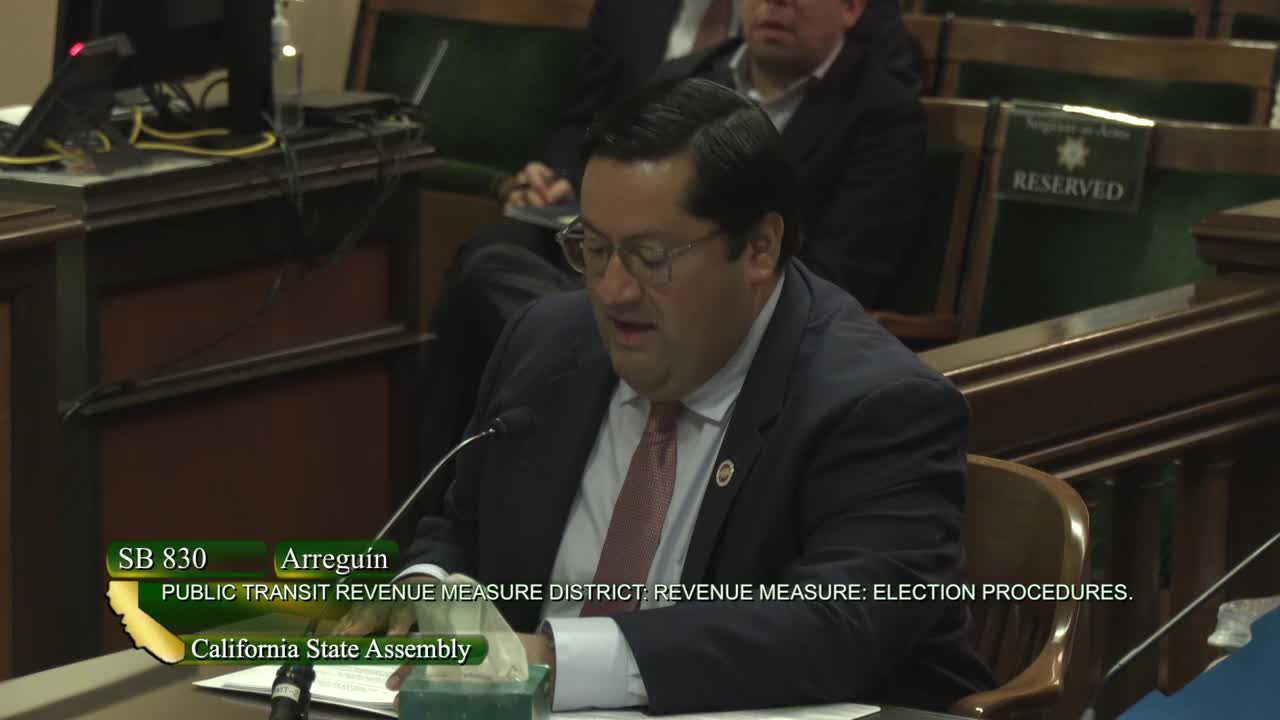 15MIN
Assembly Standing Committee on Elections
 7MIN
Senate Standing Committee on Environmental Quality
 1MIN
Senate Floor
 1MIN
Assembly Floor
 5MIN