SB 84: Disability access: construction-related accessibility claims: notice of violation and opportunity to correct.
- Session Year: 2025-2026
- House: Senate
- Latest Version Date: 2025-06-18
Current Status:
In Progress
(2025-06-18: From committee with author's amendments. Read second time and amended. Re-referred to Com. on JUD.)
Introduced
In Committee
Awaiting First Chamber Vote
Passed First Chamber
In Committee
Awaiting Second Chamber Vote
Passed Second Chamber
Enacted
Existing law prohibits discrimination on the basis of various specified personal characteristics, including disability. Existing law imposes minimum statutory damages for construction-related accessibility claims if the violation of a construction-related accessibility standard denied the plaintiff full and equal access to the place of public accommodation on a particular occasion, as specified. Existing law imposes various limits on a defendants liability for statutory damages under specified sets of conditions, including if the defendant, among other things, corrects the construction-related violations within a specified time.
This bill would prohibit a construction-related accessibility claim for statutory damages from being initiated in a legal proceeding against a defendant who employs 50 or fewer individuals, as specified, unless the defendant has been served with a letter specifying each alleged violation, and the alleged violations have not been corrected within 120 days of service of the letter. The bill would provide that a defendant is not liable for statutory damages, plaintiffs attorneys fees, or costs for an alleged violation that is corrected within 120 days of service of a letter alleging the violation. The bill would also prohibit a plaintiff from avoiding the notice and opportunity to correct provisions and the liability limitations by claiming they are seeking general discrimination damages based on a violation of the Americans with Disabilities Act of 1990 if the underlying claim is based on a defendants failure to comply with physical accessibility standards under California law.
(a)Statutory damages under either subdivision (a) of Section 52 or subdivision (a) of Section 54.3 may be recovered in a construction-related accessibility claim against a place of public accommodation only if a violation or violations of one or more construction-related accessibility standards denied the plaintiff full and equal access to the place of public accommodation on a particular occasion.
(b)A plaintiff is denied full and equal access only if the plaintiff personally encountered the violation on a particular occasion, or the plaintiff was deterred from accessing a place of public accommodation on a particular occasion.
(c)A violation personally encountered by a plaintiff may be sufficient to cause a denial of full and equal access if the plaintiff experienced difficulty, discomfort, or embarrassment because of the violation.
(d)A plaintiff demonstrates that the plaintiff was deterred from accessing a place of public accommodation on a particular occasion only if both of the following apply:
(1)The plaintiff had actual knowledge of a violation or violations that prevented or reasonably dissuaded the plaintiff from accessing a place of public accommodation that the plaintiff intended to use on a particular occasion.
(2)The violation or violations would have actually denied the plaintiff full and equal access if the plaintiff had accessed the place of public accommodation on that particular occasion.
(e)(1)The following technical violations are presumed to not cause a person difficulty, discomfort, or embarrassment for the purpose of an award of minimum statutory damages in a construction-related accessibility claim, as set forth in subdivision (c), where the defendant is a small business, as described by subparagraph (B) of paragraph (2) of subdivision (g), the defendant has corrected, within 15 days of the service of a summons and complaint asserting a construction-related accessibility claim or receipt of a written notice, whichever is earlier, all of the technical violations that are the basis of the claim, and the claim is based on one or more of the following violations:
(A)Interior signs, other than directional signs or signs that identify the location of accessible elements, facilities, or features, when not all such elements, facilities, or features are accessible.
(B)The lack of exterior signs, other than parking signs and directional signs, including signs that indicate the location of accessible pathways or entrance and exit doors when not all pathways or entrance and exit doors are accessible.
(C)The order in which parking signs are placed, or the exact location or wording of parking signs, provided that the parking signs are clearly visible and indicate the location of accessible parking and van-accessible parking.
(D)The color of parking signs, provided that the color of the background contrasts with the color of the information on the sign.
(E)The color of parking lot striping, provided that it exists and provides sufficient contrast with the surface upon which it is applied to be reasonably visible.
(F)Faded, chipped, damaged, or deteriorated paint in otherwise fully compliant parking spaces and passenger access aisles in parking lots, provided that it indicates the required dimensions of a parking space or access aisle in a manner that is reasonably visible.
(G)The presence or condition of detectable warning surfaces on ramps, except where the ramp is part of a pedestrian path of travel that intersects with a vehicular lane or other hazardous area.
(2)The presumption set forth in paragraph (1) affects the plaintiffs burden of proof and is rebuttable by evidence showing, by a preponderance of the evidence, that the plaintiff did, in fact, experience difficulty, discomfort, or embarrassment on the particular occasion occasion, as a result of one or more of the technical violations listed in paragraph (1).
(3)This subdivision shall apply only to claims filed on or after the effective date of Senate Bill 269 of the 201516 Regular Session.
(f)Statutory damages may be assessed pursuant to subdivision (a) based on each particular occasion that the plaintiff was denied full and equal access, and not upon the number of violations of construction-related accessibility standards identified at the place of public accommodation where the denial of full and equal access occurred. If the place of public accommodation consists of distinct facilities that offer distinct services, statutory damages may be assessed based on each denial of full and equal access to the distinct facility, and not upon the number of violations of construction-related accessibility standards identified at the place of public accommodation where the denial of full and equal access occurred.
(g)(1)Notwithstanding any other law, a defendants liability for statutory damages in a construction-related accessibility claim against a place of public accommodation is reduced to a minimum of one thousand dollars ($1,000) for each offense if the defendant demonstrates that it has corrected all construction-related violations that are the basis of a claim within 60 days of being served with the complaint, and the defendant demonstrates any of the following:
(A)The structure or area of the alleged violation was determined to be CASp-inspected or meets applicable standards and, to the best of the defendants knowledge, there were no modifications or alterations that impacted compliance with construction-related accessibility standards with respect to the plaintiffs claim that were completed or commenced between the date of that determination and the particular occasion on which the plaintiff was allegedly denied full and equal access.
(B)The structure or area of the alleged violation was the subject of an inspection report indicating CASp determination pending or Inspected by a CASp, and the defendant has either implemented reasonable measures to correct the alleged violation before the particular occasion on which the plaintiff was allegedly denied full and equal access, or the defendant was in the process of correcting the alleged violation within a reasonable time and manner before the particular occasion on which the plaintiff was allegedly denied full and equal access.
(C)For a claim alleging a construction-related accessibility violation filed before January 1, 2018, the structure or area of the alleged violation was a new construction or an improvement that was approved by, and passed inspection by, the local building department permit and inspection process on or after January 1, 2008, and before January 1, 2016, and, to the best of the defendants knowledge, there were no modifications or alterations that impacted compliance with respect to the plaintiffs claim that were completed or commenced between the completion date of the new construction or improvement and the particular occasion on which the plaintiff was allegedly denied full and equal access.
(D)The structure or area of the alleged violation was new construction or an improvement that was approved by, and passed inspection by, a local building department official who is a certified access specialist, and, to the best of the defendants knowledge, there were no modifications or alterations that affected compliance with respect to the plaintiffs claim that were completed or commenced between the completion date of the new construction or improvement and the particular occasion on which the plaintiff was allegedly denied full and equal access.
(2)Notwithstanding any other law, a defendants liability for statutory damages in a construction-related accessibility claim against a place of public accommodation is reduced to a minimum of two thousand dollars ($2,000) for each offense if the defendant demonstrates both of the following:
(A)The defendant has corrected all construction-related violations that are the basis of a claim within 30 days of being served with the complaint.
(B)The defendant is a small business that has employed 25 or fewer employees on average over the past three years, or for the years it has been in existence if less than three years, as evidenced by wage report forms filed with the Economic Development Department, and has average annual gross receipts of less than three million five hundred thousand dollars ($3,500,000) over the previous three years, or for the years it has been in existence if less than three years, as evidenced by federal or state income tax returns. The average annual gross receipts dollar amount shall be adjusted biannually by the Department of General Services for changes in the California Consumer Price Index for All Urban Consumers, as compiled by the Department of Industrial Relations. The Department of General Services shall post that adjusted amount on its internet website.
(3)(A)Notwithstanding any other law, a defendant shall not be liable for minimum statutory damages in a construction-related accessibility claim, with respect to a violation noted in a report by a certified access specialist (CASp), for a period of 120 days following the date of the inspection if the defendant demonstrates compliance with each of the following:
(i)The defendant is a business that, as of the date of inspection, has employed 50 or fewer employees on average over the past three years, or for the years it has been in existence if less than three years, as evidenced by wage report forms filed with the Employment Development Department.
(ii)The structure or area of the alleged violation was the subject of an inspection report indicating CASp determination pending or Inspected by a CASp.
(iii)The inspection predates the filing of the claim by, or receipt of a demand letter from, the plaintiff regarding the alleged violation of a construction-related accessibility standard, and the defendant was not on notice of the alleged violation prior to the CASp inspection.
(iv)The defendant has corrected, within 120 days of the date of the inspection, all construction-related violations in the structure or area inspected by the CASp that are noted in the CASp report that are the basis of the claim.
(B)Notwithstanding any other law, a defendant who claims the benefit of the reduction of, or protection from liability for, minimum statutory damages under this subdivision shall disclose the date and findings of any CASp inspection to a plaintiff if relevant to a claim or defense in an action.
(4)A defendant may claim the protection from liability for minimum statutory damages under paragraph (3) only once for each structure or area inspected by a CASp, unless the inspected structure or area has undergone modifications or alterations that affect the compliance with construction-related accessibility standards of those structures or areas after the date of the last inspection, and the defendant obtains an additional CASp inspection within 30 days of final approval by the building department or certificate of occupancy, as appropriate, regarding the modification or alterations.
(5)If the defendant has failed to correct, within 120 days of the date of the inspection, all construction-related violations in the structure or area inspected by the CASp that are noted in the CASp report, the defendant shall not receive any protection from liability for minimum statutory damages pursuant to paragraph (3), unless a building permit is required for the repairs which cannot reasonably be completed by the defendant within 120 days and the defendant is in the process of correcting the violations noted in the CASp report, as evidenced by having, at least, an active building permit necessary for the repairs to correct the violation that was noted, but not corrected, in the CASp report and all of the repairs are completed within 180 days of the date of the inspection.
(6)This subdivision shall not be applicable to intentional violations.
(7)Nothing in this subdivision affects the awarding of actual damages, or affects the awarding of treble actual damages.
(8)This subdivision shall apply only to claims filed on or after the effective date of Chapter 383 of the Statutes of 2012, except for paragraphs (3), (4), and (5), which shall apply only to claims filed on or after the effective date of Senate Bill 269 of the 201516 Regular Session. Nothing in this subdivision is intended to affect a complaint filed before those dates, as applicable.
(h)(1)Notwithstanding any other law, a construction-related accessibility claim for statutory damages shall be initiated in a legal proceeding against a defendant only if both of the following apply:
(A)The defendant has been served with a letter specifying each alleged violation of a construction-related accessibility standard.
(B)The alleged violations of construction-related accessibility standards have not been corrected within 120 days of service of the letter.
(2)Service of a letter pursuant to this section may be accomplished by mail to the defendant pursuant to Section 415.30 of the Code of Civil Procedure, by personal delivery to the defendant pursuant to Section 415.10 of the Code of Civil Procedure, or by any other means authorized for service of a summons.
(3)A defendant shall not be liable for statutory damages, plaintiffs attorneys fees, or costs for an alleged violation of a construction-related accessibility standard that is corrected within 120 days of service of a letter alleging the violation.
(4)A plaintiff shall not be permitted to circumvent the requirements of paragraph (1) and the limitations on liability under paragraph (3) by claiming that they are seeking general discrimination damages based on a violation of the Americans with Disabilities Act of 1990, and not damages for a construction-related accessibility claim, if the underlying basis of the claim is the defendants alleged failure to comply with physical accessibility standards under this part.
(5)This subdivision shall apply to any defendant who employs 50 or fewer individuals as of the date of the receipt of the letter described in subparagraph (A) of paragraph (1) or for any period during the three years immediately preceding the date of the receipt of the letter described in subparagraph (A) of paragraph (1).
(i)This section does not alter the applicable law for the awarding of injunctive or other equitable relief for a violation or violations of one or more construction-related accessibility standards, nor alter any legal obligation of a party to mitigate damages.
(j)In assessing liability under subdivision (d), in an action alleging multiple claims for the same construction-related accessibility violation on different particular occasions, the court shall consider the reasonableness of the plaintiffs conduct in light of the plaintiffs obligation, if any, to mitigate damages.
(k)For purposes of this section, the structure or area inspected means one of the following: the interior of the premises, the exterior of the premises, or both the interior and exterior.
(a)Statutory damages under either subdivision (a) of Section 52 or subdivision (a) of Section 54.3 may be recovered in a construction-related accessibility claim against a place of public accommodation only if a violation or violations of one or more construction-related accessibility standards denied the plaintiff full and equal access to the place of public accommodation on a particular occasion.
(b)A plaintiff is denied full and equal access only if the plaintiff personally encountered the violation on a particular occasion, or the plaintiff was deterred from accessing a place of public accommodation on a particular occasion.
(c)A violation personally encountered by a plaintiff may be sufficient to cause a denial of full and equal access if the plaintiff experienced difficulty, discomfort, or embarrassment because of the violation.
(d)A plaintiff demonstrates that the plaintiff was deterred from accessing a place of public accommodation on a particular occasion only if both of the following apply:
(1)The plaintiff had actual knowledge of a violation or violations that prevented or reasonably dissuaded the plaintiff from accessing a place of public accommodation that the plaintiff intended to use on a particular occasion.
(2)The violation or violations would have actually denied the plaintiff full and equal access if the plaintiff had accessed the place of public accommodation on that particular occasion.
(e)(1)The following technical violations are presumed to not cause a person difficulty, discomfort, or embarrassment for the purpose of an award of minimum statutory damages in a construction-related accessibility claim, as set forth in subdivision (c), where the defendant is a small business, as described by subparagraph (B) of paragraph (2) of subdivision (g), the defendant has corrected, within 15 days of the service of a summons and complaint asserting a construction-related accessibility claim or receipt of a written notice, whichever is earlier, all of the technical violations that are the basis of the claim, and the claim is based on one or more of the following violations:
(A)Interior signs, other than directional signs or signs that identify the location of accessible elements, facilities, or features, when not all such elements, facilities, or features are accessible.
(B)The lack of exterior signs, other than parking signs and directional signs, including signs that indicate the location of accessible pathways or entrance and exit doors when not all pathways, pathways or entrance and exit doors are accessible.
(C)The order in which parking signs are placed, or the exact location or wording of parking signs, provided that the parking signs are clearly visible and indicate the location of accessible parking and van-accessible parking.
(D)The color of parking signs, provided that the color of the background contrasts with the color of the information on the sign.
(E)The color of parking lot striping, provided that it exists and provides sufficient contrast with the surface upon which it is applied to be reasonably visible.
(F)Faded, chipped, damaged, or deteriorated paint in otherwise fully compliant parking spaces and passenger access aisles in parking lots, provided that it indicates the required dimensions of a parking space or access aisle in a manner that is reasonably visible.
(G)The presence or condition of detectable warning surfaces on ramps, except where the ramp is part of a pedestrian path of travel that intersects with a vehicular lane or other hazardous area.
(2)The presumption set forth in paragraph (1) affects the plaintiffs burden of proof and is rebuttable by evidence showing, by a preponderance of the evidence, that the plaintiff did, in fact, experience difficulty, discomfort, or embarrassment on the particular occasion as a result of one or more of the technical violations listed in paragraph (1).
(3)This subdivision shall apply only to claims filed on or after the effective date of Senate Bill 269 of the 201516 Regular Session.
(f)Statutory damages may be assessed pursuant to subdivision (a) based on each particular occasion that the plaintiff was denied full and equal access, and not upon the number of violations of construction-related accessibility standards identified at the place of public accommodation where the denial of full and equal access occurred. If the place of public accommodation consists of distinct facilities that offer distinct services, statutory damages may be assessed based on each denial of full and equal access to the distinct facility, and not upon the number of violations of construction-related accessibility standards identified at the place of public accommodation where the denial of full and equal access occurred.
(g)(1)Notwithstanding any other law, a defendants liability for statutory damages in a construction-related accessibility claim against a place of public accommodation is reduced to a minimum of one thousand dollars ($1,000) for each offense if the defendant demonstrates that it has corrected all construction-related violations that are the basis of a claim within 60 days of being served with the complaint, and the defendant demonstrates any of the following:
(A)The structure or area of the alleged violation was determined to be CASp-inspected or meets applicable standards and, to the best of the defendants knowledge, there were no modifications or alterations that impacted compliance with construction-related accessibility standards with respect to the plaintiffs claim that were completed or commenced between the date of that determination and the particular occasion on which the plaintiff was allegedly denied full and equal access.
(B)The structure or area of the alleged violation was the subject of an inspection report indicating CASp determination pending or Inspected by a CASp, and the defendant has either implemented reasonable measures to correct the alleged violation before the particular occasion on which the plaintiff was allegedly denied full and equal access, or the defendant was in the process of correcting the alleged violation within a reasonable time and manner before the particular occasion on which the plaintiff was allegedly denied full and equal access.
(C)For a claim alleging a construction-related accessibility violation filed before January 1, 2018, the structure or area of the alleged violation was a new construction or an improvement that was approved by, and passed inspection by, the local building department permit and inspection process on or after January 1, 2008, and before January 1, 2016, and, to the best of the defendants knowledge, there were no modifications or alterations that impacted compliance with respect to the plaintiffs claim that were completed or commenced between the completion date of the new construction or improvement and the particular occasion on which the plaintiff was allegedly denied full and equal access.
(D)The structure or area of the alleged violation was new construction or an improvement that was approved by, and passed inspection by, a local building department official who is a certified access specialist, and, to the best of the defendants knowledge, there were no modifications or alterations that affected compliance with respect to the plaintiffs claim that were completed or commenced between the completion date of the new construction or improvement and the particular occasion on which the plaintiff was allegedly denied full and equal access.
(2)Notwithstanding any other law, a defendants liability for statutory damages in a construction-related accessibility claim against a place of public accommodation is reduced to a minimum of two thousand dollars ($2,000) for each offense if the defendant demonstrates both of the following:
(A)The defendant has corrected all construction-related violations that are the basis of a claim within 30 days of being served with the complaint.
(B)The defendant is a small business that has employed 25 or fewer employees on average over the past three years, or for the years it has been in existence if less than three years, as evidenced by wage report forms filed with the Economic Development Department, and has average annual gross receipts of less than three million five hundred thousand dollars ($3,500,000) over the previous three years, or for the years it has been in existence if less than three years, as evidenced by federal or state income tax returns. The average annual gross receipts dollar amount shall be adjusted biannually by the Department of General Services for changes in the California Consumer Price Index for All Urban Consumers, as compiled by the Department of Industrial Relations. The Department of General Services shall post that adjusted amount on its internet website.
(3)(A)Notwithstanding any other law, a defendant shall not be liable for minimum statutory damages in a construction-related accessibility claim, with respect to a violation noted in a report by a certified access specialist (CASp), for a period of 120 days following the date of the inspection if the defendant demonstrates compliance with each of the following:
(i)The defendant is a business that, as of the date of inspection, has employed 50 or fewer employees on average over the past three years, or for the years it has been in existence if less than three years, as evidenced by wage report forms filed with the Employment Development Department.
(ii)The structure or area of the alleged violation was the subject of an inspection report indicating CASp determination pending or Inspected by a CASp.
(iii)The inspection predates the filing of the claim by, or receipt of a demand letter from, the plaintiff regarding the alleged violation of a construction-related accessibility standard, and the defendant was not on notice of the alleged violation prior to the CASp inspection.
(iv)The defendant has corrected, within 120 days of the date of the inspection, all construction-related violations in the structure or area inspected by the CASp that are noted in the CASp report that are the basis of the claim.
(B)Notwithstanding any other law, a defendant who claims the benefit of the reduction of, or protection from liability for, minimum statutory damages under this subdivision shall disclose the date and findings of any CASp inspection to a plaintiff if relevant to a claim or defense in an action.
(4)A defendant may claim the protection from liability for minimum statutory damages under paragraph (3) only once for each structure or area inspected by a CASp, unless the inspected structure or area has undergone modifications or alterations that affect the compliance with construction-related accessibility standards of those structures or areas after the date of the last inspection, and the defendant obtains an additional CASp inspection within 30 days of final approval by the building department or certificate of occupancy, as appropriate, regarding the modification or alterations.
(5)If the defendant has failed to correct, within 120 days of the date of the inspection, all construction-related violations in the structure or area inspected by the CASp that are noted in the CASp report, the defendant shall not receive any protection from liability for minimum statutory damages pursuant to paragraph (3), unless a building permit is required for the repairs which cannot reasonably be completed by the defendant within 120 days and the defendant is in the process of correcting the violations noted in the CASp report, as evidenced by having, at least, an active building permit necessary for the repairs to correct the violation that was noted, but not corrected, in the CASp report and all of the repairs are completed within 180 days of the date of the inspection.
(6)This subdivision shall not be applicable to intentional violations.
(7)Nothing in this subdivision affects the awarding of actual damages, or affects the awarding of treble actual damages.
(8)This subdivision shall apply only to claims filed on or after the effective date of Chapter 383 of the Statutes of 2012, except for paragraphs (3), (4), and (5), which shall apply only to claims filed on or after the effective date of Senate Bill 269 of the 201516 Regular Session. Nothing in this subdivision is intended to affect a complaint filed before those dates, as applicable.
(h)(1)Notwithstanding any other law, a construction-related accessibility claim for statutory damages shall be initiated in a legal proceeding against a defendant only if both of the following apply:
(A)The defendant has been served with a letter specifying each alleged violation of a construction-related accessibility standard.
(B)The alleged violations of construction-related accessibility standards have not been corrected within 120 days of service of the letter.
(2)Service of a letter pursuant to this section may be accomplished by mail to the defendant pursuant to Section 415.30 of the Code of Civil Procedure, by personal delivery to the defendant pursuant to Section 415.10 of the Code of Civil Procedure, or by any other means authorized for service of a summons.
(3)A defendant shall not be liable for statutory damages, plaintiffs attorneys fees, or costs for an alleged violation of a construction-related accessibility standard that is corrected within 120 days of service of a letter alleging the violation.
(4)A plaintiff shall not be permitted to circumvent the requirements of paragraph (1) and the limitations on liability under paragraph (3) by claiming that they are seeking general discrimination damages based on a violation of the Americans with Disabilities Act of 1990, and not damages for a construction-related accessibility claim, if the underlying basis of the claim is the defendants alleged failure to comply with physical accessibility standards under this part.
(5)This subdivision shall apply to any defendant who employs 50 or fewer individuals as of the date of the receipt of the letter described in subparagraph (A) of paragraph (1) or for any period during the three years immediately preceding the date of the receipt of the letter described in subparagraph (A) of paragraph (1).
(i)This section does not alter the applicable law for the awarding of injunctive or other equitable relief for a violation or violations of one or more construction-related accessibility standards, nor alter any legal obligation of a party to mitigate damages.
(j)In assessing liability under subdivision (d), in an action alleging multiple claims for the same construction-related accessibility violation on different particular occasions, the court shall consider the reasonableness of the plaintiffs conduct in light of the plaintiffs obligation, if any, to mitigate damages.
(k)For purposes of this section, the structure or area inspected means one of the following: the interior of the premises, the exterior of the premises, or both the interior and exterior.
(a)Statutory damages under either subdivision (a) of Section 52 or subdivision (a) of Section 54.3 may be recovered in a construction-related accessibility claim against a place of public accommodation only if a violation or violations of one or more construction-related accessibility standards denied the plaintiff full and equal access to the place of public accommodation on a particular occasion.
(b)A plaintiff is denied full and equal access only if the plaintiff personally encountered the violation on a particular occasion, or the plaintiff was deterred from accessing a place of public accommodation on a particular occasion.
(c)A violation personally encountered by a plaintiff may be sufficient to cause a denial of full and equal access if the plaintiff experienced difficulty, discomfort, or embarrassment because of the violation.
(d)A plaintiff demonstrates that the plaintiff was deterred from accessing a place of public accommodation on a particular occasion only if both of the following apply:
(1)The plaintiff had actual knowledge of a violation or violations that prevented or reasonably dissuaded the plaintiff from accessing a place of public accommodation that the plaintiff intended to use on a particular occasion.
(2)The violation or violations would have actually denied the plaintiff full and equal access if the plaintiff had accessed the place of public accommodation on that particular occasion.
(e)(1)The following technical violations are presumed to not cause a person difficulty, discomfort, or embarrassment for the purpose of an award of minimum statutory damages in a construction-related accessibility claim, as set forth in subdivision (c), where the defendant is a small business, as described by subparagraph (B) of paragraph (2) of subdivision (g), the defendant has corrected, within 15 days of the service of a summons and complaint asserting a construction-related accessibility claim or receipt of a written notice, whichever is earlier, all of the technical violations that are the basis of the claim, and the claim is based on one or more of the following violations:
(A)Interior signs, other than directional signs or signs that identify the location of accessible elements, facilities, or features, when not all such elements, facilities, or features are accessible.
(B)The lack of exterior signs, other than parking signs and directional signs, including signs that indicate the location of accessible pathways or entrance and exit doors when not all pathways, entrance and exit doors are accessible.
(C)The order in which parking signs are placed placed, or the exact location or wording of parking signs, provided that the parking signs are clearly visible and indicate the location of accessible parking and van-accessible parking.
(D)The color of parking signs, provided that the color of the background contrasts with the color of the information on the sign.
(E)The color of parking lot striping, provided that it exists and provides sufficient contrast with the surface upon which it is applied to be reasonably visible.
(F)Faded, chipped, damaged, or deteriorated paint in otherwise fully compliant parking spaces and passenger access aisles in parking lots, provided that it indicates the required dimensions of a parking space or access aisle in a manner that is reasonably visible.
(G)The presence or condition of detectable warning surfaces on ramps, except where the ramp is part of a pedestrian path of travel that intersects with a vehicular lane or other hazardous area.
(2)The presumption set forth in paragraph (1) affects the plaintiffs burden of proof and is rebuttable by evidence showing, by a preponderance of the evidence, that the plaintiff did, in fact, experience difficulty, discomfort, or embarrassment on the particular occasion as a result of one or more of the technical violations listed in paragraph (1).
(3)This subdivision shall apply only to claims filed on or after the effective date of Senate Bill 269 of the 201516 Regular Session.
(f)Statutory damages may be assessed pursuant to subdivision (a) based on each particular occasion that the plaintiff was denied full and equal access, and not upon the number of violations of construction-related accessibility standards identified at the place of public accommodation where the denial of full and equal access occurred. If the place of public accommodation consists of distinct facilities that offer distinct services, statutory damages may be assessed based on each denial of full and equal access to the distinct facility, and not upon the number of violations of construction-related accessibility standards identified at the place of public accommodation where the denial of full and equal access occurred.
(g)(1)Notwithstanding any other law, a defendants liability for statutory damages in a construction-related accessibility claim against a place of public accommodation is reduced to a minimum of one thousand dollars ($1,000) for each offense if the defendant demonstrates that it has corrected all construction-related violations that are the basis of a claim within 60 days of being served with the complaint, and the defendant demonstrates any of the following:
(A)The structure or area of the alleged violation was determined to be CASp-inspected or meets applicable standards and, to the best of the defendants knowledge, there were no modifications or alterations that impacted compliance with construction-related accessibility standards with respect to the plaintiffs claim that were completed or commenced between the date of that determination and the particular occasion on which the plaintiff was allegedly denied full and equal access.
(B)The structure or area of the alleged violation was the subject of an inspection report indicating CASp determination pending or Inspected by a CASp, and the defendant has either implemented reasonable measures to correct the alleged violation before the particular occasion on which the plaintiff was allegedly denied full and equal access, or the defendant was in the process of correcting the alleged violation within a reasonable time and manner before the particular occasion on which the plaintiff was allegedly denied full and equal access.
(C)For a claim alleging a construction-related accessibility violation filed before January 1, 2018, the structure or area of the alleged violation was a new construction or an improvement that was approved by, and passed inspection by, the local building department permit and inspection process on or after January 1, 2008, and before January 1, 2016, and, to the best of the defendants knowledge, there were no modifications or alterations that impacted compliance with respect to the plaintiffs claim that were completed or commenced between the completion date of the new construction or improvement and the particular occasion on which the plaintiff was allegedly denied full and equal access.
(D)The structure or area of the alleged violation was new construction or an improvement that was approved by, and passed inspection by, a local building department official who is a certified access specialist, and, to the best of the defendants knowledge, there were no modifications or alterations that affected compliance with respect to the plaintiffs claim that were completed or commenced between the completion date of the new construction or improvement and the particular occasion on which the plaintiff was allegedly denied full and equal access.
(2)Notwithstanding any other law, a defendants liability for statutory damages in a construction-related accessibility claim against a place of public accommodation is reduced to a minimum of two thousand dollars ($2,000) for each offense if the defendant demonstrates both of the following:
(A)The defendant has corrected all construction-related violations that are the basis of a claim within 30 days of being served with the complaint.
(B)The defendant is a small business that has employed 25 or fewer employees on average over the past three years, or for the years it has been in existence if less than three years, as evidenced by wage report forms filed with the Economic Development Department, and has average annual gross receipts of less than three million five hundred thousand dollars ($3,500,000) over the previous three years, or for the years it has been in existence if less than three years, as evidenced by federal or state income tax returns. The average annual gross receipts dollar amount shall be adjusted biannually by the Department of General Services for changes in the California Consumer Price Index for All Urban Consumers, as compiled by the Department of Industrial Relations. The Department of General Services shall post that adjusted amount on its internet website.
(3)(A)Notwithstanding any other law, a defendant shall not be liable for minimum statutory damages in a construction-related accessibility claim, with respect to a violation noted in a report by a certified access specialist (CASp), for a period of 120 days following the date of the inspection if the defendant demonstrates compliance with each of the following:
(i)The defendant is a business that, as of the date of inspection, has employed 50 or fewer employees on average over the past three years, or for the years it has been in existence if less than three years, as evidenced by wage report forms filed with the Employment Development Department.
(ii)The structure or area of the alleged violation was the subject of an inspection report indicating CASp determination pending or Inspected by a CASp.
(iii)The inspection predates the filing of the claim by, or receipt of a demand letter from, the plaintiff regarding the alleged violation of a construction-related accessibility standard, and the defendant was not on notice of the alleged violation prior to the CASp inspection.
(iv)The defendant has corrected, within 120 days of the date of the inspection, all construction-related violations in the structure or area inspected by the CASp that are noted in the CASp report that are the basis of the claim.
(B)Notwithstanding any other law, a defendant who claims the benefit of the reduction of, or protection from liability for, minimum statutory damages under this subdivision shall disclose the date and findings of any CASp inspection to a plaintiff if relevant to a claim or defense in an action.
(4)A defendant may claim the protection from liability for minimum statutory damages under paragraph (3) only once for each structure or area inspected by a CASp, unless the inspected structure or area has undergone modifications or alterations that affect the compliance with construction-related accessibility standards of those structures or areas after the date of the last inspection, and the defendant obtains an additional CASp inspection within 30 days of final approval by the building department or certificate of occupancy, as appropriate, regarding the modification or alterations.
(5)If the defendant has failed to correct, within 120 days of the date of the inspection, all construction-related violations in the structure or area inspected by the CASp that are noted in the CASp report, the defendant shall not receive any protection from liability for minimum statutory damages pursuant to paragraph (3), unless a building permit is required for the repairs which cannot reasonably be completed by the defendant within 120 days and the defendant is in the process of correcting the violations noted in the CASp report, as evidenced by having, at least, an active building permit necessary for the repairs to correct the violation that was noted, but not corrected, in the CASp report and all of the repairs are completed within 180 days of the date of the inspection.
(6)This subdivision shall not be applicable to intentional violations.
(7)Nothing in this subdivision affects the awarding of actual damages, or affects the awarding of treble actual damages.
(8)This subdivision shall apply only to claims filed on or after the effective date of Chapter 383 of the Statutes of 2012, except for paragraphs (3), (4), and (5), which shall apply only to claims filed on or after the effective date of Senate Bill 269 of the 201516 Regular Session. Nothing in this subdivision is intended to affect a complaint filed before those dates, as applicable.
(h)(1)Notwithstanding any other law, a construction-related accessibility claim for statutory damages shall be initiated in a legal proceeding against a defendant only if both of the following apply:
(A)The defendant has been served with a letter specifying each alleged violation of a construction-related accessibility standard.
(B)The alleged violations of construction-related accessibility standards have not been corrected within 120 days of service of the letter.
(2)Service of a letter pursuant to this section may be accomplished by mail to the defendant pursuant to Section 415.30 of the Code of Civil Procedure, by personal delivery to the defendant pursuant to Section 415.10 of the Code of Civil Procedure, or by any other means authorized for service of a summons.
(3)A defendant shall not be liable for statutory damages, plaintiffs attorneys fees, or costs for an alleged violation of a construction-related accessibility standard that is corrected within 120 days of service of a letter alleging the violation.
(4)A plaintiff shall not be permitted to circumvent the requirements of paragraph (1) and the limitations on liability under paragraph (3) by claiming that they are seeking general discrimination damages based on a violation of the Americans with Disabilities Act of 1990, and not damages for a construction-related accessibility claim, if the underlying basis of the claim is the defendants alleged failure to comply with physical accessibility standards under this part.
(5)This subdivision shall apply to any defendant who employs 50 or fewer individuals as of the date of the receipt of the letter described in subparagraph (A) of paragraph (1) or for any period during the three years immediately preceding the date of the receipt of the letter described in subparagraph (A) of paragraph (1).
(i)This section does not alter the applicable law for the awarding of injunctive or other equitable relief for a violation or violations of one or more construction-related accessibility standards, nor alter any legal obligation of a party to mitigate damages.
(j)In assessing liability under subdivision (d), in an action alleging multiple claims for the same construction-related accessibility violation on different particular occasions, the court shall consider the reasonableness of the plaintiffs conduct in light of the plaintiffs obligation, if any, to mitigate damages.
(k)For purposes of this section, the structure or area inspected means one of the following: the interior of the premises, the exterior of the premises, or both the interior and exterior.
(a)Statutory damages under either subdivision (a) of Section 52 or subdivision (a) of Section 54.3 may be recovered in a construction-related accessibility claim against a place of public accommodation only if a violation or violations of one or more construction-related accessibility standards denied the plaintiff full and equal access to the place of public accommodation on a particular occasion.
(b)A plaintiff is denied full and equal access only if the plaintiff personally encountered the violation on a particular occasion, or the plaintiff was deterred from accessing a place of public accommodation on a particular occasion.
(c)A violation personally encountered by a plaintiff may be sufficient to cause a denial of full and equal access if the plaintiff experienced difficulty, discomfort, or embarrassment because of the violation.
(d)A plaintiff demonstrates that he or she the plaintiff was deterred from accessing a place of public accommodation on a particular occasion only if both of the following apply:
(1)The plaintiff had actual knowledge of a violation or violations that prevented or reasonably dissuaded the plaintiff from accessing a place of public accommodation that the plaintiff intended to use on a particular occasion.
(2)The violation or violations would have actually denied the plaintiff full and equal access if the plaintiff had accessed the place of public accommodation on that particular occasion.
(e)(1)The following technical violations are presumed to not cause a person difficulty, discomfort, or embarrassment for the purpose of an award of minimum statutory damages in a construction-related accessibility claim, as set forth in subdivision (c), where the defendant is a small business, as described by subparagraph (B) of paragraph (2) of subdivision (g), the defendant has corrected, within 15 days of the service of a summons and complaint asserting a construction-related accessibility claim or receipt of a written notice, whichever is earlier, all of the technical violations that are the basis of the claim, and the claim is based on one or more of the following violations:
(A)Interior signs, other than directional signs or signs that identify the location of accessible elements, facilities, or features, when not all such elements, facilities, or features are accessible.
(B)The lack of exterior signs, other than parking signs and directional signs, including signs that indicate the location of accessible pathways or entrance and exit doors when not all pathways, entrance and exit doors are accessible.
(C)The order in which parking signs are placed or the exact location or wording of parking signs, provided that the parking signs are clearly visible and indicate the location of accessible parking and van-accessible parking.
(D)The color of parking signs, provided that the color of the background contrasts with the color of the information on the sign.
(E)The color of parking lot striping, provided that it exists and provides sufficient contrast with the surface upon which it is applied to be reasonably visible.
(F)Faded, chipped, damaged, or deteriorated paint in otherwise fully compliant parking spaces and passenger access aisles in parking lots, provided that it indicates the required dimensions of a parking space or access aisle in a manner that is reasonably visible.
(G)The presence or condition of detectable warning surfaces on ramps, except where the ramp is part of a pedestrian path of travel that intersects with a vehicular lane or other hazardous area.
(2)The presumption set forth in paragraph (1) affects the plaintiffs burden of proof and is rebuttable by evidence showing, by a preponderance of the evidence, that the plaintiff did, in fact, experience difficulty, discomfort, or embarrassment on the particular occasion as a result of one or more of the technical violations listed in paragraph (1).
(3)This subdivision shall apply only to claims filed on or after the effective date of Senate Bill 269 of the 201516 Regular Session.
(f)Statutory damages may be assessed pursuant to subdivision (a) based on each particular occasion that the plaintiff was denied full and equal access, and not upon the number of violations of construction-related accessibility standards identified at the place of public accommodation where the denial of full and equal access occurred. If the place of public accommodation consists of distinct facilities that offer distinct services, statutory damages may be assessed based on each denial of full and equal access to the distinct facility, and not upon the number of violations of construction-related accessibility standards identified at the place of public accommodation where the denial of full and equal access occurred.
(g)(1)Notwithstanding any other law, a defendants liability for statutory damages in a construction-related accessibility claim against a place of public accommodation is reduced to a minimum of one thousand dollars ($1,000) for each offense if the defendant demonstrates that it has corrected all construction-related violations that are the basis of a claim within 60 days of being served with the complaint, and the defendant demonstrates any of the following:
(A)The structure or area of the alleged violation was determined to be CASp-inspected or meets applicable standards and, to the best of the defendants knowledge, there were no modifications or alterations that impacted compliance with construction-related accessibility standards with respect to the plaintiffs claim that were completed or commenced between the date of that determination and the particular occasion on which the plaintiff was allegedly denied full and equal access.
(B)The structure or area of the alleged violation was the subject of an inspection report indicating CASp determination pending or Inspected by a CASp, and the defendant has either implemented reasonable measures to correct the alleged violation before the particular occasion on which the plaintiff was allegedly denied full and equal access, or the defendant was in the process of correcting the alleged violation within a reasonable time and manner before the particular occasion on which the plaintiff was allegedly denied full and equal access.
(C)For a claim alleging a construction-related accessibility violation filed before January 1, 2018, the structure or area of the alleged violation was a new construction or an improvement that was approved by, and passed inspection by, the local building department permit and inspection process on or after January 1, 2008, and before January 1, 2016, and, to the best of the defendants knowledge, there were no modifications or alterations that impacted compliance with respect to the plaintiffs claim that were completed or commenced between the completion date of the new construction or improvement and the particular occasion on which the plaintiff was allegedly denied full and equal access.
(D)The structure or area of the alleged violation was new construction or an improvement that was approved by, and passed inspection by, a local building department official who is a certified access specialist, and, to the best of the defendants knowledge, there were no modifications or alterations that affected compliance with respect to the plaintiffs claim that were completed or commenced between the completion date of the new construction or improvement and the particular occasion on which the plaintiff was allegedly denied full and equal access.
(2)Notwithstanding any other law, a defendants liability for statutory damages in a construction-related accessibility claim against a place of public accommodation is reduced to a minimum of two thousand dollars ($2,000) for each offense if the defendant demonstrates both of the following:
(A)The defendant has corrected all construction-related violations that are the basis of a claim within 30 days of being served with the complaint.
(B)The defendant is a small business that has employed 25 or fewer employees on average over the past three years, or for the years it has been in existence if less than three years, as evidenced by wage report forms filed with the Economic Development Department, and has average annual gross receipts of less than three million five hundred thousand dollars ($3,500,000) over the previous three years, or for the years it has been in existence if less than three years, as evidenced by federal or state income tax returns. The average annual gross receipts dollar amount shall be adjusted biannually by the Department of General Services for changes in the California Consumer Price Index for All Urban Consumers, as compiled by the Department of Industrial Relations. The Department of General Services shall post that adjusted amount on its Internet Web site. internet website.
(3)(A)Notwithstanding any other law, a defendant shall not be liable for minimum statutory damages in a construction-related accessibility claim, with respect to a violation noted in a report by a certified access specialist (CASp), for a period of 120 days following the date of the inspection if the defendant demonstrates compliance with each of the following:
(i)The defendant is a business that, as of the date of inspection, has employed 50 or fewer employees on average over the past three years, or for the years it has been in existence if less than three years, as evidenced by wage report forms filed with the Employment Development Department.
(ii)The structure or area of the alleged violation was the subject of an inspection report indicating CASp determination pending or Inspected by a CASp.
(iii)The inspection predates the filing of the claim by, or receipt of a demand letter from, the plaintiff regarding the alleged violation of a construction-related accessibility standard, and the defendant was not on notice of the alleged violation prior to the CASp inspection.
(iv)The defendant has corrected, within 120 days of the date of the inspection, all construction-related violations in the structure or area inspected by the CASp that are noted in the CASp report that are the basis of the claim.
(B)Notwithstanding any other law, a defendant who claims the benefit of the reduction of, or protection from liability for, minimum statutory damages under this subdivision shall disclose the date and findings of any CASp inspection to a plaintiff if relevant to a claim or defense in an action.
(4)A defendant may claim the protection from liability for minimum statutory damages under paragraph (3) only once for each structure or area inspected by a CASp, unless the inspected structure or area has undergone modifications or alterations that affect the compliance with construction-related accessibility standards of those structures or areas after the date of the last inspection, and the defendant obtains an additional CASp inspection within 30 days of final approval by the building department or certificate of occupancy, as appropriate, regarding the modification or alterations.
(5)If the defendant has failed to correct, within 120 days of the date of the inspection, all construction-related violations in the structure or area inspected by the CASp that are noted in the CASp report, the defendant shall not receive any protection from liability for minimum statutory damages pursuant to paragraph (3), unless a building permit is required for the repairs which cannot reasonably be completed by the defendant within 120 days and the defendant is in the process of correcting the violations noted in the CASp report, as evidenced by having, at least, an active building permit necessary for the repairs to correct the violation that was noted, but not corrected, in the CASp report and all of the repairs are completed within 180 days of the date of the inspection.
(6)This subdivision shall not be applicable to intentional violations.
(7)Nothing in this subdivision affects the awarding of actual damages, or affects the awarding of treble actual damages.
(8)This subdivision shall apply only to claims filed on or after the effective date of Chapter 383 of the Statutes of 2012, except for paragraphs (3), (4), and (5), which shall apply only to claims filed on or after the effective date of Senate Bill 269 of the 201516 Regular Session. Nothing in this subdivision is intended to affect a complaint filed before those dates, as applicable.
(h)(1)Notwithstanding any other law, a construction-related accessibility claim for statutory damages shall be initiated in a legal proceeding against a defendant only if both of the following apply:
(A)The defendant has been served with a letter specifying each alleged violation of a construction-related accessibility standard.
(B)The alleged violations of construction-related accessibility standards have not been corrected within 120 days of service of the letter.
(2)Service of a letter pursuant to this section may be accomplished by mail to the defendant pursuant to Section 415.30 of the Code of Civil Procedure, by personal delivery to the defendant pursuant to Section 415.10 of the Code of Civil Procedure, or by any other means authorized for service of a summons.
(3)A defendant shall not be liable for statutory damages, plaintiffs attorneys fees, or costs for an alleged violation of a construction-related accessibility standard that is corrected within 120 days of service of a letter alleging the violation.
(4)A plaintiff shall not be permitted to circumvent the requirements of paragraph (1) and the limitations on liability under paragraph (3) by claiming that they are seeking general discrimination damages based on a violation of the Americans with Disabilities Act of 1990, and not damages for a construction-related accessibility claim, if the underlying basis of the claim is the defendants alleged failure to comply with physical accessibility standards under this part.
(5)This subdivision shall apply to any defendant who employs 50 or fewer individuals as of the date of the receipt of the letter described in subparagraph (A) of paragraph (1) or for any period during the three years immediately preceding the date of the receipt of the letter described in subparagraph (A) of paragraph (1).
(h)(i)This section does not alter the applicable law for the awarding of injunctive or other equitable relief for a violation or violations of one or more construction-related accessibility standards, nor alter any legal obligation of a party to mitigate damages.
(i)(j)In assessing liability under subdivision (d), in an action alleging multiple claims for the same construction-related accessibility violation on different particular occasions, the court shall consider the reasonableness of the plaintiffs conduct in light of the plaintiffs obligation, if any, to mitigate damages.
(j)(k)For purposes of this section, the structure or area inspected means one of the following: the interior of the premises, the exterior of the premises, or both the interior and exterior.
|
Date
|
Status
|
|---|---|
| Jun 18, 2025 | From committee with author's amendments. Read second time and amended. Re-referred to Com. on JUD. |
| Jun 16, 2025 | Referred to Coms. on JUD. and APPR. |
| Jun 5, 2025 | In Assembly. Read first time. Held at Desk. |
| Jun 4, 2025 | Read third time. Passed. (Ayes 34. Noes 2. Page 1498.) Ordered to the Assembly. |
| May 27, 2025 | Read second time. Ordered to third reading. |
| May 23, 2025 | Read second time and amended. Ordered to second reading. |
| May 23, 2025 | From committee: Do pass as amended. (Ayes 6. Noes 0. Page 1191.) (May 23). |
| May 16, 2025 | Set for hearing May 23. |
| May 5, 2025 | May 5 hearing: Placed on APPR. suspense file. |
| Apr 25, 2025 | Set for hearing May 5. |
| Apr 23, 2025 | From committee: Do pass and re-refer to Com. on APPR. (Ayes 11. Noes 0. Page 833.) (April 22). Re-referred to Com. on APPR. |
| Apr 3, 2025 | Set for hearing April 22. |
| Apr 2, 2025 | From committee with author's amendments. Read second time and amended. Re-referred to Com. on JUD. |
| Jan 29, 2025 | Referred to Coms. on JUD. and APPR. |
| Jan 21, 2025 | From printer. May be acted upon on or after February 17. |
| Jan 17, 2025 | Introduced. Read first time. To Com. on RLS. for assignment. To print. |
|
Date
|
Description
|
Location
|
Votes
|
|
|---|---|---|---|---|
| Jun 4, 2025 | Senate 3rd Reading SB84 Niello et al. | Senate Floor |
Passed |
|
| May 23, 2025 | Do pass as amended | Senate Standing Committee on Appropriations |
Passed |
|
| May 5, 2025 | Placed on suspense file | Senate Standing Committee on Appropriations |
Passed |
|
| Apr 22, 2025 | Do pass, but first be re-referred to the Committee on [Appropriations] | Senate Standing Committee on Judiciary |
Passed |
This list shows positions taken on this bill by organizations on the date displayed, which is linked to the original source.
Positions by individuals are not included.
|
Organization
|
Position
|
Date
|
|---|---|---|
| 21St Century Alliance | ** Support | |
| AARP | ** Against | |
| Alhambra Chamber of Commerce | ** Support | |
| American Subcontractors Association Of California | ** Support | |
| Anaheim Chamber Of Commerce | ** Support | |
| andSons LLC | ** Support | |
| Associated General Contractors Of California | ** Support | |
| Associated General Contractors, San Diego Chapter | ** Support | |
| Association of California State Employees with Disabilities | ** Against | |
| Athena Polias LLC | ** Support | |
| Bestia Restaurant | ** Support | |
| Brea Chamber of Commerce | ** Support | |
| Building Owners and Managers Association of California | ** Support | |
| California Apartment Association | ** Support | |
| California Builders Alliance | ** Support | |
| California Business Properties Association | ** Support | |
| California Chamber Of Commerce | ** Support | |
| California Council Of The Blind | ** Against | |
| California Craft Brewers Association | ** Support | |
| California Foundation For Independent Living Centers | ** Against | |
| California Fuels And Convenience Alliance | ** Support | |
| California Grocers Association | ** Support | |
| California Hispanic Chambers Of Commerce | ** Support | |
| California Hotel & Lodging Association | ** Support | |
| California Landscape Contractors Association | ** Support | |
| Californians for Disability Rights, Inc. | ** Against | |
| California Restaurant Association | ** Support | |
| California Retailers Association | ** Support | |
| California Self Storage Association | ** Support | |
| California Sheet Metal and Air Conditioning Contractors Association | ** Support | |
| California State Council on Developmental Disabilities | ** Against | |
| Cal Voices | ** Against | |
| Canyon Coffee LLC | ** Support | |
| Carlsbad Chamber of Commerce | ** Support | |
| Carson Chamber of Commerce | ** Support | |
| Center on Disability | ** Against | |
| Chino Valley Chamber of Commerce | ** Support | |
| Choice in Aging | ** Against | |
| Civil Coffee, Los Angeles Roasters | ** Support | |
| Civil Justice Association Of California | ** Support | |
| Coalition of Small and Disabled Veteran Businesses | ** Support | |
| Conference of California Bar Associations | ** Support | |
| Consumer Attorneys Of California | ** Against | |
| Dayle Mcintosh Center for The Disabled | ** Against | |
| Disability Rights Advocates | ** Against | |
| Disability Rights California | ** Against | |
| Disability Rights Education & Defense Fund | ** Against | |
| El Dorado County Chamber of Commerce | ** Support | |
| El Dorado Hills Chamber of Commerce | ** Support | |
| Elk Grove Chamber Of Commerce | ** Support | |
| Flasher Barricade Association | ** Support | |
| Folsom Chamber of Commerce / Choose Folsom | ** Support | |
| FREED Center for Independent Living | ** Against | |
| Fresno Business Council | ** Support | |
| Garden Grove Chamber Of Commerce | ** Support | |
| Gateway Chambers Alliance | ** Support | |
| Glendora Chamber of Commerce | ** Support | |
| Golden Gate Restaurant Association | ** Support | |
| Greater Conejo Valley Chamber of Commerce | ** Support | |
| Greater High Desert Chamber of Commerce | ** Support | |
| hollywood chamber of commerce | ** Support | |
| HomeState | ** Support | |
| Independent Hospitality Coalition | ** Support | |
| Independent Living Center of Kern County | ** Against | |
| Independent Living Resource Center SF | ** Against | |
| Justice in Aging | ** Against | |
| lincoln area chamber of commerce | ** Support | |
| livermore valley chamber of commerce | ** Support | |
| Lomita Chamber of Commerce | ** Support | |
| Lompoc Valley Chamber of Commerce | ** Support | |
| Long Beach Area Chamber of Commerce | ** Support | |
| Los Angeles County Business Federation | ** Support | |
| Marin Center for Independent Living | ** Against | |
| Mission Viejo Chamber of Commerce | ** Support | |
| National Federation Of Independent Business | ** Support | |
| National Federation Of The Blind Of California | ** Against | |
| New California Coalition | ** Support | |
| Newport Beach Chamber of Commerce | ** Support | |
| NorCal Services for Deaf and Hard of Hearing | ** Against | |
| North San Diego Business Chamber of Commerce | ** Support | |
| Norwalk Chamber Of Commerce | ** Support | |
| Oceanside Chamber of Commerce | ** Support | |
| Orange Chamber of Commerce and Visitors Bureau | ** Support | |
| Placer Independent Resource Services | ** Against | |
| Porterville Chamber of Commerce | ** Support | |
| poway chamber of commerce | ** Support | |
| Rancho Cordova Chamber of Commerce | ** Support | |
| Rancho Cucamonga Chamber of Commerce | ** Support | |
| Rancho Mirage Chamber of Commerce | ** Support | |
| Redondo Beach Chamber of Commerce | ** Support | |
| Rocklin Chamber of Commerce | ** Support | |
| Roseville Area Chamber Of Commerce | ** Support | |
| Sacramento County Disability Advisory Commission | ** Against | |
| Sacramento Regional Builders Exchange | ** Support | |
| San Joaquin Valley Manufacturing Alliance | ** Support | |
| San Jose Chamber of Commerce | ** Support | |
| San Marcos Chamber Of Commerce | ** Support | |
| San Pedro Chamber of Commerce | ** Support | |
| Santa Ana Chamber of Commerce | ** Support | |
| Santa Barbara South Coast Chamber of Commerce | ** Support | |
| Santa Clarita Valley Chamber of Commerce | ** Support | |
| Service Center for Independent Life | ** Against | |
| Shingle Springs/cameron Park Chamber of Commerce | ** Support | |
| Socc It To Autism | ** Against | |
| South Bay Association of Chambers of Commerce | ** Support | |
| Southern California Rental Housing Association | ** Support | |
| Southwest California Legislative Council | ** Support | |
| Tabula Rasa Bar | ** Support | |
| Torrance Chamber of Commerce | ** Support | |
| Tri-County Chamber Alliance | ** Support | |
| Truckee Chamber of Commerce | ** Support | |
| Tulare Chamber of Commerce | ** Support | |
| United Chamber Advocacy Network | ** Support | |
| VALLEY INDUSTRY AND COMMERCE ASSOCIATION | ** Support | |
| Vista Chamber Of Commerce | ** Support | |
| western center on law and poverty | ** Against | |
| Western Electrical Contractors Association | ** Support | |
| West Ventura County Business Alliance | ** Support | |
| Wine Institute | ** Support | |
| Yolo County In-home Supportive Services Advisory Committee | ** Against |
SENATE RULES COMMITTEE Office of Senate Floor Analyses (916) 651-1520 Fax: (916) 327-4478 | SB 84 |
THIRD READING
Bill No: SB 84
Author: Niello (R), Ashby (D), Caballero (D) and Pérez (D), et al.
Amended: 5/23/25
Vote: 21
SENATE JUDICIARY COMMITTEE: 11-0, 4/22/25
AYES: Umberg, Niello, Allen, Ashby, Caballero, Laird, Stern, Valladares, Wahab, Weber Pierson, Wiener
NO VOTE RECORDED: Arreguín, Durazo
SENATE APPROPRIATIONS COMMITTEE: 6-0, 5/23/25
AYES: Caballero, Seyarto, Cabaldon, Grayson, Richardson, Wahab
NO VOTE RECORDED: Dahle
SUBJECT: Disability access: construction-related accessibility claims: notice of violation and opportunity to correct
SOURCE: Author
DIGEST:
This bill prohibits a construction-related accessibility claim for statutory damages from being initiated in a legal proceeding against a defendant unless the defendant has: 1) been served with a letter specifying each alleged violation of a construction-related accessibility standard; and 2) the alleged violations have not been corrected within 120 days of service. This bill provides that a defendant is not liable for statutory damages, costs, or plaintiff’s attorney’s fees for an alleged violation that is corrected within 120 days of service of a letter. The provisions of this bill apply to a defendant who employs 50 or fewer individuals as of the date of the receipt of the letter or for any period over the past three years from the date of the receipt of the letter.
ANALYSIS:
Existing law:
- Provides, pursuant to the federal Americans with Disabilities Act (ADA), that no individual shall be discriminated against on the basis of disability in the full and equal enjoyment of the goods, services, facilities, privileges, advantages, or accommodations of any place of public accommodation by any person who owns, leases, or leases to, or operates a place of public accommodation. (42 U.S.C. § 12182.)
- Pursuant to the Unruh Civil Rights Act (Unruh), provides that all persons, regardless of sex, race, color, religion, ancestry, national origin, disability or medical condition, are entitled to the full and equal accommodations, advantages, facilities, privileges, or services in all business establishments of every kind; provides that a violation of the ADA also constitutes a violation of Unruh; and subjects a person or entity in violation to actual damages incurred by an injured party, treble actual damages but not less than $4,000, and any attorney’s fees as the court may determine to be proper. (Civil (Civ.) Code § 51 et seq. All further statutory references are to the California Civil Code, unless otherwise indicated.)
- Provides that, pursuant to the Disabled Persons Act, individuals with disabilities or medical conditions have the same rights as the general public to the full and free use of the streets, highways, sidewalks, walkways, public buildings, and medical facilities including hospitals, clinics, and physicians’ offices, public facilities, and other public places, and also provides that a violation of an individual’s rights under the ADA constitutes a violation of state law. (Civ. Code § 54.)
- Entitles individuals with disabilities to full and equal access to public accommodations, subject only to the conditions and limitations established by law, or state or federal regulation, and applicable alike to all persons. (Civ. Code § 54.1.)
- Establishes the Construction-Related Accessibility Standards Compliance Act which, among other things, requires the Department of the State Architect (DSA) to establish the Certified Access Specialist Program and develop the specified criteria to have a person qualify as a Certified Access Specialist (CASp). Requires a local agency to employ or retain building inspectors who are a CASp to provide consultation to local agencies, permit applicants, and members of the public on compliance with state construction-related accessibility standards with respect to inspections of a place of public accommodation that relate to permitting, plan checks, or new construction, as specified. (Gov. Code § 4459.5; Civ. Code §§ 55.51, 55.52.)
- Provides that a business, as defined, shall not be liable for minimum statutory damages in a construction-related accessibility claim, with respect to a violation noted in a report by a CASp for a period of 120 days following the date of the inspection if the defendant demonstrates compliance with each of the following:
(a) The defendant is a business that, as of the date of inspection, has employed 50 or fewer employees on average over the past three years, or for the years it has been in existence if less than three years, as evidenced by wage report forms filed with the Employment Development Department.
(b) The structure or area of the alleged violation was the subject of an inspection report indicating “CASp determination pending” or “Inspected by a CASp.”
(c) The inspection predates the filing of the claim by, or receipt of a demand letter from, the plaintiff regarding the alleged violation of a construction-related accessibility standard, and the defendant was not on notice of the alleged violation prior to the CASp inspection.
(d) The defendant has corrected, within 120 days of the date of the inspection, all construction-related violations in the structure or area inspected by the CASp that are noted in the CASp report that are the basis of the claim. (Civ. Code § 55.56(g).)
- Requires a city, county, or city and county to provide to an applicant for the issuance or renewal of a business license or equivalent instrument or permit, the following information relating to obtaining information about the legal obligation to comply with disability access laws: “Under federal and state law, compliance with disability access laws is a serious and significant responsibility that applies to all California building owners and tenants with buildings open to the public. You may obtain information about your legal obligations and how to comply with disability access laws at the following agencies …" (Government (Gov.) Code § 4469.)
- Defines a "high-frequency litigant" (HFL) as a plaintiff who has filed 10 or more complaints alleging violations of construction-related accessibility standards in the past 12 months; or an attorney who has represented 10 or more such plaintiffs in the past year. (Code of Civil Procedure (Code Civ. Proc.) § 425.55 (b).)
- Requires an HFL to pay a supplemental filing fee of one thousand dollars ($1,000) and imposes the following pleading requirements on HFLs who file new claims:
- Whether the complaint is filed by, or on behalf of, an HFL.
- If the HFL is a plaintiff, the number of complaints filed by the plaintiff in the past 12 months.
- If the HFL is a plaintiff, the reason why the HFL was in the geographic area of the defendant’s business.
- If the HFL is a plaintiff, the reason why the individual desired to access the defendant’s business, including the specific commercial, business, personal, social, leisure, recreational, or other purpose. (Code of Civ. Proc. § 425.50 (a), § 425.50 (b); Gov. Code § 70616.5.)
- Allows a court, after notice and a reasonable opportunity to respond, to determine whether the requirements above, have been violated and, if so, impose sanctions. (Code of Civ. Proc. § 425.50 (d).)
- Requires an attorney who sends or serves a complaint alleging a construction-related accessibility violation to do both of the following:
- Send a copy of the complaint to the California Commission on Disability Access (CCDA) within five business days of sending or serving the complaint.
- Notify the CCDA about how the claim is resolved, including whether the violations were remedied and whether the defendant applied for an early evaluation conference and stay. (Civ. Code § 55.32 (b).)
- Entitles any business that is served with a complaint by an HFL to obtain a stay of the proceedings and an early evaluation conference. (Civ. Code § 55.54 (b)(2)(D).)
- Allows a court to declare an unrepresented litigant, after providing notice and a hearing, to be a vexatious litigant, require them to post security, and prohibit them from filing new claims without court permission, including in a case where the litigant “repeatedly files unmeritorious motions, pleadings, or other papers, conducts unnecessary discovery, or engages in other tactics that are frivolous or solely intended to cause unnecessary delay.” (Code of Civ. Proc. § 391 et seq.)
This bill:
- Prohibits a construction-related accessibility claim for statutory damages from being initiated against a defendant unless: the defendant has been served with a letter specifying each alleged violation of a construction-related accessibility standard; and the alleged violations have not been corrected within 120 days of service.
- Provides that a defendant is not liable for statutory damages, costs, or plaintiff’s attorney’s fees for an alleged violation that is corrected within 120 days of service of a letter alleging the violation.
- Provides that a plaintiff shall not be permitted to circumvent the requirements of this bill and the limitations on liability by claiming that they are seeking general discrimination damages based on a violation of the Americans with Disabilities Act of 1990 (ADA), and not damages for a construction-related accessibility claim, if the underlying basis of the claim is the defendant’s alleged failure to comply with physical accessibility standards.
- Applies the above provisions to a defendant who employs 50 or fewer individuals as of the date of the receipt of the letter or for any period over the past three years from the date of the receipt of the letter.
Comments
According to the author:
Since the pandemic there has been a surge in ADA lawsuits filed across California, typically by very few repeat plaintiffs. Two plaintiffs filed more than 1,000 combined ADA lawsuits across California from 2020-2021 and are some of the most frequent filers in Northern California, according to an NBC Bay area analysis. In 2021, California had more disability access lawsuits filed than the remaining 49 states, combined.
Across the state, businesses are being targeted for failing to be in compliance with disability access guidelines, resulting in lawsuits that cost the business thousands, and put money in the pockets of serial plaintiffs without ever actually improving accessibility to people with disabilities. Amongst the suits filed are those for a bathroom mirror being one and a half inches too high, the handicap sign on a restroom being the wrong shape, and the color of the handicap parking space sign not being the specified shade of blue.
Because California law provides that the plaintiff is entitled to a minimum damages that can start as high as $4,000 per violation, triple the damages, and may be awarded attorney’s fees, mom-and-pop businesses are finding themselves fixing a $10 mirror, but owing tens of thousands of dollars to the plaintiff’s attorneys for their fees.
The average settlement can be as much as $14,000, but the cost of litigating will easily cost hundreds of thousands of dollars in legal fees. This leads to businesses settling out of court for far more than what it would cost to repair the violation. As such, this problem is putting many small businesses out-of-business, and its further adding to the stigma that California is a bad place to open a business and create jobs. Balance must be struck to protect both our disabled population, as well as business owners being targeted from untoward use of the law. SB 84 strikes this balance by placing the emphasis on increased access through curing an alleged violation.
Disability Rights California and a coalition of groups who support the civil rights of the disabled community writes:
The bill allows businesses to avoid their legal duty to proactively comply with the ADA by placing the burden on people with disabilities to send a written notice identifying the barrier they encountered and the specific provisions of the state or federal access laws being violated. [. . . ] SB 84 fundamentally limits the ability to enforce disability civil rights laws and further limits access for people with disabilities. The Legislature and Congress both envisioned that disability access laws would be enforced primarily through litigation by private actors. By increasing the barriers for people with disabilities to bring private lawsuits, this bill will eliminate the disability community’s primary tool for holding non-compliant businesses accountable, disincentivize proactive compliance with the law, and increase access barriers. Once again, we outline our same opposition to this bill below.
By requiring a notice and cure period, this bill threatens the civil rights of people with disabilities. This bill treats people with disabilities as second-class citizens. No civil rights law requires an aggrieved person to first send a warning letter to the violator and wait months to see if the violator changes its ways before the aggrieved person is allowed to file a lawsuit in court to enforce their rights. Yet that is precisely what SB 84 does. [. . . ]
The ADA was passed in 1990. Businesses have had more than 30 years to comply with existing federal laws. In addition, California access laws and policies have been in effect for decades and businesses still fail to evaluate their properties to ensure people with disabilities have full and equal access to them. [. . . ]
FISCAL EFFECT: Appropriation: No Fiscal Com.: No Local: No
According to the Senate Appropriations Committee:
- Trial Courts: Cost pressures to the state funded trial court system (Trial Court Trust Fund, General Fund). The fiscal impact of this bill to the courts will depend on many unknown factors, including the number of proceedings and the factors unique to each case. An eight-hour court day costs approximately $10,500 in staff in workload. The Governor’s 2025-26 budget proposes a $40 million ongoing increase in discretionary funding from the General Fund to help pay for increased trial court operation costs beginning in 2025-26. Although courts are not funded on the basis of workload, increased pressure on the Trial Court Trust Fund may create a need for increased funding for courts from the General Fund to fund additional staff and resources and to increase the amount appropriated to backfill for trial court operations. (See staff comments.)
- State and Local Agencies: Unknown, potential workload costs pressures to state and local agencies (General Fund, local funds) involved in disability rights, such as the Civil Rights Division (CRD), and the California Commission on Disability Access, and that provide guidance on accessibility standards such as the Department of State Architect (DSA) local building inspectors. This bill could result in increased workloads related to monitoring complaints related to the notice process in this bill, increased inspections, and dispute resolution responsibilities.
SUPPORT: (Verified 5/23/25)
Alhambra Chamber of Commerce
American Subcontractors Association of California
Anaheim Chamber of Commerce
andSons LLC
Associated General Contractors of California
Associated General Contractors, San Diego Chapter
Athena Polias LLC
Bestia Restaurant
Brea Chamber of Commerce
Building Owners and Managers Association of California
California Apartment Association
California Builders Alliance
California Business Properties Association
California Chamber of Commerce
California Craft Brewers Association
California Fuels and Convenience Alliance
California Grocers Association
California Hispanic Chambers of Commerce
California Hotel & Lodging Association
California Landscape Contractors Association
California Restaurant Association
California Retailers Association
California Self Storage Association
California Sheet Metal and Air Conditioning Contractors Association
Canyon Coffee LLC
Carlsbad Chamber of Commerce
Carson Chamber of Commerce
Chino Valley Chamber of Commerce
Civil Coffee, Los Angeles Roasters
Civil Justice Association of California
Coalition of Small and Disabled Veteran Businesses
Conference of California Bar Associations
El Dorado County Chamber of Commerce
El Dorado Hills Chamber of Commerce
Elk Grove Chamber of Commerce
Flasher Barricade Association
Folsom Chamber of Commerce/Choose Folsom
Fresno Business Council
Garden Grove Chamber of Commerce
Gateway Chambers Alliance
Glendora Chamber of Commerce
Golden Gate Restaurant Association
Greater Conejo Valley Chamber of Commerce
Greater High Desert Chamber of Commerce
Hollywood Chamber of Commerce
HomeState
Independent Hospitality Coalition
Lincoln Area Chamber of Commerce
Livermore Valley Chamber of Commerce
Lompoc Valley Chamber of Commerce
Lomita Chamber of Commerce
Long Beach Area Chamber of Commerce
Los Angeles County Business Federation
Mission Viejo Chamber of Commerce
National federation of Independent Business
New California Coalition
Newport Beach Chamber of Commerce
North San Diego Business Chamber of Commerce
Norwalk Chamber of Commerce
Oceanside Chamber of Commerce
Orange Chamber of Commerce and Visitors Bureau
Porterville Chamber of Commerce
Poway Chamber of Commerce
Rancho Cordova Chamber of Commerce
Rancho Cucamonga Chamber of Commerce
Rancho Mirage Chamber of Commerce
Redondo Beach Chamber of Commerce
Rocklin Chamber of Commerce
Roseville Area Chamber of Commerce
Sacramento Regional Builders Exchange
San Joaquin Valley Manufacturing Alliance
San Jose Chamber of Commerce
San Marcos Chamber of Commerce
San Pedro Chamber of Commerce
Santa Ana Chamber of Commerce
Santa Barbara South Coast Chamber of Commerce
Santa Clarita Valley Chamber of Commerce
Shingle Springs/Cameron Park Chamber of Commerce
South Bay Association of Chambers of Commerce
Southern California Rental Housing Association
Southwest California Legislative Council
Tabula Rasa Bar
Torrance Chamber of Commerce
Tri-County Chamber Alliance
Truckee Chamber of Commerce
Tulare Chamber of Commerce
United Chambers Advocacy Network
Valley Industry and Commerce Association
Vista Chamber of Commerce
Western Electrical Contractors association
West Ventura County Business Alliance
Wine Institute
21st Century Alliance
OPPOSITION: (Verified 5/23/25)
AARP
Association of California State Employees with Disabilities
Cal Voices
California Council of the Blind
Californians for Disability Rights, Inc.
California Foundation for Independent Living Centers
California State Council on Developmental Disabilities
Center on Disability
Choice in Aging
Consumer Attorneys of California
Dayle McIntosh Center for the Disabled
Disability Rights Advocates
Disability Rights California
Disability Rights Education & Defense Fund
FREED Center for Independent Living
Independent Living Center of Kern County
Independent Living Resource Center SF
Justice in Aging
Marin Center for Independent Living
National Federation of the Blind California
NorCal Services for Deaf and Hard of Hearing
Placer Independent Resource Services
Sacramento County Disability Advisory Commission
Service Center for Independent Life
Socc It To Autism
Western Center on Law and Poverty
Yolo County In-Home Supportive Services Advisory Committee
One individual
Prepared by: Margie Estrada / JUD. / (916) 651-4113
5/27/25 11:17:05
SENATE COMMITTEE ON
Senator Anna Caballero, Chair
2025 - 2026 Regular Session
SB 84 (Niello) - Disability access: construction-related accessibility claims: notice of violation and opportunity to correct
Version: | Policy Vote: |
Urgency: | Mandate: |
Hearing Date: | Consultant: |
Bill Summary:
SB 84 would limit people with disabilities from initiating legal proceedings to enforce certain disability civil rights laws unless specified pre-filing requirements are met.
*********** ANALYSIS ADDENDUM – SUSPENSE FILE ***********
The following information is revised to reflect amendments
adopted by the committee on May 23, 2025
Fiscal Impact:
- Trial Courts: Cost pressures to the state funded trial court system (Trial Court Trust Fund, General Fund).
- State and Local Agencies: Unknown, potential workload costs pressures to state and local agencies (General Fund, local funds) involved in disability rights to monitoring complaints related to the notice process in this bill, increased inspections, and dispute resolution responsibilities.
Author Amendments:
Add Senator Pérez as a joint author and add Senator Allen and Assembly Member Irwin as coauthors.
-- END --
SENATE COMMITTEE ON APPROPRIATIONS
Senator Anna Caballero, Chair
2025 - 2026 Regular Session
SB 84 (Niello) - Disability access: construction-related accessibility claims: notice of violation and opportunity to correct
Version: April 2, 2025 | Policy Vote: JUD. 11 - 0 |
Urgency: No | Mandate: No |
Hearing Date: May 5, 2025 | Consultant: Liah Burnley |
Bill Summary:
SB 84 would limit people with disabilities from initiating legal proceedings to enforce certain disability civil rights laws unless specified pre-filing requirements are met.
Fiscal Impact:
- Trial Courts: Cost pressures to the state funded trial court system (Trial Court Trust Fund, General Fund). The fiscal impact of this bill to the courts will depend on many unknown factors, including the number of proceedings and the factors unique to each case. An eight-hour court day costs approximately $10,500 in staff in workload. The Governor’s 2025-26 budget proposes a $40 million ongoing increase in discretionary funding from the General Fund to help pay for increased trial court operation costs beginning in 2025-26. Although courts are not funded on the basis of workload, increased pressure on the Trial Court Trust Fund may create a need for increased funding for courts from the General Fund to fund additional staff and resources and to increase the amount appropriated to backfill for trial court operations. (See staff comments.)
- State and Local Agencies: Unknown, potential workload costs pressures to state and local agencies (General Fund, local funds) involved in disability rights, such as the Civil Rights Division (CRD), and the California Commission on Disability Access, and that provide guidance on accessibility standards such as the Department of State Architect (DSA) local building inspectors. This bill could result in increased workloads related to monitoring complaints related to the notice process in this bill, increased inspections, and dispute resolution responsibilities.
Background:
The federal Americans with Disabilities Act (ADA), provides that no individual shall be discriminated against on the basis of disability in the full and equal enjoyment of the goods, services, facilities, privileges, advantages, or accommodations of any place of public accommodation by any person who owns, leases, or leases to, or operates a place of public accommodation. (42 U.S.C. § 12182.) A violation of the ADA is also a violation of state law. (Civ. Code § 54.)
Pursuant to the Disabled Persons Act, individuals with disabilities or medical conditions have the same rights as the general public to the full and free use of the streets, highways, sidewalks, walkways, public buildings, and medical facilities including hospitals, clinics, and physicians’ offices, public facilities, and other public places. People with disabilities are entitled to full and equal access to public accommodations. (Civ. Code § 54.)
Under the Unruh Civil Rights Act (Unruh), all persons, regardless of sex, race, color, religion, ancestry, national origin, disability or medical condition, are entitled to the full and equal accommodations, advantages, facilities, privileges, or services in all business establishments of every kind. The Act and subjects a person or entity in violation to actual damages incurred by an injured party, treble (statutory) damages not less than $4,000, and any attorney’s fees as the court may determine to be proper. (Civ. Code § 51 et seq.)
There are many resources to help businesses ensure that their accommodations are accessible to individuals with disabilities and to avoid litigation. Businesses receive written notice about their duties under the ADA, information about how to avoid being sued for noncompliance, and resources to achieve compliance. (See Gov. Code § 2249.) The California Commission on Disability Access helps businesses achieve ADA compliance and avoid unnecessary litigation. The CRD provides dispute resolution services relating to California’s civil rights laws. Under the California Certified Access Specialist Program (CASp) program, businesses can request a trained inspector to examine their establishment and point out any changes that are needed to ensure compliance with disability access standards. If the business proceeds to undertake necessary upgrades, the business receives temporary immunity from disability access lawsuits.
In addition, existing laws prevent high-frequency litigants and vexatious litigants from abusing the court process and filing successive, unmeritorious claims. Also, existing law presumes that certain “technical violations” of construction-related accessibility standards (such as faded paint on parking spaces or missing signage) do not constitute grounds for a complaint as long as those violations are corrected within 15 days of the business owner being notified about them.
Proposed Law:
This bill establishes procedural requirements that must be met before a person with a disability can enforce their civil rights in construction-related accessibility cases against a place of public accommodation. Specifically, this bill:
- Prohibits plaintiffs from filing construction-related accessibility claims under the ADA and the Unruh Civil Rights Act for statutory damages, unless:
- Plaintiff served the defendant with a letter specifying each alleged violation of a construction-related accessibility standard; and,
- The alleged violations have not been corrected within 120 days of service.
- Prohibits plaintiffs from claiming that they are seeking general discrimination damages based on a violation of the ADA, if the underlying basis of the claim is the defendant’s alleged failure to comply with physical accessibility standards, as specified.
- Immunizes defendants from liability for statutory damages, costs, and plaintiffs’ fees arising from their failure to comply with disability access laws, if the violations are corrected within 120 days of service of a letter.
- Makes these provisions applicable to defendants who employ 50 or fewer individuals as of the date of the receipt of the letter or for any period over the past three years from the date of the receipt of the letter.
Related Legislation:
- SB 269 (Roth, Ch. 13, Stats. 2016) protects businesses with 50 or fewer employees from liability for minimum statutory damages in a construction-related accessibility claim for the 120-day period after the business has obtained an inspection of its premises, as specified.
- AB 1521 (Committee on Judiciary, Ch. 755, Stat. 2015) makes information and legal resources available to small business owners to help them minimize their liability for ADA violations and procedures to curtail high-volume lawsuits motivated by quick settlement with business owners.
Staff Comments:
This bill fundamentally shifts the responsibility of enforcing disability access laws from businesses to individuals with disabilities. Rather than requiring small businesses to proactively comply with access requirements, people with disabilities to would have to determine whether a business currently employs 50 or fewer people, or has done so at any point over the past three years—without subpoena power or investigative resources, draft a notice identifying each alleged legal violation, and delivered the notice to the business in a manner that mirrors the formal service of legal summons. The potential plaintiff must wait four months to see if the business chooses to fix the violation before filing a lawsuit. The precise contours of these procedural requirements will need to be determined by the courts. Courts will have to grapple with issues like: What happens if a business refuses to disclose employment numbers? What if it contests or ignores service? What if it communicates to the complainant that it will not address the alleged violation prior to the expiration of 120 days, can the complainant then sue immediately? Thus, this bill may generate significant litigation thereby increasing trial court costs, at least initially, as courts will need to determine the parties’ respective pre-litigation obligations. While the intent of the bill may be to reduce lawsuits, trial courts will likely experience increased short-term workloads demands during implementation.
Further, the potential for protracted litigation on a case-by-case basis as a result of this bill is unclear. Courts will likely have to resolve factual disputes about proper service, timeliness, and the sufficiency of the notices. Courts will be required to determine whether plaintiffs have fulfilled the pre-filing notice requirements in this bill for every alleged violation in a complaint. This bill may result in more motions to dismiss, evidentiary hearings, and increased litigation over discovery disputes and procedural missteps. Judges and court staff may need to devote time to resolve procedural disputes, which could increase delays in processing other civil matters, and getting to the merits of these cases.
On the other hand, there could be potentially minor reduction in court costs in the long term, if the requirements in this bill deters lawsuits. Indeed, proponents contend the state may benefit from reduced litigation costs in the long run, however they appear to be mostly concerned with shielding businesses that break disability laws from accountability. For instance, the author of this bill point to lawsuits “for a bathroom mirror being one and a half inches too high, the handicap sign on a restroom being the wrong shape, and the color of the handicap parking space sign not being the specified shade of blue,” and supporters of this bill claim that business have been targeted for “technical construction-related standards”, regardless of whether they block access. For people with disabilities, these are not “technical” violations or petty grievances. They are violations of state and federal law. Dismissing them as trivial is patently offensive. Assuming that they do not block access is dangerous and exclusionary. Mirror placement allows a wheelchair user to take care of their basic grooming and hygiene needs; visual and shape (tactile) requirements for handicap signs are intentionally designed to make them accessible for people who are blind or have low vision; the color of handicap parking spaces is not an aesthetic suggestion, it serves as readably discernable visible cue for all drivers—as universal as are red octagon stop signs. If this bill results in less compliance with federal and state disability laws like these, more individuals could suffer harms due to reduced accessibility, which could increase lawsuits to recover actual compensatory damages.
-- END --
Senator Thomas Umberg, Chair
2025-2026 Regular Session
Bill No: SB 84 (Author:Niello)
Version: January 17, 2025
Hearing Date: April 22, 2025
Fiscal: No
Urgency: No
Consultant: ME
SUBJECT
Disability access: construction-related accessibility claims: notice of violation and opportunity to correct
DIGEST
This bill prohibits a construction-related accessibility claim for statutory damages from being initiated in a legal proceeding against a defendant unless the defendant has: 1) been served with a letter specifying each alleged violation of a construction-related accessibility standard; and 2) the alleged violations have not been corrected within 120 days of service. This bill provides that a defendant is not liable for statutory damages, costs, or plaintiff’s attorney’s fees for an alleged violation that is corrected within 120 days of service of a letter. The provisions of this bill apply to a defendant who employs 50 or fewer individuals as of the date of the receipt of the letter or for any period over the past three years from the date of the receipt of the letter.
EXECUTIVE SUMMARY
California’s disability access laws have long operated to ensure that people with disabilities can utilize businesses and places of public accommodation in the state. In spite of their important civil rights functions, these laws have sometimes generated controversy due to high-volume claims made by a relatively small group of litigants and law firms. One way the Legislature has addressed this issue is through the California Certified Access Specialist Program (CASp). Under this program businesses can request a trained inspector to examine their establishment and point out any changes that are needed to ensure compliance with disability access standards. If the business proceeds to undertake necessary upgrades, the business receives temporary immunity from disability access lawsuits.
If passed, this bill will shift disability access law in California. Business owners could deny access to disabled people and not be held accountable until a disabled person prepares a letter specifying each alleged violation of a construction-related accessibility standard. At this point, and not before, the business owner would be incentivized to fix the alleged violation. The business owner would have 120 days to fix the issues. If the listed violations are fixed within 120 days then the disabled plaintiff would have no right to attorney fees, statutory damages, and costs.
This bill is author sponsored and supported by the Civil Justice Association of California and other business organizations. The bill is opposed by Disability Rights California and other organizations that support the civil rights of disabled people.
PROPOSED CHANGES TO THE LAW
Existing law:
- Provides, pursuant to the federal Americans with Disabilities Act (ADA), that no individual shall be discriminated against on the basis of disability in the full and equal enjoyment of the goods, services, facilities, privileges, advantages, or accommodations of any place of public accommodation by any person who owns, leases, or leases to, or operates a place of public accommodation. (42 U.S.C. § 12182.)
- Pursuant to the Unruh Civil Rights Act (Unruh), provides that all persons, regardless of sex, race, color, religion, ancestry, national origin, disability or medical condition, are entitled to the full and equal accommodations, advantages, facilities, privileges, or services in all business establishments of every kind; provides that a violation of the ADA also constitutes a violation of Unruh; and subjects a person or entity in violation to actual damages incurred by an injured party, treble actual damages but not less than $4,000, and any attorney’s fees as the court may determine to be proper. (Civ. Code § 51 et seq. All further statutory references are to the California Civil Code, unless otherwise indicated.)
- Provides that, pursuant to the Disabled Persons Act, individuals with disabilities or medical conditions have the same rights as the general public to the full and free use of the streets, highways, sidewalks, walkways, public buildings, and medical facilities including hospitals, clinics, and physicians’ offices, public facilities, and other public places, and also provides that a violation of an individual’s rights under the ADA constitutes a violation of state law. (Civ. Code § 54.)
- Entitles individuals with disabilities to full and equal access to public accommodations, subject only to the conditions and limitations established by law, or state or federal regulation, and applicable alike to all persons. (Civ. Code § 54.1.)
- Establishes the Construction-Related Accessibility Standards Compliance Act which, among other things, requires the Department of the State Architect (DSA) to establish the Certified Access Specialist Program and develop the specified criteria to have a person qualify as a Certified Access Specialist (CASp). Requires a local agency to employ or retain building inspectors who are a CASp to provide consultation to local agencies, permit applicants, and members of the public on compliance with state construction-related accessibility standards with respect to inspections of a place of public accommodation that relate to permitting, plan checks, or new construction, as specified. (Gov. Code § 4459.5; Civ. Code §§ 55.51, 55.52.)
- Provides that a business, as defined, shall not be liable for minimum statutory damages in a construction-related accessibility claim, with respect to a violation noted in a report by a CASp for a period of 120 days following the date of the inspection if the defendant demonstrates compliance with each of the following:
(a) The defendant is a business that, as of the date of inspection, has employed 50 or fewer employees on average over the past three years, or for the years it has been in existence if less than three years, as evidenced by wage report forms filed with the Employment Development Department.
(b) The structure or area of the alleged violation was the subject of an inspection report indicating “CASp determination pending” or “Inspected by a CASp.”
(c) The inspection predates the filing of the claim by, or receipt of a demand letter from, the plaintiff regarding the alleged violation of a construction-related accessibility standard, and the defendant was not on notice of the alleged violation prior to the CASp inspection.
(d) The defendant has corrected, within 120 days of the date of the inspection, all construction-related violations in the structure or area inspected by the CASp that are noted in the CASp report that are the basis of the claim. (Civ. Code § 55.56(g).)
- Requires a city, county, or city and county to provide to an applicant for the issuance or renewal of a business license or equivalent instrument or permit, the following information relating to obtaining information about the legal obligation to comply with disability access laws: “Under federal and state law, compliance with disability access laws is a serious and significant responsibility that applies to all California building owners and tenants with buildings open to the public. You may obtain information about your legal obligations and how to comply with disability access laws at the following agencies …" (Gov. Code § 4469.)
- Defines a "high-frequency litigant" (HFL) as a plaintiff who has filed 10 or more complaints alleging violations of construction-related accessibility standards in the past 12 months; or an attorney who has represented 10 or more such plaintiffs in the past year. (Code of Civ. Proc. § 425.55 (b).)
- Requires an HFL to pay a supplemental filing fee of one thousand dollars ($1,000) and imposes the following pleading requirements on HFLs who file new claims:
- Whether the complaint is filed by, or on behalf of, an HFL.
- If the HFL is a plaintiff, the number of complaints filed by the plaintiff in the past 12 months.
- If the HFL is a plaintiff, the reason why the HFL was in the geographic area of the defendant’s business.
- If the HFL is a plaintiff, the reason why the individual desired to access the defendant’s business, including the specific commercial, business, personal, social, leisure, recreational, or other purpose. (Code of Civ. Proc. § 425.50 (a), § 425.50 (b); Gov. Code § 70616.5.)
- Allows a court, after notice and a reasonable opportunity to respond, to determine whether the requirements above, have been violated and, if so, impose sanctions. (Code of Civ. Proc. § 425.50 (d).)
- Requires an attorney who sends or serves a complaint alleging a construction-related accessibility violation to do both of the following:
- Send a copy of the complaint to the California Commission on Disability Access (CCDA) within five business days of sending or serving the complaint.
- Notify the CCDA about how the claim is resolved, including whether the violations were remedied and whether the defendant applied for an early evaluation conference and stay. (Civ. Code § 55.32 (b).)
- Entitles any business that is served with a complaint by an HFL to obtain a stay of the proceedings and an early evaluation conference. (Civ. Code § 55.54 (b)(2)(D).)
- Allows a court to declare an unrepresented litigant, after providing notice and a hearing, to be a vexatious litigant, require them to post security, and prohibit them from filing new claims without court permission, including in a case where the litigant “repeatedly files unmeritorious motions, pleadings, or other papers, conducts unnecessary discovery, or engages in other tactics that are frivolous or solely intended to cause unnecessary delay.” (Code of Civ. Proc. § 391 et seq.)
This bill:
- Prohibits a construction-related accessibility claim for statutory damages from being initiated against a defendant unless: the defendant has been served with a letter specifying each alleged violation of a construction-related accessibility standard; and the alleged violations have not been corrected within 120 days of service.
- Provides that a defendant is not liable for statutory damages, costs, or plaintiff’s attorney’s fees for an alleged violation that is corrected within 120 days of service of a letter alleging the violation.
- Provides that a plaintiff shall not be permitted to circumvent the requirements of this bill and the limitations on liability by claiming that they are seeking general discrimination damages based on a violation of the Americans with Disabilities Act of 1990 (ADA), and not damages for a construction-related accessibility claim, if the underlying basis of the claim is the defendant’s alleged failure to comply with physical accessibility standards.
- Applies the above provisions to a defendant who employs 50 or fewer individuals as of the date of the receipt of the letter or for any period over the past three years from the date of the receipt of the letter.
COMMENTS
- Stated need for the bill
According to the author:
Since the pandemic there has been a surge in ADA lawsuits filed across California, typically by very few repeat plaintiffs. Two plaintiffs filed more than 1,000 combined ADA lawsuits across California from 2020-2021 and are some of the most frequent filers in Northern California, according to an NBC Bay area analysis. In 2021, California had more disability access lawsuits filed than the remaining 49 states, combined.
Across the state, businesses are being targeted for failing to be in compliance with disability access guidelines, resulting in lawsuits that cost the business thousands, and put money in the pockets of serial plaintiffs without ever actually improving accessibility to people with disabilities. Amongst the suits filed are those for a bathroom mirror being one and a half inches too high, the handicap sign on a restroom being the wrong shape, and the color of the handicap parking space sign not being the specified shade of blue.
Because California law provides that the plaintiff is entitled to a minimum damages that can start as high as $4,000 per violation, triple the damages, and may be awarded attorney’s fees, mom-and-pop businesses are finding themselves fixing a $10 mirror, but owing tens of thousands of dollars to the plaintiff’s attorneys for their fees.
The average settlement can be as much as $14,000, but the cost of litigating will easily cost hundreds of thousands of dollars in legal fees. This leads to businesses settling out of court for far more than what it would cost to repair the violation. As such, this problem is putting many small businesses out-of-business, and its further adding to the stigma that California is a bad place to open a business and create jobs. Balance must be struck to protect both our disabled population, as well as business owners being targeted from untoward use of the law. SB 84 strikes this balance by placing the emphasis on increased access through curing an alleged violation.
The Civil Justice Association of California and numerous organizations, including the California Chamber of Commerce, the California Business Properties Association, the California Restaurant Association, and the California Hotel & Lodging Association, and others write:
Due to California’s current statutory framework for construction-related accessibility claims, businesses, especially small businesses, have been targeted by a limited group of attorneys to leverage settlements for technical construction-related standards, regardless of whether the alleged violation actually impedes physical access to the facility for patrons with disabilities. Alleged violations for something as simple as not having the appropriate signage or symbol can prompt a claim even when the alleged violation can be quickly resolved.
Unfortunately, businesses are pressured into paying settlements for these lawsuits instead of focusing their financial resources on improving access at their place of business. This is especially true for small businesses, which have limited resources.
SB 84 would address this issue by providing small businesses with an opportunity to fix all the alleged violations within 120 days of receiving a demand letter, which will improve access in California and allow businesses to avoid high price tag shakedowns.
2. Efforts to provide relief to small businesses
The Legislature enacted bills to better protect small businesses from abusive disability access lawsuits. SB 269 (Roth, Ch. 13, Stats. 2016), was enacted to protect businesses with 50 or fewer employees from liability for minimum statutory damages in a construction-related accessibility claim for the 120-day period after the business has obtained an inspection of its premises by a CASp, allowing the business to identify and correct violations during that period. SB 269 also established a presumption that certain “technical violations” of construction-related accessibility standards (such as faded paint on parking spaces or missing signage) do not constitute grounds for a complaint under Unruh as long as those violations are corrected within 15 days of the business owner being notified about them. AB 2093 (Steinorth, Ch. 379, Stats. 2016) was enacted to require a commercial property owner to disclose on every lease form or rental agreement, whether or not the property being leased has undergone inspection by a CASp. AB 1521 (Committee on Judiciary, Ch. 755, Stat. 2015) was enacted to provide additional information and legal resources to small business owners to help them minimize their liability for ADA violations. It also limited the practice of high-volume lawsuits motivated by quick settlement with business owners, rather than correction of ADA violations. As explained in the Assembly Judiciary Committee analysis of AB 913 (Gray, 2017):
[AB 1521(Committee on Judiciary, 2016)] limited the practice of high-volume lawsuits motivated by quick settlement with business owners, rather than correction of ADA violations, by enacting special procedural requirements—including payment of a $1,000 filing fee--and post-settlement reporting requirements on HFLs. AB 1521 requires an HFL who files a new claim to do the following, in addition to paying the higher filing fee: (1) comply with special pleading requirements, including an explanation of why he or she was on the premises of the accommodation; (2) certify that, among other things, the complaint is not being presented primarily for an improper purpose, such as to harass or to cause unnecessary delay or needless increase in the cost of litigation; (3) provide a notice and answer form to the defendant upon service of the complaint; and (4) meet the defendant, upon the defendant’s request, at the site of the accommodation to jointly inspect the premises, and review any programmatic or policy issues, that are claimed to constitute a violation of a construction-related accessibility standard. All of these provisions in AB 1521 were intended to deter lawsuits by HFLs; inform unsophisticated owners about their legal rights and responsibilities; and assist those business owners take self-help measures to limit their liability for violations.
As stated above, existing law provides certain protections to businesses who actively seek out a CASp inspection prior to being sued for construction-related accessibility violations. These businesses are entitled to a 90-day stay and an early evaluation conference. They also qualify for reduced minimum statutory damages of $1000 per violation if the violations are corrected within 120 days. In addition, existing law extends similar protections to small businesses that have not had a CASp inspection. These small businesses qualify for minimum statutory damages of $2000 per violation if the violations are cured within 30 days.
Under current law, the potential threat of these statutory penalties and attorney fees creates an incentive for business owners to make their buildings accessible and thus provide access to disabled people. If their buildings are accessible then the business owners are protected from liability. By eliminating a plaintiff’s ability to file suit and be awarded damages, this bill would also eliminate this powerful incentive for business owners to proactively make improvements to their properties. Under this bill, businesses would have a financial incentive to wait until being served a demand letter to fix accessibility violations. They would be incentivized to hold off on accessibility improvements until and unless they actually receive a demand letter. By allowing all potential defendants 120 days to correct any violations, this bill eliminates any benefit for businesses that proactively take action, through a CASp inspection, to comply with access laws and make their businesses accessible.
This bill, by requiring that potential plaintiffs serve a pre-litigation demand letter on businesses, would create a pre-litigation hurdle for people with disabilities who are seeking to enforce their civil rights. In opposition, a number of disability rights groups, including Disability Rights California, write, “This bill treats people with disabilities as second-class citizens by targeting them for additional procedural and legal barriers other protected classes do not encounter before they can enforce their rights. It shifts the burden to the person with the disability to inform the defendant, of the access violations. Efforts to add notice and cure requirements decrease accessibility and make it more difficult to enforce disability civil rights.”
3. Awards of attorney’s fees, costs, and statutory damages would be eliminated in specified circumstances
Under existing law, people who are deterred from accessing a business are entitled to, at the very least, minimum statutory damages ranging from $1000 per violation to $4000 per violation, depending on the type of business. In addition, people who are able to demonstrate some type of harm, may be entitled to “actual” damages, although actual damages in access suits are rarely present because they are very difficult to ascertain except in situations involving, for example, hospitals and clinics when the plaintiff needed medical attention. Thus, the law provides for the minimum of $1,000 in statutory damages so that businesses are deterred from ignoring access standards with regard to their establishments.
While the proponents argue that this bill is necessary to protect small businesses from shake down lawsuits, this bill would in fact also curb meritorious claims by disabled plaintiffs. Other laws relating to the exercise of civil rights (such as discrimination by business establishments based on specified characteristics) provide for similar recovery of actual damages, attorney’s fees and costs, and minimum statutory damages. Denying disabled persons the ability to seek the same recovery under civil rights laws would single out their claims for less favorable treatment.
Disability Rights California and a coalition of groups who support the civil rights of the disabled community writes:
The bill allows businesses to avoid their legal duty to proactively comply with the ADA by placing the burden on people with disabilities to send a written notice identifying the barrier they encountered and the specific provisions of the state or federal access laws being violated. [. . . ] SB 84 fundamentally limits the ability to enforce disability civil rights laws and further limits access for people with disabilities. The Legislature and Congress both envisioned that disability access laws would be enforced primarily through litigation by private actors. By increasing the barriers for people with disabilities to bring private lawsuits, this bill will eliminate the disability community’s primary tool for holding non-compliant businesses accountable, disincentivize proactive compliance with the law, and increase access barriers. Once again, we outline our same opposition to this bill below.
By requiring a notice and cure period, this bill threatens the civil rights of people with disabilities. This bill treats people with disabilities as second-class citizens. No civil rights law requires an aggrieved person to first send a warning letter to the violator and wait months to see if the violator changes its ways before the aggrieved person is allowed to file a lawsuit in court to enforce their rights. Yet that is precisely what SB 84 does. [. . . ]
The ADA was passed in 1990. Businesses have had more than 30 years to comply with existing federal laws. In addition, California access laws and policies have been in effect for decades and businesses still fail to evaluate their properties to ensure people with disabilities have full and equal access to them. [. . . ] Rather than encouraging businesses to wait and see if they are caught for civil rights violations, the Legislature should provide resources for businesses to comply with state and federal access laws. There is a myriad of alternatives to SB 84’s approach that would provide tangible benefits to small businesses without infringing on the rights of disabled people. Some examples include: Making grants and loans available for small businesses to engage in barrier removal that would otherwise be cost-prohibitive; Prohibit commercial landlords from passing their liability for ADA violations onto their tenants through unethical lease provisions; and Expanding language access to ADA compliance resources for business-owners with limited English proficiency.
SUPPORT
Alhambra Chamber of Commerce
American Subcontractors Association of California
Anaheim Chamber of Commerce
andSons LLC
Associated General Contractors of California
Associated General Contractors, San Diego Chapter
Athena Polias LLC
Bestia Restaurant
Brea Chamber of Commerce
Building Owners and Managers Association of California
California Apartment Association
California Builders Alliance
California Business Properties Association
California Chamber of Commerce
California Craft Brewers Association
California Fuels and Convenience Alliance
California Grocers Association
California Hispanic Chambers of Commerce
California Hotel & Lodging Association
California Landscape Contractors Association
California Restaurant Association
California Retailers Association
California Self Storage Association
California Sheet Metal and Air Conditioning Contractors Association
Canyon Coffee LLC
Carlsbad Chamber of Commerce
Carson Chamber of Commerce
Chino Valley Chamber of Commerce
Civil Coffee, Los Angeles Roasters
Civil Justice Association of California
Coalition of Small and Disabled Veteran Businesses
Conference of California Bar Associations
El Dorado County Chamber of Commerce
El Dorado Hills Chamber of Commerce
Elk Grove Chamber of Commerce
Flasher Barricade Association
Folsom Chamber of Commerce/Choose Folsom
Fresno Business Council
Garden Grove Chamber of Commerce
Gateway Chambers Alliance
Glendora Chamber of Commerce
Greater Conejo Valley Chamber of Commerce
Greater High Desert Chamber of Commerce
Hollywood Chamber of Commerce
HomeState
Independent Hospitality Coalition
Lincoln Area Chamber of Commerce
Livermore Valley Chamber of Commerce
Lompoc Valley Chamber of Commerce
Lomita Chamber of Commerce
Long Beach Area Chamber of Commerce
Los Angeles County Business Federation
Mission Viejo Chamber of Commerce
National federation of Independent Business
New California Coalition
Newport Beach Chamber of Commerce
North San Diego Business Chamber of Commerce
Norwalk Chamber of Commerce
Oceanside Chamber of Commerce
Orange Chamber of Commerce and Visitors Bureau
Porterville Chamber of Commerce
Poway Chamber of Commerce
Rancho Cordova Chamber of Commerce
Rancho Cucamonga Chamber of Commerce
Rancho Mirage Chamber of Commerce
Redondo Beach Chamber of Commerce
Rocklin Chamber of Commerce
Roseville Area Chamber of Commerce
Sacramento Regional Builders Exchange
San Joaquin Valley Manufacturing Alliance
San Marcos Chamber of Commerce
San Pedro Chamber of Commerce
Santa Ana Chamber of Commerce
Santa Barbara South Coast Chamber of Commerce
Santa Clarita Valley Chamber of Commerce
Shingle Springs/Cameron Park Chamber of Commerce
South Bay Association of Chambers of Commerce
Southern California Rental Housing Association
Southwest California Legislative Council
Torrance Chamber of Commerce
Truckee Chamber of Commerce
Tulare Chamber of Commerce
United Chambers Advocacy Network
Valley Industry and Commerce Association
Vista Chamber of Commerce
Western Electrical Contractors association
West Ventura County Business Alliance
Wine Institute
21st Century Alliance
OPPOSITION
Association of California State Employees with Disabilities
Cal Voices
California Council of the Blind
Californians for Disability Rights, Inc.
California Foundation for Independent Living Centers
California State Council on Developmental Disabilities
Center on Disability
Choice in Aging
Consumer Attorneys of California
Dayle McIntosh Center for the Disabled
Disability Rights Advocates
Disability Rights California
Disability Rights Education & Defense Fund
FREED Center for Independent Living
Independent Living Center of Kern County
Independent Living Resource Center SF
Justice in Aging
Marin Center for Independent Living
National Federation of the Blind California
NorCal Services for Deaf and Hard of Hearing
Placer Independent Resource Services
Sacramento County Disability Advisory Commission
Service Center for Independent Life
Socc It To Autism
Western Center on Law and Poverty
Yolo County In-Home Supportive Services Advisory Committee
One individual
RELATED LEGISLATION
Pending Legislation: None known.
Prior Legislation:
SB 585 (Niello, 2023) would have prohibited a construction-related accessibility claim for statutory damages from being initiated in a legal proceeding against a defendant unless the defendant has: 1) been served with a letter specifying each alleged violation of a construction-related accessibility standard; and 2) the alleged violations have not been corrected within 120 days of service. Would have provided that a defendant is not liable for statutory damages, costs, or plaintiff’s attorney’s fees for an alleged violation that is corrected within 120 days of service of a letter. Would have applied to a defendant who employs 50 or fewer individuals as of the date of the receipt of the letter or for any period over the past three years from the date of the receipt of the letter. SB 58 died in the Assembly Judiciary Committee.
SB 748 (Roth, Ch. 76, Stats. 2023) required applicants for business licenses or renewals to be provided with a specified notice by local governments regarding potential liability under state and federal disability access laws and the importance of obtaining inspection services by CASp specialists.
AB 3158 (Mathis, 2018) would have prohibited a cause of action on the basis of a construction-related access barrier in an existing public accommodation by an individual who alleges to have been aggrieved by the existence of the access barrier from accruing unless specified conditions are met. The bill would have created a specified 90-day period and an additional 30-day period during which the owner or operator of the public accommodation shall be permitted to remove the barrier or to make substantial progress toward removing the barrier, or to made a good faith effort to remove the barrier, as defined, before a cause of action accrues. The bill would also have specified that a cause of action against an owner or operator of a public accommodation on the basis of a construction-related access barrier by an individual who alleges to have been aggrieved by the existence of the access barrier shall not accrue during a 90-day period, and, if applicable, the additional 30-day period, if a civil action relating to the same construction-related access barrier is pending. AB 3158 failed passage in the Assembly Judiciary Committee.
AB 3002 (Grayson, Ch. 680, Stats. 2018) promoted disability access at commercial businesses and places of public accommodation by requiring local government agencies to provide building permit applicants with an advisory about federal and state disability access laws, encouragement to obtain an inspection from a CASp, information about how to contact a CASp, and notice regarding the availability of state and federal programs to assist small businesses with disability access expenditures.
AB 1379 (Thurmond, Ch. 667, Stats. 2017) increased CASp funding by requiring, on January 1, 2018 and through December 31, 2023, any applicant for a local business license or equivalent instrument or permit, and any applicant for the renewal of a business license or equivalent instrument or permit, to pay an additional fee of four dollars (rather than one dollar) for that license, instrument, or permit, in order to fund CASp services by the city, county, or city and county that issued the license, instrument, or permit. At the same time, the bill allowed local jurisdictions to retain a larger percentage of the revenue (90 percent) generated by the fees for CASp training and disability access purposes. Finally, where the local jurisdiction did not charge for business licenses, AB 1379 imposed a fee on building permits. After five years, the fees were scheduled to revert back to the pre-AB 1379 amount of one dollar and the local rate of retention would return to the pre-AB 1379 amount of 70 percent. The goal of AB 1379 was to increase the availability of CASp services and ultimately improve overall business compliance with state and federal construction-related accessibility standards.
SB 1142 (Moorlach, 2016) was nearly identical to this bill and failed passage in this Committee.
SB 269 (Roth, Ch. 13, Stats. 2016) protected a business with 50 or fewer employees from liability for minimum statutory damages in a construction-related accessibility claim during the 120-day period immediately after the business has obtained an inspection of its premises by a CASp. SB 269 also established a presumption that certain “technical violations” of construction-related accessibility standards (such as faded paint on parking spaces or missing signage) do not constitute grounds for a complaint under the Unruh Civil Rights Act or the Disabled Persons Act as long as those violations are corrected within 15 days of notification to the business owner.
AB 2093 (Steinorth Ch. 379, Stats. 2016) increased the information available to the public and to prospective tenants of commercial property about the ADA and a commercial property’s compliance with construction-related accessibility standards and created a presumption that the responsibility for making any repairs or modifications necessary to correct violations of construction-related accessibility standards that are noted in a CASp report is the responsibility of the commercial property owner or lessor, unless otherwise mutually agreed upon by the commercial property owner or lessor and the lessee or tenant.
AB 1230 (Gomez, Ch. 787, Stats. 2015) established the California Americans With Disabilities Act Small Business Capital Access Loan Program within the California Capital Access Loan Program in order to create a self-sustaining program to provide loans to assist small businesses in financing the costs of projects that alter or retrofit existing small business facilities according to certain criteria, to comply with the federal ADA.
AB 1521 (Committee on Judiciary, Ch. 755, Stats. 2015) made various changes to the law as it pertains to construction-related accessibility claims, including creating a new class of plaintiff, a “high frequency litigant,” upon which it imposed additional costs and procedural burdens. Special pre-filing requirements are imposed on “high-frequency litigants” (HFLs)—plaintiffs who file more than 10 or more complaints in one year and attorneys who represent 10 or more high frequency litigant plaintiffs—and post-settlement reporting requirements on all attorneys who file construction-related accessibility claims.
SB 1186 (Steinberg, Ch. 383, Stats. 2012) created a number of protections for small businesses and defendants who had, prior to a claim being filed, sought out a CASp inspection. These protections included reduced minimum statutory damages, early evaluation conferences, and mandatory stays of court proceedings while the violations were corrected. That bill also prevented the stacking of multiple claims to increase damages, banned pre-litigation demands for money, and increased data collection regarding alleged access violations. The bill also required an attorney who sends a demand letter or files a lawsuit alleging a violation of construction-related disability access laws to submit a copy and report specified information about the claim and its outcome to the California Commission on Disability Access and required a $1 additional fee to be paid by any applicant for a local business license, permit, or similar instrument when it is issue or renewed.
SB 1608 (Corbett, Ch. 549, Stats. 2008) enacted various reforms intended to increase voluntary compliance with longstanding state and federal laws requiring access to the disabled in any place of public accommodation.
SB 262 (Kuehl, Ch. 872, Stats. 2003) required the DSA to establish and publicize the CASp Program for voluntary certification by the state of any person who meets specified criteria as a CASp.
**************
Discussed in Hearing
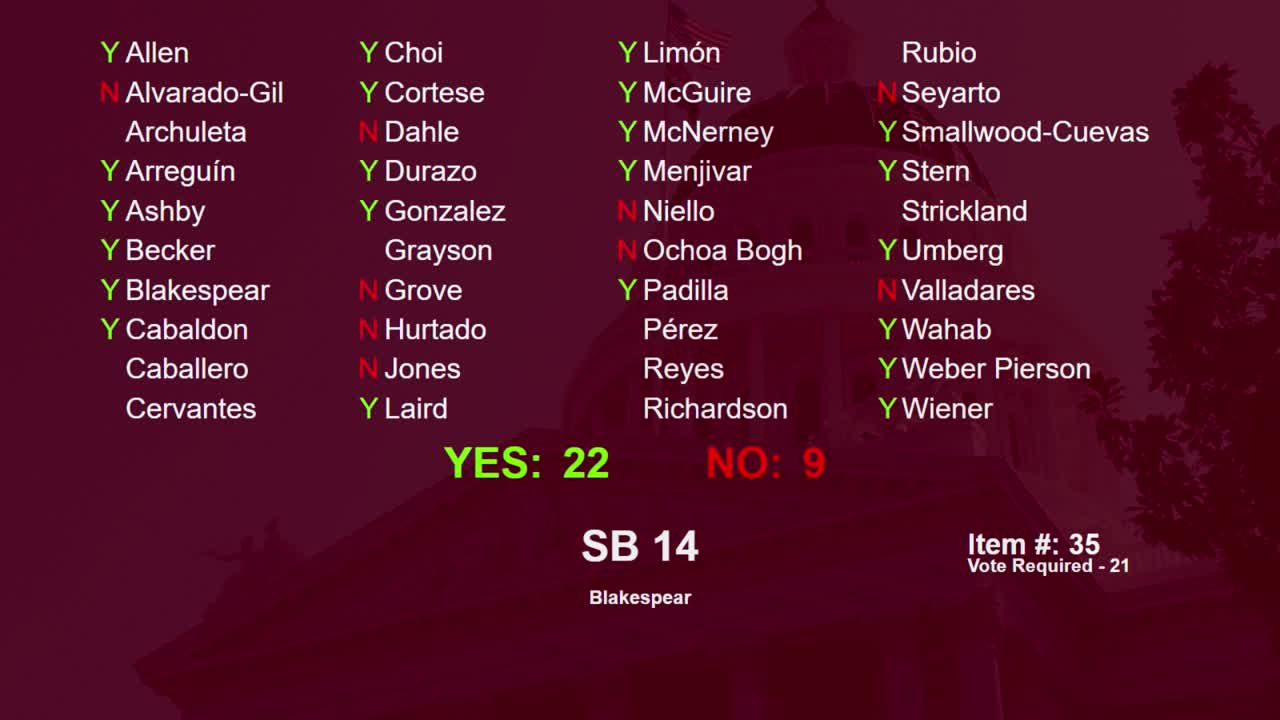 19MIN
Senate Floor
 7SEC
Senate Standing Committee on Appropriations
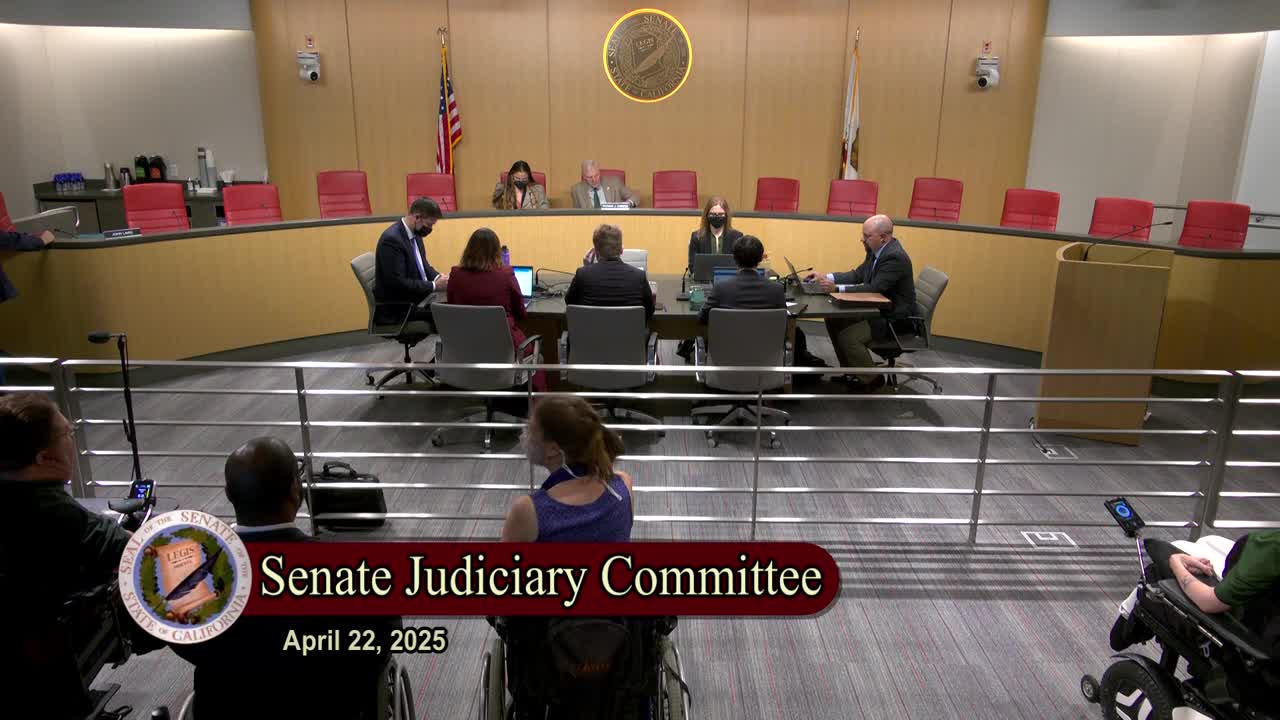 30MIN
Senate Standing Committee on Judiciary



Bill Co-Author(s):