SB 865: California Music Festival Preservation Grant Program.
- Session Year: 2025-2026
- House: Senate
- Latest Version Date: 2026-08-28
Current Status:
In Progress
(2026-09-20: In Senate. Consideration of Governor's veto pending.)
Introduced
In Committee
Awaiting First Chamber Vote
Passed First Chamber
In Committee
Awaiting Second Chamber Vote
Passed Second Chamber
Enacted
Existing law establishes the Office of Small Business Advocate SBA, within the Governors Office of Business and Economic Development, also known as GO-Biz, and provides for the appointment by the Governor of the Small Business Advocate, also known as the Director of the Office of Small Business Advocate, to, among other things, serve as the principal advocate in the state on behalf of small businesses.
This bill would establish the California Music Festival Preservation Grant Program within the SBA, under the direct authority of the director, to provide grants to eligible independent live music events promoters to preserve large-scale music festivals and to support their continued ability to provide equitable access to the arts for all Californians. The bill would specify requirements for eligibility and, subject to appropriation by the Legislature, would require the office to allocate the sum of $20,000,000 in grants to eligible independent live music events promoters that meet those requirements, as specified.
The bill would exempt the SBA from the Administrative Procedure Act for purposes of implementing the program.
Existing law establishes the Office of Small Business Advocate within the Governors Office of Business and Economic Development, also known as GO-Biz, and provides for the appointment by the Governor of the Small Business Advocate, also known as the Director of the Office of Small Business Advocate, to, among other things, serve as the principal advocate in the state on behalf of small businesses.
This bill would establish the California Music Festival Preservation Grant Program within the office, under the direct authority of the director, to provide grants to eligible independent live music events promoters to preserve large-scale music festivals and to support their continued ability to provide equitable access to the arts for all Californians. The bill would specify requirements for eligibility and, subject to appropriation by the Legislature, would require the office to allocate the sum of $20,000,000 in grants to eligible independent live music events promoters that meet those requirements.
The bill would exempt the office from the Administrative Procedure Act for purposes of implementing the program.
Existing law establishes the Office of Small Business Advocate within the Governors Office of Business and Economic Development, also known as GO-Biz, and provides for the appointment by the Governor of the Small Business Advocate, also known as the Director of the Office of Small Business Advocate, to, among other things, serve as the principal advocate in the state on behalf of small businesses.
This bill would establish the California Music Festival Preservation Grant Program within the office, under the direct authority of the director, to provide grants to eligible independent live music events promoters to preserve large-scale music festivals and to support their continued ability to provide equitable access to the arts for all Californians. The bill would specify requirements for eligibility and, subject to appropriation by the Legislature, would require the office to allocate the sum of $20,000,000 in grants to eligible independent live music events promoters that meet those requirements.
Existing law establishes the Office of Small Business Advocate within the Governors Office of Business and Economic Development, also known as GO-Biz, and provides for the appointment by the Governor of the Small Business Advocate, also known as the Director of the Office of Small Business Advocate, to, among other things, serve as the principal advocate in the state on behalf of small businesses.
This bill would establish the California Music Festival Preservation Grant Program within the office, under the direct authority of the director, to provide grants to eligible independent live music events promoters to support their continued ability to provide equitable access to the arts for all Californians. The bill would specify requirements for eligibility and, subject to appropriation by the Legislature, would require the office to allocate the sum of $20,000,000 in grants to eligible independent live music events promoters that meet those requirements.
Existing law establishes the Governors Office of Business and Economic Development, also known as GO-Biz, to serve the Governor as the lead entity for economic strategy and the marketing of California on issues relating to business development, private sector investment, and economic growth, among other duties. Existing law establishes various programs and offices within GO-Biz to assist business development. This bill would state the intent of the Legislature to enact legislation that would provide equitable access and economic development opportunities for music festivals. The bill would include findings and declarations relating to these provisions.Existing law establishes the Governors Office of Business and Economic Development, also known as GO-Biz, to serve the Governor as the lead entity for economic strategy and the marketing of California on issues relating to business development, private sector investment, and economic growth, among other duties. Existing law establishes various programs and offices within GO-Biz to assist business development.
This bill would state the intent of the Legislature to enact legislation that would provide equitable access and economic development opportunities for music festivals. The bill would include findings and declarations relating to these provisions.
(a)The California Music Festival Preservation Grant Program is hereby established within the office.
(b)For purposes of this section, a host jurisdiction means a governmental entity or political subdivision of the state that owns or has an interest in the venue or region where the multiday music festival occurs. Region includes a physical or cultural region.
(c)The California Music Festival Preservation Grant Program shall be under the direct authority of the director, and the office shall administer grants to eligible independent live music events promoters in accordance with this section.
(d)The purpose of the California Music Festival Preservation Grant Program is to provide grants to eligible independent live music events promoters in order to support their continued ability to provide equitable access to the arts for all Californians, and to preserve large-scale music festivals that generate significant cultural, tourism, and economic benefits for the state and its local communities.
(e)To be eligible to receive a grant under the California Music Festival Preservation Grant Program, an independent live music festival promoter shall satisfy all of the following requirements:
(1)The entity is privately owned.
(2)The entity is organized as a sole proprietorship, limited liability company, partnership, limited partnership, or a nonprofit organization that is exempt from federal income taxation pursuant to Section 501(c)(3) of the Internal Revenue Code.
(3)The entity, as a principal business activity, organizes, promotes, produces, manages, or hosts at least one festival featuring persons or groups that perform live musical entertainment at a venue in California on publicly owned lands where all of the following are met:
(A)Admission to the festival performances requires a paid ticket or cover charge.
(B)Performing artists are compensated and do not perform without compensation or solely for tips.
(C)The festival occurs annually in a host jurisdiction.
(D)The festival features a minimum of 40 live music acts.
(E)The festival generates a minimum of 60,000 total paid admissions over its duration.
(4)The entity has entered into a multiyear agreement for the operation of a multiday music festival with the local tourism authority or the appropriate political subdivision of the host jurisdiction.
(5)The entity demonstrates support for local businesses, performers, and the host jurisdiction by doing all of the following at the festival:
(A)Serving no fewer than three different beers produced by a local brewery whose principal place of business is located within the host jurisdiction.
(B)Serving no fewer than two wines produced by a winery whose principal place of business is located within the host jurisdiction.
(C)Showcasing no fewer than three performances featuring live musical entertainment by performers who are local to, or based in, the host jurisdiction.
(D)Providing meaningful promotion of the host jurisdiction in coordination with the local tourism authority or the appropriate political subdivision of the host jurisdiction.
(f)Subject to appropriation by the Legislature:
(1)The office shall allocate grants to eligible independent live music events promoters that meet the requirements of this section.
(2)The amount of twenty million dollars ($20,000,000) shall be allocated in one or more rounds to eligible independent live music events promoters.
(3)No more than 5 percent may be used by the office for administrative costs associated with the program from any amount appropriated for purposes of the California Music Festival Preservation Grant Program, including costs associated with a contractor, fiscal agent, or third-party administrator. The remaining amount shall be available for grant awards pursuant to this section.
(4)Each grant award shall be in the amount of three million dollars ($3,000,000). An eligible independent live music events promoter shall not receive more than one grant award pursuant to this section in a fiscal year.
(g)The office shall administer the grant program as follows:
(1)(A)The office shall administer two grant rounds during each year. One grant round shall open in January and one grant round shall open in July.
(B)An applicant shall submit an application during the grant round for which the date that the grant awards are made immediately precedes the festival for which the grant is sought. The office shall establish the grant round application periods in a manner that provides each eligible applicant an opportunity to apply for and receive a grant award before the festival.
(C)For purposes of determining eligibility and making a grant award before the festival, an applicant may demonstrate compliance with the eligibility requirements of subdivision (e) based on the most recent prior occurrence of the festival for which the grant is sought.
(D)A grant awarded pursuant to this section shall be disbursed following the conclusion of the festival. No later than 90 days following the conclusion of the festival, the grant recipient shall submit documentation reasonably demonstrating that the festival has satisfied the applicable eligibility requirements of subdivision (e). Upon submission of that documentation, the office shall disburse the grant award.
(2)(A)The office shall establish application procedures and guidelines to implement this section, including guidelines specifying acceptable documentation to demonstrate compliance with subdivision (e).
(B)The office shall accept standard business records, executed contracts, or other documentation that reasonably demonstrates eligibility. The office shall not require documentation beyond what is reasonably necessary.
(C)The office shall permit an applicant to redact confidential or proprietary information from submitted documentation if the redaction does not prevent the office from determining eligibility.
(D)The Administrative Procedure Act (Chapter 3.5 (commencing with Section 11340) of Part 1) does not apply to any regulation, standard, criterion, procedure, determination, rule, notice, guideline, or any other guidance established or issued by the office pursuant to this section.
(a)The California Music Festival Preservation Grant Program is hereby established within the office.
(b)For purposes of this section, a host jurisdiction means a governmental entity or political subdivision of the state that owns or has an interest in the venue or region where the multiday music festival occurs. Region includes a physical or cultural region.
(b)(c)The program California Music Festival Preservation Grant Program shall be under the direct authority of the director, and the office shall administer grants to eligible independent live music events promoters in accordance with this section.
(c)(d)The purpose of the program California Music Festival Preservation Grant Program is to provide grants to eligible independent live music events promoters in order to support their continued ability to provide equitable access to the arts for all Californians, and to preserve large-scale music festivals that generate significant cultural, tourism, and economic benefits for the state and its local communities.
(d)For purposes of this section:(1)Eligible independent live music events promoter means an entity that satisfies all of the following:(e)To be eligible to receive a grant under the California Music Festival Preservation Grant Program, an independent live music festival promoter shall satisfy all of the following requirements:
(A)(1)The entity is privately owned.
(B)(2)The entity is organized as a sole proprietor, proprietorship, limited liability company, partnership, limited partnership, or a nonprofit organization that is exempt from federal income taxation pursuant to Section 501(c)(3) of the Internal Revenue Code of 1986. Code.
(C)(3)The entity, as a principal business activity, organizes, promotes, produces, manages, or hosts a multiday music at least one festival featuring persons or groups that perform live musical entertainment at a venue in California on publicly owned lands where all of the following take place: are met:
(i)A front door cover charge or admission fee through ticketing is applied.(ii)Performers are compensated.(A)Admission to the festival performances requires a paid ticket or cover charge.
(B)Performing artists are compensated and do not perform without compensation or solely for tips.
(iii)(C)The multiday music festival occurs annually in an eligible jurisdiction and satisfies both of the following: a host jurisdiction.
(I)There is a minimum of 100 live music performances.(II)There is a minimum of 100,000 admissions.(D)The festival features a minimum of 40 live music acts.
(E)The festival generates a minimum of 60,000 total paid admissions over its duration.
(iv)(4)The entity enters has entered into a multiyear agreement for the operation of a multiday music festival with the local tourism authority or the appropriate political subdivision of the eligible jurisdiction for the provision of the multiday music festival. host jurisdiction.
(v)(5)The entity demonstrates support for local businesses, performers, and the eligible host jurisdiction as follows: by doing all of the following at the festival:
(I)The event shall serve not(A)Serving no fewer than three different beers made produced by a local brewery whose principal place of business is located within the eligible host jurisdiction.
(II)The event shall serve not(B)Serving no fewer than two wines produced by a winery whose principal place of business is located within the eligible host jurisdiction.
(III)The event shall include not(C)Showcasing no fewer than three performances featuring live musical entertainment by performers who are local to, or based in, the eligible host jurisdiction.
(IV)The entity shall provide(D)Providing meaningful promotion of the eligible host jurisdiction in coordination with the local tourism authority or the appropriate political subdivision of the eligible jurisdiction if no tourism authority exists. host jurisdiction.
(2)Eligible jurisdiction means a governmental entity or political subdivision of the state that owns or has an interest in the venue or physical location where the multiday music festival occurs.(e)(f)Subject to appropriation by the Legislature:
(1)The office shall allocate grants to eligible independent live music events promoters that meet the requirements of this section.
(2)The amount of twenty million dollars ($20,000,000) shall be allocated in one or more rounds to eligible independent live music events promoters.
(a)The California Music Festival Preservation Grant Program is hereby established within the office.
(b)The program shall be under the direct authority of the director, and the office shall administer grants to eligible independent live music events promoters in accordance with this section.
(c)The purpose of the program is to provide grants to eligible independent live music events promoters in order to support their continued ability to provide equitable access to the arts for all Californians. Californians, and to preserve large-scale music festivals that generate significant cultural, tourism, and economic benefits for the state and its local communities.
(d)For purposes of this section, eligible section:
(1)Eligible independent live music events promoter means an entity that satisfies both all of the following:
(A)The entity is privately owned.
(1)(B)The entity is a sole proprietor, C corporation, S corporation, cooperative, limited liability company, partnership, limited partnership, or a nonprofit organization that is exempt from federal income taxation pursuant to Section 501(c)(3) of the Internal Revenue Code of 1986.
(2)(C)The entity, as a principal business activity, organizes, promotes, produces, manages, or hosts live concerts, festivals, or other events a multiday music festival featuring performing artists persons or groups that perform live musical entertainment at a venue in California on publicly owned lands where both all of the following take place:
(A)(i)A ticketing front door cover charge or front door entrance fee admission fee through ticketing is applied.
(B)(ii)Performers are compensated.
(iii)The multiday music festival occurs annually in an eligible jurisdiction and satisfies both of the following:
(I)There is a minimum of 100 live music performances.
(II)There is a minimum of 100,000 admissions.
(iv)The entity enters into a multiyear agreement with the local tourism authority or the appropriate political subdivision of the eligible jurisdiction for the provision of the multiday music festival.
(v)The entity demonstrates support for local businesses, performers, and the eligible jurisdiction as follows:
(I)The event shall serve not fewer than three different beers made by a local brewery whose principal place of business is located within the eligible jurisdiction.
(II)The event shall serve not fewer than two wines produced by a winery whose principal place of business is located within the eligible jurisdiction.
(III)The event shall include not fewer than three performances featuring live musical entertainment by performers who are local to, or based in, the eligible jurisdiction.
(IV)The entity shall provide meaningful promotion of the eligible jurisdiction in coordination with the local tourism authority or the appropriate political subdivision of the eligible jurisdiction if no tourism authority exists.
(2)Eligible jurisdiction means a governmental entity or political subdivision of the state that owns or has an interest in the venue or physical location where the multiday music festival occurs.
(e)Subject to appropriation by the Legislature:
(1)The office shall allocate grants to eligible independent live music events promoters that meet the requirements of this section.
(2)The amount of twenty million dollars ($20,000,000) shall be allocated in one or more rounds to eligible independent live music events promoters.
(a)The California Music Festival Preservation Grant Program is hereby established within the office.
(b)The program shall be under the direct authority of the director, and the office shall administer grants to eligible independent live music events promoters in accordance with this section.
(c)The purpose of the program is to provide grants to eligible independent live music events promoters in order to support their continued ability to provide equitable access to the arts for all Californians.
(d)For purposes of this section, eligible independent live music events promoter means an entity that satisfies both of the following:
(1)The entity is a sole proprietor, C corporation, S corporation, cooperative, limited liability company, partnership, limited partnership, or a nonprofit organization that is exempt from federal income taxation pursuant to Section 501(c)(3) of the Internal Revenue Code of 1986.
(2)The entity, as a principal business activity, organizes, promotes, produces, manages, or hosts live concerts, festivals, or other events featuring performing artists at a venue in California on publicly owned lands where both of the following take place:
(A)A ticketing cover charge or front door entrance fee is applied.
(B)Performers are compensated.
(e)Subject to appropriation by the Legislature:
(1)The office shall allocate grants to eligible independent live music events promoters that meet the requirements of this section.
(2)The amount of twenty million dollars ($20,000,000) shall be allocated in one or more rounds to eligible independent live music events promoters.
SECTION 1.(a)It is the intent of the Legislature to enact legislation that would provide equitable access and economic development opportunities for music festivals.(b)The Legislature finds and declares all of the following regarding enhancing equitable access to music festivals:(1)Music festivals and large community gatherings have a significant economic impact on local cities and the State of California.(2)Music festivals attract visitors, increasing sales at local businesses, including restaurants, hotels, retail shops, transportation businesses, and other services.(3)Music festivals create temporary and permanent jobs, such as security, catering, vendors, transportation, event staff, and artists.(4)The success of music festivals attracts investments in real estate, local businesses, and other sectors in cities that host music festivals.(5)Music festivals attract businesses throughout the host city and serve as national and international tourist destinations.(a)It is the intent of the Legislature to enact legislation that would provide equitable access and economic development opportunities for music festivals.
(b)The Legislature finds and declares all of the following regarding enhancing equitable access to music festivals:
(1)Music festivals and large community gatherings have a significant economic impact on local cities and the State of California.
(2)Music festivals attract visitors, increasing sales at local businesses, including restaurants, hotels, retail shops, transportation businesses, and other services.
(3)Music festivals create temporary and permanent jobs, such as security, catering, vendors, transportation, event staff, and artists.
(4)The success of music festivals attracts investments in real estate, local businesses, and other sectors in cities that host music festivals.
(5)Music festivals attract businesses throughout the host city and serve as national and international tourist destinations.
|
Date
|
Status
|
|---|---|
| Sep 20, 2026 | In Senate. Consideration of Governor's veto pending. |
| Sep 20, 2026 | Vetoed by the Governor. |
| Aug 31, 2026 | Enrolled and presented to the Governor at 6 p.m. |
| Aug 26, 2026 | Assembly amendments concurred in. (Ayes 40. Noes 0. Page 5853.) Ordered to engrossing and enrolling. |
| Aug 26, 2026 | Assembly amendments concurred in. (Ayes 40. Noes 0.) Ordered to engrossing and enrolling. |
| Aug 25, 2026 | In Senate. Concurrence in Assembly amendments pending. |
| Aug 25, 2026 | Read third time. Passed. (Ayes 78. Noes 0. Page 6526.) Ordered to the Senate. |
| Aug 25, 2026 | Read third time. Passed. Ordered to the Senate. |
| Aug 20, 2026 | Ordered to third reading. |
| Aug 20, 2026 | Read third time and amended. |
| Aug 13, 2026 | Read second time. Ordered to third reading. |
| Aug 13, 2026 | From committee: Do pass. (Ayes 15. Noes 0.) (August 13). |
| Aug 13, 2026 | Assembly Rule 63 suspended. |
| Aug 5, 2026 | August 5 set for first hearing. Placed on suspense file. |
| Jun 23, 2026 | From committee: Do pass and re-refer to Com. on APPR. (Ayes 9. Noes 0.) (June 23). Re-referred to Com. on APPR. |
| Jun 15, 2026 | From committee with author's amendments. Read second time and amended. Re-referred to Com. on A.,E.,S., & T. |
| Jun 4, 2026 | Referred to Com. on A.,E.,S., & T. |
| May 27, 2026 | In Assembly. Read first time. Held at Desk. |
| May 27, 2026 | Read third time. Passed. (Ayes 37. Noes 1. Page 4481.) Ordered to the Assembly. |
| May 27, 2026 | Read third time. Passed. (Ayes 37. Noes 1.) Ordered to the Assembly. |
| May 27, 2026 | Read third time. Passed. (Ayes 36. Noes 1.) Ordered to the Assembly. |
| May 14, 2026 | From committee: Do pass. (Ayes 7. Noes 0. Page 4254.) (May 14). |
| May 14, 2026 | Read second time. Ordered to third reading. |
| May 14, 2026 | From committee: Do pass. (Ayes 7. Noes 0.) (May 14). |
| May 8, 2026 | Set for hearing May 14. |
| May 4, 2026 | May 4 hearing: Placed on APPR. suspense file. |
| Apr 24, 2026 | Set for hearing May 4. |
| Apr 20, 2026 | From committee: Do pass and re-refer to Com. on APPR. (Ayes 9. Noes 1. Page 3954.) (April 20). Re-referred to Com. on APPR. |
| Apr 20, 2026 | From committee: Do pass and re-refer to Com. on APPR. (Ayes 9. Noes 1.) (April 20). Re-referred to Com. on APPR. |
| Apr 15, 2026 | Set for hearing April 20. |
| Apr 14, 2026 | From committee with author's amendments. Read second time and amended. Re-referred to Com. on B. P. & E.D. |
| Apr 8, 2026 | Re-referred to Com. on B. P. & E.D. |
| Mar 24, 2026 | From committee with author's amendments. Read second time and amended. Re-referred to Com. on RLS. |
| Feb 11, 2026 | Referred to Com. on RLS. |
| Jan 6, 2026 | From printer. May be acted upon on or after February 5. |
| Jan 5, 2026 | Introduced. Read first time. To Com. on RLS. for assignment. To print. |
|
Date
|
Description
|
Location
|
Votes
|
|
|---|---|---|---|---|
| Aug 26, 2026 | Unfinished Business SB865 Ashby Concurrence | Senate Floor |
Passed |
|
| Aug 25, 2026 | SB 865 Ashby Senate Third Reading By Ward | Assembly Floor |
Passed |
|
| Aug 13, 2026 | Do pass. | Assembly Standing Committee on Appropriations |
Passed |
|
| Jun 23, 2026 | Do pass and be re-referred to the Committee on [Appropriations] | Assembly Standing Committee on Arts, Entertainment, Sports, and Tourism |
Passed |
|
| May 27, 2026 | Senate 3rd Reading SB865 Ashby | Senate Floor |
Passed |
|
| May 14, 2026 | Do pass | Senate Standing Committee on Appropriations |
Passed |
|
| May 4, 2026 | Placed on suspense file | Senate Standing Committee on Appropriations |
Passed |
|
| Apr 20, 2026 | Do pass, but first be re-referred to the Committee on [Appropriations] | Senate Standing Committee on Business, Professions and Economic Development |
Passed |
This list shows positions taken on this bill by organizations on the date displayed, which is linked to the original source.
Positions by individuals are not included.
|
Organization
|
Position
|
Date
|
|---|---|---|
| California Arts Advocates | ** Support | |
| California Travel Association | ** Support | |
| City Of Sacramento | ** Support | |
| county of sacramento | ** Support | |
| Danny Wimmer Presents, LLC | ** Support | |
| League Of California Cities | ** Support | |
| National Independent Venue Association Of California | ** Support | |
| Visit Greater Palm Springs | ** Support | |
| Visit Sacramento | ** Support |
SENATE RULES COMMITTEE Office of Senate Floor Analyses (916) 651-4171 | SB 865 |
VETO
Bill No: SB 865
Author: Ashby (D)
Amended: 8/20/26
Vote: 21
SENATE BUS., PROF. & ECON. DEV. COMMITTEE: 9-1, 4/20/26
AYES: Wahab, Archuleta, Caballero, Grayson, Menjivar, Niello, Smallwood-Cuevas, Strickland, Umberg
NOES: Choi
NO VOTE RECORDED: Arreguín
SENATE APPROPRIATIONS COMMITTEE: 7-0, 5/14/26
AYES: Cervantes, Seyarto, Cabaldon, Dahle, Grayson, Richardson, Wahab
SENATE FLOOR: 37-1, 5/27/26
AYES: Allen, Alvarado-Gil, Archuleta, Arreguín, Ashby, Becker, Blakespear, Cabaldon, Caballero, Cervantes, Cortese, Durazo, Gonzalez, Grayson, Grove, Hurtado, Laird, Limón, McGuire, McNerney, Menjivar, Niello, Ochoa Bogh, Padilla, Pérez, Reyes, Richardson, Rubio, Seyarto, Smallwood-Cuevas, Stern, Strickland, Umberg, Valladares, Wahab, Weber Pierson, Wiener
NOES: Choi
NO VOTE RECORDED: Dahle, Jones
SENATE FLOOR: 40-0, 8/26/26
AYES: Allen, Alvarado-Gil, Archuleta, Arreguín, Ashby, Becker, Blakespear, Cabaldon, Caballero, Cervantes, Choi, Cortese, Dahle, Durazo, Gonzalez, Grayson, Grove, Hurtado, Jones, Laird, Limón, McGuire, McNerney, Menjivar, Niello, Ochoa Bogh, Padilla, Pérez, Reyes, Richardson, Rubio, Seyarto, Smallwood-Cuevas, Stern, Strickland, Umberg, Valladares, Wahab, Weber Pierson, Wiener
ASSEMBLY FLOOR: 78-0, 8/25/26 - See last page for vote
SUBJECT: California Music Festival Preservation Grant Program
SOURCE: Author
DIGEST:
This bill establishes the California Music Festival Preservation Grant Program to provide grants to eligible independent live music events promoters in order to support their continued ability to provide equitable access to the arts for all Californians.
ANALYSIS:
Existing law:
- Authorizes the Governor’s Office of Business and Economic Development (GO-Biz) as the lead entity for economic strategy and the marketing of California on issues relating to business development, private sector investment, and economic growth. Authorizes GO-Biz, in this capacity, to coordinate the development of policies and criteria to ensure that federal grants administered or directly expended by state government advance statewide economic goals and objectives. Authorizes GO-Biz to market the business and investment opportunities available in California by working in partnership with local, regional, federal, and other state public and private institutions to encourage business development and investment in the state. Authorizes GO-Biz to support small businesses by providing information about accessing capital, complying with regulations, and supporting state initiatives that support small businesses. (Government Code (GC) §§ 12096 et. seq.)
- Requires the Governor to appoint a Small Business Advocate who is Director of the Office of Small Business Advocate (OSBA) and outlines the duties and functions of the Small Business Advocate. (GC §§ 12098-12098.7)
- Establishes the California Arts Council (CAC) tasked with various responsibilities, including but not limited to:
- Encouraging artistic awareness, participation and expression.
- Helping independent local groups develop their own art programs.
- Promoting the employment of artists and those skilled in crafts in both the public and private sector.
- Establishing grant application criteria and procedure.
- Awarding prizes or direct grants to individuals or organizations in accordance with such regulations as the council may prescribe. In awarding prizes or directing grants, the council shall notify the offices of the legislators in whose district the recipient resides. (GC §§ 8751 and 8753).
- Prohibits the CAC from making any grants or fund any program which has not been established pursuant to the powers granted to it by the Government Code. (GC § 8753.5).
This bill:
- Establishes the California Music Festival Preservation Grant Program (Program) within OSBA. Requires OSBA to administer grants to eligible independent live music events promoters in order to support their continued ability to provide equitable access to the arts for all Californians, and to preserve large-scale music festivals that generate significant cultural, tourism, and economic benefits for the state and local communities.
- Establishes criteria an independent live music festival promoter must satisfy in order to be eligible for grants.
- States that subject to appropriation by the Legislature the office must allocate grants to eligible independent live music event promoters that meet specified criteria and allocates $20 million in one or more rounds to eligible independent live music events promoters.
- Specifies that each grant award is $3 million and prohibits an eligible independent live music events promoter from receiving more than one grant in a fiscal year.
- Outlines how OSBA must administer the Program and exempts OSBA from the APA for purposes of establishing procedures and guidelines for the Program.
Background
Music Festivals. Music festivals attract thousands of visitors each year, generate millions in economic activity, create jobs, and contribute significant tax revenues that bolster local economies.
For example, in 2024, two Sacramento music festivals – Aftershock and Golden Sky – generated an estimated impact of $44.6 million and supported over 13,000 jobs including lodging, food and beverage, transportation, facility management, audio visual services, retail, and security. Local sales tax revenue from just these two events alone was over $230,000, and state sales tax contributions were $1.1 million.
The economic impact of just one music festival – Outside Lands – generated $66.8 million in economic activity for the city of San Francisco, and $75 million for the entire Bay Area. The festival also created the equivalent of 700 full time year-long jobs and paid over $9.4 million in state and local taxes.
Music festivals have a profound economic impact on regions throughout California but face challenges, with many events canceled both in the U.S. and internationally. Key drivers include escalating production costs, softening consumer demand, and broader shifts in social and technological habits that impact festival attendance. Rising costs of essentials including venue, security, safety, sanitation, staff, artists, advertisement, and insurance fees have also strained festival budgets. Many of these costs must be covered well in advance of the event leaving promoters largely reliant on ticket and vendor sales to recoup costs. With fewer upfront revenue streams, festivals take on significant financial risks. This forces promoters to choose between increasing costs for consumers or canceling events altogether. Many festivals operate on thin margins, and as inflation drives up expenses, ticket prices also rise –which has deterred consumers. Festival promoters are reluctant to increase ticket costs further, wary of pricing out attendees, which has led to festival promoters canceling events.
Given the significant boon for local economies music festivals can bring, states and local governments have explored ways to support these events. For example, Kentucky just passed legislation to provide music festivals in specified jurisdictions with a tax rebate if they run a minimum of two straight days and attract 60,000 attendees. Music festivals meeting these requirements will receive half of the Kentucky sales taxes generated by concessions and festival tickets.
OSBA. Since its inception, GO-Biz has served thousands of businesses, 95 percent of which are small businesses. The most frequent types of assistance include help with permit streamlining, starting a business, relocation and expansion of businesses, and regulatory challenges. In addition to economic development programs, GO-Biz is responsible for specialized assistance to small businesses through the OSBA. OSBA directly serves the small business community through hosting summits, forums, and interagency meetings; maintaining resources for technical assistance, financing, and state procurement; holding webinars, and other outreach methods. OSBA has also administered numerous grants programs to support small businesses and respond to specific issues impacting small businesses, including coordinating California Microbusiness ($2,500) and Small Business ($5,000 - $25,000) COVID-19 Relief Grants which were used to help support California’s nonprofit and cultural and arts programs recover from the impacts of the pandemic.
California Venues Program. This bill is modeled after the California Venues Program, established in the 2021 budget (SB 151, Committee on Budget and Fiscal Review, Chapter 74, Statutes of 2021) which provided grants to eligible independent live events affected by COVID-19 in order to support their continued operation. $150 million was allocated to eligible independent live events – OSBA reported that the first round of the California Venues Grant Program distributed more than $111.5 million in the fall of 2021 to nearly 830 eligible independent live events venues, including more than 150 women-owned businesses and 587 small businesses in low-income areas.
FISCAL EFFECT: Appropriation: No Fiscal Com.: Yes Local: No
According to the Assembly Committee on Appropriations, the bill will result in one-time cost pressures of $20 million for GO-Biz to establish the program and oversee grant allocations. GO-Biz notes that the bill does not expressly authorize administrative costs to be paid from the $20 million allocation. Therefore, if the full $20 million must be awarded as grants, GO-Biz reports requiring additional limited-term administrative resources to implement and oversee the program, approximately $270,000 total across fiscal years 2026-27 and 2027-28 as well as the need for a contract with a third-party fiscal agent or program partner of approximately $1 million to support implementation and program outreach.
SUPPORT: (Verified 9/28/26)
California Arts Advocates
California Travel Association
City of Sacramento
County of Sacramento
Danny Wimmer Presents, LLC
League of California Cities
National Independent Venue Association of California
Visit Greater Palm Springs
Visit Sacramento
OPPOSITION: (Verified 9/28/26)
None received
ARGUMENTS IN SUPPORT: Supporters write that rising costs of essentials including venue, security, safety, sanitation, staff, artists, advertisement, and insurance fees have strained festival budgets. Many of these costs must be covered well in advance of the event, leaving promoters largely reliant on ticket and vendor sales to recoup costs. With fewer upfront revenue streams, festivals take on significant financial risks. This forces promoters to choose between increasing costs for attendees or canceling events altogether. According to supporters, despite their economic importance, music festivals across the country, and in California, are increasingly vulnerable. According to supporters, SB 865 is a step in the right direction, establishing a state funding source for music festivals and ensuring California maintains its ability to attract such events. Supporters note that live events are not simply entertainment events—they are economic engines that help sustain local economies, create jobs, support artists, and strengthen the cultural fabric of communities throughout California. According to supporters, a grant program supporting the operating costs of nonprofit and independent festivals could be crucial for preserving these important art forms that are also often incubators for emerging artists and young musicians. Supporters note that by helping offset these risks, the program will ensure that independent festivals can continue to operate, grow, and remain accessible—while preserving and expanding the economic benefits they bring to local communities.”
GOVERNOR'S VETO MESSAGE:
I am returning Senate Bill 865 without my signature.
This bill would establish a $20 million grant program, contingent upon a future appropriation, for eligible independent live music event promoters.
I support the author's goal of improving the viability of live music festivals. However, this measure would impose significant cost pressures on the General Fund and should be considered during the annual budget process.
In partnership with the Legislature, my administration has enacted a balanced budget that recognizes the challenging fiscal landscape our state faces while maintaining our commitment to working families and our most vulnerable communities. With significant fiscal pressures and the federal government's hostile economic policies, it is vital that we remain disciplined when considering bills with significant fiscal implications that are not included in the budget, such as this measure
For these reasons, I cannot sign this bill.
ASSEMBLY FLOOR: 78-0, 8/25/26
AYES: Addis, Aguiar-Curry, Ahrens, Alanis, Alvarez, Arambula, Ávila Farías, Bains, Bauer-Kahan, Bennett, Berman, Boerner, Bonta, Bryan, Calderon, Caloza, Carrillo, Castillo, Chen, Connolly, Davies, DeMaio, Dixon, Elhawary, Ellis, Flora, Fong, Gabriel, Garcia, Gipson, Jeff Gonzalez, Mark González, Hadwick, Haney, Harabedian, Hart, Hoover, Irwin, Jackson, Johnson, Kalra, Krell, Lackey, Lee, Lowenthal, Macedo, Muratsuchi, Nguyen, Ortega, Pacheco, Papan, Patel, Patterson, Pellerin, Petrie-Norris, Quirk-Silva, Ramos, Ransom, Celeste Rodriguez, Michelle Rodriguez, Rogers, Blanca Rubio, Sanchez, Schiavo, Schultz, Sharp-Collins, Solache, Soria, Stefani, Ta, Tangipa, Valencia, Wallis, Ward, Wicks, Wilson, Zbur, Rivas
NO VOTE RECORDED: McKinnor
Prepared by: Elissa Silva / B., P. & E.D. / 916-651-4104
10/2/26 16:04:05
**** END ****
SENATE RULES COMMITTEE Office of Senate Floor Analyses (916) 651-4171 | SB 865 |
UNFINISHED BUSINESS
Bill No: SB 865
Author: Ashby (D)
Amended: 8/20/26
Vote: 21
SENATE BUS., PROF. & ECON. DEV. COMMITTEE: 9-1, 4/20/26
AYES: Wahab, Archuleta, Caballero, Grayson, Menjivar, Niello, Smallwood-Cuevas, Strickland, Umberg
NOES: Choi
NO VOTE RECORDED: Arreguín
SENATE APPROPRIATIONS COMMITTEE: 7-0, 5/14/26
AYES: Cervantes, Seyarto, Cabaldon, Dahle, Grayson, Richardson, Wahab
SENATE FLOOR: 37-1, 5/27/26
AYES: Allen, Alvarado-Gil, Archuleta, Arreguín, Ashby, Becker, Blakespear, Cabaldon, Caballero, Cervantes, Cortese, Durazo, Gonzalez, Grayson, Grove, Hurtado, Laird, Limón, McGuire, McNerney, Menjivar, Niello, Ochoa Bogh, Padilla, Pérez, Reyes, Richardson, Rubio, Seyarto, Smallwood-Cuevas, Stern, Strickland, Umberg, Valladares, Wahab, Weber Pierson, Wiener
NOES: Choi
NO VOTE RECORDED: Dahle, Jones
ASSEMBLY FLOOR: 78-0, 8/25/26 - See last page for vote
SUBJECT: California Music Festival Preservation Grant Program
SOURCE: Author
DIGEST:
This bill establishes the California Music Festival Preservation Grant Program to provide grants to eligible independent live music events promoters in order to support their continued ability to provide equitable access to the arts for all Californians.
Assembly Amendments
update definitions, make conforming changes, update criteria eligible entities must meet, establish parameters for the grant application and distribution process as well as oversight, and exempt the Office of Small Business Advocate (OSBA) from the Administrative Procedures Act for purposes of establishing application procedures and guidelines.
ANALYSIS:
Existing law:
- Authorizes the Governor’s Office of Business and Economic Development (GO-Biz) as the lead entity for economic strategy and the marketing of California on issues relating to business development, private sector investment, and economic growth. Authorizes GO-Biz, in this capacity, to coordinate the development of policies and criteria to ensure that federal grants administered or directly expended by state government advance statewide economic goals and objectives. Authorizes GO-Biz to market the business and investment opportunities available in California by working in partnership with local, regional, federal, and other state public and private institutions to encourage business development and investment in the state. Authorizes GO-Biz to support small businesses by providing information about accessing capital, complying with regulations, and supporting state initiatives that support small businesses. (Government Code (GC) §§ 12096 et. seq.)
- Requires the Governor to appoint a Small Business Advocate who is Director of OSBA and outlines the duties and functions of the Small Business Advocate. (GC §§ 12098-12098.7)
- Establishes the California Arts Council (CAC) tasked with various responsibilities, including but not limited to:
- Encouraging artistic awareness, participation and expression.
- Helping independent local groups develop their own art programs.
- Promoting the employment of artists and those skilled in crafts in both the public and private sector.
- Establishing grant application criteria and procedure.
- Awarding prizes or direct grants to individuals or organizations in accordance with such regulations as the council may prescribe. In awarding prizes or directing grants, the council shall notify the offices of the legislators in whose district the recipient resides. (GC §§ 8751 and 8753).
- Prohibits the CAC from making any grants or fund any program which has not been established pursuant to the powers granted to it by the Government Code. (GC § 8753.5).
This bill:
- Establishes the California Music Festival Preservation Grant Program (Program) within OSBA. Requires OSBA to administer grants to eligible independent live music events promoters in order to support their continued ability to provide equitable access to the arts for all Californians, and to preserve large-scale music festivals that generate significant cultural, tourism, and economic benefits for the state and local communities.
- Establishes criteria an independent live music festival promoter must satisfy in order to be eligible for grants.
- States that subject to appropriation by the Legislature the office must allocate grants to eligible independent live music event promoters that meet specified criteria and allocates $20 million in one or more rounds to eligible independent live music events promoters.
- Specifies that each grant award is $3 million and prohibits an eligible independent live music events promoter from receiving more than one grant in a fiscal year.
- Outlines how OSBA must administer the Program and exempts OSBA from the APA for purposes of establishing procedures and guidelines for the Program.
Background
Music Festivals. Music festivals attract thousands of visitors each year, generate millions in economic activity, create jobs, and contribute significant tax revenues that bolster local economies.
For example, in 2024, two Sacramento music festivals – Aftershock and Golden Sky – generated an estimated impact of $44.6 million and supported over 13,000 jobs including lodging, food and beverage, transportation, facility management, audio visual services, retail, and security. Local sales tax revenue from just these two events alone was over $230,000, and state sales tax contributions were $1.1 million.
The economic impact of just one music festival – Outside Lands – generated $66.8 million in economic activity for the city of San Francisco, and $75 million for the entire Bay Area. The festival also created the equivalent of 700 full time year-long jobs and paid over $9.4 million in state and local taxes.
Music festivals have a profound economic impact on regions throughout California but face challenges, with many events canceled both in the U.S. and internationally. Key drivers include escalating production costs, softening consumer demand, and broader shifts in social and technological habits that impact festival attendance. Rising costs of essentials including venue, security, safety, sanitation, staff, artists, advertisement, and insurance fees have also strained festival budgets. Many of these costs must be covered well in advance of the event leaving promoters largely reliant on ticket and vendor sales to recoup costs. With fewer upfront revenue streams, festivals take on significant financial risks. This forces promoters to choose between increasing costs for consumers or canceling events altogether. Many festivals operate on thin margins, and as inflation drives up expenses, ticket prices also rise –which has deterred consumers. Festival promoters are reluctant to increase ticket costs further, wary of pricing out attendees, which has led to festival promoters canceling events.
Given the significant boon for local economies music festivals can bring, states and local governments have explored ways to support these events. For example, Kentucky just passed legislation to provide music festivals in specified jurisdictions with a tax rebate if they run a minimum of two straight days and attract 60,000 attendees. Music festivals meeting these requirements will receive half of the Kentucky sales taxes generated by concessions and festival tickets.
OSBA. Since its inception, GO-Biz has served thousands of businesses, 95 percent of which are small businesses. The most frequent types of assistance include help with permit streamlining, starting a business, relocation and expansion of businesses, and regulatory challenges. In addition to economic development programs, GO-Biz is responsible for specialized assistance to small businesses through the OSBA. OSBA directly serves the small business community through hosting summits, forums, and interagency meetings; maintaining resources for technical assistance, financing, and state procurement; holding webinars, and other outreach methods. OSBA has also administered numerous grants programs to support small businesses and respond to specific issues impacting small businesses, including coordinating California Microbusiness ($2,500) and Small Business ($5,000 - $25,000) COVID-19 Relief Grants which were used to help support California’s nonprofit and cultural and arts programs recover from the impacts of the pandemic.
California Venues Program. This bill is modeled after the California Venues Program, established in the 2021 budget (SB 151, Committee on Budget and Fiscal Review, Chapter 74, Statutes of 2021) which provided grants to eligible independent live events affected by COVID-19 in order to support their continued operation. $150 million was allocated to eligible independent live events – OSBA reported that the first round of the California Venues Grant Program distributed more than $111.5 million in the fall of 2021 to nearly 830 eligible independent live events venues, including more than 150 women-owned businesses and 587 small businesses in low-income areas.
FISCAL EFFECT: Appropriation: No Fiscal Com.: Yes Local: No
According to the Assembly Committee on Appropriations, the bill will result in one-time cost pressures of $20 million for GO-Biz to establish the program and oversee grant allocations. GO-Biz notes that the bill does not expressly authorize administrative costs to be paid from the $20 million allocation. Therefore, if the full $20 million must be awarded as grants, GO-Biz reports requiring additional limited-term administrative resources to implement and oversee the program, approximately $270,000 total across fiscal years 2026-27 and 2027-28 as well as the need for a contract with a third-party fiscal agent or program partner of approximately $1 million to support implementation and program outreach.
SUPPORT: (Verified 8/25/26)
California Arts Advocates
California Travel Association
City of Sacramento
County of Sacramento
Danny Wimmer Presents, LLC
League of California Cities
National Independent Venue Association of California
Visit Greater Palm Springs
Visit Sacramento
OPPOSITION: (Verified 8/25/26)
None received
ARGUMENTS IN SUPPORT: Supporters write that rising costs of essentials including venue, security, safety, sanitation, staff, artists, advertisement, and insurance fees have strained festival budgets. Many of these costs must be covered well in advance of the event, leaving promoters largely reliant on ticket and vendor sales to recoup costs. With fewer upfront revenue streams, festivals take on significant financial risks. This forces promoters to choose between increasing costs for attendees or canceling events altogether. According to supporters, despite their economic importance, music festivals across the country, and in California, are increasingly vulnerable. According to supporters, SB 865 is a step in the right direction, establishing a state funding source for music festivals and ensuring California maintains its ability to attract such events. Supporters note that live events are not simply entertainment events—they are economic engines that help sustain local economies, create jobs, support artists, and strengthen the cultural fabric of communities throughout California. According to supporters, a grant program supporting the operating costs of nonprofit and independent festivals could be crucial for preserving these important art forms that are also often incubators for emerging artists and young musicians. Supporters note that by helping offset these risks, the program will ensure that independent festivals can continue to operate, grow, and remain accessible—while preserving and expanding the economic benefits they bring to local communities.”
ASSEMBLY FLOOR: 78-0, 8/25/26
AYES: Addis, Aguiar-Curry, Ahrens, Alanis, Alvarez, Arambula, Ávila Farías, Bains, Bauer-Kahan, Bennett, Berman, Boerner, Bonta, Bryan, Calderon, Caloza, Carrillo, Castillo, Chen, Connolly, Davies, DeMaio, Dixon, Elhawary, Ellis, Flora, Fong, Gabriel, Garcia, Gipson, Jeff Gonzalez, Mark González, Hadwick, Haney, Harabedian, Hart, Hoover, Irwin, Jackson, Johnson, Kalra, Krell, Lackey, Lee, Lowenthal, Macedo, Muratsuchi, Nguyen, Ortega, Pacheco, Papan, Patel, Patterson, Pellerin, Petrie-Norris, Quirk-Silva, Ramos, Ransom, Celeste Rodriguez, Michelle Rodriguez, Rogers, Blanca Rubio, Sanchez, Schiavo, Schultz, Sharp-Collins, Solache, Soria, Stefani, Ta, Tangipa, Valencia, Wallis, Ward, Wicks, Wilson, Zbur, Rivas
NO VOTE RECORDED: McKinnor
Prepared by: Sarah Mason / B., P. & E.D. /
8/26/26 9:01:00
SENATE THIRD READING
STR Bill Id:SB 865
Author:(Ashby)
As Amended Ver:August 20, 2026
Majority vote
SUMMARY
SB 865 establishes the California Music Festival Preservation Grant Program within the Governor's Office of Business and Economic Development (GO-Biz) to provide grants to eligible independent live music events promoters in order to support their continued ability to provide equitable access to the arts for all Californians.
Major Provisions
- Establishes the California Music Festival Preservation Grant Program under the direct authority of the Director of GO-Biz. Requires GO-Biz to administer grants to eligible independent live music events promoters in order to support their continued ability to provide equitable access to the arts for all Californians, and to preserve large-scale music festivals that generate significant cultural, tourism, and economic benefits for the state and local communities.
- Specifies that in order to be eligible for a grant of $3 million, an independent live music events promoter must satisfy all the following requirements:
- The entity is privately owned.
- The entity is organized as a sole proprietorship, limited liability company, partnership, limited partnership, or a nonprofit organization that is exempt from federal income taxation.
- The entity, as a principal business activity, organizes, promotes, produces, manages, or hosts at least one festival featuring persons or groups that perform live musical entertainment at a venue in California on publicly owned lands where all of the following criteria are met:
- Admission to the festival performances requires a paid ticket or cover charge;
- Performing artists are compensated and do not perform without compensation or solely for tips;
- The festival occurs annually in a host jurisdiction;
- The festival features a minimum of 40 live music acts;
- The festival generates a minimum of 60,000 total paid admissions over its duration;
- The entity has entered into a multiyear agreement for the operation of a multiday music festival with the local tourism authority or the appropriate political subdivision of the host jurisdiction.
- The entity demonstrates support for local businesses, performers, and the host jurisdiction by doing all of the following:
- Serving no fewer than three different beers produced by a local brewery whose principal place of business is located within the eligible jurisdiction.
- Serving no fewer than two wines produced by a winery whose principal place of business is located within the host jurisdiction.
- Showcasing no fewer than three performances featuring live musical entertainment by performers who are local to, or based in, the host jurisdiction.
- Providing meaningful promotion of the host jurisdiction in coordination with the local tourism authority or the appropriate political subdivision of the host jurisdiction.
- Defines "host jurisdiction" to mean a government entity or political subdivision of the state that owns or has an interest in the venue or region where the multiday music festival occurs. Region includes a physical or cultural region.
- States that, subject to appropriation by the Legislature, Go-Biz allocates grants to eligible independent live music event promoters that meet the requirements specified above and allocates $20 million, which will be administered over two grant rounds per fiscal year, with one grant round open in January and the other in July, to eligible independent live music events promoters.
- States that no more than 5% of the total allocation may be used by Go-Biz for administrative costs associated with this program.
COMMENTS
Background. Independently promoted festivals occupy an important middle ground in California's live entertainment ecosystem. Unlike festivals owned by multinational concert corporations such as Live Nation or AEG Presents, these events are produced by privately held companies that develop, market, and operate festivals under their own brands. California examples include Danny Wimmer Presents festivals such as Aftershock and GoldenSky in Sacramento, Another Planet Entertainment's Outside Lands in San Francisco, and The Do LaB's Lightning in a Bottle in Kern County. These promoters have grown into major national players capable of attracting hundreds of thousands of attendees while remaining independent of the largest global entertainment conglomerates.
For host communities, these festivals function as significant economic engines that extend well beyond ticket sales. Attendees generate spending on hotels, short-term rentals, restaurants, transportation, retail purchases, and local attractions. Festivals often require substantial local staffing, including security personnel, food and beverage vendors, stagehands, production crews, sanitation workers, and transportation services. In Sacramento, Aftershock and GoldenSky have become among the region's most important annual tourism events, bringing visitors from across California and the United States during periods that might otherwise experience lower tourism activity. In 2024, the two festivals combined generated an estimated impact of $44.6 million and supported over 13,000 jobs including lodging, food and beverage, transportation, facility management, audio visual services, retail, and security. Local sales tax revenue was over $230,000, and state sales tax contributions were $1.1 million. Similar impacts have been documented in San Francisco from Outside Lands and in rural regions hosting destination camping festivals, where visitor spending can provide a meaningful boost to local businesses and transient occupancy tax revenues.
The economic value to host entities extends beyond direct visitor spending. The larger independent festivals can enhance a city's brand, generate national media exposure, support repeat visitation, and strengthen relationships between local governments, destination marketing organizations, venue operators, and the entertainment industry. Because independent promoters often operate multiple festivals across the country, successful host cities can benefit from long-term partnerships that encourage recurring investment and event growth. For California, these festivals contribute to the state's broader creative economy by supporting artists, production professionals, hospitality workers, and small businesses while helping position communities as destinations for cultural tourism and live entertainment
Go-Biz. Current law charges GO-Biz with being the lead state entity for economic strategy in California to help encourage business development, private sector investment, and economic growth. This responsibility often includes administration of grant funds to advance statewide economic goals. Current law authorizes GO-Biz to support small businesses with resources to help them maintain compliance with various state laws and regulations, access capital, and take advantage of state initiatives designed for the support of small businesses.
In 2021 the Legislature enacted the California Venues Grant Program through budget trailer bill legislation, which appropriated $150 million for allocation to eligible independent live events promoters affected by COVID-19 to support their continued operation after the disruption of the pandemic. The program allocated grants to over 800 recipients within the first year of appropriation and was administered by the California Office of the Small Business Advocate.
This bill would authorize the director of GO-Biz to administer grant allocations under this program to eligible independent live music festival promoters. Notably, the bill does not prescribe a minimum or maximum individual grant amount nor does it provide authority for GO-Biz to adopt program guidelines, require supporting documentation, execute grant agreements, conduct audits or compliance reviews, or recapture funds for ineligible uses or failure to meet program requirements.
According to the Author
"Music festivals have a profound impact on cities throughout California. Each year, they attract thousands of visitors, generate millions in economic activity, create jobs, and produce significant tax revenues that strengthen local economies. However, music festivals face growing challenges, including high production costs and long-term, unsustainable funding. This forces promoters to choose between increasing costs for consumers or canceling events altogether. Without taking action now, California risks losing these economic and cultural opportunities to other states.
"SB 865 addresses these challenges by establishing a grant program to provide support to eligible, independent, live music festivals that significantly impact local economies. Multi-day music festivals are a clear driver of opportunity and success for communities across California and provide investment opportunities for our creative economy."
Arguments in Support
According to the California Travel Association (CalTravel) in support, "From Outsidelands in San Francisco to Aftershock and Golden Sky in Sacramento and Coachella in Indio, California's home-grown music festivals attract thousands of visitors from all over the world. Attendees fill hotels, generate millions in economic activity, and contribute significant tax revenues that bolster local economies.
"Unfortunately, rising costs of essentials including venue, security, safety, sanitation, staff, artists, advertisement, and insurance fees have strained festival budgets. Many of these costs must be covered well in advance of the event, leaving promoters largely reliant on ticket and vendor sales to recoup costs. With fewer upfront revenue streams, festivals take on significant financial risks. This forces promoters to choose between increasing costs for attendees or canceling events altogether.
"SB 865 establishes a grant program for eligible independent live music events promoters to support their continued ability to provide equitable access to the arts for all Californians. California must keep its competitive edge as a world-class entertainment destination by showing support for its music festivals."
Arguments in Opposition
None on file.
FISCAL COMMENTS
According to the Assembly Committee on Appropriations:
- One-time cost pressures of $20 million (General Fund) for GO-Biz to establish the program and oversee grant allocations. The bill provides that $20 million be allocated in one or more grant rounds to eligible promoters.
- GO-Biz notes that the bill does not expressly authorize administrative costs to be paid from the $20 million allocation. Therefore, if the full $20 million must be awarded as grants, GO-Biz reports requiring additional limited-term administrative resources to implement and oversee the program, approximately $270,000 total across fiscal years 2026-27 and 2027-28 as well as the need for a contract with a third-party fiscal agent or program partner of approximately $1 million to support implementation and program outreach.
VOTES
SENATE FLOOR: 37-1-2
YES: Allen, Alvarado-Gil, Archuleta, Arreguín, Ashby, Becker, Blakespear, Cabaldon, Caballero, Cervantes, Cortese, Durazo, Gonzalez, Grayson, Grove, Hurtado, Laird, Limón, McGuire, McNerney, Menjivar, Niello, Ochoa Bogh, Padilla, Pérez, Reyes, Richardson, Rubio, Seyarto, Smallwood-Cuevas, Stern, Strickland, Umberg, Valladares, Wahab, Weber Pierson, Wiener
NO: Choi
ABS, ABST OR NV: Dahle, Jones
ASM ARTS, ENTERTAINMENT, SPORTS, AND TOURISM: 9-0-0
YES: Ward, Lackey, Elhawary, Jeff Gonzalez, McKinnor, Ortega, Quirk-Silva, Valencia, Zbur
ASM APPROPRIATIONS: 15-0-0
YES: Wicks, Hoover, Arambula, Calderon, Caloza, Dixon, Fong, Mark González, Krell, Pacheco, Pellerin, Sharp-Collins, Solache, Ta, Tangipa
UPDATED
VERSION: August 20, 2026
CONSULTANT: Brian V. Anderson, Jr. / A.,E.,S., & T. / (916) 319-3450 FN: 0003947
SENATE THIRD READING
STR Bill Id:SB 865
Author:(Ashby)
As Amended Ver:August 20, 2026
Majority vote
SUMMARY
SB 865 establishes the California Music Festival Preservation Grant Program within the Governor's Office of Business and Economic Development (GO-Biz) to provide grants to eligible independent live music events promoters in order to support their continued ability to provide equitable access to the arts for all Californians.
Major Provisions
- Establishes the California Music Festival Preservation Grant Program under the direct authority of the Director of GO-Biz. Requires GO-Biz to administer grants to eligible independent live music events promoters in order to support their continued ability to provide equitable access to the arts for all Californians, and to preserve large-scale music festivals that generate significant cultural, tourism, and economic benefits for the state and local communities.
- Specifies that in order to be eligible for a grant of $3 million, an independent live music events promoter must satisfy all the following requirements:
- The entity is privately owned.
- The entity is organized as a sole proprietorship, limited liability company, partnership, limited partnership, or a nonprofit organization that is exempt from federal income taxation.
- The entity, as a principal business activity, organizes, promotes, produces, manages, or hosts at least one festival featuring persons or groups that perform live musical entertainment at a venue in California on publicly owned lands where all of the following criteria are met:
- Admission to the festival performances requires a paid ticket or cover charge;
- Performing artists are compensated and do not perform without compensation or solely for tips;
- The festival occurs annually in a host jurisdiction;
- The festival features a minimum of 40 live music acts;
- The festival generates a minimum of 60,000 total paid admissions over its duration;
- The entity has entered into a multiyear agreement for the operation of a multiday music festival with the local tourism authority or the appropriate political subdivision of the host jurisdiction.
- The entity demonstrates support for local businesses, performers, and the host jurisdiction by doing all of the following:
- Serving no fewer than three different beers produced by a local brewery whose principal place of business is located within the eligible jurisdiction.
- Serving no fewer than two wines produced by a winery whose principal place of business is located within the host jurisdiction.
- Showcasing no fewer than three performances featuring live musical entertainment by performers who are local to, or based in, the host jurisdiction.
- Providing meaningful promotion of the host jurisdiction in coordination with the local tourism authority or the appropriate political subdivision of the host jurisdiction.
- Defines "host jurisdiction" to mean a government entity or political subdivision of the state that owns or has an interest in the venue or region where the multiday music festival occurs. Region includes a physical or cultural region.
- States that, subject to appropriation by the Legislature, Go-Biz allocates grants to eligible independent live music event promoters that meet the requirements specified above and allocates $20 million, which will be administered over two grant rounds per fiscal year, with one grant round open in January and the other in July, to eligible independent live music events promoters.
- States that no more than 5% of the total allocation may be used by Go-Biz for administrative costs associated with this program.
COMMENTS
Background. Independently promoted festivals occupy an important middle ground in California's live entertainment ecosystem. Unlike festivals owned by multinational concert corporations such as Live Nation or AEG Presents, these events are produced by privately held companies that develop, market, and operate festivals under their own brands. California examples include Danny Wimmer Presents festivals such as Aftershock and GoldenSky in Sacramento, Another Planet Entertainment's Outside Lands in San Francisco, and The Do LaB's Lightning in a Bottle in Kern County. These promoters have grown into major national players capable of attracting hundreds of thousands of attendees while remaining independent of the largest global entertainment conglomerates.
For host communities, these festivals function as significant economic engines that extend well beyond ticket sales. Attendees generate spending on hotels, short-term rentals, restaurants, transportation, retail purchases, and local attractions. Festivals often require substantial local staffing, including security personnel, food and beverage vendors, stagehands, production crews, sanitation workers, and transportation services. In Sacramento, Aftershock and GoldenSky have become among the region's most important annual tourism events, bringing visitors from across California and the United States during periods that might otherwise experience lower tourism activity. In 2024, the two festivals combined generated an estimated impact of $44.6 million and supported over 13,000 jobs including lodging, food and beverage, transportation, facility management, audio visual services, retail, and security. Local sales tax revenue was over $230,000, and state sales tax contributions were $1.1 million. Similar impacts have been documented in San Francisco from Outside Lands and in rural regions hosting destination camping festivals, where visitor spending can provide a meaningful boost to local businesses and transient occupancy tax revenues.
The economic value to host entities extends beyond direct visitor spending. The larger independent festivals can enhance a city's brand, generate national media exposure, support repeat visitation, and strengthen relationships between local governments, destination marketing organizations, venue operators, and the entertainment industry. Because independent promoters often operate multiple festivals across the country, successful host cities can benefit from long-term partnerships that encourage recurring investment and event growth. For California, these festivals contribute to the state's broader creative economy by supporting artists, production professionals, hospitality workers, and small businesses while helping position communities as destinations for cultural tourism and live entertainment
Go-Biz. Current law charges GO-Biz with being the lead state entity for economic strategy in California to help encourage business development, private sector investment, and economic growth. This responsibility often includes administration of grant funds to advance statewide economic goals. Current law authorizes GO-Biz to support small businesses with resources to help them maintain compliance with various state laws and regulations, access capital, and take advantage of state initiatives designed for the support of small businesses.
In 2021 the Legislature enacted the California Venues Grant Program through budget trailer bill legislation, which appropriated $150 million for allocation to eligible independent live events promoters affected by COVID-19 to support their continued operation after the disruption of the pandemic. The program allocated grants to over 800 recipients within the first year of appropriation and was administered by the California Office of the Small Business Advocate.
This bill would authorize the director of GO-Biz to administer grant allocations under this program to eligible independent live music festival promoters. Notably, the bill does not prescribe a minimum or maximum individual grant amount nor does it provide authority for GO-Biz to adopt program guidelines, require supporting documentation, execute grant agreements, conduct audits or compliance reviews, or recapture funds for ineligible uses or failure to meet program requirements.
According to the Author
"Music festivals have a profound impact on cities throughout California. Each year, they attract thousands of visitors, generate millions in economic activity, create jobs, and produce significant tax revenues that strengthen local economies. However, music festivals face growing challenges, including high production costs and long-term, unsustainable funding. This forces promoters to choose between increasing costs for consumers or canceling events altogether. Without taking action now, California risks losing these economic and cultural opportunities to other states.
"SB 865 addresses these challenges by establishing a grant program to provide support to eligible, independent, live music festivals that significantly impact local economies. Multi-day music festivals are a clear driver of opportunity and success for communities across California and provide investment opportunities for our creative economy."
Arguments in Support
According to the California Travel Association (CalTravel) in support, "From Outsidelands in San Francisco to Aftershock and Golden Sky in Sacramento and Coachella in Indio, California's home-grown music festivals attract thousands of visitors from all over the world. Attendees fill hotels, generate millions in economic activity, and contribute significant tax revenues that bolster local economies.
"Unfortunately, rising costs of essentials including venue, security, safety, sanitation, staff, artists, advertisement, and insurance fees have strained festival budgets. Many of these costs must be covered well in advance of the event, leaving promoters largely reliant on ticket and vendor sales to recoup costs. With fewer upfront revenue streams, festivals take on significant financial risks. This forces promoters to choose between increasing costs for attendees or canceling events altogether.
"SB 865 establishes a grant program for eligible independent live music events promoters to support their continued ability to provide equitable access to the arts for all Californians. California must keep its competitive edge as a world-class entertainment destination by showing support for its music festivals."
Arguments in Opposition
None on file.
FISCAL COMMENTS
According to the Assembly Committee on Appropriations:
- One-time cost pressures of $20 million (General Fund) for GO-Biz to establish the program and oversee grant allocations. The bill provides that $20 million be allocated in one or more grant rounds to eligible promoters.
- GO-Biz notes that the bill does not expressly authorize administrative costs to be paid from the $20 million allocation. Therefore, if the full $20 million must be awarded as grants, GO-Biz reports requiring additional limited-term administrative resources to implement and oversee the program, approximately $270,000 total across fiscal years 2026-27 and 2027-28 as well as the need for a contract with a third-party fiscal agent or program partner of approximately $1 million to support implementation and program outreach.
VOTES
SENATE FLOOR: 39-0-1
YES: Allen, Alvarado-Gil, Archuleta, Arreguín, Ashby, Becker, Blakespear, Cabaldon, Caballero, Cervantes, Choi, Cortese, Durazo, Gonzalez, Grayson, Grove, Hurtado, Jones, Laird, Limón, McGuire, McNerney, Menjivar, Niello, Ochoa Bogh, Padilla, Pérez, Reyes, Richardson, Rubio, Seyarto, Smallwood-Cuevas, Stern, Strickland, Umberg, Valladares, Wahab, Weber Pierson, Wiener
ABS, ABST OR NV: Dahle
ASM ELECTIONS: 8-0-0
YES: Pellerin, Johnson, Bennett, Berman, Elhawary, Ellis, Solache, Stefani
ASM APPROPRIATIONS: 11-0-4
YES: Wicks, Arambula, Calderon, Caloza, Fong, Mark González, Krell, Pacheco, Pellerin, Sharp-Collins, Solache
ABS, ABST OR NV: Hoover, Dixon, Ta, Tangipa
UPDATED
VERSION: August 20, 2026
CONSULTANT: Brian V. Anderson, Jr. / A.,E.,S., & T. / (916) 319-3450 FN: 0003947
SENATE THIRD READING
STR Bill Id:SB 865
Author:(Ashby)
As Amended Ver:June 15, 2026
Majority vote
SUMMARY
This bill establishes the California Music Festival Preservation Grant Program within the Governor's Office of Business and Economic Development (GO-Biz) to provide grants to eligible independent live music events promoters in order to support their continued ability to provide equitable access to the arts for all Californians.
Major Provisions
- Establishes the California Music Festival Preservation Grant Program under the direct authority of the Director of GO-Biz. Requires GO-Biz to administer grants to eligible independent live music events promoters in order to support their continued ability to provide equitable access to the arts for all Californians, and to preserve large-scale music festivals that generate significant cultural, tourism, and economic benefits for the state and local communities.
- Specifies that in order to be eligible, an independent live music events promoter must satisfy all the following requirements:
- The entity is privately owned.
- The entity is organized as a sole proprietorship, limited liability company, partnership, limited partnership, or a nonprofit organization that is exempt from federal income taxation.
- The entity, as a principal business activity, organizes, promotes, produces, manages, or hosts at least one festival featuring persons or groups that perform live musical entertainment at a venue in California on publicly owned lands where all of the following criteria are met:
- Admission to the festival performances requires a paid ticket or cover charge;
- Performing artists are compensated and do not perform without compensation or solely for tips;
- The festival occurs annually in a host jurisdiction;
- The festival features a minimum of 40 live music acts;
- The festival generates a minimum of 60,000 total paid admissions over its duration;
- The entity has entered into a multiyear agreement for the operation of a multiday music festival with the local tourism authority or the appropriate political subdivision of the host jurisdiction.
- The entity demonstrates support for local businesses, performers, and the host jurisdiction by doing all of the following:
- Serving no fewer than three different beers produced by a local brewery whose principal place of business is located within the eligible jurisdiction.
- Serving no fewer than two wines produced by a winery whose principal place of business is located within the host jurisdiction.
- Showcasing no fewer than three performances featuring live musical entertainment by performers who are local to, or based in, the host jurisdiction.
- Providing meaningful promotion of the host jurisdiction in coordination with the local tourism authority or the appropriate political subdivision of the host jurisdiction.
- Defines "host jurisdiction" to mean a government entity or political subdivision of the state that owns or has an interest in the venue or region where the multiday music festival occurs. Region includes a physical or cultural region.
- States that, subject to appropriation by the Legislature, the office allocates grants to eligible independent live music event promoters that meet the requirements specified above and allocates $20 million in one or more rounds to eligible independent live music events promoters.
COMMENTS
Background. Independently promoted festivals occupy an important middle ground in California's live entertainment ecosystem. Unlike festivals owned by multinational concert corporations such as Live Nation or AEG Presents, these events are produced by privately held companies that develop, market, and operate festivals under their own brands. California examples include Danny Wimmer Presents festivals such as Aftershock and GoldenSky in Sacramento, Another Planet Entertainment's Outside Lands in San Francisco, and The Do LaB's Lightning in a Bottle in Kern County. These promoters have grown into major national players capable of attracting hundreds of thousands of attendees while remaining independent of the largest global entertainment conglomerates.
For host communities, these festivals function as significant economic engines that extend well beyond ticket sales. Attendees generate spending on hotels, short-term rentals, restaurants, transportation, retail purchases, and local attractions. Festivals often require substantial local staffing, including security personnel, food and beverage vendors, stagehands, production crews, sanitation workers, and transportation services. In Sacramento, Aftershock and GoldenSky have become among the region's most important annual tourism events, bringing visitors from across California and the United States during periods that might otherwise experience lower tourism activity. In 2024, the two festivals combined generated an estimated impact of $44.6 million and supported over 13,000 jobs including lodging, food and beverage, transportation, facility management, audio visual services, retail, and security. Local sales tax revenue was over $230,000, and state sales tax contributions were $1.1 million. Similar impacts have been documented in San Francisco from Outside Lands and in rural regions hosting destination camping festivals, where visitor spending can provide a meaningful boost to local businesses and transient occupancy tax revenues.
The economic value to host entities extends beyond direct visitor spending. The larger independent festivals can enhance a city's brand, generate national media exposure, support repeat visitation, and strengthen relationships between local governments, destination marketing organizations, venue operators, and the entertainment industry. Because independent promoters often operate multiple festivals across the country, successful host cities can benefit from long-term partnerships that encourage recurring investment and event growth. For California, these festivals contribute to the state's broader creative economy by supporting artists, production professionals, hospitality workers, and small businesses while helping position communities as destinations for cultural tourism and live entertainment
Go-Biz. Current law charges GO-Biz with being the lead state entity for economic strategy in California to help encourage business development, private sector investment, and economic growth. This responsibility often includes administration of grant funds to advance statewide economic goals. Current law authorizes GO-Biz to support small businesses with resources to help them maintain compliance with various state laws and regulations, access capital, and take advantage of state initiatives designed for the support of small businesses.
In 2021 the Legislature enacted the California Venues Grant Program through budget trailer bill legislation, which appropriated $150 million for allocation to eligible independent live events promoters affected by COVID-19 to support their continued operation after the disruption of the pandemic. The program allocated grants to over 800 recipients within the first year of appropriation and was administered by the California Office of the Small Business Advocate.
This bill would authorize the director of GO-Biz to administer grant allocations under this program to eligible independent live music festival promoters. Notably, the bill does not prescribe a minimum or maximum individual grant amount nor does it provide authority for GO-Biz to adopt program guidelines, require supporting documentation, execute grant agreements, conduct audits or compliance reviews, or recapture funds for ineligible uses or failure to meet program requirements.
According to the Author
"Music festivals have a profound impact on cities throughout California. Each year, they attract thousands of visitors, generate millions in economic activity, create jobs, and produce significant tax revenues that strengthen local economies. However, music festivals face growing challenges, including high production costs and long-term, unsustainable funding. This forces promoters to choose between increasing costs for consumers or canceling events altogether. Without taking action now, California risks losing these economic and cultural opportunities to other states.
"SB 865 addresses these challenges by establishing a grant program to provide support to eligible, independent, live music festivals that significantly impact local economies. Multi-day music festivals are a clear driver of opportunity and success for communities across California and provide investment opportunities for our creative economy."
Arguments in Support
According to the California Travel Association (CalTravel) in support, "From Outsidelands in San Francisco to Aftershock and Golden Sky in Sacramento and Coachella in Indio, California's home-grown music festivals attract thousands of visitors from all over the world. Attendees fill hotels, generate millions in economic activity, and contribute significant tax revenues that bolster local economies.
"Unfortunately, rising costs of essentials including venue, security, safety, sanitation, staff, artists, advertisement, and insurance fees have strained festival budgets. Many of these costs must be covered well in advance of the event, leaving promoters largely reliant on ticket and vendor sales to recoup costs. With fewer upfront revenue streams, festivals take on significant financial risks. This forces promoters to choose between increasing costs for attendees or canceling events altogether.
"SB 865 establishes a grant program for eligible independent live music events promoters to support their continued ability to provide equitable access to the arts for all Californians. California must keep its competitive edge as a world-class entertainment destination by showing support for its music festivals."
Arguments in Opposition
None on file.
FISCAL COMMENTS
According to the Assembly Committee on Appropriations:
One-time cost pressures of $20 million (General Fund) for GO-Biz to establish the program and oversee grant allocations. The bill provides that $20 million be allocated in one or more grant rounds to eligible promoters.
GO-Biz notes that the bill does not expressly authorize administrative costs to be paid from the $20 million allocation. Therefore, if the full $20 million must be awarded as grants, GO-Biz reports requiring additional limited-term administrative resources to implement and oversee the program, approximately $270,000 total across fiscal years 2026-27 and 2027-28 as well as the need for a contract with a third-party fiscal agent or program partner of approximately $1 million to support implementation and program outreach
VOTES
SENATE FLOOR: 37-1-2
YES: Allen, Alvarado-Gil, Archuleta, Arreguín, Ashby, Becker, Blakespear, Cabaldon, Caballero, Cervantes, Cortese, Durazo, Gonzalez, Grayson, Grove, Hurtado, Laird, Limón, McGuire, McNerney, Menjivar, Niello, Ochoa Bogh, Padilla, Pérez, Reyes, Richardson, Rubio, Seyarto, Smallwood-Cuevas, Stern, Strickland, Umberg, Valladares, Wahab, Weber Pierson, Wiener
NO: Choi
ABS, ABST OR NV: Dahle, Jones
ASM ARTS, ENTERTAINMENT, SPORTS, AND TOURISM: 9-0-0
YES: Ward, Lackey, Elhawary, Jeff Gonzalez, McKinnor, Ortega, Quirk-Silva, Valencia, Zbur
ASM APPROPRIATIONS: 15-0-0
YES: Wicks, Hoover, Arambula, Calderon, Caloza, Dixon, Fong, Mark González, Krell, Pacheco, Pellerin, Sharp-Collins, Solache, Ta, Tangipa
UPDATED
VERSION: June 15, 2026
CONSULTANT: Brian V. Anderson, Jr. / A.,E.,S., & T. / (916) 319-3450 FN: 0003459
Date of Hearing: August 5, 2026
ASSEMBLY COMMITTEE ON APPROPRIATIONS
Buffy Wicks, Chair
SBPCA Bill Id:SB 865
Author:(Ashby) – As Amended Ver:June 15, 2026
Policy Committee: | Arts, Entertainment, Sports, and Tourism | Vote: | 9 - 0 |
|
| ||
|
|
Urgency: No State Mandated Local Program: No Reimbursable: No
SUMMARY:
This bill establishes the California Music Festival Preservation Grant Program to provide up to $20 million in total grant allocations to eligible independent live music events promoters, as prescribed, administered by the Governor’s Office of Business and Economic Development (GO-Biz).
FISCAL EFFECT:
One-time cost pressures of $20 million (General Fund) for GO-Biz to establish the program and oversee grant allocations. The bill provides that $20 million be allocated in one or more grant rounds to eligible promoters.
GO-Biz notes that the bill does not expressly authorize administrative costs to be paid from the $20 million allocation. Therefore, if the full $20 million must be awarded as grants, GO-Biz reports requiring additional limited-term administrative resources to implement and oversee the program, approximately $270,000 total across fiscal years 2026-27 and 2027-28 as well as the need for a contract with a third-party fiscal agent or program partner of approximately $1 million to support implementation and program outreach.
COMMENTS:
- Purpose. According to the author:
Music festivals have a profound impact on cities throughout California. Each year, they attract thousands of visitors, generate millions in economic activity, create jobs, and produce significant tax revenues that strengthen local economies. However, music festivals face growing challenges, including high production costs and long-term, unsustainable funding. This forces promoters to choose between increasing costs for consumers or canceling events altogether. Without taking action now, California risks losing these economic and cultural opportunities to other states. SB 865 addresses these challenges by establishing a grant program to provide support to eligible, independent, live music festivals that significantly impact local economies. Multi-day music festivals are a clear driver of opportunity and success for communities across California and provide investment opportunities for our creative economy.
- Background. Current law charges GO-Biz with being the lead state entity for economic strategy in California to help encourage business development, private sector investment, and economic growth. This responsibility often includes administration of grant funds to advance statewide economic goals. Current law authorizes GO-Biz to support small businesses with resources to help them maintain compliance with various state laws and regulations, access capital, and take advantage of state initiatives designed for the support of small businesses.
In 2021 the Legislature enacted the California Venues Grant Program through budget trailer bill legislation, which appropriated $150 million for allocation to eligible independent live events promoters affected by COVID-19 to support their continued operation after the disruption of the pandemic. The program allocated grants to over 800 recipients within the first year of appropriation and was administered by the California Office of the Small Business Advocate.
This bill would authorize the director of GO-Biz to administer grant allocations under this program to eligible independent live music festival promoters. Notably, the bill does not prescribe a minimum or maximum individual grant amount nor does it provide authority for GO-Biz to adopt program guidelines, require supporting documentation, execute grant agreements, conduct audits or compliance reviews, or recapture funds for ineligible uses or failure to meet program requirements.
- Related Legislation. SB 370 (Ashby), of the current legislative session, also establishes a grant program for eligible independent live music event promoters totaling $20 million for administration by GO-Biz but is modeled more closely after the California Venues Grant Program. SB 370 was held in the Senate Appropriations committee.
Analysis Prepared by: Aaron Heredia / APPR. / (916) 319-2081
Date of Hearing: June 23, 2026
ASSEMBLY COMMITTEE ON ARTS, ENTERTAINMENT, SPORTS, AND TOURISM
Christopher M. Ward, Chair
SBPCA Bill Id:SB 865
Author:(Ashby) – As Amended Ver:June 15, 2026
SENATE VOTE: 37-1
SUBJECT: California Music Festival Preservation Grant Program
SUMMARY: SB 865 establishes the California Music Festival Preservation Grant Program within the Governor’s Office of Business and Economic Development (GO-Biz) to provide grants to eligible independent live music events promoters in order to support their continued ability to provide equitable access to the arts for all Californians.
Specifically, this bill:
- Establishes the California Music Festival Preservation Grant Program under the direct authority of the Director of GO-Biz. Requires GO-Biz to administer grants to eligible independent live music events promoters in order to support their continued ability to provide equitable access to the arts for all Californians, and to preserve large-scale music festivals that generate significant cultural, tourism, and economic benefits for the state and local communities.
- Specifies that in order to be eligible, an independent live music events promoter must satisfy all the following requirements:
- The entity is privately owned.
- The entity is organized as a sole proprietorship, limited liability company, partnership, limited partnership, or a nonprofit organization that is exempt from federal income taxation.
- The entity, as a principal business activity, organizes, promotes, produces, manages, or hosts at least one festival featuring persons or groups that perform live musical entertainment at a venue in California on publicly owned lands where all of the following criteria are met:
- Admission to the festival performances requires a paid ticket or cover charge;
- Performing artists are compensated and do not perform without compensation or solely for tips;
- The festival occurs annually in a host jurisdiction;
- The festival features a minimum of 40 live music acts;
- The festival generates a minimum of 60,000 total paid admissions over its duration;
- The entity has entered into a multiyear agreement for the operation of a multiday music festival with the local tourism authority or the appropriate political subdivision of the host jurisdiction.
- The entity demonstrates support for local businesses, performers, and the host jurisdiction by doing all of the following:
- Serving no fewer than three different beers produced by a local brewery whose principal place of business is located within the eligible jurisdiction.
- Serving no fewer than two wines produced by a winery whose principal place of business is located within the host jurisdiction.
- Showcasing no fewer than three performances featuring live musical entertainment by performers who are local to, or based in, the host jurisdiction.
- Providing meaningful promotion of the host jurisdiction in coordination with the local tourism authority or the appropriate political subdivision of the host jurisdiction.
- Serving no fewer than three different beers produced by a local brewery whose principal place of business is located within the eligible jurisdiction.
- Admission to the festival performances requires a paid ticket or cover charge;
- Defines “host jurisdiction” to mean a government entity or political subdivision of the state that owns or has an interest in the venue or region where the multiday music festival occurs. Region includes a physical or cultural region.
- States that, subject to appropriation by the Legislature, the office allocates grants to eligible independent live music event promoters that meet the requirements specified above and allocates $20 million in one or more rounds to eligible independent live music events promoters.
EXISTING LAW:
- Authorizes GO-Biz as the lead entity for economic strategy and the marketing of California on issues relating to business development, private sector investment, and economic growth. Authorizes GO-Biz, in this capacity, to coordinate the development of policies and criteria to ensure that federal grants administered or directly expended by state government advance statewide economic goals and objectives. Authorizes GO-Biz to market the business and investment opportunities available in California by working in partnership with local, regional, federal, and other state public and private institutions to encourage business development and investment in the state. Authorizes GO-Biz to support small businesses by providing information about accessing capital, complying with regulations, and supporting state initiatives that support small businesses. (Government Code (GOV) section 12096 et. seq.)
- Requires the Governor to appoint a Small Business Advocate who is Director of the Office of Small Business Advocate (OSBA) and outlines the duties and functions of the Small Business Advocate. (GOV 12098-12098.7)
- Establishes the California Arts Council (CAC) tasked with various responsibilities, including but not limited to:
- Encouraging artistic awareness, participation, and expression.
- Helping independent local groups develop their own art programs.
- Promoting the employment of artists and those skilled in crafts in both the public and private sector.
- Establishing grant application criteria and procedure.
- Awarding prizes or direct grants to individuals or organizations in accordance with such regulations as the council may prescribe. In awarding prizes or directing grants, the council shall notify the offices of the legislators in whose district the recipient resides. (GOV 8751 and 8753).
- Prohibits the CAC from making any grants or funding any program which has not been established pursuant to the powers granted to it by the Government Code. (GOV 8753.5).
FISCAL EFFECT: According to the Senate Committee on Appropriations, this bill would result in a $20 million cost pressure to GO-Biz to establish the Program and allocate grant funding. Of this amount, GO-Biz indicates that it would request $1 million to contract with a third-party fiscal agent and program partner for implementation and program outreach. Additionally, GO-Biz would require $260,000 in 2027-28 and 2028-29 to fund one limited-term position to support the Program’s implementation. The fund source is not specified in the bill, but presumably, would be the General Fund.
COMMENTS:
- Author’s statement. According to the author, “Music festivals have a profound impact on cities throughout California. Each year, they attract thousands of visitors, generate millions in economic activity, create jobs, and produce significant tax revenues that strengthen local economies. However, music festivals face growing challenges, including high production costs and long-term, unsustainable funding. This forces promoters to choose between increasing costs for consumers or canceling events altogether. Without taking action now, California risks losing these economic and cultural opportunities to other states.
“SB 865 addresses these challenges by establishing a grant program to provide support to eligible, independent, live music festivals that significantly impact local economies. Multi-day music festivals are a clear driver of opportunity and success for communities across California and provide investment opportunities for our creative economy.”
- Background. Independently promoted festivals occupy an important middle ground in California's live entertainment ecosystem. Unlike festivals owned by multinational concert corporations such as Live Nation or AEG Presents, these events are produced by privately held companies that develop, market, and operate festivals under their own brands. California examples include Danny Wimmer Presents festivals such as Aftershock and GoldenSky in Sacramento, Another Planet Entertainment's Outside Lands in San Francisco, and The Do LaB's Lightning in a Bottle in Kern County. These promoters have grown into major national players capable of attracting hundreds of thousands of attendees while remaining independent of the largest global entertainment conglomerates.
For host communities, these festivals function as significant economic engines that extend well beyond ticket sales. Attendees generate spending on hotels, short-term rentals, restaurants, transportation, retail purchases, and local attractions. Festivals often require substantial local staffing, including security personnel, food and beverage vendors, stagehands, production crews, sanitation workers, and transportation services. In Sacramento, Aftershock and GoldenSky have become among the region's most important annual tourism events, bringing visitors from across California and the United States during periods that might otherwise experience lower tourism activity. In 2024, the two festivals combined generated an estimated impact of $44.6 million and supported over 13,000 jobs including lodging, food and beverage, transportation, facility management, audio visual services, retail, and security. Local sales tax revenue was over $230,000, and state sales tax contributions were $1.1 million. Similar impacts have been documented in San Francisco from Outside Lands and in rural regions hosting destination camping festivals, where visitor spending can provide a meaningful boost to local businesses and transient occupancy tax revenues.
The economic value to host entities extends beyond direct visitor spending. The larger independent festivals can enhance a city's brand, generate national media exposure, support repeat visitation, and strengthen relationships between local governments, destination marketing organizations, venue operators, and the entertainment industry. Because independent promoters often operate multiple festivals across the country, successful host cities can benefit from long-term partnerships that encourage recurring investment and event growth. For California, these festivals contribute to the state's broader creative economy by supporting artists, production professionals, hospitality workers, and small businesses while helping position communities as destinations for cultural tourism and live entertainment.
- Arguments in support. According to the California Travel Association (CalTravel) in support, “From Outsidelands in San Francisco to Aftershock and Golden Sky in Sacramento and Coachella in Indio, California’s home-grown music festivals attract thousands of visitors from all over the world. Attendees fill hotels, generate millions in economic activity, and contribute significant tax revenues that bolster local economies.
“Unfortunately, rising costs of essentials including venue, security, safety, sanitation, staff, artists, advertisement, and insurance fees have strained festival budgets. Many of these costs must be covered well in advance of the event, leaving promoters largely reliant on ticket and vendor sales to recoup costs. With fewer upfront revenue streams, festivals take on significant financial risks. This forces promoters to choose between increasing costs for attendees or canceling events altogether.
“SB 865 establishes a grant program for eligible independent live music events promoters to support their continued ability to provide equitable access to the arts for all Californians. California must keep its competitive edge as a world-class entertainment destination by showing support for its music festivals.”
- Policy considerations. On October 2, 2024, this committee held an informational hearing to get a better understanding of the impacts that events and gatherings have on California tourism. The main takeaway was that while California continues to be a top location to host major events such as the FIFA World Cup, the 2028 Olympic and Paralympic Games, and the Super Bowl, organizers of smaller events are choosing locations in states where the cost of doing business is more economically feasible. A significant aspect of this decision is events funds that other states have implemented, as a dedicated resource to provide grants and funding to help local communities bid for hosting duties to attract and host sporting events. California is currently one of the largest tourism states without a dedicated statewide event attraction fund, whereas nearly half of the other U.S states including Texas, Maryland, Wisconsin, Massachusetts, and more have an events fund established. While many agree that California could benefit from an events fund of its own, the main sticking point has been the mechanism to fund the fund.
This bill is an important step to help attract and maintain relationships with independent promoters for music festivals. If a funding mechanism can be identified to help establish a broader state-wide events fund, the hope is that it would expand to conventions, regional or statewide amateur and collegiate competitions, and other events that impact the tourism industry of smaller communities.
- Prior and related legislation:
- SB 370 (Ashby), of 2025, would have created a California Music Festival Preservation Grant Program almost exactly as SB 865 proposes. The Key difference was that SB 370 did not include the sections requiring festival organizers to demonstrate support for local businesses and performers, as is found in SB 865. Other differences are minor and technical. This bill died in Senate Appropriations.
REGISTERED SUPPORT / OPPOSITION:
Support
California Arts Advocates
California Travel Association (CALTRAVEL)
City of Sacramento
County of Sacramento
Danny Wimmer Presents, LLC
League of California Cities
National Independent Venue Association of California
Visit Greater Palm Springs
Visit Sacramento
Opposition
None on file.
Analysis Prepared by: Brian V. Anderson, Jr. / A.,E.,S., & T. / (916) 319-3450
SENATE RULES COMMITTEE Office of Senate Floor Analyses (916) 651-4171 | SB 865 |
THIRD READING
Bill No: SB 865
Author: Ashby (D)
Amended: 4/14/26
Vote: 21
SENATE BUS., PROF. & ECON. DEV. COMMITTEE: 9-1, 4/20/26
AYES: Wahab, Archuleta, Caballero, Grayson, Menjivar, Niello, Smallwood-Cuevas, Strickland, Umberg
NOES: Choi
NO VOTE RECORDED: Arreguín
SENATE APPROPRIATIONS COMMITTEE: 7-0, 5/14/26
AYES: Cervantes, Seyarto, Cabaldon, Dahle, Grayson, Richardson, Wahab
SUBJECT: California Music Festival Preservation Grant Program
SOURCE: Author
DIGEST:
This bill establishes the California Music Festival Preservation Grant Program within the Governor’s Office of Business and Economic Development (GO-Biz) to provide grants to eligible independent live music events promoters, as specified.
ANALYSIS:
Existing law:
- Authorizes GO-Biz as the lead entity for economic strategy and the marketing of California on issues relating to business development, private sector investment, and economic growth. Authorizes GO-Biz, in this capacity, to coordinate the development of policies and criteria to ensure that federal grants administered or directly expended by state government advance statewide economic goals and objectives. Authorizes GO-Biz to market the business and investment opportunities available in California by working in partnership with local, regional, federal, and other state public and private institutions to encourage business development and investment in the state. Authorizes GO-Biz to support small businesses by providing information about accessing capital, complying with regulations, and supporting state initiatives that support small businesses. (Government Code (GC) §§ 12096 et. seq.)
- Requires the Governor to appoint a Small Business Advocate who is Director of the Office of Small Business Advocate (OSBA) and outlines the duties and functions of the Small Business Advocate. (GC §§ 12098-12098.7)
- Establishes the California Arts Council (CAC) tasked with various responsibilities. (GC §§ 8751 and 8753).
This bill:
- Establishes the California Music Festival Preservation Grant Program under the direct authority of the Director of GO-Biz. Requires GO-Biz to administer grants to eligible independent live music events promoters to support their ability to provide equitable access to the arts for all Californians, and to preserve large-scale music festivals that generate significant cultural, tourism, and economic benefits for the state and local communities.
- Specifies that an eligible independent live music events promoter is an entity that satisfies all the following:
- It is privately owned.
- It is a sole proprietor, limited liability company, partnership, limited partnership, or a nonprofit organization, as specified.
- It, as a principal business activity, organizes, promotes, produces, manages, or hosts a multi-day music festival featuring persons or groups that perform live musical entertainment at a venue in California on publicly owned lands where all the following take place:
- A front door cover charge or admission fee through ticketing is applied, and performers are compensated;
- The multiday music festival occurs annually in an eligible jurisdiction that has a minimum of 100 live music performances and a minimum of 100,000 admissions.
- The entity enters into a multiyear agreement with the local tourism authority or the appropriate political subdivision of the eligible jurisdiction for the provision of the multiday festival.
- The entity demonstrates support for local businesses; performers and the eligible jurisdiction as follows:
- The event serves not fewer than three different beers made by a local brewery whose principal place of business is located within the eligible jurisdiction.
- The event serves not fewer than two wines produced by a winery whose principal place of business is located within the eligible jurisdiction.
- The event includes not fewer than three performances featuring live musical entertainment by performers who are local to, or based in, the eligible jurisdiction.
- The entity provides meaningful promotion of the eligible jurisdiction in coordination with the local tourism authority or the appropriate political subdivision of the eligible jurisdiction if no tourism authority exists.
- The event serves not fewer than three different beers made by a local brewery whose principal place of business is located within the eligible jurisdiction.
- A front door cover charge or admission fee through ticketing is applied, and performers are compensated;
- Defines “eligible jurisdiction” to mean a government entity or political subdivision of the state that owns or has an interest in the venue or physical location where the multiday music festival occurs.
- States that subject to appropriation by the Legislature, the office allocates grants to eligible independent live music event promoters that meet the requirements specified above and allocates $20 million in one or more rounds to eligible independent live music events promoters.
Background
Music Festivals. Music festivals attract thousands of visitors each year, generate millions in economic activity, create jobs, and contribute significant tax revenues that bolster local economies. For example, in 2024, two Sacramento music festivals – Aftershock and Golden Sky – generated an estimated impact of $44.6 million and supported over 13,000 jobs including lodging, food and beverage, transportation, facility management, audio visual services, retail, and security. Local sales tax revenue from just these two events alone was over $230,000, and state sales tax contributions were $1.1 million.
Music festivals face challenges, with many events canceled both in the U.S. and internationally. Key drivers include escalating production costs, softening consumer demand, and broader shifts in social and technological habits that impact festival attendance. Rising cost of essentials, including venue, security, safety, sanitation, staff, artists, advertisement, and insurance fees have also strained festival budgets. Many of these costs must be covered well in advance of the event leaving promoters largely reliant on ticket and vendor sales to recoup costs. With fewer upfront revenue streams, festivals take on significant financial risks. Given the significant boon for local economies music festivals can bring, states and local governments have explored ways to support these events. For example, Kentucky passed legislation to provide music festivals in specified jurisdictions with a tax rebate if they run a minimum of two straight days and attract 60,000 attendees.
GO-Biz. In February 2010, the Little Hoover Commission undertook a review of the state's economic and workforce development programs. In its final report, Making up for Lost Ground: Creating a Governor's Office of Economic Development, it analyzed the status and effectiveness of current programs since the 2003 demise of the Technology, Trade and Commerce Agency and recommended the creation of a new governmental entity to fill the void left by the dismantled agency.
The report called for a single entity that would promote greater economic development, foster job creation, serve as a policy advisor and deliver specific services (i.e., permitting, tax, regulatory, and other information) directly to the California business community. In April 2010, Governor Schwarzenegger issued Executive Order S-05-10 to operationalize the report recommendations, including the creation of the Governor's Office of Economic Development (GOED).
In October 2011, the Governor signed AB 29 (John A. Pérez, Chapter 475, Statutes of 2011), which effectively codified GOED and changed its name to GO-Biz. Since its inception, the office has served thousands of businesses, 95% of which are small businesses. The most frequent types of assistance include help with permit streamlining, starting a business, relocation and expansion of businesses, and regulatory challenges.
In March 2012, Governor Brown initiated a reorganization process to realign the state's administrative structure. Key changes include dismantling of the Business, Transportation and Housing Agency and the shifting of a number of key programs to GO-Biz including the Small Business Loan Guarantee Program, the California Travel and Tourism Commission, the California Film Commission, the Film California First Program, and the Infrastructure and Economic Development Bank (IBank).
OSBA. OSBA directly serves the small business community through hosting summits, forums, and interagency meetings; maintaining resources for technical assistance, financing, and state procurement; holding webinars, and other outreach methods. OSBA oversees the Capital Infusion Program, which enables the California Small Business Development Center Networks to expand their one-to-one, no-cost, confidential consulting to small business owners. From its inception in 2014 to 2016, the Capital Infusion Program resulted in roughly $379 million in documented capital infusion and served over 20,000 small business owners across the state. In 2015, GO-Biz launched a new California Business Portal; the site includes a Business Navigator feature, which provides custom information regarding permits, licenses, and incentives that relate specifically to the user’s business. OSBA also provides emergency preparedness resources on its website and is involved in facilitating disaster relief financing efforts for small businesses due to California wildfires. OSBA has also administered numerous grants programs to support small businesses and respond to specific issues impacting small businesses, including coordinating California Microbusiness ($2,500) and Small Business ($5,000 - $25,000) COVID-19 Relief Grants which were used to help support California’s nonprofit and cultural and arts programs recover from the impacts of the pandemic.
California Venues Program. This bill is modeled after the California Venues Program, established in the 2021 budget (SB 151, Committee on Budget and Fiscal Review, Chapter 74, Statutes of 2021) which provided grants to eligible independent live events affected by COVID-19 to support their continued operation. $150 million was allocated to eligible independent live events – OSBA reported that the first round of the California Venues Grant Program distributed more than $111.5 million in the fall of 2021 to nearly 830 eligible independent live events venues, including more than 150 women-owned businesses and 587 small businesses in low-income areas.
California Arts Council. The CAC mission is to strengthen arts, culture, and creative expression as tools to cultivate a better California for all. As a state agency, the CAC supports local arts infrastructure and programming statewide through grants, programs, and services. The CAC offers a wide range of grants to arts programs to support arts education, diversity and inclusion within the arts, COVID-19 relief for arts and cultural organizations, local arts investments, and individual artists. Over the last four decades, the CAC has awarded thousands of grants with a total investment of more than $400 million.
FISCAL EFFECT: Appropriation: No Fiscal Com.: Yes Local: No
According to the Senate Committee on Appropriations, “This bill would result in a $20 million cost pressure to GO-Biz to establish the Program and allocate grant funding. Of this amount, GO-Biz indicates that it would request $1 million to contract with a third-party fiscal agent and program partner for implementation and program outreach. Additionally, GO-Biz would require $260,000 in 2027-28 and 2028-29 to fund one limited-term position to support the Program’s implementation. The fund source is not specified in the bill, but presumably would be the General Fund.”
SUPPORT: (Verified 5/14/26)
California Arts Advocates
California Travel Association
City of Sacramento
Danny Wimmer Presents, LLC
League of California Cities
National Independent Venue Association of California
OPPOSITION: (Verified 5/14/26)
None received
ARGUMENTS IN SUPPORT: Supporters note generally that although music festivals generate significant economic activity and contribute to local and state tax revenues, they face rising costs, which strain festival budgets leading promoters to choose between increasing attendee costs or canceling altogether.
Prepared by: Elissa Silva/Sarah Mason / B., P. & E.D. / 916-651-4104
5/14/26 16:16:04
**** END ****
SENATE COMMITTEE ON
Senator Sabrina Cervantes, Chair
2025 - 2026 Regular Session
SB 865 (Ashby) - California Music Festival Preservation Grant Program
Version: | Policy Vote: |
Urgency: | Mandate: |
Hearing Date: | Consultant: |
Bill Summary:
SB 865 would establish the California Music Festival Preservation Grant Program within the Governor’s Office of Business and Economic Development (GO-Biz), as specified.
Fiscal Impact:
This bill would result in a $20 million cost pressure to GO-Biz to establish the Program and allocate grant funding. Of this amount, GO-Biz indicates that it would request $1 million to contract with a third-party fiscal agent and program partner for implementation and program outreach. Additionally, GO-Biz would require $260,000 in 2027-28 and 2028-29 to fund one limited-term position to support the Program’s implementation. The fund source is not specified in the bill, but presumably would be the General Fund.
Background:
The State has had various economic development departments through the decades. Prior to 2003, the majority of the State’s economic development programs were housed within the Technology, Trade, and Commerce Agency. The 2003 04 Budget Act abolished both the Agency and state funding for many of its programs designed to encourage economic development.
GO Biz was established statutorily in 2011 to be the lead entity for economic strategy and the marketing of California on issues relating to business development, private sector investment, and economic growth. GO-Biz staff provide a wide range of advisory and coordinating roles across the administration related to economic development. Several units of GO Biz serve as points of contact for businesses considering relocating to or expanding in California. For example, the Office of the Smal Business Advocate (CalOSBA) provides resources for small businesses and financial assistance for small business advisory centers. Other units assist international investors, help businesses obtain information about business permits, administer the California Competes Tax Credit Program, and administer the Cannabis Local Equity Grant Program. Additionally, the California Film Commission, Travel and Tourism Commission, and the Infrastructure and Economic Development Bank have been assigned for oversight purposes to GO Biz.
Proposed Law:
This bill, among other things, would do the following:
- Establish the California Music Festival Preservation Grant Program under the direct authority of GO-Biz.
- Require GO-Biz to administer grants to eligible independent live music events promoters, as specified, in order to support their continued ability to provide equitable access to the arts for all Californians, and to preserve large-scale music festivals that generate significant cultural, tourism, and economic benefits for the state and local communities.
- Provide that subject to appropriation by the Legislature, GO-Biz allocates grants to eligible independent live music event promoters that meet specified requirements and allocate $20 million in one or more rounds to eligible independent live music events promoters.
Related Legislation: SB 370 (Ashby, 2025) would have established the California Music Festival Preservation Grant Program, as specified. The bill was held under submission on the Suspense File of this Committee.
Staff Comments: This bill is modeled after the California Venues Program, established in the 2021 budget (SB 151, Committee on Budget and Fiscal Review, Chapter 74, Statutes of 2021) which provided grants to eligible independent live events affected by COVID-19 in order to support their continued operation. $150 million was allocated to eligible independent live events – CalOSBA reported that the first round of the California Venues Grant Program distributed more than $112 million in the fall of 2021 to nearly 830 eligible independent live events venues, including more than 150 women-owned businesses and 587 small businesses in low-income areas.
-- END --
SENATE COMMITTEE ON
BUSINESS, PROFESSIONS AND ECONOMIC DEVELOPMENT
Senator Dr. Aisha Wahab, Chair
2025 - 2026 Regular
Bill No: Hearing Date: April 20, 2026
Author: | |||
Version: |
| ||
Urgency: | Fiscal: | ||
Consultant: | /Elissa Silva | ||
Subject:
SUMMARY:
Establishes the California Music Festival Preservation Grant Program within the Governor’s Office of Business and Economic Development (GO-Biz) to provide grants to eligible independent live music events promoters in order to support their continued ability to provide equitable access to the arts for all Californians.
Existing law:
- Authorizes GO-Biz as the lead entity for economic strategy and the marketing of California on issues relating to business development, private sector investment, and economic growth. Authorizes GO-Biz, in this capacity, to coordinate the development of policies and criteria to ensure that federal grants administered or directly expended by state government advance statewide economic goals and objectives. Authorizes GO-Biz to market the business and investment opportunities available in California by working in partnership with local, regional, federal, and other state public and private institutions to encourage business development and investment in the state. Authorizes GO-Biz to support small businesses by providing information about accessing capital, complying with regulations, and supporting state initiatives that support small businesses. (Government Code (GC) §§ 12096 et. seq.)
- Requires the Governor to appoint a Small Business Advocate who is Director of the Office of Small Business Advocate (OSBA) and outlines the duties and functions of the Small Business Advocate. (GC §§ 12098-12098.7)
- Establishes the California Arts Council (CAC) tasked with various responsibilities, including but not limited to:
- Encouraging artistic awareness, participation and expression.
- Helping independent local groups develop their own art programs.
- Promoting the employment of artists and those skilled in crafts in both the public and private sector.
- Establishing grant application criteria and procedure.
- Awarding prizes or direct grants to individuals or organizations in accordance with such regulations as the council may prescribe. In awarding prizes or directing grants, the council shall notify the offices of the legislators in whose district the recipient resides. (GC §§ 8751 and 8753).
- Prohibits the CAC from making any grants or fund any program which has not been established pursuant to the powers granted to it by the Government Code. (GC § 8753.5).
This bill:
- Establishes the California Music Festival Preservation Grant Program under the direct authority of the Director of GO-Biz. Requires GO-Biz to administer grants to eligible independent live music events promoters in order to support their continued ability to provide equitable access to the arts for all Californians, and to preserve large-scale music festivals that generate significant cultural, tourism, and economic benefits for the state and local communities.
- Specifies that an eligible independent live music events promoter is an entity that satisfies all the following:
- It is privately owned.
- It is a sole proprietor, limited liability company, partnership, limited partnership, or a nonprofit organization, as specified.
- It, as a principal business activity, organizes, promotes, produces, manages, or hosts a multiday music festival featuring persons or groups that perform live musical entertainment at a venue in California on publicly owned lands where all of the following take place:
- A front door cover charge or admission fee through ticketing is applied;
- Performers are compensated;
- The multiday music festival occurs annually in an eligible jurisdiction that has a minimum of 100 live music performances and a minimum of 100,000 admissions.
- The entity enters into a multiyear agreement with the local tourism authority or the appropriate political subdivision of the eligible jurisdiction for the provision of the multiday festival.
- The entity demonstrates support for local businesses; performers and the eligible jurisdiction as follows:
- The event serves not fewer than three different beers made by a local brewery whose principal place of business is located within the eligible jurisdiction.
- The event serves not fewer than two wines produced by a winery whose principal place of business is located within the eligible jurisdiction.
- The event includes not fewer than three performances featuring live musical entertainment by performers who are local to, or based in, the eligible jurisdiction.
- The entity provides meaningful promotion of the eligible jurisdiction in coordination with the local tourism authority or the appropriate political subdivision of the eligible jurisdiction if no tourism authority exists.
- The event serves not fewer than three different beers made by a local brewery whose principal place of business is located within the eligible jurisdiction.
- A front door cover charge or admission fee through ticketing is applied;
- Defines “eligible jurisdiction” to mean a government entity or political subdivision of the state that owns or has an interest in the venue or physical location where the multiday music festival occurs.
- States that subject to appropriation by the Legislature the office allocates grants to eligible independent live music event promoters that meet the requirements specified above and allocates $20 million in one or more rounds to eligible independent live music events promoters.
FISCAL EFFECT:
Unknown. This bill is keyed fiscal by Legislative Counsel.
COMMENTS:
- Purpose. The Author is the sponsor of this bill`. According to the Author, “Music festivals have a profound impact on cities throughout California. Each year, they attract thousands of visitors, generate millions in economic activity, create jobs, and produce significant tax revenues that strengthen local economies. However, music festivals face growing challenges, including high production costs and long-term, unsustainable funding. This forces promoters to choose between increasing costs for consumers or canceling events altogether. Without taking action now, California risks losing these economic and cultural opportunities to other states.
“SB 865 addresses these challenges by establishing a grant program to provide support to eligible, independent, live music festivals that significantly impact local economies. Multi-day music festivals are a clear driver of opportunity and success for communities across California, and provide investment opportunities for our creative economy.”
- Background.
Music Festivals. Music festivals attract thousands of visitors each year, generate millions in economic activity, create jobs, and contribute significant tax revenues that bolster local economies.
For example, in 2024, two Sacramento music festivals – Aftershock and Golden Sky – generated an estimated impact of $44.6 million and supported over 13,000 jobs including lodging, food and beverage, transportation, facility management, audio visual services, retail, and security. Local sales tax revenue from just these two events alone was over $230,000, and state sales tax contributions were $1.1 million.
The economic impact of just one music festival – Outside Lands – generated $66.8 million in economic activity for the city of San Francisco, and $75 million for the entire Bay Area. The festival also created the equivalent of 700 full time year-long jobs and paid over $9.4 million in state and local taxes.
Music festivals have a profound economic impact on regions throughout California. The Legislature must take necessary steps to preserve music festivals and help them remain here in the Golden State.
Music festivals face challenges, with many events canceled both in the U.S. and internationally. Key drivers include escalating production costs, softening consumer demand, and broader shifts in social and technological habits that impact festival attendance. Rising costs of essentials including venue, security, safety, sanitation, staff, artists, advertisement, and insurance fees have also strained festival budgets. Many of these costs must be covered well in advance of the event leaving promoters largely reliant on ticket and vendor sales to recoup costs. With fewer upfront revenue streams, festivals take on significant financial risks. This forces promoters to choose between increasing costs for consumers or canceling events altogether. Many festivals operate on thin margins, and as inflation drives up expenses, ticket prices also rise –which has deterred consumers. Festival promoters are reluctant to increase ticket costs further, wary of pricing out attendees, which has led to festival promoters canceling events.
Given the significant boon for local economies music festivals can bring, states and local governments have explored ways to support these events. For example, Kentucky just passed legislation to provide music festivals in specified jurisdictions with a tax rebate if they run a minimum of two straight days and attract 60,000 attendees. Music festivals meeting these requirements will receive half of the Kentucky sales taxes generated by concessions and festival tickets.
GO-Biz. In February 2010, the Little Hoover Commission undertook a review of the state's economic and workforce development programs. In its final report, Making up for Lost Ground: Creating a Governor's Office of Economic Development, it analyzed the status and effectiveness of current programs since the 2003 demise of the Technology, Trade and Commerce Agency and recommended the creation of a new governmental entity to fill the void left by the dismantled agency.
The report called for a single entity that would promote greater economic development, foster job creation, serve as a policy advisor and deliver specific services (i.e., permitting, tax, regulatory, and other information) directly to the California business community. In April 2010, Governor Schwarzenegger issued Executive Order S-05-10 as a means to operationalize the report recommendations, including the creation of the Governor's Office of Economic Development (GOED).
In October 2011, the Governor signed AB 29 (John A. Pérez, Chapter 475, Statutes of 2011), which effectively codified GOED and changed its name to GO-Biz. Since its inception, the office has served thousands of businesses, 95 percent of which are small businesses. The most frequent types of assistance include help with permit streamlining, starting a business, relocation and expansion of businesses, and regulatory challenges.
In March 2012, Governor Brown initiated a reorganization process to realign the state's administrative structure. Key changes include dismantling of the Business, Transportation and Housing Agency and the shifting of a number of key programs to GO-Biz including the Small Business Loan Guarantee Program, the California Travel and Tourism Commission, the California Film Commission, the Film California First Program, and the Infrastructure and Economic Development Bank (IBank). Currently, GO-Biz administers the following programs and units:
- Made In California program for the purpose of encouraging consumer product awareness and to foster the purchases of products manufactured in California.
- The California Inclusive Innovation Hub Program (iHub2) to incubate and/or accelerate technology and science-based firms, with a focus on underserved regions and communities.
- The California Competes Tax Credit Program under which “businesses who want to come to California or stay and grow in California” can receive an income tax credit.
- The California Business Investment Services Unit, which provides no-fee, tailored site selection services to employers and others who may be considering California for relocation or expansion.
- The California Business Portal, which provides information to California businesses about common questions, permitting, financial options, and more.
- The California Community Reinvestment Grants Program, which was included in Proposition 64, authorized GO-Biz to award grants to local health departments and certain nonprofit organizations to support communities disproportionately affected by the War on Drugs.
- OSBA which provides information and assistance to small businesses.
- The Zero Emission Vehicles (ZEV) Infrastructure Unit which works to accelerate the deployment of ZEV infrastructure.
- The International Affairs and Business Development Unit, which serves as California’s primary point of contact for expanding international trade and investment relations. This unit focuses on foreign direct investment (services for foreign investors, foreign investment technical assistance, and the EB-5 Investor Visa Program), international trade promotion (STEP program, trade missions, export assistance, and the California-China Trade Office), and international agreements.
OSBA. Since its inception, GO-Biz has served thousands of businesses, 95 percent of which are small businesses. The most frequent types of assistance include help with permit streamlining, starting a business, relocation and expansion of businesses, and regulatory challenges. In addition to economic development programs, GO-Biz is responsible for specialized assistance to small businesses through the OSBA. OSBA directly serves the small business community through hosting summits, forums, and interagency meetings; maintaining resources for technical assistance, financing, and state procurement; holding webinars, and other outreach methods. OSBA oversees the Capital Infusion Program, which enables the California Small Business Development Center Networks to expand their one-to-one, no-cost, confidential consulting to small business owners. From its inception in 2014 to 2016, the Capital Infusion Program resulted in roughly $379 million in documented capital infusion and served over 20,000 small business owners across the state. In 2015, GO-Biz launched a new California Business Portal; the site includes a Business Navigator feature, which provides custom information regarding permits, licenses, and incentives that relate specifically to the user’s business. OSBA also provides emergency preparedness resources on its website and is involved in facilitating disaster relief financing efforts for small businesses due to California wildfires. OSBA has also administered numerous grants programs to support small businesses and respond to specific issues impacting small businesses, including coordinating California Microbusiness ($2,500) and Small Business ($5,000 - $25,000) COVID-19 Relief Grants which were used to help support California’s nonprofit and cultural and arts programs recover from the impacts of the pandemic.
California Venues Program. This bill is modeled after the California Venues Program, established in the 2021 budget (SB 151, Committee on Budget and Fiscal Review, Chapter 74, Statutes of 2021) which provided grants to eligible independent live events affected by COVID-19 in order to support their continued operation. $150 million was allocated to eligible independent live events – OSBA reported that the first round of the California Venues Grant Program distributed more than $111.5 million in the fall of 2021 to nearly 830 eligible independent live events venues, including more than 150 women-owned businesses and 587 small businesses in low-income areas.
California Arts Council. The CAC was signed into law by then-Governor Jerry Brown under the Dixon-Zenovich-Maddy California Arts Act of 1975. The CAC began operations in January 1976 with a budget of $700,000, seven council members, a director and two deputies. The CAC mission is to strengthen arts, culture, and creative expression as tools to cultivate a better California for all. As a state agency, the CAC supports local arts infrastructure and programming statewide through grants, programs, and services. The CAC offers a wide range of grants to arts programs to support arts education, diversity and inclusion within the arts, COVID-19 relief for arts and cultural organizations, local arts investments, and individual artists. Over the last four decades, the CAC has awarded thousands of grants with a total investment of more than $400 million.
Examples of programs the CAC has offered over the years include:
- Artists in Schools – Support for arts organizations that partner with schools and/or school districts to facilitate artists-in-residence activities in the classroom and afterschool programs.
- Creating Public Value – Support for arts organizations in rural or underserved areas to implement projects making a positive contribution to their communities.
- Statewide Service Networks – Support for discipline-based arts service organizations and statewide arts networks to strengthen their constituencies and promote the public value of the arts in their communities.
- State-Local Partnerships – Support for local arts agencies designated by county boards of supervisors to provide arts in local communities.
- My California Story Slam – Encourages educators to explore creative writing in their high school classrooms and to draw upon the expressive skills of their students.
- Poetry Out Loud – National recitation contest that encourages high school students to experience poetry through memorization, performance, and competition. Poetry Out Loud is an initiative of the National Endowment for the Arts (NEA).
- California Music Project – To help restore music education in public schools, K-12.
- Convenings – Annual statewide arts conference, professional development sessions, with the multicultural infrastructure and statewide service network organizations.
- Poet Laureate – Overview, nomination process, eligibility and criteria for two-year gubernatorial appointment to the position of Poet Laureate and related literary tour.
- Marketing: Public Awareness – Using social change models, marketing & advocacy to reframe the arts as a public value--essential to a healthy society, as critical as free speech.
- Cultural District Programs – Marketing program for local cultural districts which are well-recognized, labeled areas of a city and in which a high concentration of cultural facilities and programs serve as the main anchor of attraction and business development.
- Arguments in Support. According to the California Travel Association, “Unfortunately, rising costs of essentials including venue, security, safety, sanitation, staff, artists, advertisement, and insurance fees have strained festival budgets. Many of these costs must be covered well in advance of the event, leaving promoters largely reliant on ticket and vendor sales to recoup costs. With fewer upfront revenue streams, festivals take on significant financial risks. This forces promoters to choose between increasing costs for attendees or canceling events altogether. SB 865 establishes a grant program for eligible independent live music events promoters to support their continued ability to provide equitable access to the arts for all Californians. California must keep its competitive edge as a world-class entertainment destination by showing support for its music festivals.”
The League of California Cities writes “Despite their economic importance, music festivals across the country, and in California, are increasingly vulnerable. SB 865 is a step in the right direction, establishing a state funding source for music festivals and ensuring California maintains its ability to attract such events.”
The National Independent Venue Association of California writes “Music festivals and independent live events are a vital part of California’s cultural identity and local economy. These events attract visitors from across the state and around the world, support local businesses, and generate significant economic activity and tax revenue for surrounding communities. According to NIVA’s 2025 State of Live Report, the independent live entertainment sector contributed $86.2 billion to U.S. GDP, generated $153.1 billion in total economic output, and supported more than 908,000 jobs nationwide in 2024. Additionally, independent live events drove $10.62 billion in off-site tourism spending, including lodging, restaurants, shopping, and transportation. These are not simply entertainment events—they are economic engines that help sustain local economies, create jobs, support artists, and strengthen the cultural fabric of communities throughout California.”
The CA Arts Advocates write in support and note, “A successful independent music festival, when all conditions align, can be a major source of revenue for both the organizing nonprofit and the host community. This success generates significant downstream economic benefits, boosting local businesses, employment, artists, and tourism. However, as any festival promoter will attest, this is an inherently risky venture. A grant program supporting the operating costs of nonprofit and independent festivals could be crucial for preserving these important art forms that are also often incubators for emerging artists and young musicians.”
The City of Sacramento writes in support, “the City has taken steps recently to financially support iconic events production. SB 865 would provide additional support for such events and support the City’s and state’s creative economies.”
Danny Wimmer Presents, writes in support and notes, “SB 865 represents a critical and timely investment in California’s live music ecosystem. By helping offset these risks, the program will ensure that independent festivals can continue to operate, grow, and remain accessible—while preserving and expanding the economic benefits they bring to local communities.”
SUPPORT AND OPPOSITION:
Support:
California Arts Advocates
California Travel Association
City of Sacramento
Danny Wimmer Presents, LLC
League of California Cities
National Independent Venue Association of California
Opposition:
None received
-- END --
Discussed in Hearing
 2MIN
Senate Floor
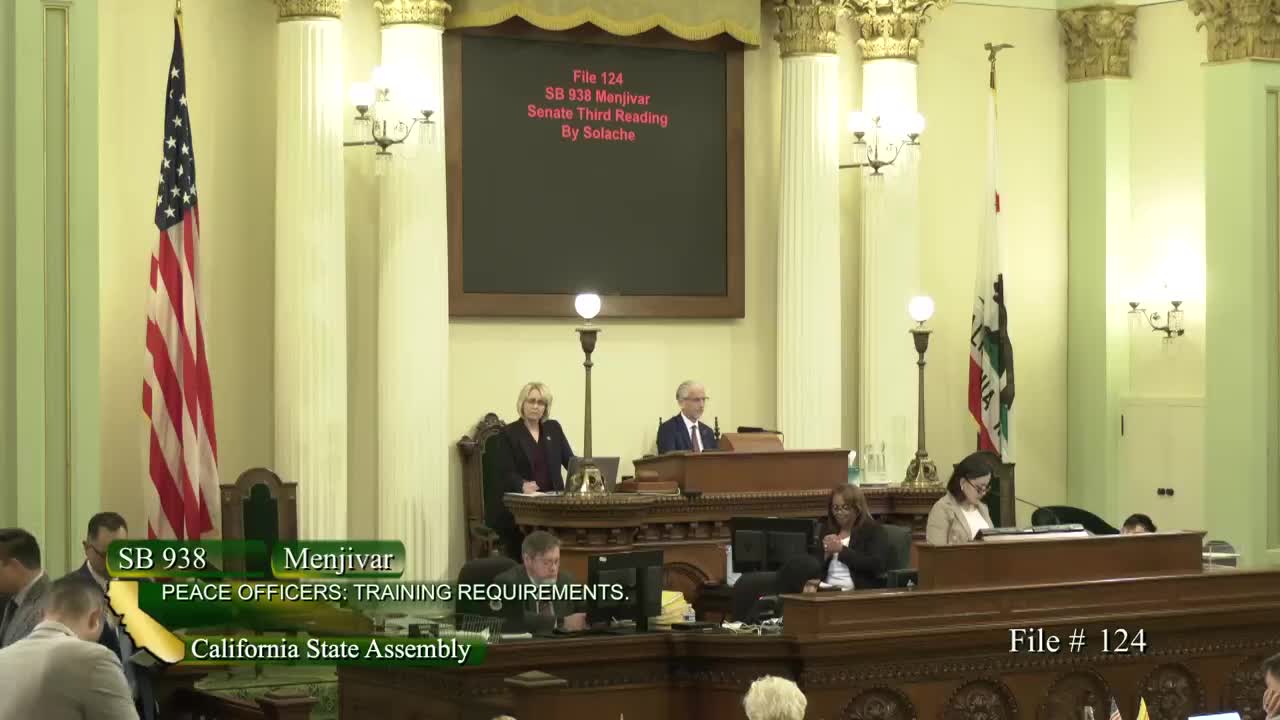 1MIN
Assembly Floor
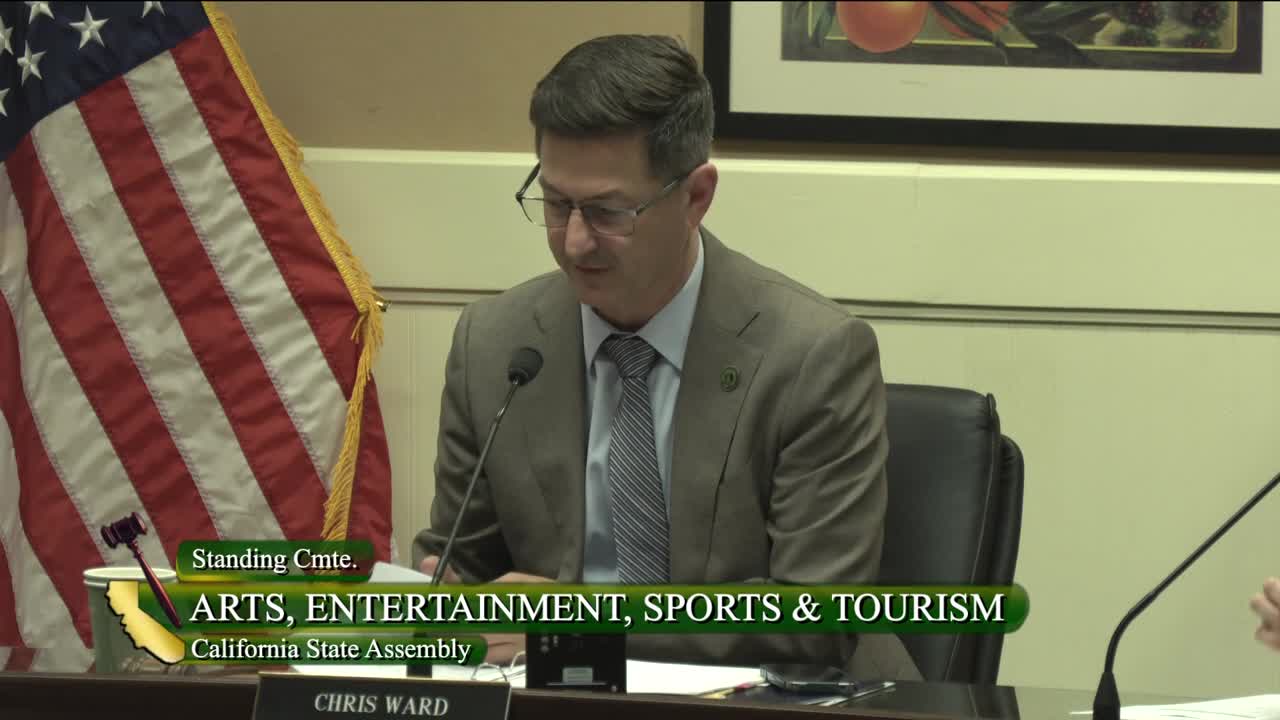 14MIN
Assembly Standing Committee on Arts, Entertainment, Sports, and Tourism
 2MIN
Senate Floor
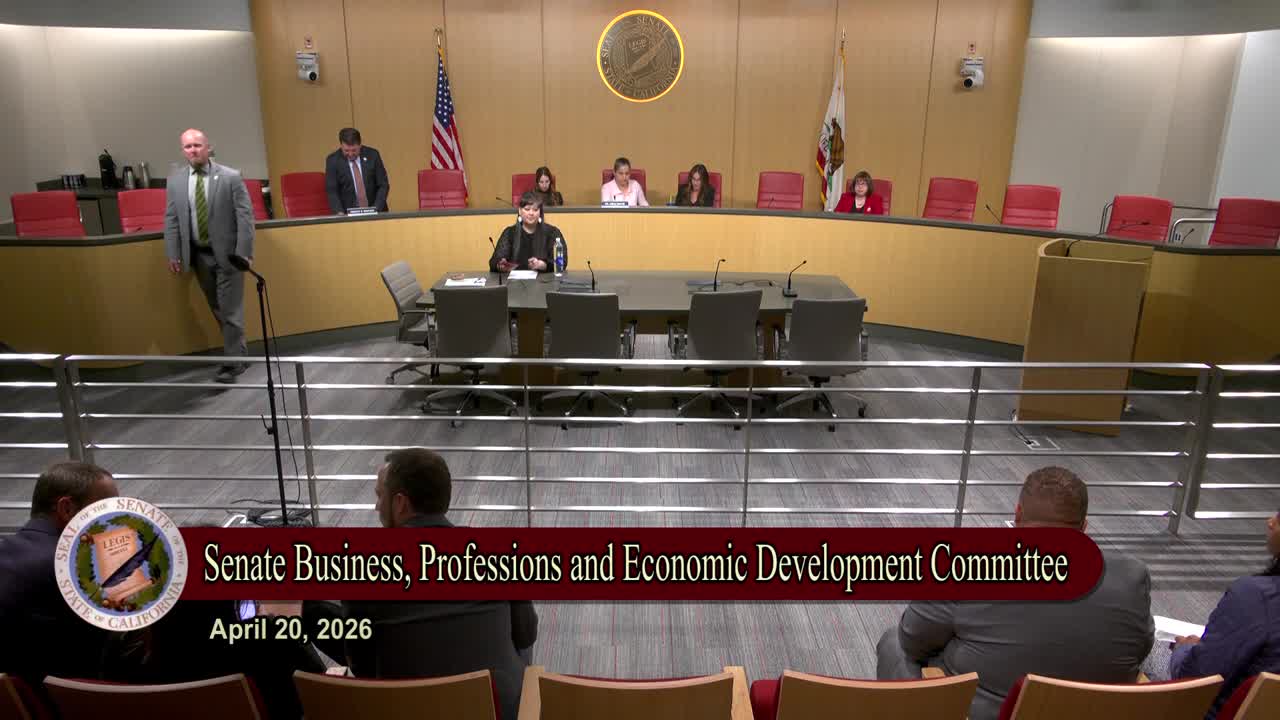 12MIN
Senate Standing Committee on Business, Professions and Economic Development
Bill Author

Bill Co-Author(s):