SB 873: Courthouses: privilege from civil arrest.
- Session Year: 2025-2026
- House: Senate
- Latest Version Date: 2026-09-29
Current Status:
Passed
(2026-09-29: Chaptered by Secretary of State. Chapter 753, Statutes of 2026.)
Introduced
In Committee
Awaiting First Chamber Vote
Passed First Chamber
In Committee
Awaiting Second Chamber Vote
Passed Second Chamber
Enacted
Existing law prohibits a person from being subject to civil arrest in a courthouse while attending a court proceeding or having legal business in a courthouse, except pursuant to a valid judicial warrant. Existing law confers specified powers to judicial officers, including to preserve and enforce order in the officers immediate presence and in proceedings before the officer, to compel obedience to the officers lawful orders, and to prohibit activities that threaten access to courthouses and court proceedings, including protecting the privilege from civil arrest at courthouses and court proceedings.
This bill would prohibit a person from being subject to civil arrest while traveling to, while present at, or while traveling from a courthouse for any lawful activity, as defined. The bill would authorize a court to issue appropriate judicial orders to protect the privilege from civil arrest. Under the bill, a civil arrest in violation of these provisions or the common law privilege against civil arrest would constitute false imprisonment or false arrest if the person was going to, remaining at, or returning from court for any lawful activity, and each person in violation of these provisions or who assists in the violation of these provisions would be liable for civil damages for the tort of false imprisonment or false arrest, including actual damages and statutory damages of $10,000. The bill would authorize a party in a successful action to recover court costs and reasonable attorneys fees. The bill would exempt a court, judicial officer, or court personnel acting lawfully pursuant to their duty to maintain safety and order in the courts from any action or proceeding pursuant to these provisions.
This bill would require, when court security personnel are aware that any representative of a law enforcement agency, while acting in an official capacity, enters a courthouse, that court security personnel request the law enforcement representative or representatives identify themselves and state their specific law enforcement purposes and intended enforcement action to be taken, and request from the law enforcement representative or representatives a copy of a valid judicial warrant concerning the intended enforcement action to be taken. The bill would require, if court security personnel are aware there is an attorney representing a person named in the judicial warrant in any capacity, that court security personnel request the law enforcement representative to afford the attorney the right to review the warrant.
This bill would require the Judicial Council to annually prepare a report compiling statistics, aggregated by county, of information related to civil arrests, as specified. The bill would require the Judicial Council to publicly post the report on its public internet website.
This bill would also make related findings and declarations and specify that the provisions of this act are severable.
Existing law prohibits a person from being subject to civil arrest in a courthouse while attending a court proceeding or having legal business in a courthouse, except pursuant to a valid judicial warrant. Existing law confers specified powers to judicial officers, including to preserve and enforce order in the officers immediate presence and in proceedings before the officer, to compel obedience to the officers lawful orders, and to prohibit activities that threaten access to courthouses and court proceedings, including protecting the privilege from civil arrest at courthouses and court proceedings.
This bill would prohibit a person from being subject to civil arrest while traveling to, while present at, or while traveling from a courthouse for any lawful activity, as defined. The bill would authorize a court to issue appropriate judicial orders to protect the privilege from civil arrest. The bill would authorize the Attorney General to bring a civil action to obtain appropriate equitable and declaratory relief if the Attorney General has reasonable cause to believe that a violation of these provisions has occurred or is imminent. The bill would also authorize a person who has been subject to civil arrest to bring a civil action for appropriate equitable and declaratory relief and civil damages, including actual damages and statutory damages of $10,000. Under the bill, a civil arrest in violation of these provisions or the common law privilege against civil arrest would constitute false imprisonment or false arrest if the person was going to, remaining at, or returning from court for any lawful activity, and each person in violation of these provisions or who assists in the violation of these provisions would be liable for civil damages for the tort of false imprisonment or false arrest, including actual damages and statutory damages of $10,000. The bill would authorize a party in a successful action to recover court costs and reasonable attorneys fees. The bill would exempt a court, judicial officer, or court personnel acting lawfully pursuant to their duty to maintain safety and order in the courts from any action or proceeding pursuant to these provisions.
This bill would require, when court security personnel are aware that any representative of a local, state, or federal law enforcement agency, while acting in an official capacity, enters a courthouse, that court security personnel request the law enforcement representative or representatives identify themselves and state their specific law enforcement purposes and intended enforcement action to be taken, and request from the law enforcement representative or representatives a copy of a valid judicial warrant concerning the intended enforcement action to be taken. The bill would require, if court security personnel are aware there is an attorney representing a person named in the judicial warrant in any capacity, that court security personnel request the law enforcement representative to afford the attorney the right to review the warrant.
This bill would require the Judicial Council to annually prepare a report compiling statistics, aggregated by county, of information related to civil arrests, as specified. The bill would require the Judicial Council to publicly post the report on its public internet website.
This bill would also make related findings and declarations and specify that the provisions of this act are severable.
Existing law prohibits a person from being subject to civil arrest in a courthouse while attending a court proceeding or having legal business in a courthouse, except pursuant to a valid judicial warrant. Existing law confers specified powers to judicial officers, including to preserve and enforce order in the officers immediate presence and in proceedings before the officer, to compel obedience to the officers lawful orders, and to prohibit activities that threaten access to courthouses and court proceedings, including protecting the privilege from civil arrest at courthouses and court proceedings.
This bill would prohibit a person from being subject to civil arrest while traveling to, while present at, or while traveling from a courthouse for any lawful activity, as defined. The bill would authorize a court to issue appropriate judicial orders to protect the privilege from civil arrest. The bill would authorize the Attorney General to bring a civil action to obtain appropriate equitable and declaratory relief if the Attorney General has reasonable cause to believe that a violation of these provisions has occurred or is imminent. The bill would also authorize a person who has been subject to civil arrest to bring a civil action for appropriate equitable and declaratory relief and civil damages, including actual damages and statutory damages of $10,000. The bill would authorize a party in a successful action to recover court costs and reasonable attorneys fees. The bill would exempt a court, judicial officer, or court personnel acting lawfully pursuant to their duty to maintain safety and order in the courts from any action or proceeding pursuant to these provisions.
This bill would require the Judicial Council to promulgate rules necessary to ensure specified requirements, including, among other things, that any representative of a local, state, or federal law enforcement agency who, while acting in an official capacity, enters a courthouse intending to arrest an individual identify themselves to court security personnel, state their specific law enforcement purpose and the intended enforcement action to be taken, and provide court personnel with a copy of a valid judicial warrant concerning the intended enforcement action to be taken.This bill would require, when court security personnel are aware that any representative of a local, state, or federal law enforcement agency, while acting in an official capacity, enters a courthouse, that court security personnel request the law enforcement representative or representatives identify themselves and state their specific law enforcement purposes and intended enforcement action to be taken, and request from the law enforcement representative or representatives a copy of a valid judicial warrant concerning the intended enforcement action to be taken. The bill would require, if court security personnel are aware there is an attorney representing a person named in the judicial warrant in any capacity, that court security personnel request the law enforcement representative to afford the attorney the right to review the warrant.
This bill would require the Judicial Council to annually prepare a report compiling statistics, aggregated by county, of information related to civil arrests, as specified. The bill would require the Judicial Council to publicly post the report on its public internet website.
This bill would also make related findings and declarations and specify that the provisions of this act are severable.
Existing law prohibits a person from being subject to civil arrest in a courthouse while attending a court proceeding or having legal business in a courthouse, except pursuant to a valid judicial warrant. Existing law confers specified powers to judicial officers, including to preserve and enforce order in the officers immediate presence and in proceedings before the officer, to compel obedience to the officers lawful orders, and to prohibit activities that threaten access to courthouses and court proceedings, including protecting the privilege from civil arrest at courthouses and court proceedings.
This bill would prohibit a person from being subject to civil arrest while traveling to, while present at, or while traveling from a courthouse for any lawful activity, as defined. The bill would authorize a court to issue appropriate judicial orders to protect the privilege from civil arrest. The bill would authorize the Attorney General to bring a civil action to obtain appropriate equitable and declaratory relief if the Attorney General has reasonable cause to believe that a violation of these provisions has occurred or is imminent. The bill would also authorize a person who has been subject to civil arrest to bring a civil action for appropriate equitable and declaratory relief and civil damages, including actual damages and statutory damages of $10,000. The bill would authorize the person a party in a successful action to recover court costs and reasonable attorneys fees.
This bill would require the Judicial Council to promulgate rules necessary to ensure specified requirements, including, among other things, that any representative of a local, state, or federal law enforcement agency who, while acting in an official capacity, enters a courthouse intending to arrest an individual identify themselves to uniformed court court security personnel, state their specific law enforcement purpose and the intended enforcement action to be taken, and provide court personnel with a copy of a valid judicial warrant concerning the intended enforcement action to be taken. The bill would require courts to maintain data regarding activities undertaken by law enforcement personnel at courthouses and provide that data to the Judicial Council. The bill would require the Judicial Council to annually prepare a report compiling statistics related to law enforcement agencies engaging in law enforcement activity of any kind at courthouses, as specified, and to post the report on its public internet website and on the California Courts Judicial Branch of California internet website.
This bill would require the Judicial Council to annually prepare a report compiling statistics, aggregated by county, of information related to civil arrests, as specified. The bill would require the Judicial Council to publicly post the report on its public internet website.
This bill would also make related findings and declarations and specify that the provisions of this act are severable.
Existing law prohibits a person from being subject to civil arrest in a courthouse while attending a court proceeding or having legal business in a courthouse, except pursuant to a valid judicial warrant. Existing law confers specified powers to judicial officers, including to preserve and enforce order in the officers immediate presence and in proceedings before the officer, to compel obedience to the officers lawful orders, and to prohibit activities that threaten access to courthouses and court proceedings, including protecting the privilege from civil arrest at courthouses and court proceedings.
This bill would prohibit a person from being subject to civil arrest while traveling to, while present at, or while traveling from a courthouse for any lawful activity, as defined. The bill would authorize a court to issue appropriate judicial orders to protect the privilege from civil arrest. The bill would authorize the Attorney General to bring a civil action to obtain appropriate equitable and declaratory relief if the Attorney General has reasonable cause to believe that a violation of these provisions has occurred or is imminent. The bill would also authorize a person who has been subject to civil arrest to bring a civil action for appropriate equitable and declaratory relief and civil damages, including actual damages and statutory damages of $10,000. The bill would authorize the person in a successful action to recover court costs and reasonable attorneys fees.
This bill would require the Judicial Council to promulgate rules necessary to ensure specified requirements, including, among other things, that any representative of a local, state, or federal law enforcement agency who, while acting in an official capacity, enters a courthouse intending to arrest an individual identify themselves to uniformed court personnel, state their specific law enforcement purpose and the intended enforcement action to be taken, and provide court personnel with a copy of a valid judicial warrant concerning the intended enforcement action to be taken. The bill would require courts to maintain data regarding activities undertaken by law enforcement personnel at courthouses and provide that data to the Judicial Council. The bill would require the Judicial Council to annually prepare a report compiling statistics related to law enforcement agencies engaging in law enforcement activity of any kind at courthouses, as specified, and to post the report on its public internet website and on the California Courts Judicial Branch of California internet website.
This bill would also make related findings and declarations and specify that the provisions of this act are severable.
Existing law prohibits a person from being subject to civil arrest in a courthouse while attending a court proceeding or having legal business in a courthouse, except pursuant to a valid judicial warrant.This bill would make a nonsubstantive change to that provision.Existing law prohibits a person from being subject to civil arrest in a courthouse while attending a court proceeding or having legal business in a courthouse, except pursuant to a valid judicial warrant.
This bill would make a nonsubstantive change to that provision.
The Legislature finds and declares the following:
(a)California courts are a cornerstone of Californias government. The judicial power of this state is vested in the Supreme Court, Courts of Appeal, and superior courts, and California courts play an essential role in the peaceful and just resolution of disputes, the protection of due process, the vindication of rights, and the states ability to promote the public health, safety, and general welfare of all persons in California.
(b)Meaningful access to courts and the courts ability to administer justice is, therefore, a matter of statewide concern. They foster fairness, protect the integrity of judicial proceedings, and promote public confidence in, and respect for, the judicial process.
(c)California law has long recognized that the administration of justice is undermined when parties, witnesses, or other participants in judicial proceedings are deterred from attending court. Section 1209 of the Code of Civil Procedure, first enacted in 1872 and rooted in earlier California practice and common law principles, treats as contempt the unlawful detention of a witness or party to an action while they are going to, remaining at, or returning from the court where the action is on the calendar for trial.
(d)The privilege against civil arrest in connection with court attendance and other lawful activity at courthouses is a longstanding common law doctrine, recognized in English and American law to protect the administration of justice by ensuring that parties, witnesses, and other necessary participants may attend court without fear of arrest in unrelated civil matters. California has codified protection against civil arrest in courthouses while preserving that broader common law privilege. Section 43.54 of the Civil Code, which provides that a person shall not be subject to civil arrest in a courthouse while attending a court proceeding or having legal business in the courthouse, expressly preserves any existing common law privilege and does not apply to arrests made pursuant to a valid judicial warrant.
(e)Subjecting persons to arrest for civil, noncriminal matters while they are attending or attempting to attend or after they have attended court proceedings, when these persons have lawful business at a courthouse or are accompanying or assisting a party, witness, potential witness, victim, family member, or other court user, threatens the fair administration of justice in this state.
(f)Victims, witnesses, litigants, and other court users may be reluctant to attend and participate in court proceedings, report crimes, seek protective orders, pursue legal remedies, comply with subpoenas, or otherwise access the justice system when they fear civil arrest in or near courthouses or while going to, remaining at, or returning from court proceedings.
(g)Civil arrests connected to lawful activity at courthouses impose burdens on California courts, court staff, litigants, attorneys, victims, witnesses, and the public by causing failures to appear, adjournments, delays, continuances, and postponements; by impairing courts abilities to obtain testimony and evidence necessary for fair and accurate factfinding; and by limiting open access to judicial proceedings.
(h)Civil arrests connected to courthouse attendance also interfere with the ability of attorneys to represent clients diligently and to fulfill their duties as officers of the court. Attorneys should not be forced to choose between advising clients to appear in court and exposing those clients, witnesses, family members, or other necessary participants to the risk of civil arrest.
(i)Civil arrests in or near courthouses or while a person is going to, remaining at, or returning from a court proceeding or other lawful activity at court, threaten the functioning of the California court system by deterring litigants, witnesses, victims, family members, and other participants from appearing, participating in, and observing judicial proceedings.
(j)California has a sovereign interest and authority to protect the effective functioning, independence, integrity, and operation of its judicial system, including by ensuring that courts remain open and accessible to all persons whose presence is necessary for the administration of justice.
(k)Civil arrests of persons in or near California courthouses or of persons attending, attempting to attend, or returning from judicial proceedings or other lawful activities at a courthouse threaten the aforementioned public and private interests, impair core judicial functions, and undermine the fair administration of justice.
(l)The provisions of this act are necessary to protect and preserve the integrity of the proceedings of the judicial branch of California government.
SEC. 2.Section 43.54 of the Civil Code is repealed.SEC. 3.Section 43.54 is added to the Civil Code, to read:43.54.(a)A person shall not be subject to civil arrest while present at a courthouse for any lawful activity.
(b)A person shall not be subject to civil arrest while traveling to or while traveling from a courthouse for any lawful activity.
(c)It shall be presumed that a person traveling to, traveling from, or present at a courthouse is engaging in lawful activity.
(d)This section does not narrow or in any way lessen any existing common law privilege.
(e)This section does not apply to arrests made pursuant to a valid judicial warrant.
(f)A court may issue appropriate judicial orders to protect the privilege from civil arrest under this section or common law, in addition to the powers available pursuant to Section 177 of the Code of Civil Procedure.
(g)(1)Except as provided in subdivision (c) of Section 43.541, a civil arrest in violation of this section or the common law privilege protecting persons from civil arrest while at, or coming to or from, a courthouse shall constitute the tort of false imprisonment or false arrest if the arresting person or persons knew or reasonably should have known that the person arrested was going to, remaining at, or returning from court for any lawful activity. Each person who violates this section, or assists in its violation, shall be liable for civil damages for false imprisonment or false arrest, including actual damages and statutory damages of ten thousand dollars ($10,000).
(2)A party in a successful action to enforce liability for a violation of this section may recover court costs and reasonable attorneys fees.
(h)For purposes of this section, the following definitions apply:
(1)Arrest means the taking of an individual into custody.
(2)Civil arrest means the arrest of, or a communicated intent to arrest, an individual for an alleged violation of civil law.
(3)Court proceeding means any matter, hearing, or other judicial business conducted by, or under the supervision of, a California superior court, Court of Appeal, or the Supreme Court, including, but not limited to, trials, hearings, arraignments, case management conferences, and clerks office transactions.
(4)Courthouse means any of the following:
(A)Court facilities as described in Section 70301 of the Government Code.
(B)Any sidewalk, parkway, or street surrounding the court facilities and its premises.
(C)Any public way within one thousand feet of the court facilities including a sidewalk, parkway, or street.
(5)Court security personnel means peace officers, as described in Chapter 4.5 (commencing with Section 830) of Title 3 of Part 2 of the Penal Code, and security guards, as described in Section 7582.1 of the Business and Professions Code, who are assigned to perform court security functions under any employment, contractual, or memorandum of understanding agreement.
(6)Lawful activity means any activity lawfully permitted at a courthouse, including, but not limited to, any of the following:
(A)Observation of, attendance at, or involvement in court proceedings.
(B)Any activities related to ones employment at a courthouse.
(C)Accompanying, supporting, or assisting a person who is going to, remaining at, or returning from a courthouse, including, but not limited to, any of the following:
(i)A spouse, domestic partner, or person who has a dating or engagement relationship with the party, witness, or potential witness.
(ii)A biological parent, foster parent, adoptive parent, or step parent of a party, witness, or potential witness.
(iii)Minor children or other persons under the care of a party, witness, or potential witness.
(iv)Interpreters.
(v)Translators.
(vi)A person assisting the party, witness, or potential witness with reading or completing court forms or other documents.
(vii)Persons providing health care or assistance to a party, witness, or potential witness to allow that individual to participate in the court proceeding.
(viii)A case manager or social worker for the party, witness, or potential witness.
(ix)A domestic violence or sexual assault advocate.
(x)A person transporting a party, witness, or potential witness to or from the court proceeding.
(D)The exercise of any constitutional rights at a courthouse.
(E)Otherwise being lawfully present at a courthouse.
SEC. 4.Section 43.541 is added to the Civil Code, immediately following Section 43.54, to read:43.541.(a)When court security personnel are aware that any representative of a law enforcement agency, while acting in an official capacity, has entered a courthouse, court security personnel shall do both of the following:
(1)Request the law enforcement representative or representatives identify themselves and state their specific law enforcement purpose and the intended enforcement action to be taken.
(2)Request from the law enforcement representative or representatives a copy of a valid judicial warrant concerning the intended enforcement action to be taken.
(b)If court security personnel are aware there is an attorney representing a person named in the judicial warrant in any capacity, court security personnel shall request the law enforcement representative afford that attorney the right to review the warrant.
(c)An action or proceeding for the tort of false imprisonment or false arrest pursuant to Section 43.54 shall not be commenced against a court, a judicial officer, or any trial court employee, as defined in Section 71601 of the Government Code, acting lawfully pursuant to their duty to maintain safety and order in the courts.
(d)For purposes of this section, court security personnel has the same meaning as in Section 43.54.
SEC. 5.Section 43.542 is added to the Civil Code, to read:43.542.(a)The Judicial Council shall annually prepare a report compiling statistics, aggregated by county, of the information related to civil arrests reported to the Judicial Council pursuant to Rule 10.440 of the California Rules of Court.
(b)The Judicial Council shall publicly post the report described in subdivision (a) on its public internet website.
SEC. 6.The provisions of this act are severable. If any provision of this act or its application is held invalid, that invalidity shall not affect other provisions or applications that can be given effect without the invalid provision or application.
The Legislature finds and declares the following:
(a)California courts are a cornerstone of Californias government, ensuring the right of every person to obtain justice under the California Constitution, and playing government. The judicial power of this state is vested in the Supreme Court, Courts of Appeal, and superior courts, and California courts play an essential role in the peaceful and just resolution of disputes. disputes, the protection of due process, the vindication of rights, and the states ability to promote the public health, safety, and general welfare of all persons in California.
(b)Access Meaningful access to courts and the courts ability to administer justice is, therefore, a matter of statewide concern, fostering fairness while promoting concern. They foster fairness, protect the integrity of judicial proceedings, and promote public confidence in, and respect for, the judicial process.
(c)The threat that persons may be subject to civil arrest while in Californias courthouses or attending judicial proceedings is a threat to the proper functioning of Californias government and to the rights enjoyed by all Californians. Protecting persons from civil arrest at or near Californias courthouses or judicial proceedings is necessary to ensure that litigants, witnesses, victims of crime, and others are not deterred from participating in such proceedings so that courts and parties have access to testimony and other evidence critical to factfinding and to ensure the dignity of judicial proceedings is upheld.(d)Access to courts is necessary to preserve the right to petition government for redress, and to preserve numerous trial rights of individuals, including the right to be present, to present claims and defenses, to testify at trial, to call witnesses, to compulsory process, and to have a public trial. Access to courts also protects Californians rights to equal protection of the laws.(e)Protecting persons from civil arrest while on or near Californias courthouses or judicial proceedings is also necessary to preserve the individual rights of all Californians. Access to courts is also part of the right to free speech enshrined in the California and United States Constitutions.(f)Public scrutiny of judicial proceedings allows the public to observe the functioning of their government, fostering fairness, promoting public confidence in the judicial process, serving as a critical check on the use and abuse of judicial power, and enhancing the truth-finding function of judicial proceedings.(g)Civil arrests of persons in Californias courthouses or attending judicial proceedings are unreasonable and unlawful seizures whether undertaken by local, state, or federal officers.(h)Courts are essential to a republican form of government and to the functioning of Californias government. California has the reserved power under the Tenth Amendment to the United States Constitution to protect their proceedings.(c)California law has long recognized that the administration of justice is undermined when parties, witnesses, or other participants in judicial proceedings are deterred from attending court. Section 1209 of the Code of Civil Procedure, first enacted in 1872 and rooted in earlier California practice and common law principles, treats as contempt the unlawful detention of a witness or party to an action while they are going to, remaining at, or returning from the court where the action is on the calendar for trial.
(d)The privilege against civil arrest in connection with court attendance and other lawful activity at courthouses is a longstanding common law doctrine, recognized in English and American law to protect the administration of justice by ensuring that parties, witnesses, and other necessary participants may attend court without fear of arrest in unrelated civil matters. California has codified protection against civil arrest in courthouses while preserving that broader common law privilege. Section 43.54 of the Civil Code, which provides that a person shall not be subject to civil arrest in a courthouse while attending a court proceeding or having legal business in the courthouse, expressly preserves any existing common law privilege and does not apply to arrests made pursuant to a valid judicial warrant.
(e)Subjecting persons to arrest for civil, noncriminal matters while they are attending or attempting to attend or after they have attended court proceedings, when these persons have lawful business at a courthouse or are accompanying or assisting a party, witness, potential witness, victim, family member, or other court user, threatens the fair administration of justice in this state.
(f)Victims, witnesses, litigants, and other court users may be reluctant to attend and participate in court proceedings, report crimes, seek protective orders, pursue legal remedies, comply with subpoenas, or otherwise access the justice system when they fear civil arrest in or near courthouses or while going to, remaining at, or returning from court proceedings.
(g)Civil arrests connected to lawful activity at courthouses impose burdens on California courts, court staff, litigants, attorneys, victims, witnesses, and the public by causing failures to appear, adjournments, delays, continuances, and postponements; by impairing courts abilities to obtain testimony and evidence necessary for fair and accurate factfinding; and by limiting open access to judicial proceedings.
(h)Civil arrests connected to courthouse attendance also interfere with the ability of attorneys to represent clients diligently and to fulfill their duties as officers of the court. Attorneys should not be forced to choose between advising clients to appear in court and exposing those clients, witnesses, family members, or other necessary participants to the risk of civil arrest.
(i)Civil arrests in or near courthouses or while a person is going to, remaining at, or returning from a court proceeding or other lawful activity at court, threaten the functioning of the California court system by deterring litigants, witnesses, victims, family members, and other participants from appearing, participating in, and observing judicial proceedings.
(j)California has a sovereign interest and authority to protect the effective functioning, independence, integrity, and operation of its judicial system, including by ensuring that courts remain open and accessible to all persons whose presence is necessary for the administration of justice.
(k)Civil arrests of persons in or near California courthouses or of persons attending, attempting to attend, or returning from judicial proceedings or other lawful activities at a courthouse threaten the aforementioned public and private interests, impair core judicial functions, and undermine the fair administration of justice.
(i)(l)The provisions of this act are necessary to protect and preserve the integrity of the proceedings of the judicial branch of California government.
SEC. 2.Section 43.54 of the Civil Code is repealed.SEC. 3.Section 43.54 is added to the Civil Code, to read:43.54.(a)A person shall not be subject to civil arrest while traveling to, while present at, or while traveling from present at a courthouse for any lawful activity. It shall be presumed that persons are traveling to, engaging in, or traveling from, lawful activity while present at a courthouse.
(b)A person shall not be subject to civil arrest while traveling to or while traveling from a courthouse for any lawful activity.
(c)It shall be presumed that a person traveling to, traveling from, or present at a courthouse is engaging in lawful activity.
(b)(d)This section does not narrow or in any way lessen any existing common law privilege.
(c)(e)This section does not apply to arrests made pursuant to a valid judicial warrant.
(d)(f)A court may issue appropriate judicial orders to protect the privilege from civil arrest under this section or common law, in addition to the powers available pursuant to Section 177 of the Code of Civil Procedure.
(e)The Attorney General may bring a civil action in the name of the people of the State of California to obtain appropriate equitable and declaratory relief if the Attorney General has reasonable cause to believe that a violation of this section has occurred or is imminent.(f)(1)A person who has been subject to civil arrest in violation of this section or the common law privilege protecting persons from civil arrest while at, or coming to or from, a courthouse may bring a civil action for appropriate equitable and declaratory relief and shall be entitled to civil damages for violation of the privilege from civil arrest, including actual damages and statutory damages of $10,000.(g)(1)Except as provided in subdivision (c) of Section 43.541, a civil arrest in violation of this section or the common law privilege protecting persons from civil arrest while at, or coming to or from, a courthouse shall constitute the tort of false imprisonment or false arrest if the arresting person or persons knew or reasonably should have known that the person arrested was going to, remaining at, or returning from court for any lawful activity. Each person who violates this section, or assists in its violation, shall be liable for civil damages for false imprisonment or false arrest, including actual damages and statutory damages of ten thousand dollars ($10,000).
(2)A party in a successful action to enforce liability for a violation of this section may recover court costs and reasonable attorneys fees.
(g)(1)Notwithstanding subdivision (c), when court security personnel are aware that any representative of a local, state, or federal law enforcement agency, while acting in an official capacity, enters a courthouse, court security personnel shall do both of the following:(A)Request the law enforcement representative or representatives to identify themselves and state their specific law enforcement purpose and the intended enforcement action to be taken.(B)Request from the law enforcement representative or representatives a copy of a valid judicial warrant concerning the intended enforcement action to be taken.(2)If court security personnel are aware there is an attorney representing a person named in the judicial warrant in any capacity, court security personnel shall request the law enforcement representative to afford that attorney the right to review the warrant.(h)No action or proceeding may be commenced pursuant to this section against a court, a judicial officer, or any court employee, as defined in Section 71601 of the Government Code, acting lawfully pursuant to their duty to maintain safety and order in the courts.(i)(h)For purposes of this section, the following definitions apply:
(1)Arrest means the taking of an individual into custody.(2)Civil arrest means the arrest of, or a communicated intent to arrest, an individual for an alleged violation of civil law, whether taken by a local, state, or federal law enforcement agency, officers, or any other government entity or representative acting in an official capacity.(3)Court proceeding means any matter, hearing, or other judicial business conducted by or under the supervision of a California superior court, court of appeal, or the Supreme Court, including, but not limited to, trials, hearings, arraignments, case management conferences, and clerks office transactions.(1)Arrest means the taking of an individual into custody.
(2)Civil arrest means the arrest of, or a communicated intent to arrest, an individual for an alleged violation of civil law.
(3)Court proceeding means any matter, hearing, or other judicial business conducted by, or under the supervision of, a California superior court, Court of Appeal, or the Supreme Court, including, but not limited to, trials, hearings, arraignments, case management conferences, and clerks office transactions.
(4)Courthouse means any of the following:
(A)Court facilities as described in Section 70301 of the Government Code.
(B)Any sidewalk, parkway, or street surrounding the court facilities and its premises.
(C)Any public way within one thousand feet of the court facilities including a sidewalk, parkway, or street.
(5)Court security personnel means peace officers, as described in Chapter 4.5 (commencing with Section 830) of Title 3 of Part 2 of the Penal Code, and security guards, as described in Section 7582.1 of the Business and Professions Code, who are assigned to perform court security functions under any employment, contractual, or memorandum of understanding agreement.
(5)(6)Lawful activity means any activity lawfully permitted at a courthouse, including, but not limited to, any of the following:
(A)Observation of, attendance at, or involvement in court proceedings.
(B)Any activities related to ones employment at a courthouse.
(C)Accompanying, supporting, or transporting a person to proceedings or business at a courthouse.(C)Accompanying, supporting, or assisting a person who is going to, remaining at, or returning from a courthouse, including, but not limited to, any of the following:
(i)A spouse, domestic partner, or person who has a dating or engagement relationship with the party, witness, or potential witness.
(ii)A biological parent, foster parent, adoptive parent, or step parent of a party, witness, or potential witness.
(iii)Minor children or other persons under the care of a party, witness, or potential witness.
(iv)Interpreters.
(v)Translators.
(vi)A person assisting the party, witness, or potential witness with reading or completing court forms or other documents.
(vii)Persons providing health care or assistance to a party, witness, or potential witness to allow that individual to participate in the court proceeding.
(viii)A case manager or social worker for the party, witness, or potential witness.
(ix)A domestic violence or sexual assault advocate.
(x)A person transporting a party, witness, or potential witness to or from the court proceeding.
(D)The exercise of any constitutional rights at a courthouse.
(E)Otherwise being lawfully present at a courthouse.
SEC. 4.Section 43.541 is added to the Civil Code, immediately following Section 43.54, to read:43.541.(a)(1)The Judicial Council shall annually prepare a report compiling statistics, aggregated by county, of the information related to civil arrests reported to the Judicial Council pursuant to Rule 10.440 of the California Rules of Court.(b)The Judicial Council shall publicly post the report described in subdivision (a) on its public internet website.SEC. 4.Section 43.541 is added to the Civil Code, immediately following Section 43.54, to read:43.541.(a)When court security personnel are aware that any representative of a law enforcement agency, while acting in an official capacity, has entered a courthouse, court security personnel shall do both of the following:
(1)Request the law enforcement representative or representatives identify themselves and state their specific law enforcement purpose and the intended enforcement action to be taken.
(2)Request from the law enforcement representative or representatives a copy of a valid judicial warrant concerning the intended enforcement action to be taken.
(b)If court security personnel are aware there is an attorney representing a person named in the judicial warrant in any capacity, court security personnel shall request the law enforcement representative afford that attorney the right to review the warrant.
(c)An action or proceeding for the tort of false imprisonment or false arrest pursuant to Section 43.54 shall not be commenced against a court, a judicial officer, or any trial court employee, as defined in Section 71601 of the Government Code, acting lawfully pursuant to their duty to maintain safety and order in the courts.
(d)For purposes of this section, court security personnel has the same meaning as in Section 43.54.
SEC. 5.Section 43.542 is added to the Civil Code, to read:43.542.(a)The Judicial Council shall annually prepare a report compiling statistics, aggregated by county, of the information related to civil arrests reported to the Judicial Council pursuant to Rule 10.440 of the California Rules of Court.
(b)The Judicial Council shall publicly post the report described in subdivision (a) on its public internet website.
SEC. 5.SEC. 6.The provisions of this act are severable. If any provision of this act or its application is held invalid, that invalidity shall not affect other provisions or applications that can be given effect without the invalid provision or application.
The Legislature finds and declares the following:
(a)California courts are a cornerstone of Californias government, ensuring the right of every person to obtain justice under the California Constitution, and playing an essential role in the peaceful and just resolution of disputes.
(b)Access to courts and the courts ability to administer justice is, therefore, a matter of statewide concern, fostering fairness while promoting public confidence in, and respect for, the judicial process.
(c)The threat that persons may be subject to civil arrest while in Californias courthouses or attending judicial proceedings is a threat to the proper functioning of Californias government and to the rights enjoyed by all Californians. Protecting persons from civil arrest at or near Californias courthouses or judicial proceedings is necessary to ensure that litigants, witnesses, victims of crime, and others are not deterred from participating in such proceedings so that courts and parties have access to testimony and other evidence critical to factfinding and to ensure the dignity of judicial proceedings is upheld.
(d)Access to courts is necessary to preserve the right to petition government for redress, and to preserve numerous trial rights of individuals, including the right to be present, to present claims and defenses, to testify at trial, to call witnesses, to compulsory process, and to have a public trial. Access to courts also protects Californians rights to equal protection of the laws.
(e)Protecting persons from civil arrest while on or near Californias courthouses or judicial proceedings is also necessary to preserve the individual rights of all Californians. Access to courts is also part of the right to free speech enshrined in the California and United States Constitutions.
(f)Public scrutiny of judicial proceedings allows the public to observe the functioning of their government, fostering fairness, promoting public confidence in the judicial process, serving as a critical check on the use and abuse of judicial power, and enhancing the truth-finding function of judicial proceedings.
(g)Civil arrests of persons in Californias courthouses or attending judicial proceedings are unreasonable and unlawful seizures whether undertaken by local, state, or federal officers.
(h)Courts are essential to a republican form of government and to the functioning of Californias government. California has the reserved power under the Tenth Amendment to the United States Constitution to protect their proceedings.
(i)The provisions of this act are necessary to protect and preserve the integrity of the proceedings of the judicial branch of California government.
SEC. 2.Section 43.54 of the Civil Code is repealed.SEC. 3.Section 43.54 is added to the Civil Code, to read:43.54.(a)A person shall not be subject to civil arrest while traveling to, while present at, or while traveling from a courthouse for any lawful activity. It shall be presumed that persons are traveling to, engaging in, or traveling from, lawful activity while present at a courthouse.
(b)This section does not narrow or in any way lessen any existing common law privilege.
(c)This section does not apply to arrests made pursuant to a valid judicial warrant.
(d)A court may issue appropriate judicial orders to protect the privilege from civil arrest under this section or common law, in addition to the powers available pursuant to Section 177 of the Code of Civil Procedure.
(e)(1)The Attorney General may bring a civil action in the name of the people of the State of California to obtain appropriate equitable and declaratory relief if the Attorney General has reasonable cause to believe that a violation of this section has occurred or is imminent.
(2)(f)(1)A person who has been subject to civil arrest in violation of this section or the common law privilege protecting persons from civil arrest while at, or coming to or from, a courthouse may bring a civil action for appropriate equitable and declaratory relief and shall be entitled to civil damages for violation of the privilege from civil arrest, including actual damages and statutory damages of $10,000.
(3)(2)A party in a successful action to enforce liability for a violation of this section may recover court costs and reasonable attorneys fees.
(g)(1)Notwithstanding subdivision (c), when court security personnel are aware that any representative of a local, state, or federal law enforcement agency, while acting in an official capacity, enters a courthouse, court security personnel shall do both of the following:
(A)Request the law enforcement representative or representatives to identify themselves and state their specific law enforcement purpose and the intended enforcement action to be taken.
(B)Request from the law enforcement representative or representatives a copy of a valid judicial warrant concerning the intended enforcement action to be taken.
(2)If court security personnel are aware there is an attorney representing a person named in the judicial warrant in any capacity, court security personnel shall request the law enforcement representative to afford that attorney the right to review the warrant.
(h)No action or proceeding may be commenced pursuant to this section against a court, a judicial officer, or any court employee, as defined in Section 71601 of the Government Code, acting lawfully pursuant to their duty to maintain safety and order in the courts.
(f)(i)For purposes of this section, the following definitions apply:
(1)Arrest means a local, state, or federal law enforcement agency, its officers, or any other government entity taking an individual into custody.(2)Civil arrest means a local, state, or federal law enforcement agency, its officers, or any other government entity taking an individual into custody for an alleged violation of civil law.(3)Court proceeding means the business conducted by a state court or a matter pending under the jurisdiction or supervision of a state court.(1)Arrest means the taking of an individual into custody.
(2)Civil arrest means the arrest of, or a communicated intent to arrest, an individual for an alleged violation of civil law, whether taken by a local, state, or federal law enforcement agency, officers, or any other government entity or representative acting in an official capacity.
(3)Court proceeding means any matter, hearing, or other judicial business conducted by or under the supervision of a California superior court, court of appeal, or the Supreme Court, including, but not limited to, trials, hearings, arraignments, case management conferences, and clerks office transactions.
(4)Courthouse means any of the following:
(A)Court facilities as described in Section 70301 of the Government Code.
(B)Any sidewalk, parkway, or street surrounding the court facilities and its premises.
(C)Any public way within one thousand feet of the court facilities including a sidewalk, parkway, or street.
(5)Lawful activity means any activity lawfully permitted at a courthouse, including, but not limited to, any of the following:
(A)Observation of, attendance at, or involvement in court proceedings.
(B)Any activities related to ones employment at a courthouse.
(C)Accompanying, supporting, or transporting a person to proceedings or business at a courthouse.
(D)The exercise of any constitutional rights at a courthouse.
(E)Otherwise being lawfully present at a courthouse.
SEC. 4.Section 43.541 is added to the Civil Code, immediately following Section 43.54, to read:43.541.(a)In order to maintain access to the court and open judicial proceedings for all persons, to prevent interference with the needs of judicial administration, and consistent with the powers specified in Section 177 of the Code of Civil Procedure, the Judicial Council shall promulgate necessary rules to ensure both of the following:(1)Any representative of a local, state, or federal law enforcement agency who, while acting in an official capacity, enters a courthouse intending to arrest an individual shall comply with both of the following:(A)Identify themselves to uniformed court personnel and state their specific law enforcement purpose and the intended enforcement action to be taken.(B)Provide court personnel with a copy of a valid judicial warrant concerning the intended enforcement action to be taken.(2)If there is an attorney representing a person named in the warrant in any capacity, that attorney shall have the right to review the warrant. (b)43.541.(a)(1)The Judicial Council shall annually prepare a report compiling statistics, aggregated by county, of the information related to civil arrests reported to the Judicial Council pursuant to Rule 10.440 of the California Rules of Court.
(2)(b)The Judicial Council shall publicly post the report described in paragraph (1) subdivision (a) on its public internet website.
(c)For purposes of this section, courthouse shall have the same meaning as in Section 43.54.SEC. 5.The provisions of this act are severable. If any provision of this act or its application is held invalid, that invalidity shall not affect other provisions or applications that can be given effect without the invalid provision or application.
REVISIONS: HeadingLine 4.The Legislature finds and declares the following:
(a)California courts are a cornerstone of Californias government, ensuring the right of every person to obtain justice under the California Constitution, and playing an essential role in the peaceful and just resolution of disputes.
(b)Access to courts and the court's courts ability to administer justice is, therefore, a matter of statewide concern, fostering fairness while promoting public confidence in, and respect for, the judicial process.
(c)The threat that persons may be subject to civil arrest while in Californias courthouses or attending judicial proceedings is a threat to the proper functioning of Californias government and to the rights enjoyed by all Californians. Protecting persons from civil arrest at or near Californias courthouses or judicial proceedings is necessary to ensure that litigants, witnesses, victims of crime, and others are not deterred from participating in such proceedings so that courts and parties have access to testimony and other evidence critical to factfinding and to ensure the dignity of judicial proceedings is upheld.
(d)Access to courts is necessary to preserve the right to petition government for redress, and to preserve numerous trial rights of individuals, including the right to be present, to present claims and defenses, to testify at trial, to call witnesses, to compulsory process, and to have a public trial. Access to courts also protects Californians rights to equal protection of the laws.
(e)Protecting persons from civil arrest while on or near Californias courthouses or judicial proceedings is also necessary to preserve the individual rights of all Californians. Access to courts is also part of the right to free speech enshrined in the California and United States Constitutions.
(f)Public scrutiny of judicial proceedings allows the public to observe the functioning of their government, fostering fairness, promoting public confidence in the judicial process, serving as a critical check on the use and abuse of judicial power, and enhancing the truth-finding function of judicial proceedings.
(g)Civil arrests of persons in Californias courthouses or attending judicial proceedings are unreasonable and unlawful seizures whether undertaken by local, state, or federal officers.
(h)Courts are essential to a republican form of government and to the functioning of Californias government. California has the reserved power under the Tenth Amendment to the United States Constitution to protect their proceedings.
(i)The provisions of this act are necessary to protect and preserve the integrity of the proceedings of the judicial branch of California government.
SEC. 2.Section 43.54 of the Civil Code is repealed.SEC. 3.Section 43.54 is added to the Civil Code, to read:43.54.(a)A person shall not be subject to civil arrest while traveling to, while present at, or while traveling from a courthouse for any lawful activity. It shall be presumed that persons are traveling to, engaging in, or traveling from, lawful activity while present at a courthouse.
(b)This section does not narrow or in any way lessen any existing common law privilege.
(c)This section does not apply to arrests made pursuant to a valid judicial warrant.
(d)A court may issue appropriate judicial orders to protect the privilege from civil arrest under this section or common law, in addition to the powers available pursuant to Section 177 of the Code of Civil Procedure.
(e)(1)The Attorney General may bring a civil action in the name of the people of the State of California to obtain appropriate equitable and declaratory relief if the Attorney General has reasonable cause to believe that a violation of this section has occurred or is imminent.
(f)(1)A person(2)A person who has been subject to civil arrest in violation of this section or the common law privilege protecting persons from civil arrest while at, or coming to or from, a courthouse may bring a civil action for appropriate equitable and declaratory relief and shall be entitled to civil damages for violation of the privilege from civil arrest, including actual damages and statutory damages of $10,000.
(2)(3)A party in a successful action to enforce liability for a violation of this section may recover court costs and reasonable attorneys fees.
(g)(f)For purposes of this section, the following definitions apply:
(1)Arrest means a local, state, or federal law enforcement agency, its officers, or any other government entity taking an individual into custody.
(2)Civil arrest means a local, state, or federal law enforcement agency, its officers, or any other government entity taking an individual into custody for an alleged violation of civil law.
(3)Court proceeding means the business conducted by a state court or a matter pending under the jurisdiction or supervision of a state court.
(4)Courthouse means any of the following:
(A)Court facilities as described in Section 70301 of the Government Code.
(B)Any sidewalk, parkway, or street surrounding the court facilities and its premises.
(C)Any public way within one thousand feet of the court facilities including a sidewalk, parkway, or street.
(5)Lawful activity means any activity lawfully permitted at a courthouse, including, but not limited to, any of the following:
(A)Observation of, attendance at, or involvement in court proceedings.
(B)Any activities related to ones employment at a courthouse.
(C)Accompanying, supporting, or transporting a person to proceedings or business at a courthouse.
(D)The exercise of any constitutional rights at a courthouse.
(E)Otherwise being lawfully present at a courthouse.
SEC. 4.Section 43.541 is added to the Civil Code, immediately following Section 43.54, to read:43.541.(a)In order to maintain access to the court and open judicial proceedings for all persons, to prevent interference with the needs of judicial administration, and consistent with the powers specified in Section 177 of the Code of Civil Procedure, the Judicial Council shall promulgate necessary rules to ensure all both of the following:
(1)Any representative of a local, state, or federal law enforcement agency who, while acting in an official capacity, enters a courthouse intending to arrest an individual shall comply with both of the following:
(A)Identify themselves to uniformed court personnel and state their specific law enforcement purpose and the intended enforcement action to be taken.
(B)Provide court personnel with a copy of a valid judicial warrant concerning the intended enforcement action to be taken.
(2)If there is an attorney representing a person named in the warrant in any capacity, that attorney shall have the right to review the warrant.
(3)Requiring courts to maintain data regarding activities undertaken by law enforcement personnel at courthouses and provide that data to the Judicial Council.(b)(1)The Judicial Council shall annually prepare a report compiling statistics, aggregated by county, including incidents of local, state, or federal law enforcement agencies engaging in law enforcement activity of any kind at courthouses, including, but not limited to, the number and type of judicial warrants provided to court personnel before effectuating an arrest and the date and specific location of arrests. of the information related to civil arrests reported to the Judicial Council pursuant to Rule 10.440 of the California Rules of Court.
(2)The Judicial Council shall publicly post the report described in paragraph (1) on its public internet website and on the California Courts Judicial Branch of California internet website. website.
(c)For purposes of this section, courthouse shall have the same meaning as in Section 43.54.
SEC. 5.The provisions of this act are severable. If any provision of this act or its application is held invalid, that invalidity shall not affect other provisions or applications that can be given effect without the invalid provision or application.
The Legislature finds and declares the following:
(a)California courts are a cornerstone of Californias government, ensuring the right of every person to obtain justice under the California Constitution, and playing an essential role in the peaceful and just resolution of disputes.
(b)Access to courts and the court's ability to administer justice is, therefore, a matter of statewide concern, fostering fairness while promoting public confidence in, and respect for, the judicial process.
(c)The threat that persons may be subject to civil arrest while in Californias courthouses or attending judicial proceedings is a threat to the proper functioning of Californias government and to the rights enjoyed by all Californians. Protecting persons from civil arrest at or near Californias courthouses or judicial proceedings is necessary to ensure that litigants, witnesses, victims of crime, and others are not deterred from participating in such proceedings so that courts and parties have access to testimony and other evidence critical to factfinding and to ensure the dignity of judicial proceedings is upheld.
(d)Access to courts is necessary to preserve the right to petition government for redress, and to preserve numerous trial rights of individuals, including the right to be present, to present claims and defenses, to testify at trial, to call witnesses, to compulsory process, and to have a public trial. Access to courts also protects Californians rights to equal protection of the laws.
(e)Protecting persons from civil arrest while on or near Californias courthouses or judicial proceedings is also necessary to preserve the individual rights of all Californians. Access to courts is also part of the right to free speech enshrined in the California and United States Constitutions.
(f)Public scrutiny of judicial proceedings allows the public to observe the functioning of their government, fostering fairness, promoting public confidence in the judicial process, serving as a critical check on the use and abuse of judicial power, and enhancing the truth-finding function of judicial proceedings.
(g)Civil arrests of persons in Californias courthouses or attending judicial proceedings are unreasonable and unlawful seizures whether undertaken by local, state, or federal officers.
(h)Courts are essential to a republican form of government and to the functioning of Californias government. California has the reserved power under the Tenth Amendment to the United States Constitution to protect their proceedings.
(i)The provisions of this act are necessary to protect and preserve the integrity of the proceedings of the judicial branch of California government.
SEC. 2.Section 43.54 of the Civil Code is repealed.43.54.(a)A person shall not be subject to civil arrest in a courthouse while attending a court proceeding or having legal business in the courthouse.(b)This section does not narrow, or in any way lessen, any existing common law privilege.(c)This section does not apply to arrests made pursuant to a valid judicial warrant.SEC. 3.Section 43.54 is added to the Civil Code, to read:43.54.(a)A person shall not be subject to civil arrest while traveling to, while present at, or while traveling from a courthouse for any lawful activity. It shall be presumed that persons are traveling to, engaging in, or traveling from, lawful activity while present at a courthouse.
(b)This section does not narrow or in any way lessen any existing common law privilege.
(c)This section does not apply to arrests made pursuant to a valid judicial warrant.
(d)A court may issue appropriate judicial orders to protect the privilege from civil arrest under this section or common law, in addition to the powers available pursuant to Section 177 of the Code of Civil Procedure.
(e)The Attorney General may bring a civil action in the name of the people of the State of California to obtain appropriate equitable and declaratory relief if the Attorney General has reasonable cause to believe that a violation of this section has occurred or is imminent.
(f)(1)A person who has been subject to civil arrest in violation of this section or the common law privilege protecting persons from civil arrest while at, or coming to or from, a courthouse may bring a civil action for appropriate equitable and declaratory relief and shall be entitled to civil damages for violation of the privilege from civil arrest, including actual damages and statutory damages of $10,000.
(2)A party in a successful action to enforce liability for a violation of this section may recover court costs and reasonable attorneys fees.
(g)For purposes of this section, the following definitions apply:
(1)Arrest means a local, state, or federal law enforcement agency, its officers, or any other government entity taking an individual into custody.
(2)Civil arrest means a local, state, or federal law enforcement agency, its officers, or any other government entity taking an individual into custody for an alleged violation of civil law.
(3)Court proceeding means the business conducted by a state court or a matter pending under the jurisdiction or supervision of a state court.
(4)Courthouse means any of the following:
(A)Court facilities as described in Section 70301 of the Government Code.
(B)Any sidewalk, parkway, or street surrounding the court facilities and its premises.
(C)Any public way within one thousand feet of the court facilities including a sidewalk, parkway, or street.
(5)Lawful activity means any activity lawfully permitted at a courthouse, including, but not limited to, any of the following:
(A)Observation of, attendance at, or involvement in court proceedings.
(B)Any activities related to ones employment at a courthouse.
(C)Accompanying, supporting, or transporting a person to proceedings or business at a courthouse.
(D)The exercise of any constitutional rights at a courthouse.
(E)Otherwise being lawfully present at a courthouse.
SEC. 4.Section 43.541 is added to the Civil Code, immediately following Section 43.54, to read:43.541.(a)In order to maintain access to the court and open judicial proceedings for all persons, to prevent interference with the needs of judicial administration, and consistent with the powers specified in Section 177 of the Code of Civil Procedure, the Judicial Council shall promulgate necessary rules to ensure all of the following:
(1)Any representative of a local, state, or federal law enforcement agency who, while acting in an official capacity, enters a courthouse intending to arrest an individual shall comply with both of the following:
(A)Identify themselves to uniformed court personnel and state their specific law enforcement purpose and the intended enforcement action to be taken.
(B)Provide court personnel with a copy of a valid judicial warrant concerning the intended enforcement action to be taken.
(2)If there is an attorney representing a person named in the warrant in any capacity, that attorney shall have the right to review the warrant.
(3)Requiring courts to maintain data regarding activities undertaken by law enforcement personnel at courthouses and provide that data to the Judicial Council.
(b)(1)The Judicial Council shall annually prepare a report compiling statistics, aggregated by county, including incidents of local, state, or federal law enforcement agencies engaging in law enforcement activity of any kind at courthouses, including, but not limited to, the number and type of judicial warrants provided to court personnel before effectuating an arrest and the date and specific location of arrests.
(2)The Judicial Council shall publicly post the report described in paragraph (1) on its public internet website and on the California Courts Judicial Branch of California internet website.
(c)For purposes of this section, courthouse shall have the same meaning as in Section 43.54.
SEC. 5.The provisions of this act are severable. If any provision of this act or its application is held invalid, that invalidity shall not affect other provisions or applications that can be given effect without the invalid provision or application.
SECTION 1.Section 43.54 of the Civil Code is amended to read:43.54.(a)A person shall not be subject to civil arrest in a courthouse while attending a court proceeding or having legal business in the courthouse.(b)This section does not narrow, or in any way lessen, any existing common law privilege.(c)This section does not apply to an arrest made pursuant to a valid judicial warrant.(a)A person shall not be subject to civil arrest in a courthouse while attending a court proceeding or having legal business in the courthouse.
(b)This section does not narrow, or in any way lessen, any existing common law privilege.
(c)This section does not apply to arrests an arrest made pursuant to a valid judicial warrant.
|
Date
|
Status
|
|---|---|
| Sep 29, 2026 | Chaptered by Secretary of State. Chapter 753, Statutes of 2026. |
| Sep 29, 2026 | Approved by the Governor. |
| Sep 4, 2026 | Enrolled and presented to the Governor at 2 p.m. |
| Aug 28, 2026 | Assembly amendments concurred in. (Ayes 30. Noes 10. Page 6067.) Ordered to engrossing and enrolling. |
| Aug 28, 2026 | Assembly amendments concurred in. (Ayes 30. Noes 10.) Ordered to engrossing and enrolling. |
| Aug 25, 2026 | In Senate. Concurrence in Assembly amendments pending. |
| Aug 25, 2026 | Read third time. Passed. (Ayes 58. Noes 17. Page 6527.) Ordered to the Senate. |
| Aug 25, 2026 | Read third time. Passed. Ordered to the Senate. |
| Aug 20, 2026 | Ordered to third reading. |
| Aug 20, 2026 | Read third time and amended. |
| Aug 13, 2026 | Read second time. Ordered to third reading. |
| Aug 13, 2026 | From committee: Do pass. (Ayes 11. Noes 4.) (August 13). |
| Aug 13, 2026 | Assembly Rule 63 suspended. |
| Aug 5, 2026 | August 5 set for first hearing. Placed on suspense file. |
| Jun 23, 2026 | Coauthors revised. |
| Jun 23, 2026 | From committee: Do pass and re-refer to Com. on APPR. (Ayes 9. Noes 3.) (June 23). Re-referred to Com. on APPR. |
| Jun 15, 2026 | From committee with author's amendments. Read second time and amended. Re-referred to Com. on JUD. |
| Jun 8, 2026 | Referred to Com. on JUD. |
| May 26, 2026 | In Assembly. Read first time. Held at Desk. |
| May 26, 2026 | Read third time. Passed. (Ayes 29. Noes 7. Page 4442.) Ordered to the Assembly. |
| May 26, 2026 | Read third time. Passed. (Ayes 29. Noes 7.) Ordered to the Assembly. |
| May 22, 2026 | Read second time. Ordered to third reading. |
| May 21, 2026 | Ordered to second reading. |
| May 21, 2026 | Read third time and amended. |
| May 14, 2026 | From committee: Do pass. (Ayes 5. Noes 2. Page 4255.) (May 14). |
| May 14, 2026 | Read second time. Ordered to third reading. |
| May 14, 2026 | From committee: Do pass. (Ayes 5. Noes 2.) (May 14). |
| May 8, 2026 | Set for hearing May 14. |
| May 4, 2026 | May 4 hearing: Placed on APPR. suspense file. |
| Apr 24, 2026 | Set for hearing May 4. |
| Apr 22, 2026 | From committee: Do pass and re-refer to Com. on APPR. (Ayes 11. Noes 2. Page 3976.) (April 21). Re-referred to Com. on APPR. |
| Apr 22, 2026 | From committee: Do pass and re-refer to Com. on APPR. (Ayes 11. Noes 2.) (April 21). Re-referred to Com. on APPR. |
| Apr 14, 2026 | Set for hearing April 21. |
| Apr 8, 2026 | Re-referred to Com. on JUD. |
| Mar 25, 2026 | From committee with author's amendments. Read second time and amended. Re-referred to Com. on RLS. |
| Feb 11, 2026 | Referred to Com. on RLS. |
| Jan 7, 2026 | From printer. May be acted upon on or after February 6. |
| Jan 6, 2026 | Introduced. Read first time. To Com. on RLS. for assignment. To print. |
|
Date
|
Description
|
Location
|
Votes
|
|
|---|---|---|---|---|
| Aug 28, 2026 | Unfinished Business SB873 Reyes et al. Concurrence | Senate Floor |
Passed |
|
| Aug 25, 2026 | SB 873 Reyes Senate Third Reading By Kalra | Assembly Floor |
Passed |
|
| Aug 13, 2026 | Do pass. | Assembly Standing Committee on Appropriations |
Passed |
|
| Jun 23, 2026 | Do pass and be re-referred to the Committee on [Appropriations] | Assembly Standing Committee on Judiciary |
Passed |
|
| May 26, 2026 | Senate 3rd Reading SB873 Reyes et al. | Senate Floor |
Passed |
|
| May 14, 2026 | Do pass | Senate Standing Committee on Appropriations |
Passed |
|
| May 4, 2026 | Placed on suspense file | Senate Standing Committee on Appropriations |
Passed |
|
| Apr 21, 2026 | Do pass, but first be re-referred to the Committee on [Appropriations] | Senate Standing Committee on Judiciary |
Passed |
This list shows positions taken on this bill by organizations on the date displayed, which is linked to the original source.
Positions by individuals are not included.
|
Organization
|
Position
|
Date
|
|---|---|---|
| Access Reproductive Justice | ** Support | |
| Bay Area Legal Aid | ** Support | |
| California Center for Movement Legal Services | ** Support | |
| California Domestic Workers Coalition | ** Support | |
| California Faculty Association | ** Support | |
| California Indian Legal Services | ** Support | |
| California Partnership To End Domestic Violence | ** Support | |
| California Project Directors Association | ** Support | |
| California Public Defenders Association | ** Support | |
| California Rural Legal Assistance Foundation | ** Support | |
| California Rural Legal Assistance, Inc. | ** Support | |
| California State Sheriffs' Association | ** Against | |
| California State Sheriffs’ Association | ** Against | |
| Center for Gender & Refugee Studies–California | ** Support | |
| Central California Legal Services | ** Support | |
| CFT – a Union of Educators & Classified Professionals, AFT, AFL-CIO | ** Support | |
| Communities for a Better Environment | ** Support | |
| Community Legal Aid SoCal | ** Support | |
| Consumer Attorneys Of California | ** Support | |
| Courage California | ** Support | |
| Democrats of Rossmoor | ** Support | |
| Disability Rights California | ** Support | |
| Disability Rights Education & Defense Fund | ** Support | |
| Greater Bakersfield Legal Assistance, Inc. | ** Support | |
| Housing and Economic Rights Advocates | ** Support | |
| Housing and Economic Rights Advocates (HERA) | ** Support | |
| Inland Coalition for Immigrant Justice | ** Support | |
| Inland Counties Legal Services, Inc. | ** Support | |
| Inner City Law Center | ** Support | |
| Judicial Council of California | ** Support | |
| Law Foundation of Silicon Valley | ** Support | |
| Legal Aid Association Of California | ** Support | |
| Legal Aid Foundation of Los Angeles | ** Support | |
| Legal Aid of Sonoma County | ** Support | |
| Legal Aid Society of San Diego | ** Support | |
| Legal Services of Northern California | ** Support | |
| Los Angeles County | ** Support | |
| Multi-faith Action Coalition | ** Support | |
| National Housing Law Project | ** Support | |
| Neighborhood Legal Services of Los Angeles County | ** Support | |
| Oakland Privacy | ** Support | |
| PDA - CA | ** Support | |
| PDA-CA | ** Support | |
| Pubic Interest Law Project | ** Support | |
| Public Advocates | ** Support | |
| Public Counsel | ** Support | |
| Public Interest Law Project | ** Support | |
| Riverside County Sheriff's Office | ** Against | |
| San Bernardino County Sheriff'S Department | ** Against | |
| SEIU California | ** Support | |
| Tenants Together | ** Support | |
| western center on law & poverty | ** Support |
SENATE RULES COMMITTEE Office of Senate Floor Analyses (916) 651-4171 | SB 873 |
UNFINISHED BUSINESS
Bill No: SB 873
Author: Reyes (D) and Umberg (D), et al.
Amended: 8/20/26
Vote: 21
SENATE JUDICIARY COMMITTEE: 11-2, 4/21/26
AYES: Umberg, Allen, Ashby, Caballero, Durazo, Laird, Reyes, Stern, Wahab, Weber Pierson, Wiener
NOES: Niello, Valladares
SENATE APPROPRIATIONS COMMITTEE: 5-2, 5/14/26
AYES: Cervantes, Cabaldon, Grayson, Richardson, Wahab
NOES: Seyarto, Dahle
SENATE FLOOR: 29-7, 5/26/26
AYES: Allen, Archuleta, Arreguín, Ashby, Becker, Blakespear, Cabaldon, Caballero, Cervantes, Cortese, Durazo, Grayson, Hurtado, Laird, Limón, McGuire, McNerney, Menjivar, Padilla, Pérez, Reyes, Richardson, Rubio, Smallwood-Cuevas, Stern, Umberg, Wahab, Weber Pierson, Wiener
NOES: Alvarado-Gil, Choi, Grove, Jones, Ochoa Bogh, Seyarto, Valladares
NO VOTE RECORDED: Dahle, Gonzalez, Niello, Strickland
ASSEMBLY FLOOR: Passed, 8/25/26
SUBJECT: Courthouses: privilege from civil arrest
SOURCE: California Public Defenders Association
California Rural Legal Assistance Foundation
Inland Coalition for Immigrant Justice
Western Center on Law and Poverty
DIGEST:
This bill prohibits a person traveling to or from, or while present at, a courthouse for any lawful activity from being subject to civil arrest, as specified; specifies that a civil arrest in violation of this prohibition or the common law privilege against civil arrest constitutes the tort of false imprisonment or false arrest if the arresting person or persons knew or reasonably should have known that the person arrested was going to, remaining at, or returning from court for any lawful activity; makes a person who violates these provisions or assists in their violation liable for actual damages and statutory damages of $10,000; requires Judicial Council to annually prepare and publish on its website a report regarding civil arrests at courthouses pursuant to Rule 10.440 of the California Rules of Court, as specified; and requires court security personnel to take specified actions when they are aware that a representative of a law enforcement agency has entered a courthouse.
Assembly Amendments
remove the provision that provides that the Attorney General may bring a civil action to obtain appropriate equitable and declaratory relief for a violation, amend and add various definitions; require court security personnel to take specified actions when they are aware that a representative of a law enforcement agency has entered a courthouse; specify that a civil arrest in violation of its provisions or the common law privilege protecting persons from civil arrest constitutes the tort of false imprisonment or false arrest if the arresting person knew or reasonably should have known that the person was arrested going to, remaining at, or returning from court for any lawful activity; and provides that each person who violates or assists in violating its provisions is liable for actual damages and statutory damages of $10,000.
ANALYSIS:
Existing law:
- Establishes a common law privilege against civil arrest, holding that “Courts of justice ought everywhere to be open, accessible, free from interruption, and to cast a perfect protection around every man who necessarily approaches them. [Individuals] should be permitted to approach them, not only without subjecting himself to evil, but even free from the fear of molestation or hindrance.” (Stewart v. Ramsey (1916) 242 U.S. 128, 129.)
- Makes the following acts, in respect to a court of justice, or proceedings therein, contempt of the authority of the court:
- unlawfully detaining a witness or party to an action while going to, remaining at, or returning from the court where the action is on the calendar for trial; and
- any other unlawful interference with the process or proceedings of a court. (Code of Civil Procedure (Code Civ. Proc.) § 1209.)
- Provides that California Code of Civil Procedure section 1209 is to be liberally construed to affect its objectives and promote justice. (Burns v. Superior Court of San Francisco (1903) 140 Cal. 1, 9.)
- Gives judicial officers the power to:
- preserve and enforce order in their immediate presence, and in proceedings before them, when they are engaged in the performance of their official duties; and
- compel obedience to their lawful orders as provided in the Code of Civil Procedure. (Code Civ. Proc. § 177.)
- Holds that a court has inherent power to exercise reasonable control over all proceedings connected with the litigation before it in order to ensure the orderly administration of justice and maintain the dignity and authority of the court, and to summarily punish for acts committed in the immediate view and presence of the court when they impede, embarrass, or obstruct it in the discharge of its duties. (Mowrer v. Superior Court of Los Angeles County (1969) 3 Cal.App.3d 223, 230.)
- Provides that a person shall not be subject to civil arrest in a courthouse while attending a court proceeding or having legal business in the courthouse. Specifies that this provision does not narrow, or in any way lessen, any existing common law privilege, and that this provision does not apply to arrests made pursuant to a valid judicial warrant. (Civil (Civ.) Code § 43.54.)
This bill:
- Makes various findings and declarations regarding importance of access to the courts and protecting persons attending court from civil arrest.
- Repeals the provisions described in 6), above.
- Provides that a person shall not be subject to civil arrest while present at or traveling to or from a courthouse for any lawful activity. Specifies that it shall be presumed that a person traveling to or from, or present at, a courthouse is engaging in lawful activity.
- Specifies that its provisions described in 3) do not narrow or in any way lessen any existing common law privilege.
- Specifies that its provisions described in 3) do not apply to arrests made pursuant to a valid judicial warrant.
- Permits a court to issue appropriate judicial orders to protect the privilege from civil arrest under the above provisions or under common law, in addition to the powers available under specified code.
- Specifies that, except as specified, a civil arrest in violation of these provisions or the common law privilege against civil arrest constitutes the tort of false imprisonment or false arrest if the arresting person or persons knew or reasonably should have known that the person arrested was going to, remaining at, or returning from court for any lawful activity.
- Specifies that each person who violates these provisions, or assists in a violation, is liable for civil damages for false imprisonment or false arrest, including actual damages and statutory damages of $10,000. Permits a successful party to recover court costs and reasonable attorney’s fees.
- Defines, for the purposes of the above-described provisions, the following:
- “arrest” to mean the taking of an individual into custody;
- “civil arrest” to mean the arrest of, or a communicated intent to arrest, an individual for an alleged violation of civil law;
- “court proceeding” to mean any matter, hearing, or other judicial business conducted by, or under the supervision of, a California superior court, Court of Appeal, or the Supreme Court, including but not limited to, trials, hearings, arraignments, case management conferences, and clerks’ office transactions;
- “courthouse” to mean court facilities as defined in specified existing law; any sidewalk, parkway, or street surrounding the court facilities and its premises; or any public way within one thousand feet of the court facilities, including a sideway, parkway, or street; and
- “court security personnel” to mean peace officers and security guards, as described in specified law, who are assigned to perform court security functions under any employment, contractual, or memorandum of understanding agreement;
- “lawful activity” to mean any activity lawfully permitted at a courthouse, including but not limited to: observation of, attendance at, or involvement in court proceedings; any activities related to one’s employment at a courthouse; accompanying, supporting, or assisting a person who is going to, remaining at, or returning from a courthouse, as specified; the exercise of any constitutional rights at a courthouse; or otherwise being lawfully present at a courthouse.
- Requires, when court security personnel are aware that any representative of a law enforcement agency, while acting in an official capacity, has entered a courthouse, that the court security personnel:
- Request that the law enforcement representative or representatives identify themselves and state their specific law enforcement purpose and intended enforcement action to be taken; and
- Request that the law enforcement representative or representatives provide a copy of a valid judicial warrant concerning the intended enforcement action to be taken.
- Requires, when court security personnel is aware that there is an attorney representing a person named in the judicial warrant in any capacity, that court security personal request the law enforcement representative afford that attorney the right to review the warrant.
- Specifies that an action or proceeding for the tort of false imprisonment or false arrest shall not be commenced against a court, a judicial officer, or any trial court employee, as defined, acting lawfully pursuant to their duty to maintain safety and order in the courts.
- For the purposes of 10) through 12), above, defines “court security personnel” to have the same meaning as provided in Civil Code section 43.54.
- Requires the Judicial Council to annually prepare a report compiling statistics, aggregated by county, of the information related to civil arrests reported to the Judicial Council pursuant to Rule 10.440 of the California Rules of Court.
- Requires the Judicial Council to publicly post this report on its public internet website.
FISCAL EFFECT: Appropriation: No Fiscal Com.: Yes Local: No
According to the Assembly Appropriations Committee:
- Costs of an unknown, but potentially significant amount to the Department of Justice (General Fund). The Civil Rights Enforcement Section anticipates workload costs to advise court administrators and the public on compliance and to litigate violations, and the Police Practices Section anticipates workload costs to investigate allegations that state and local law enforcement entities have violated the bill’s provisions. DOJ indicates the number of additional deputy attorneys general and support staff needed cannot be determined, in part because the range of circumstances the bill prohibits as civil arrests in or near a courthouse is not yet clear.
- Minor and absorbable workload to the Judicial Council (Trial Court Trust Fund) to annually prepare and publish the required report on civil arrests, as the report aligns with existing reporting requirements under Rule 10.440 of the California Rules of Court. The courts expect workload impacts of an unknown, but likely minor, amount on court security personnel to inquire into the identity and purpose of law enforcement officers and to request judicial warrants as required by this bill. Individual courts may also incur absorbable costs to update memorandums of understanding with their local sheriff’s office, which generally provides court security.
SUPPORT: (Verified 8/25/26)
California Public Defenders Association (co-source)
California Rural Legal Assistance Foundation (co-source)
Inland Coalition for Immigrant Justice (co-source)
Western Center on Law & Poverty (co-source)
Access Reproductive Justice
California Center for Movement Legal Services
California Domestic Workers Coalition
California Faculty Association
California Partnership to End Domestic Violence
California Project Directors Association
California Rural Legal Assistance, Inc.
Center for Gender & Refugee Studies–California
Communities for a Better Environment
Consumer Attorneys of California
Courage California
Disability Rights California
Disability Rights Education & Defense Fund
Housing and Economic Rights Advocates
Judicial Council of California
Law Foundation of Silicon Valley
Legal Aid Association of California
Legal Aid Foundation of Los Angeles
Legal Aid of Sonoma County
Legal Aid Society of San Diego
Los Angeles County
Multi-faith Action Coalition
National Housing Law Project
Oakland Privacy
Pubic Interest Law Project
Public Advocates
Public Counsel
Tenants Together
OPPOSITION: (Verified 8/25/26)
California State Sheriffs' Association
San Bernardino County Sheriff's Department
ARGUMENTS IN SUPPORT: According to the California Public Defenders Association, which is a co-source of SB 873:
Since the Trump administration rescinded its longstanding sensitive-locations policy in January 2025, ICE agents have conducted arrests at and near California state superior courthouses with alarming and growing frequency. This is not a peripheral concern: it is happening at state courthouses across California and it is happening with impunity. In some instances, agents have entered courthouse buildings, in blatant violation of existing state law. In many more, they wait on courthouse steps, in parking lots, and at building exits, exploiting a gap in current law that does not protect the grounds surrounding a courthouse.
The consequences for the justice system are serious and immediate. Defendants, families, and witnesses are making decisions about whether to appear in court based on fear of what will happen when they get there. Cases are being delayed. Evidence is being lost. Defendants are accepting pleas they would otherwise contest simply to minimize their time in a courthouse. Witnesses are not appearing. A courthouse that a significant portion of the community fears to enter cannot administer justice.
Existing California law prohibits civil arrests inside courthouse buildings, but provides no protection for the grounds, parking lots, and approaches where the majority of these arrests are now occurring. ICE has adapted its tactics precisely to exploit this gap. SB 873 closes it by establishing a 1,000-foot enforcement-free zone around state courthouses and by requiring a valid judicial warrant, not an administrative ICE warrant, for any civil arrest within that zone.
The distinction between a judicial warrant and an administrative immigration warrant matters enormously. An administrative warrant is issued by an immigration officer, not a judge, and is not based on a judicial finding of probable cause. It is not the kind of legal process that should authorize the disruption of state judicial proceedings. SB 873 restores the appropriate standard: if federal agents wish to make a civil arrest in or around a California courthouse, they must obtain authorization from a court.
The bill also requires agents to identify themselves to court personnel. This is a modest but meaningful protection; it ensures that court administrators are aware of enforcement activity in their facilities, can implement their own policies, and can protect the integrity of proceedings already underway.
For CPDA's members, these arrests have a direct and corrosive effect on the ability to represent clients. Effective representation requires that clients and witnesses appear in court. When clients, their families, and witnesses are arrested on their way in or out of a hearing, public defenders lose the ability to consult with them, present their cases, and protect their rights. When clients are too afraid to appear, the consequences are equally grave. The right to counsel guaranteed by the Sixth Amendment cannot be exercised by someone who does not feel safe entering the building.
Courthouses must be places where all Californians can participate in the justice system without fear. SB 873 is a targeted and necessary step toward restoring access to our own state court system for all Californians.
ARGUMENTS IN OPPOSITION: According to the California State Sheriff’s Association, which opposes SB 873:
We are concerned that this bill places sheriffs’ officials in a position of unavoidable conflict between state and federal law. Under SB 873, county sheriffs would be required to assess federal enforcement actions in the context of state law requirements, seek compliance with a state-imposed judicial warrant requirement, and likely delay or deny federal arrest activity occurring in or around courthouses. In practice, this will require sheriffs to choose between complying with federal law and disregarding state law, or obeying state law in a manner that puts them in direct conflict with federal law.
Additionally, the bill significantly expands the prohibition of making a civil arrest in a courthouse. The definition of “courthouse” under SB 873 includes any sidewalk, parkway, or street surrounding the court facilities and its premises and any public way within 1,000 feet of the court facilities. A violation of this overly broad prohibition is subject to a private right of action for equitable and declaratory relief as well as actual damages and statutory damages of $10,000.
Prepared by: Ian Dougherty / JUD. / (916) 651-4113
8/25/26 18:52:15
**** END ****
SENATE THIRD READING
STR Bill Id:SB 873
Author:(Reyes and Umberg)
As Amended Ver:August 20, 2026
Majority vote
SUMMARY
Expands existing protections against civil arrests at courthouses.
Major Provisions
- Prohibits someone from being subject to civil arrest while traveling to, while present at, or while traveling from a courthouse for any lawful activity. Establishes a presumption that persons are traveling to, engaging in, or traveling from, lawful activity while present at a courthouse.
- Authorizes a court to issue appropriate judicial orders to protect the privilege from civil arrest under this section or common law, in addition to the powers available pursuant to Section 177 of the Code of Civil Procedure.
- Establishes that a civil arrest in violation of the bill's provisions or the common law privilege protecting persons from civil arrest while at, or coming to or from, a courthouse, constitutes the tort of false imprisonment or false arrest if the arresting person or persons knew or reasonably should have known that the person arrested was going to, remaining at, or returning from the court for any lawful activity. Makes each person who violates the bill's provisions, or assists in a violation, liable for civil damages for false imprisonment or false arrest, including actual damages and statutory damages of $10,000.
- Entitles a party in a successful action to enforce liability for a violation to recover court costs and reasonable attorney's fees.
- Requires court security personnel to do both of the following when court security personnel are aware that any representative of a local state, or federal law enforcement agency, while acting in an official capacity, enter a courthouse:
- Request the law enforcement representative or representatives to identify themselves and to state their specific law enforcement purpose and the intended enforcement action to be taken.
- Request from the law enforcement representative or representatives a copy of a valid judicial warrant concerning the intended enforcement action to be taken.
- If court security personnel are aware that there is an attorney representing a person named in the judicial warrant in any capacity, requires court security personnel to request the law enforcement representative afford that attorney the right to review the warrant.
COMMENTS
The English common law "privilege from arrest" apparently dates back to at least the late 14th century, when references to it appear in the Year Books (English legal reports) from the reign of Henry IV. (Sampson v. Graves (1924) 203 NYS 729, 730.) When William Blackstone wrote his Commentaries on the Laws of England in the late 18th century (1765-1769), the privilege was already well established.
Over time, despite its storied history, the privilege from civil arrest fell out of use, largely because "civil arrest" had become less common. With the onset of the first Trump administration in 2017, however, came an increase in immigration enforcement activity, which largely includes civil arrests and detentions. In 2019, the common law protection against civil arrest in courthouses was codified via AB 668 (Gonzalez), Chapter 787, Statues of 2019. As enacted and currently in print today, the statute prohibits a person from being subject to civil arrest in a courthouse while attending a court proceeding or having legal business in the courthouse. (Government Code Section 43.54.)
In light of an even more brutal immigration enforcement campaign at the hands of the second Trump Administration, this bill seeks to strengthen the codified prohibition in Government Code Section 43.54.
First, SB 873 expands the physical scope of the protection provided under Section 43.54. Currently, Section 43.54 provides protection against civil arrest to individuals "in a courthouse while attending a court proceeding or having legal business in a courthouse." SB 873 expands the protection provided by Section 43.54 to apply to individuals "traveling to or while traveling from a courthouse for any lawful activity." Further, the bill establishes a presumption that "persons are traveling to, engaging in, or traveling from, lawful activity while present at a courthouse." Expanding the statute's scope to capture movement coming to and from a courthouse reflects the original common law privilege, as described above.
Existing law does not currently provide any particular enforcement mechanism available to an individual who is subjected to a civil arrest at a courthouse. Recognizing that a statute is often only as good as its enforcement, this bill establishes that any civil arrest in violation of either this bill's provisions or the common law privilege constitutes false imprisonment or false arrest if the arresting person knew or reasonably should have known that the person arrested was going to, remaining at, or returning from court for any lawful activity and would make the violator liable for actual damages and statutory damages of $10,000. The bill also authorizes a successful party to recover court costs and reasonable attorney's fees.
Finally, the bill requires the Judicial Council to prepare an annual report compiling statistics, aggregated by county, of the information related to civil arrests already required to be reported to it by Rule 10.440 of the California Rule of Court. The Judicial Council is then directed to publicly post the report on its website. In April of this year, the Judicial Council approved a new rule to require courts to make regular reports to the Judicial Council of civil arrests that occur at the court facilities, if known, including the location of the arrest at the facility, the law enforcement agency that conducted the arrest, whether any individuals were taken into custody, and if the arresting officer presented a judicial warrant. (Judicial Council of California, Judicial Council Approves Mandatory Reporting of Civil Arrests in Court Facilities (April 24, 2026) available at: https://courts.ca.gov/news/judicial-council-approves-mandatory-reporting-civil-arrests-court-facilities.)
According to the Author
SB 873 will protect the legal process for all in California by preventing indiscriminate arrests by Immigration and Customs Enforcement (ICE) agents at scheduled court appearances. This bill will provide legal assurances that Californians are safe from immigration agents in and around the grounds of a courthouse.
The issue is clear cut, one of the core responsibilities of government is to protect people – not to inflict terror on them. California is not going to let the federal government make political targets out of people trying to be good stewards of the law. Discouraging people from coming to court makes our community less safe.
Several states, including New York, Illinois, and Washington have enacted legislation to protect the sanctity of courthouses from ICE deportations by preventing arrests at or near courthouses without a judicial warrant. California is joining those states by enacting legislation to protect individuals participating in court proceedings.
Arguments in Support
This bill is sponsored by the California Public Defenders Association (CPDA), California Rural Legal Assistance Foundation, Western Center on Law and Poverty, and the Inland Coalition for Immigrant Justice. It is supported by a coalition of civil rights organizations, legal services providers, and labor unions. In support of the bill, the California Public Defenders Association submits:
Since the Trump administration rescinded its longstanding sensitive-locations policy in January 2025, ICE agents have conducted arrests at and near California state superior courthouses with alarming and growing frequency. This is not a peripheral concern: it is happening at state courthouses across California and it is happening with impunity. In some instances, agents have entered courthouse buildings, in blatant violation of existing state law. In many more, they wait on courthouse steps, in parking lots, and at building exits, exploiting a gap in current law that does not protect the grounds surrounding a courthouse.
The consequences for the justice system are serious and immediate. Defendants, families, and witnesses are making decisions about whether to appear in court based on fear of what will happen when they get there. Cases are being delayed. Evidence is being lost. Defendants are accepting pleas they would otherwise contest simply to minimize their time in a courthouse. Witnesses are not appearing. A courthouse that a significant portion of the community fears to enter cannot administer justice.
Existing California law prohibits civil arrests inside courthouse buildings, but provides no protection for the grounds, parking lots, and approaches where the majority of these arrests are now occurring. ICE has adapted its tactics precisely to exploit this gap. SB 873 closes it by establishing a 1,000-foot enforcement-free zone around state courthouses and by requiring a valid judicial warrant, not an administrative ICE warrant, for any civil arrest within that zone.
The distinction between a judicial warrant and an administrative immigration warrant matters enormously. An administrative warrant is issued by an immigration officer, not a judge, and is not based on a judicial finding of probable cause. It is not the kind of legal process that should authorize the disruption of state judicial proceedings. SB 873 restores the appropriate standard: if federal agents wish to make a civil arrest in or around a California courthouse, they must obtain authorization from a court.
The bill also requires agents to identify themselves to court personnel. This is a modest but meaningful protection; it ensures that court administrators are aware of enforcement activity in their facilities, can implement their own policies, and can protect the integrity of proceedings already underway.
For CPDA's members, these arrests have a direct and corrosive effect on the ability to represent clients. Effective representation requires that clients and witnesses appear in court. When clients, their families, and witnesses are arrested on their way in or out of a hearing, public defenders lose the ability to consult with them, present their cases, and protect their rights. When clients are too afraid to appear, the consequences are equally grave. The right to counsel guaranteed by the Sixth Amendment cannot be exercised by someone who does not feel safe entering the building.
Courthouses must be places where all Californians can participate in the justice system without fear. SB 873 is a targeted and necessary step toward restoring access to our own state court system for all Californians.
Arguments in Opposition
This bill is opposed by the California State Sheriffs' Association, the Riverside County Sheriff's Office, and the San Bernardino County Sheriff's Department. The San Bernardino County Sheriff's Department writes:
SB 873 Impermissibly Attempts to Regulate Federal Officers
As amended, SB 873 applies to "any representative of a local, state, or federal law enforcement agency" and imposes state-created requirements before an arrest may occur in or around a courthouse, including the presentation of a "valid judicial warrant" and compliance with state mandated procedures.
This is a direct attempt to regulate how federal officers perform their duties. Under the Supremacy Clause, such regulation is impermissible. The United States Supreme Court has long held that states may not "retard, impede, burden, or in any manner control" federal operations (McCulloch v. Maryland (1819) 17 U.S. 316). From McCulloch v. Maryland (1819), which prohibits states from impeding federal operations, to In re Neagle (1890) and Arizona v. United States (2012), the Supreme Court has consistently held that states may not impose conditions, restrictions, or liabilities that interfere with federal officers performing their lawful duties.
This is particularly problematic in the context of immigration enforcement, where federal authority is both exclusive and plenary, and where Congress has established a comprehensive enforcement framework that does not require compliance with state-imposed warrant standards. SB 873 does exactly that. It conditions federal enforcement activity on compliance with state law and subjects that activity to state civil liability. That is not permissible under any established Supremacy Clause doctrine.
[…]
SB 873 Is Constitutionally Defective Under Established Federal Law
SB 873 is not merely problematic; it is legally vulnerable.
The bill's attempt to impose warrant requirements and procedural conditions on federal officers raises multiple constitutional defects:
- Intergovernmental Immunity: States cannot regulate or control the federal government or its officers acting within the scope of their duties
- Obstacle Preemption: States may not create barriers that interfere with Congress's chosen framework for federal enforcement, particularly in areas such as immigration where federal authority is dominant
- Direct Conflict: Federal law authorizes enforcement actions, including civil immigration arrests, under standards that do not require a state-defined "judicial warrant" Federal agencies routinely operate under administrative warrants and statutory authority. SB 873's requirement that a "valid judicial warrant" be presented before action may occur is incompatible with federal law and will function as a categorical barrier in many cases. Courts have repeatedly rejected similar attempts by states to impose conditions on federal operations. SB 873 will invite immediate legal challenge and is unlikely to withstand constitutional scrutiny.
The Bill Expands Liability While Removing Control
SB 873 compounds its constitutional defects by creating a private right of action with statutory damages of $10,000 per violation and attorney's fees. This creates a powerful incentive for litigation and ensures that counties will be named in lawsuits, even when the underlying enforcement action is conducted by federal agencies over which counties have no authority or control.
At the same time, the bill expands the definition of "courthouse" to include areas within 1,000 feet and travel to and from court, dramatically increasing the geographic scope of potential liability.
Counties are thus exposed to financial risk without corresponding authority to control the underlying conduct.
SB 873 Undermines Public Safety by Disrupting Controlled Enforcement Environments
From an operational standpoint, SB 873 is fundamentally flawed.
Courthouses are among the most controlled environments in the public safety system. Individuals are identified, screened, and present under lawful process. These are settings where enforcement can occur with predictability, documentation, and reduced risk.
When enforcement is restricted in controlled environments, it does not disappear; it shifts into neighborhoods and into the public view. In doing so, it drives enforcement into less controlled settings and toward tactics that many Californians and many in the law enforcement profession find inconsistent with best practices for public safety. These conditions increase risk to officers, bystanders, and the individuals involved.
SB 873 will accelerate that shift, producing the very outcomes it purports to prevent.
FISCAL COMMENTS
According to the Assembly Appropriations Committee:
- Costs of an unknown, but potentially significant amount to the Department of Justice (General Fund). The Civil Rights Enforcement Section anticipates workload costs to advise court administrators and the public on compliance and to litigate violations, and the Police Practices Section anticipates workload costs to investigate allegations that state and local law enforcement entities have violated the bill's provisions. The Department of Justice (DOJ) indicates the number of additional deputy attorneys general and support staff needed cannot be determined, in part because the range of circumstances the bill prohibits as civil arrests in or near a courthouse is not yet clear.
- Minor and absorbable workload to the Judicial Council (Trial Court Trust Fund) to annually prepare and publish the required report on civil arrests, as the report aligns with existing reporting requirements under Rule 10.440 of the California Rules of Court. The courts expect workload impacts of an unknown, but likely minor, amount on court security personnel to inquire into the identity and purpose of law enforcement officers and to request judicial warrants as required by this bill. Individual courts may also incur absorbable costs to update memorandums of understanding with their local sheriff's office, which generally provides court security.
VOTES
SENATE FLOOR: 29-7-4
YES: Allen, Archuleta, Arreguín, Ashby, Becker, Blakespear, Cabaldon, Caballero, Cervantes, Cortese, Durazo, Grayson, Hurtado, Laird, Limón, McGuire, McNerney, Menjivar, Padilla, Pérez, Reyes, Richardson, Rubio, Smallwood-Cuevas, Stern, Umberg, Wahab, Weber Pierson, Wiener
NO: Alvarado-Gil, Choi, Grove, Jones, Ochoa Bogh, Seyarto, Valladares
ABS, ABST OR NV: Dahle, Gonzalez, Niello, Strickland
ASM JUDICIARY: 9-3-0
YES: Kalra, Bauer-Kahan, Bryan, Connolly, Harabedian, Pacheco, Papan, Stefani, Zbur
NO: Macedo, Dixon, Sanchez
ASM APPROPRIATIONS: 11-4-0
YES: Wicks, Arambula, Calderon, Caloza, Fong, Mark González, Krell, Pacheco, Pellerin, Sharp-Collins, Solache
NO: Hoover, Dixon, Ta, Tangipa
UPDATED
VERSION: August 20, 2026
CONSULTANT: Manuela Boucher / JUD. / (916) 319-2334 FN: 0003876
SENATE THIRD READING
STR Bill Id:SB 873
Author:(Reyes and Umberg)
As Amended Ver:June 15, 2026
Majority vote
SUMMARY
Expands existing protections against civil arrests at courthouses.
Major Provisions
- Prohibits someone from being subject to civil arrest while traveling to, while present at, or while traveling from a courthouse for any lawful activity. Establishes a presumption that persons are traveling to, engaging in, or traveling from, lawful activity while present at a courthouse.
- Authorizes a court to issue appropriate judicial orders to protect the privilege from civil arrest under this section or common law, in addition to the powers available pursuant to Section 177 of the Code of Civil Procedure.
- Authorizes the Attorney General to bring a civil action in the name of the people of the State of California to obtain appropriate equitable and declaratory relief if the Attorney General has reasonable cause to believe that a violation of this section has occurred or is imminent.
- Authorizes a person who is subject to civil arrest in violation of the provisions of this bill or the common law privilege protecting persons from civil arrest while at, or coming to or from, a courthouse to bring a civil action for appropriate equitable and declaratory relief and entitles them to civil damages for violation of the privilege from civil arrest, including actual damages and statutory damages of $10,000.
- Entitles a party in a successful action to enforce liability for a violation to recover court costs and reasonable attorney's fees.
- Requires court security personnel to do both of the following when court security personnel are aware that any representative of a local state, or federal law enforcement agency, while acting in an official capacity, enter a courthouse:
- Request the law enforcement representative or representatives to identify themselves and to state their specific law enforcement purpose and the intended enforcement action to be taken.
- Request from the law enforcement representative or representatives a copy of a valid judicial warrant concerning the intended enforcement action to be taken.
- If court security personnel is aware that there is an attorney representing a person named in the judicial warrant in any capacity, requires court security personnel to request the law enforcement representative afford that attorney the right to review the warrant.
COMMENTS
The English common law "privilege from arrest" apparently dates back to at least the late 14th century, when references to it appear in the Year Books (English legal reports) from the reign of Henry IV. (Sampson v. Graves (1924) 203 NYS 729, 730.) When William Blackstone wrote his Commentaries on the Laws of England in the late 18th century (1765-1769), the privilege was already well established.
Over time, despite its storied history, the privilege from civil arrest fell out of use, largely because "civil arrest" had become less common. With the onset of the first Trump administration in 2017, however, came an increase in immigration enforcement activity, which largely includes civil arrests and detentions. In 2019, the common law protection against civil arrest in courthouses was codified via AB 668 (Gonzalez), Chapter. 787, Statues. 2019. As enacted and currently in print today, the statute prohibits a person from being subject to civil arrest in a courthouse while attending a court proceeding or having legal business in the courthouse. (Government Code Section 43.54.)
In light of an even more brutal immigration enforcement campaign at the hands of the second Trump Administration, this bill seeks to strengthen the codified prohibition in Government Code Section 43.54.
First, SB 873 expands the physical scope of the protection provided under Section 43.54. Currently, Section 43.54 provides protection against civil arrest to individuals "in a courthouse while attending a court proceeding or having legal business in a courthouse." SB 873 expands the protection provided by Section 43.54 to apply to individuals "traveling to […] or traveling from a courthouse for any lawful activity." Further, the bill establishes a presumption that "persons are traveling to, engaging in, or traveling from, lawful activity while present at a courthouse." Expanding the statute's scope to capture movement coming to and from a courthouse reflects the original common law privilege, as described above.
While existing law does not provide any definitions, SB 873 defines a number of relevant terms. The bill defines "courthouse" to mean: court facilities as described in Government Code Section 70301; any sidewalk, parkway, or street surrounding the court facilities and its premises; and any public way within one thousand feet of the court facilities including a sidewalk, parkway, or street. It additionally defines "lawful activity" as any activity lawfully permitted at a courthouse, including but not limited to: observation of, attendance at, or involvement in court proceedings; any activities related to one's employment at a courthouse; accompanying, supporting, or transporting a person to proceedings or business at a courthouse; the exercise of any constitutional rights at a courthouse; otherwise being lawfully present at a courthouse.
Existing law does not currently provide any particular enforcement mechanism available to an individual who is subjected to a civil arrest at a courthouse. Recognizing that a statute is often only as good as its enforcement, this bill authorizes two separate causes of action. The first authorizes the Attorney General (AG) to bring a civil action for appropriate equitable and declaratory relief if the AG has reasonable cause to believe that a violation of the statute has occurred or is imminent. The second authorizes an individual who has been unlawfully subject to civil arrest while either in a courthouse or traveling to or from a courthouse to initiate a civil claim. In addition to noneconomic damages, the bill authorizes the claimant to also recover any actual damages they may have suffered, and $10,000 of statutory damages, as well as reasonable attorney's fees and costs.
Finally, the bill requires the Judicial Council to prepare an annual report compiling statistics, aggregated by county, of the information related to civil arrests already required to be reported to it by Rule 10.440 of the California Rule of Court. The Judicial Council is then directed to publicly post the report on its website. In April of this year, the Judicial Council approved a new rule to require courts to make regular reports to the Judicial Council of civil arrests that occur at the court facilities, if known, including the location of the arrest at the facility, the law enforcement agency that conducted the arrest, whether any individuals were taken into custody, and if the arresting officer presented a judicial warrant. (Judicial Council of California, Judicial Council Approves Mandatory Reporting of Civil Arrests in Court Facilities (April 24, 2026) available at: https://courts.ca.gov/news/judicial-council-approves-mandatory-reporting-civil-arrests-court-facilities.)
According to the Author
SB 873 will protect the legal process for all in California by preventing indiscriminate arrests by Immigration and Customs Enforcement (ICE) agents at scheduled court appearances. This bill will provide legal assurances that Californians are safe from immigration agents in and around the grounds of a courthouse.
The issue is clear cut, one of the core responsibilities of government is to protect people – not to inflict terror on them. California is not going to let the federal government make political targets out of people trying to be good stewards of the law. Discouraging people from coming to court makes our community less safe.
Several states, including New York, Illinois, and Washington have enacted legislation to protect the sanctity of courthouses from ICE deportations by preventing arrests at or near courthouses without a judicial warrant. California is joining those states by enacting legislation to protect individuals participating in court proceedings.
Arguments in Support
This bill is sponsored by the California Public Defenders Association (CPDA), California Rural Legal Assistance Foundation, Western Center on Law and Poverty, and the Inland Coalition for Immigrant Justice. It is supported by a coalition of civil rights organizations, legal services providers, and labor unions. In support of the bill, the California Public Defenders Association submits:
Since the Trump administration rescinded its longstanding sensitive-locations policy in January 2025, ICE agents have conducted arrests at and near California state superior courthouses with alarming and growing frequency. This is not a peripheral concern: it is happening at state courthouses across California and it is happening with impunity. In some instances, agents have entered courthouse buildings, in blatant violation of existing state law. In many more, they wait on courthouse steps, in parking lots, and at building exits, exploiting a gap in current law that does not protect the grounds surrounding a courthouse.
The consequences for the justice system are serious and immediate. Defendants, families, and witnesses are making decisions about whether to appear in court based on fear of what will happen when they get there. Cases are being delayed. Evidence is being lost. Defendants are accepting pleas they would otherwise contest simply to minimize their time in a courthouse. Witnesses are not appearing. A courthouse that a significant portion of the community fears to enter cannot administer justice.
Existing California law prohibits civil arrests inside courthouse buildings, but provides no protection for the grounds, parking lots, and approaches where the majority of these arrests are now occurring. ICE has adapted its tactics precisely to exploit this gap. SB 873 closes it by establishing a 1,000-foot enforcement-free zone around state courthouses and by requiring a valid judicial warrant, not an administrative ICE warrant, for any civil arrest within that zone.
The distinction between a judicial warrant and an administrative immigration warrant matters enormously. An administrative warrant is issued by an immigration officer, not a judge, and is not based on a judicial finding of probable cause. It is not the kind of legal process that should authorize the disruption of state judicial proceedings. SB 873 restores the appropriate standard: if federal agents wish to make a civil arrest in or around a California courthouse, they must obtain authorization from a court.
The bill also requires agents to identify themselves to court personnel. This is a modest but meaningful protection; it ensures that court administrators are aware of enforcement activity in their facilities, can implement their own policies, and can protect the integrity of proceedings already underway.
For CPDA's members, these arrests have a direct and corrosive effect on the ability to represent clients. Effective representation requires that clients and witnesses appear in court. When clients, their families, and witnesses are arrested on their way in or out of a hearing, public defenders lose the ability to consult with them, present their cases, and protect their rights. When clients are too afraid to appear, the consequences are equally grave. The right to counsel guaranteed by the Sixth Amendment cannot be exercised by someone who does not feel safe entering the building.
Courthouses must be places where all Californians can participate in the justice system without fear. SB 873 is a targeted and necessary step toward restoring access to our own state court system for all Californians.
Arguments in Opposition
This bill is opposed by the California State Sheriffs' Association, the Riverside County Sheriff's Office, and the San Bernardino County Sheriff's Department. The San Bernardino County Sheriff's Department writes:
SB 873 Impermissibly Attempts to Regulate Federal Officers
As amended, SB 873 applies to "any representative of a local, state, or federal law enforcement agency" and imposes state-created requirements before an arrest may occur in or around a courthouse, including the presentation of a "valid judicial warrant" and compliance with state mandated procedures.
This is a direct attempt to regulate how federal officers perform their duties. Under the Supremacy Clause, such regulation is impermissible. The United States Supreme Court has long held that states may not "retard, impede, burden, or in any manner control" federal operations (McCulloch v. Maryland (1819) 17 U.S. 316). From McCulloch v. Maryland (1819), which prohibits states from impeding federal operations, to In re Neagle (1890) and Arizona v. United States (2012), the Supreme Court has consistently held that states may not impose conditions, restrictions, or liabilities that interfere with federal officers performing their lawful duties.
This is particularly problematic in the context of immigration enforcement, where federal authority is both exclusive and plenary, and where Congress has established a comprehensive enforcement framework that does not require compliance with state-imposed warrant standards. SB 873 does exactly that. It conditions federal enforcement activity on compliance with state law and subjects that activity to state civil liability. That is not permissible under any established Supremacy Clause doctrine.
[…]
SB 873 Is Constitutionally Defective Under Established Federal Law
SB 873 is not merely problematic; it is legally vulnerable.
The bill's attempt to impose warrant requirements and procedural conditions on federal officers raises multiple constitutional defects:
- Intergovernmental Immunity: States cannot regulate or control the federal government or its officers acting within the scope of their duties
- Obstacle Preemption: States may not create barriers that interfere with Congress's chosen framework for federal enforcement, particularly in areas such as immigration where federal authority is dominant
- Direct Conflict: Federal law authorizes enforcement actions, including civil immigration arrests, under standards that do not require a state-defined "judicial warrant" Federal agencies routinely operate under administrative warrants and statutory authority. SB 873's requirement that a "valid judicial warrant" be presented before action may occur is incompatible with federal law and will function as a categorical barrier in many cases. Courts have repeatedly rejected similar attempts by states to impose conditions on federal operations. SB 873 will invite immediate legal challenge and is unlikely to withstand constitutional scrutiny.
The Bill Expands Liability While Removing Control
SB 873 compounds its constitutional defects by creating a private right of action with statutory damages of $10,000 per violation and attorney's fees. This creates a powerful incentive for litigation and ensures that counties will be named in lawsuits, even when the underlying enforcement action is conducted by federal agencies over which counties have no authority or control.
At the same time, the bill expands the definition of "courthouse" to include areas within 1,000 feet and travel to and from court, dramatically increasing the geographic scope of potential liability.
Counties are thus exposed to financial risk without corresponding authority to control the underlying conduct.
SB 873 Undermines Public Safety by Disrupting Controlled Enforcement Environments
From an operational standpoint, SB 873 is fundamentally flawed.
Courthouses are among the most controlled environments in the public safety system. Individuals are identified, screened, and present under lawful process. These are settings where enforcement can occur with predictability, documentation, and reduced risk.
When enforcement is restricted in controlled environments, it does not disappear; it shifts into neighborhoods and into the public view. In doing so, it drives enforcement into less controlled settings and toward tactics that many Californians and many in the law enforcement profession find inconsistent with best practices for public safety. These conditions increase risk to officers, bystanders, and the individuals involved.
SB 873 will accelerate that shift, producing the very outcomes it purports to prevent.
FISCAL COMMENTS
According to the Assembly Appropriations Committee:
- Costs of an unknown, but potentially significant amount to the Department of Justice (General Fund). The Civil Rights Enforcement Section anticipates workload costs to advise court administrators and the public on compliance and to litigate violations, and the Police Practices Section anticipates workload costs to investigate allegations that state and local law enforcement entities have violated the bill's provisions. The Department of Justice (DOJ) indicates the number of additional deputy attorneys general and support staff needed cannot be determined, in part because the range of circumstances the bill prohibits as civil arrests in or near a courthouse is not yet clear.
- Minor and absorbable workload to the Judicial Council (Trial Court Trust Fund) to annually prepare and publish the required report on civil arrests, as the report aligns with existing reporting requirements under Rule 10.440 of the California Rules of Court. The courts expect workload impacts of an unknown, but likely minor, amount on court security personnel to inquire into the identity and purpose of law enforcement officers and to request judicial warrants as required by this bill. Individual courts may also incur absorbable costs to update memorandums of understanding with their local sheriff's office, which generally provides court security.
VOTES
SENATE FLOOR: 29-7-4
YES: Allen, Archuleta, Arreguín, Ashby, Becker, Blakespear, Cabaldon, Caballero, Cervantes, Cortese, Durazo, Grayson, Hurtado, Laird, Limón, McGuire, McNerney, Menjivar, Padilla, Pérez, Reyes, Richardson, Rubio, Smallwood-Cuevas, Stern, Umberg, Wahab, Weber Pierson, Wiener
NO: Alvarado-Gil, Choi, Grove, Jones, Ochoa Bogh, Seyarto, Valladares
ABS, ABST OR NV: Dahle, Gonzalez, Niello, Strickland
ASM JUDICIARY: 9-3-0
YES: Kalra, Bauer-Kahan, Bryan, Connolly, Harabedian, Pacheco, Papan, Stefani, Zbur
NO: Macedo, Dixon, Sanchez
ASM APPROPRIATIONS: 11-4-0
YES: Wicks, Arambula, Calderon, Caloza, Fong, Mark González, Krell, Pacheco, Pellerin, Sharp-Collins, Solache
NO: Hoover, Dixon, Ta, Tangipa
UPDATED
VERSION: June 15, 2026
CONSULTANT: Manuela Boucher / JUD. / (916) 319-2334 FN: 0003470
Date of Hearing: August 5, 2026
ASSEMBLY COMMITTEE ON APPROPRIATIONS
Buffy Wicks, Chair
SBPCA Bill Id:SB 873
Author:(Reyes) – As Amended Ver:June 15, 2026
Policy Committee: | Judiciary | Vote: | 9 - 3 |
|
| ||
|
|
Urgency: No State Mandated Local Program: No Reimbursable: No
SUMMARY:
This bill expands existing protections against civil arrest at courthouses.
Specifically, this bill:
- Prohibits a person from being subject to civil arrest while traveling to, while present at, or while traveling from a courthouse for any lawful activity, and establishes a presumption that persons present at a courthouse are traveling to, engaging in, or traveling from lawful activity, but does not apply the prohibition to arrests made pursuant to a valid judicial warrant.
- Defines “courthouse” to include court facilities, any sidewalk, parkway, or street surrounding the facilities, and any public way within 1,000 feet of the facilities.
- Authorizes the Attorney General to bring a civil action for equitable and declaratory relief upon reasonable cause to believe a violation has occurred or is imminent.
- Authorizes a person subjected to civil arrest in violation of the bill or the common law privilege to bring a civil action for equitable and declaratory relief, actual damages, statutory damages of $10,000, and court costs and reasonable attorney’s fees in a successful action.
- Requires court security personnel, when aware that a law enforcement representative acting in an official capacity enters a courthouse, to request that the representative identify themselves, state their purpose and intended enforcement action, and provide a copy of a valid judicial warrant, and, if the subject of the warrant is represented by an attorney known to court security personnel, to request that the attorney be afforded the right to review the warrant. The bill prohibits any action under the bill’s provisions against a court, judicial officer, or court employee acting lawfully pursuant to their duty to maintain safety and order in the courts.
- Requires the Judicial Council to annually prepare and publicly post a report compiling statistics, aggregated by county, of civil arrest information reported to the Judicial Council pursuant to Rule 10.440 of the California Rules of Court.
FISCAL EFFECT:
- Costs of an unknown, but potentially significant amount to the Department of Justice (General Fund). The Civil Rights Enforcement Section anticipates workload costs to advise court administrators and the public on compliance and to litigate violations, and the Police Practices Section anticipates workload costs to investigate allegations that state and local law enforcement entities have violated the bill’s provisions. DOJ indicates the number of additional deputy attorneys general and support staff needed cannot be determined, in part because the range of circumstances the bill prohibits as civil arrests in or near a courthouse is not yet clear.
- Minor and absorbable workload to the Judicial Council (Trial Court Trust Fund) to annually prepare and publish the required report on civil arrests, as the report aligns with existing reporting requirements under Rule 10.440 of the California Rules of Court. The courts expect workload impacts of an unknown, but likely minor, amount on court security personnel to inquire into the identity and purpose of law enforcement officers and to request judicial warrants as required by this bill. Individual courts may also incur absorbable costs to update memorandums of understanding with their local sheriff’s office, which generally provides court security.
COMMENTS:
- Purpose. According to the author:
SB 873 will protect the legal process for all in California by preventing indiscriminate arrests by ICE agents at scheduled court appearances. This bill will provide legal assurances that Californians are safe from immigration agents in and around the grounds of a courthouse.
- Background. A common law privilege against civil arrest for persons attending, traveling to, or returning from court proceedings dates to at least the 18th century and was recognized by the U.S. Supreme Court in Stewart v. Ramsay (1916) 242 U.S. 128. The Legislature codified the courthouse protection in AB 668 (Gonzalez), Chapter 787, Statutes of 2019, which prohibits civil arrest in a courthouse while attending a court proceeding or having legal business there. Immigration arrests are civil, not criminal, in nature, and following the January 2025 rescission of federal protected-areas guidance, reports of immigration arrests in and around California courthouses have increased. This bill extends the statutory protection to travel to and from a courthouse and to public ways within 1,000 feet of court facilities, adds enforcement mechanisms, and codifies duties for court security personnel. Opponents argue the bill unconstitutionally regulates federal officers under the Supremacy Clause and intergovernmental immunity doctrine, citing the Ninth Circuit’s 2026 decision invalidating California’s officer-identification law in United States v. California (2026) 173 F.4th 1060. The policy committee analysis distinguishes this bill on the grounds that the protection codifies a centuries-old common law privilege of federal origin and applies neutrally, and notes a federal district court upheld New York’s analogous Protect Our Courts Act against a similar challenge in 2025. Should the bill be challenged, the Department of Justice would defend the statute at some cost to the General Fund.
- Support and Opposition. This bill is supported by a coalition of civil rights organizations, legal services providers, and labor unions, as well as the Judicial Council and Los Angeles County. Supporters argue federal agents have exploited a gap in existing law by conducting arrests on courthouse steps, parking lots, and approaches, deterring defendants, victims, and witnesses from appearing in court. This bill is opposed by the California State Sheriffs’ Association, the Riverside County Sheriff’s Office, and the San Bernardino County Sheriff’s Department, who argue the bill is preempted, exposes counties to litigation over federal conduct they do not control, and places sheriffs’ officials in conflict between state and federal law.
Analysis Prepared by: Shiran Zohar / APPR. / (916) 319-2081
Date of Hearing: June 23, 2026
ASSEMBLY COMMITTEE ON JUDICIARY
Ash Kalra, Chair
SBPCA Bill Id:SB 873
Author:(Reyes) – As Amended Ver:June 15, 2026
SENATE VOTE: 29-7
SUBJECT: COURTHOUSES: PRIVILEGE FROM CIVIL ARREST
SYNOPSIS
Ever since his campaign for president in 2016, Donald Trump has been explicit about his intent to implement austere immigration policy. During his second administration, President Trump has redoubled those efforts, focusing heavily on often-violent domestic immigration enforcement efforts throughout the country. During the first Trump administration, the Legislature codified the longstanding common law protection against civil arrest in courthouses via AB 668 (Gonzalez), Chap. 787, Stats. 2019. As enacted and currently in effect today, the statute prohibits a person from being subject to civil arrest in a courthouse while attending a court proceeding or having legal business in the courthouse. Recognizing the continued threat to Californians, this measure seeks to further strengthen this statute by extending its protections to apply when an individual is traveling to and from a courthouse, and to require court security personnel to request specified information from law enforcement who appear at a courthouse in their law enforcement capacity. The bill also establishes two enforcement mechanisms – it authorizes the Attorney General to bring a claim for equitable and declaratory relief based upon reasonable belief that a violation has occurred or is imminently about to occur, and authorizes an individual who is subject to a civil arrest in violation of the protection to bring a claim to recover actual damages and statutory damages of $10,000. Finally, in order to gain insight into the rate of civil arrests in and around courthouses, the bill requires the Judicial Council of California to prepare an annual report compiling statistics, aggregated by county, of the information related to civil arrests reported to the Judicial Council.
This bill is sponsored by the California Public Defenders Association, California Rural Legal Assistance Foundation, Western Center on Law and Poverty, and Inland Coalition for Immigrant Justice. It is supported by a coalition of civil rights organizations, legal services providers, and labor unions. It is opposed by the California State Sheriffs’ Association, the Riverside County Sheriff’s Office, and the San Bernardino County Sheriff’s Department who raise concern regarding the proposed statute’s constitutionality and potential that their officers will be forced into an untenable position between federal agents and the public.
SUMMARY: Expands existing protections against civil arrests at courthouses. Specifically, this bill:
- Makes relevant findings and declarations regarding the role of California courts in California’s government and Californian’s right to access justice through the court system.
- Prohibits someone from being subject to civil arrest while traveling to, while present at, or while traveling from a courthouse for any lawful activity. Establishes a presumption that persons are traveling to, engaging in, or traveling from, lawful activity while present at a courthouse.
- Clarifies that the section does not narrow or in any way lessen any existing common law privilege, nor does it apply to arrests made pursuant to a valid judicial warrant.
- Authorizes a court to issue appropriate judicial orders to protect the privilege from civil arrest under this section or common law, in addition to the powers available pursuant to Section 177 of the Code of Civil Procedure.
- Authorizes the Attorney General to bring a civil action in the name of the people of the State of California to obtain appropriate equitable and declaratory relief if the Attorney General has reasonable cause to believe that a violation of this section has occurred or is imminent.
- Authorizes a person who is subject to civil arrest in violation of the provisions of this bill or the common law privilege protecting persons from civil arrest while at, or coming to or from, a courthouse to bring a civil action for appropriate equitable and declaratory relief and entitles them to civil damages for violation of the privilege from civil arrest, including actual damages and statutory damages of $10,000.
- Entitles a party in a successful action to enforce liability for a violation to recover court costs and reasonable attorney’s fees.
- Defines the following for purposes of this bill:
- “Arrest” means the taking of an individual into custody.
- “Civil arrest” means the arrest of, or a communicated intent to arrest, an individual for an alleged violation of civil law, whether taken by a local, state, or federal law enforcement agency, officers, or any other governmental entity or representative acting in an official capacity.
- “Court proceeding” means any matter, hearing, or other judicial business conducted by or under the supervision of a California superior court, court of appeal, or the Supreme Court, including but not limited to trials, hearings, arraignments, case management conferences, and clerk’s office transactions.
- “Courthouse” means any of the following:
- Court facilities as described in Government Code Section 70301;
- Any sidewalk, parkway, or street surrounding the court facilities and its premises;
- Any public way within one thousand feet of the court facilities including a sidewalk, parkway, or street.
- “Lawful activity” means any activity lawfully permitted at a courthouse, including, but not limited to, any of the following:
- Observation of, attendance at, or involvement in court proceedings;
- Any activities related to one’s employment at a courthouse;
- Accompanying, supporting, or transporting a person to proceedings or business at a courthouse;
- The exercise of any constitutional rights at a courthouse;
- Otherwise being lawfully present at a courthouse.
- Requires court security personnel to do both of the following when court security personnel are aware that any representative of a local state, or federal law enforcement agency, while acting in an official capacity, enter a courthouse:
- Request the law enforcement representative or representatives to identify themselves and to state their specific law enforcement purpose and the intended enforcement action to be taken.
- Request from the law enforcement representative or representatives a copy of a valid judicial warrant concerning the intended enforcement action to be taken.
- If court security personnel is aware that there is an attorney representing a person named in the judicial warrant in any capacity, requires court security personnel to request the law enforcement representative afford that attorney the right to review the warrant.
- Prohibits an action or proceeding from being commenced pursuant to this bill against a court, a judicial officer, or any court employee, as defined, acting lawfully pursuant to their duty to maintain safety and order in the courts.
- Requires the Judicial Council to prepare an annual report compiling statistics, aggregated by county, of the information related to civil arrests reported to the Judicial Council pursuant to Rule 10.440 of the California Rules of Court. Requires the Judicial Council to publicly post the report on its public internet website.
EXISTING LAW:
- Establishes a common law privilege against civil arrest, holding that “Courts of justice ought everywhere to be open, accessible, free from interruption, and to cast a perfect protection around every man who necessarily approaches them. [Individuals] should be permitted to approach them, not only without subjecting himself to evil, but even free from the fear of molestation or hindrance.” (Stewart v. Ramsay (1916) 242 U.S. 128, 129.)
- Provides that California Code of Civil Procedure Section 1209 is to be liberally construed to affect its objectives and promote justice. (Burns v. Superior Court of San Francisco (1903) 140 Cal. 1, 9.)
- Holds that a court has inherent power to exercise reasonable control over all proceedings connected with the litigation before it in order to ensure the orderly administration of justice and maintain the dignity and authority of the court, and to summarily punish for acts committed in the immediate view and presence of the court when they impede, embarrass, or obstruct it in the discharge of its duties. (Mowrer v. Superior Court of Los Angeles County (1969) 3 Cal.App.3d 223, 230.)
- Makes the following acts, in respect to a court of justice, or proceedings therein, contempt of the authority of the court:
- Unlawfully detaining a witness or party to an action while going to, remaining at, or returning from the court where the action is on the calendar for trial; and
- Any other unlawful interference with the process or proceedings of a court. (Code of Civil Procedure Section 1209.)
- Gives judicial officers the power to preserve and enforce order in their immediate presence, and in proceedings before them, when they are engaged in the performance of their official duties, and compel obedience to their lawful orders as provided in the Code of Civil Procedure. (Code of Civil Procedure Section 177.)
- Provides that a person shall not be subject to civil arrest in a courthouse while attending a court proceeding or having legal business in the courthouse. Specifies that this provision does not narrow, or in any way lessen, any existing common law privilege, and that this provision does not apply to arrests made pursuant to a valid judicial warrant. (Civil Code Section 43.54.)
- Defines “court facilities” to include all of the following: rooms for holding superior court; the chambers of the judges of the court; rooms for the attendants of the court, including, but not limited to, rooms for accepting and processing documents filed with the court; heat, ventilation, air-conditioning, light, and fixtures for those rooms and chambers; common and connecting space to permit proper and convenient use of the rooms; rooms for secure holding of a prisoner attending court sessions, together with secure means of transferring the prisoner to the courtroom; any other area within a building required or used for court functions; grounds appurtenant to the building containing the rooms; parking spaces historically made available to one or more users of court facilities. (Government Code Section 70301 (d).)
- Requires, beginning June 2026, each superior court to report to the Judicial Council, in a form, manner, and frequency determined by, and on dates specified by, the administrative Director, the following information relating to any civil arrest in a court facility if known:
- The date, time, and location of each civil arrest;
- Whether the civil arrest resulted in an individual being taken into custody;
- The name of the agency conducting the civil arrest;
- Whether law enforcement officers conducting the civil arrest were in uniform or plain clothes;
- Whether law enforcement officers conducting the civil arrest presented government-issued law enforcement identification;
- Whether law enforcement officers conducting the civil arrest presented a warrant;
- If a warrant was presented, the type of warrant; and
- Any other information, as determined by the Administrative Director, necessary to evaluate the impact of civil arrests in court facilities. (California Rule of Court 10.440.)
FISCAL EFFECT: As currently in print this bill is keyed fiscal.
COMMENTS: The English common law "privilege from arrest" apparently dates back to at least the late 14th century, when references to it appear in the Year Books (English legal reports) from the reign of Henry IV. (Sampson v. Graves (1924) 203 NYS 729, 730.) When William Blackstone wrote his Commentaries on the Laws of England in the late 18th century (1765-1769), the privilege was already well established. Blackstone wrote:
Suitors, witnesses, and other persons, necessarily attending any courts of record upon business, are not to be arrested during their actual attendance, which includes their necessary coming and returning. And no arrest can be made in the king’s presence, nor within the verge of his royal palace, nor in any place where the king’s justices are actually sitting. [William Blackstone, Commentaries on the Laws of England (Chicago: Univ. of Chicago Reprint, 1979), Book III, Chapter 19, p. 289.]
According to 19th century American treatise writers, the privilege was widely accepted in the American colonies and, subsequently, tacitly adopted by all of the U.S. states (including California) that adopted the English common law. By 1896, an American federal judge wrote, "It is, perhaps, not too much to say that no rule of practice is more firmly rooted in the jurisprudence of United States courts than that of the exemption of persons from the writ of arrest and of summons while attending upon courts of justice, either as witnesses or suitors." (Hale v. Wharton (1896) 73 F. 739, 740.) In 1916 in a case addressing service of a civil summons on a man attending court for a separate matter, the Supreme Court held that individuals traveling from another jurisdiction are protected from civil arrest while attending to a pending matter either as a party or witness. (Stewart v. Ramsay (1916) 242 U.S. 128.) This holding speaks to the spirit of protection against civil arrest in a courthouse or while traveling to and from the courthouse, as clearly stated by the Court in Ramsay: “Courts of justice ought everywhere to be open, accessible, free from interruption, and to cast a perfect protection around every man who necessarily approaches them.” (Id. at 129.)
Over time, despite its storied history, the privilege from civil arrest fell out of use, largely because “civil arrest” had become less common. With the onset of the first Trump administration in 2017, however, came an increase in immigration enforcement activity, which largely includes civil arrests and detentions. In 2019, the common law protection against civil arrest in courthouses was codified via AB 668 (Gonzalez), Chap. 787, Stats. 2019. As enacted and currently in print today, the statute prohibits a person from being subject to civil arrest in a courthouse while attending a court proceeding or having legal business in the courthouse. (Government Code Section 43.54.)
The civil nature of immigration enforcement. When an Immigrations and Customs Enforcement (ICE), Customs and Border Patrol (CBP), or other federal agent takes custody of a person suspected of being in the United States unlawfully, the agent makes a civil, not a criminal, arrest. A criminal arrest occurs only when there is probable cause that the arrestee has committed a crime, and the purpose of the arrest is to hold the person until there is a trial to establish guilt or the posting of sufficient bail. However, ICE arrests, as civil arrests, do not require probable cause of a crime. As the U.S. Supreme Court has held, "it is not a crime for a removable alien to remain present in the United States." As such, a deportation hearing is "a purely civil matter." (Arizona v. U.S. (2012) 567 U.S. 387, 407.) The purpose of the hearing is not to determine if the person has committed a crime, but rather to determine if the person is eligible to remain in the country. The deportation proceeding itself is not a criminal proceeding, but is a civil proceeding that lacks many of the procedural protections of a criminal proceeding. A criminal conviction can lead to incarceration in a jail or prison. However, the "judge's sole power [in a civil deportation proceeding] is to order deportation; the judge cannot adjudicate guilt or punish the respondent for any crime related to unlawful entry into or presence in this country." (INS v. Lopez-Mendoza (1984) 468 U.S. 1032, 1038-1039.)
DHS policy regarding ICE in and around courthouses and the rise of immigration arrests since the onset of the second Trump administration. Since his first campaign for President, Donald Trump was explicit about his intent to engage in an austere immigration enforcement campaign. That dedication was redoubled during his second campaign and subsequent administration. According to the Deportation Data Project, in January 2025, 683 people were arrested by Immigration and Customs Enforcement (ICE). In January of this year, that number was up to 3,248. While this number does not necessarily reflect whether the individual arrested was ultimately detained for purposes of immigration enforcement, it undeniably reflects exponential growth in individuals who were stopped for at least some period of time by ICE. (Deportation Data Project, Dataset: Administrative arrests, available at: https://ice-arrests.apps.deportationdata.org/.)
In 2021 under the Biden administration, the Department of Homeland Security (DHS) issued a memorandum to Immigration and Customs Enforcement (ICE) and Customs and Border Protection (CBP) providing guidelines on civil immigration enforcement in and around courthouses. The memo stated:
[t]he courthouse is a place where the law is interpreted, applied, and justice is to be done. As law enforcement officers and public servants, we have a special responsibility to ensure that access to the courthouse – and therefore access to justice, safety for crime victims, and equal protection under the law – is preserved.
Executing civil immigration enforcement actions in or near a courthouse may chill individuals’ access to courthouses and, as a result, impair the fair administration of justice. At the same time, there may be legitimate need to execute a civil immigration enforcement action in or near a courthouse. (U.S. Immigration and Customs Enforcement Acting Director Tae Johnson and U.S. Customs and Border Protection Acting Commissioner Troy Miller, mem. to ICE and CBP, April 27, 2021 available at: https://www.cbp.gov/sites/default/files/assets/documents/2021-Apr/Enforcement-Actions-in-Courthouses-04-26-21.pdf.)
The memo authorized civil immigration enforcement actions to “be taken in or near a courthouse if (1) it involves a national security threat, or (2) there is an imminent risk of death, violence, or physical harm to any person, or (3) it involves hot pursuit of an individual who poses a threat to public safety, or (4) there is an imminent risk of destruction of evidence material to a criminal case.” (Ibid.)
On January 31, 2025, DHS issued a new directive stating they were “not issuing rules regarding where immigration laws are permitted to be enforced. Instead […] the ICE Director charges Assistant Field Office Directors and Assistant Special Agents in Charge with responsibility for making case-by-case determinations regarding whether, where and when to conduct an immigration enforcement action in or near a protected area.” (U.S. Department of Homeland Security, ICE Directive Common Sense Enforcement Actions in or Near Protected Areas, January 31, 2025 available at: https://www.ice.gov/about-ice/ero/protected-areas.)
Over the last year and a half, reports have surfaced of ICE arrests in and around courthouses across the country resulting in a chilling effect on defendants, victims, and witnesses alike. Immigration attorneys, immigrant rights advocates, and law enforcement have voiced concern that efforts to target immigrants in and around courthouses have eroded the population’s trust. (Meg Anderson, Some legal experts say ICE in criminal courts means a slower path to justice, NPR (August 8, 2025) available at: https://www.npr.org/2025/08/08/nx-s1-5496530/legal-experts-ice-criminal-courts-a-slower-path-to-justice.)
According to the author:
SB 873 will protect the legal process for all in California by preventing indiscriminate arrests by ICE agents at scheduled court appearances. This bill will provide legal assurances that Californians are safe from immigration agents in and around the grounds of a courthouse.
The issue is clear cut, one of the core responsibilities of government is to protect people – not to inflict terror on them. California is not going to let the federal government make political targets out of people trying to be good stewards of the law. Discouraging people from coming to court makes our community less safe.
Several states, including New York, Illinois, and Washington have enacted legislation to protect the sanctity of courthouses from ICE deportations by preventing arrests at or near courthouses without a judicial warrant. California is joining those states by enacting legislation to protect individuals participating in court proceedings.
In light of an even more brutal immigration enforcement campaign at the hands of the second Trump Administration, this bill seeks to strengthen the codified prohibition in Government Code Section 43.54.
First, SB 873 expands the physical scope of the protection provided under Section 43.54. Currently, Section 43.54 provides protection against civil arrest to individuals “in a courthouse while attending a court proceeding or having legal business in a courthouse.” SB 873 expands the protection provided by Section 43.54 to apply to individuals “traveling to […] or traveling from a courthouse for any lawful activity.” Further, the bill establishes a presumption that “persons are traveling to, engaging in, or traveling from, lawful activity while present at a courthouse.” Expanding the statute’s scope to capture movement coming to and from a courthouse reflects the original common law privilege, as described above.
While existing law does not provide any definitions, SB 873 defines a number of relevant terms. The bill defines “courthouse” to mean: court facilities as described in Government Code Section 70301; any sidewalk, parkway, or street surrounding the court facilities and its premises; and any public way within one thousand feet of the court facilities including a sidewalk, parkway, or street. It additionally defines “lawful activity” as any activity lawfully permitted at a courthouse, including but not limited to: observation of, attendance at, or involvement in court proceedings; any activities related to one’s employment at a courthouse; accompanying, supporting, or transporting a person to proceedings or business at a courthouse; the exercise of any constitutional rights at a courthouse; otherwise being lawfully present at a courthouse.
Additionally, recent amendments clarify obligations for court security personnel. SB 873 requires court personnel to request all of the following:
- Request law enforcement representatives identify themselves and state their purpose and the intended action;
- Request a copy of a valid judicial warrant regarding that intended action; and
- If the court personnel are aware that the subject of the intended action is represented by an attorney, request law enforcement afford that attorney the right to review the warrant.
Acknowledging that making these requests may inadvertently put court security in a sensitive position, the bill specifies that no action may be commenced against a court, judicial officer, or court employee acting lawfully pursuant to their duty to maintain safety and order in the courts.
Existing law does not currently provide any particular enforcement mechanism available to an individual who is subjected to a civil arrest at a courthouse. Recognizing that a statute is often only as good as its enforcement, this bill authorizes two separate causes of action. The first authorizes the Attorney General (AG) to bring a civil action for appropriate equitable and declaratory relief if the AG has reasonable cause to believe that a violation of the statute has occurred or is imminent. The second authorizes an individual who has been unlawfully subject to civil arrest while either in a courthouse or traveling to or from a courthouse to initiate a civil claim. In addition to noneconomic damages, the bill authorizes the claimant to also recover any actual damages they may have suffered, and $10,000 of statutory damages, as well as reasonable attorney’s fees and costs.
Finally, the bill requires the Judicial Council to prepare an annual report compiling statistics, aggregated by county, of the information related to civil arrests already required to be reported to it by Rule 10.440 of the California Rule of Court. The Judicial Council is then directed to publicly post the report on its website. In April of this year, the Judicial Council approved a new rule to require courts to make regular reports to the Judicial Council of civil arrests that occur at the court facilities, if known, including the location of the arrest at the facility, the law enforcement agency that conducted the arrest, whether any individuals were taken into custody, and if the arresting officer presented a judicial warrant. (Judicial Council of California, Judicial Council Approves Mandatory Reporting of Civil Arrests in Court Facilities (April 24, 2026) available at: https://courts.ca.gov/news/judicial-council-approves-mandatory-reporting-civil-arrests-court-facilities.)
This bill seems likely to withstand Constitutional scrutiny. The Constitution grants the federal government exclusive jurisdiction over immigration law and policy, a reality which imposes challenging restrictions on states’ efforts to enact legislation intended to respond to federal immigration actions. For at least the past decade, the California Legislature has tested the boundaries of the constitutional limitation to protect Californians to the greatest extent possible. Last year the Legislature approved SB 805 (Perez) Chap. 126, Stats. 2025. In part, SB 805 requires all law enforcement officers to visibly display identification in the performance of their duties. The bill then makes officers who fail to comply potentially subject to liability for a misdemeanor. On appeal before the Ninth Circuit, the Trump Administration argued SB 805 violated the Supremacy Clause by attempting to directly regulate operations of the federal government. The court agreed, concluding that SB 805 impermissibly attempted to control the manner in which the federal government could enforce federal law. (United States v. California (2026) 173 F.4th 1060, 1067.)
It is impossible for any committee analysis to predict the outcome should a statute be challenged as unconstitutional. However, SB 873 is distinguishable from SB 805 on a number of points. First, the bill arguably does not impose any new protections, in fact as discussed previously, the protection against civil arrest in and around a courthouse is centuries old. Second, the protection it codifies and strengthen is not a new state law, but rather based on federal common law. Third, the statute imposes a wholly neutral protection, simply stating that anybody that enters or travels to a courthouse is protected against civil arrest while doing so.
Moreover, California is not the only state in the union to attempt such protections. In 2020, New York Enacted the Protect Our Courts Act (POCA), which likewise protects individuals from civil arrest while at a courthouse, or while traveling to and from the courthouse, absent a warrant. (NY CLS Civ R Section 28.) In 2025, the federal government challenged the statute alleging that the law was preempted and violated intergovernmental immunity. (United States v. New York (2025) 810 F.Supp 3d 329, 333.) The district court ultimately ruled against the federal government to uphold the law, relying in large part on the extensive history establishing the common law privilege against civil arrest in and around courthouses and the lack of specific abrogation of the common law privilege by the Immigration and Nationality Act. (Id. at pp. 19 – 37.) The federal government has not appealed the decision.
Opposition. The California State Sheriffs’ Association opposes the bill. They argue the bill “places sheriffs’ officials in a position of unavoidable conflict between state and federal law” by requiring county sheriffs “to assess federal enforcement actions in the context of state law requirements, seek compliance with a state-imposed judicial warrant requirement, and likely delay or deny federal arrest activity occurring in or around courthouses.” This position was submitted on June 15, the same day the bill was amended to clarify that court security personnel who are aware of a local, state, or federal law enforcement representative is entering the courthouse, need only request that the representative identify themselves, their purpose, and provide a copy of a valid judicial warrant. There is no requirement that the security personnel ensure that the law enforcement representative comply. It is not clear whether this clarification assuages the opposition’s concerns, but in any case seems a reasonable approach to balance the interest of the court and its employees in adhering to the law against the potential risk of court personnel being put in the middle of a potentially volatile situation.
The State Sheriffs’ Association also raises concern that the expanded definition of “courthouse” creates an overly broad prohibition that makes a violator subject to litigation. However, as described above, it is already likely the case that individuals are protected from civil arrest coming to and from courthouses. It should also be emphasized that the current statute and this bill apply only to civil arrests, not criminal arrests. It is not clear to what extent any of the bill’s proposed changes implicate the typical actions of the state’s sheriffs.
ARGUMENTS IN SUPPORT: This bill is sponsored by the California Public Defenders Association, California Rural Legal Assistance Foundation, Western Center on Law and Poverty, and the Inland Coalition for Immigrant Justice. It is supported by a coalition of civil rights organizations, legal services providers, and labor unions. In support of the bill, the California Public Defenders Association submits:
Since the Trump administration rescinded its longstanding sensitive-locations policy in January 2025, ICE agents have conducted arrests at and near California state superior courthouses with alarming and growing frequency. This is not a peripheral concern: it is happening at state courthouses across California and it is happening with impunity. In some instances, agents have entered courthouse buildings, in blatant violation of existing state law. In many more, they wait on courthouse steps, in parking lots, and at building exits, exploiting a gap in current law that does not protect the grounds surrounding a courthouse.
The consequences for the justice system are serious and immediate. Defendants, families, and witnesses are making decisions about whether to appear in court based on fear of what will happen when they get there. Cases are being delayed. Evidence is being lost. Defendants are accepting pleas they would otherwise contest simply to minimize their time in a courthouse. Witnesses are not appearing. A courthouse that a significant portion of the community fears to enter cannot administer justice.
Existing California law prohibits civil arrests inside courthouse buildings, but provides no protection for the grounds, parking lots, and approaches where the majority of these arrests are now occurring. ICE has adapted its tactics precisely to exploit this gap. SB 873 closes it by establishing a 1,000-foot enforcement-free zone around state courthouses and by requiring a valid judicial warrant, not an administrative ICE warrant, for any civil arrest within that zone.
The distinction between a judicial warrant and an administrative immigration warrant matters enormously. An administrative warrant is issued by an immigration officer, not a judge, and is not based on a judicial finding of probable cause. It is not the kind of legal process that should authorize the disruption of state judicial proceedings. SB 873 restores the appropriate standard: if federal agents wish to make a civil arrest in or around a California courthouse, they must obtain authorization from a court.
The bill also requires agents to identify themselves to court personnel. This is a modest but meaningful protection; it ensures that court administrators are aware of enforcement activity in their facilities, can implement their own policies, and can protect the integrity of proceedings already underway.
For CPDA's members, these arrests have a direct and corrosive effect on the ability to represent clients. Effective representation requires that clients and witnesses appear in court. When clients, their families, and witnesses are arrested on their way in or out of a hearing, public defenders lose the ability to consult with them, present their cases, and protect their rights. When clients are too afraid to appear, the consequences are equally grave. The right to counsel guaranteed by the Sixth Amendment cannot be exercised by someone who does not feel safe entering the building.
Courthouses must be places where all Californians can participate in the justice system without fear. SB 873 is a targeted and necessary step toward restoring access to our own state court system for all Californians
ARGUMENTS IN OPPOSITION: This bill is opposed by the California State Sheriffs’ Association, the Riverside County Sheriff’s Office, and the San Bernardino County Sheriff’s Department. The San Bernardino County Sheriff’s Department writes:
SB 873 Impermissibly Attempts to Regulate Federal Officers
As amended, SB 873 applies to “any representative of a local, state, or federal law enforcement agency” and imposes state-created requirements before an arrest may occur in or around a courthouse, including the presentation of a “valid judicial warrant” and compliance with statemandated procedures.
This is a direct attempt to regulate how federal officers perform their duties. Under the Supremacy Clause, such regulation is impermissible. The United States Supreme Court has long held that states may not “retard, impede, burden, or in any manner control” federal operations (McCulloch v. Maryland (1819) 17 U.S. 316). From McCulloch v. Maryland (1819), which prohibits states from impeding federal operations, to In re Neagle (1890) and Arizona v. United States (2012), the Supreme Court has consistently held that states may not impose conditions, restrictions, or liabilities that interfere with federal officers performing their lawful duties.
This is particularly problematic in the context of immigration enforcement, where federal authority is both exclusive and plenary, and where Congress has established a comprehensive enforcement framework that does not require compliance with state-imposed warrant standards. SB 873 does exactly that. It conditions federal enforcement activity on compliance with state law and subjects that activity to state civil liability. That is not permissible under any established Supremacy Clause doctrine.
[…]
SB 873 Is Constitutionally Defective Under Established Federal Law
SB 873 is not merely problematic; it is legally vulnerable.
The bill’s attempt to impose warrant requirements and procedural conditions on federal officers raises multiple constitutional defects:
• Intergovernmental Immunity: States cannot regulate or control the federal government or its officers acting within the scope of their duties
• Obstacle Preemption: States may not create barriers that interfere with Congress’s chosen framework for federal enforcement, particularly in areas such as immigration where federal authority is dominant
• Direct Conflict: Federal law authorizes enforcement actions, including civil immigration arrests, under standards that do not require a state-defined “judicial warrant” Federal agencies routinely operate under administrative warrants and statutory authority. SB 873’s requirement that a “valid judicial warrant” be presented before action may occur is incompatible with federal law and will function as a categorical barrier in many cases. Courts have repeatedly rejected similar attempts by states to impose conditions on federal operations. SB 873 will invite immediate legal challenge and is unlikely to withstand constitutional scrutiny.
The Bill Expands Liability While Removing Control
SB 873 compounds its constitutional defects by creating a private right of action with statutory damages of $10,000 per violation and attorney’s fees. This creates a powerful incentive for litigation and ensures that counties will be named in lawsuits, even when the underlying enforcement action is conducted by federal agencies over which counties have no authority or control.
At the same time, the bill expands the definition of “courthouse” to include areas within 1,000 feet and travel to and from court, dramatically increasing the geographic scope of potential liability.
Counties are thus exposed to financial risk without corresponding authority to control the underlying conduct.
SB 873 Undermines Public Safety by Disrupting Controlled Enforcement Environments
From an operational standpoint, SB 873 is fundamentally flawed.
Courthouses are among the most controlled environments in the public safety system. Individuals are identified, screened, and present under lawful process. These are settings where enforcement can occur with predictability, documentation, and reduced risk.
When enforcement is restricted in controlled environments, it does not disappear; it shifts into neighborhoods and into the public view. In doing so, it drives enforcement into less controlled settings and toward tactics that many Californians and many in the law enforcement profession, find inconsistent with best practices for public safety. These conditions increase risk to officers, bystanders, and the individuals involved.
SB 873 will accelerate that shift, producing the very outcomes it purports to prevent.
REGISTERED SUPPORT / OPPOSITION:
Support
California Public Defenders Association (co-sponsor)
California Rural Legal Assistance Foundation, INC. (co-sponsor)
Inland Coalition for Immigrant Justice (co-sponsor)
Western Center on Law & Poverty (co-sponsor)
Access Reproductive Justice
California Center for Movement Legal Services
California Faculty Association
California Partnership to End Domestic Violence
California Rural Legal Assistance, INC.
Center for Gender & Refugee Studies–California
CFT – a Union of Educators & Classified Professionals, Aft, AFL-CIO
Communities for a Better Environment
Consumer Attorneys of California
Courage California
Democrats of Rossmoor
Disability Rights California
Disability Rights Education & Defense Fund (DREDF)
Housing and Economic Rights Advocates (HERA)
Inner City Law Center
Judicial Council of California
Law Foundation of Silicon Valley
Legal Aid Association of California
Legal Aid Foundation of Los Angeles
Legal Aid of Sonoma County
Legal Aid Society of San Diego
Los Angeles County
Multi-Faith Action Coalition
National Housing Law Project
Oakland Privacy
PDA-CA
Public Interest Law Project
Public Advocates
Public Counsel
SEIU California
Tenants Together
1 individual
Opposition
California State Sheriffs' Association
Riverside County Sheriff's Office
San Bernardino County Sheriff's Department
Analysis Prepared by: Manuela Boucher-de la Cadena / JUD. / (916) 319-2334
SENATE RULES COMMITTEE Office of Senate Floor Analyses (916) 651-4171 | SB 873 |
THIRD READING
Bill No: SB 873
Author: Reyes (D) and Umberg (D), et al.
Amended: 5/21/26
Vote: 21
SENATE JUDICIARY COMMITTEE: 11-2, 4/21/26
AYES: Umberg, Allen, Ashby, Caballero, Durazo, Laird, Reyes, Stern, Wahab, Weber Pierson, Wiener
NOES: Niello, Valladares
SENATE APPROPRIATIONS COMMITTEE: 5-2, 5/14/26
AYES: Cervantes, Cabaldon, Grayson, Richardson, Wahab
NOES: Seyarto, Dahle
SUBJECT: Courthouses: privilege from civil arrest
SOURCE: California Public Defenders Association
California Rural Legal Assistance Foundation
Inland Coalition for Immigrant Justice
Western Center on Law and Poverty
DIGEST:
This bill prohibits a person traveling to or from, or while present at, a courthouse for any lawful activity from being subject to civil arrest, as specified, provides the Attorney General and a person subject to civil arrest the authority to bring a civil action for a violation of that prohibition, requires the Judicial Council to promulgate various rules, and requires Judicial Council to annually prepare and publish on its website a report regarding civil arrests at courthouses pursuant to Rule 10.440 of the California Rules of Court, as specified.
Senate Floor Amendments of 5/21/26 add a coauthor, eliminate the requirement that Judicial Council promulgate necessary rules to require courts to maintain data regarding activities undertaken by law enforcement personnel at courthouses and provide that data to the judicial council, and amend the requirement that Judicial Council annually prepare a report to require the report include statistics of the information related to civil arrests at courthouses reported to Judicial Council pursuant to Rule 10.440 of the California Rules of the Court.
ANALYSIS:
Existing law:
- Establishes a common law privilege against civil arrest, holding that “Courts of justice ought everywhere to be open, accessible, free from interruption, and to cast a perfect protection around every man who necessarily approaches them. [Individuals] should be permitted to approach them, not only without subjecting himself to evil, but even free from the fear of molestation or hindrance.” (Stewart v. Ramsey (1916) 242 U.S. 128, 129.)
- Makes the following acts, in respect to a court of justice, or proceedings therein, contempt of the authority of the court:
- unlawfully detaining a witness or party to an action while going to, remaining at, or returning from the court where the action is on the calendar for trial; and
- any other unlawful interference with the process or proceedings of a court. (Code of Civil Procedure (Code Civ. Proc.) § 1209.)
- Provides that California Code of Civil Procedure section 1209 is to be liberally construed to affect its objectives and promote justice. (Burns v. Superior Court of San Francisco (1903) 140 Cal. 1, 9.)
- Gives judicial officers the power to:
- preserve and enforce order in their immediate presence, and in proceedings before them, when they are engaged in the performance of their official duties; and
- compel obedience to their lawful orders as provided in the Code of Civil Procedure. (Code Civ. Proc. § 177.)
- Holds that a court has inherent power to exercise reasonable control over all proceedings connected with the litigation before it in order to ensure the orderly administration of justice and maintain the dignity and authority of the court, and to summarily punish for acts committed in the immediate view and presence of the court when they impede, embarrass, or obstruct it in the discharge of its duties. (Mowrer v. Superior Court of Los Angeles County (1969) 3 Cal.App.3d 223, 230.)
- Provides that a person shall not be subject to civil arrest in a courthouse while attending a court proceeding or having legal business in the courthouse. Specifies that this provision does not narrow, or in any way lessen, any existing common law privilege, and that this provision does not apply to arrests made pursuant to a valid judicial warrant. (Civil (Civ.) Code § 43.54.)
This bill:
- Repeals the provisions described in 6), above.
- Makes various findings and declarations regarding importance of access to the courts and protecting persons attending court from civil arrest.
- Provides that a person shall not be subject to civil arrest while traveling to, present at, or traveling from a courthouse for any lawful activity. Specifies that it shall be presumed that a person present at a courthouse shall be presumed to be traveling to, engaging in, or traveling from, lawful activity at the courthouse.
- Specifies that its provisions described in 3) do not narrow or in any way lessen any existing common law privilege.
- Specifies that its provisions described in 3) do not apply to arrests made pursuant to a valid judicial warrant.
- Permits a court to issue appropriate judicial orders to protect the privilege from civil arrest under the above provisions or under common law, in addition to the powers available under specified code.
- Permits the Attorney General to bring a civil action in the name of the people of the State of California to obtain appropriate equitable and declaratory relief, if the Attorney General has reasonable cause to believe that a violation of the above-described provisions has occurred or is imminent.
- Permits a person subject to a civil arrest in violation of 3) or the common law privilege from civil arrest to bring a civil action for appropriate equitable and declaratory relief, and provides that such a person shall be entitled to civil damages, including actual damages and statutory damages of $10,000. Permits a successful party may recover court costs and reasonable attorney’s fees.
- Defines, for the purposes of the above-described provisions, the following:
- “arrest” to mean a local, state, or federal law enforcement agency, its officers, or any other government entity taking an individual into custody;
- “civil arrest” to mean a local, state, or federal law enforcement agency, its officers, or any other government entity taking an individual into custody for an alleged violation of civil law;
- “court proceeding” to mean the business conducted by a state court or a matter pending under the jurisdiction or supervision of a state court;
- “courthouse” to mean court facilities as defined in specified existing law; any sidewalk, parkway, or street surrounding the court facilities and its premises; or any public way within one thousand feet of the court facilities, including a sideway, parkway, or street; and
- “lawful activity” to mean any activity lawfully permitted at a courthouse, including but not limited to: observation of, attendance at, or involvement in court proceedings; any activities related to one’s employment at a courthouse; accompanying, supporting, or transporting a person to proceedings or business at a courthouse; the exercise of any constitutional rights at a courthouse; or otherwise being lawfully present at a courthouse.
- Requires the Judicial Council to promulgate necessary rules, in order to maintain access to the court and open judicial proceedings for all persons and prevent interference with the needs of judicial administration, consistent with current specified powers of the court, to ensure that:
- Any representative of a local, state, or federal law enforcement agency who, while acting in an official capacity, enters a courthouse intending to arrest an individual, must: identify themselves to uniformed court personnel and state their specific law enforcement purpose and intended enforcement action to be taken; and provide court personnel with a copy of a valid judicial warrant concerning the intended enforcement action to be taken; and
- Any attorney, if any, of a person named in the warrant has the right to review the warrant.
- Requires the Judicial Council to annually prepare a report compiling statistics, aggregated by county, of the information related to civil arrests reported to the Judicial Council pursuant to Rule 10.440 of the California Rules of Court.
- Requires the Judicial Council to publicly post this report on its public internet website.
FISCAL EFFECT: Appropriation: No Fiscal Com.: Yes Local: No
According to the Senate Appropriations Committee;
Unknown, potentially significant costs to the AG to bring civil actions (General Fund).
Unknown, significant to major workload to the courts to track and submit data to the JCC. Significant one time costs to the JCC to promulgate rules. Significant to major ongoing costs to the JCC to track and report specified law enforcement activities (Trial Court Trust Fund).
SUPPORT: (Verified 5/20/26)
California Public Defenders Association (co-source)
California Rural Legal Assistance Foundation (co-source)
Inland Coalition for Immigrant Justice (co-source)
Western Center on Law & Poverty (co-source)
Access Reproductive Justice
Bay Area Legal Aid
California Center for Movement Legal Services
California Faculty Association
California Indian Legal Services
California Partnership to End Domestic Violence
California Rural Legal Assistance, Inc.
Center for Gender & Refugee Studies–California
Central California Legal Services
Communities for a Better Environment
Community Legal Aid SoCal
Consumer Attorneys of California
Courage California
Disability Rights California
Disability Rights Education & Defense Fund
Greater Bakersfield Legal Assistance, Inc.
Housing and Economic Rights Advocates
Inland Counties Legal Services, Inc.
Law Foundation of Silicon Valley
Legal Aid Association of California
Legal Aid Foundation of Los Angeles
Legal Aid of Sonoma County
Legal Aid Society of San Diego
Legal Services of Northern California
Los Angeles County
Multi-faith Action Coalition
National Housing Law Project
Neighborhood Legal Services of Los Angeles County
Oakland Privacy
California Project Directors Association
Pubic Interest Law Project
Public Advocates
Public Counsel
Tenants Together
OPPOSITION: (Verified 5/20/26)
California State Sheriffs' Association
San Bernardino County Sheriff's Department
ARGUMENTS IN SUPPORT:
According to the California Public Defenders Association, which is a co-source of SB 873:
Since the Trump administration rescinded its longstanding sensitive-locations policy in January 2025, ICE agents have conducted arrests at and near California state superior courthouses with alarming and growing frequency. This is not a peripheral concern: it is happening at state courthouses across California and it is happening with impunity. In some instances, agents have entered courthouse buildings, in blatant violation of existing state law. In many more, they wait on courthouse steps, in parking lots, and at building exits, exploiting a gap in current law that does not protect the grounds surrounding a courthouse.
The consequences for the justice system are serious and immediate. Defendants, families, and witnesses are making decisions about whether to appear in court based on fear of what will happen when they get there. Cases are being delayed. Evidence is being lost. Defendants are accepting pleas they would otherwise contest simply to minimize their time in a courthouse. Witnesses are not appearing. A courthouse that a significant portion of the community fears to enter cannot administer justice.
Existing California law prohibits civil arrests inside courthouse buildings, but provides no protection for the grounds, parking lots, and approaches where the majority of these arrests are now occurring. ICE has adapted its tactics precisely to exploit this gap. SB 873 closes it by establishing a 1,000-foot enforcement-free zone around state courthouses and by requiring a valid judicial warrant, not an administrative ICE warrant, for any civil arrest within that zone.
The distinction between a judicial warrant and an administrative immigration warrant matters enormously. An administrative warrant is issued by an immigration officer, not a judge, and is not based on a judicial finding of probable cause. It is not the kind of legal process that should authorize the disruption of state judicial proceedings. SB 873 restores the appropriate standard: if federal agents wish to make a civil arrest in or around a California courthouse, they must obtain authorization from a court.
The bill also requires agents to identify themselves to court personnel. This is a modest but meaningful protection; it ensures that court administrators are aware of enforcement activity in their facilities, can implement their own policies, and can protect the integrity of proceedings already underway.
For CPDA's members, these arrests have a direct and corrosive effect on the ability to represent clients. Effective representation requires that clients and witnesses appear in court. When clients, their families, and witnesses are arrested on their way in or out of a hearing, public defenders lose the ability to consult with them, present their cases, and protect their rights. When clients are too afraid to appear, the consequences are equally grave. The right to counsel guaranteed by the Sixth Amendment cannot be exercised by someone who does not feel safe entering the building.
Courthouses must be places where all Californians can participate in the justice system without fear. SB 873 is a targeted and necessary step toward restoring access to our own state court system for all Californians.
ARGUMENTS IN OPPOSITION:
According to the California State Sheriff’s Association, which opposes SB 873:
We are concerned that this bill places sheriffs’ officials in a position of unavoidable conflict between state and federal law. Under SB 873, county sheriffs would be required to assess federal enforcement actions in the context of state law requirements, seek compliance with a state-imposed judicial warrant requirement, and likely delay or deny federal arrest activity occurring in or around courthouses. In practice, this will require sheriffs to choose between complying with federal law and disregarding state law, or obeying state law in a manner that puts them in direct conflict with federal law.
Additionally, the bill significantly expands the prohibition of making a civil arrest in a courthouse. The definition of “courthouse” under SB 873 includes any sidewalk, parkway, or street surrounding the court facilities and its premises and any public way within 1,000 feet of the court facilities. A violation of this overly broad prohibition is subject to a private right of action for equitable and declaratory relief as well as actual damages and statutory damages of $10,000.
Prepared by: Ian Dougherty / JUD. / (916) 651-4113
5/22/26 17:16:38
**** END ****
SENATE RULES COMMITTEE Office of Senate Floor Analyses (916) 651-4171 | SB 873 |
THIRD READING
Bill No: SB 873
Author: Reyes (D) and Umberg (D), et al.
Amended: 3/25/26
Vote: 21
SENATE JUDICIARY COMMITTEE: 11-2, 4/21/26
AYES: Umberg, Allen, Ashby, Caballero, Durazo, Laird, Reyes, Stern, Wahab, Weber Pierson, Wiener
NOES: Niello, Valladares
SENATE APPROPRIATIONS COMMITTEE: 5-2, 5/14/26
AYES: Cervantes, Cabaldon, Grayson, Richardson, Wahab
NOES: Seyarto, Dahle
SUBJECT: Courthouses: privilege from civil arrest
SOURCE: California Public Defenders Association
California Rural Legal Assistance Foundation
Western Center on Law and Poverty
SEIU California
DIGEST:
This bill prohibits a person traveling to or from, or while present at, a courthouse for any lawful activity from being subject to civil arrest, as specified, provides the Attorney General and a person subject to civil arrest the authority to bring a civil action for a violation of that prohibition, requires the Judicial Council to promulgate various rules, and requires Judicial Council to annually prepare and publish online a report regarding law enforcement activity at courthouses, as specified.
ANALYSIS:
Existing law:
- Establishes a common law privilege against civil arrest, holding that “Courts of justice ought everywhere to be open, accessible, free from interruption, and to cast a perfect protection around every man who necessarily approaches them. [Individuals] should be permitted to approach them, not only without subjecting himself to evil, but even free from the fear of molestation or hindrance.” (Stewart v. Ramsey (1916) 242 U.S. 128, 129.)
- Makes the following acts, in respect to a court of justice, or proceedings therein, contempt of the authority of the court:
- unlawfully detaining a witness or party to an action while going to, remaining at, or returning from the court where the action is on the calendar for trial; and
- any other unlawful interference with the process or proceedings of a court. (Code of Civil Procedure (Code Civ. Proc.) § 1209.)
- Provides that California Code of Civil Procedure section 1209 is to be liberally construed to affect its objectives and promote justice. (Burns v. Superior Court of San Francisco (1903) 140 Cal. 1, 9.)
- Gives judicial officers the power to:
- preserve and enforce order in their immediate presence, and in proceedings before them, when they are engaged in the performance of their official duties; and
- compel obedience to their lawful orders as provided in the Code of Civil Procedure. (Code Civ. Proc. § 177.)
- Holds that a court has inherent power to exercise reasonable control over all proceedings connected with the litigation before it in order to ensure the orderly administration of justice and maintain the dignity and authority of the court, and to summarily punish for acts committed in the immediate view and presence of the court when they impede, embarrass, or obstruct it in the discharge of its duties. (Mowrer v. Superior Court of Los Angeles County (1969) 3 Cal.App.3d 223, 230.)
- Provides that a person shall not be subject to civil arrest in a courthouse while attending a court proceeding or having legal business in the courthouse. Specifies that this provision does not narrow, or in any way lessen, any existing common law privilege, and that this provision does not apply to arrests made pursuant to a valid judicial warrant. (Civil (Civ.) Code § 43.54.)
This bill:
- Repeals the provisions described in 6), above.
- Makes various findings and declarations regarding importance of access to the courts and protecting persons attending court from civil arrest.
- Provides that a person shall not be subject to civil arrest while traveling to, present at, or traveling from a courthouse for any lawful activity. Specifies that it shall be presumed that a person present at a courthouse shall be presumed to be traveling to, engaging in, or traveling from, lawful activity at the courthouse.
- Specifies that its provisions described in 3) do not narrow or in any way lessen any existing common law privilege.
- Specifies that its provisions described in 3) do not apply to arrests made pursuant to a valid judicial warrant.
- Permits a court to issue appropriate judicial orders to protect the privilege from civil arrest under the above provisions or under common law, in addition to the powers available under specified code.
- Permits the Attorney General to bring a civil action in the name of the people of the State of California to obtain appropriate equitable and declaratory relief, if the Attorney General has reasonable cause to believe that a violation of the above-described provisions has occurred or is imminent.
- Permits a person subject to a civil arrest in violation of 3) or the common law privilege from civil arrest to bring a civil action for appropriate equitable and declaratory relief, and provides that such a person shall be entitled to civil damages, including actual damages and statutory damages of $10,000. Permits a successful party may recover court costs and reasonable attorney’s fees.
- Defines, for the purposes of the above-described provisions, the following:
- “arrest” to mean a local, state, or federal law enforcement agency, its officers, or any other government entity taking an individual into custody;
- “civil arrest” to mean a local, state, or federal law enforcement agency, its officers, or any other government entity taking an individual into custody for an alleged violation of civil law;
- “court proceeding” to mean the business conducted by a state court or a matter pending under the jurisdiction or supervision of a state court;
- “courthouse” to mean court facilities as defined in specified existing law; any sidewalk, parkway, or street surrounding the court facilities and its premises; or any public way within one thousand feet of the court facilities, including a sideway, parkway, or street; and
- “lawful activity” to mean any activity lawfully permitted at a courthouse, including but not limited to: observation of, attendance at, or involvement in court proceedings; any activities related to one’s employment at a courthouse; accompanying, supporting, or transporting a person to proceedings or business at a courthouse; the exercise of any constitutional rights at a courthouse; or otherwise being lawfully present at a courthouse.
- Requires the Judicial Council to promulgate necessary rules, in order to maintain access to the court and open judicial proceedings for all persons and prevent interference with the needs of judicial administration, consistent with current specified powers of the court, to ensure that:
- Any representative of a local, state, or federal law enforcement agency who, while acting in an official capacity, enters a courthouse intending to arrest an individual, must: identify themselves to uniformed court personnel and state their specific law enforcement purpose and intended enforcement action to be taken; and provide court personnel with a copy of a valid judicial warrant concerning the intended enforcement action to be taken;
- Any attorney, if any, of a person named in the warrant has the right to review the warrant; and
- Courts maintain data regarding activities undertaken by law enforcement personnel at courthouses and provide that data to the Judicial Council.
- Requires the Judicial Council to annually prepare a report compiling statistics, aggregated by county, including incidents of local, state, or federal law enforcement agencies engaging in law enforcement activity of any kind at courthouses, including but not limited to, the number and type of judicial warrants provided to court personnel before effectuating an arrest, and the date and specific location of arrests.
- Requires the Judicial Council to publicly post this report on its public internet website and on the California Courts Judicial Branch of California website.
FISCAL EFFECT: Appropriation: No Fiscal Com.: Yes Local: No
Unknown, potentially significant costs to the Attorney General to bring civil actions (General Fund).
Unknown, significant to major workload to the courts to track and submit data to the Judicial Council of California (JCC). Significant one time costs to the JCC to promulgate rules. Significant to major ongoing costs to the JCC to track and report specified law enforcement activities (Trial Court Trust Fund).
SUPPORT: (Verified 5/15/26)
California Public Defenders Association (co-source)
California Rural Legal Assistance Foundation (co-source)
Western Center on Law & Poverty (co-source)
SEIU California (co-source)
Access Reproductive Justice
California Center for Movement Legal Services
California Faculty Association
California Partnership to End Domestic Violence
California Rural Legal Assistance, Inc.
Center for Gender & Refugee Studies–California
Communities for a Better Environment
Consumer Attorneys of California
Courage California
Disability Rights California
Disability Rights Education & Defense Fund
Housing and Economic Rights Advocates
Law Foundation of Silicon Valley
Legal Aid Association of California
Legal Aid Foundation of Los Angeles
Legal Aid of Sonoma County
Legal Aid Society of San Diego
Los Angeles County
Multi-faith Action Coalition
National Housing Law Project
Oakland Privacy
California Project Directors Association
Pubic Interest Law Project
Public Advocates
Public Counsel
Tenants Together
Bay Area Legal Aid
California Indian Legal Services
Central California Legal Services
Community Legal Aid SoCal
Greater Bakersfield Legal Assistance, Inc.
Inland Counties Legal Services, Inc.
Legal Services of Northern California
Neighborhood Legal Services of Los Angeles County
OPPOSITION: (Verified 5/15/26)
California State Sheriffs' Association
San Bernardino County Sheriff's Department
ARGUMENTS IN SUPPORT: According to the California Public Defenders Association, which is a co-source of SB 873:
Since the Trump administration rescinded its longstanding sensitive-locations policy in January 2025, ICE agents have conducted arrests at and near California state superior courthouses with alarming and growing frequency. This is not a peripheral concern: it is happening at state courthouses across California and it is happening with impunity. In some instances, agents have entered courthouse buildings, in blatant violation of existing state law. In many more, they wait on courthouse steps, in parking lots, and at building exits, exploiting a gap in current law that does not protect the grounds surrounding a courthouse.
The consequences for the justice system are serious and immediate. Defendants, families, and witnesses are making decisions about whether to appear in court based on fear of what will happen when they get there. Cases are being delayed. Evidence is being lost. Defendants are accepting pleas they would otherwise contest simply to minimize their time in a courthouse. Witnesses are not appearing. A courthouse that a significant portion of the community fears to enter cannot administer justice.
Existing California law prohibits civil arrests inside courthouse buildings, but provides no protection for the grounds, parking lots, and approaches where the majority of these arrests are now occurring. ICE has adapted its tactics precisely to exploit this gap. SB 873 closes it by establishing a 1,000-foot enforcement-free zone around state courthouses and by requiring a valid judicial warrant, not an administrative ICE warrant, for any civil arrest within that zone.
The distinction between a judicial warrant and an administrative immigration warrant matters enormously. An administrative warrant is issued by an immigration officer, not a judge, and is not based on a judicial finding of probable cause. It is not the kind of legal process that should authorize the disruption of state judicial proceedings. SB 873 restores the appropriate standard: if federal agents wish to make a civil arrest in or around a California courthouse, they must obtain authorization from a court.
The bill also requires agents to identify themselves to court personnel. This is a modest but meaningful protection; it ensures that court administrators are aware of enforcement activity in their facilities, can implement their own policies, and can protect the integrity of proceedings already underway.
For CPDA's members, these arrests have a direct and corrosive effect on the ability to represent clients. Effective representation requires that clients and witnesses appear in court. When clients, their families, and witnesses are arrested on their way in or out of a hearing, public defenders lose the ability to consult with them, present their cases, and protect their rights. When clients are too afraid to appear, the consequences are equally grave. The right to counsel guaranteed by the Sixth Amendment cannot be exercised by someone who does not feel safe entering the building.
Courthouses must be places where all Californians can participate in the justice system without fear. SB 873 is a targeted and necessary step toward restoring access to our own state court system for all Californians.
ARGUMENTS IN OPPOSITION: According to the California State Sheriff’s Association, which opposes SB 873:
We are concerned that this bill places sheriffs’ officials in a position of unavoidable conflict between state and federal law. Under SB 873, county sheriffs would be required to assess federal enforcement actions in the context of state law requirements, seek compliance with a state-imposed judicial warrant requirement, and likely delay or deny federal arrest activity occurring in or around courthouses. In practice, this will require sheriffs to choose between complying with federal law and disregarding state law, or obeying state law in a manner that puts them in direct conflict with federal law.
Additionally, the bill significantly expands the prohibition of making a civil arrest in a courthouse. The definition of “courthouse” under SB 873 includes any sidewalk, parkway, or street surrounding the court facilities and its premises and any public way within 1,000 feet of the court facilities. A violation of this overly broad prohibition is subject to a private right of action for equitable and declaratory relief as well as actual damages and statutory damages of $10,000.
Prepared by: Ian Dougherty / JUD. / (916) 651-4113
5/18/26 16:20:26
SENATE RULES COMMITTEE Office of Senate Floor Analyses (916) 651-4171 | SB 873 |
THIRD READING
Bill No: SB 873
Author: Reyes (D) and Umberg (D), et al.
Amended: 3/25/26
Vote: 21
SENATE JUDICIARY COMMITTEE: 11-2, 4/21/26
AYES: Umberg, Allen, Ashby, Caballero, Durazo, Laird, Reyes, Stern, Wahab, Weber Pierson, Wiener
NOES: Niello, Valladares
SENATE APPROPRIATIONS COMMITTEE: 5-2, 5/14/26
AYES: Cervantes, Cabaldon, Grayson, Richardson, Wahab
NOES: Seyarto, Dahle
SUBJECT: Courthouses: privilege from civil arrest
SOURCE: California Public Defenders Association
California Rural Legal Assistance Foundation
Western Center on Law and Poverty
DIGEST:
This bill prohibits a person traveling to or from, or while present at, a courthouse for any lawful activity from being subject to civil arrest, as specified, provides the Attorney General and a person subject to civil arrest the authority to bring a civil action for a violation of that prohibition, requires the Judicial Council to promulgate various rules, and requires Judicial Council to annually prepare and publish online a report regarding law enforcement activity at courthouses, as specified.
ANALYSIS:
Existing law:
- Establishes a common law privilege against civil arrest, holding that “Courts of justice ought everywhere to be open, accessible, free from interruption, and to cast a perfect protection around every man who necessarily approaches them. [Individuals] should be permitted to approach them, not only without subjecting himself to evil, but even free from the fear of molestation or hindrance.” (Stewart v. Ramsey (1916) 242 U.S. 128, 129.)
- Makes the following acts, in respect to a court of justice, or proceedings therein, contempt of the authority of the court:
- unlawfully detaining a witness or party to an action while going to, remaining at, or returning from the court where the action is on the calendar for trial; and
- any other unlawful interference with the process or proceedings of a court. (Code of Civil Procedure (Code Civ. Proc.) § 1209.)
- Provides that California Code of Civil Procedure section 1209 is to be liberally construed to affect its objectives and promote justice. (Burns v. Superior Court of San Francisco (1903) 140 Cal. 1, 9.)
- Gives judicial officers the power to:
- preserve and enforce order in their immediate presence, and in proceedings before them, when they are engaged in the performance of their official duties; and
- compel obedience to their lawful orders as provided in the Code of Civil Procedure. (Code Civ. Proc. § 177.)
- Holds that a court has inherent power to exercise reasonable control over all proceedings connected with the litigation before it in order to ensure the orderly administration of justice and maintain the dignity and authority of the court, and to summarily punish for acts committed in the immediate view and presence of the court when they impede, embarrass, or obstruct it in the discharge of its duties. (Mowrer v. Superior Court of Los Angeles County (1969) 3 Cal.App.3d 223, 230.)
- Provides that a person shall not be subject to civil arrest in a courthouse while attending a court proceeding or having legal business in the courthouse. Specifies that this provision does not narrow, or in any way lessen, any existing common law privilege, and that this provision does not apply to arrests made pursuant to a valid judicial warrant. (Civil (Civ.) Code § 43.54.)
This bill:
- Repeals the provisions described in 6), above.
- Makes various findings and declarations regarding importance of access to the courts and protecting persons attending court from civil arrest.
- Provides that a person shall not be subject to civil arrest while traveling to, present at, or traveling from a courthouse for any lawful activity. Specifies that it shall be presumed that a person present at a courthouse shall be presumed to be traveling to, engaging in, or traveling from, lawful activity at the courthouse.
- Specifies that its provisions described in 3) do not narrow or in any way lessen any existing common law privilege.
- Specifies that its provisions described in 3) do not apply to arrests made pursuant to a valid judicial warrant.
- Permits a court to issue appropriate judicial orders to protect the privilege from civil arrest under the above provisions or under common law, in addition to the powers available under specified code.
- Permits the Attorney General to bring a civil action in the name of the people of the State of California to obtain appropriate equitable and declaratory relief, if the Attorney General has reasonable cause to believe that a violation of the above-described provisions has occurred or is imminent.
- Permits a person subject to a civil arrest in violation of 3) or the common law privilege from civil arrest to bring a civil action for appropriate equitable and declaratory relief, and provides that such a person shall be entitled to civil damages, including actual damages and statutory damages of $10,000. Permits a successful party may recover court costs and reasonable attorney’s fees.
- Defines, for the purposes of the above-described provisions, the following:
- “arrest” to mean a local, state, or federal law enforcement agency, its officers, or any other government entity taking an individual into custody;
- “civil arrest” to mean a local, state, or federal law enforcement agency, its officers, or any other government entity taking an individual into custody for an alleged violation of civil law;
- “court proceeding” to mean the business conducted by a state court or a matter pending under the jurisdiction or supervision of a state court;
- “courthouse” to mean court facilities as defined in specified existing law; any sidewalk, parkway, or street surrounding the court facilities and its premises; or any public way within one thousand feet of the court facilities, including a sideway, parkway, or street; and
- “lawful activity” to mean any activity lawfully permitted at a courthouse, including but not limited to: observation of, attendance at, or involvement in court proceedings; any activities related to one’s employment at a courthouse; accompanying, supporting, or transporting a person to proceedings or business at a courthouse; the exercise of any constitutional rights at a courthouse; or otherwise being lawfully present at a courthouse.
- Requires the Judicial Council to promulgate necessary rules, in order to maintain access to the court and open judicial proceedings for all persons and prevent interference with the needs of judicial administration, consistent with current specified powers of the court, to ensure that:
- Any representative of a local, state, or federal law enforcement agency who, while acting in an official capacity, enters a courthouse intending to arrest an individual, must: identify themselves to uniformed court personnel and state their specific law enforcement purpose and intended enforcement action to be taken; and provide court personnel with a copy of a valid judicial warrant concerning the intended enforcement action to be taken;
- Any attorney, if any, of a person named in the warrant has the right to review the warrant; and
- Courts maintain data regarding activities undertaken by law enforcement personnel at courthouses and provide that data to the Judicial Council.
- Requires the Judicial Council to annually prepare a report compiling statistics, aggregated by county, including incidents of local, state, or federal law enforcement agencies engaging in law enforcement activity of any kind at courthouses, including but not limited to, the number and type of judicial warrants provided to court personnel before effectuating an arrest, and the date and specific location of arrests.
- Requires the Judicial Council to publicly post this report on its public internet website and on the California Courts Judicial Branch of California website.
FISCAL EFFECT: Appropriation: No Fiscal Com.: Yes Local: No
Unknown, potentially significant costs to the Attorney General to bring civil actions (General Fund).
Unknown, significant to major workload to the courts to track and submit data to the Judicial Council of California (JCC). Significant one time costs to the JCC to promulgate rules. Significant to major ongoing costs to the JCC to track and report specified law enforcement activities (Trial Court Trust Fund).
SUPPORT: (Verified 5/15/26)
California Public Defenders Association (co-source)
California Rural Legal Assistance Foundation (co-source)
Western Center on Law & Poverty (co-source)
Access Reproductive Justice
California Center for Movement Legal Services
California Faculty Association
California Partnership to End Domestic Violence
California Rural Legal Assistance, Inc.
Center for Gender & Refugee Studies–California
Communities for a Better Environment
Consumer Attorneys of California
Courage California
Disability Rights California
Disability Rights Education & Defense Fund
Housing and Economic Rights Advocates
Law Foundation of Silicon Valley
Legal Aid Association of California
Legal Aid Foundation of Los Angeles
Legal Aid of Sonoma County
Legal Aid Society of San Diego
Los Angeles County
Multi-faith Action Coalition
National Housing Law Project
Oakland Privacy
California Project Directors Association
Pubic Interest Law Project
Public Advocates
Public Counsel
Tenants Together
OPPOSITION: (Verified 5/15/26)
California State Sheriffs' Association
San Bernardino County Sheriff's Department
ARGUMENTS IN SUPPORT: According to the California Public Defenders Association, which is a co-source of SB 873:
Since the Trump administration rescinded its longstanding sensitive-locations policy in January 2025, ICE agents have conducted arrests at and near California state superior courthouses with alarming and growing frequency. This is not a peripheral concern: it is happening at state courthouses across California and it is happening with impunity. In some instances, agents have entered courthouse buildings, in blatant violation of existing state law. In many more, they wait on courthouse steps, in parking lots, and at building exits, exploiting a gap in current law that does not protect the grounds surrounding a courthouse.
The consequences for the justice system are serious and immediate. Defendants, families, and witnesses are making decisions about whether to appear in court based on fear of what will happen when they get there. Cases are being delayed. Evidence is being lost. Defendants are accepting pleas they would otherwise contest simply to minimize their time in a courthouse. Witnesses are not appearing. A courthouse that a significant portion of the community fears to enter cannot administer justice.
Existing California law prohibits civil arrests inside courthouse buildings, but provides no protection for the grounds, parking lots, and approaches where the majority of these arrests are now occurring. ICE has adapted its tactics precisely to exploit this gap. SB 873 closes it by establishing a 1,000-foot enforcement-free zone around state courthouses and by requiring a valid judicial warrant, not an administrative ICE warrant, for any civil arrest within that zone.
The distinction between a judicial warrant and an administrative immigration warrant matters enormously. An administrative warrant is issued by an immigration officer, not a judge, and is not based on a judicial finding of probable cause. It is not the kind of legal process that should authorize the disruption of state judicial proceedings. SB 873 restores the appropriate standard: if federal agents wish to make a civil arrest in or around a California courthouse, they must obtain authorization from a court.
The bill also requires agents to identify themselves to court personnel. This is a modest but meaningful protection; it ensures that court administrators are aware of enforcement activity in their facilities, can implement their own policies, and can protect the integrity of proceedings already underway.
For CPDA's members, these arrests have a direct and corrosive effect on the ability to represent clients. Effective representation requires that clients and witnesses appear in court. When clients, their families, and witnesses are arrested on their way in or out of a hearing, public defenders lose the ability to consult with them, present their cases, and protect their rights. When clients are too afraid to appear, the consequences are equally grave. The right to counsel guaranteed by the Sixth Amendment cannot be exercised by someone who does not feel safe entering the building.
Courthouses must be places where all Californians can participate in the justice system without fear. SB 873 is a targeted and necessary step toward restoring access to our own state court system for all Californians.
ARGUMENTS IN OPPOSITION: According to the California State Sheriff’s Association, which opposes SB 873:
We are concerned that this bill places sheriffs’ officials in a position of unavoidable conflict between state and federal law. Under SB 873, county sheriffs would be required to assess federal enforcement actions in the context of state law requirements, seek compliance with a state-imposed judicial warrant requirement, and likely delay or deny federal arrest activity occurring in or around courthouses. In practice, this will require sheriffs to choose between complying with federal law and disregarding state law, or obeying state law in a manner that puts them in direct conflict with federal law.
Additionally, the bill significantly expands the prohibition of making a civil arrest in a courthouse. The definition of “courthouse” under SB 873 includes any sidewalk, parkway, or street surrounding the court facilities and its premises and any public way within 1,000 feet of the court facilities. A violation of this overly broad prohibition is subject to a private right of action for equitable and declaratory relief as well as actual damages and statutory damages of $10,000.
Prepared by: Ian Dougherty / JUD. / (916) 651-4113
5/16/26 9:28:57
SENATE COMMITTEE ON
Senator Sabrina Cervantes, Chair
2025 - 2026 Regular Session
SB 873 (Reyes) - Courthouses: privilege from civil arrest
Version: | Policy Vote: |
Urgency: | Mandate: |
Hearing Date: | Consultant: |
Bill Summary:
SB 873 would prohibit a person traveling to or from, or while present at, a courthouse for any lawful activity from being subject to civil arrest. This bill would provide the Attorney General (AG) and the person subject to civil arrest the authority to bring a civil action for a violation of that prohibition. The Judicial Council of California (JCC) would be required to promulgate various rules and to annually report regarding related law enforcement activities at courthouses.
Fiscal Impact:
Unknown, potentially significant costs to the AG to bring civil actions (General Fund).
Unknown, significant to major workload to the courts to track and submit data to the JCC. Significant one time costs to the JCC to promulgate rules. Significant to major ongoing costs to the JCC to track and report specified law enforcement activities (Trial Court Trust Fund).
Background:
In the past year, there have been numerous reports of Immigration and Customs Enforcement agents detaining individuals for immigration enforcement at state courthouses across California.
There is a longstanding rule in the United States that people attending, going to, or returning from a court proceeding may not be placed under arrest in relation to an unrelated civil matter. This rule is known as the common law privilege from civil arrest. While civil arrest originally related to bringing an individual into court for a civil suit, the practice of civilly arresting individuals in order to initiate a civil action has since been replaced by service of process, or the process of delivering to parties copies of the summons and complaint to notify them of the case. Nonetheless, the privilege still exists today.
Proposed Law:
The JCC shall promulgate necessary rules to ensure all of the following:
(1) Any representative of a local, state, or federal law enforcement agency who, while acting in an official capacity, enters a courthouse intending to arrest an individual shall comply with both of the following:
(A) Identify themselves to uniformed court personnel and state their specific law enforcement purpose and the intended enforcement action to be taken.
(B) Provide court personnel with a copy of a valid judicial warrant concerning the intended enforcement action to be taken.
(2) If there is an attorney representing a person named in the warrant in any capacity, that attorney shall have the right to review the warrant.
(3) Requiring courts to maintain data regarding activities undertaken by law enforcement personnel at courthouses and provide that data to the Judicial Council.
Staff Comments:
While the JCC recently enacted a rule of court (Rule 10.440 Reporting civil arrests in court facilities) that requires courts to report on civil arrests and would capture any Immigration and Customs Enforcement arrests, the language in this bill is broader and would require more data to be collected outside of that rule’s requirements, imposing additional burdens and workloads on the courts. For example, Civil Code 43.54 (g) (3) (C), as added by this bill, defines walkways of the courts to include walkways within 1,000 feet of the court facilities which could conflict with individual courthouses and Memorandums of Understanding with Sheriffs. Staff Notes aligning the provisions of the bill with the rule of court may reduce conflicts and costs.
This bill may result in new legal defense costs if the provisions of this bill result in court staff or judicial officers being prosecuted for interfering with federal law enforcement to comply with state law or for failing to follow state law for fear of interfering with federal law enforcement. This would be a state cost as these people were performing that work in their official employment capacity.
Additionally, the provisions of the bill relating to court security may impact Memorandums of Understanding with Sheriffs. Court security funding is provided directly to the Sheriffs and not to the courts and this would potentially expand their responsibilities without providing any additional funding.
Senator Thomas Umberg, Chair
2025-2026 Regular Session
Bill No: SB 873 (Author:Reyes)
Version: March 25, 2026
Hearing Date: April 21, 2026
Fiscal: Yes
Urgency: No
Consultant: ID
SUBJECT
Courthouses: privilege from civil arrest
DIGEST
This bill prohibits a person traveling to or from, or while present at, a courthouse for any lawful activity from being subject to civil arrest, as specified, provides the Attorney General and a person subject to civil arrest the authority to bring a civil action for a violation of that prohibition, requires the Judicial Council to promulgate various rules, and requires Judicial Council to annually prepare and publish online a report regarding law enforcement activity at courthouses, as specified.
EXECUTIVE SUMMARY
The ability of individuals to freely come to, participate in, and attend court proceedings is essential to the fair administration of justice and the operation of the courts. If individuals are deterred from coming to court or participating in court proceedings, court proceedings will be hampered and parties seeking redress in court will be unable to assert their rights or be made whole for their harms. Recognizing the importance of individuals’ unimpeded access to the courts, common law has long recognized a privilege against civil arrest while persons are attending, or traveling to or from, court. However, in the past year, federal officials have arrested individuals at courthouse grounds across the state for immigration enforcement. This has discouraged many individuals from going to courthouses or participating in the judicial process, which presents a significant threat to the fair administration of justice at California’s courts. While common law maintains a privilege from civil arrest and current law has codified this privilege, SB 873 clarifies and builds upon this existing law to ensure that the state’s courts can operate without interference, including by providing the Attorney General and any individual subjected to civil arrest in violation of this law a cause of action for equitable and declaratory relief. In addition, SB 873 requires the Judicial Council to promulgate rules regarding when law enforcement attempts to access a courthouse, and to create and publish online an annual report regarding law enforcement activity at courthouses by county.
SB 873 is sponsored by the California Public Defenders Association, California Rural Legal Assistance Foundation, and Western Center on Law and Poverty, and is supported by a large number of immigrants’ rights organizations. The Committee has received no timely letters of opposition.
PROPOSED CHANGES TO THE LAW
Existing law:
- Establishes a common law privilege against civil arrest, holding that “Courts of justice ought everywhere to be open, accessible, free from interruption, and to cast a perfect protection around every man who necessarily approaches them. [Individuals] should be permitted to approach them, not only without subjecting himself to evil, but even free from the fear of molestation or hindrance.” (Stewart v. Ramsey (1916) 242 U.S. 128, 129.)
- Makes the following acts, in respect to a court of justice, or proceedings therein, contempt of the authority of the court:
- unlawfully detaining a witness or party to an action while going to, remaining at, or returning from the court where the action is on the calendar for trial; and
- any other unlawful interference with the process or proceedings of a court. (Code Civ. Proc. § 1209.)
- Provides that California Code of Civil Procedure section 1209 is to be liberally construed to affect its objectives and promote justice. (Burns v. Superior Court of San Francisco (1903) 140 Cal. 1, 9.)
- Gives judicial officers the power to:
- preserve and enforce order in their immediate presence, and in proceedings before them, when they are engaged in the performance of their official duties; and
- compel obedience to their lawful orders as provided in the Code of Civil Procedure. (Code Civ. Proc. § 177.)
- Holds that a court has inherent power to exercise reasonable control over all proceedings connected with the litigation before it in order to ensure the orderly administration of justice and maintain the dignity and authority of the court, and to summarily punish for acts committed in the immediate view and presence of the court when they impede, embarrass, or obstruct it in the discharge of its duties. (Mowrer v. Superior Court of Los Angeles County (1969) 3 Cal.App.3d 223, 230.)
- Provides that a person shall not be subject to civil arrest in a courthouse while attending a court proceeding or having legal business in the courthouse. Specifies that this provision does not narrow, or in any way lessen, any existing common law privilege, and that this provision does not apply to arrests made pursuant to a valid judicial warrant. (Civ. Code § 43.54.)
This bill:
- Repeals the provisions described in 6), above.
- Makes various findings and declarations regarding importance of access to the courts and protecting persons attending court from civil arrest.
- Provides that a person shall not be subject to civil arrest while traveling to, present at, or traveling from a courthouse for any lawful activity. Specifies that it shall be presumed that a person present at a courthouse shall be presumed to be traveling to, engaging in, or traveling from, lawful activity at the courthouse.
- Specifies that its provisions described in 3) do not narrow or in any way lessen any existing common law privilege.
- Specifies that its provisions described in 3) do not apply to arrests made pursuant to a valid judicial warrant.
- Permits a court to issue appropriate judicial orders to protect the privilege from civil arrest under the above provisions or under common law, in addition to the powers available under specified code.
- Permits the Attorney General to bring a civil action in the name of the people of the State of California to obtain appropriate equitable and declaratory relief, if the Attorney General has reasonable cause to believe that a violation of the above-described provisions has occurred or is imminent.
- Permits a person subject to a civil arrest in violation of 3) or the common law privilege from civil arrest to bring a civil action for appropriate equitable and declaratory relief, and provides that such a person shall be entitled to civil damages, including actual damages and statutory damages of $10,000. Permits a successful party may recover court costs and reasonable attorney’s fees.
- Defines, for the purposes of the above-described provisions, the following:
- “arrest” to mean a local, state, or federal law enforcement agency, its officers, or any other government entity taking an individual into custody;
- “civil arrest” to mean a local, state, or federal law enforcement agency, its officers, or any other government entity taking an individual into custody for an alleged violation of civil law;
- “court proceeding” to mean the business conducted by a state court or a matter pending under the jurisdiction or supervision of a state court;
- “courthouse” to mean court facilities as defined in specified existing law; any sidewalk, parkway, or street surrounding the court facilities and its premises; or any public way within one thousand feet of the court facilities, including a sideway, parkway, or street; and
- “lawful activity” to mean any activity lawfully permitted at a courthouse, including but not limited to: observation of, attendance at, or involvement in court proceedings; any activities related to one’s employment at a courthouse; accompanying, supporting, or transporting a person to proceedings or business at a courthouse; the exercise of any constitutional rights at a courthouse; or otherwise being lawfully present at a courthouse.
- Requires the Judicial Council to promulgate necessary rules, in order to maintain access to the court and open judicial proceedings for all persons and prevent interference with the needs of judicial administration, consistent with current specified powers of the court, to ensure that:
- Any representative of a local, state, or federal law enforcement agency who, while acting in an official capacity, enters a courthouse intending to arrest an individual, must: identify themselves to uniformed court personnel and state their specific law enforcement purpose and intended enforcement action to be taken; and provide court personnel with a copy of a valid judicial warrant concerning the intended enforcement action to be taken;
- Any attorney, if any, of a person named in the warrant has the right to review the warrant; and
- Courts maintain data regarding activities undertaken by law enforcement personnel at courthouses and provide that data to the Judicial Council.
- Requires the Judicial Council to annually prepare a report compiling statistics, aggregated by county, including incidents of local, state, or federal law enforcement agencies engaging in law enforcement activity of any kind at courthouses, including but not limited to, the number and type of judicial warrants provided to court personnel before effectuating an arrest, and the date and specific location of arrests.
- Requires the Judicial Council to publicly post this report on its public internet website and on the California Courts Judicial Branch of California website.
COMMENTS
- Author’s statement
According to the author:
SB 873 will protect the legal process for all in California by preventing indiscriminate arrests by ICE agents at scheduled court appearances. This bill will provide legal assurances that Californians are safe from immigration agents in and around the grounds of a courthouse.
The issue is clear cut, one of the core responsibilities of government is to protect people – not to inflict terror on them. California is not going to let the federal government make political targets out of people trying to be good stewards of the law. Discouraging people from coming to court makes our community less safe.
Several states, including New York, Illinois, and Washington have enacted legislation to protect the sanctity of courthouses from ICE deportations by preventing arrests at or near courthouses without a judicial warrant. California is joining those states by enacting legislation to protect individuals participating in court proceedings.
- Immigration enforcement and detention has significantly increased in the last year
Since the start of its second term, the Trump Administration has expanded immigration enforcement and immigration detention to an unprecedented scale. In early 2025, it announced an arrest quota of 3,000 arrests a day.[1] As part of this increase in immigration enforcement, ICE has conducted immigration enforcement sweeps and raids of entire communities and cities across California and the United States, often detaining and arresting individuals through “at large” arrests on the street, and often through blatant racial profiling.[2] As a result, there was a four-fold increase in arrests by ICE in 2025, including a record 14,000 arrests in Los Angeles alone.[3]
Since at least 2015, ICE has limited immigration enforcement activities at or near courthouses to only very narrow circumstances.[4] While the first Trump Administration considerably expanded the circumstances in which ICE was permitted to engage in immigration enforcement in 2018, that guidance was subsequently revoked and the 2014 policy of limiting immigration enforcement at courthouses was reinstated under the Biden Administration in 2021.[5] This policy generally limited immigration enforcement at or near courthouses, except where it involves a national security threat, where there is an imminent risk of death, violence, or physical harm, where it involves the “hot pursuit” of an individual who poses a threat to public safety, or where there is an imminent risk of destruction of evidence to a criminal case.[6] The guidance recognized that “immigration enforcement actions in or near a courthouse may chill individuals’ access to courthouses and, as a result, impair the fair administration of justice.”[7] However, on January 21, 2025, the Trump Administration issued interim guidance that again rescinded this policy and instead explicitly permitted immigration enforcement at or near courthouses when ICE has credible information to believe that a targeted individual is or will be present at the courthouse.[8] While this interim guidance and final guidance issued in May was enjoined by U.S. District Court Judge Casey Pitts on December 25, 2025, that ruling only applies to Northern California.[9]
In the past year, there have been numerous reports of ICE agents detaining individuals for immigration enforcement at state courthouses across California. Reporting has found that at least two dozen individuals have been detained on courthouse grounds at courthouses in Stanislaus, Glenn, Los Angeles, and Fresno counties.[10] Many of these enforcement actions took place on the grounds of or outside the courthouse, though some also occurred inside the court itself. In one example, immigration agents conducted an immigration enforcement operation in Butte County’s Oroville courthouse.[11] This increased immigration enforcement in and around courthouses has had the effect of discouraging noncitizens from attending court proceedings, for fear of being detained by the federal government.
- The common law privilege from civil arrest and SB 668
There is a longstanding rule in the United States that people attending, going to, or returning from a court proceeding may not be placed under arrest in relation to an unrelated civil matter.[12] This rule is known as the common law privilege from civil arrest. While civil arrest originally related to bringing an individual into court for a civil suit, the practice of civilly arresting individuals in order to initiate a civil action has since been replaced by service of process, or the process of delivering to parties copies of the summons and complaint to notify them of the case. Nonetheless, the privilege still exists today. The common law privilege goes back hundreds of years to the common law of Britain, as William Blackstone’s 1877 treatise “Commentaries on the Laws of England” described the privilege to mean that “suitors, witnesses, and other persons, necessarily attending any courts of record upon business, are not to be arrested during their actual attendance, which includes their necessary coming and returning.”[13]
The rationale behind this common law privilege is that the proper functioning of the courts depends upon the ability of individuals to attend them without risk that they will be arrested or brought into court on an unrelated matter. The reasoning is summed up as this:
Courts of justice ought everywhere to be open, accessible, free from interruption, and to cast a perfect protection around every man who necessarily approaches them. [Individuals] should be permitted to approach them, not only without subjecting himself to evil, but even free from the fear of molestation or hindrance. He should also be enabled to procure, without difficulty, the attendance of all such persons as are necessary to manifest his rights.[14]
Thus, the common law privilege is meant to ensure that all individuals with business in the court can freely access it, so that justice is properly served. If individuals fear going to court, whether as a plaintiff, defendant, witness, or in any other role essential for the administration of justice and the operation of the courts, they may be deterred from going to court, and courts and the legal proceedings before them will be hampered, thereby denying justice to those coming before the court. In this way, “the essence of privilege is the sanctity of the court. It is ‘founded in the necessities of the judicial administration, which would be often embarrassed, and sometimes interrupted, if the suitor might be vexed with process while attending upon the court.’”[15] The privilege and its protection is therefore central to the effective administration of justice and the exercise of fundamental rights; it is a privilege of the court as much as a privilege of the individual who visits the court.
- Recent California laws aim to protect individuals at court
California law incorporates this privilege into statute. For example, the California Code of Civil Procedure makes it a contempt of the authority of the court to unlawfully detain a witness or party to an action while going to, remaining at, or returning from the court where the action is on the calendar for trial. (Code of Civ. Proc. § 1209(a)(9).) In addition, in 2019, the Legislature enacted AB 668 (Gonzalez, Ch. 787, Stats. 2019) to codify the privilege into law. AB 668 specified that a “person shall not be subject to civil arrest in a courthouse while attending a court proceeding or having legal business in the courthouse.” (Civ. Code § 43.54.) It also provided judicial officers with the authority to prohibit activities that threaten access to courthouses, including by protecting the privilege from arrest. By codifying these rules, AB 668 meant to preserve the individual rights of all Californians, preserve the vital role served by public access to court, and to ensure California courts’ ability to administer justice.
California also passed a variety of laws during the first Trump Administration meant to limit the state’s assistance with the federal government in immigration enforcement actions. One of these laws, SB 54 (De Leon, Ch. 492, Stats. 2017), prohibited state and local law enforcement agencies from using money or personnel to investigate, interrogate, detain, detect, or arrest persons for immigration enforcement purposes, subject to some exceptions. It also required the Attorney General to promulgate model policies limiting assistance with immigration enforcement at state courthouses, and required all courthouses to adopt these model policies or an equivalent policy. (Gov. Code § 7284.8.)
The Attorney General published their first model policies in 2018, and published updated model policies in 2024. These model policies require courts to: 1) identify nonpublic areas of the court facilities; 2) train staff on who may access nonpublic locations and on the different types of warrants and subpoenas; 3) prohibit personnel from assisting in immigration enforcement actions; and 4) require court personnel to notify the court executive officer or presiding judge as soon as possible of any request for access to nonpublic areas of the court or nonpublic court documents for immigration enforcement, request and make a copy of a requesting officer’s credentials, inquire into the officer’s reason for being at the courthouse, document and report an officer’s actions while on court premises, state that the court does not consent to the officer’s entry onto court facilities, and respond to the officer’s warrant or subpoena in specified ways, depending upon the type of warrant or subpoena.[16] They also state that, if an officer orders staff to provide immediate access to facilities, court staff should not refuse the officer’s order or attempt to physically interfere. The purpose of these model policies is much the same as the purpose behind the privilege against civil arrest: to prevent the chilling effect that immigration enforcement actions at courthouses may have on noncitizens’ participation in the court process and access to justice.
- SB 873 strengthens these protections to protect and preserve the integrity of California court proceedings
Despite these laws, and at times in clear violation of them, the federal government has continued to conduct immigration enforcement activities and detain individuals at courthouses across the state. SB 873 aims to strengthen the laws to better prevent this and ensure access to the courts and the rights of all Californians. It expands upon the prohibition against civil arrest in SB 668 to prohibit a person from being subject to civil arrest in, as well as while traveling to or from, a courthouse for any lawful activity. It specifies that someone is presumed to be covered by this prohibition for lawful activity while they are present at a courthouse. SB 873 specifies that it does not narrow or lessen the common law privilege against civil arrest, and does not apply to arrests made pursuant to a valid judicial warrant.
SB 873 clarifies its prohibition in a variety of ways. It specifies that “civil arrest” for its provisions means a local, state, or federal law enforcement agency, its officers, or any other government entity taking an individual into custody for an alleged violation of civil law. The previous civil arrest provisions of the civil code created by SB 668 did not include any such definition of civil arrest. SB 873 also defines “courthouse” to include the sidewalks, parkways, and streets surrounding the court facilities and its premises, and any public way within 1,000 feet of the court facilities.
To provide a remedy for its prohibition, SB 873 permits the Attorney General to bring a civil action for equitable and declaratory relief when the Attorney General has reasonable cause to believe that a violation of its provisions has occurred, or is imminent. In addition, it permits a person who is subjected to a civil arrest to bring a civil action for appropriate equitable and declaratory relief, including statutory penalties of $10,000. If an individual is successful in such a suit, SB 873 also permits them to recover court costs and reasonable attorney’s fees.
SB 668 also requires the Judicial Council to promulgate rules regarding immigration enforcement activities at courthouses. These rules would ensure that any local, state, or federal law enforcement officer or representative, while acting in an official capacity, who enters a courthouse to arrest an individual must identify themselves to uniformed court personnel, state their specific law enforcement purpose and the law enforcement action intended to be taken, and provide court personnel with a copy of a valid judicial warrant concerning the intended enforcement action. The rules also must ensure that, if there is an attorney representing a person named in any warrant held by the law enforcement officer intending on arresting that individual, that the attorney have the right to review the warrant first. These requirements would be in addition to, and do not conflict with, the policies courthouses are required to implement from the Attorney General’s model policies. Lastly, the rules must require courts to maintain data regarding law enforcement activity at courthouses and provide this data to Judicial Council. With this data, Judicial Council would be required to annually compile and publish on its website and the website of the courts a report regarding law enforcement agencies’ activities at courthouses, aggregated by county.
- Considerations
Similar laws have grown in popularity and number across the states in recent years. In 2020, New York passed the “Protect Our Courts Act” (POCA), which prohibited a person at, or traveling to or from, New York state courthouses from being subject to civil arrest, unless the officer conducting the arrest has a judicial warrant or order.[17] POCA makes it a contempt of the court and false imprisonment to violate that prohibition, and permits a person arrested in violation of that prohibition and New York’s Attorney General to bring a civil action to enforce the prohibition. In July 2025, the federal government challenged New York’s law under preemption under the Supremacy Clause of the U.S. Constitution and the intergovernmental immunities doctrine. However, on November 17, 2025 Judge Mae D’Agostino of the U.S. Court of the Northern District Court of New York dismissed the suit, finding that the federal government had not made plausible claims that the New York law violated the intergovernmental immunities doctrine or was preempted.[18]
SUPPORT
California Public Defenders Association (co-sponsor)
California Rural Legal Assistance Foundation (co-sponsor)
Western Center on Law & Poverty (co-sponsor)
Access Reproductive Justice
California Center for Movement Legal Services
California Partnership to End Domestic Violence
California Public Defenders Association
California Rural Legal Assistance, Inc.
Center for Gender & Refugee Studies–California
Communities for a Better Environment
Consumer Attorneys of California
Courage California
Disability Rights California
Disability Rights Education & Defense Fund (DREDF)
Housing and Economic Rights Advocates (HERA)
Legal Aid Association of California
Legal Aid Foundation of Los Angeles
Legal Aid Society of San Diego
National Housing Law Project
PDA - CA
Pubic Interest Law Project
Public Advocates
Public Counsel
Tenants Together
OPPOSITION
None received
RELATED LEGISLATION
Pending Legislation:
SB 915 (Menjivar, 2026) requires a health care provider entity, upon arrival of a patient accompanied by an immigration enforcement officer, to verify and document the identities and agencies of the accompanying immigration enforcement officers, and requires health care provider entity personnel to ask that the officer step out of the patient’s room when discussing any matters pertaining to patient care or providing medical care or physical examinations. SB 915 also prohibits an immigration enforcement officer from having any authority to participate in or influence medical decisions for the patient, and prohibits a health care provider entity from using blackout policies when admitting a patient accompanied by an immigration enforcement officer, as defined. SB 915 is currently pending before this Committee and is set to be heard the same day as this bill.
AB 1807 (Gabriel, 2026) prohibits the use of state-owned property for purposes of immigration enforcement, including for staging, assembling, mobilizing, or deploying vehicles, equipment, or personnel, and requires the Department of General Services to identify state-owned property previously or likely to be used for immigration enforcement purposes. It also requires state agencies to take various actions to limit access to such state-owned property for immigration enforcement purposes, as specified. AB 1807 is currently pending before the Assembly Committee on Governmental Organization.
Prior Legislation:
AB 49 (Muratsuchi, Ch. 122, Stats. 2025) prohibited school officials and employees of a local educational agency, or employees of a day care facility, from allowing a federal immigration officer to enter a schoolsite or day care facility for any purpose without providing valid identification, a written statement of purpose, and a valid judicial warrant, and without receiving approval from specified school officials, and limited an approved official’s access to only facilities where students or children are not present.
AB 668 (Gonzalez, Ch. 787, Stats. 2019) codified the common law privilege against civil arrest, providing that no person may be subject to civil arrest in a courthouse while attending a court proceeding or having legal business in the courthouse, and clarified the power of judicial officers to prohibit activities that threaten access to the courts, including by protecting the privilege from arrest.
SB 54 (De León, Ch. 495, Stats. 2017) prohibited state and local law enforcement agencies from using money or personnel to investigate, interrogate, detain, detect, or arrest persons for immigration enforcement purposes, subject to exception, and required the issuance and adoption by various entities of model policies limiting assistance with immigration enforcement and limiting the availability of information for immigration enforcement, including courthouses.
**************
José Olivares, “Trump Administration sets quota to arrest 3,000 people a day in anti-immigration agenda,” The Guardian (May 29, 2025), https://www.theguardian.com/us-news/2025/may/29/trump-ice-arrest-quota. ↑
Wendy Fry, “Trump’s immigration crackdown upended life in California. It continues as the new year begins,” Cal Matters (Dec. 29, 2025) https://calmatters.org/justice/2025/12/immigration-2025-year-in-review/. ↑
Elly Yu and Jordan Rynning, “ICE arrests tripled last year in LA – and more than half of those arrested had no criminal record,” LAist (Mar. 31, 2026), https://laist.com/news/ice-arrests-tripled-los-angeles-immigration-customs-enforcement-data. ↑
Memorandum from Phillip T. Miller, Assistant Director for Field Operations, to Field Office Directors & Deputy Field Office Directors, Enforcement Actions at or Near Courthouses (Mar. 19, 2014). ↑
Memorandum from Tae Johnson, Acting Director of U.S. Dept. of Homeland Security, to U.S. Immigration and Customs Enforcement and U.S. Customs and Border Protection, Civil Immigration Enforcement Actions in or near Courthouses (Apr. 27, 2021), available at https://www.cbp.gov/document/guidance/civil-immigration-enforcement-actions-or-near-courthouses-memo. ↑
Id. ↑
Id. ↑
Memorandum from Caleb Vitello, Acting Director of U.S. Immigration & Customs Enforcement, to all ICE Employees, Interim Guidance: Civil Immigration Enforcement Actions in our near Courthouses (Jan. 21, 2025). Note that this interim guidance was subsequently made final guidance in May of 2025; See, Memorandum from Todd M. Lyons, Acting Director of ICE, to all ICE employees, Civil Immigration Enforcement Actions In or Near Courthouses (May 27, 2025). ↑
Sequen v. Albarran, 2025 U.S. Dist LEXIS 268723. ↑
Niguel Duara, “California law forbids ICE from making arrests at courthouses. Officers are showing up anyway,” Cal Matters (Sept. 23, 2025), https://calmatters.org/justice/2025/09/ice-courthouse-arrests/. ↑
Id. ↑
Stewart v. Ramsay (1916) 242 U.S. 128, 129 (describing the privilege as “well-settled” and encompassing both privilege from civil arrest and privilege from service of process); Lasch, A Common-Law Privilege to Protect State and Local Courts During the Crimmigration Crisis (2017) Yal L.J.F. 410, 423. ↑
Backstone, Commentaries on the Laws of England 766 (1877). ↑
Stewart v. Ramsay, supra note 12, p. 129. ↑
Velasquez-Hernandez v. U.S. Immigration & Customs Enf’t (2020) 500 F. Supp. 3d 1132, 1145. ↑
Office of Attorney General, Securing Equal Access to Justice for All: guidance and model policies to assist California’s Superior Courts in responding to immigration issues (Dec. 2024), available at https://oag.ca.gov/immigrant. ↑
N.Y. CLS Civ. Rights Law § 28. ↑
United States v. New York, 2025 U.S. Dist. LEXIS 225875. ↑
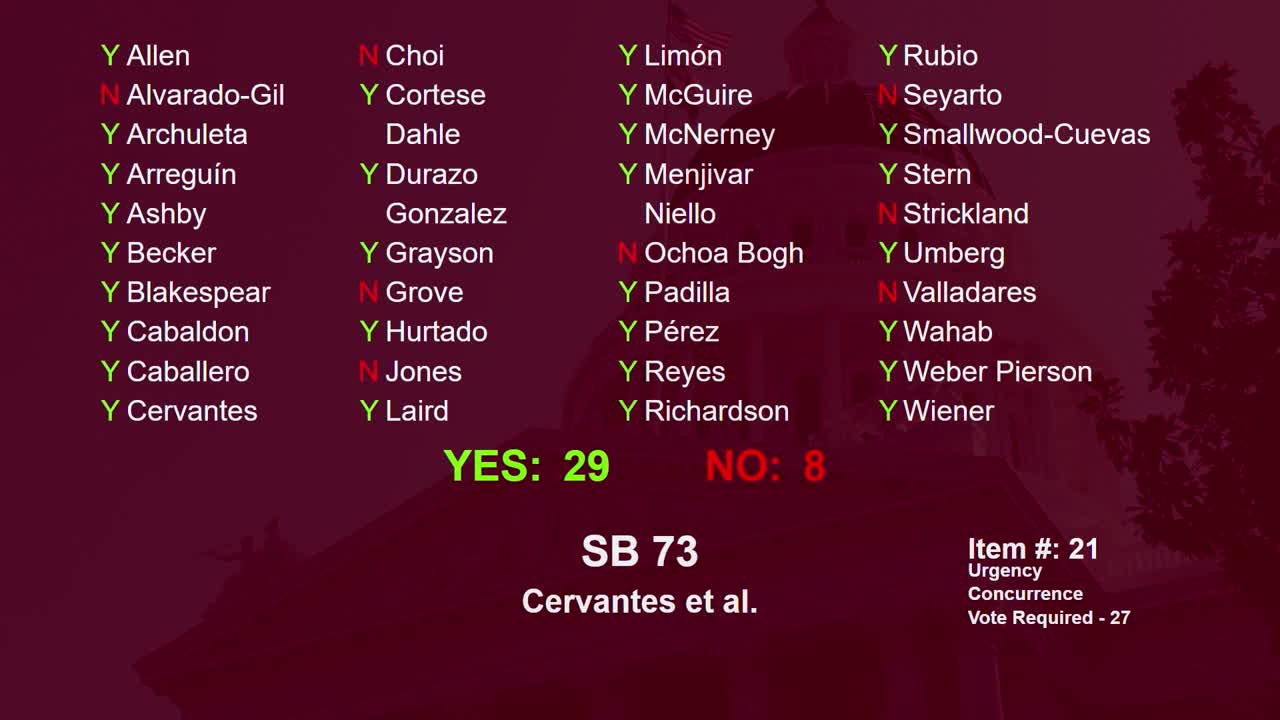
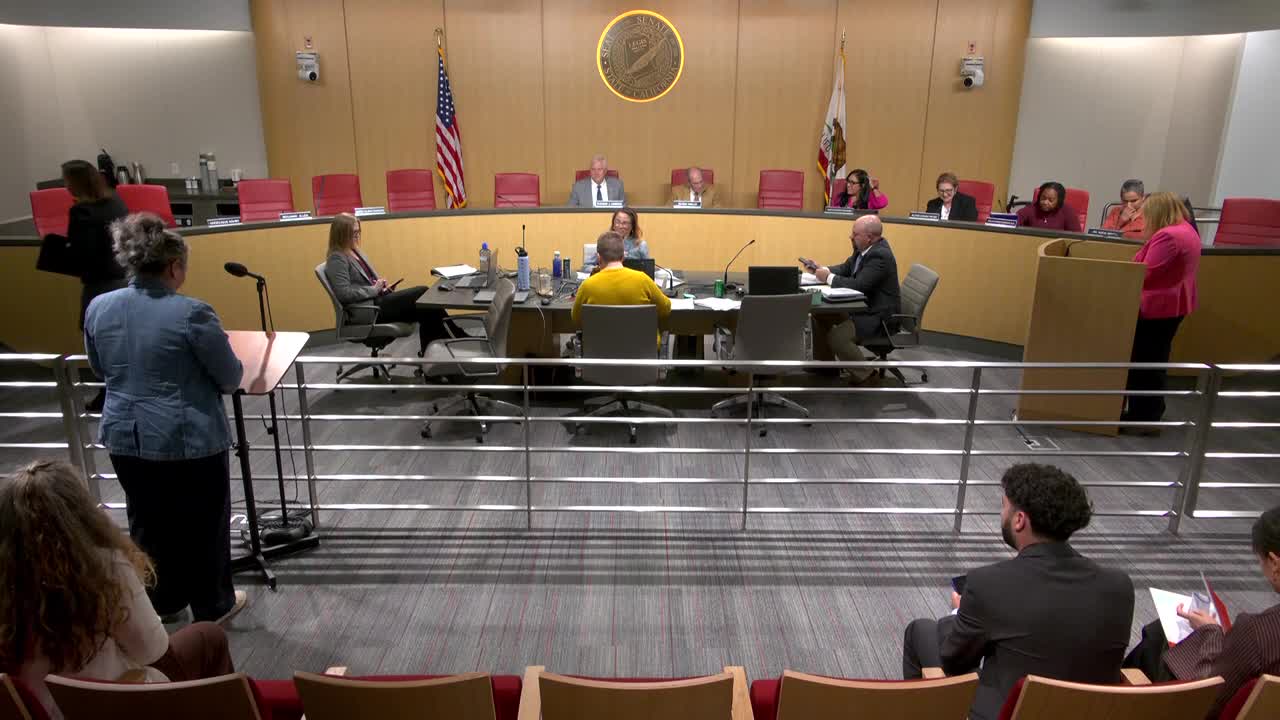


Bill Co-Author(s):