SB 1063: Conditions of employment: wage differential: race or ethnicity.
- Session Year: 2015-2016
- House: Senate
- Latest Version Date: 2016-09-30
Existing law prohibits an employer from paying any of its employees at wage rates less than the rates paid to employees of the opposite sex for substantially similar work, when viewed as a composite of skill, effort, and responsibility, and performed under similar working conditions, unless the employer demonstrates that specific, reasonably applied factors account for the entire wage differential. Existing law authorizes an employee paid lesser wages in violation of this prohibition to file a complaint with the Division of Labor Standards Enforcement, and authorizes the employee, the division, or the Department of Industrial Relations to commence a civil action for the wages the employee was deprived of because of the violation, interest on those wages, and liquidated damages. Under existing law, an employer or other person who violates or causes a violation of that prohibition, or who reduces the wages of any employee in order to comply with that prohibition, is guilty of a misdemeanor.
This bill would also prohibit an employer from paying any of its employees at wage rates less than the rates paid to employees of another race or ethnicity for substantially similar work, as specified above. By expanding the scope of a crime, this bill would impose a state-mandated local program.
This bill would incorporate additional changes in Section 1197.5 of the Labor Code proposed by AB 1676 that would become operative only if AB 1676 and this bill are both chaptered and become effective on or before January 1, 2017, and this bill is chaptered last.
The California Constitution requires the state to reimburse local agencies and school districts for certain costs mandated by the state. Statutory provisions establish procedures for making that reimbursement.
This bill would provide that no reimbursement is required by this act for a specified reason.
Existing law prohibits an employer from paying any of its employees at wage rates less than the rates paid to employees of the opposite sex for substantially similar work, when viewed as a composite of skill, effort, and responsibility, and performed under similar working conditions, unless the employer demonstrates that specific, reasonably applied factors account for the entire wage differential. Existing law authorizes an employee paid lesser wages in violation of this prohibition to file a complaint with the Division of Labor Standards Enforcement, and authorizes the employee, the division, or the Department of Industrial Relations to commence a civil action for the wages the employee was deprived of because of the violation, interest on those wages, and liquidated damages. Under existing law, an employer or other person who violates or causes a violation of that prohibition, or who reduces the wages of any employee in order to comply with that prohibition, is guilty of a misdemeanor.
This bill would expand that prohibition to also prohibit an employer from paying any of its employees at wage rates less than the rates paid to employees of another race or ethnicity for substantially similar work, as specified above. By expanding the scope of a crime, this bill would impose a state-mandated local program.
The California Constitution requires the state to reimburse local agencies and school districts for certain costs mandated by the state. Statutory provisions establish procedures for making that reimbursement.
This bill would provide that no reimbursement is required by this act for a specified reason.
(a)An employer shall not pay any of its employees at wage rates less than the rates paid to employees of the opposite sex for substantially similar work, when viewed as a composite of skill, effort, and responsibility, and performed under similar working conditions, except where the employer demonstrates:
(1)The wage differential is based upon one or more of the following factors:
(A)A seniority system.
(B)A merit system.
(C)A system that measures earnings by quantity or quality of production.
(D)A bona fide factor other than sex, such as education, training, or experience. This factor shall apply only if the employer demonstrates that the factor is not based on or derived from a sex-based differential in compensation, is job related with respect to the position in question, and is consistent with a business necessity. For purposes of this subparagraph, business necessity means an overriding legitimate business purpose such that the factor relied upon effectively fulfills the business purpose it is supposed to serve. This defense shall not apply if the employee demonstrates that an alternative business practice exists that would serve the same business purpose without producing the wage differential.
(2)Each factor relied upon is applied reasonably.
(3)The one or more factors relied upon account for the entire wage differential.
(b)An employer shall not pay any of its employees at wage rates less than the rates paid to employees of another race or ethnicity for substantially similar work, when viewed as a composite of skill, effort, and responsibility, and performed under similar working conditions, except where the employer demonstrates:
(1)The wage differential is based upon one or more of the following factors:
(A)A seniority system.
(B)A merit system.
(C)A system that measures earnings by quantity or quality of production.
(D)A bona fide factor other than race or ethnicity, such as education, training, or experience. This factor shall apply only if the employer demonstrates that the factor is not based on or derived from a race- or ethnicity-based differential in compensation, is job related with respect to the position in question, and is consistent with a business necessity. For purposes of this subparagraph, business necessity means an overriding legitimate business purpose such that the factor relied upon effectively fulfills the business purpose it is supposed to serve. This defense shall not apply if the employee demonstrates that an alternative business practice exists that would serve the same business purpose without producing the wage differential.
(2)Each factor relied upon is applied reasonably.
(3)The one or more factors relied upon account for the entire wage differential.
(c)Any employer who violates subdivision (a) or (b) is liable to the employee affected in the amount of the wages, and interest thereon, of which the employee is deprived by reason of the violation, and an additional equal amount as liquidated damages.
(d)The Division of Labor Standards Enforcement shall administer and enforce this section. If the division finds that an employer has violated this section, it may supervise the payment of wages and interest found to be due and unpaid to employees under subdivision (a) or (b). Acceptance of payment in full made by an employer and approved by the division shall constitute a waiver on the part of the employee of the employees cause of action under subdivision (h).
(e)Every employer shall maintain records of the wages and wage rates, job classifications, and other terms and conditions of employment of the persons employed by the employer. All of the records shall be kept on file for a period of three years.
(f)Any employee may file a complaint with the division that the wages paid are less than the wages to which the employee is entitled under subdivision (a) or (b) or that the employer is in violation of subdivision (k). The complaint shall be investigated as provided in subdivision (b) of Section 98.7. The division shall keep confidential the name of any employee who submits to the division a complaint regarding an alleged violation of subdivision (a), (b), or (k) until the division establishes the validity of the complaint, unless the division must abridge confidentiality to investigate the complaint. The name of the complaining employee shall remain confidential if the complaint is withdrawn before the confidentiality is abridged by the division. The division shall take all proceedings necessary to enforce the payment of any sums found to be due and unpaid to these employees.
(g)The department or division may commence and prosecute, unless otherwise requested by the employee or affected group of employees, a civil action on behalf of the employee and on behalf of a similarly affected group of employees to recover unpaid wages and liquidated damages under subdivision (a) or (b), and in addition shall be entitled to recover costs of suit. The consent of any employee to the bringing of any action shall constitute a waiver on the part of the employee of the employees cause of action under subdivision (h) unless the action is dismissed without prejudice by the department or the division, except that the employee may intervene in the suit or may initiate independent action if the suit has not been determined within 180 days from the date of the filing of the complaint.
(h)An employee receiving less than the wage to which the employee is entitled under this section may recover in a civil action the balance of the wages, including interest thereon, and an equal amount as liquidated damages, together with the costs of the suit and reasonable attorneys fees, notwithstanding any agreement to work for a lesser wage.
(i)A civil action to recover wages under subdivision (a) or (b) may be commenced no later than two years after the cause of action occurs, except that a cause of action arising out of a willful violation may be commenced no later than three years after the cause of action occurs.
(j)If an employee recovers amounts due the employee under subdivision (c), and also files a complaint or brings an action under subdivision (d) of Section 206 of Title 29 of the United States Code which results in an additional recovery under federal law for the same violation, the employee shall return to the employer the amounts recovered under subdivision (c), or the amounts recovered under federal law, whichever is less.
(k)(1)An employer shall not discharge, or in any manner discriminate or retaliate against, any employee by reason of any action taken by the employee to invoke or assist in any manner the enforcement of this section. An employer shall not prohibit an employee from disclosing the employees own wages, discussing the wages of others, inquiring about another employees wages, or aiding or encouraging any other employee to exercise his or her rights under this section. Nothing in this section creates an obligation to disclose wages.
(2)Any employee who has been discharged, discriminated or retaliated against, in the terms and conditions of his or her employment because the employee engaged in any conduct delineated in this section may recover in a civil action reinstatement and reimbursement for lost wages and work benefits caused by the acts of the employer, including interest thereon, as well as appropriate equitable relief.
(3)A civil action brought under this subdivision may be commenced no later than one year after the cause of action occurs.
SEC. 1.5.Section 1197.5 of the Labor Code is amended to read:1197.5.(a)An employer shall not pay any of its employees at wage rates less than the rates paid to employees of the opposite sex for substantially similar work, when viewed as a composite of skill, effort, and responsibility, and performed under similar working conditions, except where the employer demonstrates:
(1)The wage differential is based upon one or more of the following factors:
(A)A seniority system.
(B)A merit system.
(C)A system that measures earnings by quantity or quality of production.
(D)A bona fide factor other than sex, such as education, training, or experience. This factor shall apply only if the employer demonstrates that the factor is not based on or derived from a sex-based differential in compensation, is job related with respect to the position in question, and is consistent with a business necessity. For purposes of this subparagraph, business necessity means an overriding legitimate business purpose such that the factor relied upon effectively fulfills the business purpose it is supposed to serve. This defense shall not apply if the employee demonstrates that an alternative business practice exists that would serve the same business purpose without producing the wage differential.
(2)Each factor relied upon is applied reasonably.
(3)The one or more factors relied upon account for the entire wage differential. Prior salary shall not, by itself, justify any disparity in compensation.
(b)An employer shall not pay any of its employees at wage rates less than the rates paid to employees of another race or ethnicity for substantially similar work, when viewed as a composite of skill, effort, and responsibility, and performed under similar working conditions, except where the employer demonstrates:
(1)The wage differential is based upon one or more of the following factors:
(A)A seniority system.
(B)A merit system.
(C)A system that measures earnings by quantity or quality of production.
(D)A bona fide factor other than race or ethnicity, such as education, training, or experience. This factor shall apply only if the employer demonstrates that the factor is not based on or derived from a race- or ethnicity-based differential in compensation, is job related with respect to the position in question, and is consistent with a business necessity. For purposes of this subparagraph, business necessity means an overriding legitimate business purpose such that the factor relied upon effectively fulfills the business purpose it is supposed to serve. This defense shall not apply if the employee demonstrates that an alternative business practice exists that would serve the same business purpose without producing the wage differential.
(2)Each factor relied upon is applied reasonably.
(3)The one or more factors relied upon account for the entire wage differential. Prior salary shall not, by itself, justify any disparity in compensation.
(c)Any employer who violates subdivision (a) or (b) is liable to the employee affected in the amount of the wages, and interest thereon, of which the employee is deprived by reason of the violation, and an additional equal amount as liquidated damages.
(d)The Division of Labor Standards Enforcement shall administer and enforce this section. If the division finds that an employer has violated this section, it may supervise the payment of wages and interest found to be due and unpaid to employees under subdivision (a) or (b). Acceptance of payment in full made by an employer and approved by the division shall constitute a waiver on the part of the employee of the employees cause of action under subdivision (h).
(e)Every employer shall maintain records of the wages and wage rates, job classifications, and other terms and conditions of employment of the persons employed by the employer. All of the records shall be kept on file for a period of three years.
(f)Any employee may file a complaint with the division that the wages paid are less than the wages to which the employee is entitled under subdivision (a) or (b) or that the employer is in violation of subdivision (k). The complaint shall be investigated as provided in subdivision (b) of Section 98.7. The division shall keep confidential the name of any employee who submits to the division a complaint regarding an alleged violation of subdivision (a), (b), or (k) until the division establishes the validity of the complaint, unless the division must abridge confidentiality to investigate the complaint. The name of the complaining employee shall remain confidential if the complaint is withdrawn before the confidentiality is abridged by the division. The division shall take all proceedings necessary to enforce the payment of any sums found to be due and unpaid to these employees.
(g)The department or division may commence and prosecute, unless otherwise requested by the employee or affected group of employees, a civil action on behalf of the employee and on behalf of a similarly affected group of employees to recover unpaid wages and liquidated damages under subdivision (a) or (b), and in addition shall be entitled to recover costs of suit. The consent of any employee to the bringing of any action shall constitute a waiver on the part of the employee of the employees cause of action under subdivision (h) unless the action is dismissed without prejudice by the department or the division, except that the employee may intervene in the suit or may initiate independent action if the suit has not been determined within 180 days from the date of the filing of the complaint.
(h)An employee receiving less than the wage to which the employee is entitled under this section may recover in a civil action the balance of the wages, including interest thereon, and an equal amount as liquidated damages, together with the costs of the suit and reasonable attorneys fees, notwithstanding any agreement to work for a lesser wage.
(i)A civil action to recover wages under subdivision (a) or (b) may be commenced no later than two years after the cause of action occurs, except that a cause of action arising out of a willful violation may be commenced no later than three years after the cause of action occurs.
(j)If an employee recovers amounts due the employee under subdivision (c), and also files a complaint or brings an action under subdivision (d) of Section 206 of Title 29 of the United States Code which results in an additional recovery under federal law for the same violation, the employee shall return to the employer the amounts recovered under subdivision (c), or the amounts recovered under federal law, whichever is less.
(k)(1)An employer shall not discharge, or in any manner discriminate or retaliate against, any employee by reason of any action taken by the employee to invoke or assist in any manner the enforcement of this section. An employer shall not prohibit an employee from disclosing the employees own wages, discussing the wages of others, inquiring about another employees wages, or aiding or encouraging any other employee to exercise his or her rights under this section. Nothing in this section creates an obligation to disclose wages.
(2)Any employee who has been discharged, discriminated or retaliated against, in the terms and conditions of his or her employment because the employee engaged in any conduct delineated in this section may recover in a civil action reinstatement and reimbursement for lost wages and work benefits caused by the acts of the employer, including interest thereon, as well as appropriate equitable relief.
(3)A civil action brought under this subdivision may be commenced no later than one year after the cause of action occurs.
SEC. 2.Section 1199.5 of the Labor Code is amended to read:1199.5.Every employer or other person acting either individually or as an officer, agent, or employee of another person is guilty of a misdemeanor and is punishable by a fine of not more than ten thousand dollars ($10,000), or by imprisonment for not more than six months, or by both, who willfully does any of the following:
(a)Pays or causes to be paid any employee a wage less than the rate paid to an employee of another sex, race, or ethnicity, as required by Section 1197.5.
(b)Reduces the wages of any employee in order to comply with Section 1197.5.
No person shall be imprisoned pursuant to this section except for an offense committed after the conviction of the person for a prior offense pursuant to this section.
SEC. 3.Section 1.5 of this bill incorporates amendments to Section 1197.5 of the Labor Code proposed by both this bill and Assembly Bill 1676. It shall only become operative if (1) both bills are enacted and become effective on or before January 1, 2017, (2) each bill amends Section 1197.5 of the Labor Code, and (3) this bill is enacted after Assembly Bill 1676, in which case Section 1 of this bill shall not become operative.
SEC. 4.No reimbursement is required by this act pursuant to Section 6 of Article XIIIB of the California Constitution because the only costs that may be incurred by a local agency or school district will be incurred because this act creates a new crime or infraction, eliminates a crime or infraction, or changes the penalty for a crime or infraction, within the meaning of Section 17556 of the Government Code, or changes the definition of a crime within the meaning of Section 6 of Article XIIIB of the California Constitution.
(a)An employer shall not pay any of its employees at wage rates less than the rates paid to employees of the opposite sex for substantially similar work, when viewed as a composite of skill, effort, and responsibility, and performed under similar working conditions, except where the employer demonstrates:
(1)The wage differential is based upon one or more of the following factors:
(A)A seniority system.
(B)A merit system.
(C)A system that measures earnings by quantity or quality of production.
(D)A bona fide factor other than sex, such as education, training, or experience. This factor shall apply only if the employer demonstrates that the factor is not based on or derived from a sex-based differential in compensation, is job related with respect to the position in question, and is consistent with a business necessity. For purposes of this subparagraph, business necessity means an overriding legitimate business purpose such that the factor relied upon effectively fulfills the business purpose it is supposed to serve. This defense shall not apply if the employee demonstrates that an alternative business practice exists that would serve the same business purpose without producing the wage differential.
(2)Each factor relied upon is applied reasonably.
(3)The one or more factors relied upon account for the entire wage differential.
(b)An employer shall not pay any of its employees at wage rates less than the rates paid to employees of another race or ethnicity for substantially similar work, when viewed as a composite of skill, effort, and responsibility, and performed under similar working conditions, except where the employer demonstrates:
(1)The wage differential is based upon one or more of the following factors:
(A)A seniority system.
(B)A merit system.
(C)A system that measures earnings by quantity or quality of production.
(D)A bona fide factor other than race or ethnicity, such as education, training, or experience. This factor shall apply only if the employer demonstrates that the factor is not based on or derived from a race- or ethnicity-based differential in compensation, is job related with respect to the position in question, and is consistent with a business necessity. For purposes of this subparagraph, business necessity means an overriding legitimate business purpose such that the factor relied upon effectively fulfills the business purpose it is supposed to serve. This defense shall not apply if the employee demonstrates that an alternative business practice exists that would serve the same business purpose without producing the wage differential.
(2)Each factor relied upon is applied reasonably.
(3)The one or more factors relied upon account for the entire wage differential.
(c)Any employer who violates subdivision (a) or (b) is liable to the employee affected in the amount of the wages, and interest thereon, of which the employee is deprived by reason of the violation, and an additional equal amount as liquidated damages.
(d)The Division of Labor Standards Enforcement shall administer and enforce this section. If the division finds that an employer has violated this section, it may supervise the payment of wages and interest found to be due and unpaid to employees under subdivision (a) or (b). Acceptance of payment in full made by an employer and approved by the division shall constitute a waiver on the part of the employee of the employees cause of action under subdivision (h).
(e)Every employer shall maintain records of the wages and wage rates, job classifications, and other terms and conditions of employment of the persons employed by the employer. All of the records shall be kept on file for a period of three years.
(f)Any employee may file a complaint with the division that the wages paid are less than the wages to which the employee is entitled under subdivision (a) or (b) or that the employer is in violation of subdivision (k). The complaint shall be investigated as provided in subdivision (b) of Section 98.7. The division shall keep confidential the name of any employee who submits to the division a complaint regarding an alleged violation of subdivision (a), (b), or (k) until the division establishes the validity of the complaint, unless the division must abridge confidentiality to investigate the complaint. The name of the complaining employee shall remain confidential if the complaint is withdrawn before the confidentiality is abridged by the division. The division shall take all proceedings necessary to enforce the payment of any sums found to be due and unpaid to these employees.
(g)The department or division may commence and prosecute, unless otherwise requested by the employee or affected group of employees, a civil action on behalf of the employee and on behalf of a similarly affected group of employees to recover unpaid wages and liquidated damages under subdivision (a) or (b), and in addition shall be entitled to recover costs of suit. The consent of any employee to the bringing of any action shall constitute a waiver on the part of the employee of the employees cause of action under subdivision (h) unless the action is dismissed without prejudice by the department or the division, except that the employee may intervene in the suit or may initiate independent action if the suit has not been determined within 180 days from the date of the filing of the complaint.
(h)An employee receiving less than the wage to which the employee is entitled under this section may recover in a civil action the balance of the wages, including interest thereon, and an equal amount as liquidated damages, together with the costs of the suit and reasonable attorneys fees, notwithstanding any agreement to work for a lesser wage.
(i)A civil action to recover wages under subdivision (a) or (b) may be commenced no later than two years after the cause of action occurs, except that a cause of action arising out of a willful violation may be commenced no later than three years after the cause of action occurs.
(j)If an employee recovers amounts due the employee under subdivision (c), and also files a complaint or brings an action under subdivision (d) of Section 206 of Title 29 of the United States Code which results in an additional recovery under federal law for the same violation, the employee shall return to the employer the amounts recovered under subdivision (c), or the amounts recovered under federal law, whichever is less.
(k)(1)An employer shall not discharge, or in any manner discriminate or retaliate against, any employee by reason of any action taken by the employee to invoke or assist in any manner the enforcement of this section. An employer shall not prohibit an employee from disclosing the employees own wages, discussing the wages of others, inquiring about another employees wages, or aiding or encouraging any other employee to exercise his or her rights under this section. Nothing in this section creates an obligation to disclose wages.
(2)Any employee who has been discharged, discriminated or retaliated against, in the terms and conditions of his or her employment because the employee engaged in any conduct delineated in this section may recover in a civil action reinstatement and reimbursement for lost wages and work benefits caused by the acts of the employer, including interest thereon, as well as appropriate equitable relief.
(3)A civil action brought under this subdivision may be commenced no later than one year after the cause of action occurs.
SEC. 1.5.Section 1197.5 of the Labor Code is amended to read:1197.5.(a)An employer shall not pay any of its employees at wage rates less than the rates paid to employees of the opposite sex for substantially similar work, when viewed as a composite of skill, effort, and responsibility, and performed under similar working conditions, except where the employer demonstrates:
(1)The wage differential is based upon one or more of the following factors:
(A)A seniority system.
(B)A merit system.
(C)A system that measures earnings by quantity or quality of production.
(D)A bona fide factor other than sex, such as education, training, or experience. This factor shall apply only if the employer demonstrates that the factor is not based on or derived from a sex-based differential in compensation, is job related with respect to the position in question, and is consistent with a business necessity. For purposes of this subparagraph, business necessity means an overriding legitimate business purpose such that the factor relied upon effectively fulfills the business purpose it is supposed to serve. This defense shall not apply if the employee demonstrates that an alternative business practice exists that would serve the same business purpose without producing the wage differential.
(2)Each factor relied upon is applied reasonably.
(3)The one or more factors relied upon account for the entire wage differential. Prior salary shall not, by itself, justify any disparity in compensation.
(b)An employer shall not pay any of its employees at wage rates less than the rates paid to employees of another race or ethnicity for substantially similar work, when viewed as a composite of skill, effort, and responsibility, and performed under similar working conditions, except where the employer demonstrates:
(1)The wage differential is based upon one or more of the following factors:
(A)A seniority system.
(B)A merit system.
(C)A system that measures earnings by quantity or quality of production.
(D)A bona fide factor other than race or ethnicity, such as education, training, or experience. This factor shall apply only if the employer demonstrates that the factor is not based on or derived from a race- or ethnicity-based differential in compensation, is job related with respect to the position in question, and is consistent with a business necessity. For purposes of this subparagraph, business necessity means an overriding legitimate business purpose such that the factor relied upon effectively fulfills the business purpose it is supposed to serve. This defense shall not apply if the employee demonstrates that an alternative business practice exists that would serve the same business purpose without producing the wage differential.
(2)Each factor relied upon is applied reasonably.
(3)The one or more factors relied upon account for the entire wage differential. Prior salary shall not, by itself, justify any disparity in compensation.
(b)
(c)Any employer who violates subdivision (a) or (b) is liable to the employee affected in the amount of the wages, and interest thereon, of which the employee is deprived by reason of the violation, and an additional equal amount as liquidated damages.
(c)
(d)The Division of Labor Standards Enforcement shall administer and enforce this section. If the division finds that an employer has violated this section, it may supervise the payment of wages and interest found to be due and unpaid to employees under subdivision (a). (a) or (b). Acceptance of payment in full made by an employer and approved by the division shall constitute a waiver on the part of the employee of the employees cause of action under subdivision (g). (h).
(d)
(e)Every employer shall maintain records of the wages and wage rates, job classifications, and other terms and conditions of employment of the persons employed by the employer. All of the records shall be kept on file for a period of three years.
(e)
(f)Any employee may file a complaint with the division that the wages paid are less than the wages to which the employee is entitled under subdivision (a) or (b) or that the employer is in violation of subdivision (j). (k). The complaint shall be investigated as provided in subdivision (b) of Section 98.7. The division shall keep confidential the name of any employee who submits to the division a complaint regarding an alleged violation of subdivision (a) or (j) (a), (b), or (k) until the division establishes the validity of the complaint, unless the division must abridge confidentiality to investigate the complaint. The name of the complaining employee shall remain confidential if the complaint is withdrawn before the confidentiality is abridged by the division. The division shall take all proceedings necessary to enforce the payment of any sums found to be due and unpaid to these employees.
(f)
(g)The department or division may commence and prosecute, unless otherwise requested by the employee or affected group of employees, a civil action on behalf of the employee and on behalf of a similarly affected group of employees to recover unpaid wages and liquidated damages under subdivision (a), (a) or (b), and in addition shall be entitled to recover costs of suit. The consent of any employee to the bringing of any action shall constitute a waiver on the part of the employee of the employees cause of action under subdivision (g) (h) unless the action is dismissed without prejudice by the department or the division, except that the employee may intervene in the suit or may initiate independent action if the suit has not been determined within 180 days from the date of the filing of the complaint.
(g)Any
(h)An employee receiving less than the wage to which the employee is entitled under this section may recover in a civil action the balance of the wages, including interest thereon, and an equal amount as liquidated damages, together with the costs of the suit and reasonable attorneys fees, notwithstanding any agreement to work for a lesser wage.
(h)
(i)A civil action to recover wages under subdivision (a) or (b) may be commenced no later than two years after the cause of action occurs, except that a cause of action arising out of a willful violation may be commenced no later than three years after the cause of action occurs.
(i)
(j)If an employee recovers amounts due the employee under subdivision (b), (c), and also files a complaint or brings an action under subdivision (d) of Section 206 of Title 29 of the United States Code which results in an additional recovery under federal law for the same violation, the employee shall return to the employer the amounts recovered under subdivision (b), (c), or the amounts recovered under federal law, whichever is less.
(j)
(k)(1)An employer shall not discharge, or in any manner discriminate or retaliate against, any employee by reason of any action taken by the employee to invoke or assist in any manner the enforcement of this section. An employer shall not prohibit an employee from disclosing the employees own wages, discussing the wages of others, inquiring about another employees wages, or aiding or encouraging any other employee to exercise his or her rights under this section. Nothing in this section creates an obligation to disclose wages.
(2)Any employee who has been discharged, discriminated or retaliated against, in the terms and conditions of his or her employment because the employee engaged in any conduct delineated in this section may recover in a civil action reinstatement and reimbursement for lost wages and work benefits caused by the acts of the employer, including interest thereon, as well as appropriate equitable relief.
(3)A civil action brought under this subdivision may be commenced no later than one year after the cause of action occurs.
SEC. 2.Section 1199.5 of the Labor Code is amended to read:1199.5.Every employer or other person acting either individually or as an officer, agent, or employee of another person is guilty of a misdemeanor and is punishable by a fine of not more than ten thousand dollars ($10,000), or by imprisonment for not more than six months, or by both, who willfully does any of the following:
(a)Pays or causes to be paid any employee a wage less than the rate paid to an employee of another sex, race, or ethnicity, as required by Section 1197.5.
(b)Reduces the wages of any employee in order to comply with Section 1197.5.
No person shall be imprisoned pursuant to this section except for an offense committed after the conviction of the person for a prior offense pursuant to this section.
SEC. 3.Section 1.5 of this bill incorporates amendments to Section 1197.5 of the Labor Code proposed by both this bill and Assembly Bill 1676. It shall only become operative if (1) both bills are enacted and become effective on or before January 1, 2017, (2) each bill amends Section 1197.5 of the Labor Code, and (3) this bill is enacted after Assembly Bill 1676, in which case Section 1 of this bill shall not become operative.
SEC. 3.SEC. 4.No reimbursement is required by this act pursuant to Section 6 of Article XIIIB of the California Constitution because the only costs that may be incurred by a local agency or school district will be incurred because this act creates a new crime or infraction, eliminates a crime or infraction, or changes the penalty for a crime or infraction, within the meaning of Section 17556 of the Government Code, or changes the definition of a crime within the meaning of Section 6 of Article XIIIB of the California Constitution.
(a)An employer shall not pay any of its employees at wage rates less than the rates paid to employees of the opposite sex for substantially similar work, when viewed as a composite of skill, effort, and responsibility, and performed under similar working conditions, except where the employer demonstrates:
(1)The wage differential is based upon one or more of the following factors:
(A)A seniority system.
(B)A merit system.
(C)A system that measures earnings by quantity or quality of production.
(D)A bona fide factor other than sex, such as education, training, or experience. This factor shall apply only if the employer demonstrates that the factor is not based on or derived from a sex-based differential in compensation, is job related with respect to the position in question, and is consistent with a business necessity. For purposes of this subparagraph, business necessity means an overriding legitimate business purpose such that the factor relied upon effectively fulfills the business purpose it is supposed to serve. This defense shall not apply if the employee demonstrates that an alternative business practice exists that would serve the same business purpose without producing the wage differential.
(2)Each factor relied upon is applied reasonably.
(3)The one or more factors relied upon account for the entire wage differential.
(b)An employer shall not pay any of its employees at wage rates less than the rates paid to employees of another race or ethnicity for substantially similar work, when viewed as a composite of skill, effort, and responsibility, and performed under similar working conditions, except where the employer demonstrates:
(1)The wage differential is based upon one or more of the following factors:
(A)A seniority system.
(B)A merit system.
(C)A system that measures earnings by quantity or quality of production.
(D)A bona fide factor other than race or ethnicity, such as education, training, or experience. This factor shall apply only if the employer demonstrates that the factor is not based on or derived from a race- or ethnicity-based differential in compensation, is job related with respect to the position in question, and is consistent with a business necessity. For purposes of this subparagraph, business necessity means an overriding legitimate business purpose such that the factor relied upon effectively fulfills the business purpose it is supposed to serve. This defense shall not apply if the employee demonstrates that an alternative business practice exists that would serve the same business purpose without producing the wage differential.
(2)Each factor relied upon is applied reasonably.
(3)The one or more factors relied upon account for the entire wage differential.
(c)Any employer who violates subdivision (a) or (b) is liable to the employee affected in the amount of the wages, and interest thereon, of which the employee is deprived by reason of the violation, and an additional equal amount as liquidated damages.
(d)The Division of Labor Standards Enforcement shall administer and enforce this section. If the division finds that an employer has violated this section, it may supervise the payment of wages and interest found to be due and unpaid to employees under subdivision (a) or (b). Acceptance of payment in full made by an employer and approved by the division shall constitute a waiver on the part of the employee of the employees cause of action under subdivision (h).
(e)Every employer shall maintain records of the wages and wage rates, job classifications, and other terms and conditions of employment of the persons employed by the employer. All of the records shall be kept on file for a period of three years.
(f)Any employee may file a complaint with the division that the wages paid are less than the wages to which the employee is entitled under subdivision (a) or (b) or that the employer is in violation of subdivision (k). The complaint shall be investigated as provided in subdivision (b) of Section 98.7. The division shall keep confidential the name of any employee who submits to the division a complaint regarding an alleged violation of subdivision (a), (b), or (k) until the division establishes the validity of the complaint, unless the division must abridge confidentiality to investigate the complaint. The name of the complaining employee shall remain confidential if the complaint is withdrawn before the confidentiality is abridged by the division. The division shall take all proceedings necessary to enforce the payment of any sums found to be due and unpaid to these employees.
(g)The department or division may commence and prosecute, unless otherwise requested by the employee or affected group of employees, a civil action on behalf of the employee and on behalf of a similarly affected group of employees to recover unpaid wages and liquidated damages under subdivision (a) or (b), and in addition shall be entitled to recover costs of suit. The consent of any employee to the bringing of any action shall constitute a waiver on the part of the employee of the employees cause of action under subdivision (h) unless the action is dismissed without prejudice by the department or the division, except that the employee may intervene in the suit or may initiate independent action if the suit has not been determined within 180 days from the date of the filing of the complaint.
(h)Any An employee receiving less than the wage to which the employee is entitled under this section may recover in a civil action the balance of the wages, including interest thereon, and an equal amount as liquidated damages, together with the costs of the suit and reasonable attorneys fees, notwithstanding any agreement to work for a lesser wage.
(i)A civil action to recover wages under subdivision (a) or (b) may be commenced no later than two years after the cause of action occurs, except that a cause of action arising out of a willful violation may be commenced no later than three years after the cause of action occurs.
(j)If an employee recovers amounts due the employee under subdivision (c), and also files a complaint or brings an action under subdivision (d) of Section 206 of Title 29 of the United States Code which results in an additional recovery under federal law for the same violation, the employee shall return to the employer the amounts recovered under subdivision (c), or the amounts recovered under federal law, whichever is less.
(k)(1)An employer shall not discharge, or in any manner discriminate or retaliate against, any employee by reason of any action taken by the employee to invoke or assist in any manner the enforcement of this section. An employer shall not prohibit an employee from disclosing the employees own wages, discussing the wages of others, inquiring about another employees wages, or aiding or encouraging any other employee to exercise his or her rights under this section. Nothing in this section creates an obligation to disclose wages.
(2)Any employee who has been discharged, discriminated or retaliated against, in the terms and conditions of his or her employment because the employee engaged in any conduct delineated in this section may recover in a civil action reinstatement and reimbursement for lost wages and work benefits caused by the acts of the employer, including interest thereon, as well as appropriate equitable relief.
(3)A civil action brought under this subdivision may be commenced no later than one year after the cause of action occurs.
SEC. 2.Section 1199.5 of the Labor Code is amended to read:1199.5.Every employer or other person acting either individually or as an officer, agent, or employee of another person is guilty of a misdemeanor and is punishable by a fine of not more than ten thousand dollars ($10,000), or by imprisonment for not more than six months, or by both, who willfully does any of the following:
(a)Pays or causes to be paid any employee a wage less than the rate paid to an employee of another sex, race, or ethnicity, as required by Section 1197.5.
(b)Reduces the wages of any employee in order to comply with Section 1197.5.
No person shall be imprisoned pursuant to this section except for an offense committed after the conviction of the person for a prior offense pursuant to this section.
SEC. 3.No reimbursement is required by this act pursuant to Section 6 of Article XIIIB of the California Constitution because the only costs that may be incurred by a local agency or school district will be incurred because this act creates a new crime or infraction, eliminates a crime or infraction, or changes the penalty for a crime or infraction, within the meaning of Section 17556 of the Government Code, or changes the definition of a crime within the meaning of Section 6 of Article XIIIB of the California Constitution.
HeadingLine 4.(a)An employer shall not pay any of its employees at wage rates less than the rates paid to employees of the opposite sex for substantially similar work, when viewed as a composite of skill, effort, and responsibility, and performed under similar working conditions, except where the employer demonstrates:
(1)The wage differential is based upon one or more of the following factors:
(A)A seniority system.
(B)A merit system.
(C)A system that measures earnings by quantity or quality of production.
(D)A bona fide factor other than sex, such as education, training, or experience. This factor shall apply only if the employer demonstrates that the factor is not based on or derived from a sex-based differential in compensation, is job related with respect to the position in question, and is consistent with a business necessity. For purposes of this subparagraph, business necessity means an overriding legitimate business purpose such that the factor relied upon effectively fulfills the business purpose it is supposed to serve. This defense shall not apply if the employee demonstrates that an alternative business practice exists that would serve the same business purpose without producing the wage differential.
(2)Each factor relied upon is applied reasonably.
(3)The one or more factors relied upon account for the entire wage differential.
(b)An employer shall not pay any of its employees at wage rates less than the rates paid to employees of another race or ethnicity for substantially similar work, when viewed as a composite of skill, effort, and responsibility, and performed under similar working conditions, except where the employer demonstrates:
(1)The wage differential is based upon one or more of the following factors:
(A)A seniority system.
(B)A merit system.
(C)A system that measures earnings by quantity or quality of production.
(D)A bona fide factor other than race or ethnicity, such as education, training, or experience. This factor shall apply only if the employer demonstrates that the factor is not based on or derived from a race- or ethnicity-based differential in compensation, is job related with respect to the position in question, and is consistent with a business necessity. For purposes of this subparagraph, business necessity means an overriding legitimate business purpose such that the factor relied upon effectively fulfills the business purpose it is supposed to serve. This defense shall not apply if the employee demonstrates that an alternative business practice exists that would serve the same business purpose without producing the wage differential.
(2)Each factor relied upon is applied reasonably.
(3)The one or more factors relied upon account for the entire wage differential.
(b)
(c)Any employer who violates subdivision (a) or (b) is liable to the employee affected in the amount of the wages, and interest thereon, of which the employee is deprived by reason of the violation, and an additional equal amount as liquidated damages.
(c)
(d)The Division of Labor Standards Enforcement shall administer and enforce this section. If the division finds that an employer has violated this section, it may supervise the payment of wages and interest found to be due and unpaid to employees under subdivision (a). (a) or (b). Acceptance of payment in full made by an employer and approved by the division shall constitute a waiver on the part of the employee of the employees cause of action under subdivision (g). (h).
(d)
(e)Every employer shall maintain records of the wages and wage rates, job classifications, and other terms and conditions of employment of the persons employed by the employer. All of the records shall be kept on file for a period of three years.
(e)
(f)Any employee may file a complaint with the division that the wages paid are less than the wages to which the employee is entitled under subdivision (a) or (b) or that the employer is in violation of subdivision (j). (k). The complaint shall be investigated as provided in subdivision (b) of Section 98.7. The division shall keep confidential the name of any employee who submits to the division a complaint regarding an alleged violation of subdivision (a) (a), (b), or (j) (k) until the division establishes the validity of the complaint, unless the division must abridge confidentiality to investigate the complaint. The name of the complaining employee shall remain confidential if the complaint is withdrawn before the confidentiality is abridged by the division. The division shall take all proceedings necessary to enforce the payment of any sums found to be due and unpaid to these employees.
(f)
(g)The department or division may commence and prosecute, unless otherwise requested by the employee or affected group of employees, a civil action on behalf of the employee and on behalf of a similarly affected group of employees to recover unpaid wages and liquidated damages under subdivision (a), (a) or (b), and in addition shall be entitled to recover costs of suit. The consent of any employee to the bringing of any action shall constitute a waiver on the part of the employee of the employees cause of action under subdivision (g) (h) unless the action is dismissed without prejudice by the department or the division, except that the employee may intervene in the suit or may initiate independent action if the suit has not been determined within 180 days from the date of the filing of the complaint.
(g)
(h)Any employee receiving less than the wage to which the employee is entitled under this section may recover in a civil action the balance of the wages, including interest thereon, and an equal amount as liquidated damages, together with the costs of the suit and reasonable attorneys fees, notwithstanding any agreement to work for a lesser wage.
(h)
(i)A civil action to recover wages under subdivision (a) or (b) may be commenced no later than two years after the cause of action occurs, except that a cause of action arising out of a willful violation may be commenced no later than three years after the cause of action occurs.
(i)
(j)If an employee recovers amounts due the employee under subdivision (b), (c), and also files a complaint or brings an action under subdivision (d) of Section 206 of Title 29 of the United States Code which results in an additional recovery under federal law for the same violation, the employee shall return to the employer the amounts recovered under subdivision (b), (c), or the amounts recovered under federal law, whichever is less.
(j)
(k)(1)An employer shall not discharge, or in any manner discriminate or retaliate against, any employee by reason of any action taken by the employee to invoke or assist in any manner the enforcement of this section. An employer shall not prohibit an employee from disclosing the employees own wages, discussing the wages of others, inquiring about another employees wages, or aiding or encouraging any other employee to exercise his or her rights under this section. Nothing in this section creates an obligation to disclose wages.
(2)Any employee who has been discharged, discriminated or retaliated against, in the terms and conditions of his or her employment because the employee engaged in any conduct delineated in this section may recover in a civil action reinstatement and reimbursement for lost wages and work benefits caused by the acts of the employer, including interest thereon, as well as appropriate equitable relief.
(3)A civil action brought under this subdivision may be commenced no later than one year after the cause of action occurs.
SEC. 2.Section 1199.5 of the Labor Code is amended to read:1199.5.Every employer or other person acting either individually or as an officer, agent, or employee of another person is guilty of a misdemeanor and is punishable by a fine of not more than ten thousand dollars ($10,000), or by imprisonment for not more than six months, or by both, who willfully does any of the following:
(a)Pays or causes to be paid any employee a wage less than the rate paid to an employee of the opposite sex another sex, race, or ethnicity, as required by Section 1197.5.
(b)Reduces the wages of any employee in order to comply with Section 1197.5.
No person shall be imprisoned pursuant to this section except for an offense committed after the conviction of the person for a prior offense pursuant to this section.
SEC. 3.No reimbursement is required by this act pursuant to Section 6 of Article XIIIB of the California Constitution because the only costs that may be incurred by a local agency or school district will be incurred because this act creates a new crime or infraction, eliminates a crime or infraction, or changes the penalty for a crime or infraction, within the meaning of Section 17556 of the Government Code, or changes the definition of a crime within the meaning of Section 6 of Article XIIIB of the California Constitution.
|
Date
|
Status
|
|---|---|
| Aug 31, 2016 | Enrolled and presented to the Governor at 3 p.m. |
| Aug 25, 2016 | Assembly amendments concurred in. (Ayes 26. Noes 13. Page 5403.) Ordered to engrossing and enrolling. |
| Aug 25, 2016 | Assembly amendments concurred in. (Ayes 25. Noes 12.) Ordered to engrossing and enrolling. |
| Aug 23, 2016 | Read third time. Passed. (Ayes 60. Noes 14. Page 6083.) Ordered to the Senate. |
| Aug 23, 2016 | In Senate. Concurrence in Assembly amendments pending. |
| Aug 23, 2016 | Read third time. Passed. Ordered to the Senate. |
| Aug 19, 2016 | Ordered to third reading. |
| Aug 19, 2016 | Read third time and amended. |
| Aug 18, 2016 | Action rescinded whereby the bill was read a third time, amended and ordered to third reading. |
| Aug 18, 2016 | Ordered to third reading. |
| Aug 18, 2016 | Read third time and amended. |
| Aug 15, 2016 | Read second time. Ordered to third reading. |
| Aug 12, 2016 | From committee: Do pass. (Ayes 14. Noes 5.) (August 11). |
| Jun 29, 2016 | June 29 set for first hearing. Placed on APPR. suspense file. |
| Jun 23, 2016 | From committee: Do pass and re-refer to Com. on APPR. (Ayes 5. Noes 1.) (June 22). Re-referred to Com. on APPR. |
| Jun 6, 2016 | Referred to Com. on L. & E. |
| Jun 1, 2016 | In Assembly. Read first time. Held at Desk. |
| May 31, 2016 | Read third time. Passed. (Ayes 26. Noes 13. Page 4042.) Ordered to the Assembly. |
| May 31, 2016 | Read third time. Passed. (Ayes 26. Noes 13.) Ordered to the Assembly. |
| May 27, 2016 | From committee: Do pass. (Ayes 5. Noes 2. Page 4002.) (May 27). |
| May 27, 2016 | Read second time. Ordered to third reading. |
| May 27, 2016 | From committee: Do pass. (Ayes 5. Noes 2.) (May 27). |
| May 20, 2016 | Set for hearing May 27. |
| Apr 25, 2016 | April 25 hearing: Placed on APPR. suspense file. |
| Apr 20, 2016 | (Corrected May 2). |
| Apr 20, 2016 | From committee with author's amendments. Read second time and amended. Re-referred to Com. on APPR. |
| Apr 15, 2016 | Set for hearing April 25. |
| Apr 13, 2016 | From committee: Do pass and re-refer to Com. on APPR. (Ayes 4. Noes 1. Page 3520.) (April 13). Re-referred to Com. on APPR. |
| Apr 13, 2016 | From committee: Do pass and re-refer to Com. on APPR. (Ayes 4. Noes 1.) (April 13). Re-referred to Com. on APPR. |
| Apr 5, 2016 | Set for hearing April 13. |
| Feb 25, 2016 | Referred to Com. on L. & I.R. |
| Feb 17, 2016 | From printer. May be acted upon on or after March 18. |
| Feb 16, 2016 | Introduced. Read first time. To Com. on RLS. for assignment. To print. |
|
Date
|
Description
|
Location
|
Votes
|
|
|---|---|---|---|---|
| Aug 25, 2016 | Unfinished Business SB1063 Hall Concurrence | Senate Floor |
Passed |
|
| Aug 23, 2016 | SB 1063 Hall Senate Third Reading By BURKE | Assembly Floor |
Passed |
|
| Aug 11, 2016 | Do pass. | Assembly Standing Committee on Appropriations |
Passed |
|
| Jun 22, 2016 | Do pass and be re-referred to the Committee on [Appropriations] | Assembly Standing Committee on Labor and Employment |
Passed |
|
| May 31, 2016 | Senate 3rd Reading SB1063 Hall | Senate Floor |
Passed |
|
| May 27, 2016 | Do pass | Senate Standing Committee on Appropriations |
Passed |
|
| Apr 25, 2016 | Placed on suspense file | Senate Standing Committee on Appropriations |
Passed |
|
| Apr 13, 2016 | Do pass, but first be re-referred to the Committee on [Appropriations] | Senate Standing Committee on Labor and Industrial Relations |
Passed |
This list shows positions taken on this bill by organizations on the date displayed, which is linked to the original source.
Positions by individuals are not included.
Office of Senate Floor Analyses (916) 651-1520 Fax: (916) 327-4478 | SB |
UNFINISHED BUSINESS
Bill No: SB 1063
:
SENATE LABOR & IND. REL. COMMITTEE: 4-1, 4/13/16
AYES: Mendoza, Jackson, Leno, Mitchell
NOES: Stone
SENATE APPROPRIATIONS COMMITTEE: 5-2, 5/27/16
AYES: Lara, Beall, Hill, McGuire, Mendoza
NOES: Bates, Nielsen
SENATE FLOOR: 26-13, 5/31/16
AYES: Allen, Beall, Block, De León, Galgiani, Glazer, Hall, Hancock, Hernandez, Hertzberg, Hill, Hueso, Jackson, Lara, Leno, Leyva, Liu, McGuire, Mendoza, Mitchell, Monning, Pan, Pavley, Roth, Wieckowski, Wolk
NOES: Anderson, Bates, Berryhill, Cannella, Fuller, Gaines, Huff, Moorlach, Morrell, Nguyen, Nielsen, Stone, Vidak
NO VOTE RECORDED: Runner
ASSEMBLY FLOOR: 60-14, 8/23/16 - See last page for vote
SOURCE: California National Organization for Women
DIGEST: This bill amends the Equal Pay Act to prohibit employers from paying employees a wage rate less than the rate paid to employees of a different race or ethnicity for substantially similar work.
Assembly Amendments address chaptering-out issues with AB 1676 (Campos).
Existing law:
- Prohibits an employer from requiring an employee to refrain from disclosing the amount of his or her wages, or discharging, formally disciplining, or otherwise discriminating against an employee who discloses the amount of his or her wages (Labor Code §232).
- States that an employer shall not pay any of its employees at wage rates less than the rates paid to employees of the opposite sex for substantially similar work, when viewed as a composite of skill, effort, and responsibility, and performed under similar working conditions.
- Provides that the only exceptions to this standard are when the wage differential is based upon one or more of the following factors (Labor Code §1197.5):
- A seniority system.
- A merit system.
- A system that measures earnings by quantity or quality of production.
- A bona fide factor other than sex, such as education, training, or experience which only applies if the employer demonstrates that it is not based on a sex-based differential in compensation, is job related, and is consistent with a business necessity. “Business necessity” means an overriding legitimate business purpose which the factor relied upon effectively fulfills. This does not apply if the employee demonstrates that an alternative business practice would serve the same business purpose without producing the wage differential.
- States that each factor relied upon to explain the wage differential must be applied reasonably and account for the entire wage differential (Labor Code §1197.5).
- States that any employer who violates the above section is liable for the amount of the employee’s wages and interest that the employee is deprived in addition to liquidated damages, administered and enforced by the Division of Labor Standards Enforcement (DLSE) (Labor Code §1197.5).
- Requires that employers maintain records of the wages and wage rates, job classifications, and other terms and conditions of employment of the persons employed by the employer (Labor Code §1197.5).
- States that DLSE may also commence and prosecute a civil action on behalf of the employee and on behalf of a similarly affected group of employees to recover unpaid wages and liquidated damages (Labor Code §1197.5).
- Specifies that an employer that pays or causes to be paid any employee a wage less than the rate paid to an employee of the opposite sex and required by Labor Code Section 1197.5 is guilty of a misdemeanor and is punishable by a fine of not more than $10,000 or by imprisonment for not more than six months (Labor Code §1199.5).
This bill expands the prohibitions laid down in the Equal Pay Act to include discrimination based on race or ethnicity. By adding these provisions, this bill, among other things:
- Duplicates the provisions laid down in the Equal Pay Act regarding gender, but restates them to prevent wage rate discrimination based on race or ethnicity.
- Mirrors the enforcement mechanism and penalties for wage rate discrimination based on gender and includes discrimination based on race or ethnicity.
Comments
Need for this bill? The author believes that the Equal Pay Act, in its current form, fails to address the multifaceted consequences of biases that permeate every aspect of our society. While it is an improvement on the original Equal Pay Act, it still does not recognize that wage discrimination is not confined to women. Women of color, who are paid less than white women, should be able to make a claim under California’s Equal Pay Act. Men of color, who are paid less than white men, should be able to make a claim under California’s Equal Pay Act as well. Ideally, other protected classes, such as members of the LGBTQ or disabled community should be included in this remedy, but the addition of race and ethnicity begins the process of making pay equity in California more inclusive.
This bill’s relationship to SB 358. This bill adopts an identical approach to SB 358 (Jackson, Chapter 546, Statutes of 2015) in addressing wage discrimination. It places the responsibility on the employer to prove or demonstrate that a wage differential between employees is not occurring as a result of a worker’s race or ethnicity. Additionally, this bill uses the definitions specified in SB 358 regarding the nature of “business necessity” and “substantially similar work” to close perceived loopholes in the law which were used to justify discriminatory wage rate differentials. “Business necessity” is taken to mean an overriding legitimate business purpose which validates a wage variance, such as paying someone more because they possess a higher degree which is essential to their duties. Only under this definition does “business necessity” justify wage rate differences. Also, in SB 358 “substantially similar work” replaced “equal work” as a comparative term for wage rates. This removed the ability of employers to use different titles in order to justify paying unequal wage rates for people who were doing similar work. Overall, this bill broadens the specifications set down in SB 358 and applies them to racial and ethnic protections.
FISCAL EFFECT: Appropriation: Fiscal Com.: Local:
According to the Assembly Appropriations Committee, there would be unknown, likely significant costs to the Department of Industrial Relations (DIR) to process claims associated with wage discrimination based on race or ethnicity.
DLSE does not currently receive any pay discrimination claims on the basis of race or ethnicity, making it difficult to predict costs associated with this bill. DIR notes, however, that the Department of Fair Employment and Housing (DFEH) received roughly 6,500 claims in 2014 alleging employment discrimination based on race. As a point of comparison, if DLSE received 1% of the claims DFEH received, this would generate workload for DLSE of approximately $600,000 (special fund) in the first year and $570,000 (special fund) in subsequent years.
California National Organization for Women (source)
American Association of University Women California
American Civil Liberties Union of California
California Catholic Conference, Inc.
California Domestic Workers Coalition
California Employment Lawyers Association
California Federation of Teachers
California Labor Federation, AFL-CIO
California Reinvestment Coalition
California State Conference of the National Association for the Advancement of Colored People
California Teachers Association
Centro Laboral de Graton
City of Compton
Coalition for Humane Immigrant Rights of Los Angeles
Courage Campaign
Equal Rights Advocates
Greater Sacramento Urban League
Los Angeles County Federation of Labor
Los Angeles County Professional Peace Officers Association
National Coalition of 100 Black Women, Inc. - Sacramento Chapter
Rainbow Services
Sacramento National Organization for Women
San Diego County Court Employees Association
San Luis Obispo County Employees Association
Service Employees International
The Greenlining Institute
The Organization of SMUD Employees
The Women’s Foundation of California
United Domestic Workers of America/AFSCME Local 3930
134 individuals
OPPOSITION: (Verified 8/24/16)
Agricultural Council of California
California Bankers Association
California Chamber of Commerce
California League of Food Processors
California Manufacturers & Technology Association
California Pool and Spa Association
California Restaurant Association
California Retailers Association
California State Association of Counties
California Travel Association
Civil Justice Association of California
League of California Cities
National Federation of Independent Business
Western Electrical Contractors Association, Inc.
Western Growers Association
ARGUMENTS IN SUPPORT: Proponents argue that despite being the most diverse and prosperous state in the nation, many California workers continue to suffer from a chronic racial and ethnic wage gap. A 2013 study revealed that Asian American women make 90 cents, African American women make 64 cents, and Latina women make just 54 cents for every dollar that a white man earns. The wage gap is not only between men and women, as African American men earn just 75% of the average salary of a white male.
Proponents state that last year, SB 358 began to address wage inequality by prohibiting employers from paying employees a wage rate less than the rates paid to employees of the opposite sex for substantially similar work. However, gaps in the law still persist. The 65-year old California Equal Pay Act fails to include one of the largest factors for wage inequity – race and ethnicity. As California continues to grow and diversify, large segments of our state’s minority population are facing devastating economic inequality. No employee should be denied an equal wage for an equal day of work. SB 1063 builds upon the important steps California has taken to address wage inequality and will set a national standard to ensure that every worker is paid a fair and equitable wage.
ARGUMENTS IN OPPOSITION: Opponents state that SB 358, which expanded and strengthened Labor Code Section 1197.5 regarding equal pay for women, just went into effect at the beginning of this year. SB 358 is the strongest equal pay law for women in the country. The new standards introduced by SB 358 will likely be tested over the next several years in litigation. In fact, there is already a class-action lawsuit pending alleging an equal pay violation with regard to female attorneys in the insurance industry. While they believe that no employee should be paid differently based upon any protected classification, they believe that the Legislature should allow time for employees, employers, and the courts to interpret and implement the new boundaries of the equal pay law before seeking to amend and expand it even further.
Opponents believe that the Legislature needs to give SB 358 sufficient time to determine whether its changes work and how they impact the litigation environment before its provisions are expanded. Employees who believe they have been discriminated against with regard to pay may still seek relief under the Fair Employment and Housing Act (FEHA). FEHA covers all protected classifications, including race and ethnicity.
ASSEMBLY FLOOR: 60-14, 8/23/16
AYES: Alejo, Arambula, Atkins, Baker, Bloom, Bonilla, Bonta, Brown, Burke, Calderon, Campos, Chau, Chávez, Chiu, Chu, Cooley, Cooper, Dababneh, Dodd, Eggman, Frazier, Cristina Garcia, Eduardo Garcia, Gatto, Gipson, Gomez, Gonzalez, Gordon, Gray, Hadley, Roger Hernández, Holden, Irwin, Jones-Sawyer, Lackey, Levine, Lopez, Low, Maienschein, McCarty, Medina, Mullin, Nazarian, O'Donnell, Olsen, Quirk, Ridley-Thomas, Rodriguez, Salas, Santiago, Steinorth, Mark Stone, Thurmond, Ting, Waldron, Weber, Wilk, Williams, Wood, Rendon
NOES: Achadjian, Bigelow, Brough, Dahle, Beth Gaines, Gallagher, Grove, Harper, Jones, Mathis, Melendez, Obernolte, Patterson, Wagner
NO VOTE RECORDED: Travis Allen, Chang, Daly, Kim, Linder, Mayes
8/24/16 11:38:31
**** END ****
Office of Senate Floor Analyses (916) 651-1520 Fax: (916) 327-4478 | SB |
UNFINISHED BUSINESS
Bill No: SB 1063
:
SENATE LABOR & IND. REL. COMMITTEE: 4-1, 4/13/16
AYES: Mendoza, Jackson, Leno, Mitchell
NOES: Stone
SENATE APPROPRIATIONS COMMITTEE: 5-2, 5/27/16
AYES: Lara, Beall, Hill, McGuire, Mendoza
NOES: Bates, Nielsen
SENATE FLOOR: 26-13, 5/31/16
AYES: Allen, Beall, Block, De León, Galgiani, Glazer, Hall, Hancock, Hernandez, Hertzberg, Hill, Hueso, Jackson, Lara, Leno, Leyva, Liu, McGuire, Mendoza, Mitchell, Monning, Pan, Pavley, Roth, Wieckowski, Wolk
NOES: Anderson, Bates, Berryhill, Cannella, Fuller, Gaines, Huff, Moorlach, Morrell, Nguyen, Nielsen, Stone, Vidak
NO VOTE RECORDED: Runner
ASSEMBLY FLOOR: 60-14, 8/23/16 - See last page for vote
SOURCE: California National Organization for Women
DIGEST: This bill amends the Equal Pay Act to prohibit employers from paying employees a wage rate less than the rate paid to employees of a different race or ethnicity for substantially similar work.
Assembly Amendments address chaptering-out issues with AB 1676 (Campos).
Existing law:
- Prohibits an employer from requiring an employee to refrain from disclosing the amount of his or her wages, or discharging, formally disciplining, or otherwise discriminating against an employee who discloses the amount of his or her wages (Labor Code §232).
- States that an employer shall not pay any of its employees at wage rates less than the rates paid to employees of the opposite sex for substantially similar work, when viewed as a composite of skill, effort, and responsibility, and performed under similar working conditions.
- Provides that the only exceptions to this standard are when the wage differential is based upon one or more of the following factors (Labor Code §1197.5):
- A seniority system.
- A merit system.
- A system that measures earnings by quantity or quality of production.
- A bona fide factor other than sex, such as education, training, or experience which only applies if the employer demonstrates that it is not based on a sex-based differential in compensation, is job related, and is consistent with a business necessity. “Business necessity” means an overriding legitimate business purpose which the factor relied upon effectively fulfills. This does not apply if the employee demonstrates that an alternative business practice would serve the same business purpose without producing the wage differential.
- States that each factor relied upon to explain the wage differential must be applied reasonably and account for the entire wage differential (Labor Code §1197.5).
- States that any employer who violates the above section is liable for the amount of the employee’s wages and interest that the employee is deprived in addition to liquidated damages, administered and enforced by the Division of Labor Standards Enforcement (DLSE) (Labor Code §1197.5).
- Requires that employers maintain records of the wages and wage rates, job classifications, and other terms and conditions of employment of the persons employed by the employer (Labor Code §1197.5).
- States that DLSE may also commence and prosecute a civil action on behalf of the employee and on behalf of a similarly affected group of employees to recover unpaid wages and liquidated damages (Labor Code §1197.5).
- Specifies that an employer that pays or causes to be paid any employee a wage less than the rate paid to an employee of the opposite sex and required by Labor Code Section 1197.5 is guilty of a misdemeanor and is punishable by a fine of not more than $10,000 or by imprisonment for not more than six months (Labor Code §1199.5).
This bill expands the prohibitions laid down in the Equal Pay Act to include discrimination based on race or ethnicity. By adding these provisions, this bill, among other things:
- Duplicates the provisions laid down in the Equal Pay Act regarding gender, but restates them to prevent wage rate discrimination based on race or ethnicity.
- Mirrors the enforcement mechanism and penalties for wage rate discrimination based on gender and includes discrimination based on race or ethnicity.
Comments
Need for this bill? The author believes that the Equal Pay Act, in its current form, fails to address the multifaceted consequences of biases that permeate every aspect of our society. While it is an improvement on the original Equal Pay Act, it still does not recognize that wage discrimination is not confined to women. Women of color, who are paid less than white women, should be able to make a claim under California’s Equal Pay Act. Men of color, who are paid less than white men, should be able to make a claim under California’s Equal Pay Act as well. Ideally, other protected classes, such as members of the LGBTQ or disabled community should be included in this remedy, but the addition of race and ethnicity begins the process of making pay equity in California more inclusive.
This bill’s relationship to SB 358. This bill adopts an identical approach to SB 358 (Jackson, Chapter 546, Statutes of 2015) in addressing wage discrimination. It places the responsibility on the employer to prove or demonstrate that a wage differential between employees is not occurring as a result of a worker’s race or ethnicity. Additionally, this bill uses the definitions specified in SB 358 regarding the nature of “business necessity” and “substantially similar work” to close perceived loopholes in the law which were used to justify discriminatory wage rate differentials. “Business necessity” is taken to mean an overriding legitimate business purpose which validates a wage variance, such as paying someone more because they possess a higher degree which is essential to their duties. Only under this definition does “business necessity” justify wage rate differences. Also, in SB 358 “substantially similar work” replaced “equal work” as a comparative term for wage rates. This removed the ability of employers to use different titles in order to justify paying unequal wage rates for people who were doing similar work. Overall, this bill broadens the specifications set down in SB 358 and applies them to racial and ethnic protections.
FISCAL EFFECT: Appropriation: Fiscal Com.: Local:
According to the Assembly Appropriations Committee, there would be unknown, likely significant costs to the Department of Industrial Relations (DIR) to process claims associated with wage discrimination based on race or ethnicity.
DLSE does not currently receive any pay discrimination claims on the basis of race or ethnicity, making it difficult to predict costs associated with this bill. DIR notes, however, that the Department of Fair Employment and Housing (DFEH) received roughly 6,500 claims in 2014 alleging employment discrimination based on race. As a point of comparison, if DLSE received 1% of the claims DFEH received, this would generate workload for DLSE of approximately $600,000 (special fund) in the first year and $570,000 (special fund) in subsequent years.
California National Organization for Women (source)
American Association of University Women California
American Civil Liberties Union of California
California Catholic Conference, Inc.
California Domestic Workers Coalition
California Employment Lawyers Association
California Federation of Teachers
California Labor Federation, AFL-CIO
California Reinvestment Coalition
California State Conference of the National Association for the Advancement of Colored People
California Teachers Association
Centro Laboral de Graton
City of Compton
Coalition for Humane Immigrant Rights of Los Angeles
Courage Campaign
Equal Rights Advocates
Greater Sacramento Urban League
Los Angeles County Federation of Labor
Los Angeles County Professional Peace Officers Association
National Coalition of 100 Black Women, Inc. - Sacramento Chapter
Rainbow Services
Sacramento National Organization for Women
San Diego County Court Employees Association
San Luis Obispo County Employees Association
Service Employees International
The Greenlining Institute
The Organization of SMUD Employees
The Women’s Foundation of California
United Domestic Workers of America/AFSCME Local 3930
134 individuals
OPPOSITION: (Verified 8/23/16)
Agricultural Council of California
California Bankers Association
California Chamber of Commerce
California League of Food Processors
California Manufacturers & Technology Association
California Pool and Spa Association
California Restaurant Association
California State Association of Counties
California Travel Association
Civil Justice Association of California
League of California Cities
National Federation of Independent Business
Western Electrical Contractors Association, Inc.
Western Growers Association
ARGUMENTS IN SUPPORT: Proponents argue that despite being the most diverse and prosperous state in the nation, many California workers continue to suffer from a chronic racial and ethnic wage gap. A 2013 study revealed that Asian American women make 90 cents, African American women make 64 cents, and Latina women make just 54 cents for every dollar that a white man earns. The wage gap is not only between men and women, as African American men earn just 75% of the average salary of a white male.
Proponents state that last year, SB 358 began to address wage inequality by prohibiting employers from paying employees a wage rate less than the rates paid to employees of the opposite sex for substantially similar work. However, gaps in the law still persist. The 65-year old California Equal Pay Act fails to include one of the largest factors for wage inequity – race and ethnicity. As California continues to grow and diversify, large segments of our state’s minority population are facing devastating economic inequality. No employee should be denied an equal wage for an equal day of work. SB 1063 builds upon the important steps California has taken to address wage inequality and will set a national standard to ensure that every worker is paid a fair and equitable wage.
ARGUMENTS IN OPPOSITION: Opponents state that SB 358, which expanded and strengthened Labor Code Section 1197.5 regarding equal pay for women, just went into effect at the beginning of this year. SB 358 is the strongest equal pay law for women in the country. The new standards introduced by SB 358 will likely be tested over the next several years in litigation. In fact, there is already a class-action lawsuit pending alleging an equal pay violation with regard to female attorneys in the insurance industry. While they believe that no employee should be paid differently based upon any protected classification, they believe that the Legislature should allow time for employees, employers, and the courts to interpret and implement the new boundaries of the equal pay law before seeking to amend and expand it even further.
Opponents believe that the Legislature needs to give SB 358 sufficient time to determine whether its changes work and how they impact the litigation environment before its provisions are expanded. Employees who believe they have been discriminated against with regard to pay may still seek relief under the Fair Employment and Housing Act (FEHA). FEHA covers all protected classifications, including race and ethnicity.
ASSEMBLY FLOOR: 60-14, 8/23/16
AYES: Alejo, Arambula, Atkins, Baker, Bloom, Bonilla, Bonta, Brown, Burke, Calderon, Campos, Chau, Chávez, Chiu, Chu, Cooley, Cooper, Dababneh, Dodd, Eggman, Frazier, Cristina Garcia, Eduardo Garcia, Gatto, Gipson, Gomez, Gonzalez, Gordon, Gray, Hadley, Roger Hernández, Holden, Irwin, Jones-Sawyer, Lackey, Levine, Lopez, Low, Maienschein, McCarty, Medina, Mullin, Nazarian, O'Donnell, Olsen, Quirk, Ridley-Thomas, Rodriguez, Salas, Santiago, Steinorth, Mark Stone, Thurmond, Ting, Waldron, Weber, Wilk, Williams, Wood, Rendon
NOES: Achadjian, Bigelow, Brough, Dahle, Beth Gaines, Gallagher, Grove, Harper, Jones, Mathis, Melendez, Obernolte, Patterson, Wagner
NO VOTE RECORDED: Travis Allen, Chang, Daly, Kim, Linder, Mayes
8/23/16 20:19:22
**** END ****
SENATE THIRD READING
STR Bill Id:SB 1063
Author:(Hall)
As Amended Ver:August 19, 2016
Majority vote
SENATE VOTE: 26-13
Committee | Votes | Ayes | Noes |
Labor | 5-1 | Roger Hernández, Chu, McCarty, O'Donnell, Thurmond | Patterson |
Appropriations | 14-5 | Gonzalez, Bloom, Bonilla, Bonta, Calderon, Daly, Eggman, Eduardo Garcia, Holden, Quirk, Santiago, Weber, Wood, McCarty | Bigelow, Gallagher, Jones, Obernolte, Wagner |
SUMMARY: Expands the prohibitions laid down in the California Equal Pay Act regarding gender, to include discrimination based on race or ethnicity. Specifically, this bill:
- Prohibits an employer from paying any of its employees at wage rates less than the rates paid to employees of another race or ethnicity for substantially similar work, when viewed as a composite of skill, effort, and responsibility, and performed under similar working conditions.
- Provides exceptions for when the employer demonstrates the wage differential is based upon one or more of the following factors, each factor relied upon is applied reasonably and the one or more factors relied upon account for the entire wage differential:
- A seniority system
- A merit system
- A system that measures earnings by quantity or quality of production
- A bona fide factor other than race or ethnicity, such as education, training, or experience. This factor shall apply only if the employer demonstrates that the factor is not based on or derived from a race- or ethnicity-based differential in compensation, is job related with respect to the position in question, and is consistent with a business necessity.
- For purposes of these provisions, "business necessity" means an overriding legitimate business purpose such that the factor relied upon effectively fulfills the business purpose it is supposed to serve. This shall not apply if the employee demonstrates that an alternative business practice exists that would serve the same business purpose without producing the wage differential.
- Provides technical changes to address chaptering concerns with AB 1676 (Campos) of the current legislative session.
EXISTING LAW:
- Prohibits an employer from paying any of its employees at wage rates less than the rates paid to employees of the opposite sex for substantially similar work, when viewed as a composite of skill, effort, and responsibility, and performed under similar working conditions, unless the employer demonstrates that specific, reasonably applied factors account for the entire wage differential.
- Authorizes an employee paid lesser wages in violation of this prohibition to file a complaint with the Division of Labor Standards Enforcement, and authorizes the employee, the division, or the Department of Industrial Relations to commence a civil action for the wages the employee was deprived of because of the violation, interest on those wages, and liquidated damages.
- Provides that an employer or other person who violates or causes a violation of that prohibition, or who reduces the wages of any employee in order to comply with that prohibition, is guilty of a misdemeanor.
FISCAL EFFECT: According to the Assembly Appropriations Committee, unknown, likely significant costs to the Department of Industrial Relations (DIR) to process claims associated with wage discrimination based on race or ethnicity.
The Division of Labor Standards and Enforcement (DLSE) does not currently receive any pay discrimination claims on the basis of race or ethnicity, making it difficult to predict costs associated with this bill. DIR notes, however, that the Department of Fair Employment and Housing (DFEH) received roughly 6,500 claims in 2014 alleging employment discrimination based on race. As a point of comparison, if DLSE received 1% of the claims DFEH received, this would generate workload for DLSE of approximately $600,000 (special fund) in the first year and $570,000 (special fund) in subsequent years.
COMMENTS: The author believes that the Equal Pay Act, in its current form, fails to address that wage discrimination is not confined to gender. Women of color, who are paid less than white women, should be able to make a claim under California's Equal Pay Act. Men of color, who are paid less than white men, should be able to make a claim under California's Equal Pay Act as well.
Supporters argue, "A 2013 study revealed that Asian American women make 90 cents; African American women make 64 cents, and Hispanic or Latina women make just 54 cents for every dollar that a Caucasian man earns. The wage gap isn't only between men and women, as African American men earn just 75% of the average salary of a Caucasian male worker. This bill builds upon the important steps California has taken to address wage inequality and will set a national standard to ensure that every worker is paid a fair and equitable wage."
Opponents state, "SB 358 (Jackson), [Chapter 546, Statutes of 2015], which expanded and strengthened the law regarding equal pay for women, just went into effect at the beginning of this year. The Legislature should allow time for employees, employers, and the courts to interpret and implement the new boundaries of the equal pay law before seeking to amend and expand it."
Analysis Prepared by: Taylor Jackson / L. & E. / (916) 319-2091 FN: 0004730
SENATE THIRD READING
STR Bill Id:SB 1063
Author:(Hall)
As Amended Ver:April 20, 2016
Majority vote
SENATE VOTE: 26-13
Committee | Votes | Ayes | Noes |
Labor | 5-1 | Roger Hernández, Chu, McCarty, O'Donnell, Thurmond | Patterson |
Appropriations | 14-5 | Gonzalez, Bloom, Bonilla, Bonta, Calderon, Daly, Eggman, Eduardo Garcia, Holden, Quirk, Santiago, Weber, Wood, McCarty | Bigelow, Gallagher, Jones, Obernolte, Wagner |
SUMMARY: Expands the prohibitions laid down in the California Equal Pay Act regarding gender, to include discrimination based on race or ethnicity. Specifically, this bill:
- Prohibits an employer from paying any of its employees at wage rates less than the rates paid to employees of another race or ethnicity for substantially similar work, when viewed as a composite of skill, effort, and responsibility, and performed under similar working conditions.
- Provides exceptions for when the employer demonstrates the wage differential is based upon one or more of the following factors, each factor relied upon is applied reasonably and the one or more factors relied upon account for the entire wage differential:
- A seniority system
- A merit system
- A system that measures earnings by quantity or quality of production
- A bona fide factor other than race or ethnicity, such as education, training, or experience. This factor shall apply only if the employer demonstrates that the factor is not based on or derived from a race- or ethnicity-based differential in compensation, is job related with respect to the position in question, and is consistent with a business necessity.
- For purposes of these provisions, "business necessity" means an overriding legitimate business purpose such that the factor relied upon effectively fulfills the business purpose it is supposed to serve. This shall not apply if the employee demonstrates that an alternative business practice exists that would serve the same business purpose without producing the wage differential.
EXISTING LAW:
- Prohibits an employer from paying any of its employees at wage rates less than the rates paid to employees of the opposite sex for substantially similar work, when viewed as a composite of skill, effort, and responsibility, and performed under similar working conditions, unless the employer demonstrates that specific, reasonably applied factors account for the entire wage differential.
- Authorizes an employee paid lesser wages in violation of this prohibition to file a complaint with the Division of Labor Standards Enforcement, and authorizes the employee, the division, or the Department of Industrial Relations to commence a civil action for the wages the employee was deprived of because of the violation, interest on those wages, and liquidated damages.
- Provides that an employer or other person who violates or causes a violation of that prohibition, or who reduces the wages of any employee in order to comply with that prohibition, is guilty of a misdemeanor.
FISCAL EFFECT: According to the Assembly Appropriations Committee, unknown, likely significant costs to the Department of Industrial Relations (DIR) to process claims associated with wage discrimination based on race or ethnicity.
The Division of Labor Standards and Enforcement (DLSE) does not currently receive any pay discrimination claims on the basis of race or ethnicity, making it difficult to predict costs associated with this bill. DIR notes, however, that the Department of Fair Employment and Housing (DFEH) received roughly 6,500 claims in 2014 alleging employment discrimination based on race. As a point of comparison, if DLSE received 1% of the claims DFEH received, this would generate workload for DLSE of approximately $600,000 (special fund) in the first year and $570,000 (special fund) in subsequent years.
COMMENTS: The author believes that the Equal Pay Act, in its current form, fails to address that wage discrimination is not confined to gender. Women of color, who are paid less than white women, should be able to make a claim under California's Equal Pay Act. Men of color, who are paid less than white men, should be able to make a claim under California's Equal Pay Act as well. Ideally, other protected classes, such as members of the LGBTQ (Lesbian, Gay, Bisexual, Transgender, and Queer) or disabled community should be included in this remedy, but the addition of race and ethnicity begins the process of making pay equity in California more inclusive.
Supporters argue, "A 2013 study revealed that Asian American women make 90 cents; African American women make 64 cents, and Hispanic or Latina women make just 54 cents for every dollar that a Caucasian man earns. The wage gap isn't only between men and women, as African American men earn just 75% of the average salary of a Caucasian male worker. This bill builds upon the important steps California has taken to address wage inequality and will set a national standard to ensure that every worker is paid a fair and equitable wage."
Opponents state, "SB 358 (Jackson), [Chapter 546, Statutes of 2015], which expanded and strengthened the law regarding equal pay for women, just went into effect at the beginning of this year. The Legislature should allow time for employees, employers, and the courts to interpret and implement the new boundaries of the equal pay law before seeking to amend and expand it. Employees who believe they have been discriminated against with regard to pay may still seek relief under the Fair Employment and Housing Act (FEHA), which covers all protected classifications, including race and ethnicity and provides a list of remedies."
Analysis Prepared by: Taylor Jackson / L. & E. / (916) 319-2091 FN: 0003988
Date of Hearing: June 29, 2016
ASSEMBLY COMMITTEE ON APPROPRIATIONS
Lorena Gonzalez, Chair
SBPCA Bill Id:SB 1063
Author:(Hall) – As Amended Ver:April 20, 2016
Policy Committee: | Labor | Vote: | 5-1 |
Urgency: No State Mandated Local Program: Yes Reimbursable: No
SUMMARY:
This bill amends the Equal Pay Act to prohibit employers from paying employees a wage rate less than the rate paid to employees of a different race or ethnicity for substantially similar work.
FISCAL EFFECT:
Unknown, likely significant costs to the Department of Industrial Relations (DIR) to process claims associated with wage discrimination based on race or ethnicity.
The Division of Labor Standards and Enforcement (DLSE) does not currently receive any pay discrimination claims on the basis of race or ethnicity, making it difficult to predict costs associated with this bill. DIR notes, however, that the Department of Fair Employment and Housing (DFEH) received roughly 6,500 claims in 2014 alleging employment discrimination based on race. As a point of comparison, if DLSE received 1% of the claims DFEH received, this would generate workload for DLSE of approximately $600,000 (special fund) in the first year and $570,000 (special fund) in subsequent years.
COMMENTS:
- Purpose. SB 358 (Jackson) Chapter 546, Statutes of 2015 made various changes to the California Equal Pay Act related to gender wage inequality. This bill adopts the same approach for addressing wage discrimination based on race or ethnicity.
The California National Organization for Women (CA NOW) is sponsoring this bill. Last year, CA NOW opposed SB 358 unless it was amended to include protections for wage discrimination for categories such as race, ethnicity, LGBTQ and disability status. According to the author, ideally, other protected classes, such as members of the LGBTQ or disabled community should be included in this bill, but the addition of race and ethnicity begins the process of making pay equity in California more inclusive.
- Opposition. A coalition of employers, including the California Chamber of Commerce, opposes this measure. They state that SB 358 just went into effect at the beginning of this year. The opposition believes that the Legislature should allow time for employees, employers, and the courts to interpret and implement the new boundaries of the equal pay law before seeking to amend and expand it even further.
Analysis Prepared by: Misty Feusahrens / APPR. / (916) 319-2081
Date of Hearing: June 22, 2016
ASSEMBLY COMMITTEE ON LABOR AND EMPLOYMENT
Roger Hernández, Chair
SBPCA Bill Id:SB 1063
Author:(Hall) – As Amended Ver:April 20, 2016
SENATE VOTE: 26-13
SUBJECT: Conditions of employment: wage differential: race or ethnicity
SUMMARY: Expands the prohibitions laid down in the California Equal Pay Act regarding gender, to include discrimination based on race or ethnicity. Specifically, this bill:
- Prohibits an employer from paying any of its employees at wage rates less than the rates paid to employees of another race or ethnicity for substantially similar work, when viewed as a composite of skill, effort, and responsibility, and performed under similar working conditions.
- Provides exceptions for when the employer demonstrates the wage differential is based upon one or more of the following factors, each factor relied upon is applied reasonably and the one or more factors relied upon account for the entire wage differential:
- A seniority system
- A merit system
- A system that measures earnings by quantity or quality of production
- A bona fide factor other than race or ethnicity, such as education, training, or experience. This factor shall apply only if the employer demonstrates that the factor is not based on or derived from a race- or ethnicity-based differential in compensation, is job related with respect to the position in question, and is consistent with a business necessity.
- For purposes of these provisions, “business necessity” means an overriding legitimate business purpose such that the factor relied upon effectively fulfills the business purpose it is supposed to serve. This shall not apply if the employee demonstrates that an alternative business practice exists that would serve the same business purpose without producing the wage differential.
EXISTING LAW:
- Prohibits an employer from paying any of its employees at wage rates less than the rates paid to employees of the opposite sex for substantially similar work, when viewed as a composite of skill, effort, and responsibility, and performed under similar working conditions, unless the employer demonstrates that specific, reasonably applied factors account for the entire wage differential.
- Authorizes an employee paid lesser wages in violation of this prohibition to file a complaint with the Division of Labor Standards Enforcement, and authorizes the employee, the division, or the Department of Industrial Relations to commence a civil action for the wages the employee was deprived of because of the violation, interest on those wages, and liquidated damages.
- Provides that an employer or other person who violates or causes a violation of that prohibition, or who reduces the wages of any employee in order to comply with that prohibition, is guilty of a misdemeanor.
FISCAL EFFECT: According to the Senate Appropriations Committee, the Department of Industrial Relations (DIR) indicates that the potential increase in workload resulting from the bill is unknown. However, as an order of magnitude, if one percent of the claims currently filed at the Department of Fair Employment and Housing (DFEH) are instead filed with DIR’s Labor Commissioner, DIR estimates that this bill could administrative costs of $601,000 in the first year and $570,000 in subsequent years (special fund).
COMMENTS: The author believes that the Equal Pay Act, in its current form, fails to address the multifaceted consequences of biases that permeate every aspect of our society. While it is an improvement on the original Equal Pay Act, it still does not recognize that wage discrimination is not confined to women. Women of color, who are paid less than white women, should be able to make a claim under California’s Equal Pay Act. Men of color, who are paid less than white men, should be able to make a claim under California’s Equal Pay Act as well. Ideally, other protected classes, such as members of the LGBTQ or disabled community should be included in this remedy, but the addition of race and ethnicity begins the process of making pay equity in California more inclusive.
Relation to SB 358 (Jackson) Chapter 546, Statutes of 2015
This bill adopts an identical approach to SB 358 in addressing wage discrimination. It places the responsibility on the employer to prove or demonstrate that a wage differential between employees is not occurring as a result of a worker’s race or ethnicity. Additionally, this bill uses the definitions specified in SB 358 regarding the nature of “business necessity” and “substantially similar work” to close perceived loopholes in the law which were used to justify discriminatory wage rate differentials.
“Business necessity” is taken to mean an overriding legitimate business purpose which validates a wage variance, such as paying someone more because they possess a higher degree which is essential to their duties. Only under this definition does “business necessity” justify wage rate differences. Also, in SB 358 “substantially similar work” replaced “equal work” as a comparative term for wage rates. This removed the ability of employers to use different titles in order to justify paying unequal wage rates for people who were doing similar work. Overall, this bill broadens the specifications set down in SB 358 and applies them to racial and ethnic protections.
Data regarding Fair Pay differentials among minorities and women
The National Women’s Law Center issued a report[1] in 2013 focused on the issue of fair pay. The report argues that, “The lowest-paid workers in the labor market, those paid the federal minimum wage or less, are about two-thirds women. The chances a worker earning the federal tipped minimum wage of $2.13 an hour is a woman are roughly the same. Women of color are disproportionately represented among female minimum wage workers: African-American women were just under 13 percent and Hispanic women were just under 14 percent of all employed women in 2012, but more than 15 percent of women paid the minimum wage were African-American and more than 18 percent were Hispanic. Most women paid the minimum wage are not relying on a spouse’s income.”
Arguments in Support
California National Organization for Women (NOW) is the sponsor of this measure and writes in support, “Despite being the most diverse and prosperous state in the nation, many California workers continue to suffer from a chronic racial and ethnic wage gap. A 2013 study revealed that Asian American women make 90 cents; African American women make 64 cents, and Hispanic or Latina women make just 54 cents for every dollar that a Caucasian man earns. The wage gap isn’t only between men and women, as African American men earn just 75% of the average salary of a Caucasian male worker.
Last year, SB 358 (Jackson) began to address wage inequality by prohibiting employers from paying employees a wage rate less than the rates paid to employees of the opposite sex for substantially similar work. However, gaps in the law still persist. The 65 year old California Equal Pay Act fails to include one of the largest factors for wage inequity- race and ethnicity.
As California continues to grow and diversify, large segments of our state’s minority population are facing devastating economic inequality. No employee should be denied an equal wage for an equal day of work. This bill builds upon the important steps California has taken to address wage inequality and will set a national standard to ensure that every worker is paid a fair and equitable wage.”
Arguments in Opposition
A coalition of employers, including the California Chamber of Commerce, opposes this measure. They state, “SB 358 (Jackson), which expanded and strengthened Labor Code Section 1197.5 regarding equal pay for women, just went into effect at the beginning of this year. As both the author of SB 358 and numerous media outlets reported, SB 358 is the strongest equal pay law for women in the country. SB 358 made several significant amendments to existing law to accomplish this goal, including changing the term “equal” to “substantially similar,” clarifying the definitions of “bona fide factor” and “business necessity,” and the burdens of proof for the parties. These new standards introduced by SB 358 will likely be tested over the next several years in litigation. In fact, there is already a class action lawsuit pending alleging an equal pay violation with regard to female attorneys in the insurance industry.
While we believe that no employee should be paid differently based upon any protected classification, we believe that the Legislature should allow time for employees, employers, and the courts to interpret and implement the new boundaries of the equal pay law before seeking to amend and expand it even further. Governor Brown echoed this same sentiment when he vetoed AB 1017 (Campos) last year… We need to give SB 358 sufficient time to determine whether the changes made to Labor Code Section 1197.5 work and how it impacts the litigation environment before we expand its provisions.
Employees who believe they have been discriminated against with regard to pay may still seek relief under the Fair Employment and Housing Act (FEHA), which provides a list of remedies including: compensatory damages, injunctive relief, declaratory relief, punitive damages, and attorney’s fees. FEHA covers all protected classifications, including race and ethnicity.”
Previous Related Legislation
AB 1676 (Campos) from 2016 would specify that prior salary cannot, by itself, justify any disparity in compensation. AB 1676 is pending hearing before the Senate Labor and Industrial Relations Committee.
AB 1017 (Campos) from 2015 would have prohibited an employer from seeking salary history information about an applicant for employment. AB 1017 was vetoed by the Governor. The Governor's veto message stated:
"I agree with the sponsors that we must endeavor to ensure that all workers are paid fairly and do not receive a lower wage because of their gender or any other immutable characteristic that has no bearing on how they will perform in their job. This year, I signed SB 358 that gives California the strongest equal pay law in the nation. This bill, however, broadly prohibits employers from obtaining relevant information with little evidence that this would assure more equitable wages. Let's give SB 358 a chance to work before making further changes."
SB 358 (Jackson) Chapter 546, Statutes of 2015 strengthens the California Equal Pay Act by, among other things, clarifying the relative burdens of proof and prohibiting retaliation against employees for disclosing or discussing their wages with co-workers.
REGISTERED SUPPORT / OPPOSITION:
Support
American Association of University Women California (co-sponsor)
American Civil Liberties Union of California
American Federation of State, County and Municipal Employees
Black Women Organized for Political Action
Ca State Conference of the National Association for the Advancement of Colored People
California Black Women's Health Project
California Catholic Conference, Inc.
California Domestic Workers Coalition
California Employment Lawyers Association
California Federation of Teachers
California Immigrant Policy Center
California Labor Federation, AFL-CIO
California National Organization for Women (sponsor)
California Reinvestment Coalition
California Teachers Association
Centro Laboral de Graton
City of Compton
Coalition for Humane Immigrant Rights of Los Angeles
Courage Campaign
Equal Rights Advocates
Greater Sacramento Urban League
Legal Aid Society Employment Law Center
Los Angeles County Federation of Labor
Los Angeles County Professional Peace Officers Association
Mexican American Legal Defense and Education Fund
National Coalition of 100 Black Women, Inc. - Sacramento Chapter
Numerous Individuals
Rainbow Services
Sacramento National Organization for Women
San Diego County Court Employees Association
San Luis Obispo County Employees Association
Service Employees International Union
The Greenlining Institute
The Organization of SMUD Employees
The Women’s Foundation of California
United Domestic Workers of America/AFSCME Local 3930
Opposition
Agricultural Council of California
California Bankers Association
California Chamber of Commerce
California League of Food Processors
California Manufacturers & Technology Association
California Pool and Spa Association
California Restaurant Association
California Retailers Association
California State Association of Counties
California Travel Association
Civil Justice Association of California
League of California Cities
National Federation of Independent Business
Western Electrical Contractors Association, Inc
Western Growers Association
Analysis Prepared by: Taylor Jackson / L. & E. / (916) 319-2091
50 Years & Counting: The Unfinished Business of Achieving Fair Pay. The National Women’s Law Center: June 2013, Washington D.C. http://www.nwlc.org/sites/default/files/pdfs/final_nwlc_equal_pay_report.pdf ↑
Office of Senate Floor Analyses (916) 651-1520 Fax: (916) 327-4478 | SB |
THIRD READING
Bill No: SB 1063
:
SENATE LABOR & IND. REL. COMMITTEE: 4-1, 4/13/16
AYES: Mendoza, Jackson, Leno, Mitchell
NOES: Stone
SENATE APPROPRIATIONS COMMITTEE: 5-2, 5/27/16
AYES: Lara, Beall, Hill, McGuire, Mendoza
NOES: Bates, Nielsen
SOURCE: California National Organization for Women
DIGEST: This bill amends the Equal Pay Act to prohibit employers from paying employees a wage rate less than the rate paid to employees of a different race or ethnicity for substantially similar work.
Existing law:
- Prohibits an employer from requiring an employee to refrain from disclosing the amount of his or her wages, or discharging, formally disciplining, or otherwise discriminating against an employee who discloses the amount of his or her wages (Labor Code §232).
- States that an employer shall not pay any of its employees at wage rates less than the rates paid to employees of the opposite sex for substantially similar work, when viewed as a composite of skill, effort, and responsibility, and performed under similar working conditions.
- Provides that the only exceptions to this standard are when the wage differential is based upon one or more of the following factors:
- A seniority system.
- A merit system.
- A system that measures earnings by quantity or quality of production.
- A bona fide factor other than sex, such as education, training, or experience which only applies if the employer demonstrates that it is not based on a sex-based differential in compensation, is job related, and is consistent with a business necessity. “Business necessity” means an overriding legitimate business purpose which the factor relied upon effectively fulfills. This does not apply if the employee demonstrates that an alternative business practice would serve the same business purpose without producing the wage differential. (Labor Code §1197.5)
- States that each factor relied upon to explain the wage differential must be applied reasonably and account for the entire wage differential (Labor Code §1197.5).
- States that any employer who violates the above section is liable for the amount of the employee’s wages and interest that the employee is deprived in addition to liquidated damages, administered and enforced by the Division of Labor Standards Enforcement (Labor Code §1197.5).
- Requires that employers maintain records of the wages and wage rates, job classifications, and other terms and conditions of employment of the persons employed by the employer (Labor Code §1197.5).
- States that the Division of Labor Standards Enforcement may also commence and prosecute a civil action on behalf of the employee and on behalf of a similarly affected group of employees to recover unpaid wages and liquidated damages (Labor Code §1197.5).
- Specifies that an employer that pays or causes to be paid any employee a wage less than the rate paid to an employee of the opposite sex and required by Labor Code Section 1197.5 is guilty of a misdemeanor and is punishable by a fine of not more than $10,000 or by imprisonment for not more than six months (Labor Code §1199.5).
This bill expands the prohibitions laid down in the Equal Pay Act to include discrimination based on race or ethnicity. By adding these provisions, this bill, among other things:
- Duplicates the provisions laid down in the Equal Pay Act regarding gender, but restates them to prevent wage rate discrimination based on race or ethnicity.
- Mirrors the enforcement mechanism and penalties for wage rate discrimination based on gender and includes discrimination based on race or ethnicity.
Comments
Need for this bill? The author believes that the Equal Pay Act, in its current form, fails to address the multifaceted consequences of biases that permeate every aspect of our society. While it is an improvement on the original Equal Pay Act, it still does not recognize that wage discrimination is not confined to women. Women of color, who are paid less than white women, should be able to make a claim under California’s Equal Pay Act. Men of color, who are paid less than white men, should be able to make a claim under California’s Equal Pay Act as well. Ideally, other protected classes, such as members of the LGBTQ or disabled community should be included in this remedy, but the addition of race and ethnicity begins the process of making pay equity in California more inclusive.
This bill’s relationship to SB 358. This bill adopts an identical approach to SB 358 (Jackson, Chapter 546, Statutes of 2015) in addressing wage discrimination. It places the responsibility on the employer to prove or demonstrate that a wage differential between employees is not occurring as a result of a worker’s race or ethnicity. Additionally, this bill uses the definitions specified in SB 358 regarding the nature of “business necessity” and “substantially similar work” to close perceived loopholes in the law which were used to justify discriminatory wage rate differentials. “Business necessity” is taken to mean an overriding legitimate business purpose which validates a wage variance, such as paying someone more because they possess a higher degree which is essential to their duties. Only under this definition does “business necessity” justify wage rate differences. Also, in SB 358 “substantially similar work” replaced “equal work” as a comparative term for wage rates. This removed the ability of employers to use different titles in order to justify paying unequal wage rates for people who were doing similar work. Overall, this bill broadens the specifications set down in SB 358 and applies them to racial and ethnic protections.
FISCAL EFFECT: Appropriation: Fiscal Com.: Local:
According to the Senate Appropriations Committee, the Department of Industrial Relations (DIR) indicates that the potential increase in workload resulting from the bill is unknown. However, as an order of magnitude, if one percent of the claims currently filed at the Department of Fair Employment and Housing (DFEH) are instead filed with DIR’s Labor Commissioner, DIR estimates that this bill could administrative costs of $601,000 in the first year and $570,000 in subsequent years (special fund).
California National Organization for Women (source)
American Association of University Women California
American Civil Liberties Union of California
California Catholic Conference, Inc.
California Domestic Workers Coalition
California Employment Lawyers Association
California Federation of Teachers
California Labor Federation, AFL-CIO
California Reinvestment Coalition
California State Conference of the National Association for the Advancement of Colored People
California Teachers Association
Centro Laboral de Graton
City of Compton
Coalition for Humane Immigrant Rights of Los Angeles
Courage Campaign
Equal Rights Advocates
Greater Sacramento Urban League
Los Angeles County Federation of Labor
Los Angeles County Professional Peace Officers Association
National Coalition of 100 Black Women, Inc. - Sacramento Chapter
Rainbow Services
Sacramento National Organization for Women
San Diego County Court Employees Association
San Luis Obispo County Employees Association
Service Employees International Union
The Greenlining Institute
The Organization of SMUD Employees
The Women’s Foundation of California
United Domestic Workers of America/AFSCME Local 3930
134 Individuals
OPPOSITION: (Verified 5/27/16)
Agricultural Council of California
California Bankers Association
California Chamber of Commerce
California League of Food Processors
California Manufacturers & Technology Association
California Pool and Spa Association
California Restaurant Association
California State Association of Counties
California Travel Association
Civil Justice Association of California
League of California Cities
National Federation of Independent Business
Western Electrical Contractors Association, Inc.
Western Growers Association
ARGUMENTS IN SUPPORT: Proponents argue that despite being the most diverse and prosperous state in the nation, many California workers continue to suffer from a chronic racial and ethnic wage gap. A 2013 study revealed that Asian American women make 90 cents, African American women make 64 cents, and Latina women make just 54 cents for every dollar that a white man earns. The wage gap is not only between men and women, as African American men earn just 75% of the average salary of a white male.
Proponents state that last year, SB 358 (Jackson) began to address wage inequality by prohibiting employers from paying employees a wage rate less than the rates paid to employees of the opposite sex for substantially similar work. However, gaps in the law still persist. The 65-year old California Equal Pay Act fails to include one of the largest factors for wage inequity – race and ethnicity. As California continues to grow and diversify, large segments of our state’s minority population are facing devastating economic inequality. No employee should be denied an equal wage for an equal day of work. SB 1063 builds upon the important steps California has taken to address wage inequality and will set a national standard to ensure that every worker is paid a fair and equitable wage.
ARGUMENTS IN OPPOSITION: Opponents state that SB 358, which expanded and strengthened Labor Code Section 1197.5 regarding equal pay for women, just went into effect at the beginning of this year. SB 358 is the strongest equal pay law for women in the country. The new standards introduced by SB 358 will likely be tested over the next several years in litigation. In fact, there is already a class-action lawsuit pending alleging an equal pay violation with regard to female attorneys in the insurance industry. While they believe that no employee should be paid differently based upon any protected classification, they believe that the Legislature should allow time for employees, employers, and the courts to interpret and implement the new boundaries of the equal pay law before seeking to amend and expand it even further.
Opponents believe that the Legislature needs to give SB 358 sufficient time to determine whether its changes work and how they impact the litigation environment before its provisions are expanded. Employees who believe they have been discriminated against with regard to pay may still seek relief under the Fair Employment and Housing Act (FEHA). FEHA covers all protected classifications, including race and ethnicity.
5/28/16 16:57:29
**** END ****
SENATE COMMITTEE ON APPROPRIATIONS
Senator Ricardo Lara, Chair
2015 - 2016 Regular Session
SB 1063 (Hall) - Conditions of employment: wage differential: race or ethnicity
Version: April 20, 2016 | Policy Vote: L. & I.R. 4 - 1 |
Urgency: No | Mandate: Yes |
Hearing Date: April 25, 2016 | Consultant: Robert Ingenito |
This bill meets the criteria for referral to the Suspense File.
Bill Summary:
SB 1063 would amend the Equal Pay Act to prohibit employers from paying employees a wage rate less than that paid to employees of a different race or ethnicity for substantially similar work.
Fiscal Impact:
The Department of Industrial Relations (DIR) indicates that the potential increase in workload resulting from the bill is unknown. However, as an order of magnitude, if one percent of the claims currently filed at the Department of Fair Employment and Housing (DFEH) are instead filed with DIR’s Labor Commissioner, the department estimates that the bill could administrative costs of $601,000 in the first year and $570,000 in subsequent years (special fund).
Background:
The California Equal Pay Act (Act) was first established in 1949 and requires that men and women in the same workplace be given equal pay for equal work. Nevertheless, studies show that women continued to be paid less than their male counterparts, resulting in what is referred to as the “gender wage gap.”
SB 358 (Jackson), Chapter 546, Statutes of 2015 made various changes to the Act related to gender wage inequality, including standards relating to employer proof of non-discrimination and replacing the qualification for discriminatory treatment while performing “equal work” with “substantially similar work.”
DFEH’s mission is to protect Californians from, among other things, employment and housing, discrimination. DFEH is the largest state civil rights agency in the country. It was established by the Legislature in 1959 as the Division of Fair Employment Practices. In 1980, the DFEH was established as an independent department charged with enforcing California's comprehensive employment, housing, public accommodations and public service non-discrimination laws, as well as the State's bias-related hate violence law. DFEH's statutory mandate, among other things, is to protect the people of California from employment discrimination pursuant to the California Fair Employment and Housing Act (FEHA). FEHA specifically, prohibits workplace discrimination and harassment on the basis of race, religious creed, color, national origin, ancestry, physical disability, mental disability, medical condition, genetic information, marital status, sex, gender, gender identity, gender expression, age, sexual orientation, and military and veteran status, or because another person perceives the employee to have one or more of these characteristics.
Proposed Law: This bill would e
xpand the prohibitions contained in the Equal Pay Act to include discrimination based on race or ethnicity. By adding these provisions, this bill, among other things (1) duplicates the provisions laid down in the Equal Pay Act regarding gender, but restates them to prevent wage rate discrimination based on race or ethnicity, and (2) mirrors the enforcement mechanism and penalties for wage rate discrimination based on gender and includes discrimination based on race or ethnicity.
Staff Comments:
This bill adopts an identical approach to SB 358 in addressing wage discrimination. Specifically, it places the responsibility on the employer to prove or demonstrate that a wage differential between employees is not occurring as a result of race or ethnicity. Additionally, this bill uses the definitions specified in SB 358 regarding the nature of “business necessity” and “substantially similar work.”
DIR currently receives zero pay discrimination claims on the basis of race or ethnicity; consequently, it lacks historical data from which to develop an estimate of administrative expenses. Nevertheless, the protections proposed by this bill would affect a significant number of the State’s workers. As noted previously, DFEH enforces FEHA, which also has jurisdiction over wage discrimination as well as much broader forms of discrimination. DFEH indicates that it received roughly 6,500 claimants in 2015 alleging some form of employment discrimination based on race. DIR cannot estimate (1) how many of these would fall within its purview or (2) whether claimants would go to the DFEH to address these issues or to the DIR’s Division of Labor Standards Enforcement.
Thus, the number of claims DIR would receive as a consequence of this bill is unknown. As an order of magnitude, if DIR receives one percent of the number of claims that DFEH receives, this bill could generate a potential workload costing $601,000 in the first year and $570,000 in subsequent years.
Employees experiencing discrimination with respect to employment may currently seek relief under FEHA, which provides a variety of options, including back pay, hiring, promotion, reinstatement, out-of-pocket expenses, reasonable accommodation, affirmative relief, actual damages (including damages for emotional distress), punitive damages, and attorney fees and costs. FEHA covers all protective classes, including race and ethnicity.
Any local government costs resulting from the mandate in this measure are not state-reimbursable because the mandate only involves the definition of a crime or the penalty for conviction of a crime.
-- END --
SENATE COMMITTEE ON LABOR AND INDUSTRIAL RELATIONS
Senator Tony Mendoza, Chair
2015 - 2016 Regular
Bill No: SB 1063 Hearing Date: April 13, 2016
Author: | Hall | ||
Version: | February 16, 2016 | ||
Urgency: | No | Fiscal: | Yes |
Consultant: | Brandon Seto | ||
Subject: Conditions of employment: wage differential: race or ethnicity
KEY ISSUE
Should the Legislature amend the Equal Pay Act to prohibit employers from paying employees a wage rate less than the rate paid to employees of a different race or ethnicity for substantially similar work?
ANALYSIS
Existing law
- Prohibits an employer from requiring an employee to refrain from disclosing the amount of his or her wages, or discharging, formally disciplining, or otherwise discriminating against an employee who discloses the amount of his or her wages (Labor Code §232).
- States that an employer shall not pay any of its employees at wage rates less than the rates paid to employees of the opposite sex for substantially similar work, when viewed as a composite of skill, effort, and responsibility, and performed under similar working conditions.
- The only exceptions to this standard are when the wage differential is based upon one or more of the following factors:
- A seniority system.
- A merit system.
- A system that measures earnings by quantity or quality of production.
- A bona fide factor other than sex, such as education, training, or experience which only applies if the employer demonstrates that it is not based on a sex-based differential in compensation, is job related, and is consistent with a business necessity. “Business necessity” means an overriding legitimate business purpose which the factor relied upon effectively fulfills. This does not apply if the employee demonstrates that an alternative business practice would serve the same business purpose without producing the wage differential.
(Labor Code §1197.5)
- Each factor relied upon to explain the wage differential must be applied reasonably and account for the entire wage differential (Labor Code §1197.5).
- States that any employer who violates the above section is liable for the amount of the employee’s wages and interest that the employee is deprived in addition to liquidated damages, administered and enforced by the Division of Labor Standards Enforcement (Labor Code §1197.5).
- Requires that employers maintain records of the wages and wage rates, job classifications, and other terms and conditions of employment of the persons employed by the employer (Labor Code §1197.5).
- States that the Division of Labor Standards Enforcement may also commence and prosecute a civil action on behalf of the employee and on behalf of a similarly affected group of employees to recover unpaid wages and liquidated damages (Labor Code §1197.5).
- Specifies that an employer that pays or causes to be paid any employee a wage less than the rate paid to an employee of the opposite sex and required by Section 1197.5 is guilty of a misdemeanor and is punishable by a fine of not more than $10,000 or by imprisonment for not more than six months (Labor Code §1199.5).
This Bill
Expands the prohibitions laid down in the Equal Pay Act to include discrimination based on race or ethnicity. By adding these provisions, this bill, among other things:
- Duplicates the provisions laid down in the Equal Pay Act regarding gender, but restates them to prevent wage rate discrimination based on race or ethnicity.
- Mirrors the enforcement mechanism and penalties for wage rate discrimination based on gender and includes discrimination based on race or ethnicity.
COMMENTS
1. Need for this bill?
The author believes that the Equal Pay Act, in its current form, fails to address the multifaceted consequences of biases that permeate every aspect of our society.
While it is an improvement on the original Equal Pay Act, it still does not recognize that wage discrimination is not confined to women. Women of color, who are paid less than white women, should be able to make a claim under California’s Equal Pay Act. Men of color, who are paid less than white men, should be able to make a claim under California’s Equal Pay Act as well. Ideally, other protected classes, such as members of the LGBTQ or disabled community should be included in this remedy, but the addition of race and ethnicity begins the process of making pay equity in California more inclusive.
2. This Bill’s Relationship to SB 358 (Jackson, 2015)
This bill adopts an identical approach to SB 358 in addressing wage discrimination. It places the responsibility on the employer to prove or demonstrate that a wage differential between employees is not occurring as a result of a worker’s race or ethnicity. Additionally, this bill uses the definitions specified in SB 358 regarding the nature of “business necessity” and “substantially similar work” to close perceived loopholes in the law which were used to justify discriminatory wage rate differentials.
“Business necessity” is taken to mean an overriding legitimate business purpose which validates a wage variance, such as paying someone more because they possess a higher degree which is essential to their duties. Only under this definition does “business necessity” justify wage rate differences. Also, in SB 358 “substantially similar work” replaced “equal work” as a comparative term for wage rates. This removed the ability of employers to use different titles in order to justify paying unequal wage rates for people who were doing similar work. Overall, this bill broadens the specifications set down in SB 358 and applies them to racial and ethnic protections.
3. Proponent Arguments:
Proponents argue that despite being the most diverse and prosperous state in the nation, many California workers continue to suffer from a chronic racial and ethnic wage gap. A 2013 study revealed that Asian American women make 90 cents, African American women make 64 cents, and Latina women make just 54 cents for every dollar that a white man earns. The wage gap is not only between men and women, as African American men earn just 75% of the average salary of a white male.
Proponents state that last year, SB 358 (Jackson) began to address wage inequality by prohibiting employers from paying employees a wage rate less than the rates paid to employees of the opposite sex for substantially similar work. However, gaps in the law still persist. The 65-year old California Equal Pay Act fails to include one of the largest factors for wage inequity – race and ethnicity. As California continues to grow and diversify, large segments of our state’s minority population are facing devastating economic inequality. No employee should be denied an equal wage for an equal day of work. SB 1063 builds upon the important steps California has taken to address wage inequality and will set a national standard to ensure that every worker is paid a fair and equitable wage.
4. Opponent Arguments:
Opponents point out that SB 358 (Jackson), which expanded and strengthened Labor Code Section 1197.5 regarding equal pay for women, just went into effect at the beginning of this year. SB 358 is the strongest equal pay law for women in the country. The new standards introduced by SB 358 will likely be tested over the next several years in litigation. In fact, there is already a class- action lawsuit pending alleging an equal pay violation with regard to female attorneys in the insurance industry. While we believe that no employee should be paid differently based upon any protected classification, we believe that the Legislature should allow time for employees, employers, and the courts to interpret and implement the new boundaries of the equal pay law before seeking to amend and expand it even further.
Opponents believe that the Legislature needs to give SB 358 sufficient time to determine whether its changes work and how they impact the litigation environment before its provisions are expanded. Employees who believe they have been discriminated against with regard to pay may still seek relief under the Fair Employment and Housing Act (FEHA). FEHA covers all protected classifications, including race and ethnicity.
5. Prior Legislation:
SB 358 (Jackson), Chapter 546, Statutes of 2015 made various changes to the California Equal Pay Act related to gender wage inequality including standards relating to employer proof of non-discrimination and replacing the qualification for discriminatory treatment while performing “equal work” with “substantially similar work.”
SUPPORT
California National Organization for Women (Sponsor)
American Association of University Women California
American Civil Liberties Union of California
California Domestic Workers Coalition
California Federation of Teachers
California Labor Federation, AFL-CIO
California Reinvestment Coalition
Centro Laboral de Graton
Coalition for Humane Immigrant Rights of Los Angeles
Equal Rights Advocates
Greater Sacramento Urban League
Los Angeles County Professional Peace Officers Association
National Coalition of 100 Black Women, Inc. Sacramento Chapter
Rainbow Services
San Diego County Employees Association
San Luis Obispo County Employees Association
The Greenlining Institute
The Organization of SMUD Employees
The Women’s Foundation of California
United Domestic Workers of America/AFSCME Local 3930
OPPOSITION
Agricultural Council of California
California Bankers Association
California Chamber of Commerce
California League of Food Processors
California Manufacturers & Technology Association
California Pool and Spa Association
California Restaurant Association
California State Association of Counties
California Travel Association
Civil Justice Association of California
League of California Cities
National Federation of Independent Business
Western Electrical Contractors Association, Inc
-- END --
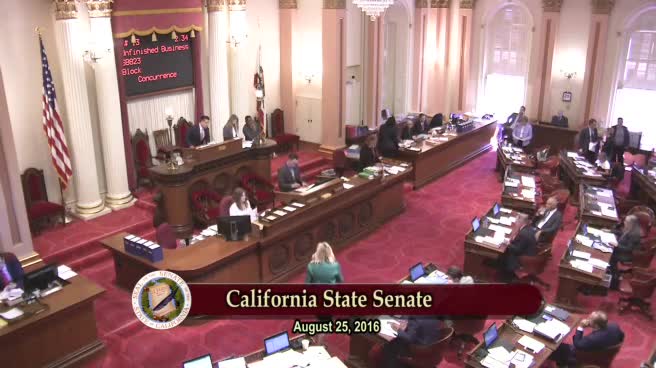
Bill Author