SB 883: Hazardous materials: reactive chemicals: methyl methacrylate: facilities.
- Session Year: 2025-2026
- House: Senate
- Latest Version Date: 2026-09-27
Current Status:
Passed
(2026-09-27: Chaptered by Secretary of State. Chapter 658, Statutes of 2026.)
Introduced
In Committee
Awaiting First Chamber Vote
Passed First Chamber
In Committee
Awaiting Second Chamber Vote
Passed Second Chamber
Enacted
(1)Existing law requires the Secretary for Environmental Protection to implement a unified hazardous waste and hazardous materials management regulatory program, known as the unified program. Existing law requires every county to apply to the secretary to be certified to implement the unified program, and authorizes a city or local agency that meets specified requirements to apply to the secretary to be certified to implement the unified program, as a certified unified program agency. Existing law authorizes a state or local agency that has a written agreement with a certified unified program agency, and is approved by the secretary, to implement or enforce one or more of the unified program elements as a participating agency. Existing law requires the certified unified program agency in each jurisdiction, in conjunction with participating agencies, to develop and implement a single, unified inspection and enforcement program to ensure coordinated, efficient, and effective enforcement of the unified program and any local ordinance or regulation pertaining to the handling of hazardous waste or hazardous materials. Existing law requires the secretary to establish a statewide information management system capable of receiving all data collected by the unified program agencies and reported by regulated businesses and to make all nonconfidential data available on the internet.
This bill would prohibit a city or county, or city and county, from approving a building permit for a new reactive chemical storage facility, as defined, with the potential for an explosion, including, but not limited to, due to thermal runaway reaction, that may cause injury or death, unless the proposed facility has a backup cooling system or other contingency system approved by the unified program agency and is not adjacent to a home. The bill would require a city council or county board of supervisors, before approving a building permit for that purpose, to provide the public with notice and the opportunity to comment. If a city or county, or city and county, approves a building permit for that purpose, the bill would require the city or county, or city and county, to notify the Office of Emergency Services and the Office of Environmental Health Hazard Assessment. The bill would make the approval of a building permit for certain reactive chemical storage facilities ineligible for a specified exemption from the California Environmental Quality Act. The bill would require a city, county, or city and county to include in the next revision of its emergency operations plan a specific designation for which emergency response department will serve as the lead agency for responding to hazardous materials incidents. By imposing additional requirements on cities and counties, the bill would impose a state-mandated local program. The bill would require the Office of Environmental Health Hazard Assessment to consider reactive chemical storage facilities as a factor in identifying disadvantaged communities for various purposes under existing law.
This bill would revise the requirement for the secretary to make available on the internet all nonconfidential data collected by the unified program agencies and reported by regulated businesses to specifically authorize the secretary to determine the form and manner of making that data available on the internet.
This bill would require the unified program agency in each jurisdiction to routinely conduct an inspection of each reactive chemical storage facility in its jurisdiction no less than once every 3 years. The bill would require the unified program agency to report the results of the inspection to the California Environmental Protection Agency, the Office of the State Fire Marshal, and the Office of Emergency Services. By imposing additional requirements on unified program agencies, the bill would impose a state-mandated local program.
(2)Existing law requires the California Environmental Protection Agency to obtain and maintain state delegation of, and to implement, the federal accidental release prevention program, with certain amendments specific to the state. Pursuant to these provisions, a stationary source, as defined, with a process that has a regulated substance present in more than a threshold quantity is required to prepare and submit to the United States Environmental Protection Agency and the unified program agency a risk management plan, unless the unified program agency makes a specified determination to exempt the stationary source from the program. Existing law imposes criminal penalties upon a stationary source that knowingly violates the requirements of the program.
This bill would expand the programs definition of regulated substance to include methyl methacrylate and would require the California Environmental Protection Agency to adopt a state threshold quantity applicable to methyl methacrylate through regulation. By adding an additional substance to the program, the bill would expand the scope of a crime and impose a state-mandated local program. The bill would provide that a stationary source that stores or uses methyl methacrylate is not eligible for exemption from the program. Because the bill would make changes to provisions enforced by unified program agencies, the bill would impose a state-mandated local program.
(3)The bill would include findings that changes proposed by this bill address a matter of statewide concern rather than a municipal affair and, therefore, apply to all cities, including charter cities.
(4)The California Constitution requires the state to reimburse local agencies and school districts for certain costs mandated by the state. Statutory provisions establish procedures for making that reimbursement.
This bill would provide that with regard to certain mandates no reimbursement is required by this act for specified reasons.
With regard to any other mandates, this bill would provide that, if the Commission on State Mandates determines that the bill contains costs so mandated by the state, reimbursement for those costs shall be made pursuant to the statutory provisions noted above.
(1)Existing law requires the Secretary for Environmental Protection to implement a unified hazardous waste and hazardous materials management regulatory program, known as the unified program. Existing law requires every county to apply to the secretary to be certified to implement the unified program, and authorizes a city or local agency that meets specified requirements to apply to the secretary to be certified to implement the unified program, as a certified unified program agency. Existing law authorizes a state or local agency that has a written agreement with a certified unified program agency, and is approved by the secretary, to implement or enforce one or more of the unified program elements as a participating agency. Existing law requires the certified unified program agency in each jurisdiction, in conjunction with participating agencies, to develop and implement a single, unified inspection and enforcement program to ensure coordinated, efficient, and effective enforcement of the unified program and any local ordinance or regulation pertaining to the handling of hazardous waste or hazardous materials. Existing law requires the secretary to establish a statewide information management system capable of receiving all data collected by the unified program agencies and reported by regulated businesses and to make all nonconfidential data available on the internet.
This bill would prohibit a city or county, or city and county, from approving a building permit for a new reactive chemical storage facility, as defined, with the potential for an explosion, including, but not limited to, due to thermal runaway reaction, that may cause injury or death, unless the proposed facility has a backup cooling system or other contingency system approved by the unified program agency and is not adjacent to a home. The bill would require a city council or county board of supervisors, before approving a building permit for that purpose, to provide the public with notice and the opportunity to comment. If a city or county, or city and county, approves a building permit for that purpose, the bill would require the city or county, or city and county, to notify the Office of Emergency Services and the Office of Environmental Health Hazard Assessment. The bill would make the approval of a building permit for certain reactive chemical storage facilities ineligible for a specified exemption from the California Environmental Quality Act. The bill would require a city, county, or city and county to include in the next revision of its emergency operations plan a specific designation for which emergency response department will serve as the lead agency for responding to hazardous materials incidents. By imposing additional requirements on cities and counties, the bill would impose a state-mandated local program. The bill would require the Office of Environmental Health Hazard Assessment to consider reactive chemical storage facilities as a factor in determining pollution burden as part of a specified health screening tool, commonly known as CalEnviroScreen, used to identify identifying disadvantaged communities for various purposes under existing law.
This bill would revise the requirement for the secretary to make available on the internet all nonconfidential data collected by the unified program agencies and reported by regulated businesses to specifically authorize the secretary to determine the form and manner of making that data available on the internet.
This bill would require the unified program agency in each jurisdiction to routinely conduct an inspection of each reactive chemical storage facility in its jurisdiction no less than once every 3 years. The bill would require the unified program agency to report the results of the inspection to the California Environmental Protection Agency, the Office of the State Fire Marshal, and the Office of Emergency Services. By imposing additional requirements on unified program agencies, the bill would impose a state-mandated local program.
(2)Existing law requires the California Environmental Protection Agency to obtain and maintain state delegation of, and to implement, the federal accidental release prevention program, with certain amendments specific to the state. Pursuant to these provisions, a stationary source, as defined, with a process that has a regulated substance present in more than a threshold quantity is required to prepare and submit to the United States Environmental Protection Agency and the unified program agency a risk management plan, unless the unified program agency makes a specified determination to exempt the stationary source from the program. Existing law imposes criminal penalties upon a stationary source that knowingly violates the requirements of the program.
This bill would impose on an owner or operator of a business, stationary source, hazardous material, highly hazardous material, regulated substance, process, industry, activity, or technology that produces, processes, or stores hazardous materials in any amount a general duty to identify hazards that may result from releases, to design and maintain a safe facility, and to minimize the consequences of accidental releases that occur. The bill would expand the programs definition of regulated substance to include a hazardous material that the California Environmental Protection Agency determines may pose a significant risk of accidental release, fire, explosion, exposure, or catastrophic incident. The bill would deem methyl methacrylate to pose a significant risk for these purposes. and would require the California Environmental Protection Agency to adopt a state threshold quantity applicable to methyl methacrylate through regulation. By adding new requirements and an additional substances substance to the program, the bill would expand the scope of a crime and impose a state-mandated local program. The bill would provide that a stationary source that stores or uses methyl methacrylate is not eligible for exemption from the program. Because the bill would make changes to provisions enforced by unified program agencies, the bill would impose a state-mandated local program.
This bill would authorize the California Environmental Protection Agency to establish and implement accidental release prevention requirements that apply to owners and operators of a business, stationary source, hazardous material, highly hazardous material, regulated substance, process, industry, activity, or technology that the agency determines may pose a significant risk of accidental release, fire, explosion, exposure, or catastrophic incident, as specified. The bill would authorize the secretary to require that information be submitted to the statewide information management system, as specified. This bill would also update cross-references.(3)The bill would include findings that changes proposed by this bill address a matter of statewide concern rather than a municipal affair and, therefore, apply to all cities, including charter cities.
(4)The California Constitution requires the state to reimburse local agencies and school districts for certain costs mandated by the state. Statutory provisions establish procedures for making that reimbursement.
This bill would provide that with regard to certain mandates no reimbursement is required by this act for specified reasons.
With regard to any other mandates, this bill would provide that, if the Commission on State Mandates determines that the bill contains costs so mandated by the state, reimbursement for those costs shall be made pursuant to the statutory provisions noted above.
(1)Existing law requires the Secretary for Environmental Protection to implement a unified hazardous waste and hazardous materials management regulatory program, known as the unified program. Existing law requires every county to apply to the secretary to be certified to implement the unified program, and authorizes a city or local agency that meets specified requirements to apply to the secretary to be certified to implement the unified program, as a certified unified program agency. Existing law authorizes a state or local agency that has a written agreement with a certified unified program agency, and is approved by the secretary, to implement or enforce one or more of the unified program elements as a participating agency. Existing law requires the certified unified program agency in each jurisdiction, in conjunction with participating agencies, to develop and implement a single, unified inspection and enforcement program to ensure coordinated, efficient, and effective enforcement of the unified program and any local ordinance or regulation pertaining to the handling of hazardous waste or hazardous materials. Existing law requires the secretary to establish a statewide information management system capable of receiving all data collected by the unified program agencies and reported by regulated businesses and to make all nonconfidential data available on the internet.
This bill would prohibit a city or county, or city and county, from approving a building permit for a new, expanded, or modified new reactive chemical storage facility, as defined, with the potential for an explosion, including, but not limited to, due to thermal runaway reaction, that may cause injury or death, unless the proposed facility has a backup cooling system or other contingency system approved by the unified program agency and is not adjacent to a home or other building that may contain people. home. The bill would require a city council or county board of supervisors, before approving a building permit for that purpose, to provide the public with notice and the opportunity to comment. If a city or county, or city and county, approves a building permit for that purpose, the bill would require the city or county, or city and county, to notify the Office of Emergency Services and the Office of Environmental Health Hazard Assessment. The bill would make the approval of a building permit for a certain reactive chemical storage facility facilities ineligible for a specified exemption from the California Environmental Quality Act. The bill would require a city, county, or city and county to include in the next revision of its emergency operations plan a specific designation for which emergency response department will serve as the lead agency for responding to hazardous materials incidents. By imposing additional requirements on cities and counties, the bill would impose a state-mandated local program. The bill would require the Office of Environmental Health Hazard Assessment to consider reactive chemical storage facilities as a factor in determining pollution burden as part of a specified health screening tool, commonly known as CalEnviroScreen, used to identify disadvantaged communities for various purposes under existing law.
This bill would revise the requirement for the secretary to make available on the internet all nonconfidential data collected by the unified program agencies and reported by regulated businesses to specifically authorize the secretary to determine the form and manner of making that data available on the internet.
This bill would require the certified unified program agency in each jurisdiction to routinely conduct an inspection of each reactive chemical storage facility in its jurisdiction no less than once annually. every 3 years. The bill would require the certified unified program agency to report the results of the inspection to the California Environmental Protection Agency, the Office of the State Fire Marshal, and the Office of Emergency Services. By imposing additional requirements on certified uniform unified program agencies, the bill would impose a state-mandated local program.
(2)Existing law requires the California Environmental Protection Agency to obtain and maintain state delegation of, and to implement, the federal accidental release prevention program, with certain amendments specific to the state. Pursuant to these provisions, a stationary source, as defined, with a process that has a regulated substance present in more than a threshold quantity is required to prepare and submit to the United States Environmental Protection Agency and the unified program agency a risk management plan, unless the unified program agency makes a specified determination to exempt the stationary source from the program. Existing law imposes criminal penalties upon a stationary source that knowingly violates the requirements of the program.
This bill would impose on an owner or operator of a business, stationary source, hazardous material, highly hazardous material, regulated substance, process, industry, activity, or technology that produces, processes, or stores hazardous materials in any amount a general duty to identify hazards that may result from releases, to design and maintain a safe facility, and to minimize the consequences of accidental releases that occur. The bill would expand the programs definition of regulated substance to include methyl methacrylate. a hazardous material that the California Environmental Protection Agency determines may pose a significant risk of accidental release, fire, explosion, exposure, or catastrophic incident. The bill would deem methyl methacrylate to pose a significant risk for these purposes. By adding an new requirements and additional substance substances to the program, the bill would expand the scope of a crime and impose a state-mandated local program. The bill would provide that a stationary source that stores or uses methyl methacrylate is not eligible for exemption from the program. Because the bill would make changes to provisions enforced by unified program agencies, the bill would impose a state-mandated local program.
This bill would authorize the California Environmental Protection Agency to establish and implement accidental release prevention requirements that apply to owners and operators of a business, stationary source, hazardous material, highly hazardous material, regulated substance, process, industry, activity, or technology that the agency determines may pose a significant risk of accidental release, fire, explosion, exposure, or catastrophic incident, as specified. The bill would authorize the secretary to require that information be submitted to the statewide information management system, as specified.
This bill would also update cross-references.
(3)The bill would include findings that changes proposed by this bill address a matter of statewide concern rather than a municipal affair and, therefore, apply to all cities, including charter cities.
(4)The California Constitution requires the state to reimburse local agencies and school districts for certain costs mandated by the state. Statutory provisions establish procedures for making that reimbursement.
This bill would provide that with regard to certain mandates no reimbursement is required by this act for specified reasons.
With regard to any other mandates, this bill would provide that, if the Commission on State Mandates determines that the bill contains costs so mandated by the state, reimbursement for those costs shall be made pursuant to the statutory provisions noted above.
(1)Existing law requires the Secretary for Environmental Protection to implement a unified hazardous waste and hazardous materials management regulatory program, known as the unified program. Existing law requires every county to apply to the secretary to be certified to implement the unified program, and authorizes a city or local agency that meets specified requirements to apply to the secretary to be certified to implement the unified program, as a certified unified program agency. Existing law authorizes a state or local agency that has a written agreement with a certified unified program agency, and is approved by the secretary, to implement or enforce one or more of the unified program elements as a participating agency. Existing law requires the certified unified program agency in each jurisdiction, in conjunction with participating agencies, to develop and implement a single, unified inspection and enforcement program to ensure coordinated, efficient, and effective enforcement of the unified program and any local ordinance or regulation pertaining to the handling of hazardous waste or hazardous materials.
This bill would prohibit a city or county, or city and county, from approving a building permit for a new new, expanded, or modified reactive chemical storage facility, as defined, with the potential for an explosion, including, but not limited to, due to thermal runaway reaction, that may cause injury or death, unless the proposed facility has a backup cooling system or other contingency system approved by the unified program agency and is not adjacent to a home or other building that may contain people. The bill would require a city council or county board of supervisors, before approving a building permit for that purpose, to provide the public with notice and the opportunity to comment. If a city or county, or city and county, approves a building permit for that purpose, the bill would require the city or county, or city and county, to notify the Office of Emergency Services and the Office of Environmental Health Hazard Assessment. The bill would make the approval of a building permit for a reactive chemical storage facility ineligible for a specified exemption from the California Environmental Quality Act. By imposing additional requirements on cities and counties, the bill would impose a state-mandated local program. The bill would provide that, if an explosion, or threat of an explosion, occurs at a reactive chemical storage facility, the fire department or fire authority, as applicable, has primary jurisdiction to mitigate the crisis rather than the county health department. The bill would require the Office of Environmental Health Hazard Assessment to consider reactive chemical storage facilities as a factor in determining pollution burden as part of a specified health screening tool, commonly known as CalEnviroScreen, used to identify disadvantaged communities for various purposes under existing law.
This bill would require the certified unified program agency in each jurisdiction to routinely conduct an inspection of each reactive chemical storage facility in its jurisdiction no less than once annually. The bill would require the certified unified program agency to report the results of the inspection to the California Environmental Protection Agency, the Office of the State Fire Marshal, and the Office of Emergency Services. By imposing additional requirements on certified uniform program agencies, the bill would impose a state-mandated local program.
(2)Existing law requires the California Environmental Protection Agency to obtain and maintain state delegation of, and to implement, the federal accidental release prevention program, with certain amendments specific to the state. Pursuant to these provisions, a stationary source, as defined, with a process that has a regulated substance present in more than a threshold quantity is required to prepare and submit to the United States Environmental Protection Agency and the unified program agency a risk management plan, unless the unified program agency makes a specified determination to exempt the stationary source from the program. Existing law imposes criminal penalties upon a stationary source that knowingly violates the requirements of the program.
This bill would expand the programs definition of regulated substance to include methyl methacrylate. By adding an additional substance to the program, the bill would expand the scope of a crime and impose a state-mandated local program. The bill would provide that a stationary source that stores or uses methyl methacrylate is not eligible for exemption from the program. Because the bill would make changes to provisions enforced by unified program agencies, the bill would impose a state-mandated local program.
(3)The Personal Income Tax Law and the Corporation Tax Law, in conformity with federal income tax law, generally defines gross income as income from whatever source derived, except as specifically excluded, and provides various exclusions from gross income.This bill would, for taxable years beginning on or after January 1, 2026, exclude from gross income any amount received by a qualified taxpayer, as defined, in settlement for claims relating to the May 2026 chemical incident at the GKN Aerospace manufacturing facility.(4)Existing law requires that any bill introduced on or after January 1, 2020, that would authorize certain tax expenditures, as defined, contain, among other things, specific goals, purposes, and objectives that the tax expenditure or exemption will achieve, detailed performance indicators, and data collection requirements.This bill would include additional information required for any bill authorizing a new tax expenditure.(5)(3)The bill would include findings that changes proposed by this bill address a matter of statewide concern rather than a municipal affair and, therefore, apply to all cities, including charter cities.
(6)(4)The California Constitution requires the state to reimburse local agencies and school districts for certain costs mandated by the state. Statutory provisions establish procedures for making that reimbursement.
This bill would provide that with regard to certain mandates no reimbursement is required by this act for specified reasons.
With regard to any other mandates, this bill would provide that, if the Commission on State Mandates determines that the bill contains costs so mandated by the state, reimbursement for those costs shall be made pursuant to the statutory provisions noted above.
(1)Existing law requires the Secretary for Environmental Protection to implement a unified hazardous waste and hazardous materials management regulatory program, known as the unified program. Existing law requires every county to apply to the secretary to be certified to implement the unified program, and authorizes a city or local agency that meets specified requirements to apply to the secretary to be certified to implement the unified program, as a certified unified program agency. Existing law authorizes a state or local agency that has a written agreement with a certified unified program agency, and is approved by the secretary, to implement or enforce one or more of the unified program elements as a participating agency. Existing law requires the certified unified program agency in each jurisdiction, in conjunction with participating agencies, to develop and implement a single, unified inspection and enforcement program to ensure coordinated, efficient, and effective enforcement of the unified program and any local ordinance or regulation pertaining to the handling of hazardous waste or hazardous materials.
This bill would prohibit a city or county county, or city and county, from approving a building permit for a new reactive chemical storage facility facility, as defined, with the potential for an explosion explosion, including, but not limited to, due to thermal runaway reaction reaction, that may cause injury or death death, unless the proposed facility has a backup cooling system or other contingency system approved by the unified program agency and is not adjacent to a home or other building that may contain people. The bill would require a city council or county, county board of supervisors, before approving a building permit for that purpose, to provide the public with notice and the opportunity to comment. If a city or county county, or city and county, approves a building permit for that purpose, the bill would require the city or county county, or city and county, to notify the Office of Emergency Services and the Office of Environmental Health Hazard Assessment. The bill would make the approval of a building permit for that purpose a reactive chemical storage facility ineligible for a specified exemption from the California Environmental Quality Act. By imposing additional requirements on cities and counties, the bill would impose a state-mandated local program. The bill would provide that, if a thermal runaway reaction explosion occurs, an explosion, or threat of an explosion, occurs at a reactive chemical storage facility, the fire department or fire authority, as applicable, has primary jurisdiction to mitigate the crisis rather than the county health department. The bill would require the Office of Emergency Services to develop, post on its internet website, and update a map of reactive chemical storage facilities, as prescribed. The bill would require the Office of Environmental Health Hazard Assessment to consider reactive chemical storage facilities as a factor in determining pollution burden as part of a specified health screening tool, commonly known as CalEnviroScreen, used to identify disadvantaged communities for various purposes under existing law.
This bill would require the certified unified program agency in each jurisdiction to routinely conduct an inspection of each reactive chemical storage facility in its jurisdiction no less than once annually. The bill would require the certified unified program agency to report the results of the inspection to the California Environmental Protection Agency, the Office of the State Fire Marshal, and the Office of Emergency Services. By imposing additional requirements on certified uniform program agencies, the bill would impose a state-mandated local program.
(2)Existing law requires the California Environmental Protection Agency to obtain and maintain state delegation of, and to implement, the federal accidental release prevention program, with certain amendments specific to the state. Pursuant to these provisions, a stationary source, as defined, with a process that has a regulated substance present in more than a threshold quantity is required to prepare and submit to the United States Environmental Protection Agency and the unified program agency a risk management plan, unless the unified program agency makes a specified determination to exempt the stationary source from the program. Existing law imposes criminal penalties upon a stationary source that knowingly violates the requirements of the program.
This bill would expand the programs definition of regulated substance to include methyl methacrylate. By adding an additional substance to the program, the bill would expand the scope of a crime and impose a state-mandated local program. The bill would provide that a stationary source that stores or uses methyl methacrylate is not eligible for exemption from the program. Because the bill would make changes to provisions enforced by unified program agencies, the bill would impose a state-mandated local program.
(3)The Personal Income Tax Law and the Corporation Tax Law, in conformity with federal income tax law, generally defines gross income as income from whatever source derived, except as specifically excluded, and provides various exclusions from gross income.
This bill would, for taxable years beginning on or after January 1, 2026, exclude from gross income any amount received by a qualified taxpayer, as defined, in settlement for claims relating to the May 2026 chemical incident at the GKN Aerospace manufacturing facility.
(4)Existing law requires that any bill introduced on or after January 1, 2020, that would authorize certain tax expenditures, as defined, contain, among other things, specific goals, purposes, and objectives that the tax expenditure or exemption will achieve, detailed performance indicators, and data collection requirements.
This bill would include additional information required for any bill authorizing a new tax expenditure.
(5)The bill would include findings that changes proposed by this bill address a matter of statewide concern rather than a municipal affair and, therefore, apply to all cities, including charter cities.
(6)The California Constitution requires the state to reimburse local agencies and school districts for certain costs mandated by the state. Statutory provisions establish procedures for making that reimbursement.
This bill would provide that with regard to certain mandates no reimbursement is required by this act for specified reasons.
With regard to any other mandates, this bill would provide that, if the Commission on State Mandates determines that the bill contains costs so mandated by the state, reimbursement for those costs shall be made pursuant to the statutory provisions noted above.
(1)Existing law requires the Secretary for Environmental Protection to implement a unified hazardous waste and hazardous materials management regulatory program, known as the unified program. Existing law requires every county to apply to the secretary to be certified to implement the unified program, and authorizes a city or local agency that meets specified requirements to apply to the secretary to be certified to implement the unified program, as a certified unified program agency. Existing law authorizes a state or local agency that has a written agreement with a certified unified program agency, and is approved by the secretary, to implement or enforce one or more of the unified program elements as a participating agency. Existing law requires the certified unified program agency in each jurisdiction, in conjunction with participating agencies, to develop and implement a single, unified inspection and enforcement program to ensure coordinated, efficient, and effective enforcement of the unified program and any local ordinance or regulation pertaining to the handling of hazardous waste or hazardous materials.
This bill would prohibit a city or county from approving a building permit for a new reactive chemical storage facility with the potential for an explosion due to thermal runaway reaction that may cause injury or death unless the proposed facility has a backup cooling system and is not adjacent to a home or other building that may contain people. The bill would require a city or county, before approving a building permit for that purpose, to provide the public with notice and the opportunity to comment. If a city or county approves a building permit for that purpose, the bill would require the city or county to notify the Office of Emergency Services and the Office of Environmental Health Hazard Assessment. The bill would make the approval of a building permit for that purpose ineligible for a specified exemption from the California Environmental Quality Act. By imposing additional requirements on cities and counties, the bill would impose a state-mandated local program. The bill would provide that, if a thermal runaway reaction explosion occurs, the fire department or fire authority, as applicable, has primary jurisdiction to mitigate the crisis rather than the county health department. The bill would require the Office of Emergency Services to develop, post on its internet website, and update a map of reactive chemical storage facilities, as prescribed. The bill would require the Office of Environmental Health Hazard Assessment to consider reactive chemical storage facilities as a factor in determining pollution burden as part of a specified health screening tool, commonly known as CalEnviroScreen, used to identify disadvantaged communities for various purposes under existing law.
This bill would require the certified unified program agency in each jurisdiction to routinely conduct an inspection of each reactive chemical storage facility in its jurisdiction no less than once annually. The bill would require the certified unified program agency to report the results of the inspection to the California Environmental Protection Agency, the Office of the State Fire Marshal, and the Office of Emergency Services. By imposing additional requirements on certified uniform program agencies, the bill would impose a state-mandated local program.
(2)Existing law requires the California Environmental Protection Agency to obtain and maintain state delegation of, and to implement, the federal accidental release prevention program, with certain amendments specific to the state. Pursuant to these provisions, a stationary source, as defined, with a process that has a regulated substance present in more than a threshold quantity is required to prepare and submit to the United States Environmental Protection Agency and the unified program agency a risk management plan, unless the unified program agency makes a specified determination to exempt the stationary source from the program. Existing law imposes criminal penalties upon a stationary source that knowingly violates the requirements of the program.
This bill would expand the programs definition of regulated substance to include methyl methacrylate. By adding an additional substance to the program, the bill would expand the scope of a crime and impose a state-mandated local program. The bill would provide that a stationary source that stores or uses methyl methacrylate is not eligible for exemption from the program. Because the bill would make changes to provisions enforced by unified program agencies, the bill would impose a state-mandated local program.
(3)The Personal Income Tax Law and the Corporation Tax Law, in conformity with federal income tax law, generally defines gross income as income from whatever source derived, except as specifically excluded, and provides various exclusions from gross income.
This bill would, for taxable years beginning on or after January 1, 2026, exclude from gross income any amount received by a qualified taxpayer, as defined, in settlement for claims relating to the May 2026 chemical incident at the GKN Aerospace manufacturing facility.
(4)Existing law requires that any bill introduced on or after January 1, 2020, that would authorize certain tax expenditures, as defined, contain, among other things, specific goals, purposes, and objectives that the tax expenditure or exemption will achieve, detailed performance indicators, and data collection requirements.
This bill would include additional information required for any bill authorizing a new tax expenditure.
(5)The bill would include findings that changes proposed by this bill address a matter of statewide concern rather than a municipal affair and, therefore, apply to all cities, including charter cities.
(6)The California Constitution requires the state to reimburse local agencies and school districts for certain costs mandated by the state. Statutory provisions establish procedures for making that reimbursement.
This bill would provide that with regard to certain mandates no reimbursement is required by this act for specified reasons.
With regard to any other mandates, this bill would provide that, if the Commission on State Mandates determines that the bill contains costs so mandated by the state, reimbursement for those costs shall be made pursuant to the statutory provisions noted above.
Existing law, the Community Assistance, Recovery, and Empowerment (CARE) Act (the act), authorizes specified persons, including a person with whom the respondent resides, family members, and first responders, among others, to petition a civil court to create a voluntary CARE agreement or a court-ordered CARE plan and implement services, to be provided by county behavioral health agencies, to provide behavioral health care, including stabilization medication, housing, and other enumerated services, to adults who are currently experiencing a severe mental illness and have a diagnosis identified in the disorder class schizophrenia and other psychotic disorders, and who meet other specified criteria. Existing law requires that if the court finds that the respondent meets the CARE criteria, the court is required to order the county behavioral health agency, the respondent, and the respondents counsel and supporter to jointly develop a CARE plan within 14 days.This bill would instead require a court to order the county behavioral health agency, the respondent, and the respondents counsel and supporter to jointly develop a CARE plan within 21 days.Existing law, the Community Assistance, Recovery, and Empowerment (CARE) Act (the act), authorizes specified persons, including a person with whom the respondent resides, family members, and first responders, among others, to petition a civil court to create a voluntary CARE agreement or a court-ordered CARE plan and implement services, to be provided by county behavioral health agencies, to provide behavioral health care, including stabilization medication, housing, and other enumerated services, to adults who are currently experiencing a severe mental illness and have a diagnosis identified in the disorder class schizophrenia and other psychotic disorders, and who meet other specified criteria. Existing law requires that if the court finds that the respondent meets the CARE criteria, the court is required to order the county behavioral health agency, the respondent, and the respondents counsel and supporter to jointly develop a CARE plan within 14 days.
This bill would instead require a court to order the county behavioral health agency, the respondent, and the respondents counsel and supporter to jointly develop a CARE plan within 21 days.
Existing law specifies that crimes and public offenses include felonies, misdemeanors, and infractions.This bill would make technical, nonsubstantive changes to that provision.Existing law specifies that crimes and public offenses include felonies, misdemeanors, and infractions.
This bill would make technical, nonsubstantive changes to that provision.
(a)Unless all of the following conditions are satisfied, a city or county, or city and county, shall not approve a building permit for a new reactive chemical storage facility with the potential for an explosion, including, but not limited to, due to thermal runaway reaction, that may cause injury or death to any person outside the proposed facilitys property boundary:
(1)The proposed facility has a backup cooling system for the reactive chemical storage or other contingency system approved by the unified program agency.
(2)The application for the building permit demonstrates that the proposed facility is not adjacent to a home.
(3)The city council or county board of supervisors provides the public with notice and the opportunity to comment on the proposed facility.
(b)A city, county, or city and county shall include in the next revision of its emergency operations plan or equivalent document a specific designation for which emergency response department will serve as the lead agency for responding to hazardous materials incidents.
(c)If a city or county, or city and county, approves a building permit pursuant to subdivision (a), the city or county, or city and county, shall notify the Office of Emergency Services and the Office of Environmental Health Hazard Assessment.
(d)Neither of the following are eligible for the advanced manufacturing exemption from the California Environmental Quality Act (Division 13 (commencing with Section 21000) of the Public Resources Code) under paragraph (4) of subdivision (a) of Section 21080.69 of the Public Resources Code:
(1)The approval of a building permit for a new reactive chemical storage facility subject to regulation under Article 2 (commencing with Section 25531) of Chapter 6.95 of Division 20 of the Health and Safety Code in which methyl methacrylate will be present at or above the state threshold quantity adopted by the California Environmental Protection Agency.
(2)The approval of a building permit for the significant expansion or significant modification of an existing reactive chemical storage facility subject to regulation under Article 2 (commencing with Section 25531) of Chapter 6.95 of Division 20 of the Health and Safety Code in which methyl methacrylate is or will be present at or above the state threshold quantity adopted by the California Environmental Protection Agency.
(e)The Office of Environmental Health Hazard Assessment shall consider a facility described in subdivision (a) as a factor for purposes of Section 39711 of the Health and Safety Code.
(f)For purposes of this section, the following shall apply:
(1)Explosion shall be construed in accordance with its common and everyday meaning.
(2)Reactive chemical storage facility means a stationary source, as defined in Section 25532 of the Health and Safety Code, that has a process involving a reactive substance, except for facilities exempt from local building ordinances pursuant to subdivision (d) of Section 53091.
SEC. 2.Section 25404 of the Health and Safety Code is amended to read:25404.(a)For purposes of this chapter, the following terms shall have the following meanings:
(1)(A)Certified Unified Program Agency or CUPA means the agency certified by the secretary to implement the unified program specified in this chapter within a jurisdiction.
(B)Participating Agency or PA means a state or local agency that has a written agreement with the CUPA pursuant to subdivision (d) of Section 25404.3, and is approved by the secretary, to implement or enforce one or more of the unified program elements specified in subdivision (c), in accordance with Sections 25404.1 and 25404.2.
(C)Unified Program Agency or UPA means the CUPA, or its participating agencies to the extent each PA has been designated by the CUPA, pursuant to a written agreement, to implement or enforce a particular unified program element specified in subdivision (c). The UPAs have the responsibility and authority to implement and enforce the requirements listed in subdivision (c), and the regulations adopted to implement the requirements listed in subdivision (c), to the extent provided by Chapter 6.5 (commencing with Section 25100), Chapter 6.67 (commencing with Section 25270), Chapter 6.7 (commencing with Section 25280), Chapter 6.95 (commencing with Section 25500), and Sections 25404.1 to 25404.2, inclusive. After a CUPA has been certified by the secretary, the unified program agencies and the state agencies carrying out responsibilities under this chapter shall be the only agencies authorized to enforce the requirements listed in subdivision (c) within the jurisdiction of the CUPA.
(2)Department means the Department of Toxic Substances Control.
(3)Minor violation means the failure of a person to comply with a requirement or condition of an applicable law, regulation, permit, information request, order, variance, or other requirement, whether procedural or substantive, of the unified program that the UPA is authorized to implement or enforce pursuant to this chapter, and that does not otherwise include any of the following:
(A)A violation that results in injury to persons or property, or that presents a significant threat to human health or the environment.
(B)A knowing, willful, or intentional violation.
(C)A violation that is a chronic violation, or that is committed by a recalcitrant violator. In determining whether a violation is chronic or a violator is recalcitrant, the UPA shall consider whether there is evidence indicating that the violator has engaged in a pattern of neglect or disregard with respect to applicable regulatory requirements.
(D)A violation that results in an emergency response from a public safety agency.
(E)A violation that enables the violator to benefit economically from the noncompliance, either by reduced costs or competitive advantage.
(F)A class I violation, as provided in Section 25110.8.5.
(G)A violation that hinders the ability of the UPA to determine compliance with any other applicable local, state, or federal rule, regulation, information request, order, variance, permit, or other requirement.
(4)Secretary means the Secretary for Environmental Protection.
(5)Unified program facility means all contiguous land and structures, other appurtenances, and improvements on the land that are subject to the requirements listed in subdivision (c).
(6)Unified program facility permit means a permit issued pursuant to this chapter. For purposes of this chapter, a unified program facility permit encompasses the permitting requirements of Section 25284, and permit or authorization requirements under a local ordinance or regulation relating to the generation or handling of hazardous waste or hazardous materials, but does not encompass the permitting requirements of a local ordinance that incorporates provisions of the California Fire Code or the California Building Code.
(b)The secretary shall adopt implementing regulations and implement a unified hazardous waste and hazardous materials management regulatory program, which shall be known as the unified program, after holding an appropriate number of public hearings throughout the state. The unified program shall be developed in close consultation with the director, the Director of Emergency Services, the State Fire Marshal, the executive officers and chairpersons of the State Water Resources Control Board and the California regional water quality control boards, the local health officers, local fire services, and other appropriate officers of interested local agencies, and affected businesses and interested members of the public, including environmental organizations.
(c)The unified program shall consolidate the administration of the following requirements and, to the maximum extent feasible within statutory constraints, shall ensure the coordination and consistency of any regulations adopted pursuant to those requirements:
(1)(A)Except as provided in subparagraphs (B) and (C), the requirements of Chapter 6.5 (commencing with Section 25100), and the regulations adopted by the department pursuant to that chapter, that are applicable to all of the following:
(i)Hazardous waste generators, persons operating pursuant to a permit-by-rule, conditional authorization, or conditional exemption, pursuant to Chapter 6.5 (commencing with Section 25100) or the regulations adopted by the department.
(ii)Persons managing perchlorate materials.
(iii)Persons subject to Article 10.1 (commencing with Section 25211) of Chapter 6.5.
(iv)Persons operating a collection location that has been established under a stewardship plan approved by the Department of Resources Recycling and Recovery pursuant to the paint product recovery program established pursuant to Chapter 5 (commencing with Section 48700) of Part 7 of Division 30 of the Public Resources Code.
(v)A transfer facility, as defined in paragraph (3) of subdivision (a) of Section 25123.3, that is operated by a door-to-door household hazardous waste collection program or household hazardous waste residential pickup service, as defined in Section 25218.1.
(vi)Persons who receive used oil from consumers pursuant to Section 25250.11.
(B)The unified program shall not include the requirements of paragraph (3) of subdivision (c) of Section 25200.3, the requirements of Sections 25200.10 and 25200.14, and the authority to issue an order under Sections 25187 and 25187.1, with regard to those portions of a unified program facility that are subject to one of the following:
(i)A corrective action order issued by the department pursuant to Section 25187.
(ii)An order issued by the department pursuant to Chapter 6.86 (commencing with Section 25396) of this division or Part 2 (commencing with Section 78000) of Division 45.
(iii)A remedial action plan approved pursuant to Chapter 6.86 (commencing with Section 25396) of this division or Part 2 (commencing with Section 78000) of Division 45.
(iv)A cleanup and abatement order issued by a California regional water quality control board pursuant to Section 13304 of the Water Code, to the extent that the cleanup and abatement order addresses the requirements of the applicable section or sections listed in this subparagraph.
(v)Corrective action required under subsection (u) of Section 6924 of Title 42 of the United States Code or subsection (h) of Section 6928 of Title 42 of the United States Code.
(vi)An environmental assessment pursuant to Section 25200.14 or a corrective action pursuant to Section 25200.10 or paragraph (3) of subdivision (c) of Section 25200.3, that is being overseen by the department.
(C)The unified program shall not include the requirements of Chapter 6.5 (commencing with Section 25100), and the regulations adopted by the department pursuant to that chapter, applicable to persons operating transportable treatment units, except that any required notice regarding transportable treatment units shall also be provided to the CUPAs.
(2)The requirements of Chapter 6.67 (commencing with Section 25270) concerning aboveground storage tanks.
(3)(A)Except as provided in subparagraphs (B) and (C), the requirements of Chapter 6.7 (commencing with Section 25280) concerning underground storage tanks and the requirements of any underground storage tank ordinance adopted by a city or county.
(B)The unified program shall not include the responsibilities assigned to the State Water Resources Control Board pursuant to Section 25297.1.
(C)The unified program shall not include the corrective action requirements of Sections 25296.10 to 25296.40, inclusive.
(4)The requirements of Article 1 (commencing with Section 25500) of Chapter 6.95 concerning hazardous material release response plans and inventories.
(5)The requirements of Article 2 (commencing with Section 25531) of Chapter 6.95, concerning the accidental release prevention program.
(6)The requirements for the hazardous materials plan and hazardous materials inventory statement of the California Fire Code, as adopted by the State Fire Marshal pursuant to Section 13143.9.
(d)To the maximum extent feasible within statutory constraints, the secretary shall consolidate, coordinate, and make consistent these requirements of the unified program with other requirements imposed by other federal, state, regional, or local agencies upon facilities regulated by the unified program.
(e)(1)The secretary shall establish standards applicable to CUPAs, participating agencies, state agencies, and businesses specifying the data to be collected and submitted by unified program agencies in administering the programs listed in subdivision (c).
(2)(A)The secretary shall establish a statewide information management system capable of receiving all data collected by the unified program agencies and reported by regulated businesses pursuant to this subdivision, in a manner that is most cost efficient and effective for both the regulated businesses and state and local agencies. The secretary shall prescribe an XML or other compatible web-based format for the transfer of data from CUPAs and regulated businesses and make all nonconfidential data available on the internet in the format and manner determined by the secretary.
(B)The secretary shall establish milestones to measure the implementation of the statewide information management system and shall provide periodic status updates to interested parties.
(3)(A)(i)Except as provided in subparagraph (B), in addition to any other funding that becomes available, the secretary shall increase the oversight surcharge provided for in subdivision (b) of Section 25404.5 by an amount necessary to meet the requirements of this subdivision for a period of three years, to establish the statewide information management system, consistent with paragraph (2). The increase in the oversight surcharge shall not exceed twenty-five dollars ($25) in any one year of the three-year period. The secretary shall thereafter maintain the statewide information management system, funded by the assessment the secretary is authorized to impose pursuant to Section 25404.5.
(ii)No less than 75 percent of the additional funding raised pursuant to clause (i) shall be provided to CUPAs and PAs through grant funds or statewide contract services, in the amounts determined by the secretary to assist these local agencies in meeting these information management system requirements.
(B)A facility that is owned or operated by the federal government and that is subject to the unified program shall pay the surcharge required by this paragraph to the extent authorized by federal law.
(C)The secretary, or one or more of the boards, departments, or offices within the California Environmental Protection Agency, shall seek available federal funding for purposes of implementing this subdivision.
(4)No later than three years after the statewide information management system is established, each CUPA, PA, and regulated business shall report program data electronically. The secretary shall work with the CUPAs to develop a phase-in schedule for the electronic collection and submittal of information to be included in the statewide information management system, giving first priority to information relating to those chemicals determined by the secretary to be of greatest concern. The secretary, in making this determination shall consult with the CUPAs, the Office of Emergency Services, the State Fire Marshal, and the boards, departments, and offices within the California Environmental Protection Agency.
(5)The secretary, in collaboration with the CUPAs, shall provide technical assistance to regulated businesses to comply with the electronic reporting requirements and may expend funds identified in clause (i) of subparagraph (A) of paragraph (3) for that purpose.
SEC. 3.Section 25404.7 is added to the Health and Safety Code, to read:25404.7.(a)Notwithstanding Section 25537 or any other law, the unified program agency in each jurisdiction shall routinely conduct an inspection of each reactive chemical storage facility in its jurisdiction no less than once every three years.
(b)Following an inspection, the unified program agency shall report the results of the inspection to the California Environmental Protection Agency, the Office of the State Fire Marshal, and the Office of Emergency Services.
(c)For purposes of this section, reactive chemical storage facility means a facility subject to Article 2 (commencing with Section 25531) of Chapter 6.95 that has a process involving any regulated substance meeting the definition in paragraph (3) of subdivision (i) of Section 22532 and that is designated by the California Environmental Protection Agency as a reactive substance above a minimum threshold established by the California Environmental Protection Agency.
SEC. 4.Section 25532 of the Health and Safety Code is amended to read:25532.Unless the context indicates otherwise, the following definitions govern the construction of this article:
(a)Accidental release means an unanticipated emission of a regulated substance or other extremely hazardous substance into the ambient air from a stationary source.
(b)Agency means the California Environmental Protection Agency.
(c)Covered process means a process that has a regulated substance present in more than a threshold quantity.
(d)Local implementing agency means the entity that has been designated by a local governing body to develop, implement, and maintain an integrated alerting and notification system, which may include a local law enforcement or fire agency, joint powers agency, authority, or entity, or other local agency.
(e)Modified stationary source means an addition or change to a stationary source that qualifies as a major change, as defined in Subpart A (commencing with Section 68.1) of Part 68 of Subchapter C of Chapter I of Title 40 of the Code of Federal Regulations. Modified stationary source does not include an increase in production up to the sources existing operational capacity or an increase in production level, up to the production levels authorized in a permit granted pursuant to Section 42300.
(f)Person means an individual, trust, firm, joint stock company, business concern, partnership, limited liability company, association, or corporation, including, but not limited to, a government corporation. Person also includes any city, county, city and county, district, commission, the state or any department, agency, or political subdivision thereof, any interstate body, and the federal government or any department or agency thereof to the extent permitted by law.
(g)Process means any activity involving a regulated substance, including any use, storage, manufacturing, handling, or onsite movement of the regulated substance or any combination of these activities. For purposes of this definition, any group of vessels that are interconnected, or separate vessels that are located so that a regulated substance could be involved in a potential release, shall be considered a single process.
(h)Qualified person means a person who is qualified to attest, at a minimum, to the completeness of an RMP.
(i)Regulated substance means a substance that is any of the following:
(1)A regulated substance listed in Section 68.130 of Title 40 of the Code of Federal Regulations pursuant to paragraph (3) of subsection (r) of Section 112 of the federal Clean Air Act (42 U.S.C. Sec. 7412(r)(3)).
(2)(A)An extremely hazardous substance listed in Appendix A of Part 355 (commencing with Section 355.1) of Subchapter J of Chapter I of Title 40 of the Code of Federal Regulations that is any of the following:
(i)A gas at standard temperature and pressure.
(ii)A liquid with a vapor pressure at standard temperature and pressure equal to or greater than 10 millimeters mercury.
(iii)A solid that is any of the following:
(I)In solution or in molten form.
(II)In powder form with a particle size less than 100 microns.
(III)Reactive with a National Fire Protection Association rating of 2, 3, or 4.
(iv)A substance that the agency determines may pose a regulated substances accident risk pursuant to subclause (II) of clause (i) of subparagraph (B) or pursuant to Section 25543.3.
(B)(i)The agency shall, in consultation with the Office of Environmental Health Hazard Assessment, determine which of the extremely hazardous substances listed in Appendix A of Part 355 (commencing with Section 355.1) of Subchapter J of Chapter I of Title 40 of the Code of Federal Regulations do either of the following:
(I)Meet one or more of the criteria specified in clause (i), (ii), or (iii) of subparagraph (A).
(II)May pose a regulated substances accident risk, in consideration of the factors specified in subdivision (g) of Section 25543.1, and, therefore, should remain on the list of regulated substances until completion of the review conducted pursuant to subdivision (a) of Section 25543.3.
(ii)The agency shall adopt, by regulation, a list of the extremely hazardous substances identified pursuant to clause (i). Extremely hazardous substances placed on the list are regulated substances for purposes of this article.
(3)(A)Methyl methacrylate. The agency shall adopt a state threshold quantity applicable to methyl methacrylate through regulation.
(B)A stationary source that stores or uses methyl methacrylate is not eligible for exemption from this article pursuant to Section 25534.
(j)Regulated substances accident risk means a potential for the accidental release of a regulated substance into the environment that could produce a significant likelihood that persons exposed may suffer acute health effects resulting in significant injury or death.
(k)RMP means the risk management plan required under Part 68 (commencing with Section 68.1) of Subchapter C of Chapter I of Title 40 of the Code of Federal Regulations and by this article.
(l)Special needs population means individuals who may have additional response assistance needs before, during, and after an incident in functional areas, including, but not limited to, maintaining independence, communication, transportation, supervision, or medical care. Individuals in need of additional response assistance may include those who have disabilities, live in institutionalized settings, are elderly, are children, are from diverse cultures, have limited English proficiency or are non-English speaking, or are transportation disadvantaged.
(m)State threshold quantity means the quantity of a regulated substance described in subparagraph (A) of paragraph (2) of subdivision (i), as adopted by the agency pursuant to Section 25543.1 or 25543.3. Until the agency adopts a state threshold quantity for a regulated substance, the state threshold quantity shall be the threshold planning quantity for the regulated substance specified in Appendix A of Part 355 (commencing with Section 355.1) of Subchapter J of Chapter I of Title 40 of the Code of Federal Regulations.
(n)Stationary source means any stationary source, as defined in Section 68.3 of Title 40 of the Code of Federal Regulations.
(o)Threshold quantity means the quantity of a regulated substance that is determined to be present at a stationary source in the manner specified in Section 68.115 of Title 40 of the Code of Federal Regulations and that is the lesser of either of the following:
(1)The threshold quantity for the regulated substance specified in Section 68.130 of Title 40 of the Code of Federal Regulations.
(2)The state threshold quantity.
(p)Transient population means individuals in a location in which they do not normally reside, including, but not limited to, train stations, office buildings, shopping malls, and colleges, and individuals who are homeless.
(q)Unified program agency has the same meaning as specified in Section 25501.
SEC. 5.The Legislature finds and declares that due to the extreme risk to persons and property from explosions at reactive chemical storage facilities, including, but not limited to, due to thermal runaway chemical reactions, preventing and mitigating these disasters is a matter of statewide concern and is not a municipal affair as that term is used in Section 5 of Article XI of the California Constitution. Therefore, Section 1 of this act adding Section 65850.21 to the Government Code applies to all cities, including charter cities.
SEC. 6.No reimbursement is required by this act pursuant to Section 6 of Article XIIIB of the California Constitution because a local agency or school district has the authority to levy service charges, fees, or assessments sufficient to pay for the program or level of service mandated by this act or because costs that may be incurred by a local agency or school district will be incurred because this act creates a new crime or infraction, eliminates a crime or infraction, or changes the penalty for a crime or infraction, within the meaning of Section 17556 of the Government Code, or changes the definition of a crime within the meaning of Section 6 of Article XIIIB of the California Constitution.
However, if the Commission on State Mandates determines that this act contains other costs mandated by the state, reimbursement to local agencies and school districts for those costs shall be made pursuant to Part 7 (commencing with Section 17500) of Division 4 of Title 2 of the Government Code.
(a)Unless all of the following conditions are satisfied, a city or county, or city and county, shall not approve a building permit for a new reactive chemical storage facility with the potential for an explosion, including, but not limited to, due to thermal runaway reaction, that may cause injury or death to any person outside the proposed facilitys property boundary:
(1)The proposed facility has a backup cooling system for the reactive chemical storage or other contingency system approved by the unified program agency.
(2)The application for the building permit demonstrates that the proposed facility is not adjacent to a home.
(3)The city council or county board of supervisors provides the public with notice and the opportunity to comment on the proposed facility.
(b)A city, county, or city and county shall include in the next revision of its emergency operations plan or equivalent document a specific designation for which emergency response department will serve as the lead agency for responding to hazardous materials incidents.
(c)If a city or county, or city and county, approves a building permit pursuant to subdivision (a), the city or county, or city and county, shall notify the Office of Emergency Services and the Office of Environmental Health Hazard Assessment.
(d)(1)The approval of a building permit for a new reactive chemical storage facility or the significant expansion or significant modification of an existing reactive chemical storage facility is not eligible(d)Neither of the following are eligible for the advanced manufacturing exemption from the California Environmental Quality Act (Division 13 (commencing with Section 21000) of the Public Resources Code) under paragraph (4) of subdivision (a) of Section 21080.69 of the Public Resources Code. Code:
(2)Paragraph (1) does not apply to the approval of a building permit to conduct a repair at a reactive chemical storage facility.(1)The approval of a building permit for a new reactive chemical storage facility subject to regulation under Article 2 (commencing with Section 25531) of Chapter 6.95 of Division 20 of the Health and Safety Code in which methyl methacrylate will be present at or above the state threshold quantity adopted by the California Environmental Protection Agency.
(2)The approval of a building permit for the significant expansion or significant modification of an existing reactive chemical storage facility subject to regulation under Article 2 (commencing with Section 25531) of Chapter 6.95 of Division 20 of the Health and Safety Code in which methyl methacrylate is or will be present at or above the state threshold quantity adopted by the California Environmental Protection Agency.
(e)The Office of Environmental Health Hazard Assessment shall consider a facility described in subdivision (a) as a factor in determining pollution burden as part of the California Communities Environmental Health Screening Tool, also known as CalEnviroScreen, that is used to identify disadvantaged communities pursuant to for purposes of Section 39711 of the Health and Safety Code.
(f)For purposes of this section, the following shall apply:
(1)Explosion shall be construed in accordance with its common and everyday meaning.
(2)Reactive chemical storage facility means a stationary source, as defined in Section 25532 of the Health and Safety Code, that has a process involving a reactive substance, except for facilities exempt from local building ordinances pursuant to subdivision (d) of Section 53091.
SEC. 5.SEC. 2.Section 25404 of the Health and Safety Code is amended to read:25404.(a)For purposes of this chapter, the following terms shall have the following meanings:
(1)(A)Certified Unified Program Agency or CUPA means the agency certified by the secretary to implement the unified program specified in this chapter within a jurisdiction.
(B)Participating Agency or PA means a state or local agency that has a written agreement with the CUPA pursuant to subdivision (d) of Section 25404.3, and is approved by the secretary, to implement or enforce one or more of the unified program elements specified in subdivision (c), in accordance with Sections 25404.1 and 25404.2.
(C)Unified Program Agency or UPA means the CUPA, or its participating agencies to the extent each PA has been designated by the CUPA, pursuant to a written agreement, to implement or enforce a particular unified program element specified in subdivision (c). The UPAs have the responsibility and authority to implement and enforce the requirements listed in subdivision (c), and the regulations adopted to implement the requirements listed in subdivision (c), to the extent provided by Chapter 6.5 (commencing with Section 25100), Chapter 6.67 (commencing with Section 25270), Chapter 6.7 (commencing with Section 25280), Chapter 6.95 (commencing with Section 25500), and Sections 25404.1 to 25404.2, inclusive. After a CUPA has been certified by the secretary, the unified program agencies and the state agencies carrying out responsibilities under this chapter shall be the only agencies authorized to enforce the requirements listed in subdivision (c) within the jurisdiction of the CUPA.
(2)Department means the Department of Toxic Substances Control.
(3)Minor violation means the failure of a person to comply with a requirement or condition of an applicable law, regulation, permit, information request, order, variance, or other requirement, whether procedural or substantive, of the unified program that the UPA is authorized to implement or enforce pursuant to this chapter, and that does not otherwise include any of the following:
(A)A violation that results in injury to persons or property, or that presents a significant threat to human health or the environment.
(B)A knowing, willful, or intentional violation.
(C)A violation that is a chronic violation, or that is committed by a recalcitrant violator. In determining whether a violation is chronic or a violator is recalcitrant, the UPA shall consider whether there is evidence indicating that the violator has engaged in a pattern of neglect or disregard with respect to applicable regulatory requirements.
(D)A violation that results in an emergency response from a public safety agency.
(E)A violation that enables the violator to benefit economically from the noncompliance, either by reduced costs or competitive advantage.
(F)A class I violation, as provided in Section 25110.8.5.
(G)A violation that hinders the ability of the UPA to determine compliance with any other applicable local, state, or federal rule, regulation, information request, order, variance, permit, or other requirement.
(4)Secretary means the Secretary for Environmental Protection.
(5)Unified program facility means all contiguous land and structures, other appurtenances, and improvements on the land that are subject to the requirements listed in subdivision (c).
(6)Unified program facility permit means a permit issued pursuant to this chapter. For purposes of this chapter, a unified program facility permit encompasses the permitting requirements of Section 25284, and permit or authorization requirements under a local ordinance or regulation relating to the generation or handling of hazardous waste or hazardous materials, but does not encompass the permitting requirements of a local ordinance that incorporates provisions of the California Fire Code or the California Building Code.
(b)The secretary shall adopt implementing regulations and implement a unified hazardous waste and hazardous materials management regulatory program, which shall be known as the unified program, after holding an appropriate number of public hearings throughout the state. The unified program shall be developed in close consultation with the director, the Director of Emergency Services, the State Fire Marshal, the executive officers and chairpersons of the State Water Resources Control Board and the California regional water quality control boards, the local health officers, local fire services, and other appropriate officers of interested local agencies, and affected businesses and interested members of the public, including environmental organizations.
(c)The unified program shall consolidate the administration of the following requirements and, to the maximum extent feasible within statutory constraints, shall ensure the coordination and consistency of any regulations adopted pursuant to those requirements:
(1)(A)Except as provided in subparagraphs (B) and (C), the requirements of Chapter 6.5 (commencing with Section 25100), and the regulations adopted by the department pursuant to that chapter, that are applicable to all of the following:
(i)Hazardous waste generators, persons operating pursuant to a permit-by-rule, conditional authorization, or conditional exemption, pursuant to Chapter 6.5 (commencing with Section 25100) or the regulations adopted by the department.
(ii)Persons managing perchlorate materials.
(iii)Persons subject to Article 10.1 (commencing with Section 25211) of Chapter 6.5.
(iv)Persons operating a collection location that has been established under a stewardship plan approved by the Department of Resources Recycling and Recovery pursuant to the paint product recovery program established pursuant to Chapter 5 (commencing with Section 48700) of Part 7 of Division 30 of the Public Resources Code.
(v)A transfer facility, as defined in paragraph (3) of subdivision (a) of Section 25123.3, that is operated by a door-to-door household hazardous waste collection program or household hazardous waste residential pickup service, as defined in Section 25218.1.
(vi)Persons who receive used oil from consumers pursuant to Section 25250.11.
(B)The unified program shall not include the requirements of paragraph (3) of subdivision (c) of Section 25200.3, the requirements of Sections 25200.10 and 25200.14, and the authority to issue an order under Sections 25187 and 25187.1, with regard to those portions of a unified program facility that are subject to one of the following:
(i)A corrective action order issued by the department pursuant to Section 25187.
(ii)An order issued by the department pursuant to Chapter 6.86 (commencing with Section 25396) of this division or Part 2 (commencing with Section 78000) of Division 45.
(iii)A remedial action plan approved pursuant to Chapter 6.86 (commencing with Section 25396) of this division or Part 2 (commencing with Section 78000) of Division 45.
(iv)A cleanup and abatement order issued by a California regional water quality control board pursuant to Section 13304 of the Water Code, to the extent that the cleanup and abatement order addresses the requirements of the applicable section or sections listed in this subparagraph.
(v)Corrective action required under subsection (u) of Section 6924 of Title 42 of the United States Code or subsection (h) of Section 6928 of Title 42 of the United States Code.
(vi)An environmental assessment pursuant to Section 25200.14 or a corrective action pursuant to Section 25200.10 or paragraph (3) of subdivision (c) of Section 25200.3, that is being overseen by the department.
(C)The unified program shall not include the requirements of Chapter 6.5 (commencing with Section 25100), and the regulations adopted by the department pursuant to that chapter, applicable to persons operating transportable treatment units, except that any required notice regarding transportable treatment units shall also be provided to the CUPAs.
(2)The requirements of Chapter 6.67 (commencing with Section 25270) concerning aboveground storage tanks.
(3)(A)Except as provided in subparagraphs (B) and (C), the requirements of Chapter 6.7 (commencing with Section 25280) concerning underground storage tanks and the requirements of any underground storage tank ordinance adopted by a city or county.
(B)The unified program shall not include the responsibilities assigned to the State Water Resources Control Board pursuant to Section 25297.1.
(C)The unified program shall not include the corrective action requirements of Sections 25296.10 to 25296.40, inclusive.
(4)The requirements of Article 1 (commencing with Section 25500) of Chapter 6.95 concerning hazardous material release response plans and inventories.
(5)The requirements of Article 2 (commencing with Section 25531) of Chapter 6.95, concerning the accidental release prevention program.
(6)The requirements for the hazardous materials plan and hazardous materials inventory statement of the California Fire Code, as adopted by the State Fire Marshal pursuant to Section 13143.9.
(d)To the maximum extent feasible within statutory constraints, the secretary shall consolidate, coordinate, and make consistent these requirements of the unified program with other requirements imposed by other federal, state, regional, or local agencies upon facilities regulated by the unified program.
(e)(1)The secretary shall establish standards applicable to CUPAs, participating agencies, state agencies, and businesses specifying the data to be collected and submitted by unified program agencies in administering the programs listed in subdivision (c).
(2)(A)The secretary shall establish a statewide information management system capable of receiving all data collected by the unified program agencies and reported by regulated businesses pursuant to this subdivision, in a manner that is most cost efficient and effective for both the regulated businesses and state and local agencies. The secretary shall prescribe an XML or other compatible web-based format for the transfer of data from CUPAs and regulated businesses and make all nonconfidential data available on the internet in the format and manner determined by the secretary.
(B)The secretary shall establish milestones to measure the implementation of the statewide information management system and shall provide periodic status updates to interested parties.
(3)(A)(i)Except as provided in subparagraph (B), in addition to any other funding that becomes available, the secretary shall increase the oversight surcharge provided for in subdivision (b) of Section 25404.5 by an amount necessary to meet the requirements of this subdivision for a period of three years, to establish the statewide information management system, consistent with paragraph (2). The increase in the oversight surcharge shall not exceed twenty-five dollars ($25) in any one year of the three-year period. The secretary shall thereafter maintain the statewide information management system, funded by the assessment the secretary is authorized to impose pursuant to Section 25404.5.
(ii)No less than 75 percent of the additional funding raised pursuant to clause (i) shall be provided to CUPAs and PAs through grant funds or statewide contract services, in the amounts determined by the secretary to assist these local agencies in meeting these information management system requirements.
(B)A facility that is owned or operated by the federal government and that is subject to the unified program shall pay the surcharge required by this paragraph to the extent authorized by federal law.
(C)The secretary, or one or more of the boards, departments, or offices within the California Environmental Protection Agency, shall seek available federal funding for purposes of implementing this subdivision.
(4)No later than three years after the statewide information management system is established, each CUPA, PA, and regulated business shall report program data electronically. The secretary shall work with the CUPAs to develop a phase-in schedule for the electronic collection and submittal of information to be included in the statewide information management system, giving first priority to information relating to those chemicals determined by the secretary to be of greatest concern. The secretary, in making this determination shall consult with the CUPAs, the Office of Emergency Services, the State Fire Marshal, and the boards, departments, and offices within the California Environmental Protection Agency.
(5)The secretary, in collaboration with the CUPAs, shall provide technical assistance to regulated businesses to comply with the electronic reporting requirements and may expend funds identified in clause (i) of subparagraph (A) of paragraph (3) for that purpose.
SEC. 6.SEC. 3.Section 25404.7 is added to the Health and Safety Code, to read:25404.7.(a)Notwithstanding Section 25537 or any other law, the unified program agency in each jurisdiction shall routinely conduct an inspection of each reactive chemical storage facility in its jurisdiction no less than once every three years.
(b)Following an inspection, the unified program agency shall report the results of the inspection to the California Environmental Protection Agency, the Office of the State Fire Marshal, and the Office of Emergency Services.
(c)For purposes of this section, reactive chemical storage facility means a facility subject to Article 2 (commencing with Section 25531) of Chapter 6.95 that has a process involving any regulated substance meeting the definition in paragraph (3) of subdivision (j) (i) of Section 22532 and that is designated by the California Environmental Protection Agency as a reactive substance above a minimum threshold established by the California Environmental Protection Agency.
SEC. 7.Section 25531.2 of the Health and Safety Code is amended to read:25531.2.(a)The Legislature finds and declares that as the state implements the federal accidental release prevention program pursuant to this article, the agency will play a vital and increased role in preventing accidental releases of extremely hazardous substances. The Legislature further finds and declares that as an element of the unified program established pursuant to Chapter 6.11 (commencing with Section 25404), a single fee system surcharge mechanism is established by Section 25404.5 to cover the costs incurred by the agency pursuant to this article. It is the intent of the Legislature that this existing authority, together with any federal assistance that may become available to implement the accidental release program, be used to fully fund the activities of the agency necessary to implement this article.(b)The agency shall use any federal assistance received to implement Chapter 6.11 (commencing with Section 25404) to offset any fees or charges levied to cover the costs incurred by the agency pursuant to this article.SEC. 8.Section 25531.3 is added to the Health and Safety Code, to read:25531.3.(a)For purposes of this section, business has the same meaning as defined in Section 25501.(b)An owner or operator of a business, stationary source, hazardous material, highly hazardous material, regulated substance, process, industry, activity, or technology subject to this article or Article 1 (commencing with Section 25500) that produces, processes, or stores hazardous materials in any amount has a general duty to identify hazards that may result from releases using appropriate hazard assessment techniques, to design and maintain a safe facility taking those steps as are necessary to prevent releases, and to minimize the consequences of accidental releases that occur.SEC. 9.SEC. 4.Section 25532 of the Health and Safety Code is amended to read:25532.Unless the context indicates otherwise, the following definitions govern the construction of this article:
(a)Accidental release means an unanticipated emission of a regulated substance or other extremely hazardous substance into the ambient air from a stationary source.
(b)Agency means the California Environmental Protection Agency.
(c)Covered process means a process that has a regulated substance present in more than a threshold quantity.
(d)Hazardous material has the same meaning as defined in Section 25501 and includes all regulated substances. (e)(d)Local implementing agency means the entity that has been designated by a local governing body to develop, implement, and maintain an integrated alerting and notification system, which may include a local law enforcement or fire agency, joint powers agency, authority, or entity, or other local agency.
(f)(e)Modified stationary source means an addition or change to a stationary source that qualifies as a major change, as defined in Subpart A (commencing with Section 68.1) of Part 68 of Subchapter C of Chapter I of Title 40 of the Code of Federal Regulations. Modified stationary source does not include an increase in production up to the sources existing operational capacity or an increase in production level, up to the production levels authorized in a permit granted pursuant to Section 42300.
(g)(f)Person means an individual, trust, firm, joint stock company, business concern, partnership, limited liability company, association, or corporation, including, but not limited to, a government corporation. Person also includes any city, county, city and county, district, commission, the state or any department, agency, or political subdivision thereof, any interstate body, and the federal government or any department or agency thereof to the extent permitted by law.
(h)(g)Process means any activity involving a regulated substance, including any use, storage, manufacturing, handling, or onsite movement of the regulated substance or any combination of these activities. For purposes of this definition, any group of vessels that are interconnected, or separate vessels that are located so that a regulated substance could be involved in a potential release, shall be considered a single process.
(i)(h)Qualified person means a person who is qualified to attest, at a minimum, to the completeness of an RMP.
(j)(i)Regulated substance means a substance that is any of the following:
(1)A regulated substance listed in Section 68.130 of Title 40 of the Code of Federal Regulations pursuant to paragraph (3) of subsection (r) of Section 112 of the federal Clean Air Act (42 U.S.C. Sec. 7412(r)(3)).
(2)(A)An extremely hazardous substance listed in Appendix A of Part 355 (commencing with Section 355.1) of Subchapter J of Chapter I of Title 40 of the Code of Federal Regulations that is any of the following:
(i)A gas at standard temperature and pressure.
(ii)A liquid with a vapor pressure at standard temperature and pressure equal to or greater than 10 millimeters mercury.
(iii)A solid that is any of the following:
(I)In solution or in molten form.
(II)In powder form with a particle size less than 100 microns.
(III)Reactive with a National Fire Protection Association rating of 2, 3, or 4.
(iv)A substance that the agency determines may pose a regulated substances accident risk pursuant to subclause (II) of clause (i) of subparagraph (B) or pursuant to Section 25543.3.
(B)(i)The agency shall, in consultation with the Office of Environmental Health Hazard Assessment, determine which of the extremely hazardous substances listed in Appendix A of Part 355 (commencing with Section 355.1) of Subchapter J of Chapter I of Title 40 of the Code of Federal Regulations do either of the following:
(I)Meet one or more of the criteria specified in clause (i), (ii), or (iii) of subparagraph (A).
(II)May pose a regulated substances accident risk, in consideration of the factors specified in subdivision (g) of Section 25543.1, and, therefore, should remain on the list of regulated substances until completion of the review conducted pursuant to subdivision (a) of Section 25543.3.
(ii)The agency shall adopt, by regulation, a list of the extremely hazardous substances identified pursuant to clause (i). Extremely hazardous substances placed on the list are regulated substances for purposes of this article.
(3)(A)A hazardous material that the agency determines may pose a significant risk of accidental release, fire, explosion, exposure, or catastrophic incident above a minimum threshold established by the agency. In making this determination, the agency may consider the factors specified in subdivision (g) of Section 25543.1 and any other factor the agency deems relevant to the potential for significant risk of accidental release, fire, explosion, exposure, or catastrophic incident. Methyl methacrylate shall be deemed to pose a significant risk for these purposes. Methyl methacrylate. The agency shall adopt a state threshold quantity applicable to methyl methacrylate through regulation.
(B)A stationary source that stores or uses methyl methacrylate is not eligible for exemption from this article pursuant to Section 25534.
(k)(j)Regulated substances accident risk means a potential for the accidental release of a regulated substance into the environment that could produce a significant likelihood that persons exposed may suffer acute health effects resulting in significant injury or death.
(l)(k)RMP means the risk management plan required under Part 68 (commencing with Section 68.1) of Subchapter C of Chapter I of Title 40 of the Code of Federal Regulations and by this article.
(m)(l)Special needs population means individuals who may have additional response assistance needs before, during, and after an incident in functional areas, including, but not limited to, maintaining independence, communication, transportation, supervision, or medical care. Individuals in need of additional response assistance may include those who have disabilities, live in institutionalized settings, are elderly, are children, are from diverse cultures, have limited English proficiency or are non-English speaking, or are transportation disadvantaged.
(n)(m)State threshold quantity means the quantity of a regulated substance described in subparagraph (A) of paragraph (2) of subdivision (j), (i), as adopted by the agency pursuant to Section 25543.1 or 25543.3. Until the agency adopts a state threshold quantity for a regulated substance, the state threshold quantity shall be the threshold planning quantity for the regulated substance specified in Appendix A of Part 355 (commencing with Section 355.1) of Subchapter J of Chapter I of Title 40 of the Code of Federal Regulations.
(o)(n)Stationary source means any stationary source, as defined in Section 68.3 of Title 40 of the Code of Federal Regulations.
(p)(o)Threshold quantity means the quantity of a regulated substance that is determined to be present at a stationary source in the manner specified in Section 68.115 of Title 40 of the Code of Federal Regulations and that is the lesser of either of the following:
(1)The threshold quantity for the regulated substance specified in Section 68.130 of Title 40 of the Code of Federal Regulations.
(2)The state threshold quantity.
(q)(p)Transient population means individuals in a location in which they do not normally reside, including, but not limited to, train stations, office buildings, shopping malls, and colleges, and individuals who are homeless.
(r)(q)Unified program agency has the same meaning as specified in Section 25501.
SEC. 10.Section 25533 of the Health and Safety Code is amended to read:25533.(a)The program for prevention of accidental releases of regulated substances adopted by the United States Environmental Protection Agency pursuant to subsection (r) of Section 112 of the federal Clean Air Act (42 U.S.C. Sec. 7412(r)), with the additional provisions specified in this article, is the accidental release prevention program for the state. The program shall be implemented by the agency and the unified program agency. The states implementation of the federal program adopted by the United States Environmental Protection Agency is not subject to Chapter 3.5 (commencing with Section 11340) of Part 1 of Division 3 of Title 2 of the Government Code. Notwithstanding this article or Division 26 (commencing with Section 39000), the accidental release prevention program submitted by the agency to the United States Environmental Protection Agency to receive delegation of federal authority to implement the federal program shall include only those regulated substances and threshold quantities specified in the regulations adopted by the United States Environmental Protection Agency.(b)The agency and the unified program agency shall, to the maximum extent feasible, coordinate implementation of the accidental release prevention program with the United States Chemical Safety and Hazard Investigation Board, the state emergency response commission and local emergency planning committees, the unified program elements specified in subdivision (c) of Section 25404, the permitting programs implemented by the air quality management districts and air pollution control districts pursuant to Subchapter V of the federal Clean Air Act (42 U.S.C. Sec. 7661 et seq.), and with other agencies, as specified in Section 25404.2.(c)Section 39602 does not apply to the accidental release prevention program promulgated and implemented pursuant to subsection (r) of Section 112 of the federal Clean Air Act (42 U.S.C. Sec. 7412(r)).(d)(1)The unified program agency in each jurisdiction is the agency designated to implement and enforce any requirements specified by the United States Environmental Protection Agency and pertaining to any of the following:(A)Verification of stationary source registration and submission of an RMP or revised RMP.(B)Verification of source submission of stationary certifications or compliance schedules.(C)Mechanisms for ensuring that stationary sources permitted pursuant to Subchapter V of the federal Clean Air Act (42 U.S.C. Sec. 7661 et seq.) are in compliance with the requirements of this article.(2)The agency may establish and implement accidental release prevention requirements that apply to owners and operators of a business, stationary source, hazardous material, highly hazardous material, regulated substance, process, industry, activity, or technology subject to this article or Article 1 (commencing with Section 25500) that the agency determines may pose a significant risk of accidental release, fire, explosion, exposure, or catastrophic incident. In making this determination, the agency may consider the factors specified in subdivision (g) of Section 25543.1 and any other factor the agency deems relevant to the potential for significant risk of accidental release, fire, explosion, exposure, or catastrophic incident.(3)The agency may establish risk-based program levels and program requirements, including enhanced prevention program requirements for owners and operators of a business, stationary source, hazardous material, highly hazardous material, regulated substance, process, industry, activity, or technology subject to this article or Article 1 (commencing with Section 25500).(4)Owners and operators of a business, stationary source, hazardous material, highly hazardous material, regulated substance, process, industry, activity, or technology subject to this article or Article 1 (commencing with Section 25500) shall be subject to all applicable requirements of this article in the same manner as owners or operators of a stationary source, unless otherwise specified. The agency may establish and implement criteria for program-level applicability for those owners and operators based on accident risk.(e)Notwithstanding subdivision (d) and paragraph (2) of subdivision (a) of Section 25404.1, if, after a public hearing, the agency determines that a unified program agency is not taking reasonable actions to enforce the statutory provisions and regulations pertaining to accidental releases of regulated substances, the agency may exercise any of the powers of that unified program agency as necessary to implement this article.(f)The secretary may require any person subject to this article or Article 1 (commencing with Section 25500) to submit information to the statewide information management system described in paragraph (2) of subdivision (e) of Section 25404 necessary to implement and administer this article or Article 1 (commencing with Section 25500).SEC. 11.Section 25543 of the Health and Safety Code is amended to read:25543.The agency shall obtain and maintain state delegation of the federal accidental release prevention program established pursuant to subsection (r) of Section 7412 of Title 42 of the United States Code. Substances that are regulated under this article only because they are regulated substances pursuant to paragraph (2) of subdivision (j) of Section 25532 and state threshold quantities shall not be a part of the state program for which delegation of federal implementation and enforcement authority is sought pursuant to this section and subdivision (a) of Section 25533.SEC. 12.Section 25543.1 of the Health and Safety Code is amended to read:25543.1.(a)Any person may submit a petition to the agency for the addition of a material to, or for the deletion of a material from, the regulated substances list adopted pursuant to subparagraph (B) of paragraph (2) of subdivision (j) of Section 25532 or to revise the existing state threshold quantities that are used as the standards for registration and RMP compliance.(b)A petition submitted pursuant to subdivision (a) shall be accompanied by a submission fee, to be established by the agency, in consultation with the Office of Environmental Health Hazard Assessment. The fee shall be in an amount that is sufficient to pay for the reasonable costs incurred by the agency and the Office of Environmental Health Hazard Assessment necessary to carry out this section. Upon the receipt of the petition and fee, the agency shall transmit to the Office of Environmental Health Hazard Assessment funds sufficient to pay for the reasonable costs incurred by the Office of Environmental Health Hazard Assessment to carry out this section.(c)An owner or operator of a stationary source shall not delay implementation of this article in anticipation of a ruling on a petition to delist a regulated substance or to change a state threshold quantity.(d)The agency shall notify unified program agencies of petitions for adding or delisting regulated substances or for changing state threshold quantities and shall take comments from unified program agencies on the petitions. All comments shall be responded to in writing.(e)The agency shall notify the public of petitions for adding or delisting regulated substances or for changing state threshold quantities and shall take public comment on the petitions. All comments shall be responded to in writing.(f)(1)The agency shall request the Office of Environmental Health Hazard Assessment to review the petitions and make recommendations to the agency regarding the petitions.(2)Each recommendation made pursuant to paragraph (1) shall be based on current scientific knowledge and a sound and open scientific review and shall contain a finding whether a substance should be added to, or deleted from, the regulated substance list, or whether the state threshold quantity for a regulated substance should be revised.(g)The petition review by the Office of Environmental Health Hazard Assessment shall take into consideration all of the following factors:(1)The severity of any acute adverse health effect associated with an accidental release of the substance.(2)The likelihood of an accidental release of the substance.(3)The potential magnitude of human exposure to an accidental release of the substance.(4)The results of other preexisting evaluations of the substances potential risks that take into account the factors specified in paragraphs (1), (2), and (3), including, but not limited to, studies or research undertaken by, or on behalf of, the United States Environmental Protection Agency for the purpose of complying with paragraph (3) of subsection (r) of Section 112 of the federal Clean Air Act (42 U.S.C. Sec. 7412 (r)(3)).(5)The likelihood of the substance being handled in this state.(6)The accident history of the substance.(h)Upon receipt of a recommendation made pursuant to subdivision (f), the agency may add or remove a substance or change an existing state threshold quantity as a requirement for this article.(i)In reviewing a petition under this section, the agency shall consider the views of unified program agencies that have indicated support or opposition to the petition.SEC. 13.Section 25543.3 of the Health and Safety Code is amended to read:25543.3.The agency, in consultation with the Office of Environmental Health Hazard Assessment, shall periodically do all of the following:(a)Review each regulated substance on the list established pursuant to subparagraph (B) of paragraph (2) of subdivision (j) of Section 25532 and, taking into consideration the factors specified in subdivision (g) of Section 25543.1, determine if the regulated substance should remain subject to regulation under this article or should be deleted from that list of regulated substances.(b)Review the state threshold quantity for each regulated substance that the agency determines should remain on the list of regulated substances, and determine, taking into consideration the factors specified in subdivision (g) of Section 25543.1, if the state threshold quantity should be revised.(c)Adopt regulations, which amend the list of regulated substances adopted pursuant to subparagraph (B) of paragraph (2) of subdivision (j) of Section 25532, and adopt state threshold quantities for regulated substances, based on the determinations of the agency under subdivisions (a) and (b).SEC. 14.Section 7856 of the Labor Code is amended to read:7856.(a)By March 31, 2014, the board shall adopt process safety management standards for refineries, chemical plants, and other manufacturing facilities, as specified in Codes 28 (Chemical and Allied Products) and 29 (Petroleum Refining and Related Industries) of the Manual of Standard Industrial Classification Codes, published by the United States Office of Management and Budget, 1987 Edition, that handle regulated substances as defined in Section 25532 of the Health and Safety Code and pose a significant likelihood of accident risk, as determined by the board. Alternately, upon making a finding that there is a significant likelihood of risk to employees at a facility not included in Codes 28 and 29 resulting from the presence of acutely hazardous materials or explosives as identified in Part 172 (commencing with Section 172.1) of Title 49 of the Code of Federal Regulations, the board may require that these facilities be subject to the jurisdiction of the standards provided for in this section. When adopting these standards, the board shall give priority to facilities and areas of facilities where the potential is greatest for preventing severe or catastrophic accidents because of the size or nature of the process or business. The standards adopted pursuant to this section shall require that injury prevention programs of employers subject to this part and implemented pursuant to Section 6401.7 include the requirements of this part.(b)By January 1, 2026, the division shall propose, and the board shall consider for adoption, regulations that implement this part for refineries.SEC. 15.Section 21151.4 of the Public Resources Code is amended to read:21151.4.(a)An environmental impact report shall not be certified or a negative declaration shall not be approved for any project involving the construction or alteration of a facility within one-fourth of a mile of a school that might reasonably be anticipated to emit hazardous air emissions, or that would handle an extremely hazardous substance or a mixture containing extremely hazardous substances in a quantity equal to or greater than the state threshold quantity specified pursuant to subdivision (n) of Section 25532 of the Health and Safety Code, that may pose a health or safety hazard to persons who would attend or would be employed at the school, unless both of the following occur:(1)The lead agency preparing the environmental impact report or negative declaration has consulted with the school district having jurisdiction regarding the potential impact of the project on the school.(2)The school district has been given written notification of the project not less than 30 days before the proposed certification of the environmental impact report or approval of the negative declaration.(b)As used in this section, the following definitions apply:(1)Extremely hazardous substance means an extremely hazardous substance as defined pursuant to paragraph (2) of subdivision (j) of Section 25532 of the Health and Safety Code.(2)Hazardous air emissions means emissions into the ambient air of air contaminants that have been identified as a toxic air contaminant by the State Air Resources Board or by the air pollution control officer for the jurisdiction in which the project is located. As determined by the air pollution control officer, hazardous air emissions also means emissions into the ambient air of a substance identified in subdivisions (a) to (f), inclusive, of Section 44321 of the Health and Safety Code.SEC. 16.Section 21151.8 of the Public Resources Code is amended to read:21151.8.(a)An environmental impact report shall not be certified or a negative declaration shall not be approved for a project involving the purchase of a schoolsite or the construction of a new elementary or secondary school by a school district unless all of the following occur:(1)The environmental impact report or negative declaration includes information that is needed to determine if the property proposed to be purchased, or to be constructed upon, is any of the following:(A)The site of a current or former hazardous waste disposal site or solid waste disposal site and, if so, whether the wastes have been removed.(B)A hazardous substance release site identified by the Department of Toxic Substances Control in a current list adopted pursuant to Article 5 (commencing with Section 78760) of Chapter 4 of Part 2 of Division 45 of the Health and Safety Code for removal or remedial action pursuant to Part 2 (commencing with Section 78000) of Division 45 of the Health and Safety Code.(C)A site that contains one or more pipelines, situated underground or aboveground, that carries hazardous substances, extremely hazardous substances, or hazardous wastes, unless the pipeline is a natural gas line that is used only to supply natural gas to that school or neighborhood, or other nearby schools.(D)A site that is within 500 feet of the edge of the closest traffic lane of a freeway or other busy traffic corridor.(2)(A)The school district, as the lead agency, in preparing the environmental impact report or negative declaration has notified in writing and consulted with the administering agency in which the proposed schoolsite is located, pursuant to Section 5050.3 of Title 19 of the California Code of Regulations, and with any air pollution control district or air quality management district having jurisdiction in the area, to identify both permitted and nonpermitted facilities within that districts authority, including, but not limited to, freeways and busy traffic corridors, large agricultural operations, and railyards, within one-fourth of a mile of the proposed schoolsite, that might reasonably be anticipated to emit hazardous emissions or handle hazardous or extremely hazardous substances or waste. The notification by the school district, as the lead agency, shall include a list of the locations for which information is sought.(B)Each administering agency, air pollution control district, or air quality management district receiving written notification from a lead agency to identify facilities pursuant to subparagraph (A) shall provide the requested information and provide a written response to the lead agency within 30 days of receiving the notification. The environmental impact report or negative declaration shall be conclusively presumed to comply with subparagraph (A) as to the area of responsibility of an agency that does not respond within 30 days.(C)If the school district, as a lead agency, has carried out the consultation required by subparagraph (A), the environmental impact report or the negative declaration shall be conclusively presumed to comply with subparagraph (A), notwithstanding any failure of the consultation to identify an existing facility or other pollution source specified in subparagraph (A).(3)The governing board of the school district makes one of the following written findings:(A)Consultation identified no facilities of this type or other significant pollution sources specified in paragraph (2).(B)The facilities or other pollution sources specified in paragraph (2) exist, but one of the following conditions applies:(i)The health risks from the facilities or other pollution sources do not and will not constitute an actual or potential endangerment of public health to persons who would attend or be employed at the proposed school.(ii)Corrective measures required under an existing order by another agency having jurisdiction over the facilities or other pollution sources will, before the school is occupied, result in the mitigation of all chronic or accidental hazardous air emissions to levels that do not constitute an actual or potential endangerment of public health to persons who would attend or be employed at the proposed school. If the governing board makes a finding pursuant to this clause, it shall also make a subsequent finding, prior to occupancy of the school, that the emissions have been so mitigated.(iii)For a schoolsite with a boundary that is within 500 feet of the edge of the closest traffic lane of a freeway or other busy traffic corridor, the governing board of the school district determines, through analysis pursuant to paragraph (2) of subdivision (b) of Section 44360 of the Health and Safety Code, based on appropriate air dispersion modeling, and after considering any potential mitigation measures, that the air quality at the proposed site is such that neither short-term nor long-term exposure poses significant health risks to pupils.(C)The facilities or other pollution sources specified in paragraph (2) exist, but conditions in clause (i), (ii), or (iii) of subparagraph (B) cannot be met, and the school district is unable to locate an alternative site that is suitable due to a severe shortage of sites that meet the requirements in subdivision (a) of Section 17213 of the Education Code. If the governing board makes this finding, the governing board shall adopt a statement of overriding considerations pursuant to Section 15093 of Title 14 of the California Code of Regulations.(b)As used in this section, the following definitions shall apply:(1)Hazardous substance means any substance defined in subdivision (a) of Section 78075 of the Health and Safety Code.(2)Extremely hazardous substances means an extremely hazardous substance as defined pursuant to paragraph (2) of subdivision (j) of Section 25532 of the Health and Safety Code.(3)Hazardous waste means any waste defined in Section 25117 of the Health and Safety Code.(4)Hazardous waste disposal site means any site defined in Section 25114 of the Health and Safety Code.(5)Hazardous air emissions means emissions into the ambient air of air contaminants that have been identified as a toxic air contaminant by the State Air Resources Board or by the air pollution control officer for the jurisdiction in which the project is located. As determined by the air pollution control officer, hazardous air emissions also means emissions into the ambient air from any substances identified in subdivisions (a) to (f), inclusive, of Section 44321 of the Health and Safety Code.(6)Administering agency means an agency authorized pursuant to Section 25502 of the Health and Safety Code to implement and enforce Chapter 6.95 (commencing with Section 25500) of Division 20 of the Health and Safety Code.(7)Handle means handle as defined in Article 1 (commencing with Section 25500) of Chapter 6.95 of Division 20 of the Health and Safety Code.(8)Facilities means any source with a potential to use, generate, emit, or discharge hazardous air pollutants, including, but not limited to, pollutants that meet the definition of a hazardous substance, and whose process or operation is identified as an emission source pursuant to the most recent list of source categories published by the California Air Resources Board.(9)Freeway or other busy traffic corridors means those roadways that, on an average day, have traffic in excess of 50,000 vehicles in a rural area, as defined in Section 50101 of the Health and Safety Code, and 100,000 vehicles in an urban area, as defined in Section 50104.7 of the Health and Safety Code.SEC. 17.SEC. 5.The Legislature finds and declares that due to the extreme risk to persons and property from explosions at reactive chemical storage facilities, including, but not limited to, due to thermal runaway chemical reactions, preventing and mitigating these disasters is a matter of statewide concern and is not a municipal affair as that term is used in Section 5 of Article XI of the California Constitution. Therefore, Section 4 1 of this act adding Section 65850.21 to the Government Code applies to all cities, including charter cities.
SEC. 18.SEC. 6.No reimbursement is required by this act pursuant to Section 6 of Article XIIIB of the California Constitution because a local agency or school district has the authority to levy service charges, fees, or assessments sufficient to pay for the program or level of service mandated by this act or because costs that may be incurred by a local agency or school district will be incurred because this act creates a new crime or infraction, eliminates a crime or infraction, or changes the penalty for a crime or infraction, within the meaning of Section 17556 of the Government Code, or changes the definition of a crime within the meaning of Section 6 of Article XIIIB of the California Constitution.
However, if the Commission on State Mandates determines that this act contains other costs mandated by the state, reimbursement to local agencies and school districts for those costs shall be made pursuant to Part 7 (commencing with Section 17500) of Division 4 of Title 2 of the Government Code.
(a)Nothing in subdivision (a) of Section 2782 prevents an agreement to indemnify a professional engineer or geologist or the agents, servants, independent contractors, subsidiaries, or employees of that engineer or geologist from liability as described in Section 2782 in providing hazardous materials identification, evaluation, preliminary assessment, design, remediation services, or other services of the types described in Sections 78125 and 78135 of the Health and Safety Code or the federal National Oil and Hazardous Substances Pollution Contingency Plan (40 C.F.R. Sec. 300.1 et seq.), if all of the following criteria are satisfied:
(1)The services in whole or in part address subterranean contamination or other concealed conditions caused by the hazardous materials.
(2)The promisor is responsible, or potentially responsible, for all or part of the contamination.
(b)The indemnification described in this section is valid only for damages arising from, or related to, subterranean contamination or concealed conditions, and is not applicable to the first two hundred fifty thousand dollars ($250,000) of liability or a greater amount as is agreed to by the parties.
(c)This section does not authorize contracts for indemnification, by promisors specified in paragraph (2) of subdivision (a), of any liability of a promisee arising from the gross negligence or willful misconduct of the promisee.
(d)Hazardous materials, as used in this section, means any hazardous or toxic substance, material, or waste that is or becomes subject to regulation by any agency of the state, any municipality or political subdivision of the state, or the United States. Hazardous materials includes, but is not limited to, any material or substance that is any of the following:
(1)A hazardous substance, as defined in subdivision (a) of Section 78075 of the Health and Safety Code.
(2)Hazardous material, as defined in subdivision (n) of Section 25501 of the Health and Safety Code.
(3)A regulated substance, as defined in subdivision (i) of Section 25532 of the Health and Safety Code.
(4)Hazardous waste, as defined in Section 25117 of the Health and Safety Code.
(5)Extremely hazardous waste, as defined in Section 25115 of the Health and Safety Code.
(6)Petroleum.
(7)Asbestos.
(8)Designated as a hazardous substance for purposes of Section 311 of the Federal Water Pollution Control Act, as amended (33 U.S.C. Sec. 1321).
(9)Hazardous waste, as defined by subsection (5) of Section 1004 of the federal Resource Conservation and Recovery Act of 1976, as amended (42 U.S.C. Sec. 6903).
(10)A hazardous substance, as defined by subsection (14) of Section 101 of the federal Comprehensive Environmental Response, Compensation, and Liability Act of 1980, as amended (42 U.S.C. Sec. 9601).
(11)A regulated substance, as defined by subsection (7) of Section 9001 of the federal Solid Waste Disposal Act, as amended (42 U.S.C. Sec. 6991).
(e)Nothing in this section shall be construed to alter, modify, or otherwise affect the liability of the promisor or promisee, under an indemnity agreement meeting the criteria of this section, to third parties for damages for death or bodily injury to persons, injury to property, or any other loss, damage, or expense.
(f)This section does not apply to public entities, as defined by Section 811.2 of the Government Code.
SEC. 2.Section 17210 of the Education Code is amended to read:17210.As used in this article, the following terms have the following meanings:
(a)Administering agency means any agency designated pursuant to Section 25502 of the Health and Safety Code.
(b)Environmental assessor means an environmental professional as defined in Section 312.10 of Title 40 of the Code of Federal Regulations.
(c)Handle has the meaning the term is given in Article 1 (commencing with Section 25500) of Chapter 6.95 of Division 20 of the Health and Safety Code.
(d)Hazardous air emissions means emissions into the ambient air of air contaminants that have been identified as a toxic air contaminant by the State Air Resources Board or by the air pollution control officer for the jurisdiction in which the project is located. As determined by the air pollution control officer, hazardous air emissions also means emissions into the ambient air from any substance identified in subdivisions (a) to (f), inclusive, of Section 44321 of the Health and Safety Code.
(e)Hazardous material has the meaning the term is given in subdivision (d) of Section 25260 of the Health and Safety Code.
(f)Operation and maintenance, removal action work plan, respond, response, response action, and site have the meanings those terms are given in Article 3 (commencing with Section 78035) of Chapter 1 of the state act.
(g)Phase I environmental assessment means a preliminary assessment of a property to determine whether there has been or may have been a release of a hazardous material, or whether a naturally occurring hazardous material is present, based on reasonably available information about the property and the area in its vicinity. A phase I environmental assessment shall meet the most current requirements adopted by the American Society for Testing and Materials (ASTM) for Standard Practice for Environmental Site Assessments: Phase I Environmental Site Assessment Process or meet the requirements of Part 312 (commencing with Section 312.1) of Title 40 of the Code of Federal Regulations. That ASTM Standard Practice for Environmental Site Assessments or the requirements of Part 312 (commencing with Section 312.1) of Title 40 of the Code of Federal Regulations shall satisfy the requirements of this article for conducting a phase I environmental assessment unless and until the Department of Toxic Substances Control adopts final regulations that establish guidelines for a phase I environmental assessment for purposes of schoolsites that impose different requirements.
(h)Preliminary endangerment assessment means an activity that is performed to determine whether current or past hazardous material management practices or waste management practices have resulted in a release or threatened release of hazardous materials, or whether naturally occurring hazardous materials are present, which pose a threat to childrens health, childrens learning abilities, public health, or the environment. A preliminary endangerment assessment requires sampling and analysis of a site, a preliminary determination of the type and extent of hazardous material contamination of the site, and a preliminary evaluation of the risks that the hazardous material contamination of a site may pose to childrens health, public health, or the environment, and shall be conducted in a manner that complies with the guidelines published by the Department of Toxic Substances Control entitled Preliminary Endangerment Assessment: Guidance Manual, including any amendments that are determined by the Department of Toxic Substances Control to be appropriate to address issues that are unique to schoolsites.
(i)Proposed schoolsite means real property acquired or to be acquired or proposed for use as a schoolsite, prior to its occupancy as a school.
(j)Regulated substance means any material defined in subdivision (i) (j) of Section 25532 of the Health and Safety Code.
(k)Release has the same meaning the term is given in Article 3 (commencing with Section 78035) of Chapter 1 of the state act, and includes a release described in paragraph (5) of subdivision (b) of Section 78105 of the Health and Safety Code.
(l)Remedial action plan means a plan approved by the Department of Toxic Substances Control pursuant to Article 12 (commencing with Section 79195) of Chapter 5 of Part 2 of Division 45 of the Health and Safety Code.
(m)State act means the Carpenter-Presley-Tanner Hazardous Substance Account Act (Part 2 (commencing with Section 78000) of Division 45 of the Health and Safety Code).
SEC. 3.Section 17213 of the Education Code is amended to read:17213.The governing board of a school district shall not approve a project involving the acquisition of a schoolsite by a school district, unless all of the following occur:
(a)The school district, as the lead agency, as defined in Section 21067 of the Public Resources Code, determines that the property purchased or to be built upon is not any of the following:
(1)The site of a current or former hazardous waste disposal site or solid waste disposal site, unless if the site was a former solid waste disposal site, the governing board of the school district concludes that the wastes have been removed.
(2)A hazardous substance release site identified by the Department of Toxic Substances Control in a current list adopted pursuant to Article 5 (commencing with Section 78760) of Chapter 4 of Part 2 of Division 45 of the Health and Safety Code for removal or remedial action pursuant to Part 2 (commencing with Section 78000) of Division 45 of the Health and Safety Code.
(3)A site that contains one or more pipelines, situated underground or aboveground, that carries hazardous substances, extremely hazardous substances, or hazardous wastes, unless the pipeline is a natural gas line that is used only to supply natural gas to that school or neighborhood.
(b)The school district, as the lead agency, as defined in Section 21067 of the Public Resources Code, in preparing the environmental impact report or negative declaration has consulted with the administering agency in which the proposed schoolsite is located, pursuant to Section 2735.3 5050.3 of Title 19 of the California Code of Regulations, and with any air pollution control district or air quality management district having jurisdiction in the area, to identify both permitted and nonpermitted facilities within that districts authority, including, but not limited to, freeways and other busy traffic corridors, large agricultural operations, and railyards, within one-fourth of a mile of the proposed schoolsite, that might reasonably be anticipated to emit hazardous air emissions, or to handle hazardous or extremely hazardous materials, substances, or waste. The school district, as the lead agency, shall include a list of the locations for which information is sought.
(c)The governing board of the school district makes one of the following written findings:
(1)Consultation identified none of the facilities or significant pollution sources specified in subdivision (b).
(2)The facilities or other pollution sources specified in subdivision (b) exist, but one of the following conditions applies:
(A)The health risks from the facilities or other pollution sources do not and will not constitute an actual or potential endangerment of public health to persons who would attend or be employed at the school.
(B)The governing board finds that corrective measures required under an existing order by another governmental entity that has jurisdiction over the facilities or other pollution sources will, before the school is occupied, result in the mitigation of all chronic or accidental hazardous air emissions to levels that do not constitute an actual or potential endangerment of public health to persons who would attend or be employed at the proposed school. If the governing board makes this finding, the governing board shall also make a subsequent finding, prior to the occupancy of the school, that the emissions have been mitigated to these levels.
(C)For a schoolsite with a boundary that is within 500 feet of the edge of the closest traffic lane of a freeway or other busy traffic corridor, the governing board of the school district determines, through analysis pursuant to paragraph (2) of subdivision (b) of Section 44360 of the Health and Safety Code, based on appropriate air dispersion modeling, and after considering any potential mitigation measures, that the air quality at the proposed site is such that neither short-term nor long-term exposure poses significant health risks to pupils.
(D)The governing board finds that neither of the conditions set forth in subparagraph (B) or (C) can be met, and the school district is unable to locate an alternative site that is suitable due to a severe shortage of sites that meet the requirements in subdivision (a). If the governing board makes this finding, the governing board shall adopt a statement of overriding considerations pursuant to Section 15093 of Title 14 of the California Code of Regulations.
(d)As used in this section:
(1)Hazardous air emissions means emissions into the ambient air of air contaminants that have been identified as a toxic air contaminant by the State Air Resources Board or by the air pollution control officer for the jurisdiction in which the project is located. As determined by the air pollution control officer, hazardous air emissions also means emissions into the ambient air from any substance identified in subdivisions (a) to (f), inclusive, of Section 44321 of the Health and Safety Code.
(2)Hazardous substance means any substance defined in subdivision (a) of Section 78075 of the Health and Safety Code.
(3)Extremely hazardous substances means any material defined pursuant to paragraph (2) of subdivision (i) (j) of Section 25532 of the Health and Safety Code.
(4)Hazardous waste means any waste defined in Section 25117 of the Health and Safety Code.
(5)Hazardous waste disposal site means any site defined in Section 25114 of the Health and Safety Code.
(6)Administering agency means any agency designated pursuant to Section 25502 of the Health and Safety Code.
(7)Handle means handle as defined in Article 1 (commencing with Section 25500) of Chapter 6.95 of Division 20 of the Health and Safety Code.
(8)Facilities means any source with a potential to use, generate, emit, or discharge hazardous air pollutants, including, but not limited to, pollutants that meet the definition of a hazardous substance, and whose process or operation is identified as an emission source pursuant to the most recent list of source categories published by the State Air Resources Board.
(9)Freeway or other busy traffic corridors means those roadways that, on an average day, have traffic in excess of 50,000 vehicles in a rural area, as defined in Section 50101 of the Health and Safety Code, and 100,000 vehicles in an urban area, as defined in Section 50104.7 of the Health and Safety Code.
SECTION 1.SEC. 4.Section 65850.21 is added to the Government Code, immediately following Section 65850.2, to read:65850.21.(a)Unless all of the following conditions are satisfied, a city or county, or city and county, shall not approve a building permit for a new, expanded, or modified new reactive chemical storage facility with the potential for an explosion, including, but not limited to, due to thermal runaway reaction, that may cause injury or death to any person outside the proposed facilitys property boundary:
(1)The proposed facility has a backup cooling system for the reactive chemical storage or other contingency system approved by the unified program agency.
(2)The application for the building permit demonstrates that the proposed facility is not adjacent to a home or other building that may contain people such as a school or business. home.
(3)The city council or county board of supervisors provides the public with notice and the opportunity to comment on the proposed facility.
(b)A city, county, or city and county shall include in the next revision of its emergency operations plan or equivalent document a specific designation for which emergency response department will serve as the lead agency for responding to hazardous materials incidents.
(b)(c)If a city or county, or city and county, approves a building permit pursuant to subdivision (a), the city or county, or city and county, shall notify the Office of Emergency Services and the Office of Environmental Health Hazard Assessment.
(c)(d)(1)The approval of a building permit for a new reactive chemical storage facility or the significant expansion or significant modification of an existing reactive chemical storage facility is not eligible for the advanced manufacturing exemption from the California Environmental Quality Act (Division 13 (commencing with Section 21000) of the Public Resources Code) under paragraph (4) of subdivision (a) of Section 21080.69 of the Public Resources Code.
(2)Paragraph (1) does not apply to the approval of a building permit to conduct a repair at a reactive chemical storage facility.
(d)(e)The Office of Environmental Health Hazard Assessment shall consider a facility described in subdivision (a) as a factor in determining pollution burden as part of the California Communities Environmental Health Screening Tool, also known as CalEnviroScreen, that is used to identify disadvantaged communities pursuant to Section 39711 of the Health and Safety Code.
(e)(f)For purposes of this section, reactive the following shall apply:
(1)Explosion shall be construed in accordance with its common and everyday meaning.
(2)Reactive chemical storage facility means a stationary source, as defined in Section 25532 of the Health and Safety Code, that has a process involving a reactive substance. substance, except for facilities exempt from local building ordinances pursuant to subdivision (d) of Section 53091.
SEC. 5.Section 25404 of the Health and Safety Code is amended to read:25404.(a)For purposes of this chapter, the following terms shall have the following meanings:
(1)(A)Certified Unified Program Agency or CUPA means the agency certified by the secretary to implement the unified program specified in this chapter within a jurisdiction.
(B)Participating Agency or PA means a state or local agency that has a written agreement with the CUPA pursuant to subdivision (d) of Section 25404.3, and is approved by the secretary, to implement or enforce one or more of the unified program elements specified in subdivision (c), in accordance with Sections 25404.1 and 25404.2.
(C)Unified Program Agency or UPA means the CUPA, or its participating agencies to the extent each PA has been designated by the CUPA, pursuant to a written agreement, to implement or enforce a particular unified program element specified in subdivision (c). The UPAs have the responsibility and authority to implement and enforce the requirements listed in subdivision (c), and the regulations adopted to implement the requirements listed in subdivision (c), to the extent provided by Chapter 6.5 (commencing with Section 25100), Chapter 6.67 (commencing with Section 25270), Chapter 6.7 (commencing with Section 25280), Chapter 6.95 (commencing with Section 25500), and Sections 25404.1 to 25404.2, inclusive. After a CUPA has been certified by the secretary, the unified program agencies and the state agencies carrying out responsibilities under this chapter shall be the only agencies authorized to enforce the requirements listed in subdivision (c) within the jurisdiction of the CUPA.
(2)Department means the Department of Toxic Substances Control.
(3)Minor violation means the failure of a person to comply with a requirement or condition of an applicable law, regulation, permit, information request, order, variance, or other requirement, whether procedural or substantive, of the unified program that the UPA is authorized to implement or enforce pursuant to this chapter, and that does not otherwise include any of the following:
(A)A violation that results in injury to persons or property, or that presents a significant threat to human health or the environment.
(B)A knowing, willful, or intentional violation.
(C)A violation that is a chronic violation, or that is committed by a recalcitrant violator. In determining whether a violation is chronic or a violator is recalcitrant, the UPA shall consider whether there is evidence indicating that the violator has engaged in a pattern of neglect or disregard with respect to applicable regulatory requirements.
(D)A violation that results in an emergency response from a public safety agency.
(E)A violation that enables the violator to benefit economically from the noncompliance, either by reduced costs or competitive advantage.
(F)A class I violation, as provided in Section 25110.8.5.
(G)A violation that hinders the ability of the UPA to determine compliance with any other applicable local, state, or federal rule, regulation, information request, order, variance, permit, or other requirement.
(4)Secretary means the Secretary for Environmental Protection.
(5)Unified program facility means all contiguous land and structures, other appurtenances, and improvements on the land that are subject to the requirements listed in subdivision (c).
(6)Unified program facility permit means a permit issued pursuant to this chapter. For purposes of this chapter, a unified program facility permit encompasses the permitting requirements of Section 25284, and permit or authorization requirements under a local ordinance or regulation relating to the generation or handling of hazardous waste or hazardous materials, but does not encompass the permitting requirements of a local ordinance that incorporates provisions of the California Fire Code or the California Building Code.
(b)The secretary shall adopt implementing regulations and implement a unified hazardous waste and hazardous materials management regulatory program, which shall be known as the unified program, after holding an appropriate number of public hearings throughout the state. The unified program shall be developed in close consultation with the director, the Director of Emergency Services, the State Fire Marshal, the executive officers and chairpersons of the State Water Resources Control Board and the California regional water quality control boards, the local health officers, local fire services, and other appropriate officers of interested local agencies, and affected businesses and interested members of the public, including environmental organizations.
(c)The unified program shall consolidate the administration of the following requirements and, to the maximum extent feasible within statutory constraints, shall ensure the coordination and consistency of any regulations adopted pursuant to those requirements:
(1)(A)Except as provided in subparagraphs (B) and (C), the requirements of Chapter 6.5 (commencing with Section 25100), and the regulations adopted by the department pursuant to that chapter, that are applicable to all of the following:
(i)Hazardous waste generators, persons operating pursuant to a permit-by-rule, conditional authorization, or conditional exemption, pursuant to Chapter 6.5 (commencing with Section 25100) or the regulations adopted by the department.
(ii)Persons managing perchlorate materials.
(iii)Persons subject to Article 10.1 (commencing with Section 25211) of Chapter 6.5.
(iv)Persons operating a collection location that has been established under a stewardship plan approved by the Department of Resources Recycling and Recovery pursuant to the paint product recovery program established pursuant to Chapter 5 (commencing with Section 48700) of Part 7 of Division 30 of the Public Resources Code.
(v)A transfer facility, as defined in paragraph (3) of subdivision (a) of Section 25123.3, that is operated by a door-to-door household hazardous waste collection program or household hazardous waste residential pickup service, as defined in subdivision (c) of Section 25218.1.
(vi)Persons who receive used oil from consumers pursuant to Section 25250.11.
(B)The unified program shall not include the requirements of paragraph (3) of subdivision (c) of Section 25200.3, the requirements of Sections 25200.10 and 25200.14, and the authority to issue an order under Sections 25187 and 25187.1, with regard to those portions of a unified program facility that are subject to one of the following:
(i)A corrective action order issued by the department pursuant to Section 25187.
(ii)An order issued by the department pursuant to Chapter 6.86 (commencing with Section 25396) of this division or Part 2 (commencing with Section 78000) of Division 45.
(iii)A remedial action plan approved pursuant to Chapter 6.86 (commencing with Section 25396) of this division or Part 2 (commencing with Section 78000) of Division 45.
(iv)A cleanup and abatement order issued by a California regional water quality control board pursuant to Section 13304 of the Water Code, to the extent that the cleanup and abatement order addresses the requirements of the applicable section or sections listed in this subparagraph.
(v)Corrective action required under subsection (u) of Section 6924 of Title 42 of the United States Code or subsection (h) of Section 6928 of Title 42 of the United States Code.
(vi)An environmental assessment pursuant to Section 25200.14 or a corrective action pursuant to Section 25200.10 or paragraph (3) of subdivision (c) of Section 25200.3, that is being overseen by the department.
(C)The unified program shall not include the requirements of Chapter 6.5 (commencing with Section 25100), and the regulations adopted by the department pursuant to that chapter, applicable to persons operating transportable treatment units, except that any required notice regarding transportable treatment units shall also be provided to the CUPAs.
(2)The requirements of Chapter 6.67 (commencing with Section 25270) concerning aboveground storage tanks.
(3)(A)Except as provided in subparagraphs (B) and (C), the requirements of Chapter 6.7 (commencing with Section 25280) concerning underground storage tanks and the requirements of any underground storage tank ordinance adopted by a city or county.
(B)The unified program shall not include the responsibilities assigned to the State Water Resources Control Board pursuant to Section 25297.1.
(C)The unified program shall not include the corrective action requirements of Sections 25296.10 to 25296.40, inclusive.
(4)The requirements of Article 1 (commencing with Section 25500) of Chapter 6.95 concerning hazardous material release response plans and inventories.
(5)The requirements of Article 2 (commencing with Section 25531) of Chapter 6.95, concerning the accidental release prevention program.
(6)The requirements for the hazardous materials plan and hazardous materials inventory statement of the California Fire Code, as adopted by the State Fire Marshal pursuant to Section 13143.9.
(d)To the maximum extent feasible within statutory constraints, the secretary shall consolidate, coordinate, and make consistent these requirements of the unified program with other requirements imposed by other federal, state, regional, or local agencies upon facilities regulated by the unified program.
(e)(1)The secretary shall establish standards applicable to CUPAs, participating agencies, state agencies, and businesses specifying the data to be collected and submitted by unified program agencies in administering the programs listed in subdivision (c).
(2)(A)The secretary shall establish a statewide information management system capable of receiving all data collected by the unified program agencies and reported by regulated businesses pursuant to this subdivision, in a manner that is most cost efficient and effective for both the regulated businesses and state and local agencies. The secretary shall prescribe an XML or other compatible web-based format for the transfer of data from CUPAs and regulated businesses and make all nonconfidential data available on the internet. internet in the format and manner determined by the secretary.
(B)The secretary shall establish milestones to measure the implementation of the statewide information management system and shall provide periodic status updates to interested parties.
(3)(A)(i)Except as provided in subparagraph (B), in addition to any other funding that becomes available, the secretary shall increase the oversight surcharge provided for in subdivision (b) of Section 25404.5 by an amount necessary to meet the requirements of this subdivision for a period of three years, to establish the statewide information management system, consistent with paragraph (2). The increase in the oversight surcharge shall not exceed twenty-five dollars ($25) in any one year of the three-year period. The secretary shall thereafter maintain the statewide information management system, funded by the assessment the secretary is authorized to impose pursuant to Section 25404.5.
(ii)No less than 75 percent of the additional funding raised pursuant to clause (i) shall be provided to CUPAs and PAs through grant funds or statewide contract services, in the amounts determined by the secretary to assist these local agencies in meeting these information management system requirements.
(B)A facility that is owned or operated by the federal government and that is subject to the unified program shall pay the surcharge required by this paragraph to the extent authorized by federal law.
(C)The secretary, or one or more of the boards, departments, or offices within the California Environmental Protection Agency, shall seek available federal funding for purposes of implementing this subdivision.
(4)No later than three years after the statewide information management system is established, each CUPA, PA, and regulated business shall report program data electronically. The secretary shall work with the CUPAs to develop a phase-in schedule for the electronic collection and submittal of information to be included in the statewide information management system, giving first priority to information relating to those chemicals determined by the secretary to be of greatest concern. The secretary, in making this determination shall consult with the CUPAs, the California Office of Emergency Management Agency, Services, the State Fire Marshal, and the boards, departments, and offices within the California Environmental Protection Agency.
(5)The secretary, in collaboration with the CUPAs, shall provide technical assistance to regulated businesses to comply with the electronic reporting requirements and may expend funds identified in clause (i) of subparagraph (A) of paragraph (3) for that purpose.
SEC. 2.SEC. 6.Section 25404.7 is added to the Health and Safety Code, to read:25404.7.(a)Notwithstanding Section 25537 or any other law, the certified unified program agency in each jurisdiction shall routinely conduct an inspection of each reactive chemical storage facility in its jurisdiction no less than once annually. every three years.
(b)Following an inspection, the certified unified program agency shall report the results of the inspection to the California Environmental Protection Agency, the Office of the State Fire Marshal, and the Office of Emergency Services.
(c)For purposes of this section, reactive chemical storage facility means a stationary source, as defined in Section 25532, that has a process involving a reactive substance. facility subject to Article 2 (commencing with Section 25531) of Chapter 6.95 that has a process involving any regulated substance meeting the definition in paragraph (3) of subdivision (j) of Section 22532 and that is designated by the California Environmental Protection Agency as a reactive substance above a minimum threshold established by the California Environmental Protection Agency.
SEC. 7.Section 25531.2 of the Health and Safety Code is amended to read:25531.2.(a)The Legislature finds and declares that as the state implements the federal accidental release prevention program pursuant to this article, the agency will play a vital and increased role in preventing accidental releases of extremely hazardous substances. The Legislature further finds and declares that as an element of the unified program established pursuant to Chapter 6.11 (commencing with Section 25404), a single fee system surcharge mechanism is established by Section 25404.5 to cover the costs incurred by the agency pursuant to this article. It is the intent of the Legislature that this existing authority, together with any federal assistance that may become available to implement the accidental release program, be used to fully fund the activities of the agency necessary to implement this article.
(b)The Legislature further finds and declares that the owners and operators of stationary sources producing, processing, handling, or storing hazardous materials have a general duty, in the same manner and to the same extent as is required by Section 654 of Title 29 of the United States Code, to identify hazards that may result from releases using appropriate hazard assessment techniques, to design and maintain a safe facility taking those steps as are necessary to prevent releases, and to minimize the consequences of accidental releases that do occur.(c)(b)The agency shall use any federal assistance received to implement Chapter 6.11 (commencing with Section 25404) to offset any fees or charges levied to cover the costs incurred by the agency pursuant to this article.
SEC. 8.Section 25531.3 is added to the Health and Safety Code, to read:25531.3.(a)For purposes of this section, business has the same meaning as defined in Section 25501.
(b)An owner or operator of a business, stationary source, hazardous material, highly hazardous material, regulated substance, process, industry, activity, or technology subject to this article or Article 1 (commencing with Section 25500) that produces, processes, or stores hazardous materials in any amount has a general duty to identify hazards that may result from releases using appropriate hazard assessment techniques, to design and maintain a safe facility taking those steps as are necessary to prevent releases, and to minimize the consequences of accidental releases that occur.
SEC. 3.SEC. 9.Section 25532 of the Health and Safety Code is amended to read:25532.Unless the context indicates otherwise, the following definitions govern the construction of this article:
(a)Accidental release means an unanticipated emission of a regulated substance or other extremely hazardous substance into the ambient air from a stationary source.
(b)Agency means the California Environmental Protection Agency.
(c)Covered process means a process that has a regulated substance present in more than a threshold quantity.
(d)Hazardous material has the same meaning as defined in Section 25501 and includes all regulated substances.
(d)(e)Local implementing agency means the entity that has been designated by a local governing body to develop, implement, and maintain an integrated alerting and notification system, which may include a local law enforcement or fire agency, joint powers agency, authority, or entity, or other local agency.
(e)(f)Modified stationary source means an addition or change to a stationary source that qualifies as a major change, as defined in Subpart A (commencing with Section 68.1) of Part 68 of Subchapter C of Chapter I of Title 40 of the Code of Federal Regulations. Modified stationary source does not include an increase in production up to the sources existing operational capacity or an increase in production level, up to the production levels authorized in a permit granted pursuant to Section 42300.
(f)(g)Person means an individual, trust, firm, joint stock company, business concern, partnership, limited liability company, association, or corporation, including, but not limited to, a government corporation. Person also includes any city, county, city and county, district, commission, the state or any department, agency, or political subdivision thereof, any interstate body, and the federal government or any department or agency thereof to the extent permitted by law.
(g)(h)Process means any activity involving a regulated substance, including any use, storage, manufacturing, handling, or onsite movement of the regulated substance or any combination of these activities. For purposes of this definition, any group of vessels that are interconnected, or separate vessels that are located so that a regulated substance could be involved in a potential release, shall be considered a single process.
(h)(i)Qualified person means a person who is qualified to attest, at a minimum, to the completeness of an RMP.
(i)(j)Regulated substance means a substance that is any of the following:
(1)A regulated substance listed in Section 68.130 of Title 40 of the Code of Federal Regulations pursuant to paragraph (3) of subsection (r) of Section 112 of the federal Clean Air Act (42 U.S.C. Sec. 7412(r)(3)).
(2)(A)An extremely hazardous substance listed in Appendix A of Part 355 (commencing with Section 355.1) of Subchapter J of Chapter I of Title 40 of the Code of Federal Regulations that is any of the following:
(i)A gas at standard temperature and pressure.
(ii)A liquid with a vapor pressure at standard temperature and pressure equal to or greater than 10 millimeters mercury.
(iii)A solid that is any of the following:
(I)In solution or in molten form.
(II)In powder form with a particle size less than 100 microns.
(III)Reactive with a National Fire Protection Association rating of 2, 3, or 4.
(iv)A substance that the agency determines may pose a regulated substances accident risk pursuant to subclause (II) of clause (i) of subparagraph (B) or pursuant to Section 25543.3.
(B)(i)The agency shall, in consultation with the Office of Environmental Health Hazard Assessment, determine which of the extremely hazardous substances listed in Appendix A of Part 355 (commencing with Section 355.1) of Subchapter J of Chapter I of Title 40 of the Code of Federal Regulations do either of the following:
(I)Meet one or more of the criteria specified in clause (i), (ii), or (iii) of subparagraph (A).
(II)May pose a regulated substances accident risk, in consideration of the factors specified in subdivision (g) of Section 25543.1, and, therefore, should remain on the list of regulated substances until completion of the review conducted pursuant to subdivision (a) of Section 25543.3.
(ii)The agency shall adopt, by regulation, a list of the extremely hazardous substances identified pursuant to clause (i). Extremely hazardous substances placed on the list are regulated substances for purposes of this article.
(3)(A)Methyl methacrylate.(3)(A)A hazardous material that the agency determines may pose a significant risk of accidental release, fire, explosion, exposure, or catastrophic incident above a minimum threshold established by the agency. In making this determination, the agency may consider the factors specified in subdivision (g) of Section 25543.1 and any other factor the agency deems relevant to the potential for significant risk of accidental release, fire, explosion, exposure, or catastrophic incident. Methyl methacrylate shall be deemed to pose a significant risk for these purposes.
(B)A stationary source that stores or uses methyl methacrylate is not eligible for exemption from this article pursuant to Section 25534.
(j)(k)Regulated substances accident risk means a potential for the accidental release of a regulated substance into the environment that could produce a significant likelihood that persons exposed may suffer acute health effects resulting in significant injury or death.
(k)(l)RMP means the risk management plan required under Part 68 (commencing with Section 68.1) of Subchapter C of Chapter I of Title 40 of the Code of Federal Regulations and by this article.
(l)(m)Special needs population means individuals who may have additional response assistance needs before, during, and after an incident in functional areas, including, but not limited to, maintaining independence, communication, transportation, supervision, or medical care. Individuals in need of additional response assistance may include those who have disabilities, live in institutionalized settings, are elderly, are children, are from diverse cultures, have limited English proficiency or are non-English speaking, or are transportation disadvantaged.
(m)(n)State threshold quantity means the quantity of a regulated substance described in subparagraph (A) of paragraph (2) of subdivision (i), (j), as adopted by the agency pursuant to Section 25543.1 or 25543.3. Until the agency adopts a state threshold quantity for a regulated substance, the state threshold quantity shall be the threshold planning quantity for the regulated substance specified in Appendix A of Part 355 (commencing with Section 355.1) of Subchapter J of Chapter I of Title 40 of the Code of Federal Regulations.
(n)(o)Stationary source means any stationary source, as defined in Section 68.3 of Title 40 of the Code of Federal Regulations.
(o)(p)Threshold quantity means the quantity of a regulated substance that is determined to be present at a stationary source in the manner specified in Section 68.115 of Title 40 of the Code of Federal Regulations and that is the lesser of either of the following:
(1)The threshold quantity for the regulated substance specified in Section 68.130 of Title 40 of the Code of Federal Regulations.
(2)The state threshold quantity.
(p)(q)Transient population means individuals in a location in which they do not normally reside, including, but not limited to, train stations, office buildings, shopping malls, and colleges, and individuals who are homeless.
(q)(r)Unified program agency has the same meaning as specified in Section 25501.
SEC. 10.Section 25533 of the Health and Safety Code is amended to read:25533.(a)The program for prevention of accidental releases of regulated substances adopted by the United States Environmental Protection Agency pursuant to subsection (r) of Section 112 of the federal Clean Air Act (42 U.S.C. Sec. 7412(r)), with the additional provisions specified in this article, is the accidental release prevention program for the state. The program shall be implemented by the agency and the unified program agency. The states implementation of the federal program adopted by the United States Environmental Protection Agency is not subject to Chapter 3.5 (commencing with Section 11340) of Part 1 of Division 3 of Title 2 of the Government Code. Notwithstanding this article or Division 26 (commencing with Section 39000), the accidental release prevention program submitted by the agency to the United States Environmental Protection Agency to receive delegation of federal authority to implement the federal program shall include only those regulated substances and threshold quantities specified in the regulations adopted by the United States Environmental Protection Agency.
(b)The agency and the unified program agency shall, to the maximum extent feasible, coordinate implementation of the accidental release prevention program with the United States Chemical Safety and Hazard Investigation Board, the state emergency response commission and local emergency planning committees, the unified program elements specified in subdivision (c) of Section 25404, the permitting programs implemented by the air quality management districts and air pollution control districts pursuant to Subchapter V of the federal Clean Air Act (42 U.S.C. Sec. 7661 et seq.), and with other agencies, as specified in Section 25404.2.
(c)Section 39602 does not apply to the accidental release prevention program promulgated and implemented pursuant to subsection (r) of Section 112 of the federal Clean Air Act (42 U.S.C. Sec. 7412(r)).
(d)(1)The unified program agency in each jurisdiction is the agency designated to implement and enforce any requirements specified by the United States Environmental Protection Agency and pertaining to any of the following:
(1)(A)Verification of stationary source registration and submission of an RMP or revised RMP.
(2)(B)Verification of source submission of stationary certifications or compliance schedules.
(3)(C)Mechanisms for ensuring that stationary sources permitted pursuant to Subchapter V of the federal Clean Air Act (42 U.S.C. Sec. 7661 et seq.) are in compliance with the requirements of this article.
(2)The agency may establish and implement accidental release prevention requirements that apply to owners and operators of a business, stationary source, hazardous material, highly hazardous material, regulated substance, process, industry, activity, or technology subject to this article or Article 1 (commencing with Section 25500) that the agency determines may pose a significant risk of accidental release, fire, explosion, exposure, or catastrophic incident. In making this determination, the agency may consider the factors specified in subdivision (g) of Section 25543.1 and any other factor the agency deems relevant to the potential for significant risk of accidental release, fire, explosion, exposure, or catastrophic incident.
(3)The agency may establish risk-based program levels and program requirements, including enhanced prevention program requirements for owners and operators of a business, stationary source, hazardous material, highly hazardous material, regulated substance, process, industry, activity, or technology subject to this article or Article 1 (commencing with Section 25500).
(4)Owners and operators of a business, stationary source, hazardous material, highly hazardous material, regulated substance, process, industry, activity, or technology subject to this article or Article 1 (commencing with Section 25500) shall be subject to all applicable requirements of this article in the same manner as owners or operators of a stationary source, unless otherwise specified. The agency may establish and implement criteria for program-level applicability for those owners and operators based on accident risk.
(e)Notwithstanding subdivision (d) and paragraph (2) of subdivision (a) of Section 25404.1, if, after a public hearing, the agency determines that a unified program agency is not taking reasonable actions to enforce the statutory provisions and regulations pertaining to accidental releases of regulated substances, the agency may exercise any of the powers of that unified program agency as necessary to implement this article.
(f)The secretary may require any person subject to this article or Article 1 (commencing with Section 25500) to submit information to the statewide information management system described in paragraph (2) of subdivision (e) of Section 25404 necessary to implement and administer this article or Article 1 (commencing with Section 25500).
SEC. 11.Section 25543 of the Health and Safety Code is amended to read:25543.The agency shall obtain and maintain state delegation of the federal accidental release prevention program established pursuant to subsection (r) of Section 7412 of Title 42 of the United States Code. Substances that are regulated under this article only because they are regulated substances pursuant to paragraph (2) of subdivision (i) (j) of Section 25532 and state threshold quantities shall not be a part of the state program for which delegation of federal implementation and enforcement authority is sought pursuant to this section and subdivision (a) of Section 25533.
SEC. 12.Section 25543.1 of the Health and Safety Code is amended to read:25543.1.(a)Any person may submit a petition to the agency for the addition of a material to, or for the deletion of a material from, the regulated substances list adopted pursuant to subparagraph (B) of paragraph (2) of subdivision (i) (j) of Section 25532 or to revise the existing state threshold quantities that are used as the standards for registration and RMP compliance.
(b)A petition submitted pursuant to subdivision (a) shall be accompanied by a submission fee, to be established by the agency, in consultation with the Office of Environmental Health Hazard Assessment. The fee shall be in an amount that is sufficient to pay for the reasonable costs incurred by the agency and the Office of Environmental Health Hazard Assessment necessary to carry out this section. Upon the receipt of the petition and fee, the agency shall transmit to the Office of Environmental Health Hazard Assessment funds sufficient to pay for the reasonable costs incurred by the Office of Environmental Health Hazard Assessment to carry out this section.
(c)An owner or operator of a stationary source shall not delay implementation of this article in anticipation of a ruling on a petition to delist a regulated substance or to change a state threshold quantity.
(d)The agency shall notify unified program agencies of petitions for adding or delisting regulated substances or for changing state threshold quantities and shall take comments from unified program agencies on the petitions. All comments shall be responded to in writing.
(e)The agency shall notify the public of petitions for adding or delisting regulated substances or for changing state threshold quantities and shall take public comment on the petitions. All comments shall be responded to in writing.
(f)(1)The agency shall request the Office of Environmental Health Hazard Assessment to review the petitions and make recommendations to the agency regarding the petitions.
(2)Each recommendation made pursuant to paragraph (1) shall be based on current scientific knowledge and a sound and open scientific review and shall contain a finding whether a substance should be added to, or deleted from, the regulated substance list, or whether the state threshold quantity for a regulated substance should be revised.
(g)The petition review by the Office of Environmental Health Hazard Assessment shall take into consideration all of the following factors:
(1)The severity of any acute adverse health effect associated with an accidental release of the substance.
(2)The likelihood of an accidental release of the substance.
(3)The potential magnitude of human exposure to an accidental release of the substance.
(4)The results of other preexisting evaluations of the substances substances potential risks which that take into account the factors specified in paragraphs (1), (2), and (3), including, but not limited to, studies or research undertaken by, or on behalf of, the United States Environmental Protection Agency for the purpose of complying with paragraph (3) of subsection (r) of Section 112 of the federal Clean Air Act (42 U.S.C. Sec. 7412 (r)(3)).
(5)The likelihood of the substance being handled in this state.
(6)The accident history of the substance.
(h)Upon receipt of a recommendation made pursuant to subdivision (f), the agency may add or remove a substance or change an existing state threshold quantity as a requirement for this article.
(i)In reviewing a petition under this section, the agency shall consider the views of unified program agencies that have indicated support or opposition to the petition.
SEC. 13.Section 25543.3 of the Health and Safety Code is amended to read:25543.3.The agency, in consultation with the Office of Environmental Health Hazard Assessment, shall periodically do all of the following:
(a)Review each regulated substance on the list established pursuant to subparagraph (B) of paragraph (2) of subdivision (i) (j) of Section 25532 and, taking into consideration the factors specified in subdivision (g) of Section 25543.1, determine if the regulated substance should remain subject to regulation under this article or should be deleted from that list of regulated substances.
(b)Review the state threshold quantity for each regulated substance that the agency determines should remain on the list of regulated substances, and determine, taking into consideration the factors specified in subdivision (g) of Section 25543.1, if the state threshold quantity should be revised.
(c)Adopt regulations, which amend the list of regulated substances adopted pursuant to subparagraph (B) of paragraph (2) of subdivision (i) (j) of Section 25532, and adopt state threshold quantities for regulated substances, based on the determinations of the agency under subdivisions (a) and (b).
SEC. 14.Section 7856 of the Labor Code is amended to read:7856.(a)By March 31, 2014, the board shall adopt process safety management standards for refineries, chemical plants, and other manufacturing facilities, as specified in Codes 28 (Chemical and Allied Products) and 29 (Petroleum Refining and Related Industries) of the Manual of Standard Industrial Classification Codes, published by the United States Office of Management and Budget, 1987 Edition, that handle regulated substances as defined in subdivision (i) of Section 25532 of the Health and Safety Code and pose a significant likelihood of accident risk, as determined by the board. Alternately, upon making a finding that there is a significant likelihood of risk to employees at a facility not included in Codes 28 and 29 resulting from the presence of acutely hazardous materials or explosives as identified in Part 172 (commencing with Section 172.1) of Title 49 of the Code of Federal Regulations, the board may require that these facilities be subject to the jurisdiction of the standards provided for in this section. When adopting these standards, the board shall give priority to facilities and areas of facilities where the potential is greatest for preventing severe or catastrophic accidents because of the size or nature of the process or business. The standards adopted pursuant to this section shall require that injury prevention programs of employers subject to this part and implemented pursuant to Section 6401.7 include the requirements of this part.
(b)By January 1, 2026, the division shall propose, and the board shall consider for adoption, regulations that implement this part for refineries.
SEC. 15.Section 21151.4 of the Public Resources Code is amended to read:21151.4.(a)An environmental impact report shall not be certified or a negative declaration shall not be approved for any project involving the construction or alteration of a facility within one-fourth of a mile of a school that might reasonably be anticipated to emit hazardous air emissions, or that would handle an extremely hazardous substance or a mixture containing extremely hazardous substances in a quantity equal to or greater than the state threshold quantity specified pursuant to subdivision (m) (n) of Section 25532 of the Health and Safety Code, that may pose a health or safety hazard to persons who would attend or would be employed at the school, unless both of the following occur:
(1)The lead agency preparing the environmental impact report or negative declaration has consulted with the school district having jurisdiction regarding the potential impact of the project on the school.
(2)The school district has been given written notification of the project not less than 30 days prior to before the proposed certification of the environmental impact report or approval of the negative declaration.
(b)As used in this section, the following definitions apply:
(1)Extremely hazardous substance means an extremely hazardous substance as defined pursuant to paragraph (2) of subdivision (i) (j) of Section 25532 of the Health and Safety Code.
(2)Hazardous air emissions means emissions into the ambient air of air contaminants that have been identified as a toxic air contaminant by the State Air Resources Board or by the air pollution control officer for the jurisdiction in which the project is located. As determined by the air pollution control officer, hazardous air emissions also means emissions into the ambient air of a substance identified in subdivisions (a) to (f), inclusive, of Section 44321 of the Health and Safety Code.
SEC. 16.Section 21151.8 of the Public Resources Code is amended to read:21151.8.(a)An environmental impact report shall not be certified or a negative declaration shall not be approved for a project involving the purchase of a schoolsite or the construction of a new elementary or secondary school by a school district unless all of the following occur:
(1)The environmental impact report or negative declaration includes information that is needed to determine if the property proposed to be purchased, or to be constructed upon, is any of the following:
(A)The site of a current or former hazardous waste disposal site or solid waste disposal site and, if so, whether the wastes have been removed.
(B)A hazardous substance release site identified by the Department of Toxic Substances Control in a current list adopted pursuant to Article 5 (commencing with Section 78760) of Chapter 4 of Part 2 of Division 45 of the Health and Safety Code for removal or remedial action pursuant to Part 2 (commencing with Section 78000) of Division 45 of the Health and Safety Code.
(C)A site that contains one or more pipelines, situated underground or aboveground, that carries hazardous substances, extremely hazardous substances, or hazardous wastes, unless the pipeline is a natural gas line that is used only to supply natural gas to that school or neighborhood, or other nearby schools.
(D)A site that is within 500 feet of the edge of the closest traffic lane of a freeway or other busy traffic corridor.
(2)(A)The school district, as the lead agency, in preparing the environmental impact report or negative declaration has notified in writing and consulted with the administering agency in which the proposed schoolsite is located, pursuant to Section 2735.3 5050.3 of Title 19 of the California Code of Regulations, and with any air pollution control district or air quality management district having jurisdiction in the area, to identify both permitted and nonpermitted facilities within that districts authority, including, but not limited to, freeways and busy traffic corridors, large agricultural operations, and railyards, within one-fourth of a mile of the proposed schoolsite, that might reasonably be anticipated to emit hazardous emissions or handle hazardous or extremely hazardous substances or waste. The notification by the school district, as the lead agency, shall include a list of the locations for which information is sought.
(B)Each administering agency, air pollution control district, or air quality management district receiving written notification from a lead agency to identify facilities pursuant to subparagraph (A) shall provide the requested information and provide a written response to the lead agency within 30 days of receiving the notification. The environmental impact report or negative declaration shall be conclusively presumed to comply with subparagraph (A) as to the area of responsibility of an agency that does not respond within 30 days.
(C)If the school district, as a lead agency, has carried out the consultation required by subparagraph (A), the environmental impact report or the negative declaration shall be conclusively presumed to comply with subparagraph (A), notwithstanding any failure of the consultation to identify an existing facility or other pollution source specified in subparagraph (A).
(3)The governing board of the school district makes one of the following written findings:
(A)Consultation identified no facilities of this type or other significant pollution sources specified in paragraph (2).
(B)The facilities or other pollution sources specified in paragraph (2) exist, but one of the following conditions applies:
(i)The health risks from the facilities or other pollution sources do not and will not constitute an actual or potential endangerment of public health to persons who would attend or be employed at the proposed school.
(ii)Corrective measures required under an existing order by another agency having jurisdiction over the facilities or other pollution sources will, before the school is occupied, result in the mitigation of all chronic or accidental hazardous air emissions to levels that do not constitute an actual or potential endangerment of public health to persons who would attend or be employed at the proposed school. If the governing board makes a finding pursuant to this clause, it shall also make a subsequent finding, prior to occupancy of the school, that the emissions have been so mitigated.
(iii)For a schoolsite with a boundary that is within 500 feet of the edge of the closest traffic lane of a freeway or other busy traffic corridor, the governing board of the school district determines, through analysis pursuant to paragraph (2) of subdivision (b) of Section 44360 of the Health and Safety Code, based on appropriate air dispersion modeling, and after considering any potential mitigation measures, that the air quality at the proposed site is such that neither short-term nor long-term exposure poses significant health risks to pupils.
(C)The facilities or other pollution sources specified in paragraph (2) exist, but conditions in clause (i), (ii), or (iii) of subparagraph (B) cannot be met, and the school district is unable to locate an alternative site that is suitable due to a severe shortage of sites that meet the requirements in subdivision (a) of Section 17213 of the Education Code. If the governing board makes this finding, the governing board shall adopt a statement of overriding considerations pursuant to Section 15093 of Title 14 of the California Code of Regulations.
(b)As used in this section, the following definitions shall apply:
(1)Hazardous substance means any substance defined in subdivision (a) of Section 78075 of the Health and Safety Code.
(2)Extremely hazardous substances means an extremely hazardous substance as defined pursuant to paragraph (2) of subdivision (i) (j) of Section 25532 of the Health and Safety Code.
(3)Hazardous waste means any waste defined in Section 25117 of the Health and Safety Code.
(4)Hazardous waste disposal site means any site defined in Section 25114 of the Health and Safety Code.
(5)Hazardous air emissions means emissions into the ambient air of air contaminants that have been identified as a toxic air contaminant by the State Air Resources Board or by the air pollution control officer for the jurisdiction in which the project is located. As determined by the air pollution control officer, hazardous air emissions also means emissions into the ambient air from any substances identified in subdivisions (a) to (f), inclusive, of Section 44321 of the Health and Safety Code.
(6)Administering agency means an agency authorized pursuant to Section 25502 of the Health and Safety Code to implement and enforce Chapter 6.95 (commencing with Section 25500) of Division 20 of the Health and Safety Code.
(7)Handle means handle as defined in Article 1 (commencing with Section 25500) of Chapter 6.95 of Division 20 of the Health and Safety Code.
(8)Facilities means any source with a potential to use, generate, emit, or discharge hazardous air pollutants, including, but not limited to, pollutants that meet the definition of a hazardous substance, and whose process or operation is identified as an emission source pursuant to the most recent list of source categories published by the California Air Resources Board.
(9)Freeway or other busy traffic corridors means those roadways that, on an average day, have traffic in excess of 50,000 vehicles in a rural area, as defined in Section 50101 of the Health and Safety Code, and 100,000 vehicles in an urban area, as defined in Section 50104.7 of the Health and Safety Code.
SEC. 4.SEC. 17.The Legislature finds and declares that due to the extreme risk to persons and property from explosions at reactive chemical storage facilities, including, but not limited to, due to thermal runaway chemical reactions, preventing and mitigating these disasters is a matter of statewide concern and is not a municipal affair as that term is used in Section 5 of Article XI of the California Constitution. Therefore, Section 1 4 of this act adding Section 65850.21 to the Government Code applies to all cities, including charter cities.
SEC. 5.SEC. 18.No reimbursement is required by this act pursuant to Section 6 of Article XIIIB of the California Constitution because a local agency or school district has the authority to levy service charges, fees, or assessments sufficient to pay for the program or level of service mandated by this act or because costs that may be incurred by a local agency or school district will be incurred because this act creates a new crime or infraction, eliminates a crime or infraction, or changes the penalty for a crime or infraction, within the meaning of Section 17556 of the Government Code, or changes the definition of a crime within the meaning of Section 6 of Article XIIIB of the California Constitution.
However, if the Commission on State Mandates determines that this act contains other costs mandated by the state, reimbursement to local agencies and school districts for those costs shall be made pursuant to Part 7 (commencing with Section 17500) of Division 4 of Title 2 of the Government Code.
(a)Unless all of the following conditions are satisfied, a city or county, or city and county, shall not approve a building permit for a new new, expanded, or modified reactive chemical storage facility with the potential for an explosion, including, but not limited to, due to thermal runaway reaction, that may cause injury or death to any person outside the proposed facilitys property boundary:
(1)The proposed facility has a backup cooling system for the reactive chemical storage or other contingency system approved by the unified program agency.
(2)The application for the building permit demonstrates that the proposed facility is not adjacent to a home or other building that may contain people such as a school or business.
(3)The city council or county board of supervisors provides the public with notice and the opportunity to comment on the proposed facility.
(b)If an explosion, or threat of an explosion, described in subdivision (a) occurs, the fire department or fire authority, as applicable, has primary jurisdiction to mitigate the crisis rather than the county health department.(c)(b)If a city or county, or city and county, approves a building permit pursuant to subdivision (a), the city or county, or city and county, shall notify the Office of Emergency Services and the Office of Environmental Health Hazard Assessment.
(d)(c)The approval of a building permit for a reactive chemical storage facility is not eligible for the advanced manufacturing exemption from the California Environmental Quality Act (Division 13 (commencing with Section 21000) of the Public Resources Code) under paragraph (4) of subdivision (a) of Section 21080.69 of the Public Resources Code.
(e)(d)The Office of Environmental Health Hazard Assessment shall consider a facility described in subdivision (a) as a factor in determining pollution burden as part of the California Communities Environmental Health Screening Tool, also known as CalEnviroScreen, that is used to identify disadvantaged communities pursuant to Section 39711 of the Health and Safety Code.
(f)(e)For purposes of this section, reactive chemical storage facility means a stationary source, as defined in Section 25532 of the Health and Safety Code, that has a process involving a reactive substance.
SEC. 2.Section 25404.7 is added to the Health and Safety Code, to read:25404.7.(a)Notwithstanding Section 25537 or any other law, the certified unified program agency in each jurisdiction shall routinely conduct an inspection of each reactive chemical storage facility in its jurisdiction no less than once annually.
(b)Following an inspection, the certified unified program agency shall report the results of the inspection to the California Environmental Protection Agency, the Office of the State Fire Marshal, and the Office of Emergency Services.
(c)For purposes of this section, reactive chemical storage facility means a stationary source, as defined in Section 25532, that has a process involving a reactive substance.
SEC. 3.Section 25532 of the Health and Safety Code is amended to read:25532.Unless the context indicates otherwise, the following definitions govern the construction of this article:
(a)Accidental release means an unanticipated emission of a regulated substance or other extremely hazardous substance into the ambient air from a stationary source.
(b)Agency means the California Environmental Protection Agency.
(c)Covered process means a process that has a regulated substance present in more than a threshold quantity.
(d)Local implementing agency means the entity that has been designated by a local governing body to develop, implement, and maintain an integrated alerting and notification system, which may include a local law enforcement or fire agency, joint powers agency, authority, or entity, or other local agency.
(e)Modified stationary source means an addition or change to a stationary source that qualifies as a major change, as defined in Subpart A (commencing with Section 68.1) of Part 68 of Subchapter C of Chapter I of Title 40 of the Code of Federal Regulations. Modified stationary source does not include an increase in production up to the sources existing operational capacity or an increase in production level, up to the production levels authorized in a permit granted pursuant to Section 42300.
(f)Person means an individual, trust, firm, joint stock company, business concern, partnership, limited liability company, association, or corporation, including, but not limited to, a government corporation. Person also includes any city, county, city and county, district, commission, the state or any department, agency, or political subdivision thereof, any interstate body, and the federal government or any department or agency thereof to the extent permitted by law.
(g)Process means any activity involving a regulated substance, including any use, storage, manufacturing, handling, or onsite movement of the regulated substance or any combination of these activities. For purposes of this definition, any group of vessels that are interconnected, or separate vessels that are located so that a regulated substance could be involved in a potential release, shall be considered a single process.
(h)Qualified person means a person who is qualified to attest, at a minimum, to the completeness of an RMP.
(i)Regulated substance means a substance that is any of the following:
(1)A regulated substance listed in Section 68.130 of Title 40 of the Code of Federal Regulations pursuant to paragraph (3) of subsection (r) of Section 112 of the federal Clean Air Act (42 U.S.C. Sec. 7412(r)(3)).
(2)(A)An extremely hazardous substance listed in Appendix A of Part 355 (commencing with Section 355.1) of Subchapter J of Chapter I of Title 40 of the Code of Federal Regulations that is any of the following:
(i)A gas at standard temperature and pressure.
(ii)A liquid with a vapor pressure at standard temperature and pressure equal to or greater than 10 millimeters mercury.
(iii)A solid that is any of the following:
(I)In solution or in molten form.
(II)In powder form with a particle size less than 100 microns.
(III)Reactive with a National Fire Protection Association rating of 2, 3, or 4.
(iv)A substance that the Office of Environmental Health Hazard Assessment agency determines may pose a regulated substances accident risk pursuant to subclause (II) of clause (i) of subparagraph (B) or pursuant to Section 25543.3.
(B)(i)The agency shall, in consultation with the Office of Environmental Health Hazard Assessment, determine which of the extremely hazardous substances listed in Appendix A of Part 355 (commencing with Section 355.1) of Subchapter J of Chapter I of Title 40 of the Code of Federal Regulations do either of the following:
(I)Meet one or more of the criteria specified in clause (i), (ii), or (iii) of subparagraph (A).
(II)May pose a regulated substances accident risk, in consideration of the factors specified in subdivision (g) of Section 25543.1, and, therefore, should remain on the list of regulated substances until completion of the review conducted pursuant to subdivision (a) of Section 25543.3.
(ii)The agency shall adopt, by regulation, a list of the extremely hazardous substances identified pursuant to clause (i). Extremely hazardous substances placed on the list are regulated substances for purposes of this article.
(3)(A)Methyl methacrylate.
(B)A stationary source that stores or uses methyl methacrylate is not eligible for exemption from this article pursuant to Section 25534.
(j)Regulated substances accident risk means a potential for the accidental release of a regulated substance into the environment that could produce a significant likelihood that persons exposed may suffer acute health effects resulting in significant injury or death.
(k)RMP means the risk management plan required under Part 68 (commencing with Section 68.1) of Subchapter C of Chapter I of Title 40 of the Code of Federal Regulations and by this article.
(l)Special needs population means individuals who may have additional response assistance needs before, during, and after an incident in functional areas, including, but not limited to, maintaining independence, communication, transportation, supervision, or medical care. Individuals in need of additional response assistance may include those who have disabilities, live in institutionalized settings, are elderly, are children, are from diverse cultures, have limited English proficiency or are non-English speaking, or are transportation disadvantaged.
(m)State threshold quantity means the quantity of a regulated substance described in subparagraph (A) of paragraph (2) of subdivision (i), as adopted by the agency pursuant to Section 25543.1 or 25543.3. Until the agency adopts a state threshold quantity for a regulated substance, the state threshold quantity shall be the threshold planning quantity for the regulated substance specified in Appendix A of Part 355 (commencing with Section 355.1) of Subchapter J of Chapter I of Title 40 of the Code of Federal Regulations.
(n)Stationary source means any stationary source, as defined in Section 68.3 of Title 40 of the Code of Federal Regulations.
(o)Threshold quantity means the quantity of a regulated substance that is determined to be present at a stationary source in the manner specified in Section 68.115 of Title 40 of the Code of Federal Regulations and that is the lesser of either of the following:
(1)The threshold quantity for the regulated substance specified in Section 68.130 of Title 40 of the Code of Federal Regulations.
(2)The state threshold quantity.
(p)Transient population means individuals in a location in which they do not normally reside, including, but not limited to, train stations, office buildings, shopping malls, and colleges, and individuals who are homeless.
(q)Unified program agency has the same meaning as specified in Section 25501.
SEC. 4.Section 17138.9 is added to the Revenue and Taxation Code, to read:17138.9.(a)For taxable years beginning on or after January 1, 2026, gross income does not include any qualified amount received by a qualified taxpayer.(b)For purposes of complying with Section 41, the Legislature finds and declares that the goal of the tax expenditure allowed pursuant to this section is to assist those who were forcibly evacuated due to the GKN Aerospace manufacturing facility chemical incident in May 2026. The purpose and objective is to adequately and economically compensate the victims, which cannot be achieved if they pay taxes on the money paid back to them through settlement. The performance indicator of the success of the tax expenditure is whether the taxpayers who receive this settlement are exempted from gross income tax.(c)(1)The Franchise Tax Board shall, unless there was no exemption in the prior calendar year, annually deliver to the Legislature a written report that includes both of the following for the prior calendar year:(A)The number of taxpayers that excluded settlement amounts from gross income as a result of the tax expenditure allowed pursuant to this section.(B)The aggregate amount of those settlement payments excluded from gross income arising out of the May 2026 chemical leak at the GKN Aerospace manufacturing facility.(2)The report required by this subdivision shall be delivered to the Legislature pursuant to Section 9795 of the Government Code.(3)The disclosure provisions of this subdivision shall be treated as an exception to Section 19542 under Article 2 (commencing with Section 19542) of Chapter 7 of Part 10.2, and any taxpayer information shall be in an aggregate and anonymized form.(d)The settlement entity shall provide, upon request by the Franchise Tax Board, documentation of the settlement payments in the form and manner requested by the Franchise Tax Board.(e)For purposes of this section, the following definitions apply:(1)Qualified amount means any amount received in settlement for claims relating to the May 2026 chemical incident at the GKN Aerospace manufacturing facility.(2)Qualified taxpayer means any of the following:(A)A taxpayer who owned real property located in the County of Orange during the May 2026 chemical incident at the GKN Aerospace manufacturing facility who paid or incurred expenses and received amounts from a settlement arising out of the May 2026 chemical incident at the GKN Aerospace manufacturing facility.(B)A taxpayer who resided in the County of Orange during the May 2026 chemical incident at the GKN Aerospace manufacturing facility who paid or incurred expenses and received amounts from a settlement arising out of the May 2026 chemical incident at the GKN Aerospace manufacturing facility.(C)A taxpayer who had a place of business in the County of Orange during the May 2026 chemical incident at the GKN Aerospace manufacturing facility who paid or incurred expenses and received amounts from a settlement arising out of the May 2026 chemical incident at the GKN Aerospace manufacturing facility.(3)Settlement entity means the entity deemed responsible or its subsidiary that is making the settlement payment to a qualified taxpayer.SEC. 5.SEC. 4.The Legislature finds and declares that due to the extreme risk to persons and property from explosions at reactive chemical storage facilities, including, but not limited to, due to thermal runaway chemical reactions, preventing and mitigating these disasters is a matter of statewide concern and is not a municipal affair as that term is used in Section 5 of Article XI of the California Constitution. Therefore, Section 1 of this act adding Section 65850.21 to the Government Code applies to all cities, including charter cities.
SEC. 6.SEC. 5.No reimbursement is required by this act pursuant to Section 6 of Article XIIIB of the California Constitution because a local agency or school district has the authority to levy service charges, fees, or assessments sufficient to pay for the program or level of service mandated by this act or because costs that may be incurred by a local agency or school district will be incurred because this act creates a new crime or infraction, eliminates a crime or infraction, or changes the penalty for a crime or infraction, within the meaning of Section 17556 of the Government Code, or changes the definition of a crime within the meaning of Section 6 of Article XIIIB of the California Constitution.
However, if the Commission on State Mandates determines that this act contains other costs mandated by the state, reimbursement to local agencies and school districts for those costs shall be made pursuant to Part 7 (commencing with Section 17500) of Division 4 of Title 2 of the Government Code.
(a)Unless all of the following conditions are satisfied, a city or county county, or city and county, shall not approve a building permit for a new reactive chemical storage facility with the potential for an explosion explosion, including, but not limited to, due to thermal runaway reaction reaction, that may cause injury or death to any person outside the proposed facilitys property boundary:
(1)The proposed facility has a backup cooling system for the reactive chemical storage. storage or other contingency system approved by the unified program agency.
(2)The application for the building permit demonstrates that the proposed facility is not adjacent to a home or other building that may contain people such as a school or business.
(3)The city council or county board of supervisors provides the public with notice and the opportunity to comment on the proposed facility.
(b)If an explosion explosion, or threat of an explosion, described in subdivision (a) occurs, the fire department or fire authority, as applicable, has primary jurisdiction to mitigate the crisis rather than the county health department.
(c)If a city or county county, or city and county, approves a building permit pursuant to subdivision (a), the city or county county, or city and county, shall notify the Office of Emergency Services and the Office of Environmental Health Hazard Assessment.
(d)The approval of a building permit pursuant to subdivision (a) for a reactive chemical storage facility is not eligible for the advanced manufacturing exemption from the California Environmental Quality Act (Division 13 (commencing with Section 21000) of the Public Resources Code) under paragraph (4) of subdivision (a) of Section 21080.69 of the Public Resources Code.
(e)The Office of Emergency Services shall, by January 1, 2028, develop and post on its internet website a map identifying all existing facilities described in subdivision (a) in the state and shall update the map when a new facility described in subdivision (a) is approved for a building permit.(f)(e)The Office of Environmental Health Hazard Assessment shall consider a facility described in subdivision (a) as a factor in determining pollution burden as part of the California Communities Environmental Health Screening, Screening Tool, also known as CalEnviroScreen, that is used to identify disadvantaged communities pursuant to Section 39711 of the Health and Safety Code.
(f)For purposes of this section, reactive chemical storage facility means a stationary source, as defined in Section 25532 of the Health and Safety Code, that has a process involving a reactive substance.
SEC. 2.Section 25404.7 is added to the Health and Safety Code, to read:25404.7.(a)Notwithstanding Section 25537 or any other law, the certified unified program agency in each jurisdiction shall routinely conduct an inspection of each reactive chemical storage facility in its jurisdiction no less than once annually.
(b)Following an inspection, the certified unified program agency shall report the results of the inspection to the California Environmental Protection Agency, the Office of the State Fire Marshal, and the Office of Emergency Services.
(c)For purposes of this section, reactive chemical storage facility means a stationary source, as defined in Section 25532, that has a process involving a reactive substance.
SEC. 3.Section 25532 of the Health and Safety Code is amended to read:25532.Unless the context indicates otherwise, the following definitions govern the construction of this article:
(a)Accidental release means an unanticipated emission of a regulated substance or other extremely hazardous substance into the ambient air from a stationary source.
(b)Agency means the California Environmental Protection Agency.
(c)Covered process means a process that has a regulated substance present in more than a threshold quantity.
(d)Local implementing agency means the entity that has been designated by a local governing body to develop, implement, and maintain an integrated alerting and notification system, which may include a local law enforcement or fire agency, joint powers agency, authority, or entity, or other local agency.
(e)Modified stationary source means an addition or change to a stationary source that qualifies as a major change, as defined in Subpart A (commencing with Section 68.1) of Part 68 of Subchapter C of Chapter I of Title 40 of the Code of Federal Regulations. Modified stationary source does not include an increase in production up to the sources existing operational capacity or an increase in production level, up to the production levels authorized in a permit granted pursuant to Section 42300.
(f)Person means an individual, trust, firm, joint stock company, business concern, partnership, limited liability company, association, or corporation, including, but not limited to, a government corporation. Person also includes any city, county, city and county, district, commission, the state or any department, agency, or political subdivision thereof, any interstate body, and the federal government or any department or agency thereof to the extent permitted by law.
(g)Process means any activity involving a regulated substance, including any use, storage, manufacturing, handling, or onsite movement of the regulated substance or any combination of these activities. For purposes of this definition, any group of vessels that are interconnected, or separate vessels that are located so that a regulated substance could be involved in a potential release, shall be considered a single process.
(h)Qualified person means a person who is qualified to attest, at a minimum, to the completeness of an RMP.
(i)Regulated substance means a substance that is any of the following:
(1)A regulated substance listed in Section 68.130 of Title 40 of the Code of Federal Regulations pursuant to paragraph (3) of subsection (r) of Section 112 of the federal Clean Air Act (42 U.S.C. Sec. 7412(r)(3)).
(2)(A)An extremely hazardous substance listed in Appendix A of Part 355 (commencing with Section 355.1) of Subchapter J of Chapter I of Title 40 of the Code of Federal Regulations that is any of the following:
(i)A gas at standard temperature and pressure.
(ii)A liquid with a vapor pressure at standard temperature and pressure equal to or greater than 10 millimeters mercury.
(iii)A solid that is any of the following:
(I)In solution or in molten form.
(II)In powder form with a particle size less than 100 microns.
(III)Reactive with a National Fire Protection Association rating of 2, 3, or 4.
(iv)A substance that the Office of Environmental Health Hazard Assessment determines may pose a regulated substances accident risk pursuant to subclause (II) of clause (i) of subparagraph (B) or pursuant to Section 25543.3.
(B)(i)The agency shall, in consultation with the Office of Environmental Health Hazard Assessment, determine which of the extremely hazardous substances listed in Appendix A of Part 355 (commencing with Section 355.1) of Subchapter J of Chapter I of Title 40 of the Code of Federal Regulations do either of the following:
(I)Meet one or more of the criteria specified in clause (i), (ii), or (iii) of subparagraph (A).
(II)May pose a regulated substances accident risk, in consideration of the factors specified in subdivision (g) of Section 25543.1, and, therefore, should remain on the list of regulated substances until completion of the review conducted pursuant to subdivision (a) of Section 25543.3.
(ii)The agency shall adopt, by regulation, a list of the extremely hazardous substances identified pursuant to clause (i). Extremely hazardous substances placed on the list are regulated substances for purposes of this article.
(3)(A)Methyl methacrylate.
(B)A stationary source that stores or uses methyl methacrylate is not eligible for exemption from this article pursuant to Section 25534.
(j)Regulated substances accident risk means a potential for the accidental release of a regulated substance into the environment that could produce a significant likelihood that persons exposed may suffer acute health effects resulting in significant injury or death.
(k)RMP means the risk management plan required under Part 68 (commencing with Section 68.1) of Subchapter C of Chapter I of Title 40 of the Code of Federal Regulations and by this article.
(l)Special needs population means individuals who may have additional response assistance needs before, during, and after an incident in functional areas, including, but not limited to, maintaining independence, communication, transportation, supervision, or medical care. Individuals in need of additional response assistance may include those who have disabilities, live in institutionalized settings, are elderly, are children, are from diverse cultures, have limited English proficiency or are non-English speaking, or are transportation disadvantaged.
(m)State threshold quantity means the quantity of a regulated substance described in subparagraph (A) of paragraph (2) of subdivision (i), as adopted by the agency pursuant to Section 25543.1 or 25543.3. Until the agency adopts a state threshold quantity for a regulated substance, the state threshold quantity shall be the threshold planning quantity for the regulated substance specified in Appendix A of Part 355 (commencing with Section 355.1) of Subchapter J of Chapter I of Title 40 of the Code of Federal Regulations.
(n)Stationary source means any stationary source, as defined in Section 68.3 of Title 40 of the Code of Federal Regulations.
(o)Threshold quantity means the quantity of a regulated substance that is determined to be present at a stationary source in the manner specified in Section 68.115 of Title 40 of the Code of Federal Regulations and that is the lesser of either of the following:
(1)The threshold quantity for the regulated substance specified in Section 68.130 of Title 40 of the Code of Federal Regulations.
(2)The state threshold quantity.
(p)Transient population means individuals in a location in which they do not normally reside, including, but not limited to, train stations, office buildings, shopping malls, and colleges, and individuals who are homeless.
(q)Unified program agency has the same meaning as specified in Section 25501.
SEC. 4.Section 17138.9 is added to the Revenue and Taxation Code, to read:17138.9.(a)For taxable years beginning on or after January 1, 2026, gross income does not include any qualified amount received by a qualified taxpayer.
(b)For purposes of complying with Section 41, the Legislature finds and declares that the goal of the tax expenditure allowed pursuant to this section is to assist those who were forcibly evacuated due to the GKN Aerospace manufacturing facility chemical incident in May 2026. The purpose and objective is to adequately and economically compensate the victims, which cannot be achieved if they pay taxes on the money paid back to them through settlement. The performance indicator of the success of the tax expenditure is whether the taxpayers who receive this settlement are exempted from gross income tax.
(c)(1)The Franchise Tax Board shall, unless there was no exemption in the prior calendar year, annually deliver to the Legislature a written report that includes both of the following for the prior calendar year:
(A)The number of taxpayers that excluded settlement amounts from gross income as a result of the tax expenditure allowed pursuant to this section.
(B)The aggregate amount of those settlement payments excluded from gross income arising out of the May 2026 chemical leak at the GKN Aerospace manufacturing facility.
(2)The report required by this subdivision shall be delivered to the Legislature pursuant to Section 9795 of the Government Code.
(3)The disclosure provisions of this subdivision shall be treated as an exception to Section 19542 under Article 2 (commencing with Section 19542) of Chapter 7 of Part 10.2, and any taxpayer information shall be in an aggregate and anonymized form.
(d)The settlement entity shall provide, upon request by the Franchise Tax Board, documentation of the settlement payments in the form and manner requested by the Franchise Tax Board.
(e)For purposes of this section, the following definitions apply:
(1)Qualified amount means any amount received in settlement for claims relating to the May 2026 chemical incident at the GKN Aerospace manufacturing facility.
(2)Qualified taxpayer means any of the following:
(A)A taxpayer who owned real property located in the County of Orange during the May 2026 chemical incident at the GKN Aerospace manufacturing facility who paid or incurred expenses and received amounts from a settlement arising out of the May 2026 chemical incident at the GKN Aerospace manufacturing facility.
(B)A taxpayer who resided in the County of Orange during the May 2026 chemical incident at the GKN Aerospace manufacturing facility who paid or incurred expenses and received amounts from a settlement arising out of the May 2026 chemical incident at the GKN Aerospace manufacturing facility.
(C)A taxpayer who had a place of business in the County of Orange during the May 2026 chemical incident at the GKN Aerospace manufacturing facility who paid or incurred expenses and received amounts from a settlement arising out of the May 2026 chemical incident at the GKN Aerospace manufacturing facility.
(3)Settlement entity means the entity deemed responsible or its subsidiary that is making the settlement payment to a qualified taxpayer.
SEC. 5.The Legislature finds and declares that due to the extreme risk to persons and property from explosions at reactive chemical storage facilities, including, but not limited to, due to thermal runaway chemical reaction explosions, reactions, preventing and mitigating these disasters is a matter of statewide concern and is not a municipal affair as that term is used in Section 5 of Article XI of the California Constitution. Therefore, Section 1 of this act adding Section 65850.21 to the Government Code applies to all cities, including charter cities.
SEC. 6.No reimbursement is required by this act pursuant to Section 6 of Article XIIIB of the California Constitution because a local agency or school district has the authority to levy service charges, fees, or assessments sufficient to pay for the program or level of service mandated by this act or because costs that may be incurred by a local agency or school district will be incurred because this act creates a new crime or infraction, eliminates a crime or infraction, or changes the penalty for a crime or infraction, within the meaning of Section 17556 of the Government Code, or changes the definition of a crime within the meaning of Section 6 of Article XIIIB of the California Constitution.
However, if the Commission on State Mandates determines that this act contains other costs mandated by the state, reimbursement to local agencies and school districts for those costs shall be made pursuant to Part 7 (commencing with Section 17500) of Division 4 of Title 2 of the Government Code.
(a)Unless all of the following conditions are satisfied, a city or county shall not approve a building permit for a new reactive chemical storage facility with the potential for an explosion due to thermal runaway reaction that may cause injury or death to any person outside the proposed facilitys property boundary:
(1)The proposed facility has a backup cooling system for the reactive chemical storage.
(2)The application for the building permit demonstrates that the proposed facility is not adjacent to a home or other building that may contain people such as a school or business.
(3)The city council or county board of supervisors provides the public with notice and the opportunity to comment on the proposed facility.
(b)If an explosion described in subdivision (a) occurs, the fire department or fire authority, as applicable, has primary jurisdiction to mitigate the crisis rather than the county health department.
(c)If a city or county approves a building permit pursuant to subdivision (a), the city or county shall notify the Office of Emergency Services and the Office of Environmental Health Hazard Assessment.
(d)The approval of a building permit pursuant to subdivision (a) is not eligible for the advanced manufacturing exemption from the California Environmental Quality Act (Division 13 (commencing with Section 21000) of the Public Resources Code) under paragraph (4) of subdivision (a) of Section 21080.69 of the Public Resources Code.
(e)The Office of Emergency Services shall, by January 1, 2028, develop and post on its internet website a map identifying all existing facilities described in subdivision (a) in the state and shall update the map when a new facility described in subdivision (a) is approved for a building permit.
(f)The Office of Environmental Health Hazard Assessment shall consider a facility described in subdivision (a) as a factor in determining pollution burden as part of the California Communities Environmental Health Screening, also known as CalEnviroScreen, that is used to identify disadvantaged communities pursuant to Section 39711 of the Health and Safety Code.
SEC. 2.Section 25404.7 is added to the Health and Safety Code, to read:25404.7.(a)Notwithstanding Section 25537 or any other law, the certified unified program agency in each jurisdiction shall routinely conduct an inspection of each reactive chemical storage facility in its jurisdiction no less than once annually.
(b)Following an inspection, the certified unified program agency shall report the results of the inspection to the California Environmental Protection Agency, the Office of the State Fire Marshal, and the Office of Emergency Services.
SEC. 3.Section 25532 of the Health and Safety Code is amended to read:25532.Unless the context indicates otherwise, the following definitions govern the construction of this article:
(a)Accidental release means an unanticipated emission of a regulated substance or other extremely hazardous substance into the ambient air from a stationary source.
(b)Agency means the California Environmental Protection Agency.
(c)Covered process means a process that has a regulated substance present in more than a threshold quantity.
(d)Local implementing agency means the entity that has been designated by a local governing body to develop, implement, and maintain an integrated alerting and notification system, which may include a local law enforcement or fire agency, joint powers agency, authority, or entity, or other local agency.
(e)Modified stationary source means an addition or change to a stationary source that qualifies as a major change, as defined in Subpart A (commencing with Section 68.1) of Part 68 of Subchapter C of Chapter I of Title 40 of the Code of Federal Regulations. Modified stationary source does not include an increase in production up to the sources existing operational capacity or an increase in production level, up to the production levels authorized in a permit granted pursuant to Section 42300.
(f)Person means an individual, trust, firm, joint stock company, business concern, partnership, limited liability company, association, or corporation, including, but not limited to, a government corporation. Person also includes any city, county, city and county, district, commission, the state or any department, agency, or political subdivision thereof, any interstate body, and the federal government or any department or agency thereof to the extent permitted by law.
(g)Process means any activity involving a regulated substance, including any use, storage, manufacturing, handling, or onsite movement of the regulated substance or any combination of these activities. For the purposes of this definition, any group of vessels that are interconnected, or separate vessels that are located so that a regulated substance could be involved in a potential release, shall be considered a single process.
(h)Qualified person means a person who is qualified to attest, at a minimum, to the completeness of an RMP.
(i)Regulated substance means any a substance that is either any of the following:
(1)A regulated substance listed in Section 68.130 of Title 40 of the Code of Federal Regulations pursuant to paragraph (3) of subsection (r) of Section 112 of the federal Clean Air Act (42 U.S.C. Sec. 7412(r)(3)).
(2)(A)An extremely hazardous substance listed in Appendix A of Part 355 (commencing with Section 355.1) of Subchapter J of Chapter I of Title 40 of the Code of Federal Regulations that is any of the following:
(i)A gas at standard temperature and pressure.
(ii)A liquid with a vapor pressure at standard temperature and pressure equal to or greater than 10 millimeters mercury.
(iii)A solid that is one any of the following:
(I)In solution or in molten form.
(II)In powder form with a particle size less than 100 microns.
(III)Reactive with a National Fire Protection Association rating of 2, 3, or 4.
(iv)A substance that the office Office of Environmental Health Hazard Assessment determines may pose a regulated substances accident risk pursuant to subclause (II) of clause (i) of subparagraph (B) or pursuant to Section 25543.3.
(B)(i)The agency shall, in consultation with the Office of Environmental Health Hazard Assessment, determine which of the extremely hazardous substances listed in Appendix A of Part 355 (commencing with Section 355.1) of Subchapter J of Chapter I of Title 40 of the Code of Federal Regulations do either of the following:
(I)Meet one or more of the criteria specified in clause (i), (ii), or (iii) of subparagraph (A).
(II)May pose a regulated substances accident risk, in consideration of the factors specified in subdivision (g) of Section 25543.1, and, therefore, should remain on the list of regulated substances until completion of the review conducted pursuant to subdivision (a) of Section 25543.3.
(ii)The agency shall adopt, by regulation, a list of the extremely hazardous substances identified pursuant to clause (i). Extremely hazardous substances placed on the list are regulated substances for the purposes of this article.
(3)(A)Methyl methacrylate.
(B)A stationary source that stores or uses methyl methacrylate is not eligible for exemption from this article pursuant to Section 25534.
(j)Regulated substances accident risk means a potential for the accidental release of a regulated substance into the environment that could produce a significant likelihood that persons exposed may suffer acute health effects resulting in significant injury or death.
(k)RMP means the risk management plan required under Part 68 (commencing with Section 68.1) of Subchapter C of Chapter I of Title 40 of the Code of Federal Regulations and by this article.
(l)Special needs population means individuals who may have additional response assistance needs before, during, and after an incident in functional areas, including, but not limited to, maintaining independence, communication, transportation, supervision, or medical care. Individuals in need of additional response assistance may include those who have disabilities, live in institutionalized settings, are elderly, are children, are from diverse cultures, have limited English proficiency or are non-English speaking, or are transportation disadvantaged.
(m)State threshold quantity means the quantity of a regulated substance described in subparagraph (A) of paragraph (2) of subdivision (i), as adopted by the agency pursuant to Section 25543.1 or 25543.3. Until the agency adopts a state threshold quantity for a regulated substance, the state threshold quantity shall be the threshold planning quantity for the regulated substance specified in Appendix A of Part 355 (commencing with Section 355.1) of Subchapter J of Chapter I of Title 40 of the Code of Federal Regulations.
(n)Stationary source means any stationary source, as defined in Section 68.3 of Title 40 of the Code of Federal Regulations.
(o)Threshold quantity means the quantity of a regulated substance that is determined to be present at a stationary source in the manner specified in Section 68.115 of Title 40 of the Code of Federal Regulations and that is the lesser of either of the following:
(1)The threshold quantity for the regulated substance specified in Section 68.130 of Title 40 of the Code of Federal Regulations.
(2)The state threshold quantity.
(p)Transient population means individuals in a location in which they do not normally reside, including, but not limited to, train stations, office buildings, shopping malls, and colleges, and individuals who are homeless.
(q)Unified program agency has the same meaning as specified in Section 25501.
SEC. 4.Section 17138.9 is added to the Revenue and Taxation Code, to read:17138.9.(a)For taxable years beginning on or after January 1, 2026, gross income does not include any qualified amount received by a qualified taxpayer.
(b)For purposes of complying with Section 41, the Legislature finds and declares that the goal of the tax expenditure allowed pursuant to this section is to assist those who were forcibly evacuated due to the GKN Aerospace manufacturing facility chemical incident in May 2026. The purpose and objective is to adequately and economically compensate the victims, which cannot be achieved if they pay taxes on the money paid back to them through settlement. The performance indicator of the success of the tax expenditure is whether the taxpayers who receive this settlement are exempted from gross income tax.
(c)(1)The Franchise Tax Board shall, unless there was no exemption in the prior calendar year, annually deliver to the Legislature a written report that includes both of the following for the prior calendar year:
(A)The number of taxpayers that excluded settlement amounts from gross income as a result of the tax expenditure allowed pursuant to this section.
(B)The aggregate amount of those settlement payments excluded from gross income arising out of the May 2026 chemical leak at the GKN Aerospace manufacturing facility.
(2)The report required by this subdivision shall be delivered to the Legislature pursuant to Section 9795 of the Government Code.
(3)The disclosure provisions of this subdivision shall be treated as an exception to Section 19542 under Article 2 (commencing with Section 19542) of Chapter 7 of Part 10.2, and any taxpayer information shall be in an aggregate and anonymized form.
(d)The settlement entity shall provide, upon request by the Franchise Tax Board, documentation of the settlement payments in the form and manner requested by the Franchise Tax Board.
(e)For purposes of this section, the following definitions apply:
(1)Qualified amount means any amount received in settlement for claims relating to the May 2026 chemical incident at the GKN Aerospace manufacturing facility.
(2)Qualified taxpayer means any of the following:
(A)A taxpayer who owned real property located in the County of Orange during the May 2026 chemical incident at the GKN Aerospace manufacturing facility who paid or incurred expenses and received amounts from a settlement arising out of the May 2026 chemical incident at the GKN Aerospace manufacturing facility.
(B)A taxpayer who resided in the County of Orange during the May 2026 chemical incident at the GKN Aerospace manufacturing facility who paid or incurred expenses and received amounts from a settlement arising out of the May 2026 chemical incident at the GKN Aerospace manufacturing facility.
(C)A taxpayer who had a place of business in the County of Orange during the May 2026 chemical incident at the GKN Aerospace manufacturing facility who paid or incurred expenses and received amounts from a settlement arising out of the May 2026 chemical incident at the GKN Aerospace manufacturing facility.
(3)Settlement entity means the entity deemed responsible or its subsidiary that is making the settlement payment to a qualified taxpayer.
SEC. 5.The Legislature finds and declares that due to the extreme risk to persons and property from thermal runaway chemical reaction explosions, preventing and mitigating these disasters is a matter of statewide concern and is not a municipal affair as that term is used in Section 5 of Article XI of the California Constitution. Therefore, Section 1 of this act adding Section 65850.21 to the Government Code applies to all cities, including charter cities.
SEC. 6.No reimbursement is required by this act pursuant to Section 6 of Article XIIIB of the California Constitution because a local agency or school district has the authority to levy service charges, fees, or assessments sufficient to pay for the program or level of service mandated by this act or because costs that may be incurred by a local agency or school district will be incurred because this act creates a new crime or infraction, eliminates a crime or infraction, or changes the penalty for a crime or infraction, within the meaning of Section 17556 of the Government Code, or changes the definition of a crime within the meaning of Section 6 of Article XIIIB of the California Constitution.
However, if the Commission on State Mandates determines that this act contains other costs mandated by the state, reimbursement to local agencies and school districts for those costs shall be made pursuant to Part 7 (commencing with Section 17500) of Division 4 of Title 2 of the Government Code.
SECTION 1.Section 5977.1 of the Welfare and Institutions Code is amended to read:5977.1.(a)(1)At the case management hearing, the court shall hear evidence as to whether the parties have entered, or are likely to enter, into a CARE agreement.(2)If the court finds that the parties have entered, or are likely to enter, into a CARE agreement, the court shall do one of the following:(A)Approve the terms of the CARE agreement or modify the terms of the CARE agreement and approve the agreement as modified by the court, and continue the matter and set a progress hearing for 60 days.(B)Continue the matter for 14 days to allow the parties additional time to enter into a CARE agreement, upon stipulation of the parties.(3)Nothing in this subdivision shall prohibit the parties from agreeing to, and the court from approving, amendments to the CARE agreement.(4)The court may, in its discretion, call additional progress hearings beyond the hearing set at 60 days, for the duration of the CARE agreement.(b)If the court finds that the parties have not entered into a CARE agreement, and are not likely to enter into a CARE agreement, the court shall order the county behavioral health agency, through a licensed behavioral health professional, to conduct a clinical evaluation of the respondent, unless there is an existing clinical evaluation of the respondent completed within the last 30 days and the parties stipulate to the use of that evaluation. The evaluation shall address, at a minimum, the following:(1)A clinical diagnosis of the respondent.(2)Whether the respondent has the legal capacity to give informed consent regarding psychotropic medication.(3)Any other information as ordered by the court or that the licensed behavioral health professional conducting the evaluation determines would help the court make future informed decisions about the appropriate care and services the respondent should receive.(4)An analysis of recommended services, programs, housing, medications, and interventions that support the recovery and stability of the respondent.(c)(1)The court shall set a clinical evaluation hearing to review the evaluation within 21 days. The court shall order the county to file the evaluation with the court and provide the evaluation to the respondents counsel no later than five days prior to the scheduled clinical evaluation hearing. The clinical evaluation hearing may be continued for a maximum of 14 days upon stipulation of the respondent and the county behavioral health agency, unless there is good cause for a longer extension.(2)At the clinical evaluation review hearing, the court shall review the evaluation and other evidence from the county behavioral health agency and the respondent. The county behavioral health agency and the respondent may present evidence and call witnesses, including the person who conducted the evaluation. Only relevant and admissible evidence that fully complies with the rules of evidence may be considered by the court.(3)At the conclusion of the hearing, the court shall determine whether the respondent, by clear and convincing evidence, meets the CARE criteria in Section 5972 and make orders as follows:(A)If the court finds that the respondent meets the CARE criteria, the court shall order the county behavioral health agency, the respondent, and the respondents counsel and supporter to jointly develop a CARE plan within 21 days.(B)If the court does not find that clear and convincing evidence establishes that the respondent meets the CARE criteria, the court shall dismiss the petition.(4)If the respondent is a self-identified American Indian or Alaska Native individual, as defined in Sections 1603(13), 1603(28), and 1679(a) of Title 25 of the United States Code, has been determined eligible as an Indian under Section 136.12 of Title 42 of the Code of Federal Regulations, or is currently receiving services from an Indian health care provider or tribal court, the county behavioral health agency shall use its best efforts to meaningfully consult with and incorporate the Indian health care provider or tribal court available to the respondent to develop the CARE plan.(5)The evaluation and all reports, documents, and filings submitted to the court shall be confidential.(6)The date for the hearing to review and consider approval of the proposed CARE plan shall be set not more than 14 days from the date of the order to develop a CARE plan, unless the court finds good cause for an extension. The party requesting an extension of time for the CARE plan review hearing shall provide notice to the opposing party and their counsel of the request for extension of time, and the courts order if the request is granted.(d)(1)At the CARE plan review hearing, the parties shall present their plan or plans to the court. The county behavioral health agency or the respondent, or both, may present a proposed CARE plan.(2)After consideration of the plans proposed by the parties, the court shall adopt the elements of a CARE plan that support the recovery and stability of the respondent. The court may issue any orders necessary to support the respondent in accessing appropriate services and supports, including prioritization for those services and supports, subject to applicable laws and available funding pursuant to Section 5982. These orders shall constitute the CARE plan and may be amended.(3)A court may order medication if it finds, upon review of the court-ordered evaluation and hearing from the parties, that, by clear and convincing evidence, the respondent lacks the capacity to give informed consent to the administration of medically necessary stabilization medication. To the extent the court orders medically necessary stabilization medication, the medication shall not be forcibly administered and the respondents failure to comply with a medication order shall not result in a penalty, including, but not limited to, contempt or termination of the CARE plan pursuant to Section 5979.(4)If the proposed CARE plan includes services and supports, such as housing, provided directly or indirectly through another local governmental entity, that local entity may agree to provide the service or support, or the court may consider a motion by either of the parties to add the local entity as a party to the CARE proceeding. If the local entity agrees to provide the service or support, it may request to be added as a party by the court.(5)If, after presentation of the CARE plan or plans, the court determines that additional information is needed, including from a licensed behavioral health professional, the court shall order a supplemental report to be filed by the county behavioral health agency for which the court may grant a continuance of no more than 14 days, unless there is good cause for a longer extension.(6)If there is no CARE plan because the parties have not had sufficient time to complete it, the court may grant a continuance of no more than 14 days, unless there is good cause for a longer extension.(7)This subdivision does not prohibit the parties from agreeing to, and the court from approving, amendments to the CARE plan. The court may also approve amendments to the CARE plan upon the finding that those amendments are necessary to support the respondent in accessing appropriate services and supports, following a hearing on the issue.(e)The issuance of an order approving a CARE plan pursuant to paragraph (2) of subdivision (d) begins the CARE process timeline, which shall not exceed one year.(a)(1)At the case management hearing, the court shall hear evidence as to whether the parties have entered, or are likely to enter, into a CARE agreement.
(2)If the court finds that the parties have entered, or are likely to enter, into a CARE agreement, the court shall do one of the following:
(A)Approve the terms of the CARE agreement or modify the terms of the CARE agreement and approve the agreement as modified by the court, and continue the matter and set a progress hearing for 60 days.
(B)Continue the matter for 14 days to allow the parties additional time to enter into a CARE agreement, upon stipulation of the parties.
(3)Nothing in this subdivision shall prohibit the parties from agreeing to, and the court from approving, amendments to the CARE agreement.
(4)The court may, in its discretion, call additional progress hearings beyond the hearing set at 60 days, for the duration of the CARE agreement.
(b)If the court finds that the parties have not entered into a CARE agreement, and are not likely to enter into a CARE agreement, the court shall order the county behavioral health agency, through a licensed behavioral health professional, to conduct a clinical evaluation of the respondent, unless there is an existing clinical evaluation of the respondent completed within the last 30 days and the parties stipulate to the use of that evaluation. The evaluation shall address, at a minimum, the following:
(1)A clinical diagnosis of the respondent.
(2)Whether the respondent has the legal capacity to give informed consent regarding psychotropic medication.
(3)Any other information as ordered by the court or that the licensed behavioral health professional conducting the evaluation determines would help the court make future informed decisions about the appropriate care and services the respondent should receive.
(4)An analysis of recommended services, programs, housing, medications, and interventions that support the recovery and stability of the respondent.
(c)(1)The court shall set a clinical evaluation hearing to review the evaluation within 21 days. The court shall order the county to file the evaluation with the court and provide the evaluation to the respondents counsel no later than five days prior to the scheduled clinical evaluation hearing. The clinical evaluation hearing may be continued for a maximum of 14 days upon stipulation of the respondent and the county behavioral health agency, unless there is good cause for a longer extension.
(2)At the clinical evaluation review hearing, the court shall review the evaluation and other evidence from the county behavioral health agency and the respondent. The county behavioral health agency and the respondent may present evidence and call witnesses, including the person who conducted the evaluation. Only relevant and admissible evidence that fully complies with the rules of evidence may be considered by the court.
(3)At the conclusion of the hearing, the court shall determine whether the respondent, by clear and convincing evidence, meets the CARE criteria in Section 5972 and make orders as follows:
(A)If the court finds that the respondent meets the CARE criteria, the court shall order the county behavioral health agency, the respondent, and the respondents counsel and supporter to jointly develop a CARE plan within 14 21 days.
(B)If the court does not find that clear and convincing evidence establishes that the respondent meets the CARE criteria, the court shall dismiss the petition.
(4)If the respondent is a self-identified American Indian or Alaska Native individual, as defined in Sections 1603(13), 1603(28), and 1679(a) of Title 25 of the United States Code, has been determined eligible as an Indian under Section 136.12 of Title 42 of the Code of Federal Regulations, or is currently receiving services from an Indian health care provider or tribal court, the county behavioral health agency shall use its best efforts to meaningfully consult with and incorporate the Indian health care provider or tribal court available to the respondent to develop the CARE plan.
(5)The evaluation and all reports, documents, and filings submitted to the court shall be confidential.
(6)The date for the hearing to review and consider approval of the proposed CARE plan shall be set not more than 14 days from the date of the order to develop a CARE plan, unless the court finds good cause for an extension. The party requesting an extension of time for the CARE plan review hearing shall provide notice to the opposing party and their counsel of the request for extension of time, and the courts order if the request is granted.
(d)(1)At the CARE plan review hearing, the parties shall present their plan or plans to the court. The county behavioral health agency or the respondent, or both, may present a proposed CARE plan.
(2)After consideration of the plans proposed by the parties, the court shall adopt the elements of a CARE plan that support the recovery and stability of the respondent. The court may issue any orders necessary to support the respondent in accessing appropriate services and supports, including prioritization for those services and supports, subject to applicable laws and available funding pursuant to Section 5982. These orders shall constitute the CARE plan and may be amended.
(3)A court may order medication if it finds, upon review of the court-ordered evaluation and hearing from the parties, that, by clear and convincing evidence, the respondent lacks the capacity to give informed consent to the administration of medically necessary stabilization medication. To the extent the court orders medically necessary stabilization medication, the medication shall not be forcibly administered and the respondents failure to comply with a medication order shall not result in a penalty, including, but not limited to, contempt or termination of the CARE plan pursuant to Section 5979.
(4)If the proposed CARE plan includes services and supports, such as housing, provided directly or indirectly through another local governmental entity, that local entity may agree to provide the service or support, or the court may consider a motion by either of the parties to add the local entity as a party to the CARE proceeding. If the local entity agrees to provide the service or support, it may request to be added as a party by the court.
(5)If, after presentation of the CARE plan or plans, the court determines that additional information is needed, including from a licensed behavioral health professional, the court shall order a supplemental report to be filed by the county behavioral health agency for which the court may grant a continuance of no more than 14 days, unless there is good cause for a longer extension.
(6)If there is no CARE plan because the parties have not had sufficient time to complete it, the court may grant a continuance of no more than 14 days, unless there is good cause for a longer extension.
(7)This subdivision does not prohibit the parties from agreeing to, and the court from approving, amendments to the CARE plan. The court may also approve amendments to the CARE plan upon the finding that those amendments are necessary to support the respondent in accessing appropriate services and supports, following a hearing on the issue.
(e)The issuance of an order approving a CARE plan pursuant to paragraph (2) of subdivision (d) begins the CARE process timeline, which shall not exceed one year.
SECTION 1.Section 16 of the Penal Code is amended to read:16.Crimes and public offenses include all of the following:(a)Felonies.(b)Misdemeanors.(c)Infractions.Crimes and public offenses include: include all of the following:
1.Felonies;2.Misdemeanors; and3.Infractions.(a)Felonies.
(b)Misdemeanors.
(c)Infractions.
|
Date
|
Status
|
|---|---|
| Sep 27, 2026 | Chaptered by Secretary of State. Chapter 658, Statutes of 2026. |
| Sep 27, 2026 | Approved by the Governor. |
| Sep 9, 2026 | Enrolled and presented to the Governor at 2 p.m. |
| Aug 31, 2026 | Assembly amendments concurred in. (Ayes 38. Noes 0.) Ordered to engrossing and enrolling. |
| Aug 31, 2026 | In Senate. Concurrence in Assembly amendments pending. |
| Aug 31, 2026 | Read third time. Passed. (Ayes 63. Noes 13. Page 6979.) Ordered to the Senate. |
| Aug 31, 2026 | Read third time. Passed. Ordered to the Senate. |
| Aug 27, 2026 | Joint Rule 61(b)(16) suspended. (Ayes 58. Noes 1. Page 6727.) |
| Aug 27, 2026 | Ordered to third reading. |
| Aug 27, 2026 | Read third time and amended. |
| Aug 27, 2026 | Joint Rule 61(b)(16) suspended. |
| Aug 21, 2026 | Assembly Rule 69(b)(1) suspended. (Ayes 55. Noes 17. Page 6296.) |
| Aug 21, 2026 | Ordered to third reading. |
| Aug 21, 2026 | Read third time and amended. |
| Aug 21, 2026 | Assembly Rule 69(b)(1) suspended. |
| Aug 17, 2026 | Read second time. Ordered to third reading. |
| Aug 13, 2026 | Read second time and amended. Ordered to second reading. |
| Aug 13, 2026 | From committee: Do pass as amended. (Ayes 13. Noes 2.) (August 13). |
| Aug 13, 2026 | Assembly Rule 63 suspended. |
| Aug 5, 2026 | August 5 set for first hearing. Placed on suspense file. |
| Jul 2, 2026 | Read second time and amended. Re-referred to Com. on APPR. |
| Jul 1, 2026 | From committee: Do pass as amended and re-refer to Com. on APPR. (Ayes 5. Noes 2.) (June 30). |
| Jun 30, 2026 | From committee: Do pass and re-refer to Com. on E.S & T.M. (Ayes 4. Noes 2.) (June 29). Re-referred to Com. on E.S & T.M. |
| Jun 22, 2026 | Assembly Rule 56 suspended. |
| Jun 18, 2026 | Pursuant to Assembly Rule 51. |
| Jun 18, 2026 | Referred to Coms. on E.M and E.S & T.M. |
| Jun 18, 2026 | From committee with author's amendments. Read second time and amended. Re-referred to Com. on E.M. |
| Jun 18, 2026 | Re-referred to Coms. on E.M and E.S & T.M. pursuant to Assembly Rule 51. |
| Apr 23, 2026 | In Assembly. Read first time. Held at Desk. |
| Apr 23, 2026 | Read third time. Passed. (Ayes 37. Noes 0. Page 4033.) Ordered to the Assembly. |
| Apr 23, 2026 | Read third time. Passed. (Ayes 37. Noes 0.) Ordered to the Assembly. |
| Apr 16, 2026 | Read second time. Ordered to consent calendar. |
| Apr 15, 2026 | From committee: Do pass. Ordered to consent calendar. (Ayes 12. Noes 0. Page 3867.) (April 14). |
| Apr 15, 2026 | From committee: Do pass. Ordered to consent calendar. (Ayes 12. Noes 0.) (April 14). |
| Apr 9, 2026 | Set for hearing April 14. |
| Apr 8, 2026 | Re-referred to Com. on JUD. |
| Mar 23, 2026 | From committee with author's amendments. Read second time and amended. Re-referred to Com. on RLS. |
| Feb 11, 2026 | Referred to Com. on RLS. |
| Jan 14, 2026 | From printer. May be acted upon on or after February 13. |
| Jan 13, 2026 | Introduced. Read first time. To Com. on RLS. for assignment. To print. |
|
Date
|
Description
|
Location
|
Votes
|
|
|---|---|---|---|---|
| Aug 31, 2026 | Unfinished Business SB883 Umberg et al. Concurrence | Senate Floor |
Passed |
|
| Aug 31, 2026 | SB 883 Umberg Senate Third Reading By Quirk-Silva | Assembly Floor |
Passed |
|
| Aug 13, 2026 | Do pass as amended. | Assembly Standing Committee on Appropriations |
Passed |
|
| Jun 30, 2026 | Do pass as amended and be re-referred to the Committee on [Appropriations] | Assembly Standing Committee on Environmental Safety and Toxic Materials |
Passed |
|
| Jun 29, 2026 | Do pass and be re-referred to the Committee on [Environmental Safety and Toxic Materials] | Assembly Standing Committee on Emergency Management |
Passed |
|
| Apr 23, 2026 | Consent Calendar 2nd SB883 Umberg | Senate Floor |
Passed |
|
| Apr 14, 2026 | Do pass and be ordered to the Consent Calendar | Senate Standing Committee on Judiciary |
Passed |
This list shows positions taken on this bill by organizations on the date displayed, which is linked to the original source.
Positions by individuals are not included.
|
Organization
|
Position
|
Date
|
|---|---|---|
| 350 Bay Area Action | ** Support | |
| 350 Conejo / San Fernando Valley | ** Support | |
| 350 Santa Barbara | ** Support | |
| 7th Generation Advisors | ** Support | |
| AAPIs for Civic Empowerment | ** Support | |
| Aerospace and Defense Alliance of California | ** Against | |
| AHRI for Justice | ** Support | |
| American Chemistry Council | ** Against | |
| American Subcontractors Association-California | ** Against | |
| APEN Action | ** Support | |
| Asian Pacific Environmental Network Action | ** Support | |
| Associated General Contractors, California Chapters | ** Against | |
| Associated General Contractors-San Diego Chapter | ** Against | |
| Breathe California of Los Angeles County (breathe La) | ** Support | |
| CA Healthy Nail Salon Collaborative | ** Support | |
| California Business Properties Association | ** Against | |
| California Business Roundtable | ** Against | |
| California Chamber Of Commerce | ** Against | |
| California Council For Environmental & Economic Balance | ** Against | |
| California Environmental Voters | ** Support | |
| California Manufacturers & Technology Association | ** Against | |
| California Nevada Cement Association | ** Against | |
| CALPIRG, California Public Interest Research Group | ** Support | |
| Center For Biological Diversity | ** Support | |
| Center For Environmental Health | ** Support | |
| Center For Public Environmental Oversight | ** Support | |
| Center on Race, Poverty & the Environment | ** Support | |
| Chemical Industry Council Of California | ** Against | |
| cleanearth4kids.org | ** Support | |
| Climate Action California | ** Support | |
| Coalition For Clean Air | ** Support | |
| Commercial Real Estate Development Association, NAIOP of California | ** Against | |
| County Behavioral Health Directors Association | ** Support | |
| Endangered Habitats League | ** Support | |
| Environmental Action Committee of West Marin | ** Support | |
| Environment California | ** Support | |
| Harbor Institute for Immigrant and Economic Justice | ** Support | |
| Leadership Council for Justice and Accountability | ** Support | |
| Leadership Counsel for Justice & Accountability | ** Support | |
| Natural Resources Defense Council | ** Support | |
| Orange County Fire Authority | ** Support | |
| Pesticide Action & Agroecology Network | ** Support | |
| Physicians for Social Responsibility - Los Angeles | ** Support | |
| Physicians for Social Responsibility Los Angeles | ** Support | |
| Physicians for Social Responsibility - San Francisco Bay | ** Support | |
| Planning And Conservation League | ** Support | |
| Resource Renewal Institute | ** Support | |
| San Diego 350 | ** Support | |
| San Francisco Baykeeper | ** Support | |
| Shasta County Board of Supervisors | ** Support | |
| Sierra Club | ** Support | |
| Supply Chain Federation | ** Against | |
| United Contractors | ** Against | |
| Western States Petroleum Association | ** Against |
SENATE RULES COMMITTEE Office of Senate Floor Analyses (916) 651-4171 | SB 883 |
UNFINISHED BUSINESS
Bill No: SB 883
Author: Umberg (D), et al.
Amended: 8/27/26
Vote: 21
SENATE JUDICIARY COMMITTEE: 12-0, 4/14/26
AYES: Umberg, Niello, Allen, Ashby, Caballero, Durazo, McNerney, Reyes, Stern, Wahab, Weber Pierson, Wiener
NO VOTE RECORDED: Valladares
SENATE FLOOR: 37-0, 4/23/26 (Consent)
AYES: Allen, Alvarado-Gil, Archuleta, Arreguín, Ashby, Becker, Blakespear, Cabaldon, Caballero, Cervantes, Choi, Cortese, Dahle, Durazo, Gonzalez, Grayson, Grove, Hurtado, Jones, Laird, Limón, McGuire, McNerney, Menjivar, Niello, Padilla, Pérez, Richardson, Rubio, Seyarto, Smallwood-Cuevas, Stern, Strickland, Umberg, Valladares, Weber Pierson, Wiener
NO VOTE RECORDED: Ochoa Bogh, Reyes, Wahab
ASSEMBLY FLOOR: 63-13, 8/31/26 - See last page for vote
SUBJECT: Hazardous materials: reactive chemicals: methyl methacrylate: facilities
SOURCE: Author
DIGEST:
This bill prohibits a city or county from approving a building permit for a reactive chemical storage facility, as specified, unless the facility meets specified conditions and deems methyl methacrylate (MMA) to be a regulated substance under the California Accidental Release and Prevention Program (CalARP).
Assembly Amendments
prohibit a city or county from approving a building permit for a new reactive chemical storage facility, as described; make new, expansions, or modifications of reactive chemical storage facilities with MMA ineligible for the advanced manufacturing exemption from the California Environmental Quality Act; and require the California Environmental Protection Agency to adopt a state threshold quantity applicable to MMA through regulation.
ANALYSIS: Existing federal law:
- Enacts the Emergency Planning and Community Right-to-Know Act (EPCRA) of 1986 to help communities plan for chemical emergencies. Requires industry to report on the storage, use, and releases of hazardous substances to federal, state, and local governments. (42 United States Code (USC) §§ 11001 et seq.)
Existing state law:
- Defines “Certified Unified Program Agency” or “CUPA” as the agency certified by the Secretary of the California Environmental Protection Agency (CalEPA) to implement the unified program within a jurisdiction. (Health and Safety Code (HSC) § 25404(a)(1)(A))
- Requires the Secretary of CalEPA to adopt implementing regulations and implement a unified hazardous waste and hazardous materials management regulatory program, known as the unified program. (HSC § 25404(b))
- Requires a business to establish and implement a Business Plan for a hazardous material if the business meets specified criteria. (HSC § 25507(a))
- Requires a unified program agency to make the information in the statewide information management system submitted by the unified program agency available for public inspection during the regular working hours of the unified program agency, except the information specifying the precise location where hazardous materials are stored and handled onsite, including any maps. (HSC § 25509)
- Requires, on or before January 1, 2022, the California Governor’s Office of Emergency Services (CalOES) to adopt regulations establishing reporting requirements for a hazardous material, hazardous waste, or hazardous substance release or threatened release. (HSC 25510 § (c))
This bill:
- Defines “Reactive chemical storage facility” to mean a stationary source, as defined, that has a process involving a reactive substance, except for facilities exempt from local building ordinances, as described.
- Prohibits a city or county, or city and county from approving a building permit for a new reactive chemical storage facility with the potential for an explosion, as described, that may cause injury or death to any person outside the proposed facility’s property boundary unless all of the following conditions are satisfied:
- The proposed facility has a backup colling system for the reactive chemical storage or other contingency system approved by the CUPAs;
- The application for the building permit demonstrates that the proposed facility is not adjacent to a home; and
- The city council or county board of supervisors provides the public with notice and the opportunity to comment on the proposed facility.
- Requires the city, county, or city and county to include a specific designation for which emergency response department will serve as the lead agency for responding to hazardous materials incidents in the next revision of its emergency operations plan or equivalent document.
- Requires the city or county, or city and county to notify the California Governor’s Office of Emergency Services (CalOES) and the Office of Environmental Health Hazard Assessment (OEHHA) if it approves a building permit for a new reactive chemical storage facility.
- Makes the approval of a building permit for a new reactive chemical storage facility in which MMA will be present above a regulatory threshold or the significant expansion or significant modification of an existing reactive chemical storage facility in which MMA will be present above a regulatory threshold ineligible for the advanced manufacturing exemption from the California Environmental Quality Act.
- Requires OEHHA to consider reactive chemical storage facilities for the purposes of identifying disadvantaged communities for investment opportunities, as described.
- Requires the CUPAs in each jurisdiction to routinely conduct an inspection of each reactive chemical storage facility, as defined, in its jurisdiction no less than once every three years. Defines reactive chemical storage facility to mean a facility that has a process involving any regulated substance, as described, and that is designated by CalEPA as a reactive substance above a minimum threshold established by CalEPA.
- Requires the CUPAs to report the results of the inspection to CalEPA, the Office of the State Fire Marshal, and CalOES.
- Defines a “regulated substance” to mean a substance including, but not limited to, methyl methacrylate (MMA) and requires CalEPA to adopt a state threshold quantity applicable to MMA through regulation.
- Makes a stationary source, as defined, that stores or uses MMA ineligible for exemptions from hazardous materials management requirements.
Background
- Certified Unified Program Agencies (CUPAs). CUPAs are local agencies certified by the Secretary of CalEPA to implement and enforce six “unified hazardous waste and hazardous materials management” regulatory programs (Unified Program). Currently, there are 81 CUPAs in California tasked with implementation and enforcement of the following:
- Hazardous Materials Release Response Plans and Inventories (Business Plans);
- California Accidental Release Prevention (CalARP) Program;
- Underground Storage Tank Program (USTP);
- Aboveground Petroleum Storage Act (APSA);
- Hazardous Waste Generator and Onsite Hazardous Waste Treatment Programs; and
- California Uniform Fire Code: Hazardous Material Management Plans and Hazardous Material Inventory Statements.
- Hazardous Materials Business Plan (HMBP) program. The HMBP program was enacted in 1986 with the purpose of preventing or minimizing the damage to public health and safety and the environment that can be caused by a release or threatened release of hazardous materials. The HMBP satisfies community right-to-know laws, mandated by the 1986 federal EPCRA. Community right-to-know provisions help increase the public's knowledge and access to information on chemicals at individual facilities, their uses, and releases into the environment. Crucially, the HMBP enables first responders to make informed decisions in the event of an emergency to protect public health, safety, and the environment.
- California Accidental Release Prevention (CalARP) program. The goal of the CalARP program is to prevent accidental releases of substances that can cause serious harm to the public and the environment, to minimize the damage if releases do occur, and to satisfy community right-to-know laws. CalARP requires businesses that produce, handle, process, distribute, or store certain chemicals over a threshold quantity to develop a Risk Management Program, prepare a Risk Management Plan (RMP), and submit the RMP to their CUPA. Regulated substances are those listed either on the federal list (40 Code of Federal Regulations § 68.130) or the state list (22 California Code of Regulations § 2770.5). An RMP is a detailed engineering analysis of the potential accidental factors present at a business and the mitigation measures that can be implemented to reduce this accident potential. The RMP contains safety information; a hazard review; operating procedures; training requirements; maintenance requirements; compliance audits; and incident investigation procedures. The RMP must also consider proximity to sensitive populations such as children or seniors and external factors such as seismic activity. In 2021, the Legislature passed AB 148 (Chapter 115, Statutes of 2021), which transferred the responsibility for the HMBP and CalARP programs from CalOES to CalEPA.
- Chemical Safety Board: Improving Reactive Hazard Management. The United States Chemical Safety and Hazard Investigation Board (Chemical Safety Board) is an independent, nonregulatory federal agency charged with investigating the facts, conditions, circumstances, and probable cause of any accidental chemical release that results in a fatality, serious injury, or substantial property damage. In 2002, the Chemical Safety Board released the report, Improving Reactive Hazard Management (report). The report included various recommendations for federal agencies. The two recommendations for the United States Environmental Protection Agency (U.S. EPA) were:
- Revise the Accidental Release Prevention Requirements, 40 CFR 68 (RMP), to explicitly cover catastrophic reactive hazards that have the potential to seriously impact the public, including those resulting from self-reactive chemicals and combinations of chemicals and process-specific conditions; and
- Modify the accident reporting requirements in RMP Info to define and record reactive incidents and structure this information collection to allow U.S. EPA and its stakeholders to identify and focus resources on industry sectors that experienced the incidents, chemicals and processes involved, and impact on the public, the workforce, and the environment.
- Garden Grove Incident. On May 21, 2026, a chemical storage tank containing approximately 5,000 to 7,000 gallons of methyl methacrylate (MMA), a volatile and highly flammable liquid, began heating up and emitting toxic fumes at a GKN Aerospace facility in the City of Garden Grove within Orange County. As a result, the area surrounding the chemical incident was placed under an evacuation order, affecting approximately 50,000 residents. Evacuation orders were partially lifted on Monday, May 25, and lifted in full on Tuesday, May 26. Site response and recovery work continued under the oversight of the Orange County Health Care Agency (OCHCA), which functions as the county’s CUPA. GKN Aerospace’s facility has been in Garden Grove for 60 years and today employs more than 500 people. The facility manufactures aerospace canopies, cabin windows, and flight deck windows for commercial and military aircraft as well as spacecraft.
MMA is an industrial chemical widely used in the manufacture of acrylic materials, coatings, composites, and specialty components, including aerospace applications. Like many industrial chemicals, MMA must be stored and managed within specific operating conditions. MMA is irritating to the skin, eyes, and mucous membranes in humans. An allergic response to dermal exposure may develop. Respiratory effects have been reported in humans following acute (short-term) and chronic (long-term) inhalation exposures. Respiratory symptoms observed following acute exposures include chest tightness, dyspnea, coughing, wheezing, and reduced peak flow. Neurological symptoms have also been reported in humans following acute exposure to MMA. Fetal abnormalities have been reported in animals exposed to MMA by injection and inhalation.
This bill would deem MMA to be a regulated substance under the CalARP program and require CalEPA to adopt a state threshold applicable to MMA through regulation.
Comments
- Purpose of Bill. According to the author, “As a legislator it is my duty to protect the safety and wellbeing of not only my constituents, but all Californians, and the incident that occurred in my district can not happen again. The potential for destruction was very high, and we are lucky that no property or lives were lost. SB 883 fills significant gaps in existing legislation by raising transparency surrounding high-risk facilities, tightening emergency planning standards, improving cooperation during chemical emergencies, and giving communities better access to information about possible risks. This bill will also improve California's capacity to identify facilities that hold chemicals that might cause thermal runaway reactions and ensure that enough safety precautions are in place to limit the possibility of catastrophic accidents.
As California’s energy storage, chemical production, and industrial processing facilities expand, state policies must keep up with the growing safety challenges these industries present. Communities need to be informed about potential risks in their areas, and first responders must have the tools, training, and knowledge necessary to protect the public. SB 883 provides a balanced and realistic approach to protecting Californians while still encouraging economic growth. This bill, which improves monitoring, planning, and openness, will help prevent future incidents and more effectively protect citizens throughout California.”
- Broad applicability. This bill defines “reactive chemical storage facility” differently in two different code sections, one of which may be too broad. In HSC § 65850.21, the proposed definition of “reactive chemical storage facility” is a stationary source, as defined in HSC § 25532, that has a process involving a reactive substance, except for those exempt from local building ordinances, as specified. HSC § 25532 references federal regulations which define a stationary source as any building, structure, equipment, installation, or substance emitting stationary activity, as described, from which an accidental release may occur, and makes specified exemptions. The definition in this bill is used to determine which facilities are subject to specified conditions when undergoing building permit approvals. This definition may not be tied to facilities that are designated as regulated facilities under CalARP, which may lead to a broader applicability outside of the CalARP program, because it would involve any facility that has a process involving a reactive substance—which could involve many different substances not regulated under CalARP. Additionally, the specified conditions, such as requiring a backup cooling system, may not be appropriate for all types of “stationary sources,” nor are such systems approved by CUPAs.
In HSC § 25404.7, the proposed definition of “reactive chemical storage facility” is tied to facilities that have a process involving regulated substances under CalARP, which provides more clarity to which regulated facilities are subject to the requirements of HSC § 25404.7. This could be a more appropriate reference to the types of facilities the author intended to subject to building permits conditions, although the implications of referencing this narrower set of facilities is unclear.
FISCAL EFFECT: Appropriation: No Fiscal Com.: Yes Local: Yes
According to the Assembly Appropriations Committee:
- By imposing certain restrictions on a city or county considering a building permit for a new facility and requiring the city or county to notify certain entities, this bill likely creates a state-mandated local program resulting in costs of an unknown amount to the city or county, the magnitude of which depends on the volume and complexity of permit requests. Since local government entities generally have the authority to levy permit fees to pay for the mandated program or level of service, resultant costs are likely non-reimbursable by the state, although such a determination is ultimately made by the Commission on State Mandates.
- By requiring a CUPA to conduct an annual facility inspection and report results to certain entities, and expanding the CalARP Program enforced by CUPAs to include MMA, this bill may create a state-mandated local program resulting in costs of an unknown, but potentially significant amount, across CUPAs. Since a CUPA generally has the authority to impose a fee on regulated entities to recover the necessary and reasonable costs to administer the unified program, resultant costs are likely non-reimbursable by the state, although such a determination is ultimately made by the Commission on State Mandates.
- Costs of approximately $2.5 million annually to CalEPA for eight staff positions to regulate MMA under the CalARP Program (General Fund (GF)).
- By adding MMA to the CalARP Program, under which certain program violations constitute a crime, ongoing cost pressures of an unknown amount to the courts to adjudicate a criminal charge if brought against an MMA stationary source (GF or Trial Court Trust Fund (TCTF)) and likely to the counties, instead of the state, to incarcerate a convicted individual (GF). For example, existing law provides that a person or stationary source who knowingly falsifies, destroys, or conceals information to comply with the CalARP Program may be imprisoned in county jail and a violation after the first conviction is a felony.
- One-time costs of approximately $100,000 to OEHHA for an external contract to support a toxicological assessment of MMA, including the review of toxicological studies and existing health-based and emergency exposure guidance levels (GF). Other implementation workload costs to OEHHA would likely be absorbable, including considering a facility in CalEnviroScreen based on the data sources OEHAA already uses for the tool.
- GF revenue loss of an unknown amount by creating the PIT exclusion for GKN Aerospace settlement claims. FTB notes that both the dollar amount arising from settlement payouts and the timing of payments must be known to calculate the revenue impact, both of which have yet to occur. However, applying an average tax rate of 4.5%, FTB assumes $4.5 million in GF revenue loss for every $100 million in qualified settlement amounts received. Additionally, likely minor and absorbable costs to FTB to submit the related report.
- Minor and absorbable costs to OES and OSFM to receive specified information.
SUPPORT: (Verified 8/31/26)
350 Bay Area Action
350 Conejo / San Fernando Valley
350 Santa Barbara
7th Generation Advisors
Aapis for Civic Empowerment
Ahri for Justice
Apen Action
Asian Pacific Environmental Network Action
Breathe California of Los Angeles County (breathe La)
CA Healthy Nail Salon Collaborative
California Environmental Voters
Calpirg, California Public Interest Research Group
Center for Biological Diversity
Center for Environmental Health
Center for Public Environmental Oversight
Center on Race, Poverty & the Environment
Cleanearth4kids.org
Climate Action California
Coalition for Clean Air
Endangered Habitats League
Environment California
Environmental Action Committee of West Marin
Harbor Institute for Immigrant and Economic Justice
Leadership Council for Justice and Accountability
Leadership Counsel for Justice & Accountability
Natural Resources Defense Council
Orange County Fire Authority
Pesticide Action & Agroecology Network
Physicians for Social Responsibility - Los Angeles
Physicians for Social Responsibility - San Francisco Bay
Physicians for Social Responsibility Los Angeles
Planning and Conservation League
Resource Renewal Institute
San Diego 350
San Francisco Baykeeper
Shasta County Board of Supervisors
Sierra Club
OPPOSITION: (Verified 8/31/26)
Aerospace and Defense Alliance of California
American Subcontractors Association-California
American Chemistry Council
Associated General Contractors, California Chapters
Associated General Contractors-San Diego Chapter
California Business Properties Association
California Business Roundtable
California Chamber of Commerce
California Council for Environmental & Economic Balance
California Manufacturers & Technology Association
California Nevada Cement Association
Chemical Industry Council of California
Commercial Real Estate Development Association, Naiop of California
Supply Chain Federation
United Contractors
Western States Petroleum Association
ASSEMBLY FLOOR: 63-13, 8/31/26
AYES: Addis, Aguiar-Curry, Ahrens, Alvarez, Arambula, Ávila Farías, Bains, Bauer-Kahan, Bennett, Berman, Boerner, Bonta, Bryan, Calderon, Caloza, Carrillo, Connolly, Davies, Dixon, Elhawary, Fong, Gabriel, Garcia, Gipson, Mark González, Haney, Harabedian, Hart, Irwin, Jackson, Kalra, Krell, Lee, Lowenthal, McKinnor, Muratsuchi, Nguyen, Ortega, Pacheco, Papan, Patel, Pellerin, Petrie-Norris, Quirk-Silva, Ramos, Ransom, Celeste Rodriguez, Rogers, Blanca Rubio, Sanchez, Schiavo, Schultz, Sharp-Collins, Solache, Soria, Stefani, Ta, Valencia, Ward, Wicks, Wilson, Zbur, Rivas
NOES: Alanis, Castillo, DeMaio, Ellis, Flora, Jeff Gonzalez, Hadwick, Hoover, Johnson, Lackey, Macedo, Patterson, Tangipa
NO VOTE RECORDED: Chen, Michelle Rodriguez, Wallis
Prepared by: Taylor McKie / E.Q. / (916) 651-4108
9/22/26 11:18:12
**** END ****
SENATE RULES COMMITTEE Office of Senate Floor Analyses (916) 651-4171 | SB 883 |
UNFINISHED BUSINESS
Bill No: SB 883
Author: Umberg (D), et al.
Amended: 8/27/26
Vote: 21
SENATE JUDICIARY COMMITTEE: 12-0, 4/14/26
AYES: Umberg, Niello, Allen, Ashby, Caballero, Durazo, McNerney, Reyes, Stern, Wahab, Weber Pierson, Wiener
NO VOTE RECORDED: Valladares
SENATE FLOOR: 37-0, 4/23/26 (Consent)
AYES: Allen, Alvarado-Gil, Archuleta, Arreguín, Ashby, Becker, Blakespear, Cabaldon, Caballero, Cervantes, Choi, Cortese, Dahle, Durazo, Gonzalez, Grayson, Grove, Hurtado, Jones, Laird, Limón, McGuire, McNerney, Menjivar, Niello, Padilla, Pérez, Richardson, Rubio, Seyarto, Smallwood-Cuevas, Stern, Strickland, Umberg, Valladares, Weber Pierson, Wiener
NO VOTE RECORDED: Ochoa Bogh, Reyes, Wahab
ASSEMBLY FLOOR: Passed, 8/31/26
SUBJECT: Hazardous materials: reactive chemicals: methyl methacrylate: facilities
SOURCE: Author
DIGEST:
This bill prohibits a city or county from approving a building permit for a reactive chemical storage facility, as specified, unless the facility meets specified conditions and deems methyl methacrylate (MMA) to be a regulated substance under the California Accidental Release and Prevention Program (CalARP).
Assembly Amendments
prohibit a city or county from approving a building permit for a new reactive chemical storage facility, as described; make new, expansions, or modifications of reactive chemical storage facilities with MMA ineligible for the advanced manufacturing exemption from the California Environmental Quality Act; and require the California Environmental Protection Agency to adopt a state threshold quantity applicable to MMA through regulation.
ANALYSIS: Existing federal law:
- Enacts the Emergency Planning and Community Right-to-Know Act (EPCRA) of 1986 to help communities plan for chemical emergencies. Requires industry to report on the storage, use, and releases of hazardous substances to federal, state, and local governments. (42 United States Code (USC) §§ 11001 et seq.)
Existing state law:
- Defines “Certified Unified Program Agency” or “CUPA” as the agency certified by the Secretary of the California Environmental Protection Agency (CalEPA) to implement the unified program within a jurisdiction. (Health and Safety Code (HSC) § 25404(a)(1)(A))
- Requires the Secretary of CalEPA to adopt implementing regulations and implement a unified hazardous waste and hazardous materials management regulatory program, known as the unified program. (HSC § 25404(b))
- Requires a business to establish and implement a Business Plan for a hazardous material if the business meets specified criteria. (HSC § 25507(a))
- Requires a unified program agency to make the information in the statewide information management system submitted by the unified program agency available for public inspection during the regular working hours of the unified program agency, except the information specifying the precise location where hazardous materials are stored and handled onsite, including any maps. (HSC § 25509)
- Requires, on or before January 1, 2022, the California Governor’s Office of Emergency Services (CalOES) to adopt regulations establishing reporting requirements for a hazardous material, hazardous waste, or hazardous substance release or threatened release. (HSC 25510 § (c))
This bill:
- Defines “Reactive chemical storage facility” to mean a stationary source, as defined, that has a process involving a reactive substance, except for facilities exempt from local building ordinances, as described.
- Prohibits a city or county, or city and county from approving a building permit for a new reactive chemical storage facility with the potential for an explosion, as described, that may cause injury or death to any person outside the proposed facility’s property boundary unless all of the following conditions are satisfied:
- The proposed facility has a backup colling system for the reactive chemical storage or other contingency system approved by the CUPAs;
- The application for the building permit demonstrates that the proposed facility is not adjacent to a home; and
- The city council or county board of supervisors provides the public with notice and the opportunity to comment on the proposed facility.
- Requires the city, county, or city and county to include a specific designation for which emergency response department will serve as the lead agency for responding to hazardous materials incidents in the next revision of its emergency operations plan or equivalent document.
- Requires the city or county, or city and county to notify the California Governor’s Office of Emergency Services (CalOES) and the Office of Environmental Health Hazard Assessment (OEHHA) if it approves a building permit for a new reactive chemical storage facility.
- Makes the approval of a building permit for a new reactive chemical storage facility in which MMA will be present above a regulatory threshold or the significant expansion or significant modification of an existing reactive chemical storage facility in which MMA will be present above a regulatory threshold ineligible for the advanced manufacturing exemption from the California Environmental Quality Act.
- Requires OEHHA to consider reactive chemical storage facilities for the purposes of identifying disadvantaged communities for investment opportunities, as described.
- Requires the CUPAs in each jurisdiction to routinely conduct an inspection of each reactive chemical storage facility, as defined, in its jurisdiction no less than once every three years. Defines reactive chemical storage facility to mean a facility that has a process involving any regulated substance, as described, and that is designated by CalEPA as a reactive substance above a minimum threshold established by CalEPA.
- Requires the CUPAs to report the results of the inspection to CalEPA, the Office of the State Fire Marshal, and CalOES.
- Defines a “regulated substance” to mean a substance including, but not limited to, methyl methacrylate (MMA) and requires CalEPA to adopt a state threshold quantity applicable to MMA through regulation.
- Makes a stationary source, as defined, that stores or uses MMA ineligible for exemptions from hazardous materials management requirements.
Background
- Certified Unified Program Agencies (CUPAs). CUPAs are local agencies certified by the Secretary of CalEPA to implement and enforce six “unified hazardous waste and hazardous materials management” regulatory programs (Unified Program). Currently, there are 81 CUPAs in California tasked with implementation and enforcement of the following:
- Hazardous Materials Release Response Plans and Inventories (Business Plans);
- California Accidental Release Prevention (CalARP) Program;
- Underground Storage Tank Program (USTP);
- Aboveground Petroleum Storage Act (APSA);
- Hazardous Waste Generator and Onsite Hazardous Waste Treatment Programs; and
- California Uniform Fire Code: Hazardous Material Management Plans and Hazardous Material Inventory Statements.
- Hazardous Materials Business Plan (HMBP) program. The HMBP program was enacted in 1986 with the purpose of preventing or minimizing the damage to public health and safety and the environment that can be caused by a release or threatened release of hazardous materials. The HMBP satisfies community right-to-know laws, mandated by the 1986 federal EPCRA. Community right-to-know provisions help increase the public's knowledge and access to information on chemicals at individual facilities, their uses, and releases into the environment. Crucially, the HMBP enables first responders to make informed decisions in the event of an emergency to protect public health, safety, and the environment.
- California Accidental Release Prevention (CalARP) program. The goal of the CalARP program is to prevent accidental releases of substances that can cause serious harm to the public and the environment, to minimize the damage if releases do occur, and to satisfy community right-to-know laws. CalARP requires businesses that produce, handle, process, distribute, or store certain chemicals over a threshold quantity to develop a Risk Management Program, prepare a Risk Management Plan (RMP), and submit the RMP to their CUPA. Regulated substances are those listed either on the federal list (40 Code of Federal Regulations § 68.130) or the state list (22 California Code of Regulations § 2770.5). An RMP is a detailed engineering analysis of the potential accidental factors present at a business and the mitigation measures that can be implemented to reduce this accident potential. The RMP contains safety information; a hazard review; operating procedures; training requirements; maintenance requirements; compliance audits; and incident investigation procedures. The RMP must also consider proximity to sensitive populations such as children or seniors and external factors such as seismic activity. In 2021, the Legislature passed AB 148 (Chapter 115, Statutes of 2021), which transferred the responsibility for the HMBP and CalARP programs from CalOES to CalEPA.
- Chemical Safety Board: Improving Reactive Hazard Management. The United States Chemical Safety and Hazard Investigation Board (Chemical Safety Board) is an independent, nonregulatory federal agency charged with investigating the facts, conditions, circumstances, and probable cause of any accidental chemical release that results in a fatality, serious injury, or substantial property damage. In 2002, the Chemical Safety Board released the report, Improving Reactive Hazard Management (report). The report included various recommendations for federal agencies. The two recommendations for the United States Environmental Protection Agency (U.S. EPA) were:
- Revise the Accidental Release Prevention Requirements, 40 CFR 68 (RMP), to explicitly cover catastrophic reactive hazards that have the potential to seriously impact the public, including those resulting from self-reactive chemicals and combinations of chemicals and process-specific conditions; and
- Modify the accident reporting requirements in RMP Info to define and record reactive incidents and structure this information collection to allow U.S. EPA and its stakeholders to identify and focus resources on industry sectors that experienced the incidents, chemicals and processes involved, and impact on the public, the workforce, and the environment.
- Garden Grove Incident. On May 21, 2026, a chemical storage tank containing approximately 5,000 to 7,000 gallons of methyl methacrylate (MMA), a volatile and highly flammable liquid, began heating up and emitting toxic fumes at a GKN Aerospace facility in the City of Garden Grove within Orange County. As a result, the area surrounding the chemical incident was placed under an evacuation order, affecting approximately 50,000 residents. Evacuation orders were partially lifted on Monday, May 25, and lifted in full on Tuesday, May 26. Site response and recovery work continued under the oversight of the Orange County Health Care Agency (OCHCA), which functions as the county’s CUPA. GKN Aerospace’s facility has been in Garden Grove for 60 years and today employs more than 500 people. The facility manufactures aerospace canopies, cabin windows, and flight deck windows for commercial and military aircraft as well as spacecraft.
MMA is an industrial chemical widely used in the manufacture of acrylic materials, coatings, composites, and specialty components, including aerospace applications. Like many industrial chemicals, MMA must be stored and managed within specific operating conditions. MMA is irritating to the skin, eyes, and mucous membranes in humans. An allergic response to dermal exposure may develop. Respiratory effects have been reported in humans following acute (short-term) and chronic (long-term) inhalation exposures. Respiratory symptoms observed following acute exposures include chest tightness, dyspnea, coughing, wheezing, and reduced peak flow. Neurological symptoms have also been reported in humans following acute exposure to MMA. Fetal abnormalities have been reported in animals exposed to MMA by injection and inhalation.
This bill would deem MMA to be a regulated substance under the CalARP program and require CalEPA to adopt a state threshold applicable to MMA through regulation.
Comments
- Purpose of Bill. According to the author, “As a legislator it is my duty to protect the safety and wellbeing of not only my constituents, but all Californians, and the incident that occurred in my district can not happen again. The potential for destruction was very high, and we are lucky that no property or lives were lost. SB 883 fills significant gaps in existing legislation by raising transparency surrounding high-risk facilities, tightening emergency planning standards, improving cooperation during chemical emergencies, and giving communities better access to information about possible risks. This bill will also improve California's capacity to identify facilities that hold chemicals that might cause thermal runaway reactions and ensure that enough safety precautions are in place to limit the possibility of catastrophic accidents.
As California’s energy storage, chemical production, and industrial processing facilities expand, state policies must keep up with the growing safety challenges these industries present. Communities need to be informed about potential risks in their areas, and first responders must have the tools, training, and knowledge necessary to protect the public. SB 883 provides a balanced and realistic approach to protecting Californians while still encouraging economic growth. This bill, which improves monitoring, planning, and openness, will help prevent future incidents and more effectively protect citizens throughout California.”
- Broad applicability. This bill defines “reactive chemical storage facility” differently in two different code sections, one of which may be too broad. In HSC § 65850.21, the proposed definition of “reactive chemical storage facility” is a stationary source, as defined in HSC § 25532, that has a process involving a reactive substance, except for those exempt from local building ordinances, as specified. HSC § 25532 references federal regulations which define a stationary source as any building, structure, equipment, installation, or substance emitting stationary activity, as described, from which an accidental release may occur, and makes specified exemptions. The definition in this bill is used to determine which facilities are subject to specified conditions when undergoing building permit approvals. This definition may not be tied to facilities that are designated as regulated facilities under CalARP, which may lead to a broader applicability outside of the CalARP program, because it would involve any facility that has a process involving a reactive substance—which could involve many different substances not regulated under CalARP. Additionally, the specified conditions, such as requiring a backup cooling system, may not be appropriate for all types of “stationary sources,” nor are such systems approved by CUPAs.
In HSC § 25404.7, the proposed definition of “reactive chemical storage facility” is tied to facilities that have a process involving regulated substances under CalARP, which provides more clarity to which regulated facilities are subject to the requirements of HSC § 25404.7. This could be a more appropriate reference to the types of facilities the author intended to subject to building permits conditions, although the implications of referencing this narrower set of facilities is unclear.
FISCAL EFFECT: Appropriation: No Fiscal Com.: Yes Local: Yes
According to the Assembly Appropriations Committee:
- By imposing certain restrictions on a city or county considering a building permit for a new facility and requiring the city or county to notify certain entities, this bill likely creates a state-mandated local program resulting in costs of an unknown amount to the city or county, the magnitude of which depends on the volume and complexity of permit requests. Since local government entities generally have the authority to levy permit fees to pay for the mandated program or level of service, resultant costs are likely non-reimbursable by the state, although such a determination is ultimately made by the Commission on State Mandates.
- By requiring a CUPA to conduct an annual facility inspection and report results to certain entities, and expanding the CalARP Program enforced by CUPAs to include MMA, this bill may create a state-mandated local program resulting in costs of an unknown, but potentially significant amount, across CUPAs. Since a CUPA generally has the authority to impose a fee on regulated entities to recover the necessary and reasonable costs to administer the unified program, resultant costs are likely non-reimbursable by the state, although such a determination is ultimately made by the Commission on State Mandates.
- Costs of approximately $2.5 million annually to CalEPA for eight staff positions to regulate MMA under the CalARP Program (General Fund (GF)).
- By adding MMA to the CalARP Program, under which certain program violations constitute a crime, ongoing cost pressures of an unknown amount to the courts to adjudicate a criminal charge if brought against an MMA stationary source (GF or Trial Court Trust Fund (TCTF)) and likely to the counties, instead of the state, to incarcerate a convicted individual (GF). For example, existing law provides that a person or stationary source who knowingly falsifies, destroys, or conceals information to comply with the CalARP Program may be imprisoned in county jail and a violation after the first conviction is a felony.
- One-time costs of approximately $100,000 to OEHHA for an external contract to support a toxicological assessment of MMA, including the review of toxicological studies and existing health-based and emergency exposure guidance levels (GF). Other implementation workload costs to OEHHA would likely be absorbable, including considering a facility in CalEnviroScreen based on the data sources OEHAA already uses for the tool.
- GF revenue loss of an unknown amount by creating the PIT exclusion for GKN Aerospace settlement claims. FTB notes that both the dollar amount arising from settlement payouts and the timing of payments must be known to calculate the revenue impact, both of which have yet to occur. However, applying an average tax rate of 4.5%, FTB assumes $4.5 million in GF revenue loss for every $100 million in qualified settlement amounts received. Additionally, likely minor and absorbable costs to FTB to submit the related report.
- Minor and absorbable costs to OES and OSFM to receive specified information.
SUPPORT: (Verified 8/31/26)
350 Bay Area Action
350 Conejo / San Fernando Valley
350 Santa Barbara
7th Generation Advisors
Aapis for Civic Empowerment
Ahri for Justice
Apen Action
Asian Pacific Environmental Network Action
Breathe California of Los Angeles County (breathe La)
CA Healthy Nail Salon Collaborative
California Environmental Voters
Calpirg, California Public Interest Research Group
Center for Biological Diversity
Center for Environmental Health
Center for Public Environmental Oversight
Center on Race, Poverty & the Environment
Cleanearth4kids.org
Climate Action California
Coalition for Clean Air
Endangered Habitats League
Environment California
Environmental Action Committee of West Marin
Harbor Institute for Immigrant and Economic Justice
Leadership Council for Justice and Accountability
Leadership Counsel for Justice & Accountability
Natural Resources Defense Council
Orange County Fire Authority
Pesticide Action & Agroecology Network
Physicians for Social Responsibility - Los Angeles
Physicians for Social Responsibility - San Francisco Bay
Physicians for Social Responsibility Los Angeles
Planning and Conservation League
Resource Renewal Institute
San Diego 350
San Francisco Baykeeper
Shasta County Board of Supervisors
Sierra Club
OPPOSITION: (Verified 8/31/26)
Aerospace and Defense Alliance of California
American Subcontractors Association-California
American Chemistry Council
Associated General Contractors, California Chapters
Associated General Contractors-San Diego Chapter
California Business Properties Association
California Business Roundtable
California Chamber of Commerce
California Council for Environmental & Economic Balance (CCEEB)
California Manufacturers & Technology Association
California Nevada Cement Association (CNCA)
Chemical Industry Council of California
Commercial Real Estate Development Association, Naiop of California
Supply Chain Federation
United Contractors (UCON)
Western States Petroleum Association
Prepared by: Taylor McKie / E.Q. / (916) 651-4108
8/31/26 13:25:22
**** END ****
SENATE THIRD READING
STR Bill Id:SB 883
Author:(Umberg)
As Amended Ver:August 27, 2026
Majority vote
SUMMARY
This bill prohibits a local government from approving a building permit for a reactive chemical storage facility that does not meet certain conditions and adds methyl methacrylate (MMA) to the California Accidental Release Prevention (CalARP) Program′s regulated substance list.
Major Provisions
- Prohibits a city or county, or city and county, from approving a building permit for a new, reactive chemical storage facility with the potential for an explosion that may cause injury or death, unless:
- the proposed facility has a backup cooling system or other approved contingency system,
- the proposed facility is not adjacent to a home and
- the public is notified and given an opportunity to provide comment.
- Requires the Office of Emergency Services (Cal OES) and the Office of Environmental Health Hazard Assessment (OEHHA) to be notified once a reactive chemical storage facility′s building permit is approved.
- Prohibits certain building permits for a new reactive chemical storage facility from being eligible for the advance manufacturing exemption from the California Environmental Quality Act, as specified.
- Requires a city, county, or city and county to, upon the next revision to its emergency operations plan, identify which emergency response department will act as the lead agency for responding to hazardous materials incidents.
- Requires OEHHA to consider these facilities as a factor in determining pollution burden as part of the California Communities Environmental Health Screening (CalEnviroScreen), as specified.
- Revises existing the requirement for the Secretary for Environmental Protection to make nonconfidential data collected and reported, as specified, available on the internet to instead specifically authorize the secretary to determine the form and manner of making that data available on the internet.
- Requires the unified program agency (CUPA) in each jurisdiction to conduct an inspection of each reactive chemical storage facility in its jurisdiction at least once every three years, and to report the results of the inspection to the California Environmental Protection Agency (CalEPA), the Office of the State Fire Marshal (OFSM), and Cal OES.
- Expands the definition of ″regulated substance″ under CalARP to include MMA.
- Requires CalEPA to adopt a state threshold quantity applicable to MMA through regulation.
- Specifies stationary sources that store or use MMA are not eligible for exemption from this program.
COMMENTS
Garden Grove Incident: On May 21, 2026, a chemical storage tank containing approximately 7,000 gallons of methyl methacrylate (MMA), a volatile and highly flammable liquid, began overheating and releasing toxic vapors at the GKN Aerospace facility in Garden Grove, Orange County. Incident commanders initially concluded that one of two outcomes would occur: either a hazardous materials release of more than 6,000 gallons of MMA or a thermal runaway event resulting in a catastrophic explosion. Approximately 50,000 residents were placed under evacuation orders or warnings due to this risk.
Following this determination, Governor Newsom proclaimed a state of emergency. The proclamation directed Cal OES and other relevant state agencies to assist in responding to the emergency and activated additional emergency authorities and resources. On May 22, incident personnel identified a crack in the tank, which relieved internal pressure and allowed the tank to gradually cool over the following days. This, along with the ongoing response efforts, eventually eliminated all risk of explosion or hazardous materials release and allowed evacuation orders to be lifted.
Over the course of the response, California mobilized over 785 state and local first responders and emergency personnel, including firefighters, law enforcement officers, hazardous materials experts, public health officials, transportation crews, environmental scientists, and emergency coordinators. Following the incident, multiple lawsuits were filed against GKN Aerospace.
This bill is intended to prevent similar incidents from occurring.
Methyl Methacrylate: Methyl methacrylate (MMA) is a clear, highly reactive chemical used to manufacture acrylic products such as Plexiglass, acrylic nails, dental materials, bone cement for orthopedic procedures and various coatings, resins, and adhesives. Unless solidified, MMA is flammable and toxic at high concentrations. MMA is usually stored in specialized enclosed tanks that are designed to prevent explosions and liquid form of MMA from easily evaporating to a vapor. If a vapor leak occurs, MMA can be smelled at concentrations that are not harmful to human health. MMA generally breaks down within hours when exposed to air or water.
As of 2024, MMA was stored at 14 facilities throughout California. Four of those facilities stored equal or greater amounts of MMA than GKN Aerospace.[1] MMA is not currently considered a regulated substance under CalARP.
Certified Unified Program Agencies (CUPAs): CUPAs are local agencies certified by the Secretary of CalEPA to implement and enforce six ″unified hazardous waste and hazardous materials management″ regulatory programs (Unified Program). Currently, there are 81 CUPAs in California tasked with implementation and enforcement of the following:
- Hazardous Materials Release Response Plans and Inventories (Business Plans);
- California Accidental Release Prevention (CalARP) Program;
- Underground Storage Tank Program (USTP);
- Aboveground Petroleum Storage Act (APSA);
- Hazardous Waste Generator and Onsite Hazardous Waste Treatment Programs; and,
- California Uniform Fire Code: Hazardous Material Management Plans and Hazardous Material Inventory Statements.
California Accidental Release Prevention (CalARP) program: The goal of the CalARP program is to prevent accidental releases of substances that can cause serious harm to the public and the environment, to minimize the damage if releases do occur, and to satisfy community right-to-know laws. CalARP requires businesses that produce, handle, process, distribute, or store certain chemicals over a threshold quantity to develop a Risk Management Program, prepare a Risk Management Plan (RMP), and submit the RMP to their CUPA. Regulated substances are those listed either on the federal list (40 Code of Federal Regulations Section 68.130) or the state list (22 California Code of Regulations Section 2770.5). An RMP is a detailed engineering analysis of the potential accidental factors present at a business and the mitigation measures that can be implemented to reduce this accident potential. The RMP contains safety information; a hazard review; operating procedures; training requirements; maintenance requirements; compliance audits; and, incident investigation procedures. The RMP must also consider proximity to sensitive populations such as children or seniors and external factors such as seismic activity.
According to the Author
″As a legislator it is my duty to protect the safety and wellbeing of not only my constituents, but all Californians, and the incident that occurred in my district can not happen again. The potential for destruction was very high, and we are lucky that no property or lives were lost.
SB 883 fills significant gaps in existing legislation by raising transparency surrounding high-risk facilities, tightening emergency planning standards, improving cooperation during chemical emergencies, and giving communities better access to information about possible risks. This bill will also improve California′s capacity to identify facilities that hold chemicals that might cause thermal runaway reactions and ensure that enough safety precautions are in place to limit the possibility of catastrophic accidents.
As California′s energy storage, chemical production, and industrial processing facilities expand, state policies must keep up with the growing safety challenges these industries present. Communities need to be informed about potential risks in their areas, and first responders must have the tools, training, and knowledge necessary to protect the public.
SB 883 provides a balanced and realistic approach to protecting Californians while still encouraging economic growth. This bill, which improves monitoring, planning, and openness, will help prevent future incidents and more effectively protect citizens throughout California.″
Arguments in Support
According to the Sierra Club California, California Environmental Voters, and eight other members of this coalition, ″SB 883 fills significant gaps in existing legislation by raising transparency surrounding high-risk facilities, tightening emergency planning standards, improving cooperation during chemical emergencies, and giving communities better access to information about possible risks. This bill will also improve California′s capacity to identify facilities that hold chemicals that might cause thermal runaway reactions and ensure that enough safety precautions are in place to limit the possibility of catastrophic accidents.″
They continue, ″As California′s energy storage, chemical production, and industrial processing facilities expand, state policies must keep up with the growing safety challenges these industries present. Communities need to be informed about potential risks in their areas, and first responders must have the tools, training, and knowledge necessary to protect the public.″
Arguments in Opposition
According to the American Chemistry Council, the California Manufacturers & Technology Association, and others, ″We have identified some initial concerns that we feel warrant further discussion as the bill moves through the process [including:] [s]ome terms and provisions are currently undefined (e.g. reactive chemical storage facility) that raise concerns as to the broad scope of potentially impacted industry sectors…[and how the] bill requires certain measures to be in place (e.g. backup cooling system for reactive chemical storage) before a new building permit for a new reactive chemical storage facility is approved… It may be more appropriate to see the results of any investigation into the incident before identifying specific remedies or requirements that may or may not be focused on addressing the root cause.″
They continue, ″Other issues that we believe warrant further discussion include how this bill and these requirements may or may not intersect with existing hazardous materials management programs, including the Hazardous Materials Business Plan program and the California Accidental Release Prevention (CalARP) program; the necessity of the newly proposed CalEnviroScreen provision; and the blanket prohibition of these types of facilities being eligible for the advanced manufacturing CEQA exemption.″
FISCAL COMMENTS
VOTES
SENATE FLOOR: 37-0-3
YES: Allen, Alvarado-Gil, Archuleta, Arreguín, Ashby, Becker, Blakespear, Cabaldon, Caballero, Cervantes, Choi, Cortese, Dahle, Durazo, Gonzalez, Grayson, Grove, Hurtado, Jones, Laird, Limón, McGuire, McNerney, Menjivar, Niello, Padilla, Pérez, Richardson, Rubio, Seyarto, Smallwood-Cuevas, Stern, Strickland, Umberg, Valladares, Weber Pierson, Wiener
ABS, ABST OR NV: Ochoa Bogh, Reyes, Wahab
ASM EMERGENCY MANAGEMENT: 4-2-1
YES: Ransom, Arambula, Bennett, Calderon
NO: Hadwick, DeMaio
ABS, ABST OR NV: Bains
ASM ENVIRONMENTAL SAFETY AND TOXIC MATERIALS: 5-2-0
YES: Connolly, Bauer-Kahan, Lee, McKinnor, Papan
NO: Ellis, Castillo
ASM APPROPRIATIONS: 13-2-0
YES: Wicks, Arambula, Calderon, Caloza, Dixon, Fong, Mark González, Krell, Pacheco, Pellerin, Sharp-Collins, Solache, Ta
NO: Hoover, Tangipa
UPDATED
VERSION: August 27, 2026
CONSULTANT: Ryan Fleming / E.M. / (916) 319-3802 FN: 0004401
Where methyl methacrylate is stored in California https://calmatters.org/environment/2026/06/toxic-chemical-storage-facilities-california/ ↑
SENATE THIRD READING
STR Bill Id:SB 883
Author:(Umberg)
As Amended Ver:August 21, 2026
Majority vote
SUMMARY
This bill prohibits a local government from approving a building permit for a reactive chemical storage facility that does not meet certain conditions and adds methyl methacrylate (MMA) to the California Accidental Release Prevention (CalARP) Program′s regulated substance list.
Major Provisions
- Prohibits a city or county, or city and county, from approving a building permit for a new
,reactive chemical storage facility with the potential for an explosion that may cause injury or death, unless:- the proposed facility has a backup cooling system or other approved contingency system,
- the proposed facility is not adjacent to a home and
- the public is notified and given an opportunity to provide comment.
- Requires the Office of Emergency Services (Cal OES) and the Office of Environmental Health Hazard Assessment (OEHHA) to be notified once a reactive chemical storage facility′s building permit is approved.
- Prohibits certain building permits for a new reactive chemical storage facility from being eligible for the advance manufacturing exemption from the California Environmental Quality Act, as specified.
- Requires a city, county, or city and county to, upon the next revision to its emergency operations plan, identify which emergency response department will act as the lead agency for responding to hazardous materials incidents.
- Requires OEHHA to consider these facilities as a factor in determining pollution burden as part of the California Communities Environmental Health Screening (CalEnviroScreen), as specified.
- Revises existing the requirement for the Secretary for Environmental Protection to make nonconfidential data collected and reported, as specified, available on the internet to instead specifically authorize the secretary to determine the form and manner of making that data available on the internet.
- Requires the unified program agency (CUPA) in each jurisdiction to conduct an inspection of each reactive chemical storage facility in its jurisdiction at least once every three years, and to report the results of the inspection to the California Environmental Protection Agency (CalEPA), the Office of the State Fire Marshal (OFSM), and Cal OES.
- Requires an owner or operator of an entity, as specified, that produces, processes, or stores hazardous materials in any amount to identify hazards that may result from releases, to design and maintain a safe facility, and to minimize the consequences of accidental releases that occur.
- Expands the definition of ″regulated substance″ under CalARP to include a hazardous material that the California Environmental Protection Agency determines may pose a significant risk of accidental release, fire, explosion, exposure, or catastrophic incident, and specifies this definition applies to MMA.
- Specifies stationary sources that store or use MMA are not eligible for exemption of this program.
- Authorizes CalEPA to establish and implement accidental release prevention requirements that apply to owners and operators of entities, as specified, that the agency determines may pose a significant risk of accidental release, fire, explosion, exposure, or catastrophic incident, as specified and authorizes the secretary to require that information be submitted to the statewide information management system, as specified.
COMMENTS
Garden Grove Incident: On May 21, 2026, a chemical storage tank containing approximately 7,000 gallons of methyl methacrylate (MMA), a volatile and highly flammable liquid, began overheating and releasing toxic vapors at the GKN Aerospace facility in Garden Grove, Orange County. Incident commanders initially concluded that one of two outcomes would occur: either a hazardous materials release of more than 6,000 gallons of MMA or a thermal runaway event resulting in a catastrophic explosion. Approximately 50,000 residents were placed under evacuation orders or warnings due to this risk.
Following this determination, Governor Newsom proclaimed a state of emergency. The proclamation directed Cal OES and other relevant state agencies to assist in responding to the emergency and activated additional emergency authorities and resources. On May 22, incident personnel identified a crack in the tank, which relieved internal pressure and allowed the tank to gradually cool over the following days. This, along with the ongoing response efforts, eventually eliminated all risk of explosion or hazardous materials release and allowed evacuation orders to be lifted.
Over the course of the response, California mobilized over 785 state and local first responders and emergency personnel, including firefighters, law enforcement officers, hazardous materials experts, public health officials, transportation crews, environmental scientists, and emergency coordinators. Following the incident, multiple lawsuits were filed against GKN Aerospace.
This bill is intended to prevent similar incidents from occurring.
Methyl Methacrylate: Methyl methacrylate (MMA) is a clear, highly reactive chemical used to manufacture acrylic products such as Plexiglass, acrylic nails, dental materials, bone cement for orthopedic procedures and various coatings, resins, and adhesives. Unless solidified, MMA is flammable and toxic at high concentrations. MMA is usually stored in specialized enclosed tanks that are designed to prevent explosions and liquid form of MMA from easily evaporating to a vapor. If a vapor leak occurs, MMA can be smelled at concentrations that are not harmful to human health. MMA generally breaks down within hours when exposed to air or water.
As of 2024, MMA was stored at 14 facilities throughout California. Four of those facilities stored equal or greater amounts of MMA than GKN Aerospace.[1] MMA is not currently considered a regulated substance under CalARP.
Certified Unified Program Agencies (CUPAs): CUPAs are local agencies certified by the Secretary of CalEPA to implement and enforce six ″unified hazardous waste and hazardous materials management″ regulatory programs (Unified Program). Currently, there are 81 CUPAs in California tasked with implementation and enforcement of the following:
- Hazardous Materials Release Response Plans and Inventories (Business Plans);
- California Accidental Release Prevention (CalARP) Program;
- Underground Storage Tank Program (USTP);
- Aboveground Petroleum Storage Act (APSA);
- Hazardous Waste Generator and Onsite Hazardous Waste Treatment Programs; and,
- California Uniform Fire Code: Hazardous Material Management Plans and Hazardous Material Inventory Statements.
California Accidental Release Prevention (CalARP) program: The goal of the CalARP program is to prevent accidental releases of substances that can cause serious harm to the public and the environment, to minimize the damage if releases do occur, and to satisfy community right-to-know laws. CalARP requires businesses that produce, handle, process, distribute, or store certain chemicals over a threshold quantity to develop a Risk Management Program, prepare a Risk Management Plan (RMP), and submit the RMP to their CUPA. Regulated substances are those listed either on the federal list (40 Code of Federal Regulations Section 68.130) or the state list (22 California Code of Regulations Section 2770.5). An RMP is a detailed engineering analysis of the potential accidental factors present at a business and the mitigation measures that can be implemented to reduce this accident potential. The RMP contains safety information; a hazard review; operating procedures; training requirements; maintenance requirements; compliance audits; and, incident investigation procedures. The RMP must also consider proximity to sensitive populations such as children or seniors and external factors such as seismic activity.
According to the Author
″As a legislator it is my duty to protect the safety and wellbeing of not only my constituents, but all Californians, and the incident that occurred in my district can not happen again. The potential for destruction was very high, and we are lucky that no property or lives were lost.
SB 883 fills significant gaps in existing legislation by raising transparency surrounding high-risk facilities, tightening emergency planning standards, improving cooperation during chemical emergencies, and giving communities better access to information about possible risks. This bill will also improve California′s capacity to identify facilities that hold chemicals that might cause thermal runaway reactions and ensure that enough safety precautions are in place to limit the possibility of catastrophic accidents.
As California′s energy storage, chemical production, and industrial processing facilities expand, state policies must keep up with the growing safety challenges these industries present. Communities need to be informed about potential risks in their areas, and first responders must have the tools, training, and knowledge necessary to protect the public.
SB 883 provides a balanced and realistic approach to protecting Californians while still encouraging economic growth. This bill, which improves monitoring, planning, and openness, will help prevent future incidents and more effectively protect citizens throughout California.″
Arguments in Support
According to the Sierra Club California, California Environmental Voters, and eight other members of this coalition, ″SB 883 fills significant gaps in existing legislation by raising transparency surrounding high-risk facilities, tightening emergency planning standards, improving cooperation during chemical emergencies, and giving communities better access to information about possible risks. This bill will also improve California′s capacity to identify facilities that hold chemicals that might cause thermal runaway reactions and ensure that enough safety precautions are in place to limit the possibility of catastrophic accidents.″
They continue, ″As California′s energy storage, chemical production, and industrial processing facilities expand, state policies must keep up with the growing safety challenges these industries present. Communities need to be informed about potential risks in their areas, and first responders must have the tools, training, and knowledge necessary to protect the public.″
Arguments in Opposition
According to the American Chemistry Council, the California Manufacturers & Technology Association, and others, ″We have identified some initial concerns that we feel warrant further discussion as the bill moves through the process [including:] [s]ome terms and provisions are currently undefined (e.g. reactive chemical storage facility) that raise concerns as to the broad scope of potentially impacted industry sectors…[and how the] bill requires certain measures to be in place (e.g. backup cooling system for reactive chemical storage) before a new building permit for a new reactive chemical storage facility is approved… It may be more appropriate to see the results of any investigation into the incident before identifying specific remedies or requirements that may or may not be focused on addressing the root cause.″
They continue, ″Other issues that we believe warrant further discussion include how this bill and these requirements may or may not intersect with existing hazardous materials management programs, including the Hazardous Materials Business Plan program and the California Accidental Release Prevention (CalARP) program; the necessity of the newly proposed CalEnviroScreen provision; and the blanket prohibition of these types of facilities being eligible for the advanced manufacturing CEQA exemption.″
FISCAL COMMENTS
According to the Assembly Committee on Appropriations:
- By imposing certain restrictions on a city or county considering a building permit for a new facility and requiring the city or county to notify certain entities, this bill likely creates a state-mandated local program resulting in costs of an unknown amount to the city or county, the magnitude of which depends on the volume and complexity of permit requests. Since local government entities generally have the authority to levy permit fees to pay for the mandated program or level of service, resultant costs are likely non-reimbursable by the state, although such a determination is ultimately made by the Commission on State Mandates.
- By requiring a CUPA to conduct an annual facility inspection and report results to certain entities, and expanding the CalARP Program enforced by CUPAs to include MMA, this bill may create a state-mandated local program resulting in costs of an unknown, but potentially significant amount, across CUPAs. Since a CUPA generally has the authority to impose a fee on regulated entities to recover the necessary and reasonable costs to administer the unified program, resultant costs are likely non-reimbursable by the state, although such a determination is ultimately made by the Commission on State Mandates.
- Costs of approximately $2.5 million annually to CalEPA for eight staff positions to regulate MMA under the CalARP Program (General Fund (GF)).
- By adding MMA to the CalARP Program, under which certain program violations constitute a crime, ongoing cost pressures of an unknown amount to the courts to adjudicate a criminal charge if brought against an MMA stationary source (GF or Trial Court Trust Fund (TCTF)) and likely to the counties, instead of the state, to incarcerate a convicted individual (GF). For example, existing law provides that a person or stationary source who knowingly falsifies, destroys, or conceals information to comply with the CalARP Program may be imprisoned in county jail and a violation after the first conviction is a felony.
- One-time costs of approximately $100,000 to OEHHA for an external contract to support a toxicological assessment of MMA, including the review of toxicological studies and existing health-based and emergency exposure guidance levels (GF). Other implementation workload costs to OEHHA would likely be absorbable, including considering a facility in CalEnviroScreen based on the data sources OEHAA already uses for the tool.
- Minor and absorbable costs to OES and OSFM to receive specified information.
VOTES
SENATE FLOOR: 37-0-3
YES: Allen, Alvarado-Gil, Archuleta, Arreguín, Ashby, Becker, Blakespear, Cabaldon, Caballero, Cervantes, Choi, Cortese, Dahle, Durazo, Gonzalez, Grayson, Grove, Hurtado, Jones, Laird, Limón, McGuire, McNerney, Menjivar, Niello, Padilla, Pérez, Richardson, Rubio, Seyarto, Smallwood-Cuevas, Stern, Strickland, Umberg, Valladares, Weber Pierson, Wiener
ABS, ABST OR NV: Ochoa Bogh, Reyes, Wahab
ASM EMERGENCY MANAGEMENT: 4-2-1
YES: Ransom, Arambula, Bennett, Calderon
NO: Hadwick, DeMaio
ABS, ABST OR NV: Bains
ASM ENVIRONMENTAL SAFETY AND TOXIC MATERIALS: 5-2-0
YES: Connolly, Bauer-Kahan, Lee, McKinnor, Papan
NO: Ellis, Castillo
ASM APPROPRIATIONS: 13-2-0
YES: Wicks, Arambula, Calderon, Caloza, Dixon, Fong, Mark González, Krell, Pacheco, Pellerin, Sharp-Collins, Solache, Ta
NO: Hoover, Tangipa
UPDATED
VERSION: August 21, 2026
CONSULTANT: Ryan Fleming / E.M. / (916) 319-3802 FN: 0004014
Where methyl methacrylate is stored in California https://calmatters.org/environment/2026/06/toxic-chemical-storage-facilities-california/ ↑
SENATE THIRD READING
STR Bill Id:SB 883
Author:(Umberg)
As Amended Ver:August 13, 2026
Majority vote
SUMMARY
This bill prohibits a local government from approving a building permit for a reactive chemical storage facility that does not meet certain conditions and adds methyl methacrylate (MMA) to the California Accidental Release Prevention (CalARP) Program's regulated substance list.
Major Provisions
- Prohibits a city or county, or city and county, from approving a building permit for a new, expanded, or modified reactive chemical storage facility with the potential for an explosion that may cause injury or death, unless:
- the proposed facility has a backup cooling system or other approved contingency system,
- the proposed facility is not adjacent to a home or other populated building, and
- the public is notified and given an opportunity to provide comment.
- Requires the Office of Emergency Services (Cal OES) and the Office of Environmental Health Hazard Assessment (OEHHA) to be notified once a reactive chemical storage facility's building permit is approved.
- Prohibits the above building permit from being eligible for the advance manufacturing exemption from the California Environmental Quality Act, as specified.
- Requires OEHHA to consider these facilities as a factor in determining pollution burden as part of the California Communities Environmental Health Screening (CalEnviroScreen), as specified.
- Requires the certified unified program agency (CUPA) in each jurisdiction to conduct an inspection of each reactive chemical storage facility in its jurisdiction at least once annually, and to report the results of the inspection to the California Environmental Protection Agency (CalEPA), the Office of the State Fire Marshal (OFSM), and Cal OES.
- Expands the definition of "regulated substance" under CalARP to include MMA, and specifies stationary sources that store or use MMA are not eligible for exemption of this program.
COMMENTS
Garden Grove Incident: On May 21, 2026, a chemical storage tank containing approximately 7,000 gallons of methyl methacrylate (MMA), a volatile and highly flammable liquid, began overheating and releasing toxic vapors at the GKN Aerospace facility in Garden Grove, Orange County. Incident commanders initially concluded that one of two outcomes would occur: either a hazardous materials release of more than 6,000 gallons of MMA or a thermal runaway event resulting in a catastrophic explosion. Approximately 50,000 residents were placed under evacuation orders or warnings due to this risk.
Following this determination, Governor Newsom proclaimed a state of emergency. The proclamation directed Cal OES and other relevant state agencies to assist in responding to the emergency and activated additional emergency authorities and resources. On May 22, incident personnel identified a crack in the tank, which relieved internal pressure and allowed the tank to gradually cool over the following days. This, along with the ongoing response efforts, eventually eliminated all risk of explosion or hazardous materials release and allowed evacuation orders to be lifted.
Over the course of the response, California mobilized over 785 state and local first responders and emergency personnel, including firefighters, law enforcement officers, hazardous materials experts, public health officials, transportation crews, environmental scientists, and emergency coordinators. Following the incident, multiple lawsuits were filed against GKN Aerospace.
This bill is intended to prevent similar incidents from occuring.
Methyl Methacrylate: Methyl methacrylate (MMA) is a clear, highly reactive chemical used to manufacture acrylic products such as Plexiglass, acrylic nails, dental materials, bone cement for orthopedic procedures and various coatings, resins, and adhesives. Unless solidified, MMA is flammable and toxic at high concentrations. MMA is usually stored in specialized enclosed tanks that are designed to prevent explosions and liquid form of MMA from easily evaporating to a vapor. If a vapor leak occurs, MMA can be smelled at concentrations that are not harmful to human health. MMA generally breaks down within hours when exposed to air or water.
As of 2024, MMA was stored at 14 facilities throughout California. Four of those facilities stored equal or greater amounts of MMA than GKN Aerospace.[1] MMA is not currently considered a regulated substance under CalARP.
Certified Unified Program Agencies (CUPAs): CUPAs are local agencies certified by the Secretary of CalEPA to implement and enforce six "unified hazardous waste and hazardous materials management" regulatory programs (Unified Program). Currently, there are 81 CUPAs in California tasked with implementation and enforcement of the following:
- Hazardous Materials Release Response Plans and Inventories (Business Plans);
- California Accidental Release Prevention (CalARP) Program;
- Underground Storage Tank Program (USTP);
- Aboveground Petroleum Storage Act (APSA);
- Hazardous Waste Generator and Onsite Hazardous Waste Treatment Programs; and,
- California Uniform Fire Code: Hazardous Material Management Plans and Hazardous Material Inventory Statements.
California Accidental Release Prevention (CalARP) program: The goal of the CalARP program is to prevent accidental releases of substances that can cause serious harm to the public and the environment, to minimize the damage if releases do occur, and to satisfy community right-to-know laws. CalARP requires businesses that produce, handle, process, distribute, or store certain chemicals over a threshold quantity to develop a Risk Management Program, prepare a Risk Management Plan (RMP), and submit the RMP to their CUPA. Regulated substances are those listed either on the federal list (40 Code of Federal Regulations Section 68.130) or the state list (22 California Code of Regulations Section 2770.5). An RMP is a detailed engineering analysis of the potential accidental factors present at a business and the mitigation measures that can be implemented to reduce this accident potential. The RMP contains safety information; a hazard review; operating procedures; training requirements; maintenance requirements; compliance audits; and, incident investigation procedures. The RMP must also consider proximity to sensitive populations such as children or seniors and external factors such as seismic activity.
According to the Author
"As a legislator it is my duty to protect the safety and wellbeing of not only my constituents, but all Californians, and the incident that occurred in my district can not happen again. The potential for destruction was very high, and we are lucky that no property or lives were lost.
SB 883 fills significant gaps in existing legislation by raising transparency surrounding high-risk facilities, tightening emergency planning standards, improving cooperation during chemical emergencies, and giving communities better access to information about possible risks. This bill will also improve California's capacity to identify facilities that hold chemicals that might cause thermal runaway reactions and ensure that enough safety precautions are in place to limit the possibility of catastrophic accidents.
As California's energy storage, chemical production, and industrial processing facilities expand, state policies must keep up with the growing safety challenges these industries present. Communities need to be informed about potential risks in their areas, and first responders must have the tools, training, and knowledge necessary to protect the public.
SB 883 provides a balanced and realistic approach to protecting Californians while still encouraging economic growth. This bill, which improves monitoring, planning, and openness, will help prevent future incidents and more effectively protect citizens throughout California."
Arguments in Support
According to the Sierra Club California, California Environmental Voters, and 8 other members of this coalition, "SB 883 fills significant gaps in existing legislation by raising transparency surrounding high-risk facilities, tightening emergency planning standards, improving cooperation during chemical emergencies, and giving communities better access to information about possible risks. This bill will also improve California's capacity to identify facilities that hold chemicals that might cause thermal runaway reactions and ensure that enough safety precautions are in place to limit the possibility of catastrophic accidents."
They continue, "As California's energy storage, chemical production, and industrial processing facilities expand, state policies must keep up with the growing safety challenges these industries present. Communities need to be informed about potential risks in their areas, and first responders must have the tools, training, and knowledge necessary to protect the public."
Arguments in Opposition
According to the American Chemistry Council, the California Manufacturers & Technology Association, and others, "We have identified some initial concerns that we feel warrant further discussion as the bill moves through the process [including:] [s]ome terms and provisions are currently undefined (e.g. reactive chemical storage facility) that raise concerns as to the broad scope of potentially impacted industry sectors…[and how the] bill requires certain measures to be in place (e.g. backup cooling system for reactive chemical storage) before a new building permit for a new reactive chemical storage facility is approved… It may be more appropriate to see the results of any investigation into the incident before identifying specific remedies or requirements that may or may not be focused on addressing the root cause."
They continue, "Other issues that we believe warrant further discussion include how this bill and these requirements may or may not intersect with existing hazardous materials management programs, including the Hazardous Materials Business Plan program and the California Accidental Release Prevention (CalARP) program; the necessity of the newly proposed CalEnviroScreen provision; and the blanket prohibition of these types of facilities being eligible for the advanced manufacturing CEQA exemption."
FISCAL COMMENTS
According to the Assembly Committee on Appropriations:
- By imposing certain restrictions on a city or county considering a building permit for a new facility and requiring the city or county to notify certain entities, this bill likely creates a state-mandated local program resulting in costs of an unknown amount to the city or county, the magnitude of which depends on the volume and complexity of permit requests. Since local government entities generally have the authority to levy permit fees to pay for the mandated program or level of service, resultant costs are likely non-reimbursable by the state, although such a determination is ultimately made by the Commission on State Mandates.
- By requiring a CUPA to conduct an annual facility inspection and report results to certain entities, and expanding the CalARP Program enforced by CUPAs to include MMA, this bill may create a state-mandated local program resulting in costs of an unknown, but potentially significant amount, across CUPAs. Since a CUPA generally has the authority to impose a fee on regulated entities to recover the necessary and reasonable costs to administer the unified program, resultant costs are likely non-reimbursable by the state, although such a determination is ultimately made by the Commission on State Mandates.
- Costs of approximately $2.5 million annually to CalEPA for eight staff positions to regulate MMA under the CalARP Program (General Fund (GF)).
- By adding MMA to the CalARP Program, under which certain program violations constitute a crime, ongoing cost pressures of an unknown amount to the courts to adjudicate a criminal charge if brought against an MMA stationary source (GF or Trial Court Trust Fund (TCTF)) and likely to the counties, instead of the state, to incarcerate a convicted individual (GF). For example, existing law provides that a person or stationary source who knowingly falsifies, destroys, or conceals information to comply with the CalARP Program may be imprisoned in county jail and a violation after the first conviction is a felony.
- One-time costs of approximately $100,000 to OEHHA for an external contract to support a toxicological assessment of MMA, including the review of toxicological studies and existing health-based and emergency exposure guidance levels (GF). Other implementation workload costs to OEHHA would likely be absorbable, including considering a facility in CalEnviroScreen based on the data sources OEHAA already uses for the tool.
- Minor and absorbable costs to OES and OSFM to receive specified information.
VOTES
SENATE FLOOR: 37-0-3
YES: Allen, Alvarado-Gil, Archuleta, Arreguín, Ashby, Becker, Blakespear, Cabaldon, Caballero, Cervantes, Choi, Cortese, Dahle, Durazo, Gonzalez, Grayson, Grove, Hurtado, Jones, Laird, Limón, McGuire, McNerney, Menjivar, Niello, Padilla, Pérez, Richardson, Rubio, Seyarto, Smallwood-Cuevas, Stern, Strickland, Umberg, Valladares, Weber Pierson, Wiener
ABS, ABST OR NV: Ochoa Bogh, Reyes, Wahab
ASM EMERGENCY MANAGEMENT: 4-2-1
YES: Ransom, Arambula, Bennett, Calderon
NO: Hadwick, DeMaio
ABS, ABST OR NV: Bains
ASM ENVIRONMENTAL SAFETY AND TOXIC MATERIALS: 5-2-0
YES: Connolly, Bauer-Kahan, Lee, McKinnor, Papan
NO: Ellis, Castillo
ASM APPROPRIATIONS: 13-2-0
YES: Wicks, Arambula, Calderon, Caloza, Dixon, Fong, Mark González, Krell, Pacheco, Pellerin, Sharp-Collins, Solache, Ta
NO: Hoover, Tangipa
UPDATED
VERSION: August 13, 2026
CONSULTANT: Ryan Fleming / E.M. / (916) 319-3802 FN: 0003640
Where methyl methacrylate is stored in California https://calmatters.org/environment/2026/06/toxic-chemical-storage-facilities-california/ ↑
Date of Hearing: August 5, 2026
ASSEMBLY COMMITTEE ON APPROPRIATIONS
Buffy Wicks, Chair
SBPCA Bill Id:SB 883
Author:(Umberg) – As Amended Ver:July 2, 2026
Policy Committee: | Emergency Management | Vote: | 4 - 2 |
Environmental Safety and Toxic Materials | 5 - 2 | ||
|
|
Urgency: No State Mandated Local Program: Yes Reimbursable: No
SUMMARY:
This bill prohibits a local government from approving a building permit for a reactive chemical storage facility that does not meet certain conditions, adds methyl methacrylate (MMA) to the California Accidental Release Prevention (CalARP) Program’s regulated substance list, and creates a gross income exclusion under the Personal Income Tax (PIT) Law for certain taxpayers related to the May 2026 chemical incident at the GKN Aerospace manufacturing facility.
Specifically, this bill:
- Prohibits a city or county (or a city and county) from approving a building permit for a new reactive chemical storage facility (“facility”) with the potential for an explosion that may injure a person outside the property boundary unless: (a) the facility has a backup cooling system or other contingency system approved by the jurisdiction’s certified unified program agency (CUPA), (b) the facility is not adjacent to a home or other building that may contain people, and (c) the public is notified and has the opportunity to comment on the facility.
- Provides that the applicable fire department or authority has primary jurisdiction over the county health department if an explosion occurs.
- Requires the city or county to notify the Office of Emergency Services (OES) and Office of Environmental Health Hazard Assessment (OEHHA) after approval of the facility’s building permit.
- Requires OEHHA to consider a facility when determining pollution burden as part of the office’s California Communities Environmental Health Screening Tool (CalEnviroScreen).
- Requires the applicable CUPA to conduct an inspection of each facility in its jurisdiction at least once annually and report inspection results to the California Environmental Protection Agency (CalEPA), Office of the State Fire Marshal (OSFM), and OES.
- Adds MMA as a regulated substance by the CalARP Program, under which certain program violations constitute a crime.
- Excludes from gross income under the PIT Law, for taxable years beginning on or after January 1, 2026, the amount received by a qualified taxpayer in settlement for claims relating to the May 2026 chemical incident at the GKN Aerospace manufacturing facility, and requires the Franchise Tax Board (FTB) to annually report related data to the Legislature.
FISCAL EFFECT:
- By imposing certain restrictions on a city or county considering a building permit for a new facility and requiring the city or county to notify certain entities, this bill likely creates a state-mandated local program resulting in costs of an unknown amount to the city or county, the magnitude of which depends on the volume and complexity of permit requests. Since local government entities generally have the authority to levy permit fees to pay for the mandated program or level of service, resultant costs are likely non-reimbursable by the state, although such a determination is ultimately made by the Commission on State Mandates.
- By requiring a CUPA to conduct an annual facility inspection and report results to certain entities, and expanding the CalARP Program enforced by CUPAs to include MMA, this bill may create a state-mandated local program resulting in costs of an unknown, but potentially significant amount, across CUPAs. Since a CUPA generally has the authority to impose a fee on regulated entities to recover the necessary and reasonable costs to administer the unified program, resultant costs are likely non-reimbursable by the state, although such a determination is ultimately made by the Commission on State Mandates.
- Costs of approximately $2.5 million annually to CalEPA for eight staff positions to regulate MMA under the CalARP Program (General Fund (GF)).
- By adding MMA to the CalARP Program, under which certain program violations constitute a crime, ongoing cost pressures of an unknown amount to the courts to adjudicate a criminal charge if brought against an MMA stationary source (GF or Trial Court Trust Fund (TCTF)) and likely to the counties, instead of the state, to incarcerate a convicted individual (GF). For example, existing law provides that a person or stationary source who knowingly falsifies, destroys, or conceals information to comply with the CalARP Program may be imprisoned in county jail and a violation after the first conviction is a felony.
- One-time costs of approximately $100,000 to OEHHA for an external contract to support a toxicological assessment of MMA, including the review of toxicological studies and existing health-based and emergency exposure guidance levels (GF). Other implementation workload costs to OEHHA would likely be absorbable, including considering a facility in CalEnviroScreen based on the data sources OEHAA already uses for the tool.
- GF revenue loss of an unknown amount by creating the PIT exclusion for GKN Aerospace settlement claims. FTB notes that both the dollar amount arising from settlement payouts and the timing of payments must be known to calculate the revenue impact, both of which have yet to occur. However, applying an average tax rate of 4.5%, FTB assumes $4.5 million in GF revenue loss for every $100 million in qualified settlement amounts received. Additionally, likely minor and absorbable costs to FTB to submit the related report.
- Minor and absorbable costs to OES and OSFM to receive specified information.
COMMENTS:
- Purpose. According to the author:
As a legislator, it is my duty to protect the safety and wellbeing of not only my constituents, but all Californians, and the incident that occurred in my district can not happen again. The potential for destruction was very high, and we are lucky that no property or lives were lost.
SB 883 fills significant gaps in existing legislation by raising transparency surrounding high-risk facilities, tightening emergency planning standards, improving cooperation during chemical emergencies, and giving communities better access to information about possible risks.
- Background. May 2026 GKN Facility Incident. On May 21, 2026, a chemical storage tank containing approximately 5,000 to 7,000 gallons of MMA, a volatile and highly flammable liquid widely used in the manufacture of acrylic composites, began heating up and emitting toxic fumes at the GKN Aerospace facility in Garden Grove. As a result, the area surrounding the facility was placed under an evacuation order impacting approximately 50,000 local residents, with site response and recovery work managed by the county’s CUPA, the Orange County Health Care Agency.
Multiple lawsuits have been filed against GKN Aerospace, although the lawsuits are still in their initial stages. This bill provides a PIT exclusion for a settlement amount received by a taxpayer for claims related to the GKN facility incident. However, unlike other gross income exclusions previously allowed for certain Governor-declared emergencies, the provision in this bill does not include a sunset date or apply under the Corporation Tax Law.
CUPAs and the CalARP Program. A CUPA is a local agency certified by CalEPA to implement and enforce six unified hazardous waste and hazardous materials management regulatory programs (known as the “unified program”), including the CalARP Program. There are currently 81 CUPAs in California. This bill requires a CUPA to conduct an annual inspection of each reactive chemical storage facility in its jurisdiction at least once annually and report inspection results to certain state agencies.
The goal of the CalARP Program is to prevent accidental releases of substances that may cause serious harm to the public and environment, minimize damage if a release occurs, and satisfy community right-to-know laws. The program requires a business that produces, handles, processes, distributes, or stores certain chemicals over a threshold quantity to develop a Risk Management Program, prepare a Risk Management Plan, and submit the plan to the applicable CUPA. As of 2024, MMA was stored at 14 facilities throughout California, with four of those facilities storing equal or greater amounts of MMA than GKN Aerospace. Existing state statute provides that regulated substances under the CalARP Program are those listed under certain federal and state regulations, which do not currently include MMA. This bill adds MMA as a regulated substance under state statute.
Scope of this Bill. This bill prohibits a city or county from approving a building permit for a “new” reactive chemical storage facility that does not meet certain conditions. This bill also requires the city or county notify OES and OEHHA of permit approval and requires OEHHA to consider the new facility when determining CalEnviroScreen pollution burden.
However, the author’s office notes there has been an inadvertent omission of amendments to additionally apply this bill to an “expanded or modified” facility that were conceptually approved by the policy committees that previously heard this bill. Thus, the author intends this bill to apply to a new, expanded, or modified facility, increasing the scope and costs of this bill. As further noted in the Assembly Environmental Safety and Toxic Materials Committee’s analysis of this bill, since this bill was only recently substantively amended to address the current subject matter, this bill is a “work in progress” and will need more refinements.
- Support and Opposition. This bill is supported by a coalition of environmental organizations, led by Sierra Club California, which argues, “As California’s energy storage, chemical production, and industrial processing facilities expand, state policies must keep up with the growing safety challenges these industries present.”
This bill is opposed by a coalition of manufacturing associations, led by the American Chemistry Council, which argues, “It may be more appropriate to see the results of any investigation into the incident before identifying specific remedies or requirements that may or may not be focused on addressing the root cause.”
- Related Legislation. AB 760 (Ta) excludes from gross income under the PIT Law and Corporation Tax Law, for taxable years beginning on or after January 1, 2027, and before January 1, 2032, the amount received by a qualified taxpayer in settlement for claims relating to the “2026 Garden Grove chemical leak.” AB 760 is pending hearing by the Senate Appropriations Committee.
Analysis Prepared by: Irene Ho / APPR. / (916) 319-2081
Date of Hearing: June 29, 2026
ASSEMBLY COMMITTEE ON EMERGENCY MANAGEMENT
Rhodesia Ransom, Chair
SBPCA Bill Id:SB 883
Author:(Umberg) – As Amended Ver:June 18, 2026
SENATE VOTE: 37-0
SUBJECT: Reactive chemicals: facilities: methyl methacrylate
SUMMARY: Establishes conditions that must be met prior to approving a building permit for a new reactive chemical storage facility with the potential for an explosion due to thermal runaway reaction; requires Cal OES to post a map of these facilities; requires annual inspections of these facilities; and requires related information sharing with state partners, as specified. This bill also expands the definition of “regulated substance,” in the Department of Toxic Substances Control (DTSC) California Accidental Release Prevention Program (CalARP), to include methyl methacrylate (MMA) and exempts settlements related to the 2026 Garden Grove Chemical Plant Incident from state income tax. Specifically, this bill:
- Prohibits a city or county from approving a building permit for a new reactive chemical storage facility with the potential for an explosion due to thermal runaway reaction that may cause injury or death to any person outside the proposed facility’s property boundary, unless all of the following conditions are met:
- The proposed facility has a backup cooling system for the reactive chemical storage.
- The application for the building permit demonstrates that the proposed facility is not adjacent to a home or other building that may contain people such as a school or business.
- The city council or county board of supervisors provides the public with notice and the opportunity to comment on the proposed facility.
- Specifies if an explosion due to thermal runaway reaction occurs, the fire department or fire authority has primary jurisdiction to mitigate the crisis, as specified.
- Requires the city or county to notify the California Office of Emergency Services (Cal OES) and the Office of Environmental Health Hazard Assessment (OEHHA), upon approving a building permit for a new reactive chemical storage facility, as specified.
- Prohibits the above building permit from being eligible for the advance manufacturing exemption from the California Environmental Quality Act, as specified.
- Requires Cal OES, by January 1, 2028, to develop and post a map identifying all existing reactive chemical storage facilities with the potential for an explosion due to thermal runaway reaction and to update the map when a new facility is approved for a building permit.
- Requires OEHHA to consider these facilities as a factor in determining pollution burden as part of the California Communities Environmental Health Screening that is used to identify disadvantaged communities, as specified.
- Requires the certified unified program agency (CUPA) in each jurisdiction to conduct an inspection of each reactive chemical storage facility in its jurisdiction at least once annually, and to report the results of the inspection to the California Environmental Protection Agency (CalEPA), the Office of the State Fire Marshal (OFSM), and the Cal OES.
- Expands the definition of “regulated substance” under the federal accidental release prevention program, under the responsibility of CalEPA, to include methyl methacrylate (MMA), and specifies stationary sources that store or use MMA are not eligible from exemption of this program.
- For taxable years beginning on or after January 1, 2026, exclude from gross income any amount received by a qualified taxpayer, as specified, in settlement for claims relating to the May 2026 chemical incident at the GKN Aerospace manufacturing facility, as specified.
EXISTING LAW:
- Enacts the Emergency Planning and Community Right-to-Know Act (EPCRA) of 1986, which was created to help communities plan for chemical emergencies. EPCRA requires industry to report on the storage, use, and releases of hazardous substances to federal, state, and local governments. It also requires state and local governments, and Indian tribes to use this information to prepare their community for potential risks. (42 United States Code § 11001, et seq.)
- Defines "Certified Unified Program Agency" or "CUPA" as the agency certified by the Secretary of the California Environmental Protection Agency (CalEPA) to implement the unified program within a jurisdiction. (HSC § 25404(a)(1)(A))
- Defines "Unified Program Agency" or "UPA" as the CUPA to implement or enforce a particular Unified Program element. UPAs have the responsibility and authority to implement and enforce the unified program requirements and implementing regulations. (HSC § 25404(a)(1)(C))
- Requires the Secretary of CalEPA to adopt implementing regulations and implement a unified hazardous waste and hazardous materials management regulatory program, known as the unified program. (HSC § 25404(b))
- Requires a business to establish and implement a Business Plan of a hazardous material if the business meets specified criteria. (HSC § 25507(a))
- Establishes the California Office of Emergency Services (Cal OES) within the office of the Governor and makes Cal OES responsible for the state’s emergency and disaster response services for natural, technological, or manmade disasters and emergencies. (Government (Gov.) Code § 8550)
- Authorizes the Governor to proclaim a state of emergency and local officials and local governments to proclaim a local emergency, when specified conditions of disaster or extreme peril to the safety of persons and property exist, and authorizes the Governor or the appropriate local government to exercise certain powers in response to that emergency. (Gov. Code § 8558)
- Defines “state of emergency” and “local emergency” to mean a duly proclaimed existence of conditions of disaster or of extreme peril to the safety of persons and property within the state or territorial limits of a local government caused by, among other things, a sudden and severe energy shortage. (Gov. Code § 8558)
- Under the California Disaster Assistance Act, requires the Director of Cal OES to provide financial assistance to local agencies for their personnel costs, equipment costs, and the cost of supplies and materials used during disaster response activities, incurred as a result of a state of emergency proclaimed by the Governor, subject to specified criteria. (Gov. Code § 8680)
FISCAL EFFECT: A fiscal committee has not yet analyzed this version of the bill.
COMMENTS:
Author Statement: “As a legislator it is my duty to protect the safety and wellbeing of not only my constituents, but all Californians, and the incident that occurred in my district cannot happen again. The potential for destruction was very high, and we are lucky that no property or lives were lost.
SB 883 fills significant gaps in existing legislation by raising transparency surrounding high-risk facilities, tightening emergency planning standards, improving cooperation during chemical emergencies, and giving communities better access to information about possible risks. This bill will also improve California's capacity to identify facilities that hold chemicals that might cause thermal runaway reactions and ensure that enough safety precautions are in place to limit the possibility of catastrophic accidents.
As California’s energy storage, chemical production, and industrial processing facilities expand, state policies must keep up with the growing safety challenges these industries present. Communities need to be informed about potential risks in their areas, and first responders must have the tools, training, and knowledge necessary to protect the public. SB 883 provides a balanced and realistic approach to protecting Californians while still encouraging economic growth. This bill, which improves monitoring, planning, and openness, will help prevent future incidents and more effectively protect citizens throughout California.”
This Bill: This bill is divided into three major components:
- Establishes building permit, inspection, mapping, and notification requirements for reactive chemical storage facilities with the potential for an explosion due to thermal runaway reaction;
- Adds MMA to the definition of “regulated substance,” in CalARP; and
- Exempts settlements related to the 2026 Garden Grove Chemical Plant Incident from state income tax.
Given the wide scope of this bill, these components span issue areas beyond the scope of this Committee. Most apparent is the third component. For information on this component, consider reviewing the Senate Committee on Revenue and Taxation’s analysis of AB 760 (Ta, 2026), which is substantially similar to the third component of this bill.
Gut and Amend: The previous version of this bill was completely unrelated to this topic. This is the first Committee hearing the new text of this bill. Given the condensed timeline to hear the deadline, any amendments to this bill would need to be taken in future committees.
Background: On May 21, 2026, a chemical storage tank containing approximately 7,000 gallons of methyl methacrylate (MMA), a volatile and highly flammable liquid, began overheating and releasing toxic vapors at the GKN Aerospace facility in Garden Grove, Orange County. The Orange County Fire Authority (OCFA) responded to the scene, and Orange County activated its Emergency Operations Center (EOC) in response to the incident. Approximately 50,000 residents were placed under evacuation orders or warnings due to the risk of a catastrophic explosion or major hazardous materials release. OCFA continuously applied water to cool the tank and reduce its temperature. Conditions initially appeared to improve, leading officials to lift the evacuation orders.
However, in the early morning of May 22, 2026, evacuation orders were reinstated after efforts to fully stabilize the tank proved unsuccessful and responders were unable to safely drain or stabilize the MMA. Incident commanders initially concluded that two outcomes remained: either a hazardous materials release of more than 6,000 gallons of MMA or a thermal runaway event resulting in a catastrophic explosion. Although unmanned aerial systems equipped with thermal sensors showed the exterior of the tank was cooling due to the continued application of water, officials determined that the temperature and pressure inside the tank continued to increase.
On May 23, 2026, Governor Newsom proclaimed a state of emergency. The proclamation directed Cal OES and other relevant state agencies to assist in responding to the emergency and activated additional emergency authorities and resources, including making state-owned properties and fairgrounds available to shelter evacuated residents. Subsequently, Governor Newsom requested a federal Emergency Declaration from the President to obtain additional federal resources and specialized assistance. That night, incident personnel identified a crack in the tank, which relieved internal pressure and allowed the tank to gradually cool over the following days.
By May 25, 2026, the threat of a catastrophic explosion caused by thermal runaway had largely subsided, while OCFA continued to mitigate the risk of a hazardous materials release or a smaller explosion. President Trump approved the federal Emergency Declaration on May 25, 2026, authorizing the Federal Emergency Management Agency (FEMA) to provide direct federal assistance, including personnel, equipment, and other specialized resources.
On May 26, 2026, all remaining risks of an explosion or hazardous materials release were mitigated, and evacuation orders were lifted.
Over the course of the response, California mobilized over 785 state and local first responders and emergency personnel, including firefighters, law enforcement officers, hazardous materials experts, public health officials, transportation crews, environmental scientists, and emergency coordinators.
Following the incident, multiple lawsuits were filed against GKN Aerospace.
Methyl Methacrylate: Methyl methacrylate (MMA) is a clear, highly reactive chemical used to manufacture acrylic products such as Plexiglass, acrylic nails, dental materials, bone cement for orthopedic procedures and various coatings, resins, and adhesives. Unless solidified, MMA is flammable and toxic at high concentrations. MMA is usually stored in specialized enclosed tanks that are designed to prevent explosions and liquid form of MMA from easily evaporating to a vapor. If a vapor leak occurs, MMA can be smelled at concentrations that are not harmful to human health. MMA generally breaks down within hours when exposed to air or water.
As of 2024, MMA was stored at 14 facilities throughout California. Four of those facilities stored equal or greater amounts of MMA than GKN Aerospace.[1] MMA is not currently considered a regulated substance under CalARP.
California’s Unified Program: CalEPA oversees California’s Unified Program. The program protects Californians from hazardous waste and hazardous materials by ensuring local regulatory agencies properly apply statewide standards when they issue permits, conduct inspections and engage in enforcement activities. The Unified Program is a consolidation of multiple environmental and emergency management programs, including Certified Unified Program Agencies (CUPAs), which are the local agencies certified by CalEPA to implement the Unified Program.
The Unified Program consolidates the administration, permit, inspection, and enforcement activities of six Unified Program elements:
- Hazardous Materials Release Response Plan and Inventory (Business Plan or HMBP)
- Hazardous Materials Management Plan/Hazardous Materials Inventory Statement
- Underground Storage Tanks
- Hazardous Waste Generator and Hazardous Waste Treatment
- Aboveground Petroleum Storage Act
- California Accidental Release Prevention
State agency partners involved with implementing the Unified Program include CalEPA, DTSC, CAL FIRE, and the State Water Board. They are collectively responsible for setting program element standards, working with CalEPA to ensure program consistency and providing technical assistance to CUPAs and public agencies.
Department of Toxic Substances Control (DTSC) Emergency Response Unit: DTSC’s Emergency Response Unit provides statewide response to releases, or potential releases, of hazardous substances that pose an acute threat to public health and the environment. This unit works with state, federal, and local agencies, as applicable, to carry out their emergency response efforts.
This unit responds to a wide variety of hazardous materials incidents statewide, including illegal drug labs, spilled or abandoned hazardous materials, train derailments, floods, fires, earthquakes, and other disasters. During the response, they authorize the expenditure of state funds; dispatch, assign the scope of work, and provide direct oversight of hazardous materials contractors to perform assessment, stabilization, removal, and disposal as needed; and coordinate emergency response activities with various federal, state and local agencies including US EPA, Cal OES, California Department of Fish and Wildlife, California Department of Justice, and local fire, health, and law enforcement agencies.
Office of Environmental Health Hazard Assessment: The Office of Environmental Health Hazard Assessment (OEHHA) is a specialized department within CalEPA. OEHHA is the lead state agency for the assessment of health risks posed by environmental contaminants. OEHHA evaluates harmful chemicals and other environmental hazards to understand interconnected environmental health burdens faced by individuals and communities in California. OEHHA's Division of Scientific Programs is comprised of four branches: Air and Site Assessment and Climate Indicators; Community and Environmental Epidemiology Research; Reproductive and Cancer Hazard Assessment; and Pesticides and Environmental Toxicology.
Federal Emergency Planning and Community Right-to-Know Act of 1986 (EPCRA): EPCRA mandates that certain chemicals that are stored, used, or released, to be reported to federal, state, and local governments as well as requires that the reports are utilized for preparation and protection efforts related to the risks these chemicals pose to the surrounding community.
The EPCRA program is implemented and administered in California by Cal OES, a State Emergency Response Commission (SERC), six Local Emergency Planning Committees (LEPCs), and the CUPAs. Cal OES provides staff support to the SERC and the LEPCs.
State Emergency Response Commission: The SERC Mission is to coordinate and supervise implementation of EPCRA within California including federal programs to prevent, mitigate, and enhance response to hazardous material emergencies and ensure public availability of appropriate chemical information as prescribed by law. The California SERC oversees implementation of EPCRA in California by establishing emergency planning districts; appointing an LEPC for each of the six planning districts; supervising and coordinating LEPC activities; establishing procedures for receiving and processing requests from the public for hazardous materials information; receiving disclosure notification from facilities handling hazardous materials; notifying the U.S. EPA Administrator of facilities subject to EPCRA requirements; reviewing emergency response plans and making recommendations necessary to ensure coordination with emergency response plans of other emergency planning jurisdictions. Many of these responsibilities are administered through Cal OES or the Unified Program Agencies.
Local Emergency Planning Committees: The SERC established six Emergency Planning Districts. These districts align with the boundaries of California’s six Mutual Aid Regions. The LEPCs fulfill EPCRA requirements at the local level. They provide a forum for emergency management agencies, responders, industry and the public to work together to evaluate, understand, train about, coordinate and communicate chemical hazards in the community. Additionally, they develop hazmat emergency plans, which provide information about chemicals in the community to citizens, government agencies and emergency responders. Plans are developed with stakeholder participation.
Hazardous Materials Business Plan: The Hazardous Materials Business Plan (HMBP) aims to prevent or minimize harm to public health and safety and the environment from a release or threatened release of a hazardous material. This is accomplished by providing emergency responders with the necessary information to effectively protect the public. CalEPA oversees the implementation of the HMBP program while CUPAs and participating agencies, implement the HMBP program at the local level. The participating agencies are responsible for enforcement and administration
A HMBP must include the following:
- An inventory of hazardous materials at a facility.
- Emergency response plans and procedures to be followed in the event of a reportable release or threatened release of a hazardous material.
- Requirements to train employees in safety procedures in the event of a release or threatened release of a hazardous material, including onboarding for new employees and annual refresher courses for existing employees.
- A site map that depicts north orientation, loading areas, internal roads, adjacent streets, storm and sewer drains, access and exit points, emergency shutoffs, evacuation staging areas, hazardous material handling and storage areas, and emergency response equipment.
HMBP Area Plan: Within the HMBP, is the Area Plan. The Area Plan is a requirement for local government agencies and used to respond to a release or threatened release of a hazardous material as well as minimize any associated impact. The CUPAs are responsible for developing the Area Plan in coordination with local emergency response agencies.
The Area Plan must identify hazardous materials that pose a threat to the community; develop procedures for emergency response; provide for notification and coordination of emergency response personnel; provide for public safety, including notification and evacuation; establish training for emergency response personnel; identify emergency response supplies and equipment; and provide for feedback and follow-up after a major incident.
California Accidental Release Prevention (CalARP) Program: The goal of the CalARP program is to prevent accidental releases of substances that can cause serious harm to the public and the environment, to minimize the damage if releases do occur, and to satisfy community right-to-know laws. CalARP requires businesses that produce, handle, process, distribute, or store certain chemicals over a threshold quantity to develop a Risk Management Program, prepare a Risk Management Plan (RMP), and submit the RMP to their CUPA. An RMP is a detailed engineering analysis of the potential accidental factors present at a business, and the mitigation measures that can be implemented to reduce this accident potential. The RMP contains safety information, a hazard review, operating procedures, training requirements, maintenance requirements, compliance audits, and incident investigation procedures. The RMP must also consider proximity to sensitive populations such as children or seniors and external factors such as seismic activity. The RMP is a significantly more involved and robust plan compared to the HMBP.
Arguments in Support: According to Sierra Club California, California Environmental Voters, and others:
“Recent chemical storage events, such as the near disaster at the Garden Grove chemical facility in 2026, have highlighted the considerable risks presented by facilities that store reactive chemicals that can cause thermal runaway. These incidents can include fires, explosions, toxic discharges, evacuations, property destruction, and large financial costs for local populations. California must take aggressive measures to mitigate these dangers and strengthen community preparedness. SB 883 fills significant gaps in existing legislation by raising transparency surrounding high-risk facilities, tightening emergency planning standards, improving cooperation during chemical emergencies, and giving communities better access to information about possible risks. This bill will also improve California's capacity to identify facilities that hold chemicals that might cause thermal runaway reactions and ensure that enough safety precautions are in place to limit the possibility of catastrophic accidents.
As California’s energy storage, chemical production, and industrial processing facilities expand, state policies must keep up with the growing safety challenges these industries present. Communities need to be informed about potential risks in their areas, and first responders must have the tools, training, and knowledge necessary to protect the public.”
Arguments in Opposition: According to American Chemistry Council, Aerospace and Defense Alliance of CA, Western States Petroleum Association:
“Given the bill was only recently amended, we are continuing to seek input from potentially impacted industry sectors and will provide additional feedback once it becomes available. However, we have identified some initial concerns that we feel warrant further discussion as the bill moves through the process.
- Some terms and provisions are currently undefined (e.g. reactive chemical storage facility) that raise concerns as to the broad scope of potentially impacted industry sectors. Chemical, pharmaceutical, and semiconductor manufacturing, water treatment depots, mining supply facilities and industrial gas distributors are just a few of the industry sectors that could be subject to these new requirements.
- The bill requires certain measures to be in place (e.g. backup cooling system for reactive chemical storage) before a new building permit for a new reactive chemical storage facility is approved. While this type of safety measure may be appropriate for some types of reactive chemical hazards, other safety measures may be more appropriate for others. We are concerned with imposing such a singular requirement in statute. It may be more appropriate to see the results of any investigation into the incident before identifying specific remedies or requirements that may or may not be focused on addressing the root cause.
Other issues that we believe warrant further discussion include how this bill and these requirements may or may not intersect with existing hazardous materials management programs, including the Hazardous Materials Business Plan program and the California Accidental Release Prevention (CalARP) program; the necessity of the newly proposed CalEnviroScreen provision; and the blanket prohibition of these types of facilities being eligible for the advanced manufacturing CEQA exemption.”
Related Legislation: AB 760 (Ta, 2026) Enacts Personal Income and Corporation Tax exclusions for settlement payments made in connection with the 2026 Garden Grove chemical leak. (Pending in Senate Appropriations)
Policy Considerations: The author may wish to consider:
- Further expanding the definition of “regulated substance” under CalARP to include additional chemicals or chemical classes that present risk profiles comparable to or greater than MMA and are not adequately captured under the existing regulatory definition. Expanding the definition to include additional substances with a high risk profile would, among other things, improve risk management planning.
- Applying the requirements imposed on chemical storage facilities to manufacturing facilities and any other facilities that manufacture, process, or handle above applicable threshold quantities. For example, GKN Aerospace is considered a manufacturing facility and thus the current provisions of the bill may not apply to that business. Additionally, the author may wish to consider placing these requirements on facilities that may cause injury or death to any person outside the proposed facility’s property boundary, and thus an associated emergency, due to other hazards such as non-thermal runaway explosions and gas or vapor release that causes severe inhalation toxicity.
- Removing the requirement for Cal OES to develop and publicly post a map identifying all the reactive chemical storage facilities with potential for explosion due to thermal runaway reactions, as specified, and instead, align any mapping, disclosure, or facility identification requirements with the existing CalARP regulatory framework and associated disclosure mechanisms.
Double Referral: If approved by this Committee, this bill will be heard in the Assembly Committee on Environmental Safety and Toxic Materials.
REGISTERED SUPPORT / OPPOSITION:
Support
7th Generation Advisors
Ahri for Justice
Apen Action
California Environmental Voters
Center for Biological Diversity
Center on Race, Poverty & the Environment
Coalition for Clean Air
Harbor Institute for Immigrant and Economic Justice
Leadership Counsel for Justice & Accountability
Natural Resources Defense Council
Pesticide Action & Agroecology Network
Physicians for Social Responsibility - Los Angeles
Physicians for Social Responsibility - San Francisco Bay
San Francisco Baykeeper
Sierra Club
Opposition
Aerospace and Defense Alliance of California
American Chemistry Council
California Council for Environmental & Economic Balance (CCEEB)
California Manufacturers & Technology Association
Chemical Industry Council of California
Western States Petroleum Association
Analysis Prepared by: Ryan Fleming / E.M. / (916) 319-3802
Where methyl methacrylate is stored in California https://calmatters.org/environment/2026/06/toxic-chemical-storage-facilities-california/ ↑
Date of Hearing: June 30, 2026
ASSEMBLY COMMITTEE ON ENVIRONMENTAL SAFETY AND TOXIC MATERIALS
Damon Connolly, Chair
SBPCA Bill Id:SB 883
Author:(Umberg) – As Amended Ver:June 18, 2026
SENATE VOTE: 37-0
SUBJECT: Reactive chemicals: facilities: methyl methacrylate.
SUMMARY: Prohibits a city or county from approving a building permit for a reactive chemical storage facility with the potential for an explosion due to a thermal runway reaction unless the facility meets specified conditions. Adds methyl methacrylate (MMA) to the list of regulated substances under the California Accidental Release and Prevention Program (CalARP). Specifically, this bill:
1) Prohibits a city or county from approving a building permit for a new, expanded, or modified reactive chemical storage facility with the potential for an explosion due to thermal runaway reaction that may cause injury or death to any person outside the proposed facility's property boundary, unless all of the following conditions are met:
a) The proposed facility has a backup cooling system for the reactive chemical storage;
b) The application for the building permit demonstrates that the proposed facility is not adjacent to a home or other building that may contain people such as a school or business; and,
c) The city council or county board of supervisors provides the public with notice and the opportunity to comment on the proposed facility.
2) Designates the fire department or fire authority, rather than the county health department, as the entity that has primary jurisdiction to mitigate the crisis if an explosion occurs at a reactive chemical storage facility.
3) Requires a city or county, if it approves a building permit for a reactive chemical storage facility, to notify the Office of Emergency Services (OES) and the Office of Environmental Health Hazard Assessment (OEHHA).
4) Prohibits the approval of a building permit from using the advanced manufacturing exemption under the California Environmental Quality Act (Division 13 (commencing with Section 21000) of the Public Resources Code) under paragraph (4) of subdivision (a) of Section 21080.69 of the Public Resources Code.
5) Requires, by January 1, 2028, OES to develop and post on its internet website a map identifying all existing reactive chemical storage facilities in the state and update the map when a new, expanded, or modified reactive chemical storage facility is approved for a building permit.
6) Requires OEHHA to consider an existing, new, expanded, or modified reactive chemical storage facility as a factor in determining pollution burden as part of the California Communities Environmental Health Screening, also known as CalEnviroScreen.
7) Requires a certified unified program agency (CUPA) to routinely conduct an inspection of each reactive chemical storage facility in its jurisdiction, no less than once annually.
8) Requires a CUPA, following an inspection of a reactive chemical storage facility, to report the results of the inspection to the California Environmental Protection Agency, the Office of the State Fire Marshall, and OES.
9) Adds MMA to the list of regulated substances under the CalARP program.
10) Provides that any amount received in settlement for claims relating to the May 2026 chemical incident at the GKN Aerospace manufacturing facility, for a qualified taxpayer, as defined, would not count as gross income.
EXISTING LAW:
1) Enacts the Emergency Planning and Community Right-to-Know Act (EPCRA) of 1986 to help communities plan for chemical emergencies. EPCRA requires industry to report on the storage, use, and releases of hazardous substances to federal, state, and local governments. It also requires state and local governments, and Indian tribes to use this information to prepare their community for potential risks. (42 United States Code § 11001 et seq.)
2) Defines "Certified Unified Program Agency" or "CUPA" as the agency certified by the Secretary of the California Environmental Protection Agency (CalEPA) to implement the unified program within a jurisdiction. (Health and Safety Code (HSC) § 25404(a)(1)(A))
3) Defines "Unified Program Agency" or "UPA" as the CUPA to implement or enforce a particular Unified Program element. UPAs have the responsibility and authority to implement and enforce the unified program requirements and implementing regulations. (HSC § 25404(a)(1)(C))
4) Requires the Secretary of CalEPA to adopt implementing regulations and implement a unified hazardous waste and hazardous materials management regulatory program, known as the unified program. (HSC § 25404(b))
5) Requires a business to establish and implement a Business Plan of a hazardous material if the business meets specified criteria. (HSC § 25507(a))
6) Requires a unified program agency to make the information in the statewide information management system submitted by the unified program agency available for public inspection during the regular working hours of the unified program agency, except the information specifying the precise location where hazardous materials are stored and handled onsite, including any maps. (HSC § 25509)
7) Requires, on or before January 1, 2022, OES to adopt regulations establishing reporting requirements for a hazardous material, hazardous waste, or hazardous substance release or threatened release [As of the date of this hearing the regulations to establish reporting requirements for the release or threatened release of a hazardous material, hazardous waste, or hazardous substance have not been submitted to Office of Administrative Law] (HSC 25510 § (c))
FISCAL EFFECT: Unknown.
COMMENTS:
Need for the bill: According to the author,
"As a legislator it is my duty to protect the safety and wellbeing of not only my constituents, but all Californians, and the incident that occurred in my district can not happen again. The potential for destruction was very high, and we are lucky that no property or lives were lost.
SB 883 fills significant gaps in existing legislation by raising transparency surrounding high-risk facilities, tightening emergency planning standards, improving cooperation during chemical emergencies, and giving communities better access to information about possible risks. This bill will also improve California's capacity to identify facilities that hold chemicals that might cause thermal runaway reactions and ensure that enough safety precautions are in place to limit the possibility of catastrophic accidents.
As California’s energy storage, chemical production, and industrial processing facilities expand, state policies must keep up with the growing safety challenges these industries present. Communities need to be informed about potential risks in their areas, and first responders must have the tools, training, and knowledge necessary to protect the public.
SB 883 provides a balanced and realistic approach to protecting Californians while still encouraging economic growth. This bill, which improves monitoring, planning, and openness, will help prevent future incidents and more effectively protect citizens throughout California."
Certified Unified Program Agencies (CUPAs): CUPAs are local agencies certified by the Secretary of CalEPA to implement and enforce six "unified hazardous waste and hazardous materials management" regulatory programs (Unified Program). Currently, there are 81 CUPAs in California tasked with implementation and enforcement of the following:
- Hazardous Materials Release Response Plans and Inventories (Business Plans);
- California Accidental Release Prevention (CalARP) Program;
- Underground Storage Tank Program (USTP);
- Aboveground Petroleum Storage Act (APSA);
- Hazardous Waste Generator and Onsite Hazardous Waste Treatment Programs; and,
- California Uniform Fire Code: Hazardous Material Management Plans and Hazardous Material Inventory Statements.
Hazardous Materials Business Plan (Business Plan) program: The Business Plan program was enacted in 1986 with the purpose of preventing or minimizing the damage to public health and safety and the environment that can be caused by a release or threatened release of hazardous materials. The Business Plan satisfies community right-to-know laws, mandated by the 1986 federal EPCRA. Community right-to-know provisions help increase the public's knowledge and access to information on chemicals at individual facilities, their uses, and releases into the environment. Crucially, the Business Plan enables first responders to make informed decisions in the event of an emergency to protect public health, safety, and the environment.
California Accidental Release Prevention (CalARP) program: The goal of the CalARP program is to prevent accidental releases of substances that can cause serious harm to the public and the environment, to minimize the damage if releases do occur, and to satisfy community right-to-know laws. CalARP requires businesses that produce, handle, process, distribute, or store certain chemicals over a threshold quantity to develop a Risk Management Program, prepare a Risk Management Plan (RMP), and submit the RMP to their CUPA. Regulated substances are those listed either on the federal list (40 Code of Federal Regulations § 68.130) or the state list (22 California Code of Regulations § 2770.5). An RMP is a detailed engineering analysis of the potential accidental factors present at a business and the mitigation measures that can be implemented to reduce this accident potential. The RMP contains safety information; a hazard review; operating procedures; training requirements; maintenance requirements; compliance audits; and, incident investigation procedures. The RMP must also consider proximity to sensitive populations such as children or seniors and external factors such as seismic activity.
Changes to the HMBP and CalARP programs: In 2021, the Legislature passed and the Governor signed Assembly Bill (AB) 148 (Chapter 115, Statutes of 2021), which transferred the responsibility for the HMBP and CalARP programs from the California Governor’s Office of Emergency Services (Cal OES) to CalEPA.
California Communities Environmental Health Screening (CalEnviroScreen): CalEnviroScreen, administered by OEHHA, is a mapping tool that helps identify California communities that are most affected by many sources of pollution, and where people are often especially vulnerable to pollution’s effects. CalEnviroScreen uses environmental, health, and socioeconomic information to produce scores for every census tract in the state. The scores are mapped so that different communities can be compared. An area with a high score is one that experiences a much higher pollution burden than areas with low scores. CalEnviroScreen ranks communities based on data that are available from state and federal government sources. Below are the pollution burden indicators and population indicators:
Pollution burden indicators | Air quality (ozone), air quality (PM2.5), children's lead risk from housing, diesel particulate matter, drinking water contaminants, pesticide use, toxic releases from facilities, traffic impacts, cleanup sites, groundwater threats, hazardous waste generators and facilities, impaired water bodies, and solid waste sites and facilities |
Population characteristic indicators | Asthma, cardiovascular disease, low birth weight infants, educational attainment, housing burden, linguistic isolation, poverty, and unemployment |
This bill: Requires OEHHA to consider an existing, new, expanded, or modified reactive chemical storage facility as a factor in determining pollution burden as part of CalEnviroScreen.
Chemical Safety Board: Improving Reactive Hazard Management: In 2002, the United States Chemical Safety and Hazard Investigation Board (Chemical Safety Board) released the report, Improving Reactive Hazard Management (report). The report summarized the concerns with reactive hazards as follows:
"The capability of chemical substances to undergo reactions, or transformations in their structure, is central to the chemical processing industry. Chemical reactions allow for a diversity of manufactured products. However, chemical reactivity can lead to significant hazards if not properly understood and controlled. Reactivity is not necessarily an intrinsic property of a chemical substance. The hazards associated with reactivity are related to process-specific factors, such as operating temperatures, pressures, quantities handled, concentrations, the presence of other substances, and impurities with catalytic effects. Safely conducting chemical reactions is a core competency of the chemical manufacturing industry. However, chemical reactions can rapidly release large quantities of heat, energy, and gaseous byproducts. Uncontrolled reactions have led to serious explosions, fires, and toxic emissions. The impacts may be severe in terms of death and injury to people, damage to physical property, and effects on the environment. In particular, incidents at Napp Technologies in 1995 and Morton International in 1998 raised concerns about reactive hazards to a national level. These and other incidents across the United States underscore the need to improve the management of reactive hazards."
Additionally, the report includes various recommendations for federal agencies. The two recommendations for the United States Environmental Protection Agency (US EPA) are:
1) Revise the Accidental Release Prevention Requirements, 40 CFR 68 (RMP), to explicitly cover catastrophic reactive hazards that have the potential to seriously impact the public, including those resulting from self-reactive chemicals and combinations of chemicals and process-specific conditions. Take into account the recommendations of this report for(?) OSHA on reactive hazard coverage. Seek congressional authority if necessary to amend the regulation; and,
2) Modify the accident reporting requirements in RMP Info to define and record reactive incidents. Consider adding the term "reactive incident" to the four existing "release events" in US EPA’s current 5-year accident reporting requirements (Gas Release, Liquid Spill/Evaporation, Fire, and Explosion). Structure this information collection to allow US EPA and its stakeholders to identify and focus resources on industry sectors that experienced the incidents; chemicals and processes involved; and impact on the public, the workforce, and the environment."
Incident in Garden Grove May 2026: On May 21, 2026, a chemical storage tank containing approximately 5,000 to 7,000 gallons of MMA, a volatile and highly flammable liquid, began heating up and emitting toxic fumes at a GKN Aerospace facility in the City of Garden Grove within Orange County. As a result, the area surrounding the chemical incident was placed under an evacuation order, to which approximately 50,000 local residents were subject to. Evacuation orders were partially lifted on Monday, May 25, and lifted in full on Tuesday, May 26. Site response and recovery work continued under the oversight of the Orange County Health Care Agency (OCHCA), which functions as the county’s CUPA. GKN Aerospace's facility has been in Garden Grove for 60 years and today employs more than 500 people. The facility manufactures aerospace canopies, cabin windows, and flight deck windows for commercial and military aircraft as well as spacecraft.
Methyl methacrylate, or MMA: MMA is an industrial chemical widely used in the manufacture of acrylic materials, coatings, composites, and specialty components, including aerospace applications. Like many industrial chemicals, MMA must be stored and managed within specific operating conditions. MMA is irritating to the skin, eyes, and mucous membranes in humans. An allergic response to dermal exposure may develop. Respiratory effects have been reported in humans following acute (short-term) and chronic (long-term) inhalation exposures. Respiratory symptoms observed following acute exposures include chest tightness, dyspnea, coughing, wheezing, and reduced peak flow. Neurological symptoms have also been reported in humans following acute exposure to MMA. Fetal abnormalities have been reported in animals exposed to MMA by injection and inhalation.
MMA is used in the manufacture of methacrylate resins and plastics (e.g., Plexiglas). The principal uses of MMA are: cast sheet and other grades (advertising signs and displays, lighting fixtures, glazing and skylights, building panels and sidings, and plumbing and bathroom fixtures), molding/extrusion powder, and coatings (latex paints, lacquer, and enamel resins). MMA is used in the impregnation of concrete to make it water-repellent, and also has uses in the fields of medicine and dentistry to make prosthetic devices and as a ceramic filler or cement.
This bill: SB 883 would add MMA to the list of regulated substances under the CalARP program.
Continued discussions: Given that this bill was recently substantively amended, as the bill moves through the legislative process the author may wish to address the following issues:
1) Define "reactive chemical storage facility," to better describe the type of facilities the author wishes to include, and also consider the conditions such a facility would be required to meet, potentially looking at various best management practices;
2) Consider clarifying that the local government requirements apply to a city and county;
3) Consider clarifying that the fire department has primary jurisdiction for an explosion or a threat of explosion;
4) Consider whether or not it is appropriate for OES to post a map of reactive chemical storage facilities or if there are other options that balance public information with protecting potentially sensitive information;
5) Clarifying the CUPAs inspection role of reactive chemical storage facilities as compared to the CUPAs existing inspection requirements; and,
6) Consider whether the class of reactive chemicals (reactive hazards), as recommended by the U.S. Chemical Safety Board, should be included in the CalARP program.
Double-referral: This bill will be heard in the Assembly Emergency Management Committee on June 29 and if it passes that committee will be heard in the Assembly Environmental Safety and Toxic Materials Committee.
This bill: SB 883 responds to the incident in Garden Grove in May 2026 by prohibiting a city or county from approving a building permit for a reactive chemical storage facility with the potential for an explosion due to a thermal runway reaction unless the facility meets specified conditions. Additionally, the bill adds MMA to the list of regulated substances under the CalARP Program. This bill is a work in progress, but it is on the right path. As noted above, there will be some work on definitions and refinements to the bill. Aligning some of the bill's provisions with how programs under the CUPAs are implemented will be helpful for both the regulators and the regulated community.
Arguments in support: According to a coalition of environmental organizations:
"On behalf of the undersigned organizations, we are glad to support Senate Bill 883 (Umberg), which increases California's oversight of reactive chemical storage facilities and improves protections for communities, workers, and first responders.
Recent chemical storage events, such as the near disaster at the Garden Grove chemical facility in 2026, have highlighted the considerable risks presented by facilities that store reactive chemicals that can cause thermal runaway. These incidents can include fires, explosions, toxic discharges, evacuations, property destruction, and large financial costs for local populations. California must take aggressive measures to mitigate these dangers and strengthen community preparedness.
SB 883 fills significant gaps in existing legislation by raising transparency surrounding high-risk facilities, tightening emergency planning standards, improving cooperation during chemical emergencies, and giving communities better access to information about possible risks. This bill will also improve California's capacity to identify facilities that hold chemicals that might cause thermal runaway reactions and ensure that enough safety precautions are in place to limit the possibility of catastrophic accidents.
As California’s energy storage, chemical production, and industrial processing facilities expand, state policies must keep up with the growing safety challenges these industries present. Communities need to be informed about potential risks in their areas, and first responders must have the tools, training, and knowledge necessary to protect the public.
SB 883 provides a balanced and realistic approach to protecting Californians while still encouraging economic growth. This bill, which improves monitoring, planning, and openness, will help prevent future incidents and more effectively protect citizens throughout California."
Arguments in opposition: According to a group of business organizations:
"The impact on residents of Orange County from the recent incident was significant and we fully appreciate and understand the desire to ensure appropriate regulatory safeguards are in place to protect human health and the environment. Safety is our top priority, and our member companies are committed to advancing safety and sustainability in the communities where we operate and in the products we manufacture.
Given the bill was only recently amended, we are continuing to seek input from potentially impacted industry sectors and will provide additional feedback once it becomes available. However, we have identified some initial concerns that we feel warrant further discussion as the bill moves through the process.
Some terms and provisions are currently undefined (e.g. reactive chemical storage facility) that raise concerns as to the broad scope of potentially impacted industry sectors. Chemical, pharmaceutical, and semiconductor manufacturing, water treatment depots, mining supply facilities and industrial gas distributors are just a few of the industry sectors that could be subject to these new requirements.
The bill requires certain measures to be in place (e.g. backup cooling system for reactive chemical storage) before a new building permit for a new reactive chemical storage facility is approved. While this type of safety measure may be appropriate for some types of reactive chemical hazards, other safety measures may be more appropriate for others. We are concerned with imposing such a singular requirement in statute. It may be more appropriate to see the results of any investigation into the incident before identifying specific remedies or requirements that may or may not be focused on addressing the root cause.
Other issues that we believe warrant further discussion include how this bill and these requirements may or may not intersect with existing hazardous materials management programs, including the Hazardous Materials Business Plan program and the California Accidental Release Prevention (CalARP) program; the necessity of the newly proposed CalEnviroScreen provision; and the blanket prohibition of these types of facilities being eligible for the advanced manufacturing CEQA exemption."
Related legislation:
- AB 760 (Ta, 2026). Enacts personal income and corporation tax exclusions for settlement payments made in connection with the 2026 Garden Grove chemical leak. This bill passed the Senate Revenue and Taxation Committee on June 24, 2026 and is pending action in the Senate Appropriations Committee.
- AB 1459 (ESTM Committee, Chapter 89, Statutes of 2025). Makes various technical changes to the six unified hazardous waste and hazardous materials management regulatory programs that are overseen by the CUPAs.
- AB 2699 (Wendy Carillo, 2024). Requires CalEPA to be responsible for the adoption and revision of regulations establishing reporting requirements for a hazardous material, hazardous waste, or hazardous substance release or threatened release. Increases administrative penalties for violations under the HBMP Program and increases penalties for civil and administrative violations under the CalARP Program. This bill was held on the suspense file in the Assembly Appropriations Committee.
- AB 1716 (ESTM Committee, Chapter 207, Statutes of 2023). Makes various technical changes to the six unified hazardous waste and hazardous materials management regulatory programs that are overseen by the CUPAs.
- AB 2059 (Carrillo, Chapter 278, Statutes of 2022). Requires specified suppliers of hazardous materials to maintain records of sales and provisions of hazardous materials of specified quantities to a business in the state for at least one year, and provide such records to a CUPA within five days of a request. Narrows the definition of retail establishment for purposes of hazardous material reporting and limits current exemptions of consumer products as specified from inclusion in a business plan for emergency response to a release or threatened release.
- AB 1429 (Chen, Chapter 66, Statutes of 2019). Authorizes a business that handles hazardous materials to submit their Business Plan to CERS once every three years, instead of annually, if that business is not required to submit Tier II chemical inventory information under the federal EPCRA of 1986.
- AB 1500 (Carrillo, 2019). Would have authorized a CUPA or a local health officer to temporarily suspend a facility permit, including the shutdown of a facility, if conditions at the facility pose an imminent or substantial endangerment to public health and safety. Clarifies the authority of a CUPA, subject to its jurisdiction, to fine or penalize a facility that is operating without a permit. This bill was held on the suspense file in the Senate Appropriations Committee.
- AB 1689 (ESTM Committee, Chapter 159, Statutes of 2017). Adds combustible metals and metal alloys to the list of materials a business must include in its hazardous materials business plan.
REGISTERED SUPPORT / OPPOSITION:
Support
7th Generation Advisors
Ahri for Justice
APEN Action
California Environmental Voters
Center for Biological Diversity
Center on Race, Poverty & the Environment
Coalition for Clean Air
County Behavioral Health Directors Association
Harbor Institute for Immigrant and Economic Justice
Leadership Counsel for Justice & Accountability
Natural Resources Defense Council
Pesticide Action & Agroecology Network
Physicians for Social Responsibility - Los Angeles
Physicians for Social Responsibility - San Francisco Bay
San Francisco Baykeeper
Shasta County Board of Supervisors
Sierra Club
Opposition
Aerospace and Defense Alliance of California
American Chemistry Council
California Council for Environmental & Economic Balance
California Manufacturers & Technology Association
Chemical Industry Council of California
Western States Petroleum Association
Analysis Prepared by: Josh Tooker / E.S. & T.M. / (916) 319-3965
SENATE RULES COMMITTEE Office of Senate Floor Analyses (916) 651-4171 | SB 883 |
CONSENT
Bill No: SB 883
Author: Umberg (D)
Amended: 3/23/26
Vote: 21
SENATE JUDICIARY COMMITTEE: 12-0, 4/14/26
AYES: Umberg, Niello, Allen, Ashby, Caballero, Durazo, McNerney, Reyes, Stern, Wahab, Weber Pierson, Wiener
NO VOTE RECORDED: Valladares
SUBJECT: Community Assistance, Recovery, and Empowerment (CARE) court program
SOURCE: Author
DIGEST:
This bill modifies the timeframe in which a county behavioral health agency (CBHA), a CARE respondent, and the respondent’s counsel have to develop a CARE plan following a determination that the respondent meets the CARE criteria, from 14 days to 21 days.
ANALYSIS:
Existing law:
- Establishes the CARE Act. (Welf. & Inst. Code, div. 5, pt. 8, §§ 5970 et seq.)
- Defines the following relevant terms:
- “CARE agreement” is a voluntary settlement agreement entered into by the parties, and includes the same elements as a CARE plan to support the respondent in accessing community-based services and supports.
- “CARE plan” is an individualized, appropriate range of community-based services and supports, which include clinically appropriate behavioral health care and stabilization medications, housing, and other supportive services, as appropriate.
- “CARE process” is the court and related proceedings to implement the CARE Act.
- “Court-ordered evaluation” means an evaluation ordered by the court in connection with a CARE Act petition, as specified.
- “Department” is the DHCS.
- “Petitioner” is the entity who files a CARE Act petition with the court; if the petitioner is a person other than the director of a county behavioral health agency (CBHA), or their designee, the court shall substitute the director or their designee for the county in which the proceedings are filed as the petitioner at the first hearing.
- “Respondent” is the person who is subject to the petition for the CARE process. (Welf. & Inst. Code, § 5971.)
- Establishes criteria for a person to qualify for the CARE process, including that the person is 18 years of age or older; the person is experiencing a serious mental disorder, as defined, and has a diagnosis in the disorder class of schizophrenia spectrum and other psychotic disorders, or bipolar I disorder, as specified; the person is not clinically stabilized in ongoing voluntary treatment; and participation in a CARE plan or agreement would be the least restrictive alternative necessary to ensure the person’s recovery and stability. (Welf. & Inst. Code, § 5972.)
- Establishes which adult persons may file a petition to commence the CARE Act process for another person, including a person with whom the potential respondent resides; specified relatives of the potential respondent; first responders, including a peace officer, firefighter, paramedic, emergency medical technician, mobile crisis response worker, or homeless outreach worker, who has had multiple interactions with the respondent, as specified; and specified medical and public health professionals. (Welf. & Inst. Code, § 5974.)
- Establishes the following process as the CARE process, including:
- Upon receipt of a CARE petition, the court must promptly review the petition.
- At the initial hearing, the court must determine whether there is reason to believe that the facts of the petition are true; if the court so determines, the court must order the CBHA to work with the respondent, the respondent’s counsel, and the respondent’s CARE supporter to engage in behavioral health treatment. If the court does not dismiss the petition, the court must set a hearing on the merits of the petition; this may be conducted simultaneously with the initial hearing if the parties so stipulate.
- The court must appoint counsel for the respondent when it determines that the petition makes a prima facie showing of CARE eligibility.
- At the hearing on the merits, the court must determine whether the CBHA has established, by clear and convincing evidence, that the petitioner meets the CARE criteria. If the criteria are met, the court must order the CBHA to work with the respondent, respondent’s counsel, and the respondent’s supporter to engage the respondent in behavioral health treatment and attempt to enter into a CARE agreement; the court must also set a case management hearing within 14 days.
- At the case management hearing, the court shall hear evidence as to whether the parties have entered, or are likely to enter, a CARE agreement. If the parties have entered a CARE agreement, the court can approve or modify the CARE agreement and set the matter for a progress hearing. Otherwise, the court can continue the matter for another 14 days of discussions, or order the CBHA to conduct a clinical evaluation of the respondent that addresses the respondent’s diagnosis and condition. The court shall set a clinical evaluation hearing to review the evaluation within 21 days.
- At the clinical evaluation hearing the court shall review the evaluation and other evidence to determine whether the respondent, by clear and convincing evidence, meets the CARE criteria. If the court so finds, the court must order the CBHA, the respondent, respondent’s counsel, and respondent’s supporter to jointly develop a CARE plan within 14 days, and set a CARE plan hearing within 14 days.
- At the CARE plan hearing, the court may consider the plan or plans submitted by the parties and adopt elements of a CARE plan that support the recovery and stability of the respondent. The issuance of an order approving a CARE plan begins the one-year CARE plan timeline.
- At the end of one year, the respondent may elect to be graduated from the program or remain in the program for one additional year. The court may also involuntarily reappoint the respondent to the program if certain conditions are met. In no event may a respondent remain in the program for longer than two years total. (Welf. & Inst. Code, §§ 5977-5977.3)
- Establishes conditions under which the court may dismiss a petition or continue a hearing during the CARE process. (Welf. & Inst. Code, §§ 5977-5977.3)
- Provides that, if a respondent was timely provided with all services and supports required by their CARE plan, the fact that the respondent failed to successfully complete the plan and reasons for that failure: (a) are facts to be considered by a court in a subsequent hearing under the LPS Act, provided that the hearing occurs within six months of termination of the CARE plan; and (b) create a presumption at that hearing that the respondent needs additional interventions beyond the supports and services provided by the CARE plan. (Welf. & Inst. Code, § 5979(a)(3).)
- Creates a process for penalizing counties or other local government entities that do not comply with CARE court orders. (Welf. & Inst. Code § 5979(b).)
- Provides that either a respondent or a CBHA may appeal an adverse court determination. (Welf. & Inst. Code, § 5979(c).)
This bill modifies the timeframe in which a county behavioral health agency (CBHA), a CARE respondent, and the respondent’s counsel have to develop a CARE plan following a determination that the respondent meets the CARE criteria, from 14 days to 21 days.
Comments
In 2022, the Legislature enacted the CARE Act. The CARE Act is intended to provide essential mental health and substance use disorder services to severely mentally ill Californians—many of whom are homeless or incarcerated—while also preserving these individuals’ self-determination to the greatest extent possible. The first counties implemented the CARE Act in October 2023; all counties in the state were required to begin accepting CARE petitions as of December 1, 2024, unless they received an implementation extension from the Department of Health Care Services (DHCS). As the CARE Act has been implemented across the state, stakeholders have figured out what works well and what needs improvement. According to the author, one such area needing improvement is the current 14-day timeframe for a respondent and the CBHA to develop a CARE plan. The author reports that this timeframe is too short to develop a thoughtful, individualized plan.
To give a CARE respondent and a CBHA more time to agree on a CARE plan that is suitable to the respondent’s needs, bill extends timeframe to develop a CARE plan from 14 to 21 days.
FISCAL EFFECT: Appropriation: No Fiscal Com.: No Local: No
SUPPORT: (Verified 4/15/26)
None received
OPPOSITION: (Verified 4/15/26)
None received
Prepared by: Allison Whitt Meredith / JUD. / (916) 651-4113
4/20/26 9:40:30
**** END ****
Senator Thomas Umberg, Chair
2025-2026 Regular Session
Bill No: SB 883 (Author:Umberg)
Version: March 23, 2026
Hearing Date: April 14, 2026
Fiscal: No
Urgency: No
Consultant: AWM
SUBJECT
Community Assistance, Recovery, and Empowerment (CARE) court program
This bill modifies the timeframe in which a county behavioral health agency (CBHA), a CARE respondent, and the respondent’s counsel have to develop a CARE plan following a determination that the respondent meets the CARE criteria, from 14 days to 21 days.
EXECUTIVE SUMMARY
In 2022, the Legislature enacted the CARE Act. The CARE Act is intended to provide essential mental health and substance use disorder services to severely mentally ill Californians—many of whom are homeless or incarcerated—while also preserving these individuals’ self-determination to the greatest extent possible. The first counties implemented the CARE Act in October 2023; all counties in the state were required to begin accepting CARE petitions as of December 1, 2024, unless they received an implementation extension from the Department of Health Care Services (DHCS). As the CARE Act has been implemented across the state, stakeholders have figured out what works well and what needs improvement. According to the author, one such area needing improvement is the current 14-day timeframe for a respondent and the CBHA to develop a CARE plan. The author reports that this timeframe is too short to develop a thoughtful, individualized plan.
To give a CARE respondent and a CBHA more time to agree on a CARE plan that is suitable to the respondent’s needs, bill extends timeframe to develop a CARE plan from 14 to 21 days.
This bill is sponsored by the author. The Committee has not received timely opposition to this bill.
PROPOSED CHANGES TO THE LAW
Existing law:
- Establishes the Lanterman-Petris-Short (LPS) Act, which provides for the involuntary detention for treatment and evaluation of people who are gravely disabled, as defined, or a danger to self or others. (Welf. & Inst. Code, div. 5, pt. 1, §§ 5000 et seq.)
- Establishes the Assisted Outpatient Treatment Demonstration Project of 2002, which provides for court-ordered assisted outpatient treatment (AOT) under specified circumstances. (Welf. & Inst. Code, div. 5, pt. 1, ch. 2, art. 9.)
- Establishes the CARE Act. (Welf. & Inst. Code, div. 5, pt. 8, §§ 5970 et seq.)
- Defines the following relevant terms:
- “CARE agreement” is a voluntary settlement agreement entered into by the parties, and includes the same elements as a CARE plan to support the respondent in accessing community-based services and supports.
- “CARE plan” is an individualized, appropriate range of community-based services and supports, which include clinically appropriate behavioral health care and stabilization medications, housing, and other supportive services, as appropriate.
- “CARE process” is the court and related proceedings to implement the CARE Act.
- “Court-ordered evaluation” means an evaluation ordered by the court in connection with a CARE Act petition, as specified.
- “Department” is the DHCS.
- “Petitioner” is the entity who files a CARE Act petition with the court; if the petitioner is a person other than the director of a county behavioral health agency (CBHA), or their designee, the court shall substitute the director or their designee for the county in which the proceedings are filed as the petitioner at the first hearing.
- “Respondent” is the person who is subject to the petition for the CARE process. (Welf. & Inst. Code, § 5971.)
- Establishes criteria for a person to qualify for the CARE process, including that the person is 18 years of age or older; the person is experiencing a serious mental disorder, as defined, and has a diagnosis in the disorder class of schizophrenia spectrum and other psychotic disorders, or bipolar I disorder, as specified; the person is not clinically stabilized in ongoing voluntary treatment; and participation in a CARE plan or agreement would be the least restrictive alternative necessary to ensure the person’s recovery and stability. (Welf. & Inst. Code, § 5972.)
- Establishes which adult persons may file a petition to commence the CARE Act process for another person, including a person with whom the potential respondent resides; specified relatives of the potential respondent; first responders, including a peace officer, firefighter, paramedic, emergency medical technician, mobile crisis response worker, or homeless outreach worker, who has had multiple interactions with the respondent, as specified; and specified medical and public health professionals. (Welf. & Inst. Code, § 5974.)
- Establishes the following process as the CARE process:
- Upon receipt of a CARE petition, the court must promptly review the petition.
- If the petitioner is the CBHA, and the court determines that the petition establishes a prima facie case of CARE eligibility, the court must set the matter for an initial hearing within 14 days.
- If the petitioner is not the CBHA, and the petition establishes a prima facie case of CARE eligibility, the court must order the CBHA to investigate whether the respondent satisfies the CARE Act criteria and file a report to that effect within 14 court days. If the evidence in the report supports the prima facie showing of the respondent’s CARE eligibility, the court must set the matter for an initial hearing within 14 court days.
- The court must appoint counsel for the respondent when it determines that the petition makes a prima facie showing of CARE eligibility.
- At the initial hearing, the court must determine whether there is reason to believe that the facts of the petition are true; if the court so determines, the court must order the CBHA to work with the respondent, the respondent’s counsel, and the respondent’s CARE supporter to engage in behavioral health treatment. If the court does not dismiss the petition, the court must set a hearing on the merits of the petition; this may be conducted simultaneously with the initial hearing if the parties so stipulate.
- At the hearing on the merits, the court must determine whether the CBHA has established, by clear and convincing evidence, that the petitioner meets the CARE criteria. If the criteria are met, the court must order the CBHA to work with the respondent, respondent’s counsel, and the respondent’s supporter to engage the respondent in behavioral health treatment and attempt to enter into a CARE agreement; the court must also set a case management hearing within 14 days.
- At the case management hearing, the court shall hear evidence as to whether the parties have entered, or are likely to enter, a CARE agreement. If the parties have entered a CARE agreement, the court can approve or modify the CARE agreement and set the matter for a progress hearing. Otherwise, the court can continue the matter for another 14 days of discussions, or order the CBHA to conduct a clinical evaluation of the respondent that addresses the respondent’s diagnosis and condition. The court shall set a clinical evaluation hearing to review the evaluation within 21 days.
- At the clinical evaluation hearing the court shall review the evaluation and other evidence to determine whether the respondent, by clear and convincing evidence, meets the CARE criteria. If the court so finds, the court must order the CBHA, the respondent, respondent’s counsel, and respondent’s supporter to jointly develop a CARE plan within 14 days, and set a CARE plan hearing within 14 days.
- At the CARE plan hearing, the court may consider the plan or plans submitted by the parties and adopt elements of a CARE plan that support the recovery and stability of the respondent. The issuance of an order approving a CARE plan begins the one-year CARE plan timeline.
- After the adoption of a CARE plan, the court shall hold status review hearings at least every 60 days; prior to each hearing, the CBHA must file and serve a report on the respondent’s status and progress on the CARE plan.
- At the end of one year, the respondent may elect to be graduated from the program or remain in the program for one additional year. The court may also involuntarily reappoint the respondent to the program if certain conditions are met. In no event may a respondent remain in the program for longer than two years total. (Welf. & Inst. Code, §§ 5977-5977.3)
- Establishes conditions under which the court may dismiss a petition or continue a hearing during the CARE process set forth in 7). (Welf. & Inst. Code, §§ 5977-5977.3)
- Allows the court, at any point during CARE proceedings, if it determines, by clear and convincing evidence, that the respondent, after receiving notice, is not participating in the CARE process or is not adhering to their CARE plan, to terminate the respondent’s participation. The court is then permitted to make a referral under the LPS Act, as provided. (Welf. & Inst. Code § 5979(a).)
- Provides that, if a respondent was timely provided with all services and supports required by their CARE plan, the fact that the respondent failed to successfully complete the plan and reasons for that failure: (a) are facts to be considered by a court in a subsequent hearing under the LPS Act, provided that the hearing occurs within six months of termination of the CARE plan; and (b) create a presumption at that hearing that the respondent needs additional interventions beyond the supports and services provided by the CARE plan. (Welf. & Inst. Code, § 5979(a)(3).)
- Creates a process for penalizing counties or other local government entities that do not comply with CARE court orders. (Welf. & Inst. Code § 5979(b).)
- Provides that either a respondent or a CBHA may appeal an adverse court determination. (Welf. & Inst. Code, § 5979(c).)
This bill modifies the timeframe in which a county behavioral health agency (CBHA), a CARE respondent, and the respondent’s counsel have to develop a CARE plan following a determination that the respondent meets the CARE criteria, from 14 days to 21 days.
COMMENTS
- Author’s comment
According to the author:
California’s Community Assistance, Recovery, and Empowerment (CARE) Act represents a critical step forward in addressing the needs of individuals experiencing severe mental illness by connecting them with coordinated behavioral health services, housing support, and stabilization care through a structured court process. As implementation continues across counties, it is essential that the timelines established in statute reflect the practical realities faced by local behavioral health agencies, providers, and participants. SB 883 makes a modest but needed adjustment to the CARE Act by extending the timeframe for developing a CARE plan for individuals from 14 days to 21 days after a court determines that they meet CARE criteria. This change ensures that counties, respondents, counsel, and supporters have sufficient time to jointly develop a thoughtful, individualized plan that reflects the respondent’s clinical needs, available services, and housing options. SB 883 does not alter eligibility criteria, delay access to services, or change the fundamental structure of the CARE Act. Instead, it strengthens implementation by aligning statutory deadlines with on-the-ground capacity, helping ensure that CARE plans are both realistic and effective at the county level. Extending this timeline by one week will improve the quality and feasibility of CARE plans without undermining the urgency of care for these individuals.
2. Background on the CARE Act and the CARE process
In 2022, the Legislature enacted the CARE Act.[1] The CARE Act is intended to provide essential mental health and substance use disorder services to severely mentally ill Californians—many of whom are homeless or incarcerated—while also preserving these individuals’ self-determination to the greatest extent possible. The CARE process is largely overseen by the courts, which are charged with ensuring that eligible individuals—termed “respondents”—are delivered mental health and substance use disorder services, as an alternative to involuntary conservatorship or imprisonment. The California Health and Human Services Agency describes the CARE process as “an upstream diversion to prevent more restrictive conservatorship or incarceration.”[2]
The CARE Act provides two avenues to a court-ordered set of services. If the respondent and the CBHA are able to agree on a plan for services, it is known as a “CARE agreement”; the court may approve that agreement and set further hearings to monitor the respondent’s progress under the agreement.[3] If parties are unable to reach an agreement, one or both parties may present a proposed “CARE plan” to the court; the court may accept a proposed plan or adopt a modified plan, which becomes a court order that lasts for up to one year.[4] The CARE Plan may provide for behavioral health services and housing supports, as well as other services.[5] The court may order medication only if it finds, by clear and convincing evidence, that the respondent lacks the capacity to give informed consent to the administration of medically necessary stabilization medication; to the extent such medication is administered, the medication may not be forcibly administered, and the respondent’s failure to comply with a medication order shall not result in a penalty, such as terminating the CARE process.[6]
Eleven months after a CARE Plan is put in place, the court shall hold a hearing to determine whether to graduate the respondent from the CARE Plan or whether, with or without the consent of the respondent, as specified, to keep the respondent in the CARE program.[7] A respondent may be appointed to the CARE process only once, for up to one additional year.[8]
There are strict criteria for CARE Act eligibility, including that the respondent suffer from a serious mental disorder, as defined; not be currently clinically stabilized in on-going voluntary treatment; and either be unlikely to survive safely in the community, or need services and supports to avoid grave disability or the risk of serious harm to themselves or others.[9] The CARE Act also imposes strict, and short, deadlines for the CARE process; for example, after a petition is filed, the court must set the matter for an initial appearance on the petition within 14 court days if the petition establishes a prima facie case for CARE eligibility;[10] and if the court finds that the respondent meets the CARE criteria after the respondent and CBHA fail to reach a CARE agreement, the respondent, their counsel, and the CBHA have 14 days to jointly reach a CARE plan.[11]
DHCS’s first annual CARE Act report was released in July 2025.[12] The report used data from the first nine months of CARE Act implementation in eight counties.[13] As of June 30, 2024, a total of 556 CARE petitions had been received by the courts, of which 217 were dismissed, and 101 CARE agreements or CARE plans were in place.[14]
3. This bill extends the time for a CARE respondent and the CBHA to agree to a court-ordered CARE plan
This bill modifies the timing for the development of a CARE plan, which occurs after a CARE respondent and CBHA have failed to reach a voluntary CARE agreement and the court determines that the respondent meets the criteria.[15] Under current law, the CBHA, the respondent, the respondent’s counsel, and the respondent’s support person, if any, have 14 days to jointly develop a CARE plan or, if they cannot reach an agreement, develop separate plans to present to the court.[16] This bill extends that 14-day timeframe by a week, to 21 days. According to the author, this extra week will better allow CARE respondents and CBHAs to develop individualized, workable CARE plans that are tailored to each respondent’s particular needs.
SUPPORT
None received
OPPOSITION
None received
RELATED LEGISLATION
Pending legislation:
SB 1242 (Choi, 2026) permits a CARE petitioner who is a parent or specified family member to participate in the respondent’s CARE proceedings unless the court determines, on its own motion or motion of the respondent, that the participation would be detrimental to the treatment or wellbeing of the respondent. SB 1242 is pending before this Committee.
SB 1016 (Blakespear, 2026) authorizes a CARE Court petitioner who believes that a CARE respondent may not be willing or able to participate in the CARE process due to the severity of their mental disorder or lack of insight into their mental disorder to request that the court order an LPS Act mental health evaluation if the CARE process petition is dismissed. SB 1016 is pending before this Committee.
Prior legislation:
SB 27 (Umberg, Ch. 528, Stats. 2025) made a number of changes to the Community Assistance, Recovery, and Empowerment (CARE) Act including program eligibility and how respondents are referred.
SB 42 (Umberg, Ch. 640, Stats. 2024) made various changes to the CARE Act, with an urgency clause so that the bill took effect in advance of the second cohort of counties’ implementation of the CARE Act on or before December 1, 2024.
SB 35 (Umberg, Ch. 283, Stats. 2023) made various modifications to the CARE Act in advance of the first cohort’s implementation of the CARE Act in 2023.
SB 1338 (Umberg, Ch. 319, Stats. 2022) enacted the CARE Act.
**************
Umberg, Ch. 319, Stats. 2022. ↑
See CalHHS, Community Assistance, Recovery & Empowerment Act, https://www.chhs.ca.gov/care-act/. All links in this analysis are current as of April 10, 2026. ↑
Id., § 5977.1(a)(2). ↑
Id., § 5977.1(d). ↑
Id., § 5982. ↑
Id., § 5977.1(d)(3). ↑
Id., § 5977.3. ↑
Ibid. ↑
Id., § 5972. ↑
Id., § 5977. ↑
Id., § 5977.1(c)(3)(A). ↑
See DHCS, Care Act Annual Report (Jul. 2025), available at https://www.dhcs.ca.gov/Documents/CARE-Act-Annual-Report-2025.pdf. ↑
Id. at p. 4. ↑
Id. at p. 6. ↑
Welf. & Inst. Code, § 5977.1. ↑
Ibid. ↑
Discussed in Hearing
 2MIN
Senate Floor
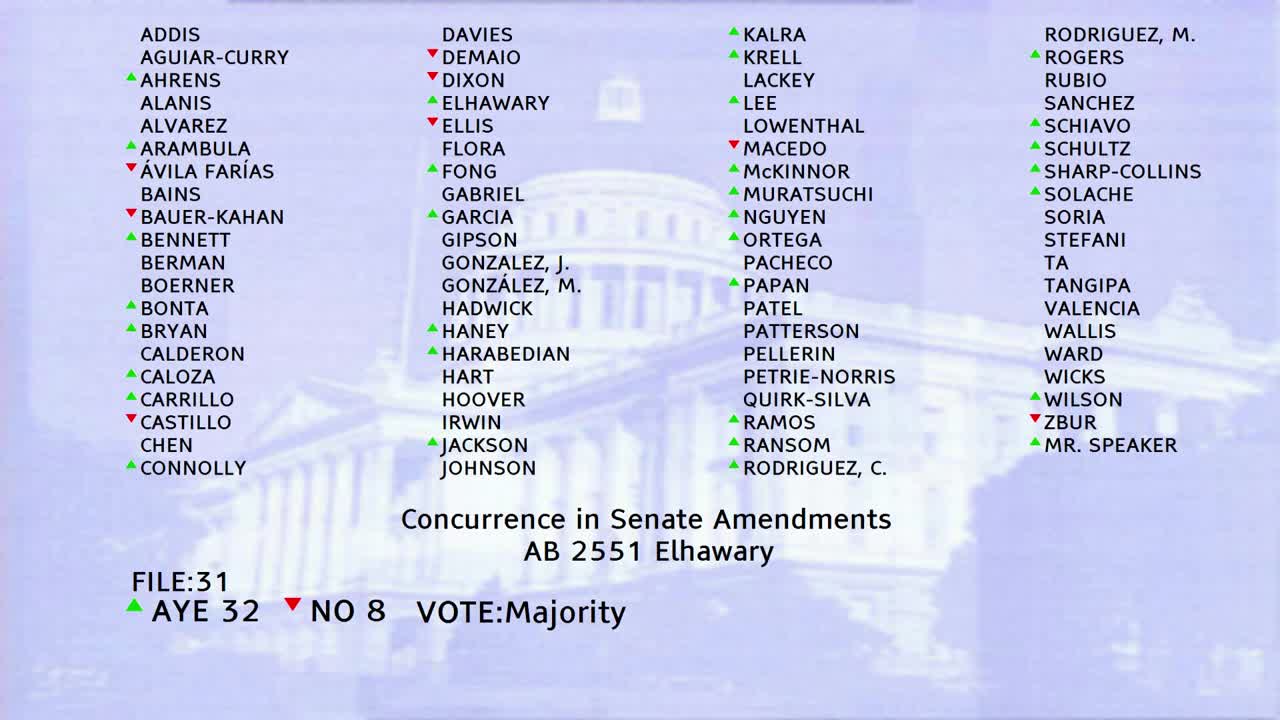 1MIN
Assembly Floor
 18MIN
Assembly Standing Committee on Environmental Safety and Toxic Materials
 15MIN
Assembly Standing Committee on Emergency Management
Bill Author