SB 894: Wildfire resiliency: financial assistance.
- Session Year: 2025-2026
- House: Senate
- Latest Version Date: 2026-09-29
Current Status:
Passed
(2026-09-29: Chaptered by Secretary of State. Chapter 770, Statutes of 2026.)
Introduced
In Committee
Awaiting First Chamber Vote
Passed First Chamber
In Committee
Awaiting Second Chamber Vote
Passed Second Chamber
Enacted
Existing law requires the Office of Emergency Services to enter into a joint powers agreement, as specified, with the Department of Forestry and Fire Protection to develop and administer a comprehensive wildfire mitigation program, that, among other things, encourages cost-effective structure hardening and retrofitting that creates fire-resistant homes, businesses, and public buildings.
Existing law establishes the California Alternative Energy and Advanced Transportation Financing Authority to provide alternative methods of financing in providing and promoting the establishment of facilities using alternative methods and sources of energy and facilities needed for the development and commercialization of advanced transportation technologies, as provided.
This bill would establish the California Wildfire Resilience Loan Program and would require the authority, upon appropriation by the Legislature, to administer the program to provide financial assistance for projects and activities to reduce wildfire-related risks and losses, including home hardening and defensible space improvements, as provided, and would make related changes.
Existing law requires the Office of Emergency Services to enter into a joint powers agreement, as specified, with the Department of Forestry and Fire Protection to develop and administer a comprehensive wildfire mitigation program, that, among other things, encourages cost-effective structure hardening and retrofitting that creates fire-resistant homes, businesses, and public buildings.
Existing law establishes the California Alternative Energy and Advanced Transportation Financing Authority to provide alternative methods of financing in providing and promoting the establishment of facilities using alternative methods and sources of energy and facilities needed for the development and commercialization of advanced transportation technologies, as provided.
This bill would establish the California Wildfire Resilience Loan Program and would require the authority authority, upon appropriation by the Legislature, to administer the program to provide financial assistance for projects and activities to reduce wildfire-related risks and losses, including home hardening and defensible space improvements, as provided, and would make related changes.
Existing law requires the Office of Emergency Services to enter into a joint powers agreement, as specified, with the Department of Forestry and Fire Protection to develop and administer a comprehensive wildfire mitigation program, that, among other things, encourages cost-effective structure hardening and retrofitting that creates fire-resistant homes, businesses, and public buildings.
Existing law establishes the California Alternative Energy and Advanced Transportation Financing Authority to provide alternative methods of financing in providing and promoting the establishment of facilities using alternative methods and sources of energy and facilities needed for the development and commercialization of advanced transportation technologies, as provided.
This bill would establish the California Wildfire Resilience Loan Program and would require the authority to administer the program to provide financial assistance for projects and activities to reduce wildfire-related risks and losses, including home hardening and defensible space improvements, as provided, and would make related changes.
Existing law requires the Office of Emergency Services to enter into a joint powers agreement, as specified, with the Department of Forestry and Fire Protection to develop and administer a comprehensive wildfire mitigation program, that, among other things, encourages cost-effective structure hardening and retrofitting that creates fire-resistant homes, businesses, and public buildings.
This bill would provide that it is the intent of the Legislature to enact subsequent legislation that would establish the California Wildfire Resilience Program, developed and administered by the California Alternative Energy and Advanced Transportation Financing Authority, that would consist of a loan loss reserve and interest rate buy-down program designed to increase access to, and affordability of, defensible space and home hardening modifications, as provided.Existing law establishes the California Alternative Energy and Advanced Transportation Financing Authority to provide alternative methods of financing in providing and promoting the establishment of facilities using alternative methods and sources of energy and facilities needed for the development and commercialization of advanced transportation technologies, as provided.
This bill would establish the California Wildfire Resilience Loan Program and would require the authority to administer the program to provide financial assistance for projects and activities to reduce wildfire-related risks and losses, including home hardening and defensible space improvements, as provided, and would make related changes.
Existing law requires the Office of Emergency Services to enter into a joint powers agreement, as specified, with the Department of Forestry and Fire Protection to develop and administer a comprehensive wildfire mitigation program, that, among other things, encourages cost-effective structure hardening and retrofitting that creates fire-resistant homes, businesses, and public buildings.
This bill would provide that it is the intent of the Legislature to enact subsequent legislation that would establish the California Wildfire Resilience Program, developed and administered by the California Alternative Energy and Advanced Transportation Financing Authority, that would consist of a loan loss reserve and interest rate buy-down program designed to increase access to, and affordability of, defensible space and home hardening modifications, as provided.
(a)The Legislature finds and declares all of the following:
(1)Wildfire losses impose substantial public costs, including loss of life, displacement, infrastructure damage, increased disaster spending, and destabilization of housing and insurance markets.
(2)Wildfires additionally can cause significant increases in air pollution and levels of greenhouse gas emissions in the state.
(3)Investments in wildfire risk reduction, including home hardening and defensible space, provide significant public benefits that extend beyond individual property owners.
(4)Lack of access to affordable upfront capital is a significant barrier preventing widespread adoption of these measures.
(5)The California Alternative Energy and Advanced Transportation Financing Authority has demonstrated capacity to administer statewide financing programs that leverage public participation to unlock private capital, successfully increasing adoption of other property improvement activities.
(b)It is the intent of the Legislature to authorize the California Alternative Energy and Advanced Transportation Financing Authority to establish a wildfire mitigation loan program for wildfire resilience improvements, and to authorize participation by public and private partners, including utilities, insurers, nonprofit organizations, philanthropic entities, and the federal government, where participation advances public safety, market stability, and resilience objectives.
SEC. 2.Section 26001 of the Public Resources Code is amended to read:26001.The Legislature hereby finds and declares all of the following:
(a)It is essential that the state, in cooperation with the federal government and other public and private partners, use all practical and commercially feasible means to promote the prompt and efficient development of energy sources that are renewable or that more efficiently use and conserve scarce energy resources.
(b)The promotion of sustainable and renewable energy sources, implementation of measures that increase the efficiency of the use of energy, and advanced transportation technologies that reduce the degradation of the environment and lessen the states dependence on fossil fuels, and protect the health, welfare, and safety of the people of this state are in the public interest and serve a public purpose.
(c)It is essential to the public safety, economic stability, and general welfare of the state to promote investments that reduce wildfire-related risk and losses, including home hardening and defensible space improvements.
SEC. 3.Section 26002 of the Public Resources Code is amended to read:26002.It is the purpose of this division to advance the states goals of reducing the levels of greenhouse gas emissions, increasing the deployment of sustainable and renewable energy sources, implementing measures that increase the efficiency of the use of energy, creating high-quality employment opportunities, increasing the adoption of wildfire resilience improvements that reduce wildfire-related risk and losses, and lessening the states dependence on fossil fuels and to that end to provide an alternative method of financing in providing and promoting the establishment of all of the following:
(a)Facilities using alternative methods and sources of energy.
(b)Facilities needed for the development and commercialization of advanced transportation technologies.
(c)Facilities, projects, improvements, and measures intended to reduce wildfire risk, enhance structural survivability, or improve community resilience to wildfire.
SEC. 4.Chapter 5 (commencing with Section 26090) is added to Division 16 of the Public Resources Code, to read:5.California Wildfire Resilience Loan Program26090.The California Wildfire Resilience Loan Program is hereby established to be developed and administered, upon appropriation by the Legislature, including the appropriation of any federal or private funds from any source given for purposes of this chapter, excluding any moneys collected from ratepayers of electrical corporations or gas corporations, by the authority to achieve all of the following goals:
(a)Reducing local and statewide wildfire losses through wildfire resilience improvements to residential, multifamily, mixed-use, nonprofit, or small business property.
(b)Improving insurability and resilience of communities vulnerable to wildfire risk.
(c)Increasing the defensible space around and hardening of residential, multifamily, mixed-use, nonprofit, or small business property to mitigate wildfire risk, thereby reducing emissions of greenhouse gases from wildfires and associated air pollution.
(d)Reduce the upfront and overall cost to eligible property owners of obtaining private financing for wildfire resilience improvements and expand access of eligible property owners to private financing tools for wildfire resilience improvements.
26091.(a)Upon appropriation by the Legislature, including the appropriation of any federal or private funds from any source given for purposes of this chapter, excluding any moneys collected from ratepayers of electrical corporations or gas corporations, the California Wildfire Resilience Loan Program may include, but is not limited to, establishment of a loan loss reserve, interest rate buy-downs, and other credit enhancements.
(b)(1)Eligible activities and wildfire resilience improvements under the program shall include, but are not limited to, any of the following activities and improvements as informed by guidance from the Department of Forestry and Fire Protection in consultation with the Office of Emergency Services and the Department of Insurance:
(A)Home hardening, including ignition-resistant features, vegetation management, and defensible space treatments, including, but not limited to, any of the following:
(i)Risk mitigation identified in Section 2644.9 of Title 10 of the California Code of Regulations or in successor regulations.
(ii)Risk mitigation identified in Part 7 (commencing with Section 1.1) of Title 24 of the California Code of Regulations or in successor regulations.
(iii)Defensible space activities identified in Section 4291 of this code or in Section 51182 of the Government Code.
(B)Smoke mitigation retrofits.
(C)Other measures that improve the survivability of a structure in the event of a wildfire, as determined by the Department of Forestry and Fire Protection.
(D)Inspections and administrative fees associated with inspections of wildfire improvements when incurred in conjunction with other eligible activities or improvements under the program. Inspections and administrative fees shall not constitute a standalone eligible activity or improvement under the program.
(2)Guidance specified in paragraph (1) may reference actions identified in regulations by any relevant state agency, including regulations adopted by the State Board of Forestry and Fire Protection, but shall not be construed to limit the authoritys discretion to approve activities that exceed state standards.
(c)Financial assistance under the program may be made available to eligible individual property owners throughout the state and shall not be in the form of a lien against the property or be limited by land classification, jurisdiction, or hazard severity zone.
(d)(1)Upon appropriation by the Legislature, including the appropriation of any federal or private funds from any source given for purposes of this chapter, excluding any moneys collected from ratepayers of electrical corporations or gas corporations, the Department of Forestry and Fire Protection may provide technical assistance and public leadership in support of the program, including, but not limited to, conducting public outreach and education and making recommendations regarding implementation of best practices of existing home hardening financial assistance programs.
(2)The department may use available wildfire risk modeling, decision-support tools, and other relevant data to prioritize outreach and implementation activities in areas where wildfire resilience improvements are expected to provide the greatest reduction in community structure loss.
(e)Upon appropriation by the Legislature, including the appropriation of any federal or private funds from any source given for purposes of this chapter, excluding any moneys collected from ratepayers of electrical corporations or gas corporations, the authority may establish partnerships or referral arrangements with state agencies, local governments, community-based organizations, insurers, lenders, contractors, or other entities for purposes that may include, but are not limited to, identifying and referring eligible applicants, aggregating demand, and facilitating bulk purchasing or group contracting arrangements.
(f)Upon appropriation by the Legislature, including the appropriation of any federal or private funds from any source given for purposes of this chapter, excluding any moneys collected from ratepayers of electrical corporations or gas corporations, the authority may, in consultation with the State Fire Marshal, establish procedures for preassessments or postcompletion verifications of improvements financed through the program for purposes that may include program integrity, evaluation, and continuous improvement.
(g)Upon appropriation by the Legislature, including the appropriation of any federal or private funds given from any source for purposes of this chapter, excluding any moneys collected from ratepayers of electrical corporations or gas corporations, the authority may enter into agreements to design, develop, maintain, and operate a public-facing internet website for the program.
(a)The Legislature finds and declares all of the following:
(1)Wildfire losses impose substantial public costs, including loss of life, displacement, infrastructure damage, increased disaster spending, and destabilization of housing and insurance markets.
(2)Wildfires additionally can cause significant increases in air pollution and levels of greenhouse gas emissions in the state.
(3)Investments in wildfire risk reduction, including home hardening and defensible space, provide significant public benefits that extend beyond individual property owners.
(4)Lack of access to affordable upfront capital is a significant barrier preventing widespread adoption of these measures.
(5)The California Alternative Energy and Advanced Transportation Financing Authority has demonstrated capacity to administer statewide financing programs that leverage public participation to unlock private capital, successfully increasing adoption of other property improvement activities.
(b)It is the intent of the Legislature to authorize the California Alternative Energy and Advanced Transportation Financing Authority to establish a wildfire mitigation loan program for wildfire resilience improvements, and to authorize participation by public and private partners, including utilities, insurers, nonprofit organizations, philanthropic entities, and the federal government, where participation advances public safety, market stability, and resilience objectives.
SEC. 2.Section 26001 of the Public Resources Code is amended to read:26001.The Legislature hereby finds and declares all of the following:
(a)It is essential that the state, in cooperation with the federal government and other public and private partners, use all practical and commercially feasible means to promote the prompt and efficient development of energy sources that are renewable or that more efficiently use and conserve scarce energy resources.
(b)The promotion of sustainable and renewable energy sources, implementation of measures that increase the efficiency of the use of energy, and advanced transportation technologies that reduce the degradation of the environment and lessen the states dependence of on fossil fuels, and protect the health, welfare, and safety of the people of this state are in the public interest and serve a public purpose.
(c)It is essential to the public safety, economic stability, and general welfare of the state to promote investments that reduce wildfire-related risk and losses, including home hardening and defensible space improvements.
SEC. 3.Section 26002 of the Public Resources Code is amended to read:26002.It is the purpose of this division to advance the states goals of reducing the levels of greenhouse gas emissions, increasing the deployment of sustainable and renewable energy sources, implementing measures that increase the efficiency of the use of energy, creating high-quality employment opportunities, increasing the adoption of wildfire resilience improvements that reduce wildfire-related risk and losses, and lessening the states dependence on fossil fuels and to that end to provide an alternative method of financing in providing and promoting the establishment of all of the following:
(a)Facilities using alternative methods and sources of energy.
(b)Facilities needed for the development and commercialization of advanced transportation technologies.
(c)Facilities, projects, improvements, and measures intended to reduce wildfire risk, enhance structural survivability, or improve community resilience to wildfire.
SEC. 4.Chapter 5 (commencing with Section 26090) is added to Division 16 of the Public Resources Code, to read:5.California Wildfire Resilience Loan Program26090.The California Wildfire Resilience Loan Program is hereby established to be developed and administered, upon appropriation by the Legislature, including the appropriation of any federal or private funds from any source given for purposes of this chapter, excluding any moneys collected from ratepayers of electrical corporations or gas corporations, by the authority to achieve all of the following goals:
(a)Reducing local and statewide wildfire losses through wildfire resilience improvements to residential, multifamily, mixed-use, nonprofit, or small business property.
(b)Improving insurability and resilience of communities vulnerable to wildfire risk.
(c)Increasing the defensible space around and hardening of residential, multifamily, mixed-use, nonprofit, or small business property to mitigate wildfire risk, thereby reducing emissions of greenhouse gases from wildfires and associated air pollution.
(d)Reduce the upfront and overall cost to eligible property owners of obtaining private financing for wildfire resilience improvements and expand access of eligible property owners to private financing tools for wildfire resilience improvements.
26091.(a)Upon appropriation by the Legislature, including the appropriation of any federal or private funds from any source given for purposes of this chapter, excluding any moneys collected from ratepayers of electrical corporations or gas corporations, the California Wildfire Resilience Loan Program may include, but is not limited to, establishment of a loan loss reserve, interest rate buy-downs, and other credit enhancements.
(b)(1)Eligible activities and wildfire resilience improvements under the program shall include, but are not limited to, any of the following activities and improvements as informed by guidance from the Department of Forestry and Fire Protection in consultation with the Office of Emergency Services and the Department of Insurance:
(A)Home hardening, including ignition-resistant features, vegetation management, and defensible space treatments, including, but not limited to, any of the following:
(i)Risk mitigation identified in Section 2644.9 of Title 10 of the California Code of Regulations or in successor regulations.
(ii)Risk mitigation identified in Part 7 (commencing with Section 1.1) of Title 24 of the California Code of Regulations or in successor regulations.
(iii)Defensible space activities identified in Section 4291 of this code or in Section 51182 of the Government Code.
(B)Smoke mitigation retrofits.
(C)Other risk reduction measures. measures that improve the survivability of a structure in the event of a wildfire, as determined by the Department of Forestry and Fire Protection.
(D)Inspections and administrative fees associated with inspections of wildfire improvements when incurred in conjunction with other eligible activities or improvements under the program. Inspections and administrative fees shall not constitute a standalone eligible activity or improvement under the program.
(2)Guidance specified in paragraph (1) may reference actions identified in regulations by any relevant state agency, including regulations adopted by the State Board of Forestry and Fire Protection, but shall not be construed to limit the authoritys discretion to approve activities that exceed state standards.
(c)Financial assistance under the program may be made available to eligible individual property owners throughout the state and shall not be in the form of a lien against the property or be limited by land classification, jurisdiction, or hazard severity zone.
(d)(1)Upon appropriation by the Legislature, including the appropriation of any federal or private funds from any source given for purposes of this chapter, excluding any moneys collected from ratepayers of electrical corporations or gas corporations, the Department of Forestry and Fire Protection may provide technical assistance and public leadership in support of the program, including, but not limited to, conducting public outreach and education and making recommendations regarding implementation of best practices of existing home hardening financial assistance programs.
(2)The department may use available wildfire risk modeling, decision-support tools, and other relevant data to prioritize outreach and implementation activities in areas where wildfire resilience improvements are expected to provide the greatest reduction in community structure loss.
(d)(e)Upon appropriation by the Legislature, including the appropriation of any federal or private funds from any source given for purposes of this chapter, excluding any moneys collected from ratepayers of electrical corporations or gas corporations, the authority may establish partnerships or referral arrangements with state agencies, local governments, community-based organizations, insurers, lenders, contractors, or other entities for purposes that may include, but are not limited to, identifying and referring eligible applicants, aggregating demand, and facilitating bulk purchasing or group contracting arrangements.
(e)(f)Upon appropriation by the Legislature, including the appropriation of any federal or private funds from any source given for purposes of this chapter, excluding any moneys collected from ratepayers of electrical corporations or gas corporations, the authority may, in consultation with the State Fire Marshal, establish procedures for preassessments or postcompletion verifications of improvements financed through the program for purposes that may include program integrity, evaluation, and continuous improvement.
(f)(g)Upon appropriation by the Legislature, including the appropriation of any federal or private funds given from any source for purposes of this chapter, excluding any moneys collected from ratepayers of electrical corporations or gas corporations, the authority may enter into agreements to design, develop, maintain, and operate a public-facing internet website for the program.
(a)The Legislature finds and declares all of the following:
(1)Wildfire losses impose substantial public costs, including loss of life, displacement, infrastructure damage, increased disaster spending, and destabilization of housing and insurance markets.
(2)Wildfires additionally can cause significant increases in air pollution and levels of greenhouse gas emissions in the state.
(3)Investments in wildfire risk reduction, including home hardening and defensible space, provide significant public benefits that extend beyond individual property owners.
(4)Lack of access to affordable upfront capital is a significant barrier preventing widespread adoption of these measures.
(5)The California Alternative Energy and Advanced Transportation Financing Authority has demonstrated capacity to administer statewide financing programs that leverage public participation to unlock private capital, successfully increasing adoption of other property improvement activities.
(b)It is the intent of the Legislature to authorize the California Alternative Energy and Advanced Transportation Financing Authority to establish a wildfire mitigation loan program for wildfire resilience improvements, and to authorize participation by public and private partners, including utilities, insurers, nonprofit organizations, philanthropic entities, and the federal government, where participation advances public safety, market stability, and resilience objectives.
SEC. 2.Section 26001 of the Public Resources Code is amended to read:26001.The Legislature hereby finds and declares all of the following:
(a)It is essential that the state, in cooperation with the federal government and other public and private partners, use all practical and commercially feasible means to promote the prompt and efficient development of energy sources that are renewable or that more efficiently use and conserve scarce energy resources.
(b)The promotion of sustainable and renewable energy sources, implementation of measures that increase the efficiency of the use of energy, and advanced transportation technologies that reduce the degradation of the environment and lessen the states dependence of fossil fuels, and protect the health, welfare, and safety of the people of this state are in the public interest and serve a public purpose.
(c)It is essential to the public safety, economic stability, and general welfare of the state to promote investments that reduce wildfire-related risk and losses, including home hardening and defensible space improvements.
SEC. 3.Section 26002 of the Public Resources Code is amended to read:26002.It is the purpose of this division to advance the states goals of reducing the levels of greenhouse gas emissions, increasing the deployment of sustainable and renewable energy sources, implementing measures that increase the efficiency of the use of energy, creating high-quality employment opportunities, increasing the adoption of wildfire resilience improvements that reduce wildfire-related risk and losses, and lessening the states dependence on fossil fuels and to that end to provide an alternative method of financing in providing and promoting the establishment of all of the following:
(a)Facilities using alternative methods and sources of energy.
(b)Facilities needed for the development and commercialization of advanced transportation technologies.
(c)Facilities, projects, improvements, and measures intended to reduce wildfire risk, enhance structural survivability, or improve community resilience to wildfire.
SEC. 4.Chapter 5 (commencing with Section 26090) is added to Division 16 of the Public Resources Code, to read:5.California Wildfire Resilience Loan Program26090.The California Wildfire Resilience Loan Program is hereby established to be developed and administered, upon appropriation by the Legislature, including the appropriation of any federal or private funds from any source given for purposes of this chapter, excluding any moneys collected from ratepayers of electrical corporations or gas corporations, by the authority to achieve all of the following goals:
(a)Reducing local and statewide wildfire losses through wildfire resilience improvements to residential, multifamily, mixed-use, nonprofit, or small business property.
(b)Improving insurability and resilience of communities vulnerable to wildfire risk.
(c)Increasing the defensible space around and hardening of residential, multifamily, mixed-use, nonprofit, or small business property to mitigate wildfire risk, thereby reducing emissions of greenhouse gases from wildfires and associated air pollution.
(d)Reduce the upfront and overall cost to eligible property owners of obtaining private financing for wildfire resilience improvements and expand access of eligible property owners to private financing tools for wildfire resilience improvements.
26091.(a)Upon appropriation by the Legislature, including the appropriation of any federal or private funds from any source given for purposes of this chapter, excluding any moneys collected from ratepayers of electrical corporations or gas corporations, the California Wildfire Resilience Loan Program may include, but is not limited to, establishment of a loan loss reserve, interest rate buy-downs, and other credit enhancements.
(b)(1)Eligible wildfire resilience improvements under the program shall include, but are not limited to, any of the following improvements as informed by guidance from the Department of Forestry and Fire Protection in consultation with the Office of Emergency Services and the Department of Insurance:
(A)Home hardening, including ignition-resistant features, vegetation management, and defensible space treatments, including, but not limited to, any of the following:
(i)Risk mitigation identified in Section 2644.9 of Title 10 of the California Code of Regulations or in successor regulations.
(ii)Risk mitigation identified in Part 7 (commencing with Section 1.1) of Title 24 of the California Code of Regulations or in successor regulations.
(iii)Defensible space activities identified in Section 4291 of this code or in Section 51182 of the Government Code.
(B)Smoke mitigation retrofits.
(C)Other risk reduction measures.
(2)Guidance specified in paragraph (1) may reference actions identified in regulations by any relevant state agency, including regulations adopted by the State Board of Forestry and Fire Protection, but shall not be construed to limit the authoritys discretion to approve activities that exceed state standards.
(c)Financial assistance under the program may be made available to eligible individual property owners throughout the state and shall not be in the form of a lien against the property or be limited by land classification, jurisdiction, or hazard severity zone.
(d)Upon appropriation by the Legislature, including the appropriation of any federal or private funds from any source given for purposes of this chapter, excluding any moneys collected from ratepayers of electrical corporations or gas corporations, the authority may establish partnerships or referral arrangements with state agencies, local governments, community-based organizations, insurers, lenders, contractors, or other entities for purposes that may include, but are not limited to, identifying and referring eligible applicants, aggregating demand, and facilitating bulk purchasing or group contracting arrangements.
(e)Upon appropriation by the Legislature, including the appropriation of any federal or private funds from any source given for purposes of this chapter, excluding any moneys collected from ratepayers of electrical corporations or gas corporations, the authority may, in consultation with the State Fire Marshal, establish procedures for preassessments or postcompletion verifications of improvements financed through the program for purposes that may include program integrity, evaluation, and continuous improvement.
(f)Upon appropriation by the Legislature, including the appropriation of any federal or private funds given from any source for purposes of this chapter, excluding any moneys collected from ratepayers of electrical corporations or gas corporations, the authority may enter into agreements to design, develop, maintain, and operate a public-facing internet website for the program.
(a)The Legislature finds and declares all of the following:
(1)Wildfire losses impose substantial public costs, including loss of life, displacement, infrastructure damage, increased disaster spending, and destabilization of housing and insurance markets.
(2)Wildfires additionally can cause significant increases in air pollution and levels of greenhouse gas emissions in the state.
(3)Investments in wildfire risk reduction, including home hardening and defensible space, provide significant public benefits that extend beyond individual property owners.
(4)Lack of access to affordable upfront capital is a significant barrier preventing widespread adoption of these measures.
(5)The California Alternative Energy and Advanced Transportation Financing Authority has demonstrated capacity to administer statewide financing programs that leverage public participation to unlock private capital, successfully increasing adoption of other property improvement activities.
(b)It is the intent of the Legislature to authorize the California Alternative Energy and Advanced Transportation Financing Authority to establish a wildfire mitigation loan program for wildfire resilience improvements, and to authorize participation by public and private partners, including utilities, insurers, nonprofit organizations, philanthropic entities, and the federal government, where participation advances public safety, market stability, and resilience objectives.
SEC. 2.Section 26001 of the Public Resources Code is amended to read:26001.The Legislature hereby finds and declares all of the following:
(a)It is essential that the state, in cooperation with the federal government and other public and private partners, use all practical and commercially feasible means to promote the prompt and efficient development of energy sources that are renewable or that more efficiently use and conserve scarce energy resources.
(b)The promotion of sustainable and renewable energy sources, implementation of measures that increase the efficiency of the use of energy, and advanced transportation technologies that reduce the degradation of the environment and lessen the states dependence of fossil fuels, and protect the health, welfare, and safety of the people of this state are in the public interest and serve a public purpose.
(c)It is essential to the public safety, economic stability, and general welfare of the state to promote investments that reduce wildfire-related risk and losses, including home hardening and defensible space improvements.
SEC. 3.Section 26002 of the Public Resources Code is amended to read:26002.It is the purpose of this division to advance the states goals of reducing the levels of greenhouse gas emissions, increasing the deployment of sustainable and renewable energy sources, implementing measures that increase the efficiency of the use of energy, creating high-quality employment opportunities, increasing the adoption of wildfire resilience improvements that reduce wildfire-related risk and losses, and lessening the states dependence on fossil fuels and to that end to provide an alternative method of financing in providing and promoting the establishment of all of the following:
(a)Facilities using alternative methods and sources of energy.
(b)Facilities needed for the development and commercialization of advanced transportation technologies.
(c)Facilities, projects, improvements, and measures intended to reduce wildfire risk, enhance structural survivability, or improve community resilience to wildfire.
SEC. 4.Chapter 5 (commencing with Section 26090) is added to Division 16 of the Public Resources Code, to read:5.California Wildfire Resilience Loan Program26090.The California Wildfire Resilience Loan Program is hereby established to be developed and administered administered, upon appropriation by the Legislature, including the appropriation of any federal or private funds from any source given for purposes of this chapter, by the authority to achieve all of the following goals:
(a)Reducing local and statewide wildfire losses through wildfire resilience improvements to residential, multifamily, mixed-use, nonprofit, or small business property.
(b)Improving insurability and resilience of communities vulnerable to wildfire risk.
(c)Increasing the defensible space around and hardening of residential, multifamily, mixed-use, nonprofit, or small business property to mitigate wildfire risk, thereby reducing emissions of greenhouse gases from wildfires and associated air pollution.
(d)Reduce the upfront and overall cost to eligible property owners of obtaining private financing for wildfire resilience improvements and expand access of eligible property owners to private financing tools for wildfire resilience improvements.
26091.(a)Subject to the availability of funding, Upon appropriation by the Legislature, including the appropriation of any federal or private funds from any source given for purposes of this chapter, the California Wildfire Resilience Loan Program may include, but is not limited to, establishment of a loan loss reserve, interest rate buy-downs, and other credit enhancements.
(b)(1)Eligible wildfire resilience improvements under the program shall include, but are not limited to, any of the following improvements as informed by guidance from the Department of Forestry and Fire Protection in consultation with the Office of Emergency Services and the Department of Insurance:
(A)Home hardening, including ignition-resistant features, vegetation management, and defensible space treatments, including, but not limited to, any of the following:
(i)Risk mitigation identified in Section 2644.9 of Title 10 of the California Code of Regulations or in successor regulations.
(ii)Risk mitigation identified in Part 7 (commencing with Section 1.1) of Title 24 of the California Code of Regulations or in successor regulations.
(iii)Defensible space activities identified in Section 4291 of this code or in Section 51182 of the Government Code.
(B)Smoke mitigation retrofits.
(C)Other risk reduction measures.
(2)Guidance specified in paragraph (1) may reference actions identified in regulations by any relevant state agency, including regulations adopted by the State Board of Forestry and Fire Protection, but shall not be construed to limit the authoritys discretion to approve activities that exceed state standards.
(c)Financial assistance under the program may be made available to eligible individual property owners throughout the state and shall not be in the form of a lien against the property or be limited by land classification, jurisdiction, or hazard severity zone.
(d)The Upon appropriation by the Legislature, including the appropriation of any federal or private funds from any source given for purposes of this chapter, the authority may establish partnerships or referral arrangements with state agencies, local governments, community-based organizations, insurers, lenders, contractors, or other entities for purposes that may include, but are not limited to, identifying and referring eligible applicants, aggregating demand, and facilitating bulk purchasing or group contracting arrangements.
(e)The Upon appropriation by the Legislature, including the appropriation of any federal or private funds from any source given for purposes of this chapter, the authority may, in consultation with the State Fire Marshal, establish procedures for preassessments or postcompletion verifications of improvements financed through the program for purposes that may include program integrity, evaluation, and continuous improvement.
(f)Upon appropriation by the Legislature or upon the availability Legislature, including the appropriation of any federal or private funds given from any source, source for purposes of this chapter, the authority may enter into agreements to design, develop, maintain, and operate a public-facing internet website for the program.
(a)The Legislature finds and declares all of the following:
(1)Wildfire losses impose substantial public costs, including loss of life, displacement, infrastructure damage, increased disaster spending, and destabilization of housing and insurance markets.
(2)Wildfires additionally can cause significant increases in air pollution and levels of greenhouse gas emissions in the state.
(3)Investments in wildfire risk reduction, including home hardening and defensible space, provide significant public benefits that extend beyond individual property owners.
(4)Lack of access to affordable upfront capital is a significant barrier preventing widespread adoption of these measures.
(5)The California Alternative Energy and Advanced Transportation Financing Authority has demonstrated capacity to administer statewide financing programs that leverage public participation to unlock private capital, successfully increasing adoption of other property improvement activities.
(b)It is the intent of the Legislature to authorize the California Alternative Energy and Advanced Transportation Financing Authority to establish a wildfire mitigation loan program for wildfire resilience improvements, and to authorize participation by public and private partners, including utilities, insurers, nonprofit organizations, philanthropic entities, and the federal government, where participation advances public safety, market stability, and resilience objectives.
SEC. 2.Section 26001 of the Public Resources Code is amended to read:26001.The Legislature hereby finds and declares all of the following:
(a)It is essential that the state, in cooperation with the federal government and other public and private partners, use all practical and commercially feasible means to promote the prompt and efficient development of energy sources that are renewable or that more efficiently use and conserve scarce energy resources.
(b)The promotion of sustainable and renewable energy sources, implementation of measures that increase the efficiency of the use of energy, and advanced transportation technologies that reduce the degradation of the environment and lessen the states dependence of fossil fuels, and protect the health, welfare, and safety of the people of this state are in the public interest and serve a public purpose.
(c)It is essential to the public safety, economic stability, and general welfare of the state to promote investments that reduce wildfire-related risk and losses, including home hardening and defensible space improvements.
SEC. 3.Section 26002 of the Public Resources Code is amended to read:26002.It is the purpose of this division to advance the states goals of reducing the levels of greenhouse gas emissions, increasing the deployment of sustainable and renewable energy sources, implementing measures that increase the efficiency of the use of energy, creating high-quality employment opportunities, increasing the adoption of wildfire resilience improvements that reduce wildfire-related risk and losses, and lessening the states dependence on fossil fuels and to that end to provide an alternative method of financing in providing and promoting the establishment of all of the following:
(a)Facilities using alternative methods and sources of energy.
(b)Facilities needed for the development and commercialization of advanced transportation technologies.
(c)Facilities, projects, improvements, and measures intended to reduce wildfire risk, enhance structural survivability, or improve community resilience to wildfire.
SEC. 4.Chapter 5 (commencing with Section 26090) is added to Division 16 of the Public Resources Code, to read:5.California Wildfire Resilience Loan Program26090.The California Wildfire Resilience Loan Program is hereby established to be developed and administered by the authority to achieve all of the following goals:
(a)Reducing local and statewide wildfire losses through wildfire resilience improvements to residential, multifamily, mixed-use, nonprofit, or small business property.
(b)Improving insurability and resilience of communities vulnerable to wildfire risk.
(c)Increasing the defensible space around and hardening of residential, multifamily, mixed-use, nonprofit, or small business property to mitigate wildfire risk, thereby reducing emissions of greenhouse gases from wildfires and associated air pollution.
(d)Reduce the upfront and overall cost to eligible property owners of obtaining private financing for wildfire resilience improvements and expand access of eligible property owners to private financing tools for wildfire resilience improvements.
26091.(a)Subject to the availability of funding, the California Wildfire Resilience Loan Program may include, but not be is not limited to, establishment of a loan loss reserve, interest rate buy-downs, and other credit enhancements.
(b)(1)Eligible wildfire resilience improvements under the program shall include, but not be are not limited to, any of the following improvements as informed by guidance from the Department of Forestry and Fire Protection in consultation with the Office of Emergency Services and the Department of Insurance:
(A)Home hardening, including ignition-resistant features, vegetation management, and defensible space treatments, including, but not limited to, any of the following:
(i)Risk mitigation identified in Section 2644.9 of Title 10 of the California Code of Regulations or in successor regulations.
(ii)Risk mitigation identified in Part 7 (commencing with Section 1.1) of Title 24 of the California Code of Regulations or in successor regulations.
(iii)Defensible space activities identified in Section 4291 of this code or in Section 51182 of the Government Code.
(B)Smoke mitigation retrofits.
(C)Other risk reduction measures.
(2)Guidance specified in paragraph (1) may reference actions identified in regulations by any relevant state agency, including regulations adopted by the State Board of Forestry and Fire Protection, but shall not be construed to limit the authoritys discretion to approve activities that exceed state standards.
(c)Financial assistance under the program may be made available to eligible properties individual property owners throughout the state and shall not be in the form of a lien against the property or be limited by land classification, jurisdiction, or hazard severity zone.
(d)The authority may establish partnerships or referral arrangements with state agencies, local governments, community-based organizations, insurers, lenders, contractors, or other entities for purposes that may include, but are not limited to, identifying and referring eligible applicants, aggregating demand, and facilitating bulk purchasing or group contracting arrangements.
(e)The authority may, in consultation with the State Fire Marshal, establish procedures for preassessments or postcompletion verifications of improvements financed through the program for purposes that may include program integrity, evaluation, and continuous improvement.
(f)Upon appropriation by the Legislature or upon the availability of funds from any source, the authority may enter into agreements to design, develop, maintain, and operate a public-facing internet website for the program.
(a)The Legislature finds and declares all of the following:
(1)Wildfire losses impose substantial public costs, including loss of life, displacement, infrastructure damage, increased disaster spending, and destabilization of housing and insurance markets.
(2)Wildfires additionally can cause significant increases to in air pollution and levels of greenhouse gas emissions in the state.
(3)Investments in wildfire risk reduction, including home hardening and defensible space, provide significant public benefits that extend beyond individual property owners.
(4)Lack of access to affordable upfront capital is a significant barrier preventing widespread adoption of these measures.
(5)The California Alternative Energy and Advanced Transportation Financing Authority has demonstrated capacity to administer statewide financing programs that leverage public participation to unlock private capital, successfully increasing adoption of other property improvement activities.
(b)It is the intent of the Legislature to authorize the California Alternative Energy and Advanced Transportation Financing Authority to establish a wildfire mitigation loan program for wildfire resilience improvements, and to authorize participation by public and private partners, including utilities, insurers, nonprofit organizations, philanthropic entities, and the federal government, where the participation advances public safety, market stability, and resilience objectives.
SEC. 2.Section 26001 of the Public Resources Code is amended to read:26001.The Legislature hereby finds and declares all of the following:
(a)It is essential that the state, in cooperation with the federal government, government and other public and private partners, use all practical and commercially feasible means to promote the prompt and efficient development of energy sources that are renewable or that more efficiently use and conserve scarce energy resources.
(b)The promotion of sustainable and renewable energy sources, implementation of measures that increase the efficiency of the use of energy, and advanced transportation technologies that reduce the degradation of the environment and lessen the states dependence of fossil fuels, and protect the health, welfare, and safety of the people of this state are in the public interest and serve a public purpose.
(c)It is essential to the public safety, economic stability, and general welfare of the state to promote investments that reduce wildfire-related risk and losses, including home hardening and defensible space improvements.
SEC. 3.Section 26002 of the Public Resources Code is amended to read:26002.It is the purpose of this division to advance the states goals of reducing the levels of greenhouse gas emissions, increasing the deployment of sustainable and renewable energy sources, implementing measures that increase the efficiency of the use of energy, creating high-quality employment opportunities, increasing the adoption of wildfire resilience improvements that reduce wildfire-related risk and losses, and lessening the states dependence on fossil fuels and to that end to provide an alternative method of financing in providing and promoting the establishment of all of the following:
(a)Facilities using alternative methods and sources of energy.
(b)Facilities needed for the development and commercialization of advanced transportation technologies.
(c)Facilities, projects, improvements, and measures intended to reduce wildfire risk, enhance structural survivability, or improve community resilience to wildfire.
SEC. 4.Chapter 5 (commencing with Section 26090) is added to Division 16 of the Public Resources Code, to read:5.California Wildfire Resilience Loan Program26090.The California Wildfire Resilience Loan Program is hereby established to be developed and administered by the authority to achieve all of the following goals:
(a)Reducing local and statewide wildfire losses through wildfire resilience improvements to residential, multifamily, mixed-use, nonprofit, or small business property.
(b)Improving insurability and resilience of communities vulnerable to wildfire risk.
(c)Increasing the defensible space around and hardening of residential, multifamily, mixed-use, nonprofit, or small business property to mitigate wildfire risk, thereby reducing the emission emissions of greenhouse gases from wildfires and associated air pollution.
(d)Reduce the upfront and overall cost to eligible property owners of obtaining private financing for wildfire resilience improvements and expand access of eligible property owners to private financing tools for wildfire resilience improvements.
26091.(a)Subject to the availability of funding, the California Wildfire Resilience Loan Program may include, but not be limited to, establishment of a loan loss reserve, interest rate buy-downs, and other credit enhancements.
(b)(1)Eligible wildfire resilience improvements under the program shall include, but not be limited to, any of the following improvements as informed by guidance from the Office of the State Fire Marshal Department of Forestry and Fire Protection in consultation with the Office of Emergency Services and the Department of Insurance:
(A)Home hardening, including ignition-resistant features, vegetation management, and defensible space treatments, including, but not limited to, any of the following:
(i)Risk mitigation identified in Section 2644.4.5 or 2644.9 of Title 10 of the California Code of Regulations. Regulations or in successor regulations.
(ii)Risk mitigation identified in Chapter 7A (commencing with Section 701A.1) Part 7 (commencing with Section 1.1) of Title 24 of the California Code of Regulations. Regulations or in successor regulations.
(iii)Defensible space activities identified in Article 3 (commencing with Section 1299) of Subchapter 3 of Chapter 7 of Division 1.5 of Title 14 of the California Code of Regulations. Section 4291 of this code or in Section 51182 of the Government Code.
(B)Smoke mitigation retrofits.
(C)Other risk reduction measures.
(2)Guidance specified in paragraph (1) may reference actions identified in regulations by any relevant state agency, including regulations adopted by the State Board of Forestry and Fire Protection, but shall not be construed to limit the authoritys discretion to approve activities that exceed state standards.
(c)Financial assistance under the program may be made available to eligible properties throughout the state and shall not be limited by land classification, jurisdiction, or hazard severity zone.
(d)The authority may establish partnerships or referral arrangements with state agencies, local governments, community-based organizations, insurers, lenders, contractors, or other entities for purposes that may include, but are not limited to, identifying and referring eligible applicants, aggregating demand, and facilitating bulk purchasing or group contracting arrangements.
(e)The authority may, in consultation with the State Fire Marshal, establish procedures for preassessments or postcompletion verifications of improvements financed through the program for purposes that may include program integrity, evaluation, and continuous improvement.
(f)Upon appropriation by the Legislature or upon the availability of funds from any source, the authority may enter into agreements to design, develop, maintain, and operate a public-facing internet website for the program.
(a)The Legislature finds and declares all of the following:
(1)Wildfire losses impose substantial public costs, including loss of life, displacement, infrastructure damage, increased disaster spending, and destabilization of housing and insurance markets.
(2)Wildfires additionally can cause significant increases to air pollution and levels of greenhouse gas emissions in the state.
(3)Investments in wildfire risk reduction, including home hardening and defensible space, provide significant public benefits that extend beyond individual property owners.
(4)Lack of access to affordable upfront capital is a significant barrier preventing widespread adoption of these measures.
(5)The California Alternative Energy and Advanced Transportation Financing Authority has demonstrated capacity to administer statewide financing programs that leverage public participation to unlock private capital, successfully increasing adoption of other property improvement activities.
(b)It is the intent of the Legislature to authorize the California Alternative Energy and Advanced Transportation Financing Authority to establish a wildfire mitigation loan program for wildfire resilience improvements, and to authorize participation by public and private partners, including utilities, insurers, nonprofit organizations, philanthropic entities, and the federal government, where the participation advances public safety, market stability, and resilience objectives.
SEC. 2.Section 26001 of the Public Resources Code is amended to read:26001.The Legislature hereby finds and declares both all of the following:
(a)It is essential that the state, in cooperation with the federal government, use all practical and commercially feasible means to promote the prompt and efficient development of energy sources which that are renewable or which that more efficiently utilize use and conserve scarce energy resources.
(b)The promotion of sustainable and renewable energy sources, implementation of measures that increase the efficiency of the use of energy, and advanced transportation technologies that reduce the degradation of the environment and lessen the states dependence of fossil fuels, and protect the health, welfare, and safety of the people of this state are in the public interest and serve a public purpose.
(c)It is essential to the public safety, economic stability, and general welfare of the state to promote investments that reduce wildfire-related risk and losses, including home hardening and defensible space improvements.
SEC. 3.Section 26002 of the Public Resources Code is amended to read:26002.It is the purpose of this division to advance the states goals of reducing the levels of greenhouse gas emissions, increasing the deployment of sustainable and renewable energy sources, implementing measures that increase the efficiency of the use of energy, creating high quality high-quality employment opportunities, increasing the adoption of wildfire resilience improvements that reduce wildfire-related risk and losses, and lessening the states dependence on fossil fuels and to that end to provide an alternative method of financing in providing and promoting the establishment of both all of the following:
(a)Facilities utilizing using alternative methods and sources of energy.
(b)Facilities needed for the development and commercialization of advanced transportation technologies.
(c)Facilities, projects, improvements, and measures intended to reduce wildfire risk, enhance structural survivability, or improve community resilience to wildfire.
SEC. 4.Chapter 5 (commencing with Section 26090) is added to Division 16 of the Public Resources Code, to read:5.California Wildfire Resilience Loan Program26090.The California Wildfire Resilience Loan Program is hereby established to be developed and administered by the authority to achieve all of the following goals:
(a)Reducing local and statewide wildfire losses through wildfire resilience improvements to residential, multifamily, mixed-use, nonprofit, or small business property.
(b)Improving insurability and resilience of communities vulnerable to wildfire risk.
(c)Increasing the defensible space around and hardening of residential, multifamily, mixed-use, nonprofit, or small business property to mitigate wildfire risk, thereby reducing the emission of greenhouse gases from wildfires and associated air pollution.
(d)Reduce the upfront and overall cost to eligible property owners of obtaining private financing for wildfire resilience improvements and expand access of eligible property owners to private financing tools for wildfire resilience improvements.
26091.(a)Subject to the availability of funding, the California Wildfire Resilience Loan Program may include, but not be limited to, establishment of a loan loss reserve, interest rate buy-downs, and other credit enhancements.
(b)(1)Eligible wildfire resilience improvements under the program shall include, but not be limited to, any of the following improvements as informed by guidance from the Office of the State Fire Marshal in consultation with the Office of Emergency Services and the Department of Insurance:
(A)Home hardening, including ignition-resistant features, vegetation management, and defensible space treatments, including, but not limited to, any of the following:
(i)Risk mitigation identified in Section 2644.4.5 or 2644.9 of Title 10 of California Code of Regulations.
(ii)Risk mitigation identified in Chapter 7A (commencing with Section 701A.1) of Title 24 of the California Code of Regulations.
(iii)Defensible space activities identified in Article 3 (commencing with Section 1299) of Subchapter 3 of Chapter 7 of Division 1.5 of Title 14 of the California Code of Regulations.
(B)Smoke mitigation retrofits.
(C)Other risk reduction measures.
(2)Guidance specified in paragraph (1) may reference actions identified in regulations by any relevant state agency, including regulations adopted by the State Board of Forestry and Fire Protection, but shall not be construed to limit the authoritys discretion to approve activities that exceed state standards.
(c)Financial assistance under the program may be made available to eligible properties throughout the state and shall not be limited by land classification, jurisdiction, or hazard severity zone.
(d)The authority may establish partnerships or referral arrangements with state agencies, local governments, community-based organizations, insurers, lenders, contractors, or other entities for purposes that may include, but are not limited to, identifying and referring eligible applicants, aggregating demand, and facilitating bulk purchasing or group contracting arrangements.
(e)The authority may, in consultation with the State Fire Marshal, establish procedures for preassessments or postcompletion verifications of improvements financed through the program for purposes that may include program integrity, evaluation, and continuous improvement.
(f)Upon appropriation by the Legislature or upon the availability of funds from any source, the authority may enter into agreements to design, develop, maintain, and operate a public-facing internet website for the program.
SECTION 1.It is the intent of the Legislature to enact subsequent legislation that would establish the California Wildfire Resilience Program, to be developed and administered by the California Alternative Energy and Advanced Transportation Financing Authority, that would consist of a loan loss reserve and interest rate buy-down program designed to increase access to, and affordability of, defensible space and home hardening modifications by reducing the overall costs to property owners of loans issued under the program for these activities, as well as reducing the risk of wildfire-related structure loss and associated emissions of greenhouse gases and air pollution, and improving the insurability and resilience of communities.It is the intent of the Legislature to enact subsequent legislation that would establish the California Wildfire Resilience Program, to be developed and administered by the California Alternative Energy and Advanced Transportation Financing Authority, that would consist of a loan loss reserve and interest rate buy-down program designed to increase access to, and affordability of, defensible space and home hardening modifications by reducing the overall costs to property owners of loans issued under the program for these activities, as well as reducing the risk of wildfire-related structure loss and associated emissions of greenhouse gases and air pollution, and improving the insurability and resilience of communities.
|
Date
|
Status
|
|---|---|
| Sep 29, 2026 | Chaptered by Secretary of State. Chapter 770, Statutes of 2026. |
| Sep 29, 2026 | Approved by the Governor. |
| Sep 2, 2026 | Enrolled and presented to the Governor at 3 p.m. |
| Aug 27, 2026 | Assembly amendments concurred in. (Ayes 40. Noes 0. Page 5996.) Ordered to engrossing and enrolling. |
| Aug 27, 2026 | Assembly amendments concurred in. (Ayes 40. Noes 0.) Ordered to engrossing and enrolling. |
| Aug 26, 2026 | In Senate. Concurrence in Assembly amendments pending. |
| Aug 26, 2026 | Read third time. Passed. (Ayes 79. Noes 0. Page 6610.) Ordered to the Senate. |
| Aug 26, 2026 | Read third time. Passed. Ordered to the Senate. |
| Aug 20, 2026 | Ordered to third reading. |
| Aug 20, 2026 | Read third time and amended. |
| Aug 17, 2026 | Read second time. Ordered to third reading. |
| Aug 13, 2026 | Read second time and amended. Ordered to second reading. |
| Aug 13, 2026 | From committee: Do pass as amended. (Ayes 11. Noes 0.) (August 13). |
| Aug 13, 2026 | Assembly Rule 63 suspended. |
| Aug 5, 2026 | August 5 set for first hearing. Placed on suspense file. |
| Jun 30, 2026 | From committee: Do pass and re-refer to Com. on APPR. with recommendation: To consent calendar. (Ayes 6. Noes 0.) (June 29). Re-referred to Com. on APPR. |
| Jun 23, 2026 | From committee: Do pass and re-refer to Com. on E.M with recommendation: To consent calendar. (Ayes 14. Noes 0.) (June 22). Re-referred to Com. on E.M. |
| Jun 4, 2026 | Referred to Coms. on NAT. RES. and E.M. |
| May 28, 2026 | In Assembly. Read first time. Held at Desk. |
| May 28, 2026 | Read third time. Passed. (Ayes 39. Noes 0. Page 4525.) Ordered to the Assembly. |
| May 28, 2026 | Read third time. Passed. (Ayes 39. Noes 0.) Ordered to the Assembly. |
| May 26, 2026 | Ordered to special consent calendar. |
| May 18, 2026 | Read second time. Ordered to third reading. |
| May 14, 2026 | From committee: Do pass as amended. (Ayes 7. Noes 0. Page 4256.) (May 14). |
| May 14, 2026 | Read second time and amended. Ordered to second reading. |
| May 14, 2026 | From committee: Do pass as amended. (Ayes 7. Noes 0.) (May 14). |
| May 12, 2026 | Set for hearing May 14. |
| May 11, 2026 | May 11 hearing: Placed on APPR. suspense file. |
| May 4, 2026 | Set for hearing May 11. |
| Apr 23, 2026 | Read second time and amended. Re-referred to Com. on APPR. |
| Apr 22, 2026 | From committee: Do pass as amended and re-refer to Com. on APPR. (Ayes 9. Noes 0. Page 3972.) (April 21). |
| Apr 22, 2026 | From committee: Do pass as amended and re-refer to Com. on APPR. (Ayes 9. Noes 0.) (April 21). |
| Apr 14, 2026 | Set for hearing April 21. |
| Apr 9, 2026 | Read second time and amended. Re-referred to Com. on E.M. |
| Apr 8, 2026 | From committee: Do pass as amended and re-refer to Com. on E.M. (Ayes 7. Noes 0. Page 3758.) (April 7). |
| Apr 8, 2026 | From committee: Do pass as amended and re-refer to Com. on E.M. (Ayes 7. Noes 0.) (April 7). |
| Mar 24, 2026 | Set for hearing April 7. |
| Mar 18, 2026 | Re-referred to Coms. on N.R. & W. and E.M. |
| Mar 9, 2026 | From committee with author's amendments. Read second time and amended. Re-referred to Com. on RLS. |
| Feb 11, 2026 | Referred to Com. on RLS. |
| Jan 16, 2026 | From printer. May be acted upon on or after February 15. |
| Jan 15, 2026 | Introduced. Read first time. To Com. on RLS. for assignment. To print. |
|
Date
|
Description
|
Location
|
Votes
|
|
|---|---|---|---|---|
| Aug 27, 2026 | Unfinished Business SB894 Allen et al. Concurrence | Senate Floor |
Passed |
|
| Aug 26, 2026 | SB 894 Allen Senate Third Reading By Bennett | Assembly Floor |
Passed |
|
| Aug 13, 2026 | Do pass as amended. | Assembly Standing Committee on Appropriations |
Passed |
|
| Jun 29, 2026 | Do pass and be re-referred to the Committee on [Appropriations] with recommendation: To Consent Calendar | Assembly Standing Committee on Emergency Management |
Passed |
|
| Jun 22, 2026 | Do pass and be re-referred to the Committee on [Emergency Management] with recommendation: To Consent Calendar | Assembly Standing Committee on Natural Resources |
Passed |
|
| May 28, 2026 | Special Consent SB894 Allen et al. | Senate Floor |
Passed |
|
| May 14, 2026 | Do pass as amended | Senate Standing Committee on Appropriations |
Passed |
|
| May 11, 2026 | Placed on suspense file | Senate Standing Committee on Appropriations |
Passed |
|
| Apr 21, 2026 | Do pass as amended, but first amend, and re-refer to the Committee on [Appropriations] | Senate Standing Committee on Emergency Management |
Passed |
|
| Apr 7, 2026 | Do pass as amended, but first amend, and re-refer to the Committee on [Emergency Management] | Senate Standing Committee on Natural Resources and Water |
Passed |
This list shows positions taken on this bill by organizations on the date displayed, which is linked to the original source.
Positions by individuals are not included.
|
Organization
|
Position
|
Date
|
|---|---|---|
| AARP | ** Support | |
| American Property Casualty Insurance Association | ** Support | |
| Cal Chamber | ** Support | |
| California Alternative Energy and Advanced Transportation Financing Authority (CAEATFA) | ** Support | |
| California Apartment Association | ** Support | |
| California Association Of Realtors | ** Against | |
| California Credit Union League | ** Support | |
| California Democratic Party Rural Caucus | ** Support | |
| California Fire Chiefs Association | ** Support | |
| California Fire Safe Council | ** Support | |
| California Forward | ** Support | |
| California State Association of Counties (CSAC) | ** Support | |
| California State Treasurer | ** Support | |
| Climate Action California | ** Support | |
| Climate Resolve | ** Support | |
| Consumer Watchdog | ** Support | |
| DAN Munsey, Fire Chief of the San Bernardino County Fire Protection District | ** Support | |
| Del Norte Fire Safe Council | ** Support | |
| Elevate California | ** Support | |
| Environmental Defense Fund | ** Support | |
| Fire Aside | ** Support | |
| Fire Districts Association Of California | ** Support | |
| Firegeneration Collaborative | ** Support | |
| FireWerx | ** Support | |
| Insurance Commissioner Ricardo Lara / California Department of Insurance | ** Support | |
| Lieutenant Governor Eleni Kounalakis | ** Support | |
| Little Hoover Commission | ** Support | |
| Los Angeles; City Of | ** Support | |
| Megafire Action | ** Support | |
| Megafire Action (sponsor) | ** Support | |
| Napa Communities Firewise Foundation | ** Support | |
| National Association of Mutual Insurance Companies | ** Support | |
| Neighborhood Partnership Housing Services INC | ** Support | |
| NET-ZERO CALIFORNIA | ** Support | |
| Orange County Fire Authority | ** Support | |
| Pacific Association Of Domestic Insurance Companies | ** Support | |
| Pacific Forest Trust | ** Support | |
| Personal Insurance Federation Of California | ** Support | |
| RockRose Risk | ** Support | |
| Roxul Usa, INC. Dba Grodan | ** Support | |
| Rural County Representatives of California | ** Support | |
| Safe Community Project | ** Support | |
| San Bernardino County Fire Protection District | ** Support | |
| Santa Barbara County Fire Safe Council | ** Support | |
| Santa Barbara Fire Safe Council | ** Support | |
| Sierra Club | ** Support | |
| Tahoe Fund | ** Support | |
| The California Fire Chiefs Association | ** Support | |
| The Greenlining Institute | ** Support | |
| The Nature Conservancy | ** Support | |
| The Tahoe Fund | ** Support | |
| Western Riverside Council Of Governments | ** Support |
SENATE RULES COMMITTEE Office of Senate Floor Analyses (916) 651-4171 | SB 894 |
UNFINISHED BUSINESS
Bill No: SB 894
Author: Allen (D), et al.
Amended: 8/20/26
Vote: 21
SENATE NATURAL RES. & WATER COMMITTEE: 7-0, 4/7/26
AYES: Becker, Seyarto, Allen, Blakespear, Cabaldon, Grove, Stern
SENATE EMERGENCY MGT. COMMITTEE: 9-0, 4/21/26
AYES: Stern, Seyarto, Allen, Ashby, Blakespear, Dahle, Grayson, Pérez, Rubio
SENATE APPROPRIATIONS COMMITTEE: 7-0, 5/14/26
AYES: Cervantes, Seyarto, Cabaldon, Dahle, Grayson, Richardson, Wahab
SENATE FLOOR: 39-0, 5/28/26
AYES: Allen, Alvarado-Gil, Archuleta, Arreguín, Ashby, Becker, Blakespear, Cabaldon, Caballero, Cervantes, Choi, Cortese, Durazo, Gonzalez, Grayson, Grove, Hurtado, Jones, Laird, Limón, McGuire, McNerney, Menjivar, Niello, Ochoa Bogh, Padilla, Pérez, Reyes, Richardson, Rubio, Seyarto, Smallwood-Cuevas, Stern, Strickland, Umberg, Valladares, Wahab, Weber Pierson, Wiener
NO VOTE RECORDED: Dahle
ASSEMBLY FLOOR: 79-0, 8/26/26 - See last page for vote
SUBJECT: Wildfire resiliency: financial assistance
SOURCE: Megafire Action
DIGEST:
This bill establishes the California Wildfire Resilience Loan Program (CAEATFA) and requires the California Alternative Energy and Advanced Transportation Financing Authority to administer the program to provide financial assistance for projects and activities to reduce wildfire-related risks and losses, including home hardening and defensible space improvements.
Assembly Amendments
establish that inspections and administrative fees shall be an eligible expense under the Loan Program; establish that ratepayer funds shall not be used to fund the Loan Program; and authorize the Department of Forestry and Fire Protection to provide technical assistance and public leadership in support of the Loan Program.
ANALYSIS:
Existing law establishes CAEATFA. (Public Resources Code § 26011.8)
This bill:
- Adds to the purposes of CAEATFA the advancement of increasing the adoption of wildfire resilience improvements that reduce wildfire-risk related risk and losses by promoting facilities, projects, improvements, and measures intended to reduce wildfire risk, enhance structure survivability, or improve community resilience to wildfire.
- Establishes the California Wildfire Resilience Loan Program (Loan Program) to be developed and administered by CAEATFA, upon appropriation by the Legislature or the appropriation of any federal or private funds.
- Establishes the goals of the Loan Program as:
- Reducing local and statewide wildfire losses through wildfire resilience improvements to residential, multifamily, mixed-use, nonprofit, or small business property.
- Improving insurability and resilience of communities vulnerable to wildfire risk.
- Increasing the defensible space around and hardening of residential, multifamily, mixed-use, nonprofit, or small business property to mitigate wildfire risk, thereby reducing the emission of greenhouse gases from wildfires and associated air pollution.
- Reduce the upfront and overall cost to eligible property owners of obtaining private financing for wildfire resilience improvements and expand access of eligible property owners to private financing tools for wildfire resilience improvements.
- Establishes that the Loan Program may include, but not be limited to, establishment of a loan loss reserve, interest rate buy-downs, and other credit enhancements.
- Establishes eligible wildfire resilience improvements.
- Makes financial assistance under this Loan Program available to eligible properties statewide.
- Requires the financing of the Loan Program does not include ratepayer funds.
- Authorizes the Department to provide technical assistance and public leadership in support of the Loan Program.
- Authorizes CAEATFA to enter into partnerships or referral arrangements to facilitate the referral of eligible applicants, aggregating demand, or facilitating bulk purchasing or contracting agreements.
- Authorizes CAEATFA to consult with the SFM to establish procedures for verifications of improvements financed through the program for the purposes of program integrity, evaluation, and continuous improvement.
- Authorizes CAEATFA to enter into agreements, upon appropriation by the Legislature, to design, develop, maintain, and operate a public-facing internet website for the Loan Program.
- Establishes findings and declarations related to the purpose of this bill.
Background
California Wildfire Resilience Loan Program. The Loan Program proposed in this bill is modeled after the GoGreen financing platform administered by CAEATFA. This bill creates a state-backed loan loss reserve that leverages public dollars to unlock private capital, lower interest rates, and finance home hardening and defensible space improvements for more Californians to protect their residential homes and small businesses.
This bill authorizes the program to fund home hardening projects that improve a structure’s ability to withstand and survive a wildfire.
FISCAL EFFECT: Appropriation: No Fiscal Com.: Yes Local: No
According to the Senate Appropriations Committee analysis on an earlier version of the bill:
- CAETFA estimates ongoing costs of $3.9 million in the first year, gradually increasing to $5 million per year by the fifth year and likely continuing to grow thereafter (California Alternative Energy Authority Fund or other fund) to administer the Wildfire Resilience Loan Program, including to provide a loan loss reserve/credit enhancement funds. This cost estimate is based on CAEATFA’s projection of 1,000 projects in the first year, which would increase in each subsequent year and grow to more than 2,4000 projects by year five. Actual CAEATFA costs could be higher or lower and would depend on how many projects are ultimately undertaken.
- Unknown, potentially significant one-time costs for the Department of Forestry and Fire Protection (CalFire) to provide guidance, in consultation with the Office of Emergency Services (CalOES) and the Department of Insurance, to CAEATFA on wildfire resilience improvements eligible under the program. Unknown but likely minor costs for the Department of Insurance to consult with CalFire on the above guidance. CalOES anticipates its consulting costs would be minor and absorbable.
- Cost pressures of an unknown but likely significant amount, possibly in the tens of millions of dollars (various funds), to provide state funding for California Wildfire Resilience Loan Program projects and activities.
SUPPORT: (Verified 8/24/26)
Megafire Action (sponsor)
American Property Casualty Insurance Association
California Credit Union League
California Fire Safe Council
California Forward
California State Association of Counties (CSAC)
Climate Resolve
Consumer Watchdog
Del Norte Fire Safe Council
Elevate California
Environmental Defense Fund
Fire Aside
Firegeneration Collaborative
Firewerx
Little Hoover Commission
Los Angeles; City of
National Association of Mutual Insurance Companies
Neighborhood Partnership Housing Services INC
Net-zero California
Orange County Fire Authority
Pacific Association of Domestic Insurance Companies
Pacific Forest Trust
Personal Insurance Federation of California
Rockrose Risk
Rural County Representatives of California
Safe Community Project
San Bernardino County Fire Protection District
Santa Barbara County Fire Safe Council
Sierra Club
The Greenlining Institute
The Tahoe Fund
OPPOSITION: (Verified 8/24/26)
None received.
ARGUMENTS IN SUPPORT: According to the author, “Implementing wildfire hardening measures such as upgrading roofing and windows, replacing siding, and managing nearby vegetation can reduce a structure’s fire risk by more than 35 percent. However, these home hardening and defensible space investments can be prohibitively expensive, costing tens-of-thousands of dollars for homeowners and affordable financing is not easily accessible.”
ASSEMBLY FLOOR: 79-0, 8/26/26
AYES: Addis, Aguiar-Curry, Ahrens, Alanis, Alvarez, Arambula, Ávila Farías, Bains, Bauer-Kahan, Bennett, Berman, Boerner, Bonta, Bryan, Calderon, Caloza, Carrillo, Castillo, Chen, Connolly, Davies, DeMaio, Dixon, Elhawary, Ellis, Flora, Fong, Gabriel, Garcia, Gipson, Jeff Gonzalez, Mark González, Hadwick, Haney, Harabedian, Hart, Hoover, Irwin, Jackson, Johnson, Kalra, Krell, Lackey, Lee, Lowenthal, Macedo, McKinnor, Muratsuchi, Nguyen, Ortega, Pacheco, Papan, Patel, Patterson, Pellerin, Petrie-Norris, Quirk-Silva, Ramos, Ransom, Celeste Rodriguez, Michelle Rodriguez, Rogers, Blanca Rubio, Sanchez, Schiavo, Schultz, Sharp-Collins, Solache, Soria, Stefani, Ta, Tangipa, Valencia, Wallis, Ward, Wicks, Wilson, Zbur, Rivas
Prepared by: Edith Hannigan / N.R. & W. / (916) 651-4116
9/22/26 15:28:27
**** END ****
SENATE RULES COMMITTEE Office of Senate Floor Analyses (916) 651-4171 | SB 894 |
UNFINISHED BUSINESS
Bill No: SB 894
Author: Allen (D), et al.
Amended: 8/20/26
Vote: 21
SENATE NATURAL RES. & WATER COMMITTEE: 7-0, 4/7/26
AYES: Becker, Seyarto, Allen, Blakespear, Cabaldon, Grove, Stern
SENATE EMERGENCY MGT. COMMITTEE: 9-0, 4/21/26
AYES: Stern, Seyarto, Allen, Ashby, Blakespear, Dahle, Grayson, Pérez, Rubio
SENATE APPROPRIATIONS COMMITTEE: 7-0, 5/14/26
AYES: Cervantes, Seyarto, Cabaldon, Dahle, Grayson, Richardson, Wahab
SENATE FLOOR: 39-0, 5/28/26
AYES: Allen, Alvarado-Gil, Archuleta, Arreguín, Ashby, Becker, Blakespear, Cabaldon, Caballero, Cervantes, Choi, Cortese, Durazo, Gonzalez, Grayson, Grove, Hurtado, Jones, Laird, Limón, McGuire, McNerney, Menjivar, Niello, Ochoa Bogh, Padilla, Pérez, Reyes, Richardson, Rubio, Seyarto, Smallwood-Cuevas, Stern, Strickland, Umberg, Valladares, Wahab, Weber Pierson, Wiener
NO VOTE RECORDED: Dahle
ASSEMBLY FLOOR: Passed, 8/26/26
SUBJECT: Wildfire resiliency: financial assistance
SOURCE: Megafire Action
DIGEST:
This bill establishes the California Wildfire Resilience Loan Program (CAEATFA) and requires the California Alternative Energy and Advanced Transportation Financing Authority to administer the program to provide financial assistance for projects and activities to reduce wildfire-related risks and losses, including home hardening and defensible space improvements.
Assembly Amendments
establish that inspections and administrative fees shall be an eligible expense under the Loan Program; establish that ratepayer funds shall not be used to fund the Loan Program; and authorize the Department of Forestry and Fire Protection to provide technical assistance and public leadership in support of the Loan Program.
ANALYSIS:
Existing law establishes CAEATFA. (Public Resources Code § 26011.8)
This bill:
- Adds to the purposes of CAEATFA the advancement of increasing the adoption of wildfire resilience improvements that reduce wildfire-risk related risk and losses by promoting facilities, projects, improvements, and measures intended to reduce wildfire risk, enhance structure survivability, or improve community resilience to wildfire.
- Establishes the California Wildfire Resilience Loan Program (Loan Program) to be developed and administered by CAEATFA, upon appropriation by the Legislature or the appropriation of any federal or private funds.
- Establishes the goals of the Loan Program as:
- Reducing local and statewide wildfire losses through wildfire resilience improvements to residential, multifamily, mixed-use, nonprofit, or small business property.
- Improving insurability and resilience of communities vulnerable to wildfire risk.
- Increasing the defensible space around and hardening of residential, multifamily, mixed-use, nonprofit, or small business property to mitigate wildfire risk, thereby reducing the emission of greenhouse gases from wildfires and associated air pollution.
- Reduce the upfront and overall cost to eligible property owners of obtaining private financing for wildfire resilience improvements and expand access of eligible property owners to private financing tools for wildfire resilience improvements.
- Establishes that the Loan Program may include, but not be limited to, establishment of a loan loss reserve, interest rate buy-downs, and other credit enhancements.
- Establishes eligible wildfire resilience improvements.
- Makes financial assistance under this Loan Program available to eligible properties statewide.
- Requires the financing of the Loan Program does not include ratepayer funds.
- Authorizes the Department to provide technical assistance and public leadership in support of the Loan Program.
- Authorizes CAEATFA to enter into partnerships or referral arrangements to facilitate the referral of eligible applicants, aggregating demand, or facilitating bulk purchasing or contracting agreements.
- Authorizes CAEATFA to consult with the SFM to establish procedures for verifications of improvements financed through the program for the purposes of program integrity, evaluation, and continuous improvement.
- Authorizes CAEATFA to enter into agreements, upon appropriation by the Legislature, to design, develop, maintain, and operate a public-facing internet website for the Loan Program.
- Establishes findings and declarations related to the purpose of this bill.
Background
California Wildfire Resilience Loan Program. The Loan Program proposed in this bill is modeled after the GoGreen financing platform administered by CAEATFA. This bill creates a state-backed loan loss reserve that leverages public dollars to unlock private capital, lower interest rates, and finance home hardening and defensible space improvements for more Californians to protect their residential homes and small businesses.
This bill authorizes the program to fund home hardening projects that improve a structure’s ability to withstand and survive a wildfire.
FISCAL EFFECT: Appropriation: No Fiscal Com.: Yes Local: No
According to the Senate Appropriations Committee analysis on an earlier version of the bill:
- CAETFA estimates ongoing costs of $3.9 million in the first year, gradually increasing to $5 million per year by the fifth year and likely continuing to grow thereafter (California Alternative Energy Authority Fund or other fund) to administer the Wildfire Resilience Loan Program, including to provide a loan loss reserve/credit enhancement funds. This cost estimate is based on CAEATFA’s projection of 1,000 projects in the first year, which would increase in each subsequent year and grow to more than 2,4000 projects by year five. Actual CAEATFA costs could be higher or lower and would depend on how many projects are ultimately undertaken.
- Unknown, potentially significant one-time costs for the Department of Forestry and Fire Protection (CalFire) to provide guidance, in consultation with the Office of Emergency Services (CalOES) and the Department of Insurance, to CAEATFA on wildfire resilience improvements eligible under the program. Unknown but likely minor costs for the Department of Insurance to consult with CalFire on the above guidance. CalOES anticipates its consulting costs would be minor and absorbable.
- Cost pressures of an unknown but likely significant amount, possibly in the tens of millions of dollars (various funds), to provide state funding for California Wildfire Resilience Loan Program projects and activities.
SUPPORT: (Verified 8/24/26)
Megafire Action (sponsor)
American Property Casualty Insurance Association
California Credit Union League
California Fire Safe Council
California Forward
California State Association of Counties (CSAC)
Climate Resolve
Consumer Watchdog
Del Norte Fire Safe Council
Elevate California
Environmental Defense Fund
Fire Aside
Firegeneration Collaborative
Firewerx
Little Hoover Commission
Los Angeles; City of
National Association of Mutual Insurance Companies
Neighborhood Partnership Housing Services INC
Net-zero California
Orange County Fire Authority
Pacific Association of Domestic Insurance Companies
Pacific Forest Trust
Personal Insurance Federation of California
Rockrose Risk
Rural County Representatives of California
Safe Community Project
San Bernardino County Fire Protection District
Santa Barbara County Fire Safe Council
Sierra Club
The Greenlining Institute
The Tahoe Fund
OPPOSITION: (Verified 8/24/26)
None received.
ARGUMENTS IN SUPPORT: According to the author, “Implementing wildfire hardening measures such as upgrading roofing and windows, replacing siding, and managing nearby vegetation can reduce a structure’s fire risk by more than 35 percent. However, these home hardening and defensible space investments can be prohibitively expensive, costing tens-of-thousands of dollars for homeowners and affordable financing is not easily accessible.”
Prepared by: Edith Hannigan / N.R. & W. / (916) 651-4116
8/26/26 15:25:12
**** END ****
SENATE THIRD READING
STR Bill Id:SB 894
Author:(Allen)
As Amended Ver:August 20, 2026
Majority vote
SUMMARY
Establishes the California Wildfire Resilience Loan Program to provide financial assistance for projects and activities to reduce wildfire-related risks and losses, including home hardening and defensible space improvements.
Major Provisions
- Revises the purpose of the California Alternative Energy and Advanced Transportation Financing Authority Act to additionally increase the adoption of wildfire resilience improvements that reduce wildfire-related risk and losses, and to provide an alternative method of financing in providing and promoting the establishment of facilities, projects, improvements, and measures intended to reduce wildfire risk, enhance structural survivability, or improve community resilience to wildfire, among other facilities under existing law.
- Establishes the California Wildfire Resilience Loan Program (Wildfire Loan Program) to be developed and administered, upon appropriation by the Legislature, including the appropriation of any federal or private funds from any source given, excluding any moneys collected from ratepayers of electrical corporations or gas corporations, by the California Alternative Energy and Advanced Transportation Financing Authority (CAEATFA) to achieve specified goals.
- Authorizes the Wildfire Loan Program to include, but not be limited to, establishment of a loan loss reserve, interest rate buy-downs, and other credit enhancements.
- Requires eligible activities and wildfire resilience improvements under the Wildfire Loan Program to include, but not be limited to, specified activities and improvements as informed by guidance from the Department of Forestry and Fire Protection (CAL FIRE) in consultation with the California Office of Emergency Services (CalOES) and the Department of Insurance (CDI).
- Authorizes CAL FIRE to provide technical assistance and public leadership in support of the program, including, but not limited to, conducting public outreach and education and making recommendations regarding implementation of best practices of existing home hardening financial assistance programs.
- Authorizes financial assistance under the Wildfire Loan Program to be made available to eligible individual property owners throughout the state and prohibits financial assistance in the form of a lien against the property or be limited by land classification, jurisdiction, or FHSZ.
- Authorizes CAEATFA to establish partnerships or referral arrangements with state agencies, local governments, community-based organizations, insurers, lenders, contractors, or other entities for purposes that may include, but are not limited to, identifying and referring eligible applicants, aggregating demand, and facilitating bulk purchasing or group contracting arrangements.
- Authorizes CAEATFA to, in consultation with the SFM, establish procedures for preassessments or post-completion verifications of improvements financed through the program for purposes that may include program integrity, evaluation, and continuous improvement.
- Authorizes CAEATFA to enter into agreements to design, develop, maintain, and operate a public-facing internet website for the Wildfire Loan Program.
- CAETFA′s authorities under this bill are all subject to appropriation by the Legislature, including the appropriation of any federal or private funds from any source given, excluding any moneys collected from ratepayers of electrical corporations or gas corporations.
COMMENTS
There are various measures that reduce wildfire risk in a fire hazard severity zone (FHSZ), including defensible space and home hardening. Done in conjunction with one another, risk reduction is multiplied.
California′s wildfire building code (Chapter 7a) went into effect in 2008 and mandates fire-resistant housing materials. An analysis by the Sacramento Bee showed that approximately 51% of the 350 single-family homes built after 2008 in the path of the Camp Fire were undamaged. By contrast, only 18% of the 12,100 homes built prior to 2008 escaped damage.
Property owners are responsible for maintaining defensible space around their property and retrofitting any post-2008 structures with home hardening measures. Those wildfire resilience measures can often be unaffordable for many residents living in FHSZs.
CAETFA was created in 1980 and authorized to use revenue bonds to finance projects using alternative sources of energy, such as cogeneration, wind, and geothermal power. This bill expands CAEATFA to establish the Wildfire Loan Program to fund the wildfire resilience improvement, including home hardening, defensible space, smoke mitigation and other risk reduction efforts. The bill creates a state-backed loan loss reserve that calls on public dollars to leverage private capital, lower interest rates, and finance home hardening and defensible space improvements for more Californians to protect their residential homes and small businesses.
According to the Author
Implementing wildfire hardening measures such as upgrading roofing and windows, replacing siding, and managing nearby vegetation can reduce a structure′s fire risk by more than 35%. However, these home hardening and defensible space investments can be prohibitively expensive, costing tens-of-thousands of dollars for homeowners and affordable financing is not easily accessible. SB 894 will establish the California Wildfire Resilience Loan Program, modeled after the successful GoGreen financing platform. The bill will leverage public dollars to unlock private capital, lower interest rates, and finance home hardening and defensible space improvements for more Californians to protect their homes and small businesses.
Arguments in Support
The California Fire Chiefs Association and the Fire Districts Association of California write that as California continues to face increasingly destructive wildfire seasons, expanding access to financing for home hardening, defensible space, and other wildfire resilience improvements will help communities better prepare for future fire events. Providing additional tools to support proactive mitigation efforts can reduce wildfire risk, improve community resilience, and complement the important work already being undertaken by local fire agencies.
Arguments in Opposition
None on file
FISCAL COMMENTS
According to the Assembly Appropriations Committee:
- CAEATFA estimates General Fund costs of approximately $3.9 million in year one, gradually increasing to $5 million annually by the fifth year for both operations (rent, staff, overhead, equipment, contracts, and other costs) and credit enhancements. This estimate is modeled on the structure and expenditures of CAEATFA′s GoGreen Energy Financing Program.
- CAL FIRE, Cal OES, and CDI anticipate minor and absorbable costs.
VOTES
SENATE FLOOR: 39-0-1
YES: Allen, Alvarado-Gil, Archuleta, Arreguín, Ashby, Becker, Blakespear, Cabaldon, Caballero, Cervantes, Choi, Cortese, Durazo, Gonzalez, Grayson, Grove, Hurtado, Jones, Laird, Limón, McGuire, McNerney, Menjivar, Niello, Ochoa Bogh, Padilla, Pérez, Reyes, Richardson, Rubio, Seyarto, Smallwood-Cuevas, Stern, Strickland, Umberg, Valladares, Wahab, Weber Pierson, Wiener
ABS, ABST OR NV: Dahle
ASM NATURAL RESOURCES: 14-0-0
YES: Bryan, Ellis, Alanis, Connolly, Garcia, Haney, Hoover, Kalra, Macedo, Muratsuchi, Pellerin, Schultz, Wicks, Zbur
ASM EMERGENCY MANAGEMENT: 6-0-1
YES: Ransom, Hadwick, Arambula, Bennett, Calderon, DeMaio
ABS, ABST OR NV: Bains
ASM APPROPRIATIONS: 11-0-4
YES: Wicks, Arambula, Calderon, Caloza, Fong, Mark González, Krell, Pacheco, Pellerin, Sharp-Collins, Solache
ABS, ABST OR NV: Hoover, Dixon, Ta, Tangipa
UPDATED
VERSION: August 20, 2026
CONSULTANT: Paige Brokaw / NAT. RES. / (916) 319-2092 FN: 0003854
SENATE THIRD READING
STR Bill Id:SB 894
Author:(Allen)
As Amended Ver:August 13, 2026
Majority vote
SUMMARY
Establishes the California Wildfire Resilience Loan Program to provide financial assistance for projects and activities to reduce wildfire-related risks and losses, including home hardening and defensible space improvements.
Major Provisions
- Revises the purpose of the California Alternative Energy and Advanced Transportation Financing Authority Act to additionally increase the adoption of wildfire resilience improvements that reduce wildfire-related risk and losses, and to provide an alternative method of financing in providing and promoting the establishment of facilities, projects, improvements, and measures intended to reduce wildfire risk, enhance structural survivability, or improve community resilience to wildfire, among other facilities under existing law.
- Establishes the California Wildfire Resilience Loan Program (Wildfire Loan Program) to be developed and administered, upon appropriation by the Legislature, including the appropriation of any federal or private funds from any source given, excluding any moneys collected from ratepayers of electrical corporations or gas corporations, by the California Alternative Energy and Advanced Transportation Financing Authority (CAEATFA) to achieve specified goals.
- Authorizes the Wildfire Loan Program to include, but not be limited to, establishment of a loan loss reserve, interest rate buy-downs, and other credit enhancements.
- Requires eligible wildfire resilience improvements under the Wildfire Loan Program to include, but not be limited to, specified improvements as informed by guidance from the Department of Forestry and Fire Protection (CAL FIRE) in consultation with the California Office of Emergency Services (CalOES) and the Department of Insurance (CDI).
- Authorizes financial assistance under the Wildfire Loan Program to be made available to eligible individual property owners throughout the state and prohibits financial assistance in the form of a lien against the property or be limited by land classification, jurisdiction, or fire hazard severity zones (FHSZ).
- Authorizes CAEATFA to establish partnerships or referral arrangements with state agencies, local governments, community-based organizations, insurers, lenders, contractors, or other entities for purposes that may include, but are not limited to, identifying and referring eligible applicants, aggregating demand, and facilitating bulk purchasing or group contracting arrangements.
- Authorizes CAEATFA to, in consultation with the State Fire Marshal (SFM), establish procedures for preassessments or post-completion verifications of improvements financed through the program for purposes that may include program integrity, evaluation, and continuous improvement.
- Authorizes CAEATFA to enter into agreements to design, develop, maintain, and operate a public-facing internet website for the Wildfire Loan Program.
- CAETFA′s authorities under this bill are all subject to appropriation by the Legislature, including the appropriation of any federal or private funds from any source given, excluding any moneys collected from ratepayers of electrical corporations or gas corporations.
COMMENTS
There are various measures that reduce wildfire risk in a fire hazard severity zone (FHSZ), including defensible space and home hardening. Done in conjunction with one another, risk reduction is multiplied.
California′s wildfire building code (Chapter 7a) went into effect in 2008 and mandates fire-resistant housing materials. An analysis by the Sacramento Bee showed that approximately 51% of the 350 single-family homes built after 2008 in the path of the Camp Fire were undamaged. By contrast, only 18% of the 12,100 homes built prior to 2008 escaped damage.
Property owners are responsible for maintaining defensible space around their property and retrofitting any post-2008 structures with home hardening measures. Those wildfire resilience measures can often be unaffordable for many residents living in FHSZs.
CAETFA was created in 1980 and authorized to use revenue bonds to finance projects using alternative sources of energy, such as cogeneration, wind, and geothermal power. This bill expands CAEATFA to establish the Wildfire Loan Program to fund the wildfire resilience improvement, including home hardening, defensible space, smoke mitigation and other risk reduction efforts. The bill creates a state-backed loan loss reserve that calls on public dollars to leverage private capital, lower interest rates, and finance home hardening and defensible space improvements for more Californians to protect their residential homes and small businesses.
According to the Author
Implementing wildfire hardening measures such as upgrading roofing and windows, replacing siding, and managing nearby vegetation can reduce a structure′s fire risk by more than 35%. However, these home hardening and defensible space investments can be prohibitively expensive, costing tens-of-thousands of dollars for homeowners and affordable financing is not easily accessible. SB 894 will establish the California Wildfire Resilience Loan Program, modeled after the successful GoGreen financing platform. The bill will leverage public dollars to unlock private capital, lower interest rates, and finance home hardening and defensible space improvements for more Californians to protect their homes and small businesses.
Arguments in Support
The California Fire Chiefs Association and the Fire Districts Association of California write that as California continues to face increasingly destructive wildfire seasons, expanding access to financing for home hardening, defensible space, and other wildfire resilience improvements will help communities better prepare for future fire events. Providing additional tools to support proactive mitigation efforts can reduce wildfire risk, improve community resilience, and complement the important work already being undertaken by local fire agencies.
Arguments in Opposition
None on file
FISCAL COMMENTS
According to the Assembly Appropriations Committee:
- CAEATFA estimates General Fund costs of approximately $3.9 million in year one, gradually increasing to $5 million annually by the fifth year for both operations (rent, staff, overhead, equipment, contracts, and other costs) and credit enhancements. This estimate is modeled on the structure and expenditures of CAEATFA′s GoGreen Energy Financing Program.
- CAL FIRE, Cal OES, and CDI anticipate minor and absorbable costs.
VOTES
SENATE FLOOR: 39-0-1
YES: Allen, Alvarado-Gil, Archuleta, Arreguín, Ashby, Becker, Blakespear, Cabaldon, Caballero, Cervantes, Choi, Cortese, Durazo, Gonzalez, Grayson, Grove, Hurtado, Jones, Laird, Limón, McGuire, McNerney, Menjivar, Niello, Ochoa Bogh, Padilla, Pérez, Reyes, Richardson, Rubio, Seyarto, Smallwood-Cuevas, Stern, Strickland, Umberg, Valladares, Wahab, Weber Pierson, Wiener
ABS, ABST OR NV: Dahle
ASM NATURAL RESOURCES: 14-0-0
YES: Bryan, Ellis, Alanis, Connolly, Garcia, Haney, Hoover, Kalra, Macedo, Muratsuchi, Pellerin, Schultz, Wicks, Zbur
ASM EMERGENCY MANAGEMENT: 6-0-1
YES: Ransom, Hadwick, Arambula, Bennett, Calderon, DeMaio
ABS, ABST OR NV: Bains
ASM APPROPRIATIONS: 11-0-4
YES: Wicks, Arambula, Calderon, Caloza, Fong, Mark González, Krell, Pacheco, Pellerin, Sharp-Collins, Solache
ABS, ABST OR NV: Hoover, Dixon, Ta, Tangipa
UPDATED
VERSION: August 13, 2026
CONSULTANT: Paige Brokaw / NAT. RES. / (916) 319-2092 FN: 0003486
Date of Hearing: August 5, 2026
ASSEMBLY COMMITTEE ON APPROPRIATIONS
Buffy Wicks, Chair
SBPCA Bill Id:SB 894
Author:(Allen) – As Amended Ver:May 14, 2026
Policy Committee: | Natural Resources | Vote: | 14 - 0 |
Emergency Management | 6 - 0 | ||
|
|
Urgency: No State Mandated Local Program: No Reimbursable: No
SUMMARY:
This bill establishes the California Wildfire Resilience Loan Program (Wildfire Loan Program) to provide financial assistance for projects and activities to reduce wildfire-related risks and losses, including home hardening and defensible space improvements.
Specifically, this bill, among other things:
1) Establishes the Wildfire Loan Program to be developed and administered by the California Alternative Energy and Advanced Transportation Financing Authority (CAEATFA), upon appropriation by the Legislature, including the appropriation of any federal or private funds from any source given, to achieve the following goals: (a) reduce local and statewide wildfire losses through wildfire resilience improvements to residential, multifamily, mixed-use, nonprofit, or small business property; (b) improve insurability and resilience of communities vulnerable to wildfire risk; (c) increase the defensible space around and hardening of property to mitigate wildfire risk, thereby reducing emissions of greenhouse gases from wildfires and associated air pollution; and (d) reduce the upfront and overall cost to eligible property owners of obtaining private financing for wildfire resilience improvements and expand access of eligible property owners to private financing tools for wildfire resilience improvements.
2) Authorizes the Wildfire Loan Program, upon appropriation, to include establishment of a loan loss reserve, interest rate buy-downs, and other credit enhancements.
3) Requires eligible wildfire resilience improvements under the Wildfire Loan Program to include specified improvements as informed by guidance from the Department of Forestry and Fire Protection (CAL FIRE) in consultation with the California Office of Emergency Services (Cal OES) and the Department of Insurance (CDI).
4) Authorizes financial assistance under the Wildfire Loan Program to be made available to eligible individual property owners throughout the state and prohibits financial assistance in the form of a lien against the property or limited by land classification, jurisdiction, or hazard severity zones.
5) Authorizes CAEATFA, upon appropriation, to establish partnerships or referral arrangements with state agencies or other specified entities for purposes that may include identifying and referring eligible applicants, aggregating demand, and facilitating bulk purchasing or group contracting arrangements.
6) Authorizes CAEATFA, upon appropriation and in consultation with the State Fire Marshal, to establish procedures for preassessments or post-completion verifications of improvements financed through the program for purposes that may include program integrity, evaluation, and continuous improvement.
7) Authorizes CAEATFA, upon appropriation, to enter into agreements to design, develop, maintain, and operate a public-facing website for the Wildfire Loan Program.
FISCAL EFFECT:
1) CAEATFA, which supports the bill, estimates General Fund costs of approximately $3.9 million in year one, gradually increasing to $5 million annually by the fifth year for both operations (rent, staff, overhead, equipment, contracts, and other costs) and credit enhancements. This estimate is modeled on the structure and expenditures of CAEATFA’s GoGreen Energy Financing Program, which offers finance companies a credit enhancement in the form of a loss reserve that mitigates risk on loans and leases for approved equipment; in the event of default, a finance company may make a claim against the loss reserve to recoup most of the outstanding balance. According to CAEATFA, the loss rate in the GoGreen program is only about 2%. For this bill, CAEATFA is using a credit enhancement rate of 12.5% and assuming that, on average, for every $1 allocated to the loan loss reserve, the program will deploy $8 in private capital.
It typically costs tens of thousands of dollars to retrofit and harden an existing home against wildfire. For older homes, experts estimate costs in the range of $40,000 to $60,000. For its part, CAEATFA notes its cost estimate assumes 1,000 enrolled loans in the first year (with an average project cost of $10,000), increasing to about 2,400 projects by year five. CAEATFA notes that in subsequent years, as loan volume increases, its administrative cost per loan will decrease.
By the authority of the California Public Utilities Commission (CPUC), investor-owned utility ratepayer funds support administration of the GoGreen program as well as a credit enhancement for participating finance companies. GoGreen Home, CAEATFA’s residential program, also receives funding for administration and a credit enhancement from California gas corporation ratepayers through the TECH Clean California Initiative. The CPUC authorized up to $75.2 million in ratepayer funding to support the GoGreen program from July 1, 2022, through June 30, 2027. CAEATFA administration costs for GoGreen are about $3.3 million per year. In addition, a 2024 agreement between CAEATFA and the California Energy Commission’s Equitable Building Decarbonization program made $30 million in California Climate Investments funds available to GoGreen Home. For additional comparison and context, SB 96 (Committee on Budget and Fiscal Review), Chapter 356, Statutes of 2013, authorized CAEATFA to develop and administer the PACE Loss Reserve Program to mitigate risk to first mortgage lenders while supporting state energy efficiency goals – and the program received an initial allocation of $10 million in state funding. This bill does not identify a funding source or amount, and ongoing program costs would likely depend on available funding.
2) CAL FIRE, Cal OES, and CDI anticipate minor and absorbable costs.
COMMENTS:
1) Purpose. According to the author:
Implementing wildfire hardening measures such as upgrading roofing and windows, replacing siding, and managing nearby vegetation can reduce a structure’s fire risk by more than 35 percent. However, these home hardening and defensible space investments can be prohibitively expensive, costing tens-of-thousands of dollars for homeowners and affordable financing is not easily accessible. SB 894 will establish the [Wildfire Loan Program], modeled after the successful GoGreen financing platform. The bill will leverage public dollars to unlock private capital, lower interest rates, and finance home hardening and defensible space improvements for more Californians to protect their homes and small businesses.
2) Background. CAEATFA. CAEATFA, housed within the Office of the State Treasurer, works with public and private partners to provide innovative financing solutions for California’s industries to increase the development and deployment of renewable energy sources, energy efficiency, and advanced transportation and manufacturing technologies to reduce air pollution, conserve energy, and promote economic development and jobs.
Wildfire Mitigation. A 2024 Little Hoover Commission report found that proactive mitigation measures to strengthen a home’s defenses against wildfire can be cost prohibitive for many homeowners, but ultimately cost less than renovating a home after a devastating wildfire. Proactive mitigation may help prevent some of the worst devastation, but it must be done strategically and on a wide scale to maximize benefits. The commission recommended expanding the programs available to help homeowners upgrade their properties to better protect them from wildfires. For a more detailed discussion of related and ongoing efforts related to wildfire mitigation – including the existing California Wildfire Mitigation Program (CWMP) jointly administered by CAL FIRE and Cal OES – please see the Assembly Emergency Management Committee’s analysis of this bill.
This bill expands and directs CAEATFA to establish the Wildfire Loan Program, modeled after the authority’s GoGreen program, which provides financing to residences and businesses to make buildings more energy efficient by connecting borrowers with low- interest financing options, backed by the state, to replace outdated appliances, install solar energy systems, cool roofs, and electric vehicle chargers, and improve heating and cooling systems and insulation, among other projects. This bill similarly creates a state-backed loan loss reserve that calls on public dollars to leverage private capital, lower interest rates, and finance home hardening, defensible space, smoke mitigation, and other risk reduction improvements for more Californians to protect their homes and small businesses.
The bill is supported by a large and diverse coalition of organizations, and there is no opposition registered against the bill. The insurance industry argues that while grants (such as those provided by CWMP) will remain essential for the lowest-income households, a revolving loan structure allows repayments to be recycled into new lending and enables relatively modest public investment to unlock substantial private financing and scale mitigation across hundreds of thousands of homes statewide.
Analysis Prepared by: Nikita Koraddi / APPR. / (916) 319-2081
Date of Hearing: June 29, 2026
ASSEMBLY COMMITTEE ON EMERGENCY MANAGEMENT
Rhodesia Ransom, Chair
SBPCA Bill Id:SB 894
Author:(Allen) – As Amended Ver:May 14, 2026
SENATE VOTE: 39-0
SUBJECT: Wildfire resiliency: financial assistance
SUMMARY: This bill establishes the California Wildfire Resilience Loan Program to provide financial assistance for projects and activities to reduce wildfire-related risks and losses, including home hardening and defensible space improvements. Specifically, this bill:
- Establishes the California Wildfire Resilience Loan Program (Wildfire Loan Program) to be developed and administered, upon appropriation by the Legislature, including the appropriation of any federal or private funds from any source given, by California Alternative Energy and Advanced Transportation Financing Authority Act (CAEATFA) to achieve all of the following goals:
- Reducing local and statewide wildfire losses through wildfire resilience improvements to residential, multifamily, mixed-use, nonprofit, or small business property.
- Improving insurability and resilience of communities vulnerable to wildfire risk.
- Increasing the defensible space around and hardening of residential, multifamily, mixed-use, nonprofit, or small business property to mitigate wildfire risk, thereby reducing emissions of greenhouse gases from wildfires and associated air pollution.
- Reduce the upfront and overall cost to eligible property owners of obtaining private financing for wildfire resilience improvements and expand access of eligible property owners to private financing tools for wildfire resilience improvements.
- Authorizes, upon appropriation, the Wildfire Loan Program to include, but is not limited to, establishment of a loan loss reserve, interest rate buy-downs, and other credit enhancements.
- Requires eligible wildfire resilience improvements under the Wildfire Loan Program to include, but not be limited to, any of the following improvements as informed by guidance from the Department of Forestry and Fire Protection (CAL FIRE) in consultation with the California Office of Emergency Services (Cal OES) and the Department of Insurance (CDI):
- Home hardening, including ignition-resistant features, vegetation management, and defensible space treatments, including, but not limited to, any of the following:
- Risk mitigation identified Title 10 of the California Code of Regulations 2644.9 or in successor regulations;
- Risk mitigation identified in Title 24 CCR Part 7 or in successor regulations; and,
- Defensible space activities identified in PRC 4291 or GC 51182.
- Smoke mitigation retrofits.
- Other risk reduction measures.
- Home hardening, including ignition-resistant features, vegetation management, and defensible space treatments, including, but not limited to, any of the following:
- Authorizes guidance specified in (3) to reference actions identified in regulations by any relevant state agency, including regulations adopted by CAL FIRE, but will not be construed to limit the authority’s discretion to approve activities that exceed state standards.
- Authorizes financial assistance under the Wildfire Loan Program to be made available to eligible individual property owners throughout the state and prohibits financial assistance in the form of a lien against the property or be limited by land classification, jurisdiction, or FHSZ.
- Authorizes, upon appropriation, CAEATFA to establish partnerships or referral arrangements with state agencies, local governments, community-based organizations, insurers, lenders, contractors, or other entities for purposes that may include, but are not limited to, identifying and referring eligible applicants, aggregating demand, and facilitating bulk purchasing or group contracting arrangements.
- Authorizes, upon appropriation, CAEATFA to, in consultation with the SFM, establish procedures for preassessments or post-completion verifications of improvements financed through the program for purposes that may include program integrity, evaluation, and continuous improvement.
- Authorizes, upon appropriation, CAEATFA to enter into agreements to design, develop, maintain, and operate a public-facing internet website for the Wildfire Loan Program.
- Makes various findings and declarations for purposes of this bill.
EXISTING LAW:
- Pursuant to the California Alternative Energy and Advanced Transportation Financing Authority Act (Act): (Public Resources Code § 26000 - 26037)
- States the purpose of the Act is to advance the state’s goals of reducing the levels of greenhouse gas (GHG) emissions, increasing the deployment of sustainable and renewable energy sources, implementing measures that increase the efficiency of the use of energy, creating high quality employment opportunities, and lessening the state’s dependence on fossil fuels.
- Establishes the California Alternative Energy and Advanced Transportation Financing Authority (CAEATFA) to promote the creation of California-based manufacturing, high-quality California-based jobs, advanced manufacturing, the reduction of GHGs, or reductions in air and water pollution or energy consumption, and to ensure that California communities and workers benefit from projects receiving financial assistance.
- Requires CAEATFA to evaluate a project application based on specified criteria, inlcuding the extent to which the project, or the product produced by the project, results in a reduction of GHGs, a reduction in air or water pollution, an increase in energy efficiency, or a reduction in energy consumption, beyond what is required by federal or state law or regulation.
- Defines “home hardening” as the replacement or repair of structural features that are affixed to a property with features that are in compliance with Chapter 7A of Title 24 of the California Code of Regulations (CCR). (Public Resources Code § 4291.5)
- Requires a person who owns, leases, controls, operates, or maintains an occupied dwelling or occupied structure in, upon, or adjoining a mountainous area, forest-covered land, shrub-covered land, grass-covered land, or land that is covered with flammable material, which area or land is within a very high fire hazard severity zones (FHSZ) designated by the local agency to, at all times, maintain a defensible space of 100 feet from each side and from the front and rear of the structure, as provided. Requires the Board of Forestry (Board) to adopt regulations for an ember-resistant zone for the elimination of materials that would likely be ignited by embers. (Government Code § 51182)
- Requires the Board to develop and update guidance for fuels management for defensible space compliance. Requires the State Fire Marshal (SFM) to make recommendations to the Board on vegetation management and make reasonable efforts to provide notice to affected residents. (Public Resources Code § 4291)
- Requires insurance companies in California to account for wildfire-mitigation efforts when underwriting and pricing residential and commercial property insurance policies in wildfire-exposed areas. Defines “Wildfire Risk Model” as any tool, instrumentality, means or product, including but not limited to a map-based tool, a computer-based tool or a simulation, that is used by an insurer, in whole or in part, to measure or assess the wildfire risk associated with a residential or commercial structure for purposes of classifying individual structures according to their wildfire risk; or, estimating losses corresponding to such wildfire risk classifications. (Title 10 CCR 2644.9)
FISCAL EFFECT:
According to the Senate Appropriations Committee analysis:
CAETFA estimates ongoing costs of $3.9 million in the first year, gradually increasing to $5 million per year by the fifth year and likely continuing to grow thereafter (California Alternative Energy Authority Fund or other fund) to administer the Wildfire Resilience Loan Program, including to provide a loan loss reserve/credit enhancement funds. This cost estimate is based on CAEATFA’s projection of 1,000 projects in the first year, which would increase in each subsequent year and grow to more than 2,4000 projects by year five. Actual CAEATFA costs could be higher or lower and would depend on how many projects are ultimately undertaken.
Unknown, potentially significant one-time costs for the Department of Forestry and Fire Protection (CalFire) to provide guidance, in consultation with the Office of Emergency Services (CalOES) and the Department of Insurance, to CAEATFA on wildfire resilience improvements eligible under the program. Unknown but likely minor costs for the Department of Insurance to consult with CalFire on the above guidance. CalOES anticipates its consulting costs would be minor and absorbable.
Cost pressures of an unknown but likely significant amount, possibly in the tens of millions of dollars (various funds), to provide state funding for California Wildfire Resilience Loan Program projects and activities.
COMMENTS:
Author’s statement: “California is facing ever-increasing devastation from wildfire with the deadliest, largest, and most destructive fires in state history occurring in the last decade. Modern wildfires in California spread from forests and wildlands into urban conflagrations, exacerbated by the impacts of climate change and development. Homeowners are now struggling to find affordable insurance options as insurers raise premiums to cover increased risk or leave the state altogether. Implementing wildfire hardening measures such as upgrading roofing and windows, replacing siding, and managing nearby vegetation can reduce a structure’s fire risk by more than 35 percent. However, these home hardening and defensible space investments can be prohibitively expensive, costing tens-of-thousands of dollars for homeowners and affordable financing is not easily accessible. SB 894 will establish the California Wildfire Resilience Loan Program, modeled after the successful GoGreen financing platform. The bill will leverage public dollars to unlock private capital, lower interest rates, and finance home hardening and defensible space improvements for more Californians to protect their homes and small businesses.”
Equity Statement: “The bill will be particularly beneficial to lower-income, credit-challenged communities that cannot typically access private financing. The GoGreen program also provides additional credit enhancements to borrowers that lenders view as more risky.”
California Alternative Energy and Advanced Transportation Financing Authority (CAEATFA):
CAEATFA works collaboratively with public and private partners to provide innovative and effective financing solutions for California’s industries, assisting in reducing the state’s greenhouse gas emissions by increasing the development and deployment of renewable energy sources, energy efficiency, and advanced transportation and manufacturing technologies to reduce air pollution, conserve energy, and promote economic development and jobs. Housed within the Office of the State Treasurer, the authority provides financing through conduit or revenue bonds, loan guarantees, and loan loss reserves related to the use of alternative energy sources and technologies or advanced manufacturing.
CAEATFA administers the GoGreen Home Energy Financing Program (GoGreen) to help Californians save energy at home by making financing more widely available for energy-wise improvements, such as solar and battery storage and energy-efficient appliances. GoGreen offers finance companies a credit enhancement in the form of a loss reserve to mitigate the risk of default. This allows the finance companies to offer more attractive terms, such as lower rates, larger amounts to borrow, or longer time periods for repayment, than they otherwise could. The credit enhancement also allows finance companies to approve financing for a wider base of borrowers, such as homeowners with lower credit scores or small businesses with only a few years of operating history. A GoGreen program review found that for every $1 in state funds credited to the program, over $8 of private capital was provided in financing to homeowners. The Wildfire Loan Program is modeled after GoGreen to create a similar loan loss reserve program intended to help eligible homeowners finance wildfire resilience improvements to their properties.
California Wildfire Mitigation Program: In 2019, AB 38 (Wood, 2019) directed Cal OES to create the California Wildfire Mitigation Program (CWMP) along with Cal FIRE via a joint powers agreement to strengthen community-wide resilience against wildfires. This included developing a state home hardening initiative to retrofit, harden, and create defensible space for homes at high risk of wildfires, focusing on high socially vulnerable communities, and providing financial assistance for low- and moderate-income households. The effort is meant to encourage designed to encourage cost-effective structure hardening and retrofitting and facilitate vegetation management, the creation and maintenance of defensible space, and other fuel modification activities. This includes a community hardening approach to achieve wildfire resilience, low-cost retrofits with ignition-resistant materials to bring homes up to the standard of the California Building Code Chapter 7A, community and homeowner wildfire education on defensible space and home retrofitting and providing financial assistance to support home hardening work for qualifying homeowners.
In coordination with state and local partners, Cal OES and Cal FIRE also established a state Wildfire Community Hardening Framework that can be modeled throughout vulnerable California communities. The framework provides the opportunity for California communities to leverage state and federal resources and develop local wildfire home hardening programs that address community resiliency needs. To help expedite local wildfire home hardening program development and inform the build-out of the state’s framework, Cal OES and Cal FIRE provide state funding, resources, and support for demonstration communities to implement community wildfire home hardening projects in areas with high social vulnerability and wildfire risk.
Wildfire Safety Protection Frameworks, Programs, and Models: In 2022, CDI announced the “Safer from Wildfires” framework, which directs insurers to provide discounts to consumers and businesses if they take specified mitigation measures. In crafting this regulation, CDI worked with emergency preparedness agencies in the Governor’s Administration, including CAL FIRE, Cal OES, the Governor’s Office of Planning and Research, and the California Public Utilities Commission. The framework provides a list of home and community wildfire mitigation measures that consumers and businesses can take to provide protection for structures and the community. Under the regulation, the more “Safer from Wildfires” steps a consumer takes, the more they may be able to save on their insurance. Steps a consumer can take to help mitigate their property under this framework include class-A fire rated roofs; 5-foot ember resistant zone; ember and fire-resistant vents; non-combustible 6 inches at the bottom of exterior walls; enclosed eaves; upgraded windows; cleared vegetation; removal of combustible sheds and other outbuildings; and defensible space compliance.
In 2025, AB 888 established the “California Safe Homes” grant program to reduce local and statewide wildfire losses by encouraging mitigation. The California Safe Act protects homes and access to insurance by establishing a new grant program within CDI to assist qualifying residents in obtaining new or replacement fire-safe roofs and implementing fire-safe mitigation measures within “Zone Zero”, the area within five feet of their homes.
In 2025, SB 429 (Cortese, 2025) was signed into law, establishing the California Wildfire Public Model Act. The law enhances community safety and education by allowing CDI to issue grants for establishing the nation’s first publicly available wildfire loss catastrophe model. The public model will facilitate assessments of wildfire risk, educate the public, and ensure greater transparency so communities and homeowners can plan effectively.
Chapter 7A of the California Building Standards Code: Chapter 7A is California’s Wildland-Urban Interface (WUI) building code. As such, this chapter of the building code establishes the minimum standards applicable to building materials, systems and/or assemblies used in the exterior design and construction of new buildings located within a WUI Fire Area for the protection of life and property. Chapter 7A was initially adopted in 2008 and has undergone multiple revisions as part of the iterative code development process, integrating the most recent insights and scientific advancements from technical experts in the field.
Arguments in Support: Megafire Action, sponsors of the bill, write in support that “
California faces two intertwined crises: homes burning at unprecedented levels and an insurance market strained by escalating catastrophe risk…For many homeowners, wildfire mitigation is not a question of awareness or willingness—it is a question of affordability…SB 894 by Senator Ben Allen would address this challenge by establishing the California Wildfire Resilience Loan Program, administered by State Treasurer’s CAEATFA and modeled after the successful GoGreen financing platform. Findings from a Megafire Action-commissioned survey conducted in 2026 among homeowners in high wildfire risk areas confirms this challenge. Cost is the most commonly cited barrier to completing wildfire safety upgrades, identified by roughly 50 percent of homeowners regardless of income or home value. When presented with a realistic retrofit scenario costing $15,000, 40 percent of homeowners said they would prefer to finance the improvements with a low-interest loan rather than paying the full amount upfront, compared to 22 percent who would pay the full cost out of pocket.”
Related Legislation:
AN 798 (Nava), Chapter 474, Statutes of 2009. This bill created the California Alternative Energy and Advanced Transportation Financing Authority.
AB 38 (Wood), Chapter 391, Statutes of 2019. This bill established the California Wildfire Mitigation Plan (CWMP), requiring Cal OES and CAL FIRE to enter into a joint exercise of powers agreement (JPA) to oversee the CWMP’s development and implementation.
AB 1659 (Bloom, 2019). This bill would have created the Wildfire Prevention and Community Resilience Fund to reduce community wildfire risk through activities such as defensible space implementation, home hardening, and improved public safety. (Died on Senate inactive file)
AB 1934 (Bennet, 2026), of this Session, would require the Office of the State Fire Marshal’s (OSFM) Wildfire Mitigation Advisory Committee to develop a home hardening certification program, as specified. (Pending in the Senate Committee on Natural Resources and Water)
AB 1960 (Bennet, 2026), of this Session, would allow CAL FIRE to disburse up to 20% of funds appropriated to the Wildfire Prevention Grants Program to communities that have reached 50% of homes certified as hardened by the SFM for activities related to hazardous fuels reduction, wildfire prevention planning, and wildfire prevention education. (Pending in the Senate Committee on Emergency Management)
SB 675 (Limon), Chapter 772, Statutes of 2024. Authorizes grant funding for prescribed grazing projects under the Fire Prevention Grants Program administered by CalFire.
Double Referral: This bill is double referred. The Assembly Committee on Natural Resources approved this bill on June 22, 2026, on a 14-0-0 vote.
REGISTERED SUPPORT / OPPOSITION:
Support
Megafire Action (sponsor)
AARP
California Apartment Association
California Credit Union League
California State Association of Counties (CSAC)
California State Treasurer
California Democratic Party Rural Caucus
Climate Action California
Consumer Watchdog
Little Hoover Commission
Rural County Representatives of California (RCRC)
Sierra Club
American Property Casualty Insurance Association
California Fire Safe Council
California Forward
Climate Resolve
Del Norte Fire Safe Council
Elevate California
Environmental Defense Fund
Fire Aside
Firegeneration Collaborative
Firewerx
City of Los Angeles
National Association of Mutual Insurance Companies
Neighborhood Partnership Housing Services INC
Net-Zero California
Pacific Association of Domestic Insurance Companies
Pacific Forest Trust
Personal Insurance Federation of California
Rockrose Risk
Safe Community Project
San Bernardino County Fire Protection District
Santa Barbara County Fire Safe Council
The Greenlining Institute
The Tahoe Fund
Opposition
None on file.
Analysis Prepared by: Ugbad Farah / E.M. / (916) 319-3802
Date of Hearing: June 22, 2026
ASSEMBLY COMMITTEE ON NATURAL RESOURCES
Isaac G. Bryan, Chair
SBPCA Bill Id:SB 894
Author:(Allen) – As Amended Ver:May 14, 2026
SENATE VOTE: 39-0
SUBJECT: Wildfire resiliency: financial assistance
SUMMARY: Establishes the California Wildfire Resilience Loan Program to provide financial assistance for projects and activities to reduce wildfire-related risks and losses, including home hardening and defensible space improvements.
EXISTING LAW:
- Pursuant to the California Alternative Energy and Advanced Transportation Financing Authority Act (Act): (Public Resources Code (PRC) 26000 - 26037)
- States the purpose of the Act is to advance the state’s goals of reducing the levels of greenhouse gas (GHG) emissions, increasing the deployment of sustainable and renewable energy sources, implementing measures that increase the efficiency of the use of energy, creating high quality employment opportunities, and lessening the state’s dependence on fossil fuels.
- Establishes the California Alternative Energy and Advanced Transportation Financing Authority (CAEATFA) to promote the creation of California-based manufacturing, high-quality California-based jobs, advanced manufacturing, the reduction of GHGs, or reductions in air and water pollution or energy consumption, and to ensure that California communities and workers benefit from projects receiving financial assistance.
- Requires CAEATFA to evaluate a project application based on specified criteria, inlcuding the extent to which the project, or the product produced by the project, results in a reduction of GHGs, a reduction in air or water pollution, an increase in energy efficiency, or a reduction in energy consumption, beyond what is required by federal or state law or regulation.
- Defines “home hardening” as the replacement or repair of structural features that are affixed to a property with features that are in compliance with Chapter 7A of Title 24 of the California Code of Regulations (CCR). (PRC 4291.5 (a)(1))
- Requires a person who owns, leases, controls, operates, or maintains an occupied dwelling or occupied structure in, upon, or adjoining a mountainous area, forest-covered land, shrub-covered land, grass-covered land, or land that is covered with flammable material, which area or land is within a very high fire hazard severity zones (FHSZ) designated by the local agency to, at all times, maintain a defensible space of 100 feet from each side and from the front and rear of the structure, as provided. Requires the Board of Forestry (Board) to adopt regulations for an ember-resistant zone for the elimination of materials that would likely be ignited by embers. (Government Code (GC) 51182)
- Requires the Board to develop and update guidance for fuels management for defensible space compliance. Requires the State Fire Marshal (SFM) to make recommendations to the Board on vegetation management and make reasonable efforts to provide notice to affected residents. (PRC 4291)
- Requires insurance companies in California to account for wildfire-mitigation efforts when underwriting and pricing residential and commercial property insurance policies in wildfire-exposed areas. Defines “Wildfire Risk Model” as any tool, instrumentality, means or product, including but not limited to a map-based tool, a computer-based tool or a simulation, that is used by an insurer, in whole or in part, to measure or assess the wildfire risk associated with a residential or commercial structure for purposes of classifying individual structures according to their wildfire risk; or, estimating losses corresponding to such wildfire risk classifications. (Title 10 CCR 2644.9)
THIS BILL:
- States the intent of the Legislature to authorize the CAEATFA to establish a wildfire mitigation loan program for wildfire resilience improvements, and to authorize participation by public and private partners, including utilities, insurers, nonprofit organizations, philanthropic entities, and the federal government, where participation advances public safety, market stability, and resilience objectives.
- Finds and declares that it is essential that the state, in cooperation with the federal government and other public and private partners, to use all practical and commercially feasible means to promote the prompt and efficient development of energy sources that are renewable or that more efficiently use and conserve scarce energy resources.
- Finds and declares that it is essential to the public safety, economic stability, and general welfare of the state to promote investments that reduce wildfire-related risk and losses, including home hardening and defensible space improvements.
- Revises the purpose of the Act to additionally increase the adoption of wildfire resilience improvements that reduce wildfire-related risk and losses, and to provide an alternative method of financing in providing and promoting the establishment of facilities, projects, improvements, and measures intended to reduce wildfire risk, enhance structural survivability, or improve community resilience to wildfire, among other facilities under existing law.
- Establishes the California Wildfire Resilience Loan Program (Wildfire Loan Program) to be developed and administered, upon appropriation by the Legislature, including the appropriation of any federal or private funds from any source given, by CAEATFA to achieve all of the following goals:
- Reducing local and statewide wildfire losses through wildfire resilience improvements to residential, multifamily, mixed-use, nonprofit, or small business property;
- Improving insurability and resilience of communities vulnerable to wildfire risk;
- Increasing the defensible space around and hardening of residential, multifamily, mixed-use, nonprofit, or small business property to mitigate wildfire risk, thereby reducing emissions of GHGs from wildfires and associated air pollution; and,
- Reduce the upfront and overall cost to eligible property owners of obtaining private financing for wildfire resilience improvements and expand access of eligible property owners to private financing tools for wildfire resilience improvements.
- Authorizes, upon appropriation by the Legislature, including the appropriation of any federal or private funds from any source, the Wildfire Loan Program to include, but not be limited to, establishment of a loan loss reserve, interest rate buy-downs, and other credit enhancements.
- Requires eligible wildfire resilience improvements under the Wildfire Loan Program to include, but not be limited to, any of the following improvements as informed by guidance from the Department of Forestry and Fire Protection (CAL FIRE) in consultation with the California Office of Emergency Services (CalOES) and the Department of Insurance (CDI):
- Home hardening, including ignition-resistant features, vegetation management, and defensible space treatments, including, but not limited to, any of the following:
- Risk mitigation identified Title 10 CCR 2644.9 or in successor regulations;
- Risk mitigation identified in Title 24 CCR Part 7 or in successor regulations; and,
- Defensible space activities identified in PRC 4291 or GC 51182.
- Smoke mitigation retrofits.
- Other risk reduction measures.
- Home hardening, including ignition-resistant features, vegetation management, and defensible space treatments, including, but not limited to, any of the following:
- Authorizes financial assistance under the Wildfire Loan Program to be made available to eligible individual property owners throughout the state and prohibits financial assistance in the form of a lien against the property or be limited by land classification, jurisdiction, or FHSZ.
- Authorizes, upon appropriation by the Legislature, including the appropriation of any federal or private funds from any source, CAEATFA to establish partnerships or referral arrangements with state agencies, local governments, community-based organizations, insurers, lenders, contractors, or other entities for purposes that may include, but are not limited to, identifying and referring eligible applicants, aggregating demand, and facilitating bulk purchasing or group contracting arrangements.
- Authorizes, upon appropriation by the Legislature, including the appropriation of any federal or private funds from any source, CAEATFA to, in consultation with the SFM, establish procedures for preassessments or post-completion verifications of improvements financed through the program for purposes that may include program integrity, evaluation, and continuous improvement.
- Authorizes, upon appropriation by the Legislature, including the appropriation of any federal or private funds given from any source, CAEATFA to enter into agreements to design, develop, maintain, and operate a public-facing internet website for the Wildfire Loan Program.
FISCAL EFFECT: According to the Senate Appropriations Committee:
- CAETFA estimates ongoing costs of $3.9 million in the first year, gradually increasing to $5 million per year by the fifth year and likely continuing to grow thereafter (California Alternative Energy Authority Fund or other fund) to administer the Wildfire Loan Program, including to provide a loan loss reserve/credit enhancement funds.
- Unknown, potentially significant one-time costs for CAL FIRE to provide guidance, in consultation with CalOES and the CDI, to CAEATFA on wildfire resilience improvements eligible under the program.
- Unknown but likely minor costs for the CDI to consult with CAL FIRE on the above guidance. CalOES anticipates its consulting costs would be minor and absorbable.
- Cost pressures of an unknown but likely significant amount, possibly in the tens of millions of dollars (various funds), to provide state funding for Wildfire Loan Program projects and activities.
COMMENTS:
- Reducing wildfire risk. There are various measures that reduce wildfire risk in a FHSZ, and in conjunction with one another, multiply risk reduction.
Defensible space is the buffer created between a building on a property and the grass, trees, shrubs, or any wildland area that surrounds it. This space is needed to slow or stop the spread of wildfire, and it helps protect structures from catching fire. A 2019 analysis done by CAL FIRE of the relationship between defensible space compliance and destruction of structures during the seven largest fires that occurred in California in 2017 and 2018 concluded that the odds of a structure being destroyed by wildfire were roughly five times greater for noncompliant structures compared to compliant ones.
Home hardening includes vegetation management compliance and building materials used to resist the intrusion of flames or embers projected by a wildland fire. It can be applied to new construction or for retrofitting an older home. Home hardening considers the relationship between a structure and its exposure to nearby combustible features such as vegetation, vehicles, accessory buildings, or even miscellaneous structures like a fence.
California’s wildfire building code (known colloquially by its citation reference as Chapter 7A) went into effect in 2008 and mandates fire-resistant siding, tempered glass, vegetation management, and ignition-resistant roofs, standards for vents, decks, under eves, siding, windows, gutters, vents for attics and crawlspaces designed to resist embers and flames. These standards, which are periodically updated, have been shown to work. An analysis by the Sacramento Bee showed that approximately 51% of the 350 single-family homes built after 2008 in the path of the Camp Fire were undamaged. By contrast, only 18% of the 12,100 homes built prior to 2008 escaped damage. Factors that can cause post-2008 homes to combust include not having adequate defensible space and proximity to neighboring non-fire hardened homes.
According to CAL FIRE, there are roughly five million homes in the wildland urban interface, and CAL FIRE analyses shows that 90% of those homes were built before today’s Chapter 7A building codes went into effect in 2008.
Governor Newsom’s Executive Order N-4-25 issued January 7, 2025, states that “efforts to rebuild should include measures to increase community resilience, harden homes, and ensure defensible space to build resilience to future wildfires, to the greatest extent practicable.”
- How much does risk mitigation cost? Property owners are responsible for maintaining defensible space around their property and retrofitting any post-2008 structures with home hardening measures. Those wildfire resilience measures can often be unaffordable for many residents living in FHSZs.
According to a 2021 Legislative Analyst’s Office report, researchers have explored – mostly using survey data and interviews – some of the barriers homeowners typically face related to completing defensible space work, including prohibitive costs and/or time constraints, inadequate motivation to comply, and incomplete understanding of the nature of the risk to their home.
Estimating the cost per home to harden and make ember resistant is challenging because it is highly multivariate. Individual homes need different ‘packages’ of mitigations depending on (1) what kind of risk they are wanting to mitigate (e.g. ember vs. direct flame), (2) how much they want to reduce that risk, (3) what they can afford to do and maintain, and (4) which mitigations happen to already be in place.
Headwaters Economics’ 2024 report, Retrofitting a Home for Wildfire Resistance[1], notes that while every home is different, “retrofitting costs between $2,000-$15,000 for simple and effective actions such as installing flame- and ember-resistant vents, placing metal flashing along a deck, keeping gutters clean, or using noncombustible mulch in the yard. A full retrofit to the highest level of protection could cost nearly $100,000, but in many cases that approach is not necessary. Some strategies such as removing flammable materials from near the home and removing debris from the roof can be done at little to no cost.”
- California Alternative Energy and Advanced Transportation Financing Authority. CAEATFA was created in 1980 and authorized to use revenue bonds to finance projects using alternative sources of energy, such as cogeneration, wind, and geothermal power. It was renamed in 1994 and its charge expanded to include the financing of "advanced transportation" technologies. CAEATFA is housed within the State Treasurer’s Office and operates a variety of programs that provide financial assistance—such as tax exemptions, loans, and bonds—largely to entities developing technologies intended to reduce air pollution and conserve energy.
During the energy crisis of 2001, its authority was again expanded to provide financial assistance to public power entities, independent generators, and others for new and renewable energy sources, and to develop clean distributed generation. CAEATFA’s board, composed of the Treasurer, Controller, Director of Finance, Chairperson of the Energy Commission, and President of the Public Utilities Commission, decides which projects to assist.
In 2010 its authority was expanded again to grant a sales and use tax exemption to an eligible firm that purchases property necessary to design, produce, manufacture, or assemble advanced transportation technologies or alternative energy source products, components, or systems.
In April 2020, the Residential Energy Efficiency Loan program (later renamed the GoGreen Home Energy Financing program (GoGreen Home)) was formalized statewide under the California Hub for Energy Efficiency Financing at CAEATFA. GoGreen Home makes financing more widely available for home energy improvements by offering a credit enhancement to mitigate the risk of default, which enables participating lenders to offer lower rates, longer payback terms and higher loan amounts, and to approve a broader base of borrowers for energy upgrade loans.
To date, CAEATFA has approved financial assistance for private entities in the following fields: electric vehicle manufacturing, solar photovoltaic manufacturing, landfill gas capture and production, biogas capture and production (dairies and wastewater treatment plants), demonstration hydrogen fuel production, electric vehicle battery manufacturing, biomass processing and fuel production, and others.
The perennial expansions of CAEATFA speaks to its success achieving its mission and financing projects to further the stated statutory goals.
- Another expansion. This bill further expands CAEATFA to establish the Wildfire Loan Program, modeled after the GoGreen Home financing platform, to fund the wildfire resilience improvement, including home hardening, defensible space, smoke mitigation and other risk reduction efforts. The bill creates a state-backed loan loss reserve that calls on public dollars to leverage private capital, lower interest rates, and finance home hardening and defensible space improvements for more Californians to protect their residential homes and small businesses.
In the 2024 Little Hoover Commission report, Building a Stronger Home Insurance Market for California, the Commission found that proactive mitigation measures to strengthen a home’s defenses against wildfire can be cost inhibitive for many homeowners, but ultimately cost less than renovating a home after a devastating wildfire. Proactive mitigation can help prevent some of the worst devastation, but it must be done strategically and on a wide scale to maximize benefits. Their research pointed to examples in several other states where homeowners’ efforts to protect against climate-related hazards were supported with state funding. The Commission recommended expanding the programs available to help homeowners upgrade their properties to better protect them from wildfires.
Because Wildfire Loan Program would help offset the cost burden homeowners face when taking on home hardening projects and help improve the insurability of the state’s housing stock, the Little Hoover Commission supports this bill.
- Double referral. This bill is also referred to the Assembly Emergency Management Committee.
REGISTERED SUPPORT / OPPOSITION:
Support
AARP
American Property Casualty Insurance Association
Cal Chamber
California Apartment Association
California Credit Union League
California Fire Safe Council
California Forward
California State Association of Counties (CSAC)
Climate Resolve
City of Los Angeles
Consumer Watchdog
DAN Munsey, Fire Chief of the San Bernardino County Fire Protection District
Del Norte Fire Safe Council
Elevate California
Environmental Defense Fund
Fire Aside
Firegeneration Collaborative
Firewerx
Greenlining Institute
Insurance Commissioner Ricardo Lara / California Department of Insurance
Lieutenant Governor Eleni Kounalakis
Little Hoover Commission
Megafire Action
Napa Communities Firewise Foundation
National Association of Mutual Insurance Companies
Neighborhood Partnership Housing Services INC
Net-zero California
Pacific Association of Domestic Insurance Companies
Pacific Forest Trust
Personal Insurance Federation of California
Rockrose Risk
Roxul Usa, INC. Dba Grodan
Rural County Representatives of California (RCRC)
Safe Community Project
San Bernardino County Fire Protection District
Santa Barbara County Fire Safe Council
Santa Barbara Fire Safe Council
Sierra Club
The Tahoe Fund
The Greenlining Institute
The Nature Conservancy
Western Riverside Council of Governments
Opposition
None on file
Analysis Prepared by: Paige Brokaw / NAT. RES. /
SENATE RULES COMMITTEE Office of Senate Floor Analyses (916) 651-4171 | SB 894 |
THIRD READING
Bill No: SB 894
Author: Allen (D), et al.
Amended: 5/14/26
Vote: 21
SENATE NATURAL RES. & WATER COMMITTEE: 7-0, 4/7/26
AYES: Becker, Seyarto, Allen, Blakespear, Cabaldon, Grove, Stern
SENATE EMERGENCY MGT. COMMITTEE: 9-0, 4/21/26
AYES: Stern, Seyarto, Allen, Ashby, Blakespear, Dahle, Grayson, Pérez, Rubio
SENATE APPROPRIATIONS COMMITTEE: 7-0, 5/14/26
AYES: Cervantes, Seyarto, Cabaldon, Dahle, Grayson, Richardson, Wahab
SUBJECT: Wildfire resiliency: financial assistance
SOURCE: Author
DIGEST:
This bill establishes the California Wildfire Resilience Loan Program and would require the California Alternative Energy and Advanced Transportation Financing Authority to administer the program to provide financial assistance for projects and activities to reduce wildfire-related risks and losses, including home hardening and defensible space improvements.
ANALYSIS:
Existing law establishes the California Alternative Energy and Advanced Transportation Financing Authority (CAEATFA) (Public Resources Code § 26011.8)
This bill:
- Adds to the purposes of (CAEATFA) the advancement of increasing the adoption of wildfire resilience improvements that reduce wildfire-risk related risk and losses by promoting facilities, projects, improvements, and measures intended to reduce wildfire risk, enhance structure survivability, or improve community resilience to wildfire.
- Establishes the California Wildfire Resilience Loan Program (Loan Program) to be developed and administered by (CAEATFA), upon appropriation by the Legislature or the appropriation of any federal or private funds.
- Establishes the goals of the Loan Program as:
- Reducing local and statewide wildfire losses through wildfire resilience improvements to residential, multifamily, mixed-use, nonprofit, or small business property.
- Improving insurability and resilience of communities vulnerable to wildfire risk.
- Increasing the defensible space around and hardening of residential, multifamily, mixed-use, nonprofit, or small business property to mitigate wildfire risk, thereby reducing the emission of greenhouse gases from wildfires and associated air pollution.
- Reduce the upfront and overall cost to eligible property owners of obtaining private financing for wildfire resilience improvements and expand access of eligible property owners to private financing tools for wildfire resilience improvements.
- Establishes that the Loan Program may include, but not be limited to, establishment of a loan loss reserve, interest rate buy-downs, and other credit enhancements.
- Establishes eligible wildfire resilience improvements.
- Makes financial assistance under this Loan Program available to eligible properties statewide.
- Authorizes (CAEATFA) to enter into partnerships or referral arrangements to facilitate the referral of eligible applicants, aggregating demand, or facilitating bulk purchasing or contracting agreements.
- Authorizes (CAEATFA) to consult with the SFM to establish procedures for verifications of improvements financed through the program for the purposes of program integrity, evaluation, and continuous improvement.
- Authorizes (CAEATFA) to enter into agreements, upon appropriation by the Legislature, to design, develop, maintain, and operate a public-facing internet website for the Loan Program.
- Establishes findings and declarations related to the purpose of this bill.
California Alternative Energy and Advanced Transportation Financing Authority (CAEATFA). CAEATFA promotes the creation of California-based manufacturing, high-quality California-based jobs, advanced manufacturing, the reduction of greenhouse gases, or reductions in air and water pollution or energy consumption, and to ensure that California communities and workers benefit from projects receiving financial assistance from the authority (PRC § 26011.8).
Property Assessed Clean Energy (PACE). The PACE program is a unique type of financing that allows homeowners to finance energy efficient, water saving, wildfire resilient, and other environmentally beneficial improvements through increased assessments in their annual property taxes. PACE assessments can make it difficult to sell or refinance a property because a lien is placed on the home until the PACE contract is paid off. If the homeowner cannot afford the higher property taxes, they risk foreclosure.
GoGreen Inspiration. CAEATFA operates the GoGreen Home Energy Financing Program (GoGreen). GoGreen provides financing to residences and businesses to make buildings more energy efficient by connecting borrowers with low interest financing options, backed by the state, to replace outdated appliances, install solar energy systems and cool roofs, EV charging, and improving heating and cooling systems and insulation, among other projects.
California Wildfire Resilience Loan Program. The Loan Program proposed in this bill is modeled after the GoGreen financing platform administered by CAEATFA. The bill creates a state-backed loan loss reserve that leverages public dollars to unlock private capital, lower interest rates, and finance home hardening and defensible space improvements for more Californians to protect their residential homes and small businesses.
This bill would authorize the program to fund home hardening projects that improve a structure’s ability to withstand and survive a wildfire.
Related legislation
SB 1041 (Arreguín, 2026) would add greater specificity to the Wildfire Safety Finance Act regarding the types of wildfire safety projects eligible for financing under the PACE program. This bill was held on the Senate Appropriations suspense file.
SB 465 (Jackson, Chapter 837, Statutes of 2018) established the Wildfire Safety Finance Act to expand the PACE program to include wildfire safety projects.
FISCAL EFFECT: Appropriation: No Fiscal Com.: Yes Local: No
According to the Senate Appropriations Committee analysis:
- CAETFA estimates ongoing costs of $3.9 million in the first year, gradually increasing to $5 million per year by the fifth year and likely continuing to grow thereafter (California Alternative Energy Authority Fund or other fund) to administer the Wildfire Resilience Loan Program, including to provide a loan loss reserve/credit enhancement funds. This cost estimate is based on CAEATFA’s projection of 1,000 projects in the first year, which would increase in each subsequent year and grow to more than 2,4000 projects by year five. Actual CAEATFA costs could be higher or lower and would depend on how many projects are ultimately undertaken.
- Unknown, potentially significant one-time costs for the Department of Forestry and Fire Protection (CalFire) to provide guidance, in consultation with the Office of Emergency Services (CalOES) and the Department of Insurance, to CAEATFA on wildfire resilience improvements eligible under the program. Unknown but likely minor costs for the Department of Insurance to consult with CalFire on the above guidance. CalOES anticipates its consulting costs would be minor and absorbable.
- Cost pressures of an unknown but likely significant amount, possibly in the tens of millions of dollars (various funds), to provide state funding for California Wildfire Resilience Loan Program projects and activities.
SUPPORT: (Verified May 15, 2026)
Megafire Action (sponsor)
American Property Casualty Insurance Association
California Credit Union League
California Fire Safe Council
California Forward
California State Association of Counties (CSAC)
Climate Resolve
Consumer Watchdog
Del Norte Fire Safe Council
Elevate California
Environmental Defense Fund
Fire Aside
Firegeneration Collaborative
Firewerx
Los Angeles; City of
National Association of Mutual Insurance Companies
Neighborhood Partnership Housing Services INC
Net-zero California
Pacific Association of Domestic Insurance Companies
Pacific Forest Trust
Personal Insurance Federation of California
Rockrose Risk
Rural County Representatives of California (RCRC)
Safe Community Project
San Bernardino County Fire Protection District
Santa Barbara County Fire Safe Council
Sierra Club
The Greenlining Institute
The Tahoe Fund
OPPOSITION: (Verified May 15, 2026)
None received
ARGUMENTS IN SUPPORT: According to the author, “California is facing ever-increasing devastation from wildfire with the deadliest, largest, and most destructive fires in state history occurring in the last decade. Modern wildfires in California spread from forests and wildlands into urban conflagrations, exacerbated by the impacts of climate change and development. Homeowners are now struggling to find affordable insurance options as insurers raise premiums to cover increased risk or leave the state altogether.”
“Implementing wildfire hardening measures such as upgrading roofing and windows, replacing siding, and managing nearby vegetation can reduce a structure’s fire risk by more than 35 percent. However, these home hardening and defensible space investments can be prohibitively expensive, costing tens-of-thousands of dollars for homeowners and affordable financing is not easily accessible.”
“SB 894 will establish the California Wildfire Resilience Loan Program, modeled after the successful GoGreen financing platform. The bill will leverage public dollars to unlock private capital, lower interest rates, and finance home hardening and defensible space improvements for more Californians to protect their residential homes and small businesses.”
Prepared by: Edith Hannigan / N.R. & W. / (916) 651-4116
5/18/26 15:03:43
**** END ****
SENATE COMMITTEE ON
Senator Sabrina Cervantes, Chair
2025 - 2026 Regular Session
SB 894 (Allen) - Wildfire resiliency: financial assistance
Version: | Policy Vote: |
Urgency: | Mandate: |
Hearing Date: | Consultant: |
Bill Summary:
This bill would create the California Wildfire Resilience Loan Program, administered by the California Alternative Energy and Advanced Transportation Financing Authority (CAEATFA), to provide financial assistance for projects and activities that reduce wildfire-related risks and losses, as specified.
*********** ANALYSIS ADDENDUM – SUSPENSE FILE ***********
The following information is revised to reflect amendments
adopted by the committee on May 14, 2026
Fiscal Impact:
- CAETFA estimates ongoing costs of $3.9 million in the first year, gradually increasing to $5 million per year by the fifth year and likely continuing to grow thereafter (California Alternative Energy Authority Fund or other fund) to administer the Wildfire Resilience Loan Program, including to provide a loan loss reserve/credit enhancement funds. This cost estimate is based on CAEATFA’s projection of 1,000 projects in the first year, which would increase in each subsequent year and grow to more than 2,4000 projects by year five. Actual CAEATFA costs could be higher or lower and would depend on how many projects are ultimately undertaken.
- Unknown, potentially significant one-time costs for the Department of Forestry and Fire Protection (CalFire) to provide guidance, in consultation with the Office of Emergency Services (CalOES) and the Department of Insurance, to CAEATFA on wildfire resilience improvements eligible under the program. Unknown but likely minor costs for the Department of Insurance to consult with CalFire on the above guidance. CalOES anticipates its consulting costs would be minor and absorbable.
- Cost pressures of an unknown but likely significant amount, possibly in the tens of millions of dollars (various funds), to provide state funding for California Wildfire Resilience Loan Program projects and activities.
Committee Amendments:
The committee amendment would make provisions of the bill contingent upon an appropriation by the Legislature or the availability of federal or private funds from any source for the purposes identified in this bill.
-- END --
SENATE COMMITTEE ON
Senator Sabrina Cervantes, Chair
2025 - 2026 Regular Session
SB 894 (Allen) - Wildfire resiliency: financial assistance
Version: | Policy Vote: |
Urgency: | Mandate: |
Hearing Date: | Consultant: |
Bill Summary:
This bill would create the California Wildfire Resilience Loan Program, administered by the California Alternative Energy and Advanced Transportation Financing Authority (CAEATFA), to provide financial assistance for projects and activities that reduce wildfire-related risks and losses, as specified.
Fiscal Impact:
- CAETFA estimates ongoing costs of $3.9 million in the first year, gradually increasing to $5 million per year by the fifth year and likely continuing to grow thereafter (California Alternative Energy Authority Fund or other fund) to administer the Wildfire Resilience Loan Program, including to provide a loan loss reserve/credit enhancement funds. This cost estimate is based on CAEATFA’s projection of 1,000 projects in the first year, which would increase in each subsequent year and grow to more than 2,4000 projects by year five. Actual CAEATFA costs could be higher or lower and would depend on how many projects are ultimately undertaken.
- Unknown, potentially significant one-time costs for the Department of Forestry and Fire Protection (CalFire) to provide guidance, in consultation with the Office of Emergency Services (CalOES) and the Department of Insurance, to CAEATFA on wildfire resilience improvements eligible under the program. Unknown but likely minor costs for the Department of Insurance to consult with CalFire on the above guidance. CalOES anticipates its consulting costs would be minor and absorbable.
- Cost pressures of an unknown but likely significant amount, possibly in the tens of millions of dollars (various funds), to provide state funding for California Wildfire Resilience Loan Program projects and activities.
Background:
CAEATFA promotes the creation of California-based manufacturing, high-quality California-based jobs, advanced manufacturing, the reduction of greenhouse gases, or reductions in air and water pollution or energy consumption, and to ensure that California communities and workers benefit from projects receiving financial assistance from the authority (PRC § 26011.8).
GoGreen Program. CAEATFA operates the GoGreen Home Energy Financing Program. GoGreen provides financing to residences and businesses to make buildings more energy efficient by connecting borrowers with low interest financing options, backed by the state, to replace outdated appliances, install solar energy systems and cool roofs, EV charging, and improving heating and cooling systems and insulation, among other projects.
GoGreen offers a credit enhancement to mitigate the risk of default, which enables participating lenders to offer lower rates, longer payback terms, and higher loan amounts to a broader base of borrowers for energy upgrade loans. For every $1 in credit enhancements allocated, $8.56 in private capital is leveraged under the program.
Property Assessed Clean Energy (PACE). The PACE program is a unique type of financing that allows homeowners to finance energy efficient, water saving, wildfire resilient, and other environmentally beneficial improvements through increased assessments in their annual property taxes. PACE assessments can make it difficult to sell or refinance a property because a lien is placed on the home until the PACE contract is paid off. If the homeowner cannot afford the higher property taxes, they risk foreclosure.
Proposed Law:
This bill would create the California Wildfire Resilience Loan Program. Specifically, it would:
- Make various findings and declarations, including legislative intent to authorize the Authority to establish a wildfire mitigation loan program for wildfire resilience improvements, and to authorize participation by public and private partners, as specified, where participation advances public safety, market stability, and resilience objectives.
- Establish the California Wildfire Resilience Loan Program (Loan Program), to be developed and administered by the Authority, and specify the goals of the Loan Program.
- Specify that, subject to available funding, the Loan Program may include, but is not limited to, establishment of a loan loss reserve, interest rate buy-downs, and other credit enhancements.
- Establish the following eligible wildfire resilience improvements as informed by specified guidance from CalFire, Cal OES, and the Department of Insurance:
- Home hardening;
- Risk mitigation, as specified;
- Defensible space activities, as specified;
- Smoke mitigation retrofits; and,
- Other risk reduction measures.
- Make financial assistance under the Loan Program available to eligible individual property owners statewide, as specified.
- Authorize the Authority to enter into partnerships or referral arrangements to facilitate the referral of eligible applicants, aggregating demand, or facilitating bulk purchasing or contracting agreements.
- Provide that the Authority may consult with the SFM to establish procedures for verifications of improvements financed through the program for the purposes of program integrity, evaluation, and continuous improvement.
- Permit the Authority to enter into agreements, upon appropriation by the Legislature or upon the availability of funds from any source, to design, develop, maintain, and operate a public-facing internet website for the Loan Program.
Related Legislation:
SB 1041 (Arreguín, 2026) would add greater specificity to the Wildfire Safety Finance Act regarding the types of wildfire safety projects eligible for financing under the PACE program.
AB 2258 (Wood, 2022) would have amended the Wildfire Safety Finance Act and PACE program regarding types of wildfire safety improvements eligible for financing, authorize the act to fund construction of new or fire damaged structures, and remove a requirement that the legislative body of a public agency need to accept a very high fire hazard severity zone designation prior to participating in the program. This bill was held in the Assembly Banking and Finance Committee.
SB 1264 (Dahle, 2022) would have amended the Wildfire Safety Finance Act and PACE program regarding types of wildfire safety improvements eligible for financing, remove a requirement that the legislative body of a public agency need to accept a very high fire hazard severity zone designation prior to participating in the program, and repeal a provision requiring a legislative body adopt a resolution regarding the planned implementation of the program by the body. This bill was held in the Senate Government and Finance Committee.
AB 1659 (Bloom et al, 2019) would have enacted the Wildfire Prevention and Community Resilience Act of 2020 to focus on reducing wildfire risk on the ground and in communities through activities such as defensible space implementation, home hardening, and improved public safety. The bill would have established the Wildfire Prevention and Community Resilience Fund. This bill died on the Senate inactive file.
SB 465 (Jackson, Chapter 837, Statutes of 2018) established the Wildfire Safety Finance Act to expand the PACE program to include wildfire safety projects.
Staff Comments:
This bill would result in cost pressures to provide state funding for the California Wildfire Resilience Loan Program established by this bill. While the amount is unknown, some programs that might be similar to the Wildfire Resilience Loan Program have received annual funding in the millions of dollars.
Some cost pressures could be associated with start-up costs and seed money to set up the new program. SB 96 (Committee on Budget and Fiscal Review, Chapter 356, Statutes of 2013) authorized CAEATFA to develop and administer the PACE Loss Reserve Program to mitigate risk to first mortgage lenders while supporting state energy efficiency goals, and the program received an initial allocation of $10 million.
This bill does not identify a funding source or amount, and ongoing program costs would likely depend on available funding. Some CAETFA programs receive funding in the tens of millions of dollars annually, although not all of it comes from state sources. The Budget Act of 2014 authorized the California Hub for Energy Efficiency Financing (CHEEF) program on behalf of, and in collaboration with, the CPUC to develop and launch energy efficiency financing pilot programs to encourage and leverage private capital lending in both the residential and commercial sectors. A core feature of what is now known as the GoGreen program is its incentives for private finance companies to enter the market and improve terms or expand credit criteria by providing a credit enhancement funded with IOU ratepayer funds. The CPUC authorized up to $75.2 million in ratepayer funding to support the CHEEF from July 1, 2022 through June 30, 2027. CAEATFA administration costs were $23 million over a period of seven years or about $3.3 million per year.
State funding has also been utilized to support and expand CAEATFA programs. For example, a 2024 agreement between CAEATFA and the California Energy Commission’s Equitable Building Decarbonization (EBD) program made California Climate Investments (CCI) funds available to GoGreen Home. Under the original agreement, $30 million in CCI funds were split between credit enhancing loans for heat pumps and other electric measures in POUs ($18 million) and buying down interest rates on heat pump loans for underserved Californians statewide ($9 million), with the remainder allocated to administrative costs ($3 million).
Staff notes that IOUs are CPUC jurisdiction (but not POUs), therefore CPUC can allocate ratepayer funds only from IOU ratepayers and limits the use of these funds to IOU territory. This means POU territory projects would not be eligible for financial assistance funded by an allocation of ratepayer funds. Without state or another source of funding, the Wildfire Resilience Loan Program would be limited to projects and activities in IOU territory, which could drive cost pressures for the state to provide funding in order to allow for statewide program eligibility.
-- END --
SENATE COMMITTEE ON EMERGENCY MANAGEMENT
Senator Henry Stern
Chair
2025 - 2026 Regular
Bill No: Hearing Date: 4/21/2026
Author: | |||
Version: | Amended | ||
Urgency: | Fiscal: | ||
Consultant: | |||
SUBJECT:
SUMMARY: Creates the California Wildfire Resilience Loan Program, administered by the California Alternative Energy and Advanced Transportation Financing Authority (Authority), to provide financial assistance for projects and activities that reduce wildfire-related risks and losses, as specified.
ANALYSIS:
Existing law:
- Establishes the Office of the State Fire Marshal (SFM), within the Department of Forestry and Fire Protection (CAL FIRE) to protect life and property through the development and application of fire prevention, engineering, training and education, and enforcement.
- Establishes the California Wildfire Mitigation Program (CWMP), jointly administered by the Office of Emergency Services (Cal OES) and CAL FIRE, to provide vulnerable populations in wildfire prone areas throughout California with financial assistance for structure hardening, retrofitting, and defensible space and vegetation management activities.
- Establishes the Authority to promote the creation of California-based manufacturing, high-quality California-based jobs, advanced manufacturing, the reduction of greenhouse gases, or reductions in air and water pollution or energy consumption, and to ensure that California communities and workers benefit from projects receiving financial assistance from the Authority.
This bill:
- Makes various findings and declarations for purposes of this bill, including legislative intent to authorize the Authority to establish a wildfire mitigation loan program for wildfire resilience improvements, and to authorize participation by public and private partners, as specified, where participation advances public safety, market stability, and resilience objectives.
- Establishes the California Wildfire Resilience Loan Program (Loan Program), to be developed and administered by the Authority, and specifies the goals of the Loan Program.
- Specifies that, subject to available funding, the Loan Program may include, but not be limited to, establishment of a loan loss reserve, interest rate buy-downs, and other credit enhancements.
- Establishes the following eligible wildfire resilience improvements as informed by specified guidance from CAL FIRE, Cal OES, and the Department of Insurance:
- Home hardening;
- Risk mitigation, as specified;
- Defensible space activities, as specified;
- Smoke mitigation retrofits; and,
- Other risk reduction measures.
- Makes financial assistance under the Loan Program available to eligible properties statewide, as specified.
- Authorizes the Authority to enter into partnerships or referral arrangements to facilitate the referral of eligible applicants, aggregating demand, or facilitating bulk purchasing or contracting agreements.
- Provides that the Authority may consult with the SFM to establish procedures for verifications of improvements financed through the program for the purposes of program integrity, evaluation, and continuous improvement.
- Permits the Authority to enter into agreements, upon appropriation by the Legislature or upon the availability of funds from any source, to design, develop, maintain, and operate a public-facing internet website for the Loan Program.
Background
Author’s statement. According to the author, “California is facing ever-increasing devastation from wildfire with the deadliest, largest, and most destructive fires in state history occurring in the last decade. Modern wildfires in California spread from forests and wildlands into urban conflagrations, exacerbated by the impacts of climate change and development…. Home hardening and defensible space investments can be prohibitively expensive, costing tens-of-thousands of dollars for homeowners and affordable financing is not easily accessible…. SB 894 will establish the California Wildfire Resilience Loan Program, modeled after the successful GoGreen financing platform. The bill will leverage public dollars to unlock private capital, lower interest rates, and finance home hardening and defensible space improvements for more Californians to protect their residential homes and small businesses.”
California Alternative Energy and Advanced Transportation Financing Authority (Authority). According to its website, the Authority “works collaboratively with public and private partners to provide innovative and effective financing solutions for California’s industries, assisting in reducing the state’s greenhouse gas emissions by increasing the development and deployment of renewable energy sources, energy efficiency, and advanced transportation and manufacturing technologies to reduce air pollution, conserve energy, and promote economic development and jobs.” The Authority is housed in the Office of the State Treasurer and provides financing through conduit or revenue bonds, loan guarantees, and loan loss reserves related to the use of alternative energy sources and technologies or advanced manufacturing.
GoGreen Financing Program. The Authority administers the GoGreen Home Energy Financing Program (GoGreen) to help Californians save energy at home by making financing more widely available for energy-wise improvements, such as solar and battery storage and energy-efficient appliances. GoGreen offers finance companies a credit enhancement in the form of a loss reserve to mitigate the risk of default. This allows the finance companies to offer more attractive terms, like lower rates, larger amounts to borrow, or longer time periods for repayment, than they otherwise could. The credit enhancement also allows finance companies to approve financing for a wider base of borrowers, such as homeowners with lower credit scores or small businesses with only a few years of operating history. A GoGreen program review found that for every $1 in state funds credited to the program, over $8 of private capital was provided in financing to homeowners. This bill is modeled after GoGreen to create a similar loan loss reserve program intended to help eligible homeowners finance wildfire resilience improvements to their properties.
Proposed Amendments. To further clarify eligibility for the program, the author is proposing amendments to specify that individual property owners may apply and nothing in the bill authorizes the placement of a lien on the property. These amendments will be accepted by the author in committee and are described below:
26091.(c.) Financial assistance under the program may be made available to eligible individual property owners properties throughout the state and shall not be in the form of a lien against the property or limited by land classification, jurisdiction, or hazard severity zone.
Prior/Related Legislation
AB 38 (Wood), Chapter 391, Statutes of 2019, established the CWMP, requiring Cal OES and CAL FIRE to enter into a joint exercise of powers agreement (JPA) to oversee the Program’s development and implementation.
AB 1659 (Bloom) of 2019 would have created the Wildfire Prevention and Community Resilience Fund to reduce community wildfire risk through activities such as defensible space implementation, home hardening, and improved public safety. (Died on the Senate inactive file)
FISCAL EFFECT: Appropriation: Fiscal Com.: Local:
SUPPORT:
Megafire Action (sponsor)
American Property Casualty Insurance Association
California Chamber of Commerce
California Credit Union League
California Fire Safe Council
California Forward
California State Association of Counties
City of Los Angeles
Climate Resolve
Consumer Watchdog
Del Norte Fire Safe Council
Elevate California
Environmental Defense Fund
Fire Aside
FireGeneration Collaborative
FireWERX
Napa Communities Firewise Foundation
National Association of Mutual Insurance Companies
Neighborhood Partnership Housing Services, Inc.
Net-Zero California
Pacific Association of Domestic Insurance Companies
Pacific Forest Trust
Personal Insurance Federation of California
RockRose Risk
Rural County Representatives of California
Safe Community Project
San Bernardino County Fire Protection District
Santa Barbara County Fire Safe Council
Tahoe Fund
The Greenlining Institute
The Nature Conservancy
Three individuals
OPPOSITION:
California Association of Realtors (unless amended)
ARGUMENTS IN SUPPORT: In support of this bill, a coalition of environmental and fire mitigation-related organizations writes that, “For many homeowners, wildfire mitigation is not a question of awareness or willingness—it is a question of affordability….SB 894 creates a state-backed loan loss reserve that leverages public dollars at roughly 10-to-1 to unlock private capital, lower interest rates, and finance home hardening and defensible space improvements across residential and small business properties. While grants will remain essential for the lowest-income households, a revolving loan structure recycles repayments to support new lending, allowing modest public investment to unlock substantial private financing and scale mitigation to hundreds of thousands of homes statewide. Additionally, CAEATFA has the administrative expertise to stand up such a program with low overhead, and private creditors can process demand volume without state resources.”
ARGUMENTS IN OPPOSITION: The California Association of Realtors writes with an oppose unless amended position, stating that “C.A.R. must respectfully remain oppose unless amended to explicitly include homeowners, particularly owner-occupants of residential real property, as eligible recipients of financing under the program; and clearly prohibit any lien created pursuant to the program from obtaining super-priority status over existing mortgages or deeds of trust and instead require that such liens remain subordinate unless otherwise agreed to by existing lienholders.”
DUAL REFERRAL: Senate Natural Resources and Water Committee and Senate Emergency Management Committee
SENATE COMMITTEE ON NATURAL RESOURCES AND WATER
Senator Josh Becker, Chair
2025 - 2026 Regular
Bill No: SB Hearing Date: April 7, 2026
Author: | |||
Version: | Amended | ||
Urgency: | Fiscal: | ||
Consultant: | |||
Subject: Wildfire resiliency: financial assistance
SUMMARY
This bill would establish the California Wildfire Resilience Loan Program and would require the California Alternative Energy and Advanced Transportation Financing Authority to administer the program to provide financial assistance for projects and activities to reduce wildfire-related risks and losses, including home hardening and defensible space improvements.
BACKGROUND AND EXISTING LAW
Department of Forestry and Fire Protection (Department). The Department, in accordance with a plan approved by the Board of Forestry and Fire Protection, is responsible for the prevention and suppression of forest fires (Public Resources Code (PRC) §§4113, 4114).
Office of the State Fire Marshal (OSFM). In the mid-1990s, the OSFM was moved from the State and Consumer Services Agency to the Department. The SFM is established as a Chief Deputy Director of Forestry and Fire Protection in the Department (Health and Safety Code (HSC) § 13100). The mission of the OSFM is to “[protect] life and property through the development and application of fire prevention, engineering, training and education, and enforcement.”
California Alternative Energy and Advanced Transportation Financing Authority (CAEATFA). CAEATFA promotes the creation of California-based manufacturing, high-quality California-based jobs, advanced manufacturing, the reduction of greenhouse gases, or reductions in air and water pollution or energy consumption, and to ensure that California communities and workers benefit from projects receiving financial assistance from the authority (PRC § 26011.8).
Property Assessed Clean Energy (PACE). The PACE program is a unique type of financing that allows homeowners to finance energy efficient, water saving, wildfire resilient, and other environmentally beneficial improvements through increased assessments in their annual property taxes. PACE assessments can make it difficult to sell or refinance a property because a lien is placed on the home until the PACE contract is paid off. If the homeowner cannot afford the higher property taxes, they risk foreclosure.
PROPOSED LAW
This bill would:
- Add to the purposes of CAEATFA the advancement of increasing the adoption of wildfire resilience improvements that reduce wildfire-risk related risk and losses by promoting facilities, projects, improvements, and measures intended to reduce wildfire risk, enhance structure survivability, or improve community resilience to wildfire.
- Establish the California Wildfire Resilience Loan Program (Loan Program) to be developed and administered by CAEATFA.
- Establish the goals of the Loan Program as:
- Reducing local and statewide wildfire losses through wildfire resilience improvements to residential, multifamily, mixed-use, nonprofit, or small business property.
- Improving insurability and resilience of communities vulnerable to wildfire risk.
- Increasing the defensible space around and hardening of residential, multifamily, mixed-use, nonprofit, or small business property to mitigate wildfire risk, thereby reducing the emission of greenhouse gases from wildfires and associated air pollution.
- Reduce the upfront and overall cost to eligible property owners of obtaining private financing for wildfire resilience improvements and expand access of eligible property owners to private financing tools for wildfire resilience improvements.
- Establish that the Loan Program may include, but not be limited to, establishment of a loan loss reserve, interest rate buy-downs, and other credit enhancements.
- Establish eligible wildfire resilience improvements, including:
- Home hardening;
- Smoke mitigation; and
- Other risk reduction measures.
- Make financial assistance under this Loan Program available to eligible properties statewide.
- Authorize CAEATFA to enter into partnerships or referral arrangements to facilitate the referral of eligible applicants, aggregating demand, or facilitating bulk purchasing or contracting agreements.
- Authorize CAEATFA to consult with the SFM to establish procedures for verifications of improvements financed through the program for the purposes of program integrity, evaluation, and continuous improvement.
- Authorize CAEATFA to enter into agreements, upon appropriation by the Legislature, to design, develop, maintain, and operate a public-facing internet website for the Loan Program.
- Establishes findings and declarations related to the purpose of this bill.
ARGUMENTS IN SUPPORT
According to the author, “California is facing ever-increasing devastation from wildfire with the deadliest, largest, and most destructive fires in state history occurring in the last decade. Modern wildfires in California spread from forests and wildlands into urban conflagrations, exacerbated by the impacts of climate change and development. Homeowners are now struggling to find affordable insurance options as insurers raise premiums to cover increased risk or leave the state altogether.”
“Implementing wildfire hardening measures such as upgrading roofing and windows, replacing siding, and managing nearby vegetation can reduce a structure’s fire risk by more than 35 percent. However, these home hardening and defensible space investments can be prohibitively expensive, costing tens-of-thousands of dollars for homeowners and affordable financing is not easily accessible.”
“SB 894 will establish the California Wildfire Resilience Loan Program, modeled after the successful GoGreen financing platform. The bill will leverage public dollars to unlock private capital, lower interest rates, and finance home hardening and defensible space improvements for more Californians to protect their residential homes and small businesses.”
ARGUMENTS IN OPPOSITION
Writing with an “oppose unless amended” position, the California Association of REALTORS (CAR) makes suggestions for improving the bill’s clarity:
“[…] [W]e respectfully request the following amendments: Explicitly include homeowners, particularly owner-occupants of residential real property, as eligible recipients of financing under the program; and [c]learly prohibit any lien created pursuant to the program from obtaining super-priority status over existing mortgages or deeds of trust and instead require that such liens remain subordinate unless otherwise agreed to by existing lienholders.
“With these amendments, we believe the bill can better support homeowners without introducing unintended risk into the housing finance system.
“Until these concerns are addressed, C.A.R. must respectfully remain in oppose unless amended.”
COMMENTS
This bill is double referred. This bill is double referred to this Committee and the Emergency Management Committee. To the extent issues under the portfolio of the Emergency Management Committee are discussed in this bill, they are included for completeness and context only.
GoGreen Inspiration. CAEATFA operates the GoGreen Home Energy Financing Program (GoGreen). GoGreen provides financing to residences and businesses to make buildings more energy efficient by connecting borrowers with low interest financing options, backed by the state, to replace outdated appliances, install solar energy systems and cool roofs, EV charging, and improving heating and cooling systems and insulation, among other projects.
GoGreen offers a credit enhancement to mitigate the risk of default, which enables participating lenders to offer lower rates, longer payback terms, and higher loan amounts to a broader base of borrowers for energy upgrade loans. For every $1 in credit enhancements allocated, $8.56 in private capital is leveraged under the program.
California Wildfire Resilience Loan Program. The Loan Program proposed in this bill is modeled after the GoGreen financing platform administered by CAEATFA. The bill creates a state-backed loan loss reserve that leverages public dollars to unlock private capital, lower interest rates, and finance home hardening and defensible space improvements for more Californians to protect their residential homes and small businesses.
This bill would authorize the program to fund home hardening projects that improve a structure’s ability to withstand and survive a wildfire. Some of those projects might include installing ignition-resistant features, such as a Class A roof, vegetation management, or defensible space. Other projects authorized under this bill include projects that mitigate smoke impacts.
The Committee may wish to amend this bill to reflect accurate code citations pointing to the laws that set minimum standards for home hardening requirements and make other technical changes. [SEE AMENDMENTS ##1, 2, and 3]
Put some meat on the bones. As this bill moves through the Legislative process, the author may wish to consider additional amendments that provide more detail regarding the administration of the program, such as clarifying eligible applicants for the program, rounding out eligible resilience improvements, and specifying relevant tax and lien information, as necessary, as identified in the “oppose unless amended” letter from CAR.
Related legislation
SB 1041 (Arreguín, 2026) would add greater specificity to the Wildfire Safety Finance Act regarding the types of wildfire safety projects eligible for financing under the PACE program. This bill is pending referral.
AB 2258 (Wood, 2022) would have amended the Wildfire Safety Finance Act and PACE program regarding types of wildfire safety improvements eligible for financing, authorize the act to fund construction of new or fire damaged structures, and remove a requirement that the legislative body of a public agency need to accept a very high fire hazard severity zone designation prior to participating in the program. This bill was held in the Assembly Banking and Finance Committee.
SB 1264 (Dahle, 2022) would have amended the Wildfire Safety Finance Act and PACE program regarding types of wildfire safety improvements eligible for financing, remove a requirement that the legislative body of a public agency need to accept a very high fire hazard severity zone designation prior to participating in the program, and repeal a provision requiring a legislative body adopt a resolution regarding the planned implementation of the program by the body. This bill was held in the Senate Government and Finance Committee.
AB 1659 (Bloom et al, 2019) would have enacted the Wildfire Prevention and Community Resilience Act of 2020 to focus on reducing wildfire risk on the ground and in communities through activities such as defensible space implementation, home hardening, and improved public safety. The bill would have established the Wildfire Prevention and Community Resilience Fund. This bill died on the Senate inactive file.
SB 465 (Jackson, Chapter 837, Statutes of 2018) established the Wildfire Safety Finance Act to expand the PACE program to include wildfire safety projects.
SUGGESTED AMENDMENTS
AMENDMENT 1
Revise proposed Section 1:
(a) The Legislature finds and declares all of the following:
[…]
(b) It is the intent of the Legislature to authorize the California Alternative Energy and Advanced Transportation Financing Authority to establish a wildfire mitigation loan program for wildfire resilience improvements, and to authorize participation by public and private partners, including utilities, insurers, nonprofit organizations, philanthropic entities, and the federal government, where the participation advances public safety, market stability, and resilience objectives.
AMENDMENT 2
Revised proposed section 26001:
The Legislature hereby finds and declares all of the following:
(a) It is essential that the state, in cooperation with the federal government and other public and private partners, use all practical and commercially feasible means to promote the prompt and efficient development of energy sources that are renewable or that more efficiently utilize use and conserve scarce energy resources.
[…]
AMENDMENT 3
Revise proposed section 26091:
(a) Subject to the availability of funding, the California Wildfire Resilience Loan Program may include, but not be limited to, establishment of a loan loss reserve, interest rate buy-downs, and other credit enhancements.
(b) (1) Eligible wildfire resilience improvements under the program shall include, but not be limited to, any of the following improvements as informed by guidance from the Office of the State Fire Marshal Department of Forestry and Fire Protection in consultation with the Office of Emergency Services and the Department of Insurance:
(A) Home hardening, including ignition-resistant features, vegetation management, and defensible space treatments, including, but not limited to, any of the following, or their successor codes:
(i) Risk mitigation identified in Section 2644.4.5 or 2644.9 of Title 10 of California Code of Regulations.
(ii) Risk mitigation identified in Chapter 7A (commencing with Section 701A.1) of Title 24 of the California Code of Regulations Part 7 of Title 24 of the California Code of Regulations.
(iii) Defensible space activities identified in Article 3 (commencing with Section 1299) of Subchapter 3 of Chapter 7 of Division 1.5 of Title 14 of the California Code of Regulations Section 4291 of the Public Resources Code or section 51182 of the Government Code.
(B) Smoke mitigation retrofits.
(C) Other risk reduction measures.
[…]
SUPPORT
Megafire Action (sponsor)
California Fire Safe Council
California Forward
California State Association of Counties (CSAC)
Climate Resolve
Consumer Watchdog
Del Norte Fire Safe Council
Elevate California
Environmental Defense Fund
Fire Aside
Firegeneration Collaborative
FireWERX
Neighborhood Partnership Housing Services, inc
Net-zero California
Pacific Forest Trust
RockRose Risk
Rural County Representatives of California (RCRC)
Safe Community Project
San Bernardino County Fire Protection District
Santa Barbara County Fire Safe Council
Sierra Club
The Tahoe Fund
OPPOSITION
California Association of REALTORS (unless amended)
-- END --
Discussed in Hearing
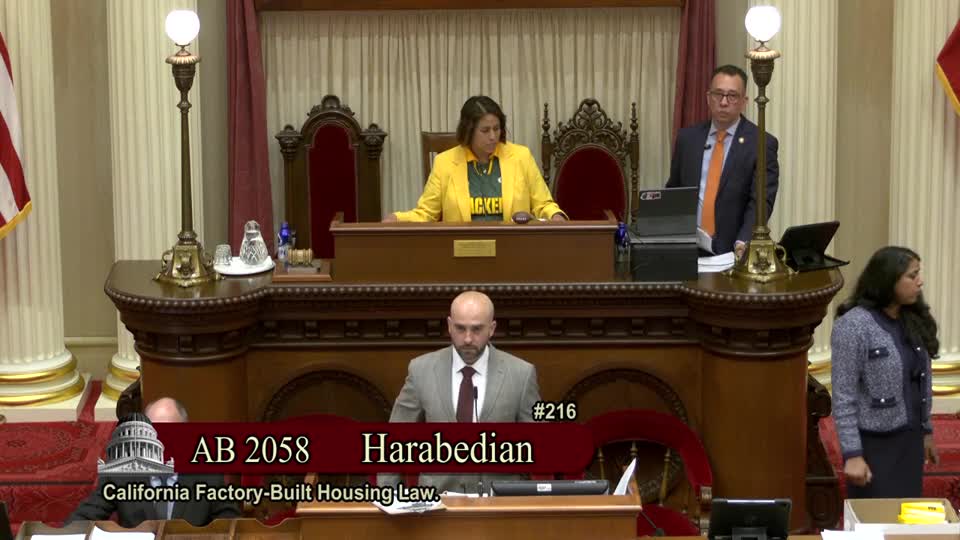 1MIN
Senate Floor
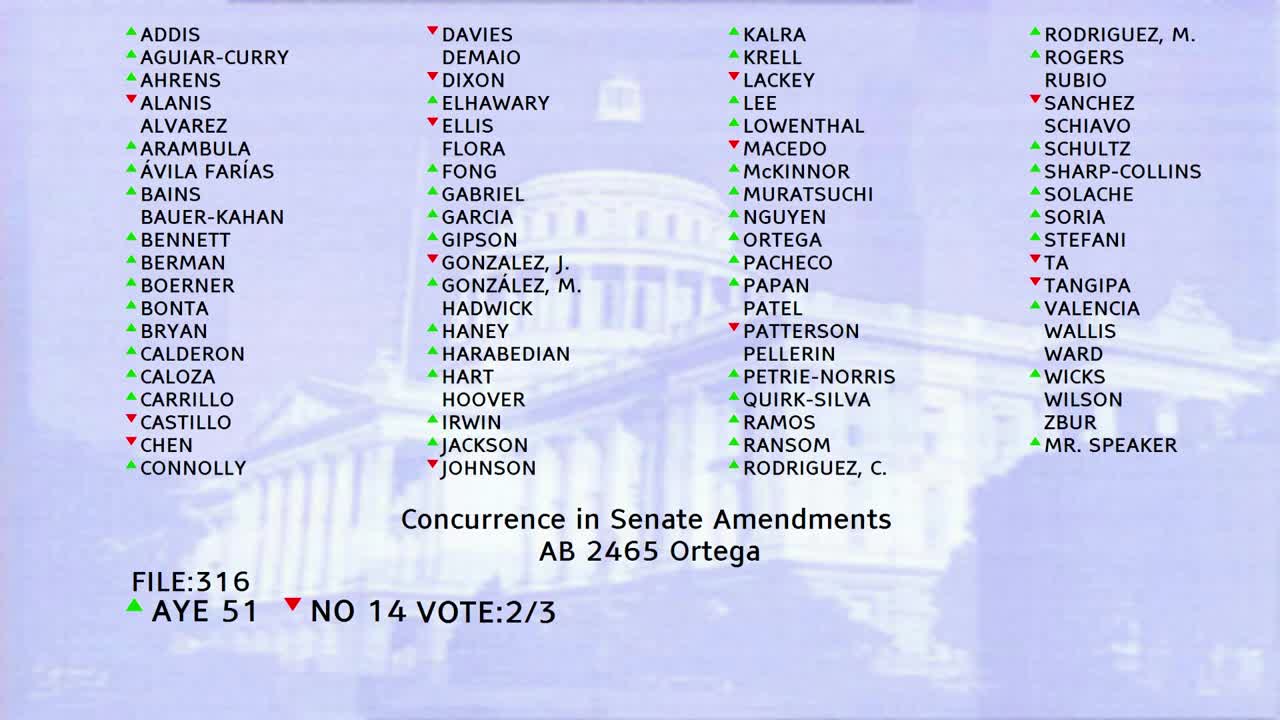 1MIN
Assembly Floor
 9MIN
Senate Standing Committee on Emergency Management
 11MIN
Senate Standing Committee on Natural Resources and Water
Bill Author

Bill Co-Author(s):