SB 898: Connected consumer products.
- Session Year: 2025-2026
- House: Senate
- Latest Version Date: 2026-06-25
Current Status:
In Progress
(2026-08-13: August 13 hearing: Held in committee and under submission.)
Introduced
In Committee
Awaiting First Chamber Vote
Passed First Chamber
In Committee
Awaiting Second Chamber Vote
Passed Second Chamber
Enacted
The Unfair Competition Law (UCL) prohibits a person from engaging in unfair competition, including any unlawful, unfair, or fraudulent business act or practice.
This bill would require a manufacturer of a connected consumer product sold at retail to establish and clearly and conspicuously disclose a connected consumer products minimum guaranteed support timeframe to any prospective buyer of a connected consumer product a minimum guaranteed support timeframe, product, as prescribed, and would would, except as specified, prohibit a manufacturer from reducing that timeframe. The bill would further require that a minimum guaranteed support timeframe be no less than 5 years, consistent with the reasonable expectations of a consumer, as specified.
This bill would also require a manufacturer to provide a clear and conspicuous notice of a connected consumer products product reaching its end of life to the public and to any owner of the product, including, among other notice requirements, that the notice be delivered on specified dates and by specified means. The bill would require a manufacturer to provide allow a consumer the means to opt in to the products end-of-life notifications, and would authorize a manufacturer to request a product owners contact information for the sole purpose of the products end-of-life notifications.
This bill would require a business that owns or controls a connected consumer product that it leases or otherwise provides to its customers as part of a service to ensure that updates provided by the manufacturer for the connected consumer product are promptly received and applied and, when the connected consumer product has reached its end of life, replace the connected consumer product, at no additional cost to the customer, with a comparable product capable of receiving necessary updates and support if a comparable product is reasonably available to the business. The bill would further require a business to notify a consumer when the leased connected consumer product has reached its end of life.
This bill would define connected consumer product to mean a physical product, as specified, that is intended for consumer use and depends, partly or in whole, depends on an internet connection. a connection to the internet for a consumer to make ordinary use, as defined, of the product. The bill would also define end of life to mean the point after date on which the a manufacturer no longer provides necessary support or security patches for support, security patches, or updates that are necessary for a consumer to make ordinary use of a connected consumer product.
This bill would specify that a violation of its provisions constitutes a deceptive act or practice under the UCL.
The Unfair Competition Law (UCL) prohibits a person from engaging in unfair competition, including any unlawful, unfair, or fraudulent business act or practice.
This bill would require a manufacturer of a connected consumer product sold at retail to establish and disclose to any prospective buyer of a connected consumer product a minimum guaranteed support timeframe, as prescribed, and would prohibit a manufacturer from reducing that timeframe. The bill would further require that a minimum guaranteed support timeframe be no less than 5 years, as specified. The
This bill would also require a manufacturer to provide a notice of a connected consumer products end of life to the public and to any owner of the product, as specified. including, among other notice requirements, that the notice be delivered on specified dates and by specified means. The bill would require a manufacturer to provide a consumer the means to opt in to the products end-of-life notifications, and would authorize a manufacturer to request a product owners contact information for the sole purpose of the products end-of-life notifications.
This bill would require a business that owns or controls a connected consumer product that it leases or otherwise provides to its customers as part of a service to ensure that updates provided by the manufacturer for the connected consumer product are promptly received and applied and, when the connected consumer product has reached its end of life, replace the connected consumer product, at no additional cost to the customer, with a comparable product capable of receiving necessary updates and support if a comparable product is reasonably available to the business. The bill would further require a business to notify a consumer when the leased connected consumer product has reached its end of life.
This bill would define connected consumer product to mean a physical product, as specified, that is intended for consumer use and depends, partly or in whole, on an internet connection. The bill would also define end of life to mean the point after which the manufacturer no longer provides necessary support or updates security patches for a connected consumer product.
This bill would specify that a violation of its provisions constitutes a deceptive act or practice under the UCL.
The Unfair Competition Law (UCL) prohibits a person from engaging in unfair competition, including any unlawful, unfair, or fraudulent business act or practice.
This bill would require a manufacturer of a connected consumer product sold at retail in the state to clearly and prominently to establish and disclose to any prospective buyer of a connected consumer product a minimum guaranteed support timeframe, as prescribed, and would prohibit a manufacturer from reducing that timeframe. The bill would further require that a minimum guaranteed support timeframe be no less than 5 years, as specified. The bill would also require a manufacturer to provide a notice of a connected consumer products end of life to the public and to any owner of the product, as specified.
This bill would require a business that owns or controls a connected consumer product that it leases or otherwise provides to its customers as part of a service to ensure that updates provided by the manufacturer for the connected consumer product are promptly received and applied and, when the connected consumer product has reached its end of life, replace the connected consumer product, at no additional cost to the customer, with a comparable product capable of receiving necessary updates and support if a comparable product is reasonably available to the business.
This bill would define connected consumer product to mean a physical product, as specified, that is intended for consumer use and depends, partly or in whole, on an internet connection. The bill would also define end of life to mean the point after which the manufacturer no longer provides necessary support or updates for a connected consumer product.
This bill would specify that a violation of its provisions constitutes a deceptive act or practice under the UCL.
The Unfair Competition Law (UCL) prohibits a person from engaging in unfair competition, including any unlawful, unfair, or fraudulent business act or practice.
This bill would require a manufacturer of a connected consumer product sold at retail in the state to clearly and prominently establish and disclose to any prospective buyer of a connected consumer product a minimum guaranteed support timeframe, as prescribed, and would prohibit a manufacturer from reducing that timeframe. The bill would further require that a minimum guaranteed support timeframe be no less than 5 years, as specified. The bill would also require a manufacturer to provide a notice of a connected consumer products end of life to the public and to any owner of the product, as specified.
This bill would require a business that owns or controls a connected consumer product that it leases or otherwise provides to its customers as part of a service to ensure that updates provided by the manufacturer for the connected consumer product are promptly received and applied and, when the connected consumer product has reached its end of life, replace the connected consumer product, at no additional cost to the customer, with a comparable product capable of receiving necessary updates and support if a comparable product is reasonably available to the business.
This bill would define connected consumer product to mean a product, including a physical device, mobile application, or any necessary cloud infrastructure, that is intended for consumer use and is capable of connecting to the internet, either directly or indirectly and would physical product, as specified, that is intended for consumer use and depends, partly or in whole, on an internet connection. The bill would also define end of life to mean the point after which the manufacturer no longer provides necessary support or updates for a connected consumer product.
This bill would specify that a violation of its provisions constitutes a deceptive act or practice under the UCL.
The Unfair Competition Law (UCL) prohibits a person from engaging in unfair competition, including any unlawful, unfair, or fraudulent business act or practice.
This bill would state the intent of the Legislature to enact legislation that would relate to software tethering. require a manufacturer of a connected consumer product sold at retail in the state to clearly and prominently establish and disclose to any prospective buyer of a connected consumer product a minimum guaranteed support timeframe, as prescribed, and would prohibit a manufacturer from reducing that timeframe. The bill would also require a manufacturer to provide a notice of a connected consumer products end of life to the public and to any owner of the product, as specified.
This bill would require a business that owns or controls a connected consumer product that it leases or otherwise provides to its customers as part of a service to ensure that updates provided by the manufacturer for the connected consumer product are promptly received and applied and, when the connected consumer product has reached its end of life, replace the connected consumer product, at no additional cost to the customer, with a comparable product capable of receiving necessary updates and support if a comparable product is reasonably available to the business.
This bill would define connected consumer product to mean a product, including a physical device, mobile application, or any necessary cloud infrastructure, that is intended for consumer use and is capable of connecting to the internet, either directly or indirectly and would define end of life to mean the point after which the manufacturer no longer provides necessary support or updates for a connected consumer product.
This bill would specify that a violation of its provisions constitutes a deceptive act or practice under the UCL.
The Unfair Competition Law prohibits a person from engaging in unfair competition, including any unlawful, unfair, or fraudulent business act or practice.
This bill would state the intent of the Legislature to enact legislation that would relate to software tethering.
As used in this chapter:
(a)Connected consumer product means a physical product, including a mobile application or cloud infrastructure related to the functioning of the physical product, that is intended for consumer use and depends for its functioning, in whole or in part, on a connection to the internet. internet for a consumer to make ordinary use of the product.
(b)End of life means the point after date on which the a manufacturer no longer provides necessary support or security patches for support, security patches, or updates that are necessary for a consumer to make ordinary use of a connected consumer product.
(c)Manufacturer means the manufacturer of a connected consumer product sold at retail in the state.
(d)Minimum guaranteed support timeframe means the minimum amount period of time for time, beginning when a manufacturer first makes a connected consumer product available for purchase in this state and ending on a specific date, during which a company manufacturer commits to providing all necessary support, security patches, or updates to a connected consumer product that includes a specific date at the end of the timeframe. that are necessary for a consumer to make ordinary use of a connected consumer product.
(e)Necessary support means all necessary support to enable product functionality.(e)Ordinary use means use of a connected consumer product that is consistent with a consumers reasonable expectations based on how the connected consumer product was advertised, marketed, or otherwise described by the manufacturer at the time of purchase.
22928.11.(a)A manufacturer shall clearly and prominently establish and conspicuously disclose a connected consumer products minimum guaranteed support timeframe to any prospective buyer of a the connected consumer product a minimum guaranteed support timeframe in both all of the following ways: ways to the extent each is technically feasible:
(1) At the point of internet sale, if practicable. sale.
(2) In a clear and conspicuous manner on On the product packaging and on the manufacturers internet website or product-specific webpage. connected consumer product packaging.
(3)On the manufacturers internet website or product-specific webpage.
(b)A (1)Except as provided in paragraph (2), a manufacturer shall not reduce a minimum guaranteed support timeframe disclosed under this section.
(2)(A)A manufacturer may reduce a minimum guaranteed support timeframe disclosed under this section if the manufacturer demonstrates that providing support for the connected consumer product is not feasible due to unforeseeable circumstances beyond the manufacturers reasonable control, including any of the following:
(i)The manufacturer is subject to bankruptcy or another insolvency proceeding that materially impairs the manufacturers ability to provide support.
(ii)A third-party dependency, including, but not limited to, a service, platform, software or hardware component, security certificate, application programming interface, network, or other technology operated or controlled by an unaffiliated third party that is necessary to provide support, is discontinued, materially altered, or no longer made available to the manufacturer on commercially reasonable terms and cannot reasonably be replaced by the manufacturer.
(iii)Providing support is unlawful.
(iv)A vulnerability, defect, or other safety or security condition makes providing support materially likely to compromise the security, privacy, or safety of users or the public, and the issue cannot reasonably be remedied by the manufacturer.
(B)A manufacturer that reduces a minimum guaranteed support timeframe pursuant to this paragraph shall, as soon as is practicable, provide clear and conspicuous notice to any affected consumer pursuant to subdivision (d).
(c)(1)A manufacturer shall provide a ensure that the minimum guaranteed support timeframe of no less than five years. of a connected consumer product that it manufactured is consistent with the reasonable expectations of a consumer based on all of the following:
(2)The starting point for the minimum guaranteed support timeframe shall be calculated from the first month in which the manufacturer offers the product for sale to consumers.(1)The nature of the connected consumer product, including the connected consumer products expected use, durability, and reliance on remote services.
(2)The price paid for the connected consumer product by consumers.
(3)How the connected consumer product is advertised, marketed, or otherwise described by the manufacturer at the time of purchase.
(4)The minimum guaranteed support timeframe of comparable connected consumer products.
(d)(1)A manufacturer shall provide a clear and conspicuous notice of a connected consumer products product reaching its end of life to the public and to any owner of the connected consumer product on both of the following dates:
(A)Six months before the connected consumer product reaches its end of life.
(B)The date on which the connected consumer product reaches its end of life.
(2)A notification provided pursuant to this subdivision shall include both of the following:
(A)Clear information about any action a consumer can take if the consumer wants to continue using the connected consumer product in a secure and effective manner.
(B)A list of features lost, security risks, reduced interoperability, or any other changes that are likely to result from the connected consumer products product reaching its end of life.
(3)A notification provided pursuant to this subdivision shall be delivered in each of the following ways:
(A)Through an interface on the connected consumer product or associated application, if practicable.
(B)Through an email to the owner of a connected consumer product, product if the manufacturer possesses knows the owners email address.
(C)On the connected consumer products manufacturers internet website or product-specific webpage.
(4)A manufacturer shall provide allow a consumer the means to opt in to receive a notification pursuant to this subdivision through the connected consumer products internet webpage.
(5)A notification provided pursuant to this subdivision shall be provided clearly and conspicuously as a standalone communication that contains no does not contain information unrelated to the notification.
(6)A manufacturer may request a connected consumer product owners contact information solely for the purpose of providing a notification pursuant to this subdivision.(e)This section does not require a manufacturer to collect or retain contact information from the owner of a connected consumer product.
(e)(f)A business that owns or controls a connected consumer product that it leases or otherwise provides to its customers a customer as part of a service shall do all both of the following:
(1)Ensure To the extent technically feasible, ensure that security patches provided made available by the manufacturer for the connected consumer product are promptly received and applied. applied to the connected consumer product.
(2)When If the connected consumer product has reached reaches its end of life, notify the customer and replace the connected consumer product, at no additional cost to the customer, with a comparable connected consumer product capable of receiving necessary security patches, updates, and support that has not reached its end of life if a comparable connected consumer product is reasonably available to the business.
(3)Notify a consumer when the leased connected consumer product has reached its end of life.22928.12.A violation of this chapter constitutes a deceptive act or practice under the Unfair Competition Law (Chapter 5 (commencing with Section 17200) of Part 2 of Division 7).
As used in this chapter:
(a)Connected consumer product means a physical product, including a mobile application or cloud infrastructure related to the functioning of the physical product, that is intended for consumer use and depends for its functioning, in whole or in part, on a connection to the internet.
(b)End of life means the point after which the manufacturer no longer provides necessary support or updates security patches for a connected consumer product.
(c)Manufacturer means the manufacturer of a connected consumer product sold at retail in the state.
(d)Minimum guaranteed support timeframe means the minimum amount of time for which a company commits to providing all necessary updates and support support, security patches, or updates to a connected consumer product that includes a specific date at the end of the timeframe.
(e)Necessary support means all necessary support to enable product functionality.
22928.11.(a)A manufacturer shall clearly and prominently establish and disclose to any prospective buyer of a connected consumer product a minimum guaranteed support timeframe in both of the following ways:
(1) At the point of internet sale, if practicable.
(2) In a clear and conspicuous manner on the product packaging and on the manufacturers internet website or product-specific webpage.
(b)A manufacturer shall not reduce a minimum guaranteed support timeframe disclosed under this section.
(c)(1)A manufacturer shall provide a minimum guaranteed support timeframe of no less than five years.
(2)The starting point for the minimum guaranteed support timeframe shall be calculated from the first month in which the manufacturer offers the product for sale to consumers.
(d)(1)A manufacturer shall provide a notice of a connected consumer products end of life to the public and to any owner of the product on both of the following dates:
(A)Six months before the product reaches end of life.
(B)The date on which the product reaches end of life.
(2)A notification provided pursuant to this subdivision shall include clear both of the following:
(A)Clear information about any action a consumer can take if the consumer wants to continue using the connected consumer product in a secure and effective manner and provide a manner.
(B)A list of features lost, security risks, reduced interoperability, or any other changes that are likely to result from the connected consumer products end of life.
(3)A notification provided pursuant to this subdivision shall be delivered in each of the following ways:
(A)Through an interface on the connected consumer product or associated application, if practicable.
(B)Through an email to the owner of a connected consumer product, if the manufacturer possesses the owners email address.
(C)On the connected consumer products internet webpage.
(4)A manufacturer shall provide a consumer the means to opt in to receive a notification pursuant to this subdivision through the connected consumer products internet webpage.
(3)(5)A notification pursuant to this subdivision shall be provided in a separate document that contains no other information or notification. clearly and conspicuously as a standalone communication that contains no information unrelated to the notification.
(6)A manufacturer may request a connected consumer product owners contact information solely for the purpose of providing a notification pursuant to this subdivision.
(e)A business that owns or controls a connected consumer product that it leases or otherwise provides to its customers as part of a service shall do both all of the following:
(1)Ensure that updates security patches provided by the manufacturer for the connected consumer product are promptly received and applied.
(2)When the connected consumer product has reached its end of life, replace the connected consumer product, at no additional cost to the customer, with a comparable product capable of receiving necessary updates and support security patches, updates, and support if a comparable product is reasonably available to the business.
(3)Notify a consumer when the leased connected consumer product has reached its end of life.
22928.12.A violation of this chapter constitutes a deceptive act or practice under the Unfair Competition Law (Chapter 5 (commencing with Section 17200) of Part 2 of Division 7).
As used in this chapter:
(a)Connected consumer product means a physical product, including a mobile application or cloud infrastructure related to the functioning of the physical product, that is intended for consumer use and depends for its functioning, in whole or in part, on a connection to the internet.
(b)End of life means the point after which the manufacturer no longer provides necessary support or updates for a connected consumer product.
(c)Manufacturer means the manufacturer of a connected consumer product sold at retail in the state.
(d)Minimum guaranteed support timeframe means the minimum amount of time for which a company commits to providing all necessary updates and support to a connected consumer product that includes a specific date at the end of the timeframe.
22928.11.(a)A manufacturer shall clearly and prominently establish and disclose to any prospective buyer of a connected consumer product a minimum guaranteed support timeframe in both of the following ways:
(1) At the point of internet sale, if practicable.
(2) In a clear and conspicuous manner on the product packaging and on the manufacturers internet website or product-specific webpage.
(b)A manufacturer shall not reduce a minimum guaranteed support timeframe disclosed under this section.
(c)(1)A manufacturer shall provide a minimum guaranteed support timeframe of no less than five years.
(2)The starting point for the minimum guaranteed support timeframe shall be calculated from the first month in which the manufacturer offers the product for sale to consumers.
(d)(1)A manufacturer shall provide a notice of a connected consumer products end of life to the public and to any owner of the product on both of the following dates:
(A)Six months before the product reaches end of life.
(B)The date on which the product reaches end of life.
(2)A notification provided pursuant to this subdivision shall include clear information about any action a consumer can take if the consumer wants to continue using the connected consumer product in a secure and effective manner and provide a list of features lost, security risks, reduced interoperability, or any other changes that are likely to result from the connected consumer products end of life.
(3)A notification pursuant to this subdivision shall be provided in a separate document that contains no other information or notification.
(e)A business that owns or controls a connected consumer product that it leases or otherwise provides to its customers as part of a service shall do both of the following:
(1)Ensure that updates provided by the manufacturer for the connected consumer product are promptly received and applied.
(2)When the connected consumer product has reached its end of life, replace the connected consumer product, at no additional cost to the customer, with a comparable product capable of receiving necessary updates and support if a comparable product is reasonably available to the business.
22928.12.A violation of this chapter constitutes a deceptive act or practice under the Unfair Competition Law (Chapter 5 (commencing with Section 17200) of Part 2 of Division 7).
As used in this chapter:
(a)Connected consumer product means a physical product, including a physical device, mobile application, or any necessary cloud infrastructure, that is intended for consumer use and is capable of connecting to the internet, either directly or indirectly. a mobile application or cloud infrastructure related to the functioning of the physical product, that is intended for consumer use and depends for its functioning, in whole or in part, on a connection to the internet.
(b)End of life means the point after which the manufacturer no longer provides necessary support or updates for a connected consumer product.
(c)Manufacturer means the manufacturer of a connected consumer product sold at retail in the state.
(d)Minimum guaranteed support timeframe means the minimum amount of time for which a company commits to providing all necessary updates and support to a connected consumer product that includes a specific date at the end of the timeframe.
22928.11.(a)A manufacturer shall clearly and prominently establish and disclose to any prospective buyer of a connected consumer product a minimum guaranteed support timeframe in both of the following ways:
(1)At the point of sale, if practicable.
(2)In a clear and conspicuous manner on the product packaging and on the manufacturers internet website or product-specific webpage.
(b)A manufacturer shall not reduce a minimum guaranteed support timeframe disclosed under this section.
(c)(1)A manufacturer shall provide a minimum guaranteed support timeframe of no less than five years.
(2)The starting point for the minimum guaranteed support timeframe shall be calculated from the first month in which the manufacturer offers the product for sale to consumers.
(c)(d)(1)A manufacturer shall provide a notice of a connected consumer products end of life to the public and to any owner of the product on both of the following dates:
(A)Six months before the product reaches end of life.
(B)The date on which the product reaches end of life.
(2)A notification provided pursuant to this subdivision shall include clear information about any action a consumer can take if the consumer wants to continue using the connected consumer product in a secure and effective manner and provide a list of features lost, security risks, reduced interoperability, or any other changes that are likely to result from the connected consumer products end of life.
(3)A notification pursuant to this subdivision shall be provided in a separate document that contains no other information or notification.
(d)(e)A business that owns or controls a connected consumer product that it leases or otherwise provides to its customers as part of a service shall do both of the following:
(1)Ensure that updates provided by the manufacturer for the connected consumer product are promptly received and applied.
(2)When the connected consumer product has reached its end of life, replace the connected consumer product, at no additional cost to the customer, with a comparable product capable of receiving necessary updates and support if a comparable product is reasonably available to the business.
22928.12.A violation of this chapter constitutes a deceptive act or practice under the Unfair Competition Law (Chapter 5 (commencing with Section 17200) of Part 2 of Division 7).
As used in this chapter:
(a)Connected consumer product means a product, including a physical device, mobile application, or any necessary cloud infrastructure, that is intended for consumer use and is capable of connecting to the internet, either directly or indirectly.
(b)End of life means the point after which the manufacturer no longer provides necessary support or updates for a connected consumer product.
(c)Manufacturer means the manufacturer of a connected consumer product sold at retail in the state.
(d)Minimum guaranteed support timeframe means the minimum amount of time for which a company commits to providing all necessary updates and support to a connected consumer product that includes a specific date at the end of the timeframe.
22928.11.(a)A manufacturer shall clearly and prominently establish and disclose to any prospective buyer of a connected consumer product a minimum guaranteed support timeframe in both of the following ways:
(1)At the point of sale, if practicable.
(2)In a clear and conspicuous manner on the product packaging and on the manufacturers internet website or product-specific webpage.
(b)A manufacturer shall not reduce a minimum guaranteed support timeframe disclosed under this section.
(c)(1)A manufacturer shall provide a notice of a connected consumer products end of life to the public and to any owner of the product on both of the following dates:
(A)Six months before the product reaches end of life.
(B)The date on which the product reaches end of life.
(2)A notification provided pursuant to this subdivision shall include clear information about any action a consumer can take if the consumer wants to continue using the connected consumer product in a secure and effective manner and provide a list of features lost, security risks, reduced interoperability, or any other changes that are likely to result from the connected consumer products end of life.
(d)A business that owns or controls a connected consumer product that it leases or otherwise provides to its customers as part of a service shall do both of the following:
(1)Ensure that updates provided by the manufacturer for the connected consumer product are promptly received and applied.
(2)When the connected consumer product has reached its end of life, replace the connected consumer product, at no additional cost to the customer, with a comparable product capable of receiving necessary updates and support if a comparable product is reasonably available to the business.
22928.12.A violation of this chapter constitutes a deceptive act or practice under the Unfair Competition Law (Chapter 5 (commencing with Section 17200) of Part 2 of Division 7).
SECTION 1.It is the intent of the Legislature to enact legislation that would relate to software tethering.It is the intent of the Legislature to enact legislation that would relate to software tethering.
|
Date
|
Status
|
|---|---|
| Aug 13, 2026 | August 13 hearing: Held in committee and under submission. |
| Aug 5, 2026 | August 5 set for first hearing. Placed on suspense file. |
| Jul 1, 2026 | From committee: Do pass and re-refer to Com. on APPR. (Ayes 8. Noes 3.) (June 30). Re-referred to Com. on APPR. |
| Jun 25, 2026 | Read second time and amended. Re-referred to Com. on JUD. |
| Jun 24, 2026 | From committee: Do pass as amended and re-refer to Com. on JUD. (Ayes 11. Noes 4.) (June 23). |
| Jun 15, 2026 | From committee with author's amendments. Read second time and amended. Re-referred to Com. on P. & C.P. |
| Jun 4, 2026 | Referred to Coms. on P. & C.P. and JUD. |
| May 27, 2026 | In Assembly. Read first time. Held at Desk. |
| May 27, 2026 | Read third time. Passed. (Ayes 30. Noes 8. Page 4507.) Ordered to the Assembly. |
| May 27, 2026 | Read third time. Passed. (Ayes 30. Noes 8.) Ordered to the Assembly. |
| May 14, 2026 | From committee: Do pass. (Ayes 5. Noes 2. Page 4256.) (May 14). |
| May 14, 2026 | Read second time. Ordered to third reading. |
| May 14, 2026 | From committee: Do pass. (Ayes 5. Noes 2.) (May 14). |
| May 12, 2026 | Set for hearing May 14. |
| May 11, 2026 | May 11 hearing: Placed on APPR. suspense file. |
| May 5, 2026 | From committee with author's amendments. Read second time and amended. Re-referred to Com. on APPR. |
| May 4, 2026 | Set for hearing May 11. |
| Apr 23, 2026 | Read second time and amended. Re-referred to Com. on APPR. |
| Apr 22, 2026 | From committee: Do pass as amended and re-refer to Com. on APPR. (Ayes 11. Noes 0. Page 3976.) (April 21). |
| Apr 22, 2026 | From committee: Do pass as amended and re-refer to Com. on APPR. (Ayes 11. Noes 0.) (April 21). |
| Apr 15, 2026 | Set for hearing April 21. |
| Apr 14, 2026 | From committee: Do pass and re-refer to Com. on JUD. (Ayes 7. Noes 1. Page 3843.) (April 13). Re-referred to Com. on JUD. |
| Apr 14, 2026 | From committee: Do pass and re-refer to Com. on JUD. (Ayes 7. Noes 1.) (April 13). Re-referred to Com. on JUD. |
| Apr 9, 2026 | Set for hearing April 13. |
| Apr 8, 2026 | Re-referred to Coms. on P., D.T., & C.P. and JUD. |
| Mar 24, 2026 | From committee with author's amendments. Read second time and amended. Re-referred to Com. on RLS. |
| Feb 11, 2026 | Referred to Com. on RLS. |
| Jan 21, 2026 | From printer. May be acted upon on or after February 20. |
| Jan 20, 2026 | Introduced. Read first time. To Com. on RLS. for assignment. To print. |
|
Date
|
Description
|
Location
|
Votes
|
|
|---|---|---|---|---|
| Jun 30, 2026 | Do pass and be re-referred to the Committee on [Appropriations] | Assembly Standing Committee on Judiciary |
Passed |
|
| Jun 23, 2026 | Do pass as amended and be re-referred to the Committee on [Judiciary] | Assembly Standing Committee on Privacy and Consumer Protection |
Passed |
|
| May 27, 2026 | Senate 3rd Reading SB898 Weber Pierson | Senate Floor |
Passed |
|
| May 14, 2026 | Do pass | Senate Standing Committee on Appropriations |
Passed |
|
| May 11, 2026 | Placed on suspense file | Senate Standing Committee on Appropriations |
Passed |
|
| Apr 21, 2026 | Do pass as amended, but first amend, and re-refer to the Committee on [Appropriations] | Senate Standing Committee on Judiciary |
Passed |
|
| Apr 13, 2026 | Do pass, but first be re-referred to the Committee on [Judiciary] | Senate Standing Committee on Privacy, Digital Technologies, and Consumer Protection |
Passed |
This list shows positions taken on this bill by organizations on the date displayed, which is linked to the original source.
Positions by individuals are not included.
|
Organization
|
Position
|
Date
|
|---|---|---|
| Advanced Medical Technology Association (ADVAMED) | ** Against | |
| Alliance For Automotive Innovation | ** Against | |
| Association Of Home Appliance Manufacturers | ** Against | |
| California Chamber Of Commerce | ** Against | |
| CALPIRG | ** Support | |
| Center for Democracy and Technology | ** Support | |
| Civil Justice Association Of California | ** Against | |
| Computer & Communications Industry Association | ** Against | |
| Consumer Reports | ** Support | |
| Consumer Technology Association | ** Against | |
| Entertainment Software Association | ** Against | |
| Ford Motor Company | ** Against | |
| Fulu Foundation | ** Support | |
| GENERAL MOTORS | ** Against | |
| Ifixit | ** Support | |
| Secure Resilient Future Foundation | ** Support | |
| Secure Resilient Future Foundation INC. | ** Support | |
| Software Freedom Conservancy | ** Support | |
| Technet | ** Against | |
| The Repair Association | ** Support | |
| Toyota | ** Against |
Date of Hearing: August 5, 2026
ASSEMBLY COMMITTEE ON APPROPRIATIONS
Buffy Wicks, Chair
SBPCA Bill Id:SB 898
Author:(Weber Pierson) – As Amended Ver:June 25, 2026
Policy Committee: | Privacy and Consumer Protection | Vote: | 11 - 4 |
Judiciary | 8 - 3 | ||
|
|
Urgency: No State Mandated Local Program: No Reimbursable: No
SUMMARY:
This bill requires a manufacturer of a connected consumer product to establish and disclose a minimum guaranteed support timeframe for the product, to provide notice before and upon the product reaching its end of life, and makes a violation a deceptive act or practice enforceable under the Unfair Competition Law (UCL).
Specifically, this bill:
- Requires a manufacturer to clearly and conspicuously disclose a connected consumer product’s minimum guaranteed support timeframe to a prospective buyer at the point of internet sale, on the product packaging, and on the manufacturer's website, to the extent each is technically feasible.
- Prohibits a manufacturer from reducing a disclosed minimum guaranteed support timeframe unless the manufacturer demonstrates that providing support is not feasible due to enumerated unforeseeable circumstances beyond the manufacturer's reasonable control, including bankruptcy, loss of a necessary third-party dependency, illegality, or an unremediable safety or security condition.
- Requires a manufacturer to set the minimum guaranteed support timeframe consistent with the reasonable expectations of a consumer, based on the nature and price of the product, how the product is marketed, and the support timeframes of comparable products.
- Requires a manufacturer to provide a standalone notice to the public and to any owner, both six months before and upon the product reaching its end of life, describing steps to continue using the product and the features, security risks, and other changes resulting from end of life.
- Requires a business that leases or provides a connected consumer product as part of a service to promptly apply security patches to the extent technically feasible and, upon end of life, to notify the customer and replace the product at no additional cost with a comparable supported product if one is reasonably available.
- Provides that a violation of the chapter constitutes a deceptive act or practice under the UCL, and defines “connected consumer product,” “end of life,” “manufacturer,” “minimum guaranteed support timeframe,” and “ordinary use.”
FISCAL EFFECT:
- Possible costs to the Department of Justice (DOJ) of an unknown amount (Unfair Competition Law Fund) to investigate and prosecute violations of the bill. Actual costs will depend on whether the Attorney General pursues enforcement actions for violations of the bill’s disclosure, notice, and support requirements. UCL enforcement is discretionary, and the Attorney General, district attorneys, and specified city attorneys already possess UCL enforcement authority.
- Cost pressures (Trial Court Trust Fund, General Fund) of an unknown but potentially significant amount to the courts to adjudicate any additional filings. Violations of the bill are enforceable under the UCL by public prosecutors and by private plaintiffs who have suffered injury in fact and lost money or property, and opposition contends the enforcement mechanism could generate large-scale, attorney-driven litigation, including class actions, based on technical violations. Actual costs will depend on the number of cases filed and the amount of court time needed to resolve each case. It generally costs approximately $1,000 to operate a courtroom for one hour. Although courts are not funded on the basis of workload, increased pressure on the Trial Court Trust Fund may create a demand for increased funding for courts from the General Fund. The state budget provides annual General Fund backfills to the Trial Court Trust Fund to offset revenue reductions, totaling approximately $117.3 million in 2025-26.
COMMENTS:
- Purpose. The author contends that connected “smart” products increasingly rely on ongoing software support, and that consumers should know in advance and on the date a manufacturer stops providing critical updates, because products may lose features, become vulnerable to security risks, or stop working altogether. The author cites a Federal Trade Commission staff report finding that nearly 90% of surveyed manufacturers’ webpages failed to disclose how long products would receive software updates, and states that the bill establishes a transparency framework so consumers can make informed purchasing decisions. This bill is supported by Consumer Reports and other consumer protection organizations.
- Background. Connected consumer products often depend on manufacturer software support to function as advertised, and when support ends a device may lose features, become insecure, or stop working despite remaining physically intact. Existing law requires connected devices to include reasonable security features but does not require manufacturers to disclose how long a device will receive updates or support. This bill establishes disclosure and notice requirements and, rather than a fixed minimum support period, requires the support timeframe to be consistent with reasonable consumer expectations. The bill compels manufacturers to make specified commercial disclosures, which implicates commercial speech under the First Amendment. The policy committee analyzed the disclosure requirement and concluded the bill likely does not raise First Amendment concerns. To the extent the bill is challenged in court, any defense costs would be borne by the Department of Justice.
- Support and Opposition. This bill is supported by Consumer Reports, CALPIRG, the Secure Resilient Future Foundation, and other consumer and cybersecurity organizations, which argue the bill helps consumers make informed purchases, improves cybersecurity by reducing the number of unsupported connected devices, and reduces electronic waste. The bill is opposed by the Alliance for Automotive Innovation, the Consumer Technology Association, the Association of Home Appliance Manufacturers, the California Chamber of Commerce, the Civil Justice Association of California, and other industry groups. Opponents contend that the definition of “connected consumer product” is overly broad and may sweep in motor vehicles and other products with distinct lifecycles, that the leasing replacement requirement is impractical as applied to vehicles, and that the UCL enforcement mechanism exposes manufacturers to disproportionate litigation risk, including for inadvertent or technical violations.
Analysis Prepared by: Shiran Zohar / APPR. / (916) 319-2081
Date of Hearing: June 30, 2026
ASSEMBLY COMMITTEE ON JUDICIARY
Ash Kalra, Chair
SBPCA Bill Id:SB 898
Author:(Weber Pierson) – As Amended Ver:June 25, 2026
SENATE VOTE: 30-8
SUBJECT: CONNECTED CONSUMER PRODUCTS
SYNOPSIS
The “Internet of Things” (IoT) refers to the growing ecosystem of internet-connected devices—thermostats, smart locks, lights, speakers, cameras, and appliances—that collect and exchange data with users and each other. These technologies offer convenience, but rely on software support from the manufacturer, or third-party. As internet-connected devices become embedded in homes, cars, and personal belongings, consumers should have clear expectations about the duration of software support they will receive for their purchases. This bill requires manufacturers to clearly disclose the minimum amount of time consumers can rely on their connected product to receive necessary updates and support. Additionally, it requires advanced and day-of notice of the product’s “end of life” (EOL) date, when these updates and support will definitively no longer be provided.
This bill is supported by Consumer Reports and other consumer protection organizations. The bill is opposed by the Alliance for Automotive Innovation, the Consumer Technology Association, and several business- and industry-aligned advocacy groups. The bill passed out of the Assembly Committee on Privacy and Consumer Protection by a vote of 11-4.
SUMMARY: Requires manufacturers of connected consumer products to establish minimum guaranteed support timeframes for their products and to disclose support timeframes before purchase and as the product reaches its end of life. Specifically, this bill:
- Requires a manufacturer to clearly and conspicuously disclose a connected consumer product’s minimum guaranteed support timeframe to any prospective buyer of the product, as provided.
- Prohibits a manufacturer from reducing a minimum guaranteed support timeframe that has been disclosed to a prospective buyer, unless the manufacturer demonstrates that providing support for the connected consumer product is not feasible due to unforeseeable circumstances beyond the manufacturer’s reasonable control, including any of the following:
- The manufacturer is subject to bankruptcy or another insolvency proceeding that materially impairs the manufacturer’s ability to provide support;
- A third-party dependency, including, but not limited to, a service, platform, software or hardware component, security certificate, application programming interface, network, or other technology operated or controlled by an unaffiliated third party that is necessary to provide support, is discontinued, materially altered, or no longer made available to the manufacturer on commercially reasonable terms and cannot reasonably be replaced by the manufacturer;
- Providing support is unlawful; or
- A vulnerability, defect, or other safety or security condition makes providing support materially likely to compromise the security, privacy, or safety of users or the public, and the issue cannot reasonably be remedied by the manufacturer.
- Requires that a minimum guaranteed support timeframe established by a manufacturer is consistent with the reasonable expectations of a consumer based on the following:
- The nature of the connected consumer product, including the connected consumer product’s expected use, durability, and reliance on remote services;
- The price paid for the connected consumer product by consumers;
- How the connected consumer product is advertised, marketed, or otherwise described by the manufacturer at the time of purchase; and
- The minimum guaranteed support timeframe of comparable connected consumer products.
- Requires a manufacturer to provide notice to the public and any owner of a connected consumer product both six months before and upon the connected consumer product reaching its end of life. The notice is required to contain information about any action the owner can take to continue using the product in a secure and effective manner, as well as a list of product features lost, security risks, and other changes due to the product reaching end of life. Requires that the notice be a standalone communication containing no other information.
- Requires a business that owns or controls a connected consumer product that it leases or otherwise provides to its customers as part of a service to, the extent technically feasible, ensure that security patches made available by the manufacturer are promptly applied, and if the connected consumer product reaches its end of life, to notify the customer and replace the product with a comparable connected consumer product that has not reached end of life, if one is reasonably available to the business.
- Provides that a violation of the chapter constitutes a deceptive act or practice under the Unfair Competition Law (UCL).
- Defines the following terms:
- “Connected consumer product” means a physical product, including a mobile application or cloud infrastructure related to the functioning of the physical product, that is intended for consumer use and depends on a connection to the internet for a consumer to make ordinary use of the product.
- “End of life” means the date on which a manufacturer no longer provides support, security patches, or updates that are necessary for a consumer to make ordinary use of a connected consumer product.
- “Manufacturer” means the manufacturer of a connected consumer product sold at retail in the state.
- “Minimum guaranteed support timeframe” means the period of time, beginning when a manufacturer first makes a connected consumer product available for purchase in this state and ending on a specific date, during which a manufacturer commits to providing all necessary support, security patches, or updates that are necessary for a consumer to make ordinary use of a connected consumer product.
- “Ordinary use” means use of a connected consumer product that is consistent with a consumer’s reasonable expectations based on how the connected consumer product was advertised, marketed, or otherwise described by the manufacturer at the time of purchase.
EXISTING LAW:
- Establishes the UCL, which provides a statutory cause of action for any unlawful, unfair, or fraudulent business act or practice and any unfair, deceptive, untrue, or misleading advertising, including over the internet. (Business and Professions Code Section 17200 et seq.)
- Requires actions for relief pursuant to the UCL be prosecuted exclusively in a court of competent jurisdiction and only by any of the following:
- The Attorney General;
- A district attorney;
- A county counsel authorized by agreement with the district attorney in actions involving a violation of a county ordinance;
- A city attorney of a city having a population in excess of 750,000;
- A county counsel of any county within which a city has a population in excess of 750,000;
- A city attorney in a city and county;
- A city prosecutor in a city having a full-time city prosecutor in the name of the people of the State of California upon their own complaint or upon the complaint of a board, officer, person, corporation, or association with the consent of the district attorney; or
- A person who has suffered injury in fact and has lost money or property as a result of the act of unfair competition. (Business and Professions Code Section 17204.)
- Provides that it is unlawful for any person doing business and advertising in this state to make any false or misleading advertising claim. (Business and Professions Code Section 17508.)
- Requires every sale of consumer goods sold at retail in this state to be accompanied by the manufacturer’s and the retail seller’s implied warranty that the goods are merchantable. (Civil Code Section 1792.)
- Requires a manufacturer of a connected device to equip the device with a reasonable security feature or features that are all of the following:
- Appropriate to the nature and function of the device;
- Appropriate to the information it may collect, contain, or transmit; and
- Designed to protect the device and any information contained therein from unauthorized access, destruction, use, modification, or disclosure. (Civil Code Section 1798.91.04 (a).)
- Provides that, subject to the requirements in 5), if a connected device is equipped with a means for authentication outside a local area network, it shall be deemed a reasonable security feature if the preprogrammed password is unique to each device manufactured or the device contains a security feature that requires a user to generate a new means of authentication before access is granted to the device for the first time. (Civil Code Section 1798.91.04 (b).)
- Defines “connected device” as any device or other physical object that is capable of connecting to the Internet, directly or indirectly, and that is assigned an Internet Protocol address or Bluetooth address, subject to specified exemptions and limitations. (Civil Code Sections 1798.91.05, 1798.06.)
- Requires a business that owns, licenses, or maintains personal information about a California resident to implement and maintain reasonable security procedures and practices appropriate to the nature of the information, to protect the personal information from unauthorized access, destruction, use, modification, or disclosure and requires such businesses to contractually require nonaffiliated third parties to which it discloses such personal information to similarly protect that information. (Civil Code Section 1798.81.5 (b), (c).)
- Establishes the California Consumer Privacy Act (CCPA), which grants consumers certain rights with regard to their personal information, including enhanced notice, access, and disclosure; the right to deletion; the right to restrict the sale of information; and protection from discrimination for exercising these rights. It places attendant obligations on businesses to respect those rights. (Civil Code Section 1798.100 et seq.)
FISCAL EFFECT: As currently in print this bill is keyed fiscal.
COMMENTS: The “Internet of Things” (IoT) refers to the growing ecosystem of internet-connected devices—thermostats, smart locks, lights, speakers, cameras, and appliances—that collect and exchange data with users and each other. These technologies offer convenience, but rely on software support from the manufacturer, or third-party. As internet-connected devices become embedded in homes, cars, and personal belongings, consumers should have clear expectations about the duration of software support they will receive for their purchases. According to the author:
Connected “smart” products have become increasingly common in households across California, many of which rely on ongoing software updates to receive all necessary support. Consumers should know in advance and on the date when a manufacturer ultimately stops providing these critical updates, as their products may lose promoted or integral features, become vulnerable to security risks, or stop working altogether.
A manufacturer’s failure to clearly disclose the duration of their software support commitments warrants action. Current law does not require this transparency, leaving consumers without essential information about the products they have invested in. Research from the Federal Trade Commission found that nearly 90 percent of manufacturers of common connected products failed to disclose how long those devices would receive software updates or support on their product’s webpages. Even when information is available, it is often not clearly provided at the point of sale or consistently and easily accessible before and after purchase.
SB 898 establishes a clear transparency framework to advance consumer education. By requiring manufacturers to disclose a minimum guaranteed support time frame and provide notice when a product reaches its end of life, this bill ensures that consumers can make fully informed purchasing and operational decisions about the products they rely on every day.
Connected smart devices are increasingly present in the home and elsewhere. The role of connected devices, or devices that can connect to the internet and have an Internet Protocol or Bluetooth Address, in the daily lives of Americans has skyrocketed in recent years with the emergence of smart technologies designed to increase personal comfort, convenience, and efficiency. (See Civil Code Section 1798.91.05 (b).) These devices are varied in nature, and include Wi-Fi enabled thermostats, speakers, door locks, cameras, lights, security systems, sprinklers, and refrigerators, all of which can be operated remotely from smartphone apps, computer programs, or internet websites.
According to a 2024 Consumer Reports survey, only 35% of consumers were aware that these connected products could lose software support at some point. (American Experiences Survey: A Nationally Representative Multi-Mode Survey (Dec. 2024) Consumer Reports, pg. 12, available at: https://article.images.consumerreports.org/image/upload/v1736806650/prod/content/dam/
surveys/Consumer_Reports_AES_December_2024.pdf.) A Federal Trade Commission (FTC) Staff Report surveyed the websites of 184 connected products and found that almost 90 percent of these web pages did not disclose how long the products would receive software updates. (FTC Staff Report: Smart Device Makers' Failure to Provide Updates May Leave You Smarting (Nov. 2024) FTC Bureau of Consumer Protection available at: https://www.ftc.gov/system/files/
ftc_gov/pdf/smart-device-makers-failure-to-provide-software-updates-may-leave-you-smarting.pdf.) These devices may not function fully without software support and, according to the author, they may be more susceptible to ransomware attacks without regular security updates.
This bill requires manufacturers of connected consumer products to set minimum guaranteed support timeframes for connected consumer products, based on the reasonable expectations of a consumer. The bill specifies the factors to consider in establishing what the consumer’s reasonable expectation would be, such as the nature of the product and the price paid. Generally, a manufacturer may not shorten this support timeframe, however, the bill provides an exception if the support timeframe is no longer feasible due to unforeseen circumstances. These unforeseen circumstances could include the manufacturer is subject to bankruptcy, continuing support would likely lead to compromising user privacy, or the product relied on a third-party service or application for connectivity, and the third-party service or application is no longer available.
In addition to requiring a guaranteed minimum support timeframe, the bill requires manufacturers to make certain disclosures and notices regarding the support timeframe. First, the manufacturer must disclose the timeframe to prospective buyers, including on the product’s packaging and the manufacturer’s website. If the manufacturer reduces the support timeframe, due to circumstances discussed above, then they must notify any affected customer. Lastly, the date a product reaches its end of life, and six months prior, the manufacturer must notify the public and any product owners. The notification must include information on how to keep using the product (if applicable), and a list of the features lost and potential security risks. This notification is required to be sent via the product’s interface (if practicable), to an owner’s email (if the manufacturer knows their email), and placed on the manufacturer’s website (for the public).
For businesses that may own connected consumer products that are then leased or provided to customers as part of a service, the bill requires these businesses to ensure that security patches made available for these products are promptly applied. Upon the end of life of a leased connected consumer product, the business must notify the customer and replace the product, at no additional cost, with a comparable connected product that has not reached its end of life, if one is reasonably available. For example, if a customer has leased a connected product—like a robot vacuum cleaner—where the product’s functionality relies on its connection to the internet or Bluetooth, and the vacuum reaches its end of life, the business would need to replace the customer’s vacuum with a functioning one, at no cost to the customer.
The bill provides that any violation of the bill constitutes a deceptive act or practice under the UCL. The UCL protects consumers against unlawful, unfair, or fraudulent business practices and advertising. The UCL provides remedies for “anything that can properly be called a business practice and that at the same time is forbidden by law.” (Cel-Tech Communications, Inc. v. Los Angeles Cellular Telephone Co. (1999) 20 Cal.4th 163, 180 [citations omitted].) The UCL provides for civil penalties to be assessed and recovered from violators in the name of the people of California by various governmental agencies and specifically details how the proceeds from those actions are to be distributed and used.
Commercial Speech. The First Amendment provides that “Congress shall make no law respecting an establishment of religion, or prohibiting the free exercise thereof; or abridging the freedom of speech, or of the press; or the right of the people peaceably to assemble, and to petition the Government for a redress of grievances.” (U.S. Const., amend. I.) While commercial speech is a type of content-based restriction, and content-based restrictions ordinarily receive strict scrutiny analysis under the First Amendment, the U.S. Supreme Court has held that the First Amendment accords commercial speech lesser protection than other constitutionally guaranteed expression. This is in part because, unlike other varieties of speech, speech proposing a commercial transaction occurs in an area traditionally subject to governmental regulation. (Central Hudson Gas & Elec. Corp. v. Public Service Commission (1980) 447 U.S. 557, 562-63.) Ultimately, the First Amendment prohibits commercial speech against “unwarranted” governmental regulation.
The U.S. Supreme Court has articulated a four-prong test by which commercial speech regulations are evaluated for constitutionality. This test asks: (1) whether the expression concerns lawful activity and is not misleading; (2) whether the asserted governmental interest is substantial; (3) whether the regulation directly advances the governmental interest asserted; and (4) whether it is not more extensive than is necessary to achieve that interest. (Central Hudson Gas & Elec. Corp., supra, 447 U.S. at pp. 561-66.)
For the first prong, the expression concerns a lawful activity, in this case a disclosure of the support timeframe of a product, and is not misleading, since it is providing the consumer with reasonable expectations for support of the product. The government interest, making sure that consumers reasonably understand the timeframe of functionality of a product so that they may spend their money wisely, appears to be a substantial one. The government does not want individuals to spend money on products that will not last very long, which can lead to negative economic repercussions. The regulation asserted that manufacturers clearly state the products support timeframe and notify when the timeframe is coming to an end, advances the government’s interest of protecting consumers. The bill requires disclosures of a product’s support timeframe, limitation of features after the end of life, and potential security risks. This would seem to be narrowly tailored to just the specific information needed for consumers to make informed decisions. Therefore, there are likely no First Amendment issues with the bill.
Additional considerations. The author has already substantially amended the bill since introduced to assuage many of the opposition’s concerns and provide clarity to the bill’s definitions and requirements. The following are some additional considerations for the author. First, as the bill is in print, a connected consumer product is one that requires an internet connection to make ordinary use of the product. Ordinary use is use that is consistent with a consumer’s reasonable expectations based on how the product was advertised, marketed, or otherwise described by the manufacturer. These definitions appear to adequately capture the group of products the bill is attempting to regulate. That being said, some products, like automobiles that have an internet interface built in, may fall under this umbrella, which the author may not intend. The author may wish to consider including language that specifies connected consumer products are those where the “primary purpose” or the “core functionality” of the product relies on internet connectivity.
Although creating a laundry list of exempted products in the bill would likely be cumbersome and could potentially weaken the bill, there may be specific products that require such an exemption. For example, products that are used for medical or health care purposes or recommended by health care providers, and that are sold over the counter to consumers. By including these products under the bill’s requirements, it may create unforeseen consequences for medical suppliers and products, and in turn, patients. If the author wishes to exclude products that are predominantly used in a health care setting or prescribed by a health care provider, they may wish to include language to exclude these products from the bill’s requirements.
The bill has been amended to allow manufacturers to shorten the support timeframe due to several unforeseen circumstances. One of those is if a third-party dependency, such as a service or application, provides the connectivity to the product, and that third-party dependency ceases to operate, then the manufacturer may shorten the support timeframe. Although this provides manufacturers with some flexibility, it may still lead to difficulty adhering to some of the bill’s requirements, such as the six-month notice before the end of life of a product. If the author wishes to provide broader liability protection to manufacturers when a third-party dependency is at issue, they may consider language such as:
A manufacturer is not liable for a failure to comply with this chapter that resulted from the act or omission of a third-party dependency not controlled by the manufacturer, if the manufacturer made commercially reasonable efforts to comply.
ARGUMENTS IN SUPPORT: This bill is supported by Consumer Reports and other consumer protection organizations. Consumer Reports write in support:
Consumers are purchasing more devices that connect to the internet in the form of smart TVs, smart home products and even large appliances. But over time connected products lose software support, which can affect their security and also their features. For example, a connected TV that loses support may not support certain apps or a router that no longer gets updates becomes a potential security risk. Some devices may stop working altogether.
[…]
This bill would help consumers to make informed purchases by requiring manufacturers to put a minimum guaranteed support time frame on product web pages, and disclose that time frame at the point of purchase. It also would require manufacturers to proactively let consumers know when a connected device loses support. These two simple provisions would greatly improve cybersecurity by ensuring consumers can more effectively choose and use supported devices, which in turn will greatly reduce the number of unsupported devices on the internet that are available for cyberattacks.
From a marketplace perspective, requiring all manufacturers to specify a minimum guaranteed support time frame creates a level playing field for competition, so that companies that disclose information on end of product life are not undercut by companies who don't. It also will likely push smart device manufacturers to compete on device longevity. We have seen this play out over the last decade in smartphones with stated software support time frames going from two or three years to seven years. That increase in support time frames boosted smartphone longevity, and reduced e-waste.
The Secure Resilient Future Foundation (SRFF) writes in support:
SB 898 requires the manufacturers of Internet-connected consumer products to disclose to consumers before they purchase a device the period of time they intend to provide technical support for the software that powers the device, including software updates, security patches and fixes for software bugs needed to keep the software and hardware secure and functioning properly.
As a nonprofit organization representing cyber security- and information technology professionals, SRFF supports SB 898 because it addresses a dire security risk facing California’s families, businesses, communities: cybercriminal and state-backed hacking groups that exploit abandoned, vulnerable and un-patchable devices to launch disruptive cyber attacks.
[…]
End of life devices pose a cyber risk
These attacks are possible because connected, “smart” devices that have been declared “end of life” or “end of support” by their manufacturers continue to maintain their connections to the Internet, but stop receiving needed software updates and security patches. These abandoned devices – broadband routers, security cameras, smart doorbells and kitchen appliances – are fodder for cybercriminal and nation-backed hacking crews that exploit known, but unpatched security flaws.
For example, researchers at Lumen Technology’s Black Lotus Lab wrote in March, 2024 about “Faceless,” a botnet consisting of tens of thousands of compromised end of life (EoL) smart home devices such as broadband routers that was “an integral tool for cybercriminals in obfuscating their activity.”
ARGUMENTS IN OPPOSITION: The bill is opposed by the Alliance for Automotive Innovation, the Consumer Technology Association, and several business- and industry-aligned advocacy groups. The Alliance for Automotive Innovation writes in opposition, unless amended:
While a guaranteed support timeframe and an "end-of-life" replacement mandate may be suited for some types of consumer electronics, applying these same standards to motor vehicles creates infeasible legal, commercial, and logistical conflicts. We ask you to consider the following unique dynamics of the automotive industry:
- The Complexity of Motor Vehicles and Third-Party Dependencies. Modern vehicles are highly complex machines that often rely on interconnected modules and/or third-party cellular infrastructure (such as 4G or 5G networks) to provide telematics and connected services. Automakers are unable to control the servicing and overall lifespan of these telematics networks. For example, if a major cellular provider makes the decision to sunset a network, a vehicle's connected features may reach "end of life" through no fault of the manufacturer.
- Impacts on Auto Leasing (Section 22928.11(e)(2)). Another concern lies in the leasing provisions of the bill. Section 22928.11(e)(2) requires a business that leases a connected product to replace it at no additional cost to the customer when it reaches its end of life. Applied to the auto industry, this could be interpreted to mean that if a specific connected module reaches its end of life during the term of a vehicle lease, the entire vehicle could be subject to replacement at no cost. This mandate is impractical as applied to vehicle leases, and would be commercially impossible for automakers to implement while continuing to sustain a healthy vehicle lease environment.
Automobile manufacturers already support the maintenance of vehicle hardware and software far beyond the lifespans of most consumer electronic products. Additionally, new vehicles already come with an express written warranty, which customers are well-accustomed to utilizing to address issues that may arise during the period of vehicle ownership.
The Civil Justice Association of California (CJAC) writes in opposition, unless amended:
CJAC's primary concern is SB 898's enforcement mechanism. By deeming any violation a deceptive act or practice under the UCL, the bill exposes manufacturers to sweeping litigation risk that is poorly calibrated to the bill's consumer protection goals. The UCL's notably broad and at times vague application can leave companies exposed to liability even when they have made good-faith efforts to comply. This lack of clarity creates significant uncertainty for businesses attempting to understand and meet their obligations under SB 898.
Compounding this problem, the UCL does not require proof of intent. Companies may therefore face liability for inadvertent or technical violations regardless of whether there was any intent to mislead consumers. Under the UCL, claims may be brought not only by public prosecutors but also by private plaintiffs who can demonstrate injury in fact and a loss of money or property, and class actions are commonly brought on this basis. This creates a pathway for large-scale, attorney-driven litigation based on alleged technical violations rather than demonstrable consumer harm, even though SB 898 does not establish an express private right of action.
REGISTERED SUPPORT / OPPOSITION:
Support
CALPIRG, California Public Interest Research Group
Consumer Reports
Consumer Reports Advocacy
FULU Foundation
Ifixit
Secure Resilient Future Foundation INC.
Software Freedom Conservancy
The Repair Association
Support If Amended
Center for Democracy and Technology
Opposition
Association of Home Appliance Manufacturers
Consumer Technology Association
Oppose Unless Amended
Advanced Medical Technology Association (ADVAMED)
Alliance for Automotive Innovation
Association of Home Appliance Manufacturers
California Chamber of Commerce
Civil Justice Association of California (CJAC)
Computer & Communications Industry Association
Entertainment Software Association
Ford Motor Company
General Motors
Technet
Toyota
Analysis Prepared by: Griff Ryan-Roberts / JUD. / (916) 319-2334
Date of Hearing: June 23, 2026
ASSEMBLY COMMITTEE ON PRIVACY AND CONSUMER PROTECTION
Rebecca Bauer-Kahan, Chair
SBPCA Bill Id:SB 898
Author:(Weber Pierson) – As Amended Ver:June 15, 2026
PROPOSED AMENDMENTS
SENATE VOTE: 30-8
SUBJECT: Connected consumer products
SYNOPSIS
Consumer products increasingly depend on internet connectivity to function as advertised. When manufacturers stop supporting these “connected consumer products,” a device may lose key features, become vulnerable to cybersecurity threats, or stop working altogether even though the physical product remains intact. Existing law requires connected devices to include reasonable security features, but it does not require manufacturers to tell consumers how long those devices will receive the updates, patches, and support needed to remain safe and usable.
SB 898 creates a transparency and accountability framework for connected consumer products, requiring manufacturers of these products to clearly disclose their minimum guaranteed support timeframes at the point of purchase, provide notice before and when a product reaches end of life, and continue support consistent with reasonable consumer expectations based on the product’s nature, price, marketing, and comparable products. This bill also requires businesses that lease or provide connected products as part of a service to apply security patches and replace unsupported products. Committee amendments would grant manufacturers more flexibility to set and adjust minimum support timeframes as appropriate, slightly narrow the scope of the bill by tying the definition of “connected consumer product” to a product’s advertised functionality, and make various technical and clarifying changes.
This bill is supported by a variety of consumer advocacy groups, including Consumer Reports. Consumer Technology Association opposes the bill. Center for Democracy and Technology adopts a “support if amended” position, and a coalition of business associations led by the California Chamber of Commerce adopt an “oppose unless amended” position.
If passed by this committee, the bill will next be referred to the Judiciary Committee.
EXISTING LAW:
- Provides that it is unlawful for any person doing business and advertising in this state to make any false or misleading advertising claim. (Bus. & Prof. Code § 17508.)
- Requires every sale of consumer goods sold at retail in this state to be accompanied by the manufacturer’s and the retail seller’s implied warranty that the goods are merchantable. (Civ. Code § 1792.)
- Defines “connected device” to mean any device, or other physical object that is capable of connecting to the internet, directly or indirectly, and that is assigned an internet protocol address or Bluetooth address. (Civ. Code § 1798.91.05.)
- Requires a manufacturer of a connected device to equip the device with a reasonable security feature or features meeting specified criteria. (Civ. Code § 1798.91.04.)
- Establishes the Unfair Competition Law (UCL), which provides a statutory cause of action for any unlawful, unfair, or fraudulent business act or practice and unfair, deceptive, untrue, or misleading advertising, including over the internet. (Bus. & Prof. Code § 17200 et seq.)
THIS BILL:
- Defines the following terms:
- “Connected consumer product” to mean a physical product, including a mobile application or cloud infrastructure related to the functioning of the physical product, that is intended for consumer use and depends for its functioning, in whole or in part, on a connection to the internet.
- “End of life” to mean the point after which the manufacturer no longer provides necessary support or security patches for a connected consumer product.
- “Manufacturer” to mean the manufacturer of a connected consumer product sold at retail in the state.
- “Minimum guaranteed support timeframe” to mean the minimum amount of time for which a company commits to providing all necessary support, security patches, or updates to a connected consumer product that includes a specific date at the end of the timeframe.
- “Necessary support” to mean all necessary support to enable product functionality.
- Requires a manufacturer to clearly and prominently establish and disclose a minimum guaranteed support timeframe of a connected consumer product to any prospective buyer of the product, as provided.
- Prohibits a manufacturer from reducing a minimum guaranteed support timeframe that has been disclosed to a prospective buyer.
- Requires that a minimum guaranteed support timeframe established by a manufacturer be no less than 5 years.
- Requires a manufacturer to provide notice to an owner of a connected consumer product both six months before and upon the product reaching its end of life. The notice is required to contain information about any action the owner can take to continue using the product in a secure and effective manner, as well as a list of product features lost, security risks, and other changes due to the product reaching end of life. Requires that the notice be a standalone communication containing no other information.
- Prohibits a manufacturer from requesting a product owner’s contact information for any reason other than to provide a required notice.
- Requires a business that owns or controls a connected consumer product that it leases or otherwise provides to its customers as part of a service to ensure that security patches provided by the manufacturer are promptly received and applied, and when the connected consumer product reaches its end of life, to notify the customer and replace the product with a comparable product that has not reached end of life.
- Provides that a violation of the chapter constitutes a deceptive act or practice under UCL.
COMMENTS:
- Author’s statement. According to the author:
Connected “smart” products have become increasingly common in households across California, many of which rely on ongoing software updates to receive all necessary support. Consumers should know in advance and on the date when a manufacturer ultimately stops providing these critical updates, as their products may lose promoted or integral features, become vulnerable to security risks, or stop working altogether.
A manufacturer’s failure to clearly disclose the duration of their software support commitments warrants action. Current law does not require this transparency, leaving consumers without essential information about the products they have invested in. Research from the Federal Trade Commission found that nearly 90 percent of manufacturers of common connected products failed to disclose how long those devices would receive software updates or support on their product’s webpages. Even when information is available, it is often not clearly provided at the point of sale or consistently and easily accessible before and after purchase.
SB 898 establishes a clear transparency framework to advance consumer education. By requiring manufacturers to disclose a minimum guaranteed support time frame and provide notice when a product reaches its end of life, this bill ensures that consumers can make fully informed purchasing and operational decisions about the products they rely on every day.
- Background. The internet of things. The “internet of things” (IoT) refers to a network of devices, vehicles, appliances, and other physical objects that are embedded with sensors, software, and network connectivity, allowing them to collect and share data. Some examples are kitchen appliances, thermostats, door locks, home surveillance systems, or automated sprinklers.
According to IBM’s website:
IoT enables these smart devices to communicate with each other and with other internet-enabled devices. Like smartphones and gateways, creating a vast network of interconnected devices that can exchange data and perform various tasks autonomously. This can include:
- monitoring environmental conditions in farms
- managing traffic patterns with smart cars and other smart automotive devices
- controlling machines and processes in factories
- tracking inventory and shipments in warehouses
The potential applications of IoT are vast and varied, and its impact is already being felt across a wide range of industries, including manufacturing, transportation, healthcare, and agriculture. As the number of internet-connected devices continues to grow, IoT is likely to play an increasingly important role in shaping our world. Transforming the way that we live, work, and interact with each other.[1]
Consumer products belonging to the IoT increasingly depend on software, cloud infrastructure, and remote services to function as advertised. Unlike traditional consumer goods, when a connected consumer product is no longer supported by its manufacturer, the product may become less secure, less functional, or entirely unusable despite the device itself remaining physically intact. As a result, the safety and useability of smart locks, security cameras, baby monitors, wireless speakers, household appliances, smart thermostats, and wearables are intrinsically tied to whether their manufacturers continue to provide security patches, software updates, and related support.
Ongoing support is especially important for cybersecurity. Connected products can collect sensitive information, control access to homes and networks, and communicate with other devices and cloud services. When manufacturers stop addressing known vulnerabilities, unsupported devices can become entry points into home networks, expose personal information, or be recruited into botnets and other attacks. A recent publication from the National Institute of Standards and Technology (NIST) describes cybersecurity issues associated with IoT and connected devices:
As IoT adoption has increased over the last two decades, threats and vulnerabilities have also grown. For example, large, resilient botnets made up of compromised IoT devices (e.g., the Mirai botnet) resulted in a response from the United States Government in the form of Executive Order (EO) 13800. Since that time, there’s been increasing acknowledgement of the importance of cybersecurity of IoT products and efforts to support and promote it. Even today, trust in IoT, which is supported by cybersecurity, is seen as a key factor to sustaining and amplifying the adoption and innovation of IoT products. Manufacturers should consider the cybersecurity of their IoT products to ensure customers can trust the products and their operation. Doing so can not only protect customers as they deploy and use IoT products, but manufacturers themselves by increasing trust in their products, supporting their reputation among customers, and reducing the likelihood of attacks on manufacturers’ internal systems. Finally, considering cybersecurity in the development and support of IoT products protects the Nation, Internet, and public at large by reducing the likelihood of attacks utilizing IoT products (e.g., botnets).[2]
For purchasers of connected products, ongoing support is also central to whether the consumer receives the product they believed they were purchasing. Consumers cannot meaningfully compare products if they do not know for how long a connected device will remain safe and useable. According to the Federal Trade Commission many smart-product manufacturers fail to clearly disclose how long products will receive software updates, even though those updates help keep products secure and operating properly:
You just bought a new “smart” lighting system that allows you to adjust the lighting of your home using your voice or remotely using an app. How long will the system last? Or you just paid for a “smart” blood glucose monitoring system that uses an app to keep track of your readings and to share them with your healthcare provider. How long will you or your doctor have access to your readings?
The answer, according to a new study conducted by FTC staff is, “who knows?” FTC staff looked for information about the duration of software support commitments for 184 connected products, including smart phones, home appliances, health monitors, and fitness devices. The big takeaway from this study: Nearly 89 percent of the manufacturers’ web pages for these products failed to disclose how long the products would receive software updates.[3]
Without clear disclosure, consumers may unknowingly purchase products that are nearing the end of support or that carry no meaningful support commitment. Other jurisdictions recognize the importance of this information; the United Kingdom’s Product Security and Telecommunications Infrastructure Act 2022, for example, requires manufacturers to publish minimum security update periods:
The three security requirements mandate that . . . a manufacturer must publicise the minimum period for which security updates will be provided for the product. This must be provided pro-actively in a clear, transparent, and understandable way to someone without prior technical knowledge. If the manufacturer's website or a website it controls contains an invitation to purchase a connectable product, the minimum security update period information must be published on that website.[4]
- What this bill would do. This bill would require manufacturers of connected consumer products – products that rely on internet connectivity for their functionality – to support those products for a minimum of 5 years, and to disclose a product’s support timeline to owners and prospective purchasers of the product prior to sale, six months prior to support ending, and upon ending support for the product. The bill would additionally require businesses that lease out connected consumer products to ensure security patches are promptly applied, and to replace a connected consumer product that reaches its end of life during the lease with a comparable product capable of receiving necessary security patches, updates, and support, provided a comparable product is reasonably available.
Writing in support of SB 898, Consumer Reports describes the need for this measure:
Consumers are purchasing more devices that connect to the internet in the form of smart TVs, smart home products and even large appliances. But over time connected products lose software support, which can affect their security and also their features. For example, a connected TV that loses support may not support certain apps or a router that no longer gets updates becomes a potential security risk. Some devices may stop working altogether.
[…]
This bill would help consumers to make informed purchases by requiring manufacturers to put a minimum guaranteed support time frame on product web pages, and disclose that time frame at the point of purchase. It also would require manufacturers to proactively let consumers know when a connected device loses support. These two simple provisions would greatly improve cybersecurity by ensuring consumers can more effectively choose and use supported devices, which in turn will greatly reduce the number of unsupported devices on the internet that are available for cyberattacks.
- Committee amendments. Taking an “oppose unless amended” position, Civil Justice Association of California (CJAC) describes an issue arising from the bill’s prohibition on reducing a minimum guaranteed support timeframe:
…as currently drafted, [SB 898 creates] compliance obligations that manufacturers may be unable to meet through no fault of their own. We would support language to accommodate situations where reduction of a minimum support timeframe is not technically feasible or would interfere with efforts to prevent abuse, respond to legal requirements, or address security and operability issues . . . Legitimate circumstances that may require adjustment include unanticipated component end-of-life, supply chain failures, or technical constraints that only become apparent years after a product's initial release.
To address this concern, the author has agreed to an amendment allowing a manufacturer to reduce a minimum guaranteed support timeframe if the manufacturer “demonstrates that providing support for the product is not feasible due to unforeseeable circumstances beyond the manufacturer’s reasonable control,” including any of the following circumstances:
- The manufacturer files for bankruptcy.
- A third-party dependency is no longer available on commercially reasonable terms, and the manufacturer cannot reasonably replace it.
- Providing support is unlawful.
- The product is fundamentally unsafe or unsecure, and the issue cannot reasonably be remedied.
CJAC continues, describing an issue with the bill’s inflexible 5-year guaranteed minimum support timeframe:
Additionally, flexibility allowing manufacturers to establish different minimum guaranteed support timeframes for different models, versions, or product categories, provided such timeframes are clearly disclosed would also be helpful to ensure feasibility without disrupting the intent of the bill.
To address this concern, the author has agreed to an amendment removing the strict 5-year minimum requirement, and instead allowing a manufacturer to establish a timeframe that is “consistent with the reasonable expectations of a consumer” based on all of the following:
- The nature of the product.
- The price of the product.
- How the product is advertised.
- The minimum guaranteed support timeframes of comparable products.
Taking an “oppose unless amended” position, a coalition of industry associations led by the California Chamber Commerce describes an issue related to the scope of products covered under the bill:
First and foremost, the term “connected consumer product” is overly broad, as a result of which the bill applies identical disclosure and replacement obligations to internet connective products with fundamentally different lifecycles, business models and pricing structures, and consumer relationships. Stated another way, the bill still applies to an extraordinarily diverse set of internet-dependent physical products. Realistically, obligations and remedies designed for one product can produce unworkable, disproportionate, if not absurd results when applied to another. To help address these concerns, we would suggest, at minimum, an amendment to limit the definition to products whose primary purpose depends on internet connectivity.
To address this concern, the author has agreed to an amendment limiting the scope of the bill to products that require internet connectivity for their “ordinary use,” defined as “use that is consistent with a consumer’s reasonable expectations based on how the connected consumer product was advertised, marketed, or otherwise described by the manufacturer at the time of purchase.”
Taking a “support if amended” position, Center for Democracy & Technology (CDT) requests that minimum guaranteed support timeframes under the bill be tied to a specific end date:
For the minimum guaranteed product support time frame, we recommend a specified end date, as set forth in the Model Act. That way, the period will be clear and will not vary with the purchase date of each product, which would create unnecessary burdens on both the manufacturer and the consumer to keep track of.
To address this concern, the author has agreed to an amendment clarifying in the definition of “minimum guaranteed support timeframe” that the timeframe begins “when a manufacturer first makes a connected consumer product available for purchase in this state” and ends “on a specific date.”
Various groups raise technical feasibility concerns in response to the bill’s notification and leasing requirements – to address these concerns, the author has agreed to make certain provisions of the bill apply only “to the extent technically feasible.”
Paragraph (6) of subdivision (a) in Section 22928.11 prohibits manufacturers from requesting a connected consumer product owner’s contact information for any purpose other than “providing a notification pursuant to this subdivision.” In practice, this would prevent manufacturers from collecting shipping information, payment processing information, and information that is required to be collected pursuant to other laws – for example, information required to conduct a background check. To address this concern, the author has agreed to instead specify that nothing in the bill requires “a manufacturer to collect or retain contact information from the owner of a connected consumer product.”
Finally, the author has agreed to various non-substantive cleanup amendments throughout. The full text of the bill as proposed to be amended follows:
SECTION 1. Chapter 28.6 (commencing with Section 22928.10) is added to Division 8 of the Business and Professions Code, to read:
CHAPTER 28.6. Connected Consumer Products
22928.10. As used in this chapter:
(a) “Connected consumer product” means a physical product, including a mobile application or cloud infrastructure related to the functioning of the physical product, that is intended for consumer use and depends for its functioning, in whole or in part, on a connection to the internet for a consumer to make ordinary use of the product.
(b) “End of life” means the point afterdate on which the a manufacturer no longer provides necessary support, or security patches, or updates that are necessary for a consumer to make ordinary use for of a connected consumer product.
(c) “Manufacturer” means the manufacturer of a connected consumer product sold at retail in the state.
(d) “Minimum guaranteed support timeframe” means the minimum amount ofperiod of time, beginning when a manufacturer first makes a connected consumer product available for purchase in this state and for ending on a specific date, during which a company manufacturer commits to providing all necessary support, security patches, or updates to that are necessary for a consumer to make ordinary use of the producta connected consumer product that includes a specific date at the end of the timeframe.
(e) “Necessary support” means all necessary support to enable product functionality.
(e) “Ordinary use” means use of a connected consumer product that is consistent with a consumer’s reasonable expectations based on how the product was advertised, marketed, or otherwise described by the manufacturer at the time of purchase.
22928.11. (a) A manufacturer shall clearly and prominently establish and conspicuously disclose a connected consumer product’s minimum guaranteed support timeframe to any prospective buyer of a the connected consumer product a minimum guaranteed support timeframe in both all of the following ways, to the extent each is technically feasible:
(1) At the point of internet sale, if practicable.
(2) In a clear and conspicuous manner oOn the product packaging.
(3) and oOn the manufacturer’s internet website or product-specific webpage.
(b) (1) Except as provided in paragraph (2), A a manufacturer shall not reduce a minimum guaranteed support timeframe disclosed under this section.
(2) (A) A manufacturer may reduce a minimum guaranteed support timeframe disclosed under this section only if the manufacturer demonstrates that providing support for the product is not feasible due to unforeseeable circumstances beyond the manufacturer’s reasonable control, including any of the following:
(i) The manufacturer is subject to bankruptcy or another insolvency proceeding that materially impairs the manufacturer’s ability to provide support.
(ii) A third-party dependency, including, but not limited to, a service, platform, software or hardware component, security certificate, application programming interface, network, or other technology operated or controlled by an unaffiliated third party that is necessary to provide support is discontinued, materially altered, or no longer made available to the manufacturer on commercially reasonable terms, and cannot reasonably be replaced by the manufacturer.
(iii) Providing support is unlawful.
(iv) A vulnerability, defect, or other safety or security condition makes providing support materially likely to compromise the security, privacy, or safety of users or the public, and the issue cannot reasonably be remedied by the manufacturer.
(B) A manufacturer that reduces a minimum guaranteed support timeframe pursuant to this paragraph shall, as soon as is practicable, provide clear and conspicuous notice to any affected consumers pursuant to subdivision (d).
(c) (1) A manufacturer shall provide ensure that the a minimum guaranteed support timeframe of a connected consumer product that it manufactured is consistent with the reasonable expectations of a consumer based on all of the following:
(A) The nature of the product, including the product’s expected use, durability, and reliance on remote services.
(B) The price paid for the product by consumers.
(C) How the product is advertised, marketed, or otherwise described by the manufacturer at the time of purchase.
(D) The minimum guaranteed support timeframes of comparable productsof no less than five years.
(2) The starting point for the minimum guaranteed support timeframe shall be calculated from the first month in which the manufacturer offers the product for sale to consumers.
(d) (1) A manufacturer shall provide a clear and conspicuous notice of a connected consumer product’s reaching its end of life to the public and to any owner of the product on both of the following dates:
(A) Six months before the product reaches its end of life.
(B) The date on which the product reaches its end of life.
(2) A notification provided pursuant to this subdivision shall include both of the following:
(A) Clear information about any action a consumer can take if the consumer wants to continue using the connected consumer product in a secure and effective manner.
(B) A list of features lost, security risks, reduced interoperability, or any other changes that are likely to result from the connected consumer product’s reaching its end of life.
(3) A notification provided pursuant to this subdivision shall be delivered in each of the following ways:
(A) Through an interface on the connected consumer product or associated application, if practicable.
(B) Through an email to the owner of a connected consumer product, if the manufacturer possesses knows the owner’s email address.
(C) On the manufacturer’s internet website or product-specific connected consumer product’s internet webpage.
(4) A manufacturer shall provide allow a consumer the means to opt in to receive a notification pursuant to this subdivision through the connected consumer product’s internet webpage.
(5) A notification provided pursuant to this subdivision shall be provided clearly and conspicuously as a standalone communication that contains nodoes not contain information unrelated to the notification.
(6e) A manufacturer may request a connected consumer product owner’s contact information solely for the purpose of providing a notification pursuant to this subdivision.Nothing in this section shall be construed to require a manufacturer to collect or retain contact information from the owner of a connected consumer product.
(ef) A business that owns or controls a connected consumer product that it leases or otherwise provides to its a customers as part of a service shall do all both of the following:
(1) To the extent technically feasible, Ensure ensure that security patches provided made available by the manufacturer for the connected consumer product are promptly received and applied to the product.
(2) When If the connected consumer product has reachedreaches its end of life, notify the customer and replace the connected consumer product, at no additional cost to the customer, with a comparable product capable of receiving necessary security patches, updates, and supportthat has not reached its end of life, if such a comparable product is reasonably available to the business.
(3) Notify a consumer when the leased connected consumer product has reached its end of life.
22928.12. A violation of this chapter constitutes a deceptive act or practice under the Unfair Competition Law (Chapter 5 (commencing with Section 17200) of Part 2 of Division 7).
- Further suggestions. To ensure SB 898 remains both protective of consumers and technically feasible, the author may wish to consider the following additional amendments:
- Remove the explicit reference to California’s UCL from Section 22928.12, as UCL applies to businesses regardless of whether a particular law specifically references it. The author may wish to strike this language from the bill to avoid the possibility of conflicting with UCL’s default enforcement mechanisms.
- Clarify that “connected consumer product” refers to the physical product itself, rather than a mobile application or cloud infrastructure related to the functioning of the product. A manufacturer ceasing to support a mobile application or cloud infrastructure necessary for the ordinary use of a connected consumer product during the product’s minimum guaranteed support timeframe would constitute a violation of this bill. The author may wish to strike “including a mobile application or cloud infrastructure related to the functioning of the physical product” from the definition of “connected consumer product” to clarify this point.
- Recast subdivision (c) of Section 22928.11 in terms of a requirement for a manufacturer to “establish a minimum guaranteed support timeframe for any connected consumer product that it manufactures, and ensure that each minimum guaranteed support timeframe established pursuant to this section is consistent with the reasonable expectations of a consumer…”
ARGUMENTS IN SUPPORT: California Public Interest Research Group writes in support:
At the moment, manufacturers design products that are totally reliant on internet connectivity and software support, but offer no information on how long consumers can expect that support to continue. Here are some reasons why passing SB898 is so critical for consumers:
- It would prevent electronic waste. Last fall, Microsoft made the decision to end support for their Windows 10 operating system, despite previously describing it a “forever” version of Windows. This resulted in 400 million computers becoming electronic waste.
- It would prevent future cyberattacks. When internet-connected devices stop receiving software support, they also stop receiving critical security updates that are needed to prevent malicious actors from compromising the device in the future. With millions of now “insecure” items now connected to the internet, these same malicious actors can use those devices to launch cyberattacks on other internet connected entities. Unsupported devices are a major security risk.
- It provides transparency for consumers. Consumers currently have no way of knowing how long they can expect something they bought to be functional - they should. Manufacturers should be clear about their plans for software support so everyday people aren’t left in the lurch with a useless, insecure device.
ARGUMENTS IN OPPOSITION: Consumer Technology Association writes in opposition:
CTA supports initiatives that empower consumers with greater transparency, including
meaningful information about the technology they purchase. However, CTA respectfully opposes SB 898 because, in its current form, the bill imposes disclosures that will create confusion for consumers, inconsistent compliance burdens for companies, and unintended market distortions. CTA supports consumer transparency regarding product lifecycle, security updates, and support commitments. When consumers understand how long products will receive updates and how vulnerabilities are managed, they can make better purchasing and security decisions. However, CTA believes that the mandatory disclosure regime in SB 898:
- Fails to align with federal and international frameworks that provide standardized, actionable information to consumers across different products and markets.
- Mandates a blanket five-year minimum guaranteed support timeframe as a one-size fits all approach for the broad scope of connected consumer products. The expected and appropriate support timeframe will vary product to product, and a specific minimum period of time cannot be mandated.
- May mislead consumers by focusing narrowly on a “minimum guaranteed support time frame” without considering the complexity of modern connected products (e.g., cloud-based services, varying update mechanisms, and security patch schedules). Further, requiring that retailers, particularly small brick-and-mortar businesses, provide a comprehensive catalog of websites at the point-of-sale will no doubt result in consumers receiving outdated information even despite diligent compliance efforts.
- Covers too many products with unclear language. Phrases like “in part” could unintentionally include devices that only indirectly connect to the internet. It also includes cloud infrastructure, which manufacturers typically don’t control or update, so it should be excluded.
- Imposes compliance burdens on small and medium manufacturers, particularly those selling across multiple jurisdictions with differing disclosure regimes, without clear evidence that these disclosures improve consumer outcomes.
- Requires manufacturers to notify device owners in ways that aren’t practical. Consumer electronics are often reused, resold, or donated, making it difficult to identify and contact current owners—especially beyond the original purchaser, and only if the product was registered. Requiring six months’ advance notice is also unrealistic, as manufacturers may not know that far ahead when support or updates will end.
- Uses unclear standards for what counts as “notice.” Without clear guidance, it’s uncertain what communication methods are acceptable. Requiring support timelines on packaging isn’t practical because timelines can change after products are shipped. Written notices years after purchase are also impractical, and adding separate printed materials creates unnecessary waste.
- Duplicates and potentially conflicts with emerging voluntary labeling systems designed by federal policymakers and industry working together to present security and support information in a consumer-friendly way.
REGISTERED SUPPORT / OPPOSITION:
Support
CALPIRG, California Public Interest Research Group
Consumer Reports Advocacy
Fulu Foundation
Secure Resilient Future Foundation INC.
Software Freedom Conservancy
Opposition
Association of Home Appliance Manufacturers
Consumer Technology Association
Oppose Unless Amended
Advanced Medical Technology Association (ADVAMED)
California Chamber of Commerce
Civil Justice Association of California (CJAC)
Computer & Communications Industry Association
Entertainment Software Association
General Motors
Technet
Analysis Prepared by: Slater Sharp / P. & C.P. / (916) 319-2200
IBM, What is the IoT? https://www.ibm.com/topics/internet-of-things. ↑
NIST, “Foundational Cybersecurity Activities for IoT Product Manufacturers,” (Apr. 2026), https://nvlpubs.nist.gov/nistpubs/ir/2026/NIST.IR.8259r1.pdf. ↑
FTC, “Smart Device Makers’ Failure to Provide Updates May Leave You Smarting,” Staff Perspective, (Nov. 2024), https://www.ftc.gov/system/files/ftc_gov/pdf/smart-device-makers-failure-to-provide-software-updates-may-leave-you-smarting.pdf. ↑
Ashley Borthwick, Katie Simmonds, and Jenny Gibbs, “Cyber security for Internet of Things devices: a quick guide to the Product Security and Telecommunications Infrastructure Act,” Womble Bond Dickinson, (Feb. 26, 2025), https://www.womblebonddickinson.com/uk/insights/articles-and-briefings/cyber-security-internet-things-devices-quick-guide-product-security/. ↑
SENATE RULES COMMITTEE Office of Senate Floor Analyses (916) 651-4171 | SB 898 |
THIRD READING
Bill No: SB 898
Author: Weber Pierson (D)
Amended: 5/5/26
Vote: 21
SENATE PRIV., DIGITAL TECH. & CONS. PROT. COMMITTEE: 7-1, 4/13/26
AYES: Cabaldon, Gonzalez, McNerney, Padilla, Reyes, Umberg, Wiener
NOES: Jones
NO VOTE RECORDED: Ochoa Bogh
SENATE JUDICIARY COMMITTEE: 11-0, 4/21/26
AYES: Umberg, Allen, Ashby, Caballero, Durazo, Laird, Reyes, Stern, Wahab, Weber Pierson, Wiener
NO VOTE RECORDED: Niello, Valladares
SENATE APPROPRIATIONS COMMITTEE: 5-2, 5/14/26
AYES: Cervantes, Cabaldon, Grayson, Richardson, Wahab
NOES: Seyarto, Dahle
SUBJECT: Connected consumer products
SOURCE: Author
DIGEST:
This bill requires manufacturers of connected consumer products to establish minimum guaranteed support timeframes for their products and to disclose support timeframes before purchase and as the product reaches its end of life.
ANALYSIS:
Existing law:
- Requires a manufacturer of a connected device to equip the device with a reasonable security feature or features that are all of the following:
- Appropriate to the nature and function of the device.
- Appropriate to the information it may collect, contain, or transmit.
- Designed to protect the device and any information contained therein from unauthorized access, destruction, use, modification, or disclosure. (Civil (Civ.) Code § 1798.91.04(a).)
- Provides that subject to all of the above requirements, if a connected device is equipped with a means for authentication outside a local area network, it shall be deemed a reasonable security feature if the preprogrammed password is unique to each device manufactured or the device contains a security feature that requires a user to generate a new means of authentication before access is granted to the device for the first time. (Civ. Code § 1798.91.04(b).)
- Defines “connected device” as any device or other physical object that is capable of connecting to the Internet, directly or indirectly, and that is assigned an Internet Protocol address or Bluetooth address. (Civ. Code § 1798.91.05.)
- Establishes the Unfair Competition Law (UCL), which provides a statutory cause of action for any unlawful, unfair, or fraudulent business act or practice and unfair, deceptive, untrue, or misleading advertising, including over the internet. (Business (Bus.) & Professions (Prof.) Code § 17200 et seq.)
- Requires actions for relief pursuant to the UCL be prosecuted exclusively in a court of competent jurisdiction by specified parties. (Bus. & Prof. Code § 17204.)
- Establishes the Song-Beverly Consumer Warranty Act, which sets forth standards for warranties that govern consumer goods and outlines remedies available to purchasers. The Act requires every sale of consumer goods that are sold at retail in this state to be accompanied by the manufacturer’s and the retail seller’s implied warranty that the goods are merchantable. (Civ. Code § 1790 et seq.)
This bill:
- Requires a manufacturer to clearly and prominently establish and disclose to any prospective buyer of a connected consumer product a minimum guaranteed support timeframe in both of the following ways:
- At the point of internet sale, if practicable.
- In a clear and conspicuous manner on the product packaging and on the manufacturer’s website or product-specific webpage.
- Provides that the minimum guaranteed support timeframe shall be no less than five years with the starting point being calculated from the first month in which the manufacturer offers the product for sale to consumers.
- Prohibits a manufacturer from reducing the minimum guaranteed support timeframe.
- Requires a manufacturer to provide a notice of a connected consumer product’s end of life to the public and to any owner of the product six months before the product reaches end of life and the date on which the product reaches end of life.
- Provides that the above notification shall include clear information about any action a consumer can take if the consumer wants to continue using the connected consumer product in a secure and effective manner and provide a list of features lost, security risks, reduced interoperability, or any other changes that are likely to result from the connected consumer product’s end of life. The notification must be in a separate document that contains no other information or notification.
- Requires a business that owns or controls a connected consumer product that it leases or otherwise provides to its customers as part of a service to do both of the following:
- Ensure that updates provided by the manufacturer for the connected consumer product are promptly received and applied.
- When the connected consumer product has reached its end of life, replace the connected consumer product, at no additional cost to the customer, with a comparable product capable of receiving necessary updates and support if a comparable product is reasonably available to the business.
- Deems a violation a deceptive act or practice under the UCL.
- Defines the relevant terms:
- “Connected consumer product” means a physical product, including a mobile application or cloud infrastructure related to the functioning of the physical product, that is intended for consumer use and depends for its functioning on a connection to the internet.
- “End of life” means the point after which the manufacturer no longer provides necessary support or updates for a connected consumer product.
- “Manufacturer” means the manufacturer of a connected consumer product sold at retail in the state.
- “Minimum guaranteed support timeframe” means the minimum amount of time for which a company commits to providing all necessary updates and support to a connected consumer product that includes a specific date at the end of the timeframe.
Background
According to the National Institute of Standards and Technology (NIST):
The Internet of Things has unlimited possibilities for home and business use. Appliances from refrigerators to sensor networks are now available in models that interact with a wireless network, making them easier to control with a computer or smartphone. Estimates suggest that there will be more than 75 billion IoT devices in use by 2025, according to IHS Markit.
Along with this massive market adoption of IoT, though, comes a trove of security concerns that necessitate attention and action.[1]
The billions of connected devices have varied functionality and implemented various levels of security. Existing law requires connected devices to be equipped with reasonable security features that are appropriate for the device, as provided. However, concerns have arisen that such devices are widely in use around the world but that consumers are ill-prepared and uninformed when manufacturers no longer provide security updates and full functionality for these devices. This bill requires manufacturers of connected consumer products to disclose to consumers a minimum guaranteed support timeframe of no less than five years and to notify consumers as the product is reaching its end of life. Those businesses leasing or providing customers with such products must ensure the products are updated promptly and replaced when no longer supported.
This bill is author sponsored. It is supported by various organizations, including Consumer Reports and CALPIRG. The Consumer Technology Association opposes this bill. For a more thorough analysis, please see the Senate Privacy, Digital Technologies, and Consumer Protection Committee analysis of this bill, which is incorporated herein by reference.
Comments
Given the critical risks of unsecured connected devices, this bill places several obligations on manufacturers of “connected consumer products,” defined as a physical product, including a mobile application or cloud infrastructure related to the functioning of the physical product, that is intended for consumer use and depends for its functioning, in whole or in part, on a connection to the internet.
First, this bill requires manufacturers to establish a “minimum guaranteed support timeframe,” defined as the minimum amount of time for which a company commits to providing all necessary updates and support to a connected consumer product that includes a specific date at the end of the timeframe. They must disclose this timeframe to prospective buyers both at the point of internet sale, if practicable, and in a clear and conspicuous manner on the product packaging and on the manufacturer’s website or product-specific webpage. This support timeframe cannot be reduced.
Next, manufacturers must also provide a notice to the public and to any owner of the product six months before the product reaches end of life and the date upon which the product reaches end of life. “End of life” means the point after which the manufacturer no longer provides necessary support or updates for a connected consumer product. In order to ensure that these notices are clear and not buried with other information, the notification must be provided in a separate document that contains no other information or notification.
Finally, this bill requires a business that owns or controls a connected consumer product that it leases or otherwise provides to its customers as part of a service to do both of the following:
- Ensure that updates provided by the manufacturer for the connected consumer product are promptly received and applied.
- When the connected consumer product has reached its end of life, replace the connected consumer product, at no additional cost to the customer, with a comparable product capable of receiving necessary updates and support if a comparable product is reasonably available to the business.
This latter provision is intended to address those situations where a consumer does not directly purchase the product and therefore puts the responsibility on businesses that are leasing or providing such products. Consumers rely on the functionality and software of leased products just as they do for products they own.
Any violations are deemed deceptive acts or practices pursuant to the UCL.
According to the author:
Connected “smart” products have become increasingly common in households across California, many of which rely on ongoing software updates to receive all necessary support. Consumers should know in advance and on the date when a manufacturer ultimately stops providing these critical updates, as their products may lose promoted or integral features, become vulnerable to security risks, or stop working altogether.
A manufacturer’s failure to clearly disclose the duration of their software support commitments warrants action. Current law does not require this transparency, leaving consumers without essential information about the products they have invested in. Research from the Federal Trade Commission found that nearly 90 percent of manufacturers of common connected products failed to disclose how long those devices would receive software updates or support on their product’s webpages. Even when information is available, it is often not clearly provided at the point of sale or consistently and easily accessible before and after purchase.
SB 898 establishes a clear transparency framework to advance consumer education. By requiring manufacturers to disclose a minimum guaranteed support time frame and provide notice when a product reaches its end of life, this bill ensures that consumers can make fully informed purchasing and operational decisions about the products they rely on every day.
FISCAL EFFECT: Appropriation: No Fiscal Com.: Yes Local: No
According to the Senate Appropriations Committee:
Unknown, potentially significant court cost pressure if the Attorney General (AG) brings civil actions for violations against any person who engages in a deceptive act or practice. Actual costs will depend on the number of actions filed and the amount of time needed to adjudicate each case. Jury trials would likely be few.
Unknown, likely significant court cost pressure as the UCL permits private plaintiffs and there are thousands of CCP’s sold annually that may contain end of life or timeframe functions subject to action. Although courts are not funded based on workload, increased pressure on the Trial Court Trust Fund may create a demand for increased funding for courts. The proposed FY 2026-07 Governor’s budget would provide $70 million General Fund support (Trial Court Trust Fund, General Fund).
SUPPORT: (Verified 5/14/26)
CALPIRG
Center for Democracy and Technology
Consumer Reports
iFixit
Secure Resilient Future Foundation INC.
The Repair Association
OPPOSITION: (Verified 5/14/26)
Consumer Technology Association
ARGUMENTS IN SUPPORT: Consumer Reports writes:
This bill would help consumers to make informed purchases by requiring manufacturers to put a minimum guaranteed support time frame on product web pages, and disclose that time frame at the point of purchase. It also would require manufacturers to proactively let consumers know when a connected device loses support. These two simple provisions would greatly improve cybersecurity by ensuring consumers can more effectively choose and use supported devices, which in turn will greatly reduce the number of unsupported devices on the internet that are available for cyberattacks.
From a marketplace perspective, requiring all manufacturers to specify a minimum guaranteed support time frame creates a level playing field for competition, so that companies that disclose information on end of product life are not undercut by companies who don't. It also will likely push smart device manufacturers to compete on device longevity. We have seen this play out over the last decade in smartphones with stated software support time frames going from two or three years to seven years. That increase in support time frames boosted smartphone longevity, and reduced e-waste.
ARGUMENTS IN OPPOSITION: The Consumer Technology Association writes:
CTA supports initiatives that empower consumers with greater transparency, including meaningful information about the technology they purchase. However, CTA respectfully opposes SB 898 because, in its current form, the bill imposes disclosures that will create confusion for consumers, inconsistent compliance burdens for companies, and unintended market distortions.
CTA supports consumer transparency regarding product lifecycle, security updates, and support commitments. When consumers understand how long products will receive updates and how vulnerabilities are managed, they can make better purchasing and security decisions.
Prepared by: Christian Kurpiewski / P., D.T., & C.P. / (916) 651-1548
5/14/26 16:24:40
**** END ****
Security Guide, Internet of Things (IoT), NIST, https://www.nccoe.nist.gov/iot. All internet citations are current as of May 7, 2026. ↑
SENATE COMMITTEE ON
Senator Sabrina Cervantes, Chair
2025 - 2026 Regular Session
SB 898 (Weber Pierson) - Connected consumer products
Version: | Policy Vote: |
Urgency: | Mandate: |
Hearing Date: | Consultant: |
Bill Summary:
SB 898 requires manufacturers of connected consumer products (CCPs) to establish minimum guaranteed support timeframes for their products and to disclose support timeframes before purchase and as the product reaches its end of life. A violation of these provisions would constitute a deceptive act or practice under the Unfair Competition Law (UCL).
Fiscal Impact:
Unknown, potentially significant court cost pressure if the Attorney General (AG) brings civil actions for violations against any person who engages in a deceptive act or practice. Actual costs will depend on the number of actions filed and the amount of time needed to adjudicate each case. Jury trials would likely be few.
Unknown, likely significant court cost pressure as the UCL permits private plaintiffs and there are thousands of CCP’s sold annually that may contain end of life or timeframe functions subject to action. Although courts are not funded based on workload, increased pressure on the Trial Court Trust Fund may create a demand for increased funding for courts. The proposed FY 2026-07 Governor’s budget would provide $70 million General Fund support (Trial Court Trust Fund, General Fund).
Background:
Consumer devices are increasingly connected to the internet. These CCPs encompass a wide range of products, such as wearable health devices that report on the wearer’s activity or sleep; refrigerators that can send a message to their owners when the milk is running low; e-readers; and a wide range of children’s toys.
The proliferation of CCPs raises two consumer concerns. First, unlike a traditional device, which lasts until its physical parts break, a CCP can be “broken” when the manufacturer stops updating it or supporting its connected functionality. Consumers who pay for a CCP device currently have no way of knowing how long it will be before their product becomes e-waste. Second, CCPs have levels of security. Existing law requires CCPs to be equipped with reasonable security features that are appropriate for the device. When manufacturers stop providing these devices with security updates and full functionality, security risks skyrocket and there are concerns consumers are not adequately informed when their devices become potential security hazards.
Proposed Law:
The provisions of this bill apply to CCPs sold at retail. The provisions apply to CCPs sold at the point of internet sale, if practicable. This bill requires manufacturers of connected consumer products to disclose to consumers a minimum guaranteed support timeframe, which must be at least five years, and to notify consumers as the product is reaching its end of life. The bill also requires businesses leasing or providing customers with such products to ensure the products are updated promptly and replaced when no longer supported.
This bill defines the following terms:
“Connected consumer product” means a physical product, including a mobile application or cloud infrastructure related to the functioning of the physical product, that is intended for consumer use and depends for its functioning, in whole or in part, on a connection to the internet.
“End of life” means the point after which the manufacturer no longer provides necessary support or updates for a connected consumer product.
“Manufacturer” means the manufacturer of a connected consumer product sold at retail in the state.
“Minimum guaranteed support timeframe” means the minimum amount of time for which a company commits to providing all necessary updates and support to a connected consumer product that includes a specific date at the end of the timeframe.
Related Legislation:
SB 50 (Ashby, Ch. 676, Stats. 2025) requires account managers of connected devices to provide a process for survivors or their representatives to terminate or disable perpetrators’ access to such devices through a “device protection request” with specified documentation from survivors of “covered acts,” as defined.
Staff Comments:
Unlike the AG, who may seek significant civil penalties for UCL violations, the remedies available to private plaintiffs are more limited. They may seek neither penalties nor damages to compensate for injuries caused by the violation. Instead, private plaintiffs may seek an injunction to halt the unfair, unlawful or fraudulent practice and restitution of any gains obtained as a result of the violation. As injunctions and restitution are equitable remedies that do not require submission to a jury, private UCL actions are tried before a judge, who has the sole discretion to determine if the alleged wrongful act is an unfair, fraudulent, or unlawful business practice and to determine the appropriate equitable remedy. A court may order restitution in a UCL action without individual proof of injury if it determines that such a remedy is necessary to prevent the unfair practice.
Neither public prosecutors or private plaintiffs may seek punitive damages under the UCL.
Senator Thomas Umberg, Chair
2025-2026 Regular Session
Bill No: SB 898 (Author:Weber Pierson)
Version: March 24, 2026
Hearing Date: April 21, 2026
Fiscal: Yes
Urgency: No
Consultant: AWM
SUBJECT
Connected consumer products
DIGEST
This bill, as the author agreed to amend it, requires manufacturers of connected consumer products to establish minimum guaranteed support timeframes for their products, which must be a minimum of five years, and to disclose support timeframes before purchase and as the product reaches its end of life.
EXECUTIVE SUMMARY
Consumer devices are increasingly connected to the internet. These connected consumer devices, sometimes referred to as “the Internet of Things,” or IoT, encompasses a wide range of products, such as wearable health devices that report on the wearer’s activity or sleep; refrigerators that can send a message to their owners when the milk is running low; e-readers; and a wide range of children’s toys. Estimates suggest that there are tens of billions of IoT devices in use.[1]
The proliferation of connected devices raise two consumer concerns. First, unlike a traditional device, which lasts until its physical parts break, an IoT product can be “broken” when the manufacturer stops updating it or supporting its connected functionality. Consumers who pay for a connected device currently have no way of knowing how long it will be before their product turns into costly e-waste. Second, IoT devices have various levels of security. Existing law requires connected devices to be equipped with reasonable security features that are appropriate for the device, as provided. When manufacturers stop providing security updates and full functionality for these devices, however, security risks skyrocket, and there are concerns that consumers are not adequately informed when their beloved devices turn into security hazards.
This bill, as the author agreed to amend it in the Senate Privacy, Digital Technologies, and Consumer Protection Committee, requires manufacturers of connected consumer products to disclose to consumers a minimum guaranteed support timeframe, which must be at least five years, and to notify consumers as the product is reaching its end of life. The bill also requires businesses leasing or providing customers with such products to ensure the products are updated promptly and replaced when no longer supported. A violation of the bill’s requirements constitutes a deceptive act or practice under the Unfair Competition Law (UCL), which allows an person injured by the proscribed practice to file a civil action for injunctive and equitable relief.
This bill is sponsored by the author and is supported by CALPIRG and iFixit. This bill is opposed by the Consumer Technology Association and the Civil Justice Association of California. The Senate Privacy, Digital Technologies, and Consumer Protection Committee passed this bill with a vote of 7-1.
PROPOSED CHANGES TO THE LAW
Existing law:
- Requires a manufacturer of a connected device to equip the device with a reasonable security feature or features that are all of the following:
- Appropriate to the nature and function of the device.
- Appropriate to the information it may collect, contain, or transmit.
- Designed to protect the device and any information contained therein from unauthorized access, destruction, use, modification, or disclosure. (Civ. Code, § 1798.91.04(a).)
- Provides that, subject to the requirements in 1), if a connected device is equipped with a means for authentication outside a local area network, it shall be deemed a reasonable security feature if the preprogrammed password is unique to each device manufactured or the device contains a security feature that requires a user to generate a new means of authentication before access is granted to the device for the first time. (Civ. Code, § 1798.91.04(b).)
- Defines “connected device” as any device or other physical object that is capable of connecting to the Internet, directly or indirectly, and that is assigned an Internet Protocol address or Bluetooth address, subject to specified exemptions and limitations. (Civ. Code §§ 1798.91.05, 1798.06.)
- Requires a business that owns, licenses, or maintains personal information about a California resident to implement and maintain reasonable security procedures and practices appropriate to the nature of the information, to protect the personal information from unauthorized access, destruction, use, modification, or disclosure and requires such businesses to contractually require nonaffiliated third parties to which it discloses such personal information to similarly protect that information. (Civ. Code, § 1798.81.5(b), (c).)
- Establishes the California Consumer Privacy Act (CCPA), which grants consumers certain rights with regard to their personal information, including enhanced notice, access, and disclosure; the right to deletion; the right to restrict the sale of information; and protection from discrimination for exercising these rights. It places attendant obligations on businesses to respect those rights. (Civ. Code, div. 3, pt. 4, tit. 1.81.5, §§ 1798.100 et seq.)
- Establishes the UCL, which provides a statutory cause of action for any unlawful, unfair, or fraudulent business act or practice and any unfair, deceptive, untrue, or misleading advertising, including over the internet. (Bus. & Prof. Code, div. 7, pt. 2, ch. 5, §§ 17200 et seq.)
- Requires actions for relief pursuant to the UCL be prosecuted exclusively in a court of competent jurisdiction and only by any of the following:
- The Attorney General.
- A district attorney.
- A county counsel authorized by agreement with the district attorney in actions involving a violation of a county ordinance.
- A city attorney of a city having a population in excess of 750,000.
- A county counsel of any county within which a city has a population in excess of 750,000.
- A city attorney in a city and county.
- A city prosecutor in a city having a full-time city prosecutor in the name of the people of the State of California upon their own complaint or upon the complaint of a board, officer, person, corporation, or association with the consent of the district attorney.
- A person who has suffered injury in fact and has lost money or property as a result of the act of unfair competition. (Bus. & Prof. Code, § 17204.)
This bill, as the author agreed to amend it in the Senate Privacy, Digital Technologies, and Consumer Protection Committee:
- Defines the following terms:
- “Connected consumer product” means a product, including a physical device, mobile application, or any necessary cloud infrastructure, that is intended for consumer use and is used to support the functionality of a physical product.
- “End of life” means the point after which the manufacturer no longer provides necessary support or updates for a connected consumer product.
- “Manufacturer” means the manufacturer of a connected consumer product sold at retail in the state.
- “Minimum guaranteed support timeframe” means the minimum amount of time for which a company commits to providing all necessary updates and support to a connected consumer product that includes a specific date at the end of the timeline.
- Requires a manufacturer to clearly and prominently establish and disclose to any prospective buyer of a connected consumer product a minimum guaranteed support timeline in both of the following ways:
- At the point of sale, if practicable.
- In a clear and conspicuous manner on the product packaging and on the manufacturer’s internet website or product-specific webpage.
- Prohibits a manufacturer from reducing a minimum guaranteed support timeframe disclosed under 2).
- Requires a manufacturer to provide a minimum guaranteed support timeframe of no less than five years.
- Requires a manufacturer to provide a notice of a connected consumer product’s end of life to the public and to any owner of the product on both of the following dates:
- Six months before the product reaches end of life.
- The date on which the product reaches end of life.
- Provides that a notification provided pursuant to 5) shall include clear information about any action a consumer can take if the consumer wants to continue using the connected consumer product in a secure and effective manner and provide a list of features lost, security risks, reduced interoperability, or any other changes that are likely to result from the connected consumer product’s end of life.
- Requires the notice required under 5) to be provided in a separate document that contains no other information or notification.
- Requires a business that owns or controls a connected consumer product that it leases or otherwise provides to consumers as part of a service to do both of the following:
- Ensure that updates provided by the manufacturer for the connected consumer product are promptly received and applied.
- When the connected consumer product has reached its end of life, replace the connected consumer product, at no additional cost to the consumer, with a comparable product capable of receiving necessary updates and support if a comparable product is reasonably available to the business.
- Provides that a violation of 1)-8) constitutes a deceptive act or practice under the UCL.
COMMENTS
- Author’s comment
According to the author:
Connected “smart” products have become increasingly common in households across California, many of which rely on ongoing software updates to receive all necessary support. Consumers should know in advance and on the date when a manufacturer ultimately stops providing these critical updates, as their products may lose promoted or integral features, become vulnerable to security risks, or stop working altogether.
A manufacturer’s failure to clearly disclose the duration of their software support commitments warrants action. Current law does not require this transparency, leaving consumers without essential information about the products they have invested in. Research from the Federal Trade Commission found that nearly 90 percent of manufacturers of common connected products failed to disclose how long those devices would receive software updates or support on their product’s webpages. Even when information is available, it is often not clearly provided at the point of sale or consistently and easily accessible before and after purchase.
SB 898 establishes a clear transparency framework to advance consumer education. By requiring manufacturers to disclose a minimum guaranteed support time frame and provide notice when a product reaches its end of life, this bill ensures that consumers can make fully informed purchasing and operational decisions about the products they rely on every day.
2. Background on the “Internet of Things”
The IoT broadly “encompasses everything connected to the internet, but is increasingly being used to define objects that ‘talk’ to each other.”[2] IoT, or “smart,” products, include products that can be managed and adjusted by the consumer via an app—such as an oven, blood glucose monitor, or even a hair dryer—as well as products that can be activated or adjusted without the consumer’s involvement, such as Ring’s “Search Party” function, an AI-powered surveillance tool which lets Ring activate a user’s home surveillance camera and collect footage without the user’s input.[3]
The upsides of IoT products are convenience and connectivity. For a consumer, the ability to start their dishwasher from their office, or to check on the baby monitor from a restaurant, can be a big selling point. Wearable technology, like smart watches, fitness trackers, sleep monitors, and other biometric trackers have exploded in popularity with people who want to track their own health metrics on a daily basis.[4]
IoT products also have their downsides, particularly privacy risks. An internet connection brings the risk of hacking. Internet-connected devices have several points of vulnerability, which can arise from the manufacturer’s failure to implement adequate security measures or a user’s own inattention to their security hygiene.[5] Because IoT products collect so much sensitive information, ranging from sensitive health information to video of the inside of a home, the cost of a data breach can be high, in terms of both financial losses (e.g., from stolen banking data) and the loss of feeling secure in your own home (e.g., from finding a video of yourself taken by your robot vacuum posted on the internet).[6]
Another downside of connected devices is the risk that the manufacturer will stop supporting the connected features of the device, degrading or ruining the product. As the Federal Trade Commission (FTC) explains:
For non-connected devices, a product will last until it physically fails. Connected “smart” products, however, rely on software or an accompanying app, or both, to connect to the internet to operate. The software or app often needs to be updated to protect the device against security threats and to ensure continued connectivity. If the manufacturer stops providing these updates, the product may lose its “smart” functionality, become insecure, or completely cease to operate. Maybe the manufacturer will support the device forever, or maybe just for the same time period as the written warranty if one is offered. If a manufacturer fails to disclose how long it will support a product, consumers have no way of knowing how long the product will last—or how long it will work as intended or marketed.[7]
For example, in 2025, Google announced that it would stop supporting first- and second- generation Nest thermostats, thereby transforming homeowners’ “smart” thermostats into dumb ones.[8] Google offered affected Nest users a “nearly 50% off” discount on a new Nest thermostat to affected consumers.[9] In terms of consumer expectations, the first- and second-generation models were released in 2011 and 2012, before Google bought Nest, so those homeowners did not get to choose whether they wanted to entrust Google with their thermostats.[10]
3. Understanding the risks of using IoT products after the manufacturer has ceased support
As explained by the Senate Privacy, Digital Technologies, and Consumer Protection Committee’s analysis of this bill:
Serious concerns arise when manufacturers of these products stop supporting them and security updates are no longer taking place. Most consumers are unaware of when this occurs and open themselves up to serious security risks. This is not a new issue, as the Federal Trade Commission (FTC) flagged the issue almost a decade ago:
The Internet of Things refers to consumer products that connect to the Internet to send and receive data – everything from fitness devices, wearables, and smart cars to connected smoke detectors, light bulbs, and refrigerators. These new products bring enormous benefits to consumers – including the ability to track and share their vital signs with care providers without having to go to a doctor’s office, turn off the burglar alarm and turn on the lights before they get home from work, and even notify them of dangerous road conditions while driving a smart car.
But what happens when the “things” can no longer connect to the Internet, or there are no longer updates or support for the “things”? A recent FTC investigation into one company’s decision to stop providing support for an IoT device illuminates some pitfalls IoT businesses should avoid in introducing and marketing these innovative products. In that case, a company acquired the marketer of a “Smart Home Hub” and then decided to shut down support for the device, thereby rendering it inoperable. Although we closed that investigation, it raises broader issues about what happens when an IoT product or service, or the updates and support for them, stops.
First, there are serious issues at play when consumers purchase products that unexpectedly stop functioning due to a unilateral decision by the company that sold it. Consumers generally expect that the things they buy will work and keep working, and that includes any technical or other support necessary for essential functioning.
Second, when a company stops providing technical support, including security updates, for an IoT device, consumers may be left with an out-of-date product that is vulnerable to critical security or privacy bugs. This could create vulnerabilities for other systems connected to these IoT devices, and put consumers’ sensitive data at risk. And if hackers can hack a smart car, pacemaker, or insulin pump, the risks are even more serious. We’ve previously raised these concerns in our report on the Internet of Things.[11]
However, with the tens of billions of connected products now in use across the world, national consumer groups and cybersecurity-focused organizations have sounded the alarm that something needs to be done:
The proliferation of IoT devices in homes and businesses has created a significant security challenge. When these devices reach their end of life and no longer receive software and security updates, they become vulnerable to exploitation by malicious actors. These “zombie devices” can be hijacked and used in botnets, posing a risk to individual users and the wider internet.[]”[12]
The risks are not trivial. The Cybersecurity and Infrastructure Security Agency (CISA), hailed as “America’s Cyber Defense Agency,” has also stressed the imminent threat such unsupported devices represent:
The United States faces persistent cyber campaigns that threaten both public and private sectors, directly impacting the security and privacy of the American people. These campaigns are often enabled by unsupported devices that physically reside on the edge of an organization’s network perimeter. Unsupported devices – referred to in this Directive as “end of support (EOS)” – are those that are no longer maintained by their vendors.
The imminent threat of exploitation to agency information systems running EOS edge devices is substantial and constant, resulting in a significant threat to federal property. CISA is aware of widespread exploitation campaigns by advanced threat actors targeting EOS edge devices. Recent public reports of campaigns targeting certain vendors highlight actors' attempts to use these devices as a means to pivot into [Federal Civilian Executive Branch] information system networks. Edge devices are attractive targets due to their extensive reach into an organization's network and integrations with identity management systems. These devices are especially vulnerable to cyber exploits targeting newly discovered, unpatched vulnerabilities. Additionally, they no longer receive supported updates from the original equipment manufacturer, exposing federal systems to disproportionate and unacceptable risks.[13]
4. This bill, as the author agreed to amend it in the Senate Privacy, Digital Technologies, and Consumer Protection Committee, imposes specified disclosure and support requirements on the manufacturers of IoT products
This bill is intended to provide consumers with information about how long a manufacturer will support an IoT product, or “connected consumer device.” The bill requires manufacturers to provide consumer notice at three stages:
- Before purchase, when the manufacturer must clearly and prominently disclose their minimum support timeframe at the point of sale, if practicable, on the device packaging, and on their website.
- Six months before the product reaches the date when support will cease, also known as end of life, when notice must be given to the public and any owner of the product.
- The date on which the product reaches end of life; notice must again be given to the public and any owners of the product.
The bill specifies that a manufacturer’s minimum support timeframe can be no less than five years. The author has agreed to amend the definition of “connected consumer device” and to clarify that the minimum support timeframe runs from the month and year that the manufacturer first offers the product for sale; these amendments are set forth in Comment 5, below.
The bill also requires a business that owns or controls a connected consumer product that it leases or otherwise provides to its customers as part of a service to do both of the following:
- Ensure that updates provided by the manufacturer for the connected consumer product are promptly received and applied.
- When the connected consumer product has reached its end of life, replace the connected consumer product, at no additional cost to the customer, with a comparable product capable of receiving necessary updates and support if a comparable product is reasonably available to the business.
The Senate Privacy, Digital Technologies, and Consumer Protection Committee considered this bill from an overall policy standpoint and passed it with a vote of 7-1. This Committee has jurisdiction over (1) the remedies created by the bill and (2) the First Amendment question that arises whenever the state compels commercial speech.
a. Remedies
Rather than creating a new enforcement mechanism, this bill provides that a violation of its requirements constitutes a deceptive act or practice under the UCL.
The UCL prohibits acts of unfair competition, which includes “any unlawful, unfair or fraudulent business act or practice and unfair, untrue or misleading advertising,” and any act prohibited under the False Advertising Law.[14] The UCL does not establish an action for damages; instead, it establishes equitable remedies, plus the possibility of civil penalties in actions brought by specified public prosecutors.[15] Specifically, any person injured by an act of unfair competition may file a UCL action to obtain an injunction to stop the practice, and the court may also award restitution of any property obtained by means of the unfair competition.[16] The Attorney General, a district attorney, and specified city attorneys and county counsels from counties with a population in excess of 750,000 can also file UCL suit and obtain a civil penalty of up to $2,500 for each violation.[17] In assessing the amount of the civil penalty, the court shall consider the factors relevant to the case, including: “the nature and seriousness of the misconduct, the number of violations, the persistence of the misconduct, the length of time over which the misconduct occurred, the willfulness of the defendant’s misconduct, and the defendant’s assets, liabilities, and net worth.”[18]
b. First Amendment analysis
“Commercial speech,” including statements made in advertising, is protected by the First Amendment but enjoys a lesser degree of protection than other forms of constitutionally guaranteed expression.[19] “The First Amendment’s concern for commercial speech is based on the informational function of advertising.”[20] Advertising that is misleading or unlawful has no informational value and can be banned by the government.[21] But for an advertisement that “is neither misleading nor unrelated to unlawful activity, the government’s power is more circumscribed.”[22] To regulate accurate speech relating to legal activity, the government must assert a “substantial interest” to be achieved, and the limitation “must be designed carefully to achieve the State’s goal.”[23] When a state seeks to compel commercial speech, e.g., require an advertisement to disclose specific information, “a requirement that [an advertiser] include in [their] advertising purely factual and uncontroversial information” that will “dissipate the possibility of consumer confusion or deception” will generally pass First Amendment muster.[24]
The disclosures here appear reasonably tailored to achieve the important goals of (1) ensuring consumers are informed about the longevity of a product before they buy it, and (2) informing consumers when their products reach end of life. Given that an IoT product can become unsafe, or just plain useless, after the manufacturer stops supporting the product, the minimum guaranteed support timeframe is a crucial factor in determining whether the device is worth the price. And given that an unsupported connected device can put people’s most intimate data at risk, warnings that a device is about to reach end of life and is, therefore, no longer safe will help consumers make informed choices about their devices.
5. Amendments
As noted above, the author has agreed to minor amendments to clarify the bill’s scope. These amendments will be crossed along with the Senate Privacy, Digital Technologies, and Consumer Protection Committee’s amendments. The amendments are set forth below, subject to any nonsubstantive changes the Office of Legislative Counsel may make.
Amendment 1
Amend the definition of “connected consumer product” to mean “any physical product, including any mobile application or cloud infrastructure related to the functioning of the physical product, that is intended for consumer use and depends for its functioning, in whole or in part, on connection to the Internet.”
Amendment 2
In subdivision (c), add a new paragraph that reads “The starting point for the minimum guaranteed support timeframe shall be calculated from the first month in which the manufacturer offers the product for sale to consumers.”
6. Arguments in support
According to CALPIRG:
CALPIRG is an advocate for consumers, advancing solutions to problems that affect our health, our safety and our well-being, with thousands of members within the state of California. At the moment, manufacturers design products that are totally reliant on internet connectivity and software support, but offer no information on how long consumers can expect that support to continue. Here are some reasons why passing SB898 is so critical for consumers:
- It would prevent electronic waste. Last fall, Microsoft made the decision to end support for their Windows 10 operating system, despite previously describing it a “forever” version of Windows. This resulted in 400 million computers becoming electronic waste.
- It would prevent future cyberattacks. When internet-connected devices stop receiving software support, they also stop receiving critical security updates that are needed to prevent malicious actors from compromising the device in the future. With millions of now “insecure” items now connected to the internet, these same malicious actors can use those devices to launch cyberattacks on other internet connected entities. Unsupported devices are a major security risk.
- It provides transparency for consumers. Consumers currently have no way of knowing how long they can expect something they bought to be functional - they should. Manufacturers should be clear about their plans for software support so everyday people aren’t left in the lurch with a useless, insecure device.
Passing SB898 would create more transparency around software support and would hold manufacturers accountable for prematurely ceasing needed software updates. We urge you to approve and pass SB898 this session.
7. Arguments in opposition
According to the Consumer Technology Association:
CTA supports initiatives that empower consumers with greater transparency, including meaningful information about the technology they purchase. However, CTA respectfully opposes SB 898 because, in its current form, the bill imposes disclosures that will create confusion for consumers, inconsistent compliance burdens for companies, and unintended market distortions.
CTA supports consumer transparency regarding product lifecycle, security updates, and support commitments. When consumers understand how long products will receive updates and how vulnerabilities are managed, they can make better purchasing and security decisions. However, CTA believes that the mandatory disclosure regime in SB 898:
- Fails to align with federal and international frameworks that provide standardized, actionable information to consumers across different products and markets.
- May mislead consumers by focusing narrowly on a “minimum guaranteed support time frame” without considering the complexity of modern connected products (e.g., cloud-based services, varying update mechanisms, and security patch schedules). Further, requiring that retailers, particularly small brick-and-mortar businesses, provide a comprehensive catalog of websites at the point-of-sale will no doubt result in consumers receiving outdated information even despite diligent compliance efforts.
- Imposes compliance burdens on small and medium manufacturers, particularly those selling across multiple jurisdictions with differing disclosure regimes, without clear evidence that these disclosures improve consumer outcomes.
- Duplicates and potentially conflicts with emerging voluntary labeling systems designed by federal policymakers and industry working together to present security and support information in a consumer-friendly way.
SUPPORT
CALPIRG
iFixit
OPPOSITION
Consumer Technology Association
Civil Justice Association of California
RELATED LEGISLATION
Pending legislation: AB 1921 (Ward, 2026) requires digital games available for purchase on or after January 1, 2027, to communicate specified information to users 60 days before the operator ceases to provide services necessary for the ordinary use of the game, and to require the operator to take specified steps upon the date it ceases to provide services necessary for ordinary use. AB 1921 is pending before the Assembly Judiciary Committee.
Prior legislation:
SB 50 (Ashby, Ch. 676, Stats. 2025) requires account managers of connected devices to provide a process for survivors or their representatives to terminate or disable perpetrators’ access to such devices through a “device protection request” with specified documentation from survivors of “covered acts,” as defined.
AB 2392 (Irwin, Ch. 785, Stats. 2022) provides that manufacturers of connected devices satisfy existing security requirements regarding connected devices by meeting certain baseline labeling standards established by NIST.
SB 327 (Jackson, Ch. 886, Stats. 2018) requires manufacturers of connected devices to equip those devices with reasonable security features appropriate to the nature of the device
PRIOR VOTES
Senate Privacy, Digital Technologies, and Consumer Protection Committee (Ayes 7, Noes 1)
**************
Security Guide, Internet of Things (IoT), NIST, https://www.nccoe.nist.gov/iot. All links in this analysis are current as of April 17, 2026. ↑
Burgess, What is the Internet of Things? WIRED explains (Feb. 16, 2018) WIRED, https://www.wired.com/story/internet-of-things-what-is-explained-iot/. ↑
E.g., Isaacs, Ring’s AI Pet Search Party Has The Internet Worries: Here’s What To Know (Feb. 11, 2026) Forbes, https://www.forbes.com/sites/forbes-personal-shopper/2026/02/11/ring-ai-search-party-privacy-concerns/. ↑
Wearable Technology Market Overview, Wearable Technology Market Size, Share, Growth, and Industry Analysis By Type (last updated Apr. 10, 2026) available at https://www.businessresearchinsights.com/market-reports/wearable-technology-market-119131. ↑
E.g., Cohen, Your Smart Home Is a Target for Hackers. Lock It Down With These Quick Tips (Apr. 6, 2026) PCMag, https://www.pcmag.com/explainers/your-smart-home-is-a-target-for-hackers-lock-it-down-with-these-quick-tips. ↑
State of Surveillance, Your Robot Vacuum Is Mapping Your Home—And Sharing It (Dec. 12, 2025) available at https://stateofsurveillance.org/articles/surveillance/robot-vacuum-surveillance-mapping-your-home/. ↑
FTC Bureau of Consumer Protection, Report: Smart Device Makers’ Failure to Provide Updates May Leave You Smarting (Nov. 2024) available at https://www.ftc.gov/reports/smart-device-makers-failure-provide-updates-may-leave-you-smarting. ↑
See Google Nest Help, End of support for Nest Learning Thermostats (1st & Second gen), https://support.google.com/googlenest/answer/16233096?hl=en. ↑
Ibid. ↑
See ibid.; Oreskovic & Gupta, Google gains entry to home and prized team with $3.2 billion deal (Jan. 14, 2014) Reuters, https://www.reuters.com/article/technology/google-gains-entry-to-home-and-prized-team-with-32-billion-nest-deal-idUSBREA0C1HP/. ↑
Rich, What happens when the sun sets on a smart product? (July 13, 2016) FTC, https://www.ftc.gov/business-guidance/blog/2016/07/what-happens-when-sun-sets-smart-product. ↑
Press release, Consumer Reports, US PIRG, Secure Resilient Future Foundation, and the Center for Democracy and Technology Propose, “Connected Consumer Products End of Life Disclosure Act” to Address IoT Security Risks (Mar. 12, 2025) Consumer Reports, https://advocacy.consumerreports.org/press_release/consumer-reports-us-pirg-and-secure-resilient-future-foundation-propose-connected-consumer-products-end-of-life-disclosure-act-to-address-iot-security-risks/. ↑
Binding Operational Directive, BOD 26-02: Mitigating Risk From End-of-Support Edge Devices (February 5, 2026) CISA, https://www.cisa.gov/news-events/directives/bod-26-02-mitigating-risk-end-support-edge-devices. ↑
Bus. & Prof. Code, § 17200. ↑
Id., §§ 17203-17206. ↑
Id., §§ 17203, 17204. ↑
Id., § 17206(a). ↑
Id., § 17206(b). ↑
Central Hudson Gas & Elec. Corp. v. Public Service Commission of New York (1980) 447 U.S. 557, 562-563. ↑
Id. at p. 563. ↑
Ibid. ↑
Ibid. ↑
Ibid. ↑
Zauderer v. Office of Disciplinary Counsel of Supreme Court of Ohio (1985) 471 U.S. 626, 651. ↑
SENATE PRIVACY, DIGITAL TECHNOLOGIES, AND CONSUMER PROTECTION COMMITTEE
Senator Christopher Cabaldon, Chair
2025-2026 Regular Session
Bill No: SB 898 (Author:Weber Pierson)
Version: March 24, 2026
Hearing Date: April 13, 2026
Fiscal: Yes
Urgency: No
Consultant: CK
SUBJECT
Connected consumer products
DIGEST
This bill requires manufacturers of connected consumer products to establish minimum guaranteed support timeframes for their products and to disclose support timeframes before purchase and as the product reaches its end of life.
EXECUTIVE SUMMARY
According to the National Institute of Standards and Technology (NIST):
The Internet of Things has unlimited possibilities for home and business use. Appliances from refrigerators to sensor networks are now available in models that interact with a wireless network, making them easier to control with a computer or smartphone. Estimates suggest that there will be more than 75 billion IoT devices in use by 2025, according to IHS Markit.
Along with this massive market adoption of IoT, though, comes a trove of security concerns that necessitate attention and action.[1]
The billions of connected devices have varied functionality and implemented various levels of security. Existing law requires connected devices to be equipped with reasonable security features that are appropriate for the device, as provided. However, concerns have arisen that such devices are widely in use around the world but that consumers are ill-prepared and uninformed when manufacturers no longer provide security updates and full functionality for these devices. This bill requires manufacturers of connected consumer products to disclose to consumers a minimum guaranteed support timeframe and to notify consumers as the product is reaching its end of life. Those businesses leasing or providing customers with such products must ensure the products are updated promptly and replaced when no longer supported.
This bill is author sponsored. It is supported by Consumer Reports and CALPIRG. No timely opposition was received by the Committee. Should the bill pass out of this Committee, it will next be heard by the Senate Judiciary Committee.
PROPOSED CHANGES TO THE LAW
Existing law:
- Provides, pursuant to the California Constitution, that all people have inalienable rights, including the right to pursue and obtain privacy. (Cal. Const., art. I, Sec. 1.)
- Requires a manufacturer of a connected device to equip the device with a reasonable security feature or features that are all of the following:
- Appropriate to the nature and function of the device.
- Appropriate to the information it may collect, contain, or transmit.
- Designed to protect the device and any information contained therein from unauthorized access, destruction, use, modification, or disclosure. (Civ. Code § 1798.91.04(a).)
- Provides that subject to all of the above requirements, if a connected device is equipped with a means for authentication outside a local area network, it shall be deemed a reasonable security feature if the preprogrammed password is unique to each device manufactured or the device contains a security feature that requires a user to generate a new means of authentication before access is granted to the device for the first time. (Civ. Code § 1798.91.04(b).)
- Defines “connected device” as any device or other physical object that is capable of connecting to the Internet, directly or indirectly, and that is assigned an Internet Protocol address or Bluetooth address. (Civ. Code § 1798.91.05.)
- Provides a series of clarifying exemptions and limitations to the above provisions. (Civ. Code § 1798.91.06.)
- Requires a business that owns, licenses, or maintains personal information about a California resident to implement and maintain reasonable security procedures and practices appropriate to the nature of the information, to protect the personal information from unauthorized access, destruction, use, modification, or disclosure and requires such businesses to contractually require nonaffiliated third parties to which it discloses such personal information to similarly protect that information. (Civ. Code § 1798.81.5(b), (c).)
- Establishes the California Consumer Privacy Act (CCPA), which grants consumers certain rights with regard to their personal information, including enhanced notice, access, and disclosure; the right to deletion; the right to restrict the sale of information; and protection from discrimination for exercising these rights. It places attendant obligations on businesses to respect those rights. (Civ. Code § 1798.100 et seq.)
- Establishes the Unfair Competition Law (UCL), which provides a statutory cause of action for any unlawful, unfair, or fraudulent business act or practice and unfair, deceptive, untrue, or misleading advertising, including over the internet. (Bus. & Prof. Code § 17200 et seq.)
- Requires actions for relief pursuant to the UCL be prosecuted exclusively in a court of competent jurisdiction and only by the following:
- the Attorney General;
- a district attorney;
- a county counsel authorized by agreement with the district attorney in actions involving violation of a county ordinance;
- a city attorney of a city having a population in excess of 750,000;
- a county counsel of any county within which a city has a population in excess of 750,000;
- a city attorney in a city and county;
- a city prosecutor in a city having a full-time city prosecutor in the name of the people of the State of California upon their own complaint or upon the complaint of a board, officer, person, corporation, or association with the consent of the district attorney; or
- a person who has suffered injury in fact and has lost money or property as a result of the unfair competition. (Bus. & Prof. Code § 17204.)
- Establishes the Song-Beverly Consumer Warranty Act, which sets forth standards for warranties that govern consumer goods and outlines remedies available to purchasers. The Act requires every sale of consumer goods that are sold at retail in this state to be accompanied by the manufacturer’s and the retail seller’s implied warranty that the goods are merchantable. (Civ. Code § 1790 et seq.)
This bill:
- Requires a manufacturer to clearly and prominently establish and disclose to any prospective buyer of a connected consumer product a minimum guaranteed support timeframe in both of the following ways:
- At the point of sale, if practicable.
- In a clear and conspicuous manner on the product packaging and on the manufacturer’s website or product-specific webpage.
- Prohibits a manufacturer from reducing that minimum guaranteed support timeframe.
- Requires a manufacturer to provide a notice of a connected consumer product’s end of life to the public and to any owner of the product six months before the product reaches end of life and the date on which the product reaches end of life.
- Provides that the above notification shall include clear information about any action a consumer can take if the consumer wants to continue using the connected consumer product in a secure and effective manner and provide a list of features lost, security risks, reduced interoperability, or any other changes that are likely to result from the connected consumer product’s end of life.
- Requires a business that owns or controls a connected consumer product that it leases or otherwise provides to its customers as part of a service to do both of the following:
- Ensure that updates provided by the manufacturer for the connected consumer product are promptly received and applied.
- When the connected consumer product has reached its end of life, replace the connected consumer product, at no additional cost to the customer, with a comparable product capable of receiving necessary updates and support if a comparable product is reasonably available to the business.
- Deems a violation a deceptive act or practice under the UCL.
- Defines the relevant terms:
- “Connected consumer product” means a product, including a physical device, mobile application, or any necessary cloud infrastructure, that is intended for consumer use and is capable of connecting to the internet, either directly or indirectly.
- “End of life” means the point after which the manufacturer no longer provides necessary support or updates for a connected consumer product.
- “Manufacturer” means the manufacturer of a connected consumer product sold at retail in the state.
- “Minimum guaranteed support timeframe” means the minimum amount of time for which a company commits to providing all necessary updates and support to a connected consumer product that includes a specific date at the end of the timeframe.
COMMENTS
- Understanding the risks posed by connected products at their end of life
As stated, existing law requires connected devices to be equipped with reasonable security features that are appropriate for the device, as provided. “Connected devices” are defined as any device or other physical object that is capable of connecting to the Internet, directly or indirectly, and that is assigned an Internet Protocol address or Bluetooth address. Recent legislation created a safe harbor within that statute that encourages manufacturers to meet baseline standards established by NIST in response to an executive order issued by President Biden. A manufacturer is deemed in compliance with the statute if the connected device meets or exceeds the NIST baseline criteria.
Serious concerns arise when manufacturers of these products stop supporting them and security updates are no longer taking place. Most consumers are unaware of when this occurs and open themselves up to serious security risks. This is not a new issue, as the Federal Trade Commission (FTC) flagged the issue almost a decade ago:
The Internet of Things refers to consumer products that connect to the Internet to send and receive data – everything from fitness devices, wearables, and smart cars to connected smoke detectors, light bulbs, and refrigerators. These new products bring enormous benefits to consumers – including the ability to track and share their vital signs with care providers without having to go to a doctor’s office, turn off the burglar alarm and turn on the lights before they get home from work, and even notify them of dangerous road conditions while driving a smart car.
But what happens when the “things” can no longer connect to the Internet, or there are no longer updates or support for the “things”? A recent FTC investigation into one company’s decision to stop providing support for an IoT device illuminates some pitfalls IoT businesses should avoid in introducing and marketing these innovative products. In that case, a company acquired the marketer of a “Smart Home Hub” and then decided to shut down support for the device, thereby rendering it inoperable. Although we closed that investigation, it raises broader issues about what happens when an IoT product or service, or the updates and support for them, stops.
First, there are serious issues at play when consumers purchase products that unexpectedly stop functioning due to a unilateral decision by the company that sold it. Consumers generally expect that the things they buy will work and keep working, and that includes any technical or other support necessary for essential functioning.
Second, when a company stops providing technical support, including security updates, for an IoT device, consumers may be left with an out-of-date product that is vulnerable to critical security or privacy bugs. This could create vulnerabilities for other systems connected to these IoT devices, and put consumers’ sensitive data at risk. And if hackers can hack a smart car, pacemaker, or insulin pump, the risks are even more serious. We’ve previously raised these concerns in our report on the Internet of Things.[2]
However, with the tens of billions of connected products now in use across the world, national consumer groups and cybersecurity-focused organizations have sounded the alarm that something needs to be done:
The proliferation of IoT devices in homes and businesses has created a significant security challenge. When these devices reach their end of life and no longer receive software and security updates, they become vulnerable to exploitation by malicious actors. These “zombie devices” can be hijacked and used in botnets, posing a risk to individual users and the wider internet.
“Consumers deserve to know how long their connected devices will be supported,” said Justin Brookman, director of technology policy for Consumer Reports. “Currently, it’s nearly impossible for most people to figure out if their devices are still receiving critical updates. This lack of transparency leaves consumers vulnerable and creates significant security risks.”[3]
The risks are not trivial. The Cybersecurity and Infrastructure Security Agency (CISA), hailed as “America’s Cyber Defense Agency,” has also stressed the imminent threat such unsupported devices represent:
The United States faces persistent cyber campaigns that threaten both public and private sectors, directly impacting the security and privacy of the American people. These campaigns are often enabled by unsupported devices that physically reside on the edge of an organization’s network perimeter. Unsupported devices – referred to in this Directive as “end of support (EOS)” – are those that are no longer maintained by their vendors.
The imminent threat of exploitation to agency information systems running EOS edge devices is substantial and constant, resulting in a significant threat to federal property. CISA is aware of widespread exploitation campaigns by advanced threat actors targeting EOS edge devices. Recent public reports of campaigns targeting certain vendors highlight actors' attempts to use these devices as a means to pivot into [Federal Civilian Executive Branch] information system networks. Edge devices are attractive targets due to their extensive reach into an organization's network and integrations with identity management systems. These devices are especially vulnerable to cyber exploits targeting newly discovered, unpatched vulnerabilities. Additionally, they no longer receive supported updates from the original equipment manufacturer, exposing federal systems to disproportionate and unacceptable risks.[4]
One incident specifically involved attacks by a foreign government on routers that had reached their end of life and were not being updated or supported by the manufacturer:
A December 2023 court-authorized operation has disrupted a botnet of hundreds of U.S.-based small office/home office (SOHO) routers hijacked by People’s Republic of China (PRC) state-sponsored hackers.
The hackers, known to the private sector as “Volt Typhoon,” used privately-owned SOHO routers infected with the “KV Botnet” malware to conceal the PRC origin of further hacking activities directed against U.S. and other foreign victims. …
The vast majority of routers that comprised the KV Botnet were Cisco and NetGear routers that were vulnerable because they had reached “end of life” status; that is, they were no longer supported through their manufacturer’s security patches or other software updates. The court-authorized operation deleted the KV Botnet malware from the routers and took additional steps to sever their connection to the botnet, such as blocking communications with other devices used to control the botnet.[5]
- Addressing the risks posed by connected products
Given these critical risks, this bill places several obligations on manufacturers of “connected consumer products,” defined as a product, including a physical device, mobile application, or any necessary cloud infrastructure, that is intended for consumer use and is capable of connecting to the internet, either directly or indirectly.
First, the bill requires manufacturers to establish a “minimum guaranteed support timeframe,” defined as the minimum amount of time for which a company commits to providing all necessary updates and support to a connected consumer product that includes a specific date at the end of the timeframe. They must disclose this timeframe to prospective buyers both at the point of sale, if practicable, and in a clear and conspicuous manner on the product packaging and on the manufacturer’s website or product-specific webpage. This support timeframe cannot be reduced.
Next, manufacturers must also provide a notice to the public and to any owner of the product six months before the product reaches end of life and the date upon which the product reaches end of life. “End of life” means the point after which the manufacturer no longer provides necessary support or updates for a connected consumer product. In order to ensure that these notices are clear and not buried with other information, the author has agreed to an amendment that requires them to be standalone notices.
Finally, the bill requires a business that owns or controls a connected consumer product that it leases or otherwise provides to its customers as part of a service to do both of the following:
- Ensure that updates provided by the manufacturer for the connected consumer product are promptly received and applied.
- When the connected consumer product has reached its end of life, replace the connected consumer product, at no additional cost to the customer, with a comparable product capable of receiving necessary updates and support if a comparable product is reasonably available to the business.
This latter provision is intended to address those situations where a consumer does not directly purchase the product and therefore puts the responsibility on businesses that are leasing or providing such products. Consumers rely on the functionality and software of leased products just as they do for products they own.
Any violations are deemed deceptive acts or practices pursuant to the UCL.
According to the author:
Connected “smart” products have become increasingly common in households across California, many of which rely on ongoing software updates to receive all necessary support. Consumers should know in advance and on the date when a manufacturer ultimately stops providing these critical updates, as their products may lose promoted or integral features, become vulnerable to security risks, or stop working altogether.
A manufacturer’s failure to clearly disclose the duration of their software support commitments warrants action. Current law does not require this transparency, leaving consumers without essential information about the products they have invested in. Research from the Federal Trade Commission found that nearly 90 percent of manufacturers of common connected products failed to disclose how long those devices would receive software updates or support on their product’s webpages. Even when information is available, it is often not clearly provided at the point of sale or consistently and easily accessible before and after purchase.
SB 898 establishes a clear transparency framework to advance consumer education. By requiring manufacturers to disclose a minimum guaranteed support time frame and provide notice when a product reaches its end of life, this bill ensures that consumers can make fully informed purchasing and operational decisions about the products they rely on every day.
This bill largely aligns with legislation that is also currently pending in the Massachusetts and New York legislatures, as well as regulations in the European Union. One issue that has been raised is that there is no floor for the minimum guaranteed support timeframe, so manufacturers can establish a de minimis timeframe. For reference, the bills currently pending in the New York Assembly and Senate both have the following provision: “The minimum guaranteed support time frame shall not be inconsistent with reasonable consumer expectations about how long a connected consumer product's features that depend upon internet connectivity should last.” Similarly, the EU also incorporates “reasonable user expectations” regarding the support timeframe:
For the purpose of ensuring the security of products with digital elements after their placing on the market, manufacturers should determine the support period, which should reflect the time the product with digital elements is expected to be in use. In determining a support period, a manufacturer should take into account in particular reasonable user expectations, the nature of the product, as well as relevant Union law determining the lifetime of products with digital elements. …
The support period for which the manufacturer ensures the effective handling of vulnerabilities should be no less than five years, unless the lifetime of the product with digital elements is less than five years, in which case the manufacturer should ensure the vulnerability handling for that lifetime. Where the time the product with digital elements is reasonably expected to be in use is longer than five years, as is often the case for hardware components such as motherboards or microprocessors, network devices such as routers, modems or switches, as well as software, such as operating systems or video-editing tools, manufacturers should accordingly ensure longer support periods.[6]
To establish a floor for the minimum guaranteed support timeframe, the author has agreed to an amendment that requires the timeframe to be no less than five years.
In addition, some questions have arisen about the scope of the definition of “connected consumer product,” as it currently applies not only to physical products but also mobile applications and “necessary cloud infrastructure.” The author has committed to working with the Committee on refining this definition.
- Stakeholder positions
Consumer Reports writes in support:
Consumer Reports surveyed 21 of the top large appliance brands and found that only three brands tell consumers how long they guarantee updates to their appliances’ software and applications. That same nationally representative survey from December 2024 also found that 72% of Americans who have purchased smart devices believe manufacturers should be required to disclose how long they will support those devices.
This bill would help consumers to make informed purchases by requiring manufacturers to put a minimum guaranteed support time frame on product web pages, and disclose that time frame at the point of purchase. It also would require manufacturers to proactively let consumers know when a connected device loses support. These two simple provisions would greatly improve cybersecurity by ensuring consumers can more effectively choose and use supported devices, which in turn will greatly reduce the number of unsupported devices on the internet that are available for cyberattacks.
From a marketplace perspective, requiring all manufacturers to specify a minimum guaranteed support time frame creates a level playing field for competition, so that companies that disclose information on end of product life are not undercut by companies who don't. It also will likely push smart device manufacturers to compete on device longevity. We have seen this play out over the last decade in smartphones with stated software support time frames going from two or three years to seven years. That increase in support time frames boosted smartphone longevity, and reduced e-waste.
SUPPORT
CALPIRG
Consumer Reports
OPPOSITION
None received
RELATED LEGISLATION
AB 1921 (Ward, 2026) requires operators of digital games to provide specified information to purchasers and prospective purchasers at least 60 days before a digital game operator ceases to provide services necessary for the ordinary use of the digital game, including the date of cessation and information about lost features and services and any known security risks. AB 1921 is currently in the Assembly Privacy and Consumer Protection Committee.
SB 50 (Ashby, Ch. 676, Stats. 2025) requires account managers of connected devices to provide a process for survivors or their representatives to terminate or disable perpetrators’ access to such devices through a “device protection request” with specified documentation from survivors of “covered acts,” as defined.
AB 2392 (Irwin, Ch. 785, Stats. 2022) provides that manufacturers of connected devices satisfy existing security requirements regarding connected devices by meeting certain baseline labeling standards established by NIST.
SB 327 (Jackson, Ch. 886, Stats. 2018) requires manufacturers of connected devices to equip those devices with reasonable security features appropriate to the nature of the device.
**************
Security Guide, Internet of Things (IoT), NIST, https://www.nccoe.nist.gov/iot. All internet citations are current as of April 7, 2026. ↑
Jessica Rich, What happens when the sun sets on a smart product? (July 13, 2016) FTC, https://www.ftc.gov/business-guidance/blog/2016/07/what-happens-when-sun-sets-smart-product. ↑
Press release, Consumer Reports, US PIRG, Secure Resilient Future Foundation, and the Center for Democracy and Technology Propose, “Connected Consumer Products End of Life Disclosure Act” to Address IoT Security Risks (March 12, 2025) Consumer Reports, https://advocacy.consumerreports.org/press_release/consumer-reports-us-pirg-and-secure-resilient-future-foundation-propose-connected-consumer-products-end-of-life-disclosure-act-to-address-iot-security-risks/. ↑
Binding Operational Directive, BOD 26-02: Mitigating Risk From End-of-Support Edge Devices (February 5, 2026) CISA, https://www.cisa.gov/news-events/directives/bod-26-02-mitigating-risk-end-support-edge-devices. ↑
Press release, U.S. Government Disrupts Botnet People’s Republic of China Used to Conceal Hacking of Critical Infrastructure (January 31, 2024) United States Department of Justice, https://www.justice.gov/archives/opa/pr/us-government-disrupts-botnet-peoples-republic-china-used-conceal-hacking-critical?bm-verify=AAQAAAAN_____3v-Vxqz6cdmn9qd_pbx6toCozEQ3oSj2OlhBOTZ2dv7aaduggJVIzZbRwH9nfEo52gkkulO5JtBK_zMB-KFWmUuWKbg-kD_OR4h8pvLYUPBiLtoW39boJtFdq6Ee401ipmEXojnWWK-2z1qQ4tiE78qJSiq05Lb9-ZIvPI8_uxwSQdMe-6K6bPNzTKYQ909ZElKDv0NbKbh2n7EJcwtB5ogYvb4QN9HWE_UDm8ltTtAbncKO3iYeH-QrLv1g3TYhQrnahzr_Is6maofe2BUQtyx-OHz5lgP_RNHQIOC9RqpOS9OcInIIRG1735J9kMh4hbDnzPSeh9RFs3Erw6YKPvOBdkgiUYZs0RfGISmhFyeiVCErjCiDkODSSCNfJW12MJFRGUoZE1oAww7oCXyiF2DoFCtYVWLrMYbLslMogIZu2f3nW2nXvnq4wTSTGiziXewgxCsJ88AZKI8. ↑
Regulation (EU) 2024/2847 of the European Parliament and of the Council, Paragraphs 59-60 (October 23, 2024) European Union, https://eur-lex.europa.eu/legal-content/EN/TXT/HTML/?uri=OJ:L_202402847. ↑
Discussed in Hearing
 21MIN
Assembly Standing Committee on Judiciary
 15MIN
Assembly Standing Committee on Privacy and Consumer Protection
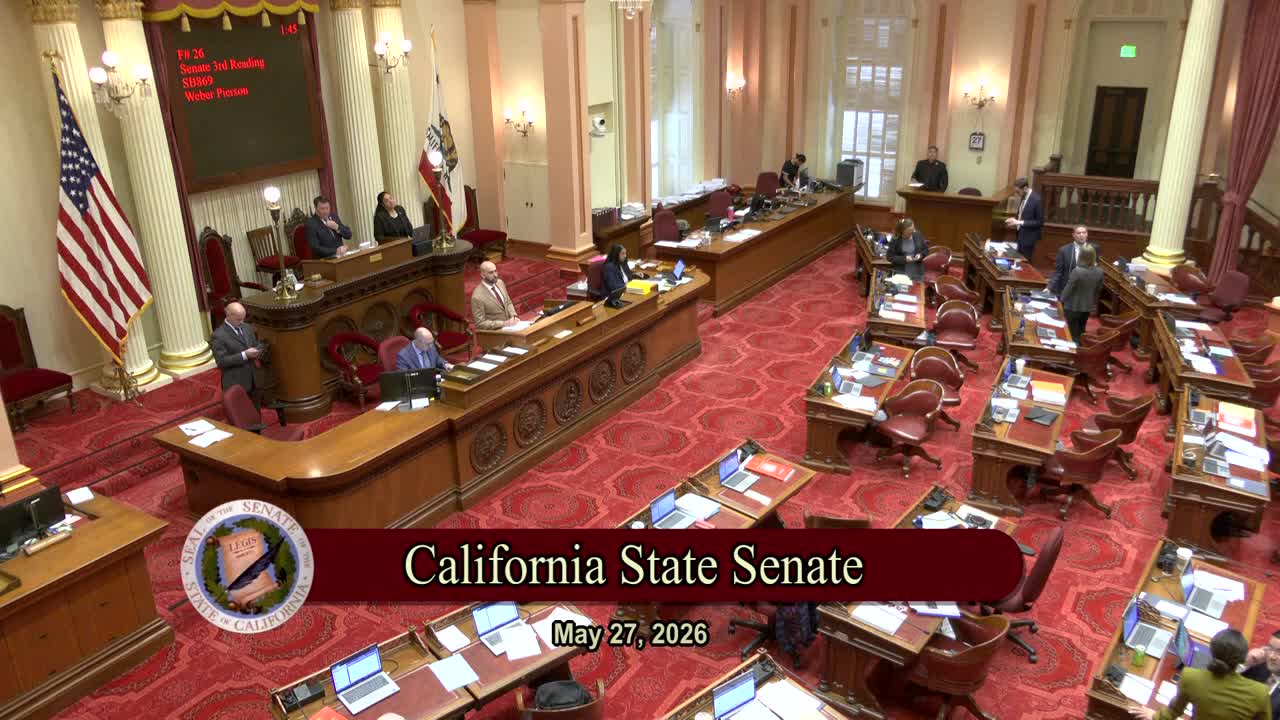 4MIN
Senate Floor
 13MIN
Senate Standing Committee on Judiciary
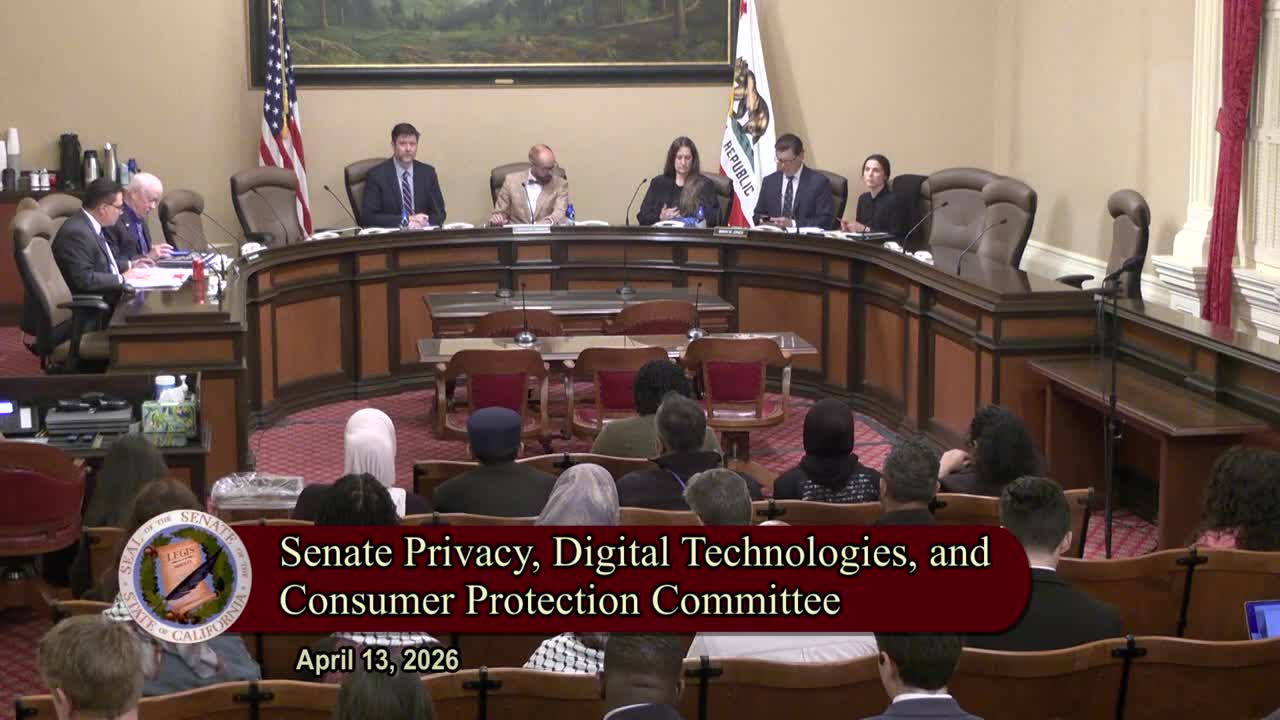 15MIN
Senate Standing Committee on Privacy, Digital Technologies, and Consumer Protection
Bill Author

Bill Co-Author(s):