SB 90: Safe Drinking Water, Wildfire Prevention, Drought Preparedness, and Clean Air Bond Act of 2024: grants: improvements to public evacuation routes: mobile rigid water storage: electrical generators.
- Session Year: 2025-2026
- House: Senate
- Latest Version Date: 2025-03-12
Current Status:
Failed
(2026-02-02: Returned to Secretary of Senate pursuant to Joint Rule 56.)
Introduced
In Committee
Awaiting First Chamber Vote
Passed First Chamber
In Committee
Awaiting Second Chamber Vote
Passed Second Chamber
Enacted
The Safe Drinking Water, Wildfire Prevention, Drought Preparedness, and Clean Air Bond Act of 2024, approved by the voters as Proposition 4 at the November 5, 2024, statewide general election, authorized the issuance of bonds in the amount of $10,000,000,000 pursuant to the State General Obligation Bond Law to finance projects for safe drinking water, drought, flood, and water resilience, wildfire and forest resilience, coastal resilience, extreme heat mitigation, biodiversity and nature-based climate solutions, climate-smart, sustainable, and resilient farms, ranches, and working lands, park creation and outdoor access, and clean air programs. The act makes $135,000,000 available, upon appropriation by the Legislature, to the Office of Emergency Services for a wildfire mitigation grant program to provide, among other things, loans, direct assistance, and matching funds for projects that prevent wildfires, increase resilience, maintain existing wildfire risk reduction projects, reduce the risk of wildfires to communities, or increase home or community hardening. The act provides that eligible projects include, but are not limited to, grants to local agencies, state agencies, joint powers authorities, tribes, resource conservation districts, fire safe councils, and nonprofit organizations for structure hardening of critical community infrastructure, wildfire smoke mitigation, evacuation centers, including community clean air centers, structure hardening projects that reduce the risk of wildfire for entire neighborhoods and communities, water delivery system improvements for fire suppression purposes for communities in very high or high fire hazard areas, wildfire buffers, and incentives to remove structures that significantly increase hazard risk.
This bill would include in the list of eligible projects grants to the above-mentioned entities for improvements to public evacuation routes in very high and high fire hazard severity zones, mobile rigid dip tanks, as defined, to support firefighting efforts, prepositioned mobile rigid water storage, as defined, and improvements to the response and effectiveness of fire engines and helicopters. The bill would also include grants, in coordination with the Public Utilities Commission, to local agencies, state agencies, special districts, joint powers authorities, tribes, and nonprofit organizations for backup electrical generators for water reservoirs.
The Safe Drinking Water, Wildfire Prevention, Drought Preparedness, and Clean Air Bond Act of 2024, approved by the voters as Proposition 4 at the November 5, 2024, statewide general election, authorized the issuance of bonds in the amount of $10,000,000,000 pursuant to the State General Obligation Bond Law to finance projects for safe drinking water, drought, flood, and water resilience, wildfire and forest resilience, coastal resilience, extreme heat mitigation, biodiversity and nature-based climate solutions, climate-smart, sustainable, and resilient farms, ranches, and working lands, park creation and outdoor access, and clean air programs. The act makes $135,000,000 available, upon appropriation by the Legislature, to the Office of Emergency Services for a wildfire mitigation grant program to provide, among other things, loans, direct assistance, and matching funds for projects that prevent wildfires, increase resilience, maintain existing wildfire risk reduction projects, reduce the risk of wildfires to communities, or increase home or community hardening. The act provides that eligible projects include, but are not limited to, grants to local agencies, state agencies, joint powers authorities, tribes, resource conservation districts, fire safe councils, and nonprofit organizations for structure hardening of critical community infrastructure, wildfire smoke mitigation, evacuation centers, including community clean air centers, structure hardening projects that reduce the risk of wildfire for entire neighborhoods and communities, water delivery system improvements for fire suppression purposes for communities in very high or high fire hazard areas, wildfire buffers, and incentives to remove structures that significantly increase hazard risk.
This bill would include in the list of eligible projects grants to the above-mentioned entities for improvements to public evacuation routes in very high and high fire hazard severity zones, mobile rigid dip tanks, as defined, to support firefighting efforts, prepositioned mobile rigid water storage, as defined, and improvements to the response and effectiveness of fire engines and helicopters.
(a)Of the funds made available by Section 91500, one hundred thirty-five million dollars ($135,000,000) shall be available, upon appropriation by the Legislature, to the Office of Emergency Services for a wildfire mitigation grant program. The Office of Emergency Services shall coordinate with the Department of Forestry and Fire Protection in administering these moneys. The grant program shall assist local and state agencies to leverage additional funds, including matching grants from federal agencies. Funds may be used to provide loans, rebates, direct assistance, and matching funds for projects that prevent wildfires, increase resilience, maintain existing wildfire risk reduction projects, reduce the risk of wildfires to communities, or increase home or community hardening. Projects shall benefit disadvantaged communities, severely disadvantaged communities, or vulnerable populations. Eligible projects include, but are not limited to, any of the following:
(1)Grants to local agencies, state agencies, joint powers authorities, nonprofit organizations, resource conservation districts, and tribes for projects that reduce wildfire risks to people and property consistent with an approved community wildfire protection plan.
(2)Grants to local agencies, state agencies, joint powers authorities, tribes, resource conservation districts, fire safe councils, and nonprofit organizations for structure hardening of critical community infrastructure, wildfire smoke mitigation, evacuation centers, including community clean air centers, improvements to public evacuation routes in very high or high fire hazard severity zones, structure hardening projects that reduce the risk of wildfire for entire neighborhoods and communities, water delivery system improvements for fire suppression purposes for communities in very high or high fire hazard areas, mobile rigid dip tanks to support firefighting efforts, prepositioned mobile rigid water storage, improvements to the response and effectiveness of fire engines and helicopters, wildfire buffers, and incentives to remove structures that significantly increase hazard risk.
(A)For purposes of this paragraph, mobile rigid dip tank is a mobile rigid dip tank for storing water, retardant, or other firefighting material for the on-ground equipment or aerial refilling of firefighting helicopters that is constructed of steel and is designed to be resistant to vandalism when left unattended. helicopters.
(B)For purposes of this paragraph, mobile rigid water storage is a mobile rigid water tank for storing water for refilling of ground equipment or helicopter dip tanks, or both, that is constructed of steel and is designed to be resistant to vandalism when left unattended and have an extended service life. both.
(3)Grants, in coordination with the Public Utilities Commission, to local agencies, state agencies, special districts, joint powers authorities, tribes, and nonprofit organizations for zero-emission backup power, energy storage, and microgrids for critical community infrastructure in order to provide continuity of electrical service, reduced wildfire ignitions, and to safeguard communities from disruption due to deenergization events, wildfire, or air pollution caused by wildfire, extreme heat, or other disaster.
(4)Grants, in coordination with the Public Utilities Commission, to local agencies, state agencies, special districts, joint powers authorities, tribes, and nonprofit organizations for backup electrical generators for water reservoirs.
(5)Grants under the Home Hardening Program to retrofit, harden, or create defensible space for homes at high risk of wildfire in order to protect California communities.
(b)The Office of Emergency Services and the Department of Forestry and Fire Protection shall prioritize wildfire mitigation grant funding applications from local agencies based on the Fire Risk Reduction Community list, pursuant to Section 4290.1.
(c)The Office of Emergency Services and the Department of Forestry and Fire Protection shall provide technical assistance to disadvantaged communities, severely disadvantaged communities, or vulnerable populations, including those with access and functional needs, socially disadvantaged farmers or ranchers, and economically distressed areas to ensure the grant program reduces the vulnerability of those most in need.
(a)Of the funds made available by Section 91500, one hundred thirty-five million dollars ($135,000,000) shall be available, upon appropriation by the Legislature, to the Office of Emergency Services for a wildfire mitigation grant program. The Office of Emergency Services shall coordinate with the Department of Forestry and Fire Protection in administering these moneys. The grant program shall assist local and state agencies to leverage additional funds, including matching grants from federal agencies. Funds may be used to provide loans, rebates, direct assistance, and matching funds for projects that prevent wildfires, increase resilience, maintain existing wildfire risk reduction projects, reduce the risk of wildfires to communities, or increase home or community hardening. Projects shall benefit disadvantaged communities, severely disadvantaged communities, or vulnerable populations. Eligible projects include, but are not limited to, any of the following:
(1)Grants to local agencies, state agencies, joint powers authorities, nonprofit organizations, resource conservation districts, and tribes for projects that reduce wildfire risks to people and property consistent with an approved community wildfire protection plan.
(2)Grants to local agencies, state agencies, joint powers authorities, tribes, resource conservation districts, fire safe councils, and nonprofit organizations for structure hardening of critical community infrastructure, wildfire smoke mitigation, evacuation centers, including community clean air centers, improvements to public evacuation routes in very high or high fire hazard severity zones, structure hardening projects that reduce the risk of wildfire for entire neighborhoods and communities, water delivery system improvements for fire suppression purposes for communities in very high or high fire hazard areas, mobile rigid dip tanks to support firefighting efforts, prepositioned mobile rigid water storage, improvements to the response and effectiveness of fire engines and helicopters, wildfire buffers, and incentives to remove structures that significantly increase hazard risk.
(A)For purposes of this paragraph, mobile rigid dip tank is a mobile rigid dip tank for storing water, retardant, or other firefighting material for the on-ground equipment or aerial refilling of firefighting helicopters that is constructed of steel and is designed to be resistant to vandalism when left unattended.
(B)For purposes of this paragraph, mobile rigid water storage is a mobile rigid water tank for storing water for refilling of ground equipment or helicopter dip tanks, or both, that is constructed of steel and is designed to be resistant to vandalism when left unattended and have an extended service life.
(3)Grants, in coordination with the Public Utilities Commission, to local agencies, state agencies, special districts, joint powers authorities, tribes, and nonprofit organizations for zero-emission backup power, energy storage, and microgrids for critical community infrastructure in order to provide continuity of electrical service, reduced wildfire ignitions, and to safeguard communities from disruption due to deenergization events, wildfire, or air pollution caused by wildfire, extreme heat, or other disaster.
(4)Grants, in coordination with the Public Utilities Commission, to local agencies, state agencies, special districts, joint powers authorities, tribes, and nonprofit organizations for backup electrical generators for water reservoirs.
(4)(5)Grants under the Home Hardening Program to retrofit, harden, or create defensible space for homes at high risk of wildfire in order to protect California communities.
(b)The Office of Emergency Services and the Department of Forestry and Fire Protection shall prioritize wildfire mitigation grant funding applications from local agencies based on the Fire Risk Reduction Community list, pursuant to Section 4290.1.
(c)The Office of Emergency Services and the Department of Forestry and Fire Protection shall provide technical assistance to disadvantaged communities, severely disadvantaged communities, or vulnerable populations, including those with access and functional needs, socially disadvantaged farmers or ranchers, and economically distressed areas to ensure the grant program reduces the vulnerability of those most in need.
(a)Of the funds made available by Section 91500, one hundred thirty-five million dollars ($135,000,000) shall be available, upon appropriation by the Legislature, to the Office of Emergency Services for a wildfire mitigation grant program. The Office of Emergency Services shall coordinate with the Department of Forestry and Fire Protection in administering these moneys. The grant program shall assist local and state agencies to leverage additional funds, including matching grants from federal agencies. Funds may be used to provide loans, rebates, direct assistance, and matching funds for projects that prevent wildfires, increase resilience, maintain existing wildfire risk reduction projects, reduce the risk of wildfires to communities, or increase home or community hardening. Projects shall benefit disadvantaged communities, severely disadvantaged communities, or vulnerable populations. Eligible projects include, but are not limited to, any of the following:
(1)Grants to local agencies, state agencies, joint powers authorities, nonprofit organizations, resource conservation districts, and tribes for projects that reduce wildfire risks to people and property consistent with an approved community wildfire protection plan.
(2)Grants to local agencies, state agencies, joint powers authorities, tribes, resource conservation districts, fire safe councils, and nonprofit organizations for structure hardening of critical community infrastructure, wildfire smoke mitigation, evacuation centers, including community clean air centers, improvements to public evacuation routes in very high or high fire hazard severity zones, structure hardening projects that reduce the risk of wildfire for entire neighborhoods and communities, water delivery system improvements for fire suppression purposes for communities in very high or high fire hazard areas, mobile rigid dip tanks to support firefighting efforts, prepositioned mobile rigid water storage, improvements to the response and effectiveness of fire engines and helicopters, wildfire buffers, and incentives to remove structures that significantly increase hazard risk.
(A)For purposes of this paragraph, mobile rigid dip tank is a mobile rigid dip tank for storing water, retardant, or other firefighting material for the on-ground equipment or aerial refilling of firefighting helicopters that is constructed of steel and is designed to be resistant to vandalism when left unattended.
(B)For purposes of this paragraph, mobile rigid water storage is a mobile rigid water tank for storing water for refilling of ground equipment or helicopter dip tanks, or both, that is constructed of steel and is designed to be resistant to vandalism when left unattended and have an extended service life.
(3)Grants, in coordination with the Public Utilities Commission, to local agencies, state agencies, special districts, joint powers authorities, tribes, and nonprofit organizations for zero-emission backup power, energy storage, and microgrids for critical community infrastructure in order to provide continuity of electrical service, reduced wildfire ignitions, and to safeguard communities from disruption due to deenergization events, wildfire, or air pollution caused by wildfire, extreme heat, or other disaster.
(4)Grants under the Home Hardening Program to retrofit, harden, or create defensible space for homes at high risk of wildfire in order to protect California communities.
(b)The Office of Emergency Services and the Department of Forestry and Fire Protection shall prioritize wildfire mitigation grant funding applications from local agencies based on the Fire Risk Reduction Community list, pursuant to Section 4290.1.
(c)The Office of Emergency Services and the Department of Forestry and Fire Protection shall provide technical assistance to disadvantaged communities, severely disadvantaged communities, or vulnerable populations, including those with access and functional needs, socially disadvantaged farmers or ranchers, and economically distressed areas to ensure the grant program reduces the vulnerability of those most in need.
|
Date
|
Status
|
|---|---|
| Feb 2, 2026 | Returned to Secretary of Senate pursuant to Joint Rule 56. |
| May 23, 2025 | May 23 hearing: Held in committee and under submission. |
| May 16, 2025 | Set for hearing May 23. |
| May 5, 2025 | May 5 hearing: Placed on APPR. suspense file. |
| Apr 25, 2025 | Set for hearing May 5. |
| Apr 23, 2025 | From committee: Do pass and re-refer to Com. on APPR. with recommendation: To consent calendar. (Ayes 6. Noes 0. Page 838.) (April 22). Re-referred to Com. on APPR. |
| Apr 4, 2025 | Set for hearing April 22. |
| Mar 12, 2025 | Read second time and amended. Re-referred to Com. on N.R. & W. |
| Mar 11, 2025 | From committee: Do pass as amended and re-refer to Com. on N.R. & W. (Ayes 13. Noes 0. Page 352.) (March 11). |
| Feb 26, 2025 | From committee with author's amendments. Read second time and amended. Re-referred to Com. on G.O. |
| Feb 25, 2025 | Set for hearing March 11. |
| Jan 29, 2025 | Referred to Coms. on G.O. and N.R. & W. |
| Jan 23, 2025 | From printer. May be acted upon on or after February 22. |
| Jan 22, 2025 | Introduced. Read first time. To Com. on RLS. for assignment. To print. |
|
Date
|
Description
|
Location
|
Votes
|
|
|---|---|---|---|---|
| May 5, 2025 | Placed on suspense file | Senate Standing Committee on Appropriations |
Passed |
|
| Apr 22, 2025 | Do pass, but first be re-referred to the Committee on [Appropriations] with the recommendation: To Consent Calendar | Senate Standing Committee on Natural Resources and Water |
Passed |
|
| Mar 11, 2025 | Do pass as amended, but first amend, and re-refer to the Committee on [Natural Resources and Water] | Senate Standing Committee on Governmental Organization |
Passed |
This list shows positions taken on this bill by organizations on the date displayed, which is linked to the original source.
Positions by individuals are not included.
|
Organization
|
Position
|
Date
|
|---|---|---|
| California CattlemenS Association | ** Support | |
| California Fire Chiefs Association | ** Support | |
| California Rangeland Trust | ** Support | |
| City of Pasadena | ** Support | |
| City of Sierra Madre | ** Support | |
| Crescenta Valley Water District | ** Support | |
| Elsinore Valley Municipal Water District | ** Support | |
| Fire Districts Association Of California | ** Support | |
| Independent Insurance Agents & Brokers of California | ** Support | |
| Jurupa Community Services District | ** Support | |
| PumpPodUSA | ** Support | |
| Rancho California Water District | ** Support |
SENATE COMMITTEE ON APPROPRIATIONS
Senator Anna Caballero, Chair
2025 - 2026 Regular Session
SB 90 (Seyarto) - Safe Drinking Water, Wildfire Prevention, Drought Preparedness, and Clean Air Bond Act of 2024: grants: improvements to public evacuation routes: mobile rigid water storage: electrical generators
Version: March 12, 2025 | Policy Vote: G.O. 13 - 0, N.R. & W. 6 - 0 |
Urgency: No | Mandate: No |
Hearing Date: May 5, 2025 | Consultant: Janelle Miyashiro |
Bill Summary:
SB 90 explicitly specifies certain projects eligible for wildfire mitigation grant program funding from the Safe Drinking Water, Wildfire Prevention, Drought Preparedness, and Clean Air Bond Act of 2024 (Proposition 4).
Fiscal Impact:
- Unknown potentially significant cost pressures to the wildfire mitigation grant program, to the extent that expanding the use of Proposition 4 bond funds for explicitly specified projects and fire suppression equipment diverts resources from other projects that could have been funded through the program.
- The California Department of Forestry and Fire Protection (CAL FIRE) and Office of Emergency Services (OES) do not anticipate additional administrative costs.
Background:
The Safe Drinking Water, Wildfire Prevention, Drought Preparedness, and Clean Air Bond Act of 2024 (SB 867 (Allen, Chapter 83, Statutes of 2024) (Act) authorized a $10 billion bond to be placed before the state’s voters for approval. The Act, upon appropriation by the Legislature, provides $3.8 billion for safe drinking water, drought, flood, and water resilience programs; $1.5 billion for wildfire and forest resilience programs; $1.2 billion for coastal resilience programs; $450 million for extreme heat mitigation programs; $1.2 billion for biodiversity protection and nature-based climate solution programs; $300 million for climate-smart, sustainable, and resilient farms, ranches, and working lands programs; $700 million for park creation and outdoor access programs; and $850 million for clean energy programs.
Of the $1.5 billion for wildfire prevention, including reducing community wildfire risk and restoring the health and resilience of forests and landscapes, the Act made $135 million available to OES. OES, in coordination with CAL FIRE, is required to administer this grant program for projects that prevent wildfires, increase resilience, maintain existing wildfire risk reduction projects, reduce the risk of wildfire to communities, or increase home or community hardening. The grant program will provide loans, direct assistance, and matching funds for eligible projects.
Eligible projects include, but are not limited to, grants to local agencies, state agencies, joint powers authorities, tribes, resource conservation districts, fire safe councils, and nonprofit organizations for structure hardening of critical community infrastructure, wildfire smoke mitigation, evacuation centers, including community clean air centers, structure hardening projects that reduce the risk of wildfire for entire neighborhoods and communities, water delivery system improvements for fire suppression purposes for communities in very high or high fire hazard areas, wildfire buffers, and incentives to remove structures that significantly increase hazard risk.
The Act became Proposition 4 on the November 5, 2024 statewide ballot and passed with a vote of 9,055,116 to 6,086,414 (59.8% to 40.2%).
Proposed Law:
- Explicitly specifies eligible projects under the wildfire mitigation grant program administered by OES include:
- Improvements to public evacuation routes in very high or high fire hazard severity zones.
- Mobile rigid dip tanks to support firefighting efforts.
- Defines a “mobile rigid dip tank” as a mobile rigid dip tank for storing water, retardant, or other firefighting material for the on-ground equipment or aerial refilling of firefighting helicopters.
- Prepositioned mobile rigid water storage.
- Defines “mobile rigid water storage” as a mobile rigid water tank for storing water for refilling of ground equipment or helicopter dip tanks, or both.
- Improvements to the response and effectiveness of fire engines and helicopters.
- Backup electrical generators for water reservoirs.
Related Legislation:
SB 653 (Cortese, 2025) would define the term environmentally sensitive vegetation management for the purposes of Proposition 4. SB 653 is pending in this committee.
SB 287 (Arreguín, 2025) would establish the California Trails Conservancy Program and states legislative intent that certain Proposition 4 monies be used to fund the Program, as provided. SB 287 is pending in this committee.
Staff Comments:
While OES does not anticipate a direct fiscal impact from the bill, it notes that there may be a fiscal impact to local grant program participants, as many of the eligible projects authorized by this bill may not be eligible for Federal Emergency Management Agency reimbursement.
-- END --
SENATE COMMITTEE ON NATURAL RESOURCES AND WATER
Senator Monique Limón, Chair
2025 - 2026 Regular
Bill No: SB 90 Hearing Date: April 22, 2025
Author: | |||
Version: | Amended | ||
Urgency: | Fiscal: | ||
Consultant: | |||
Subject: Safe Drinking Water, Wildfire Prevention, Drought Preparedness, and Clean Air Bond Act of 2024: grants: improvements to public evacuation routes: mobile rigid water storage: electrical generators
SUMMARY
This bill would explicitly specify certain projects eligible for wildfire mitigation grant program funding from the Safe Drinking Water, Wildfire Prevention, Drought Preparedness, and Clean Air Bond Act of 2024 (Proposition 4), as provided.
BACKGROUND AND EXISTING LAW
Wildfire in California. Catastrophic and devastating wildfires have occurred repeatedly in the state in recent years. Thirteen of the 20 largest and 15 of the 20 most destructive wildland fires in state history have occurred since 2015. The 2020 August Complex Fire in northern California – the largest fire in California’s modern history – burned over one million acres while the 2021 Dixie Fire burned almost one million acres. Two wildland fires in recent years burned over the crest of the Sierras, which had not been previously observed. In the last several years, tens of thousands of structures – mostly homes – have been destroyed from wildland fire, insured losses incurred are in the billions of dollars, prime habitat has been destroyed or damaged, and, tragically, hundreds of lives have been lost. Most recently, the Palisades and Eaton Fires in Los Angeles in January resulted in the loss of approximately 16,250 structures and 29 deaths. In addition, millions of Californians have been exposed to unhealthy air quality due to the wildfires.
While wildfire is a natural phenomenon in the state, the changing climate, continuing development in the Wildland-Urban Interface, and poor forest and wildland vegetation management practices in the last century have resulted in more extreme wildland fire behavior. In order to address this, there have been multiple changes to policy at all levels, and the state has dedicated considerable resources for both wildfire prevention and protection.
The Safe Drinking Water, Wildfire Prevention, Drought Preparedness, and Clean Air Bond Act of 2024 (Proposition 4). The Safe Drinking Water, Wildfire Prevention, Drought Preparedness, and Clean Air Bond Act of 2024 (SB 867 (Allen, Chapter 83, Statutes of 2024) (Act) authorized a $10 billion bond to be placed before the state’s voters for approval. The Act, upon appropriation by the Legislature, provides $3.8 billion for safe drinking water, drought, flood, and water resilience programs; $1.5 billion for wildfire and forest resilience programs; $1.2 billion for coastal resilience programs; $450 million for extreme heat mitigation programs; $1.2 billion for biodiversity protection and nature-based climate solution programs; $300 million for climate-smart, sustainable, and resilient farms, ranches, and working lands programs; $700 million for park creation and outdoor access programs; and $850 million for clean energy programs.
Of the $1.5 billion for wildfire prevention, including reducing community wildfire risk and restoring the health and resilience of forests and landscapes, the Act made $135 million available to the Office of Emergency Services (CalOES) for a wildfire mitigation grant program. CalOES, in coordination with the Department of Forestry and Fire Protection (CAL FIRE), is required to administer this grant program for projects that prevent wildfires, increase resilience, maintain existing wildfire risk reduction projects, reduce the risk of wildfire to communities, or increase home or community hardening, as provided. The grant program will provide loans, direct assistance, and matching funds for eligible projects.
Eligible projects include, but are not limited to, grants to local agencies, state agencies, joint powers authorities, tribes, resource conservation districts, fire safe councils, and nonprofit organizations for structure hardening of critical community infrastructure, wildfire smoke mitigation, evacuation centers, including community clean air centers, structure hardening projects that reduce the risk of wildfire for entire neighborhoods and communities, water delivery system improvements for fire suppression purposes for communities in very high or high fire hazard areas, wildfire buffers, and incentives to remove structures that significantly increase hazard risk.
The Act became Proposition 4 on the November 5, 2024 statewide ballot and passed with a vote of 9,055,116 to 6,086,414 (59.8% to 40.2%).
Existing law:
- Establishes CAL FIRE within the California Natural Resources Agency. Establishes the Office of the State Fire Marshal within CAL FIRE led by the State Fire Marshal. Establishes the State Board of Forestry and Fire Protection (board) to, among other duties, determine, establish, and maintain an adequate forest policy and provide general policies for guidance of CAL FIRE. Establishes within the Office of the Governor, CalOES. (Public Resources Code (PRC) §§701, 703, 730, 740, Health and Safety Code §§13100 et seq., Government Code (GOV) §8585)
- Requires the State Fire Marshal to identify areas in the state as moderate, high, and very high fire hazard severity zones in the local responsibility area (LRA) (subject to approval by local ordinance) based on consistent statewide criteria and based on the severity of fire hazard that is expected to prevail in those areas. Requires that moderate, high, and very high fire hazard severity zones be based on fuel loading, slope, fire weather, and other relevant factors including areas where winds have been identified by the Office of the State Fire Marshal as a major cause of wildfire spread. (GOV §§51178, 51179 Requires the State Fire Marshal to make similar identifications in the state responsibility area (SRA) (PRC §4202)
- Requires the board to develop criteria for and maintain a “Fire Risk Reduction Community” list of local agencies located in the SRA or a very high fire hazard severity zone in the LRA that meet best practices for local fire planning, as provided. (PRC §4290.1)
- Authorizes, pursuant to the Act, the issuance of bonds in the amount of $10 billion to finance projects for safe drinking water, drought, flood, and water resilience; wildfire and forest resilience; coastal resilience; extreme heat mitigation; biodiversity and nature-based climate solutions; climate-smart sustainable, and resilient farms, ranches and working lands; park creation and outdoor access; and clean air programs, as provided. (PRC §§90000 et seq.)
- Requires that $1.5 billion of Act monies shall be available, upon appropriation by the Legislature, for wildfire prevention, including reducing community wildfire risk and restoring the health and resilience of forests and landscapes. (PRC §91500)
- Of the $1.5 billion, requires that $135 million be available to CalOES for a wildfire mitigation grant program.
- Requires CalOES to coordinate with CAL FIRE in administering these monies.
- Requires the grant program to assist local and state agencies to leverage additional funds, including matching grants from federal agencies.
- Authorizes funds to be used to provide loans, rebates, direct assistance, and matching funds for projects that prevent wildfires, increase resilience, maintain existing wildfire risk reduction projects, reduce the risk of wildfires to communities, or increase home or community hardening.
- Requires projects to benefit disadvantaged communities, severely disadvantaged communities or vulnerable populations.
- Provides that eligible projects include, but are not limited to:
- Grants to various entities for projects that reduce wildfire risks to people and property consistent with an approved community wildfire protection plan;
- Grants to various entities for structure hardening of critical community infrastructure, wildfire smoke mitigation, evacuation centers, including community clean air centers, structure hardening projects that reduce the risk of wildfire for entire neighborhoods and communities, water delivery system improvements for fire suppression purposes for communities in very high or high fire hazard areas, wildfire buffers, and incentives to remove structures that significantly increase hazard risk;
- Grants, in coordination with the Public Utilities Commission, to various entities for zero-emission backup power, energy storage, and microgrids for critical community infrastructure in order to provide continuity of electrical service, reduced wildfire ignitions, and to safeguard communities from disruption due to deenergization events, wildfire, or air pollution caused by wildfire, extreme heat, or other disaster.
- Grants under the Home Hardening Program to retrofit, harden, or create defensible space for homes at high risk of wildfire in order to protect California communities.
- Requires CalOES and CAL FIRE to prioritize wildfire mitigation grant funding applications from local agencies based on the Fire Risk Reduction Community list.
- Requires CalOES and CAL FIRE to provide technical assistance to disadvantaged communities, severely disadvantaged communities, or vulnerable populations, including those with access and functional needs, socially disadvantaged farmers or ranchers, and economically distressed areas to ensure the grant program reduces the vulnerability of those most in need. (PRC §91510)
- Of the $1.5 billion, requires that $135 million be available to CalOES for a wildfire mitigation grant program.
PROPOSED LAW
This bill would explicitly specify certain projects eligible for wildfire mitigation grant program funding from Proposition 4, as provided.
Specifically, this bill would:
- Explicitly specify certain eligible projects under the Act’s CalOES wildfire mitigation grant program include:
- Improvements to public evacuation routes in very high or high fire hazard severity zones.
- Mobile rigid dip tanks to support firefighting efforts.
- Prepositioned mobile rigid water storage.
- Improvements to the response and effectiveness of fire engines and helicopters.
- Backup electrical generators for water reservoirs, as provided.
- Define “mobile rigid dip tank” to be a mobile rigid dip tank for storing water, retardant, or other firefighting material for the on-ground equipment or aerial refilling of firefighting helicopters. Define “mobile rigid water storage” to be a mobile rigid water tank for storing water for refilling of ground equipment or helicopter dip tanks, or both.
ARGUMENTS IN SUPPORT
According to the author, “SB-90 offers an innovative approach to water accessibility through mobile tanks that will dramatically improve our firefighting capabilities. In my experience as a fire chief with decades of experience fighting California wildfires, reducing helicopter refill times by even a few minutes can mean the difference between containing a fire and watching it spread out of control. The cost effective nature of these mobile tanks, combined with their strategic positioning capabilities, makes this solution both practical and essential for protecting our communities from increasingly devastating wildfires.”
The California Fire Chiefs Association & Fire Districts Association of California write, “SB 90 represents a strategic investment in community-wide hardening and wildfire response capabilities, particularly in vulnerable zones where water access is limited. By supporting the deployment of mobile dip tanks and water caches in remote or high-risk areas, this measure will significantly improve the efficiency of aerial firefighting operations and support ground crews during critical initial attack phases. These tools are essential to slowing fire spread, protecting evacuation routes, and supporting both public safety and firefighter effectiveness.”
Supporters also highlighted the importance of back-up generators to maintaining water supply in the event of a wildfire, and one of the co-sponsors reports purchasing two mobile water storage tanks that were recently deployed to help fight the catastrophic Los Angeles wildfires in January.
ARGUMENTS IN OPPOSITION
None received
COMMENTS
This bill is double-referred. This bill has been referred to both the Senate Committee on Government Organization and this Committee for hearing. This Committee is the second Committee of referral. Elements of this bill under the jurisdiction of the Senate Committee on Government Organization are included here for completeness and context only.
Cost of mobile water storage. According to letters submitted in support of this bill, mobile water storage and helicopter dip tank solutions cost $65,000 - $95,000 per unit which compares favorably to $300,000 or more for permanent constructed tanks. Mobile water tanks have been deployed in California and may be pre-positioned or strategically deployed, as needed.
Recent related legislation
SB 653 (Cortese, 2025) would define the term environmentally sensitive vegetation management for the purposes of Proposition 4. (This bill is pending before this Committee.)
SB 287 (Arreguín, 2025) would establish the California Trails Conservancy Program and states legislative intent that certain Proposition 4 monies be used to fund the Program, as provided. (This bill is pending before this Committee.)
AB 1486 (Soria, 2025) would establish a grant program using Proposition 4 monies to provide grants to public postsecondary educational institutions that are designated as Agricultural Experiment Stations or Agricultural Research Institutes to develop or expand research farms to improve climate resiliency, as provided. (This bill is pending before the Assembly Natural Resources Committee.)
AB 900 (Papan, 2025) would require the California Natural Resources Agency to develop strategies to reduce barriers and increase support for science-based management and stewardship of conserved lands pursuant to the 30x30 initiative goals, and would authorize the allocation Proposition 4 monies for science-based management and stewardship that is included as part of a land acquisition project, as provided. (This bill is pending before the Assembly Appropriations Committee.)
AB 307 (Petrie-Norris, 2025) would provide for a wildfire mapping system with Proposition 4 monies. (This bill is pending before the Assembly Natural Resources Committee.)
SUGGESTED AMENDMENTS: none
SUPPORT
Crescenta Valley Water District (co-sponsor)
City of Sierra Madre (co-sponsor)
California Cattlemen’s Association
California Fire Chiefs Association
California Rangeland Trust
City of Pasadena
Elsinore Valley Municipal Water District
Fire Districts Association of California
Independent Insurance Agents & Brokers of California
Jurupa Community Services District (if amended)
PumpPodUSA
Rancho California Water District
OPPOSITION
None received
-- END --
SENATE COMMITTEE ON GOVERNMENTAL ORGANIZATION
Senator Steve Padilla
Chair
2025 - 2026 Regular
Bill No: SB Hearing Date: 3/11/2025
Author: | Seyarto, et al. | ||
Version: | 2/26/2025 Amended | ||
Urgency: | Fiscal: | ||
Consultant: | |||
SUBJECT:
DIGEST: This bill adds new eligible projects under the $10 billion Safe Drinking Water, Wildfire Prevention, Drought Preparedness, and Clean Air Bond Act (Bond Act), allowing grants for public evacuation route improvements, mobile rigid dip tanks and prepositioned mobile rigid water storage, enhancements to fire engine and helicopter response capabilities, and backup electrical generators, as specified.
ANALYSIS:
Existing law:
- The Safe Drinking Water, Wildfire Prevention, Drought Preparedness, and Clean Air Bond Act of 2024 authorizes the issuance of bonds in the amount of $10 billion pursuant to the State General Obligation Bond Law to finance projects for safe drinking water, drought, flood, and water resilience, wildfire and forest resilience, coastal resilience, extreme heat mitigation, biodiversity and nature-based climate solutions, climate-smart, sustainable, and resilient farms, ranches, and working lands, park creation and outdoor access, and clean air programs.
- The Bond Act makes $135 million available, upon appropriation by the Legislature, to the Office of Emergency Services (OES) for a wildfire mitigation grant program to provide, among other things, loans, direct assistance, and matching funds for projects that prevent wildfires, increase resilience, maintain existing wildfire risk reduction projects, reduce the risk of wildfires to communities, or increase home or community hardening.
- The Bond Act provides that eligible projects include, but are not limited to, grants to local agencies, state agencies, joint power authorities (JPAs), tribes, resource conservation districts, fire safe councils, and nonprofit organizations for structure hardening of critical community infrastructure, wildfire smoke mitigation, evacuation centers, including community clean air centers, structure hardening projects that reduce the risk of wildfire for entire neighborhoods and communities, water delivery system improvements for fire suppression purposes for communities in very high or high fire hazard areas, wildfire buffers, and incentives to remove structures that significantly increase hazard risk.
This bill:
- Adds to the list of eligible project grants available for use as part of the $135 million described above to include improvements to public evacuation routes in very high or high fire hazard severity zones, mobile rigid dip tanks to support firefighting efforts, prepositioned mobile rigid water storage, and improvements to the response and effectiveness of fire engines and helicopters.
- Defines “mobile rigid dip tank” to mean a mobile rigid dip tank for storing water, retardant, or other firefighting material for the on-ground equipment or aerial refilling of firefighting helicopters that is constructed of steel and is designed to be resistant to vandalism when left unattended.
- Defines “mobile rigid water storage” to mean a mobile rigid water tank for storing water for refilling of ground equipment or helicopter dip tanks, or both, that is constructed of steel and is designed to be resistant to vandalism when left unattended and have an extended service life.
- Authorizes grants, in coordination with the California Public Utilities Commission (CPUC), to local agencies, state agencies, special districts, JPAs, tribes, and nonprofit organizations for backup electrical generators for water reservoirs.
Background
Author Statement. According to the author’s office, “SB 90 offers an innovative approach to water accessibility through mobile tanks that will dramatically improve our firefighting capabilities. In my experience as a fire chief with decades of experience fighting California wildfires, reducing helicopter refill times by even a few minutes can mean the difference between containing a fire and watching it spread out of control. The cost-effective nature of these mobile tanks, combined with their strategic positioning capabilities, makes this solution both practical and essential for protecting our communities from increasingly devastating wildfires.”
California’s Worsening Wildfire Reality. The State of California has the main responsibility for wildfire response activities on about one-third of California’s land area. With over 39 million residents, the State of California is the most populous state in the nation and has the third largest land area among the states (163,695 square miles). OES serves as the state’s leadership hub during all major emergencies and disasters. This includes responding, directing, and coordinating state and federal resources and mutual aid assets across all regions to support the diverse communities across the state.
The Department of Forestry and Fire Protection (Cal FIRE) works to safeguard California through fire prevention and protection, emergency response, and stewardship of natural resource systems. Cal FIRE works to contain large wildfires, preventing them from spreading, damaging communities, and endangering residents. The state also runs programs to reduce the chances that wildfires will start and to limit the damage they cause when they do occur—also known as wildfire prevention and mitigation.
In 2021, the Department of Water Resources (DWR) released the Small Water Systems and Rural Communities Drought and Water Shortage Contingency Planning and Risk Assessment report. Issued in two parts, the report both identifies the vulnerability of small water systems and rural communities to drought and water shortages (Part II) and offers recommendations for enhancing drought contingency planning in these areas (Part I).
In this report, DWR evaluated the drought and water shortage risks for 2,419 small water suppliers. The findings revealed that 47 out of the state’s 58 counties have small water suppliers ranking in the top 10% for water shortage risk (a total of 240 suppliers). Notably, 61% of these high-risk suppliers (149 in total) are located in zones with high or very high fire hazard severity. This indicates that numerous small and rural communities across the state face a significant risk of water depletion during droughts or other disasters, and that communities in high wildfire-risk areas are particularly vulnerable—potentially compromising their ability to manage fires effectively.
The report highlights that water systems serving fewer than 1,000 connections often struggle to maintain water supplies during natural disasters, regardless of their planning efforts, due to their limited economies of scale and the high costs of emergency response measures. Among the recommended resiliency improvements is ensuring that water sources and distribution systems have adequate capacity to meet the increased flow demands required during wildfires.
An UCLA Luskin Center for Innovation briefing paper from December 2021, titled Wildfire & Water Supply in California, states that the “linkages between wildfire and water are numerous, and many of them are relatively well researched, such as the effects of wildfire on riparian areas. However, in recent years, a newer issue has emerged: the relationship between wildfire and water supply. Some aspects of this topic are well understood, such as how higher elevation wildfires might impact water storage reservoirs through siltation. Other aspects are less understood, such as how wildfires lead to drinking water contamination.”
Safe Drinking Water, Wildfire Prevention, Drought Preparedness, and Clean Air Bond Act of 2024. The Bond Act was placed on the 2024 general election ballot as Proposition 4 by SB 867 (Allen, Chapter 83, Statutes of 2024), and was approved by voters with 59.8% of the 15 million votes cast. The Bond Act authorizes the issuance of $10 billion worth of bonds pursuant to the State General Obligation Bond Law to finance projects for safe drinking water, drought, flood, and water resilience, wildfire and forest resilience, coastal resilience, extreme heat mitigation, biodiversity and nature-based climate solutions, climate-smart, sustainable, and resilient farms, ranches, and working lands, park creation and outdoor access, and clean air programs. Of that $10 billion, the Bond Act makes $135 million available, upon appropriation by the Legislature, to OES for a wildfire mitigation grant program to provide, among other things: loans, direct assistance, and matching funds for projects that: prevent wildfires, increase resilience, maintain existing wildfire risk reduction projects, reduce the risk of wildfires to communities, or increase home or community hardening.
Further, the Bond Act provides that eligible projects for funding pursuant to the $135 million allocated to OES include, but are not limited to, grants to local agencies, state agencies, JPAs, tribes, resource conservation districts, fire safe councils, and nonprofit organizations for structure hardening of critical community infrastructure, wildfire smoke mitigation, evacuation centers (including community clean air centers), structure hardening projects that reduce risk of wildfire for entire neighborhoods and communities, water delivery system improvements for fire suppression purposes for communities in very high or high fire hazard areas, wildfire buffers, and incentives to remove structures that significantly increase hazard risk.
This bill adds to the list of eligible projects grants to the above-mentioned entities for improvements to public evacuation routes in very high and high fire hazard severity zones, mobile rigid dip tanks to support firefighting efforts, prepositioned mobile rigid water storage, and improvements to the response and effectiveness of fire engines and helicopters.
Additionally, this bill authorizes OES, in coordination with the PUC, to offer grants to local agencies, state agencies, special districts, JPAs, tribes, and nonprofit organizations for backup electrical generators for water reservoirs.
Mobile Rigid Dip Tanks and Mobile Rigid Water Storage. This bill defines “mobile rigid dip tank” to mean a mobile rigid dip tank for storing water, retardant, or other firefighting material for the on-ground equipment or aerial refilling of firefighting helicopters that is constructed of steel and is designed to be resistant to vandalism when left unattended. Additionally, this bill defines “mobile rigid water storage” to mean a mobile rigid water tank for storing water for refilling of ground equipment or helicopter dip tanks, or both, that is constructed of steel and is designed to be resilient to vandalism when left unattended and have an extended service life.
Firefighting helicopters use dip tanks when other water sources are not an option. Dip tanks cut the distances that helicopters must travel to the nearest body of water, help when the local water source is not deep enough, or alleviate the environmental concerns with using local water. Dip tanks come in many sizes and shapes, and are mobile so they can be positioned for optimum access and effect during a fire incident. According to the United States Forest Service Technology & Development Program’s Helicopter Dip Tank Capabilities and User’s Guide, “[r]igid tanks are made with heavy aluminum or steel and do not collapse. These tanks are rectangular with wheels attached to the bottom and only can be moved by a large truck or tractor. These tanks resemble an open top trailer. Due to their size, they are usually positioned next to roads or parking lots. Collapsible tanks can be placed in more remote locations.”
Further, portable water tanks are becoming crucial in firefighting efforts, especially in remote areas where access to a continuous water supply can be challenging. Portable fire water tanks are designed to be easily transported and quickly deployed, ensuring that firefighters have the water they need when they need it most.
California’s Aerial Firefighting Program. Cal FIRE’s world-renowned aviation program responds to thousands of wildland fires throughout California each year. Cal FIRE’s current aviation fleet includes Grumman S-2T Airtankers, Bell UH-1H Super Huey Helicopters, Sikorsky S-70i Helicopters, North American OV-10A (&1 D Model) Bronco Air Tactical Aircraft, and C-130 Hercules Airtankers. According to Cal FIRE’s internet website, these “aircraft, highly skilled pilots, and aviation support staff are strategically located throughout California at our 14 air tanker bases, 10 Cal FIRE helitack bases and one Cal FIRE/San Diego County Sheriff helitack base. Aircraft can reach the most remote State Responsibility Area (SRA) fires in approximately 20 minutes, with the goal of keeping 95% of fires at 10 acres or less. Cal FIRE’s fleet of more than 60 fixed and rotary wing aircraft make it the largest civil aerial firefighting fleet in the world.”
The 2025 Southern California Fire Storms. Wildfire’s tore through the Los Angeles area in January, 2025, displacing tens of thousands of people and claiming the lives of at least 29 individuals. The Palisades fire and Eaton fire now rank among the deadliest and most destructive fires in California history. These fires ignited amid an extreme weather event, fueled by unusually severe fire weather conditions including Santa Ana winds of nearly 100 miles per hour across the State’s southern region, and following an extended period of drought in the area. These fires were, at least in part, a product of what UCLA and University of California Agriculture and Natural Resources scientist Daniel Swain calls a sort of “hydroclimate whiplash.”
According to the report Whiplash: How Big Swings in Precipitation Fueled the L.A. Fires published at the Yale School of the Environment, “[i]n 2023 and 2024, the city experienced unusually wet winters, which spurred the growth of grasses and shrubs. Then the rain stopped. Since July, the city has received a mere three-hundredths of an inch of precipitation. The result has been acre after acre of desiccated brush – the perfect kindling for wildfires.”
As the fires raged on, firefighters were forced to rely on local water infrastructure not designed for fires of that size. According to CapRadio’s report “[c]onspiracies are rife about water and the LA fires. Here’s what experts say,” a “reservoir in the Palisades was empty while its cover was getting repaired. And the water systems used to fight the Palisades and Eaton fires couldn’t maintain the continuous high water pressures needed, meaning water stopped flowing in some hydrants. Newsom has called for an investigation.”
The article notes that, “water and climate experts say that even if the Palisades reservoir had been full and hydrants working perfectly, they wouldn’t have allowed firefighters to change the course of large wildfires. Hurricane-force winds fueled the fires, and meant that in the first days planes and helicopters couldn’t fly and drop water, experts say. These municipal water systems were structured for residential and commercial needs and everyday fires – not firefighting on many fronts without aerial support, says Josh Lappen, a climate researcher at University of Notre Dame who studies Los Angeles’ infrastructure systems.”
Fire Hazard Severity Zones. Existing law requires Cal FIRE to map fire hazard within State Responsibility Areas (SRA) based on fuel loading, slope, fire weather, and other relevant factors present, including areas where winds have been identified by the department as a major cause of wildfire spread. These zones, referred to as Fire Hazard Severity Zones (FHSZ), classify a wildland zone as Moderate, High, or Very High fire hazard based on the average hazard across the area included in the zone.
FHSZ maps are developed using a science-based and field-tested model that assigns a hazard score based on the factors that influence fire likelihood and fire behavior. FHSZ maps evaluate “hazard,” not “risk.” They are like flood zone maps, where lands are described in terms of the probability level of a particular area being inundated by floodwaters, and not specifically prescriptive of impacts. “Hazard” is based on the physical conditions that create a likelihood and expected fire behavior over a 30 to 50-year period without considering mitigation measures such as home hardening, recent wildfire, or fuel reduction efforts.
In February, Cal FIRE began rolling out updated fire zones, doubling the number of acres in local jurisdictions required to follow stricter fire safety building codes. Previously, the state mapped and applied fire safety regulations only to local areas with the highest possible fire hazards, deemed “very high.” According to a recent Los Angeles Times article titled “Cal FIRE’s updated fire-hazard maps will double the area of locally managed land that must comply with safety codes,” the new FHSZ maps are “expected to expand the roughly 800,000 acres currently in local fire jurisdictions zoned as ‘very high’ by an additional 247,000 acres. Some 1.16 million acres will be categorized into the new ‘high’ zones, according to a press release from the governor’s office.”
This bill adds “improvements to public evacuation routes in very high or high fire hazard severity zones” to the list of eligible projects to receive grants for local agencies, state agencies, JPAs, tribes, resource conservation districts, fire safe councils, and nonprofit organizations under the Bond Act.
Policy Consideration. As discussed previously, the United Sates Forest Service Technology & Development Program’s Helicopter Dip Tank Capabilities and User’s Guide identifies multiple types of dip tanks that helicopters use when other water sources are not an option. In addition to steel, rigid dip tanks may be made with heavy aluminum. Further, framed tanks can use a steel or aluminum frame in combination with an internal layer of synthetic material to contain the water. This design works best for tanks holding a large volume of water and can be available in round or rectangular forms and are collapsible. Frameless tanks are self-supporting and made of soft, synthetic materials. They collapse for easy transport and storage.
This bill also requires that the dip tanks be “designed to be resistant to vandalism” and that the mobile rigid water storage be “designed to be resistant to vandalism when left unattended and have an extended service life.” These particular requirements may prove difficult to determine and may unnecessarily limit the ability of OES to quickly and efficiently disperse grant funds for needed equipment and projects.
The author has agreed to the following amendments:
Amendment #1: (A) For purposes of this paragraph, “mobile rigid dip tank” is a mobile rigid dip tank for storing water, retardant, or other firefighting material for the on-ground equipment or aerial refilling of firefighting helicopters that is constructed of steel and is designed to be resistant to vandalism when left unattended. helicopters.
Amendment #2: (B) For purposes of this paragraph, “mobile rigid water storage” is a mobile rigid water tank for storing water for refilling of ground equipment or helicopter dip tanks, or both, that is constructed of steel and is designed to be resistant to vandalism when left unattended and have an extended service life. both.
Prior/Related Legislation
SB 556 (Hurtado, 2025) appropriates, from specific funds in the Bond Act, $43 million to the Wildlife Conservation Board to support projects in the Counties of Kern, Kings, and Tulare for the restoration and conservation of habitats along floodplains, as specified. (Pending referral in the Senate)
AB 307 (Petrie-Norris, 2025) requires, of the $25 million available to Cal FIRE for technologies that improve detection and assessment of new fire ignitions, that $10 million be allocated for purposes of the ALERTCalifornia fire camera mapping system, as specified. (Pending in the Assembly Natural Resources Committee)
AB 372 (Bennet, 2025) establishes, contingent on funding being appropriate pursuant to a bond act, the Rural Water Infrastructure for Wildfire Resilience Program within OES for the distribution of state matching funds to communities within the Wildland Urban Interface in designated high fire hazard severity zones or very high fire hazard severity zones to improve water system infrastructure, as specified. (Pending referral in the Assembly)
SB 867 (Allen, Chapter 83, Statutes of 2024) enacts the Safe Drinking Water, Wildfire Prevention, Drought Preparedness, and Clean Air Bond Act of 2024, which authorizes a $10 billion bond to be placed before the state’s voters for approval during the 2024 general election, as specified.
FISCAL EFFECT: Appropriation: No Fiscal Com.: Yes Local: No
SUPPORT:
City of Sierra Madre (Co-source)
Crescenta Valley Water District (Co-source)
PumpPodUSA
OPPOSITION:
None received
ARGUMENTS IN SUPPORT: In support of the bill, the City of Sierra Madre writes that, “[r]eliable emergency power is essential to fire suppression efforts. During the Eaton Fire, the City of Sierra Madre suffered a power outage at our city yard water facilities, causing a halt in water pumping from local reservoirs. Unfortunately, our existing emergency backup generator failed, requiring the immediate rental of an emergency generator to restore water access. This water was critical for refilling reservoirs used in firefighting efforts. Without functional backup power, our ability to provide water for fire suppression, public safety, and emergency response is severely compromised.”
Further, “SB 90 directly addresses this need by providing grant funding for backup electrical generators – ensuring that local agencies, like Sierra Madre, can maintain uninterrupted access to water during emergencies. This funding is especially crucial for small municipalities that depend on reliable electric power to pump and distribute water effectively. Ensuring that cities like Sierra Madre have reliable backup power for water infrastructure will significantly enhance our resilience and ability to protect lives and property.”
DUAL REFERRAL: Senate Committee on Governmental Organization and Senate Committee on Natural Resources & Water
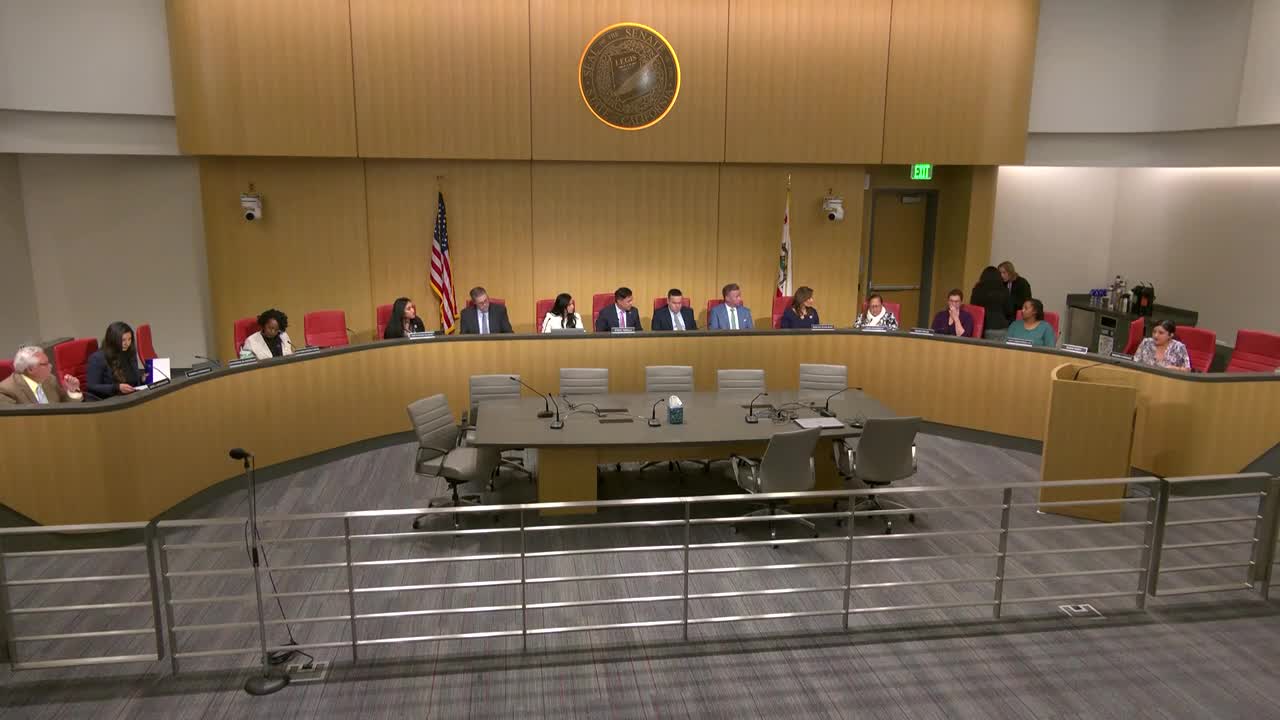
Discussed in Hearing
 15MIN