SB 903: Mental health professionals: artificial intelligence.
- Session Year: 2025-2026
- House: Senate
- Latest Version Date: 2026-09-04
Current Status:
In Progress
(2026-09-30: In Senate. Consideration of Governor's veto pending.)
Introduced
In Committee
Awaiting First Chamber Vote
Passed First Chamber
In Committee
Awaiting Second Chamber Vote
Passed Second Chamber
Enacted
Existing law establishes various healing arts boards within the Department of Consumer Affairs that license and regulate various healing arts licensees. Existing laws, including the Licensed Marriage and Family Therapist Act, the Educational Psychologist Practice Act, the Clinical Social Worker Practice Act, and the Licensed Professional Clinical Counselor Act, make a violation of those acts a crime.
Existing law regulates the use of artificial intelligence, as defined. Existing law requires a health facility, clinic, physicians office, or office of a group practice that uses generative artificial intelligence to generate written or verbal patient communications pertaining to patient clinical information to ensure those communications include a disclaimer that indicates to the patient that a communication was generated by artificial intelligence and instructions describing how a patient may contact a human health care provider, employee, or other appropriate person.
This bill would regulate the use of artificial intelligence in connection with providing or facilitating psychotherapy services, as defined. The bill, among other things, would authorize an individual, corporation, or entity that provides or facilitates psychotherapy services to use artificial intelligence tools or systems only to assist in providing administrative or supplementary support in psychotherapy services, as specified. The bill would prohibit an individual, corporation, or entity from using artificial intelligence to record or transcribe psychotherapeutic communications or sessions or to triage or screen a person for the need for psychotherapy services unless the patient or client or their authorized representative is informed that artificial intelligence will be used and the purpose of the artificial intelligence tool or system, and the patient or client or their authorized representative provides consent, as specified. The bill would prohibit an individual, corporation, or entity from advertising or otherwise purporting to offer psychotherapy services when the services are provided through the use of companion chatbots. The bill would prohibit an individual, corporation, or entity from allowing artificial intelligence to perform certain acts, including making therapeutic decisions or detecting emotions or mental states, as specified, without review and approval by a licensed professional. The bill would make a violation of the bills provisions subject to the jurisdiction of the appropriate health care professional licensing board or enforcement agency, as specified, and would authorize those boards and enforcement entities to pursue any remedies authorized by law.
Existing law, the Confidentiality of Medical Information Act, generally restricts the persons and entities to whom, and the purposes for which, a health care provider, health care service plan, or contractor may release a patients medical information. The Confidentiality of Medical Information Act additionally imposes certain disclosure requirements for the release of medical information that specifically relates to the patients participation in outpatient treatment with a psychotherapist. In this regard, the act prohibits a health care provider, health care service plan, or contractor from releasing that information to persons or entities who have requested that information and who are otherwise authorized by specified laws to receive that information, unless the requester makes certain written disclosures to the patient and to the provider of health care, health care service plan, or contractor, as specified. Those disclosures include, among other things, the specific intended uses of the information, and the length of time during which the information will be kept before being destroyed or disposed of, as specified. Existing law makes a violation of those provisions that result in economic loss or personal injury to a patient punishable as a misdemeanor.
This bill would require the use of artificial intelligence in patient or client records for psychotherapy services to comply with the confidentiality requirements of the above-described provision of the Confidentiality of Medical Information Act and would prohibit a company or entity from sharing, selling, storing, or training their models on any data obtained from psychotherapy in a manner inconsistent with any applicable law.
By expanding the scope of existing crimes, the bill would impose a state-mandated local program.
The California Constitution requires the state to reimburse local agencies and school districts for certain costs mandated by the state. Statutory provisions establish procedures for making that reimbursement.
This bill would provide that no reimbursement is required by this act for a specified reason.
Existing law establishes various healing arts boards within the Department of Consumer Affairs that license and regulate various healing arts licensees. Existing laws, including the Licensed Marriage and Family Therapist Act, the Educational Psychologist Practice Act, the Clinical Social Worker Practice Act, and the Licensed Professional Clinical Counselor Act, make a violation of those acts a crime.
Existing law regulates the use of artificial intelligence, as defined. Existing law requires a health facility, clinic, physicians office, or office of a group practice that uses generative artificial intelligence to generate written or verbal patient communications pertaining to patient clinical information to ensure those communications include a disclaimer that indicates to the patient that a communication was generated by artificial intelligence and instructions describing how a patient may contact a human health care provider, employee, or other appropriate person.
This bill would regulate the use of artificial intelligence by licensed professionals in connection with providing or facilitating psychotherapy services, as defined. The bill, among other things, would authorize an individual, corporation, or entity that provides or facilitates psychotherapy services to use artificial intelligence tools or systems only to assist in providing administrative or supplementary support in psychotherapy services, as specified. The bill would prohibit an individual, corporation, or entity from using artificial intelligence to record or transcribe psychotherapeutic communications or sessions or to triage or screen a person for the need for psychotherapy services unless the patient or client or their authorized representative is informed that artificial intelligence will be used, informed of used and the purpose of the artificial intelligence tool or system, and the patient or client or their authorized representative provides consent, as specified. The bill would prohibit an individual, corporation, or entity from advertising or otherwise purporting to offer psychotherapy services when the services are provided through the use of companion chatbots. The bill would prohibit a licensed professional an individual, corporation, or entity from allowing artificial intelligence to perform certain acts, including making independent therapeutic decisions or detecting emotions or mental states. states, without review and approval by a licensed professional. The bill would make a violation of the bills provisions subject to the jurisdiction of the appropriate health care professional licensing board or enforcement agency, as specified, and would authorize those boards and enforcement entities to pursue any remedies authorized by law.
Existing law, the Confidentiality of Medical Information Act, generally restricts the persons and entities to whom, and the purposes for which, a health care provider, health care service plan, or contractor may release a patients medical information. The Confidentiality of Medical Information Act additionally imposes certain disclosure requirements for the release of medical information that specifically relates to the patients participation in outpatient treatment with a psychotherapist. In this regard, the act prohibits a health care provider, health care service plan, or contractor from releasing that information to persons or entities who have requested that information and who are otherwise authorized by specified laws to receive that information, unless the requester makes certain written disclosures to the patient and to the provider of health care, health care service plan, or contractor, as specified. Those disclosures include, among other things, the specific intended uses of the information, and the length of time during which the information will be kept before being destroyed or disposed of, as specified. Existing law makes a violation of those provisions that result in economic loss or personal injury to a patient punishable as a misdemeanor.
This bill would require the use of artificial intelligence in patient or client records for psychotherapy services to comply with the confidentiality requirements of the above-described provision of the Confidentiality of Medical Information Act and would prohibit a company or entity from sharing, selling, storing, or training their models on any data obtained from psychotherapy in a manner inconsistent with any applicable law.
By expanding the scope of existing crimes, the bill would impose a state-mandated local program.
The California Constitution requires the state to reimburse local agencies and school districts for certain costs mandated by the state. Statutory provisions establish procedures for making that reimbursement.
This bill would provide that no reimbursement is required by this act for a specified reason.
Existing law establishes various healing arts boards within the Department of Consumer Affairs that license and regulate various healing arts licensees. Existing laws, including the Licensed Marriage and Family Therapist Act, the Educational Psychologist Practice Act, the Clinical Social Worker Practice Act, and the Licensed Professional Clinical Counselor Act, make a violation of those acts a crime.
Existing law regulates the use of artificial intelligence, as defined. Existing law requires a health facility, clinic, physicians office, or office of a group practice that uses generative artificial intelligence to generate written or verbal patient communications pertaining to patient clinical information to ensure those communications include a disclaimer that indicates to the patient that a communication was generated by artificial intelligence and instructions describing how a patient may contact a human health care provider, employee, or other appropriate person.
This bill would regulate the use of artificial intelligence by licensed professionals providing psychotherapy services, as defined. The bill, among other things, would prohibit an individual, corporation, or entity from using artificial intelligence to record or transcribe psychotherapeutic communications or sessions or to triage or screen a person for the need for psychotherapy services unless the patient or client or their authorized representative is informed that artificial intelligence will be used and used, informed of the purpose of the artificial intelligence tool or system, and the patient or client or their authorized representative provides consent, as specified. The bill would prohibit an individual, corporation, or entity from advertising or otherwise purporting to offer psychotherapy services when the services are provided through the use of companion chatbots. The bill would prohibit a licensed professional from allowing artificial intelligence to perform certain acts, including making independent therapeutic decisions or detecting emotions or mental states. The bill would make a violation of the bills provisions subject to the jurisdiction of the appropriate health care professional licensing board or enforcement agency, as specified, and would authorize those boards and enforcement entities to pursue any remedies authorized by law.
Existing law, the Confidentiality of Medical Information Act, generally restricts the persons and entities to whom, and the purposes for which, a health care provider, health care service plan, or contractor may release a patients medical information. The Confidentiality of Medical Information Act additionally imposes certain disclosure requirements for the release of medical information that specifically relates to the patients participation in outpatient treatment with a psychotherapist. In this regard, the act prohibits a health care provider, health care service plan, or contractor from releasing that information to persons or entities who have requested that information and who are otherwise authorized by specified laws to receive that information, unless the requester makes certain written disclosures to the patient and to the provider of health care, health care service plan, or contractor, as specified. Those disclosures include, among other things, the specific intended uses of the information, and the length of time during which the information will be kept before being destroyed or disposed of, as specified. Existing law makes a violation of those provisions that result in economic loss or personal injury to a patient punishable as a misdemeanor.
This bill would require the use of artificial intelligence in psychotherapy records patient or client records for psychotherapy services to comply with the confidentiality requirements of the above-described provision of the Confidentiality of Medical Information Act. Act and would prohibit a company or entity from sharing, selling, storing, or training their models on any data obtained from psychotherapy in a manner inconsistent with any applicable law.
By expanding the scope of existing crimes, the bill would impose a state-mandated local program.
The California Constitution requires the state to reimburse local agencies and school districts for certain costs mandated by the state. Statutory provisions establish procedures for making that reimbursement.
This bill would provide that no reimbursement is required by this act for a specified reason.
Existing law establishes the Board of Behavioral Sciences in the Department of Consumer Affairs to regulate licensees under various healing arts boards within the Department of Consumer Affairs that license and regulate various healing arts licensees. Existing laws, including the Licensed Marriage and Family Therapist Act, the Educational Psychologist Practice Act, the Clinical Social Worker Practice Act, and the Licensed Professional Clinical Counselor Act. Act, make a violation of those acts a crime.
Existing law regulates the use of artificial intelligence, as defined. Existing law requires a health facility, clinic, physicians office, or office of a group practice that uses generative artificial intelligence to generate written or verbal patient communications pertaining to patient clinical information to ensure those communications include a disclaimer that indicates to the patient that a communication was generated by artificial intelligence and instructions describing how a patient may contact a human health care provider, employee, or other appropriate person.
This bill would prohibit a licensed professional, as defined, from engaging in the use of artificial intelligence to assist in providing supplementary support in therapy or psychotherapy where the clients therapeutic session is recorded or transcribed unless the patient or their authorized representative is informed that artificial intelligence will be used and provides consent, as specified. The bill would also prohibit an individual, corporation, or entity from providing, advertising, or otherwise offering therapy or psychotherapy, including through the use of internet-based artificial intelligence, to the public in this state unless the therapy or psychotherapy services are conducted by an individual who is a licensed professional. The bill would additionally prohibit a licensed professional from allowing artificial intelligence to make independent therapeutic decisions or take other specified actions related to communications with clients, as specified. The bill would authorize the department to investigate actual, alleged, or suspected violations of these provisions and impose civil penalties, as prescribed. regulate the use of artificial intelligence by licensed professionals providing psychotherapy services, as defined. The bill, among other things, would prohibit an individual, corporation, or entity from using artificial intelligence to record or transcribe psychotherapeutic communications or sessions or to triage or screen a person for the need for psychotherapy services unless the patient or their authorized representative is informed that artificial intelligence will be used and provides consent, as specified. The bill would prohibit a licensed professional from allowing artificial intelligence to perform certain acts, including making independent therapeutic decisions or detecting emotions or mental states. The bill would make a violation of the bills provisions subject to the jurisdiction of the appropriate health care professional licensing board or enforcement agency, as specified, and would authorize those boards and enforcement entities to pursue any remedies authorized by law.
Existing law, the Confidentiality of Medical Information Act, generally restricts the persons and entities to whom, and the purposes for which, a health care provider, health care service plan, or contractor may release a patients medical information. The Confidentiality of Medical Information Act additionally imposes certain disclosure requirements for the release of medical information that specifically relates to the patients participation in outpatient treatment with a psychotherapist. In this regard, the act prohibits a health care provider, health care service plan, or contractor from releasing that information to persons or entities who have requested that information and who are otherwise authorized by specified laws to receive that information, unless the requester makes certain written disclosures to the patient and to the provider of health care, health care service plan, or contractor, as specified. Those disclosures include, among other things, the specific intended uses of the information, and the length of time during which the information will be kept before being destroyed or disposed of, as specified. Existing law makes a violation of those provisions that result in economic loss or personal injury to a patient punishable as a misdemeanor.
This bill would require the use of artificial intelligence in psychotherapy records to comply with the confidentiality requirements of the above-described provision of the Confidentiality of Medical Information Act.
By expanding the scope of existing crimes, the bill would impose a state-mandated local program.
The California Constitution requires the state to reimburse local agencies and school districts for certain costs mandated by the state. Statutory provisions establish procedures for making that reimbursement.
This bill would provide that no reimbursement is required by this act for a specified reason.
Existing law establishes the Board of Behavioral Sciences in the Department of Consumer Affairs to regulate licensees under the Licensed Marriage and Family Therapist Act, the Educational Psychologist Practice Act, the Clinical Social Worker Practice Act, and the Licensed Professional Clinical Counselor Act.
Existing law regulates the use of artificial intelligence, as defined. Existing law requires a health facility, clinic, physicians office, or office of a group practice that uses generative artificial intelligence to generate written or verbal patient communications pertaining to patient clinical information to ensure those communications include a disclaimer that indicates to the patient that a communication was generated by artificial intelligence and instructions describing how a patient may contact a human health care provider, employee, or other appropriate person.
This bill would prohibit a licensed professional, as defined, from engaging in the use of artificial intelligence to assist in providing supplementary support in therapy or psychotherapy where the clients therapeutic session is recorded or transcribed unless the patient or their authorized representative is informed that artificial intelligence will be used and provides consent, as specified. The bill would also prohibit an individual, corporation, or entity from providing, advertising, or otherwise offering therapy or psychotherapy, including through the use of internet-based artificial intelligence, to the public in this state unless the therapy or psychotherapy services are conducted by an individual who is a licensed professional. The bill would additionally prohibit a licensed professional from allowing artificial intelligence to make independent therapeutic decisions or take other specified actions related to communications with clients, as specified. The bill would authorize the department to investigate actual, alleged, or suspected violations of these provisions and impose civil penalties, as prescribed.
This chapter may be cited as the Wellness and Oversight for Psychological Resources Act.
4989.81.The purpose of this chapter is to safeguard individuals seeking psychotherapy services by ensuring these services are delivered by licensed professionals. This chapter is intended to protect consumers from unlicensed or unqualified providers, including unregulated artificial intelligence systems, while respecting individual choice and access to community-based and faith-based mental health support and recognizing that artificial intelligence technology has the potential to expand clinical capacity if used in a safe, ethical, and legal manner.
4989.82.For purposes of this chapter, the following definitions apply:
(a)Administrative support means tasks performed to assist a licensed professional in the delivery of psychotherapy services that do not involve psychotherapeutic communication. Administrative support includes, but is not limited to, all of the following:
(1)Managing appointment scheduling and reminders.
(2)Processing billing and insurance claims.
(3)Drafting general communications related to therapy logistics that do not include therapeutic advice.
(b)Artificial intelligence means an engineered or machine-based system that varies in its level of autonomy and that can, for explicit or implicit objectives, infer from the input it receives how to generate outputs that can influence physical or virtual environments.
(c)Companion chatbot has the same meaning as in Section 22601.
(d)(1)Consent means a clear, explicit affirmative act by an individual that meets both of the following requirements:
(A)Unambiguously communicates the individuals express, informed, and voluntary agreement, either verbally or in writing, and documented in the record.
(B)Is revocable by the individual.
(2)Consent does not include an agreement that is obtained by any of the following:
(A)The acceptance of a general or broad terms of use agreement or a similar document that contains descriptions of artificial intelligence along with other information unrelated to the privacy of medical information.
(B)An individual hovering over, muting, pausing, or closing a given piece of digital content.
(C)An agreement obtained through the use of deceptive actions.
(e)Licensed professional means any of the following:
(1)A person authorized to practice medicine in this state who devotes, or is reasonably believed by the patient to devote, a substantial portion of their time to the practice of psychiatry.
(2)A person licensed as a psychologist under Chapter 6.6 (commencing with Section 2900).
(3)A person licensed as a clinical social worker under Chapter 14 (commencing with Section 4991), when they are engaged in applied psychotherapy of a nonmedical nature.
(4)A person who is serving as a school psychologist and holds a credential authorizing that service issued by the state.
(5)A person licensed as a marriage and family therapist under Chapter 13 (commencing with Section 4980).
(6)A person registered as a registered psychological associate who is under the supervision of a licensed psychologist as required by Section 2913, or a person registered as an associate marriage and family therapist who is under the supervision of a licensed marriage and family therapist, a licensed educational psychologist, a licensed clinical social worker, a licensed professional clinical counselor, a licensed psychologist, or a licensed physician and surgeon certified in psychiatry, as specified in subdivision (g) of Section 4980.03.
(7)A person registered as an associate clinical social worker who is under supervision as specified in Section 4996.23.
(8)A psychological trainee, as defined in Section 2911, who is under the primary supervision of a licensed psychologist.
(9)A marriage and family therapist trainee, as defined in subdivision (c) of Section 4980.03, who is fulfilling their supervised practicum required by subparagraph (B) of paragraph (1) of subdivision (d) of Section 4980.36 or subdivision (c) of Section 4980.37 and is supervised by a licensed marriage and family therapist, a licensed educational psychologist, a licensed clinical social worker, a licensed professional clinical counselor, a licensed psychologist, or a licensed physician and surgeon certified in psychiatry, as specified in subdivision (g) of Section 4980.03.
(10)A person licensed as a registered nurse pursuant to Chapter 6 (commencing with Section 2700) who possesses a masters degree in psychiatric-mental health nursing and is listed as a psychiatric-mental health nurse by the Board of Registered Nursing.
(11)An advanced practice registered nurse who is certified as a clinical nurse specialist pursuant to Article 9 (commencing with Section 2838) of Chapter 6 and who participates in expert clinical practice in the specialty of psychiatric-mental health nursing.
(12)A person rendering mental health treatment or counseling services as authorized pursuant to Section 6924 of the Family Code.
(13)A person licensed as a professional clinical counselor under Chapter 16 (commencing with Section 4999.10).
(14)A person registered as an associate professional clinical counselor who is under the supervision of a licensed professional clinical counselor, a licensed marriage and family therapist, a licensed clinical social worker, a licensed educational psychologist, a licensed psychologist, or a licensed physician and surgeon certified in psychiatry, as specified in subdivision (h) of Section 4999.12.
(15)A clinical counselor trainee, as defined in subdivision (g) of Section 4999.12, who is fulfilling their supervised practicum required by paragraph (3) of subdivision (c) of Section 4999.32 or paragraph (3) of subdivision (c) of Section 4999.33.
(16)A licensed educational psychologist.
(17)A social work intern.
(18)An advanced practice registered nurse who is certified as a nurse practitioner pursuant to Article 8 (commencing with Section 2834) of Chapter 6 and who holds a national certification by an organization accredited by the National Commission for Certifying Agencies or the Accreditation Board for Specialty Nursing Certification as a psychiatric-mental health nurse practitioner across the lifespan.
(f)Peer support means services provided by individuals with lived experience of mental health conditions or recovery from substance use disorders that are intended to offer encouragement, understanding, and guidance without clinical intervention.
(g)(1)Psychotherapeutic communication means any verbal, nonverbal, or written interaction in a clinical or professional setting that is conducted for the purpose of diagnosing or treating a mental health or substance use disorder or concern. Psychotherapeutic communication includes, but is not limited to, any of the following:
(A)Direct interactions with patients or clients for the purpose of diagnosing or treating a mental health or substance use disorder or concern.
(B)Providing guidance, therapeutic strategies, or interventions designed to achieve mental health outcomes.
(C)Collaborating with patients or clients to develop or modify therapeutic goals or treatment plans for a mental health or substance use disorder or concern.
(2)Psychotherapeutic communication does not include general wellness education, instruction, or guidance that is intended to promote overall health and well-being rather than to diagnose or treat a specific mental, emotional, or behavioral health disorder or concern.
(h)Psychotherapy services means services provided to diagnose or treat an individuals mental health or substance use disorder. Psychotherapy services does not include religious counseling or peer support.
(i)Religious counseling means counseling provided by clergy members, pastoral counselors, or other religious leaders acting within the scope of their religious duties if the services are explicitly faith based and are not represented as clinical mental health services or psychotherapy services.
(j)Supplementary support means tasks performed to assist a licensed professional in the delivery of psychotherapy services that do not involve psychotherapeutic communication and that are not administrative support. Supplementary support includes, but is not limited to, any of the following:
(1)Preparing and maintaining patient or client records, including psychotherapy and progress notes.
(2)Analyzing data to track patient or client progress or identify trends, reviewed by a licensed professional.
(3)Identifying and organizing external resources or referrals for patient or client use.
(4)Using artificial intelligence tools that assist licensed professionals with documentation, workflow management, or other functions that enhance clinical capacity, provided the licensed professional maintains responsibility for all clinical decisions and communications.
(k)Triage or screening means the assessment of an individuals health concerns and symptoms for the purpose of determining the urgency, clinical nature, or appropriate level of the individuals need for psychotherapy services.
4989.83.(a)Except as otherwise provided in Section 4989.84, an individual, corporation, or entity that provides or facilitates psychotherapy services may use artificial intelligence tools or systems only to assist in providing administrative support or supplementary support in psychotherapy services, provided the use of those tools or systems is carried out in a manner consistent with this chapter and any other applicable law.
(b)An individual, corporation, or entity shall not use artificial intelligence to record or transcribe psychotherapeutic communications, psychotherapy sessions, or triage or screening unless both of the following conditions are satisfied:
(1)The patient or client, or the patients or clients legally authorized representative, is informed verbally or in writing of both of the following:
(A)That artificial intelligence will be used.
(B)The specific purpose of the artificial intelligence tool or system that will be used.
(2)The patient or client, or the patients or clients legally authorized representative, provides consent to the use of artificial intelligence.
(c)A patient does not surrender any of their rights to care if the patient or their legally authorized representative does not provide consent to artificial intelligence being used to record or transcribe psychotherapeutic communications, psychotherapy sessions, or triage or screening.
4989.84.(a)An individual, corporation, or entity shall not advertise or otherwise purport to offer psychotherapy services when the services are provided through the use of companion chatbots. This includes by claiming the companion chatbot is a therapist or provides therapy.
(b)When used in connection with the provision of psychotherapy services or conducting triage or screening, an individual, corporation, or entity shall not allow artificial intelligence to do any of the following without review and approval by a licensed professional:
(1)Make therapeutic decisions.
(2)Directly interact with patients or clients in any form of psychotherapeutic communication, unless the tool or system is approved or cleared by the United States Food and Drug Administration for that use and is compliant with the federal Health Insurance Portability and Accountability Act of 1996 (Public Law 104-191).
(3)Generate therapeutic recommendations, assessment results, diagnoses, or treatment plans.
(4)Detect emotions or mental states.
(5)Perform triage or screening.
(c)(1)If a licensed professional uses artificial intelligence in connection with psychotherapy services or triage or screening, the licensed professional shall be responsible for ensuring the licensed professional and anyone under their supervision uses the artificial intelligence in a manner that is clinically appropriate and compliant with this chapter.
(2)A licensed professional shall not be subject to discipline or any other enforcement action under this chapter for a violation that results solely from any feature, configuration, function, or other element of an artificial intelligence tool or system that is not within the control of the licensed professional if use of the tool or system was expressly or effectively required by the licensed professionals employer or contracting entity, including a violation that results solely from a function or element that prevents the licensed professional from using the tool or system in compliance with this chapter. For purposes of this paragraph, the licensed professionals required use of the tool or system shall not be considered a cause of the violation.
(d)If a licensed professional uses artificial intelligence required or authorized by their employer or contracting entity, the employer or contracting entity shall be responsible for both of the following:
(1)Ensuring the artificial intelligence is deployed in compliance with this chapter.
(2)Directing the licensed professional to use the artificial intelligence in compliance with this chapter.
(e)Nothing in this chapter shall be construed to prohibit, or to require prior review and approval by a licensed professional of, the use of artificial intelligence to do any of the following:
(1)Recommend, in response to an individuals articulated expression of serious mental health concerns, that the individual discuss their need for psychotherapy services with a licensed professional.
(2)Administer a standardized screening questionnaire to an individual, collect the individuals responses, score them in accordance with the instruments standardized scoring rules, and transmit the responses and any resulting score to a licensed professional for review, provided that the artificial intelligence tool or system does not use the responses or score to assess, evaluate, advise, inform, or make any decision regarding the condition of the individual or the urgency, clinical nature, or appropriate level of the individuals need for psychotherapy services.
(3)Schedule, confirm, cancel, or send reminders regarding appointments, or provide logistical information in preparation for a visit, provided that those functions do not involve psychotherapeutic communication and do not constitute triage or screening.
4989.85.Use of artificial intelligence in patient or client records for psychotherapy services shall comply with the Confidentiality of Medical Information Act (Part 2.6 (commencing with Section 56) of Division 1 of the Civil Code). A company or entity shall not share, sell, store, or train their models on any data obtained from psychotherapy in a manner inconsistent with any applicable law.
4989.86.(a)A violation of this chapter is subject to the jurisdiction of the appropriate health care professional licensing board or enforcement agency.
(b)The appropriate health care professional licensing board may pursue an injunction or restraining order to enforce the provisions of this chapter, as authorized by Section 125.5.
(c)This section does not limit the authority of a health care professional licensing board or enforcement agency to pursue any remedy otherwise authorized by law.
(d)The appropriate health care professional licensing boards may adopt rules and regulations necessary to implement this chapter.
(e)If jurisdiction is unclear, the Director of the Department of Consumer Affairs or their designee shall determine the appropriate health care professional licensing board or enforcement agency.
4989.87.This chapter does not apply to any of the following:
(a)Religious counseling.
(b)Peer support.
(c)Self-help materials and educational resources that are available to the public and do not purport to offer psychotherapy services.
(d)Artificial intelligence used solely for training or simulation purposes.
(e)Research, as defined in Section 164.501 of Title 45 of the Code of Federal Regulations, conducted by an academic or nonprofit research institution that is conducted in accordance with applicable ethics, confidentiality, privacy, and security rules of Part 164 (commencing with Section 164.102) of Title 45 of the Code of Federal Regulations, the Federal Policy for the Protection of Human Subjects, also known as the Common Rule, good clinical practice guidelines issued by the International Council for Harmonisation of Technical Requirements for Pharmaceuticals for Human Use, or human subject protection requirements of the United States Food and Drug Administration.
SEC. 2.No reimbursement is required by this act pursuant to Section 6 of Article XIIIB of the California Constitution because the only costs that may be incurred by a local agency or school district will be incurred because this act creates a new crime or infraction, eliminates a crime or infraction, or changes the penalty for a crime or infraction, within the meaning of Section 17556 of the Government Code, or changes the definition of a crime within the meaning of Section 6 of Article XIIIB of the California Constitution.
This chapter may be cited as the Wellness and Oversight for Psychological Resources Act.
4989.81.The purpose of this chapter is to safeguard individuals seeking psychotherapy services by ensuring these services are delivered by licensed professionals. This chapter is intended to protect consumers from unlicensed or unqualified providers, including unregulated artificial intelligence systems, while respecting individual choice and access to community-based and faith-based mental health support and recognizing that artificial intelligence technology has the potential to expand clinical capacity if used in a safe, ethical, and legal manner.
4989.82.For purposes of this chapter, the following definitions apply:
(a)Administrative support means tasks performed to assist a licensed professional in the delivery of psychotherapy services that do not involve psychotherapeutic communication. Administrative support includes, but is not limited to, all of the following:
(1)Managing appointment scheduling and reminders.
(2)Processing billing and insurance claims.
(3)Drafting general communications related to therapy logistics that do not include therapeutic advice.
(b)Artificial intelligence means an engineered or machine-based system that varies in its level of autonomy and that can, for explicit or implicit objectives, infer from the input it receives how to generate outputs that can influence physical or virtual environments.
(c)Companion chatbot has the same meaning as in Section 22601.
(d)(1)Consent means a clear, explicit affirmative act by an individual that meets both of the following requirements:
(A)Unambiguously communicates the individuals express, informed, and voluntary agreement, either verbally or in writing, and documented in the record.
(B)Is revocable by the individual.
(2)Consent does not include an agreement that is obtained by any of the following:
(A)The acceptance of a general or broad terms of use agreement or a similar document that contains descriptions of artificial intelligence along with other information unrelated to the privacy of medical information.
(B)An individual hovering over, muting, pausing, or closing a given piece of digital content.
(C)An agreement obtained through the use of deceptive actions.
(e)Licensed professional means any of the following:
(1)A person authorized to practice medicine in this state who devotes, or is reasonably believed by the patient to devote, a substantial portion of their time to the practice of psychiatry.
(2)A person licensed as a psychologist under Chapter 6.6 (commencing with Section 2900).
(3)A person licensed as a clinical social worker under Chapter 14 (commencing with Section 4991), when they are engaged in applied psychotherapy of a nonmedical nature.
(4)A person who is serving as a school psychologist and holds a credential authorizing that service issued by the state.
(5)A person licensed as a marriage and family therapist under Chapter 13 (commencing with Section 4980).
(6)A person registered as a registered psychological associate who is under the supervision of a licensed psychologist as required by Section 2913, or a person registered as an associate marriage and family therapist who is under the supervision of a licensed marriage and family therapist, a licensed educational psychologist, a licensed clinical social worker, a licensed professional clinical counselor, a licensed psychologist, or a licensed physician and surgeon certified in psychiatry, as specified in subdivision (g) of Section 4980.03.
(7)A person registered as an associate clinical social worker who is under supervision as specified in Section 4996.23.
(8)A psychological trainee, as defined in Section 2911, who is under the primary supervision of a licensed psychologist.
(9)A marriage and family therapist trainee, as defined in subdivision (c) of Section 4980.03, who is fulfilling their supervised practicum required by subparagraph (B) of paragraph (1) of subdivision (d) of Section 4980.36 or subdivision (c) of Section 4980.37 and is supervised by a licensed marriage and family therapist, a licensed educational psychologist, a licensed clinical social worker, a licensed professional clinical counselor, a licensed psychologist, or a licensed physician and surgeon certified in psychiatry, as specified in subdivision (g) of Section 4980.03.
(10)A person licensed as a registered nurse pursuant to Chapter 6 (commencing with Section 2700) who possesses a masters degree in psychiatric-mental health nursing and is listed as a psychiatric-mental health nurse by the Board of Registered Nursing.
(11)An advanced practice registered nurse who is certified as a clinical nurse specialist pursuant to Article 9 (commencing with Section 2838) of Chapter 6 and who participates in expert clinical practice in the specialty of psychiatric-mental health nursing.
(12)A person rendering mental health treatment or counseling services as authorized pursuant to Section 6924 of the Family Code.
(13)A person licensed as a professional clinical counselor under Chapter 16 (commencing with Section 4999.10).
(14)A person registered as an associate professional clinical counselor who is under the supervision of a licensed professional clinical counselor, a licensed marriage and family therapist, a licensed clinical social worker, a licensed educational psychologist, a licensed psychologist, or a licensed physician and surgeon certified in psychiatry, as specified in subdivision (h) of Section 4999.12.
(15)A clinical counselor trainee, as defined in subdivision (g) of Section 4999.12, who is fulfilling their supervised practicum required by paragraph (3) of subdivision (c) of Section 4999.32 or paragraph (3) of subdivision (c) of Section 4999.33.
(16)A licensed educational psychologist.
(17)A social work intern.
(18)An advanced practice registered nurse who is certified as a nurse practitioner pursuant to Article 8 (commencing with Section 2834) of Chapter 6 and who holds a national certification by an organization accredited by the National Commission for Certifying Agencies or the Accreditation Board for Specialty Nursing Certification as a psychiatric-mental health nurse practitioner across the lifespan.
(f)Peer support means services provided by individuals with lived experience of mental health conditions or recovery from substance use disorders that are intended to offer encouragement, understanding, and guidance without clinical intervention.
(g)(1)Psychotherapeutic communication means any verbal, nonverbal, or written interaction in a clinical or professional setting that is conducted for the purpose of diagnosing or treating a mental health or substance use disorder or concern. Psychotherapeutic communication includes, but is not limited to, any of the following:
(A)Direct interactions with patients or clients for the purpose of diagnosing or treating a mental health or substance use disorder or concern.
(B)Providing guidance, therapeutic strategies, or interventions designed to achieve mental health outcomes.
(C)Collaborating with patients or clients to develop or modify therapeutic goals or treatment plans for a mental health or substance use disorder or concern.
(2)Psychotherapeutic communication does not include general wellness education, instruction, or guidance that is intended to promote overall health and well-being rather than to diagnose or treat a specific mental, emotional, or behavioral health disorder or concern.
(h)Psychotherapy services means services provided to diagnose or treat an individuals mental health or substance use disorder. Psychotherapy services does not include religious counseling or peer support.
(i)Religious counseling means counseling provided by clergy members, pastoral counselors, or other religious leaders acting within the scope of their religious duties if the services are explicitly faith based and are not represented as clinical mental health services or psychotherapy services.
(j)Supplementary support means tasks performed to assist a licensed professional in the delivery of psychotherapy services that do not involve psychotherapeutic communication and that are not administrative support. Supplementary support includes, but is not limited to, any of the following:
(1)Preparing and maintaining patient or client records, including psychotherapy and progress notes.
(2)Analyzing data to track patient or client progress or identify trends, reviewed by a licensed professional.
(3)Identifying and organizing external resources or referrals for patient or client use.
(4)Using artificial intelligence tools that assist licensed professionals with documentation, workflow management, or other functions that enhance clinical capacity, provided the licensed professional maintains responsibility for all clinical decisions and communications.
(k)Triage or screening means the assessment of an individuals health concerns and symptoms for the purpose of determining the urgency, clinical nature, or appropriate level of the individuals need for psychotherapy services.
4989.83.(a)An Except as otherwise provided in Section 4989.84, an individual, corporation, or entity that provides or facilitates psychotherapy services may use artificial intelligence tools or systems only to assist in providing administrative support or supplementary support in psychotherapy services, provided that those activities are the use of those tools or systems is carried out in a manner consistent with this chapter and any other applicable law.
(b)An individual, corporation, or entity shall not use artificial intelligence to record or transcribe psychotherapeutic communications, psychotherapy sessions, or triage or screening unless both of the following conditions are satisfied:
(1)The patient or client, or the patients or clients legally authorized representative, is informed verbally or in writing of both of the following:
(A)That artificial intelligence will be used.
(B)The specific purpose of the artificial intelligence tool or system that will be used.
(2)The patient or client, or the patients or clients legally authorized representative, provides consent to the use of artificial intelligence.
(c)A patient does not surrender any of their rights to care if the patient or their legally authorized representative does not provide consent to artificial intelligence being used to record or transcribe psychotherapeutic communications, psychotherapy sessions, or triage or screening.
4989.84.(a)An individual, corporation, or entity shall not advertise or otherwise purport to offer psychotherapy services when the services are provided through the use of companion chatbots. This includes by claiming the companion chatbot is a therapist or provides therapy.
(b)When used in connection with the provision of psychotherapy services or conducting triage or screening, an individual, corporation, or entity shall not allow artificial intelligence to do any of the following without review and approval by a licensed professional:
(1)Make therapeutic decisions.
(2)Directly interact with patients or clients in any form of psychotherapeutic communication, unless the tool or system is approved or cleared by the United States Food and Drug Administration for that use and is compliant with the federal Health Insurance Portability and Accountability Act of 1996 (Public Law 104-191).
(3)Generate therapeutic recommendations, assessment results, diagnoses, or treatment plans.
(4)Detect emotions or mental states.
(5)Perform triage or screening.
(c)(1)If a licensed professional uses artificial intelligence in connection with psychotherapy services or triage or screening, the licensed professional shall be responsible for ensuring the licensed professional and anyone under their supervision uses the artificial intelligence in a manner that is clinically appropriate and compliant with this chapter.
(2)A licensed professional shall not be subject to discipline or any other enforcement action under this chapter for a violation that results solely from any feature, configuration, function, or other element of an artificial intelligence tool or system that is not within the control of the licensed professional if use of the tool or system was expressly or effectively required by the licensed professionals employer or contracting entity, including a violation that results solely from a function or element that prevents the licensed professional from using the tool or system in compliance with this chapter. For purposes of this paragraph, the licensed professionals required use of the tool or system shall not be considered a cause of the violation.
(d)If a licensed professional uses artificial intelligence required or authorized by their employer or contracting entity, the employer or contracting entity shall be responsible for both of the following:
(1)Ensuring the artificial intelligence is deployed in compliance with this chapter.
(2)Directing the licensed professional to use the artificial intelligence in compliance with this chapter.
(e)Nothing in this chapter shall be construed to prohibit, or to require prior review and approval by a licensed professional of, the use of artificial intelligence to do any of the following:
(1)Recommend, in response to an individuals articulated expression of serious mental health concerns, that the individual discuss their need for psychotherapy services with a licensed professional.
(2)Administer a standardized screening questionnaire to an individual, collect the individuals responses, score them in accordance with the instruments standardized scoring rules, and transmit the responses and any resulting score to a licensed professional for review, provided that the artificial intelligence tool or system does not use the responses or score to assess, evaluate, advise, inform, or make any decision regarding the condition of the individual or the urgency, clinical nature, or appropriate level of the individuals need for psychotherapy services.
(3)Schedule, confirm, cancel, or send reminders regarding appointments, or provide logistical information in preparation for a visit, provided that those functions do not involve psychotherapeutic communication and do not constitute triage or screening.
4989.85.Use of artificial intelligence in patient or client records for psychotherapy services shall comply with the Confidentiality of Medical Information Act (Part 2.6 (commencing with Section 56) of Division 1 of the Civil Code). A company or entity shall not share, sell, store, or train their models on any data obtained from psychotherapy in a manner inconsistent with any applicable law.
4989.86.(a)A violation of this chapter is subject to the jurisdiction of the appropriate health care professional licensing board or enforcement agency.
(b)The appropriate health care professional licensing board may pursue an injunction or restraining order to enforce the provisions of this chapter, as authorized by Section 125.5.
(c)This section does not limit the authority of a health care professional licensing board or enforcement agency to pursue any remedy otherwise authorized by law.
(d)The appropriate health care professional licensing boards may adopt rules and regulations necessary to implement this chapter.
(e)If jurisdiction is unclear, the Director of the Department of Consumer Affairs or their designee shall determine the appropriate health care professional licensing board or enforcement agency.
4989.87.This chapter does not apply to any of the following:
(a)Religious counseling.
(b)Peer support.
(c)Self-help materials and educational resources that are available to the public and do not purport to offer psychotherapy services.
(d)Artificial intelligence used solely for training or simulation purposes.
(e)Research, as defined in Section 164.501 of Title 45 of the Code of Federal Regulations, conducted by an academic or nonprofit research institution that is conducted in accordance with applicable ethics, confidentiality, privacy, and security rules of Part 164 (commencing with Section 164.102) of Title 45 of the Code of Federal Regulations, the Federal Policy for the Protection of Human Subjects, also known as the Common Rule, good clinical practice guidelines issued by the International Council for Harmonisation of Technical Requirements for Pharmaceuticals for Human Use, or human subject protection requirements of the United States Food and Drug Administration.
SEC. 2.No reimbursement is required by this act pursuant to Section 6 of Article XIIIB of the California Constitution because the only costs that may be incurred by a local agency or school district will be incurred because this act creates a new crime or infraction, eliminates a crime or infraction, or changes the penalty for a crime or infraction, within the meaning of Section 17556 of the Government Code, or changes the definition of a crime within the meaning of Section 6 of Article XIIIB of the California Constitution.
This chapter may be cited as the Wellness and Oversight for Psychological Resources Act.
4989.81.The purpose of this chapter is to safeguard individuals seeking psychotherapy services by ensuring these services are delivered by licensed professionals. This chapter is intended to protect consumers from unlicensed or unqualified providers, including unregulated artificial intelligence systems, while respecting individual choice and access to community-based and faith-based mental health support and recognizing that artificial intelligence technology has the potential to expand clinical capacity if used in a safe, ethical, and legal manner.
4989.82.For purposes of this chapter, the following definitions apply:
(a)Administrative support means tasks performed to assist a licensed professional in the delivery of psychotherapy services that do not involve psychotherapeutic communication. Administrative support includes, but is not limited to, all of the following:
(1)Managing appointment scheduling and reminders.
(2)Processing billing and insurance claims.
(3)Drafting general communications related to therapy logistics that do not include therapeutic advice.
(b)Artificial intelligence means an engineered or machine-based system that varies in its level of autonomy and that can, for explicit or implicit objectives, infer from the input it receives how to generate outputs that can influence physical or virtual environments.
(c)Companion chatbot has the same meaning as in Section 22601.
(c)(d)(1)Consent means a clear, explicit affirmative act by an individual that meets both of the following requirements:
(A)Unambiguously communicates the individuals express, informed, and voluntary agreement, either verbally or in writing, and documented in the record.
(B)Is revocable by the individual.
(2)Consent does not include an agreement that is obtained by any of the following:
(A)The acceptance of a general or broad terms of use agreement or a similar document that contains descriptions of artificial intelligence along with other information unrelated to the privacy of medical information.
(B)An individual hovering over, muting, pausing, or closing a given piece of digital content.
(C)An agreement obtained through the use of deceptive actions.
(d)(e)Licensed professional means any of the following:
(1)A person authorized to practice medicine in this state who devotes, or is reasonably believed by the patient to devote, a substantial portion of their time to the practice of psychiatry.
(2)A person licensed as a psychologist under Chapter 6.6 (commencing with Section 2900).
(3)A person licensed as a clinical social worker under Chapter 14 (commencing with Section 4991), when they are engaged in applied psychotherapy of a nonmedical nature.
(4)A person who is serving as a school psychologist and holds a credential authorizing that service issued by the state.
(5)A person licensed as a marriage and family therapist under Chapter 13 (commencing with Section 4980).
(6)A person registered as a registered psychological associate who is under the supervision of a licensed psychologist as required by Section 2913, or a person registered as an associate marriage and family therapist who is under the supervision of a licensed marriage and family therapist, a licensed educational psychologist, a licensed clinical social worker, a licensed professional clinical counselor, a licensed psychologist, or a licensed physician and surgeon certified in psychiatry, as specified in Section 4980.44. subdivision (g) of Section 4980.03.
(7)A person registered as an associate clinical social worker who is under supervision as specified in Section 4996.23.
(8)A psychological trainee, as defined in Section 2911, who is under the primary supervision of a licensed psychologist.
(9)A marriage and family therapist trainee, as defined in subdivision (c) of Section 4980.03, who is fulfilling their supervised practicum required by subparagraph (B) of paragraph (1) of subdivision (d) of Section 4980.36 or subdivision (c) of Section 4980.37 and is supervised by a licensed psychologist, a board-certified psychiatrist, a licensed clinical social worker, a licensed marriage and family therapist, or a licensed professional clinical counselor. marriage and family therapist, a licensed educational psychologist, a licensed clinical social worker, a licensed professional clinical counselor, a licensed psychologist, or a licensed physician and surgeon certified in psychiatry, as specified in subdivision (g) of Section 4980.03.
(10)A person licensed as a registered nurse pursuant to Chapter 6 (commencing with Section 2700) who possesses a masters degree in psychiatric-mental health nursing and is listed as a psychiatric-mental health nurse by the Board of Registered Nursing.
(11)An advanced practice registered nurse who is certified as a clinical nurse specialist pursuant to Article 9 (commencing with Section 2838) of Chapter 6 and who participates in expert clinical practice in the specialty of psychiatric-mental health nursing.
(12)A person rendering mental health treatment or counseling services as authorized pursuant to Section 6924 of the Family Code.
(13)A person licensed as a professional clinical counselor under Chapter 16 (commencing with Section 4999.10).
(14)A person registered as an associate professional clinical counselor who is under the supervision of a licensed professional clinical counselor, a licensed marriage and family therapist, a licensed clinical social worker, a licensed psychologist, or a licensed physician and surgeon certified in psychiatry, as specified in Sections 4999.42 to 4999.48, inclusive. subdivision (h) of Section 4999.12.
(15)A clinical counselor trainee, as defined in subdivision (g) of Section 4999.12, who is fulfilling their supervised practicum required by paragraph (3) of subdivision (c) of Section 4999.32 or paragraph (3) of subdivision (c) of Section 4999.33 and is supervised by a licensed psychologist, a board-certified psychiatrist, a licensed clinical social worker, a licensed marriage and family therapist, or a licensed professional clinical counselor. 4999.33.
(16)A licensed educational psychologist.
(17)A social work intern.
(18)An advanced practice registered nurse who is certified as a nurse practitioner pursuant to Article 8 (commencing with Section 2834) of Chapter 6 and who holds a national certification by an organization accredited by the National Commission for Certifying Agencies or the Accreditation Board for Specialty Nursing Certification as a psychiatric-mental health nurse practitioner across the lifespan.
(e)(f)Peer support means services provided by individuals with lived experience of mental health conditions or recovery from substance use disorders that are intended to offer encouragement, understanding, and guidance without clinical intervention.
(f)(g)(1)Psychotherapeutic communication means any verbal, nonverbal, or written interaction in a clinical or professional setting that is conducted for the purpose of diagnosing or treating a mental health or substance use disorder or concern. Psychotherapeutic communication includes, but is not limited to, any of the following:
(A)Direct interactions with patients or clients for the purpose of diagnosing or treating a mental health or substance use disorder or concern.
(B)Providing guidance, therapeutic strategies, or interventions designed to achieve mental health outcomes.
(C)Collaborating with patients or clients to develop or modify therapeutic goals or treatment plans for a mental health or substance use disorder or concern.
(2)Psychotherapeutic communication does not include general wellness education, instruction, or guidance that is intended to promote overall health and well-being rather than to diagnose or treat a specific mental, emotional, or behavioral health disorder or concern.
(g)(h)Psychotherapy services means services provided to diagnose, diagnose or treat an individuals mental health or substance use disorder. Psychotherapy services does not include religious counseling or peer support.
(h)(i)Religious counseling means counseling provided by clergy members, pastoral counselors, or other religious leaders acting within the scope of their religious duties if the services are explicitly faith based and are not represented as clinical mental health services or psychotherapy services.
(i)(j)Supplementary support means tasks performed to assist a licensed professional in the delivery of psychotherapy services that do not involve psychotherapeutic communication and that are not administrative support. Supplementary support includes, but is not limited to, any of the following:
(1)Preparing and maintaining patient or client records, including psychotherapy and progress notes.
(2)Analyzing data to track patient or client progress or identify trends, reviewed by a licensed professional.
(3)Identifying and organizing external resources or referrals for patient or client use.
(4)Using artificial intelligence tools that assist licensed professionals with documentation, workflow management, or other functions that enhance clinical capacity, provided the licensed professional maintains responsibility for all clinical decisions and communications.
(j)(k)Triage or screening means the assessment of an individuals health concerns and symptoms for the purpose of determining the urgency, clinical nature, or appropriate level of the individuals need for psychotherapy services.
(k)Use of artificial intelligence means the use of artificial intelligence tools or systems to assist in providing administrative support or supplementary support in psychotherapy services.4989.83.(a)An 4989.83.(a)An individual, corporation, or entity that provides or facilitates psychotherapy services may use artificial intelligence tools or systems only to assist in providing administrative support or supplementary support in psychotherapy services, provided that those activities are carried out in a manner consistent with this chapter and any other applicable law.
(b)An individual, corporation, or entity shall not use artificial intelligence to record or transcribe psychotherapeutic communications, psychotherapy sessions, or triage or screening unless both of the following conditions are satisfied:
(1)The patient or client, or the patients or clients legally authorized representative, is informed verbally or in writing of both of the following:
(A)That artificial intelligence will be used.
(B)The specific purpose of the artificial intelligence tool or system that will be used.
(2)The patient or client, or the patients or clients legally authorized representative, provides consent to the use of artificial intelligence.
(b)(c)A patient does not surrender any of their rights to care if the patient or their legally authorized representative does not provide consent to artificial intelligence being used to record or transcribe psychotherapeutic communications, psychotherapy sessions, or triage or screening.
4989.84.(a)An individual, corporation, or entity shall not advertise or otherwise purport to offer psychotherapy services when the services are provided through the use of companion chatbots. This includes by claiming the companion chatbot is a therapist or provides therapy.
(b)When providing used in connection with the provision of psychotherapy services or conducting triage or screening, an individual, corporation, or entity may use artificial intelligence only to the extent the use meets the requirements of this chapter and shall not allow artificial intelligence to do any of the following: shall not allow artificial intelligence to do any of the following without review and approval by a licensed professional:
(1)Make independent therapeutic decisions.
(2)Directly interact with patients or clients in any form of psychotherapeutic communication, unless the tool or system is approved or cleared by the United States Food and Drug Administration for that use and is compliant with the federal Health Insurance Portability and Accountability Act of 1996 (Public Law 104-191).
(3)Generate therapeutic recommendations, assessment results, diagnoses, or treatment plans without review and approval by the licensed professional. plans.
(4)Detect emotions or mental states.
(5)Assess an individuals health concerns or symptoms for the purpose of determining the urgency, clinical nature, or appropriate level of the individuals need for psychotherapy services.(5)Perform triage or screening.
(c)If a licensed professional uses artificial intelligence in connection with psychotherapy services or triage or screening and the use has not been selected, provided, directed, or mandated by an employing or contracting entity, screening, the licensed professional shall be responsible for both of the following: ensuring the licensed professional and anyone under their supervision uses the artificial intelligence in a manner that is clinically appropriate and compliant with this chapter.
(1)Ensuring the artificial intelligence is deployed in compliance with this chapter.(2)Ensuring the artificial intelligence is used in a clinically appropriate manner.(d)If a licensed professional uses artificial intelligence required or authorized by their employer or contracting entity, the following shall apply: employer or contracting entity shall be responsible for both of the following:
(1)The employer or contracting entity shall be responsible for both of the following:(A)(1)Ensuring the artificial intelligence is deployed in compliance with this chapter.
(B)(2)Directing the licensed professional to use the artificial intelligence in compliance with this chapter.
(2)The licensed professional shall use artificial intelligence in a clinically appropriate manner.4989.85.Use of artificial intelligence in patient or client records for psychotherapy services shall comply with the Confidentiality of Medical Information Act (Part 2.6 (commencing with Section 56) of Division 1 of the Civil Code). A company or entity shall not share, sell, store, or train their models on any data obtained from psychotherapy in a manner inconsistent with any applicable law.
4989.86.(a)A violation of this chapter is subject to the jurisdiction of the appropriate health care professional licensing board or enforcement agency.
(b)The appropriate health care professional licensing board may pursue an injunction or restraining order to enforce the provisions of this chapter, as authorized by Section 125.5.
(c)This section does not limit the authority of a health care professional licensing board or enforcement agency to pursue any remedy otherwise authorized by law.
(d)The appropriate health care professional licensing boards may adopt rules and regulations necessary to implement this chapter.
4989.87.This chapter does not apply to any of the following:
(a)Religious counseling.
(b)Peer support.
(c)Self-help materials and educational resources that are available to the public and do not purport to offer psychotherapy services.
(d)Artificial intelligence used solely for training or simulation purposes.
(e)Research, as defined in Section 164.501 of Title 45 of the Code of Federal Regulations, conducted by an academic or nonprofit research institution that is conducted in accordance with applicable ethics, confidentiality, privacy, and security rules of Part 164 (commencing with Section 164.102) of Title 45 of the Code of Federal Regulations, the Federal Policy for the Protection of Human Subjects, also known as the Common Rule, good clinical practice guidelines issued by the International Council for Harmonisation, Harmonisation of Technical Requirements for Pharmaceuticals for Human Use, or human subject protection requirements of the United States Food and Drug Administration.
(f)Any artificial intelligence tool or system that has been reviewed and cleared, authorized, or approved for use by the United States Food and Drug Administration, or another federal agency tasked with approving artificial intelligence for use in health care, provided the tool or system is used consistent with its approved indication and applicable federal requirements.SEC. 2.No reimbursement is required by this act pursuant to Section 6 of Article XIIIB of the California Constitution because the only costs that may be incurred by a local agency or school district will be incurred because this act creates a new crime or infraction, eliminates a crime or infraction, or changes the penalty for a crime or infraction, within the meaning of Section 17556 of the Government Code, or changes the definition of a crime within the meaning of Section 6 of Article XIIIB of the California Constitution.
This chapter may be cited as the Wellness and Oversight for Psychological Resources Act.
4989.81.The purpose of this chapter is to safeguard individuals seeking psychotherapy services by ensuring these services are delivered by licensed professionals. This chapter is intended to protect consumers from unlicensed or unqualified providers, including unregulated artificial intelligence systems, while respecting individual choice and access to community-based and faith-based mental health support and recognizing that artificial intelligence technology has the potential to expand clinical capacity if used in a safe, ethical, and legal manner.
4989.82.For purposes of this chapter, the following definitions apply:
(a)Administrative support means tasks performed to assist a licensed professional in the delivery of psychotherapy services that do not involve psychotherapeutic communication. Administrative support includes, but is not limited to, all of the following:
(1)Managing appointment scheduling and reminders.
(2)Processing billing and insurance claims.
(3)Drafting general communications related to therapy logistics that do not include therapeutic advice.
(b)Artificial intelligence means an engineered or machine-based system that varies in its level of autonomy and that can, for explicit or implicit objectives, infer from the input it receives how to generate outputs that can influence physical or virtual environments.
(c)(1)Consent means a clear, explicit affirmative act by an individual that meets both of the following requirements:
(A)Unambiguously communicates the individuals express, freely given, informed, voluntary, specific, and unambiguous agreement, either written or verbally, informed, and voluntary agreement, either verbally or in writing, and documented in the record.
(B)Is revocable by the individual.
(2)Consent does not include an agreement that is obtained by any of the following:
(A)The acceptance of a general or broad terms of use agreement or a similar document that contains descriptions of artificial intelligence along with other unrelated information. information unrelated to the privacy of medical information.
(B)An individual hovering over, muting, pausing, or closing a given piece of digital content.
(C)An agreement obtained through the use of deceptive actions.
(d)Licensed professional has the same meaning as psychotherapist as defined in Section 1010 of the Evidence Code. means any of the following:
(1)A person authorized to practice medicine in this state who devotes, or is reasonably believed by the patient to devote, a substantial portion of their time to the practice of psychiatry.
(2)A person licensed as a psychologist under Chapter 6.6 (commencing with Section 2900).
(3)A person licensed as a clinical social worker under Chapter 14 (commencing with Section 4991), when they are engaged in applied psychotherapy of a nonmedical nature.
(4)A person who is serving as a school psychologist and holds a credential authorizing that service issued by the state.
(5)A person licensed as a marriage and family therapist under Chapter 13 (commencing with Section 4980).
(6)A person registered as a registered psychological associate who is under the supervision of a licensed psychologist as required by Section 2913, or a person registered as an associate marriage and family therapist who is under the supervision of a licensed marriage and family therapist, a licensed clinical social worker, a licensed professional clinical counselor, a licensed psychologist, or a licensed physician and surgeon certified in psychiatry, as specified in Section 4980.44.
(7)A person registered as an associate clinical social worker who is under supervision as specified in Section 4996.23.
(8)A psychological trainee, as defined in Section 2911, who is under the primary supervision of a licensed psychologist.
(9)A trainee, as defined in subdivision (c) of Section 4980.03, who is fulfilling their supervised practicum required by subparagraph (B) of paragraph (1) of subdivision (d) of Section 4980.36 or subdivision (c) of Section 4980.37 and is supervised by a licensed psychologist, a board-certified psychiatrist, a licensed clinical social worker, a licensed marriage and family therapist, or a licensed professional clinical counselor.
(10)A person licensed as a registered nurse pursuant to Chapter 6 (commencing with Section 2700) who possesses a masters degree in psychiatric-mental health nursing and is listed as a psychiatric-mental health nurse by the Board of Registered Nursing.
(11)An advanced practice registered nurse who is certified as a clinical nurse specialist pursuant to Article 9 (commencing with Section 2838) of Chapter 6 and who participates in expert clinical practice in the specialty of psychiatric-mental health nursing.
(12)A person rendering mental health treatment or counseling services as authorized pursuant to Section 6924 of the Family Code.
(13)A person licensed as a professional clinical counselor under Chapter 16 (commencing with Section 4999.10).
(14)A person registered as an associate professional clinical counselor who is under the supervision of a licensed professional clinical counselor, a licensed marriage and family therapist, a licensed clinical social worker, a licensed psychologist, or a licensed physician and surgeon certified in psychiatry, as specified in Sections 4999.42 to 4999.48, inclusive.
(15)A clinical counselor trainee, as defined in subdivision (g) of Section 4999.12, who is fulfilling their supervised practicum required by paragraph (3) of subdivision (c) of Section 4999.32 or paragraph (3) of subdivision (c) of Section 4999.33 and is supervised by a licensed psychologist, a board-certified psychiatrist, a licensed clinical social worker, a licensed marriage and family therapist, or a licensed professional clinical counselor.
(16)A licensed educational psychologist.
(17)A social work intern.
(e)Peer support means services provided by individuals with lived experience of mental health conditions or recovery from substance use disorders that are intended to offer encouragement, understanding, and guidance without clinical intervention.
(f)(1)Psychotherapeutic communication means any verbal, nonverbal, or written interaction conducted in a clinical or professional setting that is intended to diagnose, treat, or address an individuals mental, emotional, or behavioral health concerns. conducted for the purpose of diagnosing or treating a mental health or substance use disorder or concern. Psychotherapeutic communication includes, but is not limited to, any of the following:
(A)Direct interactions with clients for the purpose of understanding or reflecting their thoughts, emotions, or experiences. patients or clients for the purpose of diagnosing or treating a mental health or substance use disorder or concern.
(B)Providing guidance, therapeutic strategies, or interventions designed to achieve mental health outcomes.
(C)Offering emotional support, reassurance, or empathy in response to psychological or emotional distress.(D)(C)Collaborating with clients to develop or modify therapeutic goals or treatment plans. patients or clients to develop or modify therapeutic goals or treatment plans for a mental health or substance use disorder or concern.
(E)Offering behavioral feedback intended to promote psychological growth or address mental health conditions.(2)Psychotherapeutic communication does not include the discussion of a patients use of artificial intelligence in a clinical setting. general wellness education, instruction, or guidance that is intended to promote overall health and well-being rather than to diagnose or treat a specific mental, emotional, or behavioral health disorder or concern.
(g)Psychotherapy services means services provided to diagnose, treat, or improve or treat an individuals mental health or substance use disorder condition. disorder. Psychotherapy services does not include religious counseling or peer support.
(h)Religious counseling means counseling provided by clergy members, pastoral counselors, or other religious leaders acting within the scope of their religious duties if the services are explicitly faith based and are not represented as clinical mental health services or psychotherapy services.
(i)Supplementary support means tasks performed to assist a licensed professional in the delivery of psychotherapy services that do not involve psychotherapeutic communication and that are not administrative support. Supplementary support includes, but is not limited to, any of the following:
(1)Preparing and maintaining patient or client records, including psychotherapy and progress notes.
(2)Analyzing anonymized data to track patient or client progress or identify trends, subject to review reviewed by a licensed professional.
(3)Identifying and organizing external resources or referrals for patient or client use.
(4)Using artificial intelligence tools that assist licensed professionals with documentation, workflow management, or other functions that enhance clinical capacity, provided the licensed professional maintains responsibility for all clinical decisions and communications.
(j)Triage or screening means the assessment of an individuals health concerns and symptoms for the purpose of determining the urgency, clinical nature, or appropriate level of the individuals need for psychotherapy services.
(k)Use of artificial intelligence means the use of artificial intelligence tools or systems to assist in providing administrative support or supplementary support in psychotherapy services.
4989.83.(a)An individual, corporation, or entity shall not use artificial intelligence to record or transcribe psychotherapeutic communications, psychotherapy sessions, or triage or screening unless both of the following conditions are satisfied:
(1)The patient or client, or the patients or clients legally authorized representative representative, is informed verbally or in writing of both of the following:
(A)That artificial intelligence will be used.
(B)The specific purpose of the artificial intelligence tool or system that will be used.
(2)The patient or client, or the patients or clients legally authorized representative representative, provides consent to the use of artificial intelligence.
(b)A patient does not surrender any of their rights to care if the patient or their legally authorized representative does not provide consent to the use of artificial intelligence. artificial intelligence being used to record or transcribe psychotherapeutic communications, psychotherapy sessions, or triage or screening.
4989.84.(a)An individual, corporation, or entity shall not provide, advertise, or otherwise offer psychotherapy services, including through the use of artificial intelligence, to the public in this state unless the psychotherapy services are conducted by an individual who is a licensed professional. advertise or otherwise purport to offer psychotherapy services when the services are provided through the use of companion chatbots. This includes by claiming the companion chatbot is a therapist or provides therapy.
(b)When providing psychotherapy services or conducting triage or screening, an individual, corporation, or entity may use artificial intelligence only to the extent the use meets the requirements of this chapter and shall not allow artificial intelligence to do any of the following:
(1)Make independent therapeutic decisions.
(2)Directly interact with patients or clients in any form of psychotherapeutic communication, unless the tool or system is consistent with the United States Food and Drug Administration guidance for low-risk general wellness products or clinical support software, approved by the United States Food and Drug Administration for that use and is compliant with the federal Health Insurance Portability and Accountability Act of 1996 (Public Law 104-191).
(3)Generate therapeutic recommendations, assessment results, diagnoses, or treatment plans without review and approval by the licensed professional.
(4)Detect emotions or mental states.
(5)Assess an individuals health concerns or symptoms for the purpose of determining the urgency, clinical nature, or appropriate level of the individuals need for psychotherapy services.
(c)If a licensed professional uses artificial intelligence in connection with psychotherapy services or triage or screening and the use has not been selected, provided, directed, or mandated by an employing or contracting entity, the licensed professional shall be responsible for both of the following:
(1)Ensuring the artificial intelligence is deployed in compliance with this chapter.
(2)Ensuring the artificial intelligence is used in a clinically appropriate manner.
(d)If a licensed professional uses artificial intelligence required or authorized by their employer or contracting entity, the following shall apply:
(1)The employer or contracting entity shall be responsible for both of the following:
(A)Ensuring the artificial intelligence is deployed in compliance with this chapter.
(B)Directing the licensed professional to use the artificial intelligence in compliance with this chapter.
(2)The licensed professional shall use artificial intelligence in a clinically appropriate manner.
4989.85.Use of artificial intelligence in psychotherapy records shall comply with the confidentiality required in Section 56.104 of the Civil Code. patient or client records for psychotherapy services shall comply with the Confidentiality of Medical Information Act (Part 2.6 (commencing with Section 56) of Division 1 of the Civil Code). A company or entity shall not share, sell, store, or train their models on any data obtained from psychotherapy. psychotherapy in a manner inconsistent with any applicable law.
4989.86.(a)A violation of this chapter is subject to the jurisdiction of the appropriate health care professional licensing board or enforcement agency.
(b)The appropriate health care professional licensing board may pursue an injunction or restraining order to enforce the provisions of this chapter, as authorized by Section 125.5.
(c)This section does not limit the authority of a health care professional licensing board or enforcement agency to pursue any remedy otherwise authorized by law.
(d)The appropriate health care professional licensing boards may adopt rules and regulations necessary to implement this chapter.
4989.87.This chapter does not apply to any of the following:
(a)Religious counseling.
(b)Peer support.
(c)Self-help materials and educational resources that are available to the public and do not purport to offer psychotherapy services.
(d)Artificial intelligence used solely for training or simulation purposes.
(e)Research, as defined in Section 164.501 of Title 45 of the Code of Federal Regulations, conducted by an academic or nonprofit research institution that is conducted in accordance with applicable ethics, confidentiality, privacy, and security rules of Part 164 (commencing with Section 164.102) of Title 45 of the Code of Federal Regulations, the Federal Policy for the Protection of Human Subjects, also known as the Common Rule, good clinical practice guidelines issued by the International Council for Harmonisation, or human subject protection requirements of the United States Food and Drug Administration.
(f)Any artificial intelligence tool or system that has been reviewed and cleared, authorized, or approved for use by the United States Food and Drug Administration, or another federal agency tasked with approving artificial intelligence for use in health care, provided the tool or system is used consistent with its approved indication and applicable federal requirements.
SEC. 2.No reimbursement is required by this act pursuant to Section 6 of Article XIIIB of the California Constitution because the only costs that may be incurred by a local agency or school district will be incurred because this act creates a new crime or infraction, eliminates a crime or infraction, or changes the penalty for a crime or infraction, within the meaning of Section 17556 of the Government Code, or changes the definition of a crime within the meaning of Section 6 of Article XIIIB of the California Constitution.
REVISIONS: HeadingLine 3.This chapter may be cited as the Wellness and Oversight for Psychological Resources Act.
4989.81.The purpose of this chapter is to safeguard individuals seeking therapy or psychotherapy services by ensuring these services are delivered by qualified, licensed, or certified licensed professionals. This chapter is intended to protect consumers from unlicensed or unqualified providers, including unregulated artificial intelligence systems, while respecting individual choice and access to community-based and faith-based mental health support. support and recognizing that artificial intelligence technology has the potential to expand clinical capacity if used in a safe, ethical, and legal manner.
4989.82.For purposes of this chapter, the following definitions apply:
(a)Administrative support means tasks performed to assist a licensed professional in the delivery of therapy or psychotherapy services that do not involve therapeutic psychotherapeutic communication. Administrative support includes, but is not limited to, all of the following:
(1)Managing appointment scheduling and reminders.
(2)Processing billing and insurance claims.
(3)Drafting general communications related to therapy logistics that do not include therapeutic advice.
(b)Artificial intelligence means an engineered or machine-based system that varies in its level of autonomy and that can, for explicit or implicit objectives, infer from the input it receives how to generate outputs that can influence physical or virtual environments.
(c)(1)Consent means a clear, explicit affirmative act by an individual that meets both of the following requirements:
(A)Unambiguously communicates the individuals express, freely given, informed, voluntary, specific, and unambiguous written agreement, including a written agreement provided by electronic means. agreement, either written or verbally, and documented in the record.
(B)Is revocable by the individual.
(2)Consent does not include an agreement that is obtained by any of the following:
(A)The acceptance of a general or broad terms of use agreement or a similar document that contains descriptions of artificial intelligence along with other unrelated information.
(B)An individual hovering over, muting, pausing, or closing a given piece of digital content.
(C)An agreement obtained through the use of deceptive actions.
(d)Department means the Department of Consumer Affairs.(e)Licensed professional means an individual who holds a valid license issued by this state to provide therapy or psychotherapy services, including, but not limited to, the following:(1)A licensed clinical psychologist.(2)A licensed clinical social worker.(3)A licensed professional clinical counselor.(4)A licensed marriage and family therapist.(5)A registered or certified alcohol or other drug counselor.(6)A psychiatric mental health nurse practitioner.(7)Any other professional authorized by this state to provide therapy or psychotherapy services.(d)Licensed professional has the same meaning as psychotherapist as defined in Section 1010 of the Evidence Code.
(f)(e)Peer support means services provided by individuals with lived experience of mental health conditions or recovery from substance use that are intended to offer encouragement, understanding, and guidance without clinical intervention.
(f)(1)Psychotherapeutic communication means any verbal, nonverbal, or written interaction conducted in a clinical or professional setting that is intended to diagnose, treat, or address an individuals mental, emotional, or behavioral health concerns. Psychotherapeutic communication includes, but is not limited to, any of the following:
(A)Direct interactions with clients for the purpose of understanding or reflecting their thoughts, emotions, or experiences.
(B)Providing guidance, therapeutic strategies, or interventions designed to achieve mental health outcomes.
(C)Offering emotional support, reassurance, or empathy in response to psychological or emotional distress.
(D)Collaborating with clients to develop or modify therapeutic goals or treatment plans.
(E)Offering behavioral feedback intended to promote psychological growth or address mental health conditions.
(2)Psychotherapeutic communication does not include the discussion of a patients use of artificial intelligence in a clinical setting.
(g)Psychotherapy services means services provided to diagnose, treat, or improve an individuals mental health or substance use disorder condition. Psychotherapy services does not include religious counseling or peer support.
(g)(h)Religious counseling means counseling provided by clergy members, pastoral counselors, or other religious leaders acting within the scope of their religious duties if the services are explicitly faith based and are not represented as clinical mental health services or therapy or psychotherapy services.
(h)(i)Supplementary support means tasks performed to assist a licensed professional in the delivery of therapy or psychotherapy services that do not involve therapeutic psychotherapeutic communication and that are not administrative support. Supplementary support includes, but is not limited to, any of the following:
(1)Preparing and maintaining client records, including therapy psychotherapy and progress notes.
(2)Analyzing anonymized data to track client progress or identify trends, subject to review by a licensed professional.
(3)Identifying and organizing external resources or referrals for client use.
(4)Using artificial intelligence tools that assist licensed professionals with documentation, workflow management, or other functions that enhance clinical capacity, provided the licensed professional maintains responsibility for all clinical decisions and communications.
(i)(1)Therapeutic communication means any verbal, nonverbal, or written interaction conducted in a clinical or professional setting that is intended to diagnose, treat, or address an individuals mental, emotional, or behavioral health concerns. Therapeutic communication includes, but is not limited to, any of the following:(A)Direct interactions with clients for the purpose of understanding or reflecting their thoughts, emotions, or experiences.(B)Providing guidance, therapeutic strategies, or interventions designed to achieve mental health outcomes.(C)Offering emotional support, reassurance, or empathy in response to psychological or emotional distress.(D)Collaborating with clients to develop or modify therapeutic goals or treatment plans.(E)Offering behavioral feedback intended to promote psychological growth or address mental health conditions.(2)Therapeutic communication does not include the discussion of a patients use of artificial intelligence in a clinical setting.(j)Therapy or psychotherapy services means services provided to diagnose, treat, or improve an individuals mental health or substance use disorder condition. Therapy or psychotherapy services does not include religious counseling or peer support.(j)Triage or screening means the assessment of an individuals health concerns and symptoms for the purpose of determining the urgency, clinical nature, or appropriate level of the individuals need for psychotherapy services.
(k)(k)Use of artificial intelligence means the use of artificial intelligence tools or systems by a licensed professional to assist in providing administrative support or supplementary support in therapy or psychotherapy services where the licensed professional maintains full responsibility for all interactions, outputs, and data use associated with the system and satisfies the requirements of Section 4989.83. psychotherapy services.
4989.83.A licensed professional shall not engage in the use of artificial intelligence to assist in providing supplementary support in therapy or psychotherapy where the clients therapeutic session is recorded or transcribed unless both of the following conditions are satisfied:4989.83.(a)An individual, corporation, or entity shall not use artificial intelligence to record or transcribe psychotherapeutic communications, psychotherapy sessions, or triage or screening unless both of the following conditions are satisfied:
(a)(1)The patient or the patients legally authorized representative is informed verbally or in writing of both of the following:
(1)(A)That artificial intelligence will be used.
(2)(B)The specific purpose of the artificial intelligence tool or system that will be used.
(b)(2)The patient or the patients legally authorized representative provides consent to the use of artificial intelligence.
(b)A patient does not surrender any of their rights to care if the patient or their legally authorized representative does not provide consent to the use of artificial intelligence.
4989.84.(a)An individual, corporation, or entity shall not provide, advertise, or otherwise offer therapy or psychotherapy services, including through the use of internet-based artificial intelligence, to the public in this state unless the therapy or psychotherapy services are conducted by an individual who is a licensed professional.
(b)A licensed professional may use artificial intelligence only to the extent the use meets the requirements this chapter. A licensed professional shall not allow artificial intelligence to do any of the following:(b)When providing psychotherapy services or conducting triage or screening, an individual, corporation, or entity may use artificial intelligence only to the extent the use meets the requirements of this chapter and shall not allow artificial intelligence to do any of the following:
(1)Make independent therapeutic decisions.
(2)Directly interact with clients in any form of therapeutic psychotherapeutic communication, unless they are using a product that is approved by the tool or system is consistent with the United States Food and Drug Administration guidance for low-risk general wellness products or clinical support software, and is compliant with the federal Health Insurance Portability and Accountability Act of 1996 (Public Law 104-191).
(3)Generate therapeutic recommendations recommendations, assessment results, diagnoses, or treatment plans without review and approval by the licensed professional.
(4)Detect emotions or mental states.
(5)Assess an individuals health concerns or symptoms for the purpose of determining the urgency, clinical nature, or appropriate level of the individuals need for psychotherapy services.
(c)If a licensed professional uses artificial intelligence in connection with psychotherapy services or triage or screening and the use has not been selected, provided, directed, or mandated by an employing or contracting entity, the licensed professional shall be responsible for both of the following:
(1)Ensuring the artificial intelligence is deployed in compliance with this chapter.
(2)Ensuring the artificial intelligence is used in a clinically appropriate manner.
(d)If a licensed professional uses artificial intelligence required or authorized by their employer or contracting entity, the following shall apply:
(1)The employer or contracting entity shall be responsible for both of the following:
(A)Ensuring the artificial intelligence is deployed in compliance with this chapter.
(B)Directing the licensed professional to use the artificial intelligence in compliance with this chapter.
(2)The licensed professional shall use artificial intelligence in a clinically appropriate manner.
4989.85.All records kept by a licensed professional and all communications between an individual seeking therapy or psychotherapy services and a licensed professional shall be confidential and shall not be disclosed except as otherwise required by law.4989.86.(a)The department shall have the authority to investigate any actual, alleged, or suspected violation of this chapter.(b)Any individual, corporation, or entity found in violation of this chapter shall pay a civil penalty to the department in an amount not to exceed ten thousand dollars ($10,000) per violation, as determined by the department, with penalties assessed based on the degree of harm and the circumstances of the violation. Before the civil penalty is levied, the individual, corporation, or entity shall be given a written notice of the proposed action, including the nature of the violation and the amount of the proposed penalty, and shall have the right to request a hearing, which shall be held pursuant to the Administrative Procedure Act (Chapter 5 (commencing with Section 11500) of Part 1 of Division 3 of Title 2 of the Government Code). An individual, corporation, or entity found in violation of this chapter shall pay the civil penalty within 60 days after the date or the order by the department imposing the civil penalty. The order shall constitute a judgment and may be filed and executed in the same manner as any judgment from the appropriate court.4989.85.Use of artificial intelligence in psychotherapy records shall comply with the confidentiality required in Section 56.104 of the Civil Code. A company or entity shall not share, sell, store, or train their models on any data obtained from psychotherapy.
4989.86.(a)A violation of this chapter is subject to the jurisdiction of the appropriate health care professional licensing board or enforcement agency.
(b)The appropriate health care professional licensing board may pursue an injunction or restraining order to enforce the provisions of this chapter, as authorized by Section 125.5.
(c)This section does not limit the authority of a health care professional licensing board or enforcement agency to pursue any remedy otherwise authorized by law.
(d)The appropriate health care professional licensing boards may adopt rules and regulations necessary to implement this chapter.
4989.87.This chapter does not apply to any of the following:
(a)Religious counseling.
(b)Peer support.
(c)Self-help materials and educational resources that are available to the public and do not purport to offer therapy or psychotherapy services.
(d)Artificial intelligence used solely for training or simulation purposes.
SEC. 2.No reimbursement is required by this act pursuant to Section 6 of Article XIIIB of the California Constitution because the only costs that may be incurred by a local agency or school district will be incurred because this act creates a new crime or infraction, eliminates a crime or infraction, or changes the penalty for a crime or infraction, within the meaning of Section 17556 of the Government Code, or changes the definition of a crime within the meaning of Section 6 of Article XIIIB of the California Constitution.
This chapter may be cited as the Wellness and Oversight for Psychological Resources Act.
4989.81.The purpose of this chapter is to safeguard individuals seeking therapy or psychotherapy services by ensuring these services are delivered by qualified, licensed, or certified professionals. This chapter is intended to protect consumers from unlicensed or unqualified providers, including unregulated artificial intelligence systems, while respecting individual choice and access to community-based and faith-based mental health support.
4989.82.For purposes of this chapter, the following definitions apply:
(a)Administrative support means tasks performed to assist a licensed professional in the delivery of therapy or psychotherapy services that do not involve therapeutic communication. Administrative support includes, but is not limited to, all of the following:
(1)Managing appointment scheduling and reminders.
(2)Processing billing and insurance claims.
(3)Drafting general communications related to therapy logistics that do not include therapeutic advice.
(b)Artificial intelligence means an engineered or machine-based system that varies in its level of autonomy and that can, for explicit or implicit objectives, infer from the input it receives how to generate outputs that can influence physical or virtual environments.
(c)(1)Consent means a clear, explicit affirmative act by an individual meets both of the following requirements:
(A)Unambiguously communicates the individuals express, freely given, informed, voluntary, specific, and unambiguous written agreement, including a written agreement provided by electronic means.
(B)Is revocable by the individual.
(2)Consent does not include an agreement that is obtained by any of the following:
(A)The acceptance of a general or broad terms of use agreement or a similar document that contains descriptions of artificial intelligence along with other unrelated information.
(B)An individual hovering over, muting, pausing, or closing a given piece of digital content.
(C)An agreement obtained through the use of deceptive actions.
(d)Department means the Department of Consumer Affairs.
(e)Licensed professional means an individual who holds a valid license issued by this state to provide therapy or psychotherapy services, including, but not limited to, the following:
(1)A licensed clinical psychologist.
(2)A licensed clinical social worker.
(3)A licensed professional clinical counselor.
(4)A licensed marriage and family therapist.
(5)A registered or certified alcohol or other drug counselor.
(6)A psychiatric mental health nurse practitioner.
(7)Any other professional authorized by this state to provide therapy or psychotherapy services.
(f)Peer support means services provided by individuals with lived experience of mental health conditions or recovery from substance use that are intended to offer encouragement, understanding, and guidance without clinical intervention.
(g)Religious counseling means counseling provided by clergy members, pastoral counselors, or other religious leaders acting within the scope of their religious duties if the services are explicitly faith based and are not represented as clinical mental health services or therapy or psychotherapy services.
(h)Supplementary support means tasks performed to assist a licensed professional in the delivery of therapy or psychotherapy services that do not involve therapeutic communication and that are not administrative support. Supplementary support includes, but is not limited to, any of the following:
(1)Preparing and maintaining client records, including therapy notes.
(2)Analyzing anonymized data to track client progress or identify trends, subject to review by a licensed professional.
(3)Identifying and organizing external resources or referrals for client use.
(i)(1)Therapeutic communication means any verbal, nonverbal, or written interaction conducted in a clinical or professional setting that is intended to diagnose, treat, or address an individuals mental, emotional, or behavioral health concerns. Therapeutic communication includes, but is not limited to, any of the following:
(A)Direct interactions with clients for the purpose of understanding or reflecting their thoughts, emotions, or experiences.
(B)Providing guidance, therapeutic strategies, or interventions designed to achieve mental health outcomes.
(C)Offering emotional support, reassurance, or empathy in response to psychological or emotional distress.
(D)Collaborating with clients to develop or modify therapeutic goals or treatment plans.
(E)Offering behavioral feedback intended to promote psychological growth or address mental health conditions.
(2)Therapeutic communication does not include the discussion of a patients use of artificial intelligence in a clinical setting.
(j)Therapy or psychotherapy services means services provided to diagnose, treat, or improve an individuals mental health or substance use disorder condition. Therapy or psychotherapy services does not include religious counseling or peer support.
(k)Use of artificial intelligence means the use of artificial intelligence tools or systems by a licensed professional to assist in providing administrative support or supplementary support in therapy or psychotherapy services where the licensed professional maintains full responsibility for all interactions, outputs, and data use associated with the system and satisfies the requirements of Section 4989.83.
4989.83.A licensed professional shall not engage in the use of artificial intelligence to assist in providing supplementary support in therapy or psychotherapy where the clients therapeutic session is recorded or transcribed unless both of the following conditions are satisfied:
(a)The patient or the patients legally authorized representative is informed in writing of both of the following:
(1)That artificial intelligence will be used.
(2)The specific purpose of the artificial intelligence tool or system that will be used.
(b)The patient or the patients legally authorized representative provides consent to the use of artificial intelligence.
4989.84.(a)An individual, corporation, or entity shall not provide, advertise, or otherwise offer therapy or psychotherapy services, including through the use of internet-based artificial intelligence, to the public in this state unless the therapy or psychotherapy services are conducted by an individual who is a licensed professional.
(b)A licensed professional may use artificial intelligence only to the extent the use meets the requirements this chapter. A licensed professional shall not allow artificial intelligence to do any of the following:
(1)Make independent therapeutic decisions.
(2)Directly interact with clients in any form of therapeutic communication, unless they are using a product that is approved by the United States Food and Drug Administration and is compliant with the federal Health Insurance Portability and Accountability Act of 1996 (Public Law 104-191).
(3)Generate therapeutic recommendations or treatment plans without review and approval by the licensed professional.
(4)Detect emotions or mental states.
4989.85.All records kept by a licensed professional and all communications between an individual seeking therapy or psychotherapy services and a licensed professional shall be confidential and shall not be disclosed except as otherwise required by law.
4989.86.(a)The department shall have the authority to investigate any actual, alleged, or suspected violation of this chapter.
(b)Any individual, corporation, or entity found in violation of this chapter shall pay a civil penalty to the department in an amount not to exceed ten thousand dollars ($10,000) per violation, as determined by the department, with penalties assessed based on the degree of harm and the circumstances of the violation. Before the civil penalty is levied, the individual, corporation, or entity shall be given a written notice of the proposed action, including the nature of the violation and the amount of the proposed penalty, and shall have the right to request a hearing, which shall be held pursuant to the Administrative Procedure Act (Chapter 5 (commencing with Section 11500) of Part 1 of Division 3 of Title 2 of the Government Code). An individual, corporation, or entity found in violation of this chapter shall pay the civil penalty within 60 days after the date or the order by the department imposing the civil penalty. The order shall constitute a judgment and may be filed and executed in the same manner as any judgment from the appropriate court.
4989.87.This chapter does not apply to any of the following:
(a)Religious counseling.
(b)Peer support.
(c)Self-help materials and educational resources that are available to the public and do not purport to offer therapy or psychotherapy services.
|
Date
|
Status
|
|---|---|
| Sep 30, 2026 | In Senate. Consideration of Governor's veto pending. |
| Sep 30, 2026 | Vetoed by the Governor. |
| Sep 9, 2026 | Enrolled and presented to the Governor at 2 p.m. |
| Aug 31, 2026 | Assembly amendments concurred in. (Ayes 40. Noes 0.) Ordered to engrossing and enrolling. |
| Aug 30, 2026 | In Senate. Concurrence in Assembly amendments pending. |
| Aug 30, 2026 | Read third time. Passed. (Ayes 74. Noes 1. Page 6902.) Ordered to the Senate. |
| Aug 30, 2026 | Read third time. Passed. Ordered to the Senate. |
| Aug 21, 2026 | Assembly Rule 69(b)(1) suspended. (Ayes 55. Noes 17. Page 6296.) |
| Aug 21, 2026 | Ordered to third reading. |
| Aug 21, 2026 | Read third time and amended. |
| Aug 21, 2026 | Assembly Rule 69(b)(1) suspended. |
| Aug 13, 2026 | Read second time. Ordered to third reading. |
| Aug 13, 2026 | From committee: Do pass. (Ayes 13. Noes 0.) (August 13). |
| Aug 13, 2026 | Assembly Rule 63 suspended. |
| Aug 5, 2026 | August 5 set for first hearing. Placed on suspense file. |
| Jul 2, 2026 | Read second time and amended. Re-referred to Com. on APPR. |
| Jul 2, 2026 | From committee: Do pass as amended and re-refer to Com. on APPR. (Ayes 14. Noes 1.) (July 1). |
| Jun 16, 2026 | Coauthors revised. |
| Jun 16, 2026 | From committee: Do pass and re-refer to Com. on P. & C.P. (Ayes 17. Noes 0.) (June 16). Re-referred to Com. on P. & C.P. |
| Jun 8, 2026 | From committee with author's amendments. Read second time and amended. Re-referred to Com. on B. & P. |
| May 26, 2026 | Referred to Coms. on B. & P. and P. & C.P. |
| May 20, 2026 | In Assembly. Read first time. Held at Desk. |
| May 19, 2026 | Read third time. Passed. (Ayes 39. Noes 0. Page 4341.) Ordered to the Assembly. |
| May 19, 2026 | Read third time. Passed. (Ayes 39. Noes 0.) Ordered to the Assembly. |
| May 14, 2026 | From committee: Do pass. (Ayes 7. Noes 0. Page 4256.) (May 14). |
| May 14, 2026 | Read second time. Ordered to third reading. |
| May 14, 2026 | From committee: Do pass. (Ayes 7. Noes 0.) (May 14). |
| May 8, 2026 | Set for hearing May 14. |
| May 4, 2026 | May 4 hearing: Placed on APPR. suspense file. |
| Apr 24, 2026 | Set for hearing May 4. |
| Apr 21, 2026 | From committee: Do pass and re-refer to Com. on APPR. (Ayes 8. Noes 0. Page 3957.) (April 20). Re-referred to Com. on APPR. |
| Apr 21, 2026 | From committee: Do pass and re-refer to Com. on APPR. (Ayes 8. Noes 0.) (April 20). Re-referred to Com. on APPR. |
| Apr 13, 2026 | From committee: Do pass and re-refer to Com. on P., D.T., & C.P. (Ayes 11. Noes 0. Page 3840.) (April 13). Re-referred to Com. on P., D.T., & C.P. |
| Apr 13, 2026 | From committee: Do pass and re-refer to Com. on P., D.T., & C.P. (Ayes 11. Noes 0.) (April 13). Re-referred to Com. on P., D.T., & C.P. |
| Apr 10, 2026 | Set for hearing April 20 in P., D.T., & C.P. pending receipt. |
| Apr 8, 2026 | Set for hearing April 13. |
| Apr 7, 2026 | From committee with author's amendments. Read second time and amended. Re-referred to Com. on B. P. & E.D. |
| Feb 18, 2026 | Referred to Coms. on B. P. & E.D. and P., D.T., & C.P. |
| Jan 22, 2026 | From printer. May be acted upon on or after February 21. |
| Jan 21, 2026 | Introduced. Read first time. To Com. on RLS. for assignment. To print. |
|
Date
|
Description
|
Location
|
Votes
|
|
|---|---|---|---|---|
| Aug 31, 2026 | Unfinished Business SB903 Padilla et al. Concurrence | Senate Floor |
Passed |
|
| Aug 30, 2026 | SB 903 Padilla Senate Third Reading By Pellerin | Assembly Floor |
Passed |
|
| Aug 13, 2026 | Do pass. | Assembly Standing Committee on Appropriations |
Passed |
|
| Jul 1, 2026 | Do pass as amended and be re-referred to the Committee on [Appropriations] | Assembly Standing Committee on Privacy and Consumer Protection |
Passed |
|
| Jun 16, 2026 | Do pass and be re-referred to the Committee on [Privacy and Consumer Protection] | Assembly Standing Committee on Business and Professions |
Passed |
|
| May 19, 2026 | Senate 3rd Reading SB903 Padilla et al. | Senate Floor |
Passed |
|
| May 14, 2026 | Do pass | Senate Standing Committee on Appropriations |
Passed |
|
| May 4, 2026 | Placed on suspense file | Senate Standing Committee on Appropriations |
Passed |
|
| Apr 20, 2026 | Do pass, but first be re-referred to the Committee on [Appropriations] | Senate Standing Committee on Privacy, Digital Technologies, and Consumer Protection |
Passed |
|
| Apr 13, 2026 | Do pass, but first be re-referred to the Committee on [Privacy, Digital Technologies, and Consumer Protection] | Senate Standing Committee on Business, Professions and Economic Development |
Passed |
This list shows positions taken on this bill by organizations on the date displayed, which is linked to the original source.
Positions by individuals are not included.
|
Organization
|
Position
|
Date
|
|---|---|---|
| Alameda Labor Council | ** Support | |
| Alliance for Children’s Rights | ** Support | |
| Association Of Community Human Service Agencies | ** Support | |
| Association of Community Human Services Agency | ** Support | |
| ATA Action | ** Against | |
| Board of Registered Nursing | ** Support | |
| California Alliance Of Child And Family Services | ** Support | |
| California Association Of Marriage And Family Therapists | ** Support | |
| California Association Of School Counselors | ** Support | |
| California Association Of School Psychologists | ** Support | |
| California Behavioral Health Association | ** Support | |
| California Board of Psychology | ** Support | |
| California Chamber Of Commerce | ** Against | |
| California Coalition for Behavioral Health | ** Support | |
| California Conference Of Machinists | ** Support | |
| California Consortium of Addiction Programs and Professionals | ** Support | |
| California Federation of Labor Unions, Afl-cio | ** Support | |
| California Hospital Association | ** Against | |
| California Institute for Behavioral Health Solutions | ** Support | |
| California Long Term Care Ombudsman Association | ** Support | |
| California Medical Association | ** Against | |
| California Pan Ethnic Health Network | ** Support | |
| California Peer Watch | ** Support | |
| California Psychological Association | ** Support | |
| California State PTA | ** Support | |
| CFT, A Union of Educators & Classified Professions, AFL-CIO | ** Support | |
| Children’s Institute, INC | ** Support | |
| Children’s Institute, INC. | ** Support | |
| Contra Costa Central Labor Council | ** Support | |
| County Behavioral Health Directors Association | ** Support | |
| County Behavioral Health Directors Association, (CBHDA) | ** Support | |
| El Hogar Community Services | ** Support | |
| Engineers and Scientists of California, Ifpte Local 20, Afl-cio | ** Support | |
| Engineers and Scientists of California, IFPTE Local 20, AFL-CIO | ** Support | |
| Hope Cooperative | ** Support | |
| Inland Empire Labor Council, AFL-CIO | ** Support | |
| Kings View | ** Support | |
| Mental Health America of California | ** Support | |
| National Union Of Healthcare Workers | ** Support | |
| National United Healthcare Workers | ** Support | |
| Oakland Privacy | ** Support | |
| Osteopathic Medical Board of California | ** Support | |
| Pacific Clinics | ** Support | |
| PathPoint | ** Support | |
| Portia Bell Hume Behavioral Health and Training Center | ** Support | |
| Power California Action | ** Support | |
| Safe Passages | ** Support | |
| SAN DIEGO & IMPERIAL COUNTIES LABOR COUNCIL | ** Support | |
| SEIU California | ** Support | |
| SHIELDS for Families | ** Support | |
| Sistahfriends | ** Support | |
| Southern California Health & Rehabilitation Program | ** Support | |
| Stars Behavioral Health Group | ** Support | |
| Steinberg Institute | ** Support | |
| Tarzana Treatment Centers, Inc. | ** Support | |
| Tarzana Treatment Centers, INC | ** Support | |
| Techequity Action | ** Support | |
| Technet | ** Against | |
| Teladoc Health | ** Against | |
| Teladoc Health, Inc. | ** Against | |
| The California Association of Local Behavioral Health Boards and Commissions | ** Support | |
| The Village Family Service | ** Support | |
| TimelyCare | ** Against | |
| Turning Point Community Programs | ** Support | |
| UFCW - Western States Council | ** Support | |
| UFCW - Western States Council | ** Support | |
| Wellspace Health | ** Support |
SENATE RULES COMMITTEE Office of Senate Floor Analyses (916) 651-4171 | SB 903 |
VETO
Bill No: SB 903
Author: Padilla (D), et al.
Enrolled: 9/4/26
Vote: 27
SENATE BUS., PROF. & ECON. DEV. COMMITTEE: 11-0, 4/13/26
AYES: Wahab, Choi, Archuleta, Arreguín, Caballero, Grayson, Menjivar, Niello, Smallwood-Cuevas, Strickland, Umberg
SENATE PRIV., DIGITAL TECH. & CONS. PROT. COMMITTEE: 8-0, 4/20/26
AYES: Cabaldon, Gonzalez, McNerney, Padilla, Reyes, Seyarto, Umberg, Wiener
NO VOTE RECORDED: Jones
SENATE APPROPRIATIONS COMMITTEE: 7-0, 5/14/26
AYES: Cervantes, Seyarto, Cabaldon, Dahle, Grayson, Richardson, Wahab
SENATE FLOOR: 39-0, 5/19/26
AYES: Allen, Alvarado-Gil, Archuleta, Arreguín, Ashby, Becker, Blakespear, Cabaldon, Caballero, Cervantes, Choi, Cortese, Dahle, Durazo, Gonzalez, Grayson, Grove, Hurtado, Jones, Laird, Limón, McGuire, McNerney, Menjivar, Ochoa Bogh, Padilla, Pérez, Reyes, Richardson, Rubio, Seyarto, Smallwood-Cuevas, Stern, Strickland, Umberg, Valladares, Wahab, Weber Pierson, Wiener
NO VOTE RECORDED: Niello
SENATE FLOOR: 40-0, 8/31/26
AYES: Allen, Alvarado-Gil, Archuleta, Arreguín, Ashby, Becker, Blakespear, Cabaldon, Caballero, Cervantes, Choi, Cortese, Dahle, Durazo, Gonzalez, Grayson, Grove, Hurtado, Jones, Laird, Limón, McGuire, McNerney, Menjivar, Niello, Ochoa Bogh, Padilla, Pérez, Reyes, Richardson, Rubio, Seyarto, Smallwood-Cuevas, Stern, Strickland, Umberg, Valladares, Wahab, Weber Pierson, Wiener
ASSEMBLY FLOOR: 74-1, 8/30/26 - See last page for vote
SUBJECT: Mental health professionals: artificial intelligence
SOURCE: California Association of Marriage and Family Therapists, California Behavioral Health Association, California Board of Psychology, National United Healthcare Workers
DIGEST:
This bill prohibits individuals, corporations, or entities from using, advertising, or offering psychotherapy services, including through artificial intelligence (AI), unless conducted by a licensed health care professional, as defined; authorizes licensed health care professionals to use AI for limited administrative or supplementary support, as indicated; and provides state licensing boards and enforcement agencies the authority to pursue legal recourse for any violations.
ANALYSIS:
Existing law:
- Defines “Artificial intelligence” or “AI” as an engineered or machine-based system that varies in its level of autonomy, and that can, for explicit or implicit objectives, infer from the input it receives how to generate outputs that can influence physical or virtual environments. (Government Code (GC) § 11546.45.5)
- Defines “Generative artificial intelligence” or “GenAI” to mean an artificial intelligence system that can generate derived synthetic content, including text, images, video, and audio that emulates the structure and characteristics of the system’s training data (GC § 11549.64(b))
- Defines “Companion chatbot” to mean an AI system with a natural language interface that provides adaptive, human-like responses to user inputs and is capable of meeting a user’s social needs, including by exhibiting anthropomorphic features and being able to sustain a relationship across multiple interactions. Does not include a bot that is used only for customer service purposes. (Business and Professions Code (BPC) § 22601 (b 1-2))
This bill:
- Defines for purposes of this bill the following: licensed professional, administrative support, artificial intelligence, companion chatbot, consent, licensed professional, peer support, psychotherapeutic communication, psychotherapeutic services, religious counseling, supplementary support and triage or screening, as specified.
- Allows an individual, corporation, or entity that provides or facilitates psychotherapy services to use AI tools or systems only to assist in providing administrative support or supplementary support in psychotherapy services, provided the use of those tools or systems are carried out in a manner consistent with applicable law.
- Prohibits an individual, corporation, or entity to engage in the use of AI to record or transcribe therapeutic communications, psychotherapy sessions or triage/screening unless the patient or legally authorized representative is informed in writing or verbally that AI will be used; the specific purpose of the AI tool or system that will be used, and the patient or client or legally authorized representative provides consent to the use of AI. If consent is not given to use AI, the patient or client does not surrender any of their rights to care.
- Prohibits an individual, corporation, or entity from advertising, or otherwise offering psychotherapy services when the services are provided using companion chatbots or by claiming the companion chatbot is a therapist or provides therapy.
- Prohibits an individual, corporation, or entity when used in connection with the provision of psychotherapy services or conducting triage or screening, from allowing AI to do any of the following without review and approval by a licensed professional: make therapeutic decisions; directly interact with clients in any form of psychotherapeutic communication unless the tool or system is approved or cleared with the FDA guidance for low-risk general wellness products or clinical support software, and is compliant with HIPAA; generate therapeutic recommendations, assessment results, diagnoses, or treatment plans; detect emotions or mental states; or perform triage or screening.
- Requires a licensed professional when using AI in connection with psychotherapy services, or triage or screening to maintain responsibility for ensuring that they or anyone under their supervision uses the AI in a clinically appropriate manner that is compliant with this bill.
- Requires an employer or contracting entity, when a licensed professional uses artificial intelligence for psychotherapy services, that has been required and authorized by an employing or contracting entity, to be responsible for ensuring the artificial intelligence is used in compliance with the provisions of this bill; and directs the licensed professional to use AI in compliance with the provisions of this bill.
- States that a licensed professional is not subject to discipline or any other enforcement action under this chapter for a violation that results from any feature, configuration, function, or other element of an artificial intelligence tool or system that is not within the control of the licensed professional if the use is required by the licensed professional’s employer or contracting entity, including a violation that results solely from a function or element that prevents the licensed professional from using the tool or system in compliance with this chapter. The licensed professional’s required use of the tool or system is not considered a cause of the violation, for purposes of this section.
- Authorizes the use of AI, without requiring prior review and approval by a licensed professional to do the following: recommend in response to an individual’s articulated expression of serious mental health concerns, that the individual discuss their need for psychotherapy services with a licensed professional; administer a standardized screening questionnaire to an individual, collect the individual’s responses, score them in accordance with the instrument’s standardized scoring rules, and transmit the responses and any resulting score to a licensed professional for review, provided that the artificial intelligence tool or system does not use the responses or score to assess, evaluate, advise, inform, or make any decision regarding the condition of the individual or the urgency, clinical nature, or appropriate level of the individual’s need for psychotherapy services; schedule confirm, cancel, or send reminders regarding appointments, or provide logistical information in preparation for a visit, provided that those functions do not involve psychotherapeutic communication and do not constitute triage or screening.
- Requires the use of AI in patient or client records for psychotherapy services to comply with the CMIA. Prohibits a company or entity from sharing, selling, storing, or training their models on any data obtained from psychotherapy in a manner inconsistent with any applicable law.
- Authorizes the appropriate health care professional licensing board or enforcement agency to do the following: pursue an injunction or restraining order to enforce the provisions of this bill; retain the authority to pursue any remedy otherwise authorized under the law; and adopt rules and regulations necessary to implement any provisions that are consistent with this bill; states that the Director of the Department of Consumer Affairs or their designee shall determine the appropriate health care professional licensing board or enforcement agency, if jurisdiction is unclear.
- Exempts religious counseling, peer support, self-help materials, educational resources that are available to the public and do not offer psychotherapy services, AI systems used solely for training or simulation purposes, and research as defined.
Background
Digital Mental Health Applications. As AI continues to evolve in mental health care, so do digital mental health applications. Scripted digital mental health applications are often, but not always, designed with input from trained professionals that incorporate built-in protocols to ensure that responses to users are verified. These are unregulated digital mental health platforms that do not make medical claims but are developed to address mental health concerns and emotional well-being. Applications like Wysa, and Woebot use AI chatbots to provide mental health support to users in the form of effective and practical evidenced based therapies such as cognitive behavioral health therapy to quell anxiety, provide reframing of negative thoughts to alleviate depressive symptoms, track mood, as well as provide mindfulness exercises for general wellness, amongst other things.
AI chatbots are effective at providing users with immediate support to address a myriad of mental health concerns allowing for a welcoming environment that encourages unconstrained conversations and a reduced feeling of perceived stigma. According to an article in ScienceDirect, “honest responding is particularly valuable in mental health settings due to the intimate nature of information required” and “participants who believe they are interacting with a computer versus a human operator reported lower fear of self-disclosure, lower impression management and were more willing to disclose.” The study concluded that human interaction could interfere with an individual’s ability to be forthright when disclosing personal information and perceived anonymity with a computer-monitored application gives the illusion of privacy decreasing the risk of embarrassment and judgement. Easy, accessibility, the ability to reach a wider demographic with low to no costs, combined with the popularity of utilizing a text-based modality makes AI chatbot applications very appealing to users.
A second type of digital mental health application uses Generative AI chatbots also known as companion apps which produce a more human like response when deployed by users. These unregulated companion apps also do not claim to be developed to address mental health concerns but are designed to provide users with an interactive avatar like companion. Replika is an AI companion that provides emotional support, conversation and a certain level of companionship to often alleviate a user’s perceived loneliness and create a safe space free of judgment. Users can personalize their avatar’s appearance and define their relationship creating a sense of a proprietary companion. These companion applications are very popular amongst users encouraging roleplaying with some users developing an intense emotional attachment with their AI companion which can result in an unhealthy relationship. For users that are emotionally distressed or psychologically vulnerable these immersive companions can cause serious harm. Young users are especially susceptible to companion apps that can use inappropriate dialogue including sexual content, substance use, trivialize bullying behavior, and in some cases encourage self-harm with several young users committing suicide after allegedly receiving advice and instructions on how to self-harm from their AI companion.
Clearly, AI chatbots have not had the same education or specialized training as licensed health care professionals and are not legally obligated to follow the same ethical guidelines that require mandated reporting of any potential harm to self or others or maintain patient confidentiality. Ideally, individuals that utilize mental health apps would do so in conjunction with a therapeutic relationship with a licensed mental health professional. Since that is often not the case for most, extreme caution should be exercised when utilizing any type of digital mental health application as they are not designed or intended to provide clinical feedback or treatment and often do not include adequate safety protocols to protect individuals from harm which is why it remains crucial that this technology is regulated.
FISCAL EFFECT: Appropriation: No Fiscal Com.: Yes Local: Yes
According to the Assembly Committee on Appropriations, this bill will result in costs of an unknown amount to BBS, which anticipates an increase in complaint volume and related enforcement costs but are unable to estimate the fiscal effect. The Board of Psychology and the Medical Board of California (MBC) also anticipate increased complaints but expect costs to be minor and absorbable. However, the MBC notes that if it is required to pursue an injunction as a result of this bill, the costs might not be absorbable.
SUPPORT: (Verified 10/1/26)
California Association of Marriage and Family Therapists (co-source)
California Behavioral Health Association (co-source)
California Board of Psychology (co-source)
National United Healthcare Workers (co-source)
Alameda Labor Council
Alliance for Children’s Rights
Association of Community Human Services Agency
Board of Registered Nursing
California Alliance of Child and Family Services
California Association of School Counselors
California Association of School Psychologists
California Coalition for Behavioral Health
California Conference of Machinists
California Consortium of Addiction Programs and Professionals
California Federation of Labor Unions, AFL-CIO
California Institute for Behavioral Health Solutions
California Long Term Care Ombudsman Association
California Pan Ethnic Health Network
California Peer Watch
California Psychological Association
California State PTA
CFT, A Union of Educators & Classified Professions, AFL-CIO
Children’s Institute, INC
Contra Costa Central Labor Council
County Behavioral Health Directors Association
El Hogar Community Services
Engineers and Scientists of California, IFPTE Local 20, AFL-CIO
Hope Cooperative
Inland Empire Labor Council, AFL-CIO
Kings View
Mental Health America of California
Oakland Privacy
Osteopathic Medical Board of California
Pacific Clinics
Pathpoint
Portia Bell Hume Behavioral Health and Training Center
Power California Action
Safe Passages
San Diego & Imperial Counties Labor Council
SEIU California
Shields for Families
Sistahfriends
Southern California Health & Rehabilitation Program
Stars Behavioral Health Group
Steinberg Institute
Tarzana Treatment Centers, INC.
Techequity Action
The California Association of Local Behavioral Health Boards and Commissions
The Village Family Service
Turning Point Community Programs
UFCW - Western States Council
Wellspace Health
OPPOSITION: (Verified 10/1/26)
Ata Action
California Chamber of Commerce
California Hospital Association
California Medical Association
Technet
Teladoc Health, Inc.
Timelycare
ARGUMENTS IN SUPPORT: Supporters state that AI tools marketed as “AI Therapists” may offer convenience and accessibility, but they also lack the clinical training, professional oversight and ethical obligations required to safely deliver mental health treatment. Establishing clear safeguards governing the use of artificial intelligence in delivering psychotherapy services is paramount in protecting consumers from harm. SB 903 prevents AI from making independent therapeutic decisions or engaging in clinical communications that could influence diagnosis, treatment planning, or client safety. These provisions reinforce the essential role of licensed practitioners and ensure that AI remains a supportive tool rather than a replacement for human expertise.
ARGUMENTS IN OPPOSITION: Opponents note that the bill remains overly restrictive and prevents licensed clinicians from using beneficial AI tools that are widely accepted and consistent with their scope of practice, stating clinicians should be able to use AI as a clinician tool under their professional judgement and oversight, not merely for background support functions.
GOVERNOR'S VETO MESSAGE:
To the Members of the California State Senate:
I am returning Senate Bill 903 without my signature.
This bill would prohibit the use of companion chatbots in the provision of
psychotherapy services and would create restrictions on the use of artificial
intelligence (Al) by licensed professionals who provide psychotherapy services.
I support the author's intent to establish guardrails for the use of Al in healthcare settings, and recently signed legislation to mitigate bias and ensure emerging technologies enhance, rather than undermine, the delivery of safe and effective care. When thoughtfully implemented, Al tools can give clinicians more time for meaningful interaction with patients, or provide capacity to see additional patients and increase access to care.
Unfortunately, this bill is overly broad and would drastically limit a clinician's use of tools that benefit the delivery of care today, including by requiring routine screening determinations to receive direct approval.
Additionally, this bill's broad definition of "psychotherapy services" is poorly crafted and would capture general-purpose Al systems not even structured or deployed to deliver that care.
I encourage the author and stakeholders to revisit this issue next year to find a solution that ensures professional judgment is not replaced, while still allowing licensed professionals to use tools that enhance their delivery of quality care.
For these reasons, I cannot sign this bill.
Sincerely,
Gavin Newsom
ASSEMBLY FLOOR: 74-1, 8/30/26
AYES: Addis, Aguiar-Curry, Ahrens, Alanis, Alvarez, Arambula, Ávila Farías, Bains, Bauer-Kahan, Bennett, Berman, Boerner, Bonta, Bryan, Calderon, Caloza, Carrillo, Castillo, Chen, Connolly, Davies, Dixon, Elhawary, Ellis, Flora, Fong, Gabriel, Garcia, Gipson, Jeff Gonzalez, Mark González, Hadwick, Haney, Harabedian, Hart, Hoover, Irwin, Jackson, Kalra, Krell, Lee, Lowenthal, Macedo, McKinnor, Muratsuchi, Nguyen, Ortega, Pacheco, Papan, Patel, Patterson, Pellerin, Petrie-Norris, Quirk-Silva, Ramos, Ransom, Celeste Rodriguez, Michelle Rodriguez, Rogers, Blanca Rubio, Sanchez, Schiavo, Schultz, Sharp-Collins, Solache, Soria, Stefani, Valencia, Wallis, Ward, Wicks, Wilson, Zbur, Rivas
NOES: DeMaio
NO VOTE RECORDED: Johnson, Lackey, Ta, Tangipa
Prepared by: Anna Billy / B., P. & E.D. /
10/2/26 12:37:53
**** END ****
SENATE RULES COMMITTEE Office of Senate Floor Analyses (916) 651-4171 | SB 903 |
UNFINISHED BUSINESS
Bill No: SB 903
Author: Padilla (D), et al.
Amended: 8/21/26
Vote: 21
SENATE BUS., PROF. & ECON. DEV. COMMITTEE: 11-0, 4/13/26
AYES: Wahab, Choi, Archuleta, Arreguín, Caballero, Grayson, Menjivar, Niello, Smallwood-Cuevas, Strickland, Umberg
SENATE PRIV., DIGITAL TECH. & CONS. PROT. COMMITTEE: 8-0, 4/20/26
AYES: Cabaldon, Gonzalez, McNerney, Padilla, Reyes, Seyarto, Umberg, Wiener
NO VOTE RECORDED: Jones
SENATE APPROPRIATIONS COMMITTEE: 7-0, 5/14/26
AYES: Cervantes, Seyarto, Cabaldon, Dahle, Grayson, Richardson, Wahab
SENATE FLOOR: 39-0, 5/19/26
AYES: Allen, Alvarado-Gil, Archuleta, Arreguín, Ashby, Becker, Blakespear, Cabaldon, Caballero, Cervantes, Choi, Cortese, Dahle, Durazo, Gonzalez, Grayson, Grove, Hurtado, Jones, Laird, Limón, McGuire, McNerney, Menjivar, Ochoa Bogh, Padilla, Pérez, Reyes, Richardson, Rubio, Seyarto, Smallwood-Cuevas, Stern, Strickland, Umberg, Valladares, Wahab, Weber Pierson, Wiener
NO VOTE RECORDED: Niello
ASSEMBLY FLOOR: 74-1, 8/30/26 - See last page for vote
SUBJECT: Mental health professionals: artificial intelligence
SOURCE: California Association of Marriage and Family Therapists
California Behavioral Health Association
California Psychological Association
National United Healthcare Workers
DIGEST:
This bill 1) prohibits individuals, corporations, or entities from using, advertising, or offering psychotherapy services, including through artificial intelligence (AI), unless conducted by a licensed health care professional, as defined; 2) authorizes licensed health care professionals to use AI for limited administrative or supplementary support, as indicated; and 3) provides state licensing boards and enforcement agencies the authority to pursue legal recourse for any violations.
update definitions, clarify provisions related to consent, make conforming changes related to confidentiality of medical information, make various prohibitions related to the operations of and advertising by AI companies, limit activities of AI systems unless certain requirements have been met, and prohibit licensees from having action taken against them for actions undertaken by AI.
ANALYSIS:
Existing law:
- Defines “Artificial intelligence” or “AI” as an engineered or machine-based system that varies in its level of autonomy, and that can, for explicit or implicit objectives, infer from the input it receives how to generate outputs that can influence physical or virtual environments. (Government Code (GC) § 11546.45.5)
- Defines “Generative artificial intelligence” or “GenAI” to mean an artificial intelligence system that can generate derived synthetic content, including text, images, video, and audio that emulates the structure and characteristics of the system’s training data (GC § 11549.64(b))
- Defines “Companion chatbot” to mean an AI system with a natural language interface that provides adaptive, human-like responses to user inputs and is capable of meeting a user’s social needs, including by exhibiting anthropomorphic features and being able to sustain a relationship across multiple interactions. Does not include a bot that is used only for customer service purposes. (Business and Professions Code (BPC) § 22601 (b 1-2))
This bill:
- Defines for purposes of this bill the following: licensed professional, administrative support, artificial intelligence, companion chatbot, consent, licensed professional, peer support, psychotherapeutic communication, psychotherapeutic services, religious counseling, supplementary support and triage or screening, as specified.
- Allows an individual, corporation, or entity that provides or facilitates psychotherapy services to use AI tools or systems only to assist in providing administrative support or supplementary support in psychotherapy services, provided the use of those tools or systems are carried out in a manner consistent with applicable law.
- Prohibits an individual, corporation, or entity to engage in the use of AI to record or transcribe therapeutic communications, psychotherapy sessions or triage/screening unless the patient or legally authorized representative is informed in writing or verbally that AI will be used; the specific purpose of the AI tool or system that will be used, and the patient or client or legally authorized representative provides consent to the use of AI. If consent is not given to use AI, the patient or client does not surrender any of their rights to care.
- Prohibits an individual, corporation, or entity from advertising, or otherwise offering psychotherapy services when the services are provided using companion chatbots or by claiming the companion chatbot is a therapist or provides therapy.
- Prohibits an individual, corporation, or entity when used in connection with the provision of psychotherapy services or conducting triage or screening, from allowing AI to do any of the following without review and approval by a licensed professional: make therapeutic decisions; directly interact with clients in any form of psychotherapeutic communication unless the tool or system is approved or cleared with the FDA guidance for low-risk general wellness products or clinical support software, and is compliant with HIPAA; generate therapeutic recommendations, assessment results, diagnoses, or treatment plans; detect emotions or mental states; or perform triage or screening.
- Requires a licensed professional when using AI in connection with psychotherapy services, or triage or screening to maintain responsibility for ensuring that they or anyone under their supervision uses the AI in a clinically appropriate manner that is compliant with this bill.
- Requires an employer or contracting entity, when a licensed professional uses artificial intelligence for psychotherapy services, that has been required and authorized by an employing or contracting entity, to be responsible for ensuring the artificial intelligence is used in compliance with the provisions of this bill; and directs the licensed professional to use AI in compliance with the provisions of this bill.
- States that a licensed professional is not subject to discipline or any other enforcement action under this chapter for a violation that results from any feature, configuration, function, or other element of an artificial intelligence tool or system that is not within the control of the licensed professional if the use is required by the licensed professional’s employer or contracting entity, including a violation that results solely from a function or element that prevents the licensed professional from using the tool or system in compliance with this chapter. The licensed professional’s required use of the tool or system is not considered a cause of the violation, for purposes of this section.
- Authorizes the use of AI, without requiring prior review and approval by a licensed professional to do the following: recommend in response to an individual’s articulated expression of serious mental health concerns, that the individual discuss their need for psychotherapy services with a licensed professional; administer a standardized screening questionnaire to an individual, collect the individual’s responses, score them in accordance with the instrument’s standardized scoring rules, and transmit the responses and any resulting score to a licensed professional for review, provided that the artificial intelligence tool or system does not use the responses or score to assess, evaluate, advise, inform, or make any decision regarding the condition of the individual or the urgency, clinical nature, or appropriate level of the individual’s need for psychotherapy services; schedule confirm, cancel, or send reminders regarding appointments, or provide logistical information in preparation for a visit, provided that those functions do not involve psychotherapeutic communication and do not constitute triage or screening.
- Requires the use of AI in patient or client records for psychotherapy services to comply with the CMIA. Prohibits a company or entity from sharing, selling, storing, or training their models on any data obtained from psychotherapy in a manner inconsistent with any applicable law.
- Authorizes the appropriate health care professional licensing board or enforcement agency to do the following: pursue an injunction or restraining order to enforce the provisions of this bill; retain the authority to pursue any remedy otherwise authorized under the law; and adopt rules and regulations necessary to implement any provisions that are consistent with this bill; states that the Director of the Department of Consumer Affairs or their designee shall determine the appropriate health care professional licensing board or enforcement agency, if jurisdiction is unclear.
- Exempts religious counseling, peer support, self-help materials, educational resources that are available to the public and do not offer psychotherapy services, AI systems used solely for training or simulation purposes, and research as defined.
Background
Digital Mental Health Applications. As AI continues to evolve in mental health care, so do digital mental health applications. Scripted digital mental health applications are often, but not always, designed with input from trained professionals that incorporate built-in protocols to ensure that responses to users are verified. These are unregulated digital mental health platforms that do not make medical claims but are developed to address mental health concerns and emotional well-being. Applications like Wysa, and Woebot use AI chatbots to provide mental health support to users in the form of effective and practical evidenced based therapies such as cognitive behavioral health therapy to quell anxiety, provide reframing of negative thoughts to alleviate depressive symptoms, track mood, as well as provide mindfulness exercises for general wellness, amongst other things.
AI chatbots are effective at providing users with immediate support to address a myriad of mental health concerns allowing for a welcoming environment that encourages unconstrained conversations and a reduced feeling of perceived stigma. According to an article in ScienceDirect, “honest responding is particularly valuable in mental health settings due to the intimate nature of information required” and “participants who believe they are interacting with a computer versus a human operator reported lower fear of self-disclosure, lower impression management and were more willing to disclose.” The study concluded that human interaction could interfere with an individual’s ability to be forthright when disclosing personal information and perceived anonymity with a computer-monitored application gives the illusion of privacy decreasing the risk of embarrassment and judgement. Easy, accessibility, the ability to reach a wider demographic with low to no costs, combined with the popularity of utilizing a text-based modality makes AI chatbot applications very appealing to users.
A second type of digital mental health application uses Generative AI chatbots also known as companion apps which produce a more human like response when deployed by users. These unregulated companion apps also do not claim to be developed to address mental health concerns but are designed to provide users with an interactive avatar like companion. Replika is an AI companion that provides emotional support, conversation and a certain level of companionship to often alleviate a user’s perceived loneliness and create a safe space free of judgment. Users can personalize their avatar’s appearance and define their relationship creating a sense of a proprietary companion. These companion applications are very popular amongst users encouraging roleplaying with some users developing an intense emotional attachment with their AI companion which can result in an unhealthy relationship. For users that are emotionally distressed or psychologically vulnerable these immersive companions can cause serious harm. Young users are especially susceptible to companion apps that can use inappropriate dialogue including sexual content, substance use, trivialize bullying behavior, and in some cases encourage self-harm with several young users committing suicide after allegedly receiving advice and instructions on how to self-harm from their AI companion.
Clearly, AI chatbots have not had the same education or specialized training as licensed health care professionals and are not legally obligated to follow the same ethical guidelines that require mandated reporting of any potential harm to self or others or maintain patient confidentiality. Ideally, individuals that utilize mental health apps would do so in conjunction with a therapeutic relationship with a licensed mental health professional. Since that is often not the case for most, extreme caution should be exercised when utilizing any type of digital mental health application as they are not designed or intended to provide clinical feedback or treatment and often do not include adequate safety protocols to protect individuals from harm which is why it remains crucial that this technology is regulated.
FISCAL EFFECT: Appropriation: No Fiscal Com.: Yes Local: Yes
According to the Assembly Appropriations Committee, the bill will result in costs of an unknown amount to BBS, which anticipates an increase in complaint volume and related enforcement costs but are unable to estimate the fiscal effect. The Board of Psychology and the Medical Board of California (MBC) also anticipate increased complaints but expect costs to be minor and absorbable. However, the MBC notes that if it is required to pursue an injunction as a result of this bill, the costs might not be absorbable.
SUPPORT: (Verified 8/24/26)
California Association of Marriage and Family Therapists (co-source)
California Behavioral Health Association (co-source)
California Board of Psychology (co-source)
National United Healthcare Workers (co-source)
Alameda Labor Council
Alliance for Children’s Rights
Association of Community Human Services Agency
Board of Registered Nursing
California Alliance of Child and Family Services
California Association of School Counselors
California Association of School Psychologists
California Coalition for Behavioral Health
California Conference of Machinists
California Consortium of Addiction Programs and Professionals
California Federation of Labor Unions, AFL-CIO
California Institute for Behavioral Health Solutions
California Long Term Care Ombudsman Association
California Pan Ethnic Health Network
California Peer Watch
California Psychological Association
California State PTA
CFT, A Union of Educators & Classified Professions, AFL-CIO
Children’s Institute, INC
Contra Costa Central Labor Council
County Behavioral Health Directors Association
El Hogar Community Services
Engineers and Scientists of California, IFPTE Local 20, AFL-CIO
Hope Cooperative
Inland Empire Labor Council, AFL-CIO
Kings View
Mental Health America of California
Oakland Privacy
Osteopathic Medical Board of California
Pacific Clinics
Pathpoint
Portia Bell Hume Behavioral Health and Training Center
Power California Action
Safe Passages
San Diego & Imperial Counties Labor Council
SEIU California
Shields for Families
Sistahfriends
Southern California Health & Rehabilitation Program
Stars Behavioral Health Group
Steinberg Institute
Tarzana Treatment Centers, INC.
Techequity Action
The California Association of Local Behavioral Health Boards and Commissions
The Village Family Service
Turning Point Community Programs
UFCW - Western States Council
Wellspace Health
OPPOSITION: (Verified 8/11/26)
Ata Action
California Chamber of Commerce
California Hospital Association
California Medical Association
Technet
Teladoc Health, Inc.
Timelycare
ARGUMENTS IN SUPPORT: Supporters state that AI tools marketed as “AI Therapists” may offer convenience and accessibility, but they also lack the clinical training, professional oversight and ethical obligations required to safely deliver mental health treatment. Establishing clear safeguards governing the use of artificial intelligence in delivering psychotherapy services is paramount in protecting consumers from harm. SB 903 prevents AI from making independent therapeutic decisions or engaging in clinical communications that could influence diagnosis, treatment planning, or client safety. These provisions reinforce the essential role of licensed practitioners and ensure that AI remains a supportive tool rather than a replacement for human expertise.
ARGUMENTS IN OPPOSITION: Opponents note that the bill remains overly restrictive and prevents licensed clinicians from using beneficial AI tools that are widely accepted and consistent with their scope of practice, stating clinicians should be able to use AI as a clinician tool under their professional judgement and oversight, not merely for background support functions.
ASSEMBLY FLOOR: 74-1, 8/30/26
AYES: Addis, Aguiar-Curry, Ahrens, Alanis, Alvarez, Arambula, Ávila Farías, Bains, Bauer-Kahan, Bennett, Berman, Boerner, Bonta, Bryan, Calderon, Caloza, Carrillo, Castillo, Chen, Connolly, Davies, Dixon, Elhawary, Ellis, Flora, Fong, Gabriel, Garcia, Gipson, Jeff Gonzalez, Mark González, Hadwick, Haney, Harabedian, Hart, Hoover, Irwin, Jackson, Kalra, Krell, Lee, Lowenthal, Macedo, McKinnor, Muratsuchi, Nguyen, Ortega, Pacheco, Papan, Patel, Patterson, Pellerin, Petrie-Norris, Quirk-Silva, Ramos, Ransom, Celeste Rodriguez, Michelle Rodriguez, Rogers, Blanca Rubio, Sanchez, Schiavo, Schultz, Sharp-Collins, Solache, Soria, Stefani, Valencia, Wallis, Ward, Wicks, Wilson, Zbur, Rivas
NOES: DeMaio
NO VOTE RECORDED: Johnson, Lackey, Ta, Tangipa
Prepared by: Anna Billy / B., P. & E.D. /
9/22/26 16:18:00
**** END ****
SENATE RULES COMMITTEE Office of Senate Floor Analyses (916) 651-4171 | SB 903 |
UNFINISHED BUSINESS
Bill No: SB 903
Author: Padilla (D), et al.
Amended: 8/21/26
Vote: 21
SENATE BUS., PROF. & ECON. DEV. COMMITTEE: 11-0, 4/13/26
AYES: Wahab, Choi, Archuleta, Arreguín, Caballero, Grayson, Menjivar, Niello, Smallwood-Cuevas, Strickland, Umberg
SENATE PRIV., DIGITAL TECH. & CONS. PROT. COMMITTEE: 8-0, 4/20/26
AYES: Cabaldon, Gonzalez, McNerney, Padilla, Reyes, Seyarto, Umberg, Wiener
NO VOTE RECORDED: Jones
SENATE APPROPRIATIONS COMMITTEE: 7-0, 5/14/26
AYES: Cervantes, Seyarto, Cabaldon, Dahle, Grayson, Richardson, Wahab
SENATE FLOOR: 39-0, 5/19/26
AYES: Allen, Alvarado-Gil, Archuleta, Arreguín, Ashby, Becker, Blakespear, Cabaldon, Caballero, Cervantes, Choi, Cortese, Dahle, Durazo, Gonzalez, Grayson, Grove, Hurtado, Jones, Laird, Limón, McGuire, McNerney, Menjivar, Ochoa Bogh, Padilla, Pérez, Reyes, Richardson, Rubio, Seyarto, Smallwood-Cuevas, Stern, Strickland, Umberg, Valladares, Wahab, Weber Pierson, Wiener
NO VOTE RECORDED: Niello
ASSEMBLY FLOOR: Passed, 8/30/26
SUBJECT: Mental health professionals: artificial intelligence
SOURCE: California Association of Marriage and Family Therapists
California Behavioral Health Association
California Psychological Association
National United Healthcare Workers
DIGEST:
This bill 1) prohibits individuals, corporations, or entities from using, advertising, or offering psychotherapy services, including through artificial intelligence (AI), unless conducted by a licensed health care professional, as defined; 2) authorizes licensed health care professionals to use AI for limited administrative or supplementary support, as indicated; and 3) provides state licensing boards and enforcement agencies the authority to pursue legal recourse for any violations.
update definitions, clarify provisions related to consent, make conforming changes related to confidentiality of medical information, make various prohibitions related to the operations of and advertising by AI companies, limit activities of AI systems unless certain requirements have been met, and prohibit licensees from having action taken against them for actions undertaken by AI.
ANALYSIS:
Existing law:
- Defines “Artificial intelligence” or “AI” as an engineered or machine-based system that varies in its level of autonomy, and that can, for explicit or implicit objectives, infer from the input it receives how to generate outputs that can influence physical or virtual environments. (Government Code (GC) § 11546.45.5)
- Defines “Generative artificial intelligence” or “GenAI” to mean an artificial intelligence system that can generate derived synthetic content, including text, images, video, and audio that emulates the structure and characteristics of the system’s training data (GC § 11549.64(b))
- Defines “Companion chatbot” to mean an AI system with a natural language interface that provides adaptive, human-like responses to user inputs and is capable of meeting a user’s social needs, including by exhibiting anthropomorphic features and being able to sustain a relationship across multiple interactions. Does not include a bot that is used only for customer service purposes. (Business and Professions Code (BPC) § 22601 (b 1-2))
This bill:
- Defines for purposes of this bill the following: licensed professional, administrative support, artificial intelligence, companion chatbot, consent, licensed professional, peer support, psychotherapeutic communication, psychotherapeutic services, religious counseling, supplementary support and triage or screening, as specified.
- Allows an individual, corporation, or entity that provides or facilitates psychotherapy services to use AI tools or systems only to assist in providing administrative support or supplementary support in psychotherapy services, provided the use of those tools or systems are carried out in a manner consistent with applicable law.
- Prohibits an individual, corporation, or entity to engage in the use of AI to record or transcribe therapeutic communications, psychotherapy sessions or triage/screening unless the patient or legally authorized representative is informed in writing or verbally that AI will be used; the specific purpose of the AI tool or system that will be used, and the patient or client or legally authorized representative provides consent to the use of AI. If consent is not given to use AI, the patient or client does not surrender any of their rights to care.
- Prohibits an individual, corporation, or entity from advertising, or otherwise offering psychotherapy services when the services are provided using companion chatbots or by claiming the companion chatbot is a therapist or provides therapy.
- Prohibits an individual, corporation, or entity when used in connection with the provision of psychotherapy services or conducting triage or screening, from allowing AI to do any of the following without review and approval by a licensed professional: make therapeutic decisions; directly interact with clients in any form of psychotherapeutic communication unless the tool or system is approved or cleared with the FDA guidance for low-risk general wellness products or clinical support software, and is compliant with HIPAA; generate therapeutic recommendations, assessment results, diagnoses, or treatment plans; detect emotions or mental states; or perform triage or screening.
- Requires a licensed professional when using AI in connection with psychotherapy services, or triage or screening to maintain responsibility for ensuring that they or anyone under their supervision uses the AI in a clinically appropriate manner that is compliant with this bill.
- Requires an employer or contracting entity, when a licensed professional uses artificial intelligence for psychotherapy services, that has been required and authorized by an employing or contracting entity, to be responsible for ensuring the artificial intelligence is used in compliance with the provisions of this bill; and directs the licensed professional to use AI in compliance with the provisions of this bill.
- States that a licensed professional is not subject to discipline or any other enforcement action under this chapter for a violation that results from any feature, configuration, function, or other element of an artificial intelligence tool or system that is not within the control of the licensed professional if the use is required by the licensed professional’s employer or contracting entity, including a violation that results solely from a function or element that prevents the licensed professional from using the tool or system in compliance with this chapter. The licensed professional’s required use of the tool or system is not considered a cause of the violation, for purposes of this section.
- Authorizes the use of AI, without requiring prior review and approval by a licensed professional to do the following: recommend in response to an individual’s articulated expression of serious mental health concerns, that the individual discuss their need for psychotherapy services with a licensed professional; administer a standardized screening questionnaire to an individual, collect the individual’s responses, score them in accordance with the instrument’s standardized scoring rules, and transmit the responses and any resulting score to a licensed professional for review, provided that the artificial intelligence tool or system does not use the responses or score to assess, evaluate, advise, inform, or make any decision regarding the condition of the individual or the urgency, clinical nature, or appropriate level of the individual’s need for psychotherapy services; schedule confirm, cancel, or send reminders regarding appointments, or provide logistical information in preparation for a visit, provided that those functions do not involve psychotherapeutic communication and do not constitute triage or screening.
- Requires the use of AI in patient or client records for psychotherapy services to comply with the CMIA. Prohibits a company or entity from sharing, selling, storing, or training their models on any data obtained from psychotherapy in a manner inconsistent with any applicable law.
- Authorizes the appropriate health care professional licensing board or enforcement agency to do the following: pursue an injunction or restraining order to enforce the provisions of this bill; retain the authority to pursue any remedy otherwise authorized under the law; and adopt rules and regulations necessary to implement any provisions that are consistent with this bill; states that the Director of the Department of Consumer Affairs or their designee shall determine the appropriate health care professional licensing board or enforcement agency, if jurisdiction is unclear.
- Exempts religious counseling, peer support, self-help materials, educational resources that are available to the public and do not offer psychotherapy services, AI systems used solely for training or simulation purposes, and research as defined.
Background
Digital Mental Health Applications. As AI continues to evolve in mental health care, so do digital mental health applications. Scripted digital mental health applications are often, but not always, designed with input from trained professionals that incorporate built-in protocols to ensure that responses to users are verified. These are unregulated digital mental health platforms that do not make medical claims but are developed to address mental health concerns and emotional well-being. Applications like Wysa, and Woebot use AI chatbots to provide mental health support to users in the form of effective and practical evidenced based therapies such as cognitive behavioral health therapy to quell anxiety, provide reframing of negative thoughts to alleviate depressive symptoms, track mood, as well as provide mindfulness exercises for general wellness, amongst other things.
AI chatbots are effective at providing users with immediate support to address a myriad of mental health concerns allowing for a welcoming environment that encourages unconstrained conversations and a reduced feeling of perceived stigma. According to an article in ScienceDirect, “honest responding is particularly valuable in mental health settings due to the intimate nature of information required” and “participants who believe they are interacting with a computer versus a human operator reported lower fear of self-disclosure, lower impression management and were more willing to disclose.” The study concluded that human interaction could interfere with an individual’s ability to be forthright when disclosing personal information and perceived anonymity with a computer-monitored application gives the illusion of privacy decreasing the risk of embarrassment and judgement. Easy, accessibility, the ability to reach a wider demographic with low to no costs, combined with the popularity of utilizing a text-based modality makes AI chatbot applications very appealing to users.
A second type of digital mental health application uses Generative AI chatbots also known as companion apps which produce a more human like response when deployed by users. These unregulated companion apps also do not claim to be developed to address mental health concerns but are designed to provide users with an interactive avatar like companion. Replika is an AI companion that provides emotional support, conversation and a certain level of companionship to often alleviate a user’s perceived loneliness and create a safe space free of judgment. Users can personalize their avatar’s appearance and define their relationship creating a sense of a proprietary companion. These companion applications are very popular amongst users encouraging roleplaying with some users developing an intense emotional attachment with their AI companion which can result in an unhealthy relationship. For users that are emotionally distressed or psychologically vulnerable these immersive companions can cause serious harm. Young users are especially susceptible to companion apps that can use inappropriate dialogue including sexual content, substance use, trivialize bullying behavior, and in some cases encourage self-harm with several young users committing suicide after allegedly receiving advice and instructions on how to self-harm from their AI companion.
Clearly, AI chatbots have not had the same education or specialized training as licensed health care professionals and are not legally obligated to follow the same ethical guidelines that require mandated reporting of any potential harm to self or others or maintain patient confidentiality. Ideally, individuals that utilize mental health apps would do so in conjunction with a therapeutic relationship with a licensed mental health professional. Since that is often not the case for most, extreme caution should be exercised when utilizing any type of digital mental health application as they are not designed or intended to provide clinical feedback or treatment and often do not include adequate safety protocols to protect individuals from harm which is why it remains crucial that this technology is regulated.
FISCAL EFFECT: Appropriation: No Fiscal Com.: Yes Local: Yes
According to the Assembly Appropriations Committee, the bill will result in costs of an unknown amount to BBS, which anticipates an increase in complaint volume and related enforcement costs but are unable to estimate the fiscal effect. The Board of Psychology and the Medical Board of California (MBC) also anticipate increased complaints but expect costs to be minor and absorbable. However, the MBC notes that if it is required to pursue an injunction as a result of this bill, the costs might not be absorbable.
SUPPORT: (Verified 8/24/26)
California Association of Marriage and Family Therapists (co-source)
California Behavioral Health Association (co-source)
California Board of Psychology (co-source)
National United Healthcare Workers (co-source)
Alameda Labor Council
Alliance for Children’s Rights
Association of Community Human Services Agency
Board of Registered Nursing
California Alliance of Child and Family Services
California Association of School Counselors
California Association of School Psychologists
California Coalition for Behavioral Health
California Conference of Machinists
California Consortium of Addiction Programs and Professionals
California Federation of Labor Unions, AFL-CIO
California Institute for Behavioral Health Solutions
California Long Term Care Ombudsman Association
California Pan Ethnic Health Network
California Peer Watch
California Psychological Association
California State PTA
CFT, A Union of Educators & Classified Professions, AFL-CIO
Children’s Institute, INC
Contra Costa Central Labor Council
County Behavioral Health Directors Association
El Hogar Community Services
Engineers and Scientists of California, IFPTE Local 20, AFL-CIO
Hope Cooperative
Inland Empire Labor Council, AFL-CIO
Kings View
Mental Health America of California
Oakland Privacy
Osteopathic Medical Board of California
Pacific Clinics
Pathpoint
Portia Bell Hume Behavioral Health and Training Center
Power California Action
Safe Passages
San Diego & Imperial Counties Labor Council
SEIU California
Shields for Families
Sistahfriends
Southern California Health & Rehabilitation Program
Stars Behavioral Health Group
Steinberg Institute
Tarzana Treatment Centers, INC.
Techequity Action
The California Association of Local Behavioral Health Boards and Commissions
The Village Family Service
Turning Point Community Programs
UFCW - Western States Council
Wellspace Health
OPPOSITION: (Verified 8/11/26)
Ata Action
California Chamber of Commerce
California Hospital Association
California Medical Association
Technet
Teladoc Health, Inc.
Timelycare
ARGUMENTS IN SUPPORT: Supporters state that AI tools marketed as “AI Therapists” may offer convenience and accessibility, but they also lack the clinical training, professional oversight and ethical obligations required to safely deliver mental health treatment. Establishing clear safeguards governing the use of artificial intelligence in delivering psychotherapy services is paramount in protecting consumers from harm. SB 903 prevents AI from making independent therapeutic decisions or engaging in clinical communications that could influence diagnosis, treatment planning, or client safety. These provisions reinforce the essential role of licensed practitioners and ensure that AI remains a supportive tool rather than a replacement for human expertise.
ARGUMENTS IN OPPOSITION: Opponents note that the bill remains overly restrictive and prevents licensed clinicians from using beneficial AI tools that are widely accepted and consistent with their scope of practice, stating clinicians should be able to use AI as a clinician tool under their professional judgement and oversight, not merely for background support functions.
Prepared by: Anna Billy / B., P. & E.D. /
8/30/26 20:08:44
**** END ****
SENATE THIRD READING
STR Bill Id:SB 903
Author:(Padilla)
As Amended Ver:August 21, 2026
Majority vote
SUMMARY
Prohibits the use of companion chatbots in the provision of psychotherapy services and restricts the use of artificial intelligence (AI) by licensed professionals who provide psychotherapy services.
Major Provisions
- Defines "psychotherapeutic communication" as any verbal, nonverbal, or written interaction in a clinical or professional setting that is conducted for the purpose of diagnosing or treating a mental health or substance use disorder or concern.
- Exempts from the definition of "psychotherapeutic communication" general wellness education, instruction, or guidance that is intended to promote overall health and well-being rather than to diagnose or treat a specific mental, emotional, or behavioral health disorder or concern.
- Defines "psychotherapy services" as services provided to diagnose, or treat an individual's mental health or substance use disorder.
- Exempts from the definition of "psychotherapy services" religious counseling or peer support, as defined.
- Defines "triage or screening" as the assessment of an individual's health concerns and symptoms for the purpose of determining the urgency, clinical nature, or appropriate level of the individual's need for psychotherapy services.
- Prohibits an individual, corporation, or entity from using AI to record or transcribe psychotherapeutic communications, psychotherapy sessions, or triage or screening unless both of the following conditions are satisfied:
- The patient or client, or the patient's or client's legally authorized representative, is informed verbally or in writing that AI will be used and the specific purpose of the AI tool or system that will be used.
- The patient or client, or the patient's or client's legally authorized representative, provides consent to the use of AI.
- Prohibits an individual, corporation, or entity from advertising or otherwise purporting to offer psychotherapy services when the services are provided through the use of companion chatbots, including by claiming the companion chatbot is a therapist or provides therapy.
- Prohibits an individual, corporation, or entity from allowing AI to do any of the following without review and approval by a licensed professional in connection with the provision of psychotherapy services or conducting triage or screening:
- Make therapeutic decisions.
- Directly interact with patients or clients in any form of psychotherapeutic communication, unless the tool or system is approved or cleared by the federal Food and Drug Administration (FDA) for that use and is compliant with the federal Health Insurance Portability and Accountability Act of 1996 (HIPAA).
- Generate therapeutic recommendations, assessment results, diagnoses, or treatment plans.
- Detect emotions or mental states.
- Perform triage or screening.
- Provides that a licensed professional who uses AI in connection with psychotherapy services or triage or screening is responsible for ensuring the licensed professional and anyone under their supervision uses the artificial intelligence in a manner that is clinically appropriate and compliant with the bill.
- Provides that a licensed professional shall not be subject to discipline or any other enforcement action for a violation that results solely from any feature, configuration, function, or other element of an artificial intelligence tool or system that is not within the control of the licensed professional if use of the tool or system was expressly or effectively required by the licensed professional's employer or contracting entity, including a violation that results solely from a function or element that prevents the licensed professional from using the tool or system in compliance with this chapter.
- Provides that an employer or contracting entity that requires or authorizes the use of AI by a licensed professional is responsible for ensuring the AI is deployed in compliance with the law and directing the licensed professional to use the AI in compliance with the law.
- Clarifies that the prohibitions in the bill do not prohibit the use of AI to recommend that an individual who has expressed serious mental health concerns discuss their need for psychotherapy services with a licensed professional; administer a standardized screening questionnaire; or schedule, confirm, cancel, or send reminders regarding appointments.
- Requires the use of AI in patient or client records for psychotherapy services to comply with the Confidentiality of Medical Information Act (CMIA).
- Provides that a violation of the bill's requirements and prohibitions is subject to the jurisdiction of the appropriate health care professional licensing board or enforcement agency.
- Authorizes the director of the Department of Consumer Affairs to determine the appropriate health care professional licensing board or enforcement agency if jurisdiction is unclear.
- Expressly exempts the following from the bill's requirements and prohibitions:
- Religious counseling.
- Peer support.
- Self-help materials and educational resources that are available to the public and do not purport to offer psychotherapy services.
- AI used solely for training or simulation purposes.
- Research conducted by an academic or nonprofit research institution that is conducted in accordance with applicable ethics, confidentiality, privacy, and security rules.
- Declares that the purpose of the bill is to safeguard individuals seeking psychotherapy services by ensuring these services are delivered by licensed professionals and to protect consumers from unlicensed or unqualified providers, including unregulated AI systems, while respecting individual choice and access to community-based and faith-based mental health support and recognizing that AI technology has the potential to expand clinical capacity if used in a safe, ethical, and legal manner.
COMMENTS
Artificial Intelligence. The recent acceleration in the evolution of AI and GenAI technologies has elicited a significant amount of attention from state and federal policymakers, and this has been especially true when the technology is deployed in a health care setting. The integration of AI into health care practice raises both legal and ethical concerns, particularly when AI is used to supplant or influentially augment clinical judgment by practitioners. Additionally, concerns have been voiced that AI technologies have the potential to displace human medical professionals in the future, which could have detrimental effects on both the health care workforce and for patients.
A significant component of these concerns relates to the potential for AI systems to imitate licensed health care providers. AI-powered diagnostic tools, chatbots, and virtual assistants are increasingly capable of providing what resembles medical advice, which can blur the lines between machine-generated guidance and professional medical consultation from a trained human professional. Meanwhile, there is uncertainty as to whether existing laws that restrict the use of professional titles to licensed individuals are enforceable against non-human AI programs or those who develop or deploy them. This has led to challenges in ensuring that AI systems do not mislead patients by presenting communications as coming from qualified professionals, especially since those communications are not subject to oversight by a licensing board.
In January 2025, California Attorney General Rob Bonta issued a "legal advisory on the application of existing California law to artificial intelligence in healthcare." The advisory noted that "California's professional licensing laws provide additional standards to which licensed medical professionals must adhere" and that "only human physicians (and other medical professionals) are licensed to practice medicine in California; California law does not allow delegation of the practice of medicine to AI." The Attorney General's advisory further opined that "using AI or other automated decision tools to make decisions about patients' medical treatment, or to override licensed care providers' determinations about what a patient's medical needs are, may violate California's ban on the practice of medicine by corporations and other 'artificial legal entities' … in addition to constituting an 'unlawful' or 'unfair' business practice under the Unfair Competition Law."
AI Psychotherapy. Psychotherapy and similar mental health services are within the scope of practice of several licensed health care professions, including psychologists licensed by the Board of Psychology (BOP), counselors and therapists licensed by the Board of Behavioral Sciences (BBS), and psychiatrists licensed as physicians and surgeons by the MBC or OMBC. In the background paper for the BOP's most recent sunset review oversight hearing, Issue #13 discussed how AI is specifically changing the field of psychology. The sunset background paper questioned what regulatory changes may be necessary to protect consumers and ensure the ethical use of AI-driven tools in psychotherapy practice.
As discussed in the sunset review background paper, AI has the potential to transform the field of psychology, from the provision of psychotherapy to research. While AI innovations, such as chatbots (e.g., Wysa and Woebot) and tools that automate notetaking (e.g., Mental Note AI and TherapyFuel), can improve consumer access and affordability and lessen the administrative burden on psychologists, there are numerous questions outstanding about safety, privacy, reliability, and equity. The dangers of AI-generative chatbots have been the subject of increased scrutiny and are at the center of two lawsuits.
In a letter to the Federal Trade Commission (FTC), the American Psychological Association (APA) expressed its "grave concerns about 'entertainment' chatbots that purport to serve as companions or therapists." The letter highlighted concerns that some technologies available to the public lack appropriate safeguards, adequate transparency, or the warning and reporting mechanisms necessary to ensure appropriate use and access by appropriate users. The APA urged the FTC to investigate "the prevalence and impacts of deceptive practices employed by AI-generative chatbots and other AI-related technologies like Character.ai, Replika, and other companies for developing and perpetuating AI-generated characters that engage in misrepresentations and for engaging in deceptive trade practices, passing themselves off as trained mental health providers, and potentially causing harm to the public."
As reported by the New York Times, a lawsuit against Character.ai has been filed by the mother of a Florida teen who died by suicide after interacting with a chatbot claiming to be a licensed psychologist. A second lawsuit was initiated by the parents of a Texas teen with autism grew hostile and violent towards them during a period of time when he was interacting with a chatbot claiming to be a psychologist. According to The Washington Post, he had also begun harming himself and lost 20 pounds.
Although the dangers of these chatbots are well documented, they are popular. Some of Character.ai's chatbots have had more than one million conversations with users. In its letter to the FTC, the APA argues that:
Given that the fundamental purpose of professional licensing is consumer protection, there is a compelling legal argument that the same prohibitions contained in professional licensing laws restricting unqualified individuals from referring to themselves as a "psychologist" or "physician" or other licensed professional and attempting to conduct themselves in that way ought to apply these non-human chatbots as well.
In 2025, the Legislature enacted AB 489 (Bonta) Chapter 615, Statutes of 2025, which was intended to address general concerns about the integration of AI technologies in health care practice settings, as well as specific concerns about the growing popularity of individuals using AI chatbots for psychotherapy. AB 489 expressly applied existing title protections for health care professionals to the advertising or functionality of an AI system, program, device, or similar technology. The bill additionally prohibited the use of any term, letter, or phrase in the advertising or functionality of an AI system, program, device, or similar technology that indicates or implies that the care or advice being offered through the AI technology is being provided by a natural person in possession of the appropriate license or certificate to practice as a health care professional.
Another bill enacted in 2025, SB 243 (Padilla) Chapter 677, Statutes of 2025, placed new requirements and restrictions on companion chatbots, as defined, by requiring companion chatbot operators to disclose that the chatbot is artificial if a reasonable person interacting would be misled to believe that they were interacting with a human. The bill further required operators to take certain actions with respect to a user the operator knows is a minor, including disclosing to the user that the user is interacting with AI. Additionally, the bill mandated that companion chatbot operators implement protocols to respond when a user expresses suicidal ideation or self-harm, including providing contact information for crisis or suicide hotlines.
This bill would seek to limit the use of companion chatbots in the context of psychotherapy services and psychotherapeutic communication. The bill would prohibit companion chatbots from being used to provide psychotherapy, or as being advertised for that purpose. Additionally, the bill would restrict the use of AI by psychotherapists in their services and communications with patients. The author believes these additional guardrails will further protect patients.
According to the Author
"As we face a shortage of mental health treatment resources, some companies are marketing algorithm-driven products as "therapy" to help those in need; but AI algorithms are not fit to take over the jobs of human therapists. Therapy is effective because of uniquely human qualities that AI systems are incapable of replicating such as empathy, lived experience, ethical judgment, and trust. SB 903 addresses this growing concern by prohibiting companies from advertising or providing "therapy" when services are not delivered by a licensed professional, and by ensuring that clinicians use AI only in ways that promote safe, informed, and person-centered care."
Arguments in Support
The California Psychological Association and the California Association of Marriage and Family Therapists write jointly as co-sponsors of this bill: "Mental health care involves deep, nuanced understanding of human thought, emotion, history, social context, culture, and risk. AI tools, by their design, rely on patterns in data and statistical associations. They cannot reliably identify or respond to crises or subtle cues that experienced clinicians are trained to detect. These limitations pose concerns for patient safety when the tools are presented or used in ways that mimic therapeutic relationships. SB 903 protects individuals seeking care by tying the delivery of psychotherapy to professionals who hold a license and are subject to regulation and enforcement by state licensing boards."
Arguments in Opposition
TechNet and the California Chamber of Commerce oppose this bill, writing jointly: "SB 903 continues to constrain how licensed professionals can use AI tools in the context of ongoing patient relationships, even where the clinician retains full responsibility for care. While the bill appropriately permits certain administrative and supplementary functions, it prohibits or severely limits many widely accepted and beneficial uses of AI in clinical practice."
FISCAL COMMENTS
According to the Assembly Committee on Appropriations, costs of an unknown amount to the Board of Behavioral Sciences, which anticipates an increase in complaint volume and related enforcement costs but is unable to estimate the fiscal effect; the Board of Psychology and the Medical Board of California (MBC) also anticipate increased complaints, but expect the costs to be minor and absorbable, with the MBC noting that if it is required to pursue an injunction as a result of this bill, the costs might not be absorbable.
VOTES
SENATE FLOOR: 39-0-1
YES: Allen, Alvarado-Gil, Archuleta, Arreguín, Ashby, Becker, Blakespear, Cabaldon, Caballero, Cervantes, Choi, Cortese, Dahle, Durazo, Gonzalez, Grayson, Grove, Hurtado, Jones, Laird, Limón, McGuire, McNerney, Menjivar, Ochoa Bogh, Padilla, Pérez, Reyes, Richardson, Rubio, Seyarto, Smallwood-Cuevas, Stern, Strickland, Umberg, Valladares, Wahab, Weber Pierson, Wiener
ABS, ABST OR NV: Niello
ASM BUSINESS AND PROFESSIONS: 17-0-2
YES: Berman, Addis, Ahrens, Alanis, Bauer-Kahan, Caloza, Elhawary, Ellis, Haney, Hart, Irwin, Jackson, Dixon, Lowenthal, Macedo, Nguyen, Pellerin
ABS, ABST OR NV: Bains, Chen
ASM PRIVACY AND CONSUMER PROTECTION: 14-1-0
YES: Bauer-Kahan, Macedo, Bryan, Hoover, Irwin, Lowenthal, McKinnor, Ortega, Patterson, Pellerin, Petrie-Norris, Ward, Bennett, Wilson
NO: DeMaio
ASM APPROPRIATIONS: 13-0-2
YES: Wicks, Hoover, Arambula, Calderon, Caloza, Dixon, Fong, Mark González, Krell, Pacheco, Pellerin, Sharp-Collins, Solache
ABS, ABST OR NV: Ta, Tangipa
UPDATED
VERSION: August 21, 2026
CONSULTANT: Robert Sumner / B. & P. / (916) 319-3301 FN: 0003980
SENATE THIRD READING
STR Bill Id:SB 903
Author:(Padilla)
As Amended Ver:July 2, 2026
Majority vote
SUMMARY
Prohibits the use of companion chatbots in the provision of psychotherapy services and restricts the use of artificial intelligence (AI) by licensed professionals who provide psychotherapy services.
Major Provisions
- Defines "psychotherapeutic communication" as any verbal, nonverbal, or written interaction in a clinical or professional setting that is conducted for the purpose of diagnosing or treating a mental health or substance use disorder or concern.
- Exempts from the definition of "psychotherapeutic communication" general wellness education, instruction, or guidance that is intended to promote overall health and well-being rather than to diagnose or treat a specific mental, emotional, or behavioral health disorder or concern.
- Defines "psychotherapy services" as services provided to diagnose, or treat an individual's mental health or substance use disorder.
- Exempts from the definition of "psychotherapy services" religious counseling or peer support, as defined.
- Defines "triage or screening" as the assessment of an individual's health concerns and symptoms for the purpose of determining the urgency, clinical nature, or appropriate level of the individual's need for psychotherapy services.
- Prohibits an individual, corporation, or entity from using AI to record or transcribe psychotherapeutic communications, psychotherapy sessions, or triage or screening unless both of the following conditions are satisfied:
- The patient or client, or the patient's or client's legally authorized representative, is informed verbally or in writing that AI will be used and the specific purpose of the AI tool or system that will be used.
- The patient or client, or the patient's or client's legally authorized representative, provides consent to the use of AI.
- Prohibits an individual, corporation, or entity from advertising or otherwise purporting to offer psychotherapy services when the services are provided through the use of companion chatbots, including by claiming the companion chatbot is a therapist or provides therapy.
- Prohibits an individual, corporation, or entity from allowing AI to do any of the following without review and approval by a licensed professional in connection with the provision of psychotherapy services or conducting triage or screening:
- Make therapeutic decisions.
- Directly interact with patients or clients in any form of psychotherapeutic communication, unless the tool or system is approved or cleared by the federal Food and Drug Administration (FDA) for that use and is compliant with the federal Health Insurance Portability and Accountability Act of 1996 (HIPAA).
- Generate therapeutic recommendations, assessment results, diagnoses, or treatment plans.
- Detect emotions or mental states.
- Perform triage or screening.
- Provides that a licensed professional who uses AI in connection with psychotherapy services or triage or screening is responsible for ensuring the licensed professional and anyone under their supervision uses the artificial intelligence in a manner that is clinically appropriate and compliant with the bill.
- Provides that an employer or contracting entity that requires or authorizes the use of AI by a licensed professional is responsible for ensuring the AI is deployed in compliance with the law and directing the licensed professional to use the AI in compliance with the law.
- Requires the use of AI in patient or client records for psychotherapy services to comply with the Confidentiality of Medical Information Act (CMIA).
- Provides that a violation of the bill's requirements and prohibitions is subject to the jurisdiction of the appropriate health care professional licensing board or enforcement agency.
- Expressly exempts the following from the bill's requirements and prohibitions:
- Religious counseling.
- Peer support.
- Self-help materials and educational resources that are available to the public and do not purport to offer psychotherapy services.
- AI used solely for training or simulation purposes.
- Research conducted by an academic or nonprofit research institution that is conducted in accordance with applicable ethics, confidentiality, privacy, and security rules.
- Declares that the purpose of the bill is to safeguard individuals seeking psychotherapy services by ensuring these services are delivered by licensed professionals and to protect consumers from unlicensed or unqualified providers, including unregulated AI systems, while respecting individual choice and access to community-based and faith-based mental health support and recognizing that AI technology has the potential to expand clinical capacity if used in a safe, ethical, and legal manner.
COMMENTS
Artificial Intelligence. The recent acceleration in the evolution of AI and GenAI technologies has elicited a significant amount of attention from state and federal policymakers, and this has been especially true when the technology is deployed in a health care setting. The integration of AI into health care practice raises both legal and ethical concerns, particularly when AI is used to supplant or influentially augment clinical judgment by practitioners. Additionally, concerns have been voiced that AI technologies have the potential to displace human medical professionals in the future, which could have detrimental effects on both the health care workforce and for patients.
A significant component of these concerns relates to the potential for AI systems to imitate licensed health care providers. AI-powered diagnostic tools, chatbots, and virtual assistants are increasingly capable of providing what resembles medical advice, which can blur the lines between machine-generated guidance and professional medical consultation from a trained human professional. Meanwhile, there is uncertainty as to whether existing laws that restrict the use of professional titles to licensed individuals are enforceable against non-human AI programs or those who develop or deploy them. This has led to challenges in ensuring that AI systems do not mislead patients by presenting communications as coming from qualified professionals, especially since those communications are not subject to oversight by a licensing board.
In January 2025, California Attorney General Rob Bonta issued a "legal advisory on the application of existing California law to artificial intelligence in healthcare." The advisory noted that "California's professional licensing laws provide additional standards to which licensed medical professionals must adhere" and that "only human physicians (and other medical professionals) are licensed to practice medicine in California; California law does not allow delegation of the practice of medicine to AI." The Attorney General's advisory further opined that "using AI or other automated decision tools to make decisions about patients' medical treatment, or to override licensed care providers' determinations about what a patient's medical needs are, may violate California's ban on the practice of medicine by corporations and other 'artificial legal entities' … in addition to constituting an 'unlawful' or 'unfair' business practice under the Unfair Competition Law."
AI Psychotherapy. Psychotherapy and similar mental health services are within the scope of practice of several licensed health care professions, including psychologists licensed by the Board of Psychology (BOP), counselors and therapists licensed by the Board of Behavioral Sciences (BBS), and psychiatrists licensed as physicians and surgeons by the Medical Board of California (MBC) or Osteopathic Medical Board of California (OMBC). In the background paper for the BOP's most recent sunset review oversight hearing, Issue #13 discussed how AI is specifically changing the field of psychology. The sunset background paper questioned what regulatory changes may be necessary to protect consumers and ensure the ethical use of AI-driven tools in psychotherapy practice.
As discussed in the sunset review background paper, AI has the potential to transform the field of psychology, from the provision of psychotherapy to research. While AI innovations, such as chatbots (e.g., Wysa and Woebot) and tools that automate notetaking (e.g., Mental Note AI and TherapyFuel), can improve consumer access and affordability and lessen the administrative burden on psychologists, there are numerous questions outstanding about safety, privacy, reliability, and equity. The dangers of AI-generative chatbots have been the subject of increased scrutiny and are at the center of two lawsuits.
In a letter to the Federal Trade Commission (FTC), the American Psychological Association (APA) expressed its "grave concerns about 'entertainment' chatbots that purport to serve as companions or therapists." The letter highlighted concerns that some technologies available to the public lack appropriate safeguards, adequate transparency, or the warning and reporting mechanisms necessary to ensure appropriate use and access by appropriate users. The APA urged the FTC to investigate "the prevalence and impacts of deceptive practices employed by AI-generative chatbots and other AI-related technologies like Character.ai, Replika, and other companies for developing and perpetuating AI-generated characters that engage in misrepresentations and for engaging in deceptive trade practices, passing themselves off as trained mental health providers, and potentially causing harm to the public."
As reported by the New York Times, a lawsuit against Character.ai has been filed by the mother of a Florida teen who died by suicide after interacting with a chatbot claiming to be a licensed psychologist. A second lawsuit was initiated by the parents of a Texas teen with autism grew hostile and violent towards them during a period of time when he was interacting with a chatbot claiming to be a psychologist. According to The Washington Post, he had also begun harming himself and lost 20 pounds.
Although the dangers of these chatbots are well documented, they are popular. Some of Character.ai's chatbots have had more than one million conversations with users. In its letter to the FTC, the APA argues that:
Given that the fundamental purpose of professional licensing is consumer protection, there is a compelling legal argument that the same prohibitions contained in professional licensing laws restricting unqualified individuals from referring to themselves as a "psychologist" or "physician" or other licensed professional and attempting to conduct themselves in that way ought to apply these non-human chatbots as well.
In 2025, the Legislature enacted AB 489 (Bonta), Chapter 615, Statutes of 2025, which was intended to address general concerns about the integration of AI technologies in health care practice settings, as well as specific concerns about the growing popularity of individuals using AI chatbots for psychotherapy. AB 489 expressly applied existing title protections for health care professionals to the advertising or functionality of an AI system, program, device, or similar technology. The bill additionally prohibited the use of any term, letter, or phrase in the advertising or functionality of an AI system, program, device, or similar technology that indicates or implies that the care or advice being offered through the AI technology is being provided by a natural person in possession of the appropriate license or certificate to practice as a health care professional.
Another bill enacted in 2025, SB 243 (Padilla), Chapter 677, Statutes of 2025, placed new requirements and restrictions on companion chatbots, as defined, by requiring companion chatbot operators to disclose that the chatbot is artificial if a reasonable person interacting would be misled to believe that they were interacting with a human. The bill further required operators to take certain actions with respect to a user the operator knows is a minor, including disclosing to the user that the user is interacting with AI. Additionally, the bill mandated that companion chatbot operators implement protocols to respond when a user expresses suicidal ideation or self-harm, including providing contact information for crisis or suicide hotlines.
This bill would seek to limit the use of companion chatbots in the context of psychotherapy services and psychotherapeutic communication. The bill would prohibit companion chatbots from being used to provide psychotherapy, or as being advertised for that purpose. Additionally, the bill would restrict the use of AI by psychotherapists in their services and communications with patients. The author believes these additional guardrails will further protect patients.
According to the Author
"As we face a shortage of mental health treatment resources, some companies are marketing algorithm-driven products as "therapy" to help those in need; but AI algorithms are not fit to take over the jobs of human therapists. Therapy is effective because of uniquely human qualities that AI systems are incapable of replicating such as empathy, lived experience, ethical judgment, and trust. SB 903 addresses this growing concern by prohibiting companies from advertising or providing "therapy" when services are not delivered by a licensed professional, and by ensuring that clinicians use AI only in ways that promote safe, informed, and person-centered care."
Arguments in Support
The California Psychological Association and the California Association of Marriage and Family Therapists write jointly as co-sponsors of this bill: "Mental health care involves deep, nuanced understanding of human thought, emotion, history, social context, culture, and risk. AI tools, by their design, rely on patterns in data and statistical associations. They cannot reliably identify or respond to crises or subtle cues that experienced clinicians are trained to detect. These limitations pose concerns for patient safety when the tools are presented or used in ways that mimic therapeutic relationships. SB 903 protects individuals seeking care by tying the delivery of psychotherapy to professionals who hold a license and are subject to regulation and enforcement by state licensing boards."
Arguments in Opposition
TechNet and the California Chamber of Commerce oppose this bill, writing jointly: "SB 903 continues to constrain how licensed professionals can use AI tools in the context of ongoing patient relationships, even where the clinician retains full responsibility for care. While the bill appropriately permits certain administrative and supplementary functions, it prohibits or severely limits many widely accepted and beneficial uses of AI in clinical practice."
FISCAL COMMENTS
According to the Assembly Committee on Appropriations, costs of an unknown amount to the Board of Behavioral Sciences, which anticipates an increase in complaint volume and related enforcement costs but is unable to estimate the fiscal effect; the Board of Psychology and the Medical Board of California (MBC) also anticipate increased complaints, but expect the costs to be minor and absorbable, with the MBC noting that if it is required to pursue an injunction as a result of this bill, the costs might not be absorbable.
VOTES
SENATE FLOOR: 39-0-1
YES: Allen, Alvarado-Gil, Archuleta, Arreguín, Ashby, Becker, Blakespear, Cabaldon, Caballero, Cervantes, Choi, Cortese, Dahle, Durazo, Gonzalez, Grayson, Grove, Hurtado, Jones, Laird, Limón, McGuire, McNerney, Menjivar, Ochoa Bogh, Padilla, Pérez, Reyes, Richardson, Rubio, Seyarto, Smallwood-Cuevas, Stern, Strickland, Umberg, Valladares, Wahab, Weber Pierson, Wiener
ABS, ABST OR NV: Niello
ASM BUSINESS AND PROFESSIONS: 17-0-2
YES: Berman, Addis, Ahrens, Alanis, Bauer-Kahan, Caloza, Elhawary, Ellis, Haney, Hart, Irwin, Jackson, Dixon, Lowenthal, Macedo, Nguyen, Pellerin
ABS, ABST OR NV: Bains, Chen
ASM PRIVACY AND CONSUMER PROTECTION: 14-1-0
YES: Bauer-Kahan, Macedo, Bryan, Hoover, Irwin, Lowenthal, McKinnor, Ortega, Patterson, Pellerin, Petrie-Norris, Ward, Bennett, Wilson
NO: DeMaio
ASM APPROPRIATIONS: 13-0-2
YES: Wicks, Hoover, Arambula, Calderon, Caloza, Dixon, Fong, Mark González, Krell, Pacheco, Pellerin, Sharp-Collins, Solache
ABS, ABST OR NV: Ta, Tangipa
UPDATED
VERSION: July 2, 2026
CONSULTANT: Robert Sumner / B. & P. / (916) 319-3301 FN: 0003512
Date of Hearing: August 5, 2026
ASSEMBLY COMMITTEE ON APPROPRIATIONS
Buffy Wicks, Chair
SBPCA Bill Id:SB 903
Author:(Padilla) – As Amended Ver:July 2, 2026
Policy Committee: | Business and Professions | Vote: | 17 - 0 |
Privacy and Consumer Protection | 14 - 1 | ||
|
|
Urgency: No State Mandated Local Program: Yes Reimbursable: No
SUMMARY:
This bill regulates the use of artificial intelligence (AI) in psychotherapy services.
Specifically, this bill:
- Allows an individual, corporation, or entity to use AI tools or systems only to assist in providing administrative support or supplementary support in psychotherapy services, as defined, provided the services are carried out in a manner consistent with this bill and any other law.
- Provides that a patient does not surrender their rights to care if the patient or their legally authorized representative does not provide consent to the use of AI.
- Prohibits an individual, corporation, or entity from advertising or otherwise purporting to offer psychotherapy services when the services are provided through the use of companion chatbots.
- Prohibits an individual, corporation, or entity, when providing psychotherapy services or conducting triage or screening, from allowing AI to:
- Make therapeutic decisions.
- Directly interact with patients or clients in any form of psychotherapeutic communication, unless the tool or system is approved by the U.S. Food and Drug Administration for that use and is compliant with the federal Health Insurance Portability and Accountability Act of 1996.
- Generate therapeutic recommendations, assessment results, diagnoses, or treatment plans without review and approval by the licensed professional.
- Detect emotions or mental states.
- Perform triage or screening.
- Requires a licensed professional who uses AI in connection with psychotherapy services or triage or screening be responsible for ensuring they and anyone under their supervision use AI in a clinically appropriate manner and in compliance with this bill.
- Requires, if a licensed professional uses AI required or authorized by their employer or contracting entity, the employer or contracting entity be responsible for ensuring the AI is deployed in compliance with the bill and directing the licensed professional to use the AI in compliance with the bill.
- Requires use of AI in patient or client records for psychotherapy services to comply with the Confidentiality of Medical Information Act and prohibits companies or entities from sharing, selling, storing, or training their models on any data obtained from psychotherapy in a manner inconsistent with any applicable law.
- Provides that enforcement of the provisions of this bill and regulatory authority reside with the appropriate health care professional licensing board.
- Excludes from the provisions of this bill religious counseling, peer support, self-help materials and educational resources that are available to the public and do not purport to offer psychotherapy services, AI used solely for training or simulation purposes, and research.
- Defines various terms, including AI, companion chatbot, consent, administrative support, consent, psychotherapy services, psychotherapeutic communication, and triage or screening and defines “licensed professional” to include various unlicensed trainees, such as a social work intern, a clinical counselor trainee, and a registered associate professional clinical counselor under the supervision of a licensed professional clinical counselor, among others.
FISCAL EFFECT:
Costs of an unknown amount to the Board of Behavioral Sciences, which anticipates an increase in complaint volume and related enforcement costs but is unable to estimate the fiscal effect (Behavioral Sciences Fund).
The Board of Psychology and the Medical Board of California (MBC) also anticipate increased complaints, but expect the costs to be minor and absorbable. However, the MBC notes that if it is required to pursue an injunction as a result of this bill, the costs might not be absorbable (Contingent Fund of the Medical Board of California).
COMMENTS:
- Purpose. This bill is co-sponsored by the California Association of Marriage and Family Therapists, California Behavioral Health Association, California Psychological Association, and National Union of Healthcare Workers. The bill is supported by a broad coalition of behavioral health organizations. According to the author:
As we face a shortage of mental health treatment resources, some companies are marketing algorithm-driven products as “therapy” to help those in need; but AI algorithms are not fit to take over the jobs of human therapists. Therapy is effective because of uniquely human qualities that AI systems are incapable of replicating such as empathy, lived experience, ethical judgment, and trust. [This bill] addresses this growing concern by prohibiting companies from advertising or providing “therapy” when services are not delivered by a licensed professional, and by ensuring that clinicians use AI only in ways that promote safe, informed, and person-centered care.
- Background. The integration of AI into health care practice raises legal, ethical, and patient care concerns. Many concerns relate to the potential for AI systems to imitate licensed health care providers. AI-powered diagnostic tools, chatbots, and virtual assistants are increasingly capable of providing what resembles medical advice, which can blur the lines between machine-generated guidance and professional medical consultation from a trained human professional. Further, there is uncertainty as to whether existing laws that restrict the use of professional titles to licensed individuals are enforceable against non-human AI programs or those who develop or deploy them. This has led to challenges in ensuring that AI systems do not mislead patients by presenting communications as coming from qualified professionals, especially since those communications are not subject to oversight by a licensing board.
- Related and Prior Legislation. AB 489 (Bonta), Chapter 615, Statutes of 2025, extended the enforceability of existing title protections for various licensed health care professions to expressly apply against a person or entity who develops or deploys AI or Generative AI (GenAI) technology.
AB 3030 (Calderon), Chapter 848, Statutes of 2024, required specified health care providers to disclose the use of a GenAI tool when it is used to generate communications to a patient pertaining to patient clinical information.
SB 579 (Padilla), of the current legislative session, would have required the Secretary of the Government Operations Agency to appoint a mental health and AI working group to evaluate identified issues and determine the role of AI in mental health settings. SB 579 was held on suspense in the Senate Committee on Appropriations.
- Support. The California Psychological Association and the California Association of Marriage and Family Therapists write jointly as co-sponsors of this bill:
Mental health care involves deep, nuanced understanding of human thought, emotion, history, social context, culture, and risk. AI tools, by their design, rely on patterns in data and statistical associations. They cannot reliably identify or respond to crises or subtle cues that experienced clinicians are trained to detect. These limitations pose concerns for patient safety when the tools are presented or used in ways that mimic therapeutic relationships. SB 903 protects individuals seeking care by tying the delivery of psychotherapy to professionals who hold a license and are subject to regulation and enforcement by state licensing boards.
- Opposition and Oppose Unless Amended. The bill is opposed by, among others, TechNet and California Chamber of Commerce. The California Hospital Association and California Medical Association write jointly in an oppose-unless-amended position that provisions of the bill are “duplicative of existing Business and Professions Code sections and could create unintended consequences with existing licensure laws.”
Analysis Prepared by: Allegra Kim / APPR. / (916) 319-2081
Date of Hearing: July 1, 2026
Fiscal:
ASSEMBLY COMMITTEE ON PRIVACY AND CONSUMER PROTECTION
Rebecca Bauer-Kahan, Chair
SBPCA Bill Id:SB 903
Author:(Padilla) – As Amended Ver:June 8, 2026
PROPOSED AMENDMENTS
SENATE VOTE: 39-0
SUBJECT: Mental health professionals: artificial intelligence
SYNOPSIS
The combination of an overburdened mental health care system and the proliferation of artificial intelligence tools has rapidly led to the use of AI tools, including companion chatbots, to address mental health challenges. This has raised concerns relating to overreliance on “AI therapists” with no clinical oversight. In some cases, companion chatbots purporting to provide therapeutic advice to users have led to tragic outcomes.
This bill seeks to establish guardrails for the use of AI in psychotherapy and psychotherapeutic communication. AI can be used to record or transcribe communications or sessions in this context only if affirmative consent is obtained for that specific purpose. The bill also prohibits advertising or otherwise purporting to offer psychotherapy services through companion chatbots. The bill also prohibits specific uses in the provision of services or conducting triage or screening. Additionally, the bill provides for the allocation of responsibility between licensed professionals and their employers or contracting entity when AI is used.
The bill is co-sponsored by the California Association of Marriage and Family Therapists. California Behavioral Health Association, California Psychological Association, and National Union of Healthcare Workers. The bill is supported by a broad coalition of behavioral health organizations.
The bill is opposed by, among others, TechNet, California Chamber of Commerce, California Hospital Association, and California Medical Association.
The bill was previously heard in the Business and Professions Committee, where it passed on a 17-0 vote.
Amendments described in Comment #4 clarify and recast some of the provisions of the bill in order to more closely align the bill with the author’s intent.
EXISTING LAW:
- Defines “artificial intelligence” as an engineered or machine-based system that varies in its level of autonomy and that can, for explicit or implicit objectives, infer from the input it receives how to generate outputs that can influence physical or virtual environments. (Gov. Code § 11546.45.5.)
- Requires a health facility, clinic, physician’s office, or office of a group practice that uses GenAI to generate written or verbal patient communications pertaining to patient clinical information to provide a disclaimer that the communication was generated by GenAI and instructions on how to contact a human. (Health & Saf. Code § 1339.75.)
- Establishes the Department of Consumer Affairs (DCA) within the Business, Consumer Services, and Housing Agency. (Bus. & Prof. Code § 100.)
- Enumerates various regulatory boards, bureaus, committees, and commissions under the DCA’s jurisdiction, including healing arts boards under Division 2. (Bus. & Prof. Code § 101)
- Makes it unlawful for any healing arts licensee to publicly communicate a false, fraudulent, misleading, or deceptive statement, claim, or image for the purpose of or likely to induce, directly or indirectly, the rendering of professional services in connection with the professional practice or business for which they are licensed. (Bus. & Prof. Code § 651.)
- Prohibits any person from practicing medicine or advertising themselves as practicing medicine within the scope of the Medical Practice Act without a valid license, as specified. (Bus. & Prof. Code § 2052)
- Establishes the California Board of Psychology (BOP) within the DCA to license and regulate psychologists under the Psychology Licensing Law. (Bus. & Prof. Code §§ 2900 et seq.)
- Prohibits any person from engaging in the practice of psychology, or representing themselves to be a psychologist, without a license issued by the BOP. (Bus. & Prof. Code § 2903.)
- Establishes the Board of Behavioral Sciences (BBS) within the DCA to license and regulate mental health professionals under the Licensed Marriage and Family Therapist Act, the Educational Psychologist Practice Act, the Licensed Professional Clinical Counselor Act, and the Clinical Social Worker Practice Act. (Bus. & Prof. Code § 4989.12.)
- Prohibits any person from practicing or advertising professional clinical counseling services without a license issued by the BBS. (Bus. & Prof. Code § 4999.30.)
- Prohibits any person from providing marriage and family therapy services without a license issued by the BBS. (Bus. & Prof. Code § 4999.30.)
- Prohibits the advertising or functionality of an AI or GenAI technology that indicates or implies that the care, advice, reports, or assessments being offered through the AI or GenAI technology is being provided by a licensed health care professional, including the use of protected titles reserved for licensed health care professionals. (Bus. & Prof. Code § 4999.9.)
- Defines “companion chatbot” as an AI system with a natural language interface that provides adaptive, human-like responses to user inputs and is capable of meeting a user’s social needs, including by exhibiting anthropomorphic features and being able to sustain a relationship across multiple interactions, with exceptions. (Bus. & Prof. Code § 22601.)
THIS BILL:
- Defines:
- “Administrative support” means tasks performed to assist a licensed professional in the delivery of psychotherapy services that do not involve psychotherapeutic communication. “Administrative support” includes, but is not limited to, all of the following:
- Managing appointment scheduling and reminders.
- Processing billing and insurance claims.
- Drafting general communications related to therapy logistics that do not include therapeutic advice.
- “Consent” means a clear, explicit affirmative act by an individual that meets both of the following requirements:
- Unambiguously communicates the individual’s express, informed, and voluntary agreement, either verbally or in writing, and documented in the record.
- Is revocable by the individual.
- “Consent” does not include an agreement that is obtained by any of the following:
- The acceptance of a general or broad terms of use agreement or a similar document that contains descriptions of artificial intelligence along with other information unrelated to the privacy of medical information.
- An individual hovering over, muting, pausing, or closing a given piece of digital content.
- An agreement obtained through the use of deceptive actions.
- “Psychotherapy services” means services provided to diagnose, or treat an individual’s mental health or substance use disorder. “Psychotherapy services” does not include religious counseling or peer support.
- “Supplementary support” means tasks performed to assist a licensed professional in the delivery of psychotherapy services that do not involve psychotherapeutic communication and that are not administrative support. “Supplementary support” includes, but is not limited to, any of the following:
- Preparing and maintaining patient or client records, including psychotherapy and progress notes.
- Analyzing data to track patient or client progress or identify trends, reviewed by a licensed professional.
- Identifying and organizing external resources or referrals for patient or client use.
- Using artificial intelligence tools that assist licensed professionals with documentation, workflow management, or other functions that enhance clinical capacity, provided the licensed professional maintains responsibility for all clinical decisions and communications.
- “Triage or screening” means the assessment of an individual’s health concerns and symptoms for the purpose of determining the urgency, clinical nature, or appropriate level of the individual’s need for psychotherapy services.
- “Use of artificial intelligence” means the use of artificial intelligence tools or systems to assist in providing administrative support or supplementary support in psychotherapy services.
- “Administrative support” means tasks performed to assist a licensed professional in the delivery of psychotherapy services that do not involve psychotherapeutic communication. “Administrative support” includes, but is not limited to, all of the following:
- Prohibits an individual, corporation, or entity from using AI to record or transcribe psychotherapeutic communications, psychotherapy sessions, or triage or screening sessions unless both of the following conditions are satisfied:
- The patient or client, or the patient’s or client’s legally authorized representative, is informed verbally or in writing of both of the following:
- That artificial intelligence will be used.
- The specific purpose of the artificial intelligence tool or system that will be used.
- The patient or client, or the patient’s or client’s legally authorized representative, provides consent to the use of artificial intelligence.
- The patient or client, or the patient’s or client’s legally authorized representative, is informed verbally or in writing of both of the following:
- Provides that a patient does not surrender their rights to care if the patient or their representative does not provide consent.
- Prohibits an individual, corporation, or entity from advertising or otherwise purporting to offer psychotherapy services when the services are provided through the use of companion chatbots, including the companion chatbot claiming it is a therapist or provides therapy.
- When providing psychotherapy services or conducting triage or screening, provides that an individual, corporation, or entity shall not allow the AI to:
- Make independent therapeutic decisions.
- Directly interact with patients or clients in any form of psychotherapeutic communication, unless the tool or system is approved by the United States Food and Drug Administration for that use and is compliant with the federal Health Insurance Portability and Accountability Act of 1996.
- Generate therapeutic recommendations, assessment results, diagnose, or treatment plans without review and approval by the licensed professional.
- Detect emotions or mental states.
- Assess an individual’s health concerns or symptoms for the purpose of determining the urgency, clinical nature, or appropriate level of the individual’s need for psychotherapy services.
- Provides that if a licensed professional uses AI in connection with psychotherapy services or triage or screening and the use has not been selected, provided, directed, or mandated by an employing or contracting entity, the licensed professional shall be responsible for both of the following:
- Ensuring the artificial intelligence is deployed in compliance with the bill.
- Ensuring the artificial intelligence is used in a clinically appropriate manner.
- Provides that if a licensed professional uses artificial intelligence required or authorized by their employer or contracting entity, the following shall apply:
- The employer or contracting entity shall be responsible for both of the following:
- Ensuring the artificial intelligence is deployed in compliance with the bill.
- Directing the licensed professional to use the artificial intelligence in compliance with the bill.
- The licensed professional shall use artificial intelligence in a clinically appropriate manner.
- The employer or contracting entity shall be responsible for both of the following:
- Requires use of artificial intelligence in patient or client records for psychotherapy services to comply with the Confidentiality of Medical Information Act. Prohibits companies or entities from sharing, selling, storing, or training their models on any data obtained from psychotherapy in a manner inconsistent with any applicable law.
- Provides that enforcement and regulatory authority reside with the appropriate health care professional licensing board.
- Excludes from the bill:
- Religious counseling.
- Peer support.
- Self-help materials and educational resources that are available to the public and do not purport to offer psychotherapy services.
- Artificial intelligence used solely for training or simulation purposes.
- Research.
- Any artificial intelligence tool or system that has been reviewed and cleared, authorized, or approved for use by the United States Food and Drug Administration, or another federal agency tasked with approving artificial intelligence for use in health care, provided the tool or system is used consistent with its approved indication and applicable federal requirements.
COMMENTS:
1) Author’s statement. According to the author:
SB 903 would prohibit individuals or companies, including those using AI, from offering or advertising therapy or psychotherapy in California unless a licensed professional is responsible for the care. This would protect individuals seeking therapy or psychotherapy services by ensuring those services are provided only by qualified, licensed professionals.
SB 903 would also allow licensed professionals to use AI only for limited administrative or supplementary support, require clear written disclosure and affirmative consent before using AI to record or transcribe therapy sessions, and prohibit AI from independently interacting with clients, making therapeutic decisions, detecting emotions, or generating treatment plans without professional review. Additionally, the bill would require confidentiality of therapy records.
2) Background. Like many other fields, counseling and mental health services have seen rapid changes following the creation and proliferation of GenAI. AI programs serve a range of functions for mental health providers, such as automating notetaking (e.g., Mental Note AI and TherapyFuel) that lessen the administrative burdens on psychologists. Many of these notetaking programs abide by the security and confidentiality standards set by the Health Insurance Portability and Accountability Act (HIPAA) and are generally accepted as useful tools. Over a quarter of surveyed members of the American Psychiatric Association (APA) use AI to help with clinical notetaking, demonstrating the most common use of AI by psychiatrists.[1]
AI chatbots, however, appear to receive a much more mixed responses from both the media and from clinicians. On the one hand, access to therapy and mental health services is often difficult to obtain, with nearly half of U.S. adults with mental health needs reporting barriers to accessing care such as financial constraints, stigma, and scarcity of resources.[2] AI chatbot therapists may offer cost-effective counseling to a wide range of individuals who otherwise would be unable to access support. Indeed, many people turn to AI chatbots for emotional support, with one study reporting that nearly half of respondents with mental health challenges used a chatbot for psychological support, with most finding the chatbot’s responses to be helpful in managing their challenges.[3] On the other hand, outstanding concerns about the safety, privacy, reliability, and efficacy of these chatbots have been circulated by experts and the public alike. Several lawsuits surrounding GenAI chatbots posing as therapists and perpetrating harm on adolescents have added increased scrutiny to discussions surrounding AI chatbots and their role in mental health.
Entertainment chatbots. In late 2024, the APA sent a letter to the Federal Trade Commission (FTC) citing “grave concerns about ‘entertainment’ chatbots that purport to serve as companions or therapists.” The letter argued that:
Having these chatbots sound human and represent themselves as humans is misleading and can negatively impact public health and safety, leading people to trust false or inaccurate information or follow advice from unqualified sources. Because chatbots are not human, there may be escaping state professional licensing laws and the public safety role provided by such laws. Given that the fundamental purpose of professional licensing is consumer protection, there is a compelling legal argument that the same prohibitions contained in professional licensing laws restricting unqualified individuals from referring to themselves as a “psychologist” or “physician” or other licensed professional and attempting to conduct themselves in that way ought to apply these non-human chatbots as well.[4]
The letter sent by the APA also references two lawsuits surrounding these companion chatbots. In two separate cases, parents filed suits against the companion chatbot Character.ai, which allows users to communicate with AI-generated avatars that can represent anyone from flirty girlfriends to, in these two cases, fictitious therapists. One of the lawsuits, filed by the mother of Sewell Setzer III, who completed suicide in 2024 following months of intense engagement with a chatbot, alleged that the chatbot claimed, falsely, to have been a licensed therapist since 1999.[5] In the other lawsuit, the parents of a Texas boy with autism, referred to in court documents as J.F., allege that their child’s interactions with a chatbot led the boy to become aggressive and violent towards his parents and caused him to lose 20 pounds.[6] His parents later discovered that his AI companion was:
. . . a fictional psychologist, whose avatar showed a sympathetic, middle-aged blond woman perched on a couch in an airy office, according to the lawsuit. When J.F. asked the bot’s opinion about the conflict, its response went beyond sympathetic assent to something nearer to provocation.
“It’s like your entire childhood has been robbed from you — your chance to experience all of these things, to have these core memories that most people have of their time growing up,” the bot replied, according to court documents. Then the bot went a little further. “Do you feel like it’s too late, that you can’t get this time or these experiences back?”
In another pending lawsuit, ChatGPT, over the course of several months, allegedly validated 16-year-old Adam Raine’s suicidal thoughts, discouraged him from seeking help from his family, provided extensive advice on suicide methods, and encouraged him to consume alcohol to inhibit his survival instinct, culminating in his death by “beautiful suicide,” as the bot referred to it.[7]
Therapy chatbots. Unlike “entertainment” chatbots, AI therapy chatbots such as Woebot and Wysa are specifically designed to provide clinical cognitive behavioral therapy (CBT), an established mental treatment that aims to reshape maladaptive thought patterns and, by extension, the behaviors that result from these thoughts. After launching in 2017, a small study of 70 college students found that participants who engaged with Woebot, which relied on pre-scripted responses to user input, over a two week period had significantly lower depression and anxiety, lending early support to the concept of chatbot therapists.[8] However, Woebot’s consumer app serving roughly 1.5 million people was shut down in 2025 due to issues with the Food and Drug Administration (FDA)’s marketing authorization regulations and the rising competition of large language models (LLMs) such as ChatGPT.[9] Wysa, a therapy chatbot offering a combination of CBT, mindfulness, and behavioral activation, aims to provide human intervention with scaffolding support from AI in between human therapy sessions. One study from the Journal of Medical Internet Research found that users were three times more likely to complete therapy sessions when using Wysa’s AI supportive tools between sessions, suggesting AI could potentially augment mental health services provided by licensed human therapists.[10] Preliminary studies evaluating the effectiveness of these chatbots suggests small to moderate improvements in reported symptoms, demonstrating effect sizes roughly half of what is typically seen following traditional therapeutic CBT intervention.[11] In sum, these therapeutic chatbots may offer some real support, although these effects are typically seen in neurotypical populations with low to moderate mental health challenges.
When the populations using chatbots are more vulnerable, such as individuals in extreme distress or young adolescents, experts caution about the need for strict regulations and adequate safeguards. The burgeoning mental health app market, a multibillion-dollar industry that is only expected to grow in the coming years, has clinicians fearful of the long-term implications for mental health. One survey of psychiatrists and counselors reported that over 90 percent of expert respondents feared companion chatbots would increase social withdrawal; interrupt healthy grieving; and increase delusions, distorted thinking, or even self-harm among people experiencing mental crises.[12] Half of all psychiatrists, and over 70 percent of counselors, worried that the use of AI in mental health fields would actually worsen overall mental health, compared with less than a quarter who think it may increase overall mental health.[13] Calls for strong FDA regulations and adequate safeguards, especially for youth and people in crisis, are nearly universal across experts and should be heeded, especially when so many of these chatbots display sycophantic tendencies and attempt to keep users continually engaged, regardless of the distress signals a user may be displaying.
Legislation. In 2025, the Legislature enacted AB 489 (Bonta, Ch. 518, Stats. 2025), which was intended to address general concerns about the integration of AI technologies in health care practice settings, and specific concerns about the growing popularity of AI chatbots engaged in psychotherapy. AB 489 expressly applied existing title protections for health care professionals to the advertising or functionality of an AI system, program, device, or similar technology. The bill additionally prohibited the use of any term, letter, or phrase in the advertising or functionality of an AI system, program, device, or similar technology that indicates or implies that the care or advice being offered through the AI technology is being provided by a natural person in possession of the appropriate license or certificate to practice as a health care professional.
SB 243 (Padilla, Ch. 677, Stats. 2025) requires chatbot platforms to establish protocols to detect, remove, and respond to instances of suicidal ideation, suicide, or self-harm expressed by users. SB 243 further requires operators to disclose to known minors that they are interacting with artificial intelligence (AI), provide periodic reminders to take a break and that the chatbot is AI, and “institute reasonable measures to prevent its chatbot from producing visual material of sexually explicit conduct or directly stating that the minor should engage in sexually explicit conduct.” The bill provides a private right of action for individuals who suffer actual harm as a result of a violation of a bill. Plaintiffs may recover the greater of actual damages or $1,000 per violation.
3) What this bill would do. This bill seeks to establish guardrails for the “use of artificial intelligence” in psychotherapy and psychotherapeutic communication. For purposes of the bill, “use of artificial intelligence” is defined as using AI tools or systems to provide “administrative” support or “supplementary support” in psychotherapy services. “Administrative support” means tasks performed to assist a licensed professional in the delivery of psychotherapy services that do not involve psychotherapeutic communication, including managing scheduling, processing billing and insurance claims, and drafting general communications not involving therapeutic advice.
“Supplementary support” means tasks performed to assist a licensed professional in the delivery of psychotherapy services that do not involve psychotherapeutic communication and that are not administrative support. “Supplementary support” includes, but is not limited to, any of the following:
- Preparing and maintaining patient or client records, including psychotherapy and progress notes.
- Analyzing data to track patient or client progress or identify trends, reviewed by a licensed professional.
- Identifying and organizing external resources or referrals for patient or client use.
- Using artificial intelligence tools that assist licensed professionals with documentation, workflow management, or other functions that enhance clinical capacity, provided the licensed professional maintains responsibility for all clinical decisions and communications.
Under the bill, AI can be used to record or transcribe communications or sessions in this context only if affirmative consent is obtained for that specific purpose. The bill also prohibits advertising or otherwise purporting to offer psychotherapy services when they are provided through the use of companion chatbots. The bill also prohibits specific uses in the provision of services or conducting triage or screening. Additionally, the bill provides for the allocation of responsibility between licensed professionals and their employers or contracting entity when AI is used. Finally, the bill ensures that use of artificial intelligence in patient or client records for psychotherapy services to comply with the Confidentiality of Medical Information Act.
4) Amendments. The author has agreed to a number of clarifying amendments to ensure the bill’s language more closely aligns with the author’s intent. Amendments include:
- SB 243’s definition of “companion chatbot” will be added.
- Rather than defining the “use of artificial intelligence” and imposing restrictions on that narrow definition (which implies that any conduct that does not fall under that definition – ie entirely delegating psychotherapy to AI – is unrestricted), that definition will be stricken and the bill will expressly provide:
An individual corporation or entity that provides or facilitates psychotherapy services may use artificial intelligence tools or systems only to assist in providing administrative support or supplementary support in psychotherapy services, provided that those activities are carried out in a manner consistent with this chapter and any other applicable law.
- Additionally, the provision prohibiting certain uses of artificial intelligence will be amended to provide the umbrella qualifier “without review and approval by a licensed professional.” This change will also be made to make use of a defined phrase:
(5) Assess an individual’s health concerns or symptoms for the purpose of determining the urgency, clinical nature, or appropriate level of the individual’s need for psychotherapy services. Perform triage or screening.
- To ensure actors under the bill are responsible for their own conduct and that of individuals under their supervision, the provision governing the allocation of legal and professional responsibility will be rewritten as follows:
(c) If a licensed professional uses artificial intelligence in connection with psychotherapy services or triage or screening and the use has not been selected, provided, directed, or mandated by an employing or contracting entity, the licensed professional shall be responsible for ensuring the licensed professional and anyone under their supervision uses the artificial intelligence in a manner that is clinically appropriate and compliant with this chapter. both of the following:
(1) Ensuring the artificial intelligence is deployed in compliance with this chapter.
(2) Ensuring the artificial intelligence is used in a clinically appropriate manner.
(d) If a licensed professional uses artificial intelligence required or authorized by their employer or contracting entity, the following shall apply:
(1) The the employer or contracting entity shall be responsible for both of the following:
(1) Ensuring the artificial intelligence is deployed in compliance with this chapter.
(2) Directing the licensed professional to use the artificial intelligence in compliance with this chapter.
(2) The licensed professional shall use artificial intelligence in a clinically appropriate manner.
- The blanket exemption for FDA approved tools or system, which swallows the specific exemption for chatbots used for direct communication with patients, will be deleted.
- Refinements will be made to the scope of covered licensees, including adding advanced practice registered nurses, as specified.
- The amendments will also include various technical and conforming changes.
ARGUMENTS IN SUPPORT: The California Psychological Association and the California Association of Marriage and Family Therapists, co-sponsors of the bill, write:
This bill would ensure that psychotherapy services offered to the public in California are provided by licensed mental health professionals, not AI Chatbots. This bill does not prohibit the use of AI but critically ensures that there is a human in the loop overseeing the use of AI in mental health care.
Today, Californians encounter artificial intelligence tools that represent themselves in ways that resemble clinical care. Companies have begun to advertise and offer “AI Therapists” such as Therabot, Wysa, TherapyAI, TherapistGPT, and Abby-Your AI Therapist.
The bill prohibits any individual, corporation, or entity from providing, advertising, or otherwise offering psychotherapy services unless the services are conducted by a licensed professional. The bill also requires that if a licensed professional uses AI for administrative or supplementary support, including recording or transcribing therapy sessions, the patient must be informed that AI will be used and must provide consent.
SB 903 further prohibits artificial intelligence from making independent therapeutic decisions or generating treatment recommendations and treatment plans without review and approval by a licensed professional. These prohibitions recognize that artificial intelligence tools do not possess the training, clinical judgment, ethical accountability, and ability to respond safely to complex human emotional needs that licensed mental health clinicians have.
Mental health care involves deep, nuanced understanding of human thought, emotion, history, social context, culture, and risk. AI tools, by their design, rely on patterns in data and statistical associations. They cannot reliably identify or respond to crises or subtle cues that experienced clinicians are trained to detect. These limitations pose concerns for patient safety when the tools are presented or used in ways that mimic therapeutic relationships.
SB 903 protects individuals seeking care by tying the delivery of psychotherapy to professionals who hold a license and are subject to regulation and enforcement by state licensing boards.
ARGUMENTS IN OPPOSITION: California Hospital Association and California Medical Association jointly write:
Our organizations recognize the growing role of AI in improving diagnostics, workflow efficiency, and patient engagement. When thoughtfully implemented, AI enhances and does not replace clinical decision making.
Specifically, we are still working through some concerns with section 4989.84 of this bill. We believe this subdivision is intended to prohibit psychotherapy delivered by AI. However, that practice is already prohibited under existing licensure and scope of practice laws. These laws prohibit the provision or advertisement of a professional service that is subject to licensure and regulated by the healing arts division of the Business and Professions Code by anyone who is not appropriately licensed to provide that service. This provision is likely duplicative of existing Business and Professions Code sections and could create unintended consequences with existing licensure laws. In recent amendments we proposed striking various provisions in this section to address our concerns. As currently drafted, the language would restrict AI screening and scheduling tools that help direct patients to the right care at the right time. These tools support, rather than replace, the judgment of a licensed provider, and the bill should be clarified to reflect that distinction. We will continue to work through these amendments with the author and sponsors.
REGISTERED SUPPORT / OPPOSITION:
Support
California Association of Marriage and Family Therapists (Co-Sponsor)
California Behavioral Health Association (Co-Sponsor)
California Psychological Association (Co-Sponsor)
National Union of Healthcare Workers (NUHW) (Co-Sponsor)
Alliance for Children's Rights
California Association of School Counselors
California Association of School Psychologists
California Coalition for Behavioral Health
California Consortium of Addiction Programs and Professionals
California Federation of Labor Unions, Afl-cio
California Pan - Ethnic Health Network
California State PTA
County Behavioral Health Directors Association, (CBHDA)
Engineers and Scientists of California, Ifpte Local 20, Afl-cio
Mental Health America of California
Oakland Privacy
Osteopathic Medical Board of California
Power California Action
PowerCa Action
TechEquity Action
The California Association of Local Behavioral Health Boards and Commissions
Oppose Unless Amended
Ata Action
Cal Chamber
California Chamber of Commerce
California Hospital Association
California Medical Association (CMA)
TechNet
Teladoc Health, INC.
TimelyCare
Analysis Prepared by: Josh Tosney / P. & C.P. / Kate Davis/ P. & C. P. / (916) 319-2200
“Survey of APA Members Reveals Optimism, Concern About Use of AI in Practice,” American Psychiatric Association, (Apr. 9, 2026), https://www.psychiatry.org/news-room/news-releases/survey-of-apa-members-about-ai-use-in-practice. ↑
Nicholas Coombs, W. E. Meriwether, J. Caringi, and S. R. Newcomer. “Barriers to healthcare access among U.S. adults with mental health challenges: A population-based study,” SSM: Population Health, vol. 15, (June 15, 2021), https://pmc.ncbi.nlm.nih.gov/articles/PMC8214217/. ↑
Tony Rousmaniere, Y. Zhang, X. Li, and S. Shah, “Large Language Models as Mental Health Resources: Patterns of Use in the United States,” Practice Innovations, (July 21, 2025), https://drive.google.com/file/d/1Y-CEnwClsD40xMlUr0HuSY0BkgbDAL4T/view. ↑
Letter from Arthur C. Evans, Chief Executive Officer, American Psychological Association to Federal Trade Commission (December 2024), https://www.apaservices.org/advocacy/generative-ai-technology-regulation-concern.pdf. ↑
Ellen Barry, “Human Therapists Prepare for Battle Against A.I. Pretenders,” New York Times, (Feb. 24, 2025), https://www.nytimes.com/2025/02/24/health/ai-therapists-chatbots.html. ↑
Ibid. ↑
Jarovsky, “Horrifying: ChatGPT Helped a Teenager Plan a ‘Beautiful Suicide’” Luiza's Newsletter (Aug. 28, 2025), https://www.luizasnewsletter.com/p/horrifying-chatgpt-helped-a-teenager?utm_source=substack&utm_medium=email. ↑
Kathleen K. Fitzpatrick, A. Darcy, and M. Vierhile, “Delivering Cognitive Behavior Therapy to Young Adults With Symptoms of Depression and Anxiety Using a Fully Automated Conversational Agent (Woebot): A Randomized Controlled Trial,” Journal of Medical Internet Research Mental Health, vol. 4, no. 2, (June 6, 2017), https://mental.jmir.org/2017/2/e19/. ↑
Mario Aguilar, “Why Woebot, a pioneering therapy chatbot, shut down,” STAT News, (July 2, 2025), https://www.statnews.com/2025/07/02/woebot-therapy-chatbot-shuts-down-founder-says-ai-moving-faster-than-regulators/. ↑
Christel Lynne Chang, C. Sinha, M. Roy, and J. C. M. Wong, “AI-Led Mental Health Support (Wysa) for Health Care Workers During COVID-19: Service Evaluation,” Journal of Medical Internet Research, vol. 8, (Apr. 19, 2024), https://formative.jmir.org/2024/1/e51858. ↑
Sri Ram, “Mental Health AI Chatbots: Woebot, Wysa, and What the Clinical Evidence Actually Says,” Build MVP Fast, (Mar. 22, 2026), https://www.buildmvpfast.com/blog/mental-health-ai-chatbots-woebot-wysa-therapeutic-effectiveness-2026. ↑
Chris Glorioso, “Tech developers say AI chatbots can battle loneliness and depression. Experts are skeptical,” NBC New York, (Feb. 16, 2026), https://www.nbcnewyork.com/investigations/tech-developers-ai-chatbots-loneliness-depression-experts-skeptical/6454905/. ↑
Ibid. ↑
Date of Hearing: July 1, 2026
Fiscal:
ASSEMBLY COMMITTEE ON PRIVACY AND CONSUMER PROTECTION
Rebecca Bauer-Kahan, Chair
SBPCA Bill Id:SB 903
Author:(Padilla) – As Amended Ver:June 8, 2026
PROPOSED AMENDMENTS
SENATE VOTE: 39-0
SUBJECT: Mental health professionals: artificial intelligence
SYNOPSIS
The combination of an overburdened mental health care system and the proliferation of artificial intelligence tools has rapidly led to the use of AI tools, including companion chatbots, to address mental health challenges. This has raised concerns relating to overreliance on “AI therapists” with no clinical oversight. In some cases, companion chatbots purporting to provide therapeutic advice to users have led to tragic outcomes.
This bill seeks to establish guardrails for the use of AI in psychotherapy and psychotherapeutic communication. AI can be used to record or transcribe communications or sessions in this context only if affirmative consent is obtained for that specific purpose. The bill also prohibits advertising or otherwise purporting to offer psychotherapy services through companion chatbots. The bill also prohibits specific uses in the provision of services or conducting triage or screening. Additionally, the bill provides for the allocation of responsibility between licensed professionals and their employers or contracting entity when AI is used.
The bill is co-sponsored by the California Association of Marriage and Family Therapists. California Behavioral Health Association, California Psychological Association, and National Union of Healthcare Workers. The bill is supported by a broad coalition of behavioral health organizations.
The bill is opposed by, among others, TechNet, California Chamber of Commerce, California Hospital Association, and California Medical Association.
The bill was previously heard in the Business and Professions Committee, where it passed on a 17-0 vote.
Amendments described in Comment #4 clarify and recast some of the provisions of the bill in order to more closely align the bill with the author’s intent.
EXISTING LAW:
- Defines “artificial intelligence” as an engineered or machine-based system that varies in its level of autonomy and that can, for explicit or implicit objectives, infer from the input it receives how to generate outputs that can influence physical or virtual environments. (Gov. Code § 11546.45.5.)
- Requires a health facility, clinic, physician’s office, or office of a group practice that uses GenAI to generate written or verbal patient communications pertaining to patient clinical information to provide a disclaimer that the communication was generated by GenAI and instructions on how to contact a human. (Health & Saf. Code § 1339.75.)
- Establishes the Department of Consumer Affairs (DCA) within the Business, Consumer Services, and Housing Agency. (Bus. & Prof. Code § 100.)
- Enumerates various regulatory boards, bureaus, committees, and commissions under the DCA’s jurisdiction, including healing arts boards under Division 2. (Bus. & Prof. Code § 101)
- Makes it unlawful for any healing arts licensee to publicly communicate a false, fraudulent, misleading, or deceptive statement, claim, or image for the purpose of or likely to induce, directly or indirectly, the rendering of professional services in connection with the professional practice or business for which they are licensed. (Bus. & Prof. Code § 651.)
- Prohibits any person from practicing medicine or advertising themselves as practicing medicine within the scope of the Medical Practice Act without a valid license, as specified. (Bus. & Prof. Code § 2052)
- Establishes the California Board of Psychology (BOP) within the DCA to license and regulate psychologists under the Psychology Licensing Law. (Bus. & Prof. Code §§ 2900 et seq.)
- Prohibits any person from engaging in the practice of psychology, or representing themselves to be a psychologist, without a license issued by the BOP. (Bus. & Prof. Code § 2903.)
- Establishes the Board of Behavioral Sciences (BBS) within the DCA to license and regulate mental health professionals under the Licensed Marriage and Family Therapist Act, the Educational Psychologist Practice Act, the Licensed Professional Clinical Counselor Act, and the Clinical Social Worker Practice Act. (Bus. & Prof. Code § 4989.12.)
- Prohibits any person from practicing or advertising professional clinical counseling services without a license issued by the BBS. (Bus. & Prof. Code § 4999.30.)
- Prohibits any person from providing marriage and family therapy services without a license issued by the BBS. (Bus. & Prof. Code § 4999.30.)
- Prohibits the advertising or functionality of an AI or GenAI technology that indicates or implies that the care, advice, reports, or assessments being offered through the AI or GenAI technology is being provided by a licensed health care professional, including the use of protected titles reserved for licensed health care professionals. (Bus. & Prof. Code § 4999.9.)
- Defines “companion chatbot” as an AI system with a natural language interface that provides adaptive, human-like responses to user inputs and is capable of meeting a user’s social needs, including by exhibiting anthropomorphic features and being able to sustain a relationship across multiple interactions, with exceptions. (Bus. & Prof. Code § 22601.)
THIS BILL:
- Defines:
- “Administrative support” means tasks performed to assist a licensed professional in the delivery of psychotherapy services that do not involve psychotherapeutic communication. “Administrative support” includes, but is not limited to, all of the following:
- Managing appointment scheduling and reminders.
- Processing billing and insurance claims.
- Drafting general communications related to therapy logistics that do not include therapeutic advice.
- “Consent” means a clear, explicit affirmative act by an individual that meets both of the following requirements:
- Unambiguously communicates the individual’s express, informed, and voluntary agreement, either verbally or in writing, and documented in the record.
- Is revocable by the individual.
- “Consent” does not include an agreement that is obtained by any of the following:
- The acceptance of a general or broad terms of use agreement or a similar document that contains descriptions of artificial intelligence along with other information unrelated to the privacy of medical information.
- An individual hovering over, muting, pausing, or closing a given piece of digital content.
- An agreement obtained through the use of deceptive actions.
- “Psychotherapy services” means services provided to diagnose, or treat an individual’s mental health or substance use disorder. “Psychotherapy services” does not include religious counseling or peer support.
- “Supplementary support” means tasks performed to assist a licensed professional in the delivery of psychotherapy services that do not involve psychotherapeutic communication and that are not administrative support. “Supplementary support” includes, but is not limited to, any of the following:
- Preparing and maintaining patient or client records, including psychotherapy and progress notes.
- Analyzing data to track patient or client progress or identify trends, reviewed by a licensed professional.
- Identifying and organizing external resources or referrals for patient or client use.
- Using artificial intelligence tools that assist licensed professionals with documentation, workflow management, or other functions that enhance clinical capacity, provided the licensed professional maintains responsibility for all clinical decisions and communications.
- “Triage or screening” means the assessment of an individual’s health concerns and symptoms for the purpose of determining the urgency, clinical nature, or appropriate level of the individual’s need for psychotherapy services.
- “Use of artificial intelligence” means the use of artificial intelligence tools or systems to assist in providing administrative support or supplementary support in psychotherapy services.
- “Administrative support” means tasks performed to assist a licensed professional in the delivery of psychotherapy services that do not involve psychotherapeutic communication. “Administrative support” includes, but is not limited to, all of the following:
- Prohibits an individual, corporation, or entity from using AI to record or transcribe psychotherapeutic communications, psychotherapy sessions, or triage or screening sessions unless both of the following conditions are satisfied:
- The patient or client, or the patient’s or client’s legally authorized representative, is informed verbally or in writing of both of the following:
- That artificial intelligence will be used.
- The specific purpose of the artificial intelligence tool or system that will be used.
- The patient or client, or the patient’s or client’s legally authorized representative, provides consent to the use of artificial intelligence.
- The patient or client, or the patient’s or client’s legally authorized representative, is informed verbally or in writing of both of the following:
- Provides that a patient does not surrender their rights to care if the patient or their representative does not provide consent.
- Prohibits an individual, corporation, or entity from advertising or otherwise purporting to offer psychotherapy services when the services are provided through the use of companion chatbots, including the companion chatbot claiming it is a therapist or provides therapy.
- When providing psychotherapy services or conducting triage or screening, provides that an individual, corporation, or entity shall not allow the AI to:
- Make independent therapeutic decisions.
- Directly interact with patients or clients in any form of psychotherapeutic communication, unless the tool or system is approved by the United States Food and Drug Administration for that use and is compliant with the federal Health Insurance Portability and Accountability Act of 1996.
- Generate therapeutic recommendations, assessment results, diagnose, or treatment plans without review and approval by the licensed professional.
- Detect emotions or mental states.
- Assess an individual’s health concerns or symptoms for the purpose of determining the urgency, clinical nature, or appropriate level of the individual’s need for psychotherapy services.
- Provides that if a licensed professional uses AI in connection with psychotherapy services or triage or screening and the use has not been selected, provided, directed, or mandated by an employing or contracting entity, the licensed professional shall be responsible for both of the following:
- Ensuring the artificial intelligence is deployed in compliance with the bill.
- Ensuring the artificial intelligence is used in a clinically appropriate manner.
- Provides that if a licensed professional uses artificial intelligence required or authorized by their employer or contracting entity, the following shall apply:
- The employer or contracting entity shall be responsible for both of the following:
- Ensuring the artificial intelligence is deployed in compliance with the bill.
- Directing the licensed professional to use the artificial intelligence in compliance with the bill.
- The licensed professional shall use artificial intelligence in a clinically appropriate manner.
- The employer or contracting entity shall be responsible for both of the following:
- Requires use of artificial intelligence in patient or client records for psychotherapy services to comply with the Confidentiality of Medical Information Act. Prohibits companies or entities from sharing, selling, storing, or training their models on any data obtained from psychotherapy in a manner inconsistent with any applicable law.
- Provides that enforcement and regulatory authority reside with the appropriate health care professional licensing board.
- Excludes from the bill:
- Religious counseling.
- Peer support.
- Self-help materials and educational resources that are available to the public and do not purport to offer psychotherapy services.
- Artificial intelligence used solely for training or simulation purposes.
- Research.
- Any artificial intelligence tool or system that has been reviewed and cleared, authorized, or approved for use by the United States Food and Drug Administration, or another federal agency tasked with approving artificial intelligence for use in health care, provided the tool or system is used consistent with its approved indication and applicable federal requirements.
COMMENTS:
1) Author’s statement. According to the author:
SB 903 would prohibit individuals or companies, including those using AI, from offering or advertising therapy or psychotherapy in California unless a licensed professional is responsible for the care. This would protect individuals seeking therapy or psychotherapy services by ensuring those services are provided only by qualified, licensed professionals.
SB 903 would also allow licensed professionals to use AI only for limited administrative or supplementary support, require clear written disclosure and affirmative consent before using AI to record or transcribe therapy sessions, and prohibit AI from independently interacting with clients, making therapeutic decisions, detecting emotions, or generating treatment plans without professional review. Additionally, the bill would require confidentiality of therapy records.
2) Background. Like many other fields, counseling and mental health services have seen rapid changes following the creation and proliferation of GenAI. AI programs serve a range of functions for mental health providers, such as automating notetaking (e.g., Mental Note AI and TherapyFuel) that lessen the administrative burdens on psychologists. Many of these notetaking programs abide by the security and confidentiality standards set by the Health Insurance Portability and Accountability Act (HIPAA) and are generally accepted as useful tools. Over a quarter of surveyed members of the American Psychiatric Association (APA) use AI to help with clinical notetaking, demonstrating the most common use of AI by psychiatrists.[1]
AI chatbots, however, appear to receive a much more mixed responses from both the media and from clinicians. On the one hand, access to therapy and mental health services is often difficult to obtain, with nearly half of U.S. adults with mental health needs reporting barriers to accessing care such as financial constraints, stigma, and scarcity of resources.[2] AI chatbot therapists may offer cost-effective counseling to a wide range of individuals who otherwise would be unable to access support. Indeed, many people turn to AI chatbots for emotional support, with one study reporting that nearly half of respondents with mental health challenges used a chatbot for psychological support, with most finding the chatbot’s responses to be helpful in managing their challenges.[3] On the other hand, outstanding concerns about the safety, privacy, reliability, and efficacy of these chatbots have been circulated by experts and the public alike. Several lawsuits surrounding GenAI chatbots posing as therapists and perpetrating harm on adolescents have added increased scrutiny to discussions surrounding AI chatbots and their role in mental health.
Entertainment chatbots. In late 2024, the APA sent a letter to the Federal Trade Commission (FTC) citing “grave concerns about ‘entertainment’ chatbots that purport to serve as companions or therapists.” The letter argued that:
Having these chatbots sound human and represent themselves as humans is misleading and can negatively impact public health and safety, leading people to trust false or inaccurate information or follow advice from unqualified sources. Because chatbots are not human, there may be escaping state professional licensing laws and the public safety role provided by such laws. Given that the fundamental purpose of professional licensing is consumer protection, there is a compelling legal argument that the same prohibitions contained in professional licensing laws restricting unqualified individuals from referring to themselves as a “psychologist” or “physician” or other licensed professional and attempting to conduct themselves in that way ought to apply these non-human chatbots as well.[4]
The letter sent by the APA also references two lawsuits surrounding these companion chatbots. In two separate cases, parents filed suits against the companion chatbot Character.ai, which allows users to communicate with AI-generated avatars that can represent anyone from flirty girlfriends to, in these two cases, fictitious therapists. One of the lawsuits, filed by the mother of Sewell Setzer III, who completed suicide in 2024 following months of intense engagement with a chatbot, alleged that the chatbot claimed, falsely, to have been a licensed therapist since 1999.[5] In the other lawsuit, the parents of a Texas boy with autism, referred to in court documents as J.F., allege that their child’s interactions with a chatbot led the boy to become aggressive and violent towards his parents and caused him to lose 20 pounds.[6] His parents later discovered that his AI companion was:
. . . a fictional psychologist, whose avatar showed a sympathetic, middle-aged blond woman perched on a couch in an airy office, according to the lawsuit. When J.F. asked the bot’s opinion about the conflict, its response went beyond sympathetic assent to something nearer to provocation.
“It’s like your entire childhood has been robbed from you — your chance to experience all of these things, to have these core memories that most people have of their time growing up,” the bot replied, according to court documents. Then the bot went a little further. “Do you feel like it’s too late, that you can’t get this time or these experiences back?”
In another pending lawsuit, ChatGPT, over the course of several months, allegedly validated 16-year-old Adam Raine’s suicidal thoughts, discouraged him from seeking help from his family, provided extensive advice on suicide methods, and encouraged him to consume alcohol to inhibit his survival instinct, culminating in his death by “beautiful suicide,” as the bot referred to it.[7]
Therapy chatbots. Unlike “entertainment” chatbots, AI therapy chatbots such as Woebot and Wysa are specifically designed to provide clinical cognitive behavioral therapy (CBT), an established mental treatment that aims to reshape maladaptive thought patterns and, by extension, the behaviors that result from these thoughts. After launching in 2017, a small study of 70 college students found that participants who engaged with Woebot, which relied on pre-scripted responses to user input, over a two week period had significantly lower depression and anxiety, lending early support to the concept of chatbot therapists.[8] However, Woebot’s consumer app serving roughly 1.5 million people was shut down in 2025 due to issues with the Food and Drug Administration (FDA)’s marketing authorization regulations and the rising competition of large language models (LLMs) such as ChatGPT.[9] Wysa, a therapy chatbot offering a combination of CBT, mindfulness, and behavioral activation, aims to provide human intervention with scaffolding support from AI in between human therapy sessions. One study from the Journal of Medical Internet Research found that users were three times more likely to complete therapy sessions when using Wysa’s AI supportive tools between sessions, suggesting AI could potentially augment mental health services provided by licensed human therapists.[10] Preliminary studies evaluating the effectiveness of these chatbots suggests small to moderate improvements in reported symptoms, demonstrating effect sizes roughly half of what is typically seen following traditional therapeutic CBT intervention.[11] In sum, these therapeutic chatbots may offer some real support, although these effects are typically seen in neurotypical populations with low to moderate mental health challenges.
When the populations using chatbots are more vulnerable, such as individuals in extreme distress or young adolescents, experts caution about the need for strict regulations and adequate safeguards. The burgeoning mental health app market, a multibillion-dollar industry that is only expected to grow in the coming years, has clinicians fearful of the long-term implications for mental health. One survey of psychiatrists and counselors reported that over 90 percent of expert respondents feared companion chatbots would increase social withdrawal; interrupt healthy grieving; and increase delusions, distorted thinking, or even self-harm among people experiencing mental crises.[12] Half of all psychiatrists, and over 70 percent of counselors, worried that the use of AI in mental health fields would actually worsen overall mental health, compared with less than a quarter who think it may increase overall mental health.[13] Calls for strong FDA regulations and adequate safeguards, especially for youth and people in crisis, are nearly universal across experts and should be heeded, especially when so many of these chatbots display sycophantic tendencies and attempt to keep users continually engaged, regardless of the distress signals a user may be displaying.
Legislation. In 2025, the Legislature enacted AB 489 (Bonta, Ch. 518, Stats. 2025), which was intended to address general concerns about the integration of AI technologies in health care practice settings, and specific concerns about the growing popularity of AI chatbots engaged in psychotherapy. AB 489 expressly applied existing title protections for health care professionals to the advertising or functionality of an AI system, program, device, or similar technology. The bill additionally prohibited the use of any term, letter, or phrase in the advertising or functionality of an AI system, program, device, or similar technology that indicates or implies that the care or advice being offered through the AI technology is being provided by a natural person in possession of the appropriate license or certificate to practice as a health care professional.
SB 243 (Padilla, Ch. 677, Stats. 2025) requires chatbot platforms to establish protocols to detect, remove, and respond to instances of suicidal ideation, suicide, or self-harm expressed by users. SB 243 further requires operators to disclose to known minors that they are interacting with artificial intelligence (AI), provide periodic reminders to take a break and that the chatbot is AI, and “institute reasonable measures to prevent its chatbot from producing visual material of sexually explicit conduct or directly stating that the minor should engage in sexually explicit conduct.” The bill provides a private right of action for individuals who suffer actual harm as a result of a violation of a bill. Plaintiffs may recover the greater of actual damages or $1,000 per violation.
3) What this bill would do. This bill seeks to establish guardrails for the “use of artificial intelligence” in psychotherapy and psychotherapeutic communication. For purposes of the bill, “use of artificial intelligence” is defined as using AI tools or systems to provide “administrative” support or “supplementary support” in psychotherapy services. “Administrative support” means tasks performed to assist a licensed professional in the delivery of psychotherapy services that do not involve psychotherapeutic communication, including managing scheduling, processing billing and insurance claims, and drafting general communications not involving therapeutic advice.
“Supplementary support” means tasks performed to assist a licensed professional in the delivery of psychotherapy services that do not involve psychotherapeutic communication and that are not administrative support. “Supplementary support” includes, but is not limited to, any of the following:
- Preparing and maintaining patient or client records, including psychotherapy and progress notes.
- Analyzing data to track patient or client progress or identify trends, reviewed by a licensed professional.
- Identifying and organizing external resources or referrals for patient or client use.
- Using artificial intelligence tools that assist licensed professionals with documentation, workflow management, or other functions that enhance clinical capacity, provided the licensed professional maintains responsibility for all clinical decisions and communications.
Under the bill, AI can be used to record or transcribe communications or sessions in this context only if affirmative consent is obtained for that specific purpose. The bill also prohibits advertising or otherwise purporting to offer psychotherapy services when they are provided through the use of companion chatbots. The bill also prohibits specific uses in the provision of services or conducting triage or screening. Additionally, the bill provides for the allocation of responsibility between licensed professionals and their employers or contracting entity when AI is used. Finally, the bill ensures that use of artificial intelligence in patient or client records for psychotherapy services to comply with the Confidentiality of Medical Information Act.
4) Amendments. The author has agreed to a number of clarifying amendments to ensure the bill’s language more closely aligns with the author’s intent. Amendments include:
- SB 243’s definition of “companion chatbot” will be added.
- Rather than defining the “use of artificial intelligence” and imposing restrictions on that narrow definition (which implies that any conduct that does not fall under that definition – ie entirely delegating psychotherapy to AI – is unrestricted), that definition will be stricken and the bill will expressly provide:
An individual corporation or entity that provides or facilitates psychotherapy services may use artificial intelligence tools or systems only to assist in providing administrative support or supplementary support in psychotherapy services, provided that those activities are carried out in a manner consistent with this chapter and any other applicable law.
- Additionally, the provision prohibiting certain uses of artificial intelligence will be amended to provide the umbrella qualifier “without review and approval by a licensed professional.” This change will also be made to make use of a defined phrase:
(5) Assess an individual’s health concerns or symptoms for the purpose of determining the urgency, clinical nature, or appropriate level of the individual’s need for psychotherapy services. Perform triage or screening.
- To ensure actors under the bill are responsible for their own conduct and that of individuals under their supervision, the provision governing the allocation of legal and professional responsibility will be rewritten as follows:
(c) If a licensed professional uses artificial intelligence in connection with psychotherapy services or triage or screening and the use has not been selected, provided, directed, or mandated by an employing or contracting entity, the licensed professional shall be responsible for ensuring the licensed professional and anyone under their supervision uses the artificial intelligence in a manner that is clinically appropriate and compliant with this chapter. both of the following:
(1) Ensuring the artificial intelligence is deployed in compliance with this chapter.
(2) Ensuring the artificial intelligence is used in a clinically appropriate manner.
(d) If a licensed professional uses artificial intelligence required or authorized by their employer or contracting entity, the following shall apply:
(1) The the employer or contracting entity shall be responsible for both of the following:
(1) Ensuring the artificial intelligence is deployed in compliance with this chapter.
(2) Directing the licensed professional to use the artificial intelligence in compliance with this chapter.
(2) The licensed professional shall use artificial intelligence in a clinically appropriate manner.
- The blanket exemption for FDA approved tools or system, which swallows the specific exemption for chatbots used for direct communication with patients, will be deleted.
- Refinements will be made to the scope of covered licensees, including adding advanced practice registered nurses, as specified.
- The amendments will also include various technical and conforming changes.
ARGUMENTS IN SUPPORT: The California Psychological Association and the California Association of Marriage and Family Therapists, co-sponsors of the bill, write:
This bill would ensure that psychotherapy services offered to the public in California are provided by licensed mental health professionals, not AI Chatbots. This bill does not prohibit the use of AI but critically ensures that there is a human in the loop overseeing the use of AI in mental health care.
Today, Californians encounter artificial intelligence tools that represent themselves in ways that resemble clinical care. Companies have begun to advertise and offer “AI Therapists” such as Therabot, Wysa, TherapyAI, TherapistGPT, and Abby-Your AI Therapist.
The bill prohibits any individual, corporation, or entity from providing, advertising, or otherwise offering psychotherapy services unless the services are conducted by a licensed professional. The bill also requires that if a licensed professional uses AI for administrative or supplementary support, including recording or transcribing therapy sessions, the patient must be informed that AI will be used and must provide consent.
SB 903 further prohibits artificial intelligence from making independent therapeutic decisions or generating treatment recommendations and treatment plans without review and approval by a licensed professional. These prohibitions recognize that artificial intelligence tools do not possess the training, clinical judgment, ethical accountability, and ability to respond safely to complex human emotional needs that licensed mental health clinicians have.
Mental health care involves deep, nuanced understanding of human thought, emotion, history, social context, culture, and risk. AI tools, by their design, rely on patterns in data and statistical associations. They cannot reliably identify or respond to crises or subtle cues that experienced clinicians are trained to detect. These limitations pose concerns for patient safety when the tools are presented or used in ways that mimic therapeutic relationships.
SB 903 protects individuals seeking care by tying the delivery of psychotherapy to professionals who hold a license and are subject to regulation and enforcement by state licensing boards.
ARGUMENTS IN OPPOSITION: California Hospital Association and California Medical Association jointly write:
Our organizations recognize the growing role of AI in improving diagnostics, workflow efficiency, and patient engagement. When thoughtfully implemented, AI enhances and does not replace clinical decision making.
Specifically, we are still working through some concerns with section 4989.84 of this bill. We believe this subdivision is intended to prohibit psychotherapy delivered by AI. However, that practice is already prohibited under existing licensure and scope of practice laws. These laws prohibit the provision or advertisement of a professional service that is subject to licensure and regulated by the healing arts division of the Business and Professions Code by anyone who is not appropriately licensed to provide that service. This provision is likely duplicative of existing Business and Professions Code sections and could create unintended consequences with existing licensure laws. In recent amendments we proposed striking various provisions in this section to address our concerns. As currently drafted, the language would restrict AI screening and scheduling tools that help direct patients to the right care at the right time. These tools support, rather than replace, the judgment of a licensed provider, and the bill should be clarified to reflect that distinction. We will continue to work through these amendments with the author and sponsors.
REGISTERED SUPPORT / OPPOSITION:
Support
California Association of Marriage and Family Therapists (Co-Sponsor)
California Behavioral Health Association (Co-Sponsor)
California Psychological Association (Co-Sponsor)
National Union of Healthcare Workers (NUHW) (Co-Sponsor)
Alliance for Children's Rights
California Association of School Counselors
California Association of School Psychologists
California Coalition for Behavioral Health
California Consortium of Addiction Programs and Professionals
California Federation of Labor Unions, Afl-cio
California Pan - Ethnic Health Network
California State PTA
County Behavioral Health Directors Association, (CBHDA)
Engineers and Scientists of California, Ifpte Local 20, Afl-cio
Mental Health America of California
Oakland Privacy
Osteopathic Medical Board of California
Power California Action
PowerCa Action
TechEquity Action
The California Association of Local Behavioral Health Boards and Commissions
Oppose Unless Amended
Ata Action
Cal Chamber
California Chamber of Commerce
California Hospital Association
California Medical Association (CMA)
TechNet
Teladoc Health, INC.
TimelyCare
Analysis Prepared by: Josh Tosney / P. & C.P. / (916) 319-2200
“Survey of APA Members Reveals Optimism, Concern About Use of AI in Practice,” American Psychiatric Association, (Apr. 9, 2026), https://www.psychiatry.org/news-room/news-releases/survey-of-apa-members-about-ai-use-in-practice. ↑
Nicholas Coombs, W. E. Meriwether, J. Caringi, and S. R. Newcomer. “Barriers to healthcare access among U.S. adults with mental health challenges: A population-based study,” SSM: Population Health, vol. 15, (June 15, 2021), https://pmc.ncbi.nlm.nih.gov/articles/PMC8214217/. ↑
Tony Rousmaniere, Y. Zhang, X. Li, and S. Shah, “Large Language Models as Mental Health Resources: Patterns of Use in the United States,” Practice Innovations, (July 21, 2025), https://drive.google.com/file/d/1Y-CEnwClsD40xMlUr0HuSY0BkgbDAL4T/view. ↑
Letter from Arthur C. Evans, Chief Executive Officer, American Psychological Association to Federal Trade Commission (December 2024), https://www.apaservices.org/advocacy/generative-ai-technology-regulation-concern.pdf. ↑
Ellen Barry, “Human Therapists Prepare for Battle Against A.I. Pretenders,” New York Times, (Feb. 24, 2025), https://www.nytimes.com/2025/02/24/health/ai-therapists-chatbots.html. ↑
Ibid. ↑
Jarovsky, “Horrifying: ChatGPT Helped a Teenager Plan a ‘Beautiful Suicide’” Luiza's Newsletter (Aug. 28, 2025), https://www.luizasnewsletter.com/p/horrifying-chatgpt-helped-a-teenager?utm_source=substack&utm_medium=email. ↑
Kathleen K. Fitzpatrick, A. Darcy, and M. Vierhile, “Delivering Cognitive Behavior Therapy to Young Adults With Symptoms of Depression and Anxiety Using a Fully Automated Conversational Agent (Woebot): A Randomized Controlled Trial,” Journal of Medical Internet Research Mental Health, vol. 4, no. 2, (June 6, 2017), https://mental.jmir.org/2017/2/e19/. ↑
Mario Aguilar, “Why Woebot, a pioneering therapy chatbot, shut down,” STAT News, (July 2, 2025), https://www.statnews.com/2025/07/02/woebot-therapy-chatbot-shuts-down-founder-says-ai-moving-faster-than-regulators/. ↑
Christel Lynne Chang, C. Sinha, M. Roy, and J. C. M. Wong, “AI-Led Mental Health Support (Wysa) for Health Care Workers During COVID-19: Service Evaluation,” Journal of Medical Internet Research, vol. 8, (Apr. 19, 2024), https://formative.jmir.org/2024/1/e51858. ↑
Sri Ram, “Mental Health AI Chatbots: Woebot, Wysa, and What the Clinical Evidence Actually Says,” Build MVP Fast, (Mar. 22, 2026), https://www.buildmvpfast.com/blog/mental-health-ai-chatbots-woebot-wysa-therapeutic-effectiveness-2026. ↑
Chris Glorioso, “Tech developers say AI chatbots can battle loneliness and depression. Experts are skeptical,” NBC New York, (Feb. 16, 2026), https://www.nbcnewyork.com/investigations/tech-developers-ai-chatbots-loneliness-depression-experts-skeptical/6454905/. ↑
Ibid. ↑
Date of Hearing: June 16, 2026
ASSEMBLY COMMITTEE ON BUSINESS AND PROFESSIONS
Marc Berman, Chair
SBPCA Bill Id:SB 903
Author:(Padilla) – As Amended Ver:June 8, 2026
NOTE: This bill is double referred and if passed by this Committee will be re-referred to the Assembly Committee on Privacy and Consumer Protection.
SENATE VOTE: 39-0
SUBJECT: Mental health professionals: artificial intelligence
SUMMARY: Prohibits the use of companion chatbots in the provision of psychotherapy services and restricts the use of artificial intelligence (AI) by licensed professionals who provide psychotherapy services.
EXISTING LAW:
- Defines “artificial intelligence” as an engineered or machine-based system that varies in its level of autonomy and that can, for explicit or implicit objectives, infer from the input it receives how to generate outputs that can influence physical or virtual environments. (Government Code § 11546.45.5)
- Requires a developer of a generative AI (GenAI) system or service to publicly disclose specific information related to the system or service’s training data. (Civil Code § 3111)
- Requires a health facility, clinic, physician’s office, or office of a group practice that uses GenAI to generate written or verbal patient communications pertaining to patient clinical information to provide a disclaimer that the communication was generated by GenAI and instructions on how to contact a human. (Health and Safety Code § 1339.75)
- Establishes the Department of Consumer Affairs (DCA) within the Business, Consumer Services, and Housing Agency. (Business and Professions Code (BPC) § 100)
- Enumerates various regulatory boards, bureaus, committees, and commissions under the DCA’s jurisdiction, including healing arts boards under Division 2. (BPC § 101)
- Makes it unlawful for any healing arts licensee to publicly communicate a false, fraudulent, misleading, or deceptive statement, claim, or image for the purpose of or likely to induce, directly or indirectly, the rendering of professional services in connection with the professional practice or business for which they are licensed. (BPC § 651)
- Establishes the Medical Board of California (MBC) within the DCA to license and regulate physicians and surgeons under the Medical Practice Act, including physicians specializing in the practice of psychiatry. (BPC §§ 2000 et seq.)
- Establishes the Osteopathic Medical Board of California (OMBC) within the DCA to license and regulate physicians and surgeons under the Osteopathic Act. (BPC §§ 2450 et seq.)
- Prohibits any person from practicing medicine or advertising themselves as practicing medicine within the scope of the Medical Practice Act without a valid license from the MBC or OMBC. (BPC § 2052)
- Declares that corporations and other artificial legal entities shall have no professional rights, privileges, or powers under the Medical Practice Act. (BPC § 2400)
- Establishes the California Board of Psychology (BOP) within the DCA to license and regulate psychologists under the Psychology Licensing Law. (BPC §§ 2900 et seq.)
- Prohibits any person from engaging in the practice of psychology, or representing themselves to be a psychologist, without a license issued by the BOP. (BPC § 2903)
- Establishes the Board of Behavioral Sciences (BBS) within the DCA to license and regulate mental health professionals under the Licensed Marriage and Family Therapist Act, the Educational Psychologist Practice Act, the Licensed Professional Clinical Counselor Act, and the Clinical Social Worker Practice Act. (BPC § 4989.12)
- Prohibits any person from practicing or advertising professional clinical counseling services without a license issued by the BBS. (BPC § 4999.30)
- Prohibits any person from providing marriage and family therapy services without a license issued by the BBS. (BPC § 4999.30)
- Prohibits the advertising or functionality of an AI or GenAI technology that indicates or implies that the care, advice, reports, or assessments being offered through the AI or GenAI technology is being provided by a licensed health care professional, including the use of protected titles reserved for licensed health care professionals. (BPC § 4999.9)
- Defines “companion chatbot” as an AI system with a natural language interface that provides adaptive, human-like responses to user inputs and is capable of meeting a user’s social needs, including by exhibiting anthropomorphic features and being able to sustain a relationship across multiple interactions, with exceptions. (BPC § 22601)
- Requires a companion chatbot platform operator to issue a clear and conspicuous notification indicating that a companion chatbot is artificially generated and not human if a reasonable person interacting with a companion chatbot would be misled to believe that the person is interacting with a human and requires an operator to prevent a companion chatbot on its platform from engaging with users unless the operator maintains a protocol for preventing the production of suicidal ideation, suicide, or self-harm content to the user. (BPC § 22602)
- Beginning January 1, 2027, requires operators of companion chatbots to report data related to incidents of suicide ideation by users. (BPC § 22603)
- Requires operators of companion chatbot platforms to disclose to users that companion chatbots may not be suitable for some minors. (BPC § 22604)
- Authorizes a person who suffers injury in fact as a result of a violation of laws restricting the use of companion chatbots to bring a civil action for relief. (BPC § 22605)
THIS BILL:
- Defines “psychotherapeutic communication” as any verbal, nonverbal, or written interaction in a clinical or professional setting that is conducted for the purpose of diagnosing or treating a mental health or substance use disorder or concern.
- Exempts from the definition of “psychotherapeutic communication” general wellness education, instruction, or guidance that is intended to promote overall health and well-being rather than to diagnose or treat a specific mental, emotional, or behavioral health disorder or concern.
- Defines “psychotherapy services” as services provided to diagnose, or treat an individual’s mental health or substance use disorder.
- Exempts from the definition of “psychotherapy services” religious counseling or peer support, as defined.
- Defines “triage or screening” as the assessment of an individual’s health concerns and symptoms for the purpose of determining the urgency, clinical nature, or appropriate level of the individual’s need for psychotherapy services.
- Prohibits an individual, corporation, or entity from using AI to record or transcribe psychotherapeutic communications, psychotherapy sessions, or triage or screening unless both of the following conditions are satisfied:
- The patient or client, or the patient’s or client’s legally authorized representative, is informed verbally or in writing that AI will be used and the specific purpose of the AI tool or system that will be used.
- The patient or client, or the patient’s or client’s legally authorized representative, provides consent to the use of AI.
- Prohibits an individual, corporation, or entity from advertising or otherwise purporting to offer psychotherapy services when the services are provided through the use of companion chatbots, including by claiming the companion chatbot is a therapist or provides therapy.
- Authorizes the use of AI when providing psychotherapy services or conducting triage or screening only to the extent the use does not allow AI to do any of the following:
- Make independent therapeutic decisions.
- Directly interact with patients or clients in any form of psychotherapeutic communication, unless the tool or system is approved by the federal Food and Drug Administration (FDA) for that use and is compliant with the federal Health Insurance Portability and Accountability Act of 1996 (HIPAA).
- Generate therapeutic recommendations, assessment results, diagnoses, or treatment plans without review and approval by the licensed professional.
- Detect emotions or mental states.
- Assess an individual’s health concerns or symptoms for the purpose of determining the urgency, clinical nature, or appropriate level of the individual’s need for psychotherapy services.
- Provides that a licensed professional who uses AI in connection with psychotherapy services or triage or screening in a manner that has not been selected, provided, directed, or mandated by an employing or contracting entity is responsible for ensuring the AI is deployed in compliance with the law and used in a clinically appropriate manner.
- Provides that an employer or contracting entity that requires or authorizes the use of AI by a licensed professional is responsible for ensuring the AI is deployed in compliance with the law and directing the licensed professional to use the AI in compliance with the law.
- Requires the use of AI in patient or client records for psychotherapy services to comply with the Confidentiality of Medical Information Act (CMIA).
- Provides that a violation of the bill’s requirements and prohibitions is subject to the jurisdiction of the appropriate health care professional licensing board or enforcement agency.
- Expressly exempts the following from the bill’s requirements and prohibitions:
- Religious counseling.
- Peer support.
- Self-help materials and educational resources that are available to the public and do not purport to offer psychotherapy services.
- AI used solely for training or simulation purposes.
- Research conducted by an academic or nonprofit research institution that is conducted in accordance with applicable ethics, confidentiality, privacy, and security rules.
- Any AI tool or system that has been reviewed and cleared, authorized, or approved for use by the FDA, or another federal agency tasked with approving AI for use in health care, provided the tool or system is used consistent with its approved indication and applicable federal requirements.
- Declares that the purpose of the bill is to safeguard individuals seeking psychotherapy services by ensuring these services are delivered by licensed professionals and to protect consumers from unlicensed or unqualified providers, including unregulated AI systems, while respecting individual choice and access to community-based and faith-based mental health support and recognizing that AI technology has the potential to expand clinical capacity if used in a safe, ethical, and legal manner.
FISCAL EFFECT: According to the Senate Committee on Appropriations, unknown, potentially significant fiscal impact to the healing arts boards within the DCA; actual costs for each impacted board will vary based on complaint volume and any resulting investigative and enforcement workload; additionally, impacted boards may incur one-time workload costs to the extent that they will need to promulgate regulations to implement the bill’s provisions.
COMMENTS:
Purpose. This bill is co-sponsored by the California Psychological Association, the National Union of Healthcare Workers, the California Behavioral Health Association, and the California Association of Marriage and Family Therapists. According to the author:
As we face a shortage of mental health treatment resources, some companies are marketing algorithm-driven products as “therapy” to help those in need; but AI algorithms are not fit to take over the jobs of human therapists. Therapy is effective because of uniquely human qualities that AI systems are incapable of replicating such as empathy, lived experience, ethical judgment, and trust. SB 903 addresses this growing concern by prohibiting companies from advertising or providing “therapy” when services are not delivered by a licensed professional, and by ensuring that clinicians use AI only in ways that promote safe, informed, and person-centered care.
Background.
Artificial Intelligence. The recent acceleration in the evolution of AI and GenAI technologies has elicited a significant amount of attention from state and federal policymakers, and this has been especially true when the technology is deployed in a health care setting. The integration of AI into health care practice raises both legal and ethical concerns, particularly when AI is used to supplant or influentially augment clinical judgment by practitioners. Additionally, concerns have been voiced that AI technologies have the potential to displace human medical professionals in the future, which could have detrimental effects on both the health care workforce and for patients.[1]
A significant component of these concerns relates to the use of potential for AI systems to imitate licensed health care providers. AI-powered diagnostic tools, chatbots, and virtual assistants are increasingly capable of providing what resembles medical advice, which can blur the lines between machine-generated guidance and professional medical consultation from a trained human professional. Meanwhile, there is uncertainty as to whether existing laws that restrict the use of professional titles to licensed individuals are enforceable against non-human AI programs or those who develop or deploy them. This has led to challenges in ensuring that AI systems do not mislead patients by presenting communications as coming from qualified professionals, especially since those communications are not subject to oversight by a licensing board.
In January 2025, California Attorney General Rob Bonta issued a “legal advisory on the application of existing California law to artificial intelligence in healthcare.” The advisory noted that “California’s professional licensing laws provide additional standards to which licensed medical professionals must adhere” and that “only human physicians (and other medical professionals) are licensed to practice medicine in California; California law does not allow delegation of the practice of medicine to AI.” The Attorney General’s advisory further opined that “using AI or other automated decision tools to make decisions about patients’ medical treatment, or to override licensed care providers’ determinations about what a patient’s medical needs are, may violate California’s ban on the practice of medicine by corporations and other ‘artificial legal entities’ … in addition to constituting an ‘unlawful’ or ‘unfair’ business practice under the Unfair Competition Law.”[2]
AI Psychotherapy. Psychotherapy and similar mental health services are within the scope of practice of several licensed health care professions, including psychologists licensed by the BOP, counselors and therapists licensed by the BBS, and psychiatrists licensed as physicians and surgeons by the MBC or OMBC. In the background paper for the BOP’s most recent sunset review oversight hearing, Issue #13 discussed how AI is specifically changing the field of psychology.[3] The sunset background paper questioned what regulatory changes may be necessary to protect consumers and ensure the ethical use of AI-driven tools in psychotherapy practice.
As discussed in the sunset review background paper, AI has the potential to transform the field of psychology, from the provision of psychotherapy to research. While AI innovations, such as chatbots (e.g., Wysa and Woebot) and tools that automate notetaking (e.g., Mental Note AI and TherapyFuel), can improve consumer access and affordability and lessen the administrative burden on psychologists, there are numerous questions outstanding about safety, privacy, reliability, and equity. The dangers of AI-generative chatbots have been the subject of increased scrutiny and are at the center of two lawsuits.
In a letter to the Federal Trade Commission (FTC), the American Psychological Association (APA) expressed its “grave concerns about ‘entertainment’ chatbots that purport to serve as companions or therapists.” The letter highlighted concerns that some technologies available to the public lack appropriate safeguards, adequate transparency, or the warning and reporting mechanisms necessary to ensure appropriate use and access by appropriate users. The APA urged the FTC to investigate “the prevalence and impacts of deceptive practices employed by AI-generative chatbots and other AI-related technologies like Character.ai, Replika, and other companies for developing and perpetuating AI-generated characters that engage in misrepresentations and for engaging in deceptive trade practices, passing themselves off as trained mental health providers, and potentially causing harm to the public.”[4]
As reported by the New York Times, a lawsuit against Character.ai has been filed by the mother of a Florida teen who died by suicide after interacting with a chatbot claiming to be a licensed psychologist.[5] A second lawsuit was initiated by the parents of a Texas teen with autism grew hostile and violent towards them during a period of time when he was interacting with a chatbot claiming to be a psychologist. According to The Washington Post, he had also begun harming himself and lost 20 pounds.[6]
Although the dangers of these chatbots are well documented, they are popular. Some of Character.ai’s chatbots have had more than one million conversations with users. In its letter to the FTC, the APA argues that:
Given that the fundamental purpose of professional licensing is consumer protection, there is a compelling legal argument that the same prohibitions contained in professional licensing laws restricting unqualified individuals from referring to themselves as a “psychologist” or “physician” or other licensed professional and attempting to conduct themselves in that way ought to apply these non-human chatbots as well.
In 2025, the Legislature enacted AB 489 (Bonta), which was intended to address general concerns about the integration of AI technologies in health care practice settings, and specific concerns about the growing popularity of AI chatbots engaged in psychotherapy. AB 489 expressly applied existing title protections for health care professionals to the advertising or functionality of an AI system, program, device, or similar technology. The bill additionally prohibited the use of any term, letter, or phrase in the advertising or functionality of an AI system, program, device, or similar technology that indicates or implies that the care or advice being offered through the AI technology is being provided by a natural person in possession of the appropriate license or certificate to practice as a health care professional.
Another bill enacted in 2025, SB 243 (Padilla), placed new requirements and restrictions on companion chatbots, as defined, by requiring companion chatbot operators to disclose that the chatbot is artificial if a reasonable person interacting would be misled to believe that they were interacting with a human. The bill further required operators to take certain actions with respect to a user the operator knows is a minor, including disclosing to the user that the user is interacting with AI. Additionally, the bill mandated that companion chatbot operators implement protocols to respond when a user expresses suicidal ideation or self-harm, including providing contact information for crisis or suicide hotlines
This bill would seek to limit the use of companion chatbots in the context of psychotherapy services and psychotherapeutic communication. The bill would prohibit companion chatbots from being used to provide psychotherapy, or as being advertised for that purpose. Additionally, the bill would restrict the use of AI by psychotherapists in their services and communications with patients. The author believes these additional guardrails will further protect patients.
Current Related Legislation. AB 1988 (Pellerin) would require companion chatbot operators to ensure that multiple statements within a 72-hour period of a user’s intent to harm themself or others results in a suspension of the user′s account, pending human review. This bill is pending the Senate Committee on Privacy, Digital Technologies, and Consumer Protection.
AB 2023 (Wicks) would establish a comprehensive regulatory framework to ensure that companion chatbots made available to children in this state are safe by design. This bill is pending the Senate Committee on Privacy, Digital Technologies, and Consumer Protection.
SB 300 (Padilla) would place additional obligations and prohibitions on the operators of companion chatbots. This bill is pending in the Assembly Committee on Privacy and Consumer Protection.
SB 1119 (Padilla) would establish a comprehensively regulatory framework for companion chatbots with regard to children’s safety, including imposition of a series of obligations and restrictions on operators that make such chatbots available in California. This bill is pending in the Assembly Committee on Judiciary.
Prior Related Legislation. AB 489 (Bonta), Chapter 615, Statutes of 2025 extended the enforceability of existing title protections for various licensed health care professions to expressly apply against a person or entity who develops or deploys AI or GenAI technology.
SB 243 (Padilla), Chapter 677, Statutes of 2025 placed a number of requirements and restrictions on operators of companion chatbots, as defined.
SB 579 (Padilla) of 2025 would have required the Secretary of the Government Operations Agency to appoint a mental health and AI working group to evaluate identified issues and determine the role of AI in mental health settings. This bill was held on suspense in the Senate Committee on Appropriations.
AB 2013 (Irwin), Chapter 817, Statutes of 2024 required a developer of a GenAI system or service to publicly disclose specific information related to the system or service’s training data.
AB 3030 (Calderon), Chapter 848, Statutes of 2024, required specified health care providers to disclose the use of a GenAI tool when it is used to generate communications to a patient pertaining to patient clinical information.
ARGUMENTS IN SUPPORT:
The California Psychological Association and the California Association of Marriage and Family Therapists write jointly as co-sponsors of this bill: “Mental health care involves deep, nuanced understanding of human thought, emotion, history, social context, culture, and risk. AI tools, by their design, rely on patterns in data and statistical associations. They cannot reliably identify or respond to crises or subtle cues that experienced clinicians are trained to detect. These limitations pose concerns for patient safety when the tools are presented or used in ways that mimic therapeutic relationships. SB 903 protects individuals seeking care by tying the delivery of psychotherapy to professionals who hold a license and are subject to regulation and enforcement by state licensing boards.”
ARGUMENTS IN OPPOSITION:
The California Medical Association (CMA) and the California Hospital Association (CHA) write jointly in opposition to this bill unless amended: “Artificial intelligence has the potential to improve nearly every aspect of health care, including quality, patient experience, and affordability. At the same time, the health care field faces unique considerations when using AI. Health care leaders and policymakers must understand and balance the potential benefits and risks to ensure that AI is used safely, effectively, and equitably. We welcome that conversation — and we share the Legislature’s commitment to getting it right.” CMA and CHA argue that provisions of the bill are “duplicative of existing Business and Professions Code sections and could create unintended consequences with existing licensure laws.”
POLICY ISSUES:
Limitations on Patient Assessments. Multiple stakeholders have raised concerns related to the proposed Section 4989.84 in the bill, which would prohibit any individual, corporation, or entity from using AI to perform certain functions. Specifically, this bill would prohibit the use of AI to “detect emotions or mental states” or to “assess an individual’s health concerns or symptoms for the purpose of determining the urgency, clinical nature, or appropriate level of the individual’s need for psychotherapy services.” While the Legislature has already firmly established that AI should not be used to render any diagnosis or to interfere with the professional judgment of a licensee, this language could be interpreted as prohibiting AI from being used to effectively prioritize patients in crisis who need mental health care more urgently than other patients seeking psychotherapy services. The author should continue to work with stakeholders to refine this language to more narrowly achieve the intent of the bill while allowing AI to be used to serve valuable triage functions in a manner that does not supplant appropriate assessments by a human.
REGISTERED SUPPORT:
California Association of Marriage and Family Therapists (Co-Sponsor)
California Behavioral Health Association (Co-Sponsor)
California Psychological Association (Co-Sponsor)
National Union of Healthcare Workers (Co-Sponsor)
Alliance for Children’s Rights
California Alliance of Child and Family Services
California Association of Local Behavioral Health Boards and Commissions
California Association of School Counselors
California Association of School Psychologists
California Coalition for Behavioral Health
California Consortium of Addiction Programs and Professionals
California Federation of Labor Unions, AFL-CIO
California State PTA
County Behavioral Health Directors Association
Mental Health America of California
Oakland Privacy
Osteopathic Medical Board of California
PowerCA Action
TechEquity Action
REGISTERED OPPOSITION:
ATA Action
California Chamber of Commerce
California Hospital Association
California Medical Association
TechNet
Teladoc Health
TimelyCare
Analysis Prepared by: Robert Sumner / B. & P. / (916) 319-3301
Parikh, R. B., Teeple, S., & Navathe, A. S. (2024). Artificial intelligence and the future of work in healthcare: The role of trust and acceptance. NPJ digital medicine, 6(1), 111. ↑
California Department of Justice. (2024). Application of existing California laws to artificial intelligence in healthcare (Legal Advisory). https://tinyurl.com/AGadvisory ↑
https://abp.assembly.ca.gov/media/1241 ↑
Letter from Arthur C. Evans, Chief Executive Officer, American Psychological Association to Federal Trade Commission (December 2024). ↑
Ellen Barry, Human Therapists Prepare for Battle Against A.I. Pretenders, The New York Times (Feb. 24, 2025), https://www.nytimes.com/2025/02/24/health/ai-therapists-chatbots.html ↑
Nitasha Tiku, An AI companion suggested he kill his parents. Now his mom is suing. The Washington Post (Dec. 13, 2024), https://www.washingtonpost.com/technology/2024/12/10/character-ai-lawsuit-teen-kill-parents-texas ↑
SENATE RULES COMMITTEE Office of Senate Floor Analyses (916) 651-4171 | SB 903 |
THIRD READING
Bill No: SB 903
Author: Padilla (D), et al.
Amended: 4/7/26
Vote: 21
SENATE BUS., PROF. & ECON. DEV. COMMITTEE: 11-0, 4/13/26
AYES: Wahab, Choi, Archuleta, Arreguín, Caballero, Grayson, Menjivar, Niello, Smallwood-Cuevas, Strickland, Umberg
SENATE PRIV., DIGITAL TECH. & CONS. PROT. COMMITTEE: 8-0, 4/20/26
AYES: Cabaldon, Gonzalez, McNerney, Padilla, Reyes, Seyarto, Umberg, Wiener
NO VOTE RECORDED: Jones
SENATE APPROPRIATIONS COMMITTEE: 7-0, 5/14/26
AYES: Cervantes, Seyarto, Cabaldon, Dahle, Grayson, Richardson, Wahab
SUBJECT: Mental health professionals: artificial intelligence
SOURCE: California Association of Marriage and Family Therapists
California Behavioral Health Association
California Psychological Association
National United Healthcare Workers
DIGEST:
This bill 1) prohibits individuals or corporations from using, advertising, or offering psychotherapy services, including through artificial intelligence (AI), unless conducted by a licensed health care professional, as defined; 2) authorizes licensed health care professionals to use AI for limited administrative or supplementary support, as indicated; and 3) provides state licensing boards and enforcement agencies the authority to pursue legal recourse for any violations.
ANALYSIS:
Existing law:
- Defines “Artificial intelligence” or “AI” as an engineered or machine-based system that varies in its level of autonomy, and that can, for explicit or implicit objectives, infer from the input it receives how to generate outputs that can influence physical or virtual environments. (Government Code (GC) § 11546.45.5)
- Defines “Generative artificial intelligence” or “GenAI” to mean an artificial intelligence system that can generate derived synthetic content, including text, images, video, and audio that emulates the structure and characteristics of the system’s training data (GC § 11549.64(b))
- Defines “Companion chatbot” to mean an artificial intelligence system with a natural language interface that provides adaptive, human-like responses to user inputs and is capable of meeting a user’s social needs, including by exhibiting anthropomorphic features and being able to sustain a relationship across multiple interactions. Does not include a bot that is used only for customer service purposes. (Business and Professions Code (BPC) § 22601 (b 1-2))
This bill:
- Defines “licensed professional” as a psychotherapist defined in Evidence Code § 1010.
- Defines “use of artificial intelligence” to mean the use of artificial intelligence tools or systems to assist in providing administrative support or supplementary support in psychotherapy services.
- Defines “administrative support” as tasks performed to assist a licensed professional in the delivery of psychotherapeutic services that do not include psychotherapeutic communication, including, but not limited to, managing appointment scheduling and reminders; processing billing and insurance claims; and drafting general communications related to therapy logistics that do not include therapeutic advice.
- Defines “supplementary support” as tasks performed to assist a licensed professional in the delivery of psychotherapy services that do not involve psychotherapeutic communication and that are not administrative support, including, but not limited to, preparing and maintaining client records, including psychotherapy and progress notes; analyzing anonymized data to track client progress or identify trends, subject to review by a licensed professional; identifying and organizing external resources for referrals for client use; using artificial intelligence tools that assist licensed professionals with documentation, workflow management, or other functions that enhance clinical capacity, provided the licensed professional maintains responsibility for all clinical decisions and communications.
- Defines “consent” to mean a clear, explicit affirmative act that unambiguously communicates the individual’s express agreement either written or verbally that is documented in the record and is revocable by the individual. Consent does not include an agreement obtained by the acceptance of a general or broad terms of use agreement that contains descriptions of artificial intelligence along with unrelated information; an individual hovering over, muting, pausing, or closing a given piece of digital content; or an agreement obtained using deceptive actions.
- Defines “psychotherapeutic communication” to mean any verbal, nonverbal, or written interaction conducted in a clinical or professional setting that is intended to diagnose, treat, or address an individual’s mental, emotional, or behavioral health concerns, including, but not limited to, direct interactions with clients for the purpose of understanding or reflecting their thoughts, emotions or experiences; providing guidance, therapeutic strategies, or interventions designed to achieve mental health outcomes; offering emotional support, reassurance, or empathy in response to psychological or emotional distress; collaborating with clients to develop or modify therapeutic goals or treatment plans; offering behavioral feedback intended to promote psychological growth or address mental health conditions. Psychotherapeutic communication does not include discussion of a patient’s use of artificial intelligence in a clinical setting.
- Defines “psychotherapy services” to mean services provided to diagnose, treat, or improve an individual’s mental health or substance use disorder condition. Psychotherapy services do not include religious counseling or peer support.
- Defines “peer support” to mean services provided by individuals with lived experience of mental health conditions or recovery from substance use, intended to offer encouragement and guidance without clinical interventions.
- Defines “religious counseling” to mean counseling provided by clergy members, pastoral counselors, or other religious leaders acting within the scope of their religious duties if the services are explicitly faith based and are not represented as clinical mental health services or psychotherapy services.
- Defines “triage or screening” to mean the assessment of an individual’s health concerns and symptoms for the purpose of determining the urgency, clinical nature, or appropriate level of the individual’s need for psychotherapy services.
- Prohibits an individual, corporation, or entity to engage in the use of artificial intelligence to record or transcribe therapeutic communications, psychotherapy sessions or triage/screening unless the patient or legally authorized representative is informed in writing or verbally that artificial intelligence will be used; the specific purpose of the artificial intelligence tool or system that will be used, and the patient or legally authorized representative provides consent to the use of artificial intelligence. If consent is not given to use artificial intelligence the patient does not surrender any of their rights to care.
- Prohibits an individual, corporation, or entity from providing, advertising, or otherwise offering psychotherapy services, including using artificial intelligence unless those services are conducted by a licensed professional.
- Prohibits an individual, corporation, or entity while providing psychotherapy services from allowing artificial intelligence to do any of the following: make independent therapeutic decisions; directly interact with clients in any form of psychotherapeutic communication unless the tool or system is consistent with the United States Food and Drug Administration guidance for low-risk general wellness products or clinical support software, and is compliant with the federal Health Insurance Portability and Accountability Act (HIPAA) of 1996; generate therapeutic recommendations, assessment results, diagnoses, or treatment plans without review and approval by the licensed professional; detect emotions or mental states; assess an individual’s health concerns or symptoms to determine the urgency, clinical nature, or determine the appropriate level of psychotherapy services needed by the individual.
- Requires a licensed professional when using artificial intelligence for psychotherapy services or triage or screening, and the use has not been selected or mandated by an employing or contracting entity, to maintain responsibility for ensuring the artificial intelligence is used in compliance with this chapter and is used in a clinically appropriate manner.
- Requires an employer or contracting entity, when a licensed professional uses artificial intelligence for psychotherapy services, that has been required and authorized by an employing or contracting entity, to be responsible for ensuring the artificial intelligence is used in compliance with the provisions of this bill, as specified. The licensed professional shall maintain responsibility to use artificial intelligence in a clinically appropriate manner.
- Requires the use of artificial intelligence in psychotherapy records to comply with the confidentiality pursuant to Civil Code Section 56.104. Prohibits any company or entity from sharing, storing, or training their models on any data obtained from psychotherapy.
- Authorizes the appropriate health care professional licensing board or enforcement agency to pursue an injunction or restraining order to enforce the provisions; retains the authority for the board or enforcement agency to pursue any remedy otherwise authorized under the law; and adopt rules and regulations necessary to implement any provisions that are consistent with this chapter.
- Exempts religious counseling, peer support, self-help materials, educational resources that do not offer psychotherapy services, and artificial intelligence systems used solely for training or simulation purposes.
Background
Digital Mental Health Applications. As artificial intelligence continues to evolve in mental health care, so do digital mental health applications. Scripted digital mental health applications are often, but not always, designed with input from trained professionals that incorporate built-in protocols to ensure that responses to users are verified. These are unregulated digital mental health platforms that do not make medical claims but are developed to address mental health concerns and emotional well-being. Applications like Wysa, and Woebot use AI chatbots to provide mental health support to users in the form of effective and practical evidenced based therapies such as cognitive behavioral health therapy to quell anxiety, provide reframing of negative thoughts to alleviate depressive symptoms, track mood, as well as provide mindfulness exercises for general wellness, amongst other things.
AI chatbots are effective at providing users with immediate support to address a myriad of mental health concerns allowing for a welcoming environment that encourages unconstrained conversations and a reduced feeling of perceived stigma. According to an article in ScienceDirect, “honest responding is particularly valuable in mental health settings due to the intimate nature of information required” and “participants who believe they are interacting with a computer versus a human operator reported lower fear of self-disclosure, lower impression management and were more willing to disclose.” The study concluded that human interaction could interfere with an individual’s ability to be forthright when disclosing personal information and perceived anonymity with a computer-monitored application gives the illusion of privacy decreasing the risk of embarrassment and judgement.[1] Easy, accessibility, the ability to reach a wider demographic with low to no costs, combined with the popularity of utilizing a text-based modality makes AI chatbot applications very appealing to users.
A second type of digital mental health application uses Generative AI chatbots also known as companion apps which produce a more human like response when deployed by users. These unregulated companion apps also do not claim to be developed to address mental health concerns but are designed to provide users with an interactive avatar like companion. Replika is an AI companion that provides emotional support, conversation and a certain level of companionship to often alleviate a user’s perceived loneliness and create a safe space free of judgment. Users can personalize their avatar’s appearance and define their relationship creating a sense of a proprietary companion. These companion applications are very popular amongst users encouraging roleplaying with some users developing an intense emotional attachment with their AI companion which can result in an unhealthy relationship. For users that are emotionally distressed or psychologically vulnerable these immersive companions can cause serious harm. Young users are especially susceptible to companion apps that can use inappropriate dialogue including sexual content, substance use, trivialize bullying behavior, and in some cases encourage self-harm with several young users committing suicide after allegedly receiving advice and instructions on how to self-harm from their AI companion.
Clearly, AI chatbots have not had the same education or specialized training as licensed health care professionals and are not legally obligated to follow the same ethical guidelines that require mandated reporting of any potential harm to self or others or maintain patient confidentiality. Ideally, individuals that utilize mental health apps would do so in conjunction with a therapeutic relationship with a licensed mental health professional. Since that is often not the case for most, extreme caution should be exercised when utilizing any type of digital mental health application as they are not designed or intended to provide clinical feedback or treatment and often do not include adequate safety protocols to protect individuals from harm which is why it remains crucial that this technology is regulated.
[ NOTE: See the Senate Business Professions and Economic Committee analysis for detailed background of this bill.]
FISCAL EFFECT: Appropriation: No Fiscal Com.: Yes Local: Yes
According to the Senate Committee on Appropriations, “Unknown, potentially significant fiscal impact to the healing arts boards within the Department of Consumer Affairs (DCA). Actual costs for each impacted board will vary based on complaint volume and any resulting investigative and enforcement workload (various special funds). Additionally, impacted boards may incur one-time workload costs to the extent that they will need to promulgate regulations to implement the bill’s provisions.”
SUPPORT: (Verified 5/14/26)
California Association of Marriage and Family Therapists (co-source)
California Behavioral Health Association (co-source)
California Board of Psychology (co-source)
National United Healthcare Workers (co-source)
Alliance for Children’s Rights
Association of Community Human Services Agency
Board of Registered Nursing
California Alliance of Child and Family Services
California Coalition for Behavioral Health
California Consortium of Addiction Programs and Professionals
California Federation of Labor Unions, AFL-CIO
California Institute for Behavioral Health Solutions
California Pan Ethnic Health Network
California Peer Watch
California Psychological Association
California State PTA
CFT, A Union of Educators & Classified Professions, AFL-CIO
Children’s Institute, INC
Engineers and Scientists of California, IFPTE Local 20, AFL-CIO
Hope Cooperative
Inland Empire Labor Council, AFL-CIO
Kings View
Oakland Privacy
Pacific Clinics
Pathpoint
Portia Bell Hume Behavioral Health and Training Center
Safe Passages
Shields for Families
Sistahfriends
Southern California Health & Rehabilitation Program
Stars Behavioral Health Group
Tarzana Treatment Centers, INC.
Techequity Action
The Village Family Service
Turning Point Community Programs
Wellspace Health
OPPOSITION: (Verified 5/14/26)
Ata Action
California Chamber of Commerce
California Hospital Association
California Medical Association
Technet
Teladoc Health, Inc.
ARGUMENTS IN SUPPORT: Supporters state that AI tools marketed as “AI Therapists” may offer convenience and accessibility, but they also lack the clinical training, professional oversight and ethical obligations required to safely deliver mental health treatment. Establishing clear safeguards governing the use of artificial intelligence in delivering psychotherapy services is paramount in protecting consumers from harm.
ARGUMENTS IN OPPOSITION: Opponents note that the bill as written could unintentionally restrict licensed clinicians from using beneficial AI tools consistent with their scope of practice, stating clinicians should be able to use AI as a clinician tool under their professional judgement and oversight, not merely for background support functions. They further state that the prohibition on using psychotherapy data to train AI models is overly broad and risks halting the development of improved tools.
COMMENTS: The Board of Behavioral Sciences “strongly supports establishing clear guardrails to ensure that consumers of psychotherapy are not placed at risk through the use of artificial intelligence. However, as currently drafted, the bill would benefit from several clarifying amendments to ensure consistent interpretation, protect the public, and support effective implementation.”
Prepared by: Anna Billy / B., P. & E.D. /
5/16/26 9:44:54
**** END ****
Lucas, Gale M., et al. "It’s only a computer: Virtual humans increase willingness to disclose." Computers in Human Behavior 37 (2014): 94-100. ↑
SENATE COMMITTEE ON
Senator Sabrina Cervantes, Chair
2025 - 2026 Regular Session
SB 903 (Padilla) - Mental health professionals: artificial intelligence
Version: | Policy Vote: |
Urgency: | Mandate: |
Hearing Date: | Consultant: |
Bill Summary:
SB 903 establishes the Wellness and Oversight for Psychological Resources Act, which creates a regulatory framework for AI use by licensed professionals providing psychotherapy services.
Fiscal Impact:
Unknown, potentially significant fiscal impact to the healing arts boards within the Department of Consumer Affairs (DCA). Actual costs for each impacted board will vary based on complaint volume and any resulting investigative and enforcement workload (various special funds). Additionally, impacted boards may incur one-time workload costs to the extent that they will need to promulgate regulations to implement the bill’s provisions.
Background:
While certain AI systems may be trained on legitimate medical sources and provide real benefits to consumers, unlike licensed healthcare providers who undergo years of rigorous training, AI systems lack the nuanced clinical judgment needed to properly assess symptoms, consider individual patient history, and account for complex interactions between conditions. When these systems present themselves as medical authorities or simply offer mental health advice, users may receive inaccurate diagnoses, inappropriate treatment recommendations, or dangerous advice about medication interactions.
A 2025 study conducted at Stanford, titled Exploring the Dangers of AI in Mental Health Care, found that “AI therapy chatbots may not only lack effectiveness compared to human therapists but could also contribute to harmful stigma and dangerous responses.” These systems are especially concerning when used by certain vulnerable groups that may be more likely to trust authoritative-sounding medical advice, especially those with limited healthcare access or health or technology literacy. While there are certainly legitimate AI applications in healthcare, AI systems that misrepresent their capabilities and credentials put users at risk and deceive consumers into thinking a product, service, or information is something it is not. This is also true when licensed professional incorporate AI into their own work.
Proposed Law:
- Establishes the Wellness and Oversight for Psychological Resources Act (Act), with the intended purpose of protecting consumers from unlicensed or unqualified providers, including unregulated AI systems, while respecting individual choice and access to community-based and faith-based mental health support and recognizing that artificial intelligence technology has the potential to expand clinical capacity if used in a safe, ethical, and legal manner.
- Prohibits an individual, corporation, or entity from using AI to record or transcribe psychotherapeutic communications, psychotherapy sessions, or triage or screening unless the following conditions are satisfied:
- The patient or the patient’s legally authorized representative is informed verbally or in writing that AI will be used and the specific purpose of the AI tool or system that will be used.
- The patient or the patient’s legally authorized representative provides consent to the use of AI.
- Provides that a patient does not surrender any of their rights to care if the patient or their legally authorized representative does not provide consent to the use of AI.
- Prohibits an individual, corporation, or entity from providing, advertising, or otherwise offering psychotherapy services, including through AI, to the public in this state unless the psychotherapy services are conducted by an individual who is a licensed professional.
- Authorizes an individual, corporation, or entity to use AI when providing psychotherapy services only to the extent the use meets the requirements of the Act and prohibits the AI to do any of the following:
- Making independent therapeutic decisions.
- Directly interact with clients in any form of psychotherapeutic communication, unless the tool or system is consistent with the United States Food and Drug Administration guidance for low-risk general wellness products or clinical support software, and is compliant with the federal Health Insurance Portability and Accountability Act of 1996.
- Generate therapeutic recommendations, assessment results, diagnoses, or treatment plans without review and approval by the licensed professional.
- Detect emotions or mental states.
- Assess an individual’s health concerns or symptoms for the purpose of determining the urgency, clinical nature, or appropriate level of the individual’s need for psychotherapy services.
- If a licensed professional uses AI that is not required or authorized by their employer or contracting agency in connection with psychotherapy services, provides that the licensed professional is responsible for ensuring the AI is deployed in compliance with the Act and is used in a clinically appropriate manner.
- If a licensed professional uses AI required or authorized by their employer or contracting entity, provides that:
- The employer or contracting entity is responsible for ensuring the AI is deployed in compliance with the Act and directing the licensed professional to use it accordingly.
- The licensed professional is responsible for using the AI in a clinically appropriate manner.
- Requires any use of AI in psychotherapy records to comply with State Confidentiality of Medical Information Act confidentiality requirements.
- Prohibits a company or entity from sharing, selling, storing or training their models on any data obtained from psychotherapy.
- Subjects violations to the jurisdiction of the appropriate health care professional licensing board or enforcement agency.
- Clarifies what it does not apply to, including religious counseling, peer support, self-help materials, and AI used solely for training or simulation purposes.
- Provides the following definitions for purpose of the Act:
- “Administrative support” means tasks performed to assist a licensed professional in the delivery of psychotherapy services that do not involve psychotherapeutic communication, such as: managing appointment scheduling and reminders; processing billing and insurance claims; drafting general communications related to therapy logistics that do not include therapeutic advice.
- “Artificial intelligence” means an engineered or machine-based system that varies in its level of autonomy and that can, for explicit or implicit objectives, infer from the input it receives how to generate outputs that can influence physical or virtual environments.
- “Consent” means a clear, explicit affirmative act by an individual that is revocable and unambiguously communicates the individual’s express, freely given, informed, voluntary, specific, and unambiguous agreement, either written or verbally, and documented in the record. Consent does not include an agreement that is obtained using deceptive actions, the acceptance of general or broad terms of a user agreement, or by an individual hovering over, muting, pausing, or closing a given piece of digital content.
- “Licensed professional” has the same meaning as “psychotherapist” as defined in Section 1010 of the Evidence Code.
- “Peer support” means services provided by individuals with lived experience of mental health conditions or recovery from substance use that are intended to offer encouragement, understanding, and guidance without clinical intervention.
- “Psychotherapeutic communication” means any verbal, nonverbal, or written interaction conducted in a clinical or professional setting that is intended to diagnose, treat, or address an individual’s mental, emotional, or behavioral health concerns.
- “Psychotherapy services” means services provided to diagnose, treat, or improve an individual’s mental health or substance use disorder condition.
- “Religious counseling” means counseling provided by clergy members, pastoral counselors, or other religious leaders acting within the scope of their religious duties if the services are explicitly faith based and are not represented as clinical mental health services or psychotherapy services.
- “Supplementary support” means tasks performed to assist a licensed professional in the delivery of psychotherapy services that do not involve psychotherapeutic communication and that are not administrative support.
- “Triage or screening” means the assessment of an individual’s health concerns and symptoms for the purpose of determining the urgency, clinical nature, or appropriate level of the individual’s need for psychotherapy services.
- “Use of artificial intelligence” means the use of artificial intelligence tools or systems to assist in providing administrative support or supplementary support in psychotherapy services.
-- END --
SENATE PRIVACY, DIGITAL TECHNOLOGIES, AND CONSUMER PROTECTION COMMITTEE
Senator Christopher Cabaldon, Chair
2025-2026 Regular Session
Bill No: SB 903 (Author:Padilla)
Version: April 7, 2026
Hearing Date: April 20, 2026
Fiscal: Yes
Urgency: No
Consultant: CK
SUBJECT
Mental health professionals: artificial intelligence
DIGEST
This bill regulates the use of AI by licensed professionals providing psychotherapy services, as defined.
EXECUTIVE SUMMARY
While AI models and tools offer tremendous benefits, serious concerns have been raised that various platforms are currently deploying AI chatbots that are claiming to be licensed doctors and psychologists and providing users medical advice and information. Despite recent legislation targeting such activity, concerns remain that the many mental health-focused chatbots out there are operating in a legal gray area and that the use of AI is improperly encroaching on the practice of psychotherapy.
This bill establishes the Wellness and Oversight for Psychological Resources Act, regulating the use of AI by licensed professionals providing psychotherapy services, as defined. The bill, among other things, prohibits using AI for specified activities and requires notice and consent for certain authorized services. The bill also directly targets advertising or providing therapy unless conducted by a licensed professional, including through the use of AI.
This bill is sponsored by the California Psychological Association, the National Union of Healthcare Workers, the California Behavioral Health Association, and the California Association of Marriage and Family Therapists. It is supported by a variety of professional associations, state boards, and advocacy groups, including the California Board of Psychology. It is opposed by industry groups and medical associations, including the California Hospital Association and Teladoc Health, Inc. This bill passed out of the Senate Business, Professions, and Economic Development Committee on a vote of 11 to 0.
PROPOSED CHANGES TO THE LAW
Existing law:
- Establishes, pursuant to the federal Health Insurance Portability and Accountability Act (HIPAA), privacy protections for patients’ protected health information and generally provides that a covered entity, as defined (health plan, health care provider, and health care clearing house), may not use or disclose protected health information except as specified or as authorized by the patient in writing. (45 C.F.R. § 164.500 et seq.)
- Prohibits, under the State Confidentiality of Medical Information Act (CMIA), providers of health care, health care service plans, or contractors, as defined, from sharing medical information without the patient’s written authorization, subject to certain exceptions. (Civ. Code § 56 et seq.)
- Provides that no provider of health care, health care service plan, or contractor may release medical information to persons or entities who have requested that information and who are authorized by law to receive that information, if the requested information specifically relates to the patient’s participation in outpatient treatment with a psychotherapist, unless the person or entity requesting that information submits to the patient and to the provider of health care, health care service plan, or contractor a written request, signed by the person requesting the information, that includes specified information, including details of the information requested, the length it will be kept for, use limitations, and a commitment to destroying the information after the specified time period elapses. (Civ. Code § 56.104.)
- Defines a “psychotherapist” as a person who is, or is reasonably believed by the patient to be one of a list of qualified professionals, including a person authorized to practice medicine that devotes a substantial portion of their time to psychiatry, a school psychologist, a marriage and family therapist, and a professional clinical counselor. (Evid. Code § 1010.)
- Provides that any person who practices or attempts to practice, or who advertises or holds themselves out as practicing, any system or mode of treating the sick or afflicted in this state, or who diagnoses, treats, operates for, or prescribes for any ailment, blemish, deformity, disease, disfigurement, disorder, injury, or other physical or mental condition of any person, without having at the time of so doing a valid, unrevoked, or unsuspended certificate as provided or without being authorized to perform the act pursuant to a certificate obtained in accordance with some other provision of law is guilty of a public offense, punishable by a fine, by imprisonment, or by both, as provided. (Bus. & Prof. Code § 2052.)
- Requires a health facility, clinic, physician’s office, or office of a group practice that uses GenAI to generate written or verbal patient communications pertaining to patient clinical information to ensure that those communications include a disclaimer that indicates to the patient that the communication was generated by GenAI and clear instructions describing how a patient may contact a human. These requirements do not apply if the communication was read and reviewed by a human licensed or certified health care provider. If a communication is generated by GenAI and read and reviewed by a human licensed or certified health care provider, the requirements do not apply. (Health & Saf. Code § 1339.75.)
This bill:
- Establishes the Wellness and Oversight for Psychological Resources Act.
- Prohibits an individual, corporation, or entity from using AI to record or transcribe psychotherapeutic communications, psychotherapy sessions, or triage or screening unless the patient or the patient’s legally authorized representative is informed verbally or in writing that AI will be used and the specific purpose of the AI tool or system that will be used; and consent is provided.
- Provides that a patient does not surrender any of their rights to care if the patient or their legally authorized representative does not provide consent to the use of artificial intelligence.
- Prohibits providing, advertising, or otherwise offering psychotherapy services, including through the use of AI, to the public in this state unless the psychotherapy services are conducted by an individual who is a licensed professional.
- Provides that when providing psychotherapy services or conducting triage or screening, an individual, corporation, or entity may use AI only to the extent the use meets the requirements herein and shall not allow AI to do any of the following:
- Make independent therapeutic decisions.
- Directly interact with clients in any form of psychotherapeutic communication, unless the tool or system is consistent with the United States Food and Drug Administration guidance for low-risk general wellness products or clinical support software, and is compliant with the federal Health Insurance Portability and Accountability Act of 1996 (Public Law 104-191).
- Generate therapeutic recommendations, assessment results, diagnoses, or treatment plans without review and approval by the licensed professional.
- Detect emotions or mental states.
- Assess an individual’s health concerns or symptoms for the purpose of determining the urgency, clinical nature, or appropriate level of the individual’s need for psychotherapy services.
- Provides that if a licensed professional uses AI in connection with psychotherapy services or triage or screening and the use has not been selected, provided, directed, or mandated by an employing or contracting entity, the licensed professional is responsible for ensuring the AI is deployed in compliance herewith and is used in a clinically appropriate manner. If it is the employing or contracting entity that requires or authorizes AI use, that entity shall ensure compliance and direct the licensed professional to so comply.
- Requires any use of AI in psychotherapy records to comply with CMIA confidentiality requirements.
- Prohibits a company or entity from sharing, selling, storing or training their models on any data obtained from psychotherapy.
- Subjects violations to the jurisdiction of the appropriate health care professional licensing board or enforcement agency.
- Clarifies what it does not apply to, including religious counseling, peer support, self-help materials, and AI used solely for training or simulation purposes.
- Defines the key terms, including:
- “Licensed professional” has the same meaning as “psychotherapist” as defined in Section 1010 of the Evidence Code.
- “Psychotherapeutic communication” means any verbal, nonverbal, or written interaction conducted in a clinical or professional setting that is intended to diagnose, treat, or address an individual’s mental, emotional, or behavioral health concerns. “Psychotherapeutic communication” includes, but is not limited to, any of the following:
- Direct interactions with clients for the purpose of understanding or reflecting their thoughts, emotions, or experiences.
- Providing guidance, therapeutic strategies, or interventions designed to achieve mental health outcomes.
- Offering emotional support, reassurance, or empathy in response to psychological or emotional distress.
- Collaborating with clients to develop or modify therapeutic goals or treatment plans.
- Offering behavioral feedback intended to promote psychological growth or address mental health conditions.
- “Psychotherapy services” means services provided to diagnose, treat, or improve an individual’s mental health or substance use disorder condition. “Psychotherapy services” does not include religious counseling or peer support.
- “Triage or screening” means the assessment of an individual’s health concerns and symptoms for the purpose of determining the urgency, clinical nature, or appropriate level of the individual’s need for psychotherapy services.
- “Use of artificial intelligence” means the use of AI tools or systems to assist in providing administrative support or supplementary support in psychotherapy services.
- “Supplementary support” means tasks performed to assist a licensed professional in the delivery of psychotherapy services that do not involve psychotherapeutic communication and that are not administrative support.
COMMENTS
- Psychotherapy and AI
AI-enabled systems and chatbots posing as health professionals have sprouted up across the internet, raising serious consumer and public health concerns. A recent article highlighted the flooding of social media with AI-enabled tools hawking medical information:
AI is easier than ever to produce and as a result, ads with AI talking heads that claim to be medical experts are infiltrating social media’s robust wellness ecosystem. This isn’t isolated to one app. On Facebook, Instagram, X, and TikTok, a particular kind of AI health video — one that uses an AI avatar to convince people of medical expertise — has become the defacto way for accounts to convince people that they, and their unproven products, are legit. Unlike AI images from just a few years ago, many of these videos feature a combination of real footage and AI, which results in avatars who look extremely lifelike at first glance — and are edited exactly the same as direct to camera content that’s popular on video apps.[1]
While certain AI systems may be trained on legitimate medical sources and provide real benefits to consumers, unlike licensed healthcare providers who undergo years of rigorous training, AI systems lack the nuanced clinical judgment needed to properly assess symptoms, consider individual patient history, and account for complex interactions between conditions. When these systems present themselves as medical authorities or simply offer mental health advice, users may receive inaccurate diagnoses, inappropriate treatment recommendations, or dangerous advice about medication interactions. A recent study conducted at Stanford found that “AI therapy chatbots may not only lack effectiveness compared to human therapists but could also contribute to harmful stigma and dangerous responses.”[2] These systems are especially concerning when used by certain vulnerable groups that may be more likely to trust authoritative-sounding medical advice, especially those with limited healthcare access or health or technology literacy. While there are certainly legitimate AI applications in healthcare, AI systems that misrepresent their capabilities and credentials put users at risk and deceive consumers into thinking a product, service, or information is something it is not. This is also true when licensed professional incorporate AI into their own work. One recent study provides a helpful overview of the benefits and risks according to a host of studies:
The adoption of artificial intelligence (AI) in mental healthcare presents an array of possible opportunities and risks. AI chatbots have been studied to support a range of tasks benefiting clinicians and patients, including therapy, administrative tasks, patient screening, diagnosis, and psychoeducation and training. Literature suggests benefits for AI chatbots in mental healthcare including improvements in mental distress, affordability of care, 24/7 availability, multilingual support, streamlining recordkeeping and data organisation, early intervention or prevention, delivery of care in an empathetic manner, and reduced stigma in help-seeking. Generative AI, powered by natural language processing, offers unique advantages over its non-generative AI predecessors, including advanced natural language understanding that enables more empathetic, human-like, and engaging interactions, enhancing patient comfort and overall engagement. It maintains contextual awareness over long conversations and can personalise responses based on previous interactions. Its ability to continuously improve and learn from new data allows for ongoing enhancement of responses and capabilities. It effectively handles complex, open-ended queries and can offer detailed information which could support diagnostic and treatment decision-making tasks. These unique capabilities of generative AI highlight its potential to revolutionise mental
health support.
However, challenges have been identified regarding the use of generative AI in mental health. Many research articles highlight concerns around security, privacy, and confidentiality. Other concerns include AI’s handling of disclosures of criminal activity, the lack of comprehensive regulatory frameworks, chatbots’ inabilities to fully grasp the complexities of individual client situations, and the risk of AI suggesting inappropriate diagnoses or treatment recommendations. The unpredictability of generative AI chatbots, which generate new responses each time, poses risks of producing inappropriate or harmful replies. It also risks generating “hallucinations,” where the AI generates information that is incorrect, misleading, or entirely fabricated. Additionally, generative AI can inadvertently reproduce and amplify biases present in its training data. Mitigating risks and ensuring safe, effective integration into mental healthcare requires careful consideration, collaboration, and robust regulatory frameworks.[3]
- Responding to these issues
Although existing law prohibits falsely indicating or implying possession of a license or certificate to practice a health care profession, AB 489 (Bonta, Ch. 615, Stats. 2025) made crystal clear that such laws apply to AI or GenAI enabled systems or devices and that the appropriate oversight entities make take action against the developers and deployers of such systems or devices engaging in prohibited acts.
This bill seeks to take the law further. It establishes the Wellness and Oversight for Psychological Resources Act. The bill requires pre-use notice and consent, including a description of the relevant purpose, before AI can be used to record or transcribe psychotherapeutic communications, psychotherapy sessions, or triage or screening. “Psychotherapeutic communication” means any verbal, nonverbal, or written interaction conducted in a clinical or professional setting that is intended to diagnose, treat, or address an individual’s mental, emotional, or behavioral health concerns. “Triage or screening” means the assessment of an individual’s health concerns and symptoms for the purpose of determining the urgency, clinical nature, or appropriate level of the individual’s need for psychotherapy services. When carrying out activities in this arena, AI can only be used as provided for by the provisions of the bill.
The bill also prohibits the use of AI when providing psychotherapy services or conducting triage or screening to do the following:
- Make independent therapeutic decisions.
- Directly interact with clients in any form of psychotherapeutic communication, unless the tool or system is consistent with the FDA guidance for low-risk general wellness products or clinical support software, and is compliant with HIPAA.
- Generate therapeutic recommendations, assessment results, diagnoses, or treatment plans without review and approval by the licensed professional.
- Detect emotions or mental states.
- Assess an individual’s health concerns or symptoms for the purpose of determining the urgency, clinical nature, or appropriate level of the individual’s need for psychotherapy services.
The bill also seeks to ensure proper privacy protections for the information involved. Specifically, the bill prohibits a company or entity from sharing, selling, storing or training their models on any data obtained from psychotherapy. The bill makes explicitly clear that the use of AI in psychotherapy records must comply with all confidentiality requirements laid out in CMIA.
If the use of AI in connection with these services is not directed by an employer or contracting entity, it is the licensed professional who is required to ensure any AI deployed is done in compliance with the bill’s provisions and is used in a clinically appropriate manner. If the professional is directed by their employer or a contracting entity to use AI, that entity shall be responsible for ensuring compliance.
To get at those persons or entities providing “therapy” without an actual trained professional involved, the bill prohibits providing, advertising, or otherwise offering psychotherapy services to the public in this state unless the psychotherapy services are conducted by an individual who is a licensed professional.
According to the author:
Artificial Intelligence technology holds tremendous promise to improve the lives of Californians, but only when it is developed and deployed responsibly. As we face a shortage of mental health treatment resources, some companies are marketing algorithm-driven products as “therapy” to help those in need; but AI algorithms are not fit to take over the jobs of human therapists. Therapy is effective because of uniquely human qualities that AI systems are incapable of replicating such as empathy, lived experience, ethical judgment, and trust. SB 903 addresses this growing concern by prohibiting companies from advertising or providing “therapy” when services are not delivered by a licensed professional, and by ensuring that clinicians use AI only in ways that promote safe, informed, and person-centered care.
- Stakeholder positions
The California Psychological Association and California Association of Marriage and Family Therapists, co-sponsors of the bill, write:
Mental health care involves deep, nuanced understanding of human thought, emotion, history, social context, culture, and risk. AI tools, by their design, rely on patterns in data and statistical associations. They cannot hold legal or ethical accountability for clinical care in the same way a clinician must uphold confidentiality, professional ethical standards, and duty of care. They also cannot reliably identify or respond to crises or subtle cues that experienced clinicians are trained to detect. These limitations pose concerns for patient safety when the tools are presented or used in ways that mimic therapeutic relationships.
SB 903 protects individuals seeking care by tying the delivery of therapy and psychotherapy to professionals who hold a license and are subject to regulation and enforcement by state licensing boards.
Writing in an oppose-unless-amended position, the California Medical Association and the California Hospital Association argue:
Our organizations recognize the growing role of AI in improving diagnostics, workflow efficiency, and patient engagement. When thoughtfully implemented, AI enhances and does not replace clinical decision making. However, as currently drafted, SB 903 risks creating unintended consequences.
This bill’s definitions of “artificial intelligence tools” and their permitted uses is overly broad and unclear. Without precise distinctions between administrative tools, clinical decision support, and autonomous systems, clinicians will face uncertainty about what technologies are permissible, potentially discouraging the use of beneficial tools. Additionally, provisions in this bill limit the use of AI in clinical settings and could interfere with professional judgment. AI tools are most effective when used to assist clinical expertise; statutory language should reinforce—not constrain—a clinician’s role as the ultimate decision-maker.
As drafted this bill would also impose new requirements related to disclosure, documentation, or validation of AI tools. While transparency is important, excessive or duplicative requirements will add significant administrative burden, detracting from time spent with patients and contributing to professional burnout.
We appreciate the recent amendments that addressed our concerns related to patient consent for clinician usage of AI tools and replacing the previous enforcement mechanism with enforcement from the appropriate healing arts board. We recommend amendments that focus on providing tighter language regarding which clinicians are captured in this bill, remove or revise multiple definitions listed in the bill, and provide explicit language that will allow for research and development of AI tools in the mental health space.
Writing jointly in opposition, the California Chamber of Commerce and Technet assert:
SB 903 continues to constrain how licensed professionals can use AI tools in the context of ongoing patient relationships, even where the clinician retains full responsibility for care. While the bill appropriately permits certain administrative and supplementary functions, it prohibits or severely limits many widely accepted and beneficial uses of AI in clinical practice.
For example, clinicians increasingly use AI-powered tools to support patient engagement between sessions, such as guided journaling, goal tracking, or structured reflection tools. These tools can improve continuity of care and patient outcomes, yet would likely be swept into the bill’s broad definition of “therapeutic communication” and effectively prohibited.
This framework does not strike the appropriate balance. A more workable approach would allow AI to support clinical care where a licensed professional remains the ultimate decision-maker—rather than broadly restricting tools that enhance care delivery.
The California Board of Psychology writes:
SB 903 is intended to ensure that therapy in California continues to be delivered by licensed professionals who are responsible for the services they provide. As artificial intelligence (AI) tools become more common in health care, SB 903 establishes clear expectations for transparency when those tools are used in therapy settings. The bill requires disclosure and patient consent when AI is used in connection with recorded or transcribed sessions and reinforces that therapy services offered to the public in California must be provided by licensed professionals.
For psychologists, the bill provides clear, practical requirements regarding disclosure and consent when using AI-supported tools in practice. These standards help licensees understand their responsibilities and promote consistent compliance across practice settings.
For consumers, SB 903 ensures they are informed when AI tools are involved in their care and confirms that therapy services are provided by licensed professionals. This strengthens transparency and consumer protection as technology continues to evolve in health care.
SUPPORT
California Association of Marriage and Family Therapists (co-sponsor)
California Behavioral Health Association (co-sponsor)
California Psychological Association (co-sponsor)
National Union of Healthcare Workers (co-sponsor)
Alliance for Children's Rights
Association of Community Human Service Agencies
Board of Registered Nursing
California Board of Psychology
California Institute for Behavioral Health Solutions
California Peer Watch
Children's Institute, Inc.
Hope Cooperative
Kings View
Oakland Privacy
Pacific Clinics
Pathpoint
Portia Bell Hume Behavioral Health and Training Center
Safe Passages
Shields for Families
Sistahfriends
Southern California Health & Rehabilitation Program
Stars Behavioral Health Group
Tarzana Treatment Centers, INC.
Turning Point Community Programs
Wellspace Health
OPPOSITION
Ata Action
California Chamber of Commerce
California Hospital Association
California Medical Association
Technet
Teladoc Health, Inc.
RELATED LEGISLATION
SB 1146 (Gonzalez, 2026) requires an advertisement to include a disclosure, as applicable, when it depicts a digitally altered or generated person representing themselves to be, or “identifiably depicting” a person as, a health care provider to promote the sale of a health-related consumer product or service, except as provided. SB 1146 is currently in the Senate Appropriations Committee.
AB 489 (Bonta, Ch. 615, Stats. 2025) clarified that provisions of law that prohibit the use of specified terms, letters, or phrases to falsely indicate or imply possession of a license or certificate to practice a health care profession, as defined, apply to an entity who develops or deploys AI or GenAI technology that uses such terms, letters, or phrases in its advertising or functionality, prohibits such usage, and subjects such developers and deployers to the same oversight and enforcement.
AB 3030 (Calderon, Ch. 848, Stats. 2024) required a health facility, clinic, physician’s office, or office of a group practice that uses generative artificial intelligence to generate written or verbal patient communications pertaining to patient clinical information to ensure that those communications include a disclaimer that indicates to the patient that the communication was generated by generative artificial intelligence and clear instructions on how the patient may contact a human person.
PRIOR VOTES:
Senate Business, Professions and Economic Development Committee (Ayes 11, Noes 0)
**************
CT Jones, Social Media Is Flooded With AI Doctor ‘Scams’: Creators Can’t Stand It (March 13, 2025) RollingStone, https://www.rollingstone.com/culture/culture-features/ai-doctor-videos-tiktok-avatars-internet-safety-1235294841/. All internet citations are current as of April 11, 2026. ↑
Sarah Wells, Exploring the Dangers of AI in Mental Health Care (June 11, 2025) Stanford University Human-Centered Artificial Intelligence, https://hai.stanford.edu/news/exploring-the-dangers-of-ai-in-mental-health-care. ↑
Lyndsey Hipgrave, Jessie Goldie, Simon Dennis, & Amanda Coleman, Balancing risks and benefits: clinicians’ perspectives on the use of generative AI chatbots in mental healthcare (May 29, 2025)
Frontiers in Digital Health, https://pmc.ncbi.nlm.nih.gov/articles/PMC12158938/pdf/fdgth-07-1606291.pdf. ↑
SENATE COMMITTEE ON
BUSINESS, PROFESSIONS AND ECONOMIC DEVELOPMENT
Senator Dr. Aisha Wahab, Chair
2025 - 2026 Regular
Bill No: Hearing Date: April 13, 2026
Author: | |||
Version: |
| ||
Urgency: | Fiscal: | ||
Consultant: | |||
Subject:
SUMMARY:
Prohibits individuals or corporations from using, advertising, or offering psychotherapy services, including through artificial intelligence (AI), unless conducted by a licensed health care professional, as defined. Authorizes licensed health care professionals to use AI for limited administrative or supplementary support, as indicated. Provides state licensing boards and enforcement agencies the authority to pursue legal recourse for any violations.
NOTE: This bill is double-referred to the Senate Committee on Privacy, Digital Technology and Consumer Protection, second.
Existing law:
- Defines “Artificial intelligence” or “AI” as an engineered or machine-based system that varies in its level of autonomy, and that can, for explicit or implicit objectives, infer from the input it receives how to generate outputs that can influence physical or virtual environments. (Government Code (GC) § 11546.45.5)
- Defines “Generative artificial intelligence” or “GenAI” to mean an artificial intelligence system that can generate derived synthetic content, including text, images, video, and audio that emulates the structure and characteristics of the system’s training data (GC § 11549.64(b))
- Defines “Companion chatbot” to mean an artificial intelligence system with a natural language interface that provides adaptive, human-like responses to user inputs and is capable of meeting a user’s social needs, including by exhibiting anthropomorphic features and being able to sustain a relationship across multiple interactions. Does not include a bot that is used only for customer service purposes. (Business and Professions Code (BPC) § 22601 (b 1-2))
- Prohibits any person who practices or attempts to practice , or who advertises or hold themselves out as practicing, any system or mode of treating the sick or afflicted in this state, or who diagnoses, tests, operates for, or prescribes for any ailment, blemish, deformity, disease, disfigurement, disorder, injury, or other physical or mental condition of any person, without having a valid, unrevoked, or unsuspended certificate obtained in accordance with some other provision of law is guilty of a public offense, punishable by a fine not exceeding ten thousand dollars ($10,000), by imprisonment in a county jail not exceeding one year, or by both the fine and either imprisonment. (BPC § 2052 (a))
- Prohibits any person doing business in California and advertising to consumers in California from making any false or misleading advertising claim, including claims that purport to be based on factual, objective, or clinical evidence, as specified. (BPC § 17508(a))
This bill:
- Defines “licensed professional” as a psychotherapist defined in Evidence Code § 1010.
- Defines “use of artificial intelligence” to mean the use of artificial intelligence tools or systems to assist in providing administrative support or supplementary support in psychotherapy services.
- Defines “administrative support” as tasks performed to assist a licensed professional in the delivery of psychotherapeutic services that do not include psychotherapeutic communication, including, but not limited to, managing appointment scheduling and reminders; processing billing and insurance claims; and drafting general communications related to therapy logistics that do not include therapeutic advice.
- Defines “supplementary support” as tasks performed to assist a licensed professional in the delivery of psychotherapy services that do not involve psychotherapeutic communication and that are not administrative support, including, but not limited to, preparing and maintaining client records, including psychotherapy and progress notes; analyzing anonymized data to track client progress or identify trends, subject to review by a licensed professional; identifying and organizing external resources for referrals for client use; using artificial intelligence tools that assist licensed professionals with documentation, workflow management, or other functions that enhance clinical capacity, provided the licensed professional maintains responsibility for all clinical decisions and communications.
- Defines “consent” to mean a clear, explicit affirmative act that unambiguously communicates the individual’s express agreement either written or verbally that is documented in the record and is revocable by the individual. Consent does not include an agreement obtained by the acceptance of a general or broad terms of use agreement that contains descriptions of artificial intelligence along with unrelated information; an individual hovering over, muting, pausing, or closing a given piece of digital content; or an agreement obtained using deceptive actions.
- Defines “psychotherapeutic communication” to mean any verbal, nonverbal, or written interaction conducted in a clinical or professional setting that is intended to diagnose, treat, or address an individual’s mental, emotional, or behavioral health concerns, including, but not limited to, direct interactions with clients for the purpose of understanding or reflecting their thoughts, emotions or experiences; providing guidance, therapeutic strategies, or interventions designed to achieve mental health outcomes; offering emotional support, reassurance, or empathy in response to psychological or emotional distress; collaborating with clients to develop or modify therapeutic goals or treatment plans; offering behavioral feedback intended to promote psychological growth or address mental health conditions. Psychotherapeutic communication does not include discussion of a patient’s use of artificial intelligence in a clinical setting.
- Defines “psychotherapy services” to mean services provided to diagnose, treat, or improve an individual’s mental health or substance use disorder condition. Psychotherapy services do not include religious counseling or peer support.
- Defines “peer support” to mean services provided by individuals with lived experience of mental health conditions or recovery from substance use that are intended to offer encouragement, understanding, and guidance without clinical interventions.
- Defines “religious counseling” to mean counseling provided by clergy members, pastoral counselors, or other religious leaders acting within the scope of their religious duties if the services are explicitly faith based and are not represented as clinical mental health services or psychotherapy services.
- Defines “triage or screening” to mean the assessment of an individual’s health concerns and symptoms for the purpose of determining the urgency, clinical nature, or appropriate level of the individual’s need for psychotherapy services.
- Prohibits an individual, corporation, or entity to engage in the use of artificial intelligence to record or transcribe therapeutic communications, psychotherapy sessions or triage/screening unless the patient or legally authorized representative is informed in writing or verbally that artificial intelligence will be used; the specific purpose of the artificial intelligence tool or system that will be used, and the patient or legally authorized representative provides consent to the use of artificial intelligence. If consent is not given to use artificial intelligence the patient does not surrender any of their rights to care.
- Prohibits an individual, corporation, or entity from providing, advertising, or otherwise offering psychotherapy services, including using artificial intelligence unless the psychotherapy services are conducted by a licensed professional.
- Prohibits an individual, corporation, or entity while providing psychotherapy services from allowing artificial intelligence to do any of the following: make independent therapeutic decisions; directly interact with clients in any form of psychotherapeutic communication unless the tool or system is consistent with the United States Food and Drug Administration guidance for low-risk general wellness products or clinical support software, and is compliant with the federal Health Insurance Portability and Accountability Act (HIPAA) of 1996; generate therapeutic recommendations, assessment results, diagnoses, or treatment plans without review and approval by the licensed professional; detect emotions or mental states; assess an individual’s health concerns or symptoms to determine the urgency, clinical nature, or determine the appropriate level of psychotherapy services needed by the individual.
- Requires a licensed professional when using artificial intelligence for psychotherapy services or triage or screening, and the use has not been selected or mandated by an employing or contracting entity, to maintain responsibility for ensuring the artificial intelligence is used in compliance with this chapter and is used in a clinically appropriate manner.
- Requires an employer or contracting entity, when a licensed professional uses artificial intelligence for psychotherapy services, that has been required and authorized by an employing or contracting entity, to be responsible for ensuring the artificial intelligence is used in compliance with this chapter and shall direct the licensed professional to use the artificial intelligence in compliance with this chapter. The licensed professional shall maintain responsibility to use artificial intelligence in a clinically appropriate manner.
- Requires the use of artificial intelligence in psychotherapy records to comply with the confidentiality pursuant to Civil Code Section 56.104. Prohibits any company or entity from sharing, storing, or training their models on any data obtained from psychotherapy.
- Authorizes the appropriate health care professional licensing board or enforcement agency to pursue an injunction or restraining order to enforce the provisions; retains the authority for the board or enforcement agency to pursue any remedy otherwise authorized under the law; and adopt rules and regulations necessary to implement any provisions that are consistent with this chapter.
- Exempts religious counseling, peer support, self-help materials, educational resources that do not offer psychotherapy services, and artificial intelligence systems used solely for training or simulation purposes.
FISCAL EFFECT:
Unknown. This bill is keyed fiscal by Legislative Counsel.
COMMENTS:
- Purpose. This bill is co-sponsored by the California Psychological Association, National United Healthcare Workers, California Behavioral Health Association, and California Association of Marriage and Family Therapists. According to the author, “Artificial Intelligence technology holds tremendous promise to improve the lives of Californians, but only when it is developed and deployed responsibly. As we face a shortage of mental health treatment resources, some companies are marketing algorithm-driven products as “therapy” to help those in need; but AI algorithms are not fit to take over the jobs of human therapists. Therapy is effective because of uniquely human qualities that AI systems are incapable of replicating such as empathy, lived experience, ethical judgment, and trust. SB 903 addresses this growing concern by prohibiting companies from advertising or providing “therapy” when services are not delivered by a licensed professional, and by ensuring that clinicians use AI only in ways that promote safe, informed, and person-centered care.”
- Background.
Licensure Requirements and Verification of Licensees. Healing arts licensing boards oversee the licensing, regulation, and professional practice of various healthcare professionals in California. Licensed individuals have completed requisite education, applicable supervised experience, examination requirements and are licensed to practice independently in California. Additionally, embedded in the practice acts are requirements that licensees or registrants provide notice to consumers that they are licensed, typically also including information about how the license can be verified, and how a patient or consumer can get in touch with the appropriate licensing board. Practitioner licenses can be verified online, primarily through BreEZe system that numerous Department of Consumer Affairs (DCA) programs utilize. The system allows the public to file a complaint, search for a licensee, and subscribe to license status changes.
Mental Health Treatment Accessibility and Resources. There is a growing mental health crisis in the nation and access to mental health therapy and resources can be challenging. A recent study conducted by the Kaiser Family Foundation and CNN, found one-third of individuals faced challenges accessing mental health services attributing cost factors coupled with the shame and stigma of seeking assistance as impediments to access. There is also a dearth of available mental health therapists with 60% of psychologists unable to accept new patients, according to the American Psychological Association.[1] Not only is there a shortage of mental health providers, for individuals that belong to marginalized or minority groups, accessibility to therapists that are understanding of their lived experience in dealing with bias, prejudice and discrimination and how that impact their mental health is an additional concern. To address the growing demand for mental health services, individuals, in particular young adults, are looking beyond traditional therapy models and are seeking mental health services on college campuses through peer support programs that enlist trained students to share psychoeducation on mental health topics in group settings, encouraging social connection, creating a safe emotional space and relatability through peer support. Another innovative source for access to mental health services that has grown quickly in popularity is the incorporation of digital interventions such as mental health apps that can provide users with immediate access to a plethora of support and tools to address a wide range of mental health concerns.
Digital Mental Health Applications. As artificial intelligence continues to evolve in mental health care, so do digital mental health applications. Scripted digital mental health applications are often, but not always, designed with input from trained professionals that incorporate built-in protocols to ensure that responses to users are verified. These are unregulated digital mental health platforms that do not make medical claims but are developed to address mental health concerns and emotional well-being. Applications like Wysa, and Woebot use AI chatbots to provide mental health support to users in the form of effective and practical evidenced based therapies such as cognitive behavioral health therapy to quell anxiety, provide reframing of negative thoughts to alleviate depressive symptoms, track mood, as well as provide mindfulness exercises for general wellness, amongst other things.
AI chatbots are designed to provide social and within limits psychological support and have varying degrees of conversation flow. Some scripted AI applications provide guided conversation allowing the users to communicate with predefined responses from the AI chatbot, others use a semi guided approach that allows users to either select from predefined options or type text, however the AI chatbot is incapable of processing sentiments in the input text and lastly, there are open-ended conversation flows which allows the user to communicate with predefined responses allowing the chatbot to continue the conversation based on their understanding of the user input.
While not all users respond well to preset limited options in their dialogue with some AI chatbots, others appreciate the targeted scripted responses that tend to focus on positivity while providing different supporting resources and exercises. An advantage of scripted applications that have been assessed by licensed professionals is the unlikelihood that anything dangerous or inappropriate would be shared with a user. If while conversing with the AI chatbot the user experiences a mental health crisis a digital mental health platform may provide users with access to information regarding self-care tools such as breathing techniques, crisis support and emergency hotlines, or in some applications, access to a professional therapist, however the digital mental health platforms are not designed to always recognize a crisis nor are they intended to effectively address a mental health crisis and should be used as a supplement to mental health care only.
AI chatbots are effective at providing users with immediate support to address a myriad of mental health concerns allowing for a welcoming environment that encourages unconstrained conversations and a reduced feeling of perceived stigma. According to an article in ScienceDirect, “honest responding is particularly valuable in mental health settings due to the intimate nature of information required” and “participants who believe they are interacting with a computer versus a human operator reported lower fear of self-disclosure, lower impression management and were more willing to disclose.” The study concluded that human interaction could interfere with an individual’s ability to be forthright when disclosing personal information and perceived anonymity with a computer-monitored application gives the illusion of privacy decreasing the risk of embarrassment and judgement.[2] Easy, accessibility, the ability to reach a wider demographic with low to no costs, combined with the popularity of utilizing a text-based modality makes AI chatbot applications very appealing to users.
A second type of digital mental health application uses Generative AI chatbots also known as companion apps which produce a more human like response when deployed by users. These unregulated companion apps also do not claim to be developed to address mental health concerns but are designed to provide users with an interactive avatar like companion. Replika is an AI companion that provides emotional support, conversation and a certain level of companionship to often alleviate a user’s perceived loneliness and create a safe space free of judgment. Users can personalize their avatar’s appearance and define their relationship creating a sense of a proprietary companion. These companion applications are very popular amongst users encouraging roleplaying with some users developing an intense emotional attachment with their AI companion which can result in an unhealthy relationship. For users that are emotionally distressed or psychologically vulnerable these immersive companions can cause serious harm. Young users are especially susceptible to companion apps that can use inappropriate dialogue including sexual content, substance use, trivialize bullying behavior, and in some cases encourage self-harm with several young users committing suicide after allegedly receiving advice and instructions on how to self-harm from their AI companion.
These tragic events have lead parents to file lawsuits with AI companion platforms such as OpenAI and Character.ai prompting the Federal Trade Commission (FTC) in September 2025 to investigate how tech companies that design AI chatbots are measuring and evaluating the safety of users, in particular young users, engaging with chatbots that represent themselves as trusted companions, and how the companies are monitoring the potential negative impact the chatbots can have on users. The FTC study includes gathering data, in part, on how companies “monetize user engagement; develop and approve characters; monitor and mitigate for negative impacts before and after deployments, especially to children; inform users and parents about features and potential negative impacts including data collection and handling practices; and monitor and enforce compliance with Company rules including community guidelines and age restrictions.” The goal of the study as outlined by the FTC Chairman is to, “consider the effects chatbots can have on children, while also ensuring that the Unites States maintains its role as a global leader in this new and exciting industry.” [3]
Clearly, AI chatbots have not had the same education or specialized training as licensed health care professionals and are not legally obligated to follow the same ethical guidelines that require mandated reporting of any potential harm to self or others or maintain patient confidentiality. Ideally, individuals that utilize mental health apps would do so in conjunction with a therapeutic relationship with a licensed mental health professional. Since that is often not the case for most, extreme caution should be exercised when utilizing any type of digital mental health application as they are not designed or intended to provide clinical feedback or treatment and often do not include adequate safety protocols to protect individuals from harm which is why it remains crucial that this technology is regulated.
Opportunities for AI in Mental Health Care. AI tools have the potential to offer licensed therapists a variety of administrative support by automating scheduling and appointment reminders, summarizing health records and in some cases facilitate billing of insurance benefits, submitting claims and completing prior authorizations. Ambient scribes, a popular documentation tool used in Generative AI, uses voice technology to listen to patient-clinician conversations, sifting through the discussion to identify and summarize key pieces of clinical information that are then reviewed, edited and signed by the licensed therapists prior to being added to the patient’s Electronic Health Record. Expressed and explicit consent by the patient is required to utilize this AI tool and compliance with the federal Health Insurance Portability and Accountability Act (HIPPA) is required to maintain secure data handling practices. Relieving licensed therapists from routine administrative tasks allows them to not only spend more time in therapeutic sessions with patient’s but to also, possibly, schedule more patients.
Since the ever-evolving emergence of AI technology the Legislature has been crafting policy to ensure that safeguards are in place to provide oversight and regulation of AI in healthcare, protect consumers by prohibiting AI chatbots from misrepresenting themselves as licensed professionals, and implement protocols to address self-harm and suicidal ideation expressed by users of an AI platform, amongst other provisions. On September 6, 2023, the Governor issued Executive Order N-12-23, to address challenges and opportunities arising from the advancement of AI, which the order references as generative artificial intelligence (GenAI). Among the reasons for the state to take action, the EO states (in part):
GenAI can enhance human potential and creativity but must be deployed and regulated carefully to mitigate and guard against a new generation of risks; and
[T]he State of California is committed to accuracy, reliability, and ethical outcomes when adopting GenAI technology, engaging and supporting historically vulnerable and marginalized communities, and serving its residents, workers, and businesses in a transparent, engaged, and equitable way; and
[T]he State of California seeks to realize the potential benefits of GenAI for the good of all California residents, through the development and deployment of GenAI tools that improve the equitable and timely delivery of services, while balancing the benefits and risks of these new technologies…
The Governor’s Executive Order includes direction for various state entities, including, “Legal counsel for all State agencies, departments, and boards subject to my authority shall consider and periodically evaluate for any potential impact of GenAI on regulatory issues under the respective agency, department, or board’s authority and recommend necessary updates, where appropriate, as a result of this evolving technology.”
This bill addresses deceptive practices of some AI chatbots that purport to be “therapists” by creating the “Wellness and Oversight for Psychological Resources Act” to protect consumers from unlicensed providers, including unregulated artificial intelligence systems, from providing psychotherapy services. Specifically, the bill prohibits individuals or corporations from using or advertising psychotherapy services, including through artificial intelligence, unless they are delivered by a licensed health care professional. This bill exempts community-based and faith-based mental health support services and allows licensed professionals to utilize AI tools in a limited clinical capacity. For any violations, the appropriate state licensing boards and enforcement agencies are authorized to pursue legal recourse.
- Related Legislation. AB 489 (Bonta, Chapter 615, Status of 2025) prohibits artificial intelligence and generative artificial intelligence from misrepresenting themselves as licensed or certified healthcare professionals and provides state licensing boards or enforcement agencies the authority to pursue legal recourse against developers or deployers of artificial intelligence and generative artificial intelligence systems.
SB 243 (Padilla, Chapter 677, Statues of 2025) requires an operator of a companion chatbot to annually report to the Office of Suicide Prevention instances of suicidal ideations from a user or companion chatbot. Requires an operator to protect users by notifying the user periodically that the chatbot is not human and implements a protocol for addressing suicidal ideation, suicide, or self-harm expressed by a user to a chatbot. Allows a person who suffers injury to bring a civil action.
AB 1064 (Bauer-Kahan of 2025) “Leading Ethical AI Development for Kids” prohibits the development and use of certain high-risk AI systems that are intended to be used by children under age 18. Prohibits the training of such systems on the personal information of children without parental or guardian consent. Provides a cause of action to the Attorney General for violations and to children who experience harm as a result of the use of an AI system. (Status: This bill was vetoed by the Governor with the following message):
While I strongly support the author's goal of establishing necessary safeguards for the safe use of AI by minors, AB 1064 imposes such broad restrictions on the use of conversational AI tools that it may unintentionally lead to a total ban on the use of these products by minors. AI is already shaping the world, and it is imperative that adolescents learn how to safely interact with AI systems. This extends far beyond knowing how to use technology tools, such as conversational chatbots, and includes an understanding of what AI is, how it functions, and how to critically evaluate AI-generated content for algorithmic bias, misinformation, and other risks. We cannot prepare our youth for a future where AI is ubiquitous by preventing their use of these tools altogether. For these reasons, I cannot sign this bill.
AB 3030 (Calderon, Chapter 848 Statues of 2024) requires disclosure to a patient that a communication was generated by a GenAI tool, requires notices to include clear instructions permitting a patient to communicate with a health care provider, and exempts from disclosure written communications that are generated by GenAI and reviewed by a licensed or certified health care provider.
- Arguments in Support. The California Association of Marriage and Family Therapists, California Behavioral Health Association and the California Board of Psychology, co-sponsors of the bill, write in support: “SB 903 would ensure that therapy and psychotherapy services offered to the public in California are provided by licensed mental health professionals, not AI Chatbots. Under current conditions, individuals can encounter artificial intelligence tools that represent themselves in ways that resemble clinical care. SB 903 further prohibits artificial intelligence from making therapeutic decisions directly interacting with clients in therapeutic communication, detecting emotions or mental states, or generating treatment recommendations and treatment plans without review and approval by a licensed professional. These prohibitions recognize that artificial intelligence tools do not possess the training, clinical judgement, ethical accountability, and ability to respond safely to complex human emotional needs that licensed mental health clinicians have. SB 903 protects individuals seeking care by tying the delivery of therapy and psychotherapy to professionals who hold a license and are subject to regulation and enforcement by state licensing board.”
California Consortium of Addiction Programs and Professionals notes, “SB 903 provides a balanced and necessary protections by prohibiting licensed professionals from using AI to assist with recorded or transcribed therapy sessions unless clients are fully informed and provide explicit consent. This ensures transparency and preserves client autonomy. By establishing clear boundaries and accountability measures, SB 903 protects consumers, strengthens professional standards, and ensures that innovation in behavioral health is implemented responsibly.”
Children’s Institute writes in support “SB 903 ensures that emerging technologies are integrated responsibly while maintaining the standard that mental health treatment must remain under the care of qualified professionals.”
Numerous other supporters concur that AI tools marketed as “AI Therapists” may offer convenience and accessibility, but they also lack the clinical training, professional oversight and ethical obligations required to safely deliver mental health treatment. Establishing clear safeguards governing the use of artificial intelligence in delivering psychotherapy services is paramount in protecting consumers from harm.
- Comments. The Medical Board of California (MBC) states that language prohibiting using AI to detect emotions or mental state is unclear and may be unnecessary given the other prohibitions included in the bill. MBC also suggests that the definition of psychotherapy services is broad and includes services like prescribing medications and that “the definition of psychotherapy provided on the website of the American Psychological Association…may be more appropriate for the purposes of SB 903…Any psychological service provided by a trained professional that primarily uses forms of communication and interaction to assess, diagnose, and treat dysfunctional emotional reactions, ways of thinking, and behavior patterns.” According to MBC, “The author indicates that SB 903 is modeled after Illinois legislation that was signed into law in August 2025. It is unclear whether enough time has passed to assess the impact of that law on the residents of Illinois. The Board requests additional information and any available reports, articles, or studies that illuminate the impact of the Illinois law.”
- Arguments in Opposition. Teladoc Health writes in opposition, “This legislation restricts what tools are available to California-licensed professionals. These licensed providers should be empowered to determine what tools-including artificial intelligence systems-are clinically appropriate for their practice and their patients.
This restriction includes tools which “assess an individual’s health concerns or symptoms for the purpose of determining the clinical nature of the individual’s need for psychotherapy services.” These types of administrative onboarding systems have existed in the healthcare ecosystem for years and have been successfully deployed across the industry. It also impacts tools that can be deployed by a provider that allows the patient to conduct guided-check ins such as an AI-powered journal.
Teladoc Health is concerned that the legislation may also contain language which conflicts with requirements found in other California law. For instance, SB 243, introduced by the author of SB 903, requires an AI system to be able to “detect emotions or mental states” (something that would be banned under SB 903) in order to determine if the user is having suicidal ideations and then appropriately triage that patient to resources.
AtA Action writes with concerns that the bill as written, “Could unintentionally restrict licensed clinicians from using beneficial AI tools consistent with their scope of practice, cause confusion for providers, and patients due to overly broad definitions, and fails to account for FDA-cleared products or to require informed patient consent. Clinicians should be able to use AI as a clinician tool under their professional judgement and oversight, not merely for background support functions. Precluding the use of technology that may have AI embedded such as patient check-ins and online journaling, where the provider can review and analyze the patient’s input, will only serve to reduce the tools available to providers and prompt worse patient outcomes. Removing the ability of licensed professionals to deploy tools that detect emotions or mental states will be a net loss for patients. Such tools are helpful at checking in with patients between sessions or gauging emotions over time. AtA action is further concerned about the conflicting language on how AI can be utilized when providing triage or screening.
Additional concerns from Ata Action include recent amendments to the bill that removed language that would have allowed clients to interact with AI in psychotherapeutic communications if using the a product approved by the US Food and Drug Administration that is HIPPA compliant, allowing providers to prescribe or order FDA-cleared digital therapeutics without running afoul of the provisions of the law.
TechNet and the California Chamber of Commerce note opposition stating, “While the bill has evolved it remains far from workable middle ground and, as drafted, would significantly restrict beneficial uses of AI in healthcare, reduce access to care, and create internal inconsistencies that make compliance difficult in practice. The prohibition on using psychotherapy data to train AI models is overly broad and risks halting the development of improved tools. This approach is also difficult to reconcile with existing federal and state privacy frameworks, including HIPAA and CMIA which already regulate how health data may be used and shared.
Policy Consideration. The bill in its current form is not clear as to whether a licensed professional may utilize artificial technology while conducting triage or screening. Specifically, BPC § 4989.83 (a) allows artificial intelligence to be utilized during triage or screening with specific provisions, including obtaining informed consent from the patient, and then conversely, BPC § 4989,84 (b)(5) outlines the definition of triage or screening and prohibits the use of AI technology. The Author may wish to update the bill moving forward to provide clarity on when triage or screening is being provided and if the utilization of AI technology can be deployed or not.
SUPPORT AND OPPOSITION:
Support:
California Association of Marriage and Family Therapists (co-sponsor)
California Behavioral Health Association (co-sponsor)
California Board of Psychology (co-sponsor)
Alliance for Children’s Rights
Association of Community Human Services Agency
Board of Registered Nursing
California Alliance of Child and Family Services
California Consortium of Addiction Programs and Professionals
California Institute for Behavioral Health Solutions
California Peer Watch
California Psychological Association
California State PTA
Children’s Institute, INC.
Engineers and Scientists of California, IFPTE Local 20, AFL-CIO
Hope Cooperative
Inland Empire Labor Council, AFL-CIO
Kings View
National Union of Healthcare Workers
Oakland Privacy
Pacific Clinics
Pathpoint
Portia Bell Hume Behavioral Health and Training Center
Safe Passages
Shields for Families
Sistahfriends
Southern California Health & Rehabilitation Program
Stars Behavioral Health Group
Tarzana Treatment Centers, INC.
Turning Point Community Programs
Wellspace Health
Opposition:
Ata Action
California Chamber of Commerce
Technet
Teladoc Health, Inc.
-- END --
https://www.apa.org/monitor/2024/01/trends-pathways-access-mental-health-care ↑
Lucas, Gale M., et al. "It’s only a computer: Virtual humans increase willingness to disclose." Computers in Human Behavior 37 (2014): 94-100.
https://www.ftc.gov/news-events/news/press-releases/2025/09/ftc-launches-inquiry-ai-chatbots-acting-companions ↑
Discussed in Hearing
 2MIN
Senate Floor
 1MIN
Assembly Floor
 16MIN
Assembly Standing Committee on Privacy and Consumer Protection
 34MIN
Assembly Standing Committee on Business and Professions
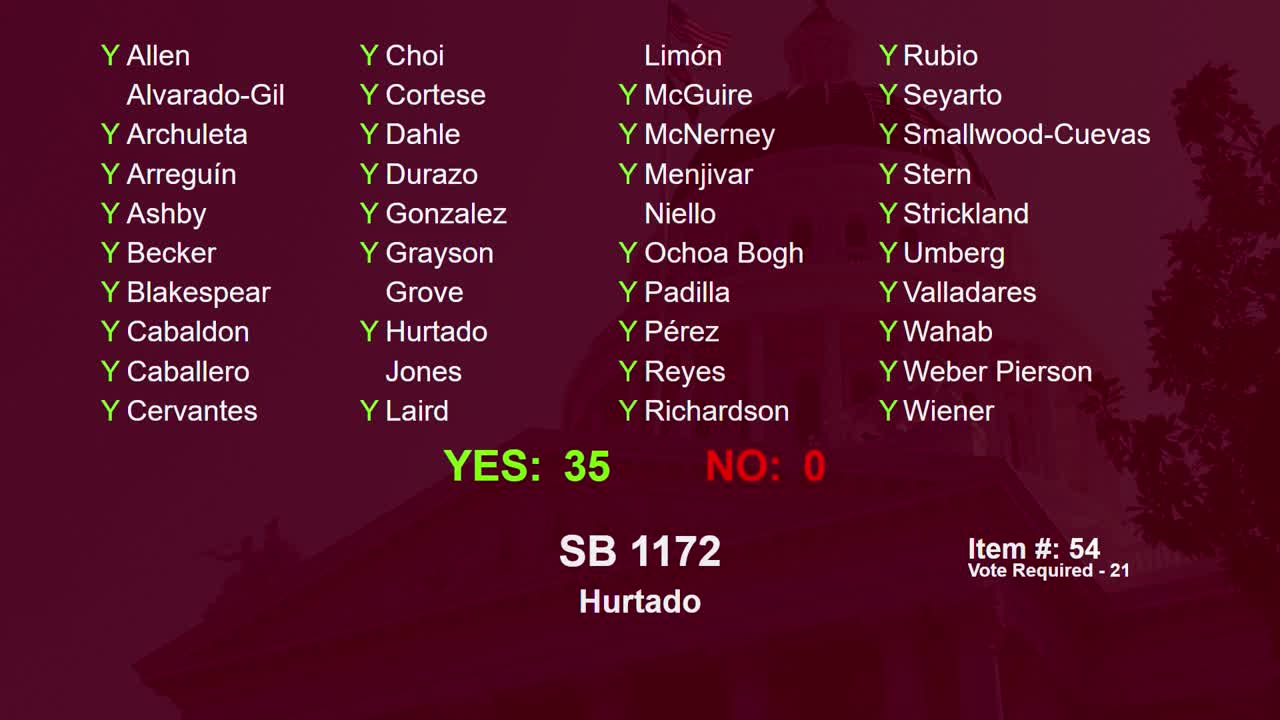 3MIN
Senate Floor
 22MIN
Senate Standing Committee on Privacy, Digital Technologies, and Consumer Protection
 31MIN
Senate Standing Committee on Business, Professions and Economic Development
Bill Author