SB 905: Electricity.
- Session Year: 2025-2026
- House: Senate
- Latest Version Date: 2026-09-30
Current Status:
Passed
(2026-09-30: Chaptered by Secretary of State. Chapter 986, Statutes of 2026.)
Introduced
In Committee
Awaiting First Chamber Vote
Passed First Chamber
In Committee
Awaiting Second Chamber Vote
Passed Second Chamber
Enacted
Existing law vests the Public Utilities Commission with regulatory authority over public utilities, including electrical corporations. Existing law authorizes the commission to fix the rates and charges for public utilities and requires that those rates and charges be just and reasonable.
This bill would require the commission, for each electrical corporation, to consider assigning a reduced return on equity, as a reduction applied each year to the then current authorized rate of return on equity, for specified types of capital costs included in the electrical corporations rate base, as specified.
This bill would require the commission to initiate a rulemaking proceeding to evaluate opportunities for alternative methods of financing capital investments in electrical distribution, electrical generation, and electrical transmission that reduce costs for ratepayers, as specified. As part of the rulemaking, the bill would require the commission to establish categories of alternative financing mechanisms for each electrical corporation to evaluate and report on with respect to opportunities for alternative financing of electrical distribution, electrical generation, and electrical transmission costs, as specified. The bill would require the commission, on or before December 31, 2028, to submit a report to the Legislature outlining any findings and recommendations resulting from the rulemaking, as specified.
This bill would require the commission to require each large electrical corporation to make data available to the public that quantifies the potential for increased utilization of segments of its electrical distribution grid, as specified.
Under existing law, a violation of the Public Utilities Act or any order, decision, rule, direction, demand, or requirement of the commission is a crime.
Because the above provisions would be a part of the act, and because a violation of a commission action implementing those provisions would be a crime, this bill would impose a state-mandated local program.
The California Constitution requires the state to reimburse local agencies and school districts for certain costs mandated by the state. Statutory provisions establish procedures for making that reimbursement.
This bill would provide that no reimbursement is required by this act for a specified reason.
(1)Existing
Existing law vests the Public Utilities Commission with regulatory authority over public utilities, including electrical corporations. Existing law authorizes the commission to fix the rates and charges for public utilities and requires that those rates and charges be just and reasonable.
This bill would require the commission, for each electrical corporation, to consider assigning a reduced return on equity, as a reduction applied each year to the then current authorized rate of return on equity, for specified types of capital costs included in the electrical corporations rate base, as specified.
(2)Under existing law, it is the policy of the state that each electrical corporation continue to operate its electrical distribution grid in its service territory and to do so in a safe, reliable, efficient, and cost-effective manner.This bill would require the commission, on or before January 1, 2028, to initiate a proceeding to investigate, develop, and adopt a framework for performance-based metrics for large electrical corporations, as provided. The bill would authorize the commission to establish targets for each of the performance metrics developed in the proceeding and to assess the performance of each large electrical corporation against the performance metrics and any targets during a general rate case, as specified. The bill would require the commission, on or before January 1, 2030, to initiate a proceeding to evaluate the results of the adopted framework for performance-based metrics for large electrical corporations, as specified. The bill would require the commission, on or before January 1, 2028, to require each large electrical corporation to have an incentive compensation structure for certain employees for which a minimum of 20% of their total compensation each year would be contingent on the adjusted average cost of electricity, as specified.This bill would require the commission to initiate a rulemaking proceeding to evaluate opportunities for alternative methods of financing capital investments in electrical distribution, electrical generation, and electrical transmission that reduce costs for ratepayers, as specified. As part of the rulemaking, the bill would require the commission to establish categories of alternative financing mechanisms for each electrical corporation to evaluate and report on with respect to opportunities for alternative financing of electrical distribution, electrical generation, and electrical transmission costs, as specified. The bill would require the commission, on or before December 31, 2028, to submit a report to the Legislature outlining any findings and recommendations resulting from the rulemaking, as specified.
This bill would require the commission to require each large electrical corporation to make data available to the public that quantifies the potential for increased utilization of segments of its electrical distribution grid, as specified.
(3)Under
Under existing law, a violation of the Public Utilities Act or any order, decision, rule, direction, demand, or requirement of the commission is a crime.
Because the above provisions would be a part of the act, and because a violation of a commission action implementing those provisions would be a crime, this bill would impose a state-mandated local program.
The California Constitution requires the state to reimburse local agencies and school districts for certain costs mandated by the state. Statutory provisions establish procedures for making that reimbursement.
This bill would provide that no reimbursement is required by this act for a specified reason.
(1)Existing law vests the Public Utilities Commission with regulatory authority over public utilities, including electrical corporations. Existing law authorizes the commission to fix the rates and charges for public utilities and requires that those rates and charges be just and reasonable.
This bill would require the commission, for each electrical corporation, to assign consider assigning a reduced return on equity, as a reduction applied each year to the then current authorized rate of return on equity, for specified types of capital costs included in the electrical corporations rate base, as specified.
(2)Under existing law, it is the policy of the state that each electrical corporation continue to operate its electrical distribution grid in its service territory and to do so in a safe, reliable, efficient, and cost-effective manner.
This bill would require the commission, on or before January 1, 2028, to initiate a proceeding to investigate, develop, and adopt a framework for performance-based metrics for large electrical corporations, as provided. The bill would authorize the commission to establish targets for each of the performance metrics developed in the proceeding and to assess the performance of the each large electrical corporation against the performance metrics and any targets during a general rate case, as specified. The bill would require the commission, on or before January 1, 2030, to initiate a proceeding to evaluate the results of the adopted framework for performance-based metrics for large electrical corporations, as specified. The bill would require the commission, on or before January 1, 2028, to require each large electrical corporation to have an incentive compensation structure for certain employees for which a minimum of 20% of their total compensation each year is would be contingent on the adjusted average cost of electricity, as specified.
This bill would require the commission to initiate a rulemaking proceeding to evaluate opportunities for alternative methods of financing capital investments in electrical distribution, electrical generation, and electrical transmission that reduce costs for ratepayers, as specified. As part of the rulemaking, the bill would require the commission to require establish categories of alternative financing mechanisms for each electrical corporation to annually submit a evaluate and report identifying all on with respect to opportunities for alternative financing of electrical distribution, electrical generation, and electrical transmission costs. costs, as specified. The bill would require the commission, on or before December 31, 2028, to submit a report to the Legislature outlining any findings and recommendations resulting from the rulemaking. rulemaking, as specified.
This bill would require the commission to require each large electrical corporation to make data available to the public that quantifies the potential for increased utilization of segments of its electrical distribution grid by reducing peak load, grid, as specified.
(3)Under existing law, a violation of the Public Utilities Act or any order, decision, rule, direction, demand, or requirement of the commission is a crime.
Because the above provisions would be a part of the act, and because a violation of a commission action implementing those provisions would be a crime, this bill would impose a state-mandated local program.
The California Constitution requires the state to reimburse local agencies and school districts for certain costs mandated by the state. Statutory provisions establish procedures for making that reimbursement.
This bill would provide that no reimbursement is required by this act for a specified reason.
(1)Existing law vests the Public Utilities Commission with regulatory authority over public utilities, including electrical corporations. Existing law authorizes the commission to fix the rates and charges for public utilities and requires that those rates and charges be just and reasonable.
This bill would require the commission, for each electrical corporation, to assign a reduced return on equity, as a reduction applied each year to the then current authorized rate of return on equity, for specified types of capital costs included in the electrical corporations rate base, as specified.
(2)Under existing law, it is the policy of the state that each electrical corporation continue to operate its electrical distribution grid in its service territory and to do so in a safe, reliable, efficient, and cost-effective manner.
This bill would require the commission, on or before January 1, 2028, to initiate a proceeding to investigate, develop, and adopt a framework for performance-based metrics for large electrical corporations, as provided. The bill would authorize the commission to establish targets for each of the performance metrics developed in the proceeding and to assess the performance of the electrical corporation against the performance metrics and any targets during a general rate case, as specified. The bill would require the commission, on or before January 1, 2030, to initiate a proceeding to evaluate the results of the adopted framework for performance-based metrics for large electrical corporations, as specified. The bill would require the commission, on or before January 1, 2028, to require each large electrical corporation to have an incentive compensation structure for certain employees for which a minimum of 20% of their total compensation each year is contingent on the average cost of electricity, as specified.
This bill would require the commission to initiate a rulemaking proceeding to evaluate opportunities for alternative methods of financing capital investments in electrical distribution, electrical generation, and electrical transmission that reduce costs for ratepayers, as specified. As part of the rulemaking, the bill would require the commission to require each electrical corporation to annually submit a report identifying all opportunities for alternative financing of electrical distribution, electrical generation, and electrical transmission costs. The bill would require the commission, on or before December 31, 2028, to submit a report to the Legislature outlining any findings and recommendations resulting from the rulemaking.
This bill would require the commission to require each large electrical corporation to make data available to the public that quantifies the potential for increased utilization of segments of its electrical distribution grid by reducing peak load, as specified.
(3)Under existing law, a violation of the Public Utilities Act or any order, decision, rule, direction, demand, or requirement of the commission is a crime.
Because the above provisions would be a part of the act, and because a violation of a commission action implementing those provisions would be a crime, this bill would impose a state-mandated local program.
The California Constitution requires the state to reimburse local agencies and school districts for certain costs mandated by the state. Statutory provisions establish procedures for making that reimbursement.
This bill would provide that no reimbursement is required by this act for a specified reason.
(1)Existing law vests the PUC Public Utilities Commission with regulatory authority over public utilities, including electrical corporations. Existing law authorizes the PUC commission to fix the rates and charges for public utilities and requires that those rates and charges be just and reasonable.
This bill would require the PUC, commission, for each electrical corporation, to assign a reduced return on equity, as a reduction applied each year to the then current authorized rate of return on equity, for specified types of capital costs included in the electrical corporations rate base, as specified.
(3)(2)Under existing law, it is the policy of the state that each electrical corporation continue to operate its electrical distribution grid in its service territory and to do so in a safe, reliable, efficient, and cost-effective manner.
This bill would require the PUC, commission, on or before January 1, 2028, to initiate a proceeding to investigate, develop, and adopt a framework for performance-based metrics for large electrical corporations, as provided. The bill would authorize the PUC commission to establish targets for each of the performance metrics developed in the proceeding and to assess the performance of the electrical corporation against the performance metrics and any targets during a general rate case, as specified. The bill would require the PUC, commission, on or before January 1, 2028, to require each large electrical corporation to have an incentive compensation structure for certain employees for which a minimum of 20% of their total compensation each year is contingent on the average cost of electricity, as specified.
This bill would require the PUC commission to initiate a rulemaking proceeding to evaluate opportunities for alternative methods of financing capital investments in electrical distribution, electrical generation, and electrical transmission that reduce costs for ratepayers, as specified. As part of the rulemaking, the bill would require the PUC commission to require each electrical corporation to annually submit a report identifying all opportunities for alternative financing of electrical distribution, electrical generation, and electrical transmission costs. The bill would require the PUC, commission, on or before December 31, 2028, to submit a report to the Legislature outlining any findings and recommendations resulting from the rulemaking.
This bill would require the PUC commission to require each large electrical corporation to make data available to the public that quantifies the potential for increased utilization of segments of its electrical distribution grid by reducing peak load, as specified.
(4)(3)Under existing law, a violation of the Public Utilities Act or any order, decision, rule, direction, demand, or requirement of the PUC commission is a crime.
Because certain of the above provisions would be a part of the act, and because a violation of a PUC commission action implementing those provisions would be a crime, this bill would impose a state-mandated local program.
The California Constitution requires the state to reimburse local agencies and school districts for certain costs mandated by the state. Statutory provisions establish procedures for making that reimbursement.
This bill would provide that no reimbursement is required by this act for a specified reason.
(1)Existing law requires the State Energy Resources Conservation and Development Commission (Energy Commission) to administer the Electric Program Investment Charge Fund for research, development, and demonstration programs that will benefit electricity ratepayers.
This bill would require the Energy Commission, in consultation with the Public Utilities Commission (PUC), to develop and implement the Policy-Oriented and Wildfire Electric Reimbursement (POWER) Program to reduce the costs to ratepayers by providing reimbursement to electrical corporations and local publicly owned electric utilities for expenditures driven by public policy goals that provide a benefit to the general public, as provided. The bill would establish the Policy-Oriented and Wildfire Electric Reimbursement Fund in the State Treasury and would require that moneys in the fund, upon appropriation by the Legislature, be expended by the Energy Commission for the purpose of the program. The bill would require the commission, when developing and implementing the POWER Program, to do specified things, including establish guidance and criteria for allocating reimbursements from the fund that require, among other things, that the proportion of any expenditures by an electrical corporation that are reimbursed pursuant to the POWER Program are excluded from the electrical corporations rate base and any asset funded by those reimbursed expenditures be funded without a return on equity, as provided. The bill would require the Energy Commission to annually report to the Legislature actual utility bill impacts in order to ensure the POWER Program is helping to reduce electricity costs for ratepayers. The bill would prohibit the Energy Commission from using more than 3% of the moneys appropriated for the program or $5,000,000, whichever is less, for administrative and overhead costs each year.
(2)Existing law vests the PUC with regulatory authority over public utilities, including electrical corporations. Existing law authorizes the PUC to fix the rates and charges for public utilities and requires that those rates and charges be just and reasonable.
This bill would require the PUC, for each electrical corporation, to assign a reduced return on equity, as a reduction applied each year to the then current authorized rate of return on equity, for specified types of capital costs included in the electrical corporations rate base, as specified.
(3)Under existing law, it is the policy of the state that each electrical corporation continue to operate its electrical distribution grid in its service territory and to do so in a safe, reliable, efficient, and cost-effective manner.
This bill would require the PUC, on or before January 1, 2028, to initiate a proceeding to investigate, develop, and adopt a framework for performance-based metrics for large electrical corporations, as provided. The bill would authorize the PUC to establish targets for each of the performance metrics developed in the proceeding and to assess the performance of the electrical corporation against the performance metrics and any targets during a general rate case, as specified. The bill would require the PUC, on or before January 1, 2028, to require each large electrical corporation to have an incentive compensation structure for certain employees for which a minimum of 20% of their total compensation each year is contingent on the average cost of electricity, as specified.
This bill would require the PUC to initiate a rulemaking proceeding to evaluate opportunities for alternative methods of financing capital investments in electrical distribution, electrical generation, and electrical transmission that reduce costs for ratepayers, as specified. As part of the rulemaking, the bill would require the PUC to require each electrical corporation to annually submit a report identifying all opportunities for alternative financing of electrical distribution, electrical generation, and electrical transmission costs. The bill would require the PUC, on or before December 31, 2028, to submit a report to the Legislature outlining any findings and recommendations resulting from the rulemaking.
This bill would require the PUC to require each large electrical corporation to make data available to the public that quantifies the potential for increased utilization of segments of its electrical distribution grid by reducing peak load, as specified.
(4)Under existing law, a violation of the Public Utilities Act or any order, decision, rule, direction, demand, or requirement of the PUC is a crime.
Because certain of the above provisions would be a part of the act, and because a violation of a PUC action implementing those provisions would be a crime, this bill would impose a state-mandated local program.
The California Constitution requires the state to reimburse local agencies and school districts for certain costs mandated by the state. Statutory provisions establish procedures for making that reimbursement.
This bill would provide that no reimbursement is required by this act for a specified reason.
Existing law requires each electrical corporation to identify a separate rate component that is required to be a nonbypassable element of the local distribution service. Existing law requires the Public Utilities Commission to allocate these funds for certain programs that enhance system reliability and provide in-state benefits.This bill would make nonsubstantive changes to the latter requirement.Existing law requires each electrical corporation to identify a separate rate component that is required to be a nonbypassable element of the local distribution service. Existing law requires the Public Utilities Commission to allocate these funds for certain programs that enhance system reliability and provide in-state benefits.
This bill would make nonsubstantive changes to the latter requirement.
(a)For each electrical corporation, the commission shall consider assigning a reduced return on equity, as a reduction applied each year to the then current authorized rate of return on equity, for the following categories of costs included in the electrical corporations rate base:
(1)Capital costs recovered through a balancing account or a memorandum account.
(2)Capital costs exempted from a reasonableness review.
(3)Capital costs relating to undergrounding of the electrical system.
(b)The commission shall determine whether to assign a reduced return on equity applicable to the categories of capital costs identified in subdivision (a) and shall issue a written explanation of its decision that includes, but is not limited to, its reasoning with respect to each of the following factors and why each factor does or does not support a reduced return on equity for the categories of capital costs at issue:
(1)The lower level of cost recovery risk faced by the electrical corporation, including for costs that are exempted from a reasonableness review.
(2)The ability to begin cost recovery sooner, including for costs in balancing accounts or memorandum accounts.
(3)Any other reduction in risk for the shareholders of the electrical corporation, including reductions in the risk of liability for wildfire-related losses achieved by the undergrounding of electrical equipment or other wildfire mitigation investments.
(4)The need to minimize incentives for overspending on capital relative to expense.
(c)The commission shall require an electrical corporation to apply the reduced return on equity determined pursuant to subdivision (b), if any, at the time applicable costs are initially authorized for inclusion in the electrical corporations rate base.
(d)The establishment of a reduced return on equity for certain categories of capital costs pursuant to this section shall not be considered by the commission in making any determination regarding the reasonableness of the authorized rate of return on equity for the electrical corporation.
(e)Notwithstanding subdivision (d), this section does not prevent the commission from setting just and reasonable rates, including by declining to apply a reduced return on equity to any cost upon a written finding by the commission that doing so would not be just and reasonable.
SEC. 2.Section 701.11 is added to the Public Utilities Code, to read:701.11.(a)The commission shall initiate a rulemaking proceeding to evaluate opportunities for alternative methods of financing capital investments in electrical distribution, electrical generation, and electrical transmission that reduce costs for ratepayers. The proceeding shall consider options for substituting alternative financing for shareholder equity and other financing mechanisms that could lower the cost of capital recovered in retail rates.
(b)As part of the rulemaking initiated pursuant to subdivision (a), the commission shall establish categories of alternative financing mechanisms that each electrical corporation shall evaluate and report on, at intervals determined by the commission, with respect to opportunities for alternative financing of electrical distribution, electrical generation, and electrical transmission costs. Each electrical corporation shall identify all opportunities within those categories and present the most cost-effective alternative financing options from among those opportunities for commission evaluation pursuant to subdivision (a). This subdivision does not preclude an electrical corporation from identifying and presenting additional alternative financing opportunities beyond those categories established by the commission.
(c)(1)On or before December 31, 2028, the commission shall submit a report to the Legislature outlining any findings and recommendations resulting from the rulemaking proceeding initiated pursuant to subdivision (a), including recommendations for any legislative or administrative actions that may be necessary to implement identified financing opportunities.
(2)The requirement for submitting a report imposed under paragraph (1) is inoperative on January 1, 2029, pursuant to Section 10231.5 of the Government Code.
(3)A report to be submitted pursuant to paragraph (1) shall be submitted in compliance with Section 9795 of the Government Code.
SEC. 3.Section 769.1 is added to the Public Utilities Code, to read:769.1.(a)The commission shall require each large electrical corporation to make data available to the public that quantifies the potential for increased utilization of segments of its distribution grid, including all of the following:
(1)A capacity utilization metric that measures the average electricity delivered over a distribution segment during a period of time divided by that distribution segments maximum electrical capacity.
(2)A peak utilization metric that measures a distribution segments peak load divided by that distribution segments maximum electrical capacity.
(3)Off-peak load-hosting capacity data that estimates the capacity of a distribution segment to support new loads outside of the highest peak load periods annually for that distribution segment, or data providing a similar quantification of off-peak capacity, as determined by the commission.
(4)The location of constrained distribution areas with sufficient detail to allow third parties to identify locations where distributed resources could benefit the constrained distribution area.
(b)In approving a capacity utilization metric pursuant to subdivision (a), the commission shall consider establishing a target and timeline for each large electrical corporation to increase average distribution grid capacity utilization in accordance with the approved metric.
(c)As part of its distribution planning process, each large electrical corporation shall include an assessment of current distribution grid capacity utilization for each distribution segment for which a distribution grid need has been identified that may require new investments to meet expected future demand growth and an assessment of whether strategies to increase distribution grid utilization, such as load flexibility and distribution-connected energy storage, could resolve the distribution grid need at a lower cost to ratepayers than traditional distribution grid infrastructure upgrades.
(d)For purposes of this section, both of the following definitions apply:
(1)Constrained distribution area means a segment of the distribution grid where capacity limits are already delaying, or are anticipated to delay, energization of new loads or the ability to handle load growth from existing customers, as identified by low load-hosting capacity or by locational net benefits analysis, or a similar successor metric, as determined by the commission.
(2)Large electrical corporation has the same meaning as defined in Section 2827.
SEC. 4.No reimbursement is required by this act pursuant to Section 6 of Article XIIIB of the California Constitution because the only costs that may be incurred by a local agency or school district will be incurred because this act creates a new crime or infraction, eliminates a crime or infraction, or changes the penalty for a crime or infraction, within the meaning of Section 17556 of the Government Code, or changes the definition of a crime within the meaning of Section 6 of Article XIIIB of the California Constitution.
(a)For each electrical corporation, the commission shall consider assigning a reduced return on equity, as a reduction applied each year to the then current authorized rate of return on equity, for the following categories of costs included in the electrical corporations rate base:
(1)Capital costs recovered through a balancing account or a memorandum account.
(2)Capital costs exempted from a reasonableness review.
(3)Capital costs relating to undergrounding of the electrical system.
(b)The commission shall determine whether to assign a reduced return on equity applicable to the categories of capital costs identified in subdivision (a) and shall issue a written explanation of its decision that includes, but is not limited to, its reasoning with respect to each of the following factors and why each factor does or does not support a reduced return on equity for the categories of capital costs at issue:
(1)The lower level of cost recovery risk faced by the electrical corporation, including for costs that are exempted from a reasonableness review.
(2)The ability to begin cost recovery sooner, including for costs in balancing accounts or memorandum accounts.
(3)Any other reduction in risk for the shareholders of the electrical corporation, including reductions in the risk of liability for wildfire-related losses achieved by the undergrounding of electrical equipment or other wildfire mitigation investments.
(4)The need to minimize incentives for overspending on capital relative to expense.
(c)The commission shall require an electrical corporation to apply the reduced return on equity determined pursuant to subdivision (b), if any, at the time applicable costs are initially authorized for inclusion in the electrical corporations rate base.
(d)The establishment of a reduced return on equity for certain categories of capital costs pursuant to this section shall not be considered by the commission in making any determination regarding the reasonableness of the authorized rate of return on equity for the electrical corporation.
(e)Notwithstanding subdivision (d), this section does not prevent the commission from setting just and reasonable rates, including by declining to apply a reduced return on equity to any cost upon a written finding by the commission that doing so would not be just and reasonable.
SEC. 3.SEC. 2.Section 701.11 is added to the Public Utilities Code, to read:701.11.(a)The commission shall initiate a rulemaking proceeding to evaluate opportunities for alternative methods of financing capital investments in electrical distribution, electrical generation, and electrical transmission that reduce costs for ratepayers. The proceeding shall consider options for substituting alternative financing for shareholder equity and other financing mechanisms that could lower the cost of capital recovered in retail rates.
(b)As part of the rulemaking initiated pursuant to subdivision (a), the commission shall establish categories of alternative financing mechanisms that each electrical corporation shall evaluate and report on, at intervals determined by the commission, with respect to opportunities for alternative financing of electrical distribution, electrical generation, and electrical transmission costs. Each electrical corporation shall identify all opportunities within those categories and present the most cost-effective alternative financing options from among those opportunities for commission evaluation pursuant to subdivision (a). This subdivision does not preclude an electrical corporation from identifying and presenting additional alternative financing opportunities beyond those categories established by the commission.
(c)(1)On or before December 31, 2028, the commission shall submit a report to the Legislature outlining any findings and recommendations resulting from the rulemaking proceeding initiated pursuant to subdivision (a), including recommendations for any legislative or administrative actions that may be necessary to implement identified financing opportunities.
(2)The requirement for submitting a report imposed under paragraph (1) is inoperative on January 1, 2029, pursuant to Section 10231.5 of the Government Code.
(3)A report to be submitted pursuant to paragraph (1) shall be submitted in compliance with Section 9795 of the Government Code.
SEC. 4.SEC. 3.Section 769.1 is added to the Public Utilities Code, to read:769.1.(a)The commission shall require each large electrical corporation to make data available to the public that quantifies the potential for increased utilization of segments of its distribution grid, including all of the following:
(1)A capacity utilization metric that measures the average electricity delivered over a distribution segment during a period of time divided by that distribution segments maximum electrical capacity.
(2)A peak utilization metric that measures a distribution segments peak load divided by that distribution segments maximum electrical capacity.
(3)Off-peak load-hosting capacity data that estimates the capacity of a distribution segment to support new loads outside of the highest peak load periods annually for that distribution segment, or data providing a similar quantification of off-peak capacity, as determined by the commission.
(4)The location of constrained distribution areas with sufficient detail to allow third parties to identify locations where distributed resources could benefit the constrained distribution area.
(b)In approving a capacity utilization metric pursuant to subdivision (a), the commission shall consider establishing a target and timeline for each large electrical corporation to increase average distribution grid capacity utilization in accordance with the approved metric.
(c)As part of its distribution planning process, each large electrical corporation shall include an assessment of current distribution grid capacity utilization for each distribution segment for which a distribution grid need has been identified that may require new investments to meet expected future demand growth and an assessment of whether strategies to increase distribution grid utilization, such as load flexibility and distribution-connected energy storage, could resolve the distribution grid need at a lower cost to ratepayers than traditional distribution grid infrastructure upgrades.
(d)For purposes of this section, both of the following definitions apply:
(1)Constrained distribution area means a segment of the distribution grid where capacity limits are already delaying, or are anticipated to delay, energization of new loads or the ability to handle load growth from existing customers, as identified by low load-hosting capacity or by locational net benefits analysis, or a similar successor metric, as determined by the commission.
(2)Large electrical corporation has the same meaning as defined in Section 2827.
SEC. 5.SEC. 4.No reimbursement is required by this act pursuant to Section 6 of Article XIIIB of the California Constitution because the only costs that may be incurred by a local agency or school district will be incurred because this act creates a new crime or infraction, eliminates a crime or infraction, or changes the penalty for a crime or infraction, within the meaning of Section 17556 of the Government Code, or changes the definition of a crime within the meaning of Section 6 of Article XIIIB of the California Constitution.
(a)On or before January 1, 2028, the commission shall initiate a proceeding to investigate, develop, and adopt a framework for performance-based metrics for large electrical corporations. These performance metrics shall be designed to promote safe, clean, and reliable electrical service at the lowest cost to ratepayers. At a minimum, the framework shall require large electrical corporations to track the performance over time of all of the following types of performance metrics:
(1)Distribution system reliability.
(2)Distribution system utilization, including the metrics required by pursuant to Section 769.1.
(3)Transmission system reliability.
(4)Transmission system utilization.
(5)Utilization of electrical corporation-owned generation.
(6)Timely completion of customer energization requests.
(7)Timely completion of transmission and generation interconnections for generation and energy storage projects.
(8)Utilization of demand response resources or other distributed resources to serve load during periods of peak demand as a means of reducing the need for additional investment in both generation resources and transmission and distribution infrastructure.
(9)Capital and expense spending on distribution.
(10)Capital and expense spending on transmission.
(11)Capital and expense spending on generation.
(12)Capital and expense spending on wildfire mitigation.
(13)The annual average greenhouse gas emissions intensity of all electricity used to serve loss-adjusted load, as defined in Section 398.6.
(14)The adjusted average cost of electricity charged to each customer class.
(15)Wildfire prevention and mitigation, with a focus on results, such as the number of ignitions attributable to electrical corporation equipment and the total estimated damages attributable to electrical corporation equipment, rather than a focus on mitigation actions taken.
(b)For each of the performance metrics identified in subdivision (a), each large electrical corporation shall provide 10 years of historical data whenever feasible.
(c)(1)The commission may establish targets for each of the performance metrics developed in the proceeding initiated pursuant to identified in subdivision (a), and may assess the performance of the large electrical corporation against the performance metrics and these targets during a general rate case. The commission shall not condition any financial incentives to the large electrical corporation on the achievement of these targets.
(2)The commission shall create a public dashboard on its internet website that provides, for each large electrical corporation, public access to information on each of the performance metrics identified in subdivision (a), and any targets established pursuant to paragraph (1).
(3)On or before January 1, 2030, the commission shall initiate a proceeding to evaluate the results of the framework for performance-based the performance metrics for large electrical corporations adopted pursuant to identified in subdivision (a). As part of this proceeding, the commission shall determine whether to recommend statutory changes that would authorize the creation of financial incentives and penalties related to performance-based performance metrics. The commission shall submit any recommendations to the Assembly Committee on Utilities and Energy and the Senate Committee on Energy, Utilities and Communications.
(d)On or before January 1, 2028, the commission shall require each large electrical corporation to have an incentive compensation structure for any employee serving as a vice president, or an equivalent position, or higher, for which the compensation is funded through rates. For these employees, a minimum of 20 percent of total compensation each year shall be contingent on the adjusted average cost of electricity, for both bundled and unbundled customers, increasing by no more than the federal social security beneficiary cost-of-living adjustment during the three-year period that includes that year and the two preceding years. The requirements of this subdivision shall only apply to employees that the commission determines are not officers subject to Section 706.
(e)For purposes of this section, all of the following definitions apply:
(1)Average Adjusted average cost of electricity means the total cost of all charges to bundled or unbundled customers, including, but not limited to, volumetric rates, fixed charges, nonbypassable charges, and taxes, divided by the total amount of electricity in kilowatt-hours delivered to those customers. Adjusted average cost of electricity does not include costs recovered through public purpose program surcharges, charges for the Wildfire Fund or the Continuation Account, and other nonbypassable charges required by statute over which the large electrical corporation does not have any control regarding the costs incurred or the amounts to be collected from ratepayers.
(2)Distributed resources has the same meaning as defined in Section 769.
(3)Large electrical corporation has the same meaning as defined in Section 2827.
SEC. 2.Section 451.11 is added to the Public Utilities Code, to read:451.11.(a)For each electrical corporation, the commission shall assign consider assigning a reduced return on equity, as a reduction applied each year to the then current authorized rate of return on equity, for the following types categories of costs included in the electrical corporations rate base:
(1)Capital costs recovered through a balancing account. account or a memorandum account.
(2)Capital costs exempted from a reasonableness review.
(3)Capital costs relating to undergrounding of the electrical system.
(b)The commission shall determine the whether to assign a reduced return on equity applicable to the categories of capital costs identified in subdivision (a) at the time the costs are initially authorized for inclusion in the rate base. The reduced rate of return shall reflect any of the following: and shall issue a written explanation of its decision that includes, but is not limited to, its reasoning with respect to each of the following factors and why each factor does or does not support a reduced return on equity for the categories of capital costs at issue:
(1)The lower level of cost recovery risk faced by the electrical corporation, including for costs that are exempted from a reasonableness review.
(2)The ability to begin cost recovery sooner, including for costs in balancing accounts. accounts or memorandum accounts.
(3)Any other reduction in risk for the shareholders of the electrical corporation, including reductions in the risk of liability for wildfire-related losses achieved by the undergrounding of electrical equipment or other wildfire mitigation investments.
(4)The need to minimize incentives for overspending on capital relative to expense.
(c)The commission shall require an electrical corporation to apply the reduced return on equity determined pursuant to subdivision (b), if any, at the time applicable costs are initially authorized for inclusion in the electrical corporations rate base.
(c)(d)The establishment of a reduced return on equity for certain types categories of capital costs pursuant to this section shall not be considered by the commission in making any determination regarding the reasonableness of the authorized rate of return on equity for the electrical corporation.
(e)Notwithstanding subdivision (d), this section does not prevent the commission from setting just and reasonable rates, including by declining to apply a reduced return on equity to any cost upon a written finding by the commission that doing so would not be just and reasonable.
SEC. 3.Section 701.11 is added to the Public Utilities Code, to read:701.11.(a)The commission shall initiate a rulemaking proceeding to evaluate opportunities for alternative methods of financing capital investments in electrical distribution, electrical generation, and electrical transmission that reduce costs for ratepayers. The proceeding shall consider options for substituting alternative financing for shareholder equity and other financing mechanisms that could lower the cost of capital recovered in retail rates.
(b)As part of the rulemaking initiated pursuant to subdivision (a), the commission shall require establish categories of alternative financing mechanisms that each electrical corporation to annually submit a report identifying all shall evaluate and report on, at intervals determined by the commission, with respect to opportunities for alternative financing of electrical distribution, electrical generation, and electrical transmission costs. Each electrical corporation shall identify all opportunities within those categories and present the most cost-effective alternative financing options from among those opportunities for commission evaluation pursuant to subdivision (a). This subdivision does not preclude an electrical corporation from identifying and presenting additional alternative financing opportunities beyond those categories established by the commission.
(c)(1)On or before December 31, 2028, the commission shall submit a report to the Legislature outlining any findings and recommendations resulting from the rulemaking proceeding initiated pursuant to subdivision (a). (a), including recommendations for any legislative or administrative actions that may be necessary to implement identified financing opportunities.
(2)The requirement for submitting a report imposed under paragraph (1) is inoperative on January 1, 2029, pursuant to Section 10231.5 of the Government Code.
(3)A report to be submitted pursuant to paragraph (1) shall be submitted in compliance with Section 9795 of the Government Code.
SEC. 4.Section 769.1 is added to the Public Utilities Code, to read:769.1.(a)The commission shall require each large electrical corporation to make data available to the public that quantifies the potential for increased utilization of segments of its distribution grid by reducing peak load, grid, including all of the following:
(1)A capacity utilization metric that measures the average electricity delivered over a distribution segment during a period of time divided by that distribution segments maximum electrical capacity.(2)A peak utilization metric that measures a distribution segments peak load divided by that distribution segments maximum electrical capacity.
(2)(3)Off-peak load-hosting capacity data that estimates the capacity of a distribution segment to support new loads outside of the highest peak load periods annually for that distribution segment, or data providing a similar quantification of off-peak capacity, as determined by the commission.
(3)(4)The location of constrained distribution areas with sufficient detail to allow third parties to identify locations where distributed resources could benefit the constrained distribution area.
(b)In approving a capacity utilization metric pursuant to subdivision (a), the commission shall consider establishing a target and timeline for each large electrical corporation to increase average distribution grid capacity utilization in accordance with the approved metric.
(c)As part of its distribution planning process, each large electrical corporation shall include an assessment of current distribution grid capacity utilization for each distribution segment for which a distribution grid need has been identified that may require new investments to meet expected future demand growth and an assessment of whether strategies to increase distribution grid utilization, such as load flexibility and distribution-connected energy storage, could resolve the distribution grid need at a lower cost to ratepayers than traditional distribution grid infrastructure upgrades.
(d)For purposes of this section, both of the following definitions apply:
(1)Constrained distribution area means a segment of the distribution grid where capacity limits are already delaying, or are anticipated to delay, energization of new loads or the ability to handle load growth from existing customers, as identified by low load-hosting capacity or by locational net benefits analysis, or a similar successor metric, as determined by the commission.
(2)Large electrical corporation has the same meaning as defined in Section 2827.
SEC. 5.No reimbursement is required by this act pursuant to Section 6 of Article XIIIB of the California Constitution because the only costs that may be incurred by a local agency or school district will be incurred because this act creates a new crime or infraction, eliminates a crime or infraction, or changes the penalty for a crime or infraction, within the meaning of Section 17556 of the Government Code, or changes the definition of a crime within the meaning of Section 6 of Article XIIIB of the California Constitution.
(a)On or before January 1, 2028, the commission shall initiate a proceeding to investigate, develop, and adopt a framework for performance-based metrics for large electrical corporations. These performance metrics shall be designed to promote safe, clean, and reliable electrical service at the lowest cost to ratepayers. At a minimum, the framework shall require electrical corporations to track the performance over time of all of the following types of metrics:
(1)Distribution system reliability.
(2)Distribution system utilization, including the metrics required by Section 769.1.
(3)Transmission system reliability.
(4)Transmission system utilization.
(5)Utilization of electrical corporation-owned generation.
(6)Timely completion of customer energization requests.
(7)Timely completion of transmission and generation interconnections for generation and energy storage projects.
(8)Utilization of demand response resources or other distributed resources to serve during periods of peak demand as a means of reducing the need for additional investment in both generation resources and transmission and distribution infrastructure.
(9)Capital and expense spending on distribution.
(10)Capital and expense spending on transmission.
(11)Capital and expense spending on generation.
(12)Capital and expense spending on wildfire mitigation.
(13)The annual average greenhouse gas emissions intensity of all electricity used to serve loss-adjusted load, as defined in Section 398.6.
(14)The average cost of electricity charged to each customer class.
(15)Wildfire prevention and mitigation, with a focus on results, such as the number of ignitions attributable to electrical corporation equipment and the total estimated damages attributable to electrical corporation equipment, rather than a focus on mitigation actions taken.
(b)For each of the performance metrics identified in subdivision (a), each electrical corporation shall provide 10 years of historical data whenever feasible.
(c)(1)The commission may establish targets for each of the performance metrics developed in the proceeding initiated pursuant to subdivision (a), and may assess the performance of the electrical corporation against the performance metrics and these targets during a general rate case. The commission shall not condition any financial incentives to the electrical corporation on the achievement of these targets.
(2)The commission shall create a public dashboard on its internet website that provides, for each electrical corporation, public access to information on the performance metrics identified in subdivision (a), and any targets established pursuant to paragraph (1).
(3)On or before January 1, 2030, the commission shall initiate a proceeding to evaluate the results of the framework for performance-based metrics for large electrical corporations adopted pursuant to subdivision (a). As part of this proceeding, the commission shall determine whether to recommend statutory changes that would authorize the creation of financial incentives and penalties related to performance-based metrics.
(d)On or before January 1, 2028, the commission shall require each large electrical corporation to have an incentive compensation structure for any employee serving as a vice president, or an equivalent position, or higher, for which the compensation is funded through rates. For these employees, a minimum of 20 percent of total compensation each year shall be contingent on the average cost of electricity, for both bundled and unbundled customers, increasing by no more than the federal social security beneficiary cost-of-living adjustment during the three-year period that includes that year and the two preceding years.
(e)For purposes of this section, all of the following definitions apply:
(1)Average cost of electricity means the total cost of all charges to bundled or unbundled customers, including, but not limited to, volumetric rates, fixed charges, nonbypassable charges, and taxes, divided by the total amount of electricity in kilowatt-hours delivered to those customers.
(2)Distributed resources has the same meaning as defined in Section 769.
(3)Large electrical corporation has the same meaning as defined in Section 2827.
SEC. 2.Section 451.11 is added to the Public Utilities Code, to read:451.11.(a)For each electrical corporation, the commission shall assign a reduced return on equity, as a reduction applied each year to the then current authorized rate of return on equity, for the following types of costs included in the electrical corporations rate base:
(1)Capital costs recovered through a balancing account.
(2)Capital costs exempted from a reasonableness review.
(3)Capital costs relating to undergrounding of the electrical system.
(b)The commission shall determine the reduced return on equity applicable to the capital costs identified in subdivision (a) at the time the costs are initially authorized for inclusion in the rate base. The reduced rate of return shall reflect any of the following:
(1)The lower level of cost recovery risk faced by the electrical corporation, including for costs that are exempted from a reasonableness review.
(2)The ability to begin cost recovery sooner, including for costs in balancing accounts.
(3)Any other reduction in risk for the shareholders of the electrical corporation, including reductions in the risk of liability for wildfire-related losses achieved by the undergrounding of electrical equipment or other wildfire mitigation investments.
(4)The need to minimize incentives for overspending on capital relative to expense.
(c)The establishment of a reduced return on equity for certain types of capital costs pursuant to this section shall not be considered by the commission in making any determination regarding the reasonableness of the authorized rate of return on equity for the electrical corporation.
SEC. 3.Section 701.11 is added to the Public Utilities Code, to read:701.11.(a)The commission shall initiate a rulemaking proceeding to evaluate opportunities for alternative methods of financing capital investments in electrical distribution, electrical generation, and electrical transmission that reduce costs for ratepayers. The proceeding shall consider options for substituting alternative financing for shareholder equity and other financing mechanisms that could lower the cost of capital recovered in retail rates.
(b)As part of the rulemaking initiated pursuant to subdivision (a), the commission shall require each electrical corporation to annually submit a report identifying all opportunities for alternative financing of electrical distribution, electrical generation, and electrical transmission costs.
(c)(1)On or before December 31, 2028, the commission shall submit a report to the Legislature outlining any findings and recommendations resulting from the rulemaking pursuant to subdivision (a).
(2)The requirement for submitting a report imposed under paragraph (1) is inoperative on January 1, 2029, pursuant to Section 10231.5 of the Government Code.
(3)A report to be submitted pursuant to paragraph (1) shall be submitted in compliance with Section 9795 of the Government Code.
SEC. 4.Section 769.1 is added to the Public Utilities Code, to read:769.1.(a)The commission shall require each large electrical corporation to make data available to the public that quantifies the potential for increased utilization of segments of its distribution grid by reducing peak load, including all of the following:
(1)A capacity utilization metric that measures the average electricity delivered over a distribution segment during a period of time divided by that distribution segments maximum electrical capacity.
(2)Off-peak load-hosting capacity data that estimates the capacity of a distribution segment to support new loads outside of the highest peak load periods annually for that distribution segment, or data providing a similar quantification of off-peak capacity, as determined by the commission.
(3)The location of constrained distribution areas with sufficient detail to allow third parties to identify locations where distributed resources could benefit the constrained distribution area.
(b)In approving a capacity utilization metric pursuant to subdivision (a), the commission shall consider establishing a target and timeline for each large electrical corporation to increase average distribution grid capacity utilization in accordance with the approved metric.
(c)As part of its distribution planning process, each large electrical corporation shall include an assessment of current distribution grid capacity utilization relative to each approved metric and may propose new or modified distribution grid utilization metrics for commission approval. This assessment shall be shared with the commission and made available to the public. for each distribution segment for which a distribution grid need has been identified that may require new investments to meet expected future demand growth and an assessment of whether strategies to increase distribution grid utilization, such as load flexibility and distribution-connected energy storage, could resolve the distribution grid need at a lower cost to ratepayers than traditional distribution grid infrastructure upgrades.
(d)For purposes of this section, both of the following definitions apply:
(1)Constrained distribution area means a segment of the distribution grid where capacity limits are already delaying, or are anticipated to delay, energization of new loads or the ability to handle load growth from existing customers, as identified by low load-hosting capacity or by locational net benefits analysis, or a similar successor metric, as determined by the commission.
(2)Large electrical corporation has the same meaning as defined in Section 2827.
SEC. 5.No reimbursement is required by this act pursuant to Section 6 of Article XIIIB of the California Constitution because the only costs that may be incurred by a local agency or school district will be incurred because this act creates a new crime or infraction, eliminates a crime or infraction, or changes the penalty for a crime or infraction, within the meaning of Section 17556 of the Government Code, or changes the definition of a crime within the meaning of Section 6 of Article XIIIB of the California Constitution.
(a)On or before January 1, 2028, the commission shall initiate a proceeding to investigate, develop, and adopt a framework for performance-based metrics for large electrical corporations. These performance metrics shall be designed to promote safe, clean, and reliable electrical service at the lowest cost to ratepayers. At a minimum, the framework shall require electrical corporations to track the performance over time of all of the following types of metrics:
(1)Distribution system reliability.
(2)Distribution system utilization, including the metrics required by Section 769.1.
(3)Transmission system reliability.
(4)Transmission system utilization.
(5)Utilization of electrical corporation-owned generation.
(6)Timely completion of customer energization requests.
(7)Timely completion of transmission and generation interconnections for generation and energy storage projects.
(8)Utilization of demand response resources or other distributed resources to serve during periods of peak demand as a means of reducing the need for additional investment in both generation resources and transmission and distribution infrastructure.
(9)Capital and expense spending on distribution.
(10)Capital and expense spending on transmission.
(11)Capital and expense spending on generation.
(12)Capital and expense spending on wildfire mitigation.
(13)The annual average greenhouse gas emissions intensity of all electricity used to serve loss-adjusted load, as defined in Section 398.6.
(14)The average cost of electricity charged to each customer class.
(b)For each of the performance metrics identified in subdivision (a), each electrical corporation shall provide 10 years of historical data whenever feasible.
(c)(1)The commission may establish targets for each of the performance metrics developed in the proceeding initiated pursuant to subdivision (a), and may assess the performance of the electrical corporation against the performance metrics and these targets during a general rate case. The commission shall not condition any financial incentives to the electrical corporation on the achievement of these targets.
(2)The commission shall create a public dashboard on its internet website that provides, for each electrical corporation, public access to information on the performance metrics identified in subdivision (a), and any targets established pursuant to paragraph (1).
(d)On or before January 1, 2028, the commission shall require each large electrical corporation to have an incentive compensation structure for any employee serving as a vice president, or an equivalent position, or higher, for which the compensation is funded through rates. For these employees, a minimum of 20 percent of total compensation each year shall be contingent on the average cost of electricity, for both bundled and unbundled customers, increasing by no more than the federal social security beneficiary cost-of-living adjustment during the three-year period that includes that year and the two preceding years.
(e)For purposes of this section, all of the following definitions apply:
(1)Average cost of electricity means the total cost of all charges to bundled or unbundled customers, including, but not limited to, volumetric rates, fixed charges, nonbypassable charges, and taxes, divided by the total amount of electricity in kilowatt-hours delivered to those customers.
(2)Distributed resources has the same meaning as defined in Section 769.
(3)Large electrical corporation has the same meaning as defined in Section 2827.
SEC. 3.SEC. 2.Section 451.11 is added to the Public Utilities Code, to read:451.11.(a)For each electrical corporation, the commission shall assign a reduced return on equity, as a reduction applied each year to the then current authorized rate of return on equity, for the following types of costs included in the electrical corporations rate base:
(1)Capital costs recovered through a balancing account.
(2)Capital costs exempted from a reasonableness review.
(3)Capital costs relating to undergrounding of the electrical system.
(b)The commission shall determine the reduced return on equity applicable to the capital costs identified in subdivision (a) at the time the costs are initially authorized for inclusion in the rate base. The reduced rate of return shall reflect any of the following:
(1)The lower level of cost recovery risk faced by the electrical corporation, including for costs that are exempted from a reasonableness review.
(2)The ability to begin cost recovery sooner, including for costs in balancing accounts.
(3)Any other reduction in risk for the shareholders of the electrical corporation, including reductions in the risk of liability for wildfire-related losses achieved by the undergrounding of electrical equipment or other wildfire mitigation investments.
(4)The need to minimize incentives for overspending on capital relative to expense.
SEC. 4.SEC. 3.Section 701.11 is added to the Public Utilities Code, to read:701.11.(a)The commission shall initiate a rulemaking proceeding to evaluate opportunities for alternative methods of financing capital investments in electrical distribution, electrical generation, and electrical transmission that reduce costs for ratepayers. The proceeding shall consider options for substituting alternative financing for shareholder equity and other financing mechanisms that could lower the cost of capital recovered in retail rates.
(b)As part of the rulemaking initiated pursuant to subdivision (a), the commission shall require each electrical corporation to annually submit a report identifying all opportunities for alternative financing of electrical distribution, electrical generation, and electrical transmission costs.
(c)(1)On or before December 31, 2028, the commission shall submit a report to the Legislature outlining any findings and recommendations resulting from the rulemaking pursuant to subdivision (a).
(2)The requirement for submitting a report imposed under paragraph (1) is inoperative on January 1, 2029, pursuant to Section 10231.5 of the Government Code.
(3)A report to be submitted pursuant to paragraph (1) shall be submitted in compliance with Section 9795 of the Government Code.
SEC. 5.SEC. 4.Section 769.1 is added to the Public Utilities Code, to read:769.1.(a)The commission shall require each large electrical corporation to make data available to the public that quantifies the potential for increased utilization of segments of its distribution grid by reducing peak load, including all of the following:
(1)A capacity utilization metric that measures the average electricity delivered over a distribution segment during a period of time divided by that distribution segments maximum electrical capacity.
(2)Off-peak load-hosting capacity data that estimates the capacity of a distribution segment to support new loads outside of the highest peak load periods annually for that distribution segment, or data providing a similar quantification of off-peak capacity, as determined by the commission.
(3)The location of constrained distribution areas with sufficient detail to allow third parties to identify locations where distributed resources could benefit the constrained distribution area.
(b)In approving a capacity utilization metric pursuant to subdivision (a), the commission shall consider establishing a target and timeline for each large electrical corporation to increase distribution grid capacity utilization in accordance with the approved metric.
(c)As part of its distribution planning process, each large electrical corporation shall include an assessment of current distribution grid capacity utilization relative to each approved metric and may propose new or modified distribution grid utilization metrics for commission approval. This assessment shall be shared with the commission and made available to the public.
(d)For purposes of this section, both of the following definitions apply:
(1)Constrained distribution area means a segment of the distribution grid where capacity limits are already delaying, or are anticipated to delay, energization of new loads or the ability to handle load growth from existing customers, as identified by low load-hosting capacity or by locational net benefits analysis, or a similar successor metric, as determined by the commission.
(2)Large electrical corporation has the same meaning as defined in Section 2827.
SEC. 6.SEC. 5.No reimbursement is required by this act pursuant to Section 6 of Article XIIIB of the California Constitution because the only costs that may be incurred by a local agency or school district will be incurred because this act creates a new crime or infraction, eliminates a crime or infraction, or changes the penalty for a crime or infraction, within the meaning of Section 17556 of the Government Code, or changes the definition of a crime within the meaning of Section 6 of Article XIIIB of the California Constitution.
For purposes of this chapter, all of the following definitions apply:
(a)Electric utility means either of the following:
(1)An electrical corporation.
(2)A local publicly owned electric utility.
(b)Electrical corporation has the same meaning as set forth in Section 218 of the Public Utilities Code.
(c)Fund means the Policy-Oriented and Wildfire Electric Reimbursement Fund established pursuant to Section 25998.50.
(d)Local publicly owned electric utility has the same meaning as set forth in Section 224.3 of the Public Utilities Code.
(e)Program means the Policy-Oriented and Wildfire Electric Reimbursement Program established pursuant to Section 25998.10.
2.Policy-Oriented and Wildfire Electric Reimbursement Program25998.10.(a)The commission, in consultation with the Public Utilities Commission, shall develop and implement the Policy-Oriented and Wildfire Electric Reimbursement Program to reduce the costs to ratepayers by providing reimbursement to electric utilities for expenditures driven by public policy goals that provide a benefit to the general public.
(b)The intent of the program is to use nonratepayer funds to reduce costs to ratepayers. This chapter does not authorize the use of funds in a way that would directly or indirectly increase costs to ratepayers.
25998.20.In developing and implementing the program, the commission shall do all of the following:
(a)Establish guidelines and criteria for allocating reimbursements from the fund that do all of the following:
(1)Require that reimbursement from the fund be made only for electric utility expenditures that are driven by public policy goals, that provide benefit to the general public and not just to ratepayers, and that are not required for the safe and reliable delivery of electricity to the ratepayers of the electric utility. These expenditures include all of the following:
(A)Transportation electrification programs and incentives.
(B)Building electrification programs and incentives.
(C)Public purpose programs, including energy efficiency programs, research and development programs, and low-income customer discounts.
(D)Programs to promote equity and affordability for low-income ratepayers.
(E)Wildfire mitigation activities.
(F)Distributed energy resource incentives.
(G)Other purposes specified in statute, including statutes appropriating moneys for the purpose of the program.
(2)Require that reimbursement from the fund be made for expenditures that are either of the following:
(A)For an electrical corporation, the Public Utilities Commission has approved the expenditures as being just and reasonable.
(B)For a local publicly owned electric utility, the expenditures are approved by its governing board.
(3)Require that reimbursement from the fund be used entirely to reduce the costs paid by the ratepayers of the electric utility and not be used for shareholder incentives or return on shareholder equity for an electrical corporation.
(4)Require that the proportion of any expenditures by an electrical corporation that are reimbursed pursuant to this section shall be excluded from the electrical corporations rate base and any asset funded by those reimbursed expenditures shall be funded without return on equity for the lifetime of the proportion of that asset that would have otherwise been borne by ratepayers.
(b)Annually adopt a spending plan for available funds and publish the plan on the commissions internet website.
(c)(1)Notwithstanding Section 10231.5 of the Government Code, annually report to the Legislature actual utility bill impacts in order to ensure the program is helping to reduce electric utility costs for ratepayers.
(2)The report to be submitted pursuant to paragraph (1) shall be submitted in compliance with Section 9795 of the Government Code.
25998.30.The commission shall not use more than the lesser of 3 percent of the moneys appropriated for the program or five million dollars ($5,000,000) for administrative and overhead costs each year.
3.Policy-Oriented and Wildfire Electric Reimbursement Fund25998.50.The Policy-Oriented and Wildfire Electric Reimbursement Fund is hereby established in the State Treasury. Moneys in the fund shall, upon appropriation by the Legislature, be expended by the commission for the purpose of the program.
SEC. 2.Section 399.10 is added to the Public Utilities Code, immediately following Section 399.9, to read:399.10.(a)On or before January 1, 2028, the commission shall initiate a proceeding to investigate, develop, and adopt a framework for performance-based metrics for large electrical corporations. These performance metrics shall be designed to promote safe, clean, and reliable electrical service at the lowest cost to ratepayers. At a minimum, the framework shall require electrical corporations to track the performance over time of all of the following types of metrics:
(1)Distribution system reliability.
(2)Distribution system utilization, including the metrics required by Section 769.1.
(3)Transmission system reliability.
(4)Transmission system utilization.
(5)Utilization of electrical corporation-owned generation.
(6)Timely completion of customer energization requests.
(7)Timely completion of transmission and generation interconnections for generation and energy storage projects.
(8)Utilization of demand response resources or other distributed resources to serve during periods of peak demand as a means of reducing the need for additional investment in both generation resources and transmission and distribution infrastructure.
(9)Capital and expense spending on distribution.
(10)Capital and expense spending on transmission.
(11)Capital and expense spending on generation.
(12)Capital and expense spending on wildfire mitigation.
(13)The annual average greenhouse gas emissions intensity of all electricity used to serve loss-adjusted load, as defined in Section 398.6.
(14)The average cost of electricity charged to each customer class.
(b)For each of the performance metrics identified in subdivision (a), each electrical corporation shall provide 10 years of historical data whenever feasible.
(c)(1)The commission may establish targets for each of the performance metrics developed in the proceeding initiated pursuant to subdivision (a), and may assess the performance of the electrical corporation against the performance metrics and these targets during a general rate case. The commission shall not condition any financial incentives to the electrical corporation on the achievement of these targets.
(2)The commission shall create a public dashboard on its internet website that provides, for each electrical corporation, public access to information on the performance metrics identified in subdivision (a), and any targets established pursuant to paragraph (1).
(d)On or before January 1, 2028, the commission shall require each large electrical corporation to have an incentive compensation structure for any employee serving as a vice president, or an equivalent position, or higher, for which the compensation is funded through rates. For these employees, a minimum of 20 percent of total compensation each year shall be contingent on the average cost of electricity, for both bundled and unbundled customers, increasing by no more than the federal social security beneficiary cost-of-living adjustment during the three-year period that includes that year and the two preceding years.
(e)For purposes of this section, all of the following definitions apply:
(1)Average cost of electricity means the total cost of all charges to bundled or unbundled customers, including, but not limited to, volumetric rates, fixed charges, nonbypassable charges, and taxes, divided by the total amount of electricity in kilowatt-hours delivered to those customers.
(2)Distributed resources has the same meaning as defined in Section 769.
(3)Large electrical corporation has the same meaning as defined in Section 2827.
SEC. 3.Section 451.11 is added to the Public Utilities Code, to read:451.11.(a)For each electrical corporation, the commission shall assign a reduced return on equity, as a reduction applied each year to the then current authorized rate of return on equity, for the following types of costs included in the electrical corporations rate base:
(1)Capital costs recovered through a balancing account.
(2)Capital costs exempted from a reasonableness review.
(3)Capital costs relating to undergrounding of the electrical system.
(b)The commission shall determine the reduced return on equity applicable to the capital costs identified in subdivision (a) at the time the costs are initially authorized for inclusion in the rate base. The reduced rate of return shall reflect any of the following:
(1)The lower level of cost recovery risk faced by the electrical corporation, including for costs that are exempted from a reasonableness review.
(2)The ability to begin cost recovery sooner, including for costs in balancing accounts.
(3)Any other reduction in risk for the shareholders of the electrical corporation, including reductions in the risk of liability for wildfire-related losses achieved by the undergrounding of electrical equipment or other wildfire mitigation investments.
(4)The need to minimize incentives for overspending on capital relative to expense.
SEC. 4.Section 701.11 is added to the Public Utilities Code, to read:701.11.(a)The commission shall initiate a rulemaking proceeding to evaluate opportunities for alternative methods of financing capital investments in electrical distribution, electrical generation, and electrical transmission that reduce costs for ratepayers. The proceeding shall consider options for substituting alternative financing for shareholder equity and other financing mechanisms that could lower the cost of capital recovered in retail rates.
(b)As part of the rulemaking initiated pursuant to subdivision (a), the commission shall require each electrical corporation to annually submit a report identifying all opportunities for alternative financing of electrical distribution, electrical generation, and electrical transmission costs.
(c)(1)On or before December 31, 2028, the commission shall submit a report to the Legislature outlining any findings and recommendations resulting from the rulemaking pursuant to subdivision (a).
(2)The requirement for submitting a report imposed under paragraph (1) is inoperative on January 1, 2029, pursuant to Section 10231.5 of the Government Code.
(3)A report to be submitted pursuant to paragraph (1) shall be submitted in compliance with Section 9795 of the Government Code.
SEC. 5.Section 769.1 is added to the Public Utilities Code, to read:769.1.(a)The commission shall require each large electrical corporation to make data available to the public that quantifies the potential for increased utilization of segments of its distribution grid by reducing peak load, including all of the following:
(1)A capacity utilization metric that measures the average electricity delivered over a distribution segment during a period of time divided by that distribution segments maximum electrical capacity.
(2)Off-peak load-hosting capacity data that estimates the capacity of a distribution segment to support new loads outside of the highest peak load periods annually for that distribution segment, or data providing a similar quantification of off-peak capacity, as determined by the commission.
(3)The location of constrained distribution areas with sufficient detail to allow third parties to identify locations where distributed resources could benefit the constrained distribution area.
(b)In approving a capacity utilization metric pursuant to subdivision (a), the commission shall consider establishing a target and timeline for each large electrical corporation to increase distribution grid capacity utilization in accordance with the approved metric.
(c)As part of its distribution planning process, each large electrical corporation shall include an assessment of current distribution grid capacity utilization relative to each approved metric and may propose new or modified distribution grid utilization metrics for commission approval. This assessment shall be shared with the commission and made available to the public.
(d)For purposes of this section, both of the following definitions apply:
(1)Constrained distribution area means a segment of the distribution grid where capacity limits are already delaying, or are anticipated to delay, energization of new loads or the ability to handle load growth from existing customers, as identified by low load-hosting capacity or by locational net benefits analysis, or a similar successor metric, as determined by the commission.
(2)Large electrical corporation has the same meaning as defined in Section 2827.
SEC. 6.No reimbursement is required by this act pursuant to Section 6 of Article XIIIB of the California Constitution because the only costs that may be incurred by a local agency or school district will be incurred because this act creates a new crime or infraction, eliminates a crime or infraction, or changes the penalty for a crime or infraction, within the meaning of Section 17556 of the Government Code, or changes the definition of a crime within the meaning of Section 6 of Article XIIIB of the California Constitution.
SECTION 1.Section 381 of the Public Utilities Code is amended to read:381.(a)To ensure that the funding for the programs described in subdivision (b) and Section 382 are not commingled with other revenues, the commission shall require each electrical corporation to identify a separate rate component to collect the revenues used to fund these programs. The rate component shall be a nonbypassable element of the local distribution service.(b)(1)The commission shall allocate funds collected pursuant to subdivision (a), and any interest earned on collected funds, to programs that enhance system reliability and provide in-state benefits as follows:(A)Cost-effective energy efficiency and conservation activities.(B)Public interest research and development not adequately provided by competitive and regulated markets.(C)In-state operation and development of existing and new and emerging eligible renewable energy resources, as defined in Section 399.12.(2)The commission shall order the respective electrical corporations to collect and spend these funds at the levels and for the purposes required in Section 399.8.(3)Each electrical corporation shall allow customers to make voluntary contributions through their utility bill payments as either a fixed amount or a variable amount to support programs established pursuant to subparagraph (C) of paragraph (1). Funds collected by electrical corporations for these purposes shall be forwarded in a timely manner to the appropriate fund as specified by the commission.(a)To ensure that the funding for the programs described in subdivision (b) and Section 382 are not commingled with other revenues, the commission shall require each electrical corporation to identify a separate rate component to collect the revenues used to fund these programs. The rate component shall be a nonbypassable element of the local distribution service.
(b)(1)The commission shall allocate funds collected pursuant to subdivision (a), and any interest earned on collected funds, to programs that enhance system reliability and provide in-state benefits as follows:
(1)(A)Cost-effective energy efficiency and conservation activities.
(2)(B)Public interest research and development not adequately provided by competitive and regulated markets.
(3)(C)In-state operation and development of existing and new and emerging eligible renewable energy resources, as defined in Section 399.12.
(c)(2)The commission shall order the respective electrical corporations to collect and spend these funds at the levels and for the purposes required in Section 399.8.
(d)(3)Each electrical corporation shall allow customers to make voluntary contributions through their utility bill payments as either a fixed amount or a variable amount to support programs established pursuant to subparagraph (C) of paragraph (3) of subdivision (b). (1). Funds collected by electrical corporations for these purposes shall be forwarded in a timely manner to the appropriate fund as specified by the commission.
|
Date
|
Status
|
|---|---|
| Sep 30, 2026 | Chaptered by Secretary of State. Chapter 986, Statutes of 2026. |
| Sep 30, 2026 | Approved by the Governor. |
| Sep 8, 2026 | Enrolled and presented to the Governor at 4 p.m. |
| Aug 30, 2026 | Assembly amendments concurred in. (Ayes 30. Noes 10. Page 6152.) Ordered to engrossing and enrolling. |
| Aug 30, 2026 | Assembly amendments concurred in. (Ayes 29. Noes 10.) Ordered to engrossing and enrolling. |
| Aug 30, 2026 | In Senate. Concurrence in Assembly amendments pending. |
| Aug 30, 2026 | Read third time. Passed. (Ayes 50. Noes 19. Page 6847.) Ordered to the Senate. |
| Aug 30, 2026 | Read third time. Passed. Ordered to the Senate. |
| Aug 18, 2026 | Read second time. Ordered to third reading. |
| Aug 17, 2026 | Read second time and amended. Ordered to second reading. |
| Aug 17, 2026 | From committee: Do pass as amended. (Ayes 11. Noes 3.) (August 13). |
| Aug 17, 2026 | Assembly Rule 63 suspended. |
| Aug 5, 2026 | August 5 set for first hearing. Placed on suspense file. |
| Jun 29, 2026 | Read second time and amended. Re-referred to Com. on APPR. |
| Jun 25, 2026 | From committee: Do pass as amended and re-refer to Com. on APPR. (Ayes 12. Noes 4.) (June 24). |
| Jun 10, 2026 | June 10 set for first hearing canceled at the request of author. |
| Jun 1, 2026 | From committee with author's amendments. Read second time and amended. Re-referred to Com. on U. & E. |
| Jun 1, 2026 | Referred to Com. on U. & E. |
| May 26, 2026 | In Assembly. Read first time. Held at Desk. |
| May 26, 2026 | Read third time. Passed. (Ayes 29. Noes 8. Page 4446.) Ordered to the Assembly. |
| May 26, 2026 | Read third time. Passed. (Ayes 29. Noes 8.) Ordered to the Assembly. |
| May 18, 2026 | Read second time. Ordered to third reading. |
| May 14, 2026 | From committee: Do pass as amended. (Ayes 5. Noes 2. Page 4256.) (May 14). |
| May 14, 2026 | Read second time and amended. Ordered to second reading. |
| May 14, 2026 | From committee: Do pass as amended. (Ayes 5. Noes 2.) (May 14). |
| May 8, 2026 | Set for hearing May 14. |
| May 4, 2026 | May 4 hearing: Placed on APPR. suspense file. |
| Apr 24, 2026 | Set for hearing May 4. |
| Apr 22, 2026 | From committee: Do pass and re-refer to Com. on APPR. (Ayes 13. Noes 2. Page 3973.) (April 21). Re-referred to Com. on APPR. |
| Apr 22, 2026 | From committee: Do pass and re-refer to Com. on APPR. (Ayes 13. Noes 2.) (April 21). Re-referred to Com. on APPR. |
| Apr 16, 2026 | Set for hearing April 21. |
| Mar 25, 2026 | Re-referred to Com. on E., U & C. |
| Mar 17, 2026 | From committee with author's amendments. Read second time and amended. Re-referred to Com. on RLS. |
| Feb 11, 2026 | Referred to Com. on RLS. |
| Jan 23, 2026 | From printer. May be acted upon on or after February 22. |
| Jan 22, 2026 | Introduced. Read first time. To Com. on RLS. for assignment. To print. |
|
Date
|
Description
|
Location
|
Votes
|
|
|---|---|---|---|---|
| Aug 30, 2026 | Unfinished Business SB905 Becker et al. Concurrence | Senate Floor |
Passed |
|
| Aug 30, 2026 | SB 905 Becker Senate Third Reading By Boerner | Assembly Floor |
Passed |
|
| Aug 13, 2026 | Do pass as amended. | Assembly Standing Committee on Appropriations |
Passed |
|
| Jun 24, 2026 | Do pass as amended and be re-referred to the Committee on [Appropriations] | Assembly Standing Committee on Utilities and Energy |
Passed |
|
| May 26, 2026 | Senate 3rd Reading SB905 Becker | Senate Floor |
Passed |
|
| May 14, 2026 | Do pass as amended | Senate Standing Committee on Appropriations |
Passed |
|
| May 4, 2026 | Placed on suspense file | Senate Standing Committee on Appropriations |
Passed |
|
| Apr 21, 2026 | Do pass, but first be re-referred to the Committee on [Appropriations] | Senate Standing Committee on Energy, Utilities and Communications |
Passed |
This list shows positions taken on this bill by organizations on the date displayed, which is linked to the original source.
Positions by individuals are not included.
|
Organization
|
Position
|
Date
|
|---|---|---|
| 15 Individuals | ** Support | |
| 350 Humboldt: Grass Roots Climate Action | ** Support | |
| Advanced Energy United | ** Support | |
| Advancing the Seed | ** Support | |
| Agricultural Energy Consumers Association | ** Support | |
| Biancoverde Restaurant | ** Support | |
| California Chamber Of Commerce | ** Against | |
| California Environmental Voters | ** Support | |
| California Large Energy Consumers Association | ** Support | |
| Californians for Local Affordable Solar & Storage | ** Support | |
| California Solar & Storage Association | ** Support | |
| Central Orange County Democratic Club | ** Support | |
| Ceres | ** Support | |
| Chambers of Commerce: Bay Front, Coalition of Filipino American, Filipino American of Greater Los Angeles, and Santa Ana | ** Support | |
| Citizens' Climate Lobby, Orange County Central Chapter | ** Support | |
| Citizens' Climate Lobby, Orange County Central Chapter | ** Support | |
| Citizens’ Climate Lobby, Orange County Central Chapter | ** Support | |
| City of Berkeley | ** Support | |
| City Of San Diego | ** Support | |
| Clever Community Development, Inc. | ** Support | |
| Climate Action California | ** Support | |
| Climate Action Campaign | ** Support | |
| Climate Future California | ** Support | |
| Climate Reality Project, Los Angeles Chapter | ** Support | |
| Climate Reality Project, Los Angeles Chapter | ** Support | |
| Climate Reality Project, Orange County Chapter | ** Support | |
| Climate Reality Project, Orange County Chapter | ** Support | |
| Climate Reality Project, Sacramento Chapter | ** Support | |
| Climate Reality Project, Sacramento Chapter | ** Support | |
| Climate Reality Project, San Diego Chapter | ** Support | |
| Climate Reality Project, San Diego Chapter | ** Support | |
| Climate Reality Project, San Fernando Valley Chapter | ** Support | |
| Climate Reality Project, San Fernando Valley Chapter | ** Support | |
| Coalition of California Utility Employees | ** Against | |
| Coalition of Filipino American Chambers of Commerce | ** Support | |
| Coalition of Filipino American Chambers of Commerce | ** Support | |
| College Democrats at UCI | ** Support | |
| Community Corporation of Santa Monica | ** Support | |
| Concierge Clinicians | ** Support | |
| Corporate Energy Buyers Association | ** Support | |
| Corporate Energy Buyers Association (CEBA) | ** Support | |
| Corporate Energy Buyers Association (CEBA) | ** Support | |
| County Of San Diego | ** Support | |
| DEMOCRATS OF GREATER IRVINE | ** Support | |
| Deploy Action | ** Support | |
| Diversity Biz Forum Orange County | ** Support | |
| Environment California | ** Support | |
| Filipino American Chamber of Commerce of Greater Los Angeles (FACCGLA) | ** Support | |
| Filipino American Chamber of Commerce of Greater Los Angeles (FACCGLA) | ** Support | |
| Hercules/Rodeo Rotary Club | ** Support | |
| HOM Coffee | ** Support | |
| Irvine Valley College Democrats | ** Support | |
| Jesse Miranda Center for Hispanic Leadership – Costa Mesa | ** Support | |
| Local Government Climate Alliance | ** Support | |
| Local Government Climate Alliance (LGCA) | ** Support | |
| Local Government Climate Alliance (LGCA) | ** Support | |
| Local Government Climate Policy Alliance (LGCPA) | ** Support | |
| Modyn Studios | ** Support | |
| National Diversity Coalition – Orange County and Los Angeles | ** Support | |
| Natural Resources Defense Council | ** Support | |
| North American Wood Pole Council | ** Against | |
| North American Wood Pole Council (NAWPC) | ** Against | |
| North American Wood Pole Council (NAWPC) | ** Against | |
| Occord | ** Support | |
| OC Habitats | ** Support | |
| Orange County Climate Voter Guide | ** Support | |
| Orange County Lucky Dogs of Tustin | ** Support | |
| Orange County Young Democrats | ** Support | |
| Orange County Young Democrats | ** Support | |
| Orange County Youth Democrats | ** Support | |
| Pacific Gas And Electric Company | ** Against | |
| Quantum Clinical Laboratory – Beverly Hills | ** Support | |
| QUANTUM CLINICAL LABORATORY, INC. – Beverly Hills | ** Support | |
| QUANTUM CLINICAL LABORATORY, INC. – Beverly Hills | ** Support | |
| Refreshed Barbershop | ** Support | |
| Regensis Health Solutions West Los Angeles | ** Support | |
| San Jose Clean Energy | ** Support | |
| San José Clean Energy (SJCE) | ** Support | |
| San José Clean Energy (SJCE) | ** Support | |
| Santa Ana Chamber of Commerce | ** Support | |
| Santa Ana Chamber of Commerce | ** Support | |
| Sonoma Clean Power | ** Support | |
| Southern California Edison | ** Against | |
| Sunrise Movement Orange County | ** Support | |
| The Climate Center | ** Support | |
| The Climate Reality Project Chapters: Los Angeles, Orange County, Sacramento, San Diego, and San Fernando Valley | ** Support | |
| The Utility Reform Network (Source) | ** Support | |
| Third Step Ministry | ** Support | |
| Time In Destiny Church | ** Support | |
| Treated Wood Council | ** Against | |
| Treated Wood Council (TWC) | ** Against | |
| Treated Wood Council (TWC) | ** Against | |
| United Nations Association, Orange County | ** Support | |
| Utility Wildfire Survivor Coalition | ** Against | |
| WAVE – Women for American Values and Ethics | ** Support | |
| WAVE – Women for American Values and Ethics | ** Support | |
| Western Wood Preservers Institute | ** Against | |
| Western Wood Preservers Institute (WWPI) | ** Against | |
| Western Wood Preservers Institute (WWPI) | ** Against | |
| Women for American Values and Ethics | ** Support |
SENATE RULES COMMITTEE Office of Senate Floor Analyses (916) 651-4171 | SB 905 |
UNFINISHED BUSINESS
Bill No: SB 905
Author: Becker (D), et al.
Amended: 8/17/26
Vote: 21
SENATE ENERGY, U. & C. COMMITTEE: 13-2, 4/21/26
AYES: Allen, Archuleta, Arreguín, Becker, Caballero, Gonzalez, Hurtado, McNerney, Reyes, Richardson, Rubio, Stern, Wahab
NOES: Dahle, Strickland
NO VOTE RECORDED: Ochoa Bogh, Grove
SENATE APPROPRIATIONS COMMITTEE: 5-2, 5/14/26
AYES: Cervantes, Cabaldon, Grayson, Richardson, Wahab
NOES: Seyarto, Dahle
SENATE FLOOR: 29-8, 5/26/26
AYES: Allen, Archuleta, Arreguín, Ashby, Becker, Blakespear, Cabaldon, Caballero, Cervantes, Cortese, Durazo, Grayson, Hurtado, Laird, Limón, McGuire, McNerney, Menjivar, Padilla, Pérez, Reyes, Richardson, Rubio, Smallwood-Cuevas, Stern, Umberg, Wahab, Weber Pierson, Wiener
NOES: Alvarado-Gil, Choi, Grove, Jones, Ochoa Bogh, Seyarto, Strickland, Valladares
NO VOTE RECORDED: Dahle, Gonzalez, Niello
ASSEMBLY FLOOR: 50-19, 8/30/26 - See last page for vote
SUBJECT: Electricity
SOURCE: The Utility Reform Network
DIGEST:
This bill proposes several policies with the intent to address electricity utility bill affordability, including requiring an evaluation of alternative financing for electrical corporation infrastructure projects and requiring the California Public Utilities Commission (CPUC) to determine whether to assign a reduced return on equity (ROE) applicable to specified categories of capital costs.
Assembly Amendments
delete sections of this bill addressing performance-based metrics related to affordability and electrical corporation’s executive compensation; provide the CPUC with discretion to determine a lower ROE, instead of require, for categories of capital costs; recast the language concerning electrical corporations’ reporting on categories of alternative financing mechanisms, make additional clarifying changes.
ANALYSIS:
Existing law:
- Establishes and vests the CPUC with regulatory authority over public utilities, including electrical corporations. (Article XII of the California Constitution)
- Authorizes the CPUC to fix the rates and charges for public utilities and requires that those rates and charges be just and reasonable. (Public Utilities Code §451)
- Establishes it is the policy of the state that each electrical corporation continue to operate its electrical distribution grid in its service territory and to do so in a safe, reliable, efficient, and cost-effective manner. (Public Utilities Code §399.2)
- Establishes the Powering Up Californians Act and requires the CPUC to determine the criteria for timely service for electrical customers to be energized, including categories of timely electric service through energization, as specified. (Public Utilities Code §930 et seq.)
- Establishes the policy of the state that each electrical corporation promptly energize new customers, including by ensuring that new housing, new businesses, new electric equipment in buildings, and new charging for light-duty, medium-duty, and heavy-duty vehicles and off-road vehicles, vessels, trains, and equipment can be used without delay caused by a failure of the electrical corporation to implement energization projects. (Public Utilities Code §933)
- Requires the CPUC, by September 30, 2024, to establish reasonable average and maximum target energization time periods. Requires the targets ensure that work is completed in a manner that minimizes delay in meeting the date requested by the customer to the greatest extent possible. Requires procedures for customers to report energization delays to the CPUC and for electrical corporations to annually report on their performance. (Public Utilities Code §934)
This bill:
- Requires the CPUC, for each electrical corporation, to consider assigning a reduced ROE, as a reduction applied each year to the then current authorized rate of ROE, for specified types of capital costs included in the electrical corporation’s rate base, specifically:
- Capital costs recovered through a balancing or memorandum account.
- Capital costs exempted from a reasonableness review.
- Capital costs relating to undergrounding of the electrical system.
- Requires the CPUC, to determine whether to assign a reduced return on equity applicable to the categories above (a through c) and to issue a written explanation of its decision that includes its reasoning with respect to specified factors, including the low level of cost recovery risk faced by electrical corporation, the ability to begin cost recovery sooner, other reductions in risk for the shareholders of the electrical corporation, and the need to minimize incentives for overspending on capital relative to expense.
- Requires the CPUC to initiate a rulemaking proceeding to evaluate opportunities for alternative methods of financing capital investments in electrical distribution, electrical generation, and electrical transmission that reduce costs for ratepayers, as specified. Requires the CPUC to require each electrical corporation to report on categories of alternative financing mechanisms for opportunities for alternative financing. Requires each electrical corporation to identify all opportunities within those categories and present the most cost-effective alternative financing options among those opportunities. Requires the CPUC, on or before December 31, 2028, to submit a report to the Legislature outlining any findings and recommendations resulting from the rulemaking proceeding.
- Requires the CPUC to require each large electrical corporation to make data available to the public that quantifies the potential for increased utilization of segments of its electrical distribution grid, including a peak utilization metric that measures a distribution segment’s peak load divided by that distribution segment’s maximum electrical capacity. Requires the CPUC to consider establishing a target and timeline for each large electrical corporation to increase average distribution grid capacity utilization in accordance with the approved metric. Requires each large electrical corporation to include an assessment of current distribution grid capacity utilization for each distribution segment for which a distribution grid need has been identified that may require new investments to meet expected future demand growth and an assessment of whether strategies, such as load flexibility, could revolve the distribution grid need at a lower cost than traditional infrastructure upgrades.
Background
Cost of Capital proceeding. Separate from the general rate case (GRC), but informing the GRC, is the cost of capital proceeding at the CPUC. An investor-owned utilities’ (IOUs’) rate of return, or cost of capital, is the weighted average cost of debt, preferred equity, and common stock the IOU has issued to finance its capital investments. Cost of debt is determined by weighted average interest rates on long-term debt issuances. The cost of common stock, expressed as the ROE, represents the financial return to shareholders that invest in common stock and is expressed as a percentage. The CPUC says it “attempts to set the authorized ROE at a level that is adequate to enable the IOU to attract investors to finance the replacement and expansion of its facilities so it can fulfill it public utility service obligation.” The CPUC determines the ROE through the cost of capital proceeding which they undergo every three years to examine various financial models and estimate market returns on investments for other companies with similar levels of risk.
Energization target time periods. SB 410 (Becker, Chapter 394, Statutes of 2023), the Powering Up Californians Act, required the CPUC to establish by September 30, 2024, reasonable average and maximum target energization time periods in order to connect new customers and upgrade the service of existing customers to the electrical grid. The bill also required reporting by electrical corporations and authorized specified annual cost-recovery, subject to a cap. AB 50 (Wood, Chapter 317, Statutes of 2023) required the CPUC to determine the criteria for timely service for electric customers to be energized. In CPUC proceeding (R. 24-01-018) the CPUC adopted a decision in September 2024 (D. 24-09-020) which established timelines for energization requests and a procedure for customers to report energization delays to the CPUC.
Comments
Need for this bill. According to the author:
We are already facing a real affordability crisis from high electricity bills, and high utility spending is continuing to push rates up. The Public Advocates Office has warned, for example, that Pacific Gas and Electric’s (PG&E’s) current cost recovery requests would raise rates by another 30% by 2030. This cannot go on. We need to continue to look for ways to reduce costs and align utility incentives with providing safe, clean, and reliable power at the lowest cost.
This bill continues with efforts to address electric utility bill affordability. This bill includes the following major provisions to reduce costs for consumers:
- Reducing utility profits on lower-risk investments. This bill directs regulators to consider lower authorized returns for certain categories of investments that reduce risk for utility shareholders. For example, this bill suggests that undergrounding power lines can significantly reduce wildfire liability exposure for utilities while also improving system safety for customers. Since these investments benefit shareholders, they should require a lower profit margin, saving ratepayers money.
- Maximizing use of existing grid infrastructure. This bill requires new reporting on how effective utilities are using existing grid capacity, particularly during off-peak periods. The author intends to improve utilization of infrastructure that ratepayers have already funded in order to reduce the need for expensive new electrical grid infrastructure investments.
- Exploring lower-cost financing options. Lastly, this bill directs the CPUC to evaluate alternative financing approaches for electric infrastructure investments – including options that could reduce borrowing costs and lower long-term costs for customers. This builds off efforts in SB 254 (Becker, Chapter 119, Statutes of 2025) which authorized alternative financing for transmission infrastructure projects.
Opponents raise concerns. Though stating support for efforts to address affordability and reduce electric utility costs, the utilities opposed to this bill raise concerns about the limitations on executive compensation, performance metrics, alternative financing, and overall undermining of existing regulatory framework and concerns about creating unintended consequences. PG&E and Southern California Edison (SCE) raise concerns about the limitations on the ROE. They contend that the CPUC establishes the ROE through an open process that considers risk, system value, and the complex issues associated with an adequate ROE. PG&E further raises concerns that asset utilization is not a customer-focused measure of affordability, and they contend such a focus risks slowing the progress made with AB 50 (Wood, 2023) and SB 410 (Becker, 2023) towards accelerating customer energization. They emphasize that electric distribution systems must be planned to enable customers – from households to businesses – to electrify and connect to the electric system in a timely fashion. They state higher measured utilization often reflects a constrained grid that can impede new connections rather than reduce costs. As such, PG&E states that framing affordability around grid utilization risks creating perverse incentives to defer or undersize infrastructure. Rather, PG&E suggests this bill could be amended to focus on reporting of utilization data for analytical and informational purposes – without targets, thresholds, or enforcement mechanisms. Electric IOUs raise overall concerns that this bill does not address primary drivers of rising utility costs, including wildfire mitigation and net energy metering tariffs that compensate customers for the electricity sent back to the grid from their mostly solar rooftop systems.
Related/Prior Legislation
SB 1233 (Allen, 2026) would have required specific actions related to cost of capital for electrical and gas corporation rate changes. The bill was held by the Assembly Appropriations Committee.
SB 1098 (Perez, 2026) requires policies to limit the use of memorandum and balancing accounts by IOUs. The bill is pending before the full Assembly.
SB 254 (Becker, Chapter 119, Statutes of 2025), among its many provisions to address electric IOU affordability, provides for alternative financing for transmission projects and in an earlier version included the concept of the POWER fund.
FISCAL EFFECT: Appropriation: No Fiscal Com.: Yes Local: Yes
According to the Assembly Appropriations Committee, this bill will require significant new analytical, legal and administrative efforts—and corresponding resources—of the CPUC. The dollar amount of any associated costs is unknown at this time, but likely in the high hundreds of thousands to low millions of dollars.
SUPPORT: (Verified 8/24/26)
The Utility Reform Network (Source)
350 Humboldt: Grass Roots Climate Action
Advanced Energy United
Advancing the Seed
Agricultural Energy Consumers Association
Biancoverde Restaurant
California Environmental Voters
Californians for Local Affordable Solar & Storage
California Large Energy Consumers Association
California Solar & Storage Association
Central Orange County Democratic Club
Ceres
Chambers of Commerce: Bay Front, Coalition of Filipino American, Filipino
American of Greater Los Angeles, and Santa Ana
Citizens’ Climate Lobby, Orange County Central Chapter
City of Berkeley
City of San Diego
Clever Community Development, Inc.
Climate Action California
Climate Action Campaign
Climate Future California
College Democrats at UCI
Community Corporation of Santa Monica
Concierge Clinicians
Corporate Energy Buyers Association
County of San Diego
Democrats of Greater Irvine
Deploy Action
Diversity Biz Forum Orange County
Environment California
Hercules/Rodeo Rotary Club
HOM Coffee
Irvine Valley College Democrats
Jesse Miranda Center for Hispanic Leadership – Costa Mesa
Local Government Climate Alliance
Modyn Studios
National Diversity Coalition – Orange County and Los Angeles
Natural Resources Defense Council
OCCORD
OC Habitats
Orange County Climate Voter Guide
Orange County Lucky Dogs of Tustin
Orange County Youth Democrats
Quantum Clinical Laboratory – Beverly Hills
Refreshed Barbershop
Regensis Health Solutions West Los Angeles
San José Clean Energy
Sonoma Clean Power
Sunrise Movement Orange County
The Climate Center
The Climate Reality Project Chapters: Los Angeles, Orange County, Sacramento,
San Diego, and San Fernando Valley
Third Step Ministry
Time In Destiny Church
United Nations Association, Orange County
Women for American Values and Ethics
15 Individuals
OPPOSITION: (Verified 8/24/26)
California Chamber of Commerce
Coalition of California Utility Employees
North American Wood Pole Council
Pacific Gas and Electric Company
Southern California Edison
Treated Wood Council
Utility Wildfire Survivor Coalition
Western Wood Preservers Institute
ARGUMENTS IN SUPPORT: The Utility Reform Network, the sponsor of the bill, states:
This bill contains a series of accountability and cost reduction measures designed to improve the performance of investor-owned electric utilities, lower customer rates, and establish more robust regulatory oversight at the CPUC. Given the affordability challenges facing customers, the reforms in this bill are essential and timely. TURN appreciates the bold approach taken by SB 905 to address several root causes of the current affordability crisis including out-of-control IOU spending, the high cost of private capital, and the growing burden of wildfire mitigation and policy costs. Developing new types of metrics, targets and incentives related to IOU operations has the potential to align shareholder and ratepayer goals in support of affordability.
ARGUMENTS IN OPPOSITION: According to Pacific Gas & Electric:
…SB 905 directs the CPUC to apply reduced returns on equity to broad categories of capital investments without regard to differences in risk, complexity, or system value. Statutory limits on authorized returns risk increasing financing costs, delaying necessary infrastructure investments, and ultimately raising costs for customers—outcomes that would be counter to the bill’s stated intent. ,,,Asset utilization is not a customer‑focused measure of affordability and risks slowing the progress made under AB 50 and SB 410 towards accelerating customer energization. Electric distribution systems must be planned to enable customers—from households to businesses—to electrify and connect without delay; higher measured utilization often reflects a constrained grid that can impede new connections rather than reduce costs. Framing affordability around utilization risks creating perverse incentives to defer or undersize infrastructure, leading to repeated upgrades, higher long‑term costs, and inequitable outcomes that disadvantage rural, agricultural, weather‑sensitive, and historically underserved customers whose load profiles naturally produce lower utilization.
ASSEMBLY FLOOR: 50-19, 8/30/26
AYES: Addis, Aguiar-Curry, Ahrens, Alvarez, Arambula, Ávila Farías, Bains, Bauer-Kahan, Bennett, Berman, Boerner, Bonta, Bryan, Caloza, Connolly, Elhawary, Fong, Gabriel, Garcia, Mark González, Haney, Harabedian, Hart, Irwin, Jackson, Kalra, Krell, Lee, Lowenthal, McKinnor, Muratsuchi, Ortega, Papan, Patel, Pellerin, Petrie-Norris, Quirk-Silva, Ransom, Celeste Rodriguez, Rogers, Blanca Rubio, Schiavo, Schultz, Sharp-Collins, Stefani, Ward, Wicks, Wilson, Zbur, Rivas
NOES: Alanis, Castillo, Chen, Davies, DeMaio, Dixon, Ellis, Flora, Jeff Gonzalez, Hadwick, Hoover, Johnson, Lackey, Macedo, Patterson, Sanchez, Ta, Tangipa, Wallis
NO VOTE RECORDED: Calderon, Carrillo, Gipson, Nguyen, Pacheco, Ramos, Michelle Rodriguez, Solache, Soria, Valencia
Prepared by: Nidia Bautista / E., U. & C. / (916) 651-4107
9/22/26 16:40:37
**** END ****
SENATE RULES COMMITTEE Office of Senate Floor Analyses (916) 651-4171 | SB 905 |
UNFINISHED BUSINESS
Bill No: SB 905
Author: Becker (D), et al.
Amended: 8/17/26
Vote: 21
SENATE ENERGY, U. & C. COMMITTEE: 13-2, 4/21/26
AYES: Allen, Archuleta, Arreguín, Becker, Caballero, Gonzalez, Hurtado, McNerney, Reyes, Richardson, Rubio, Stern, Wahab
NOES: Dahle, Strickland
NO VOTE RECORDED: Ochoa Bogh, Grove
SENATE APPROPRIATIONS COMMITTEE: 5-2, 5/14/26
AYES: Cervantes, Cabaldon, Grayson, Richardson, Wahab
NOES: Seyarto, Dahle
SENATE FLOOR: 29-8, 5/26/26
AYES: Allen, Archuleta, Arreguín, Ashby, Becker, Blakespear, Cabaldon, Caballero, Cervantes, Cortese, Durazo, Grayson, Hurtado, Laird, Limón, McGuire, McNerney, Menjivar, Padilla, Pérez, Reyes, Richardson, Rubio, Smallwood-Cuevas, Stern, Umberg, Wahab, Weber Pierson, Wiener
NOES: Alvarado-Gil, Choi, Grove, Jones, Ochoa Bogh, Seyarto, Strickland, Valladares
NO VOTE RECORDED: Dahle, Gonzalez, Niello
ASSEMBLY FLOOR: Passed, 8/30/26
SUBJECT: Electricity
SOURCE: The Utility Reform Network
DIGEST:
This bill proposes several policies with the intent to address electricity utility bill affordability, including requiring an evaluation of alternative financing for electrical corporation infrastructure projects and requiring the California Public Utilities Commission (CPUC) to determine whether to assign a reduced return on equity (ROE) applicable to specified categories of capital costs.
Assembly Amendments
delete sections of this bill addressing performance-based metrics related to affordability and electrical corporation’s executive compensation; provide the CPUC with discretion to determine a lower ROE, instead of require, for categories of capital costs; recast the language concerning electrical corporations’ reporting on categories of alternative financing mechanisms, make additional clarifying changes.
ANALYSIS:
Existing law:
- Establishes and vests the CPUC with regulatory authority over public utilities, including electrical corporations. (Article XII of the California Constitution)
- Authorizes the CPUC to fix the rates and charges for public utilities and requires that those rates and charges be just and reasonable. (Public Utilities Code §451)
- Establishes it is the policy of the state that each electrical corporation continue to operate its electrical distribution grid in its service territory and to do so in a safe, reliable, efficient, and cost-effective manner. (Public Utilities Code §399.2)
- Establishes the Powering Up Californians Act and requires the CPUC to determine the criteria for timely service for electrical customers to be energized, including categories of timely electric service through energization, as specified. (Public Utilities Code §930 et seq.)
- Establishes the policy of the state that each electrical corporation promptly energize new customers, including by ensuring that new housing, new businesses, new electric equipment in buildings, and new charging for light-duty, medium-duty, and heavy-duty vehicles and off-road vehicles, vessels, trains, and equipment can be used without delay caused by a failure of the electrical corporation to implement energization projects. (Public Utilities Code §933)
- Requires the CPUC, by September 30, 2024, to establish reasonable average and maximum target energization time periods. Requires the targets ensure that work is completed in a manner that minimizes delay in meeting the date requested by the customer to the greatest extent possible. Requires procedures for customers to report energization delays to the CPUC and for electrical corporations to annually report on their performance. (Public Utilities Code §934)
This bill:
- Requires the CPUC, for each electrical corporation, to consider assigning a reduced ROE, as a reduction applied each year to the then current authorized rate of ROE, for specified types of capital costs included in the electrical corporation’s rate base, specifically:
- Capital costs recovered through a balancing or memorandum account.
- Capital costs exempted from a reasonableness review.
- Capital costs relating to undergrounding of the electrical system.
- Requires the CPUC, to determine whether to assign a reduced return on equity applicable to the categories above (a through c) and to issue a written explanation of its decision that includes its reasoning with respect to specified factors, including the low level of cost recovery risk faced by electrical corporation, the ability to begin cost recovery sooner, other reductions in risk for the shareholders of the electrical corporation, and the need to minimize incentives for overspending on capital relative to expense.
- Requires the CPUC to initiate a rulemaking proceeding to evaluate opportunities for alternative methods of financing capital investments in electrical distribution, electrical generation, and electrical transmission that reduce costs for ratepayers, as specified. Requires the CPUC to require each electrical corporation to report on categories of alternative financing mechanisms for opportunities for alternative financing. Requires each electrical corporation to identify all opportunities within those categories and present the most cost-effective alternative financing options among those opportunities. Requires the CPUC, on or before December 31, 2028, to submit a report to the Legislature outlining any findings and recommendations resulting from the rulemaking proceeding.
- Requires the CPUC to require each large electrical corporation to make data available to the public that quantifies the potential for increased utilization of segments of its electrical distribution grid, including a peak utilization metric that measures a distribution segment’s peak load divided by that distribution segment’s maximum electrical capacity. Requires the CPUC to consider establishing a target and timeline for each large electrical corporation to increase average distribution grid capacity utilization in accordance with the approved metric. Requires each large electrical corporation to include an assessment of current distribution grid capacity utilization for each distribution segment for which a distribution grid need has been identified that may require new investments to meet expected future demand growth and an assessment of whether strategies, such as load flexibility, could revolve the distribution grid need at a lower cost than traditional infrastructure upgrades.
Background
Cost of Capital proceeding. Separate from the general rate case (GRC), but informing the GRC, is the cost of capital proceeding at the CPUC. An investor-owned utilities’ (IOUs’) rate of return, or cost of capital, is the weighted average cost of debt, preferred equity, and common stock the IOU has issued to finance its capital investments. Cost of debt is determined by weighted average interest rates on long-term debt issuances. The cost of common stock, expressed as the ROE, represents the financial return to shareholders that invest in common stock and is expressed as a percentage. The CPUC says it “attempts to set the authorized ROE at a level that is adequate to enable the IOU to attract investors to finance the replacement and expansion of its facilities so it can fulfill it public utility service obligation.” The CPUC determines the ROE through the cost of capital proceeding which they undergo every three years to examine various financial models and estimate market returns on investments for other companies with similar levels of risk.
Energization target time periods. SB 410 (Becker, Chapter 394, Statutes of 2023), the Powering Up Californians Act, required the CPUC to establish by September 30, 2024, reasonable average and maximum target energization time periods in order to connect new customers and upgrade the service of existing customers to the electrical grid. The bill also required reporting by electrical corporations and authorized specified annual cost-recovery, subject to a cap. AB 50 (Wood, Chapter 317, Statutes of 2023) required the CPUC to determine the criteria for timely service for electric customers to be energized. In CPUC proceeding (R. 24-01-018) the CPUC adopted a decision in September 2024 (D. 24-09-020) which established timelines for energization requests and a procedure for customers to report energization delays to the CPUC.
Comments
Need for this bill. According to the author:
We are already facing a real affordability crisis from high electricity bills, and high utility spending is continuing to push rates up. The Public Advocates Office has warned, for example, that Pacific Gas and Electric’s (PG&E’s) current cost recovery requests would raise rates by another 30% by 2030. This cannot go on. We need to continue to look for ways to reduce costs and align utility incentives with providing safe, clean, and reliable power at the lowest cost.
This bill continues with efforts to address electric utility bill affordability. This bill includes the following major provisions to reduce costs for consumers:
- Reducing utility profits on lower-risk investments. This bill directs regulators to consider lower authorized returns for certain categories of investments that reduce risk for utility shareholders. For example, this bill suggests that undergrounding power lines can significantly reduce wildfire liability exposure for utilities while also improving system safety for customers. Since these investments benefit shareholders, they should require a lower profit margin, saving ratepayers money.
- Maximizing use of existing grid infrastructure. This bill requires new reporting on how effective utilities are using existing grid capacity, particularly during off-peak periods. The author intends to improve utilization of infrastructure that ratepayers have already funded in order to reduce the need for expensive new electrical grid infrastructure investments.
- Exploring lower-cost financing options. Lastly, this bill directs the CPUC to evaluate alternative financing approaches for electric infrastructure investments – including options that could reduce borrowing costs and lower long-term costs for customers. This builds off efforts in SB 254 (Becker, Chapter 119, Statutes of 2025) which authorized alternative financing for transmission infrastructure projects.
Opponents raise concerns. Though stating support for efforts to address affordability and reduce electric utility costs, the utilities opposed to this bill raise concerns about the limitations on executive compensation, performance metrics, alternative financing, and overall undermining of existing regulatory framework and concerns about creating unintended consequences. PG&E and Southern California Edison (SCE) raise concerns about the limitations on the ROE. They contend that the CPUC establishes the ROE through an open process that considers risk, system value, and the complex issues associated with an adequate ROE. PG&E further raises concerns that asset utilization is not a customer-focused measure of affordability, and they contend such a focus risks slowing the progress made with AB 50 (Wood, 2023) and SB 410 (Becker, 2023) towards accelerating customer energization. They emphasize that electric distribution systems must be planned to enable customers – from households to businesses – to electrify and connect to the electric system in a timely fashion. They state higher measured utilization often reflects a constrained grid that can impede new connections rather than reduce costs. As such, PG&E states that framing affordability around grid utilization risks creating perverse incentives to defer or undersize infrastructure. Rather, PG&E suggests this bill could be amended to focus on reporting of utilization data for analytical and informational purposes – without targets, thresholds, or enforcement mechanisms. Electric IOUs raise overall concerns that this bill does not address primary drivers of rising utility costs, including wildfire mitigation and net energy metering tariffs that compensate customers for the electricity sent back to the grid from their mostly solar rooftop systems.
Related/Prior Legislation
SB 1233 (Allen, 2026) would have required specific actions related to cost of capital for electrical and gas corporation rate changes. The bill was held by the Assembly Appropriations Committee.
SB 1098 (Perez, 2026) requires policies to limit the use of memorandum and balancing accounts by IOUs. The bill is pending before the full Assembly.
SB 254 (Becker, Chapter 119, Statutes of 2025), among its many provisions to address electric IOU affordability, provides for alternative financing for transmission projects and in an earlier version included the concept of the POWER fund.
FISCAL EFFECT: Appropriation: No Fiscal Com.: Yes Local: Yes
According to the Assembly Appropriations Committee, this bill will require significant new analytical, legal and administrative efforts—and corresponding resources—of the CPUC. The dollar amount of any associated costs is unknown at this time, but likely in the high hundreds of thousands to low millions of dollars.
SUPPORT: (Verified 8/24/26)
The Utility Reform Network (Source)
350 Humboldt: Grass Roots Climate Action
Advanced Energy United
Advancing the Seed
Agricultural Energy Consumers Association
Biancoverde Restaurant
California Environmental Voters
Californians for Local Affordable Solar & Storage
California Large Energy Consumers Association
California Solar & Storage Association
Central Orange County Democratic Club
Ceres
Chambers of Commerce: Bay Front, Coalition of Filipino American, Filipino
American of Greater Los Angeles, and Santa Ana
Citizens’ Climate Lobby, Orange County Central Chapter
City of Berkeley
City of San Diego
Clever Community Development, Inc.
Climate Action California
Climate Action Campaign
Climate Future California
College Democrats at UCI
Community Corporation of Santa Monica
Concierge Clinicians
Corporate Energy Buyers Association
County of San Diego
Democrats of Greater Irvine
Deploy Action
Diversity Biz Forum Orange County
Environment California
Hercules/Rodeo Rotary Club
HOM Coffee
Irvine Valley College Democrats
Jesse Miranda Center for Hispanic Leadership – Costa Mesa
Local Government Climate Alliance
Modyn Studios
National Diversity Coalition – Orange County and Los Angeles
Natural Resources Defense Council
OCCORD
OC Habitats
Orange County Climate Voter Guide
Orange County Lucky Dogs of Tustin
Orange County Youth Democrats
Quantum Clinical Laboratory – Beverly Hills
Refreshed Barbershop
Regensis Health Solutions West Los Angeles
San José Clean Energy
Sonoma Clean Power
Sunrise Movement Orange County
The Climate Center
The Climate Reality Project Chapters: Los Angeles, Orange County, Sacramento,
San Diego, and San Fernando Valley
Third Step Ministry
Time In Destiny Church
United Nations Association, Orange County
Women for American Values and Ethics
15 Individuals
OPPOSITION: (Verified 8/24/26)
California Chamber of Commerce
Coalition of California Utility Employees
North American Wood Pole Council
Pacific Gas and Electric Company
Southern California Edison
Treated Wood Council
Utility Wildfire Survivor Coalition
Western Wood Preservers Institute
ARGUMENTS IN SUPPORT: The Utility Reform Network, the sponsor of the bill, states:
This bill contains a series of accountability and cost reduction measures designed to improve the performance of investor-owned electric utilities, lower customer rates, and establish more robust regulatory oversight at the CPUC. Given the affordability challenges facing customers, the reforms in this bill are essential and timely. TURN appreciates the bold approach taken by SB 905 to address several root causes of the current affordability crisis including out-of-control IOU spending, the high cost of private capital, and the growing burden of wildfire mitigation and policy costs. Developing new types of metrics, targets and incentives related to IOU operations has the potential to align shareholder and ratepayer goals in support of affordability.
ARGUMENTS IN OPPOSITION: According to Pacific Gas & Electric:
…SB 905 directs the CPUC to apply reduced returns on equity to broad categories of capital investments without regard to differences in risk, complexity, or system value. Statutory limits on authorized returns risk increasing financing costs, delaying necessary infrastructure investments, and ultimately raising costs for customers—outcomes that would be counter to the bill’s stated intent. ,,,Asset utilization is not a customer‑focused measure of affordability and risks slowing the progress made under AB 50 and SB 410 towards accelerating customer energization. Electric distribution systems must be planned to enable customers—from households to businesses—to electrify and connect without delay; higher measured utilization often reflects a constrained grid that can impede new connections rather than reduce costs. Framing affordability around utilization risks creating perverse incentives to defer or undersize infrastructure, leading to repeated upgrades, higher long‑term costs, and inequitable outcomes that disadvantage rural, agricultural, weather‑sensitive, and historically underserved customers whose load profiles naturally produce lower utilization.
Prepared by: Nidia Bautista / E., U. & C. / (916) 651-4107
8/30/26 15:03:14
**** END ****
SENATE THIRD READING
STR Bill Id:SB 905
Author:(Becker)
As Amended Ver:August 17, 2026
Majority vote
SUMMARY
Makes several changes to existing law governing electrical corporation performance, cost accountability, and grid utilization, with a particular focus on requiring the California Public Utilities Commission (CPUC) to consider reducing returns on equity (ROE) for certain capital costs and improving grid data transparency.
Major Provisions
- Requires the CPUC, for each electrical corporation, to consider assigning a reduced ROE for specified categories of capital costs in rate base – costs recovered through a balancing or memorandum account, costs exempted from reasonableness review, and undergrounding costs – based on specified factors, and requires a written explanation of its decision, as specified.
- Requires the CPUC to initiate a rulemaking evaluating alternative financing methods for electrical distribution, generation, and transmission investments to reduce ratepayer costs, requires electrical corporations to report on alternative financing opportunities at CPUC-determined intervals, and requires a CPUC report to the Legislature by December 31, 2028, as specified.
- Requires the CPUC to require large electrical corporations to publicly report distribution grid utilization data (capacity and peak utilization metrics, off-peak hosting capacity, and constrained area locations) and to incorporate utilization assessments into distribution planning, as specified.
COMMENTS
California electricity rates have risen significantly in recent years, placing an increasing burden on customers. This bill is aimed at reducing electricity costs for ratepayers through three major provisions:
- Directing the CPUC to consider assigning a reduced ROE for certain categories of capital investment that the author and supporters argue carry lower risk for utility shareholders, such as costs recovered through balancing and memorandum accounts, costs exempted from reasonableness review, and undergrounding investments. The theory is that lower-risk investments should yield lower profits, reducing the amount ratepayers pay to fund shareholder returns.
- Requiring large electrical corporations to publish data on distribution grid capacity utilization and off-peak load-hosting capacity. The goal is to improve transparency about where existing grid infrastructure is underutilized, potentially reducing the need for costly new grid investments.
- Directing the CPUC to initiate a rulemaking to evaluate alternative financing approaches for electric infrastructure, including options that could substitute lower-cost financing for shareholder equity.
According to the Author
″We are already facing a real affordability crisis from high electricity bills, and high utility spending is continuing to push rates up. The Public Advocates Office has warned, for example, that PG&E′s current cost recovery requests would raise rates by another 30% by 2030. This cannot go on. We need to continue to look for ways to reduce costs and align utility incentives with providing safe, clean, and reliable power at the lowest cost. Fundamentally, we have an incentive problem with the utilities. Utilities earn bigger profits, and utility executives earn bigger bonuses, by spending more money. We shouldn′t reward utilities for increasing our energy bills. This bill changes that. It will focus utilities on spending money better, not spending more money. The bill ties executive pay to keeping rates down, sets performance standards so we can grade how good a job the utilities are doing, and makes sure we′re getting the most out of the grid we′ve already paid for before spending more to expand the grid. It also looks at ways to reduce excessive profits and lower financing costs so that we′re not overcharging consumers for the investments that really are necessary. The utilities have said a lot about how they are trying to keep rates down; this bill just makes sure they are really incented to do that.″
Arguments in Support
The Utility Reform Network (TURN) calls the reforms in SB 905 ″essential and timely″ given the ″affordability challenges facing customers.″ TURN frames the bill as a ″bold approach″ that tackles ″several root causes of the current affordability crisis,″ specifically naming ″excessive IOU spending, the high cost of private capital, and the growing burden of wildfire mitigation and policy costs.″ TURN argues SB 905′s new metrics, targets, and incentives ″would better align shareholder and ratepayer goals in support of affordability,″ and that the reforms would ″reduce overall burdens on ratepayers while holding utilities accountable for both costs and performance.″
Arguments in Opposition
Opponents argue SB 905 would backfire on affordability, warning that ″efforts to administratively suppress financing costs can ultimately increase them″ (California Chamber of Commerce, ″CalChamber″) and that reduced returns on equity would ″increase financing costs, delaying necessary infrastructure investments, and ultimately raising costs for customers″ (Pacific Gas & Electric Company, ″PG&E″). They contend the bill ″embeds a policy bias against equity financing″ and could ″heighten financial risk″ for utilities already exposed to wildfire liability (CalChamber), while Southern California Edison (SCE) similarly warns that shifting capital structure away from equity ″would increase financial risk (resulting in increased utility borrowing costs which are then passed through to customers).″ Opponents also argue the grid utilization requirements are ″overly prescriptive, duplicative of existing CPUC mandated processes″ and risk ″substituting simplistic metrics for sound engineering judgment″ (SCE), potentially ″incentivizing underinvestment in critical infrastructure and safety measures″ (CalChamber) and slowing customer energization (PG&E). SCE further frames SB 905 as reviving a discredited model of performance-based metrics, noting California′s 1990s experience showed such frameworks can ″distort incentives by reducing complex operational performance to simplified metrics.″
FISCAL COMMENTS
According to the Assembly Committee on Appropriations, this bill will require significant new analytical, legal and administrative efforts—and corresponding resources—of the CPUC. The dollar amount of any associated costs is unknown at this time, but likely in the high hundreds of thousands to low millions of dollars.
VOTES
SENATE FLOOR: 29-8-3
YES: Allen, Archuleta, Arreguín, Ashby, Becker, Blakespear, Cabaldon, Caballero, Cervantes, Cortese, Durazo, Grayson, Hurtado, Laird, Limón, McGuire, McNerney, Menjivar, Padilla, Pérez, Reyes, Richardson, Rubio, Smallwood-Cuevas, Stern, Umberg, Wahab, Weber Pierson, Wiener
NO: Alvarado-Gil, Choi, Grove, Jones, Ochoa Bogh, Seyarto, Strickland, Valladares
ABS, ABST OR NV: Dahle, Gonzalez, Niello
ASM UTILITIES AND ENERGY: 12-4-2
YES: Petrie-Norris, Boerner, Mark González, Harabedian, Hart, Irwin, Kalra, Papan, Rogers, Schiavo, Schultz, Zbur
NO: Patterson, Chen, Davies, Wallis
ABS, ABST OR NV: Calderon, Ta
ASM APPROPRIATIONS: 11-3-1
YES: Wicks, Arambula, Calderon, Caloza, Fong, Mark González, Krell, Pacheco, Pellerin, Sharp-Collins, Solache
NO: Hoover, Dixon, Tangipa
ABS, ABST OR NV: Ta
UPDATED
VERSION: August 17, 2026
CONSULTANT: Suman Tatapudy / U. & E. / (916) 319-2083 FN: 0003634
Date of Hearing: August 5, 2026
ASSEMBLY COMMITTEE ON APPROPRIATIONS
Buffy Wicks, Chair
SBPCA Bill Id:SB 905
Author:(Becker) – As Amended Ver:June 29, 2026
Policy Committee: | Utilities and Energy | Vote: | 12 - 4 |
|
| ||
|
|
Urgency: No State Mandated Local Program: Yes Reimbursable: No
SUMMARY:
This bill includes a variety of measures to alter laws regarding regulation of electrical corporation performance, compensation and financial management.
Specifically, this bill, among other things:
- Regarding performance-based metrics:
- Directs the California Public Utilities Commission (CPUC), by January 1, 2028, to initiate a proceeding to investigate, develop and adopt a framework for performance-based metrics for large electrical corporations (also known as large electrical investor-owned utilities, or IOUs).
- Authorizes the CPUC to establish targets for certain performance-based metrics and to assess the performance of large electrical IOUs against the metrics and targets but explicitly prohibits the CPUC from conditioning any financial incentives to the large electrical IOUs on achievement of the targets.
- Directs the CPUC to create a public dashboard on its website that provides, for each large electrical IOU, public information on each performance metric and any targets established by the CPUC.
- Requires the CPUC, by January 1, 2030, to initiate a proceeding to evaluate the results of the performance-based metrics framework, including whether to recommend statutory changes to authorize financial incentives and penalties related to performance-based metrics, and to recommend to the policy committees of the Legislature needed statutory changes.
- Directs the CPUC to require each large electrical IOU to make data publicly available that quantifies the potential for increased utilization of segments of the IOU’s distribution grid.
- Directs the CPUC, by January 1, 2028, to require each large electrical IOU to have an incentive compensation structure for certain executive-level employees that ties at least 20% of such an employee’s compensation to the adjusted average cost of electricity to the IOU’s customers.
- Requires the CPUC to consider, for each electrical IOU, assigning a reduced return on equity for (a) capital costs recovered through a balancing account or a memorandum account, (b) capital costs exempted from a reasonableness review and (c) capital costs relating to undergrounding of the electrical system.
- Requires the CPUC to initiate a rulemaking proceeding to evaluate opportunities for alternative methods of financing certain capital investments, and to assign to each electrical IOU categories of alternative financing to evaluate and report on, and directs the CPUC to report its findings and recommendations to the Legislature by December 31, 2028.
FISCAL EFFECT:
This bill will require significant new analytical, legal and administrative efforts—and corresponding resources—of the CPUC. For its part, the CPUC estimates the dollar amount of these resources at $5.8 million (Public Utilities Commission Utilities Reimbursement Account) and attributes the bulk of the workload to the bill’s requirement that the CPUC develop a capacity utilization metric and consider establishing a target for each IOU to increase its average distribution grid capacity utilization, as measured by the metric. The CPUC attributes these costs, as follows:
- Administrative Law—$1 million annually. Four administrative law judges ($257,000 each): two to preside over a new proceeding to consider applying a reduction to return on equity for certain capital costs; one on a three-year limited-term basis to preside over a proceeding to investigate, develop and adopt a framework for performance-based metrics and a proceeding to evaluate alternative methods of financing capital investments; and one on a two-year limited-term basis to preside over a proceeding to develop an incentive compensation structure for certain IOU employees compensated through rates.
- Energy Division—$874,000 annually. Four positions—three regulatory analysts ($218,000 each) to, among other things, support a new rulemaking to evaluate opportunities for alternative methods of financing capital investments in electrical distribution, electrical generation and electrical transmission to determine whether they reduce costs for ratepayer, and one utilities engineer ($220,000) to support the development and adoption of utility performance-based metrics.
- Safety Policy/Enforcement—$474,000 annually. Two positions—a safety policy regulatory analyst ($218,000) to advise decisionmakers on establishing and implementing the required performance-based metrics and a safety policy utilities engineer ($256,000) to, among other things, analyze wildfire-related risks and risk reduction across numerous programs and utility filings.
- Legal Division—$278,000 annually. One attorney to advice staff and decision makers and represent the CPUC in legal challenges.
- Information Technology—$160,000 annually. An IT associate to support public meetings, workshops and proceedings.
- External Consulting—$3 million, total, over implementation period. External contractors to help draft and review financing orders, prepare public dashboard on CPUC website and prepare reports.
COMMENTS:
The author intends this bill to require a variety of mechanisms, including performance measures and standards, with the goal of reducing IOU costs, which, ultimately, are borne by ratepayers. According to the author:
We are already facing a real affordability crisis from high electricity bills, and high utility spending is continuing to push rates up… Fundamentally, we have an incentive problem with the utilities. Utilities earn bigger profits, and utility executives earn bigger bonuses, by spending more money. We shouldn’t reward utilities for increasing our energy bills. This bill changes that…The utilities have said a lot about how they are trying to keep rates down; this bill just makes sure they are really incented to do that.
An electric IOU rate is the price a customer of an electric IOU pays for each kilowatt of electricity consumed. In short, electric IOU rate increases over the past decade have far outpaced inflation over that same period, as have customer bills. For example, the residential average rates of the state’s three largest electric IOUs—Pacific Gas and Electric (PG&E), Southern California Edison (SCE) and San Diego Gas and Electric (SDG&E)—increased over the last ten years by 69%, 101% and 98%, respectively. The rate of inflation for that same period, as measured by the Consumer Price Index, was 39%.
According to the CPUC, as stated in its latest “Senate Bill 695 Report,” the three primary drivers of these rate increases are wildfire-related expenses, rooftop solar incentives and higher investments in distribution infrastructure. Nonetheless, this bill takes aim not at those categories of costs. Rather, the author targets what the author sees as incentives that encourage IOU executives to pursue profits, which result from higher amounts of IOU spending. According to the author:
Fundamentally, we have an incentive problem with the utilities. Utilities earn bigger profits, and utility executives earn bigger bonuses, by spending more money. We shouldn’t reward utilities for increasing our energy bills. This bill changes that. It will focus utilities on spending money better, not spending more money. The bill ties executive pay to keeping rates down, sets performance standards so we can grade how good a job the utilities are doing, and makes sure we’re getting the most out of the grid we’ve already paid for before spending more to expand the grid. It also looks at ways to reduce excessive profits and lower financing costs so that we’re not overcharging consumers for the investments that really are necessary. The utilities have said a lot about how they are trying to keep rates down; this bill just makes sure they are really incented to do that.
The bill is supported by a long list of proponents, including community organizations, environmental advocates, business interests and The Utility Reform Network (TURN), which describes the bill as a “bold approach” to address “several root causes of the current affordability crisis including excessive IOU spending, the high cost of private capital, and the growing burden of wildfire mitigation and policy costs.”
The bill is opposed by the California Chamber of Commerce, which warns, “Imposing external benchmarks unrelated to underlying cost drivers risks incentivizing underinvestment in critical infrastructure and safety measures” and that “this could degrade reliability and increase the likelihood of more costly system failures.”
The IOUs, too, oppose the bill. For example, SCE argues the bill “risks undermining the stability and predictability needed to deliver safe, reliable, and affordable electric service.” PG&E, while making arguments similar to SCE, asserts the bill, among other things:
would distort existing incentive structures that are designed to prioritize safety, reliability, financial stability, and California’s clean energy transition, while reaching into compensation components not typically funded by customers. This approach would disrupt the CPUC’s established ratemaking balance and create a significant market outlier, impairing the ability to attract and retain the experienced leadership necessary to serve customers effectively.
Analysis Prepared by: Jay Dickenson / APPR. / (916) 319-2081
Date of Hearing: June 24, 2026
ASSEMBLY COMMITTEE ON UTILITIES AND ENERGY
Cottie Petrie-Norris, Chair
SBPCA Bill Id:SB 905
Author:(Becker) – As Amended Ver:June 1, 2026
SENATE VOTE: 29-8
SUBJECT: Electricity
SUMMARY: Makes several changes to existing law governing electrical corporation performance, cost accountability, and grid utilization, with a particular focus on establishing performance-based metrics, adjusting financial incentives for utility executives, reducing returns on equity for certain capital costs, and improving grid data transparency. Specifically, this bill:
- Requires the California Public Utilities Commission (CPUC), for each electrical corporation, to assign a reduced return on equity (ROE), as a reduction applied each year to the then-current authorized rate of ROE, for the following types of capital costs included in the electrical corporation’s rate base:
- Capital costs recovered through a balancing account.
- Capital costs exempted from a reasonableness review.
- Capital costs relating to undergrounding of the electrical system.
- Requires the CPUC, on or before January 1, 2028, to initiate a proceeding to investigate, develop, and adopt a framework for performance-based metrics for large electrical corporations, as provided. Authorizes the CPUC to establish targets for each of the performance metrics developed in the proceeding and to assess the performance of the electrical corporation against the performance metrics and any targets during a general rate case (GRC), as specified. Requires the CPUC, on or before January 1, 2028, to require each large electrical corporation to have an incentive compensation structure for certain employees for which a minimum of 20% of their total compensation each year is contingent on the average cost of electricity, as specified.
- Requires the CPUC to initiate a rulemaking to evaluate opportunities for alternative methods of financing capital investments in electrical distribution, electrical generation, and electrical transmission that reduce costs for ratepayers, as specified. Requires each electrical corporation to annually submit a report identifying all opportunities for alternative financing of electrical distribution, electrical generation, and electrical transmission costs as part of the rulemaking. Requires the CPUC, on or before December 31, 2028, to submit a report to the Legislature outlining any findings and recommendations resulting from the rulemaking.
- Requires the CPUC to require each large electrical corporation to make data available to the public that quantifies the potential for increased utilization of segments of its distribution grid by reducing peak load, as specified.
EXISTING LAW:
- Establishes and vests the CPUC with regulatory authority over public utilities, including electrical corporations. (Article XII of the California Constitution)
- Authorizes the CPUC to fix the rates and charges for public utilities and requires that those rates and charges be just and reasonable. (Public Utilities Code § 451)
- Establishes it is the policy of the state that each electrical corporation continue to operate its electrical distribution grid in its service territory and to do so in a safe, reliable, efficient, and cost-effective manner. (Public Utilities Code § 399.2)
- Requires, as one of the factors for the Office of Energy Infrastructure Safety (Energy Safety) to issue a safety certificate to an electrical corporation, that the electrical corporation establish an executive compensation structure approved by Energy Safety and structured to promote safety as a priority and to ensure public safety and utility financial stability, with performance metrics that are measurable and enforceable, for all executive officers. Authorizes the structure to tie 100% of incentive compensation to safety performance and to deny all incentive compensation in the event the electrical corporation causes a catastrophic wildfire that results in one or more fatalities. (Public Utilities Code § 8386(a)(4))
- Prohibits an electrical corporation from recovering expenses for compensation, defined as any annual salary, bonus, benefits, or other consideration of any value, paid to an officer of an electrical corporation or gas corporation, from ratepayers. Provides that compensation shall be paid solely by shareholders of the electrical corporation or gas corporation. (Public Utilities Code § 706)
- Requires the CPUC, in consultation with the Energy Commission, the California Infrastructure and Economic Development Bank, and the Independent System Operator, to submit to the Governor and the Legislature, by July 1, 2026, a study identifying proposals to reduce the cost to ratepayers of expanding the state’s electrical transmission grid. Requires the study to evaluate, at minimum, public financing of transmission projects, the costs and benefits of different ownership models and public-private arrangements, estimated cost savings of each option, and thresholds for transmission projects to be eligible for public financing. (Public Utilities Code § 913.10)
FISCAL EFFECT: Unknown. This bill is keyed fiscal, and will be referred to the Assembly Committee on Appropriations for its review. According to the Senate Committee on Appropriations, a prior version of this bill would result in a fiscal impact of: (1) ongoing costs, possibly in the high hundreds of thousands or low millions of dollars annually (ratepayer funds) for the CPUC; and (2) to the extent that the bill impacts electricity rates, it could result in costs or savings to the state, as an electric utility ratepayer. The bill has since been amended to both clarify and to expand the requirements of the CPUC.
BACKGROUND:
Cost-of-Service Rate Regulation – Under cost-of-service regulation, the CPUC, as the economic regulator, determines the total amount of revenue that must be collected in rates (revenue requirement) for the utility to recover its costs and earn a reasonable return. The cost-of-service regulatory model is a standard model that is utilized across the country, including by the federal government. At its core, the utility submits an application to the regulator to recover costs from its customers, plus an opportunity for a reasonable return (profit), which, if approved, is then recovered in rates. The regulator can disallow costs. The venue for determining the revenue requirement and the cost functions and customer allocations of cost-of-service ratemaking is the GRC. Each large electric utility files a GRC application every four years. The CPUC approves a budget for the utility based on detailed cost data (test year), and the resulting GRC decision prescribes how that budget is adjusted in subsequent years to account for inflation and other cost factors.
Cost of Capital (CoC) Proceedings – Separate from a GRC proceeding, but informing the GRC, is the CoC proceeding at the CPUC, which occurs every three years. The CoC does not directly set customer bills, but it guides utility financial planning and influences future rate-setting proceedings. Through the CoC proceeding, the CPUC sets the parameters that determine how utilities balance the funding sources they use to raise money to invest in California’s energy system (authorized capital structure). Typically, utilities raise money through: (1) borrowing funds through long-term loans (debt); (2) receiving money from shareholders who invest in the utility (equity); and (3) issuing preferred stock, a special type of investment that functions somewhat like a long-term loan.[1]
Through a CoC proceeding, the CPUC also establishes authorized CoC for each utility. One component of a utility’s overall rate of return (ROR) is the cost of common equity (or return on equity, ROE). When utilities invest in long-term equipment, such as poles, wires, substations, and wildfire safety upgrades, they fund part of this work through shareholder investment. In return, they are allowed to earn a percentage of profit on that investor-funded portion – this is the ROE. According to the CPUC, it sets this value to balance two goals: “1. Enable utilities to attract the investment needed to maintain a safe and reliable system[; and] 2. Protect customers from paying more than necessary for infrastructure.”[2] Because the approved rate of return, of which the ROE is one component, is applied to the utility’s rate base – the value of long-term infrastructure approved by the CPUC – small adjustments to this percentage can have meaningful effects. As utilities expand or upgrade equipment to meet safety and reliability needs, the size of the rate base grows. As a result, even a fraction of a percentage change in the rate of return can influence overall costs through future rate-setting proceedings.
Lowering the ROE reduces the percentage of profit utilities are allowed to earn on shareholder-funded infrastructure. By lowering the ROE, the overall cost of financing long-term infrastructure can decrease, potentially helping to ease cost pressure on ratepayers over time. However, a lower ROE does not automatically reduce customer bills. The real impact depends on separate CPUC decision, including which utility projects are approved, which investments are added to the rate base (the portion that earns ROE), and how much infrastructure spending utilities propose in future rate-setting cases. A lower ROE can help reduce upward pressure on costs, but actual bill impacts depend on what investments utilities make and what future infrastructure projects the CPUC approves in separate proceedings.[3]
The CPUC established the 2026-2028 authorized CoC for PG&E, SCE, and SDG&E as follows:

Source: CPUC Fact Sheet, CPUC Cost of Capital Decision Dec. 18, 2025, available at https://www.cpuc.ca.gov/-/media/cpuc-website/industries-and-topics/documents/energy/electric-energy/electric-costs/cost-of-capital-fact-sheet.pdf.
COMMENTS:
- Author’s Statement. According to the author, “We are already facing a real affordability crisis from high electricity bills, and high utility spending is continuing to push rates up. The Public Advocates Office has warned, for example, that PG&E’s current cost recovery requests would raise rates by another 30% by 2030. This cannot go on. We need to continue to look for ways to reduce costs and align utility incentives with providing safe, clean, and reliable power at the lowest cost. Fundamentally, we have an incentive problem with the utilities. Utilities earn bigger profits, and utility executives earn bigger bonuses, by spending more money. We shouldn’t reward utilities for increasing our energy bills. This bill changes that. It will focus utilities on spending money better, not spending more money. The bill ties executive pay to keeping rates down, sets performance standards so we can grade how good a job the utilities are doing, and makes sure we’re getting the most out of the grid we’ve already paid for before spending more to expand the grid. It also looks at ways to reduce excessive profits and lower financing costs so that we’re not overcharging consumers for the investments that really are necessary. The utilities have said a lot about how they are trying to keep rates down; this bill just makes sure they are really incented to do that.”
- Purpose of Bill. California electricity rates have risen significantly in recent years, placing an increasing burden on customers. This bill is aimed at reducing electricity costs for ratepayers through six major provisions:
- Directing the CPUC to assign a reduced ROE for certain categories of capital investment that carry lower risk for utility shareholders, such as costs recovered through balancing costs, costs exempted from reasonableness review, and undergrounding investments. The theory is that lower-risk investments should yield lower profits, reducing the amount ratepayers pay to fund utility returns.
- Requiring the CPUC to link at least 20% of executive compensation – for vice presidents and above whose compensation is funded through rates – to keeping electricity costs from rising faster than the federal cost-of-living adjustment over a rolling three-year period. The bill aims to align executive incentives with cost control.
- Directing the CPUC to establish a performance metrics framework for large electrical corporations covering reliability, system utilization, greenhouse gas intensity, energization timelines, and wildfire prevention, among others. The bill expressly prohibits the CPUC from tying financial incentives to these metrics.
- Requiring large electrical corporations to publish data on distribution grid capacity utilization and off-peak load-hosting capacity. The goal is to improve transparency about where existing grid infrastructure is underutilized, potentially reducing the need for costly new investments.
- Directing the CPUC to initiate a rulemaking to evaluate alternative financing approaches for electric infrastructure, including options that could substitute lower-cost financing for shareholder equity. The bill requires utilities to annually report opportunities for alternative financing and requires the CPUC to report findings to the Legislature by December 31, 2028.
- Average Cost of Electricity and Executive Compensation. The bill would tie a portion of executive compensation to keeping average electricity costs from rising faster than the federal cost-of-living adjustment. Opposition has raised concerns that tying executive compensation to a cost metric that includes charges beyond management’s control creates perverse incentives and penalizes executives for costs that are state-mandated and nonbypassable. The Committee also notes a potential conflict with Public Utilities Code Section 706, which requires officer compensation to be paid for solely by shareholders. The Committee recommends amending the bill to rename “average cost of electricity” to “adjusted average cost of electricity” and to exclude from that definition costs recovered through public purpose program surcharges, charges for the Wildfire Fund or the Continuation Account, and other nonbypassable charges required by statute over which the electrical corporation has no control. To address the conflict with Public Utilities Code Section 706, the Committee also recommends amendments to clarify that the incentive compensation requirements of this bill apply only to employees that the CPUC determines are not officers subject to Section 706, who are already prohibited from receiving any of their compensation from ratepayers.
- ROE and Preserving the CPUC’s Ratemaking Authority. The bill would mandate that the CPUC assign reduced ROEs for specified categories of capital costs – including costs recovered through balancing accounts, costs exempted from reasonableness review, and undergrounding investments – without preserving the CPUC’s authority to depart from that directive where circumstances warrant. Opponents have argued that the CPUC currently determines authorized ROE through an open, enterprise-wide CoC proceeding that already considers the risk profile of regulatory mechanisms such as balancing accounts and wildfire mitigation investments, and that a rigid statutory mandate to reduce returns asset-by-asset could double-count risk reductions already reflected in authorized returns and potentially increasing financing costs for ratepayers over time. The CPUC has a constitutional obligation to set just and reasonable rates, and a rigid statutory mandate without any safety valve risks constraining that authority in ways that could produce unjust outcomes or invite legal challenge. To address some of these concerns, the Committee recommends amending the bill so that rather than imposing a mandate, the CPUC is required to consider assigning a reduced ROE for the named cost categories, and is required to issue a written explanation of its reasoning. The Committee also recommends amending the bill to expand this provision to include memorandum accounts alongside balancing accounts. Finally, the Committee recommends amending the bill to clarify that nothing in this new section prevents the CPUC from setting just and reasonable rates, including declining to apply a reduced ROE to any cost category upon a written finding that applying a reduced ROE would not be just and reasonable. Together, these amendments preserve the CPUC’s core ratemaking discretion while still directing it to consider whether lower-risk investments warrant lower returns.
- Alternative Financing – Focusing Utility Reporting on Feasible Opportunities. The bill would require each electrical corporation to identify “all opportunities” for alternative financing of distribution, generation, and transmission costs. The open-ended “all opportunities” reporting obligation risks producing significant administrative burden for both utilities and the CPUC without a clear commensurate ratepayer benefit. The Committee recommends amending the bill to address some implementation concerns by requiring the CPUC to first establish categories of alternative financing mechanisms, with utilities evaluating and reporting on opportunities within those categories at intervals determined by the CPUC, and to expand the CPUC’s required legislative report to include recommendations for any legislative or administrative actions necessary to implement identified financing opportunities.
- Addition of a Peak Utilization Metric. The Committee recommends adding a peak utilization metric, measuring a distribution segment’s peak load divided by that segment’s maximum electrical capacity, in addition to the existing capacity utilization and off-peak load-hosting capacity metrics already in the bill.
- Additional Clarifying Amendments. The Committee also recommends amending the bill to specify that any recommendations from the CPUC’s 2030 performance metrics evaluation be delivered to the Assembly Committee on Utilities & Energy, and the Senate Committee on Energy, Utilities & Communications.
- Opponents Raise Concerns – Performance-Based Ratemaking. Opponents argue that performance-based ratemaking has a poor track record in California. Opponents further contend that reducing complex utility operations to simplified metrics distorts incentives, diverts attention from long-term investment, and could be used to justify suppressing worker wages at the bargaining table. While the bill does require the CPUC to establish a performance metrics framework, it expressly prohibits tying financial incentives to that framework and requires the CPUC to return to the Legislature before any such incentives could be authorized – though opponents and proponents alike may fairly characterize this as a step toward broader performance-based ratemaking.
- Opponents Raise Concerns – Distribution Grid Utilization Metrics. Opponents argue that much of the grid utilization data required by the bill is already publicly available through existing CPUC-mandated distribution planning processes, making the new reporting requirements duplicative and unnecessarily burdensome. They contend that utilization metrics are imperfect proxies for affordability and cannot substitute for sound engineering judgment, as mandating utilization targets without regard to system conditions risks delaying customer energization and compromising reliability and safety.
- Related Legislation.
AB 1677 (Boerner) would have required electrical and gas corporations seeking rate changes based on return on invested capital to submit studies demonstrating the amount of internally generated cash available to self-fund needed investment and showing that the proposed capital structure and ROE minimizes the overall revenue requirement from the ratepayer perspective. The bill also would have capped the authorized ROE for electrical and gas corporations at no more than 400 basis points above the federal long-term debt rate. Status: Pending in Committee – Assembly Committee on Utilities and Energy.
AB 1975 (Schultz) would have directed the CPUC to develop a distribution grid utilization metric – calculated as average electricity delivered over a distribution segment divided by that segment’s maximum capacity – and would have required large electrical corporations to submit public reports on their utilization metric results, program performance data, and opportunities to improve utilization and reduce costs. The bill also would have required the CPUC to establish and periodically update a distribution grid utilization standard for each large electrical corporation, and would have authorized the CPUC to direct utilities to implement programs, rate designs, or incentives to meet that standard, or to establish financial performance-based incentives or disincentives, provided they are cost-effective and produce a net benefit for retail customers. Status: Held under Submission – Assembly Appropriations Committee.
AB 2338 (Ransom) would have required electrical and gas corporations to submit an inflation-constrained rate case scenario as part of every GRC application, in which proposed cumulative annual expenditure increases do not exceed the projected federal Social Security cost-of-living adjustment. It would have also directed the CPUC to compare that scenario against the utility’s primary rate case proposal and limit approval of higher spending to instances where the utility demonstrates by clear and convincing evidence that excess expenditures are necessary for safe and reliable service. The bill also would have required the CPUC to apply heightened scrutiny to any other utility request likely to increase systemwide expenditures beyond the COLA threshold. Status: Held under Submission – Assembly Appropriations Committee.
AB 2463 (Petrie-Norris) would require the CPUC to disclose its analytical methodology when determining the authorized ROE for electrical and gas corporations in CoC proceedings. It mandates that CPUC decisions identify each financial model relied upon, specify key inputs and assumptions, assign quantitative weights to each model, and provide sufficient mathematical detail for an independent expert to reproduce the result. It requires the CPUC to explain any qualitative adjustments and compare the authorized ROE against both individual model outputs and a peer group of similarly situated utilities. If the CPUC materially departs from its methodology used in a prior CoC decision for the same utility, it must identify each departure and provide a reasoned justification. It also directs the CPUC to initiate a rulemaking to update its CoC proceedings consistent with this bill’s requirements, and to provide annual legislative reports on utility credit rating trends. Status: Pending in Committee – Senate Appropriations Committee.
SB 1098 (Pérez) would establish forecast-based ratemaking as the state’s preferred and primary method for setting authorized revenue requirements for electrical and gas corporations. It would require the CPUC to treat memorandum and balancing accounts as exceptional mechanisms subject to strict conditions, including mandatory expiration dates, cost-sharing requirements, or reduced rates of return when such accounts are authorized. Status: Set to be heard in this committee on June 24, 2026.
SB 1233 (Allen) would require electrical and gas corporations proposing rate changes based on return on invested capital to disclose internally generated cash available for self-funding and the capital structure that minimizes overall revenue requirements. It would also direct the CPUC to make specific findings on wildfire risk reduction efforts when approving such rate changes and expand the CPUC’s annual cost-and-rate report to the Legislature to include five-year comparisons of authorized versus recorded spending for both forecast and balancing account expenses and capital outlays, and require source data to be published online. Status: Pending in Committee – Assembly Appropriations Committee.
- Prior Legislation.
SB 254 (Becker) included various proposals to address electric utility bill affordability and wildfire mitigation measures, including requiring electrical corporations to consider the time required to implement a wildfire mitigation measure and the amount of risk reduced for the costs and risks remaining. Status: Chapter 119, Statutes of 2025.
SB 541 (Becker, 2025) would have required the California Energy Commission, as part of an existing biennial report, to estimate each retail supplier’s load-shifting potential, giving consideration to certain factors, including cost-effectiveness; and to publish, on or before July 1, 2028, and biennially thereafter, the amount of load shifting that each retail supplier achieved in the prior calendar year. Status: Vetoed.
SB 901 (Dodd) addressed numerous issues concerning wildfire prevention, response and recovery, including funding for mutual aid, fuel reduction and forestry policies, WMP by electric utilities, and cost recovery of wildfire-related damages by electrical corporations. Status: Chapter 626, Statutes of 2018.
REGISTERED SUPPORT / OPPOSITION:
Support
The Utility Reform Network (TURN) (sponsor)
350 Humboldt
Advancing the Seed
Advanced Energy United
Agricultural Energy Consumers Association
California Environmental Voters
California Environmental Voters
California Large Energy Consumers Association
California Solar & Storage Association
Central Orange County Democratic Club
Ceres, Inc.
Citizens' Climate Lobby, Orange County Central Chapter
Climate Action California
Climate Action Campaign
Climate Reality Project, Los Angeles Chapter
Climate Reality Project, Orange County Chapter
Climate Reality Project, Sacramento Chapter
Climate Reality Project, San Diego Chapter
Climate Reality Project, San Fernando Valley Chapter
Clever Community Development, Inc.
Coalition of Filipino American Chambers of Commerce
College Democrats at UCI
Community Corporation of Santa Monica
Concierge Clinicians
Corporate Energy Buyers Association (CEBA)
Democrats of Greater Irvine
Deploy Action
Diversity Biz Forum Orange County
Filipino American Chamber of Commerce of Greater Los Angeles (FACCGLA)
Irvine Valley College Democrats
Jesse Miranda Center for Hispanic Leadership – Costa Mesa
Local Government Climate Alliance (LGCA)
National Diversity Coalition – Orange County and Los Angeles
Orange County Climate Voter Guide
Orange County Lucky Dogs of Tustin
Orange County Young Democrats
QUANTUM CLINICAL LABORATORY, INC. – Beverly Hills
Regensis Health Solutions West Los Angeles
San José Clean Energy (SJCE)
Santa Ana Chamber of Commerce
Sunrise Movement Orange County
Third Step Ministry
Time In Destiny Church
United Nations Association, Orange County
WAVE – Women for American Values and Ethics
Oppose
California Chamber of Commerce (CalChamber)
Coalition of California Utility Employees
Pacific Gas and Electric Company (PG&E)
Southern California Edison (SCE)
Oppose Unless Amended
Western Wood Preservers Institute (WWPI)
North American Wood Pole Council (NAWPC)
Treated Wood Council (TWC)
Analysis Prepared by: Suman Tatapudy / U. & E. / (916) 319-2083
Date of Hearing: June 24, 2026
ASSEMBLY COMMITTEE ON UTILITIES AND ENERGY
Cottie Petrie-Norris, Chair
SBPCA Bill Id:SB 905
Author:(Becker) – As Amended Ver:June 1, 2026
SENATE VOTE: 29-8
SUBJECT: Electricity
SUMMARY: Makes several changes to existing law governing electrical corporation performance, cost accountability, and grid utilization, with a particular focus on establishing performance-based metrics, adjusting financial incentives for utility executives, reducing returns on equity for certain capital costs, and improving grid data transparency. Specifically, this bill:
- Requires the California Public Utilities Commission (CPUC), for each electrical corporation, to assign a reduced return on equity (ROE), as a reduction applied each year to the then-current authorized rate of ROE, for the following types of capital costs included in the electrical corporation’s rate base:
- Capital costs recovered through a balancing account.
- Capital costs exempted from a reasonableness review.
- Capital costs relating to undergrounding of the electrical system.
- Requires the CPUC, on or before January 1, 2028, to initiate a proceeding to investigate, develop, and adopt a framework for performance-based metrics for large electrical corporations, as provided. Authorizes the CPUC to establish targets for each of the performance metrics developed in the proceeding and to assess the performance of the electrical corporation against the performance metrics and any targets during a general rate case (GRC), as specified. Requires the CPUC, on or before January 1, 2028, to require each large electrical corporation to have an incentive compensation structure for certain employees for which a minimum of 20% of their total compensation each year is contingent on the average cost of electricity, as specified.
- Requires the CPUC to initiate a rulemaking to evaluate opportunities for alternative methods of financing capital investments in electrical distribution, electrical generation, and electrical transmission that reduce costs for ratepayers, as specified. Requires each electrical corporation to annually submit a report identifying all opportunities for alternative financing of electrical distribution, electrical generation, and electrical transmission costs as part of the rulemaking. Requires the CPUC, on or before December 31, 2028, to submit a report to the Legislature outlining any findings and recommendations resulting from the rulemaking.
- Requires the CPUC to require each large electrical corporation to make data available to the public that quantifies the potential for increased utilization of segments of its distribution grid by reducing peak load, as specified.
EXISTING LAW:
- Establishes and vests the CPUC with regulatory authority over public utilities, including electrical corporations. (Article XII of the California Constitution)
- Authorizes the CPUC to fix the rates and charges for public utilities and requires that those rates and charges be just and reasonable. (Public Utilities Code § 451)
- Establishes it is the policy of the state that each electrical corporation continue to operate its electrical distribution grid in its service territory and to do so in a safe, reliable, efficient, and cost-effective manner. (Public Utilities Code § 399.2)
- Requires, as one of the factors for the Office of Energy Infrastructure Safety (Energy Safety) to issue a safety certificate to an electrical corporation, that the electrical corporation establish an executive compensation structure approved by Energy Safety and structured to promote safety as a priority and to ensure public safety and utility financial stability, with performance metrics that are measurable and enforceable, for all executive officers. Authorizes the structure to tie 100% of incentive compensation to safety performance and to deny all incentive compensation in the event the electrical corporation causes a catastrophic wildfire that results in one or more fatalities. (Public Utilities Code § 8389(a)(4))
- Prohibits an electrical corporation from recovering expenses for compensation, defined as any annual salary, bonus, benefits, or other consideration of any value, paid to an officer of an electrical corporation or gas corporation, from ratepayers. Provides that compensation shall be paid solely by shareholders of the electrical corporation or gas corporation. (Public Utilities Code § 706)
- Requires the CPUC, in consultation with the Energy Commission, the California Infrastructure and Economic Development Bank, and the Independent System Operator, to submit to the Governor and the Legislature, by July 1, 2026, a study identifying proposals to reduce the cost to ratepayers of expanding the state’s electrical transmission grid. Requires the study to evaluate, at minimum, public financing of transmission projects, the costs and benefits of different ownership models and public-private arrangements, estimated cost savings of each option, and thresholds for transmission projects to be eligible for public financing. (Public Utilities Code § 913.10)
FISCAL EFFECT: Unknown. This bill is keyed fiscal, and will be referred to the Assembly Committee on Appropriations for its review. According to the Senate Committee on Appropriations, a prior version of this bill would result in a fiscal impact of: (1) ongoing costs, possibly in the high hundreds of thousands or low millions of dollars annually (ratepayer funds) for the CPUC; and (2) to the extent that the bill impacts electricity rates, it could result in costs or savings to the state, as an electric utility ratepayer. The bill has since been amended to both clarify and to expand the requirements of the CPUC.
BACKGROUND:
Cost-of-Service Rate Regulation – Under cost-of-service regulation, the CPUC, as the economic regulator, determines the total amount of revenue that must be collected in rates (revenue requirement) for the utility to recover its costs and earn a reasonable return. The cost-of-service regulatory model is a standard model that is utilized across the country, including by the federal government. At its core, the utility submits an application to the regulator to recover costs from its customers, plus an opportunity for a reasonable return (profit), which, if approved, is then recovered in rates. The regulator can disallow costs. The venue for determining the revenue requirement and the cost functions and customer allocations of cost-of-service ratemaking is the GRC. Each large electric utility files a GRC application every four years. The CPUC approves a budget for the utility based on detailed cost data (test year), and the resulting GRC decision prescribes how that budget is adjusted in subsequent years to account for inflation and other cost factors.
Cost of Capital (CoC) Proceedings – Separate from a GRC proceeding, but informing the GRC, is the CoC proceeding at the CPUC, which occurs every three years. The CoC does not directly set customer bills, but it guides utility financial planning and influences future rate-setting proceedings. Through the CoC proceeding, the CPUC sets the parameters that determine how utilities balance the funding sources they use to raise money to invest in California’s energy system (authorized capital structure). Typically, utilities raise money through: (1) borrowing funds through long-term loans (debt); (2) receiving money from shareholders who invest in the utility (equity); and (3) issuing preferred stock, a special type of investment that functions somewhat like a long-term loan.[1]
Through a CoC proceeding, the CPUC also establishes authorized CoC for each utility. One component of a utility’s overall rate of return (ROR) is the cost of common equity (or return on equity, ROE). When utilities invest in long-term equipment, such as poles, wires, substations, and wildfire safety upgrades, they fund part of this work through shareholder investment. In return, they are allowed to earn a percentage of profit on that investor-funded portion – this is the ROE. According to the CPUC, it sets this value to balance two goals: “1. Enable utilities to attract the investment needed to maintain a safe and reliable system[; and] 2. Protect customers from paying more than necessary for infrastructure.”[2] Because the approved rate of return, of which the ROE is one component, is applied to the utility’s rate base – the value of long-term infrastructure approved by the CPUC – small adjustments to this percentage can have meaningful effects. As utilities expand or upgrade equipment to meet safety and reliability needs, the size of the rate base grows. As a result, even a fraction of a percentage change in the rate of return can influence overall costs through future rate-setting proceedings.
Lowering the ROE reduces the percentage of profit utilities are allowed to earn on shareholder-funded infrastructure. By lowering the ROE, the overall cost of financing long-term infrastructure can decrease, potentially helping to ease cost pressure on ratepayers over time. However, a lower ROE does not automatically reduce customer bills. The real impact depends on separate CPUC decision, including which utility projects are approved, which investments are added to the rate base (the portion that earns ROE), and how much infrastructure spending utilities propose in future rate-setting cases. A lower ROE can help reduce upward pressure on costs, but actual bill impacts depend on what investments utilities make and what future infrastructure projects the CPUC approves in separate proceedings.[3]
The CPUC established the 2026-2028 authorized CoC for PG&E, SCE, and SDG&E as follows:
Source: CPUC Fact Sheet, CPUC Cost of Capital Decision Dec. 18, 2025, available at https://www.cpuc.ca.gov/-/media/cpuc-website/industries-and-topics/documents/energy/electric-energy/electric-costs/cost-of-capital-fact-sheet.pdf.
COMMENTS:
- Author’s Statement. According to the author, “We are already facing a real affordability crisis from high electricity bills, and high utility spending is continuing to push rates up. The Public Advocates Office has warned, for example, that PG&E’s current cost recovery requests would raise rates by another 30% by 2030. This cannot go on. We need to continue to look for ways to reduce costs and align utility incentives with providing safe, clean, and reliable power at the lowest cost. Fundamentally, we have an incentive problem with the utilities. Utilities earn bigger profits, and utility executives earn bigger bonuses, by spending more money. We shouldn’t reward utilities for increasing our energy bills. This bill changes that. It will focus utilities on spending money better, not spending more money. The bill ties executive pay to keeping rates down, sets performance standards so we can grade how good a job the utilities are doing, and makes sure we’re getting the most out of the grid we’ve already paid for before spending more to expand the grid. It also looks at ways to reduce excessive profits and lower financing costs so that we’re not overcharging consumers for the investments that really are necessary. The utilities have said a lot about how they are trying to keep rates down; this bill just makes sure they are really incented to do that.”
- Purpose of Bill. California electricity rates have risen significantly in recent years, placing an increasing burden on customers. This bill is aimed at reducing electricity costs for ratepayers through six major provisions:
- Directing the CPUC to assign a reduced ROE for certain categories of capital investment that carry lower risk for utility shareholders, such as costs recovered through balancing costs, costs exempted from reasonableness review, and undergrounding investments. The theory is that lower-risk investments should yield lower profits, reducing the amount ratepayers pay to fund utility returns.
- Requiring the CPUC to link at least 20% of executive compensation – for vice presidents and above whose compensation is funded through rates – to keeping electricity costs from rising faster than the federal cost-of-living adjustment over a rolling three-year period. The bill aims to align executive incentives with cost control.
- Directing the CPUC to establish a performance metrics framework for large electrical corporations covering reliability, system utilization, greenhouse gas intensity, energization timelines, and wildfire prevention, among others. The bill expressly prohibits the CPUC from tying financial incentives to these metrics.
- Requiring large electrical corporations to publish data on distribution grid capacity utilization and off-peak load-hosting capacity. The goal is to improve transparency about where existing grid infrastructure is underutilized, potentially reducing the need for costly new investments.
- Directing the CPUC to initiate a rulemaking to evaluate alternative financing approaches for electric infrastructure, including options that could substitute lower-cost financing for shareholder equity. The bill requires utilities to annually report opportunities for alternative financing and requires the CPUC to report findings to the Legislature by December 31, 2028.
- Average Cost of Electricity and Executive Compensation. The bill would tie a portion of executive compensation to keeping average electricity costs from rising faster than the federal cost-of-living adjustment. Opposition has raised concerns that tying executive compensation to a cost metric that includes charges beyond management’s control creates perverse incentives and penalizes executives for costs that are state-mandated and nonbypassable. The Committee also notes a potential conflict with Public Utilities Code Section 706, which requires officer compensation to be paid for solely by shareholders. The Committee recommends amending the bill to rename “average cost of electricity” to “adjusted average cost of electricity” and to exclude from that definition costs recovered through public purpose program surcharges, charges for the Wildfire Fund or the Continuation Account, and other nonbypassable charges required by statute over which the electrical corporation has no control. To address the conflict with Public Utilities Code Section 706, the Committee also recommends amendments to clarify that the incentive compensation requirements of this bill apply only to employees that the CPUC determines are not officers subject to Section 706, who are already prohibited from receiving any of their compensation from ratepayers.
- ROE and Preserving the CPUC’s Ratemaking Authority. The bill would mandate that the CPUC assign reduced ROEs for specified categories of capital costs – including costs recovered through balancing accounts, costs exempted from reasonableness review, and undergrounding investments – without preserving the CPUC’s authority to depart from that directive where circumstances warrant. Opponents have argued that the CPUC currently determines authorized ROE through an open, enterprise-wide CoC proceeding that already considers the risk profile of regulatory mechanisms such as balancing accounts and wildfire mitigation investments, and that a rigid statutory mandate to reduce returns asset-by-asset could double-count risk reductions already reflected in authorized returns and potentially increasing financing costs for ratepayers over time. The CPUC has a constitutional obligation to set just and reasonable rates, and a rigid statutory mandate without any safety valve risks constraining that authority in ways that could produce unjust outcomes or invite legal challenge. To address some of these concerns, the Committee recommends amending the bill so that rather than imposing a mandate, the CPUC is required to consider assigning a reduced ROE for the named cost categories, and is required to issue a written explanation of its reasoning. The Committee also recommends amending the bill to expand this provision to include memorandum accounts alongside balancing accounts. Finally, the Committee recommends amending the bill to clarify that nothing in this new section prevents the CPUC from setting just and reasonable rates, including declining to apply a reduced ROE to any cost category upon a written finding that applying a reduced ROE would not be just and reasonable. Together, these amendments preserve the CPUC’s core ratemaking discretion while still directing it to consider whether lower-risk investments warrant lower returns.
- Alternative Financing – Focusing Utility Reporting on Feasible Opportunities. The bill would require each electrical corporation to identify “all opportunities” for alternative financing of distribution, generation, and transmission costs. The open-ended “all opportunities” reporting obligation risks producing significant administrative burden for both utilities and the CPUC without a clear commensurate ratepayer benefit. The Committee recommends amending the bill to address some implementation concerns by requiring the CPUC to first establish categories of alternative financing mechanisms, with utilities evaluating and reporting on opportunities within those categories at intervals determined by the CPUC, and to expand the CPUC’s required legislative report to include recommendations for any legislative or administrative actions necessary to implement identified financing opportunities.
- Addition of a Peak Utilization Metric. The Committee recommends adding a peak utilization metric, measuring a distribution segment’s peak load divided by that segment’s maximum electrical capacity, in addition to the existing capacity utilization and off-peak load-hosting capacity metrics already in the bill.
- Additional Clarifying Amendments. The Committee also recommends amending the bill to specify that any recommendations from the CPUC’s 2030 performance metrics evaluation be delivered to the Assembly Committee on Utilities & Energy, and the Senate Committee on Energy, Utilities & Communications.
- Opponents Raise Concerns – Performance-Based Ratemaking. Opponents argue that performance-based ratemaking has a poor track record in California. Opponents further contend that reducing complex utility operations to simplified metrics distorts incentives, diverts attention from long-term investment, and could be used to justify suppressing worker wages at the bargaining table. While the bill does require the CPUC to establish a performance metrics framework, it expressly prohibits tying financial incentives to that framework and requires the CPUC to return to the Legislature before any such incentives could be authorized – though opponents and proponents alike may fairly characterize this as a step toward broader performance-based ratemaking.
- Opponents Raise Concerns – Distribution Grid Utilization Metrics. Opponents argue that much of the grid utilization data required by the bill is already publicly available through existing CPUC-mandated distribution planning processes, making the new reporting requirements duplicative and unnecessarily burdensome. They contend that utilization metrics are imperfect proxies for affordability and cannot substitute for sound engineering judgment, as mandating utilization targets without regard to system conditions risks delaying customer energization and compromising reliability and safety.
- Related Legislation.
AB 1677 (Boerner) would have required electrical and gas corporations seeking rate changes based on return on invested capital to submit studies demonstrating the amount of internally generated cash available to self-fund needed investment and showing that the proposed capital structure and ROE minimizes the overall revenue requirement from the ratepayer perspective. The bill also would have capped the authorized ROE for electrical and gas corporations at no more than 400 basis points above the federal long-term debt rate. Status: Pending in Committee – Assembly Committee on Utilities and Energy.
AB 1975 (Schultz) would have directed the CPUC to develop a distribution grid utilization metric – calculated as average electricity delivered over a distribution segment divided by that segment’s maximum capacity – and would have required large electrical corporations to submit public reports on their utilization metric results, program performance data, and opportunities to improve utilization and reduce costs. The bill also would have required the CPUC to establish and periodically update a distribution grid utilization standard for each large electrical corporation, and would have authorized the CPUC to direct utilities to implement programs, rate designs, or incentives to meet that standard, or to establish financial performance-based incentives or disincentives, provided they are cost-effective and produce a net benefit for retail customers. Status: Held under Submission – Assembly Appropriations Committee.
AB 2338 (Ransom) would have required electrical and gas corporations to submit an inflation-constrained rate case scenario as part of every GRC application, in which proposed cumulative annual expenditure increases do not exceed the projected federal Social Security cost-of-living adjustment. It would have also directed the CPUC to compare that scenario against the utility’s primary rate case proposal and limit approval of higher spending to instances where the utility demonstrates by clear and convincing evidence that excess expenditures are necessary for safe and reliable service. The bill also would have required the CPUC to apply heightened scrutiny to any other utility request likely to increase systemwide expenditures beyond the COLA threshold. Status: Held under Submission – Assembly Appropriations Committee.
AB 2463 (Petrie-Norris) would require the CPUC to disclose its analytical methodology when determining the authorized ROE for electrical and gas corporations in CoC proceedings. It mandates that CPUC decisions identify each financial model relied upon, specify key inputs and assumptions, assign quantitative weights to each model, and provide sufficient mathematical detail for an independent expert to reproduce the result. It requires the CPUC to explain any qualitative adjustments and compare the authorized ROE against both individual model outputs and a peer group of similarly situated utilities. If the CPUC materially departs from its methodology used in a prior CoC decision for the same utility, it must identify each departure and provide a reasoned justification. It also directs the CPUC to initiate a rulemaking to update its CoC proceedings consistent with this bill’s requirements, and to provide annual legislative reports on utility credit rating trends. Status: Pending in Committee – Senate Appropriations Committee.
SB 1098 (Pérez) would establish forecast-based ratemaking as the state’s preferred and primary method for setting authorized revenue requirements for electrical and gas corporations. It would require the CPUC to treat memorandum and balancing accounts as exceptional mechanisms subject to strict conditions, including mandatory expiration dates, cost-sharing requirements, or reduced rates of return when such accounts are authorized. Status: Set to be heard in this committee on June 24, 2026.
SB 1233 (Allen) would require electrical and gas corporations proposing rate changes based on return on invested capital to disclose internally generated cash available for self-funding and the capital structure that minimizes overall revenue requirements. It would also direct the CPUC to make specific findings on wildfire risk reduction efforts when approving such rate changes and expand the CPUC’s annual cost-and-rate report to the Legislature to include five-year comparisons of authorized versus recorded spending for both forecast and balancing account expenses and capital outlays, and require source data to be published online. Status: Pending in Committee – Assembly Appropriations Committee.
- Prior Legislation.
SB 254 (Becker) included various proposals to address electric utility bill affordability and wildfire mitigation measures, including requiring electrical corporations to consider the time required to implement a wildfire mitigation measure and the amount of risk reduced for the costs and risks remaining. Status: Chapter 119, Statutes of 2025.
SB 541 (Becker, 2025) would have required the California Energy Commission, as part of an existing biennial report, to estimate each retail supplier’s load-shifting potential, giving consideration to certain factors, including cost-effectiveness; and to publish, on or before July 1, 2028, and biennially thereafter, the amount of load shifting that each retail supplier achieved in the prior calendar year. Status: Vetoed.
SB 901 (Dodd) addressed numerous issues concerning wildfire prevention, response and recovery, including funding for mutual aid, fuel reduction and forestry policies, WMP by electric utilities, and cost recovery of wildfire-related damages by electrical corporations. Status: Chapter 626, Statutes of 2018.
REGISTERED SUPPORT / OPPOSITION:
Support
The Utility Reform Network (TURN) (sponsor)
350 Humboldt
Advancing the Seed
Advanced Energy United
Agricultural Energy Consumers Association
California Environmental Voters
California Environmental Voters
California Large Energy Consumers Association
California Solar & Storage Association
Central Orange County Democratic Club
Ceres, Inc.
Citizens' Climate Lobby, Orange County Central Chapter
Climate Action California
Climate Action Campaign
Climate Reality Project, Los Angeles Chapter
Climate Reality Project, Orange County Chapter
Climate Reality Project, Sacramento Chapter
Climate Reality Project, San Diego Chapter
Climate Reality Project, San Fernando Valley Chapter
Clever Community Development, Inc.
Coalition of Filipino American Chambers of Commerce
College Democrats at UCI
Community Corporation of Santa Monica
Concierge Clinicians
Corporate Energy Buyers Association (CEBA)
Democrats of Greater Irvine
Deploy Action
Diversity Biz Forum Orange County
Filipino American Chamber of Commerce of Greater Los Angeles (FACCGLA)
Irvine Valley College Democrats
Jesse Miranda Center for Hispanic Leadership – Costa Mesa
Local Government Climate Alliance (LGCA)
National Diversity Coalition – Orange County and Los Angeles
Orange County Climate Voter Guide
Orange County Lucky Dogs of Tustin
Orange County Young Democrats
QUANTUM CLINICAL LABORATORY, INC. – Beverly Hills
Regensis Health Solutions West Los Angeles
San José Clean Energy (SJCE)
Santa Ana Chamber of Commerce
Sunrise Movement Orange County
Third Step Ministry
Time In Destiny Church
United Nations Association, Orange County
WAVE – Women for American Values and Ethics
Oppose
California Chamber of Commerce (CalChamber)
Coalition of California Utility Employees
Pacific Gas and Electric Company (PG&E)
Southern California Edison (SCE)
Oppose Unless Amended
Western Wood Preservers Institute (WWPI)
North American Wood Pole Council (NAWPC)
Treated Wood Council (TWC)
Analysis Prepared by: Suman Tatapudy / U. & E. / (916) 319-2083
Date of Hearing: June 10, 2026
ASSEMBLY COMMITTEE ON UTILITIES AND ENERGY
Cottie Petrie-Norris, Chair
SBPCA Bill Id:SB 905
Author:(Becker) – As Amended Ver:June 1, 2026
SENATE VOTE: 29-8
SUBJECT: Electricity
SUMMARY: Makes several changes to existing law governing electrical corporation performance, cost accountability, and grid utilization, with a particular focus on establishing performance-based metrics, adjusting financial incentives for utility executives, reducing returns on equity for certain capital costs, and improving grid data transparency. Specifically, this bill:
- Requires the California Public Utilities Commission (CPUC), for each electrical corporation, to assign a reduced return on equity (ROE), as a reduction applied each year to the then-current authorized rate of ROE, for the following types of capital costs included in the electrical corporation’s rate base:
- Capital costs recovered through a balancing account.
- Capital costs exempted from a reasonableness review.
- Capital costs relating to undergrounding of the electrical system.
- Requires the CPUC, on or before January 1, 2028, to initiate a proceeding to investigate, develop, and adopt a framework for performance-based metrics for large electrical corporations, as provided. Authorizes the CPUC to establish targets for each of the performance metrics developed in the proceeding and to assess the performance of the electrical corporation against the performance metrics and any targets during a general rate case, as specified. Requires the CPUC, on or before January 1, 2028, to require each large electrical corporation to have an incentive compensation structure for certain employees for which a minimum of 20% of their total compensation each year is contingent on the average cost of electricity, as specified.
- Requires the CPUC to initiate a rulemaking to evaluate opportunities for alternative methods of financing capital investments in electrical distribution, electrical generation, and electrical transmission that reduce costs for ratepayers, as specified. Requires each electrical corporation to annually submit a report identifying all opportunities for alternative financing of electrical distribution, electrical generation, and electrical transmission costs as part of the rulemaking. Requires the CPUC, on or before December 31, 2028, to submit a report to the Legislature outlining any findings and recommendations resulting from the rulemaking.
- Requires the CPUC to require each large electrical corporation to make data available to the public that quantifies the potential for increased utilization of segments of its distribution grid by reducing peak load, as specified.
EXISTING LAW:
- Establishes and vests the CPUC with regulatory authority over public utilities, including electrical corporations. (Article XII of the California Constitution)
- Authorizes the CPUC to fix the rates and charges for public utilities and requires that those rates and charges be just and reasonable. (Public Utilities Code § 451)
- Establishes it is the policy of the state that each electrical corporation continue to operate its electrical distribution grid in its service territory and to do so in a safe, reliable, efficient, and cost-effective manner. (Public Utilities Code § 399.2)
- Requires, as one of the factors for the Office of Energy Infrastructure Safety (Energy Safety) to issue a safety certificate to an electrical corporation, that the electrical corporation establish an executive compensation structure approved by Energy Safety and structured to promote safety as a priority and to ensure public safety and utility financial stability, with performance metrics that are measurable and enforceable, for all executive officers. Authorizes the structure to tie 100% of incentive compensation to safety performance and to deny all incentive compensation in the event the electrical corporation causes a catastrophic wildfire that results in one or more fatalities. (Public Utilities Code § 8386(a)(4))
- Prohibits an electrical corporation from recovering expenses for compensation, defined as any annual salary, bonus, benefits, or other consideration of any value, paid to an officer of an electrical corporation or gas corporation, from ratepayers. Provides that compensation shall be paid solely by shareholders of the electrical corporation or gas corporation. (Public Utilities Code § 706)
- Requires the CPUC, in consultation with the Energy Commission, the California Infrastructure and Economic Development Bank, and the Independent System Operator, to submit to the Governor and the Legislature, by July 1, 2026, a study identifying proposals to reduce the cost to ratepayers of expanding the state’s electrical transmission grid. Requires the study to evaluate, at minimum, public financing of transmission projects, the costs and benefits of different ownership models and public-private arrangements, estimated cost savings of each option, and thresholds for transmission projects to be eligible for public financing. (Public Utilities Code § 913.10)
FISCAL EFFECT: Unknown. This bill is keyed fiscal, and will be referred to the Assembly Committee on Appropriations for its review. According to the Senate Committee on Appropriations, a prior version of this bill would result in a fiscal impact of: (1) ongoing costs, possibly in the high hundreds of thousands or low millions of dollars annually (ratepayer funds) for the CPUC; and (2) to the extent that the bill impacts electricity rates, it could result in costs or savings to the state, as an electric utility ratepayer. The bill has since been amended to both clarify and to expand the requirements of the CPUC.
BACKGROUND:
Cost-of-Service Rate Regulation – Under cost-of-service regulation, the CPUC, as the economic regulator, determines the total amount of revenue that must be collected in rates (revenue requirement) for the utility to recover its costs and earn a reasonable return. The cost-of-service regulatory model is a standard model that is utilized across the country, including by the federal government. At its core, the utility submits an application to the regulator to recover costs from its customers, plus an opportunity for a reasonable return (profit), which, if approved, is then recovered in rates. The regulator can disallow costs. The venue for determining the revenue requirement and the cost functions and customer allocations of cost-of-service ratemaking is the General Rate Case (GRC). Each large electric utility files a GRC application every four years. The CPUC approves a budget for the utility based on detailed cost data (test year), and the resulting GRC decision prescribes how that budget is adjusted in subsequent years to account for inflation and other cost factors.
Cost of Capital (CoC) Proceedings – Separate from a GRC proceeding, but informing the GRC, is the CoC proceeding at the CPUC, which occurs every three years. The CoC does not directly set customer bills, but it guides utility financial planning and influences future rate-setting proceedings. Through the CoC proceeding, the CPUC sets the parameters that determine how utilities balance the funding sources they use to raise money to invest in California’s energy system (authorized capital structure). Typically, utilities raise money through: (1) borrowing funds through long-term loans (debt); (2) receiving money from shareholders who invest in the utility (equity); and (3) issuing preferred stock, a special type of investment that functions somewhat like a long-term loan.[1]
Through a CoC proceeding, the CPUC also establishes authorized CoC for each utility. One component of a utility’s overall rate of return (ROR) is the cost of common equity (or return on equity, ROE). When utilities invest in long-term equipment, such as poles, wires, substations, and wildfire safety upgrades, they fund part of this work through shareholder investment. In return, they are allowed to earn a percentage of profit on that investor-funded portion – this is the ROE. According to the CPUC, it sets this value to balance two goals: “1. Enable utilities to attract the investment needed to maintain a safe and reliable system[; and] 2. Protect customers from paying more than necessary for infrastructure.”[2] Because the approved rate of return, of which the ROE is one component, is applied to the utility’s rate base – the value of long-term infrastructure approved by the CPUC – small adjustments to this percentage can have meaningful effects. As utilities expand or upgrade equipment to meet safety and reliability needs, the size of the rate base grows. As a result, even a fraction of a percentage change in the rate of return can influence overall costs through future rate-setting proceedings.
Lowering the ROE reduces the percentage of profit utilities are allowed to earn on shareholder-funded infrastructure. By lowering the ROE, the overall cost of financing long-term infrastructure can decrease, potentially helping to ease cost pressure on ratepayers over time. However, a lower ROE does not automatically reduce customer bills. The real impact depends on separate CPUC decisions, including which utility projects are approved, which investments are added to the rate base (the portion that earns ROE), and how much infrastructure spending utilities propose in future rate-setting cases. A lower ROE can help reduce upward pressure on costs, but actual bill impacts depend on what investments utilities make and what future infrastructure projects the CPUC approves in separate proceedings.[3]
The CPUC established the 2026-2028 authorized CoC for PG&E, SCE, and SDG&E as follows:
Source: CPUC Fact Sheet, CPUC Cost of Capital Decision Dec. 18, 2025, available at https://www.cpuc.ca.gov/-/media/cpuc-website/industries-and-topics/documents/energy/electric-energy/electric-costs/cost-of-capital-fact-sheet.pdf.
COMMENTS:
- Author’s Statement. According to the author, “We are already facing a real affordability crisis from high electricity bills, and high utility spending is continuing to push rates up. The Public Advocates Office has warned, for example, that PG&E’s current cost recovery requests would raise rates by another 30% by 2030. This cannot go on. We need to continue to look for ways to reduce costs and align utility incentives with providing safe, clean, and reliable power at the lowest cost. Fundamentally, we have an incentive problem with the utilities. Utilities earn bigger profits, and utility executives earn bigger bonuses, by spending more money. We shouldn’t reward utilities for increasing our energy bills. This bill changes that. It will focus utilities on spending money better, not spending more money. The bill ties executive pay to keeping rates down, sets performance standards so we can grade how good a job the utilities are doing, and makes sure we’re getting the most out of the grid we’ve already paid for before spending more to expand the grid. It also looks at ways to reduce excessive profits and lower financing costs so that we’re not overcharging consumers for the investments that really are necessary. The utilities have said a lot about how they are trying to keep rates down; this bill just makes sure they are really incented to do that.”
- Purpose of Bill. California electricity rates have risen significantly in recent years, placing an increasing burden on customers. This bill is aimed at reducing electricity costs for ratepayers through six major provisions:
- Directing the CPUC to assign a reduced ROE for certain categories of capital investment that carry lower risk for utility shareholders, such as costs recovered through balancing costs, costs exempted from reasonableness review, and undergrounding investments. The theory is that lower-risk investments should yield lower profits, reducing the amount ratepayers pay to fund utility returns.
- Requiring the CPUC to link at least 20% of executive compensation – for vice presidents and above whose compensation is funded through rates – to keeping electricity costs from rising faster than the federal cost-of-living adjustment over a rolling three-year period. The bill aims to align executive incentives with cost control.
- Directing CPUC to establish a performance metrics framework for large electrical corporations covering reliability, system utilization, greenhouse gas intensity, energization timelines, and wildfire prevention, among others. The bill expressly prohibits the CPUC from tying financing incentives to these metrics.
- Requiring large electrical corporations to publish data on distribution grid capacity utilization and off-peak load-hosting capacity. The goal is to improve transparency about where existing grid infrastructure is underutilized, potentially reducing the need for costly new investments.
- Directing the CPUC to initiate a rulemaking to evaluate alternative financing approaches for electric infrastructure, including options that could substitute lower-cost financing for shareholder equity. The bill requires utilities to annually report opportunities for alternative financing and requires the CPUC to report findings to the Legislature by December 31, 2028.
- Average Cost of Electricity and Executive Compensation. The bill would tie a portion of executive compensation to keeping average electricity costs from rising faster than the federal cost-of-living adjustment. The Committee notes a potential conflict with existing law under Public Utilities Code Section 706, and recommends amending the bill accordingly.
- ROE and Preserving the CPUC’s Ratemaking Authority. The bill would mandate that the CPUC assign reduced ROEs for specified categories of capital costs – including costs recovered through balancing accounts, costs exempted from reasonableness review, and undergrounding investments – without preserving the CPUC’s authority to depart from that directive where circumstances warrant. Opponents have argued that the CPUC currently determines authorized ROE through an open, enterprise-wide CoC proceeding that already considers the risk profile of regulatory mechanisms such as balancing accounts and wildfire mitigation investments, and that a rigid statutory mandate to reduce returns asset-by-asset could double-count risk reductions already reflected in authorized returns and potentially increase financing costs for ratepayers over time. The CPUC has a constitutional obligation to set just and reasonable rates, and a rigid statutory mandate without any safety valve risks constraining that authority in ways that could produce unjust outcomes or invite legal challenge. To address some of these concerns, the Committee recommends amending the bill so that rather than imposing a mandate, the CPUC is required to consider assigning a reduced ROE for the named cost categories, and is required to issue a written explanation of its reasoning. The Committee also recommends amending the bill to expand this provision to include memorandum accounts alongside balancing accounts. Finally, the Committee recommends amending the bill to clarify that nothing in this new section prevents the CPUC from setting just and reasonable rates, including declining to apply a reduced ROE to any cost category upon a written finding that applying a reduced ROE would not be just and reasonable. Together, these amendments preserve the CPUC’s core ratemaking discretion while still directing it to consider whether lower-risk investments warrant lower returns.
- Alternative Financing – Focusing Utility Reporting on Feasible Opportunities. The bill would require each electrical corporation to identify “all opportunities” for alternative financing of distribution, generation, and transmission costs. The open-ended “all opportunities” reporting obligation risks producing significant administrative burden for both utilities and the CPUC without a clear commensurate ratepayer benefit. The Committee recommends amending the bill to require the CPUC to first establish categories of alternative financing mechanisms, with utilities then evaluating and reporting on reasonable and feasible opportunities within those categories at intervals and in a format determined by the CPUC.
- Additional Clarifying Amendments. The Committee also recommends amending the bill to specify that any recommendations from the CPUC’s 2030 performance metrics evaluation be delivered to the Assembly Committee on Utilities & Energy and the Senate Committee on Energy, Utilities & Communications, as well as to clarify the language of one of the grid distribution metrics in Section 4 of the bill.
- Related Legislation.
AB 1677 (Boerner) would have required electrical and gas corporations seeking rate changes based on return on invested capital to submit studies demonstrating the amount of internally generated cash available to self-fund needed investment and showing that the proposed capital structure and ROE minimizes the overall revenue requirement from the ratepayer perspective. The bill also would have capped the authorized ROE for electrical and gas corporations at no more than 400 basis points above the federal long-term debt rate. Status: Pending in Committee – Assembly Committee on Utilities and Energy.
AB 1975 (Schultz) would have directed the CPUC to develop a distribution grid utilization metric – calculated as average electricity delivered over a distribution segment divided by that segment’s maximum capacity – and would have required large electrical corporations to submit public reports on their utilization metric results, program performance data, and opportunities to improve utilization and reduce costs. The bill also would have required the CPUC to establish and periodically update a distribution grid utilization standard for each large electrical corporation, and would have authorized the CPUC to direct utilities to implement programs, rate designs, or incentives to meet that standard, or to establish financial performance-based incentives or disincentives, provided they are cost-effective and produce a net benefit for retail customers. Status: Held under Submission – Assembly Appropriations Committee.
AB 2338 (Ransom) would have required electrical and gas corporations to submit an inflation-constrained rate case scenario as part of every GRC application, in which proposed cumulative annual expenditure increases do not exceed the projected federal Social Security cost-of-living adjustment. It would have also directed the CPUC to compare that scenario against the utility’s primary rate case proposal and limit approval of higher spending to instances where the utility demonstrates by clear and convincing evidence that excess expenditures are necessary for safe and reliable service. The bill also would have required the CPUC to apply heightened scrutiny to any other utility request likely to increase systemwide expenditures beyond the COLA threshold. Status: Held under Submission – Assembly Appropriations Committee.
AB 2463 (Petrie-Norris) would require the CPUC to disclose its analytical methodology when determining the authorized ROE for electrical and gas corporations in CoC proceedings. It mandates that CPUC decisions identify each financial model relied upon, specify key inputs and assumptions, assign quantitative weights to each model, and provide sufficient mathematical detail for an independent expert to reproduce the result. It requires the CPUC to explain any qualitative adjustments and compare the authorized ROE against both individual model outputs and a peer group of similarly situated utilities. If the CPUC materially departs from its methodology used in a prior CoC decision for the same utility, it must identify each departure and provide a reasoned justification. It also directs the CPUC to initiate a rulemaking to update its CoC proceedings consistent with this bill’s requirements, and to provide annual legislative reports on utility credit rating trends. Status: Pending in Committee – Senate Energy, Utilities and Communications Committee.
SB 1098 (Pérez) would establish forecast-based ratemaking as the state’s preferred and primary method for setting authorized revenue requirements for electrical and gas corporations. It would require the CPUC to treat memorandum and balancing accounts as exceptional mechanisms subject to strict conditions, including mandatory expiration dates, cost-sharing requirements, or reduced rates of return when such accounts are authorized. Status: Set to be heard in this committee on June 24, 2026.
SB 1233 (Allen) would require electrical and gas corporations proposing rate changes based on return on invested capital to disclose internally generated cash available for self-funding and the capital structure that minimizes overall revenue requirements. It would also direct the CPUC to make specific findings on wildfire risk reduction efforts when approving such rate changes and expand the CPUC’s annual cost-and-rate report to the Legislature to include five-year comparisons of authorized versus recorded spending for both forecast and balancing account expenses and capital outlays, and require source data to be published online. Status: Set to be heard in this committee on June 10, 2026.
- Prior Legislation.
SB 254 (Becker) included various proposals to address electric utility bill affordability and wildfire mitigation measures, including requiring electrical corporations to consider the time required to implement a wildfire mitigation measure and the amount of risk reduced for the costs and risks remaining. Status: Chapter 119, Statutes of 2025.
SB 541 (Becker) would have required the California Energy Commission, as part of an existing biennial report, to estimate each retail supplier’s load-shifting potential, giving consideration to certain factors, including cost-effectiveness; and to publish, on or before July 1, 2028, and biennially thereafter, the amount of load shifting that each retail supplier achieved in the prior calendar year. Status: Vetoed.
SB 901 (Dodd) addressed numerous issues concerning wildfire prevention, response and recovery, including funding for mutual aid, fuel reduction and forestry policies, WMP by electric utilities, and cost recovery of wildfire-related damages by electrical corporations. Status: Chapter 626, Statutes of 2018.
REGISTERED SUPPORT / OPPOSITION:
Support
The Utility Reform Network (TURN) (sponsor)
Advanced Energy United
California Environmental Voters
California Solar & Storage Association
Climate Action California
Local Government Climate Policy Alliance (LGCPA)
San Jose Clean Energy
The Climate Reality Project, Los Angeles Chapter
The Climate Reality Project, Orange County Chapter
The Climate Reality Project, Sacramento Chapter
The Climate Reality Project, San Diego Chapter
The Climate Reality Project, San Fernando Valley Chapter
Opposition
California Chamber of Commerce
Edison International and Affiliates, including Southern California Edison
Pacific Gas and Electric Company and its Affiliated Entities
Oppose Unless Amended
North American Wood Pole Council
Treated Wood Council
Western Wood Preservers Institute
Analysis Prepared by: Suman Tatapudy / U. & E. / (916) 319-2083
SENATE RULES COMMITTEE Office of Senate Floor Analyses (916) 651-4171 | SB 905 |
THIRD READING
Bill No: SB 905
Author: Becker (D)
Amended: 5/14/26
Vote: 21
SENATE ENERGY, U. & C. COMMITTEE: 13-2, 4/21/26
AYES: Allen, Archuleta, Arreguín, Becker, Caballero, Gonzalez, Hurtado, McNerney, Reyes, Richardson, Rubio, Stern, Wahab
NOES: Dahle, Strickland
NO VOTE RECORDED: Ochoa Bogh, Grove
SENATE APPROPRIATIONS COMMITTEE: 5-2, 5/14/26
AYES: Cervantes, Cabaldon, Grayson, Richardson, Wahab
NOES: Seyarto, Dahle
SUBJECT: Electricity
SOURCE: The Utility Reform Network
DIGEST:
This bill proposes several policies to address electricity utility bill affordability. These include requiring an evaluation of alternative financing for electrical corporation infrastructure projects; requiring executive compensation to consider average electricity utility bill affordability, and requiring performance metrics for electrical corporations.
ANALYSIS:
Existing law:
- Establishes and vests the California Public Utilities Commission (CPUC) with regulatory authority over public utilities, including electrical corporations. (Article XII of the California Constitution)
- Authorizes the CPUC to fix the rates and charges for public utilities and requires that those rates and charges be just and reasonable. (Public Utilities Code §451)
- Prohibits a public utility from changing a rate or altering a classification, contract, practice, or rule that would result in a new rate, except upon a showing before the CPUC and a finding by the CPUC that the new rate is justified and the public utility notifying its customers of the rate change. (Public Utilities §454)
- Establishes it is the policy of the state that each electrical corporation continue to operate its electrical distribution grid in its service territory and to do so in a safe, reliable, efficient, and cost-effective manner. (Public Utilities Code §399.2)
- Establishes the Powering Up Californians Act and requires the CPUC to determine the criteria for timely service for electrical customers to be energized, including categories of timely electric service through energization, as specified. (Public Utilities Code §930 et seq.)
- Establishes the policy of the state that each electrical corporation promptly energize new customers, including by ensuring that new housing, new businesses, new electric equipment in buildings, and new charging for light-duty, medium-duty, and heavy-duty vehicles and off-road vehicles, vessels, trains, and equipment can be used without delay caused by a failure of the electrical corporation to implement energization projects. (Public Utilities Code §933)
- Requires the CPUC, by September 30, 2024, to establish reasonable average and maximum target energization time periods. Requires the targets ensure that work is completed in a manner that minimizes delay in meeting the date requested by the customer to the greatest extent possible. Requires procedures for customers to report energization delays to the CPUC and for electrical corporations to annually report on their performance. (Public Utilities Code §934)
This bill:
- Requires the CPUC, for each electrical corporation, to assign a reduced return on equity (ROE), as a reduction applied each year to the then current authorized rate of ROE, for specified types of capital costs included in the electrical corporation’s rate base, specifically:
- Capital costs recovered through a balancing account.
- Capital costs exempted from a reasonableness review.
- Capital costs relating to undergrounding of the electrical system.
- Requires the CPUC, on or before January 1, 2028, to initiate a proceeding to investigate, develop, and adopt a framework for performance-based metrics for large electrical corporations, as provided. Authorizes the CPUC to establish targets for each of the performance metrics developed in the proceeding and to assess the performance of the electrical corporation against the performance metrics and any targets during a general rate case, as specified.
- Requires the CPUC, on or before January 1, 2028, to require each large electrical corporation to have an incentive compensation structure for certain employees for which a minimum of 20% of their total compensation each year is contingent on the average cost of electricity, as specified.
- Requires the CPUC to initiate a rulemaking proceeding to evaluate opportunities for alternative methods of financing capital investments in electrical distribution, electrical generation, and electrical transmission that reduce costs for ratepayers, as specified. Requires the CPUC to require each electrical corporation to annually submit a report identifying all opportunities for alternative financing of electrical distribution, electrical generation, and electrical transmission costs. Requires the CPUC, on or before December 31, 2028, to submit a report to the Legislature outlining any findings and recommendations resulting from the rulemaking.
- Requires the CPUC to require each large electrical corporation to make data available to the public that quantifies the potential for increased utilization of segments of its electrical distribution grid by reducing peak load, as specified.
Background
Cost of Capital proceeding. Separate from the general rate case (GRC), but informing the GRC, is the cost of capital proceeding at the CPUC. An investor-owned utilities’ (IOUs’) rate of return, or cost of capital, is the weighted average cost of debt, preferred equity, and common stock the IOU has issued to finance its capital investments. Cost of debt is determined by weighted average interest rates on long-term debt issuances. The cost of common stock, expressed as the ROE, represents the financial return to shareholders that invest in common stock and is expressed as a percentage. The CPUC says it “attempts to set the authorized ROE at a level that is adequate to enable the IOU to attract investors to finance the replacement and expansion of its facilities so it can fulfill it public utility service obligation.” The CPUC determines the ROE through the cost of capital proceeding which they undergo every three years to examine various financial models and estimate market returns on investments for other companies with similar levels of risk.
Energization target time periods. SB 410 (Becker, Chapter 394, Statutes of 2023), the Powering Up Californians Act, required the CPUC to establish by September 30, 2024, reasonable average and maximum target energization time periods in order to connect new customers and upgrade the service of existing customers to the electrical grid. The bill also required reporting by electrical corporations and authorized specified annual cost-recovery, subject to a cap. AB 50 (Wood, Chapter 317, Statutes of 2023) required the CPUC to determine the criteria for timely service for electric customers to be energized. In CPUC proceeding (R. 24-01-018) the CPUC adopted a decision in September 2024 (D. 24-09-020) which established timelines for energization requests and a procedure for customers to report energization delays to the CPUC.
Comments
Need for this bill. According to the author:
We are already facing a real affordability crisis from high electricity bills, and high utility spending is continuing to push rates up. The Public Advocates Office has warned, for example, that Pacific Gas and Electric’s (PG&E’s) current cost recovery requests would raise rates by another 30% by 2030. This cannot go on. We need to continue to look for ways to reduce costs and align utility incentives with providing safe, clean, and reliable power at the lowest cost.
This bill continues with efforts to address electric utility bill affordability. SB 905 includes the following major provisions to reduce costs for consumers:
- Reducing utility profits on lower-risk investments. This bill directs regulators to consider lower authorized returns for certain categories of investments that reduce risk for utility shareholders. For example, this bill suggests that undergrounding power lines can significantly reduce wildfire liability exposure for utilities while also improving system safety for customers. Since these investments benefit shareholders, they should require a lower profit margin, saving ratepayers money.
- Aligning executive compensation with cost control. This bill requires electric IOUs to link a portion (at least 20%) of executive compensation to keeping electricity rates from rising faster than inflation over a rolling three-year period. By linking compensation to rates, this bill intends to encourage leadership decisions that prioritize cost discipline and responsible system management.
- Strengthening performance accountability. SB 905 directs the CPUC to establish clear performance metrics for utilities, including reliability, system utilization, greenhouse gas reductions, and the speed of connecting new customers and clean energy resources. This intends to make clear the expectations for good performance and hold electrical corporations accountable for delivering safe, reliable, clean, and affordable power. Notably, it does not allow the CPUC to link any financial bonuses or penalties to these performance metrics, thereby attempting to askew any of the perverse incentives from past experiences with performance-based ratemaking.
- Maximizing use of existing grid infrastructure. This bill requires new reporting on how effective utilities are using existing grid capacity, particularly during off-peak periods. The author intends to improve utilization of infrastructure that ratepayers have already funded in order to reduce the need for expensive new electrical grid infrastructure investments.
- Exploring lower-cost financing options. Lastly, this bill directs the CPUC to evaluate alternative financing approaches for electric infrastructure investments – including options that could reduce borrowing costs and lower long-term costs for customers. This builds off efforts in SB 254 (Becker, Chapter 119, Statutes of 2025) which authorized alternative financing for transmission infrastructure projects.
Opponents raise concerns. Though stating support for efforts to address affordability and reduce electric utility costs, the utilities opposed to this bill raise concerns about the limitations on executive compensation, performance metrics, alternative financing, and overall undermining of existing regulatory framework and concerns about creating unintended consequences. PG&E and Southern California Edison (SCE) raise concerns about the performance metrics and the limitations on the ROE. They contend that the CPUC establishes the ROE through an open process that considers risk, system value, and the complex issues associated with an adequate ROE.
PG&E further raises concerns that asset utilization is not a customer-focused measure of affordability, and they contend such a focus risks slowing the progress made with AB 50 (Wood, 2023) and SB 410 (Becker, 2023) towards accelerating customer energization. They emphasize that electric distribution systems must be planned to enable customers – from households to businesses – to electrify and connect to the electric system in a timely fashion. They state higher measured utilization often reflects a constrained grid that can impede new connections rather than reduce costs. As such, PG&E states that framing affordability around grid utilization risks creating perverse incentives to defer or undersize infrastructure. Rather, PG&E suggests SB 905 could be amended to focus on reporting of utilization data for analytical and informational purposes – without targets, thresholds, or enforcement mechanisms – it could support transparency while preserving proactive planning, accelerated customer energization, equitable service, and affordability driven by broad‑based load growth. Electric IOUs raise overall concerns that this bill does not address primary drivers of rising utility costs, including wildfire mitigation and net energy metering tariffs that compensate customers for the electricity sent back to the grid from their mostly solar rooftop systems.
Prior/Related Legislation
SB 1233 (Allen) of 2026, requires specific actions related to cost of capital for electrical and gas corporation rate changes. The bill is pending in the Senate.
SB 1098 (Perez) of 2026, requires policies to limit the use of memorandum and balancing accounts by IOUs. The bill is pending in the Senate.
SB 254 (Becker, Chapter 119, Statutes of 2025), among its many provisions to address electric IOU affordability, provides for alternative financing for transmission projects and in an earlier version included the concept of the POWER fund.
FISCAL EFFECT: Appropriation: No Fiscal Com.: Yes Local: Yes
According to the Senate Appropriations Committee:
- Ongoing costs, possibly in the high hundreds of thousands or low millions of dollars annually (ratepayer funds) for the California Public Utilities Commission (CPUC) to (1) reduce return-on-equity for specified capital costs, (2) initiate a proceeding to investigate, develop, and adopt a framework for performance-based metrics for large investor owned utilities, (3) have an incentive compensation structure for specified employees, (6) initiate an Order Instituting Rulemaking to evaluate opportunities for alternative methods of financing capital investments to reduce costs for ratepayers, and (7) submit a legislative report, among other things.
- To the extent that this bill impacts electricity rates, it could result in costs or savings to the state as an electric utility ratepayer. The State of California is an electricity customer, purchasing roughly one percent of the state’s electricity. As such, the state incurs costs when rates increase and realizes cost savings if rates go down (various funds).
SUPPORT: (Verified 5/14/26)
The Utility Reform Network (Source)
350 Humboldt: Grass Roots Climate Action
California Environmental Voters
California Large Energy Consumers Association
California Solar & Storage Association
Climate Action California
Climate Action Campaign
Climate Future California
Deploy Action
Local Government Climate Alliance
Sonoma Clean Power
OPPOSITION: (Verified 5/14/26)
California Chamber of Commerce
North American Wood Pole Council
Pacific Gas and Electric Company
Southern California Edison
Treated Wood Council
Utility Wildfire Survivor Coalition
Western Wood Preservers Institute
ARGUMENTS IN SUPPORT: The Utility Reform Network, the sponsor of the bill, states:
This bill contains a series of accountability and cost reduction measures designed to improve the performance of investor-owned electric utilities, lower customer rates, and establish more robust regulatory oversight at the CPUC. Given the affordability challenges facing customers, the reforms in this bill are essential and timely. TURN appreciates the bold approach taken by SB 905 to address several root causes of the current affordability crisis including out-of-control IOU spending, the high cost of private capital, and the growing burden of wildfire mitigation and policy costs. Developing new types of metrics, targets and incentives related to IOU operations has the potential to align shareholder and ratepayer goals in support of affordability.
ARGUMENTS IN OPPOSITION: According to Southern California Edison:
The establishment of a performance-based ratemaking framework exposes utilities to downside risk without providing any corresponding upside or meaningful regulatory clarity. …This would create an asymmetrical, unnecessarily rigid, and potentially incoherent accountability regime that could undermine IOUs’ ability to balance affordability with prioritizing the most important safety and reliability needs of their customers. …Conditioning executive compensation on limiting increases in the “average cost of electricity” to Social Security cost-of-living adjustments is fundamentally flawed and inconsistent with cost-of-service ratemaking. Executive compensation is an operating expense inherent in providing service to customers; it should be recoverable so long as the utility’s overall total compensation is consistent with market levels, in accordance with cost-of-service ratemaking principles.
Prepared by: Nidia Bautista / E., U. & C. / (916) 651-4107
5/18/26 15:03:46
**** END ****
SENATE COMMITTEE ON
Senator Sabrina Cervantes, Chair
2025 - 2026 Regular Session
SB 905 (Becker) - Electricity
Version: | Policy Vote: |
Urgency: | Mandate: |
Hearing Date: | Consultant: |
Bill Summary:
This bill would implement several policies to address electricity utility bill affordability, including the establishment of a fund for the purposes of using non-ratepayer funds to reduce costs on electricity bills, requiring evaluation of alternative financing for electrical corporation infrastructure projects, and requiring performance metrics for electrical corporations.
*********** ANALYSIS ADDENDUM – SUSPENSE FILE ***********
The following information is revised to reflect amendments
adopted by the committee on May 14, 2026
Fiscal Impact:
- Ongoing costs, possibly in the high hundreds of thousands or low millions of dollars annually (ratepayer funds) for the California Public Utilities Commission (CPUC) to (1) reduce return-on-equity for specified capital costs, (2) initiate a proceeding to investigate, develop, and adopt a framework for performance-based metrics for large investor owned utilities, (3) have an incentive compensation structure for specified employees, (6) initiate an Order Instituting Rulemaking to evaluate opportunities for alternative methods of financing capital investments to reduce costs for ratepayers, and (7) submit a legislative report, among other things.
- To the extent that this bill impacts electricity rates, it could result in costs or savings to the state as an electric utility ratepayer. The State of California is an electricity customer, purchasing roughly one percent of the state’s electricity. As such, the state incurs costs when rates increase, and realizes cost savings if rates go down (various funds).
Committee Amendments:
The committee amendments would strike provisions related to the Policy-Oriented and Wildfire Electric Reimbursement (POWER) program and fund.
The POWER program would have, upon an appropriation, reimbursed electric utilities for expenditures driven by public policy goals. Eligible expenditures could easily be in the hundreds of millions, or maybe even billions, of dollars annually. On top of that, the California Energy Commission (CEC) estimated costs to implement the POWER program would be up to $6.1 million annually, not including costs for its review and approval of reimbursement requests or enforcement activities. The California Public Utilities Commission also identified costs in the millions of dollars annually to develop and implement the program. By striking the program, the committee amendments would eliminate these costs and significantly reduce the bill’s fiscal impact on the state.
-- END --
SENATE COMMITTEE ON
Senator Sabrina Cervantes, Chair
2025 - 2026 Regular Session
SB 905 (Becker) - Electricity
Version: | Policy Vote: |
Urgency: | Mandate: |
Hearing Date: | Consultant: |
Bill Summary:
This bill would implement several policies to address electricity utility bill affordability, including the establishment of a fund for the purposes of using non-ratepayer funds to reduce costs on electricity bills, requiring evaluation of alternative financing for electrical corporation infrastructure projects, and requiring performance metrics for electrical corporations.
Fiscal Impact:
- The POWER program would, upon an appropriation, reimburse electric utilities for expenditures driven by public policy goals providing a benefit to the general public. The costs of to provide these reimbursements is unknown, but they could be very significant. Eligible expenditures could easily be in the hundreds of millions, or maybe even billions, of dollars annually (General Fund, Greenhouse Gas Reduction Fund [GGRF], or other fund source).
- The California Energy Commission (CEC) estimates that the scope of work to implement the POWER program as iterated in this bill would require up to $6.1 million annually to cover seven positions and contract support. The CEC notes that this amount does not include the review and approval of publicly owned utility (POU) reimbursement requests or enforcement actions of utilities to ensure compliance with statute and guidelines. The CEC estimates that work would require an additional five to six positions.
- The California Public Utilities Commission (CPUC) estimates ongoing costs of $2 to $5 million annually (ratepayer funds) to implement the provisions of this bill and address the workload described below in the staff comments.
- To the extent that this bill impacts electricity rates, it could result in costs or savings to the state as an electric utility ratepayer. The State of California is an electricity customer, purchasing roughly one percent of the state’s electricity. As such, the state incurs costs when rates increase, and realizes cost savings if rates go down (various funds).
Background:
SB 254 (Becker, Chapter 119, Statutes of 2025) included several provisions to address electric utility bill affordability. As electricity rates, and consequently utility bills, have risen and trend above inflation, there is a continued desire for opportunities to reduce utility bills. Last year, in response to an executive order by the Governor, the CPUC and CEC, presented their recommendations for opportunities to reduce costs on electricity utility bills at the Senate Energy, Utilities, and Communications Committee hearing also focused on affordability. Additionally, both at the hearing and during the legislative session there were many proposals considered, including those that culminated into a negotiated agreement in the waning days of the legislative session by the Governor, Assembly leadership and Senate leadership which are reflected in the passage of SB 254 (Becker, 2025). Among the myriad of policies in the bill are several to address utility wildfire mitigation costs by requiring a cost-efficiency framework to more judiciously consider costs shouldered by utility customers, limitations on the ability of electric investor-owned utilities (IOUs) to earn a profit on an additional $6 billion of wildfire mitigation (adding to the $5 billion of expenses included in AB 1054 (Holden, Chapter 79, Statutes of 2019) that were also prohibited from a return on equity), as well as, opportunities for public financing and securitization of transmission projects. Additionally, the bill removed a requirement that IOUs utilize mechanisms (memorandum accounts) to recover wildfire mitigation costs. Instead, the bill defers to the CPUC to determine their necessity thereby allowing these costs to be folded into the broader budgeting document of the IOU, the General Rate Case.
Proposed Law:
This bill would implement several policies to address electricity utility bill affordability. Specifically, it would:
- Require the CEC, in consultation with the CPUC, to develop and implement the Policy-Oriented and Wildfire Electric Reimbursement (POWER) Program to reduce the costs to ratepayers by providing reimbursement to electrical corporations and local electric publicly owned utilities (POUs) for expenditures driven by public policy goals that provide a benefit to the general public, as provided. Establish the POWER Fund in the State Treasury and require that moneys in the fund, upon appropriation by the Legislature, be expended by the CEC for the purpose of the program.
- Require the CEC, when developing and implementing the POWER Program, to do specified things, including establish guidance and criteria for allocating reimbursements from the fund that require, among other things, that the proportion of any expenditures by an electrical corporation that are reimbursed pursuant to the POWER Program are excluded from the electrical corporation’s rate base and any asset funded by those reimbursed expenditures be funded without a return on equity, as provided.
- Require the CEC to annually report to the Legislature actual utility bill impacts in order to ensure the POWER Program is helping to reduce electricity costs for ratepayers.
- Prohibit the CEC from using more than three percent of the moneys appropriated for the program or $5 million, whichever is less, for administrative and overhead costs each year.
- Require the CPUC, for each electrical corporation, to assign a reduced return on equity (ROE), as a reduction applied each year to the then current authorized rate of ROE, for specified types of capital costs included in the electrical corporation’s rate base, specifically:
- Capital costs recovered through a balancing account.
- Capital costs exempted from a reasonableness review.
- Capital costs relating to undergrounding of the electrical system.
- Require the CPUC, on or before January 1, 2028, to initiate a proceeding to investigate, develop, and adopt a framework for performance-based metrics for large electrical corporations, as provided. Authorize the CPUC to establish targets for each of the performance metrics developed in the proceeding and to assess the performance of the electrical corporation against the performance metrics and any targets during a general rate case, as specified. Require the CPUC, on or before January 1, 2028, to require each large electrical corporation to have an incentive compensation structure for certain employees for which a minimum of 20% of their total compensation each year is contingent on the average cost of electricity, as specified.
- Require the CPUC to initiate a rulemaking proceeding to evaluate opportunities for alternative methods of financing capital investments in electrical distribution, electrical generation, and electrical transmission that reduce costs for ratepayers, as specified. As part of the rulemaking, this bill would require the CPUC to require each electrical corporation to annually submit a report identifying all opportunities for alternative financing of electrical distribution, electrical generation, and electrical transmission costs. Require the CPUC, on or before December 31, 2028, to submit a report to the Legislature outlining any findings and recommendations resulting from the rulemaking.
- Require the CPUC to require each large electrical corporation to make data available to the public that quantifies the potential for increased utilization of segments of its electrical distribution grid by reducing peak load, as specified.
Related Legislation:
SB 1233 (Allen) of 2026, would require specific actions related to cost of capital for electrical and gas corporation rate changes.
SB 1098 (Perez) of 2026, would require policies to limit the use of memorandum and balancing accounts by IOUs.
SB 254 (Becker, Chapter 119, Statutes of 2025), among its many provisions to address electric IOU affordability, provides for alternative financing for transmission projects and in an earlier version included the concept of the POWER fund.
SB 1020 (Laird, Chapter 361, Statutes of 2020), in an earlier version, included the concept of the POWER fund.
Staff Comments:
New workload for the CPUC. This bill would require the CPUC to reduce return-on-equity for specified capital costs, initiate a proceeding to investigate, develop, and adopt a framework for performance-based metrics for large IOUs, and have an incentive compensation structure for specified employees by January 1, 2028. The CPUC would also be required to initiate an Order Instituting Rulemaking (OIR) to evaluate opportunities for alternative methods of financing capital investments to reduce costs for ratepayers. As part of the OIR, IOUs would be required to submit annual reports to the CPUC identifying all opportunities for alternative financing of electrical distribution, generation, and transmission costs. The CPUC would be required to submit a legislative report outlining findings from the rulemaking by December 31, 2028. This bill would also expand data the IOUs are required to make publicly available to include data that quantifies the potential for increased utilization of segments of its distribution grid by reducing peak load. Finally, this bill would establish the Policy-Oriented and Wildfire Electric Reimbursement (POWER) program to be developed and implemented by CEC in consultation with the CPUC. The intention of the POWER program would be to reduce costs to ratepayers by providing reimbursement to IOUs and POUs for expenditures driven by public policy goals. The POWER program would be funded by legislative appropriation.
-- END --
SENATE COMMITTEE ON ENERGY, UTILITIES AND COMMUNICATIONS
Senator Benjamin Allen, Chair
2025 - 2026 Regular
Bill No: Hearing Date: 4/21/2026
Author: | |||
Version: | Amended | ||
Urgency: | Fiscal: | ||
Consultant: | |||
SUBJECT:
DIGEST: This bill includes several policies to address electricity utility bill affordability, including establishing a fund for the purposes of using non-ratepayer funds to reduce costs on electricity bills, require evaluation of alternative financing for electrical corporation infrastructure projects, and requires performance metrics for electrical corporations.
ANALYSIS:
Existing law:
- Establishes and vests the California Public Utilities Commission (CPUC) with regulatory authority over public utilities, including electrical corporations. (Article XII of the California Constitution)
- Authorizes the CPUC to fix the rates and charges for public utilities and requires that those rates and charges be just and reasonable. (Public Utilities Code §451)
- Requires the State Energy Resources Conservation and Development Commission (California Energy Commission (CEC)) to administer the Electric Program Investment Charge Fund for research, development, and demonstration programs that will benefit electricity ratepayers. (Public Resources Code §25710 et seq.)
- Establishes it is the policy of the state that each electrical corporation continue to operate its electrical distribution grid in its service territory and to do so in a safe, reliable, efficient, and cost-effective manner. (Public Utilities Code §399.2)
This bill:
- Requires the CEC, in consultation with the CPUC, to develop and implement the Policy-Oriented and Wildfire Electric Reimbursement (POWER) Program to reduce the costs to ratepayers by providing reimbursement to electrical corporations and local electric publicly owned utilities (POUs) for expenditures driven by public policy goals that provide a benefit to the general public, as provided. Establishes the POWER Fund in the State Treasury and requires that moneys in the fund, upon appropriation by the Legislature, be expended by the CEC for the purpose of the program.
- Requires the CEC, when developing and implementing the POWER Program, to do specified things, including establish guidance and criteria for allocating reimbursements from the fund that require, among other things, that the proportion of any expenditures by an electrical corporation that are reimbursed pursuant to the POWER Program are excluded from the electrical corporation’s rate base and any asset funded by those reimbursed expenditures be funded without a return on equity, as provided.
- Requires the CEC to annually report to the Legislature actual utility bill impacts in order to ensure the POWER Program is helping to reduce electricity costs for ratepayers.
- Prohibits the CEC from using more than three percent of the moneys appropriated for the program or $5 million, whichever is less, for administrative and overhead costs each year.
- Requires the CPUC, for each electrical corporation, to assign a reduced return on equity (ROE), as a reduction applied each year to the then current authorized rate of ROE, for specified types of capital costs included in the electrical corporation’s rate base, specifically:
- Capital costs recovered through a balancing account.
- Capital costs exempted from a reasonableness review.
- Capital costs relating to undergrounding of the electrical system.
- Requires the CPUC, on or before January 1, 2028, to initiate a proceeding to investigate, develop, and adopt a framework for performance-based metrics for large electrical corporations, as provided. Authorizes the CPUC to establish targets for each of the performance metrics developed in the proceeding and to assess the performance of the electrical corporation against the performance metrics and any targets during a general rate case, as specified. Requires the CPUC, on or before January 1, 2028, to require each large electrical corporation to have an incentive compensation structure for certain employees for which a minimum of 20% of their total compensation each year is contingent on the average cost of electricity, as specified.
- Requires the CPUC to initiate a rulemaking proceeding to evaluate opportunities for alternative methods of financing capital investments in electrical distribution, electrical generation, and electrical transmission that reduce costs for ratepayers, as specified. As part of the rulemaking, this bill requires the CPUC to require each electrical corporation to annually submit a report identifying all opportunities for alternative financing of electrical distribution, electrical generation, and electrical transmission costs. Requires the CPUC, on or before December 31, 2028, to submit a report to the Legislature outlining any findings and recommendations resulting from the rulemaking.
- Requires the CPUC to require each large electrical corporation to make data available to the public that quantifies the potential for increased utilization of segments of its electrical distribution grid by reducing peak load, as specified.
Background
SB 254 (Becker, Chapter 119, Statutes of 2025). SB 254 included several provisions to address electric utility bill affordability. As electricity rates, and consequently utility bills, have risen and trend above inflation, there is a continued desire for opportunities to reduce utility bills. Last year, in response to an executive order by the Governor[1], the CPUC and CEC, presented their recommendations for opportunities to reduce costs on electricity utility bills at this committee’s hearing also focused on affordability.[2] Additionally, both at the hearing and during the legislative session there were many proposals considered, including those that culminated into a negotiated agreement in the waning days of the legislative session by the Governor, Assembly leadership and Senate leadership which are reflected in the passage of SB 254 (Becker, 2025). Among the myriad of policies in the bill are several to address utility wildfire mitigation costs by requiring a cost-efficiency framework to more judiciously consider costs shouldered by utility customers, limitations on the ability of electric investor-owned utilities (IOUs) to earn a profit on an additional $6 billion of wildfire mitigation (adding to the $5 billion of expenses included in AB 1054 (Holden, Chapter 79, Statutes of 2019) that were also prohibited from a return on equity), as well as, opportunities for public financing and securitization of transmission projects. Additionally, the bill removed a requirement that IOUs utilize mechanisms (memorandum accounts) to recover wildfire mitigation costs. Instead, the bill defers to the CPUC to determine their necessity thereby allowing these costs to be folded into the broader budgeting document of the IOU, the General Rate Case.
Comments
Need for this bill. According to the author:
We are already facing a real affordability crisis from high electricity bills, and high utility spending is continuing to push rates up. The Public Advocates Office has warned, for example, that Pacific Gas and Electric’s (PG&E’s) current cost recovery requests would raise rates by another 30% by 2030. This cannot go on. We need to continue to look for ways to reduce costs and align utility incentives with providing safe, clean, and reliable power at the lowest cost.
Fundamentally, we have an incentive problem with the utilities. Utilities earn bigger profits, and utility executives earn bigger bonuses, by spending more money. We shouldn’t reward utilities for increasing our energy bills. This bill changes that. It will focus utilities on spending money better, not spending more money. This bill ties executive pay to keeping rates down, sets performance standards so we can grade how good a job the utilities are doing, and make sure we’re getting the most out of the grid we’ve already paid for before spending more to expand the grid. It also looks at ways to reduce excessive profits and lower financing costs so that we’re not overcharging consumers for the investments that really are necessary. The utilities have said a lot about how they are trying to keep rates down; this bill just makes sure they are really incented to do that.
This bill continues with efforts to address electric utility bill affordability. SB 905 includes seven major provisions to reduce costs for consumers:
- Reducing Utility Profits on Lower-Risk Investments: This bill directs regulators to consider lower authorized returns for certain categories of investments that reduce risk for utility shareholders. For example, this bill suggests that undergrounding power lines can significantly reduce wildfire liability exposure for utilities while also improving system safety for customers. Since these investments benefit shareholders, they should require a lower profit margin, saving ratepayers money.
- Aligning Executive Compensation with Cost Control: This bill requires electric IOUs to link a portion (at least 20%) of executive compensation to keeping electricity rates from rising faster than inflation over a rolling three-year period. By linking compensation to rates, this bill intends to encourages leadership decisions that prioritize cost discipline and responsible system management.
- Strengthening Performance Accountability: SB 905 directs the CPUC to establish clear performance metrics for utilities, including reliability, system utilization, greenhouse gas reductions, and the speed of connecting new customers and clean energy resources. This intends to make clear the expectations for good performance and hold electrical corporations accountable for delivering safe, reliable, clean, and affordable power. Notably, it does not allow the CPUC to link any financial bonuses or penalties to these performance metrics thereby attempting to askew any of the perverse incentives from past experiences with performance-based ratemaking.
- Maximizing Use of Existing Grid Infrastructure: This bill requires new reporting on how effectively utilities are using existing grid capacity, particularly during off-peak periods. The author intends to improve utilization of infrastructure that ratepayers have already funded in order to reduce the need for expensive new electrical grid infrastructure investments.
- Reducing Pressure on Electricity Bills: SB 905 includes a provision that this committee supported in SB 254 (Becker, 2025) and SB 1020 (Laird, 2020) to create a Policy-Oriented and Wildfire Electric Reimbursement (POWER) Fund to allow certain public purpose programs and wildfire-related costs to be funded through sources other than electricity bills, helping shift some costs away from ratepayers. Neither the final versions of SB 254 nor SB 1020 included the POWER Fund.
- Exploring Lower-Cost Financing Options: Lastly, this bill directs the CPUC to evaluate alternative financing approaches for electric infrastructure investments — including options that could reduce borrowing costs and lower long-term costs for customers.
Opponents raise concerns. Though stating support for efforts to address affordability and reduce electric utility costs, the utilities opposed to this bill raise concerns about the limitations on executive compensation, performance metrics, alternative financing, and overall undermining of existing regulatory framework and create unintended consequences. The utilities point to the lack of an identified source of funding for the POWER fund; PG&E recommends funding from the Greenhouse Gas Reduction Fund (GGRF) as a designated funding source. PG&E and Southern California Edison (SCE) raise concerns about the performance metrics and the limitations on the ROE. They contend that the CPUC establishes the ROE through an open process that considers risk, system value, and the complex issues associated with an adequate ROE. PG&E raises concerns that this bill does not address primary drivers of rising utility costs, including wildfire mitigation and net energy metering tariffs that compensate customers for the electricity sent back to the grid from their mostly solar rooftop systems.
Prior/Related Legislation
SB 1233 (Allen) of 2026, requires specific actions related to cost of capital for electrical and gas corporation rate changes. The bill is pending in this committee.
SB 1098 (Perez) of 2026, requires policies to limit the use of memorandum and balancing accounts by IOUs. The bill is pending in this committee.
SB 254 (Becker, Chapter 119, Statutes of 2025), among its many provisions to address electric IOU affordability, provides for alternative financing for transmission projects and in an earlier version included the concept of the POWER fund.
SB 1020 (Laird, Chapter 361, Statutes of 2020), in an earlier version, included the concept of the POWER fund.
FISCAL EFFECT: Appropriation: Fiscal Com.: Local:
SUPPORT:
The Utility Reform Network (Sponsor)
350 Humboldt: Grass Roots Climate Action
California Environmental Voters
California Solar & Storage Association
Climate Action California
Climate Action Campaign
Climate Future California
Sonoma Clean Power
OPPOSITION:
California Chamber of Commerce
North American Wood Pole Council
Pacific Gas and Electric Company and its Affiliated Entities
Southern California Edison
Treated Wood Council
Western Wood Preservers Institute
ARGUMENTS IN SUPPORT: The Utility Reform Network, the sponsor of the bill, states:
This bill contains a series of accountability and cost reduction measures designed to improve the performance of investor-owned electric utilities, lower customer rates, and establish more robust regulatory oversight at the CPUC. Given the affordability challenges facing customers, the reforms in this bill are essential and timely. TURN appreciates the bold approach taken by SB 905 to address several root causes of the current affordability crisis including out-of-control IOU spending, the high cost of private capital, and the growing burden of wildfire mitigation and policy costs. Developing new types of metrics, targets and incentives related to IOU operations has the potential to align shareholder and ratepayer goals in support of affordability.
ARGUMENTS IN OPPOSITION: According to Southern California Edison:
SB 905 improperly treats core utility functions—particularly wildfire mitigation and grid investments—as discretionary public policy costs that should be excluded from rate base and denied a return on equity. While SCE supports reducing costs to ratepayers driven by public policy goals, such as public purpose programs, SB 905’s definition of these costs is overly broad and could impact core utility spending that supports infrastructure buildout and improvement for safety and reliability purposes, including spending necessary to meet load growth demand, enable customer energization, and mitigate wildfire risk. …Furthermore, SB 905 provides no durable funding source or workable reimbursement mechanics that would alleviate ratepayer costs driven by public policy goals.
The establishment of a performance-based ratemaking framework exposes utilities to downside risk without providing any corresponding upside or meaningful regulatory clarity. …This would create an asymmetrical, unnecessarily rigid, and potentially incoherent accountability regime that could undermine IOUs’ ability to balance affordability with prioritizing the most important safety and reliability needs of their customers. …Conditioning executive compensation on limiting increases in the “average cost of electricity” to Social Security cost-of-living adjustments is fundamentally flawed and inconsistent with cost-of-service ratemaking. Executive compensation is an operating expense inherent in providing service to customers; it should be recoverable so long as the utility’s overall total compensation is consistent with market levels, in accordance with cost-of-service ratemaking principles.
The Western Wood Preservers Institute, North American Wood Pole Council, and Treated Wood Council state:
The bill would implement the Policy-Oriented and Wildfire Electric Reimbursement (POWER) program to reduce the costs to ratepayers by providing reimbursement to electric utilities for expenditures driven by public policy goals that provide a benefit to the general public. We have strong concerns about the assumption that undergrounding infrastructure reduces risk or is a benefit to the general public. The bill incorrectly assumes undergrounding is a straightforward reduction in risk that the general public will benefit from. Undergrounding will not reduce wildfire risk, in fact we believe it could be the genesis of future fire. Undergrounding will also create or magnify other risks including earthquake-related damage, flooding, and moisture intrusion.
-- END --
https://seuc.senate.ca.gov/system/files/2025-02/2-19-25-governor-newsom-energy-eo-10-30-24.pdf ↑
See Senate Energy, Utilities, and Communications Committee hearing on February 19, 2025. https://seuc.senate.ca.gov/system/files/2025-05/cpuc-response-to-eo-n-5-24_0.pdf and https://seuc.senate.ca.gov/system/files/2025-05/cec-response-to-eo-n-5-24-ada.pdf. ↑
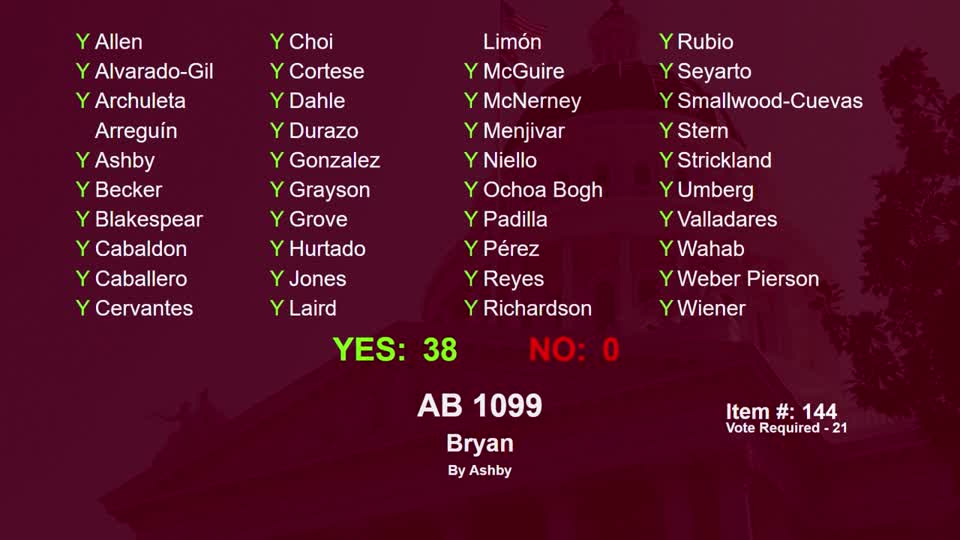
Bill Author