SB 908: Residential windows: retrofitting: residential window replacement projects: California Building Code compliance.
- Session Year: 2025-2026
- House: Senate
- Latest Version Date: 2026-09-29
Current Status:
Passed
(2026-09-29: Chaptered by Secretary of State. Chapter 787, Statutes of 2026.)
Introduced
In Committee
Awaiting First Chamber Vote
Passed First Chamber
In Committee
Awaiting Second Chamber Vote
Passed Second Chamber
Enacted
(1)Existing law, the Davis-Stirling Common Interest Development Act, governs the management and operation of common interest developments. Existing law places various limits and prohibitions on the governing documents, as defined, relative to an owners separate interest within those developments.
This bill would declare void and unenforceable any covenant, restriction, or condition contained in any deed, contract, security instrument, other instrument affecting the transfer or sale of any interest in a common interest development, or provision of a governing document that effectively prohibits or restricts the owner of a separate interest from completing a residential window replacement project or impose any requirements on California Energy Code-compliant windows, as specified. The bills provisions would not apply to certain provisions that impose reasonable installation restrictions on a residential window replacement project that do not significantly increase the cost of a residential window replacement project or significantly decrease the energy efficiency of a residential window replacement project, except as specified.
This bill would prohibit an association from subjecting a residential window replacement project to design review or any other form of approval if the associations governing documents do not place reasonable restrictions on a residential window replacement project.
This bill, for specified residential window replacement projects that propose the replacement of windows, would require an association to impose certain conditions on the project, including a requirement that the owner obtain approval from the association. The bill would require an association to approve a project if the owner agrees to certain requirements in writing, including that the owner comply with the associations governing documents, engage a licensed contractor for the installation, obtain any required local or state permits required for the project, and pay for the costs associated with the installation.
(2)The Planning and Zoning Law authorizes the legislative body of any county or city to adopt ordinances that regulate the use of buildings, structures, and land as between industry, business, residences, open space, and other purposes.
This bill would require a city, county, or city and county to administratively approve an application for a residential window replacement project. The bill would prohibit a city, county, or city and county from requiring discretionary review or a hearing for a residential window replacement project. The bill would also prohibit a city, county, or city and county from denying an application for a residential window replacement project and a local government that is both a city and county from imposing any conditions on certain windows proposed in a housing development project, except as specified. The bill would limit the application of these provisions under certain circumstances, including if a residential building is individually designated on the California Register of Historical Resources prior to the date the application for a residential window replacement project is submitted.
By adding to the duties of local governments, this bill would impose a state-mandated local program.
(3)The bill would make its provisions severable.
(4)The bill would include findings that changes proposed by this bill address a matter of statewide concern rather than a municipal affair and, therefore, apply to all cities, including charter cities.
(5)This bill would make legislative findings and declarations as to the necessity of a special statute for the City and County of San Francisco.
(6)The California Constitution requires the state to reimburse local agencies and school districts for certain costs mandated by the state. Statutory provisions establish procedures for making that reimbursement.
This bill would provide that no reimbursement is required by this act for a specified reason.
(1)Existing law, the Davis-Stirling Common Interest Development Act, governs the management and operation of common interest developments. Existing law places various limits and prohibitions on the governing documents, as defined, relative to an owners separate interest within those developments.
This bill would prohibit those governing documents from limiting or prohibiting the owner of a separate interest within a common interest development from completing a residential window replacement project, as defined, or from imposing any requirements on California Energy Code-compliant windows in a housing development project, as defined.This bill would declare void and unenforceable any covenant, restriction, or condition contained in any deed, contract, security instrument, other instrument affecting the transfer or sale of any interest in a common interest development, or provision of a governing document that effectively prohibits or restricts the owner of a separate interest from completing a residential window replacement project or impose any requirements on California Energy Code-compliant windows, as specified. The bills provisions would not apply to certain provisions that impose reasonable installation restrictions on a residential window replacement project that do not significantly increase the cost of a residential window replacement project or significantly decrease the energy efficiency of a residential window replacement project, except as specified.
This bill would prohibit an association from subjecting a residential window replacement project to design review or any other form of approval if the associations governing documents do not place reasonable restrictions on a residential window replacement project.
This bill, for specified residential window replacement projects that propose the replacement of windows, would require an association to impose certain conditions on the project, including a requirement that the owner obtain approval from the association. The bill would require an association to approve a project if the owner agrees to certain requirements in writing, including that the owner comply with the associations governing documents, engage a licensed contractor for the installation, obtain any required local or state permits required for the project, and pay for the costs associated with the installation.
(2)The Planning and Zoning Law authorizes the legislative body of any county or city to adopt ordinances that regulate the use of buildings, structures, and land as between industry, business, residences, open space, and other purposes.
This bill would require a city, county, or city and county to administratively approve an application for a residential window replacement project. The bill would prohibit a city, county, or city and county from requiring discretionary review or a hearing for a residential window replacement project. The bill would also prohibit a city, county, or city and county from denying an application for a residential window replacement project and a local government that is both a city and county from imposing any conditions on certain windows proposed in a housing development project, except as specified. The bill would limit the application of these provisions under certain circumstances, including if a residential structure building is individually listed as a historical resource in the State Historic Resources Inventory or a local register of historical resources, as those terms are defined. designated on the California Register of Historical Resources prior to the date the application for a residential window replacement project is submitted.
By adding to the duties of local governments, this bill would impose a state-mandated local program.
(3)The bill would make its provisions severable.
(3)(4)The bill would include findings that changes proposed by this bill address a matter of statewide concern rather than a municipal affair and, therefore, apply to all cities, including charter cities.
(4)(5)This bill would make legislative findings and declarations as to the necessity of a special statute for the City and County of San Francisco.
(5)(6)The California Constitution requires the state to reimburse local agencies and school districts for certain costs mandated by the state. Statutory provisions establish procedures for making that reimbursement.
This bill would provide that no reimbursement is required by this act for a specified reason.
(1)Existing law, the Davis-Stirling Common Interest Development Act, governs the management and operation of common interest developments. Existing law places various limits and prohibitions on the governing documents, as defined, relative to an owners separate interest within those developments.
This bill would prohibit those governing documents from limiting or prohibiting the owner of a separate interest within a common interest development from completing a residential window replacement project, as defined, or from imposing any requirements on California Energy Code-compliant windows in a housing development project, as defined.
(2)The Planning and Zoning Law authorizes the legislative body of any county or city to adopt ordinances that regulate the use of buildings, structures, and land as between industry, business, residences, open space, and other purposes.
This bill would require a city, county, or city and county to administratively approve an application for a residential window replacement project. The bill would prohibit a city, county, or city and county from requiring discretionary review or a hearing for a residential window replacement project. The bill would also prohibit a city, county, or city and county from denying an application for a residential window replacement project and a local government that is both a city and county from imposing any conditions on certain windows proposed in a housing development project, except as specified. The bill would limit the application of these provisions under certain circumstances, including if a residential structure is individually listed as a historical resource in the State Historic Resources Inventory, as defined. Inventory or a local register of historical resources, as those terms are defined.
By adding to the duties of local governments, this bill would impose a state-mandated local program.
(3)The bill would include findings that changes proposed by this bill address a matter of statewide concern rather than a municipal affair and, therefore, apply to all cities, including charter cities.
(4)This bill would make legislative findings and declarations as to the necessity of a special statute for the City and County of San Francisco.
(5)The California Constitution requires the state to reimburse local agencies and school districts for certain costs mandated by the state. Statutory provisions establish procedures for making that reimbursement.
This bill would provide that no reimbursement is required by this act for a specified reason.
(1)Existing law, the Davis-Stirling Common Interest Development Act, governs the management and operation of common interest developments. Existing law places various limits and prohibitions on the governing documents, as defined, relative to an owners separate interest within those developments.
This bill would prohibit those governing documents from limiting or prohibiting the owner of a separate interest within a common interest development from replacing existing residential windows with California Energy Code-compliant windows, completing a residential window replacement project, as defined, or from imposing any requirements on California Energy Code-compliant windows in a housing development project, as defined.
(2)The Planning and Zoning Law authorizes the legislative body of any county or city to adopt ordinances that regulate the use of buildings, structures, and land as between industry, business, residences, open space, and other purposes.
This bill would require a city, county, or city and county to administratively approve an application to replace existing residential windows with California Energy Code-compliant windows, as defined. for a residential window replacement project. The bill would prohibit a city, county, or city and county from requiring discretionary review or a hearing for a residential window replacement project that is subject to certain limitations. project. The bill would also prohibit a city, county, or city and county from denying an application for a permit to replace existing windows with California Energy Code-compliant windows or residential window replacement project and a local government that is both a city and county from imposing any conditions on California Energy Code-compliant windows certain windows proposed in a housing development project, except as specified. The bill would limit the application of these provisions under certain circumstances, including if a residential structure is individually listed as a historical resource in the State Historic Resources Inventory, as defined.
By adding to the duties of local governments, this bill would impose a state-mandated local program.
The(3)The bill would include findings that changes proposed by this bill address a matter of statewide concern rather than a municipal affair and, therefore, apply to all cities, including charter cities.
(4)This bill would make legislative findings and declarations as to the necessity of a special statute for the City and County of San Francisco.
(3)(5)The California Constitution requires the state to reimburse local agencies and school districts for certain costs mandated by the state. Statutory provisions establish procedures for making that reimbursement.
This bill would provide that no reimbursement is required by this act for a specified reason.
(1)Existing law, the Davis-Stirling Common Interest Development Act, governs the management and operation of common interest developments. Existing law places various limits and prohibitions on the governing documents, as defined, relative to an owners separate interest within those developments.
This bill would prohibit those governing documents from limiting or prohibiting the owner of a separate interest within a common interest development from replacing existing residential windows with California Energy Code-compliant windows, as defined. defined, or from imposing any requirements on California Energy Code-compliant windows in a housing development project, as defined.
(2)The Planning and Zoning Law authorizes the legislative body of any county or city to adopt ordinances that regulate the use of buildings, structures, and land as between industry, business, residences, open space, and other purposes.
This bill would require a city, county, or city and county to administratively approve an application to replace existing residential windows with California Energy Code-compliant windows, as defined. The bill would prohibit a city, county, or city and county from requiring discretionary review or a hearing for a residential window replacement project that is subject to certain limitations. The bill would also prohibit a city, county, or city and county from denying an application for a permit to replace existing windows with California Energy Code-compliant windows unless it makes certain written findings. or from imposing any conditions on California Energy Code-compliant windows proposed in a housing development project, except as specified. The bill would limit the application of these provisions under certain circumstances, including if a residential structure is individually listed as a historical resource in the State Historic Resources Inventory, as defined.
By adding to the duties of local governments, this bill would impose a state-mandated local program.
The bill would include findings that changes proposed by this bill address a matter of statewide concern rather than a municipal affair and, therefore, apply to all cities, including charter cities.
(3)The California Constitution requires the state to reimburse local agencies and school districts for certain costs mandated by the state. Statutory provisions establish procedures for making that reimbursement.
This bill would provide that no reimbursement is required by this act for a specified reason.
(1)Existing law, the Davis-Stirling Common Interest Development Act, governs the management and operation of common interest developments. Existing law places various limits and prohibitions on the governing documents, as defined, relative to an owners separate interest within those developments.
This bill would prohibit those governing documents from limiting or prohibiting the owner of a separate interest within a common interest development from replacing existing residential windows with California Energy Code-compliant windows, as defined.
(2)The Planning and Zoning Law authorizes the legislative body of any county or city to adopt ordinances that regulate the use of buildings, structures, and land as between industry, business, residences, open space, and other purposes.
This bill would require a city, county, or city and county to administratively approve an application to replace existing residential windows with California Energy Code-compliant windows, as defined. The bill would prohibit a city, county, or city and county from requiring discretionary review or a hearing for a residential window replacement project that is subject to certain limitations. The bill would also prohibit a city, county, or city and county from denying an application for a permit to replace existing windows with California Energy Code-compliant windows unless it makes certain written findings. The bill would limit the application of these provisions under certain circumstances, including if a residential structure is individually listed as a historical resource in the State Historic Resources Inventory, as defined.
By adding to the duties of local governments, this bill would impose a state-mandated local program.
The bill would include findings that changes proposed by this bill address a matter of statewide concern rather than a municipal affair and, therefore, apply to all cities, including charter cities.
(3)The California Constitution requires the state to reimburse local agencies and school districts for certain costs mandated by the state. Statutory provisions establish procedures for making that reimbursement.
This bill would provide that no reimbursement is required by this act for a specified reason.
Existing law generally regulates the development of transit-oriented housing developments near transit-oriented development stops. Existing law defines various terms for these purposes. Existing law requires the Department of Housing and Community Development to oversee compliance with those provisions, authorizes a local government to enact an ordinance to make its zoning code consistent with those provisions, as specified, and requires each metropolitan planning organization to create a map of transit-oriented development stops and zones within its region by tier, as specified. This bill would state the intent of the Legislature to enact subsequent legislation that would make technical and clarifying changes to those laws governing transit-oriented development, and to add a select set of San Francisco Bay area ferry terminals to the scope of those provisions.Existing law generally regulates the development of transit-oriented housing developments near transit-oriented development stops. Existing law defines various terms for these purposes. Existing law requires the Department of Housing and Community Development to oversee compliance with those provisions, authorizes a local government to enact an ordinance to make its zoning code consistent with those provisions, as specified, and requires each metropolitan planning organization to create a map of transit-oriented development stops and zones within its region by tier, as specified.
This bill would state the intent of the Legislature to enact subsequent legislation that would make technical and clarifying changes to those laws governing transit-oriented development, and to add a select set of San Francisco Bay area ferry terminals to the scope of those provisions.
(a)Notwithstanding any other law, any covenant, restriction, or condition contained in any deed, contract, security instrument, other instrument affecting the transfer or sale of any interest in a common interest development, or provision of a governing document, as defined in Section 4150, that effectively prohibits or restricts the owner of a separate interest from completing a residential window replacement project or impose any requirements on California Energy Code-compliant windows, as defined in subdivision (f), regarding an owners separate interest windows, an owners exclusive use common area windows as defined in subdivision (b) of Section 4145, or windows designated in the governing documents as common area windows, but are designed to exclusively serve a single owners separate interest, is void and unenforceable.
(b)(1)Subdivision (a) shall not apply to either of the following:
(A)Provisions that impose reasonable installation restrictions on a residential window replacement project that do not significantly increase the cost of a residential window replacement project or significantly decrease the energy efficiency of a residential window replacement project.
(B)Provisions that impose reasonable aesthetic restrictions on a residential window replacement project that do not when combined with reasonable restrictions authorized pursuant to subparagraph (A), significantly increase the cost of a residential window replacement project or significantly decrease the energy efficiency of a residential window replacement project. This paragraph shall apply only if both of the following conditions are satisfied:
(i)The reasonable aesthetic restrictions apply only to a residential window replacement project in a multifamily residential building of more than 20 units that does not include townhomes.
(ii)The reasonable aesthetic restrictions apply only to a residential window replacement project that modifies the exterior visual appearance of a window.
(2)Restrictions authorized by this subdivision shall not require the use of a material that would result in the window not being a California Energy Code-compliant window.
(c)Notwithstanding any other law, if an associations governing documents do not place reasonable restrictions on a residential window replacement project, the association shall not subject the project to design review or any other form of approval. This subdivision does not constitute a change in, but is declaratory of, existing law.
(d)(1)If approval is required for a residential window replacement project as permitted by this section, an application for approval shall be processed and approved by the association in the same manner as an application for approval of an architectural modification to the property pursuant to the governing documents and Section 4765. If a residential window replacement project subject to this subdivision is compliant with the reasonable restrictions permitted by this section, the association shall approve the application for the residential window replacement project.
(2)The approval or disapproval of an application shall be in writing and shall not be willfully avoided or delayed. If an application is not approved or disapproved in writing within 45 days from the date of receipt of the application, the application shall be deemed approved unless that delay is the result of a request for additional information that was required by the application for approval and not provided by the owner of the separate interest.
(3)If an association disapproves an application pursuant to this subdivision and a modified application is submitted, the association shall review the modified application subject to the requirements of this section.
(e)(1)This subdivision shall apply to an owners residential window replacement project that proposes the replacement of windows that are any of the following:
(A)Exclusive use common area pursuant to subdivision (b) of Section 4145.
(B)Designated in the governing documents as common area for the exclusive use of that owner.
(C)Designated in the governing documents as part of that owners separate interest and such windows are installed within a common area building structure.
(D)Designated in the governing documents as common area windows but are designed to exclusively serve that owners separate interest.
(2)An association shall require a residential window replacement project described in paragraph (1) to comply with all of the following:
(A)The owner shall obtain approval from the association for the residential window replacement project pursuant to the limitations of this section. An association shall approve a project subject to this subparagraph if the owner agrees in writing to do all of the following:
(i)Comply with the associations governing documents regarding any applicable aesthetic or installation standards that do not significantly increase the cost of, or significantly decrease the energy efficiency of, a residential window replacement project and any association inspection rights.
(ii)Engage a licensed contractor for the installation of the residential window replacement project.
(iii)Obtain any required local or state permits and provide proof to the association after the association approves the owners application.
(iv)Pay for the costs associated with the installation of the residential window replacement project.
(B)The owner and each successive owner shall be responsible for all of the following:
(i)The continued maintenance, repair, or replacement of any component related to the residential window replacement project.
(ii)Costs for damage resulting from the installation of the residential window replacement project or costs for maintenance, repair, and removal of the window replacement project.
(iii)Disclosing to prospective buyers the existence of the residential window replacement project and related responsibilities of the owner pursuant to this section.
(3)An association may require a residential window replacement project described in paragraph (1) to comply with the following
(A)Require notice to be recorded against the title of the owners separate interest regarding the existence of the residential window replacement project and related responsibilities pursuant to the governing documents and this section. The association shall be responsible for preparing and recording notice and any recorded recision, including the costs thereof, as applicable.
(B)Require the installer of a residential window replacement project to indemnify and reimburse the association for loss or damage caused by the installation of the residential window replacement project.
(f)For purposes of this section:
(1)California Energy Code-compliant windows means windows that meet or exceed the mandatory requirements for fenestration products and exterior doors, as described in Section 110.6 of the California Energy Code (Part 6 of Title 24 of the California Code of Regulations) or a subsequent code section adopted by the California Building Standards Commission in the most recent triennial building code cycle.
(2)Residential window replacement project has the same meaning as defined in Section 65850.73 of the Government Code.
(3)Significantly decrease the energy efficiency means a decrease the energy efficiency of the residential window replacement project by an amount exceeding 10 percent as originally specified and proposed.
(4)Significantly increase the cost means an increase in an amount exceeding 10 percent of the cost of the residential window replacement project as originally specified and proposed.
SEC. 2.Section 65850.73 is added to the Government Code, to read:65850.73.(a) The Legislature finds and declares that retrofitting windows in existing residential buildings with windows that meet current California Energy Code standards is critical to reducing energy consumption and achieving the states climate goals, which is a matter of statewide concern and is not a municipal affair as that term is used in Section 5 of Article XI of the California Constitution. Therefore, this section applies to all cities, including charter cities.
(b)For the purposes of this section, the following definitions apply:
(1)Housing development project means a housing development project as defined in paragraph (2) of subdivision (h) of Section 65589.5.
(2)Residential window replacement project means a project that meets all of the following requirements:
(A)The project proposes only to replace existing windows in a single-family or multifamily residential building with windows of the same size and in the same location.
(B)The project does not involve any physical alterations to the existing building beyond those necessary to install those windows.
(C)The proposed window installation complies with all applicable provisions of the California Building Standards Code (Title 24 of the California Code of Regulations), including, but not limited to the California Residential Code, California Building Code, California Fire Code, California Wildland-Urban Interface Code, and the California Energy Code.
(3)State Historic Resources Inventory has the same meaning as defined in Section 5020.1 of the Public Resources Code.
(4)Local register of historical resources has the same meaning as defined in subdivision (k) of Section 5020.1 of the Public Resources Code.
(c)A city, county, or city and county shall administratively approve an application for a residential window replacement project.
(d)A city, county, or city and county shall not require discretionary review or a hearing for a residential window replacement project.
(e)A city, county, or city and county shall not deny an application for a residential window replacement project unless it makes written findings, based upon substantial evidence in the record, that the residential window replacement project would have a specific, adverse impact upon public health or safety and there is no feasible method to satisfactorily mitigate or avoid the specific, adverse impact.
(f)Any conditions imposed on a residential window replacement project shall be limited to objective conditions that are necessary to mitigate a specific, adverse impact upon public health or safety identified pursuant to subdivision (e).
(g)A local government that is both a city and county shall not impose any conditions on a window proposed in a housing development project other than objective conditions that are necessary to mitigate a specific adverse impact upon public health or safety, provided that the window complies with all applicable provisions of the California Building Standards Code (Title 24 of the California Code of Regulations), including, but not limited to, the California Residential Code, California Building Code, California Fire Code, California Wildland-Urban Interface Code, and the California Energy Code. A local government that is both a city and county shall make written findings, based upon substantial evidence in the record, that the proposed window would have a specific, adverse impact upon public health or safety.
(h)This section shall not apply to either of the following:
(1)A residential building that is individually designated on the California Register of Historical Resources, provided that the residential building was designated prior to the date an application for a residential window replacement project is submitted.
(2)(A)Except as provided in subparagraph (B), a residential building that is individually designated on a local register of historical resources or designated as a contributor to a multicomponent resource designated on a local register of historical resources, provided that the residential building was designated prior to the date an application for a residential window replacement project is submitted.
(B)This paragraph shall not apply to a residential building designated on a local register of historical resources based primarily on its age.
SEC. 3.The provisions of this act are severable. If any provision of this act or its application is held invalid, that invalidity shall not affect other provisions or applications that can be given effect without the invalid provision or application.
SEC. 4.The Legislature finds and declares that a special statute is necessary and that a general statute cannot be made applicable within the meaning of Section 16 of Article IV of the California Constitution because of the unique development regulations within certain areas of the state that are both a city and county.
SEC. 5.No reimbursement is required by this act pursuant to Section 6 of Article XIIIB of the California Constitution because a local agency or school district has the authority to levy service charges, fees, or assessments sufficient to pay for the program or level of service mandated by this act, within the meaning of Section 17556 of the Government Code.
(a)No governing documents shall limit or prohibit Notwithstanding any other law, any covenant, restriction, or condition contained in any deed, contract, security instrument, other instrument affecting the transfer or sale of any interest in a common interest development, or provision of a governing document, as defined in Section 4150, that effectively prohibits or restricts the owner of a separate interest within a common interest development from completing a residential window replacement project or impose any requirements on California Energy Code-compliant windows in a housing development project. windows, as defined in subdivision (f), regarding an owners separate interest windows, an owners exclusive use common area windows as defined in subdivision (b) of Section 4145, or windows designated in the governing documents as common area windows, but are designed to exclusively serve a single owners separate interest, is void and unenforceable.
(b)(1)Subdivision (a) shall not apply to either of the following:
(A)Provisions that impose reasonable installation restrictions on a residential window replacement project that do not significantly increase the cost of a residential window replacement project or significantly decrease the energy efficiency of a residential window replacement project.
(B)Provisions that impose reasonable aesthetic restrictions on a residential window replacement project that do not when combined with reasonable restrictions authorized pursuant to subparagraph (A), significantly increase the cost of a residential window replacement project or significantly decrease the energy efficiency of a residential window replacement project. This paragraph shall apply only if both of the following conditions are satisfied:
(i)The reasonable aesthetic restrictions apply only to a residential window replacement project in a multifamily residential building of more than 20 units that does not include townhomes.
(ii)The reasonable aesthetic restrictions apply only to a residential window replacement project that modifies the exterior visual appearance of a window.
(2)Restrictions authorized by this subdivision shall not require the use of a material that would result in the window not being a California Energy Code-compliant window.
(c)Notwithstanding any other law, if an associations governing documents do not place reasonable restrictions on a residential window replacement project, the association shall not subject the project to design review or any other form of approval. This subdivision does not constitute a change in, but is declaratory of, existing law.
(d)(1)If approval is required for a residential window replacement project as permitted by this section, an application for approval shall be processed and approved by the association in the same manner as an application for approval of an architectural modification to the property pursuant to the governing documents and Section 4765. If a residential window replacement project subject to this subdivision is compliant with the reasonable restrictions permitted by this section, the association shall approve the application for the residential window replacement project.
(2)The approval or disapproval of an application shall be in writing and shall not be willfully avoided or delayed. If an application is not approved or disapproved in writing within 45 days from the date of receipt of the application, the application shall be deemed approved unless that delay is the result of a request for additional information that was required by the application for approval and not provided by the owner of the separate interest.
(3)If an association disapproves an application pursuant to this subdivision and a modified application is submitted, the association shall review the modified application subject to the requirements of this section.
(e)(1)This subdivision shall apply to an owners residential window replacement project that proposes the replacement of windows that are any of the following:
(A)Exclusive use common area pursuant to subdivision (b) of Section 4145.
(B)Designated in the governing documents as common area for the exclusive use of that owner.
(C)Designated in the governing documents as part of that owners separate interest and such windows are installed within a common area building structure.
(D)Designated in the governing documents as common area windows but are designed to exclusively serve that owners separate interest.
(2)An association shall require a residential window replacement project described in paragraph (1) to comply with all of the following:
(A)The owner shall obtain approval from the association for the residential window replacement project pursuant to the limitations of this section. An association shall approve a project subject to this subparagraph if the owner agrees in writing to do all of the following:
(i)Comply with the associations governing documents regarding any applicable aesthetic or installation standards that do not significantly increase the cost of, or significantly decrease the energy efficiency of, a residential window replacement project and any association inspection rights.
(ii)Engage a licensed contractor for the installation of the residential window replacement project.
(iii)Obtain any required local or state permits and provide proof to the association after the association approves the owners application.
(iv)Pay for the costs associated with the installation of the residential window replacement project.
(B)The owner and each successive owner shall be responsible for all of the following:
(i)The continued maintenance, repair, or replacement of any component related to the residential window replacement project.
(ii)Costs for damage resulting from the installation of the residential window replacement project or costs for maintenance, repair, and removal of the window replacement project.
(iii)Disclosing to prospective buyers the existence of the residential window replacement project and related responsibilities of the owner pursuant to this section.
(3)An association may require a residential window replacement project described in paragraph (1) to comply with the following
(A)Require notice to be recorded against the title of the owners separate interest regarding the existence of the residential window replacement project and related responsibilities pursuant to the governing documents and this section. The association shall be responsible for preparing and recording notice and any recorded recision, including the costs thereof, as applicable.
(B)Require the installer of a residential window replacement project to indemnify and reimburse the association for loss or damage caused by the installation of the residential window replacement project.
(b)(f)For purposes of this section, the following definitions apply: section:
(1)California Energy Code-compliant windows means windows that meet or exceed the mandatory requirements for fenestration products and exterior doors, as described in Section 110.6 of the California Energy Code (Part 6 of Title 24 of the California Code of Regulations) or a subsequent code section adopted by the California Building Standards Commission in the most recent triennial building code cycle.
(2)Housing development project means a housing development project as defined in paragraph (2) of subdivision (h) of Section 65589.5 of the Government Code. (3)(2)Residential window replacement project has the same meaning as defined in Section 65850.73 of the Government Code.
(3)Significantly decrease the energy efficiency means a decrease the energy efficiency of the residential window replacement project by an amount exceeding 10 percent as originally specified and proposed.
(4)Significantly increase the cost means an increase in an amount exceeding 10 percent of the cost of the residential window replacement project as originally specified and proposed.
SEC. 2.Section 65850.73 is added to the Government Code, to read:65850.73.(a) The Legislature finds and declares that retrofitting windows in existing residential buildings with windows that meet current California Energy Code standards is critical to reducing energy consumption and achieving the states climate goals, which is a matter of statewide concern and is not a municipal affair as that term is used in Section 5 of Article XI of the California Constitution. Therefore, this section applies to all cities, including charter cities.
(b)For the purposes of this section, the following definitions apply:
(1)Housing development project means a housing development project as defined in paragraph (2) of subdivision (h) of Section 65589.5.
(2)Residential window replacement project means a project that meets all of the following requirements:
(A)The project proposes only to replace existing windows in a single-family or multifamily residential structure building with windows of the same size and in the same location.
(B)The project does not involve any physical alterations to the existing structure building beyond those necessary to install those windows.
(C)The proposed window installation complies with all applicable provisions of the California Building Standards Code (Title 24 of the California Code of Regulations), including, but not limited to the California Residential Code, California Building Code, California Fire Code, California Wildland-Urban Interface Code, and the California Energy Code.
(3)State Historic Resources Inventory has the same meaning as defined in Section 5020.1 of the Public Resources Code.
(4)Local register of historical resources has the same meaning as defined in subdivision (k) of Section 5020.1 of the Public Resources Code.
(c)A city, county, or city and county shall administratively approve an application for a residential window replacement project.
(d)A city, county, or city and county shall not require discretionary review or a hearing for a residential window replacement project.
(e)A city, county, or city and county shall not deny an application for a residential window replacement project unless it makes written findings, based upon substantial evidence in the record, that the residential window replacement project would have a specific, adverse impact upon public health or safety and there is no feasible method to satisfactorily mitigate or avoid the specific, adverse impact.
(f)Any conditions imposed on a residential window replacement project shall be limited to objective conditions that are necessary to mitigate a specific, adverse impact upon public health or safety identified pursuant to subdivision (e).
(g)A local government that is both a city and county shall not impose any conditions on a window proposed in a housing development project other than objective conditions that are necessary to mitigate a specific adverse impact upon public health or safety, provided that the window complies with all applicable provisions of the California Building Standards Code (Title 24 of the California Code of Regulations), including, but not limited to, the California Residential Code, California Building Code, California Fire Code, California Wildland-Urban Interface Code, and the California Energy Code. A local government that is both a city and county shall make written findings, based upon substantial evidence in the record, that the proposed window would have a specific, adverse impact upon public health or safety.
(h)This section shall not apply to either of the following:
(1)A residential structure building that is individually listed as a historical resource in the State Historic Resources Inventory, designated on the California Register of Historical Resources, provided that the structure residential building was designated prior to the date an application for a residential window replacement project is submitted.
(2)(A)Except as provided in subparagraph (B), a residential structure building that is individually listed designated on a local register of historical resources or designated as a contributor to a multicomponent resource, resource designated on a local register of historical resources, provided that the structure residential building was designated prior to the date an application for a residential window replacement project is submitted.
(B)This paragraph shall not apply to a structure residential building designated as historical on a local register of historical resources based primarily on its age.
SEC. 3.The provisions of this act are severable. If any provision of this act or its application is held invalid, that invalidity shall not affect other provisions or applications that can be given effect without the invalid provision or application.
SEC. 3.SEC. 4.The Legislature finds and declares that a special statute is necessary and that a general statute cannot be made applicable within the meaning of Section 16 of Article IV of the California Constitution because of the unique development regulations within certain areas of the state that are both a city and county.
SEC. 4.SEC. 5.No reimbursement is required by this act pursuant to Section 6 of Article XIIIB of the California Constitution because a local agency or school district has the authority to levy service charges, fees, or assessments sufficient to pay for the program or level of service mandated by this act, within the meaning of Section 17556 of the Government Code.
(a)No governing documents shall limit or prohibit the owner of a separate interest within a common interest development from completing a residential window replacement project or impose any requirements on California Energy Code-compliant windows in a housing development project.
(b)For purposes of this section, the following definitions apply:
(1)California Energy Code-compliant windows means windows that meet or exceed the mandatory requirements for fenestration products and exterior doors, as described in Section 110.6 of the California Energy Code (Part 6 of Title 24 of the California Code of Regulations) or a subsequent code section adopted by the California Building Standards Commission in the most recent triennial building code cycle.
(2)Housing development project means a housing development project as defined in paragraph (2) of subdivision (h) of Section 65589.5 of the Government Code.
(3)Residential window replacement project has the same meaning as defined in Section 65850.73 of the Government Code.
SEC. 2.Section 65850.73 is added to the Government Code, to read:65850.73.(a) The Legislature finds and declares that retrofitting windows in existing residential buildings with windows that meet current California Energy Code standards is critical to reducing energy consumption and achieving the states climate goals, which is a matter of statewide concern and is not a municipal affair as that term is used in Section 5 of Article XI of the California Constitution. Therefore, this section applies to all cities, including charter cities.
(b)For the purposes of this section, the following definitions apply:
(1)Housing development project means a housing development project as defined in paragraph (2) of subdivision (h) of Section 65589.5.
(2)Residential window replacement project means a project that meets all of the following requirements:
(A)The project proposes only to replace existing windows in a single-family or multifamily residential structure with windows of the same size and in the same location.
(B)The project does not involve any physical alterations to the existing structure beyond those necessary to install those windows.
(C)The proposed window installation complies with all applicable provisions of the California Building Standards Code (Title 24 of the California Code of Regulations), including, but not limited to the California Residential Code, California Building Code, California Fire Code, California Wildland-Urban Interface Code, and the California Energy Code.
(3)State Historic Resources Inventory has the same meaning as defined in Section 5020.1 of the Public Resources Code.
(4)Local register of historical resources has the same meaning as defined in subdivision (k) of Section 5020.1 of the Public Resources Code.
(c)A city, county, or city and county shall administratively approve an application for a residential window replacement project.
(d)A city, county, or city and county shall not require discretionary review or a hearing for a residential window replacement project.
(e)A city, county, or city and county shall not deny an application for a residential window replacement project unless it makes written findings, based upon substantial evidence in the record, that the residential window replacement project would have a specific, adverse impact upon public health or safety and there is no feasible method to satisfactorily mitigate or avoid the specific, adverse impact.
(f)Any conditions imposed on a residential window replacement project shall be limited to objective conditions that are necessary to mitigate a specific, adverse impact upon public health or safety identified pursuant to subdivision (e).
(g)A local government that is both a city and county shall not impose any conditions on a window proposed in a housing development project other than objective conditions that are necessary to mitigate a specific adverse impact upon public health or safety, provided that the window complies with all applicable provisions of the California Building Standards Code (Title 24 of the California Code of Regulations), including, but not limited to, the California Residential Code, California Building Code, California Fire Code, California Wildland-Urban Interface Code, and the California Energy Code. A local government that is both a city and county shall make written findings, based upon substantial evidence in the record, that the proposed window would have a specific, adverse impact upon public health or safety.
(h)This section shall not apply to either of the following:
(1)A residential structure that is individually listed as a historical resource in the State Historic Resources Inventory, provided that the parcel or structure were was designated prior to the date an application to replace existing for a residential windows with California Energy Code-compliant windows window replacement project is submitted.
(2)A residential structure individually designated or listed as a city or county landmark under a city or county ordinance or a residential structure on a site designated as a historical resource on a local register. A local ordinance that designates multiple properties as historical based solely on the age of the structure, or an ordinance that designates a district or neighborhood as historical, does not constitute an ordinance that individually identifies a structure as a city or county landmark.(2)(A)Except as provided in subparagraph (B), a residential structure that is individually listed on a local register of historical resources or as a contributor to a multicomponent resource, provided that the structure was designated prior to the date an application for a residential window replacement project is submitted.
(B)This paragraph shall not apply to a structure designated as historical based primarily on its age.
SEC. 3.The Legislature finds and declares that a special statute is necessary and that a general statute cannot be made applicable within the meaning of Section 16 of Article IV of the California Constitution because of the unique development regulations within certain areas of the state that are both a city and county.
SEC. 4.No reimbursement is required by this act pursuant to Section 6 of Article XIIIB of the California Constitution because a local agency or school district has the authority to levy service charges, fees, or assessments sufficient to pay for the program or level of service mandated by this act, within the meaning of Section 17556 of the Government Code.
(a)No governing documents shall limit or prohibit the owner of a separate interest within a common interest development from replacing existing residential windows with California Energy Code-compliant windows completing a residential window replacement project or impose any requirements on California Energy Code-compliant windows in a housing development project.
(c)As used in this section, housing(b)For purposes of this section, the following definitions apply:
(1)California Energy Code-compliant windows means windows that meet or exceed the mandatory requirements for fenestration products and exterior doors, as described in Section 110.6 of the California Energy Code (Part 6 of Title 24 of the California Code of Regulations) or a subsequent code section adopted by the California Building Standards Commission in the most recent triennial building code cycle.
(2)Housing development project means a housing development project as defined in paragraph (2) of subdivision (h) of Section 65589.5 of the Government Code.
(3)Residential window replacement project has the same meaning as defined in Section 65850.73 of the Government Code.
SEC. 2.Section 65850.73 is added to the Government Code, to read:65850.73.(a) The Legislature finds and declares that retrofitting windows in existing residential buildings with windows that meet current California Energy Code standards is critical to reducing energy consumption and achieving the states climate goals, which is a matter of statewide concern and is not a municipal affair as that term is used in Section 5 of Article XI of the California Constitution. Therefore, this section applies to all cities, including charter cities.
(b)For the purposes of this section, the following definitions apply:
(1)California Energy Code-compliant windows means windows that meet or exceed the mandatory requirements for fenestration products and exterior doors, as described in Section 110.6 of the California Energy Code (Part 6 of Title 24 of the California Code of Regulations) or a subsequent code section adopted by the California Building Standards Commission in the most recent triennial building code cycle.(2)(1)Housing development project means a housing development project as defined in paragraph (2) of subdivision (h) of Section 65589.5.
(2)Residential window replacement project means a project that meets all of the following requirements:
(A)The project proposes only to replace existing windows in a single-family or multifamily residential structure with windows of the same size and in the same location.
(B)The project does not involve any physical alterations to the existing structure beyond those necessary to install those windows.
(C)The proposed window installation complies with all applicable provisions of the California Building Standards Code (Title 24 of the California Code of Regulations), including, but not limited to the California Residential Code, California Building Code, California Fire Code, California Wildland-Urban Interface Code, and the California Energy Code.
(3)State Historic Resources Inventory has the same meaning as defined in Section 5020.1 of the Public Resources Code.
(c)A city, county, or city and county shall administratively approve an application to replace existing residential windows with California Energy Code-compliant windows. for a residential window replacement project.
(d)A city, county, or city and county shall not require discretionary review or a hearing for a residential window replacement project that is limited to replacing existing windows with California Energy Code-compliant windows and does not involve any physical alterations to the existing structure beyond those necessary to install those windows. project.
(e)A city, county, or city and county shall not deny an application for a permit to replace existing windows with California Energy Code-compliant windows residential window replacement project unless it makes written findings, based upon substantial evidence in the record, that the proposed replacement residential window replacement project would have a specific, adverse impact upon public health or safety and there is no feasible method to satisfactorily mitigate or avoid the specific, adverse impact.
(f)Any conditions imposed on a residential window replacement project shall be limited to objective conditions that are necessary to mitigate a specific, adverse impact upon public health or safety identified pursuant to subdivision (e).
(g)A city, county, or local government that is both a city and county shall not impose any conditions on California Energy Code-compliant windows a window proposed in a housing development project other than objective conditions that are necessary to mitigate a specific adverse impact upon public health or safety. safety, provided that the window complies with all applicable provisions of the California Building Standards Code (Title 24 of the California Code of Regulations), including, but not limited to, the California Residential Code, California Building Code, California Fire Code, California Wildland-Urban Interface Code, and the California Energy Code. A city, county, or local government that is both a city and county shall make written findings, based upon substantial evidence in the record, that the proposed California Energy Code-compliant window would have a specific, adverse impact upon public health or safety.
(h)This section shall not apply to either of the following:
(1)A residential structure that is individually listed as a historical resource in the State Historic Resources Inventory, provided that the parcel or structure was were designated prior to the date an application to replace existing residential windows with California Energy Code-compliant windows is submitted.
(2)A residential structure individually designated or listed as a city or county landmark under a city or county ordinance or a residential structure on a site designated as a historical resource on a local register. A local ordinance that designates multiple properties as historical based solely on the age of the structure, or an ordinance that designates a district or neighborhood as historical, does not constitute an ordinance that individually identifies a structure as a city or county landmark.
SEC. 3.The Legislature finds and declares that a special statute is necessary and that a general statute cannot be made applicable within the meaning of Section 16 of Article IV of the California Constitution because of the unique development regulations within certain areas of the state that are both a city and county.
SEC. 3.SEC. 4.No reimbursement is required by this act pursuant to Section 6 of Article XIIIB of the California Constitution because a local agency or school district has the authority to levy service charges, fees, or assessments sufficient to pay for the program or level of service mandated by this act, within the meaning of Section 17556 of the Government Code.
(a)For the purposes of this section, California Energy Code-compliant windows has the same meaning as defined in Section 65850.73 of the Government Code.
(b)No governing documents shall limit or prohibit the owner of a separate interest within a common interest development from replacing existing residential windows with California Energy Code-compliant windows. windows or impose any requirements on California Energy Code-compliant windows in a housing development project.
(c)As used in this section, housing development project means a housing development project as defined in paragraph (2) of subdivision (h) of Section 65589.5 of the Government Code.
SEC. 2.Section 65850.73 is added to the Government Code, to read:65850.73.(a) The Legislature finds and declares that retrofitting windows in existing residential buildings with windows that meet current California Energy Code standards is critical to reducing energy consumption and achieving the states climate goals, which is a matter of statewide concern and is not a municipal affair as that term is used in Section 5 of Article XI of the California Constitution. Therefore, this section applies to all cities, including charter cities.
(b)For the purposes of this section, the following definitions apply:
(1)California Energy Code-compliant windows means windows that meet or exceed the mandatory requirements for fenestration products and exterior doors, as described in Section 110.6 of the California Energy Code (Part 6 of Title 24 of the California Code of Regulations) or a subsequent code section adopted by the California Building Standards Commission in the most recent triennial building code cycle.
(2)Housing development project means a housing development project as defined in paragraph (2) of subdivision (h) of Section 65589.5.
(2)(3)State Historic Resources Inventory has the same meaning as defined in Section 5020.1 of the Public Resources Code.
(c)A city, county, or city and county shall administratively approve an application to replace existing residential windows with California Energy Code-compliant windows.
(d)A city, county, or city and county shall not require discretionary review or a hearing for a residential window replacement project that is limited to replacing existing windows with California Energy Code-compliant windows and does not involve any physical alterations to the existing structure beyond those necessary to install those windows.
(e)A city, county, or city and county shall not deny an application for a permit to replace existing windows with California Energy Code-compliant windows unless it makes written findings, based upon substantial evidence in the record, that the proposed replacement would have a specific, adverse impact upon public health or safety and there is no feasible method to satisfactorily mitigate or avoid the specific, adverse impact.
(f)Any conditions imposed on a residential window replacement shall be limited to objective conditions that are necessary to mitigate a specific, adverse impact upon public health or safety identified pursuant to subdivision (e).
(g)A city, county, or city and county shall not impose any conditions on California Energy Code-compliant windows proposed in a housing development project other than objective conditions that are necessary to mitigate a specific adverse impact upon public health or safety. A city, county, or city and county shall make written findings, based upon substantial evidence in the record, that the proposed California Energy Code-compliant window would have a specific, adverse impact upon public health or safety.
(g)(h)This section shall not apply to either of the following:
(1)A residential structure that is individually listed as a historical resource in the State Historic Resources Inventory, provided that the parcel or structures structure was designated prior to the date an application to replace existing residential windows with California Energy Code-compliant windows is submitted.
(2)A residential structure individually designated or listed as a city or county landmark under a city or county ordinance. ordinance or a residential structure on a site designated as a historical resource on a local register. A local ordinance that designates multiple properties as historic historical based solely on the age of the structure, or an ordinance that designates a district or neighborhood as historic, historical, does not constitute an ordinance that individually identifies a structure as a city or county landmark.
SEC. 3.No reimbursement is required by this act pursuant to Section 6 of Article XIIIB of the California Constitution because a local agency or school district has the authority to levy service charges, fees, or assessments sufficient to pay for the program or level of service mandated by this act, within the meaning of Section 17556 of the Government Code.
(a)For the purposes of this section, California Energy Code-compliant windows has the same meaning as defined in Section 65850.73 of the Government Code.
(b)No governing documents shall limit or prohibit the owner of a separate interest within a common interest development from replacing existing residential windows with California Energy Code-compliant windows.
SEC. 2.Section 65850.73 is added to the Government Code, to read:65850.73.(a) The Legislature finds and declares that retrofitting windows in existing residential buildings with windows that meet current California Energy Code standards is critical to reducing energy consumption and achieving the states climate goals, which is a matter of statewide concern and is not a municipal affair as that term is used in Section 5 of Article XI of the California Constitution. Therefore, this section applies to all cities, including charter cities.
(b)For the purposes of this section, the following definitions apply:
(1)California Energy Code-compliant windows means windows that meet or exceed the mandatory requirements for fenestration products and exterior doors, as described in Section 110.6 of the California Energy Code (Part 6 of Title 24 of the California Code of Regulations) or a subsequent code section adopted by the California Building Standards Commission in the most recent triennial building code cycle.
(2)State Historic Resources Inventory has the same meaning as defined in Section 5020.1 of the Public Resources Code.
(c)A city, county, or city and county shall administratively approve an application to replace existing residential windows with California Energy Code-compliant windows.
(d)A city, county, or city and county shall not require discretionary review or a hearing for a residential window replacement project that is limited to replacing existing windows with California Energy Code-compliant windows and does not involve any physical alterations to the existing structure beyond those necessary to install those windows.
(e)A city, county, or city and county shall not deny an application for a permit to replace existing windows with California Energy Code-compliant windows unless it makes written findings, based upon substantial evidence in the record, that the proposed replacement would have a specific, adverse impact upon public health or safety and there is no feasible method to satisfactorily mitigate or avoid the specific, adverse impact.
(f)Any conditions imposed on a residential window replacement shall be limited to objective conditions that are necessary to mitigate a specific, adverse impact upon public health or safety identified pursuant to subdivision (e).
(g)This section shall not apply to either of the following:
(1)A residential structure that is individually listed as a historical resource in the State Historic Resources Inventory, provided that the parcel or structures was designated prior to the date an application to replace existing residential windows with California Energy Code-compliant windows is submitted.
(2)A residential structure individually designated or listed as a city or county landmark under a city or county ordinance. A local ordinance that designates multiple properties as historic based solely on the age of the structure, or an ordinance that designates a district or neighborhood as historic, does not constitute an ordinance that individually identifies a structure as a city or county landmark.
SEC. 3.No reimbursement is required by this act pursuant to Section 6 of Article XIIIB of the California Constitution because a local agency or school district has the authority to levy service charges, fees, or assessments sufficient to pay for the program or level of service mandated by this act, within the meaning of Section 17556 of the Government Code.
SECTION 1.It is the intent of the Legislature to enact subsequent legislation that would make technical and clarifying changes to Chapter 4.1.5 (commencing with Section 65912.155) of Division 1 of Title 7 of the Government Code, as enacted by Senate Bill 79 (Chapter 512 of the Statutes of 2025), and to add a select set of San Francisco Bay area ferry terminals to the scope of that chapter.It is the intent of the Legislature to enact subsequent legislation that would make technical and clarifying changes to Chapter 4.1.5 (commencing with Section 65912.155) of Division 1 of Title 7 of the Government Code, as enacted by Senate Bill 79 (Chapter 512 of the Statutes of 2025), and to add a select set of San Francisco Bay area ferry terminals to the scope of that chapter.
|
Date
|
Status
|
|---|---|
| Sep 29, 2026 | Chaptered by Secretary of State. Chapter 787, Statutes of 2026. |
| Sep 29, 2026 | Approved by the Governor. |
| Aug 31, 2026 | Enrolled and presented to the Governor at 6 p.m. |
| Aug 26, 2026 | Assembly amendments concurred in. (Ayes 38. Noes 1. Page 5917.) Ordered to engrossing and enrolling. |
| Aug 26, 2026 | Assembly amendments concurred in. (Ayes 38. Noes 1.) Ordered to engrossing and enrolling. |
| Aug 25, 2026 | In Senate. Concurrence in Assembly amendments pending. |
| Aug 25, 2026 | Read third time. Passed. (Ayes 74. Noes 0. Page 6520.) Ordered to the Senate. |
| Aug 25, 2026 | Read third time. Passed. Ordered to the Senate. |
| Aug 20, 2026 | Ordered to third reading. |
| Aug 20, 2026 | Read third time and amended. |
| Aug 6, 2026 | Read second time. Ordered to third reading. |
| Aug 5, 2026 | From committee: Do pass. (Ayes 14. Noes 1.) (August 5). |
| Jul 2, 2026 | From committee: Do pass and re-refer to Com. on APPR. (Ayes 10. Noes 0.) (July 1). Re-referred to Com. on APPR. |
| Jun 24, 2026 | From committee: Do pass and re-refer to Com. on L. GOV. (Ayes 11. Noes 0.) (June 24). Re-referred to Com. on L. GOV. |
| Jun 15, 2026 | From committee with author's amendments. Read second time and amended. Re-referred to Com. on H. & C.D. |
| Jun 1, 2026 | Referred to Coms. on H. & C.D. and L. GOV. |
| May 20, 2026 | In Assembly. Read first time. Held at Desk. |
| May 19, 2026 | Read third time. Passed. (Ayes 32. Noes 7. Page 4338.) Ordered to the Assembly. |
| May 19, 2026 | Read third time. Passed. (Ayes 32. Noes 7.) Ordered to the Assembly. |
| May 12, 2026 | Read second time. Ordered to third reading. |
| May 11, 2026 | From committee: Be ordered to second reading pursuant to Senate Rule 28.8. |
| May 4, 2026 | Set for hearing May 11. |
| Apr 23, 2026 | Read second time and amended. Re-referred to Com. on APPR. |
| Apr 22, 2026 | From committee: Do pass as amended and re-refer to Com. on APPR. (Ayes 9. Noes 1. Page 3975.) (April 21). |
| Apr 22, 2026 | From committee: Do pass as amended and re-refer to Com. on APPR. (Ayes 9. Noes 1.) (April 21). |
| Apr 15, 2026 | From committee: Do pass and re-refer to Com. on HOUSING. (Ayes 5. Noes 1. Page 3903.) (April 15). Re-referred to Com. on HOUSING. |
| Apr 15, 2026 | From committee: Do pass and re-refer to Com. on HOUSING. (Ayes 5. Noes 1.) (April 15). Re-referred to Com. on HOUSING. |
| Apr 15, 2026 | Set for hearing April 21 in HOUSING pending receipt. |
| Apr 9, 2026 | Set for hearing April 15. |
| Apr 8, 2026 | From committee with author's amendments. Read second time and amended. Re-referred to Com. on L. GOV. |
| Apr 8, 2026 | Re-referred to Coms. on L. GOV. and HOUSING. |
| Mar 23, 2026 | From committee with author's amendments. Read second time and amended. Re-referred to Com. on RLS. |
| Feb 11, 2026 | Referred to Com. on RLS. |
| Jan 23, 2026 | From printer. May be acted upon on or after February 22. |
| Jan 22, 2026 | Introduced. Read first time. To Com. on RLS. for assignment. To print. |
|
Date
|
Description
|
Location
|
Votes
|
|
|---|---|---|---|---|
| Aug 26, 2026 | Unfinished Business SB908 Wiener et al. Concurrence | Senate Floor |
Passed |
|
| Aug 25, 2026 | SB 908 Wiener Senate Third Reading By Patterson | Assembly Floor |
Passed |
|
| Aug 5, 2026 | Do pass. | Assembly Standing Committee on Appropriations |
Passed |
|
| Jul 1, 2026 | Do pass and be re-referred to the Committee on [Appropriations] | Assembly Standing Committee on Local Government |
Passed |
|
| Jun 24, 2026 | Do pass and be re-referred to the Committee on [Local Government] | Assembly Standing Committee on Housing and Community Development |
Passed |
|
| May 19, 2026 | Senate 3rd Reading SB908 Wiener et al. | Senate Floor |
Passed |
|
| Apr 21, 2026 | Do pass as amended, but first amend, and re-refer to the Committee on [Appropriations] | Senate Standing Committee on Housing |
Passed |
|
| Apr 15, 2026 | Do pass, but first be re-referred to the Committee on [Housing] | Senate Standing Committee on Local Government |
Passed |
This list shows positions taken on this bill by organizations on the date displayed, which is linked to the original source.
Positions by individuals are not included.
|
Organization
|
Position
|
Date
|
|---|---|---|
| association for energy affordability | ** Support | |
| Building Decarbonization Coalition Action Fund | ** Support | |
| California Apartment Association | ** Support | |
| California [Yes In My Back Yard] (YIMBY) | ** Support | |
| California YIMBY | ** Support | |
| Housing Action Coalition | ** Support | |
| Mayor Daniel Lurie, City and County of San Francisco | ** Support | |
| NRDC | ** Support | |
| Sierra Club California | ** Support | |
| Urban Environmentalists | ** Support | |
| Urban Environmentalists, Los Angeles | ** Support | |
| USGBC California | ** Support |
SENATE RULES COMMITTEE Office of Senate Floor Analyses (916) 651-4171 | SB 908 |
UNFINISHED BUSINESS
Bill No: SB 908
Author: Wiener (D), et al.
Amended: 8/20/26
Vote: 21
SENATE LOCAL GOVERNMENT COMMITTEE: 5-1, 4/15/26
AYES: Durazo, Arreguín, Ashby, Cervantes, Laird
NOES: Choi
NO VOTE RECORDED: Seyarto
SENATE HOUSING COMMITTEE: 9-1, 4/21/26
AYES: Arreguín, Cabaldon, Caballero, Cortese, Durazo, Gonzalez, Grayson, Ochoa Bogh, Padilla
NOES: Seyarto
SENATE APPROPRIATIONS COMMITTEE: Senate Rule 28.8
SENATE FLOOR: 32-7, 5/19/26
AYES: Allen, Archuleta, Arreguín, Ashby, Becker, Blakespear, Cabaldon, Caballero, Cervantes, Cortese, Dahle, Durazo, Gonzalez, Grayson, Hurtado, Laird, Limón, McGuire, McNerney, Menjivar, Ochoa Bogh, Padilla, Pérez, Reyes, Richardson, Rubio, Smallwood-Cuevas, Stern, Umberg, Wahab, Weber Pierson, Wiener
NOES: Alvarado-Gil, Choi, Grove, Jones, Seyarto, Strickland, Valladares
NO VOTE RECORDED: Niello
ASSEMBLY FLOOR: 74-0, 8/25/26 - See last page for vote
SUBJECT: Residential windows: retrofitting: residential window replacement projects: California Building Code compliance
SOURCE: Author
DIGEST:
This bill prohibits a city or county from imposing conditions on replacement windows, or windows in a new development in the City and County of San Francisco, as specified, and limits the installation and aesthetic restrictions that a homeowners’ association (HOA) may impose on an owner of a separate interest’s residential window replacement project, as specified.
Assembly Amendments
revise the HOA provisions of the bill to limit the requirements HOAs can impose, rather than prohibiting all requirements, and make technical changes.
ANALYSIS:
Existing law:
- Allows, pursuant to the California Constitution, cities and counties to “make and enforce within its limits, all local, police, sanitary and other ordinances and regulations not in conflict with general laws.”
- Provides, pursuant to the Housing Accountability Act (HAA) that when a proposed housing development project complies with objective general plan and zoning standards, including design review standards, a local agency that intends to disapprove the project, or approve it on the condition that it be developed at a lower density, must make written findings based on a preponderance of the evidence that the project would have a specific, adverse impact on the public health or safety and that there are no feasible methods to mitigate or avoid those impacts other than disapproval or conditioning of the project.
- Establishes the California Building Standards Commission (CBSC), which is responsible for promulgating statewide building standards.
- Establishes the California Energy Commission (CEC), which helps CBSC develop energy efficiency standards for buildings, including those for windows.
- Requires local governments to enforce the building standards promulgated by CBSC when approving and reviewing local projects.
- Exempts historic districts and historical landmarks registered on the State Historic Resources Inventory from certain state housing policies.
This bill:
- Requires a city or county to administratively approve an application for a residential window replacement project, as defined.
- Prohibits a city or county from:
- Requiring discretionary review or a hearing for a residential window replacement project.
- Denying an application for a residential window replacement project unless it makes written findings, based upon substantial evidence in the record, that the residential window replacement project would have a specific, adverse impact upon public health or safety and there is no feasible method to satisfactorily mitigate or avoid the specific, adverse impact.
- Requires any conditions imposed on a residential window replacement project shall be limited to objective conditions that are necessary to mitigate a specific, adverse impact upon public health or safety.
- Prohibits a local government that is both a city and county from imposing any conditions on a window proposed in a housing development project other than objective conditions that are necessary to mitigate a specific adverse impact upon public health or safety, provided that the window complies with all applicable provisions of the CBSC. A local government that is both a city and county must make written findings, based upon substantial evidence in the record, that the proposed window would have a specific, adverse impact upon public health or safety.
- Excludes from the provisions of the bill:
- A residential building that is designated on the California Register of Historical Resources, provided that the residential building was designated prior to the date an application for the project.
- A residential building that is individually designated on a local register of historical resources or designated as a contributor to a multicomponent resource designated on a local register of historical resources, provided that the residential building was designated prior to the date an application for a project is submitted. However, the bill’s restrictions apply to a residential building designated on a local register of historical resources based primarily on its age.
- Limits that requirements that HOAs can impose on a residential window replacement project, as follows:
- Voids any specified HOA documents, or provision of a governing document, that effectively prohibits or restricts the owner of a separate interest from completing a residential window replacement project or impose any requirements on California Energy Code-compliant windows, as specified.
- Allows those documents to impose reasonable installation restrictions and reasonable aesthetic restrictions
- Prohibits subjecting window projects to design review or any other form of approval, and specifies that this change is declaratory of existing law.
- Provides that if approval is required for a residential window replacement project as permitted by this section, an application for approval shall be processed and approved by the association in the same manner as an application for approval of an architectural modification, as specified.
- Requires an HOA to approve the application for the residential window replacement project if it meets the allowable restrictions imposed by the HOA, and deems approved the application if the application is not approved or denied within 45 days of receipt of the application, except as specified.
- Requires specified common area windows to comply with all of the following:
- The owner must obtain approval from the HOA for the residential window replacement project. The HOA must approve the project if the owner complies with the HOA’s governing documents, uses a licensed contractor for the installation, obtains any required local or state permits, and pays the cost of the installation.
- The owner and each successive owner is responsible for the continued maintenance, repair, or replacement of the window and associated costs, as well as disclosing responsibilities to future owners.
- Allows an HOA to require a residential window replacement project described in f) to:
- Require notice to be recorded against the title of the owner’s separate interest regarding the existence of the project and related responsibilities pursuant to the governing documents and the bill, as specified
- Require the installer of a residential window replacement project to indemnify and reimburse the HOA for loss or damage caused by the installation of the window.
- Defines its terms.
- Includes a severability clause.
Background
Local preservation requirements. Cities and counties may adopt historic preservation requirements or designate historic districts pursuant to their police powers. According to a technical bulletin from the Office of Historic Preservation (OHP), last updated in 2001, an estimated 250 to 300 cities and counties in California have adopted some kind of historic preservation ordinance.
Within historic districts, not all buildings or structures carry the same level of significance. “Contributing properties” are those built during the district’s period of significance, retain their historic integrity, and contribute to the overall historical, architectural, or cultural character of the district. Non-contributing properties may exist within a district, meaning that despite their geographic location they lack historic significance due to alterations or later construction.
One way local governments implement historic preservation requirements is through land use controls. According to OHP, “Because of the desire to strengthen the relationship between historic preservation and land use planning, some communities have adopted historic preservation overlay zones (HPOZs) as an alternative to the more traditional approach of designating individual properties or historic districts. HPOZs are established through the zoning ordinance, rather than the independent historic preservation ordinance. An HPOZ adds a layer of regulations over the underlying zoning regulations in a specific area. Another benefit that the zoning overlay has the potential to regulate use in addition to changes in design or fabric. In some jurisdictions HPOZs avoid the issue of a certain percentage of property owner approval. Other communities establish a historic district first through a historic preservation ordinance procedure, and then apply the historic overlay zoning.”[1]
The extent to which cities and counties use HPOZs vary widely—some jurisdictions have not designated an HPOZ, while others use them extensively. For example, the City of Los Angeles has established 35 HPOZs for neighborhoods it has deemed worthy of protection.
Permitting requirements for windows. Cities and counties generally require building permits for window installations. These permits allow local officials to ensure that the window installation meets the requirements in the CBSC, which includes the California Building Code, the California Fire Code, the California Residential Code, the California Wildland-Urban Interface Code, and the California Energy Code (CEC), among others. These code requirements ensure, among other things, that the windows being installed will not allow moisture and pests to enter the home, allow ingress and egress during emergencies, and deliver energy-saving benefits.
The vast majority of window installation permits are handled “over-the-counter,” where building officials review the proposed window installation for code compliance and issue a permit quickly. However, local agencies sometimes require additional procedures, including planning department approval or design review, for certain projects based on local conditions. For example, many HPOZs specify requirements for windows, because windows have a significant effect on the overall character of a building. Window installations that affect historic structures or structures within historic districts may need to meet aesthetic requirements to ensure that the historic nature of the structure or neighborhood is not compromised. Aesthetic requirements may dictate specific materials or architectural features be incorporated into the replacement windows.
Recent controversy over window ordinances in SF. Local window installation requirements can impose costs on property owners. A July 14, 2024, article in the San Francisco Chronicle detailed the bureaucratic and financial hurdles San Francisco homeowners face due to the city's strict window replacement regulations.[2] At the time, San Francisco’s window replacement requirements specified in great detail the requirements for replacement windows in many parts of the city, such as requirements to retain “ogees”—decorative swoops on the inside corners of a window sash—and other “in-kind” requirements that specified that replacement windows must be made from the same material (often wood) as the original windows, among other conditions. The Chronicle article identified one homeowner who originally got a quote of $40,000 to replace five windows.
In response to local concerns over the requirements, in May 2025 San Francisco revised its window standards to remove restrictions related to the replacement material of any window frame or sash that replaces an existing window frame or sash.
The author wants to relax local regulation of windows throughout the state.
Comments
- Purpose of the bill. According to the author, “Energy costs are too high, and people should be able to weatherize their windows to lower their monthly energy bills. When cities or HOAs block people from replacing their windows due to aesthetic concerns, it means higher bills for people and worsening climate change. Unfortunately, various cities and HOAs are currently doing just that — blocking people from weatherizing their windows. SB 908 ensures people can install energy-efficient windows, while exempting truly historic homes.”
- Protecting the O.G. ogees. Local historic preservation requirements vary widely across the state, based on how those communities balance the values of property rights, aesthetics, the importance to local economies of tourism, and other factors. Under current law, residents have the opportunity to express their perspectives to their local elected officials if they feel that local rules are not appropriately considering those factors, and local governments can be responsive. For example, in the case of San Francisco’s window ordinance, the city responded to property-owner concerns about window replacement by allowing windows of any material to be used for most parts of the city in 2025. SB 908 restricts the ability of cities and counties to establish the window regulations they see fit. By prohibiting discretionary review and hearings and limiting conditions on window replacements to only those that address specific safety impacts, the bill blocks local governments from considering aesthetics or historical considerations for many residential structures. Additionally, SB 908 does not clearly state the circumstances that qualify historic districts at the federal, state, and local level for the exemption from the bill’s provisions. As a result, the bill could affect the ability of local governments to protect contributing structures within historic districts. SB 908’s statewide standards prevent local officials from responding to the preferences of their communities.
FISCAL EFFECT: Appropriation: No Fiscal Com.: Yes Local: Yes
According to the Assembly Appropriations Committee:
- No state costs. Local costs of an unknown amount to cities and counites to provide for the administrative approval of an application for a qualified residential window replacement project. These costs are not reimbursable by the state because local agencies have general authority to charge and adjust planning and permitting fees to cover their administrative expenses associated with new planning mandates.
SUPPORT: (Verified 8/25/26)
Association for Energy Affordability
Building Decarbonization Coalition Action Fund
California Apartment Association
California Yimby
Housing Action Coalition
Mayor Daniel Lurie, City and County of San Francisco
NRDC
Sierra Club California
Urban Environmentalists
Urban Environmentalists, Los Angeles
USGBC California
OPPOSITION: (Verified 8/25/26)
ASSEMBLY FLOOR: 74-0, 8/26/26
AYES: Addis, Aguiar-Curry, Ahrens, Alanis, Alvarez, Arambula, Ávila Farías, Bains, Bauer-Kahan, Bennett, Berman, Boerner, Bonta, Bryan, Calderon, Caloza, Carrillo, Castillo, Connolly, Davies, DeMaio, Ellis, Flora, Fong, Gabriel, Garcia, Gipson, Jeff Gonzalez, Mark González, Hadwick, Haney, Harabedian, Hart, Hoover, Irwin, Jackson, Johnson, Kalra, Krell, Lee, Lowenthal, Macedo, Muratsuchi, Nguyen, Ortega, Pacheco, Papan, Patel, Patterson, Pellerin, Petrie-Norris, Quirk-Silva, Ramos, Ransom, Celeste Rodriguez, Michelle Rodriguez, Rogers, Blanca Rubio, Sanchez, Schiavo, Schultz, Sharp-Collins, Solache, Soria, Stefani, Ta, Tangipa, Valencia, Wallis, Ward, Wicks, Wilson, Zbur, Rivas
NO VOTE RECOrDED: Chen, Dixon, Elhawary, Lackey, McKinnor
Prepared by: Anton Favorini-Csorba / L. GOV. / (916) 651-4119
9/23/26 11:49:46
**** END ****
SENATE RULES COMMITTEE Office of Senate Floor Analyses (916) 651-4171 | SB 908 |
UNFINISHED BUSINESS
Bill No: SB 908
Author: Wiener (D), et al.
Amended: 8/20/26
Vote: 21
SENATE LOCAL GOVERNMENT COMMITTEE: 5-1, 4/15/26
AYES: Durazo, Arreguín, Ashby, Cervantes, Laird
NOES: Choi
NO VOTE RECORDED: Seyarto
SENATE HOUSING COMMITTEE: 9-1, 4/21/26
AYES: Arreguín, Cabaldon, Caballero, Cortese, Durazo, Gonzalez, Grayson, Ochoa Bogh, Padilla
NOES: Seyarto
SENATE APPROPRIATIONS COMMITTEE: Senate Rule 28.8
SENATE FLOOR: 32-7, 5/19/26
AYES: Allen, Archuleta, Arreguín, Ashby, Becker, Blakespear, Cabaldon, Caballero, Cervantes, Cortese, Dahle, Durazo, Gonzalez, Grayson, Hurtado, Laird, Limón, McGuire, McNerney, Menjivar, Ochoa Bogh, Padilla, Pérez, Reyes, Richardson, Rubio, Smallwood-Cuevas, Stern, Umberg, Wahab, Weber Pierson, Wiener
NOES: Alvarado-Gil, Choi, Grove, Jones, Seyarto, Strickland, Valladares
NO VOTE RECORDED: Niello
ASSEMBLY FLOOR: Passed, 8/25/26
SUBJECT: Residential windows: retrofitting: California Energy Code compliance
SOURCE: Author
DIGEST:
This bill prohibits a city or county from imposing conditions on replacement windows, or windows in a new development in the City and County of San Francisco, as specified, and limits the installation and aesthetic restrictions that a homeowners’ association (HOA) may impose on an owner of a separate interest’s residential window replacement project, as specified.
Assembly Amendments
revise the HOA provisions of the bill to limit the requirements HOAs can impose, rather than prohibiting all requirements, and make technical changes.
ANALYSIS:
Existing law:
- Allows, pursuant to the California Constitution, cities and counties to “make and enforce within its limits, all local, police, sanitary and other ordinances and regulations not in conflict with general laws.”
- Provides, pursuant to the Housing Accountability Act (HAA) that when a proposed housing development project complies with objective general plan and zoning standards, including design review standards, a local agency that intends to disapprove the project, or approve it on the condition that it be developed at a lower density, must make written findings based on a preponderance of the evidence that the project would have a specific, adverse impact on the public health or safety and that there are no feasible methods to mitigate or avoid those impacts other than disapproval or conditioning of the project.
- Establishes the California Building Standards Commission (CBSC), which is responsible for promulgating statewide building standards.
- Establishes the California Energy Commission (CEC), which helps CBSC develop energy efficiency standards for buildings, including those for windows.
- Requires local governments to enforce the building standards promulgated by CBSC when approving and reviewing local projects.
- Exempts historic districts and historical landmarks registered on the State Historic Resources Inventory from certain state housing policies.
This bill:
- Requires a city or county to administratively approve an application for a residential window replacement project, as defined.
- Prohibits a city or county from:
- Requiring discretionary review or a hearing for a residential window replacement project.
- Denying an application for a residential window replacement project unless it makes written findings, based upon substantial evidence in the record, that the residential window replacement project would have a specific, adverse impact upon public health or safety and there is no feasible method to satisfactorily mitigate or avoid the specific, adverse impact.
- Requires any conditions imposed on a residential window replacement project shall be limited to objective conditions that are necessary to mitigate a specific, adverse impact upon public health or safety.
- Prohibits a local government that is both a city and county from imposing any conditions on a window proposed in a housing development project other than objective conditions that are necessary to mitigate a specific adverse impact upon public health or safety, provided that the window complies with all applicable provisions of the CBSC. A local government that is both a city and county must make written findings, based upon substantial evidence in the record, that the proposed window would have a specific, adverse impact upon public health or safety.
- Excludes from the provisions of the bill:
- A residential building that is designated on the California Register of Historical Resources, provided that the residential building was designated prior to the date an application for the project.
- A residential building that is individually designated on a local register of historical resources or designated as a contributor to a multicomponent resource designated on a local register of historical resources, provided that the residential building was designated prior to the date an application for a project is submitted. However, the bill’s restrictions apply to a residential building designated on a local register of historical resources based primarily on its age.
- Limits that requirements that HOAs can impose on a residential window replacement project, as follows:
- Voids any specified HOA documents, or provision of a governing document, that effectively prohibits or restricts the owner of a separate interest from completing a residential window replacement project or impose any requirements on California Energy Code-compliant windows, as specified.
- Allows those documents to impose reasonable installation restrictions and reasonable aesthetic restrictions
- Prohibits subjecting window projects to design review or any other form of approval, and specifies that this change is declaratory of existing law.
- Provides that if approval is required for a residential window replacement project as permitted by this section, an application for approval shall be processed and approved by the association in the same manner as an application for approval of an architectural modification, as specified.
- Requires an HOA to approve the application for the residential window replacement project if it meets the allowable restrictions imposed by the HOA, and deems approved the application if the application is not approved or denied within 45 days of receipt of the application, except as specified.
- Requires specified common area windows to comply with all of the following:
- The owner must obtain approval from the HOA for the residential window replacement project. The HOA must approve the project if the owner complies with the HOA’s governing documents, uses a licensed contractor for the installation, obtains any required local or state permits, and pays the cost of the installation.
- The owner and each successive owner is responsible for the continued maintenance, repair, or replacement of the window and associated costs, as well as disclosing responsibilities to future owners.
- Allows an HOA to require a residential window replacement project described in f) to:
- Require notice to be recorded against the title of the owner’s separate interest regarding the existence of the project and related responsibilities pursuant to the governing documents and the bill, as specified
- Require the installer of a residential window replacement project to indemnify and reimburse the HOA for loss or damage caused by the installation of the window.
- Defines its terms.
- Includes a severability clause.
Background
Local preservation requirements. Cities and counties may adopt historic preservation requirements or designate historic districts pursuant to their police powers. According to a technical bulletin from the Office of Historic Preservation (OHP), last updated in 2001, an estimated 250 to 300 cities and counties in California have adopted some kind of historic preservation ordinance.
Within historic districts, not all buildings or structures carry the same level of significance. “Contributing properties” are those built during the district’s period of significance, retain their historic integrity, and contribute to the overall historical, architectural, or cultural character of the district. Non-contributing properties may exist within a district, meaning that despite their geographic location they lack historic significance due to alterations or later construction.
One way local governments implement historic preservation requirements is through land use controls. According to OHP, “Because of the desire to strengthen the relationship between historic preservation and land use planning, some communities have adopted historic preservation overlay zones (HPOZs) as an alternative to the more traditional approach of designating individual properties or historic districts. HPOZs are established through the zoning ordinance, rather than the independent historic preservation ordinance. An HPOZ adds a layer of regulations over the underlying zoning regulations in a specific area. Another benefit that the zoning overlay has the potential to regulate use in addition to changes in design or fabric. In some jurisdictions HPOZs avoid the issue of a certain percentage of property owner approval. Other communities establish a historic district first through a historic preservation ordinance procedure, and then apply the historic overlay zoning.”[1]
The extent to which cities and counties use HPOZs vary widely—some jurisdictions have not designated an HPOZ, while others use them extensively. For example, the City of Los Angeles has established 35 HPOZs for neighborhoods it has deemed worthy of protection.
Permitting requirements for windows. Cities and counties generally require building permits for window installations. These permits allow local officials to ensure that the window installation meets the requirements in the CBSC, which includes the California Building Code, the California Fire Code, the California Residential Code, the California Wildland-Urban Interface Code, and the California Energy Code (CEC), among others. These code requirements ensure, among other things, that the windows being installed will not allow moisture and pests to enter the home, allow ingress and egress during emergencies, and deliver energy-saving benefits.
The vast majority of window installation permits are handled “over-the-counter,” where building officials review the proposed window installation for code compliance and issue a permit quickly. However, local agencies sometimes require additional procedures, including planning department approval or design review, for certain projects based on local conditions. For example, many HPOZs specify requirements for windows, because windows have a significant effect on the overall character of a building. Window installations that affect historic structures or structures within historic districts may need to meet aesthetic requirements to ensure that the historic nature of the structure or neighborhood is not compromised. Aesthetic requirements may dictate specific materials or architectural features be incorporated into the replacement windows.
Recent controversy over window ordinances in SF. Local window installation requirements can impose costs on property owners. A July 14, 2024, article in the San Francisco Chronicle detailed the bureaucratic and financial hurdles San Francisco homeowners face due to the city's strict window replacement regulations.[2] At the time, San Francisco’s window replacement requirements specified in great detail the requirements for replacement windows in many parts of the city, such as requirements to retain “ogees”—decorative swoops on the inside corners of a window sash—and other “in-kind” requirements that specified that replacement windows must be made from the same material (often wood) as the original windows, among other conditions. The Chronicle article identified one homeowner who originally got a quote of $40,000 to replace five windows.
In response to local concerns over the requirements, in May 2025 San Francisco revised its window standards to remove restrictions related to the replacement material of any window frame or sash that replaces an existing window frame or sash.
The author wants to relax local regulation of windows throughout the state.
Comments
- Purpose of the bill. According to the author, “Energy costs are too high, and people should be able to weatherize their windows to lower their monthly energy bills. When cities or HOAs block people from replacing their windows due to aesthetic concerns, it means higher bills for people and worsening climate change. Unfortunately, various cities and HOAs are currently doing just that — blocking people from weatherizing their windows. SB 908 ensures people can install energy-efficient windows, while exempting truly historic homes.”
- Protecting the O.G. ogees. Local historic preservation requirements vary widely across the state, based on how those communities balance the values of property rights, aesthetics, the importance to local economies of tourism, and other factors. Under current law, residents have the opportunity to express their perspectives to their local elected officials if they feel that local rules are not appropriately considering those factors, and local governments can be responsive. For example, in the case of San Francisco’s window ordinance, the city responded to property-owner concerns about window replacement by allowing windows of any material to be used for most parts of the city in 2025. SB 908 restricts the ability of cities and counties to establish the window regulations they see fit. By prohibiting discretionary review and hearings and limiting conditions on window replacements to only those that address specific safety impacts, the bill blocks local governments from considering aesthetics or historical considerations for many residential structures. Additionally, SB 908 does not clearly state the circumstances that qualify historic districts at the federal, state, and local level for the exemption from the bill’s provisions. As a result, the bill could affect the ability of local governments to protect contributing structures within historic districts. SB 908’s statewide standards prevent local officials from responding to the preferences of their communities.
FISCAL EFFECT: Appropriation: No Fiscal Com.: Yes Local: Yes
According to the Assembly Appropriations Committee:
- No state costs. Local costs of an unknown amount to cities and counites to provide for the administrative approval of an application for a qualified residential window replacement project. These costs are not reimbursable by the state because local agencies have general authority to charge and adjust planning and permitting fees to cover their administrative expenses associated with new planning mandates.
SUPPORT: (Verified 8/25/26)
Association for Energy Affordability
Building Decarbonization Coalition Action Fund
California Apartment Association
California Yimby
Housing Action Coalition
Mayor Daniel Lurie, City and County of San Francisco
NRDC
Sierra Club California
Urban Environmentalists
Urban Environmentalists, Los Angeles
USGBC California
OPPOSITION: (Verified 8/25/26)
Prepared by: Anton Favorini-Csorba / L. GOV. / (916) 651-4119
8/25/26 16:48:14
**** END ****
SENATE THIRD READING
STR Bill Id:SB 908
Author:(Wiener)
As Amended Ver:August 20, 2026
Majority vote
SUMMARY
Prohibits cities or counties from imposing conditions on residential window replacement projects, with exceptions. Prohibits the City and County of San Francisco from imposing conditions on windows in a new housing development project. Limits the installation and aesthetic restrictions that a homeowners’ association (HOA) may impose on an owner of a separate interest’s residential window replacement project, as specified.
Major Provisions
- Includes the following definitions:
- "Residential window replacement project" means a project that meets all of the following requirements:
- The project proposes only to replace existing windows in a single-family or multifamily residential building with windows of the same size and in the same location;
- The project does not involve any physical alterations to the existing building beyond those necessary to install those windows; and
- The proposed window installation complies with all applicable provisions of the California Building Standards Code, including, but not limited to the California Residential Code, California Building Code, California Fire Code, California Wildland-Urban Interface Code, and the California Energy Code.
- "California Energy Code-compliant windows" means windows that meet or exceed the mandatory requirements for fenestration products and exterior doors, as specified in the California Energy Code or subsequent code section adopted by the California Building Standards Commission (CBSC) in the most recent triennial building code cycle.
- Provides that notwithstanding any other law, any convention restriction, or condition contained in any deed, contract, security instrument, or other instrument affecting the transfer or sale of any interest in a common interest development, or provision of a governing document of a common interest development, that effectively prohibits or restricts the owner of a separate interest from completing a residential window replacement project, as defined, or impose any requirements on California Energy Code-compliant windows, as defined, regarding an owner’s separate interest windows, an owner’s exclusive use common area windows, or windows designated in the governing documents as common area windows but are designed to exclusively serve a single owner’s separate interest, is void and unenforceable.
- Specifies that 2), above, shall not apply to either of the following:
- Provisions that impose reasonable installation restrictions on a residential window replacement project that do not significantly increase the cost of a residential window replacement project or significantly decrease the energy efficiency of a residential window replacement project.
- Provisions that impose reasonable aesthetic restrictions on a residential window replacement project that do not, when combined with the installation restrictions above, significantly increase the cost of the residential window replacement project or significantly decrease the energy efficiency of a residential window replacement project, but only if both of the following conditions are satisfied:
- The aesthetic restrictions apply only in a multifamily residential building of more than 20 units that does not include townhomes; and
- The aesthetic restrictions apply only to a residential window replacement project that modifies the exterior visual appearance of a window.
- Requires, if approval is needed for a residential window replacement project pursuant to this bill, an application for approval to be processed and approved by the HOA in the same manner as an application for approval of an architectural modification to the property as specified in the governing documents and the applicable sections of the Davis-Stirling Common Interest Development Act.
- Requires an HOA to approve an application for a residential window replacement project if a residential window replacement project is compliant with the reasonable restrictions permitted by this bill.
- Requires an HOA to review a modified application if an HOA disapproves an application and a modified application is submitted.
- Provides that an HOA shall require a residential window replacement project to comply with all of the following:
- The owner shall obtain approval from the HOA for the residential window replacement project and requires the HOA to approve the project if the owner of the separate interest agrees in writing to do all of the following:
- Comply with the HOA’s governing documents regarding any aesthetic or installations standards, as specified;
- Engage a licensed contractor for the installation;
- Obtain any required local or state permits and provide proof of such permits, as specified; and
- Pay for the costs associated with the installation.
- The owner and each successive owner shall be responsible for the following:
- Continued maintenance, repair, or replacement of any component related to the replacement project;
- Costs for damage resulting from the installation or costs for maintenance, repair, and removal;
- Disclosing to prospective buyers the existence of the replacement project, as specified.
- The owner shall obtain approval from the HOA for the residential window replacement project and requires the HOA to approve the project if the owner of the separate interest agrees in writing to do all of the following:
- Specifies that the provisions in 7), above, apply an owner's residential window replacement project that proposes the replacement of windows that are any of the following:
- Exclusive use common area;
- Designated in the governing documents as common area for the exclusive use of that owner;
- Designated in the governing documents as part of that owner's separate interest and such windows are installed within a common area building structure; or
- Designated in the governing documents as common area windows but are designed to exclusively serve that owner’s separate interest.
- Authorizes an HOA to require a residential window replacement project described in 8) to comply with;
- Require a notice to be recorded against the title of the owner’s separate interest regarding the existence of the replacement project; and
- Require the installer of a replacement project to indemnify and reimburse the HOA for loss or damaged caused by the installation of the replacement project.
- Requires a city, county, or city and county to administratively approve an application for a residential window replacement project.
- Provides that a city, county, or city and county shall not require discretionary review or a hearing for a residential window replacement project.
- Provides that a city, county, or city and county shall not deny an application for a residential window replacement project unless it makes written findings, based upon substantial evidence in the record, that the residential window replacement project would have a specific, adverse impact upon public health or safety and there is no feasible method to satisfactorily mitigate or avoid the specific, adverse impact.
- Specifies that any conditions imposed on a residential window replacement project shall be limited to objective conditions that are necessary to mitigate a specific, adverse impact upon public health or safety identified pursuant to 12) above.
- Prohibits San Francisco from imposing any conditions on a window proposed in a housing development project other than objective conditions that are necessary to mitigate a specific adverse impact upon public health or safety, provided that the window complies with all applicable provisions of the California Building Standards Code.
- Requires San Francisco to make written findings, based upon substantial evidence in the record, that the proposed window would have a specific, adverse impact upon public health or safety.
- Specifies that 10) through 15) above, inclusive, do not apply to either of the following:
- A residential building that is individually designated on the California Register of Historical Resources, provided that the building was designated prior to the date an application for a residential window replacement project is submitted; and
- A residential building that is individually designated on a local register of historical resources or as a contributor to a multicomponent resource, provided that the residential building was designated prior to the date an application for a residential window replacement project is submitted, with the exception that this shall not apply to a residential building designated as historical based primarily on its age.
- Includes a severability clause.
COMMENTS
Energy Efficiency in Windows: The California Energy Commission develops and updates the Building Energy Efficiency Standards contained within the California Building Standards Code, which establish minimum energy performance requirements for windows used in newly constructed homes and certain alterations to existing buildings. To demonstrate compliance, windows must meet prescribed criteria which measure a window's ability to reduce heat transfer and limit solar heat entering a home. Manufacturers certify the performance of compliant products, and builders and homeowners must use approved windows as part of the permitting and energy compliance process. By improving the efficiency, these standards help reduce energy consumption, lower utility costs, and provide more consistent indoor comfort throughout the year.
Please see the policy committee analysis for a full discussion of this bill.
According to the Author
"Energy costs are too high, and people should be able to weatherize their windows to lower their monthly energy bills. When cities or HOAs block people from replacing their windows due to aesthetic concerns, it means higher bills for people and worsening climate change. Unfortunately, various cities and HOAs are currently doing just that – blocking people from weatherizing their windows. SB 908 ensures people can install energy-efficient windows, while exempting truly historic homes."
Arguments in Support
According to the California Apartment Association, "Improving certainty and creating flexibility for window improvements supports compliance with evolving state energy standards. Under this bill, property owners would have the ability to maintain and upgrade their buildings without facing subjective barriers from HOAs or local governments. These barriers delay and deter capital improvements."
According to California [Yes In My Back Yard] (YIMBY) and the Housing Action Coalition, "Under current law, homeowners often must navigate extensive permitting requirements and HOA restrictions before replacing their windows. In many historic neighborhoods, even like-for-like window replacements require permits, planning review, and in some cases, expensive replica windows that do little to improve energy performance. SB 908 prohibits local governments from applying discretionary permitting to window replacements that comply with California's highly climate friendly Energy Code. By streamlining approval for energy-efficient window replacements, SB 908 helps lower energy bills, reduce emissions, and make it easier for Californians to maintain their homes, even in our most historic communities. By streamlining approval processes and utilizing energy efficient windows, this bill helps to further California's clean energy goals and ensures that all homeowners can save on their utility bills."
Arguments in Opposition
None on file.
FISCAL COMMENTS
According to the Assembly Appropriations Committee:
No state costs. Local costs of an unknown amount to cities and counites to provide for the administrative approval of an application for a qualified residential window replacement project. These costs are not reimbursable by the state because local agencies have general authority to charge and adjust planning and permitting fees to cover their administrative expenses associated with new planning mandates.
VOTES
SENATE FLOOR: 32-7-1
YES: Allen, Archuleta, Arreguín, Ashby, Becker, Blakespear, Cabaldon, Caballero, Cervantes, Cortese, Dahle, Durazo, Gonzalez, Grayson, Hurtado, Laird, Limón, McGuire, McNerney, Menjivar, Ochoa Bogh, Padilla, Pérez, Reyes, Richardson, Rubio, Smallwood-Cuevas, Stern, Umberg, Wahab, Weber Pierson, Wiener
NO: Alvarado-Gil, Choi, Grove, Jones, Seyarto, Strickland, Valladares
ABS, ABST OR NV: Niello
ASM HOUSING AND COMMUNITY DEVELOPMENT: 11-0-1
YES: Haney, Ávila Farías, Caloza, Garcia, Kalra, Lee, Ward, Ta, Tangipa, Wicks, Wilson
ABS, ABST OR NV: Patterson
ASM LOCAL GOVERNMENT: 10-0-0
YES: Carrillo, Ta, Johnson, Pacheco, Ramos, Ransom, Blanca Rubio, Stefani, Ward, Wilson
ASM APPROPRIATIONS: 14-1-0
YES: Wicks, Hoover, Arambula, Calderon, Caloza, Fong, Mark González, Krell, Pacheco, Pellerin, Sharp-Collins, Solache, Ta, Tangipa
NO: Dixon
UPDATED
VERSION: August 20, 2026
CONSULTANT: Juan Reyes / H. & C.D. / (916) 319-2085 FN: 0003869
SENATE THIRD READING
STR Bill Id:SB 908
Author:(Wiener)
As Amended Ver:June 15, 2026
Majority vote
SUMMARY
Prohibits cities or counties from imposing conditions on residential window replacement projects, with exceptions. Prohibits the City and County of San Francisco from imposing conditions on windows in a new housing development project.
Major Provisions
- Includes the following definitions:
- "Residential window replacement project" means a project that meets all of the following requirements:
- The project proposes only to replace existing windows in a single-family or multifamily residential structure with windows of the same size and in the same location;
- The project does not involve any physical alterations to the existing structure beyond those necessary to install those windows.
- The proposed window installation complies with all applicable provisions of the California Building Standards Code, including, but not limited to the California Residential Code, California Building Code, California Fire Code, California Wildland-Urban Interface Code, and the California Energy Code.
- "California Energy Code-compliant windows" means windows that meet or exceed the mandatory requirements for fenestration products and exterior doors, as specified in the California Energy Code or subsequent code section adopted by the California Building Standards Commission (CBSC) in the most recent triennial building code cycle.
- Provides that no governing document of a homeowners' association (HOA) shall limit or prohibit the owner of a separate interest within a common interest development (CID) from completing a residential window replacement project or impose any requirements on California Energy Code-compliant windows in a housing development project.
- Requires a city, county, or city and county to administratively approve an application for a residential window replacement project.
- Provides that a city, county, or city and county shall not require discretionary review or a hearing for a residential window replacement project.
- Provides that a city, county, or city and county shall not deny an application for a residential window replacement project unless it makes written findings, based upon substantial evidence in the record, that the residential window replacement project would have a specific, adverse impact upon public health or safety and there is no feasible method to satisfactorily mitigate or avoid the specific, adverse impact.
- Specifies that any conditions imposed on a residential window replacement project shall be limited to objective conditions that are necessary to mitigate a specific, adverse impact upon public health or safety identified pursuant to 5) above.
- Prohibits San Francisco from imposing any conditions on a window proposed in a housing development project other than objective conditions that are necessary to mitigate a specific adverse impact upon public health or safety, provided that the window complies with all applicable provisions of the California Building Standards Code.
- Requires San Francisco to make written findings, based upon substantial evidence in the record, that the proposed window would have a specific, adverse impact upon public health or safety.
- Specifies that 3) through 8) above, inclusive, do not apply to either of the following:
- A residential structure that is individually listed as a historical resource in the State Historic Resources Inventory, provided that the structure was designated prior to the date an application for a residential window replacement project is submitted; and
- A residential structure that is individually listed on a local register of historical resources or as a contributor to a multicomponent resource, provided that the structure was designated prior to the date an application for a residential window replacement project is submitted, with the exception that this shall not apply to a structure designated as historical based primarily on its age.
- Makes a finding and declaration that retrofitting windows in existing residential buildings with windows that meet current California Energy Code standards is critical to reducing energy consumption and achieving the state's climate goals, which is a matter of statewide concern and is not a municipal affair.
COMMENTS
Building Standards: The California Building Standards Law establishes the process for adopting state building standards by the CBSC. Statewide building standards are intended to provide uniformity in building across the state. The CBSC's duties include the following: receiving proposed building standards from state agencies for consideration in each triennial and intervening building code adoption cycle; reviewing and approving building standards submitted by state agencies; adopting building standards for state buildings where no other state agency is authorized by law; and publishing the approved building standards in the California Building Standards Code (CCR, Title 24).
Building standards proposed by state agencies go through a vetting process. A code advisory committee composed of experts in a particular scope of code reviews the proposed standards, followed by public review. The proposing agency considers feedback and may then amend the standards and re-submit them to the CBSC for consideration. CBSC reviews and adopts the standards and files them with the Secretary of State for codification and publishing, and there is a 180-day period during which local agencies file modifications and changes to the state codes (though they are not limited to this window). The new codes then take effect January 1 of the subsequent year following publication.
Energy Efficiency in Windows: The California Energy Commission develops and updates the Building Energy Efficiency Standards contained within the California Building Standards Code, which establish minimum energy performance requirements for windows used in newly constructed homes and certain alterations to existing buildings. To demonstrate compliance, windows must meet prescribed criteria which measure a window's ability to reduce heat transfer and limit solar heat entering a home. Manufacturers certify the performance of compliant products, and builders and homeowners must use approved windows as part of the permitting and energy compliance process. By improving the efficiency, these standards help reduce energy consumption, lower utility costs, and provide more consistent indoor comfort throughout the year.
This Bill: Despite the benefits of California Energy Code-compliant windows reducing energy costs, lowering greenhouse gas emissions, and improving indoor comfort, homeowners in HOAs and in jurisdictions with more stringent design review requirements have reported lengthy and burdensome approval processes for replacing existing windows. These requirements may leave homeowners with the choice of retaining less efficient windows or purchasing substantially more expensive replacements to satisfy aesthetic standards. This bill seeks to streamline the process for homeowners to upgrade existing windows by limiting the extent to which HOAs and local governments may restrict the installation of California Energy Code-compliant windows. Specifically, this bill limits any conditions imposed on a residential window replacement project to objective conditions that are necessary to mitigate an adverse health and safety impact. The replacement project would still need to be compliant with the California Energy Code and other codes within the California Building Standards Code, and the replacement project could not involve physically altering the existing structure beyond those alterations necessary to install the window of the same size and in the same location as the previous window.
This bill exempts residential structures that are listed as historic resources in the State Historic Resources Inventory. This bill also exempts residential structures individually listed on a local register of historical resources or as a contributor to a multicomponent resource, provided that the structure was designated prior to the date an application for a residential window replacement project is submitted. This bill specifies that a residential structure designated as historical based primarily on its age would not qualify for the local register exemption.
This bill also prohibits San Francisco from similarly imposing any objective conditions other than those that are necessary to mitigate a specific adverse impact upon public healthy or safety, on a window proposed in a housing development project, provided that the window complies with the California Building Standards Code. San Francisco must make written findings, based upon substantial evidence in the record that the proposed window would have a specific, adverse impact upon public health or safety to impose such the objective condition.
According to the Author
"Energy costs are too high, and people should be able to weatherize their windows to lower their monthly energy bills. When cities or HOAs block people from replacing their windows due to aesthetic concerns, it means higher bills for people and worsening climate change. Unfortunately, various cities and HOAs are currently doing just that – blocking people from weatherizing their windows. SB 908 ensures people can install energy-efficient windows, while exempting truly historic homes."
Arguments in Support
According to the California Apartment Association, "Improving certainty and creating flexibility for window improvements supports compliance with evolving state energy standards. Under this bill, property owners would have the ability to maintain and upgrade their buildings without facing subjective barriers from HOAs or local governments. These barriers delay and deter capital improvements."
According to California [Yes In My Back Yard] (YIMBY) and the Housing Action Coalition, "Under current law, homeowners often must navigate extensive permitting requirements and HOA restrictions before replacing their windows. In many historic neighborhoods, even like-for-like window replacements require permits, planning review, and in some cases, expensive replica windows that do little to improve energy performance. SB 908 prohibits local governments from applying discretionary permitting to window replacements that comply with California's highly climate friendly Energy Code. By streamlining approval for energy-efficient window replacements, SB 908 helps lower energy bills, reduce emissions, and make it easier for Californians to maintain their homes, even in our most historic communities. By streamlining approval processes and utilizing energy efficient windows, this bill helps to further California's clean energy goals and ensures that all homeowners can save on their utility bills."
Arguments in Opposition
None on file.
FISCAL COMMENTS
According to the Assembly Committee on Appropriations: No state costs. Local costs of an unknown amount to cities and counites to provide for the administrative approval of an application for a qualified residential window replacement project. These costs are not reimbursable by the state because local agencies have general authority to charge and adjust planning and permitting fees to cover their administrative expenses associated with new planning mandates.
VOTES
SENATE FLOOR: 32-7-1
YES: Allen, Archuleta, Arreguín, Ashby, Becker, Blakespear, Cabaldon, Caballero, Cervantes, Cortese, Dahle, Durazo, Gonzalez, Grayson, Hurtado, Laird, Limón, McGuire, McNerney, Menjivar, Ochoa Bogh, Padilla, Pérez, Reyes, Richardson, Rubio, Smallwood-Cuevas, Stern, Umberg, Wahab, Weber Pierson, Wiener
NO: Alvarado-Gil, Choi, Grove, Jones, Seyarto, Strickland, Valladares
ABS, ABST OR NV: Niello
ASM HOUSING AND COMMUNITY DEVELOPMENT: 11-0-1
YES: Haney, Ávila Farías, Caloza, Garcia, Kalra, Lee, Ward, Ta, Tangipa, Wicks, Wilson
ABS, ABST OR NV: Patterson
ASM LOCAL GOVERNMENT: 10-0-0
YES: Carrillo, Ta, Johnson, Pacheco, Ramos, Ransom, Blanca Rubio, Stefani, Ward, Wilson
ASM APPROPRIATIONS: 14-1-0
YES: Wicks, Hoover, Arambula, Calderon, Caloza, Fong, Mark González, Krell, Pacheco, Pellerin, Sharp-Collins, Solache, Ta, Tangipa
NO: Dixon
UPDATED
VERSION: June 15, 2026
CONSULTANT: Juan Reyes / H. & C.D. / (916) 319-2085 FN: 0003358
Date of Hearing: August 5, 2026
ASSEMBLY COMMITTEE ON APPROPRIATIONS
Buffy Wicks, Chair
SBPCA Bill Id:SB 908
Author:(Wiener) – As Amended Ver:June 15, 2026
Policy Committee: | Housing and Community Development | Vote: | 11 - 0 |
Local Government | 10 - 0 | ||
|
|
Urgency: No State Mandated Local Program: Yes Reimbursable: No
SUMMARY:
This bill requires a city or county to administratively approve an application for a residential window replacement project, limits the conditions a city or county may impose on a residential window replacement project, and prohibits the City and County of San Francisco from imposing conditions on certain windows in a housing development project. The bill places similar restrictions on a common interest development (CID).
Specifically, this bill:
- Defines, for purposes of this bill, “residential window replacement project” to mean the project: (a) replaces only existing windows in a single-family or multifamily residential structure with windows of the same size and in the same location, (b) does not involve physical alterations to the existing structure beyond those necessary to install those windows, and (c) complies with all applicable provisions of the California Building Standards Code.
- Requires a city, county, or a city and county (city or county) to administratively approve an application for a residential window replacement project and prohibits a city or county from requiring discretionary review or a hearing for a residential window replacement project.
- Prohibits a city or county from denying an application for a residential window replacement project unless it makes written findings, based upon substantial evidence in the record, that the proposed replacement would have a specific, adverse impact upon public health or safety, as specified. Any conditions imposed on the project must be limited to objective conditions necessary to mitigate the specific, adverse impact.
- Prohibits the City and County of San Francisco from imposing conditions on a window proposed in a housing development project, as defined in the Housing Accountability Act (HAA), other than objective conditions necessary to mitigate a specific adverse impact upon public health or safety, as specified.
- Exempts from the above provisions a residential structure individually listed as a historical resource, as specified.
- Prohibits governing documents from limiting or prohibiting the owner of a separate interest within a CID from completing a residential window replacement project or imposing requirements on a California Energy Code-compliant window in a housing development project.
FISCAL EFFECT:
No state costs. Local costs of an unknown amount to cities and counites to provide for the administrative approval of an application for a qualified residential window replacement project. These costs are not reimbursable by the state because local agencies have general authority to charge and adjust planning and permitting fees to cover their administrative expenses associated with new planning mandates.
COMMENTS:
- Purpose. According to the author:
Energy costs are too high, and people should be able to weatherize their windows to lower their monthly energy bills. When cities or [homeowners’ associations] (HOAs) block people from replacing their windows due to aesthetic concerns, it means higher bills for people and worsening climate change. Unfortunately, various cities and HOAs are currently doing just that – blocking people from weatherizing their windows. [This bill] ensures people can install energy-efficient windows, while exempting truly historic homes.
- Background. The California Energy Commission develops and updates the Building Energy Efficiency Standards contained within the California Building Standards Code, which establish minimum energy performance requirements for windows used in newly constructed homes and certain alterations to existing buildings. To demonstrate compliance, windows must meet prescribed criteria which measure a window’s ability to reduce heat transfer and limit solar heat entering a home. Manufacturers certify the performance of compliant products, and builders and homeowners must use approved windows as part of the permitting and energy compliance process. By improving efficiency, these standards help reduce energy consumption, lower utility costs, and improve indoor comfort throughout the year.
Most local permits for window installations are handled “over the counter,” where local building officials review the proposed window installation for compliance with the California Building Standards Code, including the California Energy Code, among others, and issue a permit promptly. However, local agencies sometimes require additional procedures, including planning department approval or design review, for certain projects based on local conditions.
Despite the documented benefits of California Energy Code-compliant windows, homeowners in HOAs and jurisdictions with stringent design review requirements report lengthy and burdensome approval processes for replacing existing windows.
This bill expedites the process for homeowners to upgrade existing windows to energy-efficient windows by limiting the extent to which local agencies and HOAs can restrict residential window replacement projects. In response to local concerns, this bill also prohibits San Francisco from imposing similar conditions on windows proposed in a housing development project that otherwise meet all applicable building standards codes.
Analysis Prepared by: Jennifer Swenson / APPR. / (916) 319-2081
Date of Hearing: July 1, 2026
ASSEMBLY COMMITTEE ON LOCAL GOVERNMENT
Juan Carrillo, Chair
SBPCA Bill Id:SB 908
Author:(Wiener) – As Amended Ver:June 15, 2026
SENATE VOTE: 32-7
SUBJECT: Residential windows: retrofitting: residential window replacement projects: California Building Code compliance
SUMMARY: Prohibits a city or county from imposing conditions on replacement windows, or windows in a new development in the City and County of San Francisco, as specified. Specifically, this bill:
- Defines for purposes of the bill:
- “California Energy Code-compliant windows” means windows that meet or exceed the mandatory requirements for fenestration products and exterior doors, as described in Section 110.6 of the California Energy Code (Part 6 of Title 24 of the California Code of Regulations) or a subsequent code section adopted by the California Building Standards Commission (CBSC) in the most recent triennial building code cycle.
- “Housing Development project” has the same meaning as the term has in Housing Element Law.
- “Residential window replacement project” means a project that meets all of the following requirements
- The project proposes only to replace existing windows in a single-family or multifamily residential structure with windows of the same size and in the same location.
- The project does not involve any physical alterations to the existing structure beyond those necessary to install those windows.
- The proposed window installation complies with all applicable provisions of the California Building Standards Code (Title 24 of the California Code of Regulations), including, but not limited to the California Residential Code, California Building Code, California Fire Code, California Wildland-Urban Interface Code, and the California Energy Code.
- “State Historic Resources Inventory” has the same meaning as existing governing historical resources, as specified.
- Prohibits any governing documents of a common interest developments (CID) from limiting or prohibiting the owner of a separate interest within the CID from completing a residential window replacement project or impose any requirements on California Energy Code-compliant windows in a housing development project.
- Requires a city, county, or a city and county to administratively approve an application for a residential window replacement project.
- Prohibits a city, county, or a city and county from requiring discretionary review or a hearing for a residential window replacement project.
- Prohibits a city, county, or city and county from denying an application for a residential window replacement project unless it makes written findings, based upon substantial evidence in the record, that the residential window replacement project would have a specific, adverse impact upon public health or safety and there is no feasible method to satisfactorily mitigate or avoid the specific, adverse impact.
- Provides that any conditions imposed on a residential window replacement project shall be limited to objective conditions that are necessary to mitigate a specific, adverse impact upon public health or safety, as specified.
- Prohibits a local government that is both a city and county from imposing any conditions on a window proposed in a housing development project other than objective conditions that are necessary to mitigate a specific adverse impact upon public health or safety, provided that the window complies with all applicable provisions of the California Building Standards Code (Title 24 of the California Code of Regulations), including, but not limited to, the California Residential Code, California Building Code, California Fire Code, California Wildland-Urban Interface Code, and the California Energy Code. Additionally, requires a local government that is both a city and county to make written findings, based upon substantial evidence in the record, that the proposed window would have a specific, adverse impact upon public health or safety.
- Provides that the bill does not apply to either of the following:
- A residential structure that is individually listed as a historical resource in the State Historic Resources Inventory, provided that the structure was designated prior to the date an application for a residential window replacement project is submitted.
- A residential structure that is individually listed on a local register of historical resources or as a contributor to a multicomponent resource, provided that the structure was designated prior to the date an application for a residential window replacement project is submitted. However, this provision shall not apply to a structure designated as historical based primarily on its age.
- Finds and declares that a special statute is necessary and that a general statute cannot be made applicable within the meaning of Section 16 of Article IV of the California Constitution because of the unique development regulations within certain areas of the state that are both a city and county.
- Provides that no reimbursement is required by this bill pursuant to Section 6 of Article XIII B of the California Constitution because a local agency or school district has the authority to levy service charges, fees, or assessments sufficient to pay for the program or level of service mandated by this bill, within the meaning of Section 17556 of the Government Code.
EXISTING LAW:
- “Housing Development Project” means a use consisting any of the following:
- Residential units only.
- Mixed-use developments consisting of residential and nonresidential uses that meet any of the following conditions:
- A mixed-use development that is at least two-thirds of the new or converted square footage designated for residential use and no portion of the project is designated for use as a hotel, motel, bed and breakfast, inn or transient lodging (transient lodging).
- A mixed-use development project where at least 50% of the net new or converted square footage is designated for residential uses, includes at least 500 net new residential units, and no portion is dedicated to transient lodging.
- A mixed-use development project where at least 50% of the net new or converted square footage is designated for residential use, includes at least 500 net new residential units, the project involves the demolition of at least 100,000 square feet or nonresidential use, the project demolishes at least 50% of existing nonresidential uses, and no portion of the project is dedicated to transient lodging.
- Transitional housing or supportive housing.
- Farmwork housing, as specified. (Government Code § 65589.5)
- Establishes the State Historical Resources Commission (SHRC), a nine-member state review board, appointed by the Governor, with responsibilities for the identification, registration, and preservation of California's cultural heritage. [Public Resources Code (PRC) 5020, PRC 5020.2]
- Defines the following terms:
- “Historic district” as a definable unified geographic entity that possesses a significant concentration, linkage, or continuity of sites, buildings, structures, or objects united historically or aesthetically by plan or physical development. (PRC 5020.1)
- “Historic resource” to include, but not limited to, any object, building, structure, site, area, place, record, or manuscript which is historically or archaeologically significant, or is significant in the architectural, engineering, scientific, economic, agricultural, educational, social, political, military or cultural annals of California. (PRC 5020.1)
- “Local register of historical resources” means a list of properties officially designated or recognized as historically significant by a local government pursuant to a local ordinance or resolution. (PRC § 5020.1)
- “State Historic Resources Inventory” means the compilation of all identified, evaluated, and determined historical resources maintained by the office and specifically those resources evaluated in historical resource surveys conducted in accordance with criteria established by the office, formally determined eligible for, or listed in, the National Register of Historic Places, or designated as historical landmarks or points of historical interest. (PRC § 5020.1)
FISCAL EFFECT: According to the Senate Appropriations Committee, pursuant to Senate Rule 28.8, negligible state costs.
COMMENTS:
- Bill Summary. This bill requires a city, county, or city and county (a local agency) to administratively approve an application for a residential window replacement. The bill prohibits a local agency from requiring discretionary review or a hearing for a residential window replacement. The bill also prohibits a local agency from denying an application for a residential window replacement project unless the local agency makes written findings, based on substantial evidence in the record, that the residential window project would have a specific adverse impact on public health or safety that cannot be satisfactorily mitigated.
For a local agency that is both a city and a county, the local agency is prohibited from imposing any condition on a window proposed in a housing development project other than object conditions necessary to mitigate specific adverse impacts on public health or safety, provided that the window complies with the California Building Standards Code. The local agency shall make written finding based upon substantial evidence in the record, that the proposed window would have specific, adverse impacts upon public health or safety.
This bill provides two exceptions for residential structures identified in the State Historic Resources Inventory or on the local register of historical resources. Specifically, the bill creates an exception for residential structures that are individually listed as a historical resource in the State Historic Resources Inventory or as a contributor to a multicomponent resource, if the structure was designated prior to the date that an application for a residential window project had been submitted. The second exception applies to residential structures individually listed on local registers of historical resources or as a contributor to a multicomponent resource, if the structure was designated prior to the date that an application for a residential window project had been submitted. However, the exception does not apply to individual structures or contributing structures identified in a local register of historical resources if the structure was designated historical based primarily on its age.
The bill also provides that governing documents of common interest developments, or CIDs, shall not prohibit or limit the ability of an owner of a separate interest within the development from completing a window replacement project.
This bill is author-sponsored.
- Author’s Statement. According to the author, “Energy costs are too high, and people should be able to weatherize their windows to lower their monthly energy bills. When cities or HOAs block people from replacing their windows due to aesthetic concerns, it means higher bills for people and worsening climate change. Unfortunately, various cities and HOAs are currently doing just that — blocking people from weatherizing their windows. SB 908 ensures people can install energy-efficient windows, while exempting truly historic homes.”
- Background. Planning for and approving new development is mainly a local responsibility. The California Constitution allows cities and counties to “make and enforce within its limits, all local, police, sanitary and other ordinances and regulations not in conflict with general laws.” It is from this fundamental power, commonly called the police power, that cities and counties derive their authority to regulate behavior to preserve the health, safety, and welfare of the public – including land use authority. Cities and counties enforce this land use authority through zoning regulations, as well as through an “entitlement process” for obtaining discretionary as well as ministerial approvals.
The scale of the proposed development, as well as the existing environmental setting determine the degree of local review that occurs. For larger developments, the local entitlement process commonly requires multiple discretionary decisions regarding the subdivision of land, environmental review pursuant to CEQA, and project review by the local agency’s legislative body (city council or county board) or by a planning commission delegated by the legislative body.
- Historic Preservation. At the federal level, historic preservation efforts are guided by the National Historic Preservation Act (NHPA) of 1966, which was enacted in response to the widespread destruction of historic and cultural sites during postwar infrastructure expansion and urban renewal projects. The NHPA established the National Register of Historic Places, the nation’s official inventory of historic sites, and created procedural protections requiring federal agencies to assess the impact of federal activities on historic resources. It also established a framework for state and local governments, tribal nations, and preservation organizations to participate in historic preservation efforts.
In California, the Office of Historic Preservation (OHP), under the California State Parks, “administers federally and state mandated historic preservation programs to further the identification, evaluation, registration, and protection of California's irreplaceable resources.” According to the latest version of California’s Statewide Historic Preservation Plan, historic preservation efforts have evolved over the past two decades beyond merely identifying and documenting historic resources. Preservation is now integrated into land use planning, economic development, affordable housing policy, disaster preparedness, and environmental quality initiatives.
There are many historic districts in California, with the stated purpose of preserving the state’s architectural, cultural, and historical heritage. These districts are designated at the local, state, and federal levels, each with distinct regulatory frameworks, benefits, and potential development challenges. Local historic districts are formed through city or county ordinances, often requiring historic surveys, community support, and approval by local historic preservation commissions or city councils. Local designation may regulate the scope of alterations or demolitions that can be conducted within a given district. State historic districts are included in the California Register of Historical Resources, and are established through a state nomination process. Development in state historic districts are typically subject to the requirements of the California Environmental Quality Act (CEQA), which requires analysis of potential adverse impacts from future development. The criteria for designation on the California Register of Historical Resources include:
- Association with events that have made a significant contribution to the broad patterns of California's history and cultural heritage.
- Association with the lives of persons important in our past.
- Embodiment of the distinctive characteristics of a type, period, region, or method of construction, or represents the work of an important creative individual, or possesses high artistic values.
- Yield of information important in prehistory or history.
Federal historic districts are listed on the National Registry of Historic Places and must meet national criteria for historic significance and integrity. Notably, federal designation does not automatically prevent development in most of the country. In other states, federal designation simply triggers NHPA reviews if federal funding, permits, or projects are involved. However, in California, development on federally designated properties typically involves CEQA review, and properties that are listed on the National Registry of Historic Places are automatically added to California’s State Historic Resources Inventory, affording them the same protections as state resources.
Within historic districts, not all buildings or structures carry the same level of significance. “Contributing properties” are those built during the district’s period of significance, retain their historic integrity, and contribute to the overall historical, architectural, or cultural character of the district. Non-contributing properties may exist within a district, meaning that despite their geographic location they lack historic significance due to alterations or later construction. Preservation efforts also focus on character-defining features, which are the architectural and physical elements that give a historic district or landmark its distinctive identity. These may include architectural elements, materials, and spatial relationships.
Historical landmarks are also included on the California Register. Landmarks are individual sites, buildings, or structures recognized for their exceptional historical, architectural, or cultural significance. These landmarks are associated with key historical events, individuals, or architectural styles and are officially designated by the California Office of Historic Preservation. Once designated, they typically receive regulatory protections under CEQA.
- Nomination to the California Register of Historical Resources. Generally, all nominations for historic properties or districts must be submitted to the OHP, and reviewed and approved by the State Historical Resources Commission (SHRC). Properties already listed on the National Register of Historic Places or designated as California Historical Landmarks (#770 or higher) are automatically added to the California Register. The SHRC is established by PRC and contains nine members appointed by the Governor. All nominations for inclusion on the California Register must provide detailed documentation of the resource’s historical, architectural, or cultural significance, including historical research, photographs, maps, and a justification for eligibility under California Register criteria. Any person or group, including historical societies, advocacy organizations, or members of the public, may prepare and submit a nomination to the SHRC.
Even if a property owner or local government objects, the SHRC can still review a nomination for inclusion on the California Register. While a property owner objection prevents the property from being formally listed in the California Register, it may still be determined “eligible for listing” by the SHRC. A property that is “eligible for listing” is typically treated the same as a property that is officially designated a historic resource for purposes of CEQA when it comes to development proposals. It is not uncommon for nominations for historic districts to go directly to the SHRC rather than first trying to obtain local designation. - Local preservation requirements. Cities and counties may also adopt historic preservation requirements or designate historic districts pursuant to their police powers. According to a technical bulletin from the OHP, last updated in 2001, an estimated 250 to 300 cities and counties in California have adopted some kind of historic preservation ordinance.
One way local governments implement historic preservation requirements is through land use controls. According to OHP, “Because of the desire to strengthen the relationship between historic preservation and land use planning, some communities have adopted historic preservation overlay zones (HPOZs) as an alternative to the more traditional approach of designating individual properties or historic districts. HPOZs are established through the zoning ordinance, rather than the independent historic preservation ordinance. An HPOZ adds a layer of regulations over the underlying zoning regulations in a specific area. Another benefit that the zoning overlay has the potential to regulate use in addition to changes in design or fabric. In some jurisdictions HPOZs avoid the issue of a certain percentage of property owner approval. Other communities establish a historic district first through a historic preservation ordinance procedure, and then apply the historic overlay zoning.”[1]
The extent to which cities and counties use HPOZs varies widely—some jurisdictions have not designated an HPOZ, while others use them extensively. For example, the City of Los Angeles has established 35 HPOZs for neighborhoods it has deemed worthy of protection.
- Permitting requirements for windows. Cities and counties generally require building permits for window installations. These permits allow local officials to ensure that the window installation meets the requirements in the California Building Standards Code, which includes the California Building Code, the California Fire Code, the California Residential Code, the California Wildland-Urban Interface Code, and the California Energy Code (CEC), among others. These code requirements ensure, among other things, that the windows being installed will not allow moisture and pests to enter the home, allow ingress and egress during emergencies, and deliver energy-saving benefits.
The vast majority of window installation permits are handled “over-the-counter,” where building officials review the proposed window installation for code compliance and issue a permit quickly. However, local agencies sometimes require additional procedures, including planning department approval or design review, for certain projects based on local conditions. For example, window installations that affect historic structures or structures within historic districts may need to meet aesthetic requirements to ensure that the historic nature of the structure or neighborhood is not compromised. Aesthetic requirements may dictate specific materials or architectural features to be incorporated into the replacement windows.
- Recent controversy over window ordinances in SF. Local window installation requirements can impose costs on property owners. A July 14, 2024, article in the San Francisco Chronicle detailed the bureaucratic and financial hurdles San Francisco homeowners face due to the city's strict window replacement regulations.[2] At the time, San Francisco’s window replacement requirements specified in great detail the requirements for replacement windows in many parts of the city, such as requirements to retain “ogees”—decorative swoops on the inside corners of a window sash—and other “in-kind” requirements that specified that replacement windows must be made from the same material (often wood) as the original windows, among other conditions. The Chronicle article identified one homeowner who originally got a quote of $40,000 to replace five windows.
In response to local concerns over the requirements, in May 2025 San Francisco revised its window standards to remove restrictions related to the replacement material of any window frame or sash that replaces an existing window frame or sash. - Related Legislation. AB 2415 (Hoover) revises SB 79 (Wiener), Chapter 512, Statutes of 2025, to add additional historic preservation protections for a jurisdiction that meet certain characteristics. This bill is pending in the Senate Local Government Committee.
AB 2576 (Harabedian) expands the historic sites exclusion in SB 79 (Wiener, Chapter 512, Statutes 2025), prior to one year following the adoption of the seventh housing element, to include contributing sites within a historic district and parcels individually listed as a historical resource in the State Historic Resources Inventory designated before January 1, 2025. This bill is pending in the Senate Local Government Committee. - Previous Legislation. AB 1061 (Quirk-Silva), Chapter 505, Statutes of 2025, modifies historic resource designations that limit the single-family parcels eligible for ministerial approval of an urban-lot split or a duplex development under SB 9 (Atkins, Chapter 162, Statutes of 2021) by deleting the absolute exemption for historic districts in SB 9 and instead excluding SB 9 duplex developments and urban lot splits on parcels or properties individually listed as historic resources or landmarks, as specified.
- Arguments in Support. The Housing Action Coalition writes in support, “Under current law, homeowners often must navigate extensive permitting requirements and HOA restrictions before replacing their windows. In many historic neighborhoods, even like-for-like window replacements require permits, planning reviews, and in some cases, expensive replica windows that do little to improve energy performance.
“SB 908 prohibits local governments from applying discretionary permitting to window replacements that comply with California’s highly climate friendly Energy Code. By streamlining approval for energy-efficient window replacements, SB 908 helps lower energy bills, reduce emissions, and make it easier for Californians to maintain their homes, even in our most historic communities. By streamlining approval processes and utilizing energy efficient windows, this bill helps to further California’s clean energy goals and ensures that all homeowners can save on their utility bills.”
- Arguments in Opposition. None on file.
- Double-Referral. This bill is double-referred to the Assembly Housing and Community Development, where it passed on a 11-1 vote on June 24, 2026.
REGISTERED SUPPORT / OPPOSITION:
Support
California Apartment Association
California Yimby
Housing Action Coalition
Mayor Daniel Lurie, City and County of San Francisco
Opposition
None
Analysis Prepared by: Linda Rios / L. GOV. / (916) 319-3958
Date of Hearing: June 24, 2026
ASSEMBLY COMMITTEE ON HOUSING AND COMMUNITY DEVELOPMENT
Matt Haney, Chair
SBPCA Bill Id:SB 908
Author:(Wiener) – As Amended Ver:June 15, 2026
SENATE VOTE: 32-7
SUBJECT: Residential windows: retrofitting: residential window replacement projects: California Building Code compliance
SUMMARY: Prohibits cities or counties from imposing conditions on residential window replacement projects, with exceptions. Prohibits the City and County of San Francisco from imposing conditions on windows in a new housing development project. Specifically, this bill:
- Includes the following definitions:
- “Residential window replacement project” means a project that meets all of the following requirements:
- The project proposes only to replace existing windows in a single-family or multifamily residential structure with windows of the same size and in the same location;
- The project does not involve any physical alterations to the existing structure beyond those necessary to install those windows.
- The proposed window installation complies with all applicable provisions of the California Building Standards Code, including, but not limited to the California Residential Code, California Building Code, California Fire Code, California Wildland-Urban Interface Code, and the California Energy Code.
- “California Energy Code-compliant windows” means windows that meet or exceed the mandatory requirements for fenestration products and exterior doors, as specified in the California Energy Code or subsequent code section adopted by the California Building Standards Commission (CBSC) in the most recent triennial building code cycle.
- Provides that no governing document of a homeowners’ association (HOA) shall limit or prohibit the owner of a separate interest within a common interest development (CID) from completing a residential window replacement project or impose any requirements on California Energy Code-compliant windows in a housing development project.
- Requires a city, county, or city and county to administratively approve an application for a residential window replacement project.
- Provides that a city, county, or city and county shall not require discretionary review or a hearing for a residential window replacement project.
- Provides that a city, county, or city and county shall not deny an application for a residential window replacement project unless it makes written findings, based upon substantial evidence in the record, that the residential window replacement project would have a specific, adverse impact upon public health or safety and there is no feasible method to satisfactorily mitigate or avoid the specific, adverse impact.
- Specifies that any conditions imposed on a residential window replacement project shall be limited to objective conditions that are necessary to mitigate a specific, adverse impact upon public health or safety identified pursuant to 5) above.
- Prohibits San Francisco from imposing any conditions on a window proposed in a housing development project other than objective conditions that are necessary to mitigate a specific adverse impact upon public health or safety, provided that the window complies with all applicable provisions of the California Building Standards Code.
- Requires San Francisco to make written findings, based upon substantial evidence in the record, that the proposed window would have a specific, adverse impact upon public health or safety.
- Specifies that 3) through 6) above do not apply to either of the following:
- A residential structure that is individually listed as a historical resource in the State Historic Resources Inventory, provided that the structure was designated prior to the date an application for a residential window replacement project is submitted; and
- A residential structure that is individually listed on a local register of historical resources or as a contributor to a multicomponent resource, provided that the structure was designated prior to the date an application for a residential window replacement project is submitted, with the exception that this shall not apply to a structure designated as historical based primarily on its age.
- Makes a finding and declaration that retrofitting windows in existing residential buildings with windows that meet current California Energy Code standards is critical to reducing energy consumption and achieving the state’s climate goals, which is a matter of statewide concern and is not a municipal affair.
EXISTING LAW:
- Establishes the Davis-Stirling Common Interest Development Act and provides for the rules and regulations governing the operation of a residential CID and the respective rights and duties of the homeowner association and its members. [Civil Code (CIV) Section 4000 et seq.]
- Establishes the CBSC within the Department of General Services and requires the commission to approve and adopt building standards and to codify those standards in the California Building Standards Code. Requires CBSC to publish editions of the code in its entirety once every three years. In the intervening period the commission must publish supplements as necessary. [Health and Safety Code (HSC) 18942 and 18930]
- Establishes the California Energy Commission’s authority to adopt cost-effective building and appliance standards to promote the conservation of energy and water. (Public Resources Code 25402)
- Authorizes cities and counties to make reasonably necessary changes or modifications to the provisions of the California Building Standards Code upon finding these changes are reasonably necessary due to local climatic, geological, or topographical conditions. (HSC 17958.5, HSC 17958.7)
- Pauses changes to building standards affecting residential units at the state and local level from October 1, 2025, to June 1, 2031, with limited exceptions. (HSC 18929.1(c), HSC 17958(b))
- Establishes the State Historical Resources Commission (SHRC), a nine-member state review board, appointed by the Governor, with responsibilities for the identification, registration, and preservation of California's cultural heritage. [Public Resources Code (PRC) 5020, PRC 5020.2]
- Defines a “historic district” as a definable unified geographic entity that possesses a significant concentration, linkage, or continuity of sites, buildings, structures, or objects united historically or aesthetically by plan or physical development. (PRC 5020.1(h))
- Defines “historic resource” to include, but not limited to, any object, building, structure, site, area, place, record, or manuscript which is historically or archaeologically significant, or is significant in the architectural, engineering, scientific, economic, agricultural, educational, social, political, military or cultural annals of California. (PRC 5020.1(j))
- Defines “local register of historical resources” to mean a list of properties officially designated or recognized as historically significant by a local government pursuant to a local ordinance or resolution.
- Defines the “State Historic Resources Inventory” to mean the compilation of all identified, evaluated, and determined historical resources maintained by the State Office of Historic Preservation and specifically those resources evaluated in historical resource surveys conducted in accordance with criteria established by the State Office of Historic Preservation, formally determined eligible for, or listed in, the National Register of Historic Places, or designated as historical landmarks or points of historical interest.
- Requires the Commission to evaluate and recommend historical resource designations by reviewing applications for the National Register, California Register, and state historical landmarks, while maintaining comprehensive records and criteria for preservation. (PRC 5020.4)
FISCAL EFFECT: Unknown.
COMMENTS:
Author’s Statement: According to the author, “Energy costs are too high, and people should be able to weatherize their windows to lower their monthly energy bills. When cities or HOAs block people from replacing their windows due to aesthetic concerns, it means higher bills for people and worsening climate change. Unfortunately, various cities and HOAs are currently doing just that – blocking people from weatherizing their windows. SB 908 ensures people can install energy-efficient windows, while exempting truly historic homes.”
Building Standards: The California Building Standards Law establishes the process for adopting state building standards by the CBSC. Statewide building standards are intended to provide uniformity in building across the state. The CBSC’s duties include the following: receiving proposed building standards from state agencies for consideration in each triennial and intervening building code adoption cycle; reviewing and approving building standards submitted by state agencies; adopting building standards for state buildings where no other state agency is authorized by law; and publishing the approved building standards in the California Building Standards Code (CCR, Title 24).
Building standards proposed by state agencies go through a vetting process. A code advisory committee composed of experts in a particular scope of code reviews the proposed standards, followed by public review. The proposing agency considers feedback and may then amend the standards and re-submit them to the CBSC for consideration. CBSC reviews and adopts the standards and files them with the Secretary of State for codification and publishing, and there is a 180-day period during which local agencies file modifications and changes to the state codes (though they are not limited to this window). The new codes then take effect January 1 of the subsequent year following publication.
Local Amendments to State Codes: Local governments are provided wide latitude to make changes and modifications to the state baseline codes – so long as they exceed or are more protective than the state baseline, not a reduction – and for codes affecting residential buildings (excluding energy “reach codes” which follow a different process), neither the CBSC nor statute requires the local modifications to include any cost determinations or economic impact analysis. Local governments simply have to include a finding in their filing with the CBSC that the modifications are “reasonably necessary because of local climatic, geological, or topographical conditions” (HSC 17958.7) or environmental conditions for green building standards. CBSC does not currently have the authority to review these findings for validity, merits, or the justification of reasonableness, nor do the local amendments have to follow the Administrative Procedure Act or more rigorous state review criteria requiring state building standards to “not [be] unreasonable, arbitrary, unfair, or capricious, in whole or in part” (HSC 18930(a)(4)) or have a “cost to the public [that is] reasonable, based on the overall benefit to be derived from the building standards” (HSC 18930(a)(5)).
Numerous Directives and Mandates Leading to Standards Freeze: In response to concerns regarding the rapid pace of modifications to building standards, the deadly Los Angeles fires of January 2025, and a need to find methods to stem increases in housing construction costs, the Legislature and Governor enacted several significant changes to building standards in the 2025 housing budget trailer bill, AB 130 (Committee on Budget), Chapter 22. The most significant change is a freeze to any new building standards or changes to existing building standards affecting residential units at both the state and local level until 2031, with limited exceptions.
Energy Efficiency in Windows: The California Energy Commission develops and updates the Building Energy Efficiency Standards contained within the California Building Standards Code, which establish minimum energy performance requirements for windows used in newly constructed homes and certain alterations to existing buildings. To demonstrate compliance, windows must meet prescribed criteria which measure a window’s ability to reduce heat transfer and limit solar heat entering a home. Manufacturers certify the performance of compliant products, and builders and homeowners must use approved windows as part of the permitting and energy compliance process. By improving the efficiency, these standards help reduce energy consumption, lower utility costs, and provide more consistent indoor comfort throughout the year.
CIDs: There are over 50,000 CIDs in the state, ranging in size from three to 27,000 units, with the average CID having 286 residents. CIDs make up roughly 4.7 million housing units, and 36% of Californians (over 14 million Californians) live in a CID. These rates are even higher for homeowners, with approximately 65% of homeowners living in a CID. CIDs include condominiums, community apartment projects, housing cooperatives, and planned unit developments. They are characterized by a separate ownership of dwelling space coupled with an undivided interest in a common property, restricted by covenants and conditions that limit the use of common area, and the separate ownership interests and the management of common property and enforcement of restrictions by an HOA. CIDs are governed by the Davis-Stirling Common Interest Development Act (the Act) as well as the governing documents of the association, including bylaws, declaration, and operating rules.
Davis-Stirling Common Interest Development Act: The Act went into effect in 1986 and is the primary body of law governing CIDs in California. The Act provides the legal framework for the creation and management of HOAs, including rules related to governance, assessments, dispute resolution, maintenance responsibilities, and member rights. The Act aims to balance the authority of HOAs with the rights of individual property owners, ensuring that communities are managed efficiently and fairly.
Over time, the Act has been amended to address the evolving needs of CIDs and to increase transparency, accountability, and consumer protection. Key provisions include requirements for open meetings, financial disclosures, election procedures, and architectural review processes. The Act also provides mechanisms for resolving disputes, including internal dispute resolution and alternative dispute resolution, before certain legal actions can proceed. As CIDs continue to represent a significant portion of California’s housing stock, the Act play as critical role in shaping the living environment and governance of millions of residents across the state.
Historic Preservation in California: Historic preservation in California operates across local, state, and federal levels, with each level maintaining its own designation processes and regulatory frameworks. Historic resources may include individual landmarks, such as buildings or structures associated with significant events, persons, or architectural styles, as well as historic districts, which are geographically defined areas containing a concentration of historically or culturally significant properties. These resources may be listed on local registers, the California Register of Historical Resources, or the National Register of Historic Places. Generally, nominations for state-level listing of historic properties or districts must be submitted to the Office of Historic Preservation and reviewed and approved by the nine-member State Historic Resources Commission. Properties listed on the National Register of Historic Places or designated as California Historical Landmarks are automatically added to the State Historic Resources Inventory (SHRI). The SHRI includes the California Historical Landmarks, California Historical Points of Interest, and the California Register, which serves as the state’s official register of historical resources in California to be used by state and local agencies, private groups, and citizens to identify the state’s historical resources and to indicate what properties are to be protected, to the extent prudent and feasible, from substantial adverse change.
In California, properties listed on the state or national register are generally treated as “historical resources” for purposes of environmental review, with any proposed development on those sites requiring analysis under the California Environmental Quality Act (CEQA). Notably, listing on the California Register or National Register may occur through state or federal nomination processes that do not require local government approval, meaning properties may receive historic designation even where a local jurisdiction has not chosen to designate or protect them.
The regulatory implications of historic designation vary depending on the level and type of designation. Local governments typically establish and regulate historic districts and landmarks through local ordinances, which may impose restrictions on demolition, alterations, or new construction to preserve the character of designated areas. Within historic districts, individual properties may be classified as “contributing” or “non-contributing” resources, with contributing properties retaining their historic integrity and contributing to the district’s overall historical, architectural, or cultural significance, typically because they were constructed during the district’s period of significance and reflect its defining characteristics. Non-contributing properties, meanwhile, are geographically located in the district but do not maintain those character-defining features. Unlike local historic designations, which are typically implemented through local land use controls, state and federal designations primarily operate through environmental review processes, most notably under CEQA in California.
State housing laws vary in how they treat historic resources when establishing streamlined or ministerial approval pathways.
This Bill: Despite the benefits of California Energy Code-compliant windows reducing energy costs, lowering greenhouse gas emissions, and improving indoor comfort, homeowners in HOAs and in jurisdictions with more stringent design review requirements have reported lengthy and burdensome approval processes for replacing existing windows. These requirements may leave homeowners with the choice of retaining less efficient windows or purchasing substantially more expensive replacements to satisfy aesthetic standards. This bill seeks to streamline the process for homeowners to upgrade existing windows by limiting the extent to which HOAs and local governments may restrict the installation of California Energy Code-compliant windows. Specifically, this bill limits any conditions imposed on a residential window replacement project to objective conditions that are necessary to mitigate an adverse health and safety impact. The replacement project would still need to be compliant with the California Energy Code and other codes within the California Building Standards Code, and the replacement project could not involve physically altering the existing structure beyond those alterations necessary to install the window of the same size and in the same location as the previous window.
This bill exempts residential structures that are listed as historic resources in the SHRI. This bill also exempts residential structures individually listed on a local register of historical resources or as a contributor to a multicomponent resource, provided that the structure was designated prior to the date an application for a residential window replacement project is submitted. This bill specifies that a residential structure designated as historical based primarily on its age would not qualify for the local register exemption.
This bill also prohibits San Francisco from similarly imposing any objective conditions other than those that are necessary to mitigate a specific adverse impact upon public healthy or safety, on a window proposed in a housing development project, provided that the window complies with the California Building Standards Code. San Francisco must make written findings, based upon substantial evidence in the record that the proposed window would have a specific, adverse impact upon public health or safety to impose such the objective condition.
Policy Considerations: Several of California’s major housing production statutes, including the Housing Accountability Act and other streamlined approval pathways, reflect a legislative preference to limit local discretion over housing approvals while preserving the ability of local governments to adopt and enforce objective development and design standards. By requiring that standards be objective, uniformly applied, and generally in effect before an application is submitted, these laws provide the building community with greater certainty regarding the requirements necessary to secure project approval and reduce the risk of subjective or shifting approval criteria. Limiting the imposition of objective conditions solely to those necessary to mitigate specific adverse impacts to public health or safety would represent a shift from allowing local agencies to require compliance with applicable objective standards, including objective design standards, regardless of whether they are directly tied to the mitigation of a health and safety impact.
Separately, condominium developments within HOAs are unique in that individual owners possess separate interests within a single building. Because the appearance and physical integrity of a condominium building depend on a cohesive architectural design, HOAs often seek to maintain consistency in exterior materials, windows, balconies, and other visible features. Preserving a uniform design in a condominium building may be worthy of continued consideration should this bill advance from this Committee.
Arguments in Support: According to the California Apartment Association, “Improving certainty and creating flexibility for window improvements supports compliance with evolving state energy standards. Under this bill, property owners would have the ability to maintain and upgrade their buildings without facing subjective barriers from HOAs or local governments. These barriers delay and deter capital improvements.”
According to California YIMBY and the Housing Action Coalition, “Under current law, homeowners often must navigate extensive permitting requirements and HOA restrictions before replacing their windows. In many historic neighborhoods, even like-for-like window replacements require permits, planning review, and in some cases, expensive replica windows that do little to improve energy performance. SB 908 prohibits local governments from applying discretionary permitting to window replacements that comply with California’s highly climate friendly Energy Code. By streamlining approval for energy-efficient window replacements, SB 908 helps lower energy bills, reduce emissions, and make it easier for Californians to maintain their homes, even in our most historic communities. By streamlining approval processes and utilizing energy efficient windows, this bill helps to further California’s clean energy goals and ensures that all homeowners can save on their utility bills.”
Arguments in Opposition: None on file.
Double-Referred: This bill was also referred to the Assembly Local Government Committee, where it will be heard should it pass out of this Committee.
REGISTERED SUPPORT / OPPOSITION:
Support
California Apartment Association
California YIMBY
Housing Action Coalition
Opposition
None on file.
Analysis Prepared by: Juan Reyes / H. & C.D. / (916) 319-2085
SENATE RULES COMMITTEE Office of Senate Floor Analyses (916) 651-4171 | SB 908 |
THIRD READING
Bill No: SB 908
Author: Wiener (D), et al.
Amended: 4/23/26
Vote: 21
SENATE LOCAL GOVERNMENT COMMITTEE: 5-1, 4/15/26
AYES: Durazo, Arreguín, Ashby, Cervantes, Laird
NOES: Choi
NO VOTE RECORDED: Seyarto
SENATE HOUSING COMMITTEE: 9-1, 4/21/26
AYES: Arreguín, Cabaldon, Caballero, Cortese, Durazo, Gonzalez, Grayson, Ochoa Bogh, Padilla
NOES: Seyarto
SENATE APPROPRIATIONS COMMITTEE: Senate Rule 28.8
SUBJECT: Residential windows: retrofitting: residential window replacement projects: California Building Code compliance
SOURCE: Author
DIGEST:
This bill prohibits a city or county from imposing conditions on replacement windows, or windows in a new development in the City and County of San Francisco, as specified.
ANALYSIS:
Existing law:
- Allows, pursuant to the California Constitution, cities and counties to “make and enforce within its limits, all local, police, sanitary and other ordinances and regulations not in conflict with general laws.”
- Provides, pursuant to the Housing Accountability Act (HAA) that when a proposed housing development project complies with objective general plan and zoning standards, including design review standards, a local agency that intends to disapprove the project, or approve it on the condition that it be developed at a lower density, must make written findings based on a preponderance of the evidence that the project would have a specific, adverse impact on the public health or safety and that there are no feasible methods to mitigate or avoid those impacts other than disapproval or conditioning of the project.
- Establishes the California Building Standards Commission (CBSC), which is responsible for promulgating statewide building standards.
- Establishes the California Energy Commission (CEC), which helps CBSC develop energy efficiency standards for buildings, including those for windows.
- Requires local governments to enforce the building standards promulgated by CBSC when approving and reviewing local projects.
- Exempts historic districts and historical landmarks registered on the State Historic Resources Inventory from certain state housing policies.
This bill:
- Requires a city or county to administratively approve an application for a residential window replacement project, as defined.
- Prohibits a city or county from:
- Requiring discretionary review or a hearing for a residential window replacement project.
- Denying an application for a residential window replacement project unless it makes written findings, based upon substantial evidence in the record, that the residential window replacement project would have a specific, adverse impact upon public health or safety and there is no feasible method to satisfactorily mitigate or avoid the specific, adverse impact.
- Requires any conditions imposed on a residential window replacement project shall be limited to objective conditions that are necessary to mitigate a specific, adverse impact upon public health or safety.
- Prohibits a local government that is both a city and county from imposing any conditions on a window proposed in a housing development project other than objective conditions that are necessary to mitigate a specific adverse impact upon public health or safety, provided that the window complies with all applicable provisions of the CBSC. A local government that is both a city and county must make written findings, based upon substantial evidence in the record, that the proposed window would have a specific, adverse impact upon public health or safety.
- Excludes from the provisions of this bill:
- A residential structure that is individually listed as a historical resource in the State Historic Resources, as specified.
- A residential structure individually designated or listed as a city or county landmark under a city or county ordinance or a residential structure on a site designated as a historical resource on a local register. A local ordinance that designates multiple properties as historical based solely on the age of the structure, or an ordinance that designates a district or neighborhood as historical, does not constitute an ordinance that individually identifies a structure as a city or county landmark.
- Prohibits governing documents from limiting or prohibiting the owner of a separate interest within a common interest development from completing a residential window replacement project or impose any requirements on California Energy Code-compliant windows in a housing development project.
Background
Local preservation requirements. Cities and counties may adopt historic preservation requirements or designate historic districts pursuant to their police powers. According to a technical bulletin from the Office of Historic Preservation (OHP), last updated in 2001, an estimated 250 to 300 cities and counties in California have adopted some kind of historic preservation ordinance.
Within historic districts, not all buildings or structures carry the same level of significance. “Contributing properties” are those built during the district’s period of significance, retain their historic integrity, and contribute to the overall historical, architectural, or cultural character of the district. Non-contributing properties may exist within a district, meaning that despite their geographic location they lack historic significance due to alterations or later construction.
One way local governments implement historic preservation requirements is through land use controls. According to OHP, “Because of the desire to strengthen the relationship between historic preservation and land use planning, some communities have adopted historic preservation overlay zones (HPOZs) as an alternative to the more traditional approach of designating individual properties or historic districts. HPOZs are established through the zoning ordinance, rather than the independent historic preservation ordinance. An HPOZ adds a layer of regulations over the underlying zoning regulations in a specific area. Another benefit that the zoning overlay has the potential to regulate use in addition to changes in design or fabric. In some jurisdictions HPOZs avoid the issue of a certain percentage of property owner approval. Other communities establish a historic district first through a historic preservation ordinance procedure, and then apply the historic overlay zoning.”[1]
The extent to which cities and counties use HPOZs vary widely—some jurisdictions have not designated an HPOZ, while others use them extensively. For example, the City of Los Angeles has established 35 HPOZs for neighborhoods it has deemed worthy of protection.
Permitting requirements for windows. Cities and counties generally require building permits for window installations. These permits allow local officials to ensure that the window installation meets the requirements in the CBSC, which includes the California Building Code, the California Fire Code, the California Residential Code, the California Wildland-Urban Interface Code, and the California Energy Code (CEC), among others. These code requirements ensure, among other things, that the windows being installed will not allow moisture and pests to enter the home, allow ingress and egress during emergencies, and deliver energy-saving benefits.
The vast majority of window installation permits are handled “over-the-counter,” where building officials review the proposed window installation for code compliance and issue a permit quickly. However, local agencies sometimes require additional procedures, including planning department approval or design review, for certain projects based on local conditions. For example, many HPOZs specify requirements for windows, because windows have a significant effect on the overall character of a building. Window installations that affect historic structures or structures within historic districts may need to meet aesthetic requirements to ensure that the historic nature of the structure or neighborhood is not compromised. Aesthetic requirements may dictate specific materials or architectural features be incorporated into the replacement windows.
Recent controversy over window ordinances in SF. Local window installation requirements can impose costs on property owners. A July 14, 2024, article in the San Francisco Chronicle detailed the bureaucratic and financial hurdles San Francisco homeowners face due to the city's strict window replacement regulations.[2] At the time, San Francisco’s window replacement requirements specified in great detail the requirements for replacement windows in many parts of the city, such as requirements to retain “ogees”—decorative swoops on the inside corners of a window sash—and other “in-kind” requirements that specified that replacement windows must be made from the same material (often wood) as the original windows, among other conditions. The Chronicle article identified one homeowner who originally got a quote of $40,000 to replace five windows.
In response to local concerns over the requirements, in May 2025 San Francisco revised its window standards to remove restrictions related to the replacement material of any window frame or sash that replaces an existing window frame or sash.
The author wants to relax local regulation of windows throughout the state.
Comments
- Purpose of this bill. According to the author, “Energy costs are too high, and people should be able to weatherize their windows to lower their monthly energy bills. When cities or HOAs block people from replacing their windows due to aesthetic concerns, it means higher bills for people and worsening climate change. Unfortunately, various cities and HOAs are currently doing just that — blocking people from weatherizing their windows. SB 908 ensures people can install energy-efficient windows, while exempting truly historic homes.”
- Protecting the O.G. ogees. Local historic preservation requirements vary widely across the state, based on how those communities balance the values of property rights, aesthetics, the importance to local economies of tourism, and other factors. Under current law, residents have the opportunity to express their perspectives to their local elected officials if they feel that local rules are not appropriately considering those factors, and local governments can be responsive. For example, in the case of San Francisco’s window ordinance, the city responded to property-owner concerns about window replacement by allowing windows of any material to be used for most parts of the city in 2025. SB 908 restricts the ability of cities and counties to establish the window regulations they see fit. By prohibiting discretionary review and hearings and limiting conditions on window replacements to only those that address specific safety impacts, the bill blocks local governments from considering aesthetics or historical considerations for many residential structures. Additionally, SB 908 does not clearly state the circumstances that qualify historic districts at the federal, state, and local level for the exemption from the bill’s provisions. As a result, the bill could affect the ability of local governments to protect contributing structures within historic districts. SB 908’s statewide standards prevent local officials from responding to the preferences of their communities.
FISCAL EFFECT: Appropriation: No Fiscal Com.: Yes Local: Yes
SUPPORT: (Verified 5/12/26)
Association for Energy Affordability
Building Decarbonization Coalition Action Fund
California Apartment Association
California Yimby
Housing Action Coalition
NRDC
Sierra Club California
Urban Environmentalists, Los Angeles
USGBC California
OPPOSITION: (Verified 5/12/26)
None received
Prepared by: Anton Favorini-Csorba / L. GOV. / (916) 651-4119
5/13/26 16:27:56
SENATE COMMITTEE ON HOUSING
Senator Jesse Arreguín, Chair
2025 - 2026 Regular
Bill No: SB 908 Hearing Date: 4/21/2026
Author: | Wiener | ||
Version: | 4/8/2026 Amended | ||
Urgency: | No | Fiscal: | Yes |
Consultant: | Ryan Hardmeyer | ||
SUBJECT: Residential windows: retrofitting: California Energy Code compliance
DIGEST: This bill prohibits homeowner’s associations (HOAs) and local governments from limiting or prohibiting a homeowner from replacing existing windows with energy code compliant windows, and prevents local governments from imposing conditions on proposed windows in a residential development project beyond objective conditions.
ANALYSIS:
Existing law:
- Establishes the California Building Standards Commission (CBSC), which is responsible for promulgating statewide building standards.
- Establishes the California Energy Commission (CEC), which helps CBSC develop energy efficiency standards for buildings, including those for windows.
- Requires local governments to enforce the building standards promulgated by CBSC when approving and reviewing local projects.
- Exempts historic districts and historical landmarks registered on the State Historic Resources Inventory from certain housing policies.
This bill:
- Prohibits HOA governing documents from limiting or prohibiting the owner of a separate interest within the common interest development (CID) from replacing existing windows with energy code compliant windows.
- Requires a city, county, or city and county to administratively approve a residential window replacement application to replace existing residential windows with energy code compliant windows.
- Prohibits a city, county, or city and county from requiring discretionary review or a hearing for a residential window replacement project that is limited to replacing existing windows with energy code compliant windows and does not involve any physical alterations to the existing structure beyond those necessary to install those windows.
- Prohibits a city, county, or city and county from denying an application for a permit to replace existing windows with energy code compliant windows unless it makes written findings, based upon substantial evidence in the record, that the proposed replacement would have a specific, adverse impact upon public health or safety and there is no feasible method to satisfactorily mitigate or avoid the specific, adverse impact. Requires any conditions imposed on a residential window replacement shall be limited to objective conditions that are necessary to mitigate a specific, adverse impact upon public health or safety.
- Prohibits a city, county, or city and county from imposing conditions on proposed windows in residential development projects beyond those objective conditions that are necessary to mitigate a specific adverse impact upon public health or safety, unless it makes written findings, based upon substantial evidence in the record, that the proposed CEC-compliant window would have a specific, adverse impact upon public health or safety.
- Provides that the restrictions in the bill do not apply to either of the following:
- A residential structure that is individually listed as a historical resource in the State Historic Resources Inventory, provided that the parcel or structure was designated prior to the date an application to replace existing residential windows with CEC-compliant windows is submitted.
- A residential structure individually designated or listed as a city or county landmark under a city or county ordinance. A local ordinance that designates multiple properties as historic based solely on the age of the structure, or an ordinance that designates a district or neighborhood as historic, does not constitute an ordinance that individually identifies a structure as a city or county landmark.
Background
Building standards. The California Building Standards Law establishes the process for adopting state building standards by CBSC. Statewide building standards are intended to provide uniformity in building across the state. CBSC's duties include the following: receiving proposed building standards from state agencies for consideration in each triennial and intervening building code adoption cycle; reviewing and approving building standards submitted by state agencies; adopting building standards for state buildings where no other state agency is authorized by law; and publishing the approved building standards in the California Building Standards Code.
There are approximately 20 state agencies that develop building standards and propose them for adoption to CBSC. After the proposal of building standards by state agencies, the standards undergo a public vetting process. A code advisory committee composed of experts in a particular scope of code reviews the proposed standards, followed by public review. The proposing agency considers feedback and may then amend the standards and re-submit them to CBSC for consideration. The Department of Housing and Community Development (HCD) is responsible for the standards for residential buildings, hotels, and motels. The California Building Code and California Residential Code govern general standards for multifamily and single-family residential construction.
Updates and changes to building standards are typically adopted on two timelines: through the triennial code adoption cycle which occurs every three years, and through the intervening code adoption cycle which provides an update to codes 18 months after the publication of the triennial codes. However, action taken in the Budget Act of 2025 prohibits CBSC and any other adopting agency, from October 1, 2025, until June 1, 2031, from considering, approving, or adopting any proposed building standards affecting residential units unless the standards are related to emergency standards, home hardening, single stairway, certain water use standards, or standards necessary to align with federal standards and model codes.
Comments
- Author’s Statement. “Energy costs are too high, and people should be able to weatherize their windows to lower their monthly energy bills. When cities or HOAs block people from replacing their windows due to aesthetic concerns, it means higher bills for people and worsening climate change. Unfortunately, various cities and HOAs are currently doing just that — blocking people from weatherizing their windows. SB 908 ensures people can install energy-efficient windows, while exempting truly historic homes.”
- Energy code compliant windows. According to the U.S. Department of Energy, heat gain and heat loss through windows account for 25-30% of residential heating and cooling energy use.[1] Over time, California has adopted higher standards for residential windows to promote greater energy efficiency. Under Title 24 of the California Energy Code, windows in all new construction homes must meet certain standards to improve energy efficiency. Title 24 includes two metrics to measure such efficiency: U-factor and Solar Heat Gain Coefficient (SHGC). The U-factor refers to how well a window keeps heat in a building, while the SHGC refers to how much heat a window keeps out. When windows meet these standards, homeowners often see lower monthly energy costs and benefit from a more climate-controlled environment.
- What’s permitted. State law requires local governments to enforce the regulations established by the Building Standards Code and Energy Code, including those described in Comment 2). Beyond those baseline requirements, existing law permits HOAs and local governments to enforce more stringent requirements on residential window replacements and installations. Some HOAs and local governments assume this power by requiring a homeowner to apply for a permit to replace an existing window and meet specific requirements, which are often concerned with aesthetics. For example, in San Francisco, a building permit is required for all types of window replacement (regardless of the location on a building), including enlarging existing windows or adding new window openings. According to the San Francisco Planning Department, “Windows are an integral part of the design and character of most buildings, and choosing appropriate replacement windows is frequently a critical aspect of any rehabilitation project. Windows have a variety of different window shapes, muntin profiles, methods of operation and configurations; therefore, minor changes may alter the appearance of a building.”[2]
- A window into what’s going on. Despite the value of energy code compliant windows for lowering energy bills, reducing emissions, and promoting interior climate control, homeowners in both HOAs and stricter local jurisdictions (e.g., San Francisco) have reported arduous approval processes to replace their existing windows. By instituting burdensome requirements, homeowners are then forced to choose between keeping their inefficient existing windows or paying for significantly more expensive replica windows. This bill would put limits on HOAs and local governments to reduce the burdensome process for homeowners to upgrade their existing windows. It also recognizes that a one-size-fits-all approach may not work in all communities, and includes exemptions for housing units registered as landmarks or historical resources, while also preventing local governments from abusing these historical designations solely for the purpose of preventing the installation of CEC-compliant windows that do not meet their desired aesthetic.
- New developments. Author amendments made on April 8th expand the scope of this bill to also prohibit local governments from “impos[ing] any conditions on California Energy Code-compliant windows” proposed in residential development projects, beyond those objective conditions that are necessary to mitigate a specific adverse impact upon public health or safety. Those amendments also require the local government to make written findings, based upon substantial evidence in the record, that the proposed CEC-compliant window would have a specific, adverse impact upon public health or safety.
- Senate Local Government Committee Amendments. The author agreed to committee amendments in Senate Local Government on 4/15/2026. Due to timing, the committee may wish to consider approving the amendments approved by the Senate Local Government Committee:
- Define “residential window replacement project” to mean only a project that replaces a window with a new window of the same size, opening type, and location, and use the term consistently throughout the bill.
- Require compliance with all applicable state codes for new or replacement windows. Currently, this bill only requires windows to comply with the CEC standards, which could be interpreted to exclude other codes such as the California Fire Code, the California Residential Code, or the California Wildland-Urban Interface Code.
- Narrow restriction on a local government imposing conditions on windows proposed in a residential development project, that meet certain requirements, to any City and County in California.
Related/Prior Legislation
SB 655 (Stern, Chapter 522, Statutes of 2025) — required all dwelling units to be able to attain and maintain a safe maximum indoor temperature.
AB 806 (Connolly, Chapter 343, Statutes of 2025) — prohibited mobilehome park management from preventing or restricting a mobilehome owner from installing, upgrading, replacing, or using a cooling system in their mobilehome.
FISCAL EFFECT: Appropriation: Fiscal Com.: Local:
POSITIONS: (Communicated to the committee before noon on Wednesday,
April 15th, 2026.)
SUPPORT:
Association for Energy Affordability
Association for Energy Affordability, INC.
Building Decarbonization Coalition Action Fund
California Apartment Association
California Yimby
Housing Action Coalition
Nrdc
Sierra Club California
OPPOSITION:
None Received.
-- END --
U.S. Department of Energy. Update or Replace Windows. Accessible here: https://www.energy.gov/energysaver/update-or-replace-windows#:~:text=Heat%20gain%20and%20heat%20loss%20through%20windows%20are%20responsible%20for%2025%25%E2%80%9330%25%20of%20residential%20heating%20and%20cooling%20energy%20use.%C2%A0. ↑
San Francisco Planning Department. Standards & Recommendations – Window Replacement. Accessible here: https://sfplanning.org/sites/default/files/documents/publications/Window_Replacement_Standards_Recommendations.pdf. May 2025. ↑
SENATE COMMITTEE ON LOCAL GOVERNMENT
Senator María Elena Durazo, Chair
2025 - 2026 Regular
Bill No: | SB 908 | Hearing Date: | 4/15/26 |
Author: | Wiener | Fiscal: | Yes |
Version: | 4/8/26 | Consultant: | Favorini-Csorba |
Residential windows: retrofitting: California Energy Code compliance
Prohibits a city or county from imposing conditions on windows in a housing development or for replacement windows if the windows comply with the California Energy Code, as specified.
Background
The California Constitution allows cities and counties to “make and enforce within its limits, all local, police, sanitary and other ordinances and regulations not in conflict with general laws.” It is from this fundamental power (commonly called the police power) that cities and counties derive their authority to regulate behavior to preserve the health, safety, and welfare of the public—including land use authority.
Local governments use their police power to enact zoning ordinances that establish the types of land uses that are allowed or authorized in an area. Zoning ordinances also contain provisions to physically shape development and impose other requirements, such as setting maximum heights and densities for housing units, minimum numbers of required parking spaces, setbacks, and lot coverage ratios. These ordinances can also include conditions on development to address aesthetics, community impacts, or other particular site-specific considerations.
Housing Accountability Act. The Legislature has enacted a variety of statutes to facilitate and encourage the provision of housing, particularly affordable housing and housing to support individuals with disabilities or other needs. Among them is the Housing Accountability Act (HAA), enacted in 1982 in response to concerns over a growing rejection of housing development by local governments due to not-in-my-backyard (NIMBY) sentiments among local residents. The HAA, also known as the “Anti-NIMBY” law, limits the ability of local agencies to reject or make infeasible housing developments without a thorough analysis of the economic, social, and environmental effects of the action. A person who would be eligible to apply for residency in a housing development or emergency shelter, or a housing organization, as defined, may bring an action to enforce the HAA.
Denials or conditions under the HAA. The HAA limits the ability of local governments to disapprove or condition projects in a manner that renders them economically infeasible. Specifically, the HAA provides that when a proposed housing development complies with objective general plan and zoning standards, including design review standards, a local agency that intends to disapprove the project, or approve it on the condition that it be developed at a lower density, must make written findings based on a preponderance of the evidence that the project would have a specific, adverse impact on the public health or safety and that there are no feasible methods to mitigate or avoid those impacts other than disapproval or conditioning of the project.
Because a city or county retains the ability to deny or reduce the density of a project that doesn’t meet objective standards—those that involve no subjective judgment, are uniformly verifiable, and are knowable in advance—cities and counties have established objective standards for developments in their jurisdictions.
Historic preservation. At the federal level, historic preservation efforts are guided by the National Historic Preservation Act (NHPA) of 1966, which was enacted in response to the widespread destruction of historic and cultural sites during postwar infrastructure expansion and urban renewal projects. The NHPA established the National Register of Historic Places, the nation’s official inventory of historic sites, and created procedural protections requiring federal agencies to assess the impact of federal activities on historic resources. It also established a framework for state and local governments, tribal nations, and preservation organizations to participate in historic preservation efforts.
Preservation efforts focus on character-defining features, which are the architectural and physical elements that give a historic district or landmark its distinctive identity. These may include architectural elements, materials, and spatial relationships.
State historic preservation programs. In California, the Office of Historic Preservation (OHP), under the California State Parks, “administers federally and state mandated historic preservation programs to further the identification, evaluation, registration, and protection of California’s irreplaceable resources.” According to the latest version of California’s Statewide Historic Preservation Plan, historic preservation efforts have evolved over the past two decades beyond merely identifying and documenting historic resources. Preservation is now integrated into land use planning, economic development, affordable housing policy, disaster preparedness, and environmental quality initiatives.
Generally, all nominations for state-level listing of historic properties or districts must be submitted to the OHP and reviewed and approved by the nine-member State Historic Resources Commission (SHRC). Properties listed on the National Register of Historic Places or designated as California Historical Landmarks are automatically added to the State Historic Resource Inventory (SHRI). The SHRI includes the California Historical Landmarks, California Historical Points of Interest, and the California Register, which acts as an authoritative list of historical resources in California to be used by state and local agencies, private groups, and citizens to identify the state’s historical resources and to indicate what properties are to be protected, to the extent prudent and feasible, from substantial adverse change.
Local preservation requirements. Cities and counties may also adopt historic preservation requirements or designate historic districts pursuant to their police powers. According to a technical bulletin from the OHP, last updated in 2001, an estimated 250 to 300 cities and counties in California have adopted some kind of historic preservation ordinance.
Within historic districts, not all buildings or structures carry the same level of significance. “Contributing properties” are those built during the district’s period of significance, retain their historic integrity, and contribute to the overall historical, architectural, or cultural character of the district. Non-contributing properties may exist within a district, meaning that despite their geographic location they lack historic significance due to alterations or later construction.
One way local governments implement historic preservation requirements is through land use controls. According to OHP, “Because of the desire to strengthen the relationship between historic preservation and land use planning, some communities have adopted historic preservation overlay zones (HPOZs) as an alternative to the more traditional approach of designating individual properties or historic districts. HPOZs are established through the zoning ordinance, rather than the independent historic preservation ordinance. An HPOZ adds a layer of regulations over the underlying zoning regulations in a specific area. Another benefit that the zoning overlay has the potential to regulate use in addition to changes in design or fabric. In some jurisdictions HPOZs avoid the issue of a certain percentage of property owner approval. Other communities establish a historic district first through a historic preservation ordinance procedure, and then apply the historic overlay zoning.”[1]
The extent to which cities and counties use HPOZs vary widely—some jurisdictions have not designated an HPOZ, while others use them extensively. For example, the City of Los Angeles has established 35 HPOZs for neighborhoods it has deemed worthy of protection.
Permitting requirements for windows. Cities and counties generally require building permits for window installations. These permits allow local officials to ensure that the window installation meets the requirements in the California Building Standards Code (CBSC), which includes the California Building Code, the California Fire Code, the California Residential Code, the California Wildland-Urban Interface Code, and the California Energy Code (CEC), among others. These code requirements ensure, among other things, that the windows being installed will not allow moisture and pests to enter the home, allow ingress and egress during emergencies, and deliver energy-saving benefits.
The vast majority of window installation permits are handled “over-the-counter,” where building officials review the proposed window installation for code compliance and issue a permit quickly. However, local agencies sometimes require additional procedures, including planning department approval or design review, for certain projects based on local conditions. For example, many HPOZs specify requirements for windows, because windows have a significant effect on the overall character of a building. Window installations that affect historic structures or structures within historic districts may need to meet aesthetic requirements to ensure that the historic nature of the structure or neighborhood is not compromised. Aesthetic requirements may dictate specific materials or architectural features be incorporated into the replacement windows.
Recent controversy over window ordinances in SF. Local window installation requirements can impose costs on property owners. A July 14, 2024, article in the San Francisco Chronicle detailed the bureaucratic and financial hurdles San Francisco homeowners face due to the city's strict window replacement regulations.[2] At the time, San Francisco’s window replacement requirements specified in great detail the requirements for replacement windows in many parts of the city, such as requirements to retain “ogees”—decorative swoops on the inside corners of a window sash—and other “in-kind” requirements that specified that replacement windows must be made from the same material (often wood) as the original windows, among other conditions. The Chronicle article identified one homeowner who originally got a quote of $40,000 to replace five windows.
In response to local concerns over the requirements, in May 2025 San Francisco revised its window standards to remove restrictions related to the replacement material of any window frame or sash that replaces an existing window frame or sash.
The author wants to relax local regulation of windows throughout the state.
Proposed Law
Senate Bill 908 prohibits a city or county from imposing conditions on CEC-compliant windows in a housing development or for replacement windows, as specified.
Windows in new housing projects. SB 908 prohibits a city or county from imposing any conditions on CEC-compliant windows proposed in a housing development project, as defined in the HAA, other than objective conditions that are necessary to mitigate a specific adverse impact upon public health or safety. The city or county must make written findings, based upon substantial evidence in the record, that the proposed CEC-compliant window would have a specific, adverse impact upon public health or safety.
Window replacements. SB 908 requires a city or county to administratively approve an application to replace existing residential windows with CEC-compliant windows. The bill also prohibits a city or county from requiring discretionary review or a hearing for a residential window replacement project.
Denials and conditions. A city or county cannot deny an application to replace existing windows with CEC-compliant windows unless it makes written findings, based upon substantial evidence in the record, that the proposed replacement would have a specific, adverse impact upon public health or safety and there is no feasible method to satisfactorily mitigate or avoid the specific, adverse impact. Any conditions imposed on a residential window replacement must be limited to objective conditions that are necessary to mitigate the specific, adverse impact.
Exclusions. The bill does not apply to a residential structure that is:
- Individually listed as a historical resource in the SHRI, as specified;
- Individually designated or listed or under a city or county ordinance; or
- On a site designated as a historical resource on a local register.
However, the bill provides that a structure does not qualify as individually designated or listed under a city or county ordinance if it is solely listed because of its age or because it is within a historic neighborhood or district.
Governing documents. The measure also prohibits governing documents of a homeowners’ association from limiting or prohibiting owners within a common interest development from replacing existing residential windows with CEC-compliant windows or imposing any requirements on California Energy Code-compliant windows in a housing project, as defined under the HAA.
SB 908 includes findings and declarations to support its purposes.
Comments
1. Purpose of the bill. According to the author, “Energy costs are too high, and people should be able to weatherize their windows to lower their monthly energy bills. When cities or HOAs block people from replacing their windows due to aesthetic concerns, it means higher bills for people and worsening climate change. Unfortunately, various cities and HOAs are currently doing just that — blocking people from weatherizing their windows. SB 908 ensures people can install energy-efficient windows, while exempting truly historic homes.”
2. Objection! Cities and counties currently can impose a wide variety of standards on developments to shape development in their communities. If the development is a housing project that qualifies for protection under the HAA, those standards must be objective: they can’t include subjective criteria and must be knowable in advance. Cities and counties across the state have adopted objective standards in response that meet the needs of the community while benefitting developers. These design standards can include requirements related to windows. For example, the City of San Francisco currently requires one operable window per bedroom and specifies how much of the front of a building can be transparent in residential districts. These requirements can affect the cost of building housing. To reduce restrictions on development, SB 908 prohibits local governments from imposing any standards, including objective standards, unless they are related to a specific, adverse health or safety issue. This provision could have far-reaching implications for the ability of local governments to ensure the quality of buildings built in their jurisdiction. The size, detailing and type of windows is essential to overall building quality because windows define how occupants and the outside world relate. To examine the impact of this change, the Committee may wish to consider amending SB 908 to exclusively apply the bill’s limitations on new construction to the City and County of San Francisco.
3. Protecting the O.G. ogees. Local historic preservation requirements vary widely across the state, based on how those communities balance the values of property rights, aesthetics, the importance to local economies of tourism, and other factors. Under current law, residents have the opportunity to express their perspectives to their local elected officials if they feel that local rules are not appropriately considering those factors, and local governments can be responsive. For example, in the case of San Francisco’s window ordinance, the city responded to property-owner concerns about window replacement by allowing windows of any material to be used for most parts of the city in 2025. More broadly, the OHP notes in their technical assistance for developing local historic preservation ordinances:
“One of the questions frequently fielded by the California Office of Historic Preservation (OHP) is, Do you have a model historic preservation ordinance? Our response is a resounding No! … To presume that a one-size-fits-all ordinance exists would be a disservice to local governments. The ordinance should be prepared to meet the needs of the community; the community should not be force-fit into a model that doesn’t work for it.”[3]
SB 908 restricts the ability of cities and counties to establish the window regulations they see fit. By prohibiting discretionary review and hearings and limiting conditions on window replacements to only those that address specific safety impacts, the bill blocks local governments from considering aesthetics or historical considerations for many residential structures. Additionally, SB 908 does not clearly state the circumstances that qualify historic districts at the federal, state, and local level for the exemption from the bill’s provisions. As a result, the bill could affect the ability of local governments to protect contributing structures within historic districts. SB 908’s statewide standards prevent local officials from responding to the preferences of their communities and may conflict with the state’s guidance on historic preservation ordinances.
4. The bigger picture. One reason a property owner may seek to replace windows is to improve the energy efficiency of their buildings. However, life-cycle assessments that compare total environmental impact—including production, performance of the system during useful life, and replacement in the case of failure—demonstrate that rehabilitating wooden windows is often the environmentally superior choice.[4] A report by the Preservation Green Lab at the National Historic Trust further notes, “a number of existing window retrofit strategies come very close to the energy performance of high-performance replacement windows at a fraction of the cost.”[5] By restricting the ability of local agencies to encourage property owners to rehabilitate their wooden windows instead of replacing them, SB 908 may work contrary to the state’s environmental protection goals.
5. Let’s be clear. Committee staff recommend the following clarifying amendments to SB 908:
- Define “residential window replacement project” to mean only a project that replaces a window with a new window of the same size, opening type, and location, and use the term consistently throughout the bill; and
- Require compliance with all applicable state codes for new or replacement windows. Currently SB 908 only requires windows to comply with the CEC, which could be interpreted to exclude other codes such as the California Fire Code, the California Residential Code, or the California Wildland-Urban Interface Code.
6. Charter city. The California Constitution allows cities that adopt charters to control their own “municipal affairs.” In all other matters, charter cities must follow the general, statewide laws. Because the Constitution doesn’t define “municipal affairs,” the courts determine whether a topic is a municipal affair or whether it’s an issue of statewide concern. SB 908 says that it applies to all cities, including charter cities. To support this assertion, the bill includes a legislative finding and declaration that reducing energy consumption and achieving the state’s climate goals is a matter of statewide concern.
7. Mandate. The California Constitution requires the state to reimburse local governments for the costs of new or expanded state mandated local programs. Because SB 908 adds to the duties of local officials when processing development applications and permits, Legislative Counsel says the bill imposes a new state mandate. SB 908 disclaims the state’s responsibility for providing reimbursement by citing local governments’ authority to charge for the costs of implementing the bill’s provisions.
8. Coming and going. The Senate Rules Committee has ordered a double referral of SB 908: first to the Committee on Local Government to hear issues related to local permitting, and second to the Committee on Housing.
Support and Opposition
(4/10/2026)
Support: Association for Energy Affordability
Building Decarbonization Coalition Action Fund
California Apartment Association
California Yimby
Housing Action Coalition
NRDC
Sierra Club California
Opposition: None Submitted
-- END --
Office of Historic Preservation, “Local Preservation Ordinances: Making Them Work for Your Community.” ↑
SF Chronicle, “They wanted to replace their home’s windows. S.F.’s ‘ridiculous’ rules nearly turned into a $40K permit nightmare.” ↑
California State Parks Department, “Drafting Effective Historic Preservation Ordinances.” https://ohp.parks.ca.gov/pages/1072/files/14_hp_ordinances_26.pdf ↑
Katherine M. Switala-Elmhurst and Philip D. Udo-Inyang, 50th Associated Schools of Construction Annual International Conference Proceedings. “Life Cycle Assessment of Residential Windows: Saving Energy with Window Restoration.”; Liza Sällström Eriksson, Sofia Lidelöw, Journal of Building Engineering. “A comparative life cycle study of window interventions: Impact of building characteristics and local context.” ↑
Preservation Green Lab, “Saving Windows, Saving Money: Evaluating the Energy Performance of Window Retrofit and Replacement.” ↑
Discussed in Hearing
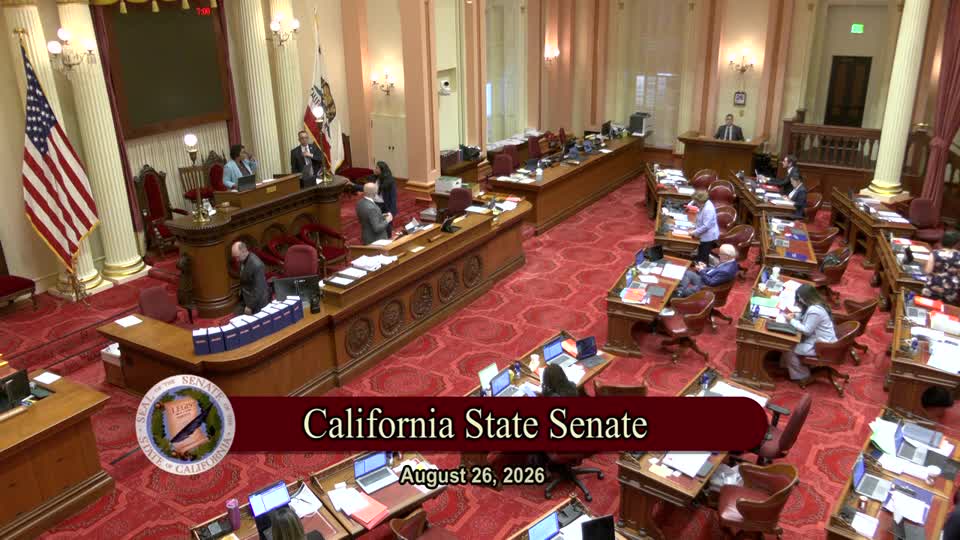 2MIN
Senate Floor
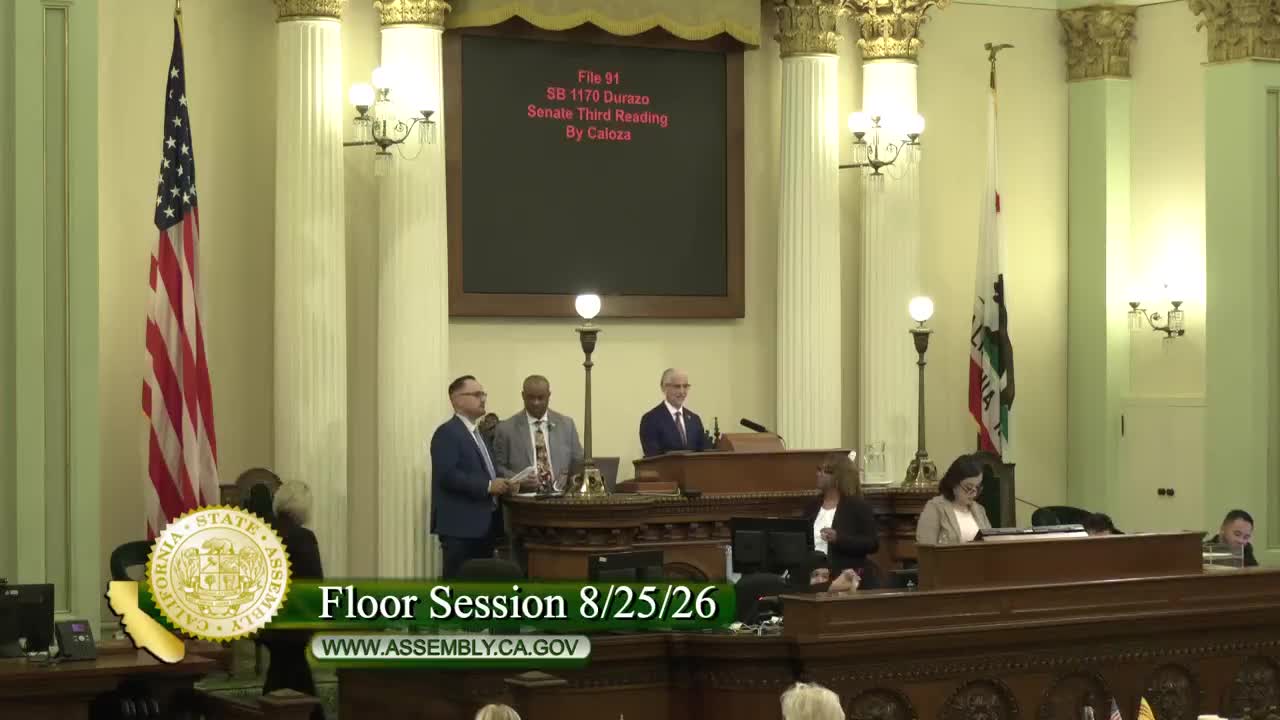 2MIN
Assembly Floor
 4MIN
Assembly Standing Committee on Appropriations
 6MIN
Assembly Standing Committee on Housing and Community Development
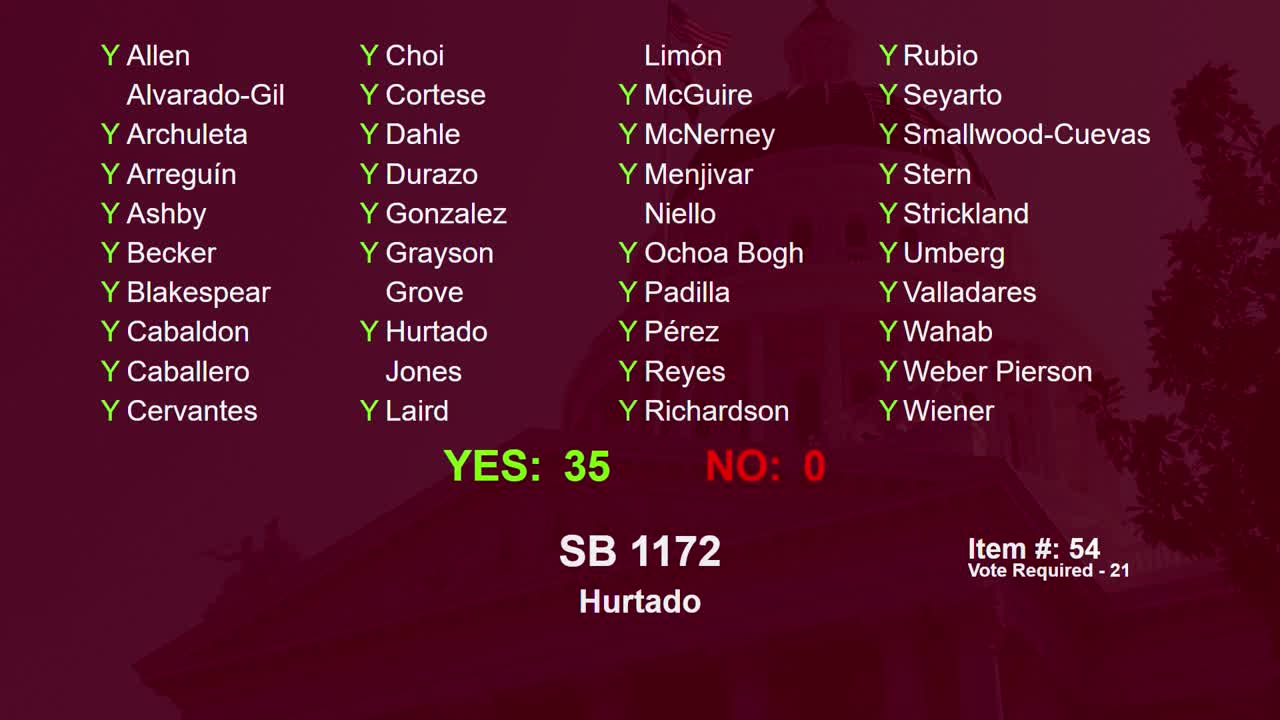 2MIN
Senate Floor
 9MIN
Senate Standing Committee on Local Government
Bill Author

Bill Co-Author(s):