SB 923: Consumer privacy requests: deletion request records and request submission methods.
- Session Year: 2025-2026
- House: Senate
- Latest Version Date: 2026-09-27
Current Status:
Passed
(2026-09-27: Chaptered by Secretary of State. Chapter 482, Statutes of 2026.)
Introduced
In Committee
Awaiting First Chamber Vote
Passed First Chamber
In Committee
Awaiting Second Chamber Vote
Passed Second Chamber
Enacted
Existing law, the California Consumer Privacy Act of 2018 (CCPA), grants to a consumer various rights with respect to personal information that is collected by a business. Among those rights, the CCPA includes the right to request that a business delete personal information that the business has collected from the consumer.
This bill would expand that right to include requesting the deletion of any personal information that the business has collected about the consumer. If the business did not obtain the personal information from the consumer, the bill would allow the business to retain a record of the deletion request and the minimum data necessary to ensure the consumers personal information remains deleted from its records and is not being used for any other purpose. The bill would make findings and declarations relating to these provisions.
Existing law generally requires businesses to make certain methods of communication available for consumers to submit personal information requests, including requests for deletion and correction. If a business operates exclusively online and has a direct relationship with the consumer from whom it collects personal information, existing law requires the business to provide consumers an email address for submitting personal information requests.
This bill would also require that business to make an online method, such as a web form or online portal, available to consumers for submitting personal information requests.
Existing law, the California Privacy Rights Act of 2020, an initiative measure approved by the voters as Proposition 24 at the November 3, 2020, statewide general election, amended, added to, and reenacted the CCPA.
This bill would declare that its provisions further the purposes and intent of the California Privacy Rights Act of 2020.
Existing law, the California Consumer Privacy Act of 2018 (CCPA), grants to a consumer various rights with respect to personal information that is collected by a business. Among those rights, the CCPA includes the right to request that a business delete personal information that the business has collected from the consumer.
This bill would expand that right to include requesting the deletion of any personal information that the business has collected about the consumer. If the business did not obtain the personal information from the consumer, the bill would allow the business to retain a record of the deletion request and the minimum data necessary to ensure the consumers personal information remains deleted from its records and is not being used for any other purpose.
Existing law generally requires businesses to make certain methods of communication available for consumers to submit personal information requests, including requests for deletion and correction. If a business operates exclusively online and has a direct relationship with the consumer from whom it collects personal information, existing law requires the business to provide consumers an email address for submitting personal information requests.
This bill would also require that business to make an online method, such as a web form or online portal, available to consumers for submitting personal information requests.
Existing law, the California Privacy Rights Act of 2020, an initiative measure approved by the voters as Proposition 24 at the November 3, 2020, statewide general election, amended, added to, and reenacted the CCPA.
This bill would declare that its provisions further the purposes and intent of the California Privacy Rights Act of 2020.
The Legislature finds and declares all of the following:
(a)Many businesses regularly collect personal information from third parties, which can be used by businesses to make decisions about consumers.
(b)The existing right to delete under the California Consumer Privacy Act of 2018 (Section 1798.105) allows consumers to request that a business delete personal information about the consumer which the business has collected from the consumer, but not personal information about the consumer that the business collected from third parties. This creates a gap in protection. Even after a consumer has submitted a request to have their personal information deleted, a business can maintain and use a consumers personal information if it was collected from a third party.
(c)Consumers deserve to have control over their personal information regardless of the informations source.
(d)Notwithstanding a consumers right to control their personal information, businesses have legitimate security, integrity, and legal obligations that may require maintenance of some personal information about a consumer for specific, narrow purposes.
(e)It is the intent of the Legislature in enacting this act to do both of the following:
(1)Clarify that a consumers right to request the deletion of their personal information under the California Consumer Privacy Act of 2018 (Section 1798.105) applies to all personal information about the consumer, regardless of source.
(2)Ensure that a business maintains the existing authority to retain certain personal information, including to comply with legal obligations, or to resist malicious, deceptive, fraudulent, or illegal activity when retention of such information is reasonably necessary and proportionate for such a purpose.
SEC. 2.Section 1798.105 of the Civil Code is amended to read:1798.105.Consumers Right to Delete Personal Information
(a)A consumer shall have the right to request that a business delete any personal information about the consumer which the business has collected from or about the consumer.
(b)A business that collects personal information about consumers shall disclose, pursuant to Section 1798.130, the consumers rights to request the deletion of the consumers personal information.
(c)(1)A business that receives a verifiable consumer request from a consumer to delete the consumers personal information pursuant to subdivision (a) of this section shall delete the consumers personal information from its records, notify any service providers or contractors to delete the consumers personal information from their records, and notify all third parties to whom the business has sold or shared the personal information to delete the consumers personal information unless this proves impossible or involves disproportionate effort.
(2)A business that has obtained personal information about a consumer from a source other than the consumer shall be deemed in compliance with a consumers request to delete that data pursuant to subdivision (a) by retaining a record of the deletion request and the minimum data necessary for the purpose of ensuring the consumers personal information remains deleted from the businesss records and is not being used for any other purpose.
(3)The business may maintain a confidential record of deletion requests solely for the purpose of preventing the personal information of a consumer who has submitted a deletion request from being sold, for compliance with laws or for other purposes, solely to the extent permissible under this title.
(4)A service provider or contractor shall cooperate with the business in responding to a verifiable consumer request, and at the direction of the business, shall delete, or enable the business to delete and shall notify any of its own service providers or contractors to delete personal information about the consumer collected, used, processed, or retained by the service provider or the contractor. The service provider or contractor shall notify any service providers, contractors, or third parties who may have accessed personal information from or through the service provider or contractor, unless the information was accessed at the direction of the business, to delete the consumers personal information unless this proves impossible or involves disproportionate effort. A service provider or contractor shall not be required to comply with a deletion request submitted by the consumer directly to the service provider or contractor to the extent that the service provider or contractor has collected, used, processed, or retained the consumers personal information in its role as a service provider or contractor to the business.
(d)A business, or a service provider or contractor acting pursuant to its contract with the business, another service provider, or another contractor, shall not be required to comply with a consumers request to delete the consumers personal information if it is reasonably necessary for the business, service provider, or contractor to maintain the consumers personal information in order to:
(1)Complete the transaction for which the personal information was collected, fulfill the terms of a written warranty or product recall conducted in accordance with federal law, provide a good or service requested by the consumer, or reasonably anticipated by the consumer within the context of a business ongoing business relationship with the consumer, or otherwise perform a contract between the business and the consumer.
(2)Help to ensure security and integrity to the extent the use of the consumers personal information is reasonably necessary and proportionate for those purposes.
(3)Debug to identify and repair errors that impair existing intended functionality.
(4)Exercise free speech, ensure the right of another consumer to exercise that consumers right of free speech, or exercise another right provided for by law.
(5)Comply with the California Electronic Communications Privacy Act pursuant to Chapter 3.6 (commencing with Section 1546) of Title 12 of Part 2 of the Penal Code.
(6)Engage in public or peer-reviewed scientific, historical, or statistical research that conforms or adheres to all other applicable ethics and privacy laws, when the business deletion of the information is likely to render impossible or seriously impair the ability to complete such research, if the consumer has provided informed consent.
(7)To enable solely internal uses that are reasonably aligned with the expectations of the consumer based on the consumers relationship with the business and compatible with the context in which the consumer provided the information.
(8)Comply with a legal obligation.
SEC. 3.Section 1798.130 of the Civil Code is amended to read:1798.130.Notice, Disclosure, Correction, and Deletion Requirements
(a)In order to comply with Sections 1798.100, 1798.105, 1798.106, 1798.110, 1798.115, and 1798.125, a business shall, in a form that is reasonably accessible to consumers:
(1)(A)Make available to consumers two or more designated methods for submitting requests for information required to be disclosed pursuant to Sections 1798.110 and 1798.115, or requests for deletion or correction pursuant to Sections 1798.105 and 1798.106, respectively, including, at a minimum, a toll-free telephone number. A business that operates exclusively online and has a direct relationship with a consumer from whom it collects personal information shall only be required to provide an email address and make an online method, such as a web form or online portal, available for submitting requests for information required to be disclosed pursuant to Sections 1798.110 and 1798.115, or for requests for deletion or correction pursuant to Sections 1798.105 and 1798.106, respectively.
(B)If the business maintains an internet website, make the internet website available to consumers to submit requests for information required to be disclosed pursuant to Sections 1798.110 and 1798.115, or requests for deletion or correction pursuant to Sections 1798.105 and 1798.106, respectively.
(2)(A)Disclose and deliver the required information to a consumer free of charge, correct inaccurate personal information, or delete a consumers personal information, based on the consumers request, within 45 days of receiving a verifiable consumer request from the consumer. The business shall promptly take steps to determine whether the request is a verifiable consumer request, but this shall not extend the business duty to disclose and deliver the information, to correct inaccurate personal information, or to delete personal information within 45 days of receipt of the consumers request. The time period to provide the required information, to correct inaccurate personal information, or to delete personal information may be extended once by an additional 45 days when reasonably necessary, provided the consumer is provided notice of the extension within the first 45-day period. The disclosure of the required information shall be made in writing and delivered through the consumers account with the business, if the consumer maintains an account with the business, or by mail or electronically at the consumers option if the consumer does not maintain an account with the business, in a readily useable format that allows the consumer to transmit this information from one entity to another entity without hindrance. The business may require authentication of the consumer that is reasonable in light of the nature of the personal information requested, but shall not require the consumer to create an account with the business in order to make a verifiable consumer request provided that if the consumer, has an account with the business, the business may require the consumer to use that account to submit a verifiable consumer request.
(B)The disclosure of the required information shall cover the 12-month period preceding the business receipt of the verifiable consumer request provided that, upon the adoption of a regulation pursuant to paragraph (8) of subdivision (a) of Section 1798.185, a consumer may request that the business disclose the required information beyond the 12-month period, and the business shall be required to provide that information unless doing so proves impossible or would involve a disproportionate effort. A consumers right to request required information beyond the 12-month period, and a business obligation to provide that information, shall only apply to personal information collected on or after January 1, 2022. Nothing in this subparagraph shall require a business to keep personal information for any length of time.
(3)(A)A business that receives a verifiable consumer request pursuant to Section 1798.110 or 1798.115 shall disclose any personal information it has collected about a consumer, directly or indirectly, including through or by a service provider or contractor, to the consumer. A service provider or contractor shall not be required to comply with a verifiable consumer request received directly from a consumer or a consumers authorized agent, pursuant to Section 1798.110 or 1798.115, to the extent that the service provider or contractor has collected personal information about the consumer in its role as a service provider or contractor. A service provider or contractor shall provide assistance to a business with which it has a contractual relationship with respect to the business response to a verifiable consumer request, including, but not limited to, by providing to the business the consumers personal information in the service provider or contractors possession, which the service provider or contractor obtained as a result of providing services to the business, and by correcting inaccurate information or by enabling the business to do the same. A service provider or contractor that collects personal information pursuant to a written contract with a business shall be required to assist the business through appropriate technical and organizational measures in complying with the requirements of subdivisions (d) to (f), inclusive, of Section 1798.100, taking into account the nature of the processing.
(B)For purposes of subdivision (b) of Section 1798.110:
(i)To identify the consumer, associate the information provided by the consumer in the verifiable consumer request to any personal information previously collected by the business about the consumer.
(ii)Identify by category or categories the personal information collected about the consumer for the applicable period of time by reference to the enumerated category or categories in subdivision (c) that most closely describes the personal information collected; the categories of sources from which the consumers personal information was collected; the business or commercial purpose for collecting, selling, or sharing the consumers personal information; and the categories of third parties to whom the business discloses the consumers personal information.
(iii)Provide the specific pieces of personal information obtained from the consumer in a format that is easily understandable to the average consumer, and to the extent technically feasible, in a structured, commonly used, machine-readable format that may also be transmitted to another entity at the consumers request without hindrance. Specific pieces of information do not include data generated to help ensure security and integrity or as prescribed by regulation. Personal information is not considered to have been disclosed by a business when a consumer instructs a business to transfer the consumers personal information from one business to another in the context of switching services.
(4)For purposes of subdivision (b) of Section 1798.115:
(A)Identify the consumer and associate the information provided by the consumer in the verifiable consumer request to any personal information previously collected by the business about the consumer.
(B)Identify by category or categories the personal information of the consumer that the business sold or shared during the applicable period of time by reference to the enumerated category in subdivision (c) that most closely describes the personal information, and provide the categories of third parties to whom the consumers personal information was sold or shared during the applicable period of time by reference to the enumerated category or categories in subdivision (c) that most closely describes the personal information sold or shared. The business shall disclose the information in a list that is separate from a list generated for the purposes of subparagraph (C).
(C)Identify by category or categories the personal information of the consumer that the business disclosed for a business purpose during the applicable period of time by reference to the enumerated category or categories in subdivision (c) that most closely describes the personal information, and provide the categories of persons to whom the consumers personal information was disclosed for a business purpose during the applicable period of time by reference to the enumerated category or categories in subdivision (c) that most closely describes the personal information disclosed. The business shall disclose the information in a list that is separate from a list generated for the purposes of subparagraph (B).
(5)Disclose the following information in its online privacy policy or policies if the business has an online privacy policy or policies and in any California-specific description of consumers privacy rights, or if the business does not maintain those policies, on its internet website, and update that information at least once every 12 months:
(A)A description of a consumers rights pursuant to Sections 1798.100, 1798.105, 1798.106, 1798.110, 1798.115, and 1798.125 and two or more designated methods for submitting requests, except as provided in subparagraph (A) of paragraph (1) of subdivision (a).
(B)For purposes of subdivision (c) of Section 1798.110:
(i)A list of the categories of personal information it has collected about consumers in the preceding 12 months by reference to the enumerated category or categories in subdivision (c) that most closely describe the personal information collected.
(ii)The categories of sources from which consumers personal information is collected.
(iii)The business or commercial purpose for collecting, selling, or sharing consumers personal information.
(iv)The categories of third parties to whom the business discloses consumers personal information.
(C)For purposes of paragraphs (1) and (2) of subdivision (c) of Section 1798.115, two separate lists:
(i)A list of the categories of personal information it has sold or shared about consumers in the preceding 12 months by reference to the enumerated category or categories in subdivision (c) that most closely describe the personal information sold or shared, or if the business has not sold or shared consumers personal information in the preceding 12 months, the business shall prominently disclose that fact in its privacy policy.
(ii)A list of the categories of personal information it has disclosed about consumers for a business purpose in the preceding 12 months by reference to the enumerated category in subdivision (c) that most closely describes the personal information disclosed, or if the business has not disclosed consumers personal information for a business purpose in the preceding 12 months, the business shall disclose that fact.
(6)Ensure that all individuals responsible for handling consumer inquiries about the business privacy practices or the business compliance with this title are informed of all requirements in Sections 1798.100, 1798.105, 1798.106, 1798.110, 1798.115, 1798.125, and this section, and how to direct consumers to exercise their rights under those sections.
(7)Use any personal information collected from the consumer in connection with the business verification of the consumers request solely for the purposes of verification and shall not further disclose the personal information, retain it longer than necessary for purposes of verification, or use it for unrelated purposes.
(b)A business is not obligated to provide the information required by Sections 1798.110 and 1798.115 to the same consumer more than twice in a 12-month period.
(c)The categories of personal information required to be disclosed pursuant to Sections 1798.100, 1798.110, and 1798.115 shall follow the definitions of personal information and sensitive personal information in Section 1798.140 by describing the categories of personal information using the specific terms set forth in subparagraphs (A) to (K), inclusive, of paragraph (1) of subdivision (v) of Section 1798.140 and by describing the categories of sensitive personal information using the specific terms set forth in subparagraphs (A) to (F), inclusive, of paragraph (1), and subparagraphs (A) to (C), inclusive, of paragraph (2), of subdivision (ae) of Section 1798.140.
SEC. 4.The Legislature finds and declares that this act furthers the purposes and intent of the California Privacy Rights Act of 2020.
The Legislature finds and declares all of the following:
(a)Many businesses regularly collect personal information from third parties, which can be used by businesses to make decisions about consumers.
(b)The existing right to delete under the California Consumer Privacy Act of 2018 (Section 1798.105) allows consumers to request that a business delete personal information about the consumer which the business has collected from the consumer, but not personal information about the consumer that the business collected from third parties. This creates a gap in protection. Even after a consumer has submitted a request to have their person personal information deleted, a business can maintain and use a consumers personal information if it was collected from a third party.
(c)Consumers deserve to have control over their personal information regardless of the informations source.
(d)Notwithstanding a consumers right to control their personal information, businesses have legitimate security, integrity, and legal obligations that may require maintenance of some personal information about a consumer for specific, narrow purposes.
(e)It is the intent of the Legislature in enacting this act to do both of the following:
(1)Clarify that a consumers right to request the deletion of their personal information under the California Consumer Privacy Act of 2018 (Section 1798.105) applies to all personal information about the consumer, regardless of source.
(2)Ensure that a business maintains the existing authority to retain certain personal information, including to comply with legal obligations, or to resist malicious, deceptive, fraudulent, or illegal activity when retention of such information is reasonably necessary and proportionate for such a purpose.
SEC. 2.Section 1798.105 of the Civil Code is amended to read:1798.105.Consumers Right to Delete Personal Information
(a)A consumer shall have the right to request that a business delete any personal information about the consumer which the business has collected from or about the consumer.
(b)A business that collects personal information about consumers shall disclose, pursuant to Section 1798.130, the consumers rights to request the deletion of the consumers personal information.
(c)(1)A business that receives a verifiable consumer request from a consumer to delete the consumers personal information pursuant to subdivision (a) of this section shall delete the consumers personal information from its records, notify any service providers or contractors to delete the consumers personal information from their records, and notify all third parties to whom the business has sold or shared the personal information to delete the consumers personal information unless this proves impossible or involves disproportionate effort.
(2)A business that has obtained personal information about a consumer from a source other than the consumer shall be deemed in compliance with a consumers request to delete that data pursuant to subdivision (a) by retaining a record of the deletion request and the minimum data necessary for the purpose of ensuring the consumers personal information remains deleted from the businesss records and is not being used for any other purpose.
(3)The business may maintain a confidential record of deletion requests solely for the purpose of preventing the personal information of a consumer who has submitted a deletion request from being sold, for compliance with laws or for other purposes, solely to the extent permissible under this title.
(4)A service provider or contractor shall cooperate with the business in responding to a verifiable consumer request, and at the direction of the business, shall delete, or enable the business to delete and shall notify any of its own service providers or contractors to delete personal information about the consumer collected, used, processed, or retained by the service provider or the contractor. The service provider or contractor shall notify any service providers, contractors, or third parties who may have accessed personal information from or through the service provider or contractor, unless the information was accessed at the direction of the business, to delete the consumers personal information unless this proves impossible or involves disproportionate effort. A service provider or contractor shall not be required to comply with a deletion request submitted by the consumer directly to the service provider or contractor to the extent that the service provider or contractor has collected, used, processed, or retained the consumers personal information in its role as a service provider or contractor to the business.
(d)A business, or a service provider or contractor acting pursuant to its contract with the business, another service provider, or another contractor, shall not be required to comply with a consumers request to delete the consumers personal information if it is reasonably necessary for the business, service provider, or contractor to maintain the consumers personal information in order to:
(1)Complete the transaction for which the personal information was collected, fulfill the terms of a written warranty or product recall conducted in accordance with federal law, provide a good or service requested by the consumer, or reasonably anticipated by the consumer within the context of a business ongoing business relationship with the consumer, or otherwise perform a contract between the business and the consumer.
(2)Help to ensure security and integrity to the extent the use of the consumers personal information is reasonably necessary and proportionate for those purposes.
(3)Debug to identify and repair errors that impair existing intended functionality.
(4)Exercise free speech, ensure the right of another consumer to exercise that consumers right of free speech, or exercise another right provided for by law.
(5)Comply with the California Electronic Communications Privacy Act pursuant to Chapter 3.6 (commencing with Section 1546) of Title 12 of Part 2 of the Penal Code.
(6)Engage in public or peer-reviewed scientific, historical, or statistical research that conforms or adheres to all other applicable ethics and privacy laws, when the business deletion of the information is likely to render impossible or seriously impair the ability to complete such research, if the consumer has provided informed consent.
(7)To enable solely internal uses that are reasonably aligned with the expectations of the consumer based on the consumers relationship with the business and compatible with the context in which the consumer provided the information.
(8)Comply with a legal obligation.
SEC. 3.Section 1798.130 of the Civil Code is amended to read:1798.130.Notice, Disclosure, Correction, and Deletion Requirements
(a)In order to comply with Sections 1798.100, 1798.105, 1798.106, 1798.110, 1798.115, and 1798.125, a business shall, in a form that is reasonably accessible to consumers:
(1)(A)Make available to consumers two or more designated methods for submitting requests for information required to be disclosed pursuant to Sections 1798.110 and 1798.115, or requests for deletion or correction pursuant to Sections 1798.105 and 1798.106, respectively, including, at a minimum, a toll-free telephone number. A business that operates exclusively online and has a direct relationship with a consumer from whom it collects personal information shall only be required to provide an email address and make an online method, such as a web form or online portal, available for submitting requests for information required to be disclosed pursuant to Sections 1798.110 and 1798.115, or for requests for deletion or correction pursuant to Sections 1798.105 and 1798.106, respectively.
(B)If the business maintains an internet website, make the internet website available to consumers to submit requests for information required to be disclosed pursuant to Sections 1798.110 and 1798.115, or requests for deletion or correction pursuant to Sections 1798.105 and 1798.106, respectively.
(2)(A)Disclose and deliver the required information to a consumer free of charge, correct inaccurate personal information, or delete a consumers personal information, based on the consumers request, within 45 days of receiving a verifiable consumer request from the consumer. The business shall promptly take steps to determine whether the request is a verifiable consumer request, but this shall not extend the business duty to disclose and deliver the information, to correct inaccurate personal information, or to delete personal information within 45 days of receipt of the consumers request. The time period to provide the required information, to correct inaccurate personal information, or to delete personal information may be extended once by an additional 45 days when reasonably necessary, provided the consumer is provided notice of the extension within the first 45-day period. The disclosure of the required information shall be made in writing and delivered through the consumers account with the business, if the consumer maintains an account with the business, or by mail or electronically at the consumers option if the consumer does not maintain an account with the business, in a readily useable format that allows the consumer to transmit this information from one entity to another entity without hindrance. The business may require authentication of the consumer that is reasonable in light of the nature of the personal information requested, but shall not require the consumer to create an account with the business in order to make a verifiable consumer request provided that if the consumer, has an account with the business, the business may require the consumer to use that account to submit a verifiable consumer request.
(B)The disclosure of the required information shall cover the 12-month period preceding the business receipt of the verifiable consumer request provided that, upon the adoption of a regulation pursuant to paragraph (8) of subdivision (a) of Section 1798.185, a consumer may request that the business disclose the required information beyond the 12-month period, and the business shall be required to provide that information unless doing so proves impossible or would involve a disproportionate effort. A consumers right to request required information beyond the 12-month period, and a business obligation to provide that information, shall only apply to personal information collected on or after January 1, 2022. Nothing in this subparagraph shall require a business to keep personal information for any length of time.
(3)(A)A business that receives a verifiable consumer request pursuant to Section 1798.110 or 1798.115 shall disclose any personal information it has collected about a consumer, directly or indirectly, including through or by a service provider or contractor, to the consumer. A service provider or contractor shall not be required to comply with a verifiable consumer request received directly from a consumer or a consumers authorized agent, pursuant to Section 1798.110 or 1798.115, to the extent that the service provider or contractor has collected personal information about the consumer in its role as a service provider or contractor. A service provider or contractor shall provide assistance to a business with which it has a contractual relationship with respect to the business response to a verifiable consumer request, including, but not limited to, by providing to the business the consumers personal information in the service provider or contractors possession, which the service provider or contractor obtained as a result of providing services to the business, and by correcting inaccurate information or by enabling the business to do the same. A service provider or contractor that collects personal information pursuant to a written contract with a business shall be required to assist the business through appropriate technical and organizational measures in complying with the requirements of subdivisions (d) to (f), inclusive, of Section 1798.100, taking into account the nature of the processing.
(B)For purposes of subdivision (b) of Section 1798.110:
(i)To identify the consumer, associate the information provided by the consumer in the verifiable consumer request to any personal information previously collected by the business about the consumer.
(ii)Identify by category or categories the personal information collected about the consumer for the applicable period of time by reference to the enumerated category or categories in subdivision (c) that most closely describes the personal information collected; the categories of sources from which the consumers personal information was collected; the business or commercial purpose for collecting, selling, or sharing the consumers personal information; and the categories of third parties to whom the business discloses the consumers personal information.
(iii)Provide the specific pieces of personal information obtained from the consumer in a format that is easily understandable to the average consumer, and to the extent technically feasible, in a structured, commonly used, machine-readable format that may also be transmitted to another entity at the consumers request without hindrance. Specific pieces of information do not include data generated to help ensure security and integrity or as prescribed by regulation. Personal information is not considered to have been disclosed by a business when a consumer instructs a business to transfer the consumers personal information from one business to another in the context of switching services.
(4)For purposes of subdivision (b) of Section 1798.115:
(A)Identify the consumer and associate the information provided by the consumer in the verifiable consumer request to any personal information previously collected by the business about the consumer.
(B)Identify by category or categories the personal information of the consumer that the business sold or shared during the applicable period of time by reference to the enumerated category in subdivision (c) that most closely describes the personal information, and provide the categories of third parties to whom the consumers personal information was sold or shared during the applicable period of time by reference to the enumerated category or categories in subdivision (c) that most closely describes the personal information sold or shared. The business shall disclose the information in a list that is separate from a list generated for the purposes of subparagraph (C).
(C)Identify by category or categories the personal information of the consumer that the business disclosed for a business purpose during the applicable period of time by reference to the enumerated category or categories in subdivision (c) that most closely describes the personal information, and provide the categories of persons to whom the consumers personal information was disclosed for a business purpose during the applicable period of time by reference to the enumerated category or categories in subdivision (c) that most closely describes the personal information disclosed. The business shall disclose the information in a list that is separate from a list generated for the purposes of subparagraph (B).
(5)Disclose the following information in its online privacy policy or policies if the business has an online privacy policy or policies and in any California-specific description of consumers privacy rights, or if the business does not maintain those policies, on its internet website, and update that information at least once every 12 months:
(A)A description of a consumers rights pursuant to Sections 1798.100, 1798.105, 1798.106, 1798.110, 1798.115, and 1798.125 and two or more designated methods for submitting requests, except as provided in subparagraph (A) of paragraph (1) of subdivision (a).
(B)For purposes of subdivision (c) of Section 1798.110:
(i)A list of the categories of personal information it has collected about consumers in the preceding 12 months by reference to the enumerated category or categories in subdivision (c) that most closely describe the personal information collected.
(ii)The categories of sources from which consumers personal information is collected.
(iii)The business or commercial purpose for collecting, selling, or sharing consumers personal information.
(iv)The categories of third parties to whom the business discloses consumers personal information.
(C)For purposes of paragraphs (1) and (2) of subdivision (c) of Section 1798.115, two separate lists:
(i)A list of the categories of personal information it has sold or shared about consumers in the preceding 12 months by reference to the enumerated category or categories in subdivision (c) that most closely describe the personal information sold or shared, or if the business has not sold or shared consumers personal information in the preceding 12 months, the business shall prominently disclose that fact in its privacy policy.
(ii)A list of the categories of personal information it has disclosed about consumers for a business purpose in the preceding 12 months by reference to the enumerated category in subdivision (c) that most closely describes the personal information disclosed, or if the business has not disclosed consumers personal information for a business purpose in the preceding 12 months, the business shall disclose that fact.
(6)Ensure that all individuals responsible for handling consumer inquiries about the business privacy practices or the business compliance with this title are informed of all requirements in Sections 1798.100, 1798.105, 1798.106, 1798.110, 1798.115, 1798.125, and this section, and how to direct consumers to exercise their rights under those sections.
(7)Use any personal information collected from the consumer in connection with the business verification of the consumers request solely for the purposes of verification and shall not further disclose the personal information, retain it longer than necessary for purposes of verification, or use it for unrelated purposes.
(b)A business is not obligated to provide the information required by Sections 1798.110 and 1798.115 to the same consumer more than twice in a 12-month period.
(c)The categories of personal information required to be disclosed pursuant to Sections 1798.100, 1798.110, and 1798.115 shall follow the definitions of personal information and sensitive personal information in Section 1798.140 by describing the categories of personal information using the specific terms set forth in subparagraphs (A) to (K), inclusive, of paragraph (1) of subdivision (v) of Section 1798.140 and by describing the categories of sensitive personal information using the specific terms set forth in subparagraphs (A) to (F), inclusive, of paragraph (1), and subparagraphs (A) to (C), inclusive, of paragraph (2), of subdivision (ae) of Section 1798.140.
SEC. 4.The Legislature finds and declares that this act furthers the purposes and intent of the California Privacy Rights Act of 2020.
The Legislature finds and declares all of the following:
(a)Many businesses regularly collect personal information from third parties, which can be used by businesses to make decisions about consumers.
(b)The existing right to delete under the California Consumer Privacy Act (Section 1798.105) allows consumers to request that a business delete personal information about the consumer which the business has collected from the consumer, but not personal information about the consumer that the business collected from third parties. This creates a gap in protection. Even after a consumer has submitted a request to have their person information deleted, a business can maintain and use a consumers personal information if it was collected from a third party.
(c)Consumers deserve to have control over their personal information regardless of the informations source.
(d)Notwithstanding a consumers right to control their personal information, businesses have legitimate security, integrity, and legal obligations that may require maintenance of some personal information about a consumer for specific, narrow purposes.
(e)It is the intent of the Legislature in enacting this act to do both of the following:
(1)Clarify that a consumers right to request the deletion of their personal information under the California Consumer Privacy Act of 2018 (Section 1798.105) applies to all personal information about the consumer, regardless of source.
(2)Ensure that a business maintains the existing authority to retain certain personal information, including to comply with legal obligations, or to resist malicious, deceptive, fraudulent, or illegal activity when retention of such information is reasonably necessary and proportionate for such a purpose.
SECTION 1.SEC. 2.Section 1798.105 of the Civil Code is amended to read:1798.105.Consumers Right to Delete Personal Information
(a)A consumer shall have the right to request that a business delete any personal information about the consumer which the business has collected from or about the consumer.
(b)A business that collects personal information about consumers shall disclose, pursuant to Section 1798.130, the consumers rights to request the deletion of the consumers personal information.
(c)(1)A business that receives a verifiable consumer request from a consumer to delete the consumers personal information pursuant to subdivision (a) of this section shall delete the consumers personal information from its records, notify any service providers or contractors to delete the consumers personal information from their records, and notify all third parties to whom the business has sold or shared the personal information to delete the consumers personal information unless this proves impossible or involves disproportionate effort.
(2)A business that has obtained personal information about a consumer from a source other than the consumer shall be deemed in compliance with a consumers request to delete that data pursuant to subdivision (a) by retaining a record of the deletion request and the minimum data necessary for the purpose of ensuring the consumers personal information remains deleted from the businesss records and is not being used for any other purpose.
(3)The business may maintain a confidential record of deletion requests solely for the purpose of preventing the personal information of a consumer who has submitted a deletion request from being sold, for compliance with laws or for other purposes, solely to the extent permissible under this title.
(4)A service provider or contractor shall cooperate with the business in responding to a verifiable consumer request, and at the direction of the business, shall delete, or enable the business to delete and shall notify any of its own service providers or contractors to delete personal information about the consumer collected, used, processed, or retained by the service provider or the contractor. The service provider or contractor shall notify any service providers, contractors, or third parties who may have accessed personal information from or through the service provider or contractor, unless the information was accessed at the direction of the business, to delete the consumers personal information unless this proves impossible or involves disproportionate effort. A service provider or contractor shall not be required to comply with a deletion request submitted by the consumer directly to the service provider or contractor to the extent that the service provider or contractor has collected, used, processed, or retained the consumers personal information in its role as a service provider or contractor to the business.
(d)A business, or a service provider or contractor acting pursuant to its contract with the business, another service provider, or another contractor, shall not be required to comply with a consumers request to delete the consumers personal information if it is reasonably necessary for the business, service provider, or contractor to maintain the consumers personal information in order to:
(1)Complete the transaction for which the personal information was collected, fulfill the terms of a written warranty or product recall conducted in accordance with federal law, provide a good or service requested by the consumer, or reasonably anticipated by the consumer within the context of a business ongoing business relationship with the consumer, or otherwise perform a contract between the business and the consumer.
(2)Help to ensure security and integrity to the extent the use of the consumers personal information is reasonably necessary and proportionate for those purposes.
(3)Debug to identify and repair errors that impair existing intended functionality.
(4)Exercise free speech, ensure the right of another consumer to exercise that consumers right of free speech, or exercise another right provided for by law.
(5)Comply with the California Electronic Communications Privacy Act pursuant to Chapter 3.6 (commencing with Section 1546) of Title 12 of Part 2 of the Penal Code.
(6)Engage in public or peer-reviewed scientific, historical, or statistical research that conforms or adheres to all other applicable ethics and privacy laws, when the business deletion of the information is likely to render impossible or seriously impair the ability to complete such research, if the consumer has provided informed consent.
(7)To enable solely internal uses that are reasonably aligned with the expectations of the consumer based on the consumers relationship with the business and compatible with the context in which the consumer provided the information.
(8)Comply with a legal obligation.
SEC. 2.SEC. 3.Section 1798.130 of the Civil Code is amended to read:1798.130.Notice, Disclosure, Correction, and Deletion Requirements
(a)In order to comply with Sections 1798.100, 1798.105, 1798.106, 1798.110, 1798.115, and 1798.125, a business shall, in a form that is reasonably accessible to consumers:
(1)(A)Make available to consumers two or more designated methods for submitting requests for information required to be disclosed pursuant to Sections 1798.110 and 1798.115, or requests for deletion or correction pursuant to Sections 1798.105 and 1798.106, respectively, including, at a minimum, a toll-free telephone number. A business that operates exclusively online and has a direct relationship with a consumer from whom it collects personal information shall only be required to provide an email address and make an online method, such as a web form or online portal, available for submitting requests for information required to be disclosed pursuant to Sections 1798.110 and 1798.115, or for requests for deletion or correction pursuant to Sections 1798.105 and 1798.106, respectively.
(B)If the business maintains an internet website, make the internet website available to consumers to submit requests for information required to be disclosed pursuant to Sections 1798.110 and 1798.115, or requests for deletion or correction pursuant to Sections 1798.105 and 1798.106, respectively.
(2)(A)Disclose and deliver the required information to a consumer free of charge, correct inaccurate personal information, or delete a consumers personal information, based on the consumers request, within 45 days of receiving a verifiable consumer request from the consumer. The business shall promptly take steps to determine whether the request is a verifiable consumer request, but this shall not extend the business duty to disclose and deliver the information, to correct inaccurate personal information, or to delete personal information within 45 days of receipt of the consumers request. The time period to provide the required information, to correct inaccurate personal information, or to delete personal information may be extended once by an additional 45 days when reasonably necessary, provided the consumer is provided notice of the extension within the first 45-day period. The disclosure of the required information shall be made in writing and delivered through the consumers account with the business, if the consumer maintains an account with the business, or by mail or electronically at the consumers option if the consumer does not maintain an account with the business, in a readily useable format that allows the consumer to transmit this information from one entity to another entity without hindrance. The business may require authentication of the consumer that is reasonable in light of the nature of the personal information requested, but shall not require the consumer to create an account with the business in order to make a verifiable consumer request provided that if the consumer, has an account with the business, the business may require the consumer to use that account to submit a verifiable consumer request.
(B)The disclosure of the required information shall cover the 12-month period preceding the business receipt of the verifiable consumer request provided that, upon the adoption of a regulation pursuant to paragraph (8) of subdivision (a) of Section 1798.185, a consumer may request that the business disclose the required information beyond the 12-month period, and the business shall be required to provide that information unless doing so proves impossible or would involve a disproportionate effort. A consumers right to request required information beyond the 12-month period, and a business obligation to provide that information, shall only apply to personal information collected on or after January 1, 2022. Nothing in this subparagraph shall require a business to keep personal information for any length of time.
(3)(A)A business that receives a verifiable consumer request pursuant to Section 1798.110 or 1798.115 shall disclose any personal information it has collected about a consumer, directly or indirectly, including through or by a service provider or contractor, to the consumer. A service provider or contractor shall not be required to comply with a verifiable consumer request received directly from a consumer or a consumers authorized agent, pursuant to Section 1798.110 or 1798.115, to the extent that the service provider or contractor has collected personal information about the consumer in its role as a service provider or contractor. A service provider or contractor shall provide assistance to a business with which it has a contractual relationship with respect to the business response to a verifiable consumer request, including, but not limited to, by providing to the business the consumers personal information in the service provider or contractors possession, which the service provider or contractor obtained as a result of providing services to the business, and by correcting inaccurate information or by enabling the business to do the same. A service provider or contractor that collects personal information pursuant to a written contract with a business shall be required to assist the business through appropriate technical and organizational measures in complying with the requirements of subdivisions (d) to (f), inclusive, of Section 1798.100, taking into account the nature of the processing.
(B)For purposes of subdivision (b) of Section 1798.110:
(i)To identify the consumer, associate the information provided by the consumer in the verifiable consumer request to any personal information previously collected by the business about the consumer.
(ii)Identify by category or categories the personal information collected about the consumer for the applicable period of time by reference to the enumerated category or categories in subdivision (c) that most closely describes the personal information collected; the categories of sources from which the consumers personal information was collected; the business or commercial purpose for collecting, selling, or sharing the consumers personal information; and the categories of third parties to whom the business discloses the consumers personal information.
(iii)Provide the specific pieces of personal information obtained from the consumer in a format that is easily understandable to the average consumer, and to the extent technically feasible, in a structured, commonly used, machine-readable format that may also be transmitted to another entity at the consumers request without hindrance. Specific pieces of information do not include data generated to help ensure security and integrity or as prescribed by regulation. Personal information is not considered to have been disclosed by a business when a consumer instructs a business to transfer the consumers personal information from one business to another in the context of switching services.
(4)For purposes of subdivision (b) of Section 1798.115:
(A)Identify the consumer and associate the information provided by the consumer in the verifiable consumer request to any personal information previously collected by the business about the consumer.
(B)Identify by category or categories the personal information of the consumer that the business sold or shared during the applicable period of time by reference to the enumerated category in subdivision (c) that most closely describes the personal information, and provide the categories of third parties to whom the consumers personal information was sold or shared during the applicable period of time by reference to the enumerated category or categories in subdivision (c) that most closely describes the personal information sold or shared. The business shall disclose the information in a list that is separate from a list generated for the purposes of subparagraph (C).
(C)Identify by category or categories the personal information of the consumer that the business disclosed for a business purpose during the applicable period of time by reference to the enumerated category or categories in subdivision (c) that most closely describes the personal information, and provide the categories of persons to whom the consumers personal information was disclosed for a business purpose during the applicable period of time by reference to the enumerated category or categories in subdivision (c) that most closely describes the personal information disclosed. The business shall disclose the information in a list that is separate from a list generated for the purposes of subparagraph (B).
(5)Disclose the following information in its online privacy policy or policies if the business has an online privacy policy or policies and in any California-specific description of consumers privacy rights, or if the business does not maintain those policies, on its internet website, and update that information at least once every 12 months:
(A)A description of a consumers rights pursuant to Sections 1798.100, 1798.105, 1798.106, 1798.110, 1798.115, and 1798.125 and two or more designated methods for submitting requests, except as provided in subparagraph (A) of paragraph (1) of subdivision (a).
(B)For purposes of subdivision (c) of Section 1798.110:
(i)A list of the categories of personal information it has collected about consumers in the preceding 12 months by reference to the enumerated category or categories in subdivision (c) that most closely describe the personal information collected.
(ii)The categories of sources from which consumers personal information is collected.
(iii)The business or commercial purpose for collecting, selling, or sharing consumers personal information.
(iv)The categories of third parties to whom the business discloses consumers personal information.
(C)For purposes of paragraphs (1) and (2) of subdivision (c) of Section 1798.115, two separate lists:
(i)A list of the categories of personal information it has sold or shared about consumers in the preceding 12 months by reference to the enumerated category or categories in subdivision (c) that most closely describe the personal information sold or shared, or if the business has not sold or shared consumers personal information in the preceding 12 months, the business shall prominently disclose that fact in its privacy policy.
(ii)A list of the categories of personal information it has disclosed about consumers for a business purpose in the preceding 12 months by reference to the enumerated category in subdivision (c) that most closely describes the personal information disclosed, or if the business has not disclosed consumers personal information for a business purpose in the preceding 12 months, the business shall disclose that fact.
(6)Ensure that all individuals responsible for handling consumer inquiries about the business privacy practices or the business compliance with this title are informed of all requirements in Sections 1798.100, 1798.105, 1798.106, 1798.110, 1798.115, 1798.125, and this section, and how to direct consumers to exercise their rights under those sections.
(7)Use any personal information collected from the consumer in connection with the business verification of the consumers request solely for the purposes of verification and shall not further disclose the personal information, retain it longer than necessary for purposes of verification, or use it for unrelated purposes.
(b)A business is not obligated to provide the information required by Sections 1798.110 and 1798.115 to the same consumer more than twice in a 12-month period.
(c)The categories of personal information required to be disclosed pursuant to Sections 1798.100, 1798.110, and 1798.115 shall follow the definitions of personal information and sensitive personal information in Section 1798.140 by describing the categories of personal information using the specific terms set forth in subparagraphs (A) to (K), inclusive, of paragraph (1) of subdivision (v) of Section 1798.140 and by describing the categories of sensitive personal information using the specific terms set forth in subparagraphs (A) to (F), inclusive, of paragraph (1), and subparagraphs (A) to (C), inclusive, of paragraph (2), of subdivision (ae) of Section 1798.140.
SEC. 3.SEC. 4.The Legislature finds and declares that this act furthers the purposes and intent of the California Privacy Rights Act of 2020.
Consumers Right to Delete Personal Information
(a)A consumer shall have the right to request that a business delete any personal information about the consumer which the business has collected from or about the consumer.
(b)A business that collects personal information about consumers shall disclose, pursuant to Section 1798.130, the consumers rights to request the deletion of the consumers personal information.
(c)(1)A business that receives a verifiable consumer request from a consumer to delete the consumers personal information pursuant to subdivision (a) of this section shall delete the consumers personal information from its records, notify any service providers or contractors to delete the consumers personal information from their records, and notify all third parties to whom the business has sold or shared the personal information to delete the consumers personal information unless this proves impossible or involves disproportionate effort.
(2)A business that has obtained personal information about a consumer from a source other than the consumer shall be deemed in compliance with a consumers request to delete that data pursuant to subdivision (a) by retaining a record of the deletion request and the minimum data necessary for the purpose of ensuring the consumers personal information remains deleted from the businesss records and is not being used for any other purpose.
(3)The business may maintain a confidential record of deletion requests solely for the purpose of preventing the personal information of a consumer who has submitted a deletion request from being sold, for compliance with laws or for other purposes, solely to the extent permissible under this title.
(4)A service provider or contractor shall cooperate with the business in responding to a verifiable consumer request, and at the direction of the business, shall delete, or enable the business to delete and shall notify any of its own service providers or contractors to delete personal information about the consumer collected, used, processed, or retained by the service provider or the contractor. The service provider or contractor shall notify any service providers, contractors, or third parties who may have accessed personal information from or through the service provider or contractor, unless the information was accessed at the direction of the business, to delete the consumers personal information unless this proves impossible or involves disproportionate effort. A service provider or contractor shall not be required to comply with a deletion request submitted by the consumer directly to the service provider or contractor to the extent that the service provider or contractor has collected, used, processed, or retained the consumers personal information in its role as a service provider or contractor to the business.
(d)A business, or a service provider or contractor acting pursuant to its contract with the business, another service provider, or another contractor, shall not be required to comply with a consumers request to delete the consumers personal information if it is reasonably necessary for the business, service provider, or contractor to maintain the consumers personal information in order to:
(1)Complete the transaction for which the personal information was collected, fulfill the terms of a written warranty or product recall conducted in accordance with federal law, provide a good or service requested by the consumer, or reasonably anticipated by the consumer within the context of a business ongoing business relationship with the consumer, or otherwise perform a contract between the business and the consumer.
(2)Help to ensure security and integrity to the extent the use of the consumers personal information is reasonably necessary and proportionate for those purposes.
(3)Debug to identify and repair errors that impair existing intended functionality.
(4)Exercise free speech, ensure the right of another consumer to exercise that consumers right of free speech, or exercise another right provided for by law.
(5)Comply with the California Electronic Communications Privacy Act pursuant to Chapter 3.6 (commencing with Section 1546) of Title 12 of Part 2 of the Penal Code.
(6)Engage in public or peer-reviewed scientific, historical, or statistical research that conforms or adheres to all other applicable ethics and privacy laws, when the business deletion of the information is likely to render impossible or seriously impair the ability to complete such research, if the consumer has provided informed consent.
(7)To enable solely internal uses that are reasonably aligned with the expectations of the consumer based on the consumers relationship with the business and compatible with the context in which the consumer provided the information.
(8)Comply with a legal obligation.
SEC. 2.Section 1798.130 of the Civil Code is amended to read:1798.130.Notice, Disclosure, Correction, and Deletion Requirements
(a)In order to comply with Sections 1798.100, 1798.105, 1798.106, 1798.110, 1798.115, and 1798.125, a business shall, in a form that is reasonably accessible to consumers:
(1)(A)Make available to consumers two or more designated methods for submitting requests for information required to be disclosed pursuant to Sections 1798.110 and 1798.115, or requests for deletion or correction pursuant to Sections 1798.105 and 1798.106, respectively, including, at a minimum, a toll-free telephone number. A business that operates exclusively online and has a direct relationship with a consumer from whom it collects personal information shall only be required to provide an email address and make an online method, such as a web form or online portal, available for submitting requests for information required to be disclosed pursuant to Sections 1798.110 and 1798.115, or for requests for deletion or correction pursuant to Sections 1798.105 and 1798.106, respectively.
(B)If the business maintains an internet website, make the internet website available to consumers to submit requests for information required to be disclosed pursuant to Sections 1798.110 and 1798.115, or requests for deletion or correction pursuant to Sections 1798.105 and 1798.106, respectively.
(2)(A)Disclose and deliver the required information to a consumer free of charge, correct inaccurate personal information, or delete a consumers personal information, based on the consumers request, within 45 days of receiving a verifiable consumer request from the consumer. The business shall promptly take steps to determine whether the request is a verifiable consumer request, but this shall not extend the business duty to disclose and deliver the information, to correct inaccurate personal information, or to delete personal information within 45 days of receipt of the consumers request. The time period to provide the required information, to correct inaccurate personal information, or to delete personal information may be extended once by an additional 45 days when reasonably necessary, provided the consumer is provided notice of the extension within the first 45-day period. The disclosure of the required information shall be made in writing and delivered through the consumers account with the business, if the consumer maintains an account with the business, or by mail or electronically at the consumers option if the consumer does not maintain an account with the business, in a readily useable format that allows the consumer to transmit this information from one entity to another entity without hindrance. The business may require authentication of the consumer that is reasonable in light of the nature of the personal information requested, but shall not require the consumer to create an account with the business in order to make a verifiable consumer request provided that if the consumer, has an account with the business, the business may require the consumer to use that account to submit a verifiable consumer request.
(B)The disclosure of the required information shall cover the 12-month period preceding the business receipt of the verifiable consumer request provided that, upon the adoption of a regulation pursuant to paragraph (8) of subdivision (a) of Section 1798.185, a consumer may request that the business disclose the required information beyond the 12-month period, and the business shall be required to provide that information unless doing so proves impossible or would involve a disproportionate effort. A consumers right to request required information beyond the 12-month period, and a business obligation to provide that information, shall only apply to personal information collected on or after January 1, 2022. Nothing in this subparagraph shall require a business to keep personal information for any length of time.
(3)(A)A business that receives a verifiable consumer request pursuant to Section 1798.110 or 1798.115 shall disclose any personal information it has collected about a consumer, directly or indirectly, including through or by a service provider or contractor, to the consumer. A service provider or contractor shall not be required to comply with a verifiable consumer request received directly from a consumer or a consumers authorized agent, pursuant to Section 1798.110 or 1798.115, to the extent that the service provider or contractor has collected personal information about the consumer in its role as a service provider or contractor. A service provider or contractor shall provide assistance to a business with which it has a contractual relationship with respect to the business response to a verifiable consumer request, including, but not limited to, by providing to the business the consumers personal information in the service provider or contractors possession, which the service provider or contractor obtained as a result of providing services to the business, and by correcting inaccurate information or by enabling the business to do the same. A service provider or contractor that collects personal information pursuant to a written contract with a business shall be required to assist the business through appropriate technical and organizational measures in complying with the requirements of subdivisions (d) to (f), inclusive, of Section 1798.100, taking into account the nature of the processing.
(B)For purposes of subdivision (b) of Section 1798.110:
(i)To identify the consumer, associate the information provided by the consumer in the verifiable consumer request to any personal information previously collected by the business about the consumer.
(ii)Identify by category or categories the personal information collected about the consumer for the applicable period of time by reference to the enumerated category or categories in subdivision (c) that most closely describes the personal information collected; the categories of sources from which the consumers personal information was collected; the business or commercial purpose for collecting, selling, or sharing the consumers personal information; and the categories of third parties to whom the business discloses the consumers personal information.
(iii)Provide the specific pieces of personal information obtained from the consumer in a format that is easily understandable to the average consumer, and to the extent technically feasible, in a structured, commonly used, machine-readable format that may also be transmitted to another entity at the consumers request without hindrance. Specific pieces of information do not include data generated to help ensure security and integrity or as prescribed by regulation. Personal information is not considered to have been disclosed by a business when a consumer instructs a business to transfer the consumers personal information from one business to another in the context of switching services.
(4)For purposes of subdivision (b) of Section 1798.115:
(A)Identify the consumer and associate the information provided by the consumer in the verifiable consumer request to any personal information previously collected by the business about the consumer.
(B)Identify by category or categories the personal information of the consumer that the business sold or shared during the applicable period of time by reference to the enumerated category in subdivision (c) that most closely describes the personal information, and provide the categories of third parties to whom the consumers personal information was sold or shared during the applicable period of time by reference to the enumerated category or categories in subdivision (c) that most closely describes the personal information sold or shared. The business shall disclose the information in a list that is separate from a list generated for the purposes of subparagraph (C).
(C)Identify by category or categories the personal information of the consumer that the business disclosed for a business purpose during the applicable period of time by reference to the enumerated category or categories in subdivision (c) that most closely describes the personal information, and provide the categories of persons to whom the consumers personal information was disclosed for a business purpose during the applicable period of time by reference to the enumerated category or categories in subdivision (c) that most closely describes the personal information disclosed. The business shall disclose the information in a list that is separate from a list generated for the purposes of subparagraph (B).
(5)Disclose the following information in its online privacy policy or policies if the business has an online privacy policy or policies and in any California-specific description of consumers privacy rights, or if the business does not maintain those policies, on its internet website, and update that information at least once every 12 months:
(A)A description of a consumers rights pursuant to Sections 1798.100, 1798.105, 1798.106, 1798.110, 1798.115, and 1798.125 and two or more designated methods for submitting requests, except as provided in subparagraph (A) of paragraph (1) of subdivision (a).
(B)For purposes of subdivision (c) of Section 1798.110:
(i)A list of the categories of personal information it has collected about consumers in the preceding 12 months by reference to the enumerated category or categories in subdivision (c) that most closely describe the personal information collected.
(ii)The categories of sources from which consumers personal information is collected.
(iii)The business or commercial purpose for collecting, selling, or sharing consumers personal information.
(iv)The categories of third parties to whom the business discloses consumers personal information.
(C)For purposes of paragraphs (1) and (2) of subdivision (c) of Section 1798.115, two separate lists:
(i)A list of the categories of personal information it has sold or shared about consumers in the preceding 12 months by reference to the enumerated category or categories in subdivision (c) that most closely describe the personal information sold or shared, or if the business has not sold or shared consumers personal information in the preceding 12 months, the business shall prominently disclose that fact in its privacy policy.
(ii)A list of the categories of personal information it has disclosed about consumers for a business purpose in the preceding 12 months by reference to the enumerated category in subdivision (c) that most closely describes the personal information disclosed, or if the business has not disclosed consumers personal information for a business purpose in the preceding 12 months, the business shall disclose that fact.
(6)Ensure that all individuals responsible for handling consumer inquiries about the business privacy practices or the business compliance with this title are informed of all requirements in Sections 1798.100, 1798.105, 1798.106, 1798.110, 1798.115, 1798.125, and this section, and how to direct consumers to exercise their rights under those sections.
(7)Use any personal information collected from the consumer in connection with the business verification of the consumers request solely for the purposes of verification and shall not further disclose the personal information, retain it longer than necessary for purposes of verification, or use it for unrelated purposes.
(b)A business is not obligated to provide the information required by Sections 1798.110 and 1798.115 to the same consumer more than twice in a 12-month period.
(c)The categories of personal information required to be disclosed pursuant to Sections 1798.100, 1798.110, and 1798.115 shall follow the definitions of personal information and sensitive personal information in Section 1798.140 by describing the categories of personal information using the specific terms set forth in subparagraphs (A) to (K), inclusive, of paragraph (1) of subdivision (v) of Section 1798.140 and by describing the categories of sensitive personal information using the specific terms set forth in subparagraphs (A) to (F), inclusive, of paragraph (1), and subparagraphs (A) to (C), inclusive, of paragraph (2), of subdivision (ae) of Section 1798.140.
SEC. 3.The Legislature finds and declares that this act furthers the purposes and intent of the California Privacy Rights Act of 2020.
Consumers Right to Delete Personal Information
(a)A consumer shall have the right to request that a business delete any personal information about the consumer which the business has collected from from or about the consumer.
(b)A business that collects personal information about consumers shall disclose, pursuant to Section 1798.130, the consumers rights to request the deletion of the consumers personal information.
(c)(1)A business that receives a verifiable consumer request from a consumer to delete the consumers personal information pursuant to subdivision (a) of this section shall delete the consumers personal information from its records, notify any service providers or contractors to delete the consumers personal information from their records, and notify all third parties to whom the business has sold or shared the personal information to delete the consumers personal information unless this proves impossible or involves disproportionate effort.
(2)A business that has obtained personal information about a consumer from a source other than the consumer shall be deemed in compliance with a consumers request to delete that data pursuant to subdivision (a) by retaining a record of the deletion request and the minimum data necessary for the purpose of ensuring the consumers personal information remains deleted from the businesss records and is not being used for any other purpose.
(2)(3)The business may maintain a confidential record of deletion requests solely for the purpose of preventing the personal information of a consumer who has submitted a deletion request from being sold, for compliance with laws or for other purposes, solely to the extent permissible under this title.
(3)(4)A service provider or contractor shall cooperate with the business in responding to a verifiable consumer request, and at the direction of the business, shall delete, or enable the business to delete and shall notify any of its own service providers or contractors to delete personal information about the consumer collected, used, processed, or retained by the service provider or the contractor. The service provider or contractor shall notify any service providers, contractors, or third parties who may have accessed personal information from or through the service provider or contractor, unless the information was accessed at the direction of the business, to delete the consumers personal information unless this proves impossible or involves disproportionate effort. A service provider or contractor shall not be required to comply with a deletion request submitted by the consumer directly to the service provider or contractor to the extent that the service provider or contractor has collected, used, processed, or retained the consumers personal information in its role as a service provider or contractor to the business.
(d)A business, or a service provider or contractor acting pursuant to its contract with the business, another service provider, or another contractor, shall not be required to comply with a consumers request to delete the consumers personal information if it is reasonably necessary for the business, service provider, or contractor to maintain the consumers personal information in order to:
(1)Complete the transaction for which the personal information was collected, fulfill the terms of a written warranty or product recall conducted in accordance with federal law, provide a good or service requested by the consumer, or reasonably anticipated by the consumer within the context of a business ongoing business relationship with the consumer, or otherwise perform a contract between the business and the consumer.
(2)Help to ensure security and integrity to the extent the use of the consumers personal information is reasonably necessary and proportionate for those purposes.
(3)Debug to identify and repair errors that impair existing intended functionality.
(4)Exercise free speech, ensure the right of another consumer to exercise that consumers right of free speech, or exercise another right provided for by law.
(5)Comply with the California Electronic Communications Privacy Act pursuant to Chapter 3.6 (commencing with Section 1546) of Title 12 of Part 2 of the Penal Code.
(6)Engage in public or peer-reviewed scientific, historical, or statistical research that conforms or adheres to all other applicable ethics and privacy laws, when the business deletion of the information is likely to render impossible or seriously impair the ability to complete such research, if the consumer has provided informed consent.
(7)To enable solely internal uses that are reasonably aligned with the expectations of the consumer based on the consumers relationship with the business and compatible with the context in which the consumer provided the information.
(8)Comply with a legal obligation.
SEC. 2.Section 1798.130 of the Civil Code is amended to read:1798.130.Notice, Disclosure, Correction, and Deletion Requirements
(a)In order to comply with Sections 1798.100, 1798.105, 1798.106, 1798.110, 1798.115, and 1798.125, a business shall, in a form that is reasonably accessible to consumers:
(1)(A)Make available to consumers two or more designated methods for submitting requests for information required to be disclosed pursuant to Sections 1798.110 and 1798.115, or requests for deletion or correction pursuant to Sections 1798.105 and 1798.106, respectively, including, at a minimum, a toll-free telephone number. A business that operates exclusively online and has a direct relationship with a consumer from whom it collects personal information shall only be required to provide an email address and make an online method, such as a web form or online portal, for submitting requests for information required to be disclosed pursuant to Sections 1798.110 and 1798.115, or for requests for deletion or correction pursuant to Sections 1798.105 and 1798.106, respectively.
(B)If the business maintains an internet website, make the internet website available to consumers to submit requests for information required to be disclosed pursuant to Sections 1798.110 and 1798.115, or requests for deletion or correction pursuant to Sections 1798.105 and 1798.106, respectively.
(2)(A)Disclose and deliver the required information to a consumer free of charge, correct inaccurate personal information, or delete a consumers personal information, based on the consumers request, within 45 days of receiving a verifiable consumer request from the consumer. The business shall promptly take steps to determine whether the request is a verifiable consumer request, but this shall not extend the business duty to disclose and deliver the information, to correct inaccurate personal information, or to delete personal information within 45 days of receipt of the consumers request. The time period to provide the required information, to correct inaccurate personal information, or to delete personal information may be extended once by an additional 45 days when reasonably necessary, provided the consumer is provided notice of the extension within the first 45-day period. The disclosure of the required information shall be made in writing and delivered through the consumers account with the business, if the consumer maintains an account with the business, or by mail or electronically at the consumers option if the consumer does not maintain an account with the business, in a readily useable format that allows the consumer to transmit this information from one entity to another entity without hindrance. The business may require authentication of the consumer that is reasonable in light of the nature of the personal information requested, but shall not require the consumer to create an account with the business in order to make a verifiable consumer request provided that if the consumer, has an account with the business, the business may require the consumer to use that account to submit a verifiable consumer request.
(B)The disclosure of the required information shall cover the 12-month period preceding the business receipt of the verifiable consumer request provided that, upon the adoption of a regulation pursuant to paragraph (8) of subdivision (a) of Section 1798.185, a consumer may request that the business disclose the required information beyond the 12-month period, and the business shall be required to provide that information unless doing so proves impossible or would involve a disproportionate effort. A consumers right to request required information beyond the 12-month period, and a business obligation to provide that information, shall only apply to personal information collected on or after January 1, 2022. Nothing in this subparagraph shall require a business to keep personal information for any length of time.
(3)(A)A business that receives a verifiable consumer request pursuant to Section 1798.110 or 1798.115 shall disclose any personal information it has collected about a consumer, directly or indirectly, including through or by a service provider or contractor, to the consumer. A service provider or contractor shall not be required to comply with a verifiable consumer request received directly from a consumer or a consumers authorized agent, pursuant to Section 1798.110 or 1798.115, to the extent that the service provider or contractor has collected personal information about the consumer in its role as a service provider or contractor. A service provider or contractor shall provide assistance to a business with which it has a contractual relationship with respect to the business response to a verifiable consumer request, including, but not limited to, by providing to the business the consumers personal information in the service provider or contractors possession, which the service provider or contractor obtained as a result of providing services to the business, and by correcting inaccurate information or by enabling the business to do the same. A service provider or contractor that collects personal information pursuant to a written contract with a business shall be required to assist the business through appropriate technical and organizational measures in complying with the requirements of subdivisions (d) to (f), inclusive, of Section 1798.100, taking into account the nature of the processing.
(B)For purposes of subdivision (b) of Section 1798.110:
(i)To identify the consumer, associate the information provided by the consumer in the verifiable consumer request to any personal information previously collected by the business about the consumer.
(ii)Identify by category or categories the personal information collected about the consumer for the applicable period of time by reference to the enumerated category or categories in subdivision (c) that most closely describes the personal information collected; the categories of sources from which the consumers personal information was collected; the business or commercial purpose for collecting, selling, or sharing the consumers personal information; and the categories of third parties to whom the business discloses the consumers personal information.
(iii)Provide the specific pieces of personal information obtained from the consumer in a format that is easily understandable to the average consumer, and to the extent technically feasible, in a structured, commonly used, machine-readable format that may also be transmitted to another entity at the consumers request without hindrance. Specific pieces of information do not include data generated to help ensure security and integrity or as prescribed by regulation. Personal information is not considered to have been disclosed by a business when a consumer instructs a business to transfer the consumers personal information from one business to another in the context of switching services.
(4)For purposes of subdivision (b) of Section 1798.115:
(A)Identify the consumer and associate the information provided by the consumer in the verifiable consumer request to any personal information previously collected by the business about the consumer.
(B)Identify by category or categories the personal information of the consumer that the business sold or shared during the applicable period of time by reference to the enumerated category in subdivision (c) that most closely describes the personal information, and provide the categories of third parties to whom the consumers personal information was sold or shared during the applicable period of time by reference to the enumerated category or categories in subdivision (c) that most closely describes the personal information sold or shared. The business shall disclose the information in a list that is separate from a list generated for the purposes of subparagraph (C).
(C)Identify by category or categories the personal information of the consumer that the business disclosed for a business purpose during the applicable period of time by reference to the enumerated category or categories in subdivision (c) that most closely describes the personal information, and provide the categories of persons to whom the consumers personal information was disclosed for a business purpose during the applicable period of time by reference to the enumerated category or categories in subdivision (c) that most closely describes the personal information disclosed. The business shall disclose the information in a list that is separate from a list generated for the purposes of subparagraph (B).
(5)Disclose the following information in its online privacy policy or policies if the business has an online privacy policy or policies and in any California-specific description of consumers privacy rights, or if the business does not maintain those policies, on its internet website, and update that information at least once every 12 months:
(A)A description of a consumers rights pursuant to Sections 1798.100, 1798.105, 1798.106, 1798.110, 1798.115, and 1798.125 and two or more designated methods for submitting requests, except as provided in subparagraph (A) of paragraph (1) of subdivision (a).
(B)For purposes of subdivision (c) of Section 1798.110:
(i)A list of the categories of personal information it has collected about consumers in the preceding 12 months by reference to the enumerated category or categories in subdivision (c) that most closely describe the personal information collected.
(ii)The categories of sources from which consumers personal information is collected.
(iii)The business or commercial purpose for collecting, selling, or sharing consumers personal information.
(iv)The categories of third parties to whom the business discloses consumers personal information.
(C)For purposes of paragraphs (1) and (2) of subdivision (c) of Section 1798.115, two separate lists:
(i)A list of the categories of personal information it has sold or shared about consumers in the preceding 12 months by reference to the enumerated category or categories in subdivision (c) that most closely describe the personal information sold or shared, or if the business has not sold or shared consumers personal information in the preceding 12 months, the business shall prominently disclose that fact in its privacy policy.
(ii)A list of the categories of personal information it has disclosed about consumers for a business purpose in the preceding 12 months by reference to the enumerated category in subdivision (c) that most closely describes the personal information disclosed, or if the business has not disclosed consumers personal information for a business purpose in the preceding 12 months, the business shall disclose that fact.
(6)Ensure that all individuals responsible for handling consumer inquiries about the business privacy practices or the business compliance with this title are informed of all requirements in Sections 1798.100, 1798.105, 1798.106, 1798.110, 1798.115, 1798.125, and this section, and how to direct consumers to exercise their rights under those sections.
(7)Use any personal information collected from the consumer in connection with the business verification of the consumers request solely for the purposes of verification and shall not further disclose the personal information, retain it longer than necessary for purposes of verification, or use it for unrelated purposes.
(b)A business is not obligated to provide the information required by Sections 1798.110 and 1798.115 to the same consumer more than twice in a 12-month period.
(c)The categories of personal information required to be disclosed pursuant to Sections 1798.100, 1798.110, and 1798.115 shall follow the definitions of personal information and sensitive personal information in Section 1798.140 by describing the categories of personal information using the specific terms set forth in subparagraphs (A) to (K), inclusive, of paragraph (1) of subdivision (v) of Section 1798.140 and by describing the categories of sensitive personal information using the specific terms set forth in subparagraphs (A) to (F), inclusive, of paragraph (1), and subparagraphs (A) to (C), inclusive, of paragraph (2), of subdivision (ae) of Section 1798.140.
SEC. 3.The Legislature finds and declares that this act furthers the purposes and intent of the California Privacy Rights Act of 2020.
|
Date
|
Status
|
|---|---|
| Sep 27, 2026 | Chaptered by Secretary of State. Chapter 482, Statutes of 2026. |
| Sep 27, 2026 | Approved by the Governor. |
| Sep 2, 2026 | Enrolled and presented to the Governor at 3 p.m. |
| Aug 27, 2026 | Assembly amendments concurred in. (Ayes 37. Noes 0. Page 6023.) Ordered to engrossing and enrolling. |
| Aug 27, 2026 | Assembly amendments concurred in. (Ayes 36. Noes 0.) Ordered to engrossing and enrolling. |
| Aug 26, 2026 | In Senate. Concurrence in Assembly amendments pending. |
| Aug 26, 2026 | Read third time. Passed. (Ayes 49. Noes 14. Page 6570.) Ordered to the Senate. |
| Aug 26, 2026 | Read third time. Passed. Ordered to the Senate. |
| Aug 20, 2026 | Ordered to third reading. |
| Aug 20, 2026 | Read third time and amended. |
| Aug 13, 2026 | Read second time. Ordered to third reading. |
| Aug 13, 2026 | From committee: Do pass. (Ayes 11. Noes 2.) (August 13). |
| Aug 13, 2026 | Assembly Rule 63 suspended. |
| Aug 5, 2026 | August 5 set for first hearing. Placed on suspense file. |
| Jun 24, 2026 | From committee: Do pass and re-refer to Com. on APPR. (Ayes 11. Noes 2.) (June 23). Re-referred to Com. on APPR. |
| Jun 11, 2026 | From committee with author's amendments. Read second time and amended. Re-referred to Com. on P. & C.P. |
| Jun 9, 2026 | June 16 set for first hearing canceled at the request of author. |
| Jun 4, 2026 | Referred to Com. on P. & C.P. |
| May 27, 2026 | In Assembly. Read first time. Held at Desk. |
| May 27, 2026 | Read third time. Passed. (Ayes 31. Noes 0. Page 4484.) Ordered to the Assembly. |
| May 27, 2026 | Read third time. Passed. (Ayes 31. Noes 0.) Ordered to the Assembly. |
| May 14, 2026 | From committee: Do pass. (Ayes 5. Noes 0. Page 4257.) (May 14). |
| May 14, 2026 | Read second time. Ordered to third reading. |
| May 14, 2026 | From committee: Do pass. (Ayes 5. Noes 0.) (May 14). |
| May 8, 2026 | Set for hearing May 14. |
| Apr 20, 2026 | April 20 hearing: Placed on APPR. suspense file. |
| Apr 10, 2026 | Set for hearing April 20. |
| Apr 7, 2026 | From committee: Do pass and re-refer to Com. on APPR. (Ayes 7. Noes 0. Page 3741.) (April 6). Re-referred to Com. on APPR. |
| Apr 7, 2026 | From committee: Do pass and re-refer to Com. on APPR. (Ayes 7. Noes 0.) (April 6). Re-referred to Com. on APPR. |
| Mar 23, 2026 | From committee with author's amendments. Read second time and amended. Re-referred to Com. on P., D.T., & C.P. |
| Mar 16, 2026 | Set for hearing April 6. |
| Feb 18, 2026 | Referred to Com. on P., D.T., & C.P. |
| Jan 29, 2026 | From printer. May be acted upon on or after February 28. |
| Jan 28, 2026 | Introduced. Read first time. To Com. on RLS. for assignment. To print. |
|
Date
|
Description
|
Location
|
Votes
|
|
|---|---|---|---|---|
| Aug 27, 2026 | Unfinished Business SB923 Becker Concurrence | Senate Floor |
Passed |
|
| Aug 26, 2026 | SB 923 Becker Senate Third Reading By Schiavo | Assembly Floor |
Passed |
|
| Aug 13, 2026 | Do pass. | Assembly Standing Committee on Appropriations |
Passed |
|
| Jun 23, 2026 | Do pass and be re-referred to the Committee on [Appropriations] | Assembly Standing Committee on Privacy and Consumer Protection |
Passed |
|
| May 27, 2026 | Senate 3rd Reading SB923 Becker | Senate Floor |
Passed |
|
| May 14, 2026 | Do pass | Senate Standing Committee on Appropriations |
Passed |
|
| Apr 20, 2026 | Placed on suspense file | Senate Standing Committee on Appropriations |
Passed |
|
| Apr 6, 2026 | Do pass, but first be re-referred to the Committee on [Appropriations] | Senate Standing Committee on Privacy, Digital Technologies, and Consumer Protection |
Passed |
This list shows positions taken on this bill by organizations on the date displayed, which is linked to the original source.
Positions by individuals are not included.
|
Organization
|
Position
|
Date
|
|---|---|---|
| Abine, Inc. dba Deleteme | ** Support | |
| American Car Rental Association (ACRA) | ** Against | |
| Association of National Advertisers | ** Against | |
| California Bankers Association | ** Against | |
| California Chamber Of Commerce | ** Against | |
| California Initiative for Technology & Democracy, a Project of California Common Cause | ** Support | |
| California Low-Income Consumer Coalition | ** Support | |
| California Privacy Protection Agency | ** Support | |
| California Privacy Protection Agency (Sponsor) | ** Support | |
| California Restaurant Association | ** Against | |
| CalPrivacy | ** Support | |
| Civil Justice Association of California (CJAC) | ** Against | |
| Computer & Communications Industry Association | ** Against | |
| Consumer Reports | ** Support | |
| Democrats of Rossmoor | ** Support | |
| Electronic Frontier Foundation | ** Support | |
| Electronic Privacy Information Center | ** Support | |
| Electronic Privacy Information Center (EPIC) | ** Support | |
| Insights Association | ** Against | |
| Kapor Center Advocacy | ** Support | |
| Oakland Privacy | ** Support | |
| Omidyar Network | ** Support | |
| Privacy Defense Alliance | ** Support | |
| Privacy Rights Clearinghouse | ** Support | |
| Silicon Valley Leadership Group | ** Against | |
| Software Information Industry Association | ** Against | |
| Techca | ** Against | |
| Techequity Action | ** Support | |
| Technet | ** Against |
SENATE RULES COMMITTEE Office of Senate Floor Analyses (916) 651-4171 | SB 923 |
UNFINISHED BUSINESS
Bill No: SB 923
Author: Becker (D)
Amended: 8/20/26
Vote: 21
SENATE PRIV., DIGITAL TECH. & CONS. PROT. COMMITTEE: 7-0, 4/6/26
AYES: Cabaldon, Gonzalez, McNerney, Padilla, Reyes, Umberg, Wiener
NO VOTE RECORDED: Jones, Ochoa Bogh
SENATE APPROPRIATIONS COMMITTEE: 5-0, 5/14/26
AYES: Cervantes, Cabaldon, Grayson, Richardson, Wahab
NO VOTE RECORDED: Seyarto, Dahle
SENATE FLOOR: 31-0, 5/27/26
AYES: Allen, Archuleta, Arreguín, Ashby, Becker, Blakespear, Cabaldon, Cervantes, Choi, Cortese, Durazo, Gonzalez, Grayson, Hurtado, Laird, Limón, McGuire, McNerney, Menjivar, Ochoa Bogh, Padilla, Pérez, Reyes, Richardson, Rubio, Smallwood-Cuevas, Stern, Umberg, Wahab, Weber Pierson, Wiener
NO VOTE RECORDED: Alvarado-Gil, Caballero, Dahle, Grove, Jones, Niello, Seyarto, Strickland, Valladares
ASSEMBLY FLOOR: Passed, 8/26/26
SUBJECT: Consumer privacy requests: deletion request records and request submission methods
SOURCE: California Privacy Protection Agency
DIGEST:
This bill expands consumers’ right to deletion of their personal information pursuant to the California Consumer Privacy Act (CCPA) and requires specified online businesses to provide consumers an online method for exercising rights under the CCPA.
Assembly Amendments
add a series of related findings and declarations and make technical changes.
ANALYSIS:
Existing law:
- Establishes the CCPA, which grants consumers certain rights with regard to their personal information, including enhanced notice, access, and disclosure; the right to restrict the sale or sharing of information; and protection from discrimination for exercising these rights. It places attendant obligations on businesses to respect those rights. (Civil (Civ.) Code § 1798.100 et seq.)
- Provides a consumer the right, at any time, to request that a business delete any personal information about the consumer which the business has collected from the consumer, except as specified. Businesses must disclose this right to consumers. (Civ. Code § 1798.105.)
- Requires a business that receives a verifiable consumer request from a consumer to delete the consumer’s personal information to delete the consumer’s personal information from its records, notify any service providers or contractors to delete the consumer’s personal information from their records, and notify all third parties to whom the business has sold or shared the personal information to delete the consumer’s personal information unless this proves impossible or involves disproportionate effort. (Civ. Code § 1798.105.)
- Requires businesses to make available to consumers two or more designated methods for submitting requests for information required to be disclosed, or requests for deletion or correction, respectively, including, at a minimum, a toll-free telephone number. A business that operates exclusively online and has a direct relationship with a consumer from whom it collects personal information shall only be required to provide an email address for submitting such requests, as provided. If the business maintains a website, it must make the website available to consumers to submit requests for information required to be disclosed or requests for deletion or correction (Civ. Code § 1798.130(a)(1).)
- Defines “personal information” as information that identifies, relates to, describes, is reasonably capable of being associated with, or could reasonably be linked, directly or indirectly, with a particular consumer or household. The CCPA provides a nonexclusive series of categories of information deemed to be personal information, including identifiers, biometric information, and geolocation data. (Civ. Code § 1798.140(v).) The CCPA defines and provides additional protections for sensitive personal information, as defined, that reveals specified personal information about consumers. (Civ. Code § 1798.140(ae).)
- Establishes the CPRA, which amends the CCPA and creates the California Privacy Protection Agency (CalPrivacy), which is charged with implementing these privacy laws, promulgating regulations, and carrying out enforcement actions. (Civ. Code § 798.100 et seq.; Proposition 24 (2020).)
- Permits amendment of the CPRA by a majority vote of each house of the Legislature and the signature of the Governor, provided such amendments are consistent with and further the purpose and intent of this act as set forth therein. (Proposition 24 § 25 (2020).)
This bill:
- Grants consumers the right to request that a business delete any personal information about the consumer which the business has collected.
- Provides that a business that has obtained personal information about a consumer from a source other than the consumer shall be deemed in compliance with a consumer’s request to delete that data by retaining a record of the deletion request and the minimum data necessary for the purpose of ensuring the consumer’s personal information remains deleted from the business’s records and is not being used for any other purpose.
- Requires a business that operates exclusively online and has a direct relationship with a consumer from whom it collects personal information to make an online method, such as a web form or online portal, available for submitting requests.
- States the finding that these changes further the purposes and intent of the CPRA.
- Makes a series of related findings and declarations.
Background
The CCPA grants consumers certain rights with regard to their personal information, including enhanced notice, access, and disclosure; the right to deletion; and protection from discrimination for exercising these rights. (Civ. Code § 1798.100 et seq.) In the November 3, 2020, election, voters approved Proposition 24, which established the California Privacy Rights Act of 2020 (CPRA). The CPRA amends the CCPA, limits further amendment, and creates the California Privacy Protection Agency (“CalPrivacy”). Relevant here, the CCPA provides a consumer the right, at any time, to request that a business delete any personal information about the consumer which the business has collected from the consumer. To provide greater protection, this bill now extends this deletion right to all information a business has about the consumer and updates the appropriate process for complying with such a request.
The CCPA requires businesses to make multiple methods available to consumers for submitting requests pursuant to that law. However, businesses that operate exclusively online are only required to make an email address available for such purposes. This bill additionally requires such online businesses to make another online method, such as a webform or portal available for such purposes. This bill is sponsored by CalPrivacy. It is supported by a number of privacy and consumer advocacy groups, including Kapor Center Advocacy and the California Initiative for Technology & Democracy. It is opposed by a coalition of industry groups, including the Association of National Advertisers. For a more thorough analysis of this bill and its provisions, please see the Senate Privacy, Digital Technologies, and Consumer Protection Committee analysis, which is incorporated herein.
Comments
The CCPA grants a consumer the right to request that a business delete any personal information about the consumer that the business has collected from the consumer. However, a business is not required to comply with such a request to delete if it is necessary for the business to maintain the consumer’s personal information in order to carry out certain obligations or other conduct.
A business that receives a verifiable consumer request from a consumer to delete the consumer’s personal information must delete the consumer’s personal information from its records, notify any service providers or contractors to delete the consumer’s personal information from their records, and notify all third parties to whom the business has sold or shared the personal information to delete the consumer’s personal information unless this proves impossible or involves disproportionate effort.
Businesses are also required, pursuant to the CCPA, to make available to consumers two or more designated methods for submitting various requests for information required to be disclosed, or requests for deletion or correction, including, at a minimum, a toll-free telephone number. However, a business that operates exclusively online and has a direct relationship with a consumer from whom it collects personal information is only required to provide an email address for submitting such requests, as provided. If the business maintains a website, it must make the website available to consumers to submit requests for information required to be disclosed or requests for deletion or correction.
According to the author:
Businesses today routinely augment consumer records with data purchased from third parties to enhance targeting, personalization, and profiling. For example, a retail company might collect basic information directly from the consumer and then purchase detailed demographic data, purchasing histories, and other behavioral information from data brokers to create a rich profile used for marketing and pricing decisions.
The CCPA’s current right to deletion targets data a business collects from consumers, but not the full scope of data a company may hold and use to make decisions about individuals. Additionally, it may make businesses more vulnerable to security incidents like data breaches — even after a consumer has taken steps to protect the privacy and security of their information.
Additionally, while most businesses must provide two or more methods to submit privacy requests, online-only businesses that have a direct relationship with the consumer are only required to provide an email address for consumers to submit most privacy requests under the CCPA. This single-method requirement for certain businesses creates barriers for consumers because it offers minimal support or guidance.
Californians should have accessible and frictionless mechanisms to exercise their existing privacy rights, and when they do so, they should feel secure in knowing they’ve protected themselves from unwanted data retention.
This bill would strengthen consumers’ rights under the California Consumer Privacy Act (CCPA) by expanding the right to delete to cover all personal information a business holds about them, and by requiring online businesses to provide consumers with a webform, online portal, or similar method to submit requests to delete their personal information. By expanding the CCPA’s right to delete personal information, and by improving how consumers can exercise that right, this bill further empowers Californians to take measures to protect their personal information should they choose.
As stated, this bill extends consumers’ deletion rights by extending them to all information collected by a business about the consumer, regardless of where it is collected from. Additionally, for businesses operating exclusively online that have a direct relationship with a consumer, this bill now requires they make an online method available.
FISCAL EFFECT: Appropriation: No Fiscal Com.: Yes Local: No
According to the Senate Appropriations Committee:
- The California Privacy Protection Agency (CalPrivacy) anticipates minor near term implementation and enforcement costs. CalPrivacy is responsible for enacting and enforcing the CCPA and promoting public awareness of consumers’ privacy rights and businesses’ obligations. Based on overall compliance with the requirements of this bill, additional resources for enforcement may be required in future years.
- The Consumer Protection Section within the Public Rights Division of the Department of Justice (DOJ) anticipates increased workload to investigate and prosecute violations of this bill’s expanded consumer deletion rights and new online request requirements as well as provide technical support to review compliance with these new requirements.
According to the Assembly Appropriations Committee:
- Costs of $600,000 or less annually (Consumer Privacy Fund, General Fund) to the Department of Justice (DOJ), beginning January 1, 2027, to investigate and prosecute violations of the expanded deletion right and online-method requirement, provide technical support to review compliance, and respond to increased consumer inquiries and complaints. DOJ reports the Consumer Protection Section requires a deputy attorney general and a legal secretary, and the Public Inquiry Unit within the DOJ, which receives CCPA complaints in significant volume, requires an analyst. DOJ notes the Consumer Privacy Fund is the appropriate fund source for these activities but reports insufficient cash in that fund at this time, requiring General Fund support, and states the costs cannot be absorbed within existing budgeted resources.
- Enforcement costs to the California Privacy Protection Agency (CalPrivacy), which CalPrivacy anticipates will be absorbable in the near term (Consumer Privacy Fund). CalPrivacy reports the volume of potential investigations already vastly exceeds available resources, and that expanding the scope of the CCPA may add questions to existing investigations but is unlikely to measurably increase short-term workload given a large backlog. CalPrivacy notes that, depending on overall compliance with the bill’s requirements, enforcement may require additional resources in future years.
SUPPORT: (Verified 8/26/26)
California Privacy Protection Agency (source)
California Initiative for Technology & Democracy, a Project of California Common CAUSE
California Low-income Consumer Coalition
Consumer Reports
Electronic Frontier Foundation
Electronic Privacy Information Center (EPIC)
Kapor Center Advocacy
Oakland Privacy
Omidyar Network
Privacy Defense Alliance
Privacy Rights Clearinghouse
Techequity Action
OPPOSITION: (Verified 8/26/26)
Association of National Advertisers
California Chamber of Commerce
California Restaurant Association
Civil Justice Association of California (CJAC)
Computer & Communications Industry Association
Insights Association
Silicon Valley Leadership Group
Software Information Industry Association
Technet
ARGUMENTS IN SUPPORT: CalPrivacy writes:
[T]he existing right to delete under the CCPA only requires deletion of personal information collected from the consumer and therefore does not address the full scope of personal information held and used by a business to make decisions about the individual. It could create a false sense of protection by failing to address personal information collected from third parties. It also leaves a portion of a consumer’s personal information vulnerable to security incidents like data breaches even after a consumer has taken steps to protect the privacy and security of their information by requesting deletion.
Extending the right to delete to all personal information held about a consumer provides more meaningful privacy protections and aligns better with consumer intent and expectations. When a consumer submits a request to delete, they should have confidence that all their personal information will be deleted regardless of how the business collected the information.
SB 923 also supports consumers by improving the accessibility of privacy rights under the CCPA. This bill makes it easier for consumers to exercise their rights by requiring online-only businesses to offer multiple methods to submit privacy requests, rather than only requiring an email address.
ARGUMENTS IN OPPOSITION: A coalition of industry groups, including the California Chamber of Commerce, writes:
[T]he bill fails to recognize that a business should also be deemed in compliance with a consumer’s request to delete their data by opting the consumer out of processing for non-exempt purposes, in addition to retaining the minimum data necessary to honor the deletion request.
While the exemptions under Civil Code Sec. 1798.150 presumably apply, explicitly including this language provides clarity, particularly when this bill appears modeled upon other states like Virginia that have expressly adopted both limitations upon the right of deletion. From an operational and legal perspective, this language is essential to prevent confusion, to ensure technical scalability, and to allow businesses to fulfill obligations related to fraud prevention, security monitoring, and legal compliance.
Prepared by: Christian Kurpiewski / P., D.T., & C.P. / (916) 651-1548; Benjamin Diaz / P., D.T., & C.P. / (916) 651-1548
8/26/26 14:31:14
**** END ****
SENATE THIRD READING
STR Bill Id:SB 923
Author:(Becker)
As Amended Ver:August 20, 2026
Majority vote
SUMMARY
This bill grants the right to request that a business delete any personal information about the consumer which the business has collected, regardless of the source of the information.
Major Provisions
- Subject to exemptions and qualifications, grants the right to request that a business delete any personal information about the consumer which the business has collected, regardless of the source of the information.
- Deems a business that has obtained personal information about a consumer from a source other than the consumer to be in compliance with a consumer′s request to delete that data if the business retains a record of the deletion request and the minimum data necessary to ensure the consumer′s personal information remains deleted from the business′s records and is not being used for any other purpose.
- Requires a business that operates exclusively online and has a direct relationship with a consumer from whom it collects personal information make an online method, such as a web form or online portal, available for submitting privacy requests.
Finds that these changes further the purposes and intent of Proposition 24, the California Privacy Rights Act (CPRA).
COMMENTS
What is a data broker? The Federal Trade Commission (FTC) defines data brokers as ″companies whose primary business is collecting personal information about consumers from a variety of sources and aggregating, analyzing, and sharing that information, or information derived from it, for purposes such as marketing products, verifying an individual′s identity, or detecting fraud.″[1]
California′s Data Broker Registration Law defines ″data broker″ as ″a business that knowingly collects and sells to third parties the personal information of a consumer with whom the business does not have a direct relationship.″[2]
The common point in both definitions is that there is no direct relationship between a consumer and any data broker that has information about the consumer. In fact, it is unclear whether ″consumer″ is even an apt term in this context, since the person whose data is being collected generally does not directly consume any products or services produced by the data broker. Nevertheless, since ″consumer″ has become the default term in this context, it will be used in this analysis.
In 2023, the Legislature passed the Delete Act.[3] The Act required the Privacy Agency to develop a streamlined process that allows consumers to submit a request that every data broker that maintains their personal information delete the information related to that consumer held by the data broker. That ability for consumers to submit requests became active January 1 of this year. The Privacy Agency is then required to provide the requests to all registered data brokers. The Delete Act requires data brokers to honor those requests starting August 1, 2026. Once a data broker receives the request, it has 45 days to comply. In addition, the broker is required to check every 45 days to ensure the personal information has not been acquired again.
The key point to understand is that virtually no consumer chooses to have a relationship with a data broker. There is certainly a consensual transaction between the consumer and the websites the consumer accesses, the apps the consumer uses, and the consumer′s cell phone and internet service providers. Each of these transactions involves a transfer of the consumer′s personal information to these entities. But the consumer is not involved in the subsequent sale or transfer of their personal information to data brokers; there is no transaction between the consumer and the data broker involved with that sale or transfer.
What this bill would do. This bill, sponsored by the Privacy Agency, seeks to accomplish three things:
- Close one of the loopholes that may thwart in part or in whole, a person′s efforts to protect their privacy by requesting that a business delete their personal information. The bill accomplishes this by expanding the consumer′s right to request deletion of personal information that a business has collected from the consumer by including information about the consumer.
- Limit the retention of personal information by a business to the person′s deletion request and only the minimum amount of data necessary to ensure that the consumer′s data remains deleted for the purpose of ensuring that the consumer′s personal information remains deleted and is not collected again.
- Expand the number of ways consumers can exercise the rights granted under the CCPA by requiring online-only businesses provide multiple methods for consumers to make privacy requests. Under current law, online-only businesses are only required to provide an email that consumers can use to exercise their privacy rights.
This bill should significantly reduce the amount of personal information that a data broker can retain after they receive a deletion request
According to the Author
Businesses today routinely augment consumer records with data purchased from third parties to enhance targeting, personalization, and profiling. For example, a retail company might collect basic information directly from the consumer and then purchase detailed demographic data, purchasing histories, and other behavioral information from data brokers to create a rich profile used for marketing and pricing decisions.
The CCPA′s current right to deletion targets data a business collects from consumers, but not the full scope of data a company may hold and use to make decisions about individuals. Additionally, it may make businesses more vulnerable to security incidents like data breaches — even after a consumer has taken steps to protect the privacy and security of their information.
Additionally, while most businesses must provide two or more methods to submit privacy requests, online-only businesses that have a direct relationship with the consumer are only required to provide an email address for consumers to submit most privacy requests under the CCPA. This single-method requirement for certain businesses creates barriers for consumers because it offers minimal support or guidance.
Californians should have accessible and frictionless mechanisms to exercise their existing privacy rights, and when they do so, they should feel secure in knowing they have protected themselves from unwanted data retention.
This bill would strengthen consumers′ rights under the California Consumer Privacy Act (CCPA) by expanding the right to delete to cover all personal information a business holds about them, and by requiring online businesses to provide consumers with a webform, online portal, or similar method, to submit requests to delete their personal information. By expanding the CCPA′s right to delete personal information, and by improving how consumers can exercise that right, this bill further empowers Californians to take measures to protect their personal information should they choose.
Arguments in Support
The California Privacy Protection Agency, sponsors of the bill, write in support:
The existing right to delete under the CCPA only requires deletion of personal information collected from the consumer and therefore does not address the full scope of personal information held and used by a business to make decisions about the individual. It could create a false sense of protection by failing to address personal information collected from third parties. It also leaves a portion of a consumer′s personal information vulnerable to security incidents like data breaches even after a consumer has taken steps to protect the privacy and security of their information by requesting deletion.
Extending the right to delete to all personal information held about a consumer provides more meaningful privacy protections and aligns better with consumer intent and expectations. When a consumer submits a request to delete, they should have confidence that all their personal information will be deleted regardless of how the business collected the information.
Additionally, expanding the deletion right would bring the CCPA into alignment with other state privacy laws in the US. This bill follows states like Delaware, Indiana, and Maryland in providing stronger protection by requiring deletion of all personal information collected about the consumer, and allowing businesses to retain the deletion request and only the minimum amount of data necessary to ensure that the consumer′s data remains deleted. This ensures that excess data is not maintained and vulnerable to misuse and breach. This style of deletion right is not novel in California because the Delete Act requires data brokers to delete personal information collected indirectly about consumers.
The Electronic Frontier Foundation argues:
In today′s digital age, too often our personal information is collected from various sources, bought, sold, and shared by data brokers and businesses without our knowledge. These concerns are not abstract for countless Californians. Businesses today routinely augment consumer records with data purchased from third parties to enhance targeting, information directly from the consumer and then purchase detailed demographic data purchasing histories, and other behavioral information from data brokers to create a rich profile used for marketing and pricing decisions. The CCPA′s current right to delete, which gives Californians the right to request that a business delete the personal information collected directly from them, may create a false sense of protection by failing to address the full scope of data a company may hold and use to make decisions about individuals.
Finally, Oakland Privacy writes in support:
Of the many changes that have been suggested to the CCPA (now the California Privacy Rights Act), the change proposed by Senate Bill 923 is one of the most common-sense ones. We believe it should not be in the least controversial.
When a person submits a deletion request to a company covered by the CPRA, their clear intention and desire is for the company to delete all of the information the company has about them. They may assume that the information they provided in past transactions with the company is all of the information the company has, and that assumption may be correct and it may not be correct.
In today′s information-rich environment, the company may have exchanged information with partners and/or competitors or have purchased information on an ad tech marketplace or from a data broker. At least on paper, a person′s deletion request as the CPRA is currently worded, may not encompass such supplementary information, and this technicality may frustrate, in whole or in part, the person′s clear intent in filing the deletion request.
Arguments in Opposition
A coalition of business associations, including the California Chamber of Commerce, have adopted an opposed position. Key concerns and responses to those concerns follow:
- Opposition writes: ″[T]he bill fails to recognize that a business should also be deemed in compliance with a consumer′s request to delete their data by opting the consumer out of processing for non-exempt purposes, in addition to retaining the minimum data necessary to honor the deletion request.″
While opting someone out of the selling and sharing of their data may indeed be easier than deleting data, this amendment would be contrary to the voters′ wishes when passing the CPRA. Proposition 24 enshrined a person′s right to request both restricting the sharing and sale of personal information and the deletion of their data. Deleting personal information is not the same as not sharing or selling the information. Therefore, it appears that this amendment would not further the intent of the CPRA and would fundamentally reduce the privacy rights of consumers.
- Opposition writes: ″[R]equiring businesses to publish an email address as the sole online method for receiving consumer requests poses significant cybersecurity concerns. Publicly available email addresses are routinely harvested by cybercriminals and used as vectors for phishing attacks, exposing companies to data breaches and operational disruption. This risk is substantially heightened today by the proliferation of AI-powered cyberattacks, which enable threat actors to generate highly convincing, targeted phishing communications at scale - making a static, publicly listed email address an increasingly dangerous point of vulnerability. Permitting businesses to use secure online methods such as webforms or portals mitigates these risks by providing controlled, authenticated channels that are far less susceptible to exploitation.″
Current law requires businesses to provide an email address for privacy requests. This bill increases the options for consumers by also requiring businesses to provide an online method, such as a web form or online portal, thus increasing security by providing a more convenient, and possibly safer, option for them to submit requests. The opposition′s requested amendment changes the current language that requires an email and an online portal to allowing businesses to offer either one or the other. This change would weaken the bill by allowing businesses to continue to only offer an email address. In addition, it appears contrary to their stated concerns regarding the security concerns related to email addresses.
FISCAL COMMENTS
According to the Appropriations Committee, the fiscal impact is as follows:
- Costs of $600,000 or less annually (Consumer Privacy Fund, General Fund) to the Department of Justice (DOJ), beginning January 1, 2027, to investigate and prosecute violations of the expanded deletion right and online-method requirement, provide technical support to review compliance, and respond to increased consumer inquiries and complaints. DOJ reports the Consumer Protection Section requires a deputy attorney general and a legal secretary, and the Public Inquiry Unit within the DOJ, which receives CCPA complaints in significant volume, requires an analyst. DOJ notes the Consumer Privacy Fund is the appropriate fund source for these activities but reports insufficient cash in that fund at this time, requiring General Fund support, and states the costs cannot be absorbed within existing budgeted resources.
- Enforcement costs to the California Privacy Protection Agency (CalPrivacy), which CalPrivacy anticipates will be absorbable in the near term (Consumer Privacy Fund). CalPrivacy reports the volume of potential investigations already vastly exceeds available resources, and that expanding the scope of the CCPA may add questions to existing investigations but is unlikely to measurably increase short-term workload given a large backlog. CalPrivacy notes that, depending on overall compliance with the bill′s requirements, enforcement may require additional resources in future years.
VOTES
SENATE FLOOR: 31-0-9
YES: Allen, Archuleta, Arreguín, Ashby, Becker, Blakespear, Cabaldon, Cervantes, Choi, Cortese, Durazo, Gonzalez, Grayson, Hurtado, Laird, Limón, McGuire, McNerney, Menjivar, Ochoa Bogh, Padilla, Pérez, Reyes, Richardson, Rubio, Smallwood-Cuevas, Stern, Umberg, Wahab, Weber Pierson, Wiener
ABS, ABST OR NV: Alvarado-Gil, Caballero, Dahle, Grove, Jones, Niello, Seyarto, Strickland, Valladares
ASM PRIVACY AND CONSUMER PROTECTION: 11-2-2
YES: Bauer-Kahan, Bryan, Irwin, Lowenthal, McKinnor, Ortega, Pellerin, Petrie-Norris, Ward, Wicks, Wilson
NO: Macedo, DeMaio
ABS, ABST OR NV: Hoover, Patterson
ASM APPROPRIATIONS: 11-2-2
YES: Wicks, Arambula, Calderon, Caloza, Fong, Mark González, Krell, Pacheco, Pellerin, Sharp-Collins, Solache
NO: Dixon, Tangipa
ABS, ABST OR NV: Hoover, Ta
UPDATED
VERSION: August 20, 2026
CONSULTANT: Julie Salley / P. & C.P. / (916) 319-2200 FN: 0003905
FTC, Data Brokers: A Call for Transparency and Accountability (May 2014) p. 3, https://www.ftc.gov/system/files/documents/reports/data-brokers-call-transparency-accountability-report-federal-trade-commission-may-2014/140527databrokerreport.pdf. ↑
Civ. Code § 1798.99.80(d). ↑
Senate Bill 362, Chapter 709, Statutes of 2023. ↑
SENATE THIRD READING
STR Bill Id:SB 923
Author:(Becker)
As Amended Ver:June 11, 2026
Majority vote
SUMMARY
This bill grants the right to request that a business delete any personal information about the consumer which the business has collected, regardless of the source of the information.
Major Provisions
- Subject to exemptions and qualifications, grants the right to request that a business delete any personal information about the consumer which the business has collected, regardless of the source of the information.
- Deems a business that has obtained personal information about a consumer from a source other than the consumer to be in compliance with a consumer's request to delete that data if the business retains a record of the deletion request and the minimum data necessary to ensure the consumer's personal information remains deleted from the business's records and is not being used for any other purpose.
- Requires a business that operates exclusively online and has a direct relationship with a consumer from whom it collects personal information make an online method, such as a web form or online portal, available for submitting privacy requests.
- Finds that these changes further the purposes and intent of Proposition 24, the California Privacy Rights Act (CPRA).
COMMENTS
What is a data broker? The Federal Trade Commission (FTC) defines data brokers as "companies whose primary business is collecting personal information about consumers from a variety of sources and aggregating, analyzing, and sharing that information, or information derived from it, for purposes such as marketing products, verifying an individual's identity, or detecting fraud."[1]
California's Data Broker Registration Law defines "data broker" as "a business that knowingly collects and sells to third parties the personal information of a consumer with whom the business does not have a direct relationship."[2]
The common point in both definitions is that there is no direct relationship between a consumer and any data broker that has information about the consumer. In fact, it is unclear whether "consumer" is even an apt term in this context, since the person whose data is being collected generally does not directly consume any products or services produced by the data broker. Nevertheless, since "consumer" has become the default term in this context, it will be used in this analysis.
In 2023, the Legislature passed the Delete Act.[3] The Act required the Privacy Agency to develop a streamlined process that allows consumers to submit a request that every data broker that maintains their personal information delete the information related to that consumer held by the data broker. That ability for consumers to submit requests became active January 1 of this year. The Privacy Agency is then required to provide the requests to all registered data brokers. The Delete Act requires data brokers to honor those requests starting August 1, 2026. Once a data broker receives the request, it has 45 days to comply. In addition, the broker is required to check every 45 days to ensure the personal information has not been acquired again.
The key point to understand is that virtually no consumer chooses to have a relationship with a data broker. There is certainly a consensual transaction between the consumer and the websites the consumer accesses, the apps the consumer uses, and the consumer's cell phone and internet service providers. Each of these transactions involves a transfer of the consumer's personal information to these entities. But the consumer is not involved in the subsequent sale or transfer of their personal information to data brokers; there is no transaction between the consumer and the data broker involved with that sale or transfer.
What this bill would do. This bill, sponsored by the Privacy Agency, seeks to accomplish three things:
- Close one of the loopholes that may thwart in part or in whole, a person's efforts to protect their privacy by requesting that a business delete their personal information. The bill accomplishes this by expanding the consumer's right to request deletion of personal information that a business has collected from the consumer by including information about the consumer.
- Limit the retention of personal information by a business to the person's deletion request and only the minimum amount of data necessary to ensure that the consumer's data remains deleted for the purpose of ensuring that the consumer's personal information remains deleted and is not collected again.
- Expand the number of ways consumers can exercise the rights granted under the CCPA by requiring online-only businesses provide multiple methods for consumers to make privacy requests. Under current law, online-only businesses are only required to provide an email that consumers can use to exercise their privacy rights.
This bill should significantly reduce the amount of personal information that a data broker can retain after they receive a deletion request.
According to the Author
Businesses today routinely augment consumer records with data purchased from third parties to enhance targeting, personalization, and profiling. For example, a retail company might collect basic information directly from the consumer and then purchase detailed demographic data, purchasing histories, and other behavioral information from data brokers to create a rich profile used for marketing and pricing decisions.
The CCPA's current right to deletion targets data a business collects from consumers, but not the full scope of data a company may hold and use to make decisions about individuals. Additionally, it may make businesses more vulnerable to security incidents like data breaches — even after a consumer has taken steps to protect the privacy and security of their information.
Additionally, while most businesses must provide two or more methods to submit privacy requests, online-only businesses that have a direct relationship with the consumer are only required to provide an email address for consumers to submit most privacy requests under the CCPA. This single-method requirement for certain businesses creates barriers for consumers because it offers minimal support or guidance.
Californians should have accessible and frictionless mechanisms to exercise their existing privacy rights, and when they do so, they should feel secure in knowing they have protected themselves from unwanted data retention.
This bill would strengthen consumers' rights under the California Consumer Privacy Act (CCPA) by expanding the right to delete to cover all personal information a business holds about them, and by requiring online businesses to provide consumers with a webform, online portal, or similar method, to submit requests to delete their personal information. By expanding the CCPA's right to delete personal information, and by improving how consumers can exercise that right, this bill further empowers Californians to take measures to protect their personal information should they choose.
Arguments in Support
The California Privacy Protection Agency, sponsors of the bill, write in support:
The existing right to delete under the CCPA only requires deletion of personal information collected from the consumer and therefore does not address the full scope of personal information held and used by a business to make decisions about the individual. It could create a false sense of protection by failing to address personal information collected from third parties. It also leaves a portion of a consumer's personal information vulnerable to security incidents like data breaches even after a consumer has taken steps to protect the privacy and security of their information by requesting deletion.
Extending the right to delete to all personal information held about a consumer provides more meaningful privacy protections and aligns better with consumer intent and expectations. When a consumer submits a request to delete, they should have confidence that all their personal information will be deleted regardless of how the business collected the information.
Additionally, expanding the deletion right would bring the CCPA into alignment with other state privacy laws in the US. This bill follows states like Delaware, Indiana, and Maryland in providing stronger protection by requiring deletion of all personal information collected about the consumer, and allowing businesses to retain the deletion request and only the minimum amount of data necessary to ensure that the consumer's data remains deleted. This ensures that excess data is not maintained and vulnerable to misuse and breach. This style of deletion right is not novel in California because the Delete Act requires data brokers to delete personal information collected indirectly about consumers.
The Electronic Frontier Foundation argues:
In today's digital age, too often our personal information is collected from various sources, bought, sold, and shared by data brokers and businesses without our knowledge. These concerns are not abstract for countless Californians. Businesses today routinely augment consumer records with data purchased from third parties to enhance targeting, information directly from the consumer and then purchase detailed demographic data purchasing histories, and other behavioral information from data brokers to create a rich profile used for marketing and pricing decisions. The CCPA's current right to delete, which gives Californians the right to request that a business delete the personal information collected directly from them, may create a false sense of protection by failing to address the full scope of data a company may hold and use to make decisions about individuals.
Finally, Oakland Privacy writes in support:
Of the many changes that have been suggested to the CCPA (now the California Privacy Rights Act), the change proposed by Senate Bill 923 is one of the most common-sense ones. We believe it should not be in the least controversial.
When a person submits a deletion request to a company covered by the CPRA, their clear intention and desire is for the company to delete all of the information the company has about them. They may assume that the information they provided in past transactions with the company is all of the information the company has, and that assumption may be correct and it may not be correct.
In today's information-rich environment, the company may have exchanged information with partners and/or competitors or have purchased information on an ad tech marketplace or from a data broker. At least on paper, a person's deletion request as the CPRA is currently worded, may not encompass such supplementary information, and this technicality may frustrate, in whole or in part, the person's clear intent in filing the deletion request.
Arguments in Opposition
A coalition of business associations, including the California Chamber of Commerce, have adopted an "oppose unless amended" position. Key concerns and responses to those concerns follow:
- Opposition writes: "[T]he bill fails to recognize that a business should also be deemed in compliance with a consumer's request to delete their data by opting the consumer out of processing for non-exempt purposes, in addition to retaining the minimum data necessary to honor the deletion request."
While opting someone out of the selling and sharing of their data may indeed be easier than deleting data, this amendment would be contrary to the voters' wishes when passing the CPRA. Proposition 24 enshrined a person's right to request both restricting the sharing and sale of personal information and the deletion of their data. Deleting personal information is not the same as not sharing or selling the information. Therefore, it appears that this amendment would not further the intent of the CPRA and would fundamentally reduce the privacy rights of consumers.
- Opposition writes: "[R]equiring businesses to publish an email address as the sole online method for receiving consumer requests poses significant cybersecurity concerns. Publicly available email addresses are routinely harvested by cybercriminals and used as vectors for phishing attacks, exposing companies to data breaches and operational disruption. This risk is substantially heightened today by the proliferation of AI-powered cyberattacks, which enable threat actors to generate highly convincing, targeted phishing communications at scale - making a static, publicly listed email address an increasingly dangerous point of vulnerability. Permitting businesses to use secure online methods such as webforms or portals mitigates these risks by providing controlled, authenticated channels that are far less susceptible to exploitation."
Current law requires businesses to provide an email address for privacy requests. This bill increases the options for consumers by also requiring businesses to provide an online method, such as a web form or online portal, thus increasing security by providing a more convenient, and possibly safer, option for them to submit requests. The opposition's requested amendment changes the current language that requires an email and an online portal to allowing businesses to offer either one or the other. This change would weaken the bill by allowing businesses to continue to only offer an email address. In addition, it appears contrary to their stated concerns regarding the security concerns related to email addresses.
FISCAL COMMENTS
According to the Appropriations Committee, the fiscal impact is as follows:
- Costs of $600,000 or less annually (Consumer Privacy Fund, General Fund) to the Department of Justice (DOJ), beginning January 1, 2027, to investigate and prosecute violations of the expanded deletion right and online-method requirement, provide technical support to review compliance, and respond to increased consumer inquiries and complaints. DOJ reports the Consumer Protection Section requires a deputy attorney general and a legal secretary, and the Public Inquiry Unit within the DOJ, which receives CCPA complaints in significant volume, requires an analyst. DOJ notes the Consumer Privacy Fund is the appropriate fund source for these activities but reports insufficient cash in that fund at this time, requiring General Fund support, and states the costs cannot be absorbed within existing budgeted resources.
- Enforcement costs to the California Privacy Protection Agency (CalPrivacy), which CalPrivacy anticipates will be absorbable in the near term (Consumer Privacy Fund). CalPrivacy reports the volume of potential investigations already vastly exceeds available resources, and that expanding the scope of the CCPA may add questions to existing investigations but is unlikely to measurably increase short-term workload given a large backlog. CalPrivacy notes that, depending on overall compliance with the bill's requirements, enforcement may require additional resources in future years.
VOTES
SENATE FLOOR: 31-0-9
YES: Allen, Archuleta, Arreguín, Ashby, Becker, Blakespear, Cabaldon, Cervantes, Choi, Cortese, Durazo, Gonzalez, Grayson, Hurtado, Laird, Limón, McGuire, McNerney, Menjivar, Ochoa Bogh, Padilla, Pérez, Reyes, Richardson, Rubio, Smallwood-Cuevas, Stern, Umberg, Wahab, Weber Pierson, Wiener
ABS, ABST OR NV: Alvarado-Gil, Caballero, Dahle, Grove, Jones, Niello, Seyarto, Strickland, Valladares
ASM PRIVACY AND CONSUMER PROTECTION: 11-2-2
YES: Bauer-Kahan, Bryan, Irwin, Lowenthal, McKinnor, Ortega, Pellerin, Petrie-Norris, Ward, Wicks, Wilson
NO: Macedo, DeMaio
ABS, ABST OR NV: Hoover, Patterson
ASM APPROPRIATIONS: 11-2-2
YES: Wicks, Arambula, Calderon, Caloza, Fong, Mark González, Krell, Pacheco, Pellerin, Sharp-Collins, Solache
NO: Dixon, Tangipa
ABS, ABST OR NV: Hoover, Ta
UPDATED
VERSION: June 11, 2026
CONSULTANT: Julie Salley / P. & C.P. / (916) 319-2200 FN: 0003507
FTC, Data Brokers: A Call for Transparency and Accountability (May 2014) p. 3, https://www.ftc.gov/system/files/documents/reports/data-brokers-call-transparency-accountability-report-federal-trade-commission-may-2014/140527databrokerreport.pdf. ↑
Civ. Code Section 1798.99.80(d). ↑
Senate Bill 362, Chapter 709, Statutes of 2023. ↑
SENATE THIRD READING
STR Bill Id:SB 923
Author:(Becker)
As Amended Ver:June 11, 2026
Majority vote
SUMMARY
This bill grants the right to request that a business delete any personal information about the consumer which the business has collected, regardless of the source of the information.
Major Provisions
- Subject to exemptions and qualifications, grants the right to request that a business delete any personal information about the consumer which the business has collected, regardless of the source of the information.
- Deems a business that has obtained personal information about a consumer from a source other than the consumer to be in compliance with a consumer's request to delete that data if the business retains a record of the deletion request and the minimum data necessary to ensure the consumer's personal information remains deleted from the business's records and is not being used for any other purpose.
- Requires a business that operates exclusively online and has a direct relationship with a consumer from whom it collects personal information make an online method, such as a web form or online portal, available for submitting privacy requests.
- Finds that these changes further the purposes and intent of Proposition 24, the California Privacy Rights Act (CPRA).
COMMENTS
What is a data broker? The Federal Trade Commission (FTC) defines data brokers as "companies whose primary business is collecting personal information about consumers from a variety of sources and aggregating, analyzing, and sharing that information, or information derived from it, for purposes such as marketing products, verifying an individual's identity, or detecting fraud."[1]
California's Data Broker Registration Law defines "data broker" as "a business that knowingly collects and sells to third parties the personal information of a consumer with whom the business does not have a direct relationship."[2]
The common point in both definitions is that there is no direct relationship between a consumer and any data broker that has information about the consumer. In fact, it is unclear whether "consumer" is even an apt term in this context, since the person whose data is being collected generally does not directly consume any products or services produced by the data broker. Nevertheless, since "consumer" has become the default term in this context, it will be used in this analysis.
In 2023, the Legislature passed the Delete Act.[3] The Act required the Privacy Agency to develop a streamlined process that allows consumers to submit a request that every data broker that maintains their personal information delete the information related to that consumer held by the data broker. That ability for consumers to submit requests became active January 1 of this year. The Privacy Agency is then required to provide the requests to all registered data brokers. The Delete Act requires data brokers to honor those requests starting August 1, 2026. Once a data broker receives the request, it has 45 days to comply. In addition, the broker is required to check every 45 days to ensure the personal information has not been acquired again.
The key point to understand is that virtually no consumer chooses to have a relationship with a data broker. There is certainly a consensual transaction between the consumer and the websites the consumer accesses, the apps the consumer uses, and the consumer's cell phone and internet service providers. Each of these transactions involves a transfer of the consumer's personal information to these entities. But the consumer is not involved in the subsequent sale or transfer of their personal information to data brokers; there is no transaction between the consumer and the data broker involved with that sale or transfer.
What this bill would do. This bill, sponsored by the Privacy Agency, seeks to accomplish three things:
- Close one of the loopholes that may thwart in part or in whole, a person's efforts to protect their privacy by requesting that a business delete their personal information. The bill accomplishes this by expanding the consumer's right to request deletion of personal information that a business has collected from the consumer by including information about the consumer.
- Limit the retention of personal information by a business to the person's deletion request and only the minimum amount of data necessary to ensure that the consumer's data remains deleted for the purpose of ensuring that the consumer's personal information remains deleted and is not collected again.
- Expand the number of ways consumers can exercise the rights granted under the CCPA by requiring online-only businesses provide multiple methods for consumers to make privacy requests. Under current law, online-only businesses are only required to provide an email that consumers can use to exercise their privacy rights.
This bill should significantly reduce the amount of personal information that a data broker can retain after they receive a deletion request.
According to the Author
Businesses today routinely augment consumer records with data purchased from third parties to enhance targeting, personalization, and profiling. For example, a retail company might collect basic information directly from the consumer and then purchase detailed demographic data, purchasing histories, and other behavioral information from data brokers to create a rich profile used for marketing and pricing decisions.
The CCPA's current right to deletion targets data a business collects from consumers, but not the full scope of data a company may hold and use to make decisions about individuals. Additionally, it may make businesses more vulnerable to security incidents like data breaches — even after a consumer has taken steps to protect the privacy and security of their information.
Additionally, while most businesses must provide two or more methods to submit privacy requests, online-only businesses that have a direct relationship with the consumer are only required to provide an email address for consumers to submit most privacy requests under the CCPA. This single-method requirement for certain businesses creates barriers for consumers because it offers minimal support or guidance.
Californians should have accessible and frictionless mechanisms to exercise their existing privacy rights, and when they do so, they should feel secure in knowing they have protected themselves from unwanted data retention.
This bill would strengthen consumers' rights under the California Consumer Privacy Act (CCPA) by expanding the right to delete to cover all personal information a business holds about them, and by requiring online businesses to provide consumers with a webform, online portal, or similar method, to submit requests to delete their personal information. By expanding the CCPA's right to delete personal information, and by improving how consumers can exercise that right, this bill further empowers Californians to take measures to protect their personal information should they choose.
Arguments in Support
The California Privacy Protection Agency, sponsors of the bill, write in support:
The existing right to delete under the CCPA only requires deletion of personal information collected from the consumer and therefore does not address the full scope of personal information held and used by a business to make decisions about the individual. It could create a false sense of protection by failing to address personal information collected from third parties. It also leaves a portion of a consumer's personal information vulnerable to security incidents like data breaches even after a consumer has taken steps to protect the privacy and security of their information by requesting deletion.
Extending the right to delete to all personal information held about a consumer provides more meaningful privacy protections and aligns better with consumer intent and expectations. When a consumer submits a request to delete, they should have confidence that all their personal information will be deleted regardless of how the business collected the information.
Additionally, expanding the deletion right would bring the CCPA into alignment with other state privacy laws in the US. This bill follows states like Delaware, Indiana, and Maryland in providing stronger protection by requiring deletion of all personal information collected about the consumer, and allowing businesses to retain the deletion request and only the minimum amount of data necessary to ensure that the consumer's data remains deleted. This ensures that excess data is not maintained and vulnerable to misuse and breach. This style of deletion right is not novel in California because the Delete Act requires data brokers to delete personal information collected indirectly about consumers.
The Electronic Frontier Foundation argues:
In today's digital age, too often our personal information is collected from various sources, bought, sold, and shared by data brokers and businesses without our knowledge. These concerns are not abstract for countless Californians. Businesses today routinely augment consumer records with data purchased from third parties to enhance targeting, information directly from the consumer and then purchase detailed demographic data purchasing histories, and other behavioral information from data brokers to create a rich profile used for marketing and pricing decisions. The CCPA's current right to delete, which gives Californians the right to request that a business delete the personal information collected directly from them, may create a false sense of protection by failing to address the full scope of data a company may hold and use to make decisions about individuals.
Finally, Oakland Privacy writes in support:
Of the many changes that have been suggested to the CCPA (now the California Privacy Rights Act), the change proposed by Senate Bill 923 is one of the most common-sense ones. We believe it should not be in the least controversial.
When a person submits a deletion request to a company covered by the CPRA, their clear intention and desire is for the company to delete all of the information the company has about them. They may assume that the information they provided in past transactions with the company is all of the information the company has, and that assumption may be correct and it may not be correct.
In today's information-rich environment, the company may have exchanged information with partners and/or competitors or have purchased information on an ad tech marketplace or from a data broker. At least on paper, a person's deletion request as the CPRA is currently worded, may not encompass such supplementary information, and this technicality may frustrate, in whole or in part, the person's clear intent in filing the deletion request.
Arguments in Opposition
A coalition of business associations, including the California Chamber of Commerce, have adopted an "oppose unless amended" position. Key concerns and responses to those concerns follow:
- Opposition writes: "[T]he bill fails to recognize that a business should also be deemed in compliance with a consumer's request to delete their data by opting the consumer out of processing for non-exempt purposes, in addition to retaining the minimum data necessary to honor the deletion request."
While opting someone out of the selling and sharing of their data may indeed be easier than deleting data, this amendment would be contrary to the voters' wishes when passing the CPRA. Proposition 24 enshrined a person's right to request both restricting the sharing and sale of personal information and the deletion of their data. Deleting personal information is not the same as not sharing or selling the information. Therefore, it appears that this amendment would not further the intent of the CPRA and would fundamentally reduce the privacy rights of consumers.
- Opposition writes: "[R]equiring businesses to publish an email address as the sole online method for receiving consumer requests poses significant cybersecurity concerns. Publicly available email addresses are routinely harvested by cybercriminals and used as vectors for phishing attacks, exposing companies to data breaches and operational disruption. This risk is substantially heightened today by the proliferation of AI-powered cyberattacks, which enable threat actors to generate highly convincing, targeted phishing communications at scale - making a static, publicly listed email address an increasingly dangerous point of vulnerability. Permitting businesses to use secure online methods such as webforms or portals mitigates these risks by providing controlled, authenticated channels that are far less susceptible to exploitation."
Current law requires businesses to provide an email address for privacy requests. This bill increases the options for consumers by also requiring businesses to provide an online method, such as a web form or online portal, thus increasing security by providing a more convenient, and possibly safer, option for them to submit requests. The opposition's requested amendment changes the current language that requires an email and an online portal to allowing businesses to offer either one or the other. This change would weaken the bill by allowing businesses to continue to only offer an email address. In addition, it appears contrary to their stated concerns regarding the security concerns related to email addresses.
FISCAL COMMENTS
According to the Appropriations Committee, the fiscal impact is as follows:
- Costs of $600,000 or less annually (Consumer Privacy Fund, General Fund) to the Department of Justice (DOJ), beginning January 1, 2027, to investigate and prosecute violations of the expanded deletion right and online-method requirement, provide technical support to review compliance, and respond to increased consumer inquiries and complaints. DOJ reports the Consumer Protection Section requires a deputy attorney general and a legal secretary, and the Public Inquiry Unit within the DOJ, which receives CCPA complaints in significant volume, requires an analyst. DOJ notes the Consumer Privacy Fund is the appropriate fund source for these activities but reports insufficient cash in that fund at this time, requiring General Fund support, and states the costs cannot be absorbed within existing budgeted resources.
- Enforcement costs to the California Privacy Protection Agency (CalPrivacy), which CalPrivacy anticipates will be absorbable in the near term (Consumer Privacy Fund). CalPrivacy reports the volume of potential investigations already vastly exceeds available resources, and that expanding the scope of the CCPA may add questions to existing investigations but is unlikely to measurably increase short-term workload given a large backlog. CalPrivacy notes that, depending on overall compliance with the bill's requirements, enforcement may require additional resources in future years.
VOTES
SENATE FLOOR: 31-0-9
YES: Allen, Archuleta, Arreguín, Ashby, Becker, Blakespear, Cabaldon, Cervantes, Choi, Cortese, Durazo, Gonzalez, Grayson, Hurtado, Laird, Limón, McGuire, McNerney, Menjivar, Ochoa Bogh, Padilla, Pérez, Reyes, Richardson, Rubio, Smallwood-Cuevas, Stern, Umberg, Wahab, Weber Pierson, Wiener
ABS, ABST OR NV: Alvarado-Gil, Caballero, Dahle, Grove, Jones, Niello, Seyarto, Strickland, Valladares
ASM PRIVACY AND CONSUMER PROTECTION: 11-2-2
YES: Bauer-Kahan, Bryan, Irwin, Lowenthal, McKinnor, Ortega, Pellerin, Petrie-Norris, Ward, Wicks, Wilson
NO: Macedo, DeMaio
ABS, ABST OR NV: Hoover, Patterson
ASM APPROPRIATIONS: 11-2-2
YES: Wicks, Arambula, Calderon, Caloza, Fong, Mark González, Krell, Pacheco, Pellerin, Sharp-Collins, Solache
NO: Dixon, Tangipa
ABS, ABST OR NV: Hoover, Ta
UPDATED
VERSION: June 11, 2026
CONSULTANT: Julie Salley / P. & C.P. / (916) 319-2200 FN: 0003507
FTC, Data Brokers: A Call for Transparency and Accountability (May 2014) p. 3, https://www.ftc.gov/system/files/documents/reports/data-brokers-call-transparency-accountability-report-federal-trade-commission-may-2014/140527databrokerreport.pdf. ↑
Civ. Code § 1798.99.80(d). ↑
Senate Bill 362, Chapter 709, Statutes of 2023. ↑
Date of Hearing: August 5, 2026
ASSEMBLY COMMITTEE ON APPROPRIATIONS
Buffy Wicks, Chair
SBPCA Bill Id:SB 923
Author:(Becker) – As Amended Ver:June 11, 2026
Policy Committee: | Privacy and Consumer Protection | Vote: | 11 - 2 |
|
| ||
|
|
Urgency: No State Mandated Local Program: No Reimbursable: No
SUMMARY:
This bill, sponsored by the California Privacy Protection Agency, requires a covered business, upon request, to delete the personal information of the requestor, regardless of the source of the information.
Specifically, this bill:
- Grants a consumer the right to request that a business delete any personal information the business has collected from or about the consumer, rather than only information collected from the consumer directly.
- Deems a business that obtained personal information about a consumer from a source other than the consumer to be in compliance with a deletion request if the business retains a record of the request and the minimum data necessary to ensure the consumer’s personal information remains deleted and is not used for any other purpose.
- Requires a business that operates exclusively online and has a direct relationship with a consumer to provide an email address and make an online method, such as a web form or online portal, available for submitting requests for disclosure, deletion, or correction.
- Finds and declares that these changes further the purposes and intent of the California Privacy Rights Act of 2020 (CPRA).
FISCAL EFFECT:
- Costs of $600,000 or less annually (Consumer Privacy Fund, General Fund) to the Department of Justice (DOJ), beginning January 1, 2027, to investigate and prosecute violations of the expanded deletion right and online-method requirement, provide technical support to review compliance, and respond to increased consumer inquiries and complaints. DOJ reports the Consumer Protection Section requires a deputy attorney general and a legal secretary, and the Public Inquiry Unit within the DOJ, which receives CCPA complaints in significant volume, requires an analyst. DOJ notes the Consumer Privacy Fund is the appropriate fund source for these activities but reports insufficient cash in that fund at this time, requiring General Fund support, and states the costs cannot be absorbed within existing budgeted resources.
- Enforcement costs to the California Privacy Protection Agency (CalPrivacy), which CalPrivacy anticipates will be absorbable in the near term (Consumer Privacy Fund). CalPrivacy reports the volume of potential investigations already vastly exceeds available resources, and that expanding the scope of the CCPA may add questions to existing investigations but is unlikely to measurably increase short-term workload given a large backlog. CalPrivacy notes that, depending on overall compliance with the bill’s requirements, enforcement may require additional resources in future years.
COMMENTS:
- Purpose. According to the author:
This bill would strengthen consumers’ rights under the California Consumer Privacy Act (CCPA) by expanding the right to delete to cover all personal information a business holds about them, and by requiring online businesses to provide consumers with a webform, online portal, or similar method, to submit requests to delete their personal information. By expanding the CCPA’s right to delete personal information, and by improving how consumers can exercise that right, this bill further empowers Californians to take measures to protect their personal information should they choose.
- Background. The CCPA grants consumers the right to request that a business delete personal information the business has collected from the consumer. Personal information a business acquires about a consumer from other sources, including information purchased from data brokers, exchanged with business partners, or otherwise obtained from third parties, falls outside the existing deletion right. Data brokers, by definition, collect and sell personal information about consumers with whom the brokers have no direct relationship, so a consumer’s deletion request under current law can leave substantial third-party-sourced information in place even after the consumer has acted to protect their privacy. The Delete Act (SB 362 (Becker), Chapter 709, Statutes of 2023) addresses this gap for registered data brokers by requiring a streamlined deletion mechanism administered by CalPrivacy, with data broker compliance required beginning August 1, 2026.
This bill extends third-party-data deletion beyond registered brokers to all CCPA-covered businesses, while deeming a business compliant if the business retains a record of the deletion request and the minimum data necessary to keep the information deleted — a suppression-list mechanism that prevents re-acquisition from reversing the deletion. This bill additionally requires online-only businesses, which under current law need only provide an email address, to also offer an online method such as a web form or portal for privacy requests. CalPrivacy notes the expanded deletion right applies only to personal information not otherwise exempted from the CCPA; the CCPA’s existing exemptions and retention authorities, including retention reasonably necessary to comply with legal obligations, ensure security and integrity, and complete transactions, are unchanged by this bill. CalPrivacy and DOJ share enforcement of the CCPA, with each agency maintaining a separate complaint process. According to CalPrivacy, the agency has received more than 12,000 consumer complaints regarding CCPA violations since launching a complaint portal in July 2023, with volume growing from approximately 2,200 complaints in 2023-24 to approximately 4,900 in 2024-25 and on pace to exceed that figure in the current year. This bill amends provisions of the CCPA enacted by Proposition 24 of 2020, which permits legislative amendment by majority vote only if the amendment is consistent with and furthers the initiative’s purpose and intent. This bill contains a finding to that effect. The changes expand consumer privacy rights, and the bill is sponsored by CalPrivacy, but the question whether the bill furthers Proposition 24’s purpose is subject to litigation. To the extent the bill is challenged in court, defense costs would be borne within existing resources.
Analysis Prepared by: Shiran Zohar / APPR. / (916) 319-2081
Date of Hearing: June 23, 2026
Fiscal:
ASSEMBLY COMMITTEE ON PRIVACY AND CONSUMER PROTECTION
Rebecca Bauer-Kahan, Chair
SBPCA Bill Id:SB 923
Author:(Becker) – As Amended Ver:June 11, 2026
SENATE VOTE: 31-0
SUBJECT: Consumer privacy requests: deletion request records and request submission methods
SYNOPSIS
The California State Constitution establishes a fundamental right to privacy for all Californians. In addition, the California Consumer Privacy Act (CCPA) provides consumers with certain rights, including the right to request the deletion of any personal information that a business received directly from the consumer.
Data brokers are businesses that purchase information about us from multiple sources, combine this information to build comprehensive datasets about us and our lives, and offer this information for sale to anyone able to pay for it. The key point to understand is that consumers essentially never choose to have a relationship with a data broker. The consumer is not involved in the sale or transfer of their personal information to data brokers, nor do they benefit from that transaction. Importantly for this bill, that also means that the CCPA does not currently require data brokers to delete a consumer’s personal information when they receive a deletion request if the information did not come directly from the consumer.
This bill, sponsored by the California Privacy Protection Agency (Privacy Agency), seeks to close this loophole by requiring a covered business, upon request, to delete the personal information the businesses has about a consumer, regardless of whether the business received the information from the specific consumer.
Along with being sponsored by the Privacy Agency, the bill is supported by a number of privacy organizations. Several business organizations, including the California Chamber of Commerce, the California Bankers Association, and TechNet have an oppose unless amended position.
EXISTING LAW:
- Provides, pursuant to the California Constitution, that all people are free and independent by nature and have inalienable rights. Among these is the fundamental right to privacy. (Cal. Const. art. I, § 1.)
- States that the “right to privacy is a personal and fundamental right protected by Section 1 of Article I of the Constitution of California and by the United States Constitution and that all individuals have a right of privacy in information pertaining to them.” Further states these findings of the Legislature:
- The right to privacy is being threatened by the indiscriminate collection, maintenance, and dissemination of personal information and the lack of effective laws and legal remedies.
- The increasing use of computers and other sophisticated information technology has greatly magnified the potential risk to individual privacy that can occur from the maintenance of personal information.
- In order to protect the privacy of individuals, it is necessary that the maintenance and dissemination of personal information be subject to strict limits. (Civ. Code § 1798.1.)
- Establishes the California Consumer Privacy Act (CCPA). (Civ. Code §§ 1798.100-1798.199.100.)
- Provides a consumer, subject to exemptions and qualifications, various rights, including the following:
- The right to know the business or commercial purpose for collecting, selling, or sharing personal information and the categories of persons to whom the business discloses personal information. (Civ. Code § 1798.110.)
- The right to request that a business disclose the specific pieces of information the business has collected about the consumer, and the categories of third parties to whom the personal information was disclosed. (Civ. Code § 1798.110.)
- The right to request deletion of personal information that a business has collected from the consumer. (Civ. Code § 1798.105.)
- The right to opt-out of the sale of the consumer’s personal information if the consumer is over 16 years of age. (Sale of the personal information of a consumer below the age of 16 is barred unless the minor opts-in to its sale.) (Civ. Code § 1798.12.)
- The right to direct a business that collects sensitive personal information about the consumer to limit its use of that information to specified necessary uses. (Civ. Code § 1798.121.)
- The right to equal service and price, despite the consumer’s exercise of any of these rights, unless the difference in price is reasonably related to the value of the customer’s data. (Civ. Code § 1798.125.)
- Defines “personal information” under the CCPA as information that identifies, relates to, describes, is reasonably capable of being associated with, or could reasonably be linked, directly or indirectly, with a particular consumer or household. Personal information includes such information as:
- Name, alias, postal address, unique personal identifier, online identifier, IP address, email address, account name, social security number, driver’s license number, passport number, or other identifier.
- Commercial information, including records of personal property, products or services purchased, obtained, or considered, or other purchasing or consuming histories or tendencies.
- Biometric information.
- Internet activity information, including browsing history and search history.
- Geolocation data.
- Audio, electronic, visual, thermal, olfactory, or similar information.
- Professional or employment-related information. (Civ. Code § 1798.140(v).)
- Exempts from the definition of “personal information” publicly available information or lawfully obtained, truthful information that is a matter of public concern.
- Defines “publicly available” as any of the following:
- Information that is lawfully made available from federal, state, or local government records.
- Information that a business has a reasonable basis to believe is lawfully made available to the general public by the consumer or from widely distributed media.
- Information made available by a person to whom the consumer has disclosed the information if the consumer has not restricted the information to a specific audience. (Civ. Code § 1798.140(v)(D)(2).)
- Requires a business, on or before January 31 following each year in which it meets the definition of a data broker, to register with the Privacy Agency, as provided. (Civ. Code § 1798.99.82.)
- Defines “data broker” as a business that knowingly collects and sells to third parties the personal information of a consumer with whom the business does not have a direct relationship. The definition specifically excludes the following:
- An entity to the extent that it is covered by the federal Fair Credit Reporting Act (15 U.S.C. § 1681 et seq.).
- An entity to the extent that it is covered by the Gramm-Leach-Bliley Act (Public Law 106-102) and implementing regulations.
- An entity to the extent that it is covered by the Insurance Information and Privacy Protection Act, Insurance Code § 1791 et seq. (Civ. Code § 1798.99.80.)
- Requires data brokers to provide, and the Privacy Agency to include on its website, the name of the data broker and its primary physical, email, and website addresses as well as various other disclosures, including whether the broker collects consumers’ precise geolocation or reproductive health care data and whether they collect the personal information of minors. Data brokers may, at their discretion, also provide additional information concerning their data collection practices. (Civ. Code §§ 1798.99.82, 1798.99.84.)
- Subjects a data broker that fails to register as required to administrative fines and costs to be recovered in an administrative action brought by the Privacy Agency. (Civ. Code § 1798.99.82.)
- Requires the Privacy Agency to establish an accessible deletion mechanism, as provided, that allows consumers, through a single request, to request all data brokers to delete any personal information related to the consumer, as specified. Data brokers are required to regularly access the mechanism and process requests for deletion, as specified. (Civ. Code § 1798.99.86.)
- Permits amendment of the CPRA by a majority vote of each house of the Legislature and the signature of the Governor, provided such amendments are consistent with and further the purpose and intent of this act as set forth therein. (Proposition 24 § 25 (2020).)
THIS BILL:
- Subject to exemptions and qualifications, grants the right to request that a business delete any personal information about the consumer which the business has collected, regardless of the source of the information.
- Deems a business that has obtained personal information about a consumer from a source other than the consumer to be in compliance with a consumer’s request to delete that data if the business retains a record of the deletion request and the minimum data necessary to ensure the consumer’s personal information remains deleted from the business’s records and is not being used for any other purpose.
- Requires a business that operates exclusively online and has a direct relationship with a consumer from whom it collects personal information make an online method, such as a web form or online portal, available for submitting privacy requests.
- Finds that these changes further the purposes and intent of Proposition 24, the California Privacy Rights Act (CPRA).
COMMENTS:
1) Author’s statement. According to the author:
Businesses today routinely augment consumer records with data purchased from third parties to enhance targeting, personalization, and profiling. For example, a retail company might collect basic information directly from the consumer and then purchase detailed demographic data, purchasing histories, and other behavioral information from data brokers to create a rich profile used for marketing and pricing decisions.
The CCPA’s current right to deletion targets data a business collects from consumers, but not the full scope of data a company may hold and use to make decisions about individuals. Additionally, it may make businesses more vulnerable to security incidents like data breaches — even after a consumer has taken steps to protect the privacy and security of their information.
Additionally, while most businesses must provide two or more methods to submit privacy requests, online-only businesses that have a direct relationship with the consumer are only required to provide an email address for consumers to submit most privacy requests under the CCPA. This single-method requirement for certain businesses creates barriers for consumers because it offers minimal support or guidance.
Californians should have accessible and frictionless mechanisms to exercise their existing privacy rights, and when they do so, they should feel secure in knowing they have protected themselves from unwanted data retention.
This bill would strengthen consumers’ rights under the California Consumer Privacy Act (CCPA) by expanding the right to delete to cover all personal information a business holds about them, and by requiring online businesses to provide consumers with a webform, online portal, or similar method, to submit requests to delete their personal information. By expanding the CCPA’s right to delete personal information, and by improving how consumers can exercise that right, this bill further empowers Californians to take measures to protect their personal information should they choose.
2) California Consumer Privacy Act. In 2018, the Legislature enacted the CCPA (AB 375; Chau, Chap. 55, Stats. 2018), which gave consumers certain rights regarding their personal information,[1] such as the right to: (1) know what personal categories of information about them are collected and sold; (2) request the deletion of personal information; and (3) opt-out of the sale of their personal information, or opt in, in the case of minors under 16 years of age. In addition, the CCPA defined “publicly available” as “information that is lawfully made available from federal, state, or local government records, if any conditions associated with such information. This definition excluded biometric information collected by a business about a consumer without the consumer’s knowledge. Additionally, under the CCPA passed in 2018, information was not “publicly available” if that data is used for a purpose that is not compatible with the purpose for which the data is maintained and made available in the government records or for which it is publicly maintained.”
Subsequently, in 2020, California voters passed Proposition 24, the California Privacy Rights Act (CPRA), which both established additional privacy rights for Californians and arguably weakened other privacy rights. Chief among these additional rights was the right of a consumer to limit a business’s use of sensitive personal information.[2]
One of the most important components of Proposition 24 was establishing that the CCPA, as amended, was a floor and not a ceiling for privacy protection. Essentially, to protect Californians from any future legislative efforts to weaken statutory protections in the CPRA, Proposition 24 provided that the CPRA’s contents may be amended by a majority vote of the Legislature if the amendments are consistent with and further the purpose and intent of the CPRA, which is to further protect consumers’ rights, including the constitutional right of privacy.[3]
3) What is a data broker? The Federal Trade Commission (FTC) defines data brokers as “companies whose primary business is collecting personal information about consumers from a variety of sources and aggregating, analyzing, and sharing that information, or information derived from it, for purposes such as marketing products, verifying an individual’s identity, or detecting fraud.”[4]
California’s Data Broker Registration Law defines “data broker” as “a business that knowingly collects and sells to third parties the personal information of a consumer with whom the business does not have a direct relationship.”[5]
The common point in both definitions is that there is no direct relationship between a consumer and any data broker that has information about the consumer. In fact, it is unclear whether “consumer” is even an apt term in this context, since the person whose data is being collected generally does not directly consume any products or services produced by the data broker. Nevertheless, since “consumer” has become the default term in this context, it will be used in this analysis.
In 2023, the Legislature passed the Delete Act.[6] The Act required the Privacy Agency to develop a streamlined process that allows consumers to submit a request that every data broker that maintains their personal information delete the information related to that consumer held by the data broker. That ability for consumers to submit requests became active January 1 of this year. The Privacy Agency is then required to provide the requests to all registered data brokers. The Delete Act requires data brokers to honor those requests starting August 1, 2026. Once a data broker receives the request, it has 45 days to comply. In addition, the broker is required to check every 45 days to ensure the personal information has not been acquired again.
The key point to understand is that virtually no consumer chooses to have a relationship with a data broker. There is certainly a consensual transaction between the consumer and the websites the consumer accesses, the apps the consumer uses, and the consumer’s cell phone and internet service providers. Each of these transactions involves a transfer of the consumer’s personal information to these entities. But the consumer is not involved in the subsequent sale or transfer of their personal information to data brokers; there is no transaction between the consumer and the data broker involved with that sale or transfer.
4) What this bill would do. This bill, sponsored by the Privacy Agency, seeks to accomplish three things:
- Close one of the loopholes that may thwart in part or in whole, a person’s efforts to protect their privacy by requesting that a business delete their personal information. The bill accomplishes this by expanding the consumer’s right to request deletion of personal information that a business has collected from the consumer by including information about the consumer.
- Limit the retention of personal information by a business to the person’s deletion request and only the minimum amount of data necessary to ensure that the consumer’s data remains deleted for the purpose of ensuring that the consumer’s personal information remains deleted and is not collected again.
- Expand the number of ways consumers can exercise the rights granted under the CCPA by requiring online-only businesses provide multiple methods for consumers to make privacy requests. Under current law, online-only businesses are only required to provide an email that consumers can use to exercise their privacy rights.
This bill should significantly reduce the amount of personal information that a data broker can retain after they receive a deletion request.
5) Opposition concerns. A coalition of business associations, including the California Chamber of Commerce, have adopted an “oppose unless amended” position. Key concerns and responses to those concerns follow:
- Opposition writes: “[T]he bill fails to recognize that a business should also be deemed in compliance with a consumer’s request to delete their data by opting the consumer out of processing for non-exempt purposes, in addition to retaining the minimum data necessary to honor the deletion request.”
While opting someone out of the selling and sharing of their data may indeed be easier than deleting data, this amendment would be contrary to the voters’ wishes when passing the CPRA. Proposition 24 enshrined a person’s right to request both restricting the sharing and sale of personal information and the deletion of their data. Deleting personal information is not the same as not sharing or selling the information. Therefore, it appears that this amendment would not further the intent of the CPRA and would fundamentally reduce the privacy rights of consumers.
- Opposition writes: “[R]equiring businesses to publish an email address as the sole online method for receiving consumer requests poses significant cybersecurity concerns. Publicly available email addresses are routinely harvested by cybercriminals and used as vectors for phishing attacks, exposing companies to data breaches and operational disruption. This risk is substantially heightened today by the proliferation of AI-powered cyberattacks, which enable threat actors to generate highly convincing, targeted phishing communications at scale - making a static, publicly listed email address an increasingly dangerous point of vulnerability. Permitting businesses to use secure online methods such as webforms or portals mitigates these risks by providing controlled, authenticated channels that are far less susceptible to exploitation.”
Current law requires businesses to provide an email address for privacy requests. This bill increases the options for consumers by also requiring businesses to provide an online method, such as a web form or online portal, thus increasing security by providing a more convenient, and possibly safer, option for them to submit requests. The opposition’s requested amendment changes the current language that requires an email and an online portal to allowing businesses to offer either one or the other. This change would weaken the bill by allowing businesses to continue to only offer an email address. In addition, it appears contrary to their stated concerns regarding the security concerns related to email addresses.
6) Analysis. Section 25 of the CPRA requires any amendments to the act be “consistent with and further the purpose and intent of this act as set forth in Section 3.” Section 3 declares that “it is the purpose and intent of the people of the State of California to further protect consumers’ rights, including the constitutional right of privacy.” It then lays out a series of guiding principles. These include various consumer rights such as:
- Consumers should know who is collecting their personal information.
- Consumers should have control over how their personal information is used.
- Consumers should benefit from businesses’ use of their personal information.
Section 3 also includes a series of responsibilities that businesses should have. These include:
- Businesses should specifically and clearly inform consumers about how they use personal information.
- Businesses should only collect consumers’ personal information for specific, explicit, and legitimate disclosed purposes.
- Businesses should provide consumers with easily accessible means to allow consumers to obtain their personal information, to delete it, or correct it, and to opt‐out of its sale and the sharing across business platforms, services, businesses and devices, and to limit the use of their sensitive personal information.[7]
Currently the CCPA only empowers consumers with the right to request the deletion of data that they have provided directly to a business. Any personal information that a business collects about an individual from a source that is not the person who the personal information pertains to, does not have to be deleted. As discussed in a previous section, consumers do not have direct relationships with data brokers – there are no products or services that they sell to consumers. Their customers are the businesses that purchase inferences and assumptions based on the vast troves of data that the broker has collected from other businesses and combined into a single dossier and the consumer is the product. Given these limitations on a consumer’s right to request that their information be deleted, this bill would, arguably, significantly increase Californians’ privacy and the stated intent of Proposition 24 by requiring businesses to delete personal information not only provided by a consumer but any data about a consumer that has been collected from another source, with the exception of any exemptions and qualifications.
Notably, while impactful, other significant loopholes remain. One significant example is that the CCPA’s definition of “personal information” excludes information that is “publicly available.” Information is “publicly available” if it 1) comes from a local, state, or federal government source; 2) the broker reasonably believes the information was lawfully made available to the public; or 3) the information has been made available by a person to whom the consumer has disclosed the information if the consumer has not restricted the information to a specific audience. This third option allows businesses to retain any data they collect by scraping the internet because it is publicly available. However, there is a second bill before the Committee today that when combined with this bill would significantly increase Californians’ privacy protections. That bill, SB 435 (Wahab), revises the definition of “publicly available information” by removing the third point in what is considered publicly available, thus returning it to its commonly understood meaning that public information constitutes information provided by the government, mainstream media sources, or that the person intentionally releases to the public. Together, these bills would close significant loopholes in the CCPA.
Two loopholes remain, however. One is the breadth of the exemptions contained in the CCPA and the other is the fact that the types of entities covered by the CCPA are fairly narrow and do not include small businesses[8] or non-profit organizations such as the College Board or OpenAI. It may behoove this Committee to consider changes to those provisions in the future.
ARGUMENTS IN SUPPORT: The California Privacy Protection Agency, sponsors of the bill, write in support:
The existing right to delete under the CCPA only requires deletion of personal information collected from the consumer and therefore does not address the full scope of personal information held and used by a business to make decisions about the individual. It could create a false sense of protection by failing to address personal information collected from third parties. It also leaves a portion of a consumer’s personal information vulnerable to security incidents like data breaches even after a consumer has taken steps to protect the privacy and security of their information by requesting deletion.
Extending the right to delete to all personal information held about a consumer provides more meaningful privacy protections and aligns better with consumer intent and expectations. When a consumer submits a request to delete, they should have confidence that all their personal information will be deleted regardless of how the business collected the information.
Additionally, expanding the deletion right would bring the CCPA into alignment with other state privacy laws in the US. This bill follows states like Delaware, Indiana, and Maryland in providing stronger protection by requiring deletion of all personal information collected about the consumer, and allowing businesses to retain the deletion request and only the minimum amount of data necessary to ensure that the consumer’s data remains deleted. This ensures that excess data is not maintained and vulnerable to misuse and breach. This style of deletion right is not novel in California because the Delete Act requires data brokers to delete personal information collected indirectly about consumers.
The Electronic Frontier Foundation argues:
In today's digital age, too often our personal information is collected from various sources, bought, sold, and shared by data brokers and businesses without our knowledge. These concerns are not abstract for countless Californians. Businesses today routinely augment consumer records with data purchased from third parties to enhance targeting, information directly from the consumer and then purchase detailed demographic data purchasing histories, and other behavioral information from data brokers to create a rich profile used for marketing and pricing decisions. The CCPA’s current right to delete, which gives Californians the right to request that a business delete the personal information collected directly from them, may create a false sense of protection by failing to address the full scope of data a company may hold and use to make decisions about individuals.
Additionally, it may make businesses more vulnerable to security incidents like data breaches even after a consumer has taken steps to protect the privacy and security of their information. Furthermore, privacy rights that are functional and accessible are critical for effective consumer privacy. Under the CCPA, online-only businesses that have a direct relationship with the consumer are only required to provide an email address for consumers to submit most privacy requests, such as requests for access, deletion, or correction. This single method requirement creates barriers for consumers as it offers minimal support or guidance.
Finally, Oakland Privacy writes in support:
Of the many changes that have been suggested to the CCPA (now the California Privacy Rights Act), the change proposed by Senate Bill 923 is one of the most common-sense ones. We believe it should not be in the least controversial.
When a person submits a deletion request to a company covered by the CPRA, their clear intention and desire is for the company to delete all of the information the company has about them. They may assume that the information they provided in past transactions with the company is all of the information the company has, and that assumption may be correct and it may not be correct.
In today’s information-rich environment, the company may have exchanged information with partners and/or competitors or have purchased information on an ad tech marketplace or from a data broker. At least on paper, a person’s deletion request as the CPRA is currently worded, may not encompass such supplementary information, and this technicality may frustrate, in whole or in part, the person’s clear intent in filing the deletion request.
Even more frustrating, a person may have their deletion request processed as they wished, only to have the same company re-acquire some or all of the same information from another company down the line which practically reverses the earlier deletion request while wasting a whole bunch of time and energy.
This is obviously not aligned with what the person who filed the deletion request intended, and it is not aligned with the intent of the deletion request provision in the CPRA - which is allow Californians to choose for a particular company not to retain their personal information indefinitely following an interaction.
The current deletion request language dates from the 2017-2018 version of the CCPA, which while not formulated that long ago, was envisioned in response to the data marketplaces of that day. We have come a long way since then, and not necessarily in a good way for privacy rights. Despite consumer’s best attempts to use opt-out provisions to slow the sales and sharing of their personal information, data marketplaces continue to evolve in sophistication and complexity, and to collect and exchange consumer information in novel ways.
[. . .]
Regardless of how common-sense a proposal is, it is likely to garner some opposition. So although we do not know yet whether that will be the case, if there is industry opposition to this proposal, we would respond to it in the following manner. It should be easier and quicker for companies to process deletion requests holistically i.e. removing all information relating to a person except that which is necessary for security reasons or to provide a requested service. Sorting through accumulated information to parse out whether the source is the consumer themselves or a third party is more onerous and more time-consuming for a business than a general deletion. Senate Bill 923 is a streamlining measure that should reduce frustrations for both the consumer and covered businesses.
REGISTERED SUPPORT / OPPOSITION:
Support
California Privacy Protection Agency (Sponsor)
Abine, INC. Dba Deleteme
California Initiative for Technology & Democracy, a Project of California Common CAUSE
Democrats of Rossmoor
Electronic Frontier Foundation
Oakland Privacy
Privacy Defense Alliance
Privacy Rights Clearinghouse
Techequity Action
Oppose Unless Amended
American Car Rental Association (ACRA)
Association of National Advertisers
California Bankers Association
California Chamber of Commerce
California Restaurant Association
Civil Justice Association of California (CJAC)
Computer & Communications Industry Association
Insights Association
Silicon Valley Leadership Group
Software Information Industry Association
Techca
Technet
Analysis Prepared by: Julie Salley / P. & C.P. / (916) 319-2200
Civ. Code § 1798.140(v). See EXISTING LAW #5 for definition. ↑
Civ. Code § 1798.140(ae). ↑
Ballot Pamphlet. Primary Elec. (Nov. 3, 2020) text of Prop. 24, p. 74 ↑
FTC, Data Brokers: A Call for Transparency and Accountability (May 2014) p. 3, https://www.ftc.gov/system/files/documents/reports/data-brokers-call-transparency-accountability-report-federal-trade-commission-may-2014/140527databrokerreport.pdf. ↑
Civ. Code § 1798.99.80(d). ↑
Senate Bill 362, Chapter 709, Statutes of 2023. ↑
Text of the CPRA is available at https://www.caprivacy.org/cpra-text/. ↑
Covered businesses under the CCPA must meet at least one of three criteria: 1) Make over $25 million in gross revenue a year, 2) Buy, sell, or share the personal information of 100,000 consumers or households, or 3) Derives 50% or more of its revenue through the buying, selling, or sharing of personal information. ↑
SENATE RULES COMMITTEE Office of Senate Floor Analyses (916) 651-4171 | SB 923 |
THIRD READING
Bill No: SB 923
Author: Becker (D)
Amended: 3/23/26
Vote: 21
SENATE PRIV., DIGITAL TECH. & CONS. PROT. COMMITTEE: 7-0, 4/6/26
AYES: Cabaldon, Gonzalez, McNerney, Padilla, Reyes, Umberg, Wiener
NO VOTE RECORDED: Jones, Ochoa Bogh
SENATE APPROPRIATIONS COMMITTEE: 5-0, 5/14/26
AYES: Cervantes, Cabaldon, Grayson, Richardson, Wahab
NO VOTE RECORDED: Seyarto, Dahle
SUBJECT: Consumer privacy requests: deletion request records and request submission methods
SOURCE: CalPrivacy
DIGEST:
This bill expands consumers’ right to deletion of their personal information pursuant to the California Consumer Privacy Act (CCPA) and requires specified online businesses to provide consumers an online method for exercising rights under the CCPA.
ANALYSIS:
Existing law:
- Establishes the CCPA, which grants consumers certain rights with regard to their personal information, including enhanced notice, access, and disclosure; the right to restrict the sale or sharing of information; and protection from discrimination for exercising these rights. It places attendant obligations on businesses to respect those rights. (Civil (Civ.) Code § 1798.100 et seq.)
- Provides a consumer the right, at any time, to request that a business delete any personal information about the consumer which the business has collected from the consumer, except as specified. Businesses must disclose this right to consumers. (Civ. Code § 1798.105.)
- Requires a business that receives a verifiable consumer request from a consumer to delete the consumer’s personal information to delete the consumer’s personal information from its records, notify any service providers or contractors to delete the consumer’s personal information from their records, and notify all third parties to whom the business has sold or shared the personal information to delete the consumer’s personal information unless this proves impossible or involves disproportionate effort. (Civ. Code § 1798.105.)
- Requires businesses to make available to consumers two or more designated methods for submitting requests for information required to be disclosed, or requests for deletion or correction, respectively, including, at a minimum, a toll-free telephone number. A business that operates exclusively online and has a direct relationship with a consumer from whom it collects personal information shall only be required to provide an email address for submitting such requests, as provided. If the business maintains a website, it must make the website available to consumers to submit requests for information required to be disclosed or requests for deletion or correction (Civ. Code § 1798.130(a)(1).)
- Defines “personal information” as information that identifies, relates to, describes, is reasonably capable of being associated with, or could reasonably be linked, directly or indirectly, with a particular consumer or household. The CCPA provides a nonexclusive series of categories of information deemed to be personal information, including identifiers, biometric information, and geolocation data. (Civ. Code § 1798.140(v).) The CCPA defines and provides additional protections for sensitive personal information, as defined, that reveals specified personal information about consumers. (Civ. Code § 1798.140(ae).)
- Establishes the CPRA, which amends the CCPA and creates the California Privacy Protection Agency (CalPrivacy), which is charged with implementing these privacy laws, promulgating regulations, and carrying out enforcement actions. (Civ. Code § 798.100 et seq.; Proposition 24 (2020).)
- Permits amendment of the CPRA by a majority vote of each house of the Legislature and the signature of the Governor, provided such amendments are consistent with and further the purpose and intent of this act as set forth therein. (Proposition 24 § 25 (2020).)
This bill:
- Grants consumers the right to request that a business delete any personal information about the consumer which the business has collected.
- Provides that a business that has obtained personal information about a consumer from a source other than the consumer shall be deemed in compliance with a consumer’s request to delete that data by retaining a record of the deletion request and the minimum data necessary for the purpose of ensuring the consumer’s personal information remains deleted from the business’s records and is not being used for any other purpose.
- Requires a business that operates exclusively online and has a direct relationship with a consumer from whom it collects personal information to make an online method, such as a web form or online portal, available for submitting requests.
- States the finding that these changes further the purposes and intent of the CPRA.
Background
The CCPA grants consumers certain rights with regard to their personal information, including enhanced notice, access, and disclosure; the right to deletion; and protection from discrimination for exercising these rights. (Civ. Code § 1798.100 et seq.) In the November 3, 2020, election, voters approved Proposition 24, which established the California Privacy Rights Act of 2020 (CPRA). The CPRA amends the CCPA, limits further amendment, and creates the California Privacy Protection Agency (“CalPrivacy”). Relevant here, the CCPA provides a consumer the right, at any time, to request that a business delete any personal information about the consumer which the business has collected from the consumer. To provide greater protection, this bill now extends this deletion right to all information a business has about the consumer and updates the appropriate process for complying with such a request.
The CCPA requires businesses to make multiple methods available to consumers for submitting requests pursuant to that law. However, businesses that operate exclusively online are only required to make an email address available for such purposes. This bill additionally requires such online businesses to make another online method, such as a webform or portal available for such purposes. This bill is sponsored by CalPrivacy. It is supported by a number of privacy and consumer advocacy groups, including Kapor Center Advocacy and the California Initiative for Technology & Democracy. It is opposed by a coalition of industry groups, including the Association of National Advertisers.
Comments
The CCPA grants a consumer the right to request that a business delete any personal information about the consumer that the business has collected from the consumer. However, a business is not required to comply with such a request to delete if it is necessary for the business to maintain the consumer’s personal information in order to carry out certain obligations or other conduct.
A business that receives a verifiable consumer request from a consumer to delete the consumer’s personal information must delete the consumer’s personal information from its records, notify any service providers or contractors to delete the consumer’s personal information from their records, and notify all third parties to whom the business has sold or shared the personal information to delete the consumer’s personal information unless this proves impossible or involves disproportionate effort.
Businesses are also required, pursuant to the CCPA, to make available to consumers two or more designated methods for submitting various requests for information required to be disclosed, or requests for deletion or correction, including, at a minimum, a toll-free telephone number. However, a business that operates exclusively online and has a direct relationship with a consumer from whom it collects personal information is only required to provide an email address for submitting such requests, as provided. If the business maintains a website, it must make the website available to consumers to submit requests for information required to be disclosed or requests for deletion or correction.
Fortifying deletion rights for California Consumers.
According to the author:
Businesses today routinely augment consumer records with data purchased from third parties to enhance targeting, personalization, and profiling. For example, a retail company might collect basic information directly from the consumer and then purchase detailed demographic data, purchasing histories, and other behavioral information from data brokers to create a rich profile used for marketing and pricing decisions.
The CCPA’s current right to deletion targets data a business collects from consumers, but not the full scope of data a company may hold and use to make decisions about individuals. Additionally, it may make businesses more vulnerable to security incidents like data breaches — even after a consumer has taken steps to protect the privacy and security of their information.
Additionally, while most businesses must provide two or more methods to submit privacy requests, online-only businesses that have a direct relationship with the consumer are only required to provide an email address for consumers to submit most privacy requests under the CCPA. This single-method requirement for certain businesses creates barriers for consumers because it offers minimal support or guidance.
Californians should have accessible and frictionless mechanisms to exercise their existing privacy rights, and when they do so, they should feel secure in knowing they’ve protected themselves from unwanted data retention.
This bill would strengthen consumers’ rights under the California Consumer Privacy Act (CCPA) by expanding the right to delete to cover all personal information a business holds about them, and by requiring online businesses to provide consumers with a webform, online portal, or similar method to submit requests to delete their personal information. By expanding the CCPA’s right to delete personal information, and by improving how consumers can exercise that right, this bill further empowers Californians to take measures to protect their personal information should they choose.
As stated, this bill extends consumers’ deletion rights by extending them to all information collected by a business about the consumer, regardless of where it is collected from. Additionally, for businesses operating exclusively online that have a direct relationship with a consumer, this bill now requires they make an online method available.
FISCAL EFFECT: Appropriation: No Fiscal Com.: Yes Local: No
According to the Senate Appropriations Committee:
The California Privacy Protection Agency (CalPrivacy) anticipates minor near term implementation and enforcement costs. CalPrivacy is responsible for enacting and enforcing the CCPA and promoting public awareness of consumers’ privacy rights and businesses’ obligations. Based on overall compliance with the requirements of this bill, additional resources for enforcement may be required in future years.
The Consumer Protection Section within the Public Rights Division of the Department of Justice (DOJ) anticipates increased workload to investigate and prosecute violations of this bill’s expanded consumer deletion rights and new online request requirements as well as provide technical support to review compliance with these new requirements.
SUPPORT: (Verified 5/14/26)
CalPrivacy (sponsor)
California Initiative for Technology & Democracy, a Project of California Common CAUSE
Consumer Reports
Electronic Frontier Foundation
Electronic Privacy Information Center
Kapor Center Advocacy
Oakland Privacy
Privacy Defense Alliance
Privacy Rights Clearinghouse
TechEquity Action
OPPOSITION: (Verified 5/14/26)
Association of National Advertisers
California Chamber of Commerce
California Restaurant Association
Civil Justice Association of California
Computer & Communications Industry Association
Insights Association
Silicon Valley Leadership Group
Software Information Industry Association
Technet
ARGUMENTS IN SUPPORT: CalPrivacy, the sponsor of this bill, writes:
Extending the right to delete to all personal information held about a consumer provides more meaningful privacy protections and aligns better with consumer intent and expectations. When a consumer submits a request to delete, they should have confidence that all their personal information will be deleted regardless of how the business collected the information.
Additionally, expanding the deletion right would bring the CCPA into alignment with other state privacy laws in the US. This bill follows states like Delaware, Indiana, and Maryland in providing stronger protection by requiring deletion of all personal information collected about the consumer, and allowing businesses to retain the deletion request and only the minimum amount of data necessary to ensure that the consumer’s data remains deleted. This ensures that excess data is not maintained and vulnerable to misuse and breach. This style of deletion right is not novel in California because the Delete Act requires data brokers to delete personal information collected indirectly about consumers.
SB 923 also supports consumers by improving the accessibility of privacy rights under the CCPA. This bill makes it easier for consumers to exercise their rights by requiring online-only businesses to offer multiple methods to submit privacy requests, rather than only requiring an email address. Alternative methods, like webforms, can offer consumers the support and guidance needed to make it easier to submit a request regardless of technical ability or legal expertise. They also increase efficiency by ensuring that necessary information is provided to the business at the start. Privacy rights are more effective when consumers can exercise them with less friction and uncertainty.
ARGUMENTS IN OPPOSITION: A coalition of industry groups, including Technet, writes:
[T]he bill fails to recognize that a business should also be deemed in compliance with a consumer’s request to delete their data by opting the consumer out of processing for non-exempt purposes, in addition to retaining the minimum data necessary to honor the deletion request.
While the exemptions under Civil Code Sec. 1798.150 presumably apply, explicitly including this language provides clarity, particularly when this bill appears modeled upon other states like Virginia that have expressly adopted both limitations upon the right of deletion. From an operational and legal perspective, this language is essential to prevent confusion, to ensure technical scalability, and to allow businesses to fulfill obligations related to fraud prevention, security monitoring, and legal compliance.
Prepared by: Christian Kurpiewski / P., D.T., & C.P. / (916) 651-1548
5/14/26 16:27:37
**** END ****
SENATE COMMITTEE ON
Senator Sabrina Cervantes, Chair
2025 - 2026 Regular Session
SB 923 (Becker) - Consumer privacy requests: deletion request records and request submission methods
Version: | Policy Vote: |
Urgency: | Mandate: |
Hearing Date: | Consultant: |
Bill Summary:
SB 923 would require online businesses to make a second online method available for consumers to submit data deletion requests and would expand the personal data subject to deletion requests pursuant to the California Consumer Privacy Act (CCPA).
Fiscal Impact:
The California Privacy Protection Agency (CalPrivacy) anticipates minor near term implementation and enforcement costs. CalPrivacy is responsible for enacting and enforcing the CCPA and promoting public awareness of consumers’ privacy rights and businesses’ obligations. Based on overall compliance with the requirements of this bill, additional resources for enforcement may be required in future years.
The Consumer Protection Section within the Public Rights Division of the Department of Justice (DOJ) anticipates increased workload to investigate and prosecute violations of this bill’s expanded consumer deletion rights and new online request requirements as well as provide technical support to review compliance with these new requirements.
Background:
Businesses that are subject to the CCPA have several responsibilities, including responding to consumer requests to exercise privacy rights and to give consumers certain notices explaining their privacy practices. The CCPA applies to many businesses, including data brokers. A data broker is a company with the primary purpose of collecting personal information about consumers, aggregating and analyzing the information, and selling the personal information or data gleaned from it to third parties. In this situation, the consumer is not personally involved in any transaction – instead, a consumer leaves a trail of their personal information like GPS coordinates, social media likes and views, and search information as the consumer visits websites and uses applications. A data broker purchases that personal information and sells it to other companies that use it for marketing, fraud detection, and other services.
California’s Data Broker Registration Law requires qualifying data brokers to register with the DOJ and provide certain identifying information each year. There are approximately 500 data brokers registered in California. Under existing law, a consumer who wants registered data brokers to delete the consumer’s personal information must separately select each broker listed on DOJ’s website, click through to each data broker’s website, and request that each broker delete certain personal information it maintains.
The existing right to delete under the CPPA only requires deletion of personal information collected from the consumer and therefore does not address the full scope of personal information held and used by a business to make decisions about the individual.
Staff Comments:
CalPrivacy and the DOJ share enforcement of the CCPA with funding from the Consumer Privacy Fund (General Fund). Each agency receives complaints from consumers and has separate complaint enforcement processes. Funds from CalPrivacy enforcement actions are deposited in the Consumer Privacy Subfund and used exclusively by CalPrivacy in carrying out its duties under the CCPA. Funds from DOJ enforcement actions are deposited in the Attorney General Consumer Privacy Enforcement Subfund and used exclusively by the Attorney General in carrying out its duties under the CCPA.
CalPrivacy enforces the Delete Act and the CCPA. Both laws require CalPrivacy to follow the California Administrative Procedure Act (APA). CalPrivacy accepts complaints regarding potential violations of the CCPA through its complaint portal. Where an online business fails to make available the second method of data deletion, a consumer could file a complaint.
Presently, the volume of potential investigations exceeds CalPrivacy resources. When CalPrivacy conducts investigations, it gathers facts across multiple aspects of the law, often across dozens of CCPA provisions. Violations rarely exist in isolation, often occurring in multiple places. Thus, expanding a definition or broadening the CCPA might result in additional questions during an investigation, but probably will not cause a measurable increase in short-term workload given that there is large backlog of potential investigations. CalPrivacy notes the vast majority of cases settle before formal enforcement action is taken.
In the first fiscal year of CalPrivacy’s complaint portal (7/2023 – 6/2024), it received approximately 2,200 complaints from consumers about all violations of the CCPA. Over the following fiscal year (7/2024 – 6/2025), the number of new complaints more than doubled to approximately 4,900, reflecting a 125 percent increase. CalPrivacy estimates it is on track to exceed last year’s numbers again.
SENATE PRIVACY, DIGITAL TECHNOLOGIES, AND CONSUMER PROTECTION COMMITTEE
Senator Christopher Cabaldon, Chair
2025-2026 Regular Session
Bill No: SB 923 (Author:Becker)
Version: March 23, 2026
Hearing Date: April 6, 2026
Fiscal: Yes
Urgency: No
Consultant: CK
SUBJECT
Consumer privacy requests: deletion request records and request submission methods.
DIGEST
This bill expands consumers’ right to deletion of their personal information pursuant to the California Consumer Privacy Act (CCPA) and requires specified online businesses to provide consumers an online method for exercising rights under the CCPA.
EXECUTIVE SUMMARY
The CCPA grants consumers certain rights with regard to their personal information, including enhanced notice, access, and disclosure; the right to deletion; and protection from discrimination for exercising these rights. (Civ. Code § 1798.100 et seq.) In the November 3, 2020, election, voters approved Proposition 24, which established the California Privacy Rights Act of 2020 (CPRA). The CPRA amends the CCPA, limits further amendment, and creates the California Privacy Protection Agency (“CalPrivacy”). Relevant here, the CCPA provides a consumer the right, at any time, to request that a business delete any personal information about the consumer which the business has collected from the consumer. To provide greater protection, this bill now extends this deletion right to all information a business has about the consumer and updates the appropriate process for complying with such a request.
The CCPA requires businesses to make multiple methods available to consumers for submitting requests pursuant to that law. However, businesses that operate exclusively online are only required to make an email address available for such purposes. This bill additionally requires such online businesses to make another online method, such as a webform or portal available for such purposes. This bill is sponsored by CalPrivacy. It is supported by a number of privacy and consumer advocacy groups, including Kapor Center Advocacy and the California Initiative for Technology & Democracy. It is opposed by a coalition of industry groups, including the Association of National Advertisers.
PROPOSED CHANGES TO THE LAW
Existing law:
- Establishes the CCPA, which grants consumers certain rights with regard to their personal information, including enhanced notice, access, and disclosure; the right to restrict the sale or sharing of information; and protection from discrimination for exercising these rights. It places attendant obligations on businesses to respect those rights. (Civ. Code § 1798.100 et seq.)
- Provides a consumer the right, at any time, to request that a business delete any personal information about the consumer which the business has collected from the consumer, except as specified. Businesses must disclose this right to consumers. (Civ. Code § 1798.105.)
- Requires a business that receives a verifiable consumer request from a consumer to delete the consumer’s personal information to delete the consumer’s personal information from its records, notify any service providers or contractors to delete the consumer’s personal information from their records, and notify all third parties to whom the business has sold or shared the personal information to delete the consumer’s personal information unless this proves impossible or involves disproportionate effort. (Civ. Code § 1798.105.)
- Requires businesses to make available to consumers two or more designated methods for submitting requests for information required to be disclosed, or requests for deletion or correction, respectively, including, at a minimum, a toll-free telephone number. A business that operates exclusively online and has a direct relationship with a consumer from whom it collects personal information shall only be required to provide an email address for submitting such requests, as provided. If the business maintains a website, it must make the website available to consumers to submit requests for information required to be disclosed or requests for deletion or correction (Civ. Code § 1798.130(a)(1).)
- Defines “personal information” as information that identifies, relates to, describes, is reasonably capable of being associated with, or could reasonably be linked, directly or indirectly, with a particular consumer or household. The CCPA provides a nonexclusive series of categories of information deemed to be personal information, including identifiers, biometric information, and geolocation data. (Civ. Code § 1798.140(v).) The CCPA defines and provides additional protections for sensitive personal information, as defined, that reveals specified personal information about consumers. (Civ. Code § 1798.140(ae).)
- Establishes the CPRA, which amends the CCPA and creates CalPrivacy, which is charged with implementing these privacy laws, promulgating regulations, and carrying out enforcement actions. (Civ. Code § 798.100 et seq.; Proposition 24 (2020).)
- Permits amendment of the CPRA by a majority vote of each house of the Legislature and the signature of the Governor, provided such amendments are consistent with and further the purpose and intent of this act as set forth therein. (Proposition 24 § 25 (2020).)
This bill:
- Grants consumers the right to request that a business delete any personal information about the consumer which the business has collected.
- Provides that a business that has obtained personal information about a consumer from a source other than the consumer shall be deemed in compliance with a consumer’s request to delete that data by retaining a record of the deletion request and the minimum data necessary for the purpose of ensuring the consumer’s personal information remains deleted from the business’s records and is not being used for any other purpose.
- Requires a business that operates exclusively online and has a direct relationship with a consumer from whom it collects personal information to make an online method, such as a web form or online portal, available for submitting requests.
- States the finding that these changes further the purposes and intent of the CPRA.
COMMENTS
- California’s landmark privacy protection law
As stated, the CCPA grants consumers certain rights with regard to their personal information, as defined. With passage of the CPRA in 2020, the CCPA got an overhaul. Consumers are afforded the right to receive notice from businesses at the point of collection of personal information and the right to access that information at any time. The CCPA also grants a consumer the right to request that a business delete any personal information about the consumer that the business has collected from the consumer. However, a business is not required to comply with such a request to delete if it is necessary for the business to maintain the consumer’s personal information in order to carry out certain obligations or other conduct.
A business that receives a verifiable consumer request from a consumer to delete the consumer’s personal information must delete the consumer’s personal information from its records, notify any service providers or contractors to delete the consumer’s personal information from their records, and notify all third parties to whom the business has sold or shared the personal information to delete the consumer’s personal information unless this proves impossible or involves disproportionate effort.
Businesses are also required, pursuant to the CCPA, to make available to consumers two or more designated methods for submitting various requests for information required to be disclosed, or requests for deletion or correction, including, at a minimum, a toll-free telephone number. However, a business that operates exclusively online and has a direct relationship with a consumer from whom it collects personal information is only required to provide an email address for submitting such requests, as provided. If the business maintains a website, it must make the website available to consumers to submit requests for information required to be disclosed or requests for deletion or correction.
- Fortifying deletion rights for California Consumers
According to the author:
Businesses today routinely augment consumer records with data purchased from third parties to enhance targeting, personalization, and profiling. For example, a retail company might collect basic information directly from the consumer and then purchase detailed demographic data, purchasing histories, and other behavioral information from data brokers to create a rich profile used for marketing and pricing decisions.
The CCPA’s current right to deletion targets data a business collects from consumers, but not the full scope of data a company may hold and use to make decisions about individuals. Additionally, it may make businesses more vulnerable to security incidents like data breaches — even after a consumer has taken steps to protect the privacy and security of their information.
Additionally, while most businesses must provide two or more methods to submit privacy requests, online-only businesses that have a direct relationship with the consumer are only required to provide an email address for consumers to submit most privacy requests under the CCPA. This single-method requirement for certain businesses creates barriers for consumers because it offers minimal support or guidance.
Californians should have accessible and frictionless mechanisms to exercise their existing privacy rights, and when they do so, they should feel secure in knowing they’ve protected themselves from unwanted data retention.
This bill would strengthen consumers’ rights under the California Consumer Privacy Act (CCPA) by expanding the right to delete to cover all personal information a business holds about them, and by requiring online businesses to provide consumers with a webform, online portal, or similar method to submit requests to delete their personal information. By expanding the CCPA’s right to delete personal information, and by improving how consumers can exercise that right, this bill further empowers Californians to take measures to protect their personal information should they choose.
As stated, the bill extends consumers’ deletion rights by extending them to all information collected by a business about the consumer, regardless of where it is collected from. Additionally, for businesses operating exclusively online that have a direct relationship with a consumer, the bill now requires they make an online method available.
- Furthering the purpose and intent of the CPRA
Section 25 of the CPRA requires any amendments thereto to be “consistent with and further the purpose and intent of this act as set forth in Section 3.” Section 3 declares that “it is the purpose and intent of the people of the State of California to further protect consumers’ rights, including the constitutional right of privacy.” It then lays out a series of guiding principles. These include various consumer rights such as:
- consumers should know who is collecting their personal information;
- consumers should have control over how their personal information is used; and
- consumers should benefit from businesses’ use of their personal information.
Section 3 also includes a series of responsibilities that businesses should have. These include:
- businesses should specifically and clearly inform consumers about how they use personal information; and
- businesses should only collect consumers’ personal information for specific, explicit, and legitimate disclosed purposes.
Section 3 also lays out various guiding principles about how the law should be implemented.
The bill fortifies consumers’ existing CCPA rights and provides a pathway for consumers to more effectively exercise their rights thereunder. Therefore, as it explicitly states, this bill “furthers the purposes and intent of the California Privacy Rights Act of 2020.”
- Stakeholder positions
CalPrivacy, the sponsor of the bill, writes:
Extending the right to delete to all personal information held about a consumer provides more meaningful privacy protections and aligns better with consumer intent and expectations. When a consumer submits a request to delete, they should have confidence that all their personal information will be deleted regardless of how the business collected the information.
Additionally, expanding the deletion right would bring the CCPA into alignment with other state privacy laws in the US. This bill follows states like Delaware, Indiana, and Maryland in providing stronger protection by requiring deletion of all personal information collected about the consumer, and allowing businesses to retain the deletion request and only the minimum amount of data necessary to ensure that the consumer’s data remains deleted.5 This ensures that excess data is not maintained and vulnerable to misuse and breach. This style of deletion right is not novel in California because the Delete Act requires data brokers to delete personal information collected indirectly about consumers.6
SB 923 also supports consumers by improving the accessibility of privacy rights under the CCPA. This bill makes it easier for consumers to exercise their rights by requiring online-only businesses to offer multiple methods to submit privacy requests, rather than only requiring an email address. Alternative methods, like webforms, can offer consumers the support and guidance needed to make it easier to submit a request regardless of technical ability or legal expertise. They also increase efficiency by ensuring that necessary information is provided to the business at the start. Privacy rights are more effective when consumers can exercise them with less friction and uncertainty.
Writing in support, TechEquity Action explains the need for the bill:
Current law requires businesses to delete personal information they have collected “from” a consumer. Privacy attorneys have noted that this creates a loophole: businesses and data brokers can decline deletion requests by claiming they obtained the data from a third-party source rather than directly from the consumer. Businesses build detailed profiles with this personal data, which can be deployed for surveillance pricing or packaged and sold to predatory marketers who target people with high-interest loans, gambling products, or with spam and scams. SB 923 closes this loophole by expanding the deletion right to cover data collected “from or about” a consumer; it ensures the right to delete reflects how data is actually collected and used today.
Closing this loophole in the right to delete is of limited use if it’s hard to exercise that right. The Delete Act was a meaningful step forward, giving consumers an easy way to request that registered data brokers delete their personal data. SB 923 builds on that progress by requiring online-only businesses to offer a simple web form or portal for privacy requests, rather than just an email address. This matters; reducing the friction can mean the difference between a right that exists on paper and one that people actually use and appreciate.
A coalition of industry groups, including Technet, write in opposition:
[T]he bill fails to recognize that a business should also be deemed in compliance with a consumer’s request to delete their data by opting the consumer out of processing for non-exempt purposes, in addition to retaining the minimum data necessary to honor the deletion request.
While the exemptions under Civil Code Sec. 1798.150 presumably apply, explicitly including this language provides clarity, particularly when this bill appears modeled upon other states like Virginia that have expressly adopted both limitations upon the right of deletion. From an operational and legal perspective, this language is essential to prevent confusion, to ensure technical scalability, and to allow businesses to fulfill obligations related to fraud prevention, security monitoring, and legal compliance.
SUPPORT
CalPrivacy (sponsor)
California Initiative for Technology & Democracy, a Project of California Common CAUSE
Consumer Reports
Electronic Frontier Foundation
Electronic Privacy Information Center
Kapor Center Advocacy
Oakland Privacy
Privacy Defense Alliance
Privacy Rights Clearinghouse
TechEquity Action
OPPOSITION
Association of National Advertisers
California Chamber of Commerce
California Restaurant Association
Civil Justice Association of California (CJAC)
Computer & Communications Industry Association
Insights Association
Silicon Valley Leadership Group
Software Information Industry Association
Technet
RELATED LEGISLATION
AB 566 (Lowenthal, Ch. 465, Stats. 2025) requires browsers to include functionality configurable by a consumer that enables the browser to send an opt-out preference signal to a business with which a consumer interacts through the browser.
AB 656 (Schiavo, Ch. 464, Stats. 2025) requires large social media platforms to provide users with a clear and accessible mechanism for deleting their accounts and associated personal information.
SB 362 (Becker, Ch. 709, Stats. 2023) established the Delete Act, which bolstered the data broker registry law by, in part, requiring more information to be reported and transferring much of the relevant duties from the Attorney General to CalPrivacy. It also expanded consumers’ deletion rights and requires CalPrivacy to create an accessible deletion mechanism that allows a consumer, through a single request, to request that every data broker delete the personal information related to the consumer and held by the data broker, except as specified. To ensure consumers can meaningfully exercise their rights under the law, given the hundreds of data brokers on the registry, the mechanism is required to support the ability of a consumer’s authorized agent to aid in the deletion request.
**************
Discussed in Hearing
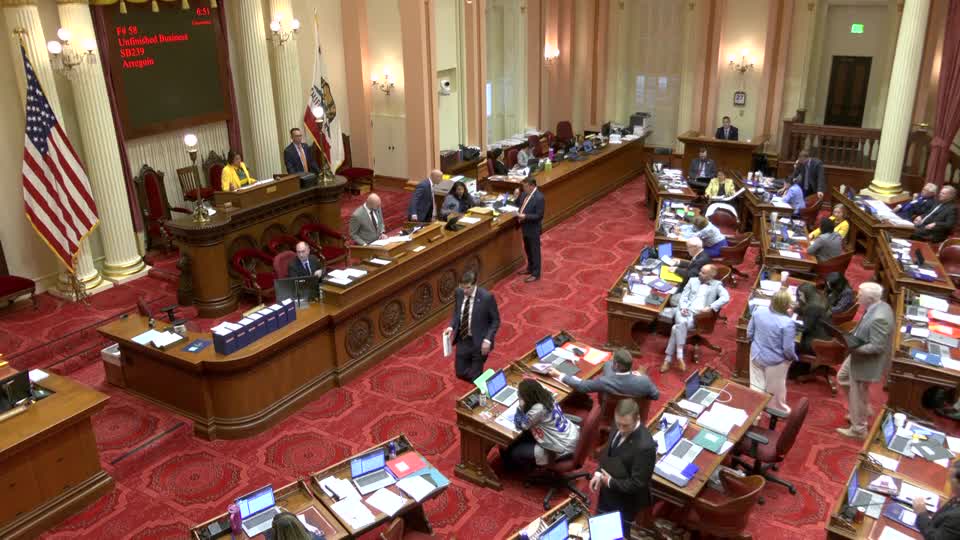 1MIN
Senate Floor
 2MIN
Assembly Floor
 13MIN
Assembly Standing Committee on Privacy and Consumer Protection
 2MIN
Senate Floor
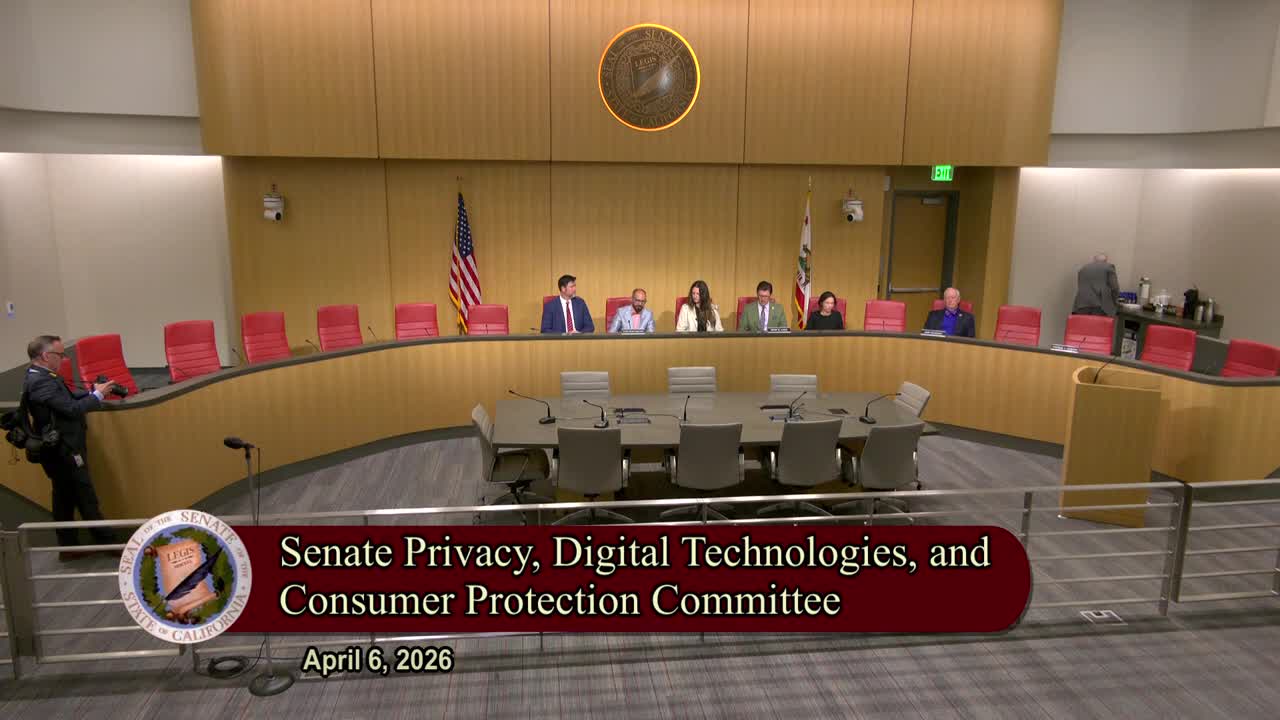 16MIN
Senate Standing Committee on Privacy, Digital Technologies, and Consumer Protection
Bill Author

Bill Co-Author(s):