SB 925: Fusion energy: State Energy Resources Conservation and Development Commission: strategic plan: certification and environmental review.
- Session Year: 2025-2026
- House: Senate
- Latest Version Date: 2026-09-30
Current Status:
Passed
(2026-09-30: Chaptered by Secretary of State. Chapter 831, Statutes of 2026.)
Introduced
In Committee
Awaiting First Chamber Vote
Passed First Chamber
In Committee
Awaiting Second Chamber Vote
Passed Second Chamber
Enacted
Existing law requires the State Energy Resources Conservation and Development Commission to undertake various actions in furtherance of meeting the states clean energy and pollution reduction objectives. Existing law requires the commission, beginning November 1, 2003, and biennially thereafter, to adopt an integrated energy policy report that contains an overview of major energy trends and issues facing the state, presents policy recommendations based on an in-depth and integrated analysis of the most current and pressing energy issues facing the state, and includes an assessment and forecast of system reliability and the need for resource additions, efficiency, and conservation, as specified. Existing law requires the commission, as part of the 2027 edition of the integrated energy policy report, to include an assessment of the potential for fusion energy to contribute to Californias power supply, as specified.
This bill would require the commission, in coordination with specified agencies, to develop a strategic plan for the development of fusion energy in California, as specified. The bill would require the commission to submit the strategic plan to the Legislature on or before December 31, 2029.
This bill would require the commission, in coordination with relevant agencies and the fusion energy industry, to (1) develop a strategy for the expansion and development of fusion research and development in California, (2) develop a strategy for supporting the commercialization of fusion energy in California, (3) develop a regulatory framework for fusion energy and a roadmap for licensing and permitting for new fusion energy research and fusion energy facilities, and (4) assess the level at which fusion energy at scale would best support Californias long-term renewable energy and greenhouse gas emission reduction goals. The bill would require the information described in this paragraph to be included in the strategic plan, as specified.
Existing law authorizes persons proposing specified electrical generation, electrical transmission, hydrogen production, energy storage, and geothermal projects to apply, on or before June 30, 2030, to the commission to certify sites and related facilities as environmental leadership development projects, as specified. Existing law makes a site and related facility certified by the commission subject to streamlining benefits related to the California Environmental Quality Act (CEQA) with no further action by the applicant or the Governor. Under existing law, the commissions certification is in lieu of any permit, certificate, or similar document required by any governmental agency and supersedes any applicable statute, ordinance, or regulation, except as specified.
This bill would expand the types of facilities eligible to be certified as environmental leadership development projects by the commission to include a discretionary project, as described, for the manufacture, production, or assembly of specialized products, components, or systems that are integral to fusion energy.
Existing law requires the State Energy Resources Conservation and Development Commission to undertake various actions in furtherance of meeting the states clean energy and pollution reduction objectives. Existing law requires the commission, beginning November 1, 2003, and biennially thereafter, to adopt an integrated energy policy report that contains an overview of major energy trends and issues facing the state, presents policy recommendations based on an in-depth and integrated analysis of the most current and pressing energy issues facing the state, and includes an assessment and forecast of system reliability and the need for resource additions, efficiency, and conservation, as specified. Existing law requires the commission, as part of the 2027 edition of the integrated energy policy report, to include an assessment of the potential for fusion energy to contribute to Californias power supply, as specified.
This bill would require the commission, in coordination with specified agencies, to develop a strategic plan for the development of fusion energy in California, as specified. The bill would require the commission to submit the strategic plan to the Legislature on or before December 31, 2028. 2029.
This bill would require the commission, in coordination with relevant agencies and the fusion energy industry, to (1) develop a strategy for the expansion and development of fusion research and development in California, (2) develop a strategy for supporting the commercialization of fusion energy in California, (3) develop a regulatory framework for fusion energy and a roadmap for licensing and permitting for new fusion energy research and fusion energy facilities, and (4) assess the level at which fusion energy at scale would best support Californias long-term renewable energy and greenhouse gas emission reduction goals. The bill would require the information described in this paragraph to be included in the strategic plan, as specified.
Existing law authorizes persons proposing specified electrical generation, electrical transmission, hydrogen production, energy storage, and geothermal projects to apply, on or before June 30, 2030, to the commission to certify sites and related facilities as environmental leadership development projects, as specified. Existing law makes a site and related facility certified by the commission subject to streamlining benefits related to the California Environmental Quality Act (CEQA) with no further action by the applicant or the Governor. Under existing law, the commissions certification is in lieu of any permit, certificate, or similar document required by any governmental agency and supersedes any applicable statute, ordinance, or regulation, except as specified.
This bill would expand the types of facilities eligible to be certified as environmental leadership development projects by the commission to include a discretionary project, as described, for the manufacture, production, or assembly of specialized products, components, or systems that are integral to fusion energy.
Existing law requires the State Energy Resources Conservation and Development Commission (Energy Commission) to undertake various actions in furtherance of meeting the states clean energy and pollution reduction objectives. Existing law requires the Energy Commission, commission, beginning November 1, 2003, and biennially thereafter, to adopt an integrated energy policy report that contains an overview of major energy trends and issues facing the state, presents policy recommendations based on an in-depth and integrated analysis of the most current and pressing energy issues facing the state, and includes an assessment and forecast of system reliability and the need for resource additions, efficiency, and conservation, as specified. Existing law requires the Energy Commission, commission, as part of the 2027 edition of the integrated energy policy report, to include an assessment of the potential for fusion energy to contribute to Californias power supply, as specified.
This bill would require the Energy Commission, commission, in coordination with specified agencies, to develop a strategic plan for the development of fusion energy in California, as specified. The bill would require the Energy Commission commission to submit the strategic plan to the Legislature on or before December 31, 2028.
This bill would require the Energy Commission, commission, in coordination with relevant agencies and the fusion energy industry, to (1) develop a strategy for the expansion and development of fusion research and development in California, (2) develop a strategy for supporting the commercialization of fusion energy in California, (3) develop a regulatory framework for fusion energy and a roadmap for licensing and permitting for new fusion energy research and fusion energy facilities, and (4) assess the level at which fusion energy at scale would best support Californias long-term renewable energy and greenhouse gas emission reduction goals. The bill would require the information described in this paragraph to be included in the strategic plan, as specified.
Existing law authorizes persons proposing specified electrical generation, electrical transmission, hydrogen production, energy storage, and geothermal projects to apply, on or before June 30, 2030, to the Energy Commission commission to certify sites and related facilities as environmental leadership development projects, as specified. Existing law makes a site and related facility certified by the Energy Commission commission subject to streamlining benefits related to the California Environmental Quality Act (CEQA) with no further action by the applicant or the Governor. Under existing law, the Energy Commissions commissions certification is in lieu of any permit, certificate, or similar document required by any governmental agency and supersedes any applicable statute, ordinance, or regulation, except as specified.
This bill would expand the types of facilities eligible to be certified as environmental leadership development projects by the Energy Commission commission to include a discretionary project, as described, for the manufacture, production, or assembly of specialized products, components, or systems that are integral to fusion energy.
Existing law requires the State Energy Resources Conservation and Development Commission (Energy Commission) to undertake various actions in furtherance of meeting the states clean energy and pollution reduction objectives. Existing law requires the Energy Commission, beginning November 1, 2003, and biennially thereafter, to adopt an integrated energy policy report that contains an overview of major energy trends and issues facing the state, presents policy recommendations based on an in-depth and integrated analysis of the most current and pressing energy issues facing the state, and includes an assessment and forecast of system reliability and the need for resource additions, efficiency, and conservation, as specified. Existing law requires the Energy Commission, as part of the 2027 edition of the integrated energy policy report, to include an assessment of the potential for fusion energy to contribute to Californias power supply, as specified.
This bill would require the Energy Commission, in coordination with specified agencies, to develop a strategic plan for the development of fusion energy in California, as specified. The bill would require the Energy Commission to submit the strategic plan to the Legislature on or before December 31, 2028.
This bill would require the Energy Commission, in coordination with relevant agencies and the fusion energy industry, to (1) develop a strategy for the expansion and development of fusion research and development in California, (2) develop a strategy for supporting the commercialization of fusion energy in California, (3) develop a regulatory framework for fusion energy and a roadmap for licensing and permitting for new fusion energy research and fusion energy facilities, and (4) assess the level at which fusion energy at scale would best support Californias long-term renewable energy and greenhouse gas emission reduction goals. The bill would require the information described in this paragraph to be included in the strategic plan, as specified.
Existing law authorizes persons proposing specified electrical generation, electrical transmission, hydrogen production, energy storage, and geothermal projects to apply, on or before June 30, 2030, to the Energy Commission to certify sites and related facilities as environmental leadership development projects, as specified. Existing law makes a site and related facility certified by the Energy Commission subject to streamlining benefits related to the California Environmental Quality Act (CEQA) with no further action by the applicant or the Governor. Under existing law, the Energy Commissions certification is in lieu of any permit, certificate, or similar document required by any governmental agency and supersedes any applicable statute, ordinance, or regulation, except as specified.
This bill would expand the types of facilities eligible to be certified as environmental leadership development projects by the Energy Commission to include a discretionary project, as described, for the manufacture, production, or assembly of specialized products, components, or systems that are integral to fusion energy.
Existing law requires the State Energy Resources Conservation and Development Commission (Energy Commission) to undertake various actions in furtherance of meeting the states clean energy and pollution reduction objectives. Existing law requires the Energy Commission, beginning November 1, 2003, and biennially thereafter, to adopt an integrated energy policy report that contains an overview of major energy trends and issues facing the state, presents policy recommendations based on an in-depth and integrated analysis of the most current and pressing energy issues facing the state, and includes an assessment and forecast of system reliability and the need for resource additions, efficiency, and conservation, as specified. Existing law requires the Energy Commission, as part of the 2027 edition of the integrated energy policy report, to include an assessment of the potential for fusion energy to contribute to Californias power supply, as specified.
This bill would require the Energy Commission, in coordination with specified agencies, to develop a strategic plan for the development of fusion energy in California, as specified. The bill would require the Energy Commission to submit the strategic plan to the Legislature on or before December 31, 2028.
This bill would require the Energy Commission, in coordination with relevant agencies and the fusion energy industry, to (1) develop a strategy for the expansion and development of fusion research and development in California, (2) develop a strategy for supporting the commercialization of fusion energy in California, (3) develop a regulatory framework for fusion energy and a roadmap for licensing and permitting for new fusion energy research and fusion energy facilities, and (4) assess the level at which fusion energy at scale would best support Californias long-term renewable energy and greenhouse gas emission reduction goals. The bill would require the information described in this paragraph to be included in the strategic plan, as specified.
Existing law authorizes persons proposing specified electrical generation, electrical transmission, hydrogen production, energy storage, and geothermal projects to apply, on or before June 30, 2030, to the Energy Commission to certify sites and related facilities as environmental leadership development projects, as specified. Existing law makes a site and related facility certified by the Energy Commission subject to streamlining benefits related to the California Environmental Quality Act (CEQA) with no further action by the applicant or the Governor. Under existing law, the Energy Commissions certification is in lieu of any permit, certificate, or similar document required by any governmental agency and supersedes any applicable statute, ordinance, or regulation, except as specified.
This bill would expand the types of facilities eligible to be certified as environmental leadership development projects by the Energy Commission, upon the submission of the above-described strategic plan, to include fusion energy electrical generating facilities, demonstration facilities, or applicable research and development facilities. Commission to include a discretionary project, as described, for the manufacture, production, or assembly of specialized products, components, or systems that are integral to fusion energy.
Existing law requires the State Energy Resources Conservation and Development Commission (Energy Commission) to undertake various actions in furtherance of meeting the states clean energy and pollution reduction objectives. Existing law requires the Energy Commission, beginning November 1, 2003, and biennially thereafter, to adopt an integrated energy policy report that contains an overview of major energy trends and issues facing the state, presents policy recommendations based on an in-depth and integrated analysis of the most current and pressing energy issues facing the state, and includes an assessment and forecast of system reliability and the need for resource additions, efficiency, and conservation, as specified. Existing law requires the Energy Commission, as part of the 2027 edition of the integrated energy policy report, to include an assessment of the potential for fusion energy to contribute to Californias power supply, as specified.
This bill would require the Energy Commission, in coordination with specified agencies, to develop a strategic plan for the development of fusion energy in California, as specified. The bill would require the Energy Commission to submit the strategic plan to the Legislature on or before December 31, 2028.
This bill would require the Energy Commission, in coordination with relevant agencies and the fusion energy industry, to (1) develop a strategy for the expansion and development of fusion research and development in California, (2) develop a strategy for supporting the commercialization of fusion energy in California, (3) develop a regulatory framework for fusion energy and a roadmap for licensing and permitting for new fusion energy research and fusion energy facilities, and (4) assess the level at which fusion energy at scale would best support Californias long-term renewable energy and greenhouse gas emission reduction goals. The bill would require the information described in this paragraph to be included in the strategic plan, as specified.
Existing law authorizes persons proposing specified electrical generation, electrical transmission, hydrogen production, energy storage, and geothermal projects to apply, on or before June 30, 2030, to the Energy Commission to certify sites and related facilities as environmental leadership development projects, as specified. Existing law makes a site and related facility certified by the Energy Commission subject to streamlining benefits related to the California Environmental Quality Act (CEQA) with no further action by the applicant or the Governor. Under existing law, the Energy Commissions certification is in lieu of any permit, certificate, or similar document required by any governmental agency and supersedes any applicable statute, ordinance, or regulation, except as specified.
This bill would expand the types of facilities eligible to be certified as environmental leadership development projects by the Energy Commission, upon the submission of the above-described strategic plan, to include fusion energy electrical generating facilities, demonstration facilities, or applicable research and development facilities.
Existing law requires the Public Utilities Commission to require electrical corporations and gas corporations to cooperate in establishing a single internet website to provide information regarding ratepayer-funded energy efficiency assistance programs, as specified.This bill would make nonsubstantive changes to that requirement.Existing law requires the Public Utilities Commission to require electrical corporations and gas corporations to cooperate in establishing a single internet website to provide information regarding ratepayer-funded energy efficiency assistance programs, as specified.
This bill would make nonsubstantive changes to that requirement.
The Legislature finds and declares all of the following:
(a)Fusion energy holds the potential of generating clean, safe, and firm energy, without producing air pollution, harmful emissions, or long-lasting nuclear waste.
(b)If developed and deployed at scale, fusion energy can advance Californias progress toward its statutory renewable and zero-carbon energy and climate mandates and provide air quality benefits.
(c)The federal Accelerating Deployment of Versatile, Advanced Nuclear for Clean Energy Act of 2024 (Public Law 118-67) requires the United States Nuclear Regulatory Commission to regulate fusion machines under its byproduct materials process, separating nuclear fusion energy regulations from nuclear fission on the basis that fusion facilities may not have the potential to cause large radiation doses to workers or the public in accident scenarios and cannot produce runaway reactions.
(d)Californias agreement state status under the National Materials Program delegates authority from the Nuclear Regulatory Commission to the states Radiologic Health Branch of the State Department of Public Health for the radiological licensing and registration of fusion machines.
(e)California enacted Assembly Bill 1172 of the 202324 Regular Session (Chapter 360 of the Statutes of 2023), requiring the State Energy Resources Conservation and Development Commission to assess the potential for fusion energy to contribute to the states energy supply as part of the 2027 integrated energy policy report, including identifying the necessary regulatory and policy actions required to deploy fusion energy.
(f)California enacted Senate Concurrent Resolution No. 25 of the 202526 Regular Session (Resolution Chapter 161 of the Statutes of 2025), resolving that the State of California supports developing the fusion energy ecosystem, including the future workforce and supply chain required to advance fusion research, development, demonstration, and deployment, with the goal of siting a fusion pilot plant in California by the 2040s.
(g)The Governors 2025 California Jobs First State Economic Blueprint identifies fusion as one of several emerging sectors with significant investment or high strategic importance to the innovation ecosystem.
(h)California enacted Assembly Bill 940 of the 202526 Regular Session (Chapter 333 of the Statues of 2025), requiring the Governors Office of Business and Economic Development to develop industry strategies for the strategic sectors identified in the Governors 2025 California Jobs First State Economic Blueprint to ensure an industry-specific approach that builds on the strategies outlined in the blueprint and outlines the activities and investments necessary to ensure that these sectors continue to grow in California.
(i)California is home to the largest fusion ecosystem in the United States, hosting the largest fusion laboratories in the nation, more than one-quarter of all United States fusion energy startups, and globally recognized academic programs to develop the fusion science and engineering workforce.
(j)The San Diego Regional Economic Development Corporations 2025 study, Catalyzing Californias Fusion Advantage, found Californias fusion energy industry currently generates approximately $1.4 billion dollars in annual economic output, and could grow to $12.5 billion dollars annually and support 43,000 annual jobs. The report also found global fusion investment has surpassed $9.7 billion dollars, demonstrating sustained and accelerating private-sector confidence.
(k)Since fusion energy projects may take several years to develop, a comprehensive planning process must begin now to ensure California retains its strategic advantage and grows its fusion ecosystem.
SEC. 2.Section 25545 of the Public Resources Code is amended to read:25545.For purposes of this chapter, all of the following definitions apply:
(a)California Native American tribe has the same meaning as set forth in Section 21073.
(b)Facility means any of the following:
(1)A solar photovoltaic or terrestrial wind electrical generating powerplant with a generating capacity of 50 megawatts or more and any facilities appurtenant thereto.
(2)An energy storage system as defined in Section 2835 of the Public Utilities Code that is capable of storing 200 megawatthours or more of energy.
(3)A stationary electrical generating powerplant using any source of thermal energy, with a generating capacity of 50 megawatts or more, excluding any powerplant that burns, uses, or relies on fossil or nuclear fuels.
(4)A discretionary project as described in Section 21080 for which the applicant has certified that a capital investment of at least two hundred fifty million dollars ($250,000,000) will be made over a period of five years and the discretionary project is for (A) the manufacture, production, or assembly of an energy storage system or component manufacturing, wind system or component manufacturing, and solar photovoltaic energy system or component manufacturing, or (B) the manufacture, production, or assembly of specialized products, components, or systems that are integral to renewable energy, energy storage technologies, or fusion energy.
(5)An electrical transmission line carrying electricity from a facility described in paragraph (1), (2), or (3) that is located in the state to a point of junction with any interconnected electrical transmission system.
(6)A hydrogen production facility and associated onsite storage and processing facilities that do not derive hydrogen from a fossil fuel feedstock and that receive funding from any of the following:
(A)The Hydrogen Program established pursuant to Section 25664.1.
(B)Section 91530, as added by the Safe Drinking Water, Wildfire Prevention, Drought Preparedness, and Clean Air Bond Act of 2024.
(C)The Alliance for Renewable Clean Hydrogen Energy Systems (ARCHES) authorized by Article 15 (commencing with Section 12100.160) of Chapter 1.6 of Part 2 of Division 3 of Title 2 of the Government Code, as awarded by the United States Department of Energy Office of Clean Energy Demonstrations.
(7)A geothermal powerplant or a project that comprises multiple geothermal powerplants on a single site.
(c)Site means any location on which an eligible facility is constructed or is proposed to be constructed.
SEC. 3.Chapter 16.5 (commencing with Section 25995) is added to Division 15 of the Public Resources Code, to read:16.5.Fusion Energy25995.(a)(1)The commission, in coordination with any relevant federal, state, or local agency, shall develop a strategic plan for the development of fusion energy in California.
(2)The strategic plan shall do all of the following:
(A)Serve an advisory function and not form the sole basis for a new procurement mandate or requirement.
(B)Serve, where applicable, to build on Section 25302.4, as that section read on January 1, 2026, and propose actions to address the needs related to fusion energy identified in the 2027 edition of the integrated energy policy report.
(C)Emphasize and prioritize near-term actions related to expanding research and development partnerships, increasing collaborations between the United States Department of Energy and the State of California, increasing workforce development, and growing the California fusion ecosystem and supply chain.
(b)(1)The commission shall provide an opportunity for public review and comment on a draft strategic plan before it is submitted to the Legislature.
(2)(A)The commission shall submit the strategic plan to the Legislature on or before December 31, 2029.
(B)The strategic plan submitted to the Legislature pursuant to subparagraph (A) shall be submitted in compliance with Section 9795 of the Government Code.
(c)The strategic plan shall include, at minimum, all of the following chapters:
(1)Identification of suitable and recommended locations, or criteria for suitable locations, for the expansion or development of new fusion research and development testing facilities, including the findings and recommendations resulting from activities undertaken pursuant to Section 25995.1.
(2)Identification of suitable and recommended locations, or criteria for suitable locations, for the development of new fusion demonstrations and powerplants, including the findings and recommendations resulting from activities undertaken pursuant to Section 25995.2.
(3)Economic and workforce development, including, but not limited to, an analysis of occupational safety requirements, the need to require the use of a skilled and trained workforce to perform all work, and the need for the Division of Apprenticeship Standards to develop curriculum for in-person classroom and laboratory advanced safety training for workers. In developing this chapter, the commission shall consult with representatives of key industries, colleges and universities, labor organizations, and apprenticeship programs that would be involved in retiring technology risks and training and dispatching workforces.
(4)Regulatory framework and roadmap for licensing and permitting, including the findings and recommendations resulting from activities undertaken pursuant to Section 25995.3.
(5)Alignment to state clean energy goals, including the findings and recommendations resulting from activities undertaken pursuant to Section 25995.4.
(d)This chapter does not modify the authority of state agencies over project-specific siting and permitting.
25995.1.(a)The commission, in coordination with any relevant federal, state, or local agency and the fusion energy industry, shall develop a strategy for the expansion and development of fusion research and development in California.
(b)As part of this strategy, the commission shall do both of the following:
(1)Identify opportunities and make recommendations for siting or expanding small, medium, and large fusion research and development facilities in California to drive sustainable economic growth, innovation, and access to jobs, consistent with the Jobs First Economic Blueprint, including options for siting a national integrated facility, such as a fusion prototypical neutron source, volumetric neutron source, integrated blanket and fuel cycle facility, or other capability, in the future.
(2)Identify criteria for suitable locations for expanding fusion research and development.
(c)In evaluating and identifying criteria for suitable locations, the commission shall consider all of the following:
(1)Capabilities that best serve the United States fusion industry, create jobs, and keep California at the forefront of fusion innovation.
(2)Opportunities for developing or expanding research and development test stands on public and private lands, including University of California campuses, and other colleges, universities, and vocational schools.
(3)Opportunities for siting a large integrated fusion research and development facility in partnership with government and industry.
(d)The commission may refer to the federal Fusion Energy Sciences Advisory Committees (FESAC) Powering the Future: Fusion & Plasmas long-range plan, the 2024 draft report of the FESAC Subcommittee on Facilities Construction Projects, the United States Department of Energy Fusion Science and Technology Roadmap, and other relevant strategic planning documents to identify testing facilities applicable to this section.
(e)The commission may engage with the United States Department of Energy to identify opportunities and resources available for siting new, or expanding, testing facilities in California.
(f)The commission shall solicit interest from local governments, colleges and universities, economic development organizations, nongovernmental organizations, and the fusion energy industry to identify locations with existing fusion assets, such as buildings, equipment, and testing facilities, that may be leveraged to accelerate deployment or expansion of facilities and to understand potential incentives and cost-share arrangements to support new or expanded testing facilities.
(g)The commission may recommend establishing designated geographic areas to accelerate the development of fusion technologies and promote the sustainable growth of the California fusion industry.
(h)The findings and recommendations resulting from activities undertaken pursuant to this section shall be included in the chapter of the strategic plan related to identification of suitable and recommended locations, or criteria for suitable locations, for new fusion research and development testing facilities, as specified in paragraph (1) of subdivision (c) of Section 25995.
25995.2.(a)The commission, in coordination with any relevant federal, state, or local agency and the fusion energy industry, shall develop a strategy for supporting the commercialization of fusion energy in California.
(b)As part of this strategy, the commission shall identify and recommend suitable locations, or criteria for suitable locations, for the development of fusion energy facilities.
(c)In identifying suitable locations, the commission shall consider all of the following:
(1)Existing data on fusion energy resource potential and commercial viability.
(2)Existing and necessary transmission infrastructure.
(3)Protection of cultural and biological resources with the goal of prioritizing least-conflict areas.
(d)The commission shall make recommendations regarding potential significant adverse environmental impacts and use conflicts, such as avoidance, minimization, monitoring, mitigation, and adaptive management, consistent with Californias long-term renewable energy, greenhouse gas emissions reduction, and biodiversity goals.
(e)The commission shall solicit interest from local governments, economic development organizations, nongovernmental organizations, and the fusion energy industry to do both of the following:
(1)Identify locations with existing fusion assets, such as buildings, equipment, testing facilities, and potential brightfields, that may be leveraged to accelerate the deployment of fusion energy facilities.
(2)Understand incentives and proposed cost-sharing opportunities.
(f)The findings and recommendations resulting from activities undertaken pursuant to this section shall be included in the chapter of the strategic plan related to identification of suitable and recommended locations, or criteria for suitable locations, for the development of new fusion demonstrations and powerplants, as specified in paragraph (2) of subdivision (c) of Section 25995.
25995.3.(a)The commission, in coordination with any relevant federal, state, or local agency and the fusion energy industry, shall develop a regulatory framework for fusion energy and a roadmap for licensing and permitting, to establish a coordinated, comprehensive, and efficient pathway for new fusion energy research and fusion energy facilities.
(b)The commission shall align the regulatory framework and roadmap for licensing and permitting with the Nuclear Regulatory Commissions rule establishing a regulatory framework for fusion machines.
(c)In developing the regulatory framework and roadmap for licensing and permitting, the commission shall do all of the following:
(1)Identify relevant authorities, rules, regulations, guidance, and potential milestones for implementation.
(2)Clearly define roles, responsibilities, and decisionmaking authority under the California Environmental Quality Act (Division 13 (commencing with Section 21000)).
(3)Consult the Radiologic Health Branch of the State Department of Public Health and other agencies to meet the requirements of this section.
(d)The commission shall provide an opportunity for stakeholder input in the development and communication of the regulatory framework and permitting roadmap, and provide an opportunity for public comment.
(e)The findings and recommendations resulting from activities undertaken pursuant to this section shall be included in the chapter of the strategic plan relating to a regulatory framework and roadmap for licensing and permitting, as specified in paragraph (4) of subdivision (c) of Section 25995.
25995.4.(a)The commission, in coordination with any relevant federal, state, or local agency, shall assess the level at which fusion energy at scale would best support Californias long-term renewable energy and greenhouse gas emission reduction goals.
(b)The commission shall ensure policy tools supporting clean energy deployment are available to fusion developers and aligned to the findings of Chapter 333 of the Statutes of 2025 (Assembly Bill 940 of the 202526 Regular Session).
(c)The findings and recommendations resulting from activities undertaken pursuant to this section shall be included in the chapter of the strategic plan related to the alignment to state clean energy goals, as specified in paragraph (5) of subdivision (c) of Section 25995.
25995.5.This chapter does not create a technology set-aside, mandatory minimum, or mandate procurement of fusion energy by load-serving entities, as defined in Section 380 of the Public Utilities Code.
The Legislature finds and declares all of the following:
(a)Fusion energy holds the potential of generating clean, safe, and firm energy, without producing air pollution, harmful emissions, or long-lasting nuclear waste.
(b)If developed and deployed at scale, fusion energy can advance Californias progress toward its statutory renewable and zero-carbon energy and climate mandates and provide air quality benefits.
(c)The federal Accelerating Deployment of Versatile, Advanced Nuclear for Clean Energy Act of 2024 (Public Law 118-67) requires the United States Nuclear Regulatory Commission to regulate fusion machines under its byproduct materials process, separating nuclear fusion energy regulations from nuclear fission on the basis that fusion facilities may not have the potential to cause large radiation doses to workers or the public in accident scenarios and cannot produce runaway reactions.
(d)Californias agreement state status under the National Materials Program delegates authority from the Nuclear Regulatory Commission to the states Radiologic Health Branch of the State Department of Public Health for the radiological licensing and registration of fusion machines.
(e)California enacted Assembly Bill 1172 of the 202324 Regular Session (Chapter 360 of the Statutes of 2023), requiring the State Energy Resources Conservation and Development Commission to assess the potential for fusion energy to contribute to the states energy supply as part of the 2027 integrated energy policy report, including identifying the necessary regulatory and policy actions required to deploy fusion energy.
(f)California enacted Senate Concurrent Resolution No. 25 of the 202526 Regular Session (Resolution Chapter 161 of the Statutes of 2025), resolving that the State of California supports developing the fusion energy ecosystem, including the future workforce and supply chain required to advance fusion research, development, demonstration, and deployment, with the goal of siting a fusion pilot plant in California by the 2040s.
(g)The Governors 2025 California Jobs First State Economic Blueprint identifies fusion as one of several emerging sectors with significant investment or high strategic importance to the innovation ecosystem.
(h)California enacted Assembly Bill 940 of the 202526 Regular Session (Chapter 333 of the Statues of 2025), requiring the Governors Office of Business and Economic Development to develop industry strategies for the strategic sectors identified in the Governors 2025 California Jobs First State Economic Blueprint to ensure an industry-specific approach that builds on the strategies outlined in the blueprint and outlines the activities and investments necessary to ensure that these sectors continue to grow in California.
(i)California is home to the largest fusion ecosystem in the United States, hosting the largest fusion laboratories in the nation, more than one-quarter of all United States fusion energy startups, and globally recognized academic programs to develop the fusion science and engineering workforce.
(j)The San Diego Regional Economic Development Corporations 2025 study, Catalyzing Californias Fusion Advantage, found Californias fusion energy industry currently generates approximately $1.4 billion dollars in annual economic output, and could grow to $12.5 billion dollars annually and support 43,000 annual jobs. The report also found global fusion investment has surpassed $9.7 billion dollars, demonstrating sustained and accelerating private-sector confidence.
(k)Since fusion energy projects may take several years to develop, a comprehensive planning process must begin now to ensure California retains its strategic advantage and grows its fusion ecosystem.
SEC. 2.Section 25545 of the Public Resources Code is amended to read:25545.For purposes of this chapter, all of the following definitions apply:
(a)California Native American tribe has the same meaning as set forth in Section 21073.
(b)Facility means any of the following:
(1)A solar photovoltaic or terrestrial wind electrical generating powerplant with a generating capacity of 50 megawatts or more and any facilities appurtenant thereto.
(2)An energy storage system as defined in Section 2835 of the Public Utilities Code that is capable of storing 200 megawatthours or more of energy.
(3)A stationary electrical generating powerplant using any source of thermal energy, with a generating capacity of 50 megawatts or more, excluding any powerplant that burns, uses, or relies on fossil or nuclear fission fuels.
(4)A discretionary project as described in Section 21080 for which the applicant has certified that a capital investment of at least two hundred fifty million dollars ($250,000,000) will be made over a period of five years and the discretionary project is for (A) the manufacture, production, or assembly of an energy storage system or component manufacturing, wind system or component manufacturing, and solar photovoltaic energy system or component manufacturing, or (B) the manufacture, production, or assembly of specialized products, components, or systems that are integral to renewable energy, energy storage technologies, or fusion energy.
(5)An electrical transmission line carrying electricity from a facility described in paragraph (1), (2), or (3) that is located in the state to a point of junction with any interconnected electrical transmission system.
(6)A hydrogen production facility and associated onsite storage and processing facilities that do not derive hydrogen from a fossil fuel feedstock and that receive funding from any of the following:
(A)The Hydrogen Program established pursuant to Section 25664.1.
(B)Section 91530, as added by the Safe Drinking Water, Wildfire Prevention, Drought Preparedness, and Clean Air Bond Act of 2024.
(C)The Alliance for Renewable Clean Hydrogen Energy Systems (ARCHES) authorized by Article 15 (commencing with Section 12100.160) of Chapter 1.6 of Part 2 of Division 3 of Title 2 of the Government Code, as awarded by the United States Department of Energy Office of Clean Energy Demonstrations.
(7)A geothermal powerplant or a project that comprises multiple geothermal powerplants on a single site.
(c)Site means any location on which an eligible facility is constructed or is proposed to be constructed.
SEC. 3.Chapter 16.5 (commencing with Section 25995) is added to Division 15 of the Public Resources Code, to read:16.5.Fusion Energy25995.(a)(1)The commission, in coordination with any relevant federal, state, or local agency, shall develop a strategic plan for the development of fusion energy in California.
(2)The strategic plan shall do all of the following:
(A)Serve an advisory function and not form the sole basis for a new procurement mandate or requirement.
(B)Serve, where applicable, to build on Section 25302.4, as that section read on January 1, 2026, and propose actions to address the needs related to fusion energy identified in the 2027 edition of the integrated energy policy report.
(C)Emphasize and prioritize near-term actions related to expanding research and development partnerships, increasing collaborations between the United States Department of Energy and the State of California, increasing workforce development, and growing the California fusion ecosystem and supply chain.
(b)(1)The commission shall provide an opportunity for public review and comment on a draft strategic plan before it is submitted to the Legislature.
(2)(A)The commission shall submit the strategic plan to the Legislature on or before December 31, 2028. 2029.
(B)The strategic plan submitted to the Legislature pursuant to subparagraph (A) shall be submitted in compliance with Section 9795 of the Government Code.
(c)The strategic plan shall include, at minimum, all of the following chapters:
(1)Identification of suitable and recommended locations, or criteria for suitable locations, for the expansion or development of new fusion research and development testing facilities, including the findings and recommendations resulting from activities undertaken pursuant to Section 25995.1.
(2)Identification of suitable and recommended locations, or criteria for suitable locations, for the development of new fusion demonstrations and powerplants, including the findings and recommendations resulting from activities undertaken pursuant to Section 25995.2.
(3)Economic and workforce development, including, but not limited to, an analysis of occupational safety requirements, the need to require the use of a skilled and trained workforce to perform all work, and the need for the Division of Apprenticeship Standards to develop curriculum for in-person classroom and laboratory advanced safety training for workers. In developing this chapter, the commission shall consult with representatives of key industries, colleges and universities, labor organizations, and apprenticeship programs that would be involved in retiring technology risks and training and dispatching workforces.
(4)Regulatory framework and roadmap for licensing and permitting, including the findings and recommendations resulting from activities undertaken pursuant to Section 25995.3.
(5)Alignment to state clean energy goals, including the findings and recommendations resulting from activities undertaken pursuant to Section 25995.4.
(d)This chapter does not modify the authority of state agencies over project-specific siting and permitting.
25995.1.(a)The commission, in coordination with any relevant federal, state, or local agency and the fusion energy industry, shall develop a strategy for the expansion and development of fusion research and development in California.
(b)As part of this strategy, the commission shall do both of the following:
(1)Identify opportunities and make recommendations for siting or expanding small, medium, and large fusion research and development facilities in California to drive sustainable economic growth, innovation, and access to jobs, consistent with the Jobs First Economic Blueprint, including options for siting a national integrated facility, such as a fusion prototypical neutron source, volumetric neutron source, integrated blanket and fuel cycle facility, or other capability, in the future.
(2)Identify criteria for suitable locations for expanding fusion research and development.
(c)In evaluating and identifying criteria for suitable locations, the commission shall consider all of the following:
(1)Capabilities that best serve the United States fusion industry, create jobs, and keep California at the forefront of fusion innovation.
(2)Opportunities for developing or expanding research and development test stands on public and private lands, including University of California campuses, and other colleges, universities, and vocational schools.
(3)Opportunities for siting a large integrated fusion research and development facility in partnership with government and industry.
(d)The commission may refer to the federal Fusion Energy Sciences Advisory Committees (FESAC) Powering the Future: Fusion & Plasmas long-range plan, the 2024 draft report of the FESAC Subcommittee on Facilities Construction Projects, the United States Department of Energy Fusion Science and Technology Roadmap, and other relevant strategic planning documents to identify testing facilities applicable to this section.
(e)The commission may engage with the United States Department of Energy to identify opportunities and resources available for siting new, or expanding, testing facilities in California.
(f)The commission shall solicit interest from local governments, colleges and universities, economic development organizations, nongovernmental organizations, and the fusion energy industry to identify locations with existing fusion assets, such as buildings, equipment, and testing facilities, that may be leveraged to accelerate deployment or expansion of facilities and to understand potential incentives and cost-share arrangements to support new or expanded testing facilities.
(g)The commission may recommend establishing designated geographic areas to accelerate the development of fusion technologies and promote the sustainable growth of the California fusion industry.
(h)The findings and recommendations resulting from activities undertaken pursuant to this section shall be included in the chapter of the strategic plan related to identification of suitable and recommended locations, or criteria for suitable locations, for new fusion research and development testing facilities, as specified in paragraph (1) of subdivision (c) of Section 25995.
25995.2.(a)The commission, in coordination with any relevant federal, state, or local agency and the fusion energy industry, shall develop a strategy for supporting the commercialization of fusion energy in California.
(b)As part of this strategy, the commission shall identify and recommend suitable locations, or criteria for suitable locations, for the development of fusion energy facilities.
(c)In identifying suitable locations, the commission shall consider all of the following:
(1)Existing data on fusion energy resource potential and commercial viability.
(2)Existing and necessary transmission infrastructure.
(3)Protection of cultural and biological resources with the goal of prioritizing least-conflict areas.
(d)The commission shall make recommendations regarding potential significant adverse environmental impacts and use conflicts, such as avoidance, minimization, monitoring, mitigation, and adaptive management, consistent with Californias long-term renewable energy, greenhouse gas emissions reduction, and biodiversity goals.
(e)The commission shall solicit interest from local governments, economic development organizations, nongovernmental organizations, and the fusion energy industry to do both of the following:
(1)Identify locations with existing fusion assets, such as buildings, equipment, testing facilities, and potential brightfields, that may be leveraged to accelerate the deployment of fusion energy facilities.
(2)Understand incentives and proposed cost-sharing opportunities.
(f)The findings and recommendations resulting from activities undertaken pursuant to this section shall be included in the chapter of the strategic plan related to identification of suitable and recommended locations, or criteria for suitable locations, for the development of new fusion demonstrations and powerplants, as specified in paragraph (2) of subdivision (c) of Section 25995.
25995.3.(a)The commission, in coordination with any relevant federal, state, or local agency and the fusion energy industry, shall develop a regulatory framework for fusion energy and a roadmap for licensing and permitting, to establish a coordinated, comprehensive, and efficient pathway for new fusion energy research and fusion energy facilities.
(b)The commission shall align the regulatory framework and roadmap for licensing and permitting with the Nuclear Regulatory Commissions rule establishing a regulatory framework for fusion machines.
(c)In developing the regulatory framework and roadmap for licensing and permitting, the commission shall do all of the following:
(1)Identify needed updates to relevant authorities, rules, regulations, and guidance, and establish deadlines potential milestones for implementation.
(2)Recommend deadlines for state agencies to update their own rules to ensure compatibility and compliance.(3)(2)Clearly define roles, responsibilities, and decisionmaking authority, authority under the California Environmental Quality Act (Division 13 (commencing with Section 21000)).
(4)Report on staff and funding needs as determined by(3)Consult the Radiologic Health Branch of the State Department of Public Health and other agencies to meet the requirements of this section.
(d)The commission shall provide an opportunity for stakeholder input in the development and communication of the regulatory framework and permitting roadmap, and provide an opportunity for public comment.
(e)The findings and recommendations resulting from activities undertaken pursuant to this section shall be included in the chapter of the strategic plan relating to a regulatory framework and roadmap for licensing and permitting, as specified in paragraph (4) of subdivision (c) of Section 25995.
25995.4.(a)The commission, in coordination with any relevant federal, state, or local agency, shall assess the level at which fusion energy at scale would best support Californias long-term renewable energy and greenhouse gas emission reduction goals.
(b)The commission shall ensure policy tools supporting clean energy deployment are available to fusion developers and aligned to the findings of Chapter 333 of the Statutes of 2025 (Assembly Bill 940 of the 202526 Regular Session).
(c)The findings and recommendations resulting from activities undertaken pursuant to this section shall be included in the chapter of the strategic plan related to the alignment to state clean energy goals, as specified in paragraph (5) of subdivision (c) of Section 25995.
25995.5.This chapter does not create a technology set-aside, mandatory minimum, or mandate procurement of fusion energy by load-serving entities, as defined in Section 380 of the Public Utilities Code.
The Legislature finds and declares all of the following:
(a)Fusion energy holds the potential of generating nearly limitless clean, safe, and firm energy, without producing air pollution, harmful emissions, or long-lasting nuclear waste.
(b)If developed and deployed at scale, fusion energy can advance Californias progress toward its statutory renewable and zero-carbon energy and climate mandates and provide air quality benefits.
(c)The federal Accelerating Deployment of Versatile, Advanced Nuclear for Clean Energy Act of 2024 (Public Law 118-67) requires the United States Nuclear Regulatory Commission to regulate fusion machines under its byproduct materials process, separating nuclear fusion energy regulations from nuclear fission on the basis that fusion facilities may not have the potential to cause large radiation doses to workers or the public in accident scenarios and cannot produce runaway reactions.
(d)Californias agreement state status under the National Materials Program delegates authority from the Nuclear Regulatory Commission to the states Radiologic Health Branch of the State Department of Public Health for the radiological licensing and registration of fusion machines.
(e)California enacted Assembly Bill 1172 of the 202324 Regular Session (Chapter 360 of the Statutes of 2023), requiring the State Energy Resources Conservation and Development Commission to assess the potential for fusion energy to contribute to the states energy supply as part of the 2027 integrated energy policy report, including identifying the necessary regulatory and policy actions required to deploy fusion energy.
(f)California enacted Senate Concurrent Resolution No. 25 of the 202526 Regular Session (Resolution Chapter 161 of the Statutes of 2025), resolving that the State of California supports developing the fusion energy ecosystem, including the future workforce and supply chain required to advance fusion research, development, demonstration, and deployment, with the goal of siting a fusion pilot plant in California by the 2040s.
(g)The Governors 2025 California Jobs First State Economic Blueprint identifies fusion as one of several emerging sectors with significant investment or high strategic importance to the innovation ecosystem.
(h)California enacted Assembly Bill 940 of the 202526 Regular Session (Chapter 333 of the Statues of 2025), requiring the Governors Office of Business and Economic Development to develop industry strategies for the strategic sectors identified in the Governors 2025 California Jobs First State Economic Blueprint to ensure an industry-specific approach that builds on the strategies outlined in the blueprint and outlines the activities and investments necessary to ensure that these sectors continue to grow in California.
(i)California is home to the largest fusion ecosystem in the United States, hosting the largest fusion laboratories in the nation, more than one-quarter of all United States fusion energy startups, and globally recognized academic programs to develop the fusion science and engineering workforce.
(j)The San Diego Regional Economic Development Corporations 2025 study, Catalyzing Californias Fusion Advantage, found Californias fusion energy industry currently generates approximately $1.4 billion dollars in annual economic output, and could grow to $12.5 billion dollars annually and support 43,000 annual jobs. The report also found global fusion investment has surpassed $9.7 billion dollars, demonstrating sustained and accelerating private-sector confidence.
(k)Since fusion energy projects may take several years to develop, a comprehensive planning process must begin now to ensure California retains its strategic advantage and grows its fusion ecosystem.
SEC. 2.Section 25545 of the Public Resources Code is amended to read:25545.For purposes of this chapter, all of the following definitions apply:
(a)California Native American tribe has the same meaning as set forth in Section 21073.
(b)Facility means any of the following:
(1)A solar photovoltaic or terrestrial wind electrical generating powerplant with a generating capacity of 50 megawatts or more and any facilities appurtenant thereto.
(2)An energy storage system as defined in Section 2835 of the Public Utilities Code that is capable of storing 200 megawatthours or more of energy.
(3)A stationary electrical generating powerplant using any source of thermal energy, with a generating capacity of 50 megawatts or more, excluding any powerplant that burns, uses, or relies on fossil or nuclear fission fuels.
(4)A discretionary project as described in Section 21080 for which the applicant has certified that a capital investment of at least two hundred fifty million dollars ($250,000,000) will be made over a period of five years and the discretionary project is for (A) the manufacture, production, or assembly of an energy storage system or component manufacturing, wind system or component manufacturing, and solar photovoltaic energy system or component manufacturing, or (B) the manufacture, production, or assembly of specialized products, components, or systems that are integral to renewable energy, energy storage technologies, or fusion energy.
(5)An electrical transmission line carrying electricity from a facility described in paragraph (1), (2), or (3) that is located in the state to a point of junction with any interconnected electrical transmission system.
(6)A hydrogen production facility and associated onsite storage and processing facilities that do not derive hydrogen from a fossil fuel feedstock and that receive funding from any of the following:
(A)The Hydrogen Program established pursuant to Section 25664.1.
(B)Section 91530, as added by the Safe Drinking Water, Wildfire Prevention, Drought Preparedness, and Clean Air Bond Act of 2024.
(C)The Alliance for Renewable Clean Hydrogen Energy Systems (ARCHES) authorized by Article 15 (commencing with Section 12100.160) of Chapter 1.6 of Part 2 of Division 3 of Title 2 of the Government Code, as awarded by the United States Department of Energy Office of Clean Energy Demonstrations.
(7)A geothermal powerplant or a project that comprises multiple geothermal powerplants on a single site.
(c)Site means any location on which an eligible facility is constructed or is proposed to be constructed.
SEC. 3.Chapter 16.5 (commencing with Section 25995) is added to Division 15 of the Public Resources Code, to read:16.5.Fusion Energy25995.(a)(1)The commission, in coordination with any relevant federal, state, or local agency, shall develop a strategic plan for the development of fusion energy in California.
(2)The strategic plan shall do all of the following:
(A)Serve an advisory function and not form the sole basis for a new procurement mandate or requirement.
(B)Serve, where applicable, to build on Section 25302.4, as that section read on January 1, 2026, and propose actions to address the needs related to fusion energy identified in the 2027 edition of the integrated energy policy report.
(C)Emphasize and prioritize near-term actions related to expanding research and development partnerships, increasing collaborations between the United States Department of Energy and the State of California, increasing workforce development, and growing the California fusion ecosystem and supply chain.
(b)(1)The commission shall provide an opportunity for public review and comment on a draft strategic plan before it is submitted to the Legislature.
(2)(A)The commission shall submit the strategic plan to the Legislature on or before December 31, 2028.
(B)The strategic plan submitted to the Legislature pursuant to subparagraph (A) shall be submitted in compliance with Section 9795 of the Government Code.
(c)The strategic plan shall include, at minimum, all of the following chapters:
(1)Identification of suitable and recommended locations, or criteria for suitable locations, for the expansion or development of new fusion research and development testing facilities, including the findings and recommendations resulting from activities undertaken pursuant to Section 25995.1.
(2)Identification of suitable and recommended locations, or criteria for suitable locations, for the development of new fusion demonstrations and powerplants, including the findings and recommendations resulting from activities undertaken pursuant to Section 25995.2.
(3)Economic and workforce development, including, but not limited to, an analysis of occupational safety requirements, the need to require the use of a skilled and trained workforce to perform all work, and the need for the Division of Apprenticeship Standards to develop curriculum for in-person classroom and laboratory advanced safety training for workers. In developing this chapter, the commission shall consult with representatives of key industries, colleges and universities, labor organizations, and apprenticeship programs that would be involved in retiring technology risks and training and dispatching workforces.
(4)Regulatory framework and roadmap for licensing and permitting, including the findings and recommendations resulting from activities undertaken pursuant to Section 25995.3.
(5)Alignment to state clean energy goals, including the findings and recommendations resulting from activities undertaken pursuant to Section 25995.4.
(d)This chapter does not modify the authority of state agencies over project-specific siting and permitting.
25995.1.(a)The commission, in coordination with any relevant federal, state, or local agency and the fusion energy industry, shall develop a strategy for the expansion and development of fusion research and development in California.
(b)As part of this strategy, the commission shall do both of the following:
(1)Identify opportunities and make recommendations for siting or expanding small, medium, and large fusion research and development facilities in California to drive sustainable economic growth, innovation, and access to jobs, consistent with the Jobs First Economic Blueprint, including options for siting a national integrated facility, such as a fusion prototypical neutron source, volumetric neutron source, integrated blanket and fuel cycle facility, or other capability, in the future.
(2)Identify criteria for suitable locations for expanding fusion research and development.
(c)In evaluating and identifying criteria for suitable locations, the commission shall consider all of the following:
(1)Capabilities that best serve the United States fusion industry, create jobs, and keep California at the forefront of fusion innovation.
(2)Opportunities for developing or expanding research and development test stands on public and private lands, including University of California campuses, and other colleges, universities, and vocational schools.
(3)Opportunities for siting a large integrated fusion research and development facility in partnership with government and industry.
(d)The commission may refer to the federal Fusion Energy Sciences Advisory Committees (FESAC) Powering the Future: Fusion & Plasmas long-range plan, the 2024 draft report of the FESAC Subcommittee on Facilities Construction Projects, the United States Department of Energy Fusion Science and Technology Roadmap, and other relevant strategic planning documents to identify testing facilities applicable to this section.
(e)The commission may engage with the United States Department of Energy to identify opportunities and resources available for siting new, or expanding, testing facilities in California.
(f)The commission shall solicit interest from local governments, colleges and universities, economic development organizations, nongovernmental organizations, and the fusion energy industry to identify locations with existing fusion assets, such as buildings, equipment, and testing facilities, that may be leveraged to accelerate deployment or expansion of facilities and to understand potential incentives and cost-share arrangements to support new or expanded testing facilities.
(g)The commission may recommend establishing designated geographic areas to accelerate the development of fusion technologies and promote the sustainable growth of the California fusion industry.
(h)The findings and recommendations resulting from activities undertaken pursuant to this section shall be included in the chapter of the strategic plan related to identification of suitable and recommended locations, or criteria for suitable locations, for new fusion research and development testing facilities, as specified in paragraph (1) of subdivision (c) of Section 25995.
25995.2.(a)The commission, in coordination with any relevant federal, state, or local agency and the fusion energy industry, shall develop a strategy for supporting the commercialization of fusion energy in California.
(b)As part of this strategy, the commission shall identify and recommend suitable locations, or criteria for suitable locations, for the development of fusion energy facilities.
(c)In identifying suitable locations, the commission shall consider all of the following:
(1)Existing data on fusion energy resource potential and commercial viability.
(2)Existing and necessary transmission infrastructure.
(3)Protection of cultural and biological resources with the goal of prioritizing least-conflict areas.
(d)The commission shall make recommendations regarding potential significant adverse environmental impacts and use conflicts, such as avoidance, minimization, monitoring, mitigation, and adaptive management, consistent with Californias long-term renewable energy, greenhouse gas emissions reduction, and biodiversity goals.
(e)The commission shall solicit interest from local governments, economic development organizations, nongovernmental organizations, and the fusion energy industry to do both of the following:
(1)Identify locations with existing fusion assets, such as buildings, equipment, testing facilities, and potential brightfields, that may be leveraged to accelerate the deployment of fusion energy facilities.
(2)Understand incentives and proposed cost-sharing opportunities.
(f)The findings and recommendations resulting from activities undertaken pursuant to this section shall be included in the chapter of the strategic plan related to identification of suitable and recommended locations, or criteria for suitable locations, for the development of new fusion demonstrations and powerplants, as specified in paragraph (2) of subdivision (c) of Section 25995.
25995.3.(a)The commission, in coordination with any relevant federal, state, or local agency and the fusion energy industry, shall develop a regulatory framework for fusion energy and a roadmap for licensing and permitting, to establish a coordinated, comprehensive, and efficient pathway for new fusion energy research and fusion energy facilities.
(b)The commission shall align the regulatory framework and roadmap for licensing and permitting with the Nuclear Regulatory Commissions rule establishing a regulatory framework for fusion machines, once finalized and promulgated by the Nuclear Regulatory Commission. machines.
(c)In developing the regulatory framework and roadmap for licensing and permitting, the commission shall do all of the following:
(1)Identify needed updates to relevant authorities, rules, regulations, and guidance, and establish deadlines for implementation.
(2)Recommend deadlines for state agencies to update their own rules to ensure compatibility and compliance.
(3)Clearly define roles, responsibilities, and decisionmaking authority, under the California Environmental Quality Act (Division 13 (commencing with Section 21000)).
(4)Identify any additional staffing or funding needs at Report on staff and funding needs as determined by the Radiologic Health Branch of the State Department of Public Health and other agencies to meet the requirements of this section.
(d)The commission shall provide an opportunity for stakeholder input in the development and communication of the regulatory framework and permitting roadmap, and provide an opportunity for public comment.
(e)The findings and recommendations resulting from activities undertaken pursuant to this section shall be included in the chapter of the strategic plan relating to a regulatory framework and roadmap for licensing and permitting, as specified in paragraph (4) of subdivision (c) of Section 25995.
25995.4.(a)The commission, in coordination with any relevant federal, state, or local agency, shall assess the level at which fusion energy at scale would best support Californias long-term renewable energy and greenhouse gas emission reduction goals.
(b)The commission shall ensure policy tools supporting clean energy deployment are available to fusion developers and aligned to the findings of Chapter 333 of the Statutes of 2025 (Assembly Bill 940 of the 202526 Regular Session).
(c)The findings and recommendations resulting from activities undertaken pursuant to this section shall be included in the chapter of the strategic plan related to the alignment to state clean energy goals, as specified in paragraph (5) of subdivision (c) of Section 25995.
25995.5.This chapter does not create a technology set-aside, mandatory minimum, or mandate procurement of fusion energy by load-serving entities, as defined in Section 380 of the Public Utilities Code.
REVISIONS: HeadingLines 2, 3, and 4.The Legislature finds and declares all of the following:
(a)Fusion energy holds the potential of generating nearly limitless clean, safe, and firm energy, without producing air pollution, harmful emissions, or long-lasting nuclear waste.
(b)If developed and deployed at scale, fusion energy can advance Californias progress toward its statutory renewable and zero-carbon energy and climate mandates and provide air quality benefits.
(c)The federal Accelerating Deployment of Versatile, Advanced Nuclear for Clean Energy Act of 2024 (Public Law 118-67) requires the United States Nuclear Regulatory Commission to regulate fusion machines under its byproduct materials process, separating nuclear fusion energy regulations from nuclear fission on the basis that fusion facilities may not have the potential to cause large radiation doses to workers or the public in accident scenarios and cannot produce runaway reactions.
(d)Californias agreement state status under the National Materials Program delegates authority from the Nuclear Regulatory Commission to the states Radiologic Health Branch of the State Department of Public Health for the radiological licensing and registration of fusion machines.
(e)California enacted Assembly Bill 1172 of the 202324 Regular Session (Chapter 360 of the Statutes of 2023), requiring the State Energy Resources Conservation and Development Commission to assess the potential for fusion energy to contribute to the states energy supply as part of the 2027 integrated energy policy report, including identifying the necessary regulatory and policy actions required to deploy fusion energy.
(f)California enacted Senate Concurrent Resolution No. 25 of the 202526 Regular Session (Chapter (Resolution Chapter 161 of the Statutes of 2025), resolving that the State of California supports developing the fusion energy ecosystem, including the future workforce and supply chain required to advance fusion research, development, demonstration, and deployment, with the goal of siting a fusion pilot plant in California by the 2040s.
(g)The Governors 2025 California Jobs First State Economic Blueprint identifies fusion as one of several emerging sectors with significant investment or high strategic importance to the innovation ecosystem.
(h)California enacted Assembly Bill 940 of the 202526 Regular Session (Chapter 333 of the Statues of 2025), requiring the Governors Office of Business and Economic Development to develop industry strategies for the strategic sectors identified in the Governors 2025 California Jobs First State Economic Blueprint to ensure an industry-specific approach that builds on the strategies outlined in the blueprint and outlines the activities and investments necessary to ensure that these sectors continue to grow in California.
(i)California is home to the largest fusion ecosystem in the United States, hosting the largest fusion laboratories in the nation, more than one-quarter of all United States fusion energy startups, and globally recognized academic programs to develop the fusion science and engineering workforce.
(j)The San Diego Regional Economic Development Corporations 2025 study, Catalyzing Californias Fusion Advantage, found Californias fusion energy industry currently generates approximately $1.4 billion dollars in annual economic output, and could grow to $12.5 billion dollars annually and support 43,000 annual jobs. The report also found global fusion investment has surpassed $9.7 billion dollars, demonstrating sustained and accelerating private-sector confidence.
(k)Since fusion energy projects may take several years to develop, a comprehensive planning process must begin now to ensure California retains its strategic advantage and grows its fusion ecosystem.
SEC. 2.Section 25545 of the Public Resources Code is amended to read:25545.For purposes of this chapter, all of the following definitions apply:
(a)California Native American tribe has the same meaning as set forth in Section 21073.
(b)Facility means any of the following:
(1)A solar photovoltaic or terrestrial wind electrical generating powerplant with a generating capacity of 50 megawatts or more and any facilities appurtenant thereto.
(2)An energy storage system as defined in Section 2835 of the Public Utilities Code that is capable of storing 200 megawatthours or more of energy.
(3)A stationary electrical generating powerplant using any source of thermal energy, with a generating capacity of 50 megawatts or more, excluding any powerplant that burns, uses, or relies on fossil or nuclear fission fuels.
(4)A discretionary project as described in Section 21080 for which the applicant has certified that a capital investment of at least two hundred fifty million dollars ($250,000,000) will be made over a period of five years and the discretionary project is for (A) the manufacture, production, or assembly of an energy storage system or component manufacturing, wind system or component manufacturing, and solar photovoltaic energy system or component manufacturing, or (B) the manufacture, production, or assembly of specialized products, components, or systems that are integral to renewable energy, energy storage technologies, or fusion energy.
(5)An electrical transmission line carrying electricity from a facility described in paragraph (1), (2), or (3) that is located in the state to a point of junction with any interconnected electrical transmission system.
(6)A hydrogen production facility and associated onsite storage and processing facilities that do not derive hydrogen from a fossil fuel feedstock and that receive funding from any of the following:
(A)The Hydrogen Program established pursuant to Section 25664.1.
(B)Section 91530, as added by the Safe Drinking Water, Wildfire Prevention, Drought Preparedness, and Clean Air Bond Act of 2024.
(C)The Alliance for Renewable Clean Hydrogen Energy Systems (ARCHES) authorized by Article 15 (commencing with Section 12100.160) of Chapter 1.6 of Part 2 of Division 3 of Title 2 of the Government Code, as awarded by the United States Department of Energy Office of Clean Energy Demonstrations.
(7)A geothermal powerplant or a project that comprises multiple geothermal powerplants on a single site.
(c)Site means any location on which an eligible facility is constructed or is proposed to be constructed.
SEC. 3.Chapter 16.5 (commencing with Section 25995) is added to Division 15 of the Public Resources Code, to read:16.5.Fusion Energy25995.(a)(1)The commission, in coordination with any relevant federal, state, or local agency, shall develop a strategic plan for the development of fusion energy in California.
(2)The strategic plan shall do all of the following:
(A)Serve an advisory function and not form the sole basis for a new procurement mandate or requirement.
(B)Serve, where applicable, to build on Section 25302.4, as that section read on January 1, 2026, and propose actions to address the needs related to fusion energy identified in the 2027 edition of the integrated energy policy report.
(C)Emphasize and prioritize near-term actions related to expanding research and development partnerships, increasing collaborations between the United States Department of Energy and the State of California, increasing workforce development, and growing the California fusion ecosystem and supply chain.
(b)(1)The commission shall provide an opportunity for public review and comment on a draft strategic plan before it is submitted to the Legislature.
(2)(A)The commission shall submit the strategic plan to the Legislature on or before December 31, 2028.
(B)The strategic plan submitted to the Legislature pursuant to subparagraph (A) shall be submitted in compliance with Section 9795 of the Government Code.
(c)The strategic plan shall include, at minimum, all of the following chapters:
(1)Identification of suitable and recommended locations, or criteria for suitable locations, for the expansion or development of new fusion research and development testing facilities, including the findings and recommendations resulting from activities undertaken pursuant to Section 25995.1.
(2)Identification of suitable and recommended locations, or criteria for suitable locations, for the development of new fusion demonstrations and powerplants, including the findings and recommendations resulting from activities undertaken pursuant to Section 25995.2.
(3)Economic and workforce development, including, but not limited to, an analysis of occupational safety requirements, the need to require the use of a skilled and trained workforce to perform all work, and the need for the Division of Apprenticeship Standards to develop curriculum for in-person classroom and laboratory advanced safety training for workers. In developing this chapter, the commission shall consult with representatives of key industries, colleges and universities, labor organizations, and apprenticeship programs that would be involved in retiring technology risks and training and dispatching workforces.
(4)Regulatory framework and roadmap for licensing and permitting, including the findings and recommendations resulting from activities undertaken pursuant to Section 25995.3.
(5)Alignment to state clean energy goals, including the findings and recommendations resulting from activities undertaken pursuant to Section 25995.4.
(d)This chapter does not modify the authority of state agencies over project-specific siting and permitting.
25995.1.(a)The commission, in coordination with any relevant federal, state, or local agency and the fusion energy industry, shall develop a strategy for the expansion and development of fusion research and development in California.
(b)As part of this strategy, the commission shall do both of the following:
(1)Identify opportunities and make recommendations for siting or expanding small, medium, and large fusion research and development facilities in California to drive sustainable economic growth, innovation, and access to jobs, consistent with the Jobs First Economic Blueprint, including options for siting a national integrated facility, such as a fusion prototypical neutron source, volumetric neutron source, integrated blanket and fuel cycle facility, or other capability, in the future.
(2)Identify criteria for suitable locations for expanding fusion research and development.
(c)In evaluating and identifying criteria for suitable locations, the commission shall consider all of the following:
(1)Capabilities that best serve the United States fusion industry, create jobs, and keep California at the forefront of fusion innovation.
(2)Opportunities for developing or expanding research and development test stands on public and private lands, including University of California campuses, and other colleges, universities, and vocational schools.
(3)Opportunities for siting a large integrated fusion research and development facility in partnership with government and industry.
(d)The commission may refer to the federal Fusion Energy Sciences Advisory Committees (FESAC) Powering the Future: Fusion & Plasmas long-range plan, the 2024 draft report of the FESAC Subcommittee on Facilities Construction Projects, the United States Department of Energy Fusion Science and Technology Roadmap, and other relevant strategic planning documents to identify testing facilities applicable to this section.
(e)The commission may engage with the United States Department of Energy to identify opportunities and resources available for siting new, or expanding, testing facilities in California.
(f)The commission shall solicit interest from local governments, colleges and universities, economic development organizations, nongovernmental organizations, and the fusion energy industry to identify locations with existing fusion assets, such as buildings, equipment, and testing facilities, that may be leveraged to accelerate deployment or expansion of facilities and to understand potential incentives and cost-share arrangements to support new or expanded testing facilities.
(g)The commission may recommend establishing designated geographic areas to accelerate the development of fusion technologies and promote the sustainable growth of the California fusion industry.
(h)The findings and recommendations resulting from activities undertaken pursuant to this section shall be included in the chapter of the strategic plan related to identification of suitable and recommended locations, or criteria for suitable locations, for new fusion research and development testing facilities, as specified in paragraph (1) of subdivision (c) of Section 25995.
25995.2.(a)The commission, in coordination with any relevant federal, state, or local agency and the fusion energy industry, shall develop a strategy for supporting the commercialization of fusion energy in California.
(b)As part of this strategy, the commission shall identify and recommend suitable locations, or criteria for suitable locations, for the development of fusion energy facilities.
(c)In identifying suitable locations, the commission shall consider all of the following:
(1)Existing data on fusion energy resource potential and commercial viability.
(2)Existing and necessary transmission infrastructure.
(3)Protection of cultural and biological resources with the goal of prioritizing least-conflict areas.
(d)The commission shall make recommendations regarding potential significant adverse environmental impacts and use conflicts, such as avoidance, minimization, monitoring, mitigation, and adaptive management, consistent with Californias long-term renewable energy, greenhouse gas emissions reduction, and biodiversity goals.
(e)The commission shall solicit interest from local governments, economic development organizations, nongovernmental organizations, and the fusion energy industry to do both of the following:
(1)Identify locations with existing fusion assets, such as buildings, equipment, testing facilities, and potential brightfields, that may be leveraged to accelerate the deployment of fusion energy facilities.
(2)Understand incentives and proposed cost-sharing opportunities.
(f)The findings and recommendations resulting from activities undertaken pursuant to this section shall be included in the chapter of the strategic plan related to identification of suitable and recommended locations, or criteria for suitable locations, for the development of new fusion demonstrations and powerplants, as specified in paragraph (2) of subdivision (c) of Section 25995.
25995.3.(a)The commission, in coordination with any relevant federal, state, or local agency and the fusion energy industry, shall develop a regulatory framework for fusion energy and a roadmap for licensing and permitting, to establish a coordinated, comprehensive, and efficient pathway for new fusion energy research and fusion energy facilities.
(b)The commission shall align the regulatory framework and roadmap for licensing and permitting with the Nuclear Regulatory Commissions rule establishing a regulatory framework for fusion machines, once finalized and promulgated by the Nuclear Regulatory Commission.
(c)In developing the regulatory framework and roadmap for licensing and permitting, the commission shall do all of the following:
(1)Identify needed updates to relevant authorities, rules, regulations, and guidance, and establish deadlines for implementation.
(2)Recommend deadlines for state agencies to update their own rules to ensure compatibility and compliance.
(3)Clearly define roles, responsibilities, and decisionmaking authority, under the California Environmental Quality Act (Division 13 (commencing with Section 21000)).
(4)Identify any additional staffing or funding needs at the Radiologic Health Branch of the State Department of Public Health and other agencies to meet the requirements of this section.
(d)The commission shall provide an opportunity for stakeholder input in the development and communication of the regulatory framework and permitting roadmap, and provide an opportunity for public comment.
(e)The findings and recommendations resulting from activities undertaken pursuant to this section shall be included in the chapter of the strategic plan relating to a regulatory framework and roadmap for licensing and permitting, as specified in paragraph (4) of subdivision (c) of Section 25995.
25995.4.(a)The commission, in coordination with any relevant federal, state, or local agency, shall assess the level at which fusion energy at scale would best support Californias long-term renewable energy and greenhouse gas emission reduction goals.
(b)The commission shall ensure policy tools supporting clean energy deployment are available to fusion developers and aligned to the findings of Chapter 333 of the Statutes of 2025 (Assembly Bill 940 of the 202526 Regular Session).
(c)The findings and recommendations resulting from activities undertaken pursuant to this section shall be included in the chapter of the strategic plan related to the alignment to state clean energy goals, as specified in paragraph (5) of subdivision (c) of Section 25995.
25995.5.This chapter does not create a technology set-aside, mandatory minimum, or mandate procurement of fusion energy by load-serving entities, as defined in Section 380 of the Public Utilities Code.
The Legislature finds and declares all of the following:
(a)Fusion energy holds the potential of generating nearly limitless clean, safe, and firm energy, without producing air pollution, harmful emissions, or long-lasting nuclear waste.
(b)If developed and deployed at scale, fusion energy can advance Californias progress toward its statutory renewable and zero-carbon energy and climate mandates and provide air quality benefits.
(c)The federal Accelerating Deployment of Versatile, Advanced Nuclear for Clean Energy Act of 2024 (Public Law 118-67) requires the United States Nuclear Regulatory Commission to regulate fusion machines under its byproduct materials process, separating nuclear fusion energy regulations from nuclear fission on the basis that fusion facilities may not have the potential to cause large radiation doses to workers or the public in accident scenarios and cannot produce runaway reactions.
(d)Californias agreement state status under the National Materials Program delegates authority from the Nuclear Regulatory Commission to the states Radiologic Health Branch of the State Department of Public Health for the radiological licensing and registration of fusion machines.
(e)California enacted Assembly Bill 1172 of the 202324 Regular Session (Chapter 360 of the Statutes of 2023), requiring the State Energy Resources Conservation and Development Commission to assess the potential for fusion energy to contribute to the states energy supply as part of the 2027 integrated energy policy report, including identifying the necessary regulatory and policy actions required to deploy fusion energy.
(f)California enacted Senate Concurrent Resolution 25 of the 202526 Regular Session (Chapter 161 of the Statutes of 2025), resolving that the State of California supports developing the fusion energy ecosystem, including the future workforce and supply chain required to advance fusion research, development, demonstration, and deployment, with the goal of siting a fusion pilot plant in California by the 2040s.
(g)The Governors 2025 California Jobs First State Economic Blueprint identifies fusion as one of several emerging sectors with significant investment or high strategic importance to the innovation ecosystem.
(h)California enacted Assembly Bill 940 of the 202526 Regular Session (Chapter 333 of the Statues of 2025), requiring the Governors Office of Business and Economic Development to develop industry strategies for the strategic sectors identified in the Governors 2025 California Jobs First State Economic Blueprint to ensure an industry-specific approach that builds on the strategies outlined in the blueprint and outlines the activities and investments necessary to ensure that these sectors continue to grow in California.
(i)California is home to the largest fusion ecosystem in the United States, hosting the largest fusion laboratories in the nation, more than one-quarter of all United States fusion energy startups, and globally recognized academic programs to develop the fusion science and engineering workforce.
(j)The San Diego Regional Economic Development Corporations 2025 study, Catalyzing Californias Fusion Advantage, found Californias fusion energy industry currently generates approximately $1.4 billion dollars in annual economic output, and could grow to $12.5 billion dollars annually and support 43,000 annual jobs. The report also found global fusion investment has surpassed $9.7 billion dollars, demonstrating sustained and accelerating private-sector confidence.
(k)Since fusion energy projects may take several years to develop, a comprehensive planning process must begin now to ensure California retains its strategic advantage and grows its fusion ecosystem.
SEC. 2.Section 25545 of the Public Resources Code is amended to read:25545.For purposes of this chapter, all of the following definitions apply:
(a)California Native American tribe has the same meaning as set forth in Section 21073.
(b)Facility means any of the following:
(1)A solar photovoltaic or terrestrial wind electrical generating powerplant with a generating capacity of 50 megawatts or more and any facilities appurtenant thereto.
(2)An energy storage system as defined in Section 2835 of the Public Utilities Code that is capable of storing 200 megawatthours or more of energy.
(3)A stationary electrical generating powerplant using any source of thermal energy, with a generating capacity of 50 megawatts or more, excluding any powerplant that burns, uses, or relies on fossil or nuclear fission fuels.
(4)A discretionary project as described in Section 21080 for which the applicant has certified that a capital investment of at least two hundred fifty million dollars ($250,000,000) will be made over a period of five years and the discretionary project is for (A) the manufacture, production, or assembly of an energy storage system or component manufacturing, wind system or component manufacturing, and solar photovoltaic energy system or component manufacturing, or (B) the manufacture, production, or assembly of specialized products, components, or systems that are integral to renewable energy, energy storage technologies, or fusion energy.
(5)An electrical transmission line carrying electricity from a facility described in paragraph (1), (2), or (3) that is located in the state to a point of junction with any interconnected electrical transmission system.
(6)A hydrogen production facility and associated onsite storage and processing facilities that do not derive hydrogen from a fossil fuel feedstock and that receive funding from any of the following:
(A)The Hydrogen Program established pursuant to Section 25664.1.
(B)Section 91530, as added by the Safe Drinking Water, Wildfire Prevention, Drought Preparedness, and Clean Air Bond Act of 2024.
(C)The Alliance for Renewable Clean Hydrogen Energy Systems (ARCHES) authorized by Article 15 (commencing with Section 12100.160) of Chapter 1.6 of Part 2 of Division 3 of Title 2 of the Government Code, as awarded by the United States Department of Energy Office of Clean Energy Demonstrations.
(7)A geothermal powerplant or a project that comprises multiple geothermal powerplants on a single site.
(8)Upon the submission of the strategic plan pursuant to Chapter 16.5 (commencing with Section 25995), fusion energy electrical generating facilities, demonstration facilities, or applicable research and development facilities.(c)Site means any location on which an eligible facility is constructed or is proposed to be constructed.
SEC. 3.Chapter 16.5 (commencing with Section 25995) is added to Division 15 of the Public Resources Code, to read:16.5.Fusion Energy25995.(a)(1)The commission, in coordination with any relevant federal, state, or local agency, shall develop a strategic plan for the development of fusion energy in California.
(2)The strategic plan shall do all of the following:
(A)Serve an advisory function and not form the sole basis for a new procurement mandate or requirement.
(B)Serve, where applicable, to build on Section 25302.4, as that section read on January 1, 2026, and propose actions to address the needs related to fusion energy identified in the 2027 edition of the integrated energy policy report.
(C)Emphasize and prioritize near-term actions related to expanding research and development partnerships, increasing collaborations between the United States Department of Energy and the State of California, increasing workforce development, and growing the California fusion ecosystem and supply chain.
(b)(1)The commission shall provide an opportunity for public review and comment on a draft strategic plan before it is submitted to the Legislature.
(2)(A)The commission shall submit the strategic plan to the Legislature on or before December 31, 2028.
(B)The strategic plan submitted to the Legislature pursuant to subparagraph (A) shall be submitted in compliance with Section 9795 of the Government Code.
(c)The strategic plan shall include, at minimum, all of the following chapters:
(1)Identification of suitable and recommended locations, or criteria for suitable locations, for the expansion or development of new fusion research and development testing facilities, including the findings and recommendations resulting from activities undertaken pursuant to Section 25995.1.
(2)Identification of suitable and recommended locations, or criteria for suitable locations, for the development of new fusion demonstrations and powerplants, including the findings and recommendations resulting from activities undertaken pursuant to Section 25995.2.
(3)Economic and workforce development, including, but not limited to, an analysis of occupational safety requirements, the need to require the use of a skilled and trained workforce to perform all work, and the need for the Division of Apprenticeship Standards to develop curriculum for in-person classroom and laboratory advanced safety training for workers. In developing this chapter, the commission shall consult with representatives of key industries, colleges and universities, labor organizations, and apprenticeship programs that would be involved in retiring technology risks and training and dispatching workforces.
(4)Regulatory framework and roadmap for licensing and permitting, including the findings and recommendations resulting from activities undertaken pursuant to Section 25995.3.
(5)Alignment to state clean energy goals, including the findings and recommendations resulting from activities undertaken pursuant to Section 25995.4.
(d)This chapter does not modify the authority of state agencies over project-specific siting and permitting.
25995.1.(a)The commission, in coordination with any relevant federal, state, or local agency and the fusion energy industry, shall develop a strategy for the expansion and development of fusion research and development in California.
(b)As part of this strategy, the commission shall do both of the following:
(1)Identify opportunities and make recommendations for siting or expanding small, medium, and large fusion research and development facilities in California to drive sustainable economic growth, innovation, and access to jobs, consistent with the Jobs First Economic Blueprint, including options for siting a national integrated facility, such as a fusion prototypical neutron source, volumetric neutron source, integrated blanket and fuel cycle facility, or other capability, in the future.
(2)Identify criteria for suitable locations for expanding fusion research and development.
(c)In evaluating and identifying criteria for suitable locations, the commission shall consider all of the following:
(1)Capabilities that best serve the United States fusion industry, create jobs, and keep California at the forefront of fusion innovation.
(2)Opportunities for developing or expanding research and development test stands on public and private lands, including University of California campuses, and other colleges, universities, and vocational schools.
(3)Opportunities for siting a large integrated fusion research and development facility in partnership with government and industry.
(d)The commission may refer to the federal Fusion Energy Sciences Advisory Committees (FESAC) Powering the Future: Fusion & Plasmas long-range plan, the 2024 draft report of the FESAC Subcommittee on Facilities Construction Projects, the United States Department of Energy Fusion Science and Technology Roadmap, and other relevant strategic planning documents to identify testing facilities applicable to this section.
(e)The commission may engage with the United States Department of Energy to identify opportunities and resources available for siting new, or expanding, testing facilities in California.
(f)The commission shall solicit interest from local governments, colleges and universities, economic development organizations, nongovernmental organizations, and the fusion energy industry to identify locations with existing fusion assets, such as buildings, equipment, and testing facilities, that may be leveraged to accelerate deployment or expansion of facilities and to understand potential incentives and cost-share arrangements to support new or expanded testing facilities.
(g)The commission may recommend establishing designated geographic areas to accelerate the development of fusion technologies and promote the sustainable growth of the California fusion industry.
(h)The findings and recommendations resulting from activities undertaken pursuant to this section shall be included in the chapter of the strategic plan related to identification of suitable and recommended locations, or criteria for suitable locations, for new fusion research and development testing facilities, as specified in paragraph (1) of subdivision (c) of Section 25995.
25995.2.(a)The commission, in coordination with any relevant federal, state, or local agency and the fusion energy industry, shall develop a strategy for supporting the commercialization of fusion energy in California.
(b)As part of this strategy, the commission shall identify and recommend suitable locations, or criteria for suitable locations, for the development of fusion energy facilities.
(c)In identifying suitable locations, the commission shall consider all of the following:
(1)Existing data on fusion energy resource potential and commercial viability.
(2)Existing and necessary transmission infrastructure.
(3)Protection of cultural and biological resources with the goal of prioritizing least-conflict areas.
(d)The commission shall make recommendations regarding potential significant adverse environmental impacts and use conflicts, such as avoidance, minimization, monitoring, mitigation, and adaptive management, consistent with Californias long-term renewable energy, greenhouse gas emissions reduction, and biodiversity goals.
(e)The commission shall solicit interest from local governments, economic development organizations, nongovernmental organizations, and the fusion energy industry to do both of the following:
(1)Identify locations with existing fusion assets, such as buildings, equipment, testing facilities, and potential brightfields, that may be leveraged to accelerate the deployment of fusion energy facilities.
(2)Understand incentives and proposed cost-sharing opportunities.
(f)The findings and recommendations resulting from activities undertaken pursuant to this section shall be included in the chapter of the strategic plan related to identification of suitable and recommended locations, or criteria for suitable locations, for the development of new fusion demonstrations and powerplants, as specified in paragraph (2) of subdivision (c) of Section 25995.
25995.3.(a)The commission, in coordination with any relevant federal, state, or local agency and the fusion energy industry, shall develop a regulatory framework for fusion energy and a roadmap for licensing and permitting, to establish a coordinated, comprehensive, and efficient pathway for new fusion energy research and fusion energy facilities.
(b)The commission shall align the regulatory framework and roadmap for licensing and permitting with the Nuclear Regulatory Commissions rule establishing a regulatory framework for fusion machines, once finalized and promulgated by the Nuclear Regulatory Commission.
(c)In developing the regulatory framework and roadmap for licensing and permitting, the commission shall do all of the following:
(1)Identify needed updates to relevant authorities, rules, regulations, and guidance, and establish deadlines for implementation.
(2)Recommend deadlines for state agencies to update their own rules to ensure compatibility and compliance.
(3)Clearly define roles, responsibilities, and decisionmaking authority, under the California Environmental Quality Act (Division 13 (commencing with Section 21000)).
(4)Identify any additional staffing or funding needs at the Radiologic Health Branch of the State Department of Public Health and other agencies to meet the requirements of this section.
(d)The commission shall provide an opportunity for stakeholder input in the development and communication of the regulatory framework and permitting roadmap, and provide an opportunity for public comment.
(e)The findings and recommendations resulting from activities undertaken pursuant to this section shall be included in the chapter of the strategic plan relating to a regulatory framework and roadmap for licensing and permitting, as specified in paragraph (4) of subdivision (c) of Section 25995.
25995.4.(a)The commission, in coordination with any relevant federal, state, or local agency, shall assess the level at which fusion energy at scale would best support Californias long-term renewable energy and greenhouse gas emission reduction goals.
(b)The commission shall ensure policy tools supporting clean energy deployment are available to fusion developers and aligned to the findings of Chapter 333 of the Statutes of 2025 (Assembly Bill 940 of the 202526 Regular Session).
(c)The findings and recommendations resulting from activities undertaken pursuant to this section shall be included in the chapter of the strategic plan related to the alignment to state clean energy goals, as specified in paragraph (5) of subdivision (c) of Section 25995.
25995.5.This chapter does not create a technology set-aside, mandatory minimum, or mandate procurement of fusion energy by load-serving entities, as defined in Section 380 of the Public Utilities Code.
The Legislature finds and declares all of the following:
(a)Fusion energy holds the potential of generating nearly limitless clean, safe, and firm energy, without producing air pollution, harmful emissions, or long-lasting nuclear waste.
(b)If developed and deployed at scale, fusion energy can advance Californias progress toward its statutory renewable and zero-carbon energy and climate mandates and provide air quality benefits.
(c)The federal Accelerating Deployment of Versatile, Advanced Nuclear for Clean Energy of 2024 (Public Law 118-67) requires the Nuclear Regulatory Commission to regulate fusion machines under its byproduct materials process, separating nuclear fusion energy regulations from nuclear fission on the basis that fusion facilities may not have the potential to cause large radiation doses to workers or the public in accident scenarios and cannot produce runaway reactions.
(d)Californias agreement state status under the National Materials Program delegates authority from the Nuclear Regulatory Commission to the states Radiologic Health Branch of the State Department of Public Health for the radiological licensing and registration of fusion machines.
(e)California enacted Assembly Bill 1172 of the 202324 Regular Session (Chapter 360 of the Statutes of 2023), requiring the State Energy Resources Conservation and Development Commission to assess the potential for fusion energy to contribute to the states energy supply as part of the 2027 integrated energy policy report, including identifying the necessary regulatory and policy actions required to deploy fusion energy.
(f)California enacted Senate Concurrent Resolution 25 of the 202526 Regular Session (Chapter 161 of the Statutes of 2025), resolving that the State of California supports developing the fusion energy ecosystem, including the future workforce and supply chain required to advance fusion research, development, demonstration, and deployment, with the goal of siting a fusion pilot plant in California by the 2040s.
(g)The Governors 2025 California Jobs First State Economic Blueprint identifies fusion as one of several emerging sectors with significant investment or high strategic importance to the innovation ecosystem.
(h)California enacted Assembly Bill 940 of the 202526 Regular Session (Chapter 333 of the Statues of 2025), requiring the Governors Office of Business and Economic Development to develop industry strategies for the strategic sectors identified in the Governors 2025 California Jobs First State Economic Blueprint to ensure an industry-specific approach that builds on the strategies outlined in the blueprint and outlines the activities and investments necessary to ensure that these sectors continue to grow in California.
(i)California is home to the largest fusion ecosystem in the United States, hosting the largest fusion laboratories in the nation, more than one-quarter of all United States fusion energy startups, and globally recognized academic programs to develop the fusion science and engineering workforce.
(j)The San Diego Regional Economic Development Corporations 2025 study, Catalyzing Californias Fusion Advantage, found Californias fusion energy industry currently generates approximately $1.4 billion dollars in annual economic output, and could grow to $12.5 billion dollars annually and support 43,000 annual jobs. The report also found global fusion investment has surpassed $9.7 billion dollars, demonstrating sustained and accelerating private-sector confidence.
(k)Since fusion energy projects may take several years to develop, a comprehensive planning process must begin now to ensure California retains its strategic advantage and grows its fusion ecosystem.
SEC. 2.Section 25545 of the Public Resources Code is amended to read:25545.For purposes of this chapter, all of the following definitions apply:
(a)California Native American tribe has the same meaning as set forth in Section 21073.
(b)Facility means any of the following:
(1)A solar photovoltaic or terrestrial wind electrical generating powerplant with a generating capacity of 50 megawatts or more and any facilities appurtenant thereto.
(2)An energy storage system as defined in Section 2835 of the Public Utilities Code that is capable of storing 200 megawatthours or more of energy.
(3)A stationary electrical generating powerplant using any source of thermal energy, with a generating capacity of 50 megawatts or more, excluding any powerplant that burns, uses, or relies on fossil or nuclear fission fuels.
(4)A discretionary project as described in Section 21080 for which the applicant has certified that a capital investment of at least two hundred fifty million dollars ($250,000,000) will be made over a period of five years and the discretionary project is for (A) the manufacture, production, or assembly of an energy storage system or component manufacturing, wind system or component manufacturing, and solar photovoltaic energy system or component manufacturing, or (B) the manufacture, production, or assembly of specialized products, components, or systems that are integral to renewable energy, energy storage technologies, or energy storage technologies. fusion energy.
(5)An electrical transmission line carrying electricity from a facility described in paragraph (1), (2), or (3) that is located in the state to a point of junction with any interconnected electrical transmission system.
(6)A hydrogen production facility and associated onsite storage and processing facilities that do not derive hydrogen from a fossil fuel feedstock and that receive funding from any of the following:
(A)The Hydrogen Program established pursuant to Section 25664.1.
(B)Section 91530, as added by the Safe Drinking Water, Wildfire Prevention, Drought Preparedness, and Clean Air Bond Act of 2024.
(C)The Alliance for Renewable Clean Hydrogen Energy Systems (ARCHES) authorized by Article 15 (commencing with Section 12100.160) of Chapter 1.6 of Part 2 of Division 3 of Title 2 of the Government Code, as awarded by the United States Department of Energy Office of Clean Energy Demonstrations.
(7)A geothermal powerplant or a project that comprises multiple geothermal powerplants on a single site.
(8)Upon the submission of the strategic plan pursuant to Chapter 16.5 (commencing with Section 25995), fusion energy electrical generating facilities, demonstration facilities, or applicable research and development facilities.
(c)Site means any location on which an eligible facility is constructed or is proposed to be constructed.
SEC. 3.Chapter 16.5 (commencing with Section 25995) is added to Division 15 of the Public Resources Code, to read:16.5.Fusion Energy25995.(a)(1)The commission, in coordination with any relevant federal, state, or local agency, shall develop a strategic plan for the development of fusion energy in California.
(2)The strategic plan shall do all of the following:
(A)Serve an advisory function and not form the sole basis for a new procurement mandate or requirement.
(B)Serve, where applicable, to build on Section 25302.4, as that section read on January 1, 2026, and propose actions to address the needs related to fusion energy identified in the 2027 edition of the integrated energy policy report.
(C)Emphasize and prioritize near-term actions related to expanding research and development partnerships, increasing collaborations between the United States Department of Energy and the State of California, increasing workforce development, and growing the California fusion ecosystem and supply chain.
(b)(1)The commission shall provide an opportunity for public review and comment on a draft strategic plan before it is submitted to the Legislature.
(2)(A)The commission shall submit the strategic plan to the Legislature on or before December 31, 2028.
(B)The strategic plan submitted to the Legislature pursuant to subparagraph (A) shall be submitted in compliance with Section 9795 of the Government Code.
(c)The strategic plan shall include, at minimum, all of the following chapters:
(1)Identification of suitable and recommended locations, or criteria for suitable locations, for the expansion or development of new fusion research and development testing facilities, including the findings and recommendations resulting from activities undertaken pursuant to Section 25995.1.
(2)Identification of suitable and recommended locations, or criteria for suitable locations, for the development of new fusion demonstrations and powerplants, including the findings and recommendations resulting from activities undertaken pursuant to Section 25995.2.
(3)Economic and workforce development, including, but not limited to, an analysis of occupational safety requirements, the need to require the use of a skilled and trained workforce to perform all work, and the need for the Division of Apprenticeship Standards to develop curriculum for in-person classroom and laboratory advanced safety training for workers. In developing this chapter, the commission shall consult with representatives of key industries, colleges and universities, labor organizations, and apprenticeship programs that would be involved in retiring technology risks and training and dispatching workforces.
(4)Regulatory framework and roadmap for licensing and permitting, including the findings and recommendations resulting from activities undertaken pursuant to Section 25995.3.
(5)Alignment to state clean energy goals, including the findings and recommendations resulting from activities undertaken pursuant to Section 25995.4.
(d)This chapter does not modify the authority of state agencies over project-specific siting and permitting.
25995.1.(a)The commission, in coordination with any relevant federal, state, or local agency and the fusion energy industry, shall develop a strategy for the expansion and development of fusion research and development in California.
(b)As part of this strategy, the commission shall do both of the following:
(1)Identify opportunities and make recommendations for siting or expanding small, medium, and large fusion research and development facilities in California to drive sustainable economic growth, innovation, and access to jobs, consistent with the Jobs First Economic Blueprint, including options for siting a national integrated facility, such as a fusion prototypical neutron source, volumetric neutron source, integrated blanket and fuel cycle facility, or other capability, in the future.
(2)Identify criteria for suitable locations for expanding fusion research and development.
(c)In evaluating and identifying criteria for suitable locations, the commission shall consider all of the following:
(1)Capabilities that best serve the United States fusion industry, create jobs, and keep California at the forefront of fusion innovation.
(2)Opportunities for developing or expanding research and development test stands on public and private lands, including University of California campuses, and other colleges, universities, and vocational schools.
(3)Opportunities for siting a large integrated fusion research and development facility in partnership with government and industry.
(d)The commission may refer to the federal Fusion Energy Sciences Advisory Committees (FESAC) Powering the Future: Fusion & Plasmas long-range plan, the 2024 draft report of the FESAC Subcommittee on Facilities Construction Projects, the United States Department of Energy Fusion Science and Technology Roadmap, and other relevant strategic planning documents to identify testing facilities applicable to this section.
(e)The commission may engage with the United States Department of Energy to identify opportunities and resources available for siting new, or expanding, testing facilities in California.
(f)The commission shall solicit interest from local governments, colleges and universities, economic development organizations, nongovernmental organizations, and the fusion energy industry to identify locations with existing fusion assets, such as buildings, equipment, and testing facilities, that may be leveraged to accelerate deployment or expansion of facilities and to understand potential incentives and cost-share arrangements to support new or expanded testing facilities.
(g)The commission may recommend establishing designated geographic areas to accelerate the development of fusion technologies and promote the sustainable growth of the California fusion industry.
(h)The findings and recommendations resulting from activities undertaken pursuant to this section shall be included in the chapter of the strategic plan related to identification of suitable and recommended locations, or criteria for suitable locations, for new fusion research and development testing facilities, as specified in paragraph (1) of subdivision (c) of Section 25995.
25995.2.(a)The commission, in coordination with any relevant federal, state, or local agency and the fusion energy industry, shall develop a strategy for supporting the commercialization of fusion energy in California.
(b)As part of this strategy, the commission shall identify and recommend suitable locations, or criteria for suitable locations, for the development of fusion energy facilities.
(c)In identifying suitable locations, the commission shall consider all of the following:
(1)Existing data on fusion energy resource potential and commercial viability.
(2)Existing and necessary transmission infrastructure.
(3)Protection of cultural and biological resources with the goal of prioritizing least-conflict areas.
(d)The commission shall make recommendations regarding potential significant adverse environmental impacts and use conflicts, such as avoidance, minimization, monitoring, mitigation, and adaptive management, consistent with Californias long-term renewable energy, greenhouse gas emissions reduction, and biodiversity goals.
(e)The commission shall solicit interest from local governments, economic development organizations, nongovernmental organizations, and the fusion energy industry to do both of the following:
(1)Identify locations with existing fusion assets, such as buildings, equipment, testing facilities, and potential brightfields, that may be leveraged to accelerate the deployment of fusion energy facilities.
(2)Understand incentives and proposed cost-sharing opportunities.
(f)The findings and recommendations resulting from activities undertaken pursuant to this section shall be included in the chapter of the strategic plan related to identification of suitable and recommended locations, or criteria for suitable locations, for the development of new fusion demonstrations and powerplants, as specified in paragraph (2) of subdivision (c) of Section 25995.
25995.3.(a)The commission, in coordination with any relevant federal, state, or local agency and the fusion energy industry, shall develop a regulatory framework for fusion energy and a roadmap for licensing and permitting, to establish a coordinated, comprehensive, and efficient pathway for new fusion energy research and fusion energy facilities.
(b)The commission shall align the regulatory framework and roadmap for licensing and permitting with the Nuclear Regulatory Commissions rule establishing a regulatory framework for fusion machines, once finalized and promulgated by the Nuclear Regulatory Commission.
(c)In developing the regulatory framework and roadmap for licensing and permitting, the commission shall do all of the following:
(1)Identify needed updates to relevant authorities, rules, regulations, and guidance, and establish deadlines for implementation.
(2)Recommend deadlines for state agencies to update their own rules to ensure compatibility and compliance.
(3)Clearly define roles, responsibilities, and decisionmaking authority, under the California Environmental Quality Act (Division 13 (commencing with Section 21000)).
(4)Identify any additional staffing or funding needs at the Radiologic Health Branch of the State Department of Public Health and other agencies to meet the requirements of this section.
(d)The commission shall provide an opportunity for stakeholder input in the development and communication of the regulatory framework and permitting roadmap, and provide an opportunity for public comment.
(e)The findings and recommendations resulting from activities undertaken pursuant to this section shall be included in the chapter of the strategic plan relating to a regulatory framework and roadmap for licensing and permitting, as specified in paragraph (4) of subdivision (c) of Section 25995.
25995.4.(a)The commission, in coordination with any relevant federal, state, or local agency, shall assess the level at which fusion energy at scale would best support Californias long-term renewable energy and greenhouse gas emission reduction goals.
(b)The commission shall ensure policy tools supporting clean energy deployment are available to fusion developers and aligned to the findings of Chapter 333 of the Statutes of 2025 (Assembly Bill 940 of the 202526 Regular Session).
(c)The findings and recommendations resulting from activities undertaken pursuant to this section shall be included in the chapter of the strategic plan related to the alignment to state clean energy goals, as specified in paragraph (5) of subdivision (c) of Section 25995.
25995.5.This chapter does not create a technology set-aside, mandatory minimum, or mandate procurement of fusion energy by load-serving entities, as defined in Section 380 of the Public Utilities Code.
SECTION 1.Section 589 of the Public Utilities Code is amended to read:589.(a)In an existing or new proceeding, the commission shall require the electrical corporations and gas corporations to cooperate in establishing a single internet website available to the public that provides up-to-date information, updated no less frequently than once every 30 days, regarding ratepayer-funded energy efficiency assistance programs that, to the extent the information is available, in an aggregate format that would not provide identifying information about individual customers of the electrical corporations and gas corporations, include all of the following:(1)The types of energy efficiency measures installed.(2)The ZIP Code location of each customer receiving ratepayer-funded energy efficiency assistance.(3)The amount of funds expended at each ZIP Code location.(4)The expected annual energy savings and reduced energy usage expected in kilowatthours or therms.(b)(1)The commission shall order the electrical corporations and gas corporations to establish, based on data, ratepayer-funded energy efficiency assistance program reports on program totals, geographical and monthly statistics, cost distribution, and progress toward program goals.(2)The electrical corporations and gas corporations shall make the reports available on the internet website established pursuant to subdivision (a).(c)The commission shall require the electrical corporations and gas corporations to publish data, including the amount expended, on the ratepayer-funded energy efficiency programs that are not direct retrofits, including, but not limited to, research on building and appliance standards and marketing and outreach, on the internet website established pursuant to subdivision (a).(d)The commission shall take steps necessary to ensure the internet website established pursuant to subdivision (a) is available to the public on or before June 1, 2014.(e)The commission shall have a link to the internet website established pursuant to subdivision (a) on the commissions internet website and require the electrical corporations and gas corporations to have a link to the internet website established pursuant to subdivision (a) on the appropriate page of the internet website of each electrical corporation and gas corporation.(a)In an existing or new proceeding, the commission shall require the electrical corporations and gas corporations to cooperate in establishing a single Internet Web site internet website available to the public that provides up-to-date information, updated no less frequently than once every 30 days, regarding ratepayer-funded energy efficiency assistance programs that, to the extent the information is available, in an aggregate format that would not provide identifying information about individual customers of the electrical corporations and gas corporations, include all of the following:
(1)The types of energy efficiency measures installed.
(2)The ZIP Code location of each customer receiving ratepayer-funded energy efficiency assistance.
(3)The amount of funds expended at each ZIP Code location.
(4)The expected annual energy savings and reduced energy usage expected in kilowatthours or therms.
(b)(1)The commission shall order the electrical corporations and gas corporations to establish, based on data, ratepayer-funded energy efficiency assistance program reports on program totals, geographical and monthly statistics, cost distribution, and progress toward program goals.
(2)The electrical corporations and gas corporations shall make the reports available on the Internet Web site internet website established pursuant to subdivision (a).
(c)The commission shall require the electrical corporations and gas corporations to publish data, including the amount expended, on the ratepayer-funded energy efficiency programs that are not direct retrofits, including, but not limited to, research on building and appliance standards and marketing and outreach, on the Internet Web site internet website established pursuant to subdivision (a).
(d)The commission shall take steps necessary to ensure the Internet Web site internet website established pursuant to subdivision (a) is available to the public on or before June 1, 2014.
(e)The commission shall have a link to the Internet Web site internet website established pursuant to subdivision (a) on the commissions Internet Web site internet website and require the electrical corporations and gas corporations to have a link to the Internet Web site internet website established pursuant to subdivision (a) on the appropriate page of the Internet Web site internet website of each electrical corporation and gas corporation.
|
Date
|
Status
|
|---|---|
| Sep 30, 2026 | Chaptered by Secretary of State. Chapter 831, Statutes of 2026. |
| Sep 30, 2026 | Approved by the Governor. |
| Aug 31, 2026 | Enrolled and presented to the Governor at 6 p.m. |
| Aug 26, 2026 | Assembly amendments concurred in. (Ayes 40. Noes 0. Page 5852.) Ordered to engrossing and enrolling. |
| Aug 26, 2026 | Assembly amendments concurred in. (Ayes 40. Noes 0.) Ordered to engrossing and enrolling. |
| Aug 19, 2026 | In Senate. Concurrence in Assembly amendments pending. |
| Aug 19, 2026 | Read third time. Passed. (Ayes 77. Noes 0. Page 6267.) Ordered to the Senate. |
| Aug 19, 2026 | Read third time. Passed. Ordered to the Senate. |
| Aug 17, 2026 | Read second time. Ordered to third reading. |
| Aug 13, 2026 | Read second time and amended. Ordered to second reading. |
| Aug 13, 2026 | From committee: Do pass as amended. (Ayes 11. Noes 0.) (August 13). |
| Aug 13, 2026 | Assembly Rule 63 suspended. |
| Aug 5, 2026 | August 5 set for first hearing. Placed on suspense file. |
| Jun 30, 2026 | From committee: Do pass and re-refer to Com. on APPR. with recommendation: To consent calendar. (Ayes 13. Noes 0.) (June 29). Re-referred to Com. on APPR. |
| Jun 30, 2026 | Coauthors revised. |
| Jun 15, 2026 | Read second time and amended. Re-referred to Com. on NAT. RES. |
| Jun 11, 2026 | From committee: Do pass as amended and re-refer to Com. on NAT. RES. with recommendation: To consent calendar. (Ayes 18. Noes 0.) (June 10). |
| Jun 1, 2026 | Referred to Coms. on U. & E. and NAT. RES. |
| May 26, 2026 | In Assembly. Read first time. Held at Desk. |
| May 26, 2026 | Read third time. Passed. (Ayes 37. Noes 0. Page 4447.) Ordered to the Assembly. |
| May 26, 2026 | Read third time. Passed. (Ayes 37. Noes 0.) Ordered to the Assembly. |
| May 18, 2026 | Read second time. Ordered to third reading. |
| May 14, 2026 | From committee: Do pass as amended. (Ayes 7. Noes 0. Page 4257.) (May 14). |
| May 14, 2026 | Read second time and amended. Ordered to second reading. |
| May 14, 2026 | From committee: Do pass as amended. (Ayes 7. Noes 0.) (May 14). |
| May 12, 2026 | Set for hearing May 14. |
| May 11, 2026 | May 11 hearing: Placed on APPR. suspense file. |
| May 4, 2026 | Set for hearing May 11. |
| Apr 28, 2026 | Read second time and amended. Re-referred to Com. on APPR. |
| Apr 27, 2026 | From committee: Do pass as amended and re-refer to Com. on APPR. (Ayes 7. Noes 0. Page 4008.) (April 22). |
| Apr 27, 2026 | From committee: Do pass as amended and re-refer to Com. on APPR. (Ayes 7. Noes 0.) (April 22). |
| Apr 17, 2026 | Set for hearing April 22. |
| Apr 14, 2026 | From committee: Do pass and re-refer to Com. on E.Q. (Ayes 17. Noes 0. Page 3841.) (April 13). Re-referred to Com. on E.Q. |
| Apr 14, 2026 | From committee: Do pass and re-refer to Com. on E.Q. (Ayes 17. Noes 0.) (April 13). Re-referred to Com. on E.Q. |
| Apr 2, 2026 | Set for hearing April 13. |
| Mar 25, 2026 | Re-referred to Coms. on E., U & C. and E.Q. |
| Mar 12, 2026 | From committee with author's amendments. Read second time and amended. Re-referred to Com. on RLS. |
| Feb 11, 2026 | Referred to Com. on RLS. |
| Jan 29, 2026 | From printer. May be acted upon on or after February 28. |
| Jan 28, 2026 | Introduced. Read first time. To Com. on RLS. for assignment. To print. |
|
Date
|
Description
|
Location
|
Votes
|
|
|---|---|---|---|---|
| Aug 26, 2026 | Unfinished Business SB925 McNerney et al. Concurrence | Senate Floor |
Passed |
|
| Aug 19, 2026 | SB 925 McNerney Senate Third Reading By Calderon | Assembly Floor |
Passed |
|
| Aug 13, 2026 | Do pass as amended. | Assembly Standing Committee on Appropriations |
Passed |
|
| Jun 29, 2026 | Do pass and be re-referred to the Committee on [Appropriations] with recommendation: To Consent Calendar | Assembly Standing Committee on Natural Resources |
Passed |
|
| Jun 10, 2026 | Do pass as amended, and be re-referred to the Committee on [Natural Resources] with recommendation: To Consent Calendar | Assembly Standing Committee on Utilities and Energy |
Passed |
|
| May 26, 2026 | Senate 3rd Reading SB925 McNerney et al. | Senate Floor |
Passed |
|
| May 14, 2026 | Do pass as amended | Senate Standing Committee on Appropriations |
Passed |
|
| May 11, 2026 | Placed on suspense file | Senate Standing Committee on Appropriations |
Passed |
|
| Apr 22, 2026 | Do pass as amended, but first amend, and re-refer to the Committee on [Appropriations] | Senate Standing Committee on Environmental Quality |
Passed |
|
| Apr 13, 2026 | Do pass, but first be re-referred to the Committee on [Environmental Quality] | Senate Standing Committee on Energy, Utilities and Communications |
Passed |
This list shows positions taken on this bill by organizations on the date displayed, which is linked to the original source.
Positions by individuals are not included.
|
Organization
|
Position
|
Date
|
|---|---|---|
| B3k Prosperity | ** Support | |
| B3K Prosperity Board | ** Support | |
| Blue Laser Fusion | ** Support | |
| California Problem Solvers Caucus | ** Support | |
| City of Bakersfield | ** Support | |
| City Of Livermore | ** Support | |
| Clean Air Task Force | ** Support | |
| East County Economic Development Council | ** Support | |
| Ex-fusion America | ** Support | |
| Focused Energy | ** Support | |
| FuSE | ** Support | |
| General Atomics | ** Support | |
| Helicity Space | ** Support | |
| High Temperature Superconductors | ** Support | |
| High Temperature Superconductors, INC. | ** Support | |
| Inertia Enterprises | ** Support | |
| Innovation for Green Advanced Transportation Excellence Development Corporation (I-GATE) | ** Support | |
| Innovation Tri-Valley Leadership Group | ** Support | |
| Kyoto Fusioneering America | ** Support | |
| Longview Fusion Energy Systems | ** Support | |
| Marathon Fusion | ** Support | |
| MIFTI Fusion | ** Support | |
| Openstar Technologies | ** Support | |
| Pacific Fusion | ** Support | |
| San Diego North Economic Development Corporation | ** Support | |
| San Diego Regional Chamber Of Commerce | ** Support | |
| San Diego Regional Economic Development Corporation | ** Support | |
| San Diego State University | ** Support | |
| Tae Technologies | ** Support |
SENATE RULES COMMITTEE Office of Senate Floor Analyses (916) 651-4171 | SB 925 |
UNFINISHED BUSINESS
Bill No: SB 925
Author: McNerney (D), et al.
Amended: 8/13/26
Vote: 21
SENATE ENERGY, U. & C. COMMITTEE: 17-0, 4/13/26
AYES: Allen, Ochoa Bogh, Archuleta, Arreguín, Becker, Caballero, Dahle, Gonzalez, Grove, Hurtado, McNerney, Reyes, Richardson, Rubio, Stern, Strickland, Wahab
SENATE ENVIRONMENTAL QUALITY COMMITTEE: 7-0, 4/22/26
AYES: Blakespear, Valladares, Allen, Dahle, Gonzalez, Hurtado, Menjivar
SENATE APPROPRIATIONS COMMITTEE: 7-0, 5/14/26
AYES: Cervantes, Seyarto, Cabaldon, Dahle, Grayson, Richardson, Wahab
SENATE FLOOR: 37-0, 5/26/26
AYES: Allen, Alvarado-Gil, Archuleta, Arreguín, Ashby, Becker, Blakespear, Cabaldon, Caballero, Cervantes, Choi, Cortese, Durazo, Grayson, Grove, Hurtado, Jones, Laird, Limón, McGuire, McNerney, Menjivar, Ochoa Bogh, Padilla, Pérez, Reyes, Richardson, Rubio, Seyarto, Smallwood-Cuevas, Stern, Strickland, Umberg, Valladares, Wahab, Weber Pierson, Wiener
NO VOTE RECORDED: Dahle, Gonzalez, Niello
ASSEMBLY FLOOR: 77-0, 8/19/26 - See last page for vote
SUBJECT: Fusion energy: State Energy Resources Conservation and Development Commission: strategic plan: certification and environmental review
SOURCE: General Atomics
DIGEST:
This bill requires a strategic plan by December 31, 2029 for the development of nuclear fusion facilities and expands the types of facilities eligible to be certified as environmental leadership development projects by the State Energy Resources Conservation and Development Commission (California Energy Commission (CEC)) to include a discretionary project for the manufacture, production, or assembly of specialized products, components, or systems that are integral to fusion energy.
Assembly Amendments
move the date by one year (2029, instead of 2028) by when the CEC must provide the strategic plan; make clarifying changes to the proposed requirements on the CEC in developing the framework and roadmap (as proposed in Public Utilities Code §25995.3) and make additional clarifying and technical clean-up changes.
ANALYSIS:
Existing law:
- Requires the CEC, beginning November 1, 2003, and biennially thereafter, to adopt an integrated energy policy report that contains an overview of major energy trends and issues facing the state, presents policy recommendations based on an in-depth and integrated analysis of the most current and pressing energy issues facing the state, and includes an assessment and forecast of system reliability and the need for resource additions, efficiency, and conservation. (Public Resources Code §25302)
- Defines “fusion” and “fusion energy” and requires the CEC to include an assessment in the 2027 Integrated Energy Policy Report (IEPR) regarding the potential for fusion energy to contribute to California’s power supply. (Public Resources Code §25302.4)
- Authorizes persons proposing specified electrical generation, electrical transmission, hydrogen production, energy storage, and geothermal projects to apply, on or before June 30, 2030, to the CEC to certify sites and related facilities as environmental leadership development projects, as specified. Makes a site and related facility certified by the CEC subject to streamlining benefits related to the California Environmental Quality Act (CEQA) with no further action by the applicant or the Governor. (Public Resources Code §25545)
- Declares the policy of the state to encourage the use of nuclear energy, wherever feasible, recognizing that such use has the potential of providing direct economic benefit to the public, while helping to conserve limited fossil fuel resources and promoting clean air. (Public Resources Code §800)
- Prohibits any nuclear fission thermal powerplant from being permitted in the state until the federal government approves technologies to reprocess the spent nuclear fuel rods, and the CEC reports to the Legislature affirmative findings of that federal action. (Public Resources Code §25524.1)
This bill:
- Makes numerous findings and declarations concerning the potential of fusion energy to service California’s load and provide zero-carbon energy.
- Requires the CEC, in coordination with specified agencies, to develop a strategic plan for the development of fusion energy in California and requires the CEC to submit the strategic plan to the Legislature on or before December 31, 2029.
- Requires the CEC, in coordination with relevant agencies and the fusion energy industry, to:
- develop a strategy for the expansion and development of fusion research and development in California,
- develop a strategy for supporting the commercialization of fusion energy in California,
- develop a regulatory framework for fusion energy and a roadmap for licensing and permitting for new fusion energy research and fusion energy facilities, and
- assess the level at which fusion energy at scale would best support California’s long-term renewable energy and greenhouse gas emission reduction goals.
- Expands the types of facilities eligible to be certified as environmental leadership development projects by the CEC to include a discretionary project, as described, for the manufacture, production, or assembly of specialized products, components, or systems that are integral to fusion energy.
Background
Nuclear energy. There are two fundamental ways to release energy from nuclear reactions: fission and fusion of atomic nuclei. Nuclear fission is a process where the atomic nucleus splits apart; nuclear fusion is where atomic nuclei combine (or fuse) together. Both processes are theorized to generate energy. In nuclear fission, the process often yields some combination of particles and energy, often with radioactive decay. In nuclear fusion, the process can be manifested as either an absorption or release of energy, sometimes with radioactive decay. Nuclear fission electricity generation is commercially available today, such as the Diablo Canyon Nuclear Powerplant. Very generally, for fission-based electricity generation, the atomic splitting releases heat and energy which is used to boil water; the water produces steam, which turns a turbine to generate electricity.
Electricity generation based on fusion has yet to become commercially viable and is still in research and development. There are multiple fusion methods that are currently being pursued for use in a commercial reactor system. Similar to fission, the released energy from a fusion process would be converted to heat, which in turn is converted to electricity via a conventional generator cycle. Although the fusion reaction theoretically does not produce significant or long-lived radioactive byproducts, the high-energy particles irradiate the surrounding reactor vessel and associated components. The irradiated material could pose potential disposal problems similar to those for the irradiated fission reactor vessel. Nuclear fusion continues to be actively pursued, unlike nuclear fission, because there are fewer waste products, no risk of a nuclear melt down, and fusion power provides more energy for a given weight of fuel than any fuel-consuming energy source currently in use.
The aim of any controlled fusion process is to achieve “ignition,” which occurs when enough fusion reactions take place for the process to become self-sustaining, with fresh fuel then being added to continue it. Once ignition is achieved, there is net energy yield – about four times as much as with nuclear fission. According to the Massachusetts Institute of Technology, the amount of power produced increases with the square of the pressure, so doubling the pressure leads to a fourfold increase in energy production. The world's most powerful laser fusion facility, the National Ignition Facility (NIF) at Lawrence Livermore National Laboratory, was completed in March 2009. In December 2022, a team at NIF conducted the first controlled fusion experiment in history to reach the ignition milestone, meaning it achieved a net energy gain, producing more energy from fusion than the laser energy used to drive it. This breakthrough shows promise for nuclear fusion, but the technology as a commercially available energy generation resource may still be light years away.
Comments
Fusion energy is nascent technology still in the research and development phase. Multiple reports have stated that commercially available nuclear fusion technology may be decades away, though some companies believe its commercial availability is imminent. Determining the potential of fusion energy as a meaningful source of electricity requires a leap ahead of the current stage of research and demonstration, to consider cost and scale. At this stage, cost is astronomical, and scale is tiny. AB 1172 (Calderon, Chapter 360, Statutes of 2023) required the CEC to include fusion energy and its potential role in California’s clean energy future within the 2027 IEPR.
Fusion energy annual drumbeat. This bill continues the drumbeat of support for the development of fusion energy in California. In addition to AB 1172, previous bills and measures include SCR 25 (Blakespear, Chapter 161, Statutes of 2025) celebrating fusion energy, SB 80 (Caballero, Chapter 334, Statutes of 2025) required the CEC to establish a program for financial incentives for fusion research, and SB 86 (McNerney, Chapter 211, Statutes of 2025) authorized sales and use tax exemption to electrical generation facilities using nuclear fusion technology.
Like offshore wind? This bill is an effort to replicate the AB 525 (Chiu, Chapter 231, Statutes of 2021) strategic plan and framework for offshore wind development. The bill requires the CEC to build off the 2027 IEPR findings required by AB 1172 and expand to develop a strategic plan for fusion energy development, including criteria for suitable locations for testing facilities and demonstrations, workforce development, regulatory framework and roadmap for licensing and permitting, and an assessment of the level at which fusion energy at scale would best support the state’s long-term renewable energy and greenhouse gas emissions reduction goals.
Too soon! As noted above, there are varying perspectives about the timeline by when fusion energy may become commercially available (as well as viable at producing energy cost-effectively). The idea of a strategic plan for fusion energy may be premature. However, as this bill builds off the AB 1172 2027 IEPR findings, it will be informed by any findings of the CEC in that effort, including the time horizon the state should be considering for the resource.
Related/Prior Legislation
SCR 25 (Blakespear, Chapter 161, Statutes of 2025) celebrated the contributions of public and private sector organizations advancing nuclear fusion energy research and supports developing the fusion energy ecosystem with the goal of siting a first-of-its-kind fusion pilot plant in California by the 2040s.
SB 80 (Caballero, Chapter 334, Statutes of 2025) required the CEC to establish a program to provide financial incentives for fusion energy research. The bill specifies that it will only become operative if a separate measure or budget bill provides funding for its implementation.
SB 86 (McNerney, Chapter 211, Statutes of 2025) authorized the California Alternative Energy and Advanced Transportation Financing Authority to provide financial assistance, in the form of exclusions from sales and use tax, to electrical generation facilities using nuclear fusion technology.
AB 1172 (Calderon, Chapter 360, Statutes of 2023) required the CEC as part of its 2027 IEPR to include an assessment of the potential for fusion energy to contribute to California’s power supply.
FISCAL EFFECT: Appropriation: No Fiscal Com.: Yes Local: No
According to the Assembly Appropriations Committee:
- This bill requires significant analytical and administrative workload of the CEC. Costs will likely total in the millions of dollars annually. CEC will incur some of these costs over a limited term to develop the strategic plan, and on an ongoing basis to permit eligible fusion facilities as environmental leadership projects under the CEC’s “opt-in” program.
- Regarding development of the fusion energy strategic plan, the CEC estimates annual costs through 2028 of approximately $1.1 million for five positions—three program or subject matter specialists, an analyst and one project supervisor—as well as $500,000 for contract support.
- Regarding permitting of fusion energy projects under the opt-in program, the CEC estimates ongoing annual costs of approximately $2.0 million for nine positions to work in a new unit—three senior planners, two engineering geologists, two attorneys, a mechanical engineer and a program specialist.
- The funding source for all the costs described above would be the Energy Resource Programs Account (ERPA). However, the CEC warns ERPA faces an ongoing structural deficit and may not be able to support additional activity, such as that resulting from this bill.
SUPPORT: (Verified 8/18/26)
General Atomics (Source)
B3k Prosperity
Blue Laser Fusion
California Problem Solvers Caucus
City of Bakersfield
City of Livermore
Clean Air Task Force
East County Economic Development Council
Ex-Fusion America
Focused Energy
Fuse
Helicity Space
High Temperature Superconductors, Inc.
Inertia Enterprises
Innovation for Green Advanced Transportation Excellence Development
Corporation (I-GATE)
Innovation Tri-Valley Leadership Group
Kyoto Fusioneering America
Longview Fusion Energy Systems
Marathon Fusion
MIFTI Fusion
Openstar Technologies
Pacific Fusion
San Diego North Economic Development Corporation
San Diego Regional Chamber of Commerce
San Diego Regional Economic Development Corporation
San Diego State University
TAE Technologies
OPPOSITION: (Verified 8/18/26)
None received
ARGUMENTS IN SUPPORT: According to the coalition of supporters for the bill, including the fusion industry companies:
SB 925 would require the California Energy Commission (CEC) to deliver a strategic plan to support and grow the state fusion ecosystem as it works to accelerate fusion energy. Building off the findings of AB 1172 [Calderon, Chapter 360 of the Statutes of 2023], this roadmap will deliver California’s first actionable strategy to keep it at the cutting edge of fusion innovation.
ASSEMBLY FLOOR: 77-0, 8/19/26
AYES: Addis, Aguiar-Curry, Ahrens, Alanis, Alvarez, Arambula, Ávila Farías, Bains, Bauer-Kahan, Bennett, Berman, Boerner, Bonta, Bryan, Calderon, Caloza, Carrillo, Castillo, Chen, Connolly, Davies, DeMaio, Dixon, Elhawary, Ellis, Flora, Fong, Gabriel, Gipson, Jeff Gonzalez, Mark González, Hadwick, Haney, Harabedian, Hart, Hoover, Irwin, Jackson, Johnson, Kalra, Krell, Lackey, Lee, Lowenthal, Macedo, McKinnor, Muratsuchi, Nguyen, Ortega, Pacheco, Papan, Patel, Patterson, Pellerin, Petrie-Norris, Quirk-Silva, Ramos, Ransom, Celeste Rodriguez, Michelle Rodriguez, Rogers, Sanchez, Schiavo, Schultz, Sharp-Collins, Solache, Soria, Stefani, Ta, Tangipa, Valencia, Wallis, Ward, Wicks, Wilson, Zbur, Rivas
NO VOTE RECORDED: Garcia, Blanca Rubio
Prepared by: Nidia Bautista / E., U. & C. / (916) 651-4107
8/19/26 14:41:53
**** END ****
SENATE THIRD READING
STR Bill Id:SB 925
Author:(McNerney)
As Amended Ver:August 13, 2026
Majority vote
SUMMARY
This bill requires the California Energy Commission (CEC) to develop a strategic plan for the development of fusion energy in the State. Additionally, the bill expands the types of facilities eligible to be certified by the CEC as environmental leadership development projects (ELDPs) to include discretionary projects for the manufacture, production, or assembly of specialized products, components, or systems integral to fusion energy.
Major Provisions
- Requires the CEC, in coordination with specified agencies, to develop a strategic plan for the development of fusion energy in California and submit the plan to the Legislature on or before December 31, 2029.
- Requires the CEC, in coordination with relevant agencies and the fusion energy industry, to develop and include the following in the strategic plan report:
- Develop a strategy for the expansion and development of fusion research and development in California.
- Develop a strategy for supporting the commercialization of fusion energy in California.
- Develop a regulatory framework for fusion energy and roadmap for licensing and permitting for new fusion energy research and fusion energy facilities.
- Assess the level at which fusion energy at scale would best support California's long-term renewable energy and greenhouse gas emission reduction goals.
- Expands the types of facilities eligible to be certified as environmental leadership development projects by the CEC to include a discretionary project, as described, for the manufacture, production, or assembly of specialized products, components, or systems that are integral to fusion energy.
COMMENTS
California is a leader in fusion research with one-third of all US-based fusion companies in the state. SB 80 (Caballero), Chapter 334, Statutes of 2025 dedicated $5 million to fusion research and development. The sector currently employs 4,700 people. However, the technology is not currently able to produce utility-scale energy. Presently, fusion energy can generate 1.74 megajoules (MJ) for 15 minutes (approximately 500 Wh).
This bill aims to create a roadmap for the development of nuclear fusion facilities. The goal of this bill is to ensure California reaps the benefits of fusion energy investments and has a framework in place to welcome this pioneering technology for utility-scale energy. The bill requires the CEC to build off the CEC's 2027 Integrated Energy Policy Report findings of fusion energy established by AB 1172 (Calderon) Chapter 360, Statutes of 2023 and expand to develop a strategic plan for fusion energy development, including criteria for suitable locations for testing facilities and demonstrations, workforce development, regulatory framework and roadmap for licensing and permitting, and an assessment of the level at which fusion energy at scale would best support the state's long-term renewable energy and greenhouse gas emissions reduction goals.
There are varying perspectives about the timeline for when fusion energy may become commercially available (as well as viable at producing energy cost-effectively). However, as this bill plans to build off the findings of the 2027 IEPR, it will be informed by any findings by the CEC in that effort, including the time horizon the state should be considering for the resource. As the State rapidly approaches clean energy and reliability goals, including the SB 100 (De León) Chapter 312, Statutes of 2018 requirement to achieve 100% zero-carbon electricity by 2045, this strategic plan may be helpful to identify if and how fusion energy could play a role in meeting those goals.
According to the Author
According to the author, "For decades, fusion energy was viewed as a distant promise of unlimited clean energy that might never be realized. But not anymore. Successful fusion ignition has already been achieved multiple times at the Lawrence Livermore National Laboratories in my Senate district — the only place in the world to do so. California now needs to build out its regulatory framework to keep fusion jobs and investment here in the state. SB 925 will require the California Energy Commission to create a strategic roadmap to advance fusion energy. This includes assisting research and development, locating sites for future power plants, and creating a licensing and permitting framework."
Arguments in Support
General Atomics, a sponsor of this bill, along with additional fusion research entities and cities that host those entities, write this bill positions California "to retain and grow its fusion ecosystem" and that the state is already home to "world-leading research facilities, robust academic programming, and a rapidly growing private sector."
Arguments in Opposition
None of file
FISCAL COMMENTS
According to the Assembly Committee on Appropriations, the CEC estimates annual costs of approximately $1.1 million for the development of the fusion energy strategic plan and ongoing costs of approximately $2.0 million for the permitting of fusion energy projects under the opt-in program.
VOTES
SENATE FLOOR: 37-0-3
YES: Allen, Alvarado-Gil, Archuleta, Arreguín, Ashby, Becker, Blakespear, Cabaldon, Caballero, Cervantes, Choi, Cortese, Durazo, Grayson, Grove, Hurtado, Jones, Laird, Limón, McGuire, McNerney, Menjivar, Ochoa Bogh, Padilla, Pérez, Reyes, Richardson, Rubio, Seyarto, Smallwood-Cuevas, Stern, Strickland, Umberg, Valladares, Wahab, Weber Pierson, Wiener
ABS, ABST OR NV: Dahle, Gonzalez, Niello
ASM UTILITIES AND ENERGY: 18-0-0
YES: Petrie-Norris, Patterson, Boerner, Calderon, Chen, Davies, Mark González, Harabedian, Hart, Irwin, Kalra, Papan, Rogers, Schiavo, Schultz, Ta, Wallis, Zbur
ASM NATURAL RESOURCES: 13-0-1
YES: Bryan, Ellis, Alanis, Connolly, Garcia, Haney, Hoover, Kalra, Macedo, Pellerin, Schultz, Wicks, Zbur
ABS, ABST OR NV: Muratsuchi
ASM APPROPRIATIONS: 11-0-4
YES: Wicks, Arambula, Calderon, Caloza, Fong, Mark González, Krell, Pacheco, Pellerin, Sharp-Collins, Solache
ABS, ABST OR NV: Hoover, Dixon, Ta, Tangipa
UPDATED
VERSION: August 13, 2026
CONSULTANT: Alexa Cohill-Milanick / U. & E. / (916) 319-2083 FN: 0003631
Date of Hearing: August 5, 2026
ASSEMBLY COMMITTEE ON APPROPRIATIONS
Buffy Wicks, Chair
SBPCA Bill Id:SB 925
Author:(McNerney) – As Amended Ver:June 15, 2026
Policy Committee: | Utilities and Energy | Vote: | 18 - 0 |
Natural Resources | 13 - 0 | ||
|
|
Urgency: No State Mandated Local Program: No Reimbursable: No
SUMMARY:
This bill directs the California Energy Commission (CEC) to develop a strategic plan for the development, expansion and commercialization of fusion energy in California.
In addition, the bill expands the list in existing law of types of facilities the CEC may certify as environmental leadership development projects to newly include a discretionary project for the manufacture, production or assembly of specialized products, components, or systems that are integral to fusion energy.
FISCAL EFFECT:
This bill requires significant analytical and administrative workload of the CEC. Costs will likely total in the millions of dollars annually. CEC will incur some of these costs over a limited term to develop the strategic plan, and on an ongoing basis to permit eligible fusion facilities as environmental leadership projects under the CEC’s “opt-in” program.
Regarding development of the fusion energy strategic plan, the CEC estimates annual costs through 2028 of approximately $1.1 million for five positions—three program or subject matter specialists, an analyst and one project supervisor—as well as $500,000 for contract support.
Regarding permitting of fusion energy projects under the opt-in program, the CEC estimates ongoing annual costs of approximately $2.0 million for nine positions to work in a new unit—three senior planners, two engineering geologists, two attorneys, a mechanical engineer and a program specialist.
The funding source for all the costs described above would be the Energy Resource Programs Account (ERPA). However, the CEC warns ERPA faces an ongoing structural deficit and may not be able to support additional activity, such as that resulting from this bill.
COMMENTS:
As explained by the U.S. Department of Energy (USDOE), nuclear fission is the process where the nucleus of an atom splits into two or more smaller nuclei and other particles and can release large amounts of energy in the form of heat and radiation. Nuclear fission is fully commercialized technology and is used around the world to produce electricity, as it does in California at the Diablo Canyon Nuclear Power Plant. In contrast, nuclear fusion—the subject of this bill—occurs, again according to USDOE, when two light nuclei merge to form a single heavier nucleus, a process that releases energy because the total mass of the resulting single nucleus is less than the mass of the two original nuclei, so leftover mass becomes energy.
Nuclear fusion is how our sun and the stars make energy. However, there are no commercial operations that produce large amounts of energy from nuclear fusion, and the use of fusion in this way remains largely theoretical. Nonetheless, many see nuclear fusion as a potential source of “baseload”—that is, constant— energy that does not produce climate warming gases.
There are many research facilities exploring nuclear fusion, several in California. The author sees the promise of this research and hopes to ensure California reaps its benefits. According to the author:
Successful fusion ignition has already been achieved multiple times at the Lawrence Livermore National Laboratories in my Senate district — the only place in the world to do so. California now needs to build out its regulatory framework to keep fusion jobs and investment here in the state.
Statute already charges the CEC with investigating fusion energy. Specifically, statute directs the CEC to include an assessment in the 2027 Integrated Energy Policy Report regarding the potential for fusion energy to contribute to California’s power supply.
The bill is supported by a large number of public and private research organizations and private companies that, together, describe themselves as California’s fusion energy ecosystem. There is no opposition registered against this bill.
Analysis Prepared by: Jay Dickenson / APPR. / (916) 319-2081
Date of Hearing: June 29, 2026
ASSEMBLY COMMITTEE ON NATURAL RESOURCES
Isaac G. Bryan, Chair
SBPCA Bill Id:SB 925
Author:(McNerney) – As Amended Ver:June 15, 2026
SENATE VOTE: 37-0
SUBJECT: Fusion energy: State Energy Resources Conservation and Development Commission: strategic plan: certification and environmental review
SUMMARY: Requires the California Energy Commission (CEC) to develop a strategic plan for fusion energy and makes fusion energy manufacturing projects eligible for expedited California Environmental Quality Act (CEQA) review by the CEC.
EXISTING LAW:
- Requires the CEC to evaluate various fusion technologies and to analyze the feasibility of using nuclear fusion in the state as part of its 2027 integrated energy policy report (IEPR). (Public Resources Code (PRC) 25302.4)
- Establishes the Fusion Research and Development Innovation Initiative at the CEC to accelerate the development and growth of fusion energy by advancing fusion science and technology. (PRC 25997 et seq.)
- Authorizes specified energy projects not subject to the CEC’s thermal powerplant licensing process to opt-in to a CEC process for expedited CEQA review, in lieu of review by the appropriate local lead agency. Eligible projects include manufacture, production, or assembly of an energy storage, wind, or photovoltaic system or component, or specialized products, components, or systems that are integral to renewable energy or energy storage technologies, for which the applicant has certified that a capital investment of at least $250 million will be made over a period of five years. (PRC 25545 et seq.)
THIS BILL:
- Requires the CEC, in coordination with specified agencies, to develop a strategic plan for the development of fusion energy in California and submit the plan to the Legislature on or before December 31, 2028.
- Requires the CEC, in coordination with relevant agencies and the fusion energy industry, to develop and include the following in the strategic plan report:
- A strategy for the expansion and development of fusion research and development in California.
- A strategy for supporting the commercialization of fusion energy in California.
- A regulatory framework for fusion energy and roadmap for licensing and permitting for new fusion energy research and fusion energy facilities.
- An assessment of the level at which fusion energy at scale would best support California’s long-term renewable energy and greenhouse gas emission reduction goals.
- Adds fusion energy manufacturing as an eligible project for the CEC’s opt-in permitting process.
FISCAL EFFECT: According to the Senate Appropriations Committee:
- The CEC estimates one-time costs of $3.3 million spread over two years and ongoing costs of $2.2 million annually (Energy Facility Licensing and Compliance Fund [EFLCF] and either Energy Resources Programs Account [ERPA] or General Fund) to implement the provisions of this bill. Of this amount, up to $1.8 million may be offset by fee revenue from Opt-In program applicant deposits.
- The Governor’s Office of Land Use and Climate Innovation (LCI) estimates one-time costs of about $101,000 spread over two years (General Fund) to support updates to guidelines, facilitate development of communications materials, and support coordination and engagement.
- Unknown but likely very significant ongoing cost pressure, perhaps over $10 million annually (various funds), to fund elements of the strategic plan once it is developed pursuant to this bill.
COMMENTS:
- Background. There are two fundamental ways to release energy from nuclear reactions: fission and fusion of atomic nuclei. Nuclear fission is a nuclear reaction or a radioactive decay process in which the atomic nucleus splits into lighter nuclei, releasing some combination of particles and energy. Nuclear fusion is a reaction in which multiple atomic nuclei combine to form a combination of new atomic nuclei and subatomic particles with the resulting mass difference manifesting as either an absorption or release of energy. Electricity generating technologies based on fission are commercially available, whereas fusion is still in the stages of research and development.
A fusion reaction occurs when atomic nuclei, such as hydrogen and its isotopes (deuterium and tritium), are forced together (using some combination of extremely high temperature, pressure, or velocity to overcome the electrostatic force) until they fuse into a nuclei of a heavier element. The fusion process releases a combination of particles and kinetic energy proportional to the difference in mass. There are multiple fusion methods that are currently being pursued for use in a commercial reactor system.
To generate commercial energy from fusion, the released energy would be converted to heat, which in turn is converted to electricity via a conventional generator cycle. Although the fusion reaction does not produce significant or long-lived radioactive byproducts, the high-energy particles irradiate the surrounding reactor vessel and associated components. The irradiated material could pose potential disposal problems similar to those for the irradiated fission reactor vessel. The reasons fusion continues to be actively pursued is that unlike nuclear fission, there are less waste products, no risk of a nuclear melt down, and fusion power provides more energy for a given weight of fuel than any fuel-consuming energy source currently in use.
The aim of the controlled fusion research program is to achieve "ignition," which occurs when enough fusion reactions take place for the process to become self-sustaining, with fresh fuel then being added to continue it. Once ignition is achieved, there is net energy yield – about four times as much as with nuclear fission. According to the Massachusetts Institute of Technology, the amount of power produced increases with the square of the pressure, so doubling the pressure leads to a fourfold increase in energy production.
The world's most powerful laser fusion facility, the National Ignition Facility (NIF) at Lawrence Livermore National Laboratory, was completed in March 2009. Using its 192 laser beams, NIF is able to deliver more than 60 times the energy of any previous laser system to its target. In December 2022, a team at NIF conducted the first controlled fusion experiment in history to reach the ignition milestone, meaning it produced more energy from fusion than the laser energy used to drive it.
- Author’s statement:
For decades, fusion energy was viewed as a distant promise of unlimited clean energy that might never be realized. But not anymore. Successful fusion ignition has already been achieved multiple times at the Lawrence Livermore National Laboratory in my Senate district — the only place in the world to do so. California now needs to build out its regulatory framework to keep fusion jobs and investment here in the state. SB 925 will require the CEC to create a strategic roadmap to advance fusion energy. This includes assisting research and development, locating sites for future power plants, and creating a licensing and permitting framework.
- Double referral. This bill was heard and passed by the Utilities and Energy Committee on June 10 by a vote of 18-0.
REGISTERED SUPPORT / OPPOSITION:
Support
B3K Prosperity Board
Blue Laser Fusion
City of Bakersfield
City of Livermore
Clean Air Task Force
East County Economic Development Council
Ex-Fusion America
Focused Energy
Fuse
General Atomics
Helicity Space
High Temperature Superconductors
Inertia Enterprises
Innovation for Green Advanced Transportation Excellence Development Corporation (I-GATE)
Innovation Tri-Valley Leadership Group
Kyoto Fusioneering America
Longview Fusion Energy Systems
Marathon Fusion
MIFTI Fusion
Openstar Technologies
Pacific Fusion
San Diego Regional Chamber of Commerce
San Diego Regional Economic Development Corporation
San Diego State University
TAE Technologies
Opposition
None on file
Analysis Prepared by: Lawrence Lingbloom / NAT. RES. /
Date of Hearing: June 10, 2026
ASSEMBLY COMMITTEE ON UTILITIES AND ENERGY
Cottie Petrie-Norris, Chair
SBPCA Bill Id:SB 925
Author:(McNerney) – As Amended Ver:May 14, 2026
SENATE VOTE: 37-0
SUBJECT: Fusion energy: State Energy Resources Conservation and Development Commission: strategic plan: certification and environmental review
SUMMARY: Requires the California Energy Commission (CEC) to develop a strategic plan for the development of fusion energy in the State. Additionally, the bill expands the types of facilities eligible to be certified by the CEC as environmental leadership development projects (ELDPs) to include discretionary projects for the manufacture, production, or assembly of specialized products, components, or systems integral to fusion energy. Specifically, this bill:
- Makes a number of findings and declarations concerning the potential of fusion energy to serve California’s load and provide zero-carbon energy.
- Requires the CEC, in coordination with specified agencies, to develop a strategic plan for the development of fusion energy in California and submit the plan to the Legislature on or before December 31, 2028.
- Requires the CEC, in coordination with relevant agencies and the fusion energy industry, to develop and include the following in the strategic plan report:
- Develop a strategy for the expansion and development of fusion research and development in California.
- Develop a strategy for supporting the commercialization of fusion energy in California.
- Develop a regulatory framework for fusion energy and roadmap for licensing and permitting for new fusion energy research and fusion energy facilities.
- Assess the level at which fusion energy at scale would best support California’s long-term renewable energy and greenhouse gas emission reduction goals.
- Expands the types of facilities eligible to be certified as environmental leadership development projects by the CEC to include a discretionary project, as described, for the manufacture, production, or assembly of specialized products, components, or systems that are integral to fusion energy.
EXISTING LAW:
- Requires the CEC to conduct assessments and forecasts of all aspects of energy industry supply, production, transportation, delivery and distribution, demand, and prices and use these assessments and forecasts to develop and evaluate energy policies and programs that conserve resources, protect the environment, ensure energy reliability, enhance the state’s economy, and protect public health and safety. (Public Resources Code §§ 25000 et seq.)
- Requires the CEC, beginning November 1, 2003, and biennially thereafter, to adopt an integrated energy policy report that contains an overview of major energy trends and issues facing the state, presents policy recommendations based on an in-depth and integrated analysis of the most current and pressing energy issues facing the state, and includes an assessment and forecast of system reliability and the need for resource additions, efficiency, and conservation. (Public Resources Code § 25302)
- Requires the CEC to include an assessment in the 2027 Integrated Energy Policy Report (IEPR) regarding the potential for fusion energy to contribute to California’s power supply. (Public Resources Code § 25302.4)
- Authorizes persons proposing specified electrical generation, electrical transmission, hydrogen production, energy storage, and geothermal projects to apply, on or before June 30, 2030, to the CEC to certify sites and related facilities as environmental leadership development projects, as specified. Makes a site and related facility certified by the CEC subject to streamlining benefits related to the California Environmental Quality Act (CEQA) with no action by the Governor. (Public Resources Code § 25545)
- Declares the policy of the state to encourage the use of nuclear energy, wherever feasible, recognizing that such use has the potential of providing direct economic benefit to the public, while helping to conserve limited fossil fuel resources and promoting clean air. (Public Resources Code § 800)
- Prohibits any nuclear fission thermal powerplant from being permitted in the state until the federal government approves technologies to reprocess the spent nuclear fuel rods, and the CEC reports to the Legislature affirmative findings of that federal action. (Public Resources Code § 25524.1)
FISCAL EFFECT: According to the Senate Committee on Appropriations, the CEC estimates one-time costs of $3.3 million spread over two years and ongoing costs of $2.2 million annually.
BACKGROUND:
What is fusion? Fusion energy is formed by combining two hydrogen atoms into a single helium atom. Because the resulting helium atom weighs less than the two hydrogen atoms combined, the excess mass is released as energy – the very reaction which powers the sun.
Fusion was first achieved in 1934 but was not energy-positive (i.e., the output energy was not greater than the input energy) until 2022.[1] The most common method to achieve fusion is to heat the atoms to a temperature hotter than the sun, which requires substantial energy input. Newer methods are less energy intensive, relying on strong lasers or magnets to start the reaction.[2] When the Department of Energy’s Lawrence Livermore National Lab (LLNL) created a sustained energy-positive fusion reaction in 2022, it was a breakthrough.[3] As of 2025, LLNL created a fusion reaction that netted 1.74 megajoules (MJ), approximately enough energy to power a house for 30 minutes or drive an electric sedan for 1.5 miles.[4] Fusion labs internationally have sustained a fusion reaction for over 15 minutes, longer than LLNL. 3
California leads the fusion industry. One-third of all US-based fusion companies are in the state. SB 80 (Caballero, Chapter 334, Statutes of 2025) dedicated $5 million to fusion research and development. The sector currently employs 4,700 people.[5]
Energy of the Future – A headline from 2018 reads “Nuclear Fusion is 15 years from reality, say Massachusetts Institute of Technology (MIT) engineers.”[6] Eight years later, a research physicist at LLNL said that a viable fusion power plant is 15 to 30 years away.3 Despite the uncertainty of when fusion energy will become a reality, several companies are making million-dollar bets that fusion will reach utility scale in the next two to ten years. Commonwealth Fusion Systems, backed by Bill Gates, plans to open a 400-megawatt (MW) plant, enough to power 300,000 homes, in the early 2030s.[7] Helion, backed by OpenAI’s Sam Altman, plans to bring a 50-MW fusion power plant online by 2028.3 The International Thermonuclear Experimental Reactor, located in France and intended to demonstrate the feasibility of fusion power, is $5 billion over budget and 9 years delayed (with an opening date of 2034).[8] Presently, fusion energy can generate 1.74 megajoules (MJ) for 15 minutes (approximately 500 Wh), a far cry from reliable, utility-scale energy. The fusion power plants currently planned are 24,000 to 200,000 times larger and must function consistently for hours, if not days, at a time.
Nuclear Waste – Existing nuclear power plants generate 9% of California’s electricity[9] and use nuclear fission, a process which generates around-the-clock, fossil-free energy and significant nuclear waste. Nuclear waste is classified in tiers depending on radioactivity: low-, intermediate-, and high-level. Low-tier nuclear waste consists of lightly contaminated items such as tools or work clothing. High-level waste consists of highly radioactive fuel byproducts. 90% of nuclear waste is low-level waste, but the 3% of high-level nuclear waste is difficult to properly dispose of.[10] Presently, California has a moratorium on new nuclear fission power plants until the federal government identifies and approves technology for the permanent disposal of high-level nuclear waste.[11] There are currently limited intermediate-level disposal sites in the US and no high-level disposal sites.
Nuclear fusion generates lower quantities of waste that is less hazardous; however, it is still hazardous nuclear waste, both low-level and intermediate-level waste.[12] Fusion waste contains tritium (an isotope of hydrogen) with a half-life of 12 years, far shorter than nuclear fission waste but still a substantial amount of time. Tritium easily contaminates steel and concrete and has a propensity to migrate, increasing the likelihood of environmental releases.11
Nuclear fusion has the potential to be a clean source of energy. Fusion produces less radioactive waste than either fission or coal combustion.[13] However, care must be taken to ensure low- and intermediate-level waste is disposed of properly, that there are sufficient intermediate-level disposal sites, and environmental releases are minimized, especially in pollution burdened communities.[14]
COMMENTS:
- Author’s Statement. According to the author, “For decades, fusion energy was viewed as a distant promise of unlimited clean energy that might never be realized. But not anymore. Successful fusion ignition has already been achieved multiple times at the Lawrence Livermore National Laboratories in my Senate district — the only place in the world to do so. California now needs to build out its regulatory framework to keep fusion jobs and investment here in the state. SB 925 will require the California Energy Commission to create a strategic roadmap to advance fusion energy. This includes assisting research and development, locating sites for future power plants, and creating a licensing and permitting framework.”
- Purpose of the bill. This bill aims to create a roadmap for the development of nuclear fusion facilities. The goal of this bill is to ensure California reaps the benefits of fusion energy investments and has a framework in place to welcome this pioneering technology. The bill requires the CEC to build off the 2027 IEPR findings established by AB 1172 (Calderon, Chapter 360, Statutes of 2023) and expand to develop a strategic plan for fusion energy development, including criteria for suitable locations for testing facilities and demonstrations, workforce development, regulatory framework and roadmap for licensing and permitting, and an assessment of the level at which fusion energy at scale would best support the state’s long-term renewable energy and greenhouse gas emissions reduction goals. As noted above, there are varying perspectives about the timeline by when fusion energy may become commercially available (as well as viable at producing energy cost-effectively). The idea of a strategic plan for fusion energy may be premature. However, as this bill plans to build off the findings of the 2027 IEPR, it will be informed by any findings by the CEC in that effort, including the time horizon the state should be considering for the resource. As the State rapidly approaches clean energy and reliability goals, including the SB 100 (De León, Chapter 312, Statutes of 2018) requirement to achieve 100% zero-carbon electricity by 2045, this strategic plan may be helpful to identify if and how fusion energy could play a role in meeting those goals.
- Clarifying amendments. In Section 25995.3(b), the CEC must align the regulatory framework and roadmap for licensing and permitting with the Nuclear Regulatory Commission (NRC) rule on this topic – fusion energy regulations. This rule has just recently concluded the public comment period[15] and is scheduled to be published well before the CEC’s report would be due to the Legislature. For clarity, the committee recommends striking the language that the CEC should incorporate this rule once it is finalized and promulgated.
In this same section focused on a regulatory framework, subsection (c)(4) directs the CEC to identify staff and funding needs for the Radiologic Health Branch of the State Department of Public Health and other agencies. It is most appropriate for those agencies, rather than the CEC, to opine upon and request their own staff and funding needs. Therefore, the committee recommends clarifying that the CEC shall report on the projected staff and funding needs of other agencies/departments as determined by those entities.
Finally, the committee recommends removing “nearly limitless” in the first finding and declaration given uncertain future of fusion energy.
- Double Referred. This bill is double referred. Should it pass out of this committee, it will next be considered in the Assembly Committee on Natural Resources.
- Related Legislation.
AB 2647 (Calderon) requires the CEC, as part of the IEPR or separate report, to complete a comprehensive assessment of the potential role for advanced nuclear technologies in supporting critical infrastructure in California and the potential for new, in-state nuclear powerplants to cost-effectively meet statewide needs for new electricity resources and meet the state’s clean energy goals. Status: Pending committee assignment in the Senate.
- Prior Legislation.
SCR 25 (Blakespear) celebrates the contributions of public and private sector organizations advancing nuclear fusion energy research and supports developing the fusion energy ecosystem with the goal of siting a first-of-its-kind fusion pilot plant in California by the 2040s. Status: Chapter 161, Statutes of 2025.
SB 80 (Caballero) requires the CEC to establish a program to provide financial incentives for fusion energy research. This bill specifies that it will only become operative if a separate measure or budget bill provides funding for its implementation. Status: Chapter 334, Statutes of 2025.
SB 86 (McNerney) authorizes the California Alternative Energy and Advanced Transportation Financing Authority to provide financial assistance, in the form of exclusions from sales and use tax, to electrical generation facilities using nuclear fusion technology. Status: Chapter 211, Statutes of 2025.
AB 1172 (Calderon) requires the CEC to evaluate various fusion technologies and to analyze the feasibility of using nuclear fusion in the state as part of its 2027 IEPR. Status: Chapter 360, Statutes of 2023.
AB 525 (Chiu) requires the CEC in collaboration with relevant stakeholders to create a roadmap for the development of the offshore wind industry. Status: Chapter 231, Statutes of 2021.
REGISTERED SUPPORT / OPPOSITION:
Support
B3k Prosperity
Blue Laser Fusion
City of Bakersfield
City of Livermore
Clean Air Task Force
East County Economic Development Council
Ex-fusion America
Focused Energy
Fuse
General Atomics
Helicity Space
High Temperature Superconductors, INC.
Inertia Enterprises
Innovation for Green Advanced Transportation Excellence Development Corporation (I-GATE)
Innovation Tri-valley Leadership Group
Kyoto Fusioneering America
Longview Fusion Energy Systems
Marathon Fusion
Mifti Fusion
Openstar Technologies
Pacific Fusion
San Diego Regional Chamber of Commerce
San Diego Regional Economic Development Corporation
San Diego State University
Tae Technologies
Opposition
None on file.
Analysis Prepared by: Alexa Cohill-Milanick / U. & E. / (916) 319-2083
EuroFusion, History of Fusion. https://euro-fusion.org/fusion/history-of-fusion/ ↑
Lemonick, S. (2021) Fusion experiments broke records this year, raising hopes for fusion power, Chemical and Engineering News. https://cen.acs.org/energy/nuclear-power/Fusion-experiments-broke-records-year/99/i44 ↑
Martucci, B (2025) Is nuclear fusion for real this time? These utilities think so, Utility Drive. https://www.utilitydive.com/news/is-nuclear-fusion-for-real-this-time-these-utilities-think-so/761079/ ↑
LLNL National Ignition Facility & Photon Science (2025) Achieving Fusion Ignition, https://lasers.llnl.gov/science/achieving-fusion-ignition ↑
Governor Newsom (2025) California continues to lead the nation in fusion energy, investing in technology of the future, https://www.gov.ca.gov/2025/12/15/california-continues-to-lead-the-nation-in-fusion-energy-investing-in-technology-of-the-future/ ↑
Duckett, A. (2018) Nuclear fusion is 15 years away from reality, says MIT engineers, The Chemical Engineer. https://www.thechemicalengineer.com/news/nuclear-fusion-is-15-years-away-from-reality-say-mit-engineers/ ↑
Blum, J. (2025) Nuclear fusion, the ‘holy grail’ of power, was always 30 years away – now it’s a matter of when, not if, fusion comes online to power AI, Fortune. https://fortune.com/2025/10/02/nuclear-fusion-online-commercial-ai-power/ ↑
Matthews, D. (2024) ITER fusion project confirms more delays and €5B cost overrun, Science Business. https://sciencebusiness.net/news/iter-fusion-project-confirms-more-delays-and-eu5b-cost-overrun ↑
2024 Total System Electric Generation, CEC, https://www.energy.ca.gov/data-reports/energy-almanac/california-electricity-data/2024-total-system-electric-generation ↑
World Nuclear Association, What is nuclear waste, and what do we do with it?
https://world-nuclear.org/nuclear-essentials/what-is-nuclear-waste-and-what-do-we-do-with-it ↑
LAO (2015) A.G. File No. 2015-001. https://lao.ca.gov/BallotAnalysis/Initiative/2015-001 ↑
Gonzalez de Vincenta, S. M. (2022) Overview on the management of radioactive waste from fusion facilities: ITER, demonstration machines and power plants, Nuclear Fusion. https://iopscience.iop.org/article/10.1088/1741-4326/ac62f7 ↑
Broden, K. (1998) Waste from fusion reactor: A comparison with other energy producing systems, Fusion Engineering and Design. https://www.sciencedirect.com/science/article/abs/pii/S0920379697001506 ↑
Upholt, B. (2023) Spent nuclear fuel sits on a crumbling California coastline. So what to do? SeaGrant California. https://caseagrant.ucsd.edu/news/spent-nuclear-fuel-sits-crumbling-california-coastline-so-what-do ↑
Regulatory Framework for Fusion Machines, https://www.federalregister.gov/documents/2026/02/26/2026-03865/regulatory-framework-for-fusion-machines ↑
SENATE RULES COMMITTEE Office of Senate Floor Analyses (916) 651-4171 | SB 925 |
THIRD READING
Bill No: SB 925
Author: McNerney (D), et al.
Amended: 5/14/26
Vote: 21
SENATE ENERGY, U. & C. COMMITTEE: 17-0, 4/13/26
AYES: Allen, Ochoa Bogh, Archuleta, Arreguín, Becker, Caballero, Dahle, Gonzalez, Grove, Hurtado, McNerney, Reyes, Richardson, Rubio, Stern, Strickland, Wahab
SENATE ENVIRONMENTAL QUALITY COMMITTEE: 7-0, 4/22/26
AYES: Blakespear, Valladares, Allen, Dahle, Gonzalez, Hurtado, Menjivar
SENATE APPROPRIATIONS COMMITTEE: 7-0, 5/14/26
AYES: Cervantes, Seyarto, Cabaldon, Dahle, Grayson, Richardson, Wahab
SUBJECT: Fusion energy: State Energy Resources Conservation and Development Commission: strategic plan: certification and environmental review
SOURCE: General Atomics
DIGEST:
- This bill requires a strategic plan for the development of nuclear fusion facilities and expands the types of facilities eligible to be certified as environmental leadership development projects by the State Energy Resources Conservation and Development Commission (California Energy Commission (CEC)) to include a discretionary project for the manufacture, production, or assembly of specialized products, components, or systems that are integral to fusion energy.
ANALYSIS:
Existing law:
- Requires the CEC, beginning November 1, 2003, and biennially thereafter, to adopt an integrated energy policy report that contains an overview of major energy trends and issues facing the state, presents policy recommendations based on an in-depth and integrated analysis of the most current and pressing energy issues facing the state, and includes an assessment and forecast of system reliability and the need for resource additions, efficiency, and conservation. (Public Resources Code §25302)
- Defines “fusion” and “fusion energy” and requires the CEC to include an assessment in the 2027 Integrated Energy Policy Report (IEPR) regarding the potential for fusion energy to contribute to California’s power supply. (Public Resources Code §25302.4)
- Authorizes persons proposing specified electrical generation, electrical transmission, hydrogen production, energy storage, and geothermal projects to apply, on or before June 30, 2030, to the CEC to certify sites and related facilities as environmental leadership development projects, as specified. Makes a site and related facility certified by the CEC subject to streamlining benefits related to the California Environmental Quality Act (CEQA) with no further action by the applicant or the Governor. (Public Resources Code §25545)
- Declares the policy of the state to encourage the use of nuclear energy, wherever feasible, recognizing that such use has the potential of providing direct economic benefit to the public, while helping to conserve limited fossil fuel resources and promoting clean air. (Public Resources Code §800)
- Prohibits any nuclear fission thermal powerplant from being permitted in the state until the federal government approves technologies to reprocess the spent nuclear fuel rods, and the CEC reports to the Legislature affirmative findings of that federal action. (Public Resources Code §25524.1)
This bill:
- Makes numerous findings and declarations concerning the potential of fusion energy to service California’s load and provide zero-carbon energy.
- Requires the CEC, in coordination with specified agencies, to develop a strategic plan for the development of fusion energy in California.
- Requires the CEC to submit the strategic plan to the Legislature on or before December 31, 2028.
- Requires the CEC, in coordination with relevant agencies and the fusion energy industry, to:
- develop a strategy for the expansion and development of fusion research and development in California,
- develop a strategy for supporting the commercialization of fusion energy in California,
- develop a regulatory framework for fusion energy and a roadmap for licensing and permitting for new fusion energy research and fusion energy facilities, and
- assess the level at which fusion energy at scale would best support California’s long-term renewable energy and greenhouse gas emission reduction goals.
- Requires the above information to be included in the strategic plan.
- Expands the types of facilities eligible to be certified as environmental leadership development projects by the CEC to include a discretionary project, as described, for the manufacture, production, or assembly of specialized products, components, or systems that are integral to fusion energy.
Background
Nuclear energy. There are two fundamental ways to release energy from nuclear reactions: fission and fusion of atomic nuclei. Nuclear fission is a process where the atomic nucleus splits apart; nuclear fusion is where atomic nuclei combine (or fuse) together. Both processes are theorized to generate energy. In nuclear fission, the process often yields some combination of particles and energy, often with radioactive decay. In nuclear fusion, the process can be manifested as either an absorption or release of energy, sometimes with radioactive decay. Nuclear fission electricity generation is commercially available today, such as the Diablo Canyon Nuclear Powerplant. Very generally, for fission-based electricity generation, the atomic splitting releases heat and energy which is used to boil water; the water produces steam, which turns a turbine to generate electricity.
Electricity generation based on fusion has yet to become commercially viable and is still in research and development. There are multiple fusion methods that are currently being pursued for use in a commercial reactor system. Similar to fission, the released energy from a fusion process would be converted to heat, which in turn is converted to electricity via a conventional generator cycle. Although the fusion reaction theoretically does not produce significant or long-lived radioactive byproducts, the high-energy particles irradiate the surrounding reactor vessel and associated components. The irradiated material could pose potential disposal problems similar to those for the irradiated fission reactor vessel. Nuclear fusion continues to be actively pursued, unlike nuclear fission, because there are fewer waste products, no risk of a nuclear melt down, and fusion power provides more energy for a given weight of fuel than any fuel-consuming energy source currently in use.
The aim of any controlled fusion process is to achieve “ignition,” which occurs when enough fusion reactions take place for the process to become self-sustaining, with fresh fuel then being added to continue it. Once ignition is achieved, there is net energy yield – about four times as much as with nuclear fission. According to the Massachusetts Institute of Technology, the amount of power produced increases with the square of the pressure, so doubling the pressure leads to a fourfold increase in energy production. The world's most powerful laser fusion facility, the National Ignition Facility (NIF) at Lawrence Livermore National Laboratory, was completed in March 2009. In December 2022, a team at NIF conducted the first controlled fusion experiment in history to reach the ignition milestone, meaning it achieved a net energy gain, producing more energy from fusion than the laser energy used to drive it. This breakthrough shows promise for nuclear fusion, but the technology as a commercially available energy generation resource may still be light years away.
Comments
Fusion energy is nascent technology still in the research and development phase. Multiple reports have stated that commercially available nuclear fusion technology may be decades away, though some companies believe its commercial availability is imminent. Determining the potential of fusion energy as a meaningful source of electricity requires a leap ahead of the current stage of research and demonstration, to consider cost and scale. At this stage, cost is astronomical, and scale is tiny. AB 1172 (Calderon, Chapter 360, Statutes of 2023) required the CEC to include fusion energy and its potential role in California’s clean energy future within the 2027 IEPR.
Fusion energy annual drumbeat. This bill continues the drumbeat of support for the development of fusion energy in California. In addition to AB 1172, previous bills and measures include SCR 25 (Blakespear, Chapter 161, Statutes of 2025) celebrating fusion energy, SB 80 (Caballero, Chapter 334, Statutes of 2025) required the CEC to establish a program for financial incentives for fusion research, and SB 86 (McNerney, Chapter 211, Statutes of 2025) authorized sales and use tax exemption to electrical generation facilities using nuclear fusion technology.
Like offshore wind? This bill is an effort to replicate the AB 525 (Chiu, Chapter 231, Statutes of 2021) strategic plan and framework for offshore wind development. The bill requires the CEC to build off the 2027 IEPR findings required by AB 1172 and expand to develop a strategic plan for fusion energy development, including criteria for suitable locations for testing facilities and demonstrations, workforce development, regulatory framework and roadmap for licensing and permitting, and an assessment of the level at which fusion energy at scale would best support the state’s long-term renewable energy and greenhouse gas emissions reduction goals.
Too soon! As noted above, there are varying perspectives about the timeline by when fusion energy may become commercially available (as well as viable at producing energy cost-effectively). The idea of a strategic plan for fusion energy may be premature. However, as this bill builds off the AB 1172 2027 IEPR findings, it will be informed by any findings by the CEC in that effort, including the time horizon the state should be considering for the resource.
Related/Prior Legislation
SCR 25 (Blakespear, Chapter 161, Statutes of 2025) celebrated the contributions of public and private sector organizations advancing nuclear fusion energy research and supports developing the fusion energy ecosystem with the goal of siting a first-of-its-kind fusion pilot plant in California by the 2040s.
SB 80 (Caballero, Chapter 334, Statutes of 2025) required the CEC to establish a program to provide financial incentives for fusion energy research. The bill specifies that it will only become operative if a separate measure or budget bill provides funding for its implementation.
SB 86 (McNerney, Chapter 211, Statutes of 2025) authorized the California Alternative Energy and Advanced Transportation Financing Authority to provide financial assistance, in the form of exclusions from sales and use tax, to electrical generation facilities using nuclear fusion technology.
AB 1172 (Calderon, Chapter 360, Statutes of 2023) required the CEC as part of its 2027 IEPR to include an assessment of the potential for fusion energy to contribute to California’s power supply.
FISCAL EFFECT: Appropriation: No Fiscal Com.: Yes Local: No
According to the Senate Appropriations Committee:
- The CEC estimates one-time costs of $3.3 million spread over two years and ongoing costs of $2.2 million annually (Energy Facility Licensing and Compliance Fund [EFLCF] and either Energy Resources Programs Account [ERPA] or General Fund) to implement the provisions of this bill. Of this amount, up to $1.8 million may be offset by fee revenue from Opt-In program applicant deposits. (Additional details in staff comments.)
- The Governor’s Office of Land Use and Climate Innovation (LCI) estimates one-time costs of about $101,000 spread over two years (General Fund) to support updates to guidelines, facilitate development of communications materials, and support coordination and engagement.
- Unknown but likely very significant ongoing cost pressure, perhaps over $10 million annually (various funds), to fund elements of the strategic plan once it is developed pursuant to this bill.
SUPPORT: (Verified 5/14/26)
General Atomics (Source)
B3k Prosperity
Blue Laser Fusion
California Problem Solvers Caucus
City of Livermore
Clean Air Task Force
Ex-Fusion America
Focused Energy
Fuse
Helicity Space
Inertia Enterprises
Innovation for Green Advanced Transportation Excellence Development
Corporation (I-GATE)
Innovation Tri-Valley Leadership Group
Kyoto Fusioneering America
Longview Fusion Energy Systems
Marathon Fusion
MIFTI Fusion
Openstar Technologies
Pacific Fusion
San Diego Regional Chamber of Commerce
San Diego Regional Economic Development Corporation
San Diego State University
TAE Technologies
OPPOSITION: (Verified 5/14/26)
None received
ARGUMENTS IN SUPPORT: According to the coalition of supporters for the bill, including the fusion industry companies:
SB 925 would require the California Energy Commission (CEC) to deliver a strategic plan to support and grow the state fusion ecosystem as it works to accelerate fusion energy. Building off the findings of AB 1172 [Calderon, Chapter 360 of the Statutes of 2023], this roadmap will deliver California’s first actionable strategy to keep it at the cutting edge of fusion innovation.
Prepared by: Nidia Bautista / E., U. & C. / (916) 651-4107
5/18/26 15:05:39
**** END ****
SENATE COMMITTEE ON
Senator Sabrina Cervantes, Chair
2025 - 2026 Regular Session
SB 925 (McNerney) - Fusion energy: State Energy Resources Conservation and Development Commission: strategic plan: certification and environmental review
Version: | Policy Vote: |
Urgency: | Mandate: |
Hearing Date: | Consultant: |
Bill Summary:
This bill would require the California Energy Commission (CEC) to develop a strategic plan for the development of nuclear fusion facilities, and would expand the types of facilities eligible to be certified by the CEC as environmental leadership development projects (ELDPs) to include discretionary projects for the manufacture, production, or assembly of specialized products, components, or systems integral to fusion energy.
*********** ANALYSIS ADDENDUM – SUSPENSE FILE ***********
The following information is revised to reflect amendments
adopted by the committee on May 14, 2026
Fiscal Impact:
- The CEC estimates one-time costs of $3.3 million spread over two years and ongoing costs of $2.2 million annually (Energy Facility Licensing and Compliance Fund [EFLCF] and either Energy Resources Programs Account [ERPA] or General Fund) to implement the provisions of this bill. Of this amount, up to $1.8 million may be offset by fee revenue from Opt-In program applicant deposits. (Additional details in staff comments.)
- The Governor’s Office of Land Use and Climate Innovation (LCI) estimates one-time costs of about $101,000 spread over two years (General Fund) to support updates to guidelines, facilitate development of communications materials, and support coordination and engagement.
- Unknown but likely very significant ongoing cost pressure, perhaps over $10 million annually (various funds), to fund elements of the strategic plan once it is developed pursuant to this bill.
Author Amendments:
Author amendments would add coauthors.
-- END --
SENATE COMMITTEE ON
Senator Sabrina Cervantes, Chair
2025 - 2026 Regular Session
SB 925 (McNerney) - Fusion energy: State Energy Resources Conservation and Development Commission: strategic plan: certification and environmental review
Version: | Policy Vote: |
Urgency: | Mandate: |
Hearing Date: | Consultant: |
Bill Summary:
This bill would require the California Energy Commission (CEC) to develop a strategic plan for the development of nuclear fusion facilities, and would expand the types of facilities eligible to be certified by the CEC as environmental leadership development projects (ELDPs) to include discretionary projects for the manufacture, production, or assembly of specialized products, components, or systems integral to fusion energy.
Fiscal Impact:
- The CEC estimates one-time costs of $3.3 million spread over two years and ongoing costs of $2.2 million annually (Energy Facility Licensing and Compliance Fund [EFLCF] and either Energy Resources Programs Account [ERPA] or General Fund) to implement the provisions of this bill. Of this amount, up to $1.8 million may be offset by fee revenue from Opt-In program applicant deposits. (Additional details in staff comments.)
- The Governor’s Office of Land Use and Climate Innovation (LCI) estimates one-time costs of about $101,000 spread over two years (General Fund) to support updates to guidelines, facilitate development of communications materials, and support coordination and engagement.
- Unknown but likely very significant ongoing cost pressure, perhaps over $10 million annually (various funds), to fund elements of the strategic plan once it is developed pursuant to this bill.
Background:
Fusion energy is formed through the combination of two hydrogen atoms to form a helium atom. The resulting helium atom has a lower mass than the two hydrogen atoms; the excess mass is converted into energy. While a simple reaction, fusion energy harnesses the very reaction which powers the sun.
Fusion was first achieved in 1934 but was not energy-positive (output energy greater than the input energy) until 2022. The most common method to achieve fusion is to heat the atoms to temperature hotter than the sun, which requires substantial energy input. Newer methods are less energy intensive, depending on strong lasers or magnets to start the reaction. When the Department of Energy’s Lawrence Livermore National Lab (LLNL) created a sustained energy positive fusion reaction in 2022, it was a breakthrough. As of 2025, LLNL created a fusion reaction which netted 1.74 megajoules (MJ), approximately enough energy to power a house for 30 minutes or drive an electric sedan for 1.5 miles. Fusion labs internationally have sustained a fusion reaction for over 15 minutes, longer than LLNL.
Fusion in California. California leads the fusion industry. One third of all US-based fusion companies are in the state. SB 80 (Caballero, Chapter 334, Statutes of 2025) dedicated $5 million to fusion research and development. The sector currently employes 4,700 people.
The Perpetual Energy of the Future. Fusion energy researchers joke that fusion is always 15, 30, or 50 years away. A headline from 2018 reads “Nuclear Fusion is 15 years from reality, say MIT engineers.” Eight years later, a research physicist at LLNL said that a viable fusion power plant is 15 to 30 years away.
However, several companies are making million-dollar bets that fusion will reach utility scale in the next two to ten years. Commonwealth Fusion Systems, backed by Bill Gates, plans to open a 400-megawatts (MW; 100 megawatt-hours (MWh) over 15 minutes of operation) plant, enough to power 300,000 homes, in the early 2030s. Helion, backed by OpenAI’s Sam Altman, plans to bring a 50-MW (approximately 12 MWh over 15 minutes) fusion power plan online by 2028. The International Thermonuclear Experimental Reactor, located in France and intended to demonstrate the feasibility of fusion power, is $5 billion over budget and 9 years delayed (with an opening date of 2034).
Presently, fusion energy can generate 1.74 megajoules for 15 minutes (approximately 500 Wh), a far cry from reliable, utility scale energy. The fusion power plants currently planned are 24,000 to 200,000 larger and must function consistently for hours, if not days, at a time.
Proposed Law:
This bill would require the CEC to develop a strategic plan for the development of nuclear fusion facilities, and would expand the types of facilities eligible to be certified as ELDPs. Specifically, it would:
- Allow CEQA judicial streamlining for nuclear fusion energy generation projects, research facilities, and manufacturing components necessary for nuclear fusion.
- Make nuclear fusion energy generation, research, and manufacturing projects eligible to be ELDPs.
- Preclude powerplants using nuclear fission fuels from eligibility for CEQA streamlining and ELDP.
- Require the CEC, in coordination with any relevant federal, state, or local agency, to develop a strategic plan for fusion energy including:
- Proposed actions to address the needs of fusion energy identified in the 2027 edition of the Integrated Energy Policy Report;
- Emphasis and priority placed on near-term actions to expand research and development on the California fusion ecosystem and supply chain;
- Identification or suitable locations or criteria for suitable locations for new fusion research, demonstration projects, and powerplants;
- Occupational safety requirements; and
- A regulatory framework for licensing and permitting.
- Develop a strategy for the expansion and development of fusion research and development, including:
- Opportunities for expanding small, medium, and large fusion research and development facilities;
- Options for siting a national integrated facility;
- Criteria for suitable locations with consideration of capabilities that best serve the US fusion industry; opportunities for developing or expanding research on public and private land, including University of California campuses, other colleges, and vocational schools; and opportunities for siting a large integrated fusion research and development facilities in partnership with government and industry.
- Develop a strategy for supporting the commercialization of fusion energy in California, including:
- Identifying suitable locations or criteria for suitable locations, considering existing data on fusion energy commercial viability, transmission infrastructure, and the protection of cultural and biological resources;
- Recommendations on potential significant adverse environmental impacts consistent with California’s long-term renewable energy; greenhouse gas emissions reduction, and biodiversity goals
- Solicited interest from local governments, economic development organizations, nongovernmental organizations, and the fusion energy industry to identify locations with existing fusion assets; and understand incentives and proposed cost-sharing opportunities.
- Develop a regulatory framework for fusion energy and a roadmap for licensing and permitting, as provided.
- Assess the level at which fusion energy at scale would best support California’s long-term renewable energy and greenhouse gas emissions reduction goals.
- Ensure policy tools are available to fusion developers.
- Allow the CEC to:
- Refer to the Fusion Energy Science Advisory Committee (FESAC) and US Department of Energy (DOE) materials;
- Engage with the DOE;
- Solicit interest from local governments, colleges, universities, the fusion industry, and other organizations to identify existing fusion assets; and
- Recommend establishing designated geographic areas to accelerate the development of fusion technologies.
- Make findings and declarations.
Related Legislation:
SB 887 (Padilla, 2026) would expand ELDP eligibility to data centers certified to meet specified environmental standards.
SB 80 (Caballero, Chapter 334, Statutes of 2025) establishes the Fusion Research and Development Innovation Initiative within the CEC.
SB 1172 (Calderon, Chapter 360, Statutes of 2023) requires the CEC to produce an assessment of the potential for fusion energy to contribute to California’s power supply.
AB 525 (Chiu, Chapter 231, Statutes of 2021) requires the CEC in collaboration with relevant stakeholders to create a roadmap for the development of the offshore wind industry.
Staff Comments:
The CEC estimates one-time costs of $3.2 million spread over two years as well as ongoing costs of $2.2 million annually. Of this amount:
- The CEC estimates ongoing costs of $1.8 million annually (EFLCF) and 9 positions for the addition of fusion energy, demonstration, and research and development facilities to the CEC’s Opt-In permitting program. Permitting these facilities as eligible for the Opt-In program, would introduce a new energy type and technology. The CEC Siting and Environmental Protection Division would need to set up a unit with qualified technical staff experienced in the science of nuclear fusion and energy creation. The expanded scope of work would require 9 additional positions and ongoing contract funding of $360,000 per year for contracts with technical and subject matter experts necessary to complete engineering studies and environmental and safety assessments. The CEC cannot absorb the proposed Opt-in program workload with existing staff and contract resources. Funding would come from application deposits which are deposited in ELFCF; per SB 127 (Committee on Budget, Chapter 15, Statutes of 2025), CEC would invoice for all application processing costs that exceed the initial deposit.
- The CEC estimates one-time funding of $3.2 million spread over two years (ERPA, General Fund, or other funding source) for 5 limited-term positions for the development of the Strategic Plan and related requirements. This effort would require additional staff to provide overall project management for the development of the strategic plan, lead writing of the plan, coordinate and oversee consultant resources, coordinate with other agencies, lead public engagement and process, and provide technical expertise and oversight. This amount also includes $1 million for contract costs to obtain consultant resources.
Staff notes that ERPA is in a structural deficit, an issue that’s been recurrent and long-standing. The state uses ERPA funds to support various energy programs and projects, including CEC’s operations. ERPA is funded primarily by a surcharge on retail electricity sales, which is currently set to the statutory maximum of $0.0003 per kWh. This surcharge generated $71.6 million in 2022-23. On average, a California ratepayer pays about 16 cents per month for the surcharge—or about $2 annually. The CEC sought authority to increase this tax via a budget trailer bill in 2024 but was unsuccessful. Any increased expenditures from this account would exacerbate this deficit and expedite the insolvency of the fund.
-- END --
SENATE COMMITTEE ON ENVIRONMENTAL QUALITY
Senator Blakespear, Chair
2025 - 2026 Regular
Bill No: SB 925
Author: | McNerney | ||
Version: | 3/12/2026 | Hearing Date: | 4/22/2026 |
Urgency: | No | Fiscal: | Yes |
Consultant: | Alyssa Poletti | ||
SUBJECT: Fusion energy: State Energy Resources Conservation and Development Commission: strategic plan: certification and environmental review
DIGEST: This bill makes nuclear fusion energy projects eligible for California Environmental Quality Act (CEQA) judicial streamlining and to be certified as Environmental Leadership Development Projects (ELDPs). This bill requires the California Energy Commission (CEC) to develop strategic plans and a regulatory framework for the nuclear fusion industry.
ANALYSIS:
Existing law:
- CEQA requires lead agencies with the principal responsibility for carrying out or approving a project to prepare a negative declaration (ND), mitigated negative declaration (MND), or environmental impact report (EIR) for the project, unless the project is exempt from CEQA. (Public Resources Code (PRC) §21000 et seq.). If a project may have a significant effect on the environment, the lead agency must prepare a draft EIR. (CEQA Guidelines §15064(a)(1), (f)(1))
- Established the Jobs and Economic Improvement Through Environmental Leadership Act of 2011 (AB 900, Buchanan, Chapter 354, Statutes of 2011), which established CEQA administrative and judicial review procedures for an "environmental leadership" project. The Act was later extended and modified in 2021 (SB 7, Atkins, Chapter 19, Statutes of 2021). (PRC § 21178 et seq.)
- Establishes streamlining provisions for a broad swath of energy, transportation, water, and semiconductor projects eligible for expedited judicial review under CEQA in SB 149 (Caballero, Chapter 60, Statutes of 2023).
- Projects must meet certain environmental and labor criteria to be eligible for this certification.
- Power plants burning, using, or relying on fossil or nuclear fuels are not eligible.
- The streamlining certification ends January 1, 2033. (PRC § 25545 et seq.)
- Establishes the Radiation Control Law (SB 1360, Health and Human Services Committee, 1995) which
- Defines high-level nuclear waste as highly radioactive material from the reprocessing of spent nuclear fuel;
- Defines low-level nuclear waste as radioactive material which is not high-level nuclear waste, a uranium compound, or spent nuclear fuel;
- Regulates the proper use, record-keeping, and inspections of radiation and nuclear waste generators; and
- Requires nuclear waste generators to minimize the creation of low-level nuclear waste. (HSC § 114960 et seq.)
This bill:
- Allows CEQA judicial streamlining for nuclear fusion energy generation projects, research facilities, and manufacturing components necessary for nuclear fusion.
- Makes nuclear fusion energy generation, research, and manufacturing projects eligible to be environmental leadership development projects (ELDPs).
- Precludes powerplants using nuclear fission fuels from eligibility for CEQA streamlining and ELDP.
- Requires the California Energy Commission (CEC), in coordination with any relevant federal, state, or local agency, to:
- Develop a strategic plan for fusion energy including:
- Proposed actions to address the needs of fusion energy identified in the 2027 edition of the Integrated Energy Policy Report;
- Emphasis and priority placed on near-term actions to expand research and development on the California fusion ecosystem and supply chain;
- Identification or suitable locations or criteria for suitable locations for:
- New fusion research; and
- New fusion demonstration and powerplants;
- Occupational safety requirements; and
- A regulatory framework for licensing and permitting.
- The strategic plan must:
- Serve an advisory function;
- Be available for public comment;
- Be submitted to the Legislature;
- Be aligned with state energy goals; and
- Includes the findings and declarations listed in the bill.
- Develop a strategy for the expansion and development of fusion research and development, including:
- Opportunities for expanding small, medium, and large fusion research and development facilities;
- Options for siting a national integrated facility;
- Criteria for suitable locations with consideration of:
- Capabilities that best serve the US fusion industry;
- Opportunities for developing or expanding research on public and private land, including University of California campuses, other colleges, and vocational schools; and
- Opportunities for siting a large integrated fusion research and development facilities in partnership with government and industry.
- Develop a strategy for supporting the commercialization of fusion energy in California, including:
- Identifying suitable locations or criteria for suitable locations, considering existing data on fusion energy commercial viability, transmission infrastructure, and the protection of cultural and biological resources;
- Recommendations on potential significant adverse environmental impacts consistent with California’s long-term renewable energy; greenhouse gas emissions reduction, and biodiversity goals
- Solicited interest from local governments, economic development organizations, nongovernmental organizations, and the fusion energy industry to:
- Identify locations with existing fusion assets; and
- Understand incentives and proposed cost-sharing opportunities.
- Develop a regulatory framework for fusion energy and a roadmap for licensing and permitting which:
- Aligns with the Nuclear Regulatory Commission;
- Recommends deadlines for state agencies;
- Includes clearly defined roles, responsibilities, and decision-making authority under CEQA;
- Identifies staffing or funding needs at the Radiologic Health Branch of the State Department of Public Health; and
- Provides an opportunity for stakeholder input.
- Assess the level at which fusion energy at scale would best support California’s long-term renewable energy and greenhouse gas emissions reduction goals.
- Ensure policy tools are available to fusion developers.
- Develop a strategic plan for fusion energy including:
- Allows the CEC to:
- Refer to the Fusion Energy Science Advisory Committee (FESAC) and US Department of Energy (DOE) materials;
- Engage with the DOE;
- Solicit interest from local governments, colleges, universities, the fusion industry, and other organizations to identify existing fusion assets; and
- Recommend establishing designated geographic areas to accelerate the development of fusion technologies.
- Makes findings and declarations.
Background
- The A, B, C’s of CEQA. CEQA is designed to (a) make government agencies and the public aware of the environmental impacts of a proposed project, (b) ensure the public can take part in the review process, and (c) identify and implement measures to mitigate or eliminate any negative impact the project may have on the environment. CEQA is enforced by civil lawsuits that can challenge any project’s environmental review. Nonprofits, private individuals, public agencies, advocacy groups, and other organizations can all file lawsuits under CEQA.
Under CEQA, projects (unless they have a specific exemption) must undergo environmental analysis. This process starts with an initial study which determines what level of further environmental review is needed for a given project. If a project has no significant effects on the environment, or if those effects can be fully mitigated, the project can move forward with a negative declaration (ND) or mitigated negative declaration (MND). If the initial study finds that the project has potential significant effects on the environment, then a full EIR is conducted. An EIR provides thorough environmental review of a proposed project, analyzing the significant direct and indirect environmental impacts of a proposed project on water quality, transportation, air quality and greenhouse gas emissions, terrestrial and aquatic biological resources, surface and subsurface hydrology, land use and agricultural resources, aesthetics, geology and soils, recreation, public services and utilities such as water supply and wastewater disposal, and cultural resources, among other factors. The EIR also includes proposed mitigation measures for any significant effects that it identifies and considers alternatives to the proposed project.
- CEQA streamlining. The Legislature has developed streamlining measures to speed CEQA lawsuits against specified projects through the courts. In current law, CEQA streamlining entails both judicial and administrative streamlining. Judicial streamlining requires that a CEQA lawsuit be heard in 270 days, including all appeals, as feasible. Administrative streamlining requires projects to prepare the administrative record, the comprehensive document at the heart of a CEQA case, at the same time as the environmental review documents are prepared. Preparing these documents concurrently, instead of sequentially, saves time if there is a lawsuit. These streamlining measures shorten what is potentially the lengthiest portion of the CEQA process while retaining the full environmental review and public engagement offered under CEQA.
In 2011, the Legislature passed the first CEQA streamlining certification program with the Jobs and Economic Improvement Through Environmental Leadership Act (Leadership Act), which created CEQA streamlining for residential, retail, commercial, sports, and recreational use projects that were certified as Environmental Leadership Development Projects (ELDP) by the Governor (AB 900, Buchanan, Chapter 354, Statutes of 2011). The ELDP program was further extended and modified in 2021 with (SB 7, Atkins, Chapter 19, Statutes of 2021).
In 2023, The Legislature expanded these same streamlining provisions for certain energy, transportation, and water infrastructure projects (SB 149, Caballero, Chapter 60, Statutes of 2023).
The specific criteria that projects must meet to be eligible for CEQA streamlining varies by project and process, but all are intended to ensure that projects meet high environmental and labor standards. In current law environmental criteria for streamlining includes requirements such as achieving Leadership in Energy and Environmental Design (LEED) Gold certification and being greenhouse gas neutral. SB 149 (Caballero, Chapter 60, Statutes of 2023) also includes a specific equity provision which requires that projects both minimize significant environmental impacts in disadvantaged communities and take mitigation measures that directly benefit the affected community. In offering CEQA streamlining for projects that meet these high standards, California has been able to promote projects that align with the State’s environmental, climate, and labor goals.
- What is fusion? Fusion energy sounds both simple and daunting in concept. The energy is formed through the combination of two hydrogen atoms to form a helium atom. The resulting helium atom has a lower mass than the two hydrogen atoms; the excess mass is converted into energy. While a simple reaction, fusion energy harnesses the very reaction which powers the sun.
Fusion was first achieved in 1934 but was not energy-positive (output energy greater than the input energy) until 2022.[1] The most common method to achieve fusion is to heat the atoms to temperature hotter than the sun, which requires substantial energy input. Newer methods are less energy intensive, depending on strong lasers or magnets to start the reaction.[2] When the Department of Energy’s Lawrence Livermore National Lab (LLNL) created a sustained energy positive fusion reaction in 2022, it was a breakthrough.[3] As of 2025, LLNL created a fusion reaction which netted 1.74 megajoules (MJ), approximately enough energy to power a house for 30 minutes or drive an electric sedan for 1.5 miles.[4] Fusion labs internationally have sustained a fusion reaction for over 15 minutes, longer than LLNL. 3
- Fusion in California. California leads the fusion industry. One third of all US-based fusion companies are in the state. SB 80 (Caballero, Chapter 334, Statutes of 2025) dedicated $5 million to fusion research and development. The sector currently employes 4,700 people.[5]
- The Perpetual Energy of the Future. Fusion energy researchers joke that fusion is always 15, 30, or 50 years away. A headline from 2018 reads “Nuclear Fusion is 15 years from reality, say MIT engineers.”[6] Eight years later, a research physicist at LLNL said that a viable fusion power plant is 15 to 30 years away.3
However, several companies are making million-dollar bets that fusion will reach utility scale in the next two to ten years. Commonwealth Fusion Systems, backed by Bill Gates, plans to open a 400-megawatts (MW; 100 megawatt-hours (MWh) over 15 minutes of operation) plant, enough to power 300,000 homes, in the early 2030s.[7] Helion, backed by OpenAI’s Sam Altman, plans to bring a 50-MW (approximately 12 MWh over 15 minutes) fusion power plan online by 2028.3 The International Thermonuclear Experimental Reactor, located in France and intended to demonstrate the feasibility of fusion power, is $5 billion over budget and 9 years delayed (with an opening date of 2034).[8]
Presently, fusion energy can generate 1.74 megajoules (MJ) for 15 minutes (approximately 500 Wh), a far cry from reliable, utility scale energy. The fusion power plants currently planned are 24,000 to 200,000 larger and must function consistently for hours, if not days, at a time.
- The Problem of Nuclear Waste. Existing nuclear power plants generate 9% of California’s electricity and use nuclear fission, a process which generates around-the-clock, fossil-free energy and significant nuclear waste. Nuclear waste is classified in tiers depending on radioactivity: low-, intermediate-, and high-level. Low-tier nuclear waste consists of lightly contaminated items such as tools or work clothing. High-level waste consists of highly radiative fuel byproducts. 90% of nuclear waste is low-level waste, but the 3% of high-level nuclear waste is difficult to properly dispose of.[9] Presently, California has a moratorium on new nuclear fission power plants until the federal government identifies and approves technology for the permanent disposal of high-level nuclear waste.[10] There are currently limited intermediate-level disposal sites in the US and no high-level disposal sites.
Nuclear fusion generates lower quantities of waste that is less hazardous; however, it is still hazardous, nuclear waste. Nuclear fusion generates low-level and intermediate-level waste.[11] Fusion waste contains tritium (an isotope of hydrogen) with a half-life of 12 years, far shorter than nuclear fission waste but still a substantial amount of time. Tritium easily contaminates steel and concrete and has a propensity to migrate, increasing the likelihood of environmental releases.11
Nuclear fusion has the potential to be a clean source of energy. Fusion produces less radioactive waste than either fission or coal combustion.[12] However, care must be taken to ensure low- and intermediate-level waste is disposed of properly, that there are sufficient intermediate-level disposal sites, and environmental releases are minimized especially in pollution burdened communities.[13]
Comments
- Purpose of Bill. According to the author, “For decades, fusion energy was viewed as a distant promise of unlimited clean energy that might never be realized. But not anymore. Successful fusion ignition has already been achieved multiple times at the Lawrence Livermore National Laboratories in my Senate district — the only place in the world to do so. California now needs to build out its regulatory framework to keep fusion jobs and investment here in the state. SB 925 will require the California Energy Commission to create a strategic roadmap to advance fusion energy. This includes assisting research and development, locating sites for future power plants, and creating a licensing and permitting framework.”
- Previously committed amendments incoming. SB 925 was amended in the Senate Energy, Utilities, and Communications committee on April 13th, 2026. However, due to timing restraints, those amendments will be adopted in this committee. Those amendments include striking Section 25545(b)(8), therefore not expanding CEQA streamlining and EDLP to nuclear fusion energy generation projects.
- Considerations for the development of clean energy. SB 925 aims to create a roadmap for the development of nuclear fusion facilities. Without that road map, it is premature to expand streamlining and ELDP streamlining to nuclear fusion power plants. Additionally, nuclear fusion generates hazardous nuclear waste which is not presently addressed in EDLP statute. If or when nuclear fusion energy generation is eligible for CEQA streamlining or ELDP, care should be taken to ensure such projects follow existing nuclear waste management statute (HSC § 114960 et seq.) and minimize nuclear waste wherever possible. Therefore, the amendments committed to in the previous committee strike a balance between preparing for a future, transformative industry and maintaining environmental standards.
Related/Prior Legislation
SB 887 (Padilla, 2026) expands ELDP eligibility to data centers certified to meet specified environmental standards. This bill passed in the Senate Environmental Quality Committee and is referred to the Senate Energy, Utilities and Commutations Committee.
SB 80 (Caballero, Chapter 334, Statutes of 2025) establishes the Fusion Research and Development Innovation Initiative within the CEC.
SB 1172 (Calderon, Chapter 360, Statutes of 2023) requires the CEC to produce an assessment of the potential for fusion energy to contribute to California’s power supply.
AB 525 (Chiu, Chapter 231, Statutes of 2021) requires the CEC in collaboration with relevant stakeholders to create a roadmap for the development of the offshore wind industry.
DOUBLE REFERRAL:
This measure was heard in Senate Energy, Utilities, and Communications Committee on April 13th, 2026, and passed out of committee with a vote of 17 to 0.
SOURCE:
Author
SUPPORT:
B3k Prosperity |
Blue Laser Fusion |
City of Livermore |
Clean Air Task Force |
Ex-fusion America |
Focused Energy |
Fuse |
General Atomics |
Helicity Space |
Inertia Enterprises |
Innovation for Green Advanced Transportation Excellence Development Corporation (I-GATE) |
Kyoto Fusioneering America |
Longview Fusion Energy Systems |
Mifti Fusion |
Openstar Technologies |
Pacific Fusion |
San Diego Regional Chamber of Commerce |
San Diego Regional Economic Development Corporation |
San Diego State University |
Tae Technologies |
OPPOSITION:
None received
-- END --
EuroFusion, History of Fusion. https://euro-fusion.org/fusion/history-of-fusion/ ↑
Lemonick, S. (2021) Fusion experiments broke records this year, raising hopes for fusion power, Chemical and Engineering News. https://cen.acs.org/energy/nuclear-power/Fusion-experiments-broke-records-year/99/i44 ↑
Martucci, B (2025) Is nuclear fusion for real this time? These utilities think so, Utility Drive. https://www.utilitydive.com/news/is-nuclear-fusion-for-real-this-time-these-utilities-think-so/761079/ ↑
LLNL National Ignition Facility & Photon Science (2025) Achieving Fusion Ignition, https://lasers.llnl.gov/science/achieving-fusion-ignition ↑
Governor Newsom (2025) California continues to lead the nation in fusion energy, investing in technology of the future, https://www.gov.ca.gov/2025/12/15/california-continues-to-lead-the-nation-in-fusion-energy-investing-in-technology-of-the-future/ ↑
Duckett, A. (2018) Nuclear fusion is 15 years away from reality, says MIT engineers, The Chemical Engineer. https://www.thechemicalengineer.com/news/nuclear-fusion-is-15-years-away-from-reality-say-mit-engineers/ ↑
Blum, J. (2025) Nuclear fusion, the ‘holy grail’ of power, was always 30 years away – now it’s a matter of when, not if, fusion comes online to power AI, Fortune. https://fortune.com/2025/10/02/nuclear-fusion-online-commercial-ai-power/ ↑
Matthews, D. (2024) ITER fusion project confirms more delays and €5B cost overrun, Science Business. https://sciencebusiness.net/news/iter-fusion-project-confirms-more-delays-and-eu5b-cost-overrun ↑
World Nuclear Association, What is nuclear waste, and what do we do with it?
https://world-nuclear.org/nuclear-essentials/what-is-nuclear-waste-and-what-do-we-do-with-it ↑
LAO (2015) A.G. File No. 2015-001. https://lao.ca.gov/BallotAnalysis/Initiative/2015-001 ↑
Gonzalez de Vincenta, S. M. (2022) Overview on the management of radioactive waste from fusion facilities: ITER, demonstration machines and power plants, Nuclear Fusion. https://iopscience.iop.org/article/10.1088/1741-4326/ac62f7 ↑
Broden, K. (1998) Waste from fusion reactor: A comparison with other energy producing systems, Fusion Engineering and Design. https://www.sciencedirect.com/science/article/abs/pii/S0920379697001506 ↑
Upholt, B. (2023) Spent nuclear fuel sits on a crumbling California coastline. So what to do? SeaGrant California. https://caseagrant.ucsd.edu/news/spent-nuclear-fuel-sits-crumbling-california-coastline-so-what-do ↑
SENATE COMMITTEE ON ENERGY, UTILITIES AND COMMUNICATIONS
Senator Benjamin Allen, Chair
2025 - 2026 Regular
Bill No: Hearing Date: 4/13/2026
Author: | |||
Version: | Amended | ||
Urgency: | Fiscal: | ||
Consultant: | |||
SUBJECT:
DIGEST: This bill requires a strategic plan for the development of nuclear fusion facilities.
ANALYSIS:
Existing law:
- Requires the State Energy Resources Conservation and Development Commission (California Energy Commission (CEC)) to undertake various actions in furtherance of meeting the state’s clean energy and pollution reduction objectives. Requires the CEC to conduct assessments and forecasts of all aspects of energy industry supply, production, transportation, delivery and distribution, demand, and prices and use these assessments and forecasts to develop and evaluate energy policies and programs that conserve resources, protect the environment, ensure energy reliability, enhance the state’s economy, and protect public health and safety. (Public Resources Code §§25000 et seq.)
- Requires the CEC, beginning November 1, 2003, and biennially thereafter, to adopt an integrated energy policy report that contains an overview of major energy trends and issues facing the state, presents policy recommendations based on an in-depth and integrated analysis of the most current and pressing energy issues facing the state, and includes an assessment and forecast of system reliability and the need for resource additions, efficiency, and conservation. (Public Resources Code §25302)
- Defines “Fusion” and “Fusion Energy” and requires the CEC to include an assessment in the 2027 Integrated Energy Policy Report (IEPR) regarding the potential for fusion energy to contribute to California’s power supply. (Public Resources Code §25302.4)
- Authorizes persons proposing specified electrical generation, electrical transmission, hydrogen production, energy storage, and geothermal projects to apply, on or before June 30, 2030, to the CEC to certify sites and related facilities as environmental leadership development projects, as specified. Makes a site and related facility certified by the CEC subject to streamlining benefits related to the California Environmental Quality Act (CEQA) with no further action by the applicant or the Governor. Under existing law, the CEC’s certification is in lieu of any permit, certificate, or similar document required by any governmental agency and supersedes any applicable statute, ordinance, or regulation, except as specified. (Public Resources Code §25545)
- Declares the policy of the state to encourage the use of nuclear energy, wherever feasible, recognizing that such use has the potential of providing direct economic benefit to the public, while helping to conserve limited fossil fuel resources and promoting clean air. (Public Resources Code §800)
- Prohibits any nuclear fission thermal powerplant from being permitted in the state until the federal government approves technologies to reprocess the spent nuclear fuel rods, and the CEC reports to the Legislature affirmative findings of that federal action. (Public Resources Code §25524.1)
This bill:
- Makes numerous findings and declarations concerning the potential of fusion energy to service California’s load and provide zero-carbon energy.
- Requires the CEC, in coordination with specified agencies, to develop a strategic plan for the development of fusion energy in California.
- Requires the CEC to submit the strategic plan to the Legislature on or before December 31, 2028.
- Requires the CEC, in coordination with relevant agencies and the fusion energy industry, to:
- develop a strategy for the expansion and development of fusion research and development in California,
- develop a strategy for supporting the commercialization of fusion energy in California,
- develop a regulatory framework for fusion energy and a roadmap for licensing and permitting for new fusion energy research and fusion energy facilities, and
- assess the level at which fusion energy at scale would best support California’s long-term renewable energy and greenhouse gas emission reduction goals.
- Requires the above information to be included in the strategic plan.
- Expands the types of facilities eligible to be certified as environmental leadership development projects by the CEC, upon the submission of the above-described strategic plan, to include fusion energy electrical generating facilities, demonstration facilities, or applicable research and development facilities.
Background
Nuclear energy. There are two fundamental ways to release energy from nuclear reactions: fission and fusion of atomic nuclei. Nuclear fission is a process where the atomic nucleus splits apart; nuclear fusion is where atomic nuclei combine (or fuse) together. Both processes are theorized to generate energy. In nuclear fission, the process often yields some combination of particles and energy, often with radioactive decay. In nuclear fusion, the process can manifest as either an absorption or release of energy, sometimes with radioactive decay.
Nuclear fission electricity generation is commercially available today, such as the Diablo Canyon Nuclear Powerplant. Very generally, for fission-based electricity generation, the atomic splitting releases heat and energy which is used to boil water; the water produces steam, which turns a turbine to generate electricity.
Electricity generation based on fusion has yet to become commercially viable and is still in research and development. There are multiple fusion methods that are currently being pursued for use in a commercial reactor system. Similar to fission, the released energy from a fusion process would be converted to heat, which in turn is converted to electricity via a conventional generator cycle. Although the fusion reaction theoretically does not produce significant or long-lived radioactive byproducts, the high-energy particles irradiate the surrounding reactor vessel and associated components. The irradiated material could pose potential disposal problems similar to those for the irradiated fission reactor vessel. Nuclear fusion continues to be actively pursued, unlike nuclear fission, because there is less waste products, no risk of a nuclear melt down, and fusion power provides more energy for a given weight of fuel than any fuel-consuming energy source currently in use.
The aim of any controlled fusion process is to achieve “ignition,” which occurs when enough fusion reactions take place for the process to become self-sustaining, with fresh fuel then being added to continue it. Once ignition is achieved, there is net energy yield – about four times as much as with nuclear fission. According to the Massachusetts Institute of Technology, the amount of power produced increases with the square of the pressure, so doubling the pressure leads to a fourfold increase in energy production.
Technological “breakthrough.” The world's most powerful laser fusion facility, the National Ignition Facility (NIF) at Lawrence Livermore National Laboratory, was completed in March 2009. Using its 192 laser beams, NIF is able to deliver more than 60 times the energy of any previous laser system to its target. In December 2022, a team at NIF conducted the first controlled fusion experiment in history to reach the ignition milestone, meaning it achieved a net energy gain, producing more energy from fusion than the laser energy used to drive it. Andrew Sowder, senior technical executive at the Electric Power Research Institute was quoted in POWER Magazine describing the ignition milestone as akin to getting the first man in orbit. “You’re not to the moon yet, but you’ve shown you can get the person in space. This is kind of a first step.” This breakthrough shows promise for nuclear fusion, but the technology as a commercially available energy generation resource is may still be light years away.
Comments
Fusion energy is nascent technology still in the research and development phase. Multiple reports have stated that commercially available nuclear fusion technology may be decades away, though some companies believe its commercial availability is imminent. Determining the potential of fusion energy as a meaningful source of electricity requires a leap ahead of the current stage of research and demonstration, to consider cost and scale. At this stage, cost is astronomical, and scale is tiny. AB 1172 (Calderon, 2023) required the CEC to include fusion energy and its potential role in California’s clean energy future within the 2027 IEPR.
Fusion energy annual drumbeat. This bill continues the drumbeat of support for the development of fusion energy in California. In addition to AB 1172 (Calderon, 2023), previous bills and measures include SCR 25 (Blakespear, 2025) celebrating fusion energy, SB 80 (Calderon, 2025) required the CEC to establish a program for financial incentives for fusion research, and SB 86 (McNerney, 2025) authorized sales and use tax exemption to electrical generation facilities using nuclear fusion technology.
Like offshore wind? This bill is an effort to replicate the AB 525 (Chiu, Chapter 231, Statutes of 2021) strategic plan and framework for offshore wind development. The bill requires the CEC to build off the 2027 IEPR findings required by AB 1172 (Calderon) and expand to develop a strategic plan for fusion energy development, including criteria for suitable locations for testing facilities and demonstrations, workforce development, regulatory framework and roadmap for licensing and permitting, and an assessment of the level at which fusion energy at scale would best support the state’s long-term renewable energy and greenhouse gas emissions reduction goals.
Too soon! As noted above, there are varying perspectives about the timeline by when fusion energy may become commercially available (as well as viable at producing energy cost-effectively). The idea of a strategic plan for fusion energy may be premature. However, as this bill builds off the AB 1172 2027 IEPR findings, it will be informed by any findings by the CEC in that effort, including the time horizon the state should be considering for the resource. However, this bill also provides that these yet to be built (let alone developed and demonstrated as an energy resource) to be included in the CEC siting process. This is definitely premature given the need to better understand many of the pieces the strategic plan itself requires the CEC to consider. In this regard, the author and committee may wish to delete line (8) of subdivision (b) of Public Resources Code Section 25545 as proposed by this bill.
Dual Referral. Should this bill be approved by this committee, it will be re-referred to the Senate Environmental Quality Committee.
Prior/Related Legislation
SCR 25 (Blakespear, Chapter 161, Statutes of 2025) celebrated the contributions of public and private sector organizations advancing nuclear fusion energy research and supports developing the fusion energy ecosystem with the goal of siting a first-of-its-kind fusion pilot plant in California by the 2040s.
SB 80 (Caballero, Chapter 334, Statutes of 2025) required the CEC to establish a program to provide financial incentives for fusion energy research. The bill specifies that it will only become operative if a separate measure or budget bill provides funding for its implementation.
SB 86 (McNerney, Chapter 211, Statutes of 2025) authorized the California Alternative Energy and Advanced Transportation Financing Authority to provide financial assistance, in the form of exclusions from sales and use tax, to electrical generation facilities using nuclear fusion technology.
AB 1172 (Calderon, Chapter 360, Statutes of 2023) required the CEC as part of its 2027 IEPR to include an assessment of the potential for fusion energy to contribute to California’s power supply.
FISCAL EFFECT: Appropriation: Fiscal Com.: Local:
SUPPORT:
General Atomics (Sponsor)
B3k Prosperity
Blue Laser Fusion
City of Livermore
Clean Air Task Force
Focused Energy
Fuse
Helicity Space
Inertia Enterprises
Innovation for Green Advanced Transportation Excellence Development
Corporation (I-GATE)
Kyoto Fusioneering America
Longview Fusion Energy Systems
MIFTI Fusion
Openstar Technologies
Pacific Fusion
San Diego Regional Chamber of Commerce
San Diego Regional Economic Development Corporation
San Diego State University
TAE Technologies
OPPOSITION:
None received
ARGUMENTS IN SUPPORT: According to the coalition of supporters for the bill, including the fusion industry companies:
SB 925 would require the California Energy Commission (CEC) to deliver a strategic plan to support and grow the state fusion ecosystem as it works to accelerate fusion energy. Building off the findings of AB 1172 [Calderon, Chapter 360 of the Statutes of 2023], this roadmap will deliver California’s first actionable strategy to keep it at the cutting edge of fusion innovation.
-- END --
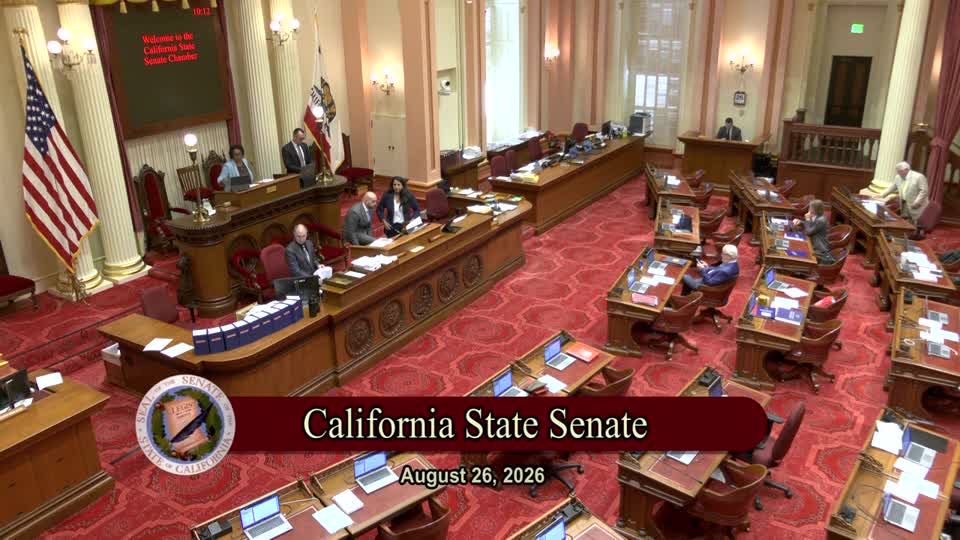
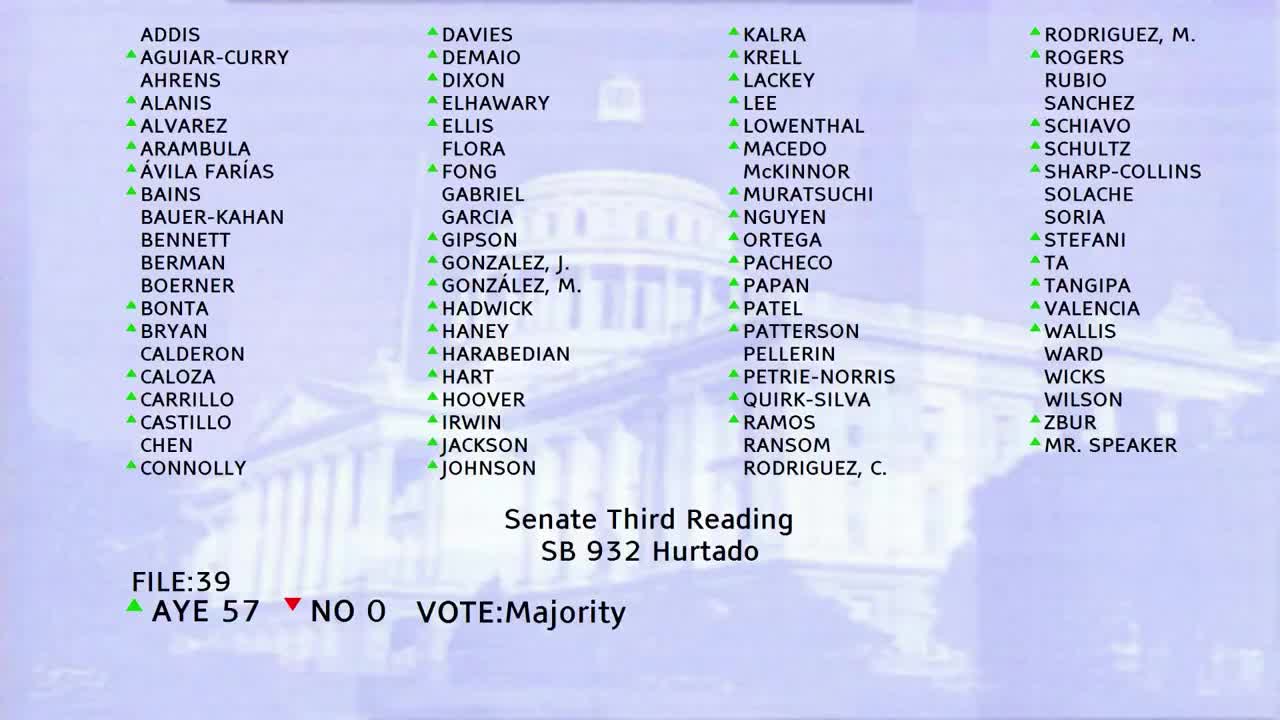
Bill Author