SB 941: Private detention facilities: canteens.
- Session Year: 2025-2026
- House: Senate
- Latest Version Date: 2026-09-30
Current Status:
Passed
(2026-09-30: Chaptered by Secretary of State. Chapter 991, Statutes of 2026.)
Introduced
In Committee
Awaiting First Chamber Vote
Passed First Chamber
In Committee
Awaiting Second Chamber Vote
Passed Second Chamber
Enacted
Existing law requires the Department of Corrections and Rehabilitation to maintain a canteen at its active facilities, and until January 1, 2028, prohibits the sale prices of the articles offered for sale in a canteen from exceeding a 35% markup above the price of the articles paid to the vendors. Existing law, commencing on January 1, 2028, requires the sale amounts of the articles to be offered for sale to be fixed by the secretary at amounts that will render each canteen self-supporting.
This bill would prohibit the sale price of an article offered for sale in a commissary, as defined, at a private detention facility, defined as a detention facility that is operated by a private, nongovernmental, for-profit entity, and operating pursuant to a contract or agreement with a governmental entity, from exceeding a 35% markup above the amount paid to a vendor for that article.
(a)For the purposes of this section, the following terms have the following meanings:
(1)Commissary means any onsite or online store, canteen, vendor-operated program, or retail service that sells goods, food, hygiene supplies, phone cards, or other items to people confined in a private detention facility, whether operated directly by the facility or through a third-party contractor.
(2)Private detention facility has the same meaning as defined in Section 9500 of the Penal Code.
(b)The sale price of an article offered for sale in a commissary at a private detention facility shall not exceed a 35-percent markup above the amount paid to a vendor for that article.
REVISIONS: HeadingLines 2, 4, and 6.|
Date
|
Status
|
|---|---|
| Sep 30, 2026 | Chaptered by Secretary of State. Chapter 991, Statutes of 2026. |
| Sep 30, 2026 | Approved by the Governor. |
| Aug 24, 2026 | Enrolled and presented to the Governor at 3 p.m. |
| Aug 19, 2026 | Assembly amendments concurred in. (Ayes 38. Noes 0. Page 5542.) Ordered to engrossing and enrolling. |
| Aug 19, 2026 | Assembly amendments concurred in. (Ayes 38. Noes 0.) Ordered to engrossing and enrolling. |
| Aug 18, 2026 | In Senate. Concurrence in Assembly amendments pending. |
| Aug 17, 2026 | Read third time. Passed. (Ayes 70. Noes 1. Page 6202.) Ordered to the Senate. |
| Aug 17, 2026 | Read third time. Passed. Ordered to the Senate. |
| Aug 12, 2026 | Ordered to third reading. |
| Aug 12, 2026 | Read third time and amended. |
| Jun 10, 2026 | Read second time. Ordered to third reading. |
| Jun 9, 2026 | From committee: Do pass. (Ayes 9. Noes 0.) (June 9). |
| Jun 9, 2026 | Coauthors revised. |
| May 18, 2026 | Referred to Com. on PUB. S. |
| May 4, 2026 | In Assembly. Read first time. Held at Desk. |
| May 4, 2026 | Read third time. Passed. (Ayes 38. Noes 0. Page 4130.) Ordered to the Assembly. |
| May 4, 2026 | Read third time. Passed. (Ayes 38. Noes 0.) Ordered to the Assembly. |
| Apr 16, 2026 | Read second time. Ordered to third reading. |
| Apr 15, 2026 | From committee: Do pass. (Ayes 12. Noes 0. Page 3867.) (April 14). |
| Apr 15, 2026 | From committee: Do pass. (Ayes 12. Noes 0.) (April 14). |
| Apr 2, 2026 | Set for hearing April 14. |
| Mar 17, 2026 | From committee: Do pass and re-refer to Com. on JUD. (Ayes 6. Noes 0. Page 3589.) (March 17). Re-referred to Com. on JUD. |
| Mar 17, 2026 | From committee: Do pass and re-refer to Com. on JUD. (Ayes 6. Noes 0.) (March 17). Re-referred to Com. on JUD. |
| Mar 3, 2026 | Set for hearing March 17. |
| Feb 11, 2026 | Referred to Coms. on PUB. S. and JUD. |
| Jan 30, 2026 | From printer. May be acted upon on or after March 1. |
| Jan 29, 2026 | Introduced. Read first time. To Com. on RLS. for assignment. To print. |
|
Date
|
Description
|
Location
|
Votes
|
|
|---|---|---|---|---|
| Aug 19, 2026 | Unfinished Business SB941 Padilla et al. Concurrence | Senate Floor |
Passed |
|
| Aug 17, 2026 | SB 941 Padilla Senate Third Reading By Carrillo | Assembly Floor |
Passed |
|
| Jun 9, 2026 | Do pass. | Assembly Standing Committee on Public Safety |
Passed |
|
| May 4, 2026 | Senate 3rd Reading SB941 Padilla et al. | Senate Floor |
Passed |
|
| Apr 14, 2026 | Do pass | Senate Standing Committee on Judiciary |
Passed |
|
| Mar 17, 2026 | Do pass, but first be re-referred to the Committee on [Judiciary] | Senate Standing Committee on Public Safety |
Passed |
This list shows positions taken on this bill by organizations on the date displayed, which is linked to the original source.
Positions by individuals are not included.
|
Organization
|
Position
|
Date
|
|---|---|---|
| Acacia Center for Justice | ** Support | |
| Aclu California Action | ** Support | |
| Anti-Recidivism Coalition | ** Support | |
| Asian Law Caucus | ** Support | |
| Avan Immigrant Services | ** Support | |
| California Attorney General Rob Bonta (co-sponsor) | ** Support | |
| California Collaborative for Immigrant Justice | ** Support | |
| California Collaborative for Immigrant Justice (co-sponsor) | ** Support | |
| California Community Foundation | ** Support | |
| California Department of Justice | ** Support | |
| California Immigrant Policy Center | ** Support | |
| California Public Defenders Association | ** Support | |
| Center for Gender & Refugee Studies | ** Support | |
| Center for Gender & Refugee Studies–California | ** Support | |
| Center for Gender & Refugee Studies – California (CGRS-CA) | ** Support | |
| Central American Resource Center (CARECEN) | ** Support | |
| centro binacional para el desarrollo indigena oaxaqueno | ** Support | |
| Communities United for Restorative Youth Justice (CURYJ) | ** Support | |
| Community Action Board of Santa Cruz County, Inc. (CAB) | ** Support | |
| Courage California | ** Support | |
| Disability Rights California | ** Support | |
| Ella Baker Center For Human Rights | ** Support | |
| Glide | ** Support | |
| Gregory Pleasants Law, APC | ** Support | |
| Hijas Del Campo | ** Support | |
| Immigrant Defenders Law Center | ** Support | |
| Immigrant Defense Advocates | ** Support | |
| Immigrant Defense Advocates (co-sponsor) | ** Support | |
| Immigrant Legal Defense | ** Support | |
| Imperial Valley Equity & Justice Coalition | ** Support | |
| Indivisible Central Contra Costa County | ** Support | |
| Jesse’s Place | ** Support | |
| Jesse's Place Org | ** Support | |
| Justice2jobs Coalition | ** Support | |
| LA Defensa | ** Support | |
| Legal Services for Prisoners with Children | ** Support | |
| Los Angeles County District Attorney'S Office | ** Support | |
| milpa | ** Support | |
| Munoz Law | ** Support | |
| Oasis Legal Services | ** Support | |
| Open Immigration Legal Services | ** Support | |
| Pangea Legal Services | ** Support | |
| Pedraza Law | ** Support | |
| Public Counsel | ** Support | |
| Rage for Democracy | ** Support | |
| Riverside Sheriffs’ Association | ** Support | |
| Rubicon Programs | ** Support | |
| San Francisco Public Defender’s Office | ** Support | |
| San Quentin Skunkworks | ** Support | |
| Secure Justice | ** Support | |
| Sister Warriors Freedom Coalition | ** Support | |
| Smart Justice California | ** Support | |
| Southeast Asia Resource Action Center | ** Support | |
| The Place4grace | ** Support | |
| United Domestic Workers/AFSCME Local 3930 | ** Support | |
| Uprise Theatre | ** Support |
SENATE RULES COMMITTEE Office of Senate Floor Analyses (916) 651-4171 | SB 941 |
UNFINISHED BUSINESS
Bill No: SB 941
Author: Padilla (D), et al.
Amended: 8/12/26
Vote: 21
SENATE PUBLIC SAFETY COMMITTEE: 6-0, 3/17/26
AYES: Arreguín, Seyarto, Caballero, Pérez, Reyes, Wiener
SENATE JUDICIARY COMMITTEE: 12-0, 4/14/26
AYES: Umberg, Niello, Allen, Ashby, Caballero, Durazo, McNerney, Reyes, Stern, Wahab, Weber Pierson, Wiener
NO VOTE RECORDED: Valladares
SENATE FLOOR: 38-0, 5/4/26
AYES: Allen, Archuleta, Arreguín, Ashby, Becker, Blakespear, Cabaldon, Caballero, Cervantes, Choi, Cortese, Dahle, Durazo, Gonzalez, Grayson, Grove, Hurtado, Laird, Limón, McGuire, McNerney, Menjivar, Niello, Ochoa Bogh, Padilla, Pérez, Reyes, Richardson, Rubio, Seyarto, Smallwood-Cuevas, Stern, Strickland, Umberg, Valladares, Wahab, Weber Pierson, Wiener
NO VOTE RECORDED: Alvarado-Gil, Jones
ASSEMBLY FLOOR: 70-1, 8/17/26 - See last page for vote
SUBJECT: Private detention facilities: canteens
SOURCE: Immigrant Defense Advocates
DIGEST:
This bill prohibits the sale price of canteen items at a private detention facility from exceeding a 35% markup above the amount paid to a vendor for the item.
Assembly Amendments
of 8/12/26 make technical changes.
ANALYSIS:
Existing law:
- Requires the California Department of Corrections and Rehabilitation (CDCR) to maintain a canteen at an active prison or institution under its jurisdiction for the sale to persons confined therein of toilet articles, candy, notions, and other sundries, and may provide the necessary facilities, equipment, personnel, and merchandise for the canteen. (Penal (Pen.) Code, § 5005, subd. (a).)
- Limits the sale prices of items offered in the state’s prison canteens from exceeding a 35-percent markup above the amount paid to the vendors until January 1, 2028. (Pen. Code, § 5005, subd. (a).)
- Defines “private detention facility” as “a detention facility that is operated by a private, nongovernmental, for-profit entity, and operating pursuant to a contract or agreement with a governmental entity.” (Government (Gov.) Code, § 9500, subd. (b).)
This bill:
- Defines “commissary” as “any onsite or online store, canteen, vendor-operated program, or retail service that sells goods, food, hygiene supplies, phone cards, or other items to people confined in a private detention facility, whether operated directly by the facility or through a third-party contractor.”
- Uses the definition of “private detention facility” that exists in current law.
- Prohibits the sale price of an item offered for sale in a commissary at a private detention facility from exceeding a 35-percent markup above the amount paid to a vendor for that item.
Background
The federal government contracts with private detention facilities across the country to house immigration detainees. There are currently seven private detention facilities operating in California in four counties—San Bernardino County, Kern County, San Diego County, and Imperial County. These facilities have been rife with issues, including poor medical care, substandard living conditions, sexual abuse and harassment, detainee deaths, and disproportionate use of force against individuals with mental health diagnoses. (Disability Rights California, Newly Opened California City ICE Detention Facility: Dangerous for Disabled People (Nov. 3, 2025) <https://www.disabilityrightsca.org/reports/california-city-ice-processing-center-a-dangerous-expansion-of-immigration-detention-in [hereafter Disability Rights California Report]; Department of Justice, Immigration Detention in California: A Comprehensive Review with a Focus on Mental Health 2025 <https://oag.ca.gov/system/files/media/immigration-detention-2025.pdf ; Andrea Castillo, Immigrant detainees say they were harassed, sexually assaulted by guard who got promoted (Nov. 12, 2025) <https://www.latimes.com/politics/story/2025-11-12/calif-immigrant-detainees-say-they-were-harassed-sexually-assaulted-by-guard-who-got-promoted .) As a result, several lawsuits have been filed against the operators of these private detention facilities. (See Rachel Uranga, Why California’s newest detention facility faces federal lawsuit over medical neglect and ‘punitive’ unsanitary conditions (Nov. 13, 2025) <https://www.latimes.com/california/story/2025-11-13/immigrants-held-in-inhumane-conditions-at-california-detention-facility-sue-ice-dhs ; Salvador Hernandez & Ruben Vives, Adelanto ICE facility isn’t meant to hold immigrants, it’s meant to break them, lawsuit alleges (Jan. 26, 2026) <https://www.latimes.com/california/story/2026-01-26/lawsuit-alleges-inhumane-conditions-at-adelanto-ice-facility .)
The Legislature has enacted several laws in recent years related to the conditions of private detention facilities. AB 3228 (Bonta), Chapter 190, Statutes of 2020, required any private detention facility operator to comply with, and adhere to, the detention standards of care and confinement agreed upon in the facility’s contract for operations, and created a private right of action for individuals to sue if a private detention facility violated the requirement to comply with detention standards of care and confinement. AB 263 (Arambula), Chapter 294, Statutes of 2021, required a private detention facility operator to comply with, and adhere to, all local and state public health orders and occupational safety and health regulations. Finally, SB 1132 (Durazo), Chapter 183, Statutes of 2024, authorized a county or city health officer to investigate a private detention facility. SB 1132 was challenged by GEO Group, an operator of private detention facilities, which argued that the law was unconstitutional because it interfered with the federal government’s authority to manage detention centers and GEO Group claimed it had intergovernmental immunity by extension as a contractor of the federal government. The lawsuit was dismissed in May of 2025. (Wendy Fry & Jeanne Kuang, California gave counties power to inspect ICE detention centers. They’re not using it, Cal Matters (Oct. 2, 2025) <https://calmatters.org/justice/2025/10/ice-detention-center-inspections/ .)
Canteens. A canteen is a store located in a detention facility where the incarcerated population can purchase toiletries, stationery, snacks, and other personal items. In 2023, the Legislature enacted SB 474 (Chapter 609, Statutes of 2023) to temporarily cap the markup of canteen items in the state’s prisons to no more than 35% of the price CDCR paid to the vendor. At the time, advocates argued that canteen items had unreasonably high prices compared to the prices of the same or similar items available to the general public and cited a report that found that 60% of the formerly incarcerated individuals surveyed could not afford canteen purchases while incarcerated, which sometimes led individuals to resort to extreme measures to gain access to canteen items such as engaging in gang activity and sexual relationships. (Leslie Soble, Kathryn Stroud, and Marika Weinstein, Eating Behind Bars: Ending the Hidden Punishment of Food in Prison (2020), p. 11 available at <https://impactjustice.org/wp-content/uploads/IJ-Eating-Behind-Bars.pdf .)
The proponents of this bill contend that items sold in the canteens in private detention facilities have similarly inflated and unreasonable prices. They argue that the high prices are especially problematic when considering that some canteen items are necessary for survival. For example, an inspection last year of the California City Detention Facility revealed that the facility’s water was arguably unsafe to drink—it was brown with an unpleasant taste. (Disability Rights California Report, supra.) As a result, detainees had to rely on bottled water sold at the canteen but due to its high price, detainees could not afford to purchase sufficient water and suffered from dehydration. (Ibid.) This bill prohibits the price of an item offered for sale in a commissary at a private detention facility from exceeding a 35-percent markup above the amount paid to a vendor for that item.
FISCAL EFFECT: Appropriation: No Fiscal Com.: No Local: No
SUPPORT: (Verified 8/17/26)
Immigrant Defense Advocates (source)
ACLU California Action
Anti-Recidivism Coalition
California Collaborative for Immigrant Justice
California Community Foundation
California Department of Justice
California Public Defenders Association
Centro Binacional Para El Desarrollo Indigena Oaxaqueńo
Courage California
Ella Baker Center for Human Rights
GLIDE
Immigrant Defenders Law Center
Imperial Valley Equity & Justice Coalition
Jesse’s Place
Justice2Jobs Coalition
La Defensa
Legal Services for Prisoners With Children
MILPA
Oasis Legal Services
Riverside Sheriffs’ Association
Rubicon Programs
San Francisco Public Defender’s Office
Secure Justice
Smart Justice California
Southeast Asia Resource Action Center
The Place4Grace
Uprise Theatre
OPPOSITION: (Verified 8/17/26)
None received
ASSEMBLY FLOOR: 70-1, 8/17/26
AYES: Addis, Aguiar-Curry, Ahrens, Alanis, Alvarez, Arambula, Ávila Farías, Bains, Bauer-Kahan, Bennett, Berman, Boerner, Calderon, Caloza, Carrillo, Castillo, Chen, Connolly, Davies, Dixon, Elhawary, Ellis, Flora, Fong, Gabriel, Garcia, Gipson, Jeff Gonzalez, Mark González, Haney, Harabedian, Hoover, Irwin, Jackson, Johnson, Kalra, Krell, Lackey, Lee, Lowenthal, McKinnor, Muratsuchi, Nguyen, Ortega, Pacheco, Papan, Patel, Patterson, Pellerin, Petrie-Norris, Quirk-Silva, Ramos, Ransom, Celeste Rodriguez, Michelle Rodriguez, Rogers, Blanca Rubio, Schiavo, Schultz, Sharp-Collins, Solache, Soria, Stefani, Ta, Valencia, Wallis, Ward, Wilson, Zbur, Rivas
NOES: DeMaio
NO VOTE RECORDED: Bonta, Bryan, Hadwick, Hart, Macedo, Sanchez, Tangipa, Wicks
Prepared by: Stephanie Jordan / PUB. S. /
8/17/26 15:32:26
**** END ****
SENATE THIRD READING
STR Bill Id:SB 941
Author:(Padilla)
As Introduced Ver:August 12, 2026
Majority vote
SUMMARY
Prohibits the sale price of commissary items at a private detention facility from exceeding a 35% markup above the amount paid to a vendor for the item; and defines "commissary" as any onsite or online store, canteen, vendor-operated program, or retail service that sells goods, food, hygiene supplies, phone cards, or other items to people confined in a private detention facility, whether operated directly by the facility or through a third-party contractor.
Major Provisions
COMMENTS
Canteens: A canteen is a store located in a detention facility where the incarcerated population can purchase toiletries, stationery, snacks, and other personal items. In 2023, the Legislature enacted SB 474 (Becker), Chapter 609, Statutes of 2023, to temporarily cap the markup of canteen items in the state's prisons to no more than 35% of the price California Department of Corrections and Rehabilitation (CDCR) paid to the vendor. At the time, advocates argued that canteen items had unreasonably high prices compared to the prices of the same or similar items available to the general public and cited a report that found that 60% of the formerly incarcerated individuals surveyed could not afford canteen purchases while incarcerated, which sometimes led individuals to resort to extreme measures to gain access to canteen items such as engaging in gang activity and sexual relationships.[1]
The proponents of this bill contend that items sold in the canteens in private detention facilities have similarly inflated to unreasonable prices. They argue that the high prices are especially problematic when considering that some canteen items are necessary for survival. For example, an inspection last year of the California City Detention Facility revealed that the facility's water was arguably unsafe to drink—it was brown with an unpleasant taste.[2] As a result, detainees had to rely on bottled water sold at the canteen but due to its high price, detainees could not afford to purchase sufficient water and suffered from dehydration.[3] This bill prohibits the price of an item offered for sale in a commissary at a private detention facility from exceeding a 35% markup above the amount paid to a vendor for that item.
According to the Author
"In California, every individual detained by Immigration and Customs Enforcement (ICE) is held in a private detention facility that is operated on private property by a private corporation under contract with the federal government. There are currently seven private detention facilities in the state, two of which are located within my district."
"California has already recognized that commissary access is a basic necessity in state-run prisons. Consumer protections exist to prevent the exploitation of incarcerated individuals and their families, but ICE detainees face exploitative prices in their private commissaries. These exploitive prices make it difficult for detainees to access essential goods such as food, drinking water, and soap. SB 941 will take California's existing commissary price protections and extend them to private detention facilities to protect detained individuals and their families, many of whom are already experiencing economic hardship, from price gouging by private companies operating in California. This extension will apply to private entities operating in these facilities and will not apply to the federal government."
"These unreasonable markups gouge immigrants in the hardest moments of their lives. Detainees are forced to make impossible decisions, such as choosing between obtaining clean drinking water or paying for the cost to call their families. This kind of opportunistic profiteering should not be allowed to continue unchecked."
Arguments in Support
According to Immigrant Defense Advocates, one of the bill's co-sponsors, "SB 941 is a straightforward consumer protection measure that would prevent detained people and their loved ones from being exploited as a captive market."
"When a family's breadwinner is detained, households often experience an immediate financial shock: lost wages, rent and utility shortfalls, childcare disruptions, and increased legal expenses. Community reporting has documented that families frequently turn to mutual aid networks, schools, and churches just to stabilize after a household income is suddenly cut off."
"In that context, commissary price gouging is not a minor inconvenience—it is a direct transfer of wealth from families in crisis to private detention vendors. People in detention rely on commissary systems for basic necessities (food supplements, hygiene items, [Over the Counter] (OTC) medicines, and other essentials. Their families—already in a vulnerable state—should not be forced to pay inflated prices simply to help their loved ones meet basic needs. As Senator Padilla's office has noted, SB 941 is designed to stop excessive markups on products sold at private detention facilities."
"SB 941 would prohibit commissary items from being sold at prices exceeding a 35% markup above vendor cost, and it defines "commissary" broadly to include onsite or online stores and vendor-operated retail programs selling goods to detained people."
"This matters in California because, as Senator Padilla's office emphasizes, every individual in ICE detention in California is held in a private detention facility operated by private corporations under federal contract—which makes state-level consumer protections especially urgent."
"Commissary profiteering compounds harmful living conditions—especially when facilities fail to provide adequate basic necessities. Commissary systems often operate against a backdrop of broader conditions failures. Independent and governmental reporting has documented widespread complaints in immigration detention of people being denied adequate food or clean water—conditions that can lead to malnutrition, dehydration, and serious health consequences. For example, a U.S. Senate investigation released by Jon Ossoff reported dozens of credible reports involving denial of adequate food or water in immigration detention, including reports of spoiled/contaminated food and water and prolonged periods between meals."
"California advocates have also documented complaints from people detained in California facilities—ranging from lack of nutritious food to spoiled items and failures to accommodate special diets."
"When private operators fail to consistently provide adequate nutrition and safe living conditions, commissary becomes even more essential to basic wellbeing. That is precisely why it is unacceptable to allow profiteering: families should not be forced to "buy back" dignity and basic necessities through inflated commissary pricing. California should not allow detention to become a profit center built on family desperation."
"These are private facilities doing business in California. Private corporations and their vendors should not be permitted to exploit detention—an inherently coercive setting—by charging excessive prices to families already struggling with the loss of income, mounting bills, and legal costs. SB 941 sets a reasonable ceiling that protects families while preserving access to necessary goods."
Arguments in Opposition
None submitted
FISCAL COMMENTS
Unknown. This bill is keyed non-fiscal by the Legislative Counsel.
VOTES
SENATE FLOOR: 38-0-2
YES: Allen, Archuleta, Arreguín, Ashby, Becker, Blakespear, Cabaldon, Caballero, Cervantes, Choi, Cortese, Dahle, Durazo, Gonzalez, Grayson, Grove, Hurtado, Laird, Limón, McGuire, McNerney, Menjivar, Niello, Ochoa Bogh, Padilla, Pérez, Reyes, Richardson, Rubio, Seyarto, Smallwood-Cuevas, Stern, Strickland, Umberg, Valladares, Wahab, Weber Pierson, Wiener
ABS, ABST OR NV: Alvarado-Gil, Jones
ASM PUBLIC SAFETY: 9-0-0
YES: Schultz, Alanis, Hart, Haney, Harabedian, Lackey, Nguyen, Ramos, Sharp-Collins
UPDATED
VERSION: August 12, 2026
CONSULTANT: Andrew Ironside / PUB. S. / (916) 319-3744 FN: 0003437
SENATE THIRD READING
STR Bill Id:SB 941
Author:(Padilla)
As Introduced Ver:January 29, 2026
Majority vote
SUMMARY
Prohibits the sale price of commissary items at a private detention facility from exceeding a 35% markup above the amount paid to a vendor for the item; and defines "commissary" as any onsite or online store, canteen, vendor-operated program, or retail service that sells goods, food, hygiene supplies, phone cards, or other items to people confined in a private detention facility, whether operated directly by the facility or through a third-party contractor.
Major Provisions
COMMENTS
Canteens: A canteen is a store located in a detention facility where the incarcerated population can purchase toiletries, stationery, snacks, and other personal items. In 2023, the Legislature enacted SB 474 (Becker), Chapter 609, Statutes of 2023, to temporarily cap the markup of canteen items in the state's prisons to no more than 35% of the price California Department of Corrections and Rehabilitation (CDCR) paid to the vendor. At the time, advocates argued that canteen items had unreasonably high prices compared to the prices of the same or similar items available to the general public and cited a report that found that 60% of the formerly incarcerated individuals surveyed could not afford canteen purchases while incarcerated, which sometimes led individuals to resort to extreme measures to gain access to canteen items such as engaging in gang activity and sexual relationships.[1]
The proponents of this bill contend that items sold in the canteens in private detention facilities have similarly inflated to unreasonable prices. They argue that the high prices are especially problematic when considering that some canteen items are necessary for survival. For example, an inspection last year of the California City Detention Facility revealed that the facility's water was arguably unsafe to drink—it was brown with an unpleasant taste.[2] As a result, detainees had to rely on bottled water sold at the canteen but due to its high price, detainees could not afford to purchase sufficient water and suffered from dehydration.[3] This bill prohibits the price of an item offered for sale in a commissary at a private detention facility from exceeding a 35% markup above the amount paid to a vendor for that item.
According to the Author
"In California, every individual detained by Immigration and Customs Enforcement (ICE) is held in a private detention facility that is operated on private property by a private corporation under contract with the federal government. There are currently seven private detention facilities in the state, two of which are located within my district."
"California has already recognized that commissary access is a basic necessity in state-run prisons. Consumer protections exist to prevent the exploitation of incarcerated individuals and their families, but ICE detainees face exploitative prices in their private commissaries. These exploitive prices make it difficult for detainees to access essential goods such as food, drinking water, and soap. SB 941 will take California's existing commissary price protections and extend them to private detention facilities to protect detained individuals and their families, many of whom are already experiencing economic hardship, from price gouging by private companies operating in California. This extension will apply to private entities operating in these facilities and will not apply to the federal government."
"These unreasonable markups gouge immigrants in the hardest moments of their lives. Detainees are forced to make impossible decisions, such as choosing between obtaining clean drinking water or paying for the cost to call their families. This kind of opportunistic profiteering should not be allowed to continue unchecked."
Arguments in Support
According to Immigrant Defense Advocates, one of the bill's co-sponsors, "SB 941 is a straightforward consumer protection measure that would prevent detained people and their loved ones from being exploited as a captive market."
"When a family's breadwinner is detained, households often experience an immediate financial shock: lost wages, rent and utility shortfalls, childcare disruptions, and increased legal expenses. Community reporting has documented that families frequently turn to mutual aid networks, schools, and churches just to stabilize after a household income is suddenly cut off."
"In that context, commissary price gouging is not a minor inconvenience—it is a direct transfer of wealth from families in crisis to private detention vendors. People in detention rely on commissary systems for basic necessities (food supplements, hygiene items, OTC medicines, and other essentials). Their families—already in a vulnerable state—should not be forced to pay inflated prices simply to help their loved ones meet basic needs. As Senator Padilla's office has noted, SB 941 is designed to stop excessive markups on products sold at private detention facilities."
"SB 941 would prohibit commissary items from being sold at prices exceeding a 35% markup above vendor cost, and it defines "commissary" broadly to include onsite or online stores and vendor-operated retail programs selling goods to detained people."
"This matters in California because, as Senator Padilla's office emphasizes, every individual in ICE detention in California is held in a private detention facility operated by private corporations under federal contract—which makes state-level consumer protections especially urgent."
"Commissary profiteering compounds harmful living conditions—especially when facilities fail to provide adequate basic necessities. Commissary systems often operate against a backdrop of broader conditions failures. Independent and governmental reporting has documented widespread complaints in immigration detention of people being denied adequate food or clean water—conditions that can lead to malnutrition, dehydration, and serious health consequences. For example, a U.S. Senate investigation released by Jon Ossoff reported dozens of credible reports involving denial of adequate food or water in immigration detention, including reports of spoiled/contaminated food and water and prolonged periods between meals."
"California advocates have also documented complaints from people detained in California facilities—ranging from lack of nutritious food to spoiled items and failures to accommodate special diets."
"When private operators fail to consistently provide adequate nutrition and safe living conditions, commissary becomes even more essential to basic wellbeing. That is precisely why it is unacceptable to allow profiteering: families should not be forced to "buy back" dignity and basic necessities through inflated commissary pricing. California should not allow detention to become a profit center built on family desperation."
"These are private facilities doing business in California. Private corporations and their vendors should not be permitted to exploit detention—an inherently coercive setting—by charging excessive prices to families already struggling with the loss of income, mounting bills, and legal costs. SB 941 sets a reasonable ceiling that protects families while preserving access to necessary goods."
Arguments in Opposition
None submitted.
FISCAL COMMENTS
Unknown. This bill is keyed non-fiscal by the Legislative Counsel.
VOTES
SENATE FLOOR: 38-0-2
YES: Allen, Archuleta, Arreguín, Ashby, Becker, Blakespear, Cabaldon, Caballero, Cervantes, Choi, Cortese, Dahle, Durazo, Gonzalez, Grayson, Grove, Hurtado, Laird, Limón, McGuire, McNerney, Menjivar, Niello, Ochoa Bogh, Padilla, Pérez, Reyes, Richardson, Rubio, Seyarto, Smallwood-Cuevas, Stern, Strickland, Umberg, Valladares, Wahab, Weber Pierson, Wiener
ABS, ABST OR NV: Alvarado-Gil, Jones
ASM PUBLIC SAFETY: 9-0-0
YES: Schultz, Alanis, Hart, Haney, Harabedian, Lackey, Nguyen, Ramos, Sharp-Collins
UPDATED
VERSION: January 29, 2026
CONSULTANT: Andrew Ironside / PUB. S. / (916) 319-3744 FN: 0003155
Date of Hearing: June 9, 2026
Chief Counsel: Andrew Ironside
ASSEMBLY COMMITTEE ON PUBLIC SAFETY
Nick Schultz, Chair
SBPCA Bill Id:SB 941
Author:(Padilla) – As Introduced Ver:January 29, 2026
SUMMARY: Prohibits the sale price of commissary items at a private detention facility from exceeding a 35-percent markup above the amount paid to a vendor for the item; and defines “commissary” as any onsite or online store, canteen, vendor-operated program, or retail service that sells goods, food, hygiene supplies, phone cards, or other items to people confined in a private detention facility, whether operated directly by the facility or through a third-party contractor.
EXISTING LAW:
- Requires the California Department of Corrections and Rehabilitation (CDCR) to maintain a canteen at an active prison or institution under its jurisdiction for the sale to persons confined therein of toilet articles, candy, notions, and other sundries, and may provide the necessary facilities, equipment, personnel, and merchandise for the canteen. (Pen. Code, § 5005, subd. (a).)
- Limits the sale prices of items offered in the state’s prison canteens from exceeding a 35-percent markup above the amount paid to the vendors until January 1, 2028. (Pen. Code, § 5005, subd. (a).)
- Provides that the canteen operations at specified prisons and institutions shall be audited biennially by the Department of Finance, and requires a copy of the audit report or CDCR’s statement of operations to be posted at the canteen and in the prison or institution library. (Pen. Code, § 5005, subd. (c).)
- Defines “private detention facility” as “a detention facility that is operated by a private, nongovernmental, for-profit entity, and operating pursuant to a contract or agreement with a governmental entity.” (Gov. Code, § 9500, subd. (b).)
FISCAL EFFECT: Unknown.
COMMENTS:
- Sponsors: California Department of Justice (DOJ), California Collaborative for Immigrant Justice, and Immigrant Defense Advocates.
- Author's Statement: According to the author, “In California, every individual detained by ICE is held in a private detention facility that is operated on private property by a private corporation under contract with the federal government. There are currently seven private detention facilities in the state, two of which are located within my district.
“California has already recognized that commissary access is a basic necessity in state-run prisons. Consumer protections exist to prevent the exploitation of incarcerated individuals and their families, but ICE detainees face exploitative prices in their private commissaries. These exploitive prices make it difficult for detainees to access essential goods such as food, drinking water, and soap. SB 941 will take California’s existing commissary price protections and extend them to private detention facilities to protect detained individuals and their families, many of whom are already experiencing economic hardship, from price gouging by private companies operating in California. This extension will apply to private entities operating in these facilities and will not apply to the federal government.
“These unreasonable markups gouge immigrants in the hardest moments of their lives. Detainees are forced to make impossible decisions, such as choosing between obtaining clean drinking water or paying for the cost to call their families. This kind of opportunistic profiteering should not be allowed to continue unchecked.” - Private Detention Facilities: The federal government contracts with private detention facilities across the country to house immigration detainees. There are currently seven private detention facilities operating in California in four counties—San Bernardino County, Kern County, San Diego County, and Imperial County. These facilities have been rife with issues, including poor medical care, substandard living conditions, sexual abuse and harassment, detainee deaths, and disproportionate use of force against individuals with mental health diagnoses.[1] As a result, several lawsuits have been filed against the operators of these private detention facilities.[2]
The Legislature has enacted several laws in recent years related to the conditions of private detention facilities. AB 3228 (Bonta), Chapter 190, Statutes of 2020, required any private detention facility operator to comply with, and adhere to, the detention standards of care and confinement agreed upon in the facility’s contract for operations, and created a private right of action for individuals to sue if a private detention facility violated the requirement to comply with detention standards of care and confinement. AB 263 (Arambula), Chapter 294, Statutes of 2021, required a private detention facility operator to comply with, and adhere to, all local and state public health orders and occupational safety and health regulations. Finally, SB 1132 (Durazo), Chapter 183, Statutes of 2024, authorized a county or city health officer to investigate a private detention facility. SB 1132 was challenged by GEO Group, an operator of private detention facilities, which argued that the law was unconstitutional because it interfered with the federal government’s authority to manage detention centers and GEO Group claimed it had intergovernmental immunity by extension as a contractor of the federal government. The lawsuit was dismissed in May of 2025.[3] - Canteens: A canteen is a store located in a detention facility where the incarcerated population can purchase toiletries, stationery, snacks, and other personal items. In 2023, the Legislature enacted SB 474 (Becker), Chapter 609, Statutes of 2023, to temporarily cap the markup of canteen items in the state’s prisons to no more than 35% of the price CDCR paid to the vendor. At the time, advocates argued that canteen items had unreasonably high prices compared to the prices of the same or similar items available to the general public and cited a report that found that 60% of the formerly incarcerated individuals surveyed could not afford canteen purchases while incarcerated, which sometimes led individuals to resort to extreme measures to gain access to canteen items such as engaging in gang activity and sexual relationships.[4]
The proponents of this bill contend that items sold in the canteens in private detention facilities have similarly inflated to unreasonable prices. They argue that the high prices are especially problematic when considering that some canteen items are necessary for survival. For example, an inspection last year of the California City Detention Facility revealed that the facility’s water was arguably unsafe to drink—it was brown with an unpleasant taste.[5] As a result, detainees had to rely on bottled water sold at the canteen but due to its high price, detainees could not afford to purchase sufficient water and suffered from dehydration.[6] This bill prohibits the price of an item offered for sale in a commissary at a private detention facility from exceeding a 35-percent markup above the amount paid to a vendor for that item. - Argument in Support: According to Immigrant Defense Advocates, one of the bill’s co-sponsors, “SB 941 is a straightforward consumer protection measure that would prevent detained people and their loved ones from being exploited as a captive market.
“When a family’s breadwinner is detained, households often experience an immediate financial shock: lost wages, rent and utility shortfalls, childcare disruptions, and increased legal expenses. Community reporting has documented that families frequently turn to mutual aid networks, schools, and churches just to stabilize after a household income is suddenly cut off.
“In that context, commissary price gouging is not a minor inconvenience—it is a direct transfer of wealth from families in crisis to private detention vendors. People in detention rely on commissary systems for basic necessities (food supplements, hygiene items, OTC medicines, and other essentials). Their families—already in a vulnerable state—should not be forced to pay inflated prices simply to help their loved ones meet basic needs. As Senator Padilla’s office has noted, SB 941 is designed to stop excessive markups on products sold at private detention facilities.
“SB 941 would prohibit commissary items from being sold at prices exceeding a 35% markup above vendor cost, and it defines “commissary” broadly to include onsite or online stores and vendor-operated retail programs selling goods to detained people.
“This matters in California because, as Senator Padilla’s office emphasizes, every individual in ICE detention in California is held in a private detention facility operated by private corporations under federal contract—which makes state-level consumer protections especially urgent.
“Commissary profiteering compounds harmful living conditions—especially when facilities fail to provide adequate basic necessities. Commissary systems often operate against a backdrop of broader conditions failures. Independent and governmental reporting has documented widespread complaints in immigration detention of people being denied adequate food or clean water—conditions that can lead to malnutrition, dehydration, and serious health consequences. For example, a U.S. Senate investigation released by Jon Ossoff reported dozens of credible reports involving denial of adequate food or water in immigration detention, including reports of spoiled/contaminated food and water and prolonged periods between meals.
“California advocates have also documented complaints from people detained in California facilities—ranging from lack of nutritious food to spoiled items and failures to accommodate special diets.
“When private operators fail to consistently provide adequate nutrition and safe living conditions, commissary becomes even more essential to basic wellbeing. That is precisely why it is unacceptable to allow profiteering: families should not be forced to “buy back” dignity and basic necessities through inflated commissary pricing. California should not allow detention to become a profit center built on family desperation.
“These are private facilities doing business in California. Private corporations and their vendors should not be permitted to exploit detention—an inherently coercive setting—by charging excessive prices to families already struggling with the loss of income, mounting bills, and legal costs. SB 941 sets a reasonable ceiling that protects families while preserving access to necessary goods.” - Argument in Opposition: None submitted.
- Related Legislation:
- AB 1633 (Haney) would impose, beginning January 1, 2027, an annual tax upon all “private detention facility operators” equal to 50% of the operator's gross receipts derived from the operation of each “private detention facility” in California. AB 1633 is pending referral in the Senate Rules Committee.
- SB 942 (Caballero) would require civil confinement facilities in the state to register with the Department of Public Health, if not already licensed, certified, designated, or approved under state law or local ordinance, and requires enforcing agencies to conduct regular inspections and enforcement of applicable health and safety laws and regulations, standards of care and confinement, and approved facility policies and procedures, as specified. SB 942 is pending referral in the Assembly Rules Committee.
- AB 1633 (Haney) would impose, beginning January 1, 2027, an annual tax upon all “private detention facility operators” equal to 50% of the operator's gross receipts derived from the operation of each “private detention facility” in California. AB 1633 is pending referral in the Senate Rules Committee.
- Prior Legislation:
- SB 1132 (Durazo), Chapter 183, Statutes of 2024, clarified that local county health officers are authorized to inspect health and sanitary conditions in private detention facilities.
- SB 474 (Becker), Chapter 609, Statutes of 2023, required CDCR to maintain a canteen at active prisons or institutions under its jurisdiction and cap the markup of the items sold at a 35% markup above the amount paid to vendors.
- AB 263 (Arambula), Chapter 294, Statutes of 2021, required a private detention facility operator to comply with, and adhere to, all local and state public health orders and occupational safety and health regulations.
- AB 3228 (Bonta), Chapter 190, Statutes of 2020, required a private detention facility operator to comply with, and adhere to, the detention standards of care and confinement agreed upon in the facility’s contract for operations; and provided a private right of action for an individual injured by noncompliance with the above standards, as specified.
- AB 32 (Bonta), Chapter 739, Statutes of 2019, prohibited the CDCR from entering into, or renewing contracts with private for-profit prisons after January 1, 2020, and eliminates their use by January 1, 2028. Also prohibits the operation of a private detention facility within the state, except as specified.
- AB 1320 (Bonta), of the 2017-2018 Legislative Session, would have prohibited CDCR from entering into, or renewing contracts with private prisons after January 1, 2018, and eliminates their use by January 1, 2028. AB 1320 was vetoed.
- SB 1289 (Lara), of the 2015-2016 Legislative Session, would have prohibited local governments and law enforcement from contracting with companies that operate for-profit immigration detention facilities, starting January 1, 2018, and requires these facilities to uphold national standards for humane treatment of detainees. SB 1289 was vetoed.
- SB 1132 (Durazo), Chapter 183, Statutes of 2024, clarified that local county health officers are authorized to inspect health and sanitary conditions in private detention facilities.
REGISTERED SUPPORT / OPPOSITION:
Support
California Collaborative for Immigrant Justice (Co-Sponsor)
California Department of Justice (Co-Sponsor)
Immigrant Defense Advocates (Co-Sponsor)
Acacia Center for Justice
ACLU California Action
Asian Law Caucus
Avan Immigrant Services
California Community Foundation
California Immigrant Policy Center
California Public Defenders Association
Center for Gender & Refugee Studies
Center for Gender & Refugee Studies–California
Central American Resource Center (CARECEN)
Disability Rights California
Ella Baker Center for Human Rights
Hijas Del Campo
Immigrant Legal Defense
Indivisible Central Contra Costa County
Justice2jobs Coalition
LA Defensa
Los Angeles County District Attorney's Office
Oasis Legal Services
Public Counsel
Riverside Sheriffs' Association
San Francisco Public Defender's Office
San Quentin Skunkworks
Secure Justice
Sister Warriors Freedom Coalition
Smart Justice California, a Project of Beyond Impact
United Domestic Workers/afscme Local 3930
Opposition
None submitted.
Analysis Prepared by: Andrew Ironside / PUB. S. / (916) 319-3744
Disability Rights California, Newly Opened California City ICE Detention Facility: Dangerous for Disabled People (Nov. 3, 2025) <https://www.disabilityrightsca.org/reports/california-city-ice-processing-center-a-dangerous-expansion-of-immigration-detention-in> [hereafter Disability Rights California Report]; Department of Justice, Immigration Detention in California: A Comprehensive Review with a Focus on Mental Health 2025 <https://oag.ca.gov/system/files/media/immigration-detention-2025.pdf>; Andrea Castillo, Immigrant detainees say they were harassed, sexually assaulted by guard who got promoted, Los Angeles Times (Nov. 12, 2025) <https://www.latimes.com/politics/story/2025-11-12/calif-immigrant-detainees-say-they-were-harassed-sexually-assaulted-by-guard-who-got-promoted>. ↑
See Rachel Uranga, Why California’s newest detention facility faces federal lawsuit over medical neglect and ‘punitive’ unsanitary conditions, Los Angeles Times (Nov. 13, 2025) <https://www.latimes.com/california/story/2025-11-13/immigrants-held-in-inhumane-conditions-at-california-detention-facility-sue-ice-dhs>; Salvador Hernandez & Ruben Vives, Adelanto ICE facility isn’t meant to hold immigrants, it’s meant to break them, lawsuit alleges, Los Angeles Times (Jan. 26, 2026) <https://www.latimes.com/california/story/2026-01-26/lawsuit-alleges-inhumane-conditions-at-adelanto-ice-facility>. ↑
Wendy Fry & Jeanne Kuang, California gave counties power to inspect ICE detention centers. They’re not using it, Cal Matters (Oct. 2, 2025) <https://calmatters.org/justice/2025/10/ice-detention-center-inspections/>. ↑
Leslie Soble, Kathryn Stroud, and Marika Weinstein, Eating Behind Bars: Ending the Hidden Punishment of Food in Prison (2020), p. 11 available at <https://impactjustice.org/wp-content/uploads/IJ-Eating-Behind-Bars.pdf>. ↑
Disability Rights California Report, supra. ↑
Ibid. ↑
SENATE RULES COMMITTEE Office of Senate Floor Analyses (916) 651-4171 | SB 941 |
THIRD READING
Bill No: SB 941
Author: Padilla (D), et al.
Introduced: 1/29/26
Vote: 21
SENATE PUBLIC SAFETY COMMITTEE: 6-0, 3/17/26
AYES: Arreguín, Seyarto, Caballero, Pérez, Reyes, Wiener
SENATE JUDICIARY COMMITTEE: 12-0, 4/14/26
AYES: Umberg, Niello, Allen, Ashby, Caballero, Durazo, McNerney, Reyes, Stern, Wahab, Weber Pierson, Wiener
NO VOTE RECORDED: Valladares
SUBJECT: Private detention facilities: canteens
SOURCE: Immigrant Defense Advocates
DIGEST:
This bill prohibits the sale price of canteen items at a private detention facility from exceeding a 35-percent markup above the amount paid to a vendor for the item.
ANALYSIS:
Existing law:
- Requires the California Department of Corrections and Rehabilitation (CDCR) to maintain a canteen at an active prison or institution under its jurisdiction for the sale to persons confined therein of toilet articles, candy, notions, and other sundries, and may provide the necessary facilities, equipment, personnel, and merchandise for the canteen. (Penal (Pen.) Code, § 5005, subd. (a).)
- Limits the sale prices of items offered in the state’s prison canteens from exceeding a 35-percent markup above the amount paid to the vendors until January 1, 2028. (Pen. Code, § 5005, subd. (a).)
- Defines “private detention facility” as “a detention facility that is operated by a private, nongovernmental, for-profit entity, and operating pursuant to a contract or agreement with a governmental entity.” (Government Code, § 9500, subd. (b).)
This bill:
- Defines “commissary” as “any onsite or online store, canteen, vendor-operated program, or retail service that sells goods, food, hygiene supplies, phone cards, or other items to people confined in a private detention facility, whether operated directly by the facility or through a third-party contractor.”
- Uses the definition of “private detention facility” that exists in current law.
- Prohibits the sale price of an item offered for sale in a commissary at a private detention facility from exceeding a 35-percent markup above the amount paid to a vendor for that item.
Background
The federal government contracts with private detention facilities across the country to house immigration detainees. There are currently seven private detention facilities operating in California in four counties—San Bernardino County, Kern County, San Diego County, and Imperial County. These facilities have been rife with issues, including poor medical care, substandard living conditions, sexual abuse and harassment, detainee deaths, and disproportionate use of force against individuals with mental health diagnoses. (Disability Rights California, Newly Opened California City ICE Detention Facility: Dangerous for Disabled People (Nov. 3, 2025) <https://www.disabilityrightsca.org/reports/california-city-ice-processing-center-a-dangerous-expansion-of-immigration-detention-in [hereafter Disability Rights California Report]; Department of Justice, Immigration Detention in California: A Comprehensive Review with a Focus on Mental Health 2025 <https://oag.ca.gov/system/files/media/immigration-detention-2025.pdf ; Andrea Castillo, Immigrant detainees say they were harassed, sexually assaulted by guard who got promoted, Los Angeles Times (Nov. 12, 2025) <https://www.latimes.com/politics/story/2025-11-12/calif-immigrant-detainees-say-they-were-harassed-sexually-assaulted-by-guard-who-got-promoted .) As a result, several lawsuits have been filed against the operators of these private detention facilities. (See Rachel Uranga, Why California’s newest detention facility faces federal lawsuit over medical neglect and ‘punitive’ unsanitary conditions, Los Angeles Times (Nov. 13, 2025) <https://www.latimes.com/california/story/2025-11-13/immigrants-held-in-inhumane-conditions-at-california-detention-facility-sue-ice-dhs ; Salvador Hernandez & Ruben Vives, Adelanto ICE facility isn’t meant to hold immigrants, it’s meant to break them, lawsuit alleges, Los Angeles Times (Jan. 26, 2026) <https://www.latimes.com/california/story/2026-01-26/lawsuit-alleges-inhumane-conditions-at-adelanto-ice-facility .)
The Legislature has enacted several laws in recent years related to the conditions of private detention facilities. AB 3228 (Bonta), Chapter 190, Statutes of 2020, required any private detention facility operator to comply with, and adhere to, the detention standards of care and confinement agreed upon in the facility’s contract for operations, and created a private right of action for individuals to sue if a private detention facility violated the requirement to comply with detention standards of care and confinement. AB 263 (Arambula), Chapter 294, Statutes of 2021, required a private detention facility operator to comply with, and adhere to, all local and state public health orders and occupational safety and health regulations. Finally, SB 1132 (Durazo), Chapter 183, Statutes of 2024, authorized a county or city health officer to investigate a private detention facility. SB 1132 was challenged by GEO Group, an operator of private detention facilities, which argued that the law was unconstitutional because it interfered with the federal government’s authority to manage detention centers and GEO Group claimed it had intergovernmental immunity by extension as a contractor of the federal government. The lawsuit was dismissed in May of 2025. (Wendy Fry & Jeanne Kuang, California gave counties power to inspect ICE detention centers. They’re not using it, Cal Matters (Oct. 2, 2025) <https://calmatters.org/justice/2025/10/ice-detention-center-inspections/ .)
Canteens
A canteen is a store located in a detention facility where the incarcerated population can purchase toiletries, stationery, snacks, and other personal items. In 2023, the Legislature enacted SB 474 (Chapter 609, Statutes of 2023) to temporarily cap the markup of canteen items in the state’s prisons to no more than 35% of the price CDCR paid to the vendor. At the time, advocates argued that canteen items had unreasonably high prices compared to the prices of the same or similar items available to the general public and cited a report that found that 60% of the formerly incarcerated individuals surveyed could not afford canteen purchases while incarcerated, which sometimes led individuals to resort to extreme measures to gain access to canteen items such as engaging in gang activity and sexual relationships. (Leslie Soble, Kathryn Stroud, and Marika Weinstein, Eating Behind Bars: Ending the Hidden Punishment of Food in Prison (2020), p. 11 available at <https://impactjustice.org/wp-content/uploads/IJ-Eating-Behind-Bars.pdf .)
The proponents of this bill contend that items sold in the canteens in private detention facilities have similarly inflated and unreasonable prices. They argue that the high prices are especially problematic when considering that some canteen items are necessary for survival. For example, an inspection last year of the California City Detention Facility revealed that the facility’s water was arguably unsafe to drink—it was brown with an unpleasant taste. (Disability Rights California Report, supra.) As a result, detainees had to rely on bottled water sold at the canteen but due to its high price, detainees could not afford to purchase sufficient water and suffered from dehydration. (Ibid.) This bill prohibits the price of an item offered for sale in a commissary at a private detention facility from exceeding a 35-percent markup above the amount paid to a vendor for that item.
FISCAL EFFECT: Appropriation: No Fiscal Com.: No Local: No
SUPPORT: (Verified 4/15/26)
Immigrant Defense Advocates (source)
ACLU California Action
Anti-Recidivism Coalition
California Collaborative for Immigrant Justice
California Community Foundation
California Department of Justice
California Public Defenders Association
Centro Binacional Para El Desarrollo Indigena Oaxaqueńo
Courage California
Ella Baker Center for Human Rights
GLIDE
Imperial Valley Equity & Justice Coalition
Jesse’s Place
Justice2Jobs Coalition
La Defensa
Legal Services for Prisoners With Children
MILPA
Oasis Legal Services
Riverside Sheriffs’ Association
Rubicon Programs
San Francisco Public Defender’s Office
Secure Justice
Smart Justice California
Southeast Asia Resource Action Center
The Place4Grace
Uprise Theatre
OPPOSITION: (Verified 4/15/26)
None received
Prepared by: Stephanie Jordan / PUB. S. /
4/20/26 9:40:32
**** END ****
Senator Thomas Umberg, Chair
2025-2026 Regular Session
Bill No: SB 941 (Author:Padilla)
Version: January 29, 2026
Hearing Date: April 14, 2026
Fiscal: No
Urgency: No
Consultant: ID
SUBJECT
Private detention facilities: canteens
DIGEST
This bill prohibits a commissary in a private detention facility from selling an article at a markup of 35 percent or greater above the amount paid to a vendor for the article.
EXECUTIVE SUMMARY
Since the start of its second term, the Trump Administration has substantially expanded immigration enforcement and detention to an unprecedented degree. It has detained more noncitizens than ever before, and has worked to increase the government’s detention capacity through the constructing and opening of more detention facilities. Almost all immigration detention centers in the United States are owned and operated by private companies that contract with the federal government to provide immigration detention. While private detention centers are required to meet a variety of health and safety standards set by ICE, they regularly fail to meet those standards and are plagued by reports of unsafe and inhumane conditions. In addition, multiple reports have found that the commissaries, or stores within detention centers that sell goods to detainees, are significantly overcharging detainees in private detention facilities for a variety of basic goods. In the last few years, the state has encountered and attempted to prohibit overcharging in the canteens of the state’s prisons by passing legislation prohibiting the sale of items at prices that exceed a 35 percent markup of the price paid to the vendor of the item. SB 941 mirrors that effort for private detention facilities by prohibiting the sale of an article in a commissary at a private detention facility from exceeding a 35 percent markup above the amount paid to a vendor.
SB 941 is sponsored by the California Attorney General, Immigrant Defense Advocates, and the California Collaborative for Immigrant Justice, and is supported by a large number of immigrant rights’ groups, nonprofits, and legal firms. The Committee has received no timely letters of opposition. SB 941 previously passed out of the Senate Public Safety Committee by a vote of 6 to 0.
PROPOSED CHANGES TO THE LAW
Existing law:
- Requires the California Department of Corrections and Rehabilitation to maintain a canteen at an active prison or institution under its jurisdiction for the sale to persons confined therein of toilet articles, candy, notions, and other sundries, and requires the Department to provide the necessary facilities, equipment, personnel, and merchandise for the canteen. (Pen. Code § 5005(a).)
- Prohibits the sales price of items offered in the state’s prison canteens from exceeding a 35 percent markup above the amount paid to the vendors until January 1, 2028. (Pen. Code § 5005(a).)
- Defines “detention facility” as a facility in which persons are incarcerated or otherwise involuntarily confined for purposes of the execution of a punitive sentence imposed by a court or detention pending trial, hearing, or other judicial or administrative proceeding. (Pen. Code § 9500(a).)
- Defines “private detention facility” to mean a detention facility that is operated by a private, nongovernmental, for-profit entity, and operating pursuant to a contract or agreement with a government entity. (Pen. Code § 9500(b).)
This bill:
- Defines, for its purposes, “commissary” to mean any onsite or online store, canteen, vendor-operated program, or retail service that sells goods, food, hygiene supplies, phone cards, or other items to people confined in a private detention facility, whether operated directly by the facility or through a third-party contractor.
- Defines “private detention facility” as having the same meaning as defined in current law, described in (4), above.
- Prohibits the sale price of an article offered for sale in a commissary at a private detention facility from exceeding a 35 percent markup above the amount paid to a vendor for that article.
COMMENTS
- Author’s statement
According to the author:
In California, every individual detained by ICE is held in a private detention facility that is operated on private property by a private corporation under contract with the federal government. There are currently seven private detention facilities in the state, two of which are located within my district.
California has already recognized that commissary access is a basic necessity in state-run prisons. Consumer protections exist to prevent the exploitation of incarcerated individuals and their families, but ICE detainees face exploitative prices in their private commissaries. These exploitive prices make it difficult for detainees to access essential goods such as food, drinking water, and soap. SB 941 will take California’s existing commissary price protections and extend them to private detention facilities to protect detained individuals and their families, many of whom are already experiencing economic hardship, from price gouging by private companies operating in California. This extension will apply to private entities operating in these facilities and will not apply to the federal government.
These unreasonable markups gouge immigrants in the hardest moments of their lives. Detainees are forced to make impossible decisions, such as choosing between obtaining clean drinking water or paying for the cost to call their families. This kind of opportunistic profiteering should not be allowed to continue unchecked.
- Private detention facilities in the United States
The federal government, primarily through the Immigration and Customs Enforcement agency (ICE), enforces federal immigration laws in the interior of the country, through placing individuals suspected of being deportable into deportation proceedings, carrying out expedited removals in certain circumstances, or executing outstanding deportation orders.[1] When someone is arrested by ICE for immigration enforcement, they may be detained to await adjudication of their deportation case or the effectuation of their deportation. Any person in the United States who is not a citizen has some level of risk that they could be deported from the United States, and individuals of all varieties of immigration status, from lawful permanent residency to those who are applying for asylum or who are undocumented, may be detained pending adjudication of charges of deportability or their application for relief from deportation. In many circumstances, a detained individual has a right to request a bond hearing before an immigration judge to request release from detention. In other cases, detainees are subject to “mandatory detention,” in which they do not have a right to a bond hearing.[2] Many immigrants are detained for months or even years, separating them from their families and subjecting them to the harsh and inhumane conditions of confinement.
Almost all immigration detention centers in the United States are owned and operated by private companies that contract with the federal government to provide immigration detention. All immigration detention centers in California are operated as private detention centers. Currently, there are seven private detention centers in California: the Golden State Annex; Mesa Verde ICE processing center; Adelanto ICE processing center; Desert View Annex; Otay Mesa Detention Center; Imperial Regional Detention Facility; and the California City Detention Center. There are 6,459 detainees being detained in California detention centers as of February 2026.[3]
While private detention centers are required to meet a variety of health and safety standards set by ICE, they regularly fail to meet those standards and are plagued by reports of unsafe and inhumane conditions.[4] These include reports of inadequate medical care, a lack of access to safe drinking water, inedible or spoiled food, the use of solitary confinement and extreme temperatures or 24-hour overhead lighting, poor and unsanitary amenities, overcrowding, and harassment and abuse.[5]
When a detainee needs a good or basic item that the facility fails to provide, they may be able to purchase the item from the detention center’s commissary. Access to these basic goods is essential. However, multiple reports have found significant overcharging in immigration detention centers’ commissaries, an issue that is often a complaint of detainees. In one study from 2023, researchers found that commissaries at multiple private detention centers in California were selling basic items, including toothpaste and a bar of soap, for markups of more than 40 percent the normal price for those items.[6] In addition to these high prices, the commissaries charged a 10 percent processing fee for all detainee purchases. Another report from 2019 found that private detention center commissaries were selling toothpaste for more than double the price in a grocery store and cans of tuna for more than four times the price.[7]
- The BASIC Act
Under current law, the California Department of Corrections and Rehabilitation (CDCR) is authorized to maintain and operate a canteen in the state’s prisons so that inmates can purchase toiletries, stationery, snacks, and other personal items. (Pen. Code § 5005.) Upon reports that canteens in the state’s prisons were selling inmates items at a markup as high as 65 percent, the Legislature passed the Basic Affordable Supplies for Incarcerated Californians Act (BASIC Act) (SB 474, Becker, Ch. 609, Stats. 2023) to prohibit prison canteens from selling items at more than a 35 percent markup of the prices paid to vendors for the items. (Pen. Code § 5005.) The BASIC Act was aimed at ensuring that inmates had access to basic necessities and would be relieved of the unnecessary cost pressures caused by excessive markups on the prices of canteen goods.
- SB 941 aims to apply the same standards for goods sold in private detention centers as apply to state run prisons
SB 941 aims to apply the same requirement that exists for the state’s prisons to private detention facilities within the state. It would prohibit a private detention facility’s commissary from selling any items at a markup of more than 35 percent of the price paid to the commissary’s vendor for the item. This prohibition would apply to a commissary in a detention facility that is operated by a private, nongovernmental, for-profit entity pursuant to a contract or agreement with a government entity. Thus, the same 35 percent limit on markups of the price of goods that applies to the state’s prisons, would apply to all private detention facilities in the state, including those operated for immigration detention.
SUPPORT
California Attorney General Rob Bonta (co-sponsor)
Immigrant Defense Advocates (co-sponsor)
California Collaborative for Immigrant Justice (co-sponsor)
Acacia Center for Justice
ACLU California Action
Anti-recidivism Coalition
Asian Law Caucus
AVAN Immigrant Services
California Community Foundation
California Immigrant Policy Center
California Public Defenders Association
Center for Gender & Refugee Studies – California (CGRS-CA)
Central American Resource Center of California (CARECEN-LA)
Centro Binacional Para El Desarrollo Indígena Oaxaqueño
Communities United for Restorative Youth Justice (CURYJ)
Community Action Board of Santa Cruz County, Inc. (CAB)
Disability Rights California
Ella Baker Center for Human Rights
Gregory Pleasants Law, APC
Hijas del Campo
Immigrant Legal Defense
Imperial Valley Equity & Justice Coalition
Indivisible East Contra Costa County
Jesse's Place Org
Justice2jobs Coalition
La Defensa
Legal Services for Prisoners With Children / All of US or None
Munoz Law
Oasis Legal Services
Open Immigration Legal Services
Pangea Legal Services
Pedraza Law
Public Counsel
Rage for Democracy
Riverside Sheriffs' Association
Rubicon Programs
San Francisco Public Defender’s Office
Secure Justice
Smart Justice California, a Project of Beyond Impact
The Place4grace
Uprise Theatre
OPPOSITION
None received
RELATED LEGISLATION
Pending Legislation:
SB 1367 (Cervantes, 2026) prohibits a city or county from approving new land uses or changes of use that permit a detention facility, as specified. SB 1367 is currently pending before the Senate Local Government Committee.
SB 995 (Pérez, 2026) creates the Involuntary Residential Facilities Health and Safety Act of 2026 to authorize the Office of the State Fire Marshall, the State Department of Public Health, the State Water Resources Control Board, and the Department of Industrial Relations to conduct periodic inspections of an involuntary residential facility, as defined, in order to evaluate compliance with applicable health, safety, building, environmental, and labor standards, and requires the operator of an involuntary residential facility to provide reasonable access to an inspecting agency, maintain records demonstrating compliance, submit reports to the inspecting agencies, and to correct any violation. SB 995 also provides a civil penalty for a violation of these provisions. SB 995 is currently pending before this Committee.
SB 942 (Caballero, 2026) establishes the Private Detention Facility Oversight and Standards Act of 2026 to prohibit a private detention facility from operating in the state unless it obtains and maintains a license from the Department of Public Health (Department), and authorizes the Department to issue, suspend, and revoke licenses based on specified criteria, including that the detention facility comply with all applicable standards of care in their contract with an entity. Requires the Department to conduct annual unannounced inspections and additional inspections based on complaints, and authorizes the Department to issue specified penalties for violations of these requirements. SB 942 is currently pending before the Senate Health Committee.
AB 1807 (Gabriel, 2026) prohibits the use of state-owned property for purposes of immigration enforcement, including for staging, assembling, mobilizing, or deploying vehicles, equipment, or personnel, and requires the Department of General Services to identify state-owned property previously or likely to be used for immigration enforcement purposes. It also requires state agencies to take various actions to limit access to such state-owned property for immigration enforcement purposes, as specified. AB 1807 is currently pending before the Assembly Judiciary Committee.
Prior Legislation:
SB 474 (Becker, Ch. 609, Stats. 2023) established the Basic Affordable Supplies for Incarcerated Californians Act (BASIC Act) to prohibit state prison canteens from selling items at a markup of more than 35 percent of the prices paid to vendors for the items.
AB 3228 (Bonta, Ch. 190, Stats. 2019) required private detention facilities in the state to comply with and adhere to the detention standards of care and confinement agreed to in the facility’s contract for operations, and permitted individuals injured by a private detention facility’s failure to comply with these standards of care to bring a civil action.
AB 32 (Bonta, Ch. 739, Stats. 2019) prohibited, on or after January 1, 2020, the Department of Corrections and Rehabilitation from entering into or renewing a contract with a private, for-profit prison to incarcerate state prison inmates, and prohibited, any person from operating a private detention facility in the state. AB 32’s prohibition on private detention facilities was subsequently struck down as unconstitutional (GEO Corp, Inc. v. Newsom (2021) 15 F.4th 919, vacated, GEO Group, Inc. v. Newsom (2022) 31 F.4th 1109.)
SB 29 (Lara, Ch. 494, Stats. 2017) prohibited a city, county, city and county, or a local law enforcement agency from entering into a contract to detain noncitizens for immigration custody, and prohibited a city or county from approving or signing a deed or other document to convey land or issue a permit for the construction or reuse of a building to housing or detain noncitizens for immigration proceedings unless it has provided specified notice to the public and solicited and heard public comments regarding the proposed detention facility.
PRIOR VOTES:
Senate Public Safety Committee (Ayes 6, Noes 0)
**************
Deportation proceedings are administrative proceedings that are adjudicated by an immigration judge, who must make the determination of whether the non-citizen respondent is deportable, and whether they qualify for relief from deportation like asylum. Expedited removal is a process by which an immigration officer, not an immigration judge, may remove an individual from the United States without a hearing on their deportability. While expedited removal has historically been limited to narrow circumstances where an individual is apprehended close to the border, the Trump Administration has significantly expanded the circumstances to which it applies, despite significant due process and other constitutional concerns with the practice. ↑
See, 8 U.S.C. § 1226(c); Johnson v. Arteaga-Martinez (2022) 596 U.S. 573. ↑
Id. ↑
Akash Pillai et al., “Health issues for immigrants in detention centers,” Kaiser Family Foundation (Sept. 30, 2025), https://www.kff.org/racial-equity-and-health-policy/health-issues-for-immigrants-in-detention-centers. ↑
Id.; Disability Rights California, “Newly Opened California City ICE Detention Facility: Dangerous for Disabled People” (Nov. 3, 2025) https://www.disabilityrightsca.org/reports/california-city-ice-processing-center-a-dangerous-expansion-of-immigration-detention-in; Muzaffar Chisti & Valerie Lacarte, “U.S. detention grows to record heights under Trump Administration,” Migration Policy Institute (Oct. 29, 2025) https://www.migrationpolicy.org/article/trump-immigrant-detention. ↑
Kamal Cheema et al., One Dollar a Day: Labor Conditions within California Immigrant Detention Centers, UCLA Luskin School of Public Affairs (2023), available at https://www.ccijustice.org/labor-conditions-report. ↑
Michael Conlin & Kristina Cooke, “$11 toothpaste: immigrants pay big for basics at private ICE lock-ups,” Reuters (Jan. 18, 2019) https://www.reuters.com/article/world/11-toothpaste-immigrants-pay-big-for-basics-at-private-ice-lock-ups-idUSKCN1PC0DJ/. ↑
SENATE COMMITTEE ON PUBLIC SAFETY
Senator Jesse Arreguín, Chair
2025 - 2026 Regular
Bill No: SB 941 Hearing Date: March 17, 2026
Author: | Padilla | ||
Version: | January 29, 2026 | ||
Urgency: | No | Fiscal: | No |
Consultant: | SJ | ||
Subject: Private detention facilities: canteens
HISTORY
Source: Immigrant Defense Advocates
Prior Legislation: SB 1132 (Durazo), Ch. 183, Stats. of 2024
SB 474 (Becker), Ch. 609, Stats. of 2023
AB 263 (Arambula), Ch. 294, Stats. of 2021
AB 3228 (Bonta), Ch. 190, Stats. of 2020
AB 32 (Bonta), Ch. 739, Stats. of 2019
Support: ACLU California Action; Anti-Recidivism Coalition; California Collaborative for Immigrant Justice; California Community Foundation; California Public Defenders Association; Centro Binacional Para El Desarrollo Indigena Oaxaqueńo; Courage California; Ella Baker Center for Human Rights; GLIDE; Jesse’s Place; Justice2Jobs Coalition; La Defensa; Legal Services for Prisoners With Children; MILPA; Oasis Legal Services; Riverside Sheriffs’ Association; Rubicon Programs; San Francisco Public Defender’s Office; Secure Justice; Smart Justice California; Southeast Asia Resource Action Center; The Place4Grace; Uprise Theatre
Opposition: None known
PURPOSE
The purpose of this bill is to prohibit the sale price of canteen items at a private detention facility from exceeding a 35-percent markup above the amount paid to a vendor for the item.
Existing law requires the California Department of Corrections and Rehabilitation (CDCR) to maintain a canteen at an active prison or institution under its jurisdiction for the sale to persons confined therein of toilet articles, candy, notions, and other sundries, and may provide the necessary facilities, equipment, personnel, and merchandise for the canteen. (Pen. Code, § 5005, subd. (a).)
Existing law limits the sale prices of items offered in the state’s prison canteens from exceeding a 35-percent markup above the amount paid to the vendors until January 1, 2028. (Pen. Code, § 5005, subd. (a).)
Existing law defines “private detention facility” as “a detention facility that is operated by a private, nongovernmental, for-profit entity, and operating pursuant to a contract or agreement with a governmental entity.” (Gov. Code, § 9500, subd. (b).)
This bill defines “commissary” as “any onsite or online store, canteen, vendor-operated program, or retail service that sells goods, food, hygiene supplies, phone cards, or other items to people confined in a private detention facility, whether operated directly by the facility or through a third-party contractor.”
This bill uses the definition of “private detention facility” that exists in current law.
This bill prohibits the sale price of an item offered for sale in a commissary at a private detention facility from exceeding a 35-percent markup above the amount paid to a vendor for that item.
COMMENTS
- Need For This Bill
According to the author:
In California, every individual detained by ICE is held in a private detention facility that is operated on private property by a private corporation under contract with the federal government. There are currently seven private detention facilities in the state, two of which are located within my district.
California has already recognized that commissary access is a basic necessity in state-run prisons. Consumer protections exist to prevent the exploitation of incarcerated individuals and their families, but ICE detainees face exploitative prices in their private commissaries. These exploitive prices make it difficult for detainees to access essential goods such as food, drinking water, and soap. SB 941 will take California’s existing commissary price protections and extend them to private detention facilities to protect detained individuals and their families, many of whom are already experiencing economic hardship, from price gouging by private companies operating in California. This extension will apply to private entities operating in these facilities and will not apply to the federal government.
These unreasonable markups gouge immigrants in the hardest moments of their lives. Detainees are forced to make impossible decisions, such as choosing between obtaining clean drinking water or paying for the cost to call their families. This kind of opportunistic profiteering should not be allowed to continue unchecked.
- Private Detention Facilities
The federal government contracts with private detention facilities across the country to house immigration detainees. There are currently seven private detention facilities operating in California in four counties—San Bernardino County, Kern County, San Diego County, and Imperial County. These facilities have been rife with issues, including poor medical care, substandard living conditions, sexual abuse and harassment, detainee deaths, and disproportionate use of force against individuals with mental health diagnoses. (Disability Rights California, Newly Opened California City ICE Detention Facility: Dangerous for Disabled People (Nov. 3, 2025) <https://www.disabilityrightsca.org/reports/california-city-ice-processing-center-a-dangerous-expansion-of-immigration-detention-in> [hereafter Disability Rights California Report]; Department of Justice, Immigration Detention in California: A Comprehensive Review with a Focus on Mental Health 2025 <https://oag.ca.gov/system/files/media/immigration-detention-2025.pdf>; Andrea Castillo, Immigrant detainees say they were harassed, sexually assaulted by guard who got promoted, Los Angeles Times (Nov. 12, 2025) <https://www.latimes.com/politics/story/2025-11-12/calif-immigrant-detainees-say-they-were-harassed-sexually-assaulted-by-guard-who-got-promoted>.) As a result, several lawsuits have been filed against the operators of these private detention facilities. (See Rachel Uranga, Why California’s newest detention facility faces federal lawsuit over medical neglect and ‘punitive’ unsanitary conditions, Los Angeles Times (Nov. 13, 2025) <https://www.latimes.com/california/story/2025-11-13/immigrants-held-in-inhumane-conditions-at-california-detention-facility-sue-ice-dhs>; Salvador Hernandez & Ruben Vives, Adelanto ICE facility isn’t meant to hold immigrants, it’s meant to break them, lawsuit alleges, Los Angeles Times (Jan. 26, 2026) <https://www.latimes.com/california/story/2026-01-26/lawsuit-alleges-inhumane-conditions-at-adelanto-ice-facility>.)
The Legislature has enacted several laws in recent years related to the conditions of private detention facilities. AB 3228 (Bonta), Chapter 190, Statutes of 2020, required any private detention facility operator to comply with, and adhere to, the detention standards of care and confinement agreed upon in the facility’s contract for operations, and created a private right of action for individuals to sue if a private detention facility violated the requirement to comply with detention standards of care and confinement. AB 263 (Arambula), Chapter 294, Statutes of 2021, required a private detention facility operator to comply with, and adhere to, all local and state public health orders and occupational safety and health regulations. Finally, SB 1132 (Durazo), Chapter 183, Statutes of 2024, authorized a county or city health officer to investigate a private detention facility. SB 1132 was challenged by GEO Group, an operator of private detention facilities, which argued that the law was unconstitutional because it interfered with the federal government’s authority to manage detention centers and GEO Group claimed it had intergovernmental immunity by extension as a contractor of the federal government. The lawsuit was dismissed in May of 2025. (Wendy Fry & Jeanne Kuang, California gave counties power to inspect ICE detention centers. They’re not using it, Cal Matters (Oct. 2, 2025) <https://calmatters.org/justice/2025/10/ice-detention-center-inspections/>.)
- Canteens
A canteen is a store located in a detention facility where the incarcerated population can purchase toiletries, stationery, snacks, and other personal items. In 2023, the Legislature enacted SB 474 (Chapter 609, Statutes of 2023) to temporarily cap the markup of canteen items in the state’s prisons to no more than 35% of the price CDCR paid to the vendor. At the time, advocates argued that canteen items had unreasonably high prices compared to the prices of the same or similar items available to the general public and cited a report that found that 60% of the formerly incarcerated individuals surveyed could not afford canteen purchases while incarcerated, which sometimes led individuals to resort to extreme measures to gain access to canteen items such as engaging in gang activity and sexual relationships. (Leslie Soble, Kathryn Stroud, and Marika Weinstein, Eating Behind Bars: Ending the Hidden Punishment of Food in Prison (2020), p. 11 available at <https://impactjustice.org/wp-content/uploads/IJ-Eating-Behind-Bars.pdf>.)
The proponents of this bill contend that items sold in the canteens in private detention facilities have similarly inflated and unreasonable prices. They argue that the high prices are especially problematic when considering that some canteen items are necessary for survival. For example, an inspection last year of the California City Detention Facility revealed that the facility’s water was arguably unsafe to drink—it was brown with an unpleasant taste. (Disability Rights California Report, supra.) As a result, detainees had to rely on bottled water sold at the canteen but due to its high price, detainees could not afford to purchase sufficient water and suffered from dehydration. (Ibid.) This bill prohibits the price of an item offered for sale in a commissary at a private detention facility from exceeding a 35-percent markup above the amount paid to a vendor for that item.
- Argument in Support
The Ella Baker Center for Human Rights writes:
Over 90 percent of individuals detained by U.S. Immigration and Customs Enforcement (ICE) nationwide are held in private, for-profit detention facilities. In California, every ICE detainee is held in a private detention facility operated by a private corporation on private property under contract with the federal government. California is currently home to seven such facilities.
Individuals held in these facilities include undocumented immigrants, asylum seekers, lawful permanent residents, and, at times, U.S. citizens. While detention authority rests with the federal government, the day-to-day conditions of confinement and commercial practices within these facilities are controlled by private entities operating within California.
One major concern is the operation of private commissaries, which sell essential items such as food, drinking water, hygiene products, and clothing. Commissaries are often operated by third-party vendors that set prices without meaningful oversight. Reports from oversight and advocacy organizations document excessive pricing and inadequate access to basic necessities in private detention facility commissaries. A monitoring visit by Disability Rights California to California City Detention Facility found that the drinking water available to detained individuals was brown in color and unpleasant in taste, conditions confirmed by facility staff. One individual developed severe gastritis and was forced to rely on bottled water from the commissary, but the high prices made it difficult to purchase sufficient quantities, resulting in dehydration. A 2023 UCLA report interviewing individuals who were currently or previously detained found that commissary costs in private detention facilities were significantly higher than in state prisons. One individual reported spending approximately $100 per week at a private detention facility commissary, compared to about $100 per month in a state prison. Commissaries profit from detained individuals by selling essential goods that are marked up at unreasonable prices: a bar of Irish Spring soap was marked up by 75%, ramen noodles by 100%, Colgate Baking Soda and Peroxide by 139%, and canned tuna by 300%. A class action lawsuit filed in November 2025 noted that the prices at the commissary at California City Detention Facility are “prohibitively, even punitively” higher, leaving many detained people unable to afford the extra food, clothing, and hygiene products they may need.
Detained individuals typically earn about one dollar per day through facility work programs. Because commissary prices far exceed what detained individuals can afford, the financial burden is often shifted to families, many of whom are already experiencing economic hardship.
In 2023, California enacted SB 474 … which limits commissary price markups in state prisons to no more than 35 percent above vendor cost. That law recognizes commissary access as a basic necessity and prevents exploitation of incarcerated individuals and their families through excessive pricing. However, SB 474 does not apply to private detention facilities, leaving detained individuals in those facilities without comparable consumer protections.
… Prior to the passage of SB 474, prisons, on average, marked up products and canteen items by 65% above the price paid to the vendor. As a result of California’s efforts to cap CDCR campaign prices at 30%, we have seen improvements across the system. This change has had a tangible, positive impact on incarcerated individuals and their loved ones. …
… Incarcerated families and their loved ones are already saddled with copious, justice-related fees, fines, and debt, at the same time that their economic opportunities are diminished. … Policy solutions such as SB 474 and SB 941 help protect [California] residents, families, and children from the extortionate practices of private vendors. … SB 941 ensures that those in federal detention have the same access to reasonable canteen prices as those incarcerated in state prison.
This legislation regulates only the pricing practices of private vendors and facility operators. It does not alter federal immigration enforcement priorities, detention decisions, or custody authority. Instead, it ensures that private companies conducting business in California are subject to the same consumer protection standards already applied elsewhere in the state’s correctional system. The bill does not interfere with federal immigration law, detention authority, or ICE operations. It simply ensures that private companies conducting business in California are subject to the same consumer protection standards already applied elsewhere in the state’s correctional system. The bill does not interfere with federal immigration law, detention authority, or ICE operations. It simply ensures that private companies operating in California comply with basic standards of fairness when selling essential goods.
-- END --
Discussed in Hearing
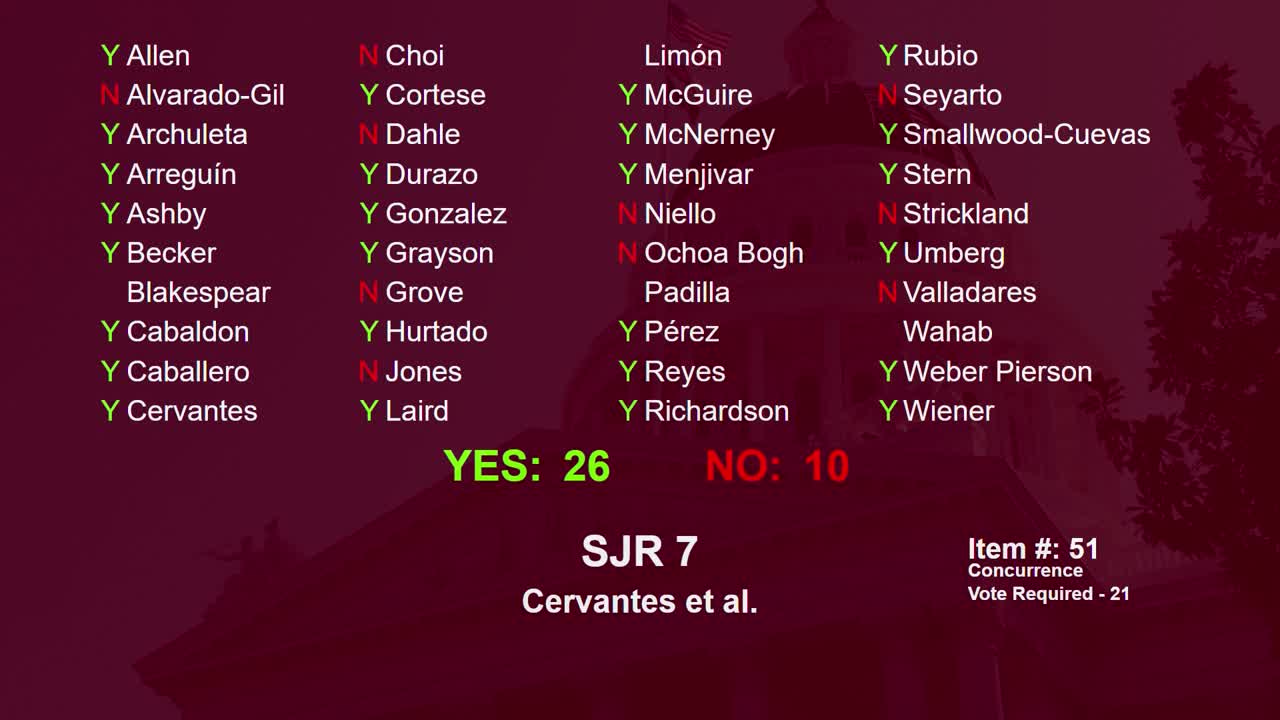 2MIN
Senate Floor
 2MIN
Assembly Floor
 7MIN
Assembly Standing Committee on Public Safety
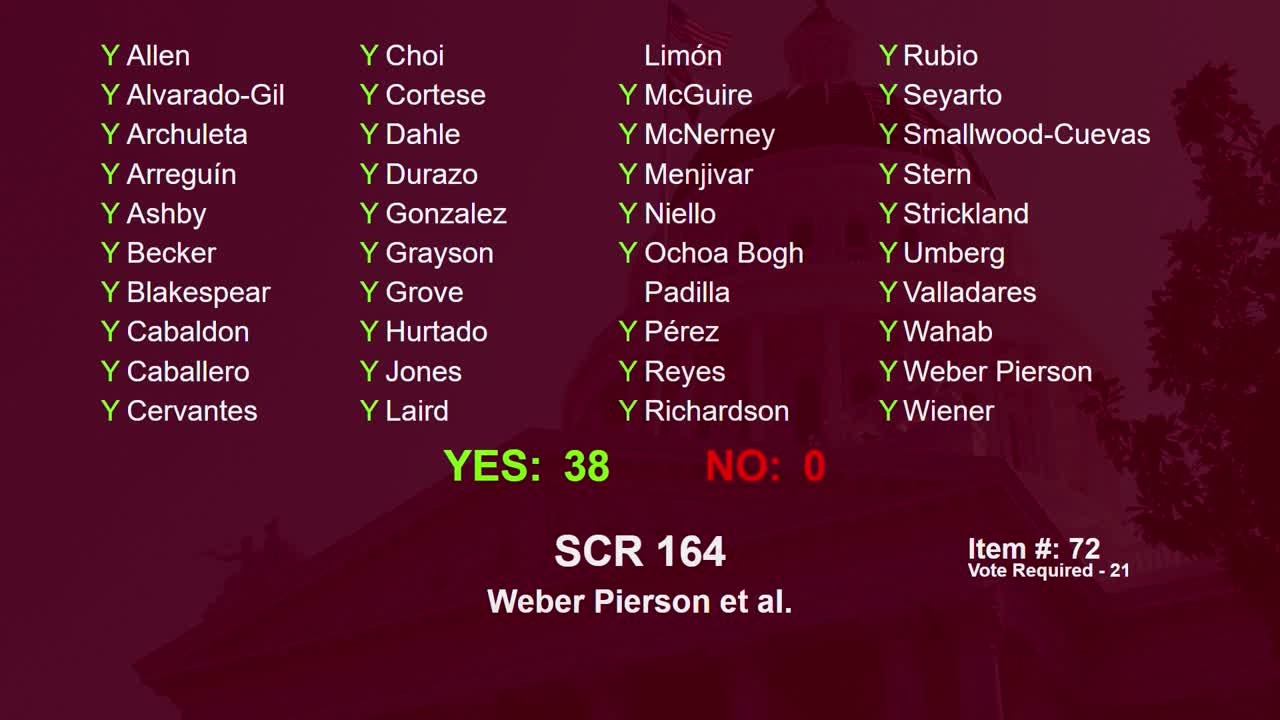 2MIN
Senate Floor
 6MIN
Senate Standing Committee on Judiciary
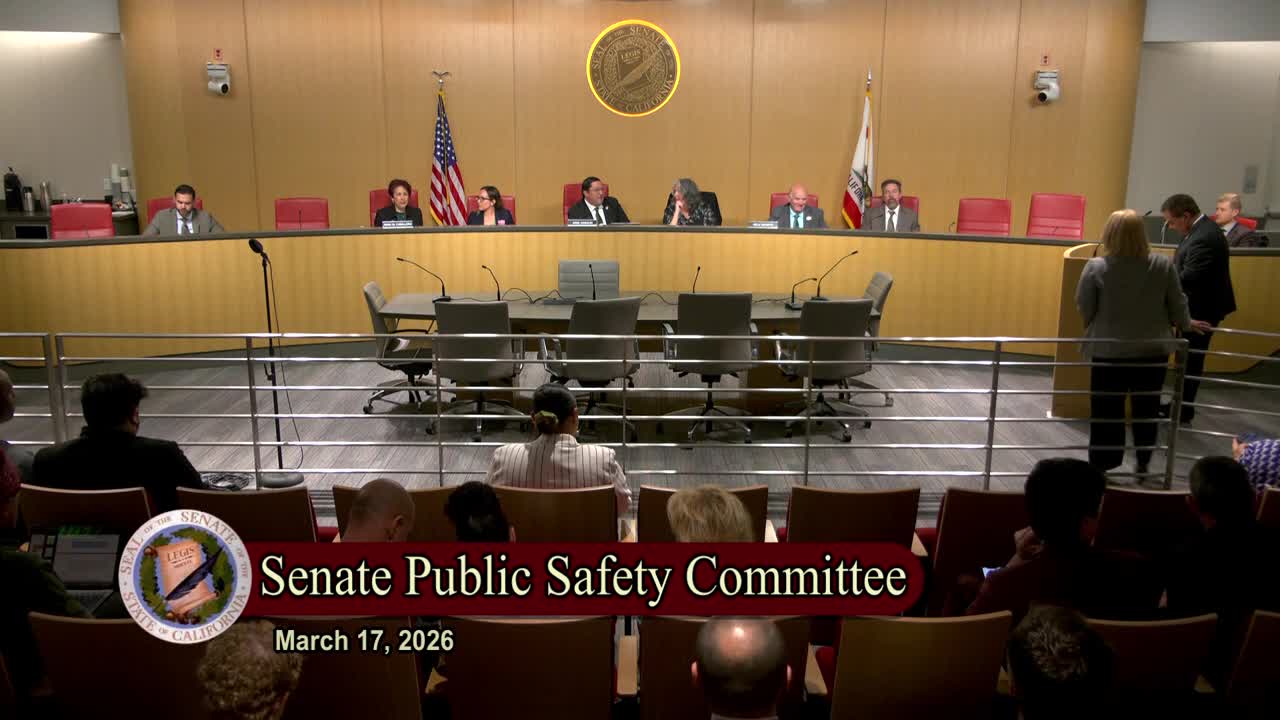 8MIN