SB 942: Civil detainees.
- Session Year: 2025-2026
- House: Senate
- Latest Version Date: 2026-09-29
Current Status:
Passed
(2026-09-29: Chaptered by Secretary of State. Chapter 755, Statutes of 2026.)
Introduced
In Committee
Awaiting First Chamber Vote
Passed First Chamber
In Committee
Awaiting Second Chamber Vote
Passed Second Chamber
Enacted
Existing law, the Lanterman-Petris-Short (LPS) Act, authorizes the involuntary commitment and treatment of a person, when the person, as a result of a mental health disorder, is a danger to themselves or others, or is gravely disabled. Existing law grants persons involuntarily detained in state hospitals as a result of developmental or mental health disabilities specified rights, including a right to dignity, privacy, and humane care, to be free from harm, to religious freedom and practice, and to physical exercise and recreational opportunities.
This bill, the Civil Detainees Bill of Rights Act of 2026, would clarify that all persons housed or detained for purposes of civil immigration proceedings in California at any state, county, local, or private locked detention facility, including any county, local, or private locked detention facility in which an individual is housed or detained on behalf of, or pursuant to a contract with, the federal Office of Refugee Resettlement or the United States Immigration and Customs Enforcement, have the legal rights and responsibilities guaranteed all other persons by the United States Constitution and federal law and the California Constitution and state law, unless specifically limited by federal or state law or regulations.
The bill would grant persons housed or detained for the purposes of civil immigration proceedings in California certain rights, including a right to dignity, privacy, and humane care, a right to clean facilities and living quarters, and a right to safe and healthy food. The bill would reaffirm the intent of the Legislature that individuals housed or detained as a result of developmental or mental health disabilities have the rights described above.
The bill would require the rights of individuals involuntarily housed as a result of developmental or mental health disabilities or civilly detained in California to be observed and protected by the operator of any facility in California in which the individuals are housed or civilly detained. The bill would authorize the Attorney General to bring a civil action for injunctive and other relief in order to protect any of the above-described rights, and would additionally authorize the Attorney General to seek a civil penalty not to exceed $2,500 for each violation. The bill would require all necessary access for the observations necessary to ensure compliance with the above-described requirements to be provided to the Attorney General.
The bill would make related findings and declarations.
The bill would declare that it is to take effect immediately as an urgency statute.
Existing law, the Lanterman-Petris-Short (LPS) Act, authorizes the involuntary commitment and treatment of a person, when the person, as a result of a mental health disorder, is a danger to themselves or others, or is gravely disabled. Existing law grants persons involuntarily detained in state hospitals as a result of developmental or mental health disabilities specified rights, including a right to dignity, privacy, and humane care, to be free from harm, to religious freedom and practice, and to physical exercise and recreational opportunities.
This bill, the Civil Detainees Bill of Rights Act of 2026, would clarify that all persons housed or detained for purposes of civil immigration proceedings in California at any state, county, local, or private locked detention facility, including any county, local, or private locked detention facility in which an individual is housed or detained on behalf of, or pursuant to a contract with, the federal Office of Refugee Resettlement or the United States Immigration and Customs Enforcement, have the legal rights and responsibilities guaranteed all other persons by the United States Constitution and federal law and the California Constitution and state law, unless specifically limited by federal or state law or regulations.
The bill would grant persons housed or detained for the purposes of civil immigration proceedings in California certain rights, including a right to dignity, privacy, and humane care, a right to clean and well-maintained facilities, facilities and living quarters, and a right to safe and good-quality food. and healthy food. The bill would reaffirm the intent of the Legislature that individuals housed or detained as a result of developmental or mental health disabilities have the rights described above.
The bill would require an operator of a facility to ensure the rights of individuals housed or civilly detained for purposes of civil immigration proceedings in California are protected. the rights of individuals involuntarily housed as a result of developmental or mental health disabilities or civilly detained in California to be observed and protected by the operator of any facility in California in which the individuals are housed or civilly detained. The bill would authorize the Attorney General to bring a civil action for injunctive and other relief in order to protect any of the above-described rights, and would additionally authorize the Attorney General to seek a civil penalty not to exceed $2,500 for each violation. The bill would require an operator of a facility to provide the Attorney General all necessary access for the observations necessary to effectuate enforcement of the above-described requirements. all necessary access for the observations necessary to ensure compliance with the above-described requirements to be provided to the Attorney General.
The bill would make related findings and declarations.
The bill would declare that it is to take effect immediately as an urgency statute.
Existing law, the Lanterman-Petris-Short (LPS) Act, authorizes the involuntary commitment and treatment of a person, when the person, as a result of a mental health disorder, is a danger to themselves or others, or is gravely disabled. Existing law grants persons involuntarily detained in state hospitals as a result of developmental or mental health disabilities specified rights, including a right to dignity, privacy, and humane care, to be free from harm, to religious freedom and practice, and to physical exercise and recreational opportunities.
This bill, the Civil Detainees Bill of Rights Act of 2026, would clarify that all persons housed or detained for purposes of civil immigration proceedings in California at any state, county, local, or private locked detention facility, including any county, local, or private locked detention facility in which an individual is housed or detained on behalf of, or pursuant to a contract with, United States Immigration and Customs Enforcement, have the legal rights and responsibilities guaranteed all other persons by the United States Constitution and federal law and the California Constitution and state law, unless specifically limited by federal or state law or regulations.
The bill would grant persons housed or detained for the purposes of civil immigration proceedings in California certain rights, including a right to dignity, privacy, and humane care, a right to clean and well-maintained facilities, and a right to safe and good-quality food.
The bill would require an operator of a facility to ensure the rights of individuals housed or civilly detained for purposes of civil immigration proceedings in California are protected. The bill would authorize the Attorney General to bring a civil action for injunctive and other relief in order to protect any of the above-described rights, and would additionally authorize the Attorney General to seek a civil penalty not to exceed $2,500 for each violation. The bill would require an operator of a facility to provide the Attorney General all necessary access for the observations necessary to effectuate enforcement of the above-described requirements.
The bill would make related findings and declarations.
The bill would declare that it is to take effect immediately as an urgency statute.
Existing law, the Lanterman-Petris-Short (LPS) Act, authorizes the involuntary commitment and treatment of a person, when the person, as a result of a mental health disorder, is a danger to themselves or others, or is gravely disabled. Existing law grants persons involuntarily detained in state hospitals as a result of developmental or mental health disabilities specified rights, including a right to dignity, privacy, and humane care, to be free from harm, to religious freedom and practice, and to physical exercise and recreational opportunities.
This bill, the Civil Detainees Bill of Rights Act of 2026, would clarify that all persons housed or detained for purposes of civil immigration proceedings in California at any state, county, local, or private locked detention facility, including any county, local, or private locked detention facility in which an individual is housed or detained on behalf of, or pursuant to a contract with, United States Immigration and Customs Enforcement, have the legal rights and responsibilities guaranteed all other persons by the United States Constitution and federal law and the California Constitution and state law, unless specifically limited by federal or state law or regulations.
The bill would declare that the above-described housed or detained persons have grant persons housed or detained for the purposes of civil immigration proceedings in California certain rights, including a right to dignity, privacy, and humane care, a right to clean and well-maintained facilities, and a right to safe and good-quality food.
The bill would require an operator of a facility to ensure the rights of individuals housed or civilly detained for purposes of civil immigration proceedings in California are protected. The bill would authorize the Attorney General to bring a civil action for injunctive and other relief in order to protect any of the above-described rights, and would additionally authorize the Attorney General to seek a civil penalty not to exceed $2,500 for each violation. The bill would require an operator of a facility to provide the Attorney General all necessary access for the observations necessary to effectuate enforcement of the above-described requirements.
The bill would make related findings and declarations.
Existing law grants specified rights to persons involuntarily detained in state hospitals as a result of developmental or mental health disabilities, including a right to dignity, privacy, and humane care, to be free from harm, to religious freedom and practice, and to physical exercise and recreational opportunities.
This bill, the Civil Detainees Bill of Rights Act of 2026, would clarify that all persons housed or detained for purposes of civil immigration proceedings in California at any state, county, local, or private locked detention facility, including any county, local, or private locked detention facility in which an individual is housed or detained on behalf of, or pursuant to a contract with, United States Immigration and Customs Enforcement, have the legal rights and responsibilities guaranteed all other persons by the United States Constitution and federal law and the California Constitution and state law, unless specifically limited by federal or state law or regulations.
The bill would declare that the above-described housed or detained persons have certain rights, including a right to dignity, privacy, and humane care, a right to clean and well-maintained facilities, and a right to safe and good-quality food.
Existing law prohibits a city, city and county, or local law enforcement agency from entering into a contract with the federal government or any federal agency to house or detain noncitizens for purposes of civil immigration custody in a locked detention facility. Existing law, until July 1, 2027, requires the Attorney General to engage in reviews of county, local, and private locked detention facilities in which noncitizens are being housed or detained for purposes of civil immigration proceedings in California. Existing law requires that review to include a review of the conditions of confinement, a review of the standard of care and due process provided to the detainees, and a review of the circumstances around their apprehension and transfer to the facility. Existing law requires any private detention facility operator, as defined, to comply with, and adhere to, the detention standards of care and confinement agreed upon in the facilitys contract for operations.This bill, the Private Detention and Civil Confinement Facility Oversight and Standards Act of 2026, would require a covered civil confinement facility, defined to include private detention facilities and specified mental health treatment facilities, unless otherwise licensed, certified, designated, or approved under state law or local ordinance, to file an annual registration with the State Department of Public Health and identify specified information about the facility, including, among other things, the contracting entity and the standards of care and confinement in the facilitys operating contract. The bill would require the department to adopt rules and regulations to enforce the above-described requirement.This bill would require a facility operator to comply with specified standards and requirements relating to, among other things, applicable health and safety laws and standards of care and confinement set forth in a contract or agreement. The bill would require an enforcing agency, defined as a state or local entity that licenses, certifies, designates, or approves the operation of, and regulates, an above-described facility under state or local law, to conduct regular inspections of facilities within its jurisdiction and would authorize an agency to conduct additional inspections as necessary. The bill would require an operator to furnish specified information to the agency when requested, to preserve specified documents related to the above-described compliance requirements, and to report unusual occurrences and other significant health or safety incidents to the agency within 24 hours of the incident. The bill would authorize an agency to require a facility to take specified actions to correct noncompliance with the above-described requirements, and would require a facility operator to submit a corrective action plan to the agency and to comply with the plan. By imposing additional duties on local entities, the bill would impose a state-mandated local program.This bill would authorize an agency to enforce the above-described requirements on a facility that is already licensed, certified, designated, or approved under state law or local ordinance using its existing authority, and would authorize the department to enforce those requirements on a facility required to register as described above by taking specified actions, including, issuing a cease and desist order, imposing civil penalties, or, for repeated, material, or uncured violations, suspending the facilitys registration. The bill would require the department or enforcing agency to provide the facility notice and an opportunity to be heard before imposing any penalty for a violation of the above-described requirements.This bill would prohibit an operator from retaliating against any person who reports or participates in an investigation or proceeding concerning a violation of the act or any health or safety standard. The bill would make the provisions of the act severable. The bill would make related findings and declarations.The California Constitution requires the state to reimburse local agencies and school districts for certain costs mandated by the state. Statutory provisions establish procedures for making that reimbursement.This bill would provide that, if the Commission on State Mandates determines that the bill contains costs mandated by the state, reimbursement for those costs shall be made pursuant to the statutory provisions noted above.Existing law prohibits a city, city and county, or local law enforcement agency from entering into a contract with the federal government or any federal agency to house or detain noncitizens for purposes of civil immigration custody in a locked detention facility. Existing law, until July 1, 2027, requires the Attorney General to engage in reviews of county, local, and private locked detention facilities in which noncitizens are being housed or detained for purposes of civil immigration proceedings in California. Existing law requires that review to include a review of the conditions of confinement, a review of the standard of care and due process provided to the detainees, and a review of the circumstances around their apprehension and transfer to the facility. Existing law requires any private detention facility operator, as defined, to comply with, and adhere to, the detention standards of care and confinement agreed upon in the facilitys contract for operations.
This bill, the Private Detention and Civil Confinement Facility Oversight and Standards Act of 2026, would require a covered civil confinement facility, defined to include private detention facilities and specified mental health treatment facilities, unless otherwise licensed, certified, designated, or approved under state law or local ordinance, to file an annual registration with the State Department of Public Health and identify specified information about the facility, including, among other things, the contracting entity and the standards of care and confinement in the facilitys operating contract. The bill would require the department to adopt rules and regulations to enforce the above-described requirement.
This bill would require a facility operator to comply with specified standards and requirements relating to, among other things, applicable health and safety laws and standards of care and confinement set forth in a contract or agreement. The bill would require an enforcing agency, defined as a state or local entity that licenses, certifies, designates, or approves the operation of, and regulates, an above-described facility under state or local law, to conduct regular inspections of facilities within its jurisdiction and would authorize an agency to conduct additional inspections as necessary. The bill would require an operator to furnish specified information to the agency when requested, to preserve specified documents related to the above-described compliance requirements, and to report unusual occurrences and other significant health or safety incidents to the agency within 24 hours of the incident. The bill would authorize an agency to require a facility to take specified actions to correct noncompliance with the above-described requirements, and would require a facility operator to submit a corrective action plan to the agency and to comply with the plan. By imposing additional duties on local entities, the bill would impose a state-mandated local program.
This bill would authorize an agency to enforce the above-described requirements on a facility that is already licensed, certified, designated, or approved under state law or local ordinance using its existing authority, and would authorize the department to enforce those requirements on a facility required to register as described above by taking specified actions, including, issuing a cease and desist order, imposing civil penalties, or, for repeated, material, or uncured violations, suspending the facilitys registration. The bill would require the department or enforcing agency to provide the facility notice and an opportunity to be heard before imposing any penalty for a violation of the above-described requirements.
This bill would prohibit an operator from retaliating against any person who reports or participates in an investigation or proceeding concerning a violation of the act or any health or safety standard. The bill would make the provisions of the act severable. The bill would make related findings and declarations.
The California Constitution requires the state to reimburse local agencies and school districts for certain costs mandated by the state. Statutory provisions establish procedures for making that reimbursement.
This bill would provide that, if the Commission on State Mandates determines that the bill contains costs mandated by the state, reimbursement for those costs shall be made pursuant to the statutory provisions noted above.
Existing law prohibits a city, city and county, or local law enforcement agency from entering into a contract with the federal government or any federal agency to house or detain noncitizens for purposes of civil immigration custody in a locked detention facility. Existing law, until July 1, 2027, requires the Attorney General to engage in reviews of county, local, and private locked detention facilities in which noncitizens are being housed or detained for purposes of civil immigration proceedings in California. Existing law requires that review to include a review of the conditions of confinement, a review of the standard of care and due process provided to the detainees, and a review of the circumstances around their apprehension and transfer to the facility. Existing law requires any private detention facility operator, as defined, to comply with, and adhere to, the detention standards of care and confinement agreed upon in the facilitys contract for operations.
This bill, the Private Detention and Civil Confinement Facility Oversight and Standards Act of 2026, would prohibit a private detention facility from operating in the state unless it obtains and maintains a license issued by the State Department of Public Health. The bill would authorize the department to issue a license to a facility, and would authorize the department to deny, suspend, or revoke a license based on specified criteria. The bill would require a facility to comply with all applicable standards of care in their contract with an entity as a condition of licensure. The bill would require the department to conduct annual unannounced inspections and additional inspections as necessary, based on complaints or risk indicators, of a licensed facility. The bill would authorize the department to issue specified penalties for a violation of the requirements described above, including civil penalties and suspension or revocation of a license. The bill require a covered civil confinement facility, defined to include private detention facilities and specified mental health treatment facilities, unless otherwise licensed, certified, designated, or approved under state law or local ordinance, to file an annual registration with the State Department of Public Health and identify specified information about the facility, including, among other things, the contracting entity and the standards of care and confinement in the facilitys operating contract. The bill would require the department to adopt rules and regulations to enforce the above-described requirement.
This bill would require a facility operator to comply with specified standards and requirements relating to, among other things, applicable health and safety laws and standards of care and confinement set forth in a contract or agreement. The bill would require an enforcing agency, defined as a state or local entity that licenses, certifies, designates, or approves the operation of, and regulates, an above-described facility under state or local law, to conduct regular inspections of facilities within its jurisdiction and would authorize an agency to conduct additional inspections as necessary. The bill would require an operator to furnish specified information to the agency when requested, to preserve specified documents related to the above-described compliance requirements, and to report unusual occurrences and other significant health or safety incidents to the agency within 24 hours of the incident. The bill would authorize an agency to require a facility to take specified actions to correct noncompliance with the above-described requirements, and would require a facility operator to submit a corrective action plan to the agency and to comply with the plan. By imposing additional duties on local entities, the bill would impose a state-mandated local program.
This bill would authorize an agency to enforce the above-described requirements on a facility that is already licensed, certified, designated, or approved under state law or local ordinance using its existing authority, and would authorize the department to enforce those requirements on a facility required to register as described above by taking specified actions, including, issuing a cease and desist order, imposing civil penalties, or, for repeated, material, or uncured violations, suspending the facilitys registration. The bill would require the department or enforcing agency to provide the facility notice and an opportunity to be heard before imposing any penalty for a violation of the above-described requirements.
This bill would prohibit an operator from retaliating against any employee, detainee, contractor, or volunteer who reports person who reports or participates in an investigation or proceeding concerning a violation of the act or any health or safety standard. The bill would make the provisions of the act severable. The bill would make related findings and declarations.
The California Constitution requires the state to reimburse local agencies and school districts for certain costs mandated by the state. Statutory provisions establish procedures for making that reimbursement.
This bill would provide that, if the Commission on State Mandates determines that the bill contains costs mandated by the state, reimbursement for those costs shall be made pursuant to the statutory provisions noted above.
Existing law prohibits a city, city and county, or local law enforcement agency from entering into a contract with the federal government or any federal agency to house or detain noncitizens for purposes of civil immigration custody in a locked detention facility. Existing law, until July 1, 2027, requires the Attorney General to engage in reviews of county, local, and private locked detention facilities in which noncitizens are being housed or detained for purposes of civil immigration proceedings in California. Existing law requires that review to include a review of the conditions of confinement, a review of the standard of care and due process provided to the detainees, and a review of the circumstances around their apprehension and transfer to the facility. Existing law requires any private detention facility operator, as defined, to comply with, and adhere to, the detention standards of care and confinement agreed upon in the facilitys contract for operations.
This bill, the Private Detention Facility Oversight and Standards Act of 2026, would make specified findings and declarations related to the regulation of the health, safety, and welfare of individuals held in private detention facilities. prohibit a private detention facility from operating in the state unless it obtains and maintains a license issued by the State Department of Public Health. The bill would authorize the department to issue a license to a facility, and would authorize the department to deny, suspend, or revoke a license based on specified criteria. The bill would require a facility to comply with all applicable standards of care in their contract with an entity as a condition of licensure. The bill would require the department to conduct annual unannounced inspections and additional inspections as necessary, based on complaints or risk indicators, of a licensed facility. The bill would authorize the department to issue specified penalties for a violation of the requirements described above, including civil penalties and suspension or revocation of a license. The bill would prohibit an operator from retaliating against any employee, detainee, contractor, or volunteer who reports a violation of the act or any health or safety standard. The bill would make the provisions of the act severable. The bill would make related findings and declarations.
Existing law prohibits a city, city and county, or local law enforcement agency from entering into a contract with the federal government or any federal agency to house or detain noncitizens for purposes of civil immigration custody in a locked detention facility. Existing law, until July 1, 2027, requires the Attorney General to engage in reviews of county, local, and private locked detention facilities in which noncitizens are being housed or detained for purposes of civil immigration proceedings in California. Existing law requires that review to include a review of the conditions of confinement, a review of the standard of care and due process provided to the detainees, and a review of the circumstances around their apprehension and transfer to the facility. Existing law requires any private detention facility operator, as defined, to comply with, and adhere to, the detention standards of care and confinement agreed upon in the facilitys contract for operations.
This bill, the Private Detention Facility Oversight and Standards Act of 2026, would make specified findings and declarations related to the regulation of the health, safety, and welfare of individuals held in private detention facilities.
This act shall be known, and may be cited, as the Civil Detainees Bill of Rights Act of 2026.
SEC. 2.The Legislature finds and declares all of the following:
(a)California has an interest in ensuring that the rights of all persons held in civil detention are adequately protected.
(b)Existing law provides that civil detainees have the same legal rights and responsibilities guaranteed to all other individuals by the United States Constitution and federal law and the California Constitution and state law.
(c)It is the intent of the Legislature that all individuals civilly detained in California be entitled to certain core rights, regardless of the type of facility in which they are detained. It is therefore the intent of the Legislature to extend rights otherwise conferred to individuals involuntarily detained under state law to all individuals civilly detained in California.
(d)It is the intent of the Legislature to reaffirm the existing rights of civil detainees under the Welfare and Institutions Code and Title 9 of the California Code of Regulations, to extend those rights to similarly situated persons housed or civilly detained at any state, county, local, or private for profit locked detention facility, including individuals housed or civilly detained for purposes of civil immigration proceedings in California, and ensure that facility operators observe and protect these rights.
SEC. 3.Section 53.9 is added to the Civil Code, to read:53.9.(a)All persons housed or detained for purposes of civil immigration proceedings in California at any state, county, local, or private locked detention facility, including any county, local, or private locked detention facility in which an individual is housed or detained on behalf of, or pursuant to a contract with, the federal Office of Refugee Resettlement or the United States Immigration and Customs Enforcement, have the legal rights and responsibilities guaranteed all other persons by the United States Constitution and federal law and the California Constitution and state law, unless specifically limited by federal or state law or regulations.
(b)All persons housed or detained for purposes of civil immigration proceedings in California at any state, county, local, or private locked detention facility, including any county, local, or private locked detention facility in which an individual is housed or detained on behalf of, or pursuant to a contract with, the federal Office of Refugee Resettlement or the United States Immigration and Customs Enforcement, have the following rights:
(1)A right to dignity, privacy, and humane care.
(2)A right to mental health treatment services provided in ways that are the least restrictive of the personal liberty of the individual.
(3)A right to medical and dental care and treatment.
(4)A right to be free from harm, including abuse or neglect, and unnecessary or excessive physical restraint, isolation, or medication.
(5)A right to religious freedom and practice, physical exercise, and recreational opportunities.
(6)A right to clean drinking water and functioning toilet and shower facilities.
(7)A right to a clean facility and living quarters that is kept in good repair.
(8)A right to food that is adequate to maintain health and is selected, stored, prepared, and served in a safe and healthful manner.
(9)A right, subject to denial for good cause as described in subdivisions (c) to (e), inclusive, of Section 884 of Title 9 of the California Code of Regulations, to all of the following:
(A)Reasonable access to a telephone, both to make and receive confidential calls, provided that telephone hours, frequency and duration of telephone calls, and method of payment may be limited to ensure access by all.
(B)Reasonable access to letter writing materials.
(C)The ability to send and receive correspondence, subject to inspection for contraband and subject to limitations on size, weight, and volume of mail as specified by formal facility policy. Letters or documents sent to or received from an attorney, court, or government official through the mail shall not be read by anyone other than the addressee.
(c)The Legislature reaffirms that persons protected by the rights described in Sections 4502, 4503, 5325, and 5325.1 of the Welfare and Institutions Code and Sections 883 and 884 of Title 9 of the California Code of Regulations have all of the following rights:
(1)A right to mental health and dental care and treatment.
(2)A right to clean drinking water and functioning toilet and shower facilities.
(3)A right to a clean facility and living quarters that is kept in good repair.
(4)A right to food that is adequate to maintain health and is selected, stored, prepared, and served in a safe and healthful manner.
SEC. 4.Section 12532.1 is added to the Government Code, to read:12532.1.(a)The rights of individuals housed or civilly detained in California, as provided in Section 53.9 of the Civil Code, Sections 4502, 4503, 5325, and 5325.1 of the Welfare and Institutions Code, and Sections 883 and 884 of Title 9 of the California Code of Regulations, shall be observed and protected by the operator of any facility in California in which the individuals are housed or civilly detained.
(b)(1)The Attorney General may bring a civil action for injunctive and other appropriate declaratory or equitable relief in the name of the people of the State of California in order to protect any right described in Section 53.9 of the Civil Code, Section 4502, 4503, 5325, or 5325.1 of the Welfare and Institutions Code, or Section 883 or 884 of Title 9 of the California Code of Regulations. An action brought by the Attorney General to remediate a violation of those rights may also seek a civil penalty not to exceed two thousand five hundred dollars ($2,500) for each violation.
(2)This subdivision does not alter the authority of the Attorney General to bring a civil action under any other law.
(c)The Attorney General, or the Attorney Generals designee, shall be provided all necessary access for the observations necessary to ensure compliance with this section, including, but not limited to, access to detainees, patients, facilities, officials, personnel, and records.
SEC. 5.This act is an urgency statute necessary for the immediate preservation of the public peace, health, or safety within the meaning of Article IV of the California Constitution and shall go into immediate effect. The facts constituting the necessity are:
In order to maintain the health and safety of civil detainees in California, it is necessary that this act take effect immediately.
This act shall be known, and may be cited, as the Civil Detainees Bill of Rights Act of 2026.
SEC. 2.The Legislature finds and declares all of the following:
(a)California has an interest in ensuring that the rights of all persons held in civil detention are adequately protected.
(b)Existing law provides that civil detainees have the same legal rights and responsibilities guaranteed to all other individuals by the United States Constitution and federal law and the California Constitution and state law.
(c)It is the intent of the Legislature that all individuals civilly detained in California be entitled to certain core rights, regardless of the type of facility in which they are detained. It is therefore the intent of the Legislature to clarify that individuals civilly detained in California have the same rights as individuals involuntarily detained under state law. extend rights otherwise conferred to individuals involuntarily detained under state law to all individuals civilly detained in California.
(d)It is the intent of the Legislature to reaffirm the existing rights of civil detainees under the Welfare and Institutions Code and Title 9 of the California Code of Regulations, to extend those rights to similarly situated persons housed or civilly detained at any state, county, local, or private for profit locked detention facility, including individuals housed or civilly detained for purposes of civil immigration proceedings in California, and ensure that facility operators observe and protect these rights.
SEC. 3.Section 53.9 is added to the Civil Code, to read:53.9.(a)All persons housed or detained for purposes of civil immigration proceedings in California at any state, county, local, or private locked detention facility, including any county, local, or private locked detention facility in which an individual is housed or detained on behalf of, or pursuant to a contract with, the federal Office of Refugee Resettlement or the United States Immigration and Customs Enforcement, have the legal rights and responsibilities guaranteed all other persons by the United States Constitution and federal law and the California Constitution and state law, unless specifically limited by federal or state law or regulations.
(b)All persons housed or detained for purposes of civil immigration proceedings in California at any state, county, local, or private locked detention facility, including any county, local, or private locked detention facility in which an individual is housed or detained on behalf of, or pursuant to a contract with, the federal Office of Refugee Resettlement or the United States Immigration and Customs Enforcement, have the following rights:
(1)A right to dignity, privacy, and humane care, including prompt mental health, medical, and dental care and treatment services provided in ways that are least restrictive of the personal liberty of the individual. care.
(2)A right to mental health treatment services provided in ways that are the least restrictive of the personal liberty of the individual.
(3)A right to medical and dental care and treatment.
(2)(4)A right to be free from harm, including abuse or neglect, and unnecessary or excessive physical restraint, isolation, medication, abuse, or neglect. or medication.
(3)(5)A right to religious freedom and practice, physical exercise, and recreational opportunities.
(4)(6)A right to clean drinking water and functioning toilet and shower facilities in compliance with Section 71665 of Title 22 of the California Code of Regulations. facilities.
(5)(7)A right to a clean and well-maintained facility and living quarters in compliance with Section 71631 of Title 22 of the California Code of Regulations. quarters that is kept in good repair.
(6)(8)A right to food that is of good quality adequate to maintain health and is selected, stored, prepared, and served in a safe and healthful manner and otherwise in compliance with Section 77077 of Title 22 of the California Code of Regulations. manner.
(9)A right, subject to denial for good cause as described in subdivisions (c) to (e), inclusive, of Section 884 of Title 9 of the California Code of Regulations, to all of the following:
(A)Reasonable access to a telephone, both to make and receive confidential calls, provided that telephone hours, frequency and duration of telephone calls, and method of payment may be limited to ensure access by all.
(B)Reasonable access to letter writing materials.
(C)The ability to send and receive correspondence, subject to inspection for contraband and subject to limitations on size, weight, and volume of mail as specified by formal facility policy. Letters or documents sent to or received from an attorney, court, or government official through the mail shall not be read by anyone other than the addressee.
(c)The Legislature reaffirms that persons protected by the rights described in Sections 4502, 4503, 5325, and 5325.1 of the Welfare and Institutions Code and Sections 883 and 884 of Title 9 of the California Code of Regulations have all of the following rights:
(1)A right to mental health and dental care and treatment.
(2)A right to clean drinking water and functioning toilet and shower facilities.
(3)A right to a clean facility and living quarters that is kept in good repair.
(4)A right to food that is adequate to maintain health and is selected, stored, prepared, and served in a safe and healthful manner.
SEC. 4.Section 12532.1 is added to the Government Code, to read:12532.1.(a)An operator of a facility shall ensure the rights of individuals housed or civilly detained in California, as provided in Section 53.9 of the Civil Code, are protected.12532.1.(a)The rights of individuals housed or civilly detained in California, as provided in Section 53.9 of the Civil Code, Sections 4502, 4503, 5325, and 5325.1 of the Welfare and Institutions Code, and Sections 883 and 884 of Title 9 of the California Code of Regulations, shall be observed and protected by the operator of any facility in California in which the individuals are housed or civilly detained.
(b)(1)The Attorney General may bring a civil action for injunctive and other appropriate declaratory or equitable relief in the name of the people of the State of California in order to protect any right described in Section 53.9 of the Civil Code. Code, Section 4502, 4503, 5325, or 5325.1 of the Welfare and Institutions Code, or Section 883 or 884 of Title 9 of the California Code of Regulations. An action brought by the Attorney General to remediate a violation of those rights may also seek a civil penalty not to exceed two thousand five hundred dollars ($2,500) for each violation.
(2)This subdivision does not alter the authority of the Attorney General to bring a civil action under any other law.
(c)An operator of a facility shall provide the The Attorney General General, or the Attorney Generals designee designee, shall be provided all necessary access for the observations necessary to effectuate enforcement pursuant to ensure compliance with this section, including, but not limited to, access to detainees, patients, facilities, officials, personnel, and records.
SEC. 5.This act is an urgency statute necessary for the immediate preservation of the public peace, health, or safety within the meaning of Article IV of the California Constitution and shall go into immediate effect. The facts constituting the necessity are:
In order to maintain the health and safety of civil detainees in California, it is necessary that this act take effect immediately.
This act shall be known, and may be cited, as the Civil Detainees Bill of Rights Act of 2026.
SEC. 2.The Legislature finds and declares all of the following:
(a)California has an interest in ensuring that the rights of all persons held in civil detention are adequately protected.
(b)Existing law provides that civil detainees have the same legal rights and responsibilities guaranteed to all other individuals by the United States Constitution and federal law and the California Constitution and state law.
(c)It is the intent of the Legislature that all individuals civilly detained in California be entitled to certain core rights, regardless of the type of facility in which they are detained. It is therefore the intent of the Legislature to clarify that individuals civilly detained in California have the same rights as individuals involuntarily detained under state law.
SEC. 3.Section 53.9 is added to the Civil Code, to read:53.9.(a)All persons housed or detained for purposes of civil immigration proceedings in California at any state, county, local, or private locked detention facility, including any county, local, or private locked detention facility in which an individual is housed or detained on behalf of, or pursuant to a contract with, United States Immigration and Customs Enforcement, have the legal rights and responsibilities guaranteed all other persons by the United States Constitution and federal law and the California Constitution and state law, unless specifically limited by federal or state law or regulations.
(b)All persons housed or detained for purposes of civil immigration proceedings in California at any state, county, local, or private locked detention facility, including any county, local, or private locked detention facility in which an individual is housed or detained on behalf of, or pursuant to a contract with, United States Immigration and Customs Enforcement, have the following rights:
(1)A right to dignity, privacy, and humane care, including prompt mental health, medical, and dental care and treatment services provided in ways that are least restrictive of the personal liberty of the individual.
(2)A right to be free from harm, including unnecessary or excessive physical restraint, isolation, medication, abuse, or neglect.
(3)A right to religious freedom and practice, physical exercise, and recreational opportunities.
(4)A right to clean drinking water and functioning toilet and shower facilities in compliance with Section 71665 of Title 22 of the California Code of Regulations.
(5)A right to a clean and well-maintained facility and living quarters in compliance with Section 71631 of Title 22 of the California Code of Regulations.
(6)A right to food that is of good quality and selected, stored, prepared, and served in a safe and healthful manner and otherwise in compliance with Section 77077 of Title 22 of the California Code of Regulations.
SEC. 4.Section 12532.1 is added to the Government Code, to read:12532.1.(a)An operator of a facility shall ensure the rights of individuals housed or civilly detained in California, as provided in Section 53.9 of the Civil Code, are protected.
(b)(1)The Attorney General may bring a civil action for injunctive and other appropriate declaratory or equitable relief in the name of the people of the State of California in order to protect any right described in Section 53.9 of the Civil Code. An action brought by the Attorney General to remediate a violation of those rights may also seek a civil penalty not to exceed two thousand five hundred dollars ($2,500) for each violation.
(2)This subdivision does not alter the authority of the Attorney General to bring a civil action under any other law.
(c)An operator of a facility shall provide the Attorney General or the Attorney Generals designee all necessary access for the observations necessary to effectuate enforcement pursuant to this section, including, but not limited to, access to detainees, patients, facilities, officials, personnel, and records.
SEC. 5.This act is an urgency statute necessary for the immediate preservation of the public peace, health, or safety within the meaning of Article IV of the California Constitution and shall go into immediate effect. The facts constituting the necessity are:
In order to maintain the health and safety of civil detainees in California, it is necessary that this act take effect immediately.
This act shall be known, and may be cited, as the Civil Detainees Bill of Rights Act of 2026.
SEC. 2.The Legislature finds and declares all of the following:
(a)California has an interest in ensuring that the rights of all persons held in civil detention are adequately protected.
(b)Existing law provides that civil detainees have the same legal rights and responsibilities guaranteed to all other individuals by the United States Constitution and federal law and the California Constitution and state law.
(c)It is the intent of the Legislature that all individuals civilly detained in California be entitled to certain core rights, regardless of the type of facility in which they are detained. It is therefore the intent of the Legislature to clarify that individuals civilly detained in California have the same rights as individuals involuntarily detained under state law.
SEC. 2.Section 53.8 is added to the Civil Code, to read:53.8.SEC. 3.Section 53.9 is added to the Civil Code, to read:53.9.(a)All persons housed or detained for purposes of civil immigration proceedings in California at any state, county, local, or private locked detention facility, including any county, local, or private locked detention facility in which an individual is housed or detained on behalf of, or pursuant to a contract with, United States Immigration and Customs Enforcement, have the legal rights and responsibilities guaranteed all other persons by the United States Constitution and federal law and the California Constitution and state law, unless specifically limited by federal or state law or regulations.
(b)All persons housed or detained for purposes of civil immigration proceedings in California at any state, county, local, or private locked detention facility, including any county, local, or private locked detention facility in which an individual is housed or detained on behalf of, or pursuant to a contract with, United States Immigration and Customs Enforcement, have the following rights:
(1)A right to dignity, privacy, and humane care, including prompt mental health, medical, and dental care and treatment services provided in ways that are least restrictive of the personal liberty of the individual.
(2)A right to be free from harm, including unnecessary or excessive physical restraint, isolation, medication, abuse, or neglect.
(3)A right to religious freedom and practice, physical exercise, and recreational opportunities.
(4)A right to clean drinking water and functioning toilet and shower facilities in compliance with Section 71665 of Title 22 of the California Code of Regulations.
(5)A right to a clean and well-maintained facility and living quarters in compliance with Section 71631 of Title 22 of the California Code of Regulations.
(6)A right to food that is of good quality and selected, stored, prepared, and served in a safe and healthful manner and otherwise in compliance with Section 77077 of Title 22 of the California Code of Regulations.
SEC. 4.Section 12532.1 is added to the Government Code, to read:12532.1.(a)An operator of a facility shall ensure the rights of individuals housed or civilly detained in California, as provided in Section 53.9 of the Civil Code, are protected.
(b)(1)The Attorney General may bring a civil action for injunctive and other appropriate declaratory or equitable relief in the name of the people of the State of California in order to protect any right described in Section 53.9 of the Civil Code. An action brought by the Attorney General to remediate a violation of those rights may also seek a civil penalty not to exceed two thousand five hundred dollars ($2,500) for each violation.
(2)This subdivision does not alter the authority of the Attorney General to bring a civil action under any other law.
(c)An operator of a facility shall provide the Attorney General or the Attorney Generals designee all necessary access for the observations necessary to effectuate enforcement pursuant to this section, including, but not limited to, access to detainees, patients, facilities, officials, personnel, and records.
This act shall be known, and may be cited, as the Civil Detainees Bill of Rights Act of 2026.
SEC. 2.Section 53.8 is added to the Civil Code, to read:53.8.(a)All persons housed or detained for purposes of civil immigration proceedings in California at any state, county, local, or private locked detention facility, including any county, local, or private locked detention facility in which an individual is housed or detained on behalf of, or pursuant to a contract with, United States Immigration and Customs Enforcement, have the legal rights and responsibilities guaranteed all other persons by the United States Constitution and federal law and the California Constitution and state law, unless specifically limited by federal or state law or regulations.
(b)All persons housed or detained for purposes of civil immigration proceedings in California at any state, county, local, or private locked detention facility, including any county, local, or private locked detention facility in which an individual is housed or detained on behalf of, or pursuant to a contract with, United States Immigration and Customs Enforcement, have the following rights:
(1)A right to dignity, privacy, and humane care, including prompt mental health, medical, and dental care and treatment services provided in ways that are least restrictive of the personal liberty of the individual.
(2)A right to be free from harm, including unnecessary or excessive physical restraint, isolation, medication, abuse, or neglect.
(3)A right to religious freedom and practice, physical exercise, and recreational opportunities.
(4)A right to clean drinking water and functioning toilet and shower facilities in compliance with Section 71665 of Title 22 of the California Code of Regulations.
(5)A right to a clean and well-maintained facility and living quarters in compliance with Section 71631 of Title 22 of the California Code of Regulations.
(6)A right to food that is of good quality and selected, stored, prepared, and served in a safe and healthful manner and otherwise in compliance with Section 77077 of Title 22 of the California Code of Regulations.
SECTION 1.Division 123 (commencing with Section 153000) is added to the Health and Safety Code, to read:123.Private Detention and Civil Confinement Facility Oversight and Standards153000.This division shall be known and may be cited as the Private Detention and Civil Confinement Facility Oversight and Standards Act of 2026.153001.The Legislature finds and declares all of the following:(a)California has an interest in protecting the health, safety, and welfare of individuals held in privately operated detention facilities or contract-operated civil confinement facilities located within the state.(b)As held in United States v. California (2019) 921 F.3d 865, 886, states have the general authority to ensure the health and welfare of inmates and detainees in facilities within its borders. States also have broad authority to enforce generally applicable health and safety laws against contractors operating private detention facilities within the state. The ninth circuit reinforced this authority in Geo Group, Inc. v. Newsom (2022) 50 F.4th 745, 750, stating private contractors do not stand on the same footing as the federal government, so states can impose many laws on federal contractors that they could not apply to the federal government itself.(c)While federal law preempts state law when Congress has occupied the field enacting a scheme of federal regulation that would leave the states no room to supplement it, Knox v. Brnovich (2018) 907 F.3d 1167, 1174 reaffirmed that there is a presumption against preemption when a state regulates in an area of historic state power.(d)In the 202526 fiscal year budget materials, the United States Department of Homeland Security proposed reducing the United States Office of the Immigration Detention Ombudsman by 24 positions and $11,000,000 from the 202324 fiscal year enacted level. In March 2025, the United States Department of Homeland Security moved to eliminate substantial staffing within key oversight offices, including 46 positions in the United States Office of the Immigration Detention Ombudsman, 147 positions in the United States Office for Civil Rights and Civil Liberties, and 118 positions in the United States Office of the Citizenship and Immigration Services Ombudsman.(e)Private corporations operating detention facilities pursuant to contracts function as business enterprises within California and therefore remain subject to the states legitimate exercise of licensing, consumer protection, and health and safety authority.(f)As held in Zadvydas v. Davis (2001) 533 U.S. 678, 690, immigration detention is civil, not criminal and nonpunitive in purposes and effect. Therefore, the appropriate comparators to private detention facilities in California are similarly situated privately operated or contract-operated civil confinement facilities in which persons may be involuntarily confined for nonpunitive purposes under state or federal law.(g)Persons who are confined in civil confinement facilities, like persons held in civil immigration detention, may be involuntarily confined for nonpenal purposes, and the conditions of confinement are not part of criminal punishment.(h)California requires operators of civil confinement facilities, as a condition of doing business in this state, to maintain enforceable standards of care and confinement, to comply with applicable health and safety requirements, and to comply with the standards they have agreed to follow in contracts governing facility operations or the provision of direct services.(i)The purpose of this division is to regulate facility conditions, standards of care and confinement, sanitation, food service, medical and mental health care, reporting, records, and related health and safety matters. This division does not seek to regulate decisions regarding apprehension, charging, detention placement, transfer, release, removal, sentencing, or contractor responsibility determinations made by the federal government, the state, or a local governmental entity.(j)It is not the intent of the Legislature to impose duplicative, different, or additional oversight or requirements on facilities that already have state or local regulatory oversight authority in place.153002.For purposes of this division, the following terms have the following meanings:(a)(1)Covered civil confinement facility means a nonpenal, 24-hour facility in which persons may be detained, committed, held for evaluation, treatment, stabilization, restoration, or civil immigration custody, and that is operated by a private entity or by a governmental entity through a contract with a private entity.(2)A covered civil confinement facility includes, but is not limited to, all of the following:(A)A private detention facility.(B)A facility designated or approved pursuant to Section 5404 of the Welfare and Institutions Code.(C)A psychiatric health facility, as defined in Section 1250.2, and licensed pursuant to Section 4080 of the Welfare and Institutions Code.(D)A mental health rehabilitation center licensed pursuant to Section 5675 of the Welfare and Institutions Code.(E)A psychiatric residential treatment facility, as defined in Section 1250.10, and licensed pursuant to Section 4081 of the Welfare and Institutions Code.(b)Department means the State Department of Public Health.(c)Enforcing agency means a state or local entity that licenses, certifies, designates, or approves the operation of, and regulates, a covered civil confinement facility under state or local law.(d)Operator means any private person, corporation, partnership, contractor, subcontractor, or other nongovernmental entity that owns, manages, staffs, or provides direct custodial, medical, mental health, food, sanitation, transportation, or other direct services in a covered civil confinement facility.(e)Private detention facility has the same meaning as in Section 7320 of the Government Code.(f)Standards of care and confinement means written contractual requirements, policies, procedures, and legally applicable standards of governing conditions of confinement, sanitation, food service, medical care, mental health care, use of force, restraint or seclusion where applicable, records, grievance procedures, and other health and safety requirements applicable to a covered civil confinement facility.153003.(a)This division applies to every covered civil confinement facility.(b)A covered civil confinement facility that is already licensed, certified, designated, or approved under state law or local ordinance shall remain subject to its existing licensure, certification, designation, or approval regime.(c)(1)A covered civil confinement facility not otherwise licensed, certified, designated, or approved under state law or local ordinance shall file an annual registration with the department in a form and manner prescribed by the department.(2)The facility shall identify the operator, facility location, contracting entity, maximum capacity, and the standards of care and confinement in any operating contract of the facility in its registration.(3)The department shall adopt rules and regulations necessary to implement this section.(d)The filing of a complete registration pursuant to subdivision (c) satisfies the requirements of that subdivision. The department shall not deny registration except for failure to submit required information.(e)The department and any applicable enforcing agency may coordinate with, or delegate to, any other state or local government entity with existing regulatory authority any inspection, information sharing, reporting, or enforcement activity to avoid duplication of effort and to promote consistent oversight.(f)This division does not authorize duplicative, different, or additional state licensing requirements or oversight for a facility that is already licensed, certified, designated, or approved under state law or local ordinance.(g)This division does not apply to a state prison, county jail, city jail, juvenile hall, or a facility operated directly by the Department of Corrections and Rehabilitation or a local correctional authority.153004.(a)In carrying out this division, an enforcing agency shall use, as applicable benchmarks for oversight and enforcement, all of the following to the extent they govern the operation of a covered civil confinement facility:(1)Any applicable federal, state, and local health and safety law, regulation, or order.(2)The requirements of this division.(3)Any applicable licensure, certification, designation, approval, or program requirement governing the covered civil confinement facility.(4)Any standards of care and confinement set forth in a contract or agreement under which an operator manages, staffs, or provides custodial, medical, mental health, food sanitation, transportation, or other direct services in the facility.(5)Any approved facility policies and procedures governing direct services, reporting, health and safety, medical or mental health care, sanitation, food service, records, grievance procedures, and use of force, restraint, or seclusion, if applicable.(b)An operator shall comply with the standards and requirements described in subdivision (a) to the extent applicable to the operators activities relating to any covered civil confinement facility.(c)This section does not require a governmental entity to include particular terms in a contract agreement or authorize the state to prescribe the contents of a federal contract.(d)The existence or absence of a contractual provision does not limit the operators duty to comply with otherwise applicable law.153005.This division shall be applied in the same manner and to the same extent to private detention facilities as it is applied to other similarly situated covered civil confinement facilities. Any additional standard, inspection requirement, corrective action requirement, penalty, or remedy shall not be imposed on a private detention facility under this division unless an analogous requirement may be imposed on a similarly situated covered civil confinement facility.153006.(a)An enforcing agency shall conduct regular inspections of covered civil confinement facilities within its jurisdiction consistent with otherwise applicable law, and may conduct additional inspections as necessary based on complaints, unusual occurrences, or risk indicators.(b)An operator shall furnish all information, records, and documentation requested by the enforcing agency that are reasonably necessary to review compliance with this division and other applicable health and safety requirements.(c)An operator shall preserve books, records, papers, accounts, documents, video, and other writings reasonably necessary to review compliance with this division for not less than four years, or for any longer period otherwise required by law.(d)An operator shall report unusual occurrences and other significant health or safety incidents, including deaths, serious injuries, serious medical events, and uses of force, restraint, or seclusion, if applicable, to the enforcing agency within 24 hours of the incident, in a form and manner prescribed by the enforcing agency.(e)(1)An enforcing agency may require a covered civil confinement facility to take specified actions to correct any noncompliance with this division.(2)An operator shall submit a corrective action plan for any noncompliance described in paragraph (1) for approval by the enforcing agency.(3)An operator shall comply with an approved corrective plan described in this subdivision.(f)For any covered civil confinement facility described in subdivision (b) of Section 153003, an applicable enforcement agency may enforce this division using its existing corrective action, probation, civil sanction, suspension, or other enforcement authority.(g)For any covered civil confinement facility described in subdivision (c) of Section 153003, the department may enforce this division by taking any or all of the following actions:(1)Issue a cease and desist order.(2)Impose civil penalties not exceeding twenty-five thousand dollars ($25,000) per violation per day.(3)Require compliance with a mandatory corrective action plan.(4)Suspend the facilitys registration for repeated, material, or uncured violations that create a substantial threat to health or safety.(h)Before imposing any monetary penalty, suspension, or comparable sanction under this section, the department or enforcing agency shall provide notice and an opportunity to be heard consistent with any applicable law.153007.An operator shall not retaliate against any employee, detainee, contractor, patient, resident, detainee, family member, attorney, advocate, volunteer, or other person who reports, or participates in an investigation or proceeding concerning, a violation of this division or any applicable health or safety standard.153008.This division does not authorize the state to regulate or review decisions regarding apprehension, charging, detention placement, transfer, release, removal, sentencing, or contractor responsibility determinations made by the federal government, the state, or a local governmental entity. This division regulates only facility conditions, standards of care and confinement, and related health and safety requirements applicable to covered civil confinement facilities.153009.The provisions of this act are severable. If any provision of this division or its application is held invalid, the invalidity shall not affect other provisions or applications that can be given effect without the invalid provision or application.SEC. 2.If the Commission on State Mandates determines that this act contains costs mandated by the state, reimbursement to local agencies and school districts for those costs shall be made pursuant to Part 7 (commencing with Section 17500) of Division 4 of Title 2 of the Government Code.This division shall be known and may be cited as the Private Detention and Civil Confinement Facility Oversight and Standards Act of 2026.
153001.The Legislature finds and declares all of the following:
(a)California has an interest in protecting the health, safety, and welfare of individuals held in privately operated detention facilities or contract-operated civil confinement facilities located within the state.
(b)As held in United States v. California (2019) 921 F.3d 865, 886, states have the general authority to ensure the health and welfare of inmates and detainees in facilities within its borders. States also have broad authority to enforce generally applicable health and safety laws against contractors operating private detention facilities within the state. The ninth circuit reinforced this authority in Geo Group, Inc. v. Newsom (2022) 50 F.4th 745, 750, stating private contractors do not stand on the same footing as the federal government, so states can impose many laws on federal contractors that they could not apply to the federal government itself.
(c)While federal law preempts state law when Congress has occupied the field enacting a scheme of federal regulation that would leave the states no room to supplement it, Knox v. Brnovich (2018) 907 F.3d 1167, 1174 reaffirmed that there is a presumption against preemption when a state regulates in an area of historic state power.
(d)In the 202526 fiscal year budget materials, the United States Department of Homeland Security proposed reducing the United States Office of the Immigration Detention Ombudsman by 24 positions and $11,000,000 from the 202324 fiscal year enacted level. In March 2025, the United States Department of Homeland Security moved to eliminate substantial staffing within key oversight offices, including 46 positions in the United States Office of the Immigration Detention Ombudsman, 147 positions in the United States Office for Civil Rights and Civil Liberties, and 118 positions in the United States Office of the Citizenship and Immigration Services Ombudsman.
(e)Private corporations operating detention facilities pursuant to contracts function as business enterprises within California and therefore remain subject to the states legitimate exercise of licensing, consumer protection, and health and safety authority.
(f)As held in Zadvydas v. Davis (2001) 533 U.S. 678, 690, immigration detention is civil, not criminal and nonpunitive in purposes and effect. Therefore, the appropriate comparators to private detention facilities in California are similarly situated privately operated or contract-operated civil confinement facilities in which persons may be involuntarily confined for nonpunitive purposes under state or federal law.
(g)Persons who are confined in civil confinement facilities, like persons held in civil immigration detention, may be involuntarily confined for nonpenal purposes, and the conditions of confinement are not part of criminal punishment.
(h)California requires operators of civil confinement facilities, as a condition of doing business in this state, to maintain enforceable standards of care and confinement, to comply with applicable health and safety requirements, and to comply with the standards they have agreed to follow in contracts governing facility operations or the provision of direct services.
(i)The purpose of this division is to regulate facility conditions, standards of care and confinement, sanitation, food service, medical and mental health care, reporting, records, and related health and safety matters. This division does not seek to regulate decisions regarding apprehension, charging, detention placement, transfer, release, removal, sentencing, or contractor responsibility determinations made by the federal government, the state, or a local governmental entity.
(j)It is not the intent of the Legislation to impose additional oversight Legislature to impose duplicative, different, or additional oversight or requirements on facilities that already have state or local regulatory oversight authority in place.
153002.For purposes of this division, the following terms have the following meanings:
(a)(1)Covered civil confinement facility means a nonpenal, 24-hour facility in which persons may be detained, committed, held for evaluation, treatment, stabilization, restoration, or civil immigration custody, and that is operated by a private entity or by a governmental entity through a contract with a private entity.
(2)A covered civil confinement facility includes, but is not limited to, all of the following:
(A)A private detention facility.
(B)A facility designated or approved pursuant to Section 5404 of the Welfare and Institutions Code.
(C)A psychiatric health facility, as defined in Section 1250.2, and licensed pursuant to Section 4080 of the Welfare and Institutions Code.
(D)A mental health rehabilitation center licensed pursuant to Section 5675 of the Welfare and Institutions Code.
(E)A psychiatric residential treatment facility, as defined in Section 1250.10, and licensed pursuant to Section 4081 of the Welfare and Institutions Code.
(b)Department means the State Department of Public Health.
(c)Enforcing agency means a state or local entity that licenses, certifies, designates, or approves the operation of, and regulates, a covered civil confinement facility under state or local law.
(d)Operator means any private person, corporation, partnership, contractor, subcontractor, or other nongovernmental entity that owns, manages, staffs, or provides direct custodial, medical, mental health, food, sanitation, transportation, or other direct services in a covered civil confinement facility.
(e)Private detention facility has the same meaning as in Section 7320 of the Government Code.
(f)Standards of care and confinement means written contractual requirements, policies, procedures, and legally applicable standards of governing conditions of confinement, sanitation, food service, medical care, mental health care, use of force, restraint or seclusion where applicable, records, grievance procedures, and other health and safety requirements applicable to a covered civil confinement facility.
153003.(a)This division applies to every covered civil confinement facility.
(b)A covered civil confinement facility that is already licensed, certified, designated, or approved under state law or local ordinance shall remain subject to its existing licensure, certification, designation, or approval regime.
(c)(1)A covered civil confinement facility not otherwise licensed, certified, designated, or approved under state law or local ordinance shall file an annual registration with the department in a form and manner prescribed by the department.
(2)The facility shall identify the operator, facility location, contracting entity, maximum capacity, and the standards of care and confinement in any operating contract of the facility in its registration.
(3)The department shall adopt rules and regulations necessary to implement this section.
(d)The filing of a complete registration pursuant to subdivision (c) satisfies the requirements of that subdivision. The department shall not deny registration except for failure to submit required information.
(e)The department and any applicable enforcing agency may coordinate with, or delegate to, any other state or local government entity with existing regulatory authority any inspection, information sharing, reporting, or enforcement activity to avoid duplication of effort and to promote consistent oversight.
(f)This section does not authorize duplicative state licensing division does not authorize duplicative, different, or additional state licensing requirements or oversight for a facility that is already licensed, certified, designated, or approved under state law or local ordinance.
(g)This division does not apply to a state prison, county jail, city jail, juvenile hall, or a facility operated directly by the Department of Corrections and Rehabilitation or a local correctional authority.
153004.(a)In carrying out this division, an enforcing agency shall use, as applicable benchmarks for oversight and enforcement, all of the following to the extent they govern the operation of a covered civil confinement facility:
(1)Any applicable federal, state, and local health and safety law, regulation, or order.
(2)The requirements of this division.
(3)Any applicable licensure, certification, designation, approval, or program requirement governing the covered civil confinement facility.
(4)Any standards of care and confinement set forth in a contract or agreement under which an operator manages, staffs, or provides custodial, medical, mental health, food sanitation, transportation, or other direct services in the facility.
(5)Any approved facility policies and procedures governing direct services, reporting, health and safety, medical or mental health care, sanitation, food service, records, grievance procedures, and use of force, restraint, or seclusion, if applicable.
(b)An operator shall comply with the standards and requirements described in subdivision (a) to the extent applicable to the operators activities relating to any covered civil confinement facility.
(c)This section does not require a governmental entity to include particular terms in a contract agreement or authorize the state to prescribe the contents of a federal contract.
(d)The existence or absence of a contractual provision does not limit the operators duty to comply with otherwise applicable law.
153005.This division shall be applied in the same manner and to the same extent to private detention facilities as it is applied to other similarly situated covered civil confinement facilities. Any additional standard, inspection requirement, corrective action requirement, penalty, or remedy shall not be imposed on a private detention facility under this division unless an analogous requirement may be imposed on a similarly situated covered civil confinement facility.
153006.(a)An enforcing agency shall conduct regular inspections of covered civil confinement facilities within its jurisdiction consistent with otherwise applicable law, and may conduct additional inspections as necessary based on complaints, unusual occurrences, or risk indicators.
(b)An operator shall furnish all information, records, and documentation requested by the enforcing agency that are reasonably necessary to review compliance with this division and other applicable health and safety requirements.
(c)An operator shall preserve books, records, papers, accounts, documents, video, and other writings reasonably necessary to review compliance with this division for not less than four years, or for any longer period otherwise required by law.
(d)An operator shall report unusual occurrences and other significant health or safety incidents, including deaths, serious injuries, serious medical events, and uses of force, restraint, or seclusion, if applicable, to the enforcing agency within 24 hours of the incident, in a form and manner prescribed by the enforcing agency.
(e)(1)An enforcing agency may require a covered civil confinement facility to take specified actions to correct any noncompliance with this division.
(2)An operator shall submit a corrective action plan for any noncompliance described in paragraph (1) for approval by the enforcing agency.
(3)An operator shall comply with an approved corrective plan described in this subdivision.
(f)For any covered civil confinement facility described in subdivision (b) of Section 153003, an applicable enforcement agency may enforce this division using its existing corrective action, probation, civil sanction, suspension, or other enforcement authority.
(g)For any covered civil confinement facility described in subdivision (c) of Section 153003, the department may enforce this division by taking any or all of the following actions:
(1)Issue a cease and desist order.
(2)Impose civil penalties not exceeding twenty-five thousand dollars ($25,000) per violation per day.
(3)Require compliance with a mandatory corrective action plan.
(4)Suspend the facilitys registration for repeated, material, or uncured violations that create a substantial threat to health or safety.
(h)Before imposing any monetary penalty, suspension, or comparable sanction under this section, the department or enforcing agency shall provide notice and an opportunity to be heard consistent with any applicable law.
153007.An operator shall not retaliate against any employee, detainee, contractor, patient, resident, detainee, family member, attorney, advocate, volunteer, or other person who reports, or participates in an investigation or proceeding concerning, a violation of this division or any applicable health or safety standard.
153008.This division does not authorize the state to regulate or review decisions regarding apprehension, charging, detention placement, transfer, release, removal, sentencing, or contractor responsibility determinations made by the federal government, the state, or a local governmental entity. This division regulates only facility conditions, standards of care and confinement, and related health and safety requirements applicable to covered civil confinement facilities.
153009.The provisions of this act are severable. If any provision of this division or its application is held invalid, the invalidity shall not affect other provisions or applications that can be given effect without the invalid provision or application.
SEC. 2.If the Commission on State Mandates determines that this act contains costs mandated by the state, reimbursement to local agencies and school districts for those costs shall be made pursuant to Part 7 (commencing with Section 17500) of Division 4 of Title 2 of the Government Code.
This division shall be known and may be cited as the Private Detention and Civil Confinement Facility Oversight and Standards Act of 2026.
153001.The Legislature finds and declares all of the following:
(a)California has an interest in protecting the health, safety, and welfare of individuals held in privately operated detention facilities or contract-operated civil confinement facilities located within the state.
(b)As held in United States v. California (2019) 921 F.3d 865, 886, states have the general authority to ensure the health and welfare of inmates and detainees in facilities within its borders. States also have broad authority to enforce generally applicable health and safety laws against contractors operating private detention facilities within the state. The ninth circuit reinforced this authority in Geo Group, Inc. v. Newsom (2022) 50 F.4th 745, 750, stating private contractors do not stand on the same footing as the federal government, so states can impose many laws on federal contractors that they could not apply to the federal government itself.
(c)While federal law preempts state law when Congress has occupied the field enacting a scheme of federal regulation that would leave the states no room to supplement it, Knox v. Brnovich (2018) 907 F.3d 1167, 1174 reaffirmed that there is a presumption against preemption when a state regulates in an area of historic state power.
(d)In the 202526 fiscal year budget materials, the United States Department of Homeland Security proposed reducing the United States Office of the Immigration Detention Ombudsman by 24 positions and $11,000,000 from the 202324 fiscal year enacted level. In March 2025, the United States Department of Homeland Security moved to eliminate substantial staffing within key oversight offices, including 46 positions in the United States Office of the Immigration Detention Ombudsman, 147 positions in the United States Office for Civil Rights and Civil Liberties, and 118 positions in the United States Office of the Citizenship and Immigration Services Ombudsman.
(b)(e)Private corporations operating detention facilities pursuant to contracts function as business enterprises within California and therefore remain subject to the states legitimate exercise of licensing, consumer protection, and health and safety authority.
(c)California may require private detention facility operators, as a condition of doing business in this state, to meet or exceed the standards they have already agreed to follow under a contract, without regulating government operations or state or local correctional systems.(f)As held in Zadvydas v. Davis (2001) 533 U.S. 678, 690, immigration detention is civil, not criminal and nonpunitive in purposes and effect. Therefore, the appropriate comparators to private detention facilities in California are similarly situated privately operated or contract-operated civil confinement facilities in which persons may be involuntarily confined for nonpunitive purposes under state or federal law.
(g)Persons who are confined in civil confinement facilities, like persons held in civil immigration detention, may be involuntarily confined for nonpenal purposes, and the conditions of confinement are not part of criminal punishment.
(h)California requires operators of civil confinement facilities, as a condition of doing business in this state, to maintain enforceable standards of care and confinement, to comply with applicable health and safety requirements, and to comply with the standards they have agreed to follow in contracts governing facility operations or the provision of direct services.
(i)The purpose of this division is to regulate facility conditions, standards of care and confinement, sanitation, food service, medical and mental health care, reporting, records, and related health and safety matters. This division does not seek to regulate decisions regarding apprehension, charging, detention placement, transfer, release, removal, sentencing, or contractor responsibility determinations made by the federal government, the state, or a local governmental entity.
(j)It is not the intent of the Legislation to impose additional oversight on facilities that already have state or local regulatory oversight authority in place.
153002.For purposes of this division, the following terms have the following meanings:(a)Operator means any private person, corporation, partnership, or entity that owns, manages, or provides services in a private detention facility under a contract.(b)Private detention facility has the same meaning as in Section 7320 of the Government Code.153003.(a)A private detention facility shall not operate in the State of California unless it obtains and maintains a Private Detention Facility License issued by the State Department of Public Health.(b)The department may, in its sole discretion, issue a license described in this division to a private detention facility operator.(c)The department may deny, suspend, or revoke a license described in this division based on any of the following:(1)Failure to comply with this division.(2)Failure to comply with applicable state and federal health and safety requirements.(3)The operators history of violations, including violations of standards of care in their contract.(d)A separate license shall be required for each distinct facility location.153004.As a condition of licensure, a private detention facility shall comply with all applicable standards of care in their contract with an entity for the operation of a private detention facility.153005.(a)The department shall conduct both of the following:(1)Annual unannounced inspections of each licensed facility.(2)Additional inspections as necessary based on complaints or risk indicators.(b)The department may issue any or all of the following penalties for a violation of this division:(1)Civil penalties not exceeding twenty five thousand dollars ($25,000) per violation per day.(2)Suspension of a license.(3)Revocation of a license.(4)Compliance with a mandatory corrective action plan.153002.For purposes of this division, the following terms have the following meanings:
(a)(1)Covered civil confinement facility means a nonpenal, 24-hour facility in which persons may be detained, committed, held for evaluation, treatment, stabilization, restoration, or civil immigration custody, and that is operated by a private entity or by a governmental entity through a contract with a private entity.
(2)A covered civil confinement facility includes, but is not limited to, all of the following:
(A)A private detention facility.
(B)A facility designated or approved pursuant to Section 5404 of the Welfare and Institutions Code.
(C)A psychiatric health facility, as defined in Section 1250.2, and licensed pursuant to Section 4080 of the Welfare and Institutions Code.
(D)A mental health rehabilitation center licensed pursuant to Section 5675 of the Welfare and Institutions Code.
(E)A psychiatric residential treatment facility, as defined in Section 1250.10, and licensed pursuant to Section 4081 of the Welfare and Institutions Code.
(b)Department means the State Department of Public Health.
(c)Enforcing agency means a state or local entity that licenses, certifies, designates, or approves the operation of, and regulates, a covered civil confinement facility under state or local law.
(d)Operator means any private person, corporation, partnership, contractor, subcontractor, or other nongovernmental entity that owns, manages, staffs, or provides direct custodial, medical, mental health, food, sanitation, transportation, or other direct services in a covered civil confinement facility.
(e)Private detention facility has the same meaning as in Section 7320 of the Government Code.
(f)Standards of care and confinement means written contractual requirements, policies, procedures, and legally applicable standards of governing conditions of confinement, sanitation, food service, medical care, mental health care, use of force, restraint or seclusion where applicable, records, grievance procedures, and other health and safety requirements applicable to a covered civil confinement facility.
153003.(a)This division applies to every covered civil confinement facility.
(b)A covered civil confinement facility that is already licensed, certified, designated, or approved under state law or local ordinance shall remain subject to its existing licensure, certification, designation, or approval regime.
(c)(1)A covered civil confinement facility not otherwise licensed, certified, designated, or approved under state law or local ordinance shall file an annual registration with the department in a form and manner prescribed by the department.
(2)The facility shall identify the operator, facility location, contracting entity, maximum capacity, and the standards of care and confinement in any operating contract of the facility in its registration.
(3)The department shall adopt rules and regulations necessary to implement this section.
(d)The filing of a complete registration pursuant to subdivision (c) satisfies the requirements of that subdivision. The department shall not deny registration except for failure to submit required information.
(e)The department and any applicable enforcing agency may coordinate with, or delegate to, any other state or local government entity with existing regulatory authority any inspection, information sharing, reporting, or enforcement activity to avoid duplication of effort and to promote consistent oversight.
(f)This section does not authorize duplicative state licensing or oversight for a facility that is already licensed, certified, designated, or approved under state law or local ordinance.
(g)This division does not apply to a state prison, county jail, city jail, juvenile hall, or a facility operated directly by the Department of Corrections and Rehabilitation or a local correctional authority.
153004.(a)In carrying out this division, an enforcing agency shall use, as applicable benchmarks for oversight and enforcement, all of the following to the extent they govern the operation of a covered civil confinement facility:
(1)Any applicable federal, state, and local health and safety law, regulation, or order.
(2)The requirements of this division.
(3)Any applicable licensure, certification, designation, approval, or program requirement governing the covered civil confinement facility.
(4)Any standards of care and confinement set forth in a contract or agreement under which an operator manages, staffs, or provides custodial, medical, mental health, food sanitation, transportation, or other direct services in the facility.
(5)Any approved facility policies and procedures governing direct services, reporting, health and safety, medical or mental health care, sanitation, food service, records, grievance procedures, and use of force, restraint, or seclusion, if applicable.
(b)An operator shall comply with the standards and requirements described in subdivision (a) to the extent applicable to the operators activities relating to any covered civil confinement facility.
(c)This section does not require a governmental entity to include particular terms in a contract agreement or authorize the state to prescribe the contents of a federal contract.
(d)The existence or absence of a contractual provision does not limit the operators duty to comply with otherwise applicable law.
153005.This division shall be applied in the same manner and to the same extent to private detention facilities as it is applied to other similarly situated covered civil confinement facilities. Any additional standard, inspection requirement, corrective action requirement, penalty, or remedy shall not be imposed on a private detention facility under this division unless an analogous requirement may be imposed on a similarly situated covered civil confinement facility.
153006.(a)An enforcing agency shall conduct regular inspections of covered civil confinement facilities within its jurisdiction consistent with otherwise applicable law, and may conduct additional inspections as necessary based on complaints, unusual occurrences, or risk indicators.
(b)An operator shall furnish all information, records, and documentation requested by the enforcing agency that are reasonably necessary to review compliance with this division and other applicable health and safety requirements.
(c)An operator shall preserve books, records, papers, accounts, documents, video, and other writings reasonably necessary to review compliance with this division for not less than four years, or for any longer period otherwise required by law.
(d)An operator shall report unusual occurrences and other significant health or safety incidents, including deaths, serious injuries, serious medical events, and uses of force, restraint, or seclusion, if applicable, to the enforcing agency within 24 hours of the incident, in a form and manner prescribed by the enforcing agency.
(e)(1)An enforcing agency may require a covered civil confinement facility to take specified actions to correct any noncompliance with this division.
(2)An operator shall submit a corrective action plan for any noncompliance described in paragraph (1) for approval by the enforcing agency.
(3)An operator shall comply with an approved corrective plan described in this subdivision.
(f)For any covered civil confinement facility described in subdivision (b) of Section 153003, an applicable enforcement agency may enforce this division using its existing corrective action, probation, civil sanction, suspension, or other enforcement authority.
(g)For any covered civil confinement facility described in subdivision (c) of Section 153003, the department may enforce this division by taking any or all of the following actions:
(1)Issue a cease and desist order.
(2)Impose civil penalties not exceeding twenty-five thousand dollars ($25,000) per violation per day.
(3)Require compliance with a mandatory corrective action plan.
(4)Suspend the facilitys registration for repeated, material, or uncured violations that create a substantial threat to health or safety.
(h)Before imposing any monetary penalty, suspension, or comparable sanction under this section, the department or enforcing agency shall provide notice and an opportunity to be heard consistent with any applicable law.
153006.153007.An operator shall not retaliate against any employee, detainee, contractor or volunteer who reports a violation of this division or any health or safety standard. contractor, patient, resident, detainee, family member, attorney, advocate, volunteer, or other person who reports, or participates in an investigation or proceeding concerning, a violation of this division or any applicable health or safety standard.
153008.This division does not authorize the state to regulate or review decisions regarding apprehension, charging, detention placement, transfer, release, removal, sentencing, or contractor responsibility determinations made by the federal government, the state, or a local governmental entity. This division regulates only facility conditions, standards of care and confinement, and related health and safety requirements applicable to covered civil confinement facilities.
153007.153009.The provisions of this act are severable. If any provision of this division or its application is held invalid, the invalidity shall not affect other provisions or applications that can be given effect without the invalid provision or application.
SEC. 2.If the Commission on State Mandates determines that this act contains costs mandated by the state, reimbursement to local agencies and school districts for those costs shall be made pursuant to Part 7 (commencing with Section 17500) of Division 4 of Title 2 of the Government Code.
This division shall be known and may be cited as the Private Detention Facility Oversight and Standards Act of 2026.
153001.The Legislature finds and declares all of the following:
(a)California has an interest in protecting the health, safety, and welfare of individuals held in privately operated detention facilities located within the state.
(b)Private corporations operating detention facilities pursuant to federal contracts function as business enterprises within California and therefore remain subject to the states legitimate exercise of licensing, consumer protection, and health and safety authority.
(c)California may require private detention facility operators, as a condition of doing business in this state, to meet or exceed the standards they have already agreed to follow under a federal contract, without regulating federal government operations or state or local correctional systems.
153002.For purposes of this division, the following terms have the following meanings:
(a)Operator means any private person, corporation, partnership, or entity that owns, manages, or provides services in a private detention facility under a contract.
(b)Private detention facility has the same meaning as in Section 7320 of the Government Code.
153003.(a)A private detention facility shall not operate in the State of California unless it obtains and maintains a Private Detention Facility License issued by the State Department of Public Health.
(b)The department may, in its sole discretion, issue a license described in this division to a private detention facility operator.
(c)The department may deny, suspend, or revoke a license described in this division based on any of the following:
(1)Failure to comply with this division.
(2)Failure to comply with applicable state and federal health and safety requirements.
(3)The operators history of violations, including violations of standards of care in their contract.
(d)A separate license shall be required for each distinct facility location.
153004.As a condition of licensure, a private detention facility shall comply with all applicable standards of care in their contract with an entity for the operation of a private detention facility.
153005.(a)The department shall conduct both of the following:
(1)Annual unannounced inspections of each licensed facility.
(2)Additional inspections as necessary based on complaints or risk indicators.
(b)The department may issue any or all of the following penalties for a violation of this division:
(1)Civil penalties not exceeding twenty five thousand dollars ($25,000) per violation per day.
(2)Suspension of a license.
(3)Revocation of a license.
(4)Compliance with a mandatory corrective action plan.
153006.An operator shall not retaliate against any employee, detainee, contractor or volunteer who reports a violation of this division or any health or safety standard.
153007.The provisions of this act are severable. If any provision of this division or its application is held invalid, the invalidity shall not affect other provisions or applications that can be given effect without the invalid provision or application.
This division shall be known and may be cited as the Private Detention Facility Oversight and Standards Act of 2026.
153001.The Legislature finds and declares all of the following:
(a)California has an interest in protecting the health, safety, and welfare of individuals held in privately operated detention facilities located within the state.
(b)Private corporations operating detention facilities pursuant to federal contracts function as business enterprises within California and therefore remain subject to the states legitimate exercise of licensing, consumer protection, and health and safety authority.
(c)California may require private detention facility operators, as a condition of doing business in this state, to meet or exceed the standards they have already agreed to follow under a federal contract, without regulating federal government operations or state or local correctional systems.
|
Date
|
Status
|
|---|---|
| Sep 29, 2026 | Chaptered by Secretary of State. Chapter 755, Statutes of 2026. |
| Sep 29, 2026 | Approved by the Governor. |
| Aug 31, 2026 | Enrolled and presented to the Governor at 6 p.m. |
| Aug 26, 2026 | Assembly amendments concurred in. (Ayes 31. Noes 5. Page 5914.) Ordered to engrossing and enrolling. |
| Aug 26, 2026 | Assembly amendments concurred in. (Ayes 31. Noes 5.) Ordered to engrossing and enrolling. |
| Aug 26, 2026 | Urgency clause adopted. |
| Aug 25, 2026 | In Senate. Concurrence in Assembly amendments pending. |
| Aug 25, 2026 | Read third time. Urgency clause adopted. Passed. (Ayes 64. Noes 11. Page 6528.) Ordered to the Senate. |
| Aug 25, 2026 | Read third time. Urgency clause adopted. Passed. Ordered to the Senate. |
| Aug 20, 2026 | Ordered to third reading. |
| Aug 20, 2026 | Read third time and amended. |
| Aug 13, 2026 | Read second time. Ordered to third reading. |
| Aug 13, 2026 | From committee: Do pass. (Ayes 11. Noes 3.) (August 13). |
| Aug 13, 2026 | Assembly Rule 63 suspended. |
| Aug 5, 2026 | August 5 set for first hearing. Placed on suspense file. |
| Jul 2, 2026 | Read second time and amended. Re-referred to Com. on APPR. |
| Jul 1, 2026 | From committee: Do pass as amended and re-refer to Com. on APPR. (Ayes 9. Noes 3.) (June 30). |
| Jun 22, 2026 | From committee with author's amendments. Read second time and amended. Re-referred to Com. on JUD. |
| Jun 15, 2026 | Re-referred to Com. on JUD. pursuant to Assembly Rule 96. |
| Jun 11, 2026 | From committee with author's amendments. Read second time and amended. Re-referred to Com. on HEALTH. |
| Jun 11, 2026 | June 16 hearing postponed by committee. |
| Jun 8, 2026 | Referred to Coms. on HEALTH and JUD. |
| May 26, 2026 | In Assembly. Read first time. Held at Desk. |
| May 26, 2026 | Read third time. Passed. (Ayes 38. Noes 0. Page 4452.) Ordered to the Assembly. |
| May 26, 2026 | Read third time. Passed. (Ayes 38. Noes 0.) Ordered to the Assembly. |
| May 20, 2026 | Read second time. Ordered to third reading. |
| May 19, 2026 | Ordered to second reading. |
| May 19, 2026 | Read third time and amended. |
| May 14, 2026 | From committee: Do pass. (Ayes 7. Noes 0. Page 4258.) (May 14). |
| May 14, 2026 | Read second time. Ordered to third reading. |
| May 14, 2026 | From committee: Do pass. (Ayes 7. Noes 0.) (May 14). |
| May 8, 2026 | Set for hearing May 14. |
| May 4, 2026 | May 4 hearing: Placed on APPR. suspense file. |
| Apr 24, 2026 | Set for hearing May 4. |
| Apr 22, 2026 | From committee: Do pass and re-refer to Com. on APPR. (Ayes 13. Noes 0. Page 3976.) (April 21). Re-referred to Com. on APPR. |
| Apr 22, 2026 | From committee: Do pass and re-refer to Com. on APPR. (Ayes 13. Noes 0.) (April 21). Re-referred to Com. on APPR. |
| Apr 17, 2026 | Set for hearing April 21. |
| Apr 16, 2026 | From committee: Do pass and re-refer to Com. on JUD. (Ayes 9. Noes 0. Page 3901.) (April 15). Re-referred to Com. on JUD. |
| Apr 16, 2026 | From committee: Do pass and re-refer to Com. on JUD. (Ayes 9. Noes 0.) (April 15). Re-referred to Com. on JUD. |
| Apr 6, 2026 | From committee with author's amendments. Read second time and amended. Re-referred to Com. on HEALTH. |
| Mar 26, 2026 | Set for hearing April 15. |
| Mar 11, 2026 | Re-referred to Coms. on HEALTH and JUD. |
| Mar 4, 2026 | From committee with author's amendments. Read second time and amended. Re-referred to Com. on RLS. |
| Feb 11, 2026 | Referred to Com. on RLS. |
| Jan 30, 2026 | From printer. May be acted upon on or after March 1. |
| Jan 29, 2026 | Introduced. Read first time. To Com. on RLS. for assignment. To print. |
|
Date
|
Description
|
Location
|
Votes
|
|
|---|---|---|---|---|
| Aug 26, 2026 | Unfinished Business SB942 Caballero et al. Urgency Clause Concurrence | Senate Floor |
Passed |
|
| Aug 25, 2026 | SB 942 Caballero Third Reading Urgency By Ortega | Assembly Floor |
Passed |
|
| Aug 13, 2026 | Do pass. | Assembly Standing Committee on Appropriations |
Passed |
|
| Jun 30, 2026 | Do pass as amended and be re-referred to the Committee on [Appropriations] | Assembly Standing Committee on Judiciary |
Passed |
|
| May 26, 2026 | Senate 3rd Reading SB942 Caballero et al. | Senate Floor |
Passed |
|
| May 14, 2026 | Do pass | Senate Standing Committee on Appropriations |
Passed |
|
| May 4, 2026 | Placed on suspense file | Senate Standing Committee on Appropriations |
Passed |
|
| Apr 21, 2026 | Do pass, but first be re-referred to the Committee on [Appropriations] | Senate Standing Committee on Judiciary |
Passed |
|
| Apr 15, 2026 | Do pass, but first be re-referred to the Committee on [Judiciary] | Senate Standing Committee on Health |
Passed |
This list shows positions taken on this bill by organizations on the date displayed, which is linked to the original source.
Positions by individuals are not included.
|
Organization
|
Position
|
Date
|
|---|---|---|
| Acacia Center for Justice | ** Support | |
| Alianza Sacramento | ** Support | |
| California Collaborative for Immigrant Justice | ** Support | |
| California Department of Justice | ** Support | |
| California Department of Justice (co-source) | ** Support | |
| California Families Against Solitary Confinement | ** Support | |
| California Immigrant Youth Justice Alliance | ** Support | |
| California Immigration Youth Justice Alliance | ** Support | |
| California Rural Legal Assistance Foundation | ** Support | |
| Center for Gender and Refugee Studies-California | ** Support | |
| Center for Gender & Refugee Studies-California | ** Support | |
| CFT – a Union of Educators & Classified Professionals, AFT, AFL-CIO | ** Support | |
| City Of San Diego | ** Support | |
| County of Santa Clara | ** Support | |
| Courage California | ** Support | |
| Dignity Not detention Coalition | ** Support | |
| Disability Rights California | ** Support | |
| Episcopal Diocese of San Joaquin | ** Support | |
| Freedom for Immigrants | ** Support | |
| Friends Committee On Legislation Of California | ** Support | |
| Health in Partnership | ** Support | |
| Immigrant Defense Advocates | ** Support | |
| Immigrant Defense Advocates (co-source) | ** Support | |
| Immigrant Defense Advocates (IDA) | ** Support | |
| Indivisible Ca Statestrong | ** Support | |
| La Cosecha | ** Support | |
| LA Raza Community Resource Center | ** Support | |
| Mission Action | ** Support | |
| Oasis Legal Services | ** Support | |
| Orale: Organizing Rooted in Abolition Liberation and Empowerment | ** Support | |
| Orange County Rapid Response Network | ** Support | |
| Pangea Legal Services | ** Support | |
| Pedraza Law | ** Support | |
| Public Counsel | ** Support | |
| Riverside Sheriffs' Association | ** Support | |
| Ro | ** Support | |
| Santa Barbara County Immigrant Legal Defense Center | ** Support | |
| SB County Immigrant Legal Defense Center | ** Support | |
| Secure Justice | ** Support | |
| SOLACE (Souls Offering Loving and Compassionate Ears) | ** Support | |
| Souls Offering Loving and Compassionate Ears Solace | ** Support | |
| Southeast Asia Resource Action Center | ** Support | |
| Southeast Asia Resource Action Center (SEARAC) | ** Support | |
| Southern California Human Rights Center | ** Support | |
| St. James Episcopal Church Sonora CA | ** Support | |
| The Robert & Ethel Kennedy Human Rights Center | ** Support | |
| transitions clinic network | ** Support | |
| USC Gould School of Law Immigration Clinic | ** Support | |
| VENTURA COUNTY CLUE | ** Support | |
| Worksafe | ** Support |
SENATE RULES COMMITTEE Office of Senate Floor Analyses (916) 651-4171 | SB 942 |
UNFINISHED BUSINESS
Bill No: SB 942
Author: Caballero (D), et al.
Amended: 8/20/26
Vote: 27 - Urgency
SENATE HEALTH COMMITTEE: 9-0, 4/15/26
AYES: Weber Pierson, Caballero, Durazo, Gonzalez, Grove, Padilla, Pérez, Rubio, Smallwood-Cuevas
NO VOTE RECORDED: Valladares, Menjivar
SENATE JUDICIARY COMMITTEE: 13-0, 4/21/26
AYES: Umberg, Niello, Allen, Ashby, Caballero, Durazo, Laird, Reyes, Stern, Valladares, Wahab, Weber Pierson, Wiener
SENATE APPROPRIATIONS COMMITTEE: 7-0, 5/14/26
AYES: Cervantes, Seyarto, Cabaldon, Dahle, Grayson, Richardson, Wahab
SENATE FLOOR: 38-0, 5/26/26
AYES: Allen, Alvarado-Gil, Archuleta, Arreguín, Ashby, Becker, Blakespear, Cabaldon, Caballero, Cervantes, Choi, Cortese, Durazo, Grayson, Grove, Hurtado, Jones, Laird, Limón, McGuire, McNerney, Menjivar, Niello, Ochoa Bogh, Padilla, Pérez, Reyes, Richardson, Rubio, Seyarto, Smallwood-Cuevas, Stern, Strickland, Umberg, Valladares, Wahab, Weber Pierson, Wiener
NO VOTE RECORDED: Dahle, Gonzalez
ASSEMBLY FLOOR: 64-11, 8/25/26 - See last page for vote
SUBJECT: Civil detainees
SOURCE: California Department of Justice
Immigrant Defense Advocates
DIGEST:
This bill creates the Civil Detainees’ Bill of Rights Act of 2026 to provide that all persons housed or detained for purposes of civil immigration proceedings in California at any state, county, local, or private locked detention facility have the legal rights and responsibilities guaranteed all other persons by the United States Constitution and federal law and the California Constitution and state law, unless specifically limited by federal or state law or regulations, specifies that all persons housed or detained for purposes of civil immigration proceedings in California have specified rights, specifies that these rights shall be observed and protected by an operator of any facility in California in which the individuals are housed or civilly detained, and specifies that the Attorney General may bring a civil action for injunctive and other appropriate declaratory or equitable relief to protect these rights, and may seek a civil penalty of no more than $2,500 per violation.
Assembly Amendments
remove the requirement that civil confinement facilities in the state register with the Department of Public Health if not already licensed, certified, designated, or approved under state law or local ordinance and the requirement that enforcing agencies conduct regular inspections and enforcement of applicable health and safety laws and regulations, and instead specifies various rights of persons housed or detained for the purposes of civil immigration proceedings in a private locked detention facility, as specified.
ANALYSIS:
Existing law:
- Prohibits law enforcement agencies from using agency or department moneys or personnel to investigate, interrogate, detain, detect, or arrest persons for immigration enforcement purposes, as specified, place peace officers under the supervision of federal agencies, use immigration authorities as interpreters for law enforcement matters, transfer an individual to immigration authorities unless authorized by a judicial warrant, provide office space exclusively dedicated to immigration authorities, and contract with the federal government for the use of law enforcement agency facilities to house individuals as federal detainees for the purposes of civil immigration custody, as specified. (Government (Gov.) Code § 7284.6.)
- Requires a private detention facility responsible for the custody and control of a prisoner or civil detainee to comply with various requirements, including:
- All appropriate state and local building, zoning, health, safety, and fire statutes, ordinances, and regulations, and with the minimum jail standards, as specified;
- That it select and train personnel in accordance with selection and training requirements adopted by the Board of State and Community Corrections; and
- That it maintain insurance coverages, as specified. (Pen. Code § 9506.)
- Requires a private detention facility to comply with and adhere to the detention standards of care and confinement agreed upon in the facility’s contract for operations, and permits an individual injured by a tortious action of an operator of a private detention facility when the operator commits a tortious action that fails to comply with the detention standards of care and confinement to bring a civil action for relief. Permits such an individual to recover their reasonable attorney’s fees and costs, in the court’s discretion. (Gov. Code § 7320.)
- Requires, until July 1, 2027, the Attorney General, or their designee, to engage in reviews of county, local, or private locked detention facilities in which noncitizens are being housed or detained for purposes of civil immigration proceedings in the state, including any county, local, or private locked detention facility in which an accompanied or unaccompanied minor is housed or detained, as specified. Requires the Attorney General to provide updates and information regarding their findings, as specified. (Gov. Code § 12532.)
- Requires a county health officer and any city health officer to investigate health and safety conditions in a county jail, publicly operated detention facility in the county, and a private work furlough facility and program, at least annually, as specified. Permits the county health officer and city health officer to make additional investigations as they deem necessary, and requires them to submit a report to the respective investigated entities, as specified. (Health & Safety Code § 101045.)
- Provides persons with developmental disabilities the same legal rights and responsibilities guaranteed all other individuals in the United States Constitution and law and the Constitution and law of California, and provides each person involuntarily detained for evaluation or treatment under the Lanterman-Petris-Short Act and each person admitted as a voluntary patient for psychiatric evaluation or treatment to any health facility specified rights. (Welfare & Institutions (Inst.) Code §§ 4502, 4503, 5325, 5325.1.)
This bill:
- Provides that all persons housed or detained for purposes of civil immigration proceedings in California at any state, county, local, or private locked detention facility, including any county, local, or private locked detention facility in which an individual is housed or detained on behalf of, or pursuant to a contract with, the federal Office of Refugee Resettlement or the United States Immigration and Customs Enforcement, have the legal rights and responsibilities guaranteed all other person by the U.S. Constitution, federal law, and the California Constitution and state law, unless specifically limited by federal or state law or regulations.
- Specifies that all persons housed or detained for purposes of civil immigration proceedings in California in any state, county, local, or private locked detention facility, including any county, local, or private locked detention facility in which an individual is housed or detained on behalf of, or pursuant to a contract with, the federal Office of Refugee Resettlement or the U.S. Immigration and Customs enforcement, have the following rights:
- A right to dignity, privacy, and humane care;
- A right to mental health treatment services provided in ways that are the least restrictive of the personal liberty of the individual;
- A right to medical and dental care and treatment;
- A right to be free from harm, including abuse or neglect, and unnecessary or excessive physical restraint, isolation, or medication;
- A right to religious freedom and practice, physical exercise, and recreational opportunities;
- A right to clean drinking water and functioning toilet and shower facilities;
- A right to a clean facility and living quarters that is kept in good repair;
- A right to food that is adequate to maintain health and is selected, stored, prepared, and served in a safe and healthful manner; and
- A right, subject to denial for good cause as described in Title 9 of the California Code of Regulations section 884, to:
- Reasonable access to a telephone for making and receiving calls, provided that telephone hours, frequency and duration and method of payment may be limited to ensure access by all;
- Reasonable access to letter writing materials; and
- The ability to send and receive correspondence, subject to inspection for contraband and limitations on size, weight, and volume of mail, including that letters or documents sent to or received from an attorney, court, or government official through the mail shall not be read by anyone other than the addressee.
- Specifies that the Legislature reaffirms that persons protected by the rights described in 6), above, and Title 9 of the California Code of Regulations sections 883 and 884 have the following rights:
- A right to mental health and dental care and treatment;
- A right to clean drinking water and functioning toilet and shower facilities;
- A right to a clean facility and living quarters that is kept in good repair; and
- A right to food that is adequate to maintain health and is selected, stored, prepared, and served in a safe and healthful manner.
- Specifies that the rights of individuals housed or civilly detained in California, as provided in 6) and 2), above, and in Title 9 of California Code of Regulations sections 883 and 884 shall be observed and protected by the operator of any facility in California in which the individuals are housed or civilly detained.
- Specifies that the Attorney General may bring a civil action for injunctive and other appropriate declaratory or equitable relief in the name of the people of California in order to protect any right described above or in Title 9 of the California Code of Regulations sections 883 and 884, and specifies that the Attorney General may seek a civil penalty of no more than $2,500 for each violation.
- Specifies that this civil action does not alter the authority of the Attorney General to bring a civil action under any other law.
- Requires that the Attorney General, or their designee, be provided all necessary access for the observations necessary to ensure compliance with these provisions, including but not limited to, access to detainees, patients, facilities, officials, personnel, and records.
- Specifies that it is an urgency statute necessary for the immediate preservation of the public peace, health, or safety within the meaning of the California Constitution, and provides specified facts constituting this necessity.
FISCAL EFFECT: Appropriation: No Fiscal Com.: Yes Local: No
According to the Assembly Appropriations Committee:
- Costs to the Department of Justice (DOJ) of an unknown amount, ranging from minor to significant (General Fund), to monitor facility conditions and pursue enforcement, partially offset by minor civil penalty revenue. DOJ currently reviews facilities housing civil immigration detainees under Government Code Section 12532 at a reported cost of at least $1 million annually; that authority sunsets July 1, 2027. Legislation pending in this committee, SB 1399 (Durazo), would remove the sunset, and DOJ anticipates using the same resources to carry out both its Section 12532 reviews and this bill’s monitoring obligations. If the sunset is instead allowed to take effect, DOJ would need to establish monitoring capacity dedicated to this bill, and implementation costs would likely be significant. Actual enforcement costs will additionally depend on whether the Attorney General pursues enforcement actions against any of the eight civil immigration detention facilities currently operating in California and the scope of any resulting litigation.
- Potential court cost pressures of an unknown, but likely minor, amount (Trial Court Trust Fund (TCTF), General Fund) to adjudicate civil enforcement actions brought by the Attorney General. Actual costs will depend on the number of cases filed and the amount of court time needed to resolve each case. It generally costs approximately $1,000 to operate a courtroom for one hour. Although courts are not funded on the basis of workload, increased pressure on the TCTF may create a demand for increased funding for courts from the General Fund. The state budget provides annual General Fund backfills to the TCTF to offset revenue reductions, totaling approximately $117.3 million in 2025-26.
SUPPORT: (Verified 8/25/26)
California Department of Justice (co-source)
Immigrant Defense Advocates (co-source)
Acacia Center for Justice
Alianza Sacramento
California Collaborative for Immigrant Justice
California Families Against Solitary Confinement
California Immigrant Youth Justice Alliance
California Immigration Youth Justice Alliance
California Rural Legal Assistance Foundation
Center for Gender & Refugee Studies-California
CFT – a Union of Educators & Classified Professionals, AFT, AFL-CIO
Courage California
Dignity not Detention Coalition
Disability Rights California
Episcopal Diocese of San Joaquin
Freedom for Immigrants
Friends Committee on Legislation of California
Health in Partnership
Immigrant Defense Advocates
Indivisible CA Statestrong
La Cosecha
La Raza Community Resource Center
Mission Action
Oasis Legal Services
ORALE: Organizing Rooted in Abolition Liberation and Empowerment
Orange County Rapid Response Network
Pangea Legal Services
Pedraza Law
Public Counsel
Riverside Sheriffs' Association
SB County Immigrant Legal Defense Center
Secure Justice
SOLACE (Souls Offering Loving and Compassionate Ears)
Southeast Asia Resource Action Center
Southern California Human Rights Center
St. James Episcopal Church Sonora CA
The Robert & Ethel Kennedy Human Rights Center
Transitions Clinic Network
USC Gould School of Law Immigration Clinic
VENTURA COUNTY CLUE
Worksafe
One individual
OPPOSITION: (Verified 8/25/26)
None received
ARGUMENTS IN SUPPORT:
According to the Attorney General of California, which is a co-source of SB 942:
[SB 942] strengthens oversight and accountability for civil confinement facilities operating in California. Individuals held in these facilities deserve safe, humane conditions and appropriate standards of care. SB 942 codifies requirements ensuring that facilities operating within California are subject to meaningful oversight and compliance with applicable health and safety standards.
SB 942 promotes transparency and accountability while helping to protect the health, safety and dignity of individuals in civil confinement. This bill established a clear framework to ensure that facilities entrusted with care and custody of vulnerable populations meet appropriate standards and are held accountable when they fail to do so.
ASSEMBLY FLOOR: 64-11, 8/25/26
AYES: Addis, Aguiar-Curry, Ahrens, Alanis, Alvarez, Arambula, Ávila Farías, Bains, Bauer-Kahan, Bennett, Berman, Boerner, Bonta, Bryan, Calderon, Caloza, Carrillo, Castillo, Connolly, Davies, Elhawary, Fong, Gabriel, Garcia, Gipson, Jeff Gonzalez, Mark González, Haney, Harabedian, Hart, Irwin, Jackson, Kalra, Krell, Lee, Lowenthal, Muratsuchi, Nguyen, Ortega, Pacheco, Papan, Patel, Pellerin, Petrie-Norris, Quirk-Silva, Ramos, Ransom, Celeste Rodriguez, Michelle Rodriguez, Rogers, Blanca Rubio, Schiavo, Schultz, Sharp-Collins, Solache, Soria, Stefani, Valencia, Wallis, Ward, Wicks, Wilson, Zbur, Rivas
NOES: DeMaio, Dixon, Ellis, Flora, Hadwick, Johnson, Lackey, Macedo, Sanchez, Ta, Tangipa
NO VOTE RECORDED: Chen, Hoover, McKinnor, Patterson
Prepared by: Ian Dougherty / JUD. / (916) 651-4113
8/25/26 20:31:47
**** END ****
SENATE THIRD READING
STR Bill Id:SB 942
Author:(Caballero)
As Amended Ver:August 20, 2026
2/3 vote. Urgency
SUMMARY
Establishes the Civil Detainees' Bill of Rights Act of 2026.
Major Provisions
- Grants all persons housed or detained for the purposes of civil immigration proceedings in California at any state, county, local, or private locked detention facility, including any county, local, or private locked detention facility in which an individual is housed or detained on behalf of, or pursuant to a contract with, the federal Office of Refugee Resettlement or the United States Immigration and Customs Enforcement the legal rights and responsibilities guaranteed all other persons by the United States Constitution and federal law and the California Constitution and state law, unless specifically limited by federal or state law or regulation.
- Specifically enumerates the rights of all persons housed or detained for purposes of civil immigration proceedings in California at any state, county, local, or private locked detention facility, including any county, local, or private locked detention facility in which an individual is housed or detained on behalf of, or pursuant to a contract with, the federal Office of Refugee Resettlement or the United States Immigration and Customs Enforcement.
- Mandates that the rights of individuals housed or civilly detained in California, as specified, be observed and protected by the operator of any facility in California in which the individuals are housed or civilly detained.
- Authorizes the Attorney General to bring a civil action for injunctive and other appropriate declaratory or equitable relief in the name of the people of the State of California in order to protect any of the specified rights. Authorizes the Attorney General, in an action brought to remediate a violation of those rights, to also seek a civil penalty not to exceed $2,500 for each violation.
- Requires that the Attorney General or their designee be provided all necessary access for the observations necessary to ensure compliance with, including, but not limited to, access to detainees, patients, facilities, officials, personnel, and records.
- Includes an urgency clause.
COMMENTS
This bill enumerates the rights owed to every individual detained for civil immigration proceedings, and requires that the rights of individuals housed and detained for civil immigration proceedings, as established by this bill, and those housed or civilly detained under existing statutory authority be observed and protected by the operator of the facility. The bill states that all persons housed or detained for purposes of civil immigration proceedings in California at any state, county, local, or private locked detention facility, including any facility in which someone is detained on behalf of, or pursuant to a contract with, the federal Office of Refugee Resettlement or the United States Immigration and Customs Enforcement, have the legal rights and responsibilities guaranteed all other persons by the federal and state constitutions and state law, unless otherwise specifically stated.
In order to promote compliance with its provisions, the bill authorizes the Attorney General to bring a civil action for injunctive and declaratory relief, and recovery of a civil penalty up to $2,500 per violation.
The bill also adopts an urgency clause and would go into effect immediately upon signing by the Governor.
According to the Author
SB 942 establishes a Civil Detainees' Bill of Rights to close this gap. The bill reaffirms that all people held in locked civil detention facilities in California are entitled to basic protections, including the right to dignity, privacy, humane care, prompt mental health, medical, and dental care, religious freedom, physical exercise, recreation, clean drinking water, functioning toilet and shower facilities, clean and well-maintained living quarters, safe and healthful food, and freedom from unnecessary or excessive restraint, isolation, medication, abuse, or neglect.
To ensure these rights are meaningful, SB 942 authorizes the California Attorney General to bring civil actions to protect the rights of people held in civil detention. The bill allows the Attorney General to seek injunctive, declaratory, and equitable relief, as well as civil penalties where appropriate, to remedy violations and prevent future harm. This enforcement authority ensures that basic rights are not merely aspirational, but enforceable when facility operators fail to meet their obligations.
SB 942 does not regulate immigration status, removal proceedings, detention eligibility, or federal custody decisions. It regulates the conditions under which people are confined in civil detention facilities operating within California. The bill reflects a simple and necessary principle: no person held in civil detention in California should be subjected to unsafe, unsanitary, abusive, or inhumane conditions.
Private corporations and facility operators should not be allowed to evade basic standards of care simply because the people in their custody are civil detainees. SB 942 brings these facilities into alignment with California's longstanding commitment to dignity, accountability, health, and safety for all.
Arguments in Support
This bill is sponsored by the California Department of Justice and Immigrant Defense Advocates. It is supported by a broad coalition of immigrant rights advocates, civil rights organizations, legal services providers, and labor unions. In support of the measure Immigrant Defense Advocates submits:
SB 942 establishes a clear, statutory baseline for humane treatment. The bill affirms that civil immigration detainees have the right to dignity, privacy, and humane care, including prompt mental health, medical, and dental care provided in the least restrictive manner consistent with their liberty interests. It further recognizes the right to be free from harm, including unnecessary or excessive physical restraint, isolation, medication, abuse, or neglect. These protections are not extraordinary. They are the minimum standards that should apply whenever the state permits a person to be confined within California's borders.
[…]
This bill aligns California law with the basic principle that civil confinement should be nonpunitive, humane, and consistent with constitutional and statutory protections. It also provides a clear statement of California's values at a time when detention is expanding and oversight mechanisms have too often proven inadequate.
SB 942 is a necessary step to protect the health, safety, dignity, and humanity of people detained in civil immigration proceedings in California. It strengthens accountability, clarifies rights, and helps ensure that no person confined within our state is denied the basic conditions of humane care.
Arguments in Opposition
None on file
FISCAL COMMENTS
According to the Assembly Appropriations Committee:
- Costs to the Department of Justice (DOJ) of an unknown amount, ranging from minor to significant (General Fund), to monitor facility conditions and pursue enforcement, partially offset by minor civil penalty revenue. DOJ currently reviews facilities housing civil immigration detainees under Government Code Section 12532 at a reported cost of at least $1 million annually; that authority sunsets July 1, 2027. Legislation pending in this committee, SB 1399 (Durazo), would remove the sunset, and DOJ anticipates using the same resources to carry out both its Section 12532 reviews and this bill's monitoring obligations. If the sunset is instead allowed to take effect, DOJ would need to establish monitoring capacity dedicated to this bill, and implementation costs would likely be significant. Actual enforcement costs will additionally depend on whether the Attorney General pursues enforcement actions against any of the eight civil immigration detention facilities currently operating in California and the scope of any resulting litigation.
- Potential court cost pressures of an unknown, but likely minor, amount (Trial Court Trust Fund (TCTF), General Fund) to adjudicate civil enforcement actions brought by the Attorney General. Actual costs will depend on the number of cases filed and the amount of court time needed to resolve each case. It generally costs approximately $1,000 to operate a courtroom for one hour. Although courts are not funded on the basis of workload, increased pressure on the TCTF may create a demand for increased funding for courts from the General Fund. The state budget provides annual General Fund backfills to the TCTF to offset revenue reductions, totaling approximately $117.3 million in 2025-26.
VOTES
SENATE FLOOR: 38-0-2
YES: Allen, Alvarado-Gil, Archuleta, Arreguín, Ashby, Becker, Blakespear, Cabaldon, Caballero, Cervantes, Choi, Cortese, Durazo, Grayson, Grove, Hurtado, Jones, Laird, Limón, McGuire, McNerney, Menjivar, Niello, Ochoa Bogh, Padilla, Pérez, Reyes, Richardson, Rubio, Seyarto, Smallwood-Cuevas, Stern, Strickland, Umberg, Valladares, Wahab, Weber Pierson, Wiener
ABS, ABST OR NV: Dahle, Gonzalez
ASM JUDICIARY: 9-3-0
YES: Kalra, Bauer-Kahan, Bryan, Connolly, Harabedian, Pacheco, Papan, Stefani, Zbur
NO: Macedo, Dixon, Sanchez
ASM APPROPRIATIONS: 11-3-1
YES: Wicks, Arambula, Calderon, Caloza, Fong, Mark González, Krell, Pacheco, Pellerin, Sharp-Collins, Solache
NO: Dixon, Ta, Tangipa
ABS, ABST OR NV: Hoover
UPDATED
VERSION: August 20, 2026
CONSULTANT: Manuela Boucher / JUD. / (916) 319-2334 FN: 0003875
SENATE THIRD READING
STR Bill Id:SB 942
Author:(Caballero)
As Amended Ver:July 2, 2026
2/3 vote. Urgency
SUMMARY
Establishes the Civil Detainees' Bill of Rights Act of 2026.
Major Provisions
- Makes relevant findings and declarations on behalf of the Legislature regarding the state's interest in ensuring the rights of persons held in civil detention.
- Grants all persons housed or detained for the purposes of civil immigration proceedings in California at any state, county, local, or private locked detention facility, including any county, local, or private locked detention facility in which an individual is housed or detained on behalf of, or pursuant to a contract with, United States Immigration and Customs Enforcement the legal rights and responsibilities guaranteed all other persons by the United States Constitution and federal law and the California Constitution and state law, unless specifically limited by federal or state law or regulation.
- Specifically enumerates the following rights of all persons housed or detained for purposes of civil immigration proceedings in California at any state, county, local, or private locked detention facility, including any county, local, or private locked detention facility in which an individual is housed or detained on behalf of, or pursuant to a contract with, United States Immigration and Customs Enforcement:
- A right to dignity, privacy, and humane care, including prompt mental health, medical, and dental care and treatment services provided in ways that are least restrictive of the personal liberty of the individual.
- A right to be free from harm, including unnecessary or excessive physical restraint, isolation, medication, abuse, or neglect.
- A right to religious freedom and practice, physical exercise, and recreational opportunities.
- A right to clean drinking water and functioning toilet and shower facilities in compliance with specified provisions of existing law.
- A right to a clean and well-maintained facility and living quarters in compliance with specified provisions of existing law.
- A right to food that is of good quality and selected, stored, prepared, and served in a safe and healthful manner and otherwise in compliance with specified provisions of existing law.
- Requires an operator of a facility to ensure the rights of individuals housed or civilly detained in California, as provided under the provisions of this bill, are protected.
- Authorizes the Attorney General to bring a civil action for injunctive and other appropriate declaratory or equitable relief in the name of the people of the State of California in order to protect any right described above. Authorizes the Attorney General, in an action brought to remediate a violation of those rights, to also seek a civil penalty not to exceed $2,500 for each violation.
- Requires an operator of a facility to provide the Attorney General or their designee all necessary access for the observations necessary to effectuate enforcement, including, but not limited to, access to detainees, patients, facilities, officials, personnel, and records.
- Includes an urgency clause.
COMMENTS
This bill enumerates the rights owed to every individual detained for civil immigration proceedings, and requires operators of facilities to ensure the rights of individuals are protected. The bill states that all persons housed or detained for purposes of civil immigration proceedings in California at any state, county, local, or private locked detention facility, including any facility in which someone is detained on behalf of, or pursuant to a contract with, United States Immigration and Customs Enforcement, have the legal rights and responsibilities guaranteed all other persons by the federal and state constitutions and state law, unless otherwise specifically stated. The bill specifies that detainees have the right to dignity, privacy, and humane care, including prompt mental health, medical, and dental treatment; a right to be free from harm; a right to religious freedom and practice, physical exercise, and recreational opportunities; a right to clean drinking water and functioning toilet and shower; a right to a clean and well-maintained facility and living quarters; and a right to food that is of good quality and selected, stored, prepared, and served in a safe and healthful manner.
In order to promote compliance with its provisions, the bill authorizes the Attorney General to bring a civil action for injunctive and declaratory relief, and recovery of a civil penalty up to $2,500 per violation.
The bill also adopts an urgency clause and would go into effect immediately upon signing by the Governor.
According to the Author
SB 942 establishes a Civil Detainees' Bill of Rights to close this gap. The bill reaffirms that all people held in locked civil detention facilities in California are entitled to basic protections, including the right to dignity, privacy, humane care, prompt mental health, medical, and dental care, religious freedom, physical exercise, recreation, clean drinking water, functioning toilet and shower facilities, clean and well-maintained living quarters, safe and healthful food, and freedom from unnecessary or excessive restraint, isolation, medication, abuse, or neglect.
To ensure these rights are meaningful, SB 942 authorizes the California Attorney General to bring civil actions to protect the rights of people held in civil detention. The bill allows the Attorney General to seek injunctive, declaratory, and equitable relief, as well as civil penalties where appropriate, to remedy violations and prevent future harm. This enforcement authority ensures that basic rights are not merely aspirational, but enforceable when facility operators fail to meet their obligations.
SB 942 does not regulate immigration status, removal proceedings, detention eligibility, or federal custody decisions. It regulates the conditions under which people are confined in civil detention facilities operating within California. The bill reflects a simple and necessary principle: no person held in civil detention in California should be subjected to unsafe, unsanitary, abusive, or inhumane conditions.
Private corporations and facility operators should not be allowed to evade basic standards of care simply because the people in their custody are civil detainees. SB 942 brings these facilities into alignment with California's longstanding commitment to dignity, accountability, health, and safety for all.
Arguments in Support
This bill is sponsored by the California Department of Justice and Immigrant Defense Advocates. It is supported by a broad coalition of immigrant rights advocates, civil rights organizations, legal services providers, and labor unions. In support of the measure Immigrant Defense Advocates submits:
SB 942 establishes a clear, statutory baseline for humane treatment. The bill affirms that civil immigration detainees have the right to dignity, privacy, and humane care, including prompt mental health, medical, and dental care provided in the least restrictive manner consistent with their liberty interests. It further recognizes the right to be free from harm, including unnecessary or excessive physical restraint, isolation, medication, abuse, or neglect. These protections are not extraordinary. They are the minimum standards that should apply whenever the state permits a person to be confined within California's borders.
[…]
This bill aligns California law with the basic principle that civil confinement should be nonpunitive, humane, and consistent with constitutional and statutory protections. It also provides a clear statement of California's values at a time when detention is expanding and oversight mechanisms have too often proven inadequate.
SB 942 is a necessary step to protect the health, safety, dignity, and humanity of people detained in civil immigration proceedings in California. It strengthens accountability, clarifies rights, and helps ensure that no person confined within our state is denied the basic conditions of humane care.
Arguments in Opposition
None on file
FISCAL COMMENTS
According to the Assembly Appropriations Committee:
- Costs to the Department of Justice (DOJ) of an unknown amount, ranging from minor to significant (General Fund), to monitor facility conditions and pursue enforcement, partially offset by minor civil penalty revenue. DOJ currently reviews facilities housing civil immigration detainees under Government Code Section 12532 at a reported cost of at least $1 million annually; that authority sunsets July 1, 2027. Legislation pending in this committee, SB 1399 (Durazo), would remove the sunset, and DOJ anticipates using the same resources to carry out both its Section 12532 reviews and this bill's monitoring obligations. If the sunset is instead allowed to take effect, DOJ would need to establish monitoring capacity dedicated to this bill, and implementation costs would likely be significant. Actual enforcement costs will additionally depend on whether the Attorney General pursues enforcement actions against any of the eight civil immigration detention facilities currently operating in California and the scope of any resulting litigation.
- Potential court cost pressures of an unknown, but likely minor, amount (Trial Court Trust Fund (TCTF), General Fund) to adjudicate civil enforcement actions brought by the Attorney General. Actual costs will depend on the number of cases filed and the amount of court time needed to resolve each case. It generally costs approximately $1,000 to operate a courtroom for one hour. Although courts are not funded on the basis of workload, increased pressure on the TCTF may create a demand for increased funding for courts from the General Fund. The state budget provides annual General Fund backfills to the TCTF to offset revenue reductions, totaling approximately $117.3 million in 2025-26.
VOTES
SENATE FLOOR: 38-0-2
YES: Allen, Alvarado-Gil, Archuleta, Arreguín, Ashby, Becker, Blakespear, Cabaldon, Caballero, Cervantes, Choi, Cortese, Durazo, Grayson, Grove, Hurtado, Jones, Laird, Limón, McGuire, McNerney, Menjivar, Niello, Ochoa Bogh, Padilla, Pérez, Reyes, Richardson, Rubio, Seyarto, Smallwood-Cuevas, Stern, Strickland, Umberg, Valladares, Wahab, Weber Pierson, Wiener
ABS, ABST OR NV: Dahle, Gonzalez
ASM JUDICIARY: 9-3-0
YES: Kalra, Bauer-Kahan, Bryan, Connolly, Harabedian, Pacheco, Papan, Stefani, Zbur
NO: Macedo, Dixon, Sanchez
ASM APPROPRIATIONS: 11-3-1
YES: Wicks, Arambula, Calderon, Caloza, Fong, Mark González, Krell, Pacheco, Pellerin, Sharp-Collins, Solache
NO: Dixon, Ta, Tangipa
ABS, ABST OR NV: Hoover
UPDATED
VERSION: July 2, 2026
CONSULTANT: Manuela Boucher / JUD. / (916) 319-2334 FN: 0003464
Date of Hearing: August 5, 2026
ASSEMBLY COMMITTEE ON APPROPRIATIONS
Buffy Wicks, Chair
SBPCA Bill Id:SB 942
Author:(Caballero) – As Amended Ver:July 2, 2026
Policy Committee: | Judiciary | Vote: | 9 - 3 |
|
| ||
|
|
Urgency: Yes State Mandated Local Program: No Reimbursable: No
SUMMARY:
This bill, an urgency measure, establishes the Civil Detainees’ Bill of Rights Act of 2026, enumerating the rights of persons detained for purposes of civil immigration proceedings at any state, county, local, or private locked detention facility in California, requiring facility operators to ensure those rights are protected, and authorizing the Attorney General to bring civil actions to enforce those rights.
Specifically, this bill:
- Provides that all persons housed or detained for purposes of civil immigration proceedings in California at any state, county, local, or private locked detention facility, including any facility in which an individual is detained on behalf of, or pursuant to a contract with, United States Immigration and Customs Enforcement (ICE), have the legal rights and responsibilities guaranteed to all other persons by the federal and state constitutions and federal and state law, unless specifically limited.
- Enumerates specific rights of those persons, including a right to dignity, privacy, and humane care, including prompt mental health, medical, and dental care provided in ways least restrictive of personal liberty; a right to be free from harm, including unnecessary or excessive physical restraint, isolation, medication, abuse, or neglect; a right to religious freedom and practice, physical exercise, and recreational opportunities; and rights to clean drinking water, functioning toilet and shower facilities, clean and well-maintained living quarters, and safe and healthful food, in compliance with specified existing law.
- Requires the operator of a facility to ensure the rights of individuals housed or civilly detained are protected.
- Authorizes the Attorney General to bring a civil action for injunctive and other appropriate declaratory or equitable relief in the name of the people of the State of California to protect any enumerated right, and, in an action to remediate a violation, to seek a civil penalty not to exceed $2,500 for each violation.
- Requires a facility operator to provide the Attorney General or their designee all necessary access to effectuate enforcement, including access to detainees, patients, facilities, officials, personnel, and records.
FISCAL EFFECT:
- Costs to the Department of Justice (DOJ) of an unknown amount, ranging from minor to significant (General Fund), to monitor facility conditions and pursue enforcement, partially offset by minor civil penalty revenue. DOJ currently reviews facilities housing civil immigration detainees under Government Code Section 12532 at a reported cost of at least $1 million annually; that authority sunsets July 1, 2027. Legislation pending in this committee, SB 1399 (Durazo), would remove the sunset, and DOJ anticipates using the same resources to carry out both its Section 12532 reviews and this bill’s monitoring obligations. If the sunset is instead allowed to take effect, DOJ would need to establish monitoring capacity dedicated to this bill, and implementation costs would likely be significant. Actual enforcement costs will additionally depend on whether the Attorney General pursues enforcement actions against any of the eight civil immigration detention facilities currently operating in California and the scope of any resulting litigation.
- Potential court cost pressures of an unknown, but likely minor, amount (Trial Court Trust Fund (TCTF), General Fund) to adjudicate civil enforcement actions brought by the Attorney General. Actual costs will depend on the number of cases filed and the amount of court time needed to resolve each case. It generally costs approximately $1,000 to operate a courtroom for one hour. Although courts are not funded on the basis of workload, increased pressure on the TCTF may create a demand for increased funding for courts from the General Fund. The state budget provides annual General Fund backfills to the TCTF to offset revenue reductions, totaling approximately $117.3 million in 2025-26.
COMMENTS:
- Purpose. According to the author:
California has both the obligation and the legal authority to protect the health, safety, and basic rights of people confined within its borders. . . SB 942 establishes a Civil Detainees’ Bill of Rights to close this gap. . . . To ensure these rights are meaningful, SB 942 authorizes the California Attorney General to bring civil actions to protect the rights of people held in civil detention.
- Background. Immigration detention is civil, not criminal, in nature, and while all detainees are constitutionally entitled to basic human needs including food, shelter, medical care, and reasonable safety, the Ninth Circuit has held that civil detainees may not be held in punitive conditions — those intended to punish or excessive in relation to a nonpunitive purpose. As of April 2026, more than 60,000 people were held in immigration detention nationally, over 70% of whom have no criminal conviction history — more than double the population in April 2023. Eight privately operated civil immigration detention facilities currently operate in California under ICE contracts, run by GEO Group, CoreCivic, and Management & Training Corporation. DOJ’s 2026 conditions-of-confinement report, prepared under the review authority of Government Code Section 12532 (AB 103(Committee on Budget), Chapter 17, Statutes of 2017), found consistent failures to meet the applicable federal detention standards, including four detainee deaths at the Adelanto facility since September 2025, intake failures at the Desert View Annex after the facility’s population grew from 52 to more than 1,000 in a single month, and unsafe drinking water and excessively cold conditions at the California City facility. The rights enumerated by this bill track protections already applicable to detainees under the federal and state constitutions, federal detention standards, and existing state law; the bill’s principal change is state-level enforceability through the Attorney General. DOJ’s Section 12532 review authority sunsets July 1, 2027. Because the bill regulates facilities operating under federal contracts, litigation under the Supremacy Clause is likely. The Ninth Circuit has invalidated California statutes that imposed burdens exclusively on the federal government or effectively controlled federal contracting choices (United States v. California (2019) 921 F.3d 865 (AB 103’s apprehension-review provision); GEO Group, Inc. v. Newsom (2022) 50 F.4th 745 (AB 32 (Bonta), Chapter 739, Statutes of 2019’s private detention ban)), but recently upheld a Washington oversight scheme similar to this bill, reasoning that health and safety regulation of a federal contractor, with costs borne by the contractor rather than the federal government, falls within the state’s police powers (GEO Group, Inc. v. Inslee (2025) 151 F.4th 1107). The Assembly Judiciary Committee analysis observes that this bill applies equally to all civil immigration detention facilities regardless of operator, imposes no new substantive standards beyond those already required, and places penalties on operators rather than the federal government — features that align the bill with the framework upheld in Inslee. To the extent this bill is challenged, defense costs would fall to DOJ.
Analysis Prepared by: Shiran Zohar / APPR. / (916) 319-2081
Date of Hearing: June 30, 2026
ASSEMBLY COMMITTEE ON JUDICIARY
Ash Kalra, Chair
SBPCA Bill Id:SB 942
Author:(Caballero) – As Amended Ver:June 22, 2026
As Proposed to be Amended to Add an Urgency Clause
SENATE VOTE: 38-0
SUBJECT: CIVIL DETAINEES
SYNOPSIS
Stories of immigration detention facilities have often detailed harrowing conditions, and these stories have only grown in number and in severity since the beginning of the second Trump Administration. Every detainee, whether held on civil or criminal matters, is entitled to certain rights for the duration of their detention. In the context of immigration detention, which is civil in nature, Immigration and Customs Enforcement (ICE) must ensure facilities comply with specific standards relating to detainees’ health and safety. This bill seeks to enshrine the Civil Detainees’ Bill of Rights into law, and to require detention facility operators to ensure detainees’ rights are protected. The bill also authorizes the Attorney General to bring a civil action for injunctive relief and to seek civil penalties of up to $2,500 per violation. Recognizing the dire circumstances of detainees in immigration detention throughout the state, the author is proposing to adopt an urgency clause, which is incorporated into the SUMMARY portion of this analysis and discussed in the comments.
This bill is sponsored by the California Department of Justice and Immigrant Defense Advocates. It is supported by a broad coalition of immigrants rights advocates, civil rights organizations, legal services providers, and labor unions.
SUMMARY: Establishes the Civil Detainees’ Bill of Rights Act of 2026. Specifically, this bill:
- Makes relevant findings and declarations on behalf of the Legislature regarding the state’s interest in ensuring the rights of persons held in civil detention.
- Grants all persons housed or detained for the purposes of civil immigration proceedings in California at any state, county, local, or private locked detention facility, including any county, local, or private locked detention facility in which an individual is housed or detained on behalf of, or pursuant to a contract with, United States Immigration and Customs Enforcement the legal rights and responsibilities guaranteed all other persons by the United States Constitution and federal law and the California Constitution and state law, unless specifically limited by federal or state law or regulation.
- Specifically enumerates the following rights of all persons housed or detained for purposes of civil immigration proceedings in California at any state, county, local, or private locked detention facility, including any county, local, or private locked detention facility in which an individual is housed or detained on behalf of, or pursuant to a contract with, United States Immigration and Customs Enforcement:
- A right to dignity, privacy, and humane care, including prompt mental health, medical, and dental care and treatment services provided in ways that are least restrictive of the personal liberty of the individual.
- A right to be free from harm, including unnecessary or excessive physical restraint, isolation, medication, abuse, or neglect.
- A right to religious freedom and practice, physical exercise, and recreational opportunities.
- A right to clean drinking water and functioning toilet and shower facilities in compliance with specified provisions of existing law.
- A right to a clean and well-maintained facility and living quarters in compliance with specified provisions of existing law.
- A right to food that is of good quality and selected, stored, prepared, and served in a safe and healthful manner and otherwise in compliance with specified provisions of existing law.
- Requires an operator of a facility to ensure the rights of individuals housed or civilly detained in California, as provided under the provisions of this bill, are protected.
- Authorizes the Attorney General to bring a civil action for injunctive and other appropriate declaratory or equitable relief in the name of the people of the State of California in order to protect any right described above. Authorizes the Attorney General, in an action brought to remediate a violation of those rights, to also seek a civil penalty not to exceed $2,500 for each violation.
- Requires an operator of a facility to provide the Attorney General or their designee all necessary access for the observations necessary to effectuate enforcement, including, but not limited to, access to detainees, patients, facilities, officials, personnel, and records.
- Includes an urgency clause.
EXISTING LAW:
- Defines a “detention facility” as a facility in which persons are incarcerated or otherwise involuntarily confined for purposes of execution of a punitive sentence imposed by a court or detention pending a trial hearing or other judicial or administrative proceeding. Defines a “private detention facility” as a detention facility that is operated by a private, nongovernmental, for-profit entity pursuant to a contract or agreement with a governmental entity. Excludes various types of facilities from the definition of detention facility, including a facility providing specified health services, residential care facilities, and facilities used for quarantine. (Government Code Section 7320.)
- Requires, until July 1, 2027, the AG to engage in reviews of county, local, or private locked detention facilities in which noncitizens are being housed or detained for purposes of civil immigration proceedings in California. Requires the review to include conditions of confinement and requires the Department of Justice (DOJ) to provide a written summary of findings regarding the progress of these reviews and any relevant findings. (Government Code Section 12532.)
- Licenses and regulates various types of health facilities by the Department of Public Health (DPH), including general acute care hospitals, acute psychiatric hospitals, and skilled nursing facilities. Requires every health facility for which a license or special permit has been issued by DPH, to be periodically inspected by DPH. (Health and Safety Code Section 1250 et seq.)
- Authorizes county health officers to make investigations of a private detention facility, or other detention facility of the county as they determine necessary. Requires the county health officer to submit a report to the Board of State and Community Corrections, the sheriff or other person in charge of the detention facility and to the board of supervisors. (Health and Safety Code Section 101045 (a).)
- Requires the county health officer or city health officer, whenever requested by the sheriff, the chief of police, local legislative body, or the Board of State and Community Corrections, but not more than twice annually, to investigate health and sanitary conditions in a jail or detention facility as described, and submit a report to each of the officers and agencies authorized to request the investigation and to the Board of State and Community Corrections. (Health and Safety Code Section 101045 (b).)
- Requires the investigating officer to determine if the food, clothing, and bedding is of sufficient quantity and quality that at least shall equal minimum standards and requirements prescribed by the Board of State and Community Corrections for the feeding, clothing, and care of prisoners in local jails and detention facilities, and if the sanitation requirements required under existing law for restaurants have been maintained. (Health and Safety Code Section 101045 (c).)
- Imposes standards for the routine cleaning of articles and surfaces such as furniture, floors, walls, ceilings, supply and exhaust grills and lighting fixtures for each hospital in the state. (California Code of Regulations Section 71631 of Title 22.)
- Provides standards and guidelines for dietetic services for psychiatric health facilities in the state. (California Code of Regulations Section 77077 of Title 22.)
FISCAL EFFECT: As currently in print this bill is keyed fiscal.
COMMENTS: Every single person in detention, whether civil or criminal, is entitled to certain rights and protections while they are held by the state. The Supreme Court has long held that the government violates both the Due Process Clause and the Eighth Amendment when it fails to provide for a detainee’s basic human needs “e.g., food, clothing, shelter, medical care, and reasonable safety.” (DeShaney v. Winnebago County Department of Social Services (1989) 489 U.S. 189, 200.) Additionally, the Ninth Circuit has held that civil detainees may not be housed in punitive conditions, defined as conditions that are intended to punish, or where “it is ‘excessive in relation to [its non-punitive] purpose.’” (Jones v. Blanas (2004) 393 F.3d 918, 932, internal citations omitted.) Detainees’ First Amendment rights are likewise protected. The Religious Freedom Restoration Act (RFRA) and the Religious Land Use and Institutionalized Persons Act (RLUIPA) function in tandem to protect detained individuals’ right to practice their religion while detained.
Until recently, civil detention was the lesser-known cousin of criminal detention; however, since implementation of the Trump administration’s austere immigration policies have skyrocketed the numbers of immigrants in detention across the country, accounts of violations of these protections have spread. While the President and members of his administration have often claimed they are targeting immigrants with criminal records, their actions have reflected no such specificity. According to TRAC reports, as of April 4, 2026, there were 60,311 people in immigration detention, over 70% of which have no criminal conviction history. (TRAC Immigration, Immigration Detention Quick Facts available at: https://tracreports.org/immigration/quickfacts/.) These numbers also reflect a significant increase as compared to those under the Biden administration. At the end of April 2023, one of the last years President Biden was in office, there were just under 25,000 individuals in immigration detention, less than half of the current number. (TRAC Immigration, ICE Detainees available at: https://tracreports.org/immigration/detentionstats/pop_agen_table.html.)
A summary of the California DOJ’s latest findings regarding health and safety standards in private detention facilities. Conditions in private immigration detention facilities in the state are reportedly deplorable, as extensively detailed in the latest report from the California Department of Justice (CalDOJ or DOJ).
For its most recent report, the CalDOJ visited each of the seven detention centers in the state that were open at the time. The following facilities are operated by GEO Group, Inc: Adelanto ICE Processing Center, Desert View Annex, Golden State Annex, and Mesa Verde ICE Processing Facility. Two facilities are operated by CoreCivic: Otay Mesa Detention Center and California City Detention Facility, and the final facility, Imperial Regional Detention facility, is operated by Management & Training Corporation. In April of this year, GEO Group opened another facility in the Central Valley, bringing the total to eight facilities compared to six at the end of 2024. (Cal. Department of Justice, 2026 Immigration Detention in California: A Review of Conditions of Confinement (2026) available at: https://oag.ca.gov/system/files/media/immigration-detention-2026.pdf?.)
Six of the detention centers operating in California at the beginning of this year are bound by ICE’s Performance-Based National Detention Standards (PBNDS), while one (Cal City) is bound by ICE’s National Detention Standards (NDS). PBNDS applies to facilities that are exclusively used for immigration detention, while the NDS generally applies to facilities that are non-exclusive and may house both civil and noncivil detainees. Both sets require facilities to adhere to federal, state, and local law. (See generally ICE Revises Its Standards for Some Detention Facilities, American Immigration Council (December 2, 2019) available at: https://www.americanimmigrationcouncil.org/blog/ice-updates-detention-standards/, and Cal DOJ Report at p. 14.) Both the PBNDS and NDS set standards related to 1) food and water, 2) housing conditions, 3) access to and continuity of healthcare, 4) legal and family visitation, and 5) detainee safety, among others.
Of particular relevance, the PBNDS and NDS standards require detainees to have access to clean, potable drinking water at all times, and that detainees receive three meals per day. Both sets of standards also require all facilities to provide detainees requesting a religious diet an opportunity to observe their religious dietary practice. (Cal DOJ Report at p. 15.) As to housing conditions, both the PBNDS and NDS require facility cleanliness and sanitation to be maintained at all times. Facilities are required to ensure detainees receive proper clothing, with the NDS specifically requiring facilities to issue additional clothing as necessary for changing weather conditions or as seasonally appropriate. (Cal DOJ Report at p. 15.) Pursuant to both the PBNDS and NDS, facilities are required to implement an orderly intake process for newly arrived detainees, including a medical screening with questions about acute or emergent medical conditions within 12 hours after arrival. The NDS requires that rooms holding detainees in the intake process be of appropriate size per detainee, and offer appropriate seating, ventilation, and access to water and facilities. (Cal DOJ Report at 16.) Finally, both standards require each facility to provide medically necessary and appropriate medical, dental and mental health care and pharmaceutical services, including emergency care, specialty health care, timely responses to medical complaints, and hospitalization as needed within the local community. (Cal DOJ Report at p. 17.)
In addition to noting the astounding increase in the number of detainees held in the state’s private detention facilities as compared to their 2023 report, the DOJ focused on concerns relating to conditions of confinement and medical care and found that the detention facilities’ consistent failure to meet applicable federal detention standards was “creating worsening conditions to the detriment of detainees’ health and constitutional rights.” (Id. at p. 5.)
Adelanto and Desert View. The report reflected severe concerns relating to conditions of confinement at Adelanto and Desert View, which function in tandem with one another. At Adelanto, the report noted detainees at Adelanto conveyed a lack of consistent medical, dental, and mental health care. (Cal DOJ Report at p. 32.) With regard to Adelanto, the report discussed the four detainee deaths that had occurred at the facility at the time of the reporting. Ismael Ayala-Uribe, who died on September 22, 2025 at 39 years old, passed away one month after being detained at Adelanto. According to an investigation by the LA Times, Mr. Ayala-Uribe told facility staff that he was feeling sick with a cough and fever two weeks after he arrived at Adelanto. He later died at a local hospital after being transferred for surgery for an abscess. Mr. Gabriel Garcia Aviles died on October 23, 2025 at 54 years old, about a week after arriving at Adelanto. While the government contends Mr. Garica Aviles died of natural causes and alcohol withdrawal, Mr. Garcia Aviles’ family contends he had been healthy prior to arriving at Adelanto. Mr. Garcia Aviles had been intubated and had blood on his forehead and lips, broken teeth, a cut on his tongue, and bruising on his body when his family saw him at the hospital before his passing. 48-year-old Alberto Gutierrez Reyes died on February 27, 2026 after submitting multiple requests for medical attention which his family claims were denied. ICE reports that Mr. Gutierrez Reyes had a fever and fainted before he was transferred to a hospital where he passed. 36-year-old Mr. Jose Guadalupe Ramos-Solano died on March 25, 2026. ICE reports that Mr. Ramos-Solano was discovered unconscious and that staff immediately initiated life-saving procedures before he was hospitalized. The DOJ received a report that at least one detainee overheard Mr. Ramos-Solano saying he was overheating and experiencing difficulty breathing, and that facility staff knew of Mr. Ramos-Solano’s distress and prevented other detainees from assisting him. (Id. at p. 54.)
At Desert View Annex, the numbers of detainees skyrocketed from 52 in May 2025 to 1,054 in June 2025, just after ICE increased immigration enforcement efforts in and around Los Angeles. According to the report, “[t]he influx of detainees at Adelanto and Desert View in early June 2025 appears to have created a chaotic environment in which the facility failed to comply with PBNDS standards relating to intake. Detainees reported waiting days and even weeks before receiving a classification and housing assignment, and in many cases, not receiving a medical screening at all.” (Id. at p. 39.)
In discussing the conditions of confinement at Desert View, the report noted the following:
[D]etainees who arrived at the beginning of June reported being required to sleep on the floor of a dining room for several days, without receiving a medical screening or receiving a housing unit assignment through the classification process and after spending the night shackled in a van. Other detainees reported that they were not provided blankets or pillows and had to use trash bags as blankets. […] One detainee reported that, while detainees were awaiting the intake process in a dining area with no blankets or pillows, a detention officer pepper sprayed the detainees, filling a room which contained about 50 detainees. This detainee reported that the detainees were then moved to a housing unit, but still reported eye and skin irritation for days after the incident. While this incident is concerning on its own, it is especially noteworthy because GEO Group has been sued in the past for pepper spraying detainees as a control measure in enclosed areas at Adelanto. (Id. at p. 39 – 40.)
California City. The DOJ’s 2026 report found that the California City detention center failed to meet several NDS standards relating to conditions of confinement. Detainees at Cal City reported that they are forced to drink water from a sink that is connected to a toilet while they are confined to their cells, and that the water has been brown at times, has tasted like chlorine or metal, and that they have experienced sore throats and skin reactions to the water. (Report at p. 152.)
Perhaps one of the most gut-wrenching accounts is the report’s discussion of the harsh environment at Cal City:
Multiple detainees who signed up for interviews with Cal DOJ wept when describing the living conditions at the facility. They described insufferable conditions, specifically relating to cold temperatures and the lack of protective clothing. Detainees reported, and Cal DOJ staff noted during its tour, that the air conditioning is kept at an extremely low temperature in housing units, particularly in the female and segregation housing units. The temperature in California City on November 20, 2025, had a high of 55 [degrees] F and a low of 41 [degrees] F. The facility’s central heating/AC system was not set to reflect these conditions, and Cal DOJ staff found the facility to be uncomfortably cold. Detainees reported receiving insufficient clothing and blankets to keep themselves warm. Detainees reported that long-sleeved items were not provided by the facility until just before the visit and detainees were required to purchase them from the commissary.
Indeed, detainees widely reported excessively cold temperatures in their units, and multiple detainees described that facility staff do not permit detainee adjustments to the space to reduce the flow of cold air. A detainee stated that if he tried to cover vents he would be reprimanded. Staff had reportedly removed paper from air-conditioning vents that detainees placed to protect themselves from the cold temperature. In one housing pod, elderly female detainees reportedly were modifying facility-issued socks to create scarves and sleeves for themselves to endure the low temperatures. […] Many female detainees were in tears when describing these conditions and expressed incredulity and the willingness of the facility to expose elderly and infirm women to such conditions.
Such conditions flagrantly violate the relevant standards. NDS 1.1 requires Cal City to ensure ‘appropriate temperatures, air and water quality, ventilation, lighting, noise levels, and detainee living space…’ (Report at pp 154 – 155.)
This bill aims to address these concerns by enshrining the rights of civil immigration detainees in California, requiring facility operators to ensure detainees rights are protected, and authorizing civil action by the Attorney General against operators for failure to do so. According to the author:
California has both the obligation and the legal authority to protect the health, safety, and basic rights of people confined within its borders. This responsibility is especially important when individuals are held in locked civil detention facilities, where they are separated from their families and communities and must depend on facility operators for food, water, sanitation, medical care, mental health care, and protection from harm.
California law already recognizes that people involuntarily detained in civil detention settings retain fundamental rights, and are entitled to dignity, privacy, humane care, prompt medical and mental health treatment, religious freedom, physical exercise, recreation, and freedom from unnecessary restraint, isolation, abuse, or neglect. SB 942 builds on these existing protections and ensures that similarly situated people held in locked civil detention facilities, including individuals detained for purposes of civil immigration proceedings, are guaranteed the same basic rights.
Civil detention is not criminal punishment. People held in civil immigration detention are detained for civil proceedings, not because they have been sentenced to incarceration. Yet in California, individuals detained for civil immigration purposes have repeatedly been subjected to dangerous and degrading conditions, including inadequate medical and mental health care, unsanitary living quarters, poor food quality, insufficient access to clean drinking water and functioning toilets and showers, and have faced abuse, neglect, and preventable harm.
The urgency of this legislation cannot be overstated. Recent data confirms that the past year was the deadliest for U.S. Immigration and Customs Enforcement in more than two decades, with thirty-two confirmed deaths in custody. In California, the problem is particularly acute because immigration detention facilities are privately operated facilities that function as for-profit businesses within our state. These facilities have been the subject of repeated complaints documenting medical neglect, unsafe and unsanitary conditions, inadequate food and water, misuse of isolation, and failures to protect detained people from harm.
While these facilities operate under federal contracts, these contracts have not resulted in safe or humane conditions. Federal oversight has repeatedly failed to secure timely and meaningful remediation. California cannot ignore dangerous conditions simply because a facility operates pursuant to a federal contract. When a locked civil detention facility operates in California, the state has a responsibility to ensure that the people confined there are treated with dignity and protected from abuse, neglect, and unsafe conditions.
SB 942 establishes a Civil Detainees’ Bill of Rights to close this gap. The bill reaffirms that all people held in locked civil detention facilities in California are entitled to basic protections, including the right to dignity, privacy, humane care, prompt mental health, medical, and dental care, religious freedom, physical exercise, recreation, clean drinking water, functioning toilet and shower facilities, clean and well-maintained living quarters, safe and healthful food, and freedom from unnecessary or excessive restraint, isolation, medication, abuse, or neglect.
To ensure these rights are meaningful, SB 942 authorizes the California Attorney General to bring civil actions to protect the rights of people held in civil detention. The bill allows the Attorney General to seek injunctive, declaratory, and equitable relief, as well as civil penalties where appropriate, to remedy violations and prevent future harm. This enforcement authority ensures that basic rights are not merely aspirational, but enforceable when facility operators fail to meet their obligations.
SB 942 does not regulate immigration status, removal proceedings, detention eligibility, or federal custody decisions. It regulates the conditions under which people are confined in civil detention facilities operating within California. The bill reflects a simple and necessary principle: no person held in civil detention in California should be subjected to unsafe, unsanitary, abusive, or inhumane conditions.
Private corporations and facility operators should not be allowed to evade basic standards of care simply because the people in their custody are civil detainees. SB 942 brings these facilities into alignment with California’s longstanding commitment to dignity, accountability, health, and safety for all.
This bill enumerates the rights owed to every individual detained for civil immigration proceedings, and requires operators of facilities to ensure the rights of individuals are protected. The bill states that all persons housed or detained for purposes of civil immigration proceedings in California at any state, county, local, or private locked detention facility, including any facility in which someone is detained on behalf of, or pursuant to a contract with, United States Immigration and Customs Enforcement, have the legal rights and responsibilities guaranteed all other persons by the federal and state constitutions and state law, unless otherwise specifically stated. The bill specifies that detainees have the right to dignity, privacy, and humane care, including prompt mental health, medical, and dental treatment; a right to be free from harm; a right to religious freedom and practice, physical exercise, and recreational opportunities; a right to clean drinking water and functioning toilet and shower; a right to a clean and well-maintained facility and living quarters; and a right to food that is of good quality and selected, stored, prepared, and served in a safe and healthful manner.
In order to promote compliance with its provisions, the bill authorizes the Attorney General to bring a civil action for injunctive and declaratory relief, and recovery of a civil penalty up to $2,500 per violation.
The bill also adopts an urgency clause and would go into effect immediately upon signing by the Governor.
Preemption concerns. The federal government retains exclusive jurisdiction over immigration law and policy, a reality which imposes challenging restrictions on states’ efforts to enact legislation intended to respond to federal immigration actions. For at least the past decade, the California Legislature has tested the boundaries of the constitutional limitation to protect Californians to the greatest extent possible.
Briefly, the doctrine of intergovernmental immunity, derived from the Supremacy Clause of the Constitution, has been interpreted to provide limits on the extent to which the state and federal governments can encroach on each other’s sovereignty. Since 1819, the Supreme Court has held that states cannot tax the federal government. (McCulloch v. Maryland (1819) 17 U.S. 316.) The Supreme Court has further interpreted the Supremacy Clause to, in part, prohibit the states from “interfering with or controlling the operations of the Federal Government” but a law that indirectly imposes a cost on the federal government may be constitutional “so long as the law imposes those costs in a neutral, nondiscriminatory way.” (United States v. Washington (2022) 596 U.S. 832, 838 – 839.) A statute that discriminates against the federal government (or its proxies) functions under the scope of obstacle preemption, which holds a state statute preempted by federal law and therefore invalid, if it “stands as an obstacle to the accomplishment and execution of the full purposes and objectives of Congress.” (United States v. California (2019) 921 F.3d 865, 879 (internal citations omitted).)
In 2019, the Trump Administration challenged the statute that directs the AG to conduct the reports discussed above. In addition to requiring a report, that statute requires the AG to include in its review 1) a review of the conditions of confinement, 2) a review of the standard of care and due process provided to the individuals detained, and 3) a review of the circumstances around their apprehension and transfer to the facility. On appeal before the Ninth Circuit, the administration argued that AB 103 violated the doctrine of intergovernmental immunity by impermissibly burdening the federal government. The Ninth Circuit agreed in part that “provisions that impose an additional economic burden exclusively on the federal government are invalid under the doctrine of intergovernmental immunity.” (United States v. California (2019) 921 F. 3d 865, 884.) The circuit court ultimately determined that the provision of AB 103 requiring the AG to conduct a “review of the circumstances around [detainees] apprehension and transfer to the facility” imposed an unconstitutional burden on the federal government because, unlike the other two requirements, “[t]his [was] a novel requirement, apparently distinct from any other inspection requirements imposed by California law.” (Id. at 885.) As a result, the subdivision requiring the AG to review the circumstances around detainees’ apprehension and transfer to the facility was preempted, but the remaining provisions were left intact.
In 2019, the Legislature enacted AB 32 (Bonta) Chap. 739, Stats. 2019, which prohibited privately owned detention facilities from operating in the state. Although the language captured any private detention facility, including private prisons, it functionally undermined the ability of the federal government to detain and house immigrants in California due to its outsized reliance on private detention facilities. The Trump Administration challenged the new statute and on review before the Ninth Circuit, the court held that the statute likely violated the Supremacy Clause of the United States Constitution. (Geo Group, Inc. v. Newsom (2022) 50 F4th 745.)
In the case of AB 32, the Ninth Circuit acknowledged a distinction between federal contractors and federal instrumentalities, stating “Federal contractors are not federal instrumentalities. […] Absent federal law to the contrary, the Supremacy Clause therefore leaves considerable room for states to enforce their generally applicable laws against federal contractors.” (Geo Group, Inc. at p. 755.) Whether AB 32 dictated the actions of the federal government then came down to whether the challenged statute interfered with or controlled the operations of the federal government by deciding who got federal work. The Ninth Circuit ultimately determined that “AB 32 would give California the power to control ICE’s immigration detention operations in the state by preventing ICE from hiring the personnel of its choice. […] To comply with California law, ICE would have to cease its ongoing immigration detention operations in California and adopt an entirely new approach in the state.” (Id. at 757 – 758.) Under the court’s logic, by banning private detention centers in California, the state was functionally controlling who the federal government could contract with to carry out immigration detention operations. However, citing to a prior decision by the Ninth Circuit upholding the California Values Act, the court in Geo Grp likewise recognized that “a state’s historic police powers include ‘ensur[ing] the health and welfare of inmates and detainees in facilities within its borders.” (Id. at p. 762, internal citations omitted.)
Most recently, in Geo Grp. Inc. v. Inslee (2025) 151 F4th 1107, the Ninth Circuit upheld a set of Washington statutes that were similar to the current measure. In 2023 and 2025, Washington enacted HB 1470 and HB 1232. Together, the new statutes imposed a regulatory oversight framework of the state’s private detention facilities, of which there is only one. Washington law now requires the state’s department of health to “adopt rules as may be necessary to… ensure private detention facilities comply with measurable standards providing sanitary, hygienic, and safe conditions for detained persons.” (Washington Revised Code Section 70.395.040(1).) The same statute also authorizes the state’s attorney general to enforce against violations. (Id. at (2).) Third, the statute required the department to conduct routine, unannounced inspections of the private detention facilities and investigate complaints received related to any private detention facility in the state. (Washington Revised Code Section 70.395.050 (2)(a)( - (2)b).) The attorney general is also authorized to enforce these provisions, and also makes anyone who violates the requirements subject to a civil penalty and a civil fine. (Washington Revised Code Section 70.395.080 (1).)
GEO Group filed suit arguing that the statutory scheme was invalid under the doctrine of intergovernmental immunity and preempted. (GEO Grp., Inc. v. Inslee (2025) 151 F4th 1107, 1116.) In reaching its ultimate conclusion, the court reasoned that the Washington statute addresses an issue of health and safety within the state’s police powers; does not impose a cost or tax directly on the federal government but rather on a federal contractor; and does not ultimately increase the cost on the federal government because the cost is borne by the contractor themselves. (Id. at pp. 1117 – 1118.) The court ultimately remanded the question of whether the statute discriminated against the federal government via an imposition of the statute’s new regulations on a single federally contracted private detention facility (Id. at 1122.) Finally, the Ninth Circuit held that the Washington statute did not suffer from either field or obstacle preemption, recognizing that states generally maintained authority to ensure the health and safety of people within their borders, an authority that Congress has not demonstrated any intent to supersede; and that nothing in the Washington statute frustrated the federal government’s ability to detain people at private detention facility. (Id. at pp. 1123 – 1124.)
While no committee analysis can predict how a court may ultimately answer a question of a proposed statute’s constitutional strength or infirmity, there are a couple notable points to consider. First, SB 942 applies equally to all immigration detention facilities, regardless of whether they are private or government-run. Although California does not have any state-contracted immigration detention centers, should such a facility arise in the future, this bill’s provisions would likewise apply to that institution thereby imposing the same regulation on the state and federal governments. Second, the bill does not seek to impose any new standards or requirements on detention facility operators. The rights enumerated in proposed Civil Code Section 53.9 are elements already assured to all detainees in California through the federal Constitution, case law, statute, and regulation. Presumably, operators are already required to ensure elements such as access to clean drinking water and a right to religious freedom. Second, SB 942 does not suggest any limitation on who the federal government may contract with to manage the state’s civil detention facilities. Finally, as already mentioned, the proposed penalty would not fall on the federal government but rather an operator who fails to comply with their obligations to ensure detainees’ rights while under their care. As discussed by the Ninth Circuit in Geo Group v. Newsom, the state has latitude to regulate federal contractors in a neutral way that does not ultimately dictate federal actions. It seems unlikely that the court would find a statute that arguably imposes a penalty for an operator’s failure to adhere to the federal government’s own requirements impermissibly burdens the federal government. Therefore, it seems plausible that a court would lean towards following the precedent set in Inslee should this bill face legal challenge.
ARGUMENTS IN SUPPORT: This bill is sponsored by the California Department of Justice and Immigrant Defense Advocates. It is supported by a broad coalition of immigrant rights advocates, civil rights organizations, legal services providers, and labor unions. In support of the measure Immigrant Defense Advocates submits:
This bill responds to a simple but urgent principle: civil detention must not mean the loss of basic human rights. People held in immigration detention are not serving criminal sentences. They are confined for civil immigration proceedings, often while pursuing asylum, relief from removal, or other legal claims. Yet across California and nationwide, people in immigration detention have too often faced dangerous conditions, inadequate medical and mental health care, poor sanitation, excessive isolation, neglect, and systems that fail to prevent harm until after a crisis has occurred.
SB 942 establishes a clear, statutory baseline for humane treatment. The bill affirms that civil immigration detainees have the right to dignity, privacy, and humane care, including prompt mental health, medical, and dental care provided in the least restrictive manner consistent with their liberty interests. It further recognizes the right to be free from harm, including unnecessary or excessive physical restraint, isolation, medication, abuse, or neglect. These protections are not extraordinary. They are the minimum standards that should apply whenever the state permits a person to be confined within California’s borders.
The bill also addresses the everyday conditions that determine whether detention is safe or degrading. SB 942 recognizes the right to religious freedom and practice, physical exercise, and recreational opportunities. It recognizes the right to clean drinking water and functioning toilet and shower facilities, clean and well-maintained living quarters, and food that is good quality, safely selected, stored, prepared, and served in a healthful manner. These basic standards go to the heart of public health, human dignity, and California’s responsibility to ensure that confinement within the state is not abusive, neglectful, or punitive.
California’s own oversight work has already documented serious and recurring problems inside immigration detention facilities, including deficiencies in health care recordkeeping, continuity of care, discharge planning, and internal quality assurance. These failures are not technical paperwork issues. They directly affect whether a detained person receives medication on time, whether mental health needs are identified, whether medical conditions are tracked, and whether preventable harm is addressed before it becomes an emergency.
Recent events further underscore the need for clear statutory protections. In early 2026, serious concerns were raised regarding conditions and medical care at the California City detention facility, and federal court intervention was required to impose significant remedial measures. Court orders and after-the-fact investigations are important, but they are not a substitute for clear rights that apply before neglect becomes catastrophic.
SB 942 is especially important because immigration detention operates through a fragmented system of federal contracts, private operators, and local or state facilities. Without a clear statewide baseline, the rights of detained people can become dependent on the facility where they are placed, the operator managing the site, or the contract under which the person is held. SB 942 rejects that inconsistency. A person’s right to humane care, clean water, safe food, medical attention, freedom from abuse, and basic dignity should not depend on the administrative label attached to the facility.
This bill aligns California law with the basic principle that civil confinement should be nonpunitive, humane, and consistent with constitutional and statutory protections. It also provides a clear statement of California’s values at a time when detention is expanding and oversight mechanisms have too often proven inadequate.
SB 942 is a necessary step to protect the health, safety, dignity, and humanity of people detained in civil immigration proceedings in California. It strengthens accountability, clarifies rights, and helps ensure that no person confined within our state is denied the basic conditions of humane care.
REGISTERED SUPPORT / OPPOSITION:
Support
California Department of Justice (co-sponsor)
Immigrant Defense Advocates (co-sponsor)
Acacia Center for Justice
Alianza Sacramento
California Collaborative for Immigrant Justice
California Families Against Solitary Confinement (CFASC)
California Rural Legal Assistance Foundation (CRLA Foundation)
Center for Gender and Refugee Studies-California
CFT – a Union of Educators & Classified Professionals, AFT, AFL-CIO
County of Santa Clara
Courage California
Dignity Not Detention Coalition
Disability Rights California
Episcopal Diocese of San Joaquin
Freedom for Immigrants
Friends Committee on Legislation of California
Health in Partnership
Indivisible CA: Statestrong
LA Cosecha
LA Raza Community Resource Center
Mission Action
Oasis Legal Services
Orale: Organizing Rooted in Abolition Liberation and Empowerment
Orange County Rapid Response Network
Pangea Legal Services
Public Counsel
Ro
Santa Barbara County Immigrant Legal Defense Center
Secure Justice
Souls Offering Loving and Compassionate Ears Solace
Southeast Asia Resource Action Center (SEARAC)
Southern California Human Rights Center
Transitions Clinic Network
USC Gould School of Law Immigration Clinic
Worksafe
Opposition
None on file
Analysis Prepared by: Manuela Boucher-de la Cadena / JUD. / (916) 319-2334
SENATE RULES COMMITTEE Office of Senate Floor Analyses (916) 651-4171 | SB 942 |
THIRD READING
Bill No: SB 942
Author: Caballero (D), et al.
Amended: 5/19/26
Vote: 21
SENATE HEALTH COMMITTEE: 9-0, 4/15/26
AYES: Weber Pierson, Caballero, Durazo, Gonzalez, Grove, Padilla, Pérez, Rubio, Smallwood-Cuevas
NO VOTE RECORDED: Valladares, Menjivar
SENATE JUDICIARY COMMITTEE: 13-0, 4/21/26
AYES: Umberg, Niello, Allen, Ashby, Caballero, Durazo, Laird, Reyes, Stern, Valladares, Wahab, Weber Pierson, Wiener
SENATE APPROPRIATIONS COMMITTEE: 7-0, 5/14/26
AYES: Cervantes, Seyarto, Cabaldon, Dahle, Grayson, Richardson, Wahab
SUBJECT: Civil confinement facilities
SOURCE: Immigrant Defense Advocates
DIGEST:
This bill requires a civil confinement facility not otherwise licensed, certified, designated, or approved under state law to file an annual registration with the California Department of Public Health (CDPH). Requires the facility to identify the operator, facility location, contracting entity, maximum capacity, and the standards of care and confinement in any operating contract of the facility. Requires an operator to comply with specified standards and requirements, including any applicable federal, state, and local health and safety law, and any standards set forth in a contract. Permits CDPH, for civil confinement facilities that are not licensed but are instead registered under this bill, to enforce this bill with cease and desist orders, with civil penalties up to $25,000 per violation per day.
Senate Floor Amendments of 5/19/2026 revise a provision that specifies that this bill does not authorize duplicative state licensing requirements for a facility that is already licensed, and to instead specify that this bill does not authorize duplicative, different, or additional state licensing requirements for a facility that is already licensed.
ANALYSIS:
Existing law:
- Defines a “detention facility” as a facility in which persons are incarcerated or otherwise involuntarily confined for purposes of execution of a punitive sentence imposed by a court or detention pending a trial hearing or other judicial or administrative proceeding. Defines a “private detention facility” as a detention facility that is operated by a private, nongovernmental, for-profit entity pursuant to a contract or agreement with a governmental entity. Excludes various types of facilities from the definition of detention facility, including a facility providing specified health services, residential care facilities, and facilities used for quarantine. [Government Code (GOV) §7320]
- Requires, until July 1, 2027, the Attorney General to engage in reviews of county, local, or private locked detention facilities in which noncitizens are being housed or detained for purposes of civil immigration proceedings in California. Requires the review to include conditions of confinement, and requires the Department of Justice (DOJ) to provide a written summary of findings regarding the progress of these reviews and any relevant findings. [GOV §12532]
- Establishes provisions for investigations of detention facilities by local health officers (LHOs) for health and sanitary conditions in every publicly operated detention facility in the county or city (including county and city jails), and permits LHOs to make additional investigations of a county jail, private detention facility, or other detention facility of the county as determined necessary. Defines “private detention facility,” for purposes of these provisions, as having same definition in 1) above. [Health and Safety Code (HSC) §101045]
- Establishes the Lanterman-Petris-Short (LPS) Act to end the inappropriate, indefinite, and involuntary commitment of persons with mental health disorders, developmental disabilities, and chronic alcoholism, as well as to safeguard a person’s rights, provide prompt evaluation and treatment, and provide services in the least restrictive setting appropriate to the needs of each person. Permits involuntary detention of a person deemed to be a danger to self or others, or “gravely disabled” for periods of up to 72 hours for evaluation and treatment, or for up-to 14 days and up-to 30 days for additional intensive treatment in “county-designated facilities.” [Welfare and Institutions Code (WIC) §5000, et seq.]
- Licenses and regulates various types of health facilities by CDPH, including general acute care hospitals, acute psychiatric hospitals, and skilled nursing facilities, and licenses and regulates psychiatric health facilities (PHFs) and mental health rehabilitation centers (MHRCs) by the Department of Health Care Services (DHCS). [HSC §1250, et seq., WIC §4080 and §5675]
This bill:
- Defines “covered civil confinement facility” to mean a nonpenal, 24-hour facility in which persons may be detained, committed, held for evaluation, treatment, stabilization, or civil immigration custody, and that is operated by a private entity or by a government entity through a contract with a private entity.
- Specifies that a “covered civil confinement facility” includes, but is not limited to, a private detention facility; a facility designated or approved by the county for evaluation and treatment of persons under the LPS Act; or, a PHF or MHRC licensed by DHCS.
- Requires a covered civil confinement facility that is already licensed, certified, designated, or approved under state law or local ordinance to remain subject to its existing licensure, certification, designation, or approval regime.
- Requires a covered civil confinement facility not otherwise licensed, certified, designated, or approved under state law or local ordinance to file an annual registration with CDPH in a form and manner prescribed by CDPH. Requires the facility, in its registration, to identify the operator, facility location, contracting entity, maximum capacity, and the standards of care and confinement in any operating contract of the facility.
- Specifies that the filing of a complete registration satisfies the requirements to be registered and prohibits CDPH from denying registration except for failure to submit required information.
- Requires CDPH, and any applicable enforcing agency, to coordinate with, or delegate to, any other state or local government entity with existing regulatory authority, any inspection, information sharing, reporting, or enforcement activity to avoid duplication of effort and to promote consistent oversight.
- Specifies that this bill does not authorize duplicative, different, or additional state licensing requirements or oversight for a facility that is already licensed, certified, designated, or approved under state law or local ordinance.
- Specifies that this bill does not apply to a state prison, county jail, city jail, juvenile hall, or a facility operated directly by the Department of Corrections and Rehabilitation or a local correctional authority.
- Requires an enforcing agency, in carrying out this bill, to use as applicable benchmarks for oversight and enforcement, all of the following to the extent they govern the operation of a covered civil confinement facility:
- Any applicable federal, state, and local health and safety law, regulation, or order;
- Any applicable licensure, certification, designation, approval, or program requirement governing the covered civil confinement facility;
- Any standards of care and confinement set forth in a contract or agreement under which an operator manages, staffs, or provides custodial, medical, mental health, food sanitation, transportation, or other direct services in the facility; and,
- Any approved facility policies and procedures governing direct services, reporting, health and safety, medical or mental health care, sanitation, food service, records, grievance procedures, and use of force, restrain, or seclusion, if applicable.
- Specifies that this bill does not require a governmental entity to include particular terms in a contract agreement or authorize the state to prescribe the contents of a federal contract.
- Specifies that the existence or absence of a contractual provision does not limit the operator’s duty to comply with otherwise applicable law.
- Requires this bill to be applied in the same manner and to the same extent to private detention facilities as it is applied to other similarly situated covered civil confinement facilities. Prohibits any additional standard, inspection requirement, corrective action requirement, penalty, or remedy from being imposed on a private detention facility under this bill unless an analogous requirement can be imposed on a similar covered civil confinement facility.
- Requires an enforcing agency to conduct regular inspections of covered civil confinement facilities within its jurisdiction consistent with otherwise applicable law, and permits an enforcement agency to conduct additional inspections as necessary based on complaints or risk indicators.
- Requires an operator to furnish all information, records, and documentation requested by the enforcing agency that are reasonably necessary to review compliance with this bill and other applicable health and safety requirements.
- Requires an operator to preserve books, records, papers, accounts, documents, video, and other writings reasonably necessary to review compliance with this bill for not less than four years.
- Requires an operator to report unusual occurrences and other significant health or safety incidents, including deaths, serious injuries, serious medical events, and uses of force, restraint, or seclusion, if applicable, to the enforcing agency within 24 hours of the incident.
- Permits an enforcing agency to require a covered civil confinement facility to take specified actions to correct any noncompliance with this bill. Requires an operator to submit a corrective action plan for any noncompliance for approval by the enforcing agency, and requires an operator to comply with the plan.
- Permits an enforcement agency to use its existing enforcement authority to enforce this bill for covered civil confinement facilities that are licensed.
- Permits CDPH, for covered civil confinement facilities that are not licensed or certified but are instead registered pursuant to this bill, to enforce this bill by taking any or all of the following actions: issuing a cease and desist order; imposing civil penalties not exceeding $25,000 per violation per day; requiring compliance with a mandatory corrective action plan; or, suspending the facility’s registration for repeated or uncured violations.
- Requires CDPH or the enforcement agency, before imposing any monetary penalty, suspension, or comparable sanction under this bill, to provide notice and an opportunity to be heard consistent with any applicable law.
- Prohibits an operator from retaliating against any employee, detainee, contractor, patient, resident, family member, attorney, advocate, volunteer, or other person who reports, or participates in an investigation or proceeding concerning, a violation of this bill or any applicable health or safety standard.
- Specifies that this bill does not authorize the state to regulate or review decisions regarding apprehension, charging, detention, placement, transfer, release, removal, sentencing, or contractor responsibility determinations made by the federal government, the state, or a local governmental entity. Specifies that this bill regulates only facility conditions, standards of care and confinement, and related health and safety requirements.
- Contains a severability clause, so that if any provision of this bill is held invalid, that invalidity will not affect other provisions of this bill that can be given effect without the invalid provision.
Comments
According to the author of this bill:
California has a constitutional responsibility to ensure the health and safety of every individual within its borders. Currently, a dangerous regulatory gap allows private, for-profit detention facilities to operate without oversight. While California regulates other similarly situated civil-confinement facilities, such as psychiatric health facilities, private detention centers have escaped state scrutiny despite a track record of systemic failure. Last year was the deadliest on record for federal immigration detention in two decades. In California, where all immigrants in federal custody are held in private facilities, reports from the Department of Justice (DOJ) and the federal Office of the Inspector General have documented unsanitary conditions, medical neglect, and preventable deaths. These for-profit entities prioritize their bottom line over the health of those in their care, ignoring the very standards set in their federal contracts. This bill addresses this crisis by requiring all civil-confinement facilities, including private detention facilities, to file an annual registration with CDPH. This filing must include details about the facility operator, facility location, contracting entity, maximum capacity, and the standards of care and confinement found within the facility’s operating contract. The bill provides CDPH with the power to conduct oversight and enforcement through regular and unannounced inspections, issuing corrective action plans, and assessing civil penalties. By passing this bill, California asserts that no corporation is above the law when it comes to the basic human rights of those in our state, and guarantees that we hold all civil-confinement facilities in our state to the same health and safety standards.
Background
Immigration detention facilities in California, and history of deaths. The federal government contracts with private detention facilities across the country to house federal inmates and immigration detainees. There are currently seven private detention facilities operating in California:
- Adelanto ICE Processing Center in San Bernardino County (capacity 1,940);
- Desert View Annex in San Bernardino County (capacity 750);
- California City in Kern County (capacity 2,560);
- Golden State Annex in Kern County (700 capacity);
- Mesa Verde ICE Processing Center in Kern County (capacity 400);
- Otay Mesa Detention Center in San Diego County (1,994 capacity); and,
- Imperial Regional Detention Facility in Imperial County (704 capacity).
CoreCivic operates the Otay Mesa and California City facilities, Management & Training Corporation operates the Imperial Regional Detention Facility, while the remainder are operated by the GEO Group. According to a February 6, 2026 article in the Sacramento Bee, at that time roughly 6,400 people were being held on a given day in these private facilities, which was more than double the figure from the prior year. Part of this growth was the opening of the California City Immigration Processing Center in 2025, which is now the largest immigration detention center in the state.
According to a research report by KFF, as of March 18, 2026, U.S. Immigration and Customs Enforcement (ICE) reported that 46 people died while in their custody or detention facilities since the start of the second Trump administration in January 2025. The number of deaths of people in detention during 2025 exceeded the highest seen in over two decades, and deaths in 2026 are on track to meet or exceed that number. On March 30, 2026, the Los Angeles Times reported that a detainee at Adelanto ICE Processing Center died on March 25, which was the fourth fatality at Adelanto since September of last year. Nationwide, the death toll in ICE custody in just the last three months was 14 people.
FISCAL EFFECT: Appropriation: No Fiscal Com.: Yes Local: Yes
According to the Senate Appropriations Committee there are unknown ongoing General Fund costs, likely hundreds of thousands, for CDPH for state administration and enforcement activities, unknown potential costs to local agencies. Costs to local agencies would be potentially reimbursable by the state, subject to a determination by the Commission on State Mandates. There are also unknown potential cost pressures to the courts related to additional enforcement mechanisms provided in this measure (Trial Court Trust Fund, General Fund). While the courts are not funded on a workload basis, an increase in workload could result in delayed court services and would put pressure on the General Fund to fund additional staff and resources.
SUPPORT: (Verified 5/19/26)
Immigrant Defense Advocates (source)
Acacia Center for Justice
Alianza Sacramento
California Collaborative for Immigrant Justice
California Federation of Teachers
California Rural Legal Assistance Foundation
Center for Gender & Refugee Studies – California
City of San Diego
Disability Rights California
Episcopal Diocese of San Joaquin
Friends Committee on Legislation of California
Health in Partnership
Indivisible CA: StateStrong
La Cosecha
Riverside Sheriffs' Association
Secure Justice
Southeast Asia Resource Action Center
Southern California Human Rights Center
St. James Episcopal Church Sonora CA
The Robert & Ethel Kennedy Human Rights Center
OPPOSITION: (Verified 5/19/26)
None received
ARGUMENTS IN SUPPORT: This bill is sponsored by Immigrant Defense Advocates (IDA) to make clear that California has a compelling interest, and lawful authority, to protect the health, safety, and welfare of people held in privately operated detention facilities located in our state. IDA states that California has repeatedly seen breakdowns in health oversight inside private detention settings, and that California’s own oversight work underscores these systemic problems, pointing to the 2025 DOJ report. According to IDA, in early 2026 a federal court ordered significant remedial measures, including an independent monitor at the California City detention facility after allegations of severe neglect and inadequate medical care. Private detention operators are businesses operating within California, yet too often health oversight is treated as fragmented or optional, particularly where the operator points to federal contracts or internal policies as sufficient. This bill directly addresses that gap by affirming that private detention operators remain subject to California’s legitimate health and safety authority, and may be required, as a condition of doing business here, to meet or exceed standards they have already agreed to follow under federal contracts. IDA states this bill is a necessary step to protect public health and human wellbeing, strengthen transparency and accountability, and prevent the recurring health failures that have harmed detained people and strained surrounding communities. Secure Justice writes that over the last several years, state and federal authorities have documented a persistent pattern of dangerous living conditions and substandard medical care in for-profit detention centers. Unfortunately, this problem is not improving, and is worsening nationwide, with multiple reports documenting that 2025 was the deadliest year for ICE custody in more than two decades. Other supporters make similar arguments.
Prepared by: Vincent D. Marchand / HEALTH / (916) 651-4111
5/21/26 16:14:15
**** END ****
SENATE RULES COMMITTEE Office of Senate Floor Analyses (916) 651-4171 | SB 942 |
THIRD READING
Bill No: SB 942
Author: Caballero (D), et al.
Amended: 4/6/26
Vote: 21
SENATE HEALTH COMMITTEE: 9-0, 4/15/26
AYES: Weber Pierson, Caballero, Durazo, Gonzalez, Grove, Padilla, Pérez, Rubio, Smallwood-Cuevas
NO VOTE RECORDED: Valladares, Menjivar
SENATE JUDICIARY COMMITTEE: 13-0, 4/21/26
AYES: Umberg, Niello, Allen, Ashby, Caballero, Durazo, Laird, Reyes, Stern, Valladares, Wahab, Weber Pierson, Wiener
SENATE APPROPRIATIONS COMMITTEE: 7-0, 5/14/26
AYES: Cervantes, Seyarto, Cabaldon, Dahle, Grayson, Richardson, Wahab
SUBJECT: Civil confinement facilities
SOURCE: Immigrant Defense Advocates
DIGEST:
This bill requires a civil confinement facility not otherwise licensed, certified, designated, or approved under state law to file an annual registration with the California Department of Public Health (CDPH). Requires the facility to identify the operator, facility location, contracting entity, maximum capacity, and the standards of care and confinement in any operating contract of the facility. Requires an operator to comply with specified standards and requirements, including any applicable federal, state, and local health and safety law, and any standards set forth in a contract. Permits CDPH, for civil confinement facilities that are not licensed but are instead registered under this bill, to enforce this bill with cease and desist orders, with civil penalties up to $25,000 per violation per day.
ANALYSIS:
Existing law:
- Defines a “detention facility” as a facility in which persons are incarcerated or otherwise involuntarily confined for purposes of execution of a punitive sentence imposed by a court or detention pending a trial hearing or other judicial or administrative proceeding. Defines a “private detention facility” as a detention facility that is operated by a private, nongovernmental, for-profit entity pursuant to a contract or agreement with a governmental entity. Excludes various types of facilities from the definition of detention facility, including a facility providing specified health services, residential care facilities, and facilities used for quarantine. [Government Code (GOV) §7320]
- Requires, until July 1, 2027, the Attorney General to engage in reviews of county, local, or private locked detention facilities in which noncitizens are being housed or detained for purposes of civil immigration proceedings in California. Requires the review to include conditions of confinement, and requires the Department of Justice (DOJ) to provide a written summary of findings regarding the progress of these reviews and any relevant findings. [GOV §12532]
- Establishes provisions for investigations of detention facilities by local health officers (LHOs) for health and sanitary conditions in every publicly operated detention facility in the county or city (including county and city jails), and permits LHOs to make additional investigations of a county jail, private detention facility, or other detention facility of the county as determined necessary. Defines “private detention facility,” for purposes of these provisions, as having same definition in 1) above. [Health and Safety Code (HSC) §101045]
- Establishes the Lanterman-Petris-Short (LPS) Act to end the inappropriate, indefinite, and involuntary commitment of persons with mental health disorders, developmental disabilities, and chronic alcoholism, as well as to safeguard a person’s rights, provide prompt evaluation and treatment, and provide services in the least restrictive setting appropriate to the needs of each person. Permits involuntary detention of a person deemed to be a danger to self or others, or “gravely disabled” for periods of up to 72 hours for evaluation and treatment, or for up-to 14 days and up-to 30 days for additional intensive treatment in “county-designated facilities.” [Welfare and Institutions Code (WIC) §5000, et seq.]
- Licenses and regulates various types of health facilities by CDPH, including general acute care hospitals, acute psychiatric hospitals, and skilled nursing facilities, and licenses and regulates psychiatric health facilities (PHFs) and mental health rehabilitation centers (MHRCs) by the Department of Health Care Services (DHCS). [HSC §1250, et seq., WIC §4080 and §5675]
This bill:
- Defines “covered civil confinement facility” to mean a nonpenal, 24-hour facility in which persons may be detained, committed, held for evaluation, treatment, stabilization, or civil immigration custody, and that is operated by a private entity or by a government entity through a contract with a private entity.
- Specifies that a “covered civil confinement facility” includes, but is not limited to, a private detention facility; a facility designated or approved by the county for evaluation and treatment of persons under the LPS Act; or, a PHF or MHRC licensed by DHCS.
- Requires a covered civil confinement facility that is already licensed, certified, designated, or approved under state law or local ordinance to remain subject to its existing licensure, certification, designation, or approval regime.
- Requires a covered civil confinement facility not otherwise licensed, certified, designated, or approved under state law or local ordinance to file an annual registration with CDPH in a form and manner prescribed by CDPH. Requires the facility, in its registration, to identify the operator, facility location, contracting entity, maximum capacity, and the standards of care and confinement in any operating contract of the facility.
- Specifies that the filing of a complete registration satisfies the requirements to be registered and prohibits CDPH from denying registration except for failure to submit required information.
- Requires CDPH, and any applicable enforcing agency, to coordinate with, or delegate to, any other state or local government entity with existing regulatory authority, any inspection, information sharing, reporting, or enforcement activity to avoid duplication of effort and to promote consistent oversight.
- Specifies that this bill does not authorize duplicative state licensing or oversight for a facility that is already licensed, certified, designated, or approved under state law or local ordinance.
- Specifies that this bill does not apply to a state prison, county jail, city jail, juvenile hall, or a facility operated directly by the Department of Corrections and Rehabilitation or a local correctional authority.
- Requires an enforcing agency, in carrying out this bill, to use as applicable benchmarks for oversight and enforcement, all of the following to the extent they govern the operation of a covered civil confinement facility:
- Any applicable federal, state, and local health and safety law, regulation, or order;
- Any applicable licensure, certification, designation, approval, or program requirement governing the covered civil confinement facility;
- Any standards of care and confinement set forth in a contract or agreement under which an operator manages, staffs, or provides custodial, medical, mental health, food sanitation, transportation, or other direct services in the facility; and,
- Any approved facility policies and procedures governing direct services, reporting, health and safety, medical or mental health care, sanitation, food service, records, grievance procedures, and use of force, restrain, or seclusion, if applicable.
- Specifies that this bill does not require a governmental entity to include particular terms in a contract agreement or authorize the state to prescribe the contents of a federal contract.
- Specifies that the existence or absence of a contractual provision does not limit the operator’s duty to comply with otherwise applicable law.
- Requires this bill to be applied in the same manner and to the same extent to private detention facilities as it is applied to other similarly situated covered civil confinement facilities. Prohibits any additional standard, inspection requirement, corrective action requirement, penalty, or remedy from being imposed on a private detention facility under this bill unless an analogous requirement can be imposed on a similar covered civil confinement facility.
- Requires an enforcing agency to conduct regular inspections of covered civil confinement facilities within its jurisdiction consistent with otherwise applicable law, and permits an enforcement agency to conduct additional inspections as necessary based on complaints or risk indicators.
- Requires an operator to furnish all information, records, and documentation requested by the enforcing agency that are reasonably necessary to review compliance with this bill and other applicable health and safety requirements.
- Requires an operator to preserve books, records, papers, accounts, documents, video, and other writings reasonably necessary to review compliance with this bill for not less than four years.
- Requires an operator to report unusual occurrences and other significant health or safety incidents, including deaths, serious injuries, serious medical events, and uses of force, restraint, or seclusion, if applicable, to the enforcing agency within 24 hours of the incident.
- Permits an enforcing agency to require a covered civil confinement facility to take specified actions to correct any noncompliance with this bill. Requires an operator to submit a corrective action plan for any noncompliance for approval by the enforcing agency, and requires an operator to comply with the plan.
- Permits an enforcement agency to use its existing enforcement authority to enforce this bill for covered civil confinement facilities that are licensed.
- Permits CDPH, for covered civil confinement facilities that are not licensed or certified but are instead registered pursuant to this bill, to enforce this bill by taking any or all of the following actions: issuing a cease and desist order; imposing civil penalties not exceeding $25,000 per violation per day; requiring compliance with a mandatory corrective action plan; or, suspending the facility’s registration for repeated or uncured violations.
- Requires CDPH or the enforcement agency, before imposing any monetary penalty, suspension, or comparable sanction under this bill, to provide notice and an opportunity to be heard consistent with any applicable law.
- Prohibits an operator from retaliating against any employee, detainee, contractor, patient, resident, family member, attorney, advocate, volunteer, or other person who reports, or participates in an investigation or proceeding concerning, a violation of this bill or any applicable health or safety standard.
- Specifies that this bill does not authorize the state to regulate or review decisions regarding apprehension, charging, detention, placement, transfer, release, removal, sentencing, or contractor responsibility determinations made by the federal government, the state, or a local governmental entity. Specifies that this bill regulates only facility conditions, standards of care and confinement, and related health and safety requirements.
- Contains a severability clause, so that if any provision of this bill is held invalid, that invalidity will not affect other provisions of this bill that can be given effect without the invalid provision.
Comments
According to the author of this bill:
California has a constitutional responsibility to ensure the health and safety of every individual within its borders. Currently, a dangerous regulatory gap allows private, for-profit detention facilities to operate without oversight. While California regulates other similarly situated civil-confinement facilities, such as psychiatric health facilities, private detention centers have escaped state scrutiny despite a track record of systemic failure. Last year was the deadliest on record for federal immigration detention in two decades. In California, where all immigrants in federal custody are held in private facilities, reports from the Department of Justice (DOJ) and the federal Office of the Inspector General have documented unsanitary conditions, medical neglect, and preventable deaths. These for-profit entities prioritize their bottom line over the health of those in their care, ignoring the very standards set in their federal contracts. This bill addresses this crisis by requiring all civil-confinement facilities, including private detention facilities, to file an annual registration with CDPH. This filing must include details about the facility operator, facility location, contracting entity, maximum capacity, and the standards of care and confinement found within the facility’s operating contract. The bill provides CDPH with the power to conduct oversight and enforcement through regular and unannounced inspections, issuing corrective action plans, and assessing civil penalties. By passing this bill, California asserts that no corporation is above the law when it comes to the basic human rights of those in our state, and guarantees that we hold all civil-confinement facilities in our state to the same health and safety standards.
Background
Immigration detention facilities in California, and history of deaths. The federal government contracts with private detention facilities across the country to house federal inmates and immigration detainees. There are currently seven private detention facilities operating in California:
- Adelanto ICE Processing Center in San Bernardino County (capacity 1,940);
- Desert View Annex in San Bernardino County (capacity 750);
- California City in Kern County (capacity 2,560);
- Golden State Annex in Kern County (700 capacity);
- Mesa Verde ICE Processing Center in Kern County (capacity 400);
- Otay Mesa Detention Center in San Diego County (1,994 capacity); and,
- Imperial Regional Detention Facility in Imperial County (704 capacity).
CoreCivic operates the Otay Mesa and California City facilities, Management & Training Corporation operates the Imperial Regional Detention Facility, while the remainder are operated by the GEO Group. According to a February 6, 2026 article in the Sacramento Bee, at that time roughly 6,400 people were being held on a given day in these private facilities, which was more than double the figure from the prior year. Part of this growth was the opening of the California City Immigration Processing Center in 2025, which is now the largest immigration detention center in the state.
According to a research report by KFF, as of March 18, 2026, U.S. Immigration and Customs Enforcement (ICE) reported that 46 people died while in their custody or detention facilities since the start of the second Trump administration in January 2025. The number of deaths of people in detention during 2025 exceeded the highest seen in over two decades, and deaths in 2026 are on track to meet or exceed that number. On March 30, 2026, the Los Angeles Times reported that a detainee at Adelanto ICE Processing Center died on March 25, which was the fourth fatality at Adelanto since September of last year. Nationwide, the death toll in ICE custody in just the last three months was 14 people.
FISCAL EFFECT: Appropriation: No Fiscal Com.: Yes Local: Yes
According to the Senate Appropriations Committee there are unknown ongoing General Fund costs, likely hundreds of thousands, for CDPH for state administration and enforcement activities, unknown potential costs to local agencies. Costs to local agencies would be potentially reimbursable by the state, subject to a determination by the Commission on State Mandates. There are also unknown potential cost pressures to the courts related to additional enforcement mechanisms provided in this measure (Trial Court Trust Fund, General Fund). While the courts are not funded on a workload basis, an increase in workload could result in delayed court services and would put pressure on the General Fund to fund additional staff and resources.
SUPPORT: (Verified 5/14/26)
Immigrant Defense Advocates (source)
Acacia Center for Justice
Alianza Sacramento
California Collaborative for Immigrant Justice
California Federation of Teachers
California Rural Legal Assistance Foundation
Center for Gender & Refugee Studies – California
City of San Diego
Disability Rights California
Episcopal Diocese of San Joaquin
Friends Committee on Legislation of California
Health in Partnership
Indivisible CA: StateStrong
La Cosecha
Riverside Sheriffs' Association
Secure Justice
Southeast Asia Resource Action Center
Southern California Human Rights Center
St. James Episcopal Church Sonora CA
The Robert & Ethel Kennedy Human Rights Center
OPPOSITION: (Verified 5/14/26)
None received
ARGUMENTS IN SUPPORT: This bill is sponsored by Immigrant Defense Advocates (IDA) to make clear that California has a compelling interest, and lawful authority, to protect the health, safety, and welfare of people held in privately operated detention facilities located in our state. IDA states that California has repeatedly seen breakdowns in health oversight inside private detention settings, and that California’s own oversight work underscores these systemic problems, pointing to the 2025 DOJ report. According to IDA, in early 2026 a federal court ordered significant remedial measures, including an independent monitor at the California City detention facility after allegations of severe neglect and inadequate medical care. Private detention operators are businesses operating within California, yet too often health oversight is treated as fragmented or optional, particularly where the operator points to federal contracts or internal policies as sufficient. This bill directly addresses that gap by affirming that private detention operators remain subject to California’s legitimate health and safety authority, and may be required, as a condition of doing business here, to meet or exceed standards they have already agreed to follow under federal contracts. IDA states this bill is a necessary step to protect public health and human wellbeing, strengthen transparency and accountability, and prevent the recurring health failures that have harmed detained people and strained surrounding communities. Secure Justice writes that over the last several years, state and federal authorities have documented a persistent pattern of dangerous living conditions and substandard medical care in for-profit detention centers. Unfortunately, this problem is not improving, and is worsening nationwide, with multiple reports documenting that 2025 was the deadliest year for ICE custody in more than two decades. Other supporters make similar arguments.
Prepared by: Vincent D. Marchand / HEALTH / (916) 651-4111
5/16/26 9:55:11
**** END ****
SENATE COMMITTEE ON
Senator Sabrina Cervantes, Chair
2025 - 2026 Regular Session
SB 942 (Caballero) - Civil confinement facilities
Version: | Policy Vote: |
Urgency: | Mandate: |
Hearing Date: | Consultant: |
Bill Summary:
SB 942 would establish a regulatory framework for inspections of “covered civil confinement facilities,” as specified.
Fiscal Impact:
- Unknown ongoing General Fund costs, likely hundreds of thousands, for the California Department of Public Health (CDPH) for state administration and enforcement activities.
- Unknown potential costs to local agencies. Costs to local agencies would be potentially reimbursable by the state, subject to a determination by the Commission on State Mandates.
- Unknown, potential cost pressures to the courts related to additional enforcement mechanisms provided in this measure (Trial Court Trust Fund, General Fund). While the courts are not funded on a workload basis, an increase in workload could result in delayed court services and would put pressure on the General Fund to fund additional staff and resources.
Background:
CDPH Licensing of Health Facilities. CDPH is responsible for the licensing of various types of health facilities, including general acute care hospitals, acute psychiatric hospitals, and skilled nursing facilities. CDPH has regulatory oversight of these health facilities and investigates complaints to determine compliance with state laws and regulations.
Local Health Officer Inspections. Local health officers serve a number of public health functions at the local level, including infectious disease control, emergency preparedness and response, and maternal, child, and adolescent health, through 61 legally-appointed physician local health officers in California (one from each of the 58 counties and the three cities of Berkeley, Long Beach, and Pasadena). Current state law requires the county health officer to, at least annually, investigate health and sanitary conditions in a county jail, publicly operated detention facility in the county, and private work furlough facility and program. Current law authorizes the county health officer to make additional investigations of a county jail, private detention facility, or other detention facility of the county as they determine necessary.
Licensed Facilities for Involuntary Commitments. Current state law allows for the involuntary commitment of certain individuals, primarily through the Lanterman-Petris-Short (LPS) Act. These individuals may be placed in facilities such as state hospitals, certain facilities licensed by the CDPH (eg. acute psychiatric hospitals), and certain facilities licensed by the Department of Health Care Services (eg. mental health treatment facilities).
Proposed Law:
Specific provisions of the bill would:
- Define “covered civil confinement facility” to mean a nonpenal, 24-hour facility in which persons may be detained, committed, held for evaluation, treatment, stabilization, restoration, or civil immigration custody, and that is operated by a private entity or by a governmental entity through a contract with a private entity.
- Provide that a covered civil confinement facility includes, but is not limited to, all of the following:
- A private detention facility.
- A facility designated or approved pursuant to the LPS Act.
- A psychiatric health facility.
- A mental health rehabilitation center.
- A psychiatric residential treatment facility.
- Define “enforcing agency” to mean a state or local entity that licenses, certifies, designates, or approves the operation of, and regulates, a covered civil confinement facility under state or local law.
- Require that a covered civil confinement facility that is already licensed, certified, designated, or approved under state law or local ordinance must remain subject to its existing licensure, certification, designation, or approval regime.
- Require a covered civil confinement facility not otherwise licensed, certified, designated, or approved under state law or local ordinance to file an annual registration with the CDPH in a form and manner prescribed by the department; and authorize CDPH to enforce provisions related to these facilities by taking any or all of the following actions:
- Issue a cease and desist order.
- Impose civil penalties not exceeding $25,000 per violation per day.
- Require compliance with a mandatory corrective action plan.
- Suspend the facility’s registration for repeated, material, or uncured violations that create a substantial threat to health or safety.
- Require an enforcing agency to use applicable benchmarks for oversight and enforcement, as specified.
- Require the provisions to be applied in the same manner and to the same extent to private detention facilities as it is applied to other similarly situated covered civil confinement facilities; and specify that any additional standard, inspection requirement, corrective action requirement, penalty, or remedy cannot be imposed on a private detention facility unless an analogous requirement may be imposed on a similarly situated covered civil confinement facility.
- Require an enforcing agency to conduct regular inspections of covered civil confinement facilities within its jurisdiction consistent with otherwise applicable law, and permit an enforcing agency to conduct additional inspections as necessary based on complaints, unusual occurrences, or risk indicators.
- Impose duties on operators of covered civil confinement facilities.
Related Legislation:
SB 995 (Perez) would provide a regulatory framework for inspections of “involuntary residential facilities.” The bill is scheduled to be heard May 4, 2026 in this committee.
-- END --
Senator Thomas Umberg, Chair
2025-2026 Regular Session
Bill No: SB 942 (Author:Caballero)
Version: April 6, 2026
Hearing Date: April 21, 2026
Fiscal: Yes
Urgency: No
Consultant: ID
SUBJECT
Civil confinement facilities
DIGEST
This bill requires all civil confinement facilities in the state to register with the Department of Public Health, if not already licensed, certified, designated, or approved under state law or local ordinance, and requires enforcing agencies to conduct regular inspections and enforcement of applicable health and safety laws and regulations, standards of care and confinement, and approved facility policies and procedures, as specified.
EXECUTIVE SUMMARY
There are various types of civil confinement facilities that operate in the state. These include facilities under the Lanterman-Petris-Short Act for the involuntary confinement of individuals with mental health illnesses who are a danger to themselves and others, psychiatric health facilities, mental health rehabilitation centers, psychiatric residential treatment facilities, and private detention facilities for immigration detention. Immigration detention is the civil, non-punitive confinement of an individual pending a deportation proceeding or the effectuation of a deportation order. SB 942 requires all civil confinement facilities within the state to register with the Department of Public Health, if they are not already otherwise licensed through applicable state law. It requires enforcing agencies to regularly inspect civil confinement facilities, and provides for enforcement of applicable health and safety laws and regulations, standards of care and confinement, and approved facility policies and procedures.
SB 942 is sponsored by Immigrant Defense Advocates, and is supported by CFT – a Union of Educators & Classified Professionals, AFT, AFL-CIO, Indivisible CA: StateStrong, La Cosecha, the Riverside Sheriff’s Association, and Secure Justice. The Committee has received no timely letters of opposition. SB 942 previously passed out of the Senate Health Committee by a vote of 9 to 0.
PROPOSED CHANGES TO THE LAW
Existing law:
- Prohibits law enforcement agencies from using agency or department moneys or personnel to investigate, interrogate, detain, detect, or arrest persons for immigration enforcement purposes, as specified, place peace officers under the supervision of federal agencies, use immigration authorities as interpreters for law enforcement matters, transfer an individual to immigration authorities unless authorized by a judicial warrant, provide office space exclusively dedicated to immigration authorities, and contract with the federal government for the use of law enforcement agency facilities to house individuals as federal detainees for the purposes of civil immigration custody, as specified. (Gov. Code § 7284.6.)
- Defines “private detention facility” as a detention facility that is operated by a private, nongovernmental, for-profit entity, and operating pursuant to a contract or agreement with a governmental entity. (Pen. Code § 9500(b).)
- Defines “detention facility” to mean any facility in which persons are incarcerated or otherwise involuntarily confined for purposes of the execution of a punitive sentence imposed by a court or detention pending a trial, hearing, or other judicial or administrative proceeding. (Pen. Code § 9500(a).)
- Requires a private detention facility responsible for the custody and control of a prisoner or civil detainee to comply with various requirements, including:
- All appropriate state and local building, zoning, health, safety, and fire statutes, ordinances, and regulations, and with the minimum jail standards, as specified;
- That it select and train personnel in accordance with selection and training requirements adopted by the Board of State and Community Corrections; and
- That it maintain insurance coverages, as specified. (Pen. Code § 9506.)
- Requires a private detention facility to comply with and adhere to the detention standards of care and confinement agreed upon in the facility’s contract for operations, and permits an individual injured by a tortious action of an operator of a private detention facility when the operator commits a tortious action that fails to comply with the detention standards of care and confinement to bring a civil action for relief. Permits such an individual to recover their reasonable attorney’s fees and costs, in the court’s discretion. (Gov. Code § 7320.)
- Requires, until July 1, 2027, the Attorney General, or their designee, to engage in reviews of county, local, or private locked detention facilities in which noncitizens are being housed or detained for purposes of civil immigration proceedings in the state, including any county, local, or private locked detention facility in which an accompanied or unaccompanied minor is housed or detained, as specified. Requires the Attorney General to provide updates and information regarding their findings, as specified. (Gov. Code § 12532.)
- Requires a county health officer and any city health officer to investigate health and safety conditions in a county jail, publicly operated detention facility in the county, and a private work furlough facility and program, at least annually, as specified. Permits the county health officer and city health officer to make additional investigations as they deem necessary, and requires them to submit a report to the respective investigated entities, as specified. (Health & Safety Code § 101045.)
This bill:
- Defines, for its purposes, the following:
- “covered civil confinement facility” to mean a non-penal, 24-hour facility in which persons may be detained, committed, held for evaluation, treatment, stabilization, restoration, or civil immigration custody, and that is operated by a private entity or by a governmental entity through a contract with a private entity. Specifies that a covered civil confinement facility includes, but is not limited to:
- A private detention facility;
- A facility designated or approved under the Lanterman-Petris-Short Act for the evaluation and treatment of individuals with mental health illnesses that are a danger to themselves or others;
- A psychiatric health facility;
- A mental health rehabilitation center; and
- A psychiatric residential treatment facility;
- “enforcing agency” to mean a state or local entity that licenses, certifies, designates, or approves the operation of, and regulates, a covered civil confinement facility under state or local law;
- “operator” to mean any private person, corporation, partnership, contractor, subcontractor, or other nongovernmental entity that owns, manages, staffs, or provides direct custodial, medical, mental health, food, sanitation, transportation, or other direct services in a covered civil confinement facility;
- “private detention facility” as defined in Government Code section 7320; and
- “standards of care and confinement” to mean written contractual requirements, policies, procedures, and legally applicable standards of governing conditions of confinement, sanitation, food service, medical care, mental health care, use of force, restraint or seclusion where applicable, records, grievance procedures, and other health and safety requirements applicable to a covered civil confinement facility.
- “covered civil confinement facility” to mean a non-penal, 24-hour facility in which persons may be detained, committed, held for evaluation, treatment, stabilization, restoration, or civil immigration custody, and that is operated by a private entity or by a governmental entity through a contract with a private entity. Specifies that a covered civil confinement facility includes, but is not limited to:
- Applies its requirements to every covered civil confinement facility.
- Specifies that a covered civil confinement facility that is already licensed, certified, designated, or approved under state law or local ordinance shall remain subject to its existing licensure, certification, designation, or approval regime.
- Specifies that a covered civil confinement facility not otherwise licensed, certified, designated, or approved under state law or local ordinance must file an annual registration with the Department of Public Health (Department) in a form and manner prescribed by the Department, and requires this registration to:
- Identify the operator, facility location, contracting entity, maximum capacity, and the standards of care and confinement in any operating contract of the facility.
- Requires the Department to adopt rules and regulations necessary to implement the bill’s provisions.
- Specifies that the filing of a complete registration pursuant to 4), above, satisfies the registration requirement, and that the Department may not deny a facility’s registration unless it fails to submit the required information.
- Permits the Department and any applicable enforcing agency to coordinate with, or delegate to, any other state or local government entity with existing regulatory authority any inspection, information sharing, reporting, or enforcement activity to avoid duplication of effort and to promote consistent oversight. Specifies that its provisions do not authorize duplicative state licensing or oversight for a facility that is already licensed, certified, designated, or approved under state law or local ordinance.
- Specifies that its provisions do not apply to a state prison, county jail, city jail, juvenile hall, or a facility operated directly by the Department of Corrections and Rehabilitation or a local correctional authority.
- Specifies that, in carrying out these provisions, an enforcing agency must use, as applicable benchmarks for oversight and enforcement, all of the following, to the extent that they govern the operation of a covered civil confinement facility:
- any applicable federal, state, and local health and safety law, regulation, or order;
- requirements of this division;
- any applicable licensure, certification, designation, approval, or program requirement governing the covered civil confinement facility;
- any standards of care and confinement set forth in a contract or agreement under which an operator manages, staffs, or provides custodial services, medical care, mental health care, food sanitation, transportation, or other direct services in the facility; and
- any approved facility policies and procedures governing direct services, reporting, health and safety, medical or mental health care, sanitation, food service, records, grievance procedures, and use of force, restraint, or seclusion, if applicable.
- Requires an operator of a covered civil confinement facility to comply with the standards and requirements described in 9), above, to the extent applicable.
- Specifies that its provisions do not require a governmental entity to include particular terms in a contract agreement or authorize the state to prescribe the contents of a federal contract, and specifies that the existence or absence of a contractual provision does not limit the operator’s duty to comply with otherwise applicable law.
- Requires its provisions to be applied in the same manner and to the same extent to a private detention facility as it is applied to other similarly situated covered civil confinement facilities, and specifies that any additional standard, inspection requirement, or corrective action may not be imposed on a private detention facility under the bill’s provisions unless an analogous requirement may be imposed on a similarly-situated covered civil confinement facility.
- Requires an enforcing agency to conduct regular inspections of covered civil confinement facilities within its jurisdiction, consistent with otherwise applicable law, and permits enforcing agencies to conduct additional inspections as necessary based on complaints, unusual occurrences, or risk indicators.
- Requires an operator to furnish all information, records, and documentation requested by the enforcing agency that are reasonably necessary to review compliance with the bill’s provisions and other applicable health and safety requirements.
- Requires an operator to preserve all books, records, papers, accounts, documents, video, and other writings that are reasonably necessary to review compliance with the bill’s provisions for at least four years, or for any longer period otherwise required by law.
- Requires an operator to report unusual occurrences and other significant health and safety incidents, including deaths, serious injuries, serious medical events, and uses of force, restraint, or seclusion, if applicable, to the enforcing agency within 24 hours of the incident, in a form and manner prescribed by the enforcing agency.
- Permits an enforcing agency to require a covered civil confinement facility to take specified actions to correct any noncompliance, requires an operator to submit a corrective action plan for any noncompliance for approval by the enforcing agency, and requires an operator to comply with an approved corrective plan.
- For a covered civil confinement facility already licensed by existing law, permits an applicable enforcement agency to enforce this bill’s provisions using its existing corrective action, probation, civil sanction, suspension, or other enforcement authority.
- For a covered civil confinement facility not otherwise licensed, permits the Department to enforce the bill’s provisions by: issuing a cease and desist order; imposing civil penalties not exceeding $25,000 per violation per day; requiring compliance with a mandatory corrective action plan; or suspending the facility’s registration for repeated, material, or uncured violations that create a substantial threat to health and safety.
- Specifies that, before imposing any monetary penalty under 18) or 19), the Department or enforcing agency must provide notice and an opportunity to be heard consistent with any applicable law.
- Prohibits an operator of a covered civil confinement facility from retaliating against any employee, detainee, contractor, patient, resident, detainee, family member, attorney, advocate, volunteer, or other person who reports, or participates in an investigation or proceeding concerning a violation of the bill’s provisions or any applicable health or safety standard.
- Specifies that its provisions do not authorize the state to regulate or review decisions regarding apprehension, charging, detention, placement, transfer, release, removal, sentencing, or contractor responsibility determinations made by the federal government, the state, or a local governmental entity. Specifies that its provisions only regulate facility conditions, standards of care and confinement, and related health and safety requirements applicable to covered civil confinement facilities.
- Makes its provisions severable, and makes various findings and declarations.
COMMENTS
- Author’s statement
According to the author:
All states have both the obligation and legal authority, as granted by the Tenth Amendment to the United States Constitution, to maintain the health and safety of residents within their borders. California has long been a leader in protecting the health and safety of its residents, yet a significant segment of our custodial population remains vulnerable due to a lack of state oversight. Private detention facilities function as for-profit businesses within our borders, but they currently operate without the comprehensive state licensing required of nearly every other congregate care or healthcare-related entity in California. SB 942 closes this regulatory gap, ensuring that profit-driven motives never supersede the basic human rights and safety of individuals held in detention.
The urgency of this legislation cannot be overstated. Recent data confirms that the past year was the deadliest for U.S. Immigration and Customs Enforcement in over twenty years, with thirty-two confirmed deaths in custody. In California, the impact is particularly acute because all immigrants held in federal detention are housed in privately operated facilities. These centers have become notorious for a pattern of neglect. Independent investigations by the California Department of Justice and the federal Office of the Inspector General have consistently revealed inhumane conditions, including extreme medical and mental health neglect, unsanitary living conditions, contaminated food and water supplies, and the misuse of solitary confinement and physical abuse.
While these facilities are bound by federal contracts to maintain specific standards, oversight has been functionally non-existent. Federal authorities have repeatedly identified contractual violations but have failed to force remediation, allowing a culture of impunity to thrive. California cannot wait for federal intervention to protect the people within its own borders. SB 942 establishes a state-level licensure framework through the State Department of Public Health. Under this bill, private detention operators must secure and maintain a state license as a condition of their operation. This licensure is directly tied to the health and safety standards already outlined in their federal contracts, meaning the state is simply holding them to the promises they have already made.
To ensure this is more than just a paper requirement, SB 942 provides the state with aggressive enforcement mechanisms. The state gains the authority to issue, deny, suspend, or revoke licenses based on performance. The bill also authorizes civil penalties of up to $25,000 per violation, per day, ensuring that neglect becomes a liability rather than a cost-saving measure. Additionally, facilities found in violation must implement and follow mandatory corrective action plans. Finally and crucially, the bill prohibits retaliation against employees or detained individuals who report health and safety violations, which ensures the truth can reach state regulators.
California has a moral and legal interest in overseeing the conditions of confinement within its geography. Private corporations should not be allowed to operate shadow carceral systems that bypass state safety norms. SB 942 brings these facilities into the light, demanding transparency, accountability, and a commitment to the basic dignity of every human being.
- Private detention facilities in the United States
The federal government, primarily through the Immigration and Customs Enforcement agency (ICE), enforces federal immigration laws in the interior of the country by placing individuals suspected of being deportable into deportation proceedings, carrying out expedited removals in certain circumstances, or executing outstanding deportation orders.[1] When someone is arrested by ICE for immigration enforcement, they may be detained to await adjudication of their deportation case or the effectuation of their deportation. Any person in the United States who is not a citizen has some level of risk that they could be deported from the United States, and individuals of all varieties of immigration status, from lawful permanent residents to those who are applying for asylum or who are undocumented, may be detained pending adjudication of their cases or a charge of deportability. Most individuals detained can request a hearing regarding their release on bond. Immigration detention is considered civil, non-punitive.[2] Nonetheless, DHS detains many immigrants for months or even years, often subjecting them to harsh conditions of confinement.
The Trump Administration has substantially increased immigration detention in the past year. It has asserted the power to detain virtually all immigrants indefinitely without review, despite the majority of courts repeatedly rejecting this assertion of authority.[3] This has meant an increasing number of individuals being detained for immigration enforcement, and for longer periods of time. As of February 2026, 68,289 individuals were in immigration detention, a 65 percent increase from February of last year.[4] In California, there are 6,459 individuals currently being detained in immigration detention facilities.[5]
Almost all immigration detention centers in the United States are owned and operated by private companies that contract with the federal government to provide immigration detention. All immigration detention centers in California are operated as private detention centers. Currently, there are seven private detention centers in California: the Golden State Annex; Mesa Verde ICE processing center; Adelanto ICE processing center; Desert View Annex; Otay Mesa Detention Center; Imperial Regional Detention Facility; and the California City Detention Center.
While private detention centers are required to meet a variety of health and safety standards set by ICE, they regularly fail to meet those standards and are plagued by reports of unsafe and inhumane conditions.[6] These include reports of inadequate medical care, a lack of access to safe drinking water, inedible or spoiled food, the use of solitary confinement and extreme temperatures or 24-hour overhead lighting, poor and unsanitary amenities, overcrowding, and harassment and abuse.[7] In addition, there are numerous deaths in ICE custody every year; in the past year, 46 individuals have died in ICE custody or detention, the highest number in over two decades.[8]
- Recent California laws meant to ensure the safety of federal detention facilities
Given the regular reports of inhumane conditions in private detention facilities, the state has passed a variety of laws aimed at regulating these facilities and ensuring they meet their health and safety requirements. In 2017, the Legislature enacted SB 29 (Lara, Ch. 494, Stats. 2017) to prohibit a city, a county, or a local law enforcement agency from entering into a contract to detain individuals for immigration enforcement. SB 29 also prohibited a city or county or public agency from approving or signing a deed or approving a permit for the construction or use of an existing building for private immigration detention facilities, unless the agency has provided notice to the public and heard public comments about the proposed detention facility. That same year, the Legislature passed SB 54 (De Leon, Ch. 495, Stats. 2017) to prohibit state and local law enforcement agencies from using money or personnel to investigate, interrogate, detain, detect, or arrest individuals for immigration enforcement purposes. The Legislature also attempted to ban new private detention facilities in the state by passing AB 32 (Bonta, Ch. 739, Stats. 2019); however, that law was overturned as unconstitutional in 2022.[9]
The Legislature also has enacted a number of laws permitting the inspection of private detention facilities and requiring compliance with health and safety standards. In 2017, AB 103 (Committee on Budget, Ch. 17, Stats. 2017) required the Attorney General to review and report on the conditions of confinement, standard of care, and due process rights in immigration detention facilities in the state. The Attorney General’s most recent report from 2025 found deficiencies in suicide prevention practices, excessive use of force, poor mental health care, due process issues, and multiple violations of ICE detention standards at all of the immigration detention centers in the state.[10] In 2024, SB 1132 (Durazo, Ch. 183, Stats. 2024) also authorized county health officials to inspect private detention facilities to evaluate health and safety conditions.
In 2020, the Legislature enacted AB 3228 (Bonta, Ch. 190, Stats. 2020) to require any private detention facility to comply with ICE’s detention standards of care and confinement that the facility agreed upon in its contract with the federal government. If these standards are not complied with, AB 3228 provides any individual injured by that tortious act of noncompliance to bring a civil action for relief, and permits a court to award a prevailing plaintiff reasonable attorney’s fees and costs. (Gov. Code § 7320.)
- SB 942 requires civil confinement facilities to register with the state and comply with applicable health and safety requirements
There are a variety of types of civil confinement facilities that operate in the state. Some facilities operate under the Lanterman-Petris-Short Act to forcibly confine individuals with mental health illnesses who are a danger to themselves and others. Other civil confinement facilities include psychiatric health facilities that provide 24-hour inpatient care for individuals with mental health disorders and severe substance use disorders, a mental health rehabilitation center through the community residential treatment system, and a psychiatric residential treatment facility, among others.
Private detention facilities in the state are not regulated for health and safety like many other civil confinement facilities in the state. SB 942 aims to apply to private detention centers the same standards and registration requirements that are applied to other civil confinement facilities where individuals are detained or committed for non-penal purposes. It provides that all civil confinement facilities not otherwise licensed, designated, or approved under state law or a local ordinance must file an annual registration with the Department of Public Health (Department). It requires the civil confinement facility to identify in its registration: the operator, facility location, contracting entity, maximum capacity, and the standards of care and confinement in any operating contract for the facility. The Department may only deny a civil confinement facility’s registration for failure to provide this required information. A civil confinement facility also must comply with applicable federal, state, and local health and safety law, any applicable licensure requirements, the standards of care and confinement set forth in a contract for its operation, and any approved facility policies and procedures. The requirements of the bill are required to be applied in the same manner and to the same extent to a private detention facility as it is to other similarly-situated covered civil confinement facilities, and prohibits a standard, inspection requirement, or corrective action or remedy from being applied to a private detention facility unless an analogous requirement may be imposed on a similarly-situated covered civil confinement facility.
SB 942 requires the Department to adopt rules and regulations necessary to implement its provisions. It also permits the Department and any applicable enforcing agency to coordinate with, or delegate to, any other state or local government entity with existing regulatory authority any inspection, information sharing, reporting, or enforcement responsibilities to avoid duplication of effort and to promote consistent oversight.
SB 942 specifically only applies to facilities used for civil confinement. It defines a covered “civil confinement facility” as a non-penal, 24-hour facility in which persons may be detained, committed, held for evaluation, treatment, stabilization, restoration, or civil immigration custody, operated by a private entity or a government entity through a contract with a private entity. A covered civil confinement facility includes a private detention facility, a facility for the evaluation and treatment of a person with a mental health disorder that is a danger to themselves or others under the Lanterman-Petris-Short Act (LPS Act), a psychiatric health facility, a mental health rehabilitation center, and a psychiatric residential treatment facility. SB 942 does not apply to a state prison, county jail, city jail, juvenile hall, or any facility operated by the Department of Corrections and Rehabilitation or a local correctional authority. Its application applies to facilities for civil confinement, not those for punitive or criminal incarceration.
- SB 942 requires an enforcing agency to complete inspections and enforce health and safety requirements on civil confinement facilities
SB 942 requires an enforcing agency of the bill’s provisions and state and local regulations on civil confinement facilities to conduct regular inspections of civil confinement facilities within its jurisdiction, and permits the agency to conduct any additional inspections based on complaints, unusual occurrences, or risk indicators. It requires an operator of a civil confinement facility to report unusual occurrences and other significant health or safety incidents, including deaths, serious injuries, serious medical events, and uses of force, restraint, or seclusion, to the enforcing agency within 24 hours of the incident. It also requires an operator to preserve books, records, papers, documents, video, accounts, and other writings reasonably necessary to review the facility’s compliance for four years, and requires an operator to furnish all information, records, and documentation requested by the enforcing agency that are reasonably necessary to review the facility’s compliance with the bill’s provisions and applicable health and safety requirements.
If the civil confinement facility is already licensed under state law or a local ordinance, SB 942 specifies that an enforcement agency may enforce the bill’s provisions using its existing corrective action, probation, civil sanction, suspension, or other existing enforcement authority. For a civil confinement facility not otherwise licensed, SB 942 permits an enforcing agency to: issue a cease and desist order; impose civil penalties not exceeding $25,000 per violation per day; require compliance with a mandatory corrective action plan; and suspend the facility’s registration for repeated, material, or uncured violations that create a substantial threat to health or safety. For any permitted imposition of a monetary penalty, suspension, or comparable sanction, the Department or enforcing agency must provide notice and an opportunity to be heard, consistent with applicable law. Lastly, SB 942 prohibits an operator of a civil confinement facility from retaliating against any employee, detainee, contractor, patient, resident, detainee, family member, attorney, advocate, volunteer, or other person who reports or participates in an investigation or proceeding concerning a violation of SB 942’s requirements or health and safety standards.
- Conclusion
The states have broad police powers to regulate for the public health, safety, and general welfare. It is within the state’s general police powers to ensure the health and welfare of inmates and detainees within its borders.[11] A state’s regulations within an area of historic state police powers are presumed to not be preempted by federal law.[12] Furthermore, private contractors do not stand on the same footing as the federal government itself, and thus may be more regulated by states than the federal government can be.[13] While state laws cannot discriminate against the federal government under the intergovernmental immunity doctrine, a state law does not discriminate against the federal government unless it treats a non-federal government actor better than it does the federal government.[14]
SB 942 applies its requirements to all civil-confinement facilities, ensuring that every civil confinement facility in the state is subject to health and safety oversight. It has a number of provisions that aim to ensure that its requirements apply equally to private detention facilities as they do to similarly-situated civil confinement facilities. Moreover, these provisions apply to detention facilities run by private entities, not to the federal government itself. Through these requirements, SB 942 permissibly aims to ensure the public health and the health and welfare of all those civilly confined within the state.
SUPPORT
Immigrant Defense Advocates (sponsor)
CFT – a Union of Educators & Classified Professionals, AFT, AFL-CIO
Indivisible CA: StateStrong
La Cosecha
Riverside Sheriff’s Association
Secure Justice
OPPOSITION
None received
RELATED LEGISLATION
Pending Legislation:
SB 1367 (Cervantes, 2026) prohibits a city or county from approving new land uses or changes of use that permit a detention facility, as specified. SB 1367 is currently pending before this Committee.
SB 995 (Pérez, 2026) creates the Involuntary Residential Facilities Health and Safety Act of 2026 to authorize the Office of the State Fire Marshall, the State Department of Public Health, the State Water Resources Control Board, and the Department of Industrial Relations to conduct periodic inspections of an involuntary residential facility, as defined, in order to evaluate compliance with applicable health, safety, building, environmental, and labor standards, and requires the operator of an involuntary residential facility to provide reasonable access to an inspecting agency, maintain records demonstrating compliance, submit reports to the inspecting agencies, and to correct any violation. SB 995 also provides a civil penalty for a violation of these provisions. SB 995 is currently pending before this Committee and will be heard on the same day as this bill.
SB 941 (Padilla, 2026) prohibits a commissary in a private detention facility from selling an article at a 35 percent or greater markup above the amount paid to a vendor for the article. SB 941 is currently pending on the floor of the Senate.
Prior Legislation:
SB 1132 (Durazo, Ch. 183, Stats. 2024) also authorized county health officials to inspect private detention facilities to evaluate health and safety conditions.
AB 3228 (Bonta, Ch. 190, Stats. 2019) required private detention facilities in the state to comply with and adhere to the detention standards of care and confinement agreed to in the facility’s contract for operations, and permitted individuals injured by a private detention facility’s failure to comply with these standards of care to bring a civil action.
AB 32 (Bonta, Ch. 739, Stats. 2019) prohibited, on or after January 1, 2020, the Department of Corrections and Rehabilitation from entering into or renewing a contract with a private, for-profit prison to incarcerate state prison inmates, and prohibited, any person from operating a private detention facility in the state. AB 32’s prohibition on private detention facilities was subsequently struck down as unconstitutional.
SB 54 (De Leon, Ch. 495, Stats. 2017) prohibited state and local law enforcement agencies from using money or personnel to investigate, interrogate, detain, detect, or arrest individuals for immigration enforcement purposes, among other provisions.
SB 29 (Lara, Ch. 494, Stats. 2017) prohibited a city, county, city and county, or a local law enforcement agency from entering into a contract to detain noncitizens for immigration custody, and prohibited a city or county from approving or signing a deed or other document to convey land or issue a permit for the construction or reuse of a building to housing or detain noncitizens for immigration proceedings unless it has provided specified notice to the public and solicited and heard public comments regarding the proposed detention facility.
AB 103 (Committee on Budget, Ch. 17, Stats. 2017) required the Attorney General to review and report on the conditions of confinement, standard of care, and due process rights in immigration detention facilities in the state.
PRIOR VOTES:
Senate Health Committee (Ayes 9, Noes 0)
**************
Deportation proceedings are administrative proceedings that are adjudicated by an immigration judge, who must make the determination of whether the non-citizen respondent is deportable, and whether they qualify for relief from deportation, like asylum. Expedited removal is a process by which an immigration officer, not an immigration judge, may remove an individual from the United States without a hearing on their deportability. While expedited removal has historically been limited to narrow circumstances where an individual is apprehended close to the border, the Trump Administration has significantly expanded the circumstances to which it applies, despite significant due process and other constitutional concerns with the practice. ↑
Zadvydas v. Davis (2001) 533 U.S. 678, 690. ↑
Kyle Cheney, “Our running list of judges who have ruled on ICE’s mass detention policy,” Politico (Feb. 18, 2026) https://www.politico.com/news/2026/02/18/trump-judges-immigration-detention-00784614?_sp_pass_consent=true. ↑
TRAC Immigration, “ICE Detainees,” TRAC Reports (accessed Mar. 30, 2026) https://tracreports.org/immigration/detentionstats/pop_agen_table.html. ↑
Id. ↑
Akash Pillai et al., “Health issues for immigrants in detention centers,” Kaiser Family Foundation (Sept. 30, 2025), https://www.kff.org/racial-equity-and-health-policy/health-issues-for-immigrants-in-detention-centers. ↑
Id.; Disability Rights California, “Newly Opened California City ICE Detention Facility: Dangerous for Disabled People” (Nov. 3, 2025) https://www.disabilityrightsca.org/reports/california-city-ice-processing-center-a-dangerous-expansion-of-immigration-detention-in; Muzaffar Chisti & Valerie Lacarte, “U.S. detention grows to record heights under Trump Administration,” Migration Policy Institute (Oct. 29, 2025) https://www.migrationpolicy.org/article/trump-immigrant-detention. ↑
Akash Pillai et al., “Deaths and health care issues in ICE detention centers under the second Trump Administration,” Kaiser Family Foundation (Mar. 25, 2026), https://www.kff.org/racial-equity-and-health-policy/deaths-and-health-care-issues-in-ice-detention-centers-under-the-second-trump-administration/. ↑
GEO Group, Inc. v. Newsom (2022) 50 F.4th 745. ↑
Office of the Attorney General, 2025 Report: Immigration Detention in California, Dept. of Justice (Apr. 2025), available at https://oag.ca.gov/news/press-releases/attorney-general-bonta-sounds-alarm-releases-fourth-immigration-detention. ↑
U.S. v. California (2019) 921 F.3d 865, 886. ↑
Knox v. Brnovich (2018) 907 F.3d 1167, 1174. ↑
GEO Group, Inc., supra note 9, p. 750. ↑
U.S. v. California, supra note 11, p. 881. ↑
SENATE COMMITTEE ON HEALTH
Senator Dr. Akilah Weber Pierson, Chair
BILL NO: SB 942
AUTHOR: | Caballero | ||
VERSION: | April 6, 2026 | ||
HEARING DATE: | April 15, 2026 | ||
CONSULTANT: | Vincent D. Marchand | ||
SUBJECT: Civil confinement facilities
SUMMARY:
Requires a civil confinement facility not otherwise licensed, certified, designated, or approved under state law or local ordinance to file an annual registration with the California Department of Public Health (CDPH) in a form and manner prescribed by CDPH. Requires the facility, in its registration, to identify the operator, facility location, contracting entity, maximum capacity, and the standards of care and confinement in any operating contract of the facility. Prohibits CDPH from denying registration except for failure to submit required information. Requires an operator to comply with specified standards and requirements, including any applicable federal, state, and local health and safety law, and any standards of care and confinement set forth in a contract or agreement. Permits CDPH, for civil confinement facilities that are not licensed or certified but are instead registered under this bill, to enforce this bill with cease and desist orders, with civil penalties not exceeding $25,000 per violation per day, and by suspending the facility’s registration for repeated or uncured violations.
Existing law:
- Defines a “detention facility” as a facility in which persons are incarcerated or otherwise involuntarily confined for purposes of execution of a punitive sentence imposed by a court or detention pending a trial hearing or other judicial or administrative proceeding. Defines a “private detention facility” as a detention facility that is operated by a private, nongovernmental, for-profit entity pursuant to a contract or agreement with a governmental entity. Excludes various types of facilities from the definition of detention facility, including a facility providing specified health services, residential care facilities, and facilities used for quarantine. [GOV §7320]
- Requires, until July 1, 2027, the Attorney General to engage in reviews of county, local, or private locked detention facilities in which noncitizens are being housed or detained for purposes of civil immigration proceedings in California. Requires the review to include conditions of confinement, and requires the Department of Justice (DOJ) to provide a written summary of findings regarding the progress of these reviews and any relevant findings. [GOV §12532]
- Requires each county board of supervisors to appoint a local health officer (LHO). Requires LHOs to enforce and observe orders of the board pertaining to public health and sanitary matters, including regulations prescribed by the California Department of Public Health (CDPH), and statutes relating to public health. [HSC §101000 and §101030]
- Establishes provisions for investigations of detention facilities by LHOs as follows:
- Requires LHOs to investigate health and sanitary conditions in every publicly operated detention facility in the county or city (including county and city jails), and all private work furlough facilities and programs, at least annually. Requires private work furlough facilities and programs to pay an annual fee commensurate with the annual cost of investigations;
- Permits LHOs to make additional investigations of a county jail, private detention facility, or other detention facility of the county as determined necessary;
- Requires LHOs to submit a report to the Board of State and Community Corrections (BSCC), the person in charge of the jail or detention facility, and to the board of supervisors or city governing board (in the case of a city that has an LHO);
- Requires LHOs, whenever requested by the sheriff, the chief of police, local legislative body, or the BSCC, but not more often than twice annually, to investigate health and sanitary conditions in any jail or detention facility, and submit a report to the officer and agency requesting the investigation and to the BSCC;
- Requires the investigating LHO to determine if the food, clothing, and bedding is of sufficient quantity and quality that at least equal minimum standards and requirements of the BSCC for the feeding, clothing, and care of prisoners in all local jails and detention facilities, and if the sanitation requirements under the California Retail Food Code (CalCode), have been maintained; and,
- Defines “private detention facility,” for purposes of these provisions, as having same definition in 1) above. [HSC §101045]
- Establishes the Lanterman-Petris-Short (LPS) Act to end the inappropriate, indefinite, and involuntary commitment of persons with mental health disorders, developmental disabilities, and chronic alcoholism, as well as to safeguard a person’s rights, provide prompt evaluation and treatment, and provide services in the least restrictive setting appropriate to the needs of each person. Permits involuntary detention of a person deemed to be a danger to self or others, or “gravely disabled” for periods of up to 72 hours for evaluation and treatment, or for up-to 14 days and up-to 30 days for additional intensive treatment in “county-designated facilities.” [WIC §5000, et seq.]
- Licenses and regulates various types of health facilities by CDPH, including general acute care hospitals, acute psychiatric hospitals, and skilled nursing facilities. [HSC §1250, et seq.]
- Licenses and regulates psychiatric health facilities (PHFs) and mental health rehabilitation centers (MHRCs) by the Department of Health Care Services (DHCS). PHFs provide 24-hour inpatient care for persons under the LPS Act. MHRCs are 24-hour programs that provide intensive support and rehabilitative services to assist adults with mental disorders who would have been placed in a state hospital or another mental health facility to develop skills to become self-sufficient. [WIC §4080 and §5675]
This bill:
- Defines “covered civil confinement facility” to mean a nonpenal, 24-hour facility in which persons may be detained, committed, held for evaluation, treatment, stabilization, restoration, or civil immigration custody, and that is operated by a private entity or by a government entity through a contract with a private entity.
- Specifies that a “covered civil confinement facility” includes, but is not limited to, all of the following:
- A private detention facility;
- A facility designated or approved by the county for evaluation and treatment of persons under the Lanterman-Petris-Short Act;
- A psychiatric health facility licensed by DHCS;
- A mental health rehabilitation center licensed by DHCS; and,
- A psychiatric residential treatment facility licensed by DHCS.
- Defines the following additional terms:
- “Enforcing agency” means a state or local entity that licenses, certifies, designates, or approves the operation of, and regulates, a covered civil confinement facility under state or local law;
- “Operator” means any private person, corporation, partnership, contractor, subcontractor, or other nongovernmental entity that owns, manages, staffs, or provides direct custodial, medical, mental health, food, sanitation, transportation, or other direct services in a covered civil confinement facility;
- “Private detention facility” has the same meaning as specified in existing law, which specifies that it is a detention facility that is operated by a private, nongovernmental, for-profit entity pursuant to a contract or agreement with a government entity. As part of this definition, “detention facility” is defined in existing law as any facility in which persons are incarcerated or otherwise involuntarily confined for purposes of execution of a punitive sentence imposed by a court or detention pending a trial hearing or other judicial or administrative proceeding; and,
- “Standards of care and confinement” means written contractual requirements, policies, procedures, and legally applicable standards of governing conditions of confinement, sanitation, food service, medical care, mental health care, use of force, restraint or seclusion where applicable, records, grievance procedures, and other health and safety requirements applicable to a covered civil confinement facility.
- Requires a covered civil confinement facility that is already licensed, certified, designated, or approved under state law or local ordinance to remain subject to its existing licensure, certification, designation, or approval regime.
- Requires a covered civil confinement facility not otherwise licensed, certified, designated, or approved under state law or local ordinance to file an annual registration with CDPH in a form and manner prescribed by CDPH. Requires the facility, in its registration, to identify the operator, facility location, contracting entity, maximum capacity, and the standards of care and confinement in any operating contract of the facility.
- Requires CDPH to adopt rules and regulations necessary to implement the registration requirement.
- Specifies that the filing of a complete registration satisfies the requirements to be registered and prohibits CDPH from denying registration except for failure to submit required information.
- Requires CDPH, and any applicable enforcing agency, to coordinate with, or delegate to, any other state or local government entity with existing regulatory authority, any inspection, information sharing, reporting, or enforcement activity to avoid duplication of effort and to promote consistent oversight.
- Specifies that this bill does not authorize duplicative state licensing or oversight for a facility that is already licensed, certified, designated, or approved under state law or local ordinance.
- Specifies that this bill does not apply to a state prison, county jail, city jail, juvenile hall, or a facility operated directly by the Department of Corrections and Rehabilitation or a local correctional authority.
- Requires an enforcing agency, in carrying out this bill, to use as applicable benchmarks for oversight and enforcement, all of the following to the extent they govern the operation of a covered civil confinement facility:
- Any applicable federal, state, and local health and safety law, regulation, or order;
- The requirements of this bill;
- Any applicable licensure, certification, designation, approval, or program requirement governing the covered civil confinement facility;
- Any standards of care and confinement set forth in a contract or agreement under which an operator manages, staffs, or provides custodial, medical, mental health, food sanitation, transportation, or other direct services in the facility; and,
- Any approved facility policies and procedures governing direct services, reporting, health and safety, medical or mental health care, sanitation, food service, records, grievance procedures, and use of force, restrain, or seclusion, if applicable.
- Requires an operator to comply with the standards and requirements in 11) above to the extent applicable to the operator’s activities relating to any covered civil confinement facility.
- Specifies that this bill does not require a governmental entity to include particular terms in a contract agreement or authorize the state to prescribe the contents of a federal contract.
- Specifies that the existence or absence of a contractual provision does not limit the operator’s duty to comply with otherwise applicable law.
- Requires this bill to be applied in the same manner and to the same extent to private detention facilities as it is applied to other similarly situated covered civil confinement facilities. Prohibits any additional standard, inspection requirement, corrective action requirement, penalty, or remedy from being imposed on a private detention facility under this bill unless an analogous requirement can be imposed on a similarly situated covered civil confinement facility.
- Requires an enforcing agency to conduct regular inspections of covered civil confinement facilities within its jurisdiction consistent with otherwise applicable law, and permits an enforcement agency to conduct additional inspections as necessary based on complaints, unusual occurrences, or risk indicators.
- Requires an operator to furnish all information, records, and documentation requested by the enforcing agency that are reasonably necessary to review compliance with this bill and other applicable health and safety requirements.
- Requires an operator to preserve books, records, papers, accounts, documents, video, and other writings reasonably necessary to review compliance with this bill for not less than four years, or for any longer period as otherwise required by law.
- Requires an operator to report unusual occurrences and other significant health or safety incidents, including deaths, serious injuries, serious medical events, and uses of force, restraint, or seclusion, if applicable, to the enforcing agency within 24 hours of the incident, in a form and manner prescribed by the enforcing agency.
- Permits an enforcing agency to require a covered civil confinement facility to take specified actions to correct any noncompliance with this bill. Requires an operator to submit a corrective action plan for any noncompliance for approval by the enforcing agency, and requires an operator to comply with an approved corrective plan.
- Permits an enforcement agency to use its existing enforcement authority to enforce this bill for covered civil confinement facilities that are licensed or certified.
- Permits CDPH, for covered civil confinement facilities that are not licensed or certified but are instead registered pursuant to this bill, to enforce this bill by taking any or all of the following actions:
- Issue a cease and desist order;
- Impose civil penalties not exceeding $25,000 per violation per day;
- Require compliance with a mandatory corrective action plan; or,
- Suspend the facility’s registration for repeated, material, or uncured violations that create a substantial threat to health or safety.
- Requires CDPH or the enforcement agency, before imposing any monetary penalty, suspension, or comparable sanction under this bill, to provide notice and an opportunity to be heard consistent with any applicable law.
- Prohibits an operator from retaliating against any employee, detainee, contractor, patient, resident, family member, attorney, advocate, volunteer, or other person who reports, or participates in an investigation or proceeding concerning, a violation of this bill or any applicable health or safety standard.
- Specifies that this bill does not authorize the state to regulate or review decisions regarding apprehension, charging, detention, placement, transfer, release, removal, sentencing, or contractor responsibility determinations made by the federal government, the state, or a local governmental entity. Specifies that this bill regulates only facility conditions, standards of care and confinement, and related health and safety requirements applicable to covered civil confinement facilities.
- Contains a severability clause, so that if any provision of this bill is held invalid, that invalidity will not affect other provisions of this bill that can be given effect without the invalid provision.
- Makes a number of legislative findings and declarations, including that California has an interest in protecting the health, safety, and welfare of individuals held in privately operated detention facilities or contract-operated civil confinement facilities located within the state, and states that it is not the intent of the legislation to impose additional oversight on facilities that already have state or local regulatory oversight authority in place.
FISCAL EFFECT:
This bill has not been analyzed by a fiscal committee.
COMMENTS:
- Author’s statement. According to the author, California has a constitutional responsibility to ensure the health and safety of every individual within its borders. Currently, a dangerous regulatory gap allows private, for-profit detention facilities to operate without oversight. While California regulates other similarly situated civil-confinement facilities, such as psychiatric health facilities, private detention centers have escaped state scrutiny despite a track record of systemic failure. Last year was the deadliest on record for federal immigration detention in two decades. In California, where all immigrants in federal custody are held in private facilities, reports from the Department of Justice (DOJ) and the federal Office of the Inspector General have documented unsanitary conditions, medical neglect, and preventable deaths. These for-profit entities prioritize their bottom line over the health of those in their care, ignoring the very standards set in their federal contracts. This bill addresses this crisis by requiring all civil-confinement facilities, including private detention facilities, to file an annual registration with CDPH. This filing must include details about the facility operator, facility location, contracting entity, maximum capacity, and the standards of care and confinement found within the facility’s operating contract. The bill provides CDPH with the power to conduct oversight and enforcement through regular and unannounced inspections, issuing corrective action plans, and assessing civil penalties. By passing this bill, California asserts that no corporation is above the law when it comes to the basic human rights of those in our state, and guarantees that we hold all civil-confinement facilities in our state to the same health and safety standards.
- Immigration detention facilities in California, and history of deaths. The federal government contracts with private detention facilities across the country to house federal inmates and immigration detainees. There are currently seven private detention facilities operating in California:
- Adelanto ICE Processing Center in San Bernardino County (capacity 1,940);
- Desert View Annex in San Bernardino County (capacity 750);
- California City in Kern County (capacity 2,560);
- Golden State Annex in Kern County (700 capacity);
- Mesa Verde ICE Processing Center in Kern County (capacity 400);
- Otay Mesa Detention Center in San Diego County (1,994 capacity); and,
- Imperial Regional Detention Facility in Imperial County (704 capacity).
CoreCivic operates the Otay Mesa and California City facilities, Management & Training Corporation operates the Imperial Regional Detention Facility, while the remainder are operated by the GEO Group. According to a February 6, 2026 article in the Sacramento Bee, at that time roughly 6,400 people were being held on a given day in these private facilities, which was more than double the figure from the prior year. Part of this growth was the opening of the California City Immigration Processing Center in 2025, which is now the largest immigration detention center in the state.
According to a research report by KFF, as of March 18, 2026, U.S. Immigration and Customs Enforcement (ICE) reported that 46 people died while in their custody or detention facilities since the start of the second Trump administration in January 2025. The number of deaths of people in detention during 2025 exceeded the highest seen in over two decades, and deaths in 2026 are on track to meet or exceed that number. On March 30, 2026, the Los Angeles Times reported that a detainee at Adelanto ICE Processing Center died on March 25, which was the fourth fatality at Adelanto since September of last year. Nationwide, the death toll in ICE custody in just the last three months was 14 people.
- The structure of this bill is a response to the federal intergovernmental immunity challenge. This bill establishes a regulatory oversight structure that applies to “covered civil confinement facilities,” which are defined in a way so that it includes both unlicensed private detention facilities, such as those operated by ICE contractors, as well as licensed behavioral health facilities. The actual definition in the bill is a nonpenal, 24-hour facility in which persons may be detained, committed, held for evaluation, treatment, stabilization, restoration, or civil immigration custody, and that is operated by a private entity or by a government entity through a contract with a private entity. The only types of facilities that would meet this definition, other than private detention facilities, would be facilities licensed and approved to accept patients who are involuntarily detained for mental health reasons, typically under the LPS Act. In fact, this bill states that the definition specifically includes psychiatric health facilities and mental health rehabilitation centers licensed by DHCS, as well as “designated facilities” for LPS patients, which include acute psychiatric hospitals and some general acute care hospitals with psychiatric units licensed by CDPH. While it might seem odd to craft legislation that provides inspection and enforcement authority to facilities that are already licensed and regulated by the state, this bill is intentionally crafted to be “nondiscriminatory” with regard to federally-regulated activities. Under the doctrine of intergovernmental immunity, which is derived from U.S. Constitution’s Supremacy Clause, state laws are invalid if they “regulate the United States directly or discriminate against the federal government or those with whom it deals” (Boeing Co. v. Movassaghi, 9th Cir. 2014). To avoid a claim that California is “discriminating” against the federal government, or imposing a burden on federal activity that is more onerous than that what we are imposing on a similar activity by the state, the state needs to demonstrate it is treating the federal activity the same as it is treating the state activity. The state of California does not detain noncitizens for violating immigration laws, because the enforcement of immigration laws are exclusively a federal activity, so there is not an exact parallel in California. Prisons and jails, for example, are criminal detention facilities, and detaining a noncitizen for unlawful immigration status is a civil detention, not criminal. However, certain health care facilities are licensed to care for people who are on an involuntary civil detention under the LPS Act.
Therefore, this bill states that it is to be “applied in the same manner and to the same extent to private detention facilities as it is applied to other similarly situated covered civil confinement facilities.” However, this bill does attempt to address, and take steps to reduce the potential for, duplication in oversight. For example, this bill contains provisions that require covered civil confinement facilities that are already licensed to remain subject to its existing licensure regime. There is also a provision that specifies this bill “does not authorize duplicative state licensing or oversight for a facility that is already licensed, certified, designated, or approved under state law or local ordinance.” Finally, regarding enforcement, this bill specifies that for any covered civil confinement facility that is already licensed or certified, the applicable enforcing agency can enforce the provisions of this bill using its existing enforcement authority. For private detention facilities, on the other hand, this bill establishes new enforcement authority for CDPH, including civil penalties of up to $25,000 per violation per day. - California DOJ inspection report and standards for access to care at detention facilities. In 2017, during the first Trump administration, legislation was passed (see AB 103 in Prior Legislation below) that authorized the Attorney General to conduct inspections and make reports of private immigration detention facilities. This law was challenged in court, and while one provision relating to the ability of the AG to review the circumstances of an individual’s detention was blocked, the 9th Circuit Court of Appeals upheld the remainder of the law, including the ability to inspect and review the conditions of confinement. Pursuant to this authority, the DOJ has reviewed and reported on private detention facilities, with the fourth and most recent report published in April of 2025. The 2025 report focused on mental health, including the prevalence of mental health conditions, and the availability and quality of mental health services in the facilities. The DOJ, for this report, inspected the six facilities that were in operation at the time (California City had not yet begun operation when inspections were being conducted).
According to the DOJ report, immigration detention facilities are supposed to operate in accordance with applicable standards, including standards for the provision of health care services. Such standards include constitutional requirements, federal and state law requirements, federal detention standards, and applicable professional standards. The DOJ states that the contracts for these facilities include language requiring them to follow applicable federal and state laws. The DOJ states that all immigration detention facilities are also bound by ICE’s Performance-Based National Detention Standards (PBNDS), issued in 2011 with revisions in 2016, and that ICE has contractual authority to enforce its detention standards but has faced criticism for its failure to do so. The PBNDS address both general health and mental health care. Under the PBNDS, each facility must provide “medically necessary and appropriate medical, dental and mental health care and pharmaceutical services.” These services include “comprehensive, routine and preventive health care as medically indicated, emergency care, specialty health care, timely responses to medical complaints, and hospitalization as needed within the local community.”
The DOJ report, with its focus on mental health for its fourth report, identified inadequate mental health care services, with detainees experiencing high rates of depression, anxiety, and post-traumatic stress disorder, increased likelihood of self-harm behavior, and negative changes in self-perception. DOJ also found that issues identified in its 2019 and 2021 reports persisted, and new areas of concern emerged. Key findings include that medical recordkeeping at all six facilities were deficient, which was concerning given the critical nature of the records and the high degree of confidentiality these records require. DOJ identified disproportionate use of force practices against individuals with mental health diagnoses, and facilities were not conducting the mental health reviews required by ICE’s detention standards before imposing discipline or segregation. Staffing vacancies and hiring challenges impacted Imperial and Otay Mesa most significantly, but were common at many of the facilities. Imperial did not have its Medical Director position filled, which resulted in delays addressing clinical errors by lower-level health staff. According to the DOJ, Imperial’s remote location poses an ongoing challenge to its ability to hire health care staff. The DOJ report stated that overall, its findings make clear that these facilities need significant improvements to address the mental health needs of those held within their walls. The Trump Administrations decision to reduce or eliminate oversight is concerning and makes the DOJ’s facility reviews even more crucial.
- LHO inspections of detention facilities in California. LHOs serve a number of public health functions at the local level, including to implement infectious disease control, emergency preparedness and response, and maternal, child, and adolescent health, through 61 legally-appointed physician LHOs in California (one from each of the 58 counties and the three cities of Berkeley, Long Beach, and Pasadena). California law has long required annual inspections of health and sanitary conditions in a county jail (or in the case of a city jail, where there is a city health officer) and publicly operated detention facilities by the LHO. Inspection checklists for minimum standards are divided by Adult Court and Temporary Holding Facilities, Adult Jail Facilities, and Juvenile Facilities; and, into three sections: environmental, nutritional, and medical/mental health. All three sections must be completed at each inspection. The BSCC follows up on items of noncompliance, as LHOs have no enforcement duties. The BSCC publicly posts the inspection reports, and existing law (Penal Code 6031.2) also requires the BSCC to submit a report to the Legislature showing results of its biennial facility inspections and monitoring of compliance with training standards (including non-compliance items from LHO investigations).
In 2024, legislation was passed that added “private detention facilities” to these provisions of law (See SB 1132 in Prior Legislation below), specifically to the provision of law permitting, but not requiring, LHOs to conduct additional inspections of detention facilities. This law took effect on January 1, 2025, and with private immigration detention centers operating in four counties, those four LHOs now have the state authority to conduct inspections of these facilities. CalMatters published an article on October 2, 2025 stating that only one county, San Bernardino County, conducted an investigation. According to the article, a San Bernardino County inspector spent an hour at the Adelanto detention center for food and service issues, and the facility passed. The article reported that the LHO in Kern County has “no intention” of exercising authority to inspect the facilities. Imperial County said it would respond to a complaint if the facility falls within their legal authority to inspect, and San Diego County was reported as saying that it is exploring how to effectively operationalize this law in its jurisdiction. CalMatters published a more recent article, on March 10, 2026, reporting that San Diego County filed a lawsuit in federal court alleging that the Trump administration illegally blocked a public health inspection of the Otay Mesa Detention Center. According to the lawsuit, ICE initially cleared county officials to enter the facility but reversed that decision when the inspection team arrived. - Facilities that meet the definition of “covered civil confinement facility.” The definition of “covered civil confinement facility,” in this bill, in addition to private detention facilities, also includes facilities that are licensed to provide care to persons who have been placed in these facilities pursuant to involuntary civil commitment laws, primarily through the LPS Act, and that are operated by a private entity, including a private entity under contract with a governmental entity. The definition specifically includes county designated facilities under the LPS Act, PHFs, and MHRCs. State hospitals operated by the Department of State Hospitals are excluded from the definition because they are not privately operated. So, in addition to the 7 currently operating private detention facilities, the definition in this bill would capture the following types of facilities: non-public general acute care hospitals licensed by CDPH that have a psychiatric unit and that have been designated by a county to receive patients under the LPS Act; non-public acute psychiatric hospitals licensed by CDPH; non-public skilled nursing facilities with a special treatment program that have been designated by a county to receive patients under the LPS Act; and, non-public PHFs and MHRCs licensed by DHCS (additionally, the bill includes DHCS-licensed psychiatric residential treatment facilities, but this is a new category and there are currently none licensed).
- Double referral. This bill has been double referred. Should it pass out of this Committee, it will be referred to the Committee on Judiciary.
- Related legislation. SB 915 (Menjivar) requires a health care provider, when a patient is accompanied by an immigration enforcement officer, to verify and document the identities of the officers to the extent possible, and inform the patient of specified rights. SB 915 prohibits an immigration enforcement officer from remaining in a patient’s room or care area unless with a valid judicial warrant or court order, and requires health care providers to request immigration enforcement officers to step out of the room when discussing matters pertaining to patient care or performing any physical examination. SB 915 prohibits health care providers from deferring to an immigration enforcement officer on any matter pertaining to patient treatment or care, or from utilizing the immigration officers to provide interpretation or consent. SB 915 requires health care providers to report a refusal by the immigration officer to comply with the provisions of this bill to the health care provider management, which is required to document the actions, and to the extent possible, the name and badge number of the immigration officer. SB 915 requires health care providers, prior to discharging a patient who is accompanied by an immigration enforcement officer, to ensure the receiving facility meets the needs and acuity of the patient, as specified. SB 915 is set for hearing on April 15, 2026, in this Committee.
SB 995 (Pérez) enacts the Masuma Khan Justice Act to permit CDPH, and other specified inspection agencies, to inspect an involuntary residential facility, which is defined to include a civil commitment facility, for the limited purpose of ensuring sanitary, hygienic, and safe conditions, to enforce penalties for any violations based on the administrative penalty structure for CDPH-licensed long term care facilities, and requires CDPH to establish objective, measurable standards for all involuntary residential facilities to ensure the health and safety of residents. SB 995 specifies that the provisions of this bill permitting inspection and enforcement does not require licensure or otherwise subject an involuntary residential facility to the regulatory scheme applicable to facilities licensed by CDPH. SB 995 is set for hearing on April 15, 2026, in this Committee.
SB 1323 (Rubio) requires health care providers to inform staff and relevant volunteers on how to respond to requests by a person who is in lawful custody by immigration enforcement to notify a family member or designated support person about their current location. SB 1323 strengthens existing provisions of law regarding health care providers establishing procedures restricting access to nonpublic areas of the facility for immigration enforcement purposes by removing “to the extent possible,” and by requiring, rather than encouraging, providers to post a notice to authorities at facility entrances regarding the visitation and access policy. SB 1323 is set for hearing on April 15, 2026, in this Committee.
SB 1399 (Durazo) repeals the January 1, 2028, sunset date on provisions of law requiring the Attorney General to review and report on county, local, or private locked detention facilities in which noncitizens are being house or detained for purposes of civil immigration proceedings in California, thereby making this law permanent. SB 1399 is set for hearing on April 20, 2026, in the Senate Judiciary Committee. - Prior legislation. SB 1132 (Durazo, Chapter 183, Statutes of 2024) clarified that “private detention facilities,” are subject to inspection by LHOs.
AB 263 (Arambula, Chapter 294, Statutes of 2021) requires a private detention facility operator to comply with, and adhere to, all local and state public health orders and occupational safety and health regulations.
AB 103 (Committee on Budget, Chapter 17, Statutes of 2017), was the public safety omnibus bill, and among other provisions, required the Attorney General to review and report on private detention facilities in which noncitizens are being house or detained for purposes of civil immigration proceedings in California. - Support. This bill is sponsored by Immigrant Defense Advocates (IDA) to make clear that California has a compelling interest, and lawful authority, to protect the health, safety, and welfare of people held in privately operated detention facilities located in our state. IDA states that California has repeatedly seen breakdowns in health oversight inside private detention settings, and that California’s own oversight work underscores these systemic problems, pointing to the 2025 DOJ report. According to IDA, in early 2026 a federal court ordered significant remedial measures, including an independent monitor at the California City detention facility after allegations of severe neglect and inadequate medical care. Private detention operators are businesses operating within California, yet too often health oversight is treated as fragmented or optional, particularly where the operator points to federal contracts or internal policies as sufficient. This bill directly addresses that gap by affirming that private detention operators remain subject to California’s legitimate health and safety authority, and may be required, as a condition of doing business here, to meet or exceed standards they have already agreed to follow under federal contracts. IDA states this bill is a necessary step to protect public health and human wellbeing, strengthen transparency and accountability, and prevent the recurring health failures that have harmed detained people and strained surrounding communities. Secure Justice writes that over the last several years, state and federal authorities have documented a persistent pattern of dangerous living conditions and substandard medical care in for-profit detention centers. Unfortunately, this problem is not improving, and is worsening nationwide, with multiple reports documenting that 2025 was the deadliest year for ICE custody in more than two decades. Other supporters make similar arguments.
- Potential for creating duplicative enforcement of existing licensed facilities. As described in comment 3) above, in an effort to treat these federally-contracted private detention facilities in a non-discriminatory manner, this bill defines the covered facilities in a way that includes licensed health facilities. Those licensed health facilities, some of which are licensed by CDPH, others by DHCS, already have lengthy statutory and regulatory requirements they must meet, and are subject to enforcement provisions from their licensing agencies, which vary depending on the type of facility. While this bill does contain provisions intended to distinguish licensed facilities from those that are not licensed, including by requiring already licensed facilities to remain subject to their existing licensure regime, and by specifying that it “does not authorize duplicative state licensing or oversight for a facility that is already licensed,” nevertheless, this bill specifies that it “applies to every covered civil confinement facility.” Additionally, this bill is required to “be applied in the same manner and to the same extent to private detention facilities as it is applied to other similarly situated covered civil confinement facilities.” By creating a new set of standards and oversight that applies to already licensed health care facilities as well as private detention facilities, this bill runs the risk of creating a confusing and duplicative set of rules for licensed facilities.
SUPPORT AND OPPOSITION:
Support: Immigrant Defense Advocates (sponsor)
California Collaborative for Immigrant Justice
California Federation of Teachers
Indivisible CA: StateStrong
La Cosecha
Secure Justice
Oppose: None received
-- END --
Discussed in Hearing
 2MIN
Senate Floor
 1MIN
Assembly Floor
 9MIN
Assembly Standing Committee on Judiciary
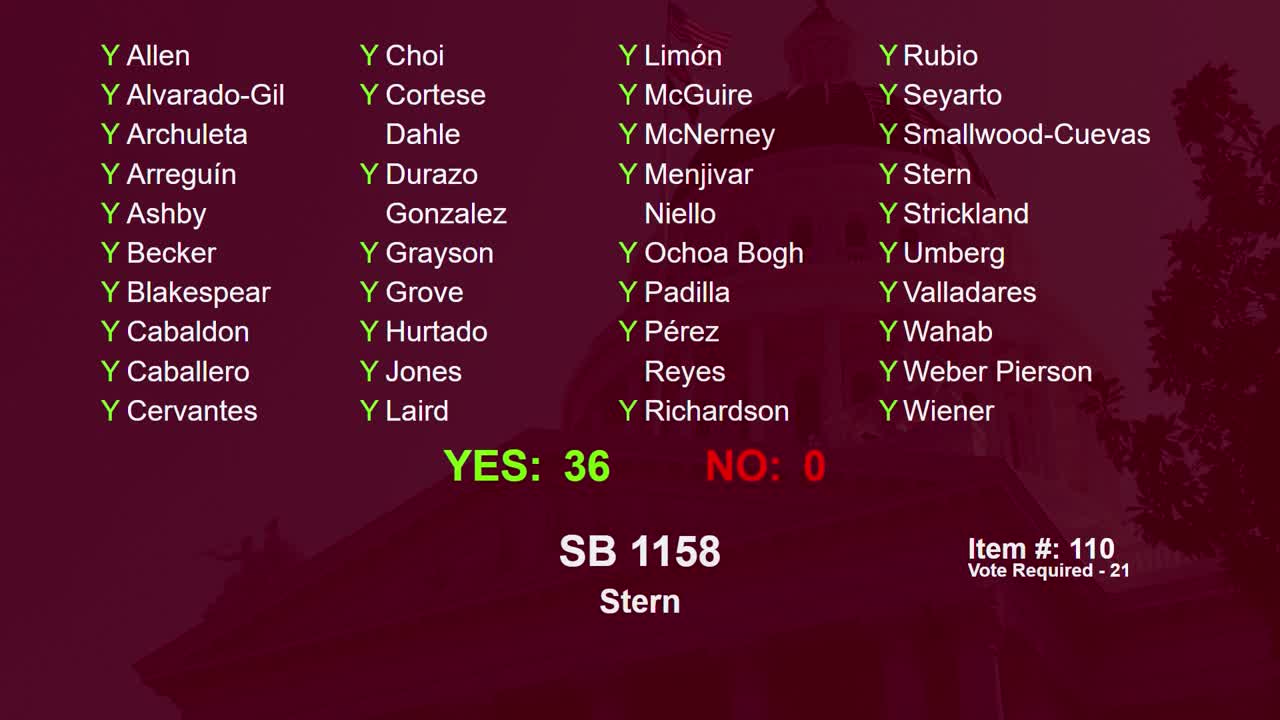 8MIN
Senate Floor
 6MIN
Senate Standing Committee on Judiciary
 14MIN
Senate Standing Committee on Health
Bill Author