SB 948: Firearms: safety certificates.
- Session Year: 2025-2026
- House: Senate
- Latest Version Date: 2026-09-26
Current Status:
Passed
(2026-09-26: Chaptered by Secretary of State. Chapter 465, Statutes of 2026.)
Introduced
In Committee
Awaiting First Chamber Vote
Passed First Chamber
In Committee
Awaiting Second Chamber Vote
Passed Second Chamber
Enacted
Existing law requires any person who purchases or receives a firearm to possess a firearm safety certificate. Existing law also prohibits a person from selling or transferring a firearm to any person who does not possess a firearm safety certificate. A violation of either of these provisions is punishable as a misdemeanor. Existing law requires a personal firearm importer, within 60 days of bringing any firearm into this state, to, among other things, submit a report including information concerning that individual and a description of the firearm in question to the Department of Justice. Existing law requires that a personal firearm importer be found to have complied with these provisions if certain requirements are satisfied.
This bill would extend the above-described time period to within 180 days and would also require, commencing January 1, 2028, that personal firearm importer to certify under penalty of perjury that they have obtained a valid firearm safety certificate, or an exemption to the certificate requirement, as specified, and would make a failure to provide specified information in the report an infraction. The bill would prohibit a person from bringing a firearm into this state without obtaining a valid firearm safety certificate within 180 days, except as specified, and make a violation of this provision an infraction. The bill would remove the requirement that a personal firearm importer be found to have complied with these provisions if certain requirements are satisfied. By creating a new crime, and expanding the crime of perjury, this bill would impose a state-mandated local program.
Existing law requires any costs incurred by the department to implement the above-described provisions regarding personal firearm importers to be absorbed by the department within its existing budget and fees allocated in the Dealers Record of Sale Special Account.
This bill would authorize the appropriation of additional funds for implementation of the above-described provisions if the department determines that sufficient funding is not available to implement these provisions.
Existing law requires an applicant for a firearm safety certificate to pass a test developed by the department covering specified subjects, including, among others, the laws applicable to carrying and handling firearms and the responsibilities of ownership of firearms.
This bill would require an applicant for a firearm safety certificate, on or after January 1, 2029, to complete within the prior year a training course no less than 4 hours in length that, among other things, includes instruction on firearm safety and handling and live-fire shooting exercises on a firing range. The bill would authorize the Department of Justice to promulgate regulations and provide additional information for the implementation of these provisions.
This bill would provide that the provisions of this bill are severable.
The California Constitution requires the state to reimburse local agencies and school districts for certain costs mandated by the state. Statutory provisions establish procedures for making that reimbursement.
This bill would provide that no reimbursement is required by this act for a specified reason.
Existing law requires any person who purchases or receives a firearm to possess a firearm safety certificate. Existing law also prohibits a person from selling or transferring a firearm to any person who does not possess a firearm safety certificate. A violation of either of these provisions is punishable as a misdemeanor. Existing law requires a personal firearm importer, within 60 days of bringing any firearm into this state, to, among other things, submit a report including information concerning that individual and a description of the firearm in question to the Department of Justice. Existing law requires that a personal firearm importer be found to have complied with these provisions if certain requirements are satisfied.
This bill would extend the above-described time period to within 180 days and would also require require, commencing January 1, 2028, that personal firearm importer to obtain a valid firearm safety certificate and include a copy of the valid firearm safety certificate within the report and make a violation of this provision a misdemeanor. certify under penalty of perjury that they have obtained a valid firearm safety certificate, or an exemption to the certificate requirement, as specified, and would make a failure to provide specified information in the report an infraction. The bill would prohibit a person from bringing a firearm into this state without obtaining a valid firearm safety certificate within 180 days, except as specified, and make a violation of this provision an infraction. The bill would remove the requirement that a personal firearm importer be found to have complied with these provisions if certain requirements are satisfied. By creating a new crime, and expanding the crime of perjury, this bill would impose a state-mandated local program.
Existing law requires any costs incurred by the department to implement the above-described provisions regarding personal firearm importers to be absorbed by the department within its existing budget and fees allocated in the Dealers Record of Sale Special Account.
This bill would authorize the appropriation of additional funds for implementation of the above-described provisions if the department determines that sufficient funding is not available to implement these provisions.
Existing law requires an applicant for a firearm safety certificate to pass a test developed by the Department of Justice department covering specified subjects, including, among others, the laws applicable to carrying and handling firearms and the responsibilities of ownership of firearms.
This bill would require an applicant for a firearm safety certificate, on or after July 1, 2028, January 1, 2029, to complete within the prior year a training course no less than 4 hours in length that, among other things, includes instruction on firearm safety and handling and live-fire shooting exercises on a firing range. The bill would authorize the Department of Justice to promulgate regulations and provide additional information for the implementation of these provisions.
This bill would provide that the provisions of this bill are severable.
The California Constitution requires the state to reimburse local agencies and school districts for certain costs mandated by the state. Statutory provisions establish procedures for making that reimbursement.
This bill would provide that no reimbursement is required by this act for a specified reason.
Existing law requires any person who purchases or receives a firearm to possess a firearm safety certificate. Existing law also prohibits a person from selling or transferring a firearm to any person who does not possess a firearm safety certificate. A violation of either of these provisions is punishable as a misdemeanor. Existing law requires a personal firearm importer, within 60 days of bringing any firearm into this state, to, among other things, submit a report including information concerning that individual and a description of the firearm in question to the Department of Justice.
This bill would extend the above-described time period to within 180 days and would also require that personal firearm importer to obtain a valid firearm safety certificate and include a copy of the valid firearm safety certificate within the report and make a violation of this provision a misdemeanor. The bill would prohibit a person from bringing a firearm into this state without obtaining a valid firearm safety certificate within 180 days, except as specified, and make a violation of this provision a misdemeanor. an infraction. By creating a new crime, this bill would impose a state-mandated local program.
Existing law requires an applicant for a firearm safety certificate to pass a test developed by the Department of Justice covering specified subjects, including, among others, the laws applicable to carrying and handling firearms and the responsibilities of ownership of firearms.
This bill would require an applicant for a firearm safety certificate, on or after July 1, 2028, to complete within the prior year a training course no less than 4 hours in length that, among other things, includes instruction on firearm safety and handling and live-fire shooting exercises on a firing range. The bill would authorize the Department of Justice to promulgate regulations and provide additional information for the implementation of these provisions.
The California Constitution requires the state to reimburse local agencies and school districts for certain costs mandated by the state. Statutory provisions establish procedures for making that reimbursement.
This bill would provide that no reimbursement is required by this act for a specified reason.
Existing law requires any person who purchases or receives a firearm to possess a firearm safety certificate. Existing law also prohibits a person from selling or transferring a firearm to any person who does not possess a firearm safety certificate. A violation of either of these provisions is punishable as a misdemeanor. Existing law requires a personal firearm importer, within 60 days of bringing any firearm into this state, to, among other things, submit a report including information concerning that individual and a description of the firearm in question to the Department of Justice.
This bill would extend the above-described time period to within 180 days and would also require that personal firearm importer to obtain a valid firearm safety certificate and include a copy of the valid firearm safety certificate within the report and make a violation of this provision a misdemeanor. The bill would prohibit a person from bringing a firearm into this state without obtaining a valid firearm safety certificate within 60 180 days, except as specified, and make a violation of this provision a misdemeanor. By creating a new crime, this bill would impose a state-mandated local program.
Existing law requires an applicant for a firearm safety certificate to pass a test developed by the Department of Justice covering specified subjects, including, among others, the laws applicable to carrying and handling firearms and the responsibilities of ownership of firearms.
This bill would require an applicant for a firearm safety certificate, on or after July 1, 2028, to complete within the prior year a training course no less than 8 4 hours in length that, among other things, includes instruction on firearm safety and handling and live-fire shooting exercises on a firing range. The bill would authorize the Department of Justice to promulgate regulations and provide additional information for the implementation of these provisions.
The California Constitution requires the state to reimburse local agencies and school districts for certain costs mandated by the state. Statutory provisions establish procedures for making that reimbursement.
This bill would provide that no reimbursement is required by this act for a specified reason.
Existing law requires any person who purchases or receives a firearm to possess a firearm safety certificate. Existing law also prohibits a person from selling or transferring a firearm to any person who does not possess a firearm safety certificate. A violation of either of these provisions is punishable as a misdemeanor. Existing law requires a personal firearm importer, within 60 days of bringing any firearm into this state, to, among other things, submit a report including information concerning that individual and a description of the firearm in question to the Department of Justice.
This bill would also require that personal firearm importer to obtain a valid firearm safety certificate and include a copy of the valid firearm safety certificate within the report. report and make a violation of this provision a misdemeanor. The bill would prohibit a person from bringing a firearm into this state without obtaining a valid firearm safety certificate within 60 days, except as specified. specified, and make a violation of this provision a misdemeanor. By creating a new prohibition, this bill would create a new crime and therefore a new crime, this bill would impose a state-mandated local program.
Existing law requires an applicant for a firearm safety certificate to pass a test developed by the Department of Justice covering specified subjects, including, among others, the laws applicable to carrying and handling firearms and the responsibilities of ownership of firearms.
This bill would require an applicant for a firearm safety certificate, on or after July 1, 2028, to complete a training course no less than 8 hours in length that, among other things, includes instruction on firearm safety and handling and live-fire shooting exercises on a firing range. The bill would authorize the Department of Justice to promulgate regulations and provide additional information for the implementation of this subdivision. these provisions.
The California Constitution requires the state to reimburse local agencies and school districts for certain costs mandated by the state. Statutory provisions establish procedures for making that reimbursement.
This bill would provide that no reimbursement is required by this act for a specified reason.
Existing law requires any person who purchases or receives a firearm to possess a firearm safety certificate. Existing law also prohibits a person from selling or transferring a firearm to any person who does not possess a firearm safety certificate. A violation of either of these provisions is punishable as a misdemeanor. Existing law requires a personal firearm importer, within 60 days of bringing any firearm into this state, to, among other things, submit a report including information concerning that individual and a description of the firearm in question to the Department of Justice.
This bill would also require that personal firearm importer to obtain a valid firearm safety certificate and include a copy of the valid firearm safety certificate within the report. The bill would prohibit a person from bringing a firearm into this state without obtaining a valid firearm safety certificate within 60 days, except as specified. By creating a new prohibition, this bill would create a new crime and therefore impose a state-mandated local program.
Existing law requires an applicant for a firearm safety certificate to pass a test developed by the Department of Justice covering specified subjects, including, among others, the laws applicable to carrying and handling firearms and the responsibilities of ownership of firearms.
This bill would require an applicant for a firearm safety certificate, on or after July 1, 2028, to complete a training course no less than 8 hours in length that, among other things, includes instruction on firearm safety and handling and live-fire shooting exercises on a firing range. The bill would authorize the Department of Justice to promulgate regulations and provide additional information for the implementation of this subdivision.
The California Constitution requires the state to reimburse local agencies and school districts for certain costs mandated by the state. Statutory provisions establish procedures for making that reimbursement.
This bill would provide that no reimbursement is required by this act for a specified reason.
(a)(1)Within 180 days after bringing any firearm into this state, a personal firearm importer, as defined in Section 17000, shall do one of the following:
(A)Submit to the Department of Justice, in a form and manner prescribed by the department, a report including information concerning that individual and a description of the firearm in question. The department may request photographs of the firearm to determine if the firearm is a generally prohibited weapon, assault weapon, or machinegun, or is otherwise prohibited. A person shall not furnish a fictitious name or address, knowingly furnish any incorrect information, or knowingly omit any information required to be provided in this report. Commencing January 1, 2028, a personal firearm importer shall also certify to the department under penalty of perjury that they have obtained a valid firearm safety certificate pursuant to paragraph (3) of subdivision (a) of Section 31615 or that they qualify for an exemption to the firearm safety certificate requirement pursuant to Article 2 (commencing with Section 31610) or Article 3 (commencing with Section 31700) of Chapter 4 of Division 10. The personal firearm importer shall provide their firearm safety certificate number or specify the exemption in the report if an exemption is applicable. The department may require that the individual also include a copy of the firearm safety certificate, or documentation establishing that the individual qualifies for an exemption to this requirement, within the report. Notwithstanding Section 27590, the failure to include a firearm safety certificate number or specify the exemption within the report shall be deemed to be a violation of paragraph (3) of subdivision (a) of Section 31615, and shall be punished pursuant to paragraph (2) of subdivision (b) of Section 31615.
(B)Sell or transfer the firearm in accordance with the provisions of Section 27545 or in accordance with the provisions of an exemption from Section 27545.
(C)Sell or transfer the firearm to a dealer licensed pursuant to Article 1 (commencing with Section 26700) and Article 2 (commencing with Section 26800) of Chapter 2.
(D)Sell or transfer the firearm to a sheriff or police department.
(2)The department shall establish a fee for submission of the form described in subparagraph (A) of paragraph (1) and an additional fee for each additional firearm. This fee shall not exceed the reasonable and actual costs of processing the form submitted pursuant to that paragraph. The department may annually review and adjust this fee to fully fund, but not exceed, these costs.
(3)Upon receipt of the report submitted pursuant to subparagraph (A) of paragraph (1) and the required fee, the department shall examine its records, as well as those records that it is authorized to request from the State Department of State Hospitals pursuant to Section 8104 of the Welfare and Institutions Code, and records available to the department in the National Instant Criminal Background Check System, to determine if the purchaser is prohibited by state or federal law from possessing, receiving, owning, or purchasing a firearm.
(b)(1)The provisions of this section are cumulative and shall not be construed as restricting the application of any other law.
(2)However, an act or omission punishable in different ways by this article and different provisions of the Penal Code shall not be punished under more than one provision.
(c)The department shall conduct a public education and notification program regarding this section to ensure a high degree of publicity of the provisions of this section.
(d)As part of the public education and notification program described in this section, the department shall do all of the following:
(1)Work in conjunction with the Department of Motor Vehicles to ensure that any person who is subject to this section is advised of the provisions of this section, and provided with blank copies of the report described in subparagraph (A) of paragraph (1) of subdivision (a), at the time when that person applies for a California drivers license or registers a motor vehicle in accordance with the Vehicle Code.
(2)Make the reports referred to in subparagraph (A) of paragraph (1) of subdivision (a) available to dealers licensed pursuant to Article 1 (commencing with Section 26700) and Article 2 (commencing with Section 26800) of Chapter 2.
(3)Make the reports referred to in subparagraph (A) of paragraph (1) of subdivision (a) available to law enforcement agencies.
(4)Make persons subject to the provisions of this section aware of all of the following:
(A)The report referred to in subparagraph (A) of paragraph (1) of subdivision (a) may be completed at either a law enforcement agency or the licensed premises of a dealer licensed pursuant to Article 1 (commencing with Section 26700) and Article 2 (commencing with Section 26800) of Chapter 2.
(B)It is advisable to do so for the sake of accuracy and completeness of the report.
(C)Before transporting a firearm to a law enforcement agency to comply with subdivision (a), the person should give notice to the law enforcement agency that the person is doing so.
(D)In any event, the handgun should be transported unloaded and in a locked container and a firearm that is not a handgun should be transported unloaded.
(e)Any costs incurred by the department to implement this section shall be absorbed by the department within its existing budget and the fees in the Dealers Record of Sale Special Account allocated for implementation of subdivisions (c) and (d) of this section pursuant to Section 28235.
(f)Notwithstanding subdivision (e), if the department determines there is insufficient funding for implementation of subdivision (a), as amended by Senate Bill 948 of the 202526 Regular Session, the Legislature may appropriate additional funds for the purpose of implementing subdivision (a).
SEC. 2.Section 28235 of the Penal Code is amended to read:28235.Except as otherwise provided in Section 28233, moneys received by the department pursuant to this article shall be deposited in the Dealers Record of Sale Special Account of the General Fund, which is hereby created, to be available, upon appropriation by the Legislature, for expenditure by the department to offset the costs incurred pursuant to any of the following:
(a)This article.
(b)Section 18910.
(c)Section 27555.
(d)Subdivisions (c) and (d) of Section 27560.
(e)Chapter 4.1 (commencing with Section 28010).
(f)Article 6 (commencing with Section 28450).
(g)Section 31110.
(h)Section 31115.
(i)Section 31640.5.
(j)Subdivision (a) of Section 32020.
(k)Section 32670.
(l)Section 33320.
(m)Section 33700.
SEC. 3.Section 31615 of the Penal Code is amended to read:31615.(a)A person shall not do any of the following:
(1)Purchase or receive any firearm, except an antique firearm, without a valid firearm safety certificate, except that in the case of a handgun, an unexpired handgun safety certificate may be used.
(2)Sell, deliver, loan, or transfer any firearm, except an antique firearm, to any person who does not have a valid firearm safety certificate, except that in the case of a handgun, an unexpired handgun safety certificate may be used.
(3)Bring any firearm, except an antique firearm, into this state without obtaining a valid firearm safety certificate within 180 days of bringing that firearm into this state if the person is required to report the importation of the firearm to the department pursuant to subparagraph (A) of paragraph (1) of subdivision (a) of Section 27560.
(b)(1)Any person who violates paragraph (1) or (2) of subdivision (a) is guilty of a misdemeanor.
(2)Any person who violates paragraph (3) of subdivision (a) is guilty of an infraction.
(c)The provisions of this section are cumulative, and shall not be construed as restricting the application of any other law. However, an act or omission punishable in different ways by different provisions of this code shall not be punished under more than one provision.
(d)Paragraph (3) of subdivision (a) shall not apply to a person if evidence of that violation arises only as the result of the person applying for a firearm safety certificate, or submitting records or other communications to the department to comply with subparagraph (A) of paragraph (1) of subdivision (a) of Section 27560, after the expiration of the 180-day period in paragraph (3) of subdivision (a) of this section.
SEC. 4.Section 31640.5 is added to the Penal Code, to read:31640.5.(a)An applicant for a firearm safety certificate on or after January 1, 2029, shall have completed a training course within the prior year that meets all of the following conditions:
(1)The training shall be no less than four hours in length, including live-fire shooting exercises.
(2)The training shall include instruction on topics that may be covered on the firearm safety certificate test and information provided in the firearm safety certificate study guide published by the Department of Justice pursuant to Sections 31640 and 31641. The instruction shall, at a minimum, ensure trainees understand all of the following:
(A)The responsibilities of firearm ownership and fundamentals of firearm safety.
(B)California laws governing safe firearm storage and the importance of secure storage to prevent unauthorized access and use of firearms.
(C)Safe firearm handling and fundamentals of shooting firearms.
(D)California laws related to the private sale and transfer of firearms, prohibited firearm transfers, and straw purchases.
(E)California laws requiring individuals who become prohibited from possessing firearms to sell, transfer, or store their firearms with a licensed dealer or law enforcement agency, and verify relinquishment compliance.
(F)State laws pertaining to self-defense, use-of-force guidelines, and techniques for conflict resolution.
(G)Laws applicable to carrying and handling firearms and legal methods to transport firearms and secure firearms in vehicles.
(3)The training shall be taught and supervised by instructors certified by the Department of Justice pursuant to regulations developed by the department. Instructors certified by the department to provide the course of training described in Section 26165 shall automatically be deemed to be certified to provide the training required under this section. The department may adopt regulations authorizing additional categories of instructors to provide the training required under this section, and may authorize instructors certified to provide this training to also administer firearm safety certificate tests and issue firearm safety certificates.
(4)The live-fire shooting exercises shall take place on a firing range and shall include a demonstration by the applicant of safe handling of firearms and basic firearm shooting proficiency.
(b)The training course requirement shall not apply to individuals with valid concealed carry weapons (CCW) permits or who have completed a training course for an initial or renewal CCW license pursuant to Section 26165 within the previous three years.
(c)The Department of Justice may promulgate regulations and provide additional information for the implementation of this section.
(d)The Dealers Record of Sale Special Account may be used, upon appropriation by the Legislature, for any costs associated with this sections implementation and ongoing expenses.
SEC. 5.The provisions of this act are severable. If any provision of this act or its application is held invalid, that invalidity shall not affect other provisions or applications that can be given effect without the invalid provision or application.
SEC. 6.No reimbursement is required by this act pursuant to Section 6 of Article XIIIB of the California Constitution because the only costs that may be incurred by a local agency or school district will be incurred because this act creates a new crime or infraction, eliminates a crime or infraction, or changes the penalty for a crime or infraction, within the meaning of Section 17556 of the Government Code, or changes the definition of a crime within the meaning of Section 6 of Article XIIIB of the California Constitution.
(a)(1)Within 180 days after bringing any firearm into this state, a personal firearm importer, as defined in Section 17000, shall do one of the following:
(A)Submit to the Department of Justice, in a form and manner prescribed by the department, a report including information concerning that individual and a description of the firearm in question. The department may request photographs of the firearm to determine if the firearm is a generally prohibited weapon, assault weapon, or machinegun, or is otherwise prohibited. A person shall not furnish a fictitious name or address, knowingly furnish any incorrect information, or knowingly omit any information required to be provided in this report. A personal firearm importer shall obtain a valid firearm safety certificate, pursuant to paragraph (3) of subdivision (a) of Section 31615, and include a copy of the valid firearm safety certificate within the report. Commencing January 1, 2028, a personal firearm importer shall also certify to the department under penalty of perjury that they have obtained a valid firearm safety certificate pursuant to paragraph (3) of subdivision (a) of Section 31615 or that they qualify for an exemption to the firearm safety certificate requirement pursuant to Article 2 (commencing with Section 31610) or Article 3 (commencing with Section 31700) of Chapter 4 of Division 10. The personal firearm importer shall provide their firearm safety certificate number or specify the exemption in the report if an exemption is applicable. The department may require that the individual also include a copy of the firearm safety certificate, or documentation establishing that the individual qualifies for an exemption to this requirement, within the report. Notwithstanding Section 27590, the failure to include a firearm safety certificate number or specify the exemption within the report shall be deemed to be a violation of paragraph (3) of subdivision (a) of Section 31615, and shall be punished under that section. pursuant to paragraph (2) of subdivision (b) of Section 31615.
(B)Sell or transfer the firearm in accordance with the provisions of Section 27545 or in accordance with the provisions of an exemption from Section 27545.
(C)Sell or transfer the firearm to a dealer licensed pursuant to Article 1 (commencing with Section 26700) and Article 2 (commencing with Section 26800) of Chapter 2.
(D)Sell or transfer the firearm to a sheriff or police department.
(2)The department shall establish a fee for submission of the form described in subparagraph (A) of paragraph (1) and an additional fee for each additional firearm. This fee shall not exceed the reasonable and actual costs of processing the form submitted pursuant to that paragraph. The department may annually review and adjust this fee to fully fund, but not exceed, these costs.
(3)Upon receipt of the report submitted pursuant to subparagraph (A) of paragraph (1) and the required fee, the department shall examine its records, as well as those records that it is authorized to request from the State Department of State Hospitals pursuant to Section 8104 of the Welfare and Institutions Code, and records available to the department in the National Instant Criminal Background Check System, to determine if the purchaser is prohibited by state or federal law from possessing, receiving, owning, or purchasing a firearm.
(b)If all of the following requirements are satisfied, the personal firearm importer shall have complied with the provisions of this section:(1)The personal firearm importer sells or transfers the firearm pursuant to Section 27545.(2)The sale or transfer cannot be completed by the dealer to the purchaser or transferee.(3)The firearm can be returned to the personal firearm importer.(c)(b)(1)The provisions of this section are cumulative and shall not be construed as restricting the application of any other law.
(2)However, an act or omission punishable in different ways by this article and different provisions of the Penal Code shall not be punished under more than one provision.
(d)(c)The department shall conduct a public education and notification program regarding this section to ensure a high degree of publicity of the provisions of this section.
(e)(d)As part of the public education and notification program described in this section, the department shall do all of the following:
(1)Work in conjunction with the Department of Motor Vehicles to ensure that any person who is subject to this section is advised of the provisions of this section, and provided with blank copies of the report described in subparagraph (A) of paragraph (1) of subdivision (a), at the time when that person applies for a California drivers license or registers a motor vehicle in accordance with the Vehicle Code.
(2)Make the reports referred to in subparagraph (A) of paragraph (1) of subdivision (a) available to dealers licensed pursuant to Article 1 (commencing with Section 26700) and Article 2 (commencing with Section 26800) of Chapter 2.
(3)Make the reports referred to in subparagraph (A) of paragraph (1) of subdivision (a) available to law enforcement agencies.
(4)Make persons subject to the provisions of this section aware of all of the following:
(A)The report referred to in subparagraph (A) of paragraph (1) of subdivision (a) may be completed at either a law enforcement agency or the licensed premises of a dealer licensed pursuant to Article 1 (commencing with Section 26700) and Article 2 (commencing with Section 26800) of Chapter 2.
(B)It is advisable to do so for the sake of accuracy and completeness of the report.
(C)Before transporting a firearm to a law enforcement agency to comply with subdivision (a), the person should give notice to the law enforcement agency that the person is doing so.
(D)In any event, the handgun should be transported unloaded and in a locked container and a firearm that is not a handgun should be transported unloaded.
(f)(e)Any costs incurred by the department to implement this section shall be absorbed by the department within its existing budget and the fees in the Dealers Record of Sale Special Account allocated for implementation of subdivisions (d) and (e) (c) and (d) of this section pursuant to Section 28235.
(f)Notwithstanding subdivision (e), if the department determines there is insufficient funding for implementation of subdivision (a), as amended by Senate Bill 948 of the 202526 Regular Session, the Legislature may appropriate additional funds for the purpose of implementing subdivision (a).
SEC. 2.Section 28235 of the Penal Code is amended to read:28235.Except as otherwise provided in Section 28233, moneys received by the department pursuant to this article shall be deposited in the Dealers Record of Sale Special Account of the General Fund, which is hereby created, to be available, upon appropriation by the Legislature, for expenditure by the department to offset the costs incurred pursuant to any of the following:
(a)This article.
(b)Section 18910.
(c)Section 27555.
(d)Subdivisions (d) and (e) (c) and (d) of Section 27560.
(e)Chapter 4.1 (commencing with Section 28010).
(f)Article 6 (commencing with Section 28450).
(g)Section 31110.
(h)Section 31115.
(i)Section 31640.5.
(i)(j)Subdivision (a) of Section 32020.
(j)(k)Section 32670.
(k)(l)Section 33320.
(l)(m)Section 33700.
SEC. 2.SEC. 3.Section 31615 of the Penal Code is amended to read:31615.(a)A person shall not do any of the following:
(1)Purchase or receive any firearm, except an antique firearm, without a valid firearm safety certificate, except that in the case of a handgun, an unexpired handgun safety certificate may be used.
(2)Sell, deliver, loan, or transfer any firearm, except an antique firearm, to any person who does not have a valid firearm safety certificate, except that in the case of a handgun, an unexpired handgun safety certificate may be used.
(3)Bring any firearm, except an antique firearm, into this state without obtaining a valid firearm safety certificate within 180 days of bringing that firearm into this state if the person is required to report the importation of the firearm to the department pursuant to subparagraph (A) of paragraph (1) of subdivision (a) of Section 27560.
(b)(1)Any person who violates paragraph (1) or (2) of subdivision (a) is guilty of a misdemeanor.
(2)Any person who violates paragraph (3) of subdivision (a) is guilty of an infraction.
(c)The provisions of this section are cumulative, and shall not be construed as restricting the application of any other law. However, an act or omission punishable in different ways by different provisions of this code shall not be punished under more than one provision.
(d)Paragraph (3) of subdivision (a) shall not apply to a person if evidence of that violation arises only as the result of the person applying for a firearm safety certificate certificate, or submitting records or other communications to the department to comply with subparagraph (A) of paragraph (1) of subdivision (a) of Section 27560, after the expiration of the 180-day period in paragraph (3) of subdivision (a). (a) of this section.
SEC. 3.SEC. 4.Section 31640.5 is added to the Penal Code, to read:31640.5.(a)An applicant for a firearm safety certificate on or after July 1, 2028, January 1, 2029, shall have completed a training course within the prior year that meets all of the following conditions:
(1)The training shall be no less than four hours in length, including at least one hour of live shooting. live-fire shooting exercises.
(2)The training shall include instruction on topics that may be covered on the firearm safety certificate test and information provided in the firearm safety certificate study guide published by the Department of Justice pursuant to Sections 31640 and 31641. The instruction shall, at a minimum, ensure trainees understand all of the following:
(A)Federal and state laws related to possession, transportation, and storage of firearms, including the transfer of a firearm.(A)The responsibilities of firearm ownership and fundamentals of firearm safety.
(B)The California laws governing safe firearm storage and the importance of secure storage to prevent unauthorized access and use of firearms.
(C)Safe firearm handling and fundamentals of shooting firearms.
(D)How to legally and voluntarily surrender or transfer a firearm.(D)California laws related to the private sale and transfer of firearms, prohibited firearm transfers, and straw purchases.
(E)California laws requiring individuals who become prohibited from possessing firearms to sell, transfer, or store their firearms with a licensed dealer or law enforcement agency, and verify relinquishment compliance.
(E)(F)State laws pertaining to self-defense, use-of-force guidelines, and techniques for conflict resolution.
(G)Laws applicable to carrying and handling firearms and legal methods to transport firearms and secure firearms in vehicles.
(3)The training shall be taught and supervised by firearms instructors certified by the Department of Justice pursuant to Section 31635. regulations developed by the department. Instructors certified by the department to provide the course of training described in Section 26165 shall automatically be deemed to be certified to provide the training required under this section. The department may adopt regulations authorizing additional categories of instructors to provide the training required under this section, and may authorize instructors certified to provide this training to also administer firearm safety certificate tests and issue firearm safety certificates.
(4)The live-fire shooting exercises shall take place on a firing range and shall include a demonstration by the applicant of safe handling of firearms and basic firearm shooting proficiency.
(b)The training course requirement shall not apply to individuals with valid concealed carry weapons permits. (CCW) permits or who have completed a training course for an initial or renewal CCW license pursuant to Section 26165 within the previous three years.
(c)The Department of Justice may promulgate regulations and provide additional information for the implementation of this section.
(d)The Dealers Record of Sale Special Account may be used, upon appropriation by the Legislature, for any costs associated with this laws sections implementation and ongoing expenses.
SEC. 5.The provisions of this act are severable. If any provision of this act or its application is held invalid, that invalidity shall not affect other provisions or applications that can be given effect without the invalid provision or application.
SEC. 4.SEC. 6.No reimbursement is required by this act pursuant to Section 6 of Article XIIIB of the California Constitution because the only costs that may be incurred by a local agency or school district will be incurred because this act creates a new crime or infraction, eliminates a crime or infraction, or changes the penalty for a crime or infraction, within the meaning of Section 17556 of the Government Code, or changes the definition of a crime within the meaning of Section 6 of Article XIIIB of the California Constitution.
(a)(1)Within 180 days after bringing any firearm into this state, a personal firearm importer, as defined in Section 17000, shall do one of the following:
(A)Submit to the Department of Justice, in a form and manner prescribed by the department, a report including information concerning that individual and a description of the firearm in question. The department may request photographs of the firearm to determine if the firearm is a generally prohibited weapon, assault weapon, or machinegun, or is otherwise prohibited. A person shall not furnish a fictitious name or address, knowingly furnish any incorrect information, or knowingly omit any information required to be provided in this report. A personal firearm importer shall obtain a valid firearm safety certificate, pursuant to paragraph (3) of subdivision (a) of Section 31615, and include a copy of the valid firearm safety certificate within the report. Notwithstanding Section 27590, the failure to include a firearm safety certificate within the report shall be deemed to be a violation of Section 31615, and shall be punished under that section.
(B)Sell or transfer the firearm in accordance with the provisions of Section 27545 or in accordance with the provisions of an exemption from Section 27545.
(C)Sell or transfer the firearm to a dealer licensed pursuant to Article 1 (commencing with Section 26700) and Article 2 (commencing with Section 26800) of Chapter 2.
(D)Sell or transfer the firearm to a sheriff or police department.
(2)The department shall establish a fee for submission of the form described in subparagraph (A) of paragraph (1) and an additional fee for each additional firearm. This fee shall not exceed the reasonable and actual costs of processing the form submitted pursuant to that paragraph. The department may annually review and adjust this fee to fully fund, but not exceed, these costs.
(3)Upon receipt of the report submitted pursuant to subparagraph (A) of paragraph (1) and the required fee, the department shall examine its records, as well as those records that it is authorized to request from the State Department of State Hospitals pursuant to Section 8104 of the Welfare and Institutions Code, and records available to the department in the National Instant Criminal Background Check System, to determine if the purchaser is prohibited by state or federal law from possessing, receiving, owning, or purchasing a firearm.
(b)If all of the following requirements are satisfied, the personal firearm importer shall have complied with the provisions of this section:
(1)The personal firearm importer sells or transfers the firearm pursuant to Section 27545.
(2)The sale or transfer cannot be completed by the dealer to the purchaser or transferee.
(3)The firearm can be returned to the personal firearm importer.
(c)(1)The provisions of this section are cumulative and shall not be construed as restricting the application of any other law.
(2)However, an act or omission punishable in different ways by this article and different provisions of the Penal Code shall not be punished under more than one provision.
(d)The department shall conduct a public education and notification program regarding this section to ensure a high degree of publicity of the provisions of this section.
(e)As part of the public education and notification program described in this section, the department shall do all of the following:
(1)Work in conjunction with the Department of Motor Vehicles to ensure that any person who is subject to this section is advised of the provisions of this section, and provided with blank copies of the report described in subparagraph (A) of paragraph (1) of subdivision (a), at the time when that person applies for a California drivers license or registers a motor vehicle in accordance with the Vehicle Code.
(2)Make the reports referred to in subparagraph (A) of paragraph (1) of subdivision (a) available to dealers licensed pursuant to Article 1 (commencing with Section 26700) and Article 2 (commencing with Section 26800) of Chapter 2.
(3)Make the reports referred to in subparagraph (A) of paragraph (1) of subdivision (a) available to law enforcement agencies.
(4)Make persons subject to the provisions of this section aware of all of the following:
(A)The report referred to in subparagraph (A) of paragraph (1) of subdivision (a) may be completed at either a law enforcement agency or the licensed premises of a dealer licensed pursuant to Article 1 (commencing with Section 26700) and Article 2 (commencing with Section 26800) of Chapter 2.
(B)It is advisable to do so for the sake of accuracy and completeness of the report.
(C)Before transporting a firearm to a law enforcement agency to comply with subdivision (a), the person should give notice to the law enforcement agency that the person is doing so.
(D)In any event, the handgun should be transported unloaded and in a locked container and a firearm that is not a handgun should be transported unloaded.
(f)Any costs incurred by the department to implement this section shall be absorbed by the department within its existing budget and the fees in the Dealers Record of Sale Special Account allocated for implementation of subdivisions (d) and (e) of this section pursuant to Section 28235.
SEC. 2.Section 31615 of the Penal Code is amended to read:31615.(a)A person shall not do any of the following:
(1)Purchase or receive any firearm, except an antique firearm, without a valid firearm safety certificate, except that in the case of a handgun, an unexpired handgun safety certificate may be used.
(2)Sell, deliver, loan, or transfer any firearm, except an antique firearm, to any person who does not have a valid firearm safety certificate, except that in the case of a handgun, an unexpired handgun safety certificate may be used.
(3)Bring any firearm, except an antique firearm, into this state without obtaining a valid firearm safety certificate within 180 days of bringing that firearm into this state if the person is required to report the importation of the firearm to the department pursuant to subparagraph (A) of paragraph (1) of subdivision (a) of Section 27560.
(b)Any person who violates subdivision (a) is guilty of a misdemeanor.(b)(1)Any person who violates paragraph (1) or (2) of subdivision (a) is guilty of a misdemeanor.
(2)Any person who violates paragraph (3) of subdivision (a) is guilty of an infraction.
(c)The provisions of this section are cumulative, and shall not be construed as restricting the application of any other law. However, an act or omission punishable in different ways by different provisions of this code shall not be punished under more than one provision.
(d)Paragraph (3) of subdivision (a) shall not apply to a person if evidence of that violation arises only as the result of the person applying for a firearm safety certificate after the expiration of the 60-day 180-day period in paragraph (3) of subdivision (a).
SEC. 3.Section 31640.5 is added to the Penal Code, to read:31640.5.(a)An applicant for a firearm safety certificate on or after July 1, 2028, shall have completed a training course within the prior year that meets all of the following conditions:
(1)The training shall be no less than four hours in length, including at least one hour of live shooting.
(2)The training shall include instruction on all of the following:
(A)Federal and state laws related to possession, transportation, and storage of firearms, including the transfer of a firearm.
(B)The importance of secure storage to prevent unauthorized access and use of firearms.
(C)Safe firearm handling and fundamentals of shooting firearms.
(D)How to legally and voluntarily surrender or transfer a firearm.
(E)State laws pertaining to self-defense, use-of-force guidelines, and techniques for conflict resolution.
(3)The training shall be taught and supervised by firearms instructors certified by the Department of Justice pursuant to Section 31635.
(4)The live-fire shooting exercises shall take place on a firing range and shall include a demonstration by the applicant of safe handling of firearms and basic firearm shooting proficiency.
(b)The training course requirement shall not apply to individuals with valid concealed carry weapons permits.
(c)The Department of Justice may promulgate regulations and provide additional information for the implementation of this section.
(d)The Dealers Record of Sale Special Account may be used, upon appropriation by the Legislature, for any costs associated with this laws implementation and ongoing expenses.
SEC. 4.No reimbursement is required by this act pursuant to Section 6 of Article XIIIB of the California Constitution because the only costs that may be incurred by a local agency or school district will be incurred because this act creates a new crime or infraction, eliminates a crime or infraction, or changes the penalty for a crime or infraction, within the meaning of Section 17556 of the Government Code, or changes the definition of a crime within the meaning of Section 6 of Article XIIIB of the California Constitution.
(a)(1)Within 60 180 days after bringing any firearm into this state, a personal firearm importer, as defined in Section 17000, shall do one of the following:
(A)Submit to the Department of Justice, in a form and manner prescribed by the department, a report including information concerning that individual and a description of the firearm in question. The department may request photographs of the firearm to determine if the firearm is a generally prohibited weapon, assault weapon, or machinegun, or is otherwise prohibited. A person shall not furnish a fictitious name or address, knowingly furnish any incorrect information, or knowingly omit any information required to be provided in this report. A personal firearm importer shall obtain a valid firearm safety certificate, pursuant to paragraph (3) of subdivision (a) of Section 31615, and include a copy of the valid firearm safety certificate within the report. Notwithstanding Section 27590, the failure to include a firearm safety certificate within the report shall be deemed to be a violation of Section 31615, and shall be punished under that section.
(B)Sell or transfer the firearm in accordance with the provisions of Section 27545 or in accordance with the provisions of an exemption from Section 27545.
(C)Sell or transfer the firearm to a dealer licensed pursuant to Article 1 (commencing with Section 26700) and Article 2 (commencing with Section 26800) of Chapter 2.
(D)Sell or transfer the firearm to a sheriff or police department.
(2)The department shall establish a fee for submission of the form described in subparagraph (A) of paragraph (1) and an additional fee for each additional firearm. This fee shall not exceed the reasonable and actual costs of processing the form submitted pursuant to that paragraph. The department may annually review and adjust this fee to fully fund, but not exceed, these costs.
(3)Upon receipt of the report submitted pursuant to subparagraph (A) of paragraph (1) and the required fee, the department shall examine its records, as well as those records that it is authorized to request from the State Department of State Hospitals pursuant to Section 8104 of the Welfare and Institutions Code, and records available to the department in the National Instant Criminal Background Check System, to determine if the purchaser is prohibited by state or federal law from possessing, receiving, owning, or purchasing a firearm.
(b)If all of the following requirements are satisfied, the personal firearm importer shall have complied with the provisions of this section:
(1)The personal firearm importer sells or transfers the firearm pursuant to Section 27545.
(2)The sale or transfer cannot be completed by the dealer to the purchaser or transferee.
(3)The firearm can be returned to the personal firearm importer.
(c)(1)The provisions of this section are cumulative and shall not be construed as restricting the application of any other law.
(2)However, an act or omission punishable in different ways by this article and different provisions of the Penal Code shall not be punished under more than one provision.
(d)The department shall conduct a public education and notification program regarding this section to ensure a high degree of publicity of the provisions of this section.
(e)As part of the public education and notification program described in this section, the department shall do all of the following:
(1)Work in conjunction with the Department of Motor Vehicles to ensure that any person who is subject to this section is advised of the provisions of this section, and provided with blank copies of the report described in subparagraph (A) of paragraph (1) of subdivision (a), at the time when that person applies for a California drivers license or registers a motor vehicle in accordance with the Vehicle Code.
(2)Make the reports referred to in subparagraph (A) of paragraph (1) of subdivision (a) available to dealers licensed pursuant to Article 1 (commencing with Section 26700) and Article 2 (commencing with Section 26800) of Chapter 2.
(3)Make the reports referred to in subparagraph (A) of paragraph (1) of subdivision (a) available to law enforcement agencies.
(4)Make persons subject to the provisions of this section aware of all of the following:
(A)The report referred to in subparagraph (A) of paragraph (1) of subdivision (a) may be completed at either a law enforcement agency or the licensed premises of a dealer licensed pursuant to Article 1 (commencing with Section 26700) and Article 2 (commencing with Section 26800) of Chapter 2.
(B)It is advisable to do so for the sake of accuracy and completeness of the report.
(C)Before transporting a firearm to a law enforcement agency to comply with subdivision (a), the person should give notice to the law enforcement agency that the person is doing so.
(D)In any event, the handgun should be transported unloaded and in a locked container and a firearm that is not a handgun should be transported unloaded.
(f)Any costs incurred by the department to implement this section shall be absorbed by the department within its existing budget and the fees in the Dealers Record of Sale Special Account allocated for implementation of subdivisions (d) and (e) of this section pursuant to Section 28235.
SEC. 2.Section 31615 of the Penal Code is amended to read:31615.(a)A person shall not do any of the following:
(1)Purchase or receive any firearm, except an antique firearm, without a valid firearm safety certificate, except that in the case of a handgun, an unexpired handgun safety certificate may be used.
(2)Sell, deliver, loan, or transfer any firearm, except an antique firearm, to any person who does not have a valid firearm safety certificate, except that in the case of a handgun, an unexpired handgun safety certificate may be used.
(3)Bring any firearm, except an antique firearm, into this state without obtaining a valid firearm safety certificate within 60 180 days of bringing that firearm into this state if the person is required to report the importation of the firearm to the department pursuant to subparagraph (A) of paragraph (1) of subdivision (a) of Section 27560.
(b)Any person who violates subdivision (a) is guilty of a misdemeanor.
(c)The provisions of this section are cumulative, and shall not be construed as restricting the application of any other law. However, an act or omission punishable in different ways by different provisions of this code shall not be punished under more than one provision.
(d)Paragraph (3) of subdivision (a) shall not apply to a person if evidence of that violation arises only as the result of the person applying for a firearm safety certificate after the expiration of the 60-day period in paragraph (3) of subdivision (a).
SEC. 3.Section 31640.5 is added to the Penal Code, to read:31640.5.(a)An applicant for a firearm safety certificate on or after July 1, 2028, shall have completed a training course within the prior year that meets all of the following conditions:
(1)The training shall be no less than eight four hours in length, including at least one hour of live shooting.
(2)The training shall include instruction on all of the following:
(A)Federal and state laws related to possession, transportation, and storage of firearms. firearms, including the transfer of a firearm.
(B)The importance of secure storage to prevent unauthorized access and use of firearms.
(C)Safe firearm handling and fundamentals of shooting firearms.
(D)Risks of firearms and causes of accidents.(E)(D)How to legally relinquish and voluntarily surrender or transfer a firearm.
(F)(E)State laws pertaining to self-defense self-defense, use-of-force guidelines, and techniques for conflict resolution.
(G)Mental health, suicide prevention, and domestic violence issues associated with firearms and firearm violence.(3)The training shall be taught and supervised by firearms instructors certified by the Department of Justice pursuant to Section 31635 and in a manner to be prescribed by regulation. 31635.
(4)The live-fire shooting exercises shall take place on a firing range and shall include a demonstration by the applicant of safe handling of firearms and basic firearm shooting proficiency.
(b)The training course requirement shall not apply to individuals with valid concealed carry weapons permits.
(b)(c)The Department of Justice may promulgate regulations and provide additional information for the implementation of this section.
(c)(d)The Dealers Record of Sale Special Account may be used, upon appropriation by the Legislature, for any costs associated with this laws implementation and ongoing expenses.
SEC. 4.No reimbursement is required by this act pursuant to Section 6 of Article XIIIB of the California Constitution because the only costs that may be incurred by a local agency or school district will be incurred because this act creates a new crime or infraction, eliminates a crime or infraction, or changes the penalty for a crime or infraction, within the meaning of Section 17556 of the Government Code, or changes the definition of a crime within the meaning of Section 6 of Article XIIIB of the California Constitution.
(a)(1)Within 60 days after bringing any firearm into this state, a personal firearm importer, as defined in Section 17000, shall do one of the following:
(A)Submit to the Department of Justice, in a form and manner prescribed by the department, a report including information concerning that individual and a description of the firearm in question. The department may request photographs of the firearm to determine if the firearm is a generally prohibited weapon, assault weapon, or machinegun, or is otherwise prohibited. A person shall not furnish a fictitious name or address, knowingly furnish any incorrect information, or knowingly omit any information required to be provided in this report. A personal firearm importer shall obtain a valid firearm safety certificate, pursuant to paragraph (3) of subdivision (a) of Section 31615, and include a copy of the valid firearm safety certificate within the report. Notwithstanding Section 27590, the failure to include a firearm safety certificate within the report shall be deemed to be a violation of Section 31615, and shall be punished under that section.
(B)Sell or transfer the firearm in accordance with the provisions of Section 27545 or in accordance with the provisions of an exemption from Section 27545.
(C)Sell or transfer the firearm to a dealer licensed pursuant to Article 1 (commencing with Section 26700) and Article 2 (commencing with Section 26800) of Chapter 2.
(D)Sell or transfer the firearm to a sheriff or police department.
(2)The department shall establish a fee for submission of the form described in subparagraph (A) of paragraph (1) and an additional fee for each additional firearm. This fee shall not exceed the reasonable and actual costs of processing the form submitted pursuant to that paragraph. The department may annually review and adjust this fee to fully fund, but not exceed, these costs.
(3)Upon receipt of the report submitted pursuant to subparagraph (A) of paragraph (1) and the required fee, the department shall examine its records, as well as those records that it is authorized to request from the State Department of State Hospitals pursuant to Section 8104 of the Welfare and Institutions Code, and records available to the department in the National Instant Criminal Background Check System, to determine if the purchaser is prohibited by state or federal law from possessing, receiving, owning, or purchasing a firearm.
(b)If all of the following requirements are satisfied, the personal firearm importer shall have complied with the provisions of this section:
(1)The personal firearm importer sells or transfers the firearm pursuant to Section 27545.
(2)The sale or transfer cannot be completed by the dealer to the purchaser or transferee.
(3)The firearm can be returned to the personal firearm importer.
(c)(1)The provisions of this section are cumulative and shall not be construed as restricting the application of any other law.
(2)However, an act or omission punishable in different ways by this article and different provisions of the Penal Code shall not be punished under more than one provision.
(d)The department shall conduct a public education and notification program regarding this section to ensure a high degree of publicity of the provisions of this section.
(e)As part of the public education and notification program described in this section, the department shall do all of the following:
(1)Work in conjunction with the Department of Motor Vehicles to ensure that any person who is subject to this section is advised of the provisions of this section, and provided with blank copies of the report described in subparagraph (A) of paragraph (1) of subdivision (a), at the time when that person applies for a California drivers license or registers a motor vehicle in accordance with the Vehicle Code.
(2)Make the reports referred to in subparagraph (A) of paragraph (1) of subdivision (a) available to dealers licensed pursuant to Article 1 (commencing with Section 26700) and Article 2 (commencing with Section 26800) of Chapter 2.
(3)Make the reports referred to in subparagraph (A) of paragraph (1) of subdivision (a) available to law enforcement agencies.
(4)Make persons subject to the provisions of this section aware of all of the following:
(A)The report referred to in subparagraph (A) of paragraph (1) of subdivision (a) may be completed at either a law enforcement agency or the licensed premises of a dealer licensed pursuant to Article 1 (commencing with Section 26700) and Article 2 (commencing with Section 26800) of Chapter 2.
(B)It is advisable to do so for the sake of accuracy and completeness of the report.
(C)Before transporting a firearm to a law enforcement agency to comply with subdivision (a), the person should give notice to the law enforcement agency that the person is doing so.
(D)In any event, the handgun should be transported unloaded and in a locked container and a firearm that is not a handgun should be transported unloaded.
(f)Any costs incurred by the department to implement this section shall be absorbed by the department within its existing budget and the fees in the Dealers Record of Sale Special Account allocated for implementation of subdivisions (d) and (e) of this section pursuant to Section 28235.
SEC. 2.Section 31615 of the Penal Code is amended to read:31615.(a)A person shall not do any of the following:
(1)Purchase or receive any firearm, except an antique firearm, without a valid firearm safety certificate, except that in the case of a handgun, an unexpired handgun safety certificate may be used.
(2)Sell, deliver, loan, or transfer any firearm, except an antique firearm, to any person who does not have a valid firearm safety certificate, except that in the case of a handgun, an unexpired handgun safety certificate may be used.
(3)Bring any firearm, except an antique firearm, into this state without obtaining a valid firearm safety certificate within 60 days of bringing that firearm into this state if the person is required to report the importation of the firearm to the department pursuant to subparagraph (A) of paragraph (1) of subdivision (a) of Section 27560.
(b)(1)Any person who violates paragraph (1) or (2) of subdivision (a) is guilty of a misdemeanor.
(2)Any person who violates paragraph (3) of subdivision (a) shall be punished as a violation of subparagraph (A) of paragraph (1) of subdivision (a) of Section 27560.(c)The provisions of this section are cumulative, and shall not be construed as restricting the application of any other law. However, an act or omission punishable in different ways by different provisions of this code shall not be punished under more than one provision.
(d)Paragraph (3) of subdivision (a) shall not apply to a person if evidence of that violation arises only as the result of the person applying for a firearm safety certificate after the expiration of the 60-day period in paragraph (3) of subdivision (a).
SEC. 3.Section 31640.5 is added to the Penal Code, to read:31640.5.(a)An applicant for a firearm safety certificate on or after July 1, 2028, shall have completed a training course that meets all of the following conditions:
(1)The training shall be no less than eight hours in length, including at least one hour of live shooting.
(2)The training shall include instruction on all of the following:
(A)Federal and state laws related to possession, transportation, and storage of firearms.
(B)The importance of secure storage to prevent unauthorized access and use of firearms.
(C)Safe firearm handling and fundamentals of shooting firearms.
(D)Risks of firearms and causes of accidents.
(E)How to legally relinquish or transfer a firearm.
(F)State laws pertaining to self-defense and techniques for conflict resolution.
(G)Mental health, suicide prevention, and domestic violence issues associated with firearms and firearm violence.
(3)The training shall be taught and supervised by firearms instructors certified by the Department of Justice pursuant to Section 31635 and in a manner to be prescribed by regulation.
(4)The live-fire shooting exercises shall take place on a firing range and shall include a demonstration by the applicant of safe handling of firearms and basic firearm shooting proficiency.
(b)This subdivision does not apply to persons properly identified pursuant to Section 31700.(c)(b)The Department of Justice may promulgate regulations and provide additional information for the implementation of this subdivision. section.
(d)(c)The Dealers Record of Sale Special Account may be used, upon appropriation by the Legislature, for any costs associated with this laws implementation and ongoing expenses.
SEC. 4.No reimbursement is required by this act pursuant to Section 6 of Article XIIIB of the California Constitution because the only costs that may be incurred by a local agency or school district will be incurred because this act creates a new crime or infraction, eliminates a crime or infraction, or changes the penalty for a crime or infraction, within the meaning of Section 17556 of the Government Code, or changes the definition of a crime within the meaning of Section 6 of Article XIIIB of the California Constitution.
(a)(1)Within 60 days after bringing any firearm into this state, a personal firearm importer importer, as defined in Section 17000, shall do one of the following:
(A)Submit to the Department of Justice, in a form and manner prescribed by the department, a report including information concerning that individual and a description of the firearm in question. The department may request photographs of the firearm to determine if the firearm is a generally prohibited weapon, assault weapon, or machinegun, or is otherwise prohibited. A person shall not furnish a fictitious name or address, knowingly furnish any incorrect information, or knowingly omit any information required to be provided in this report. A personal firearm importer shall obtain a valid firearm safety certificate, pursuant to paragraph (3) of subdivision (a) of Section 31615, and include a copy of the valid firearm safety certificate within the report.
(B)Sell or transfer the firearm in accordance with the provisions of Section 27545 or in accordance with the provisions of an exemption from Section 27545.
(C)Sell or transfer the firearm to a dealer licensed pursuant to Article 1 (commencing with Section 26700) and Article 2 (commencing with Section 26800) of Chapter 2.
(D)Sell or transfer the firearm to a sheriff or police department.
(2)The department shall establish a fee for submission of the form described in subparagraph (A) of paragraph (1) and an additional fee for each additional firearm. This fee shall not exceed the reasonable and actual costs of processing the form submitted pursuant to that paragraph. The department may annually review and adjust this fee to fully fund, but not exceed, these costs.
(3)Upon receipt of the report submitted pursuant to subparagraph (A) of paragraph (1) and the required fee, the department shall examine its records, as well as those records that it is authorized to request from the State Department of State Hospitals pursuant to Section 8104 of the Welfare and Institutions Code, and records available to the department in the National Instant Criminal Background Check System, to determine if the purchaser is prohibited by state or federal law from possessing, receiving, owning, or purchasing a firearm.
(b)If all of the following requirements are satisfied, the personal firearm importer shall have complied with the provisions of this section:
(1)The personal firearm importer sells or transfers the firearm pursuant to Section 27545.
(2)The sale or transfer cannot be completed by the dealer to the purchaser or transferee.
(3)The firearm can be returned to the personal firearm importer.
(c)(1)The provisions of this section are cumulative and shall not be construed as restricting the application of any other law.
(2)However, an act or omission punishable in different ways by this article and different provisions of the Penal Code shall not be punished under more than one provision.
(d)The department shall conduct a public education and notification program regarding this section to ensure a high degree of publicity of the provisions of this section.
(e)As part of the public education and notification program described in this section, the department shall do all of the following:
(1)Work in conjunction with the Department of Motor Vehicles to ensure that any person who is subject to this section is advised of the provisions of this section, and provided with blank copies of the report described in subparagraph (A) of paragraph (1) of subdivision (a), at the time when that person applies for a California drivers license or registers a motor vehicle in accordance with the Vehicle Code.
(2)Make the reports referred to in subparagraph (A) of paragraph (1) of subdivision (a) available to dealers licensed pursuant to Article 1 (commencing with Section 26700) and Article 2 (commencing with Section 26800) of Chapter 2.
(3)Make the reports referred to in subparagraph (A) of paragraph (1) of subdivision (a) available to law enforcement agencies.
(4)Make persons subject to the provisions of this section aware of all of the following:
(A)The report referred to in subparagraph (A) of paragraph (1) of subdivision (a) may be completed at either a law enforcement agency or the licensed premises of a dealer licensed pursuant to Article 1 (commencing with Section 26700) and Article 2 (commencing with Section 26800) of Chapter 2.
(B)It is advisable to do so for the sake of accuracy and completeness of the report.
(C)Before transporting a firearm to a law enforcement agency to comply with subdivision (a), the person should give notice to the law enforcement agency that the person is doing so.
(D)In any event, the handgun should be transported unloaded and in a locked container and a firearm that is not a handgun should be transported unloaded.
(f)Any costs incurred by the department to implement this section shall be absorbed by the department within its existing budget and the fees in the Dealers Record of Sale Special Account allocated for implementation of subdivisions (d) and (e) of this section pursuant to Section 28235.
SEC. 2.Section 31615 of the Penal Code is amended to read:31615.(a)A person shall not do either any of the following:
(1)Purchase or receive any firearm, except an antique firearm, without a valid firearm safety certificate, except that in the case of a handgun, an unexpired handgun safety certificate may be used.
(2)Sell, deliver, loan, or transfer any firearm, except an antique firearm, to any person who does not have a valid firearm safety certificate, except that in the case of a handgun, an unexpired handgun safety certificate may be used.
(3)Bring any firearm, except an antique firearm, into this state without obtaining a valid firearm safety certificate within 60 days of bringing that firearm into this state if the person is required to report the importation of the firearm to the department pursuant to subparagraph (A) of paragraph (1) of subdivision (a) of Section 27560.
(b)(1)Any person who violates paragraph (1) or (2) of subdivision (a) is guilty of a misdemeanor.
(2)Any person who violates paragraph (3) of subdivision (a) shall be punished as a violation of subparagraph (A) of paragraph (1) of subdivision (a) of Section 27560.
(c)The provisions of this section are cumulative, and shall not be construed as restricting the application of any other law. However, an act or omission punishable in different ways by different provisions of this code shall not be punished under more than one provision.
(d) This section shall become operative on January 1, 2015.(d)Paragraph (3) of subdivision (a) shall not apply to a person if evidence of that violation arises only as the result of the person applying for a firearm safety certificate after the expiration of the 60-day period in paragraph (3) of subdivision (a).
SEC. 3.Section 31640.5 is added to the Penal Code, to read:31640.5.(a)An applicant for a firearm safety certificate on or after July 1, 2028, shall have completed a training course that meets all of the following conditions:
(1)The training shall be no less than eight hours in length, including at least one hour of live shooting.
(2)The training shall include instruction on all of the following:
(A)Federal and state laws related to possession, transportation, and storage of firearms.
(B)The importance of secure storage to prevent unauthorized access and use of firearms.
(C)Safe firearm handling and fundamentals of shooting firearms.
(D)Risks of firearms and causes of accidents.
(E)How to legally relinquish or transfer a firearm.
(F)State laws pertaining to self-defense and techniques for conflict resolution.
(G)Mental health, suicide prevention, and domestic violence issues associated with firearms and firearm violence.
(3)The training shall be taught and supervised by firearms instructors certified by the Department of Justice pursuant to Section 31635 and in a manner to be prescribed by regulation.
(4)The live-fire shooting exercises shall take place on a firing range and shall include a demonstration by the applicant of safe handling of firearms and basic firearm shooting proficiency.
(b)This subdivision does not apply to persons properly identified pursuant to Section 31700.
(c)The Department of Justice may promulgate regulations and provide additional information for the implementation of this subdivision.
(d)The Dealers Record of Sale Special Account may be used, upon appropriation by the Legislature, for any costs associated with this laws implementation and ongoing expenses.
SEC. 4.No reimbursement is required by this act pursuant to Section 6 of Article XIIIB of the California Constitution because the only costs that may be incurred by a local agency or school district will be incurred because this act creates a new crime or infraction, eliminates a crime or infraction, or changes the penalty for a crime or infraction, within the meaning of Section 17556 of the Government Code, or changes the definition of a crime within the meaning of Section 6 of Article XIIIB of the California Constitution.
|
Date
|
Status
|
|---|---|
| Sep 26, 2026 | Chaptered by Secretary of State. Chapter 465, Statutes of 2026. |
| Sep 26, 2026 | Approved by the Governor. |
| Aug 30, 2026 | Enrolled and presented to the Governor at 6 p.m. |
| Aug 25, 2026 | Assembly amendments concurred in. (Ayes 28. Noes 12. Page 5754.) Ordered to engrossing and enrolling. |
| Aug 25, 2026 | Assembly amendments concurred in. (Ayes 28. Noes 12.) Ordered to engrossing and enrolling. |
| Aug 24, 2026 | In Senate. Concurrence in Assembly amendments pending. |
| Aug 24, 2026 | Read third time. Passed. (Ayes 56. Noes 19. Page 6419.) Ordered to the Senate. |
| Aug 24, 2026 | Read third time. Passed. Ordered to the Senate. |
| Aug 17, 2026 | Read second time. Ordered to third reading. |
| Aug 13, 2026 | Read second time and amended. Ordered to second reading. |
| Aug 13, 2026 | From committee: Do pass as amended. (Ayes 11. Noes 4.) (August 13). |
| Aug 13, 2026 | Assembly Rule 63 suspended. |
| Aug 5, 2026 | August 5 set for first hearing. Placed on suspense file. |
| Jul 2, 2026 | Read second time and amended. Re-referred to Com. on APPR. |
| Jul 1, 2026 | From committee: Do pass as amended and re-refer to Com. on APPR. (Ayes 7. Noes 1.) (June 30). |
| Jun 8, 2026 | Referred to Com. on PUB. S. |
| May 27, 2026 | In Assembly. Read first time. Held at Desk. |
| May 27, 2026 | Read third time. Passed. (Ayes 28. Noes 9. Page 4497.) Ordered to the Assembly. |
| May 27, 2026 | Read third time. Passed. (Ayes 28. Noes 9.) Ordered to the Assembly. |
| May 27, 2026 | Read third time. Passed. (Ayes 27. Noes 9.) Ordered to the Assembly. |
| May 18, 2026 | Read second time. Ordered to third reading. |
| May 14, 2026 | From committee: Do pass as amended. (Ayes 5. Noes 2. Page 4258.) (May 14). |
| May 14, 2026 | Read second time and amended. Ordered to second reading. |
| May 14, 2026 | From committee: Do pass as amended. (Ayes 5. Noes 2.) (May 14). |
| May 8, 2026 | Set for hearing May 14. |
| Apr 13, 2026 | April 13 hearing: Placed on APPR. suspense file. |
| Apr 13, 2026 | Set for hearing April 13. |
| Apr 10, 2026 | Set for hearing April 13. |
| Mar 18, 2026 | Read second time and amended. Re-referred to Com. on APPR. |
| Mar 17, 2026 | From committee: Do pass as amended and re-refer to Com. on APPR. (Ayes 5. Noes 1. Page 3590.) (March 17). |
| Mar 17, 2026 | From committee: Do pass as amended and re-refer to Com. on APPR. (Ayes 5. Noes 1.) (March 17). |
| Mar 3, 2026 | Set for hearing March 17. |
| Feb 11, 2026 | Referred to Com. on PUB. S. |
| Feb 3, 2026 | From printer. May be acted upon on or after March 5. |
| Feb 2, 2026 | Introduced. Read first time. To Com. on RLS. for assignment. To print. |
|
Date
|
Description
|
Location
|
Votes
|
|
|---|---|---|---|---|
| Aug 25, 2026 | Unfinished Business SB948 Arreguín et al. Concurrence | Senate Floor |
Passed |
|
| Aug 24, 2026 | SB 948 Arreguín Senate Third Reading By Pellerin | Assembly Floor |
Passed |
|
| Aug 13, 2026 | Do pass as amended. | Assembly Standing Committee on Appropriations |
Passed |
|
| Jun 30, 2026 | Do pass as amended and be re-referred to the Committee on [Appropriations] | Assembly Standing Committee on Public Safety |
Passed |
|
| May 27, 2026 | Senate 3rd Reading SB948 Arreguín et al. | Senate Floor |
Passed |
|
| May 14, 2026 | Do pass as amended | Senate Standing Committee on Appropriations |
Passed |
|
| Apr 13, 2026 | Placed on suspense file | Senate Standing Committee on Appropriations |
Passed |
|
| Mar 17, 2026 | Do pass as amended, but first amend, and re-refer to the Committee on [Appropriations] | Senate Standing Committee on Public Safety |
Passed |
This list shows positions taken on this bill by organizations on the date displayed, which is linked to the original source.
Positions by individuals are not included.
|
Organization
|
Position
|
Date
|
|---|---|---|
| 1 Private Individuals | ** Against | |
| Brady California | ** Support | |
| California Chapter of the American College of Emergency Physicians | ** Support | |
| California Rifle and Pistol Association | ** Against | |
| California Waterfowl Association | ** Against | |
| City of Alameda | ** Support | |
| congressional sportsmen's foundation | ** Against | |
| Consumer Protection Policy Center/USD School of Law | ** Support | |
| Delta Waterfowl | ** Against | |
| Everytown for Gun Safety Action Fund | ** Support | |
| Giffords | ** Support | |
| GUN OWNERS OF CALIFORNIA, INC. | ** Against | |
| Moms Demand Action for Gun Sense in America | ** Support | |
| National Rifle Association - Institute For Legislative Action | ** Against | |
| National Rifle Association Institute For Legislative Action | ** Against | |
| Safari Club International | ** Against | |
| SCI California Coalition | ** Against | |
| Students Demand Action for Gun Sense in America | ** Support | |
| Team Enough - UC Berkeley Chapter | ** Support |
SENATE RULES COMMITTEE Office of Senate Floor Analyses (916) 651-4171 | SB 948 |
UNFINISHED BUSINESS
Bill No: SB 948
Author: Arreguín (D), et al.
Amended: 8/13/26
Vote: 21
SENATE PUBLIC SAFETY COMMITTEE: 5-1, 3/17/26
AYES: Arreguín, Caballero, Pérez, Reyes, Wiener
NOES: Seyarto
SENATE APPROPRIATIONS COMMITTEE: 5-2, 5/14/26
AYES: Cervantes, Cabaldon, Grayson, Richardson, Wahab
NOES: Seyarto, Dahle
SENATE FLOOR: 28-9, 5/27/26
AYES: Allen, Archuleta, Arreguín, Ashby, Becker, Blakespear, Cabaldon, Caballero, Cervantes, Durazo, Gonzalez, Grayson, Hurtado, Laird, Limón, McGuire, McNerney, Padilla, Pérez, Reyes, Richardson, Rubio, Smallwood-Cuevas, Stern, Umberg, Wahab, Weber Pierson, Wiener
NOES: Alvarado-Gil, Choi, Grove, Jones, Niello, Ochoa Bogh, Seyarto, Strickland, Valladares
NO VOTE RECORDED: Cortese, Dahle, Menjivar
ASSEMBLY FLOOR: Passed, 8/24/26
SUBJECT: Firearms: safety certificates
SOURCE: Brady Campaign
Consumer Protection Policy Center at the University of San Diego School of Law
DIGEST:
This bill requires all applicants for firearm safety certificates (FSCs) to complete a four-hour training course and requires personal firearms importers to certify under penalty of perjury that they have obtained a valid FSC, and send a report to the California Department of Justice (DOJ) that includes a valid FSC.
Assembly Amendments
reduce penalties; require personal firearm importers to complete a self-certification under penalty of perjury that they have obtained an FSC or qualify for an exemption, delays implementation of the training requirement to January 1, 2029 and expands topics that must be covered, creates a funding mechanism, and gives DOJ specified regulatory authority.
ANALYSIS:
Existing law:
- Provides that a well regulated militia, being necessary to the security of a free state, the right of the people to keep and bear arms, shall not be infringed. (U.S. Const., 2nd Amend.)
- Specifies that a felony is a crime that is punishable by death, by imprisonment in the state prison, or, notwithstanding any other law, by imprisonment in a county jail, as specified, and specifies that every other crime or public offense is a misdemeanor except those offenses that are classified as infractions. (Penal (Pen.) Code, § 17, subd. (a).)
- Generally prohibits the sale, lease or transfer of firearms unless the person has been issued a license by the Department of Justice (DOJ) and establishes various exceptions to this prohibition. (Pen. Code, §§ 26500-26625.)
- Provides that a license to sell firearms is subject to forfeiture for any violation of a number of specified prohibitions and requirements, with limited exceptions. (Pen. Code, §§ 26800-26915.)
- Provides that where neither party to a firearms transaction holds a dealer’s license (i.e. a “private party transaction”), the parties shall complete the transaction through a licensed firearms dealer. (Pen. Code, § 27545.)
- Sets forth various exemptions to the requirement that a private party transaction occur through a licensed dealer (Pen. Code, §§ 27850-27970.)
- Defines a “personal firearm importer” as a non-licensed individual who has moved into the State of California, owns a firearm that is legal within the state, and intends to possess that firearm within the state, as specified. (Pen. Code, § 17000.)
- Requires that a personal firearm importer does one of the following within 60 days of bringing a firearm into California:
- Submit a report to DOJ including information concerning that individual and a description of the firearm in question, as specified.
- Sell or transfer the firearm via private party transaction, as specified.
- Sell or transfer the firearm to a licensed dealer, as specified; or,
- Sell or transfer the firearm to a sheriff or police department. (Pen. Code, § 27560, subd. (a).)
- Establishes the intent of the Legislature in enacting specified provisions to require that persons who obtain firearms have a basic familiarity with those firearms, including, but not limited to, the safe handling and storage of those firearms. (Pen. Code, §31610.)
- Requires DOJ to develop firearm safety certificates to be issued by instructors certified by the department to those persons who have complied with specified requirements regarding firearm safety, and which expire 5 years after the date of issuance. (Pen. Code, §31655, subds. (a), (c).)
- Prohibits a licensed firearm dealer from delivering a firearm unless the person receiving the firearm presents to the dealer a valid firearm safety certificate. Requires the firearm dealer to retain a photocopy of the firearm safety certificate as proof of compliance. (Pen. Code, § 26840, subd. (a).)
- Prohibits a person from purchasing or receiving any firearm, except an antique firearm, without a valid firearm safety certificate, except that in the case of a handgun, an unexpired handgun safety certificate may be used. (Pen. Code, § 31615, subd. (a).)
- Prohibits a person from selling, delivering, loaning, or transferring any firearm, except an antique firearm, to any person who does not have a valid firearm safety certificate, except that in the case of a handgun, an unexpired handgun safety certificate may be used. (Pen. Code, § 31615, subd. (a).)
- Provides that a person who violates the above prohibition is guilty of a misdemeanor. (Pen. Code, § 31615, subd. (b).)
- Provides that a DOJ-certified instructor shall not issue a firearm safety certificate to any person who has not complied with specified safety requirements or who is under 18, a violation of which is grounds for the revocation of the instructor’s certification. (Pen. Code, § 31625.)
- Requires DOJ to develop a firearm safety certificate instruction manual in various languages, as specified. (Pen. Code, § 31630.)
- Requires the DOJ to certify firearm safety certificate instructors and prescribe a minimum level of skill, knowledge and competency for all such instructors, as specified. (Pen. Code, § 31635.)
- Requires the DOJ to develop a written objective test in various languages, passage of which is a prerequisite to obtaining a firearm safety certificate, and to develop a study guide for that test. (Pen. Code, §§ 31640, 31641, 31645.)
- Contains various exemptions to the firearm safety certificate requirement, including for active and retired peace officers, licensed firearm dealers, federally licensed collectors, concealed carry permit holders, hunting license holders, and specified individuals who receive a firearm via operation of law. (Pen. Code § 31700.)
This bill:
- Requires a personal firearm importer, i.e., person moving into the State of California, to do the following within 180 days:
- Submit to DOJ a report with details about the person, residence, and firearm(s).
- Obtain a valid firearm safety certificate (FSC) and include a copy of the valid FSC within the report to DOJ.
- Certify under penalty of perjury an FSC has been obtained, including submitting the FSC certificate number. If the person qualifies for an exemption, as defined, they must specify the exemption in the report. DOJ may require that the individual also include a copy of the firearm safety certificate, or documentation establishing that the individual qualifies for an exemption to this requirement, within the report.
- Punishes with an infraction, the failure to include an FSC within the report submitted to DOJ, as specified.
- Punishes with an infraction a person bringing any firearm, except an antique firearm, into California without obtaining a valid FSC within 180 days of bringing that firearm into this state if the person is required to report the importation of the firearm to DOJ.
- Removes the provision of existing law that establishes that a personal firearm importer has demonstrated compliance with the law if the firearm was sold or transferred, the firearm transaction cannot be completed by the dealer, and the firearm can be returned to the personal firearm importer.
- Authorizes appropriations by the Legislature for implementing defined sections of the bill if DOJ determines there is insufficient funding for implementation.
- States that a personal firearms importer shall not be subject to defined penalties if evidence of violations arise only from submitting records or other communications to DOJ to comply with the law.
- Requires every applicant for an FSC to complete a 4-hour training course, beginning January 1, 2029, which shall cover topics topics that may be covered on the firearm safety certificate test and information provided in the firearm safety certificate study guide published by DOJ, as specified. The instruction shall, at a minimum, ensure trainees understand all of the following:
- The responsibilities of firearm ownership and fundamentals of firearm safety.
- California laws governing safe firearm storage and importance of secure storage to prevent unauthorized access and use of firearms.
- Safe firearm handling and fundamentals of shooting firearms.
- California laws relating to private sales and transfers of a firearm, prohibited person transfers and relinquishment requirements, and straw purchases.
- State laws pertaining to self-defense, use-of-force guidelines, and techniques for conflict resolution.
- Laws pertaining to carrying and handling firearms and lawful transfer of firearms in vehicles.
- States that FSC training shall be taught and supervised by firearms instructors certified by the DOJ, and as defined.
- Establishes that the live-fire shooting exercises shall take place on a firing range and shall include a demonstration by the applicant of safe handling of firearms and basic firearm shooting proficiency.
- States that the training course requirement shall not apply to individuals with valid concealed carry weapons permits or who have completed a training course for an initial or renewal CCW license, as defined, within the previous three years.
- Provides that the DOJ may promulgate regulations and provide additional information for the implementation of this section.
- Authorizes the Dealers′ Record of Sale Special Account to be used, upon appropriation by the Legislature, for any costs associated with this law′s implementation and ongoing expenses.
- Includes severability clause.
FISCAL EFFECT: Appropriation: No Fiscal Com.: Yes Local: Yes
According to the Assembly Appropriations Committee:
According to the Assembly Appropriations Committee, ″Costs of up to $400,000 (General Fund) to DOJ associated with the training requirement, including instructor program standards, curriculum specifications, and course completion verification, and for modifications to the systems used to process firearms applications and new resident reports. DOJ identifies one limited-term analyst beginning January 1, 2027 to promulgate regulations, one permanent analyst beginning July 1, 2028 to process instructor applications and support the certificate system, overtime for existing staff, limited consultation by two deputy attorneys general, and limited-term consultant resources within the California Justice Information Services Division. According to DOJ, the department cannot absorb these costs within existing budgeted resources. While DOJ′s firearms-related workload is typically supported by the Dealers′ Record of Sale (DROS) Special Account, DOJ states that current DROS revenues are insufficient to absorb the costs of this bill, and a General Fund appropriation would be required. Ongoing administrative costs of an unknown amount, likely minor, would also accrue to DOJ to verify firearm safety certificates submitted with personal firearm importer reports.
SUPPORT: (Verified 8/24/26)
Brady California (co-source)
Consumer Protection Policy Center/USD School of Law (co-source)
California Chapter of the American College of Emergency Physicians
City of Alameda
Everytown for Gun Safety Action Fund
Giffords
Moms Demand Action for Gun Sense in America
Students Demand Action for Gun Sense in America
Team Enough - UC Berkeley Chapter
OPPOSITION: (Verified 8/24/26)
California Rifle and Pistol Association
California Waterfowl Association
Congressional Sportsmen's Foundation
Delta Waterfowl
Gun Owners of California, INC.
National Rifle Association - Institute for Legislative Action
Safari Club International
Prepared by: Alex Barnett / PUB. S. /916-651-4118
8/24/26 16:34:35
**** END ****
SENATE THIRD READING
STR Bill Id:SB 948
Author:(Arreguín)
As Amended Ver:August 13, 2026
Majority vote
SUMMARY
Requires applicants for firearm safety certificates (FSCs) to complete a four-hour training course and personal firearms importers, certify under penalty of perjury that they have obtained a valid FSC, and send a report to the California Department of Justice (DOJ) that includes a valid FSC.
Major Provisions
- Requires a personal firearm importer, i.e., person moving into the State of California, to do the following within 180 days:
- Submit to DOJ a report with details about the person, residence, and firearm(s).
- Obtain a valid firearm safety certificate (FSC) and include a copy of the valid FSC within the report to DOJ.
- Certify under penalty of perjury an FSC has been obtained, including submitting the FSC certificate number. If the person qualifies for an exemption, as defined, they must specify the exemption in the report. DOJ may require that the individual also include a copy of the firearm safety certificate, or documentation establishing that the individual qualifies for an exemption to this requirement, within the report.
- Punishes with an infraction, the failure to include an FSC within the report submitted to DOJ, as specified.
- Punishes with an infraction a person bringing any firearm, except an antique firearm, into California without obtaining a valid FSC within 180 days of bringing that firearm into this state if the person is required to report the importation of the firearm to DOJ.
- Removes provision that establishes a personal firearm importer has demonstrated compliance with the law if the firearm was sold or transferred, the firearm transaction cannot be completed by the dealer, and the firearm can be returned to the personal firearm importer.
- Authorizes appropriations by the Legislature for implementing defined sections of the bill if DOJ determines there is insufficient funding for implementation.
- States that a personal firearms importer shall not be subject to defined penalties if evidence of violations arise only from submitting records or other communications to DOJ to comply with the law.
- Requires every applicant for an FSC to complete a 4-hour training course, beginning January 1, 2029, which shall cover topics topics that may be covered on the firearm safety certificate test and information provided in the firearm safety certificate study guide published by DOJ, as specified. The instruction shall, at a minimum, ensure trainees understand all of the following:
- The responsibilities of firearm ownership and fundamentals of firearm safety.
- California laws governing safe firearm storage and importance of secure storage to prevent unauthorized access and use of firearms.
- Safe firearm handling and fundamentals of shooting firearms.
- California laws relating to private sales and transfers of a firearm, prohibited person transfers and relinquishment requirements, and straw purchases.
- State laws pertaining to self-defense, use-of-force guidelines, and techniques for conflict resolution.
- Laws pertaining to carrying and handling firearms and lawful transfer of firearms in vehicles.
- States that FSC training shall be taught and supervised by firearms instructors certified by the DOJ, and as defined.
- Establishes that the live-fire shooting exercises shall take place on a firing range and shall include a demonstration by the applicant of safe handling of firearms and basic firearm shooting proficiency.
- States that the training course requirement shall not apply to individuals with valid concealed carry weapons permits or who have completed a training course for an initial or renewal CCW license, as defined, within the previous three years.
- Provides that the DOJ may promulgate regulations and provide additional information for the implementation of this section.
- Authorizes the Dealers′ Record of Sale Special Account to be used, upon appropriation by the Legislature, for any costs associated with this law′s implementation and ongoing expenses.
- Includes severability clause.
COMMENTS
According to the Author
″Although California has enacted some of the strongest gun safety laws in the nation, currently state law does not require those that import guns into California to secure a Firearm Safety Certificate. Additionally, new gun purchasers are not required to complete education courses or training in safe firearm handling, including live-fire instruction. SB 948 address this gap by requiring comprehensive and meaningful training for anyone seeking to obtain a Firearm Safety Certificate. By strengthening the education and training component tied to the certificate, this measure ensures that individuals who choose to own firearms have demonstrated both a clear understanding of applicable laws and the practical skills necessary to handle a firearm safely.″
Arguments in Support
According to the bill′s sponsor, the Brady United Against Gun Violence, ″California has the most comprehensive system of regulating firearms purchases and possession, yet currently does not require either training or education to obtain a firearms safety certificate. It is common sense that those who are purchasing a firearm should be properly trained on how to use, handle, and store firearms and should participate in live-fire training. However, a study from 2015 found that nearly 40% of all gun owners never received any training.
″Firearm training is crucial not only as an effective means to prevent accidental shootings, it also equips gun purchasers to actually protect themselves in the way they envision. Referring to self-defense situations, a study noted that ″the quality and frequency of training to maintain acquired skills is predictive of how someone with a firearm will react in a stressful situation and whether they can successfully defend themselves.″ For example, a police spokesman and a law enforcement firearms trainer told the study′s authors ″when your adrenaline is pumping and your heart is beating faster, you′re not going to shoot the same way you do at the range — not without a lot of training.″ Another study participant, an NRA member and firearms instructor likewise told the authors that, ″in a life-or-death encounter, a gun is only as good as its user′s training.″ The study author′s thus concluded that ″citizens who seek to carry a firearm, open or concealed, should be a person of sound character and have a minimum skill with the use of a firearm in a stressful situation of self-defense.″ The study accordingly suggested that civilian gun owners should undertake a combination of classroom, live fire, and judgment shooting. The authors also noted that these reasonable training requirements pale in comparison to what states regularly demand of would-be drivers in driver′s training or would-be business owners who want to cut hair or paint nails.
″The responsibilities inherent in carrying a firearm attach from the moment a person takes possession of the firearm, which makes coupling firearm purchasing with training sound policy. Indeed, several other states already require training for gun purchase or possession including Oregon, New Jersey, Delaware, Hawaii, Massachusetts and Maryland. It is time for California to do the same.
″This bill builds on current Department of Justice requirements to ensure that, on after July 1, 2028, gun purchasers have robust and meaningful training. The one-day training would include instruction on firearm safety and handling and live-fire shooting exercises on a firing range. Additionally, this bill will require individuals who establish residency in California and bring a firearm from outside the state to obtain a firearm safety certificate.″
Arguments in Opposition
According to the California Rifle and Pistol Association, ″Even with the recent amendments extending the personal firearm importer reporting period from 60 to 180 days and reducing the mandated training from eight to four hours, SB 948 remains an unnecessary, burdensome, and constitutionally flawed expansion of government control over law-abiding firearm owners. The bill continues to transform the simple Firearm Safety Certificate (FSC) written test into a de facto licensing regime with mandatory in-person training requirements.
″Key Problems with the Amended Bill:
″New Mandatory In-Person Training Requirement (Effective July 1, 2028)
″FSC applicants must complete a state-mandated four-hour training course within the prior year, including classroom instruction on specified topics and at least one hour of live-fire shooting exercises on a firing range. The course must be taught by DOJ-certified instructors. While CRPA has long supported voluntary firearms safety training through our own programs, we oppose government-mandated live-fire training as a prerequisite for exercising Second Amendment rights.
″Personal Firearm Importer Restrictions
″The bill requires individuals bringing firearms into California (including new residents) to obtain a valid FSC within 180 days and submit it with their DOJ report. This imposes immediate compliance burdens on law-abiding citizens who already lawfully own firearms under the standards of their prior state.
″Significant Ongoing Concerns:
″Capacity and Access Barriers: California′s shooting ranges and certified instructors lack the capacity to handle the anticipated surge in demand for mandatory live-fire sessions. Rural and underserved areas will face severe shortages, long wait times, and denials of access to a constitutional right.
″Financial Burden: The bill imposes no cost caps on training fees, range time, or travel. This will disproportionately harm low-income families, seniors, first-time buyers, and residents in remote areas.
″Lack of Public Safety Benefit: California′s existing FSC test already covers core safety and legal topics. There is no credible evidence that adding mandatory live-fire training will reduce accidents or crime. The bill targets compliant owners rather than prohibited persons or enforcement of current laws.
″Constitutional Issues: Under the U.S. Supreme Court′s Bruen decision, firearm regulations must be consistent with this nation′s historical tradition. Mandatory government-approved training and live-fire proficiency as a condition of ownership or importation lacks historical analogue and impermissibly burdens the core Second Amendment right.
″Exemptions and Inequities: The bill exempts valid concealed carry permit holders from the new training but continues to impose barriers on other responsible citizens who have demonstrated competence through prior ownership and training elsewhere.
″CRPA urges the Assembly Public Safety Committee to reject SB 948 in its entirety. Public safety is better served by enforcing existing laws against prohibited persons, prosecuting violent criminals, and supporting voluntary education programs — not by adding more restrictions that burden law-abiding firearm owners.″
FISCAL COMMENTS
According to the Assembly Appropriations Committee, ″Costs of up to $400,000 (General Fund) to DOJ associated with the training requirement, including instructor program standards, curriculum specifications, and course completion verification, and for modifications to the systems used to process firearms applications and new resident reports. DOJ identifies one limited-term analyst beginning January 1, 2027 to promulgate regulations, one permanent analyst beginning July 1, 2028 to process instructor applications and support the certificate system, overtime for existing staff, limited consultation by two deputy attorneys general, and limited-term consultant resources within the California Justice Information Services Division. According to DOJ, the department cannot absorb these costs within existing budgeted resources. While DOJ′s firearms-related workload is typically supported by the Dealers′ Record of Sale (DROS) Special Account, DOJ states that current DROS revenues are insufficient to absorb the costs of this bill, and a General Fund appropriation would be required. Ongoing administrative costs of an unknown amount, likely minor, would also accrue to DOJ to verify firearm safety certificates submitted with personal firearm importer reports.″
VOTES
SENATE FLOOR: 28-9-3
YES: Allen, Archuleta, Arreguín, Ashby, Becker, Blakespear, Cabaldon, Caballero, Cervantes, Durazo, Gonzalez, Grayson, Hurtado, Laird, Limón, McGuire, McNerney, Padilla, Pérez, Reyes, Richardson, Rubio, Smallwood-Cuevas, Stern, Umberg, Wahab, Weber Pierson, Wiener
NO: Alvarado-Gil, Choi, Grove, Jones, Niello, Ochoa Bogh, Seyarto, Strickland, Valladares
ABS, ABST OR NV: Cortese, Dahle, Menjivar
ASM PUBLIC SAFETY: 7-1-1
YES: Schultz, Mark González, Haney, Harabedian, Nguyen, Ramos, Sharp-Collins
NO: Lackey
ABS, ABST OR NV: Alanis
ASM APPROPRIATIONS: 11-4-0
YES: Wicks, Arambula, Calderon, Caloza, Fong, Mark González, Krell, Pacheco, Pellerin, Sharp-Collins, Solache
NO: Hoover, Dixon, Ta, Tangipa
UPDATED
VERSION: August 13, 2026
CONSULTANT: Dustin Weber / PUB. S. / (916) 319-3744 FN: 0003597
Date of Hearing: August 5, 2026
ASSEMBLY COMMITTEE ON APPROPRIATIONS
Buffy Wicks, Chair
SBPCA Bill Id:SB 948
Author:(Arreguín) – As Amended Ver:July 2, 2026
Policy Committee: | Public Safety | Vote: | 7 - 1 |
|
| ||
|
|
Urgency: No State Mandated Local Program: Yes Reimbursable: No
SUMMARY:
This bill requires every applicant for a firearm safety certificate (FSC), on or after July 1, 2028, to complete a four-hour training course that includes at least one hour of live-fire instruction, and requires a personal firearm importer to obtain a valid FSC and include a copy with the report the importer must already file with the Department of Justice (DOJ).
Specifically, this bill:
- Requires a personal firearm importer to obtain a valid FSC within 180 days of bringing a firearm into the state, extended from 60 days under the version heard in Senate Appropriations, and to include a copy of the certificate in the report filed with DOJ under Penal Code section 27560.
- Makes it an infraction to bring a firearm, other than an antique firearm, into the state without obtaining a valid FSC within 180 days, where the person is required to report the importation to DOJ.
- Provides that the prohibition does not apply where evidence of the violation arises only from the person applying for an FSC after the 180-day period has run.
- Requires an FSC applicant, on or after July 1, 2028, to have completed within the prior year a training course of no fewer than four hours, including at least one hour of live shooting, taught and supervised by DOJ-certified instructors, covering firearm law, secure storage, safe handling and shooting fundamentals, lawful surrender or transfer, and self-defense and use-of-force law.
- Requires the live-fire component to occur on a firing range and to include a demonstration of safe handling and basic shooting proficiency.
- Exempts individuals holding a valid concealed carry weapons (CCW) license from the training requirement.
- Authorizes DOJ to adopt regulations implementing the training requirement.
- Authorizes the Dealers’ Record of Sale Special Account (DROS Account) to be used, upon appropriation by the Legislature, for costs associated with implementation and ongoing expenses of the training requirement.
FISCAL EFFECT:
Costs of up to $400,000 (General Fund) to DOJ associated with the training requirement, including instructor program standards, curriculum specifications, and course completion verification, and for modifications to the systems used to process firearms applications and new resident reports. DOJ identifies one limited-term analyst beginning January 1, 2027 to promulgate regulations, one permanent analyst beginning July 1, 2028 to process instructor applications and support the certificate system, overtime for existing staff, limited consultation by two deputy attorneys general, and limited-term consultant resources within the California Justice Information Services Division. According to DOJ, the department cannot absorb these costs within existing budgeted resources. While DOJ’s firearms-related workload is typically supported by the Dealers’ Record of Sale (DROS) Special Account, DOJ states that current DROS revenues are insufficient to absorb the costs of this bill, and a General Fund appropriation would be required. Ongoing administrative costs of an unknown amount, likely minor, would also accrue to DOJ to verify firearm safety certificates submitted with personal firearm importer reports.
COMMENTS:
- Purpose. According to the author, California requires no training or education to obtain an FSC, and does not require people who bring firearms into the state to obtain one at all. This bill is intended to close both gaps by tying meaningful instruction, including live fire, to the certificate, and by applying the certificate requirement to new residents.
- Background. An FSC is currently obtained by scoring 75% or better on a 25-question multiple-choice test given by a DOJ-certified instructor. The certificate lasts five years and is required to purchase, receive, or borrow a firearm. Separately, existing law requires a person moving into California with a firearm to file a report with DOJ describing the person and the firearm, and allows DOJ to charge a fee covering the actual cost of processing that report. This bill leaves the certificate’s function unchanged and replaces the test with a four-hour course. It also adds the certificate to the report new residents already file, so the reporting system itself is in place; the added work is verifying certificates and processing certificate applications from people who previously had no reason to seek one. The Assembly Public Safety Committee raises potential Second Amendment concerns, citing the Supreme Court’s recent Bruen decision. To the extent this measure is challenged, defense costs would be borne by the Department of Justice.
- Support and Opposition. The bill is supported by Brady, Everytown for Gun Safety Action Fund, Giffords, Moms Demand Action, and the California Chapter of the American College of Emergency Physicians, among others. It is opposed by the California Rifle and Pistol Association, the National Rifle Association Institute for Legislative Action, Gun Owners of California, California Waterfowl Association, and other sporting organizations, which argue the training mandate imposes uncapped costs on applicants, lacks a historical analogue under Bruen, and burdens compliant owners rather than prohibited persons.
- Related Legislation. SB 1220 (Hurtado), of the 2025-26 Legislative Session, adds specified conduct involving unserialized firearms to the 10-year firearms prohibition. The bill is pending in this committee.
- Prior Legislation. SB 1253 (Gonzales), of the 2023-24 Legislative Session, prohibited bringing a firearm into the state as a personal firearm importer without obtaining an FSC within 120 days. The bill was held on this committee’s suspense file.
SB 241 (Min), Chapter 250, Statutes of 2023, required firearms dealer licensees and employees who handle firearms to complete annual training and required DOJ to develop a training course with a testing component.
Analysis Prepared by: Shiran Zohar / APPR. / (916) 319-2081
Date of Hearing: June 30, 2026
Counsel: Dustin Weber
ASSEMBLY COMMITTEE ON PUBLIC SAFETY
Nick Schultz, Chair
SBPCA Bill Id:SB 948
Author:(Arreguín) – As Amended Ver:May 14, 2026
As Proposed to be Amended in Committee
SUMMARY: Requires applicants for firearm safety certificates (FSCs) to complete a four-hour training course and personal firearms importers to send a report to the California Department of Justice (DOJ) that includes a valid FSC. Specifically, this bill:
- Requires a personal firearm importer, i.e., person moving into the State of California, to do the following within 180 days:
- Submit to DOJ a report with details about the person, residence, and firearm(s).
- Obtain a valid firearm safety certificate (FSC) and include a copy of the valid FSC within the report to DOJ.
- Punishes with an infraction, the failure to include an FSC within the report submitted to DOJ.
- Punishes with an infraction a person bringing any firearm, except an antique firearm, into California without obtaining a valid FSC within 180 days of bringing that firearm into this state if the person is required to report the importation of the firearm to DOJ.
- Requires every applicant for an FSC to complete a 4-hour training course that shall include the following:
- Federal and state laws related to possession, transportation, and storage of firearms, including the transfer of a firearm.
- The importance of secure storage to prevent unauthorized access and use of firearms.
- Safe firearm handling and fundamentals of shooting firearms.
- How to legally and voluntarily surrender or transfer a firearm.
- State laws pertaining to self-defense, use-of-force guidelines, and techniques for conflict resolution.
- The training shall be taught and supervised by firearms instructors certified by the DOJ, as defined.
- The live-fire shooting exercises shall take place on a firing range and shall include a demonstration by the applicant of safe handling of firearms and basic firearm shooting proficiency.
- States that the training course requirement shall not apply to individuals with valid concealed carry weapons permits.
- Provides that the DOJ may promulgate regulations and provide additional information for the implementation of this section.
- Authorizes the Dealers’ Record of Sale Special Account to be used, upon appropriation by the Legislature, for any costs associated with this law’s implementation and ongoing expenses.
EXISTING LAW:
- Provides that the right of the people to keep and bear arms shall not be infringed. (U.S. Const., 2nd Amend.)
- Requires a personal firearms importer to submit to the DOJ a report including information concerning that individual and a description of the firearm in question. (Pen. Code, § 27560, subd. (a)(1)(A).)
- Authorizes DOJ to request photographs of the firearm to determine if the firearm is a generally prohibited weapon, assault weapon, or machinegun, or is otherwise prohibited. (Pen. Code, § 27560, subd. (a)(1)(A).)
- Prohibits a person from furnishing a fictitious name or address, knowingly furnish any incorrect information, or knowingly omit any information required to be provided in this report. (Pen. Code, § 27560, subd. (a)(1)(A).)
- Requires DOJ to establish a fee for submission of the personal firearms importer form and an additional fee for each additional firearm, but prohibits the fee from exceeding the reasonable and actual costs of processing the form. (Pen. Code, § 27560, subd. (a)(2).)
- States that it is a misdemeanor if a person purchases or receives any firearm, except an antique firearm, without a valid FSC, except that in the case of a handgun, an unexpired handgun safety certificate may be used. (Pen. Code, § 31615, subds. (a)(1) & (b).)
- States that it is misdemeanor if a person sells, delivers, loans, or transfers any firearm, except an antique firearm, to any person who does not have a valid firearm safety certificate, except that in the case of a handgun, an unexpired handgun safety certificate may be used. (Pen. Code, § 31615, subds. (a)(2) & (b).)
FISCAL EFFECT: Unknown
COMMENTS:
- Sponsor: Brady United Against Gun Violence
- Author's Statement: According to the author, “Although California has enacted some of the strongest gun safety laws in the nation, currently state law does not require those that import guns into California to secure a Firearm Safety Certificate. Additionally, new gun purchasers are not required to complete education courses or training in safe firearm handling, including live-fire instruction. SB 948 address this gap by requiring comprehensive and meaningful training for anyone seeking to obtain a Firearm Safety Certificate. By strengthening the education and training component tied to the certificate, this measure ensures that individuals who choose to own firearms have demonstrated both a clear understanding of applicable laws and the practical skills necessary to handle a firearm safely.”
- Effect of the Bill: SB 948, as proposed to be amended in committee, would make it an infraction for 1) a person who fails to send a report with a valid FSC to DOJ upon moving into California and for 2) a person who brings any firearm, except an antique firearm, into this state without obtaining a valid firearm safety certificate within 180 days of bringing that firearm into this state. The bill also includes a safe harbor provision, as proposed to be amended, that does not authorize penalty if the evidence of that penalty only arises out of compliance with the law. It is unclear whether 180 days is sufficient, constitutionally or practically, for a new resident to manage the move, possibly start a new job, and to secure an FSC, inclusive of this bill’s new requirements.
- Firearm Safety Certificates (FSC) vs. Concealed Carry Weapons (CCW) Permits: This bill would require new residents to report bringing their firearms with them to California DOJ with a copy of their FSC. This bill would also significantly expand the training requirements needed to acquire an FSC.
FSC’s are required for many actions a person undertakes as part of firearm ownership in California. This includes, among other acts, purchase, transport, and loans.[1] The current requirement to obtain an FSC in California involves scoring 75% or greater on a 25-question multiple choice exam issued by a DOJ-certified instructor.[2] This bill would expand that requirement to four hours of in person instruction, with numerous defined areas of instruction, and one hour of live fire shooting. The defined areas of instruction under this bill are: federal and state laws related to possession, transportation, and storage of firearms; the importance of secure storage to prevent unauthorized access and use of firearms; safe firearm handling and fundamentals of shooting firearms; risks of firearms and causes of accidents; how to legally relinquish or transfer a firearm; state laws pertaining to self-defense and techniques for conflict resolution; and mental health, suicide prevention, and domestic violence issues associated with firearms and firearm violence.
An FSC is valid for five years from the date of issuance.[3] The stated intent of the California Legislature in enacting the current FSC law is for persons who obtain firearms to have a basic familiarity with those firearms, including, but not limited to, the safe handling and storage of those firearms.[4] A firearms dealer cannot deliver a firearm unless the person receiving the firearm presents a valid FSC.[5] Prior to taking delivery of a firearm from a licensed firearms dealer, the purchaser/recipient must also successfully perform a safe handling demonstration with that firearm.[6] Even though these training requirements should help firearms owners better understand the law, whether a four-hour course, which is designed in statute to include things like an understanding of firearms case law, self-defense laws, and use-of-force guidelines, advances the intent of California’s FSC requirement that firearms owners have a basic familiarity with firearms.
Compare this bill’s requirements to our state’s requirements to acquire a concealed carry weapons permit, which generally allows licensees to publicly carry a loaded firearm in non-prohibited places. To get a CCW license, which is valid for two years, new license applicants must complete a training course that meets all of the following minimum criteria: the course shall be no less than 16 hours in length, the course shall include instruction on firearm safety, firearm handling, shooting technique, safe storage, legal methods to transport firearms and securing firearms in vehicles, laws governing where permit holders may carry firearms, laws regarding the permissible use of a firearm, and laws regarding the permissible use of lethal force in self-defense. (Pen. Code, § 26165.) The course shall also include a component, no less than one hour in length, on mental health and mental health resources, shall be taught and supervised by firearms instructors certified by the DOJ, shall require students to pass a written examination to demonstrate their understanding of the covered topics; and the course shall include live-fire shooting exercises on a firing range and shall include a demonstration by the applicant of safe handling of, and shooting proficiency with, each firearm that the applicant is applying to be licensed to carry. (Pen. Code, § 26165, subd. (a)(1)-(6).) CCW renewal applicants, however, must complete only an eight-hour course, inclusive of most of the new licensee criteria. (Pen. Code, § 26165, subd. (e).)
The training required to acquire an FSC under this bill would include comparable training requirements as those for a CCW renewal. Licensing regimes are broadly constitutional, but the Court has warned against regimes that are too onerous or not designed to accomplish valid objectives. Imagine a law that establishes a requirement that any social media user be required to go through hours of training to learn about various laws relating to the First Amendment, social media, and mental health before being permitted to use a social media platform. It is difficult to imagine such a law surviving constitutional scrutiny. While speech and firearms exist in significantly different contexts and can create concerns unique to those contexts, there are very real physical and mental safety risks associated with use of both social media platforms and firearms.[7] The more onerous California law makes exercise of Second Amendment rights, the greater the likelihood that our laws will run afoul of the Court’s admonitions that the Second Amendment is not a second-class right and that licensing regimes put towards abusive ends could be constitutionally dubious. (New York State Rifle & Pistol Association, Inc. v. Bruen (2022) 597 U.S. 1.)
- Practical Concerns: SB 948 raises certain practical concerns that may need to be addressed. California law currently requires an FSC to receive a firearm. (Pen. Code, § 31615, subd. (a).) Violators are subject to a misdemeanor penalty. (Id., at subd. (b).) SB 948 would require a live-fire demonstration in its requirements to obtain an FSC. It is unclear how a person would go about completing the live-fire demonstration to acquire an FSC without receiving a firearm. This may be clearer in regulation or practice, however, it may need clarity in statute, too.
While the amended SB 948 does reduce the penalty for violators to an infraction, some of the goals of the bill may be more likely to be accomplished through additional educational and assistive resources. For example, if someone inherited a firearm from a deceased relative who knows nothing about this law and that person decided to relocate while managing the affairs of that deceased relative, during this hectic time in a person’s life registering a report with DOJ is unlikely to be anywhere near their immediate set of priorities. Another example is a new resident to California who may be moving here for other reasons, like serving as a primary caregiver for an ailing family member or relocating for a significant new job opportunity. During these times, a newly arriving resident is understandably not going to be focused on obtaining an FSC and reporting their firearm(s) to DOJ.
- Constitutional Concerns: SB 948 raises numerous constitutional concerns, including those involving the Second Amendment and Article IV of the United States Constitution.
- The Second Amendment
To evaluate whether a law comports with the Second Amendment, the threshold consideration is determining whether the law infringes on plain text Second Amendment conduct. (New York State Rifle & Pistol Association, Inc. v. Bruen (2022) 597 U.S. 1, 17.) This is a low threshold to clear and generally will be cleared when a law purports to regulate a person’s conduct with firearms. Assuming the threshold step is cleared, to survive constitutional scrutiny the government must demonstrate the law is “consistent with the nation’s historical tradition of firearms regulation.” (Id. at p. 24.) A firearms regulation is constitutional if the government establishes the proposed law is “relevantly similar” to historical laws, regulations, and traditions. (Id. at p. 29.) This means showing that historical laws comparably regulated for comparable reasons, i.e., how the laws regulated conduct and why the laws were established. (Ibid.) The appropriate analysis involves evaluating whether the law is consistent with the principles that underpin the Nation’s regulatory tradition. (United States v. Rahimi (2024) 602 U.S. 680, 692.)
Complicating the Second Amendment analysis is new US Supreme Court precedent that held unconstitutional the Gun Control Act’s (GCAs) categorical prohibition on firearms for unlawful users of drugs. (U.S. v. Hemani (June 18, 2026, No. 24-1234) 608 U.S.___ [2026 U.S. LEXIS 2559].) While the Court’s holding is narrow and the issue in Hemani is not squarely relevant to this bill, the Court’s application of Bruen and Rahimi in this case could indirectly impact SB 948 and other firearms laws. (Hemani, supra [finding the GCAs blanket firearms prohibition for “unlawful users of drugs” unconstitutional because the historical laws were not relevantly similar, i.e., “. . . the governments analogy fails under every measure it asks us to consider: The historical laws on which it relies targeted different kinds of people, did so for different reasons, and operated in different ways.”].) The Court’s skepticism of categorical bans in the context of the GCA leaves unclear whether future Second Amendment challenges, in any context, will similarly require more particularized or individualized applications of firearms laws or greater scrutiny of blanket bans. (See ibid.)
Further complicating Second Amendment analysis is yet another new decision by the Court this month holding that Hawaii’s law prohibiting licensed concealed-carry permit holders from carrying handguns on private property open to the public without the property owner’s express authorization violates the Second and Fourteenth Amendments. (Wolford v. Lopez (June 25, 2026, No. 24-106) ___U.S.___.) The Court somewhat supplemented the traditional Bruen analysis in Wolford with subsidiary questions courts have addressed in previous cases and must answer in addition to evaluating the challenged law under the Bruen test. (Ibid.) Those questions include 1) does the law apply to “the people”—which is to say, to “all members of the political community?” 2) Does the law concern any form of “arms,” i.e., any weapon customarily used for offensive or defensive purposes? 3) does the law place any restrictions on either the “keeping” (i.e., possession) or the “bearing” (i.e., carrying) of arms? (Ibid.) This third subsidiary question is really the threshold step in the Bruen analysis.
The Court noted at the threshold step of the Bruen analysis that if a challenged law falls within the plain text of the Second Amendment, it is presumptively unconstitutional, which means that it may violate the preexisting right that the Amendment codified. (Ibid.) At this step, the Court appears to suggest historical analysis is not required, but instead simply a plain textual analysis. (Ibid. [historical authorities cited by the State of Hawaii at the threshold step are out of place at this step of Bruen because “the question is simply whether a challenged law falls within the Second Amendment’s ‘plain text.’”].) “A party defending against a Second Amendment claim may rely on a single analogue or a group of analogues.” (Ibid.) It is unclear whether the Court’s statement here indicates that a single historical analogue is sufficient to justify the constitutionality of a firearms law.
While Hemani and Wolford offer answers to specific controversies over federal and state statutes in the context of the Second Amendment right to keep and bear arms, the Bruen test remained intact as the constitutional method of analyzing firearms laws. As it pertains to SB 948, a plain text reading of the Second Amendment’s right to keep and bear arms will cover most conduct involving individuals who want to possess a firearm. This means SB 948 must be evaluated under the historical tradition test mandated in Bruen and reaffirmed in Hemani and Wolford. So, in the context of SB 948, we must evaluate whether there is a historical tradition, at least in principle, of relevantly similar firearms laws that regulate 1) a licensing/certification scheme regulating firearms ownership, i.e, keeping arms, and 2) a regulatory/licensing scheme aimed at firearms owners who are new residents to a state.
While Bruen found an insufficient historical tradition regulating arms-bearing conduct, arms-keeping conduct may have a greater tradition from which to work. In the roughly 300 years during the 1600s through the early 1900s, licensing laws were enacted in almost every state in the union, including the District of Columbia.[8] “At least 89 licensing requirement laws were enacted in at least 34 states for individuals as a pre-requisite to carrying or owning weapons; 18 states enacted such laws in the 1800s and 29 did so in the 1900s (some states enacted laws in multiple centuries).”[9]
Approximately 27 states enacted laws regulating discharge of firearms through licensing between the 1700s and 1900.[10] Hunting licensing laws were enacted in at least 12 states during this time.[11] 21 states required a license for the commercial sale, transport, or firing of weapons during roughly the same period of time.[12] A minimum of 22 states required a license for the possession, handling, or transport of gunpowder.[13] “Laws in at least 17 states required those selling or otherwise providing weapons to individuals to record and keep information pertaining to the buyers of weapons in the late 1800s and early 1900s.”[14]
Historic licensing laws for ownership were significant because they relatively frequently regulated for similar reasons and in similar ways.[15] “In short, weapons licensing was a ubiquitous regulatory tool from the country’s beginnings that then spread widely in the nineteenth century.” Historical support could very well be constitutionally sufficient to justify SB 948’s new FSC requirements.
Answering whether there is a historical tradition of regulating firearms conduct for new residents to a state is more difficult. As an initial matter, interstate travel is a fundamental right protected pursuant to numerous constitutional provisions. (Saenz v. Roe (1999) 526 U.S. 489, 501–02.) This complicates the Second Amendment analysis both because of the intersection with other constitutional provisions and attempting to ascertain what, if any, hierarchical treatment is needed for evaluating the historical tradition of a fundamental right (to keep arms) in conjunction with another fundamental right (the right to interstate travel, including the right to become a new resident of a state). Identifying and evaluating these rights independently is a simpler task than evaluating them together. Due to the ambiguity with this second question and other difficulties, it is unclear whether SB 948 will encounter fatal constitutional scrutiny.
- Article IV – Privileges and Immunities[16]
The US Constitution states that, “the Citizens of each State shall be entitled to all Privileges and Immunities of Citizens in the several States.” (U.S. Const., art. IV, §, cl. 2.) This clause is meant “to place the citizens of each State upon the same footing with citizens of other States.” (United Bldg. & Constr. Trades Council v. Camden (1984) 465 U.S. 208, 215-216.) The purpose behind this clause, like that relating to full faith and credit, is to help forge one nation among a collection of independent, sovereign states. (Id. at p. 216.) To this end, the Privileges and Immunities Clause prohibits certain types of discrimination between in-state and out-of-state residents.
Discrimination only implicates this clause, however, when it relates to a right or activity that is “sufficiently fundamental.” (Baldwin v. Montana Fish and Game Commission (1978) 436 U. S. 371, 383.) “Only with respect to those ‘privileges’ and ‘immunities’ bearing upon the vitality of the Nation as a single entity must the State treat all citizens, resident and nonresident, equally.” (Ibid.) Application of the Privileges and Immunities Clause to an instance of discrimination against out-of-state residents involves a two-step inquiry. (Supreme Ct. of N.H. v. Piper (1985) 470 U.S. 274, 280.) First, the state must demonstrate that the law has a substantial reason for the difference in treatment. (Ibid.) Second, the discrimination made in the law must bear a substantial relationship to the law’s objective. (Ibid.) Included in the Clause’s protections are laws that have the “practical effect” of discriminating between in-state and out-of-state residents. (Hillside Dairy Inc. v. Lyons (2003) 539 U.S. 59, 67.) The lack of an express statement in the laws and regulations identifying out of-state residency as a basis for disparate treatment is not a sufficient basis for rejecting a claim under the Privileges and Immunities Clause. (Ibid.) Every inquiry under the Privileges and Immunities Clause “must . . . be conducted with due regard for the principle that the States should have considerable leeway in analyzing local evils and in prescribing appropriate cures.” (Camden, supra, at pp. 222-23.)
SB 948 could face scrutiny under the Privileges and Immunities Clause because the requirement that new residents, or personal firearm importers, send a report to DOJ with a valid FSC shortly after moving into California is not required of current residents. Existing law already requires newly arriving residents to send a report to DOJ with specific information (Pen. Code, § 27560), but SB 948 would mandate a valid FSC be included with the report and failure to do so punishable with an infraction. So, this bill would not only create a distinction between existing and new residents but only subject those new residents to a criminal penalty. Because the FSC requirement applies to all firearms owners in California, the law arguably does not discriminate between current and new residents. Though it is not entirely clear that the distinction SB 948 would create is the type of disparate treatment proscribed by Article IV, it is nevertheless worth evaluating the law under the two-step test used by courts.
There is a sound argument that a substantial reason exists for the difference in treatment between existing and new residents as it applies to SB 948’s updated reporting requirement. As an initial matter, it is difficult to envision another mechanism by which California could capture the type of data from new residents who own firearms that it captures through the Dealer Record of Sale (DROS) process for current residents. Two reasons for collecting this data is rooted in protecting public safety and reducing unsafe conduct involving firearms, which can contribute to the maintenance and protection of public safety. Because public safety is almost certainly a valid, substantial state interest, it is likely this reason is sufficient to justify the disparate treatment. Whether the discrimination in the law bears a substantial relationship to the law’s objective may be a more difficult question. Due to the practical application of the DROS process, however, it may be argued that DROS and the new personal firearm importer requirements are functionally the same and thus, the discrimination is not a matter of intent but one of limited alternatives. Given these issues, it is ultimately difficult to ascertain how SB 948 would be evaluated under this second step of the Privileges and Immunities Clause analysis or whether an Article IV concern exists at all.
Certain complications remain, however, even with sound arguments supporting the bill in the face of Article IV’s restrictions. One right protected by the Privileges and Immunities Clause is the right to interstate travel. (Saenz, supra.) While generally this right has been protected in the context of durational residency requirements to qualify for certain benefits, an argument could be made that SB 948 burdens the right to interstate travel because California’s labyrinthine firearms laws make incompatible the ability to exercise a fundamental right during relocation. Another Article IV right acknowledged, at least in part by the Court, is the right to acquire and own property. (Oyama v. California (1948) 332 U.S. 633.) Ultimately, the right to keep and bear arms is not an obvious fundamental right for Article IV purposes, i.e, bearing upon the vitality of the nation as a whole, but we know from McDonald it is a fundamental right for purposes of the Fourteenth Amendment’s Due Process Clause (McDonald, supra.) A different legal theory may need to be advanced instead of the Second Amendment right for an Article IV challenge to make sense, like the right of interstate travel or the right to retain property. Thus, Article IV is unlikely to be a common source of authority under which SB 948 would face challenge or terminal scrutiny.
- Committee Amendments: Amendments taken in committee include changing the misdemeanor penalty to an infraction for 1) failing to submit a valid FSC and 2) personal firearm importers who bring any firearm, except an antique firearm, into California without obtaining a valid firearm safety certificate within 180 days of bringing that firearm into California if the person is required to report the importation of the firearm.
- Argument in Support: According to the bill’s sponsor, the Brady United Against Gun Violence, “California has the most comprehensive system of regulating firearms purchases and possession, yet currently does not require either training or education to obtain a firearms safety certificate. It is common sense that those who are purchasing a firearm should be properly trained on how to use, handle, and store firearms and should participate in live-fire training. However, a study from 2015 found that nearly 40% of all gun owners never received any training.
“Firearm training is crucial not only as an effective means to prevent accidental shootings, it also equips gun purchasers to actually protect themselves in the way they envision. Referring to self-defense situations, a study noted that “the quality and frequency of training to maintain acquired skills is predictive of how someone with a firearm will react in a stressful situation and whether they can successfully defend themselves.” For example, a police spokesman and a law enforcement firearms trainer told the study’s authors “when your adrenaline is pumping and your heart is beating faster, you're not going to shoot the same way you do at the range — not without a lot of training." Another study participant, an NRA member and firearms instructor likewise told the authors that, “in a life-or-death encounter, a gun is only as good as its user’s training.” The study author’s thus concluded that “citizens who seek to carry a firearm, open or concealed, should be a person of sound character and have a minimum skill with the use of a firearm in a stressful situation of self-defense.” The study accordingly suggested that civilian gun owners should undertake a combination of classroom, live fire, and judgment shooting. The authors also noted that these reasonable training requirements pale in comparison to what states regularly demand of would-be drivers in driver’s training or would-be business owners who want to cut hair or paint nails.
“The responsibilities inherent in carrying a firearm attach from the moment a person takes possession of the firearm, which makes coupling firearm purchasing with training sound policy. Indeed, several other states already require training for gun purchase or possession including Oregon, New Jersey, Delaware, Hawaii, Massachusetts and Maryland. It is time for California to do the same.
“This bill builds on current Department of Justice requirements to ensure that, on after July 1, 2028, gun purchasers have robust and meaningful training. The one-day training would include instruction on firearm safety and handling and live-fire shooting exercises on a firing range. Additionally, this bill will require individuals who establish residency in California and bring a firearm from outside the state to obtain a firearm safety certificate.”
- Argument in Opposition: According to the California Rifle and Pistol Association, “Even with the recent amendments extending the personal firearm importer reporting period from 60 to 180 days and reducing the mandated training from eight to four hours, SB 948 remains an unnecessary, burdensome, and constitutionally flawed expansion of government control over law-abiding firearm owners. The bill continues to transform the simple Firearm Safety Certificate (FSC) written test into a de facto licensing regime with mandatory in-person training requirements.
“Key Problems with the Amended Bill:
“New Mandatory In-Person Training Requirement (Effective July 1, 2028)
“FSC applicants must complete a state-mandated four-hour training course within the prior year, including classroom instruction on specified topics and at least one hour of live-fire shooting exercises on a firing range. The course must be taught by DOJ-certified instructors. While CRPA has long supported voluntary firearms safety training through our own programs, we oppose government-mandated live-fire training as a prerequisite for exercising Second Amendment rights.
“Personal Firearm Importer Restrictions
“The bill requires individuals bringing firearms into California (including new residents) to obtain a valid FSC within 180 days and submit it with their DOJ report. This imposes immediate compliance burdens on law-abiding citizens who already lawfully own firearms under the standards of their prior state.
“Significant Ongoing Concerns:
“Capacity and Access Barriers: California’s shooting ranges and certified instructors lack the capacity to handle the anticipated surge in demand for mandatory live-fire sessions. Rural and underserved areas will face severe shortages, long wait times, and denials of access to a constitutional right.
“Financial Burden: The bill imposes no cost caps on training fees, range time, or travel. This will disproportionately harm low-income families, seniors, first-time buyers, and residents in remote areas.
“Lack of Public Safety Benefit: California’s existing FSC test already covers core safety and legal topics. There is no credible evidence that adding mandatory live-fire training will reduce accidents or crime. The bill targets compliant owners rather than prohibited persons or enforcement of current laws.
“Constitutional Issues: Under the U.S. Supreme Court’s Bruen decision, firearm regulations must be consistent with this nation’s historical tradition. Mandatory government-approved training and live-fire proficiency as a condition of ownership or importation lacks historical analogue and impermissibly burdens the core Second Amendment right.
“Exemptions and Inequities: The bill exempts valid concealed carry permit holders from the new training but continues to impose barriers on other responsible citizens who have demonstrated competence through prior ownership and training elsewhere.
“CRPA urges the Assembly Public Safety Committee to reject SB 948 in its entirety. Public safety is better served by enforcing existing laws against prohibited persons, prosecuting violent criminals, and supporting voluntary education programs — not by adding more restrictions that burden law-abiding firearm owners.”
- Related Legislation:
- SB 1220 (Hurtado) would add to the 10-year firearms prohibition list a person who engaged in prohibited conduct with an unserialized firearm and subject violators to a misdemeanor. SB 1220 is pending hearing in the Assembly Appropriations Committee.
- AB 1810 (Berman) would place new requirements on firearms dealers in California and subject those dealers with the highest percentage of sales to increased inspections, where the firearm is found as part of criminal activity. AB 1810 is pending hearing in the Senate Public Safety Committee.
- AB 1948 (Ramos) would extend the concealed carry licensure duration from two years to three years. AB 1948 has been ordered to engrossing and enrolling in the Assembly.
- AB 2047 (Bauer-Kahan) would prohibit various conduct with firearms manufacture software as applied to three-dimensional printers and create a misdemeanor for the prohibited conduct. AB 2047 is pending hearing in the Senate Judiciary Committee.
- Prior Legislation:
- SB 1002 (Blakespear), Chapter 526, Statutes of 2024, expands prohibitions for the ownership, possession, custody, or control of ammunition. Requires a person subject to the prohibition, because they are a danger to themselves or others as a result of a mental health disorder, to relinquish a firearm, other deadly weapon, or ammunition they own, possess, or control within 72 hours of discharge from a facility.
- SB 241 (Min), Chapter 250, Statutes of 2023, requires a licensee and any employees that handle firearms to annually complete specified training. This law requires the DOJ, on or before February 1, 2026, to develop and implement a training course, as specified, including a testing certification component.
- AB 355 (Alanis), Chapter 235, Statutes of 2023, exempts from the assault weapons loan prohibition the loaning of an assault weapon to, or the possession of an assault weapon by, a person enrolled in the course of basic training prescribed by the Commission on Peace Officer Standards and Training, while engaged in firearms training and being supervised by a firearms instructor.
- AB 1420 (Berman), Chapter 245, Statutes of 2023, authorizes the DOJ to conduct inspections and assess a fine for any violation of provisions relating to regulation of specified licenses and for violations of specified provisions regulating the sale of secondhand firearms.
- SB 1253 (Gonzales), of the 2023-2024 Legislative Session, would have prohibited bringing any firearm, except an antique firearm, into this state as a personal firearm importer, as defined, without obtaining a valid firearm safety certificate within 120 days of bringing that firearm into this state.
REGISTERED SUPPORT / OPPOSITION:
Support
Brady California (Co-Sponsor)
Brady United Against Gun Violence (Co-Sponsor)
Consumer Protection Policy Center/USD School of Law (Co-Sponsor)
Brady Campaign
California Chapter of the American College of Emergency Physicians
Everytown for Gun Safety Action Fund
Giffords
Moms Demand Action for Gun Sense in America
Students Demand Action for Gun Sense in America
Team Enough - UC Berkeley Chapter
Opposition
California Rifle and Pistol Association, INC.
California Waterfowl Association
Congressional Sportsmen's Foundation
Delta Waterfowl
Gun Owners of California, INC.
National Rifle Association - Institute for Legislative Action
Sci California Coalition
1 Private Individuals
Analysis Prepared by: Dustin Weber / PUB. S. / (916) 319-3744
Firearm Safety Certificate Program Frequently Asked Questions, California Department of Justice < https://oag.ca.gov/firearms/fscfaqs> [as of June 24, 2026]. ↑
Firearms Safety Certificate Study Guide, California Department of Justice (June 2020) <https://oag.ca.gov/sites/all/files/agweb/pdfs/firearms/forms/hscsg.pdf > [as of June 24, 2026]. ↑
Ibid. ↑
Firearm Safety Certificate Manual for Firearms Dealers and DOJ Certified Instructors, California Department of Justice (June 2020) < https://oag.ca.gov/sites/all/files/agweb/pdfs/firearms/forms/hscman.pdf > [as of June 24, 2026]. ↑
Ibid. ↑
Ibid. ↑
Chatterjee, Screen addiction and suicidal behaviors are linked for teens, a study shows (June 18, 2025) National Public Radio <https://www.npr.org/sections/shots-health-news/2025/06/18/nx-s1-5436951/jama-screens-teens-addiction-suicide-abcd> [as of June 26, 2026]. ↑
Spitzer, Historic Weapons Licensing Laws (June 4, 2025) Duke Center for Firearms Law <https://firearmslaw.duke.edu/2025/06/historic-weapons-licensing-laws> [as of June 25, 2026]. ↑
Ibid. ↑
Ibid. ↑
Ibid. ↑
Ibid. ↑
Ibid. ↑
Ibid. ↑
It is important to note that although there is some overlap between Article IV’s Privileges and Immunities Clause and the Fourteenth Amendment’s Privileges or Immunities Clause, these constitutional provisions are doctrinally distinct. The author does not intend to analyze the bill under the Privileges or Immunities Clause, though some case law invokes both clauses. ↑
948SENATE RULES COMMITTEE Office of Senate Floor Analyses (916) 651-4171 | SB 948 |
THIRD READING
Bill No: SB 948
Author: Arreguín (D), et al.
Amended: 5/14/26
Vote: 21
SENATE PUBLIC SAFETY COMMITTEE: 5-1, 3/17/26
AYES: Arreguín, Caballero, Pérez, Reyes, Wiener
NOES: Seyarto
SENATE APPROPRIATIONS COMMITTEE: 5-2, 5/14/26
AYES: Cervantes, Cabaldon, Grayson, Richardson, Wahab
NOES: Seyarto, Dahle
SUBJECT: Firearms: safety certificates
SOURCE: Brady Campaign
Consumer Protection Policy Center at the University of San Diego School of Law
DIGEST:
This bill 1) requires personal firearm importers to obtain a firearm safety certificate within 180 days of moving to California; and 2) requires all firearm safety certificate applicants, commencing July 1, 2028, to complete a firearm training course that includes instruction on firearm safety and live-fire shooting exercises.
ANALYSIS:
Existing law:
- Provides that a well regulated militia, being necessary to the security of a free state, the right of the people to keep and bear arms, shall not be infringed. (U.S. Const., 2nd Amend.)
- Specifies that a felony is a crime that is punishable by death, by imprisonment in the state prison, or, notwithstanding any other law, by imprisonment in a county jail, as specified, and specifies that every other crime or public offense is a misdemeanor except those offenses that are classified as infractions. (Penal (Pen.) Code, § 17, subd. (a).)
- Generally prohibits the sale, lease or transfer of firearms unless the person has been issued a license by the Department of Justice (DOJ) and establishes various exceptions to this prohibition. (Pen. Code, §§ 26500-26625.)
- Provides that a license to sell firearms is subject to forfeiture for any violation of a number of specified prohibitions and requirements, with limited exceptions. (Pen. Code, §§ 26800-26915.)
- Provides that where neither party to a firearms transaction holds a dealer’s license (i.e. a “private party transaction”), the parties shall complete the transaction through a licensed firearms dealer. (Pen. Code, § 27545.)
- Sets forth various exemptions to the requirement that a private party transaction occur through a licensed dealer (Pen. Code, §§ 27850-27970.)
- Establishes a process by which an individual may obtain and renew a license to carry a pistol, revolver or other firearm capable of being concealed upon the person, also known as a Concealed Carry Weapon (CCW) license. (Pen. Code, § 26150 et. seq.)
- Provides that for new CCW applicants, the course of training for issuance of a license must meet the following criteria:
- The course shall be no less than 16 hours in length.
- The course shall include instruction on firearm safety, firearm handling, shooting technique, safe storage, legal methods to transport firearms and securing firearms in vehicles, laws governing where permitholders may carry firearms, laws regarding the permissible use of a firearm, and laws regarding the permissible use of lethal force in self-defense.
- The course shall include a component, no less than one hour in length, on mental health and mental health resources.
- Except for the component on mental health and mental health resources, the course shall be taught and supervised by firearms instructors certified by DOJ.
- The course shall require students to pass a written examination to demonstrate their understanding of the covered topics.
- The course shall include live-fire shooting exercises on a firing range and shall include a demonstration by the applicant of safe handling of, and shooting proficiency with, each firearm that the applicant is applying to be licensed to carry. (Pen. Code, § 26165, subd. (a)(1)-(6).)
- Defines a “personal firearm importer” as a non-licensed individual who has moved into the State of California, owns a firearm that is legal within the state, and intends to possess that firearm within the state, as specified. (Pen. Code, § 17000.)
- Requires that a personal firearm importer does one of the following within 60 days of bringing a firearm into California:
- Submit a report to DOJ including information concerning that individual and a description of the firearm in question, as specified.
- Sell or transfer the firearm via private party transaction, as specified.
- Sell or transfer the firearm to a licensed dealer, as specified; or,
- Sell or transfer the firearm to a sheriff or police department. (Pen. Code, § 27560, subd. (a).)
- Establishes the intent of the Legislature in enacting specified provisions to require that persons who obtain firearms have a basic familiarity with those firearms, including, but not limited to, the safe handling and storage of those firearms. (Pen. Code, §31610)
- Requires DOJ to develop firearm safety certificates to be issued by instructors certified by the department to those persons who have complied with specified requirements regarding firearm safety, and which expire 5 years after the date of issuance. (Pen. Code, §31655, subds. (a), (c).)
- Prohibits a licensed firearm dealer from delivering a firearm unless the person receiving the firearm presents to the dealer a valid firearm safety certificate. Requires the firearm dealer to retain a photocopy of the firearm safety certificate as proof of compliance. (Pen. Code, § 26840, subd. (a).)
- Prohibits a person from purchasing or receiving any firearm, except an antique firearm, without a valid firearm safety certificate, except that in the case of a handgun, an unexpired handgun safety certificate may be used. (Pen. Code, § 31615, subd. (a).)
- Prohibits a person from selling, delivering, loaning, or transferring any firearm, except an antique firearm, to any person who does not have a valid firearm safety certificate, except that in the case of a handgun, an unexpired handgun safety certificate may be used. (Pen. Code, § 31615, subd. (a).)
- Provides that a person who violates the above prohibition is guilty of a misdemeanor. (Pen. Code, § 31615, subd. (b).)
- Provides that a DOJ-certified instructor shall not issue a firearm safety certificate to any person who has not complied with specified safety requirements or who is under 18, a violation of which is grounds for the revocation of the instructor’s certification. (Pen. Code, § 31625.)
- Requires DOJ to develop a firearm safety certificate instruction manual in various languages, as specified. (Pen. Code, § 31630.)
- Requires the DOJ to certify firearm safety certificate instructors and prescribe a minimum level of skill, knowledge and competency for all such instructors, as specified. (Pen. Code, § 31635.)
- Requires the DOJ to develop a written objective test in various languages, passage of which is a prerequisite to obtaining a firearm safety certificate, and to develop a study guide for that test. (Pen. Code, §§ 31640, 31641, 31645.)
- Contains various exemptions to the firearm safety certificate requirement, including for active and retired peace officers, licensed firearm dealers, federally licensed collectors, concealed carry permit holders, hunting license holders, and specified individuals who receive a firearm via operation of law. (Pen. Code § 31700.)
This bill:
- Prohibits a person from bringing any firearm, except an antique firearm, into this state without obtaining a valid firearm safety certificate within 180 days of bringing that firearm into the state if the person is required to report the importation of the firearm to the DOJ.
- Provides that a violation of this prohibition is punishable as a misdemeanor.
- Specifies that this prohibition does not apply to a person if evidence of that violation arises only as the result of the person applying for a firearm safety certificate after the expiration of the 180-day period.
- Extends the timeframe for the completion of other requirements related to personal firearm importers from 60 to 180 days.
- Requires a personal firearm importer that elects to retain an imported firearm and report it to the DOJ pursuant to existing law to obtain a valid firearm safety certificate and include a copy of the certificate in the report.
- Requires an applicant for a firearm safety certificate on or after July 1, 2028 to complete a training course within the prior year that meets all of the following conditions:
- The training shall be no less than 4 hours in length, including at least one hour of live shooting.
- The training shall include instruction on several specified topics, including federal and state laws related to the possession, transportation and storage of firearms (including the transfer of a firearm), safe handling of firearms and fundamentals of shooting, and how to legally relinquish and voluntarily surrender a firearm.
- The training shall be taught and supervised by firearms instructors certified by the DOJ pursuant to existing law.
- The live fire shooting exercises shall take place on a firing range and shall include a demonstration by the applicant of safe handling of firearms and basic firearm shooting proficiency.
- Specifies that the training course requirement shall not apply to individuals with valid concealed carry permits.
- Specifies that its training requirement does not apply to the categories of individuals specified in existing law that are exempt from the firearm safety certificate requirement.
- Specifies that the DOJ may promulgate regulations and provide additional information for its implementation, and that the Dealers’ Record of Sale (DROS) Special Account may be used, upon appropriation by the Legislature, for any costs associated with the law’s implementation and ongoing expenses.
Comments
Existing law requires a person to obtain an FSC before purchasing or receiving any firearm except an antique firearm and requires the recipient of the sale, delivery, loan or transfer of any firearm except an antique firearm to possess a valid FSC. A violation of these requirements is punishable as a misdemeanor. Exempt from this requirement are concealed carry permit holders, active and retired peace officers, licensed firearm dealers, federally licensed collectors, hunting licensees, and specified individuals who receive a firearm via operation of law. To obtain an FSC, an applicant 18 years of age or older must pass an objective written test (developed by DOJ, administered by a DOJ-certified instructor, and required to cover various specified topics) with a passing grade of at least 75%. FSCs are issued by the instructors that administer the FSC test and are valid for 5 years from the date of issue. Notably, there is no requirement that firearm owners regularly update or renew their FSC – once an FSC expires, an individual is not required to obtain a new.
Under existing law, “personal firearm importers” are individuals who move into the state of California to establish residency, own a firearm and intend to possess that firearm within the state. The law requires importers to take one of four actions with respect to the imported firearms within 60 days of entering the state: 1) submit a report to the DOJ with information regarding the CA-compliant firearm(s); 2) sell or transfer the firearm(s) via private party transfer; 3) sell or transfer the firearm to a licensed dealer; or 4) sell or transfer the firearm to a county sheriff’s office or local police department. Firearms that may be legally possessed in another state but not in California (e.g., unsafe handguns and certain assault-style weapons) may only be sold or transferred pursuant to options (2)-(4).
This bill prohibits a personal firearm importer from bringing any firearm, except an antique firearm, into this state without obtaining an FSC within 180 days of importing the firearm, provided the person intends to continue to possess the firearm rather than sell or transfer it. A violation of this prohibition is punishable as a misdemeanor under the importation statute, not the FSC statute that this requirement amends. The bill also specifies that this prohibition does not apply to a person if evidence of that violation arises only as the result of the person applying for an FSC after the expiration of the 180-day period. one unless they purchase or receive a new firearm.
The second major component of this bill is a requirement that an applicant for an FSC on or after July 1, 2028, must complete a course of training that meets several specifications. The bill requires that the training be at least 4 hours in length, with at least one hour of live shooting, and cover seven specified topics, including state and federal firearm laws, safe firearm handling and shooting fundamentals, how to properly relinquish a firearm, and the importance of secure storage, among others. The training must be taught and supervised by DOJ Certified Instructors, and the live fire shooting exercises must include a demonstration by the applicant of safe handling of firearms and basic firearm shooting proficiency.
FISCAL EFFECT: Appropriation: No Fiscal Com.: Yes Local: Yes
According to the Senate Appropriations Committee:
- Unknown costs, potentially in excess of $100,000, for the Department of Justice (DOJ) to process applications for FSCs for personal firearms importers. These costs would be offset by application fee revenues. (Firearm Safety and Enforcement Special Fund)
- Unknown fee revenue gains, potentially in the mid-hundreds of thousands of dollars annually, related to the issuance of new FSCs for personal firearms importers. The $15 of the $25 FSC application fee is deposited into the Firearm Safety and Enforcement Special Fund.
- Unknown, potentially significant court workload cost pressures to the extent enforcement actions are taken against personal firearms importers for failure to obtain an FSC within 120 days.
- Costs (local funds, General Fund) to the counties to incarcerate people convicted of the misdemeanor created by this bill. Actual incarceration costs will depend on the number of convictions and the length of each sentence.
SUPPORT: (Verified 5/14/26)
Brady California (co-source)
Consumer Protection Policy Center/USD School of Law (co-source)
California Chapter of the American College of Emergency Physicians
Everytown for Gun Safety Action Fund
Giffords
Moms Demand Action for Gun Sense in America
Students Demand Action for Gun Sense in America
Team Enough - UC Berkeley Chapter
OPPOSITION: (Verified 5/14/26)
California Rifle and Pistol Association
California Waterfowl Association
Congressional Sportsmen's Foundation
Delta Waterfowl
Gun Owners of California, INC.
National Rifle Association - Institute for Legislative Action
Safari Club International
Prepared by: Alex Barnett / PUB. S. /
5/18/26 15:05:43
**** END ****
SENATE COMMITTEE ON
Senator Sabrina Cervantes, Chair
2025 - 2026 Regular Session
SB 948 (Arreguín) - Firearms: safety certificates
Version: | Policy Vote: |
Urgency: | Mandate: |
Hearing Date: | Consultant: |
Bill Summary:
SB 948 would require personal firearm importers to obtain a Firearm Safety Certificate (FSC) within 60 days of moving to California, and to require all firearm safety certificate applicants, commencing July 1, 2028, to complete a firearm training course that includes instruction on firearm safety and live-fire shooting exercises.
*********** ANALYSIS ADDENDUM – SUSPENSE FILE ***********
The following information is revised to reflect amendments
adopted by the committee on May 14, 2026
Fiscal Impact:
- Unknown costs, potentially in excess of $100,000, for the Department of Justice (DOJ) to process applications for FSCs for personal firearms importers. These costs would be offset by application fee revenues. (Firearm Safety and Enforcement Special Fund)
- Unknown fee revenue gains, potentially in the mid-hundreds of thousands of dollars annually, related to the issuance of new FSCs for personal firearms importers. The $15 of the $25 FSC application fee is deposited into the Firearm Safety and Enforcement Special Fund.
- Unknown, potentially significant court workload cost pressures to the extent enforcement actions are taken against personal firearms importers for failure to obtain an FSC within 120 days. The number of cases that would be brought as a result of this bill is unknown. It generally costs about $8,000 to operate a courtroom for one eight-hour day. If cases brought as a result of this bill take an additional 50 hours of court time in the aggregate in a given year, the cost pressures to the courts would surpass the Suspense File threshold. Although courts are not funded on the basis of workload, increased staff time and resources may create a need for increased funding for courts from the General Fund to perform existing duties. (Trial Court Trust Fund, General Fund)
- Costs (local funds, General Fund) to the counties to incarcerate people convicted of the misdemeanor created by this bill. Actual incarceration costs will depend on the number of convictions and the length of each sentence. The average annual cost to incarcerate one person in county jail is approximately $29,000. County incarceration costs are not subject to reimbursement by the state. However, overcrowding in county jails creates cost pressure on the General Fund because the state has historically granted new funding to counties to offset overcrowding resulting from public safety realignment.
Author Amendments:
Amend to (1) extend the length of time by which a person entering the state must obtain a firearm safety certificate from 60 days to 180 days, (2) reduce the length of the training course from eight hours to four hours and (3) exempt from the training requirement individuals with valid concealed carry weapons permits.
-- END --
SENATE COMMITTEE ON
Senator Sabrina Cervantes, Chair
2025 - 2026 Regular Session
SB 948 (Arreguín) - Firearms: safety certificates
Version: | Policy Vote: |
Urgency: | Mandate: |
Hearing Date: | Consultant: |
Bill Summary:
SB 948 would require personal firearm importers to obtain a Firearm Safety Certificate (FSC) within 60 days of moving to California, and to require all firearm safety certificate applicants, commencing July 1, 2028, to complete a firearm training course that includes instruction on firearm safety and live-fire shooting exercises.
Fiscal Impact:
- Unknown costs, potentially in excess of $100,000, for the Department of Justice (DOJ) to process applications for FSCs for personal firearms importers. These costs would be offset by application fee revenues. (Firearm Safety and Enforcement Special Fund)
- Unknown fee revenue gains, potentially in the mid-hundreds of thousands of dollars annually, related to the issuance of new FSCs for personal firearms importers. The $15 of the $25 FSC application fee is deposited into the Firearm Safety and Enforcement Special Fund.
- Unknown, potentially significant court workload cost pressures to the extent enforcement actions are taken against personal firearms importers for failure to obtain an FSC within 120 days. The number of cases that would be brought as a result of this bill is unknown. It generally costs about $8,000 to operate a courtroom for one eight-hour day. If cases brought as a result of this bill take an additional 50 hours of court time in the aggregate in a given year, the cost pressures to the courts would surpass the Suspense File threshold. Although courts are not funded on the basis of workload, increased staff time and resources may create a need for increased funding for courts from the General Fund to perform existing duties. (Trial Court Trust Fund, General Fund)
- Costs (local funds, General Fund) to the counties to incarcerate people convicted of the misdemeanor created by this bill. Actual incarceration costs will depend on the number of convictions and the length of each sentence. The average annual cost to incarcerate one person in county jail is approximately $29,000. County incarceration costs are not subject to reimbursement by the state. However, overcrowding in county jails creates cost pressure on the General Fund because the state has historically granted new funding to counties to offset overcrowding resulting from public safety realignment.
Background:
Under existing law, no person may purchase, transfer, receive, or sell a firearm without a firearm safety certificate (FSC). Existing law also prohibits a person from selling or transferring a firearm to any person who does not possess a FSC. A violation of the FSC requirement is a misdemeanor, punishable by up to six months in county jail, a fine of up to $1,000, or both. Current law provides various exemptions from the FSC requirement for specified persons, including active and retired peace officers, licensed firearm dealers, and federally licensed collectors.
Existing law requires DOJ to develop and periodically update a study guide and written test for a FSC. Applicants are required to pay a $25 fee and pass a written test developed by the DOJ that covers current firearms law, basic firearms safety with respect to carrying and handling firearms, safe storage, the responsibilities of firearms ownership, and the risks associated with bringing a firearm into the home. Tests are administered by DOJ-certified instructors who have a prescribed minimum level of skill, knowledge, and training in firearms safety. The FSC expires five years after the date of issuance.
Existing law defines a “personal firearm importer” as non-licensed individual who has moved into the State of California, owns a firearm that is legal within the state, and intends to possess that firearm within the state, as specified. Within 60 days of bringing a firearm into the state, a personal firearm importer must do one of the following: file a specified report with the DOJ that includes information about the individual and describes the firearm; sell or transfer the firearm, as specified; sell or transfer the firearm to a licensed dealer; or sell or transfer the firearm to a sheriff or police department.
Related Legislation:
SB 683 (Block), Chapter 761/2013, extended the safety certificate requirement for handguns to all firearms and required the performance of a safe handling demonstration to receive a long gun.
AB 35 (Shelley), Chapter 940/2001, required any person who wants to purchase or otherwise transfer a handgun, except as specified, to obtain a handgun safety certificate. Enactment of AB 35 was contingent upon the enactment of SB 52, with the bill that was chaptered last establishing the handgun safety certificate scheme.
SB 52 (Scott), Chapter 942/2001, required any person who wants to purchase or otherwise transfer a handgun, except as specified, to obtain a handgun safety certificate. Enactment of SB 52 was contingent upon the enactment of AB 35, with the bill that was chaptered last establishing the handgun safety certificate scheme.
SB 1253 (Gonzalez) 2024, similar to SB 948, would prohibit a person from possessing a firearm without a valid, unexpired firearm safety certificate, except as provided, commencing on January 1, 2026. The bill would also require a person who brings a firearm into this state to obtain a firearm safety certificate within 120 days, as specified. SB 1253 was held in Assembly Appropriations.
AB 1187 (Celeste Rodriquez) 2025, similar to SB 948, would require a personal firearms importer to obtain an FSC within 60 days of bringing a firearm into the state and provide a copy of the FSC to DOJ. An applicant for an FSC would be required to complete a specified training course that must be taught and supervised by a firearms instructor certified by DOJ. AB 1187 was held in Assembly Appropriations.
Staff Comments:
DOJ indicates that the one-time and ongoing administrative costs associated with this bill cannot be absorbed within existing budgeted resources, and notes that costs would likely be a General Fund impact due to insufficient cash reserves in the Dealers’ Record of Sale Special Account. Staff notes, however, that the Firearm Safety and Enforcement Special Fund may be a more appropriate funding source for DOJ’s administrative costs.
The fiscal and revenue impacts of this bill would depend upon the number of current gun owners who have expired FSCs, the numbers of gun owners with FSCs that expire each year and estimates on the number of personal firearms importers who move to California each year.
CSENATE COMMITTEE ON PUBLIC SAFETY
Senator Jesse Arreguín, Chair
2025 - 2026 Regular
Bill No: SB 948 Hearing Date: March 17, 2026
Author: | Arreguín | ||
Version: | February 2, 2026 | ||
Urgency: | No | Fiscal: | Yes |
Consultant: | AB | ||
Subject: Firearms: safety certificates
HISTORY
Source: Brady Campaign; Consumer Protection Policy Center at the University of San Diego School of Law
Prior Legislation: AB 1187 (Celeste Rodriguez), held in Assembly Appropriations, 2025
SB 1253 (Gonzalez), held in Assembly Appropriations, 2024
AB 138 (Com. on Budget), Ch. 78, Stats. of 2021
AB 645 (Irwin), Ch. 729, Stats. of 2019
SB 1289 (Com. on Judiciary), Ch. 92, Stats. of 2018
AB 1525 (Baker), Ch. 92, Stats. of 2017
AB 683 (Block), Ch. 761, Stats. of 2013
AB 52 (Scott), Ch. 942, Stats. of 2001
Support: Everytown for Gun Safety Action Fund; Giffords; Moms Demand Action for Gun
Sense in America; Students Demand Action for Gun Sense in America; Team Enough – UC Berkeley Chapter
Opposition: California Rifle and Pistol Association; Gun Owners of California; National Rifle Association – Institute for Legislative Action; 5 Individuals
PURPOSE
The purpose of this bill is to require personal firearm importers to obtain a firearm safety certificate within 60 days of moving to California, and to require all firearm safety certificate applicants, commencing July 1, 2028, to complete a firearm training course that includes instruction on firearm safety and live-fire shooting exercises.
Existing law provides that a well regulated militia, being necessary to the security of a free state, the right of the people to keep and bear arms, shall not be infringed. (U.S. Const., 2nd Amend.)
Existing law specifies that a felony is a crime that is punishable by death, by imprisonment in the state prison, or, notwithstanding any other law, by imprisonment in a county jail, as specified, and specifies that every other crime or public offense is a misdemeanor except those offenses that are classified as infractions. (Pen. Code, § 17, subd. (a).)
Existing law generally prohibits the sale, lease or transfer of firearms unless the person has been issued a license by the Department of Justice (DOJ) and establishes various exceptions to this prohibition. (Pen. Code, §§ 26500-26625.)
Existing law provides that a license to sell firearms is subject to forfeiture for any violation of a number of specified prohibitions and requirements, with limited exceptions. (Pen. Code, §§ 26800-26915.)
Existing law provides that where neither party to a firearms transaction holds a dealer’s license (i.e. a “private party transaction”), the parties shall complete the transaction through a licensed firearms dealer. (Pen. Code, § 27545.)
Existing law sets forth various exemptions to the requirement that a private party transaction occur through a licensed dealer (Pen. Code, §§ 27850-27970.)
Existing law establishes a process by which an individual may obtain and renew a license to carry a pistol, revolver or other firearm capable of being concealed upon the person, also known as a Concealed Carry Weapon (CCW) license. (Pen. Code, § 26150 et. seq.)
Existing law provides that for new CCW applicants, the course of training for issuance of a license must meet the following criteria:
- The course shall be no less than 16 hours in length.
- The course shall include instruction on firearm safety, firearm handling, shooting technique, safe storage, legal methods to transport firearms and securing firearms in vehicles, laws governing where permitholders may carry firearms, laws regarding the permissible use of a firearm, and laws regarding the permissible use of lethal force in self-defense.
- The course shall include a component, no less than one hour in length, on mental health and mental health resources.
- Except for the component on mental health and mental health resources, the course shall be taught and supervised by firearms instructors certified by DOJ.
- The course shall require students to pass a written examination to demonstrate their understanding of the covered topics.
- The course shall include live-fire shooting exercises on a firing range and shall include a demonstration by the applicant of safe handling of, and shooting proficiency with, each firearm that the applicant is applying to be licensed to carry. (Pen. Code, § 26165, subd. (a)(1)-(6).)
Existing law defines a “personal firearm importer” as a non-licensed individual who has moved into the State of California, owns a firearm that is legal within the state, and intends to possess that firearm within the state, as specified. (Pen. Code, § 17000.)
Existing law requires that a personal firearm importer does one of the following within 60 days of bringing a firearm into California:
- Submit a report to DOJ including information concerning that individual and a description of the firearm in question, as specified.
- Sell or transfer the firearm via private party transaction, as specified.
- Sell or transfer the firearm to a licensed dealer, as specified; or,
- Sell or transfer the firearm to a sheriff or police department. (Pen. Code, § 27560, subd. (a).)
Existing law establishes the intent of the Legislature in enacting specified provisions to require that persons who obtain firearms have a basic familiarity with those firearms, including, but not limited to, the safe handling and storage of those firearms. (Pen. Code, §31610)
Existing law requires DOJ to develop firearm safety certificates to be issued by instructors certified by the department to those persons who have complied with specified requirements regarding firearm safety, and which expire 5 years after the date of issuance. (Pen. Code, §31655, subds. (a), (c).)
Existing law requires that a firearm safety certificate to include, but not be limited to, the following information:
- A unique handgun safety certificate identification number;
- The holder’s full name;
- The holder’s date of birth;
- The holder’s driver’s license or identification number;
- The holder’s signature;
- The signature of the issuing instructor; and,
- The date of issuance. (Pen. Code, § 31655, subd. (b).)
Existing law prohibits a licensed firearm dealer from delivering a firearm unless the person receiving the firearm presents to the dealer a valid firearm safety certificate. Requires the firearm dealer to retain a photocopy of the firearm safety certificate as proof of compliance. (Pen. Code, § 26840, subd. (a).)
Existing law prohibits a person from purchasing or receiving any firearm, except an antique firearm, without a valid firearm safety certificate, except that in the case of a handgun, an unexpired handgun safety certificate may be used. (Pen. Code, § 31615, subd. (a).)
Existing law prohibits a person from selling, delivering, loaning, or transferring any firearm, except an antique firearm, to any person who does not have a valid firearm safety certificate, except that in the case of a handgun, an unexpired handgun safety certificate may be used. (Pen. Code, § 31615, subd. (a).)
Existing law provides that a person who violates the above prohibition is guilty of a misdemeanor. (Pen. Code, § 31615, subd. (b).)
Existing law provides that a DOJ-certified instructor shall not issue a firearm safety certificate to any person who has not complied with specified safety requirements or who is under 18, a violation of which is grounds for the revocation of the instructor’s certification. (Pen. Code, § 31625.)
Existing law requires DOJ to develop a firearm safety certificate instruction manual in various languages, as specified. (Pen. Code, § 31630.)
Existing law requires the DOJ to certify firearm safety certificate instructors and prescribe a minimum level of skill, knowledge and competency for all such instructors, as specified. (Pen. Code, § 31635.)
Existing law requires the DOJ to develop a written objective test in various languages, passage of which is a prerequisite to obtaining a firearm safety certificate, and to develop a study guide for that test. (Pen. Code, §§ 31640, 31641, 31645.)
Existing law contains various exemptions to the firearm safety certificate requirement, including for active and retired peace officers, licensed firearm dealers, federally licensed collectors, concealed carry permit holders, hunting license holders, and specified individuals who receive a firearm via operation of law. (Pen. Code § 31700.)
This bill prohibits a person from bringing any firearm, except an antique firearm, into this state without obtaining a valid firearm safety certificate within 60 days of bringing that firearm into the state if the person is required to report the importation of the firearm to the DOJ.
This bill provides that a violation of this prohibition is punishable as a misdemeanor.
This bill specifies that this prohibition does not apply to a person if evidence of that violation arises only as the result of the person applying for a firearm safety certificate after the expiration of the 60-day period.
This bill requires a personal firearm importer that elects to retain an imported firearm and report it to the DOJ pursuant to existing law to obtain a valid firearm safety and include a copy of the certificate in the report.
This bill requires an applicant for a firearm safety certificate on or after July 1, 2028 to complete a training course that meets all of the following conditions:
- The training shall be no less than 8 hours in length, including at least one hour of live shooting.
- The training shall include instruction on the following topics:
- Federal and state laws related to possession, transportation, and storage of firearms.
- The importance of secure storage to prevent unauthorized access and use of firearms.
- Safe firearm handling and fundamentals of shooting firearms.
- Risks of firearms and causes of accidents.
- How to legally relinquish or transfer a firearm.
- State laws pertaining to self-defense and techniques for conflict resolution.
- Mental health, suicide prevention, and domestic violence issues associated with firearms and firearm violence.
- The training shall be taught and supervised by firearms instructors certified by the DOJ pursuant to existing law.
- The live fire shooting exercises shall take place on a firing range and shall include a demonstration by the applicant of safe handling of firearms and basic firearm shooting proficiency.
This bill specifies that its training requirement does not apply to the categories of individuals specified in existing law that are exempt from the firearm safety certificate requirement.
This bill specifies that the DOJ may promulgate regulations and provide additional information for its implementation, and that the Dealers’ Record of Sale (DROS) Special Account may be used, upon appropriation by the Legislature, for any costs associated with the law’s implementation and ongoing expenses.
COMMENTS
- Need for This Bill
According to the author:
Although California has enacted some of the strongest gun safety laws in the nation, currently state law does not require those that import guns into California to secure a Firearm Safety Certificate. Additionally, new gun purchasers are not required to complete education courses or training in safe firearm handling, including live-fire instruction. SB 948 address this gap by requiring comprehensive and meaningful training for anyone seeking to obtain a Firearm Safety Certificate. By strengthening the education and training component tied to the certificate, this measure ensures that individuals who choose to own firearms have demonstrated both a clear understanding of applicable laws and the practical skills necessary to handle a firearm safely.
- Background on Firearm Safety Certificates
Beginning in 1993, possession of a handgun safety certificate was required to transfer firearms, and the Department of Justice was required to develop the process for individuals to obtain a handgun safety certificate. Exemptions were provided for specific classes of individuals who did not need to obtain a firearm safety certificate, such as peace officers and persons with concealed carry permits, and for specific firearm transfers.[1] Senate Bill 52 (Scott), Chapter 942, Statutes of 2001, repealed the basic firearms safety certificate scheme and replaced it with the more stringent handgun safety certificate scheme. SB 52 provided that, effective January 1, 2003, no person may purchase, transfer, receive, or sell a handgun without a Handgun Safety Certificate (HSC). SB 1080 (Committee on Public Safety, Ch. 711, Statutes of 2010), required DOJ to prepare a pamphlet that summarizes California firearms laws as they pertain to a person other than law enforcement officers of members of the armed services. This pamphlet included, but was not limited to, the following: lawful possession, licensing procedures, transportation and use of firearms, the acquisition of hunting licenses, and other provisions as specified.
Senate Bill 683 (Block), Chapter 761, Statutes of 2013, which took effect January 1, 2015, changed the name of the Handgun Safety Certificate program to the Firearm Safety Certificate (FSC) program and applied the requirements to all firearms, including handguns and long guns. Under SB 693, the DOJ was required to develop a firearm safety certificate instruction manual and make the manual available to licensed firearms dealers, who were in turn required to provide the manual to the general public.[2] These materials educate the public about their legal responsibilities and risks related to firearm ownership and include information on firearm accidents and misuse.
- Effect of This Bill
Existing law requires a person to obtain an FSC before purchasing or receiving any firearm except an antique firearm and requires the recipient of the sale, delivery, loan or transfer of any firearm except an antique firearm to possess a valid FSC. A violation of these requirements is punishable as a misdemeanor.[3] Exempt from this requirement are concealed carry permit holders, active and retired peace officers, licensed firearm dealers, federally licensed collectors, hunting licensees, and specified individuals who receive a firearm via operation of law.[4] To obtain an FSC, an applicant 18 years of age or older must pass an objective written test (developed by DOJ, administered by a DOJ-certified instructor, and required to cover various specified topics) with a passing grade of at least 75%.[5] FSCs are issued by the instructors that administer the FSC test and are valid for 5 years from the date of issue.[6] Notably, there is no requirement that firearm owners regularly update or renew their FSC – once an FSC expires, an individual is not required to obtain a new one unless they purchase or receive a new firearm.
This bill consists of two distinct requirements related to FSCs: the first requires personal firearms importers to obtain an FSC within 60 days of moving to the state, and the second requires all FSC applicants to complete a course of training as a prerequisite for obtaining an FSC. Each set of provisions is discussed in turn below.
Importer Requirement
Under existing law, “personal firearm importers” are individuals who move into the state of California to establish residency, own a firearm and intend to possess that firearm within the state. The law requires importers to take one of four actions with respect to the imported firearms within 60 days of entering the state: 1) submit a report to the DOJ with information regarding the CA-compliant firearm(s); 2) sell or transfer the firearm(s) via private party transfer; 3) sell or transfer the firearm to a licensed dealer; or 4) sell or transfer the firearm to a county sheriff’s office or local police department.[7] Firearms that may be legally possessed in another state but not in California (e.g., unsafe handguns and certain assault-style weapons) may only be sold or transferred pursuant to options (2)-(4).
This bill prohibits a personal firearm importer from bringing any firearm, except an antique firearm, into this state without obtaining an FSC within 60 days of importing the firearm, provided the person intends to continue to possess the firearm rather than sell or transfer it. A violation of this prohibition is punishable as a misdemeanor under the importation statute, not the FSC statute that this requirement amends. The bill also specifies that this prohibition does not apply to a person if evidence of that violation arises only as the result of the person applying for an FSC after the expiration of the 60-day period.
Training Requirement
The second major component of this bill is a requirement that an applicant for an FSC on or after July 1, 2028, must complete a course of training that meets several specifications. The bill requires that the training be at least 8 hours in length, with at least one hour of live shooting, and cover seven specified topics, including state and federal firearm laws, safe firearm handling and shooting fundamentals, how to properly relinquish a firearm, and the importance of secure storage, among others. The training must be taught and supervised by DOJ Certified Instructors,[8] and the live fire shooting exercises must include a demonstration by the applicant of safe handling of firearms and basic firearm shooting proficiency. The bill explicitly exempts from this training requirement individuals that are exempt from the FSC requirement generally, although it is not evident why such an exemption is necessary at all, if the individuals who may benefit from it are already not required to obtain an FSC.
This training requirement raises several questions that the Author and Committee may wish to consider. First, after July 1, 2028, personal firearm importers wishing to maintain possession of imported firearms must complete their FSC training within two months of moving to a new state. Given the various challenges and undertakings involved in moving to a new state, it may be logistically difficult for an individual to schedule and complete an FSC training within two months of moving. It may be prudent to give firearm importers a longer runway to obtain an FSC once the training requirement goes into effect. Second, under existing law, applicants for a license to carry a concealed weapon (CCW) are also required to complete a course of training prior to obtaining their license, the elements of which are substantially similar to those comprising the FSC training in this bill.[9] Given the different risks and responsibilities associated with merely purchasing and possessing a firearm as opposed to carrying a concealed firearm on one’s person, should the FSC training requirements be less rigorous than this bill proposes?
- Constitutional Considerations
The Second Amendment to the U.S. Constitution provides, “A well regulated Militia, being necessary to the security of a free State, the right of the people to keep and bear Arms, shall not be infringed.” In New York State Rifle and Pistol Association v. Bruen (2022) 597 U.S. 1, the U.S. Supreme Court established a new test for determining whether a law comports with the Second Amendment’s right to bear arms, abrogating the earlier test that lower courts had been using since the Supreme Court’s 2008 decision in District of Columbia v. Heller (2008) 554 U.S. 570. Under the Bruen test, the first inquiry is whether the Second Amendment’s plain text covers the individual conduct at issue.[10] Next, in defense of a law regulating firearms, the government must show more than that the regulation promotes an important governmental interest – rather, the law must be “consistent with this Nation’s historical tradition of firearm regulation.”[11]
Under the Bruen decision, “how and why the regulations burden a law-abiding citizen’s right to armed self-defense” matters, and further, “whether modern and historical regulations impose a comparable burden on the right of armed self-defense and whether that burden is comparably justified are ‘central’ considerations when engaging in an analogical inquiry.”[12] The Court’s opinion also underscored that the required analogical reasoning under the new Bruen standard is “neither a regulatory straightjacket nor a regulatory blank check,” and that the test “requires only that the government identify a well-established and representative historical analogue, not a historical twin.” Thus, even if a modern-day regulation is not a dead ringer for historical precursors, it still may be analogous enough to pass constitutional muster.”[13] Of particular relevance to this bill, the Court, in a footnote to the decision, appeared to affirm the constitutionality of certain concealed carry licensing regimes which require applicants to undergo a background check or pass a firearms safety course.[14] However, this footnote also stressed that “because any permitting scheme can be put toward abusive ends, we do not rule out constitutional challenges to shall-issue regimes where, for example, lengthy wait times in processing license applications or exorbitant fees deny ordinary citizens their right to public carry.”
Because an FSC is a prerequisite to even purchasing a firearm (where Bruen discussed prerequisites to obtaining a concealed carry permit), this bill’s training requirement may face constitutional challenges, namely that such a requirement unduly burdens the core right protected by the Second Amendment: carrying a firearm in the home for self-defense. The inquiry will likely revolve around whether the training requirement imposes an unreasonable financial burden, an unreasonable delay in exercising one’s right to bear arms, and whether sufficient historical analogues exist. A recent case from Maryland regarding that state’s handgun qualification statute (HQL), which includes a 4-hour firearm safety training course, may be the most instructive.[15] In that case, the 4th Circuit, sitting en banc, reasoned that the HQL fell easily within the scope of “shall-issue licensing laws that the Supreme Court indicated are presumptively constitutional, and further held that:
We are not free to ignore the Supreme Court’s clear guidance on the presumptive constitutionality of “shall-issue” licensing regimes, nor to unduly constrain legislatures seeking to employ such measures to prevent handgun misuse and violent criminal activity. So, in line with the Court’s “shall-issue” discussion, governments may continue to enforce “shall-issue” firearms licensing regulations that impose non-abusive, objective requirements like background checks and firearm safety training.[16]
- Prior Legislation
Since 2024, there have been two other legislative efforts aimed at addressing the firearm importer FSC “loophole.” In 2024, SB 1253 (Gonzalez) would have prohibited a person from bringing any firearm, except an antique firearm, into California as a personal firearm importer without first obtaining a firearm safety certificate within 120 days of importing that firearm.
SB 1253 did not include a training requirement and died in the Assembly Appropriations Committee. This bill is nearly identical to last year’s AB 1187 (Celeste Rodriguez), which also died in Assembly Appropriations.
- Amendments
Some stakeholders have expressed concerns that violations under this bill may lead to higher penalties when coupled with certain enhancements set forth in Penal Code section 27590. In order to avoid these higher penalties, the Author has agreed to take amendments in committee to clarify that under no circumstances should a violation of the bill’s FSC requirement be punishable as a felony. Amendments to be taken in committee also include technical and clarifying amendments.
- Argument in Support
According to the Brady Campaign, the bill’s sponsor:
California has the most comprehensive system of regulating firearms purchases and possession, yet currently does not require either training or education to obtain a firearms safety certificate. It is common sense that those who are purchasing a firearm should be properly trained on how to use, handle, and store firearms and should participate in live-fire training. However, a study from 2015 found that nearly 40% of all gun owners never received any training.
Firearm training is crucial not only as an effective means to prevent accidental shootings, it also equips gun purchasers to actually protect themselves in the way they envision. Referring to self-defense situations, a study noted that “the quality and frequency of training to maintain acquired skills is predictive of how someone with a firearm will react in a stressful situation and whether they can successfully defend themselves.” For example, a police spokesman and a law enforcement firearms trainer told the study’s authors “when your adrenaline is pumping and your heart is beating faster, you're not going to shoot the same way you do at the range — not without a lot of training." […] The study accordingly suggested that civilian gun owners should undertake a combination of classroom, live fire, and judgment shooting. The authors also noted that these reasonable training requirements pale in comparison to what states regularly demand of would-be drivers in driver’s training or would-be business owners who want to cut hair or paint nails.
The responsibilities inherent in carrying a firearm attach from the moment a person takes possession of the firearm, which makes coupling firearm purchasing with training sound policy. Indeed, several other states already require training for gun purchase or possession including Oregon, New Jersey, Delaware, Hawaii, Massachusetts and Maryland. It is time for California to do the same.
- Argument in Opposition
The National Rifle Association-Institute for Legislative Action writes:
Under current California law, individuals who wish to purchase or receive a firearm must first obtain a Firearm Safety Certificate by passing a written examination administered by a Department of Justice certified instructor. Senate Bill 948 would fundamentally change this process by requiring, beginning July 1, 2028, that applicants complete a state-approved training course lasting no less than eight hours, including at least a one-hour live fire component, before they may obtain a certificate.
[…] While training is beneficial when voluntarily pursued, conditioning the exercise of a constitutional right on mandatory state-prescribed classroom instruction creates substantial practical barriers and raises serious constitutional concerns. In New York State Rifle & Pistol Association v. Bruen, the U.S. Supreme Court reaffirmed that the right to keep and bear arms belongs to ordinary, law-abiding citizens and may not be conditioned on discretionary or burdensome licensing schemes unsupported by historical tradition. SB 948 creates unnecessary time commitments, logistical challenges, and financial costs associated with these requirements, burdening ordinary working Californians who simply wish to exercise a constitutional right.
Beyond expanding training mandates for current residents, SB 948 also imposes new restrictions on individuals who relocate to California. Under existing law, individuals who move into the state with lawfully owned firearms must submit a report to the Department of Justice within sixty days identifying those firearms. SB 948 would convert this administrative reporting requirement into a regulatory barrier by requiring these individuals to obtain a Firearm Safety Certificate within the same sixty-day period and include proof of that certificate with their report. In effect, the bill would create a new pathway to criminal liability for individuals who have committed no wrongful act other than moving to California with firearms they already lawfully possess. Individuals relocating for employment, family obligations, or military assignments could find themselves subject to criminal penalties simply for failing to navigate California’s complex regulatory framework within a short timeframe.
-- END --
See Penal Code §§31700 et. seq. ↑
DOJ, Firearm Safety Certificate Manual for California Firearms Dealers and DOJ Certified Instructors (Jun. 2025) <https://oag.ca.gov/system/files/media/fsc-manual.pdf> ↑
Penal Code §31615(a), (b). This statute also grandfathers in purchases or receipt by, and sales, deliveries, loans and transfers to, individuals with valid handgun safety certificates. However, this is dead letter law, as the most recent handgun safety certificate would have expired on December 31, 2019. ↑
Penal Code, § 31700 ↑
Penal Code, §§ 31640, 31641, 31645. ↑
Penal Code, § 31655. ↑
Penal Code, § 27560, subd. (a). ↑
Under existing law, the DOJ must maintain a certified instructor program. (Pen. Code, §31635.) For more information on this program, visit <https://oag.ca.gov/firearms/fscinfo>. ↑
A major difference is that for new CCW applicants, the course of training must be 16 hours in length, but for renewal applicants, the course need only be 8 hours, which is the length required under this bill for the FSC training course. See Pen. Code, § 26165. ↑
Id. at 23-25. ↑
Id. ↑
Id. at 29. ↑
Id. at 30. ↑
Id. at fn.9. The concurring opinion issued by Justice Kavanaugh and Chief Justice Roberts also appeared to support the view that licensing regimes that require “a license applicant to undergo fingerprinting, a background check, a mental health records check, and training in firearms handling [emphasis added] and in laws regarding the use of force, among other possible requirements,” pass constitutional muster. Id. at 80. ↑
Md. Shall Issue, Inc. v. Moore (2024), 116 F.4th 211 ↑
Id. at 229. ↑
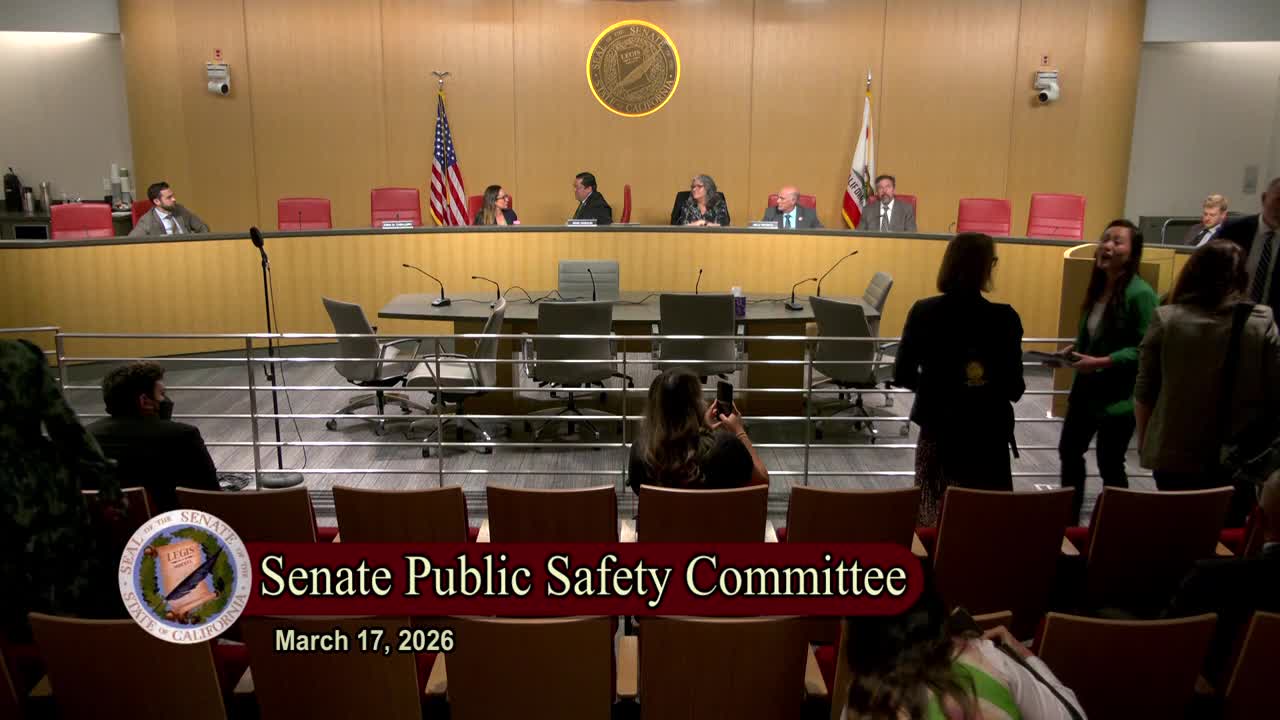
Bill Author
Bill Co-Author(s):