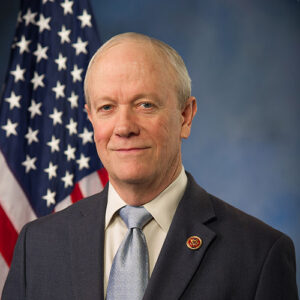
SB 959: Average daily attendance: emergencies: major safety hazard.
- Session Year: 2025-2026
- House: Senate
- Latest Version Date: 2026-09-29
Current Status:
Passed
(2026-09-29: Chaptered by Secretary of State. Chapter 773, Statutes of 2026.)
Introduced
In Committee
Awaiting First Chamber Vote
Passed First Chamber
In Committee
Awaiting Second Chamber Vote
Passed Second Chamber
Enacted
For purposes of state apportionments based on average daily attendance, as provided, if the average daily attendance of a school district, county office of education, or charter school has been materially decreased during a fiscal year because of a specified emergency, including, among others, the imminence of a major safety hazard as determined by a local law enforcement agency, existing law requires the Superintendent of Public Instruction to estimate the average daily attendance in a manner that credits to the school district, county office of education, or charter school approximately the total average daily attendance that would have been credited to the school district, county office of education, or charter school had the emergency not occurred.
This bill, for the above-described purposes, would additionally allow a local fire agency to make a determination of the imminence of a major safety hazard.
This bill would declare that it is to take effect immediately as an urgency statute.
(a)If the average daily attendance of a school district, county office of education, or charter school during a fiscal year has been materially decreased during a fiscal year because of any of the following, the fact shall be established to the satisfaction of the Superintendent by affidavits of the members of the governing board or body of the school district, county office of education, or charter school and the county superintendent of schools:
(1)Fire.
(2)Flood.
(3)Impassable roads.
(4)Epidemic.
(5)Earthquake.
(6)The imminence of a major safety hazard as determined by the local law enforcement or fire agency.
(7)A strike involving transportation services to pupils provided by a nonschool entity.
(8)An order provided for in Section 41422.
(9)Snowstorm.
(b)(1)In the event a state of emergency is declared by the Governor in a county, a decrease in average daily attendance in the county below the approximate total average daily attendance that would have been credited to a school district, county office of education, or charter school had the state of emergency not occurred shall be deemed material. The Superintendent shall determine the length of the period during which average daily attendance has been reduced by the state of emergency.
(2)The period determined by the Superintendent shall not extend into the next fiscal year following the declaration of the state of emergency by the Governor, except upon a showing by a school district, county office of education, or charter school, to the satisfaction of the Superintendent, that extending the period into the next fiscal year is essential to alleviate continued reductions in average daily attendance attributable to the state of emergency.
(3)Notwithstanding any other law, the Superintendent shall extend through the 201819 fiscal year the period during which it is essential to alleviate continued reductions in average daily attendance attributable to a state of emergency declared by the Governor in October 2017, for a school district where no less than 5 percent of the residences within the school district or school district facilities were destroyed by the qualifying emergency.
(c)(1)The average daily attendance of the school district, county office of education, or charter school for the fiscal year shall be estimated by the Superintendent in a manner that credits to the school district, county office of education, or charter school for determining the apportionments to be made to the school district, county office of education, or charter school from the State School Fund approximately the total average daily attendance that would have been credited to the school district, county office of education, or charter school had the emergency not occurred or had the order not been issued.
(2)(A)From September 1, 2021, to June 30, 2022, inclusive, with the exception of a material loss of attendance for pupils who are individuals with exceptional needs, as that term is defined in Section 56026, whose individualized education program developed pursuant to Article 3 (commencing with Section 56340) of Chapter 4 of Part 30 does not specifically provide for participation in independent study or pupils who are enrolled in community day schools pursuant to Article 3 (commencing with Section 48660) of Chapter 4 of Part 27, a school district, county office of education, or charter school shall not receive average daily attendance credit pursuant to this section for pupils that have been quarantined and are unable to attend in-person instruction due to exposure to, or infection with, COVID-19 pursuant to local or state public health guidance.
(B)Notwithstanding subparagraph (A), from September 1, 2021, to June 30, 2022, inclusive, a school district, county office of education, or charter school may receive average daily attendance credit pursuant to this section for school closures related to impacts from COVID-19 or material loss of attendance due to COVID-19 related staffing shortages if the following conditions are established to the satisfaction of the Superintendent by affidavits of the members of the governing board or body of the school district, county office of education, or charter school and the county superintendent of schools:
(i)The school district, county office of education, or charter school is unable to provide in person instruction to pupils due to staffing shortages as a result of staff quarantine due to exposure to, or infection with, COVID-19 pursuant to local or state public health guidance.
(ii)For certificated staff shortages, the school district, county office of education, or charter school has exhausted all options for obtaining staff coverage, including using all certificated staff and substitute teacher options, and has consulted with their county office of education and the Superintendent in determining that staffing needs cannot be met through any option.
(iii)For classified staff shortages, the school district, county office of education, or charter school has exhausted all options for obtaining staff coverage, including using all staff options, and has consulted with their county office of education and the Superintendent in determining that staffing needs cannot be met through any option.
(d)Notwithstanding any other law, for a school district or charter school physically located within a school district, where no less than 5 percent of the residences within the school district, or the school districts facilities, were destroyed as a result of a state of emergency that was declared by the Governor in November 2018, all of the following shall apply:
(1)(A)In the 202021 fiscal year, for school districts, the Superintendent shall calculate the difference between the school districts certified second principal apportionment local control funding formula entitlement pursuant to Section 42238.02 in the 202021 fiscal year and the 201920 fiscal year and, if there is a difference, allocate the amount of that difference to the school district.
(B)In the 202122 fiscal year, for school districts, the Superintendent shall allocate an amount equal to 25 percent of the difference calculated in subparagraph (A) to the school district.
(C)In the 202223 fiscal year, for school districts, the Superintendent shall allocate an amount equal to 12.5 percent of the difference calculated in subparagraph (A) to the school district.
(2)(A)In the 201920 and 202021 fiscal years, for charter schools, the Superintendent shall calculate the difference between the charter schools certified second principal apportionment local control funding formula entitlement pursuant to Section 42238.02 in the current year and each respective prior year and, if there is a difference, allocate the amount of that difference to the charter school.
(B)In the 202122 fiscal year, for charter schools that operate a minimum of 175 schooldays and report at least 75 percent of the total second period average daily attendance for the 201920 fiscal year, as described in Section 41601, the Superintendent shall allocate 25 percent of the difference calculated in subparagraph (A) to the charter school.
(3)For a county office of education funded pursuant to paragraph (1) of subdivision (g) of Section 2575 that has within the boundaries of the county school districts or charter schools affected pursuant to this subdivision and that has in the schools operated by the county office of education at least a 10-percent decrease in average daily attendance in the current fiscal year, in the 201920 and 202021 fiscal years, the Superintendent shall calculate the difference between the county office of educations alternative education grant entitlement certified at the annual principal apportionment pursuant to Section 2574 in the current fiscal year and each respective prior fiscal year and, if there is a difference, allocate the amount of that difference to the county office of education.
(4)A school district may transfer funds received pursuant to paragraph (1) to the county office of education for the portion of the funds that represents pupils served by the county office of education who are funded through the school districts local control funding formula apportionment pursuant to Section 2576.
(5)In each fiscal year, the allocations made pursuant to this subdivision shall be made to school districts and charter schools by the Superintendent as soon as practicable after the second principal apportionment and to county offices of education as soon as practicable after the annual principal apportionment. The allocations made shall be final. The Superintendent may provide a preliminary allocation of up to 50 percent no sooner than the first principal apportionment.
(6)(A)The amounts described in this subdivision shall be continuously appropriated from the General Fund to the Superintendent for these purposes.
(B)For purposes of making the computations required by Section 8 of Article XVI of the California Constitution, the appropriation made by this subdivision shall be deemed to be General Fund revenues appropriated for school districts, as defined in subdivision (c) of Section 41202, for the fiscal year in which they are appropriated, and included within the total allocations to school districts and community college districts from General Fund proceeds of taxes appropriated pursuant to Article XIIIB, as defined in subdivision (e) of Section 41202.
(e)Notwithstanding any other law, for a school district or charter school physically located within a school district, where no less than 5 percent of the residences within the school district, or the school districts facilities, were destroyed as a result of a state of emergency that was declared by the Governor in September 2020, all of the following shall apply:
(1)For the 202122 fiscal year, for school districts, the Superintendent shall calculate the difference between the school districts certified annual principal apportionment local control funding formula revenues pursuant to Section 42238.02 in the 202122 fiscal year and the 201920 fiscal year, including local revenue, pursuant to subdivision (j) of Section 42238.02, and any additional funds received pursuant to subdivision (e) of Section 42238.03 in excess of the entitlement calculated pursuant to Section 42238.02 and 42238.03 and, if there is a difference, allocate the amount of that difference to the school district.
(2)For the 202122 fiscal year, for charter schools that operate a minimum of 175 schooldays and report at least 75 percent of the total second period average daily attendance for the 201920 fiscal year, as described in Section 41601, the Superintendent shall calculate the difference between the charter schools certified second principal apportionment local control funding formula revenues pursuant to Section 42238.02 in the 202122 fiscal year and the 201920 fiscal year, and, if there is a difference, allocate the amount of that difference to the charter school.
(3)School districts and charter schools shall notify the Superintendent of their eligibility pursuant to this subdivision by November 1, 2021, in the manner prescribed by the Superintendent.
(4)Preliminary allocations made pursuant to paragraph (1) shall be made to school districts by the Superintendent through the principal apportionment beginning with the 202122 fiscal year first principal apportionment certification and shall be made final as of the annual principal apportionment.
(5)Allocations made pursuant to paragraph (2) shall be made to charter schools by the Superintendent as soon as practicable after the second principal apportionment and shall be made final as of the annual principal apportionment. The Superintendent may provide a preliminary allocation of up to 50 percent no sooner than the first principal apportionment.
(f)Notwithstanding any other law, for a school district where a school eligible for funding pursuant to Article 4 (commencing with Section 42280) of Chapter 7 of Part 24 of Division 3 was destroyed as a result of a state of emergency that was declared by the Governor in August 2021, the following shall apply:
(1)The school district may continue to report the amount of attendance generated by pupils enrolled in another school of the school district that would have otherwise attended the destroyed school, and the number of full-time teachers employed by the school district that would have otherwise provided instructional services at the school, as if the school were operational in the 202122, 202223, and 202324 fiscal years.
(2)The school shall be considered a necessary small school for the purpose of Section 42282 in the 202223 and 202324 fiscal years.
(g)(1)Notwithstanding any other law, paragraphs (2) and (3) shall apply for the following charter schools identified in subparagraph (A), (B), or (C) that were damaged, destroyed, or directly impacted, as a result of a state of emergency that was declared by the Governor in January 2025:
(A)Marquez Charter, Palisades Charter Elementary, and Palisades Charter High within the Los Angeles Unified School District.
(B)Aveson Global Leadership Academy, Aveson School of Leaders, Odyssey Charter, OCS - South, and Pasadena Rosebud Academy in the Pasadena Unified School District.
(C)Alma Fuerte Public in the City of Pasadena.
(2)For the 202526 fiscal year, for charter schools identified in paragraph (1) that operate a minimum of 175 schooldays, as described in Section 41601, the Superintendent shall calculate the difference between the charter schools certified local control funding formula entitlement pursuant to Section 42238.02 as of the annual principal apportionment in the 202526 fiscal year and the first principal apportionment in the 202425 fiscal year, and, if there is a difference, allocate the amount of that difference to the charter school. The amount calculated shall be adjusted to account for the increase in the add-on amount for transitional kindergarten pursuant to paragraph (3) of subdivision (g) of Section 42238.02 from the 202425 to 202526 fiscal years, inclusive, in a manner that ensures that the charter schools identified in paragraph (1) are not negatively impacted for the difference in the funding increase for transitional kindergarten.
(3)Allocations made pursuant to paragraph (2) shall be made final as of the annual principal apportionment. The Superintendent may provide a preliminary allocation no sooner than the first principal apportionment.
(h)(1)Notwithstanding any other law, for charter schools listed in paragraph (1) of subdivision (g), the Superintendent shall calculate 30 percent of the charter schools local control funding formula entitlement pursuant to Section 42238.02 as of the 202425 first principal apportionment and allocate that amount for each charter school in the 202627 fiscal year.
(2)In the 202627 fiscal year, the Superintendent shall allocate four million dollars ($4,000,000) to Pasadena Unified School District to help address outstanding and ongoing recovery-related costs that resulted from the state of emergency that was declared by the Governor in January 2025.
(i)This section applies to any average daily attendance that occurs during any part of a school year.
SEC. 2.This act is an urgency statute necessary for the immediate preservation of the public peace, health, or safety within the meaning of Article IV of the California Constitution and shall go into immediate effect. The facts constituting the necessity are:
Due to the eminent danger of wildfires throughout the state and the need to address the safety of pupils on campuses in high wildfire danger areas, it is necessary for this act to take effect immediately.
(a)If the average daily attendance of a school district, county office of education, or charter school during a fiscal year has been materially decreased during a fiscal year because of any of the following, the fact shall be established to the satisfaction of the Superintendent by affidavits of the members of the governing board or body of the school district, county office of education, or charter school and the county superintendent of schools:
(1)Fire.
(2)Flood.
(3)Impassable roads.
(4)Epidemic.
(5)Earthquake.
(6)The imminence of a major safety hazard as determined by the local law enforcement or fire agency.
(7)A strike involving transportation services to pupils provided by a nonschool entity.
(8)An order provided for in Section 41422.
(9)Snowstorm.
(b)(1)In the event a state of emergency is declared by the Governor in a county, a decrease in average daily attendance in the county below the approximate total average daily attendance that would have been credited to a school district, county office of education, or charter school had the state of emergency not occurred shall be deemed material. The Superintendent shall determine the length of the period during which average daily attendance has been reduced by the state of emergency.
(2)The period determined by the Superintendent shall not extend into the next fiscal year following the declaration of the state of emergency by the Governor, except upon a showing by a school district, county office of education, or charter school, to the satisfaction of the Superintendent, that extending the period into the next fiscal year is essential to alleviate continued reductions in average daily attendance attributable to the state of emergency.
(3)Notwithstanding any other law, the Superintendent shall extend through the 201819 fiscal year the period during which it is essential to alleviate continued reductions in average daily attendance attributable to a state of emergency declared by the Governor in October 2017, for a school district where no less than 5 percent of the residences within the school district or school district facilities were destroyed by the qualifying emergency.
(c)(1)The average daily attendance of the school district, county office of education, or charter school for the fiscal year shall be estimated by the Superintendent in a manner that credits to the school district, county office of education, or charter school for determining the apportionments to be made to the school district, county office of education, or charter school from the State School Fund approximately the total average daily attendance that would have been credited to the school district, county office of education, or charter school had the emergency not occurred or had the order not been issued.
(2)(A)From September 1, 2021, to June 30, 2022, inclusive, with the exception of a material loss of attendance for pupils who are individuals with exceptional needs, as that term is defined in Section 56026, whose individualized education program developed pursuant to Article 3 (commencing with Section 56340) of Chapter 4 of Part 30 does not specifically provide for participation in independent study or pupils who are enrolled in community day schools pursuant to Article 3 (commencing with Section 48660) of Chapter 4 of Part 27, a school district, county office of education, or charter school shall not receive average daily attendance credit pursuant to this section for pupils that have been quarantined and are unable to attend in-person instruction due to exposure to, or infection with, COVID-19 pursuant to local or state public health guidance.
(B)Notwithstanding subparagraph (A), from September 1, 2021, to June 30, 2022, inclusive, a school district, county office of education, or charter school may receive average daily attendance credit pursuant to this section for school closures related to impacts from COVID-19 or material loss of attendance due to COVID-19 related staffing shortages if the following conditions are established to the satisfaction of the Superintendent by affidavits of the members of the governing board or body of the school district, county office of education, or charter school and the county superintendent of schools:
(i)The school district, county office of education, or charter school is unable to provide in person instruction to pupils due to staffing shortages as a result of staff quarantine due to exposure to, or infection with, COVID-19 pursuant to local or state public health guidance.
(ii)For certificated staff shortages, the school district, county office of education, or charter school has exhausted all options for obtaining staff coverage, including using all certificated staff and substitute teacher options, and has consulted with their county office of education and the Superintendent in determining that staffing needs cannot be met through any option.
(iii)For classified staff shortages, the school district, county office of education, or charter school has exhausted all options for obtaining staff coverage, including using all staff options, and has consulted with their county office of education and the Superintendent in determining that staffing needs cannot be met through any option.
(d)Notwithstanding any other law, for a school district or charter school physically located within a school district, where no less than 5 percent of the residences within the school district, or the school districts facilities, were destroyed as a result of a state of emergency that was declared by the Governor in November 2018, all of the following shall apply:
(1)(A)In the 202021 fiscal year, for school districts, the Superintendent shall calculate the difference between the school districts certified second principal apportionment local control funding formula entitlement pursuant to Section 42238.02 in the 202021 fiscal year and the 201920 fiscal year and, if there is a difference, allocate the amount of that difference to the school district.
(B)In the 202122 fiscal year, for school districts, the Superintendent shall allocate an amount equal to 25 percent of the difference calculated in subparagraph (A) to the school district.
(C)In the 202223 fiscal year, for school districts, the Superintendent shall allocate an amount equal to 12.5 percent of the difference calculated in subparagraph (A) to the school district.
(2)(A)In the 201920 and 202021 fiscal years, for charter schools, the Superintendent shall calculate the difference between the charter schools certified second principal apportionment local control funding formula entitlement pursuant to Section 42238.02 in the current year and each respective prior year and, if there is a difference, allocate the amount of that difference to the charter school.
(B)In the 202122 fiscal year, for charter schools that operate a minimum of 175 school days schooldays and report at least 75 percent of the total second period average daily attendance for the 201920 fiscal year, as described in Section 41601, the Superintendent shall allocate 25 percent of the difference calculated in subparagraph (A) to the charter school.
(3)For a county office of education funded pursuant to paragraph (1) of subdivision (g) of Section 2575 that has within the boundaries of the county school districts or charter schools affected pursuant to this subdivision and that has in the schools operated by the county office of education at least a 10-percent decrease in average daily attendance in the current fiscal year, in the 201920 and 202021 fiscal years, the Superintendent shall calculate the difference between the county office of educations alternative education grant entitlement certified at the annual principal apportionment pursuant to Section 2574 in the current fiscal year and each respective prior fiscal year and, if there is a difference, allocate the amount of that difference to the county office of education.
(4)A school district may transfer funds received pursuant to paragraph (1) to the county office of education for the portion of the funds that represents pupils served by the county office of education who are funded through the school districts local control funding formula apportionment pursuant to Section 2576.
(5)In each fiscal year, the allocations made pursuant to this subdivision shall be made to school districts and charter schools by the Superintendent as soon as practicable after the second principal apportionment and to county offices of education as soon as practicable after the annual principal apportionment. The allocations made shall be final. The Superintendent may provide a preliminary allocation of up to 50 percent no sooner than the first principal apportionment.
(6)(A)The amounts described in this subdivision shall be continuously appropriated from the General Fund to the Superintendent for these purposes.
(B)For purposes of making the computations required by Section 8 of Article XVI of the California Constitution, the appropriation made by this subdivision shall be deemed to be General Fund revenues appropriated for school districts, as defined in subdivision (c) of Section 41202, for the fiscal year in which they are appropriated, and included within the total allocations to school districts and community college districts from General Fund proceeds of taxes appropriated pursuant to Article XIIIB, as defined in subdivision (e) of Section 41202.
(e)Notwithstanding any other law, for a school district or charter school physically located within a school district, where no less than 5 percent of the residences within the school district, or the school districts facilities, were destroyed as a result of a state of emergency that was declared by the Governor in September 2020, all of the following shall apply:
(1)For the 202122 fiscal year, for school districts, the Superintendent shall calculate the difference between the school districts certified annual principal apportionment local control funding formula revenues pursuant to Section 42238.02 in the 202122 fiscal year and the 201920 fiscal year, including local revenue, pursuant to subdivision (j) of Section 42238.02, and any additional funds received pursuant to subdivision (e) of Section 42238.03 in excess of the entitlement calculated pursuant to Section 42238.02 and 42238.03 and, if there is a difference, allocate the amount of that difference to the school district.
(2)For the 202122 fiscal year, for charter schools that operate a minimum of 175 school days schooldays and report at least 75 percent of the total second period average daily attendance for the 201920 fiscal year, as described in Section 41601, the Superintendent shall calculate the difference between the charter schools certified second principal apportionment local control funding formula revenues pursuant to Section 42238.02 in the 202122 fiscal year and the 201920 fiscal year, and, if there is a difference, allocate the amount of that difference to the charter school.
(3)School districts and charter schools shall notify the Superintendent of their eligibility pursuant to this subdivision by November 1, 2021, in the manner prescribed by the Superintendent.
(4)Preliminary allocations made pursuant to paragraph (1) shall be made to school districts by the Superintendent through the principal apportionment beginning with the 202122 fiscal year first principal apportionment certification and shall be made final as of the annual principal apportionment.
(5)Allocations made pursuant to paragraph (2) shall be made to charter schools by the Superintendent as soon as practicable after the second principal apportionment and shall be made final as of the annual principal apportionment. The Superintendent may provide a preliminary allocation of up to 50 percent no sooner than the first principal apportionment.
(f)Notwithstanding any other law, for a school district where a school eligible for funding pursuant to Article 4 (commencing with Section 42280) of Chapter 7 of Part 24 of Division 3 was destroyed as a result of a state of emergency that was declared by the Governor in August 2021, the following shall apply:
(1)The school district may continue to report the amount of attendance generated by pupils enrolled in another school of the school district that would have otherwise attended the destroyed school, and the number of full-time teachers employed by the school district that would have otherwise provided instructional services at the school, as if the school were operational in the 202122, 202223, and 202324 fiscal years.
(2)The school shall be considered a necessary small school for the purpose of Section 42282 in the 202223 and 202324 fiscal years.
(g)(1)Notwithstanding any other law, paragraphs (2) and (3) shall apply for the following charter schools identified in subparagraph (A), (B), or (C) that were damaged, destroyed, or directly impacted, as a result of a state of emergency that was declared by the Governor in January 2025:
(A)Marquez Charter, Palisades Charter Elementary, and Palisades Charter High within the Los Angeles Unified School District.
(B)Aveson Global Leadership Academy, Aveson School of Leaders, Odyssey Charter, OCS - South, and Pasadena Rosebud Academy in the Pasadena Unified School District.
(C)Alma Fuerte Public in the City of Pasadena.
(2)For the 202526 fiscal year, for charter schools identified in paragraph (1) that operate a minimum of 175 school days, schooldays, as described in Section 41601, the Superintendent shall calculate the difference between the charter schools certified local control funding formula entitlement pursuant to Section 42238.02 as of the annual principal apportionment in the 202526 fiscal year and the first principal apportionment in the 202425 fiscal year, and, if there is a difference, allocate the amount of that difference to the charter school. The amount calculated shall be adjusted to account for the increase in the add-on amount for transitional kindergarten pursuant to paragraph (3) of subdivision (g) of Section 42238.02 from the 202425 to 202526 fiscal years, inclusive, in a manner that ensures that the charter schools identified in paragraph (1) are not negatively impacted for the difference in the funding increase for transitional kindergarten.
(3)Allocations made pursuant to paragraph (2) shall be made final as of the annual principal apportionment. The Superintendent may provide a preliminary allocation no sooner than the first principal apportionment.
(h)(1)Notwithstanding any other law, for charter schools listed in paragraph (1) of subdivision (g), the Superintendent shall calculate 30 percent of the charter schools local control funding formula entitlement pursuant to Section 42238.02 as of the 202425 first principal apportionment and allocate that amount for each charter school in the 202627 fiscal year.
(2)In the 202627 fiscal year, the Superintendent shall allocate four million dollars ($4,000,000) to Pasadena Unified School District to help address outstanding and ongoing recovery-related costs that resulted from the state of emergency that was declared by the Governor in January 2025.
(i)This section applies to any average daily attendance that occurs during any part of a school year.
SEC. 2.This act is an urgency statute necessary for the immediate preservation of the public peace, health, or safety within the meaning of Article IV of the California Constitution and shall go into immediate effect. The facts constituting the necessity are:
Due to the eminent danger of wildfires throughout the state and the need to address the safety of pupils on campuses in high wildfire danger areas, it is necessary for this act to take effect immediately.
(a)If the average daily attendance of a school district, county office of education, or charter school during a fiscal year has been materially decreased during a fiscal year because of any of the following, the fact shall be established to the satisfaction of the Superintendent by affidavits of the members of the governing board or body of the school district, county office of education, or charter school and the county superintendent of schools:
(1)Fire.
(2)Flood.
(3)Impassable roads.
(4)Epidemic.
(5)Earthquake.
(6)The imminence of a major safety hazard as determined by the local law enforcement or fire agency.
(7)A strike involving transportation services to pupils provided by a nonschool entity.
(8)An order provided for in Section 41422.
(9)Snowstorm.
(b)(1)In the event a state of emergency is declared by the Governor in a county, a decrease in average daily attendance in the county below the approximate total average daily attendance that would have been credited to a school district, county office of education, or charter school had the state of emergency not occurred shall be deemed material. The Superintendent shall determine the length of the period during which average daily attendance has been reduced by the state of emergency.
(2)The period determined by the Superintendent shall not extend into the next fiscal year following the declaration of the state of emergency by the Governor, except upon a showing by a school district, county office of education, or charter school, to the satisfaction of the Superintendent, that extending the period into the next fiscal year is essential to alleviate continued reductions in average daily attendance attributable to the state of emergency.
(3)Notwithstanding any other law, the Superintendent shall extend through the 201819 fiscal year the period during which it is essential to alleviate continued reductions in average daily attendance attributable to a state of emergency declared by the Governor in October 2017, for a school district where no less than 5 percent of the residences within the school district or school district facilities were destroyed by the qualifying emergency.
(c)(1)The average daily attendance of the school district, county office of education, or charter school for the fiscal year shall be estimated by the Superintendent in a manner that credits to the school district, county office of education, or charter school for determining the apportionments to be made to the school district, county office of education, or charter school from the State School Fund approximately the total average daily attendance that would have been credited to the school district, county office of education, or charter school had the emergency not occurred or had the order not been issued.
(2)(A)From September 1, 2021, to June 30, 2022, inclusive, with the exception of a material loss of attendance for pupils who are individuals with exceptional needs, as that term is defined in Section 56026, whose individualized education program developed pursuant to Article 3 (commencing with Section 56340) of Chapter 4 of Part 30 does not specifically provide for participation in independent study or pupils who are enrolled in community day schools pursuant to Article 3 (commencing with Section 48660) of Chapter 4 of Part 27, a school district, county office of education, or charter school shall not receive average daily attendance credit pursuant to this section for pupils that have been quarantined and are unable to attend in-person instruction due to exposure to, or infection with, COVID-19 pursuant to local or state public health guidance.
(B)Notwithstanding subparagraph (A), from September 1, 2021, to June 30, 2022, inclusive, a school district, county office of education, or charter school may receive average daily attendance credit pursuant to this section for school closures related to impacts from COVID-19 or material loss of attendance due to COVID-19 related staffing shortages if the following conditions are established to the satisfaction of the Superintendent by affidavits of the members of the governing board or body of the school district, county office of education, or charter school and the county superintendent of schools:
(i)The school district, county office of education, or charter school is unable to provide in person instruction to pupils due to staffing shortages as a result of staff quarantine due to exposure to, or infection with, COVID-19 pursuant to local or state public health guidance.
(ii)For certificated staff shortages, the school district, county office of education, or charter school has exhausted all options for obtaining staff coverage, including using all certificated staff and substitute teacher options, and has consulted with their county office of education and the Superintendent in determining that staffing needs cannot be met through any option.
(iii)For classified staff shortages, the school district, county office of education, or charter school has exhausted all options for obtaining staff coverage, including using all staff options, and has consulted with their county office of education and the Superintendent in determining that staffing needs cannot be met through any option.
(d)Notwithstanding any other law, for a school district or charter school physically located within a school district, where no less than 5 percent of the residences within the school district, or the school districts facilities, were destroyed as a result of a state of emergency that was declared by the Governor in November 2018, all of the following shall apply:
(1)(A)In the 202021 fiscal year, for school districts, the Superintendent shall calculate the difference between the school districts certified second principal apportionment local control funding formula entitlement pursuant to Section 42238.02 in the 202021 fiscal year and the 201920 fiscal year and, if there is a difference, allocate the amount of that difference to the school district.
(B)In the 202122 fiscal year, for school districts, the Superintendent shall allocate an amount equal to 25 percent of the difference calculated in subparagraph (A) to the school district.
(C)In the 202223 fiscal year, for school districts, the Superintendent shall allocate an amount equal to 12.5 percent of the difference calculated in subparagraph (A) to the school district.
(2)(A)In the 201920 and 202021 fiscal years, for charter schools, the Superintendent shall calculate the difference between the charter schools certified second principal apportionment local control funding formula entitlement pursuant to 42238.02 in the current year and each respective prior year and, if there is a difference, allocate the amount of that difference to the charter school.
(B)In the 202122 fiscal year, for charter schools that operate a minimum of 175 school days and report at least 75 percent of the total second period average daily attendance for the 201920 fiscal year, as described in Section 41601, the Superintendent shall allocate 25 percent of the difference calculated in subparagraph (A) to the charter school.
(3)For a county office of education funded pursuant to paragraph (1) of subdivision (g) of Section 2575 that has within the boundaries of the county school districts or charter schools affected pursuant to this subdivision and that has in the schools operated by the county office of education at least a 10-percent decrease in average daily attendance in the current fiscal year, in the 201920 and 202021 fiscal years, the Superintendent shall calculate the difference between the county office of educations alternative education grant entitlement certified at the annual principal apportionment pursuant to Section 2574 in the current fiscal year and each respective prior fiscal year and, if there is a difference, allocate the amount of that difference to the county office of education.
(4)A school district may transfer funds received pursuant to paragraph (1) to the county office of education for the portion of the funds that represents pupils served by the county office of education who are funded through the school districts local control funding formula apportionment pursuant to Section 2576.
(5)In each fiscal year, the allocations made pursuant to this subdivision shall be made to school districts and charter schools by the Superintendent as soon as practicable after the second principal apportionment and to county offices of education as soon as practicable after the annual principal apportionment. The allocations made shall be final. The Superintendent may provide a preliminary allocation of up to 50 percent no sooner than the first principal apportionment.
(6)(A)The amounts described in this subdivision shall be continuously appropriated from the General Fund to the Superintendent for these purposes.
(B)For purposes of making the computations required by Section 8 of Article XVI of the California Constitution, the appropriation made by this subdivision shall be deemed to be General Fund revenues appropriated for school districts, as defined in subdivision (c) of Section 41202, for the fiscal year in which they are appropriated, and included within the total allocations to school districts and community college districts from General Fund proceeds of taxes appropriated pursuant to Article XIIIB, as defined in subdivision (e) of Section 41202.
(e)Notwithstanding any other law, for a school district or charter school physically located within a school district, where no less than 5 percent of the residences within the school district, or the school districts facilities, were destroyed as a result of a state of emergency that was declared by the Governor in September 2020, all of the following shall apply:
(1)For the 202122 fiscal year, for school districts, the Superintendent shall calculate the difference between the school districts certified annual principal apportionment local control funding formula revenues pursuant to Section 42238.02 in the 202122 fiscal year and the 201920 fiscal year, including local revenue, pursuant to subdivision (j) of Section 42238.02, and any additional funds received pursuant to subdivision (e) of Section 42238.03 in excess of the entitlement calculated pursuant to Section 42238.02 and 42238.03 and, if there is a difference, allocate the amount of that difference to the school district.
(2)For the 202122 fiscal year, for charter schools that operate a minimum of 175 school days and report at least 75 percent of the total second period average daily attendance for the 201920 fiscal year, as described in Section 41601, the Superintendent shall calculate the difference between the charter schools certified second principal apportionment local control funding formula revenues pursuant to Section 42238.02 in the 202122 fiscal year and the 201920 fiscal year, and, if there is a difference, allocate the amount of that difference to the charter school.
(3)School districts and charter schools shall notify the Superintendent of their eligibility pursuant to this subdivision by November 1, 2021, in the manner prescribed by the Superintendent.
(4)Preliminary allocations made pursuant to paragraph (1) shall be made to school districts by the Superintendent through the principal apportionment beginning with the 202122 fiscal year first principal apportionment certification and shall be made final as of the annual principal apportionment.
(5)Allocations made pursuant to paragraph (2) shall be made to charter schools by the Superintendent as soon as practicable after the second principal apportionment and shall be made final as of the annual principal apportionment. The Superintendent may provide a preliminary allocation of up to 50 percent no sooner than the first principal apportionment.
(f)Notwithstanding any other law, for a school district where a school eligible for funding pursuant to Article 4 (commencing with Section 42280) of Chapter 7 of Part 24 of Division 3 was destroyed as a result of a state of emergency that was declared by the Governor in August 2021, the following shall apply:
(1)The school district may continue to report the amount of attendance generated by pupils enrolled in another school of the school district that would have otherwise attended the destroyed school, and the number of full-time teachers employed by the school district that would have otherwise provided instructional services at the school, as if the school were operational in the 202122, 202223, and 202324 fiscal years.
(2)The school shall be considered a necessary small school for the purpose of Section 42282 in the 202223 and 202324 fiscal years.
(g)(1)Notwithstanding any other law, paragraphs (2) and (3) shall apply for the following charter schools identified in subparagraph (A), (B), or (C) that were damaged, destroyed, or directly impacted, as a result of a state of emergency that was declared by the Governor in January 2025:
(A)Marquez Charter, Palisades Charter Elementary, and Palisades Charter High within the Los Angeles Unified School District.
(B)Aveson Global Leadership Academy, Aveson School of Leaders, Odyssey Charter, OCS - South, and Pasadena Rosebud Academy in the Pasadena Unified School District.
(C)Alma Fuerte Public in the City of Pasadena.
(2)For the 202526 fiscal year, for charter schools identified in paragraph (1) that operate a minimum of 175 school days, as described in Section 41601, the Superintendent shall calculate the difference between the charter schools certified local control funding formula entitlement pursuant to Section 42238.02 as of the annual principal apportionment in the 202526 fiscal year and the first principal apportionment in the 202425 fiscal year, and, if there is a difference, allocate the amount of that difference to the charter school.
(3)Allocations made pursuant to paragraph (2) shall be made final as of the annual principal apportionment. The Superintendent may provide a preliminary allocation no sooner than the first principal apportionment.
(h)This section applies to any average daily attendance that occurs during any part of a school year.
SEC. 2.This act is an urgency statute necessary for the immediate preservation of the public peace, health, or safety within the meaning of Article IV of the California Constitution and shall go into immediate effect. The facts constituting the necessity are:
Due to the eminent danger of wildfires throughout the state and the need to address the safety of pupils on campuses in high wildfire danger areas, it is necessary for this act to take effect immediately.
(a)If the average daily attendance of a school district, county office of education, or charter school during a fiscal year has been materially decreased during a fiscal year because of any of the following, the fact shall be established to the satisfaction of the Superintendent by affidavits of the members of the governing board or body of the school district, county office of education, or charter school and the county superintendent of schools:
(1)Fire.
(2)Flood.
(3)Impassable roads.
(4)Epidemic.
(5)Earthquake.
(6)The imminence of a major safety hazard as determined by the local law enforcement or fire agency.
(7)A strike involving transportation services to pupils provided by a nonschool entity.
(8)An order provided for in Section 41422.
(9)Snowstorm.
(b)(1)In the event a state of emergency is declared by the Governor in a county, a decrease in average daily attendance in the county below the approximate total average daily attendance that would have been credited to a school district, county office of education, or charter school had the state of emergency not occurred shall be deemed material. The Superintendent shall determine the length of the period during which average daily attendance has been reduced by the state of emergency.
(2)The period determined by the Superintendent shall not extend into the next fiscal year following the declaration of the state of emergency by the Governor, except upon a showing by a school district, county office of education, or charter school, to the satisfaction of the Superintendent, that extending the period into the next fiscal year is essential to alleviate continued reductions in average daily attendance attributable to the state of emergency.
(3)Notwithstanding any other law, the Superintendent shall extend through the 201819 fiscal year the period during which it is essential to alleviate continued reductions in average daily attendance attributable to a state of emergency declared by the Governor in October 2017, for a school district where no less than 5 percent of the residences within the school district or school district facilities were destroyed by the qualifying emergency.
(c)(1)The average daily attendance of the school district, county office of education, or charter school for the fiscal year shall be estimated by the Superintendent in a manner that credits to the school district, county office of education, or charter school for determining the apportionments to be made to the school district, county office of education, or charter school from the State School Fund approximately the total average daily attendance that would have been credited to the school district, county office of education, or charter school had the emergency not occurred or had the order not been issued.
(2)(A)From September 1, 2021, to June 30, 2022, inclusive, with the exception of a material loss of attendance for pupils who are individuals with exceptional needs, as that term is defined in Section 56026, whose individualized education program developed pursuant to Article 3 (commencing with Section 56340) of Chapter 4 of Part 30 does not specifically provide for participation in independent study or pupils who are enrolled in community day schools pursuant to Article 3 (commencing with Section 48660) of Chapter 4 of Part 27, a school district, county office of education, or charter school shall not receive average daily attendance credit pursuant to this section for pupils that have been quarantined and are unable to attend in-person instruction due to exposure to, or infection with, COVID-19 pursuant to local or state public health guidance.
(B)Notwithstanding subparagraph (A), from September 1, 2021, to June 30, 2022, inclusive, a school district, county office of education, or charter school may receive average daily attendance credit pursuant to this section for school closures related to impacts from COVID-19 or material loss of attendance due to COVID-19 related staffing shortages if the following conditions are established to the satisfaction of the Superintendent by affidavits of the members of the governing board or body of the school district, county office of education, or charter school and the county superintendent of schools:
(i)The school district, county office of education, or charter school is unable to provide in person instruction to pupils due to staffing shortages as a result of staff quarantine due to exposure to, or infection with, COVID-19 pursuant to local or state public health guidance.
(ii)For certificated staff shortages, the school district, county office of education, or charter school has exhausted all options for obtaining staff coverage, including using all certificated staff and substitute teacher options, and has consulted with their county office of education and the Superintendent in determining that staffing needs cannot be met through any option.
(iii)For classified staff shortages, the school district, county office of education, or charter school has exhausted all options for obtaining staff coverage, including using all staff options, and has consulted with their county office of education and the Superintendent in determining that staffing needs cannot be met through any option.
(d)Notwithstanding any other law, for a school district or charter school physically located within a school district, where no less than 5 percent of the residences within the school district, or the school districts facilities, were destroyed as a result of a state of emergency that was declared by the Governor in November 2018, all of the following shall apply:
(1)(A)In the 202021 fiscal year, for school districts, the Superintendent shall calculate the difference between the school districts certified second principal apportionment local control funding formula entitlement pursuant to Section 42238.02 in the 202021 fiscal year and the 201920 fiscal year and, if there is a difference, allocate the amount of that difference to the school district.
(B)In the 202122 fiscal year, for school districts, the Superintendent shall allocate an amount equal to 25 percent of the difference calculated in subparagraph (A) to the school district.
(C)In the 202223 fiscal year, for school districts, the Superintendent shall allocate an amount equal to 12.5 percent of the difference calculated in subparagraph (A) to the school district.
(2)(A)In the 201920 and 202021 fiscal years, for charter schools, the Superintendent shall calculate the difference between the charter schools certified second principal apportionment local control funding formula entitlement pursuant to 42238.02 in the current year and each respective prior year and, if there is a difference, allocate the amount of that difference to the charter school.
(B)In the 202122 fiscal year, for charter schools that operate a minimum of 175 school days and report at least 75 percent of the total second period average daily attendance for the 201920 fiscal year, as described in Section 41601, the Superintendent shall allocate 25 percent of the difference calculated in subparagraph (A) to the charter school.
(3)For a county office of education funded pursuant to paragraph (1) of subdivision (g) of Section 2575 that has within the boundaries of the county school districts or charter schools affected pursuant to this subdivision and that has in the schools operated by the county office of education at least a 10-percent decrease in average daily attendance in the current fiscal year, in the 201920 and 202021 fiscal years, the Superintendent shall calculate the difference between the county office of educations alternative education grant entitlement certified at the annual principal apportionment pursuant to Section 2574 in the current fiscal year and each respective prior fiscal year and, if there is a difference, allocate the amount of that difference to the county office of education.
(4)A school district may transfer funds received pursuant to paragraph (1) to the county office of education for the portion of the funds that represents pupils served by the county office of education who are funded through the school districts local control funding formula apportionment pursuant to Section 2576.
(5)In each fiscal year, the allocations pursuant to this subdivision shall be made to school districts and charter schools by the Superintendent as soon as practicable after the second principal apportionment and to county offices of education as soon as practicable after the annual principal apportionment. The allocations made shall be final. The Superintendent may provide a preliminary allocation of up to 50 percent no sooner than the first principal apportionment.
(6)(A)The amounts described in this subdivision shall be continuously appropriated from the General Fund to the Superintendent for these purposes.
(B)For purposes of making the computations required by Section 8 of Article XVI of the California Constitution, the appropriation made by this subdivision shall be deemed to be General Fund revenues appropriated for school districts, as defined in subdivision (c) of Section 41202, for the fiscal year in which they are appropriated, and included within the total allocations to school districts and community college districts from General Fund proceeds of taxes appropriated pursuant to Article XIIIB, as defined in subdivision (e) of Section 41202.
(e)Notwithstanding any other law, for a school district or charter school physically located within a school district, where no less than 5 percent of the residences within the school district, or the school districts facilities, were destroyed as a result of a state of emergency that was declared by the Governor in September 2020, all of the following shall apply:
(1)For the 202122 fiscal year, for school districts, the Superintendent shall calculate the difference between the school districts certified annual principal apportionment local control funding formula revenues pursuant to Section 42238.02 in the 202122 fiscal year and the 201920 fiscal year, including local revenue, pursuant to subdivision (j) of Section 42238.02, and any additional funds received pursuant to subdivision (e) of Section 42238.03 in excess of the entitlement calculated pursuant to Section 42238.02 and 42238.03 and, if there is a difference, allocate the amount of that difference to the school district.
(2)For the 202122 fiscal year, for charter schools that operate a minimum of 175 school days and report at least 75 percent of the total second period average daily attendance for the 201920 fiscal year, as described in Section 41601, the Superintendent shall calculate the difference between the charter schools certified second principal apportionment local control funding formula revenues pursuant to Section 42238.02 in the 202122 fiscal year and the 201920 fiscal year, and, if there is a difference, allocate the amount of that difference to the charter school.
(3)School districts and charter schools shall notify the Superintendent of their eligibility pursuant to this subdivision by November 1, 2021, in the manner prescribed by the Superintendent.
(4)Preliminary allocations made pursuant to paragraph (1) shall be made to school districts by the Superintendent through the principal apportionment beginning with the 202122 fiscal year first principal apportionment certification and shall be made final as of the annual principal apportionment.
(5)Allocations pursuant to paragraph (2) shall be made to charter schools by the Superintendent as soon as practicable after the second principal apportionment and shall be made final as of the annual principal apportionment. The Superintendent may provide a preliminary allocation of up to 50 percent no sooner than the first principal apportionment.
(f)Notwithstanding any other law, for a school district where a school eligible for funding pursuant to Article 4 (commencing with Section 42280) of Chapter 7 of Part 24 of Division 3 was destroyed as a result of a state of emergency that was declared by the Governor in August 2021, the following shall apply:
(1)The school district may continue to report the amount of attendance generated by pupils enrolled in another school of the school district that would have otherwise attended the destroyed school, and the number of full-time teachers employed by the school district that would have otherwise provided instructional services at the school, as if the school were operational in the 202122, 202223, and 202324 fiscal years.
(2)The school shall be considered a necessary small school for the purpose of Section 42282 in the 202223 and 202324 fiscal years.
(g)(1)Notwithstanding any other law, paragraphs (2) and (3) shall apply for the following charter schools identified in subparagraph (A), (B), or (C) that were damaged, destroyed, or directly impacted, as a result of a state of emergency that was declared by the Governor in January 2025:
(A)Marquez Charter, Palisades Charter Elementary, and Palisades Charter High within the Los Angeles Unified School District.
(B)Aveson Global Leadership Academy, Aveson School of Leaders, Odyssey Charter, OCS - South, and Pasadena Rosebud Academy in the Pasadena Unified School District.
(C)Alma Fuerte Public in the City of Pasadena.
(2)For the 202526 fiscal year, for charter schools identified in paragraph (1) that operate a minimum of 175 school days, as described in Section 41601, the Superintendent shall calculate the difference between the charter schools certified local control funding formula entitlement pursuant to Section 42238.02 as of the annual principal apportionment in the 202526 fiscal year and the first principal apportionment in the 202425 fiscal year, and, if there is a difference, allocate the amount of that difference to the charter school.
(3)Allocations pursuant to paragraph (2) shall be made final as of the annual principal apportionment. The Superintendent may provide a preliminary allocation no sooner than the first principal apportionment.
(h)This section applies to any average daily attendance that occurs during any part of a school year.
SEC. 2.This act is an urgency statute necessary for the immediate preservation of the public peace, health, or safety within the meaning of Article IV of the California Constitution and shall go into immediate effect. The facts constituting the necessity are:
Due to the eminent danger of wildfires throughout the state and the need to address the safety of pupils on campuses in high wildfire danger areas, it is necessary for this act to take effect immediately.
|
Date
|
Status
|
|---|---|
| Sep 29, 2026 | Chaptered by Secretary of State. Chapter 773, Statutes of 2026. |
| Sep 29, 2026 | Approved by the Governor. |
| Sep 2, 2026 | Enrolled and presented to the Governor at 3 p.m. |
| Aug 27, 2026 | Assembly amendments concurred in. (Ayes 40. Noes 0. Page 6018.) Ordered to engrossing and enrolling. |
| Aug 27, 2026 | Assembly amendments concurred in. (Ayes 39. Noes 0.) Ordered to engrossing and enrolling. |
| Aug 26, 2026 | In Senate. Concurrence in Assembly amendments pending. |
| Aug 26, 2026 | Read third time. Urgency clause adopted. Passed. (Ayes 79. Noes 0. Page 6553.) Ordered to the Senate. |
| Aug 26, 2026 | Read third time. Urgency clause adopted. Passed. Ordered to the Senate. |
| Aug 17, 2026 | Ordered to third reading. |
| Aug 17, 2026 | Read third time and amended. |
| Aug 3, 2026 | Ordered to third reading. |
| Aug 3, 2026 | From consent calendar on motion of Assembly Member Aguiar-Curry. |
| Jul 2, 2026 | Read second time. Ordered to consent calendar. |
| Jul 1, 2026 | From committee: Do pass. Ordered to consent calendar. (Ayes 11. Noes 0.) (July 1). |
| Jun 18, 2026 | From committee: Do pass and re-refer to Com. on APPR. with recommendation: To consent calendar. (Ayes 8. Noes 0.) (June 17). Re-referred to Com. on APPR. |
| May 26, 2026 | Referred to Com. on ED. |
| May 20, 2026 | In Assembly. Read first time. Held at Desk. |
| May 19, 2026 | Read third time. Urgency clause adopted. Passed. (Ayes 39. Noes 0. Page 4344.) Ordered to the Assembly. |
| May 19, 2026 | Read third time. Urgency clause adopted. Passed. (Ayes 39. Noes 0.) Ordered to the Assembly. |
| May 14, 2026 | From committee: Do pass. (Ayes 7. Noes 0. Page 4259.) (May 14). |
| May 14, 2026 | Read second time. Ordered to third reading. |
| May 14, 2026 | From committee: Do pass. (Ayes 7. Noes 0.) (May 14). |
| May 8, 2026 | Set for hearing May 14. |
| Apr 13, 2026 | April 13 hearing: Placed on APPR. suspense file. |
| Mar 27, 2026 | Set for hearing April 13. |
| Mar 25, 2026 | From committee: Do pass and re-refer to Com. on APPR. with recommendation: To consent calendar. (Ayes 7. Noes 0. Page 3688.) (March 25). Re-referred to Com. on APPR. |
| Mar 25, 2026 | From committee: Do pass and re-refer to Com. on APPR. with recommendation: To consent calendar. (Ayes 7. Noes 0.) (March 25). Re-referred to Com. on APPR. |
| Mar 12, 2026 | Set for hearing March 25. |
| Mar 9, 2026 | From committee with author's amendments. Read second time and amended. Re-referred to Com. on ED. |
| Feb 11, 2026 | Referred to Com. on ED. |
| Feb 4, 2026 | From printer. May be acted upon on or after March 6. |
| Feb 3, 2026 | Introduced. Read first time. To Com. on RLS. for assignment. To print. |
|
Date
|
Description
|
Location
|
Votes
|
|
|---|---|---|---|---|
| Aug 27, 2026 | Unfinished Business SB959 Grayson et al. Urgency Clause Concurrence | Senate Floor |
Passed |
|
| Aug 26, 2026 | SB 959 Grayson Third Reading Urgency By Bauer-Kahan | Assembly Floor |
Passed |
|
| Jul 1, 2026 | Do pass. To Consent Calendar. | Assembly Standing Committee on Appropriations |
Passed |
|
| Jun 17, 2026 | Do pass and be re-referred to the Committee on [Appropriations] with recommendation: To Consent Calendar | Assembly Standing Committee on Education |
Passed |
|
| May 19, 2026 | Senate 3rd Reading SB959 Grayson et al. Urgency Clause | Senate Floor |
Passed |
|
| May 14, 2026 | Do pass | Senate Standing Committee on Appropriations |
Passed |
|
| Apr 13, 2026 | Placed on suspense file | Senate Standing Committee on Appropriations |
Passed |
|
| Mar 25, 2026 | Do pass, but first be re-referred to the Committee on [Appropriations] with the recommendation: To Consent Calendar | Senate Standing Committee on Education |
Passed |
This list shows positions taken on this bill by organizations on the date displayed, which is linked to the original source.
Positions by individuals are not included.
|
Organization
|
Position
|
Date
|
|---|---|---|
| California Department of Education | ** Support | |
| California Fire Chiefs Association | ** Support | |
| California School Boards Association | ** Support | |
| California Teachers Association | ** Support | |
| City of Dublin | ** Support | |
| City of Lafayette | ** Support | |
| City Of Livermore | ** Support | |
| City Of Oakland | ** Support | |
| City of Orinda | ** Support | |
| City Of Pleasanton | ** Support | |
| City of San Ramon | ** Support | |
| Contra Costa County | ** Support | |
| Fire Districts Association Of California | ** Support | |
| Lamorinda Legislative Coalition | ** Support | |
| League Of California Cities | ** Support | |
| Legislative Action Committee - Santa Clara County School Boards Association | ** Support | |
| Orange County Fire Authority | ** Support | |
| Small School Districts Association | ** Support | |
| Town of Danville | ** Support | |
| Town of Moraga | ** Support |
SENATE RULES COMMITTEE Office of Senate Floor Analyses (916) 651-4171 | SB 959 |
UNFINISHED BUSINESS
Bill No: SB 959
Author: Grayson (D), et al.
Amended: 8/17/26
Vote: 27 - Urgency
SENATE EDUCATION COMMITTEE: 7-0, 3/25/26
AYES: Pérez, Ochoa Bogh, Cabaldon, Choi, Cortese, Gonzalez, Reyes
SENATE APPROPRIATIONS COMMITTEE: 7-0, 5/14/26
AYES: Cervantes, Seyarto, Cabaldon, Dahle, Grayson, Richardson, Wahab
SENATE FLOOR: 39-0, 5/19/26
AYES: Allen, Alvarado-Gil, Archuleta, Arreguín, Ashby, Becker, Blakespear, Cabaldon, Caballero, Cervantes, Choi, Cortese, Dahle, Durazo, Gonzalez, Grayson, Grove, Hurtado, Jones, Laird, Limón, McGuire, McNerney, Menjivar, Ochoa Bogh, Padilla, Pérez, Reyes, Richardson, Rubio, Seyarto, Smallwood-Cuevas, Stern, Strickland, Umberg, Valladares, Wahab, Weber Pierson, Wiener
NO VOTE RECORDED: Niello
ASSEMBLY FLOOR: Passed, 8/26/26
SUBJECT: Average daily attendance: emergencies: major safety hazard
SOURCE: Author
DIGEST:
This bill, an urgency measure, authorizes a local fire agency to determine the imminence of a major safety hazard for purposes of holding a local educational agency’s (LEA’s) average daily attendance (ADA) harmless for state funding purposes.
Assembly Amendments
make technical and conforming changes to reflect amendments to the same section of law enacted through the 2026 education budget trailer bill.
ANALYSIS:
Existing Law:
- Establishes that LEAs are funded based on ADA and defines “material decrease” as a drop of at least 10% in attendance due to qualifying emergencies. (Education Code (EC) § 46392; California Code of Regulations (CCR) Title 5 § 428)
- Lists qualifying emergencies for ADA credit, including fire, flood, epidemic, earthquake, impassable roads, and other extraordinary conditions, including civil or military orders. (EC § 46392)
- Allows LEAs to submit a Form J-13A to the California Department of Education (CDE) to request ADA and instructional time credit during an emergency or material attendance loss. (EC §§ 41422, 46200, 46391, 46392, 46393 and CCR, Title 5, § 428)
- Requires LEAs to offer independent study during emergency closures or attendance disruptions to retain ADA credit, and includes audit requirements for substantiating compliance. (EC §§ 42238.023, 51745, 51747, 51749.6)
- Requires future inclusion of instructional continuity plans in school safety plans, effective July 1, 2026. (SB 153, Senate Committee on Budget and Fiscal Review, Chapter 38, Statutes of 2024; AB 176 Assembly Committee on Budget, Chapter 998, Statutes of 2024)
This bill:
- Authorizes a local fire agency to determine the imminence of a major safety hazard for purposes of holding an LEA’s ADA harmless for state funding purposes.
- Contains an urgency statute which would go into effect immediately.
Comments
- Need for this bill. According to the author, “California has experienced an unprecedented rise in the frequency and severity of wildfires as the state faces the new reality of a year-round fire season. Recent tragedies like the Eaton and Palisades Fires in Southern California along with the Dixie and LNU Lightning Complex Fires in Northern California have led to action on several fronts to apply lessons learned from these tragic events.
In response to recent devastating wildfires, the Legislature has acted to both rebuild affected communities and bolster mitigation efforts to lower future fire risk. However, more must be done to ensure that communities have every tool available to them to respond to fire danger appropriately.
One area where there remains a gap in current law is in the Education Code section that governs the type of emergency situations that a school may cancel classes and not lose out on ADA funding.
This update to the law will assure that school districts will not lose ADA funding if they err on the side of student and community safety in the face of an imminent wildfire. Including fire agencies in this vital decision-making process has the potential to save the lives of students, teachers, and school personnel by keeping them out of harm’s way when their campuses are threatened by potential wildfires.”
- Education law protects districts from losses in ADA due to emergency situations. Two sections of the EC empower the Superintendent of Public Instruction (SPI) to grant regular apportionment credit to districts during emergencies. Under EC Section 41422, districts can maintain apportionments when schools close due to “extraordinary conditions.” When the SPI approves credit for closed school days, districts receive ADA credit and instructional time credit for the time lost during the closure, satisfying state law requirements for both the minimum 175-day year and longer day and year standards.
EC Section 46392 allows for ADA credit whenever the ADA of educational institutions decreases significantly due to various emergencies, including fires, floods, and impassable roads. Despite differences in wording between the two sections, their purpose remains the same: to protect school districts and county offices from revenue loss resulting from reduced ADA or instructional time during emergencies.
- Disaster preparedness in schools. Under existing law, CDE is required to electronically distribute disaster preparedness educational materials and lesson plans that are currently available to school districts and county offices of education. The CDE must (1) ensure that the disaster preparedness materials are available in at least the three most dominant primary languages spoken by English learners in California, and (2) coordinate with the Office of Emergency Services to make sure that all materials are reviewed and updated annually. Among the materials circulated to LEAs are information about teaching children proper use of 9-1-1, fire safety information, emergency preparedness, and curriculum-based programs on the emotional, social, and economic effects of natural and human-caused disasters.
Further, each school district and county office of education is responsible for the overall development of all comprehensive school safety plans for its schools operating kindergarten or any of grades 1 through 12. Charter schools must include in their petitions the procedures that the charter school will follow to ensure the health and safety of pupils and staff.
- Allowing local fire agencies to determine the imminence of a major safety hazard. Current law allows schools to cancel classes without financial penalty when there is an “imminence of a major safety hazard” as determined by a local law enforcement agency. However, in situations involving wildfire risk, local fire agencies are often the entities best positioned to assess conditions on the ground and determine whether a campus faces imminent danger. School administrators, law enforcement officials, and fire authorities have indicated that the existing statute does not clearly authorize fire agencies to make this determination, which may create uncertainty for districts seeking to close schools proactively out of an abundance of caution.
Given the increasing frequency and severity of wildfires across California and the growing number of schools located in or near Fire Hazard Severity Zones, this bill seeks to align the statute with the practical realities of emergency response by allowing local fire agencies, who possess specialized expertise in wildfire behavior and risk assessment, to determine when an imminent safety hazard exists. Allowing these agencies to make such determinations may help ensure that schools can act quickly to protect students and staff without risking the loss of ADA funding.
FISCAL EFFECT: Appropriation: No Fiscal Com.: Yes Local: No
According to the Assembly Appropriations Committee:
- No General Fund administrative costs to the California Department of Education (CDE). According to the CDE, statute already empowers the Superintendent of Public Instruction (SPI) to consider threat of a major safety hazard as determined by a local fire agency when the SPI reviews a Form J-13A waiver request.
- Minor and absorbable Proposition 98 General Fund costs to the extent more local educational agencies (LEAs) apply for a Form J-13A waiver as a result of making explicit in statute that the SPI may consider a major safety hazard determined by a local fire agency when reviewing such a waiver request. However, as noted above, existing law already authorizes the SPI to consider such an event when reviewing a waiver request.
SUPPORT: (Verified 8/26/26)
California Teachers Association
City of Lafayette
City of Oakland
City of Orinda
Contra Costa County
Lamorinda Legislative Coalition
League of California Cities
Legislative Action Committee - Santa Clara County School Boards Association
Orange County Fire Authority
Town of Moraga
OPPOSITION: (Verified 8/26/26)
Prepared by: Ian Johnson / ED. / (916) 651-4105
8/26/26 15:01:09
**** END ****
SENATE THIRD READING
STR Bill Id:SB 959
Author:(Grayson)
As Amended Ver:August 17, 2026
2/3 vote. Urgency
SUMMARY
Authorizes, as an urgency measure, a local fire agency to determine the imminence of a major safety hazard for purposes of holding a local educational agency's (LEA's) average daily attendance (ADA) harmless for state funding purposes.
Major Provisions
- Authorizes a local fire agency to determine the imminence of a major safety hazard for purposes of holding an LEA's ADA harmless for state funding purposes.
- States that this is an urgency statute necessary due to the imminent danger of wildfires throughout the state and the need to address the safety of pupils on campuses in high wildfire danger areas.
COMMENTS
Allowing local fire agencies to determine the imminence of a major safety hazard. Current law allows schools to cancel classes without financial penalty when there is an "imminence of a major safety hazard" as determined by a local law enforcement agency. However, in situations involving wildfire risk, local fire agencies are often the entities best positioned to assess conditions on the ground and determine whether a campus faces imminent danger. School administrators, law enforcement officials, and fire authorities have indicated that the existing statute does not clearly authorize fire agencies to make this determination, which may create uncertainty for districts seeking to close schools proactively out of an abundance of caution.
Given the increasing frequency and severity of wildfires across California and the growing number of schools located in or near Fire Hazard Severity Zones, this bill seeks to align the statute with the practical realities of emergency response by allowing local fire agencies, who possess specialized expertise in wildfire behavior and risk assessment, to determine when an imminent safety hazard exists. Allowing these agencies to make such determinations may help ensure that schools can act quickly to protect students and staff without risking the loss of ADA funding.
According to the Author
"California has experienced an unprecedented rise in the frequency and severity of wildfires as the state faces the new reality of a year-round fire season. Recent tragedies like the Eaton and Palisades Fires in Southern California along with the Dixie and LNU Lightning Complex Fires in Northern California have led to action on several fronts to apply lessons learned from these tragic events.
In response to recent devastating wildfires, the Legislature has acted to both rebuild affected communities and bolster mitigation efforts to lower future fire risk. However, more must be done to ensure that communities have every tool available to them to respond to fire danger appropriately.
One area where there remains a gap in current law is in the Education Code section that governs the type of emergency situations that a school may cancel classes and not lose out on ADA funding.
This update to the law will assure that school districts will not lose ADA funding if they err on the side of student and community safety in the face of an imminent wildfire. Including fire agencies in this vital decision-making process has the potential to save the lives of students, teachers, and school personnel by keeping them out of harm's way when their campuses are threatened by potential wildfires."
Arguments in Support
The California Teachers Association writes, "Local fire agencies are the most appropriate when fire danger leads to school closures as a safety measure. California has experienced immense and unprecedented devastation from wildfires, impacting families, communities, and schools. This expansion of the law should lead to the most accurate determinations regarding the possible danger, in these situations, that impacts on the safety of students and prevents the loss of average daily attendance."
Arguments in Opposition
None on file
FISCAL COMMENTS
According to the Assembly Appropriations Committee:
- No General Fund administrative costs to the California Department of Education (CDE). According to the CDE, statute already empowers the Superintendent of Public Instruction (SPI) to consider threat of a major safety hazard as determined by a local fire agency when the SPI reviews a Form J-13A waiver request.
- Minor and absorbable Proposition 98 General Fund costs to the extent more local educational agencies (LEAs) apply for a Form J-13A waiver as a result of making explicit in statute that the SPI may consider a major safety hazard determined by a local fire agency when reviewing such a waiver request. However, as noted above, existing law already authorizes the SPI to consider such an event when reviewing a waiver request.
VOTES
SENATE FLOOR: 39-0-1
YES: Allen, Alvarado-Gil, Archuleta, Arreguín, Ashby, Becker, Blakespear, Cabaldon, Caballero, Cervantes, Choi, Cortese, Dahle, Durazo, Gonzalez, Grayson, Grove, Hurtado, Jones, Laird, Limón, McGuire, McNerney, Menjivar, Ochoa Bogh, Padilla, Pérez, Reyes, Richardson, Rubio, Seyarto, Smallwood-Cuevas, Stern, Strickland, Umberg, Valladares, Wahab, Weber Pierson, Wiener
ABS, ABST OR NV: Niello
ASM EDUCATION: 8-0-1
YES: Patel, Hoover, Ahrens, Bonta, Castillo, Garcia, Lowenthal, Pellerin
ABS, ABST OR NV: Zbur
ASM APPROPRIATIONS: 11-0-4
YES: Wicks, Hoover, Arambula, Caloza, Dixon, Fong, Mark González, Krell, Pacheco, Solache, Ta
ABS, ABST OR NV: Calderon, Pellerin, Sharp-Collins, Tangipa
UPDATED
VERSION: August 17, 2026
CONSULTANT: Marguerite Ries / ED. / (916) 319-2087 FN: 0003657
SENATE THIRD READING
STR Bill Id:SB 959
Author:(Grayson)
As Amended Ver:March 9, 2026
2/3 vote. Urgency
SUMMARY
Authorizes, as an urgency measure, a local fire agency to determine the imminence of a major safety hazard for purposes of holding a local educational agency′s (LEA′s) average daily attendance (ADA) harmless for state funding purposes.
Major Provisions
- Authorizes a local fire agency to determine the imminence of a major safety hazard for purposes of holding an LEA′s ADA harmless for state funding purposes.
- States that this is an urgency statute necessary due to the imminent danger of wildfires throughout the state and the need to address the safety of pupils on campuses in high wildfire danger areas.
COMMENTS
Allowing local fire agencies to determine the imminence of a major safety hazard. Current law allows schools to cancel classes without financial penalty when there is an ″imminence of a major safety hazard″ as determined by a local law enforcement agency. However, in situations involving wildfire risk, local fire agencies are often the entities best positioned to assess conditions on the ground and determine whether a campus faces imminent danger. School administrators, law enforcement officials, and fire authorities have indicated that the existing statute does not clearly authorize fire agencies to make this determination, which may create uncertainty for districts seeking to close schools proactively out of an abundance of caution.
Given the increasing frequency and severity of wildfires across California and the growing number of schools located in or near Fire Hazard Severity Zones, this bill seeks to align the statute with the practical realities of emergency response by allowing local fire agencies, who possess specialized expertise in wildfire behavior and risk assessment, to determine when an imminent safety hazard exists. Allowing these agencies to make such determinations may help ensure that schools can act quickly to protect students and staff without risking the loss of ADA funding.
According to the Author
″California has experienced an unprecedented rise in the frequency and severity of wildfires as the state faces the new reality of a year-round fire season. Recent tragedies like the Eaton and Palisades Fires in Southern California along with the Dixie and LNU Lightning Complex Fires in Northern California have led to action on several fronts to apply lessons learned from these tragic events.
In response to recent devastating wildfires, the Legislature has acted to both rebuild affected communities and bolster mitigation efforts to lower future fire risk. However, more must be done to ensure that communities have every tool available to them to respond to fire danger appropriately.
One area where there remains a gap in current law is in the Education Code section that governs the type of emergency situations that a school may cancel classes and not lose out on ADA funding.
This update to the law will assure that school districts will not lose ADA funding if they err on the side of student and community safety in the face of an imminent wildfire. Including fire agencies in this vital decision-making process has the potential to save the lives of students, teachers, and school personnel by keeping them out of harm′s way when their campuses are threatened by potential wildfires.″
Arguments in Support
The California Teachers Association writes, ″Local fire agencies are the most appropriate when fire danger leads to school closures as a safety measure. California has experienced immense and unprecedented devastation from wildfires, impacting families, communities, and schools. This expansion of the law should lead to the most accurate determinations regarding the possible danger, in these situations, that impacts on the safety of students and prevents the loss of average daily attendance.″
Arguments in Opposition
None on file
FISCAL COMMENTS
According to the Assembly Appropriations Committee:
- No General Fund administrative costs to the California Department of Education (CDE). According to the CDE, statute already empowers the Superintendent of Public Instruction (SPI) to consider threat of a major safety hazard as determined by a local fire agency when the SPI reviews a Form J-13A waiver request.
- Minor and absorbable Proposition 98 General Fund costs to the extent more local educational agencies (LEAs) apply for a Form J-13A waiver as a result of making explicit in statute that the SPI may consider a major safety hazard determined by a local fire agency when reviewing such a waiver request. However, as noted above, existing law already authorizes the SPI to consider such an event when reviewing a waiver request.
VOTES
SENATE FLOOR: 39-0-1
YES: Allen, Alvarado-Gil, Archuleta, Arreguín, Ashby, Becker, Blakespear, Cabaldon, Caballero, Cervantes, Choi, Cortese, Dahle, Durazo, Gonzalez, Grayson, Grove, Hurtado, Jones, Laird, Limón, McGuire, McNerney, Menjivar, Ochoa Bogh, Padilla, Pérez, Reyes, Richardson, Rubio, Seyarto, Smallwood-Cuevas, Stern, Strickland, Umberg, Valladares, Wahab, Weber Pierson, Wiener
ABS, ABST OR NV: Niello
ASM EDUCATION: 8-0-1
YES: Patel, Hoover, Ahrens, Bonta, Castillo, Garcia, Lowenthal, Pellerin
ABS, ABST OR NV: Zbur
ASM APPROPRIATIONS: 11-0-4
YES: Wicks, Hoover, Arambula, Caloza, Dixon, Fong, Mark González, Krell, Pacheco, Solache, Ta
ABS, ABST OR NV: Calderon, Pellerin, Sharp-Collins, Tangipa
UPDATED
VERSION: March 9, 2026
CONSULTANT: Marguerite Ries / ED. / (916) 319-2087 FN: 0003318
Date of Hearing: July 1, 2026
ASSEMBLY COMMITTEE ON APPROPRIATIONS
Buffy Wicks, Chair
SBPCA Bill Id:SB 959
Author:(Grayson) – As Amended Ver:March 9, 2026
Policy Committee: | Education | Vote: | 8 - 0 |
|
| ||
|
|
Urgency: Yes State Mandated Local Program: No Reimbursable: No
SUMMARY:
This bill adds the determination by a local fire agency of an imminent major safety hazard to the list of events the Superintendent of Public Instruction (SPI) may consider when reviewing a request for allowance of attendance due to emergency conditions (Form J-13A) waiver.
FISCAL EFFECT:
- No General Fund administrative costs to CDE. According to CDE, statute already empowers the SPI to consider threat of a major safety hazard as determined by a local fire agency when the SPI reviews a Form J-13A waiver request.
- Minor and absorbable Proposition 98 General Fund costs to the extent more local educational agencies (LEAs) apply for a Form J-13A waiver as a result of making explicit in statute that the SPI may consider a major safety hazard determined by a local fire agency when reviewing such a waiver request. However, as noted above, existing law already authorizes the SPI to consider such an event when reviewing a waiver request.
COMMENTS:
- Purpose. According to the author:
In response to recent devastating wildfires, the Legislature has acted to both rebuild affected communities and bolster mitigation efforts to lower future fire risk. However, more must be done to ensure that communities have every tool available to them to respond to fire danger appropriately. One area where there remains a gap in current law is in the Education Code section that governs the type of emergency situations that a school may cancel classes and not lose out on ADA funding. This update to the law will assure that school districts will not lose ADA funding if they err on the side of student and community safety in the face of an imminent wildfire. Including fire agencies in this vital decision-making process has the potential to save the lives of students, teachers, and school personnel by keeping them out of harm’s way when their campuses are threatened by potential wildfires.
- Background. Current law requires a school district or county office of education to provide 180 instructional days each school year and requires a charter school to provide 175 instructional days each school year. In the case of school closures related to emergencies, current law authorizes the SPI to grant instructional time credit for the days a school is closed, thereby satisfying state law’s instructional time requirements and allowing the LEA to avoid a fiscal penalty.
Current law provides general purpose funding to an LEA based on the ADA of its students. Therefore, lower ADA equates to lower funding. Current law allows the SPI to provide an LEA with ADA credit if the LEA remains open but has experienced a material decrease in attendance, quantified as a loss of 10% or more in attendance relative to normal, during an emergency.
To receive the aforementioned waiver of instructional time requirements or ADA credit an LEA must submit, and the SPI must approve, a Form J-13A waiver. The form requires an LEA to provide certain information related to the LEA’s emergency and school closure, among other records.
Current law lists various events the SPI may consider when reviewing an LEA’s Form J-13A request. These events include fire, flood, earthquake, epidemic, snowstorms, and “other extraordinary conditions,” among others.
This bill explicitly adds an imminent major safety hazard as determined by a local fire agency, as opposed to only listing the determination by a local law enforcement agency, to the statutory list of events that the SPI may consider when reviewing an LEA’s Form-13A request. CDE asserts existing law already provides the SPI authority to consider such events when reviewing a Form J-13A request, while the author and the bill’s proponents contend there is not sufficient flexibility in existing law.
Analysis Prepared by: Aaron Heredia / APPR. / (916) 319-2081
Date of Hearing: June 17, 2026
ASSEMBLY COMMITTEE ON EDUCATION
Darshana R. Patel, Chair
SBPCA Bill Id:SB 959
Author:(Grayson) – As Amended Ver:March 9, 2026
SENATE VOTE: 39-0
SUBJECT: Average daily attendance: emergencies: major safety hazard
SUMMARY: Authorizes, as an urgency measure, a local fire agency to determine the imminence of a major safety hazard for purposes of holding a local educational agency’s (LEA’s) average daily attendance (ADA) harmless for state funding purposes. Specifically, this bill:
- Authorizes a local fire agency to determine the imminence of a major safety hazard for purposes of holding an LEA’s ADA harmless for state funding purposes.
- States that this act is an urgency statute necessary due to the imminent danger of wildfires throughout the state and the need to address the safety of pupils on campuses in high wildfire danger areas.
EXISTING LAW:
- Provides funding to LEAs on the basis of ADA. (Education Code (EC) 42238.05)
- Allows school districts to claim the greater of current year, prior year, or three prior years’ ADA for apportionment purposes as a buffer against declining enrollment. (EC 42238.05)
- Requires the Superintendent of Public Instruction (SPI), for apportionment purposes, to credit to school district, county office of education (COE), or charter school a material loss of ADA due to the following reasons, provided the loss has been established to the satisfaction of the SPI by affidavits of the members of the governing board or body of the LEA:
- Fire;
- Flood;
- Impassable roads;
- Epidemic;
- Earthquake;
- The imminence of a major safety hazard as determined by the local law enforcement agency;
- A strike involving transportation services to pupils provided by a non-school entity;
- Specified civil or military order; and
- Snowstorm. (EC 46392; California Code of Regulations (CCR) Title 5 § 428)
- Allows LEAs unable to maintain schools for at least 180 days (for a school district or COE) or 175 days (for a charter school) due to various reasons such as fire, flood, earthquake, epidemic, emergencies declared by military or civil officers, teacher shortages, or teacher illness to receive the same state funding amount as if they had operated for the full required days. This is contingent upon satisfying certain conditions, including providing affidavits from relevant governing bodies and superintendents to justify the circumstances preventing the maintenance of schools. (EC 46392)
- Requires, in the event of a state of emergency declared by the Governor in a county, the SPI to determine the length of the period during which ADA has been reduced by the state of emergency and prohibits the SPI from extending the period into the next fiscal year except upon a showing by a LEA, to the satisfaction of the SPI, that extending the period into the next fiscal year is essential to alleviate continued reductions in ADA attributable to the state of emergency. (EC 46392)
- Requires, for affidavits submitted to the SPI for events occurring after September 1, 2021, that resulted in a school closure or material decrease in attendance, a school district, COE, or charter school that provides an affidavit to the SPI, as specified, to certify that it has a plan for which independent study will be offered to pupils. Requires the plan to comply with all of the following:
- Requires independent study to be offered to any pupil impacted by any of the specified conditions within 10 days of the first day of a school closure or material decrease in attendance. Requires pupils who are individuals with exceptional needs to receive the services identified in their individualized education programs and authorizes their participation in an independent study program;
- Requires reopening for in-person instruction as soon as possible, unless prohibited under the direction of the local or state health officer; and
- Requires plans to include information regarding establishing independent study master agreements in a reasonable amount of time. (EC 46393)
- Requires a school district, COE, or charter school that is prevented from maintaining its schools during a fiscal year for at least 180 days for a school district or COE or 175 days for a charter school, or is required to operate sessions of shorter length than otherwise prescribed by law because of fire, flood, earthquake, or epidemic, or because of any order of any military officer of the United States or of the state to meet an emergency created by war, or of any civil officer of the United States, of the state, or of any county, city and county, or city authorized to issue that order to meet an emergency created by war, or because of other extraordinary conditions, or because of inability to secure or hold a teacher, or because of the illness of the teacher, established to the satisfaction of the SPI by the affidavits of the members of the governing board of the school district, the governing board of the COE, or the governing board or body of the charter school and of the county superintendent of schools, to receive the same apportionment from the State School Fund as it would have received had it not been so prevented from maintaining school for at least 180 full-length days for a school district or COE or 175 full-length days for a charter school. (EC 41422)
- Requires LEAs to offer independent study during emergency closures or attendance disruptions to retain ADA credit, and includes audit requirements for substantiating compliance. (EC 42238.023, 51745, 51747, 51749.6)
- Requires future inclusion of instructional continuity plans in school safety plans, effective July 1, 2026. (EC 32282)
- Requires the California Department of Education (CDE) to electronically distribute disaster preparedness educational materials and lesson plans that are currently available to school districts and COEs. Requires the CDE to ensure that the disaster preparedness materials are available in at least the three most dominant primary languages spoken by English learners in California, according to the language census. Requires the CDE to coordinate with the Governor’s Office of Emergency Services (CAL OES) to make sure that all materials are reviewed and updated annually. (EC 32282.5)
- Requires a pupil’s individualized education program (IEP) to include a description of the means by which the IEP will be provided under emergency conditions, as specified, in which instruction or services, or both, cannot be provided to the pupil either at the school or in person for more than 10 school days. (EC 56345)
FISCAL EFFECT:
According to the Senate Appropriations Committee: this bill could result in additional, unknown Proposition 98 General Fund costs in ADA credits each year. The bill’s exact costs will depend on several factors that are difficult to quantify, most notably the frequency of LEAs that face major safety hazards and the amount of ADA involved. However, given the increasing frequency of wildfires across the state and the number of schools located in or near Fire Hazard Severity Zones, the bill’s costs could be significant.
COMMENTS:
Need for the bill. According to the author, “California has experienced an unprecedented rise in the frequency and severity of wildfires as the state faces the new reality of a year-round fire season. Recent tragedies like the Eaton and Palisades Fires in Southern California along with the Dixie and LNU Lightning Complex Fires in Northern California have led to action on several fronts to apply lessons learned from these tragic events.
In response to recent devastating wildfires, the Legislature has acted to both rebuild affected communities and bolster mitigation efforts to lower future fire risk. However, more must be done to ensure that communities have every tool available to them to respond to fire danger appropriately.
One area where there remains a gap in current law is in the Education Code section that governs the type of emergency situations that a school may cancel classes and not lose out on ADA funding.
This update to the law will assure that school districts will not lose ADA funding if they err on the side of student and community safety in the face of an imminent wildfire. Including fire agencies in this vital decision-making process has the potential to save the lives of students, teachers, and school personnel by keeping them out of harm’s way when their campuses are threatened by potential wildfires.”
Key provisions of the bill. Authorizes a local fire agency to determine the imminence of a major safety hazard for purposes of holding an LEA’s ADA harmless for state funding purposes. This bill includes an urgency measure and would go into effect immediately.
Allowing local fire agencies to determine the imminence of a major safety hazard. Current law allows schools to cancel classes without financial penalty when there is an “imminence of a major safety hazard” as determined by a local law enforcement agency. However, in situations involving wildfire risk, local fire agencies are often the entities best positioned to assess conditions on the ground and determine whether a campus faces imminent danger. School administrators, law enforcement officials, and fire authorities have indicated that the existing statute does not clearly authorize fire agencies to make this determination, which may create uncertainty for districts seeking to close schools proactively out of an abundance of caution.
Given the increasing frequency and severity of wildfires across California and the growing number of schools located in or near Fire Hazard Severity Zones, this bill seeks to align the statute with the practical realities of emergency response by allowing local fire agencies, who possess specialized expertise in wildfire behavior and risk assessment, to determine when an imminent safety hazard exists. Allowing these agencies to make such determinations may help ensure that schools can act quickly to protect students and staff without risking the loss of ADA funding.
Apportionment during emergencies. Current law authorizes the SPI to grant normal apportionment credit to LEAs in emergencies, or in instances when one or more schools must be closed because of “extraordinary conditions.” When the SPI authorizes credit for days that school was closed, LEAs receive instructional time credit for the day(s) and minutes lost to the emergency closure and approval to reduce the divisor used for calculating ADA. The instructional time credit satisfies state law with regard to both the instructional day and minute requirements.
LEAs are to be held harmless from revenue loss that might otherwise result from the loss of ADA or instructional time in emergencies. LEAs obtain credit for days and minutes lost to emergency closure and material decreases in attendance due to emergency events by submitting a Request for Allowance of Attendance Due to Emergency Conditions (Form J-13A). A Form J-13A approval, combined with other LEA’s records, serves to document the LEA's compliance with instructional time laws, show why different divisors may be used in the computation of ADA, and document approval for ADA credit.
All LEAs must submit a certified plan for which independent study will be offered to students that accompanies all Form J-13A requests submitted for a school closure and/or a material decrease in attendance due to a qualifying event.
SB 153 (Committee on Budget), Chapter 38, Statutes of 2024, and AB 176 (Committee on Budget and Fiscal Review, Chapter 998, Statutes of 2024), made two significant changes to the Form J-13A submittal process:
- The requirement to include the Certification Form for Independent Study and a certified independent study plan with Form J-13A submissions will end on June 30, 2026; and
- In place of the independent study plan and certification process, starting July 1, 2026, LEAs will include an instructional continuity plan as part of their school safety plan. This plan must address how the LEA will continue to provide instruction to students affected by emergency events.
Recent school closure data. According to data provided by the CDE, there have been 2,040 school closure requests submitted by LEAs from 2014-15 to 2018-19. As shown in the table below, the total number of school closures reported increased dramatically beginning in 2016-17 due to wildfires. The vast majority of these school closures lasted less than three days.
Emergency | 2014–15 | 2015–16 | 2016–17 | 2017–18 | 2018–19 | 2019–20 | 2020–21 | 2021–22 | 2022–23 | 2023–24 | 2024–25 | 2025–26 |
Weather | 215 | 43 | 331 | 75 | 263 | 399 | 57 | 48 | 504 | 304 | 117 | 32 |
Other | 22 | 27 | 70 | 57 | 17 | 6 | 7 | 64 | 97 | 37 | 46 | 16 |
Epidemic | 5 | 2 | 7 | 8 | 14 | 10 | 3 | 61 | 31 | 2 | 8 | 0 |
Violence Threat | 23 | 44 | 8 | 24 | 35 | 21 | 0 | 6 | 25 | 29 | 31 | 7 |
Wildfire | 22 | 42 | 30 | 424 | 507 | 185 | 120 | 52 | 44 | 11 | 303 | 3 |
Power | 32 | 46 | 26 | 28 | 42 | 20 | 44 | 63 | 90 | 30 | 43 | 15 |
TOTAL | 319 | 204 | 472 | 616 | 878 | 641 | 231 | 294 | 791 | 413 | 548 | 73 |
Source: CDE
Independent study. Due to the growing number of public health emergencies and natural disasters that have impacted the state in recent years, there is an increased need for LEAs to provide continuity of academic instruction for students who are unable to attend in-person instruction during an emergency event. Current law requires LEAs to certify offering independent study within ten days of the first day of a school closure or material decrease in attendance. LEAs are encouraged to provide access to instruction and the opportunity to earn academic credit through independent study for students who are excluded from school (or absent), or when school is closed. However, independent study participation during these instances is for the purpose of academic credit only and would not generate attendance for apportionment. Providing independent study is crucial in mitigating the negative impact of lost learning time and supporting mental health. According to the CDE, LEAs can prepare for transitioning students to independent study during school closures through the following recommended best practices:
- Including independent study agreements in back-to-school paperwork provided for parents to sign ahead of time;
- Posting assignments and student academic resources online;
- Assigning laptops to all students;
- Developing emergency partnerships with neighboring LEAs; and
- Maintaining an online instructional platform.
These are best practices and would not preclude LEAs from providing other methods of instruction during closures where online options are limited (e.g. power outages).
Disaster preparedness in schools. Current law requires the CDE to electronically distribute disaster preparedness educational materials and lesson plans that are currently available to school districts and COEs. The CDE must 1) ensure that the disaster preparedness materials are available in at least the three most dominant primary languages spoken by English learners in California, and 2) coordinate with the Office of Emergency Services to make sure that all materials are reviewed and updated annually. Among the materials circulated to LEAs are information on teaching children proper use of 9-1-1, fire safety, emergency preparedness, and curriculum-based programs on the emotional, social, and economic effects of natural and human-caused disasters.
Further, each school district and COE is responsible for the overall development of all comprehensive school safety plans for its schools operating kindergarten or any of grades 1 through 12. Charter schools must include in their petitions the procedures that the charter school will follow to ensure the health and safety of pupils and staff.
Arguments in support. The California Teachers Association writes, “Local fire agencies are the most appropriate when fire danger leads to school closures as a safety measure. California has experienced immense and unprecedented devastation from wildfires, impacting families, communities, and schools. This expansion of the law should lead to the most accurate determinations regarding the possible danger, in these situations, that impacts on the safety of students and prevents the loss of average daily attendance.”
Related legislation. SB 1429 (Ochoa Bogh), Chapter 447, Statutes of 2024, adds snowstorms to the list of specified emergency situations for which a LEA may receive a waiver of instructional time requirements and have the ADA of the LEA used for state funding purposes held harmless.
SB 114 (Committee on Budget and Fiscal Review), Chapter 48, Statutes of 2023, made various changes to instructional time requirements and apportionment in response to the COVID-19 pandemic.
AB 167 (Committee on Budget), Chapter 252, Statutes of 2021, made various changes to instructional time requirements and apportionment in the 2021-22 school year in response to the COVID-19 pandemic.
AB 3120 (O’Donnell) of the 2019-20 Session would have required LEAs to be exempt from various instructional minute fiscal penalties if the LEA added instructional minutes to existing instructional days or if the LEA could demonstrate that it could not meet the instructional day requirements due to specified circumstances. This bill was held in the Assembly Education Committee.
REGISTERED SUPPORT / OPPOSITION:
Support
California Fire Chiefs Association
California School Boards Association
California Teachers Association
City of Dublin
City of Lafayette
City of Livermore
City of Oakland
City of Orinda
City of Pleasanton
City of San Ramon
Contra Costa County
Fire Districts Association of California
Lamorinda Legislative Coalition
League of California Cities
Legislative Action Committee - Santa Clara County School Boards Association
Small School Districts Association
Town of Danville
Town of Moraga
Opposition
None on file
Analysis Prepared by: Marguerite Ries / ED. / (916) 319-2087
SENATE RULES COMMITTEE Office of Senate Floor Analyses (916) 651-4171 | SB 959 |
THIRD READING
Bill No: SB 959
Author: Grayson (D), et al.
Amended: 3/9/26
Vote: 27 - Urgency
SENATE EDUCATION COMMITTEE: 7-0, 3/25/26
AYES: Pérez, Ochoa Bogh, Cabaldon, Choi, Cortese, Gonzalez, Reyes
SENATE APPROPRIATIONS COMMITTEE: 7-0, 5/14/26
AYES: Cervantes, Seyarto, Cabaldon, Dahle, Grayson, Richardson, Wahab
SUBJECT: Average daily attendance: emergencies: major safety hazard
SOURCE: Author
DIGEST:
This bill, an urgency measure, authorizes a local fire agency to determine the imminence of a major safety hazard for purposes of holding a local educational agency’s (LEA’s) average daily attendance (ADA) harmless for state funding purposes.
ANALYSIS:
Existing Law:
- Establishes that LEAs are funded based on ADA and defines “material decrease” as a drop of at least 10% in attendance due to qualifying emergencies. (Education Code (EC) § 46392; California Code of Regulations (CCR) Title 5 § 428)
- Lists qualifying emergencies for ADA credit, including fire, flood, epidemic, earthquake, impassable roads, and other extraordinary conditions, including civil or military orders. (EC § 46392)
- Allows LEAs to submit a Form J-13A to the California Department of Education (CDE) to request ADA and instructional time credit during an emergency or material attendance loss.
- Requires LEAs to offer independent study during emergency closures or attendance disruptions to retain ADA credit, and includes audit requirements for substantiating compliance. (EC §§ 42238.023, 51745, 51747, 51749.6)
- Requires future inclusion of instructional continuity plans in school safety plans, effective July 1, 2026. (SB 153, Senate Committee on Budget and Fiscal Review, Chapter 38, Statutes of 2024; AB 176 Assembly Committee on Budget, Chapter 998, Statutes of 2024)
This bill:
- Authorizes a local fire agency to determine the imminence of a major safety hazard for purposes of holding an LEA’s ADA harmless for state funding purposes.
- Contains an urgency statute which would go into effect immediately.
Comments
- Need for this bill. According to the author, “California has experienced an unprecedented rise in the frequency and severity of wildfires as the state faces the new reality of a year-round fire season. Recent tragedies like the Eaton and Palisades Fires in Southern California along with the Dixie and LNU Lightning Complex Fires in Northern California have led to action on several fronts to apply lessons learned from these tragic events.
In response to recent devastating wildfires, the Legislature has acted to both rebuild affected communities and bolster mitigation efforts to lower future fire risk. However, more must be done to ensure that communities have every tool available to them to respond to fire danger appropriately.
One area where there remains a gap in current law is in the Education Code section that governs the type of emergency situations that a school may cancel classes and not lose out on ADA funding.
This update to the law will assure that school districts will not lose ADA funding if they err on the side of student and community safety in the face of an imminent wildfire. Including fire agencies in this vital decision-making process has the potential to save the lives of students, teachers, and school personnel by keeping them out of harm’s way when their campuses are threatened by potential wildfires.”
- Education law protects districts from losses in ADA due to emergency situations. Two sections of the EC empower the Superintendent of Public Instruction (SPI) to grant regular apportionment credit to districts during emergencies. Under EC Section 41422, districts can maintain apportionments when schools close due to “extraordinary conditions.” When the SPI approves credit for closed school days, districts receive ADA credit and instructional time credit for the time lost during the closure, satisfying state law requirements for both the minimum 175-day year and longer day and year standards.
EC Section 46392 allows for ADA credit whenever the ADA of educational institutions decreases significantly due to various emergencies, including fires, floods, and impassable roads. Despite differences in wording between the two sections, their purpose remains the same: to protect school districts and county offices from revenue loss resulting from reduced ADA or instructional time during emergencies.
- Disaster preparedness in schools. Under existing law, CDE is required to electronically distribute disaster preparedness educational materials and lesson plans that are currently available to school districts and county offices of education. The CDE must (1) ensure that the disaster preparedness materials are available in at least the three most dominant primary languages spoken by English learners in California, and (2) coordinate with the Office of Emergency Services to make sure that all materials are reviewed and updated annually. Among the materials circulated to LEAs are information about teaching children proper use of 9-1-1, fire safety information, emergency preparedness, and curriculum-based programs on the emotional, social, and economic effects of natural and human-caused disasters.
Further, each school district and county office of education is responsible for the overall development of all comprehensive school safety plans for its schools operating kindergarten or any of grades 1 through 12. Charter schools must include in their petitions the procedures that the charter school will follow to ensure the health and safety of pupils and staff.
- State response to recent wildfire impacts on schools. California has repeatedly taken action to support schools affected by major wildfires, most recently in response to the January 2025 Los Angeles County wildfires. At that time, the Governor issued Executive Order N-6-25 declaring a state of emergency and providing statutory flexibility for impacted LEAs, including relief from certain Form J-13A affidavit requirements for school closure requests, flexibility related to instructional day and minute requirements, suspension of certain class size requirements, temporary suspension of residency requirements for displaced students, and encouragement for LEAs and bargaining units to adjust staffing ratios to accommodate displaced pupils.
The 2025-26 State Budget further provided targeted fiscal protections and resources, including protections for attendance-based funding in the Expanded Learning Opportunities Program, protection of Local Control Funding Formula (LCFF) funding for affected charter schools, redirection of Multi-Tiered Systems of Support savings to support fire-impacted LEAs, enrollment hold-harmless provisions for the Student Support and Professional Development Discretionary Block Grant, $9.7 million to backfill property tax losses for basic aid districts, and a re-benching of the Proposition 98 minimum guarantee to accommodate that backfill, as well as extensions of certain executive order flexibilities.
The Governor’s proposed 2026-27 budget continues this recovery effort by proposing $22.9 million one-time Proposition 98 General Fund to support LEAs continuing to recover from the 2025 Los Angeles County wildfires, including $4 million for Pasadena Unified School District.
- Allowing local fire agencies to determine the imminence of a major safety hazard. Current law allows schools to cancel classes without financial penalty when there is an “imminence of a major safety hazard” as determined by a local law enforcement agency. However, in situations involving wildfire risk, local fire agencies are often the entities best positioned to assess conditions on the ground and determine whether a campus faces imminent danger. School administrators, law enforcement officials, and fire authorities have indicated that the existing statute does not clearly authorize fire agencies to make this determination, which may create uncertainty for districts seeking to close schools proactively out of an abundance of caution.
Given the increasing frequency and severity of wildfires across California and the growing number of schools located in or near Fire Hazard Severity Zones, this bill seeks to align the statute with the practical realities of emergency response by allowing local fire agencies, who possess specialized expertise in wildfire behavior and risk assessment, to determine when an imminent safety hazard exists. Allowing these agencies to make such determinations may help ensure that schools can act quickly to protect students and staff without risking the loss of ADA funding.
FISCAL EFFECT: Appropriation: No Fiscal Com.: Yes Local: No
According to the Senate Appropriations Committee, this bill could result in additional, unknown Proposition 98 General Fund costs in ADA credits each year. The bill’s exact costs will depend on several factors that are difficult to quantify, most notably the frequency of LEAs that face major safety hazards and the amount of ADA involved. However, given the increasing frequency of wildfires across the state and the number of schools located in or near Fire Hazard Severity Zones, the bill’s costs could be significant.
SUPPORT: (Verified 5/14/26)
California Teachers Association
City of Lafayette
City of Oakland
City of Orinda
Contra Costa County
Lamorinda Legislative Coalition
League of California Cities
Legislative Action Committee - Santa Clara County School Boards Association
Town of Moraga
OPPOSITION: (Verified 5/14/26)
None received
Prepared by: Ian Johnson / ED. / (916) 651-4105
5/14/26 16:35:07
**** END ****
SENATE COMMITTEE ON
Senator Sabrina Cervantes, Chair
2025 - 2026 Regular Session
SB 959 (Grayson) - Average daily attendance: emergencies: major safety hazard
Version: | Policy Vote: |
Urgency: | Mandate: |
Hearing Date: | Consultant: |
Bill Summary:
This bill, an urgency measure, authorizes a local fire agency to determine the imminence of a major safety hazard for purposes of holding a local educational agency’s (LEA’s) average daily attendance (ADA) harmless for state funding purposes.
Fiscal Impact:
This bill could result in additional, unknown Proposition 98 General Fund costs in ADA credits each year. The bill’s exact costs will depend on several factors that are difficult to quantify, most notably the frequency of LEAs that face major safety hazards and the amount of ADA involved. However, given the increasing frequency of wildfires across the state and the number of schools located in or near Fire Hazard Severity Zones, the bill’s costs could be significant.
Background:
Existing law specifies qualifying emergencies for ADA credit, including fire, flood, epidemic, earthquake, impassable roads, and other extraordinary conditions, including civil or military orders. The law defines a “material decrease” as a drop of at least 10 percent in attendance due to qualifying emergencies. LEAs may submit a Form J-13A to the California Department of Education (CDE) to request ADA and instructional time credit during an emergency or material attendance loss.
Existing law requires LEAs to offer independent study during emergency closures or attendance disruptions to retain ADA credit and includes audit requirements for substantiating compliance. The law also requires future inclusion of instructional continuity plans in school safety plans, effective July 1, 2026.
Proposed Law:
This bill, an urgency measure, authorizes a local fire agency to determine the imminence of a major safety hazard for purposes of holding an LEA’s ADA harmless for state funding purposes.
Staff Comments:
Current law allows schools to cancel classes without financial penalty when there is an “imminence of a major safety hazard” as determined by a local law enforcement agency. However, in situations involving wildfire risk, local fire agencies may be the entities to assess conditions on the ground and determine whether a campus faces imminent danger. School administrators, law enforcement officials, and fire authorities have indicated that the existing statute does not clearly authorize fire agencies to make this determination, which may create uncertainty for districts seeking to close schools proactively out of an abundance of caution.
According to the author, “in response to recent devastating wildfires, the Legislature has acted to both rebuild affected communities and bolster mitigation efforts to lower future fire risk. However, more must be done to ensure that communities have every tool available to them to respond to fire danger appropriately. One area where there remains a gap in current law is in the Education Code section that governs the type of emergency situations that a school may cancel classes and not lose out on ADA funding.
This update to the law will assure that school districts will not lose ADA funding if they err on the side of student and community safety in the face of an imminent wildfire. Including fire agencies in this vital decision-making process has the potential to save the lives of students, teachers, and school personnel by keeping them out of harm’s way when their campuses are threatened by potential wildfires.”
-- END --
SENATE COMMITTEE ON EDUCATION
Senator Sasha Renée Pérez, Chair
2025 - 2026 Regular
Bill No: Hearing Date: March 25, 2026
Author: | |||
Version: |
| ||
Urgency: | Fiscal: | ||
Consultant: | |||
Subject: .
SUMMARY
This bill, an urgency measure, authorizes a local fire agency to determine the imminence of a major safety hazard for purposes of holding a local educational agency’s (LEA’s) average daily attendance (ADA) harmless for state funding purposes.
BACKGROUND
Existing Law:
- Establishes that LEAs are funded based on ADA and defines “material decrease” as a drop of at least 10% in attendance due to qualifying emergencies. (Education Code (EC) § 46392; California Code of Regulations (CCR) Title 5 § 428)
- Lists qualifying emergencies for ADA credit, including fire, flood, epidemic, earthquake, impassable roads, and other extraordinary conditions, including civil or military orders. (EC § 46392)
- Allows LEAs to submit a Form J-13A to the California Department of Education (CDE) to request ADA and instructional time credit during an emergency or material attendance loss.
- Requires LEAs to offer independent study during emergency closures or attendance disruptions to retain ADA credit, and includes audit requirements for substantiating compliance. (EC §§ 42238.023, 51745, 51747, 51749.6)
- Requires future inclusion of instructional continuity plans in school safety plans, effective July 1, 2026. (SB 153 Committee on Budget and Fiscal Review, Chapter 38, Statutes of 2024; AB 176 Committee on Budget, Chapter 998, Statutes of 2024)
ANALYSIS
This bill:
- Authorizes a local fire agency to determine the imminence of a major safety hazard for purposes of holding an LEA’s ADA harmless for state funding purposes.
- Is an urgency statute which would go into effect immediately.
STAFF COMMENTS
- Need for the bill. According to the author, “California has experienced an unprecedented rise in the frequency and severity of wildfires as the state faces the new reality of a year-round fire season. Recent tragedies like the Eaton and Palisades Fires in Southern California along with the Dixie and LNU Lightning Complex Fires in Northern California have led to action on several fronts to apply lessons learned from these tragic events.
In response to recent devastating wildfires, the Legislature has acted to both rebuild affected communities and bolster mitigation efforts to lower future fire risk. However, more must be done to ensure that communities have every tool available to them to respond to fire danger appropriately.
One area where there remains a gap in current law is in the Education Code section that governs the type of emergency situations that a school may cancel classes and not lose out on ADA funding.
This update to the law will assure that school districts will not lose ADA funding if they err on the side of student and community safety in the face of an imminent wildfire. Including fire agencies in this vital decision-making process has the potential to save the lives of students, teachers, and school personnel by keeping them out of harm’s way when their campuses are threatened by potential wildfires.”
- Education law protects districts from losses in ADA due to emergency situations. Two sections of the EC empower the Superintendent of Public Instruction (SPI) to grant regular apportionment credit to districts during emergencies. Under EC Section 41422, districts can maintain apportionments when schools close due to “extraordinary conditions.” When the SPI approves credit for closed school days, districts receive ADA credit and instructional time credit for the time lost during the closure, satisfying state law requirements for both the minimum 175-day year and longer day and year standards.
EC Section 46392 allows for ADA credit whenever the ADA of educational institutions decreases significantly due to various emergencies, including fires, floods, and impassable roads. Despite differences in wording between the two sections, their purpose remains the same: to protect school districts and county offices from revenue loss resulting from reduced ADA or instructional time during emergencies.
- Disaster preparedness in schools. Under existing law, CDE is required to electronically distribute disaster preparedness educational materials and lesson plans that are currently available to school districts and county offices of education. The CDE must (1) ensure that the disaster preparedness materials are available in at least the three most dominant primary languages spoken by English learners in California, and (2) coordinate with the Office of Emergency Services to make sure that all materials are reviewed and updated annually. Among the materials circulated to LEAs are information about teaching children proper use of 9-1-1, fire safety information, emergency preparedness, and curriculum-based programs on the emotional, social, and economic effects of natural and human-caused disasters.
Further, each school district and county office of education is responsible for the overall development of all comprehensive school safety plans for its schools operating kindergarten or any of grades 1 through 12. Charter schools must include in their petitions the procedures that the charter school will follow to ensure the health and safety of pupils and staff.
- State response to recent wildfire impacts on schools. California has repeatedly taken action to support schools affected by major wildfires, most recently in response to the January 2025 Los Angeles County wildfires. At that time, the Governor issued Executive Order N-6-25 declaring a state of emergency and providing statutory flexibility for impacted LEAs, including relief from certain Form J-13A affidavit requirements for school closure requests, flexibility related to instructional day and minute requirements, suspension of certain class size requirements, temporary suspension of residency requirements for displaced students, and encouragement for LEAs and bargaining units to adjust staffing ratios to accommodate displaced pupils.
The 2025-26 State Budget further provided targeted fiscal protections and resources, including protections for attendance-based funding in the Expanded Learning Opportunities Program, protection of Local Control Funding Formula (LCFF) funding for affected charter schools, redirection of Multi-Tiered Systems of Support savings to support fire-impacted LEAs, enrollment hold-harmless provisions for the Student Support and Professional Development Discretionary Block Grant, $9.7 million to backfill property tax losses for basic aid districts, and a rebenching of the Proposition 98 minimum guarantee to accommodate that backfill, as well as extensions of certain executive order flexibilities.
The Governor’s proposed 2026-27 budget continues this recovery effort by proposing $22.9 million one-time Proposition 98 General Fund to support LEAs continuing to recover from the 2025 Los Angeles County wildfires, including $4 million for Pasadena Unified School District.
- Allowing local fire agencies to determine the imminence of a major safety hazard. Current law allows schools to cancel classes without financial penalty when there is an “imminence of a major safety hazard” as determined by a local law enforcement agency. However, in situations involving wildfire risk, local fire agencies are often the entities best positioned to assess conditions on the ground and determine whether a campus faces imminent danger. School administrators, law enforcement officials, and fire authorities have indicated that the existing statute does not clearly authorize fire agencies to make this determination, which may create uncertainty for districts seeking to close schools proactively out of an abundance of caution.
Given the increasing frequency and severity of wildfires across California and the growing number of schools located in or near Fire Hazard Severity Zones, this bill seeks to align the statute with the practical realities of emergency response by allowing local fire agencies, who possess specialized expertise in wildfire behavior and risk assessment, to determine when an imminent safety hazard exists. Allowing these agencies to make such determinations may help ensure that schools can act quickly to protect students and staff without risking the loss of ADA funding.
SUPPORT
City of Lafayette
City of Oakland
City of Orinda
Contra Costa County
League of California Cities
Town of Moraga
OPPOSITION
None received
-- END --
Discussed in Hearing
View Older Hearings
Bill Author

Bill Co-Author(s):