SB 967: Planning and zoning: housing element: interim housing units: acutely low income households.
- Session Year: 2025-2026
- House: Senate
- Latest Version Date: 2026-03-26
Current Status:
In Progress
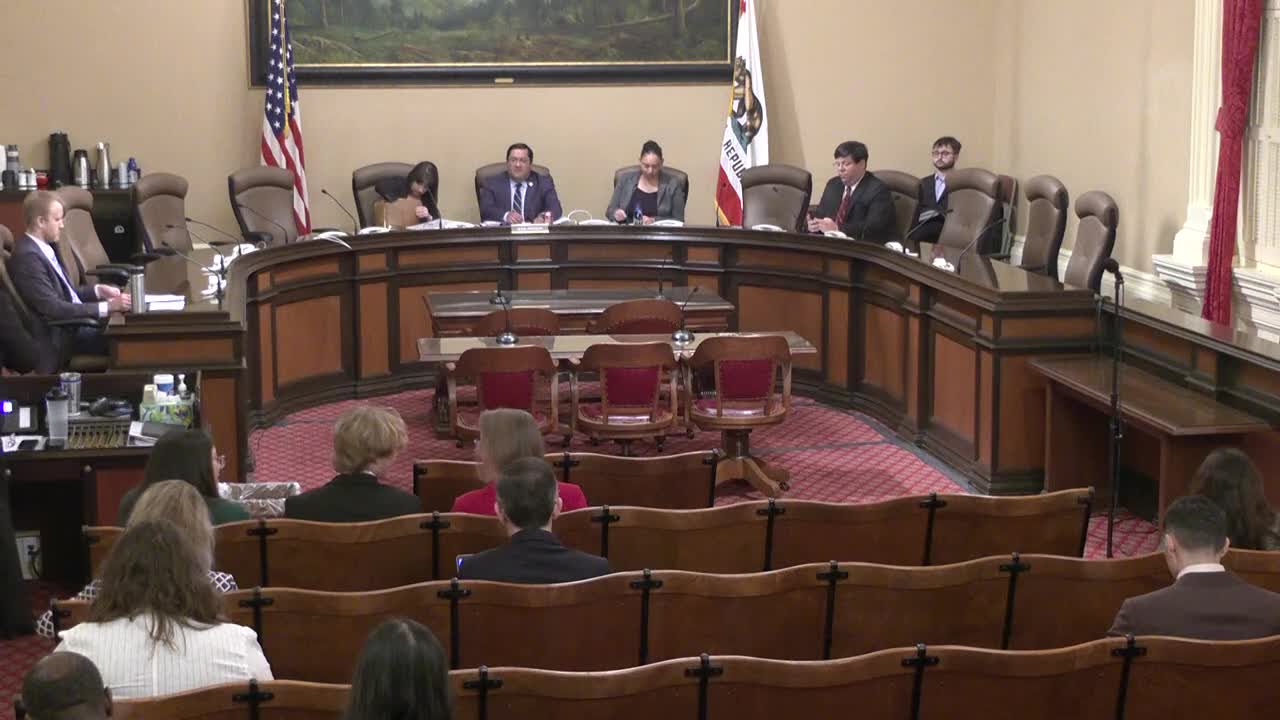
(2026-05-14: May 14 hearing: Held in committee and under submission.)
Introduced
In Committee
Awaiting First Chamber Vote
Passed First Chamber
In Committee
Awaiting Second Chamber Vote
Passed Second Chamber
Enacted
The Planning and Zoning Law requires each county and each city to adopt a comprehensive, long-term general plan for the physical development of that county or city, and specified land outside its boundaries, that includes, among other specified mandatory elements, a housing element. For the 4th and subsequent revisions of the housing element, existing law requires the Department of Housing and Community Development to determine the existing and projected need for housing for each region, regional housing need, as provided, and requires the appropriate council of governments, or for cities and counties without a council of governments, the department, to adopt a final regional housing need plan allocating a share of the regional housing need to each city, county, or city and county, as provided. Existing city or county, as provided. Existing law requires the housing element to include an analysis of any special housing needs, including, among others, families and persons in need of emergency shelter.
Existing law requires a city or county to provide by April 1 of each year an annual report to, among other entities, the department that includes, among other things, the citys or countys progress in meeting its share of regional housing needs, as specified. Existing law defines various terms for purposes of requirements applicable to the housing element. specified, and number of units approved and disapproved in the prior year.
This bill would define housing unit for the 7th and subsequent revisions of the housing element, with respect to acutely low income households, to mean a house, an apartment, a modular home, a mobilehome or trailer, a group of rooms, or a single room that is occupied, or, if vacant, is intended for occupancy as separate living quarters, as specified.By revising requirements on local governments with regard to adopting or revising the housing element, this bill would impose a state-mandated local program.The California Constitution requires the state to reimburse local agencies and school districts for certain costs mandated by the state. Statutory provisions establish procedures for making that reimbursement.This bill would provide that no reimbursement is required by this act for a specified reason.The bill would authorize a city or county that met or exceeded its need for emergency shelter capacity and that provides committed support for interim housing, as defined, to report the number of interim housing units receiving that support that are approved, as specified, as units approved or disapproved for acutely low income households, for purposes of the annual progress report. The bill would require the department to allow approved interim housing units to account for up to 50% of the citys or countys share of the regional need for housing for acutely low income households, as specified.
Existing law requires the department to publish, by December 31, 2026, advisory guidance, including, but not limited to, sample analyses and programs, pertaining to special housing needs for acutely low and extremely low income households and programs to assist in the development of adequate housing to meet the needs of acutely low income households, as specified.
This bill would require the guidance to include advice regarding the impact of the above-described requirements regarding interim housing and pertaining to acutely low and extremely low income households, specifically how interim housing, as defined, that does not meet the United States Census Bureau guidelines definition of a housing unit may be reported in the annual progress report.
The Planning and Zoning Law requires each county and each city to adopt a comprehensive, long-term general plan for the physical development of that county or city, and specified land outside its boundaries, that includes, among other specified mandatory elements, a housing element. For the 4th and subsequent revisions of the housing element, existing law requires the Department of Housing and Community Development to determine the existing and projected need for housing for each region, as provided, and requires the appropriate council of governments, or for cities and counties without a council of governments, the department, to adopt a final regional housing need plan allocating a share of the regional housing need to each city, county, or city and county, as provided. Existing law requires a city or county to provide by April 1 of each year an annual report to, among other entities, the department that includes, among other things, the citys or countys progress in meeting its share of regional housing needs, as specified. Existing law defines various terms for purposes of requirements applicable to the housing element.
This bill would define housing unit for the 7th and subsequent revisions of the housing element, with respect to acutely low income households, to mean a house, an apartment, a modular home, a mobilehome or trailer, a group of rooms, or a single room that is occupied, or, if vacant, is intended for occupancy as separate living quarters, as specified.
By revising requirements on local governments with regard to adopting or revising the housing element, this bill would impose a state-mandated local program.
The California Constitution requires the state to reimburse local agencies and school districts for certain costs mandated by the state. Statutory provisions establish procedures for making that reimbursement.
This bill would provide that no reimbursement is required by this act for a specified reason.
(a)(1)The Department of Housing and Community Development shall publish, by December 31, 2026, advisory guidance, including, but not limited to, sample analyses and programs, pertaining to both of the following:
(A)Special housing needs for acutely low and extremely low income households, as described in paragraph (7) of subdivision (a) of Section 65583.
(B)Programs to assist in the development of adequate housing to meet the needs of acutely low income households, as described in paragraph (2) of subdivision (c) of Section 65583.
(2)The guidance described in paragraph (1) shall provide advice regarding the impact of the statutory requirements pertaining to acutely low and extremely low income households on both all of the following:
(A)Compliance with the requirements in Section 65583 to analyze potential and actual governmental constraints and, where appropriate and legally possible, remove governmental constraints.
(B)Compliance with Section 65583.5, including specifying how interim housing, as defined in Section 65583.5, that does not meet the United States Census Bureau guidelines definition of a housing unit may be reported in the annual progress report.
(B)(C)Residential development project financial or other factors that impact feasibility.
(b)The Department of Housing and Community Development shall publish, by December 31, 2026, advisory guidance to be used by each council of governments, or delegate subregion, as applicable, to develop a proposed methodology for allocating the regional housing need for acutely low and extremely low income households to cities, counties, and cities and counties within the region or within the subregion pursuant to Section 65584.04.
SEC. 2.Section 65583.5 is added to the Government Code, to read:65583.5.(a)For the purposes of this section, the following definitions apply:
(1)Interim housing means a noncongregate and relocatable low barrier navigation center as that term is defined in Section 65660.
(2)Committed support for interim housing means that the city or county enters into a legally enforceable agreement that lasts until the end of the planning cycle that obligates sufficient available funds or other in-kind services to provide the assistance necessary to make the identified interim housing units available for occupancy for the duration of the planning period.
(b)(1)For the purposes of subclause (II) of clause (i) of subparagraph (E) of paragraph (2) of subdivision (a) of Section 65400, a city or county that provides committed support for interim housing may report the number of interim housing units receiving that support that are approved.
(2)Any interim housing units that are relocated out of the jurisdiction, or that are no longer available for occupancy, shall be reported pursuant to subparagraph (H) of paragraph (2) of subdivision (a) of Section 65400.
(c)(1)The department shall allow approved interim housing units to account for up to 50 percent of the citys or countys share of the regional need for housing for acutely low income households allocated pursuant to Section 65584.
(2)(A)Interim housing units identified pursuant to paragraph (1) shall count for the planning cycle during which the units are approved.
(B)Interim housing units that are reported as relocated pursuant to paragraph (2) of subdivision (b) shall be removed from the total number of units approved to meet the citys or countys share of the regional need for housing for acutely low income households.
(d)The section shall only apply to a city or county that met or exceeded its need for emergency shelter capacity identified in paragraph (7) of subdivision (a) of Section 65583.
SECTION 1.Section 65582 of the Government Code is amended to read:65582.As used in this article, the following definitions apply unless specified otherwise:(a)Above moderate income means income exceeding the moderate-income level described in Section 50093 of the Health and Safety Code.(b)Acutely low income has the same meaning as in Section 50063.5 of the Health and Safety Code.(c)All income levels or all household income levels means lower income, moderate income, and above moderate income levels.(d)Community, locality, local government, or jurisdiction means a city, city and county, or county.(e)Council of governments means a single or multicounty council created by a joint powers agreement pursuant to Chapter 5 (commencing with Section 6500) of Division 7 of Title 1.(f)Department means the Department of Housing and Community Development.(g)Emergency shelter has the same meaning as defined in subdivision (e) of Section 50801 of the Health and Safety Code.(h)Extremely low income means the income for households exceeding the income limit for acutely low income households, as defined in this section, and does not exceed the limit for extremely low income households, as defined in Section 50106 of the Health and Safety Code.(i)Frequent user coordinated care housing services means housing combined with other supportive services for homeless persons identified by a city or county as the most costly, frequent users of publicly funded emergency services.(j)Housing element or element means the housing element of the communitys general plan, as required pursuant to this article and subdivision (c) of Section 65302.(k)For the seventh and subsequent revisions of the housing element, with respect to acutely low income households, housing unit or unit means a house, an apartment, a modular home, a mobilehome or trailer, a group of rooms, or a single room that is occupied, or, if vacant, is intended for occupancy as separate living quarters. For purposes of this subdivision:(1)Separate living quarters are those in which the occupants have sleeping quarters separate from any other persons in the building and that have direct access from the outside of the building or through a common hall. Separate living quarters does not require separate bathrooms or eating spaces.(2)A housing unit described in this subdivision may be for permanent or transitional housing, as defined in Section 50801 of the Health and Safety Code.(l)Low income means the income for households exceeding the income limit for very low income households, as defined in this section, and does not exceed the income limit for lower income households, as defined in subdivision (a) of Section 50079.5 of the Health and Safety Code.(m)Lower income means income that is low income, very low income, extremely low income, or acutely low income.(n)Moderate income means the income for households exceeding the limit for lower income households, as defined in this section, and does not exceed the income limit for moderate-income households, as defined in Section 50093 of the Health and Safety Code.(o)Supportive housing means housing with no limit on length of stay, that is occupied by the target population, and that is linked to an onsite or offsite service that assists the supportive housing resident in retaining the housing, improving their health status, and maximizing their ability to live and, when possible, work in the community.(p)Supportive services include, but are not limited to, a combination of subsidized, permanent housing, intensive case management, medical and mental health care, substance abuse treatment, employment services, and benefits advocacy.(q)Target population means persons with low incomes who have one or more disabilities, including mental illness, HIV or AIDS, substance abuse, or other chronic health condition, or individuals eligible for services provided pursuant to the Lanterman Developmental Disabilities Services Act (Division 4.5 (commencing with Section 4500) of the Welfare and Institutions Code) and may include, among other populations, adults, emancipated minors, families with children, elderly persons, young adults aging out of the foster care system, individuals exiting from institutional settings, veterans, and homeless people.(r)Transitional housing means buildings configured as rental housing developments, but operated under program requirements that require the termination of assistance and recirculating of the assisted unit to another eligible program recipient at a predetermined future point in time that shall be no less than six months from the beginning of the assistance.(s)Very low income means income for households exceeding the income limit for extremely low income households, as defined in this section, and does not exceed the income limit for very low income households, as defined in Section 50105 of the Health and Safety Code.SEC. 2.No reimbursement is required by this act pursuant to Section 6 of Article XIIIB of the California Constitution because a local agency or school district has the authority to levy service charges, fees, or assessments sufficient to pay for the program or level of service mandated by this act, within the meaning of Section 17556 of the Government Code.As used in this article, the following definitions apply unless specified otherwise:
(a)Above moderate income means income exceeding the moderate-income level described in Section 50093 of the Health and Safety Code.
(b)Acutely low income has the same meaning as in Section 50063.5 of the Health and Safety Code.
(c)All income levels or all household income levels means lower income, moderate income, and above moderate income levels.
(d)Community, locality, local government, or jurisdiction means a city, city and county, or county.
(e)Council of governments means a single or multicounty council created by a joint powers agreement pursuant to Chapter 5 (commencing with Section 6500) of Division 1 7 of Title 1.
(f)Department means the Department of Housing and Community Development.
(g)Emergency shelter has the same meaning as defined in subdivision (e) of Section 50801 of the Health and Safety Code.
(h)Extremely low income means the income for households exceeding the income limit for acutely low income households, as defined in this section, and does not exceed the limit for extremely low income households, as defined in Section 50106 of the Health and Safety Code.
(i)Frequent user coordinated care housing services means housing combined with other supportive services for homeless persons identified by a city or county as the most costly, frequent users of publicly funded emergency services.
(j)Housing element or element means the housing element of the communitys general plan, as required pursuant to this article and subdivision (c) of Section 65302.
(k)For the seventh and subsequent revisions of the housing element, with respect to acutely low income households, housing unit or unit means a house, an apartment, a modular home, a mobilehome or trailer, a group of rooms, or a single room that is occupied, or, if vacant, is intended for occupancy as separate living quarters. For purposes of this subdivision:
(1)Separate living quarters are those in which the occupants have sleeping quarters separate from any other persons in the building and that have direct access from the outside of the building or through a common hall. Separate living quarters does not require separate bathrooms or eating spaces.
(2)A housing unit described in this subdivision may be for permanent or transitional housing, as defined in Section 50801 of the Health and Safety Code.
(k)(l)Low income means the income for households exceeding the income limit for very low income households, as defined in this section, and does not exceed the income limit for lower income households, as defined in subdivision (a) of Section 50079.5 of the Health and Safety Code.
(l)(m)Lower income means income that is low income, very low income, extremely low income, or acutely low income.
(m)(n)Moderate income means the income for households exceeding the limit for lower income households, as defined in this section, and does not exceed the income limit for moderate-income households, as defined in Section 50093 of the Health and Safety Code.
(n)(o)Supportive housing means housing with no limit on length of stay, that is occupied by the target population, and that is linked to an onsite or offsite service that assists the supportive housing resident in retaining the housing, improving their health status, and maximizing their ability to live and, when possible, work in the community.
(o)(p)Supportive services include, but are not limited to, a combination of subsidized, permanent housing, intensive case management, medical and mental health care, substance abuse treatment, employment services, and benefits advocacy.
(p)(q)Target population means persons with low incomes who have one or more disabilities, including mental illness, HIV or AIDS, substance abuse, or other chronic health condition, or individuals eligible for services provided pursuant to the Lanterman Developmental Disabilities Services Act (Division 4.5 (commencing with Section 4500) of the Welfare and Institutions Code) and may include, among other populations, adults, emancipated minors, families with children, elderly persons, young adults aging out of the foster care system, individuals exiting from institutional settings, veterans, and homeless people.
(q)(r)Transitional housing means buildings configured as rental housing developments, but operated under program requirements that require the termination of assistance and recirculating of the assisted unit to another eligible program recipient at a predetermined future point in time that shall be no less than six months from the beginning of the assistance.
(r)(s)Very low income means income for households exceeding the income limit for extremely low income households, as defined in this section, and does not exceed the income limit for very low income households, as defined in Section 50105 of the Health and Safety Code.
SEC. 2.No reimbursement is required by this act pursuant to Section 6 of Article XIIIB of the California Constitution because a local agency or school district has the authority to levy service charges, fees, or assessments sufficient to pay for the program or level of service mandated by this act, within the meaning of Section 17556 of the Government Code.
|
Date
|
Status
|
|---|---|
| May 14, 2026 | May 14 hearing: Held in committee and under submission. |
| May 8, 2026 | Set for hearing May 14. |
| Apr 27, 2026 | April 27 hearing: Placed on APPR. suspense file. |
| Apr 17, 2026 | Set for hearing April 27. |
| Apr 16, 2026 | From committee: Do pass and re-refer to Com. on APPR. (Ayes 7. Noes 0. Page 3902.) (April 15). Re-referred to Com. on APPR. |
| Apr 16, 2026 | From committee: Do pass and re-refer to Com. on APPR. (Ayes 7. Noes 0.) (April 15). Re-referred to Com. on APPR. |
| Apr 13, 2026 | Set for hearing April 15. |
| Mar 26, 2026 | From committee with author's amendments. Read second time and amended. Re-referred to Com. on HOUSING. |
| Feb 11, 2026 | Referred to Com. on HOUSING. |
| Feb 4, 2026 | From printer. May be acted upon on or after March 6. |
| Feb 3, 2026 | Introduced. Read first time. To Com. on RLS. for assignment. To print. |
|
Date
|
Description
|
Location
|
Votes
|
|
|---|---|---|---|---|
| Apr 27, 2026 | Placed on suspense file | Senate Standing Committee on Appropriations |
Passed |
|
| Apr 15, 2026 | Do pass, but first be re-referred to the Committee on [Appropriations] | Senate Standing Committee on Housing |
Passed |
This list shows positions taken on this bill by organizations on the date displayed, which is linked to the original source.
Positions by individuals are not included.
|
Organization
|
Position
|
Date
|
|---|---|---|
| ACLU | ** Against | |
| Alliance San Diego | ** Against | |
| Bay Area Council | ** Support | |
| Buccola Family Homeless Advocacy Clinic | ** Against | |
| California Rural Legal Assistance Foundation | ** Against | |
| Coalition on Homelessness, San Francisco | ** Against | |
| Compass Family Services | ** Against | |
| CSH | ** Against | |
| Disability Rights California | ** Against | |
| Heavin Helps | ** Against | |
| Homeless Experienced Advocacy & Leadership Network San Diego (HEALNSD) | ** Against | |
| Housing CA | ** Against | |
| Housing Is a Human Right - Orange County | ** Against | |
| Housing Matters | ** Against | |
| LA Family Housing | ** Against | |
| LEAD | ** Against | |
| National Alliance to End Homelessness | ** Against | |
| National Homelessness Law Center | ** Against | |
| Non Profit Housing Association of Northern California | ** Against | |
| Pubic Interest Law Project | ** Against | |
| Public Advocates | ** Against | |
| Sacred Heart Community Service | ** Against | |
| Southern California Association of Non-profit Housing (SCANPH) | ** Against | |
| Supportive Housing Alliance | ** Against | |
| Tenderloin Neighborhood Development Corporation | ** Against | |
| Vallejo Together | ** Against | |
| western center on law & poverty | ** Against | |
| Western Regional Advocacy Project | ** Against |
SENATE COMMITTEE ON
Senator Sabrina Cervantes, Chair
2025 - 2026 Regular Session
SB 967 (Blakespear) - Planning and zoning: housing element: interim housing units: acutely low income households
Version: | Policy Vote: |
Urgency: | Mandate: |
Hearing Date: | Consultant: |
Bill Summary:
SB 967 would authorize cities and counties that have met or exceeded their need for emergency shelter capacity to include information on their annual progress reports (APRs) regarding the number of interim housing units that have been approved, and require the Department of Housing and Community Development (HCD) to allow approved interim housing units to account for up to 50% of a city’s or county’s share of the regional housing need for acutely low-income (ALI) households, as specified.
Fiscal Impact:
- One-time HCD costs of approximately $400,000 in contract expenses to develop a new methodology to calculate interim and transitional housing needs for each region and adjust regional housing need determinations (RHND) accordingly. (General Fund)
- Ongoing HCD costs, likely in the high hundreds of thousands of dollars, for 3.0-4.0 PY of new staff in the Housing Element Division to address new and more complex workload of incorporating interim housing into a process designed to assess and plan for long-term permanent housing. The scope of this workload would vary based on the level of technical assistance required to support local jurisdictions in implementing these changes and integrating interim housing into existing planning and reporting processes, including HCD’s internal processes. (General Fund)
Background:
Existing law requires cities and counties to prepare a general plan comprised of seven mandatory elements, including a housing element that identifies existing and projected housing needs. The housing element must include an inventory of adequate sites zoned for housing at all income levels and to accommodate a jurisdiction’s share of the regional housing needs that is sufficient to account for population growth and to overcome existing housing deficiencies over the planning period. The regional housing needs assessment (RHNA) process is composed of three main stages: (1) development of regional housing need estimates by HCD and the Department of Finance; (2) allocation of housing within each region by councils of government (COGs), or by HCD in an area not within a COG; and (3) incorporation of RHNA allocations into city and county housing elements. If the city or county does not have enough sites within its existing inventory of residentially zoned land to accommodate its share of the regional housing needs, it must adopt a program to rezone land within the first three years of the planning period. Beginning with the 7th cycle housing element planning period, cities and counties must include planning for housing for acutely low-income (ALI, 0-15% of area median income) and extremely low-income (ELI, 0-30% of area median income) households, in addition to other income levels (very low, low, moderate, and above moderate). Housing elements must be updated every eight years in urban areas, and every five years in more rural areas.
The housing element must also include an analysis of any special needs housing, including, among other things, families and persons in need of emergency shelter. It must also identify zones that allow residential, including mixed uses, where emergency shelters and other interim interventions are allowed as a permitted use without a conditional use or other discretionary permit that are suitable for residential uses, as specified. Shelters and interim inventions may be subject to development and management standards that are objective and encourage and facilitate the development of, or conversion to, emergency shelters.
Existing law requires each city and county to submit an APR to HCD and the Governor’s Office of Land Use and Climate Innovation (LCI) by April 1 of each year that includes specified information relating to the status and progress of implementing the general plan, including steps taken to meet the jurisdiction’s share of regional housing needs pursuant to its housing element. Among this information, cities and counties must report zoning and rezoning information, the number of housing development applications received in the prior year and the number of proposed units included in those developments, the number of units approved and disapproved in the prior year, the number of housing units that were demolished in the prior year, and the net number of new housing units issued a completed entitlement, building permit, or certificate of occupancy in the housing element cycle, and the income category of each unit.
Existing law requires HCD to publish advisory guidance by December 31, 2026 pertaining to the special housing needs for ALI and ELI households and programs to assist in the development of adequate housing to meet the needs of ALI households, as specified. HCD must also issue guidance to be used by COGs to develop a proposed methodology for allocating the regional housing need for ALI and ELI households, as specified.
Proposed Law:
SB 1322 would authorize cities and counties that have met or exceeded their need for emergency shelter capacity to include information on their APRs regarding the number of interim housing units that have been approved, and require HCD to allow approved interim housing units to account for up to 50% of a city or county share of the regional housing need for ALI households. Specifically, this bill would:
- Define “interim housing” as a noncongregate and relocatable low barrier navigation center (LBNC), as specified.
- Authorize a city or county that provides committed support for interim housing to report the number of interim housing units receiving support and that are approved in its APR.
- Require a city and county to also include in its APR any interim housing units that are relocated out of the jurisdiction, or that are no longer available for occupancy.
- Require HCDE to allow approved interim housing units to account for up to 50% of the city’s or county’s share of the regional housing need for ALI households for the planning cycle during which the units are approved. Interim units that are reported as relocated must be removed from the number of units approved to meet the local entity’s share of regional housing need for ALI households.
- Specify that the bill would only apply to a city or county that met or exceeded its need for emergency shelter capacity.
- Require HCD to include compliance with the provisions of this bill in specified advisory guidance that must be published by December 31, 2026, including specifying how interim housing that does not meet U.S. Census Bureau guidelines definition of a “housing unit” may be reported in local government APRs.
Related Legislation:
SB 866 (Blakespear), which is currently pending in this Committee, would expand the data that certain cities and counties must include in the housing element regarding unhoused populations, as specified.
AB 3093 (Ward), Chap. 282/2024, required, among other things, cities and counties to include in the housing element, beginning with the 7th cycle, planning for housing for ALI and ELI households, in addition to other income levels. The bill also required HCD to publish advisory guidance by December 31, 2026 pertaining to the special housing needs for ALI and ELI households and programs to assist in the development of adequate housing to meet the needs of ALI households, as specified, and to issue guidance for COGs to develop a proposed methodology for allocating the regional housing need for ALI and ELI households.
Staff Comments:
According to the Senate Housing Committee’s analysis of this bill: “Evidence shows that the solution to homelessness is providing more habitable, stable, and permanent housing at all income levels, and in particular, more housing affordable to the lowest income earners. While increasing the supply of affordable housing is the priority solution to the homelessness crisis, there can be a spectrum of housing interventions that different levels of governments could offer, depending on the specific needs of the individual or family experiencing homelessness. These interventions range from short-term and interim interventions (such as emergency shelters, tiny home communities, and LBNCs), to long-term, permanent housing interventions (such as housing choice vouchers, rental subsidies, landlord incentives, and permanent housing), to homelessness prevention altogether (such as rapid rehousing and diversion programs). These interventions all play a role in the homelessness response system.” This bill is intended to incentivize local governments to address unsheltered homelessness by meeting local interim housing needs by allowing cities and counties to claim credit for permitted interim housing.
Staff notes that the RHND process has historically been designed to assess and plan for long-term permanent housing needs. HCD indicates that this bill would introduce a fundamentally new process that diverges from the longstanding focus of housing element law, requiring the department to incorporate a short-term, transitional housing type into a framework built around planning for permanent housing development at all income levels.
Staff notes that this bill requires HCD to include in a specified report advice on compliance with this bill, including specifying how interim housing that does not meet U.S. Census Bureau guidelines definition of a “housing unit” may be reported in local government APRs. It is unclear how HCD would comply with this requirement, considering the specified report is due prior to the enactment date of this bill.
-- END --
SENATE COMMITTEE ON HOUSING
Senator Jesse Arreguín, Chair
2025 - 2026 Regular
Bill No: SB 967 Hearing Date: 4/15/2026
Author: | Blakespear | ||
Version: | 3/26/2026 Amended | ||
Urgency: | No | Fiscal: | Yes |
Consultant: | Hank Brady | ||
SUBJECT: Planning and zoning: housing element: housing units: acutely low income households.
DIGEST: This bill authorizes local governments to report noncongregate and relocatable low barrier navigation centers (LBNCs) in their annual progress report (APR), and to count approved LBNCs towards up to 50% of the local government’s share of the regional housing need for acutely low-income (ALI) households, provided specified conditions are met.
ANALYSIS:
Existing law:
- Establishes the following six household income categories for purposes of Housing Element law (HEL):
- ALI, meaning those earning between 0-15% of the area median income (AMI).
- Extremely Low Income (ELI), meaning those earning below 30% of the AMI.
- Very Low-Income (VLI), meaning those earning below 50% of the AMI.
- Lower-Income (LI), meaning those earning between 50% and 80% of the AMI.
- Moderate-Income (MI), meaning those earning between 80% and 120% of the AMI.
- Above Moderate-Income, meaning those earning more than 120% of the AMI.
- Provides that each community’s fair share of housing be determined through the housing element cycle, which is composed of three main stages:
- The Department of Finance and Department of Housing and Community Development (HCD) prepare a regional housing needs determination (RHND).
- Councils of government (COGs) allocate the determined housing needs to local governments within the region through a regional housing needs allocation (RHNA) plan (where a COG does not exist, HCD makes the determinations).
- Cities and counties incorporate their allocations into their housing elements.
- Requires each city and county to adopt a housing element, which must contain specified information, programs, and objectives, including:
- An assessment of housing needs and an inventory of resources and constraints relevant to the meeting of these needs.
- A statement of the community’s goals, quantified objectives, and policies relative to affirmatively furthering fair housing and to the maintenance, preservation, improvement, and development of housing.
- A program that sets forth a schedule of actions during the planning period, and timelines for implementation, that the local government is undertaking to implement the policies and achieve the goals and objectives of the housing element.
- Requires local governments, in their 6th cycle housing element planning period, to include an assessment of housing needs and resources in their housing elements for above moderate-income, MI, LI, VLI, and ELI households. Requires local agencies to assess housing needs for ELI households either by using census data or by assuming that 50% of VLI households qualify as ELI. Beginning in the 7th cycle, locals shall also include an assessment of ELI and ALI households and requires the state to identify and provide an allocation for these two categories in lieu of the existing assumptions and calculations.
- Requires each jurisdiction to submit an APR to its legislative body, HCD, and the Governor’s Office of Land use and Climate Innovation (GO-LUCI) by April 1 of each year that includes specified information, including progress in meeting its share of the regional housing need, a list of sites rezoned to accommodate allocation for each income level that could not be accommodated on sites identified in the housing element’s sites inventory, and the number of net new units of housing that have been issued a completed entitlement, building permit, or certificate of occupancy and the income category that each unit satisfied.
- Requires cities and counties to ensure that, at all times, the sites identified in its housing element’s site inventory and rezoning programs can accommodate the unmet share of its regional housing need for the current planning period.
This bill:
- Defines the following terms:
- “Interim housing” as a noncongregate and relocatable LBNC.
- “Committed support for interim housing” means that a city or county enters into a legally enforceable agreement that lasts until the end of the housing element cycle that obligates sufficient available funds or other in-kind services to provide the assistance necessary to make the identified interim housing units available for occupancy for the duration of the housing element cycle.
- Allows a city or county that provides committed support for interim housing to report the number of interim housing units receiving support that are approved in the jurisdiction’s APR.
- Requires a city or county that reports the number of approved interim housing units to report any interim housing units that are relocated outside of the jurisdiction, or that are no longer available for occupancy in their APR.
- Requires HCD to allow interim housing units to account for up to 50% of a city’s or county’s share of regional housing need for ALI households.
- Provides that interim housing units counted by HCD shall count for the housing element cycle during which the interim housing is approved.
- Requires interim housing that is relocated outside of the jurisdiction, to be removed from the total number of units approved to meet the city’s or county’s share of the regional need for ALI households.
- Requires jurisdictions to meet or exceed their need for emergency shelter capacity identified in their housing element before they can count interim housing toward their share of the regional need for ALI households.
- Requires HCD, in a forthcoming guidance document, to include guidance specifying how interim housing that does not meet the U.S. Census Bureau guidelines definition of a “housing unit” may be reported in the APR.
Background
Homelessness: stats and causes. According to the most recent point in time (PIT) count, 187,084 people were experiencing homelessness in California—representing 24% of the nation’s homeless population. Two-thirds of the homeless population in California is unsheltered. Over half (51%) of all unsheltered people in the United States were in California. A lack of affordable housing is the biggest contributor to homelessness. As housing costs continue to rise, rent becomes less affordable for lower-income households, who are forced to live beyond their means (paying more than 30% of income on housing costs) or are pushed out of their homes, leading to rapid increases in homelessness. Cities with higher rents and lower rental vacancy rates (i.e., tighter housing markets) are directly linked to higher per capita rates of homelessness.
The lack of affordable housing plays a significant role in causing individuals to become homeless and creates obstacles for individuals experiencing homeless to transition into stable housing. The need for and costs of housing have consistently outpaced the development of affordable housing for over 30 years. As of 2022, working at the minimum wage of $15/hour, a renter has to work 83 hours each week to afford a modest one-bedroom rental home at fair market rent in California. The lack of supply is the primary factor underlying California’s housing crunch. To keep up with demand, HCD estimates that California must plan for the development of more than 2.5 million homes over the next eight years, and no less than one million of those homes must meet the needs of lower-income households (more than 640,000 VLI and 385,000 LI units are needed). For decades, not enough housing was constructed, resulting in a severe undersupply of housing. New construction of housing, both single family homes and apartments, continues to lag behind historical averages, and lags further behind the number of new units needed to meet housing demand.
Comments
- Author’s statement. “Interim housing is a critical part of the spectrum of interventions to address unsheltered homelessness. In California, more than 120,000 people have no indoor place to sleep at night, forcing them to resort to sleeping outside. The unsheltered homelessness crisis causes high rates of mortality, threatens public safety, and burdens community resources. Interim housing mitigates these effects by providing safe sleeping accommodations and social services while people work to attain permanent housing. Nevertheless, only 2 beds are available for every 5 people in need, meaning that most communities fail to adequately meet requests for transitional housing. RHNA is the state’s framework for requiring cities and counties to meet the housing needs of their communities at all income levels. Two years ago, the Legislature passed AB 3093, requiring cities and counties to specifically plan and zone for housing affordable to those who are homeless or at risk of becoming homeless. Yet, RHNA does not count interim housing toward this planning requirement. SB 967 would align RHNA with interim housing needs by allowing local governments to claim credit for permitted interim housing. This will incentivize local governments to address unsheltered homelessness by meeting local interim housing needs.”
- How to Solve California’s Homelessness Crisis. Evidence shows that the solution to homelessness is providing more habitable, stable, and permanent housing at all income levels, and in particular, more housing affordable to the lowest income earners. While increasing the supply of affordable housing is the priority solution to the homelessness crisis, there can be a spectrum of housing interventions that different levels of governments could offer, depending on the specific needs of the individual or family experiencing homelessness. These interventions range from short-term and interim interventions (such as emergency shelters, tiny home communities, and LBNCs), to long-term, permanent housing interventions (such as housing choice vouchers, rental subsidies, landlord incentives, and permanent housing), to homelessness prevention altogether (such as rapid rehousing and diversion programs). These interventions all play a role in the homelessness response system.
Many families merely require temporary rental assistance to maintain or reconnect to permanent housing. Some populations require more intensive services in conjunction with permanent housing options. For those living on the streets or in encampments, emergency shelter can provide short-term respite. However, shelters can impose requirements that present barriers to entry (such as restrictive hours, only offering congregate settings, or disallowing pets), which mean working families and marginalized community members may not be able to use them. Shelters also have demonstrated low success rates at connecting people to permanent housing (in California from 2018-2024, the rate was 22%).[1] Interim solutions, such as bridge housing communities, LBNCs, and tiny home communities typically offer non-congregate housing and healthcare services, particularly to marginalized communities, families, and those with pets. These interventions may play a stabilizing role before a more permanent solution (such as rental assistance or the construction of a new unit) can be attained. However, interim housing interventions similarly have high rates of returns to homelessness without access to permanent housing.
Every jurisdiction or region must evaluate existing resources and identify the appropriate means to address unique needs. Research shows that creating more shelter beds and interim beds alone does not decrease the number of people experiencing homelessness. In fact, people residing in emergency shelters or interim housing (including LBNCs or tiny homes) are still considered homeless by the U.S. Department of Housing and Urban Development (HUD).
Effective homelessness response systems maximize every shelter or interim bed as a means to connect a homeless individual or family to permanent housing. To do so, communities must typically invest far more in permanent housing and homelessness prevention than in short-term and interim interventions.
- Tiny home communities and LBNCs. Tiny home communities are typically operated on publicly owned land, or land which is leased out by a private entity at an extremely submarket rate (sometimes as low as $1). Most of these communities are erected with a mix of public and philanthropic support. These communities are typically preferable for marginalized groups who may face discrimination, harassment, or violence in congregate shelter settings given they offer more privacy options. The structural makeup of tiny home communities can vary greatly. The State of California requires that single occupancy units be at least 70ft2 and double occupancy units at least 120ft2, not to exceed 400ft2. Some of these units come with no plumbing, which means residents must use communal bathrooms. Others have built-in plumbing with a private bathroom, but come at a significantly higher cost to acquire and install.
LBNCs serve as temporary living facilities that focus on connecting individuals experiencing homelessness to permanent housing and essential services. Unlike emergency shelters, LBNCs aim to reduce barriers to entry by offering privacy options for families. Additionally, they allow access for populations that may not be willing or able to access emergency shelters, including those with pets, partners, and children. They also allow residents to come and go at any hour, which allows working individuals to access housing, and provide storage for personal belongings. LBNCs generally provide wrap-around services, including assisting with basic needs, case management, legal services, social services, career assistance, educational services, transportation assistance, mental health treatment, medical care, substance abuse treatment, and housing services. This bill refers to LBNCs that are noncongregate and relocatable which captures tiny home communities that offer the support and services found in a LBNC.
- Why are tiny home communities so hard to develop? Those who support investments in tiny home communities note that the upfront costs are relatively low. Despite the low upfront costs for development, tiny home communities have proven difficult to create in many settings. In 2023, Governor Gavin Newsom vowed to deliver 1,200 tiny homes to Sacramento, Los Angeles, San Diego County, and San Jose, at a cost of about $30 million. The price ended up closer to $80 million, according to the California Department of General Services[2]. Ultimately, Sacramento was the only jurisdiction to receive the physical units; San Jose and LA received money instead so they could purchase the dwellings themselves, after months of delays in selecting a builder and awarding contracts.[3]
Supporters of tiny homes correctly note that the cost to construct and provide the tiny homes is relatively inexpensive. However, this program faced several financial and procedural challenges that drove up the overall cost per unit and delayed the projects. First, many neighborhoods were resistant to the plan.[4] For example, San Diego County chose a site and reversed course due to neighborhood opposition. The Governor eventually pulled back the funding when the county failed to identify another site in time.[5] Second, finding suitable sites that are large enough to accommodate the communities was challenging; Sacramento initially identified CalExpo as a site but had to change location.[6] Third, the units themselves often need to be placed on platforms and be connected to utilities such as power and water. Sacramento struggled to identify sites that were connected to these services. According to DGS, the design and construction of these tiny home villages are not a ‘plug and use” project, which means each cabin needs to be powered, restrooms and showers purchased and plumbing and other utilities separately connected.[7] Meeting infrastructure needs such as water, sewer, and electrical hook-ups (or even interim generators) added significant costs and delays to site designation and opening.
While these non-congregate units can provide utility and safety, particularly for marginalized people, there are several barriers that make their installation both challenging and costly. Despite state efforts to overcome NIMBYism (i.e., streamlining project approvals), local officials must still make tough decisions about where to site these communities. NIMBY sentiments often leave industrial and more remote locations as the only politically viable sites for local officials to designate, which comes at the cost of displacing homeless people from their community of origin and disconnecting them from urban centers that are connected to critical amenities and services. And despite the relatively inexpensive up-front costs of the units, other costs associated with tiny home installation often drive the start-up costs to the six-figures. Locals must also find ongoing resources for operations and for service providers. While tiny homes can play a role in the spectrum of interventions, people living in tiny homes are still considered homeless – and these units have a much more limited lifespan than traditional housing units, which can result in fewer cost efficiencies over time compared to investments in permanent housing.
- Current state laws encouraging tiny home, LBNC, and other shelter development. In addition to streamlining for permanent supportive housing and 100% affordable projects, the Legislature has sought to make it easier for developers to get permits for shelters. By streamlining the approvals, projects can be developed much more quickly and face much lower litigation risk from NIMBYs. Since 2008, locals have been required to identify sites where shelters are not subject to a conditional use permit in their housing elements. However, to avoid additional opportunities to stall shelter development, the Legislature has sought to exempt actions taken by local agencies to serve shelters and LBNCs. Below is a summary of those bills:
- SB 2 (Cedillo, Chapter 633, Statues of 2007)/AB 2239 (Bloom, Chapter 654, 2022)/SB 340 (Laird, Chapter 514, Statutes of 2025). SB 2. Collectively, these bills require cities and counties to accommodate their need for emergency shelters on sites where shelter use is allowed without a conditional use permit, and requires cities and counties to treat transitional and supportive housing projects as a residential use of property. AB 2339 limited the kinds of development standards that may be imposed on shelters to limit additional requirements for development, clarified which sites are truly adequate for shelters to ensure locals identified sites that could reasonably accommodate their shelter capacity, expanded to include LBNCs, and expanded the zones where shelters may be sited. SB 340 provided that a conditional use permit is not required for the provision of services in a shelter zone.
- AB 101 (Budget Committee, Chapter 159, Statutes of 2019) – streamlines the approval of LBNCs that are service rich and focus on moving people to permanent housing.
- State & local actions to fund housing and homelessness projects / SB 406 (Cortese, Chapter 150, Statutes of 2023)/SB 1361 (Blakespear, Chapter 188, Statutes of 2024). Existing law exempts actions taken by HCD, the California Housing Finance Authority (CalHFA), or a local agency to fund or provide insurance for 100% affordable projects from the California Environmental Quality Act (CEQA). SB 406 expanded this exemption to also include actions taken by a local agency to approve contracts providing services for people experiencing homelessness. SB 1361 expanded CEQA exemption to actions taken by a local agency to approve a contract for providing services for people experiencing homelessness (including case management, resource navigation, security services, residential services, and counseling services).
- SB 1395 (Becker, Chapter 297, Statutes of 2024) – exempts from CEQA actions taken by a local government to lease, convey, or encumber land owned by a city, county, or city and county, or to facilitate the lease, conveyance, or encumbrance of land owned by the local government for a shelter; to provide financial assistance to a homeless shelter; to approve a contract to provide services for people experiencing homelessness to a homeless shelter constructed pursuant to, or authorized by, this section. These services may include, but are not limited to, case management, resource navigation, security services, residential services, and counseling services.
Shelters are largely proposed by local governments. This means that, ultimately, local governments themselves still need to make tough decisions on the record about where shelters may be located, which can and will draw opposition from some constituents.
This bill is intended to encourage locals to construct more tiny home villages by giving local governments credit for tiny home development and installation towards their share of the regional housing need for ALI households.
- Housing Elements, and RHNA. Every city and county in California is required to develop a general plan that outlines the community’s vision of future development through a series of policy statements and goals. Each community’s general plan must include a housing element, which outlines a long-term plan for meeting the community’s existing and projected housing needs. The housing element demonstrates how the community plans to accommodate its “fair share” of its region’s housing needs. Following a staggered schedule, cities and counties located must generally revise their housing elements every eight years (though some must do so every five years). These five- and eight-year periods are known as the housing element planning period.
In general, a housing element must identify and analyze existing and projected housing needs, identify adequate sites with appropriate zoning to meet its share of the regional housing need, and ensure that regulatory systems provide opportunities for, and do not unduly constrain, housing development.
Before each housing element revision, each community is assigned its fair share of the region’s housing need for four separate income categories (very low-, low-, moderate-, and above-moderate income households) through a two-step process. First, HCD determines the aggregate housing need for the COG (serving a region) during the planning period the housing element will cover; then the COG allocates the regional housing need to each city and county within the region. Prior to the 7th housing element cycle, in order to assess the need for ELI, a locality could either conduct an independent analysis or assume that the need is 50% of the regional need allocation for VLI housing.
AB 3093 (Ward, Chapter 282, Statutes of 2024), requires the state, beginning in the 7th housing element cycle, to specifically identify the needs for ELI (i.e., households at 0-30% AMI) and for ALI (i.e., households at 0-15% AMI). In practice, it does not mean that local governments will be assigned larger RHNA; this is because these populations are currently included in the VLI income category of RHNA, which serves households earning between 0% and 50% of AMI. AB 3093 instead requires local governments to develop more targeted programs and strategies in their housing elements that cater to the needs of Californians at the lowest end of the income spectrum, including homeless individuals and those at risk of homelessness. It could also provide local governments with the opportunity to track and highlight compelling local programs and innovations that are successfully addressing homelessness.
An analysis of the homeless population is essential to determining the need for emergency shelters and transitional housing. The analysis is required to include estimates of numbers and types of households (e.g., single men, single women, families, and persons with disabilities, including people with impairments related to substance abuse), a description of needs, resources available to meet those needs and a description of program or policy options for addressing the need. According to HCD guidance, it should also include an estimate of units to shelters to vouchers currently available to assist this population. The emergency shelter need must be based on both annual and seasonal need to ensure that communities provide for sufficient shelter during periods of cold and inclement weather.
- Lost Sites. No Net Loss Law (NNLL) in HEL provides that a local government should always have sufficient sites zoned for the entirety of their RHNA throughout the housing element cycle. This means that a jurisdiction that approves the development of a parcel identified in its sites inventory with fewer units by income category than planned for in the local housing element on that parcel, then the jurisdiction must either: 1)make findings that the remaining sites identified in the housing element have sufficient capacity to accommodate its remaining share of regional need for that income category, or 2) identify and make available additional sites to accommodate the remaining unmet need for each income category.
NNLL, though complex in its statutory construction, embodies a simple principle, that local agencies should always have sufficient sites available for affordable housing developers to build permanent affordable housing throughout the housing element cycle. Prior to NNLL local agencies were only required to ensure that adequate sites for LI housing were available at the start of the housing element cycle; sites identified for LI housing that were developed with nonresidential uses or with market rate housing were simply lost to affordable developers for that housing element cycle. NNLL ensures that if a site identified for LI housing is developed with something other than LI housing, the jurisdiction must identify a new site available for LI housing development. For example, if market rate development is approved on a site planned for 30 units of LI housing, NNLL requires the jurisdiction to identify a new site that can accommodate 30 units of LI housing.
Under current law, a site that is identified for permanent LI housing development that is used as a location for temporary shelter triggers NNLL as the site is no longer available for permanent LI housing development. By allowing LBNCs, such as relocatable tiny homes, to count toward a jurisdictions share of ALI housing units, this bill negates the triggering of NNLL.
In practice, treating interim housing the same as permanent housing for the purposes of RHNA will result in a loss of sites available for permanent LI housing development if those sites are developed with interim housing.
- Shelter planning obligations. HEL requires local agencies to prepare an analysis of the need for emergency shelter based on the capacity necessary to accommodate the most recent homeless PIT count prepared before the start of the housing element cycle. This bill states that a jurisdiction is only able to count interim housing toward its share of the regional need for ALI once it demonstrates that it has met or exceeded its need for emergency shelter capacity as identified in the analysis prepared for the housing element. This provision ensures that interim housing units that are identified as accommodating the need for emergency shelter capacity in the housing element are not double counted and simultaneously counted as housing units. In practice this means a local agency that produces interim housing beyond its shelter needs may count the excess towards its regional share of need for ALI housing. Given that interim housing has never counted toward meeting any portion of a jurisdiction’s regional housing need, this provision ensures that one interim unit only counts as one interim unit.
- Opposition. A coalition of fair housing and homeless advocates are in opposition to this bill. They note that this bill would incorporate into state law the concept that a housing unit for the lowest income Californians should be defined differently than a housing unit for higher-income Californians. They argue that interim housing, which includes shelter beds, should never be considered a housing unit, and that people still experience homelessness while residing in interim housing. They also argue that allowing local leaders to count a shelter bed as a housing unit or to site shelter beds where housing would otherwise be sited will produce poorer outcomes around homelessness.
- Support. This bill is supported by the Bay Area Council, a group representing employers. They note that California only has four shelter beds for every 10 homeless residents. They argue that interim housing can be quickly and affordably scaled, providing stability to people who would otherwise end up on the streets. They also argue that permanent ALI housing is difficult to fund at scale and that SB 967 creates a policy incentive to solve the homelessness crises by allowing local jurisdictions to count interim housing toward their ALI RHNA.
Related/Prior Legislation
SB 866 (Blakespear, 2026) --- would expand the data local governments provide in the housing element specific to homeless populations. This bill is pending before the Senate Housing Committee.
SCR 131 (Blakespear, 2026) --- urges the Governor, relevant state agencies, and all local governments to adopt an urgent and coordinated approach to both end and prevent unsheltered homelessness statewide through the full activation of interim and permanent strategies, as well as interventions to prevent individuals and families from falling into unsheltered homelessness, and fund all interventions and reforms that prioritize housing unsheltered Californians. This bill is pending before the Senate Housing Committee.
FISCAL EFFECT: Appropriation: Fiscal Com.: Local:
POSITIONS: (Communicated to the committee before noon on Wednesday,
April 8th, 2026.)
SUPPORT:
Bay Area Council
OPPOSITION:
ACLU
Alliance San Diego
Buccola Family Homeless Advocacy Clinic
California Rural Legal Assistance Foundation
Coalition on Homelessness, San Francisco
Compass Family Services
Csh
Disability Rights California
Heavin Helps
Homeless Experienced Advocacy & Leadership Network San Diego (HEALNSD)
Housing CA
Housing Is a Human Right - Orange County
Housing Matters
LA Family Housing
Lead
National Alliance to End Homelessness
National Homelessness Law Center
Non Profit Housing Association of Northern California
Pubic Interest Law Project
Public Advocates
Sacred Heart Community Service
Southern California Association of Non-profit Housing (SCANPH)
Supportive Housing Alliance
Tenderloin Neighborhood Development Corporation
Vallejo Together
Western Center on Law & Poverty
Western Regional Advocacy Project
-- END --
Lauren Helper. Calmatters: A Volunteer Jail: Inside the Scandals and Abuse Pushing Californians Homeless Out of Shelters. Accessible here: https://calmatters.org/housing/2025/02/california-homeless-shelters-purgatory/ ↑
Stephen Hobbs. Sacramento is doubling down on tiny homes. Is it a bold move or a misguided one? Sacramento Bee. January 23, 2026. Accessible here: https://www.sacbee.com/news/article313107445.html ↑
Id. ↑
Tori Apodaca. What is taking Sacramento's state-funded tiny homes project to be completed? CBS Sacramento. Accessible here: https://www.cbsnews.com/sacramento/news/why-sacramento-tiny-homes-state-funded-project-delays/ ↑
Jeremy White. Newsom withdraws $10M tiny homes grant for San Diego. Politico. July 16, 2024. Accessible here: https://www.politico.com/news/2024/07/16/newsom-withdraws-10m-tiny-homes-grant-for-san-diego-00168514 ↑
Id. ↑
Tori Apodaca. What is taking Sacramento's state-funded tiny homes project to be completed? CBS Sacramento. Accessible here: https://www.cbsnews.com/sacramento/news/why-sacramento-tiny-homes-state-funded-project-delays/ ↑
Bill Author