SB 969: Weights and measures: electric vehicle fueling systems.
- Session Year: 2025-2026
- House: Senate
- Latest Version Date: 2026-09-20
Current Status:
Passed
(2026-09-20: Chaptered by Secretary of State. Chapter 346, Statutes of 2026.)
Introduced
In Committee
Awaiting First Chamber Vote
Passed First Chamber
In Committee
Awaiting Second Chamber Vote
Passed Second Chamber
Enacted
Existing law vests the Department of Food and Agriculture with general supervision of the weights and measures and weighing and measuring devices sold or used in the state, including devices used to measure electricity sold as a motor vehicle fuel. Existing law authorizes the Secretary of Food and Agriculture to adopt regulations to carry out the provisions of state law governing weights and measures, and requires the secretary to establish, by regulation, tolerances and specifications and other technical requirements for commercial weighing and measuring, as specified.
Existing law authorizes the secretary, and each sealer acting under the supervision and direction of the secretary, to enforce provisions of state law governing weights and measures, as specified. Existing law requires the sealer of a county to inspect and test weighing and measuring devices, as specified, that are used or sold in the county. Existing law requires the secretary to adopt regulations governing the inspection frequency of all commercially used weights, measures, and weighing and measuring apparatus in the state and requires each county sealer to perform those inspections as may be required by the secretary. Existing law makes a violation of the provisions of state law governing weights and measures a crime.
This bill would require the secretary to adopt regulations governing the inspection frequency of electric vehicle fueling systems used for commercial purposes, as specified, and would require a sealer to inspect those systems in accordance with specified requirements. The bill would require a sealer to submit data and information relating those inspections on a monthly basis, as prescribed by the secretary, to the Division of Measurement Standards and would require the division, no less than biannually, to provide the State Energy Resources Conservation and Development Commission with that information and data.
Existing law requires the secretary to provide rules and regulations for the submission for approval of types or designs of weights, measures, or weighing, measuring, or counting instruments or devices, used for commercial purposes, and to issue certificates of approval of those types or designs as the secretary finds meet the requirements of state law, as specified. Existing law prohibits a person from maintaining, installing, adjusting, reconditioning, or servicing a commercial weighing or measuring device for compensation unless the person registers with the secretary as a service agency. Existing law authorizes a weighing or measuring device to be placed in service only by a sealer or a service agency.
This bill would exempt electric vehicle fueling systems used for commercial purposes meeting type approval requirements that are factory tested and certified for metrological requirements by a factory registered service agency from, among other things, the requirement to be placed in service in the field by a service agency or sealer. The bill would require a metrologically relevant repair of those systems to be performed by a registered service agency or service agent, and would authorize a repair that is not metrologically relevant to be performed by any person competent to perform the repair, as specified. The bill would require the operator, or the operators designee, of such a system to report the installation of the system with a county sealer by submitting a placed in service report to the county sealer and to register the system with the county sealer, as specified. Because a violation of that requirement would be a crime, the bill would impose a state-mandated local program.
The bill would require, by July 1, 2028, the secretary, in consultation with the State Energy Resources Conservation and Development Commission, to update the regulations regarding electric vehicle fueling systems to conform to the requirements of the bill.
To the extent that the bill would expand the duties of county sealers, the bill would impose a state-mandated local program.
The California Constitution requires the state to reimburse local agencies and school districts for certain costs mandated by the state. Statutory provisions establish procedures for making that reimbursement.
This bill would provide that no reimbursement is required by this act for specified reasons.
Existing law vests the Department of Food and Agriculture with general supervision of the weights and measures and weighing and measuring devices sold or used in the state, including devices used to measure electricity sold as a motor vehicle fuel. Existing law authorizes the Secretary of Food and Agriculture to adopt regulations to carry out the provisions of state law governing weights and measures, and requires the secretary to establish, by regulation, tolerances and specifications and other technical requirements for commercial weighing and measuring, as specified.
Existing law authorizes the secretary, and each sealer acting under the supervision and direction of the secretary, to enforce provisions of state law governing weights and measures, as specified. Existing law requires the sealer of a county to inspect and test weighing and measuring devices, as specified, that are used or sold in the county. Existing law requires the secretary to adopt regulations governing the inspection frequency of all commercially used weights, measures, and weighing and measuring apparatus in the state and requires each county sealer to perform those inspections as may be required by the secretary. Existing law makes a violation of the provisions of state law governing weights and measures a crime.
This bill would require the secretary to adopt regulations governing the inspection frequency of electric vehicle fueling systems used for commercial purposes, as specified, and would require a sealer to inspect those systems in accordance with specified requirements. The bill would require a sealer to submit data and information relating those inspections on a monthly basis, as prescribed by the secretary, to the Division of Measurement Standards and would require the division, no less than biannually, to provide the State Energy Resources Conservation and Development Commission with that information and data.
Existing law requires the secretary to provide rules and regulations for the submission for approval of types or designs of weights, measures, or weighing, measuring, or counting instruments or devices, used for commercial purposes, and to issue certificates of approval of those types or designs as the secretary finds meet the requirements of state law, as specified. Existing law prohibits a person from maintaining, installing, adjusting, reconditioning, or servicing a commercial weighing or measuring device for compensation unless the person registers with the secretary as a service agency. Existing law authorizes a weighing or measuring device to be placed in service only by a sealer or a service agency.
This bill would exempt electric vehicle fueling systems used for commercial purposes meeting type approval requirements that are factory tested and certified for metrological requirements by a factory registered service agency from, among other things, the requirement to be placed in service in the field by a service agency or sealer. The bill would require a metrologically relevant repair of those systems to be performed by a registered service agency or service agent, and would authorize a repair that is not metrologically relevant to be performed by any person competent to perform the repair, as specified. The bill would require the operator, or the operators designee, of such a system to register report the installation of the system with a county sealer by submitting a placed in service report to the county sealer, sealer and to register the system with the county sealer, as specified. Because a violation of that requirement would be a crime, the bill would impose a state-mandated local program.
The bill would require, by July 1, 2028, the secretary, in consultation with the State Energy Resources Conservation and Development Commission, to update the regulations regarding electric vehicle fueling systems to conform to the requirements of the bill.
To the extent that the bill would expand the duties of county sealers, the bill would impose a state-mandated local program.
The California Constitution requires the state to reimburse local agencies and school districts for certain costs mandated by the state. Statutory provisions establish procedures for making that reimbursement.
This bill would provide that no reimbursement is required by this act for specified reasons.
Existing law vests the Department of Food and Agriculture with general supervision of the weights and measures and weighing and measuring devices sold or used in the state, including devices used to measure electricity sold as a motor vehicle fuel. Existing law authorizes the Secretary of Food and Agriculture to adopt regulations to carry out the provisions of state law governing weights and measures, and requires the secretary to establish, by regulation, tolerances and specifications and other technical requirements for commercial weighing and measuring, as specified. Under regulations adopted pursuant to this authority, electric vehicle fueling systems used for commercial purposes are required to comply with specified requirements by certain dates based on the date of installation of the system and whether the system supplies alternating, or direct, current electricity.
Existing law authorizes the secretary, and each sealer acting under the supervision and direction of the secretary, to enforce provisions of state law governing weights and measures, as specified. Existing law requires the sealer of a county to inspect and test weighing and measuring devices, as specified, that are used or sold in the county. Existing law requires the secretary to adopt regulations governing the inspection frequency of all commercially used weights, measures, and weighing and measuring apparatus in the state and requires each county sealer to perform those inspections as may be required by the secretary. Existing law makes a violation of the provisions of state law governing weights and measures a crime.
This bill would authorize a sealer to inspect an electric vehicle fueling system used for commercial purposes only on or after the date that the system is required to comply with the regulations described above. The bill would prohibit a sealer from inspecting those systems more frequently than once every 3 years, except require the secretary to adopt regulations governing the inspection frequency of electric vehicle fueling systems used for commercial purposes, as specified, and would require a sealer to inspect those systems in accordance with specified requirements. The bill would require a sealer, on an annual basis, sealer to submit data and information relating those inspections inspections on a monthly basis, as prescribed by the secretary, to the Division of Measurement Standards and would require the division, no less than biannually, to provide the State Energy Resources Conservation and Development Commission, as specified. Commission with that information and data.
Existing law requires the secretary to provide rules and regulations for the submission for approval of types or designs of weights, measures, or weighing, measuring, or counting instruments or devices, used for commercial purposes, and to issue certificates of approval of those types or designs as the secretary finds meet the requirements of state law, as specified. Existing law prohibits a person from maintaining, installing, adjusting, reconditioning, or servicing a commercial weighing or measuring device for compensation unless the person registers with the secretary as a service agency. Existing law authorizes a weighing or measuring device to be placed in service only by a sealer or a service agency.
This bill would exempt type-approved electric vehicle fueling systems used for commercial purposes, without field-adjustable meters, purposes meeting type approval requirements that are factory tested and certified for metrological requirements by a factory registered service agency from, among other things, the requirement to be placed in service in the field by a service agency or sealer. The bill would require a service agency to perform a metrologically relevant repair of those systems, and would authorize all other repairs to be performed by other entities. systems to be performed by a registered service agency or service agent, and would authorize a repair that is not metrologically relevant to be performed by any person competent to perform the repair, as specified. The bill would require the owner, operator, or installer the operators designee, of such a system to register the installation of the system with a county sealer and submit by submitting a placed in service report to the county sealer, as specified. Because a violation of that requirement would be a crime, the bill would impose a state-mandated local program.
The bill would require, by July 1, 2028, the secretary, in consultation with the State Energy Resources Conservation and Development Commission, to update the regulations regarding electric vehicle fueling systems to conform to the requirements of the bill.
To the extent that the bill would expand the duties of county sealers, the bill would impose a state-mandated local program.
The California Constitution requires the state to reimburse local agencies and school districts for certain costs mandated by the state. Statutory provisions establish procedures for making that reimbursement.
This bill would provide that no reimbursement is required by this act for specified reasons.
Existing law vests the Department of Food and Agriculture with general supervision of the weights and measures and weighing and measuring devices sold or used in the state, including devices used to measure electricity sold as a motor vehicle fuel. Existing law authorizes the Secretary of Food and Agriculture to adopt regulations to carry out the provisions of state law governing weights and measures, and requires the secretary to establish, by regulation, tolerances and specifications and other technical requirements for commercial weighing and measuring, as specified. Under regulations adopted pursuant to this authority, electric vehicle fueling systems used for commercial purposes are required to comply with specified requirements by certain dates based on the date of installation of the system and whether the system supplies alternating, or direct, current electricity.
Existing law authorizes the secretary, and each sealer acting under the supervision and direction of the secretary, to enforce provisions of state law governing weights and measures, as specified. Existing law requires the sealer of a county to inspect and test weighing and measuring devices, as specified, that are used or sold in the county. Existing law requires the secretary to adopt regulations governing the inspection frequency of all commercially used weights, measures, and weighing and measuring apparatus in the state and requires each county sealer to perform those inspections as may be required by the secretary. Existing law makes a violation of the provisions of state law governing weights and measures a crime.
This bill would authorize a sealer to inspect an electric vehicle fueling system used for commercial purposes only on or after the date that the system is required to comply with the regulations described above. The bill would prohibit a sealer from inspecting those systems more frequently than once every 3 years, except as specified, and would require a sealer to inspect those systems in accordance with specified requirements. The bill would require a sealer, on an annual basis, to submit data and information relating those inspections to the Division of Measurement Standards and the State Energy Resources Conservation and Development Commission, as specified.
Existing law requires the secretary to provide rules and regulations for the submission for approval of types or designs of weights, measures, or weighing, measuring, or counting instruments or devices, used for commercial purposes, and to issue certificates of approval of those types or designs as the secretary finds meet the requirements of state law, as specified. Existing law prohibits a person from maintaining, installing, adjusting, reconditioning, or servicing a commercial weighing or measuring device for compensation unless the person registers with the secretary as a service agency. Existing law authorizes a weighing or measuring device to be placed in service only by a sealer or a service agency.
This bill would exempt type-approved electric vehicle fueling systems used for commercial purposes, without field-adjustable meters, that are factory tested and certified for metrological requirements by a factory registered service agency from, among other things, the requirement to be placed in service in the field by a service agency or sealer. The bill would require a service agency to perform a metrologically relevant repair of those systems, and would authorize all other repairs to be performed by other entities. The bill would require the owner, operator, or installer of such a system to register the installation of the system with a county sealer and submit a placed in service report to the county sealer, as specified. Because a violation of that requirement would be a crime, the bill would impose a state-mandated local program.
The bill would require, by July 1, 2028, the secretary, in consultation with the State Energy Resources Conservation and Development Commission, to update the regulations regarding electric vehicle fueling systems to conform to the requirements of the bill.
To the extent that the bill would expand the duties of county sealers, the bill would impose a state-mandated local program.
The California Constitution requires the state to reimburse local agencies and school districts for certain costs mandated by the state. Statutory provisions establish procedures for making that reimbursement.
This bill would provide that no reimbursement is required by this act for specified reasons.
Existing law, the Lanterman Developmental Disabilities Services Act, requires the State Department of Developmental Services to contract with regional centers to provide services and supports to individuals with developmental disabilities and their families. Existing law requires, subject to an appropriation, the department to develop a pilot project to test the feasibility of remote consumer services and supports that use technology solutions. Existing law requires the department to pilot remote services and supports based on certain factors. Existing law requires the department to submit to the Legislature a final evaluation report on the pilot project no later than January 10, 2026.The bill would require the department to develop a list of regional center services eligible for remote delivery. The bill would also require the department to develop, distribute, and post on its internet website, guidance to regional centers that includes a process for informing individuals and their families of the option to voluntarily receive remote services and requirements for service providers offering remote services, including the processes for authorization, billing, and documentation. The bill would authorize an individual and their family to voluntarily elect to receive remote services, as available, if it is determined in the individual program plan meeting that remote delivery would effectively meet the needs of an individual receiving services identified by the department to be eligible for remote delivery.Existing law, the Lanterman Developmental Disabilities Services Act, requires the State Department of Developmental Services to contract with regional centers to provide services and supports to individuals with developmental disabilities and their families. Existing law requires, subject to an appropriation, the department to develop a pilot project to test the feasibility of remote consumer services and supports that use technology solutions. Existing law requires the department to pilot remote services and supports based on certain factors. Existing law requires the department to submit to the Legislature a final evaluation report on the pilot project no later than January 10, 2026.
This bill would require the department, on or before July 1, 2027, to identify services and supports eligible for remote delivery, develop the subcodes necessary to facilitate the billing of remote services and supports, and provide to regional centers, and post on its internet website, updated guidance regarding the requirements for authorization, billing, and documentation of remote services and supports. The bill would require regional centers, upon receipt of the updated guidance, to inform consumers of the option to voluntarily choose remote service delivery of approved services and supports identified by the department.The bill would require the department to develop a list of regional center services eligible for remote delivery. The bill would also require the department to develop, distribute, and post on its internet website, guidance to regional centers that includes a process for informing individuals and their families of the option to voluntarily receive remote services and requirements for service providers offering remote services, including the processes for authorization, billing, and documentation. The bill would authorize an individual and their family to voluntarily elect to receive remote services, as available, if it is determined in the individual program plan meeting that remote delivery would effectively meet the needs of an individual receiving services identified by the department to be eligible for remote delivery.
Existing law, the Lanterman Developmental Disabilities Services Act, requires the State Department of Developmental Services to contract with regional centers to provide services and supports to individuals with developmental disabilities and their families. Existing law requires, subject to an appropriation, the department to develop a pilot project to test the feasibility of remote consumer services and supports that use technology solutions. Existing law requires the department to pilot remote services and supports based on certain factors. Existing law requires the department to submit to the Legislature a final evaluation report on the pilot project no later than January 10, 2026.
This bill would require the department, on or before July 1, 2027, to identify services and supports eligible for remote delivery, develop the subcodes necessary to facilitate the billing of remote services and supports, and provide to regional centers, and post on its internet website, updated guidance regarding the requirements for authorization, billing, and documentation of remote services and supports. The bill would require regional centers, upon receipt of the updated guidance, to inform consumers of the option to voluntarily choose remote service delivery of approved services and supports identified by the department.
On or before July 1, 2028, the secretary shall, in consultation with the State Energy Resources Conservation and Development Commission, update the regulations regarding electric vehicle fueling systems to conform to the requirements of Sections 12210.1 and 12210.2.
SEC. 2.Section 12210.1 is added to the Business and Professions Code, to read:12210.1.(a)(1)(A)The secretary shall adopt regulations governing the inspection frequency of EVSE that authorize both of the following:
(i)An inspection frequency that is a risk-based statistical sampling of EVSE.
(ii)The inspection frequency otherwise required for EVSE under regulations adopted pursuant to subdivision (a) of Section 12212, as those regulations may be amended from time to time.
(B)A county sealer shall choose to inspect EVSE at either of the frequencies described in subparagraph (A).
(2)Notwithstanding paragraph (1), a sealer may inspect an EVSE at any time in response to a consumer complaint.
(3)This subdivision does not prevent a sealer from testing a device in accordance with subdivision (b) of Section 12212.
(b)A sealer shall inspect an EVSE in accordance with all of the following requirements:
(1)The sealer shall seal an EVSE meeting all applicable requirements of this division and any regulations adopted pursuant to this division.
(2)If a sealer determines that an EVSE model or individual device does not meet type approval or applicable tolerance requirements, the sealer shall take the EVSE out of service and shall report that determination to the Division of Measurement Standards with an explanation for why it took the EVSE out of service in its monthly report pursuant to subdivision (c).
(3)If a sealer determines that an EVSE does not meet any other applicable requirement of this division, or a regulation adopted pursuant to this division, the sealer shall do the following:
(A)Submit a written notice to the owner or operator of the EVSE to inform the owner or operator of the deficiency.
(B)Take the EVSE out of service by marking the EVSE with a tag or other suitable device with the words out of order only if both of the following conditions are satisfied:
(i)The sealer does not receive an acknowledgment of the notice submitted pursuant to subparagraph (A) from the owner or operator within 30 days of the submittal.
(ii)The owner or operator does not fix the deficiency to the sealers satisfaction within 45 days of the submittal of the notice pursuant to subparagraph (A), unless the sealer grants additional time to fix the deficiency.
(c)A sealer shall submit EVSE inspection data and information on a monthly basis, as prescribed by the secretary, to the Division of Measurement Standards, including, but not limited to, the reason an EVSE was taken out of service pursuant to paragraph (2) of subdivision (b).
(d)No less than biannually, the Division of Measurement Standards shall provide the State Energy Resources Conservation and Development Commission with the information and data submitted pursuant to subdivision (c).
(e)For purposes of this section, all of the following definitions apply:
(1)Commercial purposes has the same meaning as defined in Section 12500.
(2)EVSE means an electric vehicle fueling system used for commercial purposes.
SEC. 3.Section 12210.2 is added to the Business and Professions Code, to read:12210.2.(a)Notwithstanding subdivision (d) of Section 12532, EVSE meeting type approval requirements that are factory tested and certified for metrological requirements by a factory registered service agency are exempt from both of the following:
(1)Having to be placed in service in the field by a registered service agency or sealer.
(2)Having to be tested for meeting applicable tolerance requirements in the field when placed in service.
(b)(1)The operator, or their designee, of an EVSE described in subdivision (a) shall report the installation of the EVSE to the county sealer by submitting a placed in service report to the county sealer within 72 hours of installation, and shall register the EVSE with the county sealer in accordance with any county ordinance adopted pursuant to Section 12240.
(2)A sealer shall not require an accuracy test to be performed, or the use of a registered service agency, for a placed in service report submitted pursuant to paragraph (1).
(c)(1)A repair of an EVSE described in subdivision (a) that is a metrologically relevant repair shall only be performed by a service agency or service agent.
(2)Notwithstanding Chapter 5.5 (commencing with Section 12531), a repair of an EVSE described in subdivision (a) that is not a metrologically relevant repair may be performed by any person competent to perform the repair provided that the person, or their designee, provide notice of the repair in writing to the sealer within one week of performing the repair.
(d)For purposes of this section, all of the following definitions apply:
(1)Commercial purposes has the same meaning as defined in Section 12500.
(2)EVSE means an electric vehicle fueling system used for commercial purposes.
(3)Factory registered service agency means a service agency that conducts testing in a factory or facility before installation.
(4)Factory tested and certified means a process by which a manufacturer demonstrates that its production process consistently produces and validates instruments conforming to the approved type.
(5)Metrologically relevant repair means a repair affecting the meter or a devices compliance with applicable tolerance requirements.
(6)Placed in service has the same meaning as defined in Section 12531.
(7)Repair has the same meaning as defined in Section 12531.
(8)Service agency has the same meaning as defined in Section 12531.
(9)Service agent has the same meaning as defined in Section 12531.
SEC. 4.No reimbursement is required by this act pursuant to Section 6 of Article XIIIB of the California Constitution because a local agency or school district has the authority to levy service charges, fees, or assessments sufficient to pay for the program or level of service mandated by this act or because costs that may be incurred by a local agency or school district will be incurred because this act creates a new crime or infraction, eliminates a crime or infraction, or changes the penalty for a crime or infraction, within the meaning of Section 17556 of the Government Code, or changes the definition of a crime within the meaning of Section 6 of Article XIIIB of the California Constitution.
On or before July 1, 2028, the secretary shall, in consultation with the State Energy Resources Conservation and Development Commission, update the regulations regarding electric vehicle fueling systems to conform to the requirements of Sections 12210.1 and 12210.2.
SEC. 2.Section 12210.1 is added to the Business and Professions Code, to read:12210.1.(a)(1)(A)The secretary shall adopt regulations governing the inspection frequency of EVSE that authorize both of the following:
(i)An inspection frequency that is a risk-based statistical sampling of EVSE.
(ii)The inspection frequency otherwise required for EVSE under regulations adopted pursuant to subdivision (a) of Section 12212, as those regulations may be amended from time to time.
(B)A county sealer shall choose to inspect EVSE at either of the frequencies described in subparagraph (A).
(2)Notwithstanding paragraph (1), a sealer may inspect an EVSE at any time in response to a consumer complaint.
(3)This subdivision does not prevent a sealer from testing a device in accordance with subdivision (b) of Section 12212.
(b)A sealer shall inspect an EVSE in accordance with all of the following requirements:
(1)The sealer shall seal an EVSE meeting all applicable requirements of this division and any regulations adopted pursuant to this division.
(2)If a sealer determines that an EVSE model or individual device does not meet type approval or applicable tolerance requirements, the sealer shall take the EVSE out of service and shall report that determination to the Division of Measurement Standards with an explanation for why it took the EVSE out of service in its monthly report pursuant to subdivision (c).
(3)If a sealer determines that an EVSE does not meet any other applicable requirement of this division, or a regulation adopted pursuant to this division, the sealer shall do the following:
(A)Submit a written notice to the owner or operator of the EVSE to inform the owner or operator of the deficiency.
(B)Take the EVSE out of service by marking the EVSE with a tag or other suitable device with the words out of order only if both of the following conditions are satisfied:
(i)The sealer does not receive an acknowledgment of the notice submitted pursuant to subparagraph (A) from the owner or operator within 30 days of the submittal.
(ii)The owner or operator does not fix the deficiency to the sealers satisfaction within 45 days of the submittal of the notice pursuant to subparagraph (A), unless the sealer grants additional time to fix the deficiency.
(c)A sealer shall submit EVSE inspection data and information on a monthly basis, as prescribed by the secretary, to the Division of Measurement Standards, including, but not limited to, the reason an EVSE was taken out of service pursuant to paragraph (2) of subdivision (b).
(d)No less than biannually, the Division of Measurement Standards shall provide the State Energy Resources Conservation and Development Commission with the information and data submitted pursuant to subdivision (c).
(e)For purposes of this section, all of the following definitions apply:
(1)Commercial purposes has the same meaning as defined in Section 12500.
(2)EVSE means an electric vehicle fueling system used for commercial purposes.
SEC. 3.Section 12210.2 is added to the Business and Professions Code, to read:12210.2.(a)Notwithstanding subdivision (d) of Section 12532, EVSE meeting type approval requirements that are factory tested and certified for metrological requirements by a factory registered service agency are exempt from both of the following:
(1)Having to be placed in service in the field by a registered service agency or sealer.
(2)Having to be tested for meeting applicable tolerance requirements in the field when placed in service.
(b)(1)The operator, or their designee, of an EVSE described in subdivision (a) shall register report the installation of the EVSE with to the county sealer by submitting a placed in service report to the county sealer within 72 hours of installation. installation, and shall register the EVSE with the county sealer in accordance with any county ordinance adopted pursuant to Section 12240.
(2)A sealer shall not require an accuracy test to be performed, or the use of a registered service agency, for a placed in service report submitted pursuant to paragraph (1).
(c)(1)A repair of an EVSE described in subdivision (a) that is a metrologically relevant repair shall only be performed by a service agency or service agent.
(2)Notwithstanding Chapter 5.5 (commencing with Section 12531), a repair of an EVSE described in subdivision (a) that is not a metrologically relevant repair may be performed by any person competent to perform the repair provided that the person, or their designee, provide notice of the repair in writing to the sealer within one week of performing the repair.
(d)For purposes of this section, all of the following definitions apply:
(1)Commercial purposes has the same meaning as defined in Section 12500.
(2)EVSE means an electric vehicle fueling system used for commercial purposes.
(3)Factory registered service agency means a service agency that conducts testing in a factory or facility before installation.
(4)Factory tested and certified means a process by which a manufacturer demonstrates that its production process consistently produces and validates instruments conforming to the approved type.
(5)Metrologically relevant repair means a repair affecting the meter or a devices compliance with applicable tolerance requirements.
(6)Placed in service has the same meaning as defined in Section 12531.
(7)Repair has the same meaning as defined in Section 12531.
(8)Service agency has the same meaning as defined in Section 12531.
(9)Service agent has the same meaning as defined in Section 12531.
SEC. 4.No reimbursement is required by this act pursuant to Section 6 of Article XIIIB of the California Constitution because a local agency or school district has the authority to levy service charges, fees, or assessments sufficient to pay for the program or level of service mandated by this act or because costs that may be incurred by a local agency or school district will be incurred because this act creates a new crime or infraction, eliminates a crime or infraction, or changes the penalty for a crime or infraction, within the meaning of Section 17556 of the Government Code, or changes the definition of a crime within the meaning of Section 6 of Article XIIIB of the California Constitution.
On or before July 1, 2028, the secretary shall, in consultation with the State Energy Resources Conservation and Development Commission, update the regulations regarding electric vehicle fueling systems to conform to the requirements of Sections 12210.1 and 12210.2.
SEC. 2.Section 12210.1 is added to the Business and Professions Code, to read:12210.1.(a)A sealer may only inspect an EVSE in accordance with the following:(1)AC EVSE installed on or after January 1, 2021.(2)DC EVSE installed on or after January 1, 2023.(3)All AC EVSEs, regardless of the date of installation, beginning January 1, 2031.(4)All DC EVSEs, regardless of the date of installation, beginning January 1, 2033.(b)(1)A sealer shall not inspect an EVSE more frequently than once every three years.12210.1.(a)(1)(A)The secretary shall adopt regulations governing the inspection frequency of EVSE that authorize both of the following:
(i)An inspection frequency that is a risk-based statistical sampling of EVSE.
(ii)The inspection frequency otherwise required for EVSE under regulations adopted pursuant to subdivision (a) of Section 12212, as those regulations may be amended from time to time.
(B)A county sealer shall choose to inspect EVSE at either of the frequencies described in subparagraph (A).
(2)Notwithstanding paragraph (1), a sealer may inspect an EVSE at any time in response to a consumer complaint.
(3)This subdivision does not prevent a sealer from testing a device in accordance with subdivision (b) of Section 12212.
(c)(b)A sealer shall inspect an EVSE in accordance with all of the following requirements:
(1)The sealer shall seal an EVSE meeting all applicable requirements of this division and any regulations adopted pursuant to this division.
(2)If a sealer determines that an EVSE model is not type approved or accurate, or individual device does not meet type approval or applicable tolerance requirements, the sealer shall take the EVSE out of service and shall, within 48 hours of taking that EVSE out of service, shall report that determination to the Division of Measurement Standards with an explanation for why it took the EVSE out of service. service in its monthly report pursuant to subdivision (c).
(3)If a sealer determines that an EVSE does not meet any other applicable requirement of this division, or a regulation adopted pursuant to this division, the sealer shall do the following:
(A)Submit a written notice to the owner or operator of the EVSE to inform the owner or operator of the deficiency.
(B)Take the EVSE out of service by marking the EVSE with a tag or other suitable device with the words out of order only if both of the following conditions are satisfied:
(i)The sealer does not receive an acknowledgment of the notice submitted pursuant to subparagraph (A) from the owner or operator within 30 days of the submittal.
(ii)The owner or operator does not fix the deficiency to the sealers satisfaction within 90 45 days of the submittal of the notice pursuant to subparagraph (A). (A), unless the sealer grants additional time to fix the deficiency.
(d)No less than annually, a sealer shall submit EVSE inspection data and information to the Division of Measurement Standards and the State Energy Resources Conservation and Development Commission, including, but not limited to, the number of registered EVSEs, the number of inspected EVSEs, the number of sealed EVSEs, the number of violations, the number of violations related to type approval, the number of violations related to accuracy, and the number of violations resulting from an EVSE found to be incorrect.(c)A sealer shall submit EVSE inspection data and information on a monthly basis, as prescribed by the secretary, to the Division of Measurement Standards, including, but not limited to, the reason an EVSE was taken out of service pursuant to paragraph (2) of subdivision (b).
(d)No less than biannually, the Division of Measurement Standards shall provide the State Energy Resources Conservation and Development Commission with the information and data submitted pursuant to subdivision (c).
(e)For purposes of this section, all of the following definitions apply:
(1)Commercial purposes has the same meaning as defined in Section 12500.
(2)EVSE means an electric vehicle fueling system used for commercial purposes.
(3)Incorrect has the same meaning as defined in Section 12500.SEC. 3.Section 12210.2 is added to the Business and Professions Code, to read:12210.2.(a)All AC EVSEs, regardless of the date of installation, shall comply with Article 1 (commencing with Section 4000) of Chapter 1 of Division 9 of Title 4 of the California Code of Regulations by January 1, 2031, and all DC EVSEs, regardless of the date of installation, shall comply with Article 1 (commencing with Section 4000) of Chapter 1 of Division 9 of Title 4 of the California Code of Regulations by January 1, 2033.(b)12210.2.(a)Notwithstanding subdivision (d) of Section 12532, type-approved EVSEs, without field-adjustable meters, EVSE meeting type approval requirements that are factory tested and certified for metrological requirements by a factory registered service agency are exempt from both of the following:
(1)Having to be placed in service in the field by a registered service agency or sealer.
(2)Having to be tested for accuracy meeting applicable tolerance requirements in the field when placed in service.
(c)(b)(1)The owner, operator, or installer their designee, of an EVSE described in subdivision (b) (a) shall register the installation of the EVSE with the county sealer and submit by submitting a placed in service report to the county sealer. sealer within 72 hours of installation.
(2)A sealer shall not require an accuracy test to be performed, or the use of a registered service agency, for a placed in service report submitted pursuant to paragraph (1).
(c)(1)A repair of an EVSE described in subdivision (a) that is a metrologically relevant repair shall only be performed by a service agency or service agent.
(d)(2)Notwithstanding Chapter 5.5 (commencing with Section 12531), a registered service agency shall perform a metrologically relevant repair of an EVSE described in subdivision (b), and all other repairs may be performed by other entities. repair of an EVSE described in subdivision (a) that is not a metrologically relevant repair may be performed by any person competent to perform the repair provided that the person, or their designee, provide notice of the repair in writing to the sealer within one week of performing the repair.
(e)(d)For purposes of this section, all of the following definitions apply:
(1)Commercial purposes has the same meaning as defined in Section 12500.
(1)(2)EVSE means an electric vehicle fueling system used for commercial purposes.
(3)Factory registered service agency means a service agency that conducts testing in a factory or facility before installation.
(2)(4)Factory tested and certified means a process by which a manufacturer demonstrates that its production process consistently produces and validates instruments conforming to the approved type.
(3)(5)Metrologically relevant repair means a repair affecting the meter and its accuracy. or a devices compliance with applicable tolerance requirements.
(4)(6)Placed in service has the same meaning as defined in Section 12531.
(5)(7)Repair has the same meaning as defined in Section 12531.
(6)(8)Service agency has the same meaning as defined in Section 12531.
(9)Service agent has the same meaning as defined in Section 12531.
SEC. 4.No reimbursement is required by this act pursuant to Section 6 of Article XIIIB of the California Constitution because a local agency or school district has the authority to levy service charges, fees, or assessments sufficient to pay for the program or level of service mandated by this act or because costs that may be incurred by a local agency or school district will be incurred because this act creates a new crime or infraction, eliminates a crime or infraction, or changes the penalty for a crime or infraction, within the meaning of Section 17556 of the Government Code, or changes the definition of a crime within the meaning of Section 6 of Article XIIIB of the California Constitution.
On or before July 1, 2028, the secretary shall, in consultation with the State Energy Resources Conservation and Development Commission, update the regulations regarding electric vehicle fueling systems to conform to the requirements of Sections 12210.1 and 12210.2.
SEC. 2.Section 12210.1 is added to the Business and Professions Code, to read:12210.1.(a)A sealer may only inspect an EVSE in accordance with the following:
(1)AC EVSE installed on or after January 1, 2021.
(2)DC EVSE installed on or after January 1, 2023.
(3)All AC EVSEs, regardless of the date of installation, beginning January 1, 2031.
(4)All DC EVSEs, regardless of the date of installation, beginning January 1, 2033.
(b)(1)A sealer shall not inspect an EVSE more frequently than once every three years.
(2)Notwithstanding paragraph (1), a sealer may inspect an EVSE at any time in response to a consumer complaint.
(c)A sealer shall inspect an EVSE in accordance with all of the following requirements:
(1)The sealer shall seal an EVSE meeting all applicable requirements of this division and any regulations adopted pursuant to this division.
(2)If a sealer determines that an EVSE model is not type approved or accurate, the sealer shall take the EVSE out of service and shall, within 48 hours of taking that EVSE out of service, report that determination to the Division of Measurement Standards with an explanation for why it took the EVSE out of service.
(3)If a sealer determines that an EVSE does not meet any other applicable requirement of this division, or a regulation adopted pursuant to this division, the sealer shall do the following:
(A)Submit a written notice to the owner or operator of the EVSE to inform the owner or operator of the deficiency.
(B)Take the EVSE out of service by marking the EVSE with a tag or other suitable device with the words out of order only if both of the following conditions are satisfied:
(i)The sealer does not receive an acknowledgment of the notice submitted pursuant to subparagraph (A) from the owner or operator within 30 days of the submittal.
(ii)The owner or operator does not fix the deficiency to the sealers satisfaction within 90 days of the submittal of the notice pursuant to subparagraph (A).
(d)No less than annually, a sealer shall submit EVSE inspection data and information to the Division of Measurement Standards and the State Energy Resources Conservation and Development Commission, including, but not limited to, the number of registered EVSEs, the number of inspected EVSEs, the number of sealed EVSEs, the number of violations, the number of violations related to type approval, the number of violations related to accuracy, and the number of violations resulting from an EVSE found to be incorrect.
(e)For purposes of this section, all of the following definitions apply:
(1)Commercial purposes has the same meaning as defined in Section 12500.
(2)EVSE means an electric vehicle fueling system used for commercial purposes.
(3)Incorrect has the same meaning as defined in Section 12500.
SEC. 3.Section 12210.2 is added to the Business and Professions Code, to read:12210.2.(a)All AC EVSEs, regardless of the date of installation, shall comply with Article 1 (commencing with Section 4000) of Chapter 1 of Division 9 of Title 4 of the California Code of Regulations by January 1, 2031, and all DC EVSEs, regardless of the date of installation, shall comply with Article 1 (commencing with Section 4000) of Chapter 1 of Division 9 of Title 4 of the California Code of Regulations by January 1, 2033.
(b)Notwithstanding subdivision (d) of Section 12532, type-approved EVSEs, without field-adjustable meters, that are factory tested and certified for metrological requirements by a factory registered service agency are exempt from both of the following:
(1)Having to be placed in service in the field by a registered service agency or sealer.
(2)Having to be tested for accuracy in the field when placed in service.
(c)(1)The owner, operator, or installer of an EVSE described in subdivision (b) shall register the installation of the EVSE with the county sealer and submit a placed in service report to the county sealer.
(2)A sealer shall not require an accuracy test to be performed, or the use of a registered service agency, for a placed in service report submitted pursuant to paragraph (1).
(d)Notwithstanding Chapter 5.5 (commencing with Section 12531), a registered service agency shall perform a metrologically relevant repair of an EVSE described in subdivision (b), and all other repairs may be performed by other entities.
(e)For purposes of this section, all of the following definitions apply:
(1)EVSE means an electric vehicle fueling system used for commercial purposes.
(2)Factory tested and certified means a process by which a manufacturer demonstrates that its production process consistently produces and validates instruments conforming to the approved type.
(3)Metrologically relevant repair means a repair affecting the meter and its accuracy.
(4)Placed in service has the same meaning as defined in Section 12531.
(5)Repair has the same meaning as defined in Section 12531.
(6)Service agency has the same meaning as defined in Section 12531.
SEC. 4.No reimbursement is required by this act pursuant to Section 6 of Article XIIIB of the California Constitution because a local agency or school district has the authority to levy service charges, fees, or assessments sufficient to pay for the program or level of service mandated by this act or because costs that may be incurred by a local agency or school district will be incurred because this act creates a new crime or infraction, eliminates a crime or infraction, or changes the penalty for a crime or infraction, within the meaning of Section 17556 of the Government Code, or changes the definition of a crime within the meaning of Section 6 of Article XIIIB of the California Constitution.
SECTION 1.It is the intent of the Legislature to authorize the permanent extension of remote services as temporarily allowed through State Department of Developmental Services directives in response to the COVID-19 pandemic. SEC. 2.Section 4511.7 is added to the Welfare and Institutions Code, to read:4511.7.(a)The department shall develop a list of regional center services eligible for remote delivery.(b)To implement remote services, the department shall develop, distribute, and post on its internet website, guidance to regional centers that includes both of the following:(1)A process for informing individuals and their families of the option to voluntarily receive remote services.(2)Requirements for service providers offering remote services, including the processes for authorization, billing, and documentation.(c)If it is determined in the individual program plan meeting that remote delivery would effectively meet the needs of an individual receiving services identified by the department pursuant to subdivision (a), an individual and their family may voluntarily elect to receive remote services, as available.It is the intent of the Legislature to authorize the permanent extension of remote services as temporarily allowed through State Department of Developmental Services directives in response to the COVID-19 pandemic.
SEC. 2.Section 4511.7 is added to the Welfare and Institutions Code, to read:4511.7.(a)On or before July 1, 2027, the department shall do all of the following: (1)Identify services and supports eligible for remote delivery.(2)Develop the subcodes necessary to facilitate the billing of remote services and supports.(3)Provide to regional centers, and post on its internet website, updated guidance regarding the requirements for authorization, billing, and documentation of remote services and supports.(b)Upon receipt of guidance provided pursuant to subdivision (a), regional centers shall inform consumers of the option to voluntarily choose remote service delivery of approved services and supports identified by the department.SEC. 2.Section 4511.7 is added to the Welfare and Institutions Code, to read:4511.7.(a)The department shall develop a list of regional center services eligible for remote delivery.
(b)To implement remote services, the department shall develop, distribute, and post on its internet website, guidance to regional centers that includes both of the following:
(1)A process for informing individuals and their families of the option to voluntarily receive remote services.
(2)Requirements for service providers offering remote services, including the processes for authorization, billing, and documentation.
(c)If it is determined in the individual program plan meeting that remote delivery would effectively meet the needs of an individual receiving services identified by the department pursuant to subdivision (a), an individual and their family may voluntarily elect to receive remote services, as available.
It is the intent of the Legislature to authorize the permanent extension of remote services as temporarily allowed through State Department of Developmental Services directives in response to the COVID-19 pandemic.
SEC. 2.Section 4511.7 is added to the Welfare and Institutions Code, to read:4511.7.(a)On or before July 1, 2027, the department shall do all of the following:
(1)Identify services and supports eligible for remote delivery.
(2)Develop the subcodes necessary to facilitate the billing of remote services and supports.
(3)Provide to regional centers, and post on its internet website, updated guidance regarding the requirements for authorization, billing, and documentation of remote services and supports.
(b)Upon receipt of guidance provided pursuant to subdivision (a), regional centers shall inform consumers of the option to voluntarily choose remote service delivery of approved services and supports identified by the department.
|
Date
|
Status
|
|---|---|
| Sep 20, 2026 | Chaptered by Secretary of State. Chapter 346, Statutes of 2026. |
| Sep 20, 2026 | Approved by the Governor. |
| Sep 4, 2026 | Enrolled and presented to the Governor at 2 p.m. |
| Aug 28, 2026 | Assembly amendments concurred in. (Ayes 40. Noes 0. Page 6060.) Ordered to engrossing and enrolling. |
| Aug 28, 2026 | Assembly amendments concurred in. (Ayes 39. Noes 0.) Ordered to engrossing and enrolling. |
| Aug 26, 2026 | From committee: That the Assembly amendments be concurred in. (Ayes 10. Noes 0. Page 5924.) |
| Aug 26, 2026 | From committee: That the Assembly amendments be concurred in. (Ayes 10. Noes 0.) |
| Aug 25, 2026 | From committee: Be re-referred to Com. on B. P. & E.D. pursuant to Senate Rule 29.10(d). (Ayes 5. Noes 0. Page 5725.) Re-referred to Com. on B. P. & E.D. |
| Aug 25, 2026 | From committee: Be re-referred to Com. on B. P. & E.D. pursuant to Senate Rule 29.10(d). (Ayes 5. Noes 0.) Re-referred to Com. on B. P. & E.D. |
| Aug 25, 2026 | Re-referred to Com. on RLS. pursuant to Senate Rule 29.10(d). |
| Aug 24, 2026 | In Senate. Concurrence in Assembly amendments pending. |
| Aug 24, 2026 | Read third time. Passed. (Ayes 77. Noes 0. Page 6422.) Ordered to the Senate. |
| Aug 24, 2026 | Read third time. Passed. Ordered to the Senate. |
| Aug 17, 2026 | Read second time. Ordered to third reading. |
| Aug 13, 2026 | Assembly Rule 63 suspended. |
| Aug 13, 2026 | Read second time and amended. Ordered to second reading. |
| Aug 13, 2026 | From committee: Do pass as amended. (Ayes 11. Noes 0.) (August 13). |
| Aug 5, 2026 | August 5 set for first hearing. Placed on suspense file. |
| Jul 2, 2026 | From committee: Do pass and re-refer to Com. on APPR. (Ayes 12. Noes 0.) (July 1). Re-referred to Com. on APPR. |
| Jun 29, 2026 | From committee with author's amendments. Read second time and amended. Re-referred to Com. on P. & C.P. |
| Jun 15, 2026 | Re-referred to Com. on P. & C.P. pursuant to Assembly Rule 96. |
| Jun 11, 2026 | From committee with author's amendments. Read second time and amended. Re-referred to Com. on HUM. S. |
| May 11, 2026 | Referred to Com. on HUM. S. |
| Apr 27, 2026 | In Assembly. Read first time. Held at Desk. |
| Apr 27, 2026 | Read third time. Passed. (Ayes 37. Noes 0. Page 4067.) Ordered to the Assembly. |
| Apr 27, 2026 | Read third time. Passed. (Ayes 37. Noes 0.) Ordered to the Assembly. |
| Apr 21, 2026 | Read second time. Ordered to third reading. |
| Apr 20, 2026 | From committee: Be ordered to second reading pursuant to Senate Rule 28.8. |
| Apr 10, 2026 | Set for hearing April 20. |
| Apr 7, 2026 | From committee: Do pass and re-refer to Com. on APPR. (Ayes 5. Noes 0. Page 3740.) (April 6). Re-referred to Com. on APPR. |
| Apr 7, 2026 | From committee: Do pass and re-refer to Com. on APPR. (Ayes 5. Noes 0.) (April 6). Re-referred to Com. on APPR. |
| Mar 23, 2026 | From committee with author's amendments. Read second time and amended. Re-referred to Com. on HUMAN S. |
| Mar 17, 2026 | Set for hearing April 6. |
| Feb 11, 2026 | Referred to Com. on HUMAN S. |
| Feb 4, 2026 | From printer. May be acted upon on or after March 6. |
| Feb 3, 2026 | Introduced. Read first time. To Com. on RLS. for assignment. To print. |
|
Date
|
Description
|
Location
|
Votes
|
|
|---|---|---|---|---|
| Aug 28, 2026 | Unfinished Business SB969 Reyes et al. Concurrence | Senate Floor |
Passed |
|
| Aug 26, 2026 | That the Assembly amendments be concurred in | Senate Standing Committee on Business, Professions and Economic Development |
Passed |
|
| Aug 24, 2026 | SB 969 Reyes Senate Third Reading By Schiavo | Assembly Floor |
Passed |
|
| Aug 13, 2026 | Do pass as amended. | Assembly Standing Committee on Appropriations |
Passed |
|
| Jul 1, 2026 | Do pass and be re-referred to the Committee on [Appropriations] | Assembly Standing Committee on Privacy and Consumer Protection |
Passed |
|
| Apr 27, 2026 | Senate 3rd Reading SB969 Reyes | Senate Floor |
Passed |
|
| Apr 6, 2026 | Do pass, but first be re-referred to the Committee on [Appropriations] | Senate Standing Committee on Human Services |
Passed |
This list shows positions taken on this bill by organizations on the date displayed, which is linked to the original source.
Positions by individuals are not included.
|
Organization
|
Position
|
Date
|
|---|---|---|
| Adjoin | ** Support | |
| Alchemia | ** Support | |
| arc imperial valley | ** Support | |
| Autism Speaks | ** Support | |
| Blink Charging | ** Support | |
| California Agricultural Commissioners & Sealers Association | ** Against | |
| California Disability Services Association | ** Support | |
| California Disability Services Association (Sponsor) | ** Support | |
| California Electric Transportation Coalition | ** Support | |
| California Electric Transportation Coalition | ** Support | |
| California Respite Association | ** Support | |
| California Retailers Association | ** Support | |
| California Retailers Association | ** Support | |
| California State Association Of Counties | ** Against | |
| Care-rite Vocational Services INC | ** Support | |
| Cedars | ** Support | |
| Chargepoint, Inc | ** Support | |
| Chargepoint, Inc | ** Support | |
| CharIN | ** Support | |
| College of Adaptive Arts | ** Support | |
| Communities for a Better Environment | ** Support | |
| Disability Rights California | ** Support | |
| East Bay Legislative Coalition | ** Support | |
| ELECTRIC ERA TECHNOLOGIES, INC | ** Support | |
| ELECTRIC ERA TECHNOLOGIES, INC | ** Support | |
| Electric Vehicle Charging Association | ** Support | |
| Electric Vehicle Charging Association | ** Support | |
| ELECTRIFY AMERICA, LLC | ** Support | |
| ELECTRIFY AMERICA, LLC | ** Support | |
| GENERAL MOTORS | ** Support | |
| GENERAL MOTORS | ** Support | |
| GreenLatinos | ** Support | |
| GreenLatinos | ** Support | |
| Hope Services | ** Support | |
| InAlliance | ** Support | |
| Jay Nolan Community Services | ** Support | |
| Manos Home Care INC. | ** Support | |
| Merakey | ** Support | |
| Momentum | ** Support | |
| Momentum Work INC. | ** Support | |
| Natural Resources Defense Council | ** Support | |
| Natural Resources Defense Council | ** Support | |
| Natural Resources Defense Council (NRDC) | ** Support | |
| Nema | ** Support | |
| Nema | ** Support | |
| On My Own Independent Living Services | ** Support | |
| Oparc | ** Support | |
| Options For All | ** Support | |
| PathPoint | ** Support | |
| Plug In America | ** Support | |
| Plug In America | ** Support | |
| Porterville Sheltered Workshop | ** Support | |
| Porterville Sheltered Workshop (PSW) | ** Support | |
| Powerflex | ** Support | |
| Powerflex | ** Support | |
| Powering America’s Commercial Transportation | ** Support | |
| Powering America’s Commercial Transportation | ** Support | |
| Qmerit | ** Support | |
| Scdd | ** Support | |
| Sierra Club California | ** Support | |
| Sierra Club California | ** Support | |
| Simplyhome LLC | ** Support | |
| Tesla | ** Support | |
| Tesla | ** Support | |
| The Arc Fresno Madera Counties | ** Support | |
| Tri-county Respite Care Service | ** Support | |
| Trout Electric | ** Support | |
| Trout Electric | ** Support | |
| Ukiah Valley Association for Habilitation | ** Support | |
| Wattev | ** Support | |
| Xeal | ** Support | |
| Xeal | ** Support |
SENATE COMMITTEE ON
BUSINESS, PROFESSIONS AND ECONOMIC DEVELOPMENT
Senator Dr. Aisha Wahab, Chair
2025 - 2026 Regular
Bill No: Hearing Date: August 26, 2026
Author: | |||
Version: |
| ||
Urgency: | Fiscal: | ||
Consultant: | |||
Subject:
SUMMARY:
Requires the Secretary of the California Department of Food and Agriculture (CDFA) to develop regulations in consultation with the California Energy Commission (CEC) governing the inspection frequency of electric vehicle supply equipment (EVSE), as specified, and exempts EVSE that is factory tested and certified as accurate from being re-tested or placed into service by a county sealer or Registered Service Agency (RSA) prior to being used commercially, as specified.
NOTE: The Assembly amendments create a new bill and this measure has been referred to the Committee pursuant to Senate Rule 29.10 (d) for consideration. The Committee may, by a vote of the majority, either: (1) hold the bill, or (2) return the bill to the Senate floor for consideration of the bill as amended in the Assembly.
Existing law:
- Provides the CDFA general enforcement supervision of the laws relating to weights and measures and measuring devices and provides for the enforcement of those laws and the inspection and testing of measuring devices in each county by the county sealer. (Business and Professions Code (BPC) §§ 12100, 12105)
- Defines a “county sealer” to mean any sealer appointed by a county, and a county may in its discretion refer to its sealer as the country director of weights and measures (BPC § 12006)
- Makes it a misdemeanor for any person to hinder or obstruct in any way, any sealer in the performance of their official duties. (BPC § 12016)
- Makes it unlawful for any person, as specified, to use for commercial purposes any weight or measure or weighting, measuring, or counting instrument, knowing it to be “incorrect”, as specified. (BPC § 12020)
- Requires the CDFA to investigate conditions in the various cities and counties in respect to weights and measures, and the sale of goods, wares, and merchandise, commodities, and foodstuffs in containers. (BPC § 12101)
- Requires the CDFA at least once annually and as often as requested by the Department of General Services or the executive officer of a state institution, test the scales, weights and measures used in checking the receipt and disbursement of supplies in any state institution and report in writing its findings to the executive officer of the institution. (BPC § 12106)
- Requires the CDFA to inspect the work of the local sealers and may inspect the weights, measures, balances, or any other weighting or measuring devices of any person, at a frequency determined by the Secretary of the CDFA. (BPC § 12105)
- Authorizes the appointed county sealer, with the consent of the board of supervisors, to appoint deputies or inspectors and employ clerks and employees, as specified. (BPC § 12200)
- Requires each sealer within his or her county to inspect, try and test all weights, scales, beams, measures of any kind, instruments or mechanical devices for weighing and measuring, and tools, appliances and accessories connected with any or all such instruments or measures, sold or used by any proprietor, agent, lessee or employee for commercial purposes, as defined. (BPC § 12210(a))
- Prohibits any person from engaging in the business as a service agency unless the person is registered by the Secretary of CDFA and the current registration fee and any penalty has been paid. (BPC § 12532(a))
- Defines “correct” for purposes of weighing and measuring devices to mean any weight or measure or weighing or measuring or counting instrument that meet all the tolerance and specification requirements established by the Secretary of the CDFA pursuant to the Secretary’s requirement to establish tolerances and specifications and other technical requirements for commercial weighing and measuring. (BPC § 12500(c))
- Defines “incorrect” to mean any instrument that fails to meet all the requirements pursuant to the Secretary’s requirement to establish tolerances and specifications and other technical requirements for commercial weighing and measuring. (BPC § 12500(d))
- Defines “EVSE” or “electric vehicle supply equipment” to mean a device that is used in connection with the sale of electricity as a motor vehicle fuel for controlling the electricity supply from an electric vehicle charging station to a vehicle during a charging session that includes a measuring instrument. (BPC § 12509.5)
- Defines “electric vehicle charger operated by a public agency” to mean an electric vehicle charger that is available for commercial use by the public and that is either owned by a public agency or for which the public agency has entered into an agreement to have the electric vehicle charger installed, maintained, or serviced, to have the revenues from the electric vehicle charger collected, or to otherwise have electric vehicle charging services performed on behalf of the public agency. (BPC § 12209.7(a)(2))
- Authorizes a sealer to levy a civil penalty against a person who violates the laws pertaining to weights and measures in the BPC, of not more than $1,000 for each violation, as specified, and requires before the civil penalty is levied, the person charged with the violation be given a written notice of the proposed action including the nature of the violation and the amount of the proposed penalty and that the cited person has the right to request a hearing, as specified. (BPC § 12015.3(a), (b))
- Establishes the CEC, consisting of five members appointed by the Governor and approved by members of the Senate, as specified, to do the following:
- Prescribe the form and content of applications for facilities; conduct public hearings and take other actions to secure adequate evaluation of applications; and formally act to approve or disapprove applications, including specifying conditions under which approval and continuing operation of any facility shall be permitted.
- Prepare an integrated plan specifying actions to be taken in the event of an impending serious shortage of energy, or a clear threat to public health, safety, or welfare.
- Evaluate policies governing the establishment of rates for electric power and other sources of energy as related to energy conservation, environmental protection, and other goals and policies established, and transmit recommendations for changes in power-pricing policies and rate schedules to the Governor, the Legislature, to the Public Utilities Commission, and to publicly owned electric utilities.
- Serve as a central repository within the state government for the collection, storage, retrieval, and dissemination of data and information on all forms of energy supply, demand, conservation, public safety, research, and related subjects. The data and information shall be derived from all sources, including, but not be limited to, electric and gas utilities, oil and other energy producing companies, institutions of higher education, private industry, public and private research laboratories, private individuals, and from any other source that the commission determines is necessary to carry out its objectives under this division. The CEC may charge and collect a reasonable fee for retrieving and disseminating any such information to cover the cost of such a service, as specified
- Undertake a continuing assessment of trends in the consumption of electrical energy and other forms of energy and analyze the social, economic, and environmental consequences of these trends; carry out directly energy conservation measures, as specified, and recommend to the Governor and the Legislature new and expanded energy conservation measures as required to meet its objectives.
- Collect from electric utilities, gas utilities, and fuel producers and wholesalers and other sources forecasts of future supplies and consumption of all forms of energy, including electricity, and of future energy or fuel production and transporting facilities to be constructed; independently analyze such forecasts in relation to statewide estimates of population, economic, and other growth factors and in terms of the availability of energy resources, costs to consumers, and other factors; and formally specify statewide and service area electrical energy demands to be utilized as a basis for planning the siting and design of electric power generating and related facilities.
- Carry out under contract or other arrangements, research and development into alternative sources of energy, improvements in energy generation, transmission, and siting, fuel substitution, and other topics related to energy supply, demand, public safety, ecology, and conservation which are of statewide importance. (Public Resources Code (PRC) §§ 25200, 25216, 25216.5)
This bill:
- Requires the Secretary of CDFA in consultation with the CEC to update regulations regarding EVSE to conform with specified requirements by July 1, 2028.
- Requires the Secretary of CDFA to adopt regulations governing the inspection frequency of EVSE that authorize both an inspection frequency that is a risk-based statistical sampling of EVSE and the inspection frequency otherwise for all commercially used weights, measures, and weighing and measuring apparatus in California.
- Permits a county sealer to inspect EVSE at either frequency in 2) above; but may inspect at any time in response to a complaint.
- States that the provisions of this bill do not prevent a county sealer from performing inspections if the county sealer determines those tests to be necessary.
- Requires a county sealer to inspect an EVSE in accordance with all the following requirements:
- Seal an EVSE that meets all applicable requirements and regulations.
- If a sealer determines that an EVSE model or individual device does not meet type approval or applicable tolerance requirements, the sealer must take the EVSE out of service and report that determination to DMS for why it took the device out of service in its monthly report.
- If a county sealer determines that an EVSE does not meet any other applicable requirements for EVSEs or regulations adopted by the Secretary of CDFA the county sealer must submit a written notice to the owner or operator of the EVSE to inform of the deficiency; take the EVSE out of service by marking it with a tag or other suitable device with the words “out of order” if the sealer does not receive an acknowledgement from the owner or operator within 30 days of submittal or the owner or operator does not fix the deficiency to the sealer’s satisfaction within 45 days of the submittal of the notice unless the sealers grants additional time to fix the deficiency.
- Seal an EVSE that meets all applicable requirements and regulations.
- Requires a sealer to submit monthly EVSE inspection data and information, as prescribed by the Secretary of CDFA, to the DMS including the reason an EVSE was taken out of service.
- Requires the DMS, no less than biannually, to provide the CEC with the information and data reported by a county sealer in their monthly reports.
- Exempts an EVSE that meets type approval requirements that are factory tested and certified for metrological requirements by a factory registered service agency from the requirement to be placed in service in the field by an RSA or sealer and the need to be tested for meeting applicable tolerance requirements in the field when placed in service.
- Requires the operator or their designee of an EVSE to report the installation of the EVSE to the county sealer by submitting a placed in service report to the county sealer within 72 hours of installation and further register the EVSE with the county sealer, as specified, and prohibits a county sealer from requiring an accuracy test to be performed or the use of an RSA for a placed in service report in compliance with 8) above.
- Requires the repair of an EVSE that meets type approval requirements and is factory tested where the repair is a metrologically relevant to only be performed by a factory registered service agency.
- Allows a repair that is not metrologically relevant to performed by any competent person to perform the repair provided that the person provides notice to the county sealer within one week of performing the repair.
- Adds the following definitions:
- “EVSE” to mean an electric vehicle fueling system used for commercial purposes.
- “factory registered service agency” to mean a service agency that conducts testing in a factory or facility before installation.
- “EVSE” to mean an electric vehicle fueling system used for commercial purposes.
FISCAL EFFECT:
- According to the Assembly Committee on Appropriations, the bill will
result in costs of an unknown amount, likely in the hundreds of thousands of dollars annually for a limited period, to CDFA for DMS to adopt regulations governing EVSE inspection frequency by July 1, 2028, develop the risk-based statistical sampling methodology, receive and process monthly inspection data from county sealers, and compile and transmit data to the CEC no less than biannually. Ongoing data collection and reporting workload is likely minor and absorbable within existing resources. The bill will also result in costs to the CEC for one air pollution specialist position at $191,000 annually and ongoing and costs of an unknown amount, likely minor, to county sealers to receive placed-in-service reports, submit monthly EVSE inspection data to DMS, and administer the notice-and-cure process before taking an EVSE out of service. County sealers have authority to levy service charges and fees sufficient to cover these duties; any costs are therefore non-reimbursable by the state.
COMMENTS:
Purpose. The Author is the sponsor of this bill. According to the Author, “California has established ambitious climate goals, including reaching 100% zero-emission vehicle (ZEV) sales by 2035 and having 5 million ZEVs on the roads by 2030. Meeting these targets depends on a charging network that is accessible, accurate, and easy to deploy.
“Under current law, EV chargers that sell electricity as a transportation fuel are treated as commercial measuring devices, similar to gas pumps. This places them under the California Department of Food and Agriculture’s (CDFA) Division of Measurement Standards, which enforces weights and measures laws to ensure consumers are charged accurately. However, stakeholders report that this system is unevenly enforced across counties, costly, and difficult to scale. A limited number of certified testers has led to delays and high costs for getting chargers up and running, slowing deployment at a time when the state needs rapid expansion.
“SB 969 addresses this issue by modernizing the regulatory framework for EV charger weights and measures. These updates include allowing EV chargers that have been factory-tested and certified for accuracy to be placed into service without requiring an additional field test. It also clarifies the circumstances under which a charger may be taken out of service while preserving the authority of county sealers to inspect and test chargers in response to complaints. Together, these changes maintain strong consumer protections while reducing unnecessary barriers to deploying and operating EV charging stations across California.”
Background.
California’s Ambitious Zero-Emission Vehicle Targets and Challenges with Electric Vehicle Supply Equipment Installations for Operation and Oversight. Recent data from the CEC reports that through 2026 California surpassed 2.7 million zero emission vehicle (ZEV) sales. In September of 2020, Governor Newsom issued Executive Order N-79-20, which established goals for the State of California that 100% of in-state new passenger car and truck sales be zero-emission by 2035 and by 2045, ZEV operations for medium-and heavy-duty vehicles, where feasible. Preceding that Executive Order, former Governor Jerry Brown issued Executive Order B-48-18 which set a target for 5 million electric vehicles by 2030 and further directed California to install 250,000 electric vehicle chargers, including 10,000 direct current fast chargers by 2025.
There are three commonly referenced types of charging for electric vehicles: Level 1, Level 2, and Level 3. Level 1 chargers are those typically found in residential homes and utilize the home energy system and typically result in a slower charge. Level 2 systems are found in both residential and third party operated charging stations. Level 2 chargers offer a faster charge than Level 1 but are slower than Level 3. Level 3 is typically referred to as DCFA or DC chargers. These are considered “fast” chargers. Publicly owned charging stations and privately owned Level 2 and 3 charger station operators may charge consumers for use.
In 2018, AB 2127 (Ting, Chapter 365, Statutes of 2018) required the CEC to assess the amount of electric vehicle infrastructure needed to meet the goals of putting at least five million ZEVs on the road and reducing greenhouse gas emissions by 40% below 1990 levels by the year 2030. The CEC released its first Electric Vehicle Charging Infrastructure Assessment report in 2021, and a revised report in 2023 with updated figures, analysis, and projections.
In the 2021 assessment, it was projected that over 900,000 public and shared private chargers would be needed for passenger vehicle charging by 2030 to support 5 million ZEVs, and nearly 1.5 million to support about 8 million ZEVs anticipated under Executive Order N-79-20. An additional 157,000 chargers are needed to support 180,000 medium- and heavy-duty vehicles anticipated for 2030.
The revised 2023 assessment projects that California’s 7.1 million light duty plug-in electric passenger vehicles will need 1.01 million chargers, including 39,000 direct-current fast chargers. By 2035, 15.2 million light-duty plug-in electric passenger vehicles will need 2.11 million chargers in California including 83,000 direct-current fast chargers.
According to recent data provided by the CEC, California has approximately 216,000 publicly available and shared electric vehicle charging ports in California. Publicly accessible charging stations can be found at places such as store parking lots, apartment complexes, along with health care offices. Because EVSE devices are used to measure electricity sold as motor vehicle fuel they are subject to regulation under the weights and measures laws of the state.
California Department of Food and Agriculture and the Division of Measurement Standards. The DMS under the CDFA is responsible for the implementation and enforcement of California’s weights and measures laws. The primary function of weights and measures law is to ensure that consumers obtain fair and accurate pricing when purchasing products where prices are based on scales or devices that measure consumer products. Weighing and measuring devices (scales, meters, dispensers) are tested for accuracy and inspected to determine if they are appropriate for their intended use and provide accurate readings. When consumers purchase gasoline from a gas pump or vegetables by weight at the supermarket the regulation of weighing devices used in commerce is to ensure that the price paid is correct for the product purchased. An instrument that is not operating correctly can result in overpayment by consumers or consumers receiving less quantity for which they paid. This can include the electricity that one purchases to refuel an electric vehicle.
County Sealers. Enforcement of weights and measure standards in California are delegated to a county sealer. Historically, it has been the primary objective of weights and measures officials to ensure that "equity prevails" in the marketplace. To achieve that objective each county, under the general direction and oversight of the Secretary of CDFA, enforces the laws and regulations of the BPC and the regulations related to the standards for weights and measures. These enforcement programs protect and promote the local economy and commerce of each county. County sealers inspect and test packaged commodities, and all commercially used devices.
County sealers are appointed by their respective county board of supervisors and are responsible for ensuring that all commercial scaling and volumetric measuring devices provide accurate reading. County sealers regulate a significant number of weighing and measuring devices including petroleum fuel meters, utility submeters, odometers, taximeters, LPG meters, and all grocery, butchery, jewelry, postal, vehicle, luggage and shipping scales.
County sealers are required to preserve all copies of the standards of weights and measures in their possession and keep them safe when not in use. Annually (or when requested by the CDFA), they must file a written report of the work done including testing and inspections, and all prosecutions for violations. Sealers have permissive authority to enter any business location or stop any vendor with commodities for sale without a warrant to conduct the appropriate device testing. County sealers have the authority to issue citations for misdemeanor and infraction violations involving weights and measures laws.
CDFA is required to adopt necessary regulations to govern the inspection frequency of all the commercially used weights, measures, and weighing apparatus in the state, which includes EVSE. According to the 2023-2024 CDFA/DMS annual report, in FY 2023/24 there were 1.9 million registered commercial weighing and measuring devices in California. As noted by the DMS, “The EVSE regulation aids consumers by facilitating an "apple-to-apple" price comparison of electricity sold at different locations. Uniform requirements for price advertising and EVSE labeling helps eliminate inconsistent, misleading, or fraudulent business practices by retailers.” As electric vehicle charging equipment was coming to market, there was a step approach to the regulation of EVSE with respect to oversight from the DMS and county sealers. For those products installed prior to January 1, 2021, they are exempt from DMS/sealer oversight until 2031, but anything installed after January 1, 2021, is subject to current compliance requirements.
Although the Secretary of CDFA is currently required to adopt regulations governing the inspection frequency of weighing and measuring devices overall, this bill would require the Secretary, in consultation with the CEC, to update it regulations to conform with the new installation and inspection requirements proposed by this bill which specifically requires the Secretary of CDFA and the CEC to develop an EVSE inspection frequency guide for county sealers that includes a risk-based statistical sampling of EVSEs within a sealer’s jurisdiction. Under this new regulatory model, county sealers still have ultimate authority over whether to abide by that guide if they receive a consumer complaint or have a valid reason under current law related to the EVSE.
Registered Service Agencies (RSAs) and the Role of RSAs in Weights and Measure Regulations. The RSA program under the jurisdiction of the CDFA is responsible for registering service agencies and their employees.
RSAs are businesses which repair commercial weighing and measuring devices. An RSA can be a business, person, firm, corporation or association. RSAs are required to register with the CDFA and pay a registration fee for their primary location and each additional location. RSAs must also pay a fee to CDFA for each service agent employed by the RSA. Each agent employed must pass a CDFA offered examination with 70% to provide services. RSAs are in greater numbers than county sealers and can utilize their numbers to more swiftly inspect and verify weighing devices. However, the cost of initial testing equipment for devices necessary to test EVSEs remains an impediment for both county sealers and RSA agents to conduct initial testing, especially at the point of entry into the market. It is reported that the testing equipment costs approximately $50,000-$100,000, which can be a barrier to entry for many RSAs. EVSEs are unique in their need for initial inspection and testing given their complexities and how quickly EVSE is being installed and how many are needed to meet California’s demand.
As an employee of an RSA, an agent is permitted to install, service, repair or recondition commercial weighing or measuring devices, including electric vehicle charging stations. Under current law, (BPC § 12533) a service agency is required to possess (or have available for use) certified standards and testing equipment. Standards certification must be performed at least every two years, either by the DMS, or by another accredited entity. Metrology calibration reports/certificates must be submitted at the time of registration, to document that an Agency has suitable and sufficient standards to install and repair commercial weighing and measuring devices in California.
Electric Vehicle Supply Equipment (EVSE) and Relationship to the Regulation of Weighing and Measuring Devices. EVSEs that transfer electricity to a vehicle (as a retail motor vehicle fuel) and charge for those services are considered a commercial measuring device which brings them under the jurisdiction of the DMS and the enforcement and inspection of county sealer programs. When a weighing or measuring device is installed for the first time, a sealer or RSA must test and verify it as correct before it can be used commercially. State law also requires weighing and measuring devices to be retested each time they undergo repairs, and a weighing and measuring device may be repaired many times over the course of its commercial life.
As noted by the Author, there can be a delay in getting EVE allowable for consumer use after installation due to lack of RSA and sealer availability for initial testing and inspection. This bill aims to address these concerns by creating a special exemption from the standard requirements for weighting and measuring devices by allowing EVSE that has been factory-tested prior to installation by a factory registered service agency. This will alleviate the EVSE from needing to be initially tested in the field. Operators of EVSE will be required to report to a county sealer within 72 hours of installing an EVSE that is exempt from initial inspection requirements because it meets factory testing requirements.
When a commercial weighing device is found to have deficiencies, the sealer is permitted to tag the device and remove the device from service. With respect to EVSE, concerns have been shared that minor issues like sticker requirements will take these devices out of service and the issues that remove the device from service do not impact the measurement of electricity that is delivered.
This bill aims to preserve county sealers’ ability to remove a device from service for certain issues related to metrology but allows for a swifter installation approach without additional testing requirements before the EVSE is placed into service. If the county sealer determines that the EVSE is not type-approved or meets the applicable tolerances, the county sealer may then remove the device from service and report the deficiencies to the DMS with an explanation as part of its monthly reports. If the deficiency is not related to metrology and the issue is something cosmetic (like a sticker issue), the county sealer must notify the owner or operator of the deficiency. This bill establishes a timeframe in which the owner and operator will be able to respond and correct the deficiency without a county sealer taking the device out of service. The bill outlines a data collection scheme whereby county sealers will be required to report EV inspection data to the DMS, and the DMS compiles and reports inspection data to the CEC.
California Energy Commission and Transitioning Oversight of Electric Vehicle Supply Equipment from Division of Measurement Standards and the County Sealers to CEC. The CEC operates under the direction of a five-member governor appointed body. The CEC is the lead state agency tasked with statewide energy policy and planning. The CEC has seven core responsibilities: advancing state energy policy, encouraging energy efficiency, certifying thermal power plants, investing in energy innovation, developing renewable energy, transforming transportation and preparing for energy emergencies. According to the CEC, related specifically to transportation “The [CEC] invests about $100 million annually to develop and deploy low-carbon fuels and vehicle technologies. In addition, the [CEC] is the state’s lead agency on electric vehicle fueling infrastructure, responsible for leading the state’s investment in plug-in electric vehicle stations and establishing the first network of retail hydrogen refueling stations in the nation.”
In response to concerns with electrical vehicle supply equipment reliability, AB 2061 (Ting, Chapter 345, Statutes of 2022) required the CEC to define uptime for EV chargers, set uptime recordkeeping and reporting requirements and assess EV uptime every two years. At the same time the CEC is tasked with ensuring a robust electrical vehicle supply market which includes increasing the availability of chargers across the state.
- Arguments in Support. Natural Resources Defense Council, Sierra Club California, GreenLatinos write in support and note, “SB 969 makes targeted, practical reforms. It allows qualifying commercial EV chargers that have already been type-approved, factory tested and certified for accuracy to be placed into service without duplicative initial field testing – while preserving registration, county inspection authority, complaint-based oversight, and enforcement of measurement-accuracy standards.”
The California Electric Transportation Coalition, California Retailers Association, Chargepoint, INC, Electric Era Technologies, INC, Electric Vehicle Charging Association, Electrify America, LLC, General Motors, Nema, Plug in America, Powerflex, Powering America’s Commercial Transportation, Tesla, Trout Electric, and Xeal write in support and note, “As EV adoption accelerates, ensuring accurate, transparent, and trustworthy charging transactions is critical to maintaining public confidence and supporting continued investment in charging infrastructure. SB 969 delivers a smart, forward-looking framework that does exactly that.”
- Related Legislation. SB 1327 (Reyes of 2026) transfers authority for initial and subsequent inspections and oversight of electrical vehicle charging equipment from the weights and measurement program at the Division of Measurement Standards (DMS), under the California Department of Food and Agriculture (CDFA) to the State Energy Resources Conservation and Development Commission (CEC) upon the CEC’s adoption of regulations related to oversight of electrical vehicle charging equipment, as specified. (Status: This bill was held in the Senate Committee on Appropriations).
SB 314 (Padilla of 2025), would have made changes to the inspection requirements for EVSE, as specified, under the jurisdiction of weights and measures laws. (Status: This bill died in Senate Appropriations)
AB 2453 (Villapudua, Chapter 399, Statutes of 2024) exempts EVSE from the requirement it is to be retested or placed into service by a service agency or sealer before the EVSE is used after receiving maintenance, as specified, until January 1, 2028.
AB 2037 (Papan, Chapter 692, Statutes of 2024) authorizes a county sealer to test and verify any electric vehicle charger operated by a public agency located in a county in which the sealer has jurisdiction; authorizes a county sealer to place a deficient vehicle charger “out of order”; and establishes penalties for anyone who removes or destroys a tag noting deficiencies in the tolerances and specifications and other technical requirements for commercial weighing and measuring deficiencies on an electric vehicle charger placed by the county sealer.
- Policy Considerations. This bill will require a country sealer who identifies an EVSE that is deficient in areas outside of the applicable tolerance requirements, to provide a written notice to the operator or owner informing them of the issue. However, the device may remain in service for up to 45-days providing the owner or operator with an opportunity to fix the deficiency before a county sealer can remove it from service for lack of repairs. Although the deficiency may be administrative related and not specific to the measurement of electricity delivered, administrative deficiencies could impact a consumer’s ability to properly utilize the EVSE. This bill may benefit from additional clarification that confirms that any issues impacting a consumer’s ability to utilize an EVSE appropriately may be taken out of service or a shorter timeframe to repair specific deficiencies.
SUPPORT AND OPPOSITION:
Support:
California Electric Transportation Coalition
California Retailers Association
Chargepoint, INC
Electric Era Technologies, INC
Electric Vehicle Charging Association
Electrify America, LLC
General Motors
GreenLatinos
Natural Resources Defense Council
Nema
Plug in America
Powerflex
Powering America’s Commercial Transportation
Tesla
Trout Electric
Sierra Club California
Xeal
Opposition:
None received to the current version of the bill
-- END --
SENATE RULES COMMITTEE Office of Senate Floor Analyses (916) 651-4171 | SB 969 |
UNFINISHED BUSINESS
Bill No: SB 969
Author: Reyes (D), et al.
Amended: 8/13/26
Vote: 21
PRIOR SENAE VOTES NOT RELEVANT PURSUANT TO SENATE RULE 29.10(d)
SENATE BUS., PROF. & ECON. DEV. COMMITTEE: 10-0, 8/26/26
AYES: Wahab, Choi, Archuleta, Arreguín, Caballero, Grayson, Menjivar, Niello, Smallwood-Cuevas, Strickland
NO VOTE RECORDED: Umberg
ASSEMBLY FLOOR: 77-0, 8/24/26 - See last page for vote
SUBJECT: Weights and measures: electric vehicle fueling systems
SOURCE: Author
DIGEST:
This bill exempts specified factory-tested and certified electric vehicle supply equipment (EVSE) from field testing and placement-in-service requirements and establishes alternative inspection requirements for EVSE.
Assembly Amendments
create a new bill to exempt specified factory-tested and certified EVSE from field testing and placement-in-service requirements and establishes alternative inspection requirements for EVSE.
ANALYSIS:
Existing law:
- Provides the California Department of Food and Agriculture (CDFA) general enforcement supervision of the laws relating to weights and measures and measuring devices and provides for the enforcement of those laws and the inspection and testing of measuring devices in each county by the county sealer. (Business and Professions Code (BPC) §§ 12100, 12105)
- Makes it unlawful for any person, as specified, to use for commercial purposes any weight or measure or weighting, measuring, or counting instrument, knowing it to be “incorrect”, as specified. (BPC § 12020)
- Requires each county sealer to inspect, try and test all weights, scales, beams, measures of any kind, instruments or mechanical devices for weighing and measuring, and tools, appliances and accessories connected with any or all such instruments or measures, sold or used by any proprietor, agent, lessee or employee for commercial purposes, as defined. (BPC § 12210(a))
- Defines “EVSE” or “electric vehicle supply equipment” to mean a device that is used in connection with the sale of electricity as a motor vehicle fuel for controlling the electricity supply from an electric vehicle charging station to a vehicle during a charging session that includes a measuring instrument. (BPC § 12509.5)
- Defines “electric vehicle charger operated by a public agency” to mean an electric vehicle charger that is available for commercial use by the public and that is either owned by a public agency or for which the public agency has entered into an agreement to have the electric vehicle charger installed, maintained, or serviced, to have the revenues from the electric vehicle charger collected, or to otherwise have electric vehicle charging services performed on behalf of the public agency. (BPC § 12209.7(a)(2))
- Establishes the CEC, consisting of five members appointed by the Governor and approved by members of the Senate, to carry out various responsibilities, including but not limited to: serving as a central repository within the state government for the collection, storage, retrieval, and dissemination of data and information on all forms of energy supply, demand, conservation, public safety, research, and related subjects; undertaking a continuing assessment of trends in the consumption of electrical energy and other forms of energy and analyze the social, economic, and environmental consequences of these trends and; carrying out energy conservation measures, as specified. (Public Resources Code (PRC) §§ 25200, 25216, 25216.5)
This bill:
- Requires the Secretary of CDFA, in consultation with CEC, to update EVSE regulations by July 1, 2028, including regulations authorizing a risk-based statistical sampling inspection frequency for EVSE.
- Requires the operator of an exempt EVSE to register the installation with the county sealer within 72 hours; requires sealers to report EVSE inspection data monthly to the Division of Measurement Standards (DMS) within CDFA and; requires DMS to provide that data to the CEC no less than twice per year.
- Establishes conditions under which a sealer must, or may, take an EVSE out of service, and requires that metrologically relevant repairs be performed only by a service agency or service agent.
Background
California’s Ambitious Zero-Emission Vehicle Targets and Challenges with Electric Vehicle Supply Equipment Installations for Operation and Oversight. The CEC released a press release in January of this year announcing that California has surpassed 2.5 million zero emission vehicle (ZEV) sales. The media release noted that since the end of 2019, cumulative new ZEV sales in California have grown 300%. In September of 2020, Governor Newsom issued Executive Order N-79-20, which established goals for the State of California that 100% of in-state new passenger car and truck sales will be zero-emission by 2035, and by 2045, ZEV operations for medium-and heavy-duty vehicles, where feasible. Preceding that Executive Order, former Governor Jerry Brown issued Executive Order B-48-18 which set a target for 5 million electric vehicles by 2030 and further directed California to install 250,000 electric vehicle chargers, including 10,000 direct current fast chargers by 2025.
The CEC released its first Electric Vehicle Charging Infrastructure Assessment report in 2021, and a revised report in 2023 with updated figures, analysis, and projections. The revised 2023 assessment projects that California’s 7.1 million light duty plug-in electric passenger vehicles will need 1.01 million chargers, including 39,000 direct-current fast chargers. By 2035, 15.2 million light-duty plug-in electric passenger vehicles will need 2.11 million chargers in California including 83,000 direct-current fast chargers.
According to a CEC press release in September 2025, California has surpassed 200,000 publicly available and shared electric vehicle charging ports in California, resulting in 68% more EV charger ports than the number of gasoline nozzles statewide. However, that figure is below the 250,000-charger goal set by then Governor Brown in Executive Order B-48-18. Publicly accessible charging stations can be found at places such as grocery store parking lots, apartment complexes, grocery stores, and even health care offices. Because electrical vehicle supply equipment devices are used to measure electricity sold as motor vehicle fuel, they are subject to the regulation under the weights and measures laws of the state.
California Department of Food and Agriculture and the Division of Measurement Standards. The DMS under the CDFA is responsible for the implementation and enforcement of California’s weights and measures laws. When consumers purchase gasoline from a gas pump, or vegetables by weight at the supermarket, the regulation of those weighing devices used in commerce is to ensure that the price paid is correct for the amount of the product purchased. Consumers rely on the accuracy of a grocery scale to ensure they are paying the accurate price for the pound of apples they intend to purchase. A weighing or measurement device that is not operating correctly can result in overpayment by consumers, or consumers receiving less quantity for which they paid. This can include the electricity that one purchases to electrically refuel an electric vehicle.
County Sealers. Enforcement of the weights and measure standards in California, are delegated to a county sealer of weights and measures. County weights and measures officials inspect and test packaged commodities and all commercially used devices. Current law authorizes a county board of supervisors, through an ordinance, to charge an annual registration fee to recover the costs associated with inspecting or testing the weighing or measuring devices. With respect to electrical vehicle charging equipment, fees are not specified for those devices and so they fall into the $26 authorized fee range. In addition to the per device fees, current law permits counties to assess a fee for each location where the device is at to be charged a location registration fee, which is also specified and capped in statute.
CDFA is required to adopt necessary regulations governing the inspection frequency of all the commercially used weights, measures, and weighing apparatus in the state, which includes EVSE. As noted by the DMS, “The EVSE regulation aids consumers by facilitating an “apple-to-apple” price comparison of electricity sold at different locations. Uniform requirements for price advertising and EVSE labeling helps eliminate inconsistent, misleading, or fraudulent business practices by retailers.” As these charging stations were coming to market, there was a step approach to the regulation of EVSE. For those products installed prior to January 1, 2021, they are exempt from DMS/sealer oversight until 2031, and anything installed after January 1, 2021 is subject to current compliance requirements.
Electric Vehicle Supply Equipment (EVSE) and Relationship to the Regulation of Weighing and Measuring Devices. EVSEs that transfer electricity to a vehicle (as a retail motor vehicle fuel) and charge for those services are considered a commercial measuring device, which brings them under the jurisdiction of the DMS and the enforcement and inspection of the county sealer programs.
Proponents of efforts contained in this bill cite concerns with the regulatory structure for oversight of the electric vehicle supply equipment being subject to current standards for all other commercial weighing devices in California. Stakeholders across the EV ecosystem, including manufacturers, installers, site hosts, and local governments, report that the DMS system is difficult to implement, unevenly enforced, and not equipped to scale with the state’s rapidly growing charging infrastructure needs…Counties vary widely in their level of enforcement and capacity, with some not registering or inspecting chargers at all, leading to inconsistency and uncertainty across the state. These challenges are compounded by a limited number of Registered Service Agencies (RSAs) authorized to test and certify charging stations, resulting in long wait times and high costs for operators to bring chargers online. As a result, proponents of efforts like those contained in this bill believe that the current system is hindering the timely installation of reliable charging infrastructure, affecting both industry growth and consumer confidence.
County Sealers and Registered Service Agencies (RSAs) and the Role of RSAs in Weights and Measure Regulations. As a part of the oversight of weighing devices, there is a RSA program under the jurisdiction of the CDFA which is responsible for registering service agencies and their employees. RSAs are in greater numbers than county sealers and can utilize their numbers to more swiftly inspect and verify weighing devices. However, the cost of testing devices necessary to test electric vehicle supply equipment remains an impediment for both county sealers and RSA agents to conduct initial testing of electric vehicle charging stations, especially at the initial point of entry into the market. It is reported that the testing equipment costs approximately $50,000-$100,000, which can be a barrier to entry for many RSAs. EVSEs are unique in the need for initial inspection and testing, given how quickly these stations are being installed and how many are needed.
California Energy Commission and Transitioning Oversight of Electric Vehicle Supply Equipment from Division of Measurement Standards and the County Sealers to CEC. In response to concerns with EVSE reliability, AB 2061 (Ting, Chapter 345, Statutes of 2022) required the CEC to define uptime for EV chargers, set uptime recordkeeping and reporting requirements and assess EV uptime every two years. At the same time the CEC is tasked with ensuring a robust electrical vehicle supply market which includes increasing the availability of chargers across the state, this bill proposes to also require the CEC to oversee and regulate the private business operations of both ESVE manufacturers and equipment operators.
FISCAL EFFECT: Appropriation: No Fiscal Com.: Yes Local: Yes
According to the Senate Committee on Appropriations, the bill will result in costs of an unknown amount, likely in the hundreds of thousands of dollars annually for a limited period, to CDFA for DMS to adopt regulations governing EVSE inspection frequency by July 1, 2028, develop the risk-based statistical sampling methodology, receive and process monthly inspection data from county sealers, and compile and transmit data to the CEC no less than biannually. Ongoing data collection and reporting workload is likely minor and absorbable within existing resources. The bill will also result in costs to the CEC for one air pollution specialist position at $191,000 annually and ongoing and costs of an unknown amount, likely minor, to county sealers to receive placed-in-service reports, submit monthly EVSE inspection data to DMS, and administer the notice-and-cure process before taking an EVSE out of service.
SUPPORT: (Verified 8/26/26)
California Electric Transportation Coalition
California Retailers Association
Chargepoint, INC
Electric Era Technologies, INC
Electric Vehicle Charging Association
Electrify America, LLC
General Motors
GreenLatinos
Natural Resources Defense Council
Nema
Plug in America
Powerflex
Powering America’s Commercial Transportation
Tesla
Trout Electric
Sierra Club California
Xeal
OPPOSITION: (Verified 8/26/26)
None received
ARGUMENTS IN SUPPORT: A broad coalition of supporters note that this bill provides a framework for EV chargers to be placed into service more efficiently without duplicative testing.
Prepared by: Sarah Mason / B., P. & E.D. /916-651-4104
8/26/26 19:11:53
**** END ****
SENATE THIRD READING
STR Bill Id:SB 969
Author:(Reyes)
As Amended Ver:August 13, 2026
Majority vote
SUMMARY
This bill exempts electric vehicle supply equipment (EVSE) that meets type approval requirements and is factory-tested and certified from being placed in service or tested for tolerance requirements in the field by a registered service agency (RSA) or county sealer.
Major Provisions
- Requires the Secretary of Food and Agriculture, in consultation with the California Energy Commission (CEC), to update EVSE regulations by July 1, 2028, including regulations authorizing a risk-based statistical sampling inspection frequency for EVSE.
- Requires the operator of an exempt EVSE to register the installation with the county sealer within 72 hours, requires sealers to report EVSE inspection data monthly to the Division of Measurement Standards (DMS) within the California Department of Food and Agriculture (CDFA), and requires DMS to provide that data to the CEC no less than twice per year.
- Establishes conditions under which a sealer must, or may, take an EVSE out of service, and requires that metrologically relevant repairs be performed only by a service agency or service agent.
COMMENTS
Background. California has goals of five million zero-emission vehicles (ZEVs) on the road by 2030 and 100% ZEV in-state sales of passenger vehicles by 2035, supported by a target of 250,000 commercial EV chargers statewide. As of September 2025, the state had installed over 200,000 public and shared private EV charger ports. Under existing law, EV chargers used commercially must be tested and placed in service by a county sealer or RSA before use and retested after repairs. Only 46 of California’s 628 RSAs are certified and equipped to test EV chargers, creating bottlenecks and costs for charger owners and operators. The Assembly Privacy and Consumer Protection Committee analysis notes that most cited compliance issues stem from labeling, registration, and process requirements, with virtually no cases of inaccurate measurement of electricity delivered.
What this bill would do. This bill would exempt EV chargers that are factory tested and certified as accurate by a factory RSA from being re-tested or placed into service by a county sealer or RSA prior to being used commercially. Operators of such EV chargers would be required to register their installation with the county sealer within 72 hours of installation, and sealers would be able to take EVSE models or devices out of service for not meeting type approval or applicable tolerance requirements. The bill outlines a data collection scheme whereby sealers report EV inspection data to the Division of Measurement Services, and the Division compiles and reports inspection data to the Energy Commission. Nothing in the bill prohibits a sealer from testing a device in accordance with their normal authority.
A coalition of EV charging companies led by the Electric Vehicle Charging Association describe the need for this legislation:
A lack of resources and personnel at the county level has led to uneven enforcement, delays in placing chargers into services, and in some cases, unnecessary station outages. Notably, the study finds that most cited compliance issues stem from labeling, registration, and process requirements. There are virtually no cases of chargers providing an inaccurate measurement of electricity delivered.
[. . .]
Factory validation avoids expensive post-installation remediation, reduces site visits by technicians, shortens commissioning timelines, and minimizes the risk of chargers being taken out of service for metrology issues. By ensuring conformity before shipment, manufacturers and operators prevent high-cost field recalibration, charger replacements, and lost charging revenue—delivering a lower total cost of ownership while maintaining full consumer protection and measurement integrity. Removing the bottleneck for placing chargers into service will also allow state and local regulators to more efficiently direct testing personnel and resources that are better focused on consumer protection.
According to the Author
California has established ambitious climate goals, including reaching 100% zero-emission vehicle (ZEV) sales by 2035 and having 5 million ZEVs on the roads by 2030. Meeting these targets depends on a charging network that is accessible, accurate, and easy to deploy.
Under current law, EV chargers that sell electricity as a transportation fuel are treated as commercial measuring devices, similar to gas pumps. This places them under the California Department of Food and Agriculture’s (CDFA) Division of Measurement Standards, which enforces weights and measures laws to ensure consumers are charged accurately. However, stakeholders report that this system is unevenly enforced across counties, costly, and difficult to scale. A limited number of certified testers has led to delays and high costs for getting chargers up and running, slowing deployment at a time when the state needs rapid expansion.
SB 969 addresses this issue by modernizing the regulatory framework for EV charger weights and measures. These updates include allowing EV chargers that have been factory-tested and certified for accuracy to be placed into service without requiring an additional field test. It also clarifies the circumstances under which a charger may be taken out of service while preserving the authority of county sealers to inspect and test chargers in response to complaints. Together, these changes maintain strong consumer protections while reducing unnecessary barriers to deploying and operating EV charging stations across California.
Arguments in Support
A coalition of environmental advocacy groups led by the Natural Resources Defense Council writes in support:
California must deploy hundreds of thousands of charging ports over the coming years to support increasing EV adoption and achieve the state's climate and air quality goals. Every unnecessary barrier to charging infrastructure deployment makes that transition more difficult and more expensive. Reducing unnecessary barriers to charging deployment is particularly important in multifamily communities, workplaces, and other shared charging settings, where reliable charging access is essential to ensuring that the benefits of transportation electrification are broadly available and that all Californians can participate in the transition to cleaner transportation. At the same time, drivers must be able to trust that public charging stations provide accurate and transparent transactions. SB 969 advances both objectives.
Arguments in Opposition
None.
FISCAL COMMENTS
According to the Appropriations Committee:
- Costs of an unknown amount, likely in the hundreds of thousands of dollars annually for a limited period, to CDFA (Department of Food and Agriculture Fund, General Fund) for DMS to adopt regulations governing EVSE inspection frequency by July 1, 2028, develop the risk-based statistical sampling methodology, receive and process monthly inspection data from county sealers, and compile and transmit data to the CEC no less than biannually. Ongoing data collection and reporting workload is likely minor and absorbable within existing resources.
- Costs to the CEC for one air pollution specialist position at $191,000 annually and ongoing (Alternative and Renewable Fuel and Vehicle Technology Fund). CEC reports this position will be responsible for analyzing relevant statistics necessary to inform CDFA during the rulemaking required by bill, coordinate with CDFA, and monitor compliance and engage in follow-up rulemakings.
- Costs of an unknown amount, likely minor, to county sealers to receive placed-in-service reports, submit monthly EVSE inspection data to DMS, and administer the notice-and-cure process before taking an EVSE out of service. County sealers have authority to levy service charges and fees sufficient to cover these duties; any costs are therefore non-reimbursable by the state.
VOTES
SENATE FLOOR: 37-0-3
YES: Allen, Alvarado-Gil, Archuleta, Arreguín, Ashby, Becker, Blakespear, Cabaldon, Cervantes, Choi, Cortese, Dahle, Durazo, Grayson, Grove, Hurtado, Jones, Laird, Limón, McGuire, McNerney, Menjivar, Niello, Ochoa Bogh, Padilla, Pérez, Reyes, Richardson, Seyarto, Smallwood-Cuevas, Stern, Strickland, Umberg, Valladares, Wahab, Weber Pierson, Wiener
ABS, ABST OR NV: Caballero, Gonzalez, Rubio
ASM PRIVACY AND CONSUMER PROTECTION: 12-0-3
YES: Bauer-Kahan, Macedo, DeMaio, Irwin, Lowenthal, McKinnor, Ortega, Pellerin, Petrie-Norris, Ward, Bennett, Wilson
ABS, ABST OR NV: Bryan, Hoover, Patterson
ASM APPROPRIATIONS: 11-0-4
YES: Wicks, Arambula, Calderon, Caloza, Fong, Mark González, Krell, Pacheco, Pellerin, Sharp-Collins, Solache
ABS, ABST OR NV: Hoover, Dixon, Ta, Tangipa
UPDATED
VERSION: August 13, 2026
CONSULTANT: Slater Sharp / P. & C.P. / (916) 319-2200 FN: 0003698
Date of Hearing: August 5, 2026
ASSEMBLY COMMITTEE ON APPROPRIATIONS
Buffy Wicks, Chair
SBPCA Bill Id:SB 969
Author:(Reyes) – As Amended Ver:June 29, 2026
Policy Committee: | Privacy and Consumer Protection | Vote: | 12 - 0 |
|
| ||
|
|
Urgency: No State Mandated Local Program: Yes Reimbursable: No
SUMMARY:
This bill exempts electric vehicle supply equipment (EVSE) that meets type approval requirements and is factory-tested and certified from being placed in service or tested for tolerance requirements in the field by a registered service agency (RSA) or county sealer.
Specifically, this bill:
- Requires the Secretary of Food and Agriculture, in consultation with the California Energy Commission (CEC), to update EVSE regulations by July 1, 2028, including regulations authorizing a risk-based statistical sampling inspection frequency for EVSE.
- Requires the operator of an exempt EVSE to register the installation with the county sealer within 72 hours, requires sealers to report EVSE inspection data monthly to the Division of Measurement Standards (DMS) within the California Department of Food and Agriculture (CDFA), and requires DMS to provide that data to the CEC no less than twice per year.
- Establishes conditions under which a sealer must, or may, take an EVSE out of service, and requires that metrologically relevant repairs be performed only by a service agency or service agent.
FISCAL EFFECT:
- Costs of an unknown amount, likely in the hundreds of thousands of dollars annually for a limited period, to CDFA (Department of Food and Agriculture Fund, General Fund) for DMS to adopt regulations governing EVSE inspection frequency by July 1, 2028, develop the risk-based statistical sampling methodology, receive and process monthly inspection data from county sealers, and compile and transmit data to the CEC no less than biannually. Ongoing data collection and reporting workload is likely minor and absorbable within existing resources.
- Costs to the CEC for one air pollution specialist position at $191,000 annually and ongoing (Alternative and Renewable Fuel and Vehicle Technology Fund). CEC reports this position will be responsible for analyzing relevant statistics necessary to inform CDFA during the rulemaking required by bill, coordinate with CDFA, and monitor compliance and engage in follow-up rulemakings.
- Costs of an unknown amount, likely minor, to county sealers to receive placed-in-service reports, submit monthly EVSE inspection data to DMS, and administer the notice-and-cure process before taking an EVSE out of service. County sealers have authority to levy service charges and fees sufficient to cover these duties; any costs are therefore non-reimbursable by the state.
COMMENTS:
- Purpose. According to the author, EV chargers that sell electricity as transportation fuel are regulated as commercial measuring devices, but the current testing system is unevenly enforced, costly, and difficult to scale, with a limited number of certified testers delaying charger deployment. The author states this bill allows factory-tested and certified chargers to be placed into service without an additional field test while preserving county sealers’ authority to inspect and test chargers in response to complaints.
- Background. California has goals of five million zero-emission vehicles (ZEVs) on the road by 2030 and 100% ZEV in-state sales of passenger vehicles by 2035, supported by a target of 250,000 commercial EV chargers statewide. As of September 2025, the state had installed over 200,000 public and shared private EV charger ports. Under existing law, EV chargers used commercially must be tested and placed in service by a county sealer or RSA before use and retested after repairs. Only 46 of California’s 628 RSAs are certified and equipped to test EV chargers, creating bottlenecks and costs for charger owners and operators. The Assembly Privacy and Consumer Protection Committee analysis notes that most cited compliance issues stem from labeling, registration, and process requirements, with virtually no cases of inaccurate measurement of electricity delivered.
- Support and Opposition. This bill is supported by EV charging companies, including ChargePoint, Tesla, and Electrify America, automakers, and environmental organizations, including the Natural Resources Defense Council and Sierra Club California, who argue this bill removes unnecessary barriers to charging deployment while maintaining measurement integrity. The California Agricultural Commissioners & Sealers Association is neutral with recent amendments. The California State Association of Counties holds an “oppose unless amended” position with respect to a prior version of this bill; it appears that recent amendments removed most of their articulated concerns, but it is unclear whether they remain in formal opposition.
Analysis Prepared by: Shiran Zohar / APPR. / (916) 319-2081
Date of Hearing: July 1, 2026
ASSEMBLY COMMITTEE ON PRIVACY AND CONSUMER PROTECTION
Rebecca Bauer-Kahan, Chair
SBPCA Bill Id:SB 969
Author:(Reyes) – As Amended Ver:June 11, 2026
SENATE VOTE: 37-0
SUBJECT: Weights and measures: electric vehicle fueling systems
SYNOPSIS
Over the next few years, California aims to make 250,000 commercial electric vehicle (EV) chargers available to EV owners across the state. Just as Californians trust gas pumps to accurately dispense fuel for internal combustion engine vehicles, EV chargers will be expected to accurately dispense fuel – electricity – for EVs. County sealers and their nonpublic counterparts, the registered service agents (RSAs), are responsible for testing and verifying as correct all weighing and measuring devices in California. At present, there are 58 county sealers and 3110 RSAs spread throughout the state – however, only 46 of California’s 628 service agencies are certified and equipped to test EV chargers.
When a weighing or measuring device is installed for the first time, a sealer or RSA must test and verify it as correct before it can be used commercially. State law also requires weighing and measuring devices to be retested each time they undergo repairs, and a weighing and measuring device may be repaired many times over the course of its commercial life. The costs facing the owners and operators of these devices quickly add up. This bill would attempt to bridge the gap between the state’s ambitious goals and its limited capacity to realize those goals by exempting EV chargers that are factory tested and certified for metrological requirements from being re-tested and sealed during installation. The bill preserves sealers’ ability to test these devices post-installation.
This author-sponsored bill is supported by a variety of EV charger companies, including Chargepoint, Tesla, and Electrify America, and environmental advocacy groups, including Natural Resources Defense Counsil and Sierra Club California. The California Agricultural Commissioners & Sealers Association and California State Association of Counties adopt “oppose unless amended” positions with respect to a prior version of the bill.
EXISTING LAW:
- Establishes in each county the office of county sealer of weights and measures. (Bus. & Prof. Code § 12200.)
- Extends the jurisdiction of a county sealer to the entire territorial limits of their county. (Bus. & Prof. Code § 12206.)
- Requires a county sealer to test all weighing or measurement devices and accessories used for commercial purposes within their jurisdiction. (Bus. & Prof. Code § 12210.)
- Limits how much county sealers can charge for their services. (Bus & Prof. Code § 12240.)
- Prohibits the use of commercial weighing and measuring devices that are not of a type approved by the Department of Food and Agriculture. (Bus & Prof. Code § 12500.5.)
- Requires any person who uses a weighing or measuring device for commercial purposes to have the device sealed before use, unless the device has been sealed before sale. (Bus & Prof. Code § 12501.1.)
- Allows a sealer to mark an incorrect weighing or measuring device with an “out-of-order” tag if they are capable of being repaired. (Bus & Prof. Code § 12506.)
- Prohibits the use of weighing and measuring devices that have been marked “out-of-order,” and grants the owners of these devices 30 days to repair or correct them. (Bus & Prof. Code § 12507.)
- Requires a county sealer to remove an “out-of-order” tag from a device they reinspect and find correct. Requires the county sealer to seal and mark the device accordingly. (Bus & Prof. Code § 12509.)
- Allows any weighing or measuring device that has been sealed to be used without further testing for a specified duration. (Bus & Prof. Code § 12511.)
- Requires that a device may only be placed in service by a county sealer or RSA. (Bus & Prof. Code § 12532.)
- Until January 1, 2028, does both of the following:
- Defines “EVSE” or “electric vehicle supply equipment” to mean a device that is used in connection with the sale of electricity as a motor vehicle fuel for controlling the electricity supply from an electric vehicle charging station to a vehicle during a charging session and that includes a measuring instrument.
- Requires that, notwithstanding Bus. & Prof. Code § 12532, if an EVSE has previously been placed in service by a service agency or sealer, the EVSE shall not be required to be retested or placed in service by a service agency or sealer before the EVSE is used after receiving maintenance in a manner that does not affect the EVSE being correct.
- Requires that the sealer of each county shall perform such inspections as may be required by the secretary, but provides that the sealer may inspect a device more frequently than required if he or she deems those tests to be necessary.
- Establishes the State Energy Resources Conservation and Development Commission (Energy Commission) consisting of five members appointed by the Governor, and specifies the duties of the commission.
- Defines the following terms:
- “Placed in service” means to permit the use of a device that has been tested and found to be correct and type approved. (Bus. & Prof. Code § 12531.)
- “Repair” means to provide maintenance, or to install, adjust, recondition, or service a device. (Bus. & Prof. Code § 12531.)
- “Correct” means a device that meets all of the tolerance and specification requirements of Section 12107. (Bus. & Prof. Code § 12107.)
- “Service agency” means a person that for hire, award, commission, or any other payment of any kind, repairs a commercial device. (Bus. & Prof. Code § 12531.)
THIS BILL:
- Defines the following terms:
- “EVSE” means an electric vehicle fueling system used for commercial purposes.
- “Factory tested and certified” means a process by which a manufacturer demonstrates that its production process consistently produces and validates instruments conforming to the approved type.
- “Metrologically relevant repair” means a repair affecting the meter, or a device’s compliance with applicable tolerance requirements.
- “Factory registered service agency” means a service agency that conducts testing in a factory or facility prior to installation.
- Requires the Secretary of Food and Agriculture to develop an EVSE inspection frequency guide for county sealers that includes a risk-based statistical sampling of EVSEs within a sealer’s jurisdiction, but grants county sealers ultimate authority over whether or not to abide by that guide.
- Clarifies that a sealer may inspect an EVSE at any time, in response to a complaint or otherwise.
- Requires a sealer to seal an EVSE meeting all applicable requirements of the weights and measures code.
- If a sealer determines that an EVSE model or individual device does not meet type approval or applicable tolerance requirements, requires the sealer to take the EVSE out of service and report the determination to the Division of Measurement Standards, and to include an explanation for why it took the EVSE out of service in its monthly report.
- If a sealer determines that an EVSE does not meet any other applicable requirement of the weights and measures code, requires the sealer to submit a written notice to the owner or operator of the EVSE, and requires the sealer to take the EVSE out of service only if both of the following conditions are met:
- The sealer does not receive an acknowledgment of the notice within 30 days of the submittal.
- The owner or operator does not fix the deficiency to the sealer’s satisfaction within 45 days of the submittal, unless the sealer grants additional time.
- Requires a sealer to submit EVSE inspection data and information to the Division of Measurement Standards as specified.
- Requires the Division of Measurement Standards to provide the Energy Commission with information submitted by sealers no less than biannually.
- Exempts EVSEs meeting type approval requirements that are factory tested and certified for metrological requirements by a factory registered service agency from both of the following:
- Being placed into service by a registered service agency or sealer.
- Having to be tested for meeting applicable tolerance requirements in the field when placed in service.
- Requires the operator of an EVSE or their designee to register the installation of an EVSE with the county sealer and to submit a “placed in service” report to the county sealer within 72 hours of installation. Prohibits a sealer from requiring an accuracy test be performed with respect to such an EVSE.
- Provides that only a registered service agency or service agent may perform any metrologically relevant repair of such an EVSE, and that any repair of such an EVSE that is not a metrologically relevant repair may be performed by any person competent to perform the repair provided that the operator, or their designee, provide notice of the repair in writing to the sealer within one week.
COMMENTS:
- Author’s statement. According to the author:
California has established ambitious climate goals, including reaching 100% zero-emission vehicle (ZEV) sales by 2035 and having 5 million ZEVs on the roads by 2030. Meeting these targets depends on a charging network that is accessible, accurate, and easy to deploy.
Under current law, EV chargers that sell electricity as a transportation fuel are treated as commercial measuring devices, similar to gas pumps. This places them under the California Department of Food and Agriculture’s (CDFA) Division of Measurement Standards, which enforces weights and measures laws to ensure consumers are charged accurately. However, stakeholders report that this system is unevenly enforced across counties, costly, and difficult to scale. A limited number of certified testers has led to delays and high costs for getting chargers up and running, slowing deployment at a time when the state needs rapid expansion.
SB 969 addresses this issue by modernizing the regulatory framework for EV charger weights and measures. These updates include allowing EV chargers that have been factory-tested and certified for accuracy to be placed into service without requiring an additional field test. It also clarifies the circumstances under which a charger may be taken out of service while preserving the authority of county sealers to inspect and test chargers in response to complaints. Together, these changes maintain strong consumer protections while reducing unnecessary barriers to deploying and operating EV charging stations across California.
- Background. County sealers and Registered service agents (RSAs). Each of California’s 58 counties employs a county sealer to oversee the installation and repair of weighing and measuring devices within their jurisdiction. The county sealer’s seal is affixed to many measuring devices encountered in the course of daily life in California. County sealers guarantee that if a readout at a gas station says that seven gallons of gasoline have been pumped, then the pump in question has actually dispensed seven gallons; that if a scale at the supermarket says a steak weighs two pounds, then the steak actually weighs two pounds; and that if a natural gas submeter in an apartment says that 2,000 cubic feet of natural gas were used last month, then 2,000 cubic feet of gas were actually used.
Each county employs a single county sealer, and these individuals are responsible for overseeing a great number of weighing and measuring devices. Recognizing this discrepancy, AB 376 (Floyd, 1999) established a licensing scheme that allows independent “RSAs” to repair weighing and measuring devices with the blessing of the county sealers. As of June 26, 2026, there are 3110 RSAs employed across 628 registered service agencies in California.[1] RSAs play a critical role in furthering consumer protection in California: given that they outnumber county sealers 54-to-1, the vast majority of testing done in the state is performed by RSAs rather than county sealers.
Unlike county sealers, whose service fees are defined in statute, the prices that RSAs can charge for their services are not capped. Simple weighing and measuring devices may have many RSAs competing to test them, which drives down costs for the businesses. But some weighing and measuring devices are rare or complicated, and the equipment needed to test them can be expensive. Such is the case with EV chargers: only 46 of California’s 628 registered service agencies possess the necessary equipment to test these devices.
California’s EV charger installation goals. The Energy Commission describes California’s ambitious zero-emission vehicle (ZEV) goals:
Zero-emission Electric vehicles (ZEVs) play an important role in California’s efforts to reach its ambitious climate and air quality goals. The state has goals of getting 1.5 million zero-emission vehicles (ZEVs) onto California roads by 2025, 5 million by 2030, and 100% of all in-state sales of zero-emission passenger cars and trucks by 2035.[2]
A great number of EV chargers will be required to support 5+ million ZEVs. In September 2025, Governor Newsom announced that the state had installed over 200,000 public and shared private EV charger ports throughout the state.[3] The large number of EV chargers California intends to place into service over the next several years, combined with the high costs and low availability of qualified RSAs, threatens to create exorbitant costs for the owners and operators of these devices. It is worth considering measures to reduce the burden on these parties, many of whom are small business owners. At the same time, however, care must be taken to protect consumers. EV chargers already have a reputation for being unreliable, as described in a 2024 LA Times article:
Ask around and many EV owners will agree, public chargers have a bad reputation. Those operated by companies including ChargePoint, Electrify America, Blink, and EVgo don’t work 20% to 30% of the time, according to studies from UC Berkeley and data firm J.D. Power.[4]
Given the lack of consumer trust surrounding these issues, it is important that any effort to increase the number of EV chargers installed in California not weaken consumer protection for EV owners.
- What this bill would do. This bill would exempt EV chargers that are factory tested and certified as accurate by a factory RSA from being re-tested or placed into service by a county sealer or RSA prior to being used commercially. Operators of such EV chargers would be required to register their installation with the county sealer within 72 hours of installation, and sealers would be able to take EVSE models or devices out of service for not meeting type approval or applicable tolerance requirements. The bill outlines a data collection scheme whereby sealers report EV inspection data to the Division of Measurement Services, and the Division compiles and reports inspection data to the Energy Commission. Nothing in the bill prohibits a sealer from testing a device in accordance with their normal authority.
A coalition of EV charging companies led by the Electric Vehicle Charging Association describe the need for this legislation:
A lack of resources and personnel at the county level has led to uneven enforcement, delays in placing chargers into services, and in some cases, unnecessary station outages. Notably, the study finds that most cited compliance issues stem from labeling, registration, and process requirements. There are virtually no cases of chargers providing an inaccurate measurement of electricity delivered.
[. . .]
Factory validation avoids expensive post-installation remediation, reduces site visits by technicians, shortens commissioning timelines, and minimizes the risk of chargers being taken out of service for metrology issues. By ensuring conformity before shipment, manufacturers and operators prevent high-cost field recalibration, charger replacements, and lost charging revenue—delivering a lower total cost of ownership while maintaining full consumer protection and measurement integrity. Removing the bottleneck for placing chargers into service will also allow state and local regulators to more efficiently direct testing personnel and resources that are better focused on consumer protection.
The California Agricultural Commissioners and Sealers Association adopts an “oppose unless amended” position with respect to a prior version of this bill, writing the following:
While CACASA supports efforts to modernize regulatory programs and facilitate deployment of electric vehicle infrastructure, this bill would have unnecessarily restricted the authority and flexibility of county sealers to effectively and efficiently carry out their statutory responsibilities. Specifically, the bill in print would have prohibited sealers from conducting an inspection of any electric vehicle fueling system device more frequently than once every three years, except in response to a specific consumer complaint. This limitation would hinder abilities of local enforcement officials to respond to emerging issues, observed trends in noncompliance, marketplace irregularities, or technological concerns that may arise between inspection cycles. Such restrictions exist in no other sector of weights and measures regulation, wherein county sealers are authorized to inspect a commercial device at any time. CACASA urged the Author to amend the bill to permit county sealers to inspect of EV charging devices in accordance with BPC Section 12212(b), which permits a sealer to inspect any device more frequently than required if he or she deems those tests to be necessary.
The author recently amended this bill following extensive negotiations with the California Agricultural Commissioners and Sealers Association to address these concerns.
ARGUMENTS IN SUPPORT: A coalition of environmental advocacy groups led by the Natural Resources Defense Council writes in support:
California must deploy hundreds of thousands of charging ports over the coming years to support increasing EV adoption and achieve the state's climate and air quality goals. Every unnecessary barrier to charging infrastructure deployment makes that transition more difficult and more expensive. Reducing unnecessary barriers to charging deployment is particularly important in multifamily communities, workplaces, and other shared charging settings, where reliable charging access is essential to ensuring that the benefits of transportation electrification are broadly available and that all Californians can participate in the transition to cleaner transportation. At the same time, drivers must be able to trust that public charging stations provide accurate and transparent transactions. SB 969 advances both objectives.
ARGUMENTS IN OPPOSITION: The California State Association of Counties, adopting an “oppose unless amended” position, writes the following:
This bill would negatively impact consumers by limiting the ability of county agricultural
commissioners and sealers to carry out their existing duties to inspect electric vehicle
charging stations. This measure comes at a time when electric vehicle charging
infrastructure is expanding rapidly, highlighting the need to establish confidence in
charging stations by ensuring that drivers are receiving services in a fair and accurate
manner.
CSAC is supportive of common-sense approaches to regulatory streamlining and reform.
However, we do not believe that the bill’s proponents have demonstrated that the
frequency of inspection of charging stations by county staff are impeding the expansion
and proper operation of these stations in any way. These limitations do not exist in any
other context, including the inspection of gas pumps or other similar infrastructure, and no
benefit has been identified by restricting the proper oversight of charging stations.
Additionally, the extension of the required deadline for owners of these stations to make
necessary repairs from 30 to 90 days is similarly harmful to consumers without any
associated benefit. This will only deprive electric vehicle drivers of the very charging
infrastructure that the bill is intended to foster for a longer period of time than necessary,
in a manner that is unnecessarily lax compared to established practice with other fuel
infrastructure.
REGISTERED SUPPORT / OPPOSITION:
Support
Blink Charging
California Electric Transportation Coalition
California Retailers Association
Chargepoint, INC
Charin
Communities for a Better Environment
Electric Era Technologies, INC
Electric Vehicle Charging Association
Electrify America, LLC
General Motors
Green Latinos
Natural Resources Defense Council (NRDC)
Nema
Plug in America
Powerflex
Qmerit
Sierra Club California
Tesla
Trout Electric
Wattev
Xeal
Oppose Unless Amended
California Agricultural Commissioners & Sealers Association
California State Association of Counties (CSAC)
Analysis Prepared by: Slater Sharp / P. & C.P. / (916) 319-2200
California Department of Food and Agriculture, Registered Service Agencies/ Agents Listing, https://www.cdfa.ca.gov/dms/programs/rsa/rsalistings/rsaListings.html ↑
California Energy Commission, “Electric Vehicles & Charging Infrastructure,” https://www.energy.ca.gov/programs-and-topics/programs/clean-transportation-program/clean-transportation-funding-areas-0 ↑
Office of Governor Gavin Newsom, “California exceeds 200,000 EV chargers,” (Sep. 24, 2025, https://www.gov.ca.gov/2025/09/24/california-exceeds-200000-ev-chargers/ ↑
Russ Mitchell, “Broken chargers, lax oversight: How California’s troubled EV charging stations threaten emission goals,” LA Times, January 24, 2024, https://www.latimes.com/environment/story/2024-01-24/california-ev-charging-stations-broken. ↑
SENATE RULES COMMITTEE Office of Senate Floor Analyses (916) 651-4171 | SB 969 |
THIRD READING
Bill No: SB 969
Author: Reyes (D)
Amended: 3/23/26
Vote: 21
SENATE HUMAN SERVICES COMMITTEE: 5-0, 4/6/26
AYES: Becker, Ochoa Bogh, Laird, Pérez, Weber Pierson
SENATE APPROPRIATIONS COMMITTEE: Senate Rule 28.8
SUBJECT: Developmental services: remote services
SOURCE: California Disability Services Association
DIGEST:
This bill (1) requires the Department of Developmental Services (DDS) to develop a list of regional center services eligible for remote delivery and develop guidance to regional centers that includes specified processes related to implementation; (2) authorizes an individual and their family to voluntarily elect to receive remote services, as available, if it is determined that remote delivery would effectively meet the needs of the individual.
ANALYSIS:
Existing Law:
- Establishes the Lanterman Developmental Disabilities Services Act (Lanterman Act), which states that California is responsible for providing a range of services and supports sufficiently complete to meet the needs and choices of each person with developmental disabilities, regardless of age or degree of disability, and at each stage of life, and to support their integration into the mainstream life of the community. (Welfare and Institutions Code [WIC] § 4500 et seq.)
- Establishes a system of nonprofit regional centers, overseen by DDS, to provide fixed points of contact in the community for all persons with developmental disabilities and their families to coordinate services and supports best suited to them throughout their lifetime. (WIC § 4620)
- Establishes an Individual Program Plan (IPP) as the process to ensure that services and supports are customized to meet the needs of consumers who are served by regional centers for the purpose of alleviating a developmental disability or toward the social, personal, physical, or economic habilitation or rehabilitation of an individual with a developmental disability, or toward the achievement and maintenance of independent, productive, and normal lives. (WIC § 4512(b))
- Authorizes a regional center to purchase services or supports for a consumer from an individual or agency that the regional center and consumer or, if appropriate, the consumer’s parents, legal guardian, or conservator, or authorized representative, determines will best accomplish all or part of that consumer’s program plan. (WIC § 4648(a)(3)(A))
- Authorizes the director of DDS to issue directives to the regional centers as the director deems necessary to protect consumer rights, health, safety, or welfare. Requires a regional center to comply with any directive issued by the director. Prohibits the directive from being in conflict with existing statutes or regulations. (WIC § 4639.6)
This bill:
- Requires DDS to develop a list of regional center services eligible for remote delivery.
- Requires DDS to develop, distribute, and post on its internet website guidance to regional centers to implement remote services that includes both of the following:
- A process for informing individuals and their families of the option to voluntarily receive remote services.
- Requirements for service providers offering remote services, including the processes for authorization, billing, and documentation.
- Authorizes an individual and their family to voluntarily elect to receive remote services, as available, if it is determined in the IPP meeting that remote delivery would effectively meet the needs of the individual.
Background
Purpose of this Bill. According to the author, “SB 969 would make the option of remote delivery a permanent resource for Californians with intellectual and developmental disabilities (IDD). During the COVID-19 pandemic, the Department of Developmental Services issued a directive temporarily authorizing remote delivery for specified regional center services for Californians with IDD, ensuring the continuity of care and support during unprecedented times. What began as an emergency response has proven to be a transformative and highly effective approach for service delivery. The option for remote access to employment programs, educational services, therapy, and healthcare has led to community empowerment and independence not only for individuals with intellectual disabilities, but also for their families and caregivers. The Department has extended this temporary directive several times, but statutory changes are necessary to make this directive permanent. This bill addresses this issue by codifying remote service flexibility into law, leveraging this powerful tool to address disparities in healthcare access for all communities and affirming our commitment to inclusive health care delivery.”
Lanterman Act. In 1969, the Lanterman Act established that individuals with developmental disabilities and their families have a right to receive the necessary services and supports required to live independently in the community. The Lanterman Act enumerates the rights of individuals with developmental disabilities, as well as the rights of their families, what services and supports are available to these individuals, and how regional centers and service providers work together to provide these services and supports. The term “developmental disability” is defined as a disability that originates before a person reaches 18 years of age, is expected to continue indefinitely, and is a significant disability for the individual. Such disabilities include, among others: epilepsy, autism spectrum disorder, intellectual disability, and cerebral palsy.
In addition to establishing the rights of individuals, the Lanterman Act also created California’s regional center system, comprised of 21 nonprofit regional centers throughout the state whose primary purpose is to connect individuals with services in the community. The Department of Finance estimates that approximately 489,254 individuals will receive developmental services in 2025–26, increasing to 526,848 in 2026–27.
Individual Program Plan (IPP). Services for individuals with intellectual and developmental disabilities are outlined in an IPP, which is developed according to the needs and personal choices of the individual. The IPP is developed by an IPP team, which often includes the consumer, their legally authorized representative, and one or more regional center representatives. The IPP serves as a tool to maximize the opportunities for each consumer to develop relationships, integrate into community life, increase control over their life, and obtain positive roles in the community. The IPP is required to prioritize the services and supports that allow minors to live with their families and adults to live in the community as independently as possible. Regional center consumers receiving traditional services are assigned a service coordinator who is responsible for implementing, overseeing, and monitoring the consumer’s IPP.
Individualized Service Plan. An individualized service plan is a plan informed by the consumer and prepared by the provider that identifies and describes the services that will be provided to support the person’s needs, goals, and objectives. An individualized service plan may also be referred to as individualized service design, treatment plan, or plan of care. Providers must develop an individualized service plan for each consumer based on their IPP and maintain documentation of each consumer’s progress toward achieving expected outcomes, including any needed adjustments. An individualized service plan is required for each consumer, regardless of whether they receive services in person or remotely.
Remote Service Delivery. Statute authorizes the director of DDS to issue directives to regional centers as deemed necessary to protect consumer rights, health, safety, or welfare, and requires regional centers to follow department directives. In July 2020, DDS issued a directive to regional centers to provide guidance on the alternative service delivery framework to continue to provide services that meet consumers’ needs and limit potential exposure to COVID-19. At this time, providers were required to submit a certification to the regional center describing remote or alternate services they intended to provide and the health and safety measures that would be employed. Providers were also required to maintain documentation related to alternative services and submit a quarterly report.
In November 2022, DDS announced through a directive that consumers could voluntarily choose remote delivery of day programs, look-a-like day programs, and independent living services. Regional centers were required to inform consumers of the option to voluntarily choose remote delivery of these services, and providers were required to engage with consumers to determine if, and to what extent, each consumer prefers remote delivery of services. Behavioral therapy services and clinical assessment activities for Lanterman Act eligibility were added as eligible for remote delivery in February 2023. After two extensions, the current sunset for remote service delivery is December 31, 2026.
This bill would make permanent a consumer’s ability to choose to receive services through remote delivery. DDS shared these findings in its March 2025 directive: “The Department finds that remote services provided during the COVID-19 pandemic, and post pandemic, have been useful in ensuring continuity of and access to services, and may remove some barriers for individuals and families to receiving services. Additionally, remote services, when chosen by individuals and families, have played an important role in protecting an individual’s welfare.”
According to California Disability Services Association, sponsor of this bill, remote service delivery has become essential to nationwide efforts to provide person-centered supports.
Comments
This bill seeks to make permanent regional center consumers’ ability to choose remote services when remote delivery would support the goals outlined in their IPP. Consumers have been able to utilize remote services since July 2020. A consumer may choose remote service delivery because it is convenient or more comfortable for them, or because it protects their health for individuals who are more vulnerable or immunocompromised. Although there is limited data on the current utilization of remote services, according to DDS, providers have anecdotally shared that remote services are in high demand.
Since issuing the original directive allowing for remote delivery of regional center services, DDS has extended remote service authority several times, citing the benefits to service continuity and increased access for individuals and their families. The current authority to receive and provide remote services is set to expire December 31, 2026. The most recent remote services directive states that DDS does not intend to further extend this deadline outside of statutory authorization. Trailer bill language (TBL) included in the Governor’s Budget proposes to authorize consumers and families to choose to receive specified services remotely if offered by the authorized service provider if receiving those services remotely would effectively meet the needs identified through the IPP process. The TBL limits services eligible to be received remotely to day programs, look-a-like day programs, independent living programs, behavioral therapy services, clinical assessment activities for Lanterman Act eligibility, and any other services determined by DDS that could appropriately address a need of a consumer identified in an IPP. The TBL would additionally require providers to document the number of remote services each individual receives on a monthly basis.
This bill proposes a more formal structure to establish the ongoing provision of remote services. This bill would require DDS to develop a list of regional center services eligible for remote delivery and develop implementation guidance for regional centers, including processes for authorization, billing, and documentation.
Related/Prior Legislation
AB 162 (Committee on Budget, Chapter 47, Statutes of 2024) removed the sunset date for meetings regarding the provision of services and supports by a regional center, including an IPP meeting, to be held by remote electronic communications if requested by the consumer, or, if appropriate, by the consumer’s parents, legal guardian, conservator, or authorized representative. The bill required a regional center to hold an in-person meeting or visit if a regional center has not held an in-person meeting or visit with a consumer in the previous 12 months.
AB 121 (Committee on Budget, Chapter 44, Statutes of 2023), a budget trailer bill, extended the sunset date for remote meetings regarding regional center services and supports until June 30, 2024.
SB 188 (Committee on Budget and Fiscal Review, Chapter 49, Statutes of 2022), a budget trailer bill, required DDS to develop a pilot project to test the feasibility of remote consumer services and supports that use technology solutions. The bill also added remote electronic communication as a flexibility option for tailored day services and extended the sunset date for remote meetings regarding regional center services and supports until June 30, 2023.
AB 136 (Committee on Budget, Chapter 76, Statutes of 2021), a budget trailer bill, authorized, remote meetings regarding regional center services and supports until June 30, 2022.
FISCAL EFFECT: Appropriation: No Fiscal Com.: Yes Local: No
SUPPORT: (Verified 4/20/26)
California Disability Services Association (Sponsor)
Adjoin
Alchemia
Arc Imperial Valley
Autism Speaks
California Respite Association
Care-rite Vocational Services INC
Cedars
College of Adaptive Arts
Disability Rights California
East Bay Legislative Coalition
Hope Services
Inalliance
Jay Nolan Community Services
Manos Home Care INC.
Merakey
Momentum
Momentum Work INC.
On My Own Independent Living Services
Oparc
Options for All
Pathpoint
Porterville Sheltered Workshop
Scdd
Simplyhome LLC
The Arc Fresno Madera Counties
Tri-county Respite Care Service
Ukiah Valley Association for Habilitation
OPPOSITION: (Verified 4/20/26)
None received
Prepared by: Diana Dominguez / HUMAN S. / (916) 651-1524
4/21/26 16:19:35
**** END ****
SENATE COMMITTEE ON HUMAN SERVICES
Senator Becker, Chair
2025 - 2026 Regular
Bill No: | SB 969 | ||
Author: | Reyes | ||
Version: | March 23, 2026 | Hearing Date: | April 6, 2026 |
Urgency: | No | Fiscal: | Yes |
Consultant: | Diana Dominguez | ||
Subject: Developmental services: remote services
SUMMARY
This bill would require the Department of Developmental Services (DDS) to develop a list of regional center services eligible for remote delivery and develop guidance to regional centers that includes specified processes related to implementation. This bill would authorize an individual and their family to voluntarily elect to receive remote services, as available, if it is determined that remote delivery would effectively meet the needs of the individual.
ABSTRACT
Existing Law:
- Establishes the Lanterman Developmental Disabilities Services Act (Lanterman Act), which states that California is responsible for providing a range of services and supports sufficiently complete to meet the needs and choices of each person with developmental disabilities, regardless of age or degree of disability, and at each stage of life, and to support their integration into the mainstream life of the community. (Welfare and Institutions Code [WIC] 4500 et seq.)
- Establishes a system of nonprofit regional centers, overseen by DDS, to provide fixed points of contact in the community for all persons with developmental disabilities and their families to coordinate services and supports best suited to them throughout their lifetime. (WIC 4620)
- Establishes an Individual Program Plan (IPP) as the process to ensure that services and supports are customized to meet the needs of consumers who are served by regional centers for the purpose of alleviating a developmental disability or toward the social, personal, physical, or economic habilitation or rehabilitation of an individual with a developmental disability, or toward the achievement and maintenance of independent, productive, and normal lives. (WIC 4512(b))
- Authorizes a regional center to purchase services or supports for a consumer from an individual or agency that the regional center and consumer or, if appropriate, the consumer’s parents, legal guardian, or conservator, or authorized representative, determines will best accomplish all or part of that consumer’s program plan. (WIC 4648(a)(3)(A))
- Authorizes the director of DDS to issue directives to the regional centers as the director deems necessary to protect consumer rights, health, safety, or welfare. Requires a regional center to comply with any directive issued by the director. Prohibits the directive from being in conflict with existing statutes or regulations. (WIC 4639.6)
This Bill:
- Requires DDS to develop a list of regional center services eligible for remote delivery.
- Requires DDS to develop, distribute, and post on its internet website guidance to regional centers to implement remote services that includes both of the following:
- A process for informing individuals and their families of the option to voluntarily receive remote services.
- Requirements for service providers offering remote services, including the processes for authorization, billing, and documentation.
- Authorizes an individual and their family to voluntarily elect to receive remote services, as available, if it is determined in the IPP meeting that remote delivery would effectively meet the needs of the individual.
FISCAL IMPACT
This bill has not yet been analyzed by a fiscal committee.
BACKGROUND AND DISCUSSION
Purpose of the Bill:
According to the author, “SB 969 would make the option of remote delivery a permanent resource for Californians with intellectual and developmental disabilities (IDD). During the COVID-19 pandemic, the Department of Developmental Services issued a directive temporarily authorizing remote delivery for specified regional center services for Californians with IDD, ensuring the continuity of care and support during unprecedented times. What began as an emergency response has proven to be a transformative and highly effective approach for service delivery. The option for remote access to employment programs, educational services, therapy, and healthcare has led to community empowerment and independence not only for individuals with intellectual disabilities, but also for their families and caregivers. The Department has extended this temporary directive several times, but statutory changes are necessary to make this directive permanent. This bill addresses this issue by codifying remote service flexibility into law, leveraging this powerful tool to address disparities in healthcare access for all communities and affirming our commitment to inclusive health care delivery.”
Lanterman Act
In 1969, the Lanterman Act established that individuals with developmental disabilities and their families have a right to receive the necessary services and supports required to live independently in the community. The Lanterman Act enumerates the rights of individuals with developmental disabilities, as well as the rights of their families, what services and supports are available to these individuals, and how regional centers and service providers work together to provide these services and supports. The term “developmental disability” is defined as a disability that originates before a person reaches 18 years of age, is expected to continue indefinitely, and is a significant disability for the individual. Such disabilities include, among others: epilepsy, autism spectrum disorder, intellectual disability, and cerebral palsy.
In addition to establishing the rights of individuals, the Lanterman Act also created California’s regional center system, comprised of 21 nonprofit regional centers throughout the state whose primary purpose is to connect individuals with services in the community. The Department of Finance estimates that approximately 489,254 individuals will receive developmental services in 2025–26, increasing to 526,848 in 2026–27.[1]
Individual Program Plan (IPP)
Services for individuals with intellectual and developmental disabilities are outlined in an IPP, which is developed according to the needs and personal choices of the individual. The IPP is developed by an IPP team, which often includes the consumer, their legally authorized representative, and one or more regional center representatives. The IPP serves as a tool to maximize the opportunities for each consumer to develop relationships, integrate into community life, increase control over their life, and obtain positive roles in the community. The IPP is required to prioritize the services and supports that allow minors to live with their families and adults to live in the community as independently as possible. Regional center consumers receiving traditional services are assigned a service coordinator who is responsible for implementing, overseeing, and monitoring the consumer’s IPP.
Individualized Service Plan
An individualized service plan is a plan informed by the consumer and prepared by the provider that identifies and describes the services that will be provided to support the person’s needs, goals, and objectives.[2] An individualized service plan may also be referred to as individualized service design, treatment plan, or plan of care. Providers must develop an individualized service plan for each consumer based on their IPP and maintain documentation of each consumer’s progress toward achieving expected outcomes, including any needed adjustments.[3] An individualized service plan is required for each consumer, regardless of whether they receive services in person or remotely.
Remote Service Delivery
Statute authorizes the director of DDS to issue directives to regional centers as deemed necessary to protect consumer rights, health, safety, or welfare, and requires regional centers to follow department directives. In July 2020, DDS issued a directive to regional centers to provide guidance on the alternative service delivery framework to continue to provide services that meet consumers’ needs and limit potential exposure to COVID-19. At this time, providers were required to submit a certification to the regional center describing remote or alternate services they intended to provide and the health and safety measures that would be employed. Providers were also required to maintain documentation related to alternative services and submit a quarterly report.
In November 2022, DDS announced through a directive that consumers could voluntarily choose remote delivery of day programs, look-a-like day programs, and independent living services. Regional centers were required to inform consumers of the option to voluntarily choose remote delivery of these services, and providers were required to engage with consumers to determine if, and to what extent, each consumer prefers remote delivery of services. Behavioral therapy services and clinical assessment activities for Lanterman Act eligibility were added as eligible for remote delivery in February 2023. After two extensions, the current sunset for remote service delivery is December 31, 2026.
This bill would make permanent a consumer’s ability to choose to receive services through remote delivery. DDS shared these findings in its March 2025 directive:
“The Department finds that remote services provided during the COVID-19 pandemic, and post pandemic, have been useful in ensuring continuity of and access to services, and may remove some barriers for individuals and families to receiving services. Additionally, remote services, when chosen by individuals and families, have played an important role in protecting an individual’s welfare.”
According to California Disability Services Association, sponsor of the bill, remote service delivery has become essential to nationwide efforts to provide person-centered supports.
Related/Prior Legislation:
AB 162 (Committee on Budget, Chapter 47, Statutes of 2024), a budget trailer bill, removed the sunset date for meetings regarding the provision of services and supports by a regional center, including an IPP meeting, to be held by remote electronic communications if requested by the consumer, or, if appropriate, by the consumer’s parents, legal guardian, conservator, or authorized representative. The bill required a regional center to hold an in-person meeting or visit if a regional center has not held an in-person meeting or visit with a consumer in the previous 12 months. The bill required DDS to provide an update to the Legislature on these provisions no later than January 10, 2026, with a completed review with stakeholder input no later than May 14, 2026.
AB 121 (Committee on Budget, Chapter 44, Statutes of 2023), a budget trailer bill, extended the sunset date for remote meetings regarding regional center services and supports until June 30, 2024.
SB 188 (Committee on Budget and Fiscal Review, Chapter 49, Statutes of 2022), a budget trailer bill, required DDS to develop a pilot project to test the feasibility of remote consumer services and supports that use technology solutions. The bill also added remote electronic communication as a flexibility option for tailored day services and extended the sunset date for remote meetings regarding regional center services and supports until June 30, 2023.
AB 136 (Committee on Budget, Chapter 76, Statutes of 2021), a budget trailer bill, authorized, remote meetings regarding regional center services and supports until June 30, 2022.
COMMENTS
This bill seeks to make permanent regional center consumers’ ability to choose remote services when remote delivery would support the goals outlined in their IPP. Consumers have been able to utilize remote services since July 2020. A consumer may choose remote service delivery because it is convenient or more comfortable for them, or because it protects their health for individuals who are more vulnerable or immunocompromised. Although there is limited data on the current utilization of remote services, according to DDS, providers have anecdotally shared that remote services are in high demand.
Since issuing the original directive allowing for remote delivery of regional center services, DDS has extended remote service authority several times, citing the benefits to service continuity and increased access for individuals and their families. The current authority to receive and provide remote services is set to expire December 31, 2026. The most recent remote services directive states that DDS does not intend to further extend this deadline outside of statutory authorization. Trailer bill language (TBL) included in the Governor’s Budget proposes to authorize consumers and families to choose to receive specified services remotely if offered by the authorized service provider if receiving those services remotely would effectively meet the needs identified through the IPP process. The TBL limits services eligible to be received remotely to day programs, look-a-like day programs, independent living programs, behavioral therapy services, clinical assessment activities for Lanterman Act eligibility, and any other services determined by DDS that could appropriately address a need of a consumer identified in an IPP. The TBL would additionally require providers to document the number of remote services each individual receives on a monthly basis.
This bill proposes a more formal structure to establish the ongoing provision of remote services. This bill would require DDS to develop a list of regional center services eligible for remote delivery and develop implementation guidance for regional centers, including processes for authorization, billing, and documentation.
POSITIONS
Support:
California Disability Services Association (Sponsor)
Alchemia
Arc Imperial Valley
Care-rite Vocational Services INC
Cedars
Disability Rights California
Hope Services
Inalliance
Jay Nolan Community Services
Merakey
Momentum
On My Own Independent Living Services
Oparc
Options for All
Pathpoint
Porterville Sheltered Workshop (PSW)
Scdd
Simplyhome LLC
The Arc Fresno Madera Counties
Tri-county Respite Care Service
Ukiah Valley Association for Habilitation
Oppose:
None received
-- END --
Discussed in Hearing
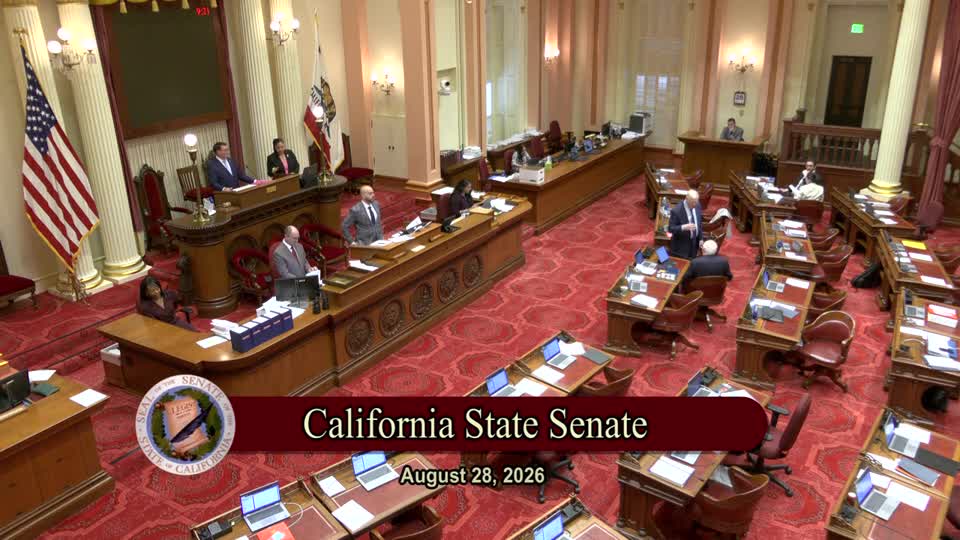 2MIN
Senate Floor
 5MIN
Senate Standing Committee on Business, Professions and Economic Development
 1MIN
Assembly Floor
 7MIN
Assembly Standing Committee on Privacy and Consumer Protection
 1MIN
Senate Floor
 15MIN
Senate Standing Committee on Human Services
Bill Author


