SB 971: Healthy Aging Community Partnership Program.
- Session Year: 2025-2026
- House: Senate
- Latest Version Date: 2026-09-27
Current Status:
Passed
(2026-09-27: Chaptered by Secretary of State. Chapter 664, Statutes of 2026.)
Introduced
In Committee
Awaiting First Chamber Vote
Passed First Chamber
In Committee
Awaiting Second Chamber Vote
Passed Second Chamber
Enacted
Existing law establishes various programs and services for older adults, as defined, including, among other things, the Adult Education Program under the administration of the Chancellor of the California Community Colleges and the Superintendent of Public Instruction, and health promotion and preventative health services for older adults under the administration of the State Department of Public Health.
This bill would authorize a local health department, area agency on aging, community college, public or private college, public or private university, or other appropriate county department, as determined by a county, to establish a Healthy Aging Community Partnership Program for older individuals designed to promote healthy aging, social engagement, and independent living in collaboration with relevant local entities, including school districts, libraries, faith institutions, and community organizations. The bill would authorize program activities to include, among other things, technology assistance, physical activity, and other community-based enrichment activities that support healthy aging and social connection. The bill would make implementation of these provisions subject to the availability of local resources and partnerships. The bill would specify that these provisions do not duplicate or supplant specified current adult education courses, classes, and services provided by the California Community Colleges, including through the Adult Education Program, as provided.
Existing law establishes various programs and services for older adults, as defined, including, among other things, the Adult Education Program under the administration of the Chancellor of the California Community Colleges and the Superintendent of Public Instruction, and health promotion and preventative health services for older adults under the administration of the State Department of Public Health.
This bill would establish the Health Aging Community Partnerships Program to authorize a local health department, area agency on aging, local school district, community college, public or private college, public or private university, or other appropriate county department, as determined by a county, to establish community-based programs a Healthy Aging Community Partnership Program for older adults individuals designed to promote healthy aging, social engagement, and independent living in collaboration with relevant local entities, including school districts, libraries, faith institutions, and community organizations. The bill would authorize program activities to include, among other things, technology assistance, physical activity, and other community-based enrichment activities that support healthy aging and social connection. The bill would make implementation of these provisions subject to the availability of local resources and partnerships.
Existing law establishes various programs and services for older adults, as defined, including, among other things, the Adult Education Program under the administration of the Chancellor of the California Community Colleges and the Superintendent of Public Instruction, and health promotion and preventative health services for older adults under the administration of the State Department of Public Health.
This bill would establish the Health Aging Community Partnerships Program to authorize a local health department, area agency of on aging, local school district, or other appropriate county department, as determined by a county, to establish community-based programs for older adults designed to promote healthy aging, social engagement, and independent living in collaboration with relevant local entities, including school districts, libraries, faith institutions, and community organizations. The bill would authorize program activities to include, among other things, technology assistance, physical activity, and other community-based enrichment activities that support healthy aging and social connection. The bill would make implementation of these provisions subject to the availability of local resources and partnerships.
Existing law establishes various programs and services for older adults, as defined, including, among other things, the Adult Education Program under the administration of the Chancellor of the California Community Colleges and the Superintendent of Public Instruction, and health promotion and preventative health services for older adults under the administration of the State Department of Public Health.
This bill would establish the Health Aging Community Partnerships Program to authorize a local health department, area agency of aging, local school district, or other appropriate county department, as determined by a county, to establish community-based programs for older adults designed to promote healthy aging, social engagement, and independent living in collaboration with relevant local entities, including school districts, libraries, faith institutions, and community organizations. The bill would authorize program activities to include, among other things, technology assistance, physical activity, and other community-based enrichment activities that support healthy aging and social connection. The bill would make implementation of these provisions subject to the availability of local resources and partnerships.
Existing law establishes the State Department of Public Health to, among other things, implement and administer various programs relating to public health. Existing law requires the department, after consultation with and approval by the California Conference of Local Health Officers, to establish by regulation standards of education and experience for professional and technical personnel employed in local health departments and for the organization and operation of the local health departments.Existing law establishes the Adult Education Program under the administration of the Chancellor of the California Community Colleges and the Superintendent of Public Instruction. The program requires the chancellor and the Superintendent, with the advice of the Executive Director of the State Board of Education, to divide the state into adult education regions and to approve one adult education consortium in each adult education region, as specified. Existing law requires that funds apportioned for the adult education program be used solely for specified programs, including, among other things, programs for adults, including, but not limited to, older adults, that are primarily related to entry or reentry into the workforce.This bill would authorize local health departments to establish older adult education programs in collaboration with relevant local entities including, among other entities, school districts. If a local health department establishes an older adult education program, the bill would require the program to include communal meals and specified instruction. The bill would authorize a school district to act as the fiscal agent for an older adult education program and, if a school district serves as the fiscal agent, would authorize the school district to use available local, public health, or philanthropic funds for the program. The bill would prohibit a school district from being required to divert funding from adult education programs or elementary and secondary education programs for the older adult education program.Existing law establishes the State Department of Public Health to, among other things, implement and administer various programs relating to public health. Existing law requires the department, after consultation with and approval by the California Conference of Local Health Officers, to establish by regulation standards of education and experience for professional and technical personnel employed in local health departments and for the organization and operation of the local health departments.
Existing law establishes the Adult Education Program under the administration of the Chancellor of the California Community Colleges and the Superintendent of Public Instruction. The program requires the chancellor and the Superintendent, with the advice of the Executive Director of the State Board of Education, to divide the state into adult education regions and to approve one adult education consortium in each adult education region, as specified. Existing law requires that funds apportioned for the adult education program be used solely for specified programs, including, among other things, programs for adults, including, but not limited to, older adults, that are primarily related to entry or reentry into the workforce.
This bill would authorize local health departments to establish older adult education programs in collaboration with relevant local entities including, among other entities, school districts. If a local health department establishes an older adult education program, the bill would require the program to include communal meals and specified instruction. The bill would authorize a school district to act as the fiscal agent for an older adult education program and, if a school district serves as the fiscal agent, would authorize the school district to use available local, public health, or philanthropic funds for the program. The bill would prohibit a school district from being required to divert funding from adult education programs or elementary and secondary education programs for the older adult education program.
(a)A local health department, area agency on aging, community college, public or private college, public or private university, or other appropriate county department, as determined by the county, may establish a Healthy Aging Community Partnership Program to provide community-based programs for older individuals designed to promote healthy aging, social engagement, and independent living in collaboration with relevant local entities, including school districts, libraries, faith institutions, and community organizations.
(b)If a local entity establishes a community-based program pursuant to subdivision (a), the program activities may include, but are not limited to, technology assistance, physical activity, music or arts programming, cultural programming, language learning opportunities, shared meals, and other community-based enrichment activities that support healthy aging and social connection.
(c)For purposes of this section, older individual has the same meaning as defined in Section 9018 of the Welfare and Institutions Code.
(d)This section shall not be construed to be mandatory for any local entity or department to implement.
(e)Implementation of this section shall be subject to the availability of local resources and partnerships.
(f)Nothing in this chapter is intended to duplicate or supplant the current adult education courses, classes, and services provided by the California Community Colleges pursuant to Section 84757 of the Education Code and Article 9 (commencing with Section 84900) of Chapter 5 of Part 50 of Division 7 of Title 3 of the Education Code.
(a)A local health department, area agency on aging, local school district, community college, public or private college, public or private university, or other appropriate county department, as determined by the county, may establish a Healthy Aging Community Partnership Program to provide community-based programs for older adults individuals designed to promote healthy aging, social engagement, and independent living in collaboration with relevant local entities, including school districts, libraries, faith institutions, and community organizations.
(b)If a local entity establishes a community-based program pursuant to subdivision (a), the program activities may include, but are not limited to, technology assistance, physical activity, music or arts programming, cultural programming, language learning opportunities, shared meals, and other community-based enrichment activities that support healthy aging and social connection.
(c)For purposes of this section, older adults means persons 55 years of age or older. individual has the same meaning as defined in Section 9018 of the Welfare and Institutions Code.
(d)This section shall not be construed to be mandatory for any local entity or department to implement.
(e)Implementation of this section shall be subject to the availability of local resources and partnerships.
(a)A local health department, area agency of on aging, local school district, or other appropriate county department, as determined by the county, may establish community-based programs for older adults designed to promote healthy aging, social engagement, and independent living in collaboration with relevant local entities, including school districts, libraries, faith institutions, and community organizations.
(b)If a local entity establishes a community-based program pursuant to subdivision (a), the program activities may include, but are not limited to, technology assistance, physical activity, music or arts programming, cultural programming, language learning opportunities, shared meals, and other community-based enrichment activities that support healthy aging and social connection.
(c)For purposes of this section, older adults means persons 55 years of age or older.
(d)This section shall not be construed to be mandatory for any local entity or department to implement.
(e)Implementation of this section shall be subject to the availability of local resources and partnerships.
(a)A local health department, area agency of aging, local school district, or other appropriate county department, as determined by the county, may establish community-based programs for older adults designed to promote healthy aging, social engagement, and independent living in collaboration with relevant local entities, including school districts, libraries, faith institutions, and community organizations.
(b)If a local entity establishes a community-based program pursuant to subdivision (a), the program activities may include, but are not limited to, technology assistance, physical activity, music or arts programming, cultural programming, language learning opportunities, shared meals, and other community-based enrichment activities that support healthy aging and social connection.
(c)For purposes of this section, older adults means persons 55 years of age or older.
(d)This section shall not be construed to be mandatory for any local entity or department to implement.
(e)Implementation of this section shall be subject to the availability of local resources and partnerships.
SECTION 1.Chapter 5 (commencing with Section 10495) is added to Part 3 of Division 101 of the Health and Safety Code, to read:5.Older Adult Education10495.(a)Local health departments may establish older adult education programs in collaboration with relevant local entities, including school districts, libraries, faith institutions, and community organizations.(b)If a local health department establishes an older adult education program pursuant to subdivision (a), the program shall include, but not be limited to, communal meals and instruction in all of the following:(1)Digital literacy and access to technology.(2)Fall prevention and physical activity.(3)Nutrition.(4)Health care navigation.(5)Emergency preparedness.(6)Civic engagement and emotional well-being.(c)(1)A school district may serve as the fiscal agent for an older adult education program established pursuant to subdivision (a). (2)If a school district serves as the fiscal agent, the school district may use available local, public health, or philanthropic funds for the older adult education program established pursuant to subdivision (a).(3)A school district serving as the fiscal agent shall not be required to divert funding from other adult education or elementary and secondary education programs for the older adult education program established pursuant to subdivision (a).(a)Local health departments may establish older adult education programs in collaboration with relevant local entities, including school districts, libraries, faith institutions, and community organizations.
(b)If a local health department establishes an older adult education program pursuant to subdivision (a), the program shall include, but not be limited to, communal meals and instruction in all of the following:
(1)Digital literacy and access to technology.
(2)Fall prevention and physical activity.
(3)Nutrition.
(4)Health care navigation.
(5)Emergency preparedness.
(6)Civic engagement and emotional well-being.
(c)(1)A school district may serve as the fiscal agent for an older adult education program established pursuant to subdivision (a).
(2)If a school district serves as the fiscal agent, the school district may use available local, public health, or philanthropic funds for the older adult education program established pursuant to subdivision (a).
(3)A school district serving as the fiscal agent shall not be required to divert funding from other adult education or elementary and secondary education programs for the older adult education program established pursuant to subdivision (a).
|
Date
|
Status
|
|---|---|
| Sep 27, 2026 | Chaptered by Secretary of State. Chapter 664, Statutes of 2026. |
| Sep 27, 2026 | Approved by the Governor. |
| Sep 2, 2026 | Enrolled and presented to the Governor at 3 p.m. |
| Aug 27, 2026 | Assembly amendments concurred in. (Ayes 40. Noes 0. Page 5982.) Ordered to engrossing and enrolling. |
| Aug 27, 2026 | Assembly amendments concurred in. (Ayes 39. Noes 0.) Ordered to engrossing and enrolling. |
| Aug 25, 2026 | Ordered to special consent calendar. |
| Aug 18, 2026 | In Senate. Concurrence in Assembly amendments pending. |
| Aug 17, 2026 | Read third time. Passed. (Ayes 73. Noes 0. Page 6204.) Ordered to the Senate. |
| Aug 17, 2026 | Read third time. Passed. Ordered to the Senate. |
| Aug 5, 2026 | Ordered to third reading. |
| Aug 5, 2026 | Read third time and amended. |
| Aug 3, 2026 | Read second time. Ordered to third reading. |
| Jul 2, 2026 | Read second time and amended. Ordered to second reading. |
| Jul 1, 2026 | From committee: Do pass as amended. (Ayes 15. Noes 0.) (June 30). |
| Jun 24, 2026 | From committee: Do pass and re-refer to Com. on HEALTH. (Ayes 7. Noes 0.) (June 23). Re-referred to Com. on HEALTH. |
| Jun 1, 2026 | Referred to Coms. on AGING & L.T.C and HEALTH. |
| May 19, 2026 | In Assembly. Read first time. Held at Desk. |
| May 18, 2026 | Read third time. Passed. (Ayes 38. Noes 0. Page 4305.) Ordered to the Assembly. |
| May 18, 2026 | Read third time. Passed. (Ayes 38. Noes 0.) Ordered to the Assembly. |
| Apr 22, 2026 | Read second time. Ordered to third reading. |
| Apr 21, 2026 | From committee: Do pass. (Ayes 4. Noes 0. Page 3955.) (April 20). |
| Apr 21, 2026 | From committee: Do pass. (Ayes 4. Noes 0.) (April 20). |
| Apr 9, 2026 | From committee with author's amendments. Read second time and amended. Re-referred to Com. on HUMAN S. |
| Apr 9, 2026 | Set for hearing April 20. |
| Apr 8, 2026 | Re-referred to Com. on HUMAN S. |
| Apr 6, 2026 | Read second time and amended. Re-referred to Com. on RLS. |
| Mar 26, 2026 | From committee: Do pass as amended and re-refer to Com. on RLS. (Ayes 11. Noes 0. Page 3689.) (March 25). |
| Mar 26, 2026 | From committee: Do pass as amended and re-refer to Com. on RLS. (Ayes 11. Noes 0.) (March 25). |
| Mar 9, 2026 | Set for hearing March 25. |
| Feb 11, 2026 | Referred to Com. on HEALTH. |
| Feb 5, 2026 | From printer. May be acted upon on or after March 7. |
| Feb 4, 2026 | Introduced. Read first time. To Com. on RLS. for assignment. To print. |
|
Date
|
Description
|
Location
|
Votes
|
|
|---|---|---|---|---|
| Aug 27, 2026 | Special Consent SB971 Choi et al. | Senate Floor |
Passed |
|
| Aug 17, 2026 | SB 971 Choi Senate Third Reading By Garcia | Assembly Floor |
Passed |
|
| Jun 30, 2026 | Do pass as amended. | Assembly Standing Committee on Health |
Passed |
|
| Jun 23, 2026 | Do pass and be re-referred to the Committee on [Health] | Assembly Standing Committee on Aging and Long-Term Care |
Passed |
|
| May 18, 2026 | Senate 3rd Reading SB971 Choi et al. | Senate Floor |
Passed |
|
| Apr 20, 2026 | Do pass | Senate Standing Committee on Human Services |
Passed |
|
| Mar 25, 2026 | Do pass as amended, but first amend, and re-refer to the Committee on [Rules] | Senate Standing Committee on Health |
Passed |
This list shows positions taken on this bill by organizations on the date displayed, which is linked to the original source.
Positions by individuals are not included.
|
Organization
|
Position
|
Date
|
|---|---|---|
| AARP | ** Support | |
| Alzheimer's Association | ** Support | |
| Alzheimer’s Association | ** Support | |
| Alzheimer’s Association | ** Support | |
| Association Of Community And Continuing Education | ** Against | |
| California Association For Adult Day Services | ** Support | |
| California Federation Of Teachers | ** Support | |
| California Long-Term Care Ombudsman Association | ** Support | |
| California PACE Association | ** Support | |
| California Senior Legislature | ** Support | |
| County Of Los Angeles | ** Support | |
| LeadingAge California | ** Support |
SENATE RULES COMMITTEE Office of Senate Floor Analyses (916) 651-4171 | SB 971 |
UNFINISHED BUSINESS
Bill No: SB 971
Author: Choi (R), et al.
Amended: 8/5/26
Vote: 21
SENATE HEALTH COMMITTEE: 11-0, 3/25/26
AYES: Weber Pierson, Valladares, Caballero, Durazo, Gonzalez, Grove, Menjivar, Padilla, Pérez, Rubio, Smallwood-Cuevas
SENATE HUMAN SERVICES COMMITTEE: 4-0, 4/20/26
AYES: Becker, Niello, Laird, Weber Pierson
NO VOTE RECORDED: Pérez
SENATE FLOOR: 38-0, 5/18/26
AYES: Allen, Alvarado-Gil, Archuleta, Arreguín, Ashby, Becker, Blakespear, Cabaldon, Caballero, Cervantes, Choi, Cortese, Dahle, Durazo, Gonzalez, Grayson, Grove, Hurtado, Jones, Laird, Limón, McGuire, McNerney, Menjivar, Ochoa Bogh, Pérez, Reyes, Richardson, Rubio, Seyarto, Smallwood-Cuevas, Stern, Strickland, Umberg, Valladares, Wahab, Weber Pierson, Wiener
NO VOTE RECORDED: Niello, Padilla
ASSEMBLY FLOOR: 73-0, 8/17/26 - See last page for vote
SUBJECT: Healthy Aging Community Partnership Program
SOURCE: California Senior Legislature
DIGEST:
This bill permits local health departments, area on aging, community college, public or private college, public or private university, or other appropriate county department to establish a Healthy Aging Community Partnership Program for older individuals designed to promote health aging, social engagement, and independent living in collaboration with relevant local entities. Specifies that the program does not duplicate or supplant current adult education courses, classes, and services provided by the California Community Colleges, including through the Adult Education Program.
Assembly Amendments of 8/5/26
:
1) Add community colleges and public or private colleges or universities to the list of entities authorized to establish a Healthy Aging Community Partnership Program for older individuals;
2) Strike local school districts from the list of entities authorized to establish a Healthy Aging Community Partnership Program for older individuals;
3) Align the definition of older adult that of WIC §9018; and,
4) Specifiy that a Healthy Aging Community Partnership Program does not duplicate or supplant current adult education courses, classes, and services provided by the California Community Colleges, including through the Adult Education Program.
ANALYSIS:
Existing law:
- Requires each county board of supervisors to appoint a local health officer (LHO). Requires LHOs to enforce and observe orders of the board pertaining to public health and sanitary matters, including regulations prescribed by the California Department of Public Health (CDPH), and statutes related to public health. [Health & Safety Code (HSC) §101000 and 101030]
- Establishes the Mello-Granlund Older Californians Act and sets forth the state’s commitment to older adults, people with disabilities, and family caregivers served by the programs administered by the California Department of Aging (CDA). [Welfare & Institutions Code (WIC) §9000]
- Defines “older individual” or “elderly” as a person 60 years of age or older, except where this provision is inconsistent with federal requirements. [WIC §9018]
- Defines “area agency on aging” (AAA) as a private nonprofit or public agency designated by CDA that works for the interests of Older Californians within a planning and service area, and engages in community planning, coordination, and program development, and, through contractual arrangements, provides a broad array of social and nutritional services. [WIC §9006]
- Recognizes AAAs as the local units on aging in California that are supported from an array of sources, including federal funding largely through the Older Americans Act, state and local government assistance, the private sector, and individual contributions for services. [WIC §9400]
- Establishes an older adult wellness program within CDA. Requires the program to have all the following functions:
- Focus on educating California’s older adults, as well as caregivers, families, and health care professions, about the importance of living a healthy lifestyle, including, but not limited to, nutrition, exercise, injury prevention, and mental well-being;
- Provide information on, and help California’s culturally and ethnically diverse older adults and adults with functional impairments;
- Provide educational information on the resources and services available for older adults from both private and public entities in communities throughout the state and the AAA;
- Promote education and training for professionals and caregivers who work directly with older adults to maximize wellness;
- Generate a cultural shift to a more positive vision and expectation with respect to how aging is viewed by all Californians;
- Transform perceptions of aging into a more hopeful, appreciative, and aspiring mode of being;
- Create a new culture that cherishes each of us;
- Advance the recognition of the unique status, experience, capacity, and role of older adults to become our models for guidance and inspiration;
- Replace the image of older adults who are “self-interested” with an image of older adults who are actively engaged and involved in their communities;
- Promote and mobilize older adults and adults with disabilities into emerging roles for the public benefit;
- Challenge the prevailing culture, to the extent that it discounts the value of age; and,
- Rid our culture of the negative attitudes towards adults who are aging and adults with disabilities. [WIC §9660-9661]
- Requires the Secretary of the California Health and Human Services Agency (CalHHS), in coordination with the Director of CDA, to lead the development and implementation of the state’s master plan for aging (MPA). [WIC §9850]
This bill:
- Permits a local health department, area agency on aging, community college, public or private college, public or private university, or other appropriate county department, as determined by the county, to establish a Healthy Aging Community Partnership Program to provide community-based programs for older individuals designed to promote healthy aging, social engagement, and independent living in collaboration with relevant local entities, including school districts, libraries, faith institutions, and community organizations.
- Permits a Healthy Aging Community Partnership Program, if a local entity establishes one, to include, but not be limited to: technology assistance, physical activity, music or arts programming, cultural programming, language learning opportunities, shared meals, and other community-based enrichment activities that support healthy aging and social connection.
- Defines “older individual” as a person 60 years of age or older, except where this provision is inconsistent with federal requirements.
- Prohibits requiring any local entity or department to implement a Healthy Aging Community Partnership Program.
- Requires the implementation of a Healthy Aging Community Partnership Program to be subject to the availability of local resources and partnerships.
- Specifies that a Healthy Aging Community Partnership Program does not duplicate or supplant current adult education courses, classes, and services provided by the California Community Colleges, including through the Adult Education Program.
Background
According to the author of this bill:
California’s older adult population is growing rapidly, yet there is no designated public system responsible for coordinating education and prevention services tailored to older adults’ real-life needs. This bill will establish a statutory framework authorizing counties to deliver older adult education and technology training through local public health systems, in partnership with community-based organizations and local school districts, to improve health, independence, and quality of life for Californians aged 55 and over.
Older Americans Act. The Administration of Community Living (ACL) of the U.S. Department of Health and Human Services states that Congress passed the Older Americans Act (OAA) in 1965 in response to concern by policymakers about a lack of community social services for older persons. The original OAA established authority for grants to states for community planning and social services, research and development projects, and personnel training in the field of aging. The OAA also established the Administration of Aging to administer the newly created grant programs and to serve as the federal focal point on matters concerning older persons.
Mello-Granlund Older Californians Act. The Older Californians Act of 1980 designated CDA as the single state agency responsible for administering the OAA; and defined the duties and functions of CDA as well as the state’s 33 AAAs. The Older Californians Act was later amended by the Mello-Granlund Older Californians Act, AB 2800 (Granlund, Chapter 1097, Statutes of 1996), which also expanded upon the original act by establishing new programs and making structural changes to service delivery. The Mello-Granlund Older Californians Act sets forth California’s commitment to older adults, people with disabilities, and family caregivers served by the programs administered by CDA.
CDA. According to CDA’s website, the CDA operates under the umbrella of CalHHS and administers programs that serve older adults, adults with disabilities, family caregivers, and residents in long-term care facilities. These programs receive funding through the federal OAA, the Older Californians Act, and through the Medi-Cal Program. CDA contracts with the network of 33 AAAs. The ACL website defines an AAA as a public or private nonprofit agency designated by a state to address the needs and concerns of all older persons at the regional and local levels. AAAs are primarily responsible for a dedicated geographic area, also known as a planning and service area that is either a city, a single county, or a multi-county district. AAAs coordinate and offer a wide array of federal and state-funded community-based services that aim to assist older adults as well as younger adults with disabilities to live as independently as possible, promote healthy aging and community involvement, and support family members in their vital care giving role. Some of these services include, but are not limited to: in-home support services, transportation, health and wellness programs, benefits counseling, and home-delivered and congregate meals.
CDA also contracts with 38 agencies that operate the Multipurpose Senior Services Program through the Medi-Cal Home and Community-Based Services Waiver for the elderly and certifies approximately 242 Adult Day Health Care Centers for participation in its Medi-Cal Community Based Adult Services Program. CDA actively collaborates with many other State departments, among other entities, on transportation, housing and accessibility, emergency preparedness and response, wellness and nutrition, falls and injury prevention, improving services to persons with dementia, reducing fraud and abuse, and many other issues. Currently, CDA administers the following programs: AAA; Aging and Disability Resource Connection; California Caregiver Awareness, Resources, Education & Support Program; Growing a Resilient and Outstanding Workforce; CalFresh Outreach Program; CalFresh Healthy Living; Community-Based Adult Services; Caregiver Resource Centers; Dignity At Home Fall Prevention Program; Bridging the Digital Divide; Health Insurance Counseling and Advocacy Program; Legal Services; Long-Term Care Ombudsman Program; Multipurpose Senior Services Program; the Office of Long-Term Care Patient Representative; and Senior Community Service Employment Program.
MPA. In 2019, Governor Gavin Newsom signed Executive Order N-14-19 in response to the increase of the aging population in California. The executive order, known as the MPA, calls for a comprehensive plan to address and prepare the state’s aging population. MPA is a 10 year blueprint for state and local governments, the private sector, and philanthropy that prioritizes preparing the state for the demographic changes and continuing California’s leadership in aging, disability, and equity. MPA outlines five goals: (1) Housing for All Ages and Stages; (2) Health Reimagined; (3) Inclusion and Equity, Not Isolation; (4) Caregiving that Works; and (5) Affording Aging.
FISCAL EFFECT: Appropriation: No Fiscal Com.: No Local: No
This bill is keyed non-fiscal.
SUPPORT: (Verified 8/17/26)
California Senior Legislature (source)
AARP
Alzheimer’s Association
California Association for Adult Day Services
California Long-Term Care Ombudsman Association
California Federation of Teachers
California PACE Association
County of Los Angeles
LeadingAge California
OPPOSITION: (Verified 8/17/26)
None received
ARGUMENTS IN SUPPORT: The sponsor of this bill, the California Senior Legislature (CSL), writes that too many seniors face barriers to essential information, social connection, and preventive health education. CSL, among other supporting organizations, state that this bill offers a community-based approach by allowing local health departments to partner with trusted local entities to deliver programs tailored to older adults’ needs. They believe that this bill will strengthen local capacity to serve older adults, improve health outcomes, and foster greater community connection. The California Federation of Teachers (CFT) adds that older adult education was historically supported through Adult Education programs prior to the Great Recession, but statutory and funding changes eliminated older adult-specific education classes. As a result, many older adults now face social isolation, digital exclusion, difficulty accessing healthcare and benefits, increased vulnerability to fraud, and preventable declines in physical function. CFT states that this bill will restore older adult education as a recognized public function and reframe it as preventative public health infrastructure rather than an unfunded afterthought. CFT furthers that the framework outlined in this bill avoids creating new bureaucracy while directly supporting the goals of California’s MPA. Additionally, the Alzheimer’s Association states that this bill enhances care and support in the community for older adults generally, which can particularly benefit those living with Alzheimer’s disease or another dementia. The programs permitted in this bill could help this vulnerable population adapt to remote caregiving with the use of new technology, navigate care, prevent falls, prepare for emergency evacuations, and support their emotional wellbeing. The Alzheimer’s Association also writes that this bill supports communities invested in health aging deliver meals and educational programs that have the potential to improve outcomes for older adults, and also have the capability to address the unique challenges for those with Alzheimer’s disease or dementia. Click or tap here to enter text.
Prepared by: Margarita Niemann / HEALTH / (916) 651-4111
8/17/26 15:36:19
**** END ****
SENATE THIRD READING
STR Bill Id:SB 971
Author:(Choi)
As Amended Ver:August 5, 2026
Majority vote
SUMMARY
Authorizes a local health department, area agency on aging, community college, public or private college, public or private university, or other appropriate county department, may establish community-based programs for older adults designed to promote healthy aging, social engagement, and independent living in collaboration with relevant local entities, including school districts, libraries, faith institutions, and community organizations.
Major Provisions
- Provides that if a local entity establishes a community-based program, the program activities may include, but are not limited to, technology assistance, physical activity, music or arts programming, cultural programming, language learning opportunities, shared meals, and other community-based enrichment activities that support healthy aging and social connection.
- Defines "older individual" with the same definition in Welfare and Institutions Code (WIC) Section 9018
- Provides that these programs are not mandatory for any local entity or department to implement.
- Provides that implementation is subject to the availability of local resources and partnerships.
COMMENTS
Aging in California: A recent compiled data report by the Public Policy Institute of California titled "California's Aging Population" states:
By 2040, California's older adult population (aged 65 and over) is projected to increase by a remarkable 59%, from 5.7 million to just over 9 million. This growth stands in stark contrast to the projected changes in other age groups. The working-age population (20–64 years old) is expected to increase only 3%, while the population under age 20 is anticipated to decrease by 23%. California is projected to have 3.4 million more older adults aged 65 and over, and 1.7 million fewer residents less than 65 years old.
This disproportionate growth in the older population will lead to a significant shift in the state's age structure. Almost one-quarter of Californians (22%) will be age 65 or older by 2040, a substantial increase from 14% in 2020. The old-age dependency ratio (the number of older adults per 100 adults of working ages) is projected to grow from 24 to 38. In other words, there will be 38 older adults for every 100 working adults in the state.
The most dramatic growth is projected among the oldest age groups—or the oldest old. The population aged 80 and over is expected to more than double, increasing by nearly 1.8 million in 2040. This rapid growth in the oldest age groups, driven by both the aging of the baby boomers and increases in longevity, is especially significant because of this group's relatively high personal care and health care needs.[1]
Life expectancy continues to rise,[2] however during 2019-2021 overall life expectancy for Californians fell from 81.4 years to 78.4 years. For Hispanics, life expectancy declined by nearly 6 years, a difference three times greater than their white counterparts. And the difference between those in California's highest and lowest income brackets increased by three-and-a-half years to greater than 15 years (11.5 years before the pandemic to more than 15 years in 2021).[3]
It is important to note that the COVID-19 pandemic caused a brief (and traumatic) deviation from the long-term pattern of increases in life expectancy. The latest estimates suggest that life expectancy has resumed its pre-pandemic trend of gradually increasing longevity. The Department of Finance projects moderate increases in life expectancies through 2060. [4]
Area Agencies on Aging: the California Department of Aging (CDA) administers programs serving older adults through contracts with local agencies in 33 locations across the state which provide a wide array of services on a community level to seniors and adults with disabilities. AAAs are designated to address the needs and concerns of older adults at the regional and local level. Each county is required to have an AAA to ensure all communities have access to local aging programs and provide information and services for older adults. While California is home to 58 counties, not all counties have a stand-alone AAA. Some AAAs represent multiple counties to serve the region.
Older Adult Education: Older adult education is noncredit courses offered to promote lifelong learning. Previously, older adult education programs were overseen by local school districts, with funding provided to those school districts to provide services to older adults. After the Great Recession of 2008, older adult education was consolidated into the community college system. This consolidation effectively eliminated older adult specific education as a distinct public service. California's older adult education is now done primarily through the California Adult Education Program which offers free, noncredit, flexible courses on topics such as digital literacy and health.
According to the Author
"California's older adult population is growing rapidly, yet no designated public system is responsible for coordinating education and prevention services tailored to their real-life needs. SB 971 addresses this gap by establishing a statutory framework that authorizes counties to deliver older adult education. By partnering with community-based organizations, this approach aims to improve health outcomes, promote independence, and enhance quality of life for Californians age 55 and over."
Arguments in Support
This bill is sponsored by the California Senior Legislature (CSL) which writes in support, as California's older adult population continues to grow rapidly, too many seniors face barriers to essential information, social connection, and preventive health education. CSL continues that this bill offers a community-based approach by allowing local health departments to partner with trusted local entities to deliver programs tailored to older adults' needs. CSL states that the focus on digital literacy, fall prevention, nutrition, health care navigation, emergency preparedness, civic engagement, and emotional well-being, combined with communal meals, reflects best practices for promoting healthy aging and reducing isolation. CSL concludes that it believes that this bill will strengthen local capacity to serve older adults, improve health outcomes, and foster greater community connection.
Arguments in Opposition
The Association of Community and Continuing Education (ACCE), opposes this bill, stating that this bill does nothing to provide the resources or structural support necessary to implement new programs effectively. ACCE first states this bill fails to recognize California Community Colleges as existing, central providers of older adult education and instead creates a framework that overlooks the system best positioned to deliver these services. ACCE continues this bill establishes new expectations for coordination, planning, and reporting, yet it includes no funding to support these activities. ACCE further notes that nothing in this bill requires statutory change; community colleges, local public health departments, and partners already have full authority to collaborate, share information, and design programs that support older adults. ACCE further contends that local public health departments across the state face staffing shortages, rising responsibilities, and ongoing post-pandemic recovery challenges and this bill adds new expectations without addressing the capacity issues these departments face, which may divert attention from core public health functions. ACCE concludes that California must invest in meaningful, sustainable strategies to support its rapidly growing older adult population, and this bill does not advance these goals and is not needed
FISCAL COMMENTS
None. This bill has been keyed nonfiscal by the Office of Legislative Counsel.
VOTES
SENATE FLOOR: 38-0-2
YES: Allen, Alvarado-Gil, Archuleta, Arreguín, Ashby, Becker, Blakespear, Cabaldon, Caballero, Cervantes, Choi, Cortese, Dahle, Durazo, Gonzalez, Grayson, Grove, Hurtado, Jones, Laird, Limón, McGuire, McNerney, Menjivar, Ochoa Bogh, Pérez, Reyes, Richardson, Rubio, Seyarto, Smallwood-Cuevas, Stern, Strickland, Umberg, Valladares, Wahab, Weber Pierson, Wiener
ABS, ABST OR NV: Niello, Padilla
ASM AGING AND LONG-TERM CARE: 7-0-0
YES: Ahrens, Ellis, Arambula, Ávila Farías, Jeff Gonzalez, Blanca Rubio, Sharp-Collins
ASM HEALTH: 15-0-1
YES: Bonta, Sanchez, Addis, Aguiar-Curry, Ahrens, Caloza, Carrillo, Jeff Gonzalez, Mark González, Patel, Patterson, Celeste Rodriguez, Schiavo, Sharp-Collins, Stefani
ABS, ABST OR NV: Johnson
UPDATED
VERSION: August 5, 2026
CONSULTANT: Elizabeth Fuller / AGING & L.T.C. / (916) 319-3990 FN: 0003341
Date of Hearing: June 30, 2026
ASSEMBLY COMMITTEE ON HEALTH
Mia Bonta, Chair
SBPCA Bill Id:SB 971
Author:(Choi) – As Amended Ver:April 9, 2026
SENATE VOTE: 38-0
SUBJECT: Healthy Aging Community Partnerships Program.
SUMMARY: Authorizes specified entities to establish community-based programs for older adults designed to promote healthy aging, social engagement, and independent living in collaboration with relevant local entities. Specifically, this bill:
- Authorizes a local health department, area agency on aging (AAA), local school district, or other appropriate county department, as determined by the county, to establish community-based programs for older adults designed to promote healthy aging, social engagement, and independent living in collaboration with relevant local entities, including school districts, libraries, faith institutions, and community organizations.
- Provides that if a local entity establishes a community-based program pursuant to 1) above, the program activities may include, but are not limited to, technology assistance, physical activity, music or arts programming, cultural programming, language learning opportunities, shared meals, and other community-based enrichment activities that support healthy aging and social connection.
- Defines, for purposes of this bill, “older adults” to mean persons 55 years of age or older.
- Prohibits this bill from being construed to be mandatory for any local entity or department to implement.
- Subjects implementation of this bill to the availability of local resources and partnerships.
EXISTING LAW:
- Requires each county board of supervisors to appoint a local health officer (LHO). Requires LHOs to enforce and observe orders of the board pertaining to public health and sanitary matters, including regulations prescribed by the Department of Public Health (DPH), and statutes related to public health. [Health and Safety Code (HSC) § 101000 and § 101030]
- Establishes the Mello-Granlund Older Californians Act and sets forth the state’s commitment to older adults, people with disabilities, and family caregivers served by the programs administered by the California Department of Aging (CDA). [Welfare and Institutions Code (WIC) § 9000]
- Defines “AAA” as a private nonprofit or public agency designated by CDA that works for the interests of Older Californians within a planning and service area, and engages in community planning, coordination, and program development, and, through contractual arrangements, provides a broad array of social and nutritional services. [WIC § 9006]
- Recognizes AAAs as the local units on aging in California that are supported from an array of sources, including federal funding largely through the Older Americans Act, state and local government assistance, the private sector, and individual contributions for services. [WIC § 9400]
- Establishes an older adult wellness program within CDA. Requires the program to have all the following functions:
- Focus on educating California’s older adults, as well as caregivers, families, and health care professions, about the importance of living a healthy lifestyle, including, but not limited to, nutrition, exercise, injury prevention, and mental well-being;
- Provide information on, and help California’s culturally and ethnically diverse older adults and adults with functional impairments;
- Provide educational information on the resources and services available for older adults from both private and public entities in communities throughout the state and the AAA;
- Promote education and training for professionals and caregivers who work directly with older adults to maximize wellness;
- Generate a cultural shift to a more positive vision and expectation with respect to how aging is viewed by all Californians;
- Transform perceptions of aging into a more hopeful, appreciative, and aspiring mode of being;
- Create a new culture that cherishes each of us;
- Advance the recognition of the unique status, experience, capacity, and role of older adults to become our models for guidance and inspiration;
- Replace the image of older adults who are “self-interested” with an image of older adults who are actively engaged and involved in their communities;
- Promote and mobilize older adults and adults with disabilities into emerging roles for the public benefit;
- Challenge the prevailing culture, to the extent that it discounts the value of age; and,
- Rid our culture of the negative attitudes towards adults who are aging and adults with disabilities. [WIC §§ 9660-9661]
- Requires the Secretary of the California Health and Human Services Agency (CalHHS), in coordination with the Director of CDA, to lead the development and implementation of the state’s master plan for aging (MPA). [WIC § 9850]
- Defines “Older individual” or “elderly” means a person 60 years of age or older, except where this provision is inconsistent with federal requirements. [WIC § 9018]
FISCAL EFFECT: None. This bill is currently keyed non-fiscal.
COMMENTS:
- PURPOSE OF THIS BILL. According to the author, California’s older adult population is growing rapidly, yet no designated public system is responsible for coordinating education and prevention services tailored to their real-life needs. The author states that this bill addresses this gap by establishing a statutory framework that authorizes counties to deliver older adult education. The author concludes that by partnering with community-based organizations, this bill’s approach aims to improve health outcomes, promote independence, and enhance quality of life for Californians age 55 and over.
- BACKGROUND.
- California’s Aging Population. According to the CalHHS website, by 2030, nearly 10 million Californians will be an older adult, about 25% of the state’s population. According to a January 2025 report published by the Public Policy Institute of California (PPIC) titled, “California’s Aging Population: Anticipating Dramatic Growth in the Number of Older Californians,” by 2040, 22% of Californians will be 65 or older, up from 14% in 2020. The older population (aged 65 and older) will increase by 59%, while the working-age population (aged 20 to 64) will remain largely unchanged and the child population (aged zero to 17) will decrease by 24%.
- MPA. In June of 2019, Governor Gavin Newsom issued Executive Order N-14-19 which called for the development of a state MPA.
In January of 2021, the Governor released the MPA. The MPA prioritizes the health and well-being of older Californians and the need for policies that promote healthy aging. The MPA serves as a blueprint for state government, local government, the private sector, and philanthropy to prepare the state for the coming demographic changes and continue California’s leadership in aging, disability, and equity. The work plan laid out in the MPA mid-way through its ten year timeline continues to highlight the urgent needs facing California’s older adults, people with disabilities, their families, caregivers, advocates and the workforce supporting these populations.
The MPA for 2025-26 outlines five bold goals and currently seeks to advance 81 initiatives to build a California for All Ages by 2030. Each initiative features a designated area of focus; to deliver, to analyze and to communicate. It also includes a Data Dashboard on Aging to measure progress. The five goals are as follows:
- Housing for All Ages and Stages;
- Health Reimagined;
- Inclusion and Equity, Not Isolation;
- Caregiving That Works; and,
- Affording Aging.
Additional details regarding these goals are available on the MPA website.
- Area Agencies on Aging (AAAs). CDA administers programs serving older adults through contracts with local agencies (AAAs) in 33 locations across the state which provide a wide array of services on a community level to seniors and adults with disabilities. AAAs are designated to address the needs and concerns of older adults at the regional and local level. Each county is required to have an AAA to ensure all communities have access to local aging programs and provide information and services for older adults. While California is home to 58 counties, not all counties have a stand-alone AAA. Some AAAs represent multiple counties to serve the region.
AAAs promote healthier living through alcohol and substance abuse reduction, smoking cessation, weight loss and control, stress management, fall prevention, and managing depression. AAAs also provide opportunities for older adults to learn techniques and strategies to prevent or mitigate the effects of chronic diseases including osteoporosis, hypertension, obesity, diabetes, and cardiovascular disease.
- The California Adult Education Program (CAEP). State law establishes the CAEP, which provides educational opportunities and workforce services to adult learners. According to the California Department of Education’s website, there are currently 71 regional adult education consortia with over 325 school districts and close to 100 community colleges serving adults statewide.
Local educational agencies (or “LEAs”, defined as school districts, county offices of education or charter schools) receive funding for adult education only for specific purposes, including:
- Programs in elementary and secondary basic skills, including programs leading to a high school diploma or high school equivalency certificate;
- Programs for immigrants eligible for educational services in citizenship, English as a second language, and workforce preparation;
- Programs for adults, including, but not limited to, older adults, that are primarily related to entry or reentry into the workforce;
- Programs for adults, including, but not limited to, older adults, that are primarily designed to develop knowledge and skills to assist elementary and secondary school children to succeed academically in school;
- Programs for adults with disabilities;
- Programs in career technical education that are short term in nature and have high employment potential; and,
- Programs offering preapprenticeship training activities conducted in coordination with one or more apprenticeship programs approved by the Division of Apprenticeship Standards for the occupation and geographic area.
- Challenges faced by older adults. According to a 2024 article published in Public Health Challenges titled, “Public Health Challenges and Responses to the Growing Aging Populations,” aging brings about an increased vulnerability to illnesses, disabilities, geriatric conditions, mental health challenges and other ailments that necessitate enhanced medical care and long-term services and support. Aging not only involves these factors but also diverse sociocultural challenges stemming from changing demographics, evolving social roles and supports and persistent ageism. Protecting the quality of life of elderly people requires addressing threats to social well‐being and cultural inclusion, as shrinking family sizes and fragmented social networks reduce many social connections, retirement or inability to work also changes community roles and purpose, and rapid adoption of advanced technology leaves many older adults struggling with digital literacy and access barriers. The article also states that the accessibility of recreational, vocational, volunteer, and learning programs lag for older adults.
- What does this bill do? This bill authorizes a local health department, AAA, local school district, or other appropriate county department, as determined by the county, to establish community-based programs for older adults designed to promote healthy aging, social engagement, and independent living in collaboration with relevant local entities, including school districts, libraries, faith institutions, and community organizations. The bill specifies that such programs may include, but are not limited to, technology assistance, physical activity, music or arts programming, cultural programming, language learning opportunities, shared meals, and other community-based enrichment activities that support healthy aging and social connection.
- SUPPORT. This bill is sponsored by the California Senior Legislature (CSL) which writes in support, as California’s older adult population continues to grow rapidly, too many seniors face barriers to essential information, social connection, and preventive health education. CSL continues that this bill offers a community-based approach by allowing local health departments to partner with trusted local entities to deliver programs tailored to older adults’ needs. CSL states that the focus on digital literacy, fall prevention, nutrition, health care navigation, emergency preparedness, civic engagement, and emotional well-being, combined with communal meals, reflects best practices for promoting healthy aging and reducing isolation. CSL concludes that it believes that this bill will strengthen local capacity to serve older adults, improve health outcomes, and foster greater community connection.
- OPPOSITION. The Association of Community and Continuing Education (ACCE), opposes this bill, stating that this bill does nothing to provide the resources or structural support necessary to implement new programs effectively. ACCE first states this bill fails to recognize California Community Colleges as existing, central providers of older adult education and instead creates a framework that overlooks the system best positioned to deliver these services. ACCE continues this bill establishes new expectations for coordination, planning, and reporting, yet it includes no funding to support these activities. ACCE further notes that nothing in this bill requires statutory change; community colleges, local public health departments, and partners already have full authority to collaborate, share information, and design programs that support older adults. ACCE further contends that local public health departments across the state face staffing shortages, rising responsibilities, and ongoing post-pandemic recovery challenges and this bill adds new expectations without addressing the capacity issues these departments face, which may divert attention from core public health functions. ACCE concludes that California must invest in meaningful, sustainable strategies to support its rapidly growing older adult population, and this bill does not advance these goals and is not needed.
- RELATED LEGISLATION. SB 837 (Reyes) would require Aging and Disability Resource Connection programs operated by AAAs to provide disaster and emergency preparedness training specifically designed to help older adults and people with disabilities prepare for emergencies and ensure their safety before, during, and after natural disasters and other emergency events, as specified. SB 837 passed the Assembly Aging and Long-Term Care Committee on June 23, 2026 with a vote of 7-0 and is pending a hearing in the Assembly Committee on Emergency Management.
- PREVIOUS LEGISLATION.
- AB 1476 (Wallis), Chapter 302, Statutes of 2025 requires the McCarthy Kennick Nutrition Program for the Elderly Act of 1971 to include the establishment of projects that would provide, at least five days a week, at least one meal per day and any additional meals the contracting agency or organization may elect to provide for individuals 60 years of age or older.
- SB 1249 (Roth), Chapter 337, Statutes of 2024 updates and revises legislative findings and declarations within the Mello Grandlund Older Californians Act relating to California's significant demographic shift towards an older and more diverse population and declares intent to reform functions relating to AAA. Requires CDA, by September 30, 2026, to take various actions, including, among others, identifying the core programs and services to be provided to older adults and family caregivers, and developing a statewide consumer engagement plan. Requires CDA to develop regulations that address specified topics relating to AAA designations. Requires CDA those deliverables to be informed by data from validated sources, which may include, among others, the United States Census. Repeals the provisions establishing the Senior Housing Information and Support Center.
- AB 3207 (Patterson) of 2024 would have required the State Department of Social Services (DSS) to, subject to an appropriation, on or before January 1, 2026, establish and administer a 24 hours per day, 7 days per week, toll-free hotline to assist all Californians in dealing with online scams, as provided. Would have required DSS to ensure that the program and its staff are equipped to meet the needs of individuals who are 60 years of age and older. Would have required, on or before January 31, 2027, and annually thereafter, DSS to submit a report to the Legislature and the relevant policy committees containing, among other things, the number of seniors served, the types of problems the program assisted seniors with, and recommendations for improving the program. AB 3207 was held on the Assembly Appropriations suspense file.
- SB 228 (Jackson), Chapter 742, Statutes of 2019 requires the Secretary of CalHHS, in coordination with the Director of CDA, to lead the development and implementation of the master plan established pursuant to the Governor’s Executive Order N-14-19 to develop the MPA. Requires the Secretary and the Director, with the assistance of the workgroup, to work with specified agencies, as needed, to identify policies, efficiencies, and strategies necessary to implement the MPA. Requires the workgroup to solicit input and gather information to assist with the implementation of the MPA. Required CDA to submit a report to the Governor and the Legislature by October 1, 2020 regarding the MPA, and additionally requires CDA to submit updates annually thereafter October 1, 2030.
- AMENDMENTS. The Committee may wish to amend this bill as follows:
- Postsecondary Institutions. Given the work that community colleges and public and private colleges and universities do to provide older adult education, the author accepted amendments in the Assembly Committee on Aging and Long-Term Care to be taken in this Committee due to timing that would authorize community colleges and public and private colleges and universities to establish community-based programs for older adults as provided in this bill.
- Definition of Older Adult. To ensure alignment with existing law, the Committee may wish to change this bill’s definition of older adult (an individual 55 years of age or older) to instead reference 7) of Existing Law above which defines an older adult as an individual 60 years of age or older.
- School Districts. As described in the Background above, LEAs receive funding for adult education only for specific purposes and the programs proposed by this bill would not necessarily fall within the allowable adult education offerings under the funding received. Additionally, LEAs require criminal background checks for individuals entering school campuses when students are present. The Committee may wish to strike the authorization for local school districts to establish community-based programs for older adults, and maintain the authorization for the other authorized entities as specified in this bill to collaborate with school districts.
- DOUBLE RFERRAL. This bill is double referred, it passed the Assembly Committee on Aging and Long-Term Care with a 7-0 vote on June 23, 2026.
REGISTERED SUPPORT / OPPOSITION:
Support
California Senior Legislature (sponsor)
AARP
Alzheimer's Association
California Long Term Care Ombudsman Association (CLTCOA)
LeadingAge California
Opposition
Association of Community and Continuing Education
Analysis Prepared by: Eliza Brooks / HEALTH / (916) 319-2097
Date of Hearing: June 23, 2026
ASSEMBLY COMMITTEE ON AGING AND LONG-TERM CARE
Patrick Ahrens, Chair
SBPCA Bill Id:SB 971
Author:(Choi) – As Amended Ver:April 9, 2026
SENATE VOTE: 38-0
SUBJECT: Healthy Aging Community Partnerships Program (Program)
SUMMARY: Provides that a local health department, area agency on aging, local school district, or other appropriate county department, may establish community-based programs for older adults designed to promote healthy aging, social engagement, and independent living in collaboration with relevant local entities, including school districts, libraries, faith institutions, and community organizations. Specifically, this bill:
- Provides that if a local entity establishes a community-based program, the program activities may include, but are not limited to, technology assistance, physical activity, music or arts programming, cultural programming, language learning opportunities, shared meals, and other community-based enrichment activities that support healthy aging and social connection.
- Defines “older adults” as persons 55 years of age or older for the purposes of the program.
- Provides that these programs are not mandatory for any local entity or department to implement.
- Provides that implementation is subject to the availability of local resources and partnerships.
EXISTING LAW:
- Establishes, in federal law, the Older Americans Act (OAA), which promotes the well-being of Americans 60 years old and above through services and programs designed to meet their needs. (42 United States Code (USC.) § 3001, et seq.)
- Establishes the Mello-Granlund Older Californians Act (OCA), which establishes the California Department of Aging (CDA), and sets forth its duties and powers, including, among other things, entering into a contract for the development of information and materials to educate Californians on the concept of “aging in place.” (WIC § 9100 et seq.)
- Requires the Secretary of California Health and Human Services (CalHHS), in coordination with the Director of CDA, to lead the development and implementation of the Master Plan for Aging (MPA) established pursuant to Executive Order N-14-19. (WIC § 9850)
- Requires each county board of supervisors to appoint a local health officer (LHO). Requires LHOs to enforce and observe orders of the board pertaining to public health and sanitary matters, including regulations prescribed by the California Department of Public Health (CDPH), and statutes related to public health. (HSC §101000 and 101030)
- Defines “area agency on aging” (AAA) as a private nonprofit or public agency designated by CDA that works for the interests of older Californians within a planning and service area, and engages in community planning, coordination, and program development, and, through contractual arrangements, provides a broad array of social and nutritional services. (WIC §9006)
- Recognizes AAAs as the local units on aging in California that are supported from an array of sources, including federal funding largely through the Older Americans Act, state and local government assistance, the private sector, and individual contributions for services. (WIC §9400)
- Establishes an older adult wellness program within CDA. Requires the program to have all the following functions:
- Focus on educating California’s older adults, as well as caregivers, families, and health care professions, about the importance of living a healthy lifestyle, including, but not limited to, nutrition, exercise, injury prevention, and mental well-being;
- Provide information on, and help California’s culturally and ethnically diverse older adults and adults with functional impairments;
- Provide educational information on the resources and services available for older adults from both private and public entities in communities throughout the state and the AAA;
- Promote education and training for professionals and caregivers who work directly with older adults to maximize wellness;
- Generate a cultural shift to a more positive vision and expectation with respect to how aging is viewed by all Californians;
- Transform perceptions of aging into a more hopeful, appreciative, and aspiring mode of being;
- Create a new culture that cherishes each of us;
- Advance the recognition of the unique status, experience, capacity, and role of older adults to become our models for guidance and inspiration;
- Replace the image of older adults who are “self-interested” with an image of older adults who are actively engaged and involved in their communities;
- Promote and mobilize older adults and adults with disabilities into emerging roles for the public benefit;
- Challenge the prevailing culture, to the extent that it discounts the value of age; and,
- Rid our culture of the negative attitudes towards adults who are aging and adults with disabilities. (WIC §9660-9661)
FISCAL EFFECT: No fiscal analysis has been done at this time.
COMMENTS:
According to the Author: “California’s older adult population is growing rapidly, yet no designated public system is responsible for coordinating education and prevention services tailored to their real-life needs. SB 971 addresses this gap by establishing a statutory framework that authorizes counties to deliver older adult education. By partnering with community-based organizations, this approach aims to improve health outcomes, promote independence, and enhance quality of life for Californians age 55 and over.”
Aging in California: A recent compiled data report by the Public Policy Institute of California titled “California’s Aging Population” states:
By 2040, California’s older adult population (aged 65 and over) is projected to increase by a remarkable 59 percent, from 5.7 million to just over 9 million. This growth stands in stark contrast to the projected changes in other age groups. The working-age population (20–64 years old) is expected to increase only 3 percent, while the population under age 20 is anticipated to decrease by 23 percent. California is projected to have 3.4 million more older adults aged 65 and over, and 1.7 million fewer residents less than 65 years old.
This disproportionate growth in the older population will lead to a significant shift in the state’s age structure. Almost one-quarter of Californians (22%) will be age 65 or older by 2040, a substantial increase from 14 percent in 2020. The old-age dependency ratio (the number of older adults per 100 adults of working ages) is projected to grow from 24 to 38. In other words, there will be 38 older adults for every 100 working adults in the state.
The most dramatic growth is projected among the oldest age groups—or the oldest old. The population aged 80 and over is expected to more than double, increasing by nearly 1.8 million in 2040. This rapid growth in the oldest age groups, driven by both the aging of the baby boomers and increases in longevity, is especially significant because of this group’s relatively high personal care and health care needs.[1]
Life expectancy continues to rise,[2] however during 2019-2021 overall life expectancy for Californians fell from 81.4 years to 78.4 years. For Hispanics, life expectancy declined by nearly 6 years, a difference three times greater than their white counterparts. And the difference between those in California’s highest and lowest income brackets increased by three-and-a-half years to greater than 15 years (11.5 years before the pandemic to more than 15 years in 2021).[3]
It is important to note that the COVID-19 pandemic caused a brief (and traumatic) deviation from the long-term pattern of increases in life expectancy. The latest estimates suggest that life expectancy has resumed its pre-pandemic trend of gradually increasing longevity. The Department of Finance projects moderate increases in life expectancies through 2060. [4]
Area Agencies on Aging: CDA administers programs serving older adults through contracts with local agencies in 33 locations across the state which provide a wide array of services on a community level to seniors and adults with disabilities. AAAs are designated to address the needs and concerns of older adults at the regional and local level. Each county is required to have an AAA to ensure all communities have access to local aging programs and provide information and services for older adults. While California is home to 58 counties, not all counties have a stand-alone AAA. Some AAAs represent multiple counties to serve the region.
Master Plan for Aging: In January of 2021, the Governor released his Master Plan for Aging (MPA). The MPA prioritizes the health and well-being of older Californians and the need for policies that promote healthy aging. The MPA serves as a blueprint for state government, local government, the private sector, and philanthropy to prepare the state for the coming demographic changes and continue California’s leadership in aging, disability, and equity.
The work plan laid out in the MPA mid-way through its ten year timeline continues to highlight the urgent needs facing California’s older adults, people with disabilities, their families, caregivers, advocates and the workforce supporting these populations..
The MPA for 2025-26 outlines five bold goals and currently seeks to advance 81 initiatives to build a California for All Ages by 2030. Each initiative features a designated area of focus; to deliver, to analyze and to communicate. It also includes a Data Dashboard on Aging to measure progress.[5]
- Goal One: Housing for All Ages and Stages
- Goal Two: Health Reimagined
- Goal Three: Inclusion and Equity, Not Isolation
- Goal Four: Caregiving That Works
- Goal Five: Affording Aging
Older Adult Education: Older adult education is noncredit courses offered to promote lifelong learning. Previously, older adult education programs were overseen by local school districts, with funding provided to those school districts to provide services to older adults. After the Great Recession of 2008, older adult education was consolidated into the community college system. This consolidation effectively eliminated older adult specific education as a distinct public service. California’s older adult education is now done primarily through the California Adult Education Program which offers free, noncredit, flexible courses on topics such as digital literacy and health.
Arguments in Support
The Alzheimer’s Association in their letter of support, states “This legislation enhances care and support in the community for older adults generally, which can have a specific benefit for people living with Alzheimer’s disease or another dementia. Brain health and nutrition can be closely associated. Unfortunately, someone living with cognitive impairment may have difficulty preparing and obtaining meals for a variety of reasons. This program will provide more resources for older adults to access meals, which is needed now more than ever.
The instructional programs include topics that can be complicated for people living with cognitive impairment: these programs could help this vulnerable population adapt to remote caregiving with the use of new technology, navigate care, prevent falls that can be devastating for health outcomes, prepare for the emergency evacuations that cause people living with dementia to wander and support their emotional wellbeing to avoid their health deteriorating from social isolation.”
Arguments in Opposition
The Association of Community and Continuing Education cites in their letter of opposition, “Nothing in SB 971 requires statutory change. Community colleges, local public health departments, and partners already have full authority to collaborate, share information, and design programs that support older adults. The bill does not remove barriers; it simply adds unnecessary statutory language to authorize activities that are already permissible.” It further reasons their opposition with the following:
- The bill fails to recognize California Community Colleges as existing, central providers of older adult education. Community colleges have served older adults for decades through noncredit and community education programs that promote healthy aging, social connection, and lifelong learning. In 2024-25, there were 66 community colleges across the state that provided Older Adult education with over 250,000 enrollments. SB 971 does not acknowledge this existing statewide infrastructure, or the expertise colleges bring to serving older Californians. Instead, it creates a framework that overlooks the system best positioned to deliver these services.
- The bill provides no resources to implement its goals. SB 971 establishes new expectations for coordination, planning, and reporting, yet it includes no funding to support these activities. Community colleges are not named in the bill yet provide significant educational programs to the older adult population. Local public health departments—named in the bill—are already operating under significant resource constraints. Adding new responsibilities without funding will only strain these systems further.
Suggested committee amendments: The committee suggests adding community colleges and public and private colleges and universities to the bill language to allow for inclusivity and recognize the work currently being done in older adult education
105146. (a) A local health department, area agency of on aging, local school district, community college, public or private college or university, or other appropriate county department, as determined by the county, may establish community-based programs for older adults designed to promote healthy aging, social engagement, and independent living in collaboration with relevant local entities, including school districts, libraries, faith institutions, and community organizations.
Dual referral: With passage out of the Committee on Aging and Long-Term Care, SB 971 will be rereferred to the Committee on Health.
REGISTERED SUPPORT / OPPOSITION:
Support
AARP
Alzheimer’s Association
California Long-Term Care Ombudsman Association
LeadingAge California
Opposition
Association of Community and Continuing Education
Analysis Prepared by: Elizabeth Fuller / AGING & L.T.C. / (916) 319-3990
SENATE RULES COMMITTEE Office of Senate Floor Analyses (916) 651-4171 | SB 971 |
THIRD READING
Bill No: SB 971
Author: Choi (R), et al.
Amended: 4/9/26
Vote: 21
SENATE HEALTH COMMITTEE: 11-0, 3/25/26
AYES: Weber Pierson, Valladares, Caballero, Durazo, Gonzalez, Grove, Menjivar, Padilla, Pérez, Rubio, Smallwood-Cuevas
SENATE HUMAN SERVICES COMMITTEE: 4-0, 4/20/26
AYES: Becker, Niello, Laird, Weber Pierson
NO VOTE RECORDED: Pérez
SUBJECT: Healthy Aging Community Partnerships Program
SOURCE: Author
DIGEST:
This bill provides that a local health department, area agency on aging, local school district, or other appropriate county department, may establish community-based programs for older adults designed to promote healthy aging, social engagement, and independent living in collaboration with relevant local entities, including school districts, libraries, faith institutions, and community organizations.
ANALYSIS:
Existing Law:
- Establishes the Older Americans Act, which promotes the well-being of Americans 60 years old and above through services and programs designed to meet their needs. (42 United States Code § 3001 et seq.)
- Establishes the Mello-Granlund Older Californians Act, which establishes the California Department of Aging (CDA), and sets forth its duties and powers, including, among other things, entering into a contract for the development of information and materials to educate Californians on the concept of “aging in place.” (Welfare and Institutions Code (WIC) § 9100 et seq.)
- Requires the Secretary of California Health and Human Services (CalHHS), in coordination with the Director of CDA, to lead the development and implementation of the Master Plan on Aging established pursuant to Executive Order N-14-19. (WIC § 9850)
This bill:
- Provides that a local health department, area agency on aging, local school district, or other appropriate county department, may establish community-based programs for older adults designed to promote healthy aging, social engagement, and independent living in collaboration with relevant local entities, including school districts, libraries, faith institutions, and community organizations.
- Provides that if a local entity establishes a community-based program, the program activities may include, but are not limited to, technology assistance, physical activity, music or arts programming, cultural programming, language learning opportunities, shared meals, and other community-based enrichment activities that support healthy aging and social connection.
- Defines “older adults” as persons 55 years of age or older.
- Provides that these programs are not mandatory for any local entity or department to implement.
- Provides that implementation is subject to the availability of local resources and partnerships.
Comments
According to the author, “California’s older adult population is growing rapidly, yet no designated public system is responsible for coordinating education and prevention services tailored to their real-life needs. SB 971 addresses this gap by establishing a statutory framework that authorizes counties to deliver older adult education. By partnering with community-based organizations, this approach aims to improve health outcomes, promote independence, and enhance quality of life for Californians age 55 and over.”
Aging Californians California is projected to be home to 10.8 million people age 60 and older by 2030. This is nearly twice as many people age 60 and older as there were in 2010. Additionally, by 2030 one out of every four Californians will be older adults. The state is making efforts to meet the needs of this growing population. In January 2021, the Newsom Administration published its Master Plan for Aging, which is intended to be a ten-year blueprint for state government, local government, the private sector, and philanthropy to prepare the state for the coming demographic changes and “continue California’s leadership in aging, disability, and equity.” The five goals of the Master Plan are: housing for all ages and stages; health reimagined; inclusion and equity, not isolation; caregiving that works; and affording aging.
This bill seeks to expand educational opportunities available to older adults. It further provides that program activities may include, but are not limited to, technology assistance, physical activity, music or arts programming, cultural programming, language learning opportunities, shared meals, and other community-based enrichment activities that support healthy aging and social connection. These proposed educational programs could help to achieve the goals in the Master Plan for Aging by reducing older adult isolation as well as spreading awareness of programs and strategies to help older adults stay healthy and active.
Area Agencies on Aging (AAA) The CDA administers programs serving older adults through contracts with local agencies in 33 locations across the state which provide a wide array of services on a community level to seniors and adults with disabilities. Each county is required to have an AAA to ensure all communities have access to local aging programs and to provide information and services for older adults. Some AAAs serve multiple counties at once. For example, one AAA serves Lasson, Modoc, Shasta, Siskiyou and Trinity counties. AAA programs often include long-term care ombudsman services, nutrition services, caregiver support and respite, Medicare counseling, legal referrals, transportation, and case management.
Older Adult Education Older adult education is noncredit courses offered to promote lifelong learning. Previously, older adult education programs were overseen by local school districts, with funding provided to those school districts to provide services to older adults. After the Great Recession of 2008, older adult education was consolidated into the community college system. This consolidation effectively eliminated older adult specific education as a distinct public service. California’s older adult education is now done primarily through the California Adult Education Program which offers free, noncredit, flexible courses on topics such as digital literacy and health.
This bill seeks to fill the gap of direct older adult education caused by the post-recession consolidation. It allows local entities to partner with county departments to establish older adult education programs.
Related/Prior Legislation
SB 1249 (Roth, Chapter 337, Statutes of 2024), among other provisions, requires CDA, by September 30, 2026, to take various actions, including, among others, identify the core programs and services to be provided to older adults and family caregivers, and develop a statewide consumer engagement plan. Requires CDA to develop regulations that address specified topics related to AAA designations.
AB 3207 (Patterson of 2024) would have required the California Department of Social Services (CDSS) to establish and administer a toll-free hotline to assist all Californians dealing with scams. The bill would have required CDSS to ensure that the program and its staff are equipped to meet the needs of individuals who are 60 years of age and older. AB 3207 was held on the Assembly Appropriations Committee suspense file.
SB 228 (Jackson, Chapter 742, Statutes of 2019) requires the Secretary of CalHHS, in coordination with the Director of CDA, to lead the development and implementation of the Master Plan on Aging.
AB 2800 (Granlund, Chapter 1097, Statutes of 1996) amended the Older Californians Act by establishing new programs and making structural changes to service delivery.
FISCAL EFFECT: Appropriation: No Fiscal Com.: No Local: No
SUPPORT: (Verified 04/22/2026)
LeadingAge California
OPPOSITION: (Verified 04/22/2026)
None received
Prepared by: Heather Hopkins / HUMAN S. / (916) 651-1524
4/22/26 16:11:11
**** END ****
SENATE COMMITTEE ON HUMAN SERVICES
Senator Becker, Chair
2025 - 2026 Regular
Bill No: | SB 971 | ||
Author: | Choi | ||
Version: | April 9, 2026 | Hearing Date: | April 20, 2026 |
Urgency: | No | Fiscal: | No |
Consultant: | Heather Hopkins | ||
Subject: Healthy Aging Community Partnerships Program
SUMMARY
This bill provides that a local health department, area agency on aging, local school district, or other appropriate county department, may establish community-based programs for older adults designed to promote healthy aging, social engagement, and independent living in collaboration with relevant local entities, including school districts, libraries, faith institutions, and community organizations.
ABSTRACT
Existing Law:
- Establishes the Older Americans Act, which promotes the well-being of Americans 60 years old and above through services and programs designed to meet their needs. (42 United States Code 3001 et seq.)
- Establishes the Mello-Granlund Older Californians Act, which establishes the California Department of Aging (CDA), and sets forth its duties and powers, including, among other things, entering into a contract for the development of information and materials to educate Californians on the concept of “aging in place.” (Welfare and Institutions Code (WIC) 9100 et seq.)
- Requires the Secretary of California Health and Human Services (CalHHS), in coordination with the Director of CDA, to lead the development and implementation of the Master Plan on Aging established pursuant to Executive Order N-14-19. (WIC 9850)
This Bill:
- Provides that a local health department, area agency on aging, local school district, or other appropriate county department, may establish community-based programs for older adults designed to promote healthy aging, social engagement, and independent living in collaboration with relevant local entities, including school districts, libraries, faith institutions, and community organizations.
- Provides that if a local entity establishes a community-based program, the program activities may include, but are not limited to, technology assistance, physical activity, music or arts programming, cultural programming, language learning opportunities, shared meals, and other community-based enrichment activities that support healthy aging and social connection.
- Defines “older adults” as persons 55 years of age or older.
- Provides that these programs are not mandatory for any local entity or department to implement.
- Provides that implementation is subject to the availability of local resources and partnerships.
FISCAL IMPACT
This bill has been keyed non-fiscal by Legislative Counsel.
BACKGROUND AND DISCUSSION
Purpose of the Bill:
According to the author, “California’s older adult population is growing rapidly, yet no designated public system is responsible for coordinating education and prevention services tailored to their real-life needs. SB 971 addresses this gap by establishing a statutory framework that authorizes counties to deliver older adult education. By partnering with community-based organizations, this approach aims to improve health outcomes, promote independence, and enhance quality of life for Californians age 55 and over.”
Aging Californians
California is projected to be home to 10.8 million people age 60 and older by 2030. This is nearly twice as many people age 60 and older as there were in 2010. Additionally, by 2030 one out of every four Californians will be older adults. The state is making efforts to meet the needs of this growing population. In January 2021, the Newsom Administration published its Master Plan for Aging, which is intended to be a ten-year blueprint for state government, local government, the private sector, and philanthropy to prepare the state for the coming demographic changes and “continue California’s leadership in aging, disability, and equity.” The five goals of the Master Plan are: housing for all ages and stages; health reimagined; inclusion and equity, not isolation; caregiving that works; and affording aging.
This bill seeks to expand educational opportunities available to older adults. It further provides that program activities may include, but are not limited to, technology assistance, physical activity, music or arts programming, cultural programming, language learning opportunities, shared meals, and other community-based enrichment activities that support healthy aging and social connection. These proposed educational programs could help to achieve the goals in the Master Plan for Aging by reducing older adult isolation as well as spreading awareness of programs and strategies to help older adults stay healthy and active.
Area Agencies on Aging (AAA)
The CDA administers programs serving older adults through contracts with local agencies in 33 locations across the state which provide a wide array of services on a community level to seniors and adults with disabilities. Each county is required to have an AAA to ensure all communities have access to local aging programs and to provide information and services for older adults. Some AAAs serve multiple counties at once. For example, one AAA serves Lasson, Modoc, Shasta, Siskiyou and Trinity counties. AAA programs often include long-term care ombudsman services, nutrition services, caregiver support and respite, Medicare counseling, legal referrals, transportation, and case management.
Older Adult Education
Older adult education is noncredit courses offered to promote lifelong learning. Previously, older adult education programs were overseen by local school districts, with funding provided to those school districts to provide services to older adults. After the Great Recession of 2008, older adult education was consolidated into the community college system. This consolidation effectively eliminated older adult specific education as a distinct public service. California’s older adult education is now done primarily through the California Adult Education Program which offers free, noncredit, flexible courses on topics such as digital literacy and health.
This bill seeks to fill the gap of direct older adult education caused by the post-recession consolidation. It allows local entities to partner with county departments to establish older adult education programs.
Related/Prior Legislation:
SB 1249 (Roth, Chapter 337, Statutes of 2024), among other provisions, requires CDA, by September 30, 2026, to take various actions, including, among others, identify the core programs and services to be provided to older adults and family caregivers, and develop a statewide consumer engagement plan. Requires CDA to develop regulations that address specified topics related to AAA designations.
AB 3207 (Patterson of 2024) would have required the CDSS to establish and administer a toll-free hotline to assist all Californians dealing with scams. This bill would have required CDSS to ensure that the program and its staff are equipped to meet the needs of individuals who are 60 years of age and older. AB 3207 was held on the Assembly Appropriations Committee suspense file.
SB 228 (Jackson, Chapter 742, Statutes of 2019) requires the Secretary of CalHHS, in coordination with the Director of CDA, to lead the development and implementation of the Master Plan on Aging.
AB 2800 (Granlund, Chapter 1097, Statutes of 1996) amended the Older Californians Act by establishing new programs and making structural changes to service delivery.
COMMENTS
This bill seeks to fill the gap of direct older adult education caused by the post-recession consolidation that eliminated older adult education as a distinct public service. This bill allows local entities to collaborate to establish community-based programs for older adults. It is unclear if the local entities identified in this bill would have the funding or capacity to add such programs. Additionally, the topics listed are duplicative of many existing programs within these local entities, specifically the AAAs. If funding is not available and local entities choose not to enter into these partnerships, the bill does not seem to advance the goals of improving educational opportunities available to older adults. Further, it is unclear if such local entities need the authorization in this bill to pursue such educational programs, or if they already have the ability to start these programs.
PRIOR VOTES
Senate Health Committee: | 11 - 0 |
| |
| |
|
POSITIONS
Support:
LeadingAge California
Oppose:
None Received
-- END --
SENATE COMMITTEE ON HEALTH
Senator Dr. Akilah Weber Pierson, Chair
BILL NO: SB 971
AUTHOR: | Choi | ||
VERSION: | February 4, 2026 | ||
HEARING DATE: | March 25, 2026 | ||
CONSULTANT: | Margarita Niemann | ||
SUBJECT: Local health departments: older adult education programs
SUMMARY:
Permits local health departments to establish older adult education programs in collaboration with relevant local entities, including school districts, libraries, faith institutions, and community organizations; and permits a school district to serve as the fiscal agent for the older adult education program.
Existing law:
- Requires each county board of supervisors to appoint a local health officer (LHO). Requires LHOs to enforce and observe orders of the board pertaining to public health and sanitary matters, including regulations prescribed by the California Department of Public Health (CDPH), and statutes related to public health. [HSC §101000 and 101030]
- Establishes the Mello-Granlund Older Californians Act and sets forth the state’s commitment to older adults, people with disabilities, and family caregivers served by the programs administered by the California Department of Aging (CDA). [WIC §9000]
- Defines “area agency on aging” (AAA) as a private nonprofit or public agency designated by CDA that works for the interests of Older Californians within a planning and service area, and engages in community planning, coordination, and program development, and, through contractual arrangements, provides a broad array of social and nutritional services. [WIC §9006]
- Recognizes AAAs as the local units on aging in California that are supported from an array of sources, including federal funding largely through the Older Americans Act, state and local government assistance, the private sector, and individual contributions for services. [WIC §9400]
- Establishes an older adult wellness program within CDA. Requires the program to have all the following functions:
- Focus on educating California’s older adults, as well as caregivers, families, and health care professions, about the importance of living a healthy lifestyle, including, but not limited to, nutrition, exercise, injury prevention, and mental well-being;
- Provide information on, and help California’s culturally and ethnically diverse older adults and adults with functional impairments;
- Provide educational information on the resources and services available for older adults from both private and public entities in communities throughout the state and the AAA;
- Promote education and training for professionals and caregivers who work directly with older adults to maximize wellness;
- Generate a cultural shift to a more positive vision and expectation with respect to how aging is viewed by all Californians;
- Transform perceptions of aging into a more hopeful, appreciative, and aspiring mode of being;
- Create a new culture that cherishes each of us;
- Advance the recognition of the unique status, experience, capacity, and role of older adults to become our models for guidance and inspiration;
- Replace the image of older adults who are “self-interested” with an image of older adults who are actively engaged and involved in their communities;
- Promote and mobilize older adults and adults with disabilities into emerging roles for the public benefit;
- Challenge the prevailing culture, to the extent that it discounts the value of age; and,
- Rid our culture of the negative attitudes towards adults who are aging and adults with disabilities. [WIC §9660-9661]
- Requires the Secretary of the California Health and Human Services Agency (CalHHS), in coordination with the Director of CDA, to lead the development and implementation of the state’s master plan for aging (MPA). [WIC §9850]
This bill:
- Permits local health departments (LHDs) to establish older adult education programs in collaboration with relevant local entities, including school districts, libraries, faith institutions, and community organizations.
- Requires these programs, if an LHD establishes one, to include, but not be limited to, communal meals, and instruction in all of the following:
- Digital literacy and access to technology;
- Fall prevention and physical activity;
- Nutrition;
- Health care navigation;
- Emergency preparedness; and,
- Civic engagement and emotional well-being.
- Permits a school district to serve as the fiscal agent for an older adult education program.
- Permits, if a school district serves as the fiscal agent, to use available local, public health, or philanthropic funds for the older adult education program.
- Prohibits requiring a school district serving as the fiscal agent to divert funding from other adult education or elementary and secondary education programs for the older adult education program.
FISCAL EFFECT:
This bill is keyed non-fiscal.
COMMENTS:
- Author’s statement. According to the author, California’s older adult population is growing rapidly, yet there is no designated public system responsible for coordinating education and prevention services tailored to older adults’ real-life needs. This bill will establish a statutory framework authorizing counties to deliver older adult education and technology training through local public health systems, in partnership with community-based organizations and local school districts, to improve health, independence, and quality of life for Californians aged 55 and over.
- Older Americans Act. The Administration of Community Living (ACL) of the U.S. Department of Health and Human Services states that Congress passed the Older Americans Act (OAA) in 1965 in response to concern by policymakers about a lack of community social services for older persons. The original OAA established authority for grants to states for community planning and social services, research and development projects, and personnel training in the field of aging. The OAA also established the Administration of Aging to administer the newly created grant programs and to serve as the federal focal point on matters concerning older persons.
- Mello-Granlund Older Californians Act. The Older Californians Act of 1980 designated CDA as the single state agency responsible for administering the OAA; and defined the duties and functions of CDA as well as the state’s 33 AAAs. The Older Californians Act was later amended by the Mello-Granlund Older Californians Act, AB 2800 (Granlund, Chapter 1097, Statutes of 1996), which also expanded upon the original act by establishing new programs and making structural changes to service delivery. The Mello-Granlund Older Californians Act sets forth California’s commitment to older adults, people with disabilities, and family caregivers served by the programs administered by CDA.
- CDA. According to CDA’s website, the CDA operates under the umbrella of CalHHS and administers programs that serve older adults, adults with disabilities, family caregivers, and residents in long-term care facilities. These programs receive funding through the federal OAA, the Older Californians Act, and through the Medi-Cal Program. CDA contracts with the network of 33 AAAs. The ACL website defines an AAA as a public or private nonprofit agency designated by a state to address the needs and concerns of all older persons at the regional and local levels. AAAs are primarily responsible for a dedicated geographic area, also known as a planning and service area that is either a city, a single county, or a multi-county district. AAAs coordinate and offer a wide array of federal and state-funded community-based services that aim to assist older adults as well as younger adults with disabilities to live as independently as possible, promote healthy aging and community involvement, and support family members in their vital care giving role. Some of these services include, but are not limited to: in-home support services, transportation, health and wellness programs, benefits counseling, and home-delivered and congregate meals.
CDA also contracts with 38 agencies that operate the Multipurpose Senior Services Program through the Medi-Cal Home and Community-Based Services Waiver for the elderly and certifies approximately 242 Adult Day Health Care Centers for participation in its Medi-Cal Community Based Adult Services Program. CDA actively collaborates with many other State departments, among other entities, on transportation, housing and accessibility, emergency preparedness and response, wellness and nutrition, falls and injury prevention, improving services to persons with dementia, reducing fraud and abuse, and many other issues. Currently, CDA administers the following programs: AAA; Aging and Disability Resource Connection; California Caregiver Awareness, Resources, Education & Support Program; Growing a Resilient and Outstanding Workforce; CalFresh Outreach Program; CalFresh Healthy Living; Community-Based Adult Services; Caregiver Resource Centers; Dignity At Home Fall Prevention Program; Bridging the Digital Divide; Health Insurance Counseling and Advocacy Program; Legal Services; Long-Term Care Ombudsman Program; Multipurpose Senior Services Program; the Office of Long-Term Care Patient Representative; and Senior Community Service Employment Program.
- MPA. In 2019, Governor Gavin Newsom signed Executive Order N-14-19 in response to the increase of the aging population in California. The executive order, known as the MPA, calls for a comprehensive plan to address and prepare the state’s aging population. MPA is a 10 year blueprint for state and local governments, the private sector, and philanthropy that prioritizes preparing the state for the demographic changes and continuing California’s leadership in aging, disability, and equity. MPA outlines five goals: (1) Housing for All Ages and Stages; (2) Health Reimagined; (3) Inclusion and Equity, Not Isolation; (4) Caregiving that Works; and (5) Affording Aging.
- Prior legislation. AB 1476 (Wallis, Chapter 302, Statutes of 2025) requires that nutrition projects serving the needs of individuals 60 years or older and their spouses provide those meals either served in an in-person setting, or provided for to-go pickup to be consumed in a virtual congregated setting by eligible individuals. Removes the requirements that any additional meals provided have to ensure recommended dietary allowances.
SB 1249 (Roth, Chapter 337, Statutes of 2024), among other provisions, requires CDA, by September 30, 2026, to take various actions, including, among others, identify the core programs and services to be provided to older adults and family caregivers, and develop a statewide consumer engagement plan. Requires CDA to develop regulations that address specified topics related to AAA designations.
AB 3207 (Patterson of 2024) would have required the California Department of Social Services (CDSS) to establish and administer a toll-free hotline to assist all Californians dealing with scams. This bill would have required CDSS to ensure that the program and its staff are equipped to meet the needs of individuals who are 60 years of age and older. AB 3207 was held on the Assembly Appropriations Committee suspense file.
SB 228 (Jackson, Chapter 742, Statutes of 2019) requires the Secretary of CalHHS, in coordination with the Director of CDA, to lead the development and implementation of the MPA.
AB 2800 (Granlund, Chapter 1097, Statutes of 1996) amended the Older Californians Act by establishing new programs and making structural changes to service delivery.
- Support. The sponsor of this bill, the California Senior Legislature (CSL), writes that too many seniors face barriers to essential information, social connection, and preventive health education. CSL, among other supporting organizations, state that this bill offers a community-based approach by allowing local health departments to partner with trusted local entities to deliver programs tailored to older adults’ needs. They believe that this bill will strengthen local capacity to serve older adults, improve health outcomes, and foster greater community connection. The California Federation of Teachers (CFT) adds that older adult education was historically supported through Adult Education programs prior to the Great Recession, but statutory and funding changes eliminated older adult-specific education classes. As a result, many older adults now face social isolation, digital exclusion, difficulty accessing healthcare and benefits, increased vulnerability to fraud, and preventable declines in physical function. CFT states that this bill will restore older adult education as a recognized public function and reframe it as preventative public health infrastructure rather than an unfunded afterthought. CFT furthers that the framework outlined in this bill avoids creating new bureaucracy while directly supporting the goals of California’s MPA. Additionally, the Alzheimer’s Association states that this bill enhances care and support in the community for older adults generally, which can particularly benefit those living with Alzheimer’s disease or another dementia. The programs permitted in this bill could help this vulnerable population adapt to remote caregiving with the use of new technology, navigate care, prevent falls, prepare for emergency evacuations, and support their emotional wellbeing. The Alzheimer’s Association also writes that this bill supports communities invested in health aging deliver meals and educational programs that have the potential to improve outcomes for older adults, and also have the capability to address the unique challenges for those with Alzheimer’s disease or dementia.
- Amendments. The author requests the Committee approve amendments as follows:
Chapter 4. Healthy Aging Community Partnerships Program.
105150.
(a) Local health departments, an area agency of aging, a local school district, or another appropriate county department, as determined by the county, may establish community-based programs for older adults designed to promote healthy aging, social engagement, and independent living older adult education programs in collaboration with relevant local entities, including school districts, libraries, faith institutions, and community organizations.
(b) If a local entity a local health department establishes an older adult education program a community-based program pursuant to subdivision (a), the program shall may include, but not be limited to, activities such as technology assistance, physical activity, music or arts programming, cultural programming, language learning opportunities, shared meals, and other community-based enrichment activities that support healthy aging and social connection. communal meals and instruction in all of the following:
(1) Digital literacy and access to technology.
(2) Fall prevention and physical activity.
(3) Nutrition.
(4) Health care navigation.
(5) Emergency preparedness.
(6) Civic engagement and emotional well-being.
(c) (1) A school district may serve as the fiscal agent for an older adult education program established pursuant to subdivision (a).
(2) If a school district serves as the fiscal agent, the school district may use available local, public health, or philanthropic funds for the older adult education program established pursuant to subdivision (a).
(3) A school district serving as the fiscal agent shall not be required to divert funding from other adult education or elementary and secondary education programs for the older adult education program established pursuant to subdivision (a).
(c) For purposes of this section, “older adults” means persons 55 years of age or older.
(d) This section shall not be construed as mandatory for any local entity or department to implement.
(e) Implementation of this section shall be subject to the availability of local resources and partnerships.
SUPPORT AND OPPOSITION:
Support: California Senior Legislature (sponsor)
Alzheimer’s Association
California Association for Adult Day Services
California Long-Term Care Ombudsman Association
California Federation of Teachers
Oppose: None received.
-- END --
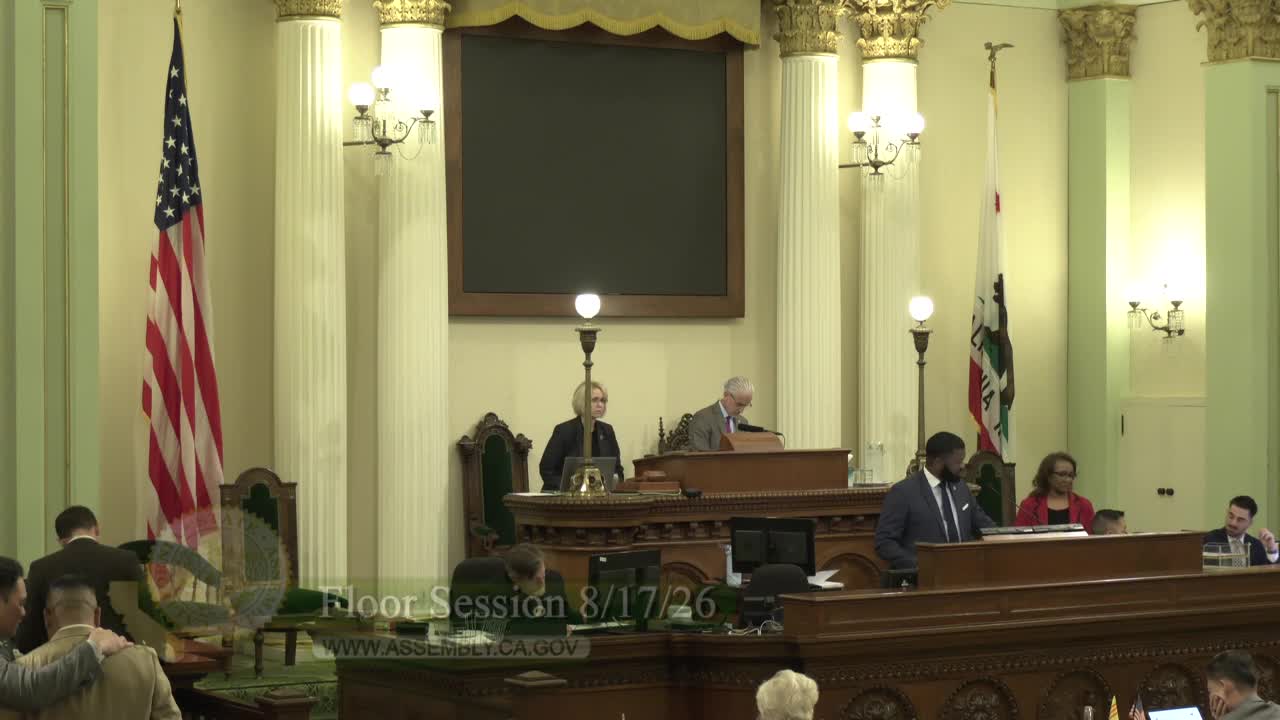
Bill Author