SB 983: San Diego Unified Port District: job order contracting: pilot program.
- Session Year: 2025-2026
- House: Senate
- Latest Version Date: 2026-09-30
Current Status:
Passed
(2026-09-30: Chaptered by Secretary of State. Chapter 993, Statutes of 2026.)
Introduced
In Committee
Awaiting First Chamber Vote
Passed First Chamber
In Committee
Awaiting Second Chamber Vote
Passed Second Chamber
Enacted
Existing law, the Local Agency Public Construction Act, sets forth procedures that a local agency is required to follow when procuring certain services or work. Existing law also sets forth specific public contracting requirements for port districts. Existing law establishes the San Diego Unified Port District for the acquisition, construction, maintenance, operation, development, and regulation of harbor works and improvements for the harbor of San Diego and for the promotion of commerce, navigation, fisheries, and recreation and requires the San Diego Unified Port District to comply with the specific public contracting requirements for port districts. Existing law authorizes certain local agencies to engage in job order contracting, as prescribed.
This bill would establish a pilot program to authorize the San Diego Unified Port District to use job order contracting as a procurement method, notwithstanding the specific public contracting requirements for port districts, as provided. The bill would impose various requirements on the job order contracting related to the San Diego Unified Port District, including a $5,000,000 cap on awards under a single job order contract and a $1,000,000 cap on any single job order. The bill would limit the term of an initial contract to a maximum of 12 months, with extensions, as prescribed. The bill would establish various additional procedures and requirements for the use of job order contracting under this authorization. The bill would require the San Diego Unified Port District, on or before January 1, 2035, to submit to the appropriate policy and fiscal committees of the Legislature a report on the use of job order contracting under these provisions. The bill would repeal these provisions on January 1, 2037.
This bill would make legislative findings and declarations as to the necessity of a special statute for the San Diego Unified Port District.
Existing law provides for the powers and duties of the Insurance Commissioner. If the commissioner ascertains that a person has violated criminal provisions of the Insurance Code or other laws, existing law requires the commissioner to certify the facts of the violation to the district attorney of the county in which the offense was committed.This bill would make technical, nonsubstantive changes to that provision.Existing law provides for the powers and duties of the Insurance Commissioner. If the commissioner ascertains that a person has violated criminal provisions of the Insurance Code or other laws, existing law requires the commissioner to certify the facts of the violation to the district attorney of the county in which the offense was committed.
This bill would make technical, nonsubstantive changes to that provision.
As used in this article:
(a)District means the San Diego Unified Port District. District also includes facilities at the Tenth Avenue Marine Terminal, National City Marine Terminal, B St. Cruise Ship Terminal, Broadway Cruise Ship Terminal, and any future cargo or cruise terminals.
(b)District maritime and longshore operations includes all of the following:
(1)The loading and unloading of cargo or materials to and from vessels, or the movement of cargo or materials to and from vessels, or other directly related functions, at the districts facilities to the cargos or materials point of rest, except for the movement of construction materials on a barge, construction staging area, or construction area when used as a construction work platform, rigging and hoisting of construction materials directly from a barge, construction staging area, or construction area when being used as a construction work platform into the construction process, the removal of construction materials directly from the project to a barge, construction staging area, or construction area when being used as a construction work platform, and the movement of construction materials and construction equipment within the construction staging area, from the construction staging area to the construction site, and on the construction site.
(2)Maintenance and repair work on nondistrict-owned containers and equipment used to load or unload vessels at the districts facilities.
(3)Maintenance and repair work necessary to facilitate the movement of cargo or materials to and from vessels at the districts facilities to the cargos or materials point of rest. This does not include repair, remodeling, or other repetitive work on district-owned property.
(c)(1)Repair, remodeling, or other repetitive work includes renovation, maintenance, or improvement of buildings, wharfs, berths, facilities, utilities, infrastructure, and related systems performed according to unit prices.
(2)Repair, remodeling, or other repetitive work does not include district maritime and longshore operations.
(d)Vessel includes, but is not limited to, a ship, boat, barge, or other related maritime craft.
20755.1.(a)(1)Notwithstanding Article 48 (commencing with Section 20750), the district may use the procurement method outlined in this article for a job order contract that does not include district maritime and longshore operations, as defined in subdivision (b) of Section 20755.
(2)The district shall not contract for work that is protected by any collective bargaining agreements or memoranda of understanding. All job order contracts shall comply with all collective bargaining agreements and memoranda of understanding. This article shall not expand or minimize existing and established collective bargaining agreements or memoranda of understanding.
(3)Job order contracts of the district shall be competitively bid and awarded to bidders providing qualified responsive bids.
(4)Job order contracts shall be for repair, remodeling, or other repetitive work, which shall not include district maritime and longshore operations, to be done according to unit prices. No annual contracts may be awarded for any new construction.
(5)A job order contract shall be subject to a project labor agreement between the district and the San Diego County Building and Construction Trades Council, or an amendment or extension of that agreement.
(b)Solicitations for job order contracts shall progress pursuant to the following:
(1)The district shall prepare a set of solicitation documents for job order contracts. The documents shall include a unit price catalog or other established unit prices, job order contract terms, job order contract technical specifications, and any other information the district deems necessary to adequately describe the districts needs.
(2)An architect, engineer, consultant, or contractor retained by the district to assist in the development of the job order contract solicitation documents shall not be eligible to bid or to participate in the preparation of a job order contract bid.
(3)The district may award multiple job order contracts in response to a single job order contract solicitation.
(c)The district shall develop a system for evaluating job order contract bids for awarding job order contracts.
(d)The award of a job order contract shall progress pursuant to the following:
(1)The district shall prepare a request for bids for job order contracts based on the solicitation documents prepared under paragraph (1) of subdivision (b) that invites job order contractors to submit sealed bids in the manner prescribed by the district.
(2)Each bidding job order contractor shall include in its bid one or more adjustment factors to the established unit prices provided in the request for bids based on the contracts technical specifications.
(3)Each bidding job order contractor shall agree to identify any subcontractors to be used for the job orders performed pursuant to the job order contract.
(4)The award of job order contracts, if any, shall be made to a job order contractor or to job order contractors that the district determines to be qualified and responsive based upon preestablished criteria to be determined by the district.
(5)A job order contractor and subcontractors at every tier shall comply with the districts project labor agreements, as applicable.
(6)Notwithstanding paragraph (4), the district, by a process determined by the district, may award any job order for repair, remodeling, or other repetitive work with a value equal to or less than two hundred fifty thousand dollars ($250,000) to a job order contractor that is also a certified small business enterprise, as established by the districts small business enterprise certification process or any similar certification process acceptable to the district, or to a job order contractor that is also a disabled veterans business enterprise, as certified by the Department of General Services.
20755.2.(a)The maximum total dollar amount that may be awarded under a single job order contract shall not exceed five million dollars ($5,000,000) in the initial contract term of the job order contract. Any single job order shall not exceed one million dollars ($1,000,000).
(b)Job order contracts may be executed for an initial contract term of no more than 12 months and may be extended or renewed for two subsequent annual terms and a maximum of ten million dollars ($10,000,000) over the subsequent two terms of the contract.
(c)(1)Work shall not be split or separated into smaller job orders for the purpose of evading the cost limits of this article.
(2)Notwithstanding paragraph (1), the district may award phased job orders when necessary to comply with environmental regulations, permitting requirements, tidal or seasonal construction windows, or other operational constraints, provided that the phasing is not used to circumvent the monetary limitations established in this section.
(d)Dollar amounts specified in this section may be adjusted annually to reflect the percentage change in the California Consumer Price Index.
20755.3.(a)All work bid under job order contracts shall comply with Chapter 4 (commencing with Section 4100) of Part 1 and is subject to all of the penalties and provisions set forth in that chapter.
(b)For purposes of this article, if a job order contractor chooses to use a subcontractor, the job order contractor shall verify that the subcontractor possesses and maintains the appropriate licenses and credentials required.
(c)If the district, after conducting an administrative due process review, determines that there has been a violation of Chapter 4 (commencing with Section 4100) of Part 1, including, but not limited to, bid shopping by the job order contractor, the district may terminate the job order contract, declare the contractor ineligible for future job order contracts for a period of time to be determined by the district, or withdraw authorization for the contractor to proceed with awarded work.
20755.4.(a)A job order contract shall set forth in the general conditions of the job order contract the party or parties responsible for ensuring compliance with the requirements specified in Article 2 (commencing with Section 1770) of Chapter 1 of Part 7 of Division 2 of the Labor Code.
(b)For purposes of job order contracting, a prevailing wage shall apply to all work ordered under the job order contract regardless of thresholds set forth in Section 1771.5 of the Labor Code.
(c)The job order contractor shall pay the prevailing wage in effect at the time the job order contract is issued by the district and all increases as published by the Department of Industrial Relations for the term of the job order contract, including all overtime, holiday, and shift provisions published by the Department of Industrial Relations.
(d)The district shall designate one individual to act as a monitor to inspect job sites for labor compliance violations at the request of the designated labor representative in its project labor agreement.
20755.5.In order to prevent fraud, waste, and abuse, the district shall prepare for each individual job order developed under a job order contract an independent cost estimate. The estimate shall be prepared before the receipt of any job order contractors estimate for the work and shall be compared to the job order contractors estimate to determine the reasonableness of that estimate before issuance of any job order. If the district finds the job order contractors estimate to perform work for a given job order to be unreasonable, not cost effective, or undesirable, the district may elect not to issue the job order to the job order contractor.
20755.6.(a)The district shall submit to the appropriate policy and fiscal committees of the Legislature, on or before January 1, 2035, a report on the use of job order contracting under this article. The report shall include, but shall not be limited to, all of the following information:
(1)A description of the districts system for evaluating job order contract bids for award of job order contracts, including, but not limited to, the criteria used by the district to determine a qualified and responsive job order contractor.
(2)A description of each job order contract awarded and the contractor awarded the contract.
(3)An assessment of the use of job order contracting under this article.
(b)A report to be submitted pursuant to subdivision (a) shall be submitted in compliance with Section 9795 of the Government Code.
20755.7.This article shall remain in effect only until January 1, 2037, and as of that date is repealed.
SEC. 2.The Legislature finds and declares that a special statute is necessary and that a general statute cannot be made applicable within the meaning of Section 16 of Article IV of the California Constitution because of the need for a pilot program to determine the potential benefits of job order contracting for the San Diego Unified Port District because it is a unique California port that spans five cities and has a nearly $14,000,000,000 economic impact in the County of San Diego.
As used in this article:
(a)District means the San Diego Unified Port District. District also includes facilities at the Tenth Avenue Marine Terminal, National City Marine Terminal, B St. Cruise Ship Terminal, Broadway Cruise Ship Terminal, and any future cargo or cruise terminals.
(b)(1)Longshore and District maritime and longshore operations includes all of the following:
(A)(1)The loading and unloading of cargo or materials to and from vessels, or the movement of cargo or materials to and from vessels, or other directly related functions, at the Tenth Avenue Marine Terminal, National City Marine Terminal, B St. Cruise Ship Terminal, Broadway Cruise Ship Terminal, or any future cargo or cruise terminal districts facilities to the cargos or materials materials point of rest, except for the movement of construction materials on a barge, construction staging area, or construction area when used as a construction work platform, rigging and hoisting of construction materials directly from a barge, construction staging area, or construction area when being used as a construction work platform into the construction process, the removal of construction materials directly from the project to a barge, construction staging area, or construction area when being used as a construction work platform, and the movement of construction materials and construction equipment within the construction staging area, from the construction staging area to the construction site, and on the construction site.
(B)(2)Maintenance and repair work on nondistrict-owned containers, infrastructure, containers and equipment used in cargo or cruise operations. to load or unload vessels at the districts facilities.
(C)(3)Maintenance and repair work necessary to facilitate the movement of cargo or materials to and from vessels at the Tenth Avenue Marine Terminal, National City Marine Terminal, B St. Cruise Ship Terminal, Broadway Cruise Ship Terminal, or any future cargo or cruise terminal districts facilities to the cargos or materials materials point of rest. This does not include maintenance and repair repair, remodeling, or other repetitive work on district-owned property.
(2)Longshore and maritime operations does not include construction or infrastructure work not directly part of cargo loading, unloading, or movement.(c)(1)Repair, remodeling, or other repetitive work includes renovation, maintenance, or improvement of buildings, wharfs, berths, facilities, utilities, infrastructure, and related systems performed by licensed contractors. according to unit prices.
(2)Repair, remodeling, or other repetitive work does not include longshore and district maritime or cruise operations. and longshore operations.
(d)Vessel includes, but is not limited to, a ship, boat, barge, or other related maritime craft.
20755.1.(a)(1)Notwithstanding Article 48 (commencing with Section 20750), the district may use the procurement method outlined in this article for a job order contract that does not include longshore and district maritime and longshore operations, as defined in subdivision (b) of Section 20755.
(2)The district shall not contract for work that is protected by any collective bargaining agreements. agreements or memoranda of understanding. All job order contracts shall comply with all collective bargaining agreements. agreements and memoranda of understanding. This article shall not expand or minimize existing and established collective bargaining agreements. agreements or memoranda of understanding.
(3)Job order contracts of the district shall be competitively bid and awarded to bidders providing qualified responsive bids.
(4)Job order contracts shall be for repair, remodeling, or other repetitive work, which shall not include longshore and district maritime and longshore operations, to be done according to unit prices. No annual contracts may be awarded for any large-scale capital development projects exceeding the monetary limits established in Section 20755.2. new construction.
(5)A job order contract shall be subject to a project labor agreement between the district and the San Diego County Building and Construction Trades Council, or an amendment or extension of that agreement.
(b)Solicitations for job order contracts shall progress pursuant to the following:
(1)The district shall prepare a set of solicitation documents for job order contracts. The documents shall include a unit price catalog or other established unit prices, job order contract terms, job order contract technical specifications, and any other information the district deems necessary to adequately describe the districts needs.
(2)An architect, engineer, consultant, or contractor retained by the district to assist in the development of the job order contract solicitation documents shall not be eligible to bid or to participate in the preparation of a job order contract bid.
(3)The district may award multiple job order contracts in response to a single job order contract solicitation.
(c)The district shall develop a system for evaluating job order contract bids for awarding job order contracts.
(d)The award of a job order contract shall progress pursuant to the following:
(1)The district shall prepare a request for bids for job order contracts based on the solicitation documents prepared under paragraph (1) of subdivision (b) that invites job order contractors to submit sealed bids in the manner prescribed by the district.
(2)Each bidding job order contractor shall include in its bid one or more adjustment factors to the established unit prices provided in the request for bids based on the contracts technical specifications.
(3)Each bidding job order contractor shall agree to identify any subcontractors to be used for the job orders performed pursuant to the job order contract.
(4)The award of job order contracts, if any, shall be made to a job order contractor or to job order contractors that the district determines to be qualified and responsive based upon preestablished criteria to be determined by the district.
(5)A job order contractor and subcontractors at every tier shall comply with the districts project labor agreements, as applicable.
(6)Notwithstanding paragraph (4), the district, by a process determined by the district, may award any job order for repair or renovation work repair, remodeling, or other repetitive work with a value equal to or less than two hundred fifty thousand dollars ($250,000) to a job order contractor that is also a certified small business enterprise, as established by the districts small business enterprise certification process or any similar certification process acceptable to the district, or to a job order contractor that is also a disabled veterans business enterprise, as certified by the Department of General Services.
20755.2.(a)The maximum total dollar amount that may be awarded under a single job order contract shall not exceed five million dollars ($5,000,000) in the initial contract term of the job order contract. Any single job order shall not exceed one million dollars ($1,000,000).
(b)Job order contracts may be executed for an initial contract term of no more than 12 months and may be extended or renewed for two subsequent annual terms and a maximum of ten million dollars ($10,000,000) over the subsequent two terms of the contract.
(c)(1)Work shall not be split or separated into smaller job orders for the purpose of evading the cost limits of this article.
(2)Notwithstanding paragraph (1), the district may award phased job orders when necessary to comply with environmental regulations, permitting requirements, tidal or seasonal construction windows, or other operational constraints, provided that the phasing is not used to circumvent the monetary limitations established in this section.
(d)Dollar amounts specified in this section may be adjusted annually to reflect the percentage change in the California Consumer Price Index.
20755.3.(a)All work bid under job order contracts shall comply with Chapter 4 (commencing with Section 4100) of Part 1 and is subject to all of the penalties and provisions set forth in that chapter.
(b)For purposes of this article, if a job order contractor chooses to use a subcontractor, the job order contractor shall verify that the subcontractor possesses and maintains the appropriate licenses and credentials required.
(c)If the district, after conducting an administrative due process review, determines that there has been a violation of Chapter 4 (commencing with Section 4100) of Part 1, including, but not limited to, bid shopping by the job order contractor, the district may terminate the job order contract, declare the contractor ineligible for future job order contracts for a period of time to be determined by the district, or withdraw authorization for the contractor to proceed with awarded work.
20755.4.(a)A job order contract shall set forth in the general conditions of the job order contract the party or parties responsible for ensuring compliance with the requirements specified in Article 2 (commencing with Section 1770) of Chapter 1 of Part 7 of Division 2 of the Labor Code.
(b)For purposes of job order contracting, a prevailing wage shall apply to all work ordered under the job order contract regardless of thresholds set forth in Section 1771.5 of the Labor Code.
(c)The job order contractor shall pay the prevailing wage in effect at the time the job order contract is issued by the district and all increases as published by the Department of Industrial Relations for the term of the job order contract, including all overtime, holiday, and shift provisions published by the Department of Industrial Relations.
(d)The district shall designate one individual to act as a monitor to inspect job sites for labor compliance violations at the request of the designated labor representative in its project labor agreement.
20755.5.In order to prevent fraud, waste, and abuse, the district shall prepare for each individual job order developed under a job order contract an independent cost estimate. The estimate shall be prepared before the receipt of any job order contractors estimate for the work and shall be compared to the job order contractors estimate to determine the reasonableness of that estimate before issuance of any job order. If the district finds the job order contractors estimate to perform work for a given job order to be unreasonable, not cost effective, or undesirable, the district may elect not to issue the job order to the job order contractor.
20755.6.(a)The district shall submit to the appropriate policy and fiscal committees of the Legislature, on or before January 1, 2035, a report on the use of job order contracting under this article. The report shall include, but shall not be limited to, all of the following information:
(1)A description of the districts system for evaluating job order contract bids for award of job order contracts, including, but not limited to, the criteria used by the district to determine a qualified and responsive job order contractor.
(2)A description of each job order contract awarded and the contractor awarded the contract.
(3)An assessment of the use of job order contracting under this article.
(b)A report to be submitted pursuant to subdivision (a) shall be submitted in compliance with Section 9795 of the Government Code.
20755.7.This article shall remain in effect only until January 1, 2037, and as of that date is repealed.
SEC. 2.The Legislature finds and declares that a special statute is necessary and that a general statute cannot be made applicable within the meaning of Section 16 of Article IV of the California Constitution because of the need for a pilot program to determine the potential benefits of job order contracting for the San Diego Unified Port District because it is a unique California port that spans five cities and has a nearly $14,000,000,000 economic impact in the County of San Diego.
As used in this article:
(a)District means the San Diego Unified Port District.
(b)(1)Longshore and maritime operations includes all of the following:
(A)The loading and unloading of cargo or materials to and from vessels, or the movement of cargo or materials to and from vessels, or other directly related functions, at the Tenth Avenue Marine Terminal, National City Marine Terminal, B St. Cruise Ship Terminal, Broadway Cruise Ship Terminal, or any future cargo or cruise terminal to the cargos or materials point of rest, except for the movement of construction materials on a barge, construction staging area, or construction area when used as a construction work platform, rigging and hoisting of construction materials directly from a barge, construction staging area, or construction area when being used as a construction work platform into the construction process, the removal of construction materials directly from the project to a barge, construction staging area, or construction area when being used as a construction work platform, and the movement of construction materials and construction equipment within the construction staging area, from the construction staging area to the construction site, and on the construction site.
(B)Maintenance and repair work on nondistrict-owned containers, infrastructure, and equipment used in cargo or cruise operations.
(C)Maintenance and repair work to facilitate the movement of cargo or materials to and from vessels at the Tenth Avenue Marine Terminal, National City Marine Terminal, B St. Cruise Ship Terminal, Broadway Cruise Ship Terminal, or any future cargo or cruise terminal to the cargos or materials point of rest. This does not include maintenance and repair work on district-owned property.
(2)Longshore and maritime operations does not include construction or infrastructure work not directly part of cargo loading, unloading, or movement.
(c)(1)Repair, remodeling, or other repetitive work includes construction, renovation, maintenance, or improvement of buildings, wharfs, berths, facilities, utilities, infrastructure, and related systems performed by licensed contractors.
(2)Repair, remodeling, or other repetitive work does not include longshore and maritime or cruise operations.
(d)Vessel includes, but is not limited to, a ship, boat, barge, or other related maritime craft.
20755.1.(a)(1)Notwithstanding Article 48 (commencing with Section 20750), the district may use the procurement method outlined in this article for a job order contract that does not include longshore and maritime operations, as defined in subdivision (b) of Section 20755.
(2)The district shall not contract for work that is protected by any collective bargaining agreements. All job order contracts shall comply with all collective bargaining agreements. This article shall not expand or minimize existing and established collective bargaining agreements.
(3)Job order contracts of the district shall be competitively bid and awarded to bidders providing qualified responsive bids.
(4)Job order contracts shall be for repair, remodeling, or other repetitive work, which shall not include longshore and maritime operations, to be done according to unit prices. No annual contracts may be awarded for any large-scale capital development projects exceeding the monetary limits established in Section 20755.2.
(5)A job order contract shall be subject to a project labor agreement between the district and the San Diego County Building and Construction Trades Council, or an amendment or extension of that agreement.
(b)Solicitations for job order contracts shall progress pursuant to the following:
(1)The district shall prepare a set of solicitation documents for job order contracts. The documents shall include a unit price catalog or other established unit prices, job order contract terms, job order contract technical specifications, and any other information the district deems necessary to adequately describe the districts needs.
(2)An architect, engineer, consultant, or contractor retained by the district to assist in the development of the job order contract solicitation documents shall not be eligible to bid or to participate in the preparation of a job order contract bid.
(3)The district may award multiple job order contracts in response to a single job order contract solicitation.
(c)The district shall develop a system for evaluating job order contract bids for awarding job order contracts.
(d)The award of a job order contract shall progress pursuant to the following:
(1)The district shall prepare a request for bids for job order contracts based on the solicitation documents prepared under paragraph (1) of subdivision (b) that invites job order contractors to submit sealed bids in the manner prescribed by the district.
(2)Each bidding job order contractor shall include in its bid one or more adjustment factors to the established unit prices provided in the request for bids based on the contracts technical specifications.
(3)Each bidding job order contractor shall agree to identify any subcontractors to be used for the job orders performed pursuant to the job order contract.
(4)The award of job order contracts, if any, shall be made to a job order contractor or to job order contractors that the district determines to be qualified and responsive based upon preestablished criteria to be determined by the district.
(5)A job order contractor shall comply with the districts project labor agreements, as applicable.
(6)Notwithstanding paragraph (4), the district, by a process determined by the district, may award any job order for repair or renovation work with a value equal to or less than two hundred fifty thousand dollars ($250,000) to a job order contractor that is also a certified small business enterprise, as established by the districts small business enterprise certification process or any similar certification process acceptable to the district, or to a job order contractor that is also a disabled veterans business enterprise, as certified by the Department of General Services.
20755.2.(a)The maximum total dollar amount that may be awarded under a single job order contract shall not exceed five million dollars ($5,000,000) in the initial contract term of the job order contract. Any single job order shall not exceed one million dollars ($1,000,000).
(b)Job order contracts may be executed for an initial contract term of no more than 12 months and may be extended or renewed for two subsequent annual terms and a maximum of ten million dollars ($10,000,000) over the subsequent two terms of the contract.
(c)(1)Work shall not be split or separated into smaller job orders for the purpose of evading the cost limits of this article.
(2)Notwithstanding paragraph (1), the district may award phased job orders when necessary to comply with environmental regulations, permitting requirements, tidal or seasonal construction windows, or other operational constraints, provided that the phasing is not used to circumvent the monetary limitations established in this section.
(d)Dollar amounts specified in this section may be adjusted annually to reflect the percentage change in the California Consumer Price Index.
20755.3.(a)All work bid under job order contracts shall comply with Chapter 4 (commencing with Section 4100) of Part 1 and is subject to all of the penalties and provisions set forth in that chapter.
(b)For purposes of this article, if a job order contractor chooses to use a subcontractor, the job order contractor shall verify that the subcontractor possesses and maintains the appropriate licenses and credentials required.
(c)If the district, after conducting an administrative due process review, determines that there has been a violation of Chapter 4 (commencing with Section 4100) of Part 1, including, but not limited to, bid shopping by the job order contractor, the district may terminate the job order contract, declare the contractor ineligible for future job order contracts for a period of time to be determined by the district, or withdraw authorization for the contractor to proceed with awarded work.
20755.4.(a)A job order contract shall set forth in the general conditions of the job order contract the party or parties responsible for ensuring compliance with the requirements specified in Article 2 (commencing with Section 1770) of Chapter 1 of Part 7 of Division 2 of the Labor Code.
(b)For purposes of job order contracting, a prevailing wage shall apply to all work ordered under the job order contract regardless of thresholds set forth in Section 1771.5 of the Labor Code.
(c)The job order contractor shall pay the prevailing wage in effect at the time the job order contract is issued by the district and all increases as published by the Department of Industrial Relations for the term of the job order contract, including all overtime, holiday, and shift provisions published by the Department of Industrial Relations.
(d)The district shall designate one individual to act as a monitor to inspect job sites for labor compliance violations at the request of the designated labor representative in its project labor agreement.
20755.5.In order to prevent fraud, waste, and abuse, the district shall prepare for each individual job order developed under a job order contract an independent cost estimate. The estimate shall be prepared before the receipt of any job order contractors estimate for the work and shall be compared to the job order contractors estimate to determine the reasonableness of that estimate before issuance of any job order. If the district finds the job order contractors estimate to perform work for a given job order to be unreasonable, not cost effective, or undesirable, the district may elect not to issue the job order to the job order contractor.
20755.6.(a)The district shall submit to the appropriate policy and fiscal committees of the Legislature, on or before January 1, 2035, a report on the use of job order contracting under this article. The report shall include, but shall not be limited to, all of the following information:
(1)A description of the districts system for evaluating job order contract bids for award of job order contracts, including, but not limited to, the criteria used by the district to determine a qualified and responsive job order contractor.
(2)A description of each job order contract awarded and the contractor awarded the contract.
(3)An assessment of the use of job order contracting under this article.
(b)A report to be submitted pursuant to subdivision (a) shall be submitted in compliance with Section 9795 of the Government Code.
20755.7.This article shall remain in effect only until January 1, 2037, and as of that date is repealed.
SEC. 2.The Legislature finds and declares that a special statute is necessary and that a general statute cannot be made applicable within the meaning of Section 16 of Article IV of the California Constitution because of the need for a pilot program to determine the potential benefits of job order contracting for the San Diego Unified Port District because it is a unique California port that spans five cities and has a nearly $14,000,000,000 in economic impact in the County of San Diego.
SECTION 1.Section 12928 of the Insurance Code is amended to read:12928.If the commissioner ascertains that an insurer, any of its agents, officers, or employees, or any other person is guilty of violating any of the penal provisions of this code or of other laws, the commissioner shall certify the facts of the violation to the district attorney of the county in which the offense was committed.Whenever If the commissioner ascertains that any insurer or an insurer, any of its agents, officers officers, or employees employees, or any other person is guilty of violating any of the penal provisions of this code or of other laws he laws, the commissioner shall certify the facts of the violation to the district attorney of the county in which such the offense was committed.
|
Date
|
Status
|
|---|---|
| Sep 30, 2026 | Chaptered by Secretary of State. Chapter 993, Statutes of 2026. |
| Sep 30, 2026 | Approved by the Governor. |
| Sep 2, 2026 | Enrolled and presented to the Governor at 3 p.m. |
| Aug 27, 2026 | Assembly amendments concurred in. (Ayes 30. Noes 10. Page 6024.) Ordered to engrossing and enrolling. |
| Aug 27, 2026 | Assembly amendments concurred in. (Ayes 29. Noes 10.) Ordered to engrossing and enrolling. |
| Aug 26, 2026 | In Senate. Concurrence in Assembly amendments pending. |
| Aug 26, 2026 | Read third time. Passed. (Ayes 67. Noes 5. Page 6553.) Ordered to the Senate. |
| Aug 26, 2026 | Read third time. Passed. Ordered to the Senate. |
| Aug 12, 2026 | Ordered to third reading. |
| Aug 12, 2026 | Read third time and amended. |
| Aug 3, 2026 | Read second time. Ordered to third reading. |
| Jul 2, 2026 | From committee: Do pass. (Ayes 9. Noes 1.) (July 1). |
| Jun 1, 2026 | Referred to Com. on L. GOV. |
| May 26, 2026 | In Assembly. Read first time. Held at Desk. |
| May 26, 2026 | Read third time. Passed. (Ayes 29. Noes 8. Page 4441.) Ordered to the Assembly. |
| May 26, 2026 | Read third time. Passed. (Ayes 29. Noes 8.) Ordered to the Assembly. |
| Apr 30, 2026 | Read second time. Ordered to third reading. |
| Apr 29, 2026 | From committee: Do pass. (Ayes 5. Noes 2. Page 4095.) (April 29). |
| Apr 29, 2026 | From committee: Do pass. (Ayes 5. Noes 2.) (April 29). |
| Apr 22, 2026 | From committee with author's amendments. Read second time and amended. Re-referred to Com. on L. GOV. |
| Apr 9, 2026 | Set for hearing April 29. |
| Apr 8, 2026 | Re-referred to Com. on L. GOV. |
| Mar 24, 2026 | From committee with author's amendments. Read second time and amended. Re-referred to Com. on RLS. |
| Feb 18, 2026 | Referred to Com. on RLS. |
| Feb 9, 2026 | From printer. May be acted upon on or after March 8. |
| Feb 5, 2026 | Introduced. Read first time. To Com. on RLS. for assignment. To print. |
|
Date
|
Description
|
Location
|
Votes
|
|
|---|---|---|---|---|
| Aug 27, 2026 | Unfinished Business SB983 Weber Pierson Concurrence | Senate Floor |
Passed |
|
| Aug 26, 2026 | SB 983 Weber Pierson Senate Third Reading By Boerner | Assembly Floor |
Passed |
|
| Jul 1, 2026 | Do pass. | Assembly Standing Committee on Local Government |
Passed |
|
| May 26, 2026 | Senate 3rd Reading SB983 Weber Pierson | Senate Floor |
Passed |
|
| Apr 29, 2026 | Do pass | Senate Standing Committee on Local Government |
Passed |
This list shows positions taken on this bill by organizations on the date displayed, which is linked to the original source.
Positions by individuals are not included.
|
Organization
|
Position
|
Date
|
|---|---|---|
| Associated General Contractors-San Diego Chapter | ** Support | |
| Port of San Diego | ** Support | |
| San Diego Regional Chamber Of Commerce | ** Support | |
| San Diego Unified Port District | ** Support | |
| The Gordian Group | ** Support | |
| Western Electrical Contractors Association | ** Against |
SENATE RULES COMMITTEE Office of Senate Floor Analyses (916) 651-4171 | SB 983 |
UNFINISHED BUSINESS
Bill No: SB 983
Author: Weber Pierson (D)
Amended: 8/12/26
Vote: 21
SENATE LOCAL GOVERNMENT COMMITTEE: 5-2, 4/29/26
AYES: Durazo, Arreguín, Ashby, Cervantes, Laird
NOES: Choi, Seyarto
SENATE FLOOR: 29-8, 5/26/26
AYES: Allen, Archuleta, Arreguín, Ashby, Becker, Blakespear, Cabaldon, Caballero, Cervantes, Cortese, Durazo, Grayson, Hurtado, Laird, Limón, McGuire, McNerney, Menjivar, Padilla, Pérez, Reyes, Richardson, Rubio, Smallwood-Cuevas, Stern, Umberg, Wahab, Weber Pierson, Wiener
NOES: Alvarado-Gil, Choi, Grove, Jones, Ochoa Bogh, Seyarto, Strickland, Valladares
NO VOTE RECORDED: Dahle, Gonzalez, Niello
ASSEMBLY FLOOR: Passed, 8/26/26
SUBJECT: San Diego Unified Port District: job order contracting: pilot program
SOURCE: San Diego Unified Port District
DIGEST:
This bill authorizes the San Diego Port District to use the Job Order Contracting (JOC) method.
Assembly Amendments
- Excludes district maritime and longshore operations from JOC,
- Prohibits JOC being awarded for any new construction,
- Prohibits contract for work that is protected by any collective bargaining agreements or memoranda of understanding,
- Provides a job order contractor and subcontractor at every tier must comply with district’s project labor agreements, as specified.
ANALYSIS:
Existing law:
- Requires, via the Local Agency Public Construction Act, local agencies to invite bids for construction projects and award contracts to the lowest responsible bidder,
- Establishes the San Diego Unified Port District for the acquisition, construction, maintenance, operation, development, and regulation of harbor works and improvements for the harbor of San Diego and for the promotion of commerce, navigation, fisheries, and recreation,
- Requires the San Diego Unified Port District to comply with the specific public contracting requirements for port districts,
- Authorize multiple agencies to use JOC, some state and some local, including counties, school districts, community college districts, the California State University system, and Caltrans.
This bill:
- Allows, until January 1, 2037, the Port District to use JOC procurement authority,
- To use this authority, the Port District must:
- Not contract for work that is protected by any collective bargaining agreements or memoranda of understanding;
- Comply with all collective bargaining agreements or memoranda of understanding; and
- Competitively bid and award to bidders providing qualified responsible bids.
- Not contract for work that is protected by any collective bargaining agreements or memoranda of understanding;
- Limits JOC to repair, remodeling, or other repetitive work according to unit prices while prohibiting the use of JOC for district maritime and longshore operations.
- No annual contracts may be awarded for any new construction.
- Requires solicitations for a JOC must comply with the following requirements:
- The Port District must prepare a set of solicitation documents for JOC. Documents must include a unit price catalog or other established unit prices;
- An architect, engineer, consultant, or contractor retained by the district to assist in the development of the JOC solicitation documents must not be eligible to bid or participate in the preparation of the JOC bid; and
- The Port District may award multiple JOCs in response to a single JOC solicitation.
- The Port District must prepare a set of solicitation documents for JOC. Documents must include a unit price catalog or other established unit prices;
- Requires Port District to develop a system for evaluating and awarding JOC bids:
- Port District must prepare a request for bids for JOC based on the solicitation documents and request sealed bids;
- Each bidder must include in its bid one or more adjustment factors to the established unit prices;
- Each bidder shall agree to identify any subcontractors to be used;
- Port district must award the JOC, if any, to a bidder that the district determines is qualified and responsive;
- A job order contractor and subcontractor at every tier must comply with the district’s project labor agreements, as applicable; and
- Port District may award any job order for repair or renovation work with a value equal to or less than $250,000 to a job order contractor that is also a certified small business enterprise.
- Port District must prepare a request for bids for JOC based on the solicitation documents and request sealed bids;
- Provides that the maximum total dollar amount that may be awarded under a single JOC shall not exceed $5 million dollars in the initial contract term of the JOC. No single job order may exceed $1 million,
- Provides that JOCs may be executed for an initial contract term of no more than 12 months and may be extended or renewed for two subsequent annual terms and a maximum of $10 million over the subsequent two terms of the contract,
- Prohibits work from being split or separated into smaller job orders for the purpose of evading the cost limitation provisions of this bill,
- Except that district may award phased job orders when necessary to comply with environmental regulations, permitting requirements, tidal or seasonal construction windows, or other operational constraints.
- Except that district may award phased job orders when necessary to comply with environmental regulations, permitting requirements, tidal or seasonal construction windows, or other operational constraints.
- Allows the amounts in the bill to be adjusted annually to reflect the percentage change in the California Consumer Price Index (CPI),
- Provides that all work bid under JOCs shall comply with the Subletting and Subcontracting Fair Practices Act and is subject to all of the penalties and provisions set forth in that Act,
- Requires, if a job order contractor chooses to use a subcontractor, the job order contractor to verify that the subcontractor possesses and maintains the appropriate licenses and credentials required,
- Provides that, if the Port District, after conducting an administrative due process review, determines that there has been a violation of the Subletting and Subcontracting Fair Practices Act, including, but not limited to, bid shopping by the job order contractor, the Port District may terminate the job order contract, declare the contractor ineligible for future job order contracts for a period of time to be determined by the Port District, or withdraw authorization for the contractor to proceed with awarded work,
- Requires a JOC to set forth in the general conditions of the JOC the party or parties responsible for seeing that existing law governing prevailing wages on public works projects is complied with, as specified.
- Requires, for purposes of job order contracting, prevailing wages to apply to all work ordered under the JOC regardless of thresholds set forth in existing law governing prevailing wages on public works projects, as specified.
- Requires the Port District to designate one individual to act as a monitor to inspect job sites for labor compliance violations at the request of the designated labor representative in its project labor agreement,
- Requires a JOC to be subject to a project labor agreement (PLA) between the district and the San Diego County Building and Construction Trades Council,
- Requires, in order to prevent fraud, waste, and abuse, the Port District must prepare for each individual job order developed under a JOC an independent cost estimate. The estimate shall be prepared prior to the receipt of any job order contractor’s estimate for the work and shall be compared to the job order contractor’s estimate to determine the reasonableness of that estimate before issuance of any job order. If the Port District finds the job order contractor’s estimate to perform work for a given job order to be unreasonable, not cost effective, or undesirable, the Port District may elect not to issue the job order to the job order contractor, and may, instead, utilize any other available procurement procedures or choose not to move forward with the work,
- Requires the Port District to submit to the appropriate policy and fiscal committees of the Legislature, on or before January 1, 2035, a report on the use of JOC. The report must include:
- A description of the Port District’s system for evaluating JOC bids for award of JOCs, including, but not limited to, the criteria used by the Port District to determine a qualified and responsive job order contractor;
- A description of each JOC the Port District awarded, and the contractor awarded the contract; and
- An assessment of the use of job order contracting under this bill.
- A description of the Port District’s system for evaluating JOC bids for award of JOCs, including, but not limited to, the criteria used by the Port District to determine a qualified and responsive job order contractor;
Background
Job order contracting (JOC). A JOC is a competitively bid, fixed price, indefinite quantity contract for the performance of minor construction, as well as the renovation, alteration, painting and repair of existing public facilities. A JOC is generally a multi-year contract that includes a base year and multiple “option years,” and is awarded before the awarding agency has identified specific work that it needs the contractor to perform. Instead of bidding each project separately, the agency awards a JOC that identifies specific tasks and covers a range of recurring work, such as roofing, electrical work, plumbing, and painting, across facilities it owns.
A JOC is a fixed price agreement in that it is based upon specified charges contained in a Unit Price Book (UPB), which is prepared by the public agency or by independent commercial sources. The UPB sets forth detailed repair and construction tasks, including task descriptions, specifications, units of measurement, and unit prices for each task (“Unit Price” means the amount paid for a single unit of an item of work). This contracting method is intended to reduce costs and accelerate completion of smaller projects.
The Legislature has authorized multiple agencies to use JOC, some state and some local, including counties, school districts, community college districts, the California State University system, and Caltrans. California counties have had the authority to use JOC since 1983.
San Diego Unified Port District. The San Diego Unified Port District (Port District) was created by the Legislature to manage San Diego Bay and surrounding waterfront land on December 18, 1962. The Port of San Diego is the fourth largest of the 11 ports in California. The Port District includes five member cities – San Diego, Chula Vista, Coronado, National City, and Imperial Beach. The Port District currently oversees two maritime cargo terminals, two cruise ship terminals, 23 public parks, the Harbor Police Department and the leases of hundreds of tenant and subtenant businesses around San Diego Bay.
Existing law establishes the Port District as the trustee of public lands within San Diego Bay. The Port District was created for the acquisition, construction, maintenance, operation, development and regulation of harbor works and improvements, including rail and water, for the development, operation, maintenance, control, regulation, and management of the harbor of San Diego upon the tidelands and lands lying under the inland navigable waters of San Diego Bay, and for the promotion of commerce, navigation, fisheries, and recreation. A seven-member Board of Port Commissioners governs the Port District: one commissioner each is appointed by the city councils of Chula Vista, Coronado, Imperial Beach and National City, and three commissioners are appointed by the San Diego City Council.
Comments
According to the author, “SB 983 authorizes the Port of San Diego to utilize job-order-contracting (“JOC”) for their repair, remodeling, and repetitive work. The ability to utilize this contracting method will promote efficiency and flexibility in completing necessary maintenance projects.
Currently, when maintenance is needed on the Port’s property, the Port must go out for competitive bidding for each individual project. This can result in major delays and can interrupt Port operations. This bill establishes a pilot program allowing the Port of San Diego to use the JOC procurement method, and sunsets the program in January 2037.”
Special legislation. Section 16 of Article IV of the California Constitution prohibits special legislation when a general law can apply. SB 983 contains findings and declarations explaining the need for legislation that applies only to the Port of San Diego because of the unique and special circumstances surrounding the port.
FISCAL EFFECT: Appropriation: No Fiscal Com.: No Local: No
SUPPORT: (Verified 8/26/26)
San Diego Unified Port District (Sponsor)
Associated General Contractors-San Diego Chapter
San Diego Regional Chamber of Commerce
The Gordian Group
OPPOSITION: (Verified 8/26/26)
Western Electrical Contractors Association
Prepared by: Itzel Vargas / L. GOV. / (916) 651-4119
8/26/26 14:28:40
**** END ****
SENATE THIRD READING
STR Bill Id:SB 983
Author:(Weber Pierson)
As Amended Ver:August 12, 2026
Majority vote
SUMMARY
Authorizes the San Diego Unified Port District (district) to use job order contracting.
Major Provisions
- Allows the district to enter into job order contracts (JOC) for repair, remodeling, or other repetitive work to be done according to unit prices.
- Excludes district maritime and longshore operations from this bill′s job order contracting authorization.
- Prohibits annual JOCs from being awarded for any new construction.
- Provides that the district shall not contract for work that is protected by any collective bargaining agreements or memoranda of understanding, specifies that JOCs shall comply with all collective bargaining agreements and memoranda of understanding, and provides that this bill shall not expand or minimize existing and established collective bargaining agreements or memoranda of understanding.
- Requires JOCs to be competitively bid and awarded to bidders providing qualified responsive bids.
- Requires a JOC to be subject to a Project Labor Agreement (PLA) between the district and the San Diego County Building and Construction Trades Council, or an amendment or extension of that agreement.
- Specifies the process for solicitating and awarding JOCs, caps the amount of a single JOC at $5 million and a single job order at $1 million, and allows initial contract terms of 12 months with extensions of two terms and a maximum of $10 million over those terms. These amounts may be adjusted annually to reflect changes in the California Consumer Price Index.
- Establishes additional requirements and specifications for the district′s use of job order contracting consistent with recent legislative authorizations for other local agencies to enter into JOCs.
- Requires the district to submit a report to the Legislature on its use of job order contracting by January 1, 2035, and contains a sunset date of January 1, 2037.
COMMENTS
A JOC is a competitively bid, fixed price, indefinite quantity contract for the performance of minor construction, as well as the renovation, alteration, painting and repair of existing public facilities. A JOC is generally a multi-year contract that includes a base year and multiple "option years," and is awarded before the awarding agency has identified specific work that it needs the contractor to perform. A typical JOC involves a variety of tasks such as roofing, electrical work, plumbing and painting, that are required for all of a public agency′s buildings for a period of years.
A JOC is a fixed price agreement in that it is based upon specified charges contained in a Unit Price Book (UPB), which is prepared by the public agency or by independent commercial sources. The UPB sets forth detailed repair and construction tasks, including task descriptions, specifications, units of measurement, and unit prices for each task ("Unit Price" means the amount paid for a single unit of an item of work). A contractor′s bid is expressed in terms of a percentage of the specified UPB charges. The UPB is then used to determine the costs of each proposed project during the term of the contract. As an example, if a procuring agency′s per unit catalog price for an HVAC installation is $1,000, and a contractor submits a bid to do that work with an adjustment factor of 1.13, the contractor is agreeing to install the HVAC for $1,130.
The total JOC value may be specified as a range with a certain guaranteed minimum. The award of annual contracts on a unit price basis enables what would otherwise be multiple separately-bid projects to be combined into one bid. This contracting method is intended to reduce costs and accelerate completion of smaller projects. It is not generally viewed as an appropriate method of contracting for large, complex construction projects that require extensive or innovative design or are likely to encounter changes and revisions during construction. JOC are typically used for well-defined, recurring or repetitive work where quick execution is essential, not for single larger projects.
The Legislature has authorized multiple agencies to use JOC, some state and some local, including counties, school districts, community college districts, the California State University system, and Caltrans. California counties have enjoyed the authority to use JOC since 1983. Counties may award annual JOCs of up to $3 million, adjusted annually to reflect the California Consumer Price Index (CPI), to the lowest responsible bidder or using best value (for specified counties).
Additionally, as part of the 2021-2022 state budget, the Legislature authorized Caltrans to use JOC, but the authority was limited to the new Clean California Beautification Program. In 2023, as part of the Governor′s Infrastructure package Caltrans′ authority was expanded. SB 146 (Gonzalez), Chapter 58, Statutes of 2023, authorized Caltrans to use JOCs, through 2033, for general highway and traffic maintenance. The Legislature approved JOC authority for some regional transportation agencies including the Santa Clara Valley Transportation Authority, the Los Angeles County Metropolitan Transportation Authority (LA Metro), and the San Mateo County Transit District.
According to the Author
"SB 983 authorizes the Port of San Diego to utilize job-order-contracting ("JOC") for their repair, remodeling, and repetitive work. The ability to utilize this contracting method will promote efficiency and flexibility in completing necessary maintenance projects. Currently, when maintenance is needed on the Port′s property, the Port must go out for competitive bidding for each individual project. This can result in major delays and can interrupt Port operations. This bill establishes a pilot program allowing the Port of San Diego to use the JOC procurement method, and sunsets the program in January 2037."
Arguments in Support
The San Diego Unified Port District (Port), sponsor of this bill, writes, "SB 983 would allow the Port to utilize JOC which is a contracting tool that other public entities like cities and counties have been able to utilize, but is not statutorily authorized universally for special districts such as the Port. JOC is a contracting method that saves time and money by establishing contracts with pre-qualified contractors based on advertised calculated unit prices for various maintenance categories. These contracts would enable the Port to issue work orders for a wide range of projects quickly and efficiently, in turn allowing the Port to address urgent but not emergency maintenance issues more efficiently."
"SB 983 is modeled after previous legislative efforts that granted JOC authority to special districts. SB 983 utilizes the same contract limits, labor provisions, and compliance and accountability protections that have been vetted with previous legislative efforts."
Arguments in Opposition
The Western Electrical Contractors Association (WECA), writes in opposition, "WECA does not oppose Job Order Contracting. On the contrary, JOC is a proven procurement tool that enables public agencies to efficiently deliver repairs, maintenance, modernization, and other smaller construction projects while reducing administrative burdens and accelerating project completion. JOC also provides an important opportunity for small, emerging, women-owned, and minority-owned contractors to gain experience in performing public work and to establish relationships with public agencies. Unfortunately, SB 983 undermines many of those benefits by requiring JOC projects to be performed under the Port′s PLA…"
"Job Order Contracting is intended to streamline procurement, reduce paperwork, encourage competition, and expedite project delivery. Project Labor Agreements, by contrast, impose additional administrative requirements, hiring hall procedures, dispatch requirements, reporting obligations, and labor restrictions that increase complexity and cost. Numerous studies have found that PLA mandates increase construction costs while reducing bidder participation. Moreover, the Port′s PLA requires the use of union apprenticeship programs. While that requirement may be appropriate in certain contexts, it creates an additional barrier for many merit-shop contractors that otherwise possess the qualifications, experience, and workforce necessary to perform JOC projects successfully."
"As a result, SB 983 risks limiting the very opportunities that JOC should create. Rather than serving as an accessible entry point for small, women-owned, minority-owned, and disadvantaged contractors, the bill favors firms already structured to operate within the union-signatory system and discourages broader participation. The Legislature should not transform a procurement tool designed to maximize efficiency and accessibility into one burdened by requirements that diminish both. If the Committee wishes to authorize JOC for the Port, it should do so in a manner that preserves the flexibility, competition, and opportunities that have made JOC successful throughout California."
FISCAL COMMENTS
None.
VOTES
SENATE FLOOR: 29-8-3
YES: Allen, Archuleta, Arreguín, Ashby, Becker, Blakespear, Cabaldon, Caballero, Cervantes, Cortese, Durazo, Grayson, Hurtado, Laird, Limón, McGuire, McNerney, Menjivar, Padilla, Pérez, Reyes, Richardson, Rubio, Smallwood-Cuevas, Stern, Umberg, Wahab, Weber Pierson, Wiener
NO: Alvarado-Gil, Choi, Grove, Jones, Ochoa Bogh, Seyarto, Strickland, Valladares
ABS, ABST OR NV: Dahle, Gonzalez, Niello
ASM LOCAL GOVERNMENT: 9-1-0
YES: Carrillo, Ta, Pacheco, Ramos, Ransom, Blanca Rubio, Stefani, Ward, Wilson
NO: Johnson
UPDATED
VERSION: August 12, 2026
CONSULTANT: Angela Mapp / L. GOV. / (916) 319-3958 FN: 0003451
SENATE THIRD READING
STR Bill Id:SB 983
Author:(Weber Pierson)
As Amended Ver:April 22, 2026
Majority vote
SUMMARY
Authorizes the San Diego Unified Port District (district) to use job order contracting.
Major Provisions
- Allows the district to enter into job order contracts (JOC) for repair, remodeling, or other repetitive work to be done according to unit prices.
- Excludes longshore and maritime operations from this bill’s job order contracting authorization.
- Prohibits annual JOCs from being awarded for any new construction or for any large-scale capital development projects exceeding the monetary limits established in the bill.
- Provides that the district shall not contract for work that is protected by any collective bargaining agreements, specifies that JOCs shall comply with all collective bargaining agreements, and provides that this bill shall not expand or minimize existing and established collective bargaining agreements.
- Requires JOCs to be competitively bid and awarded to bidders providing qualified responsive bids.
- Requires a JOC to be subject to a Project Labor Agreement (PLA) between the district and the San Diego County Building and Construction Trades Council, or an amendment or extension of that agreement.
- Specifies the process for solicitating and awarding JOCs, caps the amount of a single JOC at $5 million and a single job order at $1 million, and allows initial contract terms of 12 months with extensions of two terms and a maximum of $10 million over those terms. These amounts may be adjusted annually to reflect changes in the California Consumer Price Index.
- Establishes additional requirements and specifications for the district’s use of job order contracting consistent with recent legislative authorizations for other local agencies to enter into JOCs.
- Requires the district to submit a report to the Legislature on its use of job order contracting by January 1, 2035, and contains a sunset date of January 1, 2037.
COMMENTS
A JOC is a competitively bid, fixed price, indefinite quantity contract for the performance of minor construction, as well as the renovation, alteration, painting and repair of existing public facilities. A JOC is generally a multi-year contract that includes a base year and multiple "option years," and is awarded before the awarding agency has identified specific work that it needs the contractor to perform. A typical JOC involves a variety of tasks such as roofing, electrical work, plumbing and painting, that are required for all of a public agency's buildings for a period of years.
A JOC is a fixed price agreement in that it is based upon specified charges contained in a Unit Price Book (UPB), which is prepared by the public agency or by independent commercial sources. The UPB sets forth detailed repair and construction tasks, including task descriptions, specifications, units of measurement, and unit prices for each task ("Unit Price" means the amount paid for a single unit of an item of work). A contractor's bid is expressed in terms of a percentage of the specified UPB charges. The UPB is then used to determine the costs of each proposed project during the term of the contract. As an example, if a procuring agency's per unit catalog price for an HVAC installation is $1,000, and a contractor submits a bid to do that work with an adjustment factor of 1.13, the contractor is agreeing to install the HVAC for $1,130.
The total JOC value may be specified as a range with a certain guaranteed minimum. The award of annual contracts on a unit price basis enables what would otherwise be multiple separately-bid projects to be combined into one bid. This contracting method is intended to reduce costs and accelerate completion of smaller projects. It is not generally viewed as an appropriate method of contracting for large, complex construction projects that require extensive or innovative design or are likely to encounter changes and revisions during construction. JOC are typically used for well-defined, recurring or repetitive work where quick execution is essential, not for single larger projects.
The Legislature has authorized multiple agencies to use JOC, some state and some local, including counties, school districts, community college districts, the California State University system, and Caltrans. California counties have enjoyed the authority to use JOC since 1983. Counties may award annual JOCs of up to $3 million, adjusted annually to reflect the California Consumer Price Index (CPI), to the lowest responsible bidder or using best value (for specified counties).
Additionally, as part of the 2021-2022 state budget, the Legislature authorized Caltrans to use JOC, but the authority was limited to the new Clean California Beautification Program. In 2023, as part of the Governor's Infrastructure package Caltrans' authority was expanded. SB 146 (Gonzalez), Chapter 58, Statutes of 2023, authorized Caltrans to use JOCs, through 2033, for general highway and traffic maintenance. The Legislature approved JOC authority for some regional transportation agencies including the Santa Clara Valley Transportation Authority, the Los Angeles County Metropolitan Transportation Authority (LA Metro), and the San Mateo County Transit District.
According to the Author
"SB 983 authorizes the Port of San Diego to utilize job-order-contracting ("JOC") for their repair, remodeling, and repetitive work. The ability to utilize this contracting method will promote efficiency and flexibility in completing necessary maintenance projects. Currently, when maintenance is needed on the Port's property, the Port must go out for competitive bidding for each individual project. This can result in major delays and can interrupt Port operations. This bill establishes a pilot program allowing the Port of San Diego to use the JOC procurement method, and sunsets the program in January 2037."
Arguments in Support
The San Diego Unified Port District (Port), sponsor of this bill, writes, "SB 983 would allow the Port to utilize JOC which is a contracting tool that other public entities like cities and counties have been able to utilize, but is not statutorily authorized universally for special districts such as the Port. JOC is a contracting method that saves time and money by establishing contracts with pre-qualified contractors based on advertised calculated unit prices for various maintenance categories. These contracts would enable the Port to issue work orders for a wide range of projects quickly and efficiently, in turn allowing the Port to address urgent but not emergency maintenance issues more efficiently."
"SB 983 is modeled after previous legislative efforts that granted JOC authority to special districts. SB 983 utilizes the same contract limits, labor provisions, and compliance and accountability protections that have been vetted with previous legislative efforts."
Arguments in Opposition
The Western Electrical Contractors Association (WECA), writes in opposition, "WECA does not oppose Job Order Contracting. On the contrary, JOC is a proven procurement tool that enables public agencies to efficiently deliver repairs, maintenance, modernization, and other smaller construction projects while reducing administrative burdens and accelerating project completion. JOC also provides an important opportunity for small, emerging, women-owned, and minority-owned contractors to gain experience in performing public work and to establish relationships with public agencies. Unfortunately, SB 983 undermines many of those benefits by requiring JOC projects to be performed under the Port's PLA…"
"Job Order Contracting is intended to streamline procurement, reduce paperwork, encourage competition, and expedite project delivery. Project Labor Agreements, by contrast, impose additional administrative requirements, hiring hall procedures, dispatch requirements, reporting obligations, and labor restrictions that increase complexity and cost. Numerous studies have found that PLA mandates increase construction costs while reducing bidder participation. Moreover, the Port's PLA requires the use of union apprenticeship programs. While that requirement may be appropriate in certain contexts, it creates an additional barrier for many merit-shop contractors that otherwise possess the qualifications, experience, and workforce necessary to perform JOC projects successfully."
"As a result, SB 983 risks limiting the very opportunities that JOC should create. Rather than serving as an accessible entry point for small, women-owned, minority-owned, and disadvantaged contractors, the bill favors firms already structured to operate within the union-signatory system and discourages broader participation. The Legislature should not transform a procurement tool designed to maximize efficiency and accessibility into one burdened by requirements that diminish both. If the Committee wishes to authorize JOC for the Port, it should do so in a manner that preserves the flexibility, competition, and opportunities that have made JOC successful throughout California."
FISCAL COMMENTS
None.
VOTES
SENATE FLOOR: 29-8-3
YES: Allen, Archuleta, Arreguín, Ashby, Becker, Blakespear, Cabaldon, Caballero, Cervantes, Cortese, Durazo, Grayson, Hurtado, Laird, Limón, McGuire, McNerney, Menjivar, Padilla, Pérez, Reyes, Richardson, Rubio, Smallwood-Cuevas, Stern, Umberg, Wahab, Weber Pierson, Wiener
NO: Alvarado-Gil, Choi, Grove, Jones, Ochoa Bogh, Seyarto, Strickland, Valladares
ABS, ABST OR NV: Dahle, Gonzalez, Niello
ASM LOCAL GOVERNMENT: 9-1-0
YES: Carrillo, Ta, Pacheco, Ramos, Ransom, Blanca Rubio, Stefani, Ward, Wilson
NO: Johnson
UPDATED
VERSION: April 22, 2026
CONSULTANT: Angela Mapp / L. GOV. / (916) 319-3958 FN: 0003304
Date of Hearing: July 1, 2026
ASSEMBLY COMMITTEE ON LOCAL GOVERNMENT
Juan Carrillo, Chair
SBPCA Bill Id:SB 983
Author:(Weber Pierson) – As Amended Ver:April 22, 2026
SENATE VOTE: 29-8
SUBJECT: San Diego Unified Port District: job order contracting: pilot program
SUMMARY: Authorizes the San Diego Unified Port District (district) to use Job Order Contracting. Specifically, this bill:
- Allows, notwithstanding existing law governing contracting by port districts, the district to use the procurement method outlined in this bill for a job order contract (JOC) that does not include longshore and maritime operations, as defined in this bill.
- Provides that the district shall not contract for work that is protected by any collective bargaining agreements. All JOCs shall comply with all collective bargaining agreements. This bill shall not expand or minimize existing and established collective bargaining agreements.
- Requires JOCs of the district to be competitively bid and awarded to bidders providing qualified responsive bids.
- Requires JOCs to be for repair, remodeling, or other repetitive work, which shall not include longshore and maritime operations, to be done according to unit prices. No annual contracts may be awarded for any large-scale capital development projects exceeding the monetary limits established in this bill for JOCs.
- Requires a JOC to be subject to a project labor agreement (PLA) between the district and the San Diego County Building and Construction Trades Council, or an amendment or extension of that agreement.
- Requires solicitations for JOCs to progress pursuant to the following:
- The district shall prepare a set of solicitation documents for JOCs. The documents shall include a unit price catalog or other established unit prices, JOC terms, JOC technical specifications, and any other information the district deems necessary to adequately describe the district’s needs.
- An architect, engineer, consultant, or contractor retained by the district to assist in the development of the JOC solicitation documents shall not be eligible to bid or to participate in the preparation of a JOC bid.
- The district may award multiple JOCs in response to a single JOC solicitation.
- Requires the district to develop a system for evaluating JOC bids for awarding JOCs.
- Requires the award of a JOC to progress pursuant to the following:
- The district shall prepare a request for bids for JOCs based on the solicitation documents prepared pursuant to 6)a), above, that invites job order contractors to submit sealed bids in the manner prescribed by the district.
- Each bidding job order contractor shall include in its bid one or more adjustment factors to the established unit prices provided in the request for bids based on the contract’s technical specifications.
- Each bidding job order contractor shall agree to identify any subcontractors to be used for the job orders performed pursuant to the JOC.
- The award of JOCs, if any, shall be made to a job order contractor or to job order contractors that the district determines to be qualified and responsive based upon preestablished criteria to be determined by the district.
- A job order contractor shall comply with the district’s PLAs, as applicable.
- Notwithstanding d), above, the district, by a process determined by the district, may award any job order for repair or renovation work with a value equal to or less than two $250,000 to a job order contractor that is also a certified small business enterprise (SBE), as established by the district’s small business enterprise certification process or any similar certification process acceptable to the district, or to a job order contractor that is also a disabled veterans business enterprise (DVBE), as certified by the Department of General Services.
- Provides that the maximum total dollar amount that may be awarded under a single JOC shall not exceed $5 million in the initial contract term of the JOC. Any single job order shall not exceed $1 million.
- Allows JOCs to be executed for an initial contract term of no more than 12 months and to be extended or renewed for two subsequent annual terms and a maximum of $10 million over the subsequent two terms of the contract.
- Prohibits work from being split or separated into smaller job orders for the purpose of evading the cost limits of this bill. However, the district may award phased job orders when necessary to comply with environmental regulations, permitting requirements, tidal or seasonal construction windows, or other operational constraints, provided that the phasing is not used to circumvent the monetary limitations established in this bill.
- Allows the dollar amounts specified in 9) through 11), above, to be adjusted annually to reflect the percentage change in the California Consumer Price Index (CPI).
- Requires all work bid under JOCs to comply with the Subletting and Subcontracting Fair Practices Act and subjects it to all of the penalties and provisions set forth in that Act.
- Requires, if a job order contractor chooses to use a subcontractor, the job order contractor to verify that the subcontractor possesses and maintains the appropriate licenses and credentials required.
- Provides that, if the district, after conducting an administrative due process review, determines that there has been a violation of the Subletting and Subcontracting Fair Practices Act, including, but not limited to, bid shopping by the job order contractor, the district may terminate the JOC, declare the contractor ineligible for future JOCs for a period of time to be determined by the district, or withdraw authorization for the contractor to proceed with awarded work.
- Requires a JOC to set forth in the general conditions of the JOC the party or parties responsible for ensuring compliance with existing laws governing the payment of prevailing wages, as specified. For purposes of job order contracting, a prevailing wage shall apply to all work ordered under the JOC regardless of thresholds set forth in existing laws governing the payment of prevailing wages, as specified. The job order contractor shall pay the prevailing wage in effect at the time the JOC is issued by the district and all increases as published by the Department of Industrial Relations for the term of the JOC, including all overtime, holiday, and shift provisions published by the Department of Industrial Relations.
- Requires the district to designate one individual to act as a monitor to inspect job sites for labor compliance violations at the request of the designated labor representative in its PLA.
- Requires, in order to prevent fraud, waste, and abuse, the district to prepare for each individual job order developed under a JOC an independent cost estimate. The estimate shall be prepared before the receipt of any job order contractor’s estimate for the work and shall be compared to the job order contractor’s estimate to determine the reasonableness of that estimate before issuance of any job order. If the district finds the job order contractor’s estimate to perform work for a given job order to be unreasonable, not cost effective, or undesirable, the district may elect not to issue the job order to the job order contractor.
- Requires the district to submit to the appropriate policy and fiscal committees of the Legislature, on or before January 1, 2035, a report on the use of job order contracting under this bill. The report shall include, but shall not be limited to, all of the following information:
- A description of the district’s system for evaluating JOC bids for award of JOCs, including, but not limited to, the criteria used by the district to determine a qualified and responsive job order contractor.
- A description of each JOC awarded and the contractor awarded the contract.
- An assessment of the use of job order contracting under this bill.
- Requires the report to be submitted pursuant to 19), above, to be submitted in compliance with existing law governing reports to the Legislature, as specified.
- Provides the following definitions:
- “District” means the San Diego Unified Port District.
- “Longshore and maritime operations” includes all of the following:
- The loading and unloading of cargo or materials to and from vessels, or the movement of cargo or materials to and from vessels, or other directly related functions, at the Tenth Avenue Marine Terminal, National City Marine Terminal, B St. Cruise Ship Terminal, Broadway Cruise Ship Terminal, or any future cargo or cruise terminal to the cargo’s or material’s point of rest, except for the movement of construction materials on a barge, construction staging area, or construction area when used as a construction work platform, rigging and hoisting of construction materials directly from a barge, construction staging area, or construction area when being used as a construction work platform into the construction process, the removal of construction materials directly from the project to a barge, construction staging area, or construction area when being used as a construction work platform, and the movement of construction materials and construction equipment within the construction staging area, from the construction staging area to the construction site, and on the construction site.
- Maintenance and repair work on nondistrict-owned containers, infrastructure, and equipment used in cargo or cruise operations.
- Maintenance and repair work to facilitate the movement of cargo or materials to and from vessels at the Tenth Avenue Marine Terminal, National City Marine Terminal, B St. Cruise Ship Terminal, Broadway Cruise Ship Terminal, or any future cargo or cruise terminal to the cargo’s or material’s point of rest. This does not include maintenance and repair work on district-owned property.
- “Longshore and maritime operations” does not include construction or infrastructure work not directly part of cargo loading, unloading, or movement.
- “Repair, remodeling, or other repetitive work” includes renovation, maintenance, or improvement of buildings, wharfs, berths, facilities, utilities, infrastructure, and related systems performed by licensed contractors.
- “Repair, remodeling, or other repetitive work” does not include longshore and maritime or cruise operations.
- “Vessel” includes, but is not limited to, a ship, boat, barge, or other related maritime craft.
- Provides that this bill shall remain in effect only until January 1, 2037, and as of that date is repealed.
- Finds and declares that a special statute is necessary and that a general statute cannot be made applicable within the meaning of Section 16 of Article IV of the California Constitution because of the need for a pilot program to determine the potential benefits of job order contracting for the San Diego Unified Port District because it is a unique California port that spans five cities and has a nearly $14,000,000,000 economic impact in the County of San Diego.
EXISTING LAW:
- Requires, pursuant to the Local Agency Public Construction Act (LAPC Act), local officials to invite bids for construction projects and then award contracts to the lowest responsible bidder under the traditional design-bid-build project delivery system. [Public Contract Code (PCC) 20100 – 20929]
- Establishes the San Diego Unified Port District for the acquisition, construction, maintenance, operation, development, and regulation of harbor works and improvements for the harbor of San Diego and for the promotion of commerce, navigation, fisheries, and recreation.
- Outlines the rules and procedures that port districts must follow for their contracts and requires the San Diego Unified Port District to comply with these requirements. (PCC 20750-20753)
- Authorize multiple agencies to use JOC, some state and some local, including counties, school districts, community college districts, the California State University system, and Caltrans.
FISCAL EFFECT: None
COMMENTS:
- Author’s Statement. According to the author, “SB 983 authorizes the Port of San Diego to utilize job-order-contracting (“JOC”) for their repair, remodeling, and repetitive work. The ability to utilize this contracting method will promote efficiency and flexibility in completing necessary maintenance projects. Currently, when maintenance is needed on the Port’s property, the Port must go out for competitive bidding for each individual project. This can result in major delays and can interrupt Port operations. This bill establishes a pilot program allowing the Port of San Diego to use the JOC procurement method, and sunsets the program in January 2037.”
- Background. A JOC is a competitively bid, fixed price, indefinite quantity contract for the performance of minor construction, as well as the renovation, alteration, painting and repair of existing public facilities. A JOC is generally a multi-year contract that includes a base year and multiple “option years,” and is awarded before the awarding agency has identified specific work that it needs the contractor to perform. A typical JOC involves a variety of tasks such as roofing, electrical work, plumbing and painting, that are required for all of a public agency’s buildings for a period of years.
A JOC is a fixed price agreement in that it is based upon specified charges contained in a Unit Price Book (UPB), which is prepared by the public agency or by independent commercial sources. The UPB sets forth detailed repair and construction tasks, including task descriptions, specifications, units of measurement, and unit prices for each task (“Unit Price” means the amount paid for a single unit of an item of work). A contractor’s bid is expressed in terms of a percentage of the specified UPB charges. The UPB is then used to determine the costs of each proposed project during the term of the contract. As an example, if a procuring agency’s per unit catalog price for an HVAC installation is $1,000, and a contractor submits a bid to do that work with an adjustment factor of 1.13, the contractor is agreeing to install the HVAC for $1,130.
The total JOC value may be specified as a range with a certain guaranteed minimum. The award of annual contracts on a unit price basis enables what would otherwise be multiple separately-bid projects to be combined into one bid. This contracting method is intended to reduce costs and accelerate completion of smaller projects. It is not generally viewed as an appropriate method of contracting for large, complex construction projects that require extensive or innovative design or are likely to encounter changes and revisions during construction. JOC are typically used for well-defined, recurring or repetitive work where quick execution is essential, not for single larger projects.
The Legislature has authorized multiple agencies to use JOC, some state and some local, including counties, school districts, community college districts, the California State University system, and Caltrans. California counties have enjoyed the authority to use JOC since 1983. Counties may award annual JOCs of up to $3 million, adjusted annually to reflect the California CPI, to the lowest responsible bidder or using best value (for specified counties).
Additionally, as part of the 2021-2022 state budget, the Legislature authorized Caltrans to use JOC, but the authority was limited to the new Clean California Beautification Program. In 2023, as part of the Governor’s Infrastructure package Caltrans’ authority was expanded. SB 146 (Gonzalez), Chapter 58, Statutes of 2023, authorized Caltrans to use JOCs, through 2033, for general highway and traffic maintenance. The Legislature approved JOC authority for some regional transportation agencies including the Santa Clara Valley Transportation Authority and the Los Angeles County Metropolitan Transportation Authority (LA Metro).
- SB 272 of 2025. The Legislature approved the most recent JOC authorization just last year via SB 2472 (Becker), Chapter 310, Statutes of 2025, which authorized the San Mateo County Transit District (SamTrans) to enter into JOCs on a competitive basis for repair, remodeling, or other repetitive work according to unit prices.
SB 272 contained a number of specific and detailed parameters within which SamTrans was authorized to enter into JOCs. The bill:
- Prohibited JOCs from being awarded for any new construction.
- Limited the maximum total dollar amount that may be awarded under a single JOC to $5 million in the initial contract term and specified that no single job order may exceed $1 million.
- Specified that JOCs may be executed for an initial contract term of no more than 12 months and may be extended or renewed for two subsequent annual terms totaling a maximum of $10 million.
- Prohibited SamTrans from contracting for work that is protected by applicable collective bargaining agreements, required all JOCs to comply with all SamTrans collective bargaining agreements, and required JOCs to be subject to a PLA between SamTrans and the San Mateo Building Trades Council, as specified.
- Required specified subcontracting practices, the payment of prevailing wages, and mechanisms for ensuring labor compliance consistent with existing law, as specified.
- Outlined the process for SamTrans to follow in soliciting and awarding JOCs, including the ability to award job orders of $250,000 or less to Small Business Enterprise (SBE) or Disabled Veterans Business Enterprise (DVBE) contractors.
- Required SamTrans to submit to the appropriate policy and fiscal committees of the Legislature, on or before January 1, 2030, a report on its use of job order contracting, as specified.
- Provided a sunset date of January 1, 2032.
- San Diego Unified Port District. The San Diego Unified Port District (Port District) was created by the Legislature to manage San Diego Bay and surrounding waterfront land on December 18, 1962. The Port of San Diego is the fourth largest of the 11 ports in California. The Port District includes five member cities – San Diego, Chula Vista, Coronado, National City, and Imperial Beach. The Port District currently oversees two maritime cargo terminals, two cruise ship terminals, 23 public parks, the Harbor Police Department and the leases of hundreds of tenant and subtenant businesses around San Diego Bay.
Existing law establishes the Port District as the trustee of public lands within San Diego Bay. The Port District was created for the acquisition, construction, maintenance, operation, development and regulation of harbor works and improvements, including rail and water, for the development, operation, maintenance, control, regulation, and management of the harbor of San Diego upon the tidelands and lands lying under the inland navigable waters of San Diego Bay, and for the promotion of commerce, navigation, fisheries, and recreation.
A seven-member Board of Port Commissioners governs the Port District: one commissioner each is appointed by the city councils of Chula Vista, Coronado, Imperial Beach and National City, and three commissioners are appointed by the San Diego City Council.
The Port of San Diego states that some repair and maintenance projects can take up to a year to complete under traditional procurement methods and wants the Legislature to grant additional flexibility for repair or remodeling work around the San Diego Bay.
- Bill Summary. This bill allows the district to use job order contracting for repair, remodeling, or other repetitive work to be done according to unit prices. This bill:
- Excludes longshore and maritime operations from this bill’s JOC authorization.
- Prohibits annual contracts from being awarded for any new construction or for any large-scale capital development projects exceeding the monetary limits established in the bill.
- Provides that the district shall not contract for work that is protected by any collective bargaining agreements, specifies that JOCs shall comply with all collective bargaining agreements, and provides that it shall not expand or minimize existing and established collective bargaining agreements.
- Requires JOCs to be competitively bid and awarded to bidders providing qualified responsive bids.
- Requires a JOC to be subject to a PLA between the district and the San Diego County Building and Construction Trades Council, or an amendment or extension of that agreement.
- Specifies the process for solicitating and awarding JOCs, caps the amount of a single JOC at $5 million and a single job order at $1 million, and allows initial contract terms of 12 months with extensions of two terms and a maximum of $10 million over those terms. These amounts may be adjusted annually to reflect changes in the California CPI.
- Establishes additional requirements and specifications for the district’s use of JOC consistent with recent legislative authorizations for other local agencies to enter into JOCs.
- Requires the district to submit a report to the Legislature on its use of JOC by January 1, 2035, and contains a sunset date of January 1, 2037.
This bill is sponsored by the San Diego Unified Port District (Port of San Diego).
- Related Legislation. AB 1809 (Fong) extends and modifies JOC authority for school and community college districts (CCDs), establishes contract duration limits, and updates project and cost oversight provisions. AB 1809 is pending in the Senate Floor.
AB 2033 (Papan) authorizes cities to award JOCs of up to $3 million, until January 1, 2032. AB 2033 is pending in the Senate Local Government Committee.
SB 1055 (Weber Pierson) allows the Pajaro Regional Flood Management Agency to use specified procurement methods, including JOC, for flood projects. SB 1055 is pending in the Assembly Appropriations Committee.
- Previous Legislation. AB 499 (Luz Rivas), Chapter 87, Statutes of 2023, authorized LA Metro to enter into job order contracts JOCs.
SB 146 (Gonzalez), Chapter 58, Statutes of 2023, expanded Caltrans authorization to use JOCs, through 2033, for general highway and traffic maintenance.
AB 2039 (Luz Rivas) of 2022 was nearly identical to AB 499. AB 2039 was held in the Senate Transportation Committee.
AB 2763 (Kalra), Chapter 803, Statutes of 2022, authorized the Santa Clara Valley Transportation Authority to enter into JOCs.
SB 1366 (McGuire) of 2022 would have authorized DGS to engage in job order contracting for certain public works projects, until July 1, 2027. SB 1366 was held on the Senate Floor.
AB 149 (Committee on Budget), Chapter 81, Statutes of 2021, among other things, authorized Caltrans to utilize job order contracting for the Clean California Beautification Program of 2021, as specified.
AB 846 (Low), Chapter 303, Statutes of 2021, extended the existing authority for school and community college districts to administer job order contracting, until January 1, 2027.
AB 618 (Low), Chapter 296, Statutes of 2017, authorized community college districts to enter into JOCs, until January 1, 2022.
SB 793 (Hill), Chapter 627, Statutes of 2017, allowed specified counties to use the best value construction contracting method to award JOCs for up to $3 million, adjusted for inflation.
AB 1431 (Gomez), Chapter 753, Statutes of 2015, authorized school districts to utilize job order contracting.
SB 744 (Hughes), Chapter 431, Statutes of 1997, increased the annual maximum contract amount that counties may award for county JOCs from $1 million to $3 million.
AB 680 (La Follette), Chapter 164, Statutes of 1983, authorized counties to award annual JOCs of up to $1 million.
- Arguments in Support. The San Diego Unified Port District (Port), sponsor of this bill, writes, “SB 983 would allow the Port to utilize JOC which is a contracting tool that other public entities like cities and counties have been able to utilize, but is not statutorily authorized universally for special districts such as the Port. JOC is a contracting method that saves time and money by establishing contracts with pre-qualified contractors based on advertised calculated unit prices for various maintenance categories. These contracts would enable the Port to issue work orders for a wide range of projects quickly and efficiently, in turn allowing the Port to address urgent but not emergency maintenance issues more efficiently.
“SB 983 is modeled after previous legislative efforts that granted JOC authority to special districts. SB 983 utilizes the same contract limits, labor provisions, and compliance and accountability protections that have been vetted with previous legislative efforts.”
- Arguments in Opposition. The Western Electrical Contractors Association (WECA), writes in opposition, “WECA does not oppose Job Order Contracting. On the contrary, JOC is a proven procurement tool that enables public agencies to efficiently deliver repairs, maintenance, modernization, and other smaller construction projects while reducing administrative burdens and accelerating project completion. JOC also provides an important opportunity for small, emerging, women-owned, and minority-owned contractors to gain experience in performing public work and to establish relationships with public agencies. Unfortunately, SB 983 undermines many of those benefits by requiring JOC projects to be performed under the Port's PLA…
“Job Order Contracting is intended to streamline procurement, reduce paperwork, encourage competition, and expedite project delivery. Project Labor Agreements, by contrast, impose additional administrative requirements, hiring hall procedures, dispatch requirements, reporting obligations, and labor restrictions that increase complexity and cost. Numerous studies have found that PLA mandates increase construction costs while reducing bidder participation. Moreover, the Port's PLA requires the use of union apprenticeship programs. While that requirement may be appropriate in certain contexts, it creates an additional barrier for many merit-shop contractors that otherwise possess the qualifications, experience, and workforce necessary to perform JOC projects successfully.
“As a result, SB 983 risks limiting the very opportunities that JOC should create. Rather than serving as an accessible entry point for small, women-owned, minority-owned, and disadvantaged contractors, the bill favors firms already structured to operate within the union-signatory system and discourages broader participation. The Legislature should not transform a procurement tool designed to maximize efficiency and accessibility into one burdened by requirements that diminish both. If the Committee wishes to authorize JOC for the Port, it should do so in a manner that preserves the flexibility, competition, and opportunities that have made JOC successful throughout California.”
REGISTERED SUPPORT / OPPOSITION:
Support
San Diego Unified Port District/ Port of San Diego [SPONSOR]
Associated General Contractors-San Diego Chapter
San Diego Regional Chamber of Commerce
The Gordian Group
Opposition
Western Electrical Contractors Association
Analysis Prepared by: Angela Mapp / L. GOV. / (916) 319-3958
SENATE RULES COMMITTEE Office of Senate Floor Analyses (916) 651-4171 | SB 983 |
THIRD READING
Bill No: SB 983
Author: Weber Pierson (D)
Amended: 4/22/26
Vote: 21
SENATE LOCAL GOVERNMENT COMMITTEE: 5-2, 4/29/26
AYES: Durazo, Arreguín, Ashby, Cervantes, Laird
NOES: Choi, Seyarto
SUBJECT: San Diego Unified Port District: job order contracting: pilot program
SOURCE: San Diego Unified Port District
DIGEST:
This bill authorizes the San Diego Port District to use the Job Order Contracting (JOC) method.
ANALYSIS:
Existing law:
- Requires, via the Local Agency Public Construction Act, local agencies to invite bids for construction projects and award contracts to the lowest responsible bidder,
- Establishes the San Diego Unified Port District for the acquisition, construction, maintenance, operation, development, and regulation of harbor works and improvements for the harbor of San Diego and for the promotion of commerce, navigation, fisheries, and recreation,
- Requires the San Diego Unified Port District to comply with the specific public contracting requirements for port districts,
- Authorize multiple agencies to use JOC, some state and some local, including counties, school districts, community college districts, the California State University system, and Caltrans.
This bill:
- Allows, until January 1, 2037, the Port District to use JOC procurement authority,
- To use this authority, the Port District must:
- Not contract for work that is protected by any collective bargaining agreements;
- Comply with all collective bargaining agreements; and
- Competitively bid and award to bidders providing qualified responsible bids.
- Not contract for work that is protected by any collective bargaining agreements;
- Limits JOC to repair, remodeling, or other repetitive work according to unit prices while prohibiting the use of JOC for longshore and maritime operations,
- No annual contracts may be awarded for any large-scale capital development projects exceeding $5 million,
- Requires solicitations for a JOC must comply with the following requirements:
- The Port District must prepare a set of solicitation documents for JOC. Documents must include a unit price catalog or other established unit prices;
- An architect, engineer, consultant, or contractor retained by the district to assist in the development of the JOC solicitation documents must not be eligible to bid or participate in the preparation of the JOC bid; and
- The Port District may award multiple JOCs in response to a single JOC solicitation.
- The Port District must prepare a set of solicitation documents for JOC. Documents must include a unit price catalog or other established unit prices;
- Requires Port District to develop a system for evaluating and awarding JOC bids:
- Port District must prepare a request for bids for JOC based on the solicitation documents and request sealed bids;
- Each bidder must include in its bid one or more adjustment factors to the established unit prices;
- Each bidder shall agree to identify any subcontractors to be used;
- Port district must award the JOC, if any, to a bidder that the district determines is qualified and responsive;
- A job order contractor must comply with the district’s project labor agreements, as applicable; and
- Port District may award any job order for repair or renovation work with a value equal to or less than $250,000 to a job order contractor that is also a certified small business enterprise.
- Port District must prepare a request for bids for JOC based on the solicitation documents and request sealed bids;
- Provides that the maximum total dollar amount that may be awarded under a single JOC shall not exceed $5 million dollars in the initial contract term of the JOC. No single job order may exceed $1 million,
- Provides that JOCs may be executed for an initial contract term of no more than 12 months and may be extended or renewed for two subsequent annual terms and a maximum of $10 million over the subsequent two terms of the contract,
- Prohibits work from being split or separated into smaller job orders for the purpose of evading the cost limitation provisions of this bill,
- Except that district may award phased job orders when necessary to comply with environmental regulations, permitting requirements, tidal or seasonal construction windows, or other operational constraints.
- Except that district may award phased job orders when necessary to comply with environmental regulations, permitting requirements, tidal or seasonal construction windows, or other operational constraints.
- Allows the amounts in the bill to be adjusted annually to reflect the percentage change in the California Consumer Price Index (CPI),
- Provides that all work bid under JOCs shall comply with the Subletting and Subcontracting Fair Practices Act and is subject to all of the penalties and provisions set forth in that Act,
- Requires, if a job order contractor chooses to use a subcontractor, the job order contractor to verify that the subcontractor possesses and maintains the appropriate licenses and credentials required,
- Provides that, if the Port District, after conducting an administrative due process review, determines that there has been a violation of the Subletting and Subcontracting Fair Practices Act, including, but not limited to, bid shopping by the job order contractor, the Port District may terminate the job order contract, declare the contractor ineligible for future job order contracts for a period of time to be determined by the Port District, or withdraw authorization for the contractor to proceed with awarded work,
- Requires a JOC to set forth in the general conditions of the JOC the party or parties responsible for seeing that existing law governing prevailing wages on public works projects is complied with, as specified.
- Requires, for purposes of job order contracting, prevailing wages to apply to all work ordered under the JOC regardless of thresholds set forth in existing law governing prevailing wages on public works projects, as specified.
- Requires the Port District to designate one individual to act as a monitor to inspect job sites for labor compliance violations at the request of the designated labor representative in its project labor agreement,
- Requires a JOC to be subject to a project labor agreement (PLA) between the district and the San Diego County Building and Construction Trades Council,
- Requires, in order to prevent fraud, waste, and abuse, the Port District must prepare for each individual job order developed under a JOC an independent cost estimate. The estimate shall be prepared prior to the receipt of any job order contractor’s estimate for the work and shall be compared to the job order contractor’s estimate to determine the reasonableness of that estimate before issuance of any job order. If the Port District finds the job order contractor’s estimate to perform work for a given job order to be unreasonable, not cost effective, or undesirable, the Port District may elect not to issue the job order to the job order contractor, and may, instead, utilize any other available procurement procedures or choose not to move forward with the work,
- Requires the Port District to submit to the appropriate policy and fiscal committees of the Legislature, on or before January 1, 2035, a report on the use of JOC. The report must include:
- A description of the Port District’s system for evaluating JOC bids for award of JOCs, including, but not limited to, the criteria used by the Port District to determine a qualified and responsive job order contractor;
- A description of each JOC the Port District awarded, and the contractor awarded the contract; and
- An assessment of the use of job order contracting under this bill.
- A description of the Port District’s system for evaluating JOC bids for award of JOCs, including, but not limited to, the criteria used by the Port District to determine a qualified and responsive job order contractor;
Background
Job order contracting (JOC). A JOC is a competitively bid, fixed price, indefinite quantity contract for the performance of minor construction, as well as the renovation, alteration, painting and repair of existing public facilities. A JOC is generally a multi-year contract that includes a base year and multiple “option years,” and is awarded before the awarding agency has identified specific work that it needs the contractor to perform. Instead of bidding each project separately, the agency awards a JOC that identifies specific tasks and covers a range of recurring work, such as roofing, electrical work, plumbing, and painting, across facilities it owns.
A JOC is a fixed price agreement in that it is based upon specified charges contained in a Unit Price Book (UPB), which is prepared by the public agency or by independent commercial sources. The UPB sets forth detailed repair and construction tasks, including task descriptions, specifications, units of measurement, and unit prices for each task (“Unit Price” means the amount paid for a single unit of an item of work). This contracting method is intended to reduce costs and accelerate completion of smaller projects.
The Legislature has authorized multiple agencies to use JOC, some state and some local, including counties, school districts, community college districts, the California State University system, and Caltrans. California counties have had the authority to use JOC since 1983.
San Diego Unified Port District. The San Diego Unified Port District (Port District) was created by the Legislature to manage San Diego Bay and surrounding waterfront land on December 18, 1962. The Port of San Diego is the fourth largest of the 11 ports in California. The Port District includes five member cities – San Diego, Chula Vista, Coronado, National City, and Imperial Beach. The Port District currently oversees two maritime cargo terminals, two cruise ship terminals, 23 public parks, the Harbor Police Department and the leases of hundreds of tenant and subtenant businesses around San Diego Bay.
Existing law establishes the Port District as the trustee of public lands within San Diego Bay. The Port District was created for the acquisition, construction, maintenance, operation, development and regulation of harbor works and improvements, including rail and water, for the development, operation, maintenance, control, regulation, and management of the harbor of San Diego upon the tidelands and lands lying under the inland navigable waters of San Diego Bay, and for the promotion of commerce, navigation, fisheries, and recreation. A seven-member Board of Port Commissioners governs the Port District: one commissioner each is appointed by the city councils of Chula Vista, Coronado, Imperial Beach and National City, and three commissioners are appointed by the San Diego City Council.
Comments
According to the author, “SB 983 authorizes the Port of San Diego to utilize job-order-contracting (“JOC”) for their repair, remodeling, and repetitive work. The ability to utilize this contracting method will promote efficiency and flexibility in completing necessary maintenance projects.
Currently, when maintenance is needed on the Port’s property, the Port must go out for competitive bidding for each individual project. This can result in major delays and can interrupt Port operations. This bill establishes a pilot program allowing the Port of San Diego to use the JOC procurement method, and sunsets the program in January 2037.”
Scope of work. Ports are unique in the local government world because of their geographic position—they are the interface between seafaring vessels and the land transportation modes that deliver goods to the rest of the state and the country. Ports are also significant infrastructure assets and create significant employment opportunities in the maritime industry. SB 983 allows for the use of JOC for certain repairs and maintenance, as long as they are subject to a PLA, which requires the use of a unionized labor force comprising various construction trades. Crucially, the International Longshore and Warehouse Union (ILWU) does not operate under PLAs, so requiring the use of PLAs means they would not be eligible for this type of work. To protect the scope of work of ILWU, the bill excludes from JOC specified maritime and longshore activities, which means that those activities could not be performed by the construction trades. The Legislature may wish to consider how to balance these competing interests.
Special legislation. Section 16 of Article IV of the California Constitution prohibits special legislation when a general law can apply. SB 983 contains findings and declarations explaining the need for legislation that applies only to the Port of San Diego because of the unique and special circumstances surrounding the port.
FISCAL EFFECT: Appropriation: No Fiscal Com.: No Local: No
SUPPORT: (Verified 4/30/26)
San Diego Unified Port District (Source)
OPPOSITION: (Verified 4/30/29)
Western Electrical Contractors Association
Prepared by: Itzel Vargas / L. GOV. / (916) 651-4119
5/1/26 13:12:59
**** END ****
SENATE COMMITTEE ON LOCAL GOVERNMENT
Senator María Elena Durazo, Chair
2025 - 2026 Regular
Bill No: | SB 983 | Hearing Date: | 4/29/26 |
Author: | Weber Pierson | Fiscal: | No |
Version: | 4/22/26 Click here to enter text. | Consultant: | Vargas |
San Diego Unified Port District: job order contracting: pilot program
Authorizes the San Diego Port District to use the Job Order Contracting method.
Background
Contracting. The Local Agency Public Construction Act generally requires local agencies to invite bids for construction projects and award contracts to the lowest responsible bidder. Local agencies typically use the traditional design-bid-build method for constructing public works. This approach splits construction projects into two distinct phases: design and construction. During the design phase, the local agency prepares detailed project plans and specifications using its own employees or by hiring outside architects and engineers. Once project designs are complete, local agencies invite bids from the construction community and award the contract to the lowest responsible bidder. Over the last couple of decades, legislators have gradually expanded local agencies’ authority to procure construction projects using various alternatives to the design-bid-build project delivery method.
Job order contracting (JOC). A JOC is a competitively bid, fixed price, indefinite quantity contract for the performance of minor construction, as well as the renovation, alteration, painting and repair of existing public facilities. A JOC is generally a multi-year contract that includes a base year and multiple “option years,” and is awarded before the awarding agency has identified specific work that it needs the contractor to perform. Instead of bidding each project separately, the agency awards a JOC that identifies specific tasks and covers a range of recurring work, such as roofing, electrical work, plumbing, and painting, across facilities it owns.
A JOC is a fixed price agreement in that it is based upon specified charges contained in a Unit Price Book (UPB), which is prepared by the public agency or by independent commercial sources. The UPB sets forth detailed repair and construction tasks, including task descriptions, specifications, units of measurement, and unit prices for each task (“Unit Price” means the amount paid for a single unit of an item of work). This contracting method is intended to reduce costs and accelerate completion of smaller projects.
The Legislature has authorized multiple agencies to use JOC, some state and some local, including counties, school districts, community college districts, the California State University system, and Caltrans. California counties have had the authority to use JOC since 1983.
San Diego Unified Port District. The San Diego Unified Port District (Port District) was created by the Legislature to manage San Diego Bay and surrounding waterfront land on December 18, 1962. The Port of San Diego is the fourth largest of the 11 ports in California. The Port District includes five member cities – San Diego, Chula Vista, Coronado, National City, and Imperial Beach. The Port District currently oversees two maritime cargo terminals, two cruise ship terminals, 23 public parks, the Harbor Police Department and the leases of hundreds of tenant and subtenant businesses around San Diego Bay.
Existing law establishes the Port District as the trustee of public lands within San Diego Bay. The Port District was created for the acquisition, construction, maintenance, operation, development and regulation of harbor works and improvements, including rail and water, for the development, operation, maintenance, control, regulation, and management of the harbor of San Diego upon the tidelands and lands lying under the inland navigable waters of San Diego Bay, and for the promotion of commerce, navigation, fisheries, and recreation. A seven-member Board of Port Commissioners governs the Port District: one commissioner each is appointed by the city councils of Chula Vista, Coronado, Imperial Beach and National City, and three commissioners are appointed by the San Diego City Council.
The Port of San Diego states that some repair and maintenance projects can take up to a year to complete under traditional procurement methods and wants the Legislature to grant additional flexibility for repair or remodeling work around the San Diego Bay.
Proposed Law
Senate Bill 983 allows, until January 1, 2037, the Port District to use JOC procurement authority. To use this authority, the Port District must:
- Not contract for work that is protected by any collective bargaining agreements;
- Comply with all collective bargaining agreements; and
- Competitively bid and award to bidders providing qualified responsible bids.
SB 983 limits JOC to repair, remodeling, or other repetitive work according to unit prices while prohibiting the use of JOC for longshore and maritime operations, and no annual contracts may be awarded for any large-scale capital development projects exceeding $5 million.
Solicitations for a JOC must comply with the following requirements:
- The Port District must prepare a set of solicitation documents for JOC. Documents must include a unit price catalog or other established unit prices;
- An architect, engineer, consultant, or contractor retained by the district to assist in the development of the JOC solicitation documents must not be eligible to bid or participate in the preparation of the JOC bid; and
- The Port District may award multiple JOCs in response to a single JOC solicitation.
The Port District must develop a system for evaluating and awarding JOC bids. To award a contract:
- The Port District must prepare a request for bids for JOC based on the solicitation documents and request sealed bids;
- Each bidder must include in its bid one or more adjustment factors to the established unit prices;
- Each bidder shall agree to identify any subcontractors to be used;
- The district must award the JOC, if any, to a bidder that the district determines is qualified and responsive; and
- A job order contractor must comply with the district’s project labor agreements, as applicable.
The Port District may award any job order for repair or renovation work with a value equal to or less than $250,000 to a job order contractor that is also a certified small business enterprise.
The maximum total amount that the district may award under a single JOC must not exceed $5 million in the initial contract term, and any single job order must not exceed one million dollars. The initial contract term is to be no more than 12 months, and the Port District may extend or renew the contract for up to three years with a maximum of $10 million. SB 983 does not allow for work to be split or separated into smaller job orders for the purpose of evading the cost limits the bill establishes. However, the district may award phased job orders when necessary to comply with environmental regulations, permitting requirements, tidal or seasonal construction windows, or other operational constraints. The Port District may adjust bid limits annually to reflect the percentage change in the California Consumer Price Index.
SB 983 specifies that if a job order contractor chooses to use a subcontractor, the job order contractor needs to verify that the subcontractor possesses and maintains the appropriate licenses and credentials required. If the Port District, after conducting an administrative due process review, determines that there has been a violation of the Subletting and Subcontracting Fair Practices Act, including, but not limited to, bid shopping by the job order contractor, the Port District may terminate the job order contract, declare the contractor ineligible for future job order contracts for a period of time to be determined by Port District, or withdraw authorization for the contractor to proceed with awarded work.
SB 983 specifies that prevailing wage requirements apply to all work ordered under the JOC and requires the contract to specify who is responsible for ensuring compliance with the requirements of prevailing wages on public works projects. The Port District must also designate one individual to act as a monitor to inspect job sites for labor compliance violations at the request of the designated labor representative in its PLA. A JOC must be subject to a project labor agreement (PLA) between the district and the San Diego County Building and Construction Trades Council.
In order to prevent fraud, waste, and abuse, the Port District must prepare an independent cost estimate for each individual job order developed under a JOC. The estimate shall be prepared prior to the receipt of any job order contractor’s estimate for the work and shall be compared to the job order contractor’s estimate to determine the reasonableness of that estimate before issuance of any job order. If the Port District finds the job order contractor’s estimate to perform work for a given job order to be unreasonable, not cost effective, or undesirable, the Port District may elect not to issue the job order to the job order contractor.
Lastly, SB 983 requires the Port District to submit to the appropriate policy and fiscal committees of the Legislature, on or before January 1, 2035, a report on the use of JOC. The report must include:
- A description of the Port District’s system for evaluating JOC bids for award of JOCs, including, but not limited to, the criteria used by the Port District to determine a qualified and responsive job order contractor;
- A description of each JOC the Port District awarded, and the contractor awarded the contract; and
- An assessment of the use of job order contracting under this bill.
SB 983 defines its terms.
Comments
1. Purpose of the bill. According to the author, “SB 983 authorizes the Port of San Diego to utilize job-order-contracting (“JOC”) for their repair, remodeling, and repetitive work. The ability to utilize this contracting method will promote efficiency and flexibility in completing necessary maintenance projects.
Currently, when maintenance is needed on the Port’s property, the Port must go out for competitive bidding for each individual project. This can result in major delays and can interrupt Port operations. This bill establishes a pilot program allowing the Port of San Diego to use the JOC procurement method, and sunsets the program in January 2037.”
2. Scope of work. Ports are unique in the local government world because of their geographic position—they are the interface between seafaring vessels and the land transportation modes that deliver goods to the rest of the state and the country. Ports are also significant infrastructure assets and create significant employment opportunities in the maritime industry. SB 983 allows for the use of JOC for certain repairs and maintenance, as long as they are subject to a PLA, which requires the use of a unionized labor force comprising various construction trades. Crucially, the International Longshore and Warehouse Union (ILWU) does not operate under PLAs, so requiring the use of PLAs means they would not be eligible for this type of work. To protect the scope of work of ILWU, the bill excludes from JOC specified maritime and longshore activities, which means that those activities could not be performed by the construction trades. The Legislature may wish to consider how to balance these competing interests.
3. Special legislation. Section 16 of Article IV of the California Constitution prohibits special legislation when a general law can apply. SB 983 contains findings and declarations explaining the need for legislation that applies only to the Port of San Diego because of the unique and special circumstances surrounding the port.
Support and Opposition
(4/24/26)
Support: None submitted.
Opposition: Western Electrical Contractors Association
-- END --


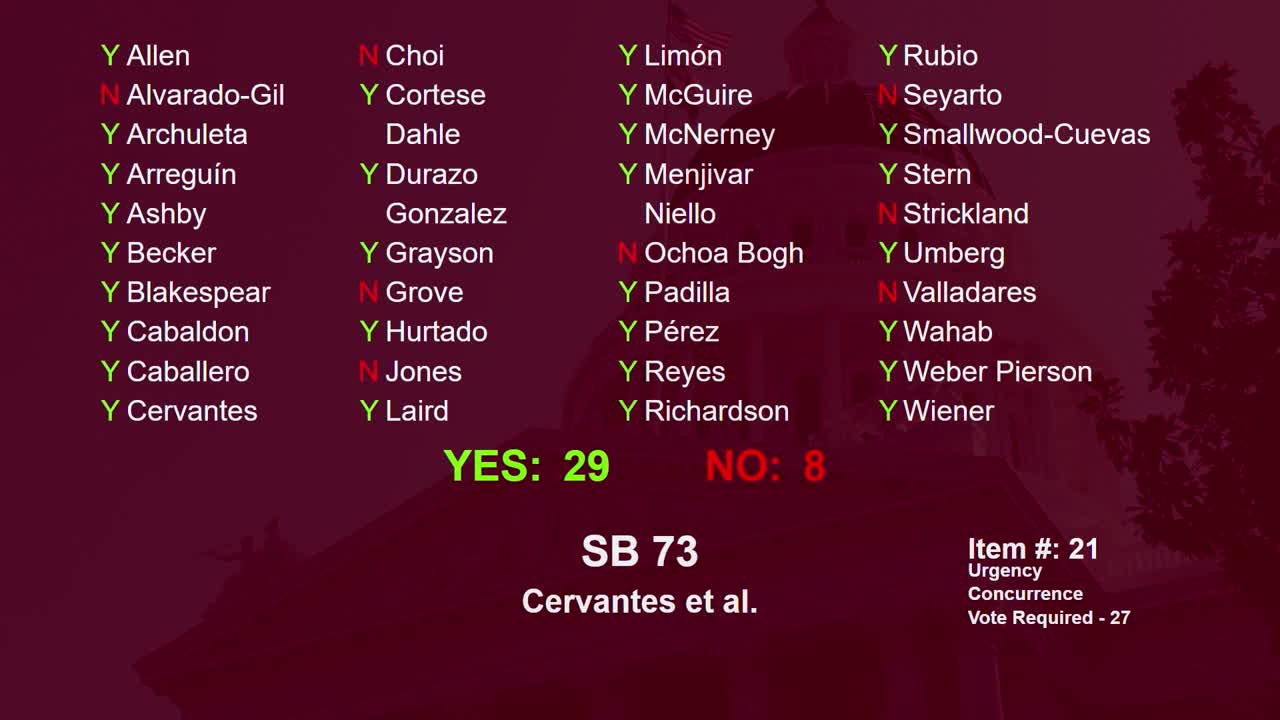

Bill Author

Bill Co-Author(s):