SB 988: California Motor Vehicle Glass Act.
- Session Year: 2025-2026
- House: Senate
- Latest Version Date: 2026-09-27
Current Status:
Passed
(2026-09-27: Chaptered by Secretary of State. Chapter 666, Statutes of 2026.)
Introduced
In Committee
Awaiting First Chamber Vote
Passed First Chamber
In Committee
Awaiting Second Chamber Vote
Passed Second Chamber
Enacted
Existing law enacts the California Combating Auto Retail Scams (CARS) Act, commencing October 1, 2026, that makes it a violation of the act for a dealer to, among other things, make any misrepresentation regarding material information about specified matters relating to the vehicle sale, including the costs or terms of purchasing, financing, or leasing a vehicle, the availability of vehicles at a total price communicated by the dealer, and the remedy available if a dealer fails to sell or lease a vehicle at the total price.
Existing law generally regulates classes of insurance, including automobile insurance. Existing law requires an insurer that issues a policy providing automobile collision coverage, or automobile physical damage coverage, to pay to the repairer or to the named insured and the repairer, jointly, for repairs in a specified manner if a covered automobile is damaged by collision or otherwise and the insurer knows that the automobile will be repaired. Existing law prohibits an insurer from withholding the payment of reasonable repair cost benefits that are otherwise payable under the policy if the insured decides not to have the vehicle repaired. Existing law states that these provisions do not prohibit an insurer from restricting payment in cases of suspected fraud or from including a named loss payee or lienholder as an additional payee on the claims payment check or draft, as described. Existing law states that these provisions do not prohibit an insurer from requiring that a damaged vehicle be repaired as a condition for payment if the damage to the vehicle is sufficiently serious that safety features that are part of the vehicles operating systems are compromised.
This bill, the California Motor Vehicle Glass Act, would prohibit an insured under a motor vehicle insurance policy that covers windshield and calibration repair or replacement from, either before or after a claimed or covered loss, assigning, delegating, or otherwise transferring, in whole or in part, to any other person the insureds duties under the policy or rights or benefits under the policy, and would make a contract entered into, on and after January 1, 2027, under these circumstances void and unenforceable. The bill would require a motor vehicle glass repair shop (repair shop), before providing service to a person for a repair or replacement of damaged motor vehicle glass, to notify the person, among other things, whether the motor vehicle has an advanced driver assistance system, and if it does, whether calibration or recalibration of the motor vehicles advanced driver assistance system is needed after a windshield repair or replacement as recommended by the vehicle manufacturer. The bill would require the repair shop to provide written notice to the person whether the calibration or recalibration was successful or not successful, as specified, and would require the repair shop to provide an itemized invoice and receipt upon completion of a repair or replacement of damaged motor vehicle glass.
This bill would prohibit a repair shop from contracting with a person for repair or replacement of damaged motor vehicle glass that would be paid by a first-party insurance policy until specified conditions are met, including, among others, that the person has made a first-party claim for the repair or replacement of damaged motor vehicle glass under a motor vehicle insurance policy and that the repair shop has received a claim or referral number for the claim. The bill would require a repair shop to, among other things, provide the person a good faith estimate of the fees and costs that are anticipated to be charged to the person by the repair shop for the repair or replacement of damaged motor vehicle glass.
This bill would prohibit a repair shop, or any other person who is compensated for the solicitation of insurance claims, from offering a rebate, gift, gift card, cash, coupon, fee, prize, bonus, payment, incentive, inducement, or any other thing of value to any insured, insurance producer, or other person in exchange for directing or making a claim under a motor vehicle insurance policy for a repair or replacement of damaged motor vehicle glass. The bill would also prohibit a repair shop from, among other things, submitting false, misleading, or incomplete documentation or information to an insured or an insureds insurer, including any agent of the insured or insurer, for a repair or replacement of damaged motor vehicle glass or state that a repair or replacement of damaged motor vehicle glass will be paid for entirely by an insurer and at no cost to the insured unless the coverage has been verified by the insurer or the insurers agent.
This bill would state that these provisions do not prohibit an insurer, insurance producer, insurance adjuster, or any person acting on behalf of an insurer, insurance producer, or insurance adjuster from recommending a repair shop or providing an explanation to an insured of the coverage available, and any applicable liability limit, under any insurance policy. The bill would make a violation of these provisions punishable by a civil penalty not to exceed $500 for the first violation and not to exceed $2,000 for each subsequent violation.
Existing law enacts the California Combating Auto Retail Scams (CARS) Act, commencing October 1, 2026, that makes it a violation of the act for a dealer to, among other things, make any misrepresentation regarding material information about specified matters relating to the vehicle sale, including the costs or terms of purchasing, financing, or leasing a vehicle, the availability of vehicles at a total price communicated by the dealer, and the remedy available if a dealer fails to sell or lease a vehicle at the total price.
Existing law generally regulates classes of insurance, including automobile insurance. Existing law requires an insurer that issues a policy providing automobile collision coverage, or automobile physical damage coverage, to pay to the repairer or to the named insured and the repairer, jointly, for repairs in a specified manner if a covered automobile is damaged by collision or otherwise and the insurer knows that the automobile will be repaired. Existing law prohibits an insurer from withholding the payment of reasonable repair cost benefits that are otherwise payable under the policy if the insured decides not to have the vehicle repaired. Existing law states that these provisions do not prohibit an insurer from restricting payment in cases of suspected fraud or from including a named loss payee or lienholder as an additional payee on the claims payment check or draft, as described. Existing law states that these provisions do not prohibit an insurer from requiring that a damaged vehicle be repaired as a condition for payment if the damage to the vehicle is sufficiently serious that safety features that are part of the vehicles operating systems are compromised.
This bill, the California Motor Vehicle Glass Act, would prohibit an insured under a motor vehicle insurance policy that covers windshield and calibration repair or replacement from, either before or after a claimed or covered loss, assigning, delegating delegating, or otherwise transferring, in whole or in part, to any other person the insureds duties under the policy or rights or benefits under the policy, and would make a contract entered into, on and after January 1, 2027, under these circumstances void and unenforceable. The bill would require a motor vehicle glass repair shop (repair shop), before providing service to a person for a repair or replacement of damaged motor vehicle glass, to notify the person, among other things, whether the motor vehicle has an advanced driver assistance system, and if it does, whether calibration or recalibration of the motor vehicles advanced driver assistance system is needed after a windshield repair or replacement as recommended by the vehicle manufacturer. The bill would require the repair shop to provide written notice to the person whether the calibration or recalibration was successful or not successful, as specified, and would require the repair shop to provide an itemized invoice and receipt upon completion of a repair or replacement of damaged motor vehicle glass.
This bill would prohibit a repair shop from contracting with a person for repair or replacement of damaged motor vehicle glass that would be paid by a first-party insurance policy until specified conditions are met, including, among others, that the person has made a first-party claim for the repair or replacement of damaged motor vehicle glass under a motor vehicle insurance policy and that the repair shop has received a claim or referral number for the claim. The bill would require a repair shop to, among other things, provide the person a good faith estimate of the fees and costs that are anticipated to be charged to the person by the repair shop for the repair or replacement of damaged motor vehicle glass.
This bill would prohibit a repair shop, or any other person who is compensated for the solicitation of insurance claims, from offering a rebate, gift, gift card, cash, coupon, fee, prize, bonus, payment, incentive, inducement, or any other thing of value to any insured, insurance producer, or other person in exchange for directing or making a claim under a motor vehicle insurance policy for a repair or replacement of damaged motor vehicle glass. The bill would also prohibit a repair shop from, among other things, submitting false, misleading, or incomplete documentation or information to an insured or an insureds insurer, including any agent of the insured or insurer, for a repair or replacement of damaged motor vehicle glass or state that a repair or replacement of damaged motor vehicle glass will be paid for entirely by an insurer and at no cost to the insured unless the coverage has been verified by the insurer or the insurers agent.
This bill would state that these provisions do not prohibit an insurer, insurance producer, insurance adjuster, or any person acting on behalf of an insurer, insurance producer, or insurance adjuster from recommending a repair shop or providing an explanation to an insured of the coverage available, and any applicable liability limit, under any insurance policy. The bill would make a violation of these provisions punishable by a civil penalty not to exceed $500 for the first violation and not to exceed $2,000 for each subsequent violation.
Existing law enacts the California Combating Auto Retail Scams (CARS) Act, commencing October 1, 2026 , 2026, that makes it a violation of the act for a dealer to, among other things, make any misrepresentation regarding material information about specified matters relating to the vehicle sale, including the costs or terms of purchasing, financing, or leasing a vehicle, the availability of vehicles at a total price communicated by the dealer, and the remedy available if a dealer fails to sell or lease a vehicle at the total price.
Existing law generally regulates classes of insurance, including automobile insurance. Existing law requires an insurer that issues a policy providing automobile collision coverage, or automobile physical damage coverage, to pay to the repairer or to the named insured and the repairer, jointly, for repairs in a specified manner if a covered automobile is damaged by collision or otherwise and the insurer knows that the automobile will be repaired. Existing law prohibits an insurer from withholding the payment of reasonable repair cost benefits that are otherwise payable under the policy if the insured decides not to have the vehicle repaired. Existing law states that these provisions do not prohibit an insurer from restricting payment in cases of suspected fraud or from including a named loss payee or lienholder as an additional payee on the claims payment check or draft, as described. Existing law states that these provisions do not prohibit an insurer from requiring that a damaged vehicle be repaired as a condition for payment if the damage to the vehicle is sufficiently serious that safety features that are part of the vehicles operating systems are compromised.
This bill, the California Motor Vehicle Glass Act, would prohibit an insured under a motor vehicle insurance policy that covers windshield and calibration repair or replacement from, either before or after a claimed or covered loss, assigning, delegating or otherwise transferring, in whole or in part, to any other person the insureds duties under the policy or rights or benefits under the policy, and would make a contract entered into, on and after January 1, 2027, under these circumstances void and unenforceable. The bill would require a motor vehicle glass repair shop (repair shop), before providing service to a person for a repair or replacement of damaged motor vehicle glass, to notify the person, among other things, whether the motor vehicle has an advanced driver assistance system, and if it does, whether calibration or recalibration of the motor vehicles advanced driver assistance system is needed after a windshield repair or replacement as recommended by the vehicle manufacturer. The bill would require the repair shop to provide written notice to the person whether the calibration or recalibration was successful or not successful, as specified, and would require the repair shop to provide an itemized invoice and receipt upon completion of a repair or replacement of damaged motor vehicle glass.
This bill would prohibit a repair shop from contracting with a person for repair or replacement of damaged motor vehicle glass that would be paid by a first-party insurance policy until specified conditions are met, including, among others, that the person has made a first-party claim for the repair or replacement of damaged motor vehicle glass under a motor vehicle insurance policy and that the repair shop has received a claim or referral number for the claim. The bill would require a repair shop to, among other things, provide the person a good faith estimate of the fees and costs that are anticipated to be charged to the person by the repair shop for the repair or replacement of damaged motor vehicle glass.
This bill would prohibit a repair shop, or any other person who is compensated for the solicitation of insurance claims, from offering a rebate, gift, gift card, cash, coupon, fee, prize, bonus, payment, incentive, inducement, or any other thing of value to any insured, insurance producer, or other person in exchange for directing or making a claim under a motor vehicle insurance policy for a repair or replacement of damaged motor vehicle glass. The bill would also prohibit a repair shop from, among other things, submitting false, misleading, or incomplete documentation or information to an insured or an insureds insurer, including any agent of the insured or insurer, for a repair or replacement of damaged motor vehicle glass or state that a repair or replacement of damaged motor vehicle glass will be paid for entirely by an insurer and at no cost to the insured unless the coverage has been verified by the insurer or the insurers agent.
This bill would state that these provisions do not prohibit an insurer, insurance producer, insurance adjuster, or any person acting on behalf of an insurer, insurance producer, or insurance adjuster from recommending a repair shop or providing an explanation to an insured of the coverage available, and any applicable liability limit, under any insurance policy. The bill would make a violation of these provisions punishable by a civil penalty not to exceed $500 for the first violation and not to exceed $2,000 for each subsequent violation.
Existing law enacts the California Combating Auto Retail Scams (CARS) Act, commencing October 1, 2026 , that makes it a violation of the act for a dealer to, among other things, make any misrepresentation regarding material information about specified matters relating to the vehicle sale, including the costs or terms of purchasing, financing, or leasing a vehicle, the availability of vehicles at a total price communicated by the dealer, and the remedy available if a dealer fails to sell or lease a vehicle at the total price.
Existing law generally regulates classes of insurance, including automobile insurance. Existing law requires an insurer that issues a policy providing automobile collision coverage, or automobile physical damage coverage, to pay to the repairer or to the named insured and the repairer, jointly, for repairs in a specified manner if a covered automobile is damaged by collision or otherwise and the insurer knows that the automobile will be repaired. Existing law prohibits an insurer from withholding the payment of reasonable repair cost benefits that are otherwise payable under the policy if the insured decides not to have the vehicle repaired. Existing law states that these provisions do not prohibit an insurer from restricting payment in cases of suspected fraud or from including a named loss payee or lienholder as an additional payee on the claims payment check or draft, as described. Existing law states that these provisions do not prohibit an insurer from requiring that a damaged vehicle be repaired as a condition for payment if the damage to the vehicle is sufficiently serious that safety features that are part of the vehicles operating systems are compromised.
This bill, the California Motor Vehicle Glass Act, would prohibit an insured under a motor vehicle insurance policy that covers windshield and calibration repair or replacement from, either before or after a claimed or covered loss, assigning, delegating or otherwise transferring, in whole or in part, to any other person the insureds duties under the policy or rights or benefits under the policy, and would make a contract entered into into, on and after January 1, 2027, under these circumstances void and unenforceable. The bill would require a motor vehicle glass repair shop (repair shop), before providing service to an insured a person for a repair or replacement of damaged motor vehicle glass, to notify the insured, person, among other things, whether the motor vehicle has an advanced driver assistance system, and if it does, whether calibration or recalibration of the motor vehicles advanced driver assistance system is needed after a windshield repair or replacement as recommended by the vehicle manufacturer. The bill would require the repair shop to provide written notice to the insured person whether the calibration or recalibration was successful or not successful, as specified, and would require the repair shop to provide an itemized invoice and receipt upon completion of a repair or replacement of damaged motor vehicle glass.
This bill would prohibit a repair shop from contracting with a person for repair or replacement of damaged motor vehicle glass that would be paid by a first-party insurance policy until specified conditions are met, including, among others, that the person has made a first-party claim for the repair or replacement of damaged motor vehicle glass under a motor vehicle insurance policy and that the repair shop has received a claim or referral number for the claim. The bill would require a repair shop to, among other things, provide the insured person a good faith estimate of the fees and costs that are anticipated to be charged to the insured person by the repair shop for the repair or replacement of damaged motor vehicle glass.
This bill would prohibit a repair shop, or any other person who is compensated for the solicitation of insurance claims, from offering a rebate, gift, gift card, cash, coupon, fee, prize, bonus, payment, incentive, inducement, or any other thing of value to any insured, insurance producer, or other person in exchange for directing or making a claim under a motor vehicle insurance policy for a repair or replacement of damaged motor vehicle glass. The bill would also prohibit a repair shop from, among other things, submitting false, misleading, or incomplete documentation or information to an insured or an insureds insurer, including any agent of the insured or insurer, for a repair or replacement of damaged motor vehicle glass or state that a repair or replacement of damaged motor vehicle glass will be paid for entirely by an insurer and at no cost to the insured unless the coverage has been verified by the insurer or the insurers agent.
This bill would state that these provisions do not prohibit an insurer, insurance producer, insurance adjuster, or any person acting on behalf of an insurer, insurance producer, or insurance adjuster from recommending a repair shop or providing an explanation to an insured of the coverage available, and any applicable liability limit, under any insurance policy. The bill would make a violation of these provisions punishable by a civil penalty not to exceed $500 for the first violation and not to exceed $2,000 for each subsequent violation.
Existing law enacts the California Combating Auto Retail Scams (CARS) Act, commencing October 1, 2026 , that makes it a violation of the act for a dealer to, among other things, make any misrepresentation regarding material information about specified matters relating to the vehicle sale, including the costs or terms of purchasing, financing, or leasing a vehicle, the availability of vehicles at a total price communicated by the dealer, and the remedy available if a dealer fails to sell or lease a vehicle at the total price.
Existing law generally regulates classes of insurance, including automobile insurance. Existing law requires an insurer that issues a policy providing automobile collision coverage, or automobile physical damage coverage, to pay to the repairer or to the named insured and the repairer, jointly, for repairs in a specified manner if a covered automobile is damaged by collision or otherwise and the insurer knows that the automobile will be repaired. Existing law prohibits an insurer from withholding the payment of reasonable repair cost benefits that are otherwise payable under the policy if the insured decides not to have the vehicle repaired. Existing law states that these provisions do not prohibit an insurer from restricting payment in cases of suspected fraud or from including a named loss payee or lienholder as an additional payee on the claims payment check or draft, as described. Existing law states that these provisions do not prohibit an insurer from requiring that a damaged vehicle be repaired as a condition for payment if the damage to the vehicle is sufficiently serious that safety features that are part of the vehicles operating systems are compromised.
This bill, the California Motor Vehicle Glass Act, would prohibit an insured under a motor vehicle insurance policy that covers windshield and calibration repair or replacement from, either before or after a claimed or covered loss, assigning, delegating or otherwise transferring, in whole or in part, to any other person the insureds duties under the policy or rights or benefits under the policy, and would make a contract entered into under these circumstances void and unenforceable. The bill would require a motor vehicle glass repair shop (repair shop), before providing service to an insured for a repair or replacement of damaged motor vehicle glass, to notify the insured, among other things, whether the motor vehicle has an advanced driver assistance system, and if it does, whether calibration or recalibration of the motor vehicles advanced driver assistance system is needed after a windshield repair or replacement as recommended by the vehicle manufacturer. The bill would require the repair shop to provide written notice to the insured whether the calibration or recalibration was successful or not successful, as specified, and would require the repair shop to provide an itemized invoice and receipt upon completion of a repair or replacement of damaged motor vehicle glass.
This bill would prohibit a repair shop from contracting with a person for repair or replacement of damaged motor vehicle glass that would be paid by a first-party insurance policy until specified conditions are met, including, among others, that the person has made a first-party claim for the repair or replacement of damaged motor vehicle glass under a motor vehicle insurance policy and that the repair shop has received a claim or referral number for the claim. The bill would require a repair shop to, among other things, provide the insured a good faith estimate of the fees and costs that are anticipated to be charged to the insured by the repair shop for the repair or replacement of damaged motor vehicle glass.
This bill would prohibit a repair shop, or any other person who is compensated for the solicitation of insurance claims, from offering a rebate, gift, gift card, cash, coupon, fee, prize, bonus, payment, incentive, inducement, or any other thing of value to any insured, insurance producer, or other person in exchange for directing or making a claim under a motor vehicle insurance policy for a repair or replacement of damaged motor vehicle glass. The bill would also prohibit a repair shop from, among other things, submitting false, misleading, or incomplete documentation or information to an insured or an insureds insurer, including any agent of the insured or insurer, for a repair or replacement of damaged motor vehicle glass or state that a repair or replacement of damaged motor vehicle glass will be paid for entirely by an insurer and at no cost to the insured unless the coverage has been verified by the insurer or the insurers agent.
This bill would state that these provisions do not prohibit an insurer, insurance producer, insurance adjuster, or any person acting on behalf of an insurer, insurance producer, or insurance adjuster from recommending a repair shop or providing an explanation to an insured of the coverage available, and any applicable liability limit, under any insurance policy. The bill would make a violation of these provisions punishable by a civil penalty not to exceed $500 for the first violation and not to exceed $2,000 for each subsequent violation.
Existing law generally regulates classes of insurance, including automobile insurance. Existing law requires an insurer that issues a policy providing automobile collision coverage, or automobile physical damage coverage, to pay to the repairer or to the named insured and the repairer, jointly, for repairs in a specified manner if a covered automobile is damaged by collision or otherwise and the insurer knows that the automobile will be repaired. Existing law prohibits an insurer from withholding the payment of reasonable repair cost benefits that are otherwise payable under the policy if the insured decides not to have the vehicle repaired. Existing law states that these provisions do not prohibit an insurer from restricting payment in cases of suspected fraud or from including a named loss payee or lienholder as an additional payee on the claims payment check or draft, as described. Existing law states that these provisions do not prohibit an insurer from requiring that a damaged vehicle be repaired as a condition for payment if the damage to the vehicle is sufficiently serious that safety features that are part of the vehicles operating systems are compromised.
This bill, the California Motor Vehicle Glass Act, would prohibit an insured under a motor vehicle insurance policy that covers windshield and calibration repair or replacement from, either before or after a claimed or covered loss, assigning, delegating or otherwise transferring, in whole or in part, to any other person the insureds duties under the policy or rights or benefits under the policy, and would make a contract entered into under these circumstances void and unenforceable. The bill would require a motor vehicle glass repair shop (repair shop), before providing service to an insured for a repair or replacement of damaged motor vehicle glass, to notify the insured, among other things, whether the motor vehicle has an advanced driver assistance system, and if it does, whether calibration or recalibration of the motor vehicles advanced driver assistance system is needed after a windshield repair or replacement as recommended by the vehicle manufacturer. The bill would require the repair shop to provide written notice to the insured whether the calibration or recalibration was successful or not successful, as specified, and would require the repair shop to provide an itemized invoice and receipt upon completion of a repair or replacement of damaged motor vehicle glass.
This bill would prohibit a repair shop from contracting with a person for repair or replacement of damaged motor vehicle glass that would be paid by a first-party insurance policy until specified conditions are met, including, among others, that the person has made a first-party claim for the repair or replacement of damaged motor vehicle glass under a motor vehicle insurance policy and that the repair shop has received a claim or referral number for the claim. The bill would require a repair shop to, among other things, provide the insured a good faith estimate of the fees and costs that are anticipated to be charged to the insured by the repair shop for the repair or replacement of damaged motor vehicle glass.
This bill would prohibit a repair shop, or any other person who is compensated for the solicitation of insurance claims, from offering a rebate, gift, gift card, cash, coupon, fee, prize, bonus, payment, incentive, inducement, or any other thing of value to any insured, insurance producer, or other person in exchange for directing or making a claim under a motor vehicle insurance policy for a repair or replacement of damaged motor vehicle glass. The bill would also prohibit a repair shop from, among other things, submitting false, misleading, or incomplete documentation or information to an insured or an insureds insurer, including any agent of the insured or insurer, for a repair or replacement of damaged motor vehicle glass or state that a repair or replacement of damaged motor vehicle glass will be paid for entirely by an insurer and at no cost to the insured unless the coverage has been verified by the insurer or the insurers agent.
This bill would state that these provisions do not prohibit an insurer, insurance producer, insurance adjuster, or any person acting on behalf of an insurer, insurance producer, or insurance adjuster from recommending a repair shop or providing an explanation to an insured of the coverage available, and any applicable liability limit, under any insurance policy.
This act shall be known, and may be cited, as the California Motor Vehicle Glass Act.
1784.51.As used in this title, all of the following terms have the following meanings:
(a)Advanced driver assistance system means any motor vehicle electronic safety system, as outlined in the most recent version of SAE Internationals Standard J3016 Levels of Driving Automation, that is designed to support the driver and motor vehicle in a manner intended to increase motor vehicle safety and reduce losses associated with motor vehicle crashes.
(b)Insurance producer means an individual or business entity required to be licensed within the state to sell, solicit, or negotiate insurance or annuity contracts. Insurance producer includes an agent, managing general agent, surplus lines broker, reinsurance intermediary broker and manager, rental vehicle agent and rental vehicle agent managing employee, and consultant.
(c)Insured means a person that is entitled, or may be entitled, to receive first-party benefits or payments under an insurance policy.
(d)Motor vehicle glass means the glass and nonglass parts associated with the replacement of the glass used in the windshield, doors, or windows of a motor vehicle.
(e)Motor vehicle glass repair shop means a person or business primarily engaged in automotive glass replacement, including the cutting, fabrication, repair, and installation of vehicle windows and windshields.
(f)Notice means direct written communications, including verifiable text, email, or application-based messaging, that is easily accessible by the consumer.
(g)Person means any individual, corporation, limited liability company, partnership, association, or other group authorized to conduct business in the state.
(h)Repair or replacement of damaged motor vehicle glass includes both of the following:
(1)Inspecting, repairing, restoring, or replacing damaged motor vehicle glass.
(2)Calibrating or recalibrating an advanced driver assistance system when an incident requires the replacement of damaged motor vehicle glass.
(i)Rights or benefits under the policy includes the insureds right to receive any and all post-loss benefits or payments available or payable under the policy, including, but not limited to, claim payments.
1784.52.(a)An insured under a motor vehicle insurance policy that covers windshield and calibration repair or replacement shall not, either before or after a claimed or covered loss, assign, delegate, or otherwise transfer, in whole or in part, to any other person the insureds duties under the policy or rights or benefits under the policy.
(b)A contract entered into on and after January 1, 2027, in violation of this section shall be void and unenforceable.
(c)This section shall not be construed to prohibit an insured from authorizing or directing payment to, or paying, a person for services, materials, or any other thing that may be, or is, covered under an insurance policy.
1784.53.(a)Before providing service to a person for a repair or replacement of damaged motor vehicle glass, a motor vehicle glass repair shop shall notify the person of both of the following:
(1)Whether the motor vehicle has an advanced driver assistance system.
(2)If the motor vehicle has an advanced driver assistance system:
(A)Whether calibration or recalibration of the motor vehicles advanced driver assistance system is needed after the windshield repair or replacement as recommended by the vehicle manufacturer.
(B)Whether the motor vehicle glass repair shop intends to calibrate or recalibrate the advanced driver assistance system in a manner that meets the motor vehicle manufacturers specifications.
(C)If the motor vehicle glass repair shop cannot perform or does not intend to perform a calibration or recalibration, that the motor vehicle should be taken to the vehicle manufacturers certified dealership or a qualified specialist capable of performing the calibration or recalibration.
(b)If calibration or recalibration of the motor vehicles advanced driver assistance system is performed, the motor vehicle glass repair shop shall provide written notice to the person for both of the following:
(1)Whether the calibration or recalibration was successful.
(2)If the calibration or recalibration was not successful, the motor vehicle should be taken to the vehicle manufacturers certified dealership or a qualified specialist capable of performing the calibration or recalibration.
1784.54.(a)A motor vehicle glass repair shop shall not contract with a person for repair or replacement of damaged motor vehicle glass that would be paid by a first-party insurance policy until all of the following conditions are met:
(1)The person has made a first-party claim for the repair or replacement of damaged motor vehicle glass under a motor vehicle insurance policy.
(2)The motor vehicle glass repair shop has received a claim or referral number for the claim.
(3)The requirements of paragraphs (1) and (2) of subdivision (a) of Section 1784.53 are satisfied.
(b)A motor vehicle glass repair shop shall do all of the following:
(1)Provide the person a good faith estimate of the fees and costs that are anticipated to be charged to the person by the motor vehicle glass repair shop for the repair or replacement of damaged motor vehicle glass.
(2)Before performing the service, provide the person an updated estimate.
(3)Not charge more than the reasonable and customary fees and costs to a person for the repair or replacement of damaged motor vehicle glass and any associated calibration or recalibration of the motor vehicles advanced driver assistance system as recommended by the vehicle manufacturer specifications.
(c)A motor vehicle glass repair shop shall provide all of the following to the person upon completion of the repair or replacement of damaged motor vehicle glass:
(1)An itemized invoice and, upon payment, a receipt.
(2)A notice that states whether the advanced driver assistance system was successfully or was not successfully calibrated or recalibrated.
(3)If the calibration or recalibration was not successful, the motor vehicle glass repair shop shall advise the person not to rely on the advanced driver assistance system until it has been successfully calibrated or recalibrated by the vehicle manufacturers certified dealership or a qualified specialist capable of performing the calibration or recalibration.
1784.55.(a)A motor vehicle glass repair shop, or any other person who is compensated for the solicitation of insurance claims, shall not offer a rebate, gift, gift card, cash, coupon, fee, prize, bonus, payment, incentive, inducement, or any other thing of value to any insured, insurance producer, or other person in exchange for directing or making a claim under a motor vehicle insurance policy for the repair or replacement of damaged motor vehicle glass.
(b)A motor vehicle glass repair shop shall not do any of the following:
(1)Charge higher fees and costs to a person for the repair or replacement of damaged motor vehicle glass than a reasonable price for the repair, replacement, or installation of automotive glass charged by a motor vehicle glass repair shop within a specific geographic area.
(2)Submit false, misleading, or incomplete documentation or information to an insured or an insureds insurer, including any agent of the insured or insurer, for the repair or replacement of damaged motor vehicle glass.
(3)With respect to an insureds claim, or potential claim, for the repair or replacement of damaged motor vehicle glass, do either the following, which results, or would result, in a higher insurance payment or a change of insurance coverage status:
(A)Indicate that work was performed in a geographical area that was not the geographical area where the work occurred.
(B)Advise an insured to falsify the date of damage.
(4)Falsely sign a work order or other insurance-related form relating to an insureds claim, or potential claim, for the repair or replacement of damaged motor vehicle glass.
(5)Misrepresent to an insured or the insureds insurer, including any agent of the insured or insurer, the price of the proposed repair or replacement of damaged motor vehicle glass.
(6)State that an insureds insurer has approved the repair or replacement of damaged motor vehicle glass without doing both of the following:
(A)Verifying coverage directly with, or obtaining approval directly from, the insurer or the insurers agent.
(B)Obtaining confirmation of the coverage or approval by facsimile, email, or other written or recorded communication.
(7)State that the repair or replacement of damaged motor vehicle glass will be paid for entirely by an insurer and at no cost to the insured unless the coverage has been verified by the insurer or the insurers agent.
(8)With respect to an insureds claim, or potential claim, for the repair or replacement of damaged motor vehicle glass, any of the following:
(A)Damage, or encourage an insured to damage, the motor vehicle in order to increase the scope of the repair or replacement of damaged motor vehicle glass.
(B)Perform work that is clearly and substantially beyond the level of work necessary to restore the motor vehicle to a safe predamaged condition in accordance with accepted or approved reasonable and customary techniques for the repair or replacement of damaged motor vehicle glass.
(C)Misrepresent the motor vehicle glass repair shops relationship to an insured or the insurers agent.
(D)Perform any other act that constitutes fraud or misrepresentation.
(c)A notice or invoice required under this act shall be issued in the same size font as the invoice, estimate, or receipt.
1784.56.(a)(1)An insured that makes a first-party claim for the repair or replacement of damaged motor vehicle glass under a motor vehicle insurance policy shall not be required to use a particular motor vehicle glass repair shop or recalibration facility to receive claim payments or other benefits under the policy.
(2)An insureds right to select their preferred motor vehicle glass repair shop or recalibration facility, includes, but is not limited to, independent shops, network and non-network shops, affiliated and nonaffiliated repair facilities, dealerships, or qualified specialists capable of performing the repair, replacement, calibration, or recalibration.
(3)An insurer, insurance producer, insurance adjuster, or any person acting on behalf of an insurer, insurance producer, or insurance adjuster shall not purposefully mislead, threaten, or coerce an insured to use or not use a particular motor vehicle glass repair shop or recalibration facility.
(b)This section shall not be construed to do any of the following:
(1)Prohibit an insurer, insurance producer, insurance adjuster, or any person acting on behalf of an insurer, insurance producer, or insurance adjuster from recommending a motor vehicle glass repair shop or providing an explanation to an insured of the coverage available, and any applicable liability limit, under any insurance policy.
(2)Prohibit an insurer from maintaining a network of motor vehicle glass repair shops.
(3)Create a private cause of action.
1784.57.It may be presumed that a motor vehicle glass repair shop is acting knowingly in violation of Section 1784.56 if the motor vehicle glass repair shop engages in a regular and consistent pattern of the prohibited activity.
1784.58.(a)A person or entity that violates this act shall be liable for a civil penalty as follows:
(1)For the first violation, a civil penalty not to exceed five hundred dollars ($500).
(2)For each subsequent violation, a civil penalty not to exceed two thousand dollars ($2,000).
(b)Civil penalties under this section may be assessed and recovered in a civil action brought in the name of the people of the State of California by a city attorney, county counsel, or the Attorney General.
This act shall be known, and may be cited, as the California Motor Vehicle Glass Act.
1784.51.As used in this title, all of the following terms have the following meanings:
(a)Advanced driver assistance system means any motor vehicle electronic safety system, as outlined in the most recent version of SAE Internationals Standard J3016 Levels of Driving Automation, that is designed to support the driver and motor vehicle in a manner intended to increase motor vehicle safety and reduce losses associated with motor vehicle crashes.
(b)Insurance producer means an individual or business entity required to be licensed within the state to sell, solicit, or negotiate insurance or annuity contracts. Insurance producer includes an agent, managing general agent, surplus lines broker, reinsurance intermediary broker and manager, rental vehicle agent and rental vehicle agent managing employee, and consultant.
(c)Insured means a person that is entitled, or may be entitled, to receive first-party benefits or payments under an insurance policy.
(d)Motor vehicle glass means the glass and nonglass parts associated with the replacement of the glass used in the windshield, doors, or windows of a motor vehicle.
(e)Motor vehicle glass repair shop means a person or business primarily engaged in automotive glass replacement, including the cutting, fabrication, repair, and installation of vehicle windows and windshields.
(f)Notice means direct written communications, including verifiable text, email, or application-based messaging, that is easily accessible by the consumer.
(g)Person means any individual, corporation, limited liability company, partnership, association, or other group authorized to conduct business in the state.
(h)Repair or replacement of damaged motor vehicle glass includes both of the following:
(1)Inspecting, repairing, restoring, or replacing damaged motor vehicle glass.
(2)Calibrating or recalibrating an advanced driver assistance system when an incident requires the replacement of damaged motor vehicle glass.
(i)Rights or benefits under the policy includes the insureds right to receive any and all post-loss benefits or payments available or payable under the policy, including, but not limited to, claim payments.
1784.52.(a)An insured under a motor vehicle insurance policy that covers windshield and calibration repair or replacement shall not, either before or after a claimed or covered loss, assign, delegate, or otherwise transfer, in whole or in part, to any other person the insureds duties under the policy or rights or benefits under the policy.
(b)A contract entered into on and after January 1, 2027, in violation of this section shall be void and unenforceable.
(c)This section shall not be construed to prohibit an insured from authorizing or directing payment to, or paying, a person for services, materials, or any other thing that may be, or is, covered under an insurance policy.
1784.53.(a)Before providing service to a person for a repair or replacement of damaged motor vehicle glass, a motor vehicle glass repair shop shall notify the person of both of the following:
(1)Whether the motor vehicle has an advanced driver assistance system.
(2)If the motor vehicle has an advanced driver assistance system:
(A)Whether calibration or recalibration of the motor vehicles advanced driver assistance system is needed after the windshield repair or replacement as recommended by the vehicle manufacturer.
(B)Whether the motor vehicle glass repair shop intends to calibrate or recalibrate the advanced driver assistance system in a manner that meets the motor vehicle manufacturers specifications.
(C)If the motor vehicle glass repair shop cannot perform or does not intend to perform a calibration or recalibration, that the motor vehicle should be taken to the vehicle manufacturers certified dealership or a qualified specialist capable of performing the calibration or recalibration.
(b)If calibration or recalibration of the motor vehicles advanced driver assistance system is performed, the motor vehicle glass repair shop shall provide written notice to the person for both of the following:
(1)Whether the calibration or recalibration was successful.
(2)If the calibration or recalibration was not successful, the motor vehicle should be taken to the vehicle manufacturers certified dealership or a qualified specialist capable of performing the calibration or recalibration.
1784.54.(a)A motor vehicle glass repair shop shall not contract with a person for repair or replacement of damaged motor vehicle glass that would be paid by a first-party insurance policy until all of the following conditions are met:
(1)The person has made a first-party claim for the repair or replacement of damaged motor vehicle glass under a motor vehicle insurance policy.
(2)The motor vehicle glass repair shop has received a claim or referral number for the claim.
(3)The requirements of paragraphs (1) and (2) of subdivision (a) of Section 1784.53 are satisfied.
(b)A motor vehicle glass repair shop shall do all of the following:
(1)Provide the person a good faith estimate of the fees and costs that are anticipated to be charged to the person by the motor vehicle glass repair shop for the repair or replacement of damaged motor vehicle glass.
(2)Before performing the service, provide the person an updated estimate.
(3)Not charge more than the reasonable and customary fees and costs to a person for the repair or replacement of damaged motor vehicle glass and any associated calibration or recalibration of the motor vehicles advanced driver assistance system as recommended by the vehicle manufacturer specifications.
(c)A motor vehicle glass repair shop shall provide all of the following to the person upon completion of the repair or replacement of damaged motor vehicle glass:
(1)An itemized invoice and, upon payment, a receipt.
(2)A notice that states whether the advanced driver assistance system was successfully or was not successfully calibrated or recalibrated.
(3)If the calibration or recalibration was not successful, the motor vehicle glass repair shop shall advise the person not to rely on the advanced driver assistance system until it has been successfully calibrated or recalibrated by the vehicle manufacturers certified dealership or a qualified specialist capable of performing the calibration or recalibration.
1784.55.(a)A motor vehicle glass repair shop, or any other person who is compensated for the solicitation of insurance claims, shall not offer a rebate, gift, gift card, cash, coupon, fee, prize, bonus, payment, incentive, inducement, or any other thing of value to any insured, insurance producer, or other person in exchange for directing or making a claim under a motor vehicle insurance policy for the repair or replacement of damaged motor vehicle glass.
(b)A motor vehicle glass repair shop shall not do any of the following:
(1)Charge higher fees and costs to a person for the repair or replacement of damaged motor vehicle glass than a reasonable price for the repair, replacement, or installation of automotive glass charged by a motor vehicle glass repair shop within a specific geographic area.
(2)Submit false, misleading, or incomplete documentation or information to an insured or an insureds insurer, including any agent of the insured or insurer, for the repair or replacement of damaged motor vehicle glass.
(3)With respect to an insureds claim, or potential claim, for the repair or replacement of damaged motor vehicle glass, do either the following, which results, or would result, in a higher insurance payment or a change of insurance coverage status:
(A)Indicate that work was performed in a geographical area that was not the geographical area where the work occurred.
(B)Advise an insured to falsify the date of damage.
(4)Falsely sign a work order or other insurance-related form relating to an insureds claim, or potential claim, for the repair or replacement of damaged motor vehicle glass.
(5)Misrepresent to an insured or the insureds insurer, including any agent of the insured or insurer, the price of the proposed repair or replacement of damaged motor vehicle glass.
(6)State that an insureds insurer has approved the repair or replacement of damaged motor vehicle glass without doing both of the following:
(A)Verifying coverage directly with, or obtaining approval directly from, the insurer or the insurers agent.
(B)Obtaining confirmation of the coverage or approval by facsimile, email, or other written or recorded communication.
(7)State that the repair or replacement of damaged motor vehicle glass will be paid for entirely by an insurer and at no cost to the insured unless the coverage has been verified by the insurer or the insurers agent.
(8)With respect to an insureds claim, or potential claim, for the repair or replacement of damaged motor vehicle glass, any of the following:
(A)Damage, or encourage an insured to damage, the motor vehicle in order to increase the scope of the repair or replacement of damaged motor vehicle glass.
(B)Perform work that is clearly and substantially beyond the level of work necessary to restore the motor vehicle to a safe predamaged condition in accordance with accepted or approved reasonable and customary techniques for the repair or replacement of damaged motor vehicle glass.
(C)Misrepresent the motor vehicle glass repair shops relationship to an insured or the insurers agent.
(D)Perform any other act that constitutes fraud or misrepresentation.
(c)A notice or invoice required under this act shall be issued in the same size font as the invoice, estimate, or receipt.
1784.56.(a)An insured that makes a first-party claim for the repair or replacement of damaged motor vehicle glass under a motor vehicle insurance policy shall not be required to use a particular motor vehicle glass repair shop or recalibration facility to receive claim payments or other benefits under the policy.
(b)This section shall not be construed to do any of the following:
(1)Prohibit an insurer, insurance producer, insurance adjuster, or any person acting on behalf of an insurer, insurance producer, or insurance adjuster from recommending a motor vehicle glass repair shop or providing an explanation to an insured of the coverage available, and any applicable liability limit, under any insurance policy.
(2)Prohibit an insurer from maintaining a network of motor vehicle glass repair shops.
(3)Create a private cause of action.
1784.57.It may be presumed that a motor vehicle glass repair shop is acting knowingly in violation of Section 1784.56 if the motor vehicle glass repair shop engages in a regular and consistent pattern of the prohibited activity.
1784.58.(a)A person or entity that violates this act shall be liable for a civil penalty as follows:
(1)For the first violation, a civil penalty not to exceed five hundred dollars ($500).
(2)For each subsequent violation, a civil penalty not to exceed two thousand dollars ($2,000).
(b)Civil penalties under this section may be assessed and recovered in a civil action brought in the name of the people of the State of California by a city attorney, district attorney, county counsel, or the Attorney General.
This act shall be known, and may be cited, as the California Motor Vehicle Glass Act.
1784.51.As used in this title, all of the following terms have the following meanings:
(a)Advanced driver assistance system means any motor vehicle electronic safety system, as outlined in the most recent version of SAE Internationals Standard J3016 Levels of Driving Automation, that is designed to support the driver and motor vehicle in a manner intended to increase motor vehicle safety and reduce losses associated with motor vehicle crashes.
(b)Insurance producer means an individual or business entity required to be licensed within the state to sell, solicit, or negotiate insurance or annuity contracts. Insurance producer includes an agent, managing general agent, surplus lines broker, reinsurance intermediary broker and manager, rental vehicle agent and rental vehicle agent managing employee, and consultant.
(c)Insured means a person that is entitled, or may be entitled, to receive first-party benefits or payments under an insurance policy.
(d)Motor vehicle glass means the glass and nonglass parts associated with the replacement of the glass used in the windshield, doors, or windows of a motor vehicle.
(e)Motor vehicle glass repair shop means a person, including the persons employees and agents, that for consideration engages in the repair or replacement of damaged motor vehicle glass. person or business primarily engaged in automotive glass replacement, including the cutting, fabrication, repair, and installation of vehicle windows and windshields.
(f)Notice means direct written communications, including verifiable text, email, or application-based messaging, that is easily accessible by the consumer.
(g)Person means any individual, corporation, limited liability company, partnership, association, or other group authorized to conduct business in the state.
(h)Repair or replacement of damaged motor vehicle glass includes both of the following:
(1)Inspecting, repairing, restoring, or replacing damaged motor vehicle glass.
(2)Calibrating or recalibrating an advanced driver assistance system when an incident requires the replacement of damaged motor vehicle glass.
(i)Rights or benefits under the policy includes the insureds right to receive any and all post-loss benefits or payments available or payable under the policy, including, but not limited to, claim payments.
1784.52.(a)An insured under a motor vehicle insurance policy that covers windshield and calibration repair or replacement shall not, either before or after a claimed or covered loss, assign, delegate, or otherwise transfer, in whole or in part, to any other person the insureds duties under the policy or rights or benefits under the policy.
(b)A contract entered into on and after January 1, 2027, in violation of this section shall be void and unenforceable.
(c)This section shall not be construed to prohibit an insured from authorizing or directing payment to, or paying, a person for services, materials, or any other thing that may be, or is, covered under an insurance policy.
1784.53.(a)Before providing service to an insured a person for a repair or replacement of damaged motor vehicle glass, a motor vehicle glass repair shop shall notify the insured person of both of the following:
(1)Whether the motor vehicle has an advanced driver assistance system.
(2)If the motor vehicle has an advanced driver assistance system:
(A)Whether calibration or recalibration of the motor vehicles advanced driver assistance system is needed after the windshield repair or replacement as recommended by the vehicle manufacturer.
(B)Whether the motor vehicle glass repair shop intends to calibrate or recalibrate the advanced driver assistance system in a manner that meets the motor vehicle manufacturers specifications.
(C)If the motor vehicle glass repair shop cannot perform or does not intend to perform a calibration or recalibration, that the motor vehicle should be taken to the vehicle manufacturers certified dealership or a qualified specialist capable of performing the calibration or recalibration.
(b)If calibration or recalibration of the motor vehicles advanced driver assistance system is performed, the motor vehicle glass repair shop shall provide written notice to the insured person for both of the following:
(1)Whether the calibration or recalibration was successful.
(2)If the calibration or recalibration was not successful, the motor vehicle should be taken to the vehicle manufacturers certified dealership or a qualified specialist capable of performing the calibration or recalibration.
1784.54.(a)A motor vehicle glass repair shop shall not contract with a person for repair or replacement of damaged motor vehicle glass that would be paid by a first-party insurance policy until all of the following conditions are met:
(1)The person has made a first-party claim for the repair or replacement of damaged motor vehicle glass under a motor vehicle insurance policy.
(2)The motor vehicle glass repair shop has received a claim or referral number for the claim.
(3)The requirements of paragraphs (1) and (2) of subdivision (a) of Section 1784.53 are satisfied.
(b)A motor vehicle glass repair shop shall do all of the following:
(1)Provide the insured person a good faith estimate of the fees and costs that are anticipated to be charged to the insured person by the motor vehicle glass repair shop for the repair or replacement of damaged motor vehicle glass.
(2)Before performing the service, provide the insured person an updated estimate.
(3)Not charge more than the reasonable and customary fees and costs to an insured a person for the repair or replacement of damaged motor vehicle glass and any associated calibration or recalibration of the motor vehicles advanced driver assistance system as recommended by the vehicle manufacturer specifications.
(c)A motor vehicle glass repair shop shall provide all of the following to the insured person upon completion of the repair or replacement of damaged motor vehicle glass:
(1)An itemized invoice and, upon payment, a receipt.
(2)A notice that states whether the advanced driver assistance system was successfully or was not successfully calibrated or recalibrated.
(3)If the calibration or recalibration was not successful, the motor vehicle glass repair shop shall advise the insured person not to rely on the advanced driver assistance system until it has been successfully calibrated or recalibrated by the vehicle manufacturers certified dealership or a qualified specialist capable of performing the calibration or recalibration.
1784.55.(a)A motor vehicle glass repair shop, or any other person who is compensated for the solicitation of insurance claims, shall not offer a rebate, gift, gift card, cash, coupon, fee, prize, bonus, payment, incentive, inducement, or any other thing of value to any insured, insurance producer, or other person in exchange for directing or making a claim under a motor vehicle insurance policy for the repair or replacement of damaged motor vehicle glass.
(b)A motor vehicle glass repair shop shall not do any of the following:
(1)Charge higher fees and costs to an insured a person for the repair or replacement of damaged motor vehicle glass than are reasonable and customarily charged in California. a reasonable price for the repair, replacement, or installation of automotive glass charged by a motor vehicle glass repair shop within a specific geographic area.
(2)Submit false, misleading, or incomplete documentation or information to an insured or an insureds insurer, including any agent of the insured or insurer, for the repair or replacement of damaged motor vehicle glass.
(3)With respect to an insureds claim, or potential claim, for the repair or replacement of damaged motor vehicle glass, do either the following, which results, or would result, in a higher insurance payment or a change of insurance coverage status:
(A)Indicate that work was performed in a geographical area that was not the geographical area where the work occurred.
(B)Advise an insured to falsify the date of damage.
(4)Falsely sign a work order or other insurance-related form relating to an insureds claim, or potential claim, for the repair or replacement of damaged motor vehicle glass.
(5)Misrepresent to an insured or the insureds insurer, including any agent of the insured or insurer, the price of the proposed repair or replacement of damaged motor vehicle glass.
(6)State that an insureds insurer has approved the repair or replacement of damaged motor vehicle glass without doing both of the following:
(A)Verifying coverage directly with, or obtaining approval directly from, the insurer or the insurers agent.
(B)Obtaining confirmation of the coverage or approval by facsimile, email, or other written or recorded communication.
(7)State that the repair or replacement of damaged motor vehicle glass will be paid for entirely by an insurer and at no cost to the insured unless the coverage has been verified by the insurer or the insurers agent.
(8)With respect to an insureds claim, or potential claim, for the repair or replacement of damaged motor vehicle glass, any of the following:
(A)Damage, or encourage an insured to damage, the motor vehicle in order to increase the scope of the repair or replacement of damaged motor vehicle glass.
(B)Perform work that is clearly and substantially beyond the level of work necessary to restore the motor vehicle to a safe predamaged condition in accordance with accepted or approved reasonable and customary techniques for the repair or replacement of damaged motor vehicle glass.
(C)Misrepresent the motor vehicle glass repair shops relationship to an insured or the insurers agent.
(D)Perform any other act that constitutes fraud or misrepresentation.
(c)A notice or invoice required under this act shall be issued in the same size font as the invoice, estimate, or receipt.
1784.56.(a)An insured that makes a first-party claim for the repair or replacement of damaged motor vehicle glass under a motor vehicle insurance policy shall not be required to use a particular motor vehicle glass repair shop to receive claim payments or other benefits under the policy.
(b)This section shall not be construed to do any of the following:
(1)Prohibit an insurer, insurance producer, insurance adjuster, or any person acting on behalf of an insurer, insurance producer, or insurance adjuster from recommending a motor vehicle glass repair shop or providing an explanation to an insured of the coverage available, and any applicable liability limit, under any insurance policy.
(2)Prohibit an insurer from maintaining a network of motor vehicle glass repair shops.
(3)Create a private cause of action.
1784.57.It may be presumed that a motor vehicle glass repair shop is acting knowingly in violation of Section 1784.56 if the motor vehicle glass repair shop engages in a regular and consistent pattern of the prohibited activity.
1784.58.(a)A person or entity that violates this act shall be liable for a civil penalty as follows:
(1)For the first violation, a civil penalty not to exceed five hundred dollars ($500).
(2)For each subsequent violation, a civil penalty not to exceed two thousand dollars ($2,000).
(b)Civil penalties under this section may be assessed and recovered in a civil action brought in the name of the people of the State of California by a city attorney, district attorney, county counsel, or the Attorney General.
This act shall be known, and may be cited, as the California Motor Vehicle Glass Act.
1784.51.As used in this title, all of the following terms have the following meanings:
(a)Advanced driver assistance system means any motor vehicle electronic safety system, as outlined in the most recent version of SAE Internationals Standard J3016 Levels of Driving Automation, that is designed to support the driver and motor vehicle in a manner intended to increase motor vehicle safety and reduce losses associated with motor vehicle crashes.
(b)Insurance producer means an individual or business entity required to be licensed within the state to sell, solicit, or negotiate insurance or annuity contracts. Insurance producer includes an agent, managing general agent, surplus lines broker, reinsurance intermediary broker and manager, rental vehicle agent and rental vehicle agent managing employee, and consultant.
(c)Insured means a person that is entitled, or may be entitled, to receive first-party benefits or payments under an insurance policy.
(d)Motor vehicle glass means the glass and nonglass parts associated with the replacement of the glass used in the windshield, doors, or windows of a motor vehicle.
(e)Motor vehicle glass repair shop means a person, including the persons employees and agents, that for consideration engages in the repair or replacement of damaged motor vehicle glass.
(f)Notice means direct written communications, including verifiable text, email, or application-based messaging, that is easily accessible by the consumer.
(g)Person means any individual, corporation, limited liability company, partnership, association, or other group authorized to conduct business in the state.
(h)Repair or replacement of damaged motor vehicle glass includes both of the following:
(1)Inspecting, repairing, restoring, or replacing damaged motor vehicle glass.
(2)Calibrating or recalibrating an advanced driver assistance system when an incident requires the replacement of damaged motor vehicle glass.
(i)Rights or benefits under the policy includes the insureds right to receive any and all post-loss benefits or payments available or payable under the policy, including, but not limited to, claim payments.
1784.52.(a)An insured under a motor vehicle insurance policy that covers windshield and calibration repair or replacement shall not, either before or after a claimed or covered loss, assign, delegate, or otherwise transfer, in whole or in part, to any other person the insureds duties under the policy or rights or benefits under the policy.
(b)A contract entered in violation of this section shall be void and unenforceable.
(c)This section shall not be construed to prohibit an insured from authorizing or directing payment to, or paying, a person for services, materials, or any other thing that may be, or is, covered under an insurance policy.
1784.53.(a)Before providing service to an insured for a repair or replacement of damaged motor vehicle glass, a motor vehicle glass repair shop shall notify the insured of both of the following:
(1)Whether the motor vehicle has an advanced driver assistance system.
(2)If the motor vehicle has an advanced driver assistance system:
(A)Whether calibration or recalibration of the motor vehicles advanced driver assistance system is needed after the windshield repair or replacement as recommended by the vehicle manufacturer.
(B)Whether the motor vehicle glass repair shop intends to calibrate or recalibrate the advanced driver assistance system in a manner that meets the motor vehicle manufacturers specifications.
(C)If the motor vehicle glass repair shop cannot perform or does not intend to perform a calibration or recalibration, that the motor vehicle should be taken to the vehicle manufacturers certified dealership or a qualified specialist capable of performing the calibration or recalibration.
(b)If calibration or recalibration of the motor vehicles advanced driver assistance system is performed, the motor vehicle glass repair shop shall provide written notice to the insured for both of the following:
(1)Whether the calibration or recalibration was successful.
(2)If the calibration or recalibration was not successful, the motor vehicle should be taken to the vehicle manufacturers certified dealership or a qualified specialist capable of performing the calibration or recalibration.
1784.54.(a)A motor vehicle glass repair shop shall not contract with a person for repair or replacement of damaged motor vehicle glass that would be paid by a first-party insurance policy until all of the following conditions are met:
(1)The person has made a first-party claim for the repair or replacement of damaged motor vehicle glass under a motor vehicle insurance policy.
(2)The motor vehicle glass repair shop has received a claim or referral number for the claim.
(3)The requirements of paragraphs (1) and (2) of subdivision (a) of Section 1784.53 are satisfied.
(b)A motor vehicle glass repair shop shall do all of the following:
(1)Provide the insured a good faith estimate of the fees and costs that are anticipated to be charged to the insured by the motor vehicle glass repair shop for the repair or replacement of damaged motor vehicle glass.
(2)Before performing the service, provide the insured an updated estimate.
(3)Not charge more than the reasonable and customary fees and costs to an insured for the repair or replacement of damaged motor vehicle glass and any associated calibration or recalibration of the motor vehicles advanced driver assistance system as recommended by the vehicle manufacturer specifications.
(c)A motor vehicle glass repair shop shall provide all of the following to the insured upon completion of the repair or replacement of damaged motor vehicle glass:
(1)An itemized invoice and, upon payment, a receipt.
(2)A notice that states whether the advanced driver assistance system was successfully or was not successfully calibrated or recalibrated.
(3)If the calibration or recalibration was not successful, the motor vehicle glass repair shop shall advise the insured not to rely on the advanced driver assistance system until it has been successfully calibrated or recalibrated by the vehicle manufacturers certified dealership or a qualified specialist capable of performing the calibration or recalibration.
1784.55.(a)A motor vehicle glass repair shop, or any other person who is compensated for the solicitation of insurance claims, shall not offer a rebate, gift, gift card, cash, coupon, fee, prize, bonus, payment, incentive, inducement, or any other thing of value to any insured, insurance producer, or other person in exchange for directing or making a claim under a motor vehicle insurance policy for the repair or replacement of damaged motor vehicle glass.
(b)A motor vehicle glass repair shop shall not do any of the following:
(1)Charge higher fees and costs to an insured for the repair or replacement of damaged motor vehicle glass than are reasonable and customarily charged in California.
(2)Submit false, misleading, or incomplete documentation or information to an insured or an insureds insurer, including any agent of the insured or insurer, for the repair or replacement of damaged motor vehicle glass.
(3)With respect to an insureds claim, or potential claim, for the repair or replacement of damaged motor vehicle glass, do either the following, which results, or would result, in a higher insurance payment or a change of insurance coverage status:
(A)Indicate that work was performed in a geographical area that was not the geographical area where the work occurred.
(B)Advise an insured to falsify the date of damage.
(4)Falsely sign a work order or other insurance-related form relating to an insureds claim, or potential claim, for the repair or replacement of damaged motor vehicle glass.
(5)Misrepresent to an insured or the insureds insurer, including any agent of the insured or insurer, the price of the proposed repair or replacement of damaged motor vehicle glass.
(6)State that an insureds insurer has approved the repair or replacement of damaged motor vehicle glass without doing both of the following:
(A)Verifying coverage directly with, or obtaining approval directly from, the insurer or the insurers agent.
(B)Obtaining confirmation of the coverage or approval by facsimile, email, or other written or recorded communication.
(7)State that the repair or replacement of damaged motor vehicle glass will be paid for entirely by an insurer and at no cost to the insured unless the coverage has been verified by the insurer or the insurers agent.
(8)With respect to an insureds claim, or potential claim, for the repair or replacement of damaged motor vehicle glass, any of the following:
(A)Damage, or encourage an insured to damage, the motor vehicle in order to increase the scope of the repair or replacement of damaged motor vehicle glass.
(B)Perform work that is clearly and substantially beyond the level of work necessary to restore the motor vehicle to a safe predamaged condition in accordance with accepted or approved reasonable and customary techniques for the repair or replacement of damaged motor vehicle glass.
(C)Misrepresent the motor vehicle glass repair shops relationship to an insured or the insurers agent.
(D)Perform any other act that constitutes fraud or misrepresentation.
(c)A notice or invoice required under this act shall be issued in the same size font as the invoice, estimate, or receipt.
1784.56.(a)An insured that makes a first-party claim for the repair or replacement of damaged motor vehicle glass under a motor vehicle insurance policy shall not be required to use a particular motor vehicle glass repair shop to receive claim payments or other benefits under the policy.
(b)This section shall not be construed to do any of the following:
(1)Prohibit an insurer, insurance producer, insurance adjuster, or any person acting on behalf of an insurer, insurance producer, or insurance adjuster from recommending a motor vehicle glass repair shop or providing an explanation to an insured of the coverage available, and any applicable liability limit, under any insurance policy.
(2)Prohibit an insurer from maintaining a network of motor vehicle glass repair shops.
(3)Create a private cause of action.
1784.57.It may be presumed that a motor vehicle glass repair shop is acting knowingly in violation of Section 1784.56 if the motor vehicle glass repair shop engages in a regular and consistent pattern of the prohibited activity.
1784.58.(a)A person or entity that violates this act shall be liable for a civil penalty as follows:
(1)For the first violation, a civil penalty not to exceed five hundred dollars ($500).
(2)For each subsequent violation, a civil penalty not to exceed two thousand dollars ($2,000).
(b)Civil penalties under this section may be assessed and recovered in a civil action brought in the name of the people of the State of California by a city attorney, district attorney, county counsel, or the Attorney General.
SECTION 1.Chapter 10.3 (commencing with Section 1866) is added to Part 2 of Division 1 of the Insurance Code, to read:10.3.California Motor Vehicle Glass Act1866.This act shall be known, and may be cited, as the California Motor Vehicle Glass Act.1866.1.As used in this chapter, all of the following terms have the following meanings:(a)Advanced driver assistance system means any motor vehicle electronic safety system, as outlined in the most recent version of SAE Internationals Standard J3016 Levels of Driving Automation, that is designed to support the driver and motor vehicle in a manner intended to increase motor vehicle safety and reduce losses associated with motor vehicle crashes.(b)Insurance producer means an individual or business entity required to be licensed within the state to sell, solicit, or negotiate insurance or annuity contracts. Insurance producer includes an agent, managing general agent, surplus lines broker, reinsurance intermediary broker and manager, rental vehicle agent and rental vehicle agent managing employee, and consultant.(c)Insured means a person that is entitled, or may be entitled, to receive first-party benefits or payments under an insurance policy.(d)Motor vehicle glass means the glass and nonglass parts associated with the replacement of the glass used in the windshield, doors, or windows of a motor vehicle.(e)Motor vehicle glass repair shop means a person, including the persons employees and agents, that for consideration engages in the repair or replacement of damaged motor vehicle glass.(f)Notice means direct written communications including verifiable text, email, or application-based messaging that is easily accessible by the consumer.(g)Person means any individual, corporation, limited liability company, partnership, association, or other group authorized to conduct business in the state.(h)Repair or replacement of damaged motor vehicle glass includes both of the following:(1)Inspecting, repairing, restoring, or replacing damaged motor vehicle glass.(2)Calibrating or recalibrating an advanced driver assistance system when an incident requires the replacement of damaged motor vehicle glass.(i)Rights or benefits under the policy includes the insureds right to receive any and all post-loss benefits or payments available or payable under the policy, including, but not limited to, claim payments.1866.2.(a)An insured under a motor vehicle insurance policy that covers windshield and calibration repair or replacement shall not, either before or after a claimed or covered loss, assign, delegate or otherwise transfer, in whole or in part, to any other person the insureds duties under the policy or rights or benefits under the policy.(b)A contract entered in violation of this section shall be void and unenforceable.(c)This section shall not be construed to prohibit an insured from authorizing or directing payment to, or paying, a person for services, materials, or any other thing that may be, or is, covered under an insurance policy.1866.3.(a)Before providing service to an insured for a repair or replacement of damaged motor vehicle glass, a motor vehicle glass repair shop shall notify the insured of all of the following:(1)Whether the motor vehicle has an advanced driver assistance system.(2)If the motor vehicle has an advanced driver assistance system:(A)Whether calibration or recalibration of the motor vehicles advanced driver assistance system is needed after a windshield repair or replacement as recommended by the vehicle manufacturer.(B)Whether the motor vehicle glass repair shop intends to calibrate or recalibrate the advanced driver assistance system in a manner that meets the motor vehicle manufacturers specifications.(C)If the motor vehicle glass repair shop cannot perform or does not intend to perform a calibration or recalibration, that the motor vehicle should be taken to the vehicle manufacturers certified dealership or a qualified specialist capable of performing the calibration or recalibration.(b)If calibration or recalibration of the motor vehicles advanced driver assistance system is performed, the motor vehicle glass repair shop shall provide written notice to the insured for both of the following:(1)Whether the calibration or recalibration was successful.(2)If the calibration or recalibration was not successful, the motor vehicle should be taken to the vehicle manufacturers certified dealership or a qualified specialist capable of performing the calibration or recalibration.1866.4.(a)A motor vehicle glass repair shop shall not contract with a person for repair or replacement of damaged motor vehicle glass that would be paid by a first-party insurance policy until all of the following conditions are met:(1)The person has made a first-party claim for the repair or replacement of damaged motor vehicle glass under a motor vehicle insurance policy.(2)The motor vehicle glass repair shop has received a claim or referral number for the claim.(3)The requirements of paragraphs (1) and (2) of subdivision (a) of Section 1866.3 are satisfied.(b)A motor vehicle glass repair shop shall do all of the following:(1)Provide the insured a good faith estimate of the fees and costs that are anticipated to be charged to the insured by the motor vehicle glass repair shop for the repair or replacement of damaged motor vehicle glass.(2)Before performing the service, provide the insured an updated estimate.(3)Not charge more than the reasonable and customary fees and costs to an insured for a repair or replacement of damaged motor vehicle glass and any associated calibration or recalibration of the motor vehicles advanced driver assistance system as recommended by the vehicle manufacturer specifications.(c)A motor vehicle glass repair shop shall provide all of the following to the insured upon completion of a repair or replacement of damaged motor vehicle glass:(1)An itemized invoice and, upon payment, a receipt.(2)A notice that states whether the advanced driver assistance system was successfully or was not successfully calibrated or recalibrated.(3)If the calibration or recalibration was not successful, the motor vehicle glass repair shop shall advise the insured not to rely on the advanced driver assistance systems until it has been successfully calibrated or recalibrated by the vehicle manufacturers certified dealership or a qualified specialist capable of performing the calibration or recalibration.1866.5.(a)A motor vehicle glass repair shop, or any other person who is compensated for the solicitation of insurance claims, shall not offer a rebate, gift, gift card, cash, coupon, fee, prize, bonus, payment, incentive, inducement, or any other thing of value to any insured, insurance producer, or other person in exchange for directing or making a claim under a motor vehicle insurance policy for a repair or replacement of damaged motor vehicle glass.(b)A motor vehicle glass repair shop shall not do any of the following:(1)Charge higher fees and costs to an insured for a repair or replacement of damaged motor vehicle glass than are reasonable and customarily charged in California.(2)Submit false, misleading, or incomplete documentation or information to an insured or an insureds insurer, including any agent of the insured or insurer, for a repair or replacement of damaged motor vehicle glass.(3)With respect to an insureds claim, or potential claim, for a repair or replacement of damaged motor vehicle glass, do either the following, which results, or would result, in a higher insurance payment or a change of insurance coverage status:(A)Indicate that work was performed in a geographical area that was not the geographical area where the work occurred.(B)Advise an insured to falsify the date of damage.(4)Falsely sign a work order or other insurance-related form relating to an insureds claim, or potential claim, for a repair or replacement of damaged motor vehicle glass.(5)Misrepresent to an insured or the insureds insurer, including any agent of the insured or insurer, the price of a proposed repair or replacement of damaged motor vehicle glass.(6)State that an insureds insurer has approved a repair or replacement of damaged motor vehicle glass without doing both of the following:(A)Verifying coverage directly with, or obtaining approval directly from, the insurer or the insurers agent.(B)Obtaining confirmation of the coverage or approval by facsimile, email, or other written or recorded communication.(7)State that a repair or replacement of damaged motor vehicle glass will be paid for entirely by an insurer and at no cost to the insured unless the coverage has been verified by the insurer or the insurers agent.(8)With respect to an insureds claim, or potential claim, for a repair or replacement of damaged motor vehicle glass any of the following:(A)Damage, or encourage an insured to damage, the motor vehicle in order to increase the scope of the repair or replacement of damaged motor vehicle glass.(B)Perform work that is clearly and substantially beyond the level of work necessary to restore the motor vehicle to a safe predamaged condition in accordance with accepted or approved reasonable and customary techniques for the repair or replacement of damaged motor vehicle glass.(C)Misrepresent the motor vehicle glass repair shops relationship to an insured or the insurers agent.(D)Perform any other act that constitutes fraud or misrepresentation.(c)A notice or invoice required under this act shall be issued in the same size font as the invoice, estimate, or receipt.1866.6.(a)An insured that makes a first-party claim for a repair or replacement of damaged motor vehicle glass under a motor vehicle insurance policy shall not be required to use a particular motor vehicle glass repair shop to receive claim payments or other benefits under the policy.(b)This section shall not be construed to do any of the following:(1)Prohibit an insurer, insurance producer, insurance adjuster, or any person acting on behalf of an insurer, insurance producer, or insurance adjuster from recommending a motor vehicle glass repair shop or providing an explanation to an insured of the coverage available, and any applicable liability limit, under any insurance policy.(2)Prohibit an insurer from maintaining a network of motor vehicle glass repair shops.(3)Create a private cause of action.1866.7.It may be presumed that a motor vehicle glass repair shop is acting knowingly in violation of Section 1866.6 if the motor vehicle glass repair shop engages in a regular and consistent pattern of the prohibited activity.1866.8.[Penalties]This act shall be known, and may be cited, as the California Motor Vehicle Glass Act.
1866.1.As used in this chapter, all of the following terms have the following meanings:
(a)Advanced driver assistance system means any motor vehicle electronic safety system, as outlined in the most recent version of SAE Internationals Standard J3016 Levels of Driving Automation, that is designed to support the driver and motor vehicle in a manner intended to increase motor vehicle safety and reduce losses associated with motor vehicle crashes.
(b)Insurance producer means an individual or business entity required to be licensed within the state to sell, solicit, or negotiate insurance or annuity contracts. Insurance producer includes an agent, managing general agent, surplus lines broker, reinsurance intermediary broker and manager, rental vehicle agent and rental vehicle agent managing employee, and consultant.
(c)Insured means a person that is entitled, or may be entitled, to receive first-party benefits or payments under an insurance policy.
(d)Motor vehicle glass means the glass and nonglass parts associated with the replacement of the glass used in the windshield, doors, or windows of a motor vehicle.
(e)Motor vehicle glass repair shop means a person, including the persons employees and agents, that for consideration engages in the repair or replacement of damaged motor vehicle glass.
(f)Notice means direct written communications including verifiable text, email, or application-based messaging that is easily accessible by the consumer.
(g)Person means any individual, corporation, limited liability company, partnership, association, or other group authorized to conduct business in the state.
(h)Repair or replacement of damaged motor vehicle glass includes both of the following:
(1)Inspecting, repairing, restoring, or replacing damaged motor vehicle glass.
(2)Calibrating or recalibrating an advanced driver assistance system when an incident requires the replacement of damaged motor vehicle glass.
(i)Rights or benefits under the policy includes the insureds right to receive any and all post-loss benefits or payments available or payable under the policy, including, but not limited to, claim payments.
1866.2.(a)An insured under a motor vehicle insurance policy that covers windshield and calibration repair or replacement shall not, either before or after a claimed or covered loss, assign, delegate or otherwise transfer, in whole or in part, to any other person the insureds duties under the policy or rights or benefits under the policy.
(b)A contract entered in violation of this section shall be void and unenforceable.
(c)This section shall not be construed to prohibit an insured from authorizing or directing payment to, or paying, a person for services, materials, or any other thing that may be, or is, covered under an insurance policy.
1866.3.(a)Before providing service to an insured for a repair or replacement of damaged motor vehicle glass, a motor vehicle glass repair shop shall notify the insured of all of the following:
(1)Whether the motor vehicle has an advanced driver assistance system.
(2)If the motor vehicle has an advanced driver assistance system:
(A)Whether calibration or recalibration of the motor vehicles advanced driver assistance system is needed after a windshield repair or replacement as recommended by the vehicle manufacturer.
(B)Whether the motor vehicle glass repair shop intends to calibrate or recalibrate the advanced driver assistance system in a manner that meets the motor vehicle manufacturers specifications.
(C)If the motor vehicle glass repair shop cannot perform or does not intend to perform a calibration or recalibration, that the motor vehicle should be taken to the vehicle manufacturers certified dealership or a qualified specialist capable of performing the calibration or recalibration.
(b)If calibration or recalibration of the motor vehicles advanced driver assistance system is performed, the motor vehicle glass repair shop shall provide written notice to the insured for both of the following:
(1)Whether the calibration or recalibration was successful.
(2)If the calibration or recalibration was not successful, the motor vehicle should be taken to the vehicle manufacturers certified dealership or a qualified specialist capable of performing the calibration or recalibration.
1866.4.(a)A motor vehicle glass repair shop shall not contract with a person for repair or replacement of damaged motor vehicle glass that would be paid by a first-party insurance policy until all of the following conditions are met:
(1)The person has made a first-party claim for the repair or replacement of damaged motor vehicle glass under a motor vehicle insurance policy.
(2)The motor vehicle glass repair shop has received a claim or referral number for the claim.
(3)The requirements of paragraphs (1) and (2) of subdivision (a) of Section 1866.3 are satisfied.
(b)A motor vehicle glass repair shop shall do all of the following:
(1)Provide the insured a good faith estimate of the fees and costs that are anticipated to be charged to the insured by the motor vehicle glass repair shop for the repair or replacement of damaged motor vehicle glass.
(2)Before performing the service, provide the insured an updated estimate.
(3)Not charge more than the reasonable and customary fees and costs to an insured for a repair or replacement of damaged motor vehicle glass and any associated calibration or recalibration of the motor vehicles advanced driver assistance system as recommended by the vehicle manufacturer specifications.
(c)A motor vehicle glass repair shop shall provide all of the following to the insured upon completion of a repair or replacement of damaged motor vehicle glass:
(1)An itemized invoice and, upon payment, a receipt.
(2)A notice that states whether the advanced driver assistance system was successfully or was not successfully calibrated or recalibrated.
(3)If the calibration or recalibration was not successful, the motor vehicle glass repair shop shall advise the insured not to rely on the advanced driver assistance systems until it has been successfully calibrated or recalibrated by the vehicle manufacturers certified dealership or a qualified specialist capable of performing the calibration or recalibration.
1866.5.(a)A motor vehicle glass repair shop, or any other person who is compensated for the solicitation of insurance claims, shall not offer a rebate, gift, gift card, cash, coupon, fee, prize, bonus, payment, incentive, inducement, or any other thing of value to any insured, insurance producer, or other person in exchange for directing or making a claim under a motor vehicle insurance policy for a repair or replacement of damaged motor vehicle glass.
(b)A motor vehicle glass repair shop shall not do any of the following:
(1)Charge higher fees and costs to an insured for a repair or replacement of damaged motor vehicle glass than are reasonable and customarily charged in California.
(2)Submit false, misleading, or incomplete documentation or information to an insured or an insureds insurer, including any agent of the insured or insurer, for a repair or replacement of damaged motor vehicle glass.
(3)With respect to an insureds claim, or potential claim, for a repair or replacement of damaged motor vehicle glass, do either the following, which results, or would result, in a higher insurance payment or a change of insurance coverage status:
(A)Indicate that work was performed in a geographical area that was not the geographical area where the work occurred.
(B)Advise an insured to falsify the date of damage.
(4)Falsely sign a work order or other insurance-related form relating to an insureds claim, or potential claim, for a repair or replacement of damaged motor vehicle glass.
(5)Misrepresent to an insured or the insureds insurer, including any agent of the insured or insurer, the price of a proposed repair or replacement of damaged motor vehicle glass.
(6)State that an insureds insurer has approved a repair or replacement of damaged motor vehicle glass without doing both of the following:
(A)Verifying coverage directly with, or obtaining approval directly from, the insurer or the insurers agent.
(B)Obtaining confirmation of the coverage or approval by facsimile, email, or other written or recorded communication.
(7)State that a repair or replacement of damaged motor vehicle glass will be paid for entirely by an insurer and at no cost to the insured unless the coverage has been verified by the insurer or the insurers agent.
(8)With respect to an insureds claim, or potential claim, for a repair or replacement of damaged motor vehicle glass any of the following:
(A)Damage, or encourage an insured to damage, the motor vehicle in order to increase the scope of the repair or replacement of damaged motor vehicle glass.
(B)Perform work that is clearly and substantially beyond the level of work necessary to restore the motor vehicle to a safe predamaged condition in accordance with accepted or approved reasonable and customary techniques for the repair or replacement of damaged motor vehicle glass.
(C)Misrepresent the motor vehicle glass repair shops relationship to an insured or the insurers agent.
(D)Perform any other act that constitutes fraud or misrepresentation.
(c)A notice or invoice required under this act shall be issued in the same size font as the invoice, estimate, or receipt.
1866.6.(a)An insured that makes a first-party claim for a repair or replacement of damaged motor vehicle glass under a motor vehicle insurance policy shall not be required to use a particular motor vehicle glass repair shop to receive claim payments or other benefits under the policy.
(b)This section shall not be construed to do any of the following:
(1)Prohibit an insurer, insurance producer, insurance adjuster, or any person acting on behalf of an insurer, insurance producer, or insurance adjuster from recommending a motor vehicle glass repair shop or providing an explanation to an insured of the coverage available, and any applicable liability limit, under any insurance policy.
(2)Prohibit an insurer from maintaining a network of motor vehicle glass repair shops.
(3)Create a private cause of action.
1866.7.It may be presumed that a motor vehicle glass repair shop is acting knowingly in violation of Section 1866.6 if the motor vehicle glass repair shop engages in a regular and consistent pattern of the prohibited activity.
1866.8.[Penalties]
|
Date
|
Status
|
|---|---|
| Sep 27, 2026 | Chaptered by Secretary of State. Chapter 666, Statutes of 2026. |
| Sep 27, 2026 | Approved by the Governor. |
| Aug 31, 2026 | Enrolled and presented to the Governor at 6 p.m. |
| Aug 26, 2026 | Assembly amendments concurred in. (Ayes 37. Noes 0. Page 5874.) Ordered to engrossing and enrolling. |
| Aug 26, 2026 | Assembly amendments concurred in. (Ayes 37. Noes 0.) Ordered to engrossing and enrolling. |
| Aug 24, 2026 | In Senate. Concurrence in Assembly amendments pending. |
| Aug 24, 2026 | Read third time. Passed. (Ayes 78. Noes 0. Page 6391.) Ordered to the Senate. |
| Aug 24, 2026 | Read third time. Passed. Ordered to the Senate. |
| Aug 19, 2026 | Ordered to third reading. |
| Aug 19, 2026 | Read third time and amended. |
| Aug 13, 2026 | From committee: Do pass. (Ayes 15. Noes 0.) (August 13). |
| Aug 13, 2026 | Assembly Rule 63 suspended. |
| Aug 13, 2026 | Read second time. Ordered to third reading. |
| Jun 24, 2026 | June 24 set for first hearing. Placed on suspense file. |
| Jun 9, 2026 | From committee: Do pass and re-refer to Com. on APPR. (Ayes 12. Noes 0.) (June 9). Re-referred to Com. on APPR. |
| Jun 4, 2026 | From committee with author's amendments. Read second time and amended. Re-referred to Com. on JUD. |
| Jun 3, 2026 | From committee with author's amendments. Read second time and amended. Re-referred to Com. on JUD. |
| May 26, 2026 | Referred to Com. on JUD. |
| May 20, 2026 | In Assembly. Read first time. Held at Desk. |
| May 19, 2026 | Read third time. Passed. (Ayes 35. Noes 0. Page 4344.) Ordered to the Assembly. |
| May 19, 2026 | Read third time. Passed. (Ayes 35. Noes 0.) Ordered to the Assembly. |
| May 14, 2026 | From committee: Do pass. (Ayes 5. Noes 0. Page 4260.) (May 14). |
| May 14, 2026 | Read second time. Ordered to third reading. |
| May 14, 2026 | From committee: Do pass. (Ayes 5. Noes 0.) (May 14). |
| May 8, 2026 | Set for hearing May 14. |
| Apr 27, 2026 | April 27 hearing: Placed on APPR. suspense file. |
| Apr 21, 2026 | Set for hearing April 27. |
| Apr 16, 2026 | Read second time and amended. Re-referred to Com. on APPR. |
| Apr 15, 2026 | From committee: Do pass as amended and re-refer to Com. on APPR. (Ayes 11. Noes 0. Page 3868.) (April 14). |
| Apr 15, 2026 | From committee: Do pass as amended and re-refer to Com. on APPR. (Ayes 11. Noes 0.) (April 14). |
| Apr 9, 2026 | Set for hearing April 14. |
| Apr 8, 2026 | Re-referred to Com. on JUD. |
| Mar 24, 2026 | Re-referred to Com. on RLS. |
| Mar 24, 2026 | Withdrawn from committee. |
| Mar 23, 2026 | From committee with author's amendments. Read second time and amended. Re-referred to Com. on INS. |
| Feb 18, 2026 | Referred to Com. on INS. |
| Feb 9, 2026 | From printer. May be acted upon on or after March 8. |
| Feb 5, 2026 | Introduced. Read first time. To Com. on RLS. for assignment. To print. |
|
Date
|
Description
|
Location
|
Votes
|
|
|---|---|---|---|---|
| Aug 26, 2026 | Unfinished Business SB988 Grayson Concurrence | Senate Floor |
Passed |
|
| Aug 24, 2026 | SB 988 Grayson Senate Third Reading By Stefani | Assembly Floor |
Passed |
|
| Aug 13, 2026 | Do pass. | Assembly Standing Committee on Appropriations |
Passed |
|
| Jun 9, 2026 | Do pass and be re-referred to the Committee on [Appropriations] | Assembly Standing Committee on Judiciary |
Passed |
|
| May 19, 2026 | Senate 3rd Reading SB988 Grayson | Senate Floor |
Passed |
|
| May 14, 2026 | Do pass | Senate Standing Committee on Appropriations |
Passed |
|
| Apr 27, 2026 | Placed on suspense file | Senate Standing Committee on Appropriations |
Passed |
|
| Apr 14, 2026 | Do pass as amended, but first amend, and re-refer to the Committee on [Appropriations] | Senate Standing Committee on Judiciary |
Passed |
This list shows positions taken on this bill by organizations on the date displayed, which is linked to the original source.
Positions by individuals are not included.
|
Organization
|
Position
|
Date
|
|---|---|---|
| Alex’s Auto Glass | ** Against | |
| American Property Casualty Insurance Association | ** Support | |
| Apex Auto Glass & Tinting | ** Against | |
| Auto Glass Express | ** Against | |
| Auto Glass Safety Council | ** Against | |
| Bay Area Auto Glass Express | ** Against | |
| Bay Area Auto Glass Express LLC | ** Against | |
| Crystal Clear Auto Glass Repair LLC | ** Against | |
| Direct Quality Auto Glass | ** Against | |
| Discount Auto Glass Inc. | ** Against | |
| Don’s Mobile Glass Inc. | ** Against | |
| Eagle Auto Glass | ** Against | |
| Glass 4 Car | ** Against | |
| Go Glass | ** Against | |
| High Sierra Glass | ** Against | |
| Independent Glass Association | ** Against | |
| Infinity Mobile Glass | ** Against | |
| Jamison Glass Co. | ** Against | |
| Lkq Corporation | ** Support | |
| Mike’s Auto Glass | ** Against | |
| National Association of Mutual Insurance Companies | ** Support | |
| National Insurance Crime Bureau | ** Support | |
| Old Town Auto Glass | ** Against | |
| Pacific Association Of Domestic Insurance Companies | ** Support | |
| Pacific Auto Glass | ** Against | |
| Personal Insurance Federation Of California | ** Support | |
| Rich’s Auto Glass Inc. | ** Against | |
| Safelite | ** Support | |
| Safelite | ** Support | |
| Showcase Auto Glass Inc. | ** Against | |
| Supreme Auto Glass | ** Against | |
| Total Glass Services | ** Against |
SENATE RULES COMMITTEE Office of Senate Floor Analyses (916) 651-4171 | SB 988 |
UNFINISHED BUSINESS
Bill No: SB 988
Author: Grayson (D)
Amended: 8/19/26
Vote: 21
SENATE JUDICIARY COMMITTEE: 11-0, 4/14/26
AYES: Umberg, Allen, Ashby, Caballero, Durazo, McNerney, Reyes, Stern, Wahab, Weber Pierson, Wiener
NO VOTE RECORDED: Niello, Valladares
SENATE APPROPRIATIONS COMMITTEE: 5-0, 5/14/26
AYES: Cervantes, Cabaldon, Grayson, Richardson, Wahab
NO VOTE RECORDED: Seyarto, Dahle
SENATE FLOOR: 35-0, 5/19/26
AYES: Allen, Alvarado-Gil, Archuleta, Arreguín, Ashby, Becker, Blakespear, Cabaldon, Caballero, Cervantes, Cortese, Dahle, Durazo, Gonzalez, Grayson, Grove, Hurtado, Laird, Limón, McGuire, McNerney, Menjivar, Padilla, Pérez, Reyes, Richardson, Rubio, Seyarto, Smallwood-Cuevas, Stern, Strickland, Umberg, Wahab, Weber Pierson, Wiener
NO VOTE RECORDED: Choi, Jones, Niello, Ochoa Bogh, Valladares
ASSEMBLY FLOOR: Passed, 8/24/26
SUBJECT: California Motor Vehicle Glass Act
SOURCE: Author
DIGEST:
This bill establishes the California Motor Vehicle Glass Act to provide consumer protections in connection with the repair or replacement of damaged motor vehicle glass by a motor vehicle glass repair shop.
Assembly Amendments
provide that an insured’s right to select their preferred motor vehicle glass repair shop or recalibration facility, includes, but is not limited to, independent shops, network and non-network shops, affiliated and nonaffiliated repair facilities, dealerships, or qualified specialists capable of performing the repair, replacement, calibration, or recalibration, and provide that an insurer, insurance producer, insurance adjuster, or any person acting on behalf of an insurer, insurance producer, or insurance adjuster shall not purposefully mislead, threaten, or coerce an insured to use or not use a particular motor vehicle glass repair shop or recalibration facility.
ANALYSIS:
Existing law:
- Establishes the Unfair Competition Law (UCL), which provides a statutory cause of action for any unlawful, unfair, or fraudulent business act or practice and unfair, deceptive, untrue, or misleading advertising, including over the internet. (Business (Bus.) & Professions (Prof.) Code § 17200 et seq.)
- Establishes the Consumer Legal Remedies Act (CLRA), which prohibits unfair methods of competition and unfair or deceptive acts or practices undertaken by any person in a transaction intended to result or which results in the sale or lease of goods or services to any consumer. (Civil (Civ.) Code § 1750 et seq.)
- Establishes the False Advertising Law (FAL), which proscribes making or disseminating any statement that is known or should be known to be untrue or misleading with intent to directly or indirectly dispose of real or personal property. (Bus. & Prof. Code § 17500 et seq.)
- Provides remedies for individuals who have suffered damages as a result of fraud or deceit, including situations involving fraudulent misrepresentations. (Civil Code §§ 1709-1710, 1572-1573.)
This bill:
- Establishes the California Motor Vehicle Glass Act.
- Defines the following terms for purposes of the California Motor Vehicle Glass Act:
- “Advanced driver assistance system” means any motor vehicle electronic safety system, as outlined in the most recent version of SAE International’s Standard J3016 Levels of Driving Automation, that is designed to support the driver and motor vehicle in a manner intended to increase motor vehicle safety and reduce losses associated with motor vehicle crashes.
- “Insurance producer” means an individual or business entity required to be licensed within the state to sell, solicit, or negotiate insurance or annuity contracts. “Insurance producer” includes an agent, managing general agent, surplus lines broker, reinsurance intermediary broker and manager, rental vehicle agent and rental vehicle agent managing employee, and consultant.
- “Insured” means a person that is entitled, or may be entitled, to receive first-party benefits or payments under an insurance policy.
- “Motor vehicle glass” means person or business primarily engaged in automotive glass replacement, including the cutting, fabrication, repair, and installation of vehicle windows and windshields.
- “Motor vehicle glass repair shop” means a person, including the person’s employees and agents, that for consideration engages in the repair or replacement of damaged motor vehicle glass.
- “Notice” means direct written communications, including verifiable text, email, or application-based messaging, that is easily accessible by the consumer.
- “Person” means any individual, corporation, limited liability company, partnership, association, or other group authorized to conduct business in the state.
- “Repair or replacement of damaged motor vehicle glass” includes both of the following: (i) inspecting, repairing, restoring, or replacing damaged motor vehicle glass; and (ii) calibrating or recalibrating an advanced driver assistance system when an incident requires the replacement of damaged motor vehicle glass.
- “Rights or benefits under the policy” includes the insured’s right to receive any and all post-loss benefits or payments available or payable under the policy, including, but not limited to, claim payments.
- Prohibits an insured under a motor vehicle insurance policy that covers windshield and calibration repair or replacement from, either before or after a claimed or covered loss, assigning, delegating, or otherwise transferring, in whole or in part, to any other person the insured’s duties under the policy or rights or benefits under the policy.
- A contract entered into on and after January 1, 2027, in violation of this provision is void and unenforceable.
- Provides that this provision is not to be construed to prohibit an insured from authorizing or directing payment to, or paying, a person for services, materials, or any other thing that may be, or is, covered under an insurance policy.
- Requires a motor vehicle glass repair shop, before providing service to a person for a repair or replacement of damaged motor vehicle glass, to notify the person of both of the following:
- whether the motor vehicle has an advanced driver assistance system; and
- if the motor vehicle has an advanced driver assistance system:
- whether calibration or recalibration of the motor vehicle’s advanced driver assistance system is needed after the windshield repair or replacement as recommended by the vehicle manufacturer;
- whether the motor vehicle glass repair shop intends to calibrate or recalibrate the advanced driver assistance system in a manner that meets the motor vehicle manufacturer’s specifications; and
- if the motor vehicle glass repair shop cannot perform or does not intend to perform a calibration or recalibration, that the motor vehicle should be taken to the vehicle manufacturer’s certified dealership or a qualified specialist capable of performing the calibration or recalibration.
- Requires a motor vehicle glass repair shop, if calibration or recalibration of the motor vehicle’s advanced driver assistance system is performed, to provide written notice to the person of both of the following:
- whether the calibration or recalibration was successful; and
- if the calibration or recalibration was not successful, that the motor vehicle should be taken to the vehicle manufacturer’s certified dealership or a qualified specialist capable of performing the calibration or recalibration.
- Prohibits a motor vehicle glass repair shop from contracting with a person for repair or replacement of damaged motor vehicle glass that would be paid by a first-party insurance policy until all of the following conditions are met:
- the person has made a first-party claim for the repair or replacement of damaged motor vehicle glass under a motor vehicle insurance policy;
- the motor vehicle glass repair shop has received a claim or referral number for the claim; and
- the disclosures described in 3), above, have been made.
- Requires a motor vehicle glass repair shop to do all of the following:
- provide the person with a good faith estimate of the fees and costs that are anticipated to be charged to the insured by the motor vehicle glass repair shop for the repair or replacement of damaged motor vehicle glass;
- before performing the service, provide the person an updated estimate; and
- not charge more than the reasonable and customary fees and costs to an insured for the repair or replacement of damaged motor vehicle glass and any associated calibration or recalibration of the motor vehicle’s advanced driver assistance system as recommended by the vehicle manufacturer specifications.
- Prohibits a motor vehicle glass repair shop, or any other person who is compensated for the solicitation of insurance claims, from offering a rebate, gift, gift card, cash, coupon, fee, prize, bonus, payment, incentive, inducement, or any other thing of value to any insured, insurance producer, or other person in exchange for directing or making a claim under a motor vehicle insurance policy for the repair or replacement of damaged motor vehicle glass.
- Prohibits a motor vehicle glass repair shop from doing any of the following:
- charging higher fees and costs to a person for the repair or replacement of damaged motor vehicle glass than a reasonable price for the repair, replacement, or installation of automotive glass charged by a motor vehicle glass repair shop within a specific geographic area;
- submitting false, misleading, or incomplete documentation or information to an insured or an insured’s insurer, including any agent of the insured or insurer, for the repair or replacement of damaged motor vehicle glass;
- do either the following with respect to an insured’s claim, or potential claim, for the repair or replacement of damaged motor vehicle glass, which results, or would result, in a higher insurance payment or a change of insurance coverage status:
- indicate that work was performed in a geographical area that was not the geographical area where the work occurred; and
- advise an insured to falsify the date of damage;
- falsely signing a work order or other insurance-related form relating to an insured’s claim, or potential claim, for the repair or replacement of damaged motor vehicle glass;
- misrepresent to an insured or the insured’s insurer, including any agent of the insured or insurer, the price of the proposed repair or replacement of damaged motor vehicle glass;
- state that an insured’s insurer has approved the repair or replacement of damaged motor vehicle glass without doing both of the following:
- verifying coverage directly with, or obtaining approval directly from, the insurer or the insurer’s agent; and
- obtaining confirmation of the coverage or approval by facsimile, email, or other written or recorded communication;
- state that the repair or replacement of damaged motor vehicle glass will be paid for entirely by an insurer and at no cost to the insured unless the coverage has been verified by the insurer or the insurer’s agent; and
- with respect to an insured’s claim, or potential claim, for the repair or replacement of damaged motor vehicle glass, any of the following:
- damage, or encourage an insured to damage, the motor vehicle in order to increase the scope of the repair or replacement of damaged motor vehicle glass;
- perform work that is clearly and substantially beyond the level of work necessary to restore the motor vehicle to a safe predamaged condition in accordance with accepted or approved reasonable and customary techniques for the repair or replacement of damaged motor vehicle glass;
- misrepresent the motor vehicle glass repair shop’s relationship to an insured or the insurer’s agent; and
- perform any other act that constitutes fraud or misrepresentation.
- Requires a notice or invoice required for repair or replacement of damaged motor vehicle glass to be issued in the same size font as the invoice, estimate, or receipt.
- Provides that an insured that makes a first-party claim for the repair or replacement of damaged motor vehicle glass under a motor vehicle insurance policy is not required to use a particular motor vehicle glass repair shop to receive claim payments or other benefits under the policy.
- This provision is not to be construed to do any of the following:
- prohibit an insurer, insurance producer, insurance adjuster, or any person acting on behalf of an insurer, insurance producer, or insurance adjuster from recommending a motor vehicle glass repair shop or providing an explanation to an insured of the coverage available, and any applicable liability limit, under any insurance policy;
- prohibit an insurer from maintaining a network of motor vehicle glass repair shops; and
- creating a private cause of action.
- Provides that it may be presumed that a motor vehicle glass repair shop is acting knowingly in violation of this provision if the motor vehicle glass repair shop engages in a regular and consistent pattern of the prohibited activity.
- Provides that an insured’s right to select their preferred motor vehicle glass repair shop or recalibration facility, includes, but is not limited to, independent shops, network and non-network shops, affiliated and nonaffiliated repair facilities, dealerships, or qualified specialists capable of performing the repair, replacement, calibration, or recalibration;
- Provides that an insurer, insurance producer, insurance adjuster, or any person acting on behalf of an insurer, insurance producer, or insurance adjuster shall not purposefully mislead, threaten, or coerce an insured to use or not use a particular motor vehicle glass repair shop or recalibration facility.
- Makes a person or entity that violates the California Motor Vehicle Glass Act subject to a civil penalty to be assessed and recovered in a civil action brought in the name of the people of the State of California by a city attorney, district attorney, county counsel, or the Attorney General.
FISCAL EFFECT: Appropriation: No Fiscal Com.: Yes Local: No
American Property Casualty Insurance Association
LKQ Corporation
National Association of Mutual Insurance Companies
National Insurance Crime Bureau
Pacific Association of Domestic Insurance Companies
Personal Insurance Federation of California
Safelite
OPPOSITION: (Verified 8/24/26)
Alex’s Auto Glass
Apex Auto Glass & Tinting
Auto Glass Safety Council
Auto Glass Express
Bay Area Auto Glass Express
Crystal Clear Auto Glass Repair LLC
Discount Auto Glass Inc.
Direct Quality Auto Glass
Don’s Mobile Glass Inc.
Eagle Auto Glass
Glass 4 Car
Go Glass
High Sierra Glass
Independent Glass Association
Infinity Mobile Glass
Jamison Glass Co.
Mike’s Auto Glass
Old Town Auto Glass
Pacific Auto Glass
Rich’s Auto Glass Inc.
Showcase Auto Glass Inc.
Supreme Auto Glass
Total Glass Services
ARGUMENTS IN SUPPORT: The author writes:
Across the United States, windshield glass‐related losses in comprehensive auto insurance are frequent. An average of 12-14 million claims are filed per year, with glass repair or replacement accounting for nearly 30% of all vehicle claims. Additionally, motor vehicle glass has become increasingly sophisticated, incorporating advanced technologies such as heads-up displays, embedded antennas, rain sensors, and Advanced Driver Assistance Systems (ADAS) components, including cameras and lane-departure sensors. These technological features make glass replacement more complex, requiring special installation and precise calibration to ensure proper functionality. With the rise in glass-related losses and advances in technology, SB 988 provides a series of commonsense reforms to the auto glass industry governing insurance assignments, repair disclosures, billing practices, and claim solicitation. This bill will reduce fraudulent claims, ensure safety, protect consumer choice, and stabilize insurance costs.
The American Property Casualty Insurance Association, National Association of Mutual Insurance Companies, the Pacific Association of Domestic Insurance Companies, and the Personal Insurance Federation of California write in support stating:
[…] Motor vehicle glass has become increasingly sophisticated, incorporating advanced technologies such as heads-up displays, embedded antennas, rain sensors, and Advanced Driver Assistance Systems (ADAS) including cameras, lane-departure sensors, and collision mitigation systems. Proper installation and calibration of these systems is essential to ensure both vehicle safety and consumer confidence. However, the growth of Assignment of Benefits (AOB) arrangements, the used of inducements and aggressive marketing practices by some repair shops has introduced significant consumer risk. These practices can result in improper ADAS calibration, unnecessary full glass replacements (rather than repair), inflated claims, overbilling, and reduced transparency. In these instances, consumers have little visibility into the costs or quality of services performed, and their choice of repair provider is often limited or manipulated. Moreover, erroneous claims are filed, litigation costs increase for insurers only increasing insurance premiums for all Californians.
SB 988 addresses these risks through a series of reforms designed to protect consumers and establish best practices. The bill prohibits AOB for glass repair, requires repair shops to disclose whether ADAS calibration is necessary to provide written confirmation upon completion (and success), mandates good faith estimates and itemized invoices be provided to customers, and eliminates inducements that steer insureds to particular shops. […]
ARGUMENTS IN OPPOSITION: The Independent Glass Association (IGA) writes in opposition unless amended stating:
We want to be clear at the outset: the IGA supports reasonable, evidence-based measures that improve consumer transparency, vehicle safety, and informed decision-making, especially with respect to advanced driver assistance systems (ADAS) and calibration requirements. However, SB 988 is not a balanced consumer protection measure. As drafted, it reflects a legislative template derived from the National Council of Insurance Legislators (NCOIL) model that has been promoted in multiple states by insurance interests and market participants that stand to benefit from greater control over the auto glass claims process, including companies like Safelite through insurer-aligned claims administration, referral pathways, and preferred network structures. […]
SB 988 does not appear in a vacuum. It reflects a broader legislative model promoted nationally that is often framed as consumer protection or anti-fraud reform, but in practice tends to do three things:
- weaken independent shop flexibility,
- increase insurer and network control over claims handling, and
- create structural advantages for companies already aligned with insurer-driven systems. […]
Prepared by: Amanda Mattson / JUD. / (916) 651-4113
8/24/26 16:33:59
**** END ****
SENATE THIRD READING
STR Bill Id:SB 988
Author:(Grayson)
As Amended Ver:August 19, 2026
Majority vote
SUMMARY
Establishes the California Motor Vehicle Glass Act which provides consumer protections regarding the repair or replacement of damaged motor vehicle glass.
Major Provisions
- Prohibits an insured under a motor vehicle insurance policy that covers windshield and calibration repair or replacement from, either before or after a claimed or covered loss, assigning, delegating, or otherwise transferring, in whole or in part, to any other person the insured's duties under the policy or rights or benefits under the policy.
- Requires a motor vehicle glass repair shop, before providing service to a person for a repair or replacement of damaged motor vehicle glass, to notify the person of whether the motor vehicle has an advanced driver assistance system (ADAS); and, if the vehicle does whether calibration or recalibration is necessary, if the repair shop intends to calibrate, and if the repair shop cannot or does not intend to perform calibration, that the vehicle should be taken to a qualified dealership or specialist who can calibrate the ADAS.
- Requires a motor vehicle repair shop, if the calibration or recalibration of the motor vehicle's ADAS is performed, to provide written notice to the person for whether the recalibration was successful or not, and if not, that the motor vehicle should be taken to a certified dealership or a qualified specialist capable of performing the calibration or recalibration.
- Prohibits a motor vehicle glass repair shop from contracting with a person for repair or replacement of damaged motor vehicle glass that would be paid by a first-party insurance policy until specified conditions are met.
- Requires a motor vehicle glass shop to provide a customer with a good faith estimate of the fees and costs that are anticipated to be charged and not charge more than the reasonable and customary fees and costs.
- Requires a motor vehicle repair shop, upon completion of the repair or replacement of damaged motor vehicle glass, to provide the customer an itemized invoice and, upon payment, a receipt, a notice that states whether the ADAS was successfully or unsuccessfully calibrated or recalibrated, and if not successful calibrated, a notice that the customer should not rely on the ADAS until it has been calibrated.
- Prohibits a motor vehicle glass repair shop, or any other person who is compensated for the solicitation of insurance claims, from offering a rebate, gift, gift card, cash, coupon, fee, prize, bonus, payment, incentive, inducement, or any other thing of value to any insured, insurance provider, or other person in exchange for directing or making a claim under a motor vehicle insurance policy for the repair or replacement of damaged motor vehicle glass.
- Prohibits a motor vehicle glass repair shop from doing any of the following:
- Charging higher fees and costs to a person for the repair or replacement of damaged motor vehicle glass than a reasonable price for the repair, replacement, or installation of automotive glass charged by a motor vehicle glass repair shop within a specific geographic area;
- Submitting false, misleading, or incomplete documentation or information to an insured or an insured's insurer, including any agent of the insured or insurer, for the repair or replacement of damaged motor vehicle glass;
- Indicate that work was performed in a geographical area that was not the geographical area where the work occurred or advise an insured to falsify the date of damage;
- Falsely sign a work order or other insurance-related form relating to an insured's claim, or potential claim, for the repair or replacement of damaged motor vehicle glass;
- Misrepresent to an insured or the insured's insurer, including any agent of the insured or insurer, the price of the proposed repair or replacement of damaged motor vehicle glass;
- State that an insured's insurer has approved the repair or replacement of damaged motor vehicle glass without verifying or obtaining confirmation of coverage.
- State that the repair or replacement of damaged motor vehicle glass will be paid for entirely by an insurer and at no cost to the insured unless the coverage has been verified by the insurer or the insurer's agent; and
- With respect to an insured's claim, or potential claim, for the repair or replacement of damaged motor vehicle glass, any of the following:
- Damage, or encourage an insured to damage, the motor vehicle in order to increase the scope of the repair or replacement of damaged motor vehicle glass;
- Perform work that is clearly and substantially beyond the level of work necessary to restore the motor vehicle to a safe predamaged condition in accordance with accepted or approved reasonable and customary techniques for the repair or replacement of damaged motor vehicle glass;
- Misrepresent the motor vehicle glass repair shop's relationship to an insured or the insurer's agent; and
- Perform any other act that constitutes fraud or misrepresentation.
- Provides that an insured that makes a first-party claim for the repair or replacement of damaged motor vehicle glass under a motor vehicle insurance policy is not required to use a particular motor vehicle glass repair shop or recalibration facility to receive claim payments or other benefits under the policy. Clarifies that an insured has the right to select their preferred glass repair shop, including, but not limited to independent shops. Prohibits an insurer, or any person acting on behalf of an insurer, from purposefully misleading, threatening, coercing an insured to use or not use a particular repair shop or facility.
- Makes a person or entity that violates this bill subject to a civil penalty to be assessed and recovered in a civil action brought in the name of the people of the State of California by a city attorney, county counsel, or the Attorney General.
COMMENTS
Modern cars are increasingly equipped with advanced driver assistance systems (ADAS). These systems can help to keep not only drivers and their passengers safe, but also pedestrians, cyclists, and other drivers on the road. Vehicles can include forward collision warnings, automatic emergency braking, and adaptive cruise control, among other systems. (Driver Assistance Technologies, National Highway Traffic Safety Administration (NHTSA), available at: https://www.nhtsa.gov/vehicle-safety/driver-assistance-technologies.) Use of these systems can help warn drivers of an impending crash or even take action to avoid the crash altogether.
Although these systems can help to reduce vehicle accidents, they often lead to higher costs for repairs or maintenance. When a windshield is damaged and requires repair or replacement, the ADAS components need to be recalibrated to ensure the systems function accurately. (Understanding the Importance of Calibration: What are the Facts? Auto Glass Safety Council, available at: https://agsc.org/understanding-the-importance-of-calibration-what-are-the-facts/.) For older vehicles that do not have any ADAS systems, a windshield replacement, as an example, costs roughly $300 to $600. (Austin Morris, It May Cost More Than You Think to Replace a Windshield, Kelley Blue Book (Aug. 12, 2025) available at: https://www.kbb.com/car-advice/it-may-cost-more-than-you-think-to-replace-windshield/.) However, for newer vehicles with ADAS, the cost to replace a windshield increases to over $1,000, since a windshield replacement also requires recalibration of ADAS sensors, among other things. (Ibid.)
Assignment of Benefits. An Assignment of Benefits (AOB) is an agreement between an insurance policyholder and a third-party, whereby the third-party is allowed to act on behalf of the insured, mainly to seek payment for work performed from the insurance company. (Assignment of Benefits: Consumer Beware, NAIC (September 13, 2023) available at: https://content.naic.org/article/consumer-insight-assignment-benefits-consumer-beware.) An AOB can allow for efficiency in claims processing, since the third-party files the claim and collects payment without involvement by the insured. (Ibid.) However, the third-party can demand a higher amount than the insured offers and potentially sue the insurance company—on behalf of the insured—to seek the higher payment. (Ibid.)
This bill requires a motor vehicle glass repair shop to notify the customer if their vehicle has an ADAS. If the vehicle does have an ADAS, then the motor vehicle glass repair shop must inform the customer whether the replacement or repair of the vehicle's windshield will then require a calibration or recalibration of the ADAS system, and whether the motor vehicle glass repair shop intends to perform the calibration or recalibration. If the motor vehicle glass repair shop cannot perform that calibration or recalibration, then they must notify the customer that the vehicle should be taken to the vehicle's manufacturer's dealership or a qualified specialist.
If a customer intends to use a first-party insurance policy, the motor vehicle glass repair shop must, before contracting to replace or repair the damaged vehicle glass, receive a claim or referral number for the claim under the vehicle's insurance policy.
Additionally, this bill prohibits an insured customer whose insurance policy covers windshield and calibration repair or replacement, from entering into an AOB with a motor vehicle auto glass repair shop. Any contract for an AOB entered into on and after January 1, 2027, would be void and unenforceable. Motor vehicle glass repair shops would be prohibited from offering gifts, gift cards, cash, or other incentives to potential customers in exchange for making a claim for repair or replacement of motor vehicle glass, under the customer's motor vehicle insurance policy. Motor vehicle glass repair shops would also be prohibited from specified practices.
The bill clarifies that an insured is not required to use a specific motor vehicle glass repair shop to receive payments under their motor vehicle insurance policy. An insured may utilize an independent shop, and an insurer may not coerce an insured to use or not use a specific shop.
The bill seeks to enforce these provisions through the imposition of civil penalties obtained in actions brought by public prosecutors. For the first violation of the bill's provisions, the civil penalty cannot exceed $500 and for subsequent violations the civil penalty cannot exceed $2,000. These civil penalties can be enforced by the Attorney General, city attorney, or county counsel. The bill does not create a private right of action.
According to the Author
Across the United States, windshield glass‐related losses in comprehensive auto insurance are frequent. An average of 12-14 million claims are filed per year, with glass repair or replacement accounting for nearly 30% of all vehicle claims. Additionally, motor vehicle glass has become increasingly sophisticated, incorporating advanced technologies such as heads-up displays, embedded antennas, rain sensors, and Advanced Driver Assistance Systems (ADAS) components, including cameras and lane-departure sensors. These technological features make glass replacement more complex, requiring special installation and precise calibration to ensure proper functionality. With the rise in glass-related losses and advances in technology, SB 988 provides a series of commonsense reforms to the auto glass industry governing insurance assignments, repair disclosures, billing practices, and claim solicitation. SB 988 would restrict the insured from assigning policy benefits to repair shops, preventing AOB abuse, require shops to provide upfront estimates and itemized invoices, and prohibit the use of inducements to use specific repair shops and protect insureds' right to select their preferred provider. With all these provisions, this bill will reduce fraudulent claims, ensure safety, protect consumer choice, and stabilize insurance costs.
With the rise of claims and the greater cost of repairs, the number of motor vehicle glass repair/replacement services has grown rapidly in recent years. Many shops actively seek new customers through inducements such as gift cards, cash, or discounts. These businesses often rely on a business structure that allows for Assignment of Benefits (AOB) arrangements, allowing the repair shops to bill insurers directly while the consumer has little visibility into the costs, or the services performed. While convenient, this model can lead to poor outcomes for consumers, including inflated claims or overbilling, failure to properly calibrate Advanced Driver Assistance Systems (ADAS), and reduced safety. Existing enforcement under the California Department of Insurance is limited but some cases report vehicles with improperly billed or non-calibrated glass repairs. This practice also lessens consumer choice and transparency, with some insured being led to specific repair shops or being misled about the need for calibration, resulting in vulnerable consumers. Furthermore, increasing overbilled claims can be denied and/or litigated by insurers, contributing to rising premiums. The combination of aggressive marketing, AOB use, and limited oversight increases financial and safety risks, underscoring the need for stronger consumer protections.
Arguments in Support
This bill is supported by the National Insurance Crime Bureau (NICB) and Safelite. NICB writes in support:
Current California law allows consumers to sign over their insurance claim rights by assigning those benefits via agreement to a service provider, such as an auto repair shop. This practice has unfortunately become an avenue for abuse by unscrupulous glass repair shops to submit frivolous, inflated, and fraudulent insurance claims. Additionally, NICB has seen unscrupulous glass repair shops charge for services, such as the recalibration of advance driver assistance systems, but without performing the work.
Senate Bill 988 will help stem auto glass repair fraud by restricting the ability to assign benefits; requiring glass repair shops to provide notice to customers justifying advanced driver assistance systems recalibration services; requiring proof of repair; establishing reasonable fees for glass repair and replacement; and prohibiting inducements.
Safelite writes in support:
Motor vehicle glass has become increasingly sophisticated, incorporating advanced technologies such as heads-up displays, embedded antennas, rain sensors, and Advanced Driver Assistance Systems (ADAS) including cameras, lane-departure sensors, and collision mitigation systems. Proper installation and calibration of these systems is essential to ensure both vehicle safety and consumer confidence. However, the growth of Assignment of Benefits (AOB) arrangements, the use of inducements and aggressive marketing practices by some repair shops has introduced significant consumer risk. These practices can result in improper ADAS calibration, unnecessary full glass replacements (rather than repair), inflated claims, overbilling, and reduced transparency. In these instances, consumers have little visibility into the costs or quality of services performed, and their choice of repair provider is often limited or manipulated. Moreover, as erroneous claims are filed, litigation costs increase for insurers only increasing insurance premiums for all Californians.
SB 988 addresses these risks through a series of reforms designed to protect consumers and establish industry best practices. The bill prohibits AOB for glass repair, requires repair shops to disclose whether ADAS calibration is necessary and to provide written confirmation upon completion (and success), mandates good faith estimates and itemized invoices be provided to customers, and eliminates inducements that steer insureds to particular shops. It also ensures that consumers retain meaningful choice in selecting a qualified repair provider. These reforms are consistent with national model legislation adopted by the National Council of Insurance Legislators (NCOIL) and mirror "Safe Glass Act" policies implemented in other states to protect consumers.
Arguments in Opposition
The Independent Glass Association (IGA) opposes this bill and writes the following:
SB 988 has repeatedly been justified through allegations of fraud, deceptive practices, improper billing, and other misconduct within the auto glass repair industry.
The IGA does not defend fraud. We do not defend deceptive conduct. Businesses or individuals who knowingly commit fraud should be investigated and prosecuted under applicable California law.
But before California creates additional statutory restrictions affecting an entire industry, there should be credible evidence demonstrating the scope of the problem the legislation is supposedly intended to solve.
To date, we have not seen California-specific data establishing that the alleged conduct constitutes a systemic problem requiring SB 988.
[…]
At a minimum, SB 988 should not advance until proponents provide verifiable California-specific evidence demonstrating:
- The scope and frequency of the conduct the bill seeks to address;
- The financial and consumer impact of that conduct in California;
- Why existing California laws and enforcement mechanisms are insufficient;
- Why the proposed restrictions are appropriately targeted to the demonstrated problem; and
- Why the regulatory and enforcement burdens created by the legislation are justified.
The IGA remains willing to work constructively with Senator Grayson, the Committee, regulators, insurers, consumer representatives, and other stakeholders on evidence-based legislation that protects consumers and addresses documented misconduct without placing legitimate independent businesses at a competitive disadvantage.
However, the amendments discussed to date have not resolved our concerns, and the fundamental factual justification for SB 988 remains unproven.
We respectfully urge the Committee to hold SB 988.
FISCAL COMMENTS
According to the Assembly Appropriations Committee:
- Costs of an unknown, but likely moderate amount (General Fund) to the Department of Justice to the extent the Attorney General pursues civil enforcement actions under the Act; actual costs will depend on whether and how often the Attorney General elects to bring such actions.
- Cost pressures (Trial Court Trust Fund, General Fund) of an unknown but potentially moderate amount to the courts to adjudicate any additional filings. Actual costs will depend on the number of cases filed and the amount of court time needed to resolve each case. It generally costs approximately $1,000 to operate a courtroom for one hour. Although courts are not funded on the basis of workload, increased pressure on the Trial Court Trust Fund may create a demand for increased funding for courts from the General Fund. The state budget provides annual General Fund backfills to the Trial Court Trust Fund to offset revenue reductions, totaling approximately $117.3 million in 2025-26.
VOTES
SENATE FLOOR: 35-0-5
YES: Allen, Alvarado-Gil, Archuleta, Arreguín, Ashby, Becker, Blakespear, Cabaldon, Caballero, Cervantes, Cortese, Dahle, Durazo, Gonzalez, Grayson, Grove, Hurtado, Laird, Limón, McGuire, McNerney, Menjivar, Padilla, Pérez, Reyes, Richardson, Rubio, Seyarto, Smallwood-Cuevas, Stern, Strickland, Umberg, Wahab, Weber Pierson, Wiener
ABS, ABST OR NV: Choi, Jones, Niello, Ochoa Bogh, Valladares
ASM JUDICIARY: 12-0-0
YES: Kalra, Macedo, Bauer-Kahan, Bryan, Connolly, Dixon, Harabedian, Pacheco, Papan, Sanchez, Stefani, Zbur
ASM APPROPRIATIONS: 15-0-0
YES: Wicks, Hoover, Arambula, Calderon, Caloza, Dixon, Fong, Mark González, Krell, Pacheco, Pellerin, Sharp-Collins, Solache, Ta, Tangipa
UPDATED
VERSION: August 19, 2026
CONSULTANT: Griff Ryan-Roberts / JUD. / (916) 319-2334 FN: 0003787
SENATE THIRD READING
STR Bill Id:SB 988
Author:(Grayson)
As Amended Ver:June 4, 2026
Majority vote
SUMMARY
Establishes the California Motor Vehicle Glass Act which provides consumer protections regarding the repair or replacement of damaged motor vehicle glass.
Major Provisions
- Prohibits an insured under a motor vehicle insurance policy that covers windshield and calibration repair or replacement from, either before or after a claimed or covered loss, assigning, delegating, or otherwise transferring, in whole or in part, to any other person the insured's duties under the policy or rights or benefits under the policy.
- Requires a motor vehicle glass repair shop, before providing service to a person for a repair or replacement of damaged motor vehicle glass, to notify the person of whether the motor vehicle has an advanced driver assistance system (ADAS); and, if the vehicle does whether calibration or recalibration is necessary, if the repair shop intends to calibrate, and if the repair shop cannot or does not intend to perform calibration, that the vehicle should be taken to a qualified dealership or specialist who can calibrate the ADAS.
- Requires a motor vehicle repair shop, if the calibration or recalibration of the motor vehicle's ADAS is performed, to provide written notice to the person for whether the recalibration was successful or not, and if not, that the motor vehicle should be taken to a certified dealership or a qualified specialist capable of performing the calibration or recalibration.
- Prohibits a motor vehicle glass repair shop from contracting with a person for repair or replacement of damaged motor vehicle glass that would be paid by a first-party insurance policy until specified conditions are met.
- Requires a motor vehicle glass shop to provide a customer with a good faith estimate of the fees and costs that are anticipated to be charged and not charge more than the reasonable and customary fees and costs.
- Requires a motor vehicle repair shop, upon completion of the repair or replacement of damaged motor vehicle glass, to provide the customer an itemized invoice and, upon payment, a receipt, a notice that states whether the ADAS was successfully or unsuccessfully calibrated or recalibrated, and if not successful calibrated, a notice that the customer should not rely on the ADAS until it has been calibrated.
- Prohibits a motor vehicle glass repair shop, or any other person who is compensated for the solicitation of insurance claims, from offering a rebate, gift, gift card, cash, coupon, fee, prize, bonus, payment, incentive, inducement, or any other thing of value to any insured, insurance provider, or other person in exchange for directing or making a claim under a motor vehicle insurance policy for the repair or replacement of damaged motor vehicle glass.
- Prohibits a motor vehicle glass repair shop from doing any of the following:
- Charging higher fees and costs to a person for the repair or replacement of damaged motor vehicle glass than a reasonable price for the repair, replacement, or installation of automotive glass charged by a motor vehicle glass repair shop within a specific geographic area;
- Submitting false, misleading, or incomplete documentation or information to an insured or an insured's insurer, including any agent of the insured or insurer, for the repair or replacement of damaged motor vehicle glass;
- Indicate that work was performed in a geographical area that was not the geographical area where the work occurred or advise an insured to falsify the date of damage;
- Falsely sign a work order or other insurance-related form relating to an insured's claim, or potential claim, for the repair or replacement of damaged motor vehicle glass;
- Misrepresent to an insured or the insured's insurer, including any agent of the insured or insurer, the price of the proposed repair or replacement of damaged motor vehicle glass;
- State that an insured's insurer has approved the repair or replacement of damaged motor vehicle glass without verifying or obtaining confirmation of coverage.
- State that the repair or replacement of damaged motor vehicle glass will be paid for entirely by an insurer and at no cost to the insured unless the coverage has been verified by the insurer or the insurer's agent; and
- With respect to an insured's claim, or potential claim, for the repair or replacement of damaged motor vehicle glass, any of the following:
- Damage, or encourage an insured to damage, the motor vehicle in order to increase the scope of the repair or replacement of damaged motor vehicle glass;
- Perform work that is clearly and substantially beyond the level of work necessary to restore the motor vehicle to a safe predamaged condition in accordance with accepted or approved reasonable and customary techniques for the repair or replacement of damaged motor vehicle glass;
- Misrepresent the motor vehicle glass repair shop's relationship to an insured or the insurer's agent; and
- Perform any other act that constitutes fraud or misrepresentation.
- Requires a notice or invoice required under this bill to be issued in the same size font as the invoice, estimate, or receipt.
- Provides that an insured that makes a first-party claim for the repair or replacement of damaged motor vehicle glass under a motor vehicle insurance policy is not required to use a particular motor vehicle glass repair shop or recalibration facility to receive claim payments or other benefits under the policy.
- Makes a person or entity that violates this bill subject to a civil penalty to be assessed and recovered in a civil action brought in the name of the people of the State of California by a city attorney, county counsel, or the Attorney General.
COMMENTS
Modern cars are increasingly equipped with advanced driver assistance systems (ADAS). These systems can help to keep not only drivers and their passengers safe, but also pedestrians, cyclists, and other drivers on the road. Vehicles can include forward collision warnings, automatic emergency braking, and adaptive cruise control, among other systems. (Driver Assistance Technologies, National Highway Traffic Safety Administration (NHTSA), available at: https://www.nhtsa.gov/vehicle-safety/driver-assistance-technologies.) Use of these systems can help warn drivers of an impending crash or even take action to avoid the crash altogether.
Although these systems can help to reduce vehicle accidents, they often lead to higher costs for repairs or maintenance. When a windshield is damaged and requires repair or replacement, the ADAS components need to be recalibrated to ensure the systems function accurately. (Understanding the Importance of Calibration: What are the Facts? Auto Glass Safety Council, available at: https://agsc.org/understanding-the-importance-of-calibration-what-are-the-facts/.) For older vehicles that do not have any ADAS systems, a windshield replacement, as an example, costs roughly $300 to $600. (Austin Morris, It May Cost More Than You Think to Replace a Windshield, Kelley Blue Book (Aug. 12, 2025) available at: https://www.kbb.com/car-advice/it-may-cost-more-than-you-think-to-replace-windshield/.) However, for newer vehicles with ADAS, the cost to replace a windshield increases to over $1,000, since a windshield replacement also requires recalibration of ADAS sensors, among other things. (Ibid.)
Assignment of Benefits. An Assignment of Benefits (AOB) is an agreement between an insurance policyholder and a third-party, whereby the third-party is allowed to act on behalf of the insured, mainly to seek payment for work performed from the insurance company. (Assignment of Benefits: Consumer Beware, NAIC (September 13, 2023) available at: https://content.naic.org/article/consumer-insight-assignment-benefits-consumer-beware.) An AOB can allow for efficiency in claims processing, since the third-party files the claim and collects payment without involvement by the insured. (Ibid.) However, the third-party can demand a higher amount than the insured offers and potentially sue the insurance company—on behalf of the insured—to seek the higher payment. (Ibid.)
This bill requires a motor vehicle glass repair shop to notify the customer if their vehicle has an ADAS. If the vehicle does have an ADAS, then the motor vehicle glass repair shop must inform the customer whether the replacement or repair of the vehicle's windshield will then require a calibration or recalibration of the ADAS system, and whether the motor vehicle glass repair shop intends to perform the calibration or recalibration. If the motor vehicle glass repair shop cannot perform that calibration or recalibration, then they must notify the customer that the vehicle should be taken to the vehicle's manufacturer's dealership or a qualified specialist.
If a customer intends to use a first-party insurance policy, the motor vehicle glass repair shop must, before contracting to replace or repair the damaged vehicle glass, receive a claim or referral number for the claim under the vehicle's insurance policy.
Additionally, this bill prohibits an insured customer whose insurance policy covers windshield and calibration repair or replacement, from entering into an AOB with a motor vehicle auto glass repair shop. Any contract for an AOB entered into on and after January 1, 2027, would be void and unenforceable. Motor vehicle glass repair shops would be prohibited from offering gifts, gift cards, cash, or other incentives to potential customers in exchange for making a claim for repair or replacement of motor vehicle glass, under the customer's motor vehicle insurance policy. Motor vehicle glass repair shops would also be prohibited from specified practices.
The bill clarifies that an insured is not required to use a specific motor vehicle glass repair shop to receive payments under their motor vehicle insurance policy.
The bill seeks to enforce these provisions through the imposition of civil penalties obtained in actions brought by public prosecutors. For the first violation of the bill's provisions, the civil penalty cannot exceed $500 and for subsequent violations the civil penalty cannot exceed $2,000. These civil penalties can be enforced by the Attorney General, city attorney, or county counsel. The bill does not create a private right of action.
According to the Author
Across the United States, windshield glass‐related losses in comprehensive auto insurance are frequent. An average of 12-14 million claims are filed per year, with glass repair or replacement accounting for nearly 30% of all vehicle claims. Additionally, motor vehicle glass has become increasingly sophisticated, incorporating advanced technologies such as heads-up displays, embedded antennas, rain sensors, and Advanced Driver Assistance Systems (ADAS) components, including cameras and lane-departure sensors. These technological features make glass replacement more complex, requiring special installation and precise calibration to ensure proper functionality. With the rise in glass-related losses and advances in technology, SB 988 provides a series of commonsense reforms to the auto glass industry governing insurance assignments, repair disclosures, billing practices, and claim solicitation. SB 988 would restrict the insured from assigning policy benefits to repair shops, preventing AOB abuse, require shops to provide upfront estimates and itemized invoices, and prohibit the use of inducements to use specific repair shops and protect insureds' right to select their preferred provider. With all these provisions, this bill will reduce fraudulent claims, ensure safety, protect consumer choice, and stabilize insurance costs.
With the rise of claims and the greater cost of repairs, the number of motor vehicle glass repair/replacement services has grown rapidly in recent years. Many shops actively seek new customers through inducements such as gift cards, cash, or discounts. These businesses often rely on a business structure that allows for Assignment of Benefits (AOB) arrangements, allowing the repair shops to bill insurers directly while the consumer has little visibility into the costs, or the services performed. While convenient, this model can lead to poor outcomes for consumers, including inflated claims or overbilling, failure to properly calibrate Advanced Driver Assistance Systems (ADAS), and reduced safety. Existing enforcement under the California Department of Insurance is limited but some cases report vehicles with improperly billed or non-calibrated glass repairs. This practice also lessens consumer choice and transparency, with some insured being led to specific repair shops or being misled about the need for calibration, resulting in vulnerable consumers. Furthermore, increasing overbilled claims can be denied and/or litigated by insurers, contributing to rising premiums. The combination of aggressive marketing, AOB use, and limited oversight increases financial and safety risks, underscoring the need for stronger consumer protections.
Arguments in Support
This bill is supported by the National Insurance Crime Bureau (NICB) and Safelite. NICB writes in support:
Current California law allows consumers to sign over their insurance claim rights by assigning those benefits via agreement to a service provider, such as an auto repair shop. This practice has unfortunately become an avenue for abuse by unscrupulous glass repair shops to submit frivolous, inflated, and fraudulent insurance claims. Additionally, NICB has seen unscrupulous glass repair shops charge for services, such as the recalibration of advance driver assistance systems, but without performing the work.
Senate Bill 988 will help stem auto glass repair fraud by restricting the ability to assign benefits; requiring glass repair shops to provide notice to customers justifying advanced driver assistance systems recalibration services; requiring proof of repair; establishing reasonable fees for glass repair and replacement; and prohibiting inducements.
Safelite writes in support:
Motor vehicle glass has become increasingly sophisticated, incorporating advanced technologies such as heads-up displays, embedded antennas, rain sensors, and Advanced Driver Assistance Systems (ADAS) including cameras, lane-departure sensors, and collision mitigation systems. Proper installation and calibration of these systems is essential to ensure both vehicle safety and consumer confidence. However, the growth of Assignment of Benefits (AOB) arrangements, the use of inducements and aggressive marketing practices by some repair shops has introduced significant consumer risk. These practices can result in improper ADAS calibration, unnecessary full glass replacements (rather than repair), inflated claims, overbilling, and reduced transparency. In these instances, consumers have little visibility into the costs or quality of services performed, and their choice of repair provider is often limited or manipulated. Moreover, as erroneous claims are filed, litigation costs increase for insurers only increasing insurance premiums for all Californians.
SB 988 addresses these risks through a series of reforms designed to protect consumers and establish industry best practices. The bill prohibits AOB for glass repair, requires repair shops to disclose whether ADAS calibration is necessary and to provide written confirmation upon completion (and success), mandates good faith estimates and itemized invoices be provided to customers, and eliminates inducements that steer insureds to particular shops. It also ensures that consumers retain meaningful choice in selecting a qualified repair provider. These reforms are consistent with national model legislation adopted by the National Council of Insurance Legislators (NCOIL) and mirror "Safe Glass Act" policies implemented in other states to protect consumers.
Arguments in Opposition
The Independent Glass Association (IGA) opposes this bill and writes the following:
SB 988 has repeatedly been justified through allegations of fraud, deceptive practices, improper billing, and other misconduct within the auto glass repair industry.
The IGA does not defend fraud. We do not defend deceptive conduct. Businesses or individuals who knowingly commit fraud should be investigated and prosecuted under applicable California law.
But before California creates additional statutory restrictions affecting an entire industry, there should be credible evidence demonstrating the scope of the problem the legislation is supposedly intended to solve.
To date, we have not seen California-specific data establishing that the alleged conduct constitutes a systemic problem requiring SB 988.
[…]
At a minimum, SB 988 should not advance until proponents provide verifiable California-specific evidence demonstrating:
- The scope and frequency of the conduct the bill seeks to address;
- The financial and consumer impact of that conduct in California;
- Why existing California laws and enforcement mechanisms are insufficient;
- Why the proposed restrictions are appropriately targeted to the demonstrated problem; and
- Why the regulatory and enforcement burdens created by the legislation are justified.
The IGA remains willing to work constructively with Senator Grayson, the Committee, regulators, insurers, consumer representatives, and other stakeholders on evidence-based legislation that protects consumers and addresses documented misconduct without placing legitimate independent businesses at a competitive disadvantage.
However, the amendments discussed to date have not resolved our concerns, and the fundamental factual justification for SB 988 remains unproven.
We respectfully urge the Committee to hold SB 988.
FISCAL COMMENTS
According to the Assembly Appropriations Committee:
- Costs of an unknown, but likely moderate amount (General Fund) to the Department of Justice to the extent the Attorney General pursues civil enforcement actions under the Act; actual costs will depend on whether and how often the Attorney General elects to bring such actions.
- Cost pressures (Trial Court Trust Fund, General Fund) of an unknown but potentially moderate amount to the courts to adjudicate any additional filings. Actual costs will depend on the number of cases filed and the amount of court time needed to resolve each case. It generally costs approximately $1,000 to operate a courtroom for one hour. Although courts are not funded on the basis of workload, increased pressure on the Trial Court Trust Fund may create a demand for increased funding for courts from the General Fund. The state budget provides annual General Fund backfills to the Trial Court Trust Fund to offset revenue reductions, totaling approximately $117.3 million in 2025-26.
VOTES
SENATE FLOOR: 35-0-5
YES: Allen, Alvarado-Gil, Archuleta, Arreguín, Ashby, Becker, Blakespear, Cabaldon, Caballero, Cervantes, Cortese, Dahle, Durazo, Gonzalez, Grayson, Grove, Hurtado, Laird, Limón, McGuire, McNerney, Menjivar, Padilla, Pérez, Reyes, Richardson, Rubio, Seyarto, Smallwood-Cuevas, Stern, Strickland, Umberg, Wahab, Weber Pierson, Wiener
ABS, ABST OR NV: Choi, Jones, Niello, Ochoa Bogh, Valladares
ASM JUDICIARY: 12-0-0
YES: Kalra, Macedo, Bauer-Kahan, Bryan, Connolly, Dixon, Harabedian, Pacheco, Papan, Sanchez, Stefani, Zbur
ASM APPROPRIATIONS: 15-0-0
YES: Wicks, Hoover, Arambula, Calderon, Caloza, Dixon, Fong, Mark González, Krell, Pacheco, Pellerin, Sharp-Collins, Solache, Ta, Tangipa
UPDATED
VERSION: June 4, 2026
CONSULTANT: Griff Ryan-Roberts / JUD. / (916) 319-2334 FN: 0003471
Date of Hearing: June 24, 2026
ASSEMBLY COMMITTEE ON APPROPRIATIONS
Buffy Wicks, Chair
SBPCA Bill Id:SB 988
Author:(Grayson) – As Amended Ver:June 4, 2026
Policy Committee: | Judiciary | Vote: | 12 - 0 |
|
| ||
|
|
Urgency: No State Mandated Local Program: No Reimbursable: No
SUMMARY:
This bill establishes the California Motor Vehicle Glass Act, which imposes consumer-protection requirements on motor vehicle glass repair shops and restricts the assignment of insurance benefits for windshield and advanced driver assistance system (ADAS) calibration claims. The Act is enforced exclusively through civil penalties recovered by public prosecutors; it creates no private right of action.
Specifically, this bill:
- Prohibits an insured whose policy covers windshield and calibration repair or replacement from assigning, delegating, or transferring their policy duties, rights, or benefits to another person, and makes any such contract entered into on or after January 1, 2027, void and unenforceable.
- Requires glass repair shops to make specified ADAS disclosures before and after service — whether the vehicle has an ADAS, whether calibration is needed, whether the shop will perform it, and whether any calibration performed was successful.
- Requires a shop, before contracting for an insurance-paid repair, to confirm the customer has filed a first-party claim and to obtain a claim or referral number, and requires good-faith estimates, itemized invoices, and fees no greater than reasonable and customary.
- Prohibits shops from offering inducements (gifts, cash, gift cards, and the like) in exchange for directing an insurance claim, and prohibits a series of fraudulent or deceptive claim practices.
- Makes a violator liable for a civil penalty not to exceed $500 for a first violation and $2,000 for each subsequent violation, recoverable in a civil action brought in the name of the people by a city attorney, county counsel, or the Attorney General.
FISCAL EFFECT:
- Costs of an unknown, but likely moderate amount (General Fund) to the Department of Justice to the extent the Attorney General pursues civil enforcement actions under the Act; actual costs will depend on whether and how often the Attorney General elects to bring such actions.
- Cost pressures (Trial Court Trust Fund, General Fund) of an unknown but potentially moderate amount to the courts to adjudicate any additional filings. Actual costs will depend on the number of cases filed and the amount of court time needed to resolve each case. It generally costs approximately $1,000 to operate a courtroom for one hour. Although courts are not funded on the basis of workload, increased pressure on the Trial Court Trust Fund may create a demand for increased funding for courts from the General Fund. The state budget provides annual General Fund backfills to the Trial Court Trust Fund to offset revenue reductions, totaling approximately $117.3 million in 2025-26.
COMMENTS:
- Purpose. According to the author, with the rise in glass-related losses and the growing sophistication of vehicle glass, “SB 988 provides a series of commonsense reforms to the auto glass industry governing insurance assignments, repair disclosures, billing practices, and claim solicitation,” which the author states will “reduce fraudulent claims, ensure safety, protect consumer choice, and stabilize insurance costs.”
- Background. When a windshield on an ADAS-equipped vehicle is replaced, the system’s sensors generally must be recalibrated, which raises repair costs substantially relative to non-ADAS vehicles. The bill responds to reported abuse of assignment-of-benefits (AOB) arrangements, in which a repair shop takes assignment of an insured’s claim, bills the insurer directly — sometimes at inflated amounts or for calibration work not performed — and litigates disputed amounts, a dynamic that insurers contend drives up premiums. The bill is modeled on the National Council of Insurance Legislators’ Motor Vehicle Glass Model Act, versions of which have been enacted in several other states. Existing California law already prohibits insurers from requiring or, except as specified, recommending a particular repair shop and requires insurers to furnish an Auto Body Repair Consumer Bill of Rights.
- Support and Opposition. The bill is supported by insurer and anti-fraud organizations — including the American Property Casualty Insurance Association, the National Association of Mutual Insurance Companies, the National Insurance Crime Bureau, the Personal Insurance Federation of California, and Safelite — who argue it curbs AOB-driven fraud and inflated billing while preserving consumer choice. The Independent Glass Association and several independent auto glass businesses oppose unless amended; they support the ADAS and calibration disclosure requirements but object to the AOB prohibition, the claim-number prerequisite, and what they characterize as restrictions on repair shops without parallel restrictions on insurers and affiliated glass networks.
Analysis Prepared by: Shiran Zohar / APPR. / (916) 319-2081
Date of Hearing: June 9, 2026
ASSEMBLY COMMITTEE ON JUDICIARY
Ash Kalra, Chair
SBPCA Bill Id:SB 988
Author:(Grayson) – As Amended Ver:June 4, 2026
SENATE VOTE: 35-0
SUBJECT: CALIFORNIA MOTOR VEHICLE GLASS ACT
SYNOPSIS
Modern cars are increasingly equipped with advanced driver assistance systems (ADAS). Use of these systems can help warn drivers of an impending crash or even take action to avoid the crash altogether. Although these systems can help reduce vehicle accidents, they often lead to higher costs for repairs or maintenance. When a windshield is damaged and requires repair or replacement, the ADAS components need to be recalibrated to ensure the systems function accurately.
This bill, the California Motor Vehicle Glass Act, would require motor vehicle glass repair shops to inform customers if, when repairing or replacing vehicle glass, the vehicle’s ADAS will need to be recalibrated and if the repair shop can perform the repair. Motor vehicle glass repair shops would be required to obtain a claim number from customers who wish to utilize their auto insurance policy. Customers wishing to utilize their auto insurance policy would be prohibited from assigning their benefits to a motor vehicle auto glass repair shop and shops would be prohibited from utilizing certain incentives for windshield replacements.
This bill enjoys support from the National Insurance Crime Bureau (NICB), Safelite, and insurance company advocacy groups. The bill is opposed, unless amended, by the Independent Glass Association and several independent auto glass repair shops.
SUMMARY: Establishes the California Motor Vehicle Glass Act which provides consumer protections regarding the repair or replacement of damaged motor vehicle glass. Specifically, this bill:
- Prohibits an insured under a motor vehicle insurance policy that covers windshield and calibration repair or replacement from, either before or after a claimed or covered loss, assigning, delegating, or otherwise transferring, in whole or in part, to any other person the insured’s duties under the policy or rights or benefits under the policy.
- A contract entered into on and after January 1, 2027, in violation of this provision is void and unenforceable.
- Provides that this provision is not to be construed to prohibit an insured from authorizing or directing payment to, or paying, a person for services, materials, or any other things that may be, or is, covered under an insurance policy.
- Requires a motor vehicle glass repair shop, before providing service to a person for a repair or replacement of damaged motor vehicle glass, to notify the person of both of the following:
- Whether the motor vehicle has an advanced driver assistance system (ADAS); and
- If the motor vehicle has an ADAS:
- Whether calibration or recalibration of the motor vehicle’s ADAS is needed after the windshield repair or replacement, as recommended by the vehicle manufacturer;
- Whether the motor vehicle glass repair shop intends to calibrate or recalibrate the ADAS in a manner that meets the motor vehicle’s specifications; and
- If the motor vehicle glass repair shop cannot perform or does not intend to perform a calibration or recalibration, that the motor vehicle should be taken to the vehicle manufacturer’s certified dealership or a qualified specialist capable of performing the calibration or recalibration.
- Requires a motor vehicle repair shop, if the calibration or recalibration of the motor vehicle’s ADAS is performed, to provide written notice to the person for both of the following:
- Whether the calibration or recalibration was successful; and
- If the calibration or recalibration was not successful, the motor vehicle should be taken to the vehicle manufacturer’s certified dealership or a qualified specialist capable of performing the calibration or recalibration.
- Prohibits a motor vehicle glass repair shop from contracting with a person for repair or replacement of damaged motor vehicle glass that would be paid by a first-party insurance policy until all of the following conditions are met:
- The person has made a first-party claim for the repair or replacement of damaged motor vehicle glass under a motor vehicle insurance policy;
- The motor vehicle glass repair shop has received a claim or referral number for the claim; and
- The disclosures described in 2), above, have been made.
- Requires a motor vehicle glass shop to do all of the following:
- Provide the person with a good faith estimate of the fees and costs that are anticipated to be charged to the person by the motor vehicle glass repair shop for the repair or replacement of damaged motor vehicle glass;
- Provide the person an updated estimate before performing the service; and
- Not charge more than the reasonable and customary fees and costs to a person for the repair or replacement of damaged motor vehicle glass and any associated calibration or recalibration of the motor vehicle’s ADAS as recommended by the vehicle manufacturer specifications.
- Requires a motor vehicle repair shop, upon completion of the repair or replacement of damaged motor vehicle glass, to provide the person all of the following:
- An itemized invoice and, upon payment, a receipt;
- A notice that states whether the ADAS was successfully or unsuccessfully calibrated or recalibrated; and
- If the calibration or recalibration was not successful, the motor vehicle glass repair shop must advise the person not to rely on the ADAS until it has been successfully calibrated or recalibrated by the vehicle manufacturer’s certified dealership or a qualified specialist capable of performing the calibration or recalibration.
- Prohibits a motor vehicle glass repair shop, or any other person who is compensated for the solicitation of insurance claims, from offering a rebate, gift, gift card, cash, coupon, fee, prize, bonus, payment, incentive, inducement, or any other thing of value to any insured, insurance provider, or other person in exchange for directing or making a claim under a motor vehicle insurance policy for the repair or replacement of damaged motor vehicle glass.
- Prohibits a motor vehicle glass repair shop from doing any of the following:
- Charging higher fees and costs to a person for the repair or replacement of damaged motor vehicle glass than a reasonable price for the repair, replacement, or installation of automotive glass charged by a motor vehicle glass repair shop within a specific geographic area;
- Submitting false, misleading, or incomplete documentation or information to an insured or an insured’s insurer, including any agent of the insured or insurer, for the repair or replacement of damaged motor vehicle glass;
- Do either of the following with respect to an insured’s claim, or potential claim, for the repair or replacement of damaged motor vehicle glass, which results, or would result, in a higher insurance payment or a change of insurance coverage status:
- Indicate that work was performed in a geographical area that was not the geographical area where the work occurred; and
- Advise an insured to falsify the date of damage;
- Falsely sign a work order or other insurance-related form relating to an insured’s claim, or potential claim, for the repair or replacement of damaged motor vehicle glass;
- Misrepresent to an insured or the insured’s insurer, including any agent of the insured or insurer, the price of the proposed repair or replacement of damaged motor vehicle glass;
- State that an insured’s insurer has approved the repair or replacement of damaged motor vehicle glass without doing both of the following:
- Verifying coverage directly with, or obtaining approval directly from, the insurer or insurer’s agent; or
- Obtaining confirmation of the coverage or approval by facsimile, email or other written or recorded communication;
- State that the repair or replacement of damaged motor vehicle glass will be paid for entirely by an insurer and at no cost to the insured unless the coverage has been verified by the insurer or the insurer’s agent; and
- With respect to an insured’s claim, or potential claim, for the repair or replacement of damaged motor vehicle glass, any of the following:
- Damage, or encourage an insured to damage, the motor vehicle in order to increase the scope of the repair or replacement of damaged motor vehicle glass;
- Perform work that is clearly and substantially beyond the level of work necessary to restore the motor vehicle to a safe predamaged condition in accordance with accepted or approved reasonable and customary techniques for the repair or replacement of damaged motor vehicle glass;
- Misrepresent the motor vehicle glass repair shop’s relationship to an insured or the insurer’s agent; and
- Perform any other act that constitutes fraud or misrepresentation.
- Requires a notice or invoice required under this bill to be issued in the same size font as the invoice, estimate, or receipt.
- Provides that an insured that makes a first-party claim for the repair or replacement of damaged motor vehicle glass under a motor vehicle insurance policy is not required to use a particular motor vehicle glass repair shop or recalibration facility to receive claim payments or other benefits under the policy.
- Clarifies that this provision is not to be construed to do any of the following:
- Prohibit an insurer, insurance producer, insurance adjuster, or any person acting on behalf of an insurer, insurance producer, or insurance adjuster from recommending a motor vehicle glass repair shop or providing an explanation to an insured of the coverage available, and any applicable liability limit, under any insurance policy;
- Prohibit an insurer from maintaining a network of motor vehicle glass repair shops; and
- Create a private cause of action.
- Provides that it may be presumed that a motor vehicle glass repair shop is acting knowingly in violation of provision if the motor vehicle glass repair shop engages in a regular and consistent pattern of the prohibited activity.
- Makes a person or entity that violates this bill subject to a civil penalty to be assessed and recovered in a civil action brought in the name of the people of the State of California by a city attorney, county counsel, or the Attorney General.
- For the first violation, a civil penalty is not to exceed $500.
- For each subsequent violation, a civil penalty is not to exceed $2,000.
- Defines the following terms:
- “Advanced driver assistance system” means any motor vehicle electronic safety system, as outlined in the most recent version of SAE International’s Standard J3016 Levels of Driving Automation, that is designed to support the driver and motor vehicle in a manner intended to increase motor vehicle safety and reduce losses associated with motor vehicle crashes.
- “Insurance producer” means an individual or business entity required to be licensed within the state to sell, solicit, or negotiate insurance or annuity contracts. “Insurance producer” includes an agent, managing general agent, surplus lines broker, reinsurance intermediary broker and manager, rental vehicle agent and rental vehicle agent managing employee, and consultant.
- “Insured” means a person that is entitled, or may be entitled, to receive first-party benefits or payments under an insurance policy.
- “Motor vehicle glass” means the glass and nonglass parts associated with the replacement of the glass used in the windshield, doors, or windows of a motor vehicle.
- “Motor vehicle glass repair shop” means a person or business primarily engaged in automotive glass replacement, including the cutting, fabrication, repair, and installation of vehicle windows and windshields.
- “Notice” means direct written communications, including verifiable text, email, or application-based messaging, that is easily accessible by the consumer.
- “Person” means any individual, corporation, limited liability company, partnership, association, or other group authorized to conduct business in the state.
- “Repair or replacement of damaged motor vehicle glass” includes both of the following:
- Inspecting, repairing, restoring, or replacing damaged motor vehicle glass.
- Calibrating or recalibrating an advanced driver assistance system when an incident requires the replacement of damaged motor vehicle glass.
- “Rights or benefits under the policy” includes the insured’s right to receive any and all post-loss benefits or payments available or payable under the policy, including, but not limited to, claim payments.
EXISTING LAW:
- Establishes the Unfair Competition Law (UCL), which provides a statutory cause of action for any unlawful, unfair, or fraudulent business act or practice and unfair, deceptive, untrue, or misleading advertising, including over the internet. (Business and Professions Code Section 17200 et seq.)
- Establishes the False Advertising Law (FAL), which proscribes making or disseminating any statement that is known or should be known to be untrue or misleading with intent to directly or indirectly dispose of real or personal property. (Business and Professions Code Section 17500 et seq.)
- Provides remedies for individuals who have suffered damages as a result of fraud or deceit, including situations involving fraudulent misrepresentations. (Civil Code Sections 1572-1573, 1709-1710.)
- Establishes the Consumer Legal Remedies Act (CLRA), which prohibits unfair methods of competition and unfair or deceptive acts or practices undertaken by any person in a transaction intended to result or which results in the sale or lease of goods or services to any consumer. (Civil Code Section 1750 et seq.)
- Prohibits an insurer from requiring that an automobile be repaired at a specific automotive repair dealer. Prohibits an insurer from suggesting and recommending that any automobile be repaired at a specific automotive repair dealer unless either of the following applies:
- A referral is expressly requested by the claimant; or
- The claimant has been informed in writing of the right to select the automotive repair dealer. (Insurance Code Section 758.5.)
- Requires insurers to provide each insured with an Auto Body Repair Consumer Bill of Rights. The bill of rights must contain, among other items, information regarding the consumer’s right to select an auto body repair shop for auto body damage covered by the insurance policy and that an insurer may not require the work be performed at a particular auto body repair shop. (Insurance Code Section 1874.87.)
FISCAL EFFECT: As currently in print this bill is keyed fiscal.
COMMENTS: Modern cars are increasingly equipped with advanced driver assistance systems (ADAS). These systems can help to keep not only drivers and their passengers safe, but also pedestrians, cyclists, and other drivers on the road. Vehicles can include forward collision warnings, automatic emergency braking, and adaptive cruise control, among other systems. (Driver Assistance Technologies, National Highway Traffic Safety Administration (NHTSA), available at: https://www.nhtsa.gov/vehicle-safety/driver-assistance-technologies.) Use of these systems can help warn drivers of an impending crash or even take action to avoid the crash altogether.
Although these systems can help to reduce vehicle accidents, they often lead to higher costs for repairs or maintenance. When a windshield is damaged and requires repair or replacement, the ADAS components need to be recalibrated to ensure the systems function accurately. (Understanding the Importance of Calibration: What are the Facts? Auto Glass Safety Council, available at: https://agsc.org/understanding-the-importance-of-calibration-what-are-the-facts/.) For older vehicles that do not have any ADAS systems, a windshield replacement, as an example, costs roughly $300 to $600. (Austin Morris, It May Cost More Than You Think to Replace a Windshield, Kelley Blue Book (Aug. 12, 2025) available at: https://www.kbb.com/car-advice/it-may-cost-more-than-you-think-to-replace-windshield/.) However, for newer vehicles with ADAS, the cost to replace a windshield increases to over $1,000, since a windshield replacement also requires recalibration of ADAS sensors, among other things. (Ibid.)
In support of the bill, the author writes:
Across the United States, windshield glass‐related losses in comprehensive auto insurance are frequent. An average of 12-14 million claims are filed per year, with glass repair or replacement accounting for nearly 30% of all vehicle claims. Additionally, motor vehicle glass has become increasingly sophisticated, incorporating advanced technologies such as heads-up displays, embedded antennas, rain sensors, and Advanced Driver Assistance Systems (ADAS) components, including cameras and lane-departure sensors. These technological features make glass replacement more complex, requiring special installation and precise calibration to ensure proper functionality. With the rise in glass-related losses and advances in technology, SB 988 provides a series of commonsense reforms to the auto glass industry governing insurance assignments, repair disclosures, billing practices, and claim solicitation. SB 988 would restrict the insured from assigning policy benefits to repair shops, preventing AOB abuse, require shops to provide upfront estimates and itemized invoices, and prohibit the use of inducements to use specific repair shops and protect insureds’ right to select their preferred provider. With all these provisions, this bill will reduce fraudulent claims, ensure safety, protect consumer choice, and stabilize insurance costs.
Background. This bill mirrors the National Council of Insurance Legislators’ (NCOIL) model legislation. (Motor Vehicle Glass Model Act, NCOIL (Apr. 27, 2025) available at: https://ncoil.org/wp-content/uploads/2025/04/NCOIL-Motor-Vehicle-Glass-Model-Adopted-April-2025.pdf.) Kentucky, Florida, New York, and Louisiana have passed similar measures to this bill. Washington and Illinois have introduced the model bill in their legislatures. (Abby Bowman, The Bills Keep Coming: State Auto Glass Legislation Wave Continues, glassBYTES.com (Jan. 15, 2026) available at: https://glassbytes.com/2026/01/the-bills-keep-coming-state-auto-glass-legislation-wave-continues/.) According to the author:
With the rise of claims and the greater cost of repairs, the number of motor vehicle glass repair/replacement services has grown rapidly in recent years. Many shops actively seek new customers through inducements such as gift cards, cash, or discounts. These businesses often rely on a business structure that allows for Assignment of Benefits (AOB) arrangements, allowing the repair shops to bill insurers directly while the consumer has little visibility into the costs, or the services performed. While convenient, this model can lead to poor outcomes for consumers, including inflated claims or overbilling, failure to properly calibrate Advanced Driver Assistance Systems (ADAS), and reduced safety. Existing enforcement under the California Department of Insurance is limited but some cases report vehicles with improperly billed or non-calibrated glass repairs. This practice also lessens consumer choice and transparency, with some insured being led to specific repair shops or being misled about the need for calibration, resulting in vulnerable consumers. Furthermore, increasing overbilled claims can be denied and/or litigated by insurers, contributing to rising premiums. The combination of aggressive marketing, AOB use, and limited oversight increases financial and safety risks, underscoring the need for stronger consumer protections.
Assignment of Benefits. An Assignment of Benefits (AOB) is an agreement between an insurance policyholder and a third-party, whereby the third-party is allowed to act on behalf of the insured, mainly to seek payment for work performed from the insurance company. (Assignment of Benefits: Consumer Beware, NAIC (Sept. 13, 2023) available at: https://content.naic.org/article/consumer-insight-assignment-benefits-consumer-beware.) An AOB can allow for efficiency in claims processing, since the third-party files the claim and collects payment without involvement by the insured. (Ibid.) However, the third-party can demand a higher amount than the insured offers and potentially sue the insurance company—on behalf of the insured—to seek the higher payment. (Ibid.)
Recent reporting details the way in which AOBs are being abused. Referred to by insurance companies as “harvesters,” individuals representing auto glass shops offer free windshield replacements for insured individuals, then request insured individuals agree to an AOB. (Eli Tan, How Florida’s ‘unscrupulous’ auto glass shops fuel an insurance crisis, Wash. Post (Nov. 12, 2023) available at: https://www.washingtonpost.com/business/2023/11/12/auto-glass-florida-insurance/.) The auto glass shops then charge insurance companies inflated amounts, which can lead to a denial of claims and ensuing litigation. (Ibid.) This increase in litigation can increase insurance premiums for all consumers.
This bill requires a motor vehicle glass repair shop to notify the customer if their vehicle has an ADAS. If the vehicle does have an ADAS, then the motor vehicle glass repair shop must inform the customer whether the replacement or repair of the vehicle’s windshield will then require a calibration or recalibration of the ADAS system, and whether the motor vehicle glass repair shop intends to perform the calibration or recalibration. If the motor vehicle glass repair shop cannot perform that calibration or recalibration, then they must notify the customer that the vehicle should be taken to the vehicle’s manufacturer’s dealership or a qualified specialist.
If a customer intends to use a first-party insurance policy, the motor vehicle glass repair shop must, before contracting to replace or repair the damaged vehicle glass, receive a claim or referral number for the claim under the vehicle’s insurance policy.
This bill requires a motor vehicle glass repair shop to provide customers with a good faith estimate for the repair or replacement of damaged motor vehicle glass and, upon completion of the repair, not charge customers more than is reasonable or customary. The motor vehicle repair shop must also provide customers with an itemized invoice and receipt, and a notice of whether the ADAS—if the vehicle is equipped—was successfully recalibrated or not.
Additionally, this bill prohibits an insured customer whose insurance policy covers windshield and calibration repair or replacement, from entering into an AOB with a motor vehicle auto glass repair shop. Any contract for an AOB entered into on and after January 1, 2027, would be void and unenforceable. Motor vehicle glass repair shops would be prohibited from offering gifts, gift cards, cash, or other incentives to potential customers in exchange for making a claim for repair or replacement of motor vehicle glass, under the customer’s motor vehicle insurance policy. Motor vehicle glass repair shops would also be prohibited from specified practices, which include:
- submitting false, misleading, or incomplete documentation or information to an insured or an insured’s insurer;
- indicating that work was performed in a geographical area that was not the geographical area where the work occurred;
- advising an insured to falsify the date of damage;
- falsely signing a work order or other insurance-related form;
- misrepresent to an insured or the insured’s insurer, including any agent of the insured or insurer, the price of the proposed repair or replacement;
- stating that an insured’s insurer has approved the repair or replacement of damaged motor vehicle glass without verifying coverage with insurer’s agent and obtaining confirmation of the coverage or approval; or
- stating that the repair or replacement of damaged motor vehicle glass will be paid for entirely by an insurer and at no cost to the insured unless the coverage has been verified by the insurer or the insurer’s agent.
The bill clarifies that an insured is not required to use a specific motor vehicle glass repair shop to receive payments under their motor vehicle insurance policy.
The bill seeks to enforce these provisions through the imposition of civil penalties obtained in actions brought by public prosecutors. For the first violation of the bill’s provisions, the civil penalty cannot exceed $500 and for subsequent violations the civil penalty cannot exceed $2,000. These civil penalties can be enforced by the Attorney General, city attorney, or county counsel. The bill does not create a private right of action.
Opposition’s Concerns. Although the Independent Glass Association (IGA) is the only organization to submit formal opposition in this committee, a number of independent auto glass repair shops have raised concerns about the measure. Both IGA and the independent auto glass repair shops support the ADAS notice and calibration disclosure provisions. However, they highlight several issues, some of which are discussed below:
Assignment of Benefits. The independent auto glass repair shops argue that the restriction on the use of assignments of benefits prevents efficiency in the repair process and makes it more difficult for customers to select the repair shop of their choosing. Although AOBs may offer some level of efficiency, their use removes the insured from the claim process, and therefore, eliminates the ability for the insured to see the costs claimed under the insurance policy. As mentioned above, if costs are then inflated, that can lead to a denial of claims, litigation, and the potential for increased premiums for all.
Claim Number. The independent auto glass repair shops argue that customers often come to them before ever filing a claim with their insurance, and that customers use the independent shops to ask questions about their deductible, policy limitations, or the claims process. Requiring a claim number before work is performed, they argue, creates an advantage for insurers to influence where customers get their repairs performed. However, according to the author, it is common practice to get a claim number from an insurance provider before any type of work is performed.
Anti-steering. The independent auto glass repair shops argue that this bill will place new restrictions on repair shops, but not equivalent restrictions on insurers, third-party administrators, glass networks, or affiliated glass companies. As stated above, there are already prohibitions against insurers requiring a vehicle to be repaired at a specific repair shop or suggesting or recommending a specific repair shop, pursuant to specified exceptions.
ARGUMENTS IN SUPPORT: This bill is supported by the National Insurance Crime Bureau (NICB) and Safelite. NICB writes in support:
Current California law allows consumers to sign over their insurance claim rights by assigning those benefits via agreement to a service provider, such as an auto repair shop. This practice has unfortunately become an avenue for abuse by unscrupulous glass repair shops to submit frivolous, inflated, and fraudulent insurance claims. Additionally, NICB has seen unscrupulous glass repair shops charge for services, such as the recalibration of advance driver assistance systems, but without performing the work.
Senate Bill 988 will help stem auto glass repair fraud by restricting the ability to assign benefits; requiring glass repair shops to provide notice to customers justifying advanced driver assistance systems recalibration services; requiring proof of repair; establishing reasonable fees for glass repair and replacement; and prohibiting inducements.
Safelite writes in support:
Motor vehicle glass has become increasingly sophisticated, incorporating advanced technologies such as heads-up displays, embedded antennas, rain sensors, and Advanced Driver Assistance Systems (ADAS) including cameras, lane-departure sensors, and collision mitigation systems. Proper installation and calibration of these systems is essential to ensure both vehicle safety and consumer confidence. However, the growth of Assignment of Benefits (AOB) arrangements, the use of inducements and aggressive marketing practices by some repair shops has introduced significant consumer risk. These practices can result in improper ADAS calibration, unnecessary full glass replacements (rather than repair), inflated claims, overbilling, and reduced transparency. In these instances, consumers have little visibility into the costs or quality of services performed, and their choice of repair provider is often limited or manipulated. Moreover, as erroneous claims are filed, litigation costs increase for insurers only increasing insurance premiums for all Californians.
SB 988 addresses these risks through a series of reforms designed to protect consumers and establish industry best practices. The bill prohibits AOB for glass repair, requires repair shops to disclose whether ADAS calibration is necessary and to provide written confirmation upon completion (and success), mandates good faith estimates and itemized invoices be provided to customers, and eliminates inducements that steer insureds to particular shops. It also ensures that consumers retain meaningful choice in selecting a qualified repair provider. These reforms are consistent with national model legislation adopted by the National Council of Insurance Legislators (NCOIL) and mirror “Safe Glass Act” policies implemented in other states to protect consumers.
ARGUMENTS IN OPPOSITION: The Independent Glass Association (IGA) opposes this bill unless amended, and writes the following:
IGA supports consumer safety. We support clear, written ADAS and calibration disclosures. We support transparency, accurate invoicing, and meaningful notice to consumers before and after a windshield replacement or repair. Those provisions can and should move forward.
However, SB 988 goes far beyond safety disclosures. As currently drafted, the bill changes the civil rights and contract rights of California consumers, restricts how independent shops may assist their customers, and creates new procedural barriers that will benefit insurer-controlled claim systems and vertically integrated glass networks at the expense of consumer choice and small businesses.
[…]
IGA respectfully requests the following amendments:
- Preserve the ADAS and calibration notice requirements.
- Remove the prohibition on post-loss assignment of benefits, or at minimum preserve the consumer’s right to execute a post-loss assignment after a covered loss has occurred.
- Remove the requirement that a shop receive a claim or referral number before contracting with the consumer.
- Add clear anti-steering language that applies to insurers, third-party administrators, networks, and affiliated glass companies.
- Require fair and neutral claim handling regardless of whether the consumer chooses a network, non-network, preferred, or independent repair facility.
- Narrow the inducement provision so it targets fraudulent or deceptive claim solicitation without restricting lawful advertising, customer education, discounts, or competitive consumer assistance.
- Ensure that any documentation, pricing, approval, or claim-handling requirements apply equally to all providers, including affiliated or preferred glass companies.
REGISTERED SUPPORT / OPPOSITION:
Support
American Property Casualty Insurance Association
National Association of Mutual Insurance Companies
National Insurance Crime Bureau
Pacific Association of Domestic Insurance Companies
Personal Insurance Federation of California
Safelite
Oppose
Showcase Auto Glass INC.
Oppose Unless Amended
Auto Glass Safety Council
Bay Area Auto Glass Express LLC
Independent Glass Association
Several independent auto glass businesses
Analysis Prepared by: Griff Ryan-Roberts / JUD. / (916) 319-2334
SENATE RULES COMMITTEE Office of Senate Floor Analyses (916) 651-4171 | SB 988 |
THIRD READING
Bill No: SB 988
Author: Grayson (D)
Amended: 4/16/26
Vote: 21
SENATE JUDICIARY COMMITTEE: 11-0, 4/14/26
AYES: Umberg, Allen, Ashby, Caballero, Durazo, McNerney, Reyes, Stern, Wahab, Weber Pierson, Wiener
NO VOTE RECORDED: Niello, Valladares
SENATE APPROPRIATIONS COMMITTEE: 5-0, 5/14/26
AYES: Cervantes, Cabaldon, Grayson, Richardson, Wahab
NO VOTE RECORDED: Seyarto, Dahle
SUBJECT: California Motor Vehicle Glass Act
SOURCE: Author
DIGEST:
This bill establishes the California Motor Vehicle Glass Act to provide consumer protections in connection with the repair or replacement of damaged motor vehicle glass by a motor vehicle glass repair shop.
ANALYSIS:
Existing law:
- Establishes the Unfair Competition Law (UCL), which provides a statutory cause of action for any unlawful, unfair, or fraudulent business act or practice and unfair, deceptive, untrue, or misleading advertising, including over the internet. (Business (Bus.) & Professions (Prof.) Code § 17200 et seq.)
- Establishes the Consumer Legal Remedies Act (CLRA), which prohibits unfair methods of competition and unfair or deceptive acts or practices undertaken by any person in a transaction intended to result or which results in the sale or lease of goods or services to any consumer. (Civil (Civ.) Code § 1750 et seq.)
- Establishes the False Advertising Law (FAL), which proscribes making or disseminating any statement that is known or should be known to be untrue or misleading with intent to directly or indirectly dispose of real or personal property. (Bus. & Prof. Code § 17500 et seq.)
- Provides remedies for individuals who have suffered damages as a result of fraud or deceit, including situations involving fraudulent misrepresentations. (Civil Code §§ 1709-1710, 1572-1573.)
This bill:
- Establishes the California Motor Vehicle Glass Act.
- Defines the following terms for purposes of the California Motor Vehicle Glass Act.
- “Advanced driver assistance system” means any motor vehicle electronic safety system, as outlined in the most recent version of SAE International’s Standard J3016 Levels of Driving Automation, that is designed to support the driver and motor vehicle in a manner intended to increase motor vehicle safety and reduce losses associated with motor vehicle crashes.
- “Insurance producer” means an individual or business entity required to be licensed within the state to sell, solicit, or negotiate insurance or annuity contracts. “Insurance producer” includes an agent, managing general agent, surplus lines broker, reinsurance intermediary broker and manager, rental vehicle agent and rental vehicle agent managing employee, and consultant.
- “Insured” means a person that is entitled, or may be entitled, to receive first-party benefits or payments under an insurance policy.
- “Motor vehicle glass” means person or business primarily engaged in automotive glass replacement, including the cutting, fabrication, repair, and installation of vehicle windows and windshields.
- “Motor vehicle glass repair shop” means a person, including the person’s employees and agents, that for consideration engages in the repair or replacement of damaged motor vehicle glass.
- “Notice” means direct written communications, including verifiable text, email, or application-based messaging, that is easily accessible by the consumer.
- “Person” means any individual, corporation, limited liability company, partnership, association, or other group authorized to conduct business in the state.
- “Repair or replacement of damaged motor vehicle glass” includes both of the following: (i) inspecting, repairing, restoring, or replacing damaged motor vehicle glass; and (ii) calibrating or recalibrating an advanced driver assistance system when an incident requires the replacement of damaged motor vehicle glass.
- “Rights or benefits under the policy” includes the insured’s right to receive any and all post-loss benefits or payments available or payable under the policy, including, but not limited to, claim payments.
- Prohibits an insured under a motor vehicle insurance policy that covers windshield and calibration repair or replacement from, either before or after a claimed or covered loss, assigning, delegating, or otherwise transferring, in whole or in part, to any other person the insured’s duties under the policy or rights or benefits under the policy.
- A contract entered into on and after January 1, 2027, in violation of this provision is void and unenforceable.
- Provides that this provision is not to be construed to prohibit an insured from authorizing or directing payment to, or paying, a person for services, materials, or any other thing that may be, or is, covered under an insurance policy.
- Requires a motor vehicle glass repair shop, before providing service to a person for a repair or replacement of damaged motor vehicle glass, to notify the person of both of the following:
- whether the motor vehicle has an advanced driver assistance system; and
- if the motor vehicle has an advanced driver assistance system:
- whether calibration or recalibration of the motor vehicle’s advanced driver assistance system is needed after the windshield repair or replacement as recommended by the vehicle manufacturer;
- whether the motor vehicle glass repair shop intends to calibrate or recalibrate the advanced driver assistance system in a manner that meets the motor vehicle manufacturer’s specifications; and
- if the motor vehicle glass repair shop cannot perform or does not intend to perform a calibration or recalibration, that the motor vehicle should be taken to the vehicle manufacturer’s certified dealership or a qualified specialist capable of performing the calibration or recalibration.
- Requires a motor vehicle glass repair shop, if calibration or recalibration of the motor vehicle’s advanced driver assistance system is performed, to provide written notice to the person of both of the following:
- whether the calibration or recalibration was successful; and
- if the calibration or recalibration was not successful, that the motor vehicle should be taken to the vehicle manufacturer’s certified dealership or a qualified specialist capable of performing the calibration or recalibration.
- Prohibits a motor vehicle glass repair shop from contracting with a person for repair or replacement of damaged motor vehicle glass that would be paid by a first-party insurance policy until all of the following conditions are met:
- the person has made a first-party claim for the repair or replacement of damaged motor vehicle glass under a motor vehicle insurance policy;
- the motor vehicle glass repair shop has received a claim or referral number for the claim; and
- the disclosures described in 3), above, have been made.
- Requires a motor vehicle glass repair shop to do all of the following:
- provide the person with a good faith estimate of the fees and costs that are anticipated to be charged to the insured by the motor vehicle glass repair shop for the repair or replacement of damaged motor vehicle glass;
- before performing the service, provide the person an updated estimate; and
- not charge more than the reasonable and customary fees and costs to an insured for the repair or replacement of damaged motor vehicle glass and any associated calibration or recalibration of the motor vehicle’s advanced driver assistance system as recommended by the vehicle manufacturer specifications.
- Prohibits a motor vehicle glass repair shop, or any other person who is compensated for the solicitation of insurance claims, from offering a rebate, gift, gift card, cash, coupon, fee, prize, bonus, payment, incentive, inducement, or any other thing of value to any insured, insurance producer, or other person in exchange for directing or making a claim under a motor vehicle insurance policy for the repair or replacement of damaged motor vehicle glass.
- Prohibits a motor vehicle glass repair shop from doing any of the following:
- charging higher fees and costs to a person for the repair or replacement of damaged motor vehicle glass than a reasonable price for the repair, replacement, or installation of automotive glass charged by a motor vehicle glass repair shop within a specific geographic area;
- submitting false, misleading, or incomplete documentation or information to an insured or an insured’s insurer, including any agent of the insured or insurer, for the repair or replacement of damaged motor vehicle glass;
- do either the following with respect to an insured’s claim, or potential claim, for the repair or replacement of damaged motor vehicle glass, which results, or would result, in a higher insurance payment or a change of insurance coverage status:
- indicate that work was performed in a geographical area that was not the geographical area where the work occurred; and
- advise an insured to falsify the date of damage;
- falsely signing a work order or other insurance-related form relating to an insured’s claim, or potential claim, for the repair or replacement of damaged motor vehicle glass;
- misrepresent to an insured or the insured’s insurer, including any agent of the insured or insurer, the price of the proposed repair or replacement of damaged motor vehicle glass;
- state that an insured’s insurer has approved the repair or replacement of damaged motor vehicle glass without doing both of the following:
- verifying coverage directly with, or obtaining approval directly from, the insurer or the insurer’s agent; and
- obtaining confirmation of the coverage or approval by facsimile, email, or other written or recorded communication;
- state that the repair or replacement of damaged motor vehicle glass will be paid for entirely by an insurer and at no cost to the insured unless the coverage has been verified by the insurer or the insurer’s agent; and
- with respect to an insured’s claim, or potential claim, for the repair or replacement of damaged motor vehicle glass, any of the following:
- damage, or encourage an insured to damage, the motor vehicle in order to increase the scope of the repair or replacement of damaged motor vehicle glass;
- perform work that is clearly and substantially beyond the level of work necessary to restore the motor vehicle to a safe predamaged condition in accordance with accepted or approved reasonable and customary techniques for the repair or replacement of damaged motor vehicle glass;
- misrepresent the motor vehicle glass repair shop’s relationship to an insured or the insurer’s agent; and
- perform any other act that constitutes fraud or misrepresentation.
- Requires a notice or invoice required for repair or replacement of damaged motor vehicle glass to be issued in the same size font as the invoice, estimate, or receipt.
- Provides that an insured that makes a first-party claim for the repair or replacement of damaged motor vehicle glass under a motor vehicle insurance policy is not required to use a particular motor vehicle glass repair shop to receive claim payments or other benefits under the policy.
- This provision is not to be construed to do any of the following:
- prohibit an insurer, insurance producer, insurance adjuster, or any person acting on behalf of an insurer, insurance producer, or insurance adjuster from recommending a motor vehicle glass repair shop or providing an explanation to an insured of the coverage available, and any applicable liability limit, under any insurance policy;
- prohibit an insurer from maintaining a network of motor vehicle glass repair shops; and
- creating a private cause of action.
- Provides that it may be presumed that a motor vehicle glass repair shop is acting knowingly in violation of this provision if the motor vehicle glass repair shop engages in a regular and consistent pattern of the prohibited activity.
- Makes a person or entity that violates the California Motor Vehicle Glass Act subject to a civil penalty to be assessed and recovered in a civil action brought in the name of the people of the State of California by a city attorney, district attorney, county counsel, or the Attorney General.
Comments
This bill seeks to enact a National Council of Insurance Legislators (NCOIL) model law.[1] The NCOIL is a national, bipartisan organization with all 50 states as members where states are primarily represented by legislators who serve on their state’s committees related to insurance and financial institutions.[2] According to the NCOIL, the purpose of the model act is to protect consumers by prohibiting certain deceptive practices as it relates to replacement of damaged motor vehicle glass by a motor vehicle glass repair shop.[3] With the advent of advanced driver assistance systems (ADAS) in cars, windshield replacement has become more technical. An ADAS uses sensors that are placed behind a windshield to detect hazards and operate other features of a car, such as automatic braking and adaptive cruise control. It is imperative that when a windshield is replaced the ADAS is properly calibrated for the enhanced features to function properly and accurately. This bill seeks to ensure consumers receive adequate notice of this fact when getting a windshield replaced. The bill also places requirements on how a repair involving an insurance policy is to be handled, including prohibiting the assignment of benefits or charging higher fees and costs to an insured for the repair or replacement of damaged motor vehicle glass than are reasonable and customarily charged in the state. This model act has been passed by the Legislature in New York and is awaiting approval by the Governor. (N.Y. S.B. S4879B.) Kentucky and Florida have also passed versions of this model act. (KY SB 27; Ch. 29, Stats, 2024; FL SB 1002; CH. 2023-136.)
FISCAL EFFECT: Appropriation: No Fiscal Com.: Yes Local: No
American Property Casualty Insurance Association
National Association of Mutual Insurance Companies
National Insurance Crime Bureau
Pacific Association of Domestic Insurance Companies
Personal Insurance Federation of California
Safelite
OPPOSITION: (Verified 5/14/26)
Alex’s Auto Glass
Apex Auto Glass & Tinting
Auto Glass Safety Council
Auto Glass Express
Bay Area Auto Glass Express
Crystal Clear Auto Glass Repair LLC
Discount Auto Glass Inc.
Direct Quality Auto Glass
Don’s Mobile Glass Inc.
Eagle Auto Glass
Glass 4 Car
Go Glass
High Sierra Glass
Independent Glass Association
Infinity Mobile Glass
Jamison Glass Co.
Mike’s Auto Glass
Old Town Auto Glass
Pacific Auto Glass
Rich’s Auto Glass Inc.
Showcase Auto Glass Inc.
Supreme Auto Glass
Total Glass Services
ARGUMENTS IN SUPPORT: The author writes:
“Across the United States, windshield glass‐related losses in comprehensive auto insurance are frequent. An average of 12-14 million claims are filed per year, with glass repair or replacement accounting for nearly 30% of all vehicle claims. Additionally, motor vehicle glass has become increasingly sophisticated, incorporating advanced technologies such as heads-up displays, embedded antennas, rain sensors, and Advanced Driver Assistance Systems (ADAS) components, including cameras and lane-departure sensors. These technological features make glass replacement more complex, requiring special installation and precise calibration to ensure proper functionality. With the rise in glass-related losses and advances in technology, SB 988 provides a series of commonsense reforms to the auto glass industry governing insurance assignments, repair disclosures, billing practices, and claim solicitation. This bill will reduce fraudulent claims, ensure safety, protect consumer choice, and stabilize insurance costs.
The American Property Casualty Insurance Association, National Association of Mutual Insurance Companies, the Pacific Association of Domestic Insurance Companies, and the Personal Insurance Federation of California write in support stating:
[…] Motor vehicle glass has become increasingly sophisticated, incorporating advanced technologies such as heads-up displays, embedded antennas, rain sensors, and Advanced Driver Assistance Systems (ADAS) including cameras, lane-departure sensors, and collision mitigation systems. Proper installation and calibration of these systems is essential to ensure both vehicle safety and consumer confidence. However, the growth of Assignment of Benefits (AOB) arrangements, the used of inducements and aggressive marketing practices by some repair shops has introduced significant consumer risk. These practices can result in improper ADAS calibration, unnecessary full glass replacements (rather than repair), inflated claims, overbilling, and reduced transparency. In these instances, consumers have little visibility into the costs or quality of services performed, and their choice of repair provider is often limited or manipulated. Moreover, erroneous claims are filed, litigation costs increase for insurers only increasing insurance premiums for all Californians.
SB 988 addresses these risks through a series of reforms designed to protect consumers and establish best practices. The bill prohibits AOB for glass repair, requires repair shops to disclose whether ADAS calibration is necessary to provide written confirmation upon completion (and success), mandates good faith estimates and itemized invoices be provided to customers, and eliminates inducements that steer insureds to particular shops. […]”
ARGUMENTS IN OPPOSITION: The Independent Glass Association (IGA) writes in opposition unless amended stating:
“We want to be clear at the outset: the IGA supports reasonable, evidence-based measures that improve consumer transparency, vehicle safety, and informed decision-making, especially with respect to advanced driver assistance systems (ADAS) and calibration requirements. However, SB 988 is not a balanced consumer protection measure. As drafted, it reflects a legislative template derived from the National Council of Insurance Legislators (NCOIL) model that has been promoted in multiple states by insurance interests and market participants that stand to benefit from greater control over the auto glass claims process, including companies like Safelite through insurer-aligned claims administration, referral pathways, and preferred network structures. […]
SB 988 does not appear in a vacuum. It reflects a broader legislative model promoted nationally that is often framed as consumer protection or anti-fraud reform, but in practice tends to do three things:
- weaken independent shop flexibility,
- increase insurer and network control over claims handling, and
- create structural advantages for companies already aligned with insurer-driven systems. […]”
Prepared by: Amanda Mattson / JUD. / (916) 651-4113
5/16/26 16:11:57
**** END ****
Nat’l Council of Ins. Legislators, Motor Vehicle Glass Model Act, (Apr. 27, 2025), available at https://ncoil.org/wp-content/uploads/2025/04/NCOIL-Motor-Vehicle-Glass-Model-Adopted-April-2025.pdf. ↑
Nat’l Council of Ins. Legislators, Sound Public Policy in 50 States for 50+ Years, available at https://ncoil.org/. ↑
Nat’l Council of Ins. Legislators, Press Release, NCOIL Property & Casualty Insurance Committee Adopts Motor Vehicle Glass Model Act, (Feb. 24, 2025), available at https://ncoil.org/news/ncoil-property-casualty-insurance-committee-adopts-motor-vehicle-glass-model-act/. ↑
SENATE COMMITTEE ON
Senator Sabrina Cervantes, Chair
2025 - 2026 Regular Session
SB 988 (Grayson) - California Motor Vehicle Glass Act
Version: | Policy Vote: |
Urgency: | Mandate: |
Hearing Date: | Consultant: |
Bill Summary:
SB 988 would establish the California Motor Vehicle Glass Act to address consumer protections related to the repair or replacement of damaged motor vehicle glass by a motor vehicle glass repair shop. This bill also places requirements on how motor vehicle glass repairs covered by an insurance policy are administered.
Fiscal Impact:
Unknown, potentially significant court cost pressure for new court workload to adjudicate additional cases filed as a result of provisions of this bill, including prohibiting assignment of benefits or non-first party contracting by insured or persons. Insured and non-first party persons could seek relief by filing actions under the Unfair Competition Law, Consumer Legal Remedies Act or False Advertising Law. Actual costs will depend on the number of actions filed and the amount of time needed to adjudicate each case.
“Insured” means a person that is entitled, or may be entitled, to receive first party benefits or payments under an insurance policy.
“Person” means any individual, corporation, limited liability company, partnership, association, or other group authorized to conduct business in the state.
Hearing workload costs are difficult to estimate as the courts are not funded based on workload but instead funded largely based on judicial positions and needed staff. Court costs are estimated on an hourly rate of $1,300 (this rate does not include clerk and staff time outside of the hearing time). The length of time to resolve these cases is unknown.
Increased pressure on the Trial Court Trust Fund may create a need for increased funding for courts from the General Fund. The Governor’s 2026-27 budget proposes $70 million ongoing from the General Fund to backfill declining revenue to the Trial Court Trust Fund.
Background:
Current law contains several provisions to protect state consumers from unfair, dishonest, or harmful market practices. These consumer-protection laws authorize consumers to enforce their own rights and seek remedies to make them whole.
The Unfair Competition Law (UCL) provides remedies for “anything that can properly be called a business practice and that at the same time is forbidden by law.” The UCL provides that a court “may make such orders or judgments…as may be necessary to restore to any person in interest any money or property, real or personal, which may have been acquired by means of such unfair competition.” The law also permits courts to award injunctive relief and, in certain cases, to assess civil penalties against the violator.
The Consumer Legal Remedies Act (CLRA) was enacted “to protect the statute’s beneficiaries from deceptive and unfair business practices,” and to provide aggrieved consumers with “strong remedial provisions for violations of the statute.” The CLRA prohibits (1) “unfair methods of competition and unfair or deceptive acts or practices undertaken by any person in a transaction intended to result or which results in the sale or lease of goods or services to any consumer,” and (2) conduct “likely to mislead a reasonable consumer.”
Among other things, the CLRA prohibits merchants from “representing that a transaction confers or involves rights, remedies, or obligations which it does not have or involve, or which are prohibited by law,” or representing that goods “are of a particular standard, quality, or grade” when they are of another. Consumers who are harmed by specified unlawful practices have a right of action under the CLRA to recover damages and other remedies, including actual damages; an order to enjoin the unlawful act; restitution; punitive damages; or any other relief that the court deems proper.
The False Advertising Law (FAL) proscribes making or disseminating any statement that is known or should be known to be untrue or misleading with intent to directly or indirectly dispose of real or personal property. Violators are subject to a civil penalty not to exceed $2,500 for each violation in an action brought by the Attorney General or by any district attorney, county counsel, or city attorney. Similar to the UCL, the FAL provides that a person may bring an action for an injunction or restitution if the person has suffered injury in fact and has lost money or property as a result of a violation of the FAL.
Proposed Law:
Among other provisions, this bill would:
- Prohibit an insured under a motor vehicle insurance policy that covers windshield and calibration repair or replacement from, either before or after a claimed or covered loss, assigning, delegating, or otherwise transferring, in whole or in part, to any other person the insured’s duties under the policy or rights or benefits under the policy.
- A contract entered in violation of this provision is void and unenforceable.
- Provides that this provision is not to be construed to prohibit an insured from authorizing or directing payment to, or paying, a person for services, materials, or any other thing that may be, or is, covered under an insurance policy.
- Prohibit a motor vehicle glass repair shop from contracting with a person for repair or replacement of damaged motor vehicle glass that would be paid by a first-party insurance policy until all of the following conditions are met:
- The person has made a first party claim for the repair or replacement of damaged motor vehicle glass under a motor vehicle insurance policy;
- The motor vehicle glass repair shop has received a claim or referral number for the claim; and
- The requirements of paragraphs (1) and (2) of subdivision (a) of Government Code 1784.53 are satisfied (disclosure of vehicle status and service processes).
Civil Code 1784.58, as added by this bill, states that a person or entity that violates the California Motor Vehicle Glass Act, shall be liable for a civil penalty, as follows:
- For the first violation, a civil penalty not to exceed $500.00
- For each subsequent violation, a civil penalty not to exceed $2,000.
Civil penalties under this section may be assessed and recovered in a civil action brought in the name of the people of California by a city attorney, district attorney, county counsel, or the Attorney General. Such civil penalties could be on the backend of any court action brought under the UCL, CLRA or FAL.
Senator Thomas Umberg, Chair
2025-2026 Regular Session
Bill No: SB 988 (Author:Grayson)
Version: March 23, 2026
Hearing Date: April 14, 2026
Fiscal: Yes
Urgency: No
Consultant: AM
SUBJECT
California Motor Vehicle Glass Act
This bill establishes the California Motor Vehicle Glass Act to provide consumer protections in connection with the repair or replacement of damaged motor vehicle glass by a motor vehicle glass repair shop.
EXECUTIVE SUMMARY
This bill seeks to enact a National Council of Insurance Legislators (NCOIL) model law.[1] According to the NCOIL, the purpose of the model act is to protect consumers by prohibiting certain deceptive practices as it relates to replacement of damaged motor vehicle glass by a motor vehicle glass repair shop. With the advent of advanced driver assistance systems (ADAS) in cars, windshield replacement has become more technical. An ADAS uses sensors that are placed behind a windshield to detect hazards and operate other features of a car, such as automatic braking and adaptive cruise control. It is imperative that when a windshield is replaced the ADAS is properly calibrated for the enhanced features to function properly and accurately. This bill seeks to ensure consumers receive adequate notice of this fact when getting a windshield replaced. The bill also places requirements on how a repair involving an insurance policy is to be handled, including prohibiting the assignment of benefits or charging higher fees and costs to an insured for the repair or replacement of damaged motor vehicle glass than are reasonable and customarily charged in the state. The bill is author sponsored and supported by the American Property Casualty Insurance Association, the National Association of Mutual Insurance Companies, the National Insurance Crime Bureau, the Pacific Association of Domestic Insurance Companies, the Personal Insurance Federation of California, and Safelite. The bill is opposed by Bay Area Express Glass and the Independent Glass Association.
PROPOSED CHANGES TO THE LAW
Existing law:
- Establishes the Unfair Competition Law (UCL), which provides a statutory cause of action for any unlawful, unfair, or fraudulent business act or practice and unfair, deceptive, untrue, or misleading advertising, including over the internet. (Bus. & Prof. Code § 17200 et seq.)
- Establishes the Consumer Legal Remedies Act (CLRA), which prohibits unfair methods of competition and unfair or deceptive acts or practices undertaken by any person in a transaction intended to result or which results in the sale or lease of goods or services to any consumer. (Civ. Code § 1750 et seq.)
- Establishes the False Advertising Law (FAL), which proscribes making or disseminating any statement that is known or should be known to be untrue or misleading with intent to directly or indirectly dispose of real or personal property. (Bus. & Prof. Code § 17500 et seq.)
- Provides remedies for individuals who have suffered damages as a result of fraud or deceit, including situations involving fraudulent misrepresentations. (See Civil Code §§ 1709-1710, 1572-1573.)
This bill:
- Establishes the California Motor Vehicle Glass Act.
- Defines the following terms for purposes of the California Motor Vehicle Glass Act.
- “Advanced driver assistance system” means any motor vehicle electronic safety system, as outlined in the most recent version of SAE International’s Standard J3016 Levels of Driving Automation, that is designed to support the driver and motor vehicle in a manner intended to increase motor vehicle safety and reduce losses associated with motor vehicle crashes.
- “Insurance producer” means an individual or business entity required to be licensed within the state to sell, solicit, or negotiate insurance or annuity contracts. “Insurance producer” includes an agent, managing general agent, surplus lines broker, reinsurance intermediary broker and manager, rental vehicle agent and rental vehicle agent managing employee, and consultant.
- “Insured” means a person that is entitled, or may be entitled, to receive first-party benefits or payments under an insurance policy.
- “Motor vehicle glass” means the glass and nonglass parts associated with the replacement of the glass used in the windshield, doors, or windows of a motor vehicle.
- “Motor vehicle glass repair shop” means a person, including the person’s employees and agents, that for consideration engages in the repair or replacement of damaged motor vehicle glass.
- “Notice” means direct written communications, including verifiable text, email, or application-based messaging, that is easily accessible by the consumer.
- “Person” means any individual, corporation, limited liability company, partnership, association, or other group authorized to conduct business in the state.
- “Repair or replacement of damaged motor vehicle glass” includes both of the following:
- inspecting, repairing, restoring, or replacing damaged motor vehicle glass; and
- calibrating or recalibrating an advanced driver assistance system when an incident requires the replacement of damaged motor vehicle glass.
- “Rights or benefits under the policy” includes the insured’s right to receive any and all post-loss benefits or payments available or payable under the policy, including, but not limited to, claim payments.
- Prohibits an insured under a motor vehicle insurance policy that covers windshield and calibration repair or replacement from, either before or after a claimed or covered loss, assigning, delegating, or otherwise transferring, in whole or in part, to any other person the insured’s duties under the policy or rights or benefits under the policy.
- A contract entered in violation of this provision is void and unenforceable.
- Provides that this provision is not to be construed to prohibit an insured from authorizing or directing payment to, or paying, a person for services, materials, or any other thing that may be, or is, covered under an insurance policy.
- Requires a motor vehicle glass repair shop, before providing service to an insured for a repair or replacement of damaged motor vehicle glass, to notify the insured of both of the following:
- whether the motor vehicle has an advanced driver assistance system; and
- if the motor vehicle has an advanced driver assistance system:
- whether calibration or recalibration of the motor vehicle’s advanced driver assistance system is needed after the windshield repair or replacement as recommended by the vehicle manufacturer;
- whether the motor vehicle glass repair shop intends to calibrate or recalibrate the advanced driver assistance system in a manner that meets the motor vehicle manufacturer’s specifications; and
- if the motor vehicle glass repair shop cannot perform or does not intend to perform a calibration or recalibration, that the motor vehicle should be taken to the vehicle manufacturer’s certified dealership or a qualified specialist capable of performing the calibration or recalibration.
- Requires a motor vehicle glass repair shop, if calibration or recalibration of the motor vehicle’s advanced driver assistance system is performed, to provide written notice to the insured for both of the following:
- whether the calibration or recalibration was successful; and
- if the calibration or recalibration was not successful, that the motor vehicle should be taken to the vehicle manufacturer’s certified dealership or a qualified specialist capable of performing the calibration or recalibration.
- Prohibits a motor vehicle glass repair shop from contracting with a person for repair or replacement of damaged motor vehicle glass that would be paid by a first-party insurance policy until all of the following conditions are met:
- the person has made a first-party claim for the repair or replacement of damaged motor vehicle glass under a motor vehicle insurance policy;
- the motor vehicle glass repair shop has received a claim or referral number for the claim; and
- the disclosures described in 3), above, have been made.
- Requires a motor vehicle glass repair shop to do all of the following:
- provide the insured with a good faith estimate of the fees and costs that are anticipated to be charged to the insured by the motor vehicle glass repair shop for the repair or replacement of damaged motor vehicle glass;
- before performing the service, provide the insured an updated estimate; and
- not charge more than the reasonable and customary fees and costs to an insured for the repair or replacement of damaged motor vehicle glass and any associated calibration or recalibration of the motor vehicle’s advanced driver assistance system as recommended by the vehicle manufacturer specifications.
- Prohibits a motor vehicle glass repair shop, or any other person who is compensated for the solicitation of insurance claims, from offering a rebate, gift, gift card, cash, coupon, fee, prize, bonus, payment, incentive, inducement, or any other thing of value to any insured, insurance producer, or other person in exchange for directing or making a claim under a motor vehicle insurance policy for the repair or replacement of damaged motor vehicle glass.
- Prohibits a motor vehicle glass repair shop from doing any of the following:
- charging higher fees and costs to an insured for the repair or replacement of damaged motor vehicle glass than are reasonable and customarily charged in California;
- submitting false, misleading, or incomplete documentation or information to an insured or an insured’s insurer, including any agent of the insured or insurer, for the repair or replacement of damaged motor vehicle glass;
- do either the following with respect to an insured’s claim, or potential claim, for the repair or replacement of damaged motor vehicle glass, which results, or would result, in a higher insurance payment or a change of insurance coverage status:
- indicate that work was performed in a geographical area that was not the geographical area where the work occurred; and
- advise an insured to falsify the date of damage;
- falsely signing a work order or other insurance-related form relating to an insured’s claim, or potential claim, for the repair or replacement of damaged motor vehicle glass;
- misrepresent to an insured or the insured’s insurer, including any agent of the insured or insurer, the price of the proposed repair or replacement of damaged motor vehicle glass;
- state that an insured’s insurer has approved the repair or replacement of damaged motor vehicle glass without doing both of the following:
- verifying coverage directly with, or obtaining approval directly from, the insurer or the insurer’s agent; and
- obtaining confirmation of the coverage or approval by facsimile, email, or other written or recorded communication;
- state that the repair or replacement of damaged motor vehicle glass will be paid for entirely by an insurer and at no cost to the insured unless the coverage has been verified by the insurer or the insurer’s agent; and
- with respect to an insured’s claim, or potential claim, for the repair or replacement of damaged motor vehicle glass, any of the following:
- damage, or encourage an insured to damage, the motor vehicle in order to increase the scope of the repair or replacement of damaged motor vehicle glass;
- perform work that is clearly and substantially beyond the level of work necessary to restore the motor vehicle to a safe predamaged condition in accordance with accepted or approved reasonable and customary techniques for the repair or replacement of damaged motor vehicle glass;
- misrepresent the motor vehicle glass repair shop’s relationship to an insured or the insurer’s agent; and
- perform any other act that constitutes fraud or misrepresentation.
- Requires a notice or invoice required for repair or replacement of damaged motor vehicle glass to be issued in the same size font as the invoice, estimate, or receipt.
- Provides that an insured that makes a first-party claim for the repair or replacement of damaged motor vehicle glass under a motor vehicle insurance policy is not required to use a particular motor vehicle glass repair shop to receive claim payments or other benefits under the policy.
- This provision is not to be construed to do any of the following:
- prohibit an insurer, insurance producer, insurance adjuster, or any person acting on behalf of an insurer, insurance producer, or insurance adjuster from recommending a motor vehicle glass repair shop or providing an explanation to an insured of the coverage available, and any applicable liability limit, under any insurance policy;
- prohibit an insurer from maintaining a network of motor vehicle glass repair shops; and
- creating a private cause of action.
- Provides that it may be presumed that a motor vehicle glass repair shop is acting knowingly in violation of this provision if the motor vehicle glass repair shop engages in a regular and consistent pattern of the prohibited activity.
- Makes a person or entity that violates the California Motor Vehicle Glass Act subject to a civil penalty to be assessed and recovered in a civil action brought in the name of the people of the State of California by a city attorney, district attorney, county counsel, or the Attorney General.
- For the first violation, a civil penalty is not to exceed $500.
- For each subsequent violation, a civil penalty is not to exceed $2,000.
COMMENTS
- Stated need for the bill
The author writes:
Across the United States, windshield glass‐related losses in comprehensive auto insurance are frequent. An average of 12-14 million claims are filed per year, with glass repair or replacement accounting for nearly 30% of all vehicle claims. Additionally, motor vehicle glass has become increasingly sophisticated, incorporating advanced technologies such as heads-up displays, embedded antennas, rain sensors, and Advanced Driver Assistance Systems (ADAS) components, including cameras and lane-departure sensors. These technological features make glass replacement more complex, requiring special installation and precise calibration to ensure proper functionality. With the rise in glass-related losses and advances in technology, SB 988 provides a series of commonsense reforms to the auto glass industry governing insurance assignments, repair disclosures, billing practices, and claim solicitation. This bill will reduce fraudulent claims, ensure safety, protect consumer choice, and stabilize insurance costs.
- California’s consumer protection laws
The Legislature has long considered consumer protection to be a matter of high importance. State law is replete with statutes aimed at protecting California consumers from unfair, dishonest, or harmful market practices. These consumer-protection laws authorize consumers to enforce their own rights and seek remedies to make them whole.
The UCL (Bus. & Prof. Code § 17200) provides remedies for “anything that can properly be called a business practice and that at the same time is forbidden by law.” (Cel-Tech Communications, Inc. v. Los Angeles Cellular Telephone Co. (1999) 20 Cal.4th 163, 180 [citations omitted].) The UCL provides that a court “may make such orders or judgments . . . as may be necessary to restore to any person in interest any money or property, real or personal, which may have been acquired by means of such unfair competition.” (Bus. & Prof. Code § 17203; see also Korea Supply Co. v. Lockheed Martin Corp. (2003) 29 Cal.4th 1134, 1146 [“An order for restitution, then, is authorized by the clear language of the [UCL.”]].) The law also permits courts to award injunctive relief and, in certain cases, to assess civil penalties against the violator. (Bus. & Prof. Code §§ 17203, 17206.)
The CLRA was enacted “to protect the statute’s beneficiaries from deceptive and unfair business practices,” and to provide aggrieved consumers with “strong remedial provisions for violations of the statute.” (Am. Online, Inc. v. Superior Court (2001) 90 Cal.App.4th 1, 11.) The CLRA prohibits “unfair methods of competition and unfair or deceptive acts or practices undertaken by any person in a transaction intended to result or which results in the sale or lease of goods or services to any consumer,” (Civ. Code § 1770(a)), and prohibits conduct “likely to mislead a reasonable consumer.” (Colgan v. Leatherman Tool Grp., Inc. (2006) 135 Cal. App. 4th 663, 680; internal quotation marks omitted.)
The FAL proscribes making or disseminating any statement that is known or should be known to be untrue or misleading with intent to directly or indirectly dispose of real or personal property. (Bus. & Prof. Code § 17500 et seq.) Violators are subject to a civil penalty not to exceed $2,500 for each violation in an action brought by the Attorney General or by any district attorney, county counsel, or city attorney. (Bus. & Prof. Code § 17536.) Similar to the UCL, the FAL provides that a person may bring an action for an injunction or restitution if the person has suffered injury in fact and has lost money or property as a result of a violation of the FAL. (Bus. & Prof. Code § 17535.)
Among other things, the CLRA prohibits merchants from “representing that a transaction confers or involves rights, remedies, or obligations which it does not have or involve, or which are prohibited by law,” or representing that goods “are of a particular standard, quality, or grade” when they are of another. (Civ. Code § 1770.) Consumers who are harmed by unlawful practices specified in the Act have a right of action under the CLRA to recover damages and other remedies, including actual damages; an order to enjoin the unlawful act; restitution; punitive damages; or any other relief that the court deems proper. (Civ. Code § 1780.)
- The California Motor Vehicle Glass Act
- NCOIL model act
This bill seeks to enact a National Council of Insurance Legislators (NCOIL) model law.[2] The NCOIL is a national, bipartisan organization with all 50 states as members where states are primarily represented by legislators who serve on their state’s committees related to insurance and financial institutions .[3] According to the NCOIL, the purpose of the model act is protecting consumers by prohibiting certain deceptive or unfair practices related to the repair or replacement of auto glass.[4] This model act has been passed by the Legislature in New York and is awaiting approval by the Governor. (N.Y. S.B. S4879B.) Kentucky and Florida have also passed versions of this model act. (KY SB 27; Ch. 29, Stats, 2024; FL SB 1002; CH. 2023-136.)
The author and supporters of the bill note that since the model act was adopted in Florida, lawsuits related to glass repair had dropped precipitously with 80 percent less lawsuits being filed one year after enactment.[5] Auto insurance rates in Florida also dropped in 2025, which is partly attributed to the enactment of the model act.[6] According to the Insurance Information Institute, some scrupulous actors in Florida were contacting drivers at car washes, gas stations, shopping centers who had windshield cracks and offer to fix it if they assigned their insurance benefits to them, sometimes offering inducements like gift cards.[7]
- Advanced driver assistance systems (ADAS) and glass repair
Advanced driver assistance systems (ADAS) are technologies in cars that use sensors, such as cameras, radar, or LiDAR to detect hazards. These systems can include, among other features, automatic braking, lane assistance, and adaptive cruise control. Cars with an ADAS in their windshields require proper calibration after replacement to ensure that the systems function accurately and effectively. According to the Auto Glass Safety Council:
Now almost every new vehicle available is equipped with Advanced Driver Assistance Systems (ADAS). Your windshield plays a crucial role in the proper function of these ADAS systems. When you have damage to your windshield resulting in the need for a replacement, the components on the windshield that interact with your vehicles ADAS system must be recalibrated to ensure the vehicle can calculate the proper stopping distance for the automatic emergency breaking and the proper alignment for the lane departure warning system. ADAS technology is advancing rapidly. Consumers need to seek out trained professionals that are certified in both windshield replacement and ADAS calibration.[8]
- Notice requirements in the bill
This bill has several notice requirements. Before providing service to an insured, a motor vehicle glass repair shop must notify the insured of whether the motor vehicle has an advanced driver assistance system. If it does, the repair shop must notify the insured of: whether calibration or recalibration of the motor vehicle’s advanced driver assistance system is needed after the windshield repair or replacement, whether the motor vehicle glass repair shop intends to calibrate or recalibrate the advanced driver assistance system in a manner that meets the motor vehicle manufacturer’s specifications, and, if the motor vehicle glass repair shop cannot perform or does not intend to perform a calibration or recalibration, that the motor vehicle should be taken to the vehicle manufacturer’s certified dealership or a qualified specialist capable of performing the calibration or recalibration. If calibration or recalibration of the motor vehicle’s advanced driver assistance system is performed, the repair shop must provide a written notice of whether the calibration or recalibration was successful and, if not, that the motor vehicle should be taken to the vehicle manufacturer’s certified dealership or a qualified specialist capable of performing the calibration or recalibration.
- Other consumer protections in the bill
A repair shop must provide a good faith estimate to an insured and an updated estimate before performing the service. A repair shop is prohibited from charging higher fees or costs to an insured for repair or replacement than are reasonable and customarily charged in California. It also requires any notice or invoice to be issued in the same size font as the invoice, estimate, or receipt.
Under the bill, the assignment of benefits (AOB) is prohibited. An AOB is an agreement signed by a policyholder that allows a third party, in this instance a motor vehicle glass repair shop, to act on behalf of the insured and seek direct payment from the insurance company. Once an AOB is signed, the insurer only communicates with the third party. A contract that is entered into in violation of the bill’s provisions is void and unenforceable. A repair shop would be prohibited from contracting with a person for repair or replacement of damaged motor vehicle glass that would be paid by a first-party insurance policy until certain conditions are met, including: making a first-party claim for the repair or replacement of damaged motor vehicle glass under a motor vehicle insurance policy; receiving a claim or referral number for the claim; and making all the required notice disclosures described above. A repair shop can be presumed to act knowingly in violation of this provision if the motor vehicle glass repair shop engages in a regular and consistent pattern of the prohibited activity.
The bill also prohibits several other acts or practices by glass repair shops that can be characterized as unfair business practices. These include, among others:
- submitting false, misleading, or incomplete documentation or information to an insured or an insured’s insurer;
- indicating that work was performed in a geographical area that was not the geographical area where the work occurred;
- advising an insured to falsify the date of damage;
- falsely signing a work order or other insurance-related form;
- misrepresent to an insured or the insured’s insurer, including any agent of the insured or insurer, the price of the proposed repair or replacement;
- stating that an insured’s insurer has approved the repair or replacement of damaged motor vehicle glass without verifying coverage with insurer’s agent and obtaining confirmation of the coverage or approval; or
- stating that the repair or replacement of damaged motor vehicle glass will be paid for entirely by an insurer and at no cost to the insured unless the coverage has been verified by the insurer or the insurer’s agent.
The bill provides that an insured that makes a first-party claim for the repair or replacement of damaged motor vehicle glass under a motor vehicle insurance policy is not required to use a particular motor vehicle glass repair shop to receive claim payments or other benefits under the policy. This is consistent with existing law under Insurance Code Section 1874.87, which provides that a consumer has the right to select an auto body repair shop for auto body damage covered by the insurance policy and that an insurer may not require this work to be done at a particular auto body repair shop.
The bill also prohibits a motor vehicle glass repair shop, or any other person who is compensated for the solicitation of insurance claims, from offering a rebate, gift, gift card, cash, coupon, fee, prize, bonus, payment, incentive, inducement, or any other thing of value to any insured, insurance producer, or other person in exchange for directing or making a claim under a motor vehicle insurance policy for the repair or replacement of damaged motor vehicle glass. Any violation of the provisions of the California Motor Vehicle Glass Act is punishable by a civil penalty that can be brought by a city attorney, district attorney, county counsel, or the Attorney General. The civil penalty for a first violation cannot exceed $500, and for each subsequent violation it cannot exceed $2,000.
- Proposed amendments[9]
The author has proposed several amendments to the bill to make clarifying changes. First, the author proposes deleting the definition of “motor vehicle glass repair shop” in the bill and defining it instead as:
(e) “Motor vehicle glass repair shop” means a person or business primarily engaged in automotive glass replacement, including the cutting, fabrication, repair, and installation of vehicle windows and windshields.
Second, the author proposes amending the language related to prohibiting charging an insured higher fees and costs for the repair or replacement of damaged motor vehicle glass than are reasonable and customarily charged in California to instead prohibit fees and costs that are higher than a reasonable price for the repair, replacement, or installation of automotive glass charged by a motor vehicle glass repair shop within a specific geographic area.
The specific author amendments are as follows:
Amendment 1
On page 4, in line 13, strike out “person, including”, strike out lines 14 and 15 and insert:
person or business primarily engaged in automotive glass replacement, including the cutting, fabrication, repair, and installation of vehicle windows and windshields.
Amendment 2
On page 7, in line 2, strike out “are”, strike out line 3 and insert:
a reasonable price for the repair, replacement, or installation of automotive glass charged by a motor vehicle glass repair shop within a specific geographic area.
The Committee may wish to amend the bill to make its consumer protection provisions, such as notice requirements, not only apply to an insured by also to any customer receiving glass repair or replacement under the bill. Lastly, in order to avoid any issues with nullifying existing AOBs that were entered into before the bill becomes effective, the Committee may wish to make it clear that only contracts entered into on and after the effective date of the bill are void and unenforceable.
The specific Committee amendments are as follows:
Amendment 3
On page 4, in line 39, after “entered” insert:
into on and after January 1, 2027,
Amendment 4
On page 5, in line 5, strike out “an insured” and insert:
a person
Amendment 5
On page 5, in line 7, strike out “an insured” and insert:
a person
Amendment 6
On page 5, in line 27, strike out “an insured” and insert:
a person
Amendment 7
On page 6, in line 7, strike out “an insured” and insert:
a person
Amendment 8
On page 6, in line 8, strike out “an insured” and insert:
a person
Amendment 9
On page 6, in line 11, strike out “an insured” and insert:
a person
Amendment 10
On page 6, in line 14, strike out “an insured” and insert:
a person
Amendment 11
On page 6, in line 19 strike out “an insured” and insert:
a person
Amendment 12
On page 6, in line 26, strike out “an insured” and insert:
a person
Amendment 13
On page 7, in line 1, strike out “an insured” and insert:
a person
- Stakeholder positions
The American Property Casualty Insurance Association, National Association of Mutual Insurance Companies, the Pacific Association of Domestic Insurance Companies, and the Personal Insurance Federation of California write in support stating:
[…] Motor vehicle glass has become increasingly sophisticated, incorporating advanced technologies such as heads-up displays, embedded antennas, rain sensors, and Advanced Driver Assistance Systems (ADAS) including cameras, lane-departure sensors, and collision mitigation systems. Proper installation and calibration of these systems is essential to ensure both vehicle safety and consumer confidence. However, the growth of Assignment of Benefits (AOB) arrangements, the used of inducements and aggressive marketing practices by some repair shops has introduced significant consumer risk. These practices can result in improper ADAS calibration, unnecessary full glass replacements (rather than repair), inflated claims, overbilling, and reduced transparency. In these instances, consumers have little visibility into the costs or quality of services performed, and their choice of repair provider is often limited or manipulated. Moreover, erroneous claims are filed, litigation costs increase for insurers only increasing insurance premiums for all Californians.
SB 988 addresses these risks through a series of reforms designed to protect consumers and establish best practices. The bill prohibits AOB for glass repair, requires repair shops to disclose whether ADAS calibration is necessary to provide written confirmation upon completion (and success), mandates good faith estimates and itemized invoices be provided to customers, and eliminates inducements that steer insureds to particular shops. […]
The Independent Glass Association (IGA) writes in opposition unless amended stating:
We want to be clear at the outset: the IGA supports reasonable, evidence-based measures that improve consumer transparency, vehicle safety, and informed decision-making, especially with respect to advanced driver assistance systems (ADAS) and calibration requirements. However, SB 988 is not a balanced consumer protection measure. As drafted, it reflects a legislative template derived from the National Council of Insurance Legislators (NCOIL) model that has been promoted in multiple states by insurance interests and market participants that stand to benefit from greater control over the auto glass claims process, including companies like Safelite through insurer-aligned claims administration, referral pathways, and preferred network structures. […]
SB 988 does not appear in a vacuum. It reflects a broader legislative model promoted nationally that is often framed as consumer protection or anti-fraud reform, but in practice tends to do three things:
- weaken independent shop flexibility,
- increase insurer and network control over claims handling, and
- create structural advantages for companies already aligned with insurer-driven systems. […]
The IGA argues that the bill will harm consumers by reducing choice, creating confusion at time of loss, adding additional barriers to receiving timely repairs, and consolidating the market for insurer-aligned entities. They note that by eliminating AOB, consumers are stripped of “a lawful post-loss tool that allows their chosen shop to help manage billing and claims resolution” and will harm small, independent businesses “based on unsupported claims that happen to align with the interests of dominant market players.”
IGA seeks a number of amendments to the bill, including:
- permit post-loss assignment of payment proceeds and limited claims-handling authority, while prohibiting pre-loss assignments to preserve consumer choice;
- allow consumers to authorize service before or after filing a claim and permit shops to assist with claim reporting;
- prohibit misrepresentation or inducement by any party, including insurers, third-party administrators, networks, or shops; and
- define reasonable and customary pricing to include multiple independent data sources reflective of the geographic market and not based solely on insurer-affiliated or network rates.
SUPPORT
American Property Casualty Insurance Association
National Association of Mutual Insurance Companies
National Insurance Crime Bureau
Pacific Association of Domestic Insurance Companies
Personal Insurance Federation of California
Safelite
OPPOSITION
Bay Area Auto Glass Express
Independent Glass Association
RELATED LEGISLATION
Pending Legislation: None known.
Prior Legislation: None known.
**************
Nat’l Council of Ins. Legislators, Motor Vehicle Glass Model Act, (Apr. 27, 2025), available at https://ncoil.org/wp-content/uploads/2025/04/NCOIL-Motor-Vehicle-Glass-Model-Adopted-April-2025.pdf. ↑
Nat’l Council of Ins. Legislators, Motor Vehicle Glass Model Act, (Apr. 27, 2025), available at https://ncoil.org/wp-content/uploads/2025/04/NCOIL-Motor-Vehicle-Glass-Model-Adopted-April-2025.pdf. ↑
Nat’l Council of Ins. Legislators, Sound Public Policy in 50 States for 50+ Years, available at https://ncoil.org/. ↑
Nat’l Council of Ins. Legislators, Press Release, NCOIL Property & Casualty Insurance Committee Adopts Motor Vehicle Glass Model Act, (Feb. 24, 2025), available at https://ncoil.org/news/ncoil-property-casualty-insurance-committee-adopts-motor-vehicle-glass-model-act/. ↑
Tarik Minor, News4Jax, (Aug. 5, 2025), Florida auto insurance rates are dropping after new legislation. Here’s how to see how much you save, available at https://www.news4jax.com/news/local/2025/08/05/florida-auto-insurance-rates-are-set-to-drop-after-new-legislation-heres-how-to-see-how-much-you-save/. ↑
Ibid. ↑
Ibid. ↑
Auto Glass Safety Council, Understanding the Importance of Calibration: What are the Facts?, available at https://agsc.org/understanding-the-importance-of-calibration-what-are-the-facts/. ↑
The amendments may include nonsubstantive changes as identified by Legislative Counsel. ↑
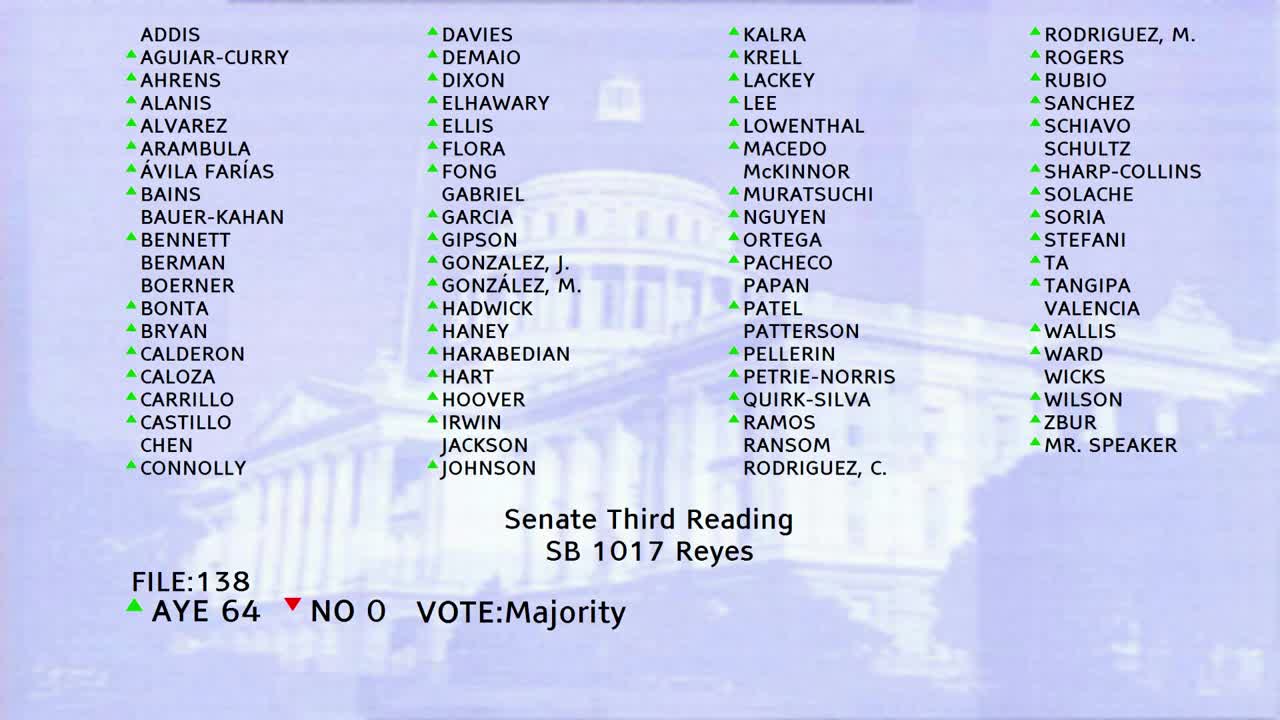
Bill Author

Bill Co-Author(s):