SB 989: Community Assistance, Recovery, and Empowerment (CARE) Court Program.
- Session Year: 2025-2026
- House: Senate
- Latest Version Date: 2026-09-27
Current Status:
Passed
(2026-09-27: Chaptered by Secretary of State. Chapter 667, Statutes of 2026.)
Introduced
In Committee
Awaiting First Chamber Vote
Passed First Chamber
In Committee
Awaiting Second Chamber Vote
Passed Second Chamber
Enacted
Existing law, the Community Assistance, Recovery, and Empowerment (CARE) Act, authorizes specified persons, including a person with whom the respondent resides, family members, and first responders, among others, to petition a civil court to create a voluntary CARE agreement or a court-ordered CARE plan and implement services, to be provided by county behavioral health agencies, to provide behavioral health care, including stabilization medication, housing, and other enumerated services, to adults who are currently experiencing a severe mental illness and have a diagnosis identified in the disorder class schizophrenia and other psychotic disorders, and who meet other specified criteria.
This bill would authorize a first responder to contact the county behavioral health agency in the county in which the individual resides or is found to request the agency file a petition to commence the CARE process. The bill would require the agency to review the request and determine whether to file a petition within 30 business days. The bill would require the agency, upon completion of the review, to notify the first responder that made the referral of specified information, including whether or not a petition was filed. Because the bill would require a higher level of service from county agencies, this bill would create a state-mandated local program.
This bill would require the department to create a referral form to be used by the first responders and would require the department to issue guidance on the procedure to request that the agency file a petition to commence the CARE process. The bill would also require the agency to include specified data in their annual report to the department.
The California Constitution requires the state to reimburse local agencies and school districts for certain costs mandated by the state. Statutory provisions establish procedures for making that reimbursement.
This bill would provide that, if the Commission on State Mandates determines that the bill contains costs mandated by the state, reimbursement for those costs shall be made pursuant to the statutory provisions noted above.
Existing law, the Community Assistance, Recovery, and Empowerment (CARE) Act, authorizes specified persons, including a person with whom the respondent resides, family members, and first responders, among others, to petition a civil court to create a voluntary CARE agreement or a court-ordered CARE plan and implement services, to be provided by county behavioral health agencies, to provide behavioral health care, including stabilization medication, housing, and other enumerated services, to adults who are currently experiencing a severe mental illness and have a diagnosis identified in the disorder class schizophrenia and other psychotic disorders, and who meet other specified criteria.
This bill would authorize a first responder to contact the county behavioral health agency in the county in which the individual resides or is found to request the agency file a petition to commence the CARE process. The bill would require the agency to review the request and determine whether to file a petition within 30 business days. The bill would require the agency, upon completion of the review, to notify the first responder that made the referral of specified information, including whether or not a petition was filed. Because the bill would require a higher level of service from county agencies, this bill would create a state-mandated local program.
This bill would require the department to create a referral form to be used by the first responders and would require the department to issue guidance on the procedure to request that the agency file a petition to commence the CARE process. The bill would also require the agency to include specified data in their annual report to the department.
The California Constitution requires the state to reimburse local agencies and school districts for certain costs mandated by the state. Statutory provisions establish procedures for making that reimbursement.
This bill would provide that, if the Commission on State Mandates determines that the bill contains costs mandated by the state, reimbursement for those costs shall be made pursuant to the statutory provisions noted above.
Existing law, the Community Assistance, Recovery, and Empowerment (CARE) Act, authorizes specified persons, including a person with whom the respondent resides, family members, and first responders, among others, to petition a civil court to create a voluntary CARE agreement or a court-ordered CARE plan and implement services, to be provided by county behavioral health agencies, to provide behavioral health care, including stabilization medication, housing, and other enumerated services, to adults who are currently experiencing a severe mental illness and have a diagnosis identified in the disorder class schizophrenia and other psychotic disorders, and who meet other specified criteria.
This bill would authorize a first responder to contact the county behavioral health agency in the county in which the individual resides or is found to request the agency file a petition to commence the CARE process. The bill would require the agency to review the request and determine whether to file a petition within 30 business days. The bill would require the agency, upon completion of the review, to notify the first responder that made the referral of specified information, including whether or not a petition was filed. Because the bill would require a higher level of service from county agencies, this bill would create a state-mandated local program.
This bill would require the department to create a referral form to be used by the first responders and would require the department to issue guidance on the procedure to request that the agency file a petition to commence the CARE process. The bill would also require the agency to include specified data in their annual report to the department.
The California Constitution requires the state to reimburse local agencies and school districts for certain costs mandated by the state. Statutory provisions establish procedures for making that reimbursement.
This bill would provide that, if the Commission on State Mandates determines that the bill contains costs mandated by the state, reimbursement for those costs shall be made pursuant to the statutory provisions noted above.
Existing law, the Community Assistance, Recovery, and Empowerment (CARE) Act, authorizes specified persons, including a person with whom the respondent resides, family members, and first responders, among others, to petition a civil court to create a voluntary CARE agreement or a court-ordered CARE plan and implement services, to be provided by county behavioral health agencies, to provide behavioral health care, including stabilization medication, housing, and other enumerated services, to adults who are currently experiencing a severe mental illness and have a diagnosis identified in the disorder class schizophrenia and other psychotic disorders, and who meet other specified criteria.
This bill would authorize a first responder to contact the county behavioral health agency in the county in which the respondent resides individual resides or is found to request the agency file a petition to commence the CARE process. The bill would require the agency to review the request and determine whether to file a petition within 30 business days. The bill would require the agency, upon completion of the review, to notify the first responder that made the referral of specified information, including whether or not a petition was filed. Because the bill would require a higher level of service from county agencies, this bill would create a state-mandated local program.
This bill would require the department to create a referral form to be used by the first responders and would require the department to issue guidance on the procedure to request that the agency file a petition to commence the CARE process. The bill would also require the agency to include specified data in their annual report to the department.
The California Constitution requires the state to reimburse local agencies and school districts for certain costs mandated by the state. Statutory provisions establish procedures for making that reimbursement.
This bill would provide that, if the Commission on State Mandates determines that the bill contains costs mandated by the state, reimbursement for those costs shall be made pursuant to the statutory provisions noted above.
Existing law, the Community Assistance, Recovery, and Empowerment (CARE) Act, authorizes specified persons, including a person with whom the respondent resides, family members, first responders, among others, to petition a civil court to create a voluntary CARE agreement or a court-ordered CARE plan and implement services, to be provided by county behavioral health agencies, to provide behavioral health care, including stabilization medication, housing, and other enumerated services, to adults who are currently experiencing a severe mental illness and have a diagnosis identified in the disorder class schizophrenia and other psychotic disorders, and who meet other specified criteria.
This bill would authorize a first responder to contact the county behavioral health agency in the county in which the respondent resides to request the agency file a petition to commence the CARE process. The bill would require the agency to investigate whether or not the respondent meets the criteria to qualify for the CARE process review the request and determine whether to file a petition within 30 business days. This bill would also authorize the requester to seek a court order if the agency does not investigate the respondent, or appeal the agencys determination on whether or not to file a petition to commence the process. The bill would require the agency, upon completion of the review, to notify the first responder that made the referral of specified information, including whether or not a petition was filed. Because the bill would require a higher level of service from county agencies, this bill would create a state-mandated local program.
This bill would require the department to create a referral form to be used by the first responders. The bill would also responders and would require the department to issue guidance on the procedure to request that the agency file a petition to commence the CARE process and county behavioral health agency data reporting requirements. process. The bill would also require the agency to include specified data in their annual report to the department.
The California Constitution requires the state to reimburse local agencies and school districts for certain costs mandated by the state. Statutory provisions establish procedures for making that reimbursement.
This bill would provide that, if the Commission on State Mandates determines that the bill contains costs mandated by the state, reimbursement for those costs shall be made pursuant to the statutory provisions noted above.
Existing law, the Community Assistance, Recovery, and Empowerment (CARE) Act, authorizes specified persons, including a person with whom the respondent resides, family members, first responders, among others, to petition a civil court to create a voluntary CARE agreement or a court-ordered CARE plan and implement services, to be provided by county behavioral health agencies, to provide behavioral health care, including stabilization medication, housing, and other enumerated services, to adults who are currently experiencing a severe mental illness and have a diagnosis identified in the disorder class schizophrenia and other psychotic disorders, and who meet other specified criteria.
This bill would state the intent of the Legislature to enact legislation that would ease barriers to filing CARE court petitions for first responders, family members, and roommates.This bill would authorize a first responder to contact the county behavioral health agency in the county in which the respondent resides to request the agency file a petition to commence the CARE process. The bill would require the agency to investigate whether or not the respondent meets the criteria to qualify for the CARE process within 30 business days. This bill would also authorize the requester to seek a court order if the agency does not investigate the respondent, or appeal the agencys determination on whether or not to file a petition to commence the process.
This bill would require the department to create a referral form to be used by the first responders. The bill would also require the department to issue guidance on the procedure to request that the agency file a petition to commence the CARE process and county behavioral health agency data reporting requirements. The bill would also require the agency to include specified data in their annual report to the department.
Existing law, the Community Assistance, Recovery, and Empowerment (CARE) Act, authorizes specified persons, including a person with whom the respondent resides, family members, first responders, among others, to petition a civil court to create a voluntary CARE agreement or a court-ordered CARE plan and implement services, to be provided by county behavioral health agencies, to provide behavioral health care, including stabilization medication, housing, and other enumerated services, to adults who are currently experiencing a severe mental illness and have a diagnosis identified in the disorder class schizophrenia and other psychotic disorders, and who meet other specified criteria.
This bill would state the intent of the Legislature to enact legislation that would ease barriers to filing CARE court petitions for first responders, family members, and roommates.
(a)In addition to directly filing a petition to commence the CARE process, a first responder, as identified in subdivision (f) of Section 5974, may contact the county behavioral health agency of the county in which the individual resides, or is found, if they believe that the individual meets or is likely to meet criteria to qualify for the CARE process, as described in Section 5972, and request the county behavioral health agency file a petition to commence the CARE process.
(b)The request pursuant to this subdivision shall include the name and contact information for the individual, including a telephone number and address, if available, and other information as specified by the department.
(c)Within 30 business days of the request, the county behavioral health agency shall complete a review of the request and shall determine whether to file a petition in accordance with the provisions of this chapter.
(d)Upon completion of the review required under subdivision (c), the county behavioral health agency shall notify the first responder who made the referral of both of the following:
(1)The outcome of their review, including whether or not a petition to commence the CARE process was filed.
(2)Whether or not the individual met the criteria to qualify for the CARE process.
(e)In accordance with subdivision (b) of Section 5984, the department shall develop a referral form to be used by the first responder and shall issue guidance regarding the procedure to request that a county behavioral health agency file a petition to commence the CARE process for the individual.
(f)The department shall include data regarding requests made pursuant to this section as part of the annual CARE Act report required by Section 5985.
SEC. 2.If the Commission on State Mandates determines that this act contains costs mandated by the state, reimbursement to local agencies and school districts for those costs shall be made pursuant to Part 7 (commencing with Section 17500) of Division 4 of Title 2 of the Government Code.
(a)In addition to directly filing a petition to commence the CARE process, a first responder, as identified in subdivision (f) of Section 5974, may contact the county behavioral health agency of the county in which the individual resides, or is found, if they believe that the individual meets or is likely to meet criteria to qualify for the CARE process, as described in Section 5972, and request the county behavioral health agency file a petition to commence the CARE process.
(b)The request pursuant to this subdivision shall include the name and contact information for the individual, including a telephone number and address, if available, and other information as specified by the department.
(c)Within 30 business days of the request, the county behavioral health agency shall complete a review of the request and shall determine whether to file a petition in accordance with the provisions of this chapter.
(d)Upon completion of the review required under subdivision (c), the county behavioral health agency shall notify the first responder who made the referral of both of the following:
(1)The outcome of their review, including whether or not a petition to commence the CARE process was filed.
(2)Whether or not the individual met the criteria to qualify for the CARE process.
(e)In accordance with subdivision (b) of Section 5984, the department shall develop a referral form to be used by the first responder and shall issue guidance regarding the procedure to request that a county behavioral health agency file a petition to commence the CARE process for the individual.
(f)The department shall include data regarding requests made pursuant to this section as part of the annual CARE Act report required by Section 5985.
SEC. 2.If the Commission on State Mandates determines that this act contains costs mandated by the state, reimbursement to local agencies and school districts for those costs shall be made pursuant to Part 7 (commencing with Section 17500) of Division 4 of Title 2 of the Government Code.
(a)In addition to directly filing a petition to commence the CARE process, a first responder, as identified in subdivision (f) of Section 5974, may contact the county behavioral health agency of the county in which the individual resides, or is found, if they believe that the individual meets or is likely to meet criteria to qualify for the CARE process, as described in Section 5972, and request the county behavioral health agency file a petition to commence the CARE process.
(b)The request pursuant to this subdivision shall include the name and contact information for the individual, including a telephone number and address, if available, and other information as specified by the department.
(c)Within 30 business days of the request, the county behavioral health agency shall complete a review of the request and shall determine whether to file a petition in accordance with the provisions of this chapter.
(d)Upon completion of the review required under subdivision (c), the county behavioral health agency shall notify the first responder who made the referral of both of the following:
(1)The outcome of their review, including whether or not a petition to commence the CARE process was filed.
(2)Whether or not the respondent individual met the criteria to qualify for the CARE process.
(e)In accordance with subdivision (b) of Section 5984, the department shall develop a referral form to be used by the first responder and shall issue guidance regarding the procedure to request that a county behavioral health agency file a petition to commence the CARE process for the respondent. individual.
(f)The department shall include data regarding requests made pursuant to this section as part of the annual CARE Act report required by Section 5985.
SEC. 2.If the Commission on State Mandates determines that this act contains costs mandated by the state, reimbursement to local agencies and school districts for those costs shall be made pursuant to Part 7 (commencing with Section 17500) of Division 4 of Title 2 of the Government Code.
REVISIONS: HeadingLine 3.(a)In lieu of addition to directly filing a petition to commence the CARE process, a first responder, as identified in subdivision (f) of Section 5974, may contact the county behavioral health agency of the county in which the respondent resides, individual resides, or is found, if they believe that the respondent individual meets or is likely to meet criteria to qualify for the CARE process, as described in Section 5972, and request the county behavioral health agency file a petition to commence the CARE process.
(b)The request pursuant to this subdivision shall include the name and contact information for the respondent, individual, including a telephone number and address, if available, and other information as specified by the department.
(c)Within 30 business days of the request, the county behavioral health agency shall complete a review of the request and shall determine whether to file a petition in accordance with the provisions of this chapter.
(d)Upon completion of the review required under subdivision (c), the county behavioral health agency shall notify the first responder who made the referral of both of the following:
(1)The outcome of their review, including whether or not a petition to commence the CARE process was filed.
(2)Whether or not the respondent met the criteria to qualify for the CARE process.
(e)In accordance with subdivision (b) of Section 5984, the department shall develop a referral form to be used by the first responder and shall issue guidance regarding the procedure to request that a county behavioral health agency file a petition to commence the CARE process for the respondent.
(f)The department shall include data regarding requests made pursuant to this section as part of the annual CARE Act report required by Section 5985.
SEC. 2.If the Commission on State Mandates determines that this act contains costs mandated by the state, reimbursement to local agencies and school districts for those costs shall be made pursuant to Part 7 (commencing with Section 17500) of Division 4 of Title 2 of the Government Code.
(a)In lieu of directly filing a petition to commence the CARE process, a first responder, as identified in subdivision (f) of Section 5974, may contact the county behavioral health agency of the county in which the respondent resides, if they believe that the respondent meets or is likely to meet criteria to qualify for the CARE process, as described in Section 5972, and request the county behavioral health agency file a petition to commence the CARE process.
(b)The request pursuant to this subdivision shall include contact information for the respondent, including a telephone number and address, if available, and other information as specified by the department.
(c)Within 30 business days of the request, the county behavioral health agency shall complete assessment of the respondent pursuant to this section and shall file a petition pursuant to Section 5975 if the county behavioral health agency determines that the respondent meets or is likely to meet criteria for the CARE process and the respondent does not engage in voluntary treatment. a review of the request and shall determine whether to file a petition in accordance with the provisions of this chapter.
(d)If a first responder has requested that the county behavioral health agency commence the investigation of whether or not the respondent is likely to meet the criteria to qualify for the CARE process and the agency has not done so within 30 business days, the requester may apply to the court for an order requiring the county to investigate.(e)If the county behavioral health agency determines the respondent does not meet the criteria to qualify for the CARE process and does not file the petition to commence the CARE process, the requester may request an appeal hearing before the court seeking an order to reinvestigate.(d)Upon completion of the review required under subdivision (c), the county behavioral health agency shall notify the first responder who made the referral of both of the following:
(1)The outcome of their review, including whether or not a petition to commence the CARE process was filed.
(2)Whether or not the respondent met the criteria to qualify for the CARE process.
(f)(e)In accordance with subdivision (b) of Section 5984, the department shall develop a referral form to be used by the first responder and shall issue guidance regarding both of the following: the procedure to request that a county behavioral health agency file a petition to commence the CARE process for the respondent.
(1)The procedure for a first responder to request that a county behavioral health agency file a petition to commence the CARE process for the respondent.(2)County behavioral health agency data reporting requirements regarding requests made pursuant to this section, including, but not limited to, total number of requests, outcomes of requests, reason for not filing a petition, length of time from request to outcome, and services provided for those engaged voluntarily.(g)(f)The department shall include data regarding requests made pursuant to this section as part of the annual CARE Act report required by Section 5985.
SEC. 2.If the Commission on State Mandates determines that this act contains costs mandated by the state, reimbursement to local agencies and school districts for those costs shall be made pursuant to Part 7 (commencing with Section 17500) of Division 4 of Title 2 of the Government Code.
(a)In lieu of directly filing a petition to commence the CARE process, a first responder, as identified in subdivision (f) of Section 5974, may contact the county behavioral health agency of the county in which the respondent resides, if they believe that the respondent meets or is likely to meet criteria to qualify for the CARE process, as described in Section 5972, and request the county behavioral health agency file a petition to commence the CARE process.
(b)The request pursuant to this subdivision shall include contact information for the respondent, including a telephone number and address, if available, and other information as specified by the department.
(c)Within 30 business days of the request, the county behavioral health agency shall complete assessment of the respondent pursuant to this section and shall file a petition pursuant to Section 5975 if the county behavioral health agency determines that the respondent meets or is likely to meet criteria for the CARE process and the respondent does not engage in voluntary treatment.
(d)If a first responder has requested that the county behavioral health agency commence the investigation of whether or not the respondent is likely to meet the criteria to qualify for the CARE process and the agency has not done so within 30 business days, the requester may apply to the court for an order requiring the county to investigate.
(e)If the county behavioral health agency determines the respondent does not meet the criteria to qualify for the CARE process and does not file the petition to commence the CARE process, the requester may request an appeal hearing before the court seeking an order to reinvestigate.
(f)In accordance with subdivision (b) of Section 5984, the department shall develop a referral form to be used by the first responder and shall issue guidance regarding both of the following:
(1)The procedure for a first responder to request that a county behavioral health agency file a petition to commence the CARE process for the respondent.
(2)County behavioral health agency data reporting requirements regarding requests made pursuant to this section, including, but not limited to, total number of requests, outcomes of requests, reason for not filing a petition, length of time from request to outcome, and services provided for those engaged voluntarily.
(g)The department shall include data regarding requests made pursuant to this section as part of the annual CARE Act report required by Section 5985.
SECTION 1.It is the intent of the Legislature to enact legislation that would ease barriers to filing CARE court petitions for first responders, family members, and roommates.It is the intent of the Legislature to enact legislation that would ease barriers to filing CARE court petitions for first responders, family members, and roommates.
|
Date
|
Status
|
|---|---|
| Sep 27, 2026 | Chaptered by Secretary of State. Chapter 667, Statutes of 2026. |
| Sep 27, 2026 | Approved by the Governor. |
| Sep 4, 2026 | Enrolled and presented to the Governor at 2 p.m. |
| Aug 28, 2026 | Assembly amendments concurred in. (Ayes 40. Noes 0. Page 6068.) Ordered to engrossing and enrolling. |
| Aug 28, 2026 | Assembly amendments concurred in. (Ayes 40. Noes 0.) Ordered to engrossing and enrolling. |
| Aug 25, 2026 | In Senate. Concurrence in Assembly amendments pending. |
| Aug 25, 2026 | Read third time. Passed. (Ayes 73. Noes 0. Page 6529.) Ordered to the Senate. |
| Aug 25, 2026 | Read third time. Passed. Ordered to the Senate. |
| Aug 13, 2026 | Read second time. Ordered to third reading. |
| Aug 13, 2026 | From committee: Do pass. (Ayes 14. Noes 0.) (August 13). |
| Aug 13, 2026 | Assembly Rule 63 suspended. |
| Aug 5, 2026 | August 5 set for first hearing. Placed on suspense file. |
| Jun 23, 2026 | Coauthors revised. |
| Jun 23, 2026 | From committee: Do pass and re-refer to Com. on APPR. (Ayes 11. Noes 0.) (June 23). Re-referred to Com. on APPR. |
| Jun 18, 2026 | Read second time and amended. Re-referred to Com. on JUD. |
| Jun 17, 2026 | From committee: Do pass as amended and re-refer to Com. on JUD. (Ayes 14. Noes 0.) (June 16). |
| Jun 8, 2026 | Referred to Coms. on HEALTH and JUD. |
| May 27, 2026 | In Assembly. Read first time. Held at Desk. |
| May 27, 2026 | Read third time. Passed. (Ayes 38. Noes 0. Page 4497.) Ordered to the Assembly. |
| May 27, 2026 | Read third time. Passed. (Ayes 38. Noes 0.) Ordered to the Assembly. |
| May 18, 2026 | Read second time. Ordered to third reading. |
| May 14, 2026 | From committee: Do pass as amended. (Ayes 7. Noes 0. Page 4260.) (May 14). |
| May 14, 2026 | Read second time and amended. Ordered to second reading. |
| May 14, 2026 | From committee: Do pass as amended. (Ayes 7. Noes 0.) (May 14). |
| May 8, 2026 | Set for hearing May 14. |
| May 4, 2026 | May 4 hearing: Placed on APPR. suspense file. |
| Apr 24, 2026 | Set for hearing May 4. |
| Apr 22, 2026 | From committee: Do pass and re-refer to Com. on APPR. (Ayes 12. Noes 0. Page 3977.) (April 21). Re-referred to Com. on APPR. |
| Apr 22, 2026 | From committee: Do pass and re-refer to Com. on APPR. (Ayes 12. Noes 0.) (April 21). Re-referred to Com. on APPR. |
| Apr 17, 2026 | Set for hearing April 21. |
| Apr 16, 2026 | From committee: Do pass and re-refer to Com. on JUD. (Ayes 9. Noes 0. Page 3901.) (April 15). Re-referred to Com. on JUD. |
| Apr 16, 2026 | From committee with author's amendments. Read second time and amended. Re-referred to Com. on JUD. |
| Apr 16, 2026 | From committee: Do pass and re-refer to Com. on JUD. (Ayes 9. Noes 0.) (April 15). Re-referred to Com. on JUD. |
| Apr 9, 2026 | Set for hearing April 15. |
| Apr 8, 2026 | Re-referred to Coms. on HEALTH and JUD. |
| Mar 19, 2026 | From committee with author's amendments. Read second time and amended. Re-referred to Com. on RLS. |
| Feb 18, 2026 | Referred to Com. on RLS. |
| Feb 9, 2026 | From printer. May be acted upon on or after March 8. |
| Feb 5, 2026 | Introduced. Read first time. To Com. on RLS. for assignment. To print. |
|
Date
|
Description
|
Location
|
Votes
|
|
|---|---|---|---|---|
| Aug 28, 2026 | Unfinished Business SB989 Blakespear et al. Concurrence | Senate Floor |
Passed |
|
| Aug 25, 2026 | SB 989 Blakespear Senate Third Reading By Patel | Assembly Floor |
Passed |
|
| Aug 13, 2026 | Do pass. | Assembly Standing Committee on Appropriations |
Passed |
|
| Jun 23, 2026 | Do pass and be re-referred to the Committee on [Appropriations] | Assembly Standing Committee on Judiciary |
Passed |
|
| Jun 16, 2026 | Do pass as amended and be re-referred to the Committee on [Judiciary] | Assembly Standing Committee on Health |
Passed |
|
| May 27, 2026 | Senate 3rd Reading SB989 Blakespear et al. | Senate Floor |
Passed |
|
| May 14, 2026 | Do pass as amended | Senate Standing Committee on Appropriations |
Passed |
|
| May 4, 2026 | Placed on suspense file | Senate Standing Committee on Appropriations |
Passed |
|
| Apr 21, 2026 | Do pass, but first be re-referred to the Committee on [Appropriations] | Senate Standing Committee on Judiciary |
Passed |
|
| Apr 15, 2026 | Do pass, but first be re-referred to the Committee on [Judiciary] | Senate Standing Committee on Health |
Passed |
This list shows positions taken on this bill by organizations on the date displayed, which is linked to the original source.
Positions by individuals are not included.
|
Organization
|
Position
|
Date
|
|---|---|---|
| Aclu California Action | ** Against | |
| All People's Health Collective | ** Against | |
| All People’s Health Collective | ** Against | |
| Anti Police-Terror Project | ** Against | |
| Anti Police-terror Project and Justice Teams Network | ** Against | |
| Antiracist MD | ** Against | |
| Black Men Speak, Inc. | ** Against | |
| California Advocates for Nursing Home Reform | ** Against | |
| California Association of Mental Health Peer Run Organizations | ** Against | |
| California Association of Social Rehabilitation Agencies | ** Against | |
| California Assoc. of Mental Health Peer Run Organizations (CAMHPRO) | ** Against | |
| California Contract Cities Association | ** Support | |
| California Hospital Association | ** Support | |
| California Peer Watch | ** Against | |
| California Professional Firefighters | ** Support | |
| California State Association Of Counties | ** Against | |
| Cal Voices | ** Against | |
| Centro Legal de la Raza | ** Against | |
| City of Bakersfield | ** Support | |
| City of Oceanside | ** Support | |
| City Of San Diego | ** Support | |
| Corporation For Supportive Housing | ** Against | |
| Corporation for Supportive Housing (CSH) | ** Against | |
| County Behavioral Health Directors Association | ** Against | |
| County of San Diego District Attorney's Office | ** Support | |
| Disability Community Resource Center | ** Against | |
| Disability Rights California | ** Against | |
| Food Not Bombs | ** Against | |
| Gray Panthers of San Francisco | ** Against | |
| Homeless United for Friendship and Freedom | ** Against | |
| Housing is a Human Right | ** Against | |
| Justice Teams Network | ** Against | |
| Kelechi Ubozoh Consulting | ** Against | |
| LA Street Care & Mutual Aid | ** Against | |
| Law Foundation of Silicon Valley | ** Against | |
| Los Angeles Community Action Network | ** Against | |
| Mayor Todd Gloria, City of San Diego | ** Support | |
| Mental Health America of California | ** Against | |
| National Alliance to End Homelessness | ** Against | |
| National Coalition for Mental Health Recovery | ** Against | |
| National Mental Health Consumers' Self-help Clearinghouse | ** Against | |
| People's Budget Orange County | ** Against | |
| Racial and Ethnic Mental Health Disparities Coalition | ** Against | |
| Rural County Representatives of California | ** Against | |
| Sacramento Homeless Union | ** Against | |
| San Diego, California State University | ** Against | |
| San Diego County District Attorney's Office | ** Support | |
| Serf City Times | ** Against | |
| Urban Counties of California | ** Against | |
| Venice Justice Committee | ** Against | |
| Western Regional Advocacy Project | ** Against |
SENATE RULES COMMITTEE Office of Senate Floor Analyses (916) 651-4171 | SB 989 |
UNFINISHED BUSINESS
Bill No: SB 989
Author: Blakespear (D) and Umberg (D), et al.
Amended: 6/18/26
Vote: 21
SENATE HEALTH COMMITTEE: 9-0, 4/15/26
AYES: Weber Pierson, Valladares, Caballero, Durazo, Gonzalez, Grove, Padilla, Rubio, Smallwood-Cuevas
NO VOTE RECORDED: Menjivar, Pérez
SENATE JUDICIARY COMMITTEE: 12-0, 4/21/26
AYES: Umberg, Niello, Allen, Ashby, Caballero, Durazo, Laird, Reyes, Stern, Valladares, Wahab, Wiener
NO VOTE RECORDED: Weber Pierson
SENATE APPROPRIATIONS COMMITTEE: 7-0, 5/14/26
AYES: Cervantes, Seyarto, Cabaldon, Dahle, Grayson, Richardson, Wahab
SENATE FLOOR: 38-0, 5/27/26
AYES: Allen, Alvarado-Gil, Archuleta, Arreguín, Ashby, Becker, Blakespear, Cabaldon, Caballero, Cervantes, Choi, Cortese, Durazo, Gonzalez, Grayson, Grove, Hurtado, Jones, Laird, Limón, McGuire, McNerney, Menjivar, Niello, Ochoa Bogh, Padilla, Pérez, Reyes, Richardson, Rubio, Seyarto, Smallwood-Cuevas, Stern, Strickland, Umberg, Valladares, Wahab, Wiener
NO VOTE RECORDED: Dahle, Weber Pierson
ASSEMBLY FLOOR: 73-0, 8/25/26 - See last page for vote
SUBJECT: Community Assistance, Recovery, and Empowerment (CARE) Court Program
SOURCE: California Professional Firefighters
DIGEST:
This bill permits a first responder to request the county behavioral health (CBH) agency file a petition to commence the Community Assistance, Recovery, and Empowerment Act process to investigate a person’s eligibility. Requires Community Assistance, Recovery, and Empowerment to complete a review of the request within 30 days and determine whether to file a petition.
Assembly Amendments
change two references of “respondent” to “individual” to accurately reflect that a person is not actually part of the CARE process yet in those instances.
ANALYSIS:
Existing law:
- Establishes Community Assistance, Recovery, and Empowerment (CARE) to help connect an individual (known as a “respondent”) with a court-ordered CARE agreement or CARE plan for up to 12 months, with the possibility to extend for an additional 12 months, that provides individualized, appropriate community-based services and supports, which include clinically appropriate behavioral health care and stabilization medications, housing, and other supportive services. [Welfare and Institutions Code (WIC) §5970, et seq.]
- Requires an individual, to qualify as a respondent in the CARE process, to:
- Be 18 years of age or older;
- Be currently experiencing a serious mental disorder and have a diagnosis of schizophrenia spectrum or other psychotic disorder. Prohibits an individual who has a current diagnosis of substance use disorder, but who does not also meet the required criteria, from qualifying for the CARE process;
- Not be clinically stabilized in ongoing voluntary treatment;
- Be unlikely to survive safely in the community without supervision and their condition is substantially deteriorating; or, be in need of services and supports in order to prevent a relapse or deterioration that would be likely to result in grave disability or serious harm to self or others, resulting in involuntary detention;
- Participation in a CARE plan or CARE agreement would be the least restrictive alternative necessary to ensure the individual’s recovery and stability; and,
- Be likely to benefit from participation in a CARE plan or CARE agreement. [WIC §5972]
- Permits the following adult persons to file a petition to commence the CARE process:
- A person with whom the respondent resides;
- A spouse, parent, sibling, child, or grandparent or an individual who stands in loco parentis to the respondent;
- The director of a hospital or the director’s designee, in which the respondent is hospitalized, including hospitalized pursuant to the Lanterman-Petris-Short (LPS) Act involuntary detention law;
- The director of a public or charitable organization, agency, or home, or their designee, who has, within the previous 30 days, provided or who is currently providing behavioral health services to the respondent or in whose institution the respondent resides;
- A licensed behavioral health professional, or their designee, who is, or has been within the previous 30 days, either supervising the treatment of, or treating the respondent for a mental illness;
- A first responder (FR), including a peace officer, firefighter, paramedic, emergency medical technician, mobile crisis response worker, or homeless outreach worker, who has had repeated interactions with the respondent in the form of multiple arrests, multiple detentions and transportation pursuant to the LPS, multiple attempts to engage the respondent in voluntary treatment, or other repeated efforts to aid the respondent in obtaining professional assistance;
- The public guardian or public conservator, or their designee, of the county in which the respondent resides or is found;
- The director of CBH, or their designee, of the county in which the respondent resides or is found;
- The director of county adult protective services, or their designee, of the county in which the respondent resides or is found;
- The director of a California Indian health services program, California tribal behavioral health department, who has, within the previous 30 days, provided or who is currently providing behavioral health services to the respondent, or the director’s designee;
- The judge of a tribal court located in California before which the respondent has appeared within the previous 30 days, or the judge’s designee; or,
- The respondent. [WIC §5974]
- Requires the court to review a petition promptly, and after a series of investigations, reports, and hearings that determine if an individual meets CARE criteria, to:
- Dismiss the matter if the court determines voluntary engagement with the respondent is effective, and they have enrolled or are likely to enroll in voluntary behavioral health treatment;
- Order CBH to work with the respondent, the respondent’s counsel, and the supporter (“the parties”) to engage the respondent in behavioral health treatment and attempt to enter into a CARE agreement, approve the agreement, and set a progress hearing for 60 days, if voluntary engagement is not effective;
- Order CBH, through a licensed behavioral health professional, to conduct a clinical evaluation of the respondent to determine if they meet CARE criteria, if the parties are not likely to enter into a CARE agreement; and,
- Order CBH and the parties to jointly develop a CARE plan within 14 days, if the respondent does meet CARE criteria. [WIC §5977(a)(5)(A), §5977 (c)(2), §5977.1(a)(2)(A), §5977.1(b), and §5977.1(c)(3)(A)]
- Requires the Department of Health Care Services (DHCS) to provide training and technical assistance to CBH to support CARE implementation, including training regarding the CARE process; CARE agreement and plan services and supports; supported decision making; the supporter role; trauma-informed care; elimination of bias; psychiatric advance directives’ family psychoeducation; and, data collection. [WIC §5983(b)]
This bill:
- Permits an FR, in addition to directly filing a petition to commence the CARE process, to request the CBH of the county in which the respondent resides or is found to file a petition to commence the CARE process if the FR believes that an individual meets or is likely to meet criteria to qualify for the CARE process, Requires the request to include contact information for the individual, including a telephone number and address, if available, and other information as specified by DHCS.
- Requires CBH, within 30 business days of the request, to complete a review of the request and determine whether to file a petition.
- Requires CBH, upon completing the review, to notify the FR about the outcome of the review of the request and whether the individual met criteria for the CARE process.
- Requires DHCS to develop a referral form to be used by an FR and to issue guidance regarding the procedure for an FR to request CBH to file a petition to commence the CARE process for an individual, and to include data regarding FR requests made to CBH in the annual CARE Act report.
Background
According to the author of this bill:
CARE was created to provide a structured, coordinated pathway to treatment for individuals with severe mental illness who are too often cycling through emergency rooms, jail, and repeated law enforcement encounters. Today, FRs are often the first point of contact for individuals in crisis, but current law makes it difficult for them to file a CARE petition. To do it, they must navigate a complex court filing process, obtain sensitive medical records, and appear in court. This bill creates a more practical and effective pathway by allowing FRs to request that CBH investigate and file CARE petitions on their behalf. This bill would expand access to CARE and help more Californians with untreated psychotic disorders receive the care they need.
CARE. SB 1338 (Umberg and Eggman, Chapter 319, Statutes of 2022) established CARE to help connect an individual in crisis with a court-ordered CARE plan for up to 12 months, with the possibility to extend for an additional 12 months. The framework provides these individuals (referred to as “respondents” in the CARE process) with a clinically appropriate, community-based set of services and supports that are culturally and linguistically competent, which includes short-term stabilization medications, wellness and recovery supports, connection to social services, and a housing plan. The California Health and Human Services Agency states that CARE is an upstream diversion to prevent more restrictive conservatorships or incarceration, based on evidence that demonstrates many people can stabilize, begin healing, and exit homelessness in less restrictive, community-based care settings. With advances in treatment models, new longer-acting antipsychotic treatments, and the right clinical team and housing plan, individuals who have historically suffered tremendously on the streets or during avoidable incarceration can be successfully stabilized and supported in the community. The first cohort of counties implemented CARE beginning October 1, 2023, and included Glenn, Orange, Riverside, San Diego, Stanislaus, and Tuolumne, and the City and County of San Francisco. Los Angeles County implemented early and began accepting CARE petitions on December 1, 2023. The second cohort of counties, representing the remaining population of the state, began accepting CARE petitions as of December 1, 2024.
CARE Act 2025 first annual report. As reported by DHCS in its initial annual report, data from the first nine months of CARE implementation demonstrate that, even in its early stages, the CARE process is connecting people with schizophrenia and other psychotic disorders with evidence-based treatments and housing plans. This reflects a meaningful shift in helping the state’s most vulnerable populations towards long-term recovery, lasting wellness, and housing stability. Relative to this bill, the report states that 556 CARE petitions had been received by the courts as of June 30, 2024 (the first nine months of CARE implementation). Of the filed CARE petitions, 217 (39%) were dismissed. There were 101 approved CARE agreements or ordered CARE plans. The remainder of filed CARE petitions were still in the court review process at the time of this report development and were pending disposition assignment, as reported by DHCS. Of the total 556 petitions submitted to the court, 497 CARE petitions were received by CBH during the first nine months of CARE implementation (representing 490 unique CARE respondents, given that some respondents were petitioned more than once). CBH are only aware of, and able to track, CARE petitions they file themselves or those they are ordered to investigate by the courts. Petitions may also be pending court determination at the end of the reporting period covered in the report. Of the 490 unique CARE respondents that were sent to CBH, 101 had a CARE agreement approved, or CARE plan ordered by the court as their first CARE disposition; 160 were dismissed by the court; and 229 did not yet have a court disposition assigned. Among the 160 dismissed respondents, 15 became elective clients, 55 were found to be ineligible for CARE but received CBH services, and 90 were found to be ineligible for CARE and did not receive any CBH services. The report further notes that of the 490 CARE respondents that were sent to CBHs, 334 (68%) were petitioned by someone with a personal relationship to the respondent (referred to as a personal petition); 107 (22%) by a system partner (defined as a hospital director, licensed behavioral health professional treating client, public guardian, or conservator); 34 (7%) by an FR; and 14 (3%) by the respondent themselves.
FISCAL EFFECT: Appropriation: No Fiscal Com.: Yes Local: Yes
According to the Assembly Appropriations Committee:
DHCS estimates one-time costs of $500,000 in contract resources in fiscal year 2027-28 to expand the existing training and technical assistance (TTA) contract to support comprehensive revision and cataloging of statewide CARE Act training materials and curricula, including dedicated TTA to first responders and counties on DHCS referral form requirements, implementation support, and workflow development to ensure consistent statewide adoption of the new referral pathway, local workflow development, and augmentation to CARE Act data collection and reporting tools (General Fund). DHCS notes additional, absorbable state operations costs to update claiming guidance, claim forms, and rates.
DHCS states county behavioral health agencies could submit claims for reimbursement for costs associated with this bill, such as reviewing requests from first responders within 30 days. Using the 2025 Annual CARE Act Report to analyze the number of petitions submitted by first responders to county behavioral health agencies, DHCS estimates the resulting local assistance costs likely would not exceed $1 million, all of which would be reimbursable by the state. For its part, the County Behavioral Health Directors Association (CBHDA) estimates state-reimbursable costs to counties of $691,000 to $3.1 million to conduct outreach and engagement to find an individual within the bill’s timeline to initiate CARE processes (General Fund).
SUPPORT: (Verified 8/25/26)
California Professional Firefighters (source)
California Contract Cities Association
California Hospital Association
City of Bakersfield
City of Oceanside
County of San Diego District Attorney’s Office
OPPOSITION: (Verified 8/25/26)
Cal Voices
California Association of Social Rehabilitation Agencies
California Peer Watch
Disability Rights California
Mental Health America of California
ARGUMENTS IN SUPPORT: The California Professional Firefighters (CPF) as sponsor argue California’s firefighters are on the front lines of delivering emergency medical services throughout the state, including to patients who are experiencing a mental health crisis, leading in evolving the local response framework to improve patient care. For example, CPF cosponsored legislation in 2020 that established community paramedicine and triage to alternate destination programs, including allowing a paramedic to triage a patient and take them to an appropriate behavioral health facility to get the services they need at the right time. Moreover, many jurisdictions have developed mobile mental health units, bringing together a suite of public safety and medical professionals to improve care in the field. CPF argues despite that work more needs to be done. Firefighters in the field see patients daily who are in desperate need of robust care, but gaps in the system lead to patients not receiving the right kind of care at the right time. While firefighters are well-situated to identify individuals who may be eligible for CARE given their presence and engagement in the community, barriers, such as general lack of information, training, and support for CARE still exist throughout California, leaving many firefighters unable to participate or even unaware that they are able to begin the petition process. Additionally, firefighters and other first responders are responsible for hundreds of emergency calls and may lack the local resources needed to complete petitions and appear in the court process as required. Those who are able to begin the petition process may not have access to the required medical records or other documentation required by the court.
ARGUMENTS IN OPPOSITION: Disability Rights California (DRC) and California Peer Watch argue that they share first responders’ concerns, but streamlining processes for referring people into CARE is not the solution. DRC argues people with CARE agreements or plans are placed on the same waitlists for services as anyone seeking services on their own, like one respondent who was placed on a waitlist for medication services that was three months long. The CARE First Annual Report noted 56.4% of CARE participants did not receive at least one ordered behavioral health service—including peer support, medication supports, and therapy—and 82.2% of CARE participants did not receive at least one ordered social service or support. CARE is also failing to achieve its goal of preventing crises or stopping people from cycling through emergency services, and coercive treatment interferes with the therapeutic relationship and is counter to sound public health policy. The quality of the therapeutic relationship is critical for a client’s engagement in treatment, adherence to a medication plan, management of symptoms, overall treatment outcomes, and quality of life. California should be working to improve, not destroy, the therapeutic relationship. DRC says the state should be investing in community-based services, including: peer-led hotlines and warmlines that answer calls and texts that would otherwise go to 911; mobile crisis response teams that respond to mental health calls that would otherwise receive a police, fire, or ambulance response; peer respites that offer a space for healing for individuals who might otherwise find themselves in an emergency room; and full-service partnerships that actually connect people with whatever they need: housing, food, case management, medical, or mental health care. Cal Voices argues this bill complicates the CARE process and could worsen the already coercive conditions faced by respondents. Mental Health of America California argues the right to appeal is a right exclusively given to respondents in CARE. Other petitioners may refile if their petition is dismissed. FRs should not be given the power to appeal the county’s decision when that decision is in favor of the respondent, particularly when the respondent is unaware of any assessment or investigation occurring, as such appeals will create further unnecessary burdens for the counties.
ASSEMBLY FLOOR: 73-0, 8/25/26
AYES: Addis, Aguiar-Curry, Ahrens, Alanis, Alvarez, Arambula, Ávila Farías, Bains, Bauer-Kahan, Bennett, Berman, Boerner, Bonta, Calderon, Caloza, Carrillo, Castillo, Chen, Connolly, Davies, DeMaio, Dixon, Ellis, Flora, Fong, Gabriel, Garcia, Gipson, Jeff Gonzalez, Mark González, Hadwick, Haney, Harabedian, Hart, Hoover, Irwin, Jackson, Johnson, Kalra, Krell, Lackey, Lee, Lowenthal, Macedo, Muratsuchi, Nguyen, Ortega, Pacheco, Papan, Patel, Patterson, Petrie-Norris, Quirk-Silva, Ramos, Celeste Rodriguez, Michelle Rodriguez, Rogers, Blanca Rubio, Sanchez, Schiavo, Schultz, Solache, Soria, Stefani, Ta, Tangipa, Valencia, Wallis, Ward, Wicks, Wilson, Zbur, Rivas
NO VOTE RECORDED: Bryan, Elhawary, McKinnor, Pellerin, Ransom, Sharp-Collins
Prepared by: Reyes Diaz / HEALTH / (916) 651-4111
8/25/26 18:59:11
**** END ****
SENATE THIRD READING
STR Bill Id:SB 989
Author:(Blakespear and Umberg)
As Amended Ver:June 18, 2026
Majority vote
SUMMARY
Authorizes a first responder to contact the county behavioral health agency in the county in which an individual resides to request the agency file a petition pursuant to the Community Assistance, Recovery, and Empowerment (CARE) Act to commence the CARE process. Requires the agency to review the request and determine whether to file a petition within 30 business days and, upon completion of the review, to notify the first responder that made the referral of specified information, including whether or not a petition was filed.
Major Provisions
COMMENTS
CARE Act. In 2022, the Governor signed SB 1338 (Umberg), Chapter 319, Statutes of 2022, known as the CARE Act. The CARE Act established a new civil court process to provide clinically appropriate, community-based services and supports that are culturally and linguistically competent, to Californians with schizophrenia spectrum disorders and other psychotic disorders, while also preserving these individuals' self-determination to the greatest extent possible. To be eligible under the CARE Act, a person must meet all of the following:
- 18 years of age or older;
- Have a serious mental illness and a diagnosis of bipolar I with psychotic features, or a schizophrenia spectrum or other psychotic disorder;
- They are not clinically stabilized in ongoing voluntary treatment;
- They are unlikely to survive safely in the community without supervision and the person's condition is substantially deteriorating or they are in need of services and supports in order to prevent a relapse or deterioration that would be likely to result in grave disability or serious harm to the person or others;
- CARE would be the least restrictive alternative necessary to ensure the person's recovery and stability; and,
- It is likely that the person will benefit from participation in CARE.
The first seven pilot counties implemented the CARE Act in October 2023, Los Angeles implemented in December 2023, and all counties were required to begin accepting CARE petitions as of December 1, 2024.
Under the CARE Act, a county behavioral health agency, spouse, parent, sibling, child, or grandparent of the respondent, a treating behavioral health professional, the county public guardian or public conservator, and others, as specified, may petition to begin the CARE process. If the original petitioner is not the county behavioral health agency, the county behavioral health agency replaces the original petitioner as the CARE petition proceeds. There are two paths to court-ordered services: if the respondent and the behavioral health agency are able to agree on a plan, it is known as a "CARE Agreement" and if they are unable to reach an agreement, one or both parties may present a proposed "CARE Plan" to the court and the court may accept a proposed plan or adopt a modified plan, which becomes a court order that lasts for up to one year. The CARE Plan or Agreement may provide for behavioral health services and housing supports, as well as other services, and counties may face financial penalties for failure to provide the required services. The court may allow the original petitioner to participate in the respondent's CARE proceedings, to the extent that the respondent consents.
CARE Act outcomes and reporting. AB 102 (Ting), Chapter 38, Statutes of 2023, required the Department of Health Care Services (DHCS) to issue an early implementation report on the CARE Act. In the first nine months of implementation (October 2023 through June 2024), 557 total petitions were filed and 217 of those were dismissed at the discretion of a judge. Preliminary data from July through September 2024 indicates an additional 231 petitions were filed. The report further indicates that dismissals will require further research, since the reasons for their dismissal are not available for the preliminary report, and could include people who are receiving care, those whose cases were dismissed for successful voluntarily engagement, people not being eligible for CARE who receive needed treatment another way, or people who are still not receiving care. The report also states that the CARE process can take time, like all mental health and substance use disorder (SUD) care, to build the trust and develop the self-directed plans needed for long-term recovery and stability.
The first CARE Act annual report was released in June 2025 and covered the same reporting period as the early implementation report. The annual report clarified that 556 petitions were filed and 101 (18%) resulted in CARE agreements or court-ordered CARE plans. 39% of petitions were dismissed and 229 were still pending at the end of the reporting period (over one year ago). Fifty-five respondents were found ineligible for CARE but received services from a county behavioral health agency, while an additional 90 found ineligible did not receive any county behavioral health services. Most respondents were male (64%) and aged 26–45 (64%), and 37% of respondents were white, 21% Hispanic, 18% Black, and 7% Asian, with 11.6% unknown. The most common petitioner type is personal contacts (such as family and household members) who filed 68% of petitions. County behavioral health agencies and public guardians are unlikely to refer because they may prefer to engage in services without court involvement, as some indicated in the early implementation report.
CARE respondents largely access mental health treatment (93%) and three-quarters of respondents accessed specialized mental health programs like Assertive Community Treatment (ACT) or Full-Service Partnership (FSP). Many respondents received stabilizing medications (72%) with 40% of those individuals receiving long-acting injectable medications. Long-acting injectable antipsychotic medications can be given as a shot in the muscle or under the skin and they usually are given every two to four weeks, according to the Mayo Clinic. 63% received all three foundational services (medication, treatment, and housing supports) though unmet needs remain.
The report notes that housing remains a challenge, though the share of respondents in permanent housing increased from 46% at time of petition to 56% in the most current reporting period. The most common unmet need for CARE participants was securing and maintaining permanent housing. Over half of CARE participants did not receive at least one ordered mental health service during their active service period (the most common was peer supports). 25% had criminal justice involvement during their service period, 21% had emergency visits, and 20% were hospitalized or placed on psychiatric holds. The report notes that only 15 individuals became "elective clients," those who voluntarily engaged with services outside court oversight. These clients generally accessed fewer services, especially medications and housing supports, suggesting disparities in care quality.
Along with the first annual report, the California Health and Human Services Agency (CalHHS) released a companion document to provide an update on implementation. As of May 31, 2025, 2,008 petitions had been filed across California since October 2023. Since the CARE Act took effect in all counties in December 2024, 1,063 petitions were filed, which is more total petitions than had been filed in the previous 14 months. The update also states that, through 2024, counties “diverted” 1,358 individuals to other services through CARE outreach. CalMatters reports that as of January 2026, California courts had received 3,817 petitions on behalf of prospective CARE Court participants and approved just 893 treatment agreements. The first annual report with statewide data is due in 2026.
In addition to the early implementation report and annual reporting from DHCS, an independent, research-based entity must be retained by DHCS to develop, in consultation with county behavioral health agencies, county CARE courts, racial justice experts, and other appropriate stakeholders, including providers and CARE court participants, an independent evaluation of the effectiveness of the CARE Act. This will be conducted by the RAND Corporation. The preliminary report is expected to be received by the Legislature by December 31, 2026, and a final report is expected by December 31, 2028.
According to the Author
CARE Court was created to provide a structured, coordinated pathway to treatment for individuals with severe mental illness who are too often cycling through emergency rooms, jail, and repeated law enforcement encounters. Today, first responders are often the first point of contact for individuals in crisis, but current law makes it difficult for them to file a CARE Court petition. To do it, they must navigate a complex court filing process, obtain sensitive medical records and appear in court. The author argues this bill creates a more practical and effective pathway by allowing first responders to request that county behavioral health agencies review and file CARE petitions on their behalf. The author concludes this bill would expand access to CARE Court and help more Californians with untreated psychotic disorders receive the care they need.
Arguments in Support
The California Professional Firefighters (CPF) is the sponsor of this bill stating that California’s firefighters are on the front lines of delivering emergency medical services throughout the state, including to patients who are experiencing a mental health crisis. CPF contends that firefighters in the field see patients day after day who are in desperate need of robust care, but there are existing gaps in the system that lead to patients who do not receive the right kind of care at the right time. While firefighters are well-situated to identify individuals who may be eligible for CARE given their presence and engagement in the community, there are barriers that prevent many from fully utilizing this important and necessary program and filing petitions on their own. CPF argues that a general lack of information, training, and support for CARE still exists throughout California, leaving many firefighters unable to participate or even unaware that they are able to begin the petition process. Additionally, firefighters and other first responders are responsible for hundreds of emergency calls and may lack the local resources needed to complete petitions and appear in the court process as required. Those who are able to begin the petition process may not have access to the required medical records or other documentation required by the court. CPF concludes that by allowing first responders to refer an individual to county behavioral health agencies who can further investigate and file a petition for CARE, this bill will enable firefighters to help more of our most vulnerable get help that they need.
The California Hospital Association (CHA) supports this bill stating that hospitals are on the front lines of the behavioral health crisis in California. They stabilize and treat people with a range of mental health needs in hospital emergency departments, psychiatric units of general medical hospitals, and freestanding psychiatric hospitals. They regularly see the tremendous challenges people with the most serious and disabling symptoms face in achieving independence and recovery. CHA notes that first responders repeatedly encounter the same individuals who seem to be falling through the cracks and are unable to maintain their health and safety. CHA argues this bill would give paramedics, emergency medical technicians, mobile crisis response workers, and homeless outreach workers a direct way to refer them to the county for CARE Act services, rather than pursue a time-intensive court petition.
Arguments in Opposition
A coalition of organizations, including Disability Rights California, ACLU California Action, CalVoices, the Corporation for Supportive Housing, Mental Health America of California, and more oppose this bill stating that people enrolled in CARE Court are placed on the same waitlists for services as anyone seeking services on their own. The first CARE Court Annual Report shared that 56.4% of CARE participants did not receive at least one ordered mental health service, and 82.2% of CARE participants did not receive at least one ordered social service or support. The coalition argues that faced with a comply-or-be-ordered-into-compliance dynamic, any CARE Court respondent who agrees to participate in CARE Court "voluntarily" does so with the knowledge that, if they did not, they would be ordered to participate. The coalition contends that this is the very definition of coercive and that coercive treatment interferes with the therapeutic relationship and is counter to sound public health policy. The coalition also argues that, while the full scope of additional costs stemming from this bill is unclear, CARE Court is extraordinarily expensive, and the Assembly Judiciary Committee's analysis of SB 27 (Umberg), Chapter 528, Statutes of 2025, conducted last year found that CARE Court cost approximately $714,000 per participant in fiscal year 2023-2024. The new administrative and procedural requirements added under this bill would further increase these already substantial costs. The coalition concludes that the best way to move forward towards a future that works for all community members – including first responders – is to invest in the voluntary, community-based, peer-led, culturally competent, and trauma-informed interventions that extensive evidence repeatedly shows to work.
FISCAL COMMENTS
According to the Assembly Appropriations Committee:
- DHCS estimates one-time costs of $500,000 in contract resources in fiscal year 2027-28 to expand the existing training and technical assistance (TTA) contract to support comprehensive revision and cataloging of statewide CARE Act training materials and curricula, including dedicated TTA to first responders and counties on DHCS referral form requirements, implementation support, and workflow development to ensure consistent statewide adoption of the new referral pathway, local workflow development, and augmentation to CARE Act data collection and reporting tools (General Fund). DHCS notes additional, absorbable state operations costs to update claiming guidance, claim forms, and rates.
- DHCS states county behavioral health agencies could submit claims for reimbursement for costs associated with this bill, such as reviewing requests from first responders within 30 days. Using the 2025 Annual CARE Act Report to analyze the number of petitions submitted by first responders to county behavioral health agencies, DHCS estimates the resulting local assistance costs likely would not exceed $1 million, all of which would be reimbursable by the state. For its part, the County Behavioral Health Directors Association (CBHDA) estimates state-reimbursable costs to counties of $691,000 to $3.1 million to conduct outreach and engagement to find an individual within the bill’s timeline to initiate CARE processes (General Fund).
VOTES
SENATE FLOOR: 38-0-2
YES: Allen, Alvarado-Gil, Archuleta, Arreguín, Ashby, Becker, Blakespear, Cabaldon, Caballero, Cervantes, Choi, Cortese, Durazo, Gonzalez, Grayson, Grove, Hurtado, Jones, Laird, Limón, McGuire, McNerney, Menjivar, Niello, Ochoa Bogh, Padilla, Pérez, Reyes, Richardson, Rubio, Seyarto, Smallwood-Cuevas, Stern, Strickland, Umberg, Valladares, Wahab, Wiener
ABS, ABST OR NV: Dahle, Weber Pierson
ASM HEALTH: 14-0-2
YES: Bonta, Chen, Addis, Aguiar-Curry, Ahrens, Caloza, Carrillo, Mark González, Patel, Patterson, Celeste Rodriguez, Sanchez, Schiavo, Stefani
ABS, ABST OR NV: Johnson, Sharp-Collins
ASM JUDICIARY: 11-0-1
YES: Kalra, Macedo, Bauer-Kahan, Connolly, Dixon, Harabedian, Pacheco, Papan, Sanchez, Stefani, Zbur
ABS, ABST OR NV: Bryan
ASM APPROPRIATIONS: 14-0-1
YES: Wicks, Hoover, Arambula, Calderon, Caloza, Dixon, Fong, Mark González, Krell, Pacheco, Pellerin, Solache, Ta, Tangipa
ABS, ABST OR NV: Sharp-Collins
UPDATED
VERSION: June 18, 2026
CONSULTANT: Logan Hess / HEALTH / (916) 319-2097 FN: 0003613
Date of Hearing: August 5, 2026
ASSEMBLY COMMITTEE ON APPROPRIATIONS
Buffy Wicks, Chair
SBPCA Bill Id:SB 989
Author:(Blakespear) – As Amended Ver:June 18, 2026
Policy Committee: | Health | Vote: | 14 - 0 |
Judiciary | 11 - 0 | ||
|
|
Urgency: No State Mandated Local Program: Yes Reimbursable: Yes
SUMMARY:
This bill authorizes a first responder, as defined, to request the county behavioral health agency (CBHA) file a petition to commence the Community Assistance, Recovery, and Empowerment (CARE) Act process if the first responder believes an individual meets or is likely to meet the CARE Act criteria.
More specifically, this bill:
- Defines, by reference, a first responder to include a peace officer, firefighter, paramedic, emergency medical technician, mobile crisis response worker, or homeless outreach worker, who has had repeated interactions with the respondent in the form of multiple arrests, multiple detentions and transportation pursuant to Welfare and Institutions Code Section 5150, multiple attempts to engage the respondent in voluntary treatment, or other repeated efforts to aid the respondent in obtaining professional assistance.
- Authorizes a first responder, as defined, to contact the CBHA of the county in which the individual resides or is found, if they believe the individual meets or is likely to meet criteria to qualify for the CARE process, and request the CBHA file a petition to commence the CARE process.
- Requires the request by the first responder to include the name and contact information for the individual, if available, and other information as specified by the Department of Health Care Services (DHCS).
- Requires the CBHA, within 30 business days of the request, complete a review of the request and determine whether to file a petition in accordance with the CARE process.
- Requires the CBHA, upon completion of the review, notify the first responder who made the referral (a) of the outcome of their review, including whether or not a petition to commence the CARE process was filed, and (b) whether the individual met the criteria to qualify for the CARE process.
- Requires DHCS develop a referral form to be used by the first responder and to issue guidance regarding the procedure to request that a CBHA file a petition to commence the CARE process for the individual.
- Requires DHCS include data regarding these requests as part of the annual CARE Act report.
FISCAL EFFECT:
DHCS estimates one-time costs of $500,000 in contract resources in fiscal year 2027-28 to expand the existing training and technical assistance (TTA) contract to support comprehensive revision and cataloging of statewide CARE Act training materials and curricula, including dedicated TTA to first responders and counties on DHCS referral form requirements, implementation support, and workflow development to ensure consistent statewide adoption of the new referral pathway, local workflow development, and augmentation to CARE Act data collection and reporting tools (General Fund). DHCS notes additional, absorbable state operations costs to update claiming guidance, claim forms, and rates.
DHCS states county behavioral health agencies could submit claims for reimbursement for costs associated with this bill, such as reviewing requests from first responders within 30 days. Using the 2025 Annual CARE Act Report to analyze the number of petitions submitted by first responders to county behavioral health agencies, DHCS estimates the resulting local assistance costs likely would not exceed $1 million, all of which would be reimbursable by the state. For its part, the County Behavioral Health Directors Association (CBHDA) estimates state-reimbursable costs to counties of $691,000 to $3.1 million to conduct outreach and engagement to find an individual within the bill’s timeline to initiate CARE processes (General Fund).
COMMENTS:
- Purpose. This bill is sponsored by California Professional Firefighters. According to the author:
[F]irst responders are often the first point of contact for individuals in crisis, but current law makes it difficult for them to file a CARE Court petition. To do it, they must navigate a complex court filing process, obtain sensitive medical records and appear in court. SB 989 creates a more practical and effective pathway by allowing first responders to request that county behavioral health agencies review and file CARE petitions on their behalf. This bill would expand access to CARE Court and help more Californians with untreated psychotic disorders receive the care they need.
- Background. Senate Bill 1338 (Umberg), Chapter 319, Statutes of 2022, established the CARE Act, which provides community-based behavioral health services and supports by means of a civil court process. To be eligible under the CARE Act, a person must be a California adult living with schizophrenia spectrum or other psychotic disorders for which they are not clinically stabilized in ongoing voluntary treatment and be likely to benefit from participation in the CARE process, among other criteria. Some counties began to implement the CARE Act in late 2023, and all counties were required to begin accepting CARE petitions as of December 1, 2024.
The first step in the CARE process is a “referral” – that is, a petition to the court by a family member, mental health provider, or first responder, among others. Petitioners must provide specific information within the petition, including but not limited to, facts supporting the petitioner’s claim that the respondent (the subject of the petition) is eligible for the CARE process. Once a petition is filed, the court reviews the petition and any supporting documents to determine whether the respondent meets or may meet the CARE Act eligibility criteria. If the court finds the respondent meets or may meet the CARE Act eligibility criteria and the petitioner is not a CBHA, the court will order the CBHA to investigate and draft a written report regarding the respondent’s condition.
While first responders respond to many repeat calls for emergency services for individuals suffering from serious mental health disorders, they report logistical challenges to filing CARE petitions and connecting individuals with the program. For example, first responders often do not have access to the detailed hospitalization records that must be submitted to the court for the petition. Additionally, it is often infeasible for first responders to appear in court as required by law for the initial appearance. This bill allows first responders to request that a CBHA file a petition to start the CARE process for a person they believe meets or is likely to meet the CARE eligibility criteria.
- Opposition. A coalition of organizations, including Disability Rights California, ACLU California Action, CalVoices, the Corporation for Supportive Housing, Mental Health America of California, and more oppose this bill, arguing that people enrolled in CARE Court are placed on the same waitlists for services as anyone seeking services on their own. The opponents point to the first CARE Act Annual Report, which showed that 56.4% of CARE participants did not receive at least one ordered mental health service, and 82.2% of CARE participants did not receive at least one ordered social service or support. The coalition argues that faced with a comply-or-be-ordered-into-compliance dynamic, any CARE Act respondent who agrees to participate in the CARE process does so with the knowledge that, if they do not, they would be ordered to participate, and that such coercive treatment interferes with the therapeutic relationship and is counter to sound public health policy. The coalition also argues that CARE Court is extraordinarily expensive, citing the Assembly Judiciary Committee’s analysis of SB 27 (Umberg), Chapter 528, Statutes of 2025, which asserted that CARE Act cost approximately $713,000 per participant in fiscal year 2023-24. The opponents contend this bill adds new administrative and procedural requirements, which will further increase CARE Act costs.
Analysis Prepared by: Allegra Kim / APPR. / (916) 319-2081
Date of Hearing: June 23, 2026
ASSEMBLY COMMITTEE ON JUDICIARY
Ash Kalra, Chair
SBPCA Bill Id:SB 989
Author:(Blakespear) – As Amended Ver:June 18, 2026
SENATE VOTE: 38-0
SUBJECT: COMMUNITY ASSISTANCE, RECOVERY, AND EMPOWERMENT (CARE) COURT PROGRAM
SYNOPSIS
Senate Bill 1338 (Umberg), Chap. 319, Stats. 2022, established the Community Assistance, Recovery, and Empowerment (CARE) Act, which provides community-based behavioral health services and supports, by means of a civil court process, to Californians living with untreated schizophrenia spectrum or other psychotic disorders that meet specified criteria. Existing law allows various adult individuals, including first responders, to file petitions to commence the CARE process for individuals they believe meet the CARE Act eligibility criteria. However, according to the author and sponsor, first responders are facing barriers when attempting to connect individuals with the program.
To streamline the process for these essential workers, this bill allows first responders to request that the county behavioral health agency file a petition to commence the CARE process for an individual they believe meets or likely meets the CARE criteria. Within 30 days of receiving a request, the county would be required to complete a review of the request and determine whether to file a petition. The county would also be required to notify the first responder of the outcome of the review, and whether the individual met the CARE eligibility criteria.
This bill is sponsored by California Professional Firefighters. It also enjoys the support of the California Hospital Association, the City of Oceanside, the Mayor of the city of San Diego, and the district attorney’s office for San Diego County. They believe this bill will create a more workable pathway for first responders to refer eligible individuals to the CARE process. This bill is also opposed by a broad coalition of disability rights organizations, civil rights organizations, and mental health advocacy organizations. They argue that, among other things, individuals participating in CARE court currently are not being connected to behavioral health services, and the program itself punishes individuals for failures of system. This bill was approved by the Assembly Health Committee, where it passed 14-0.
SUMMARY: Authorizes a first responder to request that a county behavioral health agency file a petition to commence the CARE process for an individual they believe meets or is like to meet the CARE criteria. Specifically, this bill:
- Specifies that, in addition to directly filing a petition to commence the CARE process, a first responder, as defined, may contact the county behavioral health agency of the county in which the individual resides, or is found, if they believe that the individual meets or is likely to meet criteria to qualify for the CARE process, and request the county behavioral health agency file petition to commence the CARE process.
- Requires the request to include the name and contact information for the individual, including a telephone number and address, if available, and other information as specified by the Department of Health Care Services.
- Requires the county behavioral health agency to, within 30 business days of the request, complete a review of the request and determine whether to file a petition in accordance with the CARE process.
- Requires the county behavioral health agency to, upon completion of the review, to notify the first responder who made the referral of both of the following:
- The outcome of their review, including whether or not a petition to commence the CARE process was filed.
- Whether or not the individual met the criteria to qualify for the CARE process.
- Requires the Department of Health Care Services to develop a referral form to be used by the first responder and to issue guidance regarding the procedure to request that a behavioral health agency file a petition to commence the CARE process for the individual.
- Requires the Department of Health Care Service to include data regarding these requests as part of the annual CARE Act report.
EXISTING LAW:
- Establishes the Community Assistance, Recovery, and Empowerment (CARE) Act, which provides community-based behavioral health services and supports, by means of a civil court process, to Californians living with untreated schizophrenia spectrum or other psychotic disorders that meet specified criteria. (Welfare and Institutions Code Section 5970 et seq. All further statutory references are to this code, unless otherwise indicated.)
- Defines the following terms:
- “CARE agreement” means a voluntary settlement agreement entered into by the parties. A CARE agreement includes the same elements as a CARE plan to support the respondent in accessing community-based services and supports.
- “CARE plan” means an individualized, appropriate range of community-based services and supports, which include clinically appropriate behavioral health care and stabilization medications, housing, and other supportive services, as appropriate.
- “Petitioner” means the person who files the CARE Act petition with the court.
- “Respondent” means the person who is the subject of the petition for the CARE process.
- “Supporter” means an adult designated by the respondent who assists the person who is the subject of the petition for the CARE process, which assistance may include supporting the person to understand, make, communicate, implement, or act on their own life decisions during the CARE process, including a CARE agreement, a CARE plan, and developing a graduation plan. (Section 5971.)
- Specifies that an individual will qualify for the CARE process only if all of the following criteria are met:
- The person is 18 years or older.
- The person is currently experiencing a serious mental health disorder and has a diagnosis identified in the disorder class: schizophrenia spectrum and other psychotic disorders, or bipolar I disorder with psychotic features, except psychosis related to current intoxication, as defined in the most current version of the Diagnostic and Statistical Manual of Mental Disorders. Specifies that the statute does not establish respondent eligibility based upon a psychotic disorder that is due to a medical condition or is not primarily psychiatric in nature, including, but not limited to, physical health conditions such as traumatic brain injury, autism, dementia, or neurologic conditions. Specifies that a person who has a current diagnosis of substance use disorder, as defined, but who does not also meet the required criteria will not qualify for the CARE process.
- The person is not clinically stabilized in ongoing voluntary treatment.
- At least one of the following is true:
- The person is unlikely to survive safely in the community without supervision and the person’s condition is substantially deteriorating.
- The person is in need of services and supports in order to prevent a relapse or deterioration that would be likely to result in grave disability or serious harm to the person or others, as defined.
- Participation in a CARE plan or CARE agreement would be the least restrictive alternative necessary to ensure the person’s recovery and stability.
- It is likely that the person will benefit from participation in a CARE plan or CARE agreement. (Section 5972.)
- Allows the following adult persons to file a petition to commence the CARE process:
- A person with whom the respondent resides.
- A spouse, parent, sibling, child, or grandparent or an individual who stands in loco parentis to the respondent.
- The director of a hospital or director’s designee in which the respondent is hospitalized.
- The director of a public charitable organization, agency, or home, or their designee, who has within the previous 30 days, provided or who is currently providing behavioral health services to the respondent or in whose institution the respondent resides.
- A licensed behavioral health professional, or their designee, who is, or has been within the previous 30 days, either supervising the treatment of, or treating the respondent for a mental health illness.
- A first responder, including a peace officer, firefighter, paramedic, emergency medical technician, mobile crisis response worker, or homeless outreach worker, who has had repeated interactions with the respondent in the form of multiple arrests, multiple “5150” detentions and transportation pursuant, multiple attempts to engage the respondent in voluntary treatment, or other repeated efforts to aid the respondent in obtaining professional assistance.
- The public guardian or public conservator, or their designee, of the county in which the respondent resides or is found.
- The director of county behavioral health agency, or their designee, of the county in which the respondent resides or is found.
- The director of county adult protective services, or their designee, of the county in which the respondent resides or is found.
- The director of California Indian health services program, California tribal behavioral health department, who has, within the previous 30 days, provided or who is currently providing behavioral health services to the respondent, or the director’s designee.
- The judge of a tribal court located in California before which the respondent has appeared within the previous 30 days, or the judge’s designee.
- The respondent. (Section 5974.)
- Requires the Judicial Council to develop a mandatory form for use to file a CARE process petition with the court and any other forms necessary for the CARE process. Requires the petition to be signed under penalty of perjury and contain all of the following:
- The name of the respondent and, if known, the respondent’s address.
- The petitioner’s relationship to the respondent.
- Facts supporting the petitioner’s assertion that the respondent meets the CARE criteria.
- Either of the following:
- An affidavit of a licensed behavioral professional, including, nurse practitioners and physician assistants, stating that the licensed behavioral health professional or their designee has examined the respondent within 60 days of the submission of the petition, or has made multiple attempts to examine, but has not been successful in eliciting the cooperation of the respondent, or has reason to believe, explained with specificity in the affidavit, that the respondent meets the diagnostic criteria for CARE proceedings.
- Evidence that the respondent was detained for a minimum of two intensive treatments, as defined, the most recent one within the previous 60 days. Evidence may include, but is not limited to, documentary evidence from the facility where the respondent was detained, or a signed declaration from the petitioner if the petitioner had personal knowledge of the detentions. (Section 5975.)
- Requires the court to promptly review a CARE Act petition to determine if the petitioner has made a prima facie showing that the respondent is, or may be, a person that meets the CARE Act eligibility criteria. (Section 5977 (a).)
- Provides that if the court finds that the petitioner has made a prima facie showing that the respondent meets the CARE Act eligibility and the petitioner is a person other than the director of a county behavioral health agency, or their designee, the court will order a county agency to investigate, as necessary and file a written report with the court, within a specified timeframe, and notify the respondent and petitioner that a report has been ordered. Specifies that the written report must include the following:
- A determination as to whether the respondent meets, or is likely to meet, the criteria for the CARE process.
- The outcome of efforts made to voluntarily engage the respondent during the report period.
- Conclusions and recommendations about the respondent’s ability to voluntarily engage in services.
- The information, including protected health information, necessary to support the determinations, conclusions, and recommendations in the report. (Id.)
- Provides that, if the court determines, based on the county agency’s report, that the evidence does support a prima facie showing that the respondent is, or may be a person that meets the CARE Act eligibility criteria and engagement with the county was not effective, the court must do all of the following:
- Set an initial appearance on the petition within 14 court days.
- Appoint a qualified legal services project, or if no legal services project has agreed to accept these appointments, a public defender or other counsel working in that capacity to represent the respondent.
- Order the county agency to provide notice of the initial appearance to the petitioner, the respondent, the appointed counsel, the county behavioral health agency in the county where the respondent resides, and if different, the county where the CARE court proceedings have commenced. (Id.)
- Requires all of the following to apply at the initial appearance on the CARE Act petition:
- The court must permit the respondent to substitute their own counsel.
- The petitioner must be present. If the petitioner is not present, the matter may be dismissed.
- The respondent may waive personal appearance and appear through counsel. If the respondent does not waive personal appearance and does not appear at the hearing, and the court makes a finding in open court that reasonable attempts to elicit the attendance of the respondent have failed, the court may conduct the hearing in the respondent’s absence if the court makes a finding in open court that conducting the hearing without the participation or presence of the respondent would be in the respondent’s best interest.
- A representative from the county behavioral health agency must be present.
- If the respondent asserts that they are enrolled in a federally recognized Indian tribe or are receiving services from an Indian health care provider, a tribal court, or a tribal organization, a representative from the program, the tribe, or the tribal court will be allowed to be present, subject to the consent of the respondent. The tribal representative is entitled to notice by the county of the initial appearance.
- If the petitioner is a person other than the director of a county behavioral health agency, or their designee, the court will issue an order relieving the original petitioner and appointing the director of the county behavioral health agency or their designee as the successor petitioner.
- Specifies that, if the petitioner is a spouse, parent, sibling, child, grandparent, a person who stands in loco parentis to the respondent, or a person with whom the respondent resides, all of the following apply:
- The original petitioner shall have the right to be present and make a statement at the initial hearing on the merits of the petition.
- As of July 1, 2025, unless the court determines, either upon its own motion or upon the motion of the respondent, at any point in the proceedings, that it likely would be detrimental to the treatment or well-being of the respondent, the court must provide ongoing notice of the proceedings to the original petitioner throughout the CARE proceedings, including notice of when a continuance is granted or when a case is dismissed. If a continuance is granted, notice will provide a general reason for the continuance. If a case is dismissed, the notice will specify the statutory basis for dismissal.
- To the extent that the respondent consents, the court may allow the original petitioner to participate in the respondent’s CARE proceedings.
- The original petitioner may file a new petition with the court, if the matter is dismissed and there is a change in circumstances.
- The court will set a hearing on the merits of the petition within 10 days, at which time the court shall determine whether, by clear and convincing evidence, the respondent meets the CARE criteria. In making this determination, the court must consider all evidence properly before it, including any report from the county behavioral health agency ordered and any additional admissible evidence presented by the parties, including the petition submitted and any statement given by the original petitioner. A licensed behavioral health professional may testify as an expert concerning whether the respondent meets the CARE criteria provided that the court finds that the professional has special knowledge, skill, experience, training, or education sufficient to qualify as an expert, as defined. (Section 5977 (b).)
- Requires the Department of Health Care Services to develop, in consultation with county behavioral agencies, other relevant or local government entities, disability rights groups, individuals with lived experience, families, counsel, racial justice experts, other appropriate stakeholders, an annual CARE Act report. Requires the department to post the report on its internet website. (Section 5985 (a).)
FISCAL EFFECT: As currently in print this bill is keyed fiscal.
COMMENTS: Senate Bill 1338 (Umberg), Chapter 319, Statutes of 2022, established the Community Assistance, Recovery, and Empowerment (CARE) Act, which provides community-based behavioral health services and supports, by means of a civil court process, to Californians living with schizophrenia spectrum or other psychotic disorders who meet certain criteria. The CARE Act is intended to serve as an upstream intervention for individuals experiencing severe impairment to prevent more restrictive alternatives, including psychiatric hospitalizations, incarceration, Assisted Outpatient Therapy, and Lanterman-Petris-Short (LPS) conservatorship.
To start the CARE process, an individual must file a petition on behalf of the individual they believe meets the eligibility criteria. First responders, including peace officers and firefighters, are among the adult individuals who are allowed to file CARE petitions. According to the author and sponsors, first responders, in particular, are facing barriers when trying to file petitions. Specifically, the author states:
CARE Court was created to provide a structured, coordinated pathway to treatment for individuals with severe mental illness who are too often cycling through emergency rooms, jail, and repeated law enforcement encounters. Today, first responders are often the first point of contact for individuals in crisis, but current law makes it difficult for them to file a CARE Court petition. To do it, they must navigate a complex court filing process, obtain sensitive medical records and appear in court. SB 989 creates a more practical and effective pathway by allowing first responders to request that county behavioral health agencies review and file CARE petitions on their behalf. This bill would expand access to CARE Court and help more Californians with untreated psychotic disorders receive the care they need.
The CARE process and challenges with first responder referrals. The first step in the CARE Court process is a “referral” – that is, a petition to the court by a family member, mental health provider, or first responder, among others. Petitioners must provide specific information within the petition, including but not limited to, facts supporting the petitioner’s claim that the respondent (i.e., the subject of the petition) is eligible for the CARE Act process. (Welfare and Institutions Code Section 5977.) Once a petition is filed, the court reviews the petition and any supporting documents to determine whether the respondent meets or may meet the CARE Act eligibility criteria. (Id.) If the petitioner is not a county behavioral health agency, the court will either dismiss the petition, if it finds an individual does not meet the CARE Act criteria, or order the county agency to investigate and draft a written report regarding the respondent’s condition, if it finds that the petition shows that the respondent meets or may meet the CARE Act eligibility criteria. (Id.) If the court determines, based on the county agency’s report, that the evidence does support a finding that the respondent is, or may be, a person who meets the CARE eligibility criteria, and engagement with the county agency was not effective, the court will set an initial appearance on the petition. (Id.) At the initial appearance, the petitioner must be present, or the court may dismiss the petition. (Id.)
Under the CARE Act, first responders include peace officers, firefighters, paramedics, emergency medical technicians, mobile crisis response workers, or homeless outreach workers, who have had repeated interactions with an individual they believe may be eligible for the CARE court program. (Section 5974 (f).) Those repeated interactions can be in the form of multiple arrests; multiple detentions, and transportations for “5150” holds; multiple attempts to engage the individual in voluntary treatment; or other repeated efforts to aid the individual in obtaining professional assistance. (Id.)
While first responders are responding to many repeat calls for emergency services from various individuals suffering from serious mental health disorders, they report logistical challenges that are making it difficult to file CARE petitions and successfully connect individuals with the program. For example, first responders often do not have access to the detailed hospitalization records that must be submitted to the court for the petition. Additionally, it is often infeasible for first responders to appear in court as required by law for the initial appearance.
This bill allows first responders to request that a county behavioral health agency file a petition to start the CARE process for a person they believe meets or is likely to meet the CARE eligibility criteria instead. Upon receiving the request, the county would have 30 days to review the information in the request and determine whether to file a petition. Following their review, the county would be required to let the first responder know the outcome of their review and whether the individual met the CARE Act eligibility criteria. The Department of Health Care Services would be required to develop a referral form for this purpose and to include data regarding these requests in the annual CARE Act report.
Instead of first responders filing incomplete or inaccurate petitions, or foregoing filing petitions entirely, this bill contemplates a referral process that allows the counties, as the behavioral health experts, to retain the discretion to determine whether filing a petition is appropriate.
Still, stakeholders of all kinds have expressed frustration about the progress and outcomes of the program. Specifically, opponents of this bill have expressed concerns about the bill expanding the number of referrals to a program, that they believe has not yet demonstrated strong outcomes for connecting participants to behavioral health services. This bill cannot resolve the problem of the lack of available services; however, it could ensure that referrals from first responders to the program are only for those that truly meet the criteria.
ARGUMENTS IN SUPPORT: Sponsor of the bill, the California Professional Firefighters, writes the following to explain the need for the bill:
California’s firefighters are on the front lines of delivering emergency medical services throughout the state, including to patients who are experiencing a mental health crisis. CPF, and our local affiliates, have been leading in evolving the local response framework to improve patient care. For example, CPF co-sponsored AB 1544 (Gipson, 2020) which established community paramedicine and triage to alternate destination programs. These programs include the ability for a paramedic to triage a patient and take them to a mental health crisis facility or sobering center to get the services that the patient needs at the right time. Moreover, many jurisdictions have developed mobile mental health units which bring together a suite of public safety and medical professionals to improve care in the field.
Despite that increasingly robust work, more needs to be done. Firefighters in the field see patients day after day who are in desperate need of robust care, but there are existing gaps in the system that lead to patients who do not receive the right kind of care at the right time.
[…]
While firefighters are well-situated to identify individuals who may be eligible for CARE given their presence and engagement in the community, there are barriers that prevent many from fully utilizing this important and necessary program and filing petitions on their own. A general lack of information, training, and support for CARE still exists throughout California, leaving many firefighters unable to participate or even unaware that they are able to begin the petition process. Additionally, firefighters and other first responders, are responsible for hundreds of emergency calls and may lack the local resources needed to complete petitions and appear in the court process as required. Those who are able to begin the petition process may not have access to the required medical records or other documentation required by the court.
By allowing first responders to refer an individual to county behavioral health agencies who can further investigate and file a petition for CARE, SB 989 will enable firefighters to help more of our most vulnerable get help that they need.
ARGUMENTS IN OPPOSITION: A broad coalition of organizations dedicated to causes, including civil rights, disability rights, and ending homelessness. Some of these organizations, include Mental Health of America, ACLU California Action, and the National Alliance to End Homelessness. They state the following in opposition to the bill:
SB 989 would expand referrals to CARE Court and would allow first responders – including law enforcement – to use a streamlined referral form to send someone into the CARE Court process.
[…]
People enrolled in CARE Court are placed on the same waitlists for services as anyone seeking services on their own. The first CARE Court Annual Report shared that 56.4% of CARE participants did not receive at least one ordered mental health service, and 82.2% of CARE participants did not receive at least one ordered social service or support.
CARE Court is also failing to achieve its goal of preventing crises or stopping people from cycling through emergency services. Despite involvement in CARE Court, the state found that 25% of participants had criminal justice involvement (including law enforcement encounters, arrests, and jail days), 21% had visited an emergency department, 20% had inpatient hospitalizations, and 20% had experienced LPS holds.
[…]
Though CARE Court has been marketed as a means to hold counties accountable to provide housing and services, evidence to date shows that counties that fail to do so have not faced consequences. Meanwhile, individuals who have borne the brunt of this failure are being called into court to appear before a judge.
Courts are inherently frightening places, and the black robe effect is real. This is particularly so as communities across the country continually brace for ICE to show up at any time. If the goal is truly to help someone with their mental health and build trust, a court is among the last places to meet them.
REGISTERED SUPPORT / OPPOSITION:
Support
California Professional Firefighters (sponsor)
California Hospital Association
Mayor Todd Gloria, City of San Diego
City of Oceanside
San Diego County District Attorney's Office
Opposition
ACLU California Action
All People's Health Collective
Anti Police-terror Project and Justice Teams Network
Antiracist Md
Black Men Speak, INC.
Cal Voices
California Advocates for Nursing Home Reform
California Assoc. of Mental Health Peer Run Organizations (CAMHPRO)
California Association of Social Rehabilitation Agencies
California Peer Watch
Centro Legal De LA Raza
Corporation for Supportive Housing (CSH)
Disability Community Resource Center
Disability Rights California
Food Not Bombs
Gray Panthers of San Francisco
Homeless United for Friendship and Freedom
Housing Is a Human Right
Justice Teams Network
Kelechi Ubozoh Consulting
LA Street Care & Mutual Aid
Law Foundation of Silicon Valley
Los Angeles Community Action Network
Mental Health America of California
National Alliance to End Homelessness
National Coalition for Mental Health Recovery
National Mental Health Consumers' Self-help Clearinghouse
People's Budget Orange County
Racial and Ethnic Mental Health Disparities Coalition
Sacramento Homeless Union
Professor, San Diego State University
Serf City Times
Venice Justice Committee
Western Regional Advocacy Project
Analysis Prepared by: Kristian Wright / JUD. / (916) 319-2334
Date of Hearing: June 16, 2026
ASSEMBLY COMMITTEE ON HEALTH
Mia Bonta, Chair
SBPCA Bill Id:SB 989
Author:(Blakespear) – As Amended Ver:May 14, 2026
SENATE VOTE: 38-0
SUBJECT: Community Assistance, Recovery, and Empowerment (CARE) Court Program.
SUMMARY: Authorizes a first responder to contact the county behavioral health agency in the county in which an individual resides to request the agency file a petition to commence the CARE process. Requires the agency to review the request and determine whether to file a petition within 30 business days and, upon completion of the review, to notify the first responder that made the referral of specified information, including whether or not a petition was filed. Specifically, this bill:
- Authorizes a first responder, as defined in 5) of Existing Law below, to contact the county behavioral health agency of the county in which the respondent resides or is found, if they believe that the respondent meets or is likely to meet criteria to qualify for the CARE process, and request the county behavioral health agency file a petition to commence the CARE process.
- Requires the request to include contact information for the individual, including a telephone number and address, if available, and other information as specified by the Department of Health Care Services (DHCS).
- Requires the county behavioral health agency, within 30 business days of the request, to complete a review of the request and to determine whether to file a petition.
- Requires the county behavioral health agency to notify the first responder who made the referral of the outcome of their review, including whether or not a petition to commence the CARE process was filed, and whether or not the respondent met the criteria to qualify for the CARE process.
- Requires DHCS to develop a referral form to be used by the first responder and to issue guidance regarding the procedure to request that a county behavioral health agency file a petition to commence the CARE process for the respondent.
- Requires DHCS to include data regarding requests made pursuant to this bill as part of the annual CARE Act report.
EXISTING LAW:
- Establishes the Lanterman-Petris-Short (LPS) Act to end the inappropriate, indefinite, and involuntary commitment of individuals with mental health disorders, developmental disabilities, and chronic alcoholism, as well as to safeguard their rights, provide prompt evaluation and treatment, and provide services in the least restrictive setting appropriate to their needs. Permits involuntary detention of an individual deemed to be a danger to self or others, or “gravely disabled,” as defined, for periods of up to 72 hours (known as “5150 holds”) for evaluation and treatment; for up-to 14 days after certification of the need for initial intensive treatment; and up-to 30 days for additional intensive treatment in counties that opt in to provide additional intensive treatment. [Welfare & Institutions Code (WIC) § 5000, et seq.]
- Implements Assisted Outpatient Treatment (AOT, also known as “Laura’s Law”) statewide, whereby an entity can petition for a court to order a person over the age of 18 with a mental illness to receive AOT if the court finds the individual meets specified criteria, including: a clinical determination that the person is unlikely to survive safely in the community without supervision; the person has a history of noncompliance with treatment for their mental illness; the person's condition is substantially deteriorating; and, participation in AOT would be the least restrictive placement necessary to ensure the person's recovery. Permits a county or group of counties that do not wish to implement Laura’s Law to opt out of the requirements of AOT services through a specified process. [WIC § 5345, et seq.]
- Establishes the CARE Act to help connect an individual (known as a “respondent”) with a court-ordered CARE agreement or CARE plan for up to 12 months, with the possibility to extend for an additional 12 months, that provides individualized, appropriate community-based services and supports, which include clinically appropriate behavioral health care and stabilization medications, housing, and other supportive services. [WIC § 5970, et seq.]
- Requires an individual, to qualify as a respondent in the CARE process, to meet the following criteria:
- Be 18 years of age or older;
- Be currently experiencing a serious mental disorder and have a diagnosis of bipolar I disorder with psychotic features, or a schizophrenia spectrum or other psychotic disorder. Prohibits an individual who has a current diagnosis of substance use disorder (SUD), but who does not also meet the required criteria, from qualifying for the CARE process;
- Not be clinically stabilized in ongoing voluntary treatment;
- Be unlikely to survive safely in the community without supervision and their condition is substantially deteriorating; or, be in need of services and supports in order to prevent a relapse or deterioration that would be likely to result in grave disability or serious harm to self or others, resulting in involuntary detention;
- Participation in a CARE plan or CARE agreement would be the least restrictive alternative necessary to ensure the individual’s recovery and stability; and,
- Be likely to benefit from participation in a CARE plan or CARE agreement. [WIC § 5972]
- Permits the following adult persons to file a petition to commence the CARE process:
- A person with whom the respondent resides;
- A spouse, parent, sibling, child, or grandparent or an individual who stands in loco parentis to the respondent;
- The director of a hospital or the director’s designee, in which the respondent is hospitalized, including hospitalized pursuant to the LPS Act involuntary detention law;
- The director of a public or charitable organization, agency, or home, or their designee, who has, within the previous 30 days, provided or who is currently providing behavioral health services to the respondent or in whose institution the respondent resides;
- A licensed behavioral health professional, or their designee, who is, or has been within the previous 30 days, either supervising the treatment of, or treating the respondent for a mental illness;
- A first responder, including a peace officer, firefighter, paramedic, emergency medical technician, mobile crisis response worker, or homeless outreach worker, who has had repeated interactions with the respondent in the form of multiple arrests, multiple detentions and transportation pursuant to the LPS, multiple attempts to engage the respondent in voluntary treatment, or other repeated efforts to aid the respondent in obtaining professional assistance;
- The public guardian or public conservator, or their designee, of the county in which the respondent resides or is found;
- The director of a county behavioral health agency, or their designee, of the county in which the respondent resides or is found;
- The director of county adult protective services, or their designee, of the county in which the respondent resides or is found;
- The director of a California Indian health services program, California tribal behavioral health department, who has, within the previous 30 days, provided or who is currently providing behavioral health services to the respondent, or the director’s designee;
- The judge of a tribal court located in California before which the respondent has appeared within the previous 30 days, or the judge’s designee; or,
- The respondent. [WIC § 5974]
- Requires DHCS to provide training and technical assistance to county behavioral health agencies to support CARE implementation, including training regarding the CARE process; CARE agreement and plan services and supports; supported decision making; the supporter role; trauma-informed care; elimination of bias; psychiatric advance directives’ family psychoeducation; and, data collection. [WIC § 5983 (b)]
- Requires DHCS to develop, in consultation with county behavioral health agencies, other relevant state or local government entities, disability rights groups, individuals with lived experience, families, counsel, racial justice experts, and other appropriate stakeholders, an annual CARE Act report. Requires DHCS to post the annual report on its internet website. [WIC § 5985]
FISCAL EFFECT: According to the Senate Appropriations Committee, unknown costs to county behavioral health agencies for administration. Costs to counties would be potentially reimbursable by the state, subject to a determination by the Commission on State Mandates. Unknown General Fund costs to DHCS, potentially tens of thousands, for state administration to develop a referral form and issue guidance.
COMMENTS:
- PURPOSE OF THIS BILL. According to the author, CARE Court was created to provide a structured, coordinated pathway to treatment for individuals with severe mental illness who are too often cycling through emergency rooms, jail, and repeated law enforcement encounters. Today, first responders are often the first point of contact for individuals in crisis, but current law makes it difficult for them to file a CARE Court petition. To do it, they must navigate a complex court filing process, obtain sensitive medical records and appear in court. The author argues this bill creates a more practical and effective pathway by allowing first responders to request that county behavioral health agencies review and file CARE petitions on their behalf. The author concludes this bill would expand access to CARE Court and help more Californians with untreated psychotic disorders receive the care they need.
- BACKGROUND.
- CARE Act. In 2022, the Governor signed SB 1338 (Umberg), Chapter 319, Statutes of 2022, known as the CARE Act. The CARE Act established a new civil court process to provide clinically appropriate, community-based services and supports that are culturally and linguistically competent, to Californians with schizophrenia spectrum disorders and other psychotic disorders, while also preserving these individuals’ self-determination to the greatest extent possible. To be eligible under the CARE Act, a person must meet all of the following:
- 18 years of age or older;
- Have a serious mental illness and a diagnosis of bipolar I with psychotic features, or a schizophrenia spectrum or other psychotic disorder;
- They are not clinically stabilized in ongoing voluntary treatment;
- They are unlikely to survive safely in the community without supervision and the person’s condition is substantially deteriorating or they are in need of services and supports in order to prevent a relapse or deterioration that would be likely to result in grave disability or serious harm to the person or others;
- CARE would be the least restrictive alternative necessary to ensure the person’s recovery and stability; and,
- It is likely that the person will benefit from participation in CARE.
- CARE Act. In 2022, the Governor signed SB 1338 (Umberg), Chapter 319, Statutes of 2022, known as the CARE Act. The CARE Act established a new civil court process to provide clinically appropriate, community-based services and supports that are culturally and linguistically competent, to Californians with schizophrenia spectrum disorders and other psychotic disorders, while also preserving these individuals’ self-determination to the greatest extent possible. To be eligible under the CARE Act, a person must meet all of the following:
The first seven pilot counties implemented the CARE Act in October 2023, Los Angeles implemented in December 2023, and all counties were required to begin accepting CARE petitions as of December 1, 2024.
Under the CARE Act, a county behavioral health agency, spouse, parent, sibling, child, or grandparent of the respondent, a treating behavioral health professional, the county public guardian or public conservator, and others, as specified, may petition to begin the CARE process. If the original petitioner is not the county behavioral health agency, the county behavioral health agency replaces the original petitioner as the CARE petition proceeds. There are two paths to court-ordered services: if the respondent and the behavioral health agency are able to agree on a plan, it is known as a “CARE Agreement” and if they are unable to reach an agreement, one or both parties may present a proposed “CARE Plan” to the court and the court may accept a proposed plan or adopt a modified plan, which becomes a court order that lasts for up to one year. The CARE Plan or Agreement may provide for behavioral health services and housing supports, as well as other services, and counties may face financial penalties for failure to provide the required services. The court may allow the original petitioner to participate in the respondent’s CARE proceedings, to the extent that the respondent consents.
- CARE Act outcomes and reporting. AB 102 (Ting), Chapter 38, Statutes of 2023, required DHCS to issue an early implementation report on the CARE Act. In the first nine months of implementation (October 2023 through June 2024), 557 total petitions were filed and 217 of those were dismissed at the discretion of a judge. Preliminary data from July through September 2024 indicates an additional 231 petitions were filed. The report further indicates that dismissals will require further research, since the reasons for their dismissal are not available for the preliminary report, and could include people who are receiving care, those whose cases were dismissed for successful voluntarily engagement, people not being eligible for CARE who receive needed treatment another way, or people who are still not receiving care. The report also states that the CARE process can take time, like all mental health and SUD care, to build the trust and develop the self-directed plans needed for long-term recovery and stability.
The first CARE Act annual report was released in June 2025 and covered the same reporting period as the early implementation report. The annual report clarified that 556 petitions were filed and 101 (18%) resulted in CARE agreements or court-ordered CARE plans. Thirty-nine percent of petitions were dismissed and 229 were still pending at the end of the reporting period (over one year ago). Fifty-five respondents were found ineligible for CARE but received services from a county behavioral health agency, while an additional 90 found ineligible did not receive any county behavioral health services. Most respondents were male (64%) and aged 26–45 (64%), and 37% of respondents were white, 21% Hispanic, 18% Black, and 7% Asian, with 11.6% unknown. The most common petitioner type is personal contacts (such as family and household members) who filed 68% of petitions. County behavioral health agencies and public guardians are unlikely to refer because they may prefer to engage in services without court involvement, as some indicated in the early implementation report.
CARE respondents largely access mental health treatment (93%) and three-quarters of respondents accessed specialized mental health programs like Assertive Community Treatment (ACT) or Full-Service Partnership (FSP). Many respondents received stabilizing medications (72%) with 40% of those individuals receiving long-acting injectable medications. Long-acting injectable antipsychotic medications can be given as a shot in the muscle or under the skin and they usually are given every two to four weeks, according to the Mayo Clinic. Sixty-three percent received all three foundational services (medication, treatment, and housing supports) though unmet needs remain.
The report notes that housing remains a challenge, though the share of respondents in permanent housing increased from 46% at time of petition to 56% in the most current reporting period. The most common unmet need for CARE participants was securing and maintaining permanent housing. Over half of CARE participants did not receive at least one ordered mental health service during their active service period (the most common was peer supports). Twenty-five percent had criminal justice involvement during their service period, 21% had emergency visits, and 20% were hospitalized or placed on psychiatric holds. The report notes that only 15 individuals became "elective clients," those who voluntarily engaged with services outside court oversight. These clients generally accessed fewer services, especially medications and housing supports, suggesting disparities in care quality.
Along with the first annual report, the California Health and Human Services Agency (CalHHS) released a companion document to provide an update on implementation. As of May 31, 2025, 2,008 petitions had been filed across California since October 2023. Since the CARE Act took effect in all counties in December 2024, 1,063 petitions were filed, which is more total petitions than had been filed in the previous 14 months. The update also states that, through 2024, counties “diverted” 1,358 individuals to other services through CARE outreach. CalMatters reports that as of January 2026, California courts had received 3,817 petitions on behalf of prospective CARE Court participants and approved just 893 treatment agreements. The first annual report with statewide data is due in June 2026.
In addition to the early implementation report and annual reporting from DHCS, an independent, research-based entity must be retained by DHCS to develop, in consultation with county behavioral health agencies, county CARE courts, racial justice experts, and other appropriate stakeholders, including providers and CARE court participants, an independent evaluation of the effectiveness of the CARE Act. This will be conducted by the RAND Corporation. The preliminary report is expected to be received by the Legislature by December 31, 2026, and a final report is expected by December 31, 2028.
- SUPPORT. The California Professional Firefighters (CPF) is the sponsor of this bill stating that California’s firefighters are on the front lines of delivering emergency medical services throughout the state, including to patients who are experiencing a mental health crisis. CPF contends that firefighters in the field see patients day after day who are in desperate need of robust care, but there are existing gaps in the system that lead to patients who do not receive the right kind of care at the right time. While firefighters are well-situated to identify individuals who may be eligible for CARE given their presence and engagement in the community, there are barriers that prevent many from fully utilizing this important and necessary program and filing petitions on their own. CPF argues that a general lack of information, training, and support for CARE still exists throughout California, leaving many firefighters unable to participate or even unaware that they are able to begin the petition process. Additionally, firefighters and other first responders are responsible for hundreds of emergency calls and may lack the local resources needed to complete petitions and appear in the court process as required. Those who are able to begin the petition process may not have access to the required medical records or other documentation required by the court. CPF concludes that by allowing first responders to refer an individual to county behavioral health agencies who can further investigate and file a petition for CARE, this bill will enable firefighters to help more of our most vulnerable get help that they need.
The California Hospital Association (CHA) supports this bill stating that hospitals are on the front lines of the behavioral health crisis in California. They stabilize and treat people with a range of mental health needs in hospital emergency departments, psychiatric units of general medical hospitals, and freestanding psychiatric hospitals. They regularly see the tremendous challenges people with the most serious and disabling symptoms face in achieving independence and recovery. CHA notes that first responders repeatedly encounter the same individuals who seem to be falling through the cracks and are unable to maintain their health and safety. CHA argues this bill would give paramedics, emergency medical technicians, mobile crisis response workers, and homeless outreach workers a direct way to refer them to the county for CARE Act services, rather than pursue a time-intensive court petition.
- OPPOSITION. A coalition of organizations, including Disability Rights California, ACLU California Action, CalVoices, the Corporation for Supportive Housing, Mental Health America of California, and more oppose this bill stating that people enrolled in CARE Court are placed on the same waitlists for services as anyone seeking services on their own. The first CARE Court Annual Report shared that 56.4% of CARE participants did not receive at least one ordered mental health service, and 82.2% of CARE participants did not receive at least one ordered social service or support. The coalition argues that faced with a comply-or-be-ordered-into-compliance dynamic, any CARE Court respondent who agrees to participate in CARE Court “voluntarily” does so with the knowledge that, if they did not, they would be ordered to participate. The coalition contends that this is the very definition of coercive and that coercive treatment interferes with the therapeutic relationship and is counter to sound public health policy. The coalition also argues that, while the full scope of additional costs stemming from this bill is unclear, CARE Court is extraordinarily expensive, and the Assembly Judiciary Committee’s analysis of SB 27 (Umberg), Chapter 528, Statutes of 2025, conducted last year found that CARE Court cost approximately $714,000 per participant in Fiscal Year 2023-2024. The new administrative and procedural requirements added under this bill would further increase these already substantial costs. The coalition concludes that the best way to move forward towards a future that works for all community members – including first responders – is to invest in the voluntary, community-based, peer-led, culturally competent, and trauma-informed interventions that extensive evidence repeatedly shows to work.
- DOUBLE REFERRAL. This bill has been double referred; upon passage in this committee, it will be referred to the Assembly Judiciary Committee.
- RELATED LEGISLATION.
- SB 28 (Umberg) would make several changes to the CARE Act court process, eligibility criteria, connections to involuntary treatment options, data reporting requirements, statewide training, and more. SB 28 is pending in the Assembly Public Safety Committee.
- SB 883 (Umberg) would modify the timeframe in which a county behavioral health agency, a CARE respondent, and the respondent’s counsel have to develop a CARE plan following a determination that the respondent meets the CARE criteria, from 14 days to 21 days. SB 883 is pending referral in the Assembly.
- SB 1016 (Blakespear) would authorize a petitioner of a CARE Act petition to request that the court order a mental health evaluation under the LPS Act under certain conditions and authorizes the court to issue an order for a mental health evaluation under the LPS Act if the CARE Act petition or report prepared by the county behavioral health agency establishes probable cause to support the evaluation and the respondent will not voluntarily receive crisis intervention services or an evaluation, as specified. SB 1016 is pending in the Assembly Judiciary Committee.
- SB 1242 (Choi) would permit an original petitioner in a CARE Court action who is a family member of the respondent to remain involved in the respondent’s CARE proceedings, for the purpose of assisting in care coordination and providing relevant information to the CARE team, unless the court finds that the participation is likely to be detrimental to the respondent’s treatment or wellbeing. SB 1242 is pending in the Assembly Judiciary Committee.
- PREVIOUS LEGISLATION.
- SB 27 (Umberg), Chapter 528, Statutes of 2025, adds Bipolar I Disorder with psychotic features to the disorders eligible under the CARE Act, and authorizes nurse practitioners and physician assistants to prepare an affidavit supporting a CARE petition. Defines the phrase “clinically stabilized in ongoing voluntary treatment,” which is a status considered when determining eligibility for the CARE Act. Authorizes a court to refer an individual from felony proceedings to the CARE Act program and authorizes a CARE court to consider a referral as a petition for participation in the CARE program if certain requirements are met. Revises additional court processes relative to the CARE Act.
- SB 42 (Umberg), Chapter 640, Statutes of 2024, among other things, clarifies what evidence may establish a respondent’s eligibility for CARE proceedings; reduces a CARE court’s obligation to inform the respondent of their rights; and, gives the original petitioner the right to notice of ongoing CARE proceedings unless the court specifically finds it would be detrimental to the respondent.
- SB 1323 (Menjivar), Chapter 646, Statutes of 2024, among other things, requires the court, when the defendant is found to be incompetent to stand trial and not eligible for diversion, or diversion is terminated early, to do various things, including referring the defendant to assisted outpatient treatment, to the county conservatorship investigator for possible conservatorship proceedings, or to CARE.
- SB 1400 (Stern), Chapter 647, Statutes of 2024, among other things, requires, rather than permits, the court to hold a hearing to determine whether the defendant would be referred to outpatient treatment, conservatorship, or CARE, or if the defendant’s treatment plan would be modified. SB 1400 also expands the data to be compiled and reported to the Judicial Council of California, and expanded the information compiled from county behavioral health departments to include information on all active and former participants for a period of time after the conclusion of CARE services.
- AB 102 (Ting), Chapter 38, Statutes of 2023, requires DHCS, in consultation with the Judicial Council of California, to provide an early implementation report by December 1, 2024 to the Joint Legislative Budget Committee and the Budget Committees of each house of the Legislature, on key data for each trial court implementing CARE.
- SB 35 (Umberg), Chapter 283, Statutes of 2023, makes various revisions and clarifications to the CARE process, including to the obligations and responsibilities of CARE petitioners and county behavioral health agencies; provisions relating to a respondent’s privacy and the circumstances their health information may be shared with the county; and, the level of participation in CARE proceedings a petitioner who is an eligible family member or a person who lives with the respondent may maintain if the court grants privileges.
- SB 1338 (Umberg), Chapter 319, Statutes of 2022, establishes the CARE Act.
- POLICY COMMENT. As noted above, since the passage of the CARE Act in 2022, there have been annual updates to the process, reporting, eligibility, and more. While continued monitoring of implementation and the ability to course correct are crucial to ensuring program success, it must be noted that all of these changes have happened in the absence of a single statewide annual report. While the early implementation report, first annual report on early implementation counties, and the update provided by CalHHS in July 2025 have provided valuable insight into the operation of the program, this committee may wish to consider additional changes to the CARE Act in the context of pending statewide reporting and the preliminary evaluation by an independent, research-based entity due December 31 this year.
- TECHNICAL AMENDMENT. The committee should amend (d)(2) and (e) to replace “respondent” with “individual” to conform with the May 14, 2026 amendments.
REGISTERED SUPPORT / OPPOSITION:
Support
California Professional Firefighters (Sponsor)
California Hospital Association
Opposition
ACLU California Action
All People's Health Collective
Anti Police-terror Project
Antiracist MD
Cal Voices
California Advocates for Nursing Home Reform
California Assoc. of Mental Health Peer Run Organizations (CAMHPRO)
California Peer Watch
Centro Legal De LA Raza
Corporation for Supportive Housing (CSH)
Disability Community Resource Center
Disability Rights California
Food Not Bombs
Gray Panthers of San Francisco
Homeless United for Friendship and Freedom
Housing Is a Human Right
Justice Teams Network
Kelechi Ubozoh Consulting
LA Street Care & Mutual Aid
Law Foundation of Silicon Valley
Los Angeles Community Action Network
Mental Health America of California
National Alliance to End Homelessness
National Coalition for Mental Health Recovery
National Mental Health Consumers' Self-help Clearinghouse
Racial and Ethnic Mental Health Disparities Coalition
Sacramento Homeless Union
San Diego, California State University
Serf City Times
Western Regional Advocacy Project
Analysis Prepared by: Logan Hess / HEALTH / (916) 319-2097
SENATE RULES COMMITTEE Office of Senate Floor Analyses (916) 651-4171 | SB 989 |
THIRD READING
Bill No: SB 989
Author: Blakespear (D) and Umberg (D), et al.
Amended: 5/14/26
Vote: 21
SENATE HEALTH COMMITTEE: 9-0, 4/15/26
AYES: Weber Pierson, Valladares, Caballero, Durazo, Gonzalez, Grove, Padilla, Rubio, Smallwood-Cuevas
NO VOTE RECORDED: Menjivar, Pérez
SENATE JUDICIARY COMMITTEE: 12-0, 4/21/26
AYES: Umberg, Niello, Allen, Ashby, Caballero, Durazo, Laird, Reyes, Stern, Valladares, Wahab, Wiener
NO VOTE RECORDED: Weber Pierson
SENATE APPROPRIATIONS COMMITTEE: 7-0, 5/14/26
AYES: Cervantes, Seyarto, Cabaldon, Dahle, Grayson, Richardson, Wahab
SUBJECT: Community Assistance, Recovery, and Empowerment (CARE) Court Program
SOURCE: California Professional Firefighters
DIGEST:
This bill permits a first responder (FR) to request the county behavioral health (CBH) agency file a petition to commence the Community Assistance, Recovery, and Empowerment Act process to investigate a person’s eligibility. Requires CBH to complete a review of the request within 30 days and determine whether to file a petition.
ANALYSIS:
Existing law:
- Establishes Community Assistance, Recovery, and Empowerment (CARE) to help connect an individual (known as a “respondent”) with a court-ordered CARE agreement or CARE plan for up to 12 months, with the possibility to extend for an additional 12 months, that provides individualized, appropriate community-based services and supports, which include clinically appropriate behavioral health care and stabilization medications, housing, and other supportive services. [Welfare and Institutions Code (WIC) §5970, et seq.]
- Requires an individual, to qualify as a respondent in the CARE process, to:
- Be 18 years of age or older;
- Be currently experiencing a serious mental disorder and have a diagnosis of schizophrenia spectrum or other psychotic disorder. Prohibits an individual who has a current diagnosis of substance use disorder, but who does not also meet the required criteria, from qualifying for the CARE process;
- Not be clinically stabilized in ongoing voluntary treatment;
- Be unlikely to survive safely in the community without supervision and their condition is substantially deteriorating; or, be in need of services and supports in order to prevent a relapse or deterioration that would be likely to result in grave disability or serious harm to self or others, resulting in involuntary detention;
- Participation in a CARE plan or CARE agreement would be the least restrictive alternative necessary to ensure the individual’s recovery and stability; and,
- Be likely to benefit from participation in a CARE plan or CARE agreement. [WIC §5972]
- Permits the following adult persons to file a petition to commence the CARE process:
- A person with whom the respondent resides;
- A spouse, parent, sibling, child, or grandparent or an individual who stands in loco parentis to the respondent;
- The director of a hospital or the director’s designee, in which the respondent is hospitalized, including hospitalized pursuant to the Lanterman-Petris-Short (LPS) Act involuntary detention law;
- The director of a public or charitable organization, agency, or home, or their designee, who has, within the previous 30 days, provided or who is currently providing behavioral health services to the respondent or in whose institution the respondent resides;
- A licensed behavioral health professional, or their designee, who is, or has been within the previous 30 days, either supervising the treatment of, or treating the respondent for a mental illness;
- An FR, including a peace officer, firefighter, paramedic, emergency medical technician, mobile crisis response worker, or homeless outreach worker, who has had repeated interactions with the respondent in the form of multiple arrests, multiple detentions and transportation pursuant to the LPS, multiple attempts to engage the respondent in voluntary treatment, or other repeated efforts to aid the respondent in obtaining professional assistance;
- The public guardian or public conservator, or their designee, of the county in which the respondent resides or is found;
- The director of CBH, or their designee, of the county in which the respondent resides or is found;
- The director of county adult protective services, or their designee, of the county in which the respondent resides or is found;
- The director of a California Indian health services program, California tribal behavioral health department, who has, within the previous 30 days, provided or who is currently providing behavioral health services to the respondent, or the director’s designee;
- The judge of a tribal court located in California before which the respondent has appeared within the previous 30 days, or the judge’s designee; or,
- The respondent. [WIC §5974]
- Requires the court to review a petition promptly, and after a series of investigations, reports, and hearings that determine if an individual meets CARE criteria, to:
- Dismiss the matter if the court determines voluntary engagement with the respondent is effective, and they have enrolled or are likely to enroll in voluntary behavioral health treatment;
- Order CBH to work with the respondent, the respondent’s counsel, and the supporter (“the parties”) to engage the respondent in behavioral health treatment and attempt to enter into a CARE agreement, approve the agreement, and set a progress hearing for 60 days, if voluntary engagement is not effective;
- Order CBH, through a licensed behavioral health professional, to conduct a clinical evaluation of the respondent to determine if they meet CARE criteria, if the parties are not likely to enter into a CARE agreement; and,
- Order CBH and the parties to jointly develop a CARE plan within 14 days, if the respondent does meet CARE criteria. [WIC §5977(a)(5)(A), §5977 (c)(2), §5977.1(a)(2)(A), §5977.1(b), and §5977.1(c)(3)(A)]
- Requires the Department of Health Care Services (DHCS) to provide training and technical assistance to CBH to support CARE implementation, including training regarding the CARE process; CARE agreement and plan services and supports; supported decision making; the supporter role; trauma-informed care; elimination of bias; psychiatric advance directives’ family psychoeducation; and, data collection. [WIC §5983(b)]
This bill:
- Permits an FR, in addition to directly filing a petition to commence the CARE process, to request the CBH of the county in which the respondent resides or is found to file a petition to commence the CARE process if the FR believes that an individual meets or is likely to meet criteria to qualify for the CARE process, Requires the request to include contact information for the individual, including a telephone number and address, if available, and other information as specified by DHCS.
- Requires CBH, within 30 business days of the request, to complete a review of the request and determine whether to file a petition.
- Requires CBH, upon completing the review, to notify the FR about the outcome of the review of the request and whether the individual met criteria for the CARE process.
- Requires DHCS to develop a referral form to be used by an FR and to issue guidance regarding the procedure for an FR to request CBH to file a petition to commence the CARE process, and to include data regarding FR requests made to CBH in the annual CARE Act report.
Comments
According to the author of this bill:
CARE was created to provide a structured, coordinated pathway to treatment for individuals with severe mental illness who are too often cycling through emergency rooms, jail, and repeated law enforcement encounters. Today, FRs are often the first point of contact for individuals in crisis, but current law makes it difficult for them to file a CARE petition. To do it, they must navigate a complex court filing process, obtain sensitive medical records, and appear in court. This bill creates a more practical and effective pathway by allowing FRs to request that CBH investigate and file CARE petitions on their behalf. This bill would expand access to CARE and help more Californians with untreated psychotic disorders receive the care they need.
Background
CARE. SB 1338 (Umberg and Eggman, Chapter 319, Statutes of 2022) established CARE to help connect an individual in crisis with a court-ordered CARE plan for up to 12 months, with the possibility to extend for an additional 12 months. The framework provides these individuals (referred to as “respondents” in the CARE process) with a clinically appropriate, community-based set of services and supports that are culturally and linguistically competent, which includes short-term stabilization medications, wellness and recovery supports, connection to social services, and a housing plan. The California Health and Human Services Agency states that CARE is an upstream diversion to prevent more restrictive conservatorships or incarceration, based on evidence that demonstrates many people can stabilize, begin healing, and exit homelessness in less restrictive, community-based care settings. With advances in treatment models, new longer-acting antipsychotic treatments, and the right clinical team and housing plan, individuals who have historically suffered tremendously on the streets or during avoidable incarceration can be successfully stabilized and supported in the community. The first cohort of counties implemented CARE beginning October 1, 2023, and included Glenn, Orange, Riverside, San Diego, Stanislaus, and Tuolumne, and the City and County of San Francisco. Los Angeles County implemented early and began accepting CARE petitions on December 1, 2023. The second cohort of counties, representing the remaining population of the state, began accepting CARE petitions as of December 1, 2024.
CARE Act 2025 first annual report. As reported by DHCS in its initial annual report, data from the first nine months of CARE implementation demonstrate that, even in its early stages, the CARE process is connecting people with schizophrenia and other psychotic disorders with evidence-based treatments and housing plans. This reflects a meaningful shift in helping the state’s most vulnerable populations towards long-term recovery, lasting wellness, and housing stability. Relative to this bill, the report states that 556 CARE petitions had been received by the courts as of June 30, 2024 (the first nine months of CARE implementation). Of the filed CARE petitions, 217 (39%) were dismissed. There were 101 approved CARE agreements or ordered CARE plans. The remainder of filed CARE petitions were still in the court review process at the time of this report development and were pending disposition assignment, as reported by DHCS. Of the total 556 petitions submitted to the court, 497 CARE petitions were received by CBH during the first nine months of CARE implementation (representing 490 unique CARE respondents, given that some respondents were petitioned more than once). CBH are only aware of, and able to track, CARE petitions they file themselves or those they are ordered to investigate by the courts. Petitions may also be pending court determination at the end of the reporting period covered in the report. Of the 490 unique CARE respondents that were sent to CBH, 101 had a CARE agreement approved, or CARE plan ordered by the court as their first CARE disposition; 160 were dismissed by the court; and 229 did not yet have a court disposition assigned. Among the 160 dismissed respondents, 15 became elective clients, 55 were found to be ineligible for CARE but received CBH services, and 90 were found to be ineligible for CARE and did not receive any CBH services. The report further notes that of the 490 CARE respondents that were sent to CBHs, 334 (68%) were petitioned by someone with a personal relationship to the respondent (referred to as a personal petition); 107 (22%) by a system partner (defined as a hospital director, licensed behavioral health professional treating client, public guardian, or conservator); 34 (7%) by an FR; and 14 (3%) by the respondent themselves.
FISCAL EFFECT: Appropriation: No Fiscal Com.: Yes Local: Yes
According to the Senate Appropriations Committee:
- Unknown costs to county behavioral health agencies for administration. Costs to counties would be potentially reimbursable by the state, subject to a determination by the Commission on State Mandates.
- Unknown General Fund costs to the Department of Health Care Services (DHCS), potentially tens of thousands, for state administration to develop a referral form and issue guidance.
SUPPORT: (Verified 5/14/26)
California Professional Firefighters (source)
City of Oceanside
City of San Diego
OPPOSITION: (Verified 5/14/26)
Cal Voices
California Peer Watch
Disability Rights California
Mental Health America of California
ARGUMENTS IN SUPPORT: The California Professional Firefighters (CPF) as sponsor argue California’s firefighters are on the front lines of delivering emergency medical services throughout the state, including to patients who are experiencing a mental health crisis, leading in evolving the local response framework to improve patient care. For example, CPF cosponsored legislation in 2020 that established community paramedicine and triage to alternate destination programs, including allowing a paramedic to triage a patient and take them to an appropriate behavioral health facility to get the services they need at the right time. Moreover, many jurisdictions have developed mobile mental health units, bringing together a suite of public safety and medical professionals to improve care in the field. CPF argues despite that work more needs to be done. Firefighters in the field see patients daily who are in desperate need of robust care, but gaps in the system lead to patients not receiving the right kind of care at the right time. While firefighters are well-situated to identify individuals who may be eligible for CARE given their presence and engagement in the community, barriers, such as general lack of information, training, and support for CARE still exist throughout California, leaving many firefighters unable to participate or even unaware that they are able to begin the petition process. Additionally, firefighters and other first responders are responsible for hundreds of emergency calls and may lack the local resources needed to complete petitions and appear in the court process as required. Those who are able to begin the petition process may not have access to the required medical records or other documentation required by the court.
ARGUMENTS IN OPPOSITION: Disability Rights California (DRC) and California Peer Watch argue that they share first responders’ concerns, but streamlining processes for referring people into CARE is not the solution. DRC argues people with CARE agreements or plans are placed on the same waitlists for services as anyone seeking services on their own, like one respondent who was placed on a waitlist for medication services that was three months long. The CARE First Annual Report noted 56.4% of CARE participants did not receive at least one ordered behavioral health service—including peer support, medication supports, and therapy—and 82.2% of CARE participants did not receive at least one ordered social service or support. CARE is also failing to achieve its goal of preventing crises or stopping people from cycling through emergency services, and coercive treatment interferes with the therapeutic relationship and is counter to sound public health policy. The quality of the therapeutic relationship is critical for a client’s engagement in treatment, adherence to a medication plan, management of symptoms, overall treatment outcomes, and quality of life. California should be working to improve, not destroy, the therapeutic relationship. DRC says the state should be investing in community-based services, including: peer-led hotlines and warmlines that answer calls and texts that would otherwise go to 911; mobile crisis response teams that respond to mental health calls that would otherwise receive a police, fire, or ambulance response; peer respites that offer a space for healing for individuals who might otherwise find themselves in an emergency room; and full-service partnerships that actually connect people with whatever they need: housing, food, case management, medical, or mental health care. Cal Voices argues this bill complicates the CARE process and could worsen the already coercive conditions faced by respondents. Mental Health of America California argues the right to appeal is a right exclusively given to respondents in CARE. Other petitioners may refile if their petition is dismissed. FRs should not be given the power to appeal the county’s decision when that decision is in favor of the respondent, particularly when the respondent is unaware of any assessment or investigation occurring, as such appeals will create further unnecessary burdens for the counties.
Prepared by: Reyes Diaz / HEALTH / (916) 651-4111
5/18/26 15:16:26
**** END ****
SENATE COMMITTEE ON
Senator Sabrina Cervantes, Chair
2025 - 2026 Regular Session
SB 989 (Blakespear) - Community Assistance, Recovery, and Empowerment (CARE) Court Program
Version: | Policy Vote: |
Urgency: | Mandate: |
Hearing Date: | Consultant: |
Bill Summary:
SB 989 would provide that a first responder may request the county behavioral health agency to file a petition to commence the Community Assistance, Recovery, and Empowerment (CARE) process, as specified.
*********** ANALYSIS ADDENDUM – SUSPENSE FILE ***********
The following information is revised to reflect amendments
adopted by the committee on May 14, 2026
Fiscal Impact:
- Unknown costs to county behavioral health agencies for administration. Costs to counties would be potentially reimbursable by the state, subject to a determination by the Commission on State Mandates.
- Unknown General Fund costs to the Department of Health Care Services (DHCS), potentially tens of thousands, for state administration to develop a referral form and issue guidance.
Author Amendments:
Replace in certain provisions, the term “respondent,” with “individual.”
-- END --
SENATE COMMITTEE ON
Senator Sabrina Cervantes, Chair
2025 - 2026 Regular Session
SB 989 (Blakespear) - Community Assistance, Recovery, and Empowerment (CARE) Court Program
Version: | Policy Vote: |
Urgency: | Mandate: |
Hearing Date: | Consultant: |
Bill Summary:
SB 989 would provide that a first responder may request the county behavioral health agency to file a petition to commence the Community Assistance, Recovery, and Empowerment (CARE) process, as specified.
Fiscal Impact:
- Unknown costs to county behavioral health agencies for administration. Costs to counties would be potentially reimbursable by the state, subject to a determination by the Commission on State Mandates.
- Unknown General Fund costs to the Department of Health Care Services (DHCS), potentially tens of thousands, for state administration to develop a referral form and issue guidance.
Background:
Current law establishes the CARE Act to help connect an individual (known as a “respondent”) with a voluntary CARE agreement or court-ordered CARE plan, that provides individualized, appropriate community-based services and supports, including clinically appropriate behavioral health care and stabilization medications, housing, and other supportive services.
Current law provides that the following adult persons may file a petition to commence the CARE process:
- A person with whom the respondent resides.
- A spouse, parent, sibling, child, or grandparent or an individual who stands in loco parentis to the respondent.
- The director of a hospital in which the respondent is hospitalized, as specified.
- The director of a public or charitable organization, agency, or home, or their designee, who has, within the previous 30 days, provided or who is currently providing behavioral health services to the respondent or in whose institution the respondent resides.
- A licensed behavioral health professional, or their designee, who is, or has been within the previous 30 days, either supervising the treatment of, or treating the respondent for a mental illness.
- A first responder, including a peace officer, firefighter, paramedic, emergency medical technician, mobile crisis response worker, or homeless outreach worker, who has had repeated interactions with the respondent in the form of multiple arrests, multiple detentions and transportation as specified, multiple attempts to engage the respondent in voluntary treatment, or other repeated efforts to aid the respondent in obtaining professional assistance.
- The public guardian or public conservator, or their designee, of the county in which the respondent resides or is found.
- The director of a county behavioral health agency, or their designee, of the county in which the respondent resides or is found.
- The director of county adult protective services, or their designee, of the county in which the respondent resides or is found.
- The director of a California Indian health services program, California tribal behavioral health department, who has, within the previous 30 days, provided or who is currently providing behavioral health services to the respondent, or the director’s designee.
- The judge of a tribal court located in California before which the respondent has appeared within the previous 30 days, or the judge’s designee.
- The respondent.
Current law requires the court to review a petition promptly, and after a series of investigations, reports, and hearings that determine if an individual meets CARE criteria, to:
- Dismiss the matter if the court determines voluntary engagement with the respondent is effective, and they have enrolled or are likely to enroll in voluntary behavioral health treatment;
- Order the county behavioral health agency to work with the respondent, the respondent’s counsel, and the supporter (“the parties”) to engage the respondent in behavioral health treatment and attempt to enter into a CARE agreement, approve the agreement, and set a progress hearing for 60 days, if voluntary engagement is not effective;
- Order the county behavioral health agency, through a licensed behavioral health professional, to conduct a clinical evaluation of the respondent to determine if they meet CARE criteria, if the parties are not likely to enter into a CARE agreement; and,
- Order county behavioral health agency and the parties to jointly develop a CARE plan within 14 days, if the respondent does meet CARE criteria.
Proposed Law:
Specific provisions of the bill would:
- Provide that, in lieu of directly filing a petition to commence the CARE process, a first responder may contact the county behavioral health agency of the county in which the respondent resides, if they believe that the respondent meets or is likely to meet criteria to qualify for the CARE process and request the county behavioral health agency to file a petition to commence the CARE process.
- Require, wiithin 30 business days of the request, the county behavioral health agency to complete a review of the request and to determine whether to file a petition; and require, upon completion of the review, the county behavioral health agency to notify the first responder who made the referral of both of the following:
- The outcome of their review, including whether or not a petition to commence the CARE process was filed.
- Whether or not the respondent met the criteria to qualify for the CARE process.
- Require DHCS to develop a referral form to be used by the first responder and to issue guidance regarding the procedure to request that a county behavioral health agency file a petition to commence the CARE process for the respondent.
- Require DHCS to include data regarding requests made pursuant to these provisions as part of the annual CARE Act report required under existing law.
-- END --
Senator Thomas Umberg, Chair
2025-2026 Regular Session
Bill No: SB 989 (Author:Blakespear)
Version: April 16, 2026
Hearing Date: April 21, 2026
Fiscal: Yes
Urgency: No
Consultant: AWM
SUBJECT
Community Assistance, Recovery, and Empowerment (CARE) Court Program
DIGEST
This bill requires a county behavioral health agency (CBHA) to create a system through which a first responder authorized to bring a CARE petition can, in lieu of filing a petition, request that the CBHA investigate the individual, and establishes requirements and timelines for a CBHA that receives such a request.
EXECUTIVE SUMMARY
In 2022, the Legislature enacted the CARE Act. The CARE Act is intended to provide essential mental health and substance use disorder services to severely mentally ill Californians—many of whom are homeless or incarcerated—while also preserving these individuals’ self-determination to the greatest extent possible. The first counties implemented the CARE Act in October 2023; all counties in the state were required to begin accepting CARE petitions as of December 1, 2024, unless they received an implementation extension from the Department of Health Care Services (DHCS). As the CARE Act has been implemented across the state, stakeholders have figured out what works well and what needs improvement; according to the author and sponsor, one ongoing concern is that first responders, who are permitted to file a CARE petition under certain circumstances, often do not have the information necessary to file a legally sufficient petition.
This bill requires counties to create a system through which a first responder can, instead of filing a petition directly, request that the CBHA file a petition to commence the CARE process. When the CBHA receives such a request, the CBHA must complete a review of the request within 30 business days and determine whether to file a CARE petition. Upon completion of the review, the CBHA must inform the first responder who filed the request: (1) of the outcome of their review, including whether or not a CARE petition was filed, and (2) whether the proposed subject of the petition met the criteria to qualify for the CARE process. The bill requires the DHCS to develop a form for first responders to use for their requests and to include data relating to such requests in their annual CARE Act report.
This bill is sponsored by the California Professional Firefighters. This bill is opposed by Cal Voices, California Peer Watch, the California State Association of Counties, the County Behavioral Health Directors Association, Mental Health America of California, Rural County Representatives of California, and Urban Counties of California. The Senate Health Committee passed this bill with a vote of 9-0.
PROPOSED CHANGES TO THE LAW
Existing law:
- Establishes the Lanterman-Petris-Short (LPS) Act, which provides for the involuntary detention for treatment and evaluation of people who are gravely disabled, as defined, or a danger to self or others. (Welf. & Inst. Code, div. 5, pt. 1, §§ 5000 et seq.)
- Establishes the Assisted Outpatient Treatment Demonstration Project of 2002, which provides for court-ordered assisted outpatient treatment (AOT) under specified circumstances. (Welf. & Inst. Code, div. 5, pt. 1, ch. 2, art. 9.)
- Establishes the CARE Act. (Welf. & Inst. Code, div. 5, pt. 8, §§ 5970 et seq.)
- Defines the following relevant terms:
- “CARE agreement” is a voluntary settlement agreement entered into by the parties, and includes the same elements as a CARE plan to support the respondent in accessing community-based services and supports.
- “CARE plan” is an individualized, appropriate range of community-based services and supports, which include clinically appropriate behavioral health care and stabilization medications, housing, and other supportive services, as appropriate.
- “CARE process” is the court and related proceedings to implement the CARE Act.
- “Court-ordered evaluation” means an evaluation ordered by the court in connection with a CARE Act petition, as specified.
- “Department” is the DHCS.
- “Petitioner” is the entity who files a CARE Act petition with the court; if the petitioner is a person other than the director of a county behavioral health agency (CBHA), or their designee, the court shall substitute the director or their designee for the county in which the proceedings are filed as the petitioner at the first hearing.
- “Respondent” is the person who is subject to the petition for the CARE process. (Welf. & Inst. Code, § 5971.)
- Establishes criteria for a person to qualify for the CARE process, including that the person is 18 years of age or older; the person is experiencing a serious mental disorder, as defined, and has a diagnosis in the disorder class of schizophrenia spectrum and other psychotic disorders, or bipolar I disorder, as specified; the person is not clinically stabilized in ongoing voluntary treatment; and participation in a CARE plan or agreement would be the least restrictive alternative necessary to ensure the person’s recovery and stability. (Welf. & Inst. Code, § 5972.)
- Establishes which adult persons may file a petition to commence the CARE Act process for another person, including a person with whom the potential respondent resides; specified relatives of the potential respondent; first responders, including a peace officer, firefighter, paramedic, emergency medical technician, mobile crisis response worker, or homeless outreach worker, who has had multiple interactions with the respondent, as specified; and specified medical and public health professionals. (Welf. & Inst. Code, § 5974.)
- Establishes the following process as the CARE process:
- Upon receipt of a CARE petition, the court must promptly review the petition.
- If the petitioner is the CBHA, and the court determines that the petition establishes a prima facie case of CARE eligibility, the court must set the matter for an initial hearing within 14 days.
- If the petitioner is not the CBHA, and the petition establishes a prima facie case of CARE eligibility, the court must order the CBHA to investigate whether the respondent satisfies the CARE Act criteria and file a report to that effect within 14 court days. If the evidence in the report supports the prima facie showing of the respondent’s CARE eligibility, the court must set the matter for an initial hearing within 14 court days.
- The court must appoint counsel for the respondent when it determines that the petition makes a prima facie showing of CARE eligibility.
- At the initial hearing, the court must determine whether there is reason to believe that the facts of the petition are true; if the court so determines, the court must order the CBHA to work with the respondent, the respondent’s counsel, and the respondent’s CARE supporter to engage in behavioral health treatment. If the court does not dismiss the petition, the court must set a hearing on the merits of the petition; this may be conducted simultaneously with the initial hearing if the parties so stipulate.
- At the hearing on the merits, the court must determine whether the CBHA has established, by clear and convincing evidence, that the petitioner meets the CARE criteria. If the criteria are met, the court must order the CBHA to work with the respondent, respondent’s counsel, and the respondent’s supporter to engage the respondent in behavioral health treatment and attempt to enter into a CARE agreement; the court must also set a case management hearing within 14 days.
- At the case management hearing, the court shall hear evidence as to whether the parties have entered, or are likely to enter, a CARE agreement. If the parties have entered a CARE agreement, the court can approve or modify the CARE agreement and set the matter for a progress hearing. Otherwise, the court can continue the matter for another 14 days of discussions, or order the CBHA to conduct a clinical evaluation of the respondent that addresses the respondent’s diagnosis and condition. The court shall set a clinical evaluation hearing to review the evaluation within 21 days.
- At the clinical evaluation hearing the court shall review the evaluation and other evidence to determine whether the respondent, by clear and convincing evidence, meets the CARE criteria. If the court so finds, the court must order the CBHA, the respondent, respondent’s counsel, and respondent’s supporter to jointly develop a CARE plan within 14 days, and set a CARE plan hearing within 14 days.
- At the CARE plan hearing, the court may consider the plan or plans submitted by the parties and adopt elements of a CARE plan that support the recovery and stability of the respondent. The issuance of an order approving a CARE plan begins the one-year CARE plan timeline.
- After the adoption of a CARE plan, the court shall hold status review hearings at least every 60 days; prior to each hearing, the CBHA must file and serve a report on the respondent’s status and progress on the CARE plan.
- At the end of one year, the respondent may elect to be graduated from the program or remain in the program for one additional year. The court may also involuntarily reappoint the respondent to the program if certain conditions are met. In no event may a respondent remain in the program for longer than two years total. (Welf. & Inst. Code, §§ 5977-5977.3)
- Requires the Department of Health Care Services (DHCS) to provide training and technical assistance to CBHAs to implement the CARE Act, as specified. (Welf. & Inst. Code, § 5983.)
This bill:
- Permits a qualified first responder, in lieu of directly filing a petition to commence the CARE process for an individual, to contact the CBHA of the county in which the individual resides, if they believe that the individual meets or is likely to meet the criteria for the CARE process, and request that the CBHA file a petition to commence the CARE process.
- Requires a request under 1) to include contact information for the potential respondent, including a telephone number and address, if available, and other information as specified by the DHCS.
- Requires the CBHA, within 30 business days of receiving a request under 1), to complete a review of the request and to determine whether to file a CARE Act petition.
- Provides that, upon completion of the review required under 3), the CBHA shall notify the first responder who made the referral of both of the following:
- The outcome of their review, including whether or not a petition to commence the CARE process was filed.
- Whether or not the respondent met the criteria to qualify for the CARE process.
- Requires the DHCS to develop a referral form to be used by a first responder for a request under 1) and to issue guidance regarding the procedure to request that a CBHA file a petition to commence the CARE process for the respondent.
- Requires the DHCS to include data regarding requests made under 1) as part of its annual CARE Act report.
COMMENTS
- Author’s comment
According to the author:
CARE Court was created to provide a structured, coordinated pathway to treatment for individuals with severe mental illness who are too often cycling through emergency rooms, jail, and repeated law enforcement encounters. Today, first responders are often the first point of contact for individuals in crisis, but current law makes it difficult for them to file a CARE Court petition. To do it, they must navigate a complex court filing process, obtain sensitive medical records and appear in court. SB 989 creates a more practical and effective pathway by allowing first responders to request that county behavioral health agencies review and file CARE petitions on their behalf. This bill would expand access to CARE Court and help more Californians with untreated psychotic disorders receive the care they need.
2. Background on the CARE Act and the CARE process
In 2022, the Legislature enacted the CARE Act.[1] The CARE Act is intended to provide essential mental health and substance use disorder services to severely mentally ill Californians—many of whom are homeless or incarcerated—while also preserving these individuals’ self-determination to the greatest extent possible. The CARE process is largely overseen by the courts, which are charged with ensuring that eligible individuals—termed “respondents”—are delivered mental health and substance use disorder services, as an alternative to involuntary conservatorship or imprisonment. The California Health and Human Services Agency describes the CARE process as “an upstream diversion to prevent more restrictive conservatorship or incarceration.”[2]
There are strict criteria for CARE Act eligibility, including that the respondent suffer from a serious mental disorder, as defined; not be currently clinically stabilized in on-going voluntary treatment; and either be unlikely to survive safely in the community, or need services and supports to avoid grave disability or the risk of serious harm to themselves or others.[3] The CARE Act also imposes strict, and short, deadlines for the CARE process; for example, after a petition is filed, the court must set the matter for an initial appearance on the petition within 14 court days if the petition establishes a prima facie case for CARE eligibility;[4] and if the court orders a clinical evaluation of the respondent, the hearing to review the evaluation must be held within 21 days, and the evaluation must be provided to the respondent’s counsel no later than five days before that hearing.[5]
The CARE Act provides for two avenues to a court-ordered set of services. If the respondent and the CBHA are able to agree on a plan, it is known as a “CARE agreement”; the court may approve that agreement and set further hearings to monitor the respondent’s progress under the agreement.[6] If parties are unable to reach an agreement, one or both parties may present a proposed “CARE plan” to the court; the court may accept a proposed plan or adopt a modified plan, which becomes a court order that lasts for up to one year.[7] The CARE Plan may provide for behavioral health services and housing supports, as well as other services.[8] The court may order medication only if it finds, by clear and convincing evidence, that the respondent lacks the capacity to give informed consent to the administration of medically necessary stabilization medication; to the extent such medication is administered, the medication may not be forcibly administered, and the respondent’s failure to comply with a medication order shall not result in a penalty, such as terminating the CARE process.[9]
Eleven months after a CARE Plan is put in place, the court shall hold a hearing to determine whether to graduate the respondent from the CARE Plan or whether, with or without the consent of the respondent, as specified, to keep the respondent in the CARE program.[10] A respondent may be appointed to the CARE process only once, for up to one additional year.[11]
One unique feature of the CARE Act is that, unlike the LPS Act or AOT, the CARE Act process can be initiated by persons who are not medical practitioners or peace officers. Specifically, a CARE petition can be filed by a person over the age of 18 who (1) resides with the respondent, (2) is a spouse, parent, sibling, child, or grandparent of the respondent; or (3) the respondent themselves.[12] Additionally, the CARE Act permits a first responder—including a peace officer, firefighter, paramedic, emergency medical technician, mobile crisis response worker, or homeless outreach worker—to file a CARE petition, when the first responder has had repeated interactions with the respondent in the form of multiple arrests, detentions, attempts to engage the respondent in voluntary treatment, or other efforts to aid the respondent in obtaining professional assistance.[13] DHCS’s first annual CARE Act report, which used data from the first nine months of CARE Act implementation in eight counties, showed that first responders had filed 34 petitions, comprising 6.9 percent of the CARE petitions filed.[14]
3. This bill requires a CBHA to create a system through which a first responder who believes an individual qualifies for the CARE process can request that the CBHA investigate the individual and file a CARE petition
As a practical matter, first responders—even when they have had repeated interactions with an individual—may not have all of the information about an individual necessary to file a CARE petition. In particular, a first responder might not be aware whether, or have evidence that, an individual has been detained for a minimum of two intensive treatments, including one within the prior 60 days.[15] According to the sponsor, some counties have developed streamlined systems to assist a first responder who wishes to file a CARE petition for a person with whom they have had repeated interactions, but most counties provide no such assistance.
This bill requires counties to create a system through which a first responder can, instead of filing a CARE petition directly, request that the CBHA file a petition to commence the CARE process. When the CBHA receives such a request, the CBHA must complete a review of the request within 30 business days and determine whether to file a CARE petition. Upon completion of the review, the CBHA must provide notice to the first responder who filed the request of: (1) the outcome of their review, including whether they filed a CARE petition, and (2) whether the proposed subject of the petition met the criteria to qualify for the CARE process. The bill requires the DHCS to develop a form for first responders to use for their requests, and to include data relating to such requests in their annual CARE Act report.
The Senate Health Committee heard this bill and passed it with a vote of 9-0. In that hearing, the author committed to amendments which would respond to certain opponents’ concerns. Those amendments were taken by the author after the bill was re-referred to this Committee; given the short turnaround between the hearings, however, there was not meaningful time for opponents to formally remove opposition.
4. Arguments in support
According to the California Professional Firefighters:
California’s firefighters are on the front lines of delivering emergency medical services throughout the state, including to patients who are experiencing a mental health crisis. CPF, and our local affiliates, have been leading in evolving the local response framework to improve patient care. For example, CPF co-sponsored AB 1544 (Gipson, 2020) which established community paramedicine and triage to alternate destination programs. These programs include the ability for a paramedic to triage a patient and take them to a mental health crisis facility or sobering center to get the services that the patient needs at the right time. Moreover, many jurisdictions have developed mobile mental health units which bring together a suite of public safety and medical professionals to improve care in the field.
Despite that increasingly robust work, more needs to be done. Firefighters in the field see patients day after day who are in desperate need of robust care, but there are existing gaps in the system that lead to patients who do not receive the right kind of care at the right time…
While firefighters are well-situated to identify individuals who may be eligible for CARE given their presence and engagement in the community, there are barriers that prevent many from fully utilizing this important and necessary program and filing petitions on their own. A general lack of information, training, and support for CARE still exists throughout California, leaving many firefighters unable to participate or even unaware that they are able to begin the petition process. Additionally, firefighters and other first responders, are responsible for hundreds of emergency calls and may lack the local resources needed to complete petitions and appear in the court process as required. Those who are able to begin the petition process may not have access to the required medical records or other documentation required by the court.
By allowing first responders to refer an individual to county behavioral health agencies who can further investigate and file a petition for CARE, SB 989 will enable firefighters to help more of our most vulnerable get help that they need.
5. Arguments in opposition
According to Mental Health America of California:
First responders are already authorized to file a petition to commence the CARE process. Additionally, Welfare and Institutions Code (WIC) Section 5977(3)(B) already requires counties to investigate when a petition is submitted by someone other than the director of the county behavioral health agency or their designee. There is no justification for first responders to directly request that the county behavioral health agency file a petition on their behalf. This bill creates an unnecessary administrative burden for counties.
The right to appeal is a right exclusively given to respondents in WIC Section 5976(i). Petitioners may refile if their petition is dismissed. First responders should not be given the power to appeal the county’s decision when that decision is in favor of the respondent, particularly when the respondent is unaware of any assessment or investigation occurring. Such appeals will create further unnecessary burdens for the counties.
The primary focus of a first responder is to address the needs of someone experiencing a crisis and to respond with urgency. However, these instances are not indicative of someone’s chronic behavioral health challenge or their ability to engage in long-term services. This bill would only encourage first responders to make hasty requests without a complete understanding of the respondent's medical history.
SUPPORT
California Professional Firefighters (sponsor)
OPPOSITION
Cal Voices
California Peer Watch
California State Association of Counties
County Behavioral Health Directors Association
Mental Health America of California
Rural County Representatives of California
Urban Counties of California
RELATED LEGISLATION
Pending legislation: SB 1016 (Blakespear, 2026) authorizes a CARE Court petitioner who believes that a CARE respondent may not be willing or able to participate in the CARE process due to the severity of their mental disorder or lack of insight into their mental disorder to request that the court order an LPS Act mental health evaluation if the CARE process petition is dismissed. SB 1016 is pending before this Committee and is set to be heard on the same date as this bill.
Prior legislation:
SB 823 (Stern, 2025) would have expanded the CARE Act criteria for participation to include individuals who have a diagnosis of bipolar I disorder. SB 823 died in the Senate Appropriations Committee, but the contents of the bill were added to SB 27 (Umberg, Ch. 528, Stats. 2025).
SB 27 (Umberg, Ch. 528, Stats. 2025) made a number of changes to the CARE Act including program eligibility and how respondents are referred.
SB 42 (Umberg, Ch. 640, Stats. 2024) made various changes to the CARE Act, with an urgency clause so that the bill took effect in advance of the second cohort of counties’ implementation of the CARE Act on or before December 1, 2024.
SB 35 (Umberg, Ch. 283, Stats. 2023) made various modifications to the CARE Act in advance of the first cohort’s implementation of the CARE Act in 2023.
SB 1338 (Umberg, Ch. 319, Stats. 2022) enacted the CARE Act.
PRIOR VOTES
Senate Health Committee (Ayes 9, Noes 0)
**************
Umberg, Ch. 319, Stats. 2022. ↑
See CalHHS, Community Assistance, Recovery & Empowerment Act, https://www.chhs.ca.gov/care-act/. All links in this analysis are current as of April 16, 2026. ↑
Id., § 5972. ↑
Id., § 5977. ↑
Id., § 5977.1(b). The court may continue the evaluation hearing for a maximum of 14 days upon stipulation of the respondent and the CBHA, unless there is good cause for a longer extension. ↑
Id., § 5977.1(a)(2). ↑
Id., § 5977.1(d). ↑
Id., § 5982. ↑
Id., § 5977.1(d)(3). ↑
Id., § 5977.3. ↑
Ibid. ↑
Welf. & Inst. Code, § 5974. ↑
Ibid. ↑
See DHCS, Care Act Annual Report (Jul. 2025) p. 9, available at https://www.dhcs.ca.gov/Documents/CARE-Act-Annual-Report-2025.pdf. ↑
See Welf. & Inst. Code, § 5975. ↑
SENATE COMMITTEE ON HEALTH
Senator Dr. Akilah Weber Pierson, Chair
BILL NO: SB 989
AUTHOR: | Blakespear and Umberg | ||
VERSION: | March 19, 2026 | ||
HEARING DATE: | April 15, 2026 | ||
CONSULTANT: | Reyes Diaz | ||
SUBJECT: Community Assistance, Recovery, and Empowerment (CARE) Court Program
SUMMARY:
Permits a first responder (FR) to request the county behavioral health (CBH) agency file a petition to commence the Community Assistance, Recovery, and Empowerment Act process to investigate a person’s eligibility. Requires CBH to complete an assessment of the person within 30 days. Permits an FR, if CBH hasn’t filed a petition with the court, to apply to the court to require CBH investigate; if CBH concludes a person does not meet criteria, an FR can seek court order for reinvestigation.
Existing law:
- Establishes Community Assistance, Recovery, and Empowerment (CARE) to help connect an individual (known as a “respondent”) with a court-ordered CARE agreement or CARE plan for up to 12 months, with the possibility to extend for an additional 12 months, that provides individualized, appropriate community-based services and supports, which include clinically appropriate behavioral health care and stabilization medications, housing, and other supportive services. [WIC §5970, et seq.]
- Requires an individual, to qualify as a respondent in the CARE process, to:
- Be 18 years of age or older;
- Be currently experiencing a serious mental disorder and have a diagnosis of schizophrenia spectrum or other psychotic disorder. Prohibits an individual who has a current diagnosis of substance use disorder, but who does not also meet the required criteria, from qualifying for the CARE process;
- Not be clinically stabilized in ongoing voluntary treatment;
- Be unlikely to survive safely in the community without supervision and their condition is substantially deteriorating; or, be in need of services and supports in order to prevent a relapse or deterioration that would be likely to result in grave disability or serious harm to self or others, resulting in involuntary detention;
- Participation in a CARE plan or CARE agreement would be the least restrictive alternative necessary to ensure the individual’s recovery and stability; and,
- Be likely to benefit from participation in a CARE plan or CARE agreement. [WIC §5972]
- Permits the following adult persons to file a petition to commence the CARE process:
- A person with whom the respondent resides;
- A spouse, parent, sibling, child, or grandparent or an individual who stands in loco parentis to the respondent;
- The director of a hospital or the director’s designee, in which the respondent is hospitalized, including hospitalized pursuant to the Lanterman-Petris-Short (LPS) Act involuntary detention law;
- The director of a public or charitable organization, agency, or home, or their designee, who has, within the previous 30 days, provided or who is currently providing behavioral health services to the respondent or in whose institution the respondent resides;
- A licensed behavioral health professional, or their designee, who is, or has been within the previous 30 days, either supervising the treatment of, or treating the respondent for a mental illness;
- An FR, including a peace officer, firefighter, paramedic, emergency medical technician, mobile crisis response worker, or homeless outreach worker, who has had repeated interactions with the respondent in the form of multiple arrests, multiple detentions and transportation pursuant to the LPS, multiple attempts to engage the respondent in voluntary treatment, or other repeated efforts to aid the respondent in obtaining professional assistance;
- The public guardian or public conservator, or their designee, of the county in which the respondent resides or is found;
- The director of CBH, or their designee, of the county in which the respondent resides or is found;
- The director of county adult protective services, or their designee, of the county in which the respondent resides or is found;
- The director of a California Indian health services program, California tribal behavioral health department, who has, within the previous 30 days, provided or who is currently providing behavioral health services to the respondent, or the director’s designee;
- The judge of a tribal court located in California before which the respondent has appeared within the previous 30 days, or the judge’s designee; or,
- The respondent. [WIC §5974]
- Requires the court to review a petition promptly, and after a series of investigations, reports, and hearings that determine if an individual meets CARE criteria, to:
- Dismiss the matter if the court determines voluntary engagement with the respondent is effective, and they have enrolled or are likely to enroll in voluntary behavioral health treatment;
- Order CBH to work with the respondent, the respondent’s counsel, and the supporter (“the parties”) to engage the respondent in behavioral health treatment and attempt to enter into a CARE agreement, approve the agreement, and set a progress hearing for 60 days, if voluntary engagement is not effective;
- Order CBH, through a licensed behavioral health professional, to conduct a clinical evaluation of the respondent to determine if they meet CARE criteria, if the parties are not likely to enter into a CARE agreement; and,
- Order CBH and the parties to jointly develop a CARE plan within 14 days, if the respondent does meet CARE criteria. [WIC §5977(a)(5)(A), §5977 (c)(2), §5977.1(a)(2)(A), §5977.1(b), and §5977.1(c)(3)(A)]
- Requires the Department of Health Care Services (DHCS) to provide training and technical assistance to CBH to support CARE implementation, including training regarding the CARE process; CARE agreement and plan services and supports; supported decision making; the supporter role; trauma-informed care; elimination of bias; psychiatric advance directives’ family psychoeducation; and, data collection. [WIC §5983(b)]
This bill:
- Permits an FR to contact CBH of the county in which the respondent resides, if the FR believes that the respondent meets or is likely to meet criteria to qualify for the CARE process, and request CBH to file a petition to commence the CARE process. Requires the request to include contact information for the respondent, including a telephone number and address, if available, and other information as specified by DHCS.
- Requires CBH, within 30 business days of the request, to complete assessment of the respondent and file a petition if CBH determines the respondent meets or is likely to meet CARE process criteria and the respondent does not engage in voluntary treatment.
- Permits the requester to apply to the court for an order requiring CBH to investigate if an FR has requested CBH to commence the investigation and CBH has not done so within 30 business days.
- Permits an FR, if CBH determines the respondent does not meet the criteria to qualify for the CARE process and does not file the petition to commence the process, to request an appeal hearing before the court seeking an order to reinvestigate.
- Requires DHCS, through their existing authority to administer their role in the CARE process without taking any further regulatory action, to develop a referral form to be used by an FR and to issue guidance regarding:
- The procedure for an FR to request that CBH file a petition to commence the CARE process for the respondent; and,
- CBH data reporting requirements regarding requests made pursuant to this bill, including, but not limited to, total number of requests, outcomes of requests, reason for not filing a petition, length of time from request to outcome, and services provided for those engaged voluntarily.
- Requires DHCS to include the data in 5) above as part of the annual CARE Act report.
FISCAL EFFECT:
This bill has not been analyzed by a fiscal committee.
COMMENTS:
- Author’s statement. According to the authors, CARE was created to provide a structured, coordinated pathway to treatment for individuals with severe mental illness who are too often cycling through emergency rooms, jail, and repeated law enforcement encounters. Today, FRs are often the first point of contact for individuals in crisis, but current law makes it difficult for them to file a CARE petition. To do it, they must navigate a complex court filing process, obtain sensitive medical records, and appear in court. This bill creates a more practical and effective pathway by allowing FRs to request that CBH investigate and file CARE petitions on their behalf. This bill would expand access to CARE and help more Californians with untreated psychotic disorders receive the care they need.
- CARE. SB 1338 (Umberg and Eggman, Chapter 319, Statutes of 2022) established CARE to help connect an individual in crisis with a court-ordered CARE plan for up to 12 months, with the possibility to extend for an additional 12 months. The framework provides these individuals (referred to as “respondents” in the CARE process) with a clinically appropriate, community-based set of services and supports that are culturally and linguistically competent, which includes short-term stabilization medications, wellness and recovery supports, connection to social services, and a housing plan. The California Health and Human Services Agency states that CARE is an upstream diversion to prevent more restrictive conservatorships or incarceration, based on evidence that demonstrates many people can stabilize, begin healing, and exit homelessness in less restrictive, community-based care settings. With advances in treatment models, new longer-acting antipsychotic treatments, and the right clinical team and housing plan, individuals who have historically suffered tremendously on the streets or during avoidable incarceration can be successfully stabilized and supported in the community. The first cohort of counties implemented CARE beginning October 1, 2023, and included Glenn, Orange, Riverside, San Diego, Stanislaus, and Tuolumne, and the City and County of San Francisco. Los Angeles County implemented early and began accepting CARE petitions on December 1, 2023. The second cohort of counties, representing the remaining population of the state, began accepting CARE petitions as of December 1, 2024.
- CARE Act 2025 first annual report. As reported by DHCS in its initial annual report, data from the first nine months of CARE implementation demonstrate that, even in its early stages, the CARE process is connecting people with schizophrenia and other psychotic disorders with evidence-based treatments and housing plans. This reflects a meaningful shift in helping the state’s most vulnerable populations towards long-term recovery, lasting wellness, and housing stability. Relative to this bill, the report states that 556 CARE petitions had been received by the courts as of June 30, 2024 (the first nine months of CARE implementation). Of the filed CARE petitions, 217 (39%) were dismissed. There were 101 approved CARE agreements or ordered CARE plans. The remainder of filed CARE petitions were still in the court review process at the time of this report development and were pending disposition assignment, as reported by DHCS. Of the total 556 petitions submitted to the court, 497 CARE petitions were received by CBH during the first nine months of CARE implementation (representing 490 unique CARE respondents, given that some respondents were petitioned more than once). CBH are only aware of, and able to track, CARE petitions they file themselves or those they are ordered to investigate by the courts. Petitions may also be pending court determination at the end of the reporting period covered in the report. Of the 490 unique CARE respondents that were sent to CBH, 101 had a CARE agreement approved, or CARE plan ordered by the court as their first CARE disposition; 160 were dismissed by the court; and 229 did not yet have a court disposition assigned. Among the 160 dismissed respondents, 15 became elective clients, 55 were found to be ineligible for CARE but received CBH services, and 90 were found to be ineligible for CARE and did not receive any CBH services. The report further notes that of the 490 CARE respondents that were sent to CBHs, 334 (68%) were petitioned by someone with a personal relationship to the respondent (referred to as a personal petition); 107 (22%) by a system partner (defined as a hospital director, licensed behavioral health professional treating client, public guardian, or conservator); 34 (7%) by an FR; and 14 (3%) by the respondent themselves.
- Double referral. This bill is double referred. Should it pass out of this Committee, it will be referred to the Senate Committee on Judiciary.
- Prior legislation. SB 367 (Allen and Stern of 2025), among other things, would have added to the list of those permitted to recommend LPS conservatorship (for an individual who is not an inpatient in a facility providing evaluation or treatment) a treating physician; an emergency medicine physician who provided medical treatment during a recent hospitalization or episode; a treating psychiatrist; the county agency providing investigations for Probate conservatorship; the judicial officer overseeing a competency hearing for a defendant found mentally competent; and, the judicial officer overseeing the CARE process. SB 367 subsequently was amended to remove this provision, and was later held on the Senate Appropriations Committee suspense file.
AB 102 (Ting, Chapter 102, Statutes of 2023) required DHCS, in consultation with the Judicial Council of California, to provide an early implementation report by December 1, 2024, to the Joint Legislative Budget Committee and the Budget Committees of each house of the Legislature, on key data for each trial court implementing CARE.
SB 1338 (Umberg and Eggman, Chapter 319, Statutes of 2022) established the CARE process.
- Support. The California Professional Firefighters (CPF) as sponsor argue California’s firefighters are on the front lines of delivering emergency medical services throughout the state, including to patients who are experiencing a mental health crisis, leading in evolving the local response framework to improve patient care. For example, CPF cosponsored legislation in 2020 that established community paramedicine and triage to alternate destination programs, including allowing a paramedic to triage a patient and take them to an appropriate behavioral health facility to get the services they need at the right time. Moreover, many jurisdictions have developed mobile mental health units, bringing together a suite of public safety and medical professionals to improve care in the field. CPF argues despite that work more needs to be done. Firefighters in the field see patients daily who are in desperate need of robust care, but gaps in the system lead to patients not receiving the right kind of care at the right time. While firefighters are well-situated to identify individuals who may be eligible for CARE given their presence and engagement in the community, barriers, such as general lack of information, training, and support for CARE still exist throughout California, leaving many firefighters unable to participate or even unaware that they are able to begin the petition process. Additionally, firefighters and other first responders are responsible for hundreds of emergency calls and may lack the local resources needed to complete petitions and appear in the court process as required. Those who are able to begin the petition process may not have access to the required medical records or other documentation required by the court.
- Opposition. Disability Rights California (DRC) and California Peer Watch argue that they share first responders’ concerns, but streamlining processes for referring people into CARE is not the solution. DRC argues people with CARE agreements or plans are placed on the same waitlists for services as anyone seeking services on their own, like one respondent who was placed on a waitlist for medication services that was three months long. The CARE First Annual Report noted 56.4% of CARE participants did not receive at least one ordered behavioral health service—including peer support, medication supports, and therapy—and 82.2% of CARE participants did not receive at least one ordered social service or support. CARE is also failing to achieve its goal of preventing crises or stopping people from cycling through emergency services, and coercive treatment interferes with the therapeutic relationship and is counter to sound public health policy. The quality of the therapeutic relationship is critical for a client’s engagement in treatment, adherence to a medication plan, management of symptoms, overall treatment outcomes, and quality of life. California should be working to improve, not destroy, the therapeutic relationship. DRC says the state should be investing in community-based services, including: peer-led hotlines and warmlines that answer calls and texts that would otherwise go to 911; mobile crisis response teams that respond to mental health calls that would otherwise receive a police, fire, or ambulance response; peer respites that offer a space for healing for individuals who might otherwise find themselves in an emergency room; and full-service partnerships that actually connect people with whatever they need: housing, food, case management, medical, or mental health care. Cal Voices argues this bill complicates the CARE process and could worsen the already coercive conditions faced by respondents. Mental Health of America California argues the right to appeal is a right exclusively given to respondents in CARE. Other petitioners may refile if their petition is dismissed. FRs should not be given the power to appeal the county’s decision when that decision is in favor of the respondent, particularly when the respondent is unaware of any assessment or investigation occurring, as such appeals will create further unnecessary burdens for the counties.
- Oppose unless amended. The County Behavioral Health Directors Association, the California State Association of Counties, the Urban Counties of California, and the Rural County Representatives of California, the “county coalition,” oppose this bill unless it is amended because they state this bill is redundant and places an undue burden on counties who are already conducting this work with their respective CARE teams. Many individuals subject to the outreach and engagement called for in this process are typically unwilling to engage and resistant to services at first, and it sometimes takes many weeks to connect with them. Counties are concerned that the timelines proposed by this bill, along with the burdensome reinvestigation and appeals processes, is a massive shift in their current approach, one that would create an unnecessary increase in paperwork and court appearances and present significantly unreasonable time crunches for teams that are already stretched thin for resources. With their existing authority to file petitions, certain counties have designated outreach and engagement teams that receive referrals from first responders and mobile crisis teams within their counties. When a referral comes in, their teams review the information, conduct a targeted outreach to complete the clinical assessment, and decide whether filing a CARE petition makes sense based on statutory requirements. In their experience, this is not occurring at a high enough volume to warrant the requirement for counties to take on additional responsibilities that are otherwise conducted by first responders with their existing authority to file petitions. The county coalition suggests amendments to the author to allow first responders to make a request to the county, and then require the county, within 30 days, to determine whether to file a petition.
- Policy consideration. The CARE process was partly developed (as noted at several press conferences while the implementing legislation was being considered) in response to families of those with behavioral health conditions and other stakeholders that complained CBHs were not responding to requests asking them to investigate individuals for meeting LPS Act conservatorship criteria. Thus, CARE created a process whereby specified individuals could petition the court directly, which then orders CBHs to conduct an investigation to determine if a respondent meets CARE criteria. This bill appears to revert the process by permitting an FR to request CBHs to investigate and file a petition, which may lead back to complaints of being nonresponsive if counties become overwhelmed with these requests. While the bill allows for FRs to petition a court to order CBHs to investigate and reinvestigate a respondent, the author may wish to consider whether this bill results in creating further frustration among stakeholders who rely on CBHs to make CARE process determinations, which then could negatively affect respondents who have to wait longer for services while the process of finally completing an assessment and investigation plays out.
SUPPORT AND OPPOSITION:
Support: California Professional Firefighters (sponsor)
Oppose: Cal Voices
California Peer Watch
California State Association of Counties (unless amended)
County Behavioral Health Directors Association (unless amended)
Disability Rights California
Mental Health America of California
Rural County Representatives of California (unless amended)
Urban Counties of California (unless amended)
-- END --
Discussed in Hearing
 1MIN
Senate Floor
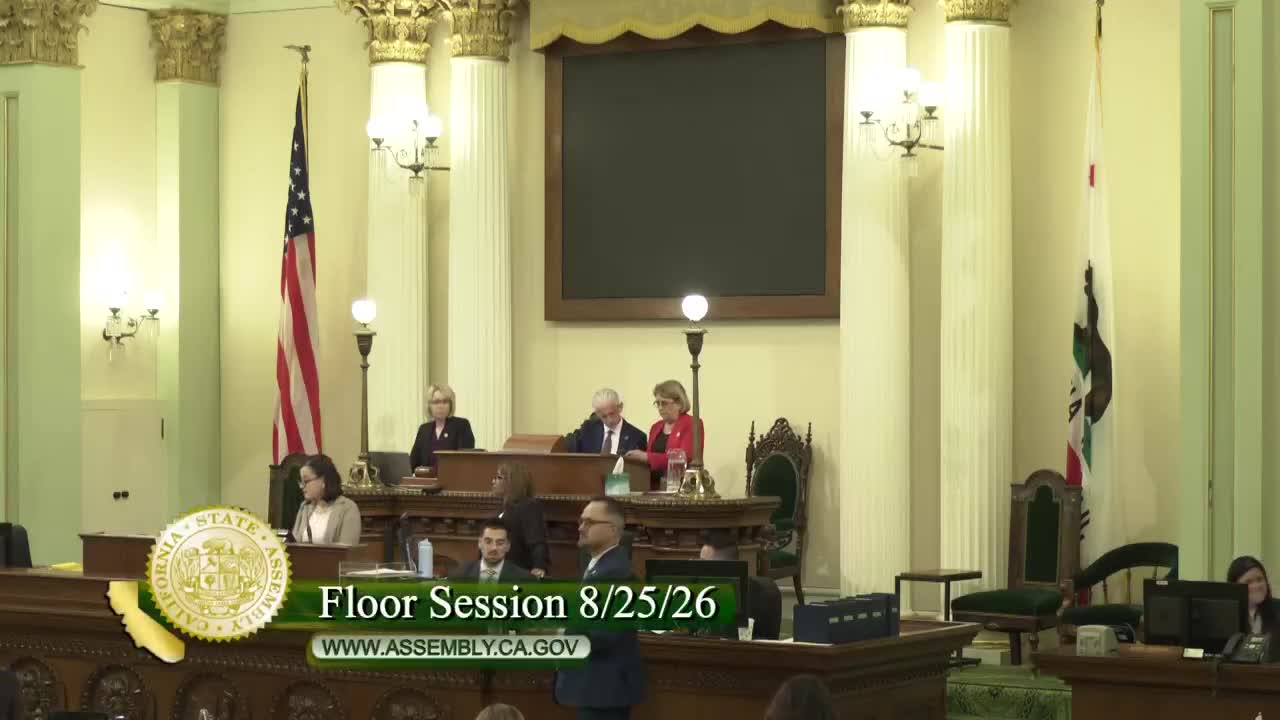 1MIN
Assembly Floor
 15MIN
Assembly Standing Committee on Judiciary
 16MIN
Assembly Standing Committee on Health
 2MIN
Senate Floor
 13MIN
Senate Standing Committee on Judiciary
 35MIN