SB 995: Involuntary residential facilities: health and safety inspections.
- Session Year: 2025-2026
- House: Senate
- Latest Version Date: 2026-07-02
Current Status:
In Progress
(2026-08-13: August 13 hearing: Held in committee and under submission.)
Introduced
In Committee
Awaiting First Chamber Vote
Passed First Chamber
In Committee
Awaiting Second Chamber Vote
Passed Second Chamber
Enacted
Existing law requires the operator of a private detention facility, as defined, to comply with, and adhere to, the detention standards of care and confinement agreed upon in the facilitys contract for operations, as specified. Existing law requires a private detention facility operator to comply with, and adhere to, all local and state public health orders and occupational safety and health regulations.
This bill, the Masuma Khan Justice Act, would authorize the State Department of Public Health to inspect an involuntary residential facility, defined as a facility that houses more than 50 individuals overnight, restricts residents ability to enter or leave, as specified, and provides specified onsite services, for the limited purpose of ensuring sanitary, hygienic, and safe conditions, using standards and inspection protocols consistent with those applied to licensed residential health facilities. The bill would authorize unnoticed inspections under specified conditions. The bill would require the department, within 30 days of completing an inspection, to submit a report to the Legislature.
The bill would require the operator of a facility to provide access to the department for an inspection described above, to maintain all records necessary to demonstrate compliance with the above-described standards, and to correct any violation identified by the department, as specified. The bill would make a violation of the above-described requirements by an operator of a facility, after appropriate notice and an opportunity for a hearing, subject to an administrative penalty, as specified, per violation per day. If an operator fails to correct a violation within the time specified in the citation, the bill would authorize the department to issue a safety warning that identifies the uncorrected condition and requires prompt corrective action by the operator. The bill would authorize the department to refer violations to the Attorney General, and would authorize the Attorney General to bring a civil action for declaratory or injunctive relief.
The bill would require the department to adopt rules and regulations to ensure that all involuntary residential facilities comply with measurable standards for sanitary, hygienic, and safe conditions and would require the department to consult with specified organizations in the development of these standards.
The bill would require the department to implement the above-described provisions in a manner that avoids unnecessary duplication of existing state or local health and safety oversight, as specified.
The bill would declare that its provisions are severable.
The bill would make related findings and declarations.
The bill would declare that it is to take effect immediately as an urgency statute.
Existing law requires the operator of a private detention facility, as defined, to comply with, and adhere to, the detention standards of care and confinement agreed upon in the facilitys contract for operations, as specified. Existing law requires a private detention facility operator to comply with, and adhere to, all local and state public health orders and occupational safety and health regulations.
This bill, the Masuma Khan Justice Act, would authorize the State Department of Public Health to inspect an involuntary residential facility, defined as a facility that houses more than 50 individuals overnight, restricts residents ability to enter or leave, as specified, and provides specified onsite services, for the limited purpose of ensuring sanitary, hygienic, and safe conditions, using standards and inspection protocols consistent with those applied to licensed residential health facilities. The bill would authorize unnoticed inspections under specified conditions. The bill would require the department, within 30 days of completing an inspection, to submit a report to the Legislature.
The bill would require the operator of a facility to provide access to the department for an inspection described above, to maintain all records necessary to demonstrate compliance with the above-described standards, and to correct any violation identified by the department, as specified. The bill would make a violation of the above described above-described requirements by an operator of a facility, after appropriate notice and an opportunity for a hearing, subject to an administrative penalty, as specified, per violation per day. If an operator fails to correct a violation within the time specified in the citation, the bill would authorize the department to issue a safety warning that identifies the uncorrected condition and requires prompt corrective action by the operator. The bill would authorize the department to refer violations to the Attorney General, and would authorize the Attorney General to bring a civil action for declaratory or injunctive relief.
The bill would require the department to adopt rules and regulations to ensure that all involuntary residential facilities comply with measurable standards for sanitary, hygienic, and safe conditions and would require the department to consult with specified organizations in the development of these standards.
The bill would require the department to implement the above-described provisions in a manner that avoids unnecessary duplication of existing state or local health and safety oversight, as specified.
The bill would declare that its provisions are severable.
The bill would make related findings and declarations.
Existing law requires the operator of a private detention facility, as defined, to comply with, and adhere to, the detention standards of care and confinement agreed upon in the facilitys contract for operations, as specified. Existing law requires a private detention facility operator to comply with, and adhere to, all local and state public health orders and occupational safety and health regulations.
This bill, the Masuma Khan Justice Act, would authorize the Office of the State Fire Marshal, the State Department of Public Health, the State Water Resources Control Board, and the Department of Industrial Relations, including the Division of Occupational Safety and Health (inspecting agencies), to conduct periodic inspections of an involuntary residential facility, defined as a facility that houses more than 50 individuals overnight, restricts residents ability to enter or leave, as specified, and provides specified onsite services, in order to evaluate compliance with applicable health, safety, building, environmental, and labor standards, as specified, and would additionally authorize the State Department of Public Health to inspect an involuntary residential facility facility, defined as a facility that houses more than 50 individuals overnight, restricts residents ability to enter or leave, as specified, and provides specified onsite services, for the limited purpose of ensuring sanitary, hygienic, and safe conditions, using standards and inspection protocols consistent with those applied to licensed residential health facilities. The bill would authorize unnoticed inspections under specified conditions. The bill would authorize an inspection to include specified areas of the facility, including heating, ventilation, air, water, and electrical systems, and any physical space necessary to evaluate compliance with the standards described above. The bill would require an inspecting agency, the department, within 30 days of completing an inspection, to submit a report to the Legislature.
The bill would require the operator of a facility to provide access to an inspecting agency the department for an inspection described above, to maintain all records necessary to demonstrate compliance with the above-described standards, and to correct any violation identified by an inspecting agency, the department, as specified. The bill would make a violation of the above described requirements by an operator of a facility, after appropriate notice and an opportunity for a hearing, subject to an administrative penalty, as specified, per violation per day. The bill would require a violation to be referred to the State Department of Public Health for enforcement, including the issuance of any safety warning or citation. If an operator fails to correct a violation within the time specified in the citation, the bill would authorize the department to issue a safety warning that identifies the uncorrected condition and requires prompt corrective action by the operator. The bill would authorize the department to refer violations to the Attorney General, and would authorize the Attorney General to bring a civil action for declaratory or injunctive relief.
The bill would authorize an inspecting agency to promulgate regulations for the implementation of the above-described provisions. TheThe bill would require the State Department of Public Health department to adopt rules and regulations to ensure that all involuntary residential facilities comply with measurable standards for sanitary, hygienic, and safe conditions that are at least as stringent as those applied to licensed residential healthcare facilities and would require the department to consult with specified organizations in the development of these standards.
The bill would declare that its provisions are severable.
The bill would make related findings and declarations.
Existing law requires the operator of a private detention facility, as defined, to comply with, and adhere to, the detention standards of care and confinement agreed upon in the facilitys contract for operations, as specified. Existing law requires a private detention facility operator to comply with, and adhere to, all local and state public health orders and occupational safety and health regulations.
This bill, the Involuntary Residential Facilities Health and Safety Act of 2026, Masuma Khan Justice Act, would authorize the Office of the State Fire Marshal, the State Department of Public Health, the State Water Resources Control Board, and the Department of Industrial Relations, including the Division of Occupational Safety and Health (inspecting agencies), to conduct periodic inspections of an involuntary residential facility, defined as a facility that houses more than 50 individuals overnight, restricts residents ability to enter or leave, as specified, and provides specified onsite services, in order to evaluate compliance with applicable health, safety, building, environmental, and labor standards, as specified. specified, and would additionally authorize the State Department of Public Health to inspect an involuntary residential facility for the limited purpose of ensuring sanitary, hygienic, and safe conditions, using standards and inspection protocols consistent with those applied to licensed residential health facilities. The bill would authorize unnoticed inspections under specified conditions. The bill would authorize an inspection to include specified areas of the facility, including heating, ventilation, air, water, and electrical systems, and any physical space necessary to evaluate compliance with the standards described above. The bill would prohibit an inspecting agency from accessing residents for interviews, resident records, or areas used exclusively for security operations. The bill would require an inspecting agency, within 30 days of completing an inspection, to submit a report to the Assembly and Senate Committees on Health. Legislature.
The bill would require the operator of a facility to provide reasonable access to an inspecting agency for an inspection described above, to maintain all records necessary to demonstrate compliance with the above-described standards, to, on or before January 1, 2027, and annually thereafter, submit reports documenting compliance with those standards to the State Department of Public Health and the inspecting agencies, and to correct any violation identified by an inspecting agency, as specified. The bill would make a violation of the above described requirements by an operator of a facility subject to a civil penalty not to exceed $25,000 per violation per day, as specified. facility, after appropriate notice and an opportunity for a hearing, subject to an administrative penalty, as specified, per violation per day. The bill would authorize an inspecting agency to, consistent with existing statutory authority, suspend or revoke any state-issued permit or certification of the operator relating to the standards described above, and would authorize an inspecting agency to provide information to the operator regarding any city or county permits or approvals required for the operation of the facility, as specified. require a violation to be referred to the State Department of Public Health for enforcement, including the issuance of any safety warning or citation. If an operator fails to correct a violation within the time specified in the citation, the bill would authorize the department to issue a safety warning that identifies the uncorrected condition and requires prompt corrective action by the operator. The bill would authorize the department to refer violations to the Attorney General, and would authorize the Attorney General to bring a civil action for declaratory or injunctive relief.
The bill would authorize an inspecting agency to promulgate regulations for the implementation of the above-described provisions. The bill would require the State Department of Public Health to adopt rules and regulations to ensure that all involuntary residential facilities comply with measurable standards for sanitary, hygienic, and safe conditions that are at least as stringent as those applied to licensed residential healthcare facilities and would require the department to consult with specified organizations in the development of these standards.
The bill would declare that its provisions are severable.
The bill would make related findings and declarations.
Existing law requires the operator of a private detention facility, as defined, to comply with, and adhere to, the detention standards of care and confinement agreed upon in the facilitys contract for operations, as specified. Existing law requires a private detention facility operator to comply with, and adhere to, all local and state public health orders and occupational safety and health regulations.
This bill, the Involuntary Residential Facilities Health and Safety Act of 2026, would authorize the Office of the State Fire Marshal, the State Department of Public Health, the State Water Resources Control Board, and the Department of Industrial Relations, including the Division of Occupational Safety and Health (inspecting agencies), to conduct periodic inspections of an involuntary residential facility, defined as a facility that houses more than 50 individuals overnight, restricts residents ability to enter or leave, as specified, and provides specified onsite services, in order to evaluate compliance with applicable health, safety, building, environmental, and labor standards, as specified. The bill would authorize unnoticed inspections under specified conditions. The bill would authorize an inspection to include specified areas of the facility, including heating, ventilation, air, water, and electrical systems, and any physical space necessary to evaluate compliance with the standards described above. The bill would prohibit an inspecting agency from accessing residents for interviews, resident records, or areas used exclusively for security operations. The bill would require an inspecting agency, within 30 days of completing an inspection, to submit a report to the Assembly and Senate Committees on Health.
The bill would require the operator of a facility to provide reasonable access to an inspecting agency for an inspection described above, to maintain all records necessary to demonstrate compliance with the above-described standards, to, on or before January 1, 2027, and annually thereafter, submit reports documenting compliance with those standards to the State Department of Public Health and the inspecting agencies, and to correct any violation identified by an inspecting agency, as specified. The bill would make a violation of the above described requirements by an operator of a facility subject to a civil penalty not to exceed $25,000 per violation per day, as specified. The bill would authorize an inspecting agency to, consistent with existing statutory authority, suspend or revoke any state-issued permit or certification of the operator relating to the standards described above, and would authorize an inspecting agency to provide information to the operator regarding any city or county permits or approvals required for the operation of the facility, as specified.
The bill would authorize an inspecting agency to promulgate regulations for the implementation of the above-described provisions.
The bill would declare that its provisions are severable.
The bill would make related findings and declarations.
This part shall be known, and may be cited, as the Masuma Khan Justice Act.
19998.1.The Legislature finds and declares all of the following:
(a)The State of California has a compelling interest in protecting the health, safety, and welfare of individuals residing in involuntary residential environments.
(b)Facilities that house large numbers of individuals in restricted settings present heightened risks related to fire safety, structural integrity, sanitation, infectious disease, environmental hazards, and worker safety.
(c)The state has long exercised its police powers to regulate building safety, public health, environmental compliance, and professional licensing, and these powers apply to all facilities operating within the state, regardless of ownership or contracting entity.
(d)This part establishes neutral, generally applicable standards for health and safety inspections of involuntary residential facilities.
(e)Nothing in this part is intended to regulate detention operations, security procedures, classification of residents, or any other function reserved to federal, state, or local governmental agencies.
19998.2.For the purposes of this part, the following terms have the following meanings:
(a)Class AA violation means a violation that is a substantial factor in causing a death.
(b)Class A violation means a violation that poses an imminent risk of death or serious harm.
(c)Class B violation means a violation that has a direct or immediate relationship to health or safety but does not constitute a class A or class AA violation.
(d)(1)Involuntary residential facility means a facility that meets all of the following criteria:
(A)Houses 50 or more individuals overnight.
(B)Restricts residents ability to enter or leave the facility at will, regardless of the legal authority under which the individual is housed.
(C)Provides onsite food service, medical care, mental health services, or residential supervision.
(2)Involuntary residential facility includes, but is not limited to, a secure state hospital, civil commitment facility, or a secure residential treatment program, to the extent the facility meets the criteria described in this subdivision.
(3)Involuntary residential facility does not include a facility that is a state prison, as listed in Section 5003 of the Penal Code, or a local detention facility, as defined in Section 6031.4 of the Penal Code.
(4)Involuntary residential facility does not include a juvenile facility, as defined in Section 208.55 of the Welfare and Institutions Code, that is operated by a local government, except for a secure youth treatment facility operated pursuant to Section 875 of the Welfare and Institutions Code, including a secure youth treatment facility that is located within or operated in conjunction with a juvenile facility. This paragraph does not authorize the inspection of any part of a juvenile facility that is not a secure youth treatment facility.
(e)Operator means any person, corporation, partnership, nonprofit organization, or other entity that owns, leases, manages, or operates an involuntary residential facility.
(f)Resident means any individual housed in an involuntary residential facility, regardless of legal status, custody status, or reason for placement.
(g)Unreasonably interfere means conduct that materially disrupts or impedes facility operations or security functions beyond what is necessary to carry out an inspection authorized by this part.
19998.3.This part shall be implemented by the State Department of Public Health in a manner that avoids unnecessary duplication of existing state or local health and safety oversight. In carrying out inspections pursuant to this part, the department may consider prior inspections, certifications, and compliance findings, when appropriate. In determining its inspection priorities, the department may consider whether a facility has already been inspected by the department as part of its regulatory oversight of licensed or certified facilities.
2.Inspection Authority19998.4.Notwithstanding any other law, the State Department of Public Health may inspect an involuntary residential facility for the limited purpose of ensuring sanitary, hygienic, and safe conditions, using standards and inspection protocols consistent with those applied to residential health facilities licensed under Division 2 (commencing with Section 1200) and may enforce penalties for any violations. This section does not require licensure under Division 2 or to otherwise subject an involuntary residential facility to the regulatory scheme applicable to facilities licensed under that division.
19998.5.(a)The State Department of Public Health may conduct inspections for any of the purposes described in Section 19998.3 19998.4 without prior notice.
(b)(1)Inspections conducted pursuant to this part shall be carried out in a manner that does not unreasonably interfere with facility operations or any federal, state, or local law enforcement or security functions.
(2)In determining whether an inspection unreasonably interferes with operations or security functions, relevant factors may include, but are not limited to, all of the following:
(A)Whether the inspection delays or obstructs emergency response or time-sensitive security operations.
(B)Whether the inspection requires access to areas used exclusively for security operations, except as otherwise authorized by this part.
(C)Whether the inspection imposes requirements that are inconsistent with applicable security procedures or legal obligations.
(D)Whether the inspection can be reasonably accommodated through scheduling, coordination, or alternative means without compromising the purposes of this part.
(c)In exercising its authority under this part, the department shall utilize the inspection and citation protocols described in Chapter 2.4 (commencing with Section 1417) of Division 2, including the issuance of class AA, class A, and class B citations.
19998.6.(a)Internal security protocols shall not be used to deny inspectors access to any area where residents are housed, fed, or receive medical care. However, the department shall comply with reasonable security procedures necessary to ensure safety and facility operations.
(b)This section does not prohibit the review of deidentified or aggregate health, safety, or incident records reasonably necessary to assess compliance with this part, if the review is conducted in a manner that protects resident privacy. Those records may include, but are not limited to, aggregate or deidentified data relating to injury rates, the number of incidents involving the use of force or restraints, infectious disease, hospitalizations, and mortality.
(c)If, during an inspection conducted pursuant to this part, the department identifies conditions that may fall within the jurisdiction of another agency, the department shall refer those conditions to the appropriate state or local agency with jurisdiction over the facility for further review or action.
(d)A referral made pursuant to this section does not expand the authority of the department beyond the scope of this part and does not authorize the department to enforce laws or regulations outside its jurisdiction.
19998.7.(a)Within 30 days of completing an inspection pursuant to this chapter, the department shall prepare a written report of its findings and shall transmit the report to the Legislature.
(b)A report submitted pursuant to this section shall be submitted in compliance with Section 9795 of the Government Code.
3.Operator Duties19998.8.(a)An operator shall provide access to the department for an inspection authorized pursuant to this part.
(b)An operator shall maintain all records necessary to demonstrate compliance with applicable health and safety standards, including the standards adopted pursuant to Section 19998.9, 19998.10, and shall make those records available to the department upon request.
(c)An operator shall correct any violation identified by the department within the timeframes established by the department.
4.Enforcement19998.9.(a)(1)An operator that violates any provision of this part or a regulation adopted pursuant to this part, after appropriate notice and an opportunity for a hearing, is subject to an administrative penalty in an amount not to exceed the following:
(A)Twenty-five thousand dollars ($25,000) for a class AA violation.
(B)Ten thousand dollars ($10,000) for a class A violation.
(C)One thousand dollars ($1,000) for a class B violation.
(2)Each day a violation remains uncorrected may constitute a separate violation.
(b)(1)If an operator fails to correct a violation within the time specified in a citation issued pursuant to this part, the department may issue a safety warning that identifies the uncorrected condition and require prompt corrective action by the operator.
(2)A safety warning issued pursuant to this subdivision is an administrative notice issued as part of, and subordinate to, the citation and enforcement framework described in Chapter 2.4 (commencing with Section 1417) of Division 2.
(3)A safety warning does not constitute a separate violation, but may be considered in determining compliance status and the need for further enforcement action under Division 2 (commencing with Section 1200).
(c)(1)The department may refer violations of this part to the Attorney General.
(2)The Attorney General may bring a civil action for declaratory or injunctive relief to compel abatement of a hazard described in this part.
5.Miscellaneous Provisions19998.10.(a)The State Department of Public Health shall adopt rules and regulations necessary to implement this part. These regulations shall ensure that all involuntary residential facilities comply with measurable standards for sanitary, hygienic, and safe conditions.
(b)Regulations adopted pursuant to subdivision (a) shall establish objective, measurable standards for all involuntary residential facilities to ensure the health and safety of residents, including, but not limited to, all of the following:
(1)Standards for personal hygiene, laundry services, and the frequency of cleaning; and measurable metrics for vector and pest control, plumbing integrity, and the maintenance of sanitary common areas.
(2)Minimum requirements for indoor air quality, ventilation, and ambient temperature control to prevent heat-related illness or respiratory distress.
(3)Requirements for potable water access and dietary caloric intake, including the provision of medically necessary diets for individuals with conditions requiring dietary modification, such as diabetes, cardiovascular disease, or other clinically indicated conditions, and reasonable accommodations for religious dietary requirements.
(4)Protocols for the screening, isolation, and treatment of communicable diseases.
(5)Standards to prevent and respond to physical harm to residents and staff, including, but not limited to, all of the following:
(A)Requirements governing the safe application of physical restraints to minimize the risk of injury.
(B)Requirements for mandatory medical evaluation and appropriate care following any incident involving the use of physical force or restraint.
(C)Documentation and reporting of incidents involving physical force or restraint.
(D)Staff training in de-escalation and safe intervention techniques.
(E)Workplace violence prevention measures consistent with occupational safety and health standards.
(c)In developing the standards described in this section, the department shall consult with stakeholders, including civil rights advocates, public health experts, and organizations representing the interests of persons held in involuntary residential facilities.
19998.11.The provisions of this part are severable. If any provision or its application is held invalid, that invalidity shall not affect other provisions or applications that can be given effect without the invalid provision or application.
SEC. 2.This act is an urgency statute necessary for the immediate preservation of the public peace, health, or safety within the meaning of Article IV of the California Constitution and shall go into immediate effect. The facts constituting the necessity are:
In order to ensure the prompt inspection of involuntary residential facilities and the timely identification and correction of conditions that pose imminent risk to the health and safety of residents, staff, and surrounding communities, including loss of life, it is necessary that this act take effect immediately.
This part shall be known, and may be cited, as the Masuma Khan Justice Act.
19998.1.The Legislature finds and declares all of the following:
(a)The State of California has a compelling interest in protecting the health, safety, and welfare of individuals residing in involuntary residential environments.
(b)Facilities that house large numbers of individuals in restricted settings present heightened risks related to fire safety, structural integrity, sanitation, infectious disease, environmental hazards, and worker safety.
(c)The state has long exercised its police powers to regulate building safety, public health, environmental compliance, and professional licensing, and these powers apply to all facilities operating within the state, regardless of ownership or contracting entity.
(d)This part establishes neutral, generally applicable standards for health and safety inspections of involuntary residential facilities.
(e)Nothing in this part is intended to regulate detention operations, security procedures, classification of residents, or any other function reserved to federal, state, or local governmental agencies.
19998.2.For the purposes of this part, the following terms have the following meanings:
(a)Class AA violation means a violation that is a substantial factor in causing a death.
(b)Class A violation means a violation that poses an imminent risk of death or serious harm.
(c)Class B violation means a violation that has a direct or immediate relationship to health or safety but does not constitute a class A or class AA violation.
(d)(1)Involuntary residential facility means a facility that meets all of the following criteria:
(A)Houses 50 or more individuals overnight.
(B)Restricts residents ability to enter or leave the facility at will, regardless of the legal authority under which the individual is housed.
(C)Provides onsite food service, medical care, mental health services, or residential supervision.
(2)Involuntary residential facility includes, but is not limited to, a secure state hospital, civil commitment facility, or a secure residential treatment program, to the extent the facility meets the criteria described in this subdivision.
(3)Involuntary residential facility does not include a facility that is a state prison, as listed in Section 5003 of the Penal Code, or a local detention facility, as defined in Section 6031.4 of the Penal Code.
(4)Involuntary residential facility does not include a juvenile facility, as defined in Section 208.55 of the Welfare and Institutions Code, that is operated by a local government, except for a secure youth treatment facility operated pursuant to Section 875 of the Welfare and Institutions Code, including a secure youth treatment facility that is located within or operated in conjunction with a juvenile facility. This paragraph does not authorize the inspection of any part of a juvenile facility that is not a secure youth treatment facility.
(e)Operator means any person, corporation, partnership, nonprofit organization, or other entity that owns, leases, manages, or operates an involuntary residential facility.
(f)Resident means any individual housed in an involuntary residential facility, regardless of legal status, custody status, or reason for placement.
(g)Unreasonably interfere means conduct that materially disrupts or impedes facility operations or security functions beyond what is necessary to carry out an inspection authorized by this part.
19998.3.This part shall be implemented by the State Department of Public Health in a manner that avoids unnecessary duplication of existing state or local health and safety oversight. In carrying out inspections pursuant to this part, the department may consider prior inspections, certifications, and compliance findings, when appropriate. In determining its inspection priorities, the department may consider whether a facility has already been inspected by the department as part of its regulatory oversight of licensed or certified facilities.
2.Inspection Authority19998.3.19998.4.Notwithstanding any other law, the State Department of Public Health may inspect an involuntary residential facility for the limited purpose of ensuring sanitary, hygienic, and safe conditions, using standards and inspection protocols consistent with those applied to residential health facilities licensed under Division 2 (commencing with Section 1200) and may enforce penalties for any violations. This section does not require licensure under Division 2 or to otherwise subject an involuntary residential facility to the regulatory scheme applicable to facilities licensed under that division.
19998.4.19998.5.(a)The State Department of Public Health may conduct inspections for any of the purposes described in Section 19998.3 without prior notice.
(b)(1)Inspections conducted pursuant to this part shall be carried out in a manner that does not unreasonably interfere with facility operations or any federal, state, or local law enforcement or security functions.
(2)In determining whether an inspection unreasonably interferes with operations or security functions, relevant factors may include, but are not limited to, all of the following:
(A)Whether the inspection delays or obstructs emergency response or time-sensitive security operations.
(B)Whether the inspection requires access to areas used exclusively for security operations, except as otherwise authorized by this part.
(C)Whether the inspection imposes requirements that are inconsistent with applicable security procedures or legal obligations.
(D)Whether the inspection can be reasonably accommodated through scheduling, coordination, or alternative means without compromising the purposes of this part.
(c)In exercising its authority under this part, the department shall utilize the inspection and citation protocols described in Chapter 2.4 (commencing with Section 1417) of Division 2, including the issuance of class AA, class A, and class B citations.
19998.5.19998.6.(a)Internal security protocols shall not be used to deny inspectors access to any area where residents are housed, fed, or receive medical care. However, the department shall comply with reasonable security procedures necessary to ensure safety and facility operations.
(b)This section does not prohibit the review of deidentified or aggregate health, safety, or incident records reasonably necessary to assess compliance with this part, if the review is conducted in a manner that protects resident privacy. Those records may include, but are not limited to, aggregate or deidentified data relating to injury rates, the number of incidents involving the use of force or restraints, infectious disease, hospitalizations, and mortality.
(c)If, during an inspection conducted pursuant to this part, the department identifies conditions that may fall within the jurisdiction of another agency, the department shall refer those conditions to the appropriate state or local agency with jurisdiction over the facility for further review or action.
(d)A referral made pursuant to this section does not expand the authority of the department beyond the scope of this part and does not authorize the department to enforce laws or regulations outside its jurisdiction.
19998.6.19998.7.(a)Within 30 days of completing an inspection pursuant to this chapter, the department shall prepare a written report of its findings and shall transmit the report to the Legislature.
(b)A report submitted pursuant to this section shall be submitted in compliance with Section 9795 of the Government Code.
3.Operator Duties19998.7.19998.8.(a)An operator shall provide access to the department for an inspection authorized pursuant to this part.
(b)An operator shall maintain all records necessary to demonstrate compliance with applicable health and safety standards, including the standards adopted pursuant to Section 19998.9, and shall make those records available to the department upon request.
(c)An operator shall correct any violation identified by the department within the timeframes established by the department.
4.Enforcement19998.8.19998.9.(a)(1)An operator that violates any provision of this part or a regulation adopted pursuant to this part, after appropriate notice and an opportunity for a hearing, is subject to an administrative penalty in an amount not to exceed the following:
(A)Twenty-five thousand dollars ($25,000) for a class AA violation.
(B)Ten thousand dollars ($10,000) for a class A violation.
(C)One thousand dollars ($1,000) for a class B violation.
(2)Each day a violation remains uncorrected may constitute a separate violation.
(b)(1)If an operator fails to correct a violation within the time specified in a citation issued pursuant to this part, the department may issue a safety warning that identifies the uncorrected condition and require prompt corrective action by the operator.
(2)A safety warning issued pursuant to this subdivision is an administrative notice issued as part of, and subordinate to, the citation and enforcement framework described in Chapter 2.4 (commencing with Section 1417) of Division 2.
(3)A safety warning does not constitute a separate violation, but may be considered in determining compliance status and the need for further enforcement action under Division 2 (commencing with Section 1200).
(c)(1)The department may refer violations of this part to the Attorney General.
(2)The Attorney General may bring a civil action for declaratory or injunctive relief to compel abatement of a hazard described in this part.
5.Miscellaneous Provisions19998.9.19998.10.(a)The State Department of Public Health shall adopt rules and regulations necessary to implement this part. These regulations shall ensure that all involuntary residential facilities comply with measurable standards for sanitary, hygienic, and safe conditions.
(b)Regulations adopted pursuant to subdivision (a) shall establish objective, measurable standards for all involuntary residential facilities to ensure the health and safety of residents, including, but not limited to, all of the following:
(1)Standards for personal hygiene, laundry services, and the frequency of cleaning; and measurable metrics for vector and pest control, plumbing integrity, and the maintenance of sanitary common areas.
(2)Minimum requirements for indoor air quality, ventilation, and ambient temperature control to prevent heat-related illness or respiratory distress.
(3)Requirements for potable water access and dietary caloric intake, including the provision of medically necessary diets for individuals with conditions requiring dietary modification, such as diabetes, cardiovascular disease, or other clinically indicated conditions, and reasonable accommodations for religious dietary requirements.
(4)Protocols for the screening, isolation, and treatment of communicable diseases.
(5)Standards to prevent and respond to physical harm to residents and staff, including, but not limited to, all of the following:
(A)Requirements governing the safe application of physical restraints to minimize the risk of injury.
(B)Requirements for mandatory medical evaluation and appropriate care following any incident involving the use of physical force or restraint.
(C)Documentation and reporting of incidents involving physical force or restraint.
(D)Staff training in de-escalation and safe intervention techniques.
(E)Workplace violence prevention measures consistent with occupational safety and health standards.
(c)In developing the standards described in this section, the department shall consult with stakeholders, including civil rights advocates, public health experts, and organizations representing the interests of persons held in involuntary residential facilities.
19998.10.19998.11.The provisions of this part are severable. If any provision or its application is held invalid, that invalidity shall not affect other provisions or applications that can be given effect without the invalid provision or application.
REVISIONS: HeadingLines 5 and 6.This part shall be known, and may be cited, as the Masuma Khan Justice Act.
19998.1.The Legislature finds and declares all of the following:
(a)The State of California has a compelling interest in protecting the health, safety, and welfare of individuals residing in involuntary residential environments.
(b)Facilities that house large numbers of individuals in restricted settings present heightened risks related to fire safety, structural integrity, sanitation, infectious disease, environmental hazards, and worker safety.
(c)The state has long exercised its police powers to regulate building safety, public health, environmental compliance, and professional licensing, and these powers apply to all facilities operating within the state, regardless of ownership or contracting entity.
(d)This part establishes neutral, generally applicable standards for health and safety inspections of involuntary residential facilities.
(e)Nothing in this part is intended to regulate detention operations, security procedures, classification of residents, or any other function reserved to federal, state, or local governmental agencies.
19998.2.For the purposes of this part, the following terms have the following meanings:
(a)Inspecting agency means any of the following:(1)The Office of the State Fire Marshal.(2)The State Department of Public Health.(3)The State Water Resources Control Board.(4)The Department of Industrial Relations, including the Division of Occupational Safety and Health.(a)Class AA violation means a violation that is a substantial factor in causing a death.
(b)Class A violation means a violation that poses an imminent risk of death or serious harm.
(c)Class B violation means a violation that has a direct or immediate relationship to health or safety but does not constitute a class A or class AA violation.
(b)(d)(1)Involuntary residential facility means a facility that meets all of the following criteria:
(A)Houses 50 or more individuals overnight.
(B)Restricts residents ability to enter or leave the facility at will, regardless of the legal authority under which the individual is housed.
(C)Provides onsite food service, medical care, mental health services, or residential supervision.
(2)Involuntary residential facility includes, but is not limited to, a secure state hospital, civil commitment facility, or a secure residential treatment program, to the extent the facility meets the criteria described in this subdivision.
(3)Involuntary residential facility does not include a facility that is a state prison, as listed in Section 5003 of the Penal Code, or a local detention facility, as defined in Section 6031.4 of the Penal Code.
(c)(e)Operator means any person, corporation, partnership, nonprofit organization, or other entity that owns, leases, manages, or operates an involuntary residential facility.
(d)(f)Resident means any individual housed in an involuntary residential facility, regardless of legal status, custody status, or reason for placement.
(e)(g)Unreasonably interfere means conduct that materially disrupts or impedes facility operations or security functions beyond what is necessary to carry out an inspection authorized by this part.
2.Inspection Authority19998.3.(a)Notwithstanding any other law, the State Department of Public Health may inspect an involuntary residential facility for the limited purpose of ensuring sanitary, hygienic, and safe conditions, using standards and inspection protocols consistent with those applied to residential health facilities licensed under Division 2 (commencing with Section 1200) and may enforce penalties for any violations. This section does not require licensure under Division 2 or to otherwise subject an involuntary residential facility to the regulatory scheme applicable to facilities licensed under that division.
(b)An inspecting agency may conduct periodic inspections of an involuntary residential facility to evaluate compliance with applicable health, safety, building, environmental, and labor standards, including, but not limited to, fire safety, health and safety of persons, structural integrity, sanitation and food safety, infectious disease control, environmental compliance, and worker safety.19998.4.(a)An inspecting agency may enter a facility for any of the purposes described in subdivision (b) of Section 19998.3 without prior notice when either of the following conditions exists:(1)There is reasonable cause to believe that the present conditions present an imminent threat to health or safety.(2)An outbreak, fire hazard, structural hazard, or environmental hazard has been reported.(b)Notwithstanding subdivision (a), the19998.4.(a)The State Department of Public Health may conduct inspections for any of the purposes described in subdivision (a) of Section 19998.3 without prior notice.
(c)(b)(1)Inspections conducted pursuant to this part shall be carried out in a manner that does not unreasonably interfere with facility operations or any federal, state, or local law enforcement or security functions.
(2)In determining whether an inspection unreasonably interferes with operations or security functions, relevant factors may include, but are not limited to, all of the following:
(A)Whether the inspection delays or obstructs emergency response or time-sensitive security operations.
(B)Whether the inspection requires access to areas used exclusively for security operations, except as otherwise authorized by this part.
(C)Whether the inspection imposes requirements that are inconsistent with applicable security procedures or legal obligations.
(D)Whether the inspection can be reasonably accommodated through scheduling, coordination, or alternative means without compromising the purposes of this part.
(d)(c)In exercising its authority under this part, the department shall utilize the inspection and citation protocols described in Section 1279 and Chapter 2.4 (commencing with Section 1417) of Division 2, including the issuance of class AA, class A, and class B citations.
19998.5.(a)Inspections made pursuant to this chapter may include examination of heating, ventilation, and air systems, water and wastewater systems, fire suppression systems, hazardous materials storage, worker safety conditions, structural and electrical systems, and any physical space necessary to evaluate compliance with the standards described in Section 19998.3.(b)19998.5.(a)Internal security protocols shall not be used to deny inspectors access to any area where residents are housed, fed, or receive medical care. However, an inspecting agency the department shall comply with reasonable security procedures necessary to ensure safety and facility operations.
(c)(b)This section does not prohibit the review of deidentified or aggregate health, safety, or incident records reasonably necessary to assess compliance with this part, if the review is conducted in a manner that protects resident privacy. Those records may include, but are not limited to, aggregate or deidentified data relating to injury rates, the number of incidents involving the use of force or restraints, infectious disease, hospitalizations, and mortality.
(c)If, during an inspection conducted pursuant to this part, the department identifies conditions that may fall within the jurisdiction of another agency, the department shall refer those conditions to the appropriate state or local agency with jurisdiction over the facility for further review or action.
(d)A referral made pursuant to this section does not expand the authority of the department beyond the scope of this part and does not authorize the department to enforce laws or regulations outside its jurisdiction.
19998.6.(a)Within 30 days of completing an inspection pursuant to this chapter, an inspecting agency the department shall prepare a written report of its findings and shall transmit the report to the Legislature.
(b)A report submitted pursuant to this section shall be submitted in compliance with Section 9795 of the Government Code.
3.Operator Duties19998.7.(a)An operator shall provide access to an inspecting agency the department for an inspection authorized pursuant to this part.
(b)An operator shall maintain all records necessary to demonstrate compliance with applicable health, safety, environmental, and labor standards health and safety standards, including the standards adopted pursuant to Section 19998.9, and shall make those records available to an inspecting agency the department upon request.
(c)An operator shall correct any violation identified by an inspecting agency the department within the timeframes established by that agency. the department.
4.Enforcement19998.8.(a)(1)An operator that violates any provision of this part or a regulation adopted pursuant to this part, after appropriate notice and an opportunity for a hearing, is subject to an administrative penalty in an amount not to exceed the following:
(A)Twenty-five thousand dollars ($25,000) for a class AA violation.
(B)Ten thousand dollars ($10,000) for a class A violation.
(C)One thousand dollars ($1,000) for a class B violation.
(2)Each day a violation remains uncorrected may constitute a separate violation.
(b)(1)A violation identified by an inspecting agency pursuant to this part shall be referred to the State Department of Public Health for enforcement, including the issuance of any safety warning or citation.(2)(b)(1)If an operator fails to correct a violation within the time specified in a citation issued pursuant to this part, the department may issue a safety warning that identifies the uncorrected condition and require prompt corrective action by the operator.
(3)(2)A safety warning issued pursuant to this subdivision is an administrative notice issued as part of, and subordinate to, the citation and enforcement framework described in Section 1279 and Chapter 2.4 (commencing with Section 1417) of Division 2.
(4)(3)A safety warning does not constitute a separate violation, but may be considered in determining compliance status and the need for further enforcement action under Division 2 (commencing with Section 1200).
(c)(1)The department may refer violations of this part to the Attorney General.
(2)The Attorney General may bring a civil action for declaratory or injunctive relief to compel abatement of a hazard described in this part.
5.Miscellaneous Provisions19998.9.(a)An inspecting agency may promulgate regulations for the implementation of this part.(b)19998.9.(a)The State Department of Public Health shall adopt rules and regulations necessary to implement this part. These regulations shall ensure that all involuntary residential facilities comply with measurable standards for sanitary, hygienic, and safe conditions. The standards shall be at least as stringent as those applied to residential health care facilities licensed under Division 2 (commencing with Section 1200).
(c)(b)Regulations adopted pursuant to subdivision (b) (a) shall establish objective, measurable standards for all involuntary residential facilities to ensure the health and safety of residents, including, but not limited to, all of the following:
(1)Standards for personal hygiene, laundry services, and the frequency of cleaning; and measurable metrics for vector and pest control, plumbing integrity, and the maintenance of sanitary common areas.
(2)Minimum requirements for indoor air quality, ventilation, and ambient temperature control to prevent heat-related illness or respiratory distress.
(3)Requirements for potable water access and dietary caloric intake, including the provision of medically necessary diets for individuals with conditions requiring dietary modification, such as diabetes, cardiovascular disease, or other clinically indicated conditions, and reasonable accommodations for religious dietary requirements.
(4)Protocols for the screening, isolation, and treatment of communicable diseases.
(5)Standards to prevent and respond to physical harm to residents and staff, including, but not limited to, all of the following:
(A)Requirements governing the safe application of physical restraints to minimize the risk of injury.
(B)Requirements for mandatory medical evaluation and appropriate care following any incident involving the use of physical force or restraint.
(C)Documentation and reporting of incidents involving physical force or restraint.
(D)Staff training in de-escalation and safe intervention techniques.
(E)Workplace violence prevention measures consistent with occupational safety and health standards.
(d)(c)In developing the standards described in this section, the department shall consult with stakeholders, including civil rights advocates, public health experts, and organizations representing the interests of persons held in involuntary residential facilities.
19998.10.The provisions of this part are severable. If any provision or its application is held invalid, that invalidity shall not affect other provisions or applications that can be given effect without the invalid provision or application.
This part shall be known, and may be cited, as the Involuntary Residential Facilities Health and Safety Act of 2026. Masuma Khan Justice Act.
19998.1.The Legislature finds and declares all of the following:
(a)The State of California has a compelling interest in protecting the health, safety, and welfare of individuals residing in involuntary residential environments.
(b)Facilities that house large numbers of individuals in restricted settings present heightened risks related to fire safety, structural integrity, sanitation, infectious disease, environmental hazards, and worker safety.
(c)The state has long exercised its police powers to regulate building safety, public health, environmental compliance, and professional licensing, and these powers apply to all facilities operating within the state, regardless of ownership or contracting entity.
(d)This part establishes neutral, generally applicable standards for health and safety inspections of involuntary residential facilities.
(e)Nothing in this part is intended to regulate detention operations, security procedures, classification of residents, or any other function reserved to federal, state, or local governmental agencies.
19998.2.For the purposes of this part, the following terms have the following meanings:
(a)City or county permit or approval means any permit, license, certificate, or approval issued by a city, county, or city and county, and includes, but is not limited to, a zoning approval, conditional use permit, building permit, or certificate of occupancy.(b)(a)Inspecting agency means any of the following:
(1)The Office of the State Fire Marshal.
(2)The State Department of Public Health.
(3)The State Water Resources Control Board.
(4)The Department of Industrial Relations, including the Division of Occupational Safety and Health.
(c)(b)(1)Involuntary residential facility means a facility that meets all of the following criteria:
(A)Houses 50 or more individuals overnight.
(B)Restricts residents ability to enter or leave the facility at will, regardless of the legal authority under which the individual is housed.
(C)Provides onsite food service, medical care, mental health services, or residential supervision.
(2)This definition is for health, safety, building, environmental, and labor regulation only and does not relate to detention operations or security procedures.(2)Involuntary residential facility includes, but is not limited to, a secure state hospital, civil commitment facility, or a secure residential treatment program, to the extent the facility meets the criteria described in this subdivision.
(3)Involuntary residential facility does not include a facility that is a state prison, as listed in Section 5003 of the Penal Code, or a local detention facility, as defined in Section 6031.4 of the Penal Code.
(d)(c)Operator means any person, corporation, partnership, nonprofit organization, or other entity that owns, leases, manages, or operates an involuntary residential facility.
(e)(d)Resident means any individual housed in an involuntary residential facility, regardless of legal status, custody status, or reason for placement.
(f)State-issued permit or certification means any permit, license, certificate, or approval issued by a state agency or a local agency acting under delegated state authority, including, but not limited to, fire safety, environmental, food service, health, water quality, hazardous materials, and occupational safety approvals.(e)Unreasonably interfere means conduct that materially disrupts or impedes facility operations or security functions beyond what is necessary to carry out an inspection authorized by this part.
2.Inspection Authority19998.3.An19998.3.(a)Notwithstanding any other law, the State Department of Public Health may inspect an involuntary residential facility for the limited purpose of ensuring sanitary, hygienic, and safe conditions, using standards and inspection protocols consistent with those applied to residential health facilities licensed under Division 2 (commencing with Section 1200) and may enforce penalties for any violations. This section does not require licensure under Division 2 or to otherwise subject an involuntary residential facility to the regulatory scheme applicable to facilities licensed under that division.
(b)An inspecting agency may conduct periodic inspections of an involuntary residential facility to evaluate compliance with applicable health, safety, building, environmental, and labor standards, including, but not limited to, fire safety, health and safety of persons, structural integrity, sanitation and food safety, infectious disease control, environmental compliance, and worker safety.
19998.4.(a)An inspecting agency may enter a facility for any of the purposes described in subdivision (b) of Section 19998.3 without prior notice when either of the following conditions exists:
(a)(1)There is reasonable cause to believe that the present conditions present an imminent threat to health or safety.
(b)(2)An outbreak, fire hazard, structural hazard, or environmental hazard has been reported.
(b)Notwithstanding subdivision (a), the State Department of Public Health may conduct inspections for any of the purposes described in subdivision (a) of Section 19998.3 without prior notice.
(c)(1)Inspections conducted pursuant to this part shall be carried out in a manner that does not unreasonably interfere with facility operations or any federal, state, or local law enforcement or security functions.
(2)In determining whether an inspection unreasonably interferes with operations or security functions, relevant factors may include, but are not limited to, all of the following:
(A)Whether the inspection delays or obstructs emergency response or time-sensitive security operations.
(B)Whether the inspection requires access to areas used exclusively for security operations, except as otherwise authorized by this part.
(C)Whether the inspection imposes requirements that are inconsistent with applicable security procedures or legal obligations.
(D)Whether the inspection can be reasonably accommodated through scheduling, coordination, or alternative means without compromising the purposes of this part.
(d)In exercising its authority under this part, the department shall utilize the inspection and citation protocols described in Section 1279 and Chapter 2.4 (commencing with Section 1417) of Division 2, including the issuance of class AA, class A, and class B citations.
19998.5.(a)Inspections made pursuant to this chapter may include examination of heating, ventilation, and air systems, water and wastewater systems, fire suppression systems, hazardous materials storage, worker safety conditions, structural and electrical systems, and any physical space necessary to evaluate compliance with the standards described in Section 19998.3.
(b)Inspections shall not include access to residents for interviews, resident records, or areas used exclusively for security operations.(b)Internal security protocols shall not be used to deny inspectors access to any area where residents are housed, fed, or receive medical care. However, an inspecting agency shall comply with reasonable security procedures necessary to ensure safety and facility operations.
(c)This section does not prohibit the review of deidentified or aggregate health, safety, or incident records reasonably necessary to assess compliance with this part, if the review is conducted in a manner that protects resident privacy. Those records may include, but are not limited to, aggregate or deidentified data relating to injury rates, the number of incidents involving the use of force or restraints, infectious disease, hospitalizations, and mortality.
19998.6.(a)Within 30 days of completing an inspection pursuant to this chapter, an inspecting agency shall prepare a written report of its findings and shall transmit the report to the Assembly Committee on Health and the Senate Committee on Health. Legislature.
(b)A report submitted pursuant to this section shall be submitted in compliance with Section 9795 of the Government Code.
3.Operator Duties19998.7.(a)An operator shall provide reasonable access to an inspecting agency for an inspection authorized pursuant to this part.
(b)An operator shall maintain all records necessary to demonstrate compliance with applicable health, safety, environmental, and labor standards and shall make those records available to an inspecting agency upon request.
(c)(1)On or before January 1, 2027, and annually thereafter, an operator shall submit reports documenting fire safety compliance, environmental compliance, worker injury and illness logs, and infectious disease prevention protocols.(2)An operator shall submit a report required pursuant to this subdivision to the State Department of Public Health and shall provide copies to each inspecting agency.(d)(c)An operator shall correct any violation identified by an inspecting agency within the timeframes established by that agency.
4.Enforcement19998.8.(a)(1)An operator that violates any provision of this part or a regulation adopted pursuant to this part is subject to a civil penalty not to exceed twenty-five thousand dollars ($25,000) per violation. part, after appropriate notice and an opportunity for a hearing, is subject to an administrative penalty in an amount not to exceed the following:
(A)Twenty-five thousand dollars ($25,000) for a class AA violation.
(B)Ten thousand dollars ($10,000) for a class A violation.
(C)One thousand dollars ($1,000) for a class B violation.
(2)Each day a violation remains uncorrected constitutes may constitute a separate violation.
(b)An inspecting agency may, consistent with existing statutory authority, suspend or revoke any state-issued permit or certification of the operator relating to building, health, environmental, or labor standards, including, but not limited to, fire safety certificates, environmental permits, food service permits, and hazardous materials permits.(c)An inspecting agency may provide information to the operator regarding any city or county permits or approvals required for the operation of the facility, including zoning approvals, conditional use permits, building permits, and certificates of occupancy.(b)(1)A violation identified by an inspecting agency pursuant to this part shall be referred to the State Department of Public Health for enforcement, including the issuance of any safety warning or citation.
(2)If an operator fails to correct a violation within the time specified in a citation issued pursuant to this part, the department may issue a safety warning that identifies the uncorrected condition and require prompt corrective action by the operator.
(3)A safety warning issued pursuant to this subdivision is an administrative notice issued as part of, and subordinate to, the citation and enforcement framework described in Section 1279 and Chapter 2.4 (commencing with Section 1417) of Division 2.
(4)A safety warning does not constitute a separate violation, but may be considered in determining compliance status and the need for further enforcement action under Division 2 (commencing with Section 1200).
(c)(1)The department may refer violations of this part to the Attorney General.
(2)The Attorney General may bring a civil action for declaratory or injunctive relief to compel abatement of a hazard described in this part.
5.Miscellaneous Provisions19998.9.(a)An inspecting agency may promulgate regulations for the implementation of this part.
(b)The State Department of Public Health shall adopt rules and regulations necessary to implement this part. These regulations shall ensure that all involuntary residential facilities comply with measurable standards for sanitary, hygienic, and safe conditions. The standards shall be at least as stringent as those applied to residential health care facilities licensed under Division 2 (commencing with Section 1200).
(c)Regulations adopted pursuant to subdivision (b) shall establish objective, measurable standards for all involuntary residential facilities to ensure the health and safety of residents, including, but not limited to, all of the following:
(1)Standards for personal hygiene, laundry services, and the frequency of cleaning; and measurable metrics for vector and pest control, plumbing integrity, and the maintenance of sanitary common areas.
(2)Minimum requirements for indoor air quality, ventilation, and ambient temperature control to prevent heat-related illness or respiratory distress.
(3)Requirements for potable water access and dietary caloric intake, including the provision of medically necessary diets for individuals with conditions requiring dietary modification, such as diabetes, cardiovascular disease, or other clinically indicated conditions, and reasonable accommodations for religious dietary requirements.
(4)Protocols for the screening, isolation, and treatment of communicable diseases.
(5)Standards to prevent and respond to physical harm to residents and staff, including, but not limited to, all of the following:
(A)Requirements governing the safe application of physical restraints to minimize the risk of injury.
(B)Requirements for mandatory medical evaluation and appropriate care following any incident involving the use of physical force or restraint.
(C)Documentation and reporting of incidents involving physical force or restraint.
(D)Staff training in de-escalation and safe intervention techniques.
(E)Workplace violence prevention measures consistent with occupational safety and health standards.
(d)In developing the standards described in this section, the department shall consult with stakeholders, including civil rights advocates, public health experts, and organizations representing the interests of persons held in involuntary residential facilities.
19998.10.The provisions of this part are severable. If any provision or its application is held invalid, that invalidity shall not affect other provisions or applications that can be given effect without the invalid provision or application.
This part shall be known, and may be cited, as the Involuntary Residential Facilities Health and Safety Act of 2026.
19998.1.The Legislature finds and declares all of the following:
(a)The State of California has a compelling interest in protecting the health, safety, and welfare of individuals residing in involuntary residential environments.
(b)Facilities that house large numbers of individuals in restricted settings present heightened risks related to fire safety, structural integrity, sanitation, infectious disease, environmental hazards, and worker safety.
(c)The state has long exercised its police powers to regulate building safety, public health, environmental compliance, and professional licensing, and these powers apply to all facilities operating within the state, regardless of ownership or contracting entity.
(d)This part establishes neutral, generally applicable standards for health and safety inspections of involuntary residential facilities.
(e)Nothing in this part is intended to regulate detention operations, security procedures, classification of residents, or any other function reserved to federal, state, or local governmental agencies.
19998.2.For the purposes of this part, the following terms have the following meanings:
(a)City or county permit or approval means any permit, license, certificate, or approval issued by a city, county, or city and county, and includes, but is not limited to, a zoning approval, conditional use permit, building permit, or certificate of occupancy.
(b)Inspecting agency means any of the following:
(1)The Office of the State Fire Marshal.
(2)The State Department of Public Health.
(3)The State Water Resources Control Board.
(4)The Department of Industrial Relations, including the Division of Occupational Safety and Health.
(c)(1)Involuntary residential facility means a facility that meets all of the following criteria:
(A)Houses 50 or more individuals overnight.
(B)Restricts residents ability to enter or leave the facility at will, regardless of the legal authority under which the individual is housed.
(C)Provides onsite food service, medical care, mental health services, or residential supervision.
(2)This definition is for health, safety, building, environmental, and labor regulation only and does not relate to detention operations or security procedures.
(d)Operator means any person, corporation, partnership, nonprofit organization, or other entity that owns, leases, manages, or operates an involuntary residential facility.
(e)Resident means any individual housed in an involuntary residential facility, regardless of legal status, custody status, or reason for placement.
(f)State-issued permit or certification means any permit, license, certificate, or approval issued by a state agency or a local agency acting under delegated state authority, including, but not limited to, fire safety, environmental, food service, health, water quality, hazardous materials, and occupational safety approvals.
2.Inspection Authority19998.3.An inspecting agency may conduct periodic inspections of an involuntary residential facility to evaluate compliance with applicable health, safety, building, environmental, and labor standards, including, but not limited to, fire safety, health and safety of persons, structural integrity, sanitation and food safety, infectious disease control, environmental compliance, and worker safety.
19998.4.An inspecting agency may enter a facility for any of the purposes described in Section 19998.3 without prior notice when either of the following conditions exists:
(a)There is reasonable cause to believe that the present conditions present an imminent threat to health or safety.
(b)An outbreak, fire hazard, structural hazard, or environmental hazard has been reported.
19998.5.(a)Inspections made pursuant to this chapter may include examination of heating, ventilation, and air systems, water and wastewater systems, fire suppression systems, hazardous materials storage, worker safety conditions, structural and electrical systems, and any physical space necessary to evaluate compliance with the standards described in Section 19998.3.
(b)Inspections shall not include access to residents for interviews, resident records, or areas used exclusively for security operations.
19998.6.Within 30 days of completing an inspection pursuant to this chapter, an inspecting agency shall prepare a written report of its findings and shall transmit the report to the Assembly Committee on Health and the Senate Committee on Health.
3.Operator Duties19998.7.(a)An operator shall provide reasonable access to an inspecting agency for an inspection authorized pursuant to this part.
(b)An operator shall maintain all records necessary to demonstrate compliance with applicable health, safety, environmental, and labor standards and shall make those records available to an inspecting agency upon request.
(c)(1)On or before January 1, 2027, and annually thereafter, an operator shall submit reports documenting fire safety compliance, environmental compliance, worker injury and illness logs, and infectious disease prevention protocols.
(2)An operator shall submit a report required pursuant to this subdivision to the State Department of Public Health and shall provide copies to each inspecting agency.
(d)An operator shall correct any violation identified by an inspecting agency within the timeframes established by that agency.
4.Enforcement19998.8.(a)(1)An operator that violates any provision of this part or a regulation adopted pursuant to this part is subject to a civil penalty not to exceed twenty-five thousand dollars ($25,000) per violation.
(2)Each day a violation remains uncorrected constitutes a separate violation.
(b)An inspecting agency may, consistent with existing statutory authority, suspend or revoke any state-issued permit or certification of the operator relating to building, health, environmental, or labor standards, including, but not limited to, fire safety certificates, environmental permits, food service permits, and hazardous materials permits.
(c)An inspecting agency may provide information to the operator regarding any city or county permits or approvals required for the operation of the facility, including zoning approvals, conditional use permits, building permits, and certificates of occupancy.
5.Miscellaneous Provisions19998.9.An inspecting agency may promulgate regulations for the implementation of this part.
19998.10.The provisions of this part are severable. If any provision or its application is held invalid, that invalidity shall not affect other provisions or applications that can be given effect without the invalid provision or application.
|
Date
|
Status
|
|---|---|
| Aug 13, 2026 | August 13 hearing: Held in committee and under submission. |
| Aug 5, 2026 | August 5 set for first hearing. Placed on suspense file. |
| Jul 2, 2026 | Read second time and amended. Re-referred to Com. on APPR. |
| Jul 1, 2026 | From committee: Do pass as amended and re-refer to Com. on APPR. (Ayes 10. Noes 0.) (June 30). |
| Jun 17, 2026 | Coauthors revised. |
| Jun 17, 2026 | From committee: Do pass and re-refer to Com. on JUD. (Ayes 14. Noes 0.) (June 16). Re-referred to Com. on JUD. |
| Jun 4, 2026 | Referred to Coms. on HEALTH and JUD. |
| May 28, 2026 | In Assembly. Read first time. Held at Desk. |
| May 28, 2026 | Read third time. Passed. (Ayes 39. Noes 0. Page 4523.) Ordered to the Assembly. |
| May 28, 2026 | Read third time. Passed. (Ayes 39. Noes 0.) Ordered to the Assembly. |
| May 18, 2026 | Read second time. Ordered to third reading. |
| May 14, 2026 | From committee: Do pass as amended. (Ayes 7. Noes 0. Page 4260.) (May 14). |
| May 14, 2026 | Read second time and amended. Ordered to second reading. |
| May 14, 2026 | From committee: Do pass as amended. (Ayes 7. Noes 0.) (May 14). |
| May 8, 2026 | Set for hearing May 14. |
| May 4, 2026 | May 4 hearing: Placed on APPR. suspense file. |
| Apr 24, 2026 | Set for hearing May 4. |
| Apr 22, 2026 | From committee: Do pass and re-refer to Com. on APPR. (Ayes 12. Noes 0. Page 3977.) (April 21). Re-referred to Com. on APPR. |
| Apr 22, 2026 | From committee: Do pass and re-refer to Com. on APPR. (Ayes 12. Noes 0.) (April 21). Re-referred to Com. on APPR. |
| Apr 17, 2026 | Set for hearing April 21. |
| Apr 16, 2026 | From committee: Do pass and re-refer to Com. on JUD. (Ayes 11. Noes 0. Page 3901.) (April 15). Re-referred to Com. on JUD. |
| Apr 16, 2026 | From committee with author's amendments. Read second time and amended. Re-referred to Com. on JUD. |
| Apr 16, 2026 | From committee: Do pass and re-refer to Com. on JUD. (Ayes 11. Noes 0.) (April 15). Re-referred to Com. on JUD. |
| Apr 13, 2026 | Set for hearing April 15. |
| Apr 6, 2026 | April 8 hearing postponed by committee. |
| Apr 6, 2026 | From committee with author's amendments. Read second time and amended. Re-referred to Com. on HEALTH. |
| Mar 26, 2026 | Set for hearing April 8. |
| Feb 18, 2026 | Referred to Coms. on HEALTH and JUD. |
| Feb 9, 2026 | From printer. May be acted upon on or after March 8. |
| Feb 5, 2026 | Introduced. Read first time. To Com. on RLS. for assignment. To print. |
|
Date
|
Description
|
Location
|
Votes
|
|
|---|---|---|---|---|
| Jun 30, 2026 | Do pass as amended and be re-referred to the Committee on [Appropriations] | Assembly Standing Committee on Judiciary |
Passed |
|
| Jun 16, 2026 | Do pass and be re-referred to the Committee on [Judiciary] | Assembly Standing Committee on Health |
Passed |
|
| May 28, 2026 | Senate 3rd Reading SB995 Pérez et al. | Senate Floor |
Passed |
|
| May 14, 2026 | Do pass as amended | Senate Standing Committee on Appropriations |
Passed |
|
| May 4, 2026 | Placed on suspense file | Senate Standing Committee on Appropriations |
Passed |
|
| Apr 21, 2026 | Do pass, but first be re-referred to the Committee on [Appropriations] | Senate Standing Committee on Judiciary |
Passed |
|
| Apr 15, 2026 | Do pass, but first be re-referred to the Committee on [Judiciary] | Senate Standing Committee on Health |
Passed |
This list shows positions taken on this bill by organizations on the date displayed, which is linked to the original source.
Positions by individuals are not included.
|
Organization
|
Position
|
Date
|
|---|---|---|
| Aclu California Action | ** Support | |
| Alliance of Californians for Community Empowerment (ACCE Action) | ** Support | |
| Altadena Earthseed Community Land Trust | ** Support | |
| Asian Americans Advancing Justice-southern California | ** Support | |
| California Academy Of Family Physicians | ** Support | |
| California Community Foundation | ** Support | |
| California Domestic Workers Coalition | ** Support | |
| California Federation of Labor Unions, Afl-cio | ** Support | |
| California for Safety and Justice | ** Support | |
| California Immigrant Policy Center | ** Support | |
| California Low-Income Consumer Coalition | ** Support | |
| California National Organization For Women | ** Support | |
| California Work & Family Coalition | ** Support | |
| Central American Resource Center of California (CARECEN-LA) | ** Support | |
| Chief Probation Officers Of California | ** Against | |
| City of Santa Ana | ** Support | |
| Coalition for Humane Immigrant Rights Los Angeles | ** Support | |
| Community Legal Services in East Palo Alto | ** Support | |
| Consumer Attorneys Of California | ** Support | |
| County of Santa Clara | ** Support | |
| Courage California | ** Support | |
| Ella Baker Center For Human Rights | ** Support | |
| Equality California | ** Support | |
| Equal Rights Advocates | ** Support | |
| Friends Committee On Legislation Of California | ** Support | |
| Grace Institute - End Child Poverty in Ca | ** Support | |
| Harbor Institute for Immigrant and Economic Justice | ** Support | |
| Immigrant Defenders Law Center | ** Support | |
| Inclusive Action for the City | ** Support | |
| Indivisible Ca Statestrong | ** Support | |
| Inland Coalition for Immigrant Justice | ** Support | |
| LA Forward Institute | ** Support | |
| Latino Coalition for a Healthy California | ** Support | |
| LA Voice | ** Support | |
| Lawyers' Committee for Civil Rights of the San Francisco Bay Area | ** Support | |
| Lawyers’ Committee for Civil Rights of the San Franscisco Bay Area | ** Support | |
| Legal Aid At Work | ** Support | |
| Little Tokyo Community Council | ** Support | |
| Long Beach Residents Empowered | ** Support | |
| Los Angeles Forward Institute | ** Support | |
| Mexican American Legal Defense and Education Fund | ** Support | |
| Mexican-American Legal Defense and Education Fund | ** Support | |
| NextGen California | ** Support | |
| Nikkei Progressives | ** Support | |
| Oakland Privacy | ** Support | |
| Orale: Organizing Rooted in Abolition, Liberation, and Empowerment | ** Support | |
| Organizing Rooted in Abolition, Liberation, and Empowerment | ** Support | |
| Public Counsel | ** Support | |
| Rise Economy | ** Support | |
| Riverside Sheriffs' Association | ** Support | |
| Santa Ana City Councilmember Jessie Lopez | ** Support | |
| sikh american legal defense and education fund | ** Support | |
| Sikh American Legal Defense and Education Fund (SALDEF) | ** Support | |
| Smart Justice California, a Project of Beyond Impact | ** Support | |
| South Asian Network | ** Support | |
| Thai Community Development Center | ** Support | |
| The Sikh Coalition | ** Support | |
| Vision Y Compromiso (UNREG) | ** Support |
Date of Hearing: August 5, 2026
ASSEMBLY COMMITTEE ON APPROPRIATIONS
Buffy Wicks, Chair
SBPCA Bill Id:SB 995
Author:(Pérez) – As Amended Ver:July 2, 2026
Policy Committee: | Health | Vote: | 14 - 0 |
Judiciary | 10 - 0 | ||
|
|
Urgency: Yes State Mandated Local Program: No Reimbursable: No
SUMMARY:
This bill, the Masuma Khan Justic Act, authorizes the California Department of Public Health (CDPH) to inspect an involuntary residential facility (IRF) for the purpose of ensuring safe conditions and requires the operator of an IRF to provide access to CDPH for inspection.
Specifically, this bill:
- Defines an IRF as a facility that houses more than 50 individuals overnight, restricts residents’ ability to enter or leave, as specified, and provides onsite food service, medical care, mental health services, or residential supervision; specifies that (a) an IRF includes a secure state hospital, a civil commitment facility, a secure residential treatment program, to the extent the facility meets the criteria described in this bill, and a secure youth treatment facility, including a secure youth treatment facility located within or operated in conjunction with a juvenile facility, and (b) an IRF does not include a state prison or local detention facility, as defined, or a juvenile facility operated by a local government.
- Requires CDPH adopt rules and regulations to ensure that all involuntary residential facilities comply with measurable standards for sanitary, hygienic, and safe conditions, and implement the provisions of this bill in a manner that avoids unnecessary duplication of existing state or local health and safety oversight.
- Authorizes CDPH to inspect an IRF, including without notice.
- Requires CDPH implement the above-described provisions in a manner that avoids unnecessary duplication of existing state or local health and safety oversight, as specified
- Requires the operator of an IRF to provide access to CDPH for an inspection, to maintain all records necessary to demonstrate compliance with specified standards, and to correct any violation identified by CDPH, as specified.
- Prohibits an operator of an IRF from using internal security protocols to deny inspectors access to any area where residents are housed, fed, or receive medical care, and requires CDPH comply with reasonable security procedures, as defined.
- Requires CDPH refer conditions that fall within the jurisdiction of another state or local agency to the appropriate agency.
- Requires CDPH, within 30 days of completing an inspection, to submit a report to the Legislature.
- Defines three classes of health and safety violations and establishes fines for each class, and specifies that each day a violation remains uncorrected may constitute a separate violation.
- Subjects an operator of an IRF, after appropriate notice and an opportunity for a hearing, to an administrative penalty, as specified, per violation per day.
- Authorizes CDPH to issue a safety warning that identifies the uncorrected condition and requires prompt corrective action by the operator if an operator fails to correct a violation within the time specified in the citation.
- Authorizes CDPH to refer violations to the Attorney General (AG) and authorizes the AG to bring a civil action for declaratory or injunctive relief.
- Takes effect immediately as an urgency statute.
FISCAL EFFECT:
CDPH estimates annual costs in the range of $14 million to $21 million for staff and related costs to (1) register facilities, conduct inspections, develop regulations, purchase vehicles and testing equipment, and (2) implement the Project Approval Lifecycle (PAL) information technology planning process (General Fund). CDPH based this estimate on its costs to inspect correctional treatment centers and take related enforcement actions, which includes receiving complaints and thousands of entity-reported incidents, and issuing hundreds of deficiencies. CDPH anticipates the need for 12 full-time equivalent (FTE) positions in the initial years, which would be reduced to nine FTEs after regulations have been completed in fiscal year (FY) 2030–31. CDPH estimates PAL costs will be $188,000 in FY 2027-28, $1.5 million in FY 2028-29, $610,000 in FY 2029-30 and $315,000 in FY 2030-31 and ongoing.
In addition, the Department of Justice estimates costs of $242,000 in 2026-27 and $432,000 in 2027-28 and ongoing to the Civil Law Division for one attorney and one legal secretary for representing state agencies in litigation (Legal Services Revolving Fund (LSRF)). Costs to the LSRF will be reimbursable through direct billings to the client agency.
COMMENTS:
- Purpose. This bill is sponsored by Mexican American Legal Defense and Education Fund (MALDEF), the Coalition for Humane Immigrant Rights Los Angeles (CHIRLA), Public Counsel, and South Asian Network. According to the author:
Large involuntary residential facilities, including secure treatment facilities, secure state hospitals, and privately operated detention facilities, house thousands of people who depend on the facility for shelter, food, medical care, and basic safety. Because individuals in these settings cannot freely leave, the state has a responsibility to ensure that conditions are safe, humane, and consistent with basic health and safety standards.
Private immigration detention facilities are one example where this responsibility has often fallen short. People held in these facilities are suffering and, in some cases, are being treated inhumanely. An unprecedented number of people died in detention in 2025, and that number could be surpassed in 2026, with eight deaths already recorded in January. Despite this troubling trend, there are plans to expand detention capacity nationwide, including converting large facilities and warehouses into new detention sites, making the need for stronger oversight more urgent.
This bill would ensure California can meaningfully inspect private detention facilities and impose fines on facilities that fail to comply with the state’s health and safety standards.
- Background. Immigration Detention Centers. According to reporting in the Los Angeles Times, on October 6, 2025, 64-year-old Masuma Khan appeared for her annual check-in with Immigration and Customs Enforcement (ICE). Instead of completing the routine visit, Ms. Khan, who had lived in the U.S. for 28 years, had no criminal record, and had just recently survived the Eaton fires, was detained by ICE and held at the California City Correctional Facility. Ms. Khan reported that upon her initial detention she was kept in a cold room for a day and denied access to her lawyer and a phone until she signed deportation papers. She was denied access to medications for high blood pressure, asthma, peripheral arterial disease, general anxiety and hyperthyroidism. During her detention, her blood pressure spiked, and she began to experience stroke-like symptoms. After weeks in challenging conditions, a federal judge ordered Ms. Khan released.
A recent report from DOJ details many similar stories from the seven private immigration detention centers in California. The report points to six deaths—four at Adelanto ICE Processing Center and two at the Imperial Regional Center—that “raise serious concerns about these facilities’ ability to safely detain a growing detainee population and highlight the need for greater accountability and oversight.”
Existing Oversight Authority. Existing law requires local health officers (LHOs) to investigate health and sanitary conditions in county jails, publicly operated detention facilities, and private work furlough facilities at least annually. LHOs also have the authority to investigate health and sanitary conditions in a jail or detention facility when requested by the sheriff, chief of police, local legislative body, or the Board of State and Community Corrections.
As part of its response to the first Trump administration, the Legislature approved AB 103 (Committee on Public Safety), Chapter 17, Statutes of 2017, which, in part, requires the AG to conduct oversight and reviews of private detention facilities, including “any county, local, or private locked detention facility,” in which noncitizens are being detained for purposes of civil immigration proceedings. AB 103 required the AG to include in its review: (a) the conditions of confinement, (b) the standard of care and due process provided to the individuals detained, and (c) the circumstances around their apprehension and transfer to the facility; however, this third prong was struck down by the Ninth Circuit Court on the grounds that it violated intergovernmental immunity. The court determined the third prong imposed an unconstitutional burden on the federal government because, unlike the other two requirements, it was “apparently distinct from any other inspection requirements imposed by California law.”
- Oppose Unless Amended. The Chief Probation Officers of California raises concern over the inclusion of county juvenile facilities, stating:
County juvenile facilities are already subject to inspection by the Board of State and Community Corrections as well as oversight from public health, fire marshal and others. Applying the provisions of this bill would layer a new, concurrent regulatory process on top of existing inspection processes for these facilities, thereby creating disruption, confusion and delays in existing inspection processes.
Analysis Prepared by: Allegra Kim / APPR. / (916) 319-2081
Date of Hearing: June 30, 2026
ASSEMBLY COMMITTEE ON JUDICIARY
Ash Kalra, Chair
SBPCA Bill Id:SB 995
Author:(Pérez) – As Amended Ver:May 14, 2026
As Proposed to be Amended to Add an Urgency Clause
SENATE VOTE: 39-0
SUBJECT: INVOLUNTARY RESIDENTIAL FACILITIES: HEALTH AND SAFETY INSPECTIONS
SYNOPSIS
In October 2025, Masuma Khan was detained while appearing for her annual check-in with Immigration and Customs Enforcement (ICE). While she was detained, Ms. Khan suffered challenging conditions, in a shockingly cold environment with insufficient clothing and a lack of access to her medications or medical care. She returned home in November after a federal judge ordered her release. Ms. Khan’s experience is far from unique, and as the federal administration continues its austere immigration policies countless more people have shared stories about the conditions in immigration detention centers. In May of this year, the Attorney General released its nearly-annual report detailing findings of the conditions in the seven immigration detention centers in California, raising an alarm that as the numbers of detainees skyrocket, the conditions they are subjected to only worsen. This bill seeks to extend oversight authority over all involuntary residential facilities in the state, which would include private detention facilities. Recognizing the risk to residents’ health and safety, the author also proposes to adopt an urgency clause.
This bill is sponsored by Mexican American Legal Defense and Education Fund (MALDEF), the Coalition for Humane Immigrant Rights Los Angeles (CHIRLA), Public Counsel, and South Asian Network. It is further supported by a broad coalition of immigrants’ rights advocates, legal services providers, civil rights advocates, and labor unions. The Chief Probation Officers of California (CPOC) have submitted a position of oppose unless amended, raising concern over the inclusion of county juvenile facilities. There is no other formal opposition on file. This bill was previously heard by the Assembly Committee on Health where it was approved on a vote of 14-0.
SUMMARY: Establishes the Masuma Khan Justice Act (Act). Specifically, this bill:
- Makes the following findings and declarations on behalf of the Legislature:
- The State of California has a compelling interest in protecting the health, safety, and welfare of individuals residing in involuntary residential environments;
- Facilities that house large numbers of individuals in restricted settings present heightened risks related to fire safety, structural integrity, sanitation, infectious disease, environmental hazards, and worker safety;
- The state has long exercised its police powers to regulate building safety, public health, environmental compliance, and professional licensing, and these powers apply to all facilities operating within the state, regardless of ownership or contracting entity;
- This part establishes neutral, generally applicable standards for health and safety inspections of involuntary residential facilities;
- Nothing in this part is intended to regulate detention operations, security procedures, classification of residents, or any other function reserved to federal, state, or local governmental entities.
- Defines all of the following for purposes of the Act:
- “Class AA violation” means a violation that is a substantial factor in causing a death.
- “Class A violation” means a violation that poses an imminent risk of death or serious harm.
- “Class B violation” means a violation that has a direct or immediate relationship to health or safety but does not constitute a class A or class AA violation.
- “Involuntary residential facility” means a facility that meets all of the following criteria:
- Houses 50 or more individuals overnight;
- Restricts residents’ ability to enter or leave the facility at will, regardless of the legal authority under which the individual is housed;
- Provides onsite food service, medical care, mental health services, or residential supervision.
- Specifies that an “involuntary residential facility” includes, but is not limited to, a secure state hospital, civil commitment facility, or a secure residential treatment program, to the extent the facility meets the criteria described in the Act.
- Exempts the following from the definition of “involuntary residential facility”:
- A facility that is a state prison, as listed in Penal Code Section 5003, or a local detention facility, as defined in Penal Code Section 6031.4.
- A juvenile facility as defined in Welfare and Institutions Code Section 208.55 that is operated by a local government, except for a secure youth treatment facility operated pursuant to Welfare and Institutions Code Section 875, including a secure youth treatment facility that is located within or operated in conjunction with a juvenile facility. Clarifies that this paragraph does not authorize the inspection of any part of a juvenile facility that is not a secure youth treatment facility.
- Exempts the following from the definition of “involuntary residential facility”:
- “Operator” means any person, corporation, partnership, nonprofit organization, or other entity that owns, leases, manages, or operates an involuntary residential facility.
- “Resident” means any individual housed in an involuntary residential facility, regardless of legal status, custody status, or reason for placement.
- “Unreasonably interfere” means conduct that materially disrupts or impedes facility operations or security functions beyond what is necessary to carry out an inspection authorized by the Act.
- Requires the State Department of Public Health (DPH or department) to implement the Act in a manner that avoids unnecessary duplication of existing state or local health and safety oversight. Authorizes the department, in carrying out inspections pursuant to the Act, to consider prior inspections, certifications, and compliance findings, when appropriate. Further authorizes the department, in determining its inspection priorities, to consider whether a facility has already been inspected by the department as part of its regulatory oversight of licensed or certified facilities.
- Authorizes the department, notwithstanding any other law, to inspect an involuntary residential facility for the limited purpose of ensuring sanitary, hygienic, and safe conditions, using standards and inspection protocols consistent with those applied to residential health facilities licensed under Division 2 of the Health and Safety Code and authorizes the department to enforce penalties for any violations. This section does not require licensure under Division 2 or otherwise subject an involuntary residential facility to the regulatory scheme applicable to facilities licensed under that division.
- Authorizes the department to conduct inspections for any of the specified purposes without prior notice.
- Requires inspections conducted pursuant to the Act to be carried out in a manner that does not unreasonably interfere with facility operations or any federal, state, or local law enforcement or security functions.
- Provides a non-exhaustive list of relevant factors in determining whether an inspection unreasonably interferes with operations or security functions.
- Requires the department, in exercising its authority under the Act, to utilize the specified inspection and citation protocols, including in the issuance of class AA, class A, and class B citations.
- Prohibits internal security protocols from being used to deny inspectors access to any area where residents are housed, fed, or receive medical care. Requires the department to comply with reasonable security procedures necessary to ensure safety and facility operations.
- Specifies that the section does not prohibit the review of deidentified or aggregate health, safety, or incident records reasonably necessary to assess compliance with this part, if the review is conducted in a manner that protects resident privacy. Specifies a non-exhaustive list of the types of records included under the provision.
- Requires the department to refer conditions that it identifies during an inspection that may fall within the jurisdiction of another agency to the appropriate state or local agency with jurisdiction over the facility for further review or action. Specifies that such a referral does not expand the authority of the department beyond the scope of the Act and does not authorize the department to enforce laws or regulations outside its jurisdiction.
- Requires the department to prepare a written report of its findings and transmit the report to the Legislature within 30 days of completing an inspection under the Act.
- Requires an operator to provide access to the department for an inspection authorized pursuant to the Act.
- Requires an operator to maintain all records necessary to demonstrate compliance with applicable health and safety standards, including the standards adopted pursuant to relevant provisions of the Act, and to make those records available to the department upon request.
- Requires an operator to correct any violation identified by the department within the timeframes established by the department.
- Makes an operator that violates any provision of the Act or a regulation adopted pursuant to the act, after appropriate notice and an opportunity for a hearing, subject to an administrative penalty in an amount not to exceed the following:
- $25,000 for a class AA violation.
- $10,000 for a class A violation.
- $1,000 for a class B violation.
- Specifies that each day a violation remains uncorrected may constitute a separate violation.
- Authorizes the department to issue a safety warning that identifies the uncorrected condition and require prompt corrective action by an operator that fails to correct a violation within the time specified in a citation.
- Makes a safety warning issued pursuant to the Act constitute an administrative notice issued as part of, and subordinate to, the citation and enforcement framework specified. Clarifies that a safety warning does not constitute a separate violation, but may be considered in determining compliance status and the need for further enforcement action.
- Authorizes the department to refer violations to the Attorney General (AG) and authorizes the AG to bring a civil action for declaratory or injunctive relief to compel abatement of a hazard.
- Requires DPH to adopt rules and regulations necessary to implement the Act. Requires the regulations to ensure that all involuntary residential facilities comply with measurable standards for sanitary, hygienic, and safe conditions.
- Requires the regulations to establish objective, measurable standards for all involuntary residential facilities to ensure the health and safety of residents, and includes a non-exhaustive list of standards the regulations must include.
- Requires the department to consult with stakeholders in developing the standards, including civil rights advocates, public health experts, and organizations representing the interests of persons held in involuntary residential facilities.
- Includes a severability clause.
- Includes an urgency clause.
EXISTING LAW:
- Defines a “detention facility” as a facility in which persons are incarcerated or otherwise involuntarily confined for purposes of execution of a punitive sentence imposed by a court or detention pending a trial hearing or other judicial or administrative proceeding. Defines a “private detention facility” as a detention facility that is operated by a private, nongovernmental, for-profit entity pursuant to a contract or agreement with a governmental entity. Excludes various types of facilities from the definition of detention facility, including a facility providing specified health services, residential care facilities, and facilities used for quarantine. (Government Code Section 7320.)
- Requires, until July 1, 2027, the AG to engage in reviews of county, local, or private locked detention facilities in which noncitizens are being housed or detained for purposes of civil immigration proceedings in California. Requires the review to include conditions of confinement and requires the Department of Justice (DOJ) to provide a written summary of findings regarding the progress of these reviews and any relevant findings. (Government Code Section 12532.)
- Requires each county board of supervisors to appoint a county health officer and requires county health officers to enforce and observe orders of the board pertaining to public health and sanitary matters, including regulations prescribed by DPH, and statutes relating to public health. (Health and Safety Code Section Sections 101000 and 101030.)
- Establishes provisions for investigations of detention facilities by county health officers as follows:
- Requires county health officers to investigate health and sanitary conditions in every publicly operated detention facility in the county or city (including county and city jails), and all private work furlough facilities and programs, at least annually. Requires private work furlough facilities and programs to pay an annual fee commensurate with the annual cost of investigations;
- Authorizes county health officers to make investigations of a private detention facility, or other detention facility of the county as they determine necessary. Requires the county health officer to submit a report to the Board of State and Community Corrections, the sheriff or other person in charge of the detention facility and to the board of supervisors.
- Requires the county health officer or city health officer, whenever requested by the sheriff, the chief of police, local legislative body, or the Board of State and Community Corrections, but not more than twice annually, to investigate health and sanitary conditions in a jail or detention facility as described, and submit a report to each of the officers and agencies authorized to request the investigation and to the Board of State and Community Corrections.
- Requires county health officers to submit a report to the Board of State and Community Corrections (BSCC), the person in charge of the jail or detention facility, and to the board of supervisors or city governing board (in the case of a city that has an LHO); and
- Establishes the Lanterman-Petris-Short (LPS) Act to end the inappropriate, indefinite, and involuntary commitment of persons with mental health disorders, developmental disabilities, and chronic alcoholism, as well as to safeguard a person’s rights, provide prompt evaluation and treatment, and provide services in the least restrictive setting appropriate to the needs of each person. Permits involuntary detention of a person deemed to be a danger to self or others, or “gravely disabled” for periods of up to 72 hours for evaluation and treatment, or for up-to 14 days and up-to 30 days for additional intensive treatment in “county-designated facilities.” (Welfare and Institutions Code Section 5000 et seq.)
- Licenses and regulates various types of health facilities by DPH, including general acute care hospitals, acute psychiatric hospitals, and skilled nursing facilities. Requires every health facility for which a license or special permit has been issued by DPH, to be periodically inspected by DPH. (Health and Safety Code Section 1250 et seq.)
- Licenses and regulates psychiatric health facilities (PHFs) and mental health rehabilitation centers (MHRCs) by the Department of Health Care Services (DHCS). PHFs provide 24-hour inpatient care for persons under the LPS Act. MHRCs are 24-hour programs that provide intensive support and rehabilitative services to assist adults with mental disorders who would have been placed in a state hospital or another mental health facility to develop skills to become self-sufficient. (Welfare and Institutions Code Sections 4080, 5675.)
- Establishes a civil penalty structure for long term care (LTC) facilities, which include skilled nursing facilities and intermediate care facilities, among others, categorized into Class “AA,” “A,” and “B” violations: “A” violations are where DPH determines that the violation presents either imminent danger of death or serious harm, or a substantial probability that death or serious harm to residents would result; “AA” violations (the most severe) are those that meet the criteria for a class “A” violation that DPH determines was a substantial factor in the death of a resident of an LTC facility; and, “B” violations are those that DPH determines have a direct or immediate relationship to the health, safety, or security of LTC facility residents, but do not meet the criteria for A or AA. (Health and Safety Code Section 1424.)
- Requires the investigating officer to determine if the food, clothing, and bedding is of sufficient quantity and quality that at least shall equal minimum standards and requirements prescribed by the Board of State and Community Corrections for the feeding, clothing, and care of prisoners in local jails and detention facilities, and if the sanitation requirements required under existing law for restaurants have been maintained. (Health and Safety Code Section 101045 (c).)
FISCAL EFFECT: As currently in print this bill is keyed fiscal.
COMMENTS: On October 6, 2025, 64-year-old Masuma Khan appeared for her annual check-in with Immigration and Customs Enforcement (ICE). Instead of completing the routine visit, Ms. Khan, who had lived in the United States for 28 years, had no criminal record, and had just recently survived the Eaton fires, was detained by ICE and held at the California City Correctional Facility. Ms. Khan’s description of her time in detention is harrowing: upon her initial detention she was kept in a cold room for a day and denied access to her lawyer and a phone until she signed her deportation papers. While at the facility, she was denied access to medications for high blood pressure, asthma, peripheral arterial disease, general anxiety and hyperthyroidism. Khan is also prediabetic, and during her detention, her blood pressure spiked, and she began to experience stroke-like symptoms. After weeks in challenging conditions, a federal judge ordered Ms. Khan released. (Ruben Vives, This immigrant survived the Eaton fire. Can she also escape Trump’s deportation surge? Los Angeles Times (January 6, 2026) available at: https://www.latimes.com/california/story/2026-01-06/immigrant-who-survived-eaton-fire-now-faces-deportation.)
Ms. Khan’s experience is unfortunately not an outlier. A recent report from the California Department of Justice details countless such stories from the seven private immigration detention centers in California. The report points to six deaths, four at Adelanto ICE Processing Center and two at the Imperial Regional Center, that “raise serious concerns about these facilities’ ability to safely detain a growing detainee population and highlight the need for greater accountability and oversight.” (Cal. Department of Justice, 2026 Immigration Detention in California: A Review of Conditions of Confinement (2026) Executive Summary, p. 4, available at: https://oag.ca.gov/system/files/media/immigration-detention-2026.pdf.)
According to the author:
Large involuntary residential facilities, including secure treatment facilities, secure state hospitals, and privately operated detention facilities, house thousands of people who depend on the facility for shelter, food, medical care, and basic safety. Because individuals in these settings cannot freely leave, the state has a responsibility to ensure that conditions are safe, humane, and consistent with basic health and safety standards.
Private immigration detention facilities are one example where this responsibility has often fallen short. People held in these facilities are suffering and, in some cases, are being treated inhumanely. An unprecedented number of people died in detention in 2025, and that number could be surpassed in 2026, with eight deaths already recorded in January.
Despite this troubling trend, there are plans to expand detention capacity nationwide, including converting large facilities and warehouses into new detention sites, making the need for stronger oversight more urgent.
Currently, California’s inspection authority applies only to counties, yet three of the four counties with this authority have not conducted any reviews. This bill would ensure California can meaningfully inspect private detention facilities and impose fines on facilities that fail to comply with the state’s health and safety standards.
This bill authorizes the Department of Public Health (CDPH) to inspect involuntary residential facilities “for the limited purpose of ensuring sanitary, hygienic, and safe conditions, using standards and inspection protocols consistent with those applied to residential health facilities[.]” It defines “involuntary detention facilities” as a facility that 1) houses 50 or more individuals overnight, 2) restricts residents’ ability to enter or leave the facility at will, regardless of the legal authority under which the individual is housed, and 3) provides onsite food service, medical care, mental health services, or residential supervision. However, the bill exempts various types of “involuntary residential facilities,” including state prisons, local detention facilities, and juvenile facilities.
The bill further authorizes the department to conduct such investigations without prior notice, and requires investigations to be conducted in a way that does not unreasonably interfere with facility operations or any federal, state, or local law enforcement or security functions. The department is then required to complete a written report of its findings and provide it to the Legislature within 30 days. Under proposed Chapter 3 of this bill, facility operators are required to provide DPH access for an inspection and maintain all necessary records to demonstrate compliance with health and safety standards. Operators are required to correct any violation identified by the DPH in the timeframes identified by the department.
An operator that violates any of the bill’s provisions is subject to an administrative penalty imposed by the department, with an amount dependent on the severity of the violation. The bill specifies that each day a violation remains uncorrected constitutes a separate violation. The department is also authorized to issue a safety warning identifying the uncorrected condition in the event the operator fails to correct a violation within the specified time.
Briefly, all of the provisions discussed above are within the jurisdiction of the Assembly Committee on Health. For further discussion on any of those elements, please refer to the analysis for the bill published June 12, 2026.
Attorney General Enforcement. Of particular relevance to this Committee, this authorizes the department to refer violations by an operator to the Attorney General (AG), and authorizes the AG to bring a civil action for declaratory or injunctive relief to compel abatement of a hazard. Because the behavior at issue could pose an ongoing concern, authorizing injunctive relief seems reasonable.
CPOC concerns. As specified above, the bill exempts a number of facilities from the definition of “involuntary detention facilities.” While the exemption includes juvenile facilities operated by a local government, that exemption excludes secure youth treatment facilities operated pursuant to Welfare and Institutions Code Section 875 relating to youth offenders over the age of 14, including secure youth treatment facilities located within or operated in conjunction with a juvenile facility. In effect, the definition includes these secure youth treatment facilities. The Chief Probation Officers of California have a position of oppose unless amended and submit:
County juvenile facilities are already subject to inspection by the Board of State and Community Corrections as well as oversight from public health, fire marshal and others. Applying the provisions of this bill would layer a new, concurrent regulatory process on top of existing inspection processes for these facilities, thereby creating disruption, confusion and delays in existing inspection processes.
Existing oversight authority. Current law requires local health officers (LHOs) to investigate health and sanitary conditions in county jails, publicly operated detention facilities, and private work furlough facilities at least annually. (Health and Safety Code Section 101045 (a).) LHOs also have the authority under Health and Safety Code Section 101045 (b) to investigate health and sanitary conditions in a jail or detention facility when requested by the sheriff, chief of police, local legislative body, or the Board of State and Community Corrections.
As part of its response to the first Trump Administration, the Legislature approved AB 103 (Committee on Public Safety) Chap. 17, Stats. 2017, which, in part, requires the Attorney General to conduct oversight and reviews of private detention facilities, including “any county, local, or private locked detention facility,” in which noncitizens are being detained for purposes of civil immigration proceedings. (Government Code Section 12532.) More specifically, AB 103 required the AG to include in its review 1) a review of the conditions of confinement, 2) a review of the standard of care and due process provided to the individuals detained, and 3) a review of the circumstances around their apprehension and transfer to the facility. (Government Code Section 12532 (b)(1).) The third prong of this investigation was ultimately struck down by the Ninth Circuit on the grounds that it violated intergovernmental immunity. (United States v. California (2019) 921 F. 3d 865, 884.) The statute also requires the AG to provide a report about the findings of the investigation to the Legislature. (Id. at (b)(2).) This oversight is in addition to the previously existing responsibility for the Board of State and Community Corrections to establish minimum standards for local correctional facilities and inspect local detention facilities at least biennially. (Penal Code Sections 6030, 6031.)
Preemption concerns. The federal government retains exclusive jurisdiction over immigration law and policy, a reality which imposes challenging restrictions on states’ efforts to enact legislation intended to respond to federal immigration actions. For at least the past decade, the California Legislature has tested the boundaries of the constitutional limitation to protect Californians to the greatest extent possible.
Briefly, the doctrine of intergovernmental immunity, derived from the Supremacy Clause of the Constitution, has been interpreted to provide limits on the extent to which the state and federal governments can encroach on each other’s sovereignty. Since 1819, the Supreme Court has held that states cannot tax the federal government. (McCulloch v. Maryland (1819) 17 U.S. 316.) The Supreme Court has further interpreted the Supremacy Clause to, in part, prohibit the states from “interfering with or controlling the operations of the Federal Government” but a law that indirectly imposes a cost on the federal government may be constitutional “so long as the law imposes those costs in a neutral, nondiscriminatory way.” (United States v. Washington (2022) 596 U.S. 832, 838 – 839.) A statute that discriminates against the federal government (or its proxies) functions under the scope of obstacle preemption, which holds a state statute preempted by federal law and therefore invalid, if it “stands as an obstacle to the accomplishment and execution of the full purposes and objectives of Congress.” (United States v. California (2019) 921 F.3d 865, 879 (internal citations omitted).)
In 2019, the Trump Administration challenged the statute that directs the AG to conduct the reports discussed above. In addition to requiring a report, that statute requires the AG to include in its review 1) a review of the conditions of confinement, 2) a review of the standard of care and due process provided to the individuals detained, and 3) a review of the circumstances around their apprehension and transfer to the facility. On appeal before the Ninth Circuit, the administration argued that AB 103 violated the doctrine of intergovernmental immunity by impermissibly burdening the federal government. The Ninth Circuit agreed in part that “provisions that impose an additional economic burden exclusively on the federal government are invalid under the doctrine of intergovernmental immunity.” (United States v. California (2019) 921 F. 3d 865, 884.) The circuit court ultimately determined that the provision of AB 103 requiring the AG to conduct a “review of the circumstances around [detainees] apprehension and transfer to the facility” imposed an unconstitutional burden on the federal government because, unlike the other two requirements, “[t]his [was] a novel requirement, apparently distinct from any other inspection requirements imposed by California law.” (Id. at 885.) As a result, the subdivision requiring the AG to review the circumstances around detainees’ apprehension and transfer to the facility was preempted, but the remaining provisions were left intact.
In 2019, the Legislature enacted AB 32 (Bonta) Chap. 739, Stats. 2019, which prohibited privately owned detention facilities from operating in the state. Although the language captured any private detention facility, including private prisons, it functionally undermined the ability of the federal government to detain and house immigrants in California due to its outsized reliance on private detention facilities. The Trump Administration challenged the new statute and on review before the Ninth Circuit, the court held that the statute likely violated the Supremacy Clause of the United States Constitution. (Geo Group, Inc. v. Newsom (2022) 50 F4th 745.)
In the case of AB 32, the Ninth Circuit acknowledged a distinction between federal contractors and federal instrumentalities, stating “Federal contractors are not federal instrumentalities. […] Absent federal law to the contrary, the Supremacy Clause therefore leaves considerable room for states to enforce their generally applicable laws against federal contractors.” (Geo Group, Inc. at p. 755.) Whether AB 32 dictated the actions of the federal government then came down to whether the challenged statute interfered with or controlled the operations of the federal government by deciding who got federal work. The Ninth Circuit ultimately determined that “AB 32 would give California the power to control ICE’s immigration detention operations in the state by preventing ICE from hiring the personnel of its choice. […] To comply with California law, ICE would have to cease its ongoing immigration detention operations in California and adopt an entirely new approach in the state.” (Id. at 757 – 758.) Under the court’s logic, by banning private detention centers in California, the state was functionally controlling who the federal government could contract with to carry out immigration detention operations. However, citing to a prior decision by the Ninth Circuit upholding the California Values Act, the court in Geo Grp likewise recognized that “a state’s historic police powers include ‘ensur[ing] the health and welfare of inmates and detainees in facilities within its borders.” (Id. at p. 762, internal citations omitted.)
In Geo Grp. Inc. v. Inslee (2025) 151 F4th 1107, the Ninth Circuit upheld a set of Washington statutes that imposed a regulatory oversight framework of the state’s private detention facilities. The statutes require the state’s department of health to “adopt rules as may be necessary to… ensure private detention facilities comply with measurable standards providing sanitary, hygienic, and safe conditions for detained persons. (Washington Revised Code Section 70.395.040(1).) The same statute also authorizes the state’s attorney general to enforce against violations. (Id. at (2).) Third, the statute required the department to conduct routine, unannounced inspections of the private detention facilities and investigate complaints received related to any private detention facility in the state. (Washington Revised Code Section 70.395.050 (2)(a)( - (2)b).) The attorney general is also authorized to enforce these provisions, and also makes anyone who violates the requirements subject to a civil penalty and a civil fine. (Washington Revised Code Section 70.395.080 (1).)
GEO Group filed suit arguing that the statutory scheme was invalid under the doctrine of intergovernmental immunity and preempted. (GEO Grp., Inc. v. Inslee (2025) 151 F4th 1107, 1116.) In reaching its ultimate conclusion, the court reasoned that the Washington statute addresses an issue of health and safety within the state’s police powers; does not impose a cost or tax directly on the federal government but rather on a federal contractor; and does not ultimately increase the cost on the federal government because the cost is borne by the contractor themselves. (Id. at pp. 1117 – 1118.) The court ultimately remanded the question of whether the statute discriminated against the federal government via an imposition of the statute’s new regulations on a single federally contracted private detention facility (Id. at 1122.) Finally, the Ninth Circuit held that the Washington statute did not suffer from either field or obstacle preemption, recognizing that states generally maintained authority to ensure the health and safety of people within their borders, an authority that Congress has not demonstrated any intent to supersede; and that nothing in the Washington statute frustrated the federal government’s ability to detain people at private detention facility. (Id. at pp. 1123 – 1124.)
Finally, in a recent case striking down California’s mandate barring face masks from being worn by law enforcement, a tactic widely used by federal agents, the United States District Court for the Central District of California ruled that the bill, “would interfere with or take control of federal law enforcement operations.” (United States of America v. State of California (2026) No. 26-926 at p. 8.) One of the most apparent flaws of the bill identified by the courts appears to be how it treated some California law enforcement agencies, including those housed within the California Natural Resources Agency (Fish and Game Wardens, Park Rangers, and CALFIRE law enforcement), the California Department of Corrections and Rehabilitation, and the California Transportation Agency (the California Highway Patrol) differently from federal law enforcement. (Id. at 5, see footnote 2.)
The fate of this proposed statute is not clear, should it be challenged on a preemption claim. Although courts have looked askance at carve outs for state entities (as this bill does in large part) the bill does equally apply to all private detention facilities, regardless of who is housed there and who the facility contracts with. Moreover, the regulations proposed by the measure would apply to the operators themselves, not the federal government, as applied to private detention facilities. Additionally, it seems the proposed inspection authority is in addition to previously existing oversight and regulatory standards with which involuntary residential facilities must already comply. In any case, a court could ultimately be tasked with determining whether the bill’s provisions either directly regulate or discriminate against the federal government. It is possible that the decision in Inslee provides some instruction on the outcome of a legal challenge to this statute, should it be enacted.
ARGUMENTS IN SUPPORT: This bill is sponsored by Mexican American Legal Defense and Education Fund (MALDEF), the Coalition for Humane Immigrant Rights Los Angeles (CHIRLA), Public Counsel, and South Asian Network. It is further supported by a broad coalition of immigrants’ rights advocates, legal services providers, civil rights advocates, and labor unions. In support of the measure, MALDEF submits:
Large facilities where individuals are not free to leave—regardless of the reason for their placement—must comply with basic standards that protect human health and safety. Facilities of this size and nature present heightened risks simply because of scale and confinement.
SB 995 empowers the Department of Public Health to create and enforce standards This is particularly important in the context of immigration detention. In 2025, the number of people in Immigration and Customs Enforcement (ICE) custody nearly doubled from the start of the year to about 66,000, a system record. California alone holds 6,400 people daily across all seven centers, a figure expected to increase as operators expand space at two facilities in Kern County.
At its core, SB 995 is a public health and safety measure. It ensures that California’s longstanding police powers are applied consistently and that no large residential facility operating within the state falls outside meaningful oversight.
REGISTERED SUPPORT / OPPOSITION:
Support
Coalition for Humane Immigrant Rights of Los Angeles (co-sponsor)
Mexican-American Legal Defense and Ed Fund (MALDEF) (co-sponsor)
Public Counsel (co-sponsor)
South Asian Network (co-sponsor)
ACLU California Action
Alliance of Californians for Community Empowerment (ACCE Action)
Asian Americans Advancing Justice-southern California
California Academy of Family Physicians
California Community Foundation
California Federation of Labor Unions, AFL-CIO
California for Safety and Justice
California Immigrant Policy Center
California Low-income Consumer Coalition
California National Organization for Women
California Work & Family Coalition
Central American Resource Center of California (CARECEN-LA)
Community Legal Services in East Palo Alto
Consumer Attorneys of California
County of Santa Clara
Courage California
Ella Baker Center for Human Rights
Equal Rights Advocates
Equality California
Friends Committee on Legislation of California
Grace Institute - End Child Poverty in CA
Harbor Institute for Immigrant and Economic Justice
Immigrant Defenders Law Center
Inclusive Action for the City
Indivisible CA Statestrong
Inland Coalition for Immigrant Justice
LA Forward Institute
Latino Coalition for a Healthy California
Lawyers' Committee for Civil Rights of the San Francisco Bay Area
Legal Aid At Work
Long Beach Residents Empowered
Nextgen California
Nikkei Progressives
Oakland Privacy
Orale: Organizing Rooted in Abolition, Liberation, and Empowerment
Rise Economy
Riverside Sheriffs' Association
Santa Ana City Councilmember Jessie Lopez
Sikh American Legal Defense and Education Fund (SALDEF)
Smart Justice California, a Project of Beyond Impact
Thai Community Development Center
The Sikh Coalition
Vision Y Compromiso (UNREG)
Opposition
None on file
Analysis Prepared by: Manuela Boucher-de la Cadena / JUD. / (916) 319-2334
Date of Hearing: June 16, 2026
ASSEMBLY COMMITTEE ON HEALTH
Mia Bonta, Chair
SBPCA Bill Id:SB 995
Author:(Pérez) – As Amended Ver:May 14, 2026
SENATE VOTE: 39-0
SUBJECT: Involuntary residential facilities: health and safety inspections.
SUMMARY: Enacts the Masuma Khan Justice Act, which authorizes the Department of Public Health (DPH) to inspect an involuntary residential facility. Authorizes unnoticed inspections under certain conditions, and requires DPH, within 30 days of completing an inspection, to submit a report to the Legislature. Requires the operator of a facility to provide access to DPH for an inspection, to maintain all records necessary to demonstrate compliance, and to correct a violation identified by DPH. Makes a violation of this bill subject to an administrative penalty and authorizes DPH, if an operator fails to correct a violation, to issue a safety warning and require prompt corrective action by the operator. Authorizes DPH to refer violations to the Attorney General (AG) and authorizes the AG to bring a civil action for declaratory or injunctive relief. Specifically, this bill:
Inspection Authority
- Authorizes DPH, notwithstanding any other law, to inspect an involuntary residential facility for the limited purpose of ensuring sanitary, hygienic, and safe conditions, using standards and inspection protocols consistent with those applied to residential health facilities pursuant to 6) of existing law below. Clarifies that this bill does not require licensure under the provisions of 6) below, or to otherwise subject an involuntary residential facility to the regulatory scheme applicable to facilities licensed under those provisions.
- Requires DPH to implement the provision of this bill in a manner that avoids unnecessary duplication of existing state or local health and safety oversight. Authorizes DPH, in carrying out inspections pursuant to this bill, to consider prior inspections, certifications, and compliance findings, when appropriate. Authorizes DPH, in determining its inspection priorities, to consider whether a facility has already been inspected by DPH as part of its regulatory oversight of licensed or certified facilities.
- Authorizes DPH to conduct inspections for any of the purposes described in 2) above without prior notice.
- Requires inspections conducted pursuant to this bill to be carried out in a manner that does not unreasonably interfere with facility operations or any federal, state, or local law enforcement or security functions.
- Authorizes, in determining whether an inspection unreasonably interferes with operations or security functions, relevant factors to include, but not be limited to, all of the following:
- Whether the inspection delays or obstructs emergency response or time-sensitive security operations;
- Whether the inspection requires access to areas used exclusively for security operations, except as otherwise authorized by this bill;
- Whether the inspection imposes requirements that are inconsistent with applicable security procedures or legal obligations; and,
- Whether the inspection can be reasonably accommodated through scheduling, coordination, or alternative means without compromising the purposes of this bill.
- Requires DPH, in exercising its authority under this bill, to utilize the inspection and citation protocols described in 8) of Existing Law below.
- Prohibits internal security protocols from being used to deny inspectors access to any area where residents are housed, fed, or receive medical care. Requires DPH to comply with reasonable security procedures necessary to ensure safety and facility operations.
- Clarifies the provisions in 7) above do not prohibit the review of deidentified or aggregate health, safety, or incident records reasonably necessary to assess compliance with this bill, if the review is conducted in a manner that protects resident privacy. Specifies those records may include, but are not limited to, aggregate or deidentified data relating to injury rates, the number of incidents involving the use of force or restraints, infectious disease, hospitalizations, and mortality.
- Requires if, during an inspection conducted pursuant to this bill, DPH identifies conditions that may fall within the jurisdiction of another agency, DPH must refer those conditions to the appropriate state or local agency with jurisdiction over the facility for further review or action.
- Specifies that a referral made pursuant to 9) above does not expand the authority of DPH beyond the scope of this bill and does not authorize DPH to enforce laws or regulations outside its jurisdiction.
- Requires DPH, within 30 days of completing an inspection pursuant to this bill, to prepare a written report of its findings and to transmit the report to the Legislature.
Operator Duties
- Requires an operator to provide access to DPH for an inspection authorized pursuant to this bill.
- Requires an operator to maintain all records necessary to demonstrate compliance with applicable health and safety standards, including the standards adopted pursuant to 22) through 23) below, and to make those records available to DPH upon request.
- Requires an operator to correct any violation identified by the DPH within the timeframes established by DPH.
Enforcement
- Subjects an operator that violates any provision of this bill or a regulation adopted pursuant to this bill, after appropriate notice and an opportunity for a hearing, to an administrative penalty in an amount not to exceed the following:
- Twenty-five thousand dollars ($25,000) for a class AA violation;
- Ten thousand dollars ($10,000) for a class A violation; or,
- One thousand dollars ($1,000) for a class B violation.
- Allows each day a violation remains uncorrected to constitute a separate violation.
- Authorizes DPH, if an operator fails to correct a violation within the time specified in a citation issued pursuant to this bill, to issue a safety warning that identifies the uncorrected condition and require prompt corrective action by the operator.
- Makes a safety warning issued pursuant to this bill an administrative notice issued as part of, and subordinate to, the citation and enforcement described in 8) of Existing Law, below.
- Specifies that a safety warning does not constitute a separate violation but may be considered in determining compliance status and the need for further enforcement action.
- Authorizes DPH to refer violations of this part to the AG.
- Authorizes the AG to bring a civil action for declaratory or injunctive relief to compel abatement of a hazard described in this bill.
Miscellaneous Provisions
- Requires DPH to adopt rules and regulations necessary to implement this bill. Requires these regulations to ensure that all involuntary residential facilities comply with measurable standards for sanitary, hygienic, and safe conditions.
- Requires regulations to establish objective, measurable standards for all involuntary residential facilities to ensure the health and safety of residents, including, but not limited to, all of the following:
- Standards for personal hygiene, laundry services, and the frequency of cleaning; and measurable metrics for vector and pest control, plumbing integrity, and the maintenance of sanitary common areas;
- Minimum requirements for indoor air quality, ventilation, and ambient temperature control to prevent heat-related illness or respiratory distress;
- Requirements for potable water access and dietary caloric intake, including the provision of medically necessary diets for individuals with conditions requiring dietary modification, such as diabetes, cardiovascular disease, or other clinically indicated conditions, and reasonable accommodations for religious dietary requirements;
- Protocols for the screening, isolation, and treatment of communicable diseases;
- Standards to prevent and respond to physical harm to residents and staff, including, but not limited to, all of the following:
- Requirements governing the safe application of physical restraints to minimize the risk of injury;
- Requirements for mandatory medical evaluation and appropriate care following any incident involving the use of physical force or restraint;
- Documentation and reporting of incidents involving physical force or restraint;
- Staff training in de-escalation and safe intervention techniques; and,
- Workplace violence prevention measures consistent with occupational safety and health standards.
- Requires DPH, in developing the standards described in 22) and 23) above, to consult with stakeholders, including civil rights advocates, public health experts, and organizations representing the interests of persons held in involuntary residential facilities.
- Makes the provisions of this bill severable. Prohibits, if any provision or its application is held invalid, that invalidity from effecting other provisions or applications that can be given effect without the invalid provision or application.
General Provisions and Definitions
- Defines, for the purposes of this bill, the following terms to have the following meanings:
- “Class AA violation” means a violation that is a substantial factor in causing a death;
- “Class A violation” means a violation that poses an imminent risk of death or serious harm;
- “Class B violation” means a violation that has a direct or immediate relationship to health or safety but does not constitute a class A or class AA violation;
- “Involuntary residential facility” means a facility that meets all of the following criteria:
- Houses 50 or more individuals overnight;
- Restricts residents’ ability to enter or leave the facility at will, regardless of the legal authority under which the individual is housed; and,
- Provides onsite food service, medical care, mental health services, or residential supervision.
- Specifies that “Involuntary residential facility” includes, but is not limited to, a secure state hospital, civil commitment facility, or a secure residential treatment program, to the extent the facility meets the criteria described in this subdivision, and that “Involuntary residential facility” does not include a facility that is a state prison;
- Clarifies that “Involuntary residential facility” does not include a juvenile facility that is operated by a local government, except for a secure youth treatment facility, including a secure youth treatment facility that is located within or operated in conjunction with a juvenile facility. Specifies that this bill does not authorize the inspection of any part of a juvenile facility that is not a secure youth treatment facility;
- “Operator” means any person, corporation, partnership, nonprofit organization, or other entity that owns, leases, manages, or operates an involuntary residential facility;
- “Resident” means any individual housed in an involuntary residential facility, regardless of legal status, custody status, or reason for placement; and,
- “Unreasonably interfere” means conduct that materially disrupts or impedes facility operations or security functions beyond what is necessary to carry out an inspection authorized by this part.
- Makes findings and declarations including:
- The State of California has a compelling interest in protecting the health, safety, and welfare of individuals residing in involuntary residential environments and that facilities that house large numbers of individuals in restricted settings present heightened risks related to fire safety, structural integrity, sanitation, infectious disease, environmental hazards, and worker safety;
- The state has long exercised its police powers to regulate building safety, public health, environmental compliance, and professional licensing, and these powers apply to all facilities operating within the state, regardless of ownership or contracting entity;
- That this bill establishes neutral, generally applicable standards for health and safety inspections of involuntary residential facilities; and,
- That nothing in this bill is intended to regulate detention operations, security procedures, classification of residents, or any other function reserved to federal, state, or local governmental agencies.
EXISITNG LAW:
- Defines a “detention facility” as a facility in which persons are incarcerated or otherwise involuntarily confined for purposes of execution of a punitive sentence imposed by a court or detention pending a trial hearing or other judicial or administrative proceeding. Defines a “private detention facility” as a detention facility that is operated by a private, nongovernmental, for-profit entity pursuant to a contract or agreement with a governmental entity. Excludes various types of facilities from the definition of detention facility, including a facility providing specified health services, residential care facilities, and facilities used for quarantine. [Government Code (GOV) § 7320]
- Requires, until July 1, 2027, the AG to engage in reviews of county, local, or private locked detention facilities in which noncitizens are being housed or detained for purposes of civil immigration proceedings in California. Requires the review to include conditions of confinement and requires the Department of Justice (DOJ) to provide a written summary of findings regarding the progress of these reviews and any relevant findings. [GOV § 12532]
- Requires each county board of supervisors to appoint a local health officer (LHO). Requires LHOs to enforce and observe orders of the board pertaining to public health and sanitary matters, including regulations prescribed by DPH, and statutes relating to public health. [Health and Safety Code Section (HSC) § 101000 and § 101030]
- Establishes provisions for investigations of detention facilities by LHOs as follows:
- Requires LHOs to investigate health and sanitary conditions in every publicly operated detention facility in the county or city (including county and city jails), and all private work furlough facilities and programs, at least annually. Requires private work furlough facilities and programs to pay an annual fee commensurate with the annual cost of investigations;
- Permits LHOs to make additional investigations of a county jail, private detention facility, or other detention facility of the county as determined necessary;
- Requires LHOs to submit a report to the Board of State and Community Corrections (BSCC), the person in charge of the jail or detention facility, and to the board of supervisors or city governing board (in the case of a city that has an LHO);
- Requires LHOs, whenever requested by the sheriff, the chief of police, local legislative body, or the BSCC, but not more often than twice annually, to investigate health and sanitary conditions in any jail or detention facility, and submit a report to the officer and agency requesting the investigation and to the BSCC;
- Requires the investigating LHO to determine if the food, clothing, and bedding is of sufficient quantity and quality that at least equal minimum standards and requirements of the BSCC for the feeding, clothing, and care of prisoners in all local jails and detention facilities, and if the sanitation requirements under the California Retail Food Code, have been maintained; and,
- Defines “private detention facility,” for purposes of these provisions, as having same definition in 1) above. [HSC § 101045]
- Establishes the Lanterman-Petris-Short (LPS) Act to end the inappropriate, indefinite, and involuntary commitment of persons with mental health disorders, developmental disabilities, and chronic alcoholism, as well as to safeguard a person’s rights, provide prompt evaluation and treatment, and provide services in the least restrictive setting appropriate to the needs of each person. Permits involuntary detention of a person deemed to be a danger to self or others, or “gravely disabled” for periods of up to 72 hours for evaluation and treatment, or for up-to 14 days and up-to 30 days for additional intensive treatment in “county-designated facilities.” [Welfare and Institutions Code (WIC) § 5000, et seq.]
- Licenses and regulates various types of health facilities by DPH, including general acute care hospitals, acute psychiatric hospitals, and skilled nursing facilities. Requires every health facility for which a license or special permit has been issued by DPH, to be periodically inspected by DPH. [HSC § 1250, et seq.]
- Licenses and regulates psychiatric health facilities (PHFs) and mental health rehabilitation centers (MHRCs) by the Department of Health Care Services (DHCS). PHFs provide 24-hour inpatient care for persons under the LPS Act. MHRCs are 24-hour programs that provide intensive support and rehabilitative services to assist adults with mental disorders who would have been placed in a state hospital or another mental health facility to develop skills to become self-sufficient. [WIC § 4080 and § 5675]
- Establishes a civil penalty structure for long term care (LTC) facilities, which include skilled nursing facilities and intermediate care facilities, among others, categorized into Class “AA,” “A,” and “B” violations: “A” violations are where DPH determines that the violation presents either imminent danger of death or serious harm, or a substantial probability that death or serious harm to residents would result; “AA” violations (the most severe) are those that meet the criteria for a class “A” violation that DPH determines was a substantial factor in the death of a resident of an LTC facility; and, “B” violations are those that DPH determines have a direct or immediate relationship to the health, safety, or security of LTC facility residents, but do not meet the criteria for A or AA. [HSC § 1424]
FISCAL EFFECT: According to the Senate Appropriations Committee, unknown ongoing General Fund (GF) costs for DPH for state administration and enforcement activities. No significant fiscal impact for the DOJ. Unknown, potential cost pressures to the courts related to additional enforcement mechanisms provided in this measure (Trial Court Trust Fund, GF). While the courts are not funded on a workload basis, an increase in workload could result in delayed court services and would put pressure on the GF to fund additional staff and resources.
COMMENTS:
- PURPOSE OF THIS BILL. According to the author, large involuntary residential facilities, including secure treatment facilities, secure state hospitals, and privately operated detention facilities, house thousands of people who depend on the facility for shelter, food, medical care, and basic safety. Because individuals in these settings cannot freely leave, the state has a responsibility to ensure that conditions are safe, humane, and consistent with basic health and safety standards. Private immigration detention facilities are one example where this responsibility has often fallen short. People held in these facilities are suffering and, in some cases, are being treated inhumanely. An unprecedented number of people died in detention in 2025, and that number could be surpassed in 2026, with eight deaths already recorded in January. Despite this troubling trend, there are plans to expand detention capacity nationwide, including converting large facilities and warehouses into new detention sites, making the need for stronger oversight more urgent.
- BACKGROUND.
- Immigration detention facilities in California. The federal government contracts with private detention facilities across the country to house federal inmates and immigration detainees. There are currently seven private detention facilities operating in California:
- Adelanto ICE Processing Center in San Bernardino County (capacity 1,940);
- Desert View Annex in San Bernardino County (capacity 750);
- California City in Kern County (capacity 2,560);
- Golden State Annex in Kern County (capacity 700);
- Mesa Verde ICE Processing Center in Kern County (capacity 400);
- Otay Mesa Detention Center in San Diego County (capacity 1,994); and,
- Imperial Regional Detention Facility in Imperial County (capacity 704).
- Deaths in detention. CoreCivic operates the Otay Mesa and California City facilities, Management & Training Corporation operates the Imperial Regional Detention Facility, while the remainder are operated by the GEO Group. According to a February 6, 2026 article in the Sacramento Bee, at that time roughly 6,400 people were being held on a given day in these private facilities, which was more than double the figure from the prior year. Part of this growth was the opening of the California City Immigration Processing Center in 2025, which is now the largest immigration detention center in the state.
- Immigration detention facilities in California. The federal government contracts with private detention facilities across the country to house federal inmates and immigration detainees. There are currently seven private detention facilities operating in California:
According to a research report by KFF, as of March 18, 2026, U.S. Immigration and Customs Enforcement (ICE) reported that 46 people died while in their custody or detention facilities since the start of the second Trump administration in January 2025. The number of deaths of people in detention during 2025 exceeded the highest seen in over two decades, and deaths in 2026 are on track to meet or exceed that number. On March 30, 2026, The Los Angeles Times reported that a detainee at Adelanto ICE Processing Center died on March 25, which was the fourth fatality at Adelanto since September of last year. Nationwide, the death toll in ICE custody in just the last three months was 14 people.
- Response to the federal intergovernmental immunity challenge. This bill establishes an inspection and enforcement program that applies to “involuntary residential facilities,” which are defined to include both unlicensed private detention facilities (those operated by ICE contractors), and licensed behavioral health facilities. The definition in the bill is a facility that houses 50 or more individuals overnight, and restricts residents’ ability to enter or leave the facility at will. With the exception of prisons and jails; the only types of facilities that would meet this definition, other than private detention facilities, would be facilities licensed and approved to accept patients who are involuntarily detained for mental health reasons, typically under the LPS Act.
This bill is intentionally crafted to be “nondiscriminatory” with regard to federally-regulated activities. Under the doctrine of intergovernmental immunity, which is derived from U.S. Constitution’s Supremacy Clause, state laws are invalid if they “regulate the United States directly or discriminate against the federal government or those with whom it deals” (Boeing Co. v. Movassaghi, 768 F.3d 832 (9th Cir. 2014)). To avoid a claim that California is “discriminating” against the federal government or imposing a burden on federal activity that is more onerous than what we are imposing on a similar activity by the state, the state needs to demonstrate it is treating the federal activity the same as it is treating the state activity. Therefore, this bill is structured in a way to apply an investigation and enforcement process for any “involuntary residential facility,” whether it is a licensed acute psychiatric hospital or other type of licensed facility approved for LPS patients or other civilly committed residents, or it is a nonlicensed private detention facility. Both are holding people on a civil detention overnight and are required to ensure that residents are cared for safely. While state-licensed facilities are already subject to a more advanced regulatory scheme, given that they are also licensed specifically to provide medical and behavioral health care, this bill would allow DPH to inspect, with enforcement ability, all types of involuntary residential facilities under the standards established by this bill.
- California DOJ inspection report and standards for access to care at detention facilities. In 2017, during the first Trump administration, legislation was passed (see AB 103 in “Prior Legislation” below) that authorized the Attorney General to conduct inspections and make reports of private immigration detention facilities. This law was challenged in court, and while one provision relating to the ability of the DOJ to review the circumstances of an individual’s detention was blocked, the 9th Circuit Court of Appeals upheld the remainder of the law, including the ability to inspect and review the conditions of confinement. Pursuant to this authority, the DOJ has reviewed and reported on private detention facilities, with the fourth and most recent report published in April of 2025. The 2025 report focused on mental health, including the prevalence of mental health conditions, and the availability and quality of mental health services in the facilities. The DOJ, for this report, inspected the six facilities that were in operation at the time (California City had not yet begun operation when inspections were being conducted).
According to the DOJ report, immigration detention facilities are supposed to operate in accordance with applicable standards, including standards for the provision of health care services. Such standards include constitutional requirements, federal and state law requirements, federal detention standards, and applicable professional standards. The DOJ states that the contracts for these facilities include language requiring them to follow applicable federal and state laws. The DOJ states that all immigration detention facilities are also bound by ICE’s Performance-Based National Detention Standards (PBNDS), issued in 2011 with revisions in 2016, and that ICE has contractual authority to enforce its detention standards but has faced criticism for its failure to do so. The PBNDS address both general health and mental health care. Under the PBNDS, each facility must provide “medically necessary and appropriate medical, dental and mental health care and pharmaceutical services.” These services include “comprehensive, routine and preventive health care as medically indicated, emergency care, specialty health care, timely responses to medical complaints, and hospitalization as needed within the local community.”
The DOJ report identified inadequate mental health care services, with detainees experiencing high rates of depression, anxiety, and post-traumatic stress disorder, increased likelihood of self-harm behavior, and negative changes in self-perception. DOJ also found that issues identified in its 2019 and 2021 reports persisted, and new areas of concern emerged. Key findings include that medical recordkeeping at all six facilities were deficient, identified disproportionate use of force practices against individuals with mental health diagnoses, and, that facilities were not conducting the mental health reviews required by ICE’s detention standards before imposing discipline or segregation. The Trump Administration’s decision to reduce or eliminate oversight is concerning and makes the DOJ’s facility reviews even more crucial.
- LHO inspections of detention facilities in California. LHOs serve a number of public health functions at the local level, including to implement infectious disease control, emergency preparedness and response, and maternal, child, and adolescent health, through 61 legally-appointed physician LHOs in California (one from each of the 58 counties and the three cities of Berkeley, Long Beach, and Pasadena). California law has long required annual inspections of health and sanitary conditions in a county jail (or in the case of a city jail, where there is a city health officer) and publicly operated detention facilities by the LHO. Inspection checklists for minimum standards are divided by Adult Court and Temporary Holding Facilities, Adult Jail Facilities, and Juvenile Facilities; and, into three sections: environmental, nutritional, and medical/mental health. All three sections must be completed at each inspection. The BSCC follows up on items of noncompliance, as LHOs have no enforcement duties. The BSCC publicly posts the inspection reports, and existing law (Penal Code § 6031.2) also requires the BSCC to submit a report to the Legislature showing results of its biennial facility inspections and monitoring of compliance with training standards (including non-compliance items from LHO investigations).
In 2024, legislation was passed that added “private detention facilities” to these provisions of law (See SB 1132 in “Prior Legislation” below), specifically to the provision of law permitting, but not requiring, LHOs to conduct additional inspections of detention facilities. This law took effect on January 1, 2025, and with private immigration detention centers operating in four counties, those four LHOs now have the state authority to conduct inspections of these facilities. CalMatters published an article on October 2, 2025 stating that only one county, San Bernardino County, conducted an investigation. According to the article, a San Bernardino County inspector spent an hour at the Adelanto detention center for food and service issues, and the facility passed. The article reported that the LHO in Kern County has “no intention” of exercising authority to inspect the facilities. Imperial County said it would respond to a complaint if the facility falls within their legal authority to inspect.
On June 3, 2026, a federal judge ordered the Otay Mesa Detention Center to allow San Diego County health inspectors access to the 1,400-bed facility. According to a CalMatters article published that day, San Diego County sued the Department of Homeland Security in March after two county supervisors and the health inspector were not given full access to the CoreCivic-run facility. The Southern California county is the first in the state to try to exercise the inspection authority, granted by state law in 2024. Judge James Simmons Jr. of the Southern District of California said last month that the county was likely to succeed in its lawsuit over whether it has the authority to conduct public health inspections under the state law. In his order, Simmons Jr. wrote the inspection “shall be completed as soon as practicable and no later than June 17, 2026.” He also ordered CoreCivic to produce a list of policies and procedures requested by the county.
- SUPPORT. This bill is co-sponsored by the Mexican-American Legal Defense and Education Fund (MALDEF), Public Counsel, the South Asian Network, and the Coalition for Human Immigrant Rights (CHIRLA). CHIRLA states that in a report released last year, the AG reviewed six private immigration detention facilities and identified serious deficiencies, including inadequate medical and mental health care, insufficient suicide prevention protocols, a lack of transparency regarding use-of-force, and barriers to due process. These systemic failures directly impact the people detained in these facilities. For example, Masuma Khan, a 64-year-old Altadena resident who survived the Eaton fire and lived in the U.S. for nearly 30 years with her U.S. citizen family, was detained by ICE during a routine check-in appointment in October 2025. She was held without warm clothing, adequate food, or access to vital medication until a federal judge ordered her release in November. These conditions are not isolated. ICE arrested 382,540 people nationwide over the past year, and deaths in detention centers reached unprecedented levels, with eight already reported in January 2026. Although the AG provides some transparency, there is still no consistent statewide inspection or enforcement framework, and counties have not uniformly exercised their inspection authority. CHIRLA concludes that this bill establishes a uniform inspection and compliance framework for large involuntary residential facilities by requiring routine, multi-agency health and safety inspections, access to records, legislative reporting, and enforceable penalties to ensure timely correction of violations.
MALDEF notes that large facilities where individuals are not free to leave—regardless of the reason for their placement—must comply with basic standards that protect human health and safety. Facilities of this size and nature present heightened risks simply because of scale and confinement. MALDEF notes that this bill empowers DPH to create and enforce standards This is particularly important in the context of immigration detention. In 2025, the number of people in ICE custody nearly doubled from the start of the year to about 66,000, a system record. California alone holds 6,400 people daily across all seven centers, a figure expected to increase as operators expand space at two facilities in Kern County. MALDEF concludes, that at its core this bill is a public health and safety measure and ensures that California’s longstanding police powers are applied consistently and that no large residential facility operating within the state falls outside meaningful oversight.
- OPPOSE UNLESS AMENDED. The Chief Probation Officers of California (CPOC) are opposed to this bill unless it is amended to clarify that the bill is not applicable to any county juvenile detention facilities, consistent with other exemptions taken in previous sets of amendments. CPOC notes that as reflected in the bill’s findings and declarations section (specifically Subdivision (e) of Section 19998.1), this bill is not “intended to regulate detention operations, security procedures, classification of residents, or any other function reserve to federal, state or local governmental agencies.” Consistent with the above, amendments were taken on April 6 to exclude state prisons and county jails. However, the bill has not similarly, and comprehensively, excluded all county governmental juvenile facilities. CPOC continues that amendments taken on May 14 note that “involuntary residential facility” does not include some county governmental juvenile facilities such as juvenile halls, camps and ranches, but expressly says that the bill is appliable to Secure Youth Treatment Facilities (SYTF) which are also part of county government jurisdiction and are where courts order youth and young adults who have committed the most serious and violent WIC 707(b) offenses. The current version of the bill now excludes from the definition all governmental facilities at the state (prison) and local levels (jails, juvenile halls, camps and ranches) except for SYTFs. County juvenile facilities are already subject to inspection by BSCC as well as oversight from public health, fire marshal and others. CPOC concludes that applying the provisions of this bill would layer a new, concurrent regulatory process on top of existing inspection processes for these facilities, thereby creating disruption, confusion, and delays in existing inspection processes.
- RELATED LEGISLATION.
- SB 1323 (Rubio) would require health care providers to inform staff and relevant volunteers on how to respond to requests by a person who is in lawful custody by immigration enforcement to notify a family member or designated support person about their current location. SB 1323 would strengthen existing provisions of law regarding health care providers establishing procedures restricting access to nonpublic areas of the facility for immigration enforcement purposes by removing “to the extent possible,” and by requiring, rather than encouraging, providers to post a notice to authorities at facility entrances regarding the visitation and access policy. SB 1323 passed the Assembly Health Committee on June 9, 2026 with a vote of 11-3.
- SB 1399 (Durazo) would repeal the January 1, 2028 sunset date on provisions of law requiring the AG to review and report on county, local, or private locked detention facilities in which noncitizens are being house or detained for purposes of civil immigration proceedings in California, thereby making this law permanent. SB 1399 is pending a hearing in the Assembly Judiciary Committee.
- PREVIOUS LEGISLATION.
- SB 1132 (Durazo), Chapter 183, Statutes of 2024 clarifies that “private detention facilities,” are subject to inspection by LHOs.
- AB 263 (Arambula), Chapter 294, Statutes of 2021 requires a private detention facility operator to comply with, and adhere to, all local and state public health orders and occupational safety and health regulations.
- AB 103 (Committee on Budget), Chapter 17, Statutes of 2017 was the public safety omnibus bill, and among other provisions, required the AG to review and report on private detention facilities in which noncitizens are being house or detained for purposes of civil immigration proceedings in California.
- DOUBLE REFERRAL. This bill is double referred, upon passage of this committee, it will be referred to the Assembly Committee on Judiciary.
REGISTERED SUPPORT / OPPOSITION:
Support
Coalition for Humane Immigrant Rights of Los Angeles (cosponsor)
Mexican-American Legal Defense and Ed Fund (cosponsor)
South Asian Network (cosponsor)
Public Counsel (cosponsor)
Asian Americans Advancing Justice-Southern California
California Academy of Family Physicians
California Community Foundation
California Federation of Labor Unions, AFL-CIO
California for Safety and Justice
California Low-income Consumer Coalition
California National Organization for Women
California Work & Family Coalition
Central American Resource Center of California (CARECEN-LA)
Community Legal Services in East Palo Alto
Consumer Attorneys of California
County of Santa Clara
Courage California
Ella Baker Center for Human Rights
Equality California
Grace Institute - End Child Poverty in CA
Inclusive Action for the City
Indivisible CA StateStrong
Inland Coalition for Immigrant Justice
LA Forward Institute
Lawyers' Committee for Civil Rights of the San Francisco Bay Area
Legal Aid At Work
Long Beach Residents Empowered
Oakland Privacy
Orale: Organizing Rooted in Abolition, Liberation, and Empowerment
Riverside Sheriffs' Association
Santa Ana City Councilmember Jessie Lopez
Sikh American Legal Defense and Education Fund (SALDEF)
Smart Justice California, a Project of Beyond Impact
Thai Community Development Center
Vision Y Compromiso
Opposition
None on file
Analysis Prepared by: Lara Flynn / HEALTH / (916) 319-2097
SENATE RULES COMMITTEE Office of Senate Floor Analyses (916) 651-4171 | SB 995 |
THIRD READING
Bill No: SB 995
Author: Pérez (D), et al.
Amended: 5/14/26
Vote: 21
SENATE HEALTH COMMITTEE: 11-0, 4/15/26
AYES: Weber Pierson, Valladares, Caballero, Durazo, Gonzalez, Grove, Menjivar, Padilla, Pérez, Rubio, Smallwood-Cuevas
SENATE JUDICIARY COMMITTEE: 12-0, 4/21/26
AYES: Umberg, Niello, Allen, Ashby, Caballero, Durazo, Laird, Reyes, Valladares, Wahab, Weber Pierson, Wiener
NO VOTE RECORDED: Stern
SENATE APPROPRIATIONS COMMITTEE: 7-0, 5/14/26
AYES: Cervantes, Seyarto, Cabaldon, Dahle, Grayson, Richardson, Wahab
SUBJECT: Involuntary residential facilities: health and safety inspections
SOURCE: Coalition for Humane Immigrant Rights
Mexican-American Legal Defense and Education Fund
Public Counsel
South Asian Network
DIGEST:
This bill enacts the Masuma Khan Justice Act to permit the California Department of Public Health (CDPH) to inspect an “involuntary residential facility,” which is defined to include a civil commitment facility, for the limited purpose of ensuring sanitary, hygienic, and safe conditions, and establishes an administrative penalty structure for enforcement purposes. Requires CDPH to establish standards for all involuntary residential facilities to ensure the health and safety of residents. Specifies that the provisions of this bill permitting inspection and enforcement do not require licensure or otherwise subject an involuntary residential facility to the regulatory scheme applicable to licensed facilities.
ANALYSIS:
Existing law:
- Defines a “detention facility” as a facility in which persons are incarcerated or otherwise involuntarily confined for purposes of execution of a punitive sentence imposed by a court or detention pending a trial hearing or other judicial or administrative proceeding. Defines a “private detention facility” as a detention facility that is operated by a private, nongovernmental, for-profit entity pursuant to a contract or agreement with a governmental entity. Excludes various types of facilities from the definition of detention facility, including a facility providing specified health services, residential care facilities, and facilities used for quarantine. [Government Code (GOV) §7320]
- Requires, until July 1, 2027, the Attorney General to engage in reviews of county, local, or private locked detention facilities in which noncitizens are being housed or detained for purposes of civil immigration proceedings in California. Requires the review to include conditions of confinement, and requires the Department of Justice to provide a written summary of findings regarding the progress of these reviews and any relevant findings. [GOV §12532]
- Establishes provisions for investigations of detention facilities by local health officers (LHOs) for health and sanitary conditions in every publicly operated detention facility in the county or city (including county and city jails), and permits LHOs to make additional investigations of a county jail, private detention facility, or other detention facility of the county as determined necessary. Defines “private detention facility,” for purposes of these provisions, as having same definition in 1) above. [Health and Safety Code (HSC) §101045]
- Establishes the Lanterman-Petris-Short Act to end the inappropriate, indefinite, and involuntary commitment of persons with mental health disorders, developmental disabilities, and chronic alcoholism, as well as to safeguard a person’s rights, provide prompt evaluation and treatment, and provide services in the least restrictive setting appropriate to the needs of each person. Permits involuntary detention of a person deemed to be a danger to self or others, or “gravely disabled” for periods of up to 72 hours for evaluation and treatment, or for up-to 14 days and up-to 30 days for additional intensive treatment in “county-designated facilities.” [Welfare and Institutions Code (WIC) §5000, et seq.]
- Licenses and regulates various types of health facilities by CDPH, including general acute care hospitals, acute psychiatric hospitals, and skilled nursing facilities, and licenses and regulates psychiatric health facilities and mental health rehabilitation centers by the Department of Health Care Services. [HSC §1250, et seq., WIC §4080 and §5675]
- Establishes a civil penalty structure for long term care (LTC) facilities, which include skilled nursing facilities and intermediate care facilities, among others, categorized into Class “AA,” “A,” and “B” violations: “A” violations are where CDPH determines that the violation presents either imminent danger of death or serious harm, or a substantial probability that death or serious harm to residents would result; “AA” violations (the most severe) are those that meet the criteria for a class “A” violation that CDPH determines was a substantial factor in the death of a resident of an LTC facility; and, “B” violations are those that CDPH determines have a direct or immediate relationship to the health, safety, or security of LTC facility residents, but do not meet the criteria for A or AA. [HSC §1424]
This bill:
- Defines “involuntary residential facility,” for purposes of this bill, as a facility that meets all of the following criteria: houses 50 or more individuals overnight; restricts residents’ ability to enter or leave the facility at will, regardless of the legal authority under which the individual is housed; and, provides onsite food service, medical care, mental health services, or residential supervision.
- Specifies that the definition of “involuntary residential facility” includes a secure state hospital, civil commitment facility, or a secure residential treatment program, to the extent the facility meets the criteria in 1) above, but does not include a facility that is a state prison, a local detention facility, or a juvenile facility operated by a local government with the exception of secure youth treatment facilities, as these are defined in existing law.
- Permits CDPH, notwithstanding any other law, to inspect an involuntary residential facility, without prior notice, for the limited purpose of ensuring sanitary, hygienic, and safe conditions, using standards and inspection protocols consistent with those applied to residential health facilities that are licensed by CDPH, and to enforce penalties for any violations. Specifies that this provision does not require licensure or to otherwise subject an involuntary residential facility to the regulatory scheme applicable to facilities licensed by CDPH.
- Requires inspections to be carried out in a manner that does not unreasonably interfere with facility operations or any federal, state, or local law enforcement or security functions.
- Prohibits internal security protocols from being used to deny inspectors access to any area where residents are housed, fed, or receive medical care. However, requires CDPH to comply with reasonable security procedures necessary to ensure safety and facility operations.
- Specifies that this bill does not prohibit the review of deidentified or aggregate health, safety, or incident records reasonably necessary to assess compliance with this bill, if the review is conducted in a manner that protects resident privacy. Permits these records to include, but are not limited to, aggregate or deidentified data relating to injury rates, the number of incidents involving the use of force or restraints, infectious disease, hospitalizations, and mortality.
- Permits CDPH, if it identifies conditions that may fall within the jurisdiction of another agency, to refer those conditions to the appropriate state or local agency with jurisdiction for further review or action.
- Requires CDPH, within 30 days of completing an inspection, to prepare a written report of its findings and transmit the report to the Legislature.
- Requires an operator to maintain all records necessary to demonstrate compliance with applicable health and safety standards, and to make those records available to CDPH upon request.
- Requires an operator to correct any violation identified by CDPH within the timeframes established by CDPH.
- Requires CDPH, in exercising its authority under this bill, to utilize the inspection and citation protocols described in existing law for licensed health facilities, including the issuance of class AA, class A, and class B citations as specified in provisions of law governing long-term care facilities.
- Requires an operator that violates the provisions of this bill, after appropriate notice and an opportunity for a hearing, to be subject to an administrative penalty in an amount not to exceed the following:
- $25,000 for a class AA violation;
- $10,000 for a class A violation; and,
- $1,000 for a class B violation.
- Specifies that for purposes of the administrative penalty, each day a violation remains uncorrected may constitute a separate violation.
- Permits CDPH, if an operator fails to correct a violation within the time specified in a citation issued under this bill, to issue a safety warning that identifies the uncorrected condition and requires prompt corrective action by the operator. Specifies that a safety warning is an administrative notice issued as part of, and subordinate to, the citation and enforcement framework specified in provisions of existing law governing licensed health facilities. Specifies that a safety warning does not constitute a separate violation, but may be considered in determining compliance status and the need for further enforcement action.
- Permits CDPH to refer violations to the Attorney General, and permits the Attorney General to bring a civil action for declaratory or injunctive relief to compel abatement of a hazard described in this bill.
- Requires CDPH to adopt rules and regulations necessary to implement this bill. Requires these regulations to ensure that all involuntary residential facilities comply with measurable standards for sanitary, hygienic, and safe conditions.
- Requires the regulations adopted by CDPH to establish objective, measurable standards for all involuntary residential facilities to ensure the health and safety of residents, including, but not limited to, all of the following:
- Standards for personal hygiene, laundry services, and the frequency of cleaning; and measurable metrics for vector and pest control, plumbing integrity, and the maintenance of sanitary common areas;
- Minimum requirements for indoor air quality, ventilation, and ambient temperature control to prevent heat-related illness or respiratory distress;
- Requirements for potable water access and dietary caloric intake, including the provision of medically necessary diets for individuals with conditions requiring dietary modification, such as diabetes, cardiovascular disease, or other clinically indicated conditions, and reasonable accommodations for religious dietary requirements;
- Protocols for the screening, isolation, and treatment of communicable diseases;
- Standards to prevent and respond to physical harm to residents and staff, including, but not limited to:
- Requirements governing the safe application of physical restraints to minimize the risk of injury;
- Requirements for mandatory medical evaluation and appropriate care following any incident involving the use of physical force or restraint;
- Documentation and reporting of incidents involving physical force or restraint;
- Staff training in de-escalation and safe intervention techniques; and,
- Workplace violence prevention measures consistent with occupational safety and health standards.
- Requires the provisions of this bill to be implemented by CDPH in a manner that avoids unnecessary duplication of existing state or local health and safety oversight. Permits CDPH, in carrying out inspections pursuant to this bill, to consider prior inspections, certifications, and compliance findings, and to consider whether a facility has already been inspected as part of its regulatory overside of licensed facilities.
- Contains a severability clause so that if any provision or application is held invalid, that invalidity shall not affect other provisions or applications that can be given effect without the invalid provision.
Comments
According to the author of this bill:
Large involuntary residential facilities, including secure treatment facilities, state hospitals, and privately operated detention facilities, house thousands of people who depend on the facility for shelter, food, medical care, and basic safety. Because individuals in these settings cannot freely leave, the state has a responsibility to ensure that conditions are safe, humane, and consistent with basic health and safety standards. Private immigration detention facilities are one example where this responsibility has often fallen short. People held in these facilities are suffering and, in some cases, are being treated inhumanely. Masuma Khan, 64, has lived in the U.S. for nearly 30 years with her husband and their daughter, who are both U.S. citizens. She is a resident of Altadena, and survived the Eaton Fire in January 2025. In October 2025, Khan was detained by federal immigration officials during one of her regular check-in appointments. Khan was held in a cold private detention facility without warm clothes, appropriate food, or access to vital medicine. In November 2025, a federal judge ordered Khan's release. An unprecedented number of people died in detention in 2025, and that number could be surpassed in 2026, with eight deaths already recorded in January. Despite this troubling trend, there are plans to expand detention capacity nationwide, including converting large facilities and warehouses into new detention sites, making the need for stronger oversight more urgent. Currently, California’s inspection authority applies only to counties, yet three of the four counties with this authority have not conducted any reviews. This bill would ensure California can meaningfully inspect private detention facilities, impose fines when violations occur, and, when necessary, shut down facilities that fail to comply with California’s health, safety, and labor laws.
Background
Immigration detention facilities in California, and history of deaths. The federal government contracts with private detention facilities across the country to house federal inmates and immigration detainees. There are currently seven private detention facilities operating in California:
- Adelanto ICE Processing Center in San Bernardino County (capacity 1,940);
- Desert View Annex in San Bernardino County (capacity 750);
- California City in Kern County (capacity 2,560);
- Golden State Annex in Kern County (700 capacity);
- Mesa Verde ICE Processing Center in Kern County (capacity 400);
- Otay Mesa Detention Center in San Diego County (1,994 capacity); and,
- Imperial Regional Detention Facility in Imperial County (704 capacity).
CoreCivic operates the Otay Mesa and California City facilities, Management & Training Corporation operates the Imperial Regional Detention Facility, while the remainder are operated by the GEO Group. According to a February 6, 2026 article in the Sacramento Bee, at that time roughly 6,400 people were being held on a given day in these private facilities, which was more than double the figure from the prior year. Part of this growth was the opening of the California City Immigration Processing Center in 2025, which is now the largest immigration detention center in the state.
According to a report by KFF, as of March 18, 2026, U.S. Immigration and Customs Enforcement (ICE) reported that 46 people died while in their custody or detention facilities since the start of the second Trump administration in January 2025. The number of deaths of people in detention during 2025 exceeded the highest seen in over two decades, and deaths in 2026 are on track to meet or exceed that number. On March 30, 2026, the Los Angeles Times reported that a detainee at Adelanto ICE Processing Center died on March 25, which was the fourth fatality at Adelanto since September of last year. Nationwide, the death toll in ICE custody in just the last three months was 14 people.
FISCAL EFFECT: Appropriation: No Fiscal Com.: Yes Local: No
According to the Senate Appropriations Committee there are unknown ongoing General Fund costs for CDPH for state administration and enforcement activities. The Department of Justice indicates no significant fiscal impact. Unknown, potential cost pressures to the courts related to additional enforcement mechanisms provided in this measure (Trial Court Trust Fund, General Fund). While the courts are not funded on a workload basis, an increase in workload could result in delayed court services and would put pressure on the General Fund to fund additional staff and resources.
SUPPORT: (Verified 5/14/26)
Coalition for Humane Immigrant Rights (co-source)
Mexican-American Legal Defense and Education Fund (co-source)
Public Counsel (co-source)
South Asian Network (co-source)
Alliance of Californians for Community Empowerment
Altadena Earthseed Community Land Trust
American Civil Liberties Union California Action
Asian Americans Advancing Justice -- Southern California
California Academy of Family Physicians
California Community Foundation
California Domestic Workers Coalition
California Federation of Labor Unions
California for Safety and Justice
California Low-Income Consumer Coalition
California National Organization for Women
California Work & Family Coalition
Californians for Safety and Justice
Central American Resource Center of California
City of Santa Ana
Community Legal Services in East Palo Alto
Consumer Attorneys of California
Courage California
Ella Baker Center for Human Rights
End Child Poverty California
Equality California
Friends Committee on Legislation of California
Harbor Institute for Immigrant and Economic Justice
Immigrant Defenders Law Center
Inclusive Action for the City
Indivisible CA: StateStrong
Inland Coalition for Immigrant Justice
Latino Coalition for a Healthy California
LA Voice
Lawyers' Committee for Civil Rights of the San Francisco Bay Area
Legal Aid at Work
Little Tokyo Community Council
Long Beach Residents Empowered
Los Angeles Forward Institute
Nikkei Progressives
Oakland Privacy
Organizing Rooted in Abolition, Liberation, and Empowerment
Rise Economy
Riverside Sheriffs' Association
Sikh American Legal Defense and Education Fund
Smart Justice California
Thai Community Development Center
The Sikh Coalition
Vision Y Compromiso
OPPOSITION: (Verified 5/14/26)
Chief Probation Officers of California
ARGUMENTS IN SUPPORT: This bill is co-sponsored by the Mexican-American Legal Defense and Education Fund (MALDEF), Public Counsel, the South Asian Network, and the Coalition for Human Immigrant Rights. MALDEF states that large facilities where individuals are not free to leave, regardless of the reason for their placement, must comply with basic standards that protect human health and safety. Facilities of this size and nature present heightened risk simply because of scale and confinement. California already regulates hospitals, skilled nursing facilities, apartment buildings, and employee housing under well-established health and safety frameworks. This bill applies the same logic to large involuntary residential facilities, including immigration detention centers. It does not create new categories of rights or new regulatory theories; it ensures that facilities operation in California meet the same baseline standards that apply to comparable congregate settings. Importantly, this bill does not create a new enforcement bureaucracy, but relies on existing state agencies and existing authority. Public Counsel and the South Asian Network make similar arguments, and state that in 2025, the number of people in ICE custody nearly doubled from the start of the year to about 66,000, a system record. California alone holds 6,400 people daily across all seven centers, a figure expected to increase as operators expand space at two facilities in Kern County. This bill establishes a uniform inspection and compliance framework for large involuntary residential facilities by requiring routine health and safety inspections, access to records, legislative reporting, and enforceable penalties to ensure timely correction of violations. Numerous organizations support this bill, making similar arguments.
Click here to enter text.
ARGUMENTS IN OPPOSITION: Oppose unless amended. The Chief Probation Officers of California (CPOC) oppose this bill unless amended to clarify that the bill is not applicable to county juvenile detention facilities, similar to the exclusion in the bill for state prisons and local detention facilities. CPOC notes that county juvenile facilities are already subject to inspection by the Board of State and Community Corrections as well as oversight from public health, fire marshal, and others. Applying the provisions of this bill would layer a new process and requirements on top of longstanding existing inspection processes for these facilities, thereby creating duplication as well as confusion and delays in existing inspection processes. Recent amendments in Senate Appropriations Committee did exempt juvenile facilities operated by a local government, but excluded from this exemption secure youth treatment facilities, as defined, including those located within or operated in conjunction with juvenile facilities. CPOC argues that all county juvenile facilities, including secure youth treatment facilities, need to be exempted from this bill, and therefore continues to oppose this bill unless amended.
Prepared by: Vincent D. Marchand / HEALTH / (916) 651-4111
5/19/26 15:01:59
**** END ****
SENATE RULES COMMITTEE Office of Senate Floor Analyses (916) 651-4171 | SB 995 |
THIRD READING
Bill No: SB 995
Author: Pérez (D), et al.
Amended: 5/14/26
Vote: 21
SENATE HEALTH COMMITTEE: 11-0, 4/15/26
AYES: Weber Pierson, Valladares, Caballero, Durazo, Gonzalez, Grove, Menjivar, Padilla, Pérez, Rubio, Smallwood-Cuevas
SENATE JUDICIARY COMMITTEE: 12-0, 4/21/26
AYES: Umberg, Niello, Allen, Ashby, Caballero, Durazo, Laird, Reyes, Valladares, Wahab, Weber Pierson, Wiener
NO VOTE RECORDED: Stern
SENATE APPROPRIATIONS COMMITTEE: 7-0, 5/14/26
AYES: Cervantes, Seyarto, Cabaldon, Dahle, Grayson, Richardson, Wahab
SUBJECT: Involuntary residential facilities: health and safety inspections
SOURCE: Coalition for Humane Immigrant Rights
Mexican-American Legal Defense and Education Fund
Public Counsel
South Asian Network
DIGEST:
This bill enacts the Masuma Khan Justice Act to permit the California Department of Public Health (CDPH) to inspect an “involuntary residential facility,” which is defined to include a civil commitment facility, for the limited purpose of ensuring sanitary, hygienic, and safe conditions, and establishes an administrative penalty structure for enforcement purposes. Requires CDPH to establish standards for all involuntary residential facilities to ensure the health and safety of residents. Specifies that the provisions of this bill permitting inspection and enforcement do not require licensure or otherwise subject an involuntary residential facility to the regulatory scheme applicable to licensed facilities.
ANALYSIS:
Existing law:
- Defines a “detention facility” as a facility in which persons are incarcerated or otherwise involuntarily confined for purposes of execution of a punitive sentence imposed by a court or detention pending a trial hearing or other judicial or administrative proceeding. Defines a “private detention facility” as a detention facility that is operated by a private, nongovernmental, for-profit entity pursuant to a contract or agreement with a governmental entity. Excludes various types of facilities from the definition of detention facility, including a facility providing specified health services, residential care facilities, and facilities used for quarantine. [Government Code (GOV) §7320]
- Requires, until July 1, 2027, the Attorney General to engage in reviews of county, local, or private locked detention facilities in which noncitizens are being housed or detained for purposes of civil immigration proceedings in California. Requires the review to include conditions of confinement, and requires the Department of Justice to provide a written summary of findings regarding the progress of these reviews and any relevant findings. [GOV §12532]
- Establishes provisions for investigations of detention facilities by local health officers (LHOs) for health and sanitary conditions in every publicly operated detention facility in the county or city (including county and city jails), and permits LHOs to make additional investigations of a county jail, private detention facility, or other detention facility of the county as determined necessary. Defines “private detention facility,” for purposes of these provisions, as having same definition in 1) above. [Health and Safety Code (HSC) §101045]
- Establishes the Lanterman-Petris-Short Act to end the inappropriate, indefinite, and involuntary commitment of persons with mental health disorders, developmental disabilities, and chronic alcoholism, as well as to safeguard a person’s rights, provide prompt evaluation and treatment, and provide services in the least restrictive setting appropriate to the needs of each person. Permits involuntary detention of a person deemed to be a danger to self or others, or “gravely disabled” for periods of up to 72 hours for evaluation and treatment, or for up-to 14 days and up-to 30 days for additional intensive treatment in “county-designated facilities.” [Welfare and Institutions Code (WIC) §5000, et seq.]
- Licenses and regulates various types of health facilities by CDPH, including general acute care hospitals, acute psychiatric hospitals, and skilled nursing facilities, and licenses and regulates psychiatric health facilities and mental health rehabilitation centers by the Department of Health Care Services. [HSC §1250, et seq., WIC §4080 and §5675]
- Establishes a civil penalty structure for long term care (LTC) facilities, which include skilled nursing facilities and intermediate care facilities, among others, categorized into Class “AA,” “A,” and “B” violations: “A” violations are where CDPH determines that the violation presents either imminent danger of death or serious harm, or a substantial probability that death or serious harm to residents would result; “AA” violations (the most severe) are those that meet the criteria for a class “A” violation that CDPH determines was a substantial factor in the death of a resident of an LTC facility; and, “B” violations are those that CDPH determines have a direct or immediate relationship to the health, safety, or security of LTC facility residents, but do not meet the criteria for A or AA. [HSC §1424]
This bill:
- Defines “involuntary residential facility,” for purposes of this bill, as a facility that meets all of the following criteria: houses 50 or more individuals overnight; restricts residents’ ability to enter or leave the facility at will, regardless of the legal authority under which the individual is housed; and, provides onsite food service, medical care, mental health services, or residential supervision.
- Specifies that the definition of “involuntary residential facility” includes a secure state hospital, civil commitment facility, or a secure residential treatment program, to the extent the facility meets the criteria in 1) above, but does not include a facility that is a state prison, a local detention facility, or a juvenile facility operated by a local government with the exception of secure youth treatment facilities, as these are defined in existing law.
- Permits CDPH, notwithstanding any other law, to inspect an involuntary residential facility, without prior notice, for the limited purpose of ensuring sanitary, hygienic, and safe conditions, using standards and inspection protocols consistent with those applied to residential health facilities that are licensed by CDPH, and to enforce penalties for any violations. Specifies that this provision does not require licensure or to otherwise subject an involuntary residential facility to the regulatory scheme applicable to facilities licensed by CDPH.
- Requires inspections to be carried out in a manner that does not unreasonably interfere with facility operations or any federal, state, or local law enforcement or security functions.
- Prohibits internal security protocols from being used to deny inspectors access to any area where residents are housed, fed, or receive medical care. However, requires CDPH to comply with reasonable security procedures necessary to ensure safety and facility operations.
- Specifies that this bill does not prohibit the review of deidentified or aggregate health, safety, or incident records reasonably necessary to assess compliance with this bill, if the review is conducted in a manner that protects resident privacy. Permits these records to include, but are not limited to, aggregate or deidentified data relating to injury rates, the number of incidents involving the use of force or restraints, infectious disease, hospitalizations, and mortality.
- Permits CDPH, if it identifies conditions that may fall within the jurisdiction of another agency, to refer those conditions to the appropriate state or local agency with jurisdiction for further review or action.
- Requires CDPH, within 30 days of completing an inspection, to prepare a written report of its findings and transmit the report to the Legislature.
- Requires an operator to maintain all records necessary to demonstrate compliance with applicable health and safety standards, and to make those records available to CDPH upon request.
- Requires an operator to correct any violation identified by CDPH within the timeframes established by CDPH.
- Requires CDPH, in exercising its authority under this bill, to utilize the inspection and citation protocols described in existing law for licensed health facilities, including the issuance of class AA, class A, and class B citations as specified in provisions of law governing long-term care facilities.
- Requires an operator that violates the provisions of this bill, after appropriate notice and an opportunity for a hearing, to be subject to an administrative penalty in an amount not to exceed the following:
- $25,000 for a class AA violation;
- $10,000 for a class A violation; and,
- $1,000 for a class B violation.
- Specifies that for purposes of the administrative penalty, each day a violation remains uncorrected may constitute a separate violation.
- Permits CDPH, if an operator fails to correct a violation within the time specified in a citation issued under this bill, to issue a safety warning that identifies the uncorrected condition and requires prompt corrective action by the operator. Specifies that a safety warning is an administrative notice issued as part of, and subordinate to, the citation and enforcement framework specified in provisions of existing law governing licensed health facilities. Specifies that a safety warning does not constitute a separate violation, but may be considered in determining compliance status and the need for further enforcement action.
- Permits CDPH to refer violations to the Attorney General, and permits the Attorney General to bring a civil action for declaratory or injunctive relief to compel abatement of a hazard described in this bill.
- Requires CDPH to adopt rules and regulations necessary to implement this bill. Requires these regulations to ensure that all involuntary residential facilities comply with measurable standards for sanitary, hygienic, and safe conditions.
- Requires the regulations adopted by CDPH to establish objective, measurable standards for all involuntary residential facilities to ensure the health and safety of residents, including, but not limited to, all of the following:
- Standards for personal hygiene, laundry services, and the frequency of cleaning; and measurable metrics for vector and pest control, plumbing integrity, and the maintenance of sanitary common areas;
- Minimum requirements for indoor air quality, ventilation, and ambient temperature control to prevent heat-related illness or respiratory distress;
- Requirements for potable water access and dietary caloric intake, including the provision of medically necessary diets for individuals with conditions requiring dietary modification, such as diabetes, cardiovascular disease, or other clinically indicated conditions, and reasonable accommodations for religious dietary requirements;
- Protocols for the screening, isolation, and treatment of communicable diseases;
- Standards to prevent and respond to physical harm to residents and staff, including, but not limited to:
- Requirements governing the safe application of physical restraints to minimize the risk of injury;
- Requirements for mandatory medical evaluation and appropriate care following any incident involving the use of physical force or restraint;
- Documentation and reporting of incidents involving physical force or restraint;
- Staff training in de-escalation and safe intervention techniques; and,
- Workplace violence prevention measures consistent with occupational safety and health standards.
- Requires the provisions of this bill to be implemented by CDPH in a manner that avoids unnecessary duplication of existing state or local health and safety oversight. Permits CDPH, in carrying out inspections pursuant to this bill, to consider prior inspections, certifications, and compliance findings, and to consider whether a facility has already been inspected as part of its regulatory overside of licensed facilities.
- Contains a severability clause so that if any provision or application is held invalid, that invalidity shall not affect other provisions or applications that can be given effect without the invalid provision.
Comments
According to the author of this bill:
Large involuntary residential facilities, including secure treatment facilities, state hospitals, and privately operated detention facilities, house thousands of people who depend on the facility for shelter, food, medical care, and basic safety. Because individuals in these settings cannot freely leave, the state has a responsibility to ensure that conditions are safe, humane, and consistent with basic health and safety standards. Private immigration detention facilities are one example where this responsibility has often fallen short. People held in these facilities are suffering and, in some cases, are being treated inhumanely. Masuma Khan, 64, has lived in the U.S. for nearly 30 years with her husband and their daughter, who are both U.S. citizens. She is a resident of Altadena, and survived the Eaton Fire in January 2025. In October 2025, Khan was detained by federal immigration officials during one of her regular check-in appointments. Khan was held in a cold private detention facility without warm clothes, appropriate food, or access to vital medicine. In November 2025, a federal judge ordered Khan's release. An unprecedented number of people died in detention in 2025, and that number could be surpassed in 2026, with eight deaths already recorded in January. Despite this troubling trend, there are plans to expand detention capacity nationwide, including converting large facilities and warehouses into new detention sites, making the need for stronger oversight more urgent. Currently, California’s inspection authority applies only to counties, yet three of the four counties with this authority have not conducted any reviews. This bill would ensure California can meaningfully inspect private detention facilities, impose fines when violations occur, and, when necessary, shut down facilities that fail to comply with California’s health, safety, and labor laws.
Background
Immigration detention facilities in California, and history of deaths. The federal government contracts with private detention facilities across the country to house federal inmates and immigration detainees. There are currently seven private detention facilities operating in California:
- Adelanto ICE Processing Center in San Bernardino County (capacity 1,940);
- Desert View Annex in San Bernardino County (capacity 750);
- California City in Kern County (capacity 2,560);
- Golden State Annex in Kern County (700 capacity);
- Mesa Verde ICE Processing Center in Kern County (capacity 400);
- Otay Mesa Detention Center in San Diego County (1,994 capacity); and,
- Imperial Regional Detention Facility in Imperial County (704 capacity).
CoreCivic operates the Otay Mesa and California City facilities, Management & Training Corporation operates the Imperial Regional Detention Facility, while the remainder are operated by the GEO Group. According to a February 6, 2026 article in the Sacramento Bee, at that time roughly 6,400 people were being held on a given day in these private facilities, which was more than double the figure from the prior year. Part of this growth was the opening of the California City Immigration Processing Center in 2025, which is now the largest immigration detention center in the state.
According to a report by KFF, as of March 18, 2026, U.S. Immigration and Customs Enforcement (ICE) reported that 46 people died while in their custody or detention facilities since the start of the second Trump administration in January 2025. The number of deaths of people in detention during 2025 exceeded the highest seen in over two decades, and deaths in 2026 are on track to meet or exceed that number. On March 30, 2026, the Los Angeles Times reported that a detainee at Adelanto ICE Processing Center died on March 25, which was the fourth fatality at Adelanto since September of last year. Nationwide, the death toll in ICE custody in just the last three months was 14 people.
FISCAL EFFECT: Appropriation: No Fiscal Com.: Yes Local: No
According to the Senate Appropriations Committee there are unknown ongoing General Fund costs for CDPH for state administration and enforcement activities. The Department of Justice indicates no significant fiscal impact. Unknown, potential cost pressures to the courts related to additional enforcement mechanisms provided in this measure (Trial Court Trust Fund, General Fund). While the courts are not funded on a workload basis, an increase in workload could result in delayed court services and would put pressure on the General Fund to fund additional staff and resources.
SUPPORT: (Verified 5/14/26)
Coalition for Humane Immigrant Rights (co-source)
Mexican-American Legal Defense and Education Fund (co-source)
Public Counsel (co-source)
South Asian Network (co-source)
Alliance of Californians for Community Empowerment
American Civil Liberties Union California Action
Asian Americans Advancing Justice -- Southern California
California Academy of Family Physicians
California Community Foundation
California Federation of Labor Unions
California for Safety and Justice
California Low-Income Consumer Coalition
California National Organization for Women
California Work & Family Coalition
Californians for Safety and Justice
Central American Resource Center of California
City of Santa Ana
Community Legal Services in East Palo Alto
Consumer Attorneys of California
Courage California
Ella Baker Center for Human Rights
Equality California
Friends Committee on Legislation of California
Harbor Institute for Immigrant and Economic Justice
Immigrant Defenders Law Center
Inclusive Action for the City
Indivisible CA: StateStrong
Inland Coalition for Immigrant Justice
Latino Coalition for a Healthy California
Lawyers' Committee for Civil Rights of the San Francisco Bay Area
Legal Aid at Work
Long Beach Residents Empowered
Los Angeles Forward Institute
Nikkei Progressives
Oakland Privacy
Organizing Rooted in Abolition, Liberation, and Empowerment
Rise Economy
Riverside Sheriffs' Association
Smart Justice California
Thai Community Development Center
The Sikh Coalition
Vision Y Compromiso
OPPOSITION: (Verified 5/14/26)
Chief Probation Officers of California
ARGUMENTS IN SUPPORT: This bill is co-sponsored by the Mexican-American Legal Defense and Education Fund (MALDEF), Public Counsel, the South Asian Network, and the Coalition for Human Immigrant Rights. MALDEF states that large facilities where individuals are not free to leave, regardless of the reason for their placement, must comply with basic standards that protect human health and safety. Facilities of this size and nature present heightened risk simply because of scale and confinement. California already regulates hospitals, skilled nursing facilities, apartment buildings, and employee housing under well-established health and safety frameworks. This bill applies the same logic to large involuntary residential facilities, including immigration detention centers. It does not create new categories of rights or new regulatory theories; it ensures that facilities operation in California meet the same baseline standards that apply to comparable congregate settings. Importantly, this bill does not create a new enforcement bureaucracy, but relies on existing state agencies and existing authority. Public Counsel and the South Asian Network make similar arguments, and state that in 2025, the number of people in ICE custody nearly doubled from the start of the year to about 66,000, a system record. California alone holds 6,400 people daily across all seven centers, a figure expected to increase as operators expand space at two facilities in Kern County. This bill establishes a uniform inspection and compliance framework for large involuntary residential facilities by requiring routine health and safety inspections, access to records, legislative reporting, and enforceable penalties to ensure timely correction of violations. Numerous organizations support this bill, making similar arguments.
Click here to enter text.
ARGUMENTS IN OPPOSITION: Oppose unless amended. The Chief Probation Officers of California (CPOC) oppose this bill unless amended to clarify that the bill is not applicable to county juvenile detention facilities, similar to the exclusion in the bill for state prisons and local detention facilities. CPOC notes that county juvenile facilities are already subject to inspection by the Board of State and Community Corrections as well as oversight from public health, fire marshal, and others. Applying the provisions of this bill would layer a new process and requirements on top of longstanding existing inspection processes for these facilities, thereby creating duplication as well as confusion and delays in existing inspection processes. Recent amendments in Senate Appropriations Committee did exempt juvenile facilities operated by a local government, but excluded from this exemption secure youth treatment facilities, as defined, including those located within or operated in conjunction with juvenile facilities. CPOC argues that all county juvenile facilities, including secure youth treatment facilities, need to be exempted from this bill, and therefore continues to oppose this bill unless amended.
Prepared by: Vincent D. Marchand / HEALTH / (916) 651-4111
5/18/26 15:16:28
**** END ****
SENATE COMMITTEE ON
Senator Sabrina Cervantes, Chair
2025 - 2026 Regular Session
SB 995 (Pérez) - Involuntary residential facilities: health and safety inspections
Version: | Policy Vote: |
Urgency: | Mandate: |
Hearing Date: | Consultant: |
Bill Summary:
SB 995 provides a regulatory framework for inspections of “involuntary residential facilities,” as specified.
*********** ANALYSIS ADDENDUM – SUSPENSE FILE ***********
The following information is revised to reflect amendments
adopted by the committee on May 14, 2026
Fiscal Impact:
- Unknown ongoing General Fund costs for the California Department of Public Health (CDPH) for state administration and enforcement activities.
- No significant fiscal impact for the Department of Justice.
- Unknown, potential cost pressures to the courts related to additional enforcement mechanisms provided in this measure (Trial Court Trust Fund, General Fund). While the courts are not funded on a workload basis, an increase in workload could result in delayed court services and would put pressure on the General Fund to fund additional staff and resources.
Author Amendments:
- Require the provisions to be implemented by CDPH in a manner that avoids unnecessary duplication of existing state or local health and safety oversight, as specified.
- Provide that “involuntary residential facility” does not include a juvenile facility, as defined, that is operated by a local government, except for a secure youth treatment facility, as specified, including a secure youth treatment facility that is located within or operated in conjunction with a juvenile facility.
- Add a co-author.
-- END --
SENATE COMMITTEE ON
Senator Sabrina Cervantes, Chair
2025 - 2026 Regular Session
SB 995 (Pérez) - Involuntary residential facilities: health and safety inspections
Version: | Policy Vote: |
Urgency: | Mandate: |
Hearing Date: | Consultant: |
Bill Summary:
SB 995 provides a regulatory framework for inspections of “involuntary residential facilities,” as specified.
Fiscal Impact:
- Unknown ongoing General Fund costs, likely hundreds of thousands, for the California Department of Public Health (CDPH) for state administration and enforcement activities.
- The Department of Justice indicates no significant fiscal impact.
- Unknown, potential cost pressures to the courts related to additional enforcement mechanisms provided in this measure (Trial Court Trust Fund, General Fund). While the courts are not funded on a workload basis, an increase in workload could result in delayed court services and would put pressure on the General Fund to fund additional staff and resources.
Background:
CDPH Licensing of Health Facilities. CDPH is responsible for the licensing of various types of health facilities, including general acute care hospitals, acute psychiatric hospitals, and skilled nursing facilities. CDPH has regulatory oversight of these health facilities and investigates complaints to determine compliance with state laws and regulations.
Local Health Officer Inspections. Local health officers serve a number of public health functions at the local level, including infectious disease control, emergency preparedness and response, and maternal, child, and adolescent health, through 61 legally-appointed physician local health officers in California (one from each of the 58 counties and the three cities of Berkeley, Long Beach, and Pasadena).
Current state law requires the county health officer to, at least annually, investigate health and sanitary conditions in a county jail, publicly operated detention facility in the county, and private work furlough facility and program. Current law authorizes the county health officer to make additional investigations of a county jail, private detention facility, or other detention facility of the county as they determine necessary.
Licensed Facilities for Involuntary Commitments. Current state law allows for the involuntary commitment of certain individuals, primarily through the Lanterman-Petris-Short (LPS) Act. These individuals may be placed in facilities such as state hospitals, certain facilities licensed by the CDPH (eg. acute psychiatric hospitals), and certain facilities licensed by the Department of Health Care Services (eg. mental health treatment facilities).
Proposed Law:
Specific provisions of the bill would:
- Define “involuntary residential facility” to mean a facility that:
- Houses 50 or more individuals overnight.
- Restricts residents’ ability to enter or leave the facility at will, regardless of the legal authority under which the individual is housed.
- Provides onsite food service, medical care, mental health services, or residential supervision.
- Provide that “involuntary residential facility” includes, but is not limited to, a secure state hospital, civil commitment facility, or a secure residential treatment program, to the extent the facility meets the criteria described above; and provide that “involuntary residential facility” does not include a facility that is a state prison or a local criminal detention facility.
- Authorize the CDPH to inspect an involuntary residential facility, as defined, for the limited purpose of ensuring sanitary, hygienic, and safe conditions, using standards and inspection protocols consistent with those applied to residential health facilities licensed under existing state law and to enforce penalties for any violations; require that if, during an inspection, the CDPH identifies conditions that may fall within the jurisdiction of another agency, the department must refer those conditions to the appropriate state or local agency with jurisdiction over the facility for further review or action; and require, within 30 days of completing an inspection, the CDPH to prepare a written report of its findings and to transmit the report to the Legislature.
- Require the CDPH to adopt rules and regulations to ensure that all involuntary residential facilities comply with measurable standards for sanitary, hygienic, and safe conditions.
- Specify duties of operators of involuntary residential facilities; provide that an operator that violates the bill’s provisions, after appropriate notice and an opportunity for a hearing, is subject to an administrative penalty, as specified; and provide that CDPH may refer violations to the Attorney General and that the Attorney General may bring a civil action for declaratory or injunctive relief, as specified.
Related Legislation:
SB 942 (Caballero) would establish a regulatory framework for inspections of “covered civil confinement facilities.” The bill is scheduled to be heard May 4, 2026 in this committee.
-- END --
Senator Thomas Umberg, Chair
2025-2026 Regular Session
Bill No: SB 995 (Author:Pérez)
Version: April 16, 2026
Hearing Date: April 21, 2026
Fiscal: Yes
Urgency: No
Consultant: AWM
SUBJECT
Involuntary residential facilities: health and safety inspections
DIGEST
This bill authorizes specified state agencies to conduct health and safety inspections of involuntary residential facilities, as defined.
EXECUTIVE SUMMARY
Consistent with California’s interest in protecting the health and welfare of persons within its borders, California has a number of statutes regulating facilities that house, confine, or detain individuals where the residents are particularly vulnerable, such as skilled nursing facilities, residential mental health treatment facilities, and detention facilities. The state also has a number of statutes permitting various state and local officials to inspect such facilities to ensure compliance with health and safety standards.
This bill imposes a new regulatory and inspection regime for involuntary residential facilities, which are facilities that house 50 or more people whose ability to enter and leave is restricted and which provide food, shelter, and medical care to residents, not including state and local criminal facilities. The bill authorizes the California Department of Public Health (CDPH) to inspect involuntary residential facilities for violations of health and safety regulations, and to impose administrative penalties in the event of noncompliance. The Attorney General may also file a civil action for declaratory relief against a violator. The bill additionally requires the CDPH to adopt regulations relating to various health and safety conditions in involuntary residential facilities.
This bill is sponsored by Coalition for Humane Immigrant Rights (CHIRLA), MALDEF, Public Counsel, and the South Asian Network, and is supported by over 20 organizations. The Committee has not received timely opposition to this bill. The Senate Health Committee passed this bill with a vote of 11-0. Should the bill pass this Committee, it will then be referred to the Senate Appropriations Committee.
PROPOSED CHANGES TO THE LAW
Existing constitutional law provides that the United States Constitution, the laws of the United States, and all treaties made under the authority of the United States are the supreme law of the land. (U.S. Const., art. VI, cl. 2.)
Existing state law:
- Establishes regulations for the health, safety, and welfare of individuals residing in public and private facilities located within the state, as well as minimum standards for those facilities. (E.g., Gov. Code, § 9506; Health & Saf. Code, div. 2, chs. 2, 3, & 3.2; Pen. Code, §§ 5058 & 6030.)
- Authorizes various state and local public entities to inspect residential facilities located within the state. (E.g., Gov. Code, § 12532; Health & Saf. Code, §§ 1271, 1278, 101045; Pen. Code, § 6031.1.)
- Authorizes the Attorney General to conduct inspections of county, local, or private locked detention facilities in which noncitizens are being housed or detained for purposes of civil immigration proceedings in California, and requires the Attorney General to report on the results of those inspections. (Gov. Code, § 12532.)
This bill:
- Establishes the Masuma Khan Justice Act (the Act).
- Makes findings and declarations relating to California’s compelling interest in providing the health, safety, and welfare of individuals residing in involuntary residential environments, the heightened risks posed by restrictive settings, and the intent to establish neutral, generally applicable standards for health and safety inspections of involuntary residential facilities.
- Defines the following terms:
- “Class AA violation” means a violation that is a substantial factor in causing death.
- “Class A violation” means a violation that poses an imminent risk of death or serious harm.
- “Class B violation” means a violation that has a direct or immediate relationship to health or safety but does not constitute a class A or class AA violation.
- “Involuntary residential facility”:
- Means a facility that meets all of the following criteria: (A) houses 50 or more individuals overnight; (B) restricts residents’ ability to enter or leave the facility at will, regardless of the legal authority under which the individual is housed; and (C) provides onsite food service, medical care, mental services, or residential supervision.
- Includes, but is not limited to, a secure state hospital, civil commitment facility, or a secure residential treatment program, to the extent the facility meets the criteria described in (i).
- Does not include a facility that is a state prison, as listed in Penal Code section 5003, or a local detention facility, as defined in Penal Code section 6031.4.
- “Operator” means any person, corporation, partnership, nonprofit organization, or other entity that owns, leases, manages, or operates an involuntary residential facility.
- “Resident” means any individual housed in an involuntary residential facility, regardless of legal status, custody status, or reason for placement.
- “Unreasonably interfere” means conduct that materially disrupts or impedes facility operations or security functions beyond what is necessary to carry out an inspection authorized by this part.
- Provides, notwithstanding any other law, that the CDPH may inspect an involuntary residential facility for the limited purpose of ensuring sanitary, hygienic, and safe conditions, using standards and inspection protocols consistent with those applied to residential health facilities licensed under Division 2 of the Health and Safety Code, and may enforce penalties for any violations; this provision does not require licensure under Division 2 or otherwise subject an involuntary residential facility to the regulatory scheme applicable to facilities licensed under that division.
- Provides that the CDPH may conduct inspections for any of the purposes described in 4) without prior notice.
- Provides that an inspection carried out pursuant to the Act shall be carried out in a manner that does not unreasonably interfere with facility operations or any federal, state, or local law enforcement or security functions.
- Provides that, in determining whether an inspection unreasonably interferes with operations or security functions, relevant factors may include, but are not limited to:
- Whether the inspection delays or obstructs emergency response or time-sensitive security operations.
- Whether the inspection requires access to areas used exclusively for security operations, except as otherwise authorized by the Act.
- Whether the inspection imposes requirements that are inconsistent with applicable security procedures or legal obligations.
- Whether the inspection can be reasonably accommodated through scheduling, coordination, or alternative means without compromising the purposes of this part.
- Requires the CDPH, in exercising its authority under the Act, to utilize the existing inspection and citation protocols for long-term health facilities, including the issuance of class AA, class A, and class B citations.
- Provides that internal security protocols shall not be used to deny inspectors access to an area where residents are housed, fed, or receive medical care, but the CDPH shall comply with reasonable security procedures necessary to ensure safety and facility operations.
- Provides that 9) does not prohibit the review of deidentified or aggregate health, safety, or incident records reasonably necessary to access compliance with the Act, if the review is conducted in a manner that protects privacy; those records may include, but are not limited to, aggregate or deidentified data relating to injury rates, the number of incidents involving the use of force or restraints, infectious disease, hospitalizations, and mortality.
- Provides that if, during an inspection under the Act, the CDPH identifies conditions that may fall within the jurisdiction of another agency, the CDPH shall refer those conditions to the appropriate state or local agency with jurisdiction over the facility for further review or action.
- Provides that a referral under 11) does not expand the authority of the CDPH beyond the scope of the Act and does not authorize the CDPH to enforce laws or regulations outside its jurisdiction.
- Requires the CDPH, within 30 days of completing an inspection pursuant to the Act, to prepare a written report of its findings and transmit the report to the Legislature; the report shall be submitted in compliance with Government Code section 9795.
- Requires an operator to do all of the following:
- Provide access to the CDPH for an inspection authorized pursuant to the Act.
- Maintain all records necessary to demonstrate compliance with applicable health and safety standards, including the standards adopted pursuant to 20), below, and shall make those records available to the CDPH upon request.
- Correct any violation identified by the CDPH within the timeframes established by the CDPH.
- Provides that an operator who violates any part of the Act or any regulation adopted pursuant to the Act, after appropriate notice and opportunity for a hearing, is subject to an administrative penalty in an amount not to exceed the following:
- $25,000 for a class AA violation.
- $10,000 for a class A violation.
- $1,000 for a class B violation.
- Provides that each day a violation remains uncorrected may constitute a separate violation.
- Provides that, if an operator fails to correct a violation within the time specified in a citation issued pursuant to the Act, the CDPH may issue a safety warning that identifies the uncorrected condition and require prompt corrective action by the operator.
- A safety warning is an administrative notice issued as part of, and subordinate to, the citation framework described in Chapter 2.4 of Division 2 of the Health and Safety Code.
- A safety warning does not constitute a separate violation, but may be considered in determining compliance status and the need for further enforcement action under Division 2.
- Permits the CDPH to refer violations of the Act to the Attorney General, and the Attorney General to bring a civil action for declaratory or injunctive relief to compel abatement of a hazard described in the Act.
- Requires the CDPH to adopt rules and regulations necessary to implement the Act; the regulations shall ensure that all involuntary residential facilities comply with measurable standards for sanitary, hygienic, and safe conditions.
- Requires regulations adopted under 19) to establish objective, measurable standards for all involuntary residential facilities to ensure the health and safety of residents, including, but not limited to, all of the following:
- Standards for personal hygiene, laundry services, and the frequency of cleaning; and measurable metrics for vector and pest control, plumbing integrity, and the maintenance of sanitary common areas.
- Minimum requirements for indoor air quality, ventilation, and ambient temperature control to prevent heat-related illness or respiratory distress.
- Requirements for potable water access and dietary caloric intake, including the provision of medically necessary diets for individuals requiring dietary modification, such as diabetes, cardiovascular disease, or other clinically indicated conditions, and reasonable accommodations for religious dietary requirements.
- Protocols for the screening, isolation, and treatment of communicable diseases.
- Standards to prevent and respond to physical harm to residents and staff, including, but not limited to, requirements governing the safe application of physical restraints to minimize the risk of injury; requirements for mandatory medical evaluation and appropriate care following any incident involving the use of physical force or restraint; documentation and reporting of incidents involving physical force and restraints; staff training in de-escalation and safe intervention techniques; and workplace violence preventions measures consistent with occupational health and safety standards.
- Requires the CDPH, in developing the standards described in 20), to consult with stakeholders, including civil rights advocates, public health experts, and organizations representing the interests of persons held in involuntary residential facilities.
- Includes a severability clause.
COMMENTS
- Author’s comment
According to the author:
Large involuntary residential facilities, including secure treatment facilities, secure state hospitals, and privately operated detention facilities, house thousands of people who depend on the facility for shelter, food, medical care, and basic safety. Because individuals in these settings cannot freely leave, the state has a responsibility to ensure that conditions are safe, humane, and consistent with basic health and safety standards.
Private immigration detention facilities are one example where this responsibility has often fallen short. People held in these facilities are suffering and, in some cases, are being treated inhumanely. An unprecedented number of people died in detention in 2025, and that number could be surpassed in 2026, with eight deaths already recorded in January.
Despite this troubling trend, there are plans to expand detention capacity nationwide, including converting large facilities and warehouses into new detention sites, making the need for stronger oversight more urgent.
Currently, California’s inspection authority applies only to counties, yet three of the four counties with this authority have not conducted any reviews. This bill would ensure California can meaningfully inspect private detention facilities, impose fines when violations occur, and, when necessary, shut down facilities that fail to comply with California’s health, safety, and labor laws.
2. States’ rights to regulate detention facilities in the state, and the limits on that right
States “possess[] the general authority to ensure the health and welfare of inmates and detainees in facilities within its borders.”[1] A state law, however, will be deemed preempted if it directly contradicts a federal law or if the state law stands as an obstacle to Congress’s purpose or objectives.[2] Additionally, the intergovernmental immunity doctrine of the Supremacy Clause prohibits state laws from discriminating against the federal government and burdening it in some way.[3] There is, however, a presumption against a finding that a state law is preempted: when determining whether a state law is preempted, “courts should assume that the historic police powers of the states are not superseded unless that was the clear and manifest purpose of Congress.”[4]
The United States Court of Appeals for the Ninth Circuit has established the boundaries of a state’s right to regulate detention facilities located within that state. In Geo Group Inc. v. Newsom (Newsom),[5] the Ninth Circuit, sitting en banc, vacated a district court’s denial of a preliminary injunction to California’s law to prohibit the operation of private detention facilities within the state.[6] The court’s majority opinion held that AB 32 violated the doctrine of intergovernmental immunity, which arises out of the Supremacy Clause of the United States Constitution.[7] The opinion stated that, even though AB 32 was drafted as a generally applicable regulation, it actually “gives California a virtual power of review over ICE’s contracting decisions and effectively places a prohibition on the Federal Government from operating with its desired personnel.”[8]
The Ninth Circuit subsequently explained that Newsom’s holding was a narrow one. In Geo Group, Inc. v. Inslee (Inslee),[9] the Ninth Circuit held that the district court erred in enjoining Washington statutes regulating the health, safety, and welfare of persons confined in private detention facilities.[10] The Ninth Circuit noted that “[a] state has greater ability to regulate a contractor of the federal government than to regulate the government itself,”[11] and that “[a] state law or regulation that burdens only a federal contractor is not impermissibly discriminatory if it duplicates requirements otherwise mandated under state law that are imposed on similarly situated state contractors.”[12] The panel concluded that Washington’s law applied only to contractors, not the federal government itself, and that the law’s health and welfare regulations were similar to those imposed on other civil detention facilities in the state.[13]
3. California’s existing regulation of residential facilities, including detention facilities
Consistent with California’s interest in protecting the health and welfare of persons within its borders, California has a number of statutes regulating facilities that house, confine, or detain individuals where the residents are particularly vulnerable, such as skilled nursing facilities, residential mental health treatment facilities, and detention facilities.[14] The state also has a number of statutes permitting various state and local officials to inspect such facilities to ensure compliance with health and safety standards.[15]
The Senate Health Committee’s analysis of this bill explained the inspection regime for detention facilities in the state, including when and how local health organizations (LHOs) are involved:
LHOs serve a number of public health functions at the local level, including to implement infectious disease control, emergency preparedness and response, and maternal, child, and adolescent health, through 61 legally-appointed physician LHOs in California (one from each of the 58 counties and the three cities of Berkeley, Long Beach, and Pasadena). California law has long required annual inspections of health and sanitary conditions in a county jail (or in the case of a city jail, where there is a city health officer) and publicly operated detention facilities by the LHO. Inspection checklists for minimum standards are divided by Adult Court and Temporary Holding Facilities, Adult Jail Facilities, and Juvenile Facilities; and, into three sections: environmental, nutritional, and medical/mental health. All three sections must be completed at each inspection. The BSCC follows up on items of noncompliance, as LHOs have no enforcement duties. The BSCC publicly posts the inspection reports, and existing law (Penal Code 6031.2) also requires the BSCC to submit a report to the Legislature showing results of its biennial facility inspections and monitoring of compliance with training standards (including non-compliance items from LHO investigations).
Existing law also permits the California Department of Justice (DOJ) to inspect county, local, or private locked detention facilities in which noncitizens are being housed or detained for purposes of civil immigration proceedings in California.[16] In its most recent report, the DOJ explained the obligations placed on private facilities that contract with the federal government to provide detention space for persons held in connection with civil immigration proceedings:
Immigration detention facilities are supposed to operate in accordance with applicable standards, including standards for the provision of health care services. Such standards include constitutional requirements, federal and state law requirements, federal detention standards, and applicable professional standards. Indeed, the contracts for these facilities include language requiring them to follow applicable federal and state laws.[17]
4. This bill establishes a regime for regulating and inspecting involuntary residential facilities located in the state
This bill is intended to ensure that involuntary residential facilities in the state provide safe and sanitary conditions for their residents. As noted above, involuntarily confined persons are especially vulnerable and uniquely unable to contest poor treatment, so the state has a heightened interest in safeguarding their living conditions.
The bill defines an “involuntary residential facility” as any facility that: houses 50 or more individuals overnight; restricts’ residents ability to enter or leave at will, regardless of the legal authority under which the individual is housed; and provides onsite food service, medical care, mental health services, or residential supervision. Secure state hospitals, civil commitment facilities, and secure residential treatment programs are all expressly listed as involuntary residential facilities. The definition does not include criminal detention facilities, i.e., state prisons and local detention facilities.
Under the regime established by the bill, the CDPH may conduct inspections of involuntary residential facilities for the limited purpose of ensuring sanitary, hygienic, and safe conditions, using the existing standards and protocols in effect for residential health facilities. The inspections may be with or without notice, but may not unreasonably interfere with facility operations or any law enforcement or security functions. The CDPH must complete a report of any such inspection and provide the report to the Legislature. The bill requires the operator of an involuntary residential facility to provide access to the facility and to maintain all records necessary to demonstrate compliance with applicable health and safety standards.
In the event of a violation, the bill authorizes the CDPH to impose administrative penalties on the operator using a penalty framework imported from existing law relating to residential facilities. Any administrative penalties imposed may be challenged by the operator through existing administrative procedures. If a violation goes unresolved, CDPH may issue a safety warning if there is a condition that requires prompt corrective action. The DOJ may bring an action for declaratory or injunctive relief to compel abatement of a hazard identified by the CDPH.
Finally, the bill requires the CDPH to implement regulations necessary to implement the above provisions, which may include regulations to ensure that all involuntary residential facilities comply with measurable standards for hygienic, sanitary, and safe conditions. The bill includes a list of specific aspects of life in confinement for which the CDPH must establish objective, measurable standards, including personal hygiene, air quality, and the provision of medical care.
It is undisputed that this bill would apply to, among other facilities, privately operated facilities that contract with the federal government for civil immigration detention purposes. It is possible that the operator of such a facility could challenge this bill on constitutional grounds. Under the legal framework set forth in Comment 3, however, this bill is much more like the regulations approved of in Inslee than the prohibition struck down in Newsom. Like the laws in Inslee, this bill regulates, at most, federal contractors, not the federal government itself; and like the laws in Inslee, this bill imposes regulations and requirements relating to matters that fall within California’s “historic police powers.”[18] Moreover, as the DOJ notes, contractors operating civil immigration facilities are required to operate pursuant to, among other things, state laws.[19] The bill therefore appears to fall within the types of regulations that have been approved by the federal courts.
5. Arguments in support
According to the Central American Resource Center of California:
Large involuntary residential facilities—including, but not limited to, secure treatment facilities, state hospitals, and privately operated detention facilities— house thousands of people each day who depend on them for shelter, food, medical care, and basic safety. In 2025, the number of people in Immigration and Customs Enforcement (ICE) custody nearly doubled from the start of the year to about 66,000, a system record. California alone holds 6,400 people daily across all seven centers, a figure expected to increase as operators expand space at two facilities in Kern County.
In a report released last year, the California Attorney General (AG) reviewed six private immigration detention facilities and identified serious deficiencies, including inadequate medical and mental health care, insufficient suicide prevention protocols, a lack of transparency regarding use-of-force, and barriers to due process. These systemic failures directly impact the people detained in these facilities. For example, Masuma Khan, a 64-year-old Altadena resident who survived the Eaton fire and lived in the U.S. for nearly 30 years with her U.S. citizen family, was detained by ICE during a routine check-in appointment in October 2025. She was held without warm clothing, adequate food, or access to vital medication until a federal judge ordered her release in November. These conditions are not isolated. ICE arrested 382,540 people nationwide over the past year, and deaths in detention centers reached unprecedented levels, with eight already reported in January 2026. Although the AG provides some transparency, there is still no consistent statewide inspection or enforcement framework, and counties have not uniformly exercised their inspection authority.
SB 995 establishes a uniform inspection and compliance framework for large involuntary residential facilities by requiring routine, multi-agency health and safety inspections, access to records, legislative reporting, and enforceable penalties to ensure timely correction of violations.
SUPPORT
CHIRLA (co-sponsor)
MALDEF (co-sponsor)
Public Counsel (co-sponsor)
South Asian Network (co-sponsor)
Asian Americans Advancing Justice Southern California
California Low-Income Consumer Coalition
California National Organization for Women
California Work & Family Coalition
Californians for Safety and Justice
Central American Resource Center of California
Community Legal Services in East Palo Alto
Consumer Attorneys of California
Courage California
Ella Baker Center for Human Rights
Equality California
Inclusive Action for the City
Indivisible CA: StateStrong
Inland Coalition for Immigrant Justice
LA Forward Institute
Lawyers’ Committee for Civil Rights of the San Franscisco Bay Area
Legal Aid at Work
Long Beach Residents Empowered
Oakland Privacy
ORALE
Smart Justice California
Thai Community Development Center
Vision y Compromiso
OPPOSITION
None received
RELATED LEGISLATION
Pending legislation:
SB 1399 (Durazo, 2026) removes the July 1, 2027, sunset date from the statute permitting the Attorney General to engage in reviews of local, county, or private locked detention facilities in which noncitizens are housed for immigration purposes in California. SB 1399 is pending before the Senate Appropriations Committee.
SB 942 (Caballero, 2026) requires covered civil confinement facilities, as defined, to file an annual registration with the State Department of Health containing specified information and to comply with specified standards. SB 942 is pending before this Committee and is set to be heard on the same date as this bill.
Prior legislation:
SB 1132 (Durazo, Ch. 183, Stats. 2024) authorizes a county or city health officer to investigate a private detention facility, as defined, as they determine necessary.
SB 334 (Durazo, Ch. 298, Stats. 2021) requires a private detention facility responsible for the custody and control of a prisoner or civil detainee to operate in compliance with existing standards for criminal detention facilities and to maintain specified insurance coverages, including general, automobile, and umbrella liability, and workers’ compensation.
AB 263 (Arambula, Ch. 294, Stats. 2021) clarified that a private detention facility operator must comply with all local and state public health orders and occupational safety and health regulations.
AB 103 (Assembly Committee on Budget, Ch. 17, Stats. 2017) among other things, authorized the Attorney General to inspect private civil immigration facilities.
AB 3228 (Bonta, Ch. 190, Stats. 2020) required private detention facility operator, as defined, to comply with, and adhere to, the detention standards of care and confinement agreed upon in the facility’s contract for operations, and allows an individual who has been injured by a failure to file a civil action for damages.
AB 32 (Bonta, Ch. 739, Stats. 2019) prohibited the California Department of Corrections and Rehabilitation (CDCR) from entering into, or renewing contracts with private for-profit prisons after January 1, 2020, and eliminated their use by January 1, 2028. AB 32 is discussed in further detail in Comment 2.
PRIOR VOTES
Senate Health Committee (Ayes 11, Noes 0)
**************
United States v. California (2019) 921 F.3d 865, 886, cert den. (2020) 590 U.S. 1015. ↑
E.g., Gade v. National Solid Waste Management Ass’n (1992) 505 U.S. 88, 98. ↑
E.g., North Dakota v. U.S. (1990) 495 U.S. 425, 436-438. ↑
Arizona v. U.S. (2012) 567 U.S. 387, 400 ↑
(9th Cir. 2022) 50 F.4th 745 ↑
Id. at p. 751. ↑
Id. at p. 758. ↑
Id. at p. 761. ↑
(9th Cir. 2025) 151 F.4th 1107, rehg. en banc den. (9th Cir. 2026) 166 F.4th 1188. ↑
Id. at pp. 1112, 1114. ↑
Id. at p. 1116. ↑
Id. at p. 1118 (cleaned up). ↑
Id. at pp. 1119-1120. ↑
E.g., Gov. Code, § 9506 (regulating conditions at private detention facilities); Health & Saf. Code, div. 2, ch. 2 (regulating health facilities, including skilled nursing facilities), ch. 3 (regulating community care facilities, including group homes, short-term residential therapeutic programs, and residential facilities for wards of the juvenile court), ch. 3.2 (regulating residential care facilities for the elderly); Pen. Code, §§ 5058 & 6030 (requiring the establishment of health and safety regulations for state and local detention facilities). ↑
E.g., Gov. Code, § 12532 (Attorney General may conduct reviews of county, local, or private locked detention facilities in which noncitizens are being housed or detained for purpose of civil immigration proceedings in California); Health & Saf. Code, §§ 1271 (establishing a program review and inspection program for long-term health facilities), 1278 (authorizing inspections of licensed health facilities), 101045 (requiring a county health inspector to annually inspect health and sanitary conditions in a county jail, publicly operated detention facility in the county, and private work furlough facility, and permitting the inspection of a county jail, private detention facility, or other detention facility of the county they deem necessary); Pen. Code, § 6031.1 (Bureau of State and Community Corrections must inspect local detention facilities at least biannually). ↑
Gov. Code, § 12532. ↑
DOJ, Immigration Detention Report (Apr. 2025, rev. May 2025) pp. 13-14, available at https://oag.ca.gov/system/files/media/immigration-detention-2025.pdf (link current as of April 16, 2026). ↑
Inslee, supra, 151 F.4th 1107, 1117 (cleaned up). ↑
DOJ, Immigration Detention Report, supra at pp. 13-14. ↑
SENATE COMMITTEE ON HEALTH
Senator Dr. Akilah Weber Pierson, Chair
BILL NO: SB 995
AUTHOR: | Pérez | ||
VERSION: | April 6, 2026 | ||
HEARING DATE: | April 15, 2026 | ||
CONSULTANT: | Vincent D. Marchand | ||
SUBJECT: Involuntary residential facilities: health and safety inspections
SUMMARY:
Enacts the Masuma Khan Justice Act to permit the California Department of Public Health (CDPH), and other specified inspection agencies, to inspect an “involuntary residential facility,” which is defined to include a civil commitment facility, for the limited purpose of ensuring sanitary, hygienic, and safe conditions, to enforce penalties for any violations based on the administrative penalty structure for CDPH-licensed long term care facilities. Requires CDPH to establish objective, measurable standards for all involuntary residential facilities to ensure the health and safety of residents. Specifies that the provisions of this bill permitting inspection and enforcement do not require licensure or otherwise subject an involuntary residential facility to the regulatory scheme applicable to facilities licensed by CDPH.
Existing law:
- Defines a “detention facility” as a facility in which persons are incarcerated or otherwise involuntarily confined for purposes of execution of a punitive sentence imposed by a court or detention pending a trial hearing or other judicial or administrative proceeding. Defines a “private detention facility” as a detention facility that is operated by a private, nongovernmental, for-profit entity pursuant to a contract or agreement with a governmental entity. Excludes various types of facilities from the definition of detention facility, including a facility providing specified health services, residential care facilities, and facilities used for quarantine. [GOV §7320]
- Requires, until July 1, 2027, the Attorney General to engage in reviews of county, local, or private locked detention facilities in which noncitizens are being housed or detained for purposes of civil immigration proceedings in California. Requires the review to include conditions of confinement, and requires the Department of Justice (DOJ) to provide a written summary of findings regarding the progress of these reviews and any relevant findings. [GOV §12532]
- Requires each county board of supervisors to appoint a local health officer (LHO). Requires LHOs to enforce and observe orders of the board pertaining to public health and sanitary matters, including regulations prescribed by CDPH, and statutes relating to public health. [HSC §101000 and §101030]
- Establishes provisions for investigations of detention facilities by LHOs as follows:
- Requires LHOs to investigate health and sanitary conditions in every publicly operated detention facility in the county or city (including county and city jails), and all private work furlough facilities and programs, at least annually. Requires private work furlough facilities and programs to pay an annual fee commensurate with the annual cost of investigations.;
- Permits LHOs to make additional investigations of a county jail, private detention facility, or other detention facility of the county as determined necessary;
- Requires LHOs to submit a report to the Board of State and Community Corrections (BSCC), the person in charge of the jail or detention facility, and to the board of supervisors or city governing board (in the case of a city that has an LHO);
- Requires LHOs, whenever requested by the sheriff, the chief of police, local legislative body, or the BSCC, but not more often than twice annually, to investigate health and sanitary conditions in any jail or detention facility, and submit a report to the officer and agency requesting the investigation and to the BSCC;
- Requires the investigating LHO to determine if the food, clothing, and bedding is of sufficient quantity and quality that at least equal minimum standards and requirements of the BSCC for the feeding, clothing, and care of prisoners in all local jails and detention facilities, and if the sanitation requirements under the California Retail Food Code (CalCode), have been maintained; and,
- Defines “private detention facility,” for purposes of these provisions, as having same definition in 1) above. [HSC §101045]
- Establishes the Lanterman-Petris-Short (LPS) Act to end the inappropriate, indefinite, and involuntary commitment of persons with mental health disorders, developmental disabilities, and chronic alcoholism, as well as to safeguard a person’s rights, provide prompt evaluation and treatment, and provide services in the least restrictive setting appropriate to the needs of each person. Permits involuntary detention of a person deemed to be a danger to self or others, or “gravely disabled” for periods of up to 72 hours for evaluation and treatment, or for up-to 14 days and up-to 30 days for additional intensive treatment in “county-designated facilities.” [WIC §5000, et seq.]
- Licenses and regulates various types of health facilities by CDPH, including general acute care hospitals, acute psychiatric hospitals, and skilled nursing facilities. [HSC §1250, et seq.]
- Licenses and regulates psychiatric health facilities (PHFs) and mental health rehabilitation centers (MHRCs) by the Department of Health Care Services (DHCS). PHFs provide 24-hour inpatient care for persons under the LPS Act. MHRCs are 24-hour programs that provide intensive support and rehabilitative services to assist adults with mental disorders who would have been placed in a state hospital or another mental health facility to develop skills to become self-sufficient. [WIC §4080 and §5675]
- Establishes a civil penalty structure for long term care (LTC) facilities, which include skilled nursing facilities and intermediate care facilities, among others, categorized into Class “AA,” “A,” and “B” violations: “A” violations are where CDPH determines that the violation presents either imminent danger of death or serious harm, or a substantial probability that death or serious harm to residents would result; “AA” violations (the most severe) are those that meet the criteria for a class “A” violation that CDPH determines was a substantial factor in the death of a resident of an LTC facility; and, “B” violations are those that CDPH determines have a direct or immediate relationship to the health, safety, or security of LTC facility residents, but do not meet the criteria for A or AA. [HSC §1424]
This bill:
- Defines “involuntary residential facility,” for purposes of this bill, as a facility that meets all of the following criteria:
- Houses 50 or more individuals overnight;
- Restricts residents’ ability to enter or leave the facility at will, regardless of the legal authority under which the individual is housed; and,
- Provides onsite food service, medical care, mental health services, or residential supervision.
- Specifies that the definition of “involuntary residential facility” includes a secure state hospital, civil commitment facility, or a secure residential treatment program, to the extent the facility meets the criteria in 1) above, but does not include a facility that is a state prison or a local detention facility, as these are defined in existing law.
- Defines the following terms for purposes of this bill:
- “Operator” means any person, corporation, partnership, nonprofit organization, or other entity that owns, leases, manages, or operates an involuntary residential facility;
- “Resident” means any individual housed in an involuntary residential facility, regardless of legal status, custody status, or reasons for placement; and,
- “Unreasonably interfere” means conduct that materially disrupts or impedes facility operations or security functions beyond what is necessary to carry out an inspection authorized by this bill.
- Defines “inspecting agency,” for purposes of this bill, as any of the following:
- CDPH;
- The Office of the State Fire Marshal;
- The State Water Resources Control Board; or,
- The Department of Industrial Relations, including the Division of Occupational Safety and Health;
- Permits CDPH, notwithstanding any other law, to inspect an involuntary residential facility, without prior notice, for the limited purpose of ensuring sanitary, hygienic, and safe conditions, using standards and inspection protocols consistent with those applied to residential health facilities that are licensed by CDPH, and to enforce penalties for any violations. Specifies that this provision does not require licensure or to otherwise subject an involuntary residential facility to the regulatory scheme applicable to facilities licensed by CDPH.
- Permits an inspecting agency to conduct periodic inspections of an involuntary residential facility to evaluate compliance with applicable health, safety, building, environmental, and labor standards, including fire safety, health and safety of persons, structural integrity, sanitation and food safety, infectious disease control, environmental compliance, and worker safety.
- Permits an inspecting agency to enter a facility for any of the purposes in 6) above without prior notice when either of the following conditions exists:
- There is reasonable cause to believe that the present conditions present an imminent threat to health or safety; or,
- An outbreak, fire hazard, structural hazard, or environmental hazard has been reported.
- Requires inspections to be carried out in a manner that does not unreasonably interfere with facility operations or any federal, state, or local law enforcement or security functions. Permits relevant factors, in determining whether an inspection unreasonably interferes with operations or security functions, to include, but not be limited to, the following:
- Whether the inspection delays or obstructs emergency response or time-sensitive security operations;
- Whether the inspection requires access to areas used exclusively for security operations, except as otherwise authorized by this bill;
- Whether the inspection imposes requirements that are inconsistent with applicable security procedures or legal obligations; and,
- Whether the inspection can be reasonably accommodated through scheduling, coordination, or alternative means without compromising the purposes of this bill.
- Permits inspections to include examination of heating, ventilation, and air systems, water and wastewater systems, fire suppression systems, hazardous materials storage, worker safety conditions, structural and electrical systems, and any physical space necessary to evaluate compliance with the standards described in 6) above.
- Prohibits internal security protocols from being used to deny inspectors access to any area where residents are housed, fed, or receive medical care. However, requires an inspecting agency to comply with reasonable security procedures necessary to ensure safety and facility operations.
- Specifies that this bill does not prohibit the review of deidentified or aggregate health, safety, or incident records reasonably necessary to assess compliance with this bill, if the review is conducted in a manner that protects resident privacy. Permits these records to include, but are not limited to, aggregate or deidentified data relating to injury rates, the number of incidents involving the use of force or restraints, infectious disease, hospitalizations, and mortality.
- Requires an inspecting agency, within 30 days of completing an inspection, to prepare a written report of its findings and transmit the report to the Legislature.
- Requires an operator to provide access to an inspecting agency for an inspection authorized under this bill.
- Requires an operator to maintain all records necessary to demonstrate compliance with applicable health, safety, environmental, and labor standards, and to make those records available to an inspecting agency upon request.
- Requires an operator to correct any violation identified by an inspecting agency within the timeframes established by that agency.
- Requires CDPH, in exercising its authority under this bill, to utilize the inspection and citation protocols described in existing law for licensed health facilities, including the issuance of class AA, class A, and class B citations as specified in provisions of law governing long-term care facilities.
- Requires an operator that violates the provisions of this bill, after appropriate notice and an opportunity for a hearing, to be subject to an administrative penalty in an amount not to exceed the following:
- $25,000 for a class AA violation;
- $10,000 for a class A violation; and,
- $1,000 for a class B violation.
- Specifies that for purposes of the administrative penalty, each day a violation remains uncorrected may constitute a separate violation.
- Requires a violation identified by an inspecting agency under this bill to be referred to CDPH for enforcement, including the issuance of any safety warning or citation.
- Permits CDPH, if an operator fails to correct a violation within the time specified in a citation issued under this bill, to issue a safety warning that identifies the uncorrected condition and requires prompt corrective action by the operator. Specifies that a safety warning is an administrative notice issued as part of, and subordinate to, the citation and enforcement framework specified in provisions of existing law governing licensed health facilities. Specifies that a safety warning does not constitute a separate violation, but may be considered in determining compliance status and the need for further enforcement action.
- Permits CDPH to refer violations to the Attorney General, and permits the Attorney General to bring a civil action for declaratory or injunctive relief to compel abatement of a hazard described in this bill.
- Permits an inspecting agency to promulgate regulations for the implementation of this bill.
- Requires CDPH to adopt rules and regulations necessary to implement this bill. Requires these regulations to ensure that all involuntary residential facilities comply with measurable standards for sanitary, hygienic, and safe conditions. Requires these standards to be at least as stringent as those applied to residential health care facilities licensed by CDPH.
- Requires the regulations adopted by CDPH to establish objective, measurable standards for all involuntary residential facilities to ensure the health and safety of residents, including, but not limited to, all of the following:
- Standards for personal hygiene, laundry services, and the frequency of cleaning; and measurable metrics for vector and pest control, plumbing integrity, and the maintenance of sanitary common areas;
- Minimum requirements for indoor air quality, ventilation, and ambient temperature control to prevent heat-related illness or respiratory distress;
- Requirements for potable water access and dietary caloric intake, including the provision of medically necessary diets for individuals with conditions requiring dietary modification, such as diabetes, cardiovascular disease, or other clinically indicated conditions, and reasonable accommodations for religious dietary requirements;
- Protocols for the screening, isolation, and treatment of communicable diseases;
- Standards to prevent and respond to physical harm to residents and staff, including, but not limited to:
- Requirements governing the safe application of physical restraints to minimize the risk of injury;
- Requirements for mandatory medical evaluation and appropriate care following any incident involving the use of physical force or restraint;
- Documentation and reporting of incidents involving physical force or restraint;
- Staff training in de-escalation and safe intervention techniques; and,
- Workplace violence prevention measures consistent with occupational safety and health standards.
- Requires CDPH, in developing the standards in 24) above, to consult with stakeholders, including civil rights advocates, public health experts, and organizations representing the interests of persons held in involuntary residential facilities.
- Includes the following legislative findings and declarations:
- The State of California has a compelling interest in protecting the health, safety, and welfare of individuals residing in involuntary residential environments;
- Facilities that house large numbers of individuals in restricted settings present heightened risks related to fire safety, structural integrity, sanitation, infectious disease, environmental hazards, and worker safety;
- The state has long exercised its police power to regulate building safety, public health, environmental compliance, and professional licensing, and these powers apply to all facilities operating within the state, regardless of ownership or contracting entity;
- This bill establishes neutral, generally applicable standards for health and safety inspections of involuntary residential facilities; and,
- Nothing in this bill is intended to regulate detention operations, security procedures, classification of residents, or any other function reserved to federal, state, or local governmental agencies.
- Contains a severability clause so that if any provision or application is held invalid, that invalidity shall not affect other provisions or applications that can be given effect without the invalid provision.
FISCAL EFFECT:
This bill has not been analyzed by a fiscal committee.
COMMENTS:
- Author’s statement. According to the author, large involuntary residential facilities, including secure treatment facilities, state hospitals, and privately operated detention facilities, house thousands of people who depend on the facility for shelter, food, medical care, and basic safety. Because individuals in these settings cannot freely leave, the state has a responsibility to ensure that conditions are safe, humane, and consistent with basic health and safety standards. Private immigration detention facilities are one example where this responsibility has often fallen short. People held in these facilities are suffering and, in some cases, are being treated inhumanely. Masuma Khan, 64, has lived in the U.S. for nearly 30 years with her husband and their daughter, who are both U.S. citizens. She is a resident of Altadena, and survived the Eaton Fire in January 2025. In October 2025, Khan was detained by federal immigration officials during one of her regular check-in appointments. Khan was held in a cold private detention facility without warm clothes, appropriate food, or access to vital medicine. In November 2025, a federal judge ordered Khan's release. An unprecedented number of people died in detention in 2025, and that number could be surpassed in 2026, with eight deaths already recorded in January. Despite this troubling trend, there are plans to expand detention capacity nationwide, including converting large facilities and warehouses into new detention sites, making the need for stronger oversight more urgent. Currently, California’s inspection authority applies only to counties, yet three of the four counties with this authority have not conducted any reviews. This bill would ensure California can meaningfully inspect private detention facilities, impose fines when violations occur, and, when necessary, shut down facilities that fail to comply with California’s health, safety, and labor laws.
- Immigration detention facilities in California, and history of deaths. The federal government contracts with private detention facilities across the country to house federal inmates and immigration detainees. There are currently seven private detention facilities operating in California:
- Adelanto ICE Processing Center in San Bernardino County (capacity 1,940);
- Desert View Annex in San Bernardino County (capacity 750);
- California City in Kern County (capacity 2,560);
- Golden State Annex in Kern County (700 capacity);
- Mesa Verde ICE Processing Center in Kern County (capacity 400);
- Otay Mesa Detention Center in San Diego County (1,994 capacity); and,
- Imperial Regional Detention Facility in Imperial County (704 capacity).
CoreCivic operates the Otay Mesa and California City facilities, Management & Training Corporation operates the Imperial Regional Detention Facility, while the remainder are operated by the GEO Group. According to a February 6, 2026 article in the Sacramento Bee, at that time roughly 6,400 people were being held on a given day in these private facilities, which was more than double the figure from the prior year. Part of this growth was the opening of the California City Immigration Processing Center in 2025, which is now the largest immigration detention center in the state.
According to a report by KFF, as of March 18, 2026, U.S. Immigration and Customs Enforcement (ICE) reported that 46 people died while in their custody or detention facilities since the start of the second Trump administration in January 2025. The number of deaths of people in detention during 2025 exceeded the highest seen in over two decades, and deaths in 2026 are on track to meet or exceed that number. On March 30, 2026, the Los Angeles Times reported that a detainee at Adelanto ICE Processing Center died on March 25, which was the fourth fatality at Adelanto since September of last year. Nationwide, the death toll in ICE custody in just the last three months was 14 people.
- The structure of this bill is a response to the federal intergovernmental immunity challenge. This bill establishes an inspection and enforcement program that applies to “involuntary residential facilities,” which are defined in a way so that it includes both unlicensed private detention facilities, such as those operated by ICE contractors, as well as licensed behavioral health facilities. The actual definition in the bill is a facility that houses 50 or more individuals overnight, and restricts residents’ ability to enter or leave the facility at will, with the exception of prisons and jails; the only types of facilities that would meet this definition, other than private detention facilities, would be facilities licensed and approved to accept patients who are involuntarily detained for mental health reasons, typically under the LPS Act. While it might seem odd to craft legislation that provides inspection and enforcement authority to facilities that are already licensed and regulated by the state, this bill is intentionally crafted to be “nondiscriminatory” with regard to federally-regulated activities. Under the doctrine of intergovernmental immunity, which is derived from U.S. Constitution’s Supremacy Clause, state laws are invalid if they “regulate the United States directly or discriminate against the federal government or those with whom it deals” (Boeing Co. v. Movassaghi, 9th Cir. 2014). To avoid a claim that California is “discriminating” against the federal government, or imposing a burden on federal activity that is more onerous than what we are imposing on a similar activity by the state, the state needs to demonstrate it is treating the federal activity the same as it is treating the state activity. The State of California does not detain noncitizens for violating immigration laws, because the enforcement of immigration laws are exclusively a federal activity, so there is not an exact parallel in California. Prisons and jails, for example, are criminal detention facilities, and detaining a noncitizen for unlawful immigration status is a civil detention, not criminal. However, certain health care facilities are licensed to care for people who are on involuntary civil detention under the LPS Act. Therefore, this bill is structured in a way to apply an investigation and enforcement process for any “involuntary residential facility,” whether it is a licensed acute psychiatric hospital or other type of licensed facility approved for LPS patients or other civilly committed residents, or it is a nonlicensed private detention facility. Both are holding people on a civil detention overnight and are required to ensure that residents are cared for safely. While state-licensed facilities are already subject to a more advanced regulatory scheme, given that they are also licensed specifically to provide medical and behavioral health care, this bill would allow CDPH to inspect, with enforcement ability, all types of involuntary residential facilities under the standards established by this bill.
- California DOJ inspection report and standards for access to care at detention facilities. In 2017, during the first Trump administration, legislation was passed (see AB 103 in “Prior Legislation” below) that authorized the Attorney General to conduct inspections and make reports of private immigration detention facilities. This law was challenged by in court, and while one provision relating to the ability of the DOJ to review the circumstances of an individual’s detention was blocked, the 9th Circuit Court of Appeals upheld the remainder of the law, including the ability to inspect and review the conditions of confinement. Pursuant to this authority, the DOJ has reviewed and reported on private detention facilities, with the fourth and most recent report published in April of 2025. The 2025 report focused on mental health, including the prevalence of mental health conditions, and the availability and quality of mental health services in the facilities. The DOJ, for this report, inspected the six facilities that were in operation at the time (California City had not yet begun operation when inspections were being conducted).
According to the DOJ report, immigration detention facilities are supposed to operate in accordance with applicable standards, including standards for the provision of health care services. Such standards include constitutional requirements, federal and state law requirements, federal detention standards, and applicable professional standards. The DOJ states that the contracts for these facilities include language requiring them to follow applicable federal and state laws. The DOJ states that all immigration detention facilities are also bound by ICE’s Performance-Based National Detention Standards (PBNDS), issued in 2011 with revisions in 2016, and that ICE has contractual authority to enforce its detention standards but has faced criticism for its failure to do so. The PBNDS address both general health and mental health care. Under the PBNDS, each facility must provide “medically necessary and appropriate medical, dental and mental health care and pharmaceutical services.” These services include “comprehensive, routine and preventive health care as medically indicated, emergency care, specialty health care, timely responses to medical complaints, and hospitalization as needed within the local community.”
The DOJ report, with its focus on mental health for its fourth report, identified inadequate mental health care services, with detainees experiencing high rates of depression, anxiety, and post-traumatic stress disorder, increased likelihood of self-harm behavior, and negative changes in self-perception. DOJ also found that issues identified in its 2019 and 2021 reports persisted, and new areas of concern emerged. Key findings include that medical recordkeeping at all six facilities were deficient, which was concerning given the critical nature of the records and the high degree of confidentiality these records require. DOJ identified disproportionate use of force practices against individuals with mental health diagnoses, and facilities were not conducting the mental health reviews required by ICE’s detention standards before imposing discipline or segregation. Staffing vacancies and hiring challenges impacted Imperial and Otay Mesa most significantly, but were common at many of the facilities. Imperial did not have its Medical Director position filled, which resulted in delays addressing clinical errors by lower-level health staff. According to the DOJ, Imperial’s remote location poses an ongoing challenge to its ability to hire health care staff. The DOJ report stated that overall, its findings make clear that these facilities need significant improvements to address the mental health needs of those held within their walls. The Trump Administrations decision to reduce or eliminate oversight is concerning and makes the DOJ’s facility reviews even more crucial.
- LHO inspections of detention facilities in California. LHOs serve a number of public health functions at the local level, including to implement infectious disease control, emergency preparedness and response, and maternal, child, and adolescent health, through 61 legally-appointed physician LHOs in California (one from each of the 58 counties and the three cities of Berkeley, Long Beach, and Pasadena). California law has long required annual inspections of health and sanitary conditions in a county jail (or in the case of a city jail, where there is a city health officer) and publicly operated detention facilities by the LHO. Inspection checklists for minimum standards are divided by Adult Court and Temporary Holding Facilities, Adult Jail Facilities, and Juvenile Facilities; and, into three sections: environmental, nutritional, and medical/mental health. All three sections must be completed at each inspection. The BSCC follows up on items of noncompliance, as LHOs have no enforcement duties. The BSCC publicly posts the inspection reports, and existing law (Penal Code 6031.2) also requires the BSCC to submit a report to the Legislature showing results of its biennial facility inspections and monitoring of compliance with training standards (including non-compliance items from LHO investigations).
In 2024, legislation was passed that added “private detention facilities” to these provisions of law (See SB 1132 in “Prior Legislation” below), specifically to the provision of law permitting, but not requiring, LHOs to conduct additional inspections of detention facilities. This law took effect on January 1, 2025, and with private immigration detention centers operating in four counties, those four LHOs now have the state authority to conduct inspections of these facilities. CalMatters published an article on October 2, 2025 stating that only one county, San Bernardino County, conducted an investigation. According to the article, a San Bernardino County inspector spent an hour at the Adelanto detention center for food and service issues, and the facility passed. The article reported that the LHO in Kern County has “no intention” of exercising authority to inspect the facilities. Imperial County said it would respond to a complaint if the facility falls within their legal authority to inspect, and San Diego County was reported as saying that it is exploring how to effectively operationalize this law in its jurisdiction. CalMatters published a more recent article, on March 10, 2026, reporting that San Diego County filed a lawsuit in federal court alleging that the Trump administration illegally blocked a public health inspection of the Otay Mesa Detention Center. According to the lawsuit, ICE initially cleared county officials to enter the facility but reversed that decision when the inspection team arrived. - Facilities that meet the definition of “involuntary residential facility.” This bill defines an “involuntary residential facility,” in part, as a facility that houses at least 50 or more individuals overnight, and that restricts residents’ ability to leave at will, regardless of the legal authority under which the individual is housed. The definition specifically includes “state hospitals, civil commitment facilities, or a secure residential treatment program,” and specifically excludes state prisons and local jails. With the exclusion of facilities for criminal detention, the only types of facilities that meet this definition, and legally keep people for more than 24 hours without letting them leave, are health facilities that are licensed to provide care to persons who have been placed in these facilities pursuant to involuntary civil commitment laws, primarily through the LPS Act. These facilities include the state hospitals that are licensed and regulated by the Department of State Hospitals (there are five state hospitals); certain facilities licensed by CDPH, and certain facilities licensed by DHCS. Of the facilities licensed by CDPH that would be captured by the definition in this bill, there are about 29 acute psychiatric hospitals, and about 18 skilled nursing facilities with special treatment programs (SNF/STPs). Additionally, there are a number of general acute care hospitals with psychiatric units that may be included. Of the facilities licensed by DHCS that would be included in this bill, there is only one psychiatric health facility that meets the 50 bed threshold, but there are about 20 mental health rehabilitation centers with at least 50 beds. Aside from these licensed health facilities, the immigration detention centers appear to be the only other type of facility meeting the size requirement, that keeps people more than 24 hours, and that does not allow people to leave voluntarily.
- Double referral. This bill has been double referred. Should it pass out of this Committee, it will be referred to the Committee on Judiciary.
- Related legislation. SB 915 (Menjivar) requires a health care provider, when a patient is accompanied by an immigration enforcement officer, to verify and document the identities of the officers to the extent possible, and inform the patient of specified rights. SB 915 prohibits an immigration enforcement officer from remaining in a patient’s room or care area unless with a valid judicial warrant or court order, and requires health care providers to request immigration enforcement officers to step out of the room when discussing matters pertaining to patient care or performing any physical examination. SB 915 prohibits health care providers from deferring to an immigration enforcement officer on any matter pertaining to patient treatment or care, or from utilizing the immigration officers to provide interpretation or consent. SB 915 requires health care providers to report a refusal by the immigration officer to comply with the provisions of this bill to the health care provider management, which is required to document the actions, and to the extent possible, the name and badge number of the immigration officer. SB 915 requires health care providers, prior to discharging a patient who is accompanied by an immigration enforcement officer, to ensure the receiving facility meets the needs and acuity of the patient, as specified. SB 915 is set for hearing on April 15, 2026, in this Committee.
SB 942 (Caballero) requires a civil confinement facility not otherwise licensed, certified, designated, or approved under state law or local ordinance to file an annual registration with CDPH in a form and manner prescribed by CDPH. SB 942 requires the facility, in its registration, to identify the operator, facility location, contracting entity, maximum capacity, and the standards of care and confinement in any operating contract of the facility. SB 942 prohibits CDPH from denying registration except for failure to submit required information. SB 942 requires an operator to comply with specified standards and requirements, including any applicable federal, state, and local health and safety law, and any standards of care and confinement set forth in a contract or agreement. SB 942 permits CDPH, for civil confinement facilities that are not licensed or certified but are instead registered under this bill, to enforce this bill with cease and desist orders, with civil penalties not exceeding $25,000 per violation per day, and by suspending the facility’s registration for repeated or uncured violations. SB 942 is set for hearing on April 15, 2026, in this Committee.
SB 1323 (Rubio) requires health care providers to inform staff and relevant volunteers on how to respond to requests by a person who is in lawful custody by immigration enforcement to notify a family member or designated support person about their current location. SB 1323 strengthens existing provisions of law regarding health care providers establishing procedures restricting access to nonpublic areas of the facility for immigration enforcement purposes by removing “to the extent possible,” and by requiring, rather than encouraging, providers to post a notice to authorities at facility entrances regarding the visitation and access policy. SB 1323 is set for hearing on April 15, 2026, in this Committee.
SB 1399 (Durazo) repeals the January 1, 2028 sunset date on provisions of law requiring the Attorney General to review and report on county, local, or private locked detention facilities in which noncitizens are being house or detained for purposes of civil immigration proceedings in California, thereby making this law permanent. SB 1399 is set for hearing on April 20, 2026, in the Senate Judiciary Committee. - Prior legislation. SB 1132 (Durazo, Chapter 183, Statutes of 2024) clarified that “private detention facilities,” are subject to inspection by LHOs.
AB 263 (Arambula, Chapter 294, Statutes of 2021) requires a private detention facility operator to comply with, and adhere to, all local and state public health orders and occupational safety and health regulations.
AB 103 (Committee on Budget, Chapter 17, Statutes of 2017), was the public safety omnibus bill, and among other provisions, required the Attorney General to review and report on private detention facilities in which noncitizens are being house or detained for purposes of civil immigration proceedings in California. - Support. This bill is co-sponsored by the Mexican-American Legal Defense and Education Fund (MALDEF), Public Counsel, the South Asian Network, and the Coalition for Human Immigrant Rights. MALDEF states that large facilities where individuals are not free to leave, regardless of the reason for their placement, must comply with basic standards that protect human health and safety. Facilities of this size and nature present heightened risk simply because of scale and confinement. California already regulates hospitals, skilled nursing facilities, apartment buildings, and employee housing under well-established health and safety frameworks. This bill applies the same logic to large involuntary residential facilities, including immigration detention centers. It does not create new categories of rights or new regulatory theories; it ensures that facilities operation in California meet the same baseline standards that apply to comparable congregate settings. Importantly, this bill does not create a new enforcement bureaucracy, but relies on existing state agencies and existing authority. Public Counsel and the South Asian Network make similar arguments, and state that in 2025, the number of people in ICE custody nearly doubled from the start of the year to about 66,000, a system record. California alone holds 6,400 people daily across all seven centers, a figure expected to increase as operators expand space at two facilities in Kern County. This bill establishes a uniform inspection and compliance framework for large involuntary residential facilities by requiring routine health and safety inspections, access to records, legislative reporting, and enforceable penalties to ensure timely correction of violations. Numerous organizations support this bill, making similar arguments.
- Policy comments.
- Creating duplicative enforcement of existing licensed facilities. As described in comment 3) above, in an effort to treat these federally-contracted private detention facilities in a non-discriminatory manner, this bill defines the covered facilities in a way that includes licensed health facilities. Those licensed health facilities, some of which are licensed by CDPH, others by DHCS or the Department of State Hospitals, already have lengthy statutory and regulatory requirements they must meet, and are subject to enforcement provisions from their licensing agencies, which vary depending on the type of facility. By creating a new set of standards and oversight that would apply to these facilities as well as the private detention facilities that are not already subject to state licensure, this bill runs the risk of creating a confusing and duplicative set of rules for licensed facilities.
- Other inspection agencies will rely on CDPH for enforcement. This bill permits CDPH, as well as three other “inspection agencies,” to conduct inspections of the facilities covered by this bill: the State Fire Marshall, the Water Resources Control Board, and the Department of Industrial Relations/CalOSHA. However, the enforcement provisions are delegated to CDPH – any issues identified by the other inspection agencies are to be referred to CDPH for administrative penalties. It is unclear how this would work in practice, with CDPH engaging in an administrative proceeding on behalf of another agency with different jurisdiction. Additionally, recent amendments require CDPH to adopt standards for the facilities covered by this bill, but there are not similar requirements for the other inspection agencies. The author may wish to consider narrowing this bill to the jurisdictional issues covered by CDPH, or considered building out the provisions for the other inspection agencies, including permitting those agencies to have their own enforcement provisions.
SUPPORT AND OPPOSITION:
Support: Coalition for Humane Immigrant Rights (co-sponsor)
Mexican-American Legal Defense and Education Fund (co-sponsor)
Public Counsel (co-sponsor)
South Asian Network (co-sponsor)
American Civil Liberties Union California Action
Asian Americans Advancing Justice -- Southern California
California Community Foundation
California Federation of Labor Unions
California Low-Income Consumer Coalition
California National Organization for Women
California Work & Family Coalition
Californians for Safety and Justice
Central American Resource Center of California
Community Legal Services in East Palo Alto
Consumer Attorneys of California
Courage California
Ella Baker Center for Human Rights
Equality California
Friends Committee on Legislation of California
Harbor Institute for Immigrant and Economic Justice
Immigrant Defenders Law Center
Inclusive Action for the City
Indivisible CA: Statestrong
Latino Coalition for a Healthy California
Lawyers' Committee for Civil Rights of the San Francisco Bay Area
Legal Aid at Work
Long Beach Residents Empowered
Los Angeles Forward Institute
Nikkei Progressives
Oakland Privacy
Organizing Rooted in Abolition, Liberation, and Empowerment
Rise Economy
Smart Justice California
Thai Community Development Center
The Sikh Coalition
Vision Y Compromiso
Oppose: None received.
-- END --
Discussed in Hearing
 26MIN
Assembly Standing Committee on Judiciary
 25MIN
Assembly Standing Committee on Health
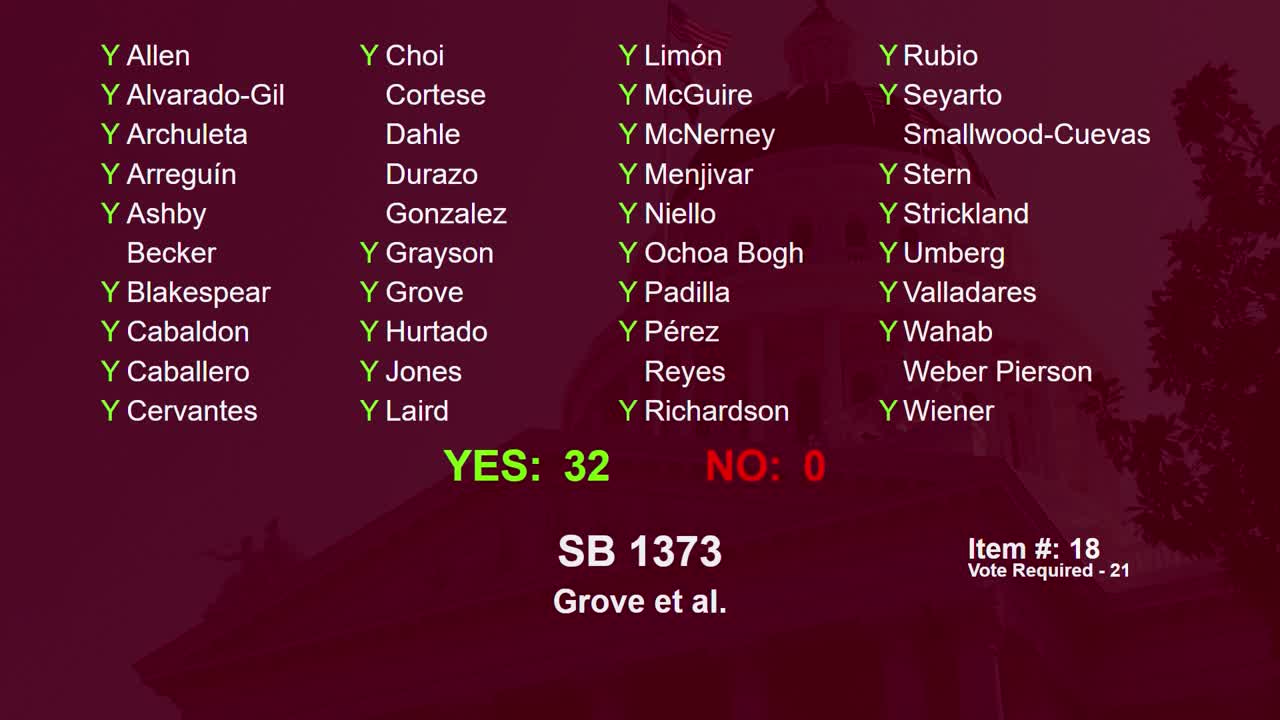 3MIN
Senate Floor
 13MIN
Senate Standing Committee on Judiciary
 24MIN