SB 997: North Fork Kings Groundwater Sustainability Agency: lien authority.
- Session Year: 2025-2026
- House: Senate
- Latest Version Date: 2026-07-13
Current Status:
Passed
(2026-07-13: Chaptered by Secretary of State. Chapter 86, Statutes of 2026.)
Introduced
In Committee
Awaiting First Chamber Vote
Passed First Chamber
In Committee
Awaiting Second Chamber Vote
Passed Second Chamber
Enacted
Existing law, the Sustainable Groundwater Management Act, requires all groundwater basins designated as high- or medium-priority basins by the Department of Water Resources to be managed under a groundwater sustainability plan or coordinated groundwater sustainability plans, except as specified. The act authorizes any local agency or combination of local agencies overlying a groundwater basin to decide to become a groundwater sustainability agency for that basin. The act deems certain agencies created by statute to manage groundwater the exclusive local agencies within their respective statutory boundaries with powers to comply with the act and authorizes these agencies to opt out of being the exclusive groundwater management agency.
Existing law establishes the North Fork Kings Groundwater Sustainability Agency, requires the agency to be a groundwater sustainability agency under the Sustainable Groundwater Management Act for that portion of the Kings Subbasin that lies within the boundaries of the agency, and requires the agency to develop and implement a groundwater sustainability plan to achieve sustainable groundwater management within the territory of the agency. Existing law generally specifies the powers of the agency, including the power to impose fees, including, but not limited to, permit fees and fees on groundwater extraction or other regulated activity, to fund the costs of a groundwater sustainability program.
This bill would authorize the agency to impose civil penalties on any person who extracts groundwater in excess of the amount that person is authorized to extract under a rule, regulation, ordinance, or resolution adopted by the agency. If any charges for water and other services imposed by the agency pursuant to its authority remain unpaid, the bill would authorize the amount of unpaid charges, in the discretion of the agency, to be secured at any time by filing for record in the office of the county recorder of any county a certificate specifying the amount of the charges and the name and address of the person liable for the charges. The bill would require that, from the time of recordation of the certificate, the amount required to be paid together with interest and penalties would constitute a lien upon all real property in the county owned by the person or afterwards, and before the lien expired, acquired by that person. The bill would require that the lien has the force, priority, and effect of a judgment lien, and that the lien shall continue for 10 years from the date of the filing of the certificate unless sooner released or otherwise discharged. The bill would also authorize the lien to be extended, as provided.
Existing law, the Sustainable Groundwater Management Act, requires all groundwater basins designated as high- or medium-priority basins by the Department of Water Resources to be managed under a groundwater sustainability plan or coordinated groundwater sustainability plans, except as specified. The act authorizes any local agency or combination of local agencies overlying a groundwater basin to decide to become a groundwater sustainability agency for that basin. The act deems certain agencies created by statute to manage groundwater the exclusive local agencies within their respective statutory boundaries with powers to comply with the act and authorizes these agencies to opt out of being the exclusive groundwater management agency.
Existing law establishes the North Fork Kings Groundwater Sustainability Agency, requires the agency to be a groundwater sustainability agency under the Sustainable Groundwater Management Act for that portion of the Kings Subbasin that lies within the boundaries of the agency, and requires the agency to develop and implement a groundwater sustainability plan to achieve sustainable groundwater management within the territory of the agency. Existing law generally specifies the powers of the agency, including the power to impose fees, including, but not limited to, permit fees and fees on groundwater extraction or other regulated activity, to fund the costs of a groundwater sustainability program.
This bill would authorize the agency to impose civil penalties on any person who extracts groundwater in excess of the amount that person is authorized to extract under a rule, regulation, ordinance, or resolution adopted by the agency. If any charges for water and other services, or civil penalties services imposed by the agency pursuant to its authority, authority remain unpaid, the bill would authorize the amount of unpaid charges or penalties, charges, in the discretion of the agency, to be secured at any time by filing for record in the office of the county recorder of any county a certificate specifying the amount of the charges or penalties and the name and address of the person liable for the charges. The bill would require that, from the time of recordation of the certificate, the amount required to be paid together with interest and penalties would constitute a lien upon all real property in the county owned by the person or afterwards, and before the lien expired, acquired by that person. The bill would require that the lien has the force, priority, and effect of a judgment lien, and that the lien shall continue for 10 years from the date of the filing of the certificate unless sooner released or otherwise discharged. The bill would also authorize the lien to be extended, as provided.
Existing law, the Sustainable Groundwater Management Act, requires all groundwater basins designated as high- or medium-priority basins by the Department of Water Resources to be managed under a groundwater sustainability plan or coordinated groundwater sustainability plans, except as specified. The act authorizes any local agency or combination of local agencies overlying a groundwater basin to decide to become a groundwater sustainability agency for that basin. The act deems certain agencies created by statute to manage groundwater the exclusive local agencies within their respective statutory boundaries with powers to comply with the act and authorizes these agencies to opt out of being the exclusive groundwater management agency.
Existing law establishes the North Fork Kings Groundwater Sustainability Agency, requires the agency to be a groundwater sustainability agency under the Sustainable Groundwater Management Act for that portion of the Kings Subbasin that lies within the boundaries of the agency, and requires the agency to develop and implement a groundwater sustainability plan to achieve sustainable groundwater management within the territory of the agency. Existing law generally specifies the powers of the agency, including the power to impose fees, including, but not limited to, permit fees and fees on groundwater extraction or other regulated activity, to fund the costs of a groundwater sustainability program.
This bill would authorize the agency to impose civil penalties on any person who extracts groundwater in excess of the amount that person is authorized to extract under a rule, regulation, ordinance, or resolution adopted by the agency. If any charges for water and other services, or civil penalties imposed by the agency pursuant to its authority, remain unpaid, the bill would authorize the amount of unpaid charges or penalties, in the discretion of the agency, to be secured at any time by filing for record in the office of the county recorder of any county a certificate specifying the amount of the charges or penalties and the name and address of the person liable for the charges. The bill would require that, from the time of recordation of the certificate, the amount required to be paid together with interest and penalties would constitute a lien upon all real property in the county owned by the person or afterwards, and before the lien expired, acquired by that person. The bill would require that the lien has the force, priority, and effect of a judgment lien, and that the lien shall continue for 10 years from the date of the filing of the certificate unless sooner released or otherwise discharged. The bill would also authorize the lien to be extended, as provided.
Pursuant to Chapter 9 (commencing with Section 10732) of Part 2.74 of Division 6 of the Water Code, the agency may impose civil penalties on any person who extracts groundwater in excess of the amount that person is authorized to extract under a rule, regulation, ordinance, or resolution adopted by the agency.
SEC. 3.Section 803 is added to the North Fork Kings Groundwater Sustainability Agency (Chapter 392 of the Statutes of 2016), to read:Sec. 803.(a)In the event that any charges for water and other services imposed by the agency pursuant to its authority pursuant to Chapter 8 (commencing with Section 10730) of Part 2.74 of Division 6 of the Water Code remain unpaid, the amount of unpaid charges may, in the discretion of the agency, be secured at any time by filing for record in the office of the county recorder of any county a certificate specifying the amount of the charges and the name and address of the person liable therefor.
(b)From the time of recordation of the certificate, the amount required to be paid together with any interest and penalties constitutes a lien upon all real property in the county owned by the person or afterwards, and before the lien expired, acquired by that person. The lien has the force, priority, and effect of a judgment lien and shall continue for 10 years from the date of the filing of the certificate unless sooner released or otherwise discharged. The lien may, within 10 years from the filing of the certificate or within 10 years from the date of the last extension of the lien in the manner herein provided, be extended by filing for record a new certificate in the office of the county recorder of any county, and from the time of that filing, the lien shall be extended to the real property in that county for 10 years unless sooner released or otherwise discharged.
Pursuant to Chapter 9 (commencing with Section 10732) of Part 2.74 of Division 6 of the Water Code, the agency may impose civil penalties on any person who extracts groundwater in excess of the amount that person is authorized to extract under a rule, regulation, ordinance, or resolution adopted by the agency.
SEC. 3.Section 803 is added to the North Fork Kings Groundwater Sustainability Agency (Chapter 392 of the Statutes of 2016), to read:Sec. 803.(a)In the event that any charges for water and other services, or civil penalties services imposed by the agency pursuant to its authority pursuant to Chapter 8 (commencing with Section 10730) or Chapter 9 (commencing with Section 10732) of Part 2.74 of Division 6 of the Water Code, Code remain unpaid, the amount of unpaid charges or penalties may, in the discretion of the agency, be secured at any time by filing for record in the office of the county recorder of any county a certificate specifying the amount of the charges or penalties and the name and address of the person liable therefor.
(b)From the time of recordation of the certificate, the amount required to be paid together with any interest and penalties constitutes a lien upon all real property in the county owned by the person or afterwards, and before the lien expired, acquired by that person. The lien has the force, priority, and effect of a judgment lien and shall continue for 10 years from the date of the filing of the certificate unless sooner released or otherwise discharged. The lien may, within 10 years from the filing of the certificate or within 10 years from the date of the last extension of the lien in the manner herein provided, be extended by filing for record a new certificate in the office of the county recorder of any county, and from the time of that filing, the lien shall be extended to the real property in that county for 10 years unless sooner released or otherwise discharged.
Pursuant to Chapter 9 (commencing with Section 10732) of Part 2.74 of Division 6 of the Water Code, the agency may impose civil penalties on any person who extracts groundwater in excess of the amount that person is authorized to extract under a rule, regulation, ordinance, or resolution adopted by the agency.
SEC. 3.Section 803 is added to the North Fork Kings Groundwater Sustainability Agency (Chapter 392 of the Statutes of 2016), to read:Sec. 803.(a)In the event that any charges for water and other services, or civil penalties imposed by the agency pursuant to its authority pursuant to Chapter 8 (commencing with Section 10730) or Chapter 9 (commencing with Section 10732) of Part 2.74 of Division 6 of the Water Code, remain unpaid, the amount of unpaid charges or penalties may, in the discretion of the agency, be secured at any time by filing for record in the office of the county recorder of any county a certificate specifying the amount of the charges or penalties and the name and address of the person liable therefor.
(b)From the time of recordation of the certificate, the amount required to be paid together with any interest and penalties constitutes a lien upon all real property in the county owned by the person or afterwards, and before the lien expired, acquired by that person. The lien has the force, priority, and effect of a judgment lien and shall continue for 10 years from the date of the filing of the certificate unless sooner released or otherwise discharged. The lien may, within 10 years from the filing of the certificate or within 10 years from the date of the last extension of the lien in the manner herein provided, be extended by filing for record a new certificate in the office of the county recorder of any county, and from the time of that filing, the lien shall be extended to the real property in that county for 10 years unless sooner released or otherwise discharged.
|
Date
|
Status
|
|---|---|
| Jul 13, 2026 | Chaptered by Secretary of State. Chapter 86, Statutes of 2026. |
| Jul 13, 2026 | Approved by the Governor. |
| Jul 7, 2026 | Enrolled and presented to the Governor at 2 p.m. |
| Jun 30, 2026 | In Senate. Ordered to engrossing and enrolling. |
| Jun 29, 2026 | Read third time. Passed. (Ayes 73. Noes 0. Page 5925.) Ordered to the Senate. |
| Jun 29, 2026 | Read third time. Passed. Ordered to the Senate. |
| Jun 24, 2026 | Read second time. Ordered to consent calendar. |
| Jun 23, 2026 | From committee: Do pass. Ordered to consent calendar. (Ayes 12. Noes 0.) (June 23). |
| Jun 16, 2026 | From committee: Do pass and re-refer to Com. on JUD. (Ayes 11. Noes 0.) (June 16). Re-referred to Com. on JUD. |
| May 26, 2026 | Referred to Coms. on W., P., & W. and JUD. |
| May 19, 2026 | In Assembly. Read first time. Held at Desk. |
| May 18, 2026 | Read third time. Passed. (Ayes 38. Noes 0. Page 4306.) Ordered to the Assembly. |
| May 18, 2026 | Read third time. Passed. (Ayes 38. Noes 0.) Ordered to the Assembly. |
| Apr 30, 2026 | Read second time and amended. Ordered to third reading. |
| Apr 29, 2026 | From committee: Do pass as amended. (Ayes 13. Noes 0. Page 4084.) (April 28). |
| Apr 29, 2026 | From committee: Do pass as amended. (Ayes 13. Noes 0.) (April 28). |
| Apr 10, 2026 | Set for hearing April 28. |
| Apr 9, 2026 | April 21 hearing postponed by committee. |
| Apr 9, 2026 | Set for hearing April 21. |
| Apr 8, 2026 | From committee: Do pass and re-refer to Com. on JUD. (Ayes 7. Noes 0. Page 3758.) (April 7). Re-referred to Com. on JUD. |
| Apr 8, 2026 | From committee: Do pass and re-refer to Com. on JUD. (Ayes 7. Noes 0.) (April 7). Re-referred to Com. on JUD. |
| Mar 24, 2026 | Set for hearing April 7. |
| Mar 12, 2026 | March 24 set for first hearing canceled at the request of author. |
| Mar 11, 2026 | Set for hearing March 24. |
| Feb 18, 2026 | Referred to Coms. on N.R. & W. and JUD. |
| Feb 10, 2026 | From printer. May be acted upon on or after March 12. |
| Feb 9, 2026 | Introduced. Read first time. To Com. on RLS. for assignment. To print. |
|
Date
|
Description
|
Location
|
Votes
|
|
|---|---|---|---|---|
| Jun 29, 2026 | SB 997 Caballero Consent Calendar Second Day Regular Session | Assembly Floor |
Passed |
|
| Jun 23, 2026 | Do pass. To Consent Calendar. | Assembly Standing Committee on Judiciary |
Passed |
|
| Jun 16, 2026 | Do pass and be re-referred to the Committee on [Judiciary] | Assembly Standing Committee on Water, Parks, and Wildlife |
Passed |
|
| May 18, 2026 | Senate 3rd Reading SB997 Caballero | Senate Floor |
Passed |
|
| Apr 28, 2026 | Do pass as amended | Senate Standing Committee on Judiciary |
Passed |
|
| Apr 7, 2026 | Do pass, but first be re-referred to the Committee on [Judiciary] | Senate Standing Committee on Natural Resources and Water |
Passed |
This list shows positions taken on this bill by organizations on the date displayed, which is linked to the original source.
Positions by individuals are not included.
|
Organization
|
Position
|
Date
|
|---|---|---|
| American Pistachio Growers | ** Support | |
| California Farm Bureau Federation | ** Support | |
| California State Association Of Counties | ** Support | |
| Kings River Conservation District | ** Support | |
| Kings River Water Association | ** Support | |
| north fork kings groundwater sustainability agency | ** Support | |
| North Fork Kings GSA (sponsor) | ** Support | |
| Rural County Representatives of California | ** Support | |
| The Gualco Group, Inc. | ** Support | |
| Valley Ag Waer Coalition | ** Support | |
| Valley Ag Water Coalition | ** Support |
Date of Hearing: June 23, 2026
ASSEMBLY COMMITTEE ON JUDICIARY
Ash Kalra, Chair
SBPCA Bill Id:SB 997
Author:(Caballero) – As Amended Ver:April 30, 2026
SENATE VOTE: 38-0
SUBJECT: North Fork Kings Groundwater Sustainability Agency: lien authority
SYNOPSIS
Established in 2014, Sustainable Groundwater Management Act represented California’s first comprehensive attempt at managing groundwater within the state. The Act tasked local agencies, known as Groundwater Sustainability Agencies, with overseeing the development, implementation, and enforcement of Groundwater Sustainability Plans. Under the Sustainable Groundwater Management Act, Groundwater Sustainability Agencies are formed either by several local agencies coming together as a Joint Powers Authority to exercise the general authority granted under the Act or as a specially created entity in state statute. Those agencies created by statute would be provided the opportunity to have additional powers conveyed by law so long as the agency’s authorizing statute conferred the powers. The North Fork Kings Groundwater Sustainability Agency is one of the statutorily created Groundwater Sustainability Agencies. As the North Fork Kings Groundwater Sustainability Agency moves to enforce its Groundwater Sustainability Plan, the Agency now notes that its authorizing statute did not confer many of the enforcement tools provided in the Sustainable Groundwater Management Act overall.
This bill would provide critical enforcement tools to the North Fork Kings Groundwater Sustainability Agency. Specifically, this bill would authorize the Agency to seek civil penalties against water users who pump more groundwater than permitted by the Groundwater Sustainability Plan. The civil enforcement authority is modeled after the general grant of authority found in the Sustainable Groundwater Management Act. Additionally, mirroring the authority provided to water agencies of all types across the state, this bill would provide that the North Fork Kinds Groundwater Sustainability Agency may impose a lien on a property owner who fails to pay their water bill in a timely manner.
This non-controversial measure is sponsored by the North Fork Kings Groundwater Sustainability Agency and is supported by several local conversation districts and agricultural water users. The proponents of the bill note that the authority this bill confers to the North Fork Kings Groundwater Sustainability Agency is critical for the Agency to be able to carry out its mission and properly enforce the region’s Groundwater Sustainability Plan. This bill has no known opposition and was previously heard and approved by the Committee on Water, Parks, and Wildlife by a vote of 11 to zero.
SUMMARY: Authorizes the North Fork Kings Groundwater Sustainability Agency to impose specified liens and seek civil penalties. Specifically, this bill:
- Authorizes the North Fork Kings Groundwater Sustainability Agency to seek civil penalties from any person who extracts groundwater in excess of the amount that person is authorized to extract under a rule, regulation, ordinance, or resolution adopted by the agency.
- Provides that in the event that any charges for water and other services imposed by the North Fork Kings Groundwater Sustainability Agency remain unpaid, the amount of unpaid charges may, in the discretion of the agency, be secured at any time by filing for record in the office of the county recorder of any county a certificate specifying the amount of the charges and the name and address of the person liable therefor.
- Provides that from the time of the recordation of the certificate specified in 2) the amount required to be paid together with any interest and penalties constitutes a lien upon all real property in the county owned by the person or afterwards, and before the lien expired, acquired by that person.
- Provides that a lien imposed pursuant to 3) has the force, priority, and effect of a judgment lien and is to continue for 10 years from the date of the filing of the certificate unless sooner released or otherwise discharged, as specified.
EXISTING LAW:
- Establishes the Sustainable Groundwater Management Act to provide for enhanced local management of groundwater resources and to provide for the sustainable management of California’s groundwater resources. (Water Code Section 10720 et seq.)
- Authorizes, in accordance with the Sustainable Groundwater Management Act, any local agency or combination of local agencies to establish a Groundwater Sustainability Agency. (Water Code Section 10723.)
- Requires a Groundwater Sustainability Agency to consider the interests of all beneficial uses and users of groundwater, as well as those responsible for implementing groundwater sustainability plans, which must include but not be limited to evaluating the following interests:
- Holders of overlying groundwater rights;
- Municipal well operators;
- Public water systems;
- Local land use planning agencies;
- Environmental users of groundwater;
- Surface water users, if there is a hydrologic connection between surface and groundwater bodies;
- The federal government, including, but not limited to, the military and managers of federal lands;
- California Native American tribes;
- Disadvantaged communities, including, but not limited to, those served by private domestic wells or small community water systems; and
- Specified for monitoring and reporting groundwater elevations in all or a part of a basin or subbasin. (Water Code Section 10723.2.)
- Authorizes the formation of a Groundwater Sustainability Agency as a Joint Powers Authority. (Water Code Section 10723.6.)
- Provides that a person who pumps more groundwater than permitted pursuant to a rule, regulation, ordinance, or resolution adopted by a Groundwater Sustainability Agency is to be subject to a civil penalty not to exceed $500 per acre-foot pumped in excess of the amount that person is authorized to pump. (Water Code Section 10732 (a)(1).)
- Authorizes a Groundwater Sustainability Agency to seek civil penalties for a violation of a rule, regulation, ordinance, or resolution adopted by the Agency after providing notice and an opportunity for hearing. (Water Code Section 10732 (b)(2).)
- Establishes the North Fork Groundwater Sustainability Agency to manage portions of the groundwater in Fresno County and the Kings Basin. (Water Code Section 10723.)
- Authorizes specified water agencies to impose liens on properties for unpaid charges. (Water Code Sections 25806, 31701.5, 36729, 55501.5, and 71637.)
FISCAL EFFECT: As currently in print this bill is keyed non-fiscal.
COMMENTS: Recognizing the need to establish a non-judicial process for managing overdrawn groundwater basins, in 2014 the Legislature adopted a series of bills that collectively established the Sustainable Groundwater Management Act. (AB 1739 (Dickinson) Chap. 347, Stats. 2014, SB 1168 (Pavley) Chap. 346, Stats. 2014, and SB 1319 (Pavley) Chap. 348, Stats. 2014.) In accordance with the Sustainable Groundwater Management Act (SGMA), local groundwater sustainability agencies (GSA) must adopt groundwater sustainability plans (GSP), that among other topics must establish a sustainable yield for the basin.
While GSAs can be established at the local level, usually through the formation of a joint powers authority (JPA), other GSAs are creations of statute. The North Fork Kings GSA was formed by statute in 2016 to serve as the exclusive local agency regulating groundwater within its boundaries. (SB 564 (Cannella) Chap. 392, Stats. 2016.) The North Fork Kings GSA’s authorizing legislation vested the GSA’s board with the power of regulating, conserving, managing, and controlling the use and extraction of groundwater within the agency’s territory and the authority to impose fees to fund the cost of implementing its groundwater sustainability plan. However, the author and sponsors of this bill note the GSA has few tools to enforce its authority. This bill would authorize the North Fork Kings GSA to impose civil penalties on persons found to be over drafting groundwater and impose liens on property owners who do not pay GSA authorized charges. In support of the bill the author states:
The Sustainable Groundwater Management Act (SGMA) sets forth a rigorous framework for reaching and maintaining groundwater sustainability in California. Groundwater Sustainability Agencies (GSAs) formed under SGMA are charged with implementing groundwater sustainability plans (GSPs) to avoid groundwater overdraft and state intervention. SGMA authorized GSAs to be formed through either joint powers agreements (JPAs) or through special statutes. All GSAs formed in accordance with SGMA have a minimum enforcement authority provided by the SGMA statute which includes imposing penalties and bringing civil lawsuits.
GSAs created through a JPA have additional enforcement authority inherent to all JPAs, which includes lien authority for uncollected fees. GSAs formed under special statue, such as North Fork Kings Groundwater Sustainability Agency (NFKGSA) are limited to the minimal enforcement powers under SGMA, which does not explicitly grant the authority to impose liens to collect unpaid fees like other GSAs formed through a JPA. SB 997 is a straightforward district bill that aligns NFKGSA’s enforcement authority with that of the majority of GSAs statewide to ensure the effective implementation of its groundwater sustainability program under SGMA.
What is groundwater? By the time it reaches Californians’ taps, water is indistinguishable regardless of its source. However, under California law there are three distinct “types” or categories or water: surface water (including water from streams, rivers and lakes); percolating groundwater (water found in subterranean basins); and subterranean streams (flowing through recognizable channels). Legally, surface water and subterranean flows are largely treated alike, and both are subject to oversight and permitting from the State Water Resources Control Board. Groundwater, however, is governed by a distinct set of statutes and case law that can trace its roots back to English Common Law. Due in large part to the fact that groundwater regularly makes up at least 40 percent of the state’s annual water supply, it is unsurprising that groundwater has been the subject of over a century of contentious disputes that have shaped modern groundwater law.
The right to utilize groundwater is classified into three categories: overlying rights, appropriative rights, and prescriptive rights. As it relates to overlying rights California has, to a degree, adopted the English Common Law notion that whoever owns the soil owns the depths, however, as early as 1903, California courts recognized that this state’s climate does not lend itself to a pure application of the common law. (Katz v. Walkinshaw (1903) 141 Cal. 116.) The Katz court recognized scarcity is a critical element of California water law and that when a groundwater basin cannot support the needs of all water users, each user is entitled to a “fair and just” proportion of the water supply. (Id. at 134.) Appropriative rights apply to surplus groundwater drawn from a basin but not utilized on the overlying land. In this scenario, the court provides that “first in time first in right” approach applies to determining water rights. (City of Barstow v. Mojave Water Agency (2000) 23 Cal.4th 1224, 1241.) Finally, prescriptive rights are established by showing an adverse use against prior rights holders. These rights are most commonly held by municipal water agencies who pump groundwater for use outside the overlying basin. Because many of the groundwater basins utilized by municipal pumpers are overdrawn, and thus by definition no surplus water exists, the municipalities rights are considered “adverse” to other rights holders. (See, City of Santa Maria v. Adam (2012) 211 Cal.App.4th 266, 299-300.)
The Sustainable Groundwater Management Act ensures that groundwater is used sustainably and seeks to minimize future groundwater basin adjudications. For much of California’s history, unlike surface water, groundwater went largely unregulated. Until 2014, the only way for water users to manage an over drafted water basin was to seek a costly and time-consuming adjudication of water rights in court. (see, e.g. Pasadena v. Alhambra (1949) 33 Cal.2d 908.)
Recognizing that groundwater adjudications are inefficient and do not necessarily produce comprehensive strategies for protecting water and the environment, in 2014, the Legislature adopted the SGMA to provide statewide standards for groundwater management. SGMA envisions that local groundwater management agencies would develop the GSP to manage the basin. The law provided that local agencies could combine into a JPA to develop a GSP or the local area could seek a legislatively created GSA. The existing law provides general powers and authority for the JPAs, however, each statutorily created GSA is bound by the limits of its authorizing statute.
Regardless of how a GSA is formed, SGMA guides local agencies to avoid six “undesirable results” associated with poor groundwater management: chronic lowering of groundwater levels; significant and unreasonable reductions in groundwater storage; significant and unreasonable seawater intrusion; significant and unreasonable groundwater quality degradation; significant and unreasonable land subsidence; and depletions of interconnected surface water. (Water Code Section 10721 (d).) To avoid these outcomes, SGMA provides that a GSA has the power to adopt rules, regulations and ordinances to carry out the GSP. The plan itself must be developed in a manner that considers the interests of all beneficial water users in a basin. (Water Code Section 10723.2.)
This bill provides the North Fork Kern GSA several critical tools that most GSAs possess but were left out of North Form Kern’s original authorizing statutes. The existing provisions of SGMA provide general authorities and powers to GSAs formed as JPAs. These include the right to impose civil penalties against groundwater users within a basin that draft more water than permitted under the GSP and impose liens against parties that do not pay specified costs to the GSA. However, these powers were not provided to the North Fork Kern GSA when it was created by statute in 2016.
Accordingly, this bill would authorize the North Fork Kern GSA to impose civil penalties against water users who violate the GSP. The bill links the civil penalty authority to the existing $500 per acre foot penalty level provided generally in SGMA. These penalties, generally, must be sought in court. Additionally, this bill would permit the North Fork Kern GSA to impose a lien on property owners who do not pay for water and other services provided by the GSA in a timely manner. This lien authority mirrors many of the provisions of the Water Code permitting a variety of water providers, including urban water systems, to impose liens on customers who do not pay their water bills.
ARGUMENTS IN SUPPORT: This bill is sponsored by the North Fork Kings Groundwater Sustainability Agency. In support of the measure they write:
SB 997 aligns NFKGSA’s authority with that of other GSAs formed as JPAs statewide to strengthen the agency’s enforcement and fee collection capability and supports the fair and effective implementation of our groundwater sustainability efforts now and into the future. Governor Brown signed the SGMA implementation bills, understanding that these difficult sustainability decisions were best made at the local level. NFKGSA has undertaken a tremendous public outreach and planning process in our high-priority basin in order to identify local programs to best meet our sustainability requirements. We are proud of the work we have done to date and see this bill as an additional tool needed in order for us to build on our work locally.
SB 997 (Caballero) is a critical tool that will assist NFKGSA in meeting its requirements in its Groundwater Sustainability Plan.
REGISTERED SUPPORT / OPPOSITION:
Support
North Fork Kings Groundwater Sustainability Agency (sponsor)
American Pistachio Growers
California Farm Bureau Federation
California State Association of Counties
Kings River Conservation District
Kings River Water Association
Rural County Representatives of California
Valley Ag Water Coalition
Opposition
None on file
Analysis Prepared by: Nicholas Liedtke / JUD. / (916) 319-2334
Date of Hearing: June 16, 2026
ASSEMBLY COMMITTEE ON WATER, PARKS, AND WILDLIFE
Diane Papan, Chair
SBPCA Bill Id:SB 997
Author:(Caballero) – As Amended Ver:April 30, 2026
SENATE VOTE: 38-0
SUBJECT: North Fork Kings Groundwater Sustainability Agency: lien authority
SUMMARY: Authorizes the North Fork Kings Groundwater Sustainability Agency (GSA) to file a lien against a person who owes the GSA for outstanding fees or charges. Also, clarifies that North Fork Kings GSA may impose civil penalties on a person who exceeds their groundwater pumping limit. Specifically, this bill:
- Authorizes the North Fork Kings GSA to impose civil penalties on any person who pumps more groundwater than authorized under a rule, regulation, ordinance, or resolution adopted by the GSA.
- Authorizes the North Fork Kings GSA to file a lien on all property owned by a person that has not paid charges for water or other services due to the GSA.
- Provides the lien has the force, priority, and effect of a judgment lien and shall continue for ten years from the date of its filing unless sooner released or otherwise discharged. Provides the lien may be extended for an additional ten years.
EXISTING LAW:
- Enacts the Sustainable Groundwater Management Act (SGMA) with the goal of providing for the sustainable management of groundwater basins, enhancing local management of groundwater consistent with rights to use or store groundwater, providing local groundwater agencies with the authority and the technical and financial assistance necessary to sustainably manage groundwater, and establishing minimum standards for sustainable groundwater management. Defines sustainable management as the avoidance of six undesirable results: (i) chronic lowering of groundwater levels; (ii) significant and unreasonable reduction of groundwater storage; (iii) significant and unreasonable seawater intrusion; (iv) significant and unreasonable degraded water quality; (v) significant and unreasonable land subsidence; and (vi) depletions of interconnected surface waters (Water Code § 10720 et seq.).
- Provides that any local agency or combination of local agencies may decide to become a GSA (Water Code § 10723).
- Provides that a combination of local agencies may form a GSA through a joint powers agreement (JPA) or a memorandum of understanding (Water Code § 10723.6).
- Provides that a person who pumps more groundwater than permitted pursuant to a rule, regulation, ordinance, or resolution adopted by a GSA shall be subject to a civil penalty not to exceed $500 per acre-foot pumped in excess of the amount that person is authorized to pump [Water Code § 10732 (a)(1)].
- Provides a GSA may bring an action in superior court to determine whether a violation of a rule, regulation, ordinance, or resolution adopted by the GSA has occurred and to impose civil penalties [Water Code § 10732 (b)(1)].
- Provides a GSA may administratively impose civil penalties for a violation of a rule, regulation, ordinance, or resolution adopted by the GSA after providing notice and an opportunity for hearing [Water Code § 10732 (b)(2)].
- Establishes the North Fork Kings GSA as the exclusive local agency to manage groundwater in portions of the Kings Subbasin and eastern Fresno County (Water Code § 10723 and Chapter 392, Statutes of 2016).
- Authorizes the following types of water agencies to file a property lien for unpaid charges, services, assessments, or/and taxes: California Water District (Water Code § 36729); irrigation district (Water Code § 25806); county water district (Water Code § 31701.5); reclamation district (Water Code § 51256); county waterwork district (Water Code § 55501.5); water replenishment district (Water Code § 60256); levee district (Water Code § 70239); and municipal water district (Water Code § 71637).
FISCAL EFFECT: This bill is keyed non-fiscal indicating that there are no state costs anticipated as a result of this bill.
COMMENTS:
- Purpose of this bill. The North Fork Kings GSA’s enacting statute does not provide it with lien authority; however, the GSA anticipates needing lien authority going forward in order to implement its groundwater sustainability plan (GSP). According to the author:
GSAs created through a JPA have additional enforcement authority inherent to all JPAs, which includes lien authority for uncollected fees. GSAs formed under special statue, such as [North Fork Kings GSA] are limited to the minimal enforcement powers under SGMA, which does not explicitly grant the authority to impose liens to collect unpaid fees like other GSAs formed through a JPA. [This bill] is a straightforward district bill that aligns [North Fork Kings GSA’s] enforcement authority with that of the majority of GSAs statewide to ensure the effective implementation of its groundwater sustainability program under SGMA.
- Background. SGMA was enacted in 2014 to address the adverse impacts of groundwater overdraft across the state and to require sustainable management of groundwater resources. SGMA states a preference that groundwater be managed at the local level. To realize sustainable management, SGMA requires that local agencies in “high” and “medium” priority basins form GSAs by June 30, 2017. In a handful of cases, SGMA designates agencies that existed prior to the enactment of SGMA as the “exclusive” local agencies to manage groundwater within their respective statutory boundaries (Water Code § 10723). In some basins, additional agencies have been created and/or designated as the exclusive local agency to comply with SGMA since its passage. The North Fork Kings GSA is one of these agencies and was established in 2016.
The majority of GSAs in groundwater basins that do not have an “exclusive” agency are JPAs. JPAs are legally distinct entities made of two or more public agencies that enter into a legal agreement to jointly exercise any power common to the member agencies (Government Code § 6502). SGMA explicitly authorizes the creation of a JPA to form a GSA (Water Code § 10723.6).
SGMA grants GSAs a variety of authorities in order to achieve sustainable groundwater management. These include the authority to develop a GSP, conduct investigations, require the registration of groundwater wells, regulate groundwater pumping, and to adopt rules, regulations and ordinances to carry out the GSP. Under SGMA, GSAs also have the authority to impose civil penalties for violations of a rule, regulation, ordinance, or resolution adopted by the GSA. SGMA does not grant GSAs lien authority, though it acknowledges that local agencies that opt to become a GSA may use their existing powers and authorities to implement SGMA (Water Code § 10726.8).
Kings Subbasin. The Kings Subbasin is a “high” priority and critically overdrafted basin that covers portions of eastern Fresno County (including the City of Fresno and Clovis) and portions of northeastern Kings County. The subbasin is bounded by the San Joaquin River on its northern border and the Kings River on a portion of its southern border. The North Fork Kings GSA is one of seven GSAs (others are Central Kings GSA, James GSA, Kings River East GSA, McMullin Area GSA, North Kings GSA, and South Kings GSA) managing areas of the Kings Subbasin in order to comply with SGMA. Each of the GSAs in the subbasin developed their own GSP; these GSPs were initially submitted in January 2020 as required under SGMA. The Department of Water Resources (DWR) determined the GSPs were “incomplete” in January 2022 and recommended revisions. The GSAs submitted revised GSPs in July 2022 and DWR determined the GSPs were “adequate” in March 2023. The GSPs are currently undergoing their first five-year review under SGMA.
Liens. Liens are legal claims against property that can result from unpaid debts, court rulings, or unresolved obligations. Some liens are tied to specific parcels, while others apply broadly to all property owned by an individual. Liens can be a powerful enforcement tool because outstanding liens must be resolved before an individual can sell their property. This bill authorizes the North Fork Kings GSA to record a lien on all property owned by an individual if that individual fails to pay charges for water or other services provided by the GSA.
No liens due to outstanding civil penalties. Amendments in the Senate Judiciary Committee removed authority for the North Fork Kings GSA to record a lien for unpaid civil penalties because of due process concerns regarding review by an independent arbiter, opportunity for judicial review, and opportunity for appeal before a lien is recorded:
The Fourteenth Amendment of the United States Constitution, and Section 15 of Article I of the California Constitution, prohibit the state from denying a person of life, liberty, or property without due process of law. The state’s protection of procedural due process “is much more inclusive and protects a broader range of interests than under the federal Constitution.” California’s “approach presumes that when an individual is subject to deprivatory governmental action, he always has a due process liberty interest in both fair and unprejudiced decision making,” which “places front and center the issue of critical concern, i.e., what procedural protections are warranted in light of governmental and private interests.” The question of whether it is appropriate to authorize a local government to place a lien on property for which a judgment of enforcement has been entered is derivative of the question of whether the landowner was given adequate process before the judgment was entered.
- Arguments in support. The North Fork Kings GSA is the sponsor of this bill and notes that they are limited to the authorities and powers delineated in their enacting statute, which does not include the authority to record property liens. North Fork Kings GSA maintains that this bill aligns their authority “with that of other GSAs formed as JPAs statewide to strengthen the agency’s enforcement and fee collection capability and supports the fair and effective implementation of our groundwater sustainability efforts now and into the future.”
- Double referral. This bill has also been referred to the Assembly Judiciary Committee.
- Related legislation. AB 1044 (Macedo) of 2025 creates the Tule East GSA to oversee groundwater management and compliance with SGMA in portions of the Tule Subbasin in eastern Tulare County. AB 1044 is pending on the Assembly Inactive File.
AB 568 (Macedo) of 2025 is substantially similar to AB 1044. AB 568 is pending on the Assembly Inactive File.
AB 632 (Hart) of 2025 would have allowed a local agency, upon the exhaustion of administrative and judicial appeals and specified noticing procedures, to obtain a final judgment and impose liens to enforce administrative fines and penalties for violations of specified cannabis laws, housing laws, and fire hazard laws. AB 632 was vetoed by Governor Newsom.
SB 372 (Cannella), Chapter 357, Statutes of 2017, establishes the San Joaquin River Exchange Contractors GSA to manage a portion of the Delta-Mendota groundwater subbasin.
SB 37 (Vidak), Chapter 391, Statutes of 2016, establishes the Kings River East GSA to manage the southeastern portion of the Kings groundwater subbasin.
SB 564 (Cannella), Chapter 392, Statutes of 2016, established the North Fork Kings GSA to manage the northeastern portion of the Kings groundwater subbasin.
REGISTERED SUPPORT / OPPOSITION:
Support
North Fork Kings GSA (sponsor)
California Farm Bureau Federation
California State Association of Counties
Rural County Representatives of California
Valley Ag Water Coalition
Opposition
None on file
Analysis Prepared by: Pablo Garza / W., P., & W. / (916) 319-2096
SENATE RULES COMMITTEE Office of Senate Floor Analyses (916) 651-4171 | SB 997 |
THIRD READING
Bill No: SB 997
Author: Caballero (D)
Introduced: 2/9/26
Vote: 21
SENATE NATURAL RES. & WATER COMMITTEE: 7-0, 4/7/26
AYES: Becker, Seyarto, Allen, Blakespear, Cabaldon, Grove, Stern
SENATE JUDICIARY COMMITTEE: 13-0, 4/28/26
AYES: Umberg, Niello, Allen, Alvarado-Gil, Ashby, Caballero, Durazo, Laird, Reyes, Stern, Wahab, Weber Pierson, Wiener
SUBJECT: North Fork Kings Groundwater Sustainability Agency: lien authority
SOURCE: North Fork Kings Groundwater Sustainability Agency
DIGEST:
This bill authorizes the North Fork Kings Groundwater Sustainability Agency (GSA) to impose civil penalties when enforcing its groundwater sustainability plan and authorizes the agency to file a lien for any unpaid charges or other services upon any real property in the county owned by the person who is liable for the charges.
ANALYSIS:
Existing law:
- Under the Sustainable Groundwater Management Act (SGMA),
- Requires all groundwater basins designed as high- or medium-priority basins by the Department of Water Resources (DWR) to be managed under a groundwater sustainability plan (GSP) or coordinated GSP, except as specified (Water Code (WAT) §10727).
- Authorizes any local agency or combination of local agencies overlying a groundwater basin to decide to become a GSA for that basin (WAT §10723).
- Deems specified agencies created by statute to manage groundwater the exclusive local agencies within their respective statutory boundaries with powers to comply with SGMA. These include, for example:
- Alameda County Water District.
- Desert Water Agency.
- Monterey Peninsula Water Management District.
- North Fork Kings Groundwater Sustainability Agency.
- Santa Clara Valley Water District.
- Willow Creek Groundwater Management Agency.
(WAT §10723).
- Provides that SGMA is in addition to, and not a limitation on, the authority granted to a local agency under any other law and authorizes the local agency to use the local agency’s authority under any other law to apply and enforce SGMA (WAT §10726.8).
- Imposes civil liability on a person who extracts groundwater in excess of the amount authorized under a rule, regulation, ordinance, or resolution (WAT §10732).
- Requires all groundwater basins designed as high- or medium-priority basins by the Department of Water Resources (DWR) to be managed under a groundwater sustainability plan (GSP) or coordinated GSP, except as specified (Water Code (WAT) §10727).
- Under the North Fork Kings Groundwater Sustainability Agency Act (SB 564, Cannella, Chapter 392, Statutes of 2016),
- Creates the North Fork Kings Groundwater Sustainability Agency in the Counties of Fresno and Kings.
- Authorizes the North Fork Kings GSA, pursuant to SGMA, to impose fees, including but not limited to, permit fees and fees on groundwater extraction or other regulated activity, to fund the costs of a groundwater sustainability program.
- Creates the North Fork Kings Groundwater Sustainability Agency in the Counties of Fresno and Kings.
- Authorizes irrigation districts, county water districts, California water districts, county waterworks districts, water replenishment districts, levee districts, and municipal water districts to file liens, as specified, for taxes or unpaid charges for water or other services, as provided (WAT §§25806, 31701.7, 36729, 55501.1, 60256, 70239, 71637).
This bill:
- Pursuant to SGMA, authorizes the North Fork Kings GSA to impose civil penalties on any person who extracts groundwater in excess of the amount that person is authorized to extract under a rule, regulation, ordinance, or resolution adopted by the agency.
- Authorizes the amount of unpaid charges for water or other services that remain unpaid to, in the discretion of the North Fork Kings GSA, be secured at any time by filing for record in the office of the county recorder of any county a certificate specifying the amount of the charges and the name and address of the person liable.
- Provide that the amount required to be paid together with any interest and penalties constitutes a lien upon all real property in the county owned by the person or afterwards, and before the lien expired, acquired by that person.
Background
Sustainable Groundwater Management Act (SGMA). SGMA was enacted in 2014 to create a statewide requirement for sustainably managing groundwater resources. The objective of SGMA is to ensure the long-term reliability of groundwater resources and connected surface water resources. SGMA provides for the management of groundwater resources by local agencies subject to state oversight and, in the event that actions of local agencies are insufficient, state intervention by the State Water Resources Control Board (State Water Board).
Under SGMA, a local agency or combination of local agencies overlying a groundwater basin may become a GSA for that basin. A GSA has broad management authority of the groundwater basin or basins under their jurisdiction, including defining the basin’s or basins’ sustainable yield, limiting groundwater extraction, and imposing fees.
In general, GSAs are authorized to perform any act necessary to carry out the purposes of SGMA, including adopting rules, regulations, and ordinances and developing the GSP. GSAs are also authorized to, among other regulatory authorities, establish groundwater extraction allocations. A person who extracts groundwater in excess of the amount authorized under a rule, regulation, ordinance or regulation adopted by the GSA may be civilly liable for up to $500 per acre-foot exacted in excess.
Often, member agencies create GSAs by either forming a Joint Powers Authority (JPA) or through a memorandum of agreement or other legal agreement. SGMA provides its authorities are not a limitation on the authority granted to a local agency under any other law and authorizes the local agency to use the local agency’s authority under any other law to apply and enforce SGMA. As a JPA, these GSAs have the authority to exercise the powers granted to its member agencies, in addition to the powers described in SGMA itself. Thus, GSAs that have member agencies with powers that are not included in SGMA are able to use those powers to enforce the GSA’s groundwater sustainability program.
Many member agencies, such as county water districts, irrigation districts, city water districts, and reclamation districts, have enforcement powers that are not included in SGMA. Specifically, these agencies are authorized to impose a lien on a landowner’s property to enforce and collect unpaid charges or fees.
However, some GSAs, such as the North Fork Kings GSA, have been created by statute to manage groundwater within certain boundaries. Those GSAs’ authorities are laid out in their enacting statute and those provided for under SGMA.
North Fork Kings GSA. In 2016, SB 564 (Cannella, Chapter 392, Statutes of 2016) established the North Fork Kings GSA and deemed it the exclusive local agency within its statutory boundaries with powers to comply with SGMA. The North Fork Kings GSA enacting statute gave its board the authority to adopt ordinances for the purpose of regulating, conserving, managing, and controlling the use and extraction of groundwater within the agency’s territory and the authority to impose fees to fund the cost of its implementing its GSP. The enacting statute did not, however, provide authorization to file liens for unpaid charges.
Comments
Purpose of this bill. According to the author, “[t]he Sustainable Groundwater Management Act (SGMA) sets forth a rigorous framework for reaching and maintaining groundwater sustainability in California. Groundwater Sustainability Agencies (GSAs) formed under SGMA are charged with implementing groundwater sustainability plans (GSPs) to avoid groundwater overdraft and state intervention. SGMA authorized GSAs to be formed through either joint powers agreements (JPAs) or through special statutes. All GSAs formed in accordance with SGMA have a minimum enforcement authority provided by the SGMA statute which includes imposing penalties and bringing civil lawsuits.”
“GSAs created through a JPA have additional enforcement authority inherent to all JPAs, which includes lien authority for uncollected fees. GSAs formed under special statue, such as [North Fork GSA] are limited to the minimal enforcement powers under SGMA, which does not explicitly grant the authority to impose liens to collect unpaid fees like other GSAs formed through a JPA. SB 997 is a straightforward district bill that aligns [North Fork Kings GSA]’s enforcement authority with that of the majority of GSAs statewide to ensure the effective implementation of its groundwater sustainability program under SGMA.”
See you in court. According to the author, the North Fork Kings GSA’s only avenue to collect unpaid charges and fees is through a civil action. This, however, can be a lengthy process and expensive. Instead, North Fork Kings GSA is seeking authority to impose a lien for such unpaid charges and fees, an enforcement pathway that is already afforded to many other local agencies such as irrigation districts, county water districts, California water districts, county waterworks districts, water replenishment districts, levee districts, and municipal water districts.
Lien on me. Many of the GSAs that were statutorily created contain similar language to the language found in the North Fork Kings GSA enacting statute and, to the extent their membership also does not have underlying authority to impose liens, may encounter similar enforcement issues.
FISCAL EFFECT: Appropriation: No Fiscal Com.: No Local: No
SUPPORT: (Verified 4/29/26)
North Fork Kings Groundwater Sustainability Agency (source)
American Pistachio Growers
California Farm Bureau Federation
California State Association of Counties
Kings River Conservation District
Kings River Water Association
Rural County Representatives of California
Valley Ag Waer Coalition
OPPOSITION: (Verified 4/29/26)
None received
ARGUMENTS IN SUPPORT: According to North Fork Kings GSA, the sponsor of the bill, “SB 997 aligns [North Fork Kings GSA]’s authority with that of other GSAs formed as JPAs statewide to strengthen the agency’s enforcement and fee collection capability and supports the fair and effective implementation of our groundwater sustainability efforts now and into the future. … SB 997 (Caballero) is a critical tool that will assist [North Fork Kings GSA] in meetings in requirements in its Groundwater Sustainability Plan.”
Prepared by: Genevieve Wong / N.R. & W. / (916) 651-4116
5/1/26 13:13:00
**** END ****
Senator Thomas Umberg, Chair
2025-2026 Regular Session
Bill No: SB 997 (Author:Caballero)
Version: February 9, 2026
Hearing Date: April 28, 2026
Fiscal: No
Urgency: No
Consultant: AM
SUBJECT
North Fork Kings Groundwater Sustainability Agency: lien authority
DIGEST
This bill authorizes the North Fork Kings Groundwater Sustainability Agency (GSA) to impose civil penalties when enforcing its groundwater sustainability plan. Additionally, the bill authorizes the agency to file a lien for any unpaid charges or civil penalties upon any real property in the county owned by the person who is liable for the charges and penalties.
EXECUTIVE SUMMARY
In 2014, the Legislature passed the Sustainable Groundwater Management Act (SGMA), which put in place a statewide framework for groundwater management for the first time. Two year later, SB 564 (Cannella, Ch. 392, Stats. 2016) established the North Fork Kings GSA and deemed it the exclusive local agency within its statutory boundaries with the powers to comply with SGMA. The North Fork Kings GSA enacting statute granted its board the authority to adopt ordinances for the purpose of regulating, conserving, managing, and controlling the use and extraction of groundwater within the agency’s territory and the authority to impose fees to fund the cost of implementing its groundwater sustainability plan (GSP). However, the enacting statute did not authorize the North Fork Kings GSA to file liens for unpaid charges or civil penalties. This bill seeks to expand the statute to provide this authority.
The bill is sponsored by the North Fork Kings GSA and is supported by advocates for state counties, the American Pistachio Growers, the Gualco Group, the Kings River Conservation District, and the Kings River Water Association. No timely opposition was received by the Committee. The bill passed the Senate Natural Resources and Water Committee on a vote of 7 to 0.
PROPOSED CHANGES TO THE LAW
Existing law:
- Declares that because of the conditions prevailing in this state the general welfare requires that the water resources of the state be put to beneficial use to the fullest extent of which they are capable, and that the waste or unreasonable use or unreasonable method of use of water be prevented, and that the conservation of such waters is to be exercised with a view to the reasonable and beneficial use thereof in the interest of the people and for the public welfare, and that the right to water or to the use or flow of water in or from any natural stream or water course in this state is to be limited to such water as is reasonably required for the beneficial use to be served, and such right does not extend to the waste or unreasonable use or unreasonable method of use or unreasonable method of diversion of water. (Cal. Const. art. X, § 2.)
- Provides that no water is to be available for appropriation by storage in, or by direct diversion from, any of the components of the California Wild and Scenic Rivers System, as such system exists on January 1, 1981, where such appropriation is for export of water into another major hydrologic basin of the State, as defined by the Department of Water, unless such export is expressly authorized prior to such appropriation by an initiative statute approved by the electors, or the Legislature, by statute passed in each house by roll call vote entered in the journal, two-thirds of the membership concurring. (Ibid.)
- Establishes SGMA with the goal of providing for the sustainable management of groundwater basins, enhancing local management of groundwater consistent with rights to use or store groundwater, providing local groundwater agencies with the authority and the technical and financial assistance necessary to sustainably manage groundwater, and establishing minimum standards for sustainable groundwater management.
- Defines sustainable management of groundwater as the avoidance of the following six “undesirable results:”
- chronic lowering of groundwater levels;
- reduction of groundwater storage;
- seawater intrusion;
- degraded water quality;
- land subsidence; and
- depletions of interconnected surface water. (Wat. Code §§ 10720 et seq.)
- Defines sustainable management of groundwater as the avoidance of the following six “undesirable results:”
- Provides that nothing in SGMA determines or alters surface water rights or groundwater rights under common law or any provision of law that determines or grants surface water rights. (Wat. Code § 10720.5(b).)
- Authorizes the creation of local GSAs and requires GSAs to consider the interests of all beneficial uses and users of groundwater, as well as those responsible for implementing groundwater sustainability plans. (Wat. Code § 10723.2.)
- Authorizes any local agency or combination of local agencies overlying a groundwater basin to decide to become a GSA for that basin (Wat. Code § 10723.)
- Specifies that SGMA is in addition to, and not a limitation on, the authority granted to a local agency under any other law and authorizes the local agency to use the local agency’s authority under any other law to apply and enforce SGMA. (Wat. Code § 10726.8.)
- Imposes civil liability on a person who extracts groundwater in excess of the amount authorized under a rule, regulation, ordinance, or resolution of the GSA not to exceed $500 per acre-foot extracted in excess of the amount that person is authorized to extract. This liability is in addition to any liability under a), below, or fee for the extraction. (Wat. Code § 10732.)
- A person who violates any rule, regulation, ordinance, or resolution adopted by the GSA is liable for a civil penalty not to exceed $1,000 plus $100 for each additional day on which the violation continues if the person fails to comply within 30 days after the local agency has notified the person of the violation.
- Establishes the North Fork Kings GSA in the Counties of Fresno and Kings. (SB 564 (Cannella, Ch. 392, Stats. 2016.))
- Authorizes the North Fork Kings GSA, pursuant to SGMA, to impose fees, including but not limited to, permit fees and fees on groundwater extraction or other regulated activity, to fund the costs of a groundwater sustainability program.
- Authorizes irrigation districts, county water districts, California water districts, county waterworks districts, water replenishment districts, levee districts, and municipal water districts to file liens, as specified, for taxes or unpaid charges for water or other services, as provided. (Wat. Code §§ 25806, 31701.7, 36729, 55501.1, 60256, 70239, & 71637.)
This bill:
- Authorizes the North Fork Kings GSA, pursuant to SGMA, to impose civil penalties on any person who extracts groundwater in excess of the amount that person is authorized to extract under a rule, regulation, ordinance, or resolution adopted by the agency.
- Authorize the amount of unpaid charges for water or other services, or the above described civil penalties, that remain unpaid to, in the discretion of the North Fork Kings GSA, be secured at any time by filing for record in the office of the county recorder of any county a certificate specifying the amount of the charges or penalties and the name and address of the person liable.
- Provide that the amount required to be paid together with any interest and penalties constitutes a lien upon all real property in the county owned by the person or afterwards, and before the lien expired, acquired by that person.
COMMENTS
- Stated need for the bill
The author writes:
The Sustainable Groundwater Management Act (SGMA) sets forth a rigorous framework for reaching and maintaining groundwater sustainability in California. Groundwater Sustainability Agencies (GSAs) formed under SGMA are charged with implementing groundwater sustainability plans (GSPs) to avoid groundwater overdraft and state intervention. SGMA authorized GSAs to be formed through either joint powers agreements (JPAs) or through special statutes. All GSAs formed in accordance with SGMA have a minimum enforcement authority provided by the SGMA statute which includes imposing penalties and bringing civil lawsuits.
GSAs created through a JPA have additional enforcement authority inherent to all JPAs, which includes lien authority for uncollected fees. GSAs formed under special statue, such as North Fork Kings Groundwater Sustainability Agency (NFKGSA) are limited to the minimal enforcement powers under SGMA, which does not explicitly grant the authority to impose liens to collect unpaid fees like other GSAs formed through a JPA. SB 997 is a straightforward district bill that aligns NFKGSA’s enforcement authority with that of the majority of GSAs statewide to ensure the effective implementation of its groundwater sustainability program under SGMA
- SGMA, fines, and civil penalties
- SGMA
The purpose of SGMA was to address overdraft and other adverse effects of excessive pumping of groundwater by avoiding six specified “undesirable results” to ensure long-term sustainability. SGMA specifically provides that its provisions do not determine or alter surface water rights or groundwater rights under common law or any provision of law that determines or grants surface water rights. (Wat. Code § 10720.5(b).) Under SGMA, a GSA is to adopt a GSP to accomplish these goals. The initial and most significant step, in establishing a GSP is determining the “sustainable yield” for the basin. The sustainable yield is the maximum quantity of water, calculated over a base period representative of long-term conditions in the basin and including any temporary surplus, that can be withdrawn annually from a groundwater supply without causing an undesirable result. (Wat. Code § 10721(w).) Essentially, how much water is available to be pumped without causing undesirable results. Existing law provides that GSPs adopted by a GSA are subject to the validation statutes. (Wat. Code § 10726.6(a).) Any other actions of a GSA are subject to judicial review pursuant to Section 1085 of the Code of Civil Procedure, which provides for a writ of mandamus. (Id. at subd. (e).)
Under SGMA, a GSA possesses the authority to adopt rules, regulations and ordinances to carry out the GSP. The development of the GSP is required to be developed in a manner that considers the interests of all beneficial water users in a basin. While the statute does not specify the exact manner in which a GSA must engage the public and receive comment on a proposed GSP, the statute does specify the parties a GSA is to seek input from, including holders of overlying groundwater rights, public water systems, the federal government, California Native American, tribes, and disadvantaged communities. (Water Code Section 10723.2.) Once the sustainable yield is determined and the GSP is completed, it is submitted to the Department of Water Resources (DWR) for review, where the public is entitled to submit comments to DWR regarding the plan and DWR evaluates the plan and issues an assessment of it. (Wat. Code § 10733.4.) Even after a GSP has been approved by DWR and implemented by the GSA, the plan must be reviewed by DWR every five years. (Wat. Code § 10733.8.)
- Liens authority for fees other charges
Member agencies often create GSAs by either forming a Joint Powers Authority (JPA) or through a memorandum of agreement or other legal agreement. As a JPA, these GSAs have the authority to exercise the powers granted to its member agencies, in addition to the powers proscribed in SGMA. Consequently, GSAs that have member agencies with powers that are not included in SGMA are able to use those powers to enforce the GSA’s GSP. Many member agencies, such as county water districts, irrigation districts, city water districts, and reclamation districts, have enforcement powers that are not included in SGMA. Specifically, these agencies are authorized to impose a lien on a landowner’s property to enforce and collect unpaid charges or fees. (See Wat. Code §§ 25806, 31701.7, 36729, 55501.1, 60256, 70239, & 71637.)
However, some GSAs, such as the North Fork Kings GSA, have been created by statute to manage groundwater within certain boundaries. Those GSAs’ authorities are laid out in their enacting statute and those provided for under SGMA. As such, the North Fork King GSA does not have authority to place a lien on property for charges for water or other service in a similar manner. This bill would authorize the North Fork Kings GSA to secure a lien by filing for record in the office of the county recorder of any county a certificate specifying the amount of the charges and the name and address of the person liable for the fees. The lien is to have the force, priority, and effect of a judgment lien and is to continue for 10 years from the date of the filing of the certificate unless sooner released or otherwise discharged. The lien may be extended by filing for record a new certificate in the office of the county recorder of any county, and from the time of that filing, the lien will be extended to the real property in that county for 10 years unless sooner released or otherwise discharged.
- Civil Penalties and Due Process
The bill also provides explicit authority to the North Fork Kings GSA to impose civil penalties under SGMA. The North Fork Kings GSA is already able to exercise all powers granted under SGMA. This includes the authority under Section 10732 of the Water Code that imposes civil liability on a person who extracts groundwater in excess of the amount authorized under a rule, regulation, ordinance, or resolution of the GSA not to exceed $500 per acre-foot extracted in excess of the amount that person is authorized to extract. Section 10732 provides that a person who violates any rule, regulation, ordinance, or resolution adopted by the GSA is liable for a civil penalty not to exceed $1,000 plus $100 for each additional day on which the violation continues if the person fails to comply within 30 days after the local agency has notified the person of the violation. A GSA may bring an action in the superior court to determine whether a violation occurred and to impose a civil penalty. A GSA is also authorized to administratively impose a civil penalty for a violation after providing notice and an opportunity for a hearing.
This Committee has addressed the issue of lien authority for civil penalties before and noted that due process concerns are raised. The Fourteenth Amendment of the United States Constitution, and Section 15 of Article I of the California Constitution, prohibit the state from denying a person of life, liberty, or property without due process of law. The state’s protection of procedural due process “is much more inclusive and protects a broader range of interests than under the federal Constitution.” California’s “approach presumes that when an individual is subject to deprivatory governmental action, he always has a due process liberty interest in both fair and unprejudiced decision making,” which “places front and center the issue of critical concern, i.e., what procedural protections are warranted in light of governmental and private interests.” The question of whether it is appropriate to authorize a local government to place a lien on property for which a judgment of enforcement has been entered is derivative of the question of whether the landowner was given adequate process before the judgment was entered. To place a judgment debtor lien on real property a court order is required unless a statute grants authority otherwise. (Code of Civ. Proc. § 697.310(a).) This process affords due process and other protections to the person upon whose property the lien is being placed.
In light of the due process concerns that are implicated by authorizing the North Fork Kings GSA to place a lien on property without a court order, the author has agreed to amend the bill to remove this provision from the bill.
- Amendments
In light of the due process concerns that are implicated by authorizing the North Fork Kings GSA to place a lien on property without a court order, the author has agreed to amend the bill to remove this provision from the bill.
Amendment[1]
SEC. 3. Section 803 as added to the North Fork Kings Groundwater Sustainability Agency (Chapter 392 of the Statutes of 2016), is amended to read:
Sec. 803. (a) In the event that any charges for water and other services, or civil penalties services imposed by the agency pursuant to its authority pursuant to Chapter 8 (commencing with Section 10730) or Chapter 9 (commencing with Section 10732) of Part 2.74 of Division 6 of the Water Code, remain unpaid, the amount of unpaid charges or penalties may, in the discretion of the agency, be secured at any time by filing for record in the office of the county recorder of any county a certificate specifying the amount of the charges or penalties and the name and address of the person liable therefor.
(b) From the time of recordation of the certificate, the amount required to be paid together with any interest and penalties constitutes a lien upon all real property in the county owned by the person or afterwards, and before the lien expired, acquired by that person. The lien has the force, priority, and effect of a judgment lien and shall continue for 10 years from the date of the filing of the certificate unless sooner released or otherwise discharged. The lien may, within 10 years from the filing of the certificate or within 10 years from the date of the last extension of the lien in the manner herein provided, be extended by filing for record a new certificate in the office of the county recorder of any county, and from the time of that filing, the lien shall be extended to the real property in that county for 10 years unless sooner released or otherwise discharged.
- Stakeholder statements
The North Fork Kings GSA, the sponsor of the bill, writes in support stating:
[…] Groundwater Sustainability Agencies (GSAs) are the mechanism by which SMGA is implemented and enforced throughout the state. Generally, GSAs are created by member agencies forming a Joint Powers Authority (JPA), and the JPA then elects to become the GSA.
In contrast, North Fork Kings Groundwater Sustainability Agency (“Agency”) was created by special legislation (“Enabling Act”). The Enabling Act delineates the Agency's powers, which are limited to those expressly set forth in SGMA. Therefore, unlike most Groundwater Sustainability Agencies (GSAs) across the state, formed as Joint Powers Authorities (JPAs), NFKGSA does not have the ability to impose property liens for unpaid fees or penalties.
SB 997 aligns NFKGSA’s authority with that of other GSAs formed as JPAs statewide to strengthen the agency’s enforcement and fee collection capability and supports the fair and effective implementation of our groundwater sustainability efforts now and into the future. Governor Brown signed the SGMA implementation bills, understanding that these difficult sustainability decisions were best made at the local level. NFKGSA has undertaken a tremendous public outreach and planning process in our high-priority basin in order to identify local programs to best meet our sustainability requirements. We are proud of the work we have done to date and see this bill as an additional tool needed in order for us to build on our work locally.
SB 997 (Caballero) is a critical tool that will assist NFKGSA in meeting its requirements in its Groundwater Sustainability Plan. […]
SUPPORT
American Pistachio Growers
California State Association of Counties
Kings River Conservation District
Kings River Water Association
North Fork Kings Groundwater Sustainability Agency
Rural County Representatives of California
The Gualco Group, Inc.
The Valley Ag Water Coalition
OPPOSITION
None received
RELATED LEGISLATION
Pending Legislation: None known.
Prior Legislation:
SB 564 (Cannella, Ch. 392, Stats. 2016) established the North Fork Kings Groundwater Sustainability Agency (GSA) and deemed it the exclusive local agency within its statutory boundaries with the powers to comply with SGMA.
SB 1168 (Pavley, Ch.346, Stats. 2014) was part of the three-bill package that enacted SGMA.
SB 1319 (Pavley, Ch. 348, Stats. 2014) was part of the three-bill package that enacted SGMA.
AB 1739 (Dickinson, Ch. 347, Stats. 2014) was part of the three-bill package that enacted SGMA.
PRIOR VOTES
Senate Natural Resources and Water Committee (Ayes 7, Noes 0)
**************
The amendments may include nonsubstantive changes as identified by Legislative Counsel. ↑
SENATE COMMITTEE ON NATURAL RESOURCES AND WATER
Senator Josh Becker, Chair
2025 - 2026 Regular
Bill No: SB Hearing Date: April 7, 2026
Author: | |||
Version: | Introduced | ||
Urgency: | Fiscal: | ||
Consultant: | |||
Subject: North Fork Kings Groundwater Sustainability Agency: lien authority
SUMMARY
This bill would specifically authorize the North Fork Kings Groundwater Sustainability Agency to impose civil penalties when enforcing its groundwater sustainability plan and, for any unpaid charges and civil penalties, would give the agency the authority to file a lien upon real property in the county owned by the person liable for the charges and penalties.
BACKGROUND AND EXISTING LAW
Sustainable Groundwater Management Act (SGMA).
SGMA was enacted in 2014 to create a statewide requirement for sustainably managing groundwater resources. The objective of SGMA is to ensure the long-term reliability of groundwater resources and connected surface water resources. SGMA provides for the management of groundwater resources by local agencies subject to state oversight and, in the event that actions of local agencies are insufficient, state intervention by the State Water Resources Control Board (State Water Board).
Under SGMA, a local agency or combination of local agencies overlying a groundwater basin may become a groundwater sustainability agency (GSA) for that basin. A GSA has broad management authority of the groundwater basin or basins under their jurisdiction, including defining the basin’s or basins’ sustainable yield, limiting groundwater extraction, and imposing fees.
In general, GSAs are authorized to perform any act necessary to carry out the purposes of SGMA, including adopting rules, regulations, and ordinances and developing the groundwater sustainability plan (GSP). GSAs are also authorized to, among other regulatory authorities, establish groundwater extraction allocations. A person who extracts groundwater in excess of the amount authorized under a rule, regulation, ordinance or regulation adopted by the GSA may be civilly liable for up to $500 per acre-foot exacted in excess.
Often, member agencies create GSAs by either forming a Joint Powers Authority (JPA) or through a memorandum of agreement or other legal agreement. SGMA provides its authorities are not a limitation on the authority granted to a local agency under any other law and authorizes the local agency to use the local agency’s authority under any other law to apply and enforce SGMA. As a JPA, these GSAs have the authority to exercise the powers granted to its member agencies, in addition to the powers described in SGMA itself. Thus, GSAs that have member agencies with powers that are not included in SGMA are able to use those powers to enforce the GSA’s groundwater sustainability program.
Many member agencies, such as county water districts, irrigation districts, city water districts, and reclamation districts, have enforcement powers that are not included in SGMA. Specifically, these agencies are authorized to impose a lien on a landowner’s property to enforce and collect unpaid charges or fees.
However, some GSAs, such as the North Fork Kings GSA, have been created by statute to manage groundwater within certain boundaries. Those GSAs’ authorities are laid out in their enacting statute and those provided for under SGMA.
North Fork Kings GSA.
In 2016, SB 564 (Cannella, Chapter 392, Statutes of 2016) established the North Fork Kings GSA and deemed it the exclusive local agency within its statutory boundaries with powers to comply with SGMA. The North Fork Kings GSA enacting statute gave its board the authority to adopt ordinances for the purpose of regulating, conserving, managing, and controlling the use and extraction of groundwater within the agency’s territory and the authority to impose fees to fund the cost of its implementing its GSP. The enacting statute did not, however, provide authorization to file liens for unpaid charges or penalties.
Existing law:
- Under SGMA,
- Requires all groundwater basins designed as high- or medium-priority basins by the Department of Water Resources (DWR) to be managed under a GSP or coordinated GSP, except as specified (Water Code (WAT) §10727).
- Authorizes any local agency or combination of local agencies overlying a groundwater basin to decide to become a GSA for that basin (WAT §10723).
- Deems specified agencies created by statute to manage groundwater the exclusive local agencies within their respective statutory boundaries with powers to comply with SGMA. These include, for example:
- Alameda County Water District.
- Desert Water Agency.
- Monterey Peninsula Water Management District.
- North Fork Kings Groundwater Sustainability Agency.
- Santa Clara Valley Water District.
- Willow Creek Groundwater Management Agency.
(WAT §10723).
- Provides that SGMA is in addition to, and not a limitation on, the authority granted to a local agency under any other law and authorizes the local agency to use the local agency’s authority under any other law to apply and enforce SGMA (WAT §10726.8).
- Imposes civil liability on a person who extracts groundwater in excess of the amount authorized under a rule, regulation, ordinance, or resolution (WAT §10732).
- Requires all groundwater basins designed as high- or medium-priority basins by the Department of Water Resources (DWR) to be managed under a GSP or coordinated GSP, except as specified (Water Code (WAT) §10727).
- Under the North Fork Kings Groundwater Sustainability Agency Act (SB 564, Cannella, Chapter 392, Statutes of 2016),
- Creates the North Fork Kings Groundwater Sustainability Agency in the Counties of Fresno and Kings.
- Authorizes the North Fork Kings GSA, pursuant to SGMA, to impose fees, including but not limited to, permit fees and fees on groundwater extraction or other regulated activity, to fund the costs of a groundwater sustainability program.
- Creates the North Fork Kings Groundwater Sustainability Agency in the Counties of Fresno and Kings.
- Authorizes irrigation districts, county water districts, California water districts, county waterworks districts, water replenishment districts, levee districts, and municipal water districts to file liens, as specified, for taxes or unpaid charges for water or other services, as provided (WAT §§25806, 31701.7, 36729, 55501.1, 60256, 70239, 71637).
PROPOSED LAW
This bill would:
- Pursuant to SGMA, authorize the North Fork Kings GSA to impose civil penalties on any person who extracts groundwater in excess of the amount that person is authorized to extract under a rule, regulation, ordinance, or resolution adopted by the agency.
- Authorize the amount of unpaid charges for water or other services, or the above described civil penalties, that remain unpaid to, in the discretion of the North Fork Kings GSA, be secured at any time by filing for record in the office of the county recorder of any county a certificate specifying the amount of the charges or penalties and the name and address of the person liable.
- Provide that the amount required to be paid together with any interest and penalties constitutes a lien upon all real property in the county owned by the person or afterwards, and before the lien expired, acquired by that person.
ARGUMENTS IN SUPPORT
According to the author, “[t]he Sustainable Groundwater Management Act (SGMA) sets forth a rigorous framework for reaching and maintaining groundwater sustainability in California. Groundwater Sustainability Agencies (GSAs) formed under SGMA are charged with implementing groundwater sustainability plans (GSPs) to avoid groundwater overdraft and state intervention. SGMA authorized GSAs to be formed through either joint powers agreements (JPAs) or through special statutes. All GSAs formed in accordance with SGMA have a minimum enforcement authority provided by the SGMA statute which includes imposing penalties and bringing civil lawsuits.”
“GSAs created through a JPA have additional enforcement authority inherent to all JPAs, which includes lien authority for uncollected fees. GSAs formed under special statue, such as [North Fork GSA] are limited to the minimal enforcement powers under SGMA, which does not explicitly grant the authority to impose liens to collect unpaid fees like other GSAs formed through a JPA. SB 997 is a straightforward district bill that aligns [North Fork Kings GSA]’s enforcement authority with that of the majority of GSAs statewide to ensure the effective implementation of its groundwater sustainability program under SGMA.”
ARGUMENTS IN OPPOSITION
None received
COMMENTS
Why now? While SGMA was enacted in 2014 and the North Fork Kings GSA was established in 2016, one may ask why is this authority now being sought? Although enacted over 10 years ago, SGMA included a long ramp up time period, giving GSAs time to form, develop, and begin implementing GSPs. It is only in the last couple of years that GSAs across the state are starting to implement their GSPs and groups are starting to learn where the “gaps” might be. This bill is aimed to closing an identified enforcement “gap” that the North Fork Kings GSA might encounter before it becomes an enforcement issue.
See you in court. According to the author, the North Fork Kings GSA’s only avenue to collect unpaid charges and fees is through a civil action. This, however, can be a lengthy process and expensive. Instead, North Fork Kings GSA is seeking authority to impose a lien for such unpaid charges and fees, an enforcement pathway that is already afforded to many other local agencies such as irrigation districts, county water districts, California water districts, county waterworks districts, water replenishment districts, levee districts, and municipal water districts.
Lien on me. Many of the GSAs that were statutorily created contain similar language to the language found in the North Fork Kings GSA enacting statute and, to the extent their membership also does not have underlying authority to impose liens, may encounter similar enforcement issues. The author may wish to consider expanding the bill to ensure that all GSAs have this authority.
SUGGESTED AMENDMENTS: none
SUPPORT
North Fork Kings Groundwater Sustainability Agency (sponsor)
American Pistachio Growers
California Farm Bureau
California State Association of Counties
Kings River Conservation District
Kings River Water Association
Rural County Representatives of California
Valley Ag Water Coalition
OPPOSITION
None Received
-- END --
Discussed in Hearing
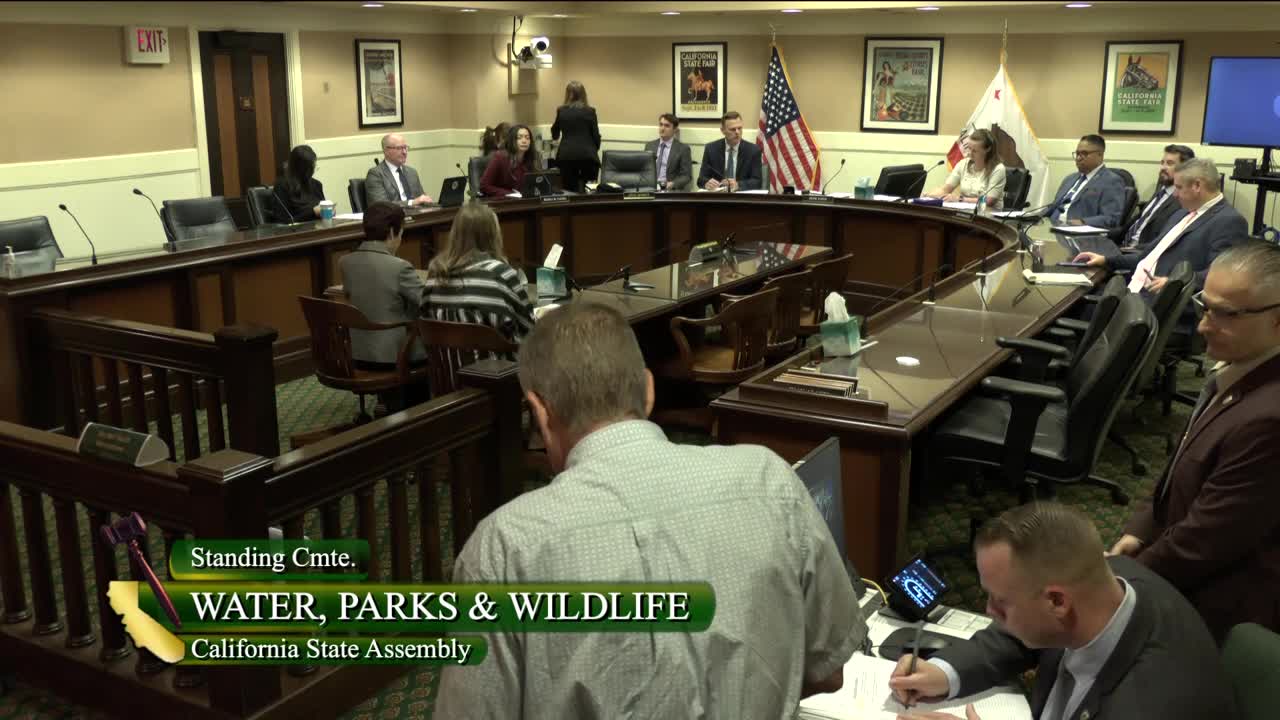 6MIN
Assembly Standing Committee on Water, Parks, and Wildlife
 45SEC
Senate Floor
 5MIN
Senate Standing Committee on Judiciary
 10MIN
Senate Standing Committee on Natural Resources and Water
Bill Author

Bill Co-Author(s):