SB 1076: General acute care hospitals: observation services.
- Session Year: 2015-2016
- House: Senate
- Latest Version Date: 2016-09-27
(1)Existing law establishes the State Department of Public Health and sets forth its powers and duties, including, but not limited to, the licensing and regulation of health facilities, including, but not limited to, general acute care hospitals. A violation of these provisions is a crime.
Existing law authorizes the department to issue a special permit authorizing a health facility to offer one or more special services when specified requirements are met. Existing law requires general acute care hospitals to apply for supplemental services approval and requires the department, upon issuance and renewal of a license for certain health facilities, to separately identify on the license each supplemental service.
This bill would require a general acute care hospital that provides observation services, as defined, to comply with the same licensed nurse-to-patient ratios as supplemental emergency services, as specified. The bill would require that a patient receiving observation services receive written notice, as prescribed, that his or her care is being provided on an outpatient basis, which may affect the patients health coverage reimbursement. The bill would require observation units to be identified with specified signage, and would clarify that a general acute care hospital providing services described in the bill would not be exempt from these requirements because the hospital identifies those services by a name or term other than that used in the bill. Because a violation of these provisions by a health facility would be a crime, the bill would impose a state-mandated local program.
(2)Existing law, the Health Data and Advisory Council Consolidation Act, requires every organization that operates, conducts, or maintains a health facility to make and file with the Office of Statewide Health Planning and Development (OSHPD) specified reports containing various financial and patient data. Existing law requires OSHPD to maintain a file of those reports in its Sacramento office and to compile and publish summaries of individual facility and aggregate data that do not contain patient-specific information for the purpose of public disclosure.
This bill would require OSHPD to include summaries of observation services data, upon request, in the data summaries maintained by OSHPD under the act.
(3)The California Constitution requires the state to reimburse local agencies and school districts for certain costs mandated by the state. Statutory provisions establish procedures for making that reimbursement.
This bill would provide that no reimbursement is required by this act for a specified reason.
(1)Existing law establishes the State Department of Public Health and sets forth its powers and duties, including, but not limited to, the licensing and regulation of health facilities, including, but not limited to, general acute care hospitals. A violation of these provisions is a crime.
Existing law authorizes the department to issue a special permit authorizing a health facility to offer one or more special services when specified requirements are met. Existing law requires general acute care hospitals to apply for supplemental services approval and requires the department, upon issuance and renewal of a license for certain health facilities, to separately identify on the license each supplemental service.
This bill would require a general acute care hospital that provides observation services, as defined, to comply with the same licensed nurse-to-patient ratios as supplemental emergency services, as specified. The bill would require that a patient receiving observation services receive written notice, as prescribed, that his or her care is being provided on an outpatient basis, which may affect the patients health coverage reimbursement. The bill would require observation units to be identified with specified signage, and would clarify that a general acute care hospital providing services described in the bill would not be exempt from these requirements because the hospital identifies those services by a name or term other than that used in the bill. Because a violation of these provisions by a health facility would be a crime, the bill would impose a state-mandated local program.
(2)Existing law, the Health Data and Advisory Council Consolidation Act, requires every organization that operates, conducts, or maintains a health facility to make and file with the Office of Statewide Health Planning and Development (OSHPD) specified reports containing various financial and patient data. Existing law requires OSHPD to maintain a file of those reports in its Sacramento office and to compile and publish summaries of individual facility and aggregate data that do not contain patient-specific information for the purpose of public disclosure.
This bill would require OSHPD to include summaries of observation services data, upon request, in the data summaries maintained by OSHPD under the act.
(3)The California Constitution requires the state to reimburse local agencies and school districts for certain costs mandated by the state. Statutory provisions establish procedures for making that reimbursement.
This bill would provide that no reimbursement is required by this act for a specified reason.
(1)Existing law establishes the State Department of Public Health and sets forth its powers and duties, including, but not limited to, the licensing and regulation of health facilities, including, but not limited to, general acute care hospitals. A violation of these provisions is a crime.
Existing law authorizes the department to issue a special permit authorizing a health facility to offer one or more special services when specified requirements are met. Existing law requires general acute care hospitals to apply for supplemental services approval and requires the department, upon issuance and renewal of a license for certain health facilities, to separately identify on the license each supplemental service.
This bill would require a general acute care hospital that provides observation services, as defined, to comply with the same licensed nurse-to-patient ratios as supplemental emergency services, as specified. The bill would require that a patient receiving observation services receive written notice, as prescribed, that his or her care is being provided on an outpatient basis, which may affect the patients health coverage reimbursement. The bill would require observation units to be identified with specified signage, and would clarify that a general acute care hospital providing services described in the bill would not be exempt from these requirements because the hospital identifies those services by a name or term other than that used in the bill. Because a violation of these provisions by a health facility would be a crime, the bill would impose a state-mandated local program.
(2)Existing law, the Health Data and Advisory Council Consolidation Act, requires every organization that operates, conducts, or maintains a health facility to make and file with the Office of Statewide Health Planning and Development (OSHPD) specified reports containing various financial and patient data. Existing law requires OSHPD to maintain a file of those reports in its Sacramento office and to compile and publish summaries of individual facility and aggregate data that do not contain patient-specific information for the purpose of public disclosure.
This bill would require OSHPD to include summaries of observation services data, upon request, in the data summaries maintained by OSHPD under the act.
(3)The California Constitution requires the state to reimburse local agencies and school districts for certain costs mandated by the state. Statutory provisions establish procedures for making that reimbursement.
This bill would provide that no reimbursement is required by this act for a specified reason.
(1)Existing law establishes the State Department of Public Health and sets forth its powers and duties, including, but not limited to, the licensing and regulation of health facilities, including, but not limited to, general acute care hospitals. A violation of these provisions is a crime.
Existing law authorizes the department to issue a special permit authorizing a health facility to offer one or more special services when specified requirements are met. Existing law requires general acute care hospitals to apply for supplemental services approval and requires the department, upon issuance and renewal of a license for certain health facilities, to separately identify on the license each supplemental service.
This bill would require a general acute care hospital that provides observation services, as defined, to comply with the same licensed nurse-to-patient ratios as supplemental emergency services, as specified. The bill would require that a patient receiving observation services receive written notice, as prescribed, that his or her care is being provided on an outpatient basis, which may affect the patients health coverage reimbursement. The bill would require observation units to be identified with specified signage, and would clarify that a general acute care hospital providing services described in the bill would not be exempt from these requirements because the hospital identifies those services by a name or term other than that used in the bill. Because a violation of these provisions by a health facility would be a crime, the bill would impose a state-mandated local program.
(2)Existing law requires a hospital to report specified summary financial and utilization data to the Office of Statewide Health Planning and Development (OSHPD) within 45 days of the end of every calendar quarter.
This bill would require hospitals to include certain data relating to observation service visits and total observation service gross revenues in the reports filed with OSHPD.
(2)Existing law, the Health Data and Advisory Council Consolidation Act, requires every organization that operates, conducts, or maintains a health facility to make and file with the Office of Statewide Health Planning and Development (OSHPD) specified reports containing various financial and patient data. Existing law requires OSHPD to maintain a file of those reports in its Sacramento office and to compile and publish summaries of individual facility and aggregate data that do not contain patient-specific information for the purpose of public disclosure.
This bill would require OSHPD to include summaries of observation services data, upon request, in the data summaries maintained by OSHPD under the act.
(3)The California Constitution requires the state to reimburse local agencies and school districts for certain costs mandated by the state. Statutory provisions establish procedures for making that reimbursement.
This bill would provide that no reimbursement is required by this act for a specified reason.
(1)Existing law establishes the State Department of Public Health and sets forth its powers and duties, including, but not limited to, the licensing and regulation of health facilities, including, but not limited to, general acute care hospitals. A violation of these provisions is a crime.
Existing law authorizes the department to issue a special permit authorizing a health facility to offer one or more special services when specified requirements are met. Existing law requires general acute care hospitals to apply for supplemental services approval and requires the department, upon issuance and renewal of a license for certain health facilities, to separately identify on the license each supplemental service.
This bill would require a general acute care hospital that provides observation services, as defined, to comply with the same staffing standards licensed nurse-to-patient ratios as supplemental emergency services, as specified. The bill would require that a patient receiving observation services receive written notice immediately upon admission for observation services or placement into observation status, or immediately following a change from inpatient status to observation status, notice, as prescribed, that his or her care is being provided on an outpatient basis. basis, which may affect the patients health coverage reimbursement. The bill would require observation units to be identified with specified signage, and would clarify that a general acute care hospital providing services described in the bill would not be exempt from these requirements because the hospital identifies those services by a name or term other than that used in the bill. Because a violation of these provisions by a health facility would be a crime, the bill would impose a state-mandated local program.
(2)Existing law requires a hospital to report specified summary financial and utilization data to the Office of Statewide Health Planning and Development (OSHPD) within 45 days of the end of every calendar quarter.
This bill would require hospitals to include certain data relating to observation service visits and total observation service gross revenues in the reports filed with OSHPD.
(3)The California Constitution requires the state to reimburse local agencies and school districts for certain costs mandated by the state. Statutory provisions establish procedures for making that reimbursement.
This bill would provide that no reimbursement is required by this act for a specified reason.
(1)Existing law establishes the State Department of Public Health and sets forth its powers and duties, including, but not limited to, the licensing and regulation of health facilities, including, but not limited to, general acute care hospitals. A violation of these provisions is a crime.
Existing law authorizes the department to issue a special permit authorizing a health facility to offer one or more special services when specified requirements are met. Existing law requires general acute care hospitals to apply for supplemental services approval and requires the department, upon issuance and renewal of a license for certain health facilities, to separately identify on the license each supplemental service.
This bill would require a general acute care hospital that provides observation services, as defined, to comply with the same staffing standards as supplemental emergency services, as specified. The bill would require that a patient receiving observation services receive written notice immediately upon admission for observation services or placement into observation status, or immediately following a change from inpatient status to observation status, that his or her care is being provided on an outpatient basis. The bill would require observation units to be identified with specified signage, and would clarify that a general acute care hospital providing services described in the bill would not be exempt from these requirements because the hospital identifies those services by a name or term other than that used in the bill. Because a violation of these provisions by a health facility would be a crime, the bill would impose a state-mandated local program.
(2)Existing law requires a hospital to report specified summary financial and utilization data to the Office of Statewide Health Planning and Development (OSHPD) within 45 days of the end of every calendar quarter.
This bill would require hospitals to include certain data relating to observation service visits and total observation service gross revenues in the reports filed with OSHPD.
(3)The California Constitution requires the state to reimburse local agencies and school districts for certain costs mandated by the state. Statutory provisions establish procedures for making that reimbursement.
This bill would provide that no reimbursement is required by this act for a specified reason.
(a)For purposes of this chapter, observation services means outpatient services provided by a general acute care hospital and that have been ordered by a provider, to those patients who have unstable or uncertain conditions potentially serious enough to warrant close observation, but not so serious as to warrant inpatient admission to the hospital. Observation services may include the use of a bed, monitoring by nursing and other staff, and any other services that are reasonable and necessary to safely evaluate a patients condition or determine the need for a possible inpatient admission to the hospital.
(b)When a patient in an inpatient unit of a hospital or in an observation unit, as defined in subdivision (c), is receiving observation services, or following a change in a patients status from inpatient to observation, the patient shall receive written notice, as soon as practicable, that he or she is on observation status. The notice shall state that while on observation status, the patients care is being provided on an outpatient basis, which may affect his or her health care coverage reimbursement.
(c)For purposes of this chapter, observation unit means an area in which observation services are provided in a setting outside of any inpatient unit and that is not part of an emergency department of a general acute care hospital. A hospital may establish one or more observation units that shall be marked with signage identifying the observation unit area as an outpatient area. The signage shall use the term outpatient in the title of the designated area to indicate clearly to all patients and family members that the observation services provided in the center are not inpatient services. Identifying an observation unit by a name or term other than that used in this subdivision does not exempt the general acute care hospital from compliance with the requirements of this section.
(d)Notwithstanding subdivisions (d) and (e) of Section 1275, an observation unit shall comply with the same licensed nurse-to-patient ratios as supplemental emergency services. This subdivision is not intended to alter or amend the effect of any regulation adopted pursuant to Section 1276.4 as of the effective date of the act that added this subdivision.
SEC. 2.Section 128765 of the Health and Safety Code is amended to read:128765.(a)The office shall maintain a file of all the reports filed under this chapter at its Sacramento office. Subject to any rules the office may prescribe, these reports shall be produced and made available for inspection upon the demand of any person, and shall also be posted on its Internet Web site, with the exception of discharge and encounter data that shall be available for public inspection unless the office determines, pursuant to applicable law, that an individual patients rights of confidentiality would be violated.
(b)The reports published pursuant to Section 128745 shall include an executive summary, written in plain English to the maximum extent practicable, that shall include, but not be limited to, a discussion of findings, conclusions, and trends concerning the overall quality of medical outcomes, including a comparison to reports from prior years, for the procedure or condition studied by the report. The office shall disseminate the reports as widely as practical to interested parties, including, but not limited to, hospitals, providers, the media, purchasers of health care, consumer or patient advocacy groups, and individual consumers. The reports shall be posted on the offices Internet Web site.
(c)Copies certified by the office as being true and correct copies of reports properly filed with the office pursuant to this chapter, together with summaries, compilations, or supplementary reports prepared by the office, shall be introduced as evidence, where relevant, at any hearing, investigation, or other proceeding held, made, or taken by any state, county, or local governmental agency, board, or commission that participates as a purchaser of health facility services pursuant to the provisions of a publicly financed state or federal health care program. Each of these state, county, or local governmental agencies, boards, and commissions shall weigh and consider the reports made available to it pursuant to this subdivision in its formulation and implementation of policies, regulations, or procedures regarding reimbursement methods and rates in the administration of these publicly financed programs.
(d)The office shall compile and publish summaries of individual facility and aggregate data that do not contain patient-specific information for the purpose of public disclosure. Upon request, these shall include summaries of observation services data, in a format prescribed by the office. The summaries shall be posted on the offices Internet Web site. The office may initiate and conduct studies as it determines will advance the purposes of this chapter.
(e)In order to ensure that accurate and timely data are available to the public in useful formats, the office shall establish a public liaison function. The public liaison shall provide technical assistance to the general public on the uses and applications of individual and aggregate health facility data and shall provide the director with an annual report on changes that can be made to improve the publics access to data.
SEC. 3.No reimbursement is required by this act pursuant to Section 6 of Article XIIIB of the California Constitution because the only costs that may be incurred by a local agency or school district will be incurred because this act creates a new crime or infraction, eliminates a crime or infraction, or changes the penalty for a crime or infraction, within the meaning of Section 17556 of the Government Code, or changes the definition of a crime within the meaning of Section 6 of Article XIIIB of the California Constitution.
(a)For purposes of this chapter, observation services means outpatient services provided by a general acute care hospital and that have been ordered by a provider, to those patients who have unstable or uncertain conditions potentially serious enough to warrant close observation, but not so serious as to warrant inpatient admission to the hospital. Observation services may include the use of a bed, monitoring by nursing and other staff, and any other services that are reasonable and necessary to safely evaluate a patients condition or determine the need for a possible inpatient admission to the hospital.
(b)When a patient in an inpatient unit of a hospital or in an observation unit, as defined in subdivision (c), is receiving observation services, or following a change in a patients status from inpatient to observation, the patient shall receive written notice, as soon as practicable, that he or she is on observation status. The notice shall state that while on observation status, the patients care is being provided on an outpatient basis, which may affect his or her health care coverage reimbursement.
(c)For purposes of this chapter, observation unit means an area in which observation services are provided in a setting outside of any inpatient unit and that is not part of an emergency department of a general acute care hospital. A hospital may establish one or more observation units that shall be marked with signage identifying the observation unit area as an outpatient area. The signage shall use the term outpatient in the title of the designated area to indicate clearly to all patients and family members that the observation services provided in the center are not inpatient services. Identifying an observation unit by a name or term other than that used in this subdivision does not exempt the general acute care hospital from compliance with the requirements of this section.
(d)Notwithstanding subdivisions (d) and (e) of Section 1275, an observation unit shall comply with the same licensed nurse-to-patient ratios as supplemental emergency services. This subdivision is not intended to alter or amend the effect of any regulation adopted pursuant to Section 1276.4 as of the effective date of the act that added this subdivision.
SEC. 2.Section 128765 of the Health and Safety Code is amended to read:128765.(a)The office shall maintain a file of all the reports filed under this chapter at its Sacramento office. Subject to any rules the office may prescribe, these reports shall be produced and made available for inspection upon the demand of any person, and shall also be posted on its Internet Web site, with the exception of discharge and encounter data that shall be available for public inspection unless the office determines, pursuant to applicable law, that an individual patients rights of confidentiality would be violated.
(b)The reports published pursuant to Section 128745 shall include an executive summary, written in plain English to the maximum extent practicable, that shall include, but not be limited to, a discussion of findings, conclusions, and trends concerning the overall quality of medical outcomes, including a comparison to reports from prior years, for the procedure or condition studied by the report. The office shall disseminate the reports as widely as practical to interested parties, including, but not limited to, hospitals, providers, the media, purchasers of health care, consumer or patient advocacy groups, and individual consumers. The reports shall be posted on the offices Internet Web site.
(c)Copies certified by the office as being true and correct copies of reports properly filed with the office pursuant to this chapter, together with summaries, compilations, or supplementary reports prepared by the office, shall be introduced as evidence, where relevant, at any hearing, investigation, or other proceeding held, made, or taken by any state, county, or local governmental agency, board, or commission that participates as a purchaser of health facility services pursuant to the provisions of a publicly financed state or federal health care program. Each of these state, county, or local governmental agencies, boards, and commissions shall weigh and consider the reports made available to it pursuant to this subdivision in its formulation and implementation of policies, regulations, or procedures regarding reimbursement methods and rates in the administration of these publicly financed programs.
(d)The office shall compile and publish summaries of individual facility and aggregate data that do not contain patient-specific information for the purpose of public disclosure. Upon request, these shall include summaries of observation services data, in a format prescribed by the office. The summaries shall be posted on the offices Internet Web site. The office may initiate and conduct studies as it determines will advance the purposes of this chapter.
(e)In order to ensure that accurate and timely data are available to the public in useful formats, the office shall establish a public liaison function. The public liaison shall provide technical assistance to the general public on the uses and applications of individual and aggregate health facility data and shall provide the director with an annual report on changes that can be made to improve the publics access to data.
SEC. 3.No reimbursement is required by this act pursuant to Section 6 of Article XIIIB of the California Constitution because the only costs that may be incurred by a local agency or school district will be incurred because this act creates a new crime or infraction, eliminates a crime or infraction, or changes the penalty for a crime or infraction, within the meaning of Section 17556 of the Government Code, or changes the definition of a crime within the meaning of Section 6 of Article XIIIB of the California Constitution.
(a)For purposes of this chapter, observation services means outpatient services provided by a general acute care hospital and that have been ordered by a provider, to those patients who have unstable or uncertain conditions potentially serious enough to warrant close observation, but not so serious as to warrant inpatient admission to the hospital. Observation services may include the use of a bed, monitoring by nursing and other staff, and any other services that are reasonable and necessary to safely evaluate a patients condition or determine the need for a possible inpatient admission to the hospital.
(b)When a patient in an inpatient unit of a hospital or in an observation unit, as defined in subdivision (c), is receiving observation services, or following a change in a patients status from inpatient to observation, the patient shall receive written notice, as soon as practicable, that he or she is on observation status. The notice shall state that while on observation status, the patients care is being provided on an outpatient basis, which may affect his or her health care coverage reimbursement.
(c)For purposes of this chapter, observation unit means an area in which observation services are provided in a setting outside of any inpatient unit and that is not part of an emergency department of a general acute care hospital. A hospital may establish one or more observation units that shall be marked with signage identifying the observation unit area as an outpatient area. The signage shall use the term outpatient in the title of the designated area to indicate clearly to all patients and family members that the observation services provided in the center are not inpatient services. Identifying an observation unit by a name or term other than that used in this subdivision does not exempt the general acute care hospital from compliance with the requirements of this section.
(d)Notwithstanding subdivisions (d) and (e) of Section 1275, an observation unit shall comply with the same licensed nurse-to-patient ratios as supplemental emergency services. This subdivision is not intended to alter or amend the effect of any regulation adopted pursuant to Section 1276.4 as of the effective date of the act that added this subdivision.
SEC. 2.Section 128765 of the Health and Safety Code is amended to read:128765.(a)The office shall maintain a file of all the reports filed under this chapter at its Sacramento office. Subject to any rules the office may prescribe, these reports shall be produced and made available for inspection upon the demand of any person, and shall also be posted on its Internet Web site, with the exception of discharge and encounter data that shall be available for public inspection unless the office determines, pursuant to applicable law, that an individual patients rights of confidentiality would be violated.
(b)The reports published pursuant to Section 128745 shall include an executive summary, written in plain English to the maximum extent practicable, that shall include, but not be limited to, a discussion of findings, conclusions, and trends concerning the overall quality of medical outcomes, including a comparison to reports from prior years, for the procedure or condition studied by the report. The office shall disseminate the reports as widely as practical to interested parties, including, but not limited to, hospitals, providers, the media, purchasers of health care, consumer or patient advocacy groups, and individual consumers. The reports shall be posted on the offices Internet Web site.
(c)Copies certified by the office as being true and correct copies of reports properly filed with the office pursuant to this chapter, together with summaries, compilations, or supplementary reports prepared by the office, shall be introduced as evidence, where relevant, at any hearing, investigation, or other proceeding held, made, or taken by any state, county, or local governmental agency, board, or commission that participates as a purchaser of health facility services pursuant to the provisions of a publicly financed state or federal health care program. Each of these state, county, or local governmental agencies, boards, and commissions shall weigh and consider the reports made available to it pursuant to the provisions of this subdivision in its formulation and implementation of policies, regulations, or procedures regarding reimbursement methods and rates in the administration of these publicly financed programs.
(d)The office shall compile and publish summaries of individual facility and aggregate data that do not contain patient-specific information for the purpose of public disclosure. Upon request, these shall include summaries of observation services data. data, in a format prescribed by the office. The summaries shall be posted on the offices Internet Web site. The office may initiate and conduct studies as it determines will advance the purposes of this chapter.
(e)In order to assure ensure that accurate and timely data are available to the public in useful formats, the office shall establish a public liaison function. The public liaison shall provide technical assistance to the general public on the uses and applications of individual and aggregate health facility data and shall provide the director with an annual report on changes that can be made to improve the publics access to data.
SEC. 3.No reimbursement is required by this act pursuant to Section 6 of Article XIIIB of the California Constitution because the only costs that may be incurred by a local agency or school district will be incurred because this act creates a new crime or infraction, eliminates a crime or infraction, or changes the penalty for a crime or infraction, within the meaning of Section 17556 of the Government Code, or changes the definition of a crime within the meaning of Section 6 of Article XIIIB of the California Constitution.
(a)For purposes of this chapter, observation services means outpatient services provided by a general acute care hospital and that have been ordered by a provider, to those patients who have unstable or uncertain conditions potentially serious enough to warrant close observation, but not so serious as to warrant inpatient admission to the hospital. Observation services may include the use of a bed, monitoring by nursing and other staff, and any other services that are reasonable and necessary to safely evaluate a patients condition or determine the need for a possible inpatient admission to the hospital.
(b)When a patient in an inpatient unit of a hospital or in an observation unit, as defined in subdivision (c), is receiving observation services, or following a change in a patients status from inpatient to observation, the patient shall receive written notice, as soon as practicable, that he or she is on observation status. The notice shall state that while on observation status, the patients care is being provided on an outpatient basis, which may affect his or her health care coverage reimbursement.
(c)For purposes of this chapter, observation unit means an area in which observation services are provided in a setting outside of any inpatient unit and that is not part of an emergency department of a general acute care hospital. A hospital may establish one or more observation units that shall be marked with signage identifying the observation unit area as an outpatient area. The signage shall use the term outpatient in the title of the designated area to indicate clearly to all patients and family members that the observation services provided in the center are not inpatient services. Identifying an observation unit by a name or term other than that used in this subdivision does not exempt the general acute care hospital from compliance with the requirements of this section.
(d)Notwithstanding subdivisions (d) and (e) of Section 1275, an observation unit shall comply with the same licensed nurse-to-patient ratios as supplemental emergency services. This subdivision is not intended to alter or amend the effect of any regulation adopted pursuant to Section 1276.4 as of the effective date of the act that added this subdivision.
SEC. 2.Section 128740 of the Health and Safety Code is amended to read:128740.(a)Commencing with the first calendar quarter of 1992, the following summary financial and utilization data shall be reported to the office by each hospital within 45 days of the end of every calendar quarter. Adjusted reports reflecting changes as a result of audited financial statements may be filed within four months of the close of the hospitals fiscal or calendar year. The quarterly summary financial and utilization data shall conform to the uniform description of accounts as contained in the Accounting and Reporting Manual for California Hospitals and shall include all of the following:
(1)Number of licensed beds.
(2)Average number of available beds.
(3)Average number of staffed beds.
(4)Number of discharges.
(5)Number of inpatient days.
(6)Number of outpatient visits, excluding observation service visits.
(7)Number of observation service visits and number of hours of services provided.
(8)Total operating expenses.
(9)Total inpatient gross revenues by payer, including Medicare, Medi-Cal, county indigent programs, other third parties, and other payers.
(10)Total outpatient gross revenues by payer, including Medicare, Medi-Cal, county indigent programs, other third parties, and other payers.
(11)Total observation service gross revenues by payer, including Medicare, Medi-Cal, county indigent programs, other third parties, and other payers.
(12)Deductions from revenue in total and by component, including the following: Medicare contractual adjustments, Medi-Cal contractual adjustments, and county indigent program contractual adjustments, other contractual adjustments, bad debts, charity care, restricted donations and subsidies for indigents, support for clinical teaching, teaching allowances, and other deductions.
(13)Total capital expenditures.
(14)Total net fixed assets.
(15)Total number of inpatient days, outpatient visits excluding observation services, observation services, and discharges by payer, including Medicare, Medi-Cal, county indigent programs, other third parties, self-pay, charity, and other payers.
(16)Total net patient revenues by payer including Medicare, Medi-Cal, county indigent programs, other third parties, and other payers.
(17)Other operating revenue.
(18)Nonoperating revenue net of nonoperating expenses.
(b)Hospitals reporting pursuant to subdivision (d) of Section 128760 may provide the items in paragraphs (8), (9), (10), (12), (16), and (18) of subdivision (a) on a group basis, as described in subdivision (f) of Section 128760.
(c)The office shall make available to any person, at cost, a hard copy of any hospital report made pursuant to this section and in addition to hard copies, shall make available at cost, a computer tape of all reports made pursuant to this section within 105 days of the end of every calendar quarter.
(d)The office shall adopt guidelines, by regulation, for the identification, assessment, and reporting of charity care services. In establishing the guidelines, the office shall consider the principles and practices recommended by professional health care industry accounting associations for differentiating between charity services and bad debts. The office shall further conduct the onsite validations of health facility accounting and reporting procedures and records as are necessary to ensure that reported data are consistent with regulatory guidelines.
SEC. 2.Section 128765 of the Health and Safety Code is amended to read:128765.(a)The office shall maintain a file of all the reports filed under this chapter at its Sacramento office. Subject to any rules the office may prescribe, these reports shall be produced and made available for inspection upon the demand of any person, and shall also be posted on its Web site, with the exception of discharge and encounter data that shall be available for public inspection unless the office determines, pursuant to applicable law, that an individual patients rights of confidentiality would be violated.
(b)The reports published pursuant to Section 128745 shall include an executive summary, written in plain English to the maximum extent practicable, that shall include, but not be limited to, a discussion of findings, conclusions, and trends concerning the overall quality of medical outcomes, including a comparison to reports from prior years, for the procedure or condition studied by the report. The office shall disseminate the reports as widely as practical to interested parties, including, but not limited to, hospitals, providers, the media, purchasers of health care, consumer or patient advocacy groups, and individual consumers. The reports shall be posted on the offices Internet Web site.
(c)Copies certified by the office as being true and correct copies of reports properly filed with the office pursuant to this chapter, together with summaries, compilations, or supplementary reports prepared by the office, shall be introduced as evidence, where relevant, at any hearing, investigation, or other proceeding held, made, or taken by any state, county, or local governmental agency, board, or commission that participates as a purchaser of health facility services pursuant to the provisions of a publicly financed state or federal health care program. Each of these state, county, or local governmental agencies, boards, and commissions shall weigh and consider the reports made available to it pursuant to the provisions of this subdivision in its formulation and implementation of policies, regulations, or procedures regarding reimbursement methods and rates in the administration of these publicly financed programs.
(d)The office shall compile and publish summaries of individual facility and aggregate data that do not contain patient-specific information for the purpose of public disclosure. Upon request, these shall include summaries of observation services data. The summaries shall be posted on the offices Internet Web site. The office may initiate and conduct studies as it determines will advance the purposes of this chapter.
(e)In order to assure that accurate and timely data are available to the public in useful formats, the office shall establish a public liaison function. The public liaison shall provide technical assistance to the general public on the uses and applications of individual and aggregate health facility data and shall provide the director with an annual report on changes that can be made to improve the publics access to data.
SEC. 3.No reimbursement is required by this act pursuant to Section 6 of Article XIIIB of the California Constitution because the only costs that may be incurred by a local agency or school district will be incurred because this act creates a new crime or infraction, eliminates a crime or infraction, or changes the penalty for a crime or infraction, within the meaning of Section 17556 of the Government Code, or changes the definition of a crime within the meaning of Section 6 of Article XIIIB of the California Constitution.
(a)For purposes of this chapter, observation services means outpatient services provided by a general acute care hospital, hospital and that have been ordered by a provider, to those patients who have unstable or uncertain conditions potentially serious enough to warrant close observation, but not so serious as to warrant inpatient admission to the hospital. Observation services may include the use of a bed, monitoring by nursing and other staff, and any other services that are reasonable and necessary to safely evaluate a patients condition or determine the need for a possible inpatient admission to the hospital.
(b)Notwithstanding subdivisions (d) and (e) of Section 1275, observation services provided by the general acute care hospital in an outpatient observation unit, including the services provided in a freestanding physical plant, as defined in subdivision (h) of Section 1275, shall comply with the same staffing standards, including, but not limited to, licensed nurse-to-patient ratios, as supplemental emergency services.
(c)A patient receiving observation services shall receive written notice immediately upon admission for observation services or placement into observation status, or immediately following a change from inpatient status to observation status, that his or her care is being provided on an outpatient basis, and that this may affect reimbursement by Medicare, Medi-Cal, or private payers of health care services, or cost-sharing arrangements through his or her health care coverage.
(d)Observation units not provided in inpatient beds or attached to emergency services
(b)When a patient in an inpatient unit of a hospital or in an observation unit, as defined in subdivision (c), is receiving observation services, or following a change in a patients status from inpatient to observation, the patient shall receive written notice, as soon as practicable, that he or she is on observation status. The notice shall state that while on observation status, the patients care is being provided on an outpatient basis, which may affect his or her health care coverage reimbursement.
(c)For purposes of this chapter, observation unit means an area in which observation services are provided in a setting outside of any inpatient unit and that is not part of an emergency department of a general acute care hospital. A hospital may establish one or more observation units that shall be marked with signage identifying the observation unit area as an outpatient area. The signage shall use the term outpatient in the title of the designated area to indicate clearly to all patients and family members that the observation services provided in the center are not inpatient services. Identifying an observation unit by a name or term other than that used in this subdivision does not exempt the general acute care hospital from compliance with the requirements of this section.
(e)Observation services shall be deemed outpatient or ambulatory services that are revenue-producing cost centers associated with hospital-based or satellite services locations that emphasize outpatient care. Identifying an observation unit by a name or term other than that used in this subdivision does not exempt the general acute care hospital from compliance with the requirements of this section.
(d)Notwithstanding subdivisions (d) and (e) of Section 1275, an observation unit shall comply with the same licensed nurse-to-patient ratios as supplemental emergency services. This subdivision is not intended to alter or amend the effect of any regulation adopted pursuant to Section 1276.4 as of the effective date of the act that added this subdivision.
SEC. 2.Section 128740 of the Health and Safety Code is amended to read:128740.(a)Commencing with the first calendar quarter of 1992, the following summary financial and utilization data shall be reported to the office by each hospital within 45 days of the end of every calendar quarter. Adjusted reports reflecting changes as a result of audited financial statements may be filed within four months of the close of the hospitals fiscal or calendar year. The quarterly summary financial and utilization data shall conform to the uniform description of accounts as contained in the Accounting and Reporting Manual for California Hospitals and shall include all of the following:
(1)Number of licensed beds.
(2)Average number of available beds.
(3)Average number of staffed beds.
(4)Number of discharges.
(5)Number of inpatient days.
(6)Number of outpatient visits, excluding observation service visits.
(7)Number of observation service visits and number of hours of services provided.
(8)Total operating expenses.
(9)Total inpatient gross revenues by payer, including Medicare, Medi-Cal, county indigent programs, other third parties, and other payers.
(10)Total outpatient gross revenues by payer, including Medicare, Medi-Cal, county indigent programs, other third parties, and other payers.
(11)Total observation service gross revenues by payer, including Medicare, Medi-Cal, county indigent programs, other third parties, and other payers.
(12)Deductions from revenue in total and by component, including the following: Medicare contractual adjustments, Medi-Cal contractual adjustments, and county indigent program contractual adjustments, other contractual adjustments, bad debts, charity care, restricted donations and subsidies for indigents, support for clinical teaching, teaching allowances, and other deductions.
(13)Total capital expenditures.
(14)Total net fixed assets.
(15)Total number of inpatient days, outpatient visits excluding observation services, observation services, and discharges by payer, including Medicare, Medi-Cal, county indigent programs, other third parties, self-pay, charity, and other payers.
(16)Total net patient revenues by payer including Medicare, Medi-Cal, county indigent programs, other third parties, and other payers.
(17)Other operating revenue.
(18)Nonoperating revenue net of nonoperating expenses.
(b)Hospitals reporting pursuant to subdivision (d) of Section 128760 may provide the items in paragraphs (8), (9), (10), (12), (16), and (18) of subdivision (a) on a group basis, as described in subdivision (f) of Section 128760.
(c)The office shall make available to any person, at cost, a hard copy of any hospital report made pursuant to this section and in addition to hard copies, shall make available at cost, a computer tape of all reports made pursuant to this section within 105 days of the end of every calendar quarter.
(d)The office shall adopt guidelines, by regulation, for the identification, assessment, and reporting of charity care services. In establishing the guidelines, the office shall consider the principles and practices recommended by professional health care industry accounting associations for differentiating between charity services and bad debts. The office shall further conduct the onsite validations of health facility accounting and reporting procedures and records as are necessary to ensure that reported data are consistent with regulatory guidelines.
SEC. 3.No reimbursement is required by this act pursuant to Section 6 of Article XIIIB of the California Constitution because the only costs that may be incurred by a local agency or school district will be incurred because this act creates a new crime or infraction, eliminates a crime or infraction, or changes the penalty for a crime or infraction, within the meaning of Section 17556 of the Government Code, or changes the definition of a crime within the meaning of Section 6 of Article XIIIB of the California Constitution.
(a)For purposes of this chapter, observation services means outpatient services provided by a general acute care hospital, to those patients who have unstable or uncertain conditions potentially serious enough to warrant close observation, but not so serious as to warrant inpatient admission to the hospital. Observation services may include the use of a bed, monitoring by nursing and other staff, and any other services that are reasonable and necessary to safely evaluate a patients condition or determine the need for a possible inpatient admission to the hospital.
(b)Notwithstanding subdivisions (d) and (e) of Section 1275, observation services provided by the general acute care hospital in an outpatient observation unit, including the services provided in a freestanding physical plant, as defined in subdivision (h) of Section 1275, shall comply with the same staffing standards, including, but not limited to, licensed nurse-to-patient ratios, as supplemental emergency services.
(c)A patient receiving observation services shall receive written notice immediately upon admission for observation services or placement into observation status, or immediately following a change from inpatient status to observation status, that his or her care is being provided on an outpatient basis, and that this may affect reimbursement by Medicare, Medi-Cal, or private payers of health care services, or cost-sharing arrangements through his or her health care coverage.
(d)Observation units not provided in inpatient beds or attached to emergency services shall be marked with signage identifying the area as an outpatient area. The signage shall use the term outpatient in the title of the designated area to indicate clearly to all patients and family members that the observation services provided in the center are not inpatient services.
(e)Observation services shall be deemed outpatient or ambulatory services that are revenue-producing cost centers associated with hospital-based or satellite services locations that emphasize outpatient care. Identifying an observation unit by a name or term other than that used in this subdivision does not exempt the general acute care hospital from compliance with the requirements of this section.
SEC. 2.Section 128740 of the Health and Safety Code is amended to read:128740.(a)Commencing with the first calendar quarter of 1992, the following summary financial and utilization data shall be reported to the office by each hospital within 45 days of the end of every calendar quarter. Adjusted reports reflecting changes as a result of audited financial statements may be filed within four months of the close of the hospitals fiscal or calendar year. The quarterly summary financial and utilization data shall conform to the uniform description of accounts as contained in the Accounting and Reporting Manual for California Hospitals and shall include all of the following:
(1)Number of licensed beds.
(2)Average number of available beds.
(3)Average number of staffed beds.
(4)Number of discharges.
(5)Number of inpatient days.
(6)Number of outpatient visits. visits, excluding observation service visits.
(7)Number of observation service visits and number of hours of services provided.
(7)
(8)Total operating expenses.
(8)
(9)Total inpatient gross revenues by payer, including Medicare, Medi-Cal, county indigent programs, other third parties, and other payers.
(9)
(10)Total outpatient gross revenues by payer, including Medicare, Medi-Cal, county indigent programs, other third parties, and other payers.
(11)Total observation service gross revenues by payer, including Medicare, Medi-Cal, county indigent programs, other third parties, and other payers.
(10)
(12)Deductions from revenue in total and by component, including the following: Medicare contractual adjustments, Medi-Cal contractual adjustments, and county indigent program contractual adjustments, other contractual adjustments, bad debts, charity care, restricted donations and subsidies for indigents, support for clinical teaching, teaching allowances, and other deductions.
(11)
(13)Total capital expenditures.
(12)
(14)Total net fixed assets.
(13)
(15)Total number of inpatient days, outpatient visits, visits excluding observation services, observation services, and discharges by payer, including Medicare, Medi-Cal, county indigent programs, other third parties, self-pay, charity, and other payers.
(14)
(16)Total net patient revenues by payer including Medicare, Medi-Cal, county indigent programs, other third parties, and other payers.
(15)
(17)Other operating revenue.
(16)
(18)Nonoperating revenue net of nonoperating expenses.
(b)Hospitals reporting pursuant to subdivision (d) of Section 128760 may provide the items in paragraphs (7), (8), (9), (10), (14), (15), and (16) (8), (9), (10), (12), (16), and (18) of subdivision (a) on a group basis, as described in subdivision (d) (f) of Section 128760.
(c)The office shall make available at cost, to any person, to any person, at cost, a hard copy of any hospital report made pursuant to this section and in addition to hard copies, shall make available at cost, a computer tape of all reports made pursuant to this section within 105 days of the end of every calendar quarter.
(d)The office shall adopt by regulation guidelines guidelines, by regulation, for the identification, assessment, and reporting of charity care services. In establishing the guidelines, the office shall consider the principles and practices recommended by professional health care industry accounting associations for differentiating between charity services and bad debts. The office shall further conduct the onsite validations of health facility accounting and reporting procedures and records as are necessary to assure ensure that reported data are consistent with regulatory guidelines.
This section shall become operative January 1, 1992.
SEC. 3.No reimbursement is required by this act pursuant to Section 6 of Article XIIIB of the California Constitution because the only costs that may be incurred by a local agency or school district will be incurred because this act creates a new crime or infraction, eliminates a crime or infraction, or changes the penalty for a crime or infraction, within the meaning of Section 17556 of the Government Code, or changes the definition of a crime within the meaning of Section 6 of Article XIIIB of the California Constitution.
|
Date
|
Status
|
|---|---|
| Aug 30, 2016 | Enrolled and presented to the Governor at 1:30 p.m. |
| Aug 24, 2016 | Assembly amendments concurred in. (Ayes 34. Noes 5.) Ordered to engrossing and enrolling. |
| Aug 22, 2016 | Read third time. Passed. (Ayes 65. Noes 12. Page 6016.) Ordered to the Senate. |
| Aug 22, 2016 | In Senate. Concurrence in Assembly amendments pending. |
| Aug 22, 2016 | Read third time. Passed. Ordered to the Senate. |
| Aug 18, 2016 | Ordered to third reading. |
| Aug 18, 2016 | Read third time and amended. |
| Aug 4, 2016 | Read second time. Ordered to third reading. |
| Aug 3, 2016 | From committee: Do pass. (Ayes 16. Noes 4.) (August 3). |
| Aug 1, 2016 | From committee with author's amendments. Read second time and amended. Re-referred to Com. on APPR. |
| Jun 29, 2016 | From committee: Do pass and re-refer to Com. on APPR. (Ayes 16. Noes 2.) (June 28). Re-referred to Com. on APPR. |
| May 19, 2016 | Referred to Com. on HEALTH. |
| May 12, 2016 | Read third time. Passed. (Ayes 32. Noes 5. Page 3842.) Ordered to the Assembly. |
| May 12, 2016 | In Assembly. Read first time. Held at Desk. |
| May 12, 2016 | Read third time. Passed. (Ayes 32. Noes 5.) Ordered to the Assembly. |
| May 3, 2016 | Read second time. Ordered to third reading. |
| May 2, 2016 | From committee: Do pass. (Ayes 6. Noes 1. Page 3741.) (May 2). |
| May 2, 2016 | From committee: Do pass. (Ayes 6. Noes 1.) (May 2). |
| Apr 22, 2016 | Set for hearing May 2. |
| Apr 18, 2016 | Read second time and amended. Re-referred to Com. on APPR. |
| Apr 14, 2016 | From committee: Do pass as amended and re-refer to Com. on APPR. (Ayes 8. Noes 1. Page 3559.) (April 13). |
| Apr 14, 2016 | From committee: Do pass as amended and re-refer to Com. on APPR. (Ayes 8. Noes 1.) (April 13). |
| Apr 5, 2016 | Set for hearing April 13. |
| Feb 25, 2016 | Referred to Com. on HEALTH. |
| Feb 17, 2016 | From printer. May be acted upon on or after March 18. |
| Feb 16, 2016 | Introduced. Read first time. To Com. on RLS. for assignment. To print. |
|
Date
|
Description
|
Location
|
Votes
|
|
|---|---|---|---|---|
| Aug 24, 2016 | Unfinished Business SB1076 Hernandez Concurrence | Senate Floor |
Passed |
|
| Aug 22, 2016 | SB 1076 Hernandez Senate Third Reading By BURKE | Assembly Floor |
Passed |
|
| Aug 3, 2016 | Do pass. | Assembly Standing Committee on Appropriations |
Passed |
|
| Jun 28, 2016 | Do pass and be re-referred to the Committee on [Appropriations] | Assembly Standing Committee on Health |
Passed |
|
| May 12, 2016 | Senate 3rd Reading SB1076 Hernandez | Senate Floor |
Passed |
|
| May 2, 2016 | Do pass | Senate Standing Committee on Appropriations |
Passed |
|
| Apr 13, 2016 | Do pass as amended, but first amend, and re-refer to the Committee on [Appropriations] | Senate Standing Committee on Health |
Passed |
This list shows positions taken on this bill by organizations on the date displayed, which is linked to the original source.
Positions by individuals are not included.
Office of Senate Floor Analyses (916) 651-1520 Fax: (916) 327-4478 | SB |
UNFINISHED BUSINESS
Bill No: SB 1076
:
SENATE HEALTH COMMITTEE: 8-1, 4/13/16
AYES: Hernandez, Hall, Mitchell, Monning, Nielsen, Pan, Roth, Wolk
NOES: Nguyen
SENATE APPROPRIATIONS COMMITTEE: 6-1, 5/2/16
AYES: Lara, Beall, Hill, McGuire, Mendoza, Nielsen
NOES: Bates
SENATE FLOOR: 32-5, 5/12/16
AYES: Allen, Anderson, Beall, Block, Cannella, De León, Gaines, Galgiani, Glazer, Hall, Hancock, Hernandez, Hertzberg, Hill, Hueso, Huff, Jackson, Lara, Leno, Leyva, McGuire, Mendoza, Mitchell, Monning, Moorlach, Nielsen, Pan, Pavley, Roth, Vidak, Wieckowski, Wolk
NOES: Bates, Berryhill, Morrell, Nguyen, Stone
NO VOTE RECORDED: Fuller, Liu, Runner
ASSEMBLY FLOOR: 65-12, 8/22/16 - See last page for vote
SOURCE: California Nurses Association
DIGEST: This bill establishes new requirements for observation services provided by a hospital, including that observation services provided in an outpatient observation unit comply with the same nurse-to-patient ratios as emergency services, and requiring patients to receive written notice when they are receiving observation services in an inpatient unit of the hospital.
Assembly Amendments delete the requirement that observation services be reported separately from other outpatient services to the Office of Statewide Health Planning and Development (OSHPD), and instead requires OSHPD to include summaries of observation services data, upon request, along with other summary data reports it already publishes.
Existing law:
- Licenses general acute care hospitals under the California Department of Public Health (CDPH). Defines general acute care hospitals as hospitals that provide 24-hour inpatient care, including the following basic services: medical, nursing, surgical, anesthesia, laboratory, radiology, pharmacy, and dietary services.
- Permits general acute care hospitals, in addition to the basic services all hospitals are required to offer, to be approved by CDPH to offer special services, including, but not limited to, a radiation therapy department, a burn center, an emergency center, a hemodialysis center or unit, psychiatric services, intensive care newborn nursery, cardiac surgery, cardiac catheterization laboratory, and renal transplant.
- Permits general acute care hospitals to apply to CDPH for approval of supplemental outpatient clinic services. Limits the outpatient clinic services to providing nonemergency primary health care services in a clinical environment to patients who remain in the outpatient clinic for less than 24 hours.
- Requires CDPH to adopt regulations that establish nurse-to-patient ratios by hospital unit for all general acute care hospitals. Defines “hospital unit” as a critical care unit, burn unit, labor and delivery room, post-anesthesia service area, emergency department, operating room, pediatric unit, step-down/intermediate care unit, specialty care unit, telemetry unit, general medical care unit, subacute care unit, and transitional inpatient care unit.
This bill:
- Defines “observation services,” for purposes of this bill, as outpatient services provided by a general acute care hospital, and that have been ordered by a provider, to those patients who have unstable or uncertain conditions potentially serious enough to warrant close observation, but not so serious as to warrant inpatient admission to the hospital. Permits observation services to include the use of a bed, monitoring by nursing and other staff, and any other services that are reasonable and necessary to safely evaluate a patient’s condition or determine the need for a possible inpatient admission to the hospital.
- Defines “observation unit,” for purposes of this bill, as an area in which observation services are provided in a setting outside of any inpatient unit and that is not part of an emergency department of a general acute care hospital.
- Permits a hospital to establish an observation unit, and requires these units to be marked with signage identifying the unit as an outpatient area to indicate clearly to all patients and family members that the observation services are not inpatient services. Requires observation services provided in an outpatient observation unit to comply with the same licensed nurse-to-patient ratios as supplemental emergency services, notwithstanding provisions of law that prohibit the state from enforcing higher standards for outpatient services located in a freestanding physical plant of a hospital than is required for licensed clinics.
- Specifies that identifying an observation unit by another name or term does not exempt the hospital from compliance with the staffing and signage requirements in 3) above.
- Requires a patient, when he or she is receiving observation services in an inpatient or observation unit of a hospital, to receive written notice as soon as practicable that he or she is on observation status, and that while on observation status, the patient’s care is being provided on an outpatient basis, which may affect his or her health care coverage reimbursement.
- Requires, for purposes of a provision of existing law that requires OSHPD to compile and publish summaries of individual hospital and aggregate data for the purpose of public disclosure, to include summaries of observation services data upon request.
Comments
- Author’s statement. According to the author, this bill is intended to address problems associated with the growing trend of patients being treated under “observation status,” as an outpatient, for extended periods of time. Outpatient services are not subject to many of the laws and regulations designed to ensure patient safety and adequate staffing standards in acute care hospitals. Often, patients are not even aware they have not been admitted to the hospital, even when they have been moved outside of the emergency room into a hospital bed and kept overnight.
- Medicare’s two-midnight rule. California law has long drawn a distinction between outpatient medical care, which is care provided for less than 24 hours, and inpatient medical care, which is when a patient is formally admitted and will be spending at least one night in the hospital. However, third-party payers are increasingly unwilling to authorize inpatient admissions for patients who are not expected to have an extended stay at the hospital, and asking instead that these patients be kept in the hospital under “observation,” as an outpatient. This has been driven, in part, by a Medicare policy known as the “two-midnight rule,” which states that inpatient admission, and therefore payment under Medicare Part A, is generally only appropriate when the physician expects the patient to require a stay that crosses at least two midnights and admits the patient based on that expectation. If the physician does not expect the patient to stay in the hospital for at least two midnights, the expectation is that the patient will be treated as an outpatient, under “observation,” and Medicare will reimburse providers under Part B.
This has been very controversial within the hospital community. The rule had been enforced by contractor audits that reviewed records of patients, and revoked payment for inpatient stays that did not meet the two-midnight rule. In response to numerous complaints, in early 2014, the Center for Medicare and Medicaid Services (CMS) announced that it would delay enforcement of the rule through September 2014, and this delay was subsequently extended several times. Beginning in January of this year, enforcement by recovery audits could proceed, but only for those hospitals that have been referred by a Quality Improvement Organization as exhibiting persistent noncompliance with the two-midnight rule.
The two-midnight rule has had a number of repercussions. One issue that has been widely reported is that in order to qualify for skilled nursing care, Medicare beneficiaries have to spend three days in the hospital as an inpatient. With the CMS pushing hospitals to treat shorter-stay patients as outpatients under “observation,” many Medicare patients are finding that one or more of their days spent in the hospital was as an outpatient, and despite spending more than three days in the hospital, are not qualified to receive skilled nursing care upon discharge. Additionally, if services received in a hospital are billed under Part B as an outpatient, the Medicare beneficiary is likely to have to shoulder much higher out-of-pocket costs. Finally, many hospitals and other providers are reporting that observation care is increasing across all types of payers, not just for Medicare patients. Medicare is frequently a trend-setter, and may be setting a trend of increasing use of outpatient “observation care,” even for patients who spend 48 hours or more in a hospital.
- Federal Notice of Observation, Treatment, and Implication for Care Eligibility (NOTICE) Act. Federal legislation passed last year, the NOTICE Act, requires Medicare patients to be notified when they are being held for observation rather than admitted. Under the NOTICE Act, the hospital is required to give each individual Medicare patient who receives observation services as an outpatient for more than 24 hours an adequate oral and written notification within 36 hours after the beginning of the observation service. Requires this oral and written notification to:
- Explain the individual’s status as an outpatient and not as an inpatient and the reasons why;
- Explain the implications of that status on services furnished (including those furnished as an inpatient), in particular the implications for cost-sharing requirements and subsequent coverage eligibility for services furnished by a skilled nursing facility;
- Include appropriate additional information;
- Be written and formatted using plain language and made available in appropriate languages; and,
- Be signed by the individual or a person acting on the individual’s behalf to acknowledge receipt of the notification.
Related/Prior Legislation
SJR 8 (Hernandez, Resolution Chapter 135, Statutes of 2015) urged Congress and the President of the United States to reform short stay hospital admissions criteria to more accurately reflect the clinical needs of a patient as determined by a physician and to discontinue the so-called "two-midnight rule."
SB 483 (Beall, 2015) would have required a general acute care hospital that provides observation services in an observation unit, as defined, to apply for approval from the CDPH for observation services as a supplemental service, as specified; limited observation services in an observation unit to 24 hours; required observation services in an observation unit to have the same staffing requirements as emergency services; and, required hospitals to report observation service data to OSHPD. SB 483 was held on the Senate Appropriations Committee Suspense File.
SB 1269 (Beall, 2014) was very similar to SB 483. SB 1269 was held on the Senate Appropriations Committee Suspense File.
SB 1238 (Hernandez, 2014) would have required an outpatient to either be discharged or admitted to inpatient status after no more than 24 hours, but permitted an outpatient stay of longer than 24 hours when discharge was imminent under certain specified circumstances, including when admission to inpatient status would directly conflict with federal Medicare reimbursement requirements.
SB 1238 was held on the Senate Appropriations Committee Suspense File.
FISCAL EFFECT: Appropriation: Fiscal Com.: Local:
According to the Assembly Appropriations Committee:
- Ongoing costs, less than $50,000 per year, for additional licensing enforcement activity by CDPH and Los Angeles County (Licensing and Certification Fund). Under the bill, the Department (and Los Angeles County, under contract with the state) would experience a minor increase in workload when performing licensing surveys of hospitals that provide observation services.
- Minor and absorbable costs to OSHPD to add data on observation services to existing reports (California Health Data and Planning Fund).
California Nurses Association (source)
California Alliance for Retired Americans
California Labor Federation
California Psychiatric Association
California School Employees Association
Tenet Health
OPPOSITION: (Verified 8/22/16)
Marin Healthcare District
ARGUMENTS IN SUPPORT: This bill is sponsored by the California Nurses Association (CNA), which states that more and more, hospitals are placing patients who cannot be safely discharged to their homes in “observation units” as an alternative to hospital admission. CNA states that many patients are not aware that they are in observation, leaving them to believe they are admitted as inpatients. According to CNA, outpatient units are not subject to many of the laws and regulations designed to ensure patient safety and adequate staffing standards. CNA states that this bill will address these concerns by doing the following: requiring hospitals to require observation units to meet the nurse-to-patient staffing ratios as emergency rooms, or the applicable ratio wherever the observation bed is placed; and requiring hospitals to provide notice to patients that observation services are “outpatient” and that third-party reimbursement may be impacted.
The California Labor Federation (CLF) states in support that hospitals have increased their use of observation services as a strategy to improve care, contain costs, control readmissions, and reduce emergency room overcrowding. However, CLF states that state and federal laws have not kept up with the dramatic increase in the use of observation units, and that the impact on patients of the misuse of observation units can be devastating. Noting that observation services are considered outpatient care, CLF states that patients can be billed for every individual service, test and drug provided, rather than just paying a single co-pay for inpatient care that includes all services, and that patients might not even know they are in observation.
ARGUMENTS IN OPPOSITION: Marin Healthcare District (MHD) states in opposition that this bill would require hospitals that have an observation unit to staff the unit at a 1:4 nurse-to-patient ratio, which is the same as an emergency department. According to MHD, this level of staffing is much too high for these low acuity patients. MHD states that the patients it places on observation status are not sick enough to be admitted to the hospital, and that the monitoring done for observation patients is typically limited to simple fluids and routine vitals (no complex monitoring). MHD points out that even when looking at the patients who are admitted, the nurse to patient ratio is at 1:5. MHD states that staffing levels should be left to the hospital to determine for these low acuity patients.
ASSEMBLY FLOOR: 65-12, 8/22/16
AYES: Achadjian, Alejo, Arambula, Atkins, Baker, Bloom, Bonilla, Bonta, Brown, Burke, Calderon, Campos, Chang, Chau, Chávez, Chiu, Chu, Cooley, Cooper, Dababneh, Daly, Dodd, Eggman, Frazier, Gallagher, Cristina Garcia, Eduardo Garcia, Gatto, Gipson, Gomez, Gonzalez, Gordon, Gray, Grove, Hadley, Roger Hernández, Holden, Irwin, Jones-Sawyer, Levine, Linder, Lopez, Low, Maienschein, Mathis, McCarty, Medina, Mullin, Nazarian, O'Donnell, Olsen, Quirk, Ridley-Thomas, Rodriguez, Salas, Santiago, Steinorth, Mark Stone, Thurmond, Ting, Waldron, Weber, Williams, Wood, Rendon
NOES: Travis Allen, Bigelow, Brough, Dahle, Beth Gaines, Harper, Jones, Lackey, Obernolte, Patterson, Wagner, Wilk
NO VOTE RECORDED: Kim, Mayes, Melendez
8/22/16 22:15:46
**** END ****
SENATE THIRD READING
STR Bill Id:SB 1076
Author:(Hernandez)
As Amended Ver:August 18, 2016
Majority vote
SENATE VOTE: 32-5
Committee | Votes | Ayes | Noes |
Health | 16-2 | Wood, Maienschein, Bonilla, Burke, Campos, Chiu, Gomez, Roger Hernández, Nazarian, Olsen, Ridley-Thomas, Rodriguez, Santiago, Steinorth, McCarty, Waldron | Lackey, Patterson |
Appropriations | 16-4 | Gonzalez, Bloom, Bonilla, Bonta, Calderon, Chang, Daly, Eggman, Gallagher, Eduardo Garcia, Holden, Quirk, Santiago, Weber, Wood, Chau | Bigelow, Jones, Obernolte, Wagner |
SUMMARY: Requires a hospital patient receiving observation services, either in an inpatient or observation unit of a hospital, as defined, to be notified that they are on observations status. Specifically, this bill:
- Defines observation services as outpatient services provided by a general acute care hospital and that have been ordered by a provider, to those patients who have unstable or uncertain conditions, potentially serious enough to warrant close observation, but not so serious as to warrant inpatient admission to the hospital.
- Requires, when a patient in an inpatient unit of a hospital or in an observation unit, as defined, is receiving observation services, or following a change in a patient's status from inpatient to observation, that the patient receive written notice that he or she is on observation status. Requires the patient to receive the notice in writing, as soon as practicable. Requires the notice to state that while on observation status, the patient's care is being provided on an outpatient basis, which may affect his or her health care coverage reimbursement.
- Defines "observation unit" as an area in which observation services are provided in a setting outside of any inpatient unit and that is not part of an emergency department of a general acute care hospital. Allows a hospital to establish one or more observation units that must be marked with signage identifying the observation unit area as an outpatient area. Requires the signage to use the term "outpatient" in the title of the designated area to clearly indicate to all patients and family members that the observation services provided in the center are not inpatient services, and that identifying an observation unit by a name or term other than that used in these provisions does not exempt the hospital from compliance with these requirements.
- Requires an observation unit to comply with the same licensed nurse-to-patient ratios as supplemental emergency services, as specified.
- Requires, upon request, the Office of Statewide Health Planning and Development (OSHPD), to include summaries of observation services data, as part of existing summaries of individual facility and aggregate data currently posted on OSHPD's Internet Web site
FISCAL EFFECT:
- Ongoing costs, less than $50,000 per year, for additional licensing enforcement activity by the Department of Public Health (DPH) and Los Angeles County (Licensing and Certification Fund). Under this bill, DPH (and Los Angeles County, under contract with the state) would experience a minor increase in workload when performing licensing surveys of hospitals that provide observation services.
- Minor and absorbable costs to OSHPD to add data on observation services to existing reports (California Health Data and Planning Fund).
COMMENTS: According to the author, this bill is intended to address problems associated with the growing trend of patients being treated under "observation status," as an outpatient, for extended periods of time. Outpatient services are not subject to many of the laws and regulations designed to ensure patient safety and adequate staffing standards in acute care hospitals. The author states that, often, patients are not even aware they have not been admitted to the hospital, even when they have been moved outside of the emergency room into a hospital bed and kept overnight.
Two midnight rule. On August 2, 2013, the Centers for Medicare and Medicaid Services (CMS) issued a final rule updating its Medicare payment policies. This rule, commonly known as the two-midnight rule, states that inpatient admission, and therefore payment under Medicare Part A, is generally only appropriate when the physician expects the patient to require a stay that crosses at least two midnights and admits the patient based on that expectation. If the physician does not expect the patient to stay in the hospital for at least two midnights, the expectation is that the patient will be treated as an outpatient, under "observation," and Medicare will reimburse providers under Part B. This has been controversial within the hospital community. The rule had been enforced by contractor audits that reviewed records of patients, and revoked payment for inpatient stays that did not meet the CMS two-midnight rule. In response to numerous complaints, in early 2014, CMS announced that it would delay enforcement of the rule through September 2014, and this delay was subsequently extended several times. Most recently, as part of the Medicare Access and Children's Health Insurance Program Reauthorization Act of 2015 that President Obama signed into law on April 16, 2015, the delay on enforcement was extended through September 30, 2015.
Federal Notice of Observation, Treatment, and Implication for Care Eligibility (NOTICE) Act. Federal legislation passed last year, the NOTICE Act, requires Medicare patients to be notified when they are being held for observation rather than admitted. Under the NOTICE Act, the hospital is required to give each individual Medicare patient who receives observation services as an outpatient for more than 24 hours an adequate oral and written notification within 36 hours after the beginning of the observation service. The NOTICE Act is scheduled to take effect in August of this year, and CMS is currently preparing rulemaking to implement this law.
Several states already require observation care notices including: Connecticut, Maryland, New York, Pennsylvania, and Virginia.
The California Nurses Association (CNA) is the sponsor of this bill and states that because observation units are considered an outpatient service, they are not subject to many of the laws and regulations designed to ensure patient safety and adequate staffing standards. CNA continues, many patients are not aware that they are in observation, leaving them to believe they are admitted as inpatients, which is especially concerning for patients who may need to be discharged to a long-term care facility, as Medicare requires patients to be admitted as inpatients for three days before coverage for long-term care will kick in.
The California School Employees Association (CSEA) supports this bill noting that for patient safety this bill requires the staffing in observation units to be the same as staffing emergency rooms, and CSEA believes that staffing requirements in observation units are important. The California Labor Federation (CLF) supports this bill stating the impact on patients of the misuse of observation units can be devastating. CLF notes that since observation services are considered outpatient care, patients can be billed for every individual service, test, and drug provided, rather than just paying a single co-pay for inpatient care that includes all services.
The Marin Healthcare District (MHD) writes in opposition that they believe the 1:4 nurse/patient ratio required by this bill is much too high for these low acuity patients, noting that the patients they place on observation status are not sick enough to be admitted to the hospital. MHD concludes that staffing levels should be left to the hospital to determine for these low acuity patients.
Analysis Prepared by: Lara Flynn / HEALTH / (916) 319-2097 FN: 0003960
SENATE THIRD READING
STR Bill Id:SB 1076
Author:(Hernandez)
As Amended Ver:August 1, 2016
Majority vote
SENATE VOTE: 32-5
Committee | Votes | Ayes | Noes |
Health | 16-2 | Wood, Maienschein, Bonilla, Burke, Campos, Chiu, Gomez, Roger Hernández, Nazarian, Olsen, Ridley-Thomas, Rodriguez, Santiago, Steinorth, McCarty, Waldron | Lackey, Patterson |
Appropriations | 16-4 | Gonzalez, Bloom, Bonilla, Bonta, Calderon, Chang, Daly, Eggman, Gallagher, Eduardo Garcia, Holden, Quirk, Santiago, Weber, Wood, Chau | Bigelow, Jones, Obernolte, Wagner |
SUMMARY: Requires a hospital patient receiving observation services, either in an inpatient or observation unit of a hospital, as defined, to be notified that they are on observations status. Specifically, this bill:
- Defines observation services as outpatient services provided by a general acute care hospital and that have been ordered by a provider, to those patients who have unstable or uncertain conditions, potentially serious enough to warrant close observation, but not so serious as to warrant inpatient admission to the hospital.
- Requires, when a patient in an inpatient unit of a hospital or in an observation unit, as defined, is receiving observation services, or following a change in a patient's status from inpatient to observation, that the patient receive written notice that he or she is on observation status. Requires the patient to receive the notice in writing, as soon as practicable. Requires the notice to state that while on observation status, the patient's care is being provided on an outpatient basis, which may affect his or her health care coverage reimbursement.
- Defines "observation unit" as an area in which observation services are provided in a setting outside of any inpatient unit and that is not part of an emergency department of a general acute care hospital. Allows a hospital to establish one or more observation units that must be marked with signage identifying the observation unit area as an outpatient area. Requires the signage to use the term "outpatient" in the title of the designated area to clearly indicate to all patients and family members that the observation services provided in the center are not inpatient services, and that identifying an observation unit by a name or term other than that used in these provisions does not exempt the hospital from compliance with these requirements.
- Requires an observation unit to comply with the same licensed nurse-to-patient ratios as supplemental emergency services, as specified.
- Requires, upon request, the Office of Statewide Health Planning and Development (OSHPD), to include summaries of observation services data, as part of existing summaries of individual facility and aggregate data currently posted on OSHPD's Web site
FISCAL EFFECT:
- Ongoing costs, less than $50,000 per year, for additional licensing enforcement activity by the Department of Public Health (DPH) and Los Angeles County (Licensing and Certification Fund). Under this bill, DPH (and Los Angeles County, under contract with the state) would experience a minor increase in workload when performing licensing surveys of hospitals that provide observation services.
- Minor and absorbable costs to OSHPD to add data on observation services to existing reports (California Health Data and Planning Fund).
COMMENTS: According to the author, this bill is intended to address problems associated with the growing trend of patients being treated under "observation status," as an outpatient, for extended periods of time. Outpatient services are not subject to many of the laws and regulations designed to ensure patient safety and adequate staffing standards in acute care hospitals. The author states that, often, patients are not even aware they have not been admitted to the hospital, even when they have been moved outside of the emergency room into a hospital bed and kept overnight.
Two midnight rule. On August 2, 2013, the Centers for Medicare and Medicaid Services (CMS) issued a final rule updating its Medicare payment policies. This rule, commonly known as the two-midnight rule, states that inpatient admission, and therefore payment under Medicare Part A, is generally only appropriate when the physician expects the patient to require a stay that crosses at least two midnights and admits the patient based on that expectation. If the physician does not expect the patient to stay in the hospital for at least two midnights, the expectation is that the patient will be treated as an outpatient, under "observation," and Medicare will reimburse providers under Part B. This has been controversial within the hospital community. The rule had been enforced by contractor audits that reviewed records of patients, and revoked payment for inpatient stays that did not meet the CMS two-midnight rule. In response to numerous complaints, in early 2014, CMS announced that it would delay enforcement of the rule through September 2014, and this delay was subsequently extended several times. Most recently, as part of the Medicare Access and Children's Health Insurance Program Reauthorization Act of 2015 that President Obama signed into law on April 16, 2015, the delay on enforcement was extended through September 30, 2015.
Federal Notice of Observation, Treatment, and Implication for Care Eligibility (NOTICE) Act. Federal legislation passed last year, the NOTICE Act, requires Medicare patients to be notified when they are being held for observation rather than admitted. Under the NOTICE Act, the hospital is required to give each individual Medicare patient who receives observation services as an outpatient for more than 24 hours an adequate oral and written notification within 36 hours after the beginning of the observation service. The NOTICE Act is scheduled to take effect in August of this year, and CMS is currently preparing rulemaking to implement this law.
Several states already require observation care notices including: Connecticut, Maryland, New York, Pennsylvania, and Virginia.
The California Nurses Association (CNA) is the sponsor of this bill and states that because observation units are considered an outpatient service, they are not subject to many of the laws and regulations designed to ensure patient safety and adequate staffing standards. CNA continues, many patients are not aware that they are in observation, leaving them to believe they are admitted as inpatients, which is especially concerning for patients who may need to be discharged to a long-term care facility, as Medicare requires patients to be admitted as inpatients for three days before coverage for long-term care will kick in.
The California School Employees Association (CSEA) supports this bill noting that for patient safety this bill requires the staffing in observation units to be the same as staffing emergency rooms, and CSEA believes that staffing requirements in observation units are important. The California Labor Federation (CLF) supports this bill stating the impact on patients of the misuse of observation units can be devastating. CLF notes that since observation services are considered outpatient care, patients can be billed for every individual service, test, and drug provided, rather than just paying a single co-pay for inpatient care that includes all services.
The Marin Healthcare District (MHD) writes in opposition that they believe the 1:4 nurse/patient ratio required by this bill is much too high for these low acuity patients, noting that the patients they place on observation status are not sick enough to be admitted to the hospital. MHD concludes that staffing levels should be left to the hospital to determine for these low acuity patients.
Analysis Prepared by: Lara Flynn / HEALTH / (916) 319-2097 FN: 0003764
Date of Hearing: August 3, 2016
ASSEMBLY COMMITTEE ON APPROPRIATIONS
Lorena Gonzalez, Chair
SBPCA Bill Id:SB 1076
Author:(Hernandez) – As Amended Ver:August 1, 2016
Policy Committee: | Health | Vote: | 16 - 2 |
Urgency: No State Mandated Local Program: Yes Reimbursable: No
SUMMARY:
This bill establishes a definition, disclosure, staffing, and reporting with respect to "observation services" in a hospital. Specifically, this bill:
- Defines observation services as outpatient services to patients who have unstable or uncertain conditions potentially serious enough to warrant close observation, but not so serious as to warrant inpatient admission to the hospital.
- Requires disclosure that a patient is receiving observation, as opposed to inpatient, services.
- Requires observation units, as defined, to meet the same licensed nurse-to-patient ratios as supplemental emergency services.
- Adds data on observation services to information publicly reported by the Office of Statewide Health Planning and Development (OSHPD).
FISCAL EFFECT:
- Ongoing costs, less than $50,000 per year, for additional licensing enforcement activity by the Department of Public Health and Los Angeles County (Licensing and Certification Fund). Under the bill, the Department (and Los Angeles County, under contract with the state) would experience a minor increase in workload when performing licensing surveys of hospitals that provide observation services.
- Minor and absorbable costs to OSHPD to add data on observation services to existing reports (California Health Data and Planning Fund).
COMMENTS:
- Purpose. According to the author, outpatient services are not subject to many of the laws and regulations designed to ensure patient safety and adequate staffing standards in acute care hospitals. In addition, individuals are often unaware they are being placed on observation status and believe they are admitted as hospital inpatients, with implications for patient cost-sharing and availability of services. This bill seeks to establish standards related to observation services.
- Background. Hospitals can provide services on either an inpatient or an outpatient basis. A physician order is necessary to admit a patient to the hospital as an inpatient. According to the Department of Health and Human Services, observation services are short-term treatments and assessments provided to outpatients to determine whether beneficiaries require further treatment as inpatients, or can be discharged. In 2013, Medicare adopted a payment rule termed the "two-midnight rule," in order to clearly define what services qualified for inpatient payment rates, which are generally higher. The rule was intended to clarify that inpatient services are appropriate when the stay is expected to last two midnights. This rule puts hospitals at risk of claims denial from Medicare for inpatient services that do not last span at least two midnights. The rule has led to physician, hospital, and patient concern; has been delayed and revised; and has impacted hospital policies and practices.
In particular, the two-midnight rule has led to greater use of observation status instead of admitting patients who may be expected to have a short hospital stay. However, according to the journal Health Affairs, patients may or may not understand they are being held in observation status instead of admitted as inpatients. This is a concern because status as an inpatient or outpatient affects payment, patient cost-sharing, and eligibility for skilled nursing facility (SNF) services. For instance, one of the requirements necessary for Medicare to cover a stay in a skilled SNF is that the beneficiary must have had an inpatient hospital stay of at least three days prior to admission to the SNF. Patients held in observation do not qualify for SNF services through Medicare regardless of length of stay because they are technically not inpatients, even though they may have stayed in a hospital bed for three days. A federal law requiring Medicare patients to be notified when they are being held for observation instead of admitted as inpatients goes into effect this year.
As the author also notes, observation status also does not require the same nurse-to-patient ratio standards as inpatient care.
- Support. The California Nurses Association (CNA) is the sponsor of this bill and states that because observation units are considered an outpatient service, they are not subject to many of the laws and regulations designed to ensure patient safety and adequate staffing standards. California Labor Federation and the California School Employees Association also support.
- Opposition. Tenet Healthcare and Marin Healthcare District oppose this bill. Tenet cites conflict with federal law, and Marin contends the staffing ratio is unnecessarily high.
- Prior Legislation.
- SJR 8 (Hernandez), Resolution Chapter 135, Statutes of 2015, urged the federal government to reform short-stay hospital admissions criteria and to discontinue the two-midnight rule.
- SB 1238 (Hernandez) of 2014, SB 1269 (Beall) of 2014, and SB 483 (Beall) of 2015 were all attempts at more stringent regulation of observation services, and all were held on the Senate Appropriations suspense file.
Analysis Prepared by: Lisa Murawski / APPR. / (916) 319-2081
Date of Hearing: June 28, 2016
ASSEMBLY COMMITTEE ON HEALTH
Jim Wood, Chair
SBPCA Bill Id:SB 1076
Author:(Hernandez) – As Amended Ver:April 18, 2016
SENATE VOTE: 32-5
SUBJECT: General acute care hospitals: observation services.
SUMMARY: Requires a hospital patient receiving observation services, either in an inpatient or observation unit of a hospital, as defined, to be notified that they are on observations status. Specifically, this bill:
- Defines observation services as outpatient services provided by a general acute care hospital and that have been ordered by a provider, to those patients who have unstable or uncertain conditions, potentially serious enough to warrant close observation, but not so serious as to warrant inpatient admission to the hospital. Specifies that observation services may include the use of a bed, monitoring by nursing and other staff, and any other services that are reasonable and necessary to safely evaluate a patient's condition or determine the need for a possible inpatient admission to the hospital.
- Requires, when a patient in an inpatient unit of a hospital or in an observation unit, as defined, is receiving observation services, or following a change in a patient's status from inpatient to observation, that the patient receive written notice that he or she is on observation status.
- Requires the patient to receive the notice in writing, as soon as practicable. Requires the notice to state that while on observation status, the patient's care is being provided on an outpatient basis, which may affect his or her health care coverage reimbursement.
- Defines "observation unit" as an area in which observation services are provided in a setting outside of any inpatient unit and that is not part of an emergency department of a general acute care hospital.
- Allows a hospital to establish one or more observation units that must be marked with signage identifying the observation unit area as an outpatient area. Requires the signage to use the term "outpatient" in the title of the designated area to clearly indicate to all patients and family members that the observation services provided in the center are not inpatient services.
- Specifies that identifying an observation unit by a name or term other than that used in these provisions does not exempt the hospital from compliance with these requirements.
- Requires an observation unit to comply with the same licensed nurse-to-patient ratios as supplemental emergency services, as specified.
- Requires hospitals, as part of their quarterly reports to the Office of Statewide Health Planning and Development (OSHPD) to report observation service visits and the number of hours of observation services provided separately from the number of outpatient visits they report. Requires hospitals to also report total observation service gross revenues by payer, including Medicare, Medi-Cal, county indigent programs, other third parties, and other payers.
EXISTING LAW:
- Licenses general acute care hospitals under the California Department of Public Health (DPH). Defines general acute care hospitals as hospitals that provide 24-hour inpatient care, including the following basic services: medical; nursing; surgical; anesthesia; laboratory; radiology; pharmacy; and, dietary services.
- Permits general acute care hospitals, in addition to the basic services all hospitals are required to offer, to be approved by DPH to offer special services, including, but not limited to, a radiation therapy department, a burn center, an emergency center, a hemodialysis center or unit, psychiatric services, intensive care newborn nursery, cardiac surgery, cardiac catheterization laboratory, and renal transplant.
- Permits general acute care hospitals to apply to DPH for approval of supplemental outpatient clinic services. Limits the outpatient clinic services to providing nonemergency primary health care services in a clinical environment to patients who remain in the outpatient clinic for less than 24 hours.
- Requires DPH to adopt regulations that establish nurse-to-patient ratios by hospital unit for all general acute care hospitals. Defines “hospital unit” as a critical care unit, burn unit, labor and delivery room, post-anesthesia service area, emergency department, operating room, pediatric unit, step-down/intermediate care unit, specialty care unit, telemetry unit, general medical care unit, subacute care unit, and transitional inpatient care unit.
- Requires nurse-to-patient ratios in a hospital providing basic emergency medical services or comprehensive emergency medical services in an emergency department to be 1:4 or fewer at all times that patients are receiving treatment.
- Establishes OSHPD, and designates OSHPD as the single state agency to collect specified health facility or clinic data for use by all state agencies. Requires hospitals to make specified reports to OSHPD, including quarterly summary financial and utilization data that includes the number of discharges, the number of inpatient days, the number of outpatient visits, total operating expenses, and inpatient and outpatient gross revenues by payer.
FISCAL EFFECT: According to the Senate Appropriations Committee:
- Ongoing costs, less than $50,000 per year, for additional licensing enforcement activity by DPH and Los Angeles County (Licensing and Certification Fund). Under this bill, DPH (and Los Angeles County, under contract with the state) would experience a minor increase in workload when performing licensing surveys of hospitals that provide observation services.
- Ongoing costs of $100,000 per year (and an additional $10,000 in the first year) for OSHPD to amend existing regulations, update data reporting tools, and audit data reported by hospitals under this bill (California Health Data and Planning Fund). This bill requires hospitals that provide observation services to include specific data on observation services as part of the existing requirement for hospitals to report certain data to the state.
COMMENTS:
- PURPOSE OF THIS BILL. According to the author, this bill is intended to address problems associated with the growing trend of patients being treated under “observation status,” as an outpatient, for extended periods of time. Outpatient services are not subject to many of the laws and regulations designed to ensure patient safety and adequate staffing standards in acute care hospitals. The author states that, often, patients are not even aware they have not been admitted to the hospital, even when they have been moved outside of the emergency room into a hospital bed and kept overnight. The author concludes that, additionally, hospitals are not required to report data to the state on observation service utilization, which leaves the public with a lack of information on how often and for what reasons outpatient observation services are used.
- BACKGROUND.
- Two midnight rule. On August 2, 2013, the Centers for Medicare and Medicaid Services (CMS) issued a final rule updating its Medicare payment policies. This rule, commonly known as the two-midnight rule, states that inpatient admission, and therefore payment under Medicare Part A, is generally only appropriate when the physician expects the patient to require a stay that crosses at least two midnights and admits the patient based on that expectation. If the physician does not expect the patient to stay in the hospital for at least two midnights, the expectation is that the patient will be treated as an outpatient, under “observation,” and Medicare will reimburse providers under Part B.
This has been controversial within the hospital community. The rule had been enforced by contractor audits that reviewed records of patients, and revoked payment for inpatient stays that did not meet the CMS two-midnight rule. In response to numerous complaints, in early 2014, CMS announced that it would delay enforcement of the rule through September 2014, and this delay was subsequently extended several times. Most recently, as part of the Medicare Access and Children's Health Insurance Program Reauthorization Act of 2015 that President Obama signed into law on April 16, 2015, the delay on enforcement was extended through September 30, 2015.
- Inpatient vs. outpatient. Medicare payment rates for inpatient and outpatient hospital stays differ. CMS pays acute care hospitals for inpatient stays under the Hospital Inpatient Prospective Payment System in the Medicare Part A program. CMS sets payment rates prospectively for inpatient stays based on the patient’s diagnoses, procedures, and severity of illness. The Hospital Outpatient Prospective Payment System is paid under the Medicare Part B program and is a hybrid of a prospective payment system and a fee schedule, with some payments representing costs packaged into a primary service and other payments representing the cost of a particular item, service, or procedure.
- Repercussions. In order to qualify for skilled nursing care, Medicare beneficiaries have to spend three days in the hospital as an inpatient. With CMS encouraging hospitals to treat shorter-stay patients as outpatients under observation, many Medicare patients are finding that one or more of their days spent in the hospital was as an outpatient, and despite spending more than three days in the hospital, they are not qualified to receive skilled nursing care upon discharge. Additionally, if services received in a hospital are billed under Part B as an outpatient, the Medicare beneficiary is likely to have to cover much higher out-of-pocket costs.
- Federal Notice of Observation, Treatment, and Implication for Care Eligibility (NOTICE) Act. Federal legislation passed last year, the NOTICE Act, requires Medicare patients to be notified when they are being held for observation rather than admitted. Under the NOTICE Act, the hospital is required to give each individual Medicare patient who receives observation services as an outpatient for more than 24 hours an adequate oral and written notification within 36 hours after the beginning of the observation service. Requires this oral and written notification to:
- Explain the individual’s status as an outpatient and not as an inpatient and the reasons why;
- Explain the implications of that status on services furnished (including those furnished as an inpatient), in particular the implications for cost-sharing requirements and subsequent coverage eligibility for services furnished by a skilled nursing facility;
- Include appropriate additional information;
- Be written and formatted using plain language and made available in appropriate languages; and,
- Be signed by the individual or a person acting on the individual’s behalf to acknowledge receipt of the notification.
The NOTICE Act is scheduled to take effect in August of this year, and CMS is currently preparing rulemaking to implement this law.
Several states already require observation care notices including: Connecticut, Maryland, New York, Pennsylvania, and Virginia.
- SUPPORT. The California Nurses Association (CNA) is the sponsor of this bill and states that because observation units are considered an outpatient service, they are not subject to many of the laws and regulations designed to ensure patient safety and adequate staffing standards. CNA continues, many patients are not aware that they are in observation, leaving them to believe they are admitted as inpatients, which is especially concerning for patients who may need to be discharged to a long-term care facility, as Medicare requires patients to be admitted as inpatients for three days before coverage for long-term care will kick in.
The California School Employees Association (CSEA) supports this bill noting that for patient safety this bill requires the staffing in observation units to be the same as staffing emergency rooms, and CSEA believes that staffing requirements in observation units are important. The California Labor Federation (CLF) supports this bill stating the impact on patients of the misuse of observation units can be devastating. CLF notes that since observation services are considered outpatient care, patients can be billed for every individual service, test, and drug provided, rather than just paying a single co-pay for inpatient care that includes all services. - OPPOSITION. The Marin Healthcare District (MHD) writes in opposition that they believe the 1:4 nurse/patient ratio required by this bill is much too high for these low acuity patients, noting that the patients they place on observation status are not sick enough to be admitted to the hospital. MHD concludes that staffing levels should be left to the hospital to determine for these low acuity patients.
- PREVIOUS LEGISLATION.
- SJR 8 (Hernandez), Resolution Chapter 135, Statutes of 2015, urged Congress and the President of the United States to reform short stay hospital admissions criteria to more accurately reflect the clinical needs of a patient as determined by a physician and to discontinue the so-called "two-midnight rule."
- SB 483 (Beall) of 2015 would have required a general acute care hospital that provides observation services in an observation unit, as defined, to apply for approval from DPH for observation services as a supplemental service, as specified; limited observation services in an observation unit to 24 hours; required observation services in an observation unit to have the same staffing requirements as emergency services; and, required hospitals to report observation service data to OSHPD. SB 483 was held on the Senate Appropriations Committee Suspense File.
- SB 1269 (Beall) of 2014 was very similar to SB 483. SB 1269 was held on the Senate Appropriations Committee Suspense File.
- SB 1238 (Hernandez) of 2014 would have required an outpatient to either be discharged or admitted to inpatient status after no more than 24 hours, but permitted an outpatient stay of longer than 24 hours when discharge was imminent under certain specified circumstances, including when admission to inpatient status would directly conflict with federal Medicare reimbursement requirements. SB 1238 was held on the Senate Appropriations Committee Suspense File.
REGISTERED SUPPORT / OPPOSITION:
Support
California Nurses Association (sponsor)
California Labor Federation
California School Employees Association
One individual
Opposition
Marin Healthcare District
Analysis Prepared by: Lara Flynn / HEALTH / (916) 319-2097
Office of Senate Floor Analyses (916) 651-1520 Fax: (916) 327-4478 | SB 1076 |
THIRD READING
Bill No: SB 1076
Amended: 4/18/16
SENATE HEALTH COMMITTEE: 8-1, 4/13/16
AYES: Hernandez, Hall, Mitchell, Monning, Nielsen, Pan, Roth, Wolk
NOES: Nguyen
SENATE APPROPRIATIONS COMMITTEE: 6-1, 5/2/16
AYES: Lara, Beall, Hill, McGuire, Mendoza, Nielsen
NOES: Bates
SUBJECT: General acute care hospitals: observation services
SOURCE: California Nurses Association
DIGEST: This bill establishes new requirements for observation services provided by a hospital, including that observation services provided in an outpatient observation unit comply with the same nurse-to-patient ratios as emergency services, requiring patients to receive written notice when they are receiving observation services in an inpatient unit of the hospital, and requiring data on observation services to be reported separately from other outpatient services to the Office of Statewide Health Planning and Development.
Existing law:
- Licenses general acute care hospitals under the California Department of Public Health (CDPH). Defines general acute care hospitals as hospitals that provide 24-hour inpatient care, including the following basic services: medical, nursing, surgical, anesthesia, laboratory, radiology, pharmacy, and dietary services.
- Permits general acute care hospitals, in addition to the basic services all hospitals are required to offer, to be approved by CDPH to offer special services, including, but not limited to, a radiation therapy department, a burn center, an emergency center, a hemodialysis center or unit, psychiatric services, intensive care newborn nursery, cardiac surgery, cardiac catheterization laboratory, and renal transplant.
- Permits general acute care hospitals to apply to CDPH for approval of supplemental outpatient clinic services. Limits the outpatient clinic services to providing nonemergency primary health care services in a clinical environment to patients who remain in the outpatient clinic for less than 24 hours.
- Requires CDPH to adopt regulations that establish nurse-to-patient ratios by hospital unit for all general acute care hospitals. Defines “hospital unit” as a critical care unit, burn unit, labor and delivery room, post-anesthesia service area, emergency department, operating room, pediatric unit, step-down/intermediate care unit, specialty care unit, telemetry unit, general medical care unit, subacute care unit, and transitional inpatient care unit.
- Establishes the Office of Statewide Health Planning and Development (OSHPD), and designates OSHPD as the single state agency to collect specified health facility or clinic data for use by all state agencies. Requires hospitals to make specified reports to OSHPD, including quarterly summary financial and utilization data that includes the number of discharges, the number of inpatient days, the number of outpatient visits, total operating expenses, and inpatient and outpatient gross revenues by payer.
This bill:
- Defines “observation services,” for purposes of this bill, as outpatient services provided by a general acute care hospital, and that have been ordered by a provider, to those patients who have unstable or uncertain conditions potentially serious enough to warrant close observation, but not so serious as to warrant inpatient admission to the hospital. Permits observation services to include the use of a bed, monitoring by nursing and other staff, and any other services that are reasonable and necessary to safely evaluate a patient’s condition or determine the need for a possible inpatient admission to the hospital.
- Defines “observation unit,” for purposes of this bill, as an area in which observation services are provided in a setting outside of any inpatient unit and that is not part of an emergency department of a general acute care hospital.
- Permits a hospital to establish an observation unit, and requires these units to be marked with signage identifying the unit as an outpatient area to indicate clearly to all patients and family members that the observation services are not inpatient services. Requires observation services provided in an outpatient observation unit to comply with the same licensed nurse-to-patient ratios as supplemental emergency services, notwithstanding provisions of law that prohibit the state from enforcing higher standards for outpatient services located in a freestanding physical plant of a hospital than is required for licensed clinics.
- Specifies that identifying an observation unit by another name or term does not exempt the hospital from compliance with the staffing and signage requirements in 3) above.
- Requires a patient, when he or she is receiving observation services in an inpatient or observation unit of a hospital, to receive written notice as soon as practicable that he or she is on observation status, and that while on observation status, the patient’s care is being provided on an outpatient basis, which may affect his or her health care coverage reimbursement.
- Revises OSHPD reporting requirements to require hospitals to exclude observation service visits from the number of outpatient visits that they report to OSHPD, and instead separately report the number of observation service visits and number of hours of observation services provided. Requires hospitals to also report total observation service gross revenues by payer, including Medicare, Medi-Cal, county indigent programs, other third parties, and other payers.
Comments
- Author’s statement. According to the author, this bill is intended to address problems associated with the growing trend of patients being treated under “observation status,” as an outpatient, for extended periods of time. Outpatient services are not subject to many of the laws and regulations designed to ensure patient safety and adequate staffing standards in acute care hospitals. Often, patients are not even aware they have not been admitted to the hospital, even when they have been moved outside of the emergency room into a hospital bed and kept overnight. Additionally, hospitals are not required to report data to the state on observation service utilization, which leaves the public with a lack of information on how often and for what reasons outpatient observation services are used.
- Medicare’s two-midnight rule. California law has long drawn a distinction between outpatient medical care, which is care provided for less than 24 hours, and inpatient medical care, which is when a patient is formally admitted and will be spending at least one night in the hospital. However, third-party payers are increasingly unwilling to authorize inpatient admissions for patients who are not expected to have an extended stay at the hospital, and asking instead that these patients be kept in the hospital under “observation,” as an outpatient. This has been driven, in part, by a Medicare policy known as the “two-midnight rule,” which states that inpatient admission, and therefore payment under Medicare Part A, is generally only appropriate when the physician expects the patient to require a stay that crosses at least two midnights and admits the patient based on that expectation. If the physician does not expect the patient to stay in the hospital for at least two midnights, the expectation is that the patient will be treated as an outpatient, under “observation,” and Medicare will reimburse providers under Part B.
This has been very controversial within the hospital community. The rule had been enforced by contractor audits that reviewed records of patients, and revoked payment for inpatient stays that did not meet the two-midnight rule. In response to numerous complaints, in early 2014, the Center for Medicare and Medicaid Services (CMS) announced that it would delay enforcement of the rule through September 2014, and this delay was subsequently extended several times. Beginning in January of this year, enforcement by recovery audits could proceed, but only for those hospitals that have been referred by a Quality Improvement Organization as exhibiting persistent noncompliance with the two-midnight rule.
The two-midnight rule has had a number of repercussions. One issue that has been widely reported is that in order to qualify for skilled nursing care, Medicare beneficiaries have to spend three days in the hospital as an inpatient. With the CMS pushing hospitals to treat shorter-stay patients as outpatients under “observation,” many Medicare patients are finding that one or more of their days spent in the hospital was as an outpatient, and despite spending more than three days in the hospital, are not qualified to receive skilled nursing care upon discharge. Additionally, if services received in a hospital are billed under Part B as an outpatient, the Medicare beneficiary is likely to have to shoulder much higher out-of-pocket costs. Finally, many hospitals and other providers are reporting that observation care is increasing across all types of payers, not just for Medicare patients. Medicare is frequently a trend-setter, and may be setting a trend of increasing use of outpatient “observation care,” even for patients who spend 48 hours or more in a hospital.
- Federal Notice of Observation, Treatment, and Implication for Care Eligibility (NOTICE) Act. Federal legislation passed last year, the NOTICE Act, requires Medicare patients to be notified when they are being held for observation rather than admitted. Under the NOTICE Act, the hospital is required to give each individual Medicare patient who receives observation services as an outpatient for more than 24 hours an adequate oral and written notification within 36 hours after the beginning of the observation service. Requires this oral and written notification to:
- Explain the individual’s status as an outpatient and not as an inpatient and the reasons why;
- Explain the implications of that status on services furnished (including those furnished as an inpatient), in particular the implications for cost-sharing requirements and subsequent coverage eligibility for services furnished by a skilled nursing facility;
- Include appropriate additional information;
- Be written and formatted using plain language and made available in appropriate languages; and,
- Be signed by the individual or a person acting on the individual’s behalf to acknowledge receipt of the notification.
The NOTICE Act is scheduled to take effect in August of this year, and CMS is currently preparing rulemaking to implement this law.
Prior Legislation
SJR 8 (Hernandez, Resolution Chapter 135, Statutes of 2015) urged Congress and the President of the United States to reform short stay hospital admissions criteria to more accurately reflect the clinical needs of a patient as determined by a physician and to discontinue the so-called "two-midnight rule."
SB 483 (Beall, 2015) would have required a general acute care hospital that provides observation services in an observation unit, as defined, to apply for approval from the CDPH for observation services as a supplemental service, as specified; limited observation services in an observation unit to 24 hours; required observation services in an observation unit to have the same staffing requirements as emergency services; and, required hospitals to report observation service data to OSHPD. SB 483 was held on the Senate Appropriations Committee Suspense File.
SB 1269 (Beall, 2014) was very similar to SB 483. SB 1269 was held on the Senate Appropriations Committee Suspense File.
SB 1238 (Hernandez, 2014) would have required an outpatient to either be discharged or admitted to inpatient status after no more than 24 hours, but permitted an outpatient stay of longer than 24 hours when discharge was imminent under certain specified circumstances, including when admission to inpatient status would directly conflict with federal Medicare reimbursement requirements.
SB 1238 was held on the Senate Appropriations Committee Suspense File.
FISCAL EFFECT: Appropriation: No Fiscal Com.: Yes Local: Yes
According to the Senate Appropriations Committee:
- Ongoing costs, less than $50,000 per year, for additional licensing enforcement activity by the CDPH and Los Angeles County (Licensing and Certification Fund). Under this bill, the CDPH (and Los Angeles County, under contract with the state) would experience a minor increase in workload when performing licensing surveys of hospitals that provide observation services.
- Ongoing costs of $100,000 per year (and an additional $10,000 in the first year) for OSHPD to amend existing regulations, update data reporting tools, and audit data reported by hospitals under this bill (California Health Data and Planning Fund). This bill requires hospitals that provide observation services to include specific data on observation services as part of the existing requirement for hospitals to report certain data to the state.
California Nurses Association (source)
California Alliance for Retired Americans
California Labor Federation
California Psychiatric Association
California School Employees Association
Tenet Health
ARGUMENTS IN SUPPORT: This bill is sponsored by the California Nurses Association (CNA), which states that more and more, hospitals are placing patients who cannot be safely discharged to their homes in “observation units” as an alternative to hospital admission. CNA states that many patients are not aware that they are in observation, leaving them to believe they are admitted as inpatients. According to CNA, outpatient units are not subject to many of the laws and regulations designed to ensure patient safety and adequate staffing standards. Additionally, CNA states that hospitals are not required to report data to the state on observation service utilization, which leaves the public with a dearth of information on how often and for what reasons outpatient observation services are used. CNA states that this bill will address these concerns by doing the following: requiring hospitals to require observation units to meet the nurse-to-patient staffing ratios as emergency rooms, or the applicable ratio wherever the observation bed is placed; requiring hospitals to provide notice to patients that observation services are “outpatient” and that third-party reimbursement may be impacted; and, requiring hospitals to report observation services to OSHPD.
The California Labor Federation (CLF) states in support that hospitals have increased their use of observation services as a strategy to improve care, contain costs, control readmissions, and reduce emergency room overcrowding. However, CLF states that state and federal laws have not kept up with the dramatic increase in the use of observation units, and that the impact on patients of the misuse of observation units can be devastating. Noting that observation services are considered outpatient care, CLF states that patients can be billed for every individual service, test and drug provided, rather than just paying a single co-pay for inpatient care that includes all services, and that patients might not even know they are in observation.
ARGUMENTS IN OPPOSITION: Tenet Health opposes this bill unless amended, stating that it would add additional and potentially conflicting rules that Medicare is currently contemplating regarding the use of observation, which is required by Medicare for many short-stay patients. Tenet states that it has been lobbying the federal government to change the current “two-midnight rule” that is the root of the spike in observation, and that it believes the federal rule often supplants clinical decisions relating to the appropriateness of hospital admissions. Tenet states that it does not believe that adding additional, duplicative mandates on hospitals here does anything to solve the observation dilemma. Tenet states that any state notice follow CMS requirements and is implemented subsequent to the implementation of the Medicare notice, so hospitals do not have to provide two separate notices. Tenet also considers observation unit requirements in this bill to be unnecessary in light of already-existing requirements permitting hospitals to request program flex for an observation unit that is located in a separate physical location from the emergency room or other units of the hospital. Finally, Tenet states that it supports inclusion, as part of the “Other Utilization Statistics,” of the already collected observation hours that are reported through financial reporting forms, rather than the new reporting requirements in this bill.
Prepared by: Vince Marchand / HEALTH /
5/4/16 15:04:17
**** END ****
SENATE COMMITTEE ON APPROPRIATIONS
Senator Ricardo Lara, Chair
2015 - 2016 Regular Session
SB 1076 (Hernandez) - General acute care hospitals: observation services
Version: April 18, 2016 | Policy Vote: HEALTH 8 - 1 |
Urgency: No | Mandate: Yes |
Hearing Date: May 2, 2016 | Consultant: Brendan McCarthy |
This bill does not meet the criteria for referral to the Suspense File.
Bill Summary:
SB 1076 would establish new requirements on hospitals relating to observation services.
Fiscal Impact:
- Ongoing costs, less than $50,000 per year, for additional licensing enforcement activity by the Department of Public Health and Los Angeles County (Licensing and Certification Fund). Under the bill, the Department (and Los Angeles County, under contract with the state) would experience a minor increase in workload when performing licensing surveys of hospitals that provide observation services.
- Ongoing costs of $100,000 per year (and an additional $10,000 in the first year) for the Office of Statewide Health Planning and Development to amend existing regulations, update data reporting tools, and audit data reported by hospitals under the bill (California Health Data and Planning Fund). The bill would require hospitals that provide observation services to include specific data on observation services as part of the existing requirement for hospitals to report certain data to the state.
Background:
Under current law, general acute care hospitals are licensed by the Department of Public Health. (The state contracts with Los Angeles County to perform licensing activities in Los Angeles County.) Licensed general acute care hospitals are authorized to provide 24-hour inpatient care with a variety of basic medical services. In addition, hospitals can apply to offer special services such as an emergency services, psychiatric services, cardiac surgery, and others. Hospitals can also apply to provide outpatient services.
Historically, when a patient was treated at an emergency department or underwent a surgical procedure, a physician would make a determination whether the patient could go home or needed to be admitted to the hospital as an inpatient for further observation and/or treatment. Existing regulations define an outpatient as someone who has not been formally admitted to a hospital and who does not remain over 24 hours.
In recent years, hospitals have begun treating patients under “observation status” or “observation services” in which the patient is not actually admitted to the hospital as an inpatient, but is nevertheless given a bed in the hospital and kept under clinical observation. In part, this trend is being driven by Medicare and other third-party payers who are refusing to pay for inpatient admissions under certain circumstances. This leads to hospitals keeping patients on observation status, often for more than 24 hours. Under federal Medicare rules, a beneficiary is only eligible for Medicare-funded skilled nursing facility care after three days as an inpatient in a hospital. If a patient was in a hospital for several days, but some of those days were on observation status, the patient may unknowingly be ineligible for Medicare payment for the subsequent skilled nursing care. In addition, the cost sharing that patients are required to pay (such as copays and coinsurance) may differ depending on whether the patient is an inpatient or an outpatient. For example, a typical inpatient will be responsible for a single copay for an inpatient day, whereas a patient who is being treated as an outpatient may be liable for multiple copays if his or her health insurance is billed for multiple individual services provided, rather than a single bill for an inpatient day.
Proposed Law:
SB 1076 would establish new requirements on hospitals relating to observation services.
Specific provisions of the bill would:
- Define observation services;
- Require hospitals to provide notification to a patient who is receiving observation services;
- Authorize hospitals to establish observation units, with specified requirements;
- Require observation units to comply with the same nurse-to-patient ratios required for supplemental emergency services;
- Require hospitals to include information on observation service visits and gross revenues in the data they are currently required to report to the Office of Statewide Health Planning and Development.
Related Legislation:
- SB 483 (Beall, 2015) would have prohibited hospitals from providing “observation services” for more than 24 hours and would have imposed specified regulatory requirements on hospitals that provide observation services in an observation unit. That bill was held on this committee’s Suspense File.
- SB 1269 (Beall, 2014) was substantially similar to SB 483 (Beall, 2015). That bill was held on this committee’s Suspense File.
- SB 1238 (Hernandez, 2014) would have generally required an outpatient to either be discharged or admitted to the hospital after no more than 24 hours. That bill was held on this committee’s Suspense File.
Staff Comments:
The only costs that may be incurred by a local agency relate to crimes and infractions. Under the California Constitution, such costs are not reimbursable by the state.
-- END --
SENATE COMMITTEE ON HEALTH
Senator Ed Hernandez, O.D., Chair
BILL NO: SB 1076
AUTHOR: | Hernandez | ||
VERSION: | February 16, 2016 | ||
HEARING DATE: | April 13, 2016 | ||
CONSULTANT: | Vince Marchand | ||
SUBJECT: General acute care hospitals: observation services
SUMMARY:
Establishes new requirements for observation services provided by a hospital, including that observation services provided in an outpatient observation unit comply with the same nurse-to-patient ratios as emergency services, requiring patients to receive written notice immediately upon placement into observation status, and requiring data on observation services to be reported separately from other outpatient services to the Office of Statewide Health Planning and Development.
Existing law:
- Licenses general acute care hospitals under the California Department of Public Health (CDPH). Defines general acute care hospitals as hospitals that provide 24-hour inpatient care, including the following basic services: medical, nursing, surgical, anesthesia, laboratory, radiology, pharmacy, and dietary services.
- Permits general acute care hospitals, in addition to the basic services all hospitals are required to offer, to be approved by CDPH to offer special services, including, but not limited to, a radiation therapy department, a burn center, an emergency center, a hemodialysis center or unit, psychiatric services, intensive care newborn nursery, cardiac surgery, cardiac catheterization laboratory, and renal transplant.
- Permits general acute care hospitals to apply to CDPH for approval of supplemental outpatient clinic services. Limits the outpatient clinic services to providing nonemergency primary health care services in a clinical environment to patients who remain in the outpatient clinic for less than 24 hours.
- Requires CDPH to adopt regulations that establish nurse-to-patient ratios by hospital unit for all general acute care hospitals. Defines “hospital unit” as a critical care unit, burn unit, labor and delivery room, post-anesthesia service area, emergency department, operating room, pediatric unit, step-down/intermediate care unit, specialty care unit, telemetry unit, general medical care unit, subacute care unit, and transitional inpatient care unit.
- Establishes the Office of Statewide Health Planning and Development (OSHPD), and designates OSHPD as the single state agency to collect specified health facility or clinic data for use by all state agencies. Requires hospitals to make specified reports to OSHPD, including quarterly summary financial and utilization data that includes the number of discharges, the number of inpatient days, the number of outpatient visits, total operating expenses, and inpatient and outpatient gross revenues by payer.
This bill:
- Defines “observation services,” for purposes of this bill, as outpatient services provided by a general acute care hospital to those patients who have unstable or uncertain conditions potentially serious enough to warrant close observation, but not so serious as to warrant inpatient admission to the hospital. Permits observation services to include the use of a bed, monitoring by nursing and other staff, and any other services that are reasonable and necessary to safely evaluate a patient’s condition or determine the need for a possible inpatient admission to the hospital.
- Requires observation services provided by a general acute care hospital in an outpatient observation unit, including the services provided in a freestanding physical plant, to comply with the same staffing standards, including licensed nurse-to-patient ratios, as supplemental emergency services, notwithstanding provisions of law that prohibit the state from enforcing higher standards for outpatient services located in a freestanding physical plant of a hospital than is required for licensed clinics.
- Requires a patient receiving observation services to receive written notice immediately upon admission for observation services or placement into observation status, or immediately following a change from inpatient status to observation status, that his or her care is being provided on an outpatient basis, and that this may affect reimbursement by Medicare, Medi-Cal, or private payers of health care services, or cost-sharing arrangements through his or her health care coverage.
- Requires observation units not provided in inpatient beds or attached to emergency services to be marked with signage identifying the area as an outpatient area. Requires this signage to use the term “outpatient” in the title of the designated area to indicate clearly to all patients and family members that the observation services provided in the center are not inpatient services.
- Requires observation services to be deemed outpatient or ambulatory services that are revenue-producing cost centers associated with hospital-based or satellite services locations that emphasize outpatient care. Specifies that identifying an observation unit by another name or term does not exempt the general acute care hospital from compliance with the requirements of this provision.
- Revises OSHPD reporting requirements to require hospitals to exclude observation service visits from the number of outpatient visits that they report to OSHPD, and instead separately report the number of observation service visits and number of hours of observation services provided. Requires hospitals to also report total observation service gross revenues by payer, including Medicare, Medi-Cal, county indigent programs, other third parties, and other payers.
FISCAL EFFECT:
This bill has not been analyzed by a fiscal committee.
COMMENTS:
- Author’s statement. According to the author, this bill is intended to address problems associated with the growing trend of patients being treated under “observation status,” as an outpatient, for extended periods of time. Outpatient services are not subject to many of the laws and regulations designed to ensure patient safety and adequate staffing standards in acute care hospitals. Often, patients are not even aware they have not been admitted to the hospital, even when they have been moved outside of the emergency room into a hospital bed and kept overnight. Additionally, hospitals are not required to report data to the state on observation service utilization, which leaves the public with a lack of information on how often and for what reasons outpatient observation services are used.
- Medicare’s two-midnight rule. California law has long drawn a distinction between outpatient medical care, which is care provided for less than 24 hours, and inpatient medical care, which is when a patient is formally admitted and will be spending at least one night in the hospital. However, third-party payers are increasingly unwilling to authorize inpatient admissions for patients who are not expected to have an extended stay at the hospital, and asking instead that these patients be kept in the hospital under “observation,” as an outpatient. This has been driven, in part, by a Medicare policy known as the “two-midnight rule,” which states that inpatient admission, and therefore payment under Medicare Part A, is generally only appropriate when the physician expects the patient to require a stay that crosses at least two midnights and admits the patient based on that expectation. If the physician does not expect the patient to stay in the hospital for at least two midnights, the expectation is that the patient will be treated as an outpatient, under “observation,” and Medicare will reimburse providers under Part B.
This has been very controversial within the hospital community. The rule had been enforced by contractor audits that reviewed records of patients, and revoked payment for inpatient stays that did not meet the two-midnight rule. In response to numerous complaints, in early 2014, announced that it would delay enforcement of the rule through September 2014, and this delay was subsequently extended several times. Beginning in January of this year, enforcement by recovery audits could proceed, but only for those hospitals that have been referred by a Quality Improvement Organization as exhibiting persistent noncompliance with the two-midnight rule.
The two-midnight rule has had a number of repercussions. One issue that has been widely reported is that in order to qualify for skilled nursing care, Medicare beneficiaries have to spend three days in the hospital as an inpatient. With the Center for Medicare and Medicaid Services (CMS) pushing hospitals to treat shorter-stay patients as outpatients under “observation,” many Medicare patients are finding that one or more of their days spent in the hospital was as an outpatient, and despite spending more than three days in the hospital, are not qualified to receive skilled nursing care upon discharge. Additionally, if services received in a hospital are billed under Part B as an outpatient, the Medicare beneficiary is likely to have to shoulder much higher out-of-pocket costs. Finally, many hospitals and other providers are reporting that observation care is increasing across all types of payers, not just for Medicare patients. Medicare is frequently a trend-setter, and may be setting a trend of increasing use of outpatient “observation care,” even for patients who spend 48 hours or more in a hospital.
- Federal NOTICE Act. Federal legislation passed last year, the Notice of Observation, Treatment, and Implication for Care Eligibility (NOTICE) Act, requires Medicare patients to be notified when they are being held for observation rather than admitted. Under the NOTICE Act, the hospital is required to give each individual Medicare patient who receives observation services as an outpatient for more than 24 hours an adequate oral and written notification within 36 hours after the beginning of the observation service. Requires this oral and written notification to:
- Explain the individual’s status as an outpatient and not as an inpatient and the reasons why;
- Explain the implications of that status on services furnished (including those furnished as an inpatient), in particular the implications for cost-sharing requirements and subsequent coverage eligibility for services furnished by a skilled nursing facility;
- Include appropriate additional information;
- Be written and formatted using plain language and made available in appropriate languages; and,
- Be signed by the individual or a person acting on the individual’s behalf to acknowledge receipt of the notification.
The NOTICE Act is scheduled to take effect in August of this year, and CMS is currently preparing rulemaking to implement this law.
- Prior legislation. SJR 8 (Hernandez, Resolution Chapter 135, Statutes of 2015), urged Congress and the President of the United States to reform short stay hospital admissions criteria to more accurately reflect the clinical needs of a patient as determined by a physician and to discontinue the so-called "two-midnight rule."
SB 483 (Beall, 2015), would have required a general acute care hospital that provides observation services in an observation unit, as defined, to apply for approval from the CDPH for observation services as a supplemental service, as specified; limited observation services in an observation unit to 24 hours; required observation services in an observation unit to have the same staffing requirements as emergency services; and, required hospitals to report observation service data to the Office of Statewide Health Planning and Development. SB 483 was held on the Senate Appropriations Committee Suspense File.
SB 1269 (Beall, 2014) was very similar to SB 483. SB 1269 was held on the Senate Appropriations Committee Suspense File.
SB 1238 (Hernandez, 2014), would have required an outpatient to either be discharged or admitted to inpatient status after no more than 24 hours, but permitted an outpatient stay of longer than 24 hours when discharge was imminent under certain specified circumstances, including when admission to inpatient status would directly conflict with federal Medicare reimbursement requirements. SB 1238 was held on the Senate Appropriations Committee Suspense File.
- Support. This bill is sponsored by the California Nurses Association (CNA), which states that more and more, hospitals are placing patients who cannot be safely discharged to their homes in “observation units” as an alternative to hospital admission. CNA states that many patients are not aware that they are in observation, leaving them to believe they are admitted as inpatients. According to CNA, outpatient units are not subject to many of the laws and regulations designed to ensure patient safety and adequate staffing standards. Additionally, CNA states that hospitals are not required to report data to the state on observation service utilization, which leaves the public with a dearth of information on how often and for what reasons outpatient observation services are used. CNA states that this bill will address these concerns by doing the following: requiring hospitals to require observation units to meet the nurse-to-patient staffing ratios as emergency rooms, or the applicable ratio wherever the observation bed is placed; requiring hospitals to provide notice to patients that observation services are “outpatient” and that third-party reimbursement may be impacted; and, requiring hospitals to report observation services to OSHPD.
The California Labor Federation (CLF) states in support that hospitals have increased their use of observation services as a strategy to improve care, contain costs, control readmissions, and reduce emergency room overcrowding. However, CLF states that state and federal laws have not kept up with the dramatic increase in the use of observation units, and that the impact on patients of the misuse of observation units can be devastating. Noting that observation services are considered outpatient care, CLF states that patients can be billed for every individual service, test and drug provided, rather than just paying a single co-pay for inpatient care that includes all services, and that patients might not even know they are in observation. - Opposition. This bill is opposed by the California Chapter of the American College of Emergency Physicians (CalACEP), which states that this bill requires that a patient receive notice that they are receiving observation services immediately upon receiving those services, which is inconsistent with the federal NOTICE Act and therefore sets up a conflict. CalACEP states that requiring notification at the moment a patient’s status is changed is onerous and difficult to implement in the emergency department, and that this measure will place additional stress on California’s overcrowded and burdened emergency departments.
- Oppose unless amended. The California Hospital Association (CHA) is opposed to this bill unless amended, stating that the decision for inpatient hospital admission is a complex medical decision based on the physician’s judgment and the patient’s medical care needs. CHA points out that the federal NOTICE Act will take effect in July, which will require hospitals to provide written notification and a related oral explanation to beneficiaries receiving outpatient observation services, and strongly believes any notification requirement should be consistent with forthcoming standards for the NOTICE Act. CHA states that this bill should be amended to specify that observation services begin when it is ordered by a provider according to hospital policy, modify the required notification to the patient that they are on “observation status” and that it could impact their coverage reimbursement, and make other clarifying changes.
Tenet Health also opposes this bill unless amended, stating that it would add additional and potentially conflicting rules that Medicare is currently contemplating regarding the use of observation, which is required by Medicare for many short-stay patients. Tenet states that it has been lobbying the federal government to change the current “two-midnight rule” that is the root of the spike in observation, and that it believes the federal rule often supplants clinical decisions relating to the appropriateness of hospital admissions. Tenet states that it does not believe that adding additional, duplicative mandates on hospitals here does anything to solve the observation dilemma. Tenet states that any state notice follow CMS requirements and is implemented subsequent to the implementation of the Medicare notice, so hospitals do not have to provide two separate notices. Tenet also considers observation unit requirements in this bill to be unnecessary in light of already-existing requirements permitting hospitals to request program flex for an observation unit that is located in a separate physical location from the emergency room or other units of the hospital. Finally, Tenet states that it supports inclusion, as part of the “Other Utilization Statistics,” of the already collected observation hours that are reported through financial reporting forms, rather than the new reporting requirements in this bill.
SUPPORT AND OPPOSITION:
Support: California Nurses Association (sponsor)
California Labor Federation
California Psychiatric Association
California School Employees Association
Oppose: California Chapter of the American College of Emergency Physicians
California Hospital Association (unless amended)
Tenet Health (unless amended)
-- END --
Discussed in Hearing
 1MIN
Assembly Standing Committee on Governmental Organization
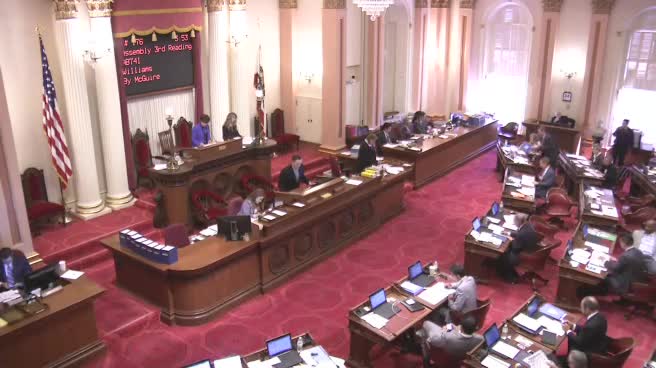 1MIN
Senate Floor
 1MIN
Assembly Floor
 38SEC
Assembly Floor
 5MIN
Assembly Standing Committee on Appropriations
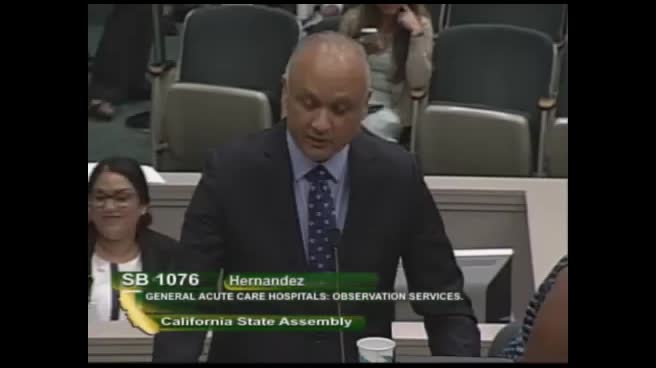 9MIN
Assembly Standing Committee on Health
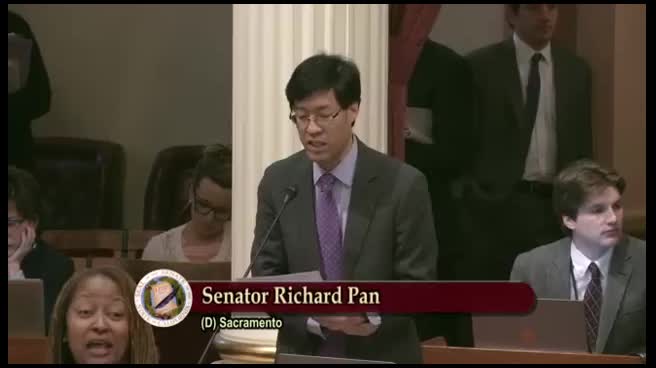 3MIN
Senate Floor
 6MIN
Senate Standing Committee on Appropriations
Bill Author

Bill Co-Author(s):