SCR 124: Transportation access: persons with epilepsy.
- Session Year: 2025-2026
- House: Senate
- Latest Version Date: 2026-07-16
Current Status:
Passed
(2026-07-16: Chaptered by Secretary of State. Res. Chapter 153, Statutes of 2026.)
Introduced
In Committee
Awaiting First Chamber Vote
Passed First Chamber
In Committee
Awaiting Second Chamber Vote
Passed Second Chamber
Enacted
This measure would encourage relevant stakeholders to evaluate existing transportation programs, develop policy options, and consider pilot initiatives that improve reliable, affordable, and accessible transportation for individuals with epilepsy. The measure would also encourage coordination with federal partners and welcome the participation of advocacy groups in informing and advancing complementary state-federal strategies.
This measure would encourage relevant stakeholders to evaluate existing transportation programs, develop policy options, and consider pilot initiatives that improve reliable, affordable, and accessible transportation for individuals with epilepsy. The measure would also encourage coordination with federal partners and welcome the participation of advocacy groups in informing and advancing complementary state-federal strategies.
This measure would encourage relevant state agencies stakeholders to evaluate existing transportation programs, develop policy options, and consider pilot initiatives that improve reliable, affordable, and accessible transportation for individuals with epilepsy. The measure would also encourage coordination with federal partners and welcome the participation of advocacy groups in informing and advancing complementary state-federal strategies.
This measure would encourage relevant state agencies to evaluate existing transportation programs, develop policy options, and consider pilot initiatives that improve reliable, affordable, and accessible transportation for individuals with epilepsy. The measure would also encourage coordination with federal partners and welcome the participation of advocacy groups in informing and advancing complementary state-federal strategies.
WHEREAS, Epilepsy is a neurological condition affecting thousands of working age adults and adolescents in California, the majority of whom are employable and seeking financial independence; and
WHEREAS, Individuals living with epilepsy may experience uncontrolled seizures that impair their ability to safely operate a vehicle, significantly limiting their access to employment opportunities, particularly in suburban and rural areas where public transportation is insufficient or unavailable; and
WHEREAS, Individuals living with epilepsy who have controlled seizures may still face driving restrictions under existing state law, forcing many to depend on an unreliable and insufficient public transportation system and thereby significantly threatening their ability to maintain employment; and
WHEREAS, Research indicates that, largely due to transportation barriers, adults with epilepsy experience unemployment rates more than five times higher than those without epilepsy or those who may suffer from other chronic conditions; and
WHEREAS, The lack of reliable and accessible public transportation for individuals living with epilepsy directly affects their ability to gain and maintain employment, thus severely limiting their financial stability and contributions to the economy; and
WHEREAS, Ireland has successfully implemented policies to improve transportation access for individuals living with epilepsy, demonstrating a feasible model for ensuring mobility and workforce participation; and
WHEREAS, The establishment of the Congressional Epilepsy Caucus in Washington, D.C. provides an opportunity to elevate this issue to a national level, ensuring broader recognition and support for transportation accessibility for adults with epilepsy; now, therefore, be it
Resolved by the Senate of the State of California, the Assembly thereof concurring, That the Legislature of the State of California recognizes transportation access as a critical determinant of employment, independence, and economic participation for adults living with epilepsy, particularly those subject to medically necessary driving restrictions, and urges future legislative action to address persistent transportation barriers that disproportionately affect working age adults with epilepsy, especially in suburban and rural regions; and be it further
Resolved, That the Legislature encourages relevant stakeholders to evaluate existing transportation programs, develop policy options, and consider pilot initiatives that improve reliable, affordable, and accessible transportation for individuals with epilepsy, with the goals of reducing unemployment, strengthening workforce participation, and promoting economic self-sufficiency; and be it further
Resolved, That the Legislature encourages coordination with federal partners, including the United States Congress and the Congressional Epilepsy Caucus, and welcomes the participation of advocacy organizations in informing and advancing complementary state-federal strategies, while affirming that the responsibility for policy leadership and action rests with elected legislative bodies; and be it further
Resolved, That the Secretary of the Senate transmit copies of this resolution to the author for appropriate distribution.
WHEREAS, Epilepsy is a neurological condition affecting thousands of working age adults and adolescents in California, many the majority of whom are otherwise healthy, capable of employment, employable and seeking financial independence; and
WHEREAS, Individuals living with epilepsy often face driving restrictions due to the risk of seizures, may experience uncontrolled seizures that impair their ability to safely operate a vehicle, significantly limiting their access to employment opportunities, particularly in suburban and rural areas where public transportation is insufficient or unavailable; and
WHEREAS, Individuals living with epilepsy who have controlled seizures may still face driving restrictions under existing state law, forcing many to depend on an unreliable and insufficient public transportation system and thereby significantly threatening their ability to maintain employment; and
WHEREAS, Research indicates that, largely due to transportation barriers, adults with epilepsy experience unemployment rates more than five times higher than those without epilepsy or those who may suffer from other chronic conditions; and
WHEREAS, The lack of reliable and accessible public transportation for individuals living with epilepsy directly affects their ability to gain and maintain employment, thus severely limiting their financial stability and contributions to the economy; and
WHEREAS, Ireland has successfully implemented policies to improve transportation access for individuals living with epilepsy, demonstrating a feasible model for ensuring mobility and workforce participation; and
WHEREAS, The establishment of the Congressional Epilepsy Caucus in Washington, D.C. provides an opportunity to elevate this issue to a national level, ensuring broader recognition and support for transportation accessibility for adults with epilepsy; now, therefore, be it
Resolved by the Senate of the State of California, the Assembly thereof concurring, That the Legislature of the State of California recognizes transportation access as a critical determinant of employment, independence, and economic participation for adults living with epilepsy, particularly those subject to medically necessary driving restrictions, and urges future legislative action to address persistent transportation barriers that disproportionately affect working age adults with epilepsy, especially in suburban and rural regions; and be it further
Resolved, That the Legislature encourages relevant state agencies, including, but not limited to, the Transportation Agency and the California Health and Human Services Agency, stakeholders to evaluate existing transportation programs, develop policy options, and consider pilot initiatives that improve reliable, affordable, and accessible transportation for individuals with epilepsy, with the goals of reducing unemployment, strengthening workforce participation, and promoting economic self-sufficiency; and be it further
Resolved, That the Legislature encourages coordination with federal partners, including the United States Congress and the Congressional Epilepsy Caucus, and welcomes the participation of advocacy organizations in informing and advancing complementary state-federal strategies, while affirming that the responsibility for policy leadership and action rests with elected legislative bodies; and be it further
Resolved, That the Secretary of the Senate transmit copies of this resolution to the author for appropriate distribution.
WHEREAS, Epilepsy is a neurological condition affecting thousands of working age adults and adolescents in California, many of whom are otherwise healthy, capable of employment, and seeking financial independence; and
WHEREAS, Individuals living with epilepsy often face driving restrictions due to the risk of seizures, significantly limiting their access to employment opportunities, particularly in suburban and rural areas where public transportation is insufficient or unavailable; and
WHEREAS, Research indicates that, largely due to transportation barriers, adults with epilepsy experience unemployment rates more than five times higher than those without epilepsy or those who may suffer from other chronic conditions; and
WHEREAS, The lack of reliable and accessible public transportation for individuals living with epilepsy directly affects their ability to gain and maintain employment, thus severely limiting their financial stability and contributions to the economy; and
WHEREAS, Ireland has successfully implemented policies to improve transportation access for individuals living with epilepsy, demonstrating a feasible model for ensuring mobility and workforce participation; and
WHEREAS, The establishment of the Congressional Epilepsy Caucus in Washington, D.C. provides an opportunity to elevate this issue to a national level, ensuring broader recognition and support for transportation accessibility for adults with epilepsy; now, therefore, be it
Resolved by the Senate of the State of California, the Assembly thereof concurring, That the Legislature of the State of California recognizes transportation access as a critical determinant of employment, independence, and economic participation for adults living with epilepsy, particularly those subject to medically necessary driving restrictions, and urges future legislative action to address persistent transportation barriers that disproportionately affect working age adults with epilepsy, especially in suburban and rural regions; and be it further
Resolved, That the Legislature encourages relevant state agencies, including, but not limited to, the Transportation Agency and the California Health and Human Services Agency, to evaluate existing transportation programs, develop policy options, and consider pilot initiatives that improve reliable, affordable, and accessible transportation for individuals with epilepsy, with the goals of reducing unemployment, strengthening workforce participation, and promoting economic self-sufficiency; and be it further
Resolved, That the Legislature encourages coordination with federal partners, including the United States Congress and the Congressional Epilepsy Caucus, and welcomes the participation of advocacy organizations in informing and advancing complementary state-federal strategies, while affirming that the responsibility for policy leadership and action rests with elected legislative bodies; and be it further
Resolved, That the Secretary of the Senate transmit copies of this resolution to the author for appropriate distribution.
|
Date
|
Status
|
|---|---|
| Jul 16, 2026 | Chaptered by Secretary of State. Res. Chapter 153, Statutes of 2026. |
| Jul 16, 2026 | Enrolled and filed with the Secretary of State at 2 p.m. |
| Jul 2, 2026 | In Senate. Ordered to engrossing and enrolling. |
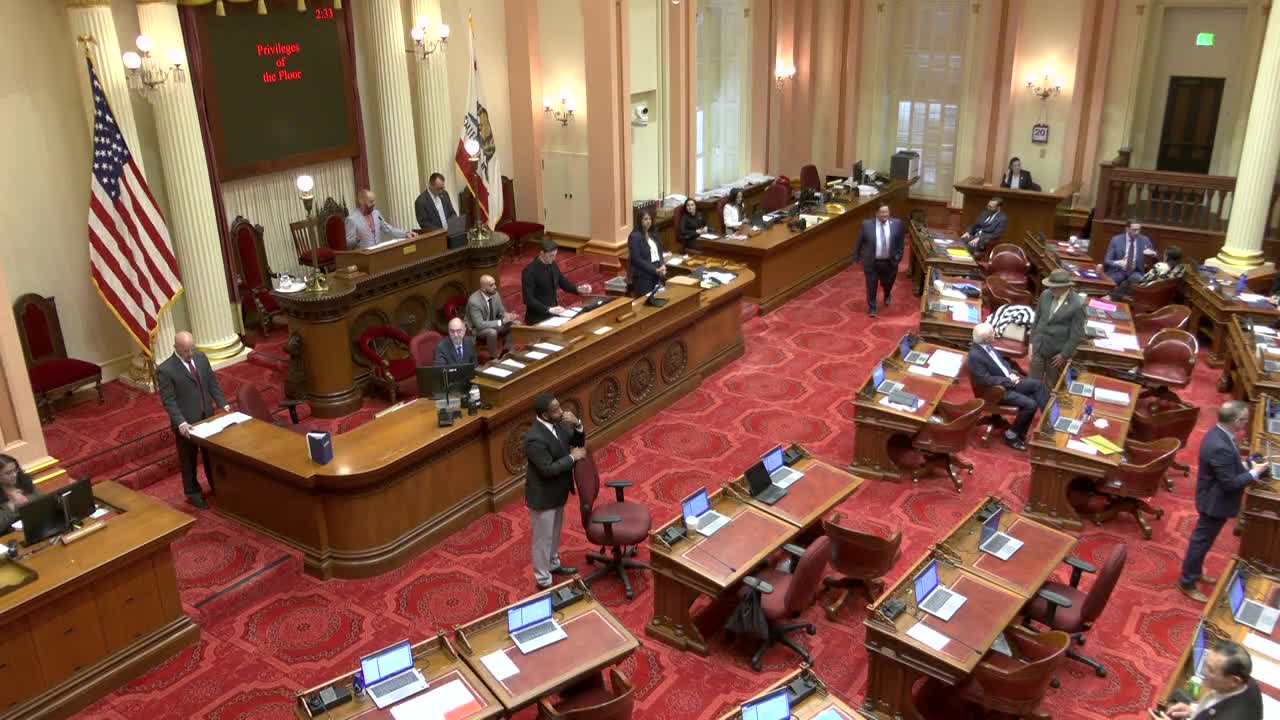
| Jul 2, 2026 | Read. Adopted. (Ayes 70. Noes 0. Page 5986.) Ordered to the Senate. |
| Jul 2, 2026 | Read. Adopted. Ordered to the Senate. |
| Jun 30, 2026 | From committee: Be adopted. Ordered to consent calendar. (Ayes 15. Noes 0.) (June 29). |
| May 11, 2026 | Referred to Com. on TRANS. |
| Apr 20, 2026 | In Assembly. Held at Desk. |
| Apr 20, 2026 | Read. Adopted. (Ayes 38. Noes 0. Page 3940.) Ordered to the Assembly. |
| Apr 20, 2026 | Read. Adopted. (Ayes 38. Noes 0.) Ordered to the Assembly. |
| Apr 6, 2026 | Ordered to third reading. |
| Apr 6, 2026 | From consent calendar on motion of Senator Wiener. |
| Mar 25, 2026 | Read second time. Ordered to consent calendar. |
| Mar 24, 2026 | From committee: Be adopted. Ordered to consent calendar. (Ayes 12. Noes 0. Page 3659.) (March 24). |
| Mar 24, 2026 | From committee: Be adopted. Ordered to consent calendar. (Ayes 12. Noes 0.) (March 24). |
| Mar 16, 2026 | Set for hearing March 24. |
| Mar 2, 2026 | From committee with author's amendments. Read second time and amended. Re-referred to Com. on JUD. |
| Feb 26, 2026 | Re-referred to Com. on JUD. |
| Feb 12, 2026 | Introduced. Referred to Com. on RLS. |
|
Date
|
Description
|
Location
|
Votes
|
|
|---|---|---|---|---|
| Jul 2, 2026 | SCR 124 Wiener Consent Calendar Second Day Regular Session | Assembly Floor |
Passed |
|
| Jun 29, 2026 | Be adopted. To Consent Calendar. | Assembly Standing Committee on Transportation |
Passed |
|
| Apr 20, 2026 | Senate 3rd Reading SCR124 Wiener | Senate Floor |
Passed |
|
| Mar 24, 2026 | Be adopted and be ordered to the Consent Calendar | Senate Standing Committee on Judiciary |
Passed |
This list shows positions taken on this bill by organizations on the date displayed, which is linked to the original source.
Positions by individuals are not included.
|
Organization
|
Position
|
Date
|
|---|---|---|
| Association Of Regional Center Agencies | ** Support | |
| California Neurology Society | ** Support | |
| Epilepsy Foundation Los Angeles | ** Support |
Date of Hearing: June 29, 2026
ASSEMBLY COMMITTEE ON TRANSPORTATION
Lori D. Wilson, Chair
SBPCA Bill Id:SCR 124
Author:(Wiener) – As Amended Ver:March 2, 2026
SENATE VOTE: 38-0
SUBJECT: Transportation access: persons with epilepsy
SUMMARY: Encourages relevant stakeholders to evaluate existing transportation programs, develop policy options, and consider pilot initiatives that improve reliable, affordable, and accessible transportation for individuals with epilepsy. The measure would also encourage coordination with federal partners and welcome the participation of advocacy groups in informing and advancing complementary state-federal strategies.
EXISTING LAW:
- Provides that the Department of Motor Vehicles (DMV) may refuse to issue to, or renew a driver’s license of, any person who has a disorder characterized by lapses of consciousness or who has experienced, within the last three years, either a lapse of consciousness or an episode of marked confusion caused by any condition which may bring about recurrent lapses, or who has any physical or mental disability, disease, or disorder which could affect the safe operation of a motor vehicle unless the DMV has medical information which indicates the person may safely operate a motor vehicle. In making its determination, the DMV may rely on any relevant information available to the DMV. (Vehicle Code § 12806 (c).)
- Requires physicians and surgeons to immediately report to the local health officer in writing the name, date of birth, and address of every patient at least 14 years of age or older whom the physician and surgeon has diagnosed as having a case of a disorder characterized by lapses of consciousness. (Health & Safety. Code § 103900 (a).)
- Specifies that if a physician or surgeon reasonably and in good faith believes that the reporting of a patient will serve the public interest, they may report a patient’s condition even if it may not be required under the definition of disorders characterized by lapses of consciousness, as specified. (Health & Saf. Code § 103900 (a).)
- Requires the local health officer to report in writing to the DMV the name, age, and address of every person reported to it as a case of a disorder characterized by lapses of consciousness. (Health & Saf. Code § 103900 (b).)
- Provides that these reports shall be for the information of the DMV in enforcing the Vehicle Code, and shall be kept confidential and used solely for the purpose of determining the eligibility of any person to operate a motor vehicle on the highways of this state. (Health & Saf. Code § 103900 (c).)
This resolution:
- Makes various statements regarding epilepsy and the impact of having epilepsy in California, including impacts on a person’s ability to drive, their employment, financial stability, and contributions to the economy.
- Asserts that Ireland has successfully implemented policies to improve transportation access for individuals living with epilepsy, demonstrating a feasible model for ensuring mobility and workforce participation.
- Asserts that the establishment of the Congressional Epilepsy Caucus in Washington, D.C. provides an opportunity to elevate this issue to a national level, ensuring broader recognition and support for transportation accessibility for adults with epilepsy.
- Resolves that the Legislature of the State of California:
- recognizes transportation access as a critical determinant of employment, independence, and economic participation for adults living with epilepsy, particularly those subject to medically necessary driving restrictions, and urges future legislative action to address persistent transportation barriers that disproportionately affect working age adults with epilepsy, especially in suburban and rural regions;
- encourages relevant stakeholders to evaluate existing transportation programs, develop policy options, and consider pilot initiatives that improve reliable, affordable, and accessible transportation for individuals with epilepsy, with the goals of reducing unemployment, strengthening workforce participation, and promoting economic self-sufficiency; and,
- encourages coordination with federal partners, including the United States Congress and the Congressional Epilepsy Caucus, and welcomes the participation of advocacy organizations in informing and advancing complementary state-federal strategies, while affirming that the responsibility for policy leadership and action rests with elected legislative bodies.
FISCAL EFFECT: Unknown
COMMENTS: According to the author, “SCR 124 addresses the transportation barriers faced by individuals with epilepsy in California. The resolution highlights the need for equitable mobility options, recognizing that seizure disorders can limit personal driving privileges and restrict access to employment, healthcare, and essential daily activities.
SCR 124 encourages collaboration between public health experts, transportation authorities, and advocacy groups to ensure policy decisions reflect current medical understanding and inclusive practices. The resolution supports improvements in public transportation accessibility, as well as awareness initiatives that reduce stigma related to epilepsy. Ultimately, this resolution reaffirms that mobility is a key component of social inclusion and economic participation. Addressing the needs of people with epilepsy strengthens California’s overall commitment to fairness, accessibility, and community wellbeing. “
Physicians are required to report lapses of consciousness, including those caused by epilepsy, to the DMV. This can result in a license suspension or revocation of the license of the person who had the lapse of consciousness. Losing the ability to drive impairs the person’s ability to efficiently get to their target destinations, including their job.
SCR 124 encourages relevant stakeholders to evaluate existing transportation programs, develop policy options, and consider pilot initiatives that improve reliable, affordable, and accessible transportation for individuals with epilepsy, with the goals of reducing unemployment, strengthening workforce participation, and promoting economic self-sufficiency. The measure also encourages coordination with federal partners, including the United States Congress and the Congressional Epilepsy Caucus, and welcomes the participation of advocacy organizations in informing and advancing complementary state-federal strategies, while affirming that the responsibility for policy leadership and action rests with elected legislative bodies.
According to the California Neurology Society, sponsors of the resolution, epilepsy affects approximately 450,000 Californians, more than any other state, and imposes significant economic, social, and medical burdens on affected individuals and their families. The majority of adults with epilepsy are employable and seeking financial independence.
[ . . . ] The recently introduced National Plan for Epilepsy Act (S. 494) would require the Department of Health and Human Services to establish a national plan coordinating research and services across all federal agencies, further signaling federal commitment to addressing epilepsy comprehensively. By encouraging stakeholders to evaluate existing programs and develop pilot initiatives, SCR 124 ensures California complements and advances the goals of the Congressional Epilepsy Caucus and the National Plan for Epilepsy Act. Together, these coordinated state and federal efforts can meaningfully reduce unemployment, strengthen workforce participation, and promote economic self-sufficiency for Californians with epilepsy.
Previous legislation. SCR 11 (Cervantes, Res. Ch. 179, Stats. 2025) proclaimed November 2025 as Epilepsy Awareness Month and called upon all Californians to recommit their communities to increasing awareness and understanding of those living with epilepsy.
REGISTERED SUPPORT / OPPOSITION:
Support
California Neurology Society (sponsor)
Association of Regional Center Agencies
Epilepsy Foundation Los Angeles
Opposition
None on file
Analysis Prepared by: Aimee Maxwell-Jolly / TRANS. / (916) 319-2093
SENATE RULES COMMITTEE Office of Senate Floor Analyses (916) 651-4171 | SCR 124 |
THIRD READING
Bill No: SCR 124
Author: Wiener (D)
Amended: 3/2/26
Vote: 21
SENATE JUDICIARY COMMITTEE: 12-0, 3/24/26
AYES: Umberg, Niello, Allen, Caballero, Durazo, Laird, Reyes, Stern, Valladares, Wahab, Weber Pierson, Wiener
NO VOTE RECORDED: Ashby
SUBJECT: Transportation access: persons with epilepsy
SOURCE: California Neurology Society
DIGEST:
This resolution is supportive of those with epilepsy and finding solutions to issues faced by those with epilepsy.
ANALYSIS:
Existing law:
- Provides that the Department of Motor Vehicles (DMV) may refuse to issue to, or renew a driver’s license of, any person who has a disorder characterized by lapses of consciousness or who has experienced, within the last three years, either a lapse of consciousness or an episode of marked confusion caused by any condition which may bring about recurrent lapses, or who has any physical or mental disability, disease, or disorder which could affect the safe operation of a motor vehicle unless the DMV has medical information which indicates the person may safely operate a motor vehicle. In making its determination, the DMV may rely on any relevant information available to the DMV. (Vehicle (Veh.) Code § 12806 (c).)
- Requires physicians and surgeons to immediately report to the local health officer in writing the name, date of birth, and address of every patient at least 14 years of age or older whom the physician and surgeon has diagnosed as having a case of a disorder characterized by lapses of consciousness. (Health & Safety (Saf.) Code § 103900 (a).)
- Specifies that if a physician or surgeon reasonably and in good faith believes that the reporting of a patient will serve the public interest, they may report a patient’s condition even if it may not be required under the definition of disorders characterized by lapses of consciousness, as specified. (Health & Saf. Code § 103900 (a).)
- Requires the local health officer to report in writing to the DMV the name, age, and address of every person reported to it as a case of a disorder characterized by lapses of consciousness. (Health & Saf. Code § 103900 (b).)
- Provides that these reports shall be for the information of the DMV in enforcing the Vehicle Code, and shall be kept confidential and used solely for the purpose of determining the eligibility of any person to operate a motor vehicle on the highways of this state. (Health & Saf. Code § 103900 (c).)
This resolution:
- Makes various statements regarding epilepsy and the impact of having epilepsy in California, including impacts on a person’s ability to drive, their employment, financial stability, and contributions to the economy.
- Asserts that Ireland has successfully implemented policies to improve transportation access for individuals living with epilepsy, demonstrating a feasible model for ensuring mobility and workforce participation.
- Asserts that the establishment of the Congressional Epilepsy Caucus in Washington, D.C. provides an opportunity to elevate this issue to a national level, ensuring broader recognition and support for transportation accessibility for adults with epilepsy.
- Resolves that the Legislature of the State of California:
- recognizes transportation access as a critical determinant of employment, independence, and economic participation for adults living with epilepsy, particularly those subject to medically necessary driving restrictions, and urges future legislative action to address persistent transportation barriers that disproportionately affect working age adults with epilepsy, especially in suburban and rural regions;
- encourages relevant stakeholders to evaluate existing transportation programs, develop policy options, and consider pilot initiatives that improve reliable, affordable, and accessible transportation for individuals with epilepsy, with the goals of reducing unemployment, strengthening workforce participation, and promoting economic self-sufficiency; and
- encourages coordination with federal partners, including the United States Congress and the Congressional Epilepsy Caucus, and welcomes the participation of advocacy organizations in informing and advancing complementary state-federal strategies, while affirming that the responsibility for policy leadership and action rests with elected legislative bodies.
Comments
According to the author:
SCR 124 addresses the transportation barriers faced by individuals with epilepsy in California. The resolution highlights the need for equitable mobility options, recognizing that seizure disorders can limit personal driving privileges and restrict access to employment, healthcare, and essential daily activities.
SCR 124 encourages collaboration between public health experts, transportation authorities, and advocacy groups to ensure policy decisions reflect current medical understanding and inclusive practices. The resolution supports improvements in public transportation accessibility, as well as awareness initiatives that reduce stigma related to epilepsy. Ultimately, this resolution reaffirms that mobility is a key component of social inclusion and economic participation. Addressing the needs of people with epilepsy strengthens California’s overall commitment to fairness, accessibility, and community wellbeing.
This resolution makes various statements regarding epilepsy and the impact of having epilepsy in California. It recognizes transportation access as a critical determinant of employment, independence, and economic participation for adults living with epilepsy, particularly those subject to medically necessary driving restrictions, and urges future legislative action to address persistent transportation barriers that disproportionately affect working age adults with epilepsy, especially in suburban and rural regions.
As explained in the Senate Floor analysis for SCR 11 (Cervantes, Resolution Chapter 179, Statutes of 2025), epilepsy “is a condition of the brain causing seizures. A seizure is a disruption of the electrical communication between neurons. A person is said to have epilepsy if they experience two or more unprovoked seizures separated by at least 24 hours or if the person experiences one seizure and is at a high risk of having more.” Moreover, “3.4 million people in the United States have epilepsy.”
Physicians are required to report lapses of consciousness, including those caused by epilepsy, to the DMV. This can result in a license suspension or revocation of the license of the person who had the lapse of consciousness. Losing the ability to drive impairs the person’s ability to efficiently get to their target destinations, including their job.
SCR 124 encourages relevant stakeholders to evaluate existing transportation programs, develop policy options, and consider pilot initiatives that improve reliable, affordable, and accessible transportation for individuals with epilepsy, with the goals of reducing unemployment, strengthening workforce participation, and promoting economic self-sufficiency. The measure also encourages coordination with federal partners, including the United States Congress and the Congressional Epilepsy Caucus, and welcomes the participation of advocacy organizations in informing and advancing complementary state-federal strategies, while affirming that the responsibility for policy leadership and action rests with elected legislative bodies.
The Epilepsy Foundation Los Angeles writes the following in support of the resolution:
Epilepsy is one of the most common chronic brain disorders in the world, affecting people of all ages, races, and backgrounds. The condition is defined by a tendency to experience seizures - sudden, abnormal bursts of electrical activity in the brain that can disrupt behavior, awareness, and bodily control. There are multiple types of seizures, and they can look different in different people. It is a spectrum disease comprised of many diagnoses, including a growing number of rare epilepsies that are increasingly being identified through their genetic links. With the growing research and ever evolving introduction of new therapies to treat seizures, 70% of people with epilepsy have control of their seizures through medication while 30% remain with uncontrolled seizures. Whether or not seizures are controlled, 100% of people living with epilepsy matter, and reliable public transportation is essential for their ability to live and thrive – to travel to medical appointments, get to work, and visit loved ones.
According to the California Neurology Society, sponsors of the resolution:
Epilepsy affects approximately 450,000 Californians, more than any other state, and imposes significant economic, social, and medical burdens on affected individuals and their families. The majority of adults with epilepsy are employable and seeking financial independence.
[ . . . ] The recently introduced National Plan for Epilepsy Act (S. 494) would require the Department of Health and Human Services to establish a national plan coordinating research and services across all federal agencies, further signaling federal commitment to addressing epilepsy comprehensively. By encouraging stakeholders to evaluate existing programs and develop pilot initiatives, SCR 124 ensures California complements and advances the goals of the Congressional Epilepsy Caucus and the National Plan for Epilepsy Act. Together, these coordinated state and federal efforts can meaningfully reduce unemployment, strengthen workforce participation, and promote economic self-sufficiency for Californians with epilepsy.
FISCAL EFFECT: Appropriation: No Fiscal Com.: No Local: No
SUPPORT: (Verified 3/25/26)
California Neurology Society (sponsor)
Epilepsy Foundation Los Angeles
OPPOSITION: (Verified 3/25/26)
None received
Prepared by: Margie Estrada / JUD. / (916) 651-4113
4/6/26 15:05:46
**** END ****
SENATE RULES COMMITTEE Office of Senate Floor Analyses (916) 651-4171 | SCR 124 |
CONSENT
Bill No: SCR 124
Author: Wiener (D)
Amended: 3/2/26
Vote: 21
SENATE JUDICIARY COMMITTEE: 12-0, 3/24/26
AYES: Umberg, Niello, Allen, Caballero, Durazo, Laird, Reyes, Stern, Valladares, Wahab, Weber Pierson, Wiener
NO VOTE RECORDED: Ashby
SUBJECT: Transportation access: persons with epilepsy
SOURCE: California Neurology Society
DIGEST:
This resolution is supportive of those with epilepsy and finding solutions to issues faced by those with epilepsy.
ANALYSIS:
Existing law:
- Provides that the Department of Motor Vehicles (DMV) may refuse to issue to, or renew a driver’s license of, any person who has a disorder characterized by lapses of consciousness or who has experienced, within the last three years, either a lapse of consciousness or an episode of marked confusion caused by any condition which may bring about recurrent lapses, or who has any physical or mental disability, disease, or disorder which could affect the safe operation of a motor vehicle unless the DMV has medical information which indicates the person may safely operate a motor vehicle. In making its determination, the DMV may rely on any relevant information available to the DMV. (Vehicle (Veh.) Code § 12806 (c).)
- Requires physicians and surgeons to immediately report to the local health officer in writing the name, date of birth, and address of every patient at least 14 years of age or older whom the physician and surgeon has diagnosed as having a case of a disorder characterized by lapses of consciousness. (Health & Safety (Saf.) Code § 103900 (a).)
- Specifies that if a physician or surgeon reasonably and in good faith believes that the reporting of a patient will serve the public interest, they may report a patient’s condition even if it may not be required under the definition of disorders characterized by lapses of consciousness, as specified. (Health & Saf. Code § 103900 (a).)
- Requires the local health officer to report in writing to the DMV the name, age, and address of every person reported to it as a case of a disorder characterized by lapses of consciousness. (Health & Saf. Code § 103900 (b).)
- Provides that these reports shall be for the information of the DMV in enforcing the Vehicle Code, and shall be kept confidential and used solely for the purpose of determining the eligibility of any person to operate a motor vehicle on the highways of this state. (Health & Saf. Code § 103900 (c).)
This resolution:
- Makes various statements regarding epilepsy and the impact of having epilepsy in California, including impacts on a person’s ability to drive, their employment, financial stability, and contributions to the economy.
- Asserts that Ireland has successfully implemented policies to improve transportation access for individuals living with epilepsy, demonstrating a feasible model for ensuring mobility and workforce participation.
- Asserts that the establishment of the Congressional Epilepsy Caucus in Washington, D.C. provides an opportunity to elevate this issue to a national level, ensuring broader recognition and support for transportation accessibility for adults with epilepsy.
- Resolves that the Legislature of the State of California:
- recognizes transportation access as a critical determinant of employment, independence, and economic participation for adults living with epilepsy, particularly those subject to medically necessary driving restrictions, and urges future legislative action to address persistent transportation barriers that disproportionately affect working age adults with epilepsy, especially in suburban and rural regions;
- encourages relevant stakeholders to evaluate existing transportation programs, develop policy options, and consider pilot initiatives that improve reliable, affordable, and accessible transportation for individuals with epilepsy, with the goals of reducing unemployment, strengthening workforce participation, and promoting economic self-sufficiency; and
- encourages coordination with federal partners, including the United States Congress and the Congressional Epilepsy Caucus, and welcomes the participation of advocacy organizations in informing and advancing complementary state-federal strategies, while affirming that the responsibility for policy leadership and action rests with elected legislative bodies.
Comments
According to the author:
SCR 124 addresses the transportation barriers faced by individuals with epilepsy in California. The resolution highlights the need for equitable mobility options, recognizing that seizure disorders can limit personal driving privileges and restrict access to employment, healthcare, and essential daily activities.
SCR 124 encourages collaboration between public health experts, transportation authorities, and advocacy groups to ensure policy decisions reflect current medical understanding and inclusive practices. The resolution supports improvements in public transportation accessibility, as well as awareness initiatives that reduce stigma related to epilepsy. Ultimately, this resolution reaffirms that mobility is a key component of social inclusion and economic participation. Addressing the needs of people with epilepsy strengthens California’s overall commitment to fairness, accessibility, and community wellbeing.
This resolution makes various statements regarding epilepsy and the impact of having epilepsy in California. It recognizes transportation access as a critical determinant of employment, independence, and economic participation for adults living with epilepsy, particularly those subject to medically necessary driving restrictions, and urges future legislative action to address persistent transportation barriers that disproportionately affect working age adults with epilepsy, especially in suburban and rural regions.
As explained in the Senate Floor analysis for SCR 11 (Cervantes, Resolution Chapter 179, Statutes of 2025), epilepsy “is a condition of the brain causing seizures. A seizure is a disruption of the electrical communication between neurons. A person is said to have epilepsy if they experience two or more unprovoked seizures separated by at least 24 hours or if the person experiences one seizure and is at a high risk of having more.” Moreover, “3.4 million people in the United States have epilepsy.”
Physicians are required to report lapses of consciousness, including those caused by epilepsy, to the DMV. This can result in a license suspension or revocation of the license of the person who had the lapse of consciousness. Losing the ability to drive impairs the person’s ability to efficiently get to their target destinations, including their job.
SCR 124 encourages relevant stakeholders to evaluate existing transportation programs, develop policy options, and consider pilot initiatives that improve reliable, affordable, and accessible transportation for individuals with epilepsy, with the goals of reducing unemployment, strengthening workforce participation, and promoting economic self-sufficiency. The measure also encourages coordination with federal partners, including the United States Congress and the Congressional Epilepsy Caucus, and welcomes the participation of advocacy organizations in informing and advancing complementary state-federal strategies, while affirming that the responsibility for policy leadership and action rests with elected legislative bodies.
The Epilepsy Foundation Los Angeles writes the following in support of the resolution:
Epilepsy is one of the most common chronic brain disorders in the world, affecting people of all ages, races, and backgrounds. The condition is defined by a tendency to experience seizures - sudden, abnormal bursts of electrical activity in the brain that can disrupt behavior, awareness, and bodily control. There are multiple types of seizures, and they can look different in different people. It is a spectrum disease comprised of many diagnoses, including a growing number of rare epilepsies that are increasingly being identified through their genetic links. With the growing research and ever evolving introduction of new therapies to treat seizures, 70% of people with epilepsy have control of their seizures through medication while 30% remain with uncontrolled seizures. Whether or not seizures are controlled, 100% of people living with epilepsy matter, and reliable public transportation is essential for their ability to live and thrive – to travel to medical appointments, get to work, and visit loved ones.
According to the California Neurology Society, sponsors of the resolution:
Epilepsy affects approximately 450,000 Californians, more than any other state, and imposes significant economic, social, and medical burdens on affected individuals and their families. The majority of adults with epilepsy are employable and seeking financial independence.
[ . . . ] The recently introduced National Plan for Epilepsy Act (S. 494) would require the Department of Health and Human Services to establish a national plan coordinating research and services across all federal agencies, further signaling federal commitment to addressing epilepsy comprehensively. By encouraging stakeholders to evaluate existing programs and develop pilot initiatives, SCR 124 ensures California complements and advances the goals of the Congressional Epilepsy Caucus and the National Plan for Epilepsy Act. Together, these coordinated state and federal efforts can meaningfully reduce unemployment, strengthen workforce participation, and promote economic self-sufficiency for Californians with epilepsy.
FISCAL EFFECT: Appropriation: No Fiscal Com.: No Local: No
SUPPORT: (Verified 3/25/26)
California Neurology Society (sponsor)
Epilepsy Foundation Los Angeles
OPPOSITION: (Verified 3/25/26)
None received
Prepared by: Margie Estrada / JUD. / (916) 651-4113
3/25/26 16:17:23
**** END ****
Senator Thomas Umberg, Chair
2025-2026 Regular Session
Bill No: SCR 124 (Author:Wiener)
Version: March 2, 2026
Hearing Date: March 24, 2026
Fiscal: No
Urgency: No
Consultant: ME
SUBJECT
Transportation access: persons with epilepsy
DIGEST
This resolution is supportive of those with epilepsy and finding solutions to issues faced by those with epilepsy.
EXECUTIVE SUMMARY
This resolution makes various statements regarding epilepsy and the impact of having epilepsy in California. It recognizes transportation access as a critical determinant of employment, independence, and economic participation for adults living with epilepsy, particularly those subject to medically necessary driving restrictions, and urges future legislative action to address persistent transportation barriers that disproportionately affect working age adults with epilepsy, especially in suburban and rural regions.
The resolution encourages relevant stakeholders to evaluate existing transportation programs, develop policy options, and consider pilot initiatives that improve reliable, affordable, and accessible transportation for individuals with epilepsy, with the goals of reducing unemployment, strengthening workforce participation, and promoting economic self-sufficiency. The measure also encourages coordination with federal partners, including the United States Congress and the Congressional Epilepsy Caucus, and welcomes the participation of advocacy organizations in informing and advancing complementary state-federal strategies, while affirming that the responsibility for policy leadership and action rests with elected legislative bodies.
The resolution is sponsored by the California Neurology Society and supported by the Epilepsy Foundation Los Angeles and has no known opposition.
PROPOSED CHANGES TO THE LAW
Existing law:
- Provides that the Department of Motor Vehicles (DMV) may refuse to issue to, or renew a driver’s license of, any person who has a disorder characterized by lapses of consciousness or who has experienced, within the last three years, either a lapse of consciousness or an episode of marked confusion caused by any condition which may bring about recurrent lapses, or who has any physical or mental disability, disease, or disorder which could affect the safe operation of a motor vehicle unless the DMV has medical information which indicates the person may safely operate a motor vehicle. In making its determination, the DMV may rely on any relevant information available to the DMV. (Veh. Code § 12806 (c).)
- Requires physicians and surgeons to immediately report to the local health officer in writing the name, date of birth, and address of every patient at least 14 years of age or older whom the physician and surgeon has diagnosed as having a case of a disorder characterized by lapses of consciousness. (Health & Saf. Code § 103900 (a).)
- Specifies that if a physician or surgeon reasonably and in good faith believes that the reporting of a patient will serve the public interest, they may report a patient’s condition even if it may not be required under the definition of disorders characterized by lapses of consciousness, as specified. (Health & Saf. Code § 103900 (a).)
- Requires the local health officer to report in writing to the DMV the name, age, and address of every person reported to it as a case of a disorder characterized by lapses of consciousness. (Health & Saf. Code § 103900 (b).)
- Provides that these reports shall be for the information of the DMV in enforcing the Vehicle Code, and shall be kept confidential and used solely for the purpose of determining the eligibility of any person to operate a motor vehicle on the highways of this state. (Health & Saf. Code § 103900 (c).)
This resolution:
- Makes various statements regarding epilepsy and the impact of having epilepsy in California, including impacts on a person’s ability to drive, their employment, financial stability, and contributions to the economy.
- Asserts that Ireland has successfully implemented policies to improve transportation access for individuals living with epilepsy, demonstrating a feasible model for ensuring mobility and workforce participation.
- Asserts that the establishment of the Congressional Epilepsy Caucus in Washington, D.C. provides an opportunity to elevate this issue to a national level, ensuring broader recognition and support for transportation accessibility for adults with epilepsy.
- Resolves that the Legislature of the State of California:
- recognizes transportation access as a critical determinant of employment, independence, and economic participation for adults living with epilepsy, particularly those subject to medically necessary driving restrictions, and urges future legislative action to address persistent transportation barriers that disproportionately affect working age adults with epilepsy, especially in suburban and rural regions;
- encourages relevant stakeholders to evaluate existing transportation programs, develop policy options, and consider pilot initiatives that improve reliable, affordable, and accessible transportation for individuals with epilepsy, with the goals of reducing unemployment, strengthening workforce participation, and promoting economic self-sufficiency; and
- encourages coordination with federal partners, including the United States Congress and the Congressional Epilepsy Caucus, and welcomes the participation of advocacy organizations in informing and advancing complementary state-federal strategies, while affirming that the responsibility for policy leadership and action rests with elected legislative bodies.
COMMENTS
- Stated need for the measure
According to the author:
SCR 124 addresses the transportation barriers faced by individuals with epilepsy in California. The resolution highlights the need for equitable mobility options, recognizing that seizure disorders can limit personal driving privileges and restrict access to employment, healthcare, and essential daily activities.
SCR 124 encourages collaboration between public health experts, transportation authorities, and advocacy groups to ensure policy decisions reflect current medical understanding and inclusive practices. The resolution supports improvements in public transportation accessibility, as well as awareness initiatives that reduce stigma related to epilepsy. Ultimately, this resolution reaffirms that mobility is a key component of social inclusion and economic participation. Addressing the needs of people with epilepsy strengthens California’s overall commitment to fairness, accessibility, and community wellbeing.
2. Epilepsy impacts and encouragement to take action
This resolution makes various statements regarding epilepsy and the impact of having epilepsy in California. It recognizes transportation access as a critical determinant of employment, independence, and economic participation for adults living with epilepsy, particularly those subject to medically necessary driving restrictions, and urges future legislative action to address persistent transportation barriers that disproportionately affect working age adults with epilepsy, especially in suburban and rural regions.
As explained in the Senate Floor analysis for SCR 11 (Cervantes, 2025), epilepsy “is a condition of the brain causing seizures. A seizure is a disruption of the electrical communication between neurons. A person is said to have epilepsy if they experience two or more unprovoked seizures separated by at least 24 hours or if the person experiences one seizure and is at a high risk of having more.” Moreover, “3.4 million people in the United States have epilepsy.”
Physicians are required to report lapses of consciousness, including those caused by epilepsy, to the DMV. This can result in a license suspension or revocation of the license of the person who had the lapse of consciousness. Losing the ability to drive impairs the person’s ability to efficiently get to their target destinations, including their job.
SCR 124 encourages relevant stakeholders to evaluate existing transportation programs, develop policy options, and consider pilot initiatives that improve reliable, affordable, and accessible transportation for individuals with epilepsy, with the goals of reducing unemployment, strengthening workforce participation, and promoting economic self-sufficiency. The measure also encourages coordination with federal partners, including the United States Congress and the Congressional Epilepsy Caucus, and welcomes the participation of advocacy organizations in informing and advancing complementary state-federal strategies, while affirming that the responsibility for policy leadership and action rests with elected legislative bodies.
The Epilepsy Foundation Los Angeles writes the following in support of the resolution:
Epilepsy is one of the most common chronic brain disorders in the world, affecting people of all ages, races, and backgrounds. The condition is defined by a tendency to experience seizures - sudden, abnormal bursts of electrical activity in the brain that can disrupt behavior, awareness, and bodily control. There are multiple types of seizures, and they can look different in different people. It is a spectrum disease comprised of many diagnoses, including a growing number of rare epilepsies that are increasingly being identified through their genetic links. With the growing research and ever evolving introduction of new therapies to treat seizures, 70% of people with epilepsy have control of their seizures through medication while 30% remain with uncontrolled seizures. Whether or not seizures are controlled, 100% of people living with epilepsy matter, and reliable public transportation is essential for their ability to live and thrive – to travel to medical appointments, get to work, and visit loved ones.
According to the California Neurology Society, sponsors of the resolution:
Epilepsy affects approximately 450,000 Californians, more than any other state, and imposes significant economic, social, and medical burdens on affected individuals and their families. The majority of adults with epilepsy are employable and seeking financial independence.
[ . . . ] The recently introduced National Plan for Epilepsy Act (S. 494) would require the Department of Health and Human Services to establish a national plan coordinating research and services across all federal agencies, further signaling federal commitment to addressing epilepsy comprehensively. By encouraging stakeholders to evaluate existing programs and develop pilot initiatives, SCR 124 ensures California complements and advances the goals of the Congressional Epilepsy Caucus and the National Plan for Epilepsy Act. Together, these coordinated state and federal efforts can meaningfully reduce unemployment, strengthen workforce participation, and promote economic self-sufficiency for Californians with epilepsy.
SUPPORT
California Neurology Society (sponsor)
Epilepsy Foundation Los Angeles
OPPOSITION
None known
RELATED LEGISLATION
Pending Legislation: None known.
Prior Legislation: SCR 11 (Cervantes, Res. Ch. 179, Stats. 2025) proclaimed November 2025 as Epilepsy Awareness Month and called upon all Californians to recommit their communities to increasing awareness and understanding of those living with epilepsy.
**************
Bill Author
Bill Co-Author(s):