SB 1084: Sentencing.
- Session Year: 2015-2016
- House: Senate
- Latest Version Date: 2016-09-30
Existing law authorizes a prisoner who was under 18 years of age at the time of committing an offense for which the prisoner was sentenced to life without the possibility of parole to submit a petition for recall and resentencing after he or she has served at least 15 years of his or her sentence. Existing law prohibits a prisoner who tortured his or her victim or whose victim was a public safety official, as defined, from filing a petition for recall and resentencing. Existing law establishes certain criteria, at least one of which shall be asserted in the petition, to be considered when a court decides whether to conduct a hearing on the petition for recall and resentencing and additional criteria to be considered by the court when deciding whether to grant the petition. Existing law requires the court to hold a hearing if the court finds that the statements in the defendants petition are true, as specified, and grants the court discretion to recall and resentence the defendant in the same manner as if he or she had not previously been sentenced, provided that the new sentence, if any, is not greater than the initial sentence. If the sentence is not recalled, existing law permits the defendant to submit another petition for recall when the defendant has been committed to the custody of the department for at least 20 years, and if the sentence is not recalled at that hearing, existing law allows the defendant to file another petition after having served 24 years.
This bill would instead authorize that prisoner to submit the petition for recall and resentencing after he or she has been incarcerated for 15 years. The bill would allow a defendant whose sentence was recalled, but who was resentenced to life without the possibility of parole, to make additional petitions as specified above. The bill would also require a court, if it finds by a preponderance of the evidence that one or more of the qualifying criteria are true, to recall the sentence previously ordered and hold a hearing to resentence the defendant. The bill would make other conforming changes.
Under existing law, most felonies are punishable by a triad of terms of incarceration in the state prison, comprised of low, middle, and upper lengths of terms. Until January 1, 2017, the choice of the appropriate term that is to best serve the interests of justice rests within the sound discretion of the court. On and after January 1, 2017, existing law requires the court to impose the middle term, unless there are circumstances in aggravation or mitigation of the crime.
This bill would extend to January 1, 2022, the authority of the court to, in its sound discretion, impose the appropriate term that best serves the interests of justice. The bill would, on and after January 1, 2022, require the court to impose the middle term, unless there are circumstances in aggravation or mitigation of the crime.
This bill would incorporate additional changes to Section 1170 of the Penal Code, proposed by AB 2590, that would become operative only if this bill and AB 2590 are enacted and become effective on or before January 1, 2017, and this bill is chaptered last.
Existing law authorizes a prisoner who was under 18 years of age at the time of committing an offense for which the prisoner was sentenced to life without the possibility of parole to submit a petition for recall and resentencing after he or she has served at least 15 years of his or her sentence. Existing law prohibits a prisoner who tortured his or her victim or whose victim was a public safety official, as defined, from filing a petition for recall and resentencing. Existing law establishes certain criteria, at least one of which shall be asserted in the petition, to be considered when a court decides whether to conduct a hearing on the petition for recall and resentencing and additional criteria to be considered by the court when deciding whether to grant the petition. Existing law requires the court to hold a hearing if the court finds that the statements in the defendants petition are true, as specified, and grants the court discretion to recall and resentence the defendant in the same manner as if he or she had not previously been sentenced, provided that the new sentence, if any, is not greater than the initial sentence. If the sentence is not recalled, existing law permits the defendant to submit another petition for recall when the defendant has been committed to the custody of the department for at least 20 years, and if the sentence is not recalled at that hearing, existing law allows the defendant to file another petition after having served 24 years.
This bill would instead authorize those prisoners that prisoner to submit the petition for recall and resentencing after he or she has been incarcerated for 15 years. The bill would allow a defendant whose sentence was recalled, but who was resentenced to life without the possibility of parole, to make additional petitions as specified above. The bill would also require a court, if it finds by a preponderance of the evidence that one or more of the qualifying criteria is true, to recall the sentence previously ordered and hold a hearing to resentence the defendant. The bill would make other conforming changes.
Under existing law, most felonies are punishable by a triad of terms of incarceration in the state prison, comprised of low, middle, and upper lengths of terms. Until January 1, 2017, the choice of the appropriate term that is to best serve the interests of justice rests within the sound discretion of the court. On and after January 1, 2017, existing law requires the court to impose the middle term, unless there are circumstances in aggravation or mitigation of the crime.
This bill would extend to January 1, 2022, the authority of the court to, in its sound discretion, impose the appropriate term that best serves the interests of justice. The bill would, on and after January 1, 2022, require the court to impose the middle term, unless there are circumstances in aggravation or mitigation of the crime.
This bill would incorporate additional changes to Section 1170 of the Penal Code, proposed by AB 2590, that would become operative only if this bill and AB 2590 are enacted and become effective on or before January 1, 2017, and this bill is chaptered last.
Existing law authorizes a prisoner who was under 18 years of age at the time of committing an offense for which the prisoner was sentenced to life without the possibility of parole to submit a petition for recall and resentencing after he or she has served at least 15 years of his or her sentence. Existing law prohibits a prisoner who tortured his or her victim or whose victim was a public safety official, as defined, from filing a petition for recall and resentencing. Existing law establishes certain criteria, at least one of which shall be asserted in the petition, to be considered when a court decides whether to conduct a hearing on the petition for recall and resentencing and additional criteria to be considered by the court when deciding whether to grant the petition. Existing law requires the court to hold a hearing if the court finds that the statements in the defendants petition are true, as specified, and grants the court discretion to recall and resentence the defendant in the same manner as if he or she had not previously been sentenced, provided that the new sentence, if any, is not greater than the initial sentence. If the sentence is not recalled, existing law permits the defendant to submit another petition for recall when the defendant has been committed to the custody of the department for at least 20 years, and if the sentence is not recalled at that hearing, existing law allows the defendant to file another petition after having served 24 years.
This bill would instead authorize those prisoners to submit the petition for recall and resentencing after he or she has been committed to the custody of the Department of Corrections and Rehabilitation incarcerated for 15 years. The bill would allow a defendant whose sentence was recalled, but who was resentenced to life without the possibility of parole, to make additional petitions as specified above. The bill would also require a court, if it finds by a preponderance of the evidence that one or more of the qualifying criteria is true, to recall the sentence previously ordered and hold a hearing to resentence the defendant. The bill would make other conforming changes.
Existing law authorizes a prisoner who was under 18 years of age at the time of committing an offense for which the prisoner was sentenced to life without the possibility of parole to submit a petition for recall and resentencing after he or she has served at least 15 years of his or her sentence. Existing law prohibits a prisoner who tortured his or her victim or whose victim was a public safety official, as defined, from filing a petition for recall and resentencing. Existing law establishes certain criteria, at least one of which shall be asserted in the petition, to be considered when a court decides whether to conduct a hearing on the petition for recall and resentencing and additional criteria to be considered by the court when deciding whether to grant the petition. Existing law requires the court to hold a hearing if the court finds that the statements in the defendants petition are true, as specified, and grants the court discretion to recall and resentence the defendant in the same manner as if he or she had not previously been sentenced, provided that the new sentence, if any, is not greater than the initial sentence.
This bill would instead authorize those prisoners to submit the petition for recall and resentencing after he or she has been committed to the custody of the Department of Corrections and Rehabilitation for 15 years. The bill would also require a court, if it finds by a preponderance of the evidence that one or more of the qualifying criteria is true, to recall the sentence previously ordered and hold a hearing to resentence the defendant. The bill would make other conforming changes.
(a)(1)The Legislature finds and declares that the purpose of imprisonment for crime is punishment. This purpose is best served by terms proportionate to the seriousness of the offense with provision for uniformity in the sentences of offenders committing the same offense under similar circumstances. The Legislature further finds and declares that the elimination of disparity and the provision of uniformity of sentences can best be achieved by determinate sentences fixed by statute in proportion to the seriousness of the offense as determined by the Legislature to be imposed by the court with specified discretion.
(2)Notwithstanding paragraph (1), the Legislature further finds and declares that programs should be available for inmates, including, but not limited to, educational programs, that are designed to prepare nonviolent felony offenders for successful reentry into the community. The Legislature encourages the development of policies and programs designed to educate and rehabilitate nonviolent felony offenders. In implementing this section, the Department of Corrections and Rehabilitation is encouraged to give priority enrollment in programs to promote successful return to the community to an inmate with a short remaining term of commitment and a release date that would allow him or her adequate time to complete the program.
(3)In any case in which the punishment prescribed by statute for a person convicted of a public offense is a term of imprisonment in the state prison or a term pursuant to subdivision (h) of any specification of three time periods, the court shall sentence the defendant to one of the terms of imprisonment specified unless the convicted person is given any other disposition provided by law, including a fine, jail, probation, or the suspension of imposition or execution of sentence or is sentenced pursuant to subdivision (b) of Section 1168 because he or she had committed his or her crime prior to July 1, 1977. In sentencing the convicted person, the court shall apply the sentencing rules of the Judicial Council. The court, unless it determines that there are circumstances in mitigation of the punishment prescribed, shall also impose any other term that it is required by law to impose as an additional term. Nothing in this article shall affect any provision of law that imposes the death penalty, that authorizes or restricts the granting of probation or suspending the execution or imposition of sentence, or expressly provides for imprisonment in the state prison for life, except as provided in paragraph (2) of subdivision (d). In any case in which the amount of preimprisonment credit under Section 2900.5 or any other law is equal to or exceeds any sentence imposed pursuant to this chapter, except for the remaining portion of mandatory supervision pursuant to subparagraph (B) of paragraph (5) of subdivision (h), the entire sentence shall be deemed to have been served, except for the remaining period of mandatory supervision, and the defendant shall not be actually delivered to the custody of the secretary or to the custody of the county correctional administrator. The court shall advise the defendant that he or she shall serve an applicable period of parole, postrelease community supervision, or mandatory supervision, and order the defendant to report to the parole or probation office closest to the defendants last legal residence, unless the in-custody credits equal the total sentence, including both confinement time and the period of parole, postrelease community supervision, or mandatory supervision. The sentence shall be deemed a separate prior prison term or a sentence of imprisonment in a county jail under subdivision (h) for purposes of Section 667.5, and a copy of the judgment and other necessary documentation shall be forwarded to the secretary.
(b)When a judgment of imprisonment is to be imposed and the statute specifies three possible terms, the choice of the appropriate term shall rest within the sound discretion of the court. At least four days prior to the time set for imposition of judgment, either party or the victim, or the family of the victim if the victim is deceased, may submit a statement in aggravation or mitigation. In determining the appropriate term, the court may consider the record in the case, the probation officers report, other reports, including reports received pursuant to Section 1203.03, and statements in aggravation or mitigation submitted by the prosecution, the defendant, or the victim, or the family of the victim if the victim is deceased, and any further evidence introduced at the sentencing hearing. The court shall select the term which, in the courts discretion, best serves the interests of justice. The court shall set forth on the record the reasons for imposing the term selected and the court may not impose an upper term by using the fact of any enhancement upon which sentence is imposed under any provision of law. A term of imprisonment shall not be specified if imposition of sentence is suspended.
(c)The court shall state the reasons for its sentence choice on the record at the time of sentencing. The court shall also inform the defendant that as part of the sentence after expiration of the term he or she may be on parole for a period as provided in Section 3000 or 3000.08 or postrelease community supervision for a period as provided in Section 3451.
(d)(1)When a defendant subject to this section or subdivision (b) of Section 1168 has been sentenced to be imprisoned in the state prison or county jail pursuant to subdivision (h) and has been committed to the custody of the secretary or the county correctional administrator, the court may, within 120 days of the date of commitment on its own motion, or at any time upon the recommendation of the secretary or the Board of Parole Hearings in the case of state prison inmates, or the county correctional administrator in the case of county jail inmates, recall the sentence and commitment previously ordered and resentence the defendant in the same manner as if he or she had not previously been sentenced, provided the new sentence, if any, is no greater than the initial sentence. The court resentencing under this subdivision shall apply the sentencing rules of the Judicial Council so as to eliminate disparity of sentences and to promote uniformity of sentencing. Credit shall be given for time served.
(2)(A)(i)When a defendant who was under 18 years of age at the time of the commission of the offense for which the defendant was sentenced to imprisonment for life without the possibility of parole has been incarcerated for at least 15 years, the defendant may submit to the sentencing court a petition for recall and resentencing.
(ii)Notwithstanding clause (i), this paragraph shall not apply to defendants sentenced to life without parole for an offense where it was pled and proved that the defendant tortured, as described in Section 206, his or her victim or the victim was a public safety official, including any law enforcement personnel mentioned in Chapter 4.5 (commencing with Section 830) of Title 3, or any firefighter as described in Section 245.1, as well as any other officer in any segment of law enforcement who is employed by the federal government, the state, or any of its political subdivisions.
(B)The defendant shall file the original petition with the sentencing court. A copy of the petition shall be served on the agency that prosecuted the case. The petition shall include the defendants statement that he or she was under 18 years of age at the time of the crime and was sentenced to life in prison without the possibility of parole, the defendants statement describing his or her remorse and work towards rehabilitation, and the defendants statement that one of the following is true:
(i)The defendant was convicted pursuant to felony murder or aiding and abetting murder provisions of law.
(ii)The defendant does not have juvenile felony adjudications for assault or other felony crimes with a significant potential for personal harm to victims prior to the offense for which the sentence is being considered for recall.
(iii)The defendant committed the offense with at least one adult codefendant.
(iv)The defendant has performed acts that tend to indicate rehabilitation or the potential for rehabilitation, including, but not limited to, availing himself or herself of rehabilitative, educational, or vocational programs, if those programs have been available at his or her classification level and facility, using self-study for self-improvement, or showing evidence of remorse.
(C)If any of the information required in subparagraph (B) is missing from the petition, or if proof of service on the prosecuting agency is not provided, the court shall return the petition to the defendant and advise the defendant that the matter cannot be considered without the missing information.
(D)A reply to the petition, if any, shall be filed with the court within 60 days of the date on which the prosecuting agency was served with the petition, unless a continuance is granted for good cause.
(E)If the court finds by a preponderance of the evidence that one or more of the statements specified in clauses (i) to (iv), inclusive, of subparagraph (B) is true, the court shall recall the sentence and commitment previously ordered and hold a hearing to resentence the defendant in the same manner as if the defendant had not previously been sentenced, provided that the new sentence, if any, is not greater than the initial sentence. Victims, or victim family members if the victim is deceased, shall retain the rights to participate in the hearing.
(F)The factors that the court may consider when determining whether to resentence the defendant to a term of imprisonment with the possibility of parole include, but are not limited to, the following:
(i)The defendant was convicted pursuant to felony murder or aiding and abetting murder provisions of law.
(ii)The defendant does not have juvenile felony adjudications for assault or other felony crimes with a significant potential for personal harm to victims prior to the offense for which the defendant was sentenced to life without the possibility of parole.
(iii)The defendant committed the offense with at least one adult codefendant.
(iv)Prior to the offense for which the defendant was sentenced to life without the possibility of parole, the defendant had insufficient adult support or supervision and had suffered from psychological or physical trauma, or significant stress.
(v)The defendant suffers from cognitive limitations due to mental illness, developmental disabilities, or other factors that did not constitute a defense, but influenced the defendants involvement in the offense.
(vi)The defendant has performed acts that tend to indicate rehabilitation or the potential for rehabilitation, including, but not limited to, availing himself or herself of rehabilitative, educational, or vocational programs, if those programs have been available at his or her classification level and facility, using self-study for self-improvement, or showing evidence of remorse.
(vii)The defendant has maintained family ties or connections with others through letter writing, calls, or visits, or has eliminated contact with individuals outside of prison who are currently involved with crime.
(viii)The defendant has had no disciplinary actions for violent activities in the last five years in which the defendant was determined to be the aggressor.
(G)The court shall have the discretion to resentence the defendant in the same manner as if the defendant had not previously been sentenced, provided that the new sentence, if any, is not greater than the initial sentence. The discretion of the court shall be exercised in consideration of the criteria in subparagraph (F). Victims, or victim family members if the victim is deceased, shall be notified of the resentencing hearing and shall retain their rights to participate in the hearing.
(H)If the sentence is not recalled or the defendant is resentenced to imprisonment for life without the possibility of parole, the defendant may submit another petition for recall and resentencing to the sentencing court when the defendant has been committed to the custody of the department for at least 20 years. If the sentence is not recalled or the defendant is resentenced to imprisonment for life without the possibility of parole under that petition, the defendant may file another petition after having served 24 years. The final petition may be submitted, and the response to that petition shall be determined, during the 25th year of the defendants sentence.
(I)In addition to the criteria in subparagraph (F), the court may consider any other criteria that the court deems relevant to its decision, so long as the court identifies them on the record, provides a statement of reasons for adopting them, and states why the defendant does or does not satisfy the criteria.
(J)This subdivision shall have retroactive application.
(K)Nothing in this paragraph is intended to diminish or abrogate any rights or remedies otherwise available to the defendant.
(e)(1)Notwithstanding any other law and consistent with paragraph (1) of subdivision (a), if the secretary or the Board of Parole Hearings or both determine that a prisoner satisfies the criteria set forth in paragraph (2), the secretary or the board may recommend to the court that the prisoners sentence be recalled.
(2)The court shall have the discretion to resentence or recall if the court finds that the facts described in subparagraphs (A) and (B) or subparagraphs (B) and (C) exist:
(A)The prisoner is terminally ill with an incurable condition caused by an illness or disease that would produce death within six months, as determined by a physician employed by the department.
(B)The conditions under which the prisoner would be released or receive treatment do not pose a threat to public safety.
(C)The prisoner is permanently medically incapacitated with a medical condition that renders him or her permanently unable to perform activities of basic daily living, and results in the prisoner requiring 24-hour total care, including, but not limited to, coma, persistent vegetative state, brain death, ventilator-dependency, loss of control of muscular or neurological function, and that incapacitation did not exist at the time of the original sentencing.
The Board of Parole Hearings shall make findings pursuant to this subdivision before making a recommendation for resentence or recall to the court. This subdivision does not apply to a prisoner sentenced to death or a term of life without the possibility of parole.
(3)Within 10 days of receipt of a positive recommendation by the secretary or the board, the court shall hold a hearing to consider whether the prisoners sentence should be recalled.
(4)Any physician employed by the department who determines that a prisoner has six months or less to live shall notify the chief medical officer of the prognosis. If the chief medical officer concurs with the prognosis, he or she shall notify the warden. Within 48 hours of receiving notification, the warden or the wardens representative shall notify the prisoner of the recall and resentencing procedures, and shall arrange for the prisoner to designate a family member or other outside agent to be notified as to the prisoners medical condition and prognosis, and as to the recall and resentencing procedures. If the inmate is deemed mentally unfit, the warden or the wardens representative shall contact the inmates emergency contact and provide the information described in paragraph (2).
(5)The warden or the wardens representative shall provide the prisoner and his or her family member, agent, or emergency contact, as described in paragraph (4), updated information throughout the recall and resentencing process with regard to the prisoners medical condition and the status of the prisoners recall and resentencing proceedings.
(6)Notwithstanding any other provisions of this section, the prisoner or his or her family member or designee may independently request consideration for recall and resentencing by contacting the chief medical officer at the prison or the secretary. Upon receipt of the request, the chief medical officer and the warden or the wardens representative shall follow the procedures described in paragraph (4). If the secretary determines that the prisoner satisfies the criteria set forth in paragraph (2), the secretary or board may recommend to the court that the prisoners sentence be recalled. The secretary shall submit a recommendation for release within 30 days in the case of inmates sentenced to determinate terms and, in the case of inmates sentenced to indeterminate terms, the secretary shall make a recommendation to the Board of Parole Hearings with respect to the inmates who have applied under this section. The board shall consider this information and make an independent judgment pursuant to paragraph (2) and make findings related thereto before rejecting the request or making a recommendation to the court. This action shall be taken at the next lawfully noticed board meeting.
(7)Any recommendation for recall submitted to the court by the secretary or the Board of Parole Hearings shall include one or more medical evaluations, a postrelease plan, and findings pursuant to paragraph (2).
(8)If possible, the matter shall be heard before the same judge of the court who sentenced the prisoner.
(9)If the court grants the recall and resentencing application, the prisoner shall be released by the department within 48 hours of receipt of the courts order, unless a longer time period is agreed to by the inmate. At the time of release, the warden or the wardens representative shall ensure that the prisoner has each of the following in his or her possession: a discharge medical summary, full medical records, state identification, parole or postrelease community supervision medications, and all property belonging to the prisoner. After discharge, any additional records shall be sent to the prisoners forwarding address.
(10)The secretary shall issue a directive to medical and correctional staff employed by the department that details the guidelines and procedures for initiating a recall and resentencing procedure. The directive shall clearly state that any prisoner who is given a prognosis of six months or less to live is eligible for recall and resentencing consideration, and that recall and resentencing procedures shall be initiated upon that prognosis.
(11)The provisions of this subdivision shall be available to an inmate who is sentenced to a county jail pursuant to subdivision (h). For purposes of those inmates, secretary or warden shall mean the county correctional administrator and chief medical officer shall mean a physician designated by the county correctional administrator for this purpose.
(f)Notwithstanding any other provision of this section, for purposes of paragraph (3) of subdivision (h), any allegation that a defendant is eligible for state prison due to a prior or current conviction, sentence enhancement, or because he or she is required to register as a sex offender shall not be subject to dismissal pursuant to Section 1385.
(g)A sentence to state prison for a determinate term for which only one term is specified, is a sentence to state prison under this section.
(h)(1)Except as provided in paragraph (3), a felony punishable pursuant to this subdivision where the term is not specified in the underlying offense shall be punishable by a term of imprisonment in a county jail for 16 months, or two or three years.
(2)Except as provided in paragraph (3), a felony punishable pursuant to this subdivision shall be punishable by imprisonment in a county jail for the term described in the underlying offense.
(3)Notwithstanding paragraphs (1) and (2), where the defendant (A) has a prior or current felony conviction for a serious felony described in subdivision (c) of Section 1192.7 or a prior or current conviction for a violent felony described in subdivision (c) of Section 667.5, (B) has a prior felony conviction in another jurisdiction for an offense that has all the elements of a serious felony described in subdivision (c) of Section 1192.7 or a violent felony described in subdivision (c) of Section 667.5, (C) is required to register as a sex offender pursuant to Chapter 5.5 (commencing with Section 290) of Title 9 of Part 1, or (D) is convicted of a crime and as part of the sentence an enhancement pursuant to Section 186.11 is imposed, an executed sentence for a felony punishable pursuant to this subdivision shall be served in state prison.
(4)Nothing in this subdivision shall be construed to prevent other dispositions authorized by law, including pretrial diversion, deferred entry of judgment, or an order granting probation pursuant to Section 1203.1.
(5)(A)Unless the court finds that, in the interests of justice, it is not appropriate in a particular case, the court, when imposing a sentence pursuant to paragraph (1) or (2), shall suspend execution of a concluding portion of the term for a period selected at the courts discretion.
(B)The portion of a defendants sentenced term that is suspended pursuant to this paragraph shall be known as mandatory supervision, and, unless otherwise ordered by the court, shall commence upon release from physical custody or an alternative custody program, whichever is later. During the period of mandatory supervision, the defendant shall be supervised by the county probation officer in accordance with the terms, conditions, and procedures generally applicable to persons placed on probation, for the remaining unserved portion of the sentence imposed by the court. The period of supervision shall be mandatory, and may not be earlier terminated except by court order. Any proceeding to revoke or modify mandatory supervision under this subparagraph shall be conducted pursuant to either subdivisions (a) and (b) of Section 1203.2 or Section 1203.3. During the period when the defendant is under that supervision, unless in actual custody related to the sentence imposed by the court, the defendant shall be entitled to only actual time credit against the term of imprisonment imposed by the court. Any time period which is suspended because a person has absconded shall not be credited toward the period of supervision.
(6)The sentencing changes made by the act that added this subdivision shall be applied prospectively to any person sentenced on or after October 1, 2011.
(7)The sentencing changes made to paragraph (5) by the act that added this paragraph shall become effective and operative on January 1, 2015, and shall be applied prospectively to any person sentenced on or after January 1, 2015.
(i)This section shall remain in effect only until January 1, 2022, and as of that date is repealed, unless a later enacted statute, that is enacted before January 1, 2022, deletes or extends that date.
SEC. 1.1.Section 1170 of the Penal Code, as amended by Section 1 of Chapter 378 of the Statutes of 2015, is amended to read:1170.(a)(1)The Legislature finds and declares that the purpose of sentencing is public safety achieved through punishment, rehabilitation, and restorative justice. When a sentence includes incarceration, this purpose is best served by terms that are proportionate to the seriousness of the offense with provision for uniformity in the sentences of offenders committing the same offense under similar circumstances.
(2)The Legislature further finds and declares that programs should be available for inmates, including, but not limited to, educational, rehabilitative, and restorative justice programs that are designed to promote behavior change and to prepare all eligible offenders for successful reentry into the community. The Legislature encourages the development of policies and programs designed to educate and rehabilitate all eligible offenders. In implementing this section, the Department of Corrections and Rehabilitation is encouraged to allow all eligible inmates the opportunity to enroll in programs that promote successful return to the community. The Department of Corrections and Rehabilitation is directed to establish a mission statement consistent with these principles.
(3)In any case in which the sentence prescribed by statute for a person convicted of a public offense is a term of imprisonment in the state prison or a term pursuant to subdivision (h) of any specification of three time periods, the court shall sentence the defendant to one of the terms of imprisonment specified unless the convicted person is given any other disposition provided by law, including a fine, jail, probation, or the suspension of imposition or execution of sentence or is sentenced pursuant to subdivision (b) of Section 1168 because he or she had committed his or her crime prior to July 1, 1977. In sentencing the convicted person, the court shall apply the sentencing rules of the Judicial Council. The court, unless it determines that there are circumstances in mitigation of the sentence prescribed, shall also impose any other term that it is required by law to impose as an additional term. Nothing in this article shall affect any provision of law that imposes the death penalty, that authorizes or restricts the granting of probation or suspending the execution or imposition of sentence, or expressly provides for imprisonment in the state prison for life, except as provided in paragraph (2) of subdivision (d). In any case in which the amount of preimprisonment credit under Section 2900.5 or any other law is equal to or exceeds any sentence imposed pursuant to this chapter, except for the remaining portion of mandatory supervision pursuant to subparagraph (B) of paragraph (5) of subdivision (h), the entire sentence shall be deemed to have been served, except for the remaining period of mandatory supervision, and the defendant shall not be actually delivered to the custody of the secretary or to the custody of the county correctional administrator. The court shall advise the defendant that he or she shall serve an applicable period of parole, postrelease community supervision, or mandatory supervision, and order the defendant to report to the parole or probation office closest to the defendants last legal residence, unless the in-custody credits equal the total sentence, including both confinement time and the period of parole, postrelease community supervision, or mandatory supervision. The sentence shall be deemed a separate prior prison term or a sentence of imprisonment in a county jail under subdivision (h) for purposes of Section 667.5, and a copy of the judgment and other necessary documentation shall be forwarded to the secretary.
(b)When a judgment of imprisonment is to be imposed and the statute specifies three possible terms, the choice of the appropriate term shall rest within the sound discretion of the court. At least four days prior to the time set for imposition of judgment, either party or the victim, or the family of the victim if the victim is deceased, may submit a statement in aggravation or mitigation. In determining the appropriate term, the court may consider the record in the case, the probation officers report, other reports, including reports received pursuant to Section 1203.03, and statements in aggravation or mitigation submitted by the prosecution, the defendant, or the victim, or the family of the victim if the victim is deceased, and any further evidence introduced at the sentencing hearing. The court shall select the term which, in the courts discretion, best serves the interests of justice. The court shall set forth on the record the reasons for imposing the term selected and the court may not impose an upper term by using the fact of any enhancement upon which sentence is imposed under any provision of law. A term of imprisonment shall not be specified if imposition of sentence is suspended.
(c)The court shall state the reasons for its sentence choice on the record at the time of sentencing. The court shall also inform the defendant that as part of the sentence after expiration of the term he or she may be on parole for a period as provided in Section 3000 or 3000.08 or postrelease community supervision for a period as provided in Section 3451.
(d)(1)When a defendant subject to this section or subdivision (b) of Section 1168 has been sentenced to be imprisoned in the state prison or county jail pursuant to subdivision (h) and has been committed to the custody of the secretary or the county correctional administrator, the court may, within 120 days of the date of commitment on its own motion, or at any time upon the recommendation of the secretary or the Board of Parole Hearings in the case of state prison inmates, or the county correctional administrator in the case of county jail inmates, recall the sentence and commitment previously ordered and resentence the defendant in the same manner as if he or she had not previously been sentenced, provided the new sentence, if any, is no greater than the initial sentence. The court resentencing under this subdivision shall apply the sentencing rules of the Judicial Council so as to eliminate disparity of sentences and to promote uniformity of sentencing. Credit shall be given for time served.
(2)(A)(i)When a defendant who was under 18 years of age at the time of the commission of the offense for which the defendant was sentenced to imprisonment for life without the possibility of parole has been incarcerated for at least 15 years, the defendant may submit to the sentencing court a petition for recall and resentencing.
(ii)Notwithstanding clause (i), this paragraph shall not apply to defendants sentenced to life without parole for an offense where it was pled and proved that the defendant tortured, as described in Section 206, his or her victim or the victim was a public safety official, including any law enforcement personnel mentioned in Chapter 4.5 (commencing with Section 830) of Title 3, or any firefighter as described in Section 245.1, as well as any other officer in any segment of law enforcement who is employed by the federal government, the state, or any of its political subdivisions.
(B)The defendant shall file the original petition with the sentencing court. A copy of the petition shall be served on the agency that prosecuted the case. The petition shall include the defendants statement that he or she was under 18 years of age at the time of the crime and was sentenced to life in prison without the possibility of parole, the defendants statement describing his or her remorse and work towards rehabilitation, and the defendants statement that one of the following is true:
(i)The defendant was convicted pursuant to felony murder or aiding and abetting murder provisions of law.
(ii)The defendant does not have juvenile felony adjudications for assault or other felony crimes with a significant potential for personal harm to victims prior to the offense for which the sentence is being considered for recall.
(iii)The defendant committed the offense with at least one adult codefendant.
(iv)The defendant has performed acts that tend to indicate rehabilitation or the potential for rehabilitation, including, but not limited to, availing himself or herself of rehabilitative, educational, or vocational programs, if those programs have been available at his or her classification level and facility, using self-study for self-improvement, or showing evidence of remorse.
(C)If any of the information required in subparagraph (B) is missing from the petition, or if proof of service on the prosecuting agency is not provided, the court shall return the petition to the defendant and advise the defendant that the matter cannot be considered without the missing information.
(D)A reply to the petition, if any, shall be filed with the court within 60 days of the date on which the prosecuting agency was served with the petition, unless a continuance is granted for good cause.
(E)If the court finds by a preponderance of the evidence that one or more of the statements specified in clauses (i) to (iv), inclusive, of subparagraph (B) is true, the court shall recall the sentence and commitment previously ordered and hold a hearing to resentence the defendant in the same manner as if the defendant had not previously been sentenced, provided that the new sentence, if any, is not greater than the initial sentence. Victims, or victim family members if the victim is deceased, shall retain the rights to participate in the hearing.
(F)The factors that the court may consider when determining whether to resentence the defendant to a term of imprisonment with the possibility of parole include, but are not limited to, the following:
(i)The defendant was convicted pursuant to felony murder or aiding and abetting murder provisions of law.
(ii)The defendant does not have juvenile felony adjudications for assault or other felony crimes with a significant potential for personal harm to victims prior to the offense for which the defendant was sentenced to life without the possibility of parole.
(iii)The defendant committed the offense with at least one adult codefendant.
(iv)Prior to the offense for which the defendant was sentenced to life without the possibility of parole, the defendant had insufficient adult support or supervision and had suffered from psychological or physical trauma, or significant stress.
(v)The defendant suffers from cognitive limitations due to mental illness, developmental disabilities, or other factors that did not constitute a defense, but influenced the defendants involvement in the offense.
(vi)The defendant has performed acts that tend to indicate rehabilitation or the potential for rehabilitation, including, but not limited to, availing himself or herself of rehabilitative, educational, or vocational programs, if those programs have been available at his or her classification level and facility, using self-study for self-improvement, or showing evidence of remorse.
(vii)The defendant has maintained family ties or connections with others through letter writing, calls, or visits, or has eliminated contact with individuals outside of prison who are currently involved with crime.
(viii)The defendant has had no disciplinary actions for violent activities in the last five years in which the defendant was determined to be the aggressor.
(G)The court shall have the discretion to resentence the defendant in the same manner as if the defendant had not previously been sentenced, provided that the new sentence, if any, is not greater than the initial sentence. The discretion of the court shall be exercised in consideration of the criteria in subparagraph (F). Victims, or victim family members if the victim is deceased, shall be notified of the resentencing hearing and shall retain their rights to participate in the hearing.
(H)If the sentence is not recalled or the defendant is resentenced to imprisonment for life without the possibility of parole, the defendant may submit another petition for recall and resentencing to the sentencing court when the defendant has been committed to the custody of the department for at least 20 years. If the sentence is not recalled or the defendant is resentenced to imprisonment for life without the possibility of parole under that petition, the defendant may file another petition after having served 24 years. The final petition may be submitted, and the response to that petition shall be determined, during the 25th year of the defendants sentence.
(I)In addition to the criteria in subparagraph (F), the court may consider any other criteria that the court deems relevant to its decision, so long as the court identifies them on the record, provides a statement of reasons for adopting them, and states why the defendant does or does not satisfy the criteria.
(J)This subdivision shall have retroactive application.
(K)Nothing in this paragraph is intended to diminish or abrogate any rights or remedies otherwise available to the defendant.
(e)(1)Notwithstanding any other law and consistent with paragraph (1) of subdivision (a), if the secretary or the Board of Parole Hearings or both determine that a prisoner satisfies the criteria set forth in paragraph (2), the secretary or the board may recommend to the court that the prisoners sentence be recalled.
(2)The court shall have the discretion to resentence or recall if the court finds that the facts described in subparagraphs (A) and (B) or subparagraphs (B) and (C) exist:
(A)The prisoner is terminally ill with an incurable condition caused by an illness or disease that would produce death within six months, as determined by a physician employed by the department.
(B)The conditions under which the prisoner would be released or receive treatment do not pose a threat to public safety.
(C)The prisoner is permanently medically incapacitated with a medical condition that renders him or her permanently unable to perform activities of basic daily living, and results in the prisoner requiring 24-hour total care, including, but not limited to, coma, persistent vegetative state, brain death, ventilator-dependency, loss of control of muscular or neurological function, and that incapacitation did not exist at the time of the original sentencing.
The Board of Parole Hearings shall make findings pursuant to this subdivision before making a recommendation for resentence or recall to the court. This subdivision does not apply to a prisoner sentenced to death or a term of life without the possibility of parole.
(3)Within 10 days of receipt of a positive recommendation by the secretary or the board, the court shall hold a hearing to consider whether the prisoners sentence should be recalled.
(4)Any physician employed by the department who determines that a prisoner has six months or less to live shall notify the chief medical officer of the prognosis. If the chief medical officer concurs with the prognosis, he or she shall notify the warden. Within 48 hours of receiving notification, the warden or the wardens representative shall notify the prisoner of the recall and resentencing procedures, and shall arrange for the prisoner to designate a family member or other outside agent to be notified as to the prisoners medical condition and prognosis, and as to the recall and resentencing procedures. If the inmate is deemed mentally unfit, the warden or the wardens representative shall contact the inmates emergency contact and provide the information described in paragraph (2).
(5)The warden or the wardens representative shall provide the prisoner and his or her family member, agent, or emergency contact, as described in paragraph (4), updated information throughout the recall and resentencing process with regard to the prisoners medical condition and the status of the prisoners recall and resentencing proceedings.
(6)Notwithstanding any other provisions of this section, the prisoner or his or her family member or designee may independently request consideration for recall and resentencing by contacting the chief medical officer at the prison or the secretary. Upon receipt of the request, the chief medical officer and the warden or the wardens representative shall follow the procedures described in paragraph (4). If the secretary determines that the prisoner satisfies the criteria set forth in paragraph (2), the secretary or board may recommend to the court that the prisoners sentence be recalled. The secretary shall submit a recommendation for release within 30 days in the case of inmates sentenced to determinate terms and, in the case of inmates sentenced to indeterminate terms, the secretary shall make a recommendation to the Board of Parole Hearings with respect to the inmates who have applied under this section. The board shall consider this information and make an independent judgment pursuant to paragraph (2) and make findings related thereto before rejecting the request or making a recommendation to the court. This action shall be taken at the next lawfully noticed board meeting.
(7)Any recommendation for recall submitted to the court by the secretary or the Board of Parole Hearings shall include one or more medical evaluations, a postrelease plan, and findings pursuant to paragraph (2).
(8)If possible, the matter shall be heard before the same judge of the court who sentenced the prisoner.
(9)If the court grants the recall and resentencing application, the prisoner shall be released by the department within 48 hours of receipt of the courts order, unless a longer time period is agreed to by the inmate. At the time of release, the warden or the wardens representative shall ensure that the prisoner has each of the following in his or her possession: a discharge medical summary, full medical records, state identification, parole or postrelease community supervision medications, and all property belonging to the prisoner. After discharge, any additional records shall be sent to the prisoners forwarding address.
(10)The secretary shall issue a directive to medical and correctional staff employed by the department that details the guidelines and procedures for initiating a recall and resentencing procedure. The directive shall clearly state that any prisoner who is given a prognosis of six months or less to live is eligible for recall and resentencing consideration, and that recall and resentencing procedures shall be initiated upon that prognosis.
(11)The provisions of this subdivision shall be available to an inmate who is sentenced to a county jail pursuant to subdivision (h). For purposes of those inmates, secretary or warden shall mean the county correctional administrator and chief medical officer shall mean a physician designated by the county correctional administrator for this purpose.
(f)Notwithstanding any other provision of this section, for purposes of paragraph (3) of subdivision (h), any allegation that a defendant is eligible for state prison due to a prior or current conviction, sentence enhancement, or because he or she is required to register as a sex offender shall not be subject to dismissal pursuant to Section 1385.
(g)A sentence to state prison for a determinate term for which only one term is specified, is a sentence to state prison under this section.
(h)(1)Except as provided in paragraph (3), a felony punishable pursuant to this subdivision where the term is not specified in the underlying offense shall be punishable by a term of imprisonment in a county jail for 16 months, or two or three years.
(2)Except as provided in paragraph (3), a felony punishable pursuant to this subdivision shall be punishable by imprisonment in a county jail for the term described in the underlying offense.
(3)Notwithstanding paragraphs (1) and (2), where the defendant (A) has a prior or current felony conviction for a serious felony described in subdivision (c) of Section 1192.7 or a prior or current conviction for a violent felony described in subdivision (c) of Section 667.5, (B) has a prior felony conviction in another jurisdiction for an offense that has all the elements of a serious felony described in subdivision (c) of Section 1192.7 or a violent felony described in subdivision (c) of Section 667.5, (C) is required to register as a sex offender pursuant to Chapter 5.5 (commencing with Section 290) of Title 9 of Part 1, or (D) is convicted of a crime and as part of the sentence an enhancement pursuant to Section 186.11 is imposed, an executed sentence for a felony punishable pursuant to this subdivision shall be served in state prison.
(4)Nothing in this subdivision shall be construed to prevent other dispositions authorized by law, including pretrial diversion, deferred entry of judgment, or an order granting probation pursuant to Section 1203.1.
(5)(A)Unless the court finds that, in the interests of justice, it is not appropriate in a particular case, the court, when imposing a sentence pursuant to paragraph (1) or (2), shall suspend execution of a concluding portion of the term for a period selected at the courts discretion.
(B)The portion of a defendants sentenced term that is suspended pursuant to this paragraph shall be known as mandatory supervision, and, unless otherwise ordered by the court, shall commence upon release from physical custody or an alternative custody program, whichever is later. During the period of mandatory supervision, the defendant shall be supervised by the county probation officer in accordance with the terms, conditions, and procedures generally applicable to persons placed on probation, for the remaining unserved portion of the sentence imposed by the court. The period of supervision shall be mandatory, and may not be earlier terminated except by court order. Any proceeding to revoke or modify mandatory supervision under this subparagraph shall be conducted pursuant to either subdivisions (a) and (b) of Section 1203.2 or Section 1203.3. During the period when the defendant is under that supervision, unless in actual custody related to the sentence imposed by the court, the defendant shall be entitled to only actual time credit against the term of imprisonment imposed by the court. Any time period which is suspended because a person has absconded shall not be credited toward the period of supervision.
(6)The sentencing changes made by the act that added this subdivision shall be applied prospectively to any person sentenced on or after October 1, 2011.
(7)The sentencing changes made to paragraph (5) by the act that added this paragraph shall become effective and operative on January 1, 2015, and shall be applied prospectively to any person sentenced on or after January 1, 2015.
(i)This section shall remain in effect only until January 1, 2022, and as of that date is repealed, unless a later enacted statute, that is enacted before January 1, 2022, deletes or extends that date.
SEC. 2.Section 1170 of the Penal Code, as amended by Section 2 of Chapter 378 of the Statutes of 2015, is amended to read:1170.(a)(1)The Legislature finds and declares that the purpose of imprisonment for crime is punishment. This purpose is best served by terms proportionate to the seriousness of the offense with provision for uniformity in the sentences of offenders committing the same offense under similar circumstances. The Legislature further finds and declares that the elimination of disparity and the provision of uniformity of sentences can best be achieved by determinate sentences fixed by statute in proportion to the seriousness of the offense as determined by the Legislature to be imposed by the court with specified discretion.
(2)Notwithstanding paragraph (1), the Legislature further finds and declares that programs should be available for inmates, including, but not limited to, educational programs, that are designed to prepare nonviolent felony offenders for successful reentry into the community. The Legislature encourages the development of policies and programs designed to educate and rehabilitate nonviolent felony offenders. In implementing this section, the Department of Corrections and Rehabilitation is encouraged to give priority enrollment in programs to promote successful return to the community to an inmate with a short remaining term of commitment and a release date that would allow him or her adequate time to complete the program.
(3)In any case in which the punishment prescribed by statute for a person convicted of a public offense is a term of imprisonment in the state prison, or a term pursuant to subdivision (h), of any specification of three time periods, the court shall sentence the defendant to one of the terms of imprisonment specified unless the convicted person is given any other disposition provided by law, including a fine, jail, probation, or the suspension of imposition or execution of sentence or is sentenced pursuant to subdivision (b) of Section 1168 because he or she had committed his or her crime prior to July 1, 1977. In sentencing the convicted person, the court shall apply the sentencing rules of the Judicial Council. The court, unless it determines that there are circumstances in mitigation of the punishment prescribed, shall also impose any other term that it is required by law to impose as an additional term. Nothing in this article shall affect any provision of law that imposes the death penalty, that authorizes or restricts the granting of probation or suspending the execution or imposition of sentence, or expressly provides for imprisonment in the state prison for life, except as provided in paragraph (2) of subdivision (d). In any case in which the amount of preimprisonment credit under Section 2900.5 or any other provision of law is equal to or exceeds any sentence imposed pursuant to this chapter, except for a remaining portion of mandatory supervision imposed pursuant to subparagraph (B) of paragraph (5) of subdivision (h), the entire sentence shall be deemed to have been served, except for the remaining period of mandatory supervision, and the defendant shall not be actually delivered to the custody of the secretary or the county correctional administrator. The court shall advise the defendant that he or she shall serve an applicable period of parole, postrelease community supervision, or mandatory supervision and order the defendant to report to the parole or probation office closest to the defendants last legal residence, unless the in-custody credits equal the total sentence, including both confinement time and the period of parole, postrelease community supervision, or mandatory supervision. The sentence shall be deemed a separate prior prison term or a sentence of imprisonment in a county jail under subdivision (h) for purposes of Section 667.5, and a copy of the judgment and other necessary documentation shall be forwarded to the secretary.
(b)When a judgment of imprisonment is to be imposed and the statute specifies three possible terms, the court shall order imposition of the middle term, unless there are circumstances in aggravation or mitigation of the crime. At least four days prior to the time set for imposition of judgment, either party or the victim, or the family of the victim if the victim is deceased, may submit a statement in aggravation or mitigation to dispute facts in the record or the probation officers report, or to present additional facts. In determining whether there are circumstances that justify imposition of the upper or lower term, the court may consider the record in the case, the probation officers report, other reports, including reports received pursuant to Section 1203.03, and statements in aggravation or mitigation submitted by the prosecution, the defendant, or the victim, or the family of the victim if the victim is deceased, and any further evidence introduced at the sentencing hearing. The court shall set forth on the record the facts and reasons for imposing the upper or lower term. The court may not impose an upper term by using the fact of any enhancement upon which sentence is imposed under any provision of law. A term of imprisonment shall not be specified if imposition of sentence is suspended.
(c)The court shall state the reasons for its sentence choice on the record at the time of sentencing. The court shall also inform the defendant that as part of the sentence after expiration of the term he or she may be on parole for a period as provided in Section 3000 or 3000.08 or postrelease community supervision for a period as provided in Section 3451.
(d)(1)When a defendant subject to this section or subdivision (b) of Section 1168 has been sentenced to be imprisoned in the state prison or county jail pursuant to subdivision (h) and has been committed to the custody of the secretary or the county correctional administrator, the court may, within 120 days of the date of commitment on its own motion, or at any time upon the recommendation of the secretary or the Board of Parole Hearings in the case of state prison inmates, or the county correctional administrator in the case of county jail inmates, recall the sentence and commitment previously ordered and resentence the defendant in the same manner as if he or she had not previously been sentenced, provided the new sentence, if any, is no greater than the initial sentence. The court resentencing under this subdivision shall apply the sentencing rules of the Judicial Council so as to eliminate disparity of sentences and to promote uniformity of sentencing. Credit shall be given for time served.
(2)(A)(i)When a defendant who was under 18 years of age at the time of the commission of the offense for which the defendant was sentenced to imprisonment for life without the possibility of parole has been incarcerated for at least 15 years, the defendant may submit to the sentencing court a petition for recall and resentencing.
(ii)Notwithstanding clause (i), this paragraph shall not apply to defendants sentenced to life without parole for an offense where it was pled and proved that the defendant tortured, as described in Section 206, his or her victim or the victim was a public safety official, including any law enforcement personnel mentioned in Chapter 4.5 (commencing with Section 830) of Title 3, or any firefighter as described in Section 245.1, as well as any other officer in any segment of law enforcement who is employed by the federal government, the state, or any of its political subdivisions.
(B)The defendant shall file the original petition with the sentencing court. A copy of the petition shall be served on the agency that prosecuted the case. The petition shall include the defendants statement that he or she was under 18 years of age at the time of the crime and was sentenced to life in prison without the possibility of parole, the defendants statement describing his or her remorse and work towards rehabilitation, and the defendants statement that one of the following is true:
(i)The defendant was convicted pursuant to felony murder or aiding and abetting murder provisions of law.
(ii)The defendant does not have juvenile felony adjudications for assault or other felony crimes with a significant potential for personal harm to victims prior to the offense for which the sentence is being considered for recall.
(iii)The defendant committed the offense with at least one adult codefendant.
(iv)The defendant has performed acts that tend to indicate rehabilitation or the potential for rehabilitation, including, but not limited to, availing himself or herself of rehabilitative, educational, or vocational programs, if those programs have been available at his or her classification level and facility, using self-study for self-improvement, or showing evidence of remorse.
(C)If any of the information required in subparagraph (B) is missing from the petition, or if proof of service on the prosecuting agency is not provided, the court shall return the petition to the defendant and advise the defendant that the matter cannot be considered without the missing information.
(D)A reply to the petition, if any, shall be filed with the court within 60 days of the date on which the prosecuting agency was served with the petition, unless a continuance is granted for good cause.
(E)If the court finds by a preponderance of the evidence that one or more of the statements specified in clauses (i) to (iv), inclusive, of subparagraph (B) is true, the court shall recall the sentence and commitment previously ordered and hold a hearing to resentence the defendant in the same manner as if the defendant had not previously been sentenced, provided that the new sentence, if any, is not greater than the initial sentence. Victims, or victim family members if the victim is deceased, shall retain the rights to participate in the hearing.
(F)The factors that the court may consider when determining whether to resentence the defendant to a term of imprisonment with the possibility of parole include, but are not limited to, the following:
(i)The defendant was convicted pursuant to felony murder or aiding and abetting murder provisions of law.
(ii)The defendant does not have juvenile felony adjudications for assault or other felony crimes with a significant potential for personal harm to victims prior to the offense for which the defendant was sentenced to life without the possibility of parole.
(iii)The defendant committed the offense with at least one adult codefendant.
(iv)Prior to the offense for which the defendant was sentenced to life without the possibility of parole, the defendant had insufficient adult support or supervision and had suffered from psychological or physical trauma, or significant stress.
(v)The defendant suffers from cognitive limitations due to mental illness, developmental disabilities, or other factors that did not constitute a defense, but influenced the defendants involvement in the offense.
(vi)The defendant has performed acts that tend to indicate rehabilitation or the potential for rehabilitation, including, but not limited to, availing himself or herself of rehabilitative, educational, or vocational programs, if those programs have been available at his or her classification level and facility, using self-study for self-improvement, or showing evidence of remorse.
(vii)The defendant has maintained family ties or connections with others through letter writing, calls, or visits, or has eliminated contact with individuals outside of prison who are currently involved with crime.
(viii)The defendant has had no disciplinary actions for violent activities in the last five years in which the defendant was determined to be the aggressor.
(G)The court shall have the discretion to resentence the defendant in the same manner as if the defendant had not previously been sentenced, provided that the new sentence, if any, is not greater than the initial sentence. The discretion of the court shall be exercised in consideration of the criteria in subparagraph (F). Victims, or victim family members if the victim is deceased, shall be notified of the resentencing hearing and shall retain their rights to participate in the hearing.
(H)If the sentence is not recalled or the defendant is resentenced to imprisonment for life without the possibility of parole, the defendant may submit another petition for recall and resentencing to the sentencing court when the defendant has been committed to the custody of the department for at least 20 years. If the sentence is not recalled or the defendant is resentenced to imprisonment for life without the possibility of parole under that petition, the defendant may file another petition after having served 24 years. The final petition may be submitted, and the response to that petition shall be determined, during the 25th year of the defendants sentence.
(I)In addition to the criteria in subparagraph (F), the court may consider any other criteria that the court deems relevant to its decision, so long as the court identifies them on the record, provides a statement of reasons for adopting them, and states why the defendant does or does not satisfy the criteria.
(J)This subdivision shall have retroactive application.
(K)Nothing in this paragraph is intended to diminish or abrogate any rights or remedies otherwise available to the defendant.
(e)(1)Notwithstanding any other law and consistent with paragraph (1) of subdivision (a), if the secretary or the Board of Parole Hearings or both determine that a prisoner satisfies the criteria set forth in paragraph (2), the secretary or the board may recommend to the court that the prisoners sentence be recalled.
(2)The court shall have the discretion to resentence or recall if the court finds that the facts described in subparagraphs (A) and (B) or subparagraphs (B) and (C) exist:
(A)The prisoner is terminally ill with an incurable condition caused by an illness or disease that would produce death within six months, as determined by a physician employed by the department.
(B)The conditions under which the prisoner would be released or receive treatment do not pose a threat to public safety.
(C)The prisoner is permanently medically incapacitated with a medical condition that renders him or her permanently unable to perform activities of basic daily living, and results in the prisoner requiring 24-hour total care, including, but not limited to, coma, persistent vegetative state, brain death, ventilator-dependency, loss of control of muscular or neurological function, and that incapacitation did not exist at the time of the original sentencing.
The Board of Parole Hearings shall make findings pursuant to this subdivision before making a recommendation for resentence or recall to the court. This subdivision does not apply to a prisoner sentenced to death or a term of life without the possibility of parole.
(3)Within 10 days of receipt of a positive recommendation by the secretary or the board, the court shall hold a hearing to consider whether the prisoners sentence should be recalled.
(4)Any physician employed by the department who determines that a prisoner has six months or less to live shall notify the chief medical officer of the prognosis. If the chief medical officer concurs with the prognosis, he or she shall notify the warden. Within 48 hours of receiving notification, the warden or the wardens representative shall notify the prisoner of the recall and resentencing procedures, and shall arrange for the prisoner to designate a family member or other outside agent to be notified as to the prisoners medical condition and prognosis, and as to the recall and resentencing procedures. If the inmate is deemed mentally unfit, the warden or the wardens representative shall contact the inmates emergency contact and provide the information described in paragraph (2).
(5)The warden or the wardens representative shall provide the prisoner and his or her family member, agent, or emergency contact, as described in paragraph (4), updated information throughout the recall and resentencing process with regard to the prisoners medical condition and the status of the prisoners recall and resentencing proceedings.
(6)Notwithstanding any other provisions of this section, the prisoner or his or her family member or designee may independently request consideration for recall and resentencing by contacting the chief medical officer at the prison or the secretary. Upon receipt of the request, the chief medical officer and the warden or the wardens representative shall follow the procedures described in paragraph (4). If the secretary determines that the prisoner satisfies the criteria set forth in paragraph (2), the secretary or board may recommend to the court that the prisoners sentence be recalled. The secretary shall submit a recommendation for release within 30 days in the case of inmates sentenced to determinate terms and, in the case of inmates sentenced to indeterminate terms, the secretary shall make a recommendation to the Board of Parole Hearings with respect to the inmates who have applied under this section. The board shall consider this information and make an independent judgment pursuant to paragraph (2) and make findings related thereto before rejecting the request or making a recommendation to the court. This action shall be taken at the next lawfully noticed board meeting.
(7)Any recommendation for recall submitted to the court by the secretary or the Board of Parole Hearings shall include one or more medical evaluations, a postrelease plan, and findings pursuant to paragraph (2).
(8)If possible, the matter shall be heard before the same judge of the court who sentenced the prisoner.
(9)If the court grants the recall and resentencing application, the prisoner shall be released by the department within 48 hours of receipt of the courts order, unless a longer time period is agreed to by the inmate. At the time of release, the warden or the wardens representative shall ensure that the prisoner has each of the following in his or her possession: a discharge medical summary, full medical records, state identification, parole or postrelease community supervision medications, and all property belonging to the prisoner. After discharge, any additional records shall be sent to the prisoners forwarding address.
(10)The secretary shall issue a directive to medical and correctional staff employed by the department that details the guidelines and procedures for initiating a recall and resentencing procedure. The directive shall clearly state that any prisoner who is given a prognosis of six months or less to live is eligible for recall and resentencing consideration, and that recall and resentencing procedures shall be initiated upon that prognosis.
(11)The provisions of this subdivision shall be available to an inmate who is sentenced to a county jail pursuant to subdivision (h). For purposes of those inmates, secretary or warden shall mean the county correctional administrator and chief medical officer shall mean a physician designated by the county correctional administrator for this purpose.
(f)Notwithstanding any other provision of this section, for purposes of paragraph (3) of subdivision (h), any allegation that a defendant is eligible for state prison due to a prior or current conviction, sentence enhancement, or because he or she is required to register as a sex offender shall not be subject to dismissal pursuant to Section 1385.
(g)A sentence to state prison for a determinate term for which only one term is specified, is a sentence to state prison under this section.
(h)(1)Except as provided in paragraph (3), a felony punishable pursuant to this subdivision where the term is not specified in the underlying offense shall be punishable by a term of imprisonment in a county jail for 16 months, or two or three years.
(2)Except as provided in paragraph (3), a felony punishable pursuant to this subdivision shall be punishable by imprisonment in a county jail for the term described in the underlying offense.
(3)Notwithstanding paragraphs (1) and (2), where the defendant (A) has a prior or current felony conviction for a serious felony described in subdivision (c) of Section 1192.7 or a prior or current conviction for a violent felony described in subdivision (c) of Section 667.5, (B) has a prior felony conviction in another jurisdiction for an offense that has all the elements of a serious felony described in subdivision (c) of Section 1192.7 or a violent felony described in subdivision (c) of Section 667.5, (C) is required to register as a sex offender pursuant to Chapter 5.5 (commencing with Section 290) of Title 9 of Part 1, or (D) is convicted of a crime and as part of the sentence an enhancement pursuant to Section 186.11 is imposed, an executed sentence for a felony punishable pursuant to this subdivision shall be served in state prison.
(4)Nothing in this subdivision shall be construed to prevent other dispositions authorized by law, including pretrial diversion, deferred entry of judgment, or an order granting probation pursuant to Section 1203.1.
(5)(A)Unless the court finds, in the interest of justice, that it is not appropriate in a particular case, the court, when imposing a sentence pursuant to paragraph (1) or (2), shall suspend execution of a concluding portion of the term for a period selected at the courts discretion.
(B)The portion of a defendants sentenced term that is suspended pursuant to this paragraph shall be known as mandatory supervision, and, unless otherwise ordered by the court, shall commence upon release from physical custody or an alternative custody program, whichever is later. During the period of mandatory supervision, the defendant shall be supervised by the county probation officer in accordance with the terms, conditions, and procedures generally applicable to persons placed on probation, for the remaining unserved portion of the sentence imposed by the court. The period of supervision shall be mandatory, and may not be earlier terminated except by court order. Any proceeding to revoke or modify mandatory supervision under this subparagraph shall be conducted pursuant to either subdivisions (a) and (b) of Section 1203.2 or Section 1203.3. During the period when the defendant is under that supervision, unless in actual custody related to the sentence imposed by the court, the defendant shall be entitled to only actual time credit against the term of imprisonment imposed by the court. Any time period which is suspended because a person has absconded shall not be credited toward the period of supervision.
(6)The sentencing changes made by the act that added this subdivision shall be applied prospectively to any person sentenced on or after October 1, 2011.
(7)The sentencing changes made to paragraph (5) by the act that added this paragraph shall become effective and operative on January 1, 2015, and shall be applied prospectively to any person sentenced on or after January 1, 2015.
(i)This section shall become operative on January 1, 2022.
SEC. 2.1.Section 1170 of the Penal Code, as amended by Section 2 of Chapter 378 of the Statutes of 2015, is amended to read:1170.(a)(1)The Legislature finds and declares that the purpose of sentencing is public safety achieved through punishment, rehabilitation, and restorative justice. When a sentence includes incarceration, this purpose is best served by terms that are proportionate to the seriousness of the offense with provision for uniformity in the sentences of offenders committing the same offense under similar circumstances.
(2)The Legislature further finds and declares that programs should be available for inmates, including, but not limited to, educational, rehabilitative, and restorative justice programs that are designed to promote behavior change and to prepare all eligible offenders for successful reentry into the community. The Legislature encourages the development of policies and programs designed to educate and rehabilitate all eligible offenders. In implementing this section, the Department of Corrections and Rehabilitation is encouraged to allow all eligible inmates the opportunity to enroll in programs that promote successful return to the community. The Department of Corrections and Rehabilitation is directed to establish a mission statement consistent with these principles.
(3)In any case in which the sentence prescribed by statute for a person convicted of a public offense is a term of imprisonment in the state prison, or a term pursuant to subdivision (h), of any specification of three time periods, the court shall sentence the defendant to one of the terms of imprisonment specified unless the convicted person is given any other disposition provided by law, including a fine, jail, probation, or the suspension of imposition or execution of sentence or is sentenced pursuant to subdivision (b) of Section 1168 because he or she had committed his or her crime prior to July 1, 1977. In sentencing the convicted person, the court shall apply the sentencing rules of the Judicial Council. The court, unless it determines that there are circumstances in mitigation of the sentence prescribed, shall also impose any other term that it is required by law to impose as an additional term. Nothing in this article shall affect any provision of law that imposes the death penalty, that authorizes or restricts the granting of probation or suspending the execution or imposition of sentence, or expressly provides for imprisonment in the state prison for life, except as provided in paragraph (2) of subdivision (d). In any case in which the amount of preimprisonment credit under Section 2900.5 or any other provision of law is equal to or exceeds any sentence imposed pursuant to this chapter, except for a remaining portion of mandatory supervision imposed pursuant to subparagraph (B) of paragraph (5) of subdivision (h), the entire sentence shall be deemed to have been served, except for the remaining period of mandatory supervision, and the defendant shall not be actually delivered to the custody of the secretary or the county correctional administrator. The court shall advise the defendant that he or she shall serve an applicable period of parole, postrelease community supervision, or mandatory supervision and order the defendant to report to the parole or probation office closest to the defendants last legal residence, unless the in-custody credits equal the total sentence, including both confinement time and the period of parole, postrelease community supervision, or mandatory supervision. The sentence shall be deemed a separate prior prison term or a sentence of imprisonment in a county jail under subdivision (h) for purposes of Section 667.5, and a copy of the judgment and other necessary documentation shall be forwarded to the secretary.
(b)When a judgment of imprisonment is to be imposed and the statute specifies three possible terms, the court shall order imposition of the middle term, unless there are circumstances in aggravation or mitigation of the crime. At least four days prior to the time set for imposition of judgment, either party or the victim, or the family of the victim if the victim is deceased, may submit a statement in aggravation or mitigation to dispute facts in the record or the probation officers report, or to present additional facts. In determining whether there are circumstances that justify imposition of the upper or lower term, the court may consider the record in the case, the probation officers report, other reports, including reports received pursuant to Section 1203.03, and statements in aggravation or mitigation submitted by the prosecution, the defendant, or the victim, or the family of the victim if the victim is deceased, and any further evidence introduced at the sentencing hearing. The court shall set forth on the record the facts and reasons for imposing the upper or lower term. The court may not impose an upper term by using the fact of any enhancement upon which sentence is imposed under any provision of law. A term of imprisonment shall not be specified if imposition of sentence is suspended.
(c)The court shall state the reasons for its sentence choice on the record at the time of sentencing. The court shall also inform the defendant that as part of the sentence after expiration of the term he or she may be on parole for a period as provided in Section 3000 or 3000.08 or postrelease community supervision for a period as provided in Section 3451.
(d)(1)When a defendant subject to this section or subdivision (b) of Section 1168 has been sentenced to be imprisoned in the state prison or county jail pursuant to subdivision (h) and has been committed to the custody of the secretary or the county correctional administrator, the court may, within 120 days of the date of commitment on its own motion, or at any time upon the recommendation of the secretary or the Board of Parole Hearings in the case of state prison inmates, or the county correctional administrator in the case of county jail inmates, recall the sentence and commitment previously ordered and resentence the defendant in the same manner as if he or she had not previously been sentenced, provided the new sentence, if any, is no greater than the initial sentence. The court resentencing under this subdivision shall apply the sentencing rules of the Judicial Council so as to eliminate disparity of sentences and to promote uniformity of sentencing. Credit shall be given for time served.
(2)(A)(i)When a defendant who was under 18 years of age at the time of the commission of the offense for which the defendant was sentenced to imprisonment for life without the possibility of parole has been incarcerated for at least 15 years, the defendant may submit to the sentencing court a petition for recall and resentencing.
(ii)Notwithstanding clause (i), this paragraph shall not apply to defendants sentenced to life without parole for an offense where it was pled and proved that the defendant tortured, as described in Section 206, his or her victim or the victim was a public safety official, including any law enforcement personnel mentioned in Chapter 4.5 (commencing with Section 830) of Title 3, or any firefighter as described in Section 245.1, as well as any other officer in any segment of law enforcement who is employed by the federal government, the state, or any of its political subdivisions.
(B)The defendant shall file the original petition with the sentencing court. A copy of the petition shall be served on the agency that prosecuted the case. The petition shall include the defendants statement that he or she was under 18 years of age at the time of the crime and was sentenced to life in prison without the possibility of parole, the defendants statement describing his or her remorse and work towards rehabilitation, and the defendants statement that one of the following is true:
(i)The defendant was convicted pursuant to felony murder or aiding and abetting murder provisions of law.
(ii)The defendant does not have juvenile felony adjudications for assault or other felony crimes with a significant potential for personal harm to victims prior to the offense for which the sentence is being considered for recall.
(iii)The defendant committed the offense with at least one adult codefendant.
(iv)The defendant has performed acts that tend to indicate rehabilitation or the potential for rehabilitation, including, but not limited to, availing himself or herself of rehabilitative, educational, or vocational programs, if those programs have been available at his or her classification level and facility, using self-study for self-improvement, or showing evidence of remorse.
(C)If any of the information required in subparagraph (B) is missing from the petition, or if proof of service on the prosecuting agency is not provided, the court shall return the petition to the defendant and advise the defendant that the matter cannot be considered without the missing information.
(D)A reply to the petition, if any, shall be filed with the court within 60 days of the date on which the prosecuting agency was served with the petition, unless a continuance is granted for good cause.
(E)If the court finds by a preponderance of the evidence that one or more of the statements specified in clauses (i) to (iv), inclusive, of subparagraph (B) is true, the court shall recall the sentence and commitment previously ordered and hold a hearing to resentence the defendant in the same manner as if the defendant had not previously been sentenced, provided that the new sentence, if any, is not greater than the initial sentence. Victims, or victim family members if the victim is deceased, shall retain the rights to participate in the hearing.
(F)The factors that the court may consider when determining whether to resentence the defendant to a term of imprisonment with the possibility of parole include, but are not limited to, the following:
(i)The defendant was convicted pursuant to felony murder or aiding and abetting murder provisions of law.
(ii)The defendant does not have juvenile felony adjudications for assault or other felony crimes with a significant potential for personal harm to victims prior to the offense for which the defendant was sentenced to life without the possibility of parole.
(iii)The defendant committed the offense with at least one adult codefendant.
(iv)Prior to the offense for which the defendant was sentenced to life without the possibility of parole, the defendant had insufficient adult support or supervision and had suffered from psychological or physical trauma, or significant stress.
(v)The defendant suffers from cognitive limitations due to mental illness, developmental disabilities, or other factors that did not constitute a defense, but influenced the defendants involvement in the offense.
(vi)The defendant has performed acts that tend to indicate rehabilitation or the potential for rehabilitation, including, but not limited to, availing himself or herself of rehabilitative, educational, or vocational programs, if those programs have been available at his or her classification level and facility, using self-study for self-improvement, or showing evidence of remorse.
(vii)The defendant has maintained family ties or connections with others through letter writing, calls, or visits, or has eliminated contact with individuals outside of prison who are currently involved with crime.
(viii)The defendant has had no disciplinary actions for violent activities in the last five years in which the defendant was determined to be the aggressor.
(G)The court shall have the discretion to resentence the defendant in the same manner as if the defendant had not previously been sentenced, provided that the new sentence, if any, is not greater than the initial sentence. The discretion of the court shall be exercised in consideration of the criteria in subparagraph (F). Victims, or victim family members if the victim is deceased, shall be notified of the resentencing hearing and shall retain their rights to participate in the hearing.
(H)If the sentence is not recalled or the defendant is resentenced to imprisonment for life without the possibility of parole, the defendant may submit another petition for recall and resentencing to the sentencing court when the defendant has been committed to the custody of the department for at least 20 years. If the sentence is not recalled or the defendant is resentenced to imprisonment for life without the possibility of parole under that petition, the defendant may file another petition after having served 24 years. The final petition may be submitted, and the response to that petition shall be determined, during the 25th year of the defendants sentence.
(I)In addition to the criteria in subparagraph (F), the court may consider any other criteria that the court deems relevant to its decision, so long as the court identifies them on the record, provides a statement of reasons for adopting them, and states why the defendant does or does not satisfy the criteria.
(J)This subdivision shall have retroactive application.
(K)Nothing in this paragraph is intended to diminish or abrogate any rights or remedies otherwise available to the defendant.
(e)(1)Notwithstanding any other law and consistent with paragraph (1) of subdivision (a), if the secretary or the Board of Parole Hearings or both determine that a prisoner satisfies the criteria set forth in paragraph (2), the secretary or the board may recommend to the court that the prisoners sentence be recalled.
(2)The court shall have the discretion to resentence or recall if the court finds that the facts described in subparagraphs (A) and (B) or subparagraphs (B) and (C) exist:
(A)The prisoner is terminally ill with an incurable condition caused by an illness or disease that would produce death within six months, as determined by a physician employed by the department.
(B)The conditions under which the prisoner would be released or receive treatment do not pose a threat to public safety.
(C)The prisoner is permanently medically incapacitated with a medical condition that renders him or her permanently unable to perform activities of basic daily living, and results in the prisoner requiring 24-hour total care, including, but not limited to, coma, persistent vegetative state, brain death, ventilator-dependency, loss of control of muscular or neurological function, and that incapacitation did not exist at the time of the original sentencing.
The Board of Parole Hearings shall make findings pursuant to this subdivision before making a recommendation for resentence or recall to the court. This subdivision does not apply to a prisoner sentenced to death or a term of life without the possibility of parole.
(3)Within 10 days of receipt of a positive recommendation by the secretary or the board, the court shall hold a hearing to consider whether the prisoners sentence should be recalled.
(4)Any physician employed by the department who determines that a prisoner has six months or less to live shall notify the chief medical officer of the prognosis. If the chief medical officer concurs with the prognosis, he or she shall notify the warden. Within 48 hours of receiving notification, the warden or the wardens representative shall notify the prisoner of the recall and resentencing procedures, and shall arrange for the prisoner to designate a family member or other outside agent to be notified as to the prisoners medical condition and prognosis, and as to the recall and resentencing procedures. If the inmate is deemed mentally unfit, the warden or the wardens representative shall contact the inmates emergency contact and provide the information described in paragraph (2).
(5)The warden or the wardens representative shall provide the prisoner and his or her family member, agent, or emergency contact, as described in paragraph (4), updated information throughout the recall and resentencing process with regard to the prisoners medical condition and the status of the prisoners recall and resentencing proceedings.
(6)Notwithstanding any other provisions of this section, the prisoner or his or her family member or designee may independently request consideration for recall and resentencing by contacting the chief medical officer at the prison or the secretary. Upon receipt of the request, the chief medical officer and the warden or the wardens representative shall follow the procedures described in paragraph (4). If the secretary determines that the prisoner satisfies the criteria set forth in paragraph (2), the secretary or board may recommend to the court that the prisoners sentence be recalled. The secretary shall submit a recommendation for release within 30 days in the case of inmates sentenced to determinate terms and, in the case of inmates sentenced to indeterminate terms, the secretary shall make a recommendation to the Board of Parole Hearings with respect to the inmates who have applied under this section. The board shall consider this information and make an independent judgment pursuant to paragraph (2) and make findings related thereto before rejecting the request or making a recommendation to the court. This action shall be taken at the next lawfully noticed board meeting.
(7)Any recommendation for recall submitted to the court by the secretary or the Board of Parole Hearings shall include one or more medical evaluations, a postrelease plan, and findings pursuant to paragraph (2).
(8)If possible, the matter shall be heard before the same judge of the court who sentenced the prisoner.
(9)If the court grants the recall and resentencing application, the prisoner shall be released by the department within 48 hours of receipt of the courts order, unless a longer time period is agreed to by the inmate. At the time of release, the warden or the wardens representative shall ensure that the prisoner has each of the following in his or her possession: a discharge medical summary, full medical records, state identification, parole or postrelease community supervision medications, and all property belonging to the prisoner. After discharge, any additional records shall be sent to the prisoners forwarding address.
(10)The secretary shall issue a directive to medical and correctional staff employed by the department that details the guidelines and procedures for initiating a recall and resentencing procedure. The directive shall clearly state that any prisoner who is given a prognosis of six months or less to live is eligible for recall and resentencing consideration, and that recall and resentencing procedures shall be initiated upon that prognosis.
(11)The provisions of this subdivision shall be available to an inmate who is sentenced to a county jail pursuant to subdivision (h). For purposes of those inmates, secretary or warden shall mean the county correctional administrator and chief medical officer shall mean a physician designated by the county correctional administrator for this purpose.
(f)Notwithstanding any other provision of this section, for purposes of paragraph (3) of subdivision (h), any allegation that a defendant is eligible for state prison due to a prior or current conviction, sentence enhancement, or because he or she is required to register as a sex offender shall not be subject to dismissal pursuant to Section 1385.
(g)A sentence to state prison for a determinate term for which only one term is specified, is a sentence to state prison under this section.
(h)(1)Except as provided in paragraph (3), a felony punishable pursuant to this subdivision where the term is not specified in the underlying offense shall be punishable by a term of imprisonment in a county jail for 16 months, or two or three years.
(2)Except as provided in paragraph (3), a felony punishable pursuant to this subdivision shall be punishable by imprisonment in a county jail for the term described in the underlying offense.
(3)Notwithstanding paragraphs (1) and (2), where the defendant (A) has a prior or current felony conviction for a serious felony described in subdivision (c) of Section 1192.7 or a prior or current conviction for a violent felony described in subdivision (c) of Section 667.5, (B) has a prior felony conviction in another jurisdiction for an offense that has all the elements of a serious felony described in subdivision (c) of Section 1192.7 or a violent felony described in subdivision (c) of Section 667.5, (C) is required to register as a sex offender pursuant to Chapter 5.5 (commencing with Section 290) of Title 9 of Part 1, or (D) is convicted of a crime and as part of the sentence an enhancement pursuant to Section 186.11 is imposed, an executed sentence for a felony punishable pursuant to this subdivision shall be served in state prison.
(4)Nothing in this subdivision shall be construed to prevent other dispositions authorized by law, including pretrial diversion, deferred entry of judgment, or an order granting probation pursuant to Section 1203.1.
(5)(A)Unless the court finds, in the interest of justice, that it is not appropriate in a particular case, the court, when imposing a sentence pursuant to paragraph (1) or (2), shall suspend execution of a concluding portion of the term for a period selected at the courts discretion.
(B)The portion of a defendants sentenced term that is suspended pursuant to this paragraph shall be known as mandatory supervision, and, unless otherwise ordered by the court, shall commence upon release from physical custody or an alternative custody program, whichever is later. During the period of mandatory supervision, the defendant shall be supervised by the county probation officer in accordance with the terms, conditions, and procedures generally applicable to persons placed on probation, for the remaining unserved portion of the sentence imposed by the court. The period of supervision shall be mandatory, and may not be earlier terminated except by court order. Any proceeding to revoke or modify mandatory supervision under this subparagraph shall be conducted pursuant to either subdivisions (a) and (b) of Section 1203.2 or Section 1203.3. During the period when the defendant is under that supervision, unless in actual custody related to the sentence imposed by the court, the defendant shall be entitled to only actual time credit against the term of imprisonment imposed by the court. Any time period which is suspended because a person has absconded shall not be credited toward the period of supervision.
(6)The sentencing changes made by the act that added this subdivision shall be applied prospectively to any person sentenced on or after October 1, 2011.
(7)The sentencing changes made to paragraph (5) by the act that added this paragraph shall become effective and operative on January 1, 2015, and shall be applied prospectively to any person sentenced on or after January 1, 2015.
(i)This section shall become operative on January 1, 2022.
SEC. 3.Section 1.1 of this bill incorporates amendments to Section 1170 of the Penal Code, as amended by Section 1 of Chapter 378 of the Statutes of 2015, proposed by both this bill and Assembly Bill 2590. It shall only become operative if (1) both bills are enacted and become effective on or before January 1, 2017, (2) each bill amends Section 1170 of the Penal Code, as amended by Section 1 of Chapter 378 of the Statutes of 2015, and (3) this bill is enacted after Assembly Bill 2590, in which case Section 1 of this bill shall not become operative.
SEC. 4.Section 2.1 of this bill incorporates amendments to Section 1170 of the Penal Code, as amended by Section 2 of Chapter 378 of the Statutes of 2015, proposed by both this bill and Assembly Bill 2590. It shall only become operative if (1) both bills are enacted and become effective on or before January 1, 2017, (2) each bill amends Section 1170 of the Penal Code, as amended by Section 2 of Chapter 378 of the Statutes of 2015, and (3) this bill is enacted after Assembly Bill 2590, in which case Section 2 of this bill shall not become operative.
(a)(1)The Legislature finds and declares that the purpose of imprisonment for crime is punishment. This purpose is best served by terms proportionate to the seriousness of the offense with provision for uniformity in the sentences of offenders committing the same offense under similar circumstances. The Legislature further finds and declares that the elimination of disparity and the provision of uniformity of sentences can best be achieved by determinate sentences fixed by statute in proportion to the seriousness of the offense as determined by the Legislature to be imposed by the court with specified discretion.
(2)Notwithstanding paragraph (1), the Legislature further finds and declares that programs should be available for inmates, including, but not limited to, educational programs, that are designed to prepare nonviolent felony offenders for successful reentry into the community. The Legislature encourages the development of policies and programs designed to educate and rehabilitate nonviolent felony offenders. In implementing this section, the Department of Corrections and Rehabilitation is encouraged to give priority enrollment in programs to promote successful return to the community to an inmate with a short remaining term of commitment and a release date that would allow him or her adequate time to complete the program.
(3)In any case in which the punishment prescribed by statute for a person convicted of a public offense is a term of imprisonment in the state prison or a term pursuant to subdivision (h) of any specification of three time periods, the court shall sentence the defendant to one of the terms of imprisonment specified unless the convicted person is given any other disposition provided by law, including a fine, jail, probation, or the suspension of imposition or execution of sentence or is sentenced pursuant to subdivision (b) of Section 1168 because he or she had committed his or her crime prior to July 1, 1977. In sentencing the convicted person, the court shall apply the sentencing rules of the Judicial Council. The court, unless it determines that there are circumstances in mitigation of the punishment prescribed, shall also impose any other term that it is required by law to impose as an additional term. Nothing in this article shall affect any provision of law that imposes the death penalty, that authorizes or restricts the granting of probation or suspending the execution or imposition of sentence, or expressly provides for imprisonment in the state prison for life, except as provided in paragraph (2) of subdivision (d). In any case in which the amount of preimprisonment credit under Section 2900.5 or any other law is equal to or exceeds any sentence imposed pursuant to this chapter, except for the remaining portion of mandatory supervision pursuant to subparagraph (B) of paragraph (5) of subdivision (h), the entire sentence shall be deemed to have been served, except for the remaining period of mandatory supervision, and the defendant shall not be actually delivered to the custody of the secretary or to the custody of the county correctional administrator. The court shall advise the defendant that he or she shall serve an applicable period of parole, postrelease community supervision, or mandatory supervision, and order the defendant to report to the parole or probation office closest to the defendants last legal residence, unless the in-custody credits equal the total sentence, including both confinement time and the period of parole, postrelease community supervision, or mandatory supervision. The sentence shall be deemed a separate prior prison term or a sentence of imprisonment in a county jail under subdivision (h) for purposes of Section 667.5, and a copy of the judgment and other necessary documentation shall be forwarded to the secretary.
(b)When a judgment of imprisonment is to be imposed and the statute specifies three possible terms, the choice of the appropriate term shall rest within the sound discretion of the court. At least four days prior to the time set for imposition of judgment, either party or the victim, or the family of the victim if the victim is deceased, may submit a statement in aggravation or mitigation. In determining the appropriate term, the court may consider the record in the case, the probation officers report, other reports, including reports received pursuant to Section 1203.03, and statements in aggravation or mitigation submitted by the prosecution, the defendant, or the victim, or the family of the victim if the victim is deceased, and any further evidence introduced at the sentencing hearing. The court shall select the term which, in the courts discretion, best serves the interests of justice. The court shall set forth on the record the reasons for imposing the term selected and the court may not impose an upper term by using the fact of any enhancement upon which sentence is imposed under any provision of law. A term of imprisonment shall not be specified if imposition of sentence is suspended.
(c)The court shall state the reasons for its sentence choice on the record at the time of sentencing. The court shall also inform the defendant that as part of the sentence after expiration of the term he or she may be on parole for a period as provided in Section 3000 or 3000.08 or postrelease community supervision for a period as provided in Section 3451.
(d)(1)When a defendant subject to this section or subdivision (b) of Section 1168 has been sentenced to be imprisoned in the state prison or county jail pursuant to subdivision (h) and has been committed to the custody of the secretary or the county correctional administrator, the court may, within 120 days of the date of commitment on its own motion, or at any time upon the recommendation of the secretary or the Board of Parole Hearings in the case of state prison inmates, or the county correctional administrator in the case of county jail inmates, recall the sentence and commitment previously ordered and resentence the defendant in the same manner as if he or she had not previously been sentenced, provided the new sentence, if any, is no greater than the initial sentence. The court resentencing under this subdivision shall apply the sentencing rules of the Judicial Council so as to eliminate disparity of sentences and to promote uniformity of sentencing. Credit shall be given for time served.
(2)(A)(i)When a defendant who was under 18 years of age at the time of the commission of the offense for which the defendant was sentenced to imprisonment for life without the possibility of parole has been incarcerated for at least 15 years, the defendant may submit to the sentencing court a petition for recall and resentencing.
(ii)Notwithstanding clause (i), this paragraph shall not apply to defendants sentenced to life without parole for an offense where it was pled and proved that the defendant tortured, as described in Section 206, his or her victim or the victim was a public safety official, including any law enforcement personnel mentioned in Chapter 4.5 (commencing with Section 830) of Title 3, or any firefighter as described in Section 245.1, as well as any other officer in any segment of law enforcement who is employed by the federal government, the state, or any of its political subdivisions.
(B)The defendant shall file the original petition with the sentencing court. A copy of the petition shall be served on the agency that prosecuted the case. The petition shall include the defendants statement that he or she was under 18 years of age at the time of the crime and was sentenced to life in prison without the possibility of parole, the defendants statement describing his or her remorse and work towards rehabilitation, and the defendants statement that one of the following is true:
(i)The defendant was convicted pursuant to felony murder or aiding and abetting murder provisions of law.
(ii)The defendant does not have juvenile felony adjudications for assault or other felony crimes with a significant potential for personal harm to victims prior to the offense for which the sentence is being considered for recall.
(iii)The defendant committed the offense with at least one adult codefendant.
(iv)The defendant has performed acts that tend to indicate rehabilitation or the potential for rehabilitation, including, but not limited to, availing himself or herself of rehabilitative, educational, or vocational programs, if those programs have been available at his or her classification level and facility, using self-study for self-improvement, or showing evidence of remorse.
(C)If any of the information required in subparagraph (B) is missing from the petition, or if proof of service on the prosecuting agency is not provided, the court shall return the petition to the defendant and advise the defendant that the matter cannot be considered without the missing information.
(D)A reply to the petition, if any, shall be filed with the court within 60 days of the date on which the prosecuting agency was served with the petition, unless a continuance is granted for good cause.
(E)If the court finds by a preponderance of the evidence that one or more of the statements specified in clauses (i) to (iv), inclusive, of subparagraph (B) is true, the court shall recall the sentence and commitment previously ordered and hold a hearing to resentence the defendant in the same manner as if the defendant had not previously been sentenced, provided that the new sentence, if any, is not greater than the initial sentence. Victims, or victim family members if the victim is deceased, shall retain the rights to participate in the hearing.
(F)The factors that the court may consider when determining whether to resentence the defendant to a term of imprisonment with the possibility of parole include, but are not limited to, the following:
(i)The defendant was convicted pursuant to felony murder or aiding and abetting murder provisions of law.
(ii)The defendant does not have juvenile felony adjudications for assault or other felony crimes with a significant potential for personal harm to victims prior to the offense for which the defendant was sentenced to life without the possibility of parole.
(iii)The defendant committed the offense with at least one adult codefendant.
(iv)Prior to the offense for which the defendant was sentenced to life without the possibility of parole, the defendant had insufficient adult support or supervision and had suffered from psychological or physical trauma, or significant stress.
(v)The defendant suffers from cognitive limitations due to mental illness, developmental disabilities, or other factors that did not constitute a defense, but influenced the defendants involvement in the offense.
(vi)The defendant has performed acts that tend to indicate rehabilitation or the potential for rehabilitation, including, but not limited to, availing himself or herself of rehabilitative, educational, or vocational programs, if those programs have been available at his or her classification level and facility, using self-study for self-improvement, or showing evidence of remorse.
(vii)The defendant has maintained family ties or connections with others through letter writing, calls, or visits, or has eliminated contact with individuals outside of prison who are currently involved with crime.
(viii)The defendant has had no disciplinary actions for violent activities in the last five years in which the defendant was determined to be the aggressor.
(G)The court shall have the discretion to resentence the defendant in the same manner as if the defendant had not previously been sentenced, provided that the new sentence, if any, is not greater than the initial sentence. The discretion of the court shall be exercised in consideration of the criteria in subparagraph (F). Victims, or victim family members if the victim is deceased, shall be notified of the resentencing hearing and shall retain their rights to participate in the hearing.
(H)If the sentence is not recalled or the defendant is resentenced to imprisonment for life without the possibility of parole, the defendant may submit another petition for recall and resentencing to the sentencing court when the defendant has been committed to the custody of the department for at least 20 years. If the sentence is not recalled or the defendant is resentenced to imprisonment for life without the possibility of parole under that petition, the defendant may file another petition after having served 24 years. The final petition may be submitted, and the response to that petition shall be determined, during the 25th year of the defendants sentence.
(I)In addition to the criteria in subparagraph (F), the court may consider any other criteria that the court deems relevant to its decision, so long as the court identifies them on the record, provides a statement of reasons for adopting them, and states why the defendant does or does not satisfy the criteria.
(J)This subdivision shall have retroactive application.
(K)Nothing in this paragraph is intended to diminish or abrogate any rights or remedies otherwise available to the defendant.
(e)(1)Notwithstanding any other law and consistent with paragraph (1) of subdivision (a), if the secretary or the Board of Parole Hearings or both determine that a prisoner satisfies the criteria set forth in paragraph (2), the secretary or the board may recommend to the court that the prisoners sentence be recalled.
(2)The court shall have the discretion to resentence or recall if the court finds that the facts described in subparagraphs (A) and (B) or subparagraphs (B) and (C) exist:
(A)The prisoner is terminally ill with an incurable condition caused by an illness or disease that would produce death within six months, as determined by a physician employed by the department.
(B)The conditions under which the prisoner would be released or receive treatment do not pose a threat to public safety.
(C)The prisoner is permanently medically incapacitated with a medical condition that renders him or her permanently unable to perform activities of basic daily living, and results in the prisoner requiring 24-hour total care, including, but not limited to, coma, persistent vegetative state, brain death, ventilator-dependency, loss of control of muscular or neurological function, and that incapacitation did not exist at the time of the original sentencing.
The Board of Parole Hearings shall make findings pursuant to this subdivision before making a recommendation for resentence or recall to the court. This subdivision does not apply to a prisoner sentenced to death or a term of life without the possibility of parole.
(3)Within 10 days of receipt of a positive recommendation by the secretary or the board, the court shall hold a hearing to consider whether the prisoners sentence should be recalled.
(4)Any physician employed by the department who determines that a prisoner has six months or less to live shall notify the chief medical officer of the prognosis. If the chief medical officer concurs with the prognosis, he or she shall notify the warden. Within 48 hours of receiving notification, the warden or the wardens representative shall notify the prisoner of the recall and resentencing procedures, and shall arrange for the prisoner to designate a family member or other outside agent to be notified as to the prisoners medical condition and prognosis, and as to the recall and resentencing procedures. If the inmate is deemed mentally unfit, the warden or the wardens representative shall contact the inmates emergency contact and provide the information described in paragraph (2).
(5)The warden or the wardens representative shall provide the prisoner and his or her family member, agent, or emergency contact, as described in paragraph (4), updated information throughout the recall and resentencing process with regard to the prisoners medical condition and the status of the prisoners recall and resentencing proceedings.
(6)Notwithstanding any other provisions of this section, the prisoner or his or her family member or designee may independently request consideration for recall and resentencing by contacting the chief medical officer at the prison or the secretary. Upon receipt of the request, the chief medical officer and the warden or the wardens representative shall follow the procedures described in paragraph (4). If the secretary determines that the prisoner satisfies the criteria set forth in paragraph (2), the secretary or board may recommend to the court that the prisoners sentence be recalled. The secretary shall submit a recommendation for release within 30 days in the case of inmates sentenced to determinate terms and, in the case of inmates sentenced to indeterminate terms, the secretary shall make a recommendation to the Board of Parole Hearings with respect to the inmates who have applied under this section. The board shall consider this information and make an independent judgment pursuant to paragraph (2) and make findings related thereto before rejecting the request or making a recommendation to the court. This action shall be taken at the next lawfully noticed board meeting.
(7)Any recommendation for recall submitted to the court by the secretary or the Board of Parole Hearings shall include one or more medical evaluations, a postrelease plan, and findings pursuant to paragraph (2).
(8)If possible, the matter shall be heard before the same judge of the court who sentenced the prisoner.
(9)If the court grants the recall and resentencing application, the prisoner shall be released by the department within 48 hours of receipt of the courts order, unless a longer time period is agreed to by the inmate. At the time of release, the warden or the wardens representative shall ensure that the prisoner has each of the following in his or her possession: a discharge medical summary, full medical records, state identification, parole or postrelease community supervision medications, and all property belonging to the prisoner. After discharge, any additional records shall be sent to the prisoners forwarding address.
(10)The secretary shall issue a directive to medical and correctional staff employed by the department that details the guidelines and procedures for initiating a recall and resentencing procedure. The directive shall clearly state that any prisoner who is given a prognosis of six months or less to live is eligible for recall and resentencing consideration, and that recall and resentencing procedures shall be initiated upon that prognosis.
(11)The provisions of this subdivision shall be available to an inmate who is sentenced to a county jail pursuant to subdivision (h). For purposes of those inmates, secretary or warden shall mean the county correctional administrator and chief medical officer shall mean a physician designated by the county correctional administrator for this purpose.
(f)Notwithstanding any other provision of this section, for purposes of paragraph (3) of subdivision (h), any allegation that a defendant is eligible for state prison due to a prior or current conviction, sentence enhancement, or because he or she is required to register as a sex offender shall not be subject to dismissal pursuant to Section 1385.
(g)A sentence to state prison for a determinate term for which only one term is specified, is a sentence to state prison under this section.
(h)(1)Except as provided in paragraph (3), a felony punishable pursuant to this subdivision where the term is not specified in the underlying offense shall be punishable by a term of imprisonment in a county jail for 16 months, or two or three years.
(2)Except as provided in paragraph (3), a felony punishable pursuant to this subdivision shall be punishable by imprisonment in a county jail for the term described in the underlying offense.
(3)Notwithstanding paragraphs (1) and (2), where the defendant (A) has a prior or current felony conviction for a serious felony described in subdivision (c) of Section 1192.7 or a prior or current conviction for a violent felony described in subdivision (c) of Section 667.5, (B) has a prior felony conviction in another jurisdiction for an offense that has all the elements of a serious felony described in subdivision (c) of Section 1192.7 or a violent felony described in subdivision (c) of Section 667.5, (C) is required to register as a sex offender pursuant to Chapter 5.5 (commencing with Section 290) of Title 9 of Part 1, or (D) is convicted of a crime and as part of the sentence an enhancement pursuant to Section 186.11 is imposed, an executed sentence for a felony punishable pursuant to this subdivision shall be served in state prison.
(4)Nothing in this subdivision shall be construed to prevent other dispositions authorized by law, including pretrial diversion, deferred entry of judgment, or an order granting probation pursuant to Section 1203.1.
(5)(A)Unless the court finds that, in the interests of justice, it is not appropriate in a particular case, the court, when imposing a sentence pursuant to paragraph (1) or (2), shall suspend execution of a concluding portion of the term for a period selected at the courts discretion.
(B)The portion of a defendants sentenced term that is suspended pursuant to this paragraph shall be known as mandatory supervision, and, unless otherwise ordered by the court, shall commence upon release from physical custody or an alternative custody program, whichever is later. During the period of mandatory supervision, the defendant shall be supervised by the county probation officer in accordance with the terms, conditions, and procedures generally applicable to persons placed on probation, for the remaining unserved portion of the sentence imposed by the court. The period of supervision shall be mandatory, and may not be earlier terminated except by court order. Any proceeding to revoke or modify mandatory supervision under this subparagraph shall be conducted pursuant to either subdivisions (a) and (b) of Section 1203.2 or Section 1203.3. During the period when the defendant is under that supervision, unless in actual custody related to the sentence imposed by the court, the defendant shall be entitled to only actual time credit against the term of imprisonment imposed by the court. Any time period which is suspended because a person has absconded shall not be credited toward the period of supervision.
(6)The sentencing changes made by the act that added this subdivision shall be applied prospectively to any person sentenced on or after October 1, 2011.
(7)The sentencing changes made to paragraph (5) by the act that added this paragraph shall become effective and operative on January 1, 2015, and shall be applied prospectively to any person sentenced on or after January 1, 2015.
(i)This section shall remain in effect only until January 1, 2017, 2022, and as of that date is repealed, unless a later enacted statute, that is enacted before that date, January 1, 2022, deletes or extends that date.
SEC. 1.1.Section 1170 of the Penal Code, as amended by Section 1 of Chapter 378 of the Statutes of 2015, is amended to read:1170.(a)(1)The Legislature finds and declares that the purpose of imprisonment for crime is punishment. This sentencing is public safety achieved through punishment, rehabilitation, and restorative justice. When a sentence includes incarceration, this purpose is best served by terms that are proportionate to the seriousness of the offense with provision for uniformity in the sentences of offenders committing the same offense under similar circumstances. The Legislature further finds and declares that the elimination of disparity and the provision of uniformity of sentences can best be achieved by determinate sentences fixed by statute in proportion to the seriousness of the offense as determined by the Legislature to be imposed by the court with specified discretion.
(2)Notwithstanding paragraph (1), the The Legislature further finds and declares that programs should be available for inmates, including, but not limited to, educational programs, educational, rehabilitative, and restorative justice programs that are designed to promote behavior change and to prepare nonviolent felony all eligible offenders for successful reentry into the community. The Legislature encourages the development of policies and programs designed to educate and rehabilitate nonviolent felony all eligible offenders. In implementing this section, the Department of Corrections and Rehabilitation is encouraged to give priority enrollment in programs to allow all eligible inmates the opportunity to enroll in programs that promote successful return to the community to an inmate with a short remaining term of commitment and a release date that would allow him or her adequate time to complete the program. community. The Department of Corrections and Rehabilitation is directed to establish a mission statement consistent with these principles.
(3)In any case in which the punishment sentence prescribed by statute for a person convicted of a public offense is a term of imprisonment in the state prison or a term pursuant to subdivision (h) of any specification of three time periods, the court shall sentence the defendant to one of the terms of imprisonment specified unless the convicted person is given any other disposition provided by law, including a fine, jail, probation, or the suspension of imposition or execution of sentence or is sentenced pursuant to subdivision (b) of Section 1168 because he or she had committed his or her crime prior to July 1, 1977. In sentencing the convicted person, the court shall apply the sentencing rules of the Judicial Council. The court, unless it determines that there are circumstances in mitigation of the punishment sentence prescribed, shall also impose any other term that it is required by law to impose as an additional term. Nothing in this article shall affect any provision of law that imposes the death penalty, that authorizes or restricts the granting of probation or suspending the execution or imposition of sentence, or expressly provides for imprisonment in the state prison for life, except as provided in paragraph (2) of subdivision (d). In any case in which the amount of preimprisonment credit under Section 2900.5 or any other law is equal to or exceeds any sentence imposed pursuant to this chapter, except for the remaining portion of mandatory supervision pursuant to subparagraph (B) of paragraph (5) of subdivision (h), the entire sentence shall be deemed to have been served, except for the remaining period of mandatory supervision, and the defendant shall not be actually delivered to the custody of the secretary or to the custody of the county correctional administrator. The court shall advise the defendant that he or she shall serve an applicable period of parole, postrelease community supervision, or mandatory supervision, and order the defendant to report to the parole or probation office closest to the defendants last legal residence, unless the in-custody credits equal the total sentence, including both confinement time and the period of parole, postrelease community supervision, or mandatory supervision. The sentence shall be deemed a separate prior prison term or a sentence of imprisonment in a county jail under subdivision (h) for purposes of Section 667.5, and a copy of the judgment and other necessary documentation shall be forwarded to the secretary.
(b)When a judgment of imprisonment is to be imposed and the statute specifies three possible terms, the choice of the appropriate term shall rest within the sound discretion of the court. At least four days prior to the time set for imposition of judgment, either party or the victim, or the family of the victim if the victim is deceased, may submit a statement in aggravation or mitigation. In determining the appropriate term, the court may consider the record in the case, the probation officers report, other reports, including reports received pursuant to Section 1203.03, and statements in aggravation or mitigation submitted by the prosecution, the defendant, or the victim, or the family of the victim if the victim is deceased, and any further evidence introduced at the sentencing hearing. The court shall select the term which, in the courts discretion, best serves the interests of justice. The court shall set forth on the record the reasons for imposing the term selected and the court may not impose an upper term by using the fact of any enhancement upon which sentence is imposed under any provision of law. A term of imprisonment shall not be specified if imposition of sentence is suspended.
(c)The court shall state the reasons for its sentence choice on the record at the time of sentencing. The court shall also inform the defendant that as part of the sentence after expiration of the term he or she may be on parole for a period as provided in Section 3000 or 3000.08 or postrelease community supervision for a period as provided in Section 3451.
(d)(1)When a defendant subject to this section or subdivision (b) of Section 1168 has been sentenced to be imprisoned in the state prison or county jail pursuant to subdivision (h) and has been committed to the custody of the secretary or the county correctional administrator, the court may, within 120 days of the date of commitment on its own motion, or at any time upon the recommendation of the secretary or the Board of Parole Hearings in the case of state prison inmates, or the county correctional administrator in the case of county jail inmates, recall the sentence and commitment previously ordered and resentence the defendant in the same manner as if he or she had not previously been sentenced, provided the new sentence, if any, is no greater than the initial sentence. The court resentencing under this subdivision shall apply the sentencing rules of the Judicial Council so as to eliminate disparity of sentences and to promote uniformity of sentencing. Credit shall be given for time served.
(2)(A)(i)When a defendant who was under 18 years of age at the time of the commission of the offense for which the defendant was sentenced to imprisonment for life without the possibility of parole has served been incarcerated for at least 15 years of that sentence, years, the defendant may submit to the sentencing court a petition for recall and resentencing.
(ii)Notwithstanding clause (i), this paragraph shall not apply to defendants sentenced to life without parole for an offense where it was pled and proved that the defendant tortured, as described in Section 206, his or her victim or the victim was a public safety official, including any law enforcement personnel mentioned in Chapter 4.5 (commencing with Section 830) of Title 3, or any firefighter as described in Section 245.1, as well as any other officer in any segment of law enforcement who is employed by the federal government, the state, or any of its political subdivisions.
(B)The defendant shall file the original petition with the sentencing court. A copy of the petition shall be served on the agency that prosecuted the case. The petition shall include the defendants statement that he or she was under 18 years of age at the time of the crime and was sentenced to life in prison without the possibility of parole, the defendants statement describing his or her remorse and work towards rehabilitation, and the defendants statement that one of the following is true:
(i)The defendant was convicted pursuant to felony murder or aiding and abetting murder provisions of law.
(ii)The defendant does not have juvenile felony adjudications for assault or other felony crimes with a significant potential for personal harm to victims prior to the offense for which the sentence is being considered for recall.
(iii)The defendant committed the offense with at least one adult codefendant.
(iv)The defendant has performed acts that tend to indicate rehabilitation or the potential for rehabilitation, including, but not limited to, availing himself or herself of rehabilitative, educational, or vocational programs, if those programs have been available at his or her classification level and facility, using self-study for self-improvement, or showing evidence of remorse.
(C)If any of the information required in subparagraph (B) is missing from the petition, or if proof of service on the prosecuting agency is not provided, the court shall return the petition to the defendant and advise the defendant that the matter cannot be considered without the missing information.
(D)A reply to the petition, if any, shall be filed with the court within 60 days of the date on which the prosecuting agency was served with the petition, unless a continuance is granted for good cause.
(E)If the court finds by a preponderance of the evidence that one or more of the statements in the petition are true, the court shall hold a hearing to consider whether to specified in clauses (i) to (iv), inclusive, of subparagraph (B) is true, the court shall recall the sentence and commitment previously ordered and hold a hearing to resentence the defendant in the same manner as if the defendant had not previously been sentenced, provided that the new sentence, if any, is not greater than the initial sentence. Victims, or victim family members if the victim is deceased, shall retain the rights to participate in the hearing.
(F)The factors that the court may consider when determining whether to recall and resentence the defendant to a term of imprisonment with the possibility of parole include, but are not limited to, the following:
(i)The defendant was convicted pursuant to felony murder or aiding and abetting murder provisions of law.
(ii)The defendant does not have juvenile felony adjudications for assault or other felony crimes with a significant potential for personal harm to victims prior to the offense for which the sentence is being considered for recall. defendant was sentenced to life without the possibility of parole.
(iii)The defendant committed the offense with at least one adult codefendant.
(iv)Prior to the offense for which the sentence is being considered for recall, defendant was sentenced to life without the possibility of parole, the defendant had insufficient adult support or supervision and had suffered from psychological or physical trauma, or significant stress.
(v)The defendant suffers from cognitive limitations due to mental illness, developmental disabilities, or other factors that did not constitute a defense, but influenced the defendants involvement in the offense.
(vi)The defendant has performed acts that tend to indicate rehabilitation or the potential for rehabilitation, including, but not limited to, availing himself or herself of rehabilitative, educational, or vocational programs, if those programs have been available at his or her classification level and facility, using self-study for self-improvement, or showing evidence of remorse.
(vii)The defendant has maintained family ties or connections with others through letter writing, calls, or visits, or has eliminated contact with individuals outside of prison who are currently involved with crime.
(viii)The defendant has had no disciplinary actions for violent activities in the last five years in which the defendant was determined to be the aggressor.
(G)The court shall have the discretion to recall the sentence and commitment previously ordered and to resentence the defendant in the same manner as if the defendant had not previously been sentenced, provided that the new sentence, if any, is not greater than the initial sentence. The discretion of the court shall be exercised in consideration of the criteria in subparagraph (B). (F). Victims, or victim family members if the victim is deceased, shall be notified of the resentencing hearing and shall retain their rights to participate in the hearing.
(H)If the sentence is not recalled, recalled or the defendant is resentenced to imprisonment for life without the possibility of parole, the defendant may submit another petition for recall and resentencing to the sentencing court when the defendant has been committed to the custody of the department for at least 20 years. If recall and resentencing is not granted the sentence is not recalled or the defendant is resentenced to imprisonment for life without the possibility of parole under that petition, the defendant may file another petition after having served 24 years. The final petition may be submitted, and the response to that petition shall be determined, during the 25th year of the defendants sentence.
(I)In addition to the criteria in subparagraph (F), the court may consider any other criteria that the court deems relevant to its decision, so long as the court identifies them on the record, provides a statement of reasons for adopting them, and states why the defendant does or does not satisfy the criteria.
(J)This subdivision shall have retroactive application.
(K)Nothing in this paragraph is intended to diminish or abrogate any rights or remedies otherwise available to the defendant.
(e)(1)Notwithstanding any other law and consistent with paragraph (1) of subdivision (a), if the secretary or the Board of Parole Hearings or both determine that a prisoner satisfies the criteria set forth in paragraph (2), the secretary or the board may recommend to the court that the prisoners sentence be recalled.
(2)The court shall have the discretion to resentence or recall if the court finds that the facts described in subparagraphs (A) and (B) or subparagraphs (B) and (C) exist:
(A)The prisoner is terminally ill with an incurable condition caused by an illness or disease that would produce death within six months, as determined by a physician employed by the department.
(B)The conditions under which the prisoner would be released or receive treatment do not pose a threat to public safety.
(C)The prisoner is permanently medically incapacitated with a medical condition that renders him or her permanently unable to perform activities of basic daily living, and results in the prisoner requiring 24-hour total care, including, but not limited to, coma, persistent vegetative state, brain death, ventilator-dependency, loss of control of muscular or neurological function, and that incapacitation did not exist at the time of the original sentencing.
The Board of Parole Hearings shall make findings pursuant to this subdivision before making a recommendation for resentence or recall to the court. This subdivision does not apply to a prisoner sentenced to death or a term of life without the possibility of parole.
(3)Within 10 days of receipt of a positive recommendation by the secretary or the board, the court shall hold a hearing to consider whether the prisoners sentence should be recalled.
(4)Any physician employed by the department who determines that a prisoner has six months or less to live shall notify the chief medical officer of the prognosis. If the chief medical officer concurs with the prognosis, he or she shall notify the warden. Within 48 hours of receiving notification, the warden or the wardens representative shall notify the prisoner of the recall and resentencing procedures, and shall arrange for the prisoner to designate a family member or other outside agent to be notified as to the prisoners medical condition and prognosis, and as to the recall and resentencing procedures. If the inmate is deemed mentally unfit, the warden or the wardens representative shall contact the inmates emergency contact and provide the information described in paragraph (2).
(5)The warden or the wardens representative shall provide the prisoner and his or her family member, agent, or emergency contact, as described in paragraph (4), updated information throughout the recall and resentencing process with regard to the prisoners medical condition and the status of the prisoners recall and resentencing proceedings.
(6)Notwithstanding any other provisions of this section, the prisoner or his or her family member or designee may independently request consideration for recall and resentencing by contacting the chief medical officer at the prison or the secretary. Upon receipt of the request, the chief medical officer and the warden or the wardens representative shall follow the procedures described in paragraph (4). If the secretary determines that the prisoner satisfies the criteria set forth in paragraph (2), the secretary or board may recommend to the court that the prisoners sentence be recalled. The secretary shall submit a recommendation for release within 30 days in the case of inmates sentenced to determinate terms and, in the case of inmates sentenced to indeterminate terms, the secretary shall make a recommendation to the Board of Parole Hearings with respect to the inmates who have applied under this section. The board shall consider this information and make an independent judgment pursuant to paragraph (2) and make findings related thereto before rejecting the request or making a recommendation to the court. This action shall be taken at the next lawfully noticed board meeting.
(7)Any recommendation for recall submitted to the court by the secretary or the Board of Parole Hearings shall include one or more medical evaluations, a postrelease plan, and findings pursuant to paragraph (2).
(8)If possible, the matter shall be heard before the same judge of the court who sentenced the prisoner.
(9)If the court grants the recall and resentencing application, the prisoner shall be released by the department within 48 hours of receipt of the courts order, unless a longer time period is agreed to by the inmate. At the time of release, the warden or the wardens representative shall ensure that the prisoner has each of the following in his or her possession: a discharge medical summary, full medical records, state identification, parole or postrelease community supervision medications, and all property belonging to the prisoner. After discharge, any additional records shall be sent to the prisoners forwarding address.
(10)The secretary shall issue a directive to medical and correctional staff employed by the department that details the guidelines and procedures for initiating a recall and resentencing procedure. The directive shall clearly state that any prisoner who is given a prognosis of six months or less to live is eligible for recall and resentencing consideration, and that recall and resentencing procedures shall be initiated upon that prognosis.
(11)The provisions of this subdivision shall be available to an inmate who is sentenced to a county jail pursuant to subdivision (h). For purposes of those inmates, secretary or warden shall mean the county correctional administrator and chief medical officer shall mean a physician designated by the county correctional administrator for this purpose.
(f)Notwithstanding any other provision of this section, for purposes of paragraph (3) of subdivision (h), any allegation that a defendant is eligible for state prison due to a prior or current conviction, sentence enhancement, or because he or she is required to register as a sex offender shall not be subject to dismissal pursuant to Section 1385.
(g)A sentence to state prison for a determinate term for which only one term is specified, is a sentence to state prison under this section.
(h)(1)Except as provided in paragraph (3), a felony punishable pursuant to this subdivision where the term is not specified in the underlying offense shall be punishable by a term of imprisonment in a county jail for 16 months, or two or three years.
(2)Except as provided in paragraph (3), a felony punishable pursuant to this subdivision shall be punishable by imprisonment in a county jail for the term described in the underlying offense.
(3)Notwithstanding paragraphs (1) and (2), where the defendant (A) has a prior or current felony conviction for a serious felony described in subdivision (c) of Section 1192.7 or a prior or current conviction for a violent felony described in subdivision (c) of Section 667.5, (B) has a prior felony conviction in another jurisdiction for an offense that has all the elements of a serious felony described in subdivision (c) of Section 1192.7 or a violent felony described in subdivision (c) of Section 667.5, (C) is required to register as a sex offender pursuant to Chapter 5.5 (commencing with Section 290) of Title 9 of Part 1, or (D) is convicted of a crime and as part of the sentence an enhancement pursuant to Section 186.11 is imposed, an executed sentence for a felony punishable pursuant to this subdivision shall be served in state prison.
(4)Nothing in this subdivision shall be construed to prevent other dispositions authorized by law, including pretrial diversion, deferred entry of judgment, or an order granting probation pursuant to Section 1203.1.
(5)(A)Unless the court finds that, in the interests of justice, it is not appropriate in a particular case, the court, when imposing a sentence pursuant to paragraph (1) or (2), shall suspend execution of a concluding portion of the term for a period selected at the courts discretion.
(B)The portion of a defendants sentenced term that is suspended pursuant to this paragraph shall be known as mandatory supervision, and, unless otherwise ordered by the court, shall commence upon release from physical custody or an alternative custody program, whichever is later. During the period of mandatory supervision, the defendant shall be supervised by the county probation officer in accordance with the terms, conditions, and procedures generally applicable to persons placed on probation, for the remaining unserved portion of the sentence imposed by the court. The period of supervision shall be mandatory, and may not be earlier terminated except by court order. Any proceeding to revoke or modify mandatory supervision under this subparagraph shall be conducted pursuant to either subdivisions (a) and (b) of Section 1203.2 or Section 1203.3. During the period when the defendant is under that supervision, unless in actual custody related to the sentence imposed by the court, the defendant shall be entitled to only actual time credit against the term of imprisonment imposed by the court. Any time period which is suspended because a person has absconded shall not be credited toward the period of supervision.
(6)The sentencing changes made by the act that added this subdivision shall be applied prospectively to any person sentenced on or after October 1, 2011.
(7)The sentencing changes made to paragraph (5) by the act that added this paragraph shall become effective and operative on January 1, 2015, and shall be applied prospectively to any person sentenced on or after January 1, 2015.
(i)This section shall remain in effect only until January 1, 2017, 2022, and as of that date is repealed, unless a later enacted statute, that is enacted before that date, January 1, 2022, deletes or extends that date.
SEC. 2.Section 1170 of the Penal Code, as amended by Section 2 of Chapter 378 of the Statutes of 2015, is amended to read:1170.(a)(1)The Legislature finds and declares that the purpose of imprisonment for crime is punishment. This purpose is best served by terms proportionate to the seriousness of the offense with provision for uniformity in the sentences of offenders committing the same offense under similar circumstances. The Legislature further finds and declares that the elimination of disparity and the provision of uniformity of sentences can best be achieved by determinate sentences fixed by statute in proportion to the seriousness of the offense as determined by the Legislature to be imposed by the court with specified discretion.
(2)Notwithstanding paragraph (1), the Legislature further finds and declares that programs should be available for inmates, including, but not limited to, educational programs, that are designed to prepare nonviolent felony offenders for successful reentry into the community. The Legislature encourages the development of policies and programs designed to educate and rehabilitate nonviolent felony offenders. In implementing this section, the Department of Corrections and Rehabilitation is encouraged to give priority enrollment in programs to promote successful return to the community to an inmate with a short remaining term of commitment and a release date that would allow him or her adequate time to complete the program.
(3)In any case in which the punishment prescribed by statute for a person convicted of a public offense is a term of imprisonment in the state prison, or a term pursuant to subdivision (h), of any specification of three time periods, the court shall sentence the defendant to one of the terms of imprisonment specified unless the convicted person is given any other disposition provided by law, including a fine, jail, probation, or the suspension of imposition or execution of sentence or is sentenced pursuant to subdivision (b) of Section 1168 because he or she had committed his or her crime prior to July 1, 1977. In sentencing the convicted person, the court shall apply the sentencing rules of the Judicial Council. The court, unless it determines that there are circumstances in mitigation of the punishment prescribed, shall also impose any other term that it is required by law to impose as an additional term. Nothing in this article shall affect any provision of law that imposes the death penalty, that authorizes or restricts the granting of probation or suspending the execution or imposition of sentence, or expressly provides for imprisonment in the state prison for life, except as provided in paragraph (2) of subdivision (d). In any case in which the amount of preimprisonment credit under Section 2900.5 or any other provision of law is equal to or exceeds any sentence imposed pursuant to this chapter, except for a remaining portion of mandatory supervision imposed pursuant to subparagraph (B) of paragraph (5) of subdivision (h), the entire sentence shall be deemed to have been served, except for the remaining period of mandatory supervision, and the defendant shall not be actually delivered to the custody of the secretary or the county correctional administrator. The court shall advise the defendant that he or she shall serve an applicable period of parole, postrelease community supervision, or mandatory supervision and order the defendant to report to the parole or probation office closest to the defendants last legal residence, unless the in-custody credits equal the total sentence, including both confinement time and the period of parole, postrelease community supervision, or mandatory supervision. The sentence shall be deemed a separate prior prison term or a sentence of imprisonment in a county jail under subdivision (h) for purposes of Section 667.5, and a copy of the judgment and other necessary documentation shall be forwarded to the secretary.
(b)When a judgment of imprisonment is to be imposed and the statute specifies three possible terms, the court shall order imposition of the middle term, unless there are circumstances in aggravation or mitigation of the crime. At least four days prior to the time set for imposition of judgment, either party or the victim, or the family of the victim if the victim is deceased, may submit a statement in aggravation or mitigation to dispute facts in the record or the probation officers report, or to present additional facts. In determining whether there are circumstances that justify imposition of the upper or lower term, the court may consider the record in the case, the probation officers report, other reports, including reports received pursuant to Section 1203.03, and statements in aggravation or mitigation submitted by the prosecution, the defendant, or the victim, or the family of the victim if the victim is deceased, and any further evidence introduced at the sentencing hearing. The court shall set forth on the record the facts and reasons for imposing the upper or lower term. The court may not impose an upper term by using the fact of any enhancement upon which sentence is imposed under any provision of law. A term of imprisonment shall not be specified if imposition of sentence is suspended.
(c)The court shall state the reasons for its sentence choice on the record at the time of sentencing. The court shall also inform the defendant that as part of the sentence after expiration of the term he or she may be on parole for a period as provided in Section 3000 or 3000.08 or postrelease community supervision for a period as provided in Section 3451.
(d)(1)When a defendant subject to this section or subdivision (b) of Section 1168 has been sentenced to be imprisoned in the state prison or county jail pursuant to subdivision (h) and has been committed to the custody of the secretary or the county correctional administrator, the court may, within 120 days of the date of commitment on its own motion, or at any time upon the recommendation of the secretary or the Board of Parole Hearings in the case of state prison inmates, or the county correctional administrator in the case of county jail inmates, recall the sentence and commitment previously ordered and resentence the defendant in the same manner as if he or she had not previously been sentenced, provided the new sentence, if any, is no greater than the initial sentence. The court resentencing under this subdivision shall apply the sentencing rules of the Judicial Council so as to eliminate disparity of sentences and to promote uniformity of sentencing. Credit shall be given for time served.
(2)(A)(i)When a defendant who was under 18 years of age at the time of the commission of the offense for which the defendant was sentenced to imprisonment for life without the possibility of parole has been incarcerated for at least 15 years, the defendant may submit to the sentencing court a petition for recall and resentencing.
(ii)Notwithstanding clause (i), this paragraph shall not apply to defendants sentenced to life without parole for an offense where it was pled and proved that the defendant tortured, as described in Section 206, his or her victim or the victim was a public safety official, including any law enforcement personnel mentioned in Chapter 4.5 (commencing with Section 830) of Title 3, or any firefighter as described in Section 245.1, as well as any other officer in any segment of law enforcement who is employed by the federal government, the state, or any of its political subdivisions.
(B)The defendant shall file the original petition with the sentencing court. A copy of the petition shall be served on the agency that prosecuted the case. The petition shall include the defendants statement that he or she was under 18 years of age at the time of the crime and was sentenced to life in prison without the possibility of parole, the defendants statement describing his or her remorse and work towards rehabilitation, and the defendants statement that one of the following is true:
(i)The defendant was convicted pursuant to felony murder or aiding and abetting murder provisions of law.
(ii)The defendant does not have juvenile felony adjudications for assault or other felony crimes with a significant potential for personal harm to victims prior to the offense for which the sentence is being considered for recall.
(iii)The defendant committed the offense with at least one adult codefendant.
(iv)The defendant has performed acts that tend to indicate rehabilitation or the potential for rehabilitation, including, but not limited to, availing himself or herself of rehabilitative, educational, or vocational programs, if those programs have been available at his or her classification level and facility, using self-study for self-improvement, or showing evidence of remorse.
(C)If any of the information required in subparagraph (B) is missing from the petition, or if proof of service on the prosecuting agency is not provided, the court shall return the petition to the defendant and advise the defendant that the matter cannot be considered without the missing information.
(D)A reply to the petition, if any, shall be filed with the court within 60 days of the date on which the prosecuting agency was served with the petition, unless a continuance is granted for good cause.
(E)If the court finds by a preponderance of the evidence that one or more of the statements specified in clauses (i) to (iv), inclusive, of subparagraph (B) is true, the court shall recall the sentence and commitment previously ordered and hold a hearing to resentence the defendant in the same manner as if the defendant had not previously been sentenced, provided that the new sentence, if any, is not greater than the initial sentence. Victims, or victim family members if the victim is deceased, shall retain the rights to participate in the hearing.
(F)The factors that the court may consider when determining whether to resentence the defendant to a term of imprisonment with the possibility of parole include, but are not limited to, the following:
(i)The defendant was convicted pursuant to felony murder or aiding and abetting murder provisions of law.
(ii)The defendant does not have juvenile felony adjudications for assault or other felony crimes with a significant potential for personal harm to victims prior to the offense for which the defendant was sentenced to life without the possibility of parole.
(iii)The defendant committed the offense with at least one adult codefendant.
(iv)Prior to the offense for which the defendant was sentenced to life without the possibility of parole, the defendant had insufficient adult support or supervision and had suffered from psychological or physical trauma, or significant stress.
(v)The defendant suffers from cognitive limitations due to mental illness, developmental disabilities, or other factors that did not constitute a defense, but influenced the defendants involvement in the offense.
(vi)The defendant has performed acts that tend to indicate rehabilitation or the potential for rehabilitation, including, but not limited to, availing himself or herself of rehabilitative, educational, or vocational programs, if those programs have been available at his or her classification level and facility, using self-study for self-improvement, or showing evidence of remorse.
(vii)The defendant has maintained family ties or connections with others through letter writing, calls, or visits, or has eliminated contact with individuals outside of prison who are currently involved with crime.
(viii)The defendant has had no disciplinary actions for violent activities in the last five years in which the defendant was determined to be the aggressor.
(G)The court shall have the discretion to resentence the defendant in the same manner as if the defendant had not previously been sentenced, provided that the new sentence, if any, is not greater than the initial sentence. The discretion of the court shall be exercised in consideration of the criteria in subparagraph (F). Victims, or victim family members if the victim is deceased, shall be notified of the resentencing hearing and shall retain their rights to participate in the hearing.
(H)If the sentence is not recalled or the defendant is resentenced to imprisonment for life without the possibility of parole, the defendant may submit another petition for recall and resentencing to the sentencing court when the defendant has been committed to the custody of the department for at least 20 years. If the sentence is not recalled or the defendant is resentenced to imprisonment for life without the possibility of parole under that petition, the defendant may file another petition after having served 24 years. The final petition may be submitted, and the response to that petition shall be determined, during the 25th year of the defendants sentence.
(I)In addition to the criteria in subparagraph (F), the court may consider any other criteria that the court deems relevant to its decision, so long as the court identifies them on the record, provides a statement of reasons for adopting them, and states why the defendant does or does not satisfy the criteria.
(J)This subdivision shall have retroactive application.
(K)Nothing in this paragraph is intended to diminish or abrogate any rights or remedies otherwise available to the defendant.
(e)(1)Notwithstanding any other law and consistent with paragraph (1) of subdivision (a), if the secretary or the Board of Parole Hearings or both determine that a prisoner satisfies the criteria set forth in paragraph (2), the secretary or the board may recommend to the court that the prisoners sentence be recalled.
(2)The court shall have the discretion to resentence or recall if the court finds that the facts described in subparagraphs (A) and (B) or subparagraphs (B) and (C) exist:
(A)The prisoner is terminally ill with an incurable condition caused by an illness or disease that would produce death within six months, as determined by a physician employed by the department.
(B)The conditions under which the prisoner would be released or receive treatment do not pose a threat to public safety.
(C)The prisoner is permanently medically incapacitated with a medical condition that renders him or her permanently unable to perform activities of basic daily living, and results in the prisoner requiring 24-hour total care, including, but not limited to, coma, persistent vegetative state, brain death, ventilator-dependency, loss of control of muscular or neurological function, and that incapacitation did not exist at the time of the original sentencing.
The Board of Parole Hearings shall make findings pursuant to this subdivision before making a recommendation for resentence or recall to the court. This subdivision does not apply to a prisoner sentenced to death or a term of life without the possibility of parole.
(3)Within 10 days of receipt of a positive recommendation by the secretary or the board, the court shall hold a hearing to consider whether the prisoners sentence should be recalled.
(4)Any physician employed by the department who determines that a prisoner has six months or less to live shall notify the chief medical officer of the prognosis. If the chief medical officer concurs with the prognosis, he or she shall notify the warden. Within 48 hours of receiving notification, the warden or the wardens representative shall notify the prisoner of the recall and resentencing procedures, and shall arrange for the prisoner to designate a family member or other outside agent to be notified as to the prisoners medical condition and prognosis, and as to the recall and resentencing procedures. If the inmate is deemed mentally unfit, the warden or the wardens representative shall contact the inmates emergency contact and provide the information described in paragraph (2).
(5)The warden or the wardens representative shall provide the prisoner and his or her family member, agent, or emergency contact, as described in paragraph (4), updated information throughout the recall and resentencing process with regard to the prisoners medical condition and the status of the prisoners recall and resentencing proceedings.
(6)Notwithstanding any other provisions of this section, the prisoner or his or her family member or designee may independently request consideration for recall and resentencing by contacting the chief medical officer at the prison or the secretary. Upon receipt of the request, the chief medical officer and the warden or the wardens representative shall follow the procedures described in paragraph (4). If the secretary determines that the prisoner satisfies the criteria set forth in paragraph (2), the secretary or board may recommend to the court that the prisoners sentence be recalled. The secretary shall submit a recommendation for release within 30 days in the case of inmates sentenced to determinate terms and, in the case of inmates sentenced to indeterminate terms, the secretary shall make a recommendation to the Board of Parole Hearings with respect to the inmates who have applied under this section. The board shall consider this information and make an independent judgment pursuant to paragraph (2) and make findings related thereto before rejecting the request or making a recommendation to the court. This action shall be taken at the next lawfully noticed board meeting.
(7)Any recommendation for recall submitted to the court by the secretary or the Board of Parole Hearings shall include one or more medical evaluations, a postrelease plan, and findings pursuant to paragraph (2).
(8)If possible, the matter shall be heard before the same judge of the court who sentenced the prisoner.
(9)If the court grants the recall and resentencing application, the prisoner shall be released by the department within 48 hours of receipt of the courts order, unless a longer time period is agreed to by the inmate. At the time of release, the warden or the wardens representative shall ensure that the prisoner has each of the following in his or her possession: a discharge medical summary, full medical records, state identification, parole or postrelease community supervision medications, and all property belonging to the prisoner. After discharge, any additional records shall be sent to the prisoners forwarding address.
(10)The secretary shall issue a directive to medical and correctional staff employed by the department that details the guidelines and procedures for initiating a recall and resentencing procedure. The directive shall clearly state that any prisoner who is given a prognosis of six months or less to live is eligible for recall and resentencing consideration, and that recall and resentencing procedures shall be initiated upon that prognosis.
(11)The provisions of this subdivision shall be available to an inmate who is sentenced to a county jail pursuant to subdivision (h). For purposes of those inmates, secretary or warden shall mean the county correctional administrator and chief medical officer shall mean a physician designated by the county correctional administrator for this purpose.
(f)Notwithstanding any other provision of this section, for purposes of paragraph (3) of subdivision (h), any allegation that a defendant is eligible for state prison due to a prior or current conviction, sentence enhancement, or because he or she is required to register as a sex offender shall not be subject to dismissal pursuant to Section 1385.
(g)A sentence to state prison for a determinate term for which only one term is specified, is a sentence to state prison under this section.
(h)(1)Except as provided in paragraph (3), a felony punishable pursuant to this subdivision where the term is not specified in the underlying offense shall be punishable by a term of imprisonment in a county jail for 16 months, or two or three years.
(2)Except as provided in paragraph (3), a felony punishable pursuant to this subdivision shall be punishable by imprisonment in a county jail for the term described in the underlying offense.
(3)Notwithstanding paragraphs (1) and (2), where the defendant (A) has a prior or current felony conviction for a serious felony described in subdivision (c) of Section 1192.7 or a prior or current conviction for a violent felony described in subdivision (c) of Section 667.5, (B) has a prior felony conviction in another jurisdiction for an offense that has all the elements of a serious felony described in subdivision (c) of Section 1192.7 or a violent felony described in subdivision (c) of Section 667.5, (C) is required to register as a sex offender pursuant to Chapter 5.5 (commencing with Section 290) of Title 9 of Part 1, or (D) is convicted of a crime and as part of the sentence an enhancement pursuant to Section 186.11 is imposed, an executed sentence for a felony punishable pursuant to this subdivision shall be served in state prison.
(4)Nothing in this subdivision shall be construed to prevent other dispositions authorized by law, including pretrial diversion, deferred entry of judgment, or an order granting probation pursuant to Section 1203.1.
(5)(A)Unless the court finds, in the interest of justice, that it is not appropriate in a particular case, the court, when imposing a sentence pursuant to paragraph (1) or (2), shall suspend execution of a concluding portion of the term for a period selected at the courts discretion.
(B)The portion of a defendants sentenced term that is suspended pursuant to this paragraph shall be known as mandatory supervision, and, unless otherwise ordered by the court, shall commence upon release from physical custody or an alternative custody program, whichever is later. During the period of mandatory supervision, the defendant shall be supervised by the county probation officer in accordance with the terms, conditions, and procedures generally applicable to persons placed on probation, for the remaining unserved portion of the sentence imposed by the court. The period of supervision shall be mandatory, and may not be earlier terminated except by court order. Any proceeding to revoke or modify mandatory supervision under this subparagraph shall be conducted pursuant to either subdivisions (a) and (b) of Section 1203.2 or Section 1203.3. During the period when the defendant is under that supervision, unless in actual custody related to the sentence imposed by the court, the defendant shall be entitled to only actual time credit against the term of imprisonment imposed by the court. Any time period which is suspended because a person has absconded shall not be credited toward the period of supervision.
(6)The sentencing changes made by the act that added this subdivision shall be applied prospectively to any person sentenced on or after October 1, 2011.
(7)The sentencing changes made to paragraph (5) by the act that added this paragraph shall become effective and operative on January 1, 2015, and shall be applied prospectively to any person sentenced on or after January 1, 2015.
(i)This section shall become operative on January 1, 2017. 2022.
SEC. 2.1.Section 1170 of the Penal Code, as amended by Section 2 of Chapter 378 of the Statutes of 2015, is amended to read:1170.(a)(1)The Legislature finds and declares that the purpose of imprisonment for crime is punishment. This sentencing is public safety achieved through punishment, rehabilitation, and restorative justice. When a sentence includes incarceration, this purpose is best served by terms that are proportionate to the seriousness of the offense with provision for uniformity in the sentences of offenders committing the same offense under similar circumstances. The Legislature further finds and declares that the elimination of disparity and the provision of uniformity of sentences can best be achieved by determinate sentences fixed by statute in proportion to the seriousness of the offense as determined by the Legislature to be imposed by the court with specified discretion.
(2)Notwithstanding paragraph (1), the The Legislature further finds and declares that programs should be available for inmates, including, but not limited to, educational programs, educational, rehabilitative, and restorative justice programs that are designed to promote behavior change and to prepare nonviolent felony all eligible offenders for successful reentry into the community. The Legislature encourages the development of policies and programs designed to educate and rehabilitate nonviolent felony all eligible offenders. In implementing this section, the Department of Corrections and Rehabilitation is encouraged to give priority enrollment in programs to allow all eligible inmates the opportunity to enroll in programs that promote successful return to the community to an inmate with a short remaining term of commitment and a release date that would allow him or her adequate time to complete the program. community. The Department of Corrections and Rehabilitation is directed to establish a mission statement consistent with these principles.
(3)In any case in which the punishment sentence prescribed by statute for a person convicted of a public offense is a term of imprisonment in the state prison, or a term pursuant to subdivision (h), of any specification of three time periods, the court shall sentence the defendant to one of the terms of imprisonment specified unless the convicted person is given any other disposition provided by law, including a fine, jail, probation, or the suspension of imposition or execution of sentence or is sentenced pursuant to subdivision (b) of Section 1168 because he or she had committed his or her crime prior to July 1, 1977. In sentencing the convicted person, the court shall apply the sentencing rules of the Judicial Council. The court, unless it determines that there are circumstances in mitigation of the punishment sentence prescribed, shall also impose any other term that it is required by law to impose as an additional term. Nothing in this article shall affect any provision of law that imposes the death penalty, that authorizes or restricts the granting of probation or suspending the execution or imposition of sentence, or expressly provides for imprisonment in the state prison for life, except as provided in paragraph (2) of subdivision (d). In any case in which the amount of preimprisonment credit under Section 2900.5 or any other provision of law is equal to or exceeds any sentence imposed pursuant to this chapter, except for a remaining portion of mandatory supervision imposed pursuant to subparagraph (B) of paragraph (5) of subdivision (h), the entire sentence shall be deemed to have been served, except for the remaining period of mandatory supervision, and the defendant shall not be actually delivered to the custody of the secretary or the county correctional administrator. The court shall advise the defendant that he or she shall serve an applicable period of parole, postrelease community supervision, or mandatory supervision and order the defendant to report to the parole or probation office closest to the defendants last legal residence, unless the in-custody credits equal the total sentence, including both confinement time and the period of parole, postrelease community supervision, or mandatory supervision. The sentence shall be deemed a separate prior prison term or a sentence of imprisonment in a county jail under subdivision (h) for purposes of Section 667.5, and a copy of the judgment and other necessary documentation shall be forwarded to the secretary.
(b)When a judgment of imprisonment is to be imposed and the statute specifies three possible terms, the court shall order imposition of the middle term, unless there are circumstances in aggravation or mitigation of the crime. At least four days prior to the time set for imposition of judgment, either party or the victim, or the family of the victim if the victim is deceased, may submit a statement in aggravation or mitigation to dispute facts in the record or the probation officers report, or to present additional facts. In determining whether there are circumstances that justify imposition of the upper or lower term, the court may consider the record in the case, the probation officers report, other reports, including reports received pursuant to Section 1203.03, and statements in aggravation or mitigation submitted by the prosecution, the defendant, or the victim, or the family of the victim if the victim is deceased, and any further evidence introduced at the sentencing hearing. The court shall set forth on the record the facts and reasons for imposing the upper or lower term. The court may not impose an upper term by using the fact of any enhancement upon which sentence is imposed under any provision of law. A term of imprisonment shall not be specified if imposition of sentence is suspended.
(c)The court shall state the reasons for its sentence choice on the record at the time of sentencing. The court shall also inform the defendant that as part of the sentence after expiration of the term he or she may be on parole for a period as provided in Section 3000 or 3000.08 or postrelease community supervision for a period as provided in Section 3451.
(d)(1)When a defendant subject to this section or subdivision (b) of Section 1168 has been sentenced to be imprisoned in the state prison or county jail pursuant to subdivision (h) and has been committed to the custody of the secretary or the county correctional administrator, the court may, within 120 days of the date of commitment on its own motion, or at any time upon the recommendation of the secretary or the Board of Parole Hearings in the case of state prison inmates, or the county correctional administrator in the case of county jail inmates, recall the sentence and commitment previously ordered and resentence the defendant in the same manner as if he or she had not previously been sentenced, provided the new sentence, if any, is no greater than the initial sentence. The court resentencing under this subdivision shall apply the sentencing rules of the Judicial Council so as to eliminate disparity of sentences and to promote uniformity of sentencing. Credit shall be given for time served.
(2)(A)(i)When a defendant who was under 18 years of age at the time of the commission of the offense for which the defendant was sentenced to imprisonment for life without the possibility of parole has served been incarcerated for at least 15 years of that sentence, years, the defendant may submit to the sentencing court a petition for recall and resentencing.
(ii)Notwithstanding clause (i), this paragraph shall not apply to defendants sentenced to life without parole for an offense where it was pled and proved that the defendant tortured, as described in Section 206, his or her victim or the victim was a public safety official, including any law enforcement personnel mentioned in Chapter 4.5 (commencing with Section 830) of Title 3, or any firefighter as described in Section 245.1, as well as any other officer in any segment of law enforcement who is employed by the federal government, the state, or any of its political subdivisions.
(B)The defendant shall file the original petition with the sentencing court. A copy of the petition shall be served on the agency that prosecuted the case. The petition shall include the defendants statement that he or she was under 18 years of age at the time of the crime and was sentenced to life in prison without the possibility of parole, the defendants statement describing his or her remorse and work towards rehabilitation, and the defendants statement that one of the following is true:
(i)The defendant was convicted pursuant to felony murder or aiding and abetting murder provisions of law.
(ii)The defendant does not have juvenile felony adjudications for assault or other felony crimes with a significant potential for personal harm to victims prior to the offense for which the sentence is being considered for recall.
(iii)The defendant committed the offense with at least one adult codefendant.
(iv)The defendant has performed acts that tend to indicate rehabilitation or the potential for rehabilitation, including, but not limited to, availing himself or herself of rehabilitative, educational, or vocational programs, if those programs have been available at his or her classification level and facility, using self-study for self-improvement, or showing evidence of remorse.
(C)If any of the information required in subparagraph (B) is missing from the petition, or if proof of service on the prosecuting agency is not provided, the court shall return the petition to the defendant and advise the defendant that the matter cannot be considered without the missing information.
(D)A reply to the petition, if any, shall be filed with the court within 60 days of the date on which the prosecuting agency was served with the petition, unless a continuance is granted for good cause.
(E)If the court finds by a preponderance of the evidence that one or more of the statements in the petition are true, the court shall hold a hearing to consider whether to specified in clauses (i) to (iv), inclusive, of subparagraph (B) is true, the court shall recall the sentence and commitment previously ordered and hold a hearing to resentence the defendant in the same manner as if the defendant had not previously been sentenced, provided that the new sentence, if any, is not greater than the initial sentence. Victims, or victim family members if the victim is deceased, shall retain the rights to participate in the hearing.
(F)The factors that the court may consider when determining whether to recall and resentence the defendant to a term of imprisonment with the possibility of parole include, but are not limited to, the following:
(i)The defendant was convicted pursuant to felony murder or aiding and abetting murder provisions of law.
(ii)The defendant does not have juvenile felony adjudications for assault or other felony crimes with a significant potential for personal harm to victims prior to the offense for which the sentence is being considered for recall. defendant was sentenced to life without the possibility of parole.
(iii)The defendant committed the offense with at least one adult codefendant.
(iv)Prior to the offense for which the sentence is being considered for recall, defendant was sentenced to life without the possibility of parole, the defendant had insufficient adult support or supervision and had suffered from psychological or physical trauma, or significant stress.
(v)The defendant suffers from cognitive limitations due to mental illness, developmental disabilities, or other factors that did not constitute a defense, but influenced the defendants involvement in the offense.
(vi)The defendant has performed acts that tend to indicate rehabilitation or the potential for rehabilitation, including, but not limited to, availing himself or herself of rehabilitative, educational, or vocational programs, if those programs have been available at his or her classification level and facility, using self-study for self-improvement, or showing evidence of remorse.
(vii)The defendant has maintained family ties or connections with others through letter writing, calls, or visits, or has eliminated contact with individuals outside of prison who are currently involved with crime.
(viii)The defendant has had no disciplinary actions for violent activities in the last five years in which the defendant was determined to be the aggressor.
(G)The court shall have the discretion to recall the sentence and commitment previously ordered and to resentence the defendant in the same manner as if the defendant had not previously been sentenced, provided that the new sentence, if any, is not greater than the initial sentence. The discretion of the court shall be exercised in consideration of the criteria in subparagraph (B). (F). Victims, or victim family members if the victim is deceased, shall be notified of the resentencing hearing and shall retain their rights to participate in the hearing.
(H)If the sentence is not recalled, recalled or the defendant is resentenced to imprisonment for life without the possibility of parole, the defendant may submit another petition for recall and resentencing to the sentencing court when the defendant has been committed to the custody of the department for at least 20 years. If recall and resentencing is not granted the sentence is not recalled or the defendant is resentenced to imprisonment for life without the possibility of parole under that petition, the defendant may file another petition after having served 24 years. The final petition may be submitted, and the response to that petition shall be determined, during the 25th year of the defendants sentence.
(I)In addition to the criteria in subparagraph (F), the court may consider any other criteria that the court deems relevant to its decision, so long as the court identifies them on the record, provides a statement of reasons for adopting them, and states why the defendant does or does not satisfy the criteria.
(J)This subdivision shall have retroactive application.
(K)Nothing in this paragraph is intended to diminish or abrogate any rights or remedies otherwise available to the defendant.
(e)(1)Notwithstanding any other law and consistent with paragraph (1) of subdivision (a), if the secretary or the Board of Parole Hearings or both determine that a prisoner satisfies the criteria set forth in paragraph (2), the secretary or the board may recommend to the court that the prisoners sentence be recalled.
(2)The court shall have the discretion to resentence or recall if the court finds that the facts described in subparagraphs (A) and (B) or subparagraphs (B) and (C) exist:
(A)The prisoner is terminally ill with an incurable condition caused by an illness or disease that would produce death within six months, as determined by a physician employed by the department.
(B)The conditions under which the prisoner would be released or receive treatment do not pose a threat to public safety.
(C)The prisoner is permanently medically incapacitated with a medical condition that renders him or her permanently unable to perform activities of basic daily living, and results in the prisoner requiring 24-hour total care, including, but not limited to, coma, persistent vegetative state, brain death, ventilator-dependency, loss of control of muscular or neurological function, and that incapacitation did not exist at the time of the original sentencing.
The Board of Parole Hearings shall make findings pursuant to this subdivision before making a recommendation for resentence or recall to the court. This subdivision does not apply to a prisoner sentenced to death or a term of life without the possibility of parole.
(3)Within 10 days of receipt of a positive recommendation by the secretary or the board, the court shall hold a hearing to consider whether the prisoners sentence should be recalled.
(4)Any physician employed by the department who determines that a prisoner has six months or less to live shall notify the chief medical officer of the prognosis. If the chief medical officer concurs with the prognosis, he or she shall notify the warden. Within 48 hours of receiving notification, the warden or the wardens representative shall notify the prisoner of the recall and resentencing procedures, and shall arrange for the prisoner to designate a family member or other outside agent to be notified as to the prisoners medical condition and prognosis, and as to the recall and resentencing procedures. If the inmate is deemed mentally unfit, the warden or the wardens representative shall contact the inmates emergency contact and provide the information described in paragraph (2).
(5)The warden or the wardens representative shall provide the prisoner and his or her family member, agent, or emergency contact, as described in paragraph (4), updated information throughout the recall and resentencing process with regard to the prisoners medical condition and the status of the prisoners recall and resentencing proceedings.
(6)Notwithstanding any other provisions of this section, the prisoner or his or her family member or designee may independently request consideration for recall and resentencing by contacting the chief medical officer at the prison or the secretary. Upon receipt of the request, the chief medical officer and the warden or the wardens representative shall follow the procedures described in paragraph (4). If the secretary determines that the prisoner satisfies the criteria set forth in paragraph (2), the secretary or board may recommend to the court that the prisoners sentence be recalled. The secretary shall submit a recommendation for release within 30 days in the case of inmates sentenced to determinate terms and, in the case of inmates sentenced to indeterminate terms, the secretary shall make a recommendation to the Board of Parole Hearings with respect to the inmates who have applied under this section. The board shall consider this information and make an independent judgment pursuant to paragraph (2) and make findings related thereto before rejecting the request or making a recommendation to the court. This action shall be taken at the next lawfully noticed board meeting.
(7)Any recommendation for recall submitted to the court by the secretary or the Board of Parole Hearings shall include one or more medical evaluations, a postrelease plan, and findings pursuant to paragraph (2).
(8)If possible, the matter shall be heard before the same judge of the court who sentenced the prisoner.
(9)If the court grants the recall and resentencing application, the prisoner shall be released by the department within 48 hours of receipt of the courts order, unless a longer time period is agreed to by the inmate. At the time of release, the warden or the wardens representative shall ensure that the prisoner has each of the following in his or her possession: a discharge medical summary, full medical records, state identification, parole or postrelease community supervision medications, and all property belonging to the prisoner. After discharge, any additional records shall be sent to the prisoners forwarding address.
(10)The secretary shall issue a directive to medical and correctional staff employed by the department that details the guidelines and procedures for initiating a recall and resentencing procedure. The directive shall clearly state that any prisoner who is given a prognosis of six months or less to live is eligible for recall and resentencing consideration, and that recall and resentencing procedures shall be initiated upon that prognosis.
(11)The provisions of this subdivision shall be available to an inmate who is sentenced to a county jail pursuant to subdivision (h). For purposes of those inmates, secretary or warden shall mean the county correctional administrator and chief medical officer shall mean a physician designated by the county correctional administrator for this purpose.
(f)Notwithstanding any other provision of this section, for purposes of paragraph (3) of subdivision (h), any allegation that a defendant is eligible for state prison due to a prior or current conviction, sentence enhancement, or because he or she is required to register as a sex offender shall not be subject to dismissal pursuant to Section 1385.
(g)A sentence to state prison for a determinate term for which only one term is specified, is a sentence to state prison under this section.
(h)(1)Except as provided in paragraph (3), a felony punishable pursuant to this subdivision where the term is not specified in the underlying offense shall be punishable by a term of imprisonment in a county jail for 16 months, or two or three years.
(2)Except as provided in paragraph (3), a felony punishable pursuant to this subdivision shall be punishable by imprisonment in a county jail for the term described in the underlying offense.
(3)Notwithstanding paragraphs (1) and (2), where the defendant (A) has a prior or current felony conviction for a serious felony described in subdivision (c) of Section 1192.7 or a prior or current conviction for a violent felony described in subdivision (c) of Section 667.5, (B) has a prior felony conviction in another jurisdiction for an offense that has all the elements of a serious felony described in subdivision (c) of Section 1192.7 or a violent felony described in subdivision (c) of Section 667.5, (C) is required to register as a sex offender pursuant to Chapter 5.5 (commencing with Section 290) of Title 9 of Part 1, or (D) is convicted of a crime and as part of the sentence an enhancement pursuant to Section 186.11 is imposed, an executed sentence for a felony punishable pursuant to this subdivision shall be served in state prison.
(4)Nothing in this subdivision shall be construed to prevent other dispositions authorized by law, including pretrial diversion, deferred entry of judgment, or an order granting probation pursuant to Section 1203.1.
(5)(A)Unless the court finds, in the interest of justice, that it is not appropriate in a particular case, the court, when imposing a sentence pursuant to paragraph (1) or (2), shall suspend execution of a concluding portion of the term for a period selected at the courts discretion.
(B)The portion of a defendants sentenced term that is suspended pursuant to this paragraph shall be known as mandatory supervision, and, unless otherwise ordered by the court, shall commence upon release from physical custody or an alternative custody program, whichever is later. During the period of mandatory supervision, the defendant shall be supervised by the county probation officer in accordance with the terms, conditions, and procedures generally applicable to persons placed on probation, for the remaining unserved portion of the sentence imposed by the court. The period of supervision shall be mandatory, and may not be earlier terminated except by court order. Any proceeding to revoke or modify mandatory supervision under this subparagraph shall be conducted pursuant to either subdivisions (a) and (b) of Section 1203.2 or Section 1203.3. During the period when the defendant is under that supervision, unless in actual custody related to the sentence imposed by the court, the defendant shall be entitled to only actual time credit against the term of imprisonment imposed by the court. Any time period which is suspended because a person has absconded shall not be credited toward the period of supervision.
(6)The sentencing changes made by the act that added this subdivision shall be applied prospectively to any person sentenced on or after October 1, 2011.
(7)The sentencing changes made to paragraph (5) by the act that added this paragraph shall become effective and operative on January 1, 2015, and shall be applied prospectively to any person sentenced on or after January 1, 2015.
(i)This section shall become operative on January 1, 2017. 2022.
SEC. 3.Section 1.1 of this bill incorporates amendments to Section 1170 of the Penal Code, as amended by Section 1 of Chapter 378 of the Statutes of 2015, proposed by both this bill and Assembly Bill 2590. It shall only become operative if (1) both bills are enacted and become effective on or before January 1, 2017, (2) each bill amends Section 1170 of the Penal Code, as amended by Section 1 of Chapter 378 of the Statutes of 2015, and (3) this bill is enacted after Assembly Bill 2590, in which case Section 1 of this bill shall not become operative.
SEC. 4.Section 2.1 of this bill incorporates amendments to Section 1170 of the Penal Code, as amended by Section 2 of Chapter 378 of the Statutes of 2015, proposed by both this bill and Assembly Bill 2590. It shall only become operative if (1) both bills are enacted and become effective on or before January 1, 2017, (2) each bill amends Section 1170 of the Penal Code, as amended by Section 2 of Chapter 378 of the Statutes of 2015, and (3) this bill is enacted after Assembly Bill 2590, in which case Section 2 of this bill shall not become operative.
(a)(1)The Legislature finds and declares that the purpose of imprisonment for crime is punishment. This purpose is best served by terms proportionate to the seriousness of the offense with provision for uniformity in the sentences of offenders committing the same offense under similar circumstances. The Legislature further finds and declares that the elimination of disparity and the provision of uniformity of sentences can best be achieved by determinate sentences fixed by statute in proportion to the seriousness of the offense as determined by the Legislature to be imposed by the court with specified discretion.
(2)Notwithstanding paragraph (1), the Legislature further finds and declares that programs should be available for inmates, including, but not limited to, educational programs, that are designed to prepare nonviolent felony offenders for successful reentry into the community. The Legislature encourages the development of policies and programs designed to educate and rehabilitate nonviolent felony offenders. In implementing this section, the Department of Corrections and Rehabilitation is encouraged to give priority enrollment in programs to promote successful return to the community to an inmate with a short remaining term of commitment and a release date that would allow him or her adequate time to complete the program.
(3)In any case in which the punishment prescribed by statute for a person convicted of a public offense is a term of imprisonment in the state prison or a term pursuant to subdivision (h) of any specification of three time periods, the court shall sentence the defendant to one of the terms of imprisonment specified unless the convicted person is given any other disposition provided by law, including a fine, jail, probation, or the suspension of imposition or execution of sentence or is sentenced pursuant to subdivision (b) of Section 1168 because he or she had committed his or her crime prior to July 1, 1977. In sentencing the convicted person, the court shall apply the sentencing rules of the Judicial Council. The court, unless it determines that there are circumstances in mitigation of the punishment prescribed, shall also impose any other term that it is required by law to impose as an additional term. Nothing in this article shall affect any provision of law that imposes the death penalty, that authorizes or restricts the granting of probation or suspending the execution or imposition of sentence, or expressly provides for imprisonment in the state prison for life, except as provided in paragraph (2) of subdivision (d). In any case in which the amount of preimprisonment credit under Section 2900.5 or any other law is equal to or exceeds any sentence imposed pursuant to this chapter, except for the remaining portion of mandatory supervision pursuant to subparagraph (B) of paragraph (5) of subdivision (h), the entire sentence shall be deemed to have been served, except for the remaining period of mandatory supervision, and the defendant shall not be actually delivered to the custody of the secretary or to the custody of the county correctional administrator. The court shall advise the defendant that he or she shall serve an applicable period of parole, postrelease community supervision, or mandatory supervision, and order the defendant to report to the parole or probation office closest to the defendants last legal residence, unless the in-custody credits equal the total sentence, including both confinement time and the period of parole, postrelease community supervision, or mandatory supervision. The sentence shall be deemed a separate prior prison term or a sentence of imprisonment in a county jail under subdivision (h) for purposes of Section 667.5, and a copy of the judgment and other necessary documentation shall be forwarded to the secretary.
(b)When a judgment of imprisonment is to be imposed and the statute specifies three possible terms, the choice of the appropriate term shall rest within the sound discretion of the court. At least four days prior to the time set for imposition of judgment, either party or the victim, or the family of the victim if the victim is deceased, may submit a statement in aggravation or mitigation. In determining the appropriate term, the court may consider the record in the case, the probation officers report, other reports, including reports received pursuant to Section 1203.03, and statements in aggravation or mitigation submitted by the prosecution, the defendant, or the victim, or the family of the victim if the victim is deceased, and any further evidence introduced at the sentencing hearing. The court shall select the term which, in the courts discretion, best serves the interests of justice. The court shall set forth on the record the reasons for imposing the term selected and the court may not impose an upper term by using the fact of any enhancement upon which sentence is imposed under any provision of law. A term of imprisonment shall not be specified if imposition of sentence is suspended.
(c)The court shall state the reasons for its sentence choice on the record at the time of sentencing. The court shall also inform the defendant that as part of the sentence after expiration of the term he or she may be on parole for a period as provided in Section 3000 or 3000.08 or postrelease community supervision for a period as provided in Section 3451.
(d)(1)When a defendant subject to this section or subdivision (b) of Section 1168 has been sentenced to be imprisoned in the state prison or county jail pursuant to subdivision (h) and has been committed to the custody of the secretary or the county correctional administrator, the court may, within 120 days of the date of commitment on its own motion, or at any time upon the recommendation of the secretary or the Board of Parole Hearings in the case of state prison inmates, or the county correctional administrator in the case of county jail inmates, recall the sentence and commitment previously ordered and resentence the defendant in the same manner as if he or she had not previously been sentenced, provided the new sentence, if any, is no greater than the initial sentence. The court resentencing under this subdivision shall apply the sentencing rules of the Judicial Council so as to eliminate disparity of sentences and to promote uniformity of sentencing. Credit shall be given for time served.
(2)(A)(i)When a defendant who was under 18 years of age at the time of the commission of the offense for which the defendant was sentenced to imprisonment for life without the possibility of parole has been committed to the custody of the department incarcerated for at least 15 years, the defendant may submit to the sentencing court a petition for recall and resentencing.
(ii)Notwithstanding clause (i), this paragraph shall not apply to defendants sentenced to life without parole for an offense where it was pled and proved that the defendant tortured, as described in Section 206, his or her victim or the victim was a public safety official, including any law enforcement personnel mentioned in Chapter 4.5 (commencing with Section 830) of Title 3, or any firefighter as described in Section 245.1, as well as any other officer in any segment of law enforcement who is employed by the federal government, the state, or any of its political subdivisions.
(B)The defendant shall file the original petition with the sentencing court. A copy of the petition shall be served on the agency that prosecuted the case. The petition shall include the defendants statement that he or she was under 18 years of age at the time of the crime and was sentenced to life in prison without the possibility of parole, the defendants statement describing his or her remorse and work towards rehabilitation, and the defendants statement that one of the following is true:
(i)The defendant was convicted pursuant to felony murder or aiding and abetting murder provisions of law.
(ii)The defendant does not have juvenile felony adjudications for assault or other felony crimes with a significant potential for personal harm to victims prior to the offense for which the sentence is being considered for recall.
(iii)The defendant committed the offense with at least one adult codefendant.
(iv)The defendant has performed acts that tend to indicate rehabilitation or the potential for rehabilitation, including, but not limited to, availing himself or herself of rehabilitative, educational, or vocational programs, if those programs have been available at his or her classification level and facility, using self-study for self-improvement, or showing evidence of remorse.
(C)If any of the information required in subparagraph (B) is missing from the petition, or if proof of service on the prosecuting agency is not provided, the court shall return the petition to the defendant and advise the defendant that the matter cannot be considered without the missing information.
(D)A reply to the petition, if any, shall be filed with the court within 60 days of the date on which the prosecuting agency was served with the petition, unless a continuance is granted for good cause.
(E)If the court finds by a preponderance of the evidence that one or more of the statements specified in clauses (i) to (iv), inclusive, of subparagraph (B) is true, the court shall recall the sentence and commitment previously ordered and hold a hearing to resentence the defendant in the same manner as if the defendant had not previously been sentenced, provided that the new sentence, if any, is not greater than the initial sentence. Victims, or victim family members if the victim is deceased, shall retain the rights to participate in the hearing.
(F)The factors that the court may consider when determining whether to resentence the defendant to a term of imprisonment with the possibility of parole include, but are not limited to, the following:
(i)The defendant was convicted pursuant to felony murder or aiding and abetting murder provisions of law.
(ii)The defendant does not have juvenile felony adjudications for assault or other felony crimes with a significant potential for personal harm to victims prior to the offense for which the defendant was sentenced to life without the possibility of parole.
(iii)The defendant committed the offense with at least one adult codefendant.
(iv)Prior to the offense for which the defendant was sentenced to life without the possibility of parole, the defendant had insufficient adult support or supervision and had suffered from psychological or physical trauma, or significant stress.
(v)The defendant suffers from cognitive limitations due to mental illness, developmental disabilities, or other factors that did not constitute a defense, but influenced the defendants involvement in the offense.
(vi)The defendant has performed acts that tend to indicate rehabilitation or the potential for rehabilitation, including, but not limited to, availing himself or herself of rehabilitative, educational, or vocational programs, if those programs have been available at his or her classification level and facility, using self-study for self-improvement, or showing evidence of remorse.
(vii)The defendant has maintained family ties or connections with others through letter writing, calls, or visits, or has eliminated contact with individuals outside of prison who are currently involved with crime.
(viii)The defendant has had no disciplinary actions for violent activities in the last five years in which the defendant was determined to be the aggressor.
(G)The court shall have the discretion to resentence the defendant in the same manner as if the defendant had not previously been sentenced, provided that the new sentence, if any, is not greater than the initial sentence. The discretion of the court shall be exercised in consideration of the criteria in subparagraph (F). Victims, or victim family members if the victim is deceased, shall be notified of the resentencing hearing and shall retain their rights to participate in the hearing.
(H)If the sentence is not recalled or the defendant is resentenced to imprisonment for life without the possibility of parole, the defendant may submit another petition for recall and resentencing to the sentencing court when the defendant has been committed to the custody of the department for at least 20 years. If the sentence is not recalled or the defendant is resentenced to imprisonment for life without the possibility of parole under that petition, the defendant may file another petition after having been committed to the custody of the department for served 24 years. The final petition may be submitted, and the response to that petition shall be determined, during the 25th year of the defendants commitment to the department. sentence.
(I)In addition to the criteria in subparagraph (F), the court may consider any other criteria that the court deems relevant to its decision, so long as the court identifies them on the record, provides a statement of reasons for adopting them, and states why the defendant does or does not satisfy the criteria.
(J)This subdivision shall have retroactive application.
(K)Nothing in this paragraph is intended to diminish or abrogate any rights or remedies otherwise available to the defendant.
(e)(1)Notwithstanding any other law and consistent with paragraph (1) of subdivision (a), if the secretary or the Board of Parole Hearings or both determine that a prisoner satisfies the criteria set forth in paragraph (2), the secretary or the board may recommend to the court that the prisoners sentence be recalled.
(2)The court shall have the discretion to resentence or recall if the court finds that the facts described in subparagraphs (A) and (B) or subparagraphs (B) and (C) exist:
(A)The prisoner is terminally ill with an incurable condition caused by an illness or disease that would produce death within six months, as determined by a physician employed by the department.
(B)The conditions under which the prisoner would be released or receive treatment do not pose a threat to public safety.
(C)The prisoner is permanently medically incapacitated with a medical condition that renders him or her permanently unable to perform activities of basic daily living, and results in the prisoner requiring 24-hour total care, including, but not limited to, coma, persistent vegetative state, brain death, ventilator-dependency, loss of control of muscular or neurological function, and that incapacitation did not exist at the time of the original sentencing.
The Board of Parole Hearings shall make findings pursuant to this subdivision before making a recommendation for resentence or recall to the court. This subdivision does not apply to a prisoner sentenced to death or a term of life without the possibility of parole.
(3)Within 10 days of receipt of a positive recommendation by the secretary or the board, the court shall hold a hearing to consider whether the prisoners sentence should be recalled.
(4)Any physician employed by the department who determines that a prisoner has six months or less to live shall notify the chief medical officer of the prognosis. If the chief medical officer concurs with the prognosis, he or she shall notify the warden. Within 48 hours of receiving notification, the warden or the wardens representative shall notify the prisoner of the recall and resentencing procedures, and shall arrange for the prisoner to designate a family member or other outside agent to be notified as to the prisoners medical condition and prognosis, and as to the recall and resentencing procedures. If the inmate is deemed mentally unfit, the warden or the wardens representative shall contact the inmates emergency contact and provide the information described in paragraph (2).
(5)The warden or the wardens representative shall provide the prisoner and his or her family member, agent, or emergency contact, as described in paragraph (4), updated information throughout the recall and resentencing process with regard to the prisoners medical condition and the status of the prisoners recall and resentencing proceedings.
(6)Notwithstanding any other provisions of this section, the prisoner or his or her family member or designee may independently request consideration for recall and resentencing by contacting the chief medical officer at the prison or the secretary. Upon receipt of the request, the chief medical officer and the warden or the wardens representative shall follow the procedures described in paragraph (4). If the secretary determines that the prisoner satisfies the criteria set forth in paragraph (2), the secretary or board may recommend to the court that the prisoners sentence be recalled. The secretary shall submit a recommendation for release within 30 days in the case of inmates sentenced to determinate terms and, in the case of inmates sentenced to indeterminate terms, the secretary shall make a recommendation to the Board of Parole Hearings with respect to the inmates who have applied under this section. The board shall consider this information and make an independent judgment pursuant to paragraph (2) and make findings related thereto before rejecting the request or making a recommendation to the court. This action shall be taken at the next lawfully noticed board meeting.
(7)Any recommendation for recall submitted to the court by the secretary or the Board of Parole Hearings shall include one or more medical evaluations, a postrelease plan, and findings pursuant to paragraph (2).
(8)If possible, the matter shall be heard before the same judge of the court who sentenced the prisoner.
(9)If the court grants the recall and resentencing application, the prisoner shall be released by the department within 48 hours of receipt of the courts order, unless a longer time period is agreed to by the inmate. At the time of release, the warden or the wardens representative shall ensure that the prisoner has each of the following in his or her possession: a discharge medical summary, full medical records, state identification, parole or postrelease community supervision medications, and all property belonging to the prisoner. After discharge, any additional records shall be sent to the prisoners forwarding address.
(10)The secretary shall issue a directive to medical and correctional staff employed by the department that details the guidelines and procedures for initiating a recall and resentencing procedure. The directive shall clearly state that any prisoner who is given a prognosis of six months or less to live is eligible for recall and resentencing consideration, and that recall and resentencing procedures shall be initiated upon that prognosis.
(11)The provisions of this subdivision shall be available to an inmate who is sentenced to a county jail pursuant to subdivision (h). For purposes of those inmates, secretary or warden shall mean the county correctional administrator and chief medical officer shall mean a physician designated by the county correctional administrator for this purpose.
(f)Notwithstanding any other provision of this section, for purposes of paragraph (3) of subdivision (h), any allegation that a defendant is eligible for state prison due to a prior or current conviction, sentence enhancement, or because he or she is required to register as a sex offender shall not be subject to dismissal pursuant to Section 1385.
(g)A sentence to state prison for a determinate term for which only one term is specified, is a sentence to state prison under this section.
(h)(1)Except as provided in paragraph (3), a felony punishable pursuant to this subdivision where the term is not specified in the underlying offense shall be punishable by a term of imprisonment in a county jail for 16 months, or two or three years.
(2)Except as provided in paragraph (3), a felony punishable pursuant to this subdivision shall be punishable by imprisonment in a county jail for the term described in the underlying offense.
(3)Notwithstanding paragraphs (1) and (2), where the defendant (A) has a prior or current felony conviction for a serious felony described in subdivision (c) of Section 1192.7 or a prior or current conviction for a violent felony described in subdivision (c) of Section 667.5, (B) has a prior felony conviction in another jurisdiction for an offense that has all the elements of a serious felony described in subdivision (c) of Section 1192.7 or a violent felony described in subdivision (c) of Section 667.5, (C) is required to register as a sex offender pursuant to Chapter 5.5 (commencing with Section 290) of Title 9 of Part 1, or (D) is convicted of a crime and as part of the sentence an enhancement pursuant to Section 186.11 is imposed, an executed sentence for a felony punishable pursuant to this subdivision shall be served in state prison.
(4)Nothing in this subdivision shall be construed to prevent other dispositions authorized by law, including pretrial diversion, deferred entry of judgment, or an order granting probation pursuant to Section 1203.1.
(5)(A)Unless the court finds that, in the interests of justice, it is not appropriate in a particular case, the court, when imposing a sentence pursuant to paragraph (1) or (2), shall suspend execution of a concluding portion of the term for a period selected at the courts discretion.
(B)The portion of a defendants sentenced term that is suspended pursuant to this paragraph shall be known as mandatory supervision, and, unless otherwise ordered by the court, shall commence upon release from physical custody or an alternative custody program, whichever is later. During the period of mandatory supervision, the defendant shall be supervised by the county probation officer in accordance with the terms, conditions, and procedures generally applicable to persons placed on probation, for the remaining unserved portion of the sentence imposed by the court. The period of supervision shall be mandatory, and may not be earlier terminated except by court order. Any proceeding to revoke or modify mandatory supervision under this subparagraph shall be conducted pursuant to either subdivisions (a) and (b) of Section 1203.2 or Section 1203.3. During the period when the defendant is under that supervision, unless in actual custody related to the sentence imposed by the court, the defendant shall be entitled to only actual time credit against the term of imprisonment imposed by the court. Any time period which is suspended because a person has absconded shall not be credited toward the period of supervision.
(6)The sentencing changes made by the act that added this subdivision shall be applied prospectively to any person sentenced on or after October 1, 2011.
(7)The sentencing changes made to paragraph (5) by the act that added this paragraph shall become effective and operative on January 1, 2015, and shall be applied prospectively to any person sentenced on or after January 1, 2015.
(i)This section shall remain in effect only until January 1, 2017, and as of that date is repealed, unless a later enacted statute, that is enacted before that date, deletes or extends that date.
SEC. 2.Section 1170 of the Penal Code, as amended by Section 2 of Chapter 378 of the Statutes of 2015, is amended to read:1170.(a)(1)The Legislature finds and declares that the purpose of imprisonment for crime is punishment. This purpose is best served by terms proportionate to the seriousness of the offense with provision for uniformity in the sentences of offenders committing the same offense under similar circumstances. The Legislature further finds and declares that the elimination of disparity and the provision of uniformity of sentences can best be achieved by determinate sentences fixed by statute in proportion to the seriousness of the offense as determined by the Legislature to be imposed by the court with specified discretion.
(2)Notwithstanding paragraph (1), the Legislature further finds and declares that programs should be available for inmates, including, but not limited to, educational programs, that are designed to prepare nonviolent felony offenders for successful reentry into the community. The Legislature encourages the development of policies and programs designed to educate and rehabilitate nonviolent felony offenders. In implementing this section, the Department of Corrections and Rehabilitation is encouraged to give priority enrollment in programs to promote successful return to the community to an inmate with a short remaining term of commitment and a release date that would allow him or her adequate time to complete the program.
(3)In any case in which the punishment prescribed by statute for a person convicted of a public offense is a term of imprisonment in the state prison, or a term pursuant to subdivision (h), of any specification of three time periods, the court shall sentence the defendant to one of the terms of imprisonment specified unless the convicted person is given any other disposition provided by law, including a fine, jail, probation, or the suspension of imposition or execution of sentence or is sentenced pursuant to subdivision (b) of Section 1168 because he or she had committed his or her crime prior to July 1, 1977. In sentencing the convicted person, the court shall apply the sentencing rules of the Judicial Council. The court, unless it determines that there are circumstances in mitigation of the punishment prescribed, shall also impose any other term that it is required by law to impose as an additional term. Nothing in this article shall affect any provision of law that imposes the death penalty, that authorizes or restricts the granting of probation or suspending the execution or imposition of sentence, or expressly provides for imprisonment in the state prison for life, except as provided in paragraph (2) of subdivision (d). In any case in which the amount of preimprisonment credit under Section 2900.5 or any other provision of law is equal to or exceeds any sentence imposed pursuant to this chapter, except for a remaining portion of mandatory supervision imposed pursuant to subparagraph (B) of paragraph (5) of subdivision (h), the entire sentence shall be deemed to have been served, except for the remaining period of mandatory supervision, and the defendant shall not be actually delivered to the custody of the secretary or the county correctional administrator. The court shall advise the defendant that he or she shall serve an applicable period of parole, postrelease community supervision, or mandatory supervision and order the defendant to report to the parole or probation office closest to the defendants last legal residence, unless the in-custody credits equal the total sentence, including both confinement time and the period of parole, postrelease community supervision, or mandatory supervision. The sentence shall be deemed a separate prior prison term or a sentence of imprisonment in a county jail under subdivision (h) for purposes of Section 667.5, and a copy of the judgment and other necessary documentation shall be forwarded to the secretary.
(b)When a judgment of imprisonment is to be imposed and the statute specifies three possible terms, the court shall order imposition of the middle term, unless there are circumstances in aggravation or mitigation of the crime. At least four days prior to the time set for imposition of judgment, either party or the victim, or the family of the victim if the victim is deceased, may submit a statement in aggravation or mitigation to dispute facts in the record or the probation officers report, or to present additional facts. In determining whether there are circumstances that justify imposition of the upper or lower term, the court may consider the record in the case, the probation officers report, other reports, including reports received pursuant to Section 1203.03, and statements in aggravation or mitigation submitted by the prosecution, the defendant, or the victim, or the family of the victim if the victim is deceased, and any further evidence introduced at the sentencing hearing. The court shall set forth on the record the facts and reasons for imposing the upper or lower term. The court may not impose an upper term by using the fact of any enhancement upon which sentence is imposed under any provision of law. A term of imprisonment shall not be specified if imposition of sentence is suspended.
(c)The court shall state the reasons for its sentence choice on the record at the time of sentencing. The court shall also inform the defendant that as part of the sentence after expiration of the term he or she may be on parole for a period as provided in Section 3000 or 3000.08 or postrelease community supervision for a period as provided in Section 3451.
(d)(1)When a defendant subject to this section or subdivision (b) of Section 1168 has been sentenced to be imprisoned in the state prison or county jail pursuant to subdivision (h) and has been committed to the custody of the secretary or the county correctional administrator, the court may, within 120 days of the date of commitment on its own motion, or at any time upon the recommendation of the secretary or the Board of Parole Hearings in the case of state prison inmates, or the county correctional administrator in the case of county jail inmates, recall the sentence and commitment previously ordered and resentence the defendant in the same manner as if he or she had not previously been sentenced, provided the new sentence, if any, is no greater than the initial sentence. The court resentencing under this subdivision shall apply the sentencing rules of the Judicial Council so as to eliminate disparity of sentences and to promote uniformity of sentencing. Credit shall be given for time served.
(2)(A)(i)When a defendant who was under 18 years of age at the time of the commission of the offense for which the defendant was sentenced to imprisonment for life without the possibility of parole has been committed to the custody of the department incarcerated for at least 15 years, the defendant may submit to the sentencing court a petition for recall and resentencing.
(ii)Notwithstanding clause (i), this paragraph shall not apply to defendants sentenced to life without parole for an offense where it was pled and proved that the defendant tortured, as described in Section 206, his or her victim or the victim was a public safety official, including any law enforcement personnel mentioned in Chapter 4.5 (commencing with Section 830) of Title 3, or any firefighter as described in Section 245.1, as well as any other officer in any segment of law enforcement who is employed by the federal government, the state, or any of its political subdivisions.
(B)The defendant shall file the original petition with the sentencing court. A copy of the petition shall be served on the agency that prosecuted the case. The petition shall include the defendants statement that he or she was under 18 years of age at the time of the crime and was sentenced to life in prison without the possibility of parole, the defendants statement describing his or her remorse and work towards rehabilitation, and the defendants statement that one of the following is true:
(i)The defendant was convicted pursuant to felony murder or aiding and abetting murder provisions of law.
(ii)The defendant does not have juvenile felony adjudications for assault or other felony crimes with a significant potential for personal harm to victims prior to the offense for which the sentence is being considered for recall.
(iii)The defendant committed the offense with at least one adult codefendant.
(iv)The defendant has performed acts that tend to indicate rehabilitation or the potential for rehabilitation, including, but not limited to, availing himself or herself of rehabilitative, educational, or vocational programs, if those programs have been available at his or her classification level and facility, using self-study for self-improvement, or showing evidence of remorse.
(C)If any of the information required in subparagraph (B) is missing from the petition, or if proof of service on the prosecuting agency is not provided, the court shall return the petition to the defendant and advise the defendant that the matter cannot be considered without the missing information.
(D)A reply to the petition, if any, shall be filed with the court within 60 days of the date on which the prosecuting agency was served with the petition, unless a continuance is granted for good cause.
(E)If the court finds by a preponderance of the evidence that one or more of the statements specified in clauses (i) to (iv), inclusive, of subparagraph (B) is true, the court shall recall the sentence and commitment previously ordered and hold a hearing to resentence the defendant in the same manner as if the defendant had not previously been sentenced, provided that the new sentence, if any, is not greater than the initial sentence. Victims, or victim family members if the victim is deceased, shall retain the rights to participate in the hearing.
(F)The factors that the court may consider when determining whether to resentence the defendant to a term of imprisonment with the possibility of parole include, but are not limited to, the following:
(i)The defendant was convicted pursuant to felony murder or aiding and abetting murder provisions of law.
(ii)The defendant does not have juvenile felony adjudications for assault or other felony crimes with a significant potential for personal harm to victims prior to the offense for which the defendant was sentenced to life without the possibility of parole.
(iii)The defendant committed the offense with at least one adult codefendant.
(iv)Prior to the offense for which the defendant was sentenced to life without the possibility of parole, the defendant had insufficient adult support or supervision and had suffered from psychological or physical trauma, or significant stress.
(v)The defendant suffers from cognitive limitations due to mental illness, developmental disabilities, or other factors that did not constitute a defense, but influenced the defendants involvement in the offense.
(vi)The defendant has performed acts that tend to indicate rehabilitation or the potential for rehabilitation, including, but not limited to, availing himself or herself of rehabilitative, educational, or vocational programs, if those programs have been available at his or her classification level and facility, using self-study for self-improvement, or showing evidence of remorse.
(vii)The defendant has maintained family ties or connections with others through letter writing, calls, or visits, or has eliminated contact with individuals outside of prison who are currently involved with crime.
(viii)The defendant has had no disciplinary actions for violent activities in the last five years in which the defendant was determined to be the aggressor.
(G)The court shall have the discretion to resentence the defendant in the same manner as if the defendant had not previously been sentenced, provided that the new sentence, if any, is not greater than the initial sentence. The discretion of the court shall be exercised in consideration of the criteria in subparagraph (F). Victims, or victim family members if the victim is deceased, shall be notified of the resentencing hearing and shall retain their rights to participate in the hearing.
(H)If the sentence is not recalled or the defendant is resentenced to imprisonment for life without the possibility of parole, the defendant may submit another petition for recall and resentencing to the sentencing court when the defendant has been committed to the custody of the department for at least 20 years. If the sentence is not recalled or the defendant is resentenced to imprisonment for life without the possibility of parole under that petition, the defendant may file another petition after having been committed to the custody of the department for served 24 years. The final petition may be submitted, and the response to that petition shall be determined, during the 25th year of the defendants commitment to the department. sentence.
(I)In addition to the criteria in subparagraph (F), the court may consider any other criteria that the court deems relevant to its decision, so long as the court identifies them on the record, provides a statement of reasons for adopting them, and states why the defendant does or does not satisfy the criteria.
(J)This subdivision shall have retroactive application.
(K)Nothing in this paragraph is intended to diminish or abrogate any rights or remedies otherwise available to the defendant.
(e)(1)Notwithstanding any other law and consistent with paragraph (1) of subdivision (a), if the secretary or the Board of Parole Hearings or both determine that a prisoner satisfies the criteria set forth in paragraph (2), the secretary or the board may recommend to the court that the prisoners sentence be recalled.
(2)The court shall have the discretion to resentence or recall if the court finds that the facts described in subparagraphs (A) and (B) or subparagraphs (B) and (C) exist:
(A)The prisoner is terminally ill with an incurable condition caused by an illness or disease that would produce death within six months, as determined by a physician employed by the department.
(B)The conditions under which the prisoner would be released or receive treatment do not pose a threat to public safety.
(C)The prisoner is permanently medically incapacitated with a medical condition that renders him or her permanently unable to perform activities of basic daily living, and results in the prisoner requiring 24-hour total care, including, but not limited to, coma, persistent vegetative state, brain death, ventilator-dependency, loss of control of muscular or neurological function, and that incapacitation did not exist at the time of the original sentencing.
The Board of Parole Hearings shall make findings pursuant to this subdivision before making a recommendation for resentence or recall to the court. This subdivision does not apply to a prisoner sentenced to death or a term of life without the possibility of parole.
(3)Within 10 days of receipt of a positive recommendation by the secretary or the board, the court shall hold a hearing to consider whether the prisoners sentence should be recalled.
(4)Any physician employed by the department who determines that a prisoner has six months or less to live shall notify the chief medical officer of the prognosis. If the chief medical officer concurs with the prognosis, he or she shall notify the warden. Within 48 hours of receiving notification, the warden or the wardens representative shall notify the prisoner of the recall and resentencing procedures, and shall arrange for the prisoner to designate a family member or other outside agent to be notified as to the prisoners medical condition and prognosis, and as to the recall and resentencing procedures. If the inmate is deemed mentally unfit, the warden or the wardens representative shall contact the inmates emergency contact and provide the information described in paragraph (2).
(5)The warden or the wardens representative shall provide the prisoner and his or her family member, agent, or emergency contact, as described in paragraph (4), updated information throughout the recall and resentencing process with regard to the prisoners medical condition and the status of the prisoners recall and resentencing proceedings.
(6)Notwithstanding any other provisions of this section, the prisoner or his or her family member or designee may independently request consideration for recall and resentencing by contacting the chief medical officer at the prison or the secretary. Upon receipt of the request, the chief medical officer and the warden or the wardens representative shall follow the procedures described in paragraph (4). If the secretary determines that the prisoner satisfies the criteria set forth in paragraph (2), the secretary or board may recommend to the court that the prisoners sentence be recalled. The secretary shall submit a recommendation for release within 30 days in the case of inmates sentenced to determinate terms and, in the case of inmates sentenced to indeterminate terms, the secretary shall make a recommendation to the Board of Parole Hearings with respect to the inmates who have applied under this section. The board shall consider this information and make an independent judgment pursuant to paragraph (2) and make findings related thereto before rejecting the request or making a recommendation to the court. This action shall be taken at the next lawfully noticed board meeting.
(7)Any recommendation for recall submitted to the court by the secretary or the Board of Parole Hearings shall include one or more medical evaluations, a postrelease plan, and findings pursuant to paragraph (2).
(8)If possible, the matter shall be heard before the same judge of the court who sentenced the prisoner.
(9)If the court grants the recall and resentencing application, the prisoner shall be released by the department within 48 hours of receipt of the courts order, unless a longer time period is agreed to by the inmate. At the time of release, the warden or the wardens representative shall ensure that the prisoner has each of the following in his or her possession: a discharge medical summary, full medical records, state identification, parole or postrelease community supervision medications, and all property belonging to the prisoner. After discharge, any additional records shall be sent to the prisoners forwarding address.
(10)The secretary shall issue a directive to medical and correctional staff employed by the department that details the guidelines and procedures for initiating a recall and resentencing procedure. The directive shall clearly state that any prisoner who is given a prognosis of six months or less to live is eligible for recall and resentencing consideration, and that recall and resentencing procedures shall be initiated upon that prognosis.
(11)The provisions of this subdivision shall be available to an inmate who is sentenced to a county jail pursuant to subdivision (h). For purposes of those inmates, secretary or warden shall mean the county correctional administrator and chief medical officer shall mean a physician designated by the county correctional administrator for this purpose.
(f)Notwithstanding any other provision of this section, for purposes of paragraph (3) of subdivision (h), any allegation that a defendant is eligible for state prison due to a prior or current conviction, sentence enhancement, or because he or she is required to register as a sex offender shall not be subject to dismissal pursuant to Section 1385.
(g)A sentence to state prison for a determinate term for which only one term is specified, is a sentence to state prison under this section.
(h)(1)Except as provided in paragraph (3), a felony punishable pursuant to this subdivision where the term is not specified in the underlying offense shall be punishable by a term of imprisonment in a county jail for 16 months, or two or three years.
(2)Except as provided in paragraph (3), a felony punishable pursuant to this subdivision shall be punishable by imprisonment in a county jail for the term described in the underlying offense.
(3)Notwithstanding paragraphs (1) and (2), where the defendant (A) has a prior or current felony conviction for a serious felony described in subdivision (c) of Section 1192.7 or a prior or current conviction for a violent felony described in subdivision (c) of Section 667.5, (B) has a prior felony conviction in another jurisdiction for an offense that has all the elements of a serious felony described in subdivision (c) of Section 1192.7 or a violent felony described in subdivision (c) of Section 667.5, (C) is required to register as a sex offender pursuant to Chapter 5.5 (commencing with Section 290) of Title 9 of Part 1, or (D) is convicted of a crime and as part of the sentence an enhancement pursuant to Section 186.11 is imposed, an executed sentence for a felony punishable pursuant to this subdivision shall be served in state prison.
(4)Nothing in this subdivision shall be construed to prevent other dispositions authorized by law, including pretrial diversion, deferred entry of judgment, or an order granting probation pursuant to Section 1203.1.
(5)(A)Unless the court finds, in the interest of justice, that it is not appropriate in a particular case, the court, when imposing a sentence pursuant to paragraph (1) or (2), shall suspend execution of a concluding portion of the term for a period selected at the courts discretion.
(B)The portion of a defendants sentenced term that is suspended pursuant to this paragraph shall be known as mandatory supervision, and, unless otherwise ordered by the court, shall commence upon release from physical custody or an alternative custody program, whichever is later. During the period of mandatory supervision, the defendant shall be supervised by the county probation officer in accordance with the terms, conditions, and procedures generally applicable to persons placed on probation, for the remaining unserved portion of the sentence imposed by the court. The period of supervision shall be mandatory, and may not be earlier terminated except by court order. Any proceeding to revoke or modify mandatory supervision under this subparagraph shall be conducted pursuant to either subdivisions (a) and (b) of Section 1203.2 or Section 1203.3. During the period when the defendant is under that supervision, unless in actual custody related to the sentence imposed by the court, the defendant shall be entitled to only actual time credit against the term of imprisonment imposed by the court. Any time period which is suspended because a person has absconded shall not be credited toward the period of supervision.
(6)The sentencing changes made by the act that added this subdivision shall be applied prospectively to any person sentenced on or after October 1, 2011.
(7)The sentencing changes made to paragraph (5) by the act that added this paragraph shall become effective and operative on January 1, 2015, and shall be applied prospectively to any person sentenced on or after January 1, 2015.
(i)This section shall become operative on January 1, 2017.
(a)(1)The Legislature finds and declares that the purpose of imprisonment for crime is punishment. This purpose is best served by terms proportionate to the seriousness of the offense with provision for uniformity in the sentences of offenders committing the same offense under similar circumstances. The Legislature further finds and declares that the elimination of disparity and the provision of uniformity of sentences can best be achieved by determinate sentences fixed by statute in proportion to the seriousness of the offense as determined by the Legislature to be imposed by the court with specified discretion.
(2)Notwithstanding paragraph (1), the Legislature further finds and declares that programs should be available for inmates, including, but not limited to, educational programs, that are designed to prepare nonviolent felony offenders for successful reentry into the community. The Legislature encourages the development of policies and programs designed to educate and rehabilitate nonviolent felony offenders. In implementing this section, the Department of Corrections and Rehabilitation is encouraged to give priority enrollment in programs to promote successful return to the community to an inmate with a short remaining term of commitment and a release date that would allow him or her adequate time to complete the program.
(3)In any case in which the punishment prescribed by statute for a person convicted of a public offense is a term of imprisonment in the state prison or a term pursuant to subdivision (h) of any specification of three time periods, the court shall sentence the defendant to one of the terms of imprisonment specified unless the convicted person is given any other disposition provided by law, including a fine, jail, probation, or the suspension of imposition or execution of sentence or is sentenced pursuant to subdivision (b) of Section 1168 because he or she had committed his or her crime prior to July 1, 1977. In sentencing the convicted person, the court shall apply the sentencing rules of the Judicial Council. The court, unless it determines that there are circumstances in mitigation of the punishment prescribed, shall also impose any other term that it is required by law to impose as an additional term. Nothing in this article shall affect any provision of law that imposes the death penalty, that authorizes or restricts the granting of probation or suspending the execution or imposition of sentence, or expressly provides for imprisonment in the state prison for life, except as provided in paragraph (2) of subdivision (d). In any case in which the amount of preimprisonment credit under Section 2900.5 or any other law is equal to or exceeds any sentence imposed pursuant to this chapter, except for the remaining portion of mandatory supervision pursuant to subparagraph (B) of paragraph (5) of subdivision (h), the entire sentence shall be deemed to have been served, except for the remaining period of mandatory supervision, and the defendant shall not be actually delivered to the custody of the secretary or to the custody of the county correctional administrator. The court shall advise the defendant that he or she shall serve an applicable period of parole, postrelease community supervision, or mandatory supervision, and order the defendant to report to the parole or probation office closest to the defendants last legal residence, unless the in-custody credits equal the total sentence, including both confinement time and the period of parole, postrelease community supervision, or mandatory supervision. The sentence shall be deemed a separate prior prison term or a sentence of imprisonment in a county jail under subdivision (h) for purposes of Section 667.5, and a copy of the judgment and other necessary documentation shall be forwarded to the secretary.
(b)When a judgment of imprisonment is to be imposed and the statute specifies three possible terms, the choice of the appropriate term shall rest within the sound discretion of the court. At least four days prior to the time set for imposition of judgment, either party or the victim, or the family of the victim if the victim is deceased, may submit a statement in aggravation or mitigation. In determining the appropriate term, the court may consider the record in the case, the probation officers report, other reports, including reports received pursuant to Section 1203.03, and statements in aggravation or mitigation submitted by the prosecution, the defendant, or the victim, or the family of the victim if the victim is deceased, and any further evidence introduced at the sentencing hearing. The court shall select the term which, in the courts discretion, best serves the interests of justice. The court shall set forth on the record the reasons for imposing the term selected and the court may not impose an upper term by using the fact of any enhancement upon which sentence is imposed under any provision of law. A term of imprisonment shall not be specified if imposition of sentence is suspended.
(c)The court shall state the reasons for its sentence choice on the record at the time of sentencing. The court shall also inform the defendant that as part of the sentence after expiration of the term he or she may be on parole for a period as provided in Section 3000 or 3000.08 or postrelease community supervision for a period as provided in Section 3451.
(d)(1)When a defendant subject to this section or subdivision (b) of Section 1168 has been sentenced to be imprisoned in the state prison or county jail pursuant to subdivision (h) and has been committed to the custody of the secretary or the county correctional administrator, the court may, within 120 days of the date of commitment on its own motion, or at any time upon the recommendation of the secretary or the Board of Parole Hearings in the case of state prison inmates, or the county correctional administrator in the case of county jail inmates, recall the sentence and commitment previously ordered and resentence the defendant in the same manner as if he or she had not previously been sentenced, provided the new sentence, if any, is no greater than the initial sentence. The court resentencing under this subdivision shall apply the sentencing rules of the Judicial Council so as to eliminate disparity of sentences and to promote uniformity of sentencing. Credit shall be given for time served.
(2)(A)(i)When a defendant who was under 18 years of age at the time of the commission of the offense for which the defendant was sentenced to imprisonment for life without the possibility of parole has been committed to the custody of the department for at least 15 years, the defendant may submit to the sentencing court a petition for recall and resentencing.
(ii)Notwithstanding clause (i), this paragraph shall not apply to defendants sentenced to life without parole for an offense where it was pled and proved that the defendant tortured, as described in Section 206, his or her victim or the victim was a public safety official, including any law enforcement personnel mentioned in Chapter 4.5 (commencing with Section 830) of Title 3, or any firefighter as described in Section 245.1, as well as any other officer in any segment of law enforcement who is employed by the federal government, the state, or any of its political subdivisions.
(B)The defendant shall file the original petition with the sentencing court. A copy of the petition shall be served on the agency that prosecuted the case. The petition shall include the defendants statement that he or she was under 18 years of age at the time of the crime and was sentenced to life in prison without the possibility of parole, the defendants statement describing his or her remorse and work towards rehabilitation, and the defendants statement that one of the following is true:
(i)The defendant was convicted pursuant to felony murder or aiding and abetting murder provisions of law.
(ii)The defendant does not have juvenile felony adjudications for assault or other felony crimes with a significant potential for personal harm to victims prior to the offense for which the sentence is being considered for recall.
(iii)The defendant committed the offense with at least one adult codefendant.
(iv)The defendant has performed acts that tend to indicate rehabilitation or the potential for rehabilitation, including, but not limited to, availing himself or herself of rehabilitative, educational, or vocational programs, if those programs have been available at his or her classification level and facility, using self-study for self-improvement, or showing evidence of remorse.
(C)If any of the information required in subparagraph (B) is missing from the petition, or if proof of service on the prosecuting agency is not provided, the court shall return the petition to the defendant and advise the defendant that the matter cannot be considered without the missing information.
(D)A reply to the petition, if any, shall be filed with the court within 60 days of the date on which the prosecuting agency was served with the petition, unless a continuance is granted for good cause.
(E)If the court finds by a preponderance of the evidence that one or more of the statements specified in clauses (i) to (iv), inclusive, of subparagraph (B) is true, the court shall recall the sentence and commitment previously ordered and hold a hearing to resentence the defendant in the same manner as if the defendant had not previously been sentenced, provided that the new sentence, if any, is not greater than the initial sentence. Victims, or victim family members if the victim is deceased, shall retain the rights to participate in the hearing.
(F)The factors that the court may consider when determining whether to resentence the defendant to a term of imprisonment with the possibility of parole include, but are not limited to, the following:
(i)The defendant was convicted pursuant to felony murder or aiding and abetting murder provisions of law.
(ii)The defendant does not have juvenile felony adjudications for assault or other felony crimes with a significant potential for personal harm to victims prior to the offense for which the sentence is being considered for recall. defendant was sentenced to life without the possibility of parole.
(iii)The defendant committed the offense with at least one adult codefendant.
(iv)Prior to the offense for which the sentence is being considered for recall, defendant was sentenced to life without the possibility of parole, the defendant had insufficient adult support or supervision and had suffered from psychological or physical trauma, or significant stress.
(v)The defendant suffers from cognitive limitations due to mental illness, developmental disabilities, or other factors that did not constitute a defense, but influenced the defendants involvement in the offense.
(vi)The defendant has performed acts that tend to indicate rehabilitation or the potential for rehabilitation, including, but not limited to, availing himself or herself of rehabilitative, educational, or vocational programs, if those programs have been available at his or her classification level and facility, using self-study for self-improvement, or showing evidence of remorse.
(vii)The defendant has maintained family ties or connections with others through letter writing, calls, or visits, or has eliminated contact with individuals outside of prison who are currently involved with crime.
(viii)The defendant has had no disciplinary actions for violent activities in the last five years in which the defendant was determined to be the aggressor.
(G)The court shall have the discretion to resentence the defendant in the same manner as if the defendant had not previously been sentenced, provided that the new sentence, if any, is not greater than the initial sentence. The discretion of the court shall be exercised in consideration of the criteria in subparagraph (F). Victims, or victim family members if the victim is deceased, shall be notified of the resentencing hearing and shall retain their rights to participate in the hearing.
(H)If the sentence is not recalled or the defendant is resentenced to imprisonment for life without the possibility of parole, the defendant may submit another petition for recall and resentencing to the sentencing court when the defendant has been committed to the custody of the department for at least 20 years. If recall and resentencing is not granted the sentence is not recalled or the defendant is resentenced to imprisonment for life without the possibility of parole under that petition, the defendant may file another petition after having been committed to the custody of the department for 24 years. The final petition may be submitted, and the response to that petition shall be determined, during the 25th year of the defendants commitment to the department.
(I)In addition to the criteria in subparagraph (F), the court may consider any other criteria that the court deems relevant to its decision, so long as the court identifies them on the record, provides a statement of reasons for adopting them, and states why the defendant does or does not satisfy the criteria.
(J)This subdivision shall have retroactive application.
(K)Nothing in this paragraph is intended to diminish or abrogate any rights or remedies otherwise available to the defendant.
(e)(1)Notwithstanding any other law and consistent with paragraph (1) of subdivision (a), if the secretary or the Board of Parole Hearings or both determine that a prisoner satisfies the criteria set forth in paragraph (2), the secretary or the board may recommend to the court that the prisoners sentence be recalled.
(2)The court shall have the discretion to resentence or recall if the court finds that the facts described in subparagraphs (A) and (B) or subparagraphs (B) and (C) exist:
(A)The prisoner is terminally ill with an incurable condition caused by an illness or disease that would produce death within six months, as determined by a physician employed by the department.
(B)The conditions under which the prisoner would be released or receive treatment do not pose a threat to public safety.
(C)The prisoner is permanently medically incapacitated with a medical condition that renders him or her permanently unable to perform activities of basic daily living, and results in the prisoner requiring 24-hour total care, including, but not limited to, coma, persistent vegetative state, brain death, ventilator-dependency, loss of control of muscular or neurological function, and that incapacitation did not exist at the time of the original sentencing.
The Board of Parole Hearings shall make findings pursuant to this subdivision before making a recommendation for resentence or recall to the court. This subdivision does not apply to a prisoner sentenced to death or a term of life without the possibility of parole.
(3)Within 10 days of receipt of a positive recommendation by the secretary or the board, the court shall hold a hearing to consider whether the prisoners sentence should be recalled.
(4)Any physician employed by the department who determines that a prisoner has six months or less to live shall notify the chief medical officer of the prognosis. If the chief medical officer concurs with the prognosis, he or she shall notify the warden. Within 48 hours of receiving notification, the warden or the wardens representative shall notify the prisoner of the recall and resentencing procedures, and shall arrange for the prisoner to designate a family member or other outside agent to be notified as to the prisoners medical condition and prognosis, and as to the recall and resentencing procedures. If the inmate is deemed mentally unfit, the warden or the wardens representative shall contact the inmates emergency contact and provide the information described in paragraph (2).
(5)The warden or the wardens representative shall provide the prisoner and his or her family member, agent, or emergency contact, as described in paragraph (4), updated information throughout the recall and resentencing process with regard to the prisoners medical condition and the status of the prisoners recall and resentencing proceedings.
(6)Notwithstanding any other provisions of this section, the prisoner or his or her family member or designee may independently request consideration for recall and resentencing by contacting the chief medical officer at the prison or the secretary. Upon receipt of the request, the chief medical officer and the warden or the wardens representative shall follow the procedures described in paragraph (4). If the secretary determines that the prisoner satisfies the criteria set forth in paragraph (2), the secretary or board may recommend to the court that the prisoners sentence be recalled. The secretary shall submit a recommendation for release within 30 days in the case of inmates sentenced to determinate terms and, in the case of inmates sentenced to indeterminate terms, the secretary shall make a recommendation to the Board of Parole Hearings with respect to the inmates who have applied under this section. The board shall consider this information and make an independent judgment pursuant to paragraph (2) and make findings related thereto before rejecting the request or making a recommendation to the court. This action shall be taken at the next lawfully noticed board meeting.
(7)Any recommendation for recall submitted to the court by the secretary or the Board of Parole Hearings shall include one or more medical evaluations, a postrelease plan, and findings pursuant to paragraph (2).
(8)If possible, the matter shall be heard before the same judge of the court who sentenced the prisoner.
(9)If the court grants the recall and resentencing application, the prisoner shall be released by the department within 48 hours of receipt of the courts order, unless a longer time period is agreed to by the inmate. At the time of release, the warden or the wardens representative shall ensure that the prisoner has each of the following in his or her possession: a discharge medical summary, full medical records, state identification, parole or postrelease community supervision medications, and all property belonging to the prisoner. After discharge, any additional records shall be sent to the prisoners forwarding address.
(10)The secretary shall issue a directive to medical and correctional staff employed by the department that details the guidelines and procedures for initiating a recall and resentencing procedure. The directive shall clearly state that any prisoner who is given a prognosis of six months or less to live is eligible for recall and resentencing consideration, and that recall and resentencing procedures shall be initiated upon that prognosis.
(11)The provisions of this subdivision shall be available to an inmate who is sentenced to a county jail pursuant to subdivision (h). For purposes of those inmates, secretary or warden shall mean the county correctional administrator and chief medical officer shall mean a physician designated by the county correctional administrator for this purpose.
(f)Notwithstanding any other provision of this section, for purposes of paragraph (3) of subdivision (h), any allegation that a defendant is eligible for state prison due to a prior or current conviction, sentence enhancement, or because he or she is required to register as a sex offender shall not be subject to dismissal pursuant to Section 1385.
(g)A sentence to state prison for a determinate term for which only one term is specified, is a sentence to state prison under this section.
(h)(1)Except as provided in paragraph (3), a felony punishable pursuant to this subdivision where the term is not specified in the underlying offense shall be punishable by a term of imprisonment in a county jail for 16 months, or two or three years.
(2)Except as provided in paragraph (3), a felony punishable pursuant to this subdivision shall be punishable by imprisonment in a county jail for the term described in the underlying offense.
(3)Notwithstanding paragraphs (1) and (2), where the defendant (A) has a prior or current felony conviction for a serious felony described in subdivision (c) of Section 1192.7 or a prior or current conviction for a violent felony described in subdivision (c) of Section 667.5, (B) has a prior felony conviction in another jurisdiction for an offense that has all the elements of a serious felony described in subdivision (c) of Section 1192.7 or a violent felony described in subdivision (c) of Section 667.5, (C) is required to register as a sex offender pursuant to Chapter 5.5 (commencing with Section 290) of Title 9 of Part 1, or (D) is convicted of a crime and as part of the sentence an enhancement pursuant to Section 186.11 is imposed, an executed sentence for a felony punishable pursuant to this subdivision shall be served in state prison.
(4)Nothing in this subdivision shall be construed to prevent other dispositions authorized by law, including pretrial diversion, deferred entry of judgment, or an order granting probation pursuant to Section 1203.1.
(5)(A)Unless the court finds that, in the interests of justice, it is not appropriate in a particular case, the court, when imposing a sentence pursuant to paragraph (1) or (2), shall suspend execution of a concluding portion of the term for a period selected at the courts discretion.
(B)The portion of a defendants sentenced term that is suspended pursuant to this paragraph shall be known as mandatory supervision, and, unless otherwise ordered by the court, shall commence upon release from physical custody or an alternative custody program, whichever is later. During the period of mandatory supervision, the defendant shall be supervised by the county probation officer in accordance with the terms, conditions, and procedures generally applicable to persons placed on probation, for the remaining unserved portion of the sentence imposed by the court. The period of supervision shall be mandatory, and may not be earlier terminated except by court order. Any proceeding to revoke or modify mandatory supervision under this subparagraph shall be conducted pursuant to either subdivisions (a) and (b) of Section 1203.2 or Section 1203.3. During the period when the defendant is under that supervision, unless in actual custody related to the sentence imposed by the court, the defendant shall be entitled to only actual time credit against the term of imprisonment imposed by the court. Any time period which is suspended because a person has absconded shall not be credited toward the period of supervision.
(6)The sentencing changes made by the act that added this subdivision shall be applied prospectively to any person sentenced on or after October 1, 2011.
(7)The sentencing changes made to paragraph (5) by the act that added this paragraph shall become effective and operative on January 1, 2015, and shall be applied prospectively to any person sentenced on or after January 1, 2015.
(i)This section shall remain in effect only until January 1, 2017, and as of that date is repealed, unless a later enacted statute, that is enacted before that date, deletes or extends that date.
SEC. 2.Section 1170 of the Penal Code, as amended by Section 2 of Chapter 378 of the Statutes of 2015, is amended to read:1170.(a)(1)The Legislature finds and declares that the purpose of imprisonment for crime is punishment. This purpose is best served by terms proportionate to the seriousness of the offense with provision for uniformity in the sentences of offenders committing the same offense under similar circumstances. The Legislature further finds and declares that the elimination of disparity and the provision of uniformity of sentences can best be achieved by determinate sentences fixed by statute in proportion to the seriousness of the offense as determined by the Legislature to be imposed by the court with specified discretion.
(2)Notwithstanding paragraph (1), the Legislature further finds and declares that programs should be available for inmates, including, but not limited to, educational programs, that are designed to prepare nonviolent felony offenders for successful reentry into the community. The Legislature encourages the development of policies and programs designed to educate and rehabilitate nonviolent felony offenders. In implementing this section, the Department of Corrections and Rehabilitation is encouraged to give priority enrollment in programs to promote successful return to the community to an inmate with a short remaining term of commitment and a release date that would allow him or her adequate time to complete the program.
(3)In any case in which the punishment prescribed by statute for a person convicted of a public offense is a term of imprisonment in the state prison, or a term pursuant to subdivision (h), of any specification of three time periods, the court shall sentence the defendant to one of the terms of imprisonment specified unless the convicted person is given any other disposition provided by law, including a fine, jail, probation, or the suspension of imposition or execution of sentence or is sentenced pursuant to subdivision (b) of Section 1168 because he or she had committed his or her crime prior to July 1, 1977. In sentencing the convicted person, the court shall apply the sentencing rules of the Judicial Council. The court, unless it determines that there are circumstances in mitigation of the punishment prescribed, shall also impose any other term that it is required by law to impose as an additional term. Nothing in this article shall affect any provision of law that imposes the death penalty, that authorizes or restricts the granting of probation or suspending the execution or imposition of sentence, or expressly provides for imprisonment in the state prison for life, except as provided in paragraph (2) of subdivision (d). In any case in which the amount of preimprisonment credit under Section 2900.5 or any other provision of law is equal to or exceeds any sentence imposed pursuant to this chapter, except for a remaining portion of mandatory supervision imposed pursuant to subparagraph (B) of paragraph (5) of subdivision (h), the entire sentence shall be deemed to have been served, except for the remaining period of mandatory supervision, and the defendant shall not be actually delivered to the custody of the secretary or the county correctional administrator. The court shall advise the defendant that he or she shall serve an applicable period of parole, postrelease community supervision, or mandatory supervision and order the defendant to report to the parole or probation office closest to the defendants last legal residence, unless the in-custody credits equal the total sentence, including both confinement time and the period of parole, postrelease community supervision, or mandatory supervision. The sentence shall be deemed a separate prior prison term or a sentence of imprisonment in a county jail under subdivision (h) for purposes of Section 667.5, and a copy of the judgment and other necessary documentation shall be forwarded to the secretary.
(b)When a judgment of imprisonment is to be imposed and the statute specifies three possible terms, the court shall order imposition of the middle term, unless there are circumstances in aggravation or mitigation of the crime. At least four days prior to the time set for imposition of judgment, either party or the victim, or the family of the victim if the victim is deceased, may submit a statement in aggravation or mitigation to dispute facts in the record or the probation officers report, or to present additional facts. In determining whether there are circumstances that justify imposition of the upper or lower term, the court may consider the record in the case, the probation officers report, other reports, including reports received pursuant to Section 1203.03, and statements in aggravation or mitigation submitted by the prosecution, the defendant, or the victim, or the family of the victim if the victim is deceased, and any further evidence introduced at the sentencing hearing. The court shall set forth on the record the facts and reasons for imposing the upper or lower term. The court may not impose an upper term by using the fact of any enhancement upon which sentence is imposed under any provision of law. A term of imprisonment shall not be specified if imposition of sentence is suspended.
(c)The court shall state the reasons for its sentence choice on the record at the time of sentencing. The court shall also inform the defendant that as part of the sentence after expiration of the term he or she may be on parole for a period as provided in Section 3000 or 3000.08 or postrelease community supervision for a period as provided in Section 3451.
(d)(1)When a defendant subject to this section or subdivision (b) of Section 1168 has been sentenced to be imprisoned in the state prison or county jail pursuant to subdivision (h) and has been committed to the custody of the secretary or the county correctional administrator, the court may, within 120 days of the date of commitment on its own motion, or at any time upon the recommendation of the secretary or the Board of Parole Hearings in the case of state prison inmates, or the county correctional administrator in the case of county jail inmates, recall the sentence and commitment previously ordered and resentence the defendant in the same manner as if he or she had not previously been sentenced, provided the new sentence, if any, is no greater than the initial sentence. The court resentencing under this subdivision shall apply the sentencing rules of the Judicial Council so as to eliminate disparity of sentences and to promote uniformity of sentencing. Credit shall be given for time served.
(2)(A)(i)When a defendant who was under 18 years of age at the time of the commission of the offense for which the defendant was sentenced to imprisonment for life without the possibility of parole has been committed to the custody of the department for at least 15 years, the defendant may submit to the sentencing court a petition for recall and resentencing.
(ii)Notwithstanding clause (i), this paragraph shall not apply to defendants sentenced to life without parole for an offense where it was pled and proved that the defendant tortured, as described in Section 206, his or her victim or the victim was a public safety official, including any law enforcement personnel mentioned in Chapter 4.5 (commencing with Section 830) of Title 3, or any firefighter as described in Section 245.1, as well as any other officer in any segment of law enforcement who is employed by the federal government, the state, or any of its political subdivisions.
(B)The defendant shall file the original petition with the sentencing court. A copy of the petition shall be served on the agency that prosecuted the case. The petition shall include the defendants statement that he or she was under 18 years of age at the time of the crime and was sentenced to life in prison without the possibility of parole, the defendants statement describing his or her remorse and work towards rehabilitation, and the defendants statement that one of the following is true:
(i)The defendant was convicted pursuant to felony murder or aiding and abetting murder provisions of law.
(ii)The defendant does not have juvenile felony adjudications for assault or other felony crimes with a significant potential for personal harm to victims prior to the offense for which the sentence is being considered for recall.
(iii)The defendant committed the offense with at least one adult codefendant.
(iv)The defendant has performed acts that tend to indicate rehabilitation or the potential for rehabilitation, including, but not limited to, availing himself or herself of rehabilitative, educational, or vocational programs, if those programs have been available at his or her classification level and facility, using self-study for self-improvement, or showing evidence of remorse.
(C)If any of the information required in subparagraph (B) is missing from the petition, or if proof of service on the prosecuting agency is not provided, the court shall return the petition to the defendant and advise the defendant that the matter cannot be considered without the missing information.
(D)A reply to the petition, if any, shall be filed with the court within 60 days of the date on which the prosecuting agency was served with the petition, unless a continuance is granted for good cause.
(E)If the court finds by a preponderance of the evidence that one or more of the statements specified in clauses (i) to (iv), inclusive, of subparagraph (B) is true, the court shall recall the sentence and commitment previously ordered and hold a hearing to resentence the defendant in the same manner as if the defendant had not previously been sentenced, provided that the new sentence, if any, is not greater than the initial sentence. Victims, or victim family members if the victim is deceased, shall retain the rights to participate in the hearing.
(F)The factors that the court may consider when determining whether to resentence the defendant to a term of imprisonment with the possibility of parole include, but are not limited to, the following:
(i)The defendant was convicted pursuant to felony murder or aiding and abetting murder provisions of law.
(ii)The defendant does not have juvenile felony adjudications for assault or other felony crimes with a significant potential for personal harm to victims prior to the offense for which the sentence is being considered for recall. defendant was sentenced to life without the possibility of parole.
(iii)The defendant committed the offense with at least one adult codefendant.
(iv)Prior to the offense for which the sentence is being considered for recall, defendant was sentenced to life without the possibility of parole, the defendant had insufficient adult support or supervision and had suffered from psychological or physical trauma, or significant stress.
(v)The defendant suffers from cognitive limitations due to mental illness, developmental disabilities, or other factors that did not constitute a defense, but influenced the defendants involvement in the offense.
(vi)The defendant has performed acts that tend to indicate rehabilitation or the potential for rehabilitation, including, but not limited to, availing himself or herself of rehabilitative, educational, or vocational programs, if those programs have been available at his or her classification level and facility, using self-study for self-improvement, or showing evidence of remorse.
(vii)The defendant has maintained family ties or connections with others through letter writing, calls, or visits, or has eliminated contact with individuals outside of prison who are currently involved with crime.
(viii)The defendant has had no disciplinary actions for violent activities in the last five years in which the defendant was determined to be the aggressor.
(G)The court shall have the discretion to resentence the defendant in the same manner as if the defendant had not previously been sentenced, provided that the new sentence, if any, is not greater than the initial sentence. The discretion of the court shall be exercised in consideration of the criteria in subparagraph (F). Victims, or victim family members if the victim is deceased, shall be notified of the resentencing hearing and shall retain their rights to participate in the hearing.
(H)If the sentence is not recalled or the defendant is resentenced to imprisonment for life without the possibility of parole, the defendant may submit another petition for recall and resentencing to the sentencing court when the defendant has been committed to the custody of the department for at least 20 years. If recall and resentencing is not granted the sentence is not recalled or the defendant is resentenced to imprisonment for life without the possibility of parole under that petition, the defendant may file another petition after having been committed to the custody of the department for 24 years. The final petition may be submitted, and the response to that petition shall be determined, during the 25th year of the defendants commitment to the department.
(I)In addition to the criteria in subparagraph (F), the court may consider any other criteria that the court deems relevant to its decision, so long as the court identifies them on the record, provides a statement of reasons for adopting them, and states why the defendant does or does not satisfy the criteria.
(J)This subdivision shall have retroactive application.
(K)Nothing in this paragraph is intended to diminish or abrogate any rights or remedies otherwise available to the defendant.
(e)(1)Notwithstanding any other law and consistent with paragraph (1) of subdivision (a), if the secretary or the Board of Parole Hearings or both determine that a prisoner satisfies the criteria set forth in paragraph (2), the secretary or the board may recommend to the court that the prisoners sentence be recalled.
(2)The court shall have the discretion to resentence or recall if the court finds that the facts described in subparagraphs (A) and (B) or subparagraphs (B) and (C) exist:
(A)The prisoner is terminally ill with an incurable condition caused by an illness or disease that would produce death within six months, as determined by a physician employed by the department.
(B)The conditions under which the prisoner would be released or receive treatment do not pose a threat to public safety.
(C)The prisoner is permanently medically incapacitated with a medical condition that renders him or her permanently unable to perform activities of basic daily living, and results in the prisoner requiring 24-hour total care, including, but not limited to, coma, persistent vegetative state, brain death, ventilator-dependency, loss of control of muscular or neurological function, and that incapacitation did not exist at the time of the original sentencing.
The Board of Parole Hearings shall make findings pursuant to this subdivision before making a recommendation for resentence or recall to the court. This subdivision does not apply to a prisoner sentenced to death or a term of life without the possibility of parole.
(3)Within 10 days of receipt of a positive recommendation by the secretary or the board, the court shall hold a hearing to consider whether the prisoners sentence should be recalled.
(4)Any physician employed by the department who determines that a prisoner has six months or less to live shall notify the chief medical officer of the prognosis. If the chief medical officer concurs with the prognosis, he or she shall notify the warden. Within 48 hours of receiving notification, the warden or the wardens representative shall notify the prisoner of the recall and resentencing procedures, and shall arrange for the prisoner to designate a family member or other outside agent to be notified as to the prisoners medical condition and prognosis, and as to the recall and resentencing procedures. If the inmate is deemed mentally unfit, the warden or the wardens representative shall contact the inmates emergency contact and provide the information described in paragraph (2).
(5)The warden or the wardens representative shall provide the prisoner and his or her family member, agent, or emergency contact, as described in paragraph (4), updated information throughout the recall and resentencing process with regard to the prisoners medical condition and the status of the prisoners recall and resentencing proceedings.
(6)Notwithstanding any other provisions of this section, the prisoner or his or her family member or designee may independently request consideration for recall and resentencing by contacting the chief medical officer at the prison or the secretary. Upon receipt of the request, the chief medical officer and the warden or the wardens representative shall follow the procedures described in paragraph (4). If the secretary determines that the prisoner satisfies the criteria set forth in paragraph (2), the secretary or board may recommend to the court that the prisoners sentence be recalled. The secretary shall submit a recommendation for release within 30 days in the case of inmates sentenced to determinate terms and, in the case of inmates sentenced to indeterminate terms, the secretary shall make a recommendation to the Board of Parole Hearings with respect to the inmates who have applied under this section. The board shall consider this information and make an independent judgment pursuant to paragraph (2) and make findings related thereto before rejecting the request or making a recommendation to the court. This action shall be taken at the next lawfully noticed board meeting.
(7)Any recommendation for recall submitted to the court by the secretary or the Board of Parole Hearings shall include one or more medical evaluations, a postrelease plan, and findings pursuant to paragraph (2).
(8)If possible, the matter shall be heard before the same judge of the court who sentenced the prisoner.
(9)If the court grants the recall and resentencing application, the prisoner shall be released by the department within 48 hours of receipt of the courts order, unless a longer time period is agreed to by the inmate. At the time of release, the warden or the wardens representative shall ensure that the prisoner has each of the following in his or her possession: a discharge medical summary, full medical records, state identification, parole or postrelease community supervision medications, and all property belonging to the prisoner. After discharge, any additional records shall be sent to the prisoners forwarding address.
(10)The secretary shall issue a directive to medical and correctional staff employed by the department that details the guidelines and procedures for initiating a recall and resentencing procedure. The directive shall clearly state that any prisoner who is given a prognosis of six months or less to live is eligible for recall and resentencing consideration, and that recall and resentencing procedures shall be initiated upon that prognosis.
(11)The provisions of this subdivision shall be available to an inmate who is sentenced to a county jail pursuant to subdivision (h). For purposes of those inmates, secretary or warden shall mean the county correctional administrator and chief medical officer shall mean a physician designated by the county correctional administrator for this purpose.
(f)Notwithstanding any other provision of this section, for purposes of paragraph (3) of subdivision (h), any allegation that a defendant is eligible for state prison due to a prior or current conviction, sentence enhancement, or because he or she is required to register as a sex offender shall not be subject to dismissal pursuant to Section 1385.
(g)A sentence to state prison for a determinate term for which only one term is specified, is a sentence to state prison under this section.
(h)(1)Except as provided in paragraph (3), a felony punishable pursuant to this subdivision where the term is not specified in the underlying offense shall be punishable by a term of imprisonment in a county jail for 16 months, or two or three years.
(2)Except as provided in paragraph (3), a felony punishable pursuant to this subdivision shall be punishable by imprisonment in a county jail for the term described in the underlying offense.
(3)Notwithstanding paragraphs (1) and (2), where the defendant (A) has a prior or current felony conviction for a serious felony described in subdivision (c) of Section 1192.7 or a prior or current conviction for a violent felony described in subdivision (c) of Section 667.5, (B) has a prior felony conviction in another jurisdiction for an offense that has all the elements of a serious felony described in subdivision (c) of Section 1192.7 or a violent felony described in subdivision (c) of Section 667.5, (C) is required to register as a sex offender pursuant to Chapter 5.5 (commencing with Section 290) of Title 9 of Part 1, or (D) is convicted of a crime and as part of the sentence an enhancement pursuant to Section 186.11 is imposed, an executed sentence for a felony punishable pursuant to this subdivision shall be served in state prison.
(4)Nothing in this subdivision shall be construed to prevent other dispositions authorized by law, including pretrial diversion, deferred entry of judgment, or an order granting probation pursuant to Section 1203.1.
(5)(A)Unless the court finds, in the interest of justice, that it is not appropriate in a particular case, the court, when imposing a sentence pursuant to paragraph (1) or (2), shall suspend execution of a concluding portion of the term for a period selected at the courts discretion.
(B)The portion of a defendants sentenced term that is suspended pursuant to this paragraph shall be known as mandatory supervision, and, unless otherwise ordered by the court, shall commence upon release from physical custody or an alternative custody program, whichever is later. During the period of mandatory supervision, the defendant shall be supervised by the county probation officer in accordance with the terms, conditions, and procedures generally applicable to persons placed on probation, for the remaining unserved portion of the sentence imposed by the court. The period of supervision shall be mandatory, and may not be earlier terminated except by court order. Any proceeding to revoke or modify mandatory supervision under this subparagraph shall be conducted pursuant to either subdivisions (a) and (b) of Section 1203.2 or Section 1203.3. During the period when the defendant is under that supervision, unless in actual custody related to the sentence imposed by the court, the defendant shall be entitled to only actual time credit against the term of imprisonment imposed by the court. Any time period which is suspended because a person has absconded shall not be credited toward the period of supervision.
(6)The sentencing changes made by the act that added this subdivision shall be applied prospectively to any person sentenced on or after October 1, 2011.
(7)The sentencing changes made to paragraph (5) by the act that added this paragraph shall become effective and operative on January 1, 2015, and shall be applied prospectively to any person sentenced on or after January 1, 2015.
(i)This section shall become operative on January 1, 2017.
(a)(1)The Legislature finds and declares that the purpose of imprisonment for crime is punishment. This purpose is best served by terms proportionate to the seriousness of the offense with provision for uniformity in the sentences of offenders committing the same offense under similar circumstances. The Legislature further finds and declares that the elimination of disparity and the provision of uniformity of sentences can best be achieved by determinate sentences fixed by statute in proportion to the seriousness of the offense as determined by the Legislature to be imposed by the court with specified discretion.
(2)Notwithstanding paragraph (1), the Legislature further finds and declares that programs should be available for inmates, including, but not limited to, educational programs, that are designed to prepare nonviolent felony offenders for successful reentry into the community. The Legislature encourages the development of policies and programs designed to educate and rehabilitate nonviolent felony offenders. In implementing this section, the Department of Corrections and Rehabilitation is encouraged to give priority enrollment in programs to promote successful return to the community to an inmate with a short remaining term of commitment and a release date that would allow him or her adequate time to complete the program.
(3)In any case in which the punishment prescribed by statute for a person convicted of a public offense is a term of imprisonment in the state prison or a term pursuant to subdivision (h) of any specification of three time periods, the court shall sentence the defendant to one of the terms of imprisonment specified unless the convicted person is given any other disposition provided by law, including a fine, jail, probation, or the suspension of imposition or execution of sentence or is sentenced pursuant to subdivision (b) of Section 1168 because he or she had committed his or her crime prior to July 1, 1977. In sentencing the convicted person, the court shall apply the sentencing rules of the Judicial Council. The court, unless it determines that there are circumstances in mitigation of the punishment prescribed, shall also impose any other term that it is required by law to impose as an additional term. Nothing in this article shall affect any provision of law that imposes the death penalty, that authorizes or restricts the granting of probation or suspending the execution or imposition of sentence, or expressly provides for imprisonment in the state prison for life, except as provided in paragraph (2) of subdivision (d). In any case in which the amount of preimprisonment credit under Section 2900.5 or any other law is equal to or exceeds any sentence imposed pursuant to this chapter, except for the remaining portion of mandatory supervision pursuant to subparagraph (B) of paragraph (5) of subdivision (h), the entire sentence shall be deemed to have been served, except for the remaining period of mandatory supervision, and the defendant shall not be actually delivered to the custody of the secretary or to the custody of the county correctional administrator. The court shall advise the defendant that he or she shall serve an applicable period of parole, postrelease community supervision, or mandatory supervision, and order the defendant to report to the parole or probation office closest to the defendants last legal residence, unless the in-custody credits equal the total sentence, including both confinement time and the period of parole, postrelease community supervision, or mandatory supervision. The sentence shall be deemed a separate prior prison term or a sentence of imprisonment in a county jail under subdivision (h) for purposes of Section 667.5, and a copy of the judgment and other necessary documentation shall be forwarded to the secretary.
(b)When a judgment of imprisonment is to be imposed and the statute specifies three possible terms, the choice of the appropriate term shall rest within the sound discretion of the court. At least four days prior to the time set for imposition of judgment, either party or the victim, or the family of the victim if the victim is deceased, may submit a statement in aggravation or mitigation. In determining the appropriate term, the court may consider the record in the case, the probation officers report, other reports, including reports received pursuant to Section 1203.03, and statements in aggravation or mitigation submitted by the prosecution, the defendant, or the victim, or the family of the victim if the victim is deceased, and any further evidence introduced at the sentencing hearing. The court shall select the term which, in the courts discretion, best serves the interests of justice. The court shall set forth on the record the reasons for imposing the term selected and the court may not impose an upper term by using the fact of any enhancement upon which sentence is imposed under any provision of law. A term of imprisonment shall not be specified if imposition of sentence is suspended.
(c)The court shall state the reasons for its sentence choice on the record at the time of sentencing. The court shall also inform the defendant that as part of the sentence after expiration of the term he or she may be on parole for a period as provided in Section 3000 or 3000.08 or postrelease community supervision for a period as provided in Section 3451.
(d)(1)When a defendant subject to this section or subdivision (b) of Section 1168 has been sentenced to be imprisoned in the state prison or county jail pursuant to subdivision (h) and has been committed to the custody of the secretary or the county correctional administrator, the court may, within 120 days of the date of commitment on its own motion, or at any time upon the recommendation of the secretary or the Board of Parole Hearings in the case of state prison inmates, or the county correctional administrator in the case of county jail inmates, recall the sentence and commitment previously ordered and resentence the defendant in the same manner as if he or she had not previously been sentenced, provided the new sentence, if any, is no greater than the initial sentence. The court resentencing under this subdivision shall apply the sentencing rules of the Judicial Council so as to eliminate disparity of sentences and to promote uniformity of sentencing. Credit shall be given for time served.
(2)(A)(i)When a defendant who was under 18 years of age at the time of the commission of the offense for which the defendant was sentenced to imprisonment for life without the possibility of parole has served at least 15 years of that sentence, been committed to the custody of the department for at least 15 years, the defendant may submit to the sentencing court a petition for recall and resentencing.
(ii)Notwithstanding clause (i), this paragraph shall not apply to defendants sentenced to life without parole for an offense where it was pled and proved that the defendant tortured, as described in Section 206, his or her victim or the victim was a public safety official, including any law enforcement personnel mentioned in Chapter 4.5 (commencing with Section 830) of Title 3, or any firefighter as described in Section 245.1, as well as any other officer in any segment of law enforcement who is employed by the federal government, the state, or any of its political subdivisions.
(B)The defendant shall file the original petition with the sentencing court. A copy of the petition shall be served on the agency that prosecuted the case. The petition shall include the defendants statement that he or she was under 18 years of age at the time of the crime and was sentenced to life in prison without the possibility of parole, the defendants statement describing his or her remorse and work towards rehabilitation, and the defendants statement that one of the following is true:
(i)The defendant was convicted pursuant to felony murder or aiding and abetting murder provisions of law.
(ii)The defendant does not have juvenile felony adjudications for assault or other felony crimes with a significant potential for personal harm to victims prior to the offense for which the sentence is being considered for recall.
(iii)The defendant committed the offense with at least one adult codefendant.
(iv)The defendant has performed acts that tend to indicate rehabilitation or the potential for rehabilitation, including, but not limited to, availing himself or herself of rehabilitative, educational, or vocational programs, if those programs have been available at his or her classification level and facility, using self-study for self-improvement, or showing evidence of remorse.
(C)If any of the information required in subparagraph (B) is missing from the petition, or if proof of service on the prosecuting agency is not provided, the court shall return the petition to the defendant and advise the defendant that the matter cannot be considered without the missing information.
(D)A reply to the petition, if any, shall be filed with the court within 60 days of the date on which the prosecuting agency was served with the petition, unless a continuance is granted for good cause.
(E)If the court finds by a preponderance of the evidence that the statements in the petition are true, one or more of the statements specified in clauses (i) to (iv), inclusive, of subparagraph (B) is true, the court shall hold a hearing to consider whether to recall the sentence and commitment previously ordered and hold a hearing to resentence the defendant in the same manner as if the defendant had not previously been sentenced, provided that the new sentence, if any, is not greater than the initial sentence. Victims, or victim family members if the victim is deceased, shall retain the rights to participate in the hearing.
(F)The factors that the court may consider when determining whether to recall and resentence the defendant to a term of imprisonment with the possibility of parole include, but are not limited to, the following:
(i)The defendant was convicted pursuant to felony murder or aiding and abetting murder provisions of law.
(ii)The defendant does not have juvenile felony adjudications for assault or other felony crimes with a significant potential for personal harm to victims prior to the offense for which the sentence is being considered for recall.
(iii)The defendant committed the offense with at least one adult codefendant.
(iv)Prior to the offense for which the sentence is being considered for recall, the defendant had insufficient adult support or supervision and had suffered from psychological or physical trauma, or significant stress.
(v)The defendant suffers from cognitive limitations due to mental illness, developmental disabilities, or other factors that did not constitute a defense, but influenced the defendants involvement in the offense.
(vi)The defendant has performed acts that tend to indicate rehabilitation or the potential for rehabilitation, including, but not limited to, availing himself or herself of rehabilitative, educational, or vocational programs, if those programs have been available at his or her classification level and facility, using self-study for self-improvement, or showing evidence of remorse.
(vii)The defendant has maintained family ties or connections with others through letter writing, calls, or visits, or has eliminated contact with individuals outside of prison who are currently involved with crime.
(viii)The defendant has had no disciplinary actions for violent activities in the last five years in which the defendant was determined to be the aggressor.
(G)The court shall have the discretion to recall the sentence and commitment previously ordered and to resentence the defendant in the same manner as if the defendant had not previously been sentenced, provided that the new sentence, if any, is not greater than the initial sentence. The discretion of the court shall be exercised in consideration of the criteria in subparagraph (B). (F). Victims, or victim family members if the victim is deceased, shall be notified of the resentencing hearing and shall retain their rights to participate in the hearing.
(H)If the sentence is not recalled, recalled or the defendant is resentenced to imprisonment for life without the possibility of parole, the defendant may submit another petition for recall and resentencing to the sentencing court when the defendant has been committed to the custody of the department for at least 20 years. If recall and resentencing is not granted under that petition, the defendant may file another petition after having served been committed to the custody of the department for 24 years. The final petition may be submitted, and the response to that petition shall be determined, during the 25th year of the defendants sentence. commitment to the department.
(I)In addition to the criteria in subparagraph (F), the court may consider any other criteria that the court deems relevant to its decision, so long as the court identifies them on the record, provides a statement of reasons for adopting them, and states why the defendant does or does not satisfy the criteria.
(J)This subdivision shall have retroactive application.
(e)(1)Notwithstanding any other law and consistent with paragraph (1) of subdivision (a), if the secretary or the Board of Parole Hearings or both determine that a prisoner satisfies the criteria set forth in paragraph (2), the secretary or the board may recommend to the court that the prisoners sentence be recalled.
(2)The court shall have the discretion to resentence or recall if the court finds that the facts described in subparagraphs (A) and (B) or subparagraphs (B) and (C) exist:
(A)The prisoner is terminally ill with an incurable condition caused by an illness or disease that would produce death within six months, as determined by a physician employed by the department.
(B)The conditions under which the prisoner would be released or receive treatment do not pose a threat to public safety.
(C)The prisoner is permanently medically incapacitated with a medical condition that renders him or her permanently unable to perform activities of basic daily living, and results in the prisoner requiring 24-hour total care, including, but not limited to, coma, persistent vegetative state, brain death, ventilator-dependency, loss of control of muscular or neurological function, and that incapacitation did not exist at the time of the original sentencing.
The Board of Parole Hearings shall make findings pursuant to this subdivision before making a recommendation for resentence or recall to the court. This subdivision does not apply to a prisoner sentenced to death or a term of life without the possibility of parole.
(3)Within 10 days of receipt of a positive recommendation by the secretary or the board, the court shall hold a hearing to consider whether the prisoners sentence should be recalled.
(4)Any physician employed by the department who determines that a prisoner has six months or less to live shall notify the chief medical officer of the prognosis. If the chief medical officer concurs with the prognosis, he or she shall notify the warden. Within 48 hours of receiving notification, the warden or the wardens representative shall notify the prisoner of the recall and resentencing procedures, and shall arrange for the prisoner to designate a family member or other outside agent to be notified as to the prisoners medical condition and prognosis, and as to the recall and resentencing procedures. If the inmate is deemed mentally unfit, the warden or the wardens representative shall contact the inmates emergency contact and provide the information described in paragraph (2).
(5)The warden or the wardens representative shall provide the prisoner and his or her family member, agent, or emergency contact, as described in paragraph (4), updated information throughout the recall and resentencing process with regard to the prisoners medical condition and the status of the prisoners recall and resentencing proceedings.
(6)Notwithstanding any other provisions of this section, the prisoner or his or her family member or designee may independently request consideration for recall and resentencing by contacting the chief medical officer at the prison or the secretary. Upon receipt of the request, the chief medical officer and the warden or the wardens representative shall follow the procedures described in paragraph (4). If the secretary determines that the prisoner satisfies the criteria set forth in paragraph (2), the secretary or board may recommend to the court that the prisoners sentence be recalled. The secretary shall submit a recommendation for release within 30 days in the case of inmates sentenced to determinate terms and, in the case of inmates sentenced to indeterminate terms, the secretary shall make a recommendation to the Board of Parole Hearings with respect to the inmates who have applied under this section. The board shall consider this information and make an independent judgment pursuant to paragraph (2) and make findings related thereto before rejecting the request or making a recommendation to the court. This action shall be taken at the next lawfully noticed board meeting.
(7)Any recommendation for recall submitted to the court by the secretary or the Board of Parole Hearings shall include one or more medical evaluations, a postrelease plan, and findings pursuant to paragraph (2).
(8)If possible, the matter shall be heard before the same judge of the court who sentenced the prisoner.
(9)If the court grants the recall and resentencing application, the prisoner shall be released by the department within 48 hours of receipt of the courts order, unless a longer time period is agreed to by the inmate. At the time of release, the warden or the wardens representative shall ensure that the prisoner has each of the following in his or her possession: a discharge medical summary, full medical records, state identification, parole or postrelease community supervision medications, and all property belonging to the prisoner. After discharge, any additional records shall be sent to the prisoners forwarding address.
(10)The secretary shall issue a directive to medical and correctional staff employed by the department that details the guidelines and procedures for initiating a recall and resentencing procedure. The directive shall clearly state that any prisoner who is given a prognosis of six months or less to live is eligible for recall and resentencing consideration, and that recall and resentencing procedures shall be initiated upon that prognosis.
(11)The provisions of this subdivision shall be available to an inmate who is sentenced to a county jail pursuant to subdivision (h). For purposes of those inmates, secretary or warden shall mean the county correctional administrator and chief medical officer shall mean a physician designated by the county correctional administrator for this purpose.
(f)Notwithstanding any other provision of this section, for purposes of paragraph (3) of subdivision (h), any allegation that a defendant is eligible for state prison due to a prior or current conviction, sentence enhancement, or because he or she is required to register as a sex offender shall not be subject to dismissal pursuant to Section 1385.
(g)A sentence to state prison for a determinate term for which only one term is specified, is a sentence to state prison under this section.
(h)(1)Except as provided in paragraph (3), a felony punishable pursuant to this subdivision where the term is not specified in the underlying offense shall be punishable by a term of imprisonment in a county jail for 16 months, or two or three years.
(2)Except as provided in paragraph (3), a felony punishable pursuant to this subdivision shall be punishable by imprisonment in a county jail for the term described in the underlying offense.
(3)Notwithstanding paragraphs (1) and (2), where the defendant (A) has a prior or current felony conviction for a serious felony described in subdivision (c) of Section 1192.7 or a prior or current conviction for a violent felony described in subdivision (c) of Section 667.5, (B) has a prior felony conviction in another jurisdiction for an offense that has all the elements of a serious felony described in subdivision (c) of Section 1192.7 or a violent felony described in subdivision (c) of Section 667.5, (C) is required to register as a sex offender pursuant to Chapter 5.5 (commencing with Section 290) of Title 9 of Part 1, or (D) is convicted of a crime and as part of the sentence an enhancement pursuant to Section 186.11 is imposed, an executed sentence for a felony punishable pursuant to this subdivision shall be served in state prison.
(4)Nothing in this subdivision shall be construed to prevent other dispositions authorized by law, including pretrial diversion, deferred entry of judgment, or an order granting probation pursuant to Section 1203.1.
(5)(A)Unless the court finds that, in the interests of justice, it is not appropriate in a particular case, the court, when imposing a sentence pursuant to paragraph (1) or (2), shall suspend execution of a concluding portion of the term for a period selected at the courts discretion.
(B)The portion of a defendants sentenced term that is suspended pursuant to this paragraph shall be known as mandatory supervision, and, unless otherwise ordered by the court, shall commence upon release from physical custody or an alternative custody program, whichever is later. During the period of mandatory supervision, the defendant shall be supervised by the county probation officer in accordance with the terms, conditions, and procedures generally applicable to persons placed on probation, for the remaining unserved portion of the sentence imposed by the court. The period of supervision shall be mandatory, and may not be earlier terminated except by court order. Any proceeding to revoke or modify mandatory supervision under this subparagraph shall be conducted pursuant to either subdivisions (a) and (b) of Section 1203.2 or Section 1203.3. During the period when the defendant is under that supervision, unless in actual custody related to the sentence imposed by the court, the defendant shall be entitled to only actual time credit against the term of imprisonment imposed by the court. Any time period which is suspended because a person has absconded shall not be credited toward the period of supervision.
(6)The sentencing changes made by the act that added this subdivision shall be applied prospectively to any person sentenced on or after October 1, 2011.
(7)The sentencing changes made to paragraph (5) by the act that added this paragraph shall become effective and operative on January 1, 2015, and shall be applied prospectively to any person sentenced on or after January 1, 2015.
(i)This section shall remain in effect only until January 1, 2017, and as of that date is repealed, unless a later enacted statute, that is enacted before that date, deletes or extends that date.
SEC. 2.Section 1170 of the Penal Code, as amended by Section 2 of Chapter 378 of the Statutes of 2015, is amended to read:1170.(a)(1)The Legislature finds and declares that the purpose of imprisonment for crime is punishment. This purpose is best served by terms proportionate to the seriousness of the offense with provision for uniformity in the sentences of offenders committing the same offense under similar circumstances. The Legislature further finds and declares that the elimination of disparity and the provision of uniformity of sentences can best be achieved by determinate sentences fixed by statute in proportion to the seriousness of the offense as determined by the Legislature to be imposed by the court with specified discretion.
(2)Notwithstanding paragraph (1), the Legislature further finds and declares that programs should be available for inmates, including, but not limited to, educational programs, that are designed to prepare nonviolent felony offenders for successful reentry into the community. The Legislature encourages the development of policies and programs designed to educate and rehabilitate nonviolent felony offenders. In implementing this section, the Department of Corrections and Rehabilitation is encouraged to give priority enrollment in programs to promote successful return to the community to an inmate with a short remaining term of commitment and a release date that would allow him or her adequate time to complete the program.
(3)In any case in which the punishment prescribed by statute for a person convicted of a public offense is a term of imprisonment in the state prison, or a term pursuant to subdivision (h), of any specification of three time periods, the court shall sentence the defendant to one of the terms of imprisonment specified unless the convicted person is given any other disposition provided by law, including a fine, jail, probation, or the suspension of imposition or execution of sentence or is sentenced pursuant to subdivision (b) of Section 1168 because he or she had committed his or her crime prior to July 1, 1977. In sentencing the convicted person, the court shall apply the sentencing rules of the Judicial Council. The court, unless it determines that there are circumstances in mitigation of the punishment prescribed, shall also impose any other term that it is required by law to impose as an additional term. Nothing in this article shall affect any provision of law that imposes the death penalty, that authorizes or restricts the granting of probation or suspending the execution or imposition of sentence, or expressly provides for imprisonment in the state prison for life, except as provided in paragraph (2) of subdivision (d). In any case in which the amount of preimprisonment credit under Section 2900.5 or any other provision of law is equal to or exceeds any sentence imposed pursuant to this chapter, except for a remaining portion of mandatory supervision imposed pursuant to subparagraph (B) of paragraph (5) of subdivision (h), the entire sentence shall be deemed to have been served, except for the remaining period of mandatory supervision, and the defendant shall not be actually delivered to the custody of the secretary or the county correctional administrator. The court shall advise the defendant that he or she shall serve an applicable period of parole, postrelease community supervision, or mandatory supervision and order the defendant to report to the parole or probation office closest to the defendants last legal residence, unless the in-custody credits equal the total sentence, including both confinement time and the period of parole, postrelease community supervision, or mandatory supervision. The sentence shall be deemed a separate prior prison term or a sentence of imprisonment in a county jail under subdivision (h) for purposes of Section 667.5, and a copy of the judgment and other necessary documentation shall be forwarded to the secretary.
(b)When a judgment of imprisonment is to be imposed and the statute specifies three possible terms, the court shall order imposition of the middle term, unless there are circumstances in aggravation or mitigation of the crime. At least four days prior to the time set for imposition of judgment, either party or the victim, or the family of the victim if the victim is deceased, may submit a statement in aggravation or mitigation to dispute facts in the record or the probation officers report, or to present additional facts. In determining whether there are circumstances that justify imposition of the upper or lower term, the court may consider the record in the case, the probation officers report, other reports, including reports received pursuant to Section 1203.03, and statements in aggravation or mitigation submitted by the prosecution, the defendant, or the victim, or the family of the victim if the victim is deceased, and any further evidence introduced at the sentencing hearing. The court shall set forth on the record the facts and reasons for imposing the upper or lower term. The court may not impose an upper term by using the fact of any enhancement upon which sentence is imposed under any provision of law. A term of imprisonment shall not be specified if imposition of sentence is suspended.
(c)The court shall state the reasons for its sentence choice on the record at the time of sentencing. The court shall also inform the defendant that as part of the sentence after expiration of the term he or she may be on parole for a period as provided in Section 3000 or 3000.08 or postrelease community supervision for a period as provided in Section 3451.
(d)(1)When a defendant subject to this section or subdivision (b) of Section 1168 has been sentenced to be imprisoned in the state prison or county jail pursuant to subdivision (h) and has been committed to the custody of the secretary or the county correctional administrator, the court may, within 120 days of the date of commitment on its own motion, or at any time upon the recommendation of the secretary or the Board of Parole Hearings in the case of state prison inmates, or the county correctional administrator in the case of county jail inmates, recall the sentence and commitment previously ordered and resentence the defendant in the same manner as if he or she had not previously been sentenced, provided the new sentence, if any, is no greater than the initial sentence. The court resentencing under this subdivision shall apply the sentencing rules of the Judicial Council so as to eliminate disparity of sentences and to promote uniformity of sentencing. Credit shall be given for time served.
(2)(A)(i)When a defendant who was under 18 years of age at the time of the commission of the offense for which the defendant was sentenced to imprisonment for life without the possibility of parole has served at least 15 years of that sentence, been committed to the custody of the department for at least 15 years, the defendant may submit to the sentencing court a petition for recall and resentencing.
(ii)Notwithstanding clause (i), this paragraph shall not apply to defendants sentenced to life without parole for an offense where it was pled and proved that the defendant tortured, as described in Section 206, his or her victim or the victim was a public safety official, including any law enforcement personnel mentioned in Chapter 4.5 (commencing with Section 830) of Title 3, or any firefighter as described in Section 245.1, as well as any other officer in any segment of law enforcement who is employed by the federal government, the state, or any of its political subdivisions.
(B)The defendant shall file the original petition with the sentencing court. A copy of the petition shall be served on the agency that prosecuted the case. The petition shall include the defendants statement that he or she was under 18 years of age at the time of the crime and was sentenced to life in prison without the possibility of parole, the defendants statement describing his or her remorse and work towards rehabilitation, and the defendants statement that one of the following is true:
(i)The defendant was convicted pursuant to felony murder or aiding and abetting murder provisions of law.
(ii)The defendant does not have juvenile felony adjudications for assault or other felony crimes with a significant potential for personal harm to victims prior to the offense for which the sentence is being considered for recall.
(iii)The defendant committed the offense with at least one adult codefendant.
(iv)The defendant has performed acts that tend to indicate rehabilitation or the potential for rehabilitation, including, but not limited to, availing himself or herself of rehabilitative, educational, or vocational programs, if those programs have been available at his or her classification level and facility, using self-study for self-improvement, or showing evidence of remorse.
(C)If any of the information required in subparagraph (B) is missing from the petition, or if proof of service on the prosecuting agency is not provided, the court shall return the petition to the defendant and advise the defendant that the matter cannot be considered without the missing information.
(D)A reply to the petition, if any, shall be filed with the court within 60 days of the date on which the prosecuting agency was served with the petition, unless a continuance is granted for good cause.
(E)If the court finds by a preponderance of the evidence that the statements in the petition are true, one or more of the statements specified in clauses (i) to (iv), inclusive, of subparagraph (B) is true, the court shall hold a hearing to consider whether to recall the sentence and commitment previously ordered and hold a hearing to resentence the defendant in the same manner as if the defendant had not previously been sentenced, provided that the new sentence, if any, is not greater than the initial sentence. Victims, or victim family members if the victim is deceased, shall retain the rights to participate in the hearing.
(F)The factors that the court may consider when determining whether to recall and resentence the defendant to a term of imprisonment with the possibility of parole include, but are not limited to, the following:
(i)The defendant was convicted pursuant to felony murder or aiding and abetting murder provisions of law.
(ii)The defendant does not have juvenile felony adjudications for assault or other felony crimes with a significant potential for personal harm to victims prior to the offense for which the sentence is being considered for recall.
(iii)The defendant committed the offense with at least one adult codefendant.
(iv)Prior to the offense for which the sentence is being considered for recall, the defendant had insufficient adult support or supervision and had suffered from psychological or physical trauma, or significant stress.
(v)The defendant suffers from cognitive limitations due to mental illness, developmental disabilities, or other factors that did not constitute a defense, but influenced the defendants involvement in the offense.
(vi)The defendant has performed acts that tend to indicate rehabilitation or the potential for rehabilitation, including, but not limited to, availing himself or herself of rehabilitative, educational, or vocational programs, if those programs have been available at his or her classification level and facility, using self-study for self-improvement, or showing evidence of remorse.
(vii)The defendant has maintained family ties or connections with others through letter writing, calls, or visits, or has eliminated contact with individuals outside of prison who are currently involved with crime.
(viii)The defendant has had no disciplinary actions for violent activities in the last five years in which the defendant was determined to be the aggressor.
(G)The court shall have the discretion to recall the sentence and commitment previously ordered and to resentence the defendant in the same manner as if the defendant had not previously been sentenced, provided that the new sentence, if any, is not greater than the initial sentence. The discretion of the court shall be exercised in consideration of the criteria in subparagraph (B). (F). Victims, or victim family members if the victim is deceased, shall be notified of the resentencing hearing and shall retain their rights to participate in the hearing.
(H)If the sentence is not recalled, recalled or the defendant is resentenced to imprisonment for life without the possibility of parole, the defendant may submit another petition for recall and resentencing to the sentencing court when the defendant has been committed to the custody of the department for at least 20 years. If recall and resentencing is not granted under that petition, the defendant may file another petition after having served been committed to the custody of the department for 24 years. The final petition may be submitted, and the response to that petition shall be determined, during the 25th year of the defendants sentence. commitment to the department.
(I)In addition to the criteria in subparagraph (F), the court may consider any other criteria that the court deems relevant to its decision, so long as the court identifies them on the record, provides a statement of reasons for adopting them, and states why the defendant does or does not satisfy the criteria.
(J)This subdivision shall have retroactive application.
(e)(1)Notwithstanding any other law and consistent with paragraph (1) of subdivision (a), if the secretary or the Board of Parole Hearings or both determine that a prisoner satisfies the criteria set forth in paragraph (2), the secretary or the board may recommend to the court that the prisoners sentence be recalled.
(2)The court shall have the discretion to resentence or recall if the court finds that the facts described in subparagraphs (A) and (B) or subparagraphs (B) and (C) exist:
(A)The prisoner is terminally ill with an incurable condition caused by an illness or disease that would produce death within six months, as determined by a physician employed by the department.
(B)The conditions under which the prisoner would be released or receive treatment do not pose a threat to public safety.
(C)The prisoner is permanently medically incapacitated with a medical condition that renders him or her permanently unable to perform activities of basic daily living, and results in the prisoner requiring 24-hour total care, including, but not limited to, coma, persistent vegetative state, brain death, ventilator-dependency, loss of control of muscular or neurological function, and that incapacitation did not exist at the time of the original sentencing.
The Board of Parole Hearings shall make findings pursuant to this subdivision before making a recommendation for resentence or recall to the court. This subdivision does not apply to a prisoner sentenced to death or a term of life without the possibility of parole.
(3)Within 10 days of receipt of a positive recommendation by the secretary or the board, the court shall hold a hearing to consider whether the prisoners sentence should be recalled.
(4)Any physician employed by the department who determines that a prisoner has six months or less to live shall notify the chief medical officer of the prognosis. If the chief medical officer concurs with the prognosis, he or she shall notify the warden. Within 48 hours of receiving notification, the warden or the wardens representative shall notify the prisoner of the recall and resentencing procedures, and shall arrange for the prisoner to designate a family member or other outside agent to be notified as to the prisoners medical condition and prognosis, and as to the recall and resentencing procedures. If the inmate is deemed mentally unfit, the warden or the wardens representative shall contact the inmates emergency contact and provide the information described in paragraph (2).
(5)The warden or the wardens representative shall provide the prisoner and his or her family member, agent, or emergency contact, as described in paragraph (4), updated information throughout the recall and resentencing process with regard to the prisoners medical condition and the status of the prisoners recall and resentencing proceedings.
(6)Notwithstanding any other provisions of this section, the prisoner or his or her family member or designee may independently request consideration for recall and resentencing by contacting the chief medical officer at the prison or the secretary. Upon receipt of the request, the chief medical officer and the warden or the wardens representative shall follow the procedures described in paragraph (4). If the secretary determines that the prisoner satisfies the criteria set forth in paragraph (2), the secretary or board may recommend to the court that the prisoners sentence be recalled. The secretary shall submit a recommendation for release within 30 days in the case of inmates sentenced to determinate terms and, in the case of inmates sentenced to indeterminate terms, the secretary shall make a recommendation to the Board of Parole Hearings with respect to the inmates who have applied under this section. The board shall consider this information and make an independent judgment pursuant to paragraph (2) and make findings related thereto before rejecting the request or making a recommendation to the court. This action shall be taken at the next lawfully noticed board meeting.
(7)Any recommendation for recall submitted to the court by the secretary or the Board of Parole Hearings shall include one or more medical evaluations, a postrelease plan, and findings pursuant to paragraph (2).
(8)If possible, the matter shall be heard before the same judge of the court who sentenced the prisoner.
(9)If the court grants the recall and resentencing application, the prisoner shall be released by the department within 48 hours of receipt of the courts order, unless a longer time period is agreed to by the inmate. At the time of release, the warden or the wardens representative shall ensure that the prisoner has each of the following in his or her possession: a discharge medical summary, full medical records, state identification, parole or postrelease community supervision medications, and all property belonging to the prisoner. After discharge, any additional records shall be sent to the prisoners forwarding address.
(10)The secretary shall issue a directive to medical and correctional staff employed by the department that details the guidelines and procedures for initiating a recall and resentencing procedure. The directive shall clearly state that any prisoner who is given a prognosis of six months or less to live is eligible for recall and resentencing consideration, and that recall and resentencing procedures shall be initiated upon that prognosis.
(11)The provisions of this subdivision shall be available to an inmate who is sentenced to a county jail pursuant to subdivision (h). For purposes of those inmates, secretary or warden shall mean the county correctional administrator and chief medical officer shall mean a physician designated by the county correctional administrator for this purpose.
(f)Notwithstanding any other provision of this section, for purposes of paragraph (3) of subdivision (h), any allegation that a defendant is eligible for state prison due to a prior or current conviction, sentence enhancement, or because he or she is required to register as a sex offender shall not be subject to dismissal pursuant to Section 1385.
(g)A sentence to state prison for a determinate term for which only one term is specified, is a sentence to state prison under this section.
(h)(1)Except as provided in paragraph (3), a felony punishable pursuant to this subdivision where the term is not specified in the underlying offense shall be punishable by a term of imprisonment in a county jail for 16 months, or two or three years.
(2)Except as provided in paragraph (3), a felony punishable pursuant to this subdivision shall be punishable by imprisonment in a county jail for the term described in the underlying offense.
(3)Notwithstanding paragraphs (1) and (2), where the defendant (A) has a prior or current felony conviction for a serious felony described in subdivision (c) of Section 1192.7 or a prior or current conviction for a violent felony described in subdivision (c) of Section 667.5, (B) has a prior felony conviction in another jurisdiction for an offense that has all the elements of a serious felony described in subdivision (c) of Section 1192.7 or a violent felony described in subdivision (c) of Section 667.5, (C) is required to register as a sex offender pursuant to Chapter 5.5 (commencing with Section 290) of Title 9 of Part 1, or (D) is convicted of a crime and as part of the sentence an enhancement pursuant to Section 186.11 is imposed, an executed sentence for a felony punishable pursuant to this subdivision shall be served in state prison.
(4)Nothing in this subdivision shall be construed to prevent other dispositions authorized by law, including pretrial diversion, deferred entry of judgment, or an order granting probation pursuant to Section 1203.1.
(5)(A)Unless the court finds, in the interest of justice, that it is not appropriate in a particular case, the court, when imposing a sentence pursuant to paragraph (1) or (2), shall suspend execution of a concluding portion of the term for a period selected at the courts discretion.
(B)The portion of a defendants sentenced term that is suspended pursuant to this paragraph shall be known as mandatory supervision, and, unless otherwise ordered by the court, shall commence upon release from physical custody or an alternative custody program, whichever is later. During the period of mandatory supervision, the defendant shall be supervised by the county probation officer in accordance with the terms, conditions, and procedures generally applicable to persons placed on probation, for the remaining unserved portion of the sentence imposed by the court. The period of supervision shall be mandatory, and may not be earlier terminated except by court order. Any proceeding to revoke or modify mandatory supervision under this subparagraph shall be conducted pursuant to either subdivisions (a) and (b) of Section 1203.2 or Section 1203.3. During the period when the defendant is under that supervision, unless in actual custody related to the sentence imposed by the court, the defendant shall be entitled to only actual time credit against the term of imprisonment imposed by the court. Any time period which is suspended because a person has absconded shall not be credited toward the period of supervision.
(6)The sentencing changes made by the act that added this subdivision shall be applied prospectively to any person sentenced on or after October 1, 2011.
(7)The sentencing changes made to paragraph (5) by the act that added this paragraph shall become effective and operative on January 1, 2015, and shall be applied prospectively to any person sentenced on or after January 1, 2015.
(i)This section shall become operative on January 1, 2017.
|
Date
|
Status
|
|---|---|
| Aug 30, 2016 | Enrolled and presented to the Governor at 1:30 p.m. |
| Aug 24, 2016 | Assembly amendments concurred in. (Ayes 26. Noes 12.) Ordered to engrossing and enrolling. |
| Aug 22, 2016 | Read third time. Passed. (Ayes 49. Noes 29. Page 6016.) Ordered to the Senate. |
| Aug 22, 2016 | In Senate. Concurrence in Assembly amendments pending. |
| Aug 22, 2016 | Read third time. Passed. Ordered to the Senate. |
| Aug 18, 2016 | Ordered to third reading. |
| Aug 18, 2016 | Read third time and amended. |
| Aug 4, 2016 | Read second time. Ordered to third reading. |
| Aug 3, 2016 | From committee: Do pass. (Ayes 14. Noes 6.) (August 3). |
| Jun 22, 2016 | From committee: Do pass and re-refer to Com. on APPR. (Ayes 5. Noes 2.) (June 21). Re-referred to Com. on APPR. |
| Jun 6, 2016 | Referred to Com. on PUB. S. |
| May 26, 2016 | Read third time. Passed. (Ayes 26. Noes 11. Page 3961.) Ordered to the Assembly. |
| May 26, 2016 | In Assembly. Read first time. Held at Desk. |
| May 26, 2016 | Read third time. Passed. (Ayes 26. Noes 11.) Ordered to the Assembly. |
| May 24, 2016 | Read second time. Ordered to third reading. |
| May 23, 2016 | From committee: Be ordered to second reading pursuant to Senate Rule 28.8. |
| May 13, 2016 | Set for hearing May 23. |
| May 11, 2016 | May 16 hearing postponed by committee. |
| May 11, 2016 | From committee with author's amendments. Read second time and amended. Re-referred to Com. on APPR. |
| May 6, 2016 | Set for hearing May 16. |
| May 3, 2016 | May 9 hearing postponed by committee. |
| Apr 29, 2016 | Set for hearing May 9. |
| Apr 26, 2016 | From committee with author's amendments. Read second time and amended. Re-referred to Com. on APPR. |
| Apr 20, 2016 | From committee: Do pass and re-refer to Com. on APPR. (Ayes 5. Noes 2. Page 3613.) (April 19). Re-referred to Com. on APPR. |
| Apr 20, 2016 | From committee: Do pass and re-refer to Com. on APPR. (Ayes 5. Noes 2.) (April 19). Re-referred to Com. on APPR. |
| Mar 15, 2016 | Set for hearing April 19. |
| Feb 25, 2016 | Referred to Com. on PUB. S. |
| Feb 18, 2016 | From printer. May be acted upon on or after March 19. |
| Feb 17, 2016 | Introduced. Read first time. To Com. on RLS. for assignment. To print. |
|
Date
|
Description
|
Location
|
Votes
|
|
|---|---|---|---|---|
| Aug 24, 2016 | Unfinished Business SB1084 Hancock Concurrence | Senate Floor |
Passed |
|
| Aug 22, 2016 | SB 1084 Hancock Senate Third Reading By JONES-SAWYER | Assembly Floor |
Passed |
|
| Aug 3, 2016 | Do pass. | Assembly Standing Committee on Appropriations |
Passed |
|
| Jun 21, 2016 | Do pass and be re-referred to the Committee on [Appropriations] | Assembly Standing Committee on Public Safety |
Passed |
|
| May 26, 2016 | Senate 3rd Reading SB1084 Hancock | Senate Floor |
Passed |
|
| Apr 19, 2016 | Do pass, but first be re-referred to the Committee on [Appropriations] | Senate Standing Committee on Public Safety |
Passed |
This list shows positions taken on this bill by organizations on the date displayed, which is linked to the original source.
Positions by individuals are not included.
Office of Senate Floor Analyses (916) 651-1520 Fax: (916) 327-4478 | SB |
UNFINISHED BUSINESS
Bill No: SB 1084
:
SENATE PUBLIC SAFETY COMMITTEE: 5-2, 4/19/16
AYES: Hancock, Glazer, Leno, Liu, Monning
NOES: Anderson, Stone
SENATE APPROPRIATIONS COMMITTEE: Senate Rule 28.8
SENATE FLOOR: 26-11, 5/26/16
AYES: Allen, Beall, Block, Cannella, De León, Glazer, Hall, Hancock, Hernandez, Hertzberg, Hill, Hueso, Jackson, Lara, Leno, Leyva, Liu, McGuire, Mendoza, Mitchell, Monning, Pan, Pavley, Roth, Wieckowski, Wolk
NOES: Anderson, Bates, Berryhill, Fuller, Gaines, Moorlach, Morrell, Nguyen, Nielsen, Stone, Vidak
NO VOTE RECORDED: Galgiani, Huff, Runner
ASSEMBLY FLOOR: 49-29, 8/22/16 - See last page for vote
DIGEST: This bill makes technical non-substantive changes to the provisions allowing a person who was under 18 years of age when sentenced to life without parole to submit a petition for resentencing.
Assembly Amendments add double-jointing language to address potential chaptering problems.
Existing law:
- Authorizes a prisoner who was under 18 years of age at the time of committing an offense for which the prisoner was sentenced to life without the possibility of parole (LWOP) to submit a petition for recall and resentencing after he or she has served at least 15 years of his or her sentence. (Penal Code § 1170(d) (2)(A)(i))
- Provides that if the court finds by a preponderance of the evidence that the statements in the petition are true the court shall hold a hearing to consider whether to recall the sentences and commitment previously ordered to resentence the defendant. (Penal Code § 1170(d) (2)(E))
- Provides that if a sentence is not recalled, the defendant may submit another petition for recall and resentencing again after having served 20 and 24 years. (Penal Code § 1170(d) (2)(H))
This bill:
- Clarifies that the person convicted for a crime committed while under the age of 18 and sentenced to LWOP can submit a petition after he or she has been incarcerated at least 15 years.
- Provides that if the court finds by a preponderance of the evidence that one or more of the statements specified is true, the court shall recall the sentence and commitment previously ordered and hold a hearing to resentence the defendant.
- Clarifies that the defendant may submit another petition if it the sentence is not recalled or the defendant is resentenced to LWOP.
- Clarifies that nothing in the provisions dealing with the ability of a person to seek a resentencing is intended to diminish or abrogate any rights or remedies otherwise available.
- Makes other technical amendments.
FISCAL EFFECT: Appropriation: Fiscal Com.: Local:
According to the Assembly Appropriations Committee, minor absorbable annual GF costs to the state trial courts.
Human Rights Watch (source)
California Public Defenders Association
OPPOSITION: (Verified 8/22/16)
None received
ARGUMENTS IN SUPPORT: According to the sponsor Human Rights Watch:
In 2012, California created a judicial review process for cases in which people under the age of 18 have been sentenced to life without the possibility of parole. It was the first law of its type in the country. Our work on the issue of life without parole for juveniles has led to contact with attorneys representing youth offenders in these hearings. We believe there are areas where the law is unclear as written and leading to different interpretations in different courtrooms. It is our hope that this bill will clarify the language of the law and ensure consistency in practice across the state.
ASSEMBLY FLOOR: 49-29, 8/22/16
AYES: Arambula, Atkins, Bloom, Bonilla, Bonta, Brown, Burke, Calderon, Campos, Chau, Chiu, Chu, Cooley, Dababneh, Daly, Dodd, Eggman, Frazier, Cristina Garcia, Eduardo Garcia, Gatto, Gipson, Gomez, Gonzalez, Gordon, Gray, Roger Hernández, Holden, Jones-Sawyer, Levine, Lopez, Low, McCarty, Medina, Mullin, Nazarian, O'Donnell, Quirk, Ridley-Thomas, Rodriguez, Salas, Santiago, Mark Stone, Thurmond, Ting, Weber, Williams, Wood, Rendon
NOES: Achadjian, Alejo, Travis Allen, Baker, Bigelow, Brough, Chang, Chávez, Dahle, Beth Gaines, Gallagher, Grove, Hadley, Harper, Irwin, Jones, Kim, Lackey, Linder, Maienschein, Mathis, Mayes, Obernolte, Olsen, Patterson, Steinorth, Wagner, Waldron, Wilk
NO VOTE RECORDED: Cooper, Melendez
8/22/16 22:49:38
**** END ****
SENATE THIRD READING
STR Bill Id:SB 1084
Author:(Hancock)
As Amended Ver:August 18, 2016
Majority vote
SENATE VOTE: 26-11
Committee | Votes | Ayes | Noes |
Public Safety | 5-2 | Jones-Sawyer, Lopez, Low, Quirk, Santiago | Melendez, Lackey |
Appropriations | 14-6 | Gonzalez, Bloom, Bonilla, Bonta, Calderon, Daly, Eggman, Eduardo Garcia, Holden, Quirk, Santiago, Weber, Wood, Chau | Bigelow, Chang, Gallagher, Jones, Obernolte, Wagner |
SUMMARY: Makes technical clarifying changes to existing provisions of law that authorizes a prisoner who was under 18 years of age at the time of committing an offense for which the prisoner was sentenced to life without the possibility of parole (LWOP) to submit a petition for recall and resentencing. Specifically, this bill:
- Clarifies that if the court finds by a preponderance of the evidence that one or more of the statements in the petition is true, the court shall recall the sentence and commitment previously ordered and hold a hearing to resentence the defendant.
- States that the defendant may submit another petition if it the sentence is not recalled or the defendant is resentenced to LWOP.
- Clarifies that the exclusionary factors must have been pled and proved.
- Specifies that nothing in this bill is intended to diminish or abrogate any rights or remedies otherwise available to the defendant.
- Makes other technical changes.
EXISTING LAW:
- Authorizes a prisoner who was under 18 years of age at the time of committing an offense for which the prisoner was sentenced to LWOP to submit to the sentencing court a petition for recall and resentencing after he or she has served at least 15 years of his or her sentence.
- Requires the petition to include the defendant's statement that he or she was under 18 years of age at the time of the crime and was sentenced to LWOP, the defendant's statement describing his or her remorse and work towards rehabilitation, and the defendant's statement that one of the following is true:
- The defendant was convicted pursuant to felony murder or aiding and abetting murder provisions of law;
- The defendant does not have juvenile felony adjudications for assault or other felony crimes with significant potential for personal harm to victims prior to the offense for which the sentence is considered for recall;
- The defendant committed the offense with at least one adult codefendant; or,
- The defendant has performed acts that tend to indicate rehabilitation or the potential for rehabilitation, including, but not limited to, availing himself or herself of rehabilitative, educational, or vocational programs, if those programs have been available at his or her classification level and facility, using self-study for self-improvement, or showing evidence of remorse.
- Provides that if the court finds by a preponderance of the evidence that the statements in the petition are true the court shall hold a hearing to consider whether to recall the sentence and commitment previously ordered and resentence the defendant, provided that the new sentence, if any, is not greater than the initial sentence. Victims, or victim family members if the victim is deceased, shall retain the rights to participate in the hearing.
- Provides that if a sentence is not recalled, the defendant may submit another petition for recall and resentencing again after having served 20 years, then 24 years, and a final petition may be submitted during the 25th year of defendant's sentence.
FISCAL EFFECT: According to the Assembly Appropriations Committee, minor absorbable annual General Fund costs to the state trial courts.
COMMENTS: According to the author:"SB 1084 makes technical non-substantive changes to the provisions allowing a person who was under 18 years of age when sentenced to life without parole to submit a petition for resentencing. The bill clarifies language that has caused some confusion in the courts in the following ways:
"Clarifies that the person convicted for a crime committed while under the age of 18 and sentenced to LWOP can submit a petition after he or she has been incarcerated at least 15 years.
"Provides that if the court finds by a preponderance of the evidence that one or more of the statements specified is true, the court shall recall the sentence and commitment previously ordered and hold a hearing to resentence the defendant.
"Clarifies that the defendant may submit another petition if the sentence is not recalled or the defendant is resentenced to LWOP.
"Clarifies that nothing in the provisions dealing with the ability of a person to seek a resentencing is intended to diminish any rights or remedies otherwise available.
"Makes other technical amendments."
Please see the policy committee analysis for a full discussion of this bill.
Analysis Prepared by: Stella Choe / PUB. S. / (916) 319-3744 FN: 0004492
SENATE THIRD READING
STR Bill Id:SB 1084
Author:(Hancock)
As Amended Ver:May 11, 2016
Majority vote
SENATE VOTE: 26-11
Committee | Votes | Ayes | Noes |
Public Safety | 5-2 | Jones-Sawyer, Lopez, Low, Quirk, Santiago | Melendez, Lackey |
Appropriations | 14-6 | Gonzalez, Bloom, Bonilla, Bonta, Calderon, Daly, Eggman, Eduardo Garcia, Holden, Quirk, Santiago, Weber, Wood, Chau | Bigelow, Chang, Gallagher, Jones, Obernolte, Wagner |
SUMMARY: Makes technical clarifying changes to existing provisions of law that authorizes a prisoner who was under 18 years of age at the time of committing an offense for which the prisoner was sentenced to life without the possibility of parole (LWOP) to submit a petition for recall and resentencing. Specifically, this bill:
- Clarifies that if the court finds by a preponderance of the evidence that one or more of the statements in the petition is true, the court shall recall the sentence and commitment previously ordered and hold a hearing to resentence the defendant.
- States that the defendant may submit another petition if it the sentence is not recalled or the defendant is resentenced to LWOP.
- Clarifies that the exclusionary factors must have been pled and proved.
- Specifies that nothing in this bill is intended to diminish or abrogate any rights or remedies otherwise available to the defendant.
- Makes other technical changes.
EXISTING LAW:
- Authorizes a prisoner who was under 18 years of age at the time of committing an offense for which the prisoner was sentenced to LWOP to submit to the sentencing court a petition for recall and resentencing after he or she has served at least 15 years of his or her sentence.
- Requires the petition to include the defendant's statement that he or she was under 18 years of age at the time of the crime and was sentenced to LWOP, the defendant's statement describing his or her remorse and work towards rehabilitation, and the defendant's statement that one of the following is true:
- The defendant was convicted pursuant to felony murder or aiding and abetting murder provisions of law;
- The defendant does not have juvenile felony adjudications for assault or other felony crimes with significant potential for personal harm to victims prior to the offense for which the sentence is considered for recall;
- The defendant committed the offense with at least one adult codefendant; or,
- The defendant has performed acts that tend to indicate rehabilitation or the potential for rehabilitation, including, but not limited to, availing himself or herself of rehabilitative, educational, or vocational programs, if those programs have been available at his or her classification level and facility, using self-study for self-improvement, or showing evidence of remorse.
- Provides that if the court finds by a preponderance of the evidence that the statements in the petition are true the court shall hold a hearing to consider whether to recall the sentence and commitment previously ordered and resentence the defendant, provided that the new sentence, if any, is not greater than the initial sentence. Victims, or victim family members if the victim is deceased, shall retain the rights to participate in the hearing.
- Provides that if a sentence is not recalled, the defendant may submit another petition for recall and resentencing again after having served 20 years, then 24 years, and a final petition may be submitted during the 25th year of defendant's sentence.
FISCAL EFFECT: According to the Assembly Appropriations Committee, minor absorbable annual General Fund costs to the state trial courts.
COMMENTS: According to the author:
SB 1084 makes technical non-substantive changes to the provisions allowing a person who was under 18 years of age when sentenced to life without parole to submit a petition for resentencing. The bill clarifies language that has caused some confusion in the courts in the following ways:
Clarifies that the person convicted for a crime committed while under the age of 18 and sentenced to LWOP can submit a petition after he or she has been incarcerated at least 15 years.
Provides that if the court finds by a preponderance of the evidence that one or more of the statements specified is true, the court shall recall the sentence and commitment previously ordered and hold a hearing to resentence the defendant.
Clarifies that the defendant may submit another petition if the sentence is not recalled or the defendant is resentenced to LWOP.
Clarifies that nothing in the provisions dealing with the ability of a person to seek a resentencing is intended to diminish any rights or remedies otherwise available.
Makes other technical amendments.
Analysis Prepared by: Stella Choe / PUB. S. / (916) 319-3744 FN: 0003791
Date of Hearing: August 3, 2016
ASSEMBLY COMMITTEE ON APPROPRIATIONS
Lorena Gonzalez, Chair
SBPCA Bill Id:SB 1084
Author:(Hancock) – As Amended Ver:May 11, 2016
Policy Committee: | Public Safety | Vote: | 5 - 2 |
Urgency: No State Mandated Local Program: No Reimbursable: No
SUMMARY:
This bill makes technical clarifying changes to existing provisions of law that authorize a prisoner who was under 18 years of age at the time of committing an offense for which the prisoner was sentenced to life without the possibility of parole (LWOP) to submit a petition for recall and resentencing. Specifically, this bill:
- Clarifies that, if the court finds by a preponderance of the evidence that one or more of the statements in the petition is true, the court must recall the sentence and commitment previously ordered and hold a hearing to resentence the defendant.
- States that the defendant may submit another petition if the sentence is not recalled or the defendant is resentenced to LWOP.
- Clarifies that the exclusionary factors must have been pled and proved.
- Specifies that nothing in this bill is intended to diminish or abrogate any rights or remedies otherwise available to the defendant.
FISCAL EFFECT:
Minor absorbable annual GF costs to the state trial courts.
COMMENTS:
- Purpose. According to the author, "SB 1084 makes technical non-substantive changes to the provisions allowing a person who was under 18 years of age when sentenced to life without parole to submit a petition for resentencing. The bill clarifies language that has caused some confusion in the courts.
- Background. In 2010, the United States Supreme Court ruled that it is unconstitutional to sentence a youth who did not commit homicide to LWOP. The Court discussed the fundamental differences between a juvenile and adult offender and reasserted its findings from a prior decision, that juveniles have lessened culpability than adults due to those differences. The Court stated that "life without parole is an especially harsh punishment for a juvenile,” noting that a juvenile offender “will on average serve more years and a greater percentage of his life in prison than an adult offender.”
In 2012, SB 9 (Yee), Chapter 828, Statutes of 2012, was signed into law to address cases where a juvenile was sentenced to LWOP by providing a mechanism for recall and resentencing. Pursuant to SB 9, a person who was under 18 years of age at the time of committing an offense for which the person was sentenced to LWOP could, after serving at least 15 years in prison, petition the court for re-sentencing. If a re-sentencing hearing is granted, the court would have the discretion whether to re-sentence the petitioner to a lower sentence or let the life without parole sentence remain. If granted a lower sentence, the petitioner must still serve the minimum sentence and obtain approval of the parole board and the Governor prior to parole.
- Support: According to Human Rights Watch, the sponsor of this bill, "We believe there are areas where the law is unclear as written and leading to different interpretations in different courtrooms. It is our hope that this bill will clarify the language of the law and ensure consistency in practice across the state."
Analysis Prepared by: Pedro Reyes / APPR. / (916) 319-2081
Date of Hearing: June 21, 2016
Counsel: Stella Choe
ASSEMBLY COMMITTEE ON PUBLIC SAFETY
Reginald Byron Jones-Sawyer, Sr., Chair
SBPCA Bill Id:SB 1084
Author:(Hancock) – As Amended Ver:May 11, 2016
SUMMARY: Makes technical clarifying changes to existing provisions of law that authorizes a prisoner who was under 18 years of age at the time of committing an offense for which the prisoner was sentenced to life without the possibility of parole (LWOP) to submit a petition for recall and resentencing. Specifically, this bill:
- Clarifies that if the court finds by a preponderance of the evidence that one or more of the statements in the petition is true, the court shall recall the sentence and commitment previously ordered and hold a hearing to resentence the defendant.
- States that the defendant may submit another petition if it the sentence is not recalled or the defendant is resentenced to LWOP.
- Clarifies that the exclusionary factors must have been pled and proved.
- Specifies that nothing in this bill is intended to diminish or abrogate any rights or remedies otherwise available to the defendant.
- Makes other technical changes.
EXISTING LAW:
- Authorizes a prisoner who was under 18 years of age at the time of committing an offense for which the prisoner was sentenced to LWOP to submit to the sentencing court a petition for recall and resentencing after he or she has served at least 15 years of his or her sentence. (Pen. Code, § 1170, subd. (d)(2)(A)(i).)
- Requires the petition to include the defendant's statement that he or she was under 18 years of age at the time of the crime and was sentenced to LWOP, the defendant's statement describing his or her remorse and work towards rehabilitation, and the defendant's statement that one of the following is true:
- The defendant was convicted pursuant to felony murder or aiding and abetting murder provisions of law;
- The defendant does not have juvenile felony adjudications for assault or other felony crimes with significant potential for personal harm to victims prior to the offense for which the sentence is considered for recall;
- The defendant committed the offense with at least one adult codefendant; or,
- The defendant has performed acts that tend to indicate rehabilitation or the potential for rehabilitation, including, but not limited to, availing himself or herself of rehabilitative, educational, or vocational programs, if those programs have been available at his or her classification level and facility, using self-study for self-improvement, or showing evidence of remorse. (Pen. Code, § 1170, subd. (d)(2)(B).)
- The defendant was convicted pursuant to felony murder or aiding and abetting murder provisions of law;
- Provides that if the court finds by a preponderance of the evidence that the statements in the petition are true the court shall hold a hearing to consider whether to recall the sentence and commitment previously ordered and resentence the defendant, provided that the new sentence, if any, is not greater than the initial sentence. Victims, or victim family members if the victim is deceased, shall retain the rights to participate in the hearing. (Pen. Code, § 1170, subd. (d)(2)(E).)
- Provides that if a sentence is not recalled, the defendant may submit another petition for recall and resentencing again after having served 20 years, then 24 years, and a final petition may be submitted during the 25th year of defendant's sentence. (Pen. Code, § 1170, subd. (d)(2)(H).)
FISCAL EFFECT: Unknown.
COMMENTS:
- Author's Statement: According to the author, "SB 1084 makes technical non-substantive changes to the provisions allowing a person who was under 18 years of age when sentenced to life without parole to submit a petition for resentencing. The bill clarifies language that has caused some confusion in the courts in the following ways:
- Clarifies that the person convicted for a crime committed while under the age of 18 and sentenced to LWOP can submit a petition after he or she has been incarcerated at least 15 years.
- Provides that if the court finds by a preponderance of the evidence that one or more of the statements specified is true, the court shall recall the sentence and commitment previously ordered and hold a hearing to resentence the defendant.
- Clarifies that the defendant may submit another petition if the sentence is not recalled or the defendant is resentenced to LWOP.
- Clarifies that nothing in the provisions dealing with the ability of a person to seek a resentencing is intended to diminish any rights or remedies otherwise available.
- Makes other technical amendments."
- LWOP: Review of Case Law: In 2005, the United States Supreme Court ruled that persons who were under the age of 18 at the time of the offense are ineligible for the death penalty. (Roper vs. Simmons (2005) 543 U.S. 551.) Penal Code Section 190.5 codified the holding of Roper and stated the penalty for a person 16 to 18 years of age convicted of first-degree murder with special circumstances is either LWOP or 25-years-to-life. (Penal Code Section 190.5(b).)
In 2010, the United States Supreme Court ruled that it is unconstitutional to sentence a youth who did not commit homicide to LWOP. (See Graham v. Florida (2010) 560 U.S. 48.) The Court discussed the fundamental differences between a juvenile and adult offender and reasserted its findings from the Roper case, supra, that juveniles have lessened culpability than adults due to those differences. The Court stated that "life without parole is an especially harsh punishment for a juvenile,” noting that a juvenile offender “will on average serve more years and a greater percentage of his life in prison than an adult offender.” (Graham, supra, 560 U.S. at 70.] However, the Court stressed that "while the Eighth Amendment forbids a State from imposing a life without parole sentence on a juvenile nonhomicide offender, it does not require the State to release that offender during his natural life. Those who commit truly horrifying crimes as juveniles may turn out to be irredeemable, and thus deserving of incarceration for the duration of their lives. The Eighth Amendment does not foreclose the possibility that persons convicted of nonhomicide crimes committed before adulthood will remain behind bars for life. It does forbid States from making the judgment at the outset that those offenders never will be fit to reenter society." (Id. at 75.)
Roper and Graham establish that children are constitutionally different from adults for sentencing purposes and emphasized that the distinctive attributes of youth diminish the penological justifications for imposing the harshest sentences on juvenile offenders, even when they commit terrible crimes.
In 2012, SB 9 (Yee), Chapter 828, Statutes of 2012, was signed into law to address cases where a juvenile was sentenced to LWOP by providing a mechanism for recall and resentencing. Pursuant to SB 9, a person who was under 18 years of age at the time of committing an offense for which the person was sentenced to LWOP could, after serving at least 15 years in prison, petition the court for re-sentencing. If a re-sentencing hearing is granted, the court would have the discretion whether to re-sentence the petitioner to a lower sentence or let the life without parole sentence remain. If granted a lower sentence, the petitioner must still serve the minimum sentence and obtain approval of the parole board and the Governor prior to parole.
This bill makes technical clarifying amendments to the law enacted by SB 9.
- Argument in Support: According to Human Rights Watch, the sponsor of this bill, "In 2012, California created a judicial review process for cases in which people under the age of 18 have been sentenced to life without the possibility of parole. It was the first law of its type in the country. Our work on the issue of life without parole for juveniles has led to contact with attorneys representing youth offenders in these hearings. We believe there are areas where the law is unclear as written and leading to different interpretations in different courtrooms. It is our hope that this bill will clarify the language of the law and ensure consistency in practice across the state."
- Argument in Opposition: None submitted.
- Prior Legislation:
- SB 9 (Yee) Chapter 828, Statutes 2012, authorized a prisoner who was under 18 years of age at the time of committing an offense for which the prisoner was sentenced to life without the possibility of parole (LWOP) to submit a petition for recall and resentencing to the sentencing court, as specified.
- SB 399 (Yee), of the 2009-10 Legislative Session, was substantially similar to this bill. SB 399 failed passage on Assembly Floor.
- SB 999 (Yee), of the 2007-08 Legislative Session, would have eliminated the LWOP sentence thus making the sentence for first-degree murder with special circumstances by a defendant under 18 years of age 25-years-to-life. SB 999 failed passage on Senate Floor.
- SB 1223 (Kuehl), of the 2003-04 Legislative Session, would have authorized a court to review the sentence of a person convicted as a minor in adult criminal court and sentenced to state prison after the person has either served 10 years or attained the age of 25. SB 1223 failed passage in Assembly Appropriations Committee.
- SB 9 (Yee) Chapter 828, Statutes 2012, authorized a prisoner who was under 18 years of age at the time of committing an offense for which the prisoner was sentenced to life without the possibility of parole (LWOP) to submit a petition for recall and resentencing to the sentencing court, as specified.
REGISTERED SUPPORT / OPPOSITION:
Support
Human Rights Watch (Sponsor)
California Public Defenders Association
Opposition
None
Analysis Prepared by: Stella Choe / PUB. S. / (916) 319-3744
Office of Senate Floor Analyses (916) 651-1520 Fax: (916) 327-4478 | SB |
THIRD READING
Bill No: SB 1084
:
SENATE PUBLIC SAFETY COMMITTEE: 5-2, 4/19/16
AYES: Hancock, Glazer, Leno, Liu, Monning
NOES: Anderson, Stone
SENATE APPROPRIATIONS COMMITTEE: Senate Rule 28.8
DIGEST: This bill makes technical non-substantive changes to the provisions allowing a person who was under 18 years of age when sentenced to life without parole to submit a petition for resentencing.
Existing law:
- Authorizes a prisoner who was under 18 years of age at the time of committing an offense for which the prisoner was sentenced to life without the possibility of parole (LWOP) to submit a petition for recall and resentencing after he or she has served at least 15 years of his or her sentence. (Penal Code § 1170(d) (2)(A)(i))
- Provides that if the court finds by a preponderance of the evidence that the statements in the petition are true the court shall hold a hearing to consider whether to recall the sentences and commitment previously ordered to resentence the defendant. (Penal Code § 1170(d) (2)(E))
- Provides that if a sentence is not recalled, the defendant may submit another petition for recall and resentencing again after having served 20 and 24 years. (Penal Code § 1170(d) (2)(H))
This bill:
- Clarifies that the person convicted for a crime committed while under the age of 18 and sentenced to LWOP can submit a petition after he or she has been incarcerated at least 15 years.
- Provides that if the court finds by a preponderance of the evidence that one or more of the statements specified is true, the court shall recall the sentence and commitment previously ordered and hold a hearing to resentence the defendant.
- Clarifies that the defendant may submit another petition if it the sentence is not recalled or the defendant is resentenced to LWOP.
- Clarifies that nothing in the provisions dealing with the ability of a person to seek a resentencing is intended to diminish or abrogate any rights or remedies otherwise available.
- Makes other technical amendments.
FISCAL EFFECT: Appropriation: Fiscal Com.: Local:
Human Rights Watch (source)
California Public Defenders Association
OPPOSITION: (Verified 5/24/16)
None received
ARGUMENTS IN SUPPORT: According to the sponsor Human Rights Watch:
In 2012, California created a judicial review process for cases in which people under the age of 18 have been sentenced to life without the possibility of parole. It was the first law of its type in the country. Our work on the issue of life without parole for juveniles has led to contact with attorneys representing youth offenders in these hearings. We believe there are areas where the law is unclear as written and leading to different interpretations in different courtrooms. It is our hope that this bill will clarify the language of the law and ensure consistency in practice across the state.
5/25/16 13:50:24
**** END ****
SENATE COMMITTEE ON PUBLIC SAFETY
Senator Loni Hancock, Chair
2015 - 2016 Regular
Bill No: SB 1084 Hearing Date: April 19, 2016
Author: | Hancock | ||
Version: | February 17, 2016 | ||
Urgency: | No | Fiscal: | Yes |
Consultant: | MK | ||
Subject: Sentencing
HISTORY
Source: Human Rights Watch
Prior Legislation: SB 9 (Yee) Chapter 828, Stats. 2012
Support: California Public Defenders Association
Opposition: None known
PURPOSE
The purpose of this bill is to make technical non-substantive changes to the provisions allowing a person who was under 18 years of age when sentenced to life without parole to submit a petition for resentencing.
Existing law authorizes a prisoner who was under 18 years of age at the time of committing an offense for which the prisoner was sentenced to life without the possibility of parole to submit a petition for recall and resentencing after he or she has served at least 15 years of his or her sentence. (Penal Code § 1170(d) (2)(A)(i))
This bill would instead provide that the defendant could submit the petition for resentencing after he or she has been committed to the custody of the department for at least 15 years.
Existing law provides that the ability to file a petition for recall does not apply to a defendant who tortured his or her victim. (Penal Code § 1170(d) (2)(ii))
This bill clarifies that the element of torture had to have been pled and proved.
Existing law provides that if the court finds by a preponderance of the evidence that the statements in the petition are true the court shall hold a hearing to consider whether to recall the sentences and commitment previously ordered to resentence the defendant. (Penal Code § 1170(d) (2)(E))
This bill provides instead that if the court finds by a preponderance of the evidence that one or more of the statements specified is true, the court shall recall the sentence and commitment previously ordered and hold a hearing to resentence the defendant.
Existing law provides that if a sentence is not recalled, the defendant may submit another petition for recall and resentencing again after having served 20 and 24 years. (Penal Code § 1170(d) (2)(H))
This bill provides instead that if the sentence is not recalled or the defendant is resentenced to life without the possibility of parole then the defendant may file again after he or she has been committed to the department for 20 or 24 years.
This bill makes other technical changes.
RECEIVERSHIP/OVERCROWDING CRISIS AGGRAVATION
For the past several years this Committee has scrutinized legislation referred to its jurisdiction for any potential impact on prison overcrowding. Mindful of the United States Supreme Court ruling and federal court orders relating to the state’s ability to provide a constitutional level of health care to its inmate population and the related issue of prison overcrowding, this Committee has applied its “ROCA” policy as a content-neutral, provisional measure necessary to ensure that the Legislature does not erode progress in reducing prison overcrowding.
On February 10, 2014, the federal court ordered California to reduce its in-state adult institution population to 137.5% of design capacity by February 28, 2016, as follows:
- 143% of design bed capacity by June 30, 2014;
- 141.5% of design bed capacity by February 28, 2015; and,
- 137.5% of design bed capacity by February 28, 2016.
In December of 2015 the administration reported that as “of December 9, 2015, 112,510 inmates were housed in the State’s 34 adult institutions, which amounts to 136.0% of design bed capacity, and 5,264 inmates were housed in out-of-state facilities. The current population is 1,212 inmates below the final court-ordered population benchmark of 137.5% of design bed capacity, and has been under that benchmark since February 2015.” (Defendants’ December 2015 Status Report in Response to February 10, 2014 Order, 2:90-cv-00520 KJM DAD PC, 3-Judge Court, Coleman v. Brown, Plata v. Brown (fn. omitted).) One year ago, 115,826 inmates were housed in the State’s 34 adult institutions, which amounted to 140.0% of design bed capacity, and 8,864 inmates were housed in out-of-state facilities. (Defendants’ December 2014 Status Report in Response to February 10, 2014 Order, 2:90-cv-00520 KJM DAD PC, 3-Judge Court, Coleman v. Brown, Plata v. Brown (fn. omitted).)
While significant gains have been made in reducing the prison population, the state must stabilize these advances and demonstrate to the federal court that California has in place the “durable solution” to prison overcrowding “consistently demanded” by the court. (Opinion Re: Order Granting in Part and Denying in Part Defendants’ Request For Extension of December 31, 2013 Deadline, NO. 2:90-cv-0520 LKK DAD (PC), 3-Judge Court, Coleman v. Brown, Plata v. Brown (2-10-14). The Committee’s consideration of bills that may impact the prison population therefore will be informed by the following questions:
- Whether a proposal erodes a measure which has contributed to reducing the prison population;
- Whether a proposal addresses a major area of public safety or criminal activity for which there is no other reasonable, appropriate remedy;
- Whether a proposal addresses a crime which is directly dangerous to the physical safety of others for which there is no other reasonably appropriate sanction;
- Whether a proposal corrects a constitutional problem or legislative drafting error; and
- Whether a proposal proposes penalties which are proportionate, and cannot be achieved through any other reasonably appropriate remedy.
COMMENTS
1. Need for The Bill
According to the author:
This bill has technical, non-substantive changes to SB 9 (Yee, 2012). The bill clarifies language that has caused some confusion in the courts in the following ways:
- Replacing “served at least 15 years of that sentence” with “been committed to the custody of the department for at least 15 years.”
- Adding the phrase “it was pled and proved that.”
- Replacing “the statements in the petition are true” with “one or more of the statements specified in clauses (i) to (iv), inclusive of subparagraph (B) is true.”
- Replacing “recall” with “recalled or the defendant is resentenced to imprisonment for life without possibility of parole.”
- Replacing “served” with “been committed to the custody of the department.”
2. SB 9 Cleanup
SB 9 (Yee) Chapter 828, Statutes 2012 authorized a prisoner who was under 18 years of age at the time of committing an offense for which the prisoner was sentenced to life without the possibility of parole (LWOP) to submit a petition for recall and resentencing to the sentencing court, as specified. As SB 9 has been implemented there has been some confusion over some of the language in the bill in some courts. This bill clarifies that language.
According to the sponsor Human Rights Watch:
In 2012, California created a judicial review process for cases in which people under the age of 18 have been sentenced to life without the possibility of parole. It was the first law of its type in the country. Our work on the issue of life without parole for juveniles has led to contact with attorneys representing youth offenders in these hearings. We believe there are areas where the law is unclear as written and leading to different interpretations in different courtrooms. It is our hope that his bill will clarify the language of the law and ensure consistency in practice across the state.
3. Amendments in Committee
The author will offer the following additional technical amendments in Committee:
- Page 6, line 19 and 20 delete “sentence is being considered for recall” and insert “defendant was sentenced to life without the possibility of parole”
- Page 6 line 23 and 24 delete “sentence is being considered for recall” and insert “defendant was sentenced to life without the possibility of parole”
- Page 7 line 19 delete “recall and resentencing is not granted” and insert “the sentence is not recalled or the defendant is resentenced to imprisonment for life without the possibility of parole”
- Page 7 after line 29 insert: “(J) Nothing in this section is intended to diminish or abrogate any rights or remedies otherwise available to the inmate.
-- END –
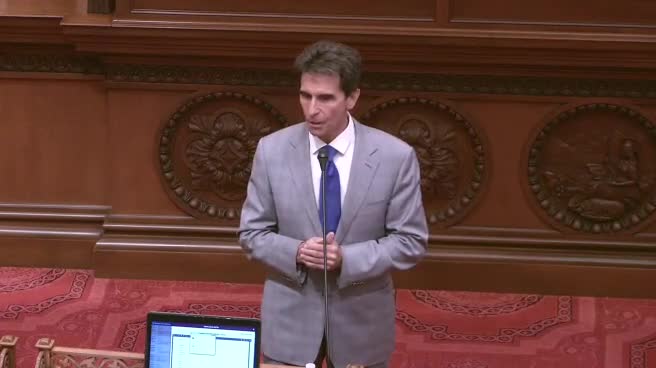
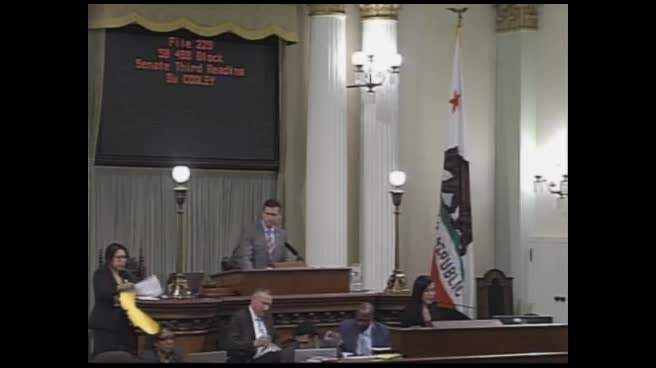
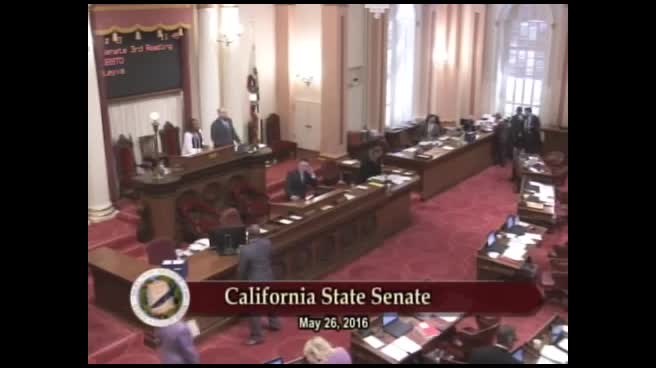
Bill Author

Bill Co-Author(s):