SCR 89: Diversity, Equity, and Inclusion.
- Session Year: 2025-2026
- House: Senate
- Latest Version Date: 2026-08-11
Current Status:
Passed
(2026-08-11: Chaptered by Secretary of State. Res. Chapter 159, Statutes of 2026.)
Introduced
In Committee
Awaiting First Chamber Vote
Passed First Chamber
In Committee
Awaiting Second Chamber Vote
Passed Second Chamber
Enacted
This measure would affirm the Legislatures commitment to Diversity, Equity, and Inclusion (DEI) and encourage local, state, and federal policymakers, among other organizations, to adopt and uphold DEI principles.
This measure would affirm the Legislatures commitment to Diversity, Equity, and Inclusion (DEI) and encourage local, state, and federal policymakers, among other organizations, to adopt and uphold DEI principles.
This measure would affirm the Legislatures commitment to Diversity, Equity, and Inclusion (DEI) and encourage local, state, and federal policymakers, among other organizations, to adopt and uphold DEI principles.
This measure would affirm the Legislatures commitment to Diversity, Equity, and Inclusion (DEI) and encourage local, state, and federal policymakers, among other organizations, to adopt and uphold DEI principles.
This measure would affirm the Legislatures commitment to Diversity, Equity, and Inclusion (DEI) and encourage local, state, and federal policymakers, among other organizations, to adopt and uphold DEI principles.
WHEREAS, The American Dream has been a beacon of hope for generations; and
WHEREAS, The American Dream embodies the ideals of opportunity, prosperity, and upward mobility, promising that every person should have the chance to achieve what they themselves define as success and fulfillment through hard work and determination; and
WHEREAS, Many today feel as though their American Dream is unattainable; and
WHEREAS, The American Dream belongs to all of us; and
WHEREAS, Our highest accomplishments as a state and nation have been achieved when we harnessed the strengths of all people regardless of their identities to overcome our greatest challenges; and
WHEREAS, Diversity, Equity, and Inclusion (DEI) is a centuries-old movement deeply rooted in Americas founding principles and its subsequent legacy of civil rights and social justice efforts aimed at delivering the laws, policies, and initiatives that enable America to live up to our Constitutions promises; and
WHEREAS, DEI policies, from the Nineteenth Amendment to the United States Constitution to the Civil Rights Act of 1964 to the Americans with Disabilities Act of 1990, among others, reflect the corrective legislative and legal actions taken across our nations history to expand and guarantee access to the educational, economic, and civic obligations and capacities of our nation; and
WHEREAS, California has been a leader in promoting diversity, equity, and inclusion within the California state service to achieve equitable work cultures; and
WHEREAS, In 2022, there was an executive order directing California state agencies and departments to take additional actions to embed equity analysis and considerations in their mission, policies, and practices to reflect the diversity found here in California and to ensure discrimination does not occur in our state agencies; and
WHEREAS, The California State Assembly passed a resolution to require the Assembly to explore methods to integrate equity more formally into its daily activities, including the potential adoption of an equity impact analysis into the existing committee and floor bill analysis process; and
WHEREAS, The California State Senate introduced Senate Concurrent Resolution 136 in 2024, which urged the Senate to explore methods to integrate equity more formally into its legislative processes, including the potential adoption of an equity impact analysis into existing committee and floor bill analyses; and
WHEREAS, DEI principles and policies promote equal access to opportunities, foster an environment of respect and belonging, and ensure that every individual, regardless of background, can fully participate in all aspects of society; and
WHEREAS, DEI policies are intended not only to promote access, but to proactively dismantle systemic inequities in education, employment, housing, health care, and civic participation that have disproportionately impacted communities of color, indigenous peoples, women, LGBTQ+ individuals, individuals with disabilities, and other historically excluded groups; and
WHEREAS, DEI initiatives often include targeted recruitment, culturally competent workplace training, equity-focused budgeting, inclusive curriculum development, and disaggregated data reporting in order to address measurable disparities in outcomes; and
WHEREAS, DEI is essential to creating a society where all individuals are valued, heard, and included; and
WHEREAS, DEI is based on removing barriers to opportunity so that our merits can speak for themselves; and
WHEREAS, DEI is committed to widening pathways to the American Dream for every community so that all people can reap the benefits of shared prosperity in our nation; and
WHEREAS, Freedom of speech and expression are fundamental constitutional rights, protecting the ability of individuals to voice their ideas and opinions without interference, punishment, or retaliation by the government; and
WHEREAS, Retaliatory actions such as terminating, silencing, or marginalizing qualified public servants, educators, and professionals based on their advocacy for equity or their identitiesincluding race, gender, or LGBTQ+ statusrepresent a dangerous erosion of civil liberties and a threat to representative leadership in public life; and
WHEREAS, Attempts to prohibit DEI practices diminish the diversity of perspectives that strengthen our society, and conflict with antidiscrimination laws; and
WHEREAS, The federal government under the Trump administration and ongoing political actors have sought to dismantle DEI frameworks, including banning DEI training in federal agencies, attempting to eliminate race-conscious admissions policies, and threatening funding for universities that incorporate equity-related content; and
WHEREAS, These efforts not only undermine civil rights progress but contradict core democratic values enshrined in the United States Constitution and upheld through decades of precedent, such as Brown v. Board of Education, Mendez v. Westminster School District of Orange County, and Griggs v. Duke Power Co.; and
WHEREAS, Efforts to attack DEI are harmful to our country; now, therefore, be it
Resolved by the Senate of the State of California, the Assembly thereof concurring, That the Legislature affirms its commitment to Diversity, Equity, and Inclusion as an essential foundation for achieving the American Dream and fostering environments where all individuals have the freedom to be healthy, prosperous, and safe and have the opportunity to realize their full potential; and be it further
Resolved, That the Legislature encourages local, state, and federal policymakers, educational institutions, workplaces, and other organizations to adopt and uphold DEI principles that promote inclusivity, protect freedom of expression, remove barriers, and provide equitable opportunities for all individuals to pursue their dreams; and be it further
Resolved, That the Secretary of the Senate transmit copies of this resolution to the author for appropriate distribution.
WHEREAS, The American Dream has been a beacon of hope for generations; and
WHEREAS, The American Dream embodies the ideals of opportunity, prosperity, and upward mobility, promising that every person should have the chance to achieve what they themselves define as success and fulfillment through hard work and determination; and
WHEREAS, Many today feel as though their American Dream is unattainable; and
WHEREAS, The American Dream belongs to all of us; and
WHEREAS, Our highest accomplishments as a state and nation have been achieved when we harnessed the strengths of all people regardless of their identities to overcome our greatest challenges; and
WHEREAS, Diversity, Equity, and Inclusion (DEI) is a centuries-old movement deeply rooted in Americas founding principles and its subsequent legacy of civil rights and social justice efforts aimed at delivering the laws, policies, and initiatives that enable America to live up to our Constitutions promises; and
WHEREAS, DEI policies, from the Nineteenth Amendment to the United States Constitution to the Civil Rights Act of 1964 to the Americans with Disabilities Act of 1990, among others, reflect the corrective legislative and legal actions taken across our nations history to expand and guarantee access to the educational, economic, and civic obligations and capacities of our nation; and
WHEREAS, California has been a leader in promoting diversity, equity, and inclusion within the California state service to achieve equitable work cultures; and
WHEREAS, In 2022, there was an executive order directing California state agencies and departments to take additional actions to embed equity analysis and considerations in their mission, policies, and practices to reflect the diversity found here in California and to ensure discrimination does not occur in our state agencies; and
WHEREAS, The California State Assembly passed a resolution to require the Assembly to explore methods to integrate equity more formally into its daily activities, including the potential adoption of an equity impact analysis into the existing committee and floor bill analysis process; and
WHEREAS, The California State Senate introduced Senate Concurrent Resolution 136 in 2024, which urged the Senate to explore methods to integrate equity more formally into its legislative processes, including the potential adoption of an equity impact analysis into existing committee and floor bill analyses; and
WHEREAS, DEI principles and policies promote equal access to opportunities, foster an environment of respect and belonging, and ensure that every individualregardless individual, regardless of backgroundcan background, can fully participate in all aspects of society; and
WHEREAS, DEI policies are intended not only to promote access, but to proactively dismantle systemic inequities in education, employment, housing, health care, and civic participation that have disproportionately impacted communities of color, indigenous peoples, women, LGBTQ+ individuals, individuals with disabilities, and other historically excluded groups; and
WHEREAS, DEI initiatives often include targeted recruitment, culturally competent workplace training, equity-focused budgeting, inclusive curriculum development, and disaggregated data reporting in order to address measurable disparities in outcomes; and
WHEREAS, DEI is essential to creating a society where all individuals are valued, heard, and included; and
WHEREAS, DEI is based on removing barriers to opportunity so that our merits can speak for themselves; and
WHEREAS, DEI is committed to widening pathways to the American Dream for every community so that all people can reap the benefits of shared prosperity in our nation; and
WHEREAS, Freedom of speech and expression are fundamental constitutional rights, protecting the ability of individuals to voice their ideas and opinions without interference, punishment, or retaliation by the government; and
WHEREAS, Retaliatory actions such as terminating, silencing, or marginalizing qualified public servants, educators, and professionals based on their advocacy for equity or their identitiesincluding race, gender, or LGBTQ+ statusrepresent a dangerous erosion of civil liberties and a threat to representative leadership in public life; and
WHEREAS, Attempts to prohibit DEI practices diminish the diversity of perspectives that strengthen our society, and conflict with antidiscrimination laws; and
WHEREAS, The federal government under the Trump administration and ongoing political actors have sought to dismantle DEI frameworks, including banning DEI training in federal agencies, attempting to eliminate race-conscious admissions policies, and threatening funding for universities that incorporate equity-related content; and
WHEREAS, These efforts not only undermine civil rights progress but contradict core democratic values enshrined in the United States Constitution and upheld through decades of precedent, such as Brown v. Board of Education, Mendez v. Westminster School District of Orange County, and Griggs v. Duke Power Co.; and
WHEREAS, Efforts to attack DEI are harmful to our country; now, therefore, be it
Resolved by the Senate of the State of California, the Assembly thereof concurring, That the Legislature affirms its commitment to Diversity, Equity, and Inclusion as an essential foundation for achieving the American Dream and fostering environments where all individuals have the freedom to be healthy, prosperous, and safe and have the opportunity to realize their full potential; and be it further
Resolved, That the Legislature encourages local, state, and federal policymakers, educational institutions, workplaces, and other organizations to adopt and uphold DEI principles that promote inclusivity, protect freedom of expression, remove barriers, and provide equitable opportunities for all individuals to pursue their dreams; and be it further
Resolved, That the Secretary of the Senate transmit copies of this resolution to the author for appropriate distribution.
WHEREAS, The American Dream has been a beacon of hope for generations; and
WHEREAS, The American Dream embodies the ideals of opportunity, prosperity, and upward mobility, promising that every person should have the chance to achieve what they themselves define as success and fulfillment through hard work and determination; and
WHEREAS, Many today feel as though their American Dream is unattainable; and
WHEREAS, The American Dream belongs to all of us; and
WHEREAS, Our highest accomplishments as a state and nation have been achieved when we harnessed the strengths of all people regardless of their identities to overcome our greatest challenges; and
WHEREAS, Diversity, Equity, and Inclusion (DEI) is a centuries-old movement deeply rooted in Americas founding principles and its subsequent legacy of civil rights and social justice efforts aimed at delivering the laws, policies, and initiatives that enable America to live up to our Constitutions promises; and
WHEREAS, DEI policies, from the Nineteenth Amendment to the United States Constitution to the Civil Rights Act of 1964 to the Americans with Disabilities Act of 1990, among others, reflect the corrective legislative and legal actions taken across our nations history to expand and guarantee access to the educational, economic, and civic obligations and capacities of our nation; and
WHEREAS, California has been a leader in promoting diversity, equity, and inclusion within the California state service to achieve equitable work cultures; and
WHEREAS, Governor Newsom signed In 2022, there was an executive order directing California state agencies and departments to take additional actions to embed equity analysis and considerations in their mission, policies, and practices and establishing the Racial Equity Commission; to reflect the diversity found here in California and to ensure discrimination does not occur in our state agencies; and
WHEREAS, The California State Assembly passed a resolution to require the Assembly to explore methods to integrate equity more formally into its daily activities, including the potential adoption of an equity impact analysis into the existing committee and floor bill analysis process; and
WHEREAS, The California State Senate introduced Senate Concurrent Resolution 136 in 2024, which urged the Senate to explore methods to integrate equity more formally into its legislative processes, including the potential adoption of an equity impact analysis into existing committee and floor bill analyses; and
WHEREAS, DEI principles and policies promote equal access to opportunities, foster an environment of respect and belonging, and ensure that every individualregardless of backgroundcan fully participate in all aspects of society; and
WHEREAS, DEI policies are intended not only to promote access, but to proactively dismantle systemic inequities in education, employment, housing, health care, and civic participation that have disproportionately impacted communities of color, indigenous peoples, women, LGBTQ+ individuals, individuals with disabilities, and other historically excluded groups; and
WHEREAS, DEI initiatives often include targeted recruitment, culturally competent workplace training, equity-focused budgeting, inclusive curriculum development, and disaggregated data reporting in order to address measurable disparities in outcomes; and
WHEREAS, DEI is essential to creating a society where all individuals are valued, heard, and included; and
WHEREAS, DEI is based on removing barriers to opportunity so that our merits can speak for themselves; and
WHEREAS, DEI is committed to widening pathways to the American Dream for every community so that all people can reap the benefits of shared prosperity in our nation; and
WHEREAS, Freedom of speech and expression are fundamental constitutional rights, protecting the ability of individuals to voice their ideas and opinions without interference, punishment, or retaliation by the government; and
WHEREAS, Retaliatory actions such as terminating, silencing, or marginalizing qualified public servants, educators, and professionals based on their advocacy for equity or their identitiesincluding race, gender, or LGBTQ+ statusrepresent a dangerous erosion of civil liberties and a threat to representative leadership in public life; and
WHEREAS, Attempts to prohibit DEI practices diminish the diversity of perspectives that strengthen our society, and conflict with antidiscrimination laws; and
WHEREAS, The federal government under the Trump administration and ongoing political actors have sought to dismantle DEI frameworks, including banning DEI training in federal agencies, attempting to eliminate race-conscious admissions policies, and threatening funding for universities that incorporate equity-related content; and
WHEREAS, These efforts not only undermine civil rights progress but contradict core democratic values enshrined in the United States Constitution and upheld through decades of precedent, such as Brown v. Board of Education Education, Mendez v. Westminster School District of Orange County, and Griggs v. Duke Power Co.; and
WHEREAS, Efforts to attack DEI are harmful to our country; now, therefore, be it
Resolved by the Senate of the State of California, the Assembly thereof concurring, That the Legislature affirms its commitment to Diversity, Equity, and Inclusion as an essential foundation for achieving the American Dream and fostering environments where all individuals have the freedom to be healthy, prosperous, and safe and have the opportunity to realize their full potential; and be it further
Resolved, That the Legislature encourages local, state, and federal policymakers, educational institutions, workplaces, and other organizations to adopt and uphold DEI principles that promote inclusivity, protect freedom of expression, remove barriers, and provide equitable opportunities for all individuals to pursue their dreams; and be it further
Resolved, That the Secretary of the Senate transmit copies of this resolution to the author for appropriate distribution.
WHEREAS, The American Dream has been a beacon of hope for generations; and
WHEREAS, The American Dream embodies the ideals of opportunity, prosperity, and upward mobility, promising that every person should have the chance to achieve what they themselves define as success and fulfillment through hard work and determination; and
WHEREAS, Many today feel as though their American Dream is unattainable; and
WHEREAS, The American Dream belongs to all of us; and
WHEREAS, Our highest accomplishments as a state and nation have been achieved when we harnessed the strengths of all people regardless of their identities to overcome our greatest challenges; and
WHEREAS, Diversity, Equity, and Inclusion (DEI) is a centuries-old movement deeply rooted in Americas founding principles and its subsequent legacy of civil rights and social justice efforts aimed at delivering the laws, policies, and initiatives that enable America to live up to our Constitutions promises; and
WHEREAS, DEI policies, from the Nineteenth Amendment to the United States Constitution to the Civil Rights Act of 1964 to the Americans with Disabilities Act of 1990, among others, reflect the corrective legislative and legal actions taken across our nations history to expand and guarantee access to the educational, economic, and civic obligations and capacities of our nation; and
WHEREAS, California has been a leader in promoting diversity, equity, and inclusion within the California state service to achieve equitable work cultures; and
WHEREAS, Governor Newsom signed an executive order directing state agencies and departments to take additional actions to embed equity analysis and considerations in their mission, policies, and practices and establishing the Racial Equity Commission; and
WHEREAS, The California State Assembly passed a resolution to require the Assembly to explore methods to integrate equity more formally into its daily activities, including the potential adoption of an equity impact analysis into the existing committee and floor bill analysis process; and
WHEREAS, DEI principles and policies promote equal access to opportunities, foster an environment of respect and belonging, and ensure that every individualregardless of backgroundcan fully participate in all aspects of society; and
WHEREAS, DEI policies are intended not only to promote access, but to proactively dismantle systemic inequities in education, employment, housing, health care, and civic participation that have disproportionately impacted communities of color, indigenous peoples, women, LGBTQ+ individuals, individuals with disabilities, and other historically excluded groups; and
WHEREAS, DEI initiatives often include targeted recruitment, culturally competent workplace training, equity-focused budgeting, inclusive curriculum development, and disaggregated data reporting in order to address measurable disparities in outcomes; and
WHEREAS, DEI is essential to creating a society where all individuals are valued, heard, and included; and
WHEREAS, DEI is based on removing barriers to opportunity so that our merits can speak for themselves; and
WHEREAS, DEI is committed to widening pathways to the American Dream for every community so that all people can reap the benefits of shared prosperity in our nation; and
WHEREAS, Freedom of speech and expression are fundamental constitutional rights, protecting the ability of individuals to voice their ideas and opinions without interference, punishment, or retaliation by the government; and
WHEREAS, Retaliatory actions such as terminating, silencing, or marginalizing qualified public servants, educators, and professionals based on their advocacy for equity or their identitiesincluding race, gender, or LGBTQ+ statusrepresent a dangerous erosion of civil liberties and a threat to representative leadership in public life; and
WHEREAS, Attempts to prohibit DEI practices diminish the diversity of perspectives that strengthen our society, and conflict with antidiscrimination laws; and
WHEREAS, The federal government under the Trump administration and ongoing political actors have sought to dismantle DEI frameworks, including banning DEI training in federal agencies, attempting to eliminate race-conscious admissions policies, and threatening funding for universities that incorporate equity-related content; and
WHEREAS, These efforts not only undermine civil rights progress but contradict core democratic values enshrined in the United States Constitution and upheld through decades of precedent, such as Brown v. Board of Education and Griggs v. Duke Power Co.; and
WHEREAS, Efforts to attack DEI are harmful to our country; now, therefore, be it
Resolved by the Senate of the State of California, the Assembly thereof concurring, That the Legislature affirms its commitment to Diversity, Equity, and Inclusion as an essential foundation for achieving the American Dream and fostering environments where all individuals have the freedom to be healthy, prosperous, and safe and have the opportunity to realize their full potential; and be it further
Resolved, That the Legislature encourages local, state, and federal policymakers, educational institutions, workplaces, and other organizations to adopt and uphold DEI principles that promote inclusivity, protect freedom of expression, remove barriers, and provide equitable opportunities for all individuals to pursue their dreams; and be it further
Resolved, That the Secretary of the Senate transmit copies of this resolution to the author for appropriate distribution.
|
Date
|
Status
|
|---|---|
| Aug 11, 2026 | Chaptered by Secretary of State. Res. Chapter 159, Statutes of 2026. |
| Aug 11, 2026 | Enrolled and filed with the Secretary of State at 1 p.m. |
| Aug 6, 2026 | Assembly amendments concurred in. (Ayes 28. Noes 8. Page 5295.) Ordered to engrossing and enrolling. |
| Aug 6, 2026 | Assembly amendments concurred in. (Ayes 28. Noes 8.) Ordered to engrossing and enrolling. |
| Jun 16, 2026 | In Senate. Concurrence in Assembly amendments pending. |
| Jun 15, 2026 | Read. Adopted. (Page 5701.) Ordered to the Senate. |
| Jun 15, 2026 | Read. Adopted. Ordered to the Senate. |
| Jun 15, 2026 | Coauthors revised. |
| Apr 28, 2026 | From committee: Be adopted. Ordered to third reading. (Ayes 9. Noes 3.) (April 28). |
| Apr 28, 2026 | Coauthors revised. |
| Mar 20, 2026 | From committee with author's amendments. Read second time and amended. Re-referred to Com. on JUD. |
| Mar 9, 2026 | Referred to Com. on JUD. |
| Feb 19, 2026 | In Assembly. Held at Desk. |
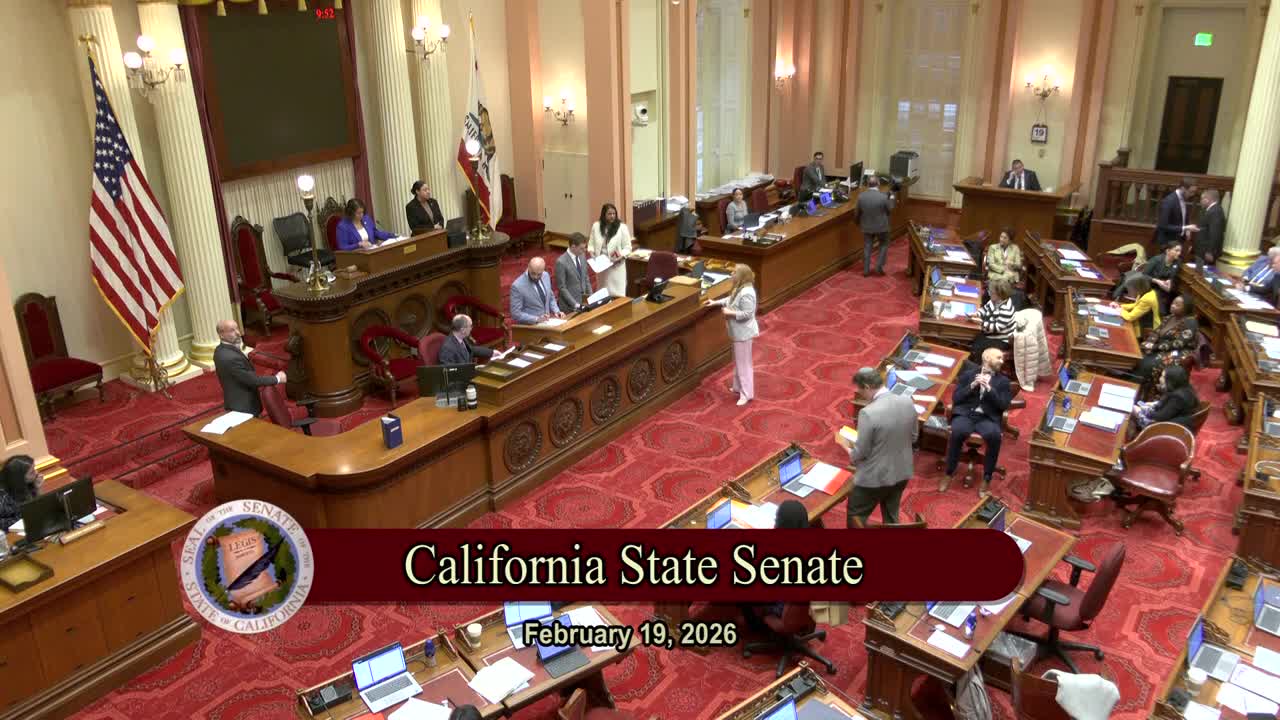
| Feb 19, 2026 | Read. Adopted. (Ayes 29. Noes 7. Page 3429.) Ordered to the Assembly. |
| Jan 13, 2026 | Read second time. Ordered to third reading. |
| Jan 12, 2026 | Ordered to second reading. |
| Jan 12, 2026 | From inactive file on motion of Senator Smallwood-Cuevas. |
| Sep 13, 2025 | Ordered to inactive file on request of Senator Smallwood-Cuevas. |
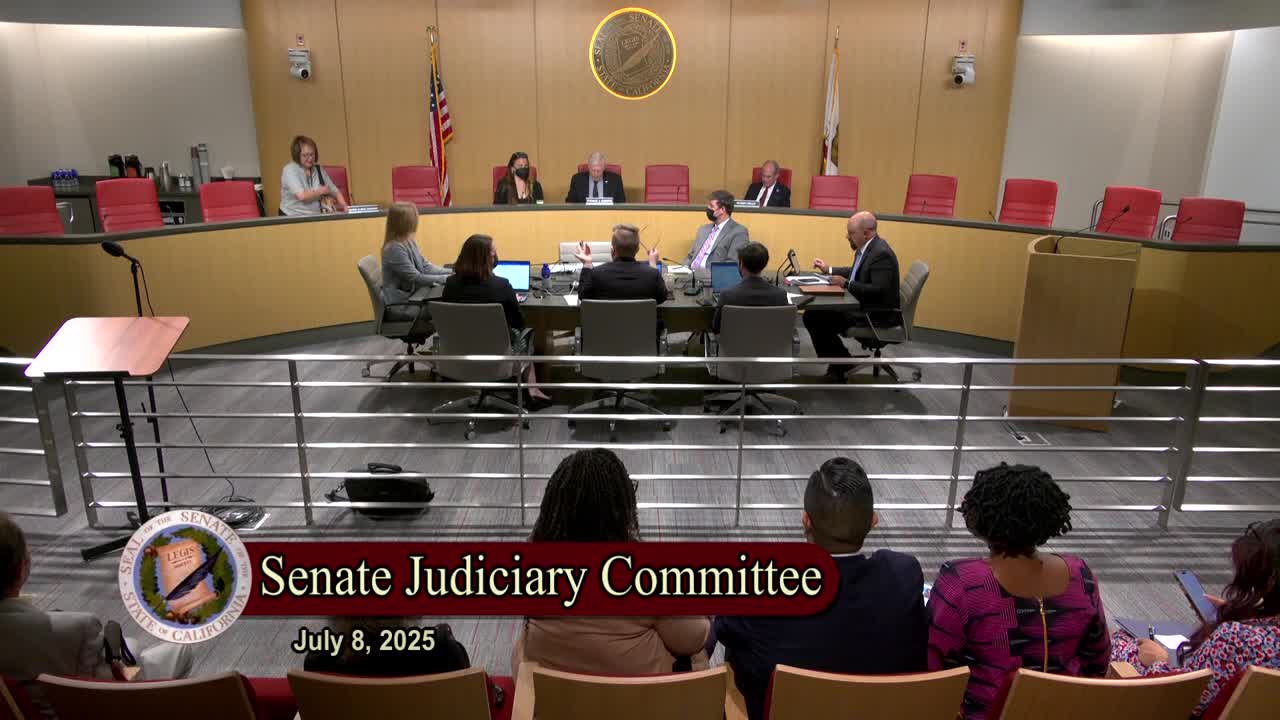
| Jul 9, 2025 | From committee: Be adopted. Ordered to third reading. (Ayes 11. Noes 1. Page 1991.) (July 8). |
| Jun 25, 2025 | From committee with author's amendments. Read second time and amended. Re-referred to Com. on JUD. |
| Jun 20, 2025 | Set for hearing July 8. |
| Jun 11, 2025 | Re-referred to Com. on JUD. |
| May 29, 2025 | Introduced. Referred to Com. on RLS. |
|
Date
|
Description
|
Location
|
Votes
|
|
|---|---|---|---|---|
| Aug 6, 2026 | Unfinished Business SCR89 Smallwood-Cuevas Concurrence | Senate Floor |
Passed |
|
| Apr 28, 2026 | Be adopted. To third reading. | Assembly Standing Committee on Judiciary |
Passed |
|
| Feb 19, 2026 | The committee(s) on WLA recommend(s) that the measure be PASSED, WITH AMENDMENTS | Senate Floor |
Passed |
|
| Jul 8, 2025 | Be adopted. Ordered to third reading | Senate Standing Committee on Judiciary |
Passed |
This list shows positions taken on this bill by organizations on the date displayed, which is linked to the original source.
Positions by individuals are not included.
|
Organization
|
Position
|
Date
|
|---|---|---|
| cleanearth4kids.org | ** Support | |
| SEIU California | ** Support | |
| University Of California Student Association | ** Support |
SENATE RULES COMMITTEE Office of Senate Floor Analyses (916) 651-4171 | SCR 89 |
UNFINISHED BUSINESS
Bill No: SCR 89
Author: Smallwood-Cuevas (D), et al.
Amended: 3/20/26
Vote: 21
SENATE JUDICIARY COMMITTEE: 11-1, 7/8/25
AYES: Umberg, Allen, Arreguín, Ashby, Caballero, Durazo, Laird, Stern, Wahab, Weber Pierson, Wiener
NOES: Niello
NO VOTE RECORDED: Valladares
SENATE FLOOR: 29-7, 2/19/26
AYES: Allen, Archuleta, Arreguín, Ashby, Becker, Blakespear, Cabaldon, Caballero, Cervantes, Cortese, Durazo, Gonzalez, Grayson, Hurtado, Laird, Limón, McGuire, McNerney, Menjivar, Padilla, Pérez, Richardson, Rubio, Smallwood-Cuevas, Stern, Umberg, Wahab, Weber Pierson, Wiener
NOES: Alvarado-Gil, Dahle, Jones, Niello, Ochoa Bogh, Seyarto, Strickland
NO VOTE RECORDED: Choi, Grove, Reyes, Valladares
ASSEMBLY FLOOR: Adopted via voice vote, 6/15/26
SUBJECT: Diversity, Equity, and Inclusion
SOURCE: Author
DIGEST:
This resolution affirms the Legislature’s commitment to Diversity, Equity, and Inclusion (DEI) principles at a time when DEI efforts and programs are under attack.
Assembly Amendments
added co-authors.
ANALYSIS:
Existing law:
- Provides that no state shall deny to any person within its jurisdiction the equal protection of the laws. (United States Constitution (U.S. Const.), 14th Amend., § 1.)
- Provides that a person may not be denied the equal protection of the laws, and that a citizen or class of citizens may not be granted privileges or immunities not granted on the same terms to all citizens. (California Constitution (Cal. Const.,) art. I, § 7.)
- Provides that Congress shall make no law abridging the freedom of speech. (U.S. Const., 1st amend.)
This resolution:
- Declares that:
- The American Dream has been a beacon of hope for generations.
- The American Dream embodies the ideals of opportunity, prosperity, and upward mobility, promising that every person should have the chance to achieve what they themselves define as success and fulfillment through hard work and determination.
- Many today feel that their American Dream is unattainable.
- The American Dream belongs to all of us.
- Our highest accomplishments as a state and nation have been achieved when we harness the strengths of all people regardless of their identities to overcome our greatest challenges.
- DEI is a centuries-old movement deeply rooted in America’s founding principles and its subsequent legacy of civil rights and social justice efforts aimed at delivering the laws, policies, and initiatives that enable America to live up to our Constitution’s promises.
- DEI policies, from the Nineteenth Amendment to the United States Constitution to the Civil Rights Act of 1964 to the Americans with Disabilities Act of 1990, among others, reflect the corrective legislative and legal actions taken across our nation’s history to expand and guarantee access to the educational, economic, and civic obligations and capacities of our nation.
- California has been a leader in promoting diversity, equity, and inclusion within the California state service to achieve equitable work cultures.
- Governor Newsom signed an executive order directing state agencies and departments to take additional actions to embed equity analysis and considerations in their mission, policies, and practices and establishing the Racial Equity Commission.
- The California State Assembly passed a resolution to require the Assembly to explore methods to integrate equity more formally into its daily activities, including the potential adoption of an equity impact analysis into the existing committee and floor bill analysis process.
- DEI principles and policies promote equal access to opportunities, foster an environment of respect and belonging, and ensure that every individual—regardless of background—can fully participate in all aspects of society.
- DEI policies are intended not only to promote access, but to proactively dismantle systematic inequalities in education, employment, housing, health care, and civic participation that have disproportionately impacted communities of color, indigenous peoples, women, LGBTQ+ individuals, individuals with disabilities, and other historically excluded groups.
- DEI initiatives often include targeted recruitment, culturally competent workplace training, equity-focused budgeting, inclusive curriculum development, and disaggregated data reporting to address measurable disparities in outcomes.
- DEI is essential to creating a society where all individuals are valued, heard, and included.
- DEI is based on removing barriers to opportunity so our merits can speak for themselves.
- DEI is committed to widening pathways to the American Dream for every community so that all people can reap the benefits of shared prosperity in our nation.
- Freedom of speech and expression are fundamental constitutional rights, protecting the ability of individuals to voice their ideas and opinions without interference, punishment, or retaliation by the government.
- Retaliatory actions such as terminating, silencing, or marginalizing qualified public servants, educators, and professionals based on their advocacy for equity or their identities—including race, gender, or LGBTQ+ status—represent a dangerous erosion of civil liberties and a threat to representative leadership in public life.
- Attempts to prohibit DEI practices diminish the diversity of perspectives that strengthen our society, and conflict with antidiscrimination laws.
- The federal government under the Trump Administration and ongoing political actors have sought to dismantle DEI frameworks, including banning DEI training in federal agencies, attempting to eliminate race-conscious admissions policies, and threatening funding for universities that incorporate equity-related content.
- These efforts not only undermine civil rights progress but contradict core democratic values enshrined in the United States Constitution and upheld through decades of precedent, such as Brown v. Board of Education and Griggs v. Duke Power Co.
- Efforts to attack DEI are harmful to our country.
- Resolves, by the Senate of the State of California and with the Assembly concurring:
- The Legislature affirms its commitment to DEI as an essential foundation for achieving the American Dream and fostering environments where all individuals have the freedom to be healthy, prosperous, and safe and have the opportunity to realize their full potential.
- The Legislature encourages local, state, and federal policymakers, educational institutions, workplaces, and other organizations to adopt and uphold DEI principles that promote inclusivity, protect freedom of expression, remove barriers, and provide equitable opportunities for all individuals to pursue their dreams.
- The Secretary of the Senate shall transmit copies of this resolution to the author for appropriate distribution.
Comments
In the face of ongoing attacks on DEI and the dismantling of DEI programs, this resolution reaffirms the Legislature’s commitment to DEI as a necessary foundation for ensuring that all persons have the opportunity to realize their full potential. This resolution recites the history and purpose of DEI and California’s leading role in promoting diversity, equity, and inclusion within state government and across the state. This resolution also recognizes that attempts to prohibit DEI practices and programs diminish the diversity of perspectives, which weakens, rather than strengthens, our society. This resolution states that these anti-DEI efforts are harmful to our country. Finally, this resolution states that the Legislature encourages local, state, and federal policymakers, educational institutions, workplaces, and other institutions to adopt and uphold DEI principles that promote inclusivity, protect freedom of expression, remove barriers, and provide equitable opportunities for all individuals to pursue their dreams.
FISCAL EFFECT: Appropriation: No Fiscal Com.: No Local: No
SUPPORT: (Verified 6/17/26)
CleanEarth4Kids.org
University of California Student Association
OPPOSITION: (Verified 6/17/26)
None received
ARGUMENTS IN SUPPORT: According to the Unviersity of California Student Association, “Across the University of California, and higher education institutions across the state and country, the federal administration has perpetuated hostile attacks against DEI initiatives that support students from all backgrounds1 with access to a postsecondary degree, by arbitrarily withholding essential research dollars to world class institutions studying cures and treatments for cancer, diabetes, heart disease, organ transplants and so much more. The $500 Million research cuts and $1 Billion ransom against UCLA in August 20252 threatened the sanctity and success of our students, faculty, Medical Center and UC system to continue being the world class research enterprise that has championed breakthroughs in science. Scaling back of diversity program staff, equity centers and inclusivity measures across the UC that benefit ALL students while closing gaps in college access and degree attainment is dangerous to current and future students, and UCSA thanks the Senator for standing up.”
Prepared by: Allison Whitt Meredith / JUD. / (916) 651-4113
6/17/26 16:28:22
SENATE THIRD READING
STR Bill Id:SCR 89
Author:(Smallwood-Cuevas)
As Amended Ver:March 20, 2026
Majority vote
SUMMARY
Affirms the Legislature's commitment to Diversity, Equity, and Inclusion (DEI) and encourages local, state, and federal policymakers, among others, to adopt and uphold DEI principles.
Major Provisions
- Declares, among other things, that whereas:
- The American Dream embodies the ideals of opportunity, prosperity, and upward mobility, promising that every person should have the chance to achieve what they themselves define as success and fulfillment through hard work and determination, and that every individual, regardless of background can fully participate in all aspects of society.
- DEI policies are intended not only to promote access, but to proactively dismantle systemic inequities.
- DEI initiatives often include targeted recruitment, culturally competent workplace training, equity-focused budgeting, inclusive curriculum development, and disaggregated data reporting in order to address measurable disparities in income.
- DEI is based on removing barriers to opportunity, widening pathways to the American Dream, and is essential to creating a society where all individuals are valued, heard, and included.
- Attempts to prohibit DEI practices diminish the diversity of perspectives that strengthen our society and conflict with antidiscrimination laws.
- The federal government under the Trump administration and other political actors have sought to dismantle DEI framework, and these efforts not only undermine civil rights progress but contradict core democratic values and harm our country.
- Resolves, in light of the above, that the Legislature:
- Affirms its commitment to Diversity, Equity, and Inclusion as an essential foundation for achieving the American Dream and fostering environments where all individuals have the freedom to be healthy, prosperous, and safe and have the opportunity to realize their full potential.
- Encourages local, state, and federal policymakers, educational institutions, workplaces, and other organizations to adopt and uphold DEI principles that promote inclusivity, protect freedom of expression, remove barriers, and provide equitable opportunities for all individuals to pursue their dreams.
COMMENTS
This timely resolution affirms California's commitment to diversity, equity, and inclusion (DEI) at a moment when such ideals are under assault from the President of the United States and others. While President Trump began his second term issuing executive orders calling for an end to DEI, this resolution not only affirms the Legislature's commitment to DEI, but it cuts through some of the recent distortions of DEI principles and policies. The resolution's findings and declarations also make the case that efforts to attack DEI undermine civil rights progress and are harmful to our country. The measure resolves and affirms the Legislature's commitment to Diversity, Equity, and Inclusion (DEI) and encourages local, state, and federal policymakers, among others, to adopt and uphold DEI principles.
"Competing meanings of "Diversity, Equity, and Inclusion." When a business or public entity adopts a policy of "diversity, equity, and inclusion" – or DEI – it apparently means different things to different people. To many, including the author of this resolution, DEI promotes policies that confront the historical barriers that prevent some people from enjoying the benefits of the American Dream. As a practical matter, given the reality of systemic discrimination in the history of our state and nation, this may require businesses or public agencies to review existing policies to ensure that they do not unintentionally perpetuate beliefs or practices that have led to racial, ethnic, religious, gender, or other inequalities. While DEI may be a relatively new term, it is deeply rooted in a much older ideal that all people are created equally and possess the same rights to human dignity and to pursue happiness. To others – including the President of the United States – DEI apparently means something quite different. For the President and other media and political actors, DEI means "wokeness" run amok. DEI, the President claims, is "illegal" because it requires adopting unconstitutional, quota-based "affirmative action."
A clear example of the two meanings can be seen by comparing two executive orders (EO): President Biden's Executive Order 13985 (January 20, 2021), and President Trump's Executive Order 14151 (January 20, 2025), reversing the Biden order. President Biden's EO – entitled "Advancing Racial Equality and Support for Underserved Communities Through the Federal Government" – began by noting that equal opportunity is "the bedrock of American democracy," and that diversity is "one of our country's greatest strengths." Biden's EO simply required federal agencies to "review" existing policies in order to "assess whether underserved communities and their members face systemic barriers in accessing benefits and opportunities available pursuant to [the agency's] policies and programs." In short, the EO did not require any specific change in policy, nor did it require agencies to provide any "preference," as Trump's EO mischaracterized it. Biden's EO simply required agencies to review existing policies and practices to make sure that they did not discriminate or otherwise create obstacles to equal opportunity for all. The EO also required the federal government, consistent with applicable law, to allocate resources "to address the historic failure to invest sufficiently, justly, and equally in underserved communities, as well as individuals from those communities." To that end, the Biden EO directed the Director of the Office of Management and Budget (OMB), consistent with applicable law, to identify opportunities to invest in underserved communities. The EO did not direct the OMB or any other agency to grant preferences to particular groups; it simply required them to review existing policies and identify opportunities to address inequities, albeit "consistent with applicable law," including anti-discrimination laws and the court rulings interpreting them.
President Trump reversed the Biden policy with EO 14151, misleadingly titled, "Ending Radical and Wasteful Government DEI Programs and Preferencing." Trump's EO claimed that the agency responses to the Biden's order "demonstrated immense public waste and shameful discrimination." Trump's EO ordered the OMB, assisted by Office of Personnel Management (OPM), to "coordinate the termination of all discriminatory programs, including illegal DEI and 'diversity, equity, inclusion, and accessibility' (DEIA) mandates, policies, programs, preferences, and activities in the Federal Government, under whatever name they appear." The EO directed each agency, department, or commission head to terminate any "environmental justice" offices and positions, as well as "all 'equity action plans,' 'equity actions,' initiatives, or programs, 'equity-related' related grants or contracts; and all DEI or DEIA performance requirements for employees, contactors, and grantees." In short, the EO apparently sought to terminate any position title, office, or program that had the word "equity" in its title. Although Trump's EO purported to end Biden's EO, it did so only by mischaracterizing the earlier EO as requiring illegal "preferencing," something the Biden EO clearly did not do.
Misconstruing "affirmative action" and misconstruing DEI as affirmative action. The day after President Trump reversed the Biden order, he issued EO 14173, entitled "Ending Illegal Discrimination and Restoring Merit-Based Opportunity." This EO purported to rescind EO 11246, issued by President Lyndon Johnson in 1965. Trump's EO once again mischaracterized the earlier order. President Johnson's EO did not require granting "preferences," promote "illegal discrimination," or reject merit-based opportunity. Arguably, given the historical context, it did just the opposite. Johnson's EO prohibited federal contractors from engaging in employment discrimination and required government agencies to include anti-discrimination provisions in government contracts and subcontracts. Johnson's EO was fully consistent with the then-recently enacted Civil Rights Act of 1964.
President Johnson's EO 11246 introduced the term "affirmative action," but it did not have the meaning that it does today in popular and constitutional discourse. By "affirmative action," Johnson's EO did not mean a system that gave "preferences" to any particular group; rather, like the Biden EO, it meant that government agencies had an affirmative duty to review existing policies and, if necessary, take affirmative steps to ensure contracting policies, including in advertising and recruitment, did not unintentionally discriminate on the basis of race. Indeed, in comparing Johnson's EO with Trump's EO, one is struck by their rhetorical similarity in ending "discrimination" in order to ensure all Americans "equal opportunity." Johnson's EO was issued at a time when racial discrimination in public contracting was the norm in many places of the country and in many sectors of the economy. It required agencies to take affirmative steps – not "affirmative action" as the term is used today – to ensure that discrimination did not occur in public contracting, whether by the federal agency awarding the contract or by the contractor executing it. President Biden's order similarly required agencies to review existing policies to make sure that they did not reinforce historical patterns and identify ways in which those policies might be made more equitable for all.
Contrary to President Trump's assertions and suggestions, the earlier EOs did not require "preferencing" or encourage agencies to engage in "illegal discrimination" or "workforce balancing based on race, color, sex, sexual preference, religion, or national origin." (EO 14173 rescinding EO 11246.) When President Trump spoke of "illegal discrimination" and "preferencing," he apparently had in mind affirmative action programs that do not comply with the limitations set forth by the U.S. Supreme Court in Students for Fair Admissions v. Harvard (2023) 600 U.S. 181. (See EO 14173 Section 5.) President Trump apparently equates – either knowingly or unknowingly – DEI with affirmative action programs that give preferences in employment, college admissions, and public contracting based on race or gender. However, DEI is not the same as affirmative action, though a constitutional affirmative action program could be a part of a DEI policy. DEI does not impose quotas or hiring mandates; rather, as the resolution explains, DEI policies could include "targeted recruitment, culturally competent workplace training, equity-focused budgeting, inclusive curriculum development, and disaggregated data reporting in order to address measurable disparities in outcome."
As the resolution makes clear, DEI principles and policies are consistent with long-standing ideals embedded in state and federal civil rights legislation, as they "promote equal access to opportunities, foster an environment of respect and belonging, and ensure that every individual, regardless of background, can fully participate in all aspects of society." It is difficult to imagine a statement more reflective of the best American ideals than that.
According to the Author
SCR 89 reaffirms the California Legislature's commitment to diversity, equity, and inclusion as essential to fulfilling the promise of the American Dream and safeguarding our democracy. This is a values-based resolution—one grounded in the Constitution and in the enduring legacy of civil rights protections, from the Civil Rights Act of 1964 to the Americans with Disabilities Act of 1990—that has expanded opportunity and strengthened civic participation in our country.
The resolution highlights California's leadership—from the creation of the Racial Equity Commission to equity-focused legislative processes—and underscores that inclusive policies are essential for all individuals to reach their full potential.
Arguments in Support
SEIU California writes in support:
Our members represent the diversity and strength of Californians. They work in both the public and private sectors, live in all 58 counties in the state, and span the political spectrum as Democrats, Independents, and Republicans. 60% of them are women, of which 70% are women of color, and altogether, our members speak over 31 languages. The resolution affirms that the Legislature remains committed to diversity, equity, and inclusion as an essential foundation for achieving the American Dream and fostering environments where all individuals have the freedom to be healthy, prosperous, and safe, and have the opportunity to live their fullest potential. It also reminds the Legislature of the progress California has made in prioritizing diversity, equity, and inclusion.
Arguments in Opposition
None on file
FISCAL COMMENTS
None
VOTES
SENATE FLOOR: 29-7-4
YES: Allen, Archuleta, Arreguín, Ashby, Becker, Blakespear, Cabaldon, Caballero, Cervantes, Cortese, Durazo, Gonzalez, Grayson, Hurtado, Laird, Limón, McGuire, McNerney, Menjivar, Padilla, Pérez, Richardson, Rubio, Smallwood-Cuevas, Stern, Umberg, Wahab, Weber Pierson, Wiener
NO: Alvarado-Gil, Dahle, Jones, Niello, Ochoa Bogh, Seyarto, Strickland
ABS, ABST OR NV: Choi, Grove, Reyes, Valladares
ASM JUDICIARY: 9-3-0
YES: Kalra, Bauer-Kahan, Bryan, Connolly, Harabedian, Pacheco, Papan, Lee, Zbur
NO: Dixon, Johnson, Sanchez
UPDATED
VERSION: March 20, 2026
CONSULTANT: Tom Clark / JUD. / (916) 319-2334 FN: 0002423
Date of Hearing: April 28, 2026
ASSEMBLY COMMITTEE ON JUDICIARY
Ash Kalra, Chair
SBPCA Bill Id:SCR 89
Author:(Smallwood-Cuevas) – As Amended Ver:March 20, 2026
SENATE VOTE: 29-7
SUBJECT: Diversity, Equity, and Inclusion
KEY ISSUE: should the legislature affirm its commitment to diversity, equity, and inclusion (DEI) and encourage local, state, and federal policymakers, among others, to adopt and uphold DEI principles?
SYNOPSIS
This timely resolution affirms California’s commitment to diversity, equity, and inclusion (DEI) at a moment when such ideals are under assault from the President of the United States and others. While DEI is a relatively new term, properly understood, it is deeply rooted in the much older idea that all people are created equally and possess the same rights to human dignity and to pursue happiness. While President Trump began his second term issuing executive orders calling for an end to DEI, this resolution not only affirms the Legislature’s commitment to DEI, but it cuts through some of the recent distortions of DEI principles and policies. The resolution’s findings and declarations also make the case that efforts to attack DEI undermine civil rights progress and are harmful to our country. The measure resolves and affirms the Legislature’s commitment to Diversity, Equity, and Inclusion (DEI) and encourages local, state, and federal policymakers, among others, to adopt and uphold DEI principles.
This resolution is supported by SEIU California, Clean Earth 4 Kids, and the University of California Student Association. There is no opposition.
SUMMARY: Affirms the Legislature’s commitment to Diversity, Equity, and Inclusion (DEI) and encourages local, state, and federal policymakers, among others, to adopt and uphold DEI principles. Specifically, this measure:
- Declares, among other things, that whereas:
- The American Dream embodies the ideals of opportunity, prosperity, and upward mobility, promising that every person should have the chance to achieve what they themselves define as success and fulfillment through hard work and determination, and that every individual, regardless of background can fully participate in all aspects of society.
- DEI policies are intended not only to promote access, but to proactively dismantle systemic inequities.
- DEI initiatives often include targeted recruitment, culturally competent workplace training, equity-focused budgeting, inclusive curriculum development, and disaggregated data reporting in order to address measurable disparities in income.
- DEI is based on removing barriers to opportunity, widening pathways to the American Dream, and is essential to creating a society where all individuals are valued, heard, and included.
- Attempts to prohibit DEI practices diminish the diversity of perspectives that strengthen our society and conflict with antidiscrimination laws.
- The federal government under the Trump administration and other political actors have sought to dismantle DEI framework, and these efforts not only undermine civil rights progress but contradict core democratic values and harm our country.
- Resolves, in light of the above, that the Legislature:
- Affirms its commitment to Diversity, Equity, and Inclusion as an essential foundation for achieving the American Dream and fostering environments where all individuals have the freedom to be healthy, prosperous, and safe and have the opportunity to realize their full potential.
- Encourages local, state, and federal policymakers, educational institutions, workplaces, and other organizations to adopt and uphold DEI principles that promote inclusivity, protect freedom of expression, remove barriers, and provide equitable opportunities for all individuals to pursue their dreams.
EXISTING LAW:
- Declares that all people are by nature free and independent and have inalienable rights. Among these are enjoying and defending life and liberty, acquiring, possesssing, and protecting property, and pursuing and obtaininig safety, happiness, and privacy. (California Constitution Article 1, Section 1.)
- Provides that all persons within California are entitled to full and equal accommodations in all businesses regardless of their sex, race, color, religion, ancestry, national origin, disability, medical condition, genetic information, marital status, sexual orientation, citizenship, primary language, or immigration status. (Civil Code Section 51.)
- Prohibits discrimination in employment and housing on the basis of certain protected characteristics, including discrimination based on race, religion, color, national origin, ancestry, physical disability, mental disability, reproductive health decision-making, medical condition, genetic information, marital status, sex, gender, gender identity, gender expression, age, sexual orientation, or veteran or military status. (Government Code Sections 12940 and 12955.)
FISCAL EFFECT: As currently in print this measure is keyed non-fiscal.
COMMENTS: According to the author:
SCR 89 reaffirms the California Legislature’s commitment to diversity, equity, and inclusion as essential to fulfilling the promise of the American Dream and safeguarding our democracy. This is a values-based resolution—one grounded in the Constitution and in the enduring legacy of civil rights protections, from the Civil Rights Act of 1964 to the Americans with Disabilities Act of 1990—that has expanded opportunity and strengthened civic participation in our country.
The resolution highlights California’s leadership—from the creation of the Racial Equity Commission to equity-focused legislative processes—and underscores that inclusive policies are essential for all individuals to reach their full potential.
This timely resolution affirms California’s commitment to diversity, equity, and inclusion (DEI) at a moment when such ideals are under assault from the President of the United States and others. While President Trump began his second term issuing executive orders calling for an end to DEI, this resolution not only affirms the Legislature’s commitment to DEI, but it cuts through some of the recent distortions of DEI principles and policies. The resolution’s findings and declarations also make the case that efforts to attack DEI undermine civil rights progress and are harmful to our country. The measure resolves and affirms the Legislature’s commitment to Diversity, Equity, and Inclusion (DEI) and encourages local, state, and federal policymakers, among others, to adopt and uphold DEI principles.
Competing meanings of “Diversity, Equity, and Inclusion.” When a business or public entity adopts a policy of “diversity, equity, and inclusion” – or DEI – it apparently means different things to different people. To many, including the author of this resolution, DEI promotes policies that confront the historical barriers that prevent some people from enjoying the benefits of the American Dream. As a practical matter, given the reality of systemic discrimination in the history of our state and nation, this may require businesses or public agencies to review existing policies to ensure that they do not unintentionally perpetuate beliefs or practices that have led to racial, ethnic, religious, gender, or other inequalities. While DEI may be a relatively new term, it is deeply rooted in a much older ideal that all people are created equally and possess the same rights to human dignity and to pursue happiness. To others – including the President of the United States – DEI apparently means something quite different. For the President and other media and political actors, DEI means “wokeness” run amok. DEI, the President claims, is “illegal” because it requires adopting unconstitutional, quota-based “affirmative action.”
A clear example of the two meanings can be seen by comparing two executive orders (EO): President Biden’s Executive Order 13985 (January 20, 2021), and President Trump’s Executive Order 14151 (January 20, 2025), reversing the Biden order. President Biden’s EO – entitled “Advancing Racial Equality and Support for Underserved Communities Through the Federal Government” – began by noting that equal opportunity is “the bedrock of American democracy,” and that diversity is “one of our country’s greatest strengths.” Biden’s EO simply required federal agencies to “review” existing policies in order to “assess whether underserved communities and their members face systemic barriers in accessing benefits and opportunities available pursuant to [the agency’s] policies and programs.” In short, the EO did not require any specific change in policy, nor did it require agencies to provide any “preference,” as Trump’s EO mischaracterized it. Biden’s EO simply required agencies to review existing policies and practices to make sure that they did not discriminate or otherwise create obstacles to equal opportunity for all. The EO also required the federal government, consistent with applicable law, to allocate resources “to address the historic failure to invest sufficiently, justly, and equally in underserved communities, as well as individuals from those communities.” To that end, the Biden EO directed the Director of the Office of Management and Budget (OMB), consistent with applicable law, to identify opportunities to invest in underserved communities. The EO did not direct the OMB or any other agency to grant preferences to particular groups; it simply required them to review existing policies and identify opportunities to address inequities, albeit “consistent with applicable law,” including anti-discrimination laws and the court rulings interpreting them.
President Trump reversed the Biden policy with EO 14151, misleadingly titled, “Ending Radical and Wasteful Government DEI Programs and Preferencing.” Trump’s EO claimed that the agency responses to the Biden’s order “demonstrated immense public waste and shameful discrimination.” Trump’s EO ordered the OMB, assisted by Office of Personnel Management (OPM), to “coordinate the termination of all discriminatory programs, including illegal DEI and ‘diversity, equity, inclusion, and accessibility’ (DEIA) mandates, policies, programs, preferences, and activities in the Federal Government, under whatever name they appear.” The EO directed each agency, department, or commission head to terminate any “environmental justice” offices and positions, as well as “all ‘equity action plans,’ ‘equity actions,’ initiatives, or programs, ‘equity-related’ related grants or contracts; and all DEI or DEIA performance requirements for employees, contactors, and grantees.” In short, the EO apparently sought to terminate any position title, office, or program that had the word “equity” in its title. Although Trump’s EO purported to end Biden’s EO, it did so only by mischaracterizing the earlier EO as requiring illegal “preferencing,” something the Biden EO clearly did not do.
Misconstruing “affirmative action” and misconstruing DEI as affirmative action. The day after President Trump reversed the Biden order, he issued EO 14173, entitled “Ending Illegal Discrimination and Restoring Merit-Based Opportunity.” This EO purported to rescind EO 11246, issued by President Lyndon Johnson in 1965. Trump’s EO once again mischaracterized the earlier order. President Johnson’s EO did not require granting “preferences,” promote “illegal discrimination,” or reject merit-based opportunity. Arguably, given the historical context, it did just the opposite. Johnson’s EO prohibited federal contractors from engaging in employment discrimination and required government agencies to include anti-discrimination provisions in government contracts and subcontracts. Johnson’s EO was fully consistent with the then-recently enacted Civil Rights Act of 1964. Johnson simply executed – as the executive branch is supposed to do – the will of Congress.
President Johnson’s EO 11246 introduced the term “affirmative action,” but it did not have the meaning that it does today in popular and constitutional discourse. By “affirmative action,” Johnson’s EO did not mean a system that gave “preferences” to any particular group; rather, like the Biden EO, it meant that government agencies had an affirmative duty to review existing policies and, if necessary, take affirmative steps to ensure contracting policies, including in advertising and recruitment, did not unintentionally discriminate on the basis of race. Indeed, in comparing Johnson’s EO with Trump’s EO, one is struck by their rhetorical similarity in ending “discrimination” in order to ensure all Americans “equal opportunity.” Johnson’s EO was issued at a time when racial discrimination in public contracting was the norm in many places of the country and in many sectors of the economy. It required agencies to take affirmative steps – not “affirmative action” as the term is used today – to ensure that discrimination did not occur in public contracting, whether by the federal agency awarding the contract or by the contractor executing it. President Biden’s order similarly required agencies to review existing policies to make sure that they did not reinforce historical patterns and identify ways in which those policies might be made more equitable for all.
Contrary to President Trump’s assertions and suggestions, the earlier EOs did not require “preferencing” or encourage agencies to engage in “illegal discrimination” or “workforce balancing based on race, color, sex, sexual preference, religion, or national origin.” (EO 14173 rescinding EO 11246.) When President Trump spoke of “illegal discrimination” and “preferencing,” he apparently had in mind affirmative action programs that do not comply with the limitations set forth by the U.S. Supreme Court in Students for Fair Admissions v. Harvard (2023) 600 U.S. 181. (See EO 14173 Section 5.) President Trump apparently equates – either knowingly or unknowingly – DEI with affirmative action programs that give preferences in employment, college admissions, and public contracting based on race or gender. However, DEI is not the same as affirmative action, though a constitutional affirmative action program could be a part of a DEI policy. DEI does not impose quotas or hiring mandates; rather, as the resolution explains, DEI policies could include “targeted recruitment, culturally competent workplace training, equity-focused budgeting, inclusive curriculum development, and disaggregated data reporting in order to address measurable disparities in outcome.”
As the resolution makes clear, DEI principles and policies are consistent with long-standing ideals embedded in state and federal civil rights legislation, as they “promote equal access to opportunities, foster an environment of respect and belonging, and ensure that every individual, regardless of background, can fully participate in all aspects of society.” It is difficult to imagine a statement more reflective of the best American ideals than that. If we fully live up to these ideals we might make America greater.
ARGUMENTS IN SUPPORT: SEIU California writes in support:
Our members represent the diversity and strength of Californians. They work in both the public and private sectors, live in all 58 counties in the state, and span the political spectrum as Democrats, Independents, and Republicans. 60% of them are women, of which 70% are women of color, and altogether, our members speak over 31 languages.
The resolution affirms that the Legislature remains committed to diversity, equity, and
inclusion as an essential foundation for achieving the American Dream and fostering
environments where all individuals have the freedom to be healthy, prosperous, and safe, and have the opportunity to live their fullest potential. It also reminds the Legislature of the progress California has made in prioritizing diversity, equity, and inclusion.
REGISTERED SUPPORT / OPPOSITION:
Support
California State Council of Service Employees International Union (SEIU California)
Clean Earth 4 Kids
University of California Student Association
Opposition
None on file
Analysis Prepared by: Tom Clark / JUD. / (916) 319-2334
SENATE RULES COMMITTEE Office of Senate Floor Analyses (916) 651-1520 Fax: (916) 327-4478 | SCR 89 |
THIRD READING
Bill No: SCR 89
Author: Smallwood-Cuevas (D), et al.
Amended: 6/25/25
Vote: 21
SENATE JUDICIARY COMMITTEE: 11-1, 7/8/25
AYES: Umberg, Allen, Arreguín, Ashby, Caballero, Durazo, Laird, Stern, Wahab, Weber Pierson, Wiener
NOES: Niello
NO VOTE RECORDED: Valladares
SUBJECT: Diversity, Equity, and Inclusion
SOURCE: Author
DIGEST:
This resolution affirms the Legislature’s commitment to Diversity, Equity, and Inclusion (DEI) principles at a time when DEI efforts and programs are under attack.
ANALYSIS:
Existing law:
- Provides that no state shall deny to any person within its jurisdiction the equal protection of the laws. (United States Constitution (U.S. Const.), 14th Amend., § 1.)
- Provides that a person may not be denied the equal protection of the laws, and that a citizen or class of citizens may not be granted privileges or immunities not granted on the same terms to all citizens. (California Constitution (Cal. Const.,) art. I, § 7.)
- Provides that Congress shall make no law abridging the freedom of speech. (U.S. Const., 1st amend.)
This resolution:
- Declares that:
- The American Dream has been a beacon of hope for generations.
- The American Dream embodies the ideals of opportunity, prosperity, and upward mobility, promising that every person should have the chance to achieve what they themselves define as success and fulfillment through hard work and determination.
- Many today feel that their American Dream is unattainable.
- The American Dream belongs to all of us.
- Our highest accomplishments as a state and nation have been achieved when we harness the strengths of all people regardless of their identities to overcome our greatest challenges.
- DEI is a centuries-old movement deeply rooted in America’s founding principles and its subsequent legacy of civil rights and social justice efforts aimed at delivering the laws, policies, and initiatives that enable America to live up to our Constitution’s promises.
- DEI policies, from the Nineteenth Amendment to the United States Constitution to the Civil Rights Act of 1964 to the Americans with Disabilities Act of 1990, among others, reflect the corrective legislative and legal actions taken across our nation’s history to expand and guarantee access to the educational, economic, and civic obligations and capacities of our nation.
- California has been a leader in promoting diversity, equity, and inclusion within the California state service to achieve equitable work cultures.
- Governor Newsom signed an executive order directing state agencies and departments to take additional actions to embed equity analysis and considerations in their mission, policies, and practices and establishing the Racial Equity Commission.
- The California State Assembly passed a resolution to require the Assembly to explore methods to integrate equity more formally into its daily activities, including the potential adoption of an equity impact analysis into the existing committee and floor bill analysis process.
- DEI principles and policies promote equal access to opportunities, foster an environment of respect and belonging, and ensure that every individual—regardless of background—can fully participate in all aspects of society.
- DEI policies are intended not only to promote access, but to proactively dismantle systematic inequalities in education, employment, housing, health care, and civic participation that have disproportionately impacted communities of color, indigenous peoples, women, LGBTQ+ individuals, individuals with disabilities, and other historically excluded groups.
- DEI initiatives often include targeted recruitment, culturally competent workplace training, equity-focused budgeting, inclusive curriculum development, and disaggregated data reporting to address measurable disparities in outcomes.
- DEI is essential to creating a society where all individuals are valued, heard, and included.
- DEI is based on removing barriers to opportunity so our merits can speak for themselves.
- DEI is committed to widening pathways to the American Dream for every community so that all people can reap the benefits of shared prosperity in our nation.
- Freedom of speech and expression are fundamental constitutional rights, protecting the ability of individuals to voice their ideas and opinions without interference, punishment, or retaliation by the government.
- Retaliatory actions such as terminating, silencing, or marginalizing qualified public servants, educators, and professionals based on their advocacy for equity or their identities—including race, gender, or LGBTQ+ status—represent a dangerous erosion of civil liberties and a threat to representative leadership in public life.
- Attempts to prohibit DEI practices diminish the diversity of perspectives that strengthen our society, and conflict with antidiscrimination laws.
- The federal government under the Trump Administration and ongoing political actors have sought to dismantle DEI frameworks, including banning DEI training in federal agencies, attempting to eliminate race-conscious admissions policies, and threatening funding for universities that incorporate equity-related content.
- These efforts not only undermine civil rights progress but contradict core democratic values enshrined in the United States Constitution and upheld through decades of precedent, such as Brown v. Board of Education and Griggs v. Duke Power Co.
- Efforts to attack DEI are harmful to our country.
- Resolves, by the Senate of the State of California and with the Assembly concurring:
- The Legislature affirms its commitment to DEI as an essential foundation for achieving the American Dream and fostering environments where all individuals have the freedom to be healthy, prosperous, and safe and have the opportunity to realize their full potential.
- The Legislature encourages local, state, and federal policymakers, educational institutions, workplaces, and other organizations to adopt and uphold DEI principles that promote inclusivity, protect freedom of expression, remove barriers, and provide equitable opportunities for all individuals to pursue their dreams.
- The Secretary of the Senate shall transmit copies of this resolution to the author for appropriate distribution.
Comments
In the face of ongoing attacks on DEI and the dismantling of DEI programs, this resolution reaffirms the Legislature’s commitment to DEI as a necessary foundation for ensuring that all persons have the opportunity to realize their full potential. This resolution recites the history and purpose of DEI and California’s leading role in promoting diversity, equity, and inclusion within state government and across the state. This resolution also recognizes that attempts to prohibit DEI practices and programs diminish the diversity of perspectives, which weakens, rather than strengthens, our society. This resolution states that these anti-DEI efforts are harmful to our country. Finally, this resolution states that the Legislature encourages local, state, and federal policymakers, educational institutions, workplaces, and other institutions to adopt and uphold DEI principles that promote inclusivity, protect freedom of expression, remove barriers, and provide equitable opportunities for all individuals to pursue their dreams.
FISCAL EFFECT: Appropriation: Fiscal Com.: No Local:
SUPPORT: (Verified 7/9/25)
None received
OPPOSITION: (Verified 7/9/25)
Prepared by: Allison Whitt Meredith / JUD. / (916) 651-4113
7/9/25 16:03:42
**** END ****
Bill Author

Bill Co-Author(s):