SJR 4: Research and education: federal funding cuts: the National Institutes of Health and postsecondary educational institutions.
- Session Year: 2025-2026
- House: Senate
- Latest Version Date: 2025-09-09
Current Status:
Passed
(2025-09-09: Chaptered by Secretary of State. Res. Chapter 173, Statutes of 2025.)
Introduced
In Committee
Awaiting First Chamber Vote
Passed First Chamber
In Committee
Awaiting Second Chamber Vote
Passed Second Chamber
Enacted
This measure would urge the administration of President Donald J. Trump and the Congress of the United States to rescind the National Institutes of Health funding cuts. This measure also affirms the Legislatures commitment to postsecondary educational institutions.
This measure would urge the administration of President Donald J. Trump and the Congress of the United States to rescind the National Institutes of Health funding cuts. This measure also affirms the Legislatures commitment to postsecondary educational institutions.
This measure would urge the administration of President Donald J. Trump and the Congress of the United States to rescind the National Institutes of Health funding cuts. This measure also affirms the Legislatures commitment to postsecondary educational institutions.
WHEREAS, In 2023, the National Institutes of Health (NIH), the main funder of biomedical research, awarded more than $35,000,000,000 in grants to more than 2,500 institutions. This funding is divided into direct costs, such as researcher salaries and laboratory supplies, and indirect costs, such as administrative and facility costs needed to support the work. Indirect costs can include electricity to operate sophisticated machinery, hazardous waste disposal, staff who ensure researchers follow safety rules, and janitorial workers; and
WHEREAS, This investment of taxpayer dollars contributes over $69,000,000,000 to the United States gross domestic product each year, supports over 7,000,000 jobs, and has generated an enormous return to the American people in the form of millions of lives saved and tens of millions more years lived; and
WHEREAS, NIH funding has contributed to research for approximately 99 percent of drugs approved between 2010 and 2019, including heart medications; and
WHEREAS, On February 7, 2025, the NIH made a significant reduction in grants reserved for research institutions and announced that it will now limit the amount granted for indirect funding, which helps cover institutions overhead and administrative expenses, to 15 percent. Indirect funding previously averaged nearly 30 percent and some universities received more than 60 percent; and
WHEREAS, The indirect funding cap of 15 percent on negotiated rates for facilities and administrative costs associated with grants is arbitrary and threatens to undermine the progress of biomedical research and its far-reaching impact; and
WHEREAS, The indirect funding cap of 15 percent is particularly concerning given the longstanding bipartisan support for the current system of negotiating facilities and administrative rates; and
WHEREAS, California is the largest recipient of NIH funds in the nation, receiving over $5,000,000,000 in funding to the states public and private research institutions. In the 2023 fiscal year, the University of California received over $2,000,000,000 in NIH contract and grant funding, and, in the last audited year, the California State University received approximately $158,000,000 in NIH funds. As a conservative estimate, the proposed cut in NIH funding could result in a loss of hundreds of millions of dollars; and
WHEREAS, The NIHs actions threaten ongoing studies and clinical trials and limit our ability to discover diagnostics, treatments, and cures, and to learn more about human health and disease, such as why patients in rural communities are dying of cancer at higher rates than those living in metropolitan areas; and
WHEREAS, The indirect funding limit will strip research groups of hundreds of millions of dollars to cover indirect expenses, including clinical trials of new treatments and basic lab research, for studying Alzheimers disease, cancer, diabetes, and heart disease, among other illnesses; and
WHEREAS, A group of 22 states and organizations representing universities, hospitals, and research institutions nationwide filed separate lawsuits to stop the cuts, saying they would cause irreparable harm. In February, United States District Judge Angel Kelley temporarily blocked the cuts and subsequently filed a preliminary injunction putting the cuts on hold while the lawsuits proceed; and
WHEREAS, Several active research grants related to studies involving LGBTQ+ issues, gender identity, and diversity, equity, and inclusion are being canceled at the NIH because they do not meet the priorities of the administration of President Donald J. Trump. In February, letters were sent to researchers notifying them that their grants were being canceled because they did not fit with President Donald J. Trumps executive orders; and
WHEREAS, Millions of dollars in NIH grants for studying vaccine hesitancy and how to improve immunization levels are being canceled. This is particularly relevant work because of the measles outbreak in the southwest and diminishing vaccination rates; and
WHEREAS, Nationwide scientists have begun receiving letters notifying them that their existing grants are being cut; and
WHEREAS, More than 40 grants related to vaccine hesitancy have been canceled, and there is growing concern that research on Messenger RNA vaccines could be cut next; and
WHEREAS, A skilled workforce is key to a thriving California economy. Strong and growing demand for highly educated workers has been a hallmark of the states economy for decades, and forecasts show this demand continuing into the future. If current trends continue, about 40 percent of jobs in California will require at least a baccalaureate degree by 2030; now, therefore, be it
Resolved by the Senate and the Assembly of the State of California, jointly, That California has long invested in education and research and affirms its continued commitment to its postsecondary educational institutions; and be it further
Resolved, That the California State Legislature is deeply concerned about the harm these changes will inflict on our states public and private institutions, the scientific community nationwide, the biotechnology industry, and patients awaiting new cures and treatments. The Legislature calls on the administration of President Donald J. Trump and the Congress of the United States to rescind the cuts and cease the attacks on our postsecondary educational institutions; and be it further
Resolved, That the Secretary of the Senate transmit copies of this resolution to the President and Vice President of the United States, to the Speaker of the United States House of Representatives, to the Majority Leader of the United States Senate, to each Senator and Representative from California in the Congress of the United States, to the Governor, to the Attorney General, and to the author for appropriate distribution.
|
Date
|
Status
|
|---|---|
| Sep 9, 2025 | Chaptered by Secretary of State. Res. Chapter 173, Statutes of 2025. |
| Sep 9, 2025 | Enrolled and filed with the Secretary of State at 11:30 a.m. |
| Sep 4, 2025 | In Senate. Ordered to engrossing and enrolling. |
| Sep 3, 2025 | Read. Adopted. (Ayes 61. Noes 9. Page 2862.) Ordered to the Senate. |
| Jul 9, 2025 | From committee: Be adopted. Ordered to third reading. (Ayes 7. Noes 2.) (July 8). |
| Jun 23, 2025 | Referred to Com. on HIGHER ED. |
| May 15, 2025 | In Assembly. Held at Desk. |
| May 15, 2025 | Read. Adopted. (Ayes 26. Noes 6. Page 1089.) Ordered to the Assembly. |
| Apr 30, 2025 | From committee: Be adopted. Ordered to third reading. (Ayes 5. Noes 1. Page 962.) (April 30). |
| Apr 25, 2025 | Set for hearing April 30. |
| Apr 23, 2025 | Re-referred to Com. on ED. |
| Apr 10, 2025 | Introduced. Referred to Com. on RLS. |
|
Date
|
Description
|
Location
|
Votes
|
|
|---|---|---|---|---|
| Sep 3, 2025 | The committee(s) on EDU recommend(s) that the measure be PASSED, UNAMENDED | Assembly Floor |
Passed |
|
| Jul 8, 2025 | Be adopted. To third reading. | Assembly Standing Committee on Higher Education |
Passed |
|
| May 15, 2025 | Senate 3rd Reading SJR4 Laird et al. | Senate Floor |
Passed |
|
| Apr 30, 2025 | Be adopted. Ordered to third reading | Senate Standing Committee on Education |
Passed |
This list shows positions taken on this bill by organizations on the date displayed, which is linked to the original source.
Positions by individuals are not included.
|
Organization
|
Position
|
Date
|
|---|---|---|
| University of California | ** Support |
SENATE THIRD READING
STR Bill Id:SJR 4
Author:(Laird, et al.)
As Introduced Ver:April 10, 2025
Majority vote
SUMMARY
Urges the administration of President Donald J. Trump and the Congress of the United States to rescind funding cuts to the National Institutes of Health (NIH) and affirms the Legislature's commitment to protecting postsecondary educational institutions in California.
Major Provisions
- Includes several "whereas" statements laying out the importance and benefit of NIH research funding for California's institutions of higher education, including, but not limited to:
- NIH funding has contributed to research for approximately 99% of drugs approved between 2010 through 2019, including heart medication;
- The indirect funding limit will strip research groups of hundreds of millions of dollars to cover indirect expenses, including clinical trials of new treatments and basic lab research for studying Alzheimer's disease, cancer, diabetes, and heart disease, among other illnesses; and
- A group of 22 states and organizations representing universities, hospitals, and research institutions nationwide filed separate lawsuits to stop the cuts, saying they would cause "irreparable harm." In February, United States District Judge Angel Kelley temporarily blocked the cuts and subsequently filed a preliminary injunction putting the cuts on hold while the lawsuits proceed.
- Resolves that California has long invested in education and research and affirms its continued commitment to its postsecondary educational institutions.
- Resolves that the California State Legislature is deeply concerned about the harm these changes will inflict on our state's public and private institutions, the scientific community nationwide, the biotechnology industry, and patients awaiting new cures and treatments.
- Calls on the administration of President Donald J. Trump and the Congress of the United States to rescind the cuts and cease the attacks on our postsecondary educational institutions.
- Resolves that the Secretary of the Senate transmit copies of this resolution to the President and Vice President of the United States, to the Speaker of the United States House of Representatives, to the Majority Leader of the United States Senate, to each Senator and Representative from California in the Congress of the United States, to the Governor, to the Attorney General, and to the author for appropriate distribution.
COMMENTS
NIH. The NIH is located within the United States Department of Health and Human Services, and can trace its roots back to a one-room laboratory within the Marine Hospital Service (MHS) in 1887. The MHS was tasked by Congress with examining passengers on arriving ships for clinical signs of infectious diseases including cholera and yellow fever in order to present a potential epidemic.
Today it stands as the nation's medical research agency investing, "…most of its nearly $48 billion budget in medical research seeking to enhance life and to reduce illness and disability. NIH-funded research has led to breakthroughs and new treatments helping people live longer, healthier lives, and building the research foundation that drives discovery."[1]
California is the largest recipient of NIH dollars in the country. "California's colleges and universities have much at stake when it comes to federal research funding. The state's higher education institutions notched $7.2 billion in federal research and development (R&D) spending in 2023, according to the Higher Education Research and Development (HERD) Survey. That figure includes more than $250 million spent at California State University, and more than $4.6 billion across the University of California system. The state's private universities, including Stanford University and the University of Southern California, spent a combined $2.3 billion in federal R&D."[2]
Embedded within the amounts listed above include approximately $9 billion allocated for indirect costs. In 2023, funding for indirect costs averaged nearly 30% of total funding, with some universities receiving more than 60%. On February 7, 2025, the NIH issued a notice titled, "Supplemental Guidance to the 2024 NIH Grants Policy Statement: Indirect Costs Rates" (Notice Number: NOT-OD-25-068) limiting the amount of indirect cost funding to 15%.[3]
Indirect costs funding cap. Indirect costs are expenses that are necessary for the overall research environment but cannot be directly attributed to a single project, also known as "facilities and administration (F&A) costs." According to federal regulations (Code of Federal Regulations, Title 45, Section 75.414), "facilities" is defined as depreciation on buildings, equipment and capital improvement, interest on debt associated with certain buildings, equipment and capital improvements, and operations and maintenance expenses. "Administration" is defined as general administration and general expenses such as the director's office, accounting, personnel and all other types of expenditures not listed specifically under one of the subcategories of "facilities."
Prior to the February 7, 2025, notice, an institution's indirect cost rate was determined by taking the ratio of total indirect costs to total direct costs. Following further negotiation between the institution and the federal government, this rate is then applied to project-specific budgets to determine indirect costs.
Variation in indirect costs can be driven by a number of factors, including:
- Type of research: Universities conducting clinical trials and other medical research in high-tech laboratories may have higher indirect costs than institutions conducting basic geological research using computer models.
- Geography: Some universities in high-cost living areas or with expensive research facilities may have higher rates.
- Type of agreement: Rates may differ depending on whether the grant is from the NIH, Department of Defense, or another agency.
- Institution size: Larger research universities with greater infrastructure may secure higher rates compared to smaller institutions.
According to the University of California (UC), the largest postsecondary research segment, by reducing the maximum cap on indirect costs, rather than negotiating on a case-by-case project will, "amount to a reduction of funding in the hundreds of millions of dollars annually and would have a profound impact on biomedical research that saves lives. F&A funding is not overhead—it is the necessary support for the infrastructure that makes research possible. These funds keep labs operational, support compliance with federal regulations, ensure research integrity, and allow UC and institutions nationwide to continue serving as responsible stewards of taxpayer investments."
Lawsuits against the cap. On February 10, 2025, California's Attorney General announced it had filed a lawsuit as part of a coalition of 22 attorneys general against the Trump Administration, the Department of Health and Human Services, and the NIH. This lawsuit was filed in the United States District Court for Massachusetts. On March 5, 2025, the United States District Court for Massachusetts issued a preliminary injunction to temporarily halt the implementation of the proposed cap on indirect costs. On April 4, 2025, the United States District Court for Massachusetts ruled in favor of plaintiffs and granted a permanent injunction, which blocks implementation of the proposed cap on indirect costs.
The latest court ruling occurred on June 16, 2025, where, "a federal judge deemed that some of the grant terminations by the National Institutes of Health are 'void and illegal' in a hearing on two lawsuits filed against the Trump administration. The decision comes after Judge William G. Young heard arguments for over two hours at U.S. District Court in two suits filed against the administration over the termination of hundreds of research grants by the National Institutes of Health. The decision, which can be appealed, hands a temporary victory to researchers across the country, who are reeling from unprecedented changes at the world's largest public funder of biomedical research."[4]
According to the Author
According to the author, "the National Institutes of Health (NIH) is a cornerstone of the nation's biomedical research infrastructure. The cuts announced on February 7, 2025, pose a direct threat to the health and well-being of millions of Americans, including vulnerable patients who depend on lifesaving research for treatment and cures. California is home to some of the nation's leading research universities and medical institutions, collectively receiving over $5 billion of NIH dollars. A conservative estimate suggests the proposed cuts could result in the loss of hundreds of millions of dollars of funding for California universities. California students and researchers contribute to groundbreaking research that [has a] global impact. These cuts would disrupt education, lead to job losses, and stall national leadership in global health. SJR 4 calls on the federal government to reaffirm its commitment to health, education, and innovation by restoring NIH funding."
Arguments in Support
According to the UC Office of the President, "NIH research funding supports the United States' scientific competitiveness and enables the U.S. to be a global biomedical innovation leader. Federal NIH funds are UC's single most important source of support for research, accounting for more than half of UC's total research awards, funding that totaled $2.6 billion in the last academic year. Breakthroughs pioneered by our faculty using NIH funds include key findings at nearly every stage of our country's efforts to fight cancer, including critical drugs and treatments such as Herceptin; significant advances in the flu vaccine; the discovery that HIV causes AIDS; the PET scan; the nicotine patch; and the groundbreaking gene editing technology CRISPR-Cas9."
Arguments in Opposition
None on file.
FISCAL COMMENTS
This measure was keyed non-fiscal by Legislative Counsel.
VOTES
SENATE FLOOR: 26-6-8
YES: Allen, Archuleta, Arreguín, Ashby, Becker, Blakespear, Cabaldon, Caballero, Cortese, Durazo, Gonzalez, Grayson, Hurtado, Laird, Limón, McGuire, McNerney, Menjivar, Pérez, Richardson, Smallwood-Cuevas, Stern, Umberg, Wahab, Weber Pierson, Wiener
NO: Choi, Jones, Niello, Ochoa Bogh, Seyarto, Strickland
ABS, ABST OR NV: Alvarado-Gil, Cervantes, Dahle, Grove, Padilla, Reyes, Rubio, Valladares
ASM HIGHER EDUCATION: 7-2-1
YES: Fong, Boerner, Jackson, Muratsuchi, Patel, Celeste Rodriguez, Sharp-Collins
NO: DeMaio, Tangipa
ABS, ABST OR NV: Jeff Gonzalez
UPDATED
VERSION: April 10, 2025
CONSULTANT: Kiersten Wall / HIGHER ED. / (916) 319-3960 FN: 0001096
https://www.nih.gov/grants-funding ↑
https://edsource.org/2025/california-research-grants-federal-funding-trump-administration/733468 ↑
NOT-OD-25-068: Supplemental Guidance to the 2024 NIH Grants Policy Statement: Indirect Cost Rates ↑
https://www.statnews.com/2025/06/16/nih-research-cuts-ruled-illegal-by-federal-judge-william-young/ ↑
Date of Hearing: July 8, 2025
ASSEMBLY COMMITTEE ON HIGHER EDUCATION
Mike Fong, Chair
SBPCA Bill Id:SJR 4
Author:(Laird) – As Introduced Ver:April 10, 2025
SENATE VOTE: 26-6
SUBJECT: Research and education: federal funding cuts: the National Institutes of Health and postsecondary educational institutions
SUMMARY: Urges the administration of President Donald J. Trump and the Congress of the United States to rescind funding cuts to the National Institutes of Health (NIH) and affirms the Legislature’s commitment to protecting postsecondary educational institutions in California. Specifically, this resolution:
- Includes several “whereas” statements laying out the importance and benefit of NIH research funding for California’s institutions of higher education, including, but not limited to:
- NIH funding has contributed to research for approximately 99% of drugs approved between 2010 through 2019, including heart medication;
- The indirect funding limit will strip research groups of hundreds of millions of dollars to cover indirect expenses, including clinical trials of new treatments and basic lab research for studying Alzheimer’s disease, cancer, diabetes, and heart disease, among other illnesses; and
- A group of 22 states and organizations representing universities, hospitals, and research institutions nationwide filed separate lawsuits to stop the cuts, saying they would cause “irreparable harm.” In February, United States District Judge Angel Kelley temporarily blocked the cuts and subsequently filed a preliminary injunction putting the cuts on hold while the lawsuits proceed.
- Resolves that California has long invested in education and research and affirms its continued commitment to its postsecondary educational institutions.
- Resolves that the California State Legislature is deeply concerned about the harm these changes will inflict on our state’s public and private institutions, the scientific community nationwide, the biotechnology industry, and patients awaiting new cures and treatments.
- Calls on the administration of President Donald J. Trump and the Congress of the United States to rescind the cuts and cease the attacks on our postsecondary educational institutions.
- Resolves that the Secretary of the Senate transmit copies of this resolution to the President and Vice President of the United States, to the Speaker of the United States House of Representatives, to the Majority Leader of the United States Senate, to each Senator and Representative from California in the Congress of the United States, to the Governor, to the Attorney General, and to the author for appropriate distribution.
EXISTING LAW:
- Confers upon the California State University (CSU) Trustees the powers, duties, and functions with respect to the management, administration, control of the CSU system and provides that the Trustees are responsible for the rule of government of their appointees and employees. (Education Code (EDC) Sections 66606 and 89500, et seq.)
- Establishes the University of California (UC) as a public trust to be administered by the Regents of the UC; and, grants the Regents full powers of organization and government, subject only to such legislative control as may be necessary to insure security of its funds, compliance with the terms of its endowments, statutory requirements around competitive bidding and contracts, sales of property and the purchase of materials, goods and services. (Article IX, Section (9)(a) of the California Constitution).
- Defines “independent institutions of higher education” as those nonpublic higher education institutions that grant undergraduate degrees, graduate degrees, or both, and that are formed as nonprofit corporations in this state and are accredited by an agency recognized by the United States Department of Education (EDC Section 66010, et seq.).
FISCAL EFFECT: This measure was keyed non-fiscal by Legislative Counsel.
COMMENTS: Need for this resolution. According to the author, “the National Institutes of Health (NIH) is a cornerstone of the nation’s biomedical research infrastructure. The cuts announced on February 7, 2025, pose a direct threat to the health and well-being of millions of Americans, including vulnerable patients who depend on lifesaving research for treatment and cures. California is home to some of the nation’s leading research universities and medical institutions, collectively receiving over $5 billion of NIH dollars. A conservative estimate suggests the proposed cuts could result in the loss of hundreds of millions of dollars of funding for California universities. California students and researchers contribute to groundbreaking research that [has a] global impact. These cuts would disrupt education, lead to job losses, and stall national leadership in global health. SJR 4 calls on the federal government to reaffirm its commitment to health, education, and innovation by restoring NIH funding.”
NIH. The NIH is located within the United States Department of Health and Human Services, and can trace its roots back to a one-room laboratory within the Marine Hospital Service (MHS) in 1887. The MHS was tasked by Congress with examining passengers on arriving ships for clinical signs of infectious diseases including cholera and yellow fever in order to present a potential epidemic.
Today it stands as the nation’s medical research agency investing, “…most of its nearly $48 billion budget in medical research seeking to enhance life and to reduce illness and disability. NIH-funded research has led to breakthroughs and new treatments helping people live longer, healthier lives, and building the research foundation that drives discovery.”[1]
California is the largest recipient of NIH dollars in the country. “California’s colleges and universities have much at stake when it comes to federal research funding. The state’s higher education institutions notched $7.2 billion in federal research and development (R&D) spending in 2023, according to the Higher Education Research and Development (HERD) Survey. That figure includes more than $250 million spent at California State University, and more than $4.6 billion across the University of California system. The state’s private universities, including Stanford University and the University of Southern California, spent a combined $2.3 billion in federal R&D.”[2]
Embedded within the amounts listed above include approximately $9 billion allocated for indirect costs. In 2023, funding for indirect costs averaged nearly 30% of total funding, with some universities receiving more than 60%. On February 7, 2025, the NIH issued a notice titled, “Supplemental Guidance to the 2024 NIH Grants Policy Statement: Indirect Costs Rates” (Notice Number: NOT-OD-25-068) limiting the amount of indirect cost funding to 15%.[3]
Indirect costs funding cap. Indirect costs are expenses that are necessary for the overall research environment but cannot be directly attributed to a single project, also known as “facilities and administration (F&A) costs.” According to federal regulations (Code of Federal Regulations, Title 45, § 75.414), “facilities” is defined as depreciation on buildings, equipment and capital improvement, interest on debt associated with certain buildings, equipment and capital improvements, and operations and maintenance expenses. “Administration” is defined as general administration and general expenses such as the director’s office, accounting, personnel and all other types of expenditures not listed specifically under one of the subcategories of “facilities.”
Prior to the February 7, 2025, notice, an institution’s indirect cost rate was determined by taking the ratio of total indirect costs to total direct costs. Following further negotiation between the institution and the federal government, this rate is then applied to project-specific budgets to determine indirect costs.
Variation in indirect costs can be driven by a number of factors, including:
- Type of research: Universities conducting clinical trials and other medical research in high-tech laboratories may have higher indirect costs than institutions conducting basic geological research using computer models.
- Geography: Some universities in high-cost living areas or with expensive research facilities may have higher rates.
- Type of agreement: Rates may differ depending on whether the grant is from the NIH, Department of Defense, or another agency.
- Institution size: Larger research universities with greater infrastructure may secure higher rates compared to smaller institutions.
According to the UC, the largest postsecondary research segment, by reducing the maximum cap on indirect costs, rather than negotiating on a case-by-case project will, “amount to a reduction of funding in the hundreds of millions of dollars annually and would have a profound impact on biomedical research that saves lives. F&A funding is not overhead—it is the necessary support for the infrastructure that makes research possible. These funds keep labs operational, support compliance with federal regulations, ensure research integrity, and allow UC and institutions nationwide to continue serving as responsible stewards of taxpayer investments.”
Lawsuits against the cap. On February 10, 2025, California’s Attorney General announced it had filed a lawsuit as part of a coalition of 22 attorneys general against the Trump Administration, the Department of Health and Human Services, and the NIH. This lawsuit was filed in the United States District Court for Massachusetts. On March 5, 2025, the United States District Court for Massachusetts issued a preliminary injunction to temporarily halt the implementation of the proposed cap on indirect costs. On April 4, 2025, the United States District Court for Massachusetts ruled in favor of plaintiffs and granted a permanent injunction, which blocks implementation of the proposed cap on indirect costs.
The latest court ruling occurred on June 16, 2025, where, “a federal judge deemed that some of the grant terminations by the National Institutes of Health are ‘void and illegal’ in a hearing on two lawsuits filed against the Trump administration. The decision comes after Judge William G. Young heard arguments for over two hours at U.S. District Court in two suits filed against the administration over the termination of hundreds of research grants by the National Institutes of Health. The decision, which can be appealed, hands a temporary victory to researchers across the country, who are reeling from unprecedented changes at the world’s largest public funder of biomedical research.”[4]
Arguments in support. According to the UC Office of the President, “NIH research funding supports the United States’ scientific competitiveness and enables the U.S. to be a global biomedical innovation leader. Federal NIH funds are UC’s single most important source of support for research, accounting for more than half of UC’s total research awards, funding that totaled $2.6 billion in the last academic year. Breakthroughs pioneered by our faculty using NIH funds include key findings at nearly every stage of our country’s efforts to fight cancer, including critical drugs and treatments such as Herceptin; significant advances in the flu vaccine; the discovery that HIV causes AIDS; the PET scan; the nicotine patch; and the groundbreaking gene editing technology CRISPR-Cas9.”
REGISTERED SUPPORT / OPPOSITION:
Support
University of California
Opposition
None on file.
Analysis Prepared by: Kiersten Wall / HIGHER ED. / (916) 319-3960
https://www.nih.gov/grants-funding ↑
https://edsource.org/2025/california-research-grants-federal-funding-trump-administration/733468 ↑
NOT-OD-25-068: Supplemental Guidance to the 2024 NIH Grants Policy Statement: Indirect Cost Rates ↑
https://www.statnews.com/2025/06/16/nih-research-cuts-ruled-illegal-by-federal-judge-william-young/ ↑
SENATE RULES COMMITTEE Office of Senate Floor Analyses (916) 651-1520 Fax: (916) 327-4478 | SJR 4 |
THIRD READING
Bill No: SJR 4
Author: Laird (D), Cabaldon (D), Limón (D) and Pérez (D)
Introduced: 4/10/25
Vote: 21
SENATE EDUCATION COMMITTEE: 5-1, 4/30/25
AYES: Pérez, Cabaldon, Cortese, Gonzalez, Laird
NOES: Ochoa Bogh
NO VOTE RECORDED: Choi
SUBJECT: Research and education: federal funding cuts: the National Institutes of Health and postsecondary educational institutions
SOURCE: Author
DIGEST:
This resolution calls on the administration of President Donald J. Trump and the Congress of the United States to rescind cuts to funding from the National Institutes of Health (NIH), and cease the attacks on our postsecondary educational institutions
ANALYSIS:
This resolution:
- Includes several “whereas” statements relative to the importance and benefits of NIH funding for California’s institutions of higher education and the associated research.
- Resolves that California has long invested in education and research and affirms its continued commitment to its postsecondary educational institutions.
- Resolves that the California State Legislature is deeply concerned about the harm these changes will inflict on our state’s public and private institutions, the scientific community nationwide, the biotechnology industry, and patients awaiting new cures and treatments.
- Calls on the administration of President Donald J. Trump and the Congress of the United States to rescind the cuts and cease the attacks on our postsecondary educational institutions.
- Resolves that the Secretary of the Senate transmit copies of this resolution to the President and Vice President of the United States, to the Speaker of the United States House of Representatives, to the Majority Leader of the United States Senate, to each Senator and Representative from California in the Congress of the United States, to the Governor, to the Attorney General, and to the author for appropriate distribution.
Background
The NIH is within the United States Department of Health and Human Services, and is the nation’s medical research agency. The NIH is comprised of 27 different institutes and centers, each with a specific research agency (such as the National Cancer Institute and the Center for Scientific Review). According to its website, the NIH “is the largest public funder of biomedical research in the world. The NIH invests most of its nearly $48 billion budget in medical research seeking to enhance life and to reduce illness and disability. NIH-funded research has led to breakthroughs and new treatments helping people live longer, healthier lives, and building the research foundation that drives discovery.”
On February 7, 2025, the NIH issued a notice titled “Supplemental Guidance to the 2024 NIH Grants Policy Statement: Indirect Cost Rates” (Notice Number: NOT-OD-25-068). Effective February 10, 2025, this guidance establishes a standard indirect cost rate of 15% for all NIH grants, replacing the previously negotiated rates that varied by institution. The new 15% indirect cost rate is intended to apply to both new and existing grants, with the cap effective for expenses incurred from February 10, 2025, onward.
Indirect costs are expenses that are necessary for the overall research environment but cannot be directly attributed to a single project, also known as costs for “facilities” and “administration.” According to federal regulations (Code of Federal Regulations, Title 45, § 75.414), “Facilities” is defined as depreciation on buildings, equipment and capital improvement, interest on debt associated with certain buildings, equipment and capital improvements, and operations and maintenance expenses. “Administration” is defined as general administration and general expenses such as the director’s office, accounting, personnel and all other types of expenditures not listed specifically under one of the subcategories of “Facilities” (including cross allocations from other pools, where applicable).
An institution’s indirect cost rate is determined by taking the ratio of total indirect costs to total direct costs. Following further negotiation between the institution and the federal government, this rate is then applied to project-specific budgets to determine indirect costs.
Variation in indirect costs can be driven by a number of factors, including:
- Type of research: Universities conducting clinical trials and other medical research in high-tech laboratories may have higher indirect costs than institutions conducting basic geological research using computer models.
- Geography: Some universities in high-cost living areas or with expensive research facilities may have higher rates.
- Type of agreement: Rates may differ depending on whether the grant is from the NIH, Department of Defense, or another agency.
- Institution size: Larger research universities with greater infrastructure may secure higher rates compared to smaller institutions.
Comments
Need for the resolution. According to the author, “The National Institutes of Health (NIH) is a cornerstone of the nation’s biomedical research infrastructure. The cuts announced on February 7, 2025 pose a direct threat to the health and well-being of millions of Americans, including vulnerable patients who depend on lifesaving research for treatment and cures.
“California is home to some of the nation’s leading research universities and medical institution, collectively receiving over $5 billion of NIH dollars. A conservative estimate suggests the proposed cuts could result in the loss of hundreds of millions of dollars of funding for California universities. California students and researchers contribute to groundbreaking research that global impact. These cuts would disrupt education, lead to job losses, and stall national leadership in global health. SJR 4 calls on the federal government to reaffirm its commitment to health, education, and innovation by restoring NIH funding.”
How caps on indirect costs affect California’s research institutions. In 2023, the NIH, the main funder of biomedical research, awarded more than $35 billion in grants to more than 2,500 institutions. This funding is divided into “direct” costs, such as researcher salaries and laboratory supplies, and “indirect” costs, such as administrative and facility costs needed to support the work.
California is the largest recipient of NIH funds in the nation, receiving over $5 billion in funding to the state’s public and private research institutions. In the 2023 fiscal year, the University of California (UC) received over $2 billion in NIH contract and grant funding, and, in the last audited year, the California State University received approximately $158 million in NIH funds. California’s independent institutions of higher education receive nearly $125 million in NIH funds.
As noted in the background section of this analysis, on February 7, 2025, the NIH made a significant reduction in grants reserved for research institutions and announced that it will now limit the amount granted for indirect funding, which helps cover institutions’ overhead and administrative expenses, to 15%. Indirect funding previously averaged nearly 30%, and some universities received more than 60%.
According to the UC, the reduction in allowed indirect costs “will gut UC funding by hundreds of millions of dollars annually. As the world’s leading public research institution, we depend on NIH funds to perform our vital mission. A cut this size is nothing short of catastrophic for countless Americans who depend on UC’s scientific advances to save lives and improve healthcare.”
Lawsuits to halt funding reductions. California’s Attorney General announced on February 10, 2025, it has filed a lawsuit as part of a coalition of 22 attorneys general against the Trump Administration, the Department of Health and Human Services, and the NIH. This lawsuit was filed in the United States District Court for Massachusetts. Two additional lawsuits related to the cancellation of NIH grants have been filed by academic institutions and non-profit groups.
On March 5, 2025, the United States District Court for Massachusetts issued a preliminary injunction to temporarily halt implementation of the proposed cap on indirect costs. On April 4, 2025, the United States District Court for Massachusetts ruled in favor of plaintiffs and granted a permanent injunction, which blocks implementation of the proposed cap on indirect costs. The NIH is appealing this decision.
FISCAL EFFECT: Appropriation: Fiscal Com.: No Local: No
SUPPORT: (Verified 4/30/25)
None received
OPPOSITION: (Verified 4/30/25)
None received
Prepared by: Lynn Lorber / ED. / (916) 651-4105
4/30/25 19:16:02
**** END ****
SENATE COMMITTEE ON EDUCATION
Senator Sasha Renée Pérez, Chair
2025 - 2026 Regular
Bill No: SJR 4 Hearing Date: April 30, 2025
Author: | |||
Version: | April 10, 2025 | ||
Urgency: | No | Fiscal: | No |
Consultant: | Lynn Lorber | ||
Subject: Research and education: federal funding cuts: the National Institutes of Health and postsecondary educational institutions.
SUMMARY
This resolution calls on the administration of President Donald J. Trump and the Congress of the United States to rescind cuts to funding from the National Institutes of Health (NIH), and cease the attacks on our postsecondary educational institutions.
BACKGROUND
The NIH is within the United States Department of Health and Human Services, and is the nation’s medical research agency. The NIH is comprised of 27 different institutes and centers, each with a specific research agency (such as the National Cancer Institute and the Center for Scientific Review). According to its website, the NIH “is the largest public funder of biomedical research in the world. The NIH invests most of it’s nearly $48 billion budget in medical research seeking to enhance life and to reduce illness and disability. NIH-funded research has led to breakthroughs and new treatments helping people live longer, healthier lives, and building the research foundation that drives discovery.”
On February 7, 2025, the NIH issued a notice titled “Supplemental Guidance to the 2024 NIH Grants Policy Statement: Indirect Cost Rates” (Notice Number: NOT-OD-25-068). Effective February 10, 2025, this guidance establishes a standard indirect cost rate of 15 percent for all NIH grants, replacing the previously negotiated rates that varied by institution. The new 15 percent indirect cost rate is intended to apply to both new and existing grants, with the cap effective for expenses incurred from February 10, 2025, onward.
Indirect costs are expenses that are necessary for the overall research environment but cannot be directly attributed to a single project, also known as costs for “facilities” and “administration.” According to federal regulations (Code of Federal Regulations, Title 45, § 75.414), “Facilities” is defined as depreciation on buildings, equipment and capital improvement, interest on debt associated with certain buildings, equipment and capital improvements, and operations and maintenance expenses. “Administration” is defined as general administration and general expenses such as the director’s office, accounting, personnel and all other types of expenditures not listed specifically under one of the subcategories of “Facilities” (including cross allocations from other pools, where applicable).
An institution’s indirect cost rate is determined by taking the ratio of total indirect costs to total direct costs. Following further negotiation between the institution and the federal government, this rate is then applied to project-specific budgets to determine indirect costs.
Variation in indirect costs can be driven by a number of factors, including:
- Type of research: Universities conducting clinical trials and other medical research in high-tech laboratories may have higher indirect costs than institutions conducting basic geological research using computer models.
- Geography: Some universities in high-cost living areas or with expensive research facilities may have higher rates.
- Type of agreement: Rates may differ depending on whether the grant is from the NIH, Department of Defense, or another agency.
- Institution size: Larger research universities with greater infrastructure may secure higher rates compared to smaller institutions.
ANALYSIS
This resolution:
- Includes several “whereas” statements relative to the importance and benefits of NIH funding for California’s institutions of higher education and the associated research.
- Resolves that California has long invested in education and research and affirms its continued commitment to its postsecondary educational institutions.
- Resolves that the California State Legislature is deeply concerned about the harm these changes will inflict on our state’s public and private institutions, the scientific community nationwide, the biotechnology industry, and patients awaiting new cures and treatments.
- Calls on the administration of President Donald J. Trump and the Congress of the United States to rescind the cuts and cease the attacks on our postsecondary educational institutions.
- Resolves that the Secretary of the Senate transmit copies of this resolution to the President and Vice President of the United States, to the Speaker of the United States House of Representatives, to the Majority Leader of the United States Senate, to each Senator and Representative from California in the Congress of the United States, to the Governor, to the Attorney General, and to the author for appropriate distribution.
STAFF COMMENTS
- Need for the resolution. According to the author, “The National Institutes of Health (NIH) is a cornerstone of the nation’s biomedical research infrastructure. The cuts announced on February 7, 2025 pose a direct threat to the health and well-being of millions of Americans, including vulnerable patients who depend on lifesaving research for treatment and cures.
“California is home to some of the nation’s leading research universities and medical institution, collectively receiving over $5 billion of NIH dollars. A conservative estimate suggests the proposed cuts could result in the loss of hundreds of millions of dollars of funding for California universities. California students and researchers contribute to groundbreaking research that global impact. These cuts would disrupt education, lead to job losses, and stall national leadership in global health. SJR 4 calls on the federal government to reaffirm its commitment to health, education, and innovation by restoring NIH funding.” - How caps on indirect costs affect California’s research institutions. In 2023, the NIH, the main funder of biomedical research, awarded more than $35 billion in grants to more than 2,500 institutions. This funding is divided into “direct” costs, such as researcher salaries and laboratory supplies, and “indirect” costs, such as administrative and facility costs needed to support the work.
California is the largest recipient of NIH funds in the nation, receiving over $5 billion in funding to the state’s public and private research institutions. In the 2023 fiscal year, the University of California (UC) received over $2 billion in NIH contract and grant funding, and, in the last audited year, the California State University received approximately $158 million in NIH funds. California’s independent institutions of higher education receive nearly $125 million in NIH funds.
As noted in the background section of this analysis, on February 7, 2025, the NIH made a significant reduction in grants reserved for research institutions and announced that it will now limit the amount granted for indirect funding, which helps cover institutions’ overhead and administrative expenses, to 15 percent. Indirect funding previously averaged nearly 30 percent, and some universities received more than 60 percent.
According to the UC, the reduction in allowed indirect costs “will gut UC funding by hundreds of millions of dollars annually. As the world’s leading public research institution, we depend on NIH funds to perform our vital mission. A cut this size is nothing short of catastrophic for countless Americans who depend on UC’s scientific advances to save lives and improve healthcare.” - Lawsuits to halt funding reductions. California’s Attorney General announced on February 10, 2025, it has filed a lawsuit as part of a coalition of 22 attorneys general against the Trump Administration, the Department of Health and Human Services, and the NIH. This lawsuit was filed in the United States District Court for Massachusetts. Two additional lawsuits related to the cancellation of NIH grants have been filed by academic institutions and non-profit groups.
On March 5, 2025, the United States District Court for Massachusetts issued a preliminary injunction to temporarily halt implementation of the proposed cap on indirect costs. On April 4, 2025, the United States District Court for Massachusetts ruled in favor of plaintiffs and granted a permanent injunction, which blocks implementation of the proposed cap on indirect costs. The NIH is appealing this decision.
SUPPORT
None received
OPPOSITION
None received
-- END --
Discussed in Hearing
 2MIN
Assembly Floor
 3MIN
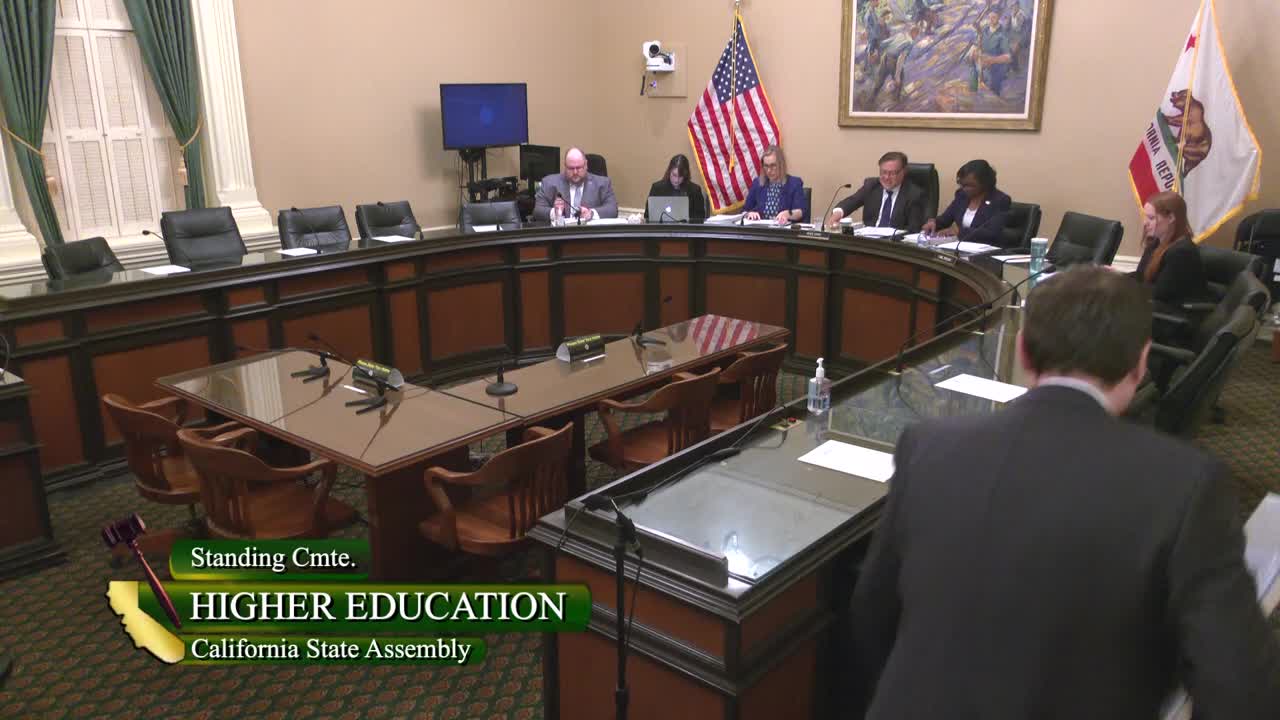
Assembly Standing Committee on Higher Education
 31MIN
Senate Floor
 3MIN
Senate Standing Committee on Education



Bill Co-Author(s):