SJR 5: Enteric methane reduction solutions: cattle industries.
- Session Year: 2025-2026
- House: Senate
- Latest Version Date: 2026-06-17
Current Status:
Passed
(2026-06-17: Chaptered by Secretary of State. Res. Chapter 101, Statutes of 2026.)
Introduced
In Committee
Awaiting First Chamber Vote
Passed First Chamber
In Committee
Awaiting Second Chamber Vote
Passed Second Chamber
Enacted
This measure would express the Legislatures commitment to advancing innovative solutions that reduce enteric methane emissions while preserving the economic sustainability of the cattle industries. The measure would urge the United States Congress to explore advancing innovative solutions in enteric methane emission reduction while preserving the economic sustainability of the cattle industries.
This measure would express the Legislatures commitment to advancing innovative solutions that reduce enteric methane emissions while preserving the economic sustainability of the cattle industries. The measure would urge the United States Congress to explore advancing innovative solutions in enteric methane emission reduction while preserving the economic sustainability of the cattle industries.
This measure would express the Legislatures commitment to advancing innovative solutions that reduce enteric methane emissions while preserving the economic sustainability of the cattle industries. The measure would urge the United States Congress to explore advancing innovative solutions in enteric methane emission reduction while preserving the economic sustainability of the cattle industries.
This measure would express the Legislatures commitment to advancing innovative solutions that reduce enteric methane emissions while preserving the economic sustainability of the cattle industries. The measure would urge the United States Congress to explore advancing innovative solutions in enteric methane emission reduction while preserving the economic sustainability of the cattle industries.
This measure would express the Legislatures commitment to advancing innovative solutions that reduce enteric methane emissions while preserving the economic sustainability of the cattle industries. The measure would urge the United States Congress to explore advancing innovative solutions in enteric methane emission reduction while preserving the economic sustainability of the cattle industries.
WHEREAS, California is committed to reducing emissions of greenhouse gases and advancing sustainable agricultural practices while supporting the economic viability and circular economy principles of its cattle industries; and
WHEREAS, Solutions can be defined as developing or established technologies and practices that consist of, but are not limited to, feed additives, breeding practices, byproduct-based diets, and biosolutions; and
WHEREAS, Enteric methane emissions from livestock are a source of methane, a potent greenhouse gas, and reducing these emissions can contribute to Californias climate goals; and
WHEREAS, Scientific research has demonstrated that certain solutions can reduce enteric methane emissions in cattle without compromising milk and beef production; and
WHEREAS, Scientific research is still needed to comprehensively assess the cost-effectiveness of enteric methane reduction solutions, the potential long-term impacts on animal health, and the environmental safety and methane reduction efficacy of these solutions; and
WHEREAS, The voluntary adoption of enteric methane reduction solutions by Californias cattle industries can help achieve Californias methane reduction goals but must maintain the economic sustainability of its cattle industries; and
WHEREAS, The costs associated with implementing enteric methane reduction solutions should not impose an undue financial burden on the cattle industries, and financial incentives and market-based compensation should be among the range of strategies considered to reduce the impact of any cost drivers; and
WHEREAS, Consumer confidence in cattle products is essential to the success of Californias cattle industries, and the adoption of enteric methane reduction solutions must be carefully balanced against consumer acceptance, ensuring transparency, food safety, and continued market trust; and
WHEREAS, A competitive and diverse marketplace for enteric methane reduction solutions is necessary to ensure that no single product or manufacturer is given preference, allowing the cattle industries to choose the most effective and economically viable solutions for their operations; and
WHEREAS, Organic cattle and dairy producers must have access to enteric methane reduction solutions that comply with organic certification standards, ensuring that all segments involved in the cattle industries can participate in methane reduction efforts while maintaining their market integrity; and
WHEREAS, The voluntary use of enteric methane reduction solutions by the cattle industries shall not be construed to grant the State Air Resources Board regulatory authority over enteric methane emissions beyond existing law; and
WHEREAS, Consideration shall be given to directing revenues generated from enteric methane reduction efforts, including those from carbon markets or supply chain incentives, to the cattle industries implementing these reductions; now, therefore, be it
Resolved by the Senate and the Assembly of the State of California, jointly, That the Legislature of the State of California remains committed to advancing innovative solutions that reduce enteric methane emissions while preserving the economic sustainability of Californias cattle industries, including consideration of the voluntary use of feed additives designed to reduce enteric methane emissions, as part of a broader strategy that thoughtfully balances environmental progress with market viability and consumer confidence; and be it further
Resolved, That the Legislature of the State of California urges the United States Congress to explore advancing innovative solutions in enteric methane emission reduction while preserving the economic sustainability of the cattle industries, including consideration of the voluntary use of feed additives designed to reduce enteric methane emissions, as part of a broader strategy that thoughtfully balances environmental progress with market viability and consumer confidence generally; and be it further
Resolved, That the Secretary of the Senate transmit copies of this resolution to the Governor, the Secretary of Food and Agriculture, the Chair of the State Air Resources Board, the United States Department of Agriculture, the United States Food and Drug Administration, other relevant stakeholders, the President and Vice President of the United States, the Speaker of the House of Representatives, the Majority Leader of the Senate, and each Senator and Representative from California in the Congress of the United States.
WHEREAS, California is committed to reducing emissions of greenhouse gases and advancing sustainable agricultural practices while supporting the economic viability and circular economy principles of its cattle industries; and
WHEREAS, Solutions can be defined as developing or established technologies and practices that consist of, but are not limited to, feed additives, breeding practices, byproduct-based diets, and biosolutions; and
WHEREAS, Enteric methane emissions from livestock are a source of methane, a potent greenhouse gas, and reducing these emissions can contribute to Californias climate goals; and
WHEREAS, Scientific research has demonstrated that certain solutions can reduce enteric methane emissions in cattle without compromising milk and beef production; and
WHEREAS, Scientific research is still needed to comprehensively assess the cost-effectiveness of enteric methane reduction solutions, the potential long-term impacts on animal health, and the environmental safety and methane reduction efficacy of these solutions; and
WHEREAS, The voluntary adoption of enteric methane reduction solutions by Californias cattle industries can help achieve Californias methane reduction goals but must maintain the economic sustainability of its cattle industries; and
WHEREAS, The costs associated with implementing enteric methane reduction solutions should not impose an undue financial burden on the cattle industries, and financial incentives and market-based compensation should be among the range of strategies considered to reduce the impact of any cost drivers; and
WHEREAS, Consumer confidence in cattle products is essential to the success of Californias cattle industries, and the adoption of enteric methane reduction solutions must be carefully balanced against consumer acceptance, ensuring transparency, food safety, and continued market trust; and
WHEREAS, A competitive and diverse marketplace for enteric methane reduction solutions is necessary to ensure that no single product or manufacturer is given preference, allowing the cattle industries to choose the most effective and economically viable solutions for their operations; and
WHEREAS, Organic cattle and dairy producers must have access to enteric methane reduction solutions that comply with organic certification standards, ensuring that all segments involved in the cattle industries can participate in methane reduction efforts while maintaining their market integrity; and
WHEREAS, The voluntary use of enteric methane reduction solutions by the cattle industries shall not be construed to grant the State Air Resources Board regulatory authority over enteric methane emissions beyond existing law; and
WHEREAS, Consideration shall be given to directing revenues generated from enteric methane reduction efforts, including those from carbon markets or supply chain incentives, to the cattle industries implementing these reductions; now, therefore, be it
Resolved by the Senate and the Assembly of the State of California, jointly, That the Legislature of the State of California remains committed to advancing innovative solutions that reduce enteric methane emissions while preserving the economic sustainability of Californias cattle industries, and that enteric methane reduction solutions should be encouraged including consideration of the voluntary use of feed additives designed to reduce enteric methane emissions, as part of a broader strategy that thoughtfully balances environmental progress with market viability and consumer confidence; and be it further
Resolved, That the Legislature of the State of California urges the United States Congress to explore advancing innovative solutions in enteric methane emission reduction while preserving the economic sustainability of the cattle industries, and that enteric methane reduction solutions should be encouraged including consideration of the voluntary use of feed additives designed to reduce enteric methane emissions, as part of a broader strategy that thoughtfully balances environmental progress with market viability and consumer confidence generally; and be it further
Resolved, That the Secretary of the Senate transmit copies of this resolution to the Governor, the Secretary of Food and Agriculture, the Chair of the State Air Resources Board, the United States Department of Agriculture, the United States Food and Drug Administration, other relevant stakeholders, the President and Vice President of the United States, the Speaker of the House of Representatives, the Majority Leader of the Senate, and each Senator and Representative from California in the Congress of the United States.
WHEREAS, California is committed to reducing emissions of greenhouse gases and advancing sustainable agricultural practices while supporting the economic viability and circular economy principles of its cattle industries; and
WHEREAS, Solutions can be defined as developing or established technologies and practices that consist of, but are not limited to, feed additives, breeding practices, byproduct-based diets, and biosolutions; and
WHEREAS, Enteric methane emissions from livestock are a source of methane, a potent greenhouse gas, and reducing these emissions can contribute to Californias climate goals; and
WHEREAS, Scientific research has demonstrated that certain solutions can reduce enteric methane emissions in cattle without compromising milk and beef production; and
WHEREAS, Scientific research is still needed to comprehensively assess the cost-effectiveness of enteric methane reduction solutions, the potential long-term impacts on animal health, and the environmental safety and methane reduction efficacy of these solutions; and
WHEREAS, The voluntary adoption of enteric methane reduction solutions by Californias cattle industries can help achieve Californias methane reduction goals but must maintain the economic sustainability of its cattle industries; and
WHEREAS, The costs associated with implementing enteric methane reduction solutions should not impose an undue financial burden on the cattle industries, and cost drivers should be addressed through financial incentives or market-based compensation mechanisms; and financial incentives and market-based compensation should be among the range of strategies considered to reduce the impact of any cost drivers; and
WHEREAS, Consumer confidence in cattle products is essential to the success of Californias cattle industries, and the adoption of enteric methane reduction solutions must be carefully balanced against consumer acceptance, ensuring transparency, food safety, and continued market trust; and
WHEREAS, A competitive and diverse marketplace for enteric methane reduction solutions is necessary to ensure that no single product or manufacturer is given preference, allowing the cattle industries to choose the most effective and economically viable solutions for their operations; and
WHEREAS, Organic cattle and dairy producers must have access to enteric methane reduction solutions that comply with organic certification standards, ensuring that all segments involved in the cattle industries can participate in methane reduction efforts while maintaining their market integrity; and
WHEREAS, The voluntary use of enteric methane reduction solutions by the cattle industries shall not be construed to grant the State Air Resources Board regulatory authority over enteric methane emissions beyond existing law; and
WHEREAS, Any Consideration shall be given to directing revenues generated from enteric methane reduction efforts, including those from carbon markets or supply chain incentives, should be directed to the cattle industries implementing these reductions; now, therefore, be it
Resolved by the Senate and the Assembly of the State of California, jointly, That the Legislature of the State of California remains committed to advancing innovative solutions that reduce enteric methane emissions while preserving the economic sustainability of Californias cattle industries, and that the voluntary use of enteric methane reduction solutions should be encouraged as part of a broader strategy that thoughtfully balances environmental progress with market viability and consumer confidence; and be it further
Resolved, That the Legislature of the State of California urges the United States Congress to explore advancing innovative solutions in enteric methane emission reduction while preserving the economic sustainability of the cattle industries, and that the voluntary use of enteric methane reduction solutions should be encouraged as part of a broader strategy that thoughtfully balances environmental progress with market viability and consumer confidence generally; and be it further
Resolved, That the Secretary of the Senate transmit copies of this resolution to the Governor, the Secretary of Food and Agriculture, the Chair of the State Air Resources Board, the United States Department of Agriculture, the United States Food and Drug Administration, other relevant stakeholders, the President and Vice President of the United States, the Speaker of the House of Representatives, the Majority Leader of the Senate, and each Senator and Representative from California in the Congress of the United States.
WHEREAS, California is committed to reducing emissions of greenhouse gases and advancing sustainable agricultural practices while supporting the economic viability and circular economy principles of its cattle industries; and
WHEREAS, Solutions can be defined as developing or established technologies and practices that consist of, but are not limited to, feed additives, breeding practices, byproduct-based diets, and biosolutions; and
WHEREAS, Enteric methane emissions from livestock are a source of methane, a potent greenhouse gas, and reducing these emissions can contribute to Californias climate goals; and
WHEREAS, Scientific research has demonstrated that certain solutions can reduce enteric methane emissions in cattle without compromising milk and beef production; and
WHEREAS, Scientific research is still needed to comprehensively assess the cost-effectiveness of enteric methane reduction solutions, the potential long-term impacts on animal health, and the environmental safety and methane reduction efficacy of these solutions; and
WHEREAS, The voluntary adoption of enteric methane reduction solutions by Californias cattle industries can help achieve Californias methane reduction goals but must maintain the economic sustainability of its cattle industries; and
WHEREAS, The costs associated with implementing enteric methane reduction solutions should not impose an undue financial burden on the cattle industries, and cost drivers should be addressed through financial incentives or market-based compensation mechanisms; and
WHEREAS, Consumer confidence in cattle products is essential to the success of Californias cattle industries, and the adoption of enteric methane reduction solutions must be carefully balanced against consumer acceptance, ensuring transparency, food safety, and continued market trust; and
WHEREAS, A competitive and diverse marketplace for enteric methane reduction solutions is necessary to ensure that no single product or manufacturer is given preference, allowing the cattle industries to choose the most effective and economically viable solutions for their operations; and
WHEREAS, Organic cattle and dairy producers must have access to enteric methane reduction solutions that comply with organic certification standards, ensuring that all segments involved in the cattle industries can participate in methane reduction efforts while maintaining their market integrity; and
WHEREAS, The voluntary use of enteric methane reduction solutions by the cattle industries shall not be construed to grant the State Air Resources Board regulatory authority over enteric methane emissions beyond existing law; and
WHEREAS, Any revenues generated from enteric methane reduction efforts, including those from carbon markets or supply chain incentives, should be directed to the cattle industries implementing these reductions; now, therefore, be it
Resolved by the Senate and the Assembly of the State of California, jointly,That the Legislature of the State of California remains committed to advancing innovative solutions that reduce enteric methane emissions while preserving the economic sustainability of Californias cattle industries, and that the voluntary use of enteric methane reduction solutions should be encouraged as part of a broader strategy that thoughtfully balances environmental progress with market viability and consumer confidence; and be it further
Resolved,That the Legislature of the State of California urges the United States Congress to explore advancing innovative solutions in enteric methane emission reduction while preserving the economic sustainability of the cattle industries, and that the voluntary use of enteric methane reduction solutions should be encouraged as part of a broader strategy that thoughtfully balances environmental progress with market viability and consumer confidence generally; and be it further
Resolved,That the Secretary of the Senate transmit copies of this resolution to the Governor, the Secretary of Food and Agriculture, the Chair of the State Air Resources Board, the United States Department of Agriculture, the United States Food and Drug Administration, other relevant stakeholders, the President and Vice President of the United States, the Speaker of the House of Representatives, the Majority Leader of the Senate, and each Senator and Representative from California in the Congress of the United States.
|
Date
|
Status
|
|---|---|
| Jun 17, 2026 | Chaptered by Secretary of State. Res. Chapter 101, Statutes of 2026. |
| Jun 17, 2026 | Enrolled and filed with the Secretary of State at 2 p.m. |
| Jun 11, 2026 | In Senate. Ordered to engrossing and enrolling. |
| Jun 11, 2026 | Read. Adopted. (Ayes 74. Noes 0. Page 5673.) Ordered to the Senate. |
| Jun 11, 2026 | Read. Adopted. Ordered to the Senate. |
| Jun 9, 2026 | From committee: Be adopted. Ordered to consent calendar. (Ayes 13. Noes 0.) (June 8). |
| Aug 28, 2025 | Referred to Com. on NAT. RES. |
| Aug 26, 2025 | In Assembly. Held at Desk. |
| Aug 25, 2025 | Read. Adopted. (Ayes 36. Noes 0. Page 2247.) Ordered to the Assembly. |
| Aug 20, 2025 | Read second time. Ordered to third reading. |
| Aug 19, 2025 | Ordered to second reading. |
| Aug 19, 2025 | Read third time and amended. |
| Jun 27, 2025 | Ordered to third reading. |
| Jun 27, 2025 | From consent calendar on motion of Senator Becker. |
| Jun 19, 2025 | Read second time and amended. Ordered to consent calendar. |
| Jun 18, 2025 | From committee: Be adopted as amended. Ordered to consent calendar. (Ayes 6. Noes 0. Page 1651.) (June 18). |
| Jun 3, 2025 | Set for hearing June 18. |
| Apr 30, 2025 | Re-referred to Com. on E.Q. |
| Apr 22, 2025 | Introduced. Referred to Com. on RLS. |
|
Date
|
Description
|
Location
|
Votes
|
|
|---|---|---|---|---|
| Jun 8, 2026 | Be adopted. To Consent Calendar. | Assembly Standing Committee on Natural Resources |
Passed |
|
| Aug 25, 2025 | Senate 3rd Reading SJR5 Becker | Senate Floor |
Passed |
|
| Jun 18, 2025 | Be adopted as amended, and be ordered to the Consent Calendar | Senate Standing Committee on Environmental Quality |
Passed |
This list shows positions taken on this bill by organizations on the date displayed, which is linked to the original source.
Positions by individuals are not included.
|
Organization
|
Position
|
Date
|
|---|---|---|
| California Climate and Agriculture Network | ** Support | |
| Western United Dairies | ** Support |
Date of Hearing: June 8, 2026
ASSEMBLY COMMITTEE ON NATURAL RESOURCES
Isaac G. Bryan, Chair
SBPCA Bill Id:SJR 5
Author:(Becker) – As Amended Ver:August 19, 2025
SENATE VOTE: 36-0
SUBJECT: Enteric methane reduction solutions: cattle industries
SUMMARY: States California’s commitment to advancing innovative solutions that reduce enteric methane emissions while preserving the economic sustainability of California’s cattle industries.
EXISTING LAW:
- Requires the Air Resources Board (ARB) to implement a comprehensive short-lived climate pollutant (SLCP) strategy to achieve, among other goals, a reduction in the statewide emissions of methane by 40% below 2013 levels by 2030. (Health and Safety Code (HSC) 39730.5)
- Requires ARB, in consultation with the California Department of Food and Agriculture (CDFA), to adopt regulations to reduce methane emissions from livestock and dairy operations by up to 40% below the dairy and livestock sectors’ 2013 levels by 2030. (HSC 39730.7)
- Specifies that enteric methane emissions reductions be achieved only through incentive-based mechanisms until ARB, in consultation with CDFA, determines that a cost-effective and scientifically proven method of reducing enteric emissions is available and that adoption of the enteric emissions reduction method would not damage animal health, public health, or consumer acceptance. (HSC 39730.7)
THIS RESOLUTION:
- Describes enteric methane emissions from livestock, the variety of solutions that are under consideration for addressing them, and the challenges associated with implementing those solutions.
- Describes the potential impacts and considerations associated with marketing and selling cattle products produced using enteric methane reduction solutions.
- States that California remains committed to advancing innovative solutions in enteric methane emission reduction and encouraging enteric methane emission reduction solutions, including consideration of voluntary incentives.
- Resolves that the Legislature remains committed to advancing innovative solutions that reduce enteric methane emissions while preserving the economic stability of California’s cattle industries, including consideration of the voluntary use of feed additives designed to reduce enteric methane emissions, as part of a broader strategy that thoughtfully balances environmental progress with market viability and consumer confidence.
- Resolves that the Legislature and the State of California urge the United States Congress to explore advancing innovative solutions in enteric methane emission reduction, including consideration of the voluntary use of feed additives designed to reduce enteric methane emissions, as part of a broader strategy that thoughtfully balances environmental progress with market viability and consumer confidence.
- Resolves that the Secretary of the Senate transmit copies of this resolution to the Governor, the Secretary of Food and Agriculture, the Chair of the ARB, the United States Department of Agriculture, the United States Food and Drug Administration, other relevant stakeholders, the President and Vice President of the United States, the Speaker of the House of Representatives, the Majority Leader of the Senate, and each Senator and Representative from California in the Congress of the United States.
FISCAL EFFECT: Nonfiscal
COMMENTS:
- Background. SB 1383 (Lara), Chapter 395, Statutes of 2016, requires ARB to approve and implement the comprehensive SLCP strategy to achieve, from 2013 levels, a 40% reduction in methane, a 40% reduction in hydrofluorocarbons, and a 50% reduction in anthropogenic black carbon, by 2030. SB 1383 establishes specific procedures to regulate dairy sources of methane. Specifically, regulations to reduce methane emissions from dairy and livestock manure management operations are subject to the following conditions:
- Reductions are limited to 40% below 2013 levels by 2030;
- Requires emission reduction regulations to be implemented on or after 2024;
- ARB must first complete specified steps, including stakeholder consultation, public meetings, and research;
- ARB must determine the regulations are technologically feasible, economically feasible, cost-effective, and minimize and mitigate potential leakage;
- Requires ARB to analyze progress toward the targets and authorizes ARB to reduce the 40% by 2030 goal if the analysis determines that progress has not been made due to insufficient funding, technical or market barriers;
- Requires ARB and the Public Utilities Commission to establish energy infrastructure development and procurement policies for dairy biomethane projects, including directing gas utilities to implement at least five dairy biomethane pilot projects; and
- Enteric emission reductions shall be achieved only through incentive-based mechanisms until ARB determines that a cost-effective, considering the impact on animal productivity, scientifically proven means of reducing enteric emissions is available and that adoption of the enteric emissions reduction method would not damage animal health, public health, or consumer acceptance.
Dairies and livestock are responsible for over half of California’s methane emissions. Dairy and livestock methane emissions originate from two primary sources, manure management and enteric fermentation. Potential dairy and livestock manure and enteric emissions reduction technologies offer longer-term potential for additional greenhouse gas (GHG) emission reductions.
CDFA convened the Manure Recycling and Innovative Products Task Force (MRIP) in 2021 to develop recommendations on how to capture and enhance the value of dairy manure while supporting healthy soils, protecting water quality, and reducing GHG emissions from agricultural sources. MRIP released its final report in December 2022, which focused on recommendations for strategies for manure management. Conventional strategies were considered to reduce and better use nitrogen surplus with technology and equipment already widely available in the commercial market. Compost strategies were considered to determine how the nitrogen surplus could be used by expanding composting of surplus manure and examining the permitting requirements and likely environmental outcomes of increasing dairy compost production, export, and use in non-dairy agriculture or other uses. Denitrification and treatment strategies were discussed to facilitate the removal or conversion of nitrogen in manure or manure effluent through physical, chemical, or biological processes that primarily convert reactive nitrogen to stable nitrogen gas. Finally, nitrogen capture was evaluated to help address nitrogen surplus on dairies by capturing and deconcentrating nutrients in a form that can be easily transported and sold for use as crop nutrients.
Enteric methane emissions can be reduced through genetic selection, diet modification, and feed additives. Of these, feed additives offer the greatest potential for sector-wide methane emissions reductions because of how quickly they can reduce methane emissions. In contrast, strategies like diet modifications, feed efficiency improvements, and selective breeding require a longer timeframe to achieve significant emissions reductions. Unlike manure management strategies, these strategies can be implemented at existing operations with little to no need to modify facility design and without significant upfront capital requirements or changes to land use. This makes these strategies potentially attractive for dairy and livestock operations, especially rented or leased operations.
ARB calculates that methane emissions reductions from enteric fermentation present an opportunity to achieve significant methane emissions reductions, potentially at a cost of approximately $50 per metric ton on a carbon dioxide equivalent basis. This is far lower than most technological carbon dioxide removal methods, which typically range from $200 to $2,000 per ton of carbon dioxide.
- Author’s statement:
Enteric Methane produced by cattle is a significant contributor to our climate challenge, and it demands innovative solutions. This resolution strikes an important balance. Recognizing the reality of climate change and the need to reduce enteric methane emissions, while acknowledging that solutions must be economically viable for our agricultural producers. This resolution is California’s commitment to innovative solutions that support sustainable agriculture practices while urging the United States Congress to explore reducing enteric methane emissions.
REGISTERED SUPPORT / OPPOSITION:
Support
California Climate and Agriculture Network
Western United Dairies
Opposition
None on file
Analysis Prepared by: Elizabeth MacMillan / NAT. RES. /
SENATE RULES COMMITTEE Office of Senate Floor Analyses (916) 651-1520 Fax: (916) 327-4478 | SJR 5 |
THIRD READING
Bill No: SJR 5
Author: Becker (D)
Amended: 8/19/25
Vote: 21
SENATE ENVIRONMENTAL QUALITY COMMITTEE: 6-0, 6/18/25
AYES: Blakespear, Valladares, Dahle, Hurtado, Menjivar, Pérez
NO VOTE RECORDED: Gonzalez, Padilla
SUBJECT: Enteric methane reduction solutions: cattle industries
SOURCE: Author
DIGEST:
This resolution states California’s commitment to advancing innovative solutions that reduce enteric methane emission while preserving the economic sustainability of California’s cattle industries, among other things.
Senate floor amendments of 8/19/2025 explicitly state that consideration should be given to the voluntary use of feed additives deisgned to reduce enteric methane emissions.
ANALYSIS:
Existing law:
- Directs California Air Resources Board (CARB) to implement a comprehensive short-lived climate pollutant strategy to achieve, among other goals, a reduction in the statewide emissions of methane by 40% below 2013 levels by 2030 SB 1383, (Lara, Chapter 395, Statutes of 2016). (Health and Safety Code (HSC) § 39730.5)
- Requires CARB, in consultation with the California Department of Food and Agriculture, to adopt regulations to reduce methane emissions from livestock and dairy operations by up to 40% below the dairy and livestock sectors’ 2013 levels by 2030. (HSC § 39730.7)
- Dictates that enteric methane emissions reductions be achieved only through incentive-based mechanisms until CARB, in consultation with California Department of Food and Agriculture (CDFA), determines that a cost-effective and scientifically proven method of reducing enteric emissions is available and that adoption of the enteric emissions reduction method would not damage animal health, public health, or consumer acceptance. (HSC § 39730.7)
This resolution:
- Describes briefly enteric methane emissions from livestock, the variety of solutions that are under consideration for addressing them, and the challenges associated with implementing those solutions.
- Makes claims about the potential impacts and considerations involved in marketing and selling cattle products vis-à-vis enteric methane reduction solutions.
- States that California remains committed to advancing innovative solutions in enteric methane emission reduction and encouraging enteric methane emission reduction solutions, including consideration of voluntary incentives.
- Urges the United States Congress to explore advancing innovative enteric methane emission reduction solutions, including consideration of voluntary incentives, and encourage their use.
Background
- Methane is a significant contributor to climate change. Methane is considered a short-lived climate pollutant because it does not stay in the atmosphere as long as carbon dioxide does (it lasts about a decade vs. centuries for carbon dioxide). However, its much higher warming potential (28 times that of carbon dioxide when considered over 100-year timescales, 84 times over 20-year timescales) and continuous replenishment in the atmosphere (60% of methane emissions are estimated to be due to human activity) make it an important element in climate change mitigation strategies. Methane also degrades local air quality and contributes to ozone formation.
The largest sources of methane in California are landfills, leakage from the oil and gas sectors, and the dairy and livestock industries. CARB estimates that the dairy and livestock sector accounts for about 55%. Enteric methane from dairy and livestock constitutes about 30% of the state’s methane emissions. Enteric methane is a by-product of the natural digestive process occurring in ruminant animals such as cattle. When microbes decompose and ferment food and fibers in the digestive tract of the animal, they release methane which is then released into the atmosphere. - What are we doing about methane? In 2016, the Legislature enacted SB 1383, which recognizes the immediate climate benefits of reducing SLCPs. In the 2017 Scoping Plan Update, the plan for achieving GHG reductions in the state, CARB described that SLCP reductions would account for about one-third of the cumulative GHG emissions reductions the state is relying on to achieve the statewide 2030 GHG emissions target established under SB 32.
The 2022 Scoping Plan Update contained no such analysis of relative contributions to achieving the state’s climate goals, but did state:
“The state is expected to achieve roughly half of the SB 1383 targeted emissions reductions by 2030 through strategies currently in place. As directed by the Legislature under SB 1383, state agencies focused on voluntary, incentive-based mechanisms to reduce SLCP emissions in the early years of implementation to overcome technical and market barriers. Under this “carrot-then-stick” strategy, incentives are replaced with requirements as the solutions become increasingly feasible and cost-effective. To meet legislated targets, more aggressive action is needed.” [emphasis added]
- How do we moo-ve forward? Enteric methane emissions can be reduced through genetic selection, diet modification, and feed additives. Of these, feed additives offer the greatest potential for sector-wide methane emissions reductions because they potentially deliver considerable methane emissions reductions shortly after adoption. In comparison, strategies like diet modifications, feed efficiency improvements, and selective breeding require a relatively long time to achieve significant emissions reductions. Unlike manure management strategies, these strategies can be implemented at existing operations with minimal need to modify facility design and without significant upfront capital requirements or changes to land use. This makes these strategies potentially attractive for dairy and livestock operations, especially rented or leased operations.
CARB calculates that methane emissions reductions from enteric fermentation present an opportunity to achieve significant methane emissions reductions, potentially at a cost of approximately $50 per metric ton on a carbon dioxide equivalent basis. This is far lower than most technological carbon dioxide removal methods, which typically range between $200 and $2,000 per ton of carbon dioxide today (costs which are expected to fall as the technology matures and the market scales).
Comments
- Purpose of this resolution. According to the author, “Enteric Methane produced by cattle is a significant contributor to our Climate challenge and it demands innovative solutions. This resolution strikes an important balance. Recognizing the reality of climate change and the need to reduce enteric methane emissions, while acknowledging that solutions must be economically viable for our agricultural producers. This resolution is California’s commitment to innovative solutions that support sustainable agriculture practices while urging the United States Congress to explore reducing enteric methane emissions.”
- Sacrifice zones and environmental justice. Dairy farms make bad neighbors. According to an article published in April 2021 in Discover Magazine:
On days when the air pollution is especially bad, a mother in Tulare County, California – where cows outnumber people two to one – forbids her children from going outside. The woman, who declined to be named for fear of reprisal from her neighbors in the dairy industry, said that nearly everyone in her family, including herself, suffers from a combination of severe allergies and asthma, overlapping illnesses that cause sleepless nights, sick days and weekly doctor’s appointments.
She runs an air filtration system in their home to protect her children from the toxic fumes wafting off freeways, oil wells, and cow feedlots… Worried about water contamination as well, she also drives 20 miles to buy four gallons of clean water each week… she doesn’t use it for cooking and would never allow anyone in her family to drink it. Dealing with pollution is a daily struggle.
Regardless of the anticipated methane reductions from innovative solutions or the validity of the GHG accounting surrounding dairy biogas, it should be remembered that methane and milk are not the only things leaving dairy farms, and the admittedly abstract notion of “greater global atmospheric warming,” is not the only victim.
- Using all the tools in the tool belt to reduce agricultural emissions. Under SB 1383, CARB was expressly prohibited from imposing regulations (i.e. using “sticks”) on methane emissions from sources included in the bill until January 1, 2024. Rather, they were only permitted to use incentive-based programs (i.e. “carrots”) to reduce agricultural methane emissions—both enteric and from manure. Even after January 1, 2024, CARB is only authorized to implement regulations to meet the 2030 methane reduction target if CARB (in consultation with CDFA) determines the regulations are technologically and economically feasible, cost-effective, include provisions to minimize and mitigate potential leakage, and include an evaluation of the achievements made by incentive-based programs.
Incentives are not the only option. The Danish government recently announced a plan to tax livestock emissions starting in 2030, with a proposed rate of $100 per cow per ton of carbon dioxide equivalent. Danish farmers will be able to avoid this taxation by using three main commercially available additive options.[1] Ultimately, this is a question of who should pay. When taxes are imposed (as proposed in Denmark), farmers will ultimately either pay the tax or pay for one of the other compliance options, and these costs will likely be passed through to the consumers of the products. When financial incentives alone are used to encourage the adoption of the same solutions, the farmers incur no additional costs and so no higher prices would be expected for consumers. Nevertheless, the money must come from somewhere, and if those incentives are paid for out of other pots of money (say a general fund or a climate-specific fund) then that necessarily means there is less money available for something else.
This resolution states that voluntary incentives should be among the range of strategies considered to reduce the impact of any cost drivers to cattle industries. While it is entirely understandable that the agricultural industry would prefer to only be moved to action through carrots rather than sticks, and it is certainly possible that goals can be reached through voluntary action alone, the Legislature should not take tools off the table for achieving our ambitious methane emission reduction goals. This resolution reflects that all options should be weighed in reaching our methane emission reduction goals.
FISCAL EFFECT: Appropriation: No Fiscal Com.: No Local: No
SUPPORT: (Verified 8/18/25)
California Climate and Agriculture Network
OPPOSITION: (Verified 8/18/25)
Prepared by: Heather Walters / E.Q. / (916) 651-4108
8/20/25 23:44:12
**** END ****
UC Davis College of Agriculture and Environmental Sciences. State of the Science: Reduce Methane from Animal Agriculture. May 19-20, 2024 ↑
SENATE RULES COMMITTEE Office of Senate Floor Analyses (916) 651-1520 Fax: (916) 327-4478 | SJR 5 |
THIRD READING
Bill No: SJR 5
Author: Becker (D)
Introduced: 4/22/25
Vote: 21
SENATE ENVIRONMENTAL QUALITY COMMITTEE: 6-0, 6/18/25
AYES: Blakespear, Valladares, Dahle, Hurtado, Menjivar, Pérez
NO VOTE RECORDED: Gonzalez, Padilla
SUBJECT: Enteric methane reduction solutions: cattle industries
SOURCE: Author
DIGEST:
This resolution states California’s commitment to advancing innovative solutions that reduce enteric methane emission while preserving the economic sustainability of California’s cattle industries, among other things.
ANALYSIS:
Existing law:
- Directs California Air Resources Board (CARB) to implement a comprehensive short-lived climate pollutant strategy to achieve, among other goals, a reduction in the statewide emissions of methane by 40% below 2013 levels by 2030 SB 1383, (Lara, Chapter 395, Statutes of 2016). (Health and Safety Code (HSC) § 39730.5)
- Requires CARB, in consultation with the California Department of Food and Agriculture, to adopt regulations to reduce methane emissions from livestock and dairy operations by up to 40% below the dairy and livestock sectors’ 2013 levels by 2030. (HSC § 39730.7)
- Dictates that enteric methane emissions reductions be achieved only through incentive-based mechanisms until CARB, in consultation with California Department of Food and Agriculture (CDFA), determines that a cost-effective and scientifically proven method of reducing enteric emissions is available and that adoption of the enteric emissions reduction method would not damage animal health, public health, or consumer acceptance. (HSC § 39730.7)
This resolution:
- Briefly describes enteric methane emissions from livestock, the variety of solutions that are under consideration for addressing them, and the challenges associated with implementing those solutions.
- Makes claims about the potential impacts and considerations involved in marketing and selling cattle products vis-à-vis enteric methane reduction solutions.
- States that California remains committed to advancing innovative solutions in enteric methane emission reduction and encouraging enteric methane emission reduction solutions.
- Urges the United States Congress to explore advancing innovative enteric methane emission reduction solutions and encourage their use.
Background
- Methane is a significant contributor to climate change. Methane is considered a short-lived climate pollutant because it does not stay in the atmosphere as long as carbon dioxide does (it lasts about a decade vs. centuries for carbon dioxide). However, its much higher warming potential (28 times that of carbon dioxide when considered over 100-year timescales, 84 times over 20-year timescales) and continuous replenishment in the atmosphere (60% of methane emissions are estimated to be due to human activity) make it an important element in climate change mitigation strategies. Methane also degrades local air quality and contributes to ozone formation.
The largest sources of methane in California are landfills, leakage from the oil and gas sectors, and the dairy and livestock industries. CARB estimates that the dairy and livestock sector accounts for about 55%. Enteric methane from dairy and livestock constitutes about 30% of the state’s methane emissions. Enteric methane is a by-product of the natural digestive process occurring in ruminant animals such as cattle. When microbes decompose and ferment food and fibers in the digestive tract of the animal, they release methane which is then released into the atmosphere.
What are we doing about methane? In 2016, the Legislature enacted SB 1383, which recognizes the immediate climate benefits of reducing SLCPs. In the 2017 Scoping Plan Update, the plan for achieving GHG reductions in the state, CARB described that SLCP reductions would account for about one-third of the cumulative GHG emissions reductions the state is relying on to achieve the statewide 2030 GHG emissions target established under SB 32.
The 2022 Scoping Plan Update contained no such analysis of relative contributions to achieving the state’s climate goals, but did state:
“The state is expected to achieve roughly half of the SB 1383 targeted emissions reductions by 2030 through strategies currently in place. As directed by the Legislature under SB 1383, state agencies focused on voluntary, incentive-based mechanisms to reduce SLCP emissions in the early years of implementation to overcome technical and market barriers. Under this “carrot-then-stick” strategy, incentives are replaced with requirements as the solutions become increasingly feasible and cost-effective. To meet legislated targets, more aggressive action is needed.” [emphasis added]
- How do we moo-ve forward? Enteric methane emissions can be reduced through genetic selection, diet modification, and feed additives. Of these, feed additives offer the greatest potential for sector-wide methane emissions reductions because they potentially deliver considerable methane emissions reductions shortly after adoption. In comparison, strategies like diet modifications, feed efficiency improvements, and selective breeding require a relatively long time to achieve significant emissions reductions. Unlike manure management strategies, these strategies can be implemented at existing operations with minimal need to modify facility design and without significant upfront capital requirements or changes to land use. This makes these strategies potentially attractive for dairy and livestock operations, especially rented or leased operations.
CARB calculates that methane emissions reductions from enteric fermentation present an opportunity to achieve significant methane emissions reductions, potentially at a cost of approximately $50 per metric ton on a carbon dioxide equivalent basis. This is far lower than most technological carbon dioxide removal methods, which typically range between $200 and $2,000 per ton of carbon dioxide today (costs which are expected to fall as the technology matures and the market scales).
Comments
- Purpose of this resolution. According to the author, “Enteric Methane produced by cattle is a significant contributor to our Climate challenge and it demands innovative solutions. This resolution strikes an important balance. Recognizing the reality of climate change and the need to reduce enteric methane emissions, while acknowledging that solutions must be economically viable for our agricultural producers. This resolution is California’s commitment to innovative solutions that support sustainable agriculture practices while urging the United States Congress to explore reducing enteric methane emissions.”
- Sacrifice zones and environmental justice. Dairy farms make bad neighbors. According to an article published in April 2021 in Discover Magazine:
On days when the air pollution is especially bad, a mother in Tulare County, California – where cows outnumber people two to one – forbids her children from going outside. The woman, who declined to be named for fear of reprisal from her neighbors in the dairy industry, said that nearly everyone in her family, including herself, suffers from a combination of severe allergies and asthma, overlapping illnesses that cause sleepless nights, sick days and weekly doctor’s appointments.
She runs an air filtration system in their home to protect her children from the toxic fumes wafting off freeways, oil wells, and cow feedlots… Worried about water contamination as well, she also drives 20 miles to buy four gallons of clean water each week… she doesn’t use it for cooking and would never allow anyone in her family to drink it. Dealing with pollution is a daily struggle.
Regardless of the anticipated methane reductions from innovative solutions or the validity of the GHG accounting surrounding dairy biogas, it should be remembered that methane and milk are not the only things leaving dairy farms, and the admittedly abstract notion of “greater global atmospheric warming,” is not the only victim.
- Using all the tools in the tool belt to reduce agricultural emissions. Under SB 1383, CARB was expressly prohibited from imposing regulations (i.e. using “sticks”) on methane emissions from sources included in the bill until January 1, 2024. Rather, they were only permitted to use incentive-based programs (i.e. “carrots”) to reduce agricultural methane emissions—both enteric and from manure. Even after January 1, 2024, CARB is only authorized to implement regulations to meet the 2030 methane reduction target if CARB (in consultation with CDFA) determines the regulations are technologically and economically feasible, cost-effective, include provisions to minimize and mitigate potential leakage, and include an evaluation of the achievements made by incentive-based programs.
Incentives are not the only option. The Danish government recently announced a plan to tax livestock emissions starting in 2030, with a proposed rate of $100 per cow per ton of carbon dioxide equivalent. Danish farmers will be able to avoid this taxation by using three main commercially available additive options.[1] Ultimately, this is a question of who should pay. When taxes are imposed (as proposed in Denmark), farmers will ultimately either pay the tax or pay for one of the other compliance options, and these costs will likely be passed through to the consumers of the products. When financial incentives alone are used to encourage the adoption of the same solutions, the farmers incur no additional costs and so no higher prices would be expected for consumers. Nevertheless, the money must come from somewhere, and if those incentives are paid for out of other pots of money (say a general fund or a climate-specific fund) then that necessarily means there is less money available for something else.
This resolution states that voluntary incentives should be among the range of strategies considered to reduce the impact of any cost drivers to cattle industries. While it is entirely understandable that the agricultural industry would prefer to only be moved to action through carrots rather than sticks, and it is certainly possible that goals can be reached through voluntary action alone, the Legislature should not take tools off the table for achieving our ambitious methane emission reduction goals. This resolution reflects that all options should be weighed in reaching our methane emission reduction goals.
FISCAL EFFECT: Appropriation: No Fiscal Com.: No Local: No
SUPPORT: (Verified 6/19/25)
California Climate and Agriculture Network
OPPOSITION: (Verified 6/19/25)
Prepared by: Eric Walters / E.Q. / (916) 651-4108
6/27/25 16:48:03
**** END ****
UC Davis College of Agriculture and Environmental Sciences. State of the Science: Reduce Methane from Animal Agriculture. May 19-20, 2024 ↑
SENATE RULES COMMITTEE Office of Senate Floor Analyses (916) 651-1520 Fax: (916) 327-4478 | SJR 5 |
CONSENT
Bill No: SJR 5
Author: Becker (D)
Introduced: 4/22/25
Vote: 21
SENATE ENVIRONMENTAL QUALITY COMMITTEE: 6-0, 6/18/25
AYES: Blakespear, Valladares, Dahle, Hurtado, Menjivar, Pérez
NO VOTE RECORDED: Gonzalez, Padilla
SUBJECT: Enteric methane reduction solutions: cattle industries
SOURCE: Author
DIGEST:
This resolution states California’s commitment to advancing innovative solutions that reduce enteric methane emission while preserving the economic sustainability of California’s cattle industries, among other things.
ANALYSIS:
Existing law:
- Directs California Air Resources Board (CARB) to implement a comprehensive short-lived climate pollutant strategy to achieve, among other goals, a reduction in the statewide emissions of methane by 40% below 2013 levels by 2030 SB 1383, (Lara, Chapter 395, Statutes of 2016). (Health and Safety Code (HSC) § 39730.5)
- Requires CARB, in consultation with the California Department of Food and Agriculture, to adopt regulations to reduce methane emissions from livestock and dairy operations by up to 40% below the dairy and livestock sectors’ 2013 levels by 2030. (HSC § 39730.7)
- Dictates that enteric methane emissions reductions be achieved only through incentive-based mechanisms until CARB, in consultation with California Department of Food and Agriculture (CDFA), determines that a cost-effective and scientifically proven method of reducing enteric emissions is available and that adoption of the enteric emissions reduction method would not damage animal health, public health, or consumer acceptance. (HSC § 39730.7)
This resolution:
- Briefly describes enteric methane emissions from livestock, the variety of solutions that are under consideration for addressing them, and the challenges associated with implementing those solutions.
- Makes claims about the potential impacts and considerations involved in marketing and selling cattle products vis-à-vis enteric methane reduction solutions.
- States that California remains committed to advancing innovative solutions in enteric methane emission reduction and encouraging enteric methane emission reduction solutions.
- Urges the United States Congress to explore advancing innovative enteric methane emission reduction solutions and encourage their use.
Background
- Methane is a significant contributor to climate change. Methane is considered a short-lived climate pollutant because it does not stay in the atmosphere as long as carbon dioxide does (it lasts about a decade vs. centuries for carbon dioxide). However, its much higher warming potential (28 times that of carbon dioxide when considered over 100-year timescales, 84 times over 20-year timescales) and continuous replenishment in the atmosphere (60% of methane emissions are estimated to be due to human activity) make it an important element in climate change mitigation strategies. Methane also degrades local air quality and contributes to ozone formation.
The largest sources of methane in California are landfills, leakage from the oil and gas sectors, and the dairy and livestock industries. CARB estimates that the dairy and livestock sector accounts for about 55%. Enteric methane from dairy and livestock constitutes about 30% of the state’s methane emissions. Enteric methane is a by-product of the natural digestive process occurring in ruminant animals such as cattle. When microbes decompose and ferment food and fibers in the digestive tract of the animal, they release methane which is then released into the atmosphere.
What are we doing about methane? In 2016, the Legislature enacted SB 1383, which recognizes the immediate climate benefits of reducing SLCPs. In the 2017 Scoping Plan Update, the plan for achieving GHG reductions in the state, CARB described that SLCP reductions would account for about one-third of the cumulative GHG emissions reductions the state is relying on to achieve the statewide 2030 GHG emissions target established under SB 32.
The 2022 Scoping Plan Update contained no such analysis of relative contributions to achieving the state’s climate goals, but did state:
“The state is expected to achieve roughly half of the SB 1383 targeted emissions reductions by 2030 through strategies currently in place. As directed by the Legislature under SB 1383, state agencies focused on voluntary, incentive-based mechanisms to reduce SLCP emissions in the early years of implementation to overcome technical and market barriers. Under this “carrot-then-stick” strategy, incentives are replaced with requirements as the solutions become increasingly feasible and cost-effective. To meet legislated targets, more aggressive action is needed.” [emphasis added]
- How do we moo-ve forward? Enteric methane emissions can be reduced through genetic selection, diet modification, and feed additives. Of these, feed additives offer the greatest potential for sector-wide methane emissions reductions because they potentially deliver considerable methane emissions reductions shortly after adoption. In comparison, strategies like diet modifications, feed efficiency improvements, and selective breeding require a relatively long time to achieve significant emissions reductions. Unlike manure management strategies, these strategies can be implemented at existing operations with minimal need to modify facility design and without significant upfront capital requirements or changes to land use. This makes these strategies potentially attractive for dairy and livestock operations, especially rented or leased operations.
CARB calculates that methane emissions reductions from enteric fermentation present an opportunity to achieve significant methane emissions reductions, potentially at a cost of approximately $50 per metric ton on a carbon dioxide equivalent basis. This is far lower than most technological carbon dioxide removal methods, which typically range between $200 and $2,000 per ton of carbon dioxide today (costs which are expected to fall as the technology matures and the market scales).
Comments
- Purpose of this resolution. According to the author, “Enteric Methane produced by cattle is a significant contributor to our Climate challenge and it demands innovative solutions. This resolution strikes an important balance. Recognizing the reality of climate change and the need to reduce enteric methane emissions, while acknowledging that solutions must be economically viable for our agricultural producers. This resolution is California’s commitment to innovative solutions that support sustainable agriculture practices while urging the United States Congress to explore reducing enteric methane emissions.”
- Sacrifice zones and environmental justice. Dairy farms make bad neighbors. According to an article published in April 2021 in Discover Magazine:
On days when the air pollution is especially bad, a mother in Tulare County, California – where cows outnumber people two to one – forbids her children from going outside. The woman, who declined to be named for fear of reprisal from her neighbors in the dairy industry, said that nearly everyone in her family, including herself, suffers from a combination of severe allergies and asthma, overlapping illnesses that cause sleepless nights, sick days and weekly doctor’s appointments.
She runs an air filtration system in their home to protect her children from the toxic fumes wafting off freeways, oil wells, and cow feedlots… Worried about water contamination as well, she also drives 20 miles to buy four gallons of clean water each week… she doesn’t use it for cooking and would never allow anyone in her family to drink it. Dealing with pollution is a daily struggle.
Regardless of the anticipated methane reductions from innovative solutions or the validity of the GHG accounting surrounding dairy biogas, it should be remembered that methane and milk are not the only things leaving dairy farms, and the admittedly abstract notion of “greater global atmospheric warming,” is not the only victim.
- Using all the tools in the tool belt to reduce agricultural emissions. Under SB 1383, CARB was expressly prohibited from imposing regulations (i.e. using “sticks”) on methane emissions from sources included in the bill until January 1, 2024. Rather, they were only permitted to use incentive-based programs (i.e. “carrots”) to reduce agricultural methane emissions—both enteric and from manure. Even after January 1, 2024, CARB is only authorized to implement regulations to meet the 2030 methane reduction target if CARB (in consultation with CDFA) determines the regulations are technologically and economically feasible, cost-effective, include provisions to minimize and mitigate potential leakage, and include an evaluation of the achievements made by incentive-based programs.
Incentives are not the only option. The Danish government recently announced a plan to tax livestock emissions starting in 2030, with a proposed rate of $100 per cow per ton of carbon dioxide equivalent. Danish farmers will be able to avoid this taxation by using three main commercially available additive options.[1] Ultimately, this is a question of who should pay. When taxes are imposed (as proposed in Denmark), farmers will ultimately either pay the tax or pay for one of the other compliance options, and these costs will likely be passed through to the consumers of the products. When financial incentives alone are used to encourage the adoption of the same solutions, the farmers incur no additional costs and so no higher prices would be expected for consumers. Nevertheless, the money must come from somewhere, and if those incentives are paid for out of other pots of money (say a general fund or a climate-specific fund) then that necessarily means there is less money available for something else.
This resolution states that voluntary incentives should be among the range of strategies considered to reduce the impact of any cost drivers to cattle industries. While it is entirely understandable that the agricultural industry would prefer to only be moved to action through carrots rather than sticks, and it is certainly possible that goals can be reached through voluntary action alone, the Legislature should not take tools off the table for achieving our ambitious methane emission reduction goals. This resolution reflects that all options should be weighed in reaching our methane emission reduction goals.
FISCAL EFFECT: Appropriation: No Fiscal Com.: No Local: No
SUPPORT: (Verified 6/19/25)
California Climate and Agriculture Network
OPPOSITION: (Verified 6/19/25)
Prepared by: Eric Walters / E.Q. / (916) 651-4108
6/23/25 17:40:02
**** END ****
UC Davis College of Agriculture and Environmental Sciences. State of the Science: Reduce Methane from Animal Agriculture. May 19-20, 2024 ↑
SENATE COMMITTEE ON ENVIRONMENTAL QUALITY
Senator Blakespear, Chair
2025 - 2026 Regular
Bill No: SJR 5
Author: | Becker | ||
Version: | 4/22/2025 | Hearing Date: | 6/18/2025 |
Urgency: |
| Fiscal: | No |
Consultant: | Eric Walters | ||
SUBJECT: Enteric methane reduction solutions: cattle industries
DIGEST: This resolution states California’s commitment to advancing innovative solutions that reduce enteric methane emission while preserving the economic sustainability of California’s cattle industries, among other things.
ANALYSIS:
Existing law:
- Directs CARB to implement a comprehensive short-lived climate pollutant strategy to achieve, among other goals, a reduction in the statewide emissions of methane by 40% below 2013 levels by 2030 (SB 1383, Lara, 2019). (Health and Safety Code (HSC) § 39730.5)
- Requires CARB, in consultation with CDFA, to adopt regulations to reduce methane emissions from livestock and dairy operations by up to 40% below the dairy and livestock sectors’ 2013 levels by 2030. (HSC § 39730.7)
- Dictates that enteric methane emissions reductions be achieved only through incentive-based mechanisms until CARB, in consultation with CDFA, determines that a cost-effective and scientifically proven method of reducing enteric emissions is available and that adoption of the enteric emissions reduction method would not damage animal health, public health, or consumer acceptance. (HSC § 39730.7)
This resolution:
- Briefly describes enteric methane emissions from livestock, the variety of solutions that are under consideration for addressing them, and the challenges associated with implementing those solutions.
- Makes claims about the potential impacts and considerations involved in marketing and selling cattle products vis-à-vis enteric methane reduction solutions.
- States that California remains committed to advancing innovative solutions in enteric methane emission reduction and encouraging voluntary use of enteric methane emission reduction solutions.
- Urges the United States Congress to explore advancing innovative enteric methane emission reduction solutions and encourage their voluntary use.
Background
- Methane is a significant contributor to climate change. Methane is considered a short-lived climate pollutant because it does not stay in the atmosphere as long as carbon dioxide does (it lasts about a decade vs. centuries for carbon dioxide). However, its much higher warming potential (28 times that of carbon dioxide when considered over 100-year timescales, 84 times over 20-year timescales) and continuous replenishment in the atmosphere (60% of methane emissions are estimated to be due to human activity) make it an important element in climate change mitigation strategies. Methane also degrades local air quality and contributes to ozone formation.
The largest sources of methane in California are landfills, leakage from the oil and gas sectors, and the dairy and livestock industries. CARB estimates that the dairy and livestock sector accounts for about 55%. Enteric methane from dairy and livestock constitutes about 30% of the state’s methane emissions. Enteric methane is a by-product of the natural digestive process occurring in ruminant animals such as cattle. When microbes decompose and ferment food and fibers in the digestive tract of the animal, they release methane which is then released into the atmosphere.
What are we doing about methane? In 2016, the Legislature enacted SB 1383 (Lara), which recognizes the immediate climate benefits of reducing SLCPs. In the 2017 Scoping Plan Update, the plan for achieving GHG reductions in the state, CARB described that SLCP reductions would account for about one-third of the cumulative GHG emissions reductions the state is relying on to achieve the statewide 2030 GHG emissions target established under SB 32.
The 2022 Scoping Plan Update contained no such analysis of relative contributions to achieving the state’s climate goals, but did state:
“The state is expected to achieve roughly half of the SB 1383 targeted emissions reductions by 2030 through strategies currently in place. As directed by the Legislature under SB 1383, state agencies focused on voluntary, incentive-based mechanisms to reduce SLCP emissions in the early years of implementation to overcome technical and market barriers. Under this “carrot-then-stick” strategy, incentives are replaced with requirements as the solutions become increasingly feasible and cost-effective. To meet legislated targets, more aggressive action is needed.” [emphasis added]
- How do we moo-ve forward? Enteric methane emissions can be reduced through genetic selection, diet modification, and feed additives. Of these, feed additives offer the greatest potential for sector-wide methane emissions reductions because they potentially deliver considerable methane emissions reductions shortly after adoption. In comparison, strategies like diet modifications, feed efficiency improvements, and selective breeding require a relatively long time to achieve significant emissions reductions. Unlike manure management strategies, these strategies can be implemented at existing operations with minimal need to modify facility design and without significant upfront capital requirements or changes to land use. This makes these strategies potentially attractive for dairy and livestock operations, especially rented or leased operations.
CARB calculates that methane emissions reductions from enteric fermentation present an opportunity to achieve significant methane emissions reductions, potentially at a cost of approximately $50 per metric ton on a carbon dioxide equivalent basis. This is far lower than most technological carbon dioxide removal methods, which typically range between $200 and $2,000 per ton of carbon dioxide today (costs which are expected to fall as the technology matures and the market scales).
Comments
- Purpose of Bill. According to the author, “ Enteric Methane produced by cattle is a significant contributor to our Climate challenge and it demands innovative solutions. This resolution strikes an important balance. Recognizing the reality of climate change and the need to reduce enteric methane emissions, while acknowledging that solutions must be economically viable for our agricultural producers. This resolution is California’s commitment to innovative solutions that support sustainable agriculture practices while urging the United States Congress to explore reducing enteric methane emissions.”
- Sacrifice zones and environmental justice. Dairy farms make bad neighbors. According to an article published in April 2021 in Discover Magazine:
“On days when the air pollution is especially bad, a mother in Tulare County, California – where cows outnumber people two to one – forbids her children from going outside. The woman, who declined to be named for fear of reprisal from her neighbors in the dairy industry, said that nearly everyone in her family, including herself, suffers from a combination of severe allergies and asthma, overlapping illnesses that cause sleepless nights, sick days and weekly doctor’s appointments.
“She runs an air filtration system in their home to protect her children from the toxic fumes wafting off freeways, oil wells, and cow feedlots… Worried about water contamination as well, she also drives 20 miles to buy four gallons of clean water each week… she doesn’t use it for cooking and would never allow anyone in her family to drink it. Dealing with pollution is a daily struggle.”
Regardless of the anticipated methane reductions from innovative solutions or the validity of the GHG accounting surrounding dairy biogas, it should be remembered that methane and milk are not the only things leaving dairy farms, and the admittedly abstract notion of “greater global atmospheric warming,” is not the only victim.
- Using carrots to solve agricultural emissions. Under SB 1383 (Lara, 2016), CARB was expressly prohibited from imposing regulations (i.e. using “sticks”) on methane emissions from sources included in the bill until January 1, 2024. Rather, they were only permitted to use incentive-based programs (i.e. “carrots”) to reduce agricultural methane emissions—both enteric and from manure. Even after January 1, 2024, CARB is only authorized to implement regulations to meet the 2030 methane reduction target if CARB (in consultation with CDFA) determines the regulations are technologically and economically feasible, cost-effective, include provisions to minimize and mitigate potential leakage, and include an evaluation of the achievements made by incentive-based programs.
Incentives are not the only option. The Danish government recently announced a plan to tax livestock emissions starting in 2030, with a proposed rate of $100 per cow per ton of carbon dioxide equivalent. Danish farmers will be able to avoid this taxation by using three main commercially available additive options.[1] Ultimately, this is a question of who should pay. When taxes are imposed (as proposed in Denmark), farmers will ultimately either pay the tax or pay for one of the other compliance options, and these costs will likely be passed through to the consumers of the products. When financial incentives alone are used to encourage the adoption of the same solutions, the farmers incur no additional costs and so no higher prices would be expected for consumers. Nevertheless, the money must come from somewhere, and if those incentives are paid for out of other pots of money (say a general fund or a climate-specific fund) then that necessarily means there is less money available for something else.
This resolution, for example, states as fact that “cost drivers should be addressed through financial incentives or market-based compensation mechanisms”. While it is entirely understandable that the agricultural industry would prefer to only be moved to action through carrots rather than sticks, the Legislature should not take tools off the table for achieving our ambitious methane emission reduction goals. The author and committee may wish to remove and revise language in the resolution regarding what actions “should” be taken, including the direction of revenues from enteric methane emission reduction efforts as well as the exlusive use of voluntary solutions.
- Committee amendments. Staff recommends the committee adopt the bolded amendments contained in comment 3 above.
Related/Prior Legislation
SB 485 (Becker, 2023) would have, among other things, required CARB in cooperation with CDFA to develop an offset compliance protocol to encourage the use of feed additives that reduce enteric methane emissions. SB 485 was gut-and-amended after it left this committee into an unrelated bill which was ultimately signed into law.
SOURCE:
Author
SUPPORT:
California Climate and Agriculture Network
OPPOSITION:
None received
-- END --
UC Davis College of Agriculture and Environmental Sciences. State of the Science: Reduce Methane from Animal Agriculture. May 19-20, 2024 ↑
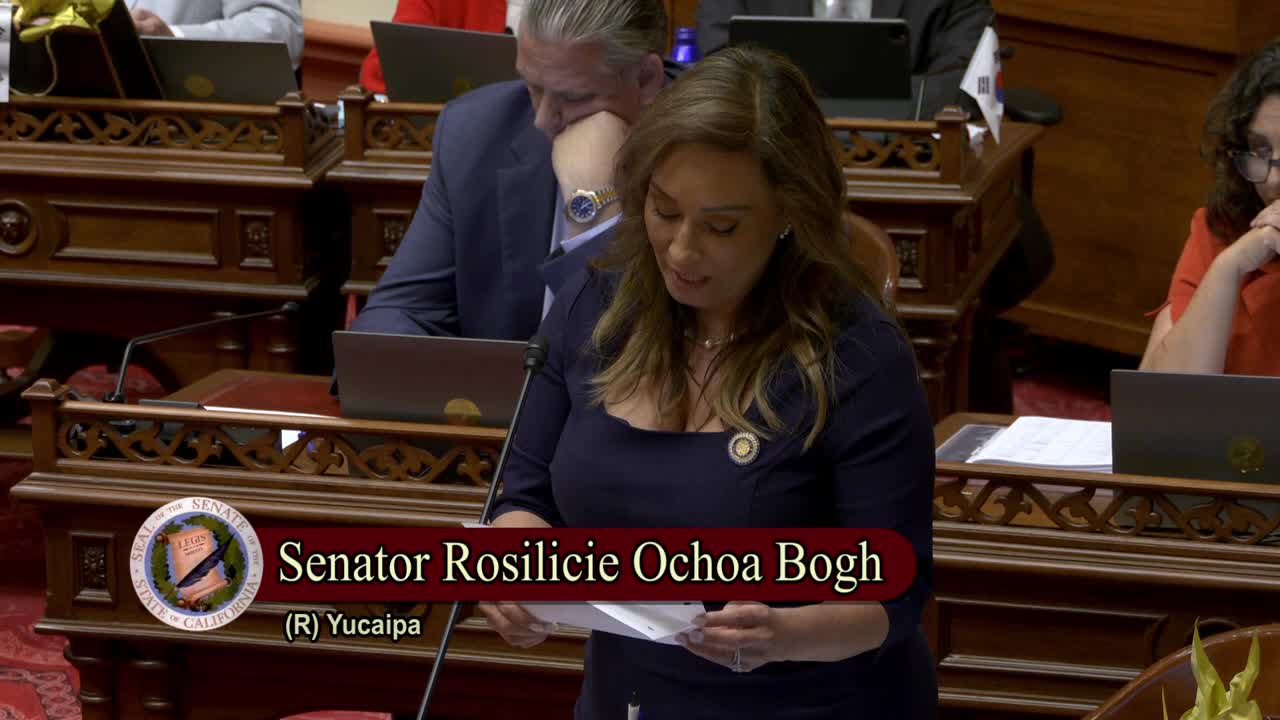
Bill Author

Bill Co-Author(s):