SB 1095: Newborn screening program.
- Session Year: 2015-2016
- House: Senate
- Latest Version Date: 2016-09-16
Existing law requires the State Department of Public Health to establish a program for the development, provision, and evaluation of genetic disease testing.
Existing law establishes the continuously appropriated Genetic Disease Testing Fund (GDTF), consisting of fees paid for newborn screening tests, and states the intent of the Legislature that all costs of the genetic disease testing program be fully supported by fees paid for newborn screening tests, which are deposited in the GDTF. Existing law also authorizes moneys in the GDTF to be used for the expansion of the Genetic Disease Branch Screening Information System to include cystic fibrosis, biotinidase, severe combined immunodeficiency (SCID), and adrenoleukodystrophy (ALD) and exempts the expansion of contracts for this purpose from certain provisions of the Public Contract Code, the Government Code, and the State Administrative Manual, as specified.
This bill would require the department to expand statewide screening of newborns to include screening for any disease that is detectable in blood samples as soon as practicable, but no later than 2 years after the disease is adopted by the federal Recommended Uniform Screening Panel (RUSP), or enrollment of this bill, whichever is later. By expanding the purposes for which moneys from the GDTF may be expended, this bill would make an appropriation.
Existing law requires the State Department of Public Health to establish a program for the development, provision, and evaluation of genetic disease testing.
Existing law establishes the continuously appropriated Genetic Disease Testing Fund (GDTF), consisting of fees paid for newborn screening tests, and states the intent of the Legislature that all costs of the genetic disease testing program be fully supported by fees paid for newborn screening tests, which are deposited in the GDTF. Existing law also authorizes moneys in the GDTF to be used for the expansion of the Genetic Disease Branch Screening Information System to include cystic fibrosis, biotinidase, severe combined immunodeficiency (SCID), and adrenoleukodystrophy (ALD) and exempts the expansion of contracts for this purpose from certain provisions of the Public Contract Code, the Government Code, and the State Administrative Manual, as specified.
This bill would require the department to expand statewide screening of newborns to include screening for any disease that is detectable in blood samples as soon as practicable, but no later than 2 years after the disease is adopted by the federal Recommended Uniform Screening Panel (RUSP), or enrollment of this bill, whichever is later. By expanding the purposes for which moneys from the GDTF may be expended, this bill would make an appropriation.
Existing law requires the State Department of Public Health to establish a program for the development, provision, and evaluation of genetic disease testing.
Existing law establishes the continuously appropriated Genetic Disease Testing Fund (GDTF), consisting of fees paid for newborn screening tests, and states the intent of the Legislature that all costs of the genetic disease testing program be fully supported by fees paid for newborn screening tests, which are deposited in the GDTF. Existing law also authorizes moneys in the GDTF to be used for the expansion of the Genetic Disease Branch Screening Information System to include cystic fibrosis, biotinidase, severe combined immunodeficiency (SCID), and adrenoleukodystrophy (ALD) and exempts the expansion of contracts for this purpose from certain provisions of the Public Contract Code, the Government Code, and the State Administrative Manual, as specified.
This bill would require the department to expand statewide screening of newborns to include screening for any disease that is detectable in blood samples as soon as practicable, but no later than 2 years after the disease is adopted by the federal Recommended Uniform Screening Panel (RUSP). (RUSP), or enrollment of this bill, whichever is later. By expanding the purposes for which moneys from the GDTF may be expended, this bill would make an appropriation.
Existing law requires the State Department of Public Health to establish a program for the development, provision, and evaluation of genetic disease testing.
Existing law establishes the continuously appropriated Genetic Disease Testing Fund (GDTF), consisting of fees paid for newborn screening tests, and states the intent of the Legislature that all costs of the genetic disease testing program be fully supported by fees paid for newborn screening tests, which are deposited in the GDTF. Existing law also authorizes moneys in the GDTF to be used for the expansion of the Genetic Disease Branch Screening Information System to include cystic fibrosis, biotinidase, severe combined immunodeficiency (SCID), and adrenoleukodystrophy (ALD) and exempts the expansion of contracts for this purpose from certain provisions of the Public Contract Code, the Government Code, and the State Administrative Manual, as specified.
This bill would require the department to expand statewide screening of newborns to include screening for any disease that is detectable in blood samples as soon as the disease is adopted by the federal Recommended Uniform Screening Panel (RUSP). By expanding the purposes for which moneys from the fund GDTF may be expended, this bill would make an appropriation.
Existing law requires the State Department of Public Health to establish a program for the development, provision, and evaluation of genetic disease testing.
Existing law establishes the continuously appropriated Genetic Disease Testing Fund (GDTF), consisting of fees paid for newborn screening tests, and states the intent of the Legislature that all costs of the genetic disease testing program be fully supported by fees paid for newborn screening tests, which are deposited in the GDTF. Existing law also authorizes moneys in the GDTF to be used for the expansion of the Genetic Disease Branch Screening Information System to include cystic fibrosis, biotinidase, severe combined immunodeficiency (SCID), and adrenoleukodystrophy (ALD) and exempts the expansion of contracts for this purpose from certain provisions of the Public Contract Code, the Government Code, and the State Administrative Manual, as specified.
This bill would require the department to expand statewide screening of newborns to include screening for any disease that is detectable in blood samples as soon as the disease is adopted by the federal Recommended Uniform Screening Panel (RUSP). By expanding the purposes for which moneys from the fund may be expended, this bill would make an appropriation.
Existing law requires the State Department of Public Health to establish a program for the development, provision, and evaluation of genetic disease testing.
Existing law establishes the continuously appropriated Genetic Disease Testing Fund (GDTF), consisting of fees paid for newborn screening tests, and states the intent of the Legislature that all costs of the genetic disease testing program be fully supported by fees paid for newborn screening tests, which are deposited in the GDTF. Existing law also authorizes moneys in the GDTF to be used for the expansion of the Genetic Disease Branch Screening Information System to include cystic fibrosis, biotinidase, severe combined immunodeficiency (SCID), and adrenoleukodystrophy (ALD) and exempts the expansion of contracts for this purpose from certain provisions of the Public Contract Code, the Government Code, and the State Administrative Manual, as specified.
This bill would require the department to expand statewide screening of newborns to include screening for any disease as soon as the disease is adopted by the federal Recommended Uniform Screening Panel (RUSP). By expanding the purposes for which moneys from the fund may be expended, this bill would make an appropriation.
(a)It is the intent of the Legislature that, unless otherwise specified, the genetic disease testing program carried out pursuant to this chapter be fully supported from fees collected for services provided by the program.
(b)(1)The department shall charge a fee to all payers for any tests or activities performed pursuant to this chapter. The amount of the fee shall be established by regulation and periodically adjusted by the director in order to meet the costs of this chapter. Notwithstanding any other law, any fees charged for prenatal screening and followup services provided to persons enrolled in the Medi-Cal program, health care service plan enrollees, or persons covered by health insurance policies, shall be paid in full and deposited in the Genetic Disease Testing Fund or the Birth Defects Monitoring Program Fund consistent with this section.
(2)The department shall expeditiously undertake all steps necessary to implement the fee collection process, including personnel, contracts, and data processing, so as to initiate the fee collection process at the earliest opportunity.
(3)Effective for services provided on and after July 1, 2002, the department shall charge a fee to the hospital of birth, or, for births not occurring in a hospital, to families of the newborn, for newborn screening and followup services. The hospital of birth and families of newborns born outside the hospital shall make payment in full to the Genetic Disease Testing Fund. The department shall not charge or bill Medi-Cal beneficiaries for services provided pursuant to this chapter.
(4)(A)The department shall charge a fee for prenatal screening to support the pregnancy blood sample storage, testing, and research activities of the Birth Defects Monitoring Program.
(B)The prenatal screening fee for activities of the Birth Defects Monitoring Program shall be ten dollars ($10).
(5)The department shall set guidelines for invoicing, charging, and collecting from approved researchers the amount necessary to cover all expenses associated with research application requests made pursuant to this section, data linkage, retrieval, data processing, data entry, reinventory, and shipping of blood samples or their components, and related data management.
(6)The only funds from the Genetic Disease Testing Fund that may be used for the purpose of supporting the pregnancy blood sample storage, testing, and research activities of the Birth Defects Monitoring Program are those prenatal screening fees assessed and collected prior to the creation of the Birth Defects Monitoring Program Fund specifically to support those Birth Defects Monitoring Program activities.
(7)The Birth Defects Monitoring Program Fund is hereby created as a special fund in the State Treasury. Fee revenues that are collected pursuant to paragraph (4) shall be deposited into the fund and shall be available upon appropriation by the Legislature to support the pregnancy blood sample storage, testing, and research activities of the Birth Defects Monitoring Program. Notwithstanding Section 16305.7 of the Government Code, interest earned on funds in the Birth Defects Monitoring Program Fund shall be deposited as revenue into the fund to support the Birth Defects Monitoring Program.
(c)(1)The Legislature finds that timely implementation of changes in genetic screening programs and continuous maintenance of quality statewide services requires expeditious regulatory and administrative procedures to obtain the most cost-effective electronic data processing, hardware, software services, testing equipment, and testing and followup services.
(2)The expenditure of funds from the Genetic Disease Testing Fund for these purposes shall not be subject to Section 12102 of, and Chapter 2 (commencing with Section 10290) of Part 2 of Division 2 of, the Public Contract Code, or to Division 25.2 (commencing with Section 38070) of this code. The department shall provide the Department of Finance with documentation that equipment and services have been obtained at the lowest cost consistent with technical requirements for a comprehensive high-quality program.
(3)The expenditure of funds from the Genetic Disease Testing Fund for implementation of the Tandem Mass Spectrometry screening for fatty acid oxidation, amino acid, and organic acid disorders, and screening for congenital adrenal hyperplasia may be implemented through the amendment of the Genetic Disease Branch Screening Information System contracts and shall not be subject to Chapter 3 (commencing with Section 12100) of Part 2 of Division 2 of the Public Contract Code, Article 4 (commencing with Section 19130) of Chapter 5 of Part 2 of Division 5 of Title 2 of the Government Code, and any policies, procedures, regulations, or manuals authorized by those laws.
(4)The expenditure of funds from the Genetic Disease Testing Fund for the expansion of the Genetic Disease Branch Screening Information System to include cystic fibrosis, biotinidase, severe combined immunodeficiency (SCID), adrenoleukodystrophy (ALD), and any other disease that is detectable in blood samples, as specified in subdivision (d) of Section 125001, may be implemented through the amendment of the Genetic Disease Branch Screening Information System contracts, and shall not be subject to Chapter 2 (commencing with Section 10290) or Chapter 3 (commencing with Section 12100) of Part 2 of Division 2 of the Public Contract Code, Article 4 (commencing with Section 19130) of Chapter 5 of Part 2 of Division 5 of Title 2 of the Government Code, or Sections 4800 to 5180, inclusive, of the State Administrative Manual as they relate to approval of information technology projects or approval of increases in the duration or costs of information technology projects. This paragraph shall apply to the design, development, and implementation of the expansion, and to the maintenance and operation of the Genetic Disease Branch Screening Information System, including change requests, once the expansion is implemented.
(d)(1)The department may adopt emergency regulations to implement and make specific this chapter in accordance with Chapter 3.5 (commencing with Section 11340) of Part 1 of Division 3 of Title 2 of the Government Code. For the purposes of the Administrative Procedure Act, the adoption of regulations shall be deemed an emergency and necessary for the immediate preservation of the public peace, health and safety, or general welfare. Notwithstanding Chapter 3.5 (commencing with Section 11340) of Part 1 of Division 3 of Title 2 of the Government Code, these emergency regulations shall not be subject to the review and approval of the Office of Administrative Law. Notwithstanding Sections 11346.1 and 11349.6 of the Government Code, the department shall submit these regulations directly to the Secretary of State for filing. The regulations shall become effective immediately upon filing by the Secretary of State. Regulations shall be subject to public hearing within 120 days of filing with the Secretary of State and shall comply with Sections 11346.8 and 11346.9 of the Government Code or shall be repealed.
(2)The Office of Administrative Law shall provide for the printing and publication of these regulations in the California Code of Regulations. Notwithstanding Chapter 3.5 (commencing with Section 11340) of Part 1 of Division 3 of Title 2 of the Government Code, the regulations adopted pursuant to this chapter shall not be repealed by the Office of Administrative Law and shall remain in effect until revised or repealed by the department.
(3)The Legislature finds and declares that the health and safety of California newborns is in part dependent on an effective and adequately staffed genetic disease program, the cost of which shall be supported by the fees generated by the program.
SEC. 2.Section 125001 of the Health and Safety Code is amended to read:125001.(a)The department shall establish a program for the development, provision, and evaluation of genetic disease testing, and may provide laboratory testing facilities or make grants to, contract with, or make payments to, any laboratory that it deems qualified and cost effective to conduct testing or with any metabolic specialty clinic to provide necessary treatment with qualified specialists. The program shall provide genetic screening and followup services for persons who have the screening.
(b)The department shall expand statewide screening of newborns to include tandem mass spectrometry screening for fatty acid oxidation, amino acid, organic acid disorders, and congenital adrenal hyperplasia as soon as possible. The department shall provide information with respect to these disorders and available testing resources to all women receiving prenatal care and to all women admitted to a hospital for delivery. If the department is unable to provide this statewide screening by August 1, 2005, the department shall temporarily obtain these testing services through a competitive bid process from one or more public or private laboratories that meet the departments requirements for testing, quality assurance, and reporting. If the department determines that contracting for these services is more cost effective, and meets the other requirements of this chapter, than purchasing the tandem mass spectrometry equipment themselves, the department shall contract with one or more public or private laboratories.
(c)The department shall expand statewide screening of newborns to include screening for severe combined immunodeficiency (SCID) as soon as possible. In implementing the SCID screening test, the department shall also screen for other T-cell lymphopenias that are detectable as a result of screening for SCID, insofar as it does not require additional costs or equipment beyond that needed to test for SCID.
(d)The department shall expand statewide screening of newborns to include screening for adrenoleukodystrophy (ALD) and any other disease that is detectable in blood samples as soon as practicable, but no later than two years after the disease is adopted by the federal Recommended Uniform Screening Panel (RUSP), or enrollment of the act amending this subdivision, whichever is later.
(a)It is the intent of the Legislature that, unless otherwise specified, the genetic disease testing program carried out pursuant to this chapter be fully supported from fees collected for services provided by the program.
(b)(1)The department shall charge a fee to all payers for any tests or activities performed pursuant to this chapter. The amount of the fee shall be established by regulation and periodically adjusted by the director in order to meet the costs of this chapter. Notwithstanding any other law, any fees charged for prenatal screening and followup services provided to persons enrolled in the Medi-Cal program, health care service plan enrollees, or persons covered by health insurance policies, shall be paid in full and deposited in the Genetic Disease Testing Fund or the Birth Defects Monitoring Program Fund consistent with this section.
(2)The department shall expeditiously undertake all steps necessary to implement the fee collection process, including personnel, contracts, and data processing, so as to initiate the fee collection process at the earliest opportunity.
(3)Effective for services provided on and after July 1, 2002, the department shall charge a fee to the hospital of birth, or, for births not occurring in a hospital, to families of the newborn, for newborn screening and followup services. The hospital of birth and families of newborns born outside the hospital shall make payment in full to the Genetic Disease Testing Fund. The department shall not charge or bill Medi-Cal beneficiaries for services provided pursuant to this chapter.
(4)(A)The department shall charge a fee for prenatal screening to support the pregnancy blood sample storage, testing, and research activities of the Birth Defects Monitoring Program.
(B)The prenatal screening fee for activities of the Birth Defects Monitoring Program shall be ten dollars ($10).
(5)The department shall set guidelines for invoicing, charging, and collecting from approved researchers the amount necessary to cover all expenses associated with research application requests made pursuant to this section, data linkage, retrieval, data processing, data entry, reinventory, and shipping of blood samples or their components, and related data management.
(6)The only funds from the Genetic Disease Testing Fund that may be used for the purpose of supporting the pregnancy blood sample storage, testing, and research activities of the Birth Defects Monitoring Program are those prenatal screening fees assessed and collected prior to the creation of the Birth Defects Monitoring Program Fund specifically to support those Birth Defects Monitoring Program activities.
(7)The Birth Defects Monitoring Program Fund is hereby created as a special fund in the State Treasury. Fee revenues that are collected pursuant to paragraph (4) shall be deposited into the fund and shall be available upon appropriation by the Legislature to support the pregnancy blood sample storage, testing, and research activities of the Birth Defects Monitoring Program. Notwithstanding Section 16305.7 of the Government Code, interest earned on funds in the Birth Defects Monitoring Program Fund shall be deposited as revenue into the fund to support the Birth Defects Monitoring Program.
(c)(1)The Legislature finds that timely implementation of changes in genetic screening programs and continuous maintenance of quality statewide services requires expeditious regulatory and administrative procedures to obtain the most cost-effective electronic data processing, hardware, software services, testing equipment, and testing and followup services.
(2)The expenditure of funds from the Genetic Disease Testing Fund for these purposes shall not be subject to Section 12102 of, and Chapter 2 (commencing with Section 10290) of Part 2 of Division 2 of, the Public Contract Code, or to Division 25.2 (commencing with Section 38070) of this code. The department shall provide the Department of Finance with documentation that equipment and services have been obtained at the lowest cost consistent with technical requirements for a comprehensive high-quality program.
(3)The expenditure of funds from the Genetic Disease Testing Fund for implementation of the Tandem Mass Spectrometry screening for fatty acid oxidation, amino acid, and organic acid disorders, and screening for congenital adrenal hyperplasia may be implemented through the amendment of the Genetic Disease Branch Screening Information System contracts and shall not be subject to Chapter 3 (commencing with Section 12100) of Part 2 of Division 2 of the Public Contract Code, Article 4 (commencing with Section 19130) of Chapter 5 of Part 2 of Division 5 of Title 2 of the Government Code, and any policies, procedures, regulations, or manuals authorized by those laws.
(4)The expenditure of funds from the Genetic Disease Testing Fund for the expansion of the Genetic Disease Branch Screening Information System to include cystic fibrosis, biotinidase, severe combined immunodeficiency (SCID), adrenoleukodystrophy (ALD), and any other disease that is detectable in blood samples, as specified in subdivision (d) of Section 125001, may be implemented through the amendment of the Genetic Disease Branch Screening Information System contracts, and shall not be subject to Chapter 2 (commencing with Section 10290) or Chapter 3 (commencing with Section 12100) of Part 2 of Division 2 of the Public Contract Code, Article 4 (commencing with Section 19130) of Chapter 5 of Part 2 of Division 5 of Title 2 of the Government Code, or Sections 4800 to 5180, inclusive, of the State Administrative Manual as they relate to approval of information technology projects or approval of increases in the duration or costs of information technology projects. This paragraph shall apply to the design, development, and implementation of the expansion, and to the maintenance and operation of the Genetic Disease Branch Screening Information System, including change requests, once the expansion is implemented.
(d)(1)The department may adopt emergency regulations to implement and make specific this chapter in accordance with Chapter 3.5 (commencing with Section 11340) of Part 1 of Division 3 of Title 2 of the Government Code. For the purposes of the Administrative Procedure Act, the adoption of regulations shall be deemed an emergency and necessary for the immediate preservation of the public peace, health and safety, or general welfare. Notwithstanding Chapter 3.5 (commencing with Section 11340) of Part 1 of Division 3 of Title 2 of the Government Code, these emergency regulations shall not be subject to the review and approval of the Office of Administrative Law. Notwithstanding Sections 11346.1 and 11349.6 of the Government Code, the department shall submit these regulations directly to the Secretary of State for filing. The regulations shall become effective immediately upon filing by the Secretary of State. Regulations shall be subject to public hearing within 120 days of filing with the Secretary of State and shall comply with Sections 11346.8 and 11346.9 of the Government Code or shall be repealed.
(2)The Office of Administrative Law shall provide for the printing and publication of these regulations in the California Code of Regulations. Notwithstanding Chapter 3.5 (commencing with Section 11340) of Part 1 of Division 3 of Title 2 of the Government Code, the regulations adopted pursuant to this chapter shall not be repealed by the Office of Administrative Law and shall remain in effect until revised or repealed by the department.
(3)The Legislature finds and declares that the health and safety of California newborns is in part dependent on an effective and adequately staffed genetic disease program, the cost of which shall be supported by the fees generated by the program.
SEC. 2.Section 125001 of the Health and Safety Code is amended to read:125001.(a)The department shall establish a program for the development, provision, and evaluation of genetic disease testing, and may provide laboratory testing facilities or make grants to, contract with, or make payments to, any laboratory that it deems qualified and cost effective to conduct testing or with any metabolic specialty clinic to provide necessary treatment with qualified specialists. The program shall provide genetic screening and followup services for persons who have the screening.
(b)The department shall expand statewide screening of newborns to include tandem mass spectrometry screening for fatty acid oxidation, amino acid, organic acid disorders, and congenital adrenal hyperplasia as soon as possible. The department shall provide information with respect to these disorders and available testing resources to all women receiving prenatal care and to all women admitted to a hospital for delivery. If the department is unable to provide this statewide screening by August 1, 2005, the department shall temporarily obtain these testing services through a competitive bid process from one or more public or private laboratories that meet the departments requirements for testing, quality assurance, and reporting. If the department determines that contracting for these services is more cost effective, and meets the other requirements of this chapter, than purchasing the tandem mass spectrometry equipment themselves, the department shall contract with one or more public or private laboratories.
(c)The department shall expand statewide screening of newborns to include screening for severe combined immunodeficiency (SCID) as soon as possible. In implementing the SCID screening test, the department shall also screen for other T-cell lymphopenias that are detectable as a result of screening for SCID, insofar as it does not require additional costs or equipment beyond that needed to test for SCID.
(d)The department shall expand statewide screening of newborns to include screening for adrenoleukodystrophy (ALD) and any other disease that is detectable in blood samples as soon as practicable, but no later than two years after the disease is adopted by the federal Recommended Uniform Screening Panel (RUSP), or enrollment of the act amending this subdivision, whichever is later.
(a)It is the intent of the Legislature that, unless otherwise specified, the genetic disease testing program carried out pursuant to this chapter be fully supported from fees collected for services provided by the program.
(b)(1)The department shall charge a fee to all payers for any tests or activities performed pursuant to this chapter. The amount of the fee shall be established by regulation and periodically adjusted by the director in order to meet the costs of this chapter. Notwithstanding any other law, any fees charged for prenatal screening and followup services provided to persons enrolled in the Medi-Cal program, health care service plan enrollees, or persons covered by health insurance policies, shall be paid in full and deposited in the Genetic Disease Testing Fund or the Birth Defects Monitoring Program Fund consistent with this section.
(2)The department shall expeditiously undertake all steps necessary to implement the fee collection process, including personnel, contracts, and data processing, so as to initiate the fee collection process at the earliest opportunity.
(3)Effective for services provided on and after July 1, 2002, the department shall charge a fee to the hospital of birth, or, for births not occurring in a hospital, to families of the newborn, for newborn screening and followup services. The hospital of birth and families of newborns born outside the hospital shall make payment in full to the Genetic Disease Testing Fund. The department shall not charge or bill Medi-Cal beneficiaries for services provided pursuant to this chapter.
(4)(A)The department shall charge a fee for prenatal screening to support the pregnancy blood sample storage, testing, and research activities of the Birth Defects Monitoring Program.
(B)The prenatal screening fee for activities of the Birth Defects Monitoring Program shall be ten dollars ($10).
(5)The department shall set guidelines for invoicing, charging, and collecting from approved researchers the amount necessary to cover all expenses associated with research application requests made pursuant to this section, data linkage, retrieval, data processing, data entry, reinventory, and shipping of blood samples or their components, and related data management.
(6)The only funds from the Genetic Disease Testing Fund that may be used for the purpose of supporting the pregnancy blood sample storage, testing, and research activities of the Birth Defects Monitoring Program are those prenatal screening fees assessed and collected prior to the creation of the Birth Defects Monitoring Program Fund specifically to support those Birth Defects Monitoring Program activities.
(7)The Birth Defects Monitoring Program Fund is hereby created as a special fund in the State Treasury. Fee revenues that are collected pursuant to paragraph (4) shall be deposited into the fund and shall be available upon appropriation by the Legislature to support the pregnancy blood sample storage, testing, and research activities of the Birth Defects Monitoring Program. Notwithstanding Section 16305.7 of the Government Code, interest earned on funds in the Birth Defects Monitoring Program Fund shall be deposited as revenue into the fund to support the Birth Defects Monitoring Program.
(c)(1)The Legislature finds that timely implementation of changes in genetic screening programs and continuous maintenance of quality statewide services requires expeditious regulatory and administrative procedures to obtain the most cost-effective electronic data processing, hardware, software services, testing equipment, and testing and followup services.
(2)The expenditure of funds from the Genetic Disease Testing Fund for these purposes shall not be subject to Section 12102 of, and Chapter 2 (commencing with Section 10290) of Part 2 of Division 2 of, the Public Contract Code, or to Division 25.2 (commencing with Section 38070) of this code. The department shall provide the Department of Finance with documentation that equipment and services have been obtained at the lowest cost consistent with technical requirements for a comprehensive high-quality program.
(3)The expenditure of funds from the Genetic Disease Testing Fund for implementation of the Tandem Mass Spectrometry screening for fatty acid oxidation, amino acid, and organic acid disorders, and screening for congenital adrenal hyperplasia may be implemented through the amendment of the Genetic Disease Branch Screening Information System contracts and shall not be subject to Chapter 3 (commencing with Section 12100) of Part 2 of Division 2 of the Public Contract Code, Article 4 (commencing with Section 19130) of Chapter 5 of Part 2 of Division 5 of Title 2 of the Government Code, and any policies, procedures, regulations, or manuals authorized by those laws.
(4)The expenditure of funds from the Genetic Disease Testing Fund for the expansion of the Genetic Disease Branch Screening Information System to include cystic fibrosis, biotinidase, severe combined immunodeficiency (SCID), adrenoleukodystrophy (ALD), and any other disease that is detectable in blood samples, as specified in subdivision (d) of Section 125001, may be implemented through the amendment of the Genetic Disease Branch Screening Information System contracts, and shall not be subject to Chapter 2 (commencing with Section 10290) or Chapter 3 (commencing with Section 12100) of Part 2 of Division 2 of the Public Contract Code, Article 4 (commencing with Section 19130) of Chapter 5 of Part 2 of Division 5 of Title 2 of the Government Code, or Sections 4800 to 5180, inclusive, of the State Administrative Manual as they relate to approval of information technology projects or approval of increases in the duration or costs of information technology projects. This paragraph shall apply to the design, development, and implementation of the expansion, and to the maintenance and operation of the Genetic Disease Branch Screening Information System, including change requests, once the expansion is implemented.
(d)(1)The department may adopt emergency regulations to implement and make specific this chapter in accordance with Chapter 3.5 (commencing with Section 11340) of Part 1 of Division 3 of Title 2 of the Government Code. For the purposes of the Administrative Procedure Act, the adoption of regulations shall be deemed an emergency and necessary for the immediate preservation of the public peace, health and safety, or general welfare. Notwithstanding Chapter 3.5 (commencing with Section 11340) of Part 1 of Division 3 of Title 2 of the Government Code, these emergency regulations shall not be subject to the review and approval of the Office of Administrative Law. Notwithstanding Sections 11346.1 and 11349.6 of the Government Code, the department shall submit these regulations directly to the Secretary of State for filing. The regulations shall become effective immediately upon filing by the Secretary of State. Regulations shall be subject to public hearing within 120 days of filing with the Secretary of State and shall comply with Sections 11346.8 and 11346.9 of the Government Code or shall be repealed.
(2)The Office of Administrative Law shall provide for the printing and publication of these regulations in the California Code of Regulations. Notwithstanding Chapter 3.5 (commencing with Section 11340) of Part 1 of Division 3 of Title 2 of the Government Code, the regulations adopted pursuant to this chapter shall not be repealed by the Office of Administrative Law and shall remain in effect until revised or repealed by the department.
(3)The Legislature finds and declares that the health and safety of California newborns is in part dependent on an effective and adequately staffed genetic disease program, the cost of which shall be supported by the fees generated by the program.
SEC. 2.Section 125001 of the Health and Safety Code is amended to read:125001.(a)The department shall establish a program for the development, provision, and evaluation of genetic disease testing, and may provide laboratory testing facilities or make grants to, contract with, or make payments to, any laboratory that it deems qualified and cost effective to conduct testing or with any metabolic specialty clinic to provide necessary treatment with qualified specialists. The program shall provide genetic screening and followup services for persons who have the screening.
(b)The department shall expand statewide screening of newborns to include tandem mass spectrometry screening for fatty acid oxidation, amino acid, organic acid disorders, and congenital adrenal hyperplasia as soon as possible. The department shall provide information with respect to these disorders and available testing resources to all women receiving prenatal care and to all women admitted to a hospital for delivery. If the department is unable to provide this statewide screening by August 1, 2005, the department shall temporarily obtain these testing services through a competitive bid process from one or more public or private laboratories that meet the departments requirements for testing, quality assurance, and reporting. If the department determines that contracting for these services is more cost effective, and meets the other requirements of this chapter, than purchasing the tandem mass spectrometry equipment themselves, the department shall contract with one or more public or private laboratories.
(c)The department shall expand statewide screening of newborns to include screening for severe combined immunodeficiency (SCID) as soon as possible. In implementing the SCID screening test, the department shall also screen for other T-cell lymphopenias that are detectable as a result of screening for SCID, insofar as it does not require additional costs or equipment beyond that needed to test for SCID.
(d)The department shall expand statewide screening of newborns to include screening for adrenoleukodystrophy (ALD) and any other disease that is detectable in blood samples as soon as practicable, but no later than two years after the disease is adopted by the federal Recommended Uniform Screening Panel (RUSP). (RUSP), or enrollment of the act amending this subdivision, whichever is later.
(a)It is the intent of the Legislature that, unless otherwise specified, the genetic disease testing program carried out pursuant to this chapter be fully supported from fees collected for services provided by the program.
(b)(1)The department shall charge a fee to all payers for any tests or activities performed pursuant to this chapter. The amount of the fee shall be established by regulation and periodically adjusted by the director in order to meet the costs of this chapter. Notwithstanding any other law, any fees charged for prenatal screening and followup services provided to persons enrolled in the Medi-Cal program, health care service plan enrollees, or persons covered by health insurance policies, shall be paid in full and deposited in the Genetic Disease Testing Fund or the Birth Defects Monitoring Program Fund consistent with this section.
(2)The department shall expeditiously undertake all steps necessary to implement the fee collection process, including personnel, contracts, and data processing, so as to initiate the fee collection process at the earliest opportunity.
(3)Effective for services provided on and after July 1, 2002, the department shall charge a fee to the hospital of birth, or, for births not occurring in a hospital, to families of the newborn, for newborn screening and followup services. The hospital of birth and families of newborns born outside the hospital shall make payment in full to the Genetic Disease Testing Fund. The department shall not charge or bill Medi-Cal beneficiaries for services provided under pursuant to this chapter.
(4)(A)The department shall charge a fee for prenatal screening to support the pregnancy blood sample storage, testing, and research activities of the Birth Defects Monitoring Program.
(B)The prenatal screening fee for activities of the Birth Defects Monitoring Program shall be ten dollars ($10).
(5)The department shall set guidelines for invoicing, charging, and collecting from approved researchers the amount necessary to cover all expenses associated with research application requests made under pursuant to this section, data linkage, retrieval, data processing, data entry, reinventory, and shipping of blood samples or their components, and related data management.
(6)The only funds from the Genetic Disease Testing Fund that may be used for the purpose of supporting the pregnancy blood sample storage, testing, and research activities of the Birth Defects Monitoring Program are those prenatal screening fees assessed and collected prior to the creation of the Birth Defects Monitoring Program Fund specifically to support those Birth Defects Monitoring Program activities.
(7)The Birth Defects Monitoring Program Fund is hereby created as a special fund in the State Treasury. Fee revenues that are collected pursuant to paragraph (4) shall be deposited into the fund and shall be available upon appropriation by the Legislature to support the pregnancy blood sample storage, testing, and research activities of the Birth Defects Monitoring Program. Notwithstanding Section 16305.7 of the Government Code, interest earned on funds in the Birth Defects Monitoring Program Fund shall be deposited as revenue into the fund to support the Birth Defects Monitoring Program.
(c)(1)The Legislature finds that timely implementation of changes in genetic screening programs and continuous maintenance of quality statewide services requires expeditious regulatory and administrative procedures to obtain the most cost-effective electronic data processing, hardware, software services, testing equipment, and testing and followup services.
(2)The expenditure of funds from the Genetic Disease Testing Fund for these purposes shall not be subject to Section 12102 of, and Chapter 2 (commencing with Section 10290) of Part 2 of Division 2 of, the Public Contract Code, or to Division 25.2 (commencing with Section 38070) of this code. The department shall provide the Department of Finance with documentation that equipment and services have been obtained at the lowest cost consistent with technical requirements for a comprehensive high-quality program.
(3)The expenditure of funds from the Genetic Disease Testing Fund for implementation of the Tandem Mass Spectrometry screening for fatty acid oxidation, amino acid, and organic acid disorders, and screening for congenital adrenal hyperplasia may be implemented through the amendment of the Genetic Disease Branch Screening Information System contracts and shall not be subject to Chapter 3 (commencing with Section 12100) of Part 2 of Division 2 of the Public Contract Code, Article 4 (commencing with Section 19130) of Chapter 5 of Part 2 of Division 5 of Title 2 of the Government Code, and any policies, procedures, regulations, or manuals authorized by those laws.
(4)The expenditure of funds from the Genetic Disease Testing Fund for the expansion of the Genetic Disease Branch Screening Information System to include cystic fibrosis, biotinidase, severe combined immunodeficiency (SCID), adrenoleukodystrophy (ALD), and any other disease that is detectable in blood samples, as specified in subdivision (d) of Section 125001, may be implemented through the amendment of the Genetic Disease Branch Screening Information System contracts, and shall not be subject to Chapter 2 (commencing with Section 10290) or Chapter 3 (commencing with Section 12100) of Part 2 of Division 2 of the Public Contract Code, Article 4 (commencing with Section 19130) of Chapter 5 of Part 2 of Division 5 of Title 2 of the Government Code, or Sections 4800 to 5180, inclusive, of the State Administrative Manual as they relate to approval of information technology projects or approval of increases in the duration or costs of information technology projects. This paragraph shall apply to the design, development, and implementation of the expansion, and to the maintenance and operation of the Genetic Disease Branch Screening Information System, including change requests, once the expansion is implemented.
(d)(1)The department may adopt emergency regulations to implement and make specific this chapter in accordance with Chapter 3.5 (commencing with Section 11340) of Part 1 of Division 3 of Title 2 of the Government Code. For the purposes of the Administrative Procedure Act, the adoption of regulations shall be deemed an emergency and necessary for the immediate preservation of the public peace, health and safety, or general welfare. Notwithstanding Chapter 3.5 (commencing with Section 11340) of Part 1 of Division 3 of Title 2 of the Government Code, these emergency regulations shall not be subject to the review and approval of the Office of Administrative Law. Notwithstanding Sections 11346.1 and 11349.6 of the Government Code, the department shall submit these regulations directly to the Secretary of State for filing. The regulations shall become effective immediately upon filing by the Secretary of State. Regulations shall be subject to public hearing within 120 days of filing with the Secretary of State and shall comply with Sections 11346.8 and 11346.9 of the Government Code or shall be repealed.
(2)The Office of Administrative Law shall provide for the printing and publication of these regulations in the California Code of Regulations. Notwithstanding Chapter 3.5 (commencing with Section 11340) of Part 1 of Division 3 of Title 2 of the Government Code, the regulations adopted pursuant to this chapter shall not be repealed by the Office of Administrative Law and shall remain in effect until revised or repealed by the department.
(3)The Legislature finds and declares that the health and safety of California newborns is in part dependent on an effective and adequately staffed genetic disease program, the cost of which shall be supported by the fees generated by the program.
SEC. 2.Section 125001 of the Health and Safety Code is amended to read:125001.(a)The department shall establish a program for the development, provision, and evaluation of genetic disease testing, and may provide laboratory testing facilities or make grants to, contract with, or make payments to, any laboratory that it deems qualified and cost effective to conduct testing or with any metabolic specialty clinic to provide necessary treatment with qualified specialists. The program shall provide genetic screening and followup services for persons who have the screening.
(b)The department shall expand statewide screening of newborns to include tandem mass spectrometry screening for fatty acid oxidation, amino acid, organic acid disorders, and congenital adrenal hyperplasia as soon as possible. The department shall provide information with respect to these disorders and available testing resources to all women receiving prenatal care and to all women admitted to a hospital for delivery. If the department is unable to provide this statewide screening by August 1, 2005, the department shall temporarily obtain these testing services through a competitive bid process from one or more public or private laboratories that meet the departments requirements for testing, quality assurance, and reporting. If the department determines that contracting for these services is more cost effective, and meets the other requirements of this chapter, than purchasing the tandem mass spectrometry equipment themselves, the department shall contract with one or more public or private laboratories.
(c)The department shall expand statewide screening of newborns to include screening for severe combined immunodeficiency (SCID) as soon as possible. In implementing the SCID screening test, the department shall also screen for other T-cell lymphopenias that are detectable as a result of screening for SCID, insofar as it does not require additional costs or equipment beyond that needed to test for SCID.
(d)The department shall expand statewide screening of newborns to include screening for adrenoleukodystrophy (ALD) and any other disease that is detectable in blood samples as soon as the disease is adopted by the federal Recommended Uniform Screening Panel (RUSP).
(a)It is the intent of the Legislature that, unless otherwise specified, the genetic disease testing program carried out pursuant to this chapter be fully supported from fees collected for services provided by the program.
(b)(1)The department shall charge a fee to all payers for any tests or activities performed pursuant to this chapter. The amount of the fee shall be established by regulation and periodically adjusted by the director in order to meet the costs of this chapter. Notwithstanding any other law, any fees charged for prenatal screening and followup services provided to persons enrolled in the Medi-Cal program, health care service plan enrollees, or persons covered by health insurance policies, shall be paid in full and deposited in the Genetic Disease Testing Fund or the Birth Defects Monitoring Program Fund consistent with this section.
(2)The department shall expeditiously undertake all steps necessary to implement the fee collection process, including personnel, contracts, and data processing, so as to initiate the fee collection process at the earliest opportunity.
(3)Effective for services provided on and after July 1, 2002, the department shall charge a fee to the hospital of birth, or, for births not occurring in a hospital, to families of the newborn, for newborn screening and followup services. The hospital of birth and families of newborns born outside the hospital shall make payment in full to the Genetic Disease Testing Fund. The department shall not charge or bill Medi-Cal beneficiaries for services provided under this chapter.
(4)(A)The department shall charge a fee for prenatal screening to support the pregnancy blood sample storage, testing, and research activities of the Birth Defects Monitoring Program.
(B)The prenatal screening fee for activities of the Birth Defects Monitoring Program shall be ten dollars ($10).
(5)The department shall set guidelines for invoicing, charging, and collecting from approved researchers the amount necessary to cover all expenses associated with research application requests made under this section, data linkage, retrieval, data processing, data entry, reinventory, and shipping of blood samples or their components, and related data management.
(6)The only funds from the Genetic Disease Testing Fund that may be used for the purpose of supporting the pregnancy blood sample storage, testing, and research activities of the Birth Defects Monitoring Program are those prenatal screening fees assessed and collected prior to the creation of the Birth Defects Monitoring Program Fund specifically to support those Birth Defects Monitoring Program activities.
(7)The Birth Defects Monitoring Program Fund is hereby created as a special fund in the State Treasury. Fee revenues that are collected pursuant to paragraph (4) shall be deposited into the fund and shall be available upon appropriation by the Legislature to support the pregnancy blood sample storage, testing, and research activities of the Birth Defects Monitoring Program. Notwithstanding Section 16305.7 of the Government Code, interest earned on funds in the Birth Defects Monitoring Program Fund shall be deposited as revenue into the fund to support the Birth Defects Monitoring Program.
(c)(1)The Legislature finds that timely implementation of changes in genetic screening programs and continuous maintenance of quality statewide services requires expeditious regulatory and administrative procedures to obtain the most cost-effective electronic data processing, hardware, software services, testing equipment, and testing and followup services.
(2)The expenditure of funds from the Genetic Disease Testing Fund for these purposes shall not be subject to Section 12102 of, and Chapter 2 (commencing with Section 10290) of Part 2 of Division 2 of, the Public Contract Code, or to Division 25.2 (commencing with Section 38070). (commencing with Section 38070) of this code. The department shall provide the Department of Finance with documentation that equipment and services have been obtained at the lowest cost consistent with technical requirements for a comprehensive high-quality program.
(3)The expenditure of funds from the Genetic Disease Testing Fund for implementation of the Tandem Mass Spectrometry screening for fatty acid oxidation, amino acid, and organic acid disorders, and screening for congenital adrenal hyperplasia may be implemented through the amendment of the Genetic Disease Branch Screening Information System contracts and shall not be subject to Chapter 3 (commencing with Section 12100) of Part 2 of Division 2 of the Public Contract Code, Article 4 (commencing with Section 19130) of Chapter 5 of Part 2 of Division 5 of Title 2 of the Government Code, and any policies, procedures, regulations, or manuals authorized by those laws.
(4)The expenditure of funds from the Genetic Disease Testing Fund for the expansion of the Genetic Disease Branch Screening Information System to include cystic fibrosis, biotinidase, severe combined immunodeficiency (SCID), and adrenoleukodystrophy (ALD) and any other disease, (ALD), and any other disease that is detectable in blood samples, as specified in subdivision (d) of Section 125001, may be implemented through the amendment of the Genetic Disease Branch Screening Information System contracts, and shall not be subject to Chapter 2 (commencing with Section 10290) or Chapter 3 (commencing with Section 12100) of Part 2 of Division 2 of the Public Contract Code, Article 4 (commencing with Section 19130) of Chapter 5 of Part 2 of Division 5 of Title 2 of the Government Code, or Sections 4800 to 5180, inclusive, of the State Administrative Manual as they relate to approval of information technology projects or approval of increases in the duration or costs of information technology projects. This paragraph shall apply to the design, development, and implementation of the expansion, and to the maintenance and operation of the Genetic Disease Branch Screening Information System, including change requests, once the expansion is implemented.
(d)(1)The department may adopt emergency regulations to implement and make specific this chapter in accordance with Chapter 3.5 (commencing with Section 11340) of Part 1 of Division 3 of Title 2 of the Government Code. For the purposes of the Administrative Procedure Act, the adoption of regulations shall be deemed an emergency and necessary for the immediate preservation of the public peace, health and safety, or general welfare. Notwithstanding Chapter 3.5 (commencing with Section 11340) of Part 1 of Division 3 of Title 2 of the Government Code, these emergency regulations shall not be subject to the review and approval of the Office of Administrative Law. Notwithstanding Sections 11346.1 and 11349.6 of the Government Code, the department shall submit these regulations directly to the Secretary of State for filing. The regulations shall become effective immediately upon filing by the Secretary of State. Regulations shall be subject to public hearing within 120 days of filing with the Secretary of State and shall comply with Sections 11346.8 and 11346.9 of the Government Code or shall be repealed.
(2)The Office of Administrative Law shall provide for the printing and publication of these regulations in the California Code of Regulations. Notwithstanding Chapter 3.5 (commencing with Section 11340) of Part 1 of Division 3 of Title 2 of the Government Code, the regulations adopted pursuant to this chapter shall not be repealed by the Office of Administrative Law and shall remain in effect until revised or repealed by the department.
(3)The Legislature finds and declares that the health and safety of California newborns is in part dependent on an effective and adequately staffed genetic disease program, the cost of which shall be supported by the fees generated by the program.
SEC. 2.Section 125001 of the Health and Safety Code is amended to read:125001.(a)The department shall establish a program for the development, provision, and evaluation of genetic disease testing, and may provide laboratory testing facilities or make grants to, contract with, or make payments to, any laboratory that it deems qualified and cost effective to conduct testing or with any metabolic specialty clinic to provide necessary treatment with qualified specialists. The program shall provide genetic screening and followup services for persons who have the screening.
(b)The department shall expand statewide screening of newborns to include tandem mass spectrometry screening for fatty acid oxidation, amino acid, organic acid disorders, and congenital adrenal hyperplasia as soon as possible. The department shall provide information with respect to these disorders and available testing resources to all women receiving prenatal care and to all women admitted to a hospital for delivery. If the department is unable to provide this statewide screening by August 1, 2005, the department shall temporarily obtain these testing services through a competitive bid process from one or more public or private laboratories that meet the departments requirements for testing, quality assurance, and reporting. If the department determines that contracting for these services is more cost effective, and meets the other requirements of this chapter, than purchasing the tandem mass spectrometry equipment themselves, the department shall contract with one or more public or private laboratories.
(c)The department shall expand statewide screening of newborns to include screening for severe combined immunodeficiency (SCID) as soon as possible. In implementing the SCID screening test, the department shall also screen for other T-cell lymphopenias that are detectable as a result of screening for SCID, insofar as it does not require additional costs or equipment beyond that needed to test for SCID.
(d)The department shall expand statewide screening of newborns to include screening for adrenoleukodystrophy (ALD) and any other disease that is detectable in blood samples as soon as the disease is adopted by the federal Recommended Uniform Screening Panel (RUSP).
(a)It is the intent of the Legislature that, unless otherwise specified, the genetic disease testing program carried out pursuant to this chapter be fully supported from fees collected for services provided by the program.
(b)(1)The department shall charge a fee to all payers for any tests or activities performed pursuant to this chapter. The amount of the fee shall be established by regulation and periodically adjusted by the director in order to meet the costs of this chapter. Notwithstanding any other law, any fees charged for prenatal screening and followup services provided to persons enrolled in the Medi-Cal program, health care service plan enrollees, or persons covered by health insurance policies, shall be paid in full and deposited in the Genetic Disease Testing Fund or the Birth Defects Monitoring Program Fund consistent with this section.
(2)The department shall expeditiously undertake all steps necessary to implement the fee collection process, including personnel, contracts, and data processing, so as to initiate the fee collection process at the earliest opportunity.
(3)Effective for services provided on and after July 1, 2002, the department shall charge a fee to the hospital of birth, or, for births not occurring in a hospital, to families of the newborn, for newborn screening and followup services. The hospital of birth and families of newborns born outside the hospital shall make payment in full to the Genetic Disease Testing Fund. The department shall not charge or bill Medi-Cal beneficiaries for services provided under this chapter.
(4)(A)The department shall charge a fee for prenatal screening to support the pregnancy blood sample storage, testing, and research activities of the Birth Defects Monitoring Program.
(B)The prenatal screening fee for activities of the Birth Defects Monitoring Program shall be ten dollars ($10).
(5)The department shall set guidelines for invoicing, charging, and collecting from approved researchers the amount necessary to cover all expenses associated with research application requests made under this section, data linkage, retrieval, data processing, data entry, reinventory, and shipping of blood samples or their components, and related data management.
(6)The only funds from the Genetic Disease Testing Fund that may be used for the purpose of supporting the pregnancy blood sample storage, testing, and research activities of the Birth Defects Monitoring Program are those prenatal screening fees assessed and collected prior to the creation of the Birth Defects Monitoring Program Fund specifically to support those Birth Defects Monitoring Program activities.
(7)The Birth Defects Monitoring Program Fund is hereby created as a special fund in the State Treasury. Fee revenues that are collected pursuant to paragraph (4) shall be deposited into the fund and shall be available upon appropriation by the Legislature to support the pregnancy blood sample storage, testing, and research activities of the Birth Defects Monitoring Program. Notwithstanding Section 16305.7 of the Government Code, interest earned on funds in the Birth Defects Monitoring Program Fund shall be deposited as revenue into the fund to support the Birth Defects Monitoring Program.
(c)(1)The Legislature finds that timely implementation of changes in genetic screening programs and continuous maintenance of quality statewide services requires expeditious regulatory and administrative procedures to obtain the most cost-effective electronic data processing, hardware, software services, testing equipment, and testing and followup services.
(2)The expenditure of funds from the Genetic Disease Testing Fund for these purposes shall not be subject to Section 12102 of, and Chapter 2 (commencing with Section 10290) of Part 2 of Division 2 of, the Public Contract Code, or to Division 25.2 (commencing with Section 38070). The department shall provide the Department of Finance with documentation that equipment and services have been obtained at the lowest cost consistent with technical requirements for a comprehensive high-quality program.
(3)The expenditure of funds from the Genetic Disease Testing Fund for implementation of the Tandem Mass Spectrometry screening for fatty acid oxidation, amino acid, and organic acid disorders, and screening for congenital adrenal hyperplasia may be implemented through the amendment of the Genetic Disease Branch Screening Information System contracts and shall not be subject to Chapter 3 (commencing with Section 12100) of Part 2 of Division 2 of the Public Contract Code, Article 4 (commencing with Section 19130) of Chapter 5 of Part 2 of Division 5 of Title 2 of the Government Code, and any policies, procedures, regulations, or manuals authorized by those laws.
(4)The expenditure of funds from the Genetic Disease Testing Fund for the expansion of the Genetic Disease Branch Screening Information System to include cystic fibrosis, biotinidase, severe combined immunodeficiency (SCID), and adrenoleukodystrophy (ALD) and any other disease, as specified in subdivision (d) of Section 125001, may be implemented through the amendment of the Genetic Disease Branch Screening Information System contracts, and shall not be subject to Chapter 2 (commencing with Section 10290) or Chapter 3 (commencing with Section 12100) of Part 2 of Division 2 of the Public Contract Code, Article 4 (commencing with Section 19130) of Chapter 5 of Part 2 of Division 5 of Title 2 of the Government Code, or Sections 4800 to 5180, inclusive, of the State Administrative Manual as they relate to approval of information technology projects or approval of increases in the duration or costs of information technology projects. This paragraph shall apply to the design, development, and implementation of the expansion, and to the maintenance and operation of the Genetic Disease Branch Screening Information System, including change requests, once the expansion is implemented.
(d)(1)The department may adopt emergency regulations to implement and make specific this chapter in accordance with Chapter 3.5 (commencing with Section 11340) of Part 1 of Division 3 of Title 2 of the Government Code. For the purposes of the Administrative Procedure Act, the adoption of regulations shall be deemed an emergency and necessary for the immediate preservation of the public peace, health and safety, or general welfare. Notwithstanding Chapter 3.5 (commencing with Section 11340) of Part 1 of Division 3 of Title 2 of the Government Code, these emergency regulations shall not be subject to the review and approval of the Office of Administrative Law. Notwithstanding Sections 11346.1 and 11349.6 of the Government Code, the department shall submit these regulations directly to the Secretary of State for filing. The regulations shall become effective immediately upon filing by the Secretary of State. Regulations shall be subject to public hearing within 120 days of filing with the Secretary of State and shall comply with Sections 11346.8 and 11346.9 of the Government Code or shall be repealed.
(2)The Office of Administrative Law shall provide for the printing and publication of these regulations in the California Code of Regulations. Notwithstanding Chapter 3.5 (commencing with Section 11340) of Part 1 of Division 3 of Title 2 of the Government Code, the regulations adopted pursuant to this chapter shall not be repealed by the Office of Administrative Law and shall remain in effect until revised or repealed by the department.
(3)The Legislature finds and declares that the health and safety of California newborns is in part dependent on an effective and adequately staffed genetic disease program, the cost of which shall be supported by the fees generated by the program.
SEC. 2.Section 125001 of the Health and Safety Code is amended to read:125001.(a)The department shall establish a program for the development, provision, and evaluation of genetic disease testing, and may provide laboratory testing facilities or make grants to, contract with, or make payments to, any laboratory that it deems qualified and cost effective to conduct testing or with any metabolic specialty clinic to provide necessary treatment with qualified specialists. The program shall provide genetic screening and followup services for persons who have the screening.
(b)The department shall expand statewide screening of newborns to include tandem mass spectrometry screening for fatty acid oxidation, amino acid, organic acid disorders, and congenital adrenal hyperplasia as soon as possible. The department shall provide information with respect to these disorders and available testing resources to all women receiving prenatal care and to all women admitted to a hospital for delivery. If the department is unable to provide this statewide screening by August 1, 2005, the department shall temporarily obtain these testing services through a competitive bid process from one or more public or private laboratories that meet the departments requirements for testing, quality assurance, and reporting. If the department determines that contracting for these services is more cost effective, and meets the other requirements of this chapter, than purchasing the tandem mass spectrometry equipment themselves, the department shall contract with one or more public or private laboratories.
(c)The department shall expand statewide screening of newborns to include screening for severe combined immunodeficiency (SCID) as soon as possible. In implementing the SCID screening test, the department shall also screen for other T-cell lymphopenias that are detectable as a result of screening for SCID, insofar as it does not require additional costs or equipment beyond that needed to test for SCID.
(d)The department shall expand statewide screening of newborns to include screening for adrenoleukodystrophy (ALD) and any other disease as soon as ALD the disease is adopted by the federal Recommended Uniform Screening Panel (RUSP).
|
Date
|
Status
|
|---|---|
| Aug 30, 2016 | Enrolled and presented to the Governor at 1:30 p.m. |
| Aug 24, 2016 | Assembly amendments concurred in. (Ayes 37. Noes 0.) Ordered to engrossing and enrolling. |
| Aug 19, 2016 | In Senate. Concurrence in Assembly amendments pending. |
| Aug 18, 2016 | Read third time. Passed. (Ayes 78. Noes 0. Page 5921.) Ordered to the Senate. |
| Aug 18, 2016 | Read third time. Passed. Ordered to the Senate. |
| Aug 16, 2016 | Read second time. Ordered to third reading. |
| Aug 15, 2016 | Read second time and amended. Ordered to second reading. |
| Aug 12, 2016 | From committee: Do pass as amended. (Ayes 20. Noes 0.) (August 11). |
| Aug 3, 2016 | August 3 set for first hearing. Placed on APPR. suspense file. |
| Aug 1, 2016 | From committee with author's amendments. Read second time and amended. Re-referred to Com. on APPR. |
| Jun 22, 2016 | From committee: Do pass and re-refer to Com. on APPR. (Ayes 17. Noes 0.) (June 21). Re-referred to Com. on APPR. |
| Jun 13, 2016 | Referred to Com. on HEALTH. |
| Jun 2, 2016 | Read third time. Passed. (Ayes 39. Noes 0. Page 4148.) Ordered to the Assembly. |
| Jun 2, 2016 | In Assembly. Read first time. Held at Desk. |
| Jun 2, 2016 | Read third time. Passed. (Ayes 39. Noes 0.) Ordered to the Assembly. |
| May 31, 2016 | Ordered to special consent calendar. |
| May 31, 2016 | Read second time and amended. Ordered to third reading. |
| May 27, 2016 | From committee: Do pass as amended. (Ayes 7. Noes 0. Page 4003.) (May 27). |
| May 27, 2016 | From committee: Do pass as amended. (Ayes 7. Noes 0.) (May 27). |
| May 20, 2016 | Set for hearing May 27. |
| May 9, 2016 | May 9 hearing: Placed on APPR. suspense file. |
| Apr 29, 2016 | Set for hearing May 9. |
| Apr 28, 2016 | May 2 hearing postponed by committee. |
| Apr 22, 2016 | Set for hearing May 2. |
| Apr 14, 2016 | From committee: Do pass and re-refer to Com. on APPR. (Ayes 9. Noes 0. Page 3559.) (April 13). Re-referred to Com. on APPR. |
| Apr 14, 2016 | From committee: Do pass and re-refer to Com. on APPR. (Ayes 9. Noes 0.) (April 13). Re-referred to Com. on APPR. |
| Mar 29, 2016 | Set for hearing April 13. |
| Feb 25, 2016 | Referred to Com. on HEALTH. |
| Feb 18, 2016 | From printer. May be acted upon on or after March 19. |
| Feb 17, 2016 | Introduced. Read first time. To Com. on RLS. for assignment. To print. |
|
Date
|
Description
|
Location
|
Votes
|
|
|---|---|---|---|---|
| Aug 24, 2016 | Unfinished Business SB1095 Pan Concurrence | Senate Floor |
Passed |
|
| Aug 18, 2016 | SB 1095 Pan Senate Third Reading By WOOD | Assembly Floor |
Passed |
|
| Aug 11, 2016 | Do pass as amended. | Assembly Standing Committee on Appropriations |
Passed |
|
| Jun 21, 2016 | Do pass and be re-referred to the Committee on [Appropriations] | Assembly Standing Committee on Health |
Passed |
|
| Jun 2, 2016 | Special Consent # SB1095 Pan | Senate Floor |
Passed |
|
| May 27, 2016 | Do pass as amended | Senate Standing Committee on Appropriations |
Passed |
|
| May 9, 2016 | Placed on suspense file | Senate Standing Committee on Appropriations |
Passed |
|
| Apr 13, 2016 | Do pass, but first be re-referred to the Committee on [Appropriations] | Senate Standing Committee on Health |
Passed |
This list shows positions taken on this bill by organizations on the date displayed, which is linked to the original source.
Positions by individuals are not included.
Office of Senate Floor Analyses (916) 651-1520 Fax: (916) 327-4478 | SB |
UNFINISHED BUSINESS
Bill No: SB 1095
:
SENATE HEALTH COMMITTEE: 9-0, 4/13/16
AYES: Hernandez, Nguyen, Hall, Mitchell, Monning, Nielsen, Pan, Roth, Wolk
SENATE APPROPRIATIONS COMMITTEE: 7-0, 5/27/16
AYES: Lara, Bates, Beall, Hill, McGuire, Mendoza, Nielsen
SENATE FLOOR: 39-0, 6/2/16
AYES: Allen, Anderson, Bates, Beall, Berryhill, Block, Cannella, De León, Fuller, Gaines, Galgiani, Glazer, Hall, Hancock, Hernandez, Hertzberg, Hill, Hueso, Huff, Jackson, Lara, Leno, Leyva, Liu, McGuire, Mendoza, Mitchell, Monning, Moorlach, Morrell, Nguyen, Nielsen, Pan, Pavley, Roth, Stone, Vidak, Wieckowski, Wolk
NO VOTE RECORDED: Runner
ASSEMBLY FLOOR: 78-0, 8/18/16 - See last page for vote
SOURCE: EveryLife Foundation for Rare Diseases
DIGEST: This bill requires the Department of Public Health to expand statewide screening of newborns to include screening for any disease, as specified.
Assembly Amendments (1) require expansion of statewide screening of newborns to occur no later than two years after a new disease is adopted by the federal program, as specified, or enactment of this bill, whichever is later; and (2) add coauthors.
Existing law:
- Requires the Department of Public Health (DPH) to establish a genetic disease unit to coordinate all DPH programs in the area of genetic disease that will promote a statewide program of information, testing, and counseling services and to have the responsibility of designating tests and regulations to be used in executing this program and to have the responsibility of designating tests and regulations to be used in executing the California Newborn Screening Program (CNSP).
- Requires DPH to charge a fee for newborn screening and follow-up services, and requires the amount of the fee to be periodically adjusted in order to meet the costs of the CNSP.
- Requires DPH to expand statewide screening of newborns to include screening for adrenoleukodystrophy (ALD) as soon as ALD is adopted by the federal Recommended Uniform Screening Panel (RUSP).
This bill requires DPH to expand statewide screening of newborns to include screening for any disease that is detectable in blood samples as soon as practicable, but no later than two years after the disease is adopted by the RUSP or enactment of this bill, whichever is later.
Comments
- Author’s statement. According to the author, newborn screening for rare diseases is a critical, cost-effective public health intervention, as diagnosing diseases at birth leads to earlier medical intervention. In turn, early treatment saves and improves children’s and families’ lives and reduces medical costs by eliminating or ameliorating the devastating consequences of rare and treatable diseases. California’s current approach to reviewing and approving screening for additional diseases has created a lag behind current medical recommendations. A study in the journal Pediatrics found that California saves $9.32 in health care costs for every dollar spent on newborn screening.
- Background. According to DPH, California, like most states, follows recommendations from the federal Health and Human Services’ (HHS) Discretionary Advisory Committee on Heritable Disorders in Newborns and Children (DACHDNC) and waits for the final approval from the HHS Secretary before requiring a new screening. Because disorders are not officially part of the RUSP until they are approved by the HHS Secretary, states do not generally implement screenings before the final approval. DPH’s Director has the authority to add new disorders administratively, such as in cases where there is a grave public health need and the DACHDNC is not moving swiftly enough to review and add the disorder to the RUSP. However, according to DPH, since the creation of the RUSP and the DACHDNC, this has never been the case. DPH also states that since the creation of the RUSP, DPH relies on the comprehensive expert investigations and recommendations the DACHDNC makes to the HHS Secretary and the vetting process of the RUSP to make additions to the state’s newborn screening panel. DPH is currently in the process of procuring equipment and personnel to screen for ALD per AB 1559 (Pan, Chapter 565, Statutes of 2014), which the HHS Secretary added to the RUSP on February 16, 2016.
According to its Charter, the purpose of the DACHDNC is to advise the HHS Secretary about aspects of newborn and childhood screening and technical information, which includes development of policies and priorities. The DACHDNC is responsible for developing a model decision-matrix for newborn screening expansion to evaluate the potential public health impact of such expansion, including the cost of such expansion; periodically updating the RUSP, as appropriate, based on the decision-matrix; and considering ways to ensure that all states attain the capacity to screen for the conditions, including the results of grant funding. The DACHDNC is also responsible for implementing, monitoring, and evaluating newborn screening activities that include diagnosis, screening, follow-up, treatment activities, and technology used for screening.
- CNSP. Since its creation in 1966, the CNSP has been expanded several times as new discoveries are made and tests developed, and now screens for more than 70 disorders. Diseases have been continually added through regulation and legislation. According to DPH’s Web site, newborn screening is recognized nationally as an essential preventive health measure. All states in the nation and the District of Columbia have established newborn screening programs. Disorders screened for by the program have varying degrees of severity. If identified early, many conditions can be treated before they cause serious health problems. Prior to leaving the hospital, a few drops of blood from the newborn's heel are collected on filter paper. Parents can get the test results from the baby's doctor or clinic, which take about two weeks. If the baby needs more tests, parents will get a letter or a phone call a few days after discharge from the hospital. Positive test results are immediately telephoned to a follow-up coordinator at one of the Newborn Screening Area Service Centers throughout the state. The coordinator contacts the newborn's physician to arrange for repeat testing. If repeat testing determines that the baby has a disorder, the coordinator will supply the latest clinical information on diagnosis and treatment and assist with referrals to special care clinics. Currently, the cost of the test is $111.70. Medi-Cal, health plans, and most private insurance will pay for the test.
FISCAL EFFECT: Appropriation: Fiscal Com.: Local:
According to the Assembly Appropriations Committee:
- One-time costs of $2.4 million and ongoing costs of $4.3 million per year to screen for two diseases (MPS-1 and Pompe disease) that have already been approved for inclusion in the RUSP (Genetic Disease Testing Fund). The ongoing costs would cover initial screening tests, follow-up tests for positive results, and initial case management for confirmed diagnoses. The Genetic Disease Screening Program is fee-supported; most health insurance, including Medi-Cal, cover the screening fee. The fee has increased pursuant to the 2016-17 Budget Act, and is currently $130.25. Adding these two conditions would require an additional fee increase of about $9.
- Ongoing costs of over $2 million per year for coverage of the increased screening fee by the Medi-Cal program (GF/federal). Medi-Cal covers the cost of the screening exam and Medi-Cal pays for roughly 50% of the births in the state.
- Unknown future costs to expand newborn screening program to add screening tests for new diseases as they are adopted as part of the RUSP (Genetic Disease Testing Fund). Costs vary by disease; recent additions have generally cost in the low millions per condition, per year. Screening fees will be adjusted to support the additional projected expenditures.
- Potential long-term savings due to improved clinical outcomes from early testing and treatment (various funds). When considering whether to include additional diseases in the RUSP, a federal advisory committee considers issues such as the reliability of the screening test, the availability of treatments, the benefits of early diagnosis, and the anticipated impact on health outcomes from additional screening. Specific information about the long-term impacts on health outcomes or avoided health care costs are often not available because the diseases that are considered for inclusion are rare and treatments are evolving rapidly. However, new diseases are added when the advisory panel finds that there are benefits from screening, primarily the ability to avoid long-term health consequences with early intervention. Although it is not certain whether additional screening and treatment is actually cost-saving when considering the screening costs, it is reasonable to project that early diagnosis made possible by screening for new diseases will reduce health care costs in specific cases.
EveryLife Foundation for Rare Diseases (source)
Acid Maltase Deficiency Association
Aidan Jack Seeger Foundation
ALD Connect, Inc.
American Academy of Pediatrics
American Behcet's Disease Association
American Federation of State, County and Municipal Employees, AFL-CIO
Amour Fund - Alpha Epsilon Omega Foundation
Angels for Life Foundation
Batten Disease Support & Research Association
Brian’s Hope
Bridge the Gap – SYNGAP Education and Research Foundation
California Academy of Physicians Assistants
California Primary Care Association
Children's PKU Network
Chronic Granulomatous Disease Association
Coalition Duchenne
County Health Executives Association of California
Cure Sanfilippo Foundation
DiMedio Foundation for Children
Drew’sHope Research Foundation
Engage Health, Inc.
Fabry Support & Information Group
Friedreich’s Ataxia Research Alliance
Gene Giraffe Project
Gene Spotlight, Inc.
Global Genes
Grace Science Foundation
Hannah’s Hope Fund
Hope4Bridget
Hunter Syndrome Foundation
Immune Deficiency Foundation
International Pemphigus & Pemphigoid Foundation
International Society for Mannosidosis and Related Diseases
International Waldenstrom's Macroglobulinemia Foundation
Jeffrey Modell Foundation
Jett Foundation
Jonah’s Just Begun Foundation to Cure Sanfillipio
LAL Solace, Inc.
Leukemia Lymphoma Society
Little Miss Hannah Foundation
Lung Transplant Foundation
Lupus and Allied Diseases Association
Lymphatic Malformation Institute
Lysosomal Disease Network
March of Dimes
MPS 6CESS Foundation
National Leiomyosarcoma Foundation
National Lymphedema Network
National PKU Alliance
National Tay-Sachs & Allied Diseases Association
Nicholas Conor Institute
Noah’s Hope
NTM Info & Research, Inc.
Olivia’s Heart Project
Organic Acidemia Association
Oxalosis and Hyperoxaluria Foundation
Parent Project Muscular Dystrophy
Pediatric Hydrocephalus Foundation
Phoenix Fox Foundation
Pulmonary Fibrosis Advocates
Rare & Undiagnosed Network
Rare Disease United Foundation
Reflex Sympathetic Dystrophy Syndrome Association
Sanfilippo Foundation for Children
Save Babies Through Screening Foundation
Saving Case & Friends
Stop ALD Foundation
Taylor’s Tale
Team Niemann-Pick Type C
The Mastocystosis Society
The MLD Foundation
The Myelin Project
The National MPS Society
The Orphan Disease Pathway Project
The OsteoPETrosis Society
The RASopathies Network
The Ryan Foundation
The XLH Network, Inc.
United Leukodystrophy Foundation
Vanishing White Matter Disease
Wired4Life
Zeqing for a Cure
OPPOSITION: (Verified 8/18/16)
California Right to Life, Inc.
ARGUMENTS IN SUPPORT: Supporters of this bill, largely patient organizations and health providers, argue that millions of babies born in the U.S. are screened for a variety of diseases and conditions that might otherwise go undetected and, if left untreated, can cause disabilities, developmental delays, illnesses, or even death. Supporters state that early detection of these conditions can provide for early treatment that can affect a child’s long-term health or survival. Supporters argue that instead of using the current system of adding new diseases to the screening program though legislation, this bill allows the state to conform to federal recommendations, which would avoid unnecessary delays and allow for comprehensive testing.
ARGUMENTS IN OPPOSITION: California Right to Life, Inc. argues that this bill does not correct the issue of the limited ability to opt out of the screening program for religious beliefs or practices and may even bring discrimination against parents or guardians who do opt out.
ASSEMBLY FLOOR: 78-0, 8/18/16
AYES: Achadjian, Alejo, Travis Allen, Arambula, Atkins, Baker, Bigelow, Bloom, Bonilla, Bonta, Brough, Brown, Burke, Calderon, Campos, Chang, Chau, Chávez, Chiu, Chu, Cooley, Cooper, Dababneh, Dahle, Daly, Dodd, Eggman, Frazier, Beth Gaines, Gallagher, Cristina Garcia, Eduardo Garcia, Gatto, Gipson, Gomez, Gonzalez, Gordon, Gray, Grove, Hadley, Harper, Holden, Irwin, Jones, Jones-Sawyer, Lackey, Levine, Linder, Lopez, Low, Maienschein, Mathis, Mayes, McCarty, Medina, Melendez, Mullin, Nazarian, Obernolte, O'Donnell, Olsen, Patterson, Quirk, Ridley-Thomas, Rodriguez, Salas, Santiago, Steinorth, Mark Stone, Thurmond, Ting, Wagner, Waldron, Weber, Wilk, Williams, Wood, Rendon
NO VOTE RECORDED: Roger Hernández, Kim
8/19/16 19:29:33
SENATE THIRD READING
STR Bill Id:SB 1095
Author:(Pan)
As Amended Ver:August 15, 2016
Majority vote
SENATE VOTE: 39-0
Committee | Votes | Ayes | Noes |
Health | 17-0 | Wood, Maienschein, Bonilla, Burke, Campos, Chiu, Gomez, Roger Hernández, Lackey, Nazarian, Patterson, Ridley-Thomas, Rodriguez, Santiago, Steinorth, Thurmond, Waldron | |
Appropriations | 20-0 | Gonzalez, Bigelow, Bloom, Bonilla, Bonta, Calderon, Chang, Daly, Eggman, Gallagher, Eduardo Garcia, Holden, Jones, Obernolte, Quirk, Santiago, Wagner, Weber, Wood, McCarty |
|
SUMMARY: Requires the Department of Public Health (DPH) to expand statewide screening of newborns to include screening for any disease that is detectable in blood samples within two years of the disease being adopted by the federal Recommended Uniform Screening Panel (RUSP).
EXISTING LAW:
- Requires DPH to establish a genetic disease unit to coordinate all DPH programs in the area of genetic disease that will promote a statewide program of information, testing, and counseling services and to have the responsibility of designating tests and regulations to be used in executing this program and to have the responsibility of designating tests and regulations to be used in executing the California Newborn Screening Program (CNSP).
- Requires DPH to evaluate and prepare recommendations on the implementation of tests for the detection of hereditary and congenital diseases, including, but not limited to, biotinidase deficiency and cystic fibrosis. Requires DPH to also evaluate and prepare recommendations on the availability and effectiveness of preventative follow-up interventions, including the use of specialized medically necessary dietary products.
- Requires statewide screening of newborns to include tandem mass spectrometry screening for fatty acid oxidation, amino acid, and organic acid disorders and congenital adrenal hyperplasia. Requires screening of newborns to include screening for severe combined immunodeficiency, as soon as possible.
- Requires DPH to expand statewide screening of newborns to include screening for adrenoleukodystrophy (ALD) as soon as ALD is adopted by the federal RUSP.
FISCAL EFFECT: According to the Assembly Appropriations Committee:
- One-time costs of $2.4 million and ongoing costs of $4.3 million per year to screen for two diseases (MPS-1 and Pompe disease) that have already been approved for inclusion in the federal panel (Genetic Disease Testing Fund). The ongoing costs would cover initial screening tests, follow-up tests for positive results, and initial case management for confirmed diagnoses. The Genetic Disease Screening Program is fee-supported; most health insurance, including Medi-Cal, covers the screening fee. The fee has increased pursuant to the 2016-17 Budget Act, and is currently $130.25. Adding these two conditions would require an additional fee increase of about $9.
- Ongoing costs of over $2 million per year for coverage of the increased screening fee by the Medi-Cal program (General Fund/federal). Medi-Cal covers the cost of the screening exam and Medi-Cal pays for roughly 50% of the births in the state.
- Unknown future costs to expand newborn screening program to add screening tests for new diseases as they are adopted as part of the federal panel (Genetic Disease Testing Fund). Costs vary by disease; recent additions have generally cost in the low millions per condition, per year. Screening fees will be adjusted to support the additional projected expenditures.
- Potential long-term savings due to improved clinical outcomes from early testing and treatment (various funds).
COMMENTS: According to the author, newborn screening for rare diseases is a critical, cost-effective public health intervention, as diagnosing diseases at birth leads to earlier medical intervention. In turn, early treatment saves and improves children's and families' lives and reduces medical costs by eliminating or ameliorating the devastating consequences of rare and treatable diseases. California's current approach to reviewing and approving screening for additional diseases has created a lag behind current medical recommendations. A study in the journal Pediatrics found that California saves $9.32 in health care costs for every dollar spent on newborn screening.
In 1966 California began its CNSP with the testing of phenylketonuria. Since its creation, the CNSP has been expanded several times as new discoveries are made and tests developed and now screens for more than 70 disorders. Diseases have been continually added through regulation and legislation. The last disease added by statute was ALD in 2014. ALD was added to the RUSP in February of 2016.
The California Hospital Association states that the bill provides a forward thinking approach to properly and thoughtfully expanding newborn screening by providing that California screen for diseases that are detectable in blood samples and listed on the RUSP as certified by the Health and Human Services (HHS) Secretary. The RUSP list is periodically updated through a thorough, deliberative review process involving a committee of experts in newborn screening. By allowing California to take advantage of the work done by these medical experts, we can remove the obstacles to needed testing and minimize the suffering that comes from untreated diseases.
The EveryLife Foundation for Rare Diseases (EveryLife) states that the bill provides a much needed, practical, science-based approach to improving public health for all of California's Children. This bill allows for the earliest diagnosis of disease and access to potentially life-saving and life-altering treatments for babies. Early treatment is vital in ensuring the best possible life-altering health outcomes for children. In many cases, early detection can avert costly and risky medical procedures later in life. A study in the journal Pediatrics found that California saves $9.32 in health care costs for every dollar spent on newborn screenings. EveryLife states that this bill will ensure that babies born in California, particularly those that will be affected by debilitating and life-threatening diseases, are diagnosed and treated at the earliest age possible and without unconscionable delay. This approach is critical for improving health outcomes for children and providing the brightest future for all babies born in California.
The California Right to Life, Inc. argues that this bill does not correct the issue of the limited ability to opt out of the screening program for religious beliefs or practices and may even bring discrimination against parents or guardians who do opt out.
DPH states that if it is required to expand the current Newborn Screening program to include other diseases as soon as a disease is adopted by the RUSP, it will need additional time to plan and implement a quality screening program that addresses all of the issues addressed in the public health feasibility and readiness assessments provided to the Secretary of HHS as part of the approval process for new RUSP diseases.
Analysis Prepared by: Paula Villescaz / HEALTH / (916) 319-2097 FN: 0004129
Date of Hearing: August 3, 2016
ASSEMBLY COMMITTEE ON APPROPRIATIONS
Lorena Gonzalez, Chair
SBPCA Bill Id:SB 1095
Author:(Pan) – As Amended Ver:August 1, 2016
Policy Committee: | Health | Vote: | 17 - 0 |
Urgency: No State Mandated Local Program: No Reimbursable: No
SUMMARY:
This bill requires the California Department of Public Health (CDPH) to expand genetic disease screening of newborns to include any additional disease adopted as part of the federal Recommended Uniform Screening Panel (federal panel), as soon as the disease is adopted.
FISCAL EFFECT:
- One-time costs of $2.4 million and ongoing costs of $4.3 million per year to screen for two diseases (MPS-1 and Pompe disease) that have already been approved for inclusion in the federal panel (Genetic Disease Testing Fund). The ongoing costs would cover initial screening tests, follow-up tests for positive results, and initial case management for confirmed diagnoses. The Genetic Disease Screening Program is fee-supported; most health insurance, including Medi-Cal, cover the screening fee. The fee has increased pursuant to the 2016-17 Budget Act, and is currently $130.25. Adding these two conditions would require an additional fee increase of about $9.
- Ongoing costs of over $2 million per year for coverage of the increased screening fee by the Medi-Cal program (GF/federal). Medi-Cal covers the cost of the screening exam and Medi-Cal pays for roughly 50% of the births in the state.
- Unknown future costs to expand newborn screening program to add screening tests for new diseases as they are adopted as part of the federal panel (Genetic Disease Testing Fund). Costs vary by disease; recent additions have generally cost in the low millions per condition, per year. Screening fees will be adjusted to support the additional projected expenditures.
- Potential long-term savings due to improved clinical outcomes from early testing and treatment (various funds). When considering whether to include additional diseases in the federal panel, a federal advisory committee considers issues such as the reliability of the screening test, the availability of treatments, the benefits of early diagnosis, and the anticipated impact on health outcomes from additional screening. Specific information about the long-term impacts on health outcomes or avoided health care costs are often not available, because the diseases that are considered for inclusion are rare and treatments are evolving rapidly. However, new diseases are added when the advisory panel finds that there are benefits from screening, primarily the ability to avoid long-term health consequences with early intervention. Although it is not certain whether additional screening and treatment is actually cost-saving when considering the screening costs, it is reasonable to project that early diagnosis made possible by screening for new diseases will reduce health care costs in specific cases.
COMMENTS:
- Purpose. This bill is intended to align California's Newborn Screening Program with best practices nationally, as defined by a federal advisory body. The author explains California’s current approach to reviewing and approving screening for additional diseases has created a lag behind current medical recommendations. Diseases added to the Recommended Universal Screening Panel meet a number of strict criteria following a robust, science-based study by experts. The author suggests adopting new tests without delay into California's program is a scientific, rather than political, solution to screening newborns.
- Background. State genetic disease screening programs test babies for a number of rare and serious genetic conditions that are often otherwise undetectable. The goal of the program is to identify babies with these disorders and begin treatment as early as possible. Hospitals collect small blood spots on special paper by pricking a baby's heel, and the specimens are sent to a laboratory for testing. In California, the state laboratory within CDPH tracks each specimen, arranges for testing of newborn blood spots through contract laboratories, handles more complex confirmatory testing, and provides follow-up services as necessary. The program currently tests for over 80 different genetic and congenital disorders. Testing is mandatory but parents are allowed to opt out for religious reasons. Nearly all babies are screened through the program.
A federal expert committee, the Advisory Committee on Heritable Disorders in Newborns and Children, advises the Secretary of the U.S. Department of Health and Human Services on the most appropriate application of universal newborn screening tests, technologies, policies, guidelines, and standards. The Committee recommends every newborn screening program screen for certain core disorders and secondary disorders. Since these are recommendations, not mandates, screening protocols vary by state. CDPH has the authority to add diseases administratively, but has not done so. Instead, California has generally added new screening tests through disease-specific legislation. This bill would obviate the need for disease-specific legislation and keep California's panel consistent with federal recommendations. It would add a disease as soon as it is recommended by the Committee, which is after a rigorous expert review process.
- Support. This bill is supported by a number of public health, children's health, health care provider, and disease advocacy groups. It is sponsored by EveryLife Foundation for Rare Diseases, a nonprofit that encourages biotech innovation for rare disease treatments.
- CDPH Opposition. This bill would add a disease as soon as the disease is recommended by the Committee for inclusion in the federal panel. CDPH is opposed to the bill unless amended to recognize the required implementation time when a new disease is added. Staff notes it appears reasonable to recognize some implementation time, in order to ensure the state does not incur unnecessary costs associated with attempting to "immediately" implement each new test, as well as to ensure quality control.
Analysis Prepared by: Lisa Murawski / APPR. / (916) 319-2081
Date of Hearing: June 21, 2016
ASSEMBLY COMMITTEE ON HEALTH
Jim Wood, Chair
SBPCA Bill Id:SB 1095
Author:(Pan) – As Amended Ver:May 31, 2016
SENATE VOTE: 39-0
SUBJECT: Newborn screening program.
SUMMARY: Requires the Department of Public Health (DPH) to expand statewide screening of newborns to include screening for any disease that is detectable in blood samples as soon as the disease is adopted by the federal Recommended Uniform Screening Panel (RUSP).
EXISTING LAW:
- Requires DPH to establish a genetic disease unit to coordinate all DPH programs in the area of genetic disease that will promote a statewide program of information, testing, and counseling services and to have the responsibility of designating tests and regulations to be used in executing this program and to have the responsibility of designating tests and regulations to be used in executing the California Newborn Screening Program (CNSP).
- Requires DPH to provide genetic screening and follow-up services. Allows DPH to provide laboratory (lab) testing facilities or work with qualified outside labs to conduct testing.
- Requires DPH to charge a fee for newborn screening and follow-up services, and requires the amount of the fee to be periodically adjusted in order to meet the costs of CNSP.
- Requires DPH to evaluate and prepare recommendations on the implementation of tests for the detection of hereditary and congenital diseases, including, but not limited to, biotinidase deficiency and cystic fibrosis. Requires DPH to also evaluate and prepare recommendations on the availability and effectiveness of preventative follow-up interventions, including the use of specialized medically necessary dietary products.
- Requires statewide screening of newborns to include tandem mass spectrometry screening for fatty acid oxidation, amino acid, and organic acid disorders and congenital adrenal hyperplasia. Requires screening of newborns to include screening for severe combined immunodeficiency, as soon as possible.
- Requires DPH to expand statewide screening of newborns to include screening for adrenoleukodystrophy (ALD) as soon as ALD is adopted by the federal RUSP.
FISCAL EFFECT: According to the Senate Appropriations Committee:
- One-time costs of $2.4 million and ongoing costs of $4.3 million per year to screen for two diseases (MPS-1 and Pompe disease) that have already been approved for inclusion in the federal RUSP (Genetic Disease Testing Fund). The ongoing costs above would cover initial screening tests, follow up tests for positive results, and initial case management for confirmed diagnoses. Adding these two conditions would require an increase in the existing $113 fee charged for screening by about $9. Most health insurance, including Medi-Cal, cover the costs of the screening fee.
- Ongoing costs of about $2.5 million per year for coverage of the increased screening fee by the Medi-Cal program (General Fund and federal funds). Medi-Cal covers the cost of the screening exam and Medi-Cal pays for about 50% of the births in the state.
- Unknown future costs to include additional diseases in the state’s newborn screening program as they are added to the federal RUSP (Genetic Disease Testing Fund). The costs to include additional diseases will vary depending on the specific costs for testing of that disease. In recent years, anticipated costs to include additional diseases in the state’s newborn screening program have generally been in the low millions per condition, per year.
- Likely long-term savings due to improved clinical outcomes from early testing and treatment (various funds). When considering whether to include additional diseases in the RUSP, the federal advisory committee considers issues such as the reliability of the screening test, the availability of treatments, the benefits of early diagnosis, and the anticipated impact on health outcomes from additional screening. Specific information about the long-term impacts on health outcomes or avoided health care costs are often not available, because the diseases that are considered for inclusion are rare and treatments are evolving rapidly. However, new diseases are added when the advisory committee finds that there are benefits from screening, primarily the ability to avoid long-term health consequences with early intervention. Therefore, it is reasonable to believe that including additional diseases that have been approved by the federal government will reduce state health care spending in the long-run.
COMMENTS:
- PURPOSE OF THIS BILL. According to the author, newborn screening for rare diseases is a critical, cost-effective public health intervention, as diagnosing diseases at birth leads to earlier medical intervention. In turn, early treatment saves and improves children’s and families’ lives and reduces medical costs by eliminating or ameliorating the devastating consequences of rare and treatable diseases. California’s current approach to reviewing and approving screening for additional diseases has created a lag behind current medical recommendations. A study in the journal Pediatrics found that California saves $9.32 in health care costs for every dollar spent on newborn screening.
- BACKGROUND. In 1966 California began its CNSP with the testing of phenylketonuria. Since its creation, the CNSP has been expanded several times as new discoveries are made and tests developed and now screens for more than 70 disorders. Diseases have been continually added through regulation and legislation. The last disease added by statute was ALD in 2014. ALD was added to the RUSP in February of 2016.
- RUSP. The Advisory Committee on Heritable Disorders in Newborns and Children (HDN Committee) is established by federal law for the purpose of making recommendations and changes to the RUSP. The mission of the HDN Committee is to reduce morbidity and mortality in newborns and children who have, or are at risk for, heritable disorders. The HDN Committee advises the Secretary of the U.S. Department of Health and Human Services (HHS) on the most appropriate application of universal newborn screening tests, technologies, policies, guidelines, and standards. The HDN Committee recommends that every newborn screening program include a Uniform Screening Panel that screens for 32 core disorders and 26 secondary disorders; the disorders' selection was determined using available scientific evidence, availability of a screening test, presence of an efficacious treatment, adequate understanding of the natural history of the condition, and whether the condition was either part of the differential diagnosis of another condition or whether the screening test results related to a clinically significant condition.
- CNSP. Prior to leaving the hospital, a few drops of blood from the newborn’s heel are collected on filter paper. The newborn screening test should be done when the baby is at least 12 hours of age but before six days of age. The ideal time to do the test is when the baby is between 24 and 48 hours of age. Blood collected before 12 hours of age is not always reliable for some metabolic diseases. The sample is sent to one of eight regional labs that contract with the DPH for testing. The results are sent to DPH for data collection and quality control. Parents obtain the test results from the baby’s doctor or clinic. It takes about two weeks for the doctor to receive the written results. If the baby needs more tests, parents get a letter or a phone call a few days after discharge from the hospital. Positive test results are immediately telephoned to a follow-up coordinator at one of the Newborn Screening Area Service Centers throughout the state. The coordinator contacts the newborn’s physician to arrange for repeat testing. If repeat testing determines that the baby has a disorder, the coordinator will supply the latest clinical information on diagnosis and treatment and assist with referrals to special care. In 2009-10, approximately 520,000 newborns were screened for 75 genetic disorders. Approximately 9,200 or under 2% were classified as positive or questionable and were referred for follow-up testing or services.
Disorders screened for by the CNSP have varying degrees of severity. If identified early many of these conditions can be treated before they cause serious health problems. Treatments may include medication, dietary supplements, avoidance of fasting and/or special diet and comprehensive care to reduce morbidity and mortality. The test screens for specific diseases in the following groups:- Metabolic: chemical reactions in the body to create energy and build tissue;
- Endocrine: hormones that affect body functions;
- Hemoglobin: red blood cells that carry oxygen;
- Other genetic diseases;
- Cystic Fibrosis; and,
- Severe Combined Immunodeficiency.
CNSP disorders cause delays in development, neurological damage, dehydration, incorrect sex assignment, mental retardation, and death if not treated at an early newborn age. In California about one out of every 600 babies tested will have one of these conditions or diseases.
- RUSP. The Advisory Committee on Heritable Disorders in Newborns and Children (HDN Committee) is established by federal law for the purpose of making recommendations and changes to the RUSP. The mission of the HDN Committee is to reduce morbidity and mortality in newborns and children who have, or are at risk for, heritable disorders. The HDN Committee advises the Secretary of the U.S. Department of Health and Human Services (HHS) on the most appropriate application of universal newborn screening tests, technologies, policies, guidelines, and standards. The HDN Committee recommends that every newborn screening program include a Uniform Screening Panel that screens for 32 core disorders and 26 secondary disorders; the disorders' selection was determined using available scientific evidence, availability of a screening test, presence of an efficacious treatment, adequate understanding of the natural history of the condition, and whether the condition was either part of the differential diagnosis of another condition or whether the screening test results related to a clinically significant condition.
- SUPPORT. The California Hospital Association states that the bill provides a forward thinking approach to properly and thoughtfully expanding newborn screening by providing that California screen for diseases that are detectable in blood samples and listed on the RUSP as certified by the HHS Secretary. The RUSP list is periodically updated through a thorough, deliberative review process involving a committee of experts in newborn screening. By allowing California to take advantage of the work done by these medical experts, we can remove the obstacles to needed testing and minimize the suffering that comes from untreated diseases.
The EveryLife Foundation for Rare Diseases (EveryLife) states that the bill provides a much needed, practical, science-based approach to improving public health for all of California's Children. The bill allows for the earliest diagnosis of disease and access to potentially life-saving and life-altering treatments for babies. Early treatment is vital in ensuring the best possible life-altering health outcomes for children. In many cases, early detection can avert costly and risky medical procedures later in life. A study in the journal Pediatrics found that California saves $9.32 in health care costs for every dollar spent on newborn screenings. EveryLife states that this bill will ensure that babies born in California, particularly those that will be affected by debilitating and life-threatening diseases, are diagnosed and treated at the earliest age possible and without unconscionable delay. This approach is critical for improving health outcomes for children and providing the brightest future for all babies born in California. - OPPOSITION. The California Right to Life, Inc. argues that this bill does not correct the issue of the limited ability to opt out of the screening program for religious beliefs or practices and may even bring discrimination against parents or guardians who do opt out.
- OPPOSE UNLESS AMENDED. DPH states that if it is required to expand the current NBS program to include other diseases as soon as a disease is adopted by the RUSP, it will need additional time to plan and implement a quality screening program that addresses all of the issues addressed in the public health feasibility and readiness assessments provided to the Secretary of Health and Human Services as part of the approval process for new RUSP diseases.
- RELATED LEGISLATION. AB 170 (Gatto), would require DPH to provide information about the genetic disease screening tests and obtain a signed informational acknowledgment form for the receipt of information by the parent or guardian of a newborn child regarding the storage, retention, and use of the newborn child’s blood sample for medical research. AB 170 is pending in the Senate Health Committee.
- PREVIOUS LEGISLATION.
- AB 1559 (Pan), Chapter 565, Statutes of 2014, requires DPH to expand statewide screening of newborns to include screening for ALD.
- SB 224 (Walters) of 2013 would have required DPH, until January 1, 2019, to expand the screening of newborns in Orange County to include screening for Krabbe disease. SB 224 was held in the Assembly Appropriations Committee.
- SB 1072 (Strickland) of 2012 would have required DPH, until January 1, 2018, to expand statewide screening of newborns to include screening for Hurler syndrome and Krabbe disease. SB 1072 was held in the Senate Appropriations Committee.
- SB 1731 (Block), Chapter 336, Statutes of 2012, establishes the Newborn Critical Congenital Heart Disease (CCHD) Screening Program and requires hospitals, beginning July 1, 2013, to offer a pulse oximetry test for the identification of CCHD to parents of newborns prior to discharge.
- AB 395 (Pan), Chapter 461, Statutes of 2011, expands statewide screening of newborns to include screening for severe combined immunodeficiency.
- SB 1103 (Committee on Budget and Fiscal Review), Chapter 228, Statutes of 2004, expands statewide screening of newborns to include tandem mass spectrometry screening for fatty acid oxidation, amino acid, organic acid disorders, and congenital adrenal hyperplasia.
- AB 442 (Committee on Budget), Chapter 1161, Statutes of 2002, requires hospitals to collect fees associated with any tests conducted under CNSP.
- SB 537 (Greene), Chapter 1011, Statutes of 1998, requires DPH to establish a program to provide extended newborn genetic screening services for persons who elect to have, and pay for, the additional screening.
REGISTERED SUPPORT / OPPOSITION:
Support
EveryLife Foundation for Rare Diseases (sponsor)
Acid Maltase Deficiency Association (AMDA)
Aidan Jack Seeger Foundation
ALD Connect, Inc.
American Behcet's Disease Association
Amour Fund - Alpha Epsilon Omega Foundation
Angels for Life Foundation
Batten Disease Support & Research Association
Biocom
Brian’s Hope
Bridge the Gap – SYNGAP Education and Research Foundation
California Hospital Association
California Academy of Physicians Assistants
Children's PKU Network
Chronic Granulomatous Disease Association
Coalition Duchenne
County Health Executives Association of California
Cure Sanfilippo Foundation
DiMedio Foundation for Children
Drew’sHope Research Foundation
Engage Health, Inc.
Fabry Support & Information Group
Friedreich’s Ataxia Research Alliance
Gene Giraffe Project
Gene Spotlight, Inc.
Global Genes
Grace Science Foundation
Hannah’s Hope Fund
Hope4Bridget
Hunter Syndrome Foundation
Immune Deficiency Foundation
International Pemphigus & Pemphigoid Foundation
International Society for Mannosidosis and Related Diseases
International Waldenstrom's Macroglobulinemia Foundation
Jeffrey Modell Foundation
Jett Foundation
Jonah’s Just Begun Foundation to Cure Sanfillipio
LAL Solace, Inc.
Leukemia Lymphoma Society
Little Miss Hannah Foundation
Lung Transplant Foundation
Lupus and Allied Diseases Association
Lymphatic Malformation Institute
Lysosomal Disease Network
March of Dimes
MPS 6CESS Foundation
Muscular Dystrophy Association
National Leiomyosarcoma Foundation
National Lymphedema Network
National Organization for Rare Disorders
National PKU Alliance
National Tay-Sachs & Allied Diseases Association
Nicholas Conor Institute
Noah’s Hope
NTM Info & Research, Inc.
Olivia’s Heart Project
Organic Acidemia Association
Oxalosis and Hyperoxaluria Foundation
Parent Project Muscular Dystrophy
Pediatric Hydrocephalus Foundation
Phoenix Fox Foundation
Pulmonary Fibrosis Advocates
Rare & Undiagnosed Network
Rare Disease United Foundation
Reflex Sympathetic Dystrophy Syndrome Association
Sanfilippo Foundation for Children
Save Babies Through Screening Foundation
Saving Case & Friends, a Hunter Syndrome research & advocacy foundation
Stop ALD Foundation
Taylor’s Tale
Team Niemann-Pick Type C
The Mastocystosis Society
The MLD Foundation
The Myelin Project
The National MPS Society
The Orphan Disease Pathway Project
The OsteoPETrosis Society
The RASopathies Network
The Ryan Foundation
The XLH Network, Inc.
United Leukodystrophy Foundation
Vanishing White Matter Disease
Wired4Life
Zeqing for a Cure
Opposition
California Right to Life Committee, Inc.
Analysis Prepared by: Paula Villescaz / HEALTH / (916) 319-2097
Office of Senate Floor Analyses (916) 651-1520 Fax: (916) 327-4478 | SB |
THIRD READING
Bill No: SB 1095
Amended: 5/31/16
SENATE HEALTH COMMITTEE: 9-0, 4/13/16
AYES: Hernandez, Nguyen, Hall, Mitchell, Monning, Nielsen, Pan, Roth, Wolk
SENATE APPROPRIATIONS COMMITTEE: 7-0, 5/27/16
AYES: Lara, Bates, Beall, Hill, McGuire, Mendoza, Nielsen
SOURCE: EveryLife Foundation for Rare Diseases
DIGEST: This bill requires the Department of Public Health to expand statewide screening of newborns to include screening for any disease, as specified, as soon as the disease is adopted by the federal Recommended Uniform Screening Panel.
Existing law:
- Requires the Department of Public Health (DPH) to establish a genetic disease unit to coordinate all DPH programs in the area of genetic disease that will promote a statewide program of information, testing, and counseling services and to have the responsibility of designating tests and regulations to be used in executing this program and to have the responsibility of designating tests and regulations to be used in executing the California Newborn Screening Program (CNSP).
- Requires DPH to charge a fee for newborn screening and follow-up services, and requires the amount of the fee to be periodically adjusted in order to meet the costs of the CNSP.
- Requires DPH to expand statewide screening of newborns to include screening for adrenoleukodystrophy (ALD) as soon as ALD is adopted by the federal Recommended Uniform Screening Panel (RUSP).
This bill requires DPH to expand statewide screening of newborns to include screening for any disease that is detectable in blood samples as soon as the disease is adopted by the RUSP.
Comments
- Author’s statement. According to the author, newborn screening for rare diseases is a critical, cost-effective public health intervention, as diagnosing diseases at birth leads to earlier medical intervention. In turn, early treatment saves and improves children’s and families’ lives and reduces medical costs by eliminating or ameliorating the devastating consequences of rare and treatable diseases. California’s current approach to reviewing and approving screening for additional diseases has created a lag behind current medical recommendations. A study in the journal Pediatrics found that California saves $9.32 in health care costs for every dollar spent on newborn screening.
- Background. According to DPH, California, like most states, follows recommendations from the federal Health and Human Services’ (HHS) Discretionary Advisory Committee on Heritable Disorders in Newborns and Children (DACHDNC) and waits for the final approval from the HHS Secretary before requiring a new screening. Because disorders are not officially part of the RUSP until they are approved by the HHS Secretary, states do not generally implement screenings before the final approval. DPH’s Director has the authority to add new disorders administratively, such as in cases where there is a grave public health need and the DACHDNC is not moving swiftly enough to review and add the disorder to the RUSP. However, according to DPH, since the creation of the RUSP and the DACHDNC, this has never been the case. DPH also states that since the creation of the RUSP, DPH relies on the comprehensive expert investigations and recommendations the DACHDNC makes to the HHS Secretary and the vetting process of the RUSP to make additions to the state’s newborn screening panel. DPH is currently in the process of procuring equipment and personnel to screen for ALD per AB 1559 (Pan, Chapter 565, Statutes of 2014), which the HHS Secretary added to the RUSP on February 16, 2016.
According to its Charter, the purpose of the DACHDNC is to advise the HHS Secretary about aspects of newborn and childhood screening and technical information, which includes development of policies and priorities. The DACHDNC is responsible for developing a model decision-matrix for newborn screening expansion to evaluate the potential public health impact of such expansion, including the cost of such expansion; periodically updating the RUSP, as appropriate, based on the decision-matrix; and considering ways to ensure that all states attain the capacity to screen for the conditions, including the results of grant funding. The DACHDNC is also responsible for implementing, monitoring, and evaluating newborn screening activities that include diagnosis, screening, follow-up, treatment activities, and technology used for screening.
- CNSP. Since its creation in 1966, the CNSP has been expanded several times as new discoveries are made and tests developed, and now screens for more than 70 disorders. Diseases have been continually added through regulation and legislation. According to DPH’s Web site, newborn screening is recognized nationally as an essential preventive health measure. All states in the nation and the District of Columbia have established newborn screening programs. Disorders screened for by the program have varying degrees of severity. If identified early, many conditions can be treated before they cause serious health problems. Prior to leaving the hospital, a few drops of blood from the newborn's heel are collected on filter paper. Parents can get the test results from the baby's doctor or clinic, which take about two weeks. If the baby needs more tests, parents will get a letter or a phone call a few days after discharge from the hospital. Positive test results are immediately telephoned to a follow-up coordinator at one of the Newborn Screening Area Service Centers throughout the state. The coordinator contacts the newborn's physician to arrange for repeat testing. If repeat testing determines that the baby has a disorder, the coordinator will supply the latest clinical information on diagnosis and treatment and assist with referrals to special care clinics. Currently, the cost of the test is $111.70. Medi-Cal, health plans, and most private insurance will pay for the test.
FISCAL EFFECT: Appropriation: Fiscal Com.: Local:
According to the Senate Appropriations Committee:
- One-time costs of $2.4 million and ongoing costs of $4.3 million per year to screen for two diseases (MPS-1 and Pompe disease) that have already been approved for inclusion in the RUSP (Genetic Disease Testing Fund). The ongoing costs above would cover initial screening tests, follow up tests for positive results, and initial case management for confirmed diagnoses. Adding these two conditions would require an increase in the existing $113 fee charged for screening by about $9. Most health insurance, including Medi-Cal, cover the costs of the screening fee.
- Ongoing costs of about $2.5 million per year for coverage of the increased screening fee by the Medi-Cal program (General Fund and federal funds). Medi-Cal covers the cost of the screening exam, and Medi-Cal pays for about 50% of the births in the state.
- Unknown future costs to include additional diseases in the state’s newborn screening program as they are added to the RUSP (Genetic Disease Testing Fund). The costs to include additional diseases will vary depending on the specific costs for testing of that disease. In recent years, anticipated costs to include additional diseases in the state’s newborn screening program have generally been in the low millions per condition, per year.
- Likely long-term savings due to improved clinical outcomes from early testing and treatment (various funds). When considering whether to include additional diseases in the RUSP, the federal advisory committee considers issues such as the reliability of the screening test, the availability of treatments, the benefits of early diagnosis, and the anticipated impact on health outcomes from additional screening. Specific information about the long-term impacts on health outcomes or avoided health care costs are often not available because the diseases that are considered for inclusion are rare, and treatments are evolving rapidly. However, new diseases are added when the advisory panel finds that there are benefits from screening, primarily the ability to avoid long-term health consequences with early intervention. Therefore, it is reasonable to believe that including additional diseases that have been approved by the federal government will reduce state health care spending in the long run.
EveryLife Foundation for Rare Diseases (source)
Acid Maltase Deficiency Association
Aidan Jack Seeger Foundation
ALD Connect, Inc.
American Academy of Pediatrics
American Behcet's Disease Association
American Federation of State, County and Municipal Employees, AFL-CIO
Amour Fund - Alpha Epsilon Omega Foundation
Angels for Life Foundation
Batten Disease Support & Research Association
Brian’s Hope
Bridge the Gap – SYNGAP Education and Research Foundation
California Academy of Physicians Assistants
California Primary Care Association
Children's PKU Network
Chronic Granulomatous Disease Association
Coalition Duchenne
County Health Executives Association of California
Cure Sanfilippo Foundation
DiMedio Foundation for Children
Drew’sHope Research Foundation
Engage Health, Inc.
Fabry Support & Information Group
Friedreich’s Ataxia Research Alliance
Gene Giraffe Project
Gene Spotlight, Inc.
Global Genes
Grace Science Foundation
Hannah’s Hope Fund
Hope4Bridget
Hunter Syndrome Foundation
Immune Deficiency Foundation
International Pemphigus & Pemphigoid Foundation
International Society for Mannosidosis and Related Diseases
International Waldenstrom's Macroglobulinemia Foundation
Jeffrey Modell Foundation
Jett Foundation
Jonah’s Just Begun Foundation to Cure Sanfillipio
LAL Solace, Inc.
Leukemia Lymphoma Society
Little Miss Hannah Foundation
Lung Transplant Foundation
Lupus and Allied Diseases Association
Lymphatic Malformation Institute
Lysosomal Disease Network
March of Dimes
MPS 6CESS Foundation
National Leiomyosarcoma Foundation
National Lymphedema Network
National PKU Alliance
National Tay-Sachs & Allied Diseases Association
Nicholas Conor Institute
Noah’s Hope
NTM Info & Research, Inc.
Olivia’s Heart Project
Organic Acidemia Association
Oxalosis and Hyperoxaluria Foundation
Parent Project Muscular Dystrophy
Pediatric Hydrocephalus Foundation
Phoenix Fox Foundation
Pulmonary Fibrosis Advocates
Rare & Undiagnosed Network
Rare Disease United Foundation
Reflex Sympathetic Dystrophy Syndrome Association
Sanfilippo Foundation for Children
Save Babies Through Screening Foundation
Saving Case & Friends, a Hunter Syndrome research & advocacy foundation
Stop ALD Foundation
Taylor’s Tale
Team Niemann-Pick Type C
The Mastocystosis Society
The MLD Foundation
The Myelin Project
The National MPS Society
The Orphan Disease Pathway Project
The OsteoPETrosis Society
The RASopathies Network
The Ryan Foundation
The XLH Network, Inc.
United Leukodystrophy Foundation
Vanishing White Matter Disease
Wired4Life
Zeqing for a Cure
OPPOSITION: (Verified 5/31/16)
California Right to Life, Inc.
ARGUMENTS IN SUPPORT: Supporters of this bill, largely patient organizations and health providers, argue that millions of babies born in the U.S. are screened for a variety of diseases and conditions that might otherwise go undetected and, if left untreated, can cause disabilities, developmental delays, illnesses, or even death. Supporters state that early detection of these conditions can provide for early treatment that can affect a child’s long-term health or survival. Supporters argue that instead of using the current system of adding new diseases to the screening program though legislation, this bill allows the state to conform to federal recommendations, which would avoid unnecessary delays and allow for comprehensive testing.
ARGUMENTS IN OPPOSITION: California Right to Life, Inc. argues that this bill does not correct the issue of the limited ability to opt out of the screening program for religious beliefs or practices and may even bring discrimination against parents or guardians who do opt out.
5/31/16 21:31:41
**** END ****
SENATE COMMITTEE ON APPROPRIATIONS
Senator Ricardo Lara, Chair
2015 - 2016 Regular Session
SB 1095 (Pan) - Newborn screening program
Version: February 17, 2016 | Policy Vote: HEALTH 9 - 0 |
Urgency: No | Mandate: No |
Hearing Date: May 27, 2016 | Consultant: Brendan McCarthy |
Bill Summary:
SB 1095 would require the Department of Public Health to expand the existing newborn screening program to include any condition that has been adopted by the federal Recommended Uniform Screening Panel.
*********** ANALYSIS ADDENDUM – SUSPENSE FILE ***********
The following information is revised to reflect amendments
adopted by the committee on May 27, 2016
Fiscal Impact:
- One-time costs of $2.4 million and ongoing costs of $4.3 million per year to screen for two diseases (MPS-1 and Pompe disease) that have already been approved for inclusion in the federal Recommended Uniform Screening Panel (Genetic Disease Testing Fund). The ongoing costs above would cover initial screening tests, follow up tests for positive results, and initial case management for confirmed diagnoses. Adding these two conditions would require an increase in the existing $113 fee charged for screening by about $9. Most health insurance, including Medi-Cal, cover the costs of the screening fee.
- Ongoing costs of about $2.5 million per year for coverage of the increased screening fee by the Medi-Cal program (General Fund and federal funds). Medi-Cal covers the cost of the screening exam and Medi-Cal pays for about 50% of the births in the state.
- Unknown future costs to include additional diseases in the state’s newborn screening program as they are added to the federal Recommended Uniform Screening Panel (Genetic Disease Testing Fund). The costs to include additional diseases will vary depending on the specific costs for testing of that disease. In recent years, anticipated costs to include additional diseases in the state’s newborn screening program have generally been in the low millions per condition, per year.
- Likely long-term savings due to improved clinical outcomes from early testing and treatment (various funds). When considering whether to include additional diseases in the Recommended Uniform Screening Panel, the federal advisory committee considers issues such as the reliability of the screening test, the availability of treatments, the benefits of early diagnosis, and the anticipated impact on health outcomes from additional screening. Specific information about the long-term impacts on health outcomes or avoided health care costs are often not available, because the diseases that are considered for inclusion are rare and treatments are evolving rapidly. However, new diseases are added when the advisory panel finds that there are benefits from screening, primarily the ability to avoid long-term health consequences with early intervention. Therefore, it is reasonable to believe that including additional diseases that have been approved by the federal government will reduce state health care spending in the long-run.
Author Amendments:
make technical corrections.
-- END --
SENATE COMMITTEE ON
Senator Ricardo Lara, Chair
2015 - 2016 Regular Session
SB 1095 (Pan) - Newborn screening program
Version: | Policy Vote: |
Urgency: | Mandate: |
Hearing Date: | Consultant: |
This bill meets the criteria for referral to the Suspense File.
Bill Summary:
SB 1095 would require the Department of Public Health to expand the existing newborn screening program to include any condition that has been adopted by the federal Recommended Uniform Screening Panel.
Fiscal Impact:
- One-time costs of $2.4 million and ongoing costs of $4.3 million per year to screen for two diseases (MPS-1 and Pompe disease) that have already been approved for inclusion in the federal Recommended Uniform Screening Panel (Genetic Disease Testing Fund). The ongoing costs above would cover initial screening tests, follow up tests for positive results, and initial case management for confirmed diagnoses. Adding these two conditions would require an increase in the existing $113 fee charged for screening by about $9. Most health insurance, including Medi-Cal, cover the costs of the screening fee.
- Ongoing costs of about $2.5 million per year for coverage of the increased screening fee by the Medi-Cal program (General Fund and federal funds). Medi-Cal covers the cost of the screening exam and Medi-Cal pays for about 50% of the births in the state.
- Unknown future costs to include additional diseases in the state’s newborn screening program as they are added to the federal Recommended Uniform Screening Panel (Genetic Disease Testing Fund). The costs to include additional diseases will vary depending on the specific costs for testing of that disease. In recent years, anticipated costs to include additional diseases in the state’s newborn screening program have generally been in the low millions per condition, per year.
- Likely long-term savings due to improved clinical outcomes from early testing and treatment (various funds). When considering whether to include additional diseases in the Recommended Uniform Screening Panel, the federal advisory committee considers issues such as the reliability of the screening test, the availability of treatments, the benefits of early diagnosis, and the anticipated impact on health outcomes from additional screening. Specific information about the long-term impacts on health outcomes or avoided health care costs are often not available, because the diseases that are considered for inclusion are rare and treatments are evolving rapidly. However, new diseases are added when the advisory panel finds that there are benefits from screening, primarily the ability to avoid long-term health consequences with early intervention. Therefore, it is reasonable to believe that including additional diseases that have been approved by the federal government will reduce state health care spending in the long-run.
Background:
The Department of Public Health operates the Genetic Disease Testing Program, which screens all newborns in the state for more than 70 inherited conditions. Both the federal government and the Department have advisory committees that make recommendations on new conditions that should be added to the federal screening guidelines and the state screening program. When a recommendation for including a new disease in newborn screening is made by the federal advisory committee, that recommendation is sent to the federal Secretary of Health Human Services. If the Secretary approves the recommendation, that disease is added to the federal Recommended Uniform Screening Panel. States are not obligated to follow the Recommended Uniform Screening Panel, but most states generally do so. The California Newborn Screening Program tests for all of the diseases on the Recommended Uniform Screening Panel, except for two conditions added in the last few years, MPS-1 and Pompe disease.
The Genetic Disease Testing Program is funded by a fee assessed by the Department. Current law requires health plans and health insurers (including the state’s Medi-Cal program) to cover the cost of the fee. The current fee for newborn screening is set at $112.70.
Proposed Law:
SB 1095 would require the Department of Public Health to expand the existing newborn screening program to include any condition that has been adopted by the federal Recommended Uniform Screening Panel.
Related Legislation:
- AB 170 (Gatto) would require specific information to be provided by the Department of Public Health to parents regarding the Newborn Screening Program and would give parents more oversight over how collected samples are handled. That bill is pending in the Senate Health Committee.
- AB 1559 (Pan, Statutes of 2015) added ALD to the Newborn Screening Program, upon federal inclusion in the Recommended Uniform Screening Panel.
-- END --
SENATE COMMITTEE ON HEALTH
Senator Ed Hernandez, O.D., Chair
BILL NO: SB 1095
AUTHOR: | Pan | ||
VERSION: | February 17, 2016 | ||
HEARING DATE: | April 13, 2016 | ||
CONSULTANT: | Reyes Diaz | ||
SUBJECT: Newborn screening program
SUMMARY:
Requires the Department of Public Health to expand statewide screening of newborns to include screening for any disease as soon as the disease is adopted by the federal Recommended Uniform Screening Panel.
Existing law:
- Requires the Department of Public Health (DPH) to establish a genetic disease unit to coordinate all DPH programs in the area of genetic disease that will promote a statewide program of information, testing, and counseling services and to have the responsibility of designating tests and regulations to be used in executing this program and to have the responsibility of designating tests and regulations to be used in executing the California Newborn Screening Program (CNSP).
- Requires DPH to charge a fee for newborn screening and follow-up services, and requires the amount of the fee to be periodically adjusted in order to meet the costs of the CNSP.
- Requires DPH to expand statewide screening of newborns to include screening for adrenoleukodystrophy (ALD) as soon as ALD is adopted by the federal Recommended Uniform Screening Panel (RUSP).
This bill: Requires DPH to expand statewide screening of newborns to include screening for any disease as soon as the disease is adopted by the RUSP.
FISCAL EFFECT:
This bill has not been analyzed by a fiscal committee.
COMMENTS:
- Author’s statement. According to the author, newborn screening for rare diseases is a critical, cost-effective public health intervention, as diagnosing diseases at birth leads to earlier medical intervention. In turn, early treatment saves and improves children’s and families’ lives and reduces medical costs by eliminating or ameliorating the devastating consequences of rare and treatable diseases. California’s current approach to reviewing and approving screening for additional diseases has created a lag behind current medical recommendations. A study in the journal Pediatrics found that California saves $9.32 in health care costs for every dollar spent on newborn screening.
- Background. According to DPH, California, like most states, follows recommendations from the federal Health and Human Services’ (HHS) Discretionary Advisory Committee on Heritable Disorders in Newborns and Children (DACHDNC) and waits for the final approval from the HHS Secretary before requiring a new screening. Because disorders are not officially part of the RUSP until they are approved by the HHS Secretary, states do not generally implement screenings before the final approval. DPH’s Director has the authority to add new disorders administratively, such as in cases where there is a grave public health need and the DACHDNC is not moving swiftly enough to review and add the disorder to the RUSP. However, according to DPH, since the creation of the RUSP and the DACHDNC, this has never been the case. DPH also states that since the creation of the RUSP, DPH relies on the comprehensive expert investigations and recommendations the DACHDNC makes to the HHS Secretary and the vetting process of the RUSP to make additions to the state’s newborn screening panel. DPH is currently in the process of procuring equipment and personnel to screen for ALD per AB 1559 (Pan, Chapter 565, Statutes of 2014), which the HHS Secretary added to the RUSP on February 16, 2016.
According to its Charter, the purpose of the DACHDNC is to advise the HHS Secretary about aspects of newborn and childhood screening and technical information, which includes development of policies and priorities. The DACHDNC is responsible for developing a model decision-matrix for newborn screening expansion to evaluate the potential public health impact of such expansion, including the cost of such expansion; periodically updating the RUSP, as appropriate, based on the decision-matrix; and considering ways to ensure that all states attain the capacity to screen for the conditions, including the results of grant funding. The DACHDNC is also responsible for implementing, monitoring, and evaluating newborn screening activities that include diagnosis, screening, follow-up, treatment activities, and technology used for screening.
- CNSP. Since its creation in 1966, the CNSP has been expanded several times as new discoveries are made and tests developed, and now screens for more than 70 disorders. Diseases have been continually added through regulation and legislation. According to DPH’s Web site, newborn screening is recognized nationally as an essential preventive health measure. All states in the nation and the District of Columbia have established newborn screening programs. Disorders screened for by the program have varying degrees of severity. If identified early, many conditions can be treated before they cause serious health problems. Prior to leaving the hospital, a few drops of blood from the newborn's heel are collected on filter paper. Parents can get the test results from the baby's doctor or clinic, which take about two weeks. If the baby needs more tests, parents will get a letter or a phone call a few days after discharge from the hospital. Positive test results are immediately telephoned to a follow-up coordinator at one of the Newborn Screening Area Service Centers throughout the state. The coordinator contacts the newborn's physician to arrange for repeat testing. If repeat testing determines that the baby has a disorder, the coordinator will supply the latest clinical information on diagnosis and treatment and assist with referrals to special care clinics. Currently, the cost of the test is $111.70. Medi-Cal, health plans, and most private insurance will pay for the test.
- Related legislation. AB 170 (Gatto), would require DPH to provide information about genetic testing and to obtain a signed form, as specified, from a parent or guardian of a newborn child regarding the collection of blood samples, as specified; would allow parents and guardians, and individuals at least 18 years of age, to request, as specified, that blood samples not be used for medical research, or to be destroyed, or both, as specified. AB 170 is pending in the Senate Health Committee.
- Prior legislation. AB 1559, requires DPH to add ALD for newborn screening as soon as ALD is adopted by the federal RUSP.
SB 1334 (Walters, of 2014), would have required DPH, until January 1, 2020, to expand the screening of newborns in Orange County to include Krabbe disease. SB 1334 died without being heard in the Senate Health Committee.
SB 224 (Walters, of 2013), would have required DPH, until January 1, 2019, to expand the screening of newborns in Orange County to include screening for Krabbe disease. SB 224 was held in the Assembly Appropriations Committee.
SB 1072 (Strickland, of 2012), would have required DPH, until January 1, 2018, to expand statewide screening of newborns to include screening for Hurler syndrome and Krabbe disease. SB 1072 was held in the Senate Appropriations Committee.
SB 1731 (Block, Chapter 336, Statutes of 2012), established the Newborn Critical Congenital Heart Disease (CCHD) Screening Program and required hospitals, beginning July 1, 2013, to offer a pulse oximetry test for the identification of CCHD to parents of newborns prior to discharge.
AB 395 (Pan, Chapter 461, Statutes of 2011), expanded statewide screening of newborns to include screening for severe combined immunodeficiency.
SB 1103 (Committee on Budget and Fiscal Review, Chapter 228, Statutes of 2004), expanded statewide screening of newborns to include tandem mass spectrometry screening for fatty acid oxidation, amino acid, organic acid disorders, and congenital adrenal hyperplasia.
AB 442 (Committee on Budget, Chapter 1161, Statutes of 2002), required hospitals to collect fees associated with any tests conducted under the CNSP.
SB 537 (Greene, Chapter 1011, Statutes of 1998), required DPH to establish a program to provide extended newborn genetic screening services for persons who elect to have, and pay for, the additional screening.
- Support. Supporters of this bill, largely patient organizations and health providers, argue that millions of babies born in the U.S. are screened for a variety of diseases and conditions that might otherwise go undetected and, if left untreated, can cause disabilities, developmental delays, illnesses, or even death. Supporters state that early detection of these conditions can provide for early treatment that can affect a child’s long-term health or survival. Supporters argue that instead of using the current system of adding new diseases to the screening program though legislation, this bill allows the state to conform to federal recommendations, which would avoid unnecessary delays and allow for comprehensive testing.
- Letter of concern. The California Hospital Association (CHA) states that while it strongly supports the newborn screening program and the expansion of genetic testing for newborns, the language of the bill does not limit the screening to the current system. CHA states that this bill could require hospitals to obtain expensive new equipment, hire personnel, and/or undertake new and unusual procedures to test for any future disease that RUSP designates. CHA believes that any future testing that would require additional costs or equipment should be considered by DPH and stakeholders about whether and how best to screen for new diseases adopted by the RUSP.
- Opposition. California Right to Life, Inc. argues that this bill does not correct the issue of the limited ability to opt out of the screening program for religious beliefs or practices and may even bring discrimination against parents or guardians who do opt out.
- Policy comment. The author of this bill argues that the state’s current process for adding new screenings has created a lag behind current medical recommendations. However, DPH states that since the creation of the RUSP and the DACHDNC, DPH’s Director has not had to exercise authority to add new screenings to the CNSP before being added to the RUSP, which is used when the DACHDNC is not acting swiftly enough. Therefore, the effect of this bill is unclear.
SUPPORT AND OPPOSITION:
Support: EveryLife Foundation for Rare Diseases (sponsor)
Acid Maltase Deficiency Association (AMDA)
Aidan Jack Seeger Foundation
ALD Connect, Inc.
American Academy of Pediatrics
American Behcet's Disease Association
American Federation of State, County and Municipal Employees, AFL-CIO
Amour Fund - Alpha Epsilon Omega Foundation
Angels for Life Foundation
Batten Disease Support & Research Association
Brian’s Hope
Bridge the Gap – SYNGAP Education and Research Foundation
California Academy of Physicians Assistants
California Primary Care Association
Children's PKU Network
Chronic Granulomatous Disease Association
Coalition Duchenne
County Health Executives Association of California
Cure Sanfilippo Foundation
DiMedio Foundation for Children
Drew’sHope Research Foundation
Engage Health, Inc.
Fabry Support & Information Group
Friedreich’s Ataxia Research Alliance
Gene Giraffe Project
Gene Spotlight, Inc.
Global Genes
Grace Science Foundation
Hannah’s Hope Fund
Hope4Bridget
Hunter Syndrome Foundation
Immune Deficiency Foundation
International Pemphigus & Pemphigoid Foundation
International Society for Mannosidosis and Related Diseases
International Waldenstrom's Macroglobulinemia Foundation
Jeffrey Modell Foundation
Jett Foundation
Jonah’s Just Begun Foundation to Cure Sanfillipio
LAL Solace, Inc.
Leukemia Lymphoma Society
Little Miss Hannah Foundation
Lung Transplant Foundation
Lupus and Allied Diseases Association
Lymphatic Malformation Institute
Lysosomal Disease Network
March of Dimes
MPS 6CESS Foundation
National Leiomyosarcoma Foundation
National Lymphedema Network
National PKU Alliance
National Tay-Sachs & Allied Diseases Association
Nicholas Conor Institute
Noah’s Hope
NTM Info & Research, Inc.
Olivia’s Heart Project
Organic Acidemia Association
Oxalosis and Hyperoxaluria Foundation
Parent Project Muscular Dystrophy
Pediatric Hydrocephalus Foundation
Phoenix Fox Foundation
Pulmonary Fibrosis Advocates
Rare & Undiagnosed Network
Rare Disease United Foundation
Reflex Sympathetic Dystrophy Syndrome Association
Sanfilippo Foundation for Children
Save Babies Through Screening Foundation
Saving Case & Friends, a Hunter Syndrome research & advocacy foundation
Stop ALD Foundation
Taylor’s Tale
Team Niemann-Pick Type C
The Mastocystosis Society
The MLD Foundation
The Myelin Project
The National MPS Society
The Orphan Disease Pathway Project
The OsteoPETrosis Society
The RASopathies Network
The Ryan Foundation
The XLH Network, Inc.
United Leukodystrophy Foundation
Vanishing White Matter Disease
Wired4Life
Zeqing for a Cure
Oppose: California Right to Life, Inc.
-- END --
Discussed in Hearing
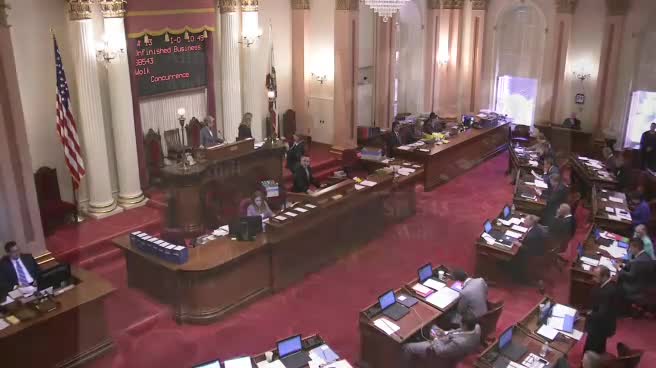 1MIN
Senate Floor
 1MIN
Assembly Floor
 18MIN
Senate Standing Committee on Health
Bill Author