SR 32
- Session Year: 2025-2026
- House: Senate
- Latest Version Date: 2025-07-11
Current Status:
In Progress
(2025-07-10: Read. Adopted. (Ayes 27. Noes 0. Page 2040.))
Introduced
In Committee
Awaiting First Chamber Vote
Passed First Chamber
In Committee
Awaiting Second Chamber Vote
Passed Second Chamber
Enacted
WHEREAS, On January 20, 2025, President Donald J. Trump issued Executive Order No. 14160, entitled Protecting the Meaning and Value of American Citizenship (the Executive Order), which purports to end birthright citizenship for children born to (i) a mother who is unlawfully present or who is lawfully present in the United States but on a temporary basis, and (ii) a father who is neither a citizen nor a lawful permanent resident; and
WHEREAS, The Constitution has granted birthright citizenship for over 150 years, since birthright citizenship was enshrined in the Citizenship Clause of the Fourteenth Amendment to the United States Constitution, ratified after the Civil War to repudiate the infamous decision of the United States Supreme Court in Dred Scott v. Sandford (1857) 60 U.S. 393, which held that Black Americans of African descent could never be United States citizens; and
WHEREAS, Birthright citizenship impacts every child born in California, regardless of race, color, sex, ability, class, parents national origin, parents immigration status, or any characteristic, because all persons born in the United States and subject to the jurisdiction thereof are citizens; and
WHEREAS, Birthright citizenship is especially important in California, where one in four residents is an immigrant and where about one-half of all children in California have at least one immigrant parent; and
WHEREAS, Denying birthright citizenship for children of certain immigrants could make hundreds of thousands of children ineligible for federal and state benefits and services such as CalWORKs and CalFresh, would damage their educational, economic, and health prospects, and would undermine community safety, political participation, and economy; and
WHEREAS, The unconstitutional Executive Order could block these childrens access to United States passports, social security cards, free lunch programs, health care, and federal student aid, and denying these fundamental needs jeopardizes the well-being of these children and harms the broader community, leading to devastating social, political, and economic consequences; and
WHEREAS, After the Executive Order was announced, California joined 18 other states, the City and County of San Francisco, and the District of Columbia in suing to block the Executive Order on the grounds that the Executive Order violates the Fourteenth Amendment to, and Article I of, the United States Constitution, the Immigration and Nationality Act of 1965, and the Administrative Procedure Act; and
WHEREAS, The Fourteenth Amendments guarantee of birthright citizenship was affirmed over 125 years ago in the landmark United States Supreme Court decision United States v. Wong Kim Ark (1898) 169 U.S. 649 involving San Francisco-born Chinese American Wong Kim Ark; and
WHEREAS, Wong Kim Ark was born in 1873 at 751 Sacramento Street in Chinatown in the City and County of San Francisco to parents Wong Si Ping and Wee Lee, who owned a grocery store but were unable to naturalize as United States citizens due to prevailing anti-Chinese policies; and
WHEREAS, In 1895, Wong Kim Ark returned from visiting his family in China and, upon reentry, was denied admission on the false basis that he was not a citizen of the United States and ordered to be deported under the Chinese Exclusion Acts; and
WHEREAS, The Chinese Consolidated Benevolent Association in San Francisco hired an attorney to fight Wong Kim Arks unlawful detention and the case was ultimately decided by the United States Supreme Court on March 28, 1898, which held that the Fourteenth Amendment to the United States Constitution establishes birthright citizenship, with very few exceptions; and
WHEREAS, The Supreme Courts opinion in United States v. Wong Kim Ark (1898) 169 U.S. 649 extends birthright citizenship to all persons born in the United States, including all children here born of resident aliens, and excludes only children born to foreign sovereigns or their ministers; children born on foreign public ships; children born to enemies within and during a hostile occupation of our territory; and children of members of some sovereign Indian tribes; and
WHEREAS, Wong Kim Arks legacy and historic fight for justice ensured the United States Constitutions guarantee of birthright citizenship and empowers children born in California to achieve their full potential as Americans to grow up to become whatever they dream, including President of the United States; and
WHEREAS, The unconstitutional Executive Order ignores over 100 years of precedent and condemns babies to a legal status of statelessness, which will limit their lifetime access to schools, jobs, and medical care and subject them to social isolation, travel restrictions, and exploitation; and
WHEREAS, The unconstitutional Executive Order is just one of President Trumps draconian attempts to scapegoat and instill fear among immigrants, divide immigrants based on arbitrary distinctions, and roll back constitutional rights; and
WHEREAS, All residents, regardless of their immigration status, deserve dignity, fair treatment and due process under the law, and the opportunity to thrive in the United States, and this belief serves as the foundation for state and local sanctuary laws in California, including the Californias Values Act of 2017; now, therefore, be it
Resolved by the Senate of the State of California, That the Senate hereby opposes the unconstitutional Executive Order purporting to end birthright citizenship as enshrined in the United States Constitution; and be it further
Resolved, That the Senate affirms its commitment to birthright citizenship and recognizes and honors Wong Kim Arks fight to affirm the fundamental right of birthright citizenship under the Fourteenth Amendment to the United States Constitution; and be it further
Resolved, That the Secretary of the Senate transmit copies of this resolution to the President and Vice President of the United States, to the Secretary of State, to the Secretary of the Treasury, to the Speaker of the House of Representatives, to the Majority Leader of the Senate, to each Senator and Representative from California in the Congress of the United States, and to the author for appropriate distribution.
WHEREAS, On January 20, 2025, President Donald J. Trump issued Executive Order No. 14160, entitled Protecting the Meaning and Value of American Citizenship (the Executive Order), which purports to end birthright citizenship for children born to (i) a mother who is unlawfully present or who is lawfully present in the United States but on a temporary basis, and (ii) a father who is neither a citizen nor a lawful permanent resident; and
WHEREAS, The Constitution has granted birthright citizenship for over 150 years, since birthright citizenship was enshrined in the Citizenship Clause of the Fourteenth Amendment to the United States Constitution, ratified after the Civil War to repudiate the infamous decision of the United States Supreme Court in Dred Scott v. Sandford (1857) 60 U.S. 393 that denied citizenship to descendants of enslaved people; 393, which held that Black Americans of African descent could never be United States citizens; and
WHEREAS, Birthright citizenship impacts every child born in California, regardless of race, color, sex, ability, class, parents national origin, parents immigration status, or any characteristic, because all persons born in the United States and subject to the jurisdiction thereof are citizens; and
WHEREAS, Birthright citizenship is especially important in California, where one in four residents is an immigrant and where about one-half of all children in California have at least one immigrant parent; and
WHEREAS, Denying birthright citizenship for children of certain immigrants could make hundreds of thousands of children ineligible for federal and state benefits and services such as CalWORKs and CalFresh, would damage their educational, economic, and health prospects, and would undermine community safety, political participation, and economy; and
WHEREAS, The unconstitutional Executive Order could block these childrens access to United States passports, social security cards, free lunch programs, health care, and federal student aid, and denying these fundamental needs jeopardizes the well-being of these children and harms the broader community, leading to devastating social, political, and economic consequences; and
WHEREAS, After the Executive Order was announced, California joined 18 other states, the City and County of San Francisco, and the District of Columbia in suing to block the Executive Order on the grounds that the Executive Order violates the Fourteenth Amendment to, and Article I of, the United States Constitution, the Immigration and Nationality Act of 1965, and the Administrative Procedure Act; and
WHEREAS, The Fourteenth Amendments guarantee of birthright citizenship was affirmed over 125 years ago in the landmark United States Supreme Court decision United States v. Wong Kim Ark (1898) 169 U.S. 649 involving San Francisco-born Chinese American Wong Kim Ark; and
WHEREAS, Wong Kim Ark was born in 1873 at 751 Sacramento Street in Chinatown in the City and County of San Francisco to parents Wong Si Ping and Wee Lee, who owned a grocery store but were unable to naturalize as United States citizens due to prevailing anti-Chinese policies; and
WHEREAS, In 1895, Wong Kim Ark returned from visiting his family in China and, upon reentry, was denied admission on the false basis that he was not a citizen of the United States and ordered to be deported under the Chinese Exclusion Acts; and
WHEREAS, The Chinese Consolidated Benevolent Association in San Francisco hired an attorney to fight Wong Kim Arks unlawful detention and the case was ultimately decided by the United States Supreme Court on March 28, 1898, which held that the Fourteenth Amendment to the United States Constitution establishes birthright citizenship, with very few exceptions; and
WHEREAS, The Supreme Courts opinion in United States v. Wong Kim Ark (1898) 169 U.S. 649 extends birthright citizenship to all persons born in the United States, including all children here born of resident aliens, and excludes only children born to foreign sovereigns or their ministers; children born on foreign public ships; children born to enemies within and during a hostile occupation of our territory; and children of members of some sovereign Indian tribes; and
WHEREAS, Wong Kim Arks legacy and historic fight for justice ensured the United States Constitutions guarantee of birthright citizenship and empowers children born in California to achieve their full potential as Americans to grow up to become whatever they dream, including President of the United States; and
WHEREAS, The unconstitutional Executive Order ignores over 100 years of precedent and condemns babies to a legal status of statelessness, which will limit their lifetime access to schools, jobs, and medical care and subject them to social isolation, travel restrictions, and exploitation; and
WHEREAS, The unconstitutional Executive Order is just one of President Trumps draconian attempts to scapegoat and instill fear among immigrants, divide immigrants based on arbitrary distinctions, and roll back constitutional rights; and
WHEREAS, All residents, regardless of their immigration status, deserve dignity, fair treatment and due process under the law, and the opportunity to thrive in the United States, and this belief serves as the foundation for state and local sanctuary laws in California, including the Californias Values Act of 2017; now, therefore, be it
Resolved by the Senate of the State of California, That the Senate hereby opposes the unconstitutional Executive Order purporting to end birthright citizenship as enshrined in the United States Constitution; and be it further
Resolved, That the Senate affirms its commitment to birthright citizenship and recognizes and honors Wong Kim Arks fight to affirm the fundamental right of birthright citizenship under the Fourteenth Amendment to the United States Constitution; and be it further
Resolved, That the Secretary of the Senate transmit copies of this resolution to the President and Vice President of the United States, to the Secretary of State, to the Secretary of the Treasury, to the Speaker of the House of Representatives, to the Majority Leader of the Senate, to each Senator and Representative from California in the Congress of the United States, and to the author for appropriate distribution.
WHEREAS, On January 20, 2025, President Donald J. Trump unlawfully issued Executive Order No. 14160, entitled Protecting the Meaning and Value of American Citizenship (the Executive Order), that attempts which purports to end birthright citizenship for children born to (i) a mother who is unlawfully present or who is lawfully present in the United States but on a temporary basis, and (ii) a father who is neither a citizen nor a lawful permanent resident; and
WHEREAS, Birthright The Constitution has granted birthright citizenship for over 150 years, since birthright citizenship was enshrined in the Citizenship Clause of the Fourteenth Amendment of to the United States Constitution, ratified after the Civil War to repudiate the infamous decision of the United States Supreme Court in Dred Scott v. Sandford (1857) 60 U.S. 393 that denied citizenship to descendants of enslaved people; and
WHEREAS, Birthright citizenship impacts every child born in California, regardless of race, color, sex, ability, class, parents national origin, parents immigration status, or any characteristic, because all persons born in the United States and subject to the jurisdiction thereof are citizens; and
WHEREAS, Birthright citizenship is especially important to in California, where one in four residents is an immigrant and where about one-half of all children in California have at least one immigrant parent; and
WHEREAS, Denying birthright citizenship for children of certain immigrants would could make hundreds of thousands of children ineligible for federal and state benefits and services such as CalWORKs and CalFresh, would damage their educational, economic, and health prospects, and would undermine community safety, political participation, and economy; and
WHEREAS, The unlawful unconstitutional Executive Order would could block these childrens access to United States passports, social security cards, free lunch programs, health care, and federal student aid, and denying these fundamental needs jeopardizes the well-being of these children and harms the broader community, leading to devastating social, political, and economic consequences; and
WHEREAS, After the Executive Order was announced, California joined 17 18 other states, the City and County of San Francisco, and the District of Columbia in suing to block the Executive Order on the grounds that the Executive Order violates the Fourteenth Amendment to, and Article I of of, the United States Constitution, the Immigration and Nationality Act of 1965, and the Administrative Procedure Act; and
WHEREAS, The Fourteenth Amendments guarantee of birthright citizenship was affirmed over 125 years ago in the landmark United States Supreme Court decision United States v. Wong Kim Ark (1898) 169 U.S. 649 involving San Francisco-born Chinese American Wong Kim Ark; and
WHEREAS, Wong Kim Ark was born in 1873 at 751 Sacramento Street in Chinatown in the City and County of San Francisco to parents Wong Si Ping and Wee Lee, who owned a grocery store but were unable to naturalize as United States citizens due to prevailing anti-Chinese policies; and
WHEREAS, In 1894, 1895, Wong Kim Ark returned from visiting his family in China and, upon reentry, was denied admission on the false basis that he was not a citizen of the United States and ordered to be deported under the Chinese Exclusion Act of 1882; Acts; and
WHEREAS, The Chinese Consolidated Benevolent Association in San Francisco hired an attorney to fight Wong Kim Arks unlawful detention and the case was ultimately decided by the United States Supreme Court on March 28, 1898, which ruled held that the Fourteenth Amendment to the United States Constitution establishes birthright citizenship applied to all children born in the United States, including those whose parents were immigrants; citizenship, with very few exceptions; and
WHEREAS, The Supreme Courts opinion in United States v. Wong Kim Ark (1898) 169 U.S. 649 extends birthright citizenship to all persons born in the United States, including all children here born of resident aliens, and excludes only children born to foreign sovereigns or their ministers; children born on foreign public ships; children born to enemies within and during a hostile occupation of our territory; and children of members of some sovereign Indian tribes; and
WHEREAS, Wong Kim Arks legacy and historic fight for justice ensured the United States Constitutions guarantee of birthright citizenship and empowers every child children born in California to achieve their full potential as Americans to grow up to become whatever they dream, including President of the United States; and
WHEREAS, The unlawful unconstitutional Executive Order ignores over 100 years of precedent and condemns babies to a legal status of statelessness, which will limit their lifetime access to schools, jobs, and medical care and subject them to social isolation, travel restrictions, and exploitation; and
WHEREAS, The unlawful unconstitutional Executive Order is just one of President Trumps draconian attempts to scapegoat and instill fear among immigrants, divide immigrants based on arbitrary distinctions, and roll back constitutional rights; and
WHEREAS, All residents, regardless of their immigration status, deserve dignity, fair treatment and due process under the law, and the opportunity to thrive in the United States, and this belief serves as the foundation for state and local sanctuary laws in California, including the Californias Values Act of 2017; now, therefore, be it
Resolved by the Senate of the State of California, That the Senate hereby opposes the unlawful unconstitutional Executive Order purporting to end birthright citizenship as enshrined in the United States Constitution; and be it further
Resolved, That the Senate affirms its commitment to birthright citizenship and recognizes and honors Wong Kim Arks fight to affirm the fundamental right of birthright citizenship under the Fourteenth Amendment of to the United States Constitution; and be it further
Resolved, That the Secretary of the Senate transmit copies of this resolution to the President and Vice President of the United States, to the Secretary of State, to the Secretary of the Treasury, to the Speaker of the House of Representatives, to the Majority Leader of the Senate, to each Senator and Representative from California in the Congress of the United States, and to the author for appropriate distribution.
WHEREAS, On January 20, 2025, President Donald J. Trump unlawfully issued Executive Order No. 14160, entitled Protecting the Meaning and Value of American Citizenship (the Executive Order), that attempts to end birthright citizenship for children born to (i) a mother who is unlawfully present or who is lawfully present in the United States but on a temporary basis, and (ii) a father who is neither a citizen nor a lawful permanent resident; and
WHEREAS, Birthright citizenship was enshrined in the Citizenship Clause of the Fourteenth Amendment of the United States Constitution, ratified after the Civil War to repudiate the infamous decision of the United States Supreme Court in Dred Scott v. Sandford (1857) 60 U.S. 393 that denied citizenship to descendants of enslaved people; and
WHEREAS, Birthright citizenship impacts every child born in California, regardless of race, color, sex, ability, class, parents national origin, parents immigration status, or any characteristic, because all persons born in the United States and subject to the jurisdiction thereof are citizens; and
WHEREAS, Birthright citizenship is especially important to California, where one in four residents is an immigrant and where about one-half of all children in California have at least one immigrant parent; and
WHEREAS, Denying birthright citizenship for children of certain immigrants would make hundreds of thousands of children ineligible for federal and state benefits and services such as CalWORKs and CalFresh, would damage their educational, economic, and health prospects, and would undermine community safety, political participation, and economy; and
WHEREAS, The unlawful Executive Order would block these childrens access to United States passports, social security cards, free lunch programs, health care, and federal student aid, and denying these fundamental needs jeopardizes the well-being of these children and harms the broader community, leading to devastating social, political, and economic consequences; and
WHEREAS, After the Executive Order was announced, California joined 17 states, the City and County of San Francisco, and the District of Columbia in suing to block the Executive Order on the grounds that the Executive Order violates the Fourteenth Amendment and Article I of the United States Constitution, the Immigration and Nationality Act of 1965, and the Administrative Procedure Act; and
WHEREAS, The Fourteenth Amendments guarantee of birthright citizenship was affirmed over 125 years ago in the landmark United States Supreme Court decision United States v. Wong Kim Ark (1898) 169 U.S. 649 involving San Francisco-born Chinese American Wong Kim Ark; and
WHEREAS, Wong Kim Ark was born in 1873 at 751 Sacramento Street in Chinatown in the City and County of San Francisco to parents Wong Si Ping and Wee Lee, who owned a grocery store but were unable to naturalize as United States citizens due to prevailing anti-Chinese policies; and
WHEREAS, In 1894, Wong Kim Ark returned from visiting his family in China and, upon reentry, was denied admission on the false basis that he was not a citizen of the United States and ordered to be deported under the Chinese Exclusion Act of 1882; and
WHEREAS, The Chinese Consolidated Benevolent Association in San Francisco hired an attorney to fight Wong Kim Arks unlawful detention and the case was ultimately decided by the United States Supreme Court on March 28, 1898, which ruled that birthright citizenship applied to all children born in the United States, including those whose parents were immigrants; and
WHEREAS, Wong Kim Arks legacy and historic fight for justice ensured the United States Constitutions guarantee of birthright citizenship and empowers every child born in California to achieve their full potential as Americans to grow up to become whatever they dream, including President of the United States; and
WHEREAS, The unlawful Executive Order condemns babies to a legal status of statelessness, which will limit their lifetime access to schools, jobs, and medical care and subject them to social isolation, travel restrictions, and exploitation; and
WHEREAS, The unlawful Executive Order is just one of President Trumps draconian attempts to scapegoat and instill fear among immigrants, divide immigrants based on arbitrary distinctions, and roll back constitutional rights; and
WHEREAS, All residents, regardless of their immigration status, deserve dignity, fair treatment and due process under the law, and the opportunity to thrive in the United States, and this belief serves as the foundation for state and local sanctuary laws in California, including the Californias Values Act of 2017; now, therefore, be it
Resolved by the Senate of the State of California, That the Senate hereby opposes the unlawful Executive Order purporting to end birthright citizenship as enshrined in the United States Constitution; and be it further
Resolved, That the Senate affirms its commitment to birthright citizenship and recognizes and honors Wong Kim Arks fight to affirm the fundamental right of birthright citizenship under the Fourteenth Amendment of the United States Constitution; and be it further
Resolved, That the Secretary of the Senate transmit copies of this resolution to the President and Vice President of the United States, to the Secretary of State, to the Secretary of the Treasury, to the Speaker of the House of Representatives, to the Majority Leader of the Senate, to each Senator and Representative from California in the Congress of the United States, and to the author for appropriate distribution.
|
Date
|
Status
|
|---|---|
| Jul 10, 2025 | Read. Adopted. (Ayes 27. Noes 0. Page 2040.) |
| Apr 24, 2025 | Read second time and amended. Ordered to third reading. |
| Apr 23, 2025 | From committee: Be adopted as amended. (Ayes 11. Noes 0. Page 838.) (April 22). |
| Apr 10, 2025 | Set for hearing April 22. |
| Apr 9, 2025 | From committee with author's amendments. Read second time and amended. Re-referred to Com. on JUD. |
| Apr 2, 2025 | Re-referred to Com. on JUD. |
| Mar 26, 2025 | Introduced. Referred to Com. on RLS. |
|
Date
|
Description
|
Location
|
Votes
|
|
|---|---|---|---|---|
| Jul 10, 2025 | Senate 3rd Reading SR32 Wahab | Senate Floor |
Passed |
|
| Apr 22, 2025 | Be adopted as amended | Senate Standing Committee on Judiciary |
Passed |
This list shows positions taken on this bill by organizations on the date displayed, which is linked to the original source.
Positions by individuals are not included.
|
Organization
|
Position
|
Date
|
|---|---|---|
| Chinese for Affirmative Action | ** Support | |
| SEIU California | ** Support |
SENATE RULES COMMITTEE Office of Senate Floor Analyses (916) 651-1520 Fax: (916) 327-4478 | SR 32 |
THIRD READING
Bill No: SR 32
Author: Wahab (D)
Amended: 4/24/25
Vote: Majority
SENATE JUDICIARY COMMITTEE: 11-0, 4/22/25
AYES: Umberg, Allen, Arreguín, Ashby, Caballero, Durazo, Laird, Stern, Wahab, Weber Pierson, Wiener
NO VOTE RECORDED: Niello, Valladares
SUBJECT: Birthright Citizenship
SOURCE: Author
DIGEST:
This resolution sets forth the Senate’s opposition to Executive Order No. 14160, which purports to end birthright citizenship in the United States, affirms the Senate’s commitment to birthright citizenship, and honors Wong Kim Ark’s fight for legal recognition of birthright citizenship under the Fourteenth Amendment to the United States Constitution.
ANALYSIS:
Existing constitutional law:
- Provides that the United States Congress has the power to establish a uniform rule of naturalization throughout the United States. (U.S. Const., art. I, § 8, cl. 4.)
- Provides that all persons born or naturalized in the United States, and subject to the jurisdiction thereof, are citizens of the United States and of the State wherein they reside. (U.S. Const., 14th amend., § 1.)
This resolution:
- Declares that:
- On January 20, 2025, President Donald J. Trump issued Executive Order No. 14160, entitled “Protecting the Meaning and Value of American Citizenship” (the “Executive Order”), which purports to end birthright citizenship for children born to (1) a mother who is unlawfully present or who is lawfully present in the United States but on a temporary basis, and (2) a father who is neither a citizen nor a lawful permanent resident.
- The Constitution has granted birthright citizenship for over 150 years, since birthright citizenship was enshrined in the Citizenship Clause of the Fourteenth Amendment to the United States Constitution, ratified after the Civil War to repudiate the infamous decision of the United States Supreme Court in Dred Scott v. Sandford (1857) 60 U.S. 393, which held that Black Americans of African descent could never be United States citizens.
- Birthright citizenship impacts every child born in California, regardless of race, color, sex, ability, class, parents’ national origin, parents’ immigration status, or any characteristic, because all persons born in the United States and subject to the jurisdiction thereof are citizens.
- Birthright citizenship is especially important in California, where one in four residents is an immigrant and where about one-half of all children in California have at least one immigrant parent.
- Denying birthright citizenship for children of certain immigrants could make hundreds of thousands of children ineligible for federal and state benefits and services such as CalWORKs and CalFresh, would damage their educational, economic, and health prospects, and would undermine community safety, political participation, and the economy.
- The unconstitutional Executive Order could block these children’s access to United States passports, social security cards, free lunch programs, health care, and federal student aid, and denying these fundamental needs jeopardizes the well-being of these children and harms the broader community, leading to devastating social, political, and economic consequences.
- After the Executive Order was announced, California joined 18 other states, the City and County of San Francisco, and the District of Columbia in suing to block the Executive Order on the ground that it violates the Fourteenth Amendment to, and Article I of, the United States Constitution, the Immigration and Nationality Act, and the Administrative Procedure Act.
- The Fourteenth Amendment’s guarantee of birthright citizenship was affirmed over 125 years ago in the landmark United States Supreme Court decision United States v. Wong Kim Ark (1898) 169 U.S. 649, involving San Francisco-born Chinese American Wong Kim Ark.
- Wong Kim Ark was born in 1873 at 751 Sacramento Street in Chinatown in the City and County of San Francisco to parents Wong Si Ping and Wee Lee, who owned a grocery store but were unable to naturalize as United States citizens due to prevailing anti-Chinese policies.
- In 1895, Wong Kim Ark returned from visiting his family in China and, upon reentry, was denied admission on the false basis that he was not a citizen of the United States and was ordered to be deported under the Chinese Exclusion Acts.
- The Chinese Consolidated Benevolent Association in San Francisco hired an attorney to fight Wong Kim Ark’s unlawful detention and the case was ultimately decided on March 28, 1898, which held that the Fourteen Amendment to the United States Constitution establishes birthright citizenship, with very few exceptions.
- The Supreme Court’s opinion in United States v. Wong Kim Ark (1898) 169 U.S. 649 extends birthright citizenship to all persons born in the United States, “including all children here born of resident aliens,” and excludes only children born to foreign sovereigns or their ministers; children born on foreign public ships; children born to enemies born within and during a hostile occupation of our territory; and children of members of some sovereign Indian tribes.
- Wong Kim Ark’s legacy and historic fight for justice ensured the United States Constitution’s guarantee of birthright citizenship and empowers children born in California to achieve their full potential as Americans to grow up to become whatever they dream, including President of the United States.
- The unconstitutional Executive Order ignores over 100 years of precedent and condemns babies to a legal status of statelessness, which will limit their lifetime access to schools, jobs, and medical care and subject them to social isolation, travel restrictions, and exploitation.
- The unconstitutional Executive Order is just one of President Trump’s draconian attempts to scapegoat and instill fear among immigrants, divide immigrants based on arbitrary distinctions, and roll back constitutional rights.
- All residents, regardless of their immigration status, deserve dignity, fair treatment and due process under the law, and the opportunity to thrive in the United States, and this belief serves as the foundation for state and local sanctuary laws in California, including the California’s Values Act of 2017.
- Resolves the following by the Senate of the State of California:
- The Senate hereby opposes the unconstitutional Executive Order purporting to end birthright citizenship as enshrined in the United States Constitution.
- The Senate affirms its commitment to birthright citizenship and recognizes and honors Wong Kim Ark’s fight to affirm the fundamental right of birthright citizenship under the Fourteenth Amendment to the United States Constitution.
- The Secretary of the Senate shall transmit copies of this resolution to the President and Vice President of the United States, to the Secretary of State, to the Secretary of the Treasury, to the Speaker of the House of Representatives, to the Majority Leader of the Senate, to each Senator and Representative from California in the Congress of the United States, and to the author for appropriate distribution.
Comments
According to the author of this bill:
Immigrants are the backbone of our workforce and economy, as well as the cultural fabric of our communities. The Executive Order issued by President Trump seeks to overturn a fundamental right established more than 125 years ago that allows every child born in California—in the United States of America—access to the American Dream. My own parents came to this country seeking stability and a better life; what they wanted for me, as a beneficiary of birthright citizenship, was the chance to be anything I could imagine for myself.
In 2023, the Public Policy Institute of California stated that 27% of California residents—10.6 million people—were foreign born. In 2024, the Children’s Partnership stated that almost half of the children in California have at least one immigrant parent—that is 4 million children.
These individuals are our neighbors, our doctors, our law enforcement officers, our friends.
We need to stand up and say that no Executive Order by the President of the United States can supersede the US Constitution and the rights of millions of individuals born here in California.
FISCAL EFFECT: Appropriation: No Fiscal Com.: No Local: No
SUPPORT: (Verified 4/25/25)
Chinese for Affirmative Action
SEIU California
OPPOSITION: (Verified 4/25/25)
None received
ARGUMENTS IN SUPPORT: According to SEIU California:
While we do not know the immigration status of our members, ending birthright citizenship would have devastating consequences in California. Without citizenship, many of the children of our members who live in immigrant families and communities would find themselves without access to important social programs like CalFresh, CalWORKS, and student financial aid. They would grow up without passports, social security cards, access to jobs, and the right to vote. This would perpetuate racial inequality, make them vulnerable to exploitation, and lead to widespread economic, social, and political marginalization.
Efforts to end birthright citizenship is just one of the many ways the Administration has used xenophobic rhetoric and cruel executive actions to wreak havoc on immigrant communities and fuel racial profiling and anti-immigrant harm.
Prepared by: Allison Whitt Meredith / JUD. / (916) 651-4113
4/25/25 10:13:48
**** END ****
Senator Thomas Umberg, Chair
2025-2026 Regular Session
Bill No: SR 32 (Author:Wahab)
Version: April 9, 2025
Hearing Date: April 22, 2025
Fiscal: No
Urgency: No
Consultant: AWM
SUBJECT
Birthright Citizenship
DIGEST
This resolution sets forth the Senate’s opposition to Executive Order No. 14160, which purports to end birthright citizenship in the United States, affirms the Senate’s commitment to birthright citizenship, and honors Wong Kim Ark’s fight for legal recognition of birthright citizenship under the Fourteenth Amendment to the United States Constitution.
This resolution is sponsored by the author and is supported by Chinese for Affirmative Action and SEIU California. The Committee has not received timely opposition to this resolution. The author has agreed to a minor amendment related to the United States Supreme Court’s decision in Dred Scott v. Sandford (1857) 60 U.S. 393.
SUMMARY
Existing constitutional law:
- Provides that the United States Congress has the power to establish a uniform rule of naturalization throughout the United States. (U.S. Const., art. I, § 8, cl. 4.)
- Provides that all persons born or naturalized in the United States, and subject to the jurisdiction thereof, are citizens of the United States and of the State wherein they reside. (U.S. Const., 14th amend., § 1.)
This resolution:
- Declares that:
- On January 20, 2025, President Donald J. Trump issued Executive Order No. 14160, entitled “Protecting the Meaning and Value of American Citizenship” (the “Executive Order”), which purports to end birthright citizenship for children born to (1) a mother who is unlawfully present or who is lawfully present in the United States but on a temporary basis, and (2) a father who is neither a citizen nor a lawful permanent resident.
- The Constitution has granted birthright citizenship for over 150 years, since birthright citizenship was enshrined in the Citizenship Clause of the Fourteenth Amendment to the United States Constitution, ratified after the Civil War to repudiate the infamous decision of the United States Supreme Court in Dred Scott v. Sandford (1857) 60 U.S. 393, which denied citizenship to descendants of enslaved people.
- Birthright citizenship impacts every child born in California, regardless of race, color, sex, ability, class, parents’ national origin, parents’ immigration status, or any characteristic, because all persons born in the United States and subject to the jurisdiction thereof are citizens.
- Birthright citizenship is especially important in California, where one in four residents is an immigrant and where about one-half of all children in California have at least one immigrant parent.
- Denying birthright citizenship for children of certain immigrants could make hundreds of thousands of children ineligible for federal and state benefits and services such as CalWORKs and CalFresh, would damage their educational, economic, and health prospects, and would undermine community safety, political participation, and the economy.
- The unconstitutional Executive Order could block these children’s access to United States passports, social security cards, free lunch programs, health care, and federal student aid, and denying these fundamental needs jeopardizes the well-being of these children and harms the broader community, leading to devastating social, political, and economic consequences.
- After the Executive Order was announced, California joined 18 other states, the City and County of San Francisco, and the District of Columbia in suing to block the Executive Order on the ground that it violates the Fourteenth Amendment to, and Article I of, the United States Constitution, the Immigration and Nationality Act, and the Administrative Procedure Act.
- The Fourteenth Amendment’s guarantee of birthright citizenship was affirmed over 125 years ago in the landmark United States Supreme Court decision United States v. Wong Kim Ark (1898) 169 U.S. 649, involving San Francisco-born Chinese American Wong Kim Ark.
- Wong Kim Ark was born in 1873 at 751 Sacramento Street in Chinatown in the City and County of San Francisco to parents Wong Si Ping and Wee Lee, who owned a grocery store but were unable to naturalize as United States citizens due to prevailing anti-Chinese policies.
- In 1895, Wong Kim Ark returned from visiting his family in China and, upon reentry, was denied admission on the false basis that he was not a citizen of the United States and was ordered to be deported under the Chinese Exclusion Acts.
- The Chinese Consolidated Benevolent Association in San Francisco hired an attorney to fight Wong Kim Ark’s unlawful detention and the case was ultimately decided on March 28, 1898, which held that the Fourteen Amendment to the United States Constitution establishes birthright citizenship, with very few exceptions.
- The Supreme Court’s opinion in United States v. Wong Kim Ark (1898) 169 U.S. 649 extends birthright citizenship to all persons born in the United States, “including all children here born of resident aliens,” and excludes only children born to foreign sovereigns or their ministers; children born on foreign public ships; children born to enemies born within and during a hostile occupation of our territory; and children of members of some sovereign Indian tribes.
- Wong Kim Ark’s legacy and historic fight for justice ensured the United States Constitution’s guarantee of birthright citizenship and empowers children born in California to achieve their full potential as Americans to grow up to become whatever they dream, including President of the United States.
- The unconstitutional Executive Order ignores over 100 years of precedent and condemns babies to a legal status of statelessness, which will limit their lifetime access to schools, jobs, and medical care and subject them to social isolation, travel restrictions, and exploitation.
- The unconstitutional Executive Order is just one of President Trump’s draconian attempts to scapegoat and instill fear among immigrants, divide immigrants based on arbitrary distinctions, and roll back constitutional rights.
- All residents, regardless of their immigration status, deserve dignity, fair treatment and due process under the law, and the opportunity to thrive in the United States, and this belief serves as the foundation for state and local sanctuary laws in California, including the California’s Values Act of 2017.
- Resolves the following by the Senate of the State of California:
- The Senate hereby opposes the unconstitutional Executive Order purporting to end birthright citizenship as enshrined in the United States Constitution.
- The Senate affirms its commitment to birthright citizenship and recognizes and honors Wong Kim Ark’s fight to affirm the fundamental right of birthright citizenship under the Fourteenth Amendment to the United States Constitution.
- The Secretary of the Senate shall transmit copies of this resolution to the President and Vice President of the United States, to the Secretary of State, to the Secretary of the Treasury, to the Speaker of the House of Representatives, to the Majority Leader of the Senate, to each Senator and Representative from California in the Congress of the United States, and to the author for appropriate distribution.
COMMENTS
- Author’s comment
According to the author:
Immigrants are the backbone of our workforce and economy, as well as the cultural fabric of our communities. The Executive Order issued by President Trump seeks to overturn a fundamental right established more than 125 years ago that allows every child born in California—in the United States of America—access to the American Dream. My own parents came to this country seeking stability and a better life; what they wanted for me, as a beneficiary of birthright citizenship, was the chance to be anything I could imagine for myself.
In 2023, the Public Policy Institute of California stated that 27% of California residents—10.6 million people—were foreign born. In 2024, the Children’s Partnership stated that almost half of the children in California have at least one immigrant parent—that is 4 million children.
These individuals are our neighbors, our doctors, our law enforcement officers, our friends.
We need to stand up and say that no Executive Order by the President of the United States can supersede the US Constitution and the rights of millions of individuals born here in California.
2. Background on the adoption of the Fourteenth Amendment
The United States Constitution, as adopted in 1789 and amended with its first 10 amendments in 1791, mentions United States “citizens” 7 times and explains the term never.[1] This omission enabled the United States Supreme Court, in the disgraceful Dred Scott v. Sanford opinion,[2] to hold that Black persons of African descent could never be U.S. citizens, even if they were born on U.S. soil, and even though many states had long extended citizenship rights to free Black persons.[3] Dred Scott admitted that birthright citizenship was the rule for other Americans (i.e., white people), but held that granting the same to Black Americans of African descent was per se unconstitutional—so even if Congress had wanted to extend citizenship to those persons, Dred Scott prohibited it.[4]
After the Civil War, Congress enacted the Civil Rights Act of 1866, which extended citizenship to “all persons born in the United States and not subject to any foreign power.”[5] President Andrew Johnson vetoed the Act; his (stunningly racist) veto message questioned whether an act of Congress was sufficient to confer birthright citizenship on people to whom it had previously been denied under the Constitution.[6] Congress successfully overrode his veto, but “serious concerns remained regarding whether Congress had power to pass the Act.”[7] Congress therefore began drafting what would become the Fourteenth Amendment, to protect birthright citizenship both from a legal challenge and from future legislatures.[8]
As ratified in 1868, the first sentence of the Fourteenth Amendment states: “All persons born or naturalized in the United States, and subject to the jurisdiction thereof, are citizens of the United States and of the State wherein they reside.”[9]
3. The Wong Kim Ark decision affirms that the Fourteenth Amendment extends birthright citizenship to nearly all persons born in the U.S.
The post-Reconstruction era was a period fraught with white supremacist panics. Despite the ratification of the Equal Protection Clause—also part of the Fourteenth Amendment[10]—race-based discrimination remained the norm. The Supreme Court endorsed so-called “separate but equal” laws which, in reality, openly favored white people.[11] Southern states passed laws that targeted virtually every aspect of Black life, making it nearly impossible for a Black person to exist in public without being at risk of arrest.[12] In the 1870s and 1880s, the federal government ramped up its policy of removing Indigenous persons from their lands and imposed new policies to force Indigenous persons to adapt to “white” culture.[13] And anti-Asian sentiment—which was already rampant in California prior to the Civil War[14]—reached new heights.
In 1882, Congress passed the Chinese Exclusion Act of 1882, which suspended virtually all immigration from China for 10 years and prohibited Chinese immigrants from becoming United States citizens.[15] In 1892, Congress passed the Geary Act—authored by California Representative Thomas J. Geary—which renewed the immigration prohibition for another 10 years and added restrictions on Chinese immigrants already living in the United States.[16] It was during the Geary Act era that Wong Kim Ark, a native-born Californian, took on the federal government and won.
Wong Kim Ark was born in San Francisco in 1873.[17] His parents had immigrated to the United States from China, where they ran a store, and returned to China in 1890.[18] That same year, Wong visited China and was allowed to reenter the U.S. without incident, “upon the sole ground that he was a native-born citizen of the United States.”[19] But in 1895, when he returned from another trip, he “was denied such permission, upon the sole ground that he was not a citizen of the United States.”[20] Wong, with the help of the Chinese Consolidated Benevolent Association (known as the “Six Companies”), fought back: while Wong remained stuck on a ship in the San Francisco Bay, the Six Companies filed a writ of habeas corpus on his behalf.[21] The case went all the way to the United States Supreme Court.
United States v. Wong Kim Ark affirmed that the Fourteenth Amendment extended birthright citizenship to virtually every person born in the United States.[22] According to the Court, the Fourteenth Amendment’s citizenship clause “affirms the ancient and fundamental rule of citizenship by birth within the territory, in the allegiance and under the protection of the country, including all children here born of resident aliens,”[23] with exceptions for “children born of foreign sovereigns or their ministers, or born on foreign public ships, or of enemies within and during a hostile occupation of part of our territory, and with the single added exception of children of members of the Indian tribes owing direct allegiance to their several tribes.”[24] But for those exceptions, the Fourteenth Amendment, “in clear words and in manifest intent, includes the children born within the territory of the United States of all other persons, of whatever race or color, domiciled within the United States.”[25] Even if, at the time a person is born, their parent’s presence in the United States was “but local and temporary,” their parent’s presence was “ ‘strong enough to make a natural subject, for, if he hath issue here, that issue is a natural born-subject.’ ”[26]
Wong Kim Ark also noted that, despite Dred Scott’s holding to the country, it was undisputed that “all children, born within the United States, of foreign parents holding no diplomatic office, became citizens at the time of their birth” “until more than 50 years after the adoption of the constitution.”[27] In other words, birthright citizenship was assumed to be the law of the land until it became disadvantageous for white supremacist enslavers.
4. Executive Order 14160
On January 20, 2025, President Donald Trump signed Executive Order 14160, entitled “Protecting the Meaning and Value of Citizenship.”[28] The Order notes that the Fourteenth Amendment “has always excluded from birthright citizenship persons who were born in the United States but not ‘subject to the jurisdiction thereof,’ ” but then goes on to advance an interpretation of the Fourteenth Amendment never before recognized by any branch of the United States government.[29] Specifically, the order asserts the novel theory that:
Among the categories of individuals born in the United States and not subject to the jurisdiction thereof, the privilege of United States citizenship does not automatically extend to persons born in the United States: (1) when that person's mother was unlawfully present in the United States and the father was not a United States citizen or lawful permanent resident at the time of said person's birth, or (2) when that person's mother's presence in the United States at the time of said person's birth was lawful but temporary (such as, but not limited to, visiting the United States under the auspices of the Visa Waiver Program or visiting on a student, work, or tourist visa) and the father was not a United States citizen or lawful permanent resident at the time of said person's birth.[30]
The Order goes on to announce that it is the policy of the United States that no department or agency should issue documents recognizing U.S. citizenship for persons born within the United States, after 30 days from the date of the order, under the circumstances identified above.[31]
California, along with 18 other states, the City and County of San Francisco, and the District of Columbia, sued to enjoin Executive Order 14160 the next day.[32] Judge Leo T. Sorokin consolidated the case with another injunction action brought by a noncitizen pregnant mother and immigration rights groups and granted both motions, staying enforcement of the Order nationwide.[33] Judge Sorokin’s order notes that Wong Kim Ark plainly extends birthright citizenship to all persons born here with only a handful of “narrow exceptions,” none of which is consistent with the Executive Order.[34] The order also points out that “Congress incorporated the language of the [Fourteenth Amendment’s] Citizenship Clause into provisions of the [Immigration and Naturalization Act] passed more than forty years after Wong Kim Ark” was decided.[35] Additionally, according to Judge Sorokin, the Executive Order’s interpretation of the “subject to the jurisdiction thereof” exception in the Fourteenth Amendment does not “find support in the text itself or the cases construing and applying it,” and “would prevent the Citizenship Clause from reaching groups of persons to whom even [the Administration] concede[s] it must apply.”[36]
The United States Court of Appeals for the First Circuit denied the Trump Administration’s request for a stay of the injunction pending their appeal.[37] The Trump Administration has appealed the case to the Supreme Court.[38] At least three other federal district courts have also enjoined Executive Order 14160 on the basis that it is unconstitutional.[39]
5. This resolution declares the Senate’s opposition to Executive Order 14160 and affirms the importance of birthright citizenship
This resolution expresses the Senate’s opposition to Executive Order 14160. The resolution sets forth California’s unique interest in this issue: California has more immigrants than any other state.[40] Over one-fourth of California’s population was born outside of the United States, and nearly half of all Californians—45 percent—have at least one immigrant parent.[41] As a result, attacks on birthright citizenship could disproportionately harm California’s children, leaving them stateless and without access to education, benefits, and the privileges and immunities of citizenship.
This resolution also recognizes the importance and durability of the Wong Kim Ark decision and the importance of birthright citizenship. Additionally, the resolution highlights the life and bravery of Wong Kim Ark himself.
Finally, this resolution condemns Executive Order 14160 as part of President Trump’s overall anti-immigrant, anti-constitution agenda. The resolution affirms the Senate’s commitment to birthright citizenship and states that all residents, regardless of their immigration status, deserve dignity, fair treatment and due process under the law, and the opportunity to thrive in the United States.
6. Amendment
The author has agreed to a minor amendment to more accurately reflect the holding of the Dred Scott decision, as follows:
On page 1, in lines 14 and 15, strike out “393 that denied citizenship to descendants of enslaved people;” and insert “393, which held that Black Americans of African descent could never be United States citizens;”
6. Arguments in support
According to SEIU California:
While we do not know the immigration status of our members, ending birthright citizenship would have devastating consequences in California. Without citizenship, many of the children of our members who live in immigrant families and communities would find themselves without access to important social programs like CalFresh, CalWORKS, and student financial aid. They would grow up without passports, social security cards, access to jobs, and the right to vote. This would perpetuate racial inequality, make them vulnerable to exploitation, and lead to widespread economic, social, and political marginalization.
Efforts to end birthright citizenship is just one of the many ways the Administration has used xenophobic rhetoric and cruel executive actions to wreak havoc on immigrant communities and fuel racial profiling and anti-immigrant harm.
SUPPORT
Chinese for Affirmative Action
SEIU California
OPPOSITION
None received
RELATED LEGISLATION
Pending legislation:
SB 313 (Cervantes, 2025) requires the State Registrar to modify the certificate of live birth to include a statement that a person is a United States citizen upon their birth in the United States. SB 313 pending before this Committee.
AJR 5 (Lee, 2025) is substantially similar to this resolution and declares the Legislature’s opposition to Executive Order 14160. AJR 5 is pending before the Assembly Judiciary Committee.
Prior legislation: None known.
**************
See U.S. Const., art I, §§ 1-3; art. II; art. III, § 2; art. IV, § 2; 11th amend; ↑
(1857) 60 U.S. 393. ↑
Id. at pp. 404-406. ↑
Id. at p. 406, 417. ↑
Civil Rights Act of 1866, ch. 31, 14 Stat. 27 (codified as amended at 42 U.S.C. §§ 1981-1982 (2000)). The Civil Rights Act of 1866 also excluded from birthright citizenship “Indians not taxed,” which refers to members of sovereign Indian tribes; Congress extended birthright citizenship to all Indigenous persons born in the United States in the Indian Citizenship Act of 1924. (See Pub. L. 68-175 (Jun. 2, 2024) 43 Stat. 253.) ↑
Lash, The Origins of the Privileges or Immunities Clause, Part III: Andrew Johnson and the Constitutional Referendum of 1866 (Jun. 2013) 101 Geo. L.J. 1275, 1290-1293. ↑
Id. at p. 1296. ↑
Ibid. ↑
U.S. Const. 14th amend, § 1. California’s governor in 1868, Harry Haight, was so incensed that he refused to transmit the Fourteenth Amendment to the Legislature for ratification. (National Parks Service, A History of American Indians in California: 1849-1879 (Nov. 17, 2004), https://www.nps.gov/parkhistory/online_books/5views/5views1c.htm). California did not ratify the Fourteenth Amendment until 1959. (Constitution Annotated, Intro.6.4 Civil War Amendments, https://constitution.congress.gov/browse/essay/intro.6-4/ALDE_00000388/.) All links in this analysis are current as of April 15, 2025. ↑
U.S. Const., 14th amend., § 1. ↑
Plessy v. Ferguson (1896) 163 U.S. 537, 544 (“The object of the “Fourteenth Amendment” was undoubtedly to enforce the absolute equality of the two races before the law, but, in the nature of things, it could not have been intended to abolish distinctions based upon color, or to enforce social, as distinguished from political, equality”). ↑
Blackmon, Slavery by Another Name (2008) p. 53. Although these laws generally did not expressly name African Americans, “it was widely understood that these provisions would rarely if ever be enforced on whites”; and while many of the laws were struck down in court, “new statutes embracing the same strictures on black life quickly appeared to replace them.” (Ibid.) ↑
An Indigenous Peoples’ History of the United States, supra, fn. 22, at pp. 157-158. ↑
In 1858, the California Legislature passed a law that made it illegal for any person “of the Chinese or Mongolian races” to enter the state (though the law was declared void in 1862). (Ch. 313, Stats. 1858; Lin Sing v. Washburn (1862) 20 Cal. 534 (noting that exclusion law was declared unconstitutional and void in an unpublished decision).) ↑
See Pub. L. 47-126 (May 6, 1882) 22 Stat. 58, Ch. 126 (47th Cong., 1st Sess.). ↑
Pub. L. 52-60 (May 5, 1892) 27 Stat. 25 (52d Cong., 1st Sess.). ↑
United States v. Wong Kim Ark (1898) 169 U.S. 649, 652. ↑
National Archives at San Francisco, Departure Statement of Wong Kim Ark, 1894, https://www.archives.gov/san-francisco/highlights/wong-kim-ark; Stanford University Libraries, Wong Kim Ark, https://exhibits.stanford.edu/riseup/feature/wong-kim-ark; Wong Kim Ark, supra, 169 U.S. at p. 652. ↑
Wong Kim Ark, 169 U.S. at p. 653. ↑
Ibid. ↑
Ibid; Stanford University, Wong Kim Ark, supra. ↑
Wong Kim Ark, 169 U.S. at p. 693. ↑
Ibid. ↑
Ibid. As noted above in footnote 5, members of sovereign Indian tribes became U.S. citizens automatically at birth beginning in 1924. ↑
Wong Kim Ark, 169 U.S. at p. 693. ↑
Ibid. ↑
Id. at p. 463. ↑
Exec. Order No. 14160 (Jan. 20, 2025) 90 Fed. Reg 8449. ↑
Ibid. ↑
Ibid. ↑
Ibid. ↑
See City Attorney of San Francisco, Press Release: San Francisco City Attorney and Attorneys General file suit to protect birthright citizenship (Jan. 21, 2025), https://www.sfcityattorney.org/2025/01/21/san-francisco-city-attorney-and-attorneys-general-file-suit-to-protect-birthright-citizenship/. ↑
Doe v. Trump (D.Mass., Feb. 13, 2025) —F. Supp.3d—, 2025 WL 485070, 2. ↑
Id. at pp. 8-11. ↑
Id. at p. 10. ↑
Id. at p. 11. ↑
New Jersey v. Trump (1st Cir. 2025) 131 F.4th 27, 33. ↑
Trump v. New Jersey, Case No. 24A886, https://www.supremecourt.gov/search.aspx?filename=/docket/docketfiles/html/public/24a886.html. ↑
See New Hampshire Indonesian Community Support v. Trump (D.N.H. Feb. 11, 2025) —F.Supp.3d—, 2025 WL 457609 (granting motion for preliminary injunction filed by several nonprofit groups); State v. Trump (W.D. Wash. Feb. 6, 2025) —F.Supp.3d—, 2025 WL 415165 (granting motion for preliminary injunction filed by Washington, Arizona, Illinois, and Oregon), emergency mot. for partial stay denied in Washington v. Trump (9th Cir. Feb. 19, 2025) 2025 WL 553485; CASA, Inc. v. Trump (D. Md, Feb. 5, 2020) —F.Supp.3d—, 2025 WL 408636 (granting motion for preliminary injunction filed by CASA, Inc. and Asylum Seeker Advocacy Project), motion for stay pending appeal denied in CASA, Inc. v. Trump (4th Cir. Feb. 28, 2025) 2025 WL 654902. ↑
Mejia, Peerz, & Johnson, Fact Sheet: Immigrants in California, Public Policy Institute of California (Jan. 2025), https://www.ppic.org/publication/immigrants-in-california/. ↑
Ibid. ↑
Discussed in Hearing
View Older Hearings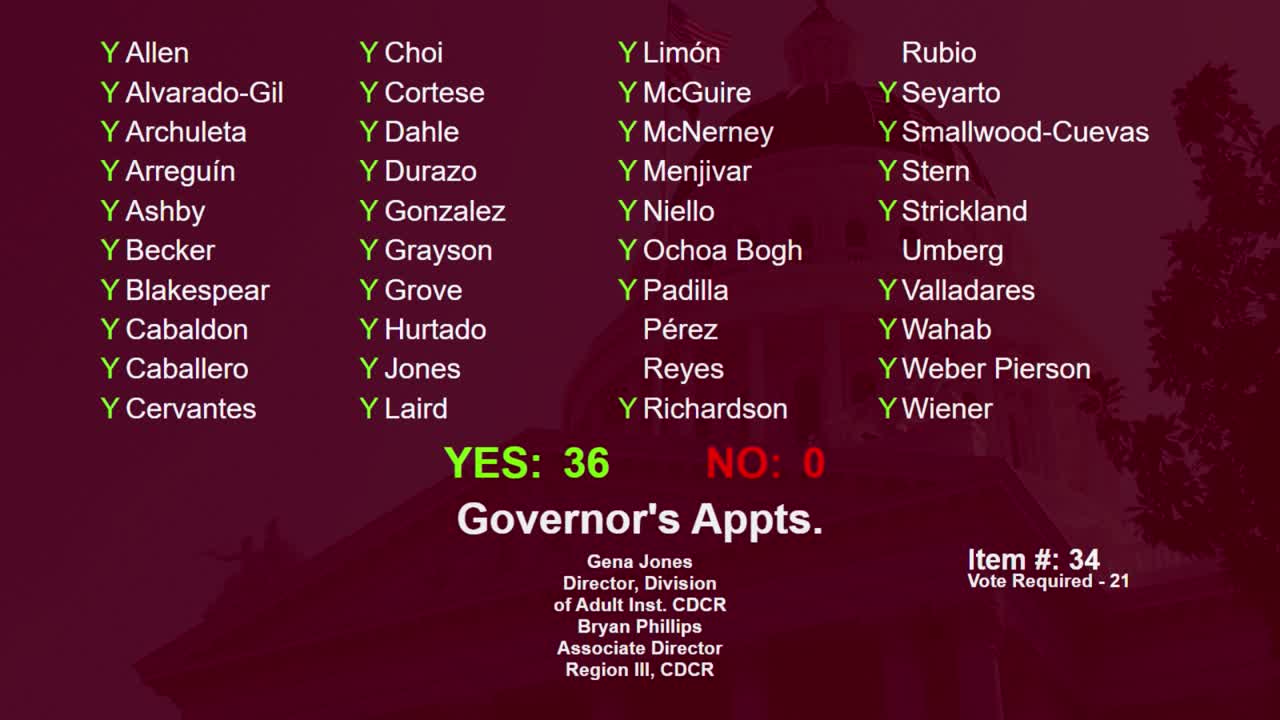
Bill Author

Bill Co-Author(s):