SR 51
- Session Year: 2025-2026
- House: Senate
- Latest Version Date: 2025-08-27
Current Status:
In Progress
(2025-08-25: Read. Adopted. (Ayes 38. Noes 0. Page 2247.))
Introduced
In Committee
Awaiting First Chamber Vote
Passed First Chamber
In Committee
Awaiting Second Chamber Vote
Passed Second Chamber
Enacted
WHEREAS, The Amazon basin is critical for the health of our planet and climate; and
WHEREAS, The Amazon is threatened by deforestation and degradation, driven by large scale agribusiness, the extractive industry, illegal logging, and other activities that have caused the Amazon to reach a dangerous ecological tipping point; and
WHEREAS, Indigenous people play an essential role in the protection of the Amazon and its biodiversity; and
WHEREAS, An overwhelming majority of Ecuadorians voted in a national referendum to keep 847,000,000 barrels of crude permanently in the ground in Ecuadors Yasuni National Park to fight climate change and protect the rights of indigenous peoples living in voluntary isolation; and
WHEREAS, California has been a global leader in addressing climate change and has made important commitments and ambitious goals to reduce its carbon dioxide emissions in line with the Paris Agreement; and
WHEREAS, In 2023, the State of California endorsed the Fossil Fuel Non-Proliferation Treaty, a global initiative aimed at accelerating the transition to clean energy and equitably phasing out fossil fuel production; and
WHEREAS, Three indigenous leaders from the Ecuadorian Amazon have come to Sacramento to educate Californias decisionmakers on the status of deforestation in the Amazon and to explore opportunities to work together on solutions; and
WHEREAS, Like other communities around the world, Californias fate is interconnected to the health and preservation of the Amazon basin and we are linked in our consumption of natural resources extracted from the Amazon; now, therefore, be it
Resolved by the Senate of the State of California, That the Senate commends the advocacy of the Nacionalidad Waorani del Ecuador, the Confederacion de Nacionalidades Indigenas del Ecuador, the Nacionalidad Kichwa de Pastaza, and their communities for their steadfast work in protecting the Amazon biome and safeguarding the future for their children and our entire planet; and be it further
Resolved, That the Senate commits to investigating the impact of Californias role in the consumption of crude sourced from the Amazon region and to exploring ways that changes to state policies and practices can assist with efforts to preserve and protect the Amazon rainforest; and be it further
Resolved, That the Secretary of the Senate transmit copies of this resolution to the author for appropriate distribution.
WHEREAS, The Amazon basin is critical for the health of our planet and climate; and
WHEREAS, The Amazon is threatened by deforestation and degradation, driven by large scale agribusiness, the extractive industry, illegal logging, and other activities that have caused the Amazon to reach a dangerous ecological tipping point; and
WHEREAS, Indigenous people play an essential role in the protection of the Amazon and its biodiversity; and
WHEREAS, An overwhelming majority of Ecuadorians voted in a national referendum to keep 847,000,000 barrels of crude permanently in the ground in Ecuadors Yasuni National Park to fight climate change and protect the rights of indigenous peoples living in voluntary isolation; and
WHEREAS, California has been a global leader in addressing climate change and has made important commitments and ambitious goals to reduce its carbon dioxide emissions in line with the Paris Agreement; and
WHEREAS, In 2023, the State of California endorsed the Fossil Fuel Non-Proliferation Treaty, a global initiative aimed at accelerating the transition to clean energy and equitably phasing out fossil fuel production; and
WHEREAS, Three indigenous leaders from the Ecuadorian Amazon have come to Sacramento to educate Californias decisionmakers on the status of deforestation in the Amazon and to explore opportunities to work together on solutions; and
WHEREAS, Like other communities around the world, Californias fate is interconnected to the health and preservation of the Amazon basin and we are linked in our consumption of natural resources extracted from the Amazon; now, therefore, be it
Resolved by the Senate of the State of California, That the Senate commends the advocacy of Juan Bay, Zenaida Yasacama, Jhayayra Machoa, the Nacionalidad Waorani del Ecuador, the Confederacion de Nacionalidades Indigenas del Ecuador, the Nacionalidad Kichwa de Pastaza, and their communities for their steadfast work in protecting the Amazon biome and safeguarding the future for their children and our entire planet; and be it further
Resolved, That the Senate commits to investigating the impact of Californias role in the consumption of crude sourced from the Amazon region and exploring ways that changes to state policies and practices can assist with efforts to preserve and protect the Amazon rainforest; and be it further
Resolved, That the Secretary of the Senate transmit copies of this resolution to the author for appropriate distribution.
WHEREAS, The Amazon basin is critical for the health of our planet and climate; and
WHEREAS, The Amazon is threatened by deforestation and degradation, driven by large scale agribusiness, the extractive industry, illegal logging, and other activities that have caused the Amazon to reach a dangerous ecological tipping point; and
WHEREAS, Indigenous people play an essential role in the protection of the Amazon and its biodiversity; and
WHEREAS, An overwhelming majority of Ecuadorians voted in a national referendum to keep 847,000,000 barrels of crude permanently in the ground in Ecuadors Yasuni National Park to fight climate change and protect the rights of indigenous peoples living in voluntary isolation; and
WHEREAS, California has been a global leader in addressing climate change and has made important commitments and ambitious goals to reduce its carbon dioxide emissions in line with the Paris Agreement; and
WHEREAS, In 2023, the State of California endorsed the Fossil Fuel Non-Proliferation Treaty, a global initiative aimed at accelerating the transition to clean energy and equitably phasing out fossil fuel production; and
WHEREAS, Three indigenous leaders from the Ecuadorian Amazon have come to Sacramento to educate Californias decisionmakers on the status of deforestation in the Amazon and to explore opportunities to work together on solutions; and
WHEREAS, Like other communities around the world, Californias fate is interconnected to the health and preservation of the Amazon basin and we are linked in our consumption of natural resources extracted from the Amazon; now, therefore, be it
Resolved by the Senate of the State of California, That the Senate commends the advocacy of Juan Bay, Zenaida Yasacama, Jhayayra Machoa, and their communities for their steadfast work in protecting the Amazon biome and safeguarding the future for their children and our entire planet; and be it further
Resolved, That the Senate commits to investigating the impact of Californias role in the consumption of crude sourced from the Amazon region and exploring ways that changes to state policies and practices can assist with efforts to preserve and protect the Amazon rainforest, and be it further
Resolved, That the Secretary of the Senate transmit copies of this resolution to the author for appropriate distribution.
|
Date
|
Status
|
|---|---|
| Aug 25, 2025 | Read. Adopted. (Ayes 38. Noes 0. Page 2247.) |
| Aug 20, 2025 | Read second time. Ordered to third reading. |
| Aug 19, 2025 | Ordered to second reading. |
| Aug 19, 2025 | Read third time and amended. |
| Jul 9, 2025 | From committee: Be adopted. Ordered to third reading. (Ayes 6. Noes 0. Page 1995.) (July 8). |
| Jun 25, 2025 | Set for hearing July 8. |
| Jun 25, 2025 | From committee with author's amendments. Read second time and amended. Re-referred to Com. on N.R. & W. |
| Jun 18, 2025 | Re-referred to Com. on N.R. & W. |
| Jun 10, 2025 | Introduced. Referred to Com. on RLS. |
|
Date
|
Description
|
Location
|
Votes
|
|
|---|---|---|---|---|
| Aug 25, 2025 | Senate 3rd Reading SR51 Becker et al. | Senate Floor |
Passed |
|
| Jul 8, 2025 | Be adopted. Ordered to third reading | Senate Standing Committee on Natural Resources and Water |
Passed |
This list shows positions taken on this bill by organizations on the date displayed, which is linked to the original source.
Positions by individuals are not included.
|
Organization
|
Position
|
Date
|
|---|---|---|
| 350 Bay Area Action | ** Support | |
| Amazon Watch | ** Support | |
| California Environmental Voters | ** Support | |
| Center on Race, Poverty & the Environment | ** Support | |
| Climate Hawks Vote | ** Support | |
| Friends Committee On Legislation Of California | ** Support | |
| Friends of the Earth - US | ** Support | |
| Natural Resources Team, Climate Action California | ** Support | |
| Oil and Gas Action Network | ** Support | |
| Pesticide Action and Agroecology Network | ** Support | |
| SanDiego350 | ** Support | |
| SanDiego 350 | ** Support | |
| San Francisco Bay Physicians for Social Responsibility | ** Support | |
| Stand.earth | ** Support | |
| Sunflower Alliance | ** Support | |
| The Climate Center | ** Support |
SENATE RULES COMMITTEE Office of Senate Floor Analyses (916) 651-1520 Fax: (916) 327-4478 | SR 51 |
THIRD READING
Bill No: SR 51
Author: Becker (D), et al.
Amended: 8/19/25
Vote: Majority
SENATE NATURAL RES. & WATER COMMITTEE: 6-0, 7/8/25
AYES: Limón, Allen, Grove, Hurtado, Laird, Stern
NO VOTE RECORDED: Seyarto
SUBJECT: Protecting The Amazon Rainforest In Ecuador
SOURCE: Amazon Watch
DIGEST:
This resolution commends the advocacy of the Nacionalidad Waorani del Ecuador, the Confederación de Nacionalidades Indígenas del Ecuador, the Nacionalidad Kichwa de Pastaza, and their communities for their steadfast work in protecting the Amazon biome and safeguarding the future for their children and our entire planet, and commits the Senate to investigating the impact of California’s role in the consumption of crude sourced from the Amazon region and exploring ways that changes to state policies and practices can assist with efforts to preserve and protect the Amazon rainforest.
Senate Floor Amendments of 8/19/25 are non-substantive.
ANALYSIS:
This resolution makes the following legislative findings:
- The Amazon basin is critical for the health of our planet and climate.
- The Amazon is threatened by deforestation and degradation, driven by large scale agribusiness, the extractive industry, illegal logging, and other activities that have caused the Amazon to reach a dangerous ecological tipping point.
- Indigenous people play an essential role in the protection of the Amazon and its biodiversity.
- An overwhelming majority of Ecuadorians voted in a national referendum to keep 847 million barrels of crude permanently in the ground in Ecuador’s Yasuní National Park to fight climate change and protect the rights of indigenous peoples living in voluntary isolation.
- California has been a global leader in addressing climate change and has made important commitments and ambitious goals to reduce its carbon dioxide emissions in line with the Paris Agreement.
- In 2023, the State of California endorsed the Fossil Fuel Non-Proliferation Treaty, a global initiative aimed at accelerating the transition to clean energy and equitably phasing out fossil fuel production.
- Three indigenous leaders from the Ecuadorian Amazon have come to Sacramento to educate California’s decisionmakers on the status of deforestation in the Amazon and to explore opportunities to work together on solutions.
- Like other communities around the world, California’s fate is interconnected to the health and preservation of the Amazon basin and we are linked in our consumption of natural resources extracted from the Amazon.
This resolution:
- Commends the advocacy of the Nacionalidad Waorani del Ecuador, the Confederación de Nacionalidades Indígenas del Ecuador, the Nacionalidad Kichwa de Pastaza, and their communities for their steadfast work in protecting the Amazon biome and safeguarding the future for their children and our entire planet.
- Commits the Senate to investigating the impact of California’s role in the consumption of crude sourced from the Amazon region and to exploring ways that changes to state policies and practices can assist with efforts to preserve and protect the Amazon rainforest.
Background
The Amazon rainforest. The Amazon, covering a broad swath of South America and multiple countries, is home to over 10% of the planet’s known species, numerous indigenous peoples, and is an important component of the Earth’s hydrological and carbon cycles. In the last several decades, increasing deforestation – now estimated to be on the order of 20% with another 6% degraded –for settlement, illegal logging, agricultural, and industrial purposes has adversely impacted the Amazon, its biodiversity, and its ecological and climate resiliency. Recent scientific research suggests that the Amazon will reach an ecological “tipping point” at 25% deforestation and convert to savannah conditions with disruptive impact to biodiversity, the peoples who live there, and the Earth’s climate. Massive wildfires in recent years have had both immediate local and worldwide impacts.
Ecuador. Ecuador, located in northwestern South America, includes on the order of 52,400 square miles of the Amazon. Ecuador was in recession in 2024 with an economic contraction of about 2.5% due in part to high rates of violence, political uncertainty, and energy shortages, according to the World Bank. The energy shortages were due to the worst drought in 60 years impacting hydroelectric generation. In 2023, Ecuador’s primary commodity exports were crude petroleum, shellfish and fish, bananas, and gold.
According to the US Energy Information Administration, Ecuador has 0.5% of the world’s oil reserves (at about 8.3 billion barrels) and produced approximately 482,000 barrels per day of petroleum and other liquids, primarily from its Amazon region in 2022. State-owned Petroecuador produced about 80% of the country’s oil production and also controls refining. Mineral rights are owned by the federal government in Ecuador, although several indigenous peoples – the Sápara, Shiawiar, Kichwa, Waorani, Achuar, and Shuar – collectively hold title to millions of hectares of land in and around the Ecuadorean Amazon where the oil reserves are located. There is indigenous resistance to continued oil development, and the legal framework to obtain consent from indigenous peoples for oil development is considered ineffective by many. Recent reviews and surveys show an association between health problems – such as cancer – and oil development in Ecuador, particularly in indigenous populations, likely stemming from contamination by hazardous compounds. According to the sponsor, indigenous resistance has resulted in oil majors leaving Ecuador.
Ecuador’s oil industry has struggled to maintain production because of aging fields, pipeline disruptions, and environmental concerns. Pipeline disruptions have increased in recent years. Both pipelines have also been affected by natural disasters and protests. Production fell by almost 18% from January to February 2023 due to pipeline restrictions.
In August 2023, the citizens of Ecuador voted by nearly a 20% margin to reject oil development in Yasuní National Park in its Amazon region. Estimates vary, but reserves on the order of over 700 million barrels are located there. The initiative required that there was one year for 247 wells to be plugged-and-abandoned. After one year, one well was plugged-and-abandoned. Court orders were ignored by the operator.
The federal government of Ecuador continues to plan to hold auctions of additional oil blocks totaling about 2.3 million hectares of intact Amazon rainforest starting in the 1st quarter of 2026 with the goal of increasing production by 600,000 barrels per day by the early 2030s. These oil blocks have no existing oil infrastructure or production. This rainforest is home to the Sapara, Shiwiar, Kichwa, Waorani, Andoa, Shuar, and Achuar peoples who oppose the drilling. The federal government of Ecuador’s oil development plans include additional pipelines and a new coastal refinery.
California and oil from Ecuador. In 2024, Ecuador was the #4 source of imported oil to the state’s refineries at 43.8 million barrels. This was about 14% of the oil imported that year. In-state production produced 23.3% of the oil refined in the state that year (510.7 million barrels). In previous years, larger amounts and higher percentages of the state’s imported oil were sourced from Ecuador.
According to materials provided by Amazon Watch, California is the top consumer of crude oil from the Amazon rainforest. Approximately 50% of all oil exported from the Amazon goes to California refineries.
FISCAL EFFECT: Appropriation: No Fiscal Com.: No Local: No
SUPPORT: (Verified 8/18/25)
Amazon Watch (Source)
350 Bay Area Action
California Environmental Voters
Center on Race, Poverty & the Environment
Climate Hawks Vote
Friends Committee on Legislation of California
Friends of the Earth - US
Natural Resources Team, Climate Action California
Oil and Gas Action Network
Pesticide Action and Agroecology Network
San Francisco Bay Physicians for Social Responsibility
SanDiego 350
Stand.earth
Sunflower Alliance
The Climate Center
OPPOSITION: (Verified 8/18/25)
None received
ARGUMENTS IN SUPPORT: According to the author, “SR 51 is a resolution that connects the California Senate to a matter of global urgency: protecting the Amazon rainforest, defending Indigenous rights, and confronting our shared climate crisis. Ecuador’s Yasuní National Park in the Amazon rainforest – one of the most biodiverse places on Earth – over 5 million people recently voted in a national referendum to keep nearly 850 million barrels of oil in the ground–a powerful act of climate leadership. But instead of honoring that vote, Ecuador’s government continues to drill – and is opening up more rainforest to oil extraction. Why does this matter to California? Because California is one of the top importers of crude oil from the Amazon. That oil is refined in places like Richmond and Wilmington – communities already burdened by pollution. And when we burn it, we send greenhouse gases into the atmosphere, accelerating the climate crisis that’s drying the Amazon and worsening wildfires here at home. This resolution calls on us to investigate our role in Amazon oil consumption and explore how California policy can help protect this critical biome. It’s a call for solidarity – with Indigenous defenders, with the planet, and with future generations.”
Prepared by: Katharine Moore / N.R. & W. / (916) 651-4116
8/20/25 23:44:13
**** END ****
SENATE RULES COMMITTEE Office of Senate Floor Analyses (916) 651-1520 Fax: (916) 327-4478 | SR 51 |
THIRD READING
Bill No: SR 51
Author: Becker (D)
Amended: 6/25/25
Vote: Majority
SENATE NATURAL RES. & WATER COMMITTEE: 6-0, 7/8/25
AYES: Limón, Allen, Grove, Hurtado, Laird, Stern
NO VOTE RECORDED: Seyarto
SUBJECT: Protecting The Amazon Rainforest In Ecuador
SOURCE: Amazon Watch
DIGEST:
This resolution commends the advocacy of the Nacionalidad Waorani del Ecuador, the Confederación de Nacionalidades Indígenas del Ecuador, the Nacionalidad Kichwa de Pastaza, and their communities for their steadfast work in protecting the Amazon biome and safeguarding the future for their children and our entire planet, and commits the Senate to investigating the impact of California’s role in the consumption of crude sourced from the Amazon region and exploring ways that changes to state policies and practices can assist with efforts to preserve and protect the Amazon rainforest.
ANALYSIS:
This resolution makes the following legislative findings:
- The Amazon basin is critical for the health of our planet and climate.
- The Amazon is threatened by deforestation and degradation, driven by large scale agribusiness, the extractive industry, illegal logging, and other activities that have caused the Amazon to reach a dangerous ecological tipping point.
- Indigenous people play an essential role in the protection of the Amazon and its biodiversity.
- An overwhelming majority of Ecuadorians voted in a national referendum to keep 847,000,000 barrels of crude permanently in the ground in Ecuador’s Yasuní National Park to fight climate change and protect the rights of indigenous peoples living in voluntary isolation.
- California has been a global leader in addressing climate change and has made important commitments and ambitious goals to reduce its carbon dioxide emissions in line with the Paris Agreement.
- In 2023, the State of California endorsed the Fossil Fuel Non-Proliferation Treaty, a global initiative aimed at accelerating the transition to clean energy and equitably phasing out fossil fuel production.
- Three indigenous leaders from the Ecuadorian Amazon have come to Sacramento to educate California’s decisionmakers on the status of deforestation in the Amazon and to explore opportunities to work together on solutions.
- Like other communities around the world, California’s fate is interconnected to the health and preservation of the Amazon basin and we are linked in our consumption of natural resources extracted from the Amazon.
This resolution:
- Commends the advocacy of the Nacionalidad Waorani del Ecuador, the Confederación de Nacionalidades Indígenas del Ecuador, the Nacionalidad Kichwa de Pastaza, and their communities for their steadfast work in protecting the Amazon biome and safeguarding the future for their children and our entire planet.
- Commits the Senate to investigating the impact of California’s role in the consumption of crude sourced from the Amazon region and exploring ways that changes to state policies and practices can assist with efforts to preserve and protect the Amazon rainforest.
Background
The Amazon rainforest. The Amazon, covering a broad swath of South America and multiple countries, is home to over 10% of the planet’s known species, numerous indigenous peoples, and is an important component of the Earth’s hydrological and carbon cycles. In the last several decades, increasing deforestation – now estimated to be on the order of 20% with another 6% degraded –for settlement, illegal logging, agricultural, and industrial purposes has adversely impacted the Amazon, its biodiversity, and its ecological and climate resiliency. Recent scientific research suggests that the Amazon will reach an ecological “tipping point” at 25% deforestation and convert to savannah conditions with disruptive impact to biodiversity, the peoples who live there, and the Earth’s climate. Massive wildfires in recent years have had both immediate local and worldwide impacts.
Ecuador. Ecuador, located in northwestern South America, includes on the order of 52,400 square miles of the Amazon. Ecuador was in recession in 2024 with an economic contraction of about 2.5% due in part to high rates of violence, political uncertainty, and energy shortages, according to the World Bank. The energy shortages were due to the worst drought in 60 years impacting hydroelectric generation. In 2023, Ecuador’s primary commodity exports were crude petroleum, shellfish and fish, bananas, and gold.
According to the US Energy Information Administration (USEIA), Ecuador has 0.5% of the world’s oil reserves (at about 8.3 billion barrels) and produced approximately 482,000 barrels per day of petroleum and other liquids, primarily from its Amazon region in 2022. State-owned Petroecuador produced about 80% of the country’s oil production and also controls refining. Mineral rights are owned by the federal government in Ecuador, although several indigenous peoples – the Sápara, Shiawiar, Kichwa, Waorani, Achuar, and Shuar – collectively hold title to millions of hectares of land in and around the Ecuadorean Amazon where the oil reserves are located. There is indigenous resistance to continued oil development, and the legal framework to obtain consent from indigenous peoples for oil development is considered ineffective by many. Recent reviews and surveys show an association between health problems – such as cancer – and oil development in Ecuador, particularly in indigenous populations, likely stemming from contamination by hazardous compounds. According to the sponsor, indigenous resistance has resulted in oil majors leaving Ecuador.
Ecuador’s oil industry has struggled to maintain production because of aging fields, pipeline disruptions, and environmental concerns. Pipeline disruptions have increased in recent years. Both pipelines have also been affected by natural disasters and protests. Production fell by almost 18% from January to February 2023 due to pipeline restrictions.
In August 2023, the citizens of Ecuador voted by nearly a 20% margin to reject oil development in Yasuní National Park in its Amazon region. Estimates vary, but reserves on the order of over 700 million barrels are located there. The initiative required that there was one year for 247 wells to be plugged-and-abandoned. After one year, one well was plugged-and-abandoned. Court orders were ignored by the operator.
The federal government of Ecuador continues to plan to hold auctions of additional oil blocks totaling about 2.3 million hectares of intact Amazon rainforest starting in the 1st quarter of 2026 with the goal of increasing production by 600,000 barrels per day by the early 2030s. These oil blocks have no existing oil infrastructure or production. This rainforest is home to the Sapara, Shiwiar, Kichwa, Waorani, Andoa, Shuar, and Achuar peoples who oppose the drilling. The federal government of Ecuador’s oil development plans include additional pipelines and a new coastal refinery.
California and oil from Ecuador. In 2024, Ecuador was the #4 source of imported oil to the state’s refineries at 43.8 million barrels. This was about 14% of the oil imported that year. In-state production produced 23.3% of the oil refined in the state that year (510.7 million barrels). In previous years, larger amounts and higher percentages of the state’s imported oil were sourced from Ecuador.
According to materials provided by Amazon Watch, California is the top consumer of crude oil from the Amazon rainforest. Approximately 50% of all oil exported from the Amazon goes to California refineries.
FISCAL EFFECT: Appropriation: No Fiscal Com.: No Local: No
SUPPORT: (Verified 7/9/25)
Amazon Watch (sponsor)
350 Bay Area Action
California Environmental Voters
Center on Race, Poverty & the Environment
Climate Hawks Vote
Friends Committee on Legislation of California
Friends of the Earth - US
Natural Resources Team, Climate Action California
Oil and Gas Action Network
Pesticide Action and Agroecology Network (PAN)
San Francisco Bay Physicians for Social Responsibility
SanDiego350
Stand.earth
Sunflower Alliance
The Climate Center
OPPOSITION: (Verified 7/9/25)
None received
ARGUMENTS IN SUPPORT: According to the author, “SR 51 is a resolution that connects the California Senate to a matter of global urgency: protecting the Amazon rainforest, defending Indigenous rights, and confronting our shared climate crisis. Ecuador’s Yasuní National Park in the Amazon rainforest – one of the most biodiverse places on Earth – over 5 million people recently voted in a national referendum to keep nearly 850 million barrels of oil in the ground–a powerful act of climate leadership. But instead of honoring that vote, Ecuador’s government continues to drill – and is opening up more rainforest to oil extraction. Why does this matter to California? Because California is one of the top importers of crude oil from the Amazon. That oil is refined in places like Richmond and Wilmington – communities already burdened by pollution. And when we burn it, we send greenhouse gases into the atmosphere, accelerating the climate crisis that’s drying the Amazon and worsening wildfires here at home. This resolution calls on us to investigate our role in Amazon oil consumption and explore how California policy can help protect this critical biome. It’s a call for solidarity – with Indigenous defenders, with the planet, and with future generations.”
Prepared by: Katharine Moore / N.R. & W. / (916) 651-4116
7/9/25 17:52:30
**** END ****
Discussed in Hearing
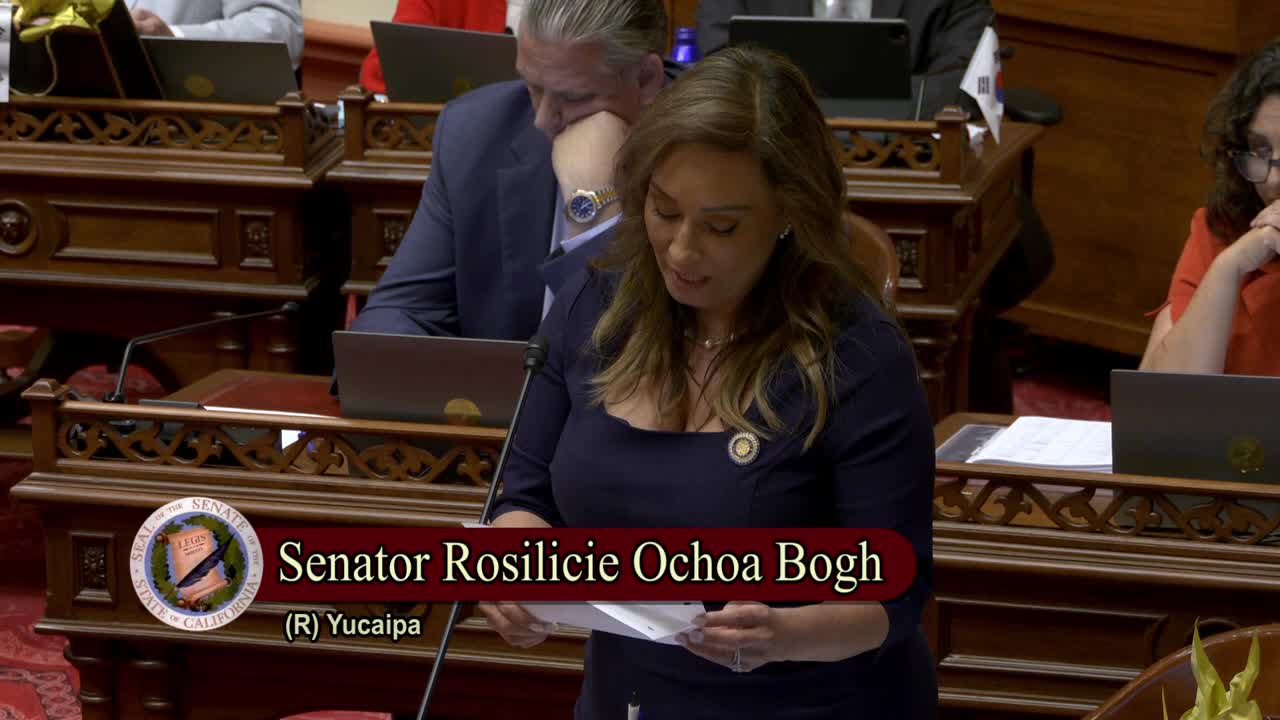 8MIN
Senate Floor
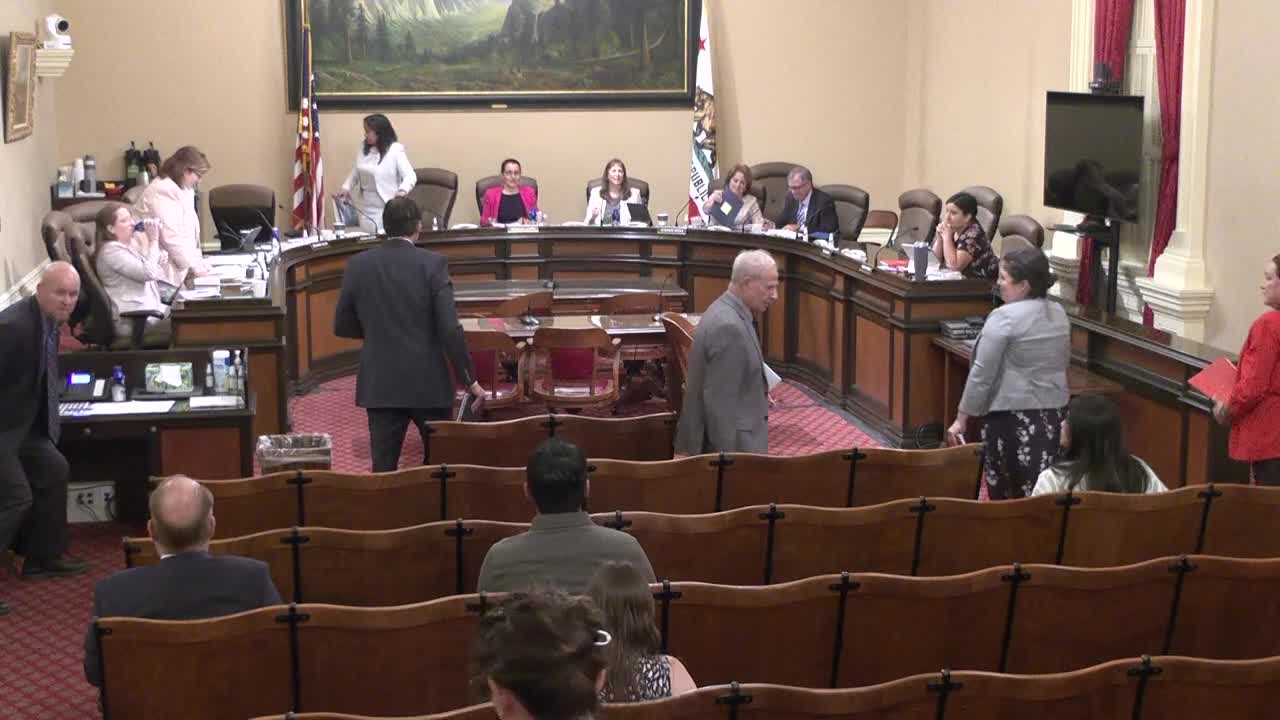 16MIN
Senate Standing Committee on Natural Resources and Water
Bill Author

Bill Co-Author(s):